

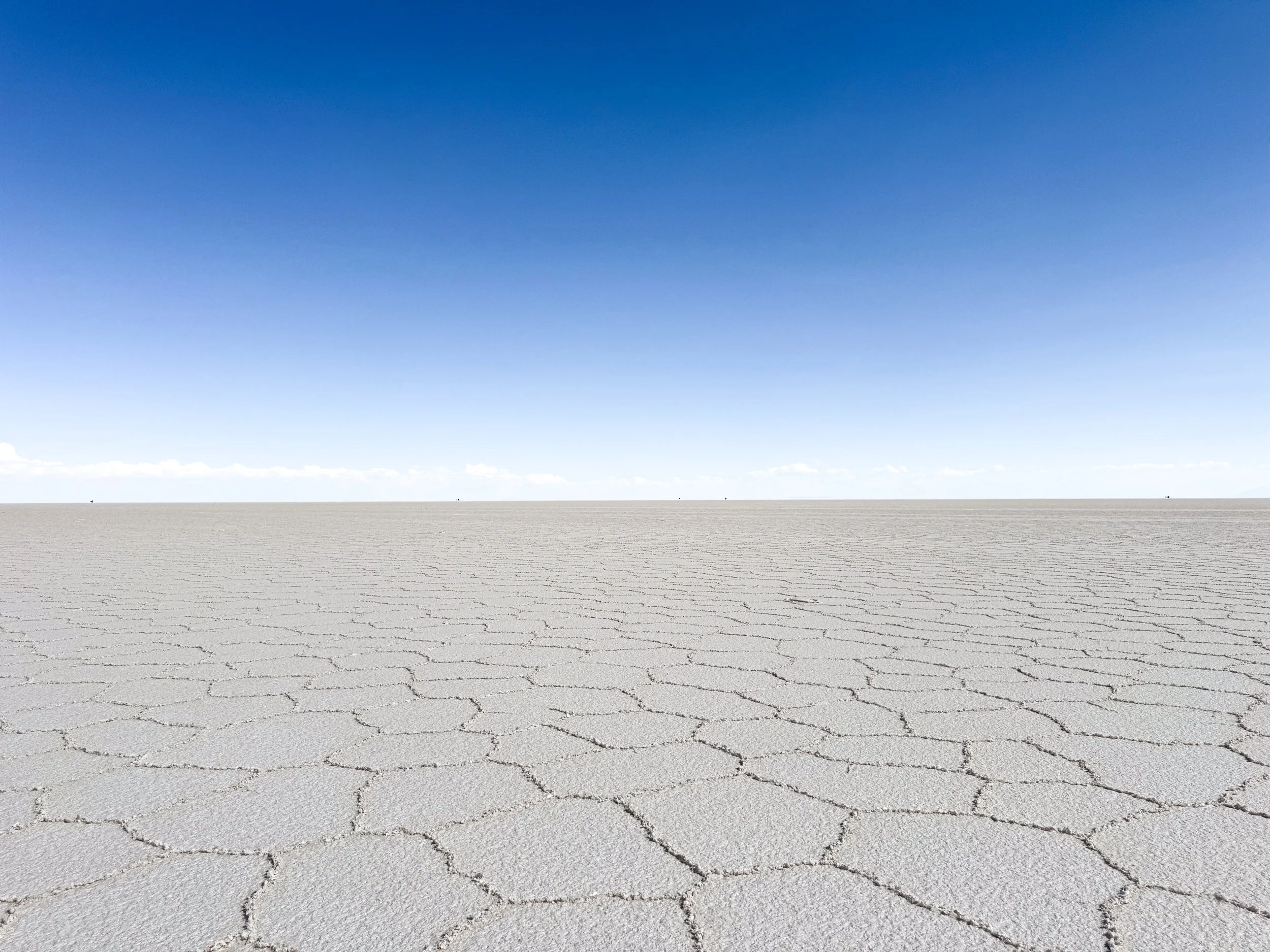
Salar de Uyuni Travel Guide: Salt Flats, Lagoons & Desert Landscapes
Journey across Salar de Uyuni's vast salt flats and Bolivia's high altitude deserts where colorful lagoons, flamingos, volcanoes and geysers create extraordinary landscapes.
Bolivia’s Desert Landscapes
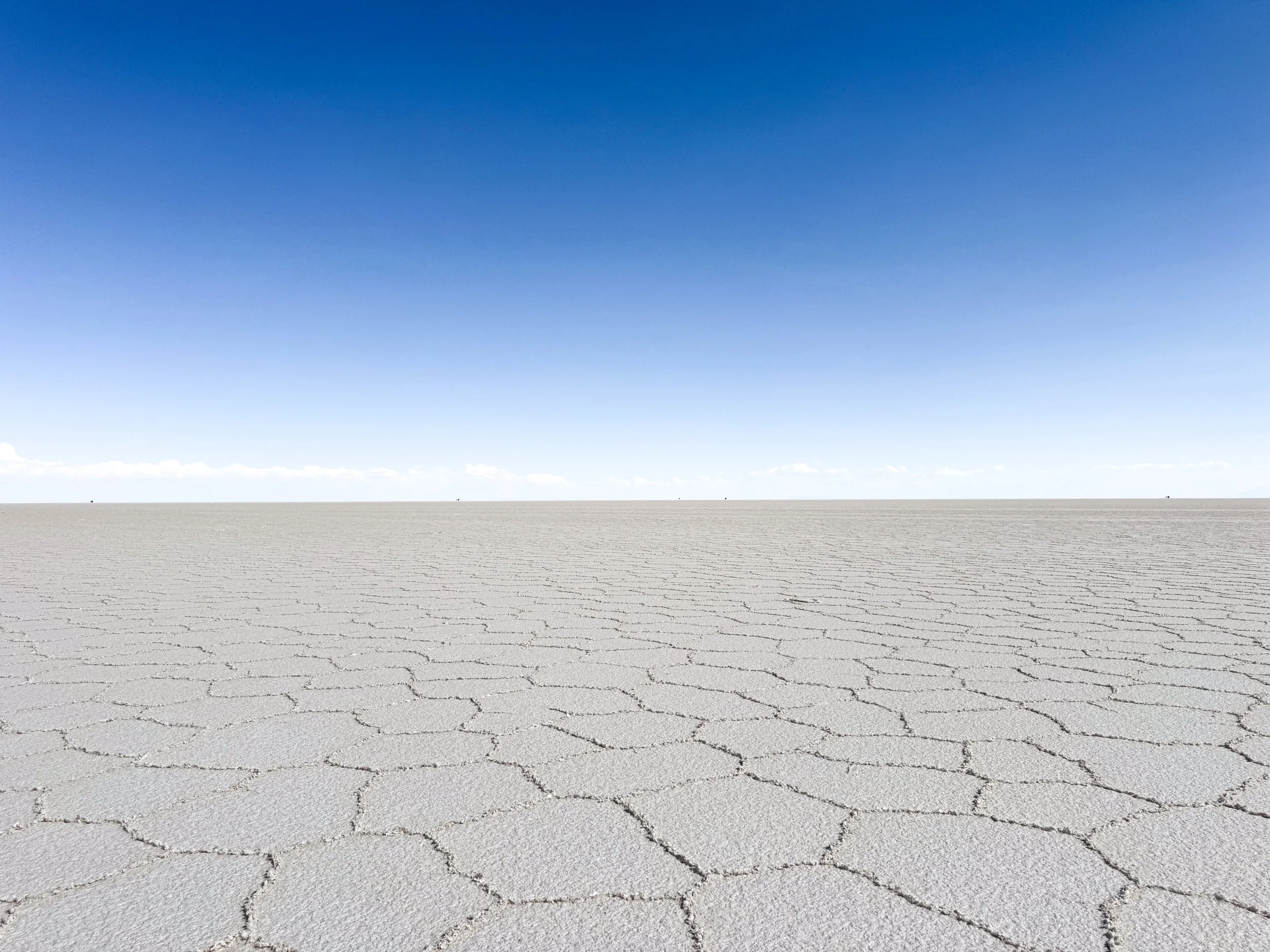
The Bolivian Desert hosts some of South America’s most stunning natural sights. Within its expanse are the world’s largest salt flats, a staggering number of volcanoes, colorful lagoons, abstract desert rock formations, geysers and hot springs. We spent four days road tripping across the desert, traveling hundreds of miles from La Paz and ending in the Chilean Atacama Desert.

The Uyuni Salt Flats
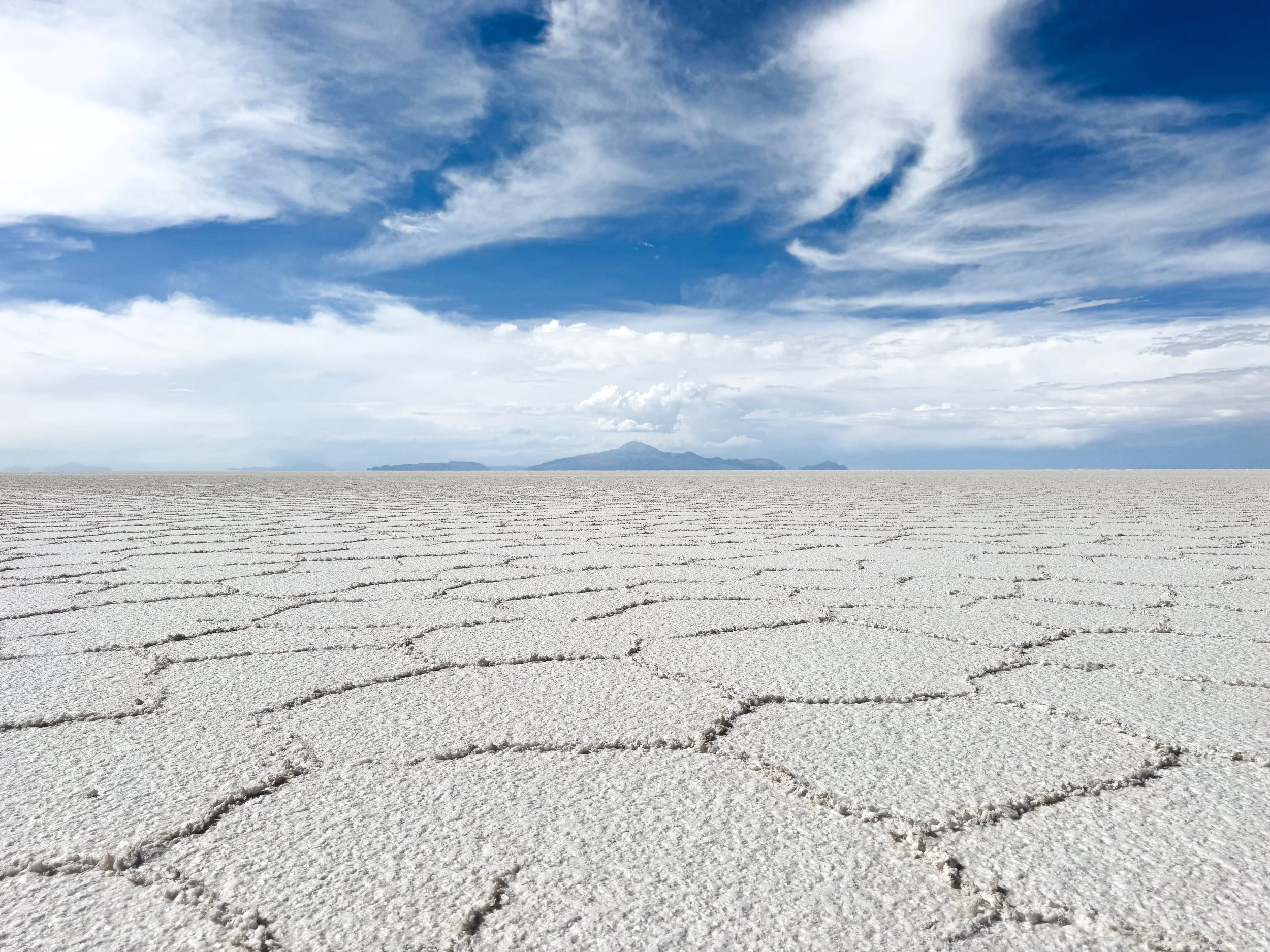
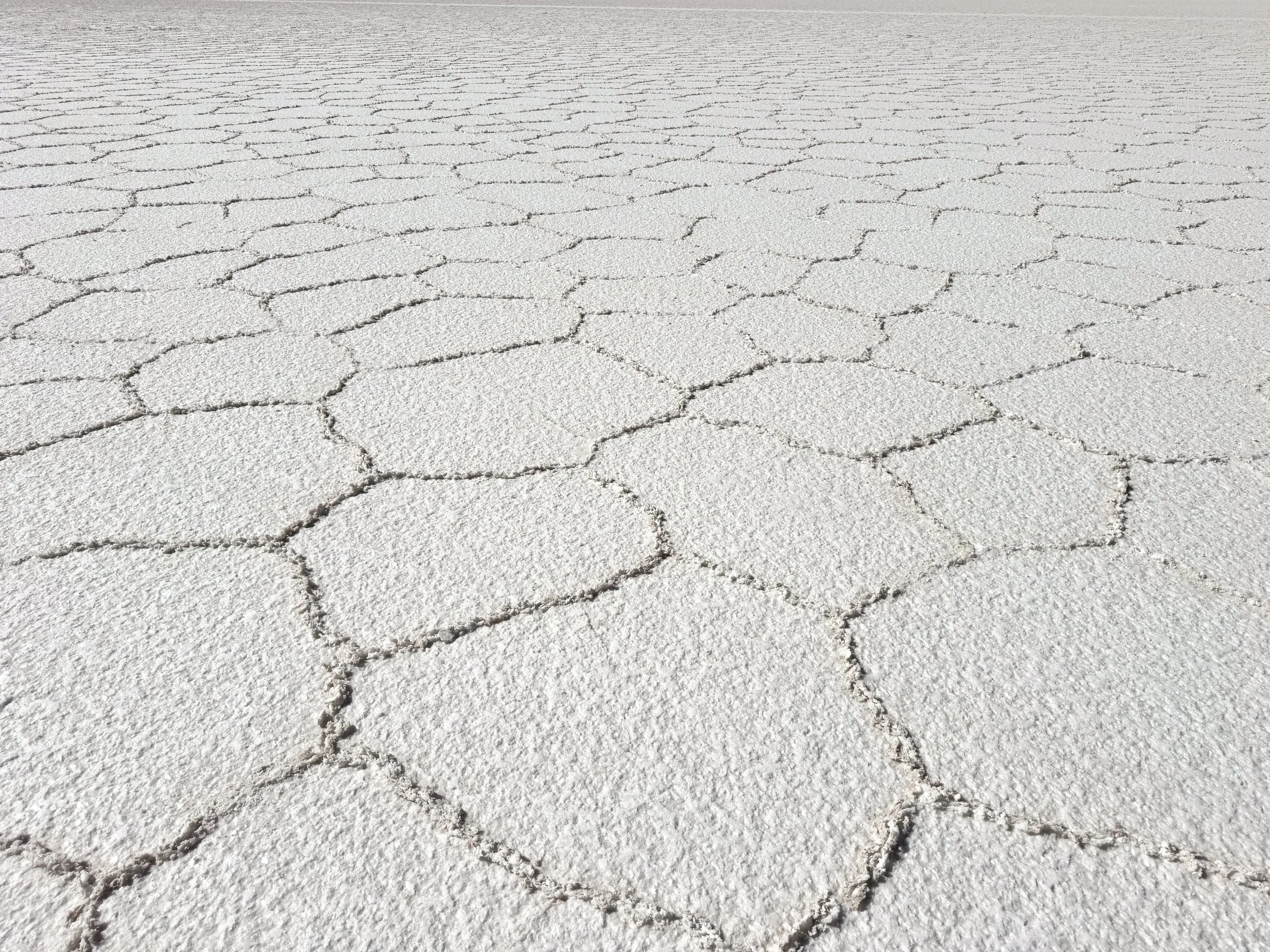
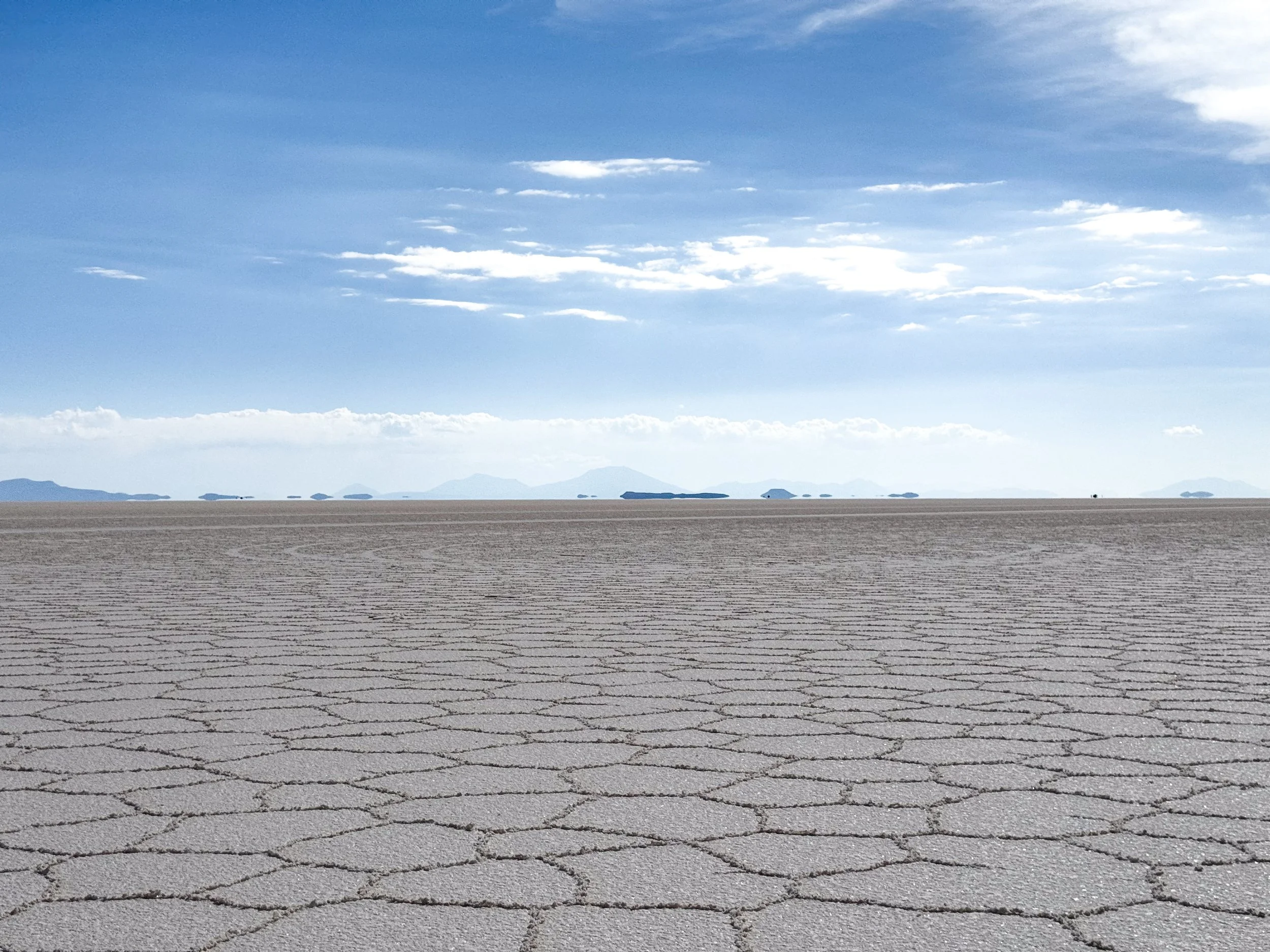
The Uyuni Salt Flats are the largest salt flats on the planet in the high Andes of Bolivia. We visited during the dry season when the salt created crusty white geometric patterns across the vast landscape.
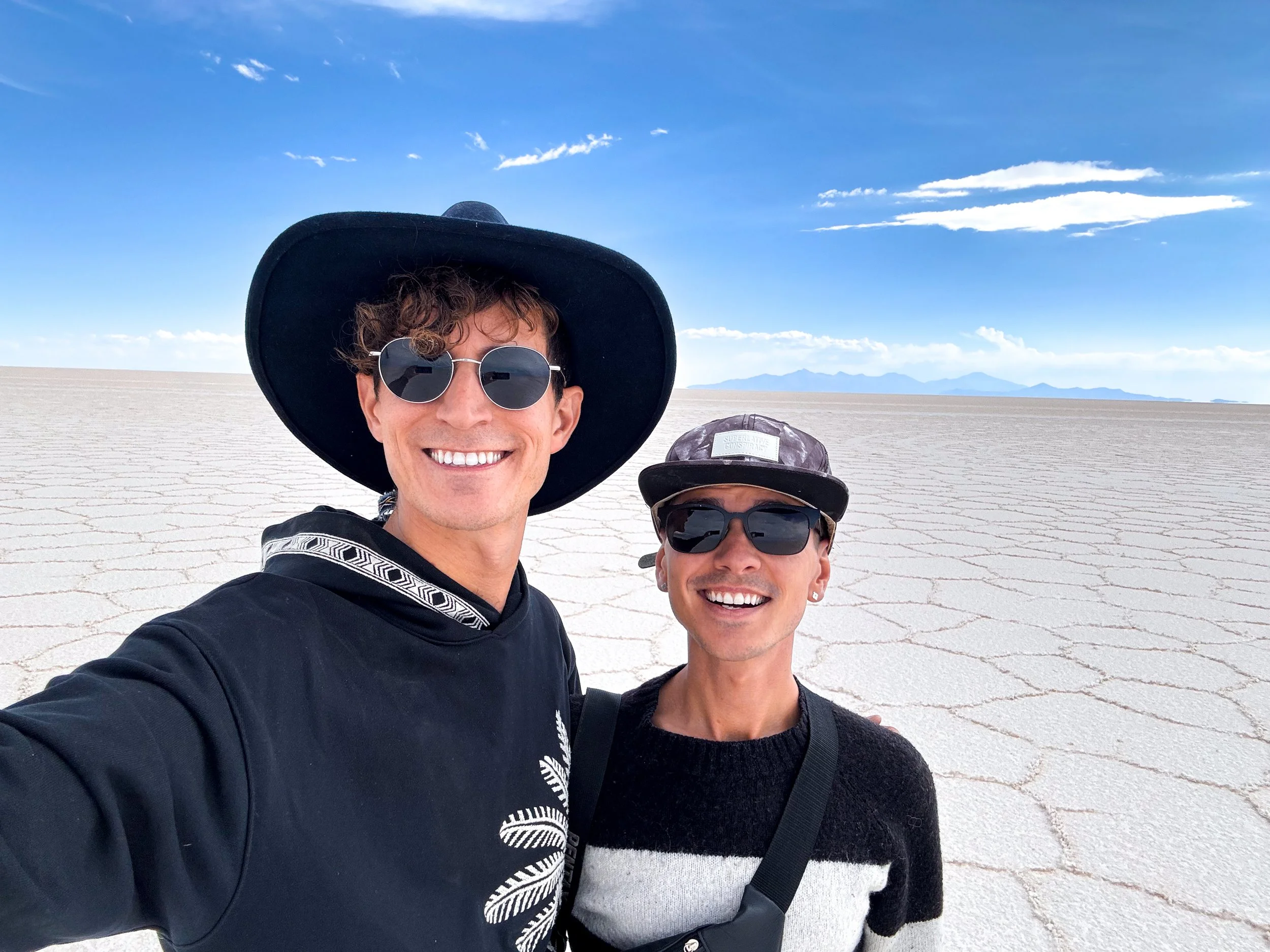
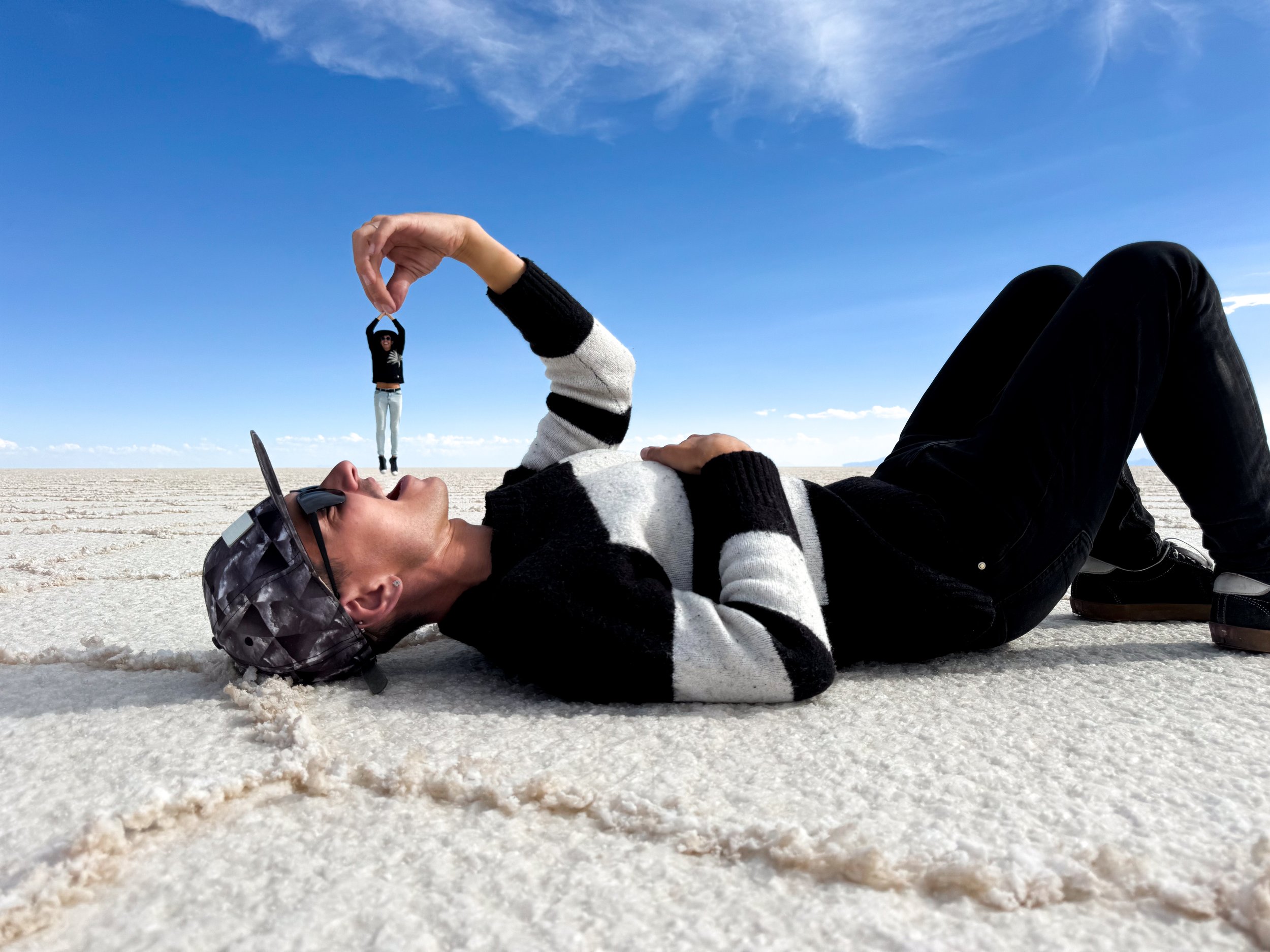
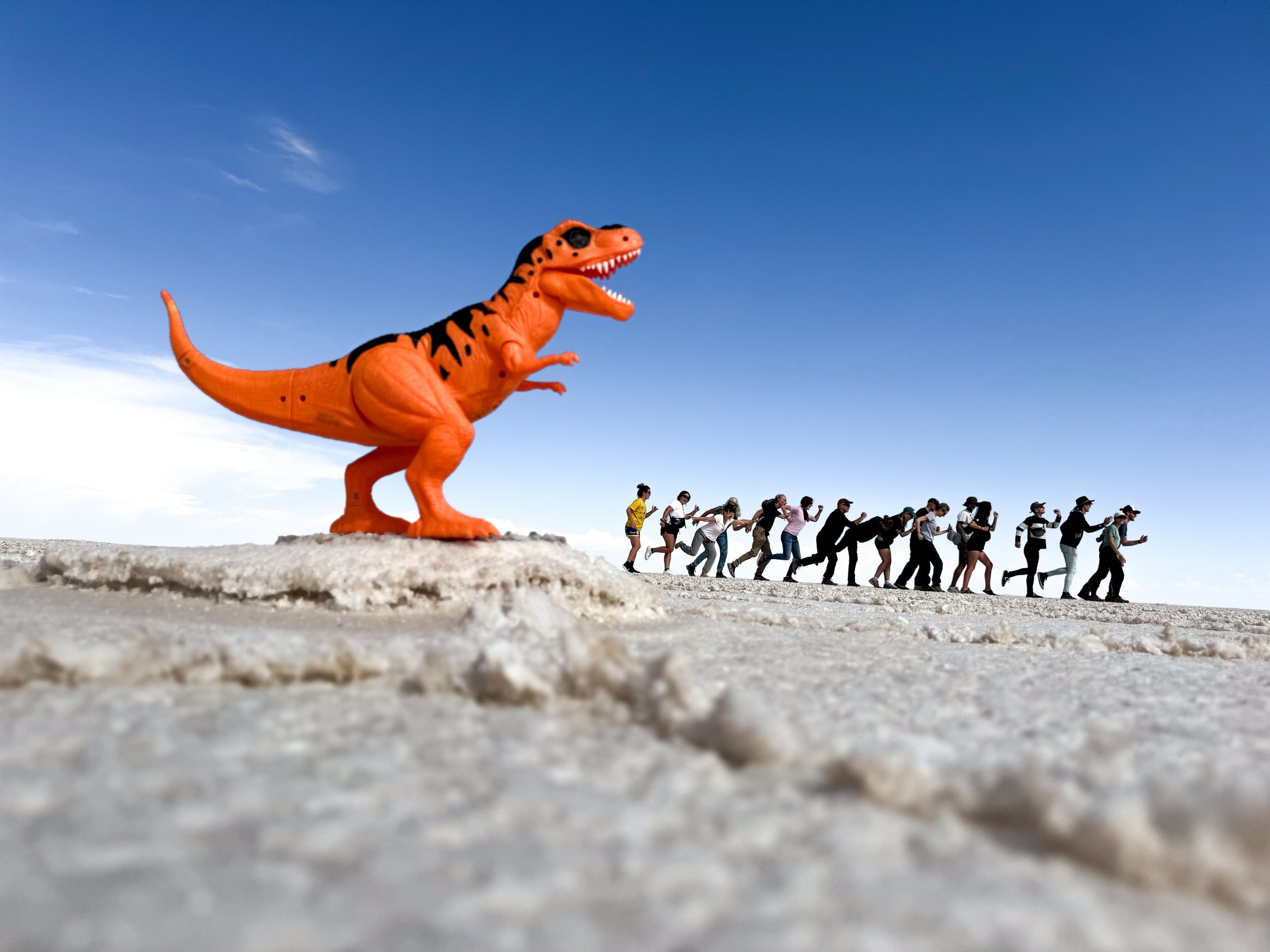
After taking an overnight bus from La Paz, we drove far into the salt flats, away from civilization, where it was eerily quiet. We looked across the landscape admiring the bright white salt contrasted against the deep blue sky with silhouettes of volcanoes and mountains on the horizon. Mirages formed making it appear as if some mountains were floating. Off of our periphery, spiraling dust devils lurked in the distance while lightning from a storm latticed from dark clouds above the Andes. Due to the vast flatness, one of the big draws is to take forced perspective photos! Our guide took multiple photos of us and our group.
Isla Incahuasi
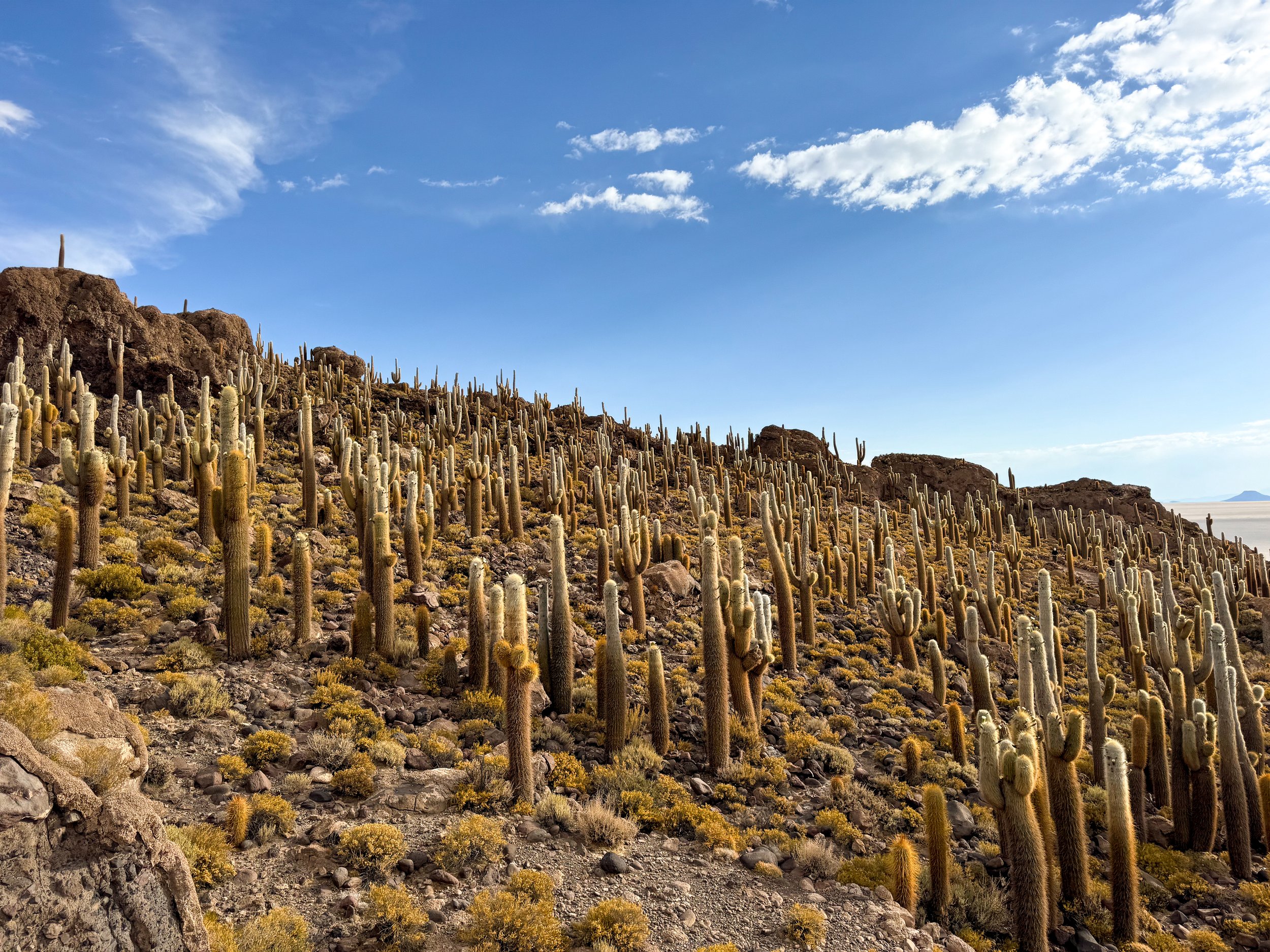
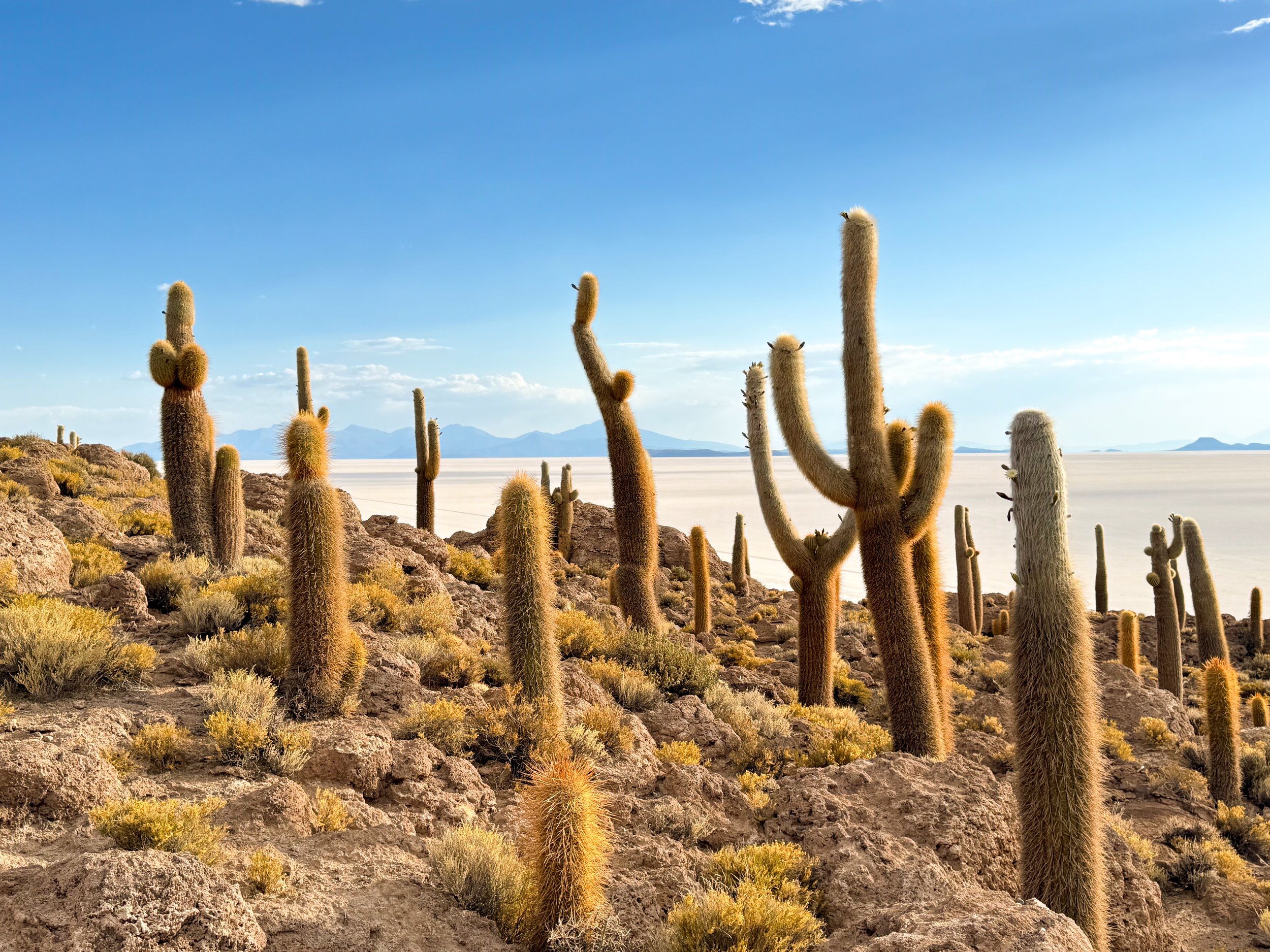
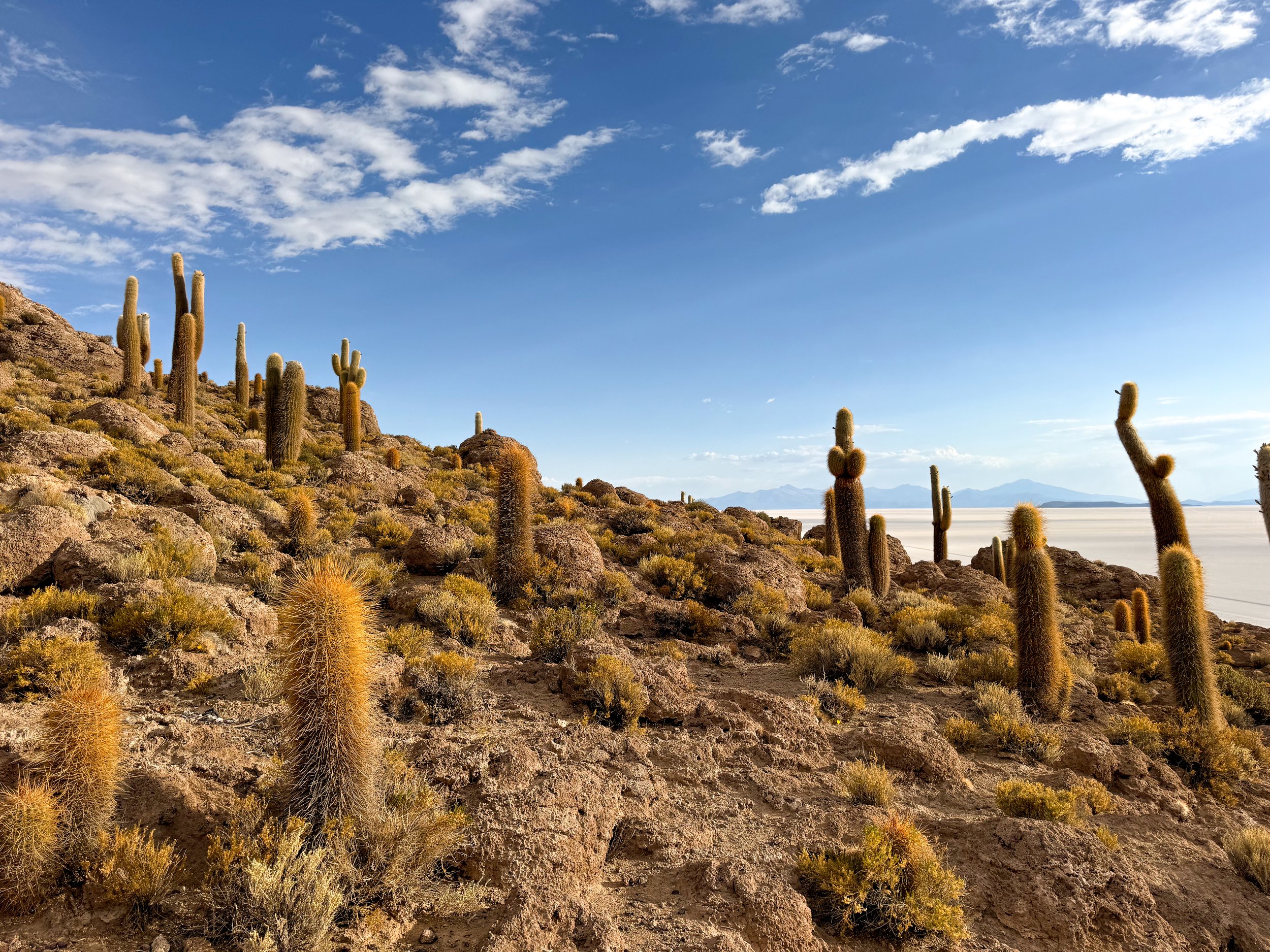
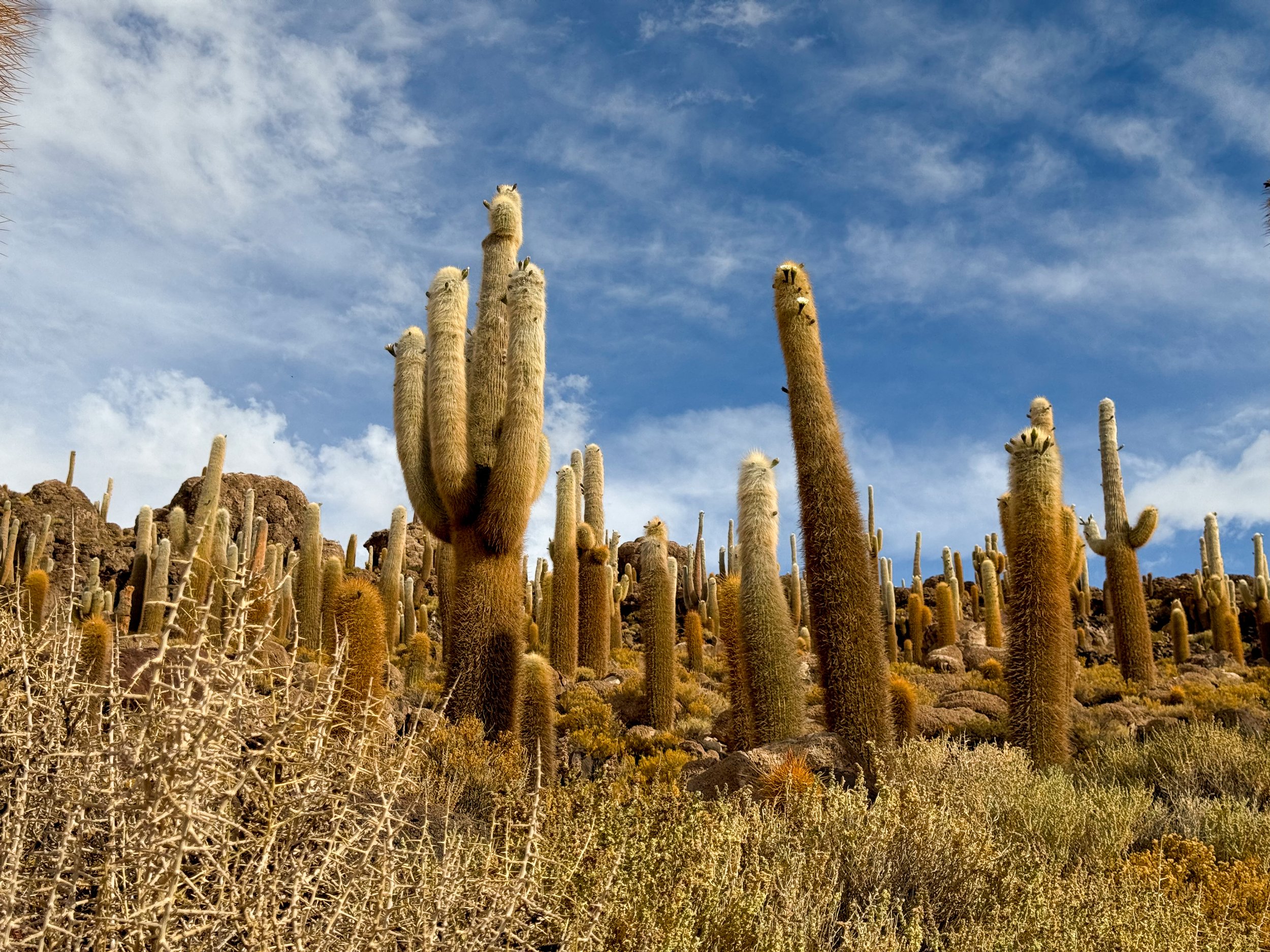
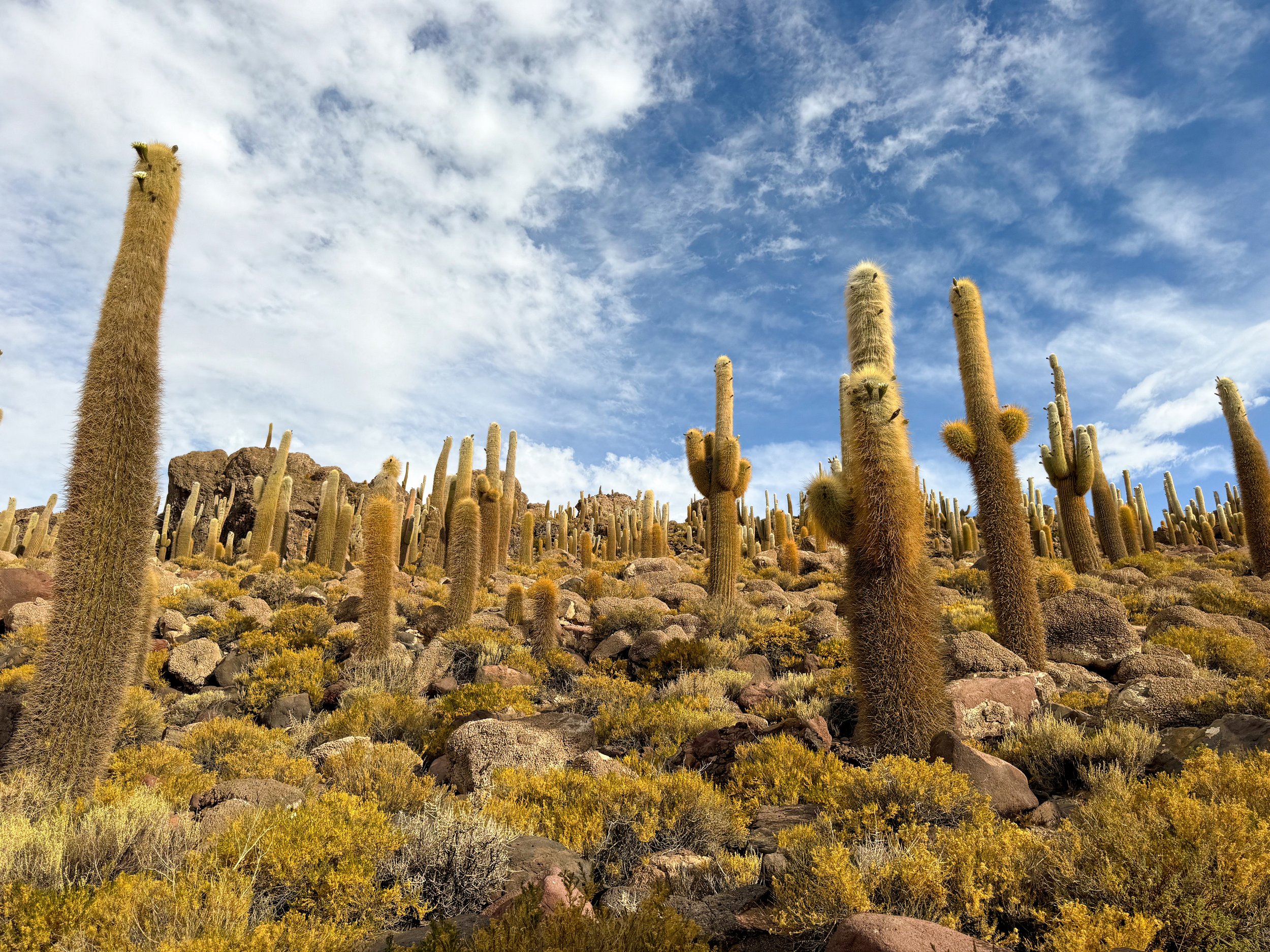
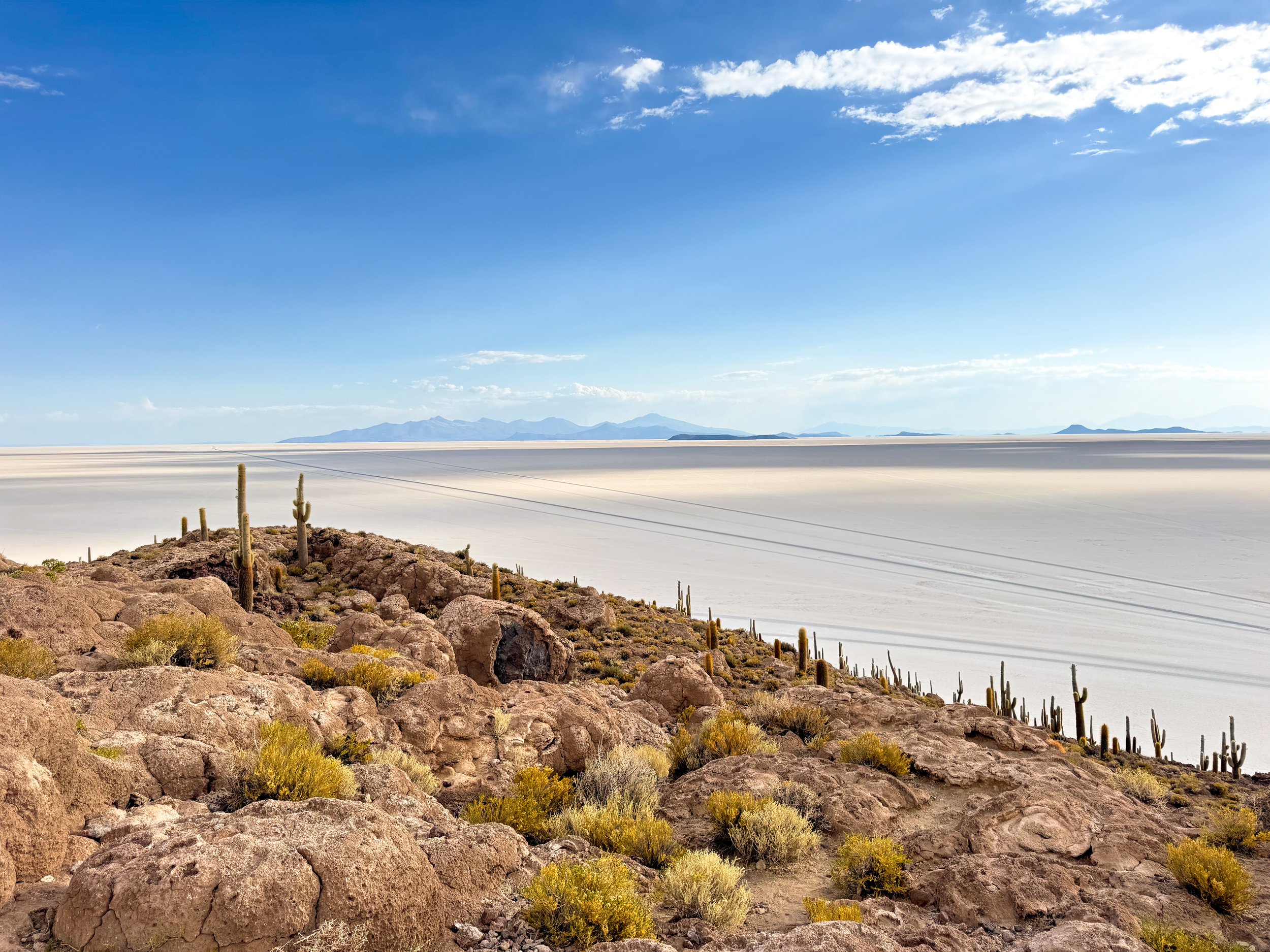
Isla Incahuasi is a volcanic island in the middle of the Uyuni Salt Flats covered in cacti, fossilized coral and stromatolites from when the area was a saltwater sea. A trail across the island leads to its summit with panoramic views of the salt flats and mountains in the distance. We visited in the southern spring (November) when many of the cacti were blossoming with white tuft-like flowers. Some of the cacti are over 1,000 years old and can live up to 2,500 years.
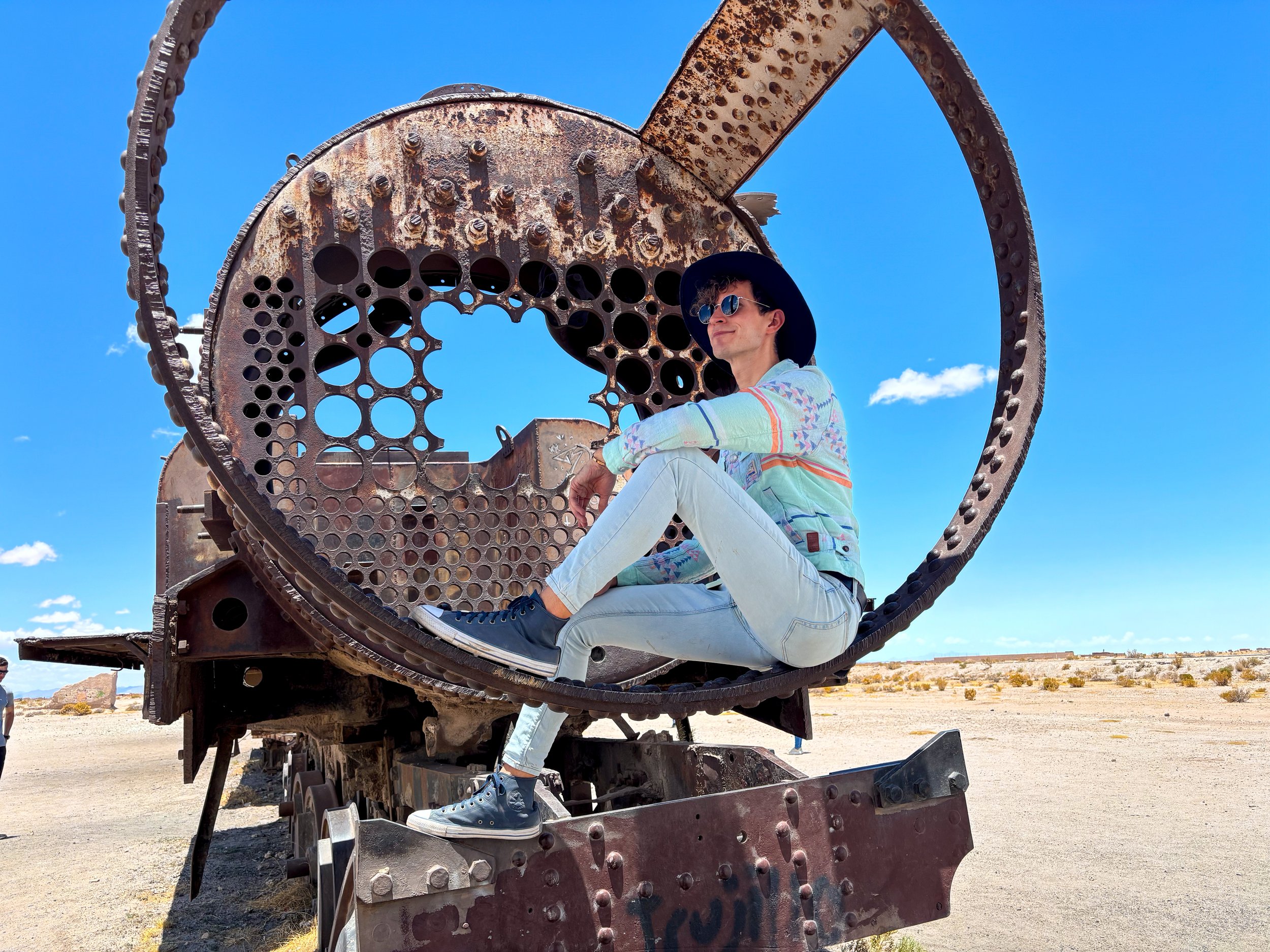
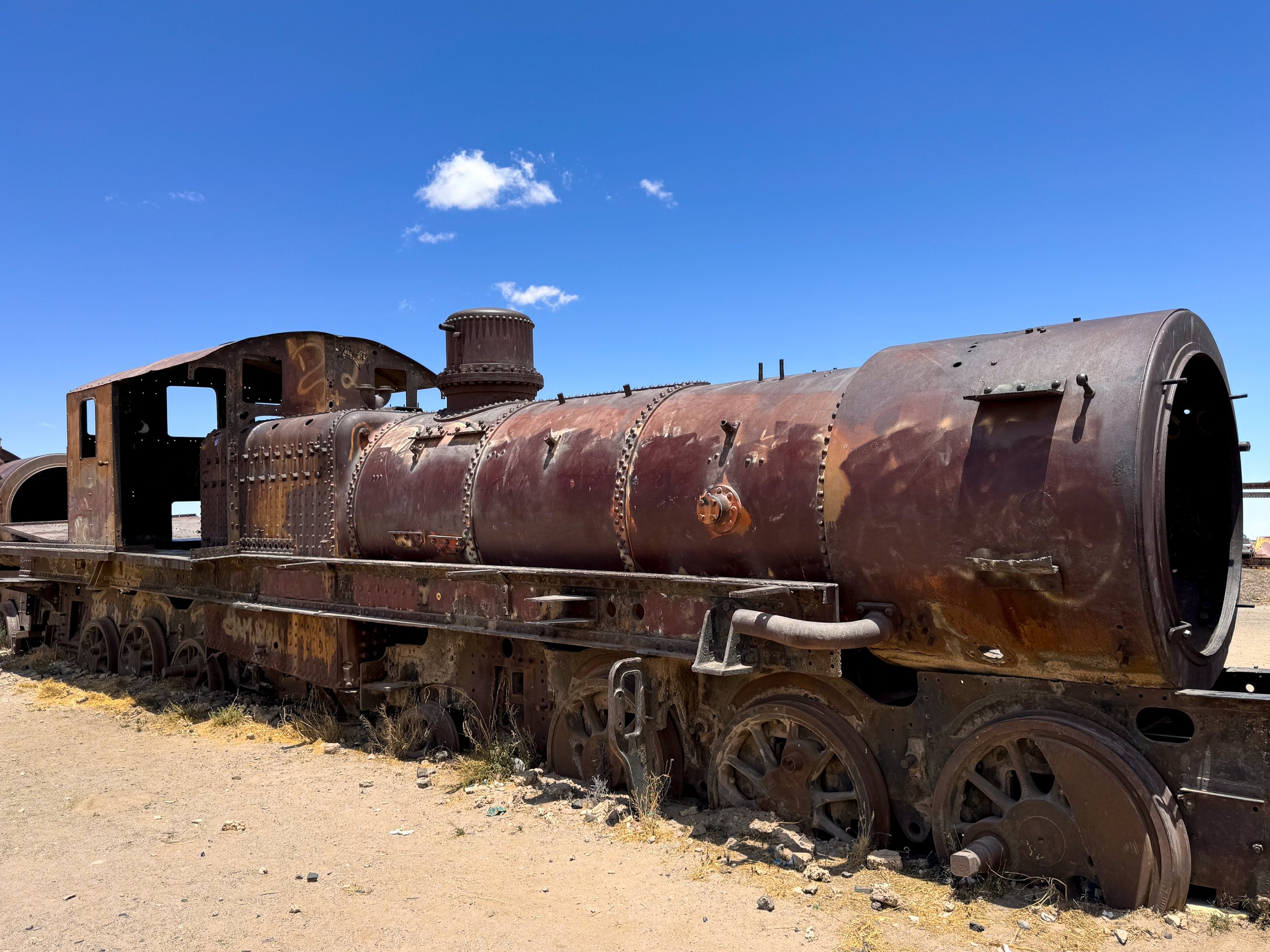
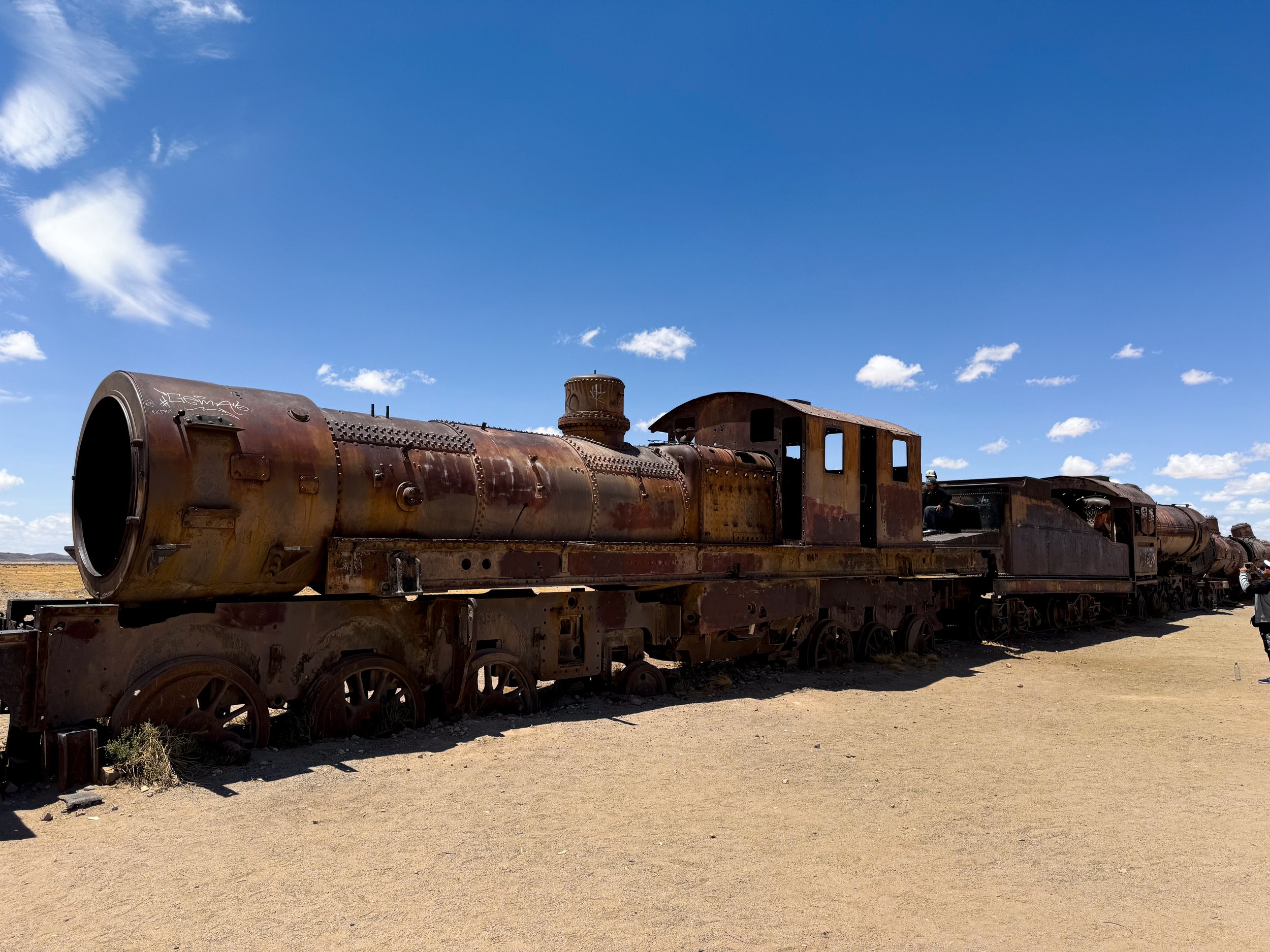
The Train Graveyard
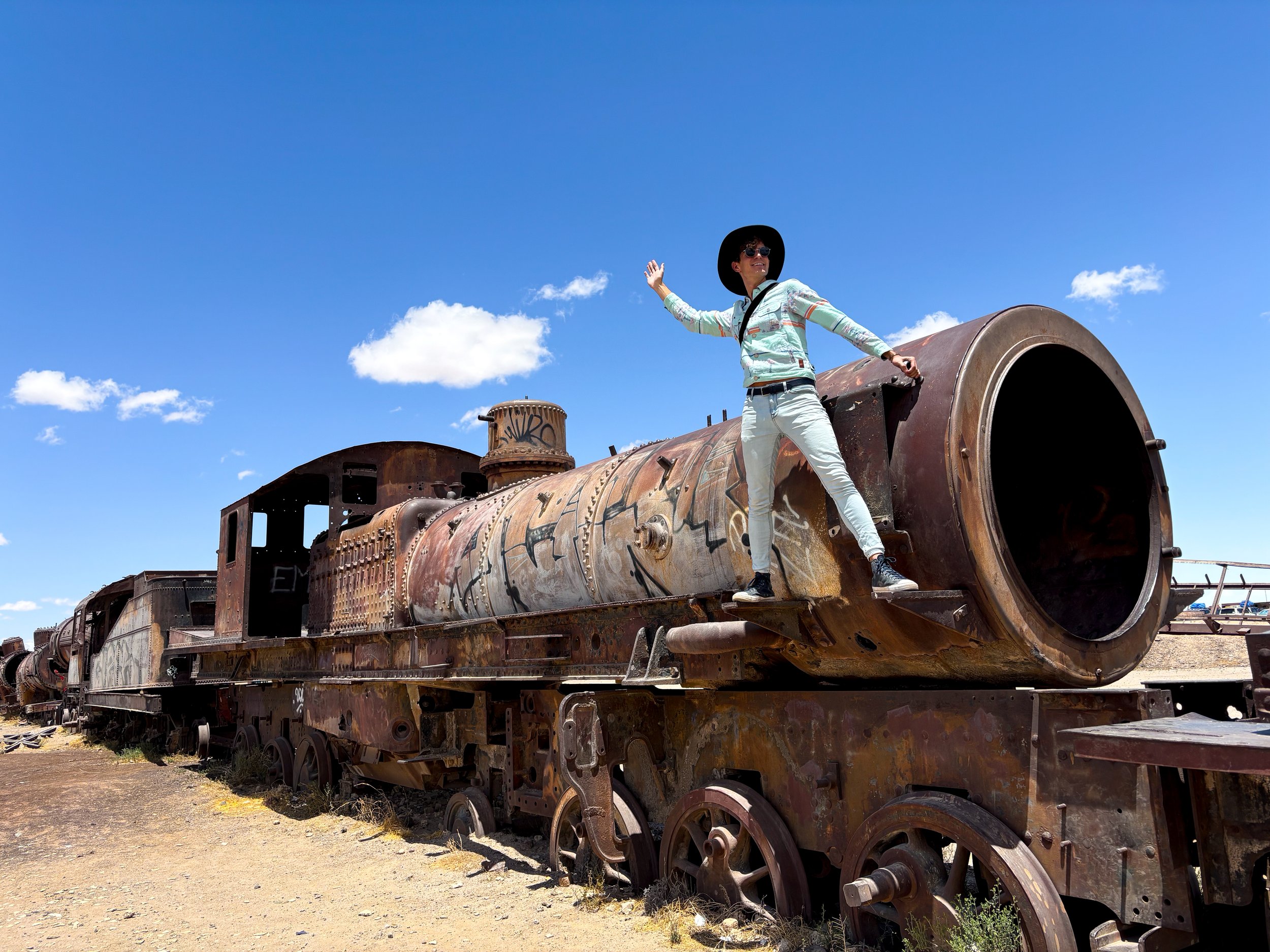
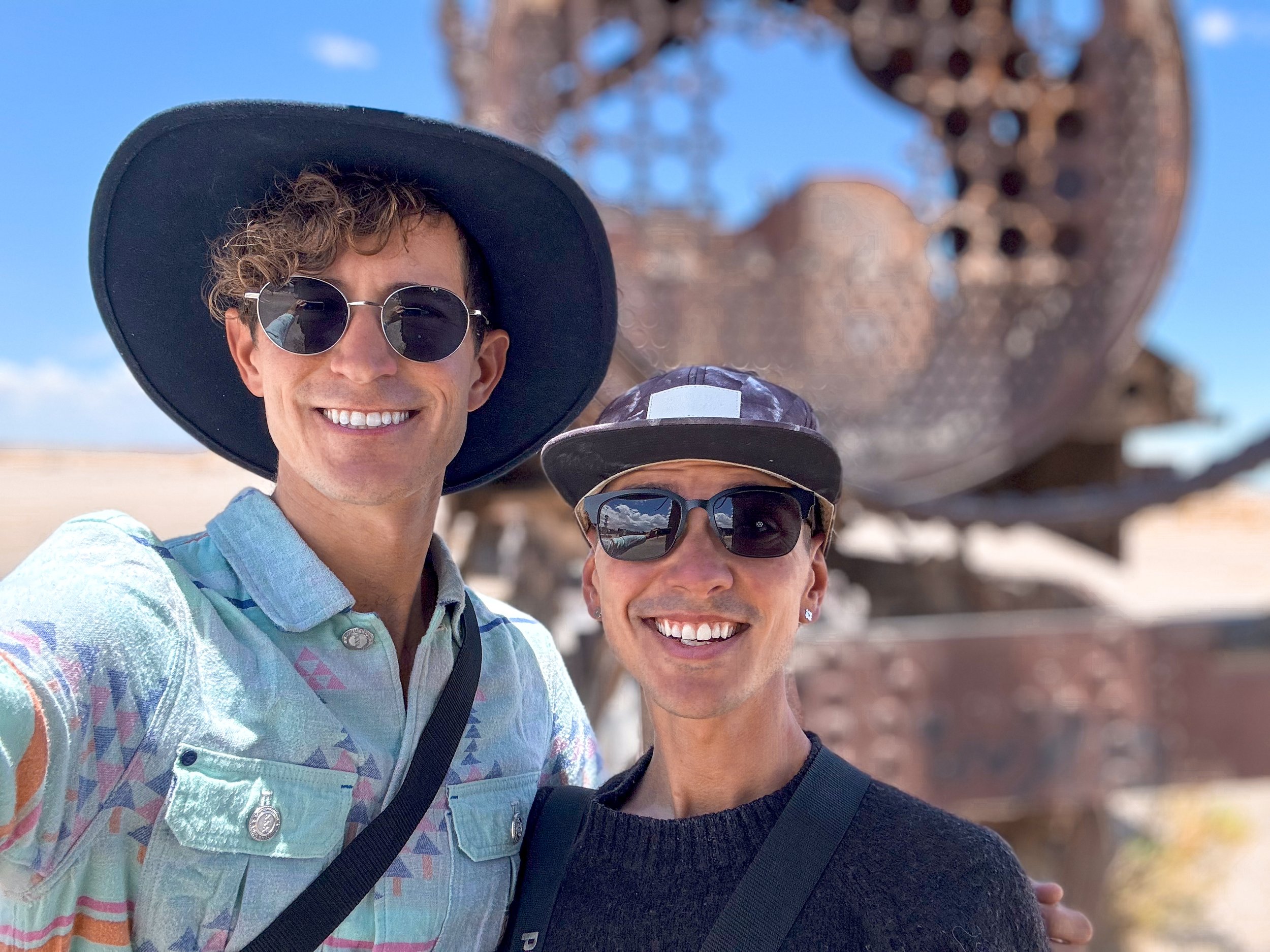
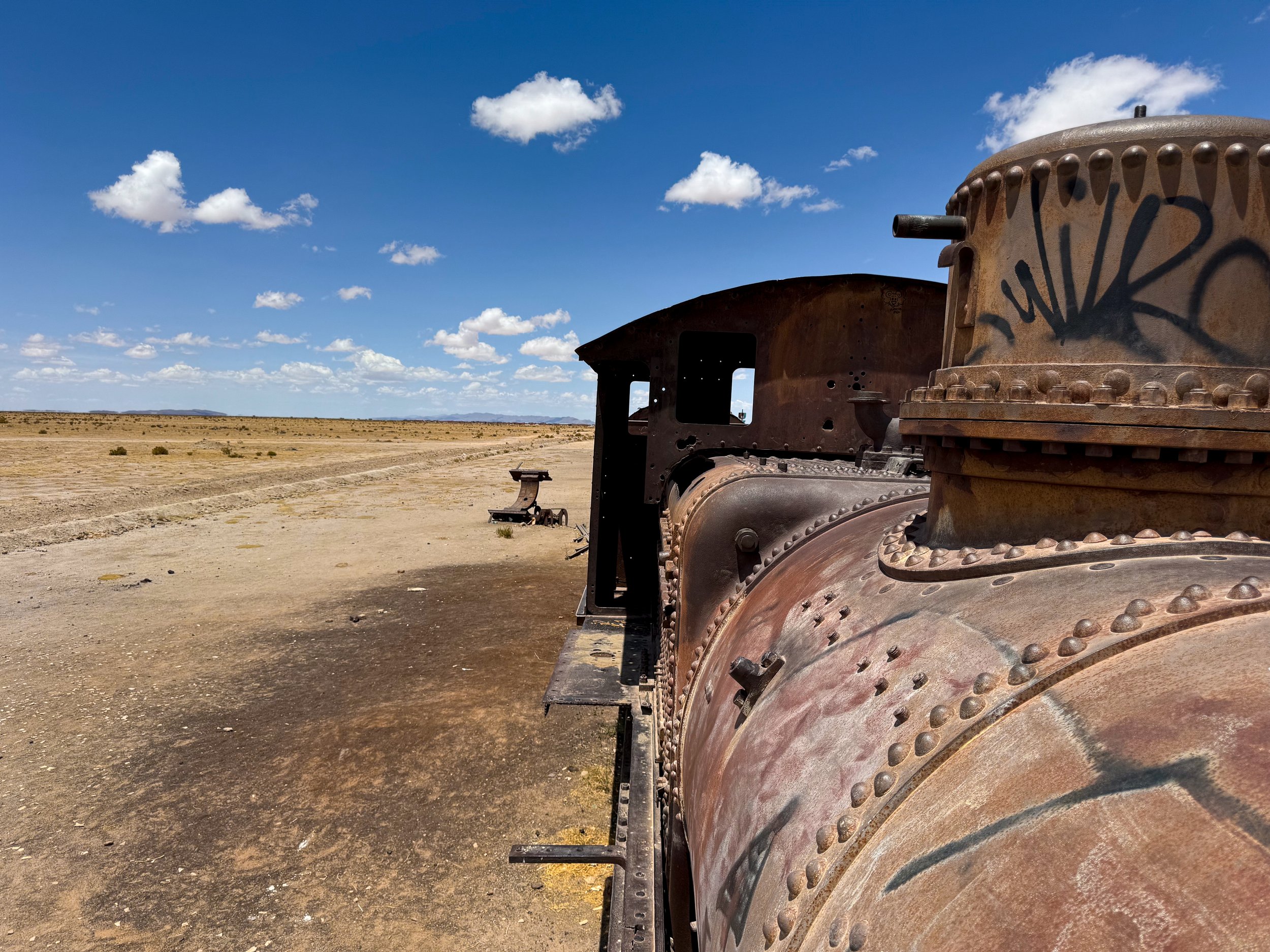
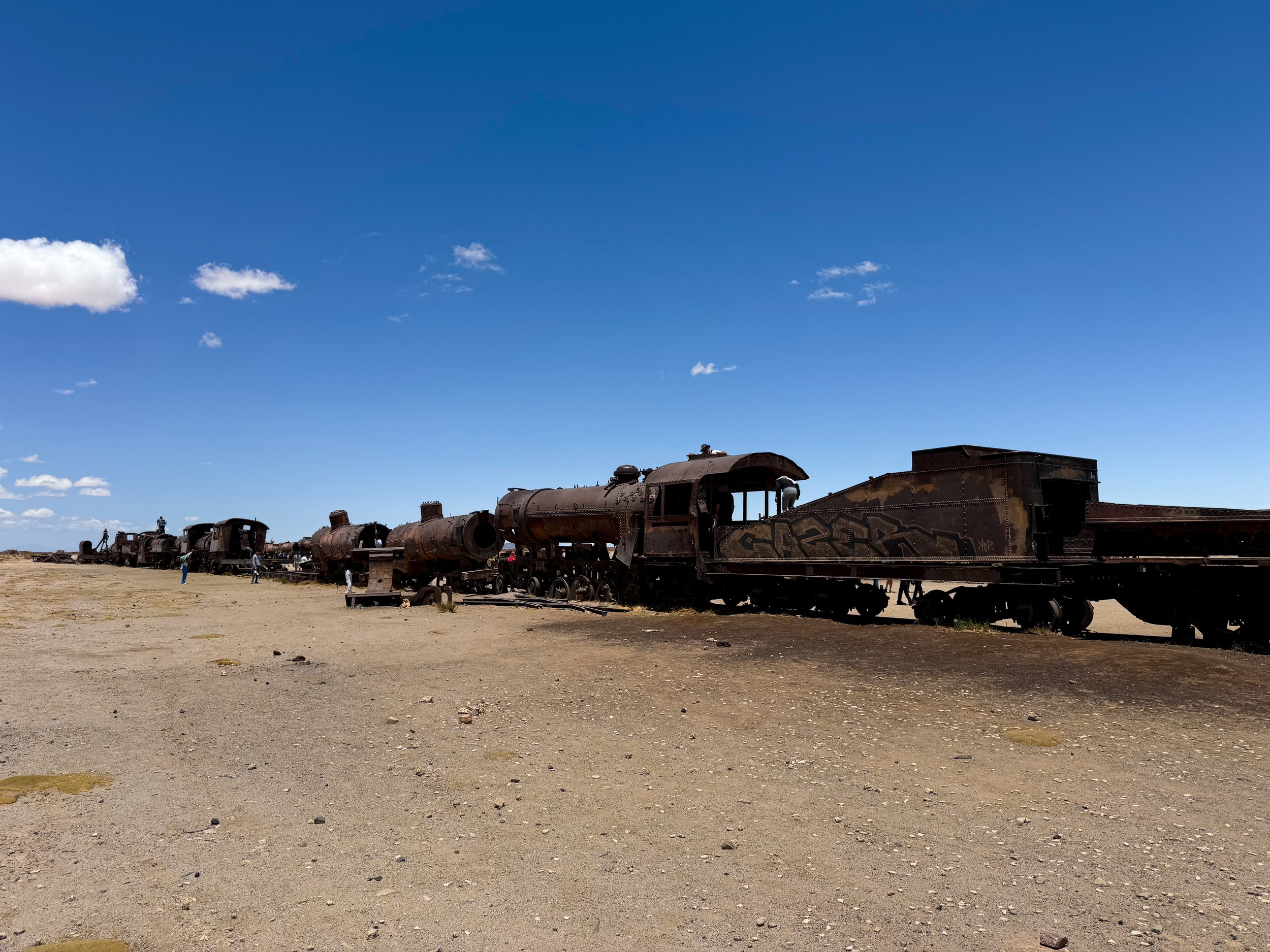
The Train Graveyard consists of rusted out track vintage train engines and cars. While here, we climbed on and inside the relics, snapping a few photos for the gram. It’s typically the first stop on any Uyuni tour.
(Off) Road Trip
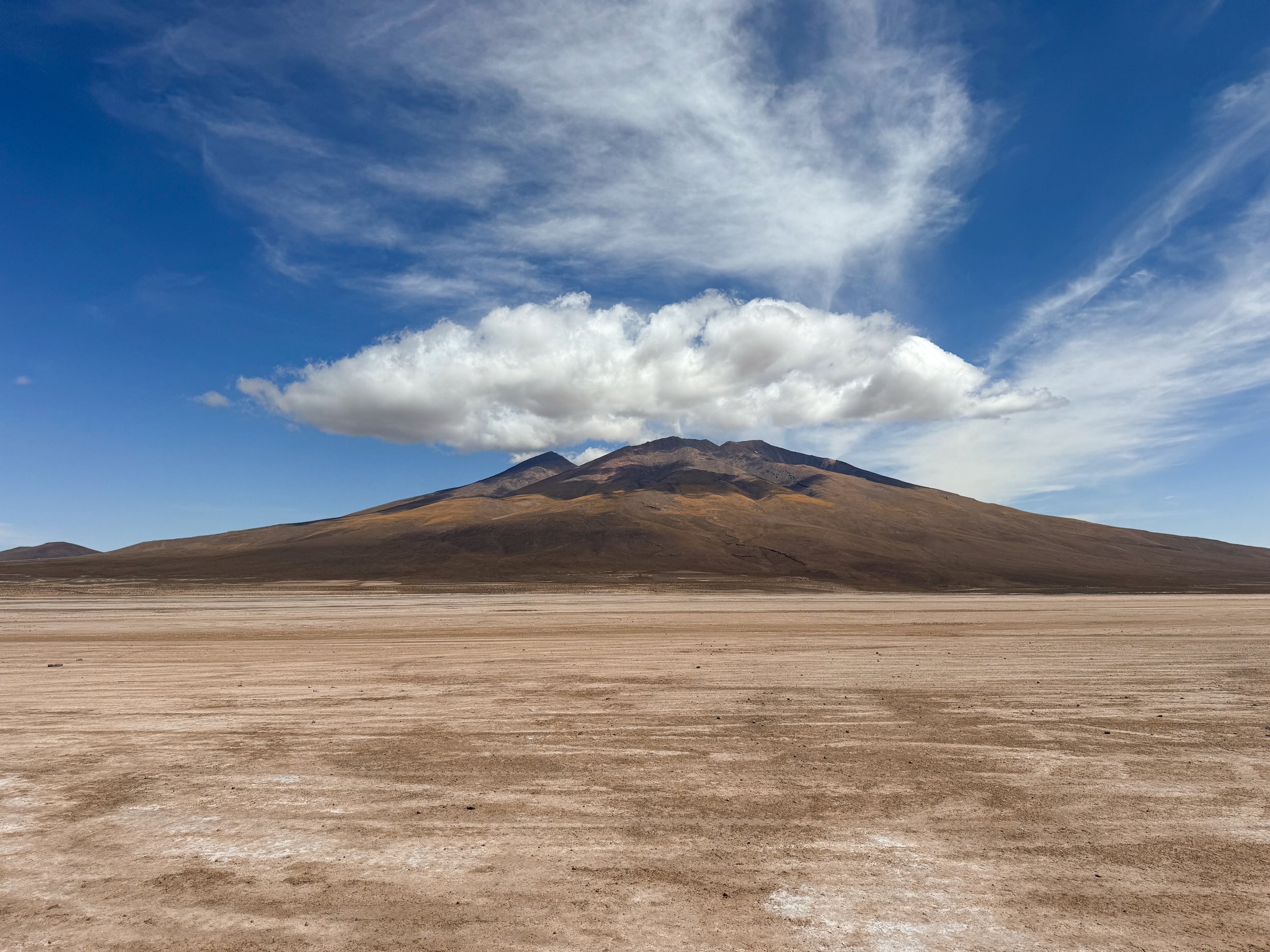
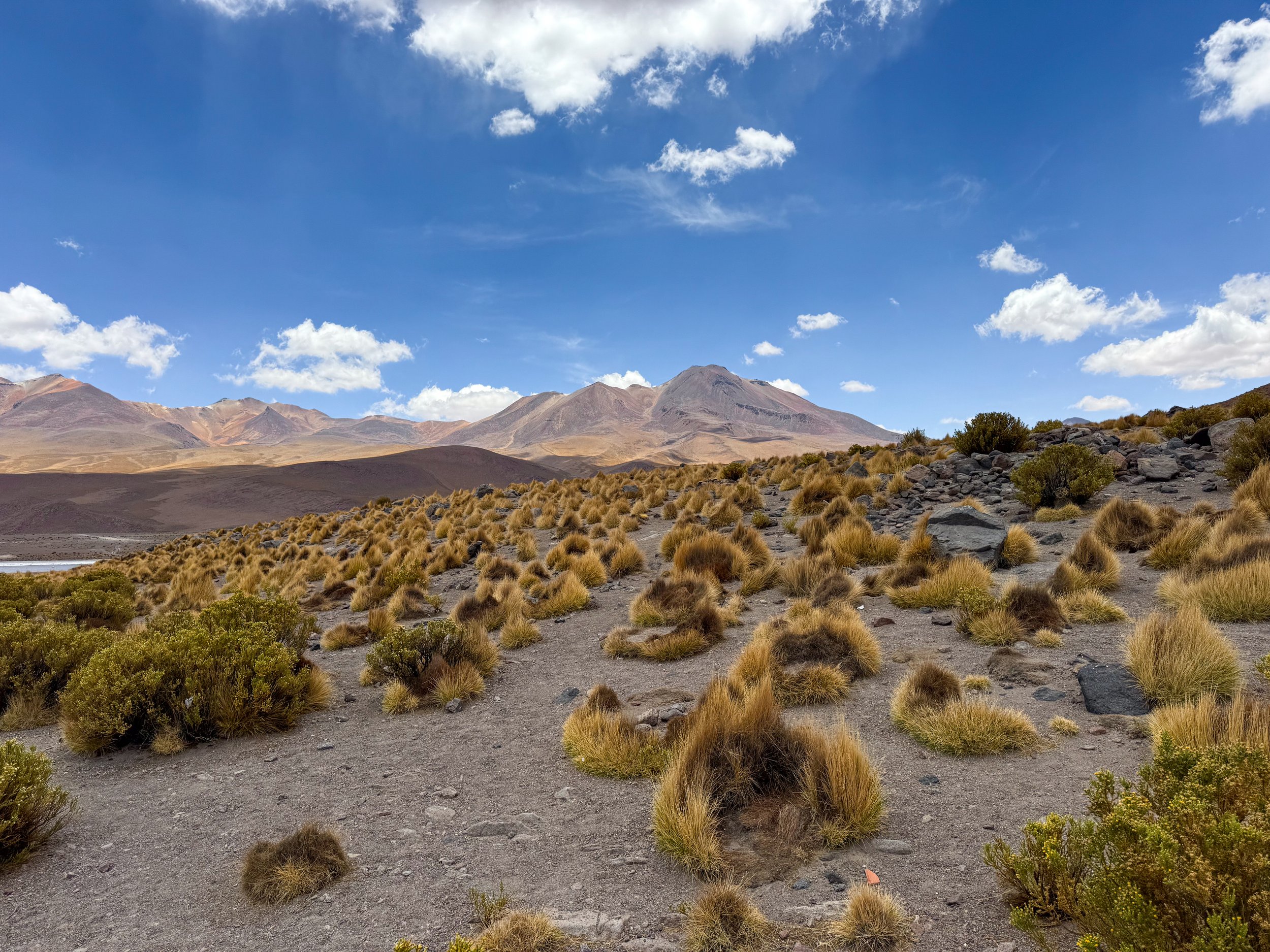
After Uyuni, we began our road trip across the Bolivian Desert down a bumpy dirt road past golden brown craggily fields with salt deposits, short dry shrubs and the cutest wild vicuñas. A cloud of dust followed us while no other cars were to be seen for many miles emphasizing the remoteness of the landscape. Reddish brown volcanic mountain ranges stretch across the horizon reaching towards the blue sky painted with wispy white clouds. We continued for the next two days, visiting volcanic lookouts, colorful lagoons, desert rock formations and geothermal areas.
Bolivia’s Volcanoes
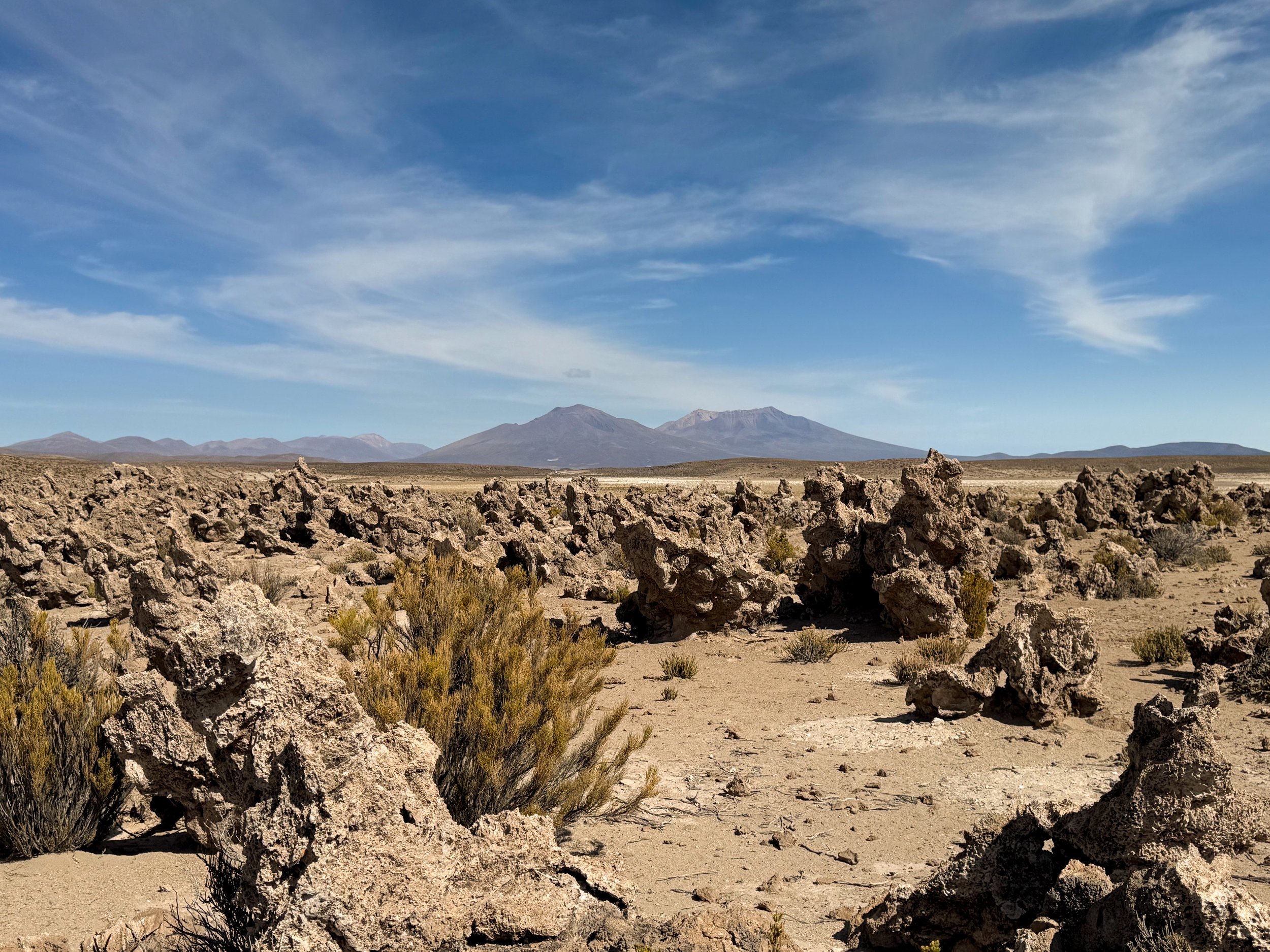
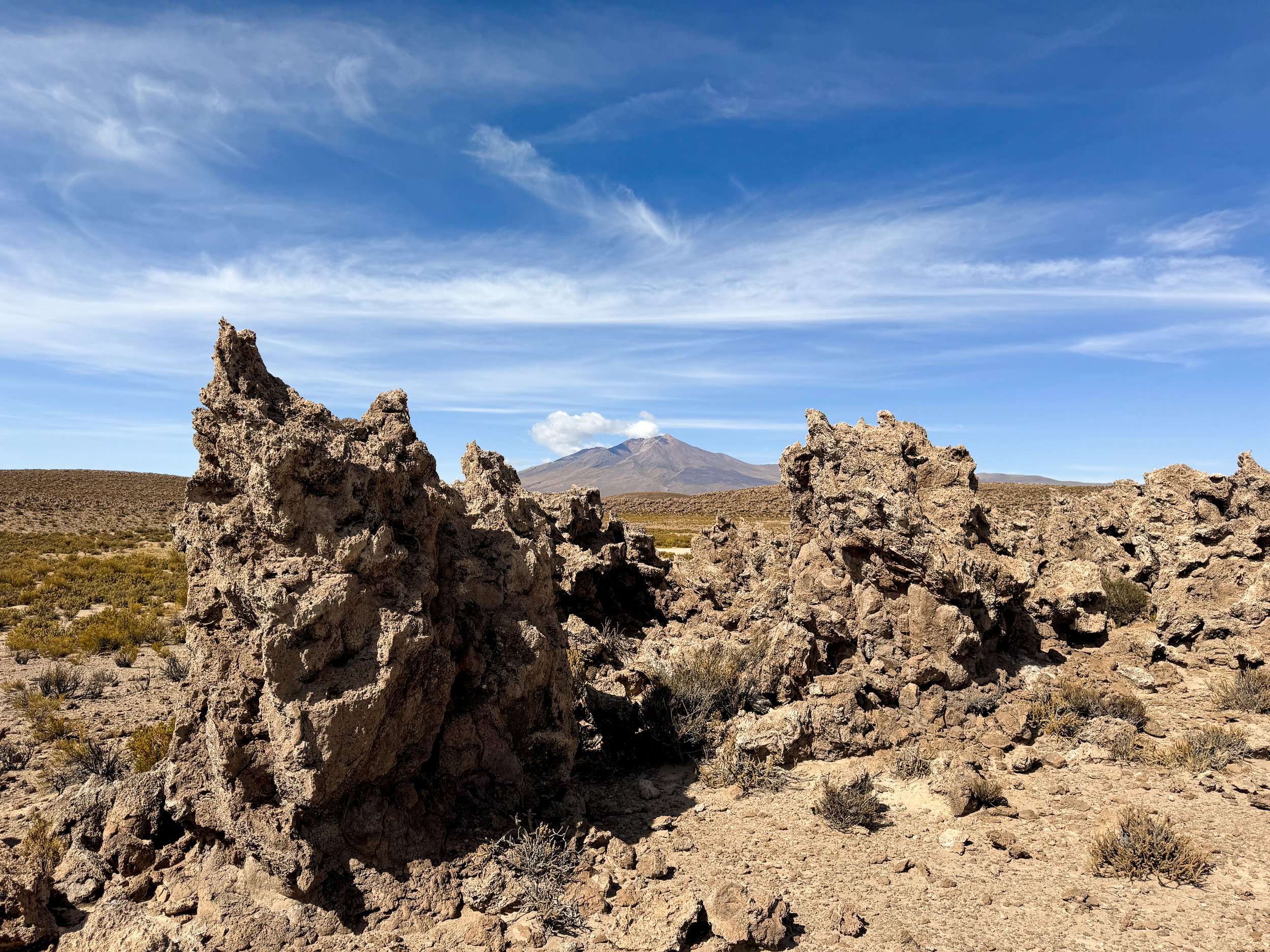
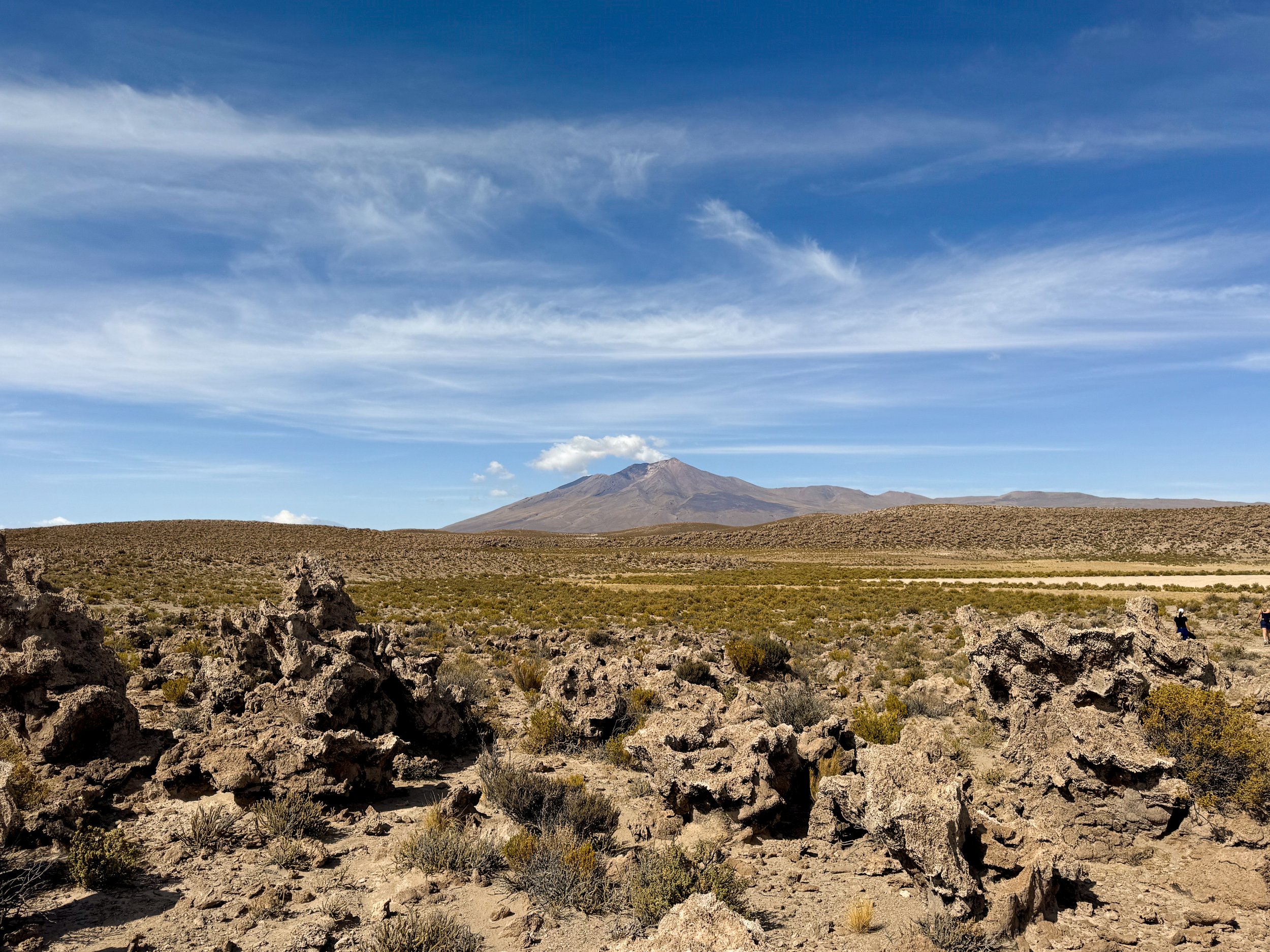
The Coral Garden. Our first stop brought us to an ancient coral garden. The landscape is covered in fossilized coral formations with jagged edges and tubular structures pushed up from the sea to 3,700 meters by the Andes over the past 11 million years. No longer home to marine life, small lizards, doves and mice inhabit the corals surrounded by prickly desert shrubs.
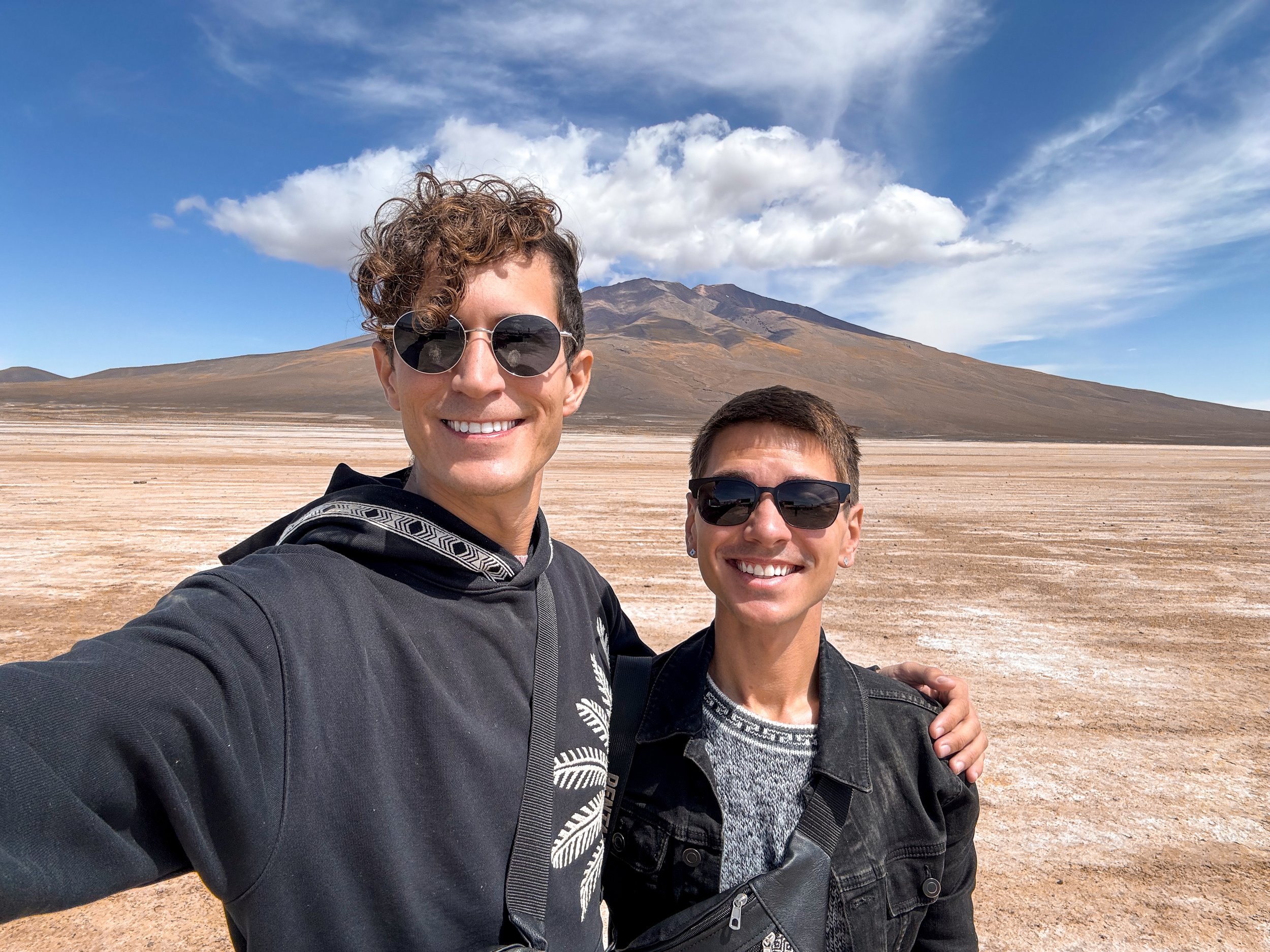
Chiguana Salt Flat. Our second stop brought us to the Chiguana Salt Flat surrounded by dozens of volcanoes along the Bolivia/Chile boarder. We continued through extremely rugged and bumpy off roads across the desert while admiring the volcanic landscape as we slowly climbed in altitude.
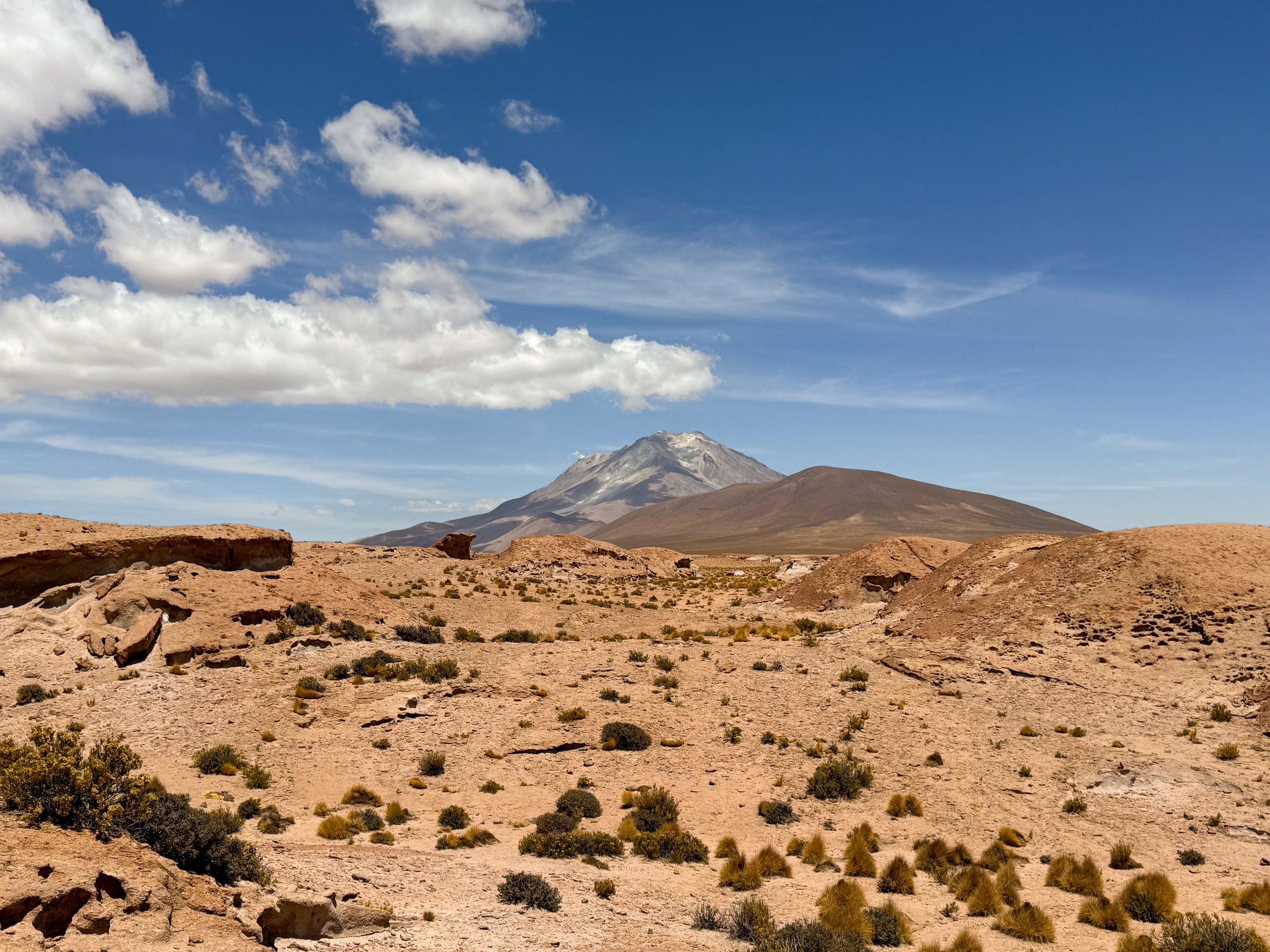
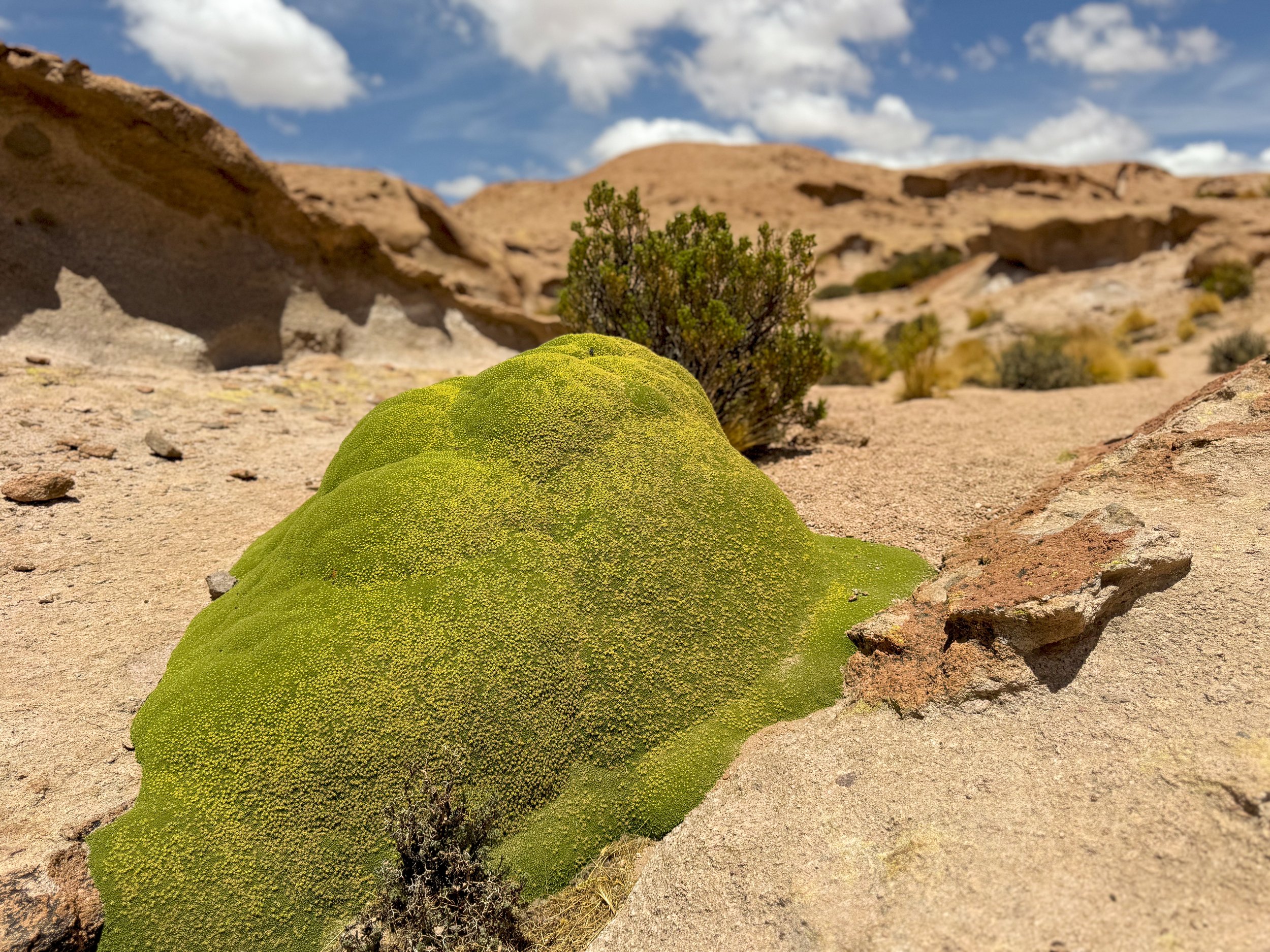
Ollagüe Volcano Viewpoint. At 4,200 meters, we stopped to look over the volcanic landscape and Bolivia’s only semi-active volcano, Ollagüe Volcano. We walked along ancient lava flows and past nodules of vibrant green moss to the lookout. The caldera of the volcano is colored greenish yellow by sulphur while a cloud of steam steadily releases from it. The viewpoint had a restroom, café and small shop. We enjoyed a coca tea and bought coca beer, coca chocolate and roasted snacks.
Bolivia’s Lagoons
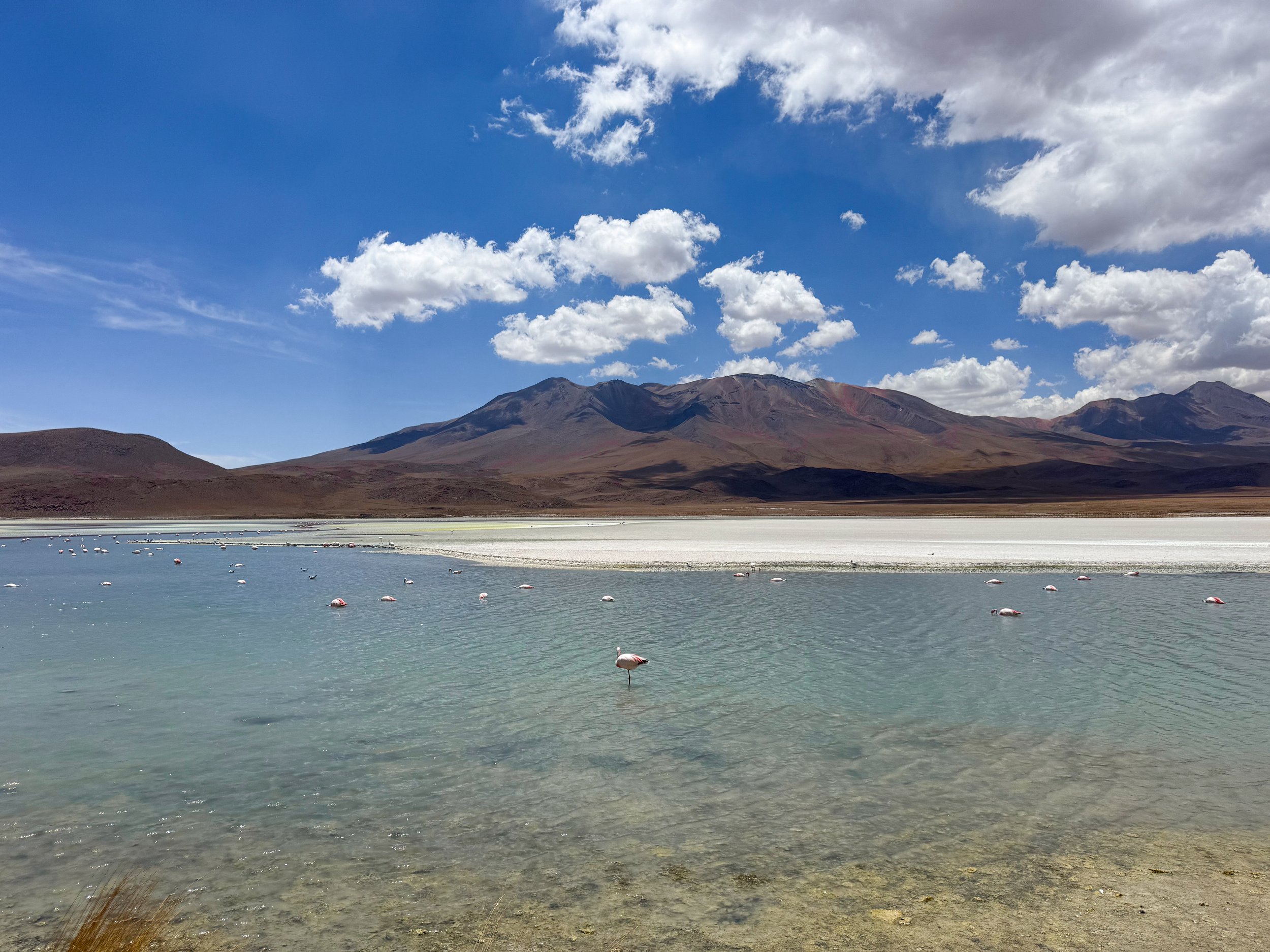
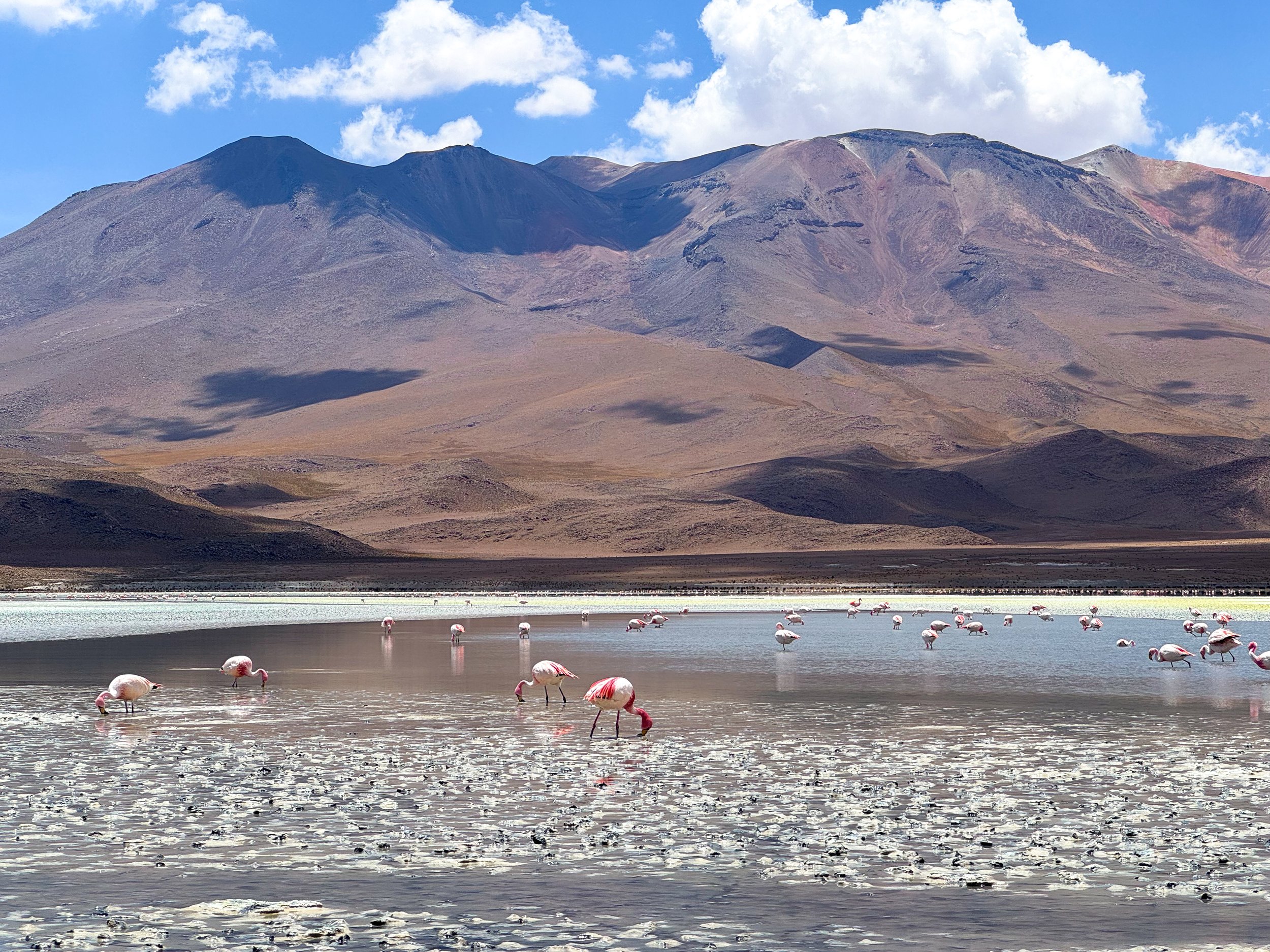
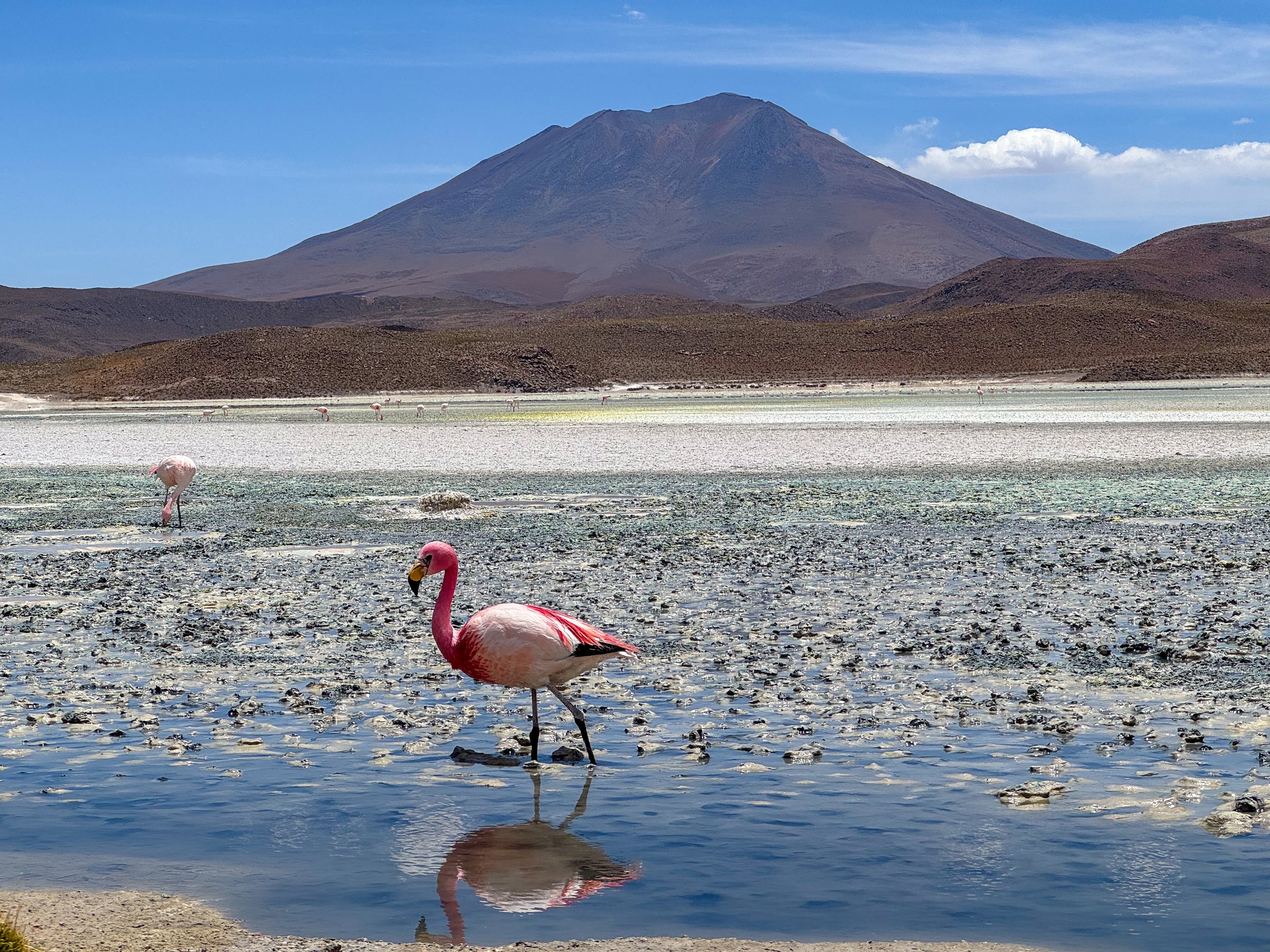
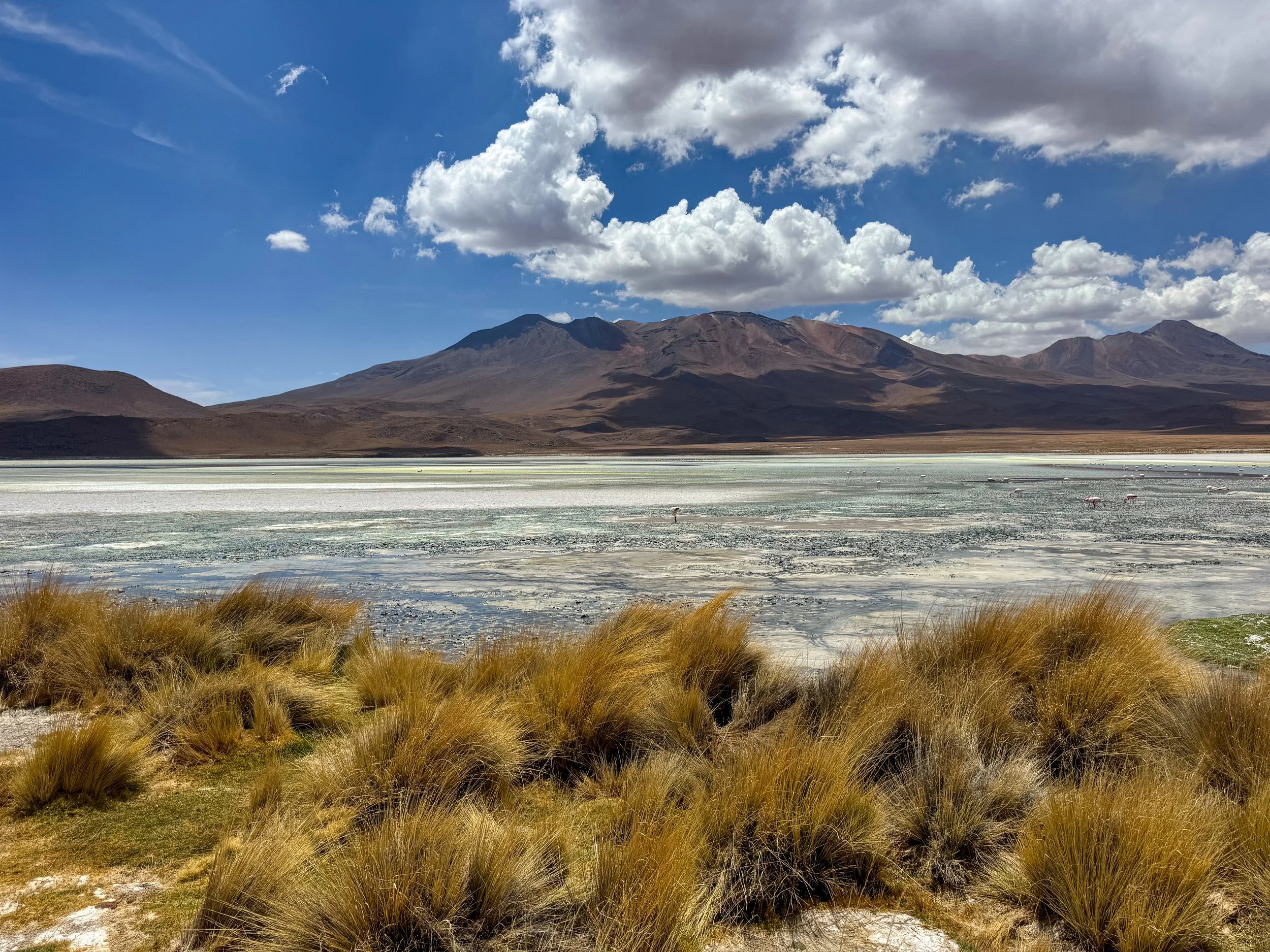
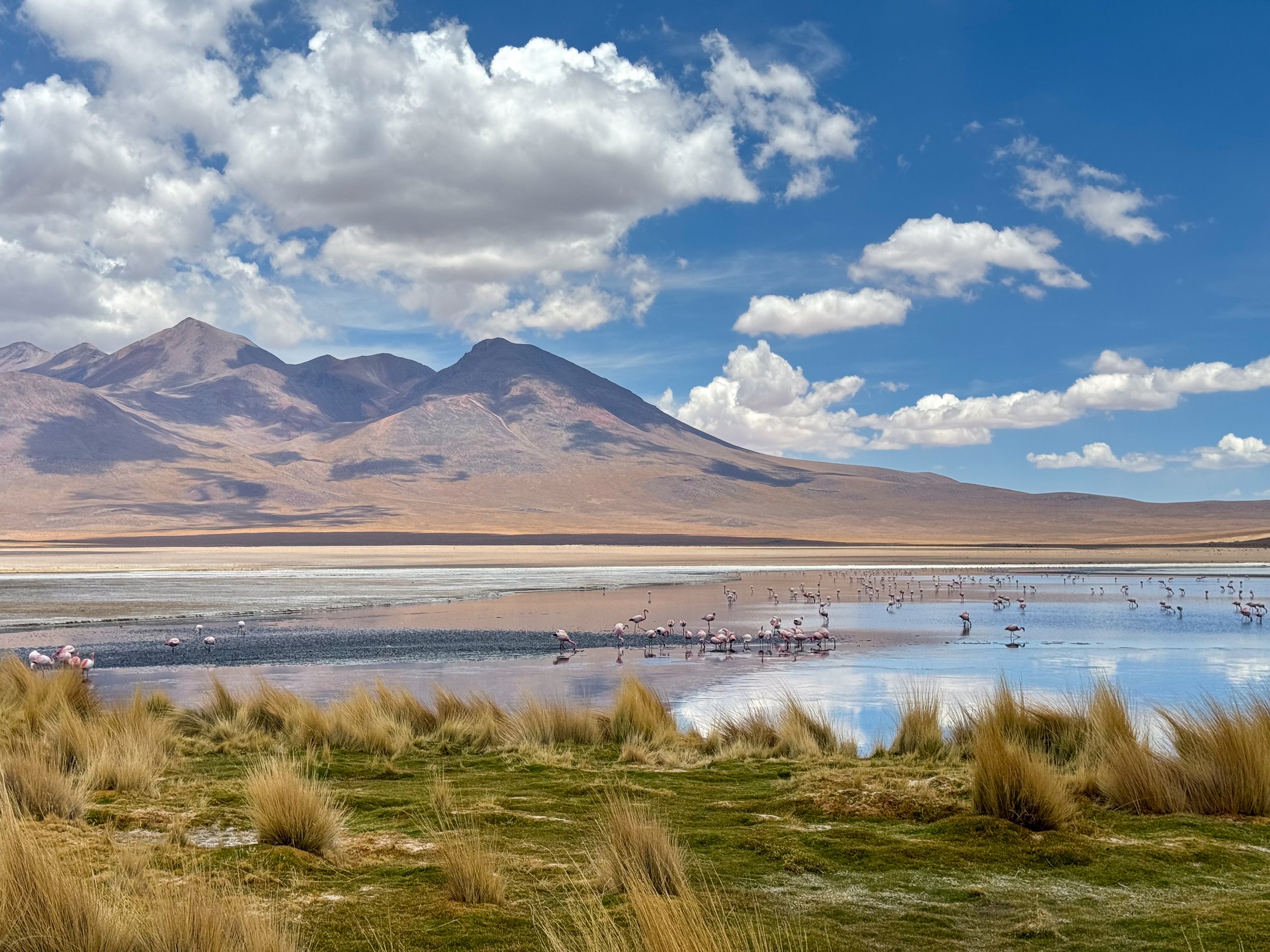
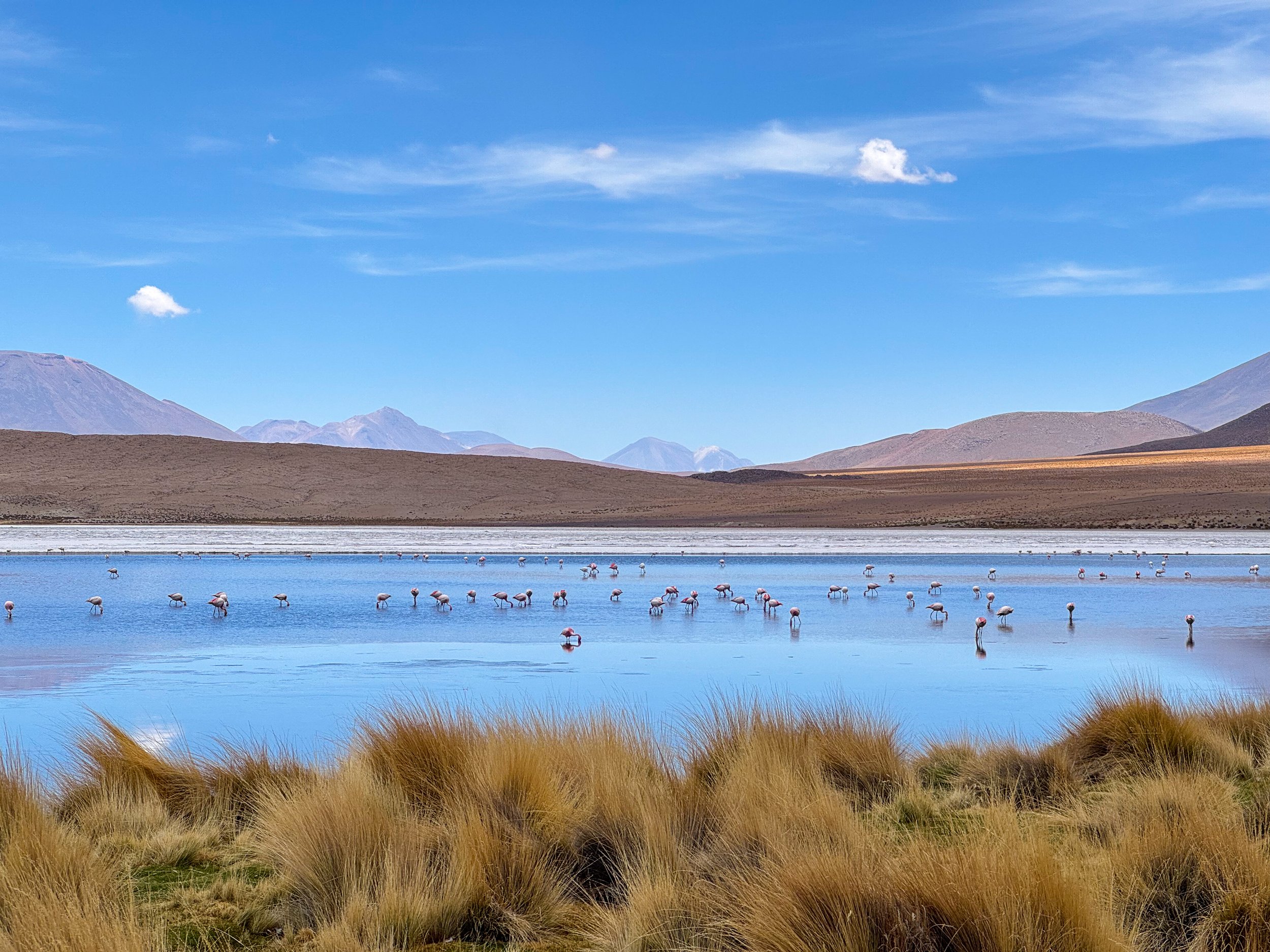
Laguna Cañapa. A salty lagoon surrounded by volcanos with a colony of pink and white flamingos feeding on microorganisms in the water. We watched through binoculars as some flamingos strutted up to the water's muddy edge showing off their pink necks and tail feathers.
Laguna Hedionda. A large salt lake with hues of blue, green and yellow in front of a towering volcano. The lagoon is a feeding ground for a large population of pink and white flamingos.
Laguna Chiar Khota. A lagoon in a valley with pale blue water, salty shores and patches of yellow sulphur with flocks of feeding flamingos.
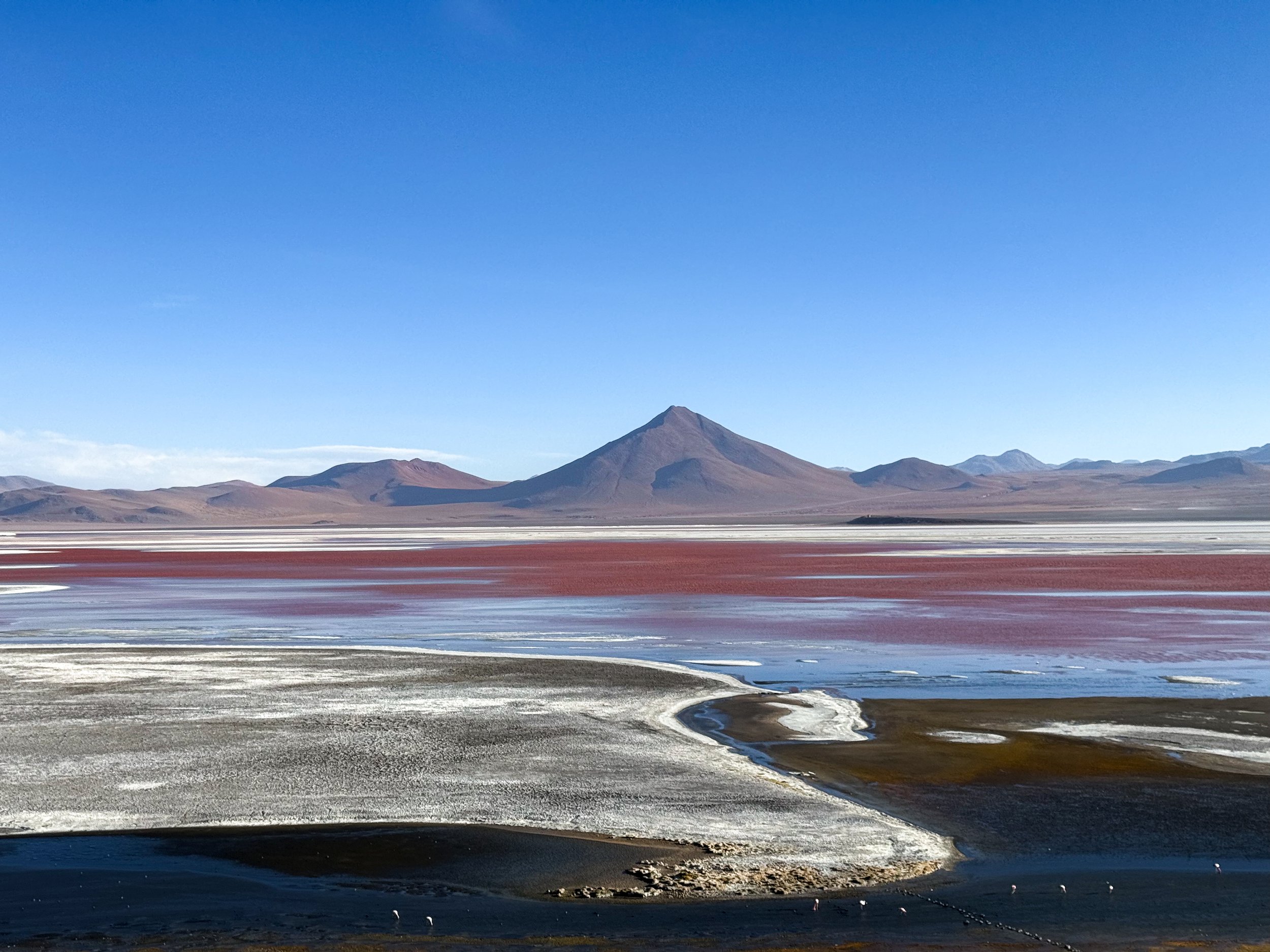
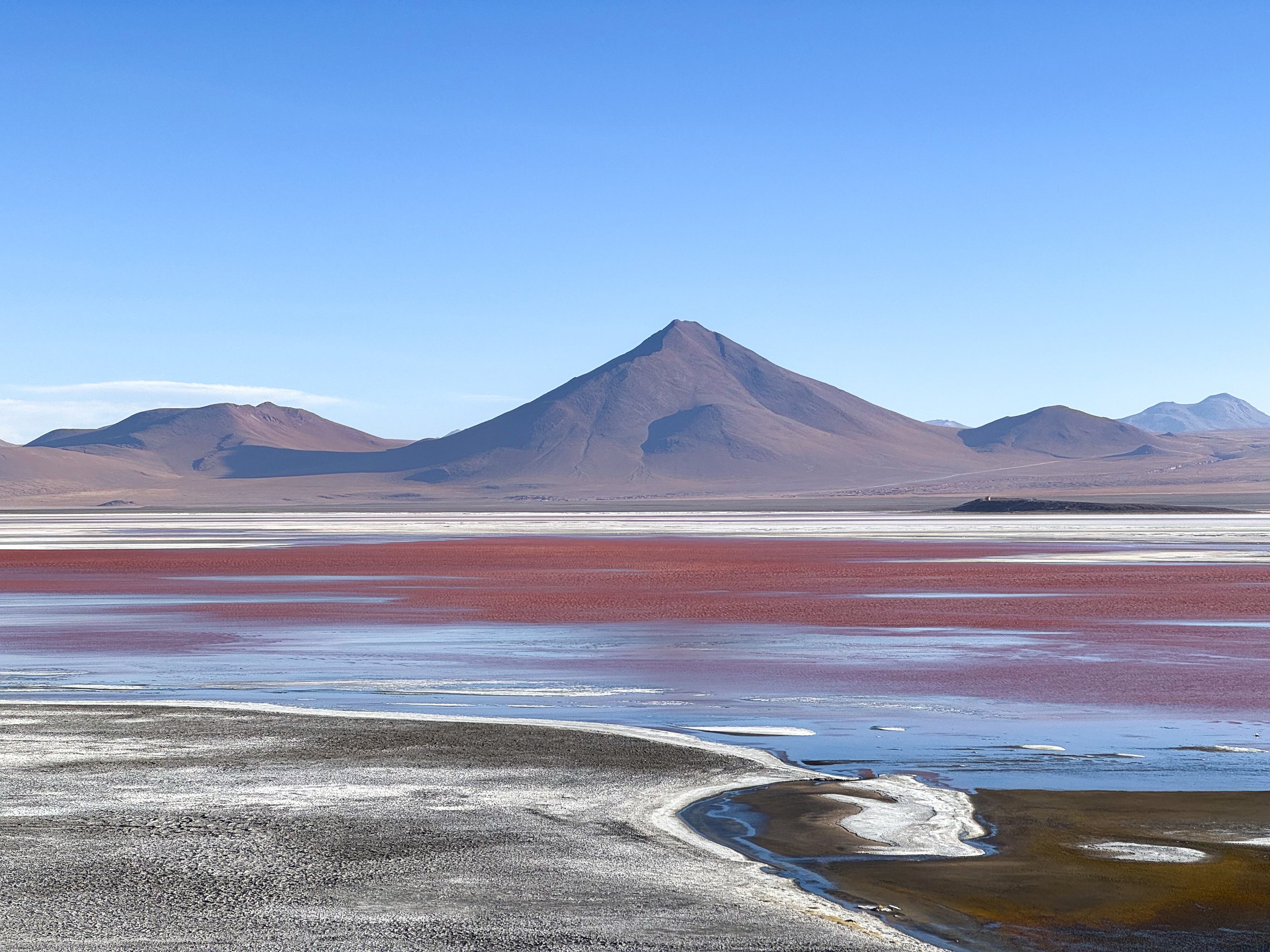
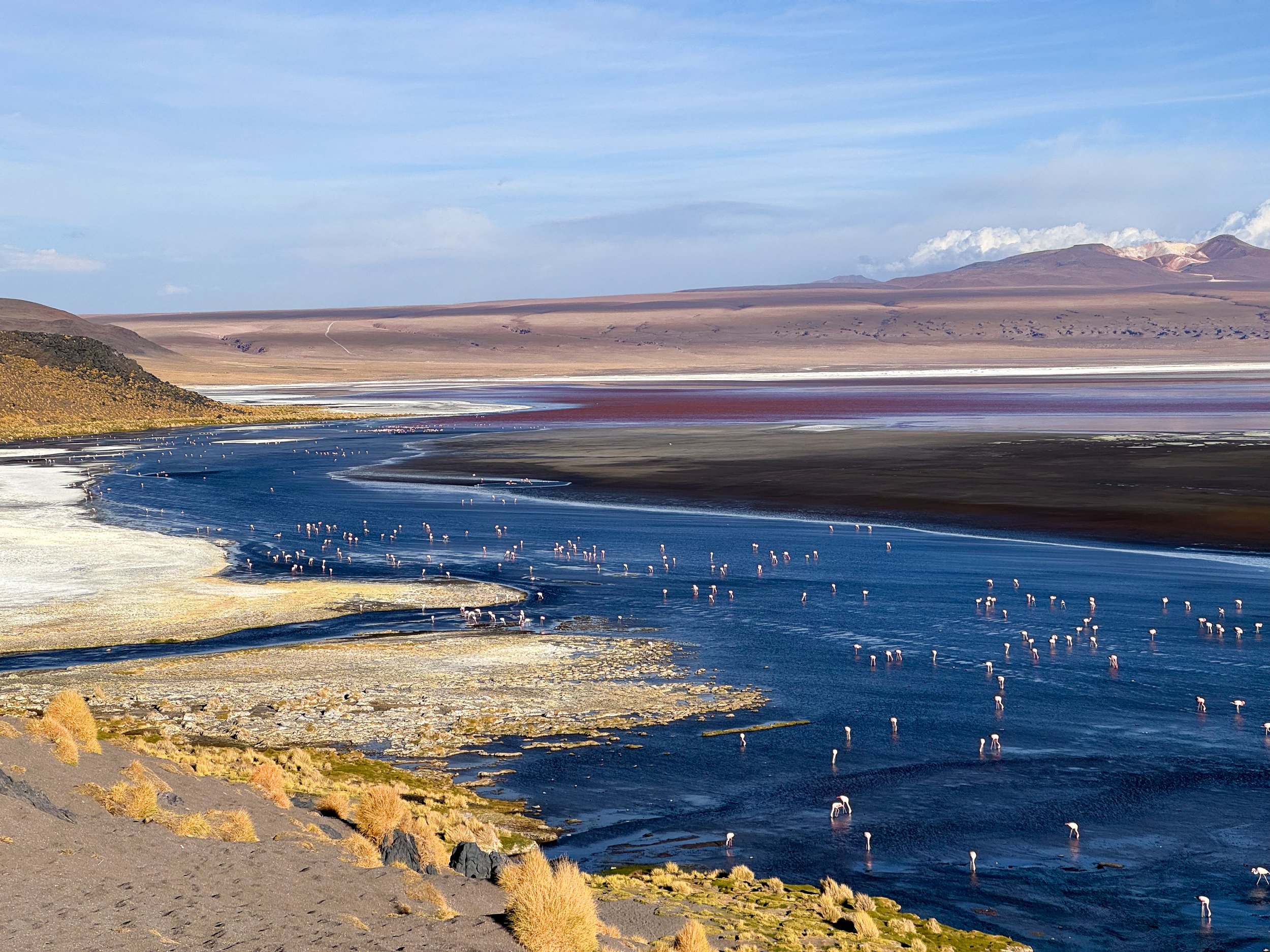
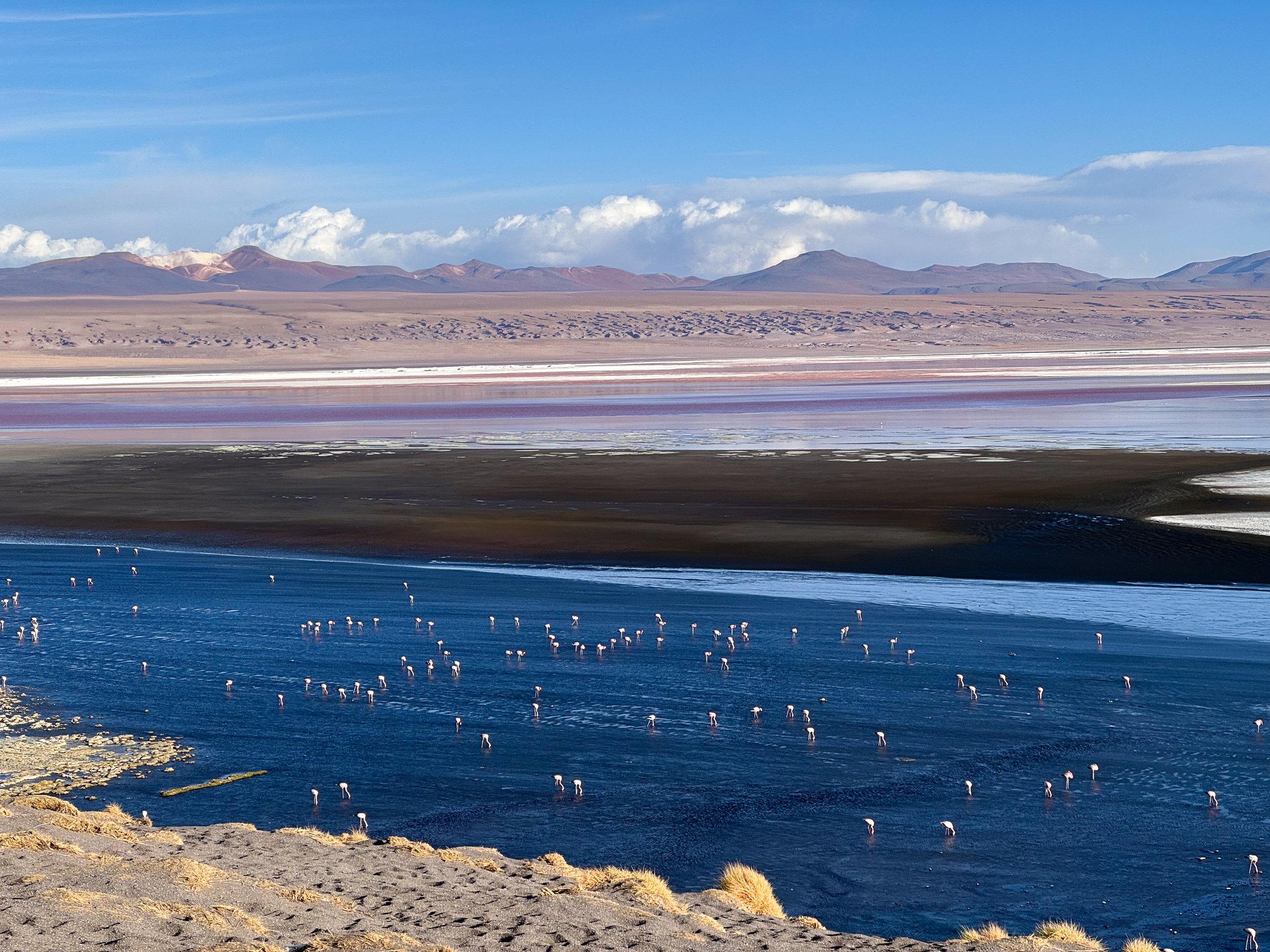
Laguna Colorada. A vast and shallow salt lake with red tinted water, a large population of flamingos and four volcanoes flanking each side of the lagoon. Wild vicuñas roam the yellow grass tufted hills surrounding the lagoon.
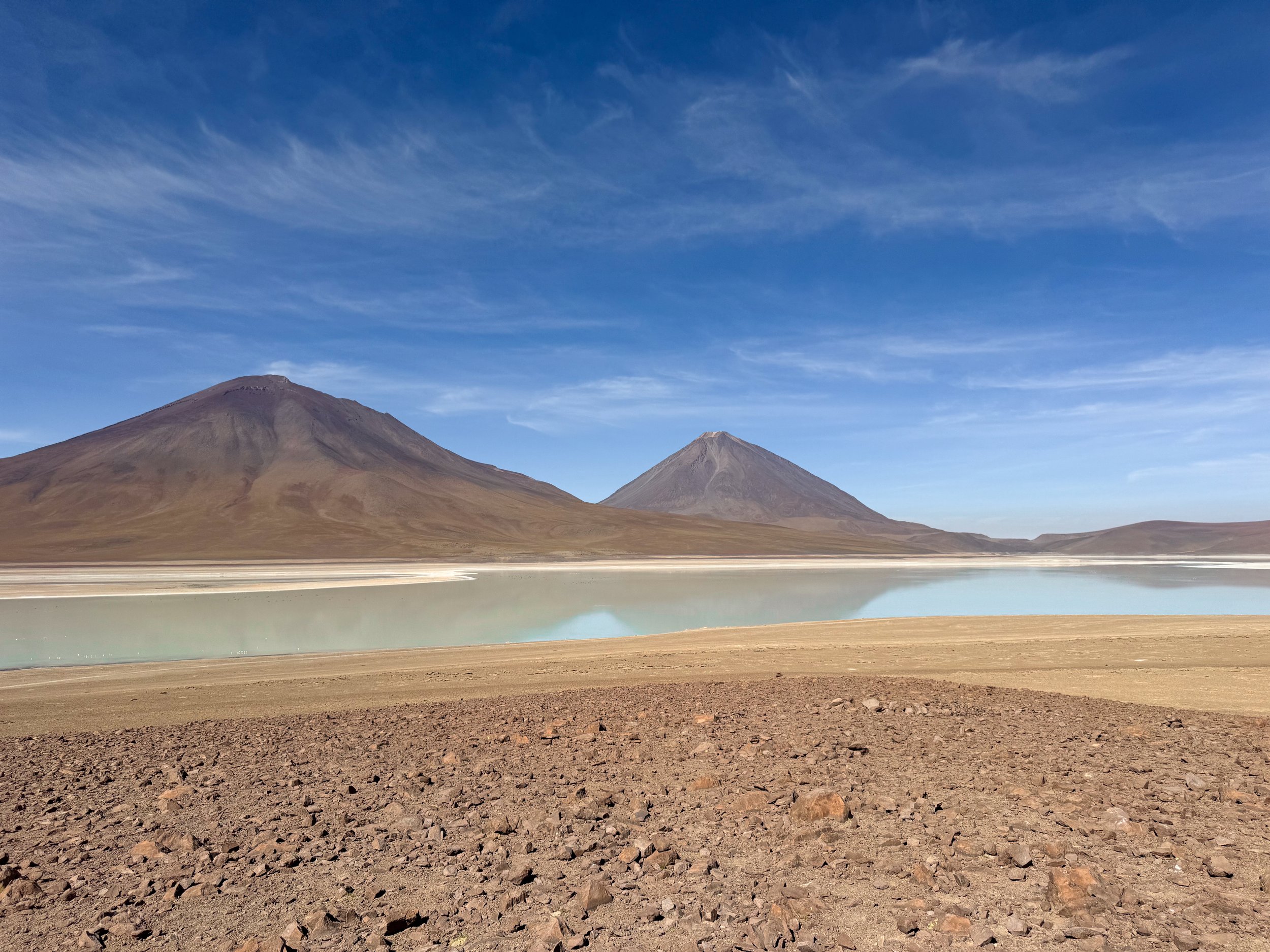
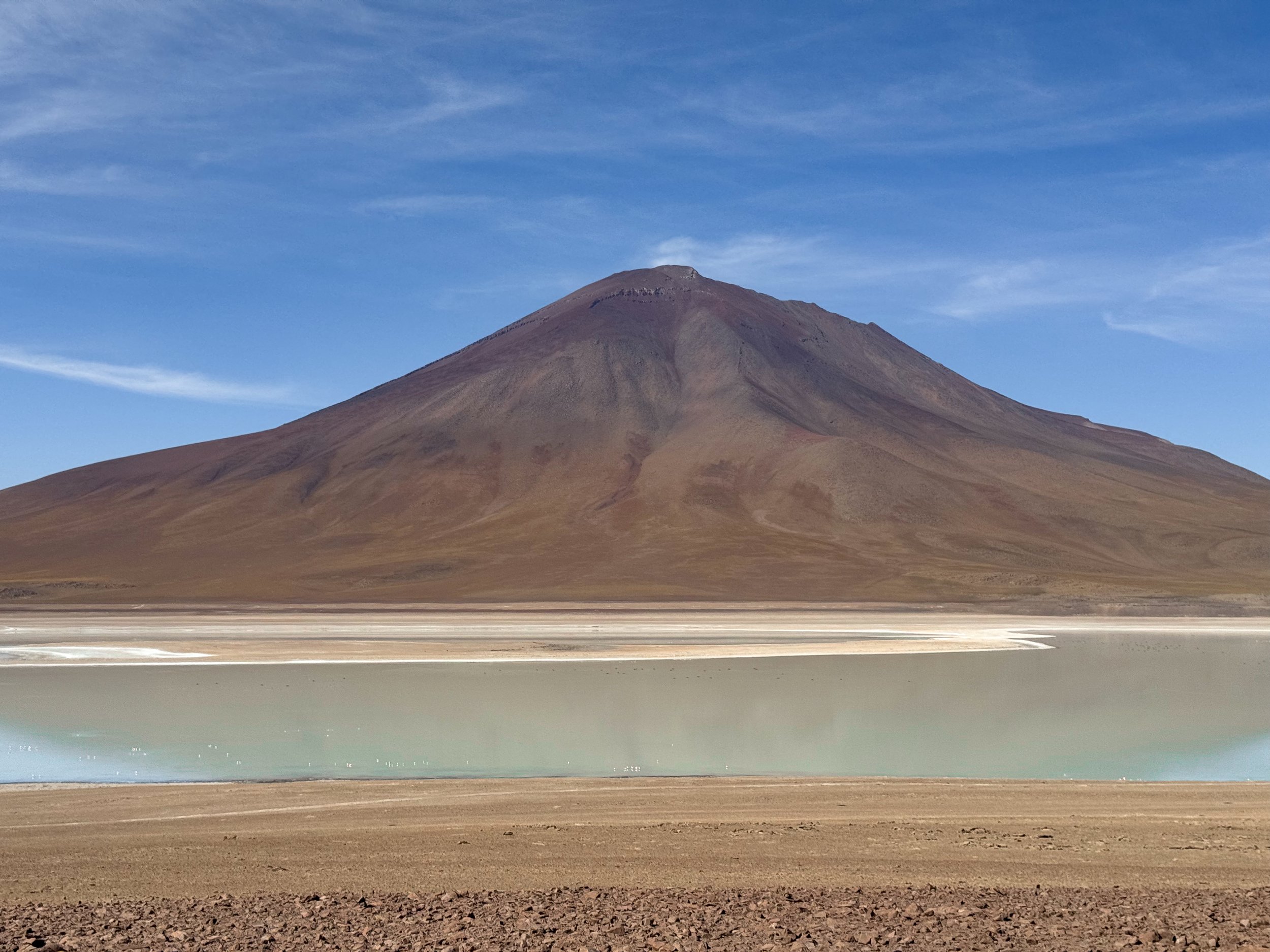
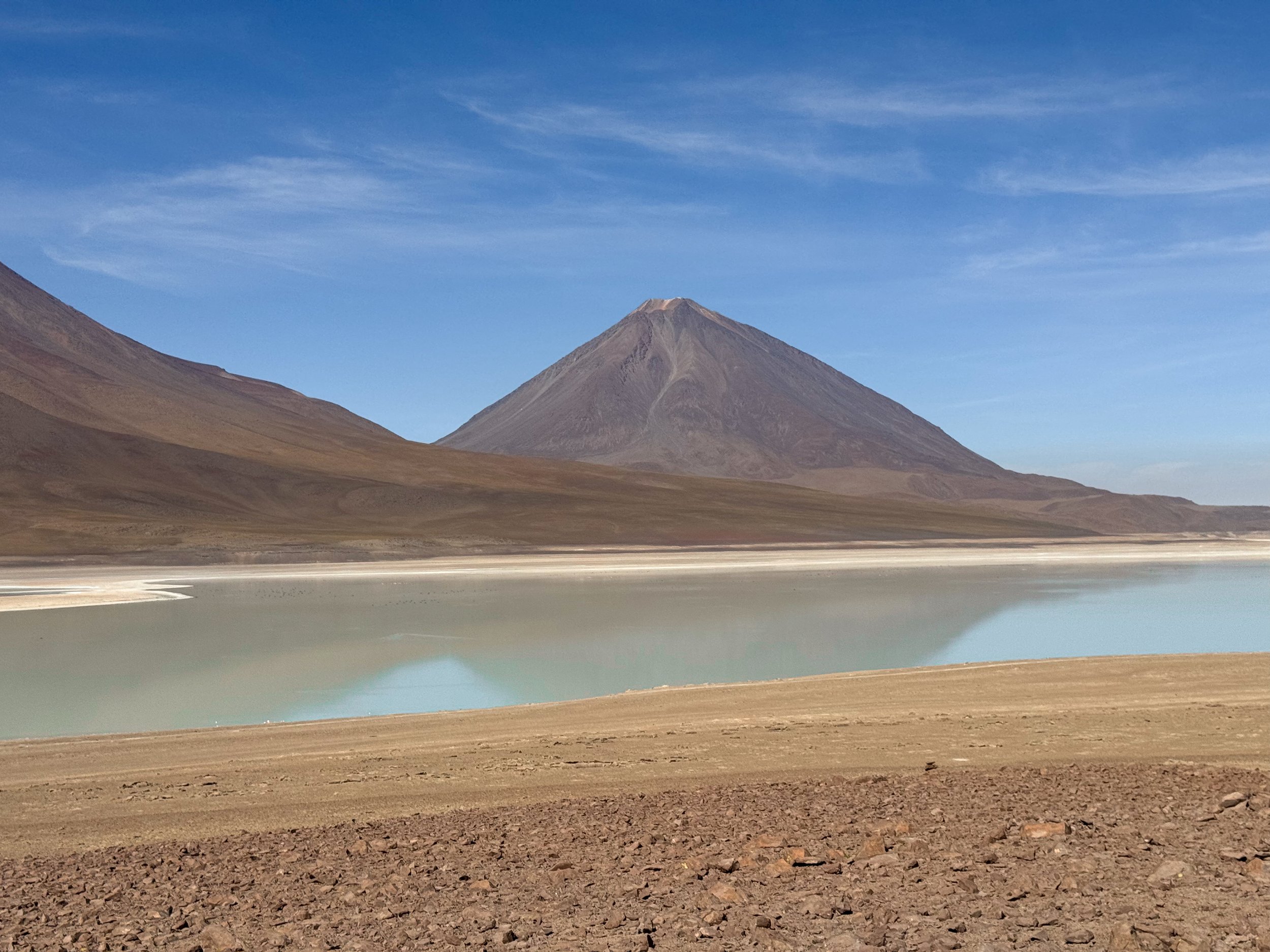
Laguna Verde. A greenish hued saltwater lagoon set against the backdrop of two cone shaped volcanoes. It’s home to feeding pink flamingos.
Rock Formations
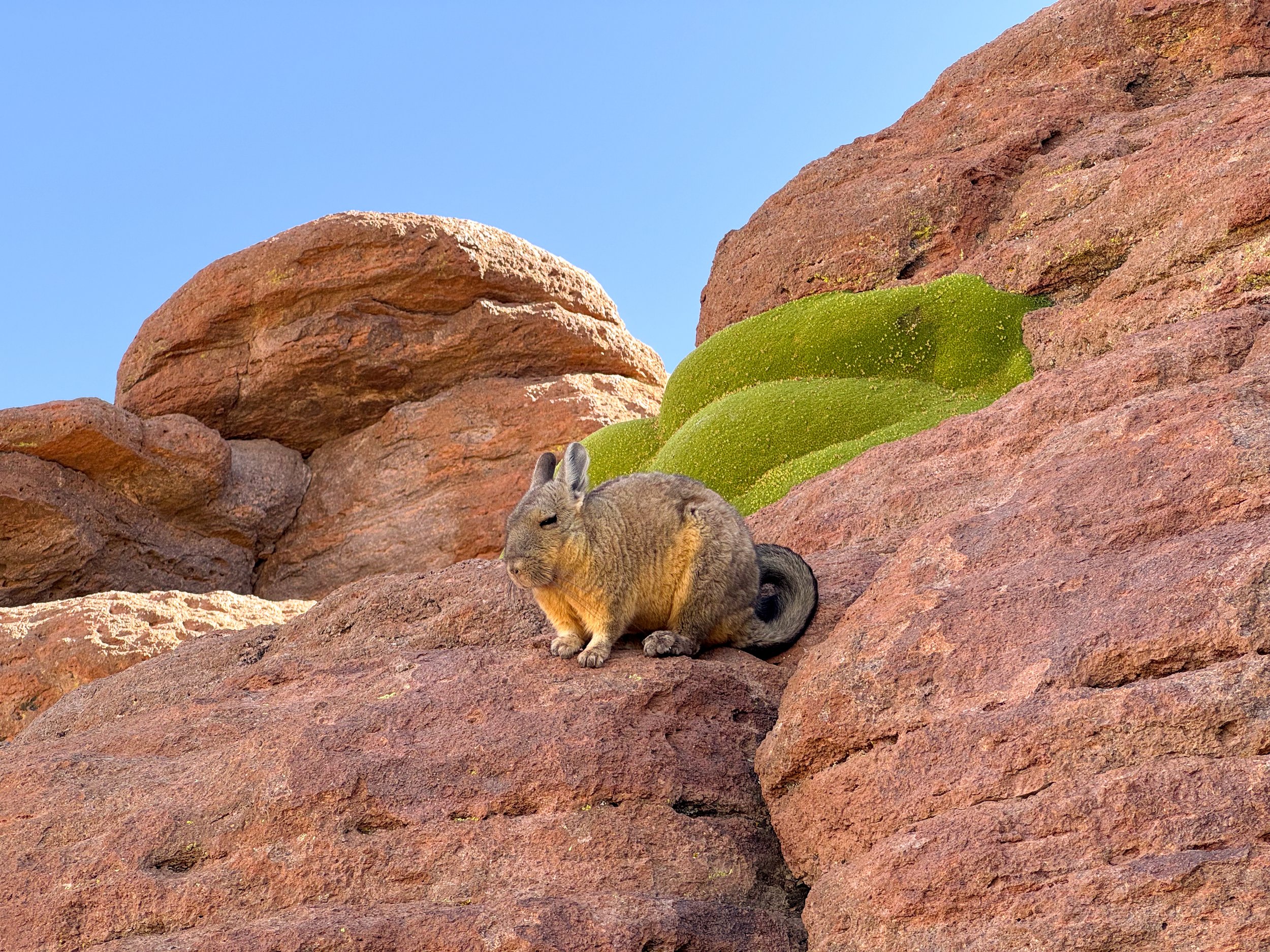
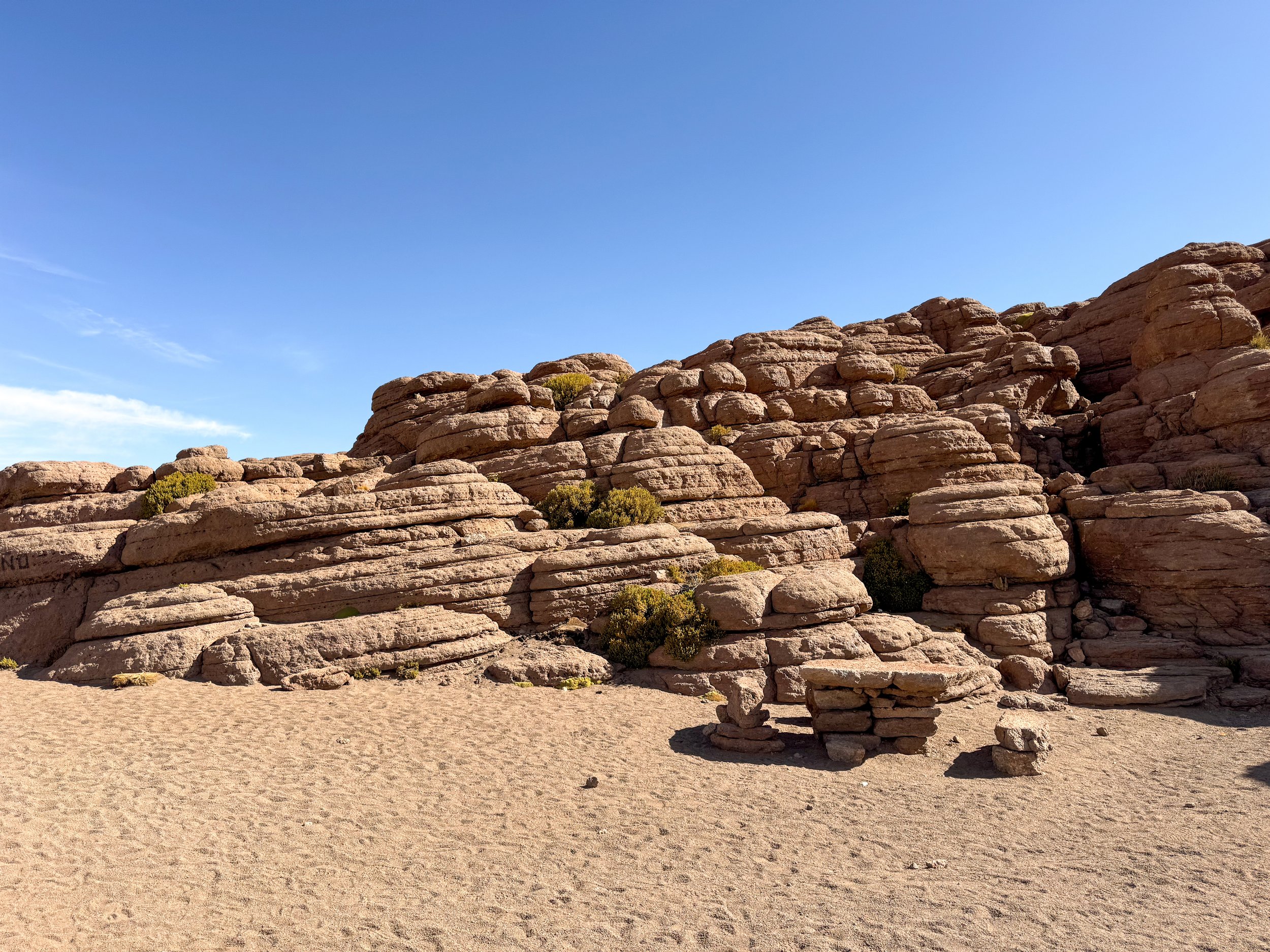
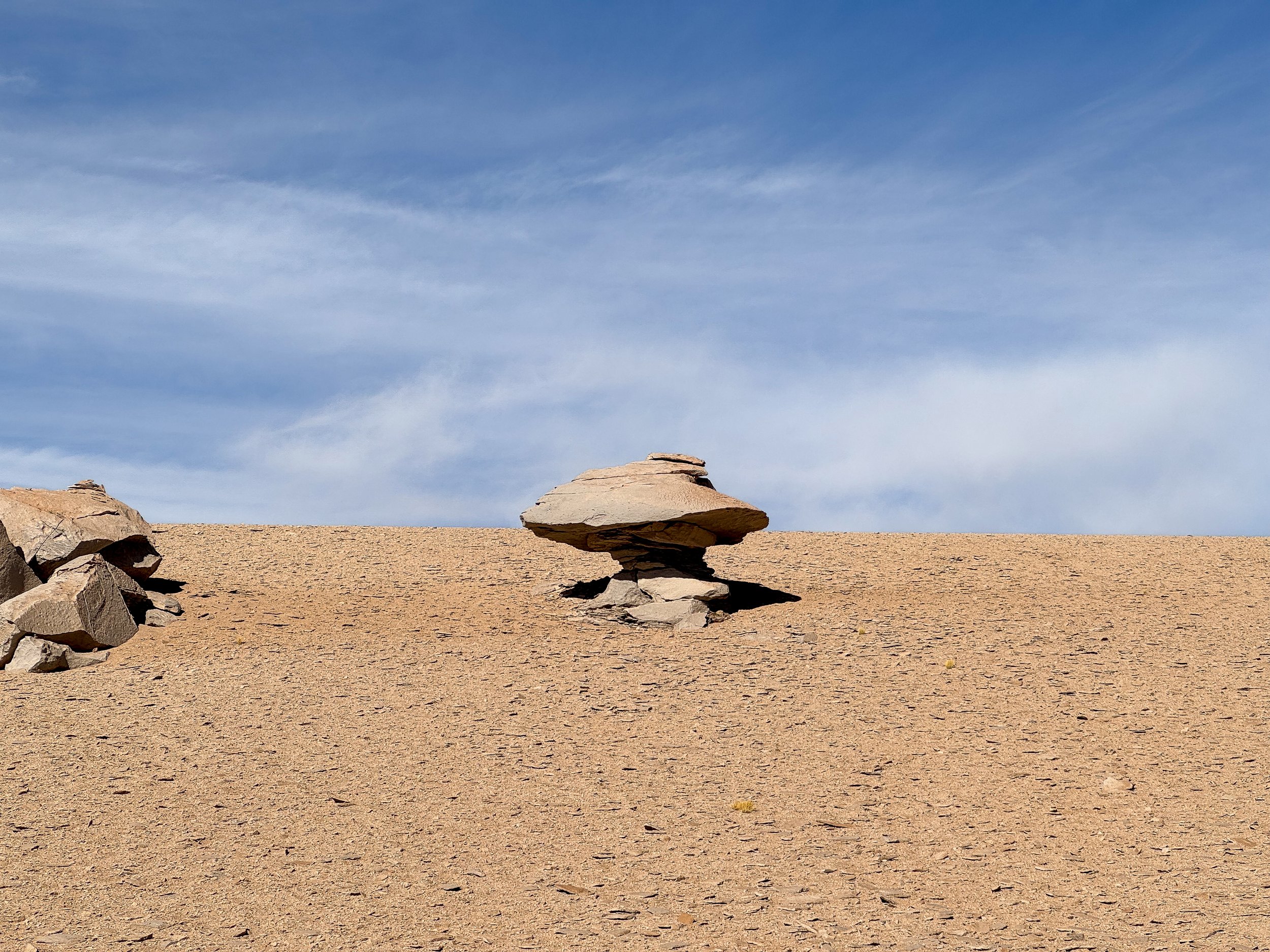
Roca de Vizcachas. A volcanic formation of eroded sheets of rock home to Vizcacha, a chinchilla like rodent and tiny mice.
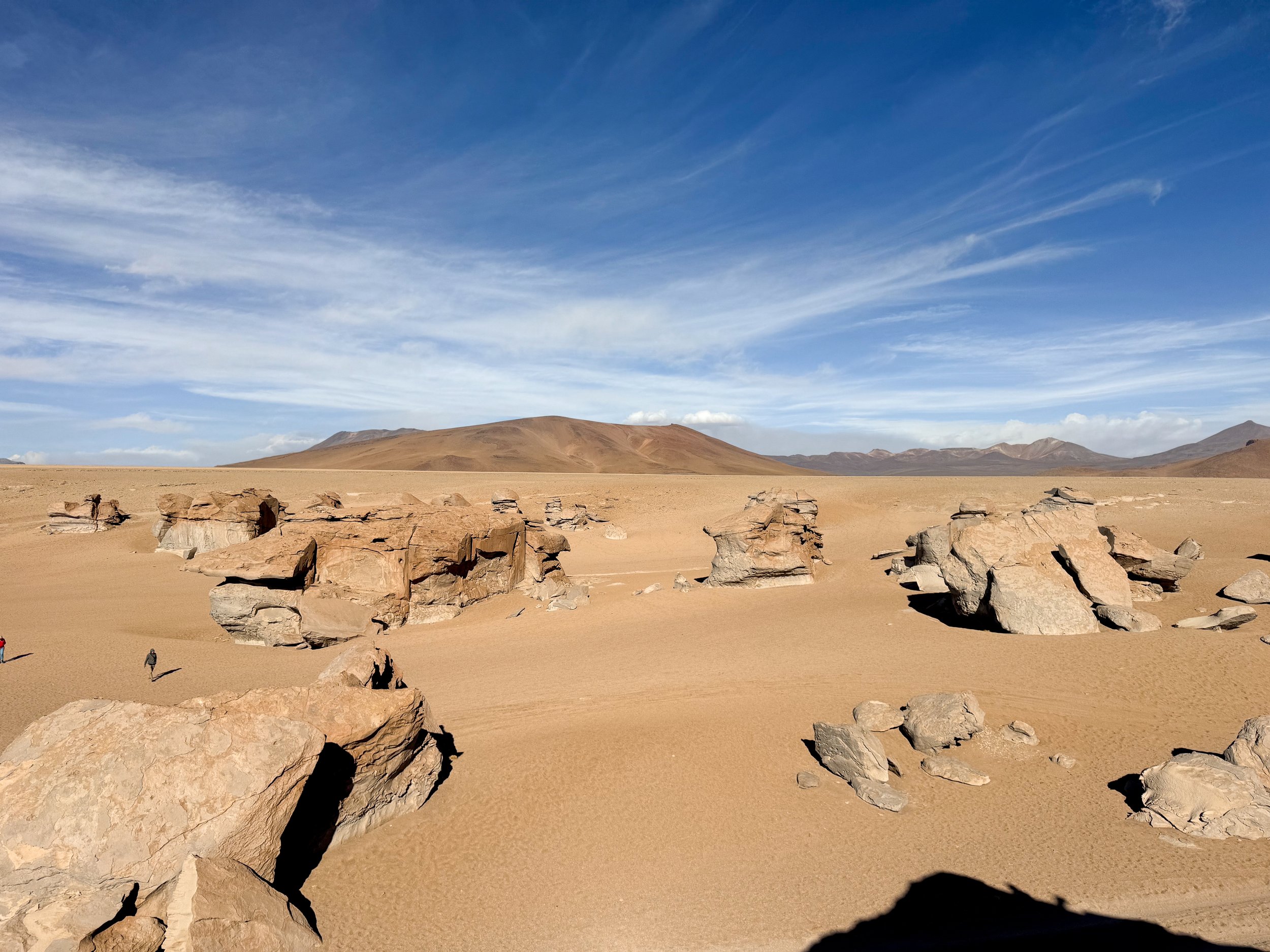
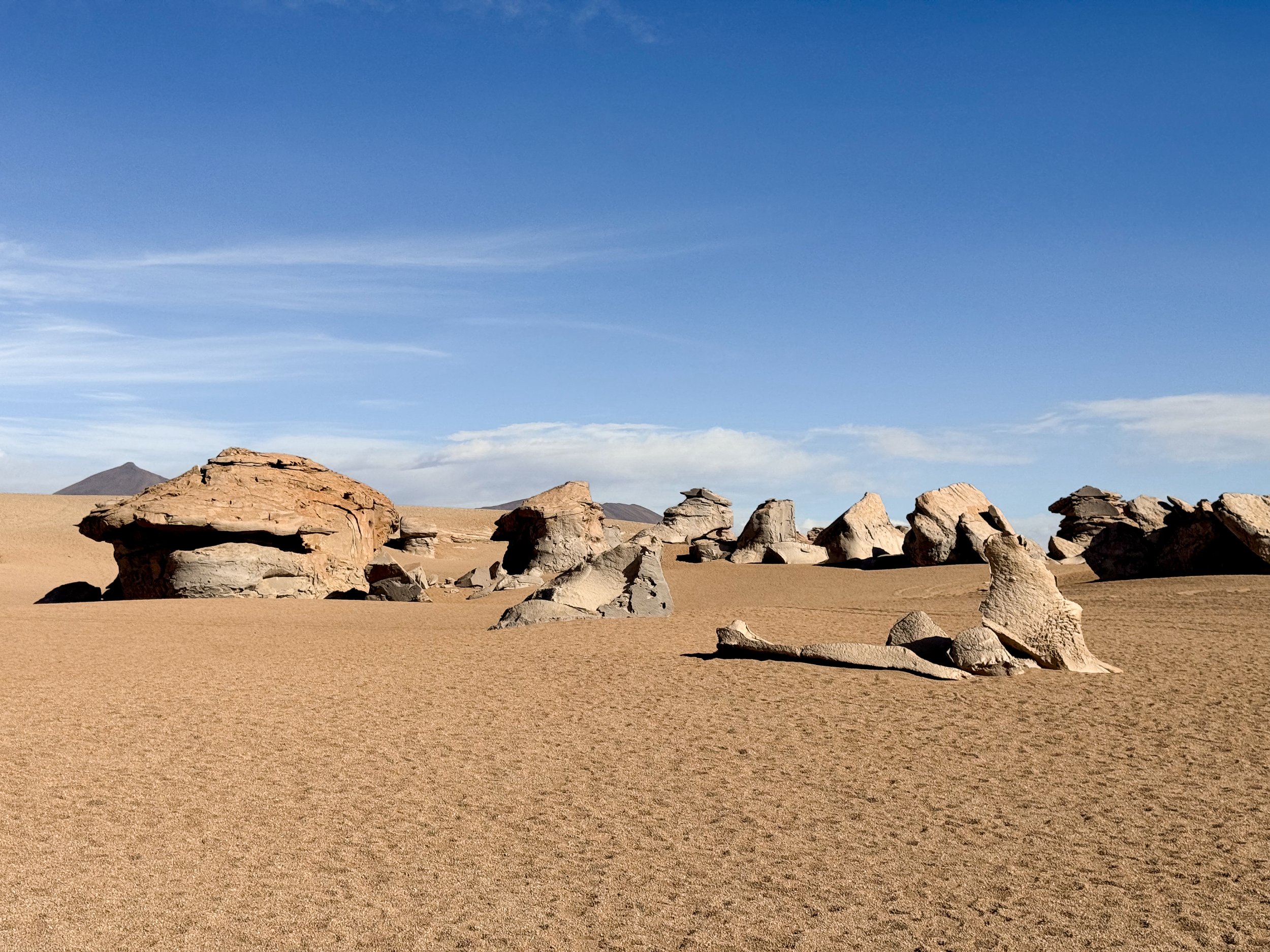
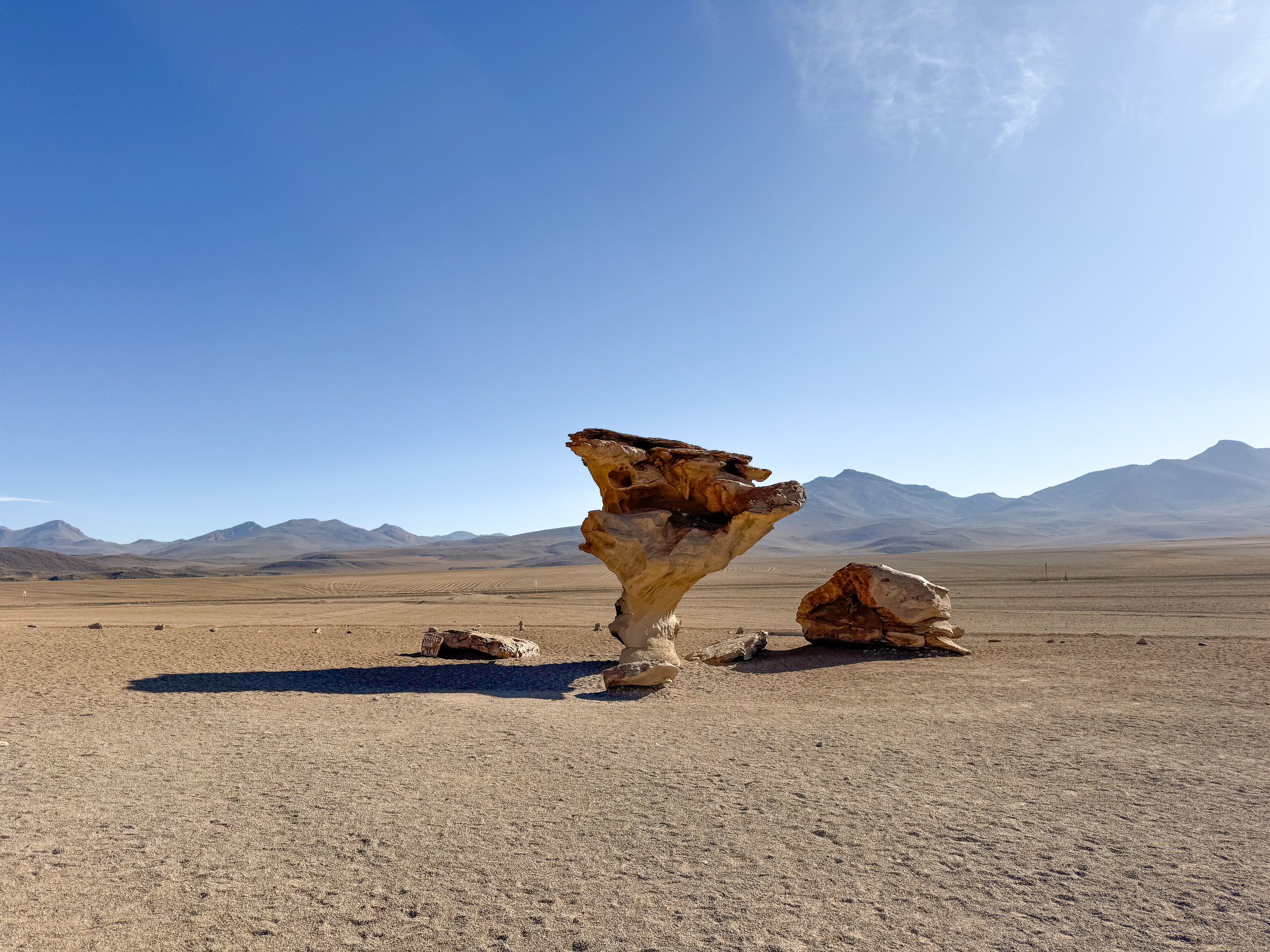
Valle de Rocas. A valley of rocks that have been eroded by wind speeds of 130km and freezing temperatures of -25C creating unique formations of split and splintered rock. Two of the most iconic formations are the mushroom and Arbol de Piedra.
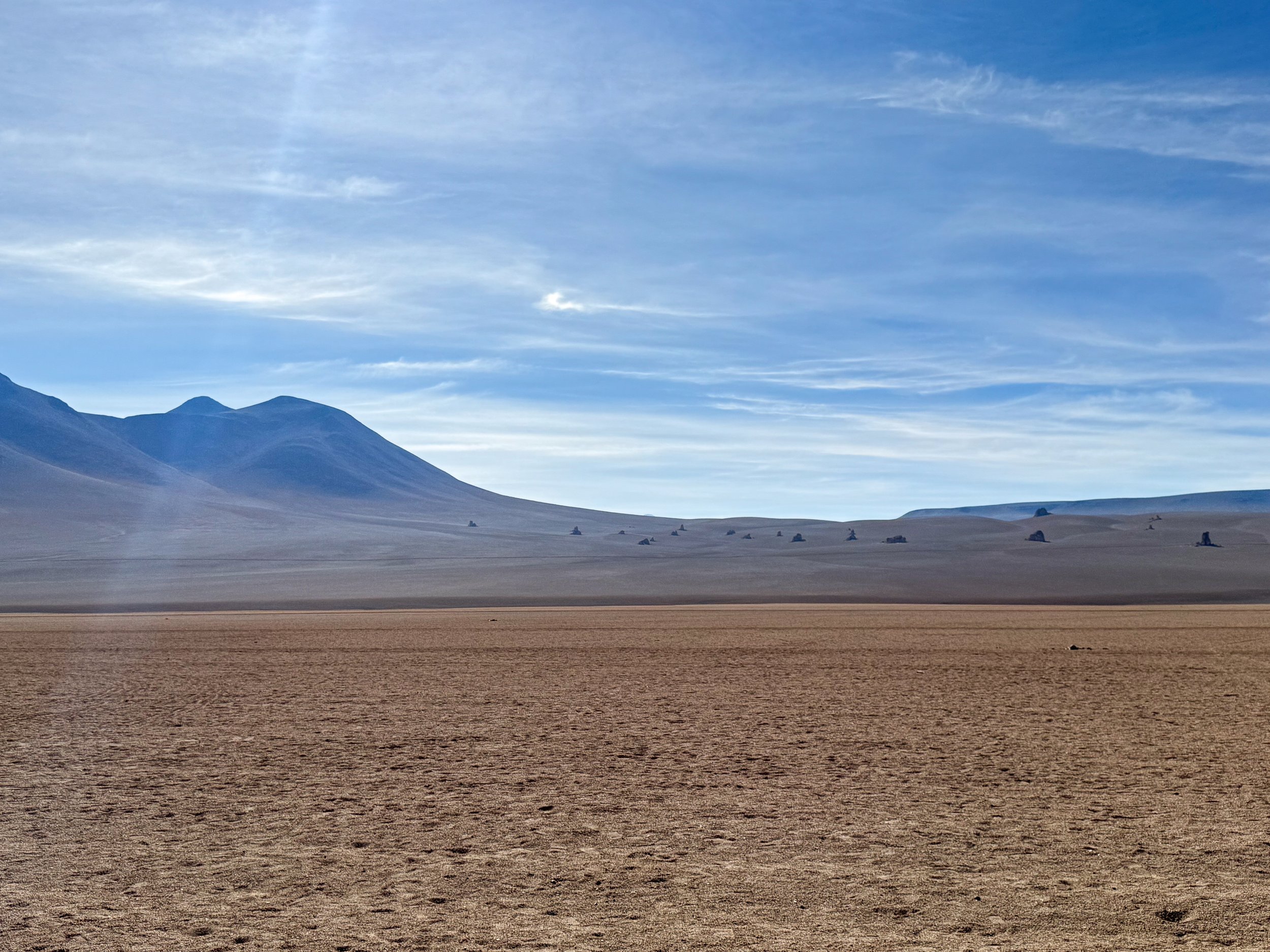
The Dali Desert. A desert with a surreal landscape that resembles one of Salvador Dali’s paintings. Large rocks rest upright along an ancient lava flow from a volcano whose profile resembles the face of an elephant.
Geothermal Activity
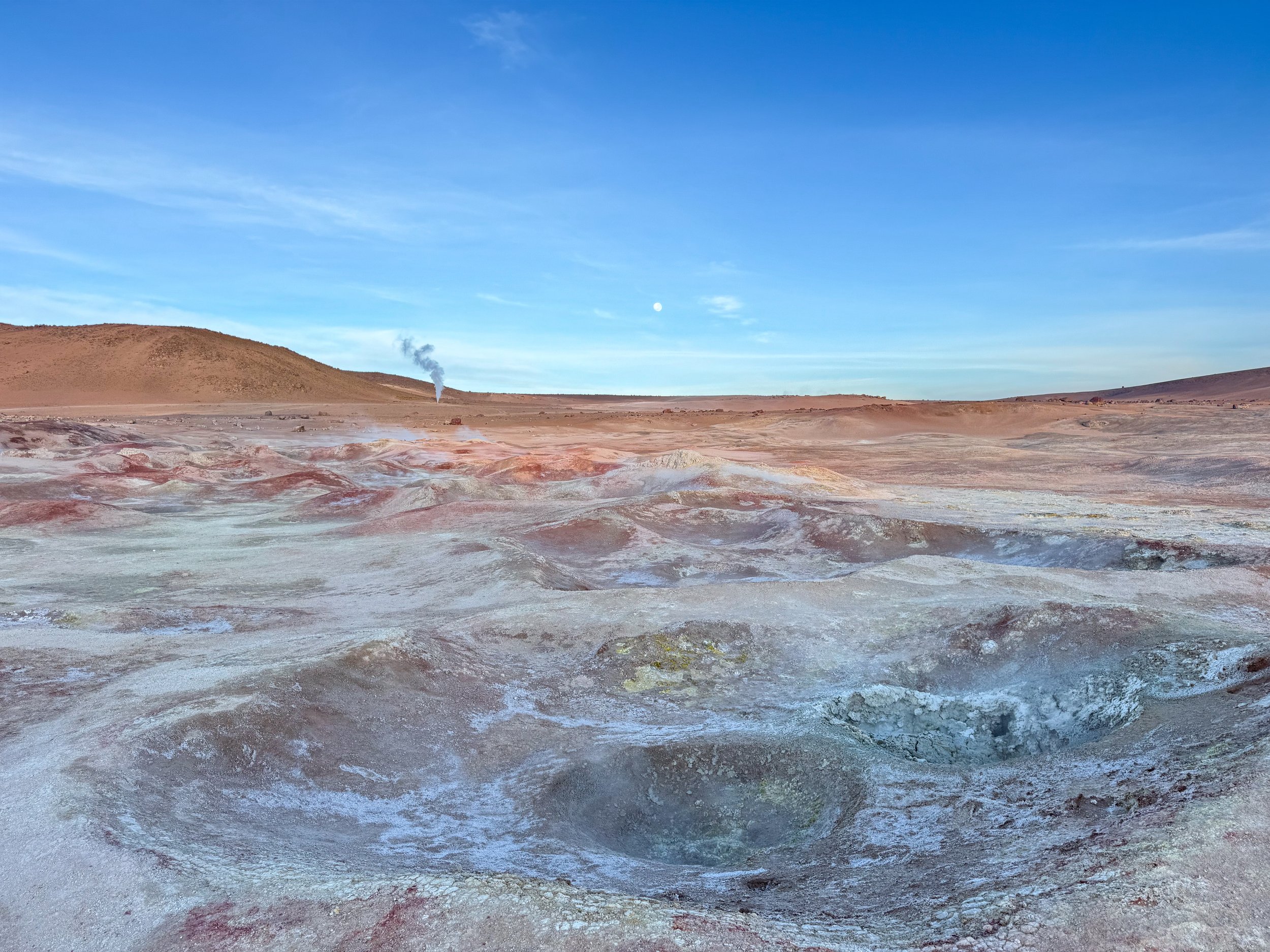
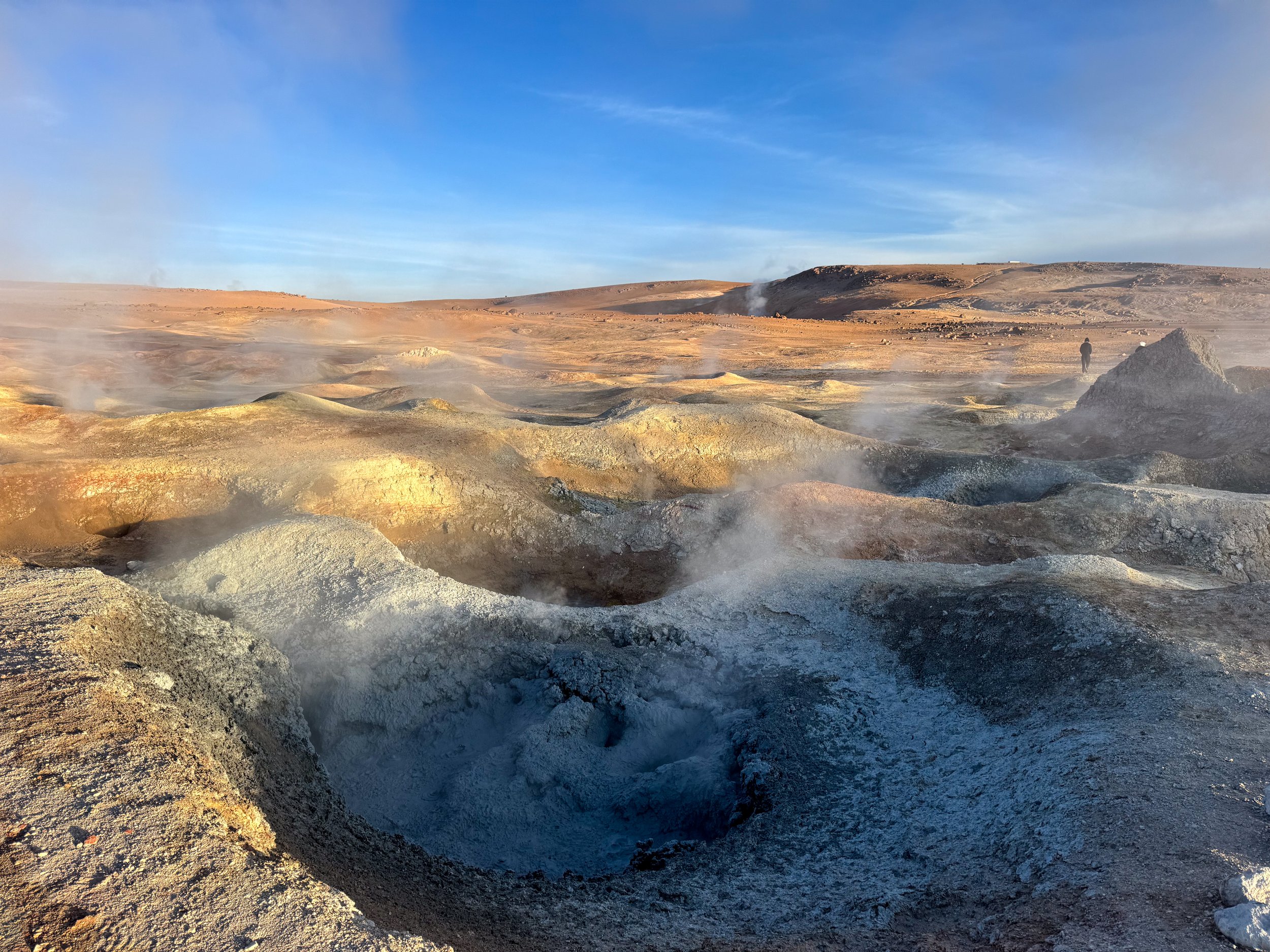
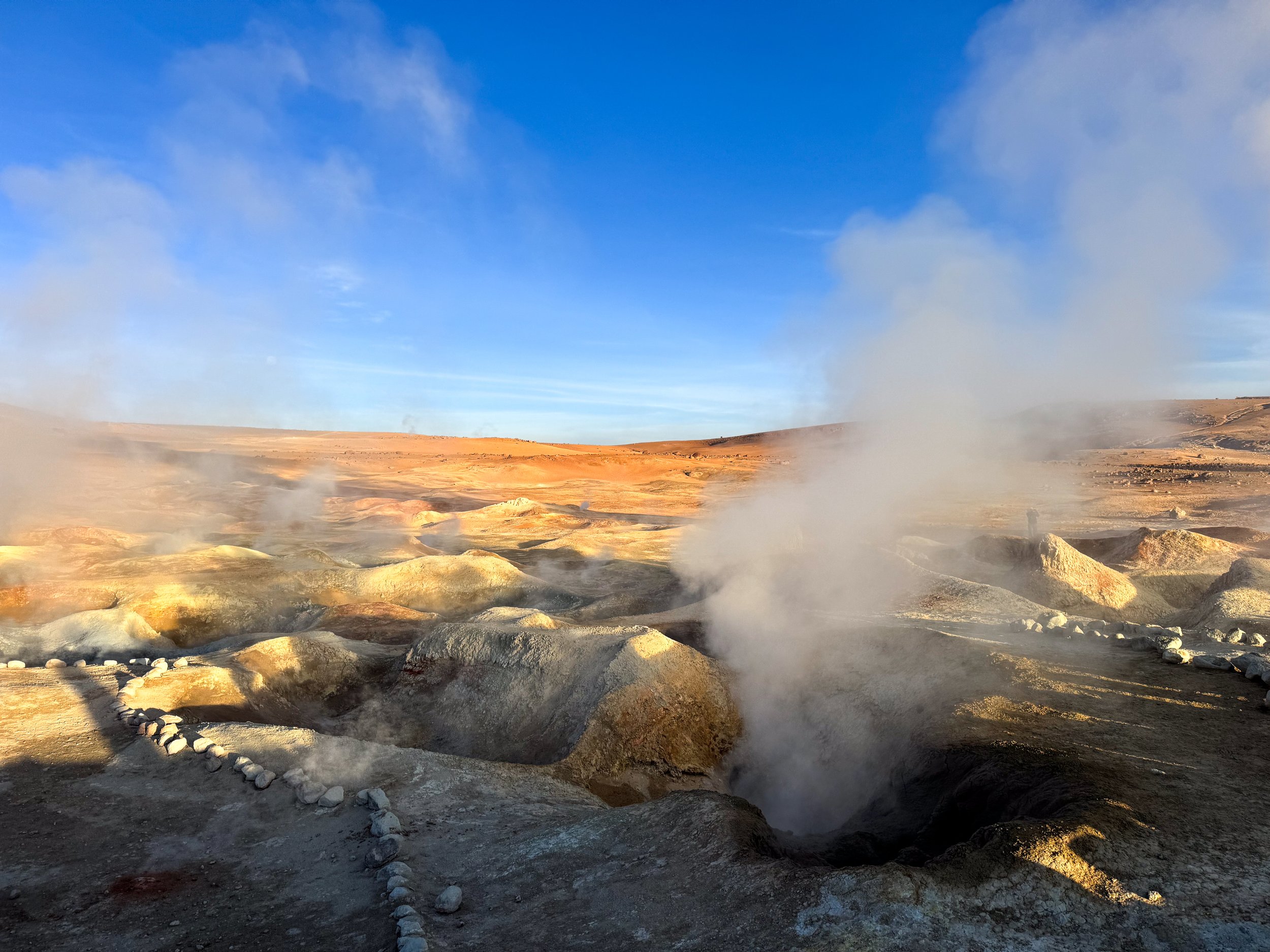
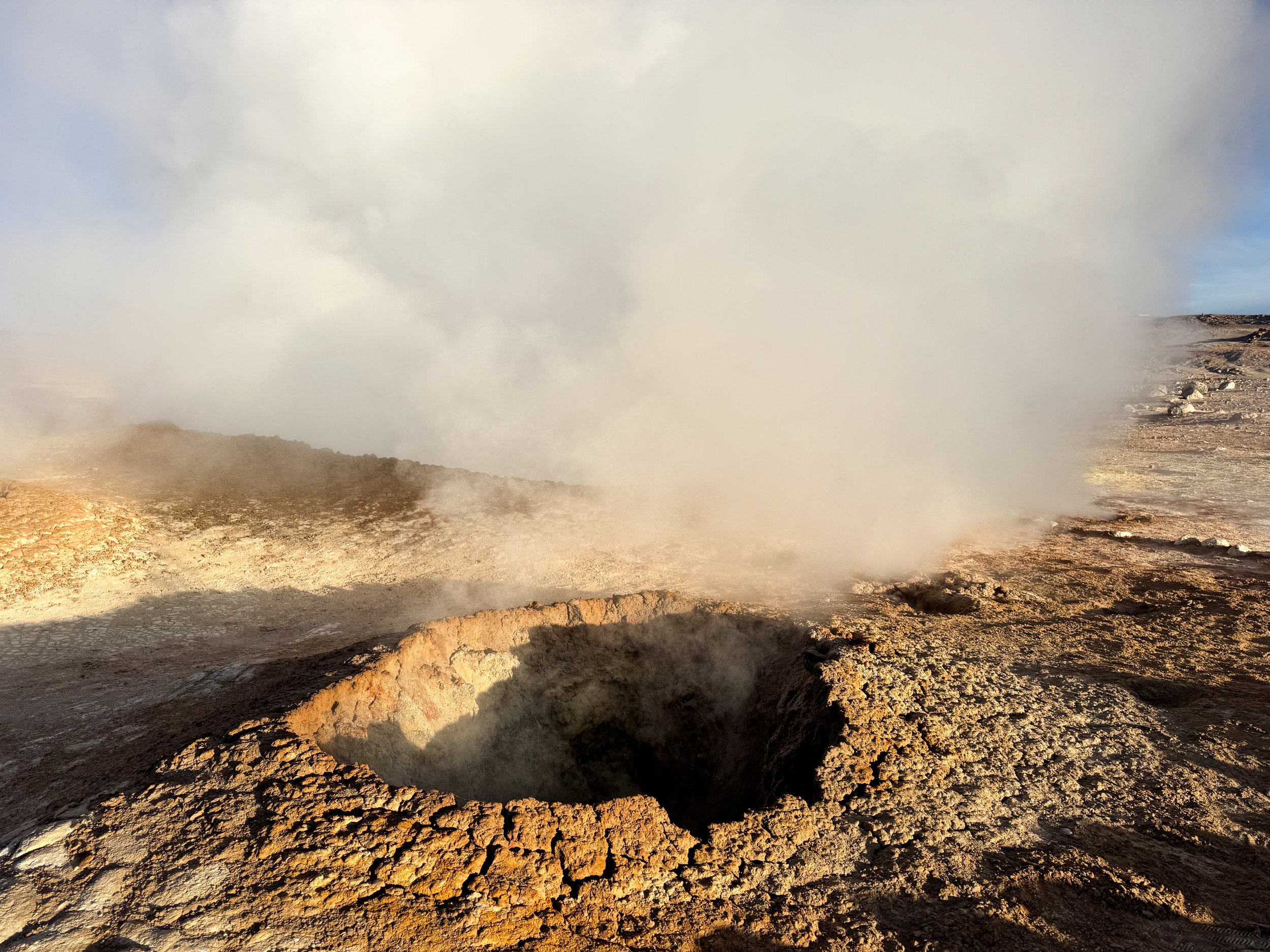
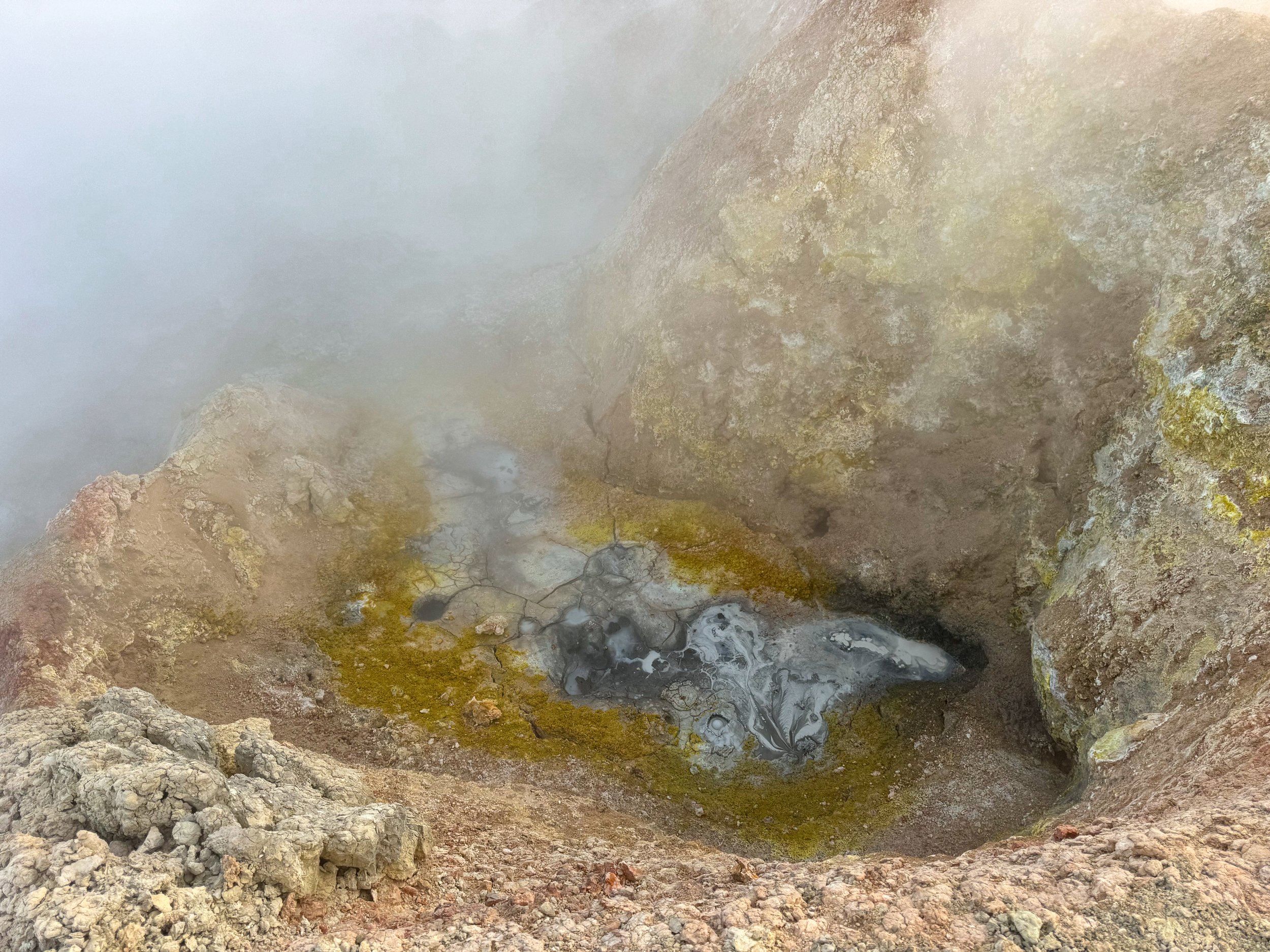
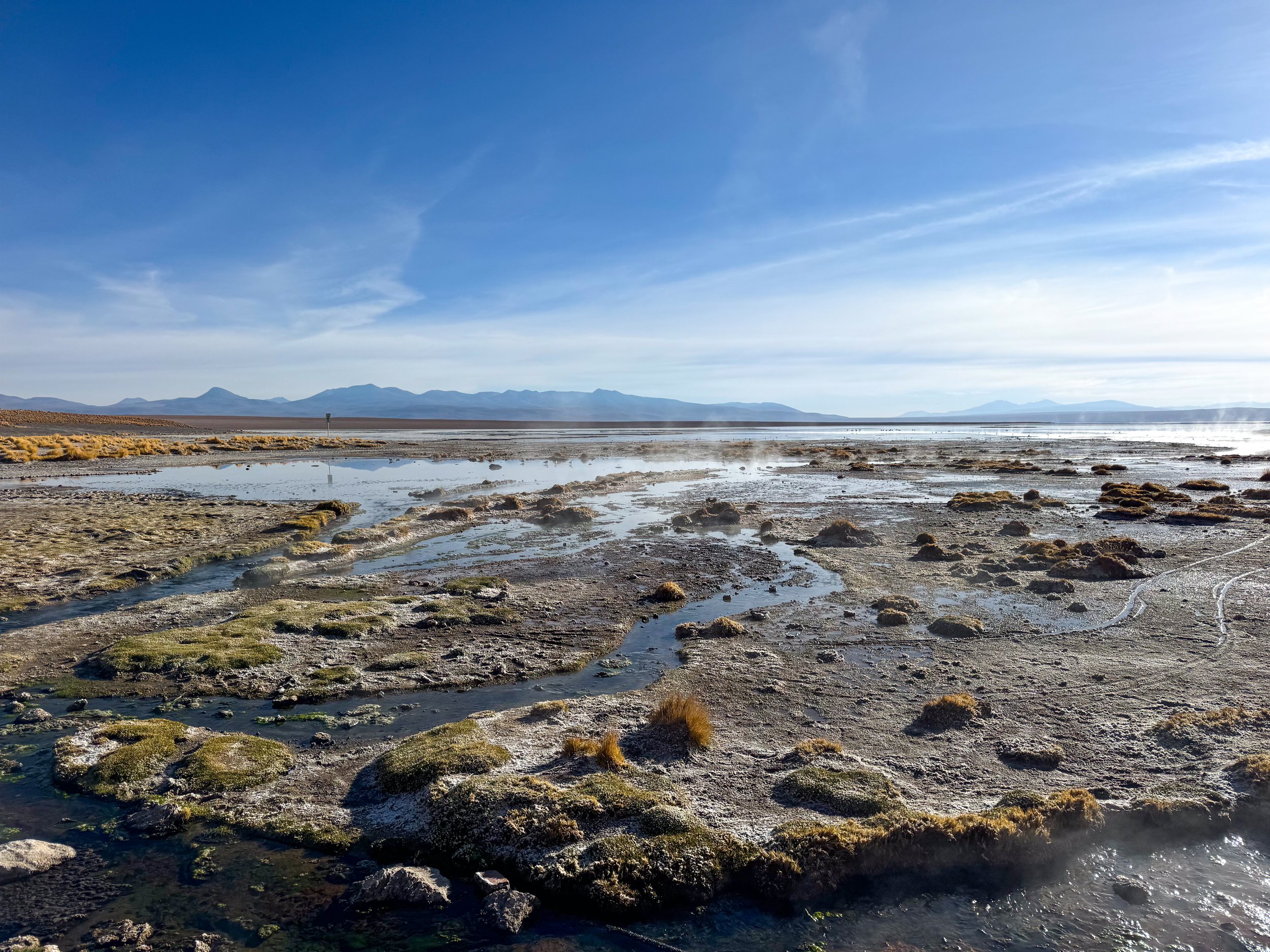
Sol de Mañana Geysers. A series of steam vents, bubbling pools of mud and sulphuric deposits covering the barren desert landscape. We walked between the smelly and steaming vents, warming our hands in the below freezing temperatures at nearly 5,000 meters above sea level.
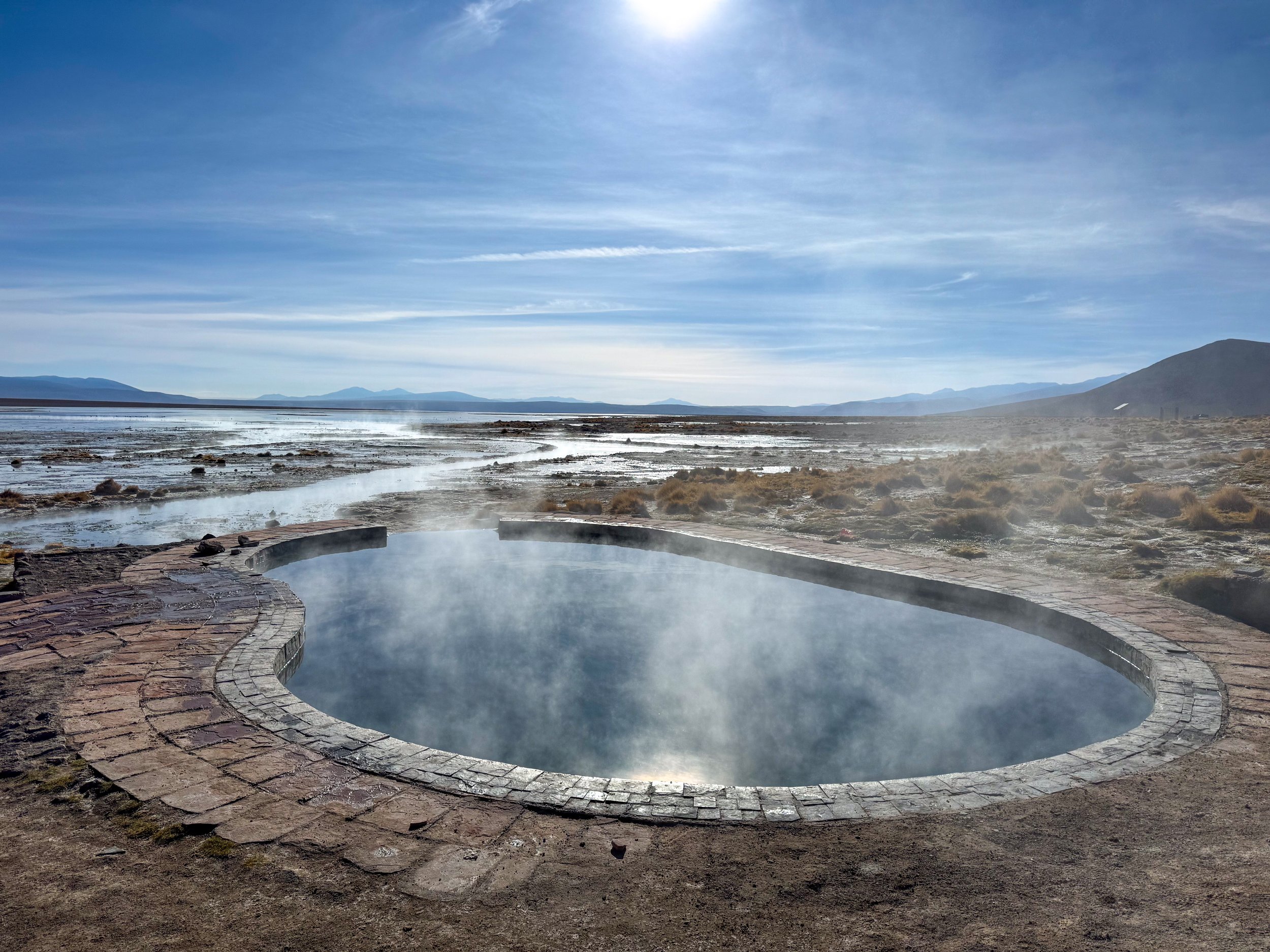
Aguas Termales de Polques. A natural hot spring with two steaming pools at the edge of a saltwater lagoon. We relaxed here for half an hour, at one point having the pool entirely to ourselves.

Where to Stay
Hotel Warara. A salt hotel with walls, decor, tables and bed frames all made from salt blocks, plaster and crystals. We stayed here one night during our tour of the Uyuni Salt Flats and Bolivian Desert.
Hostel San Marcelo. A hostel in a small village near the Laguna Colorada. The rooms are basic but have twin beds, layers of warm blankets for the cold nights and shared restrooms. The hostel lacks electricity and wifi.
Perla de Bolivia
We visited the Uyuni Salt Flats and sights across the Bolivian Desert with Perla de Bolivia on a four day tour from La Paz, Bolivia to San Pedro de Atacama, Chile. The tour included transportation, accommodations, guides, meals (including vegetarian options), snacks and water. Book here.
Elsewhere in Bolivia
From the endless salt flats of Uyuni to the Indigenous traditions of Lake Titicaca and the mountain ringed streets of La Paz, discover more of Bolivia through these travel guides:
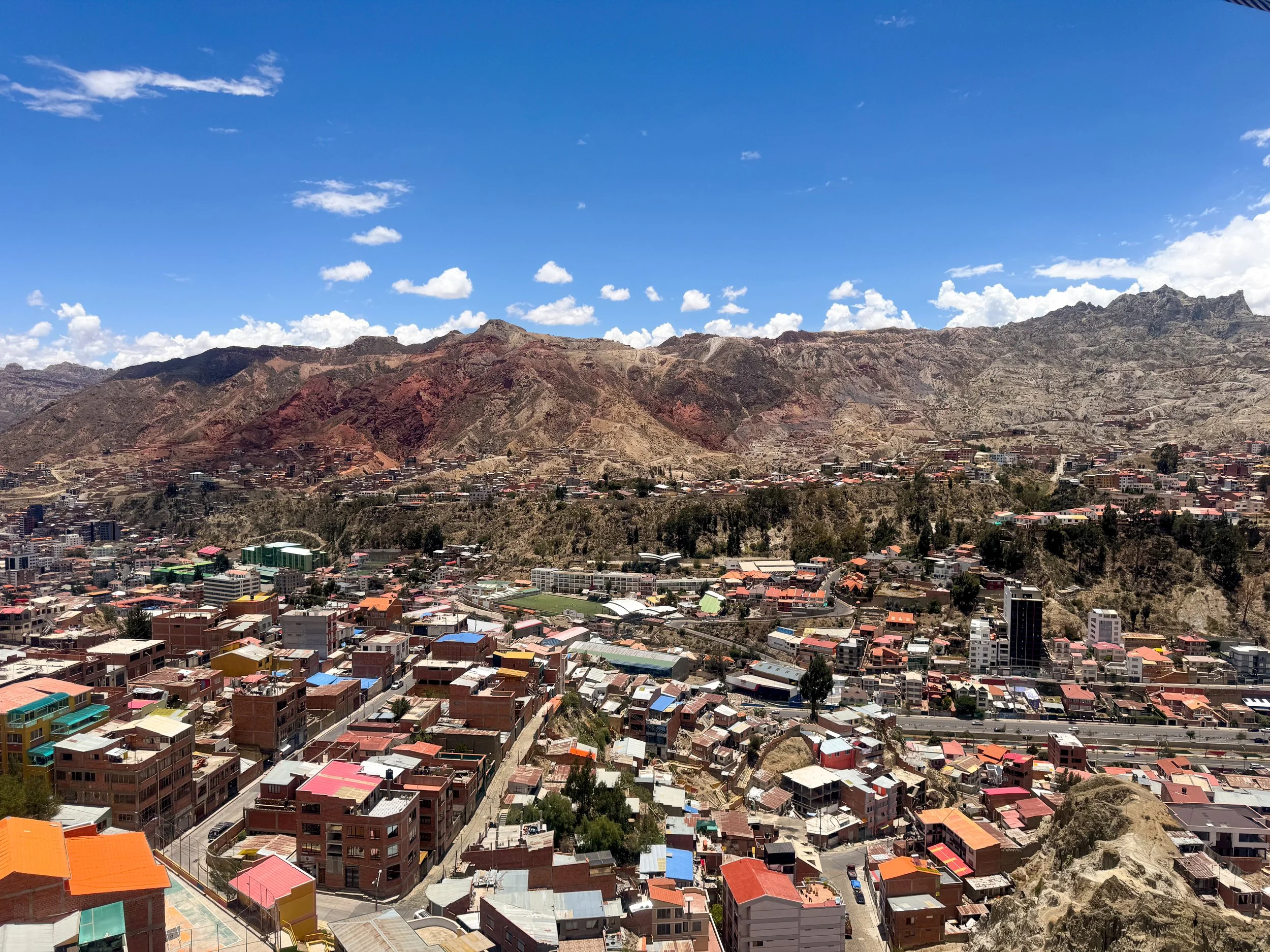
La Paz Bolivia Travel Guide: Cable Cars, Markets & Mountain Views. Wander through La Paz where Indigenous culture, bustling markets and Andean flavors thrive beneath dramatic mountain peaks and a network of city wide cable cars.
Lake Titicaca Travel Guide: Floating Islands & Indigenous Culture. Voyage between Lake Titicaca's floating islands and lakeside communities where Indigenous culture, Andean traditions and centuries of history live on.

Lake Titicaca Travel Guide: Floating Islands & Indigenous Culture
Voyage between Lake Titicaca's floating islands and lakeside communities where Indigenous culture, Andean traditions and centuries of history live on.

Lake Titicaca
Lake Titicaca is a massive Andean lake bordering both Peru and Bolivia. It’s culturally significant for its floating villages, terraced agricultural islands, colorful handmade textiles and dishes made from lake fish. We spent three full days on the lake, exploring both the Peruvian and Bolivian shores.

The Uros Islands, Peru
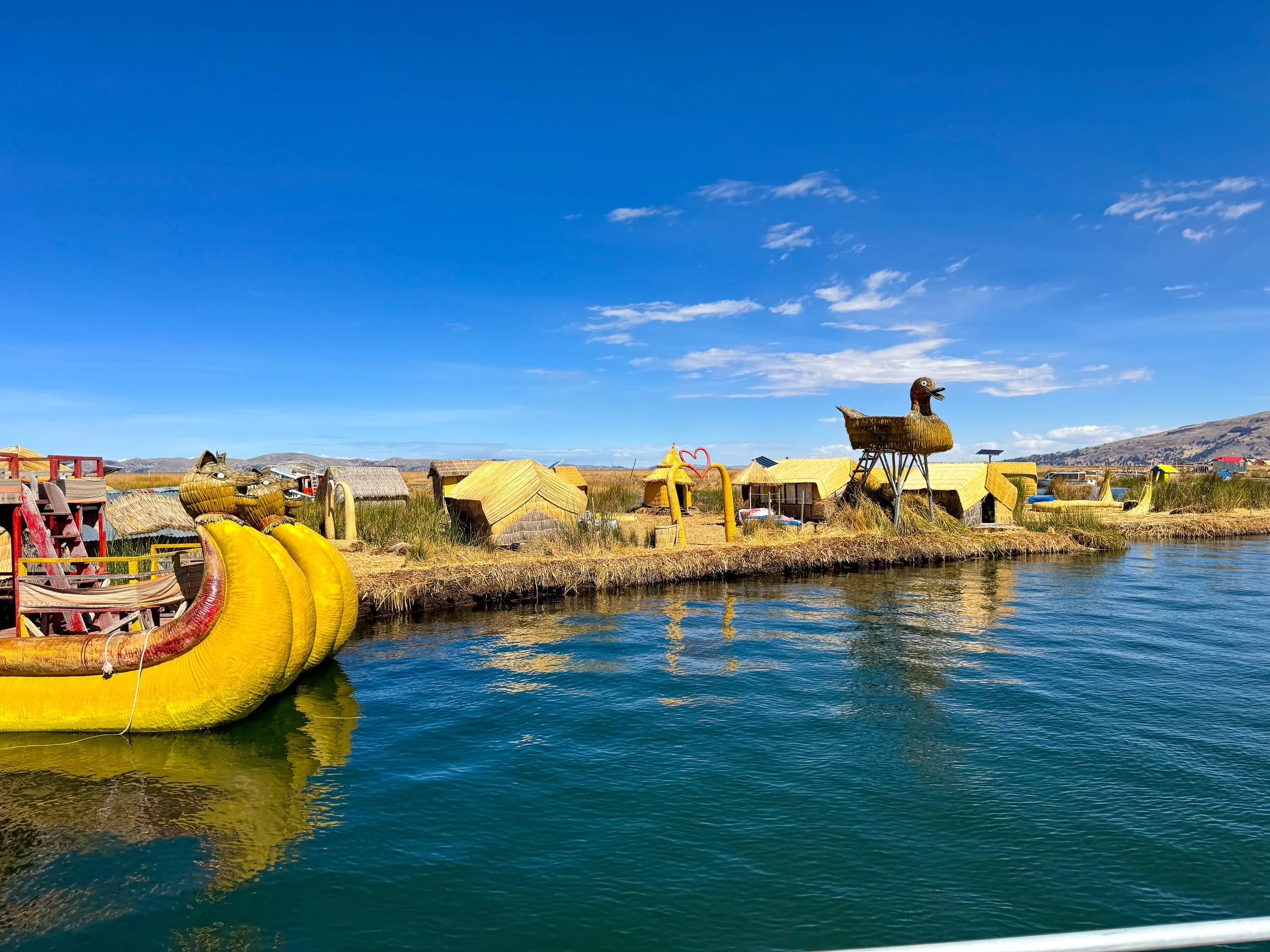
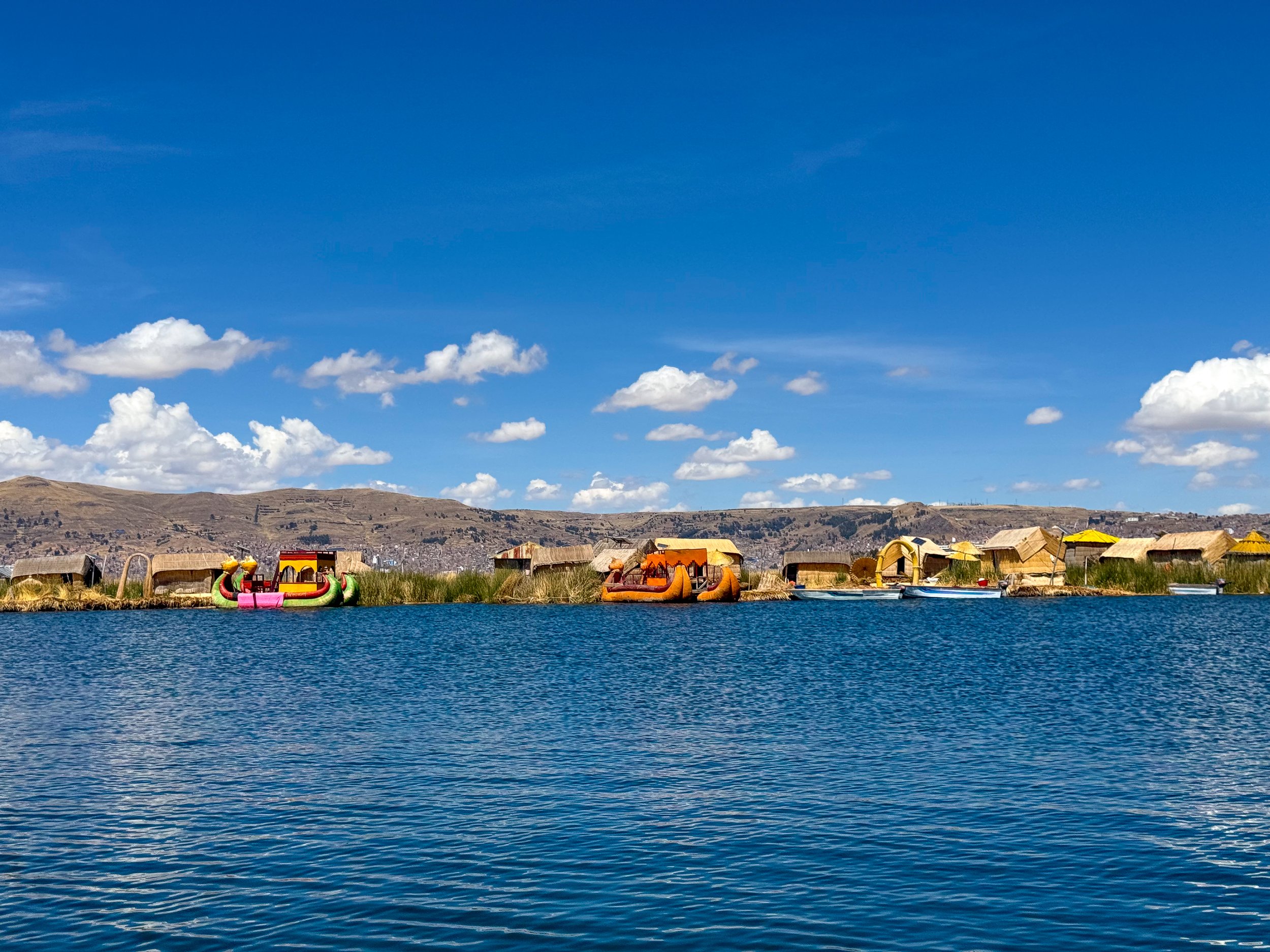
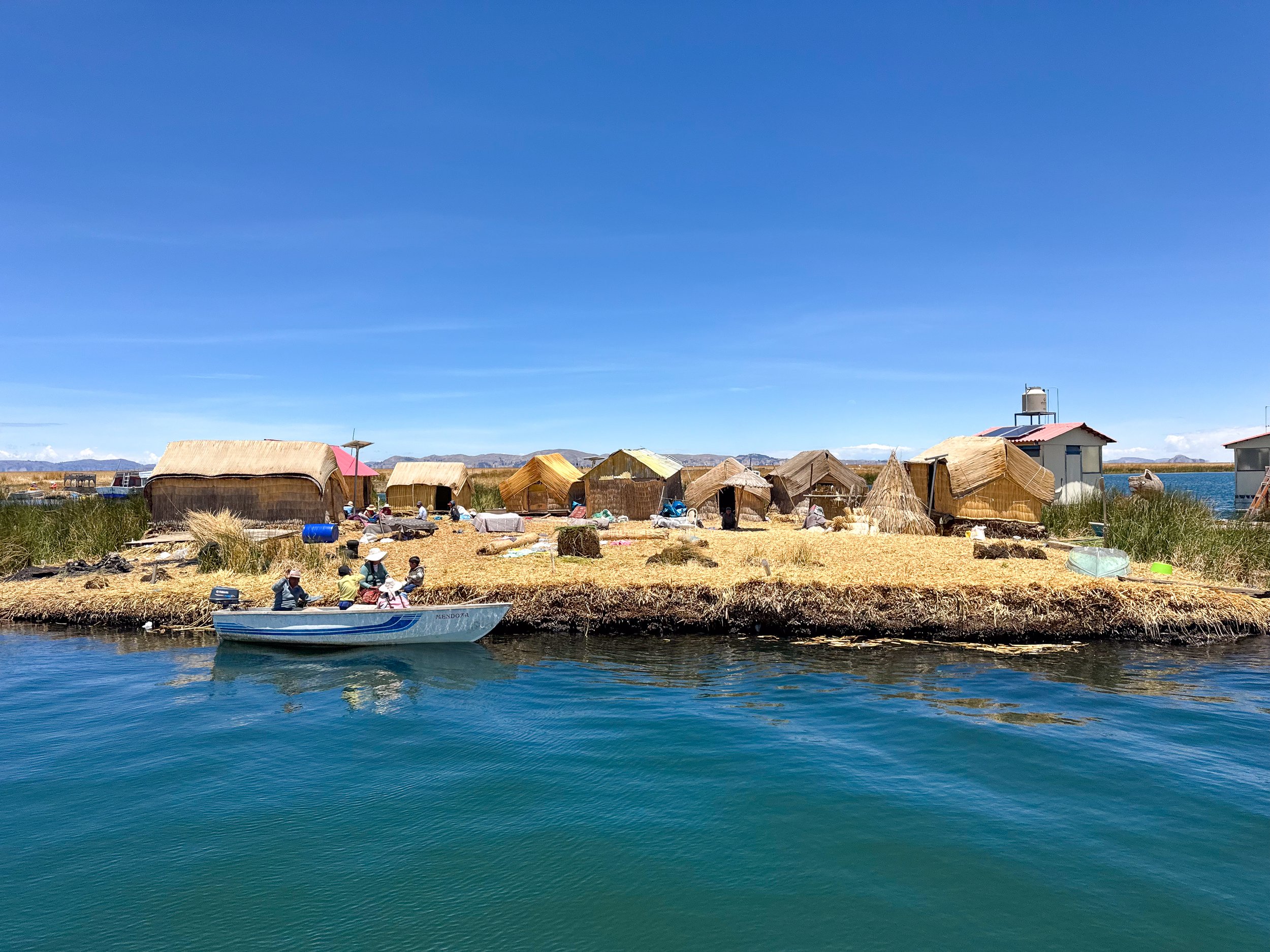
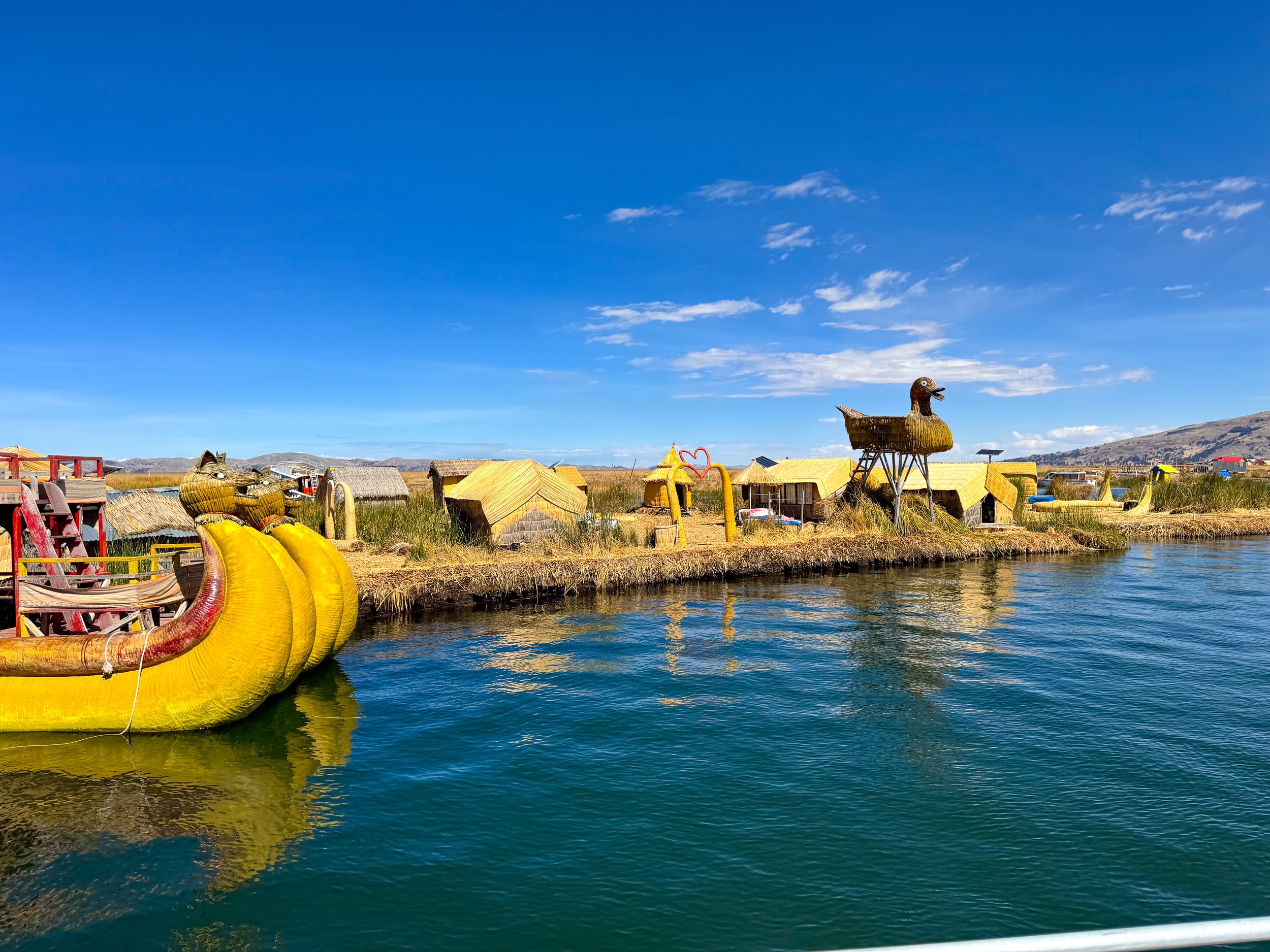
The Uros Islands are a series of floating islands on Lake Titicaca made from buoyant mud bricks and totora, a reedlike grass that grows in the shallows and marshes of the lake.

The Totora
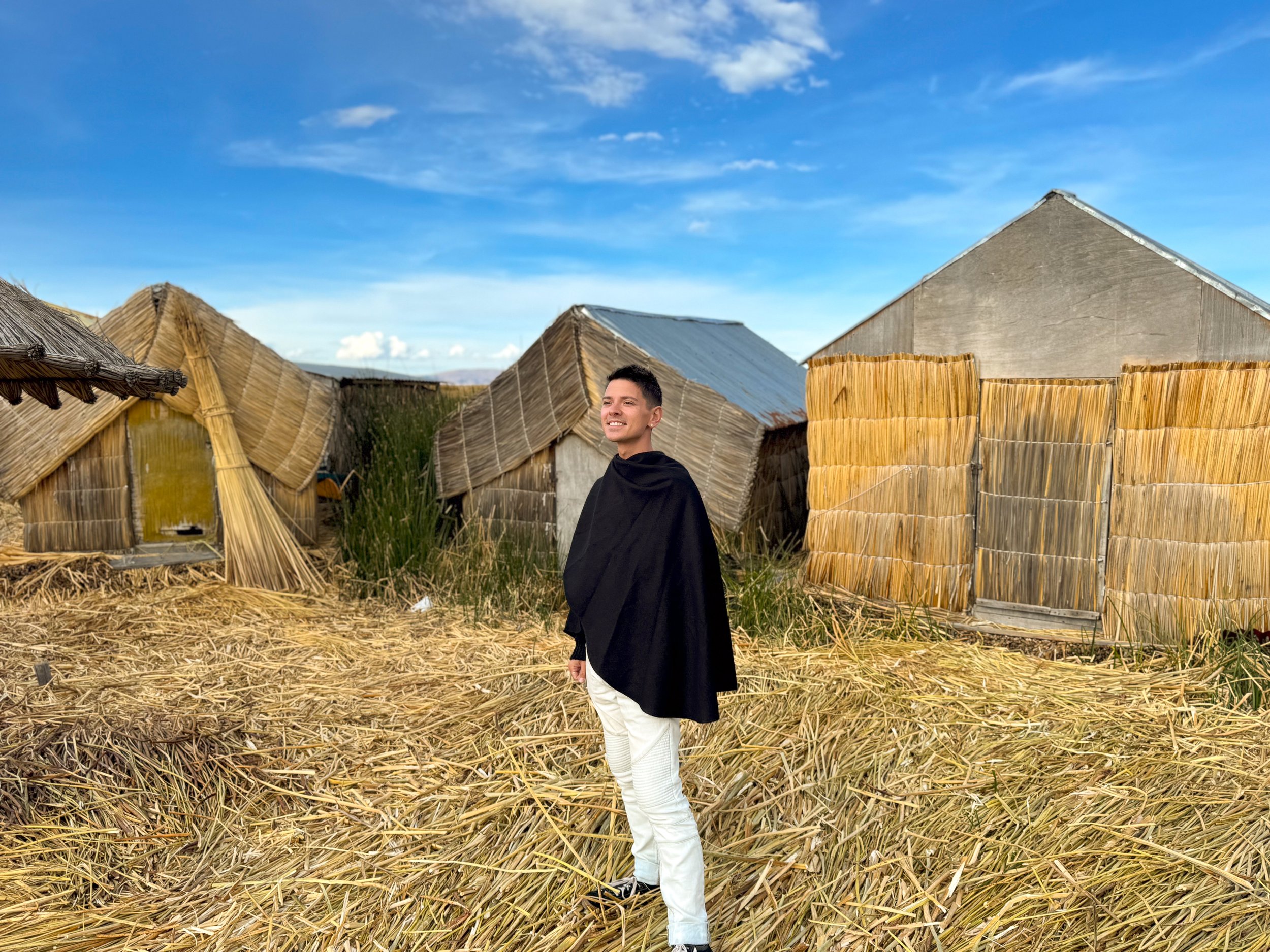
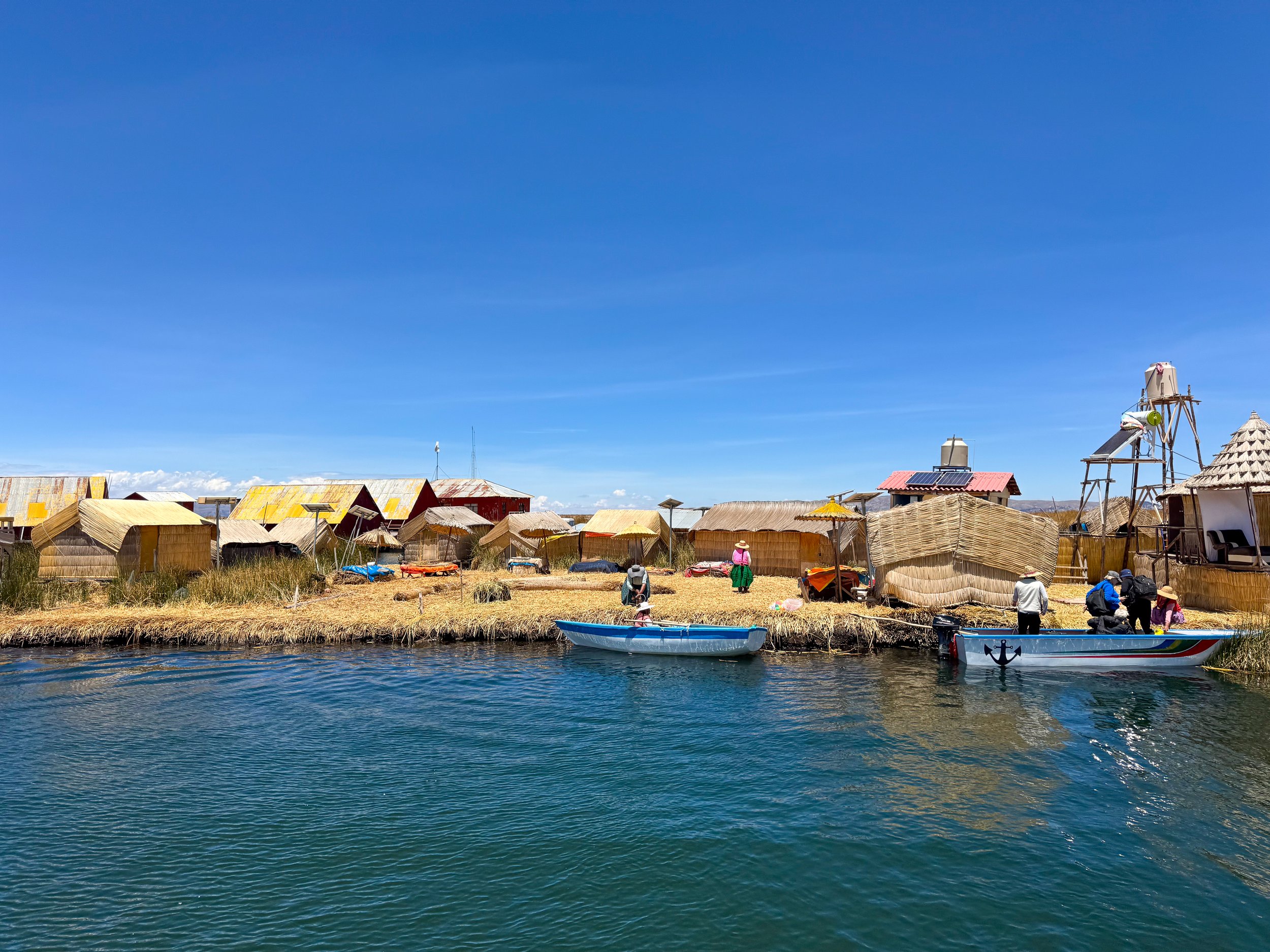
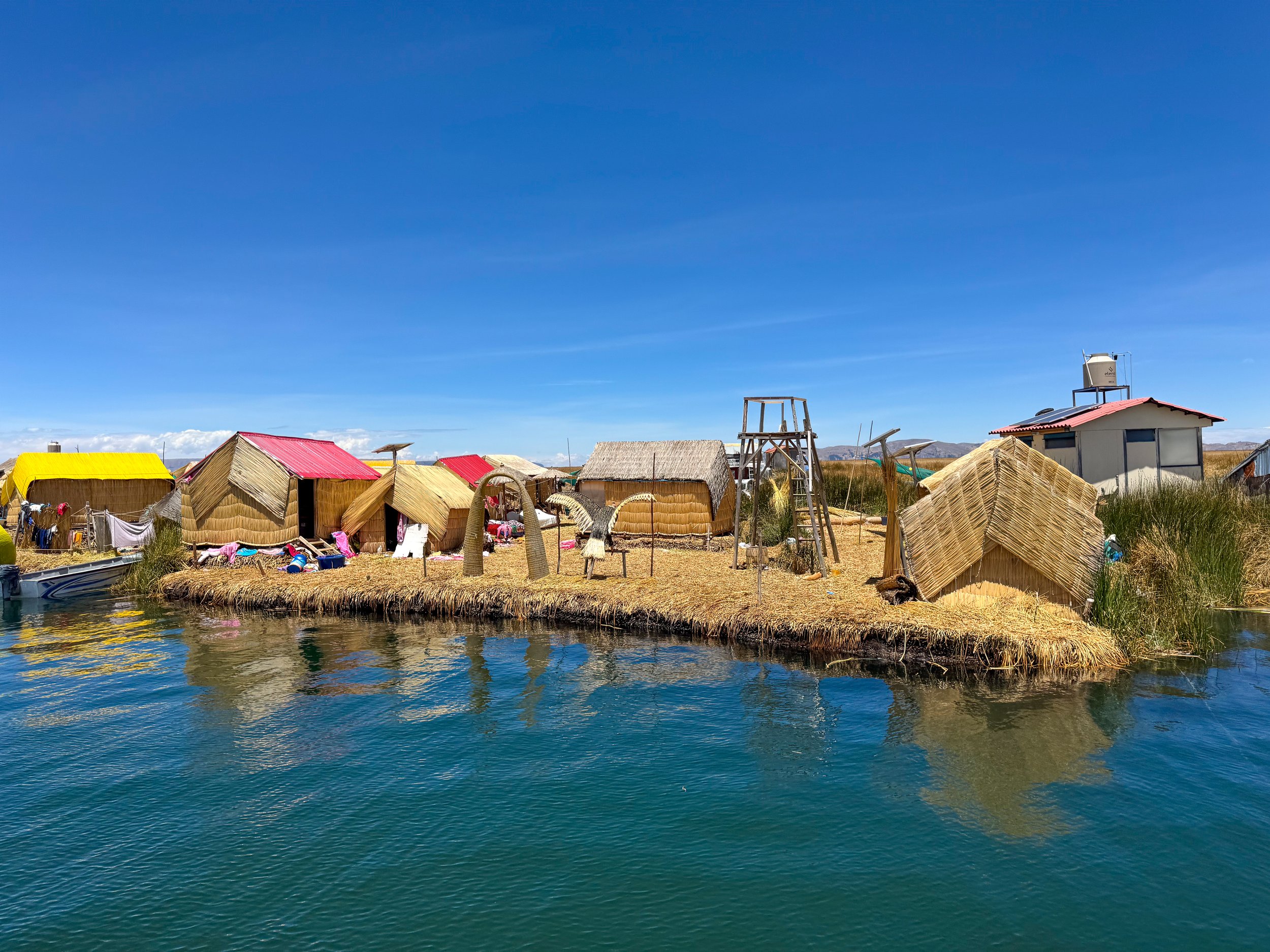
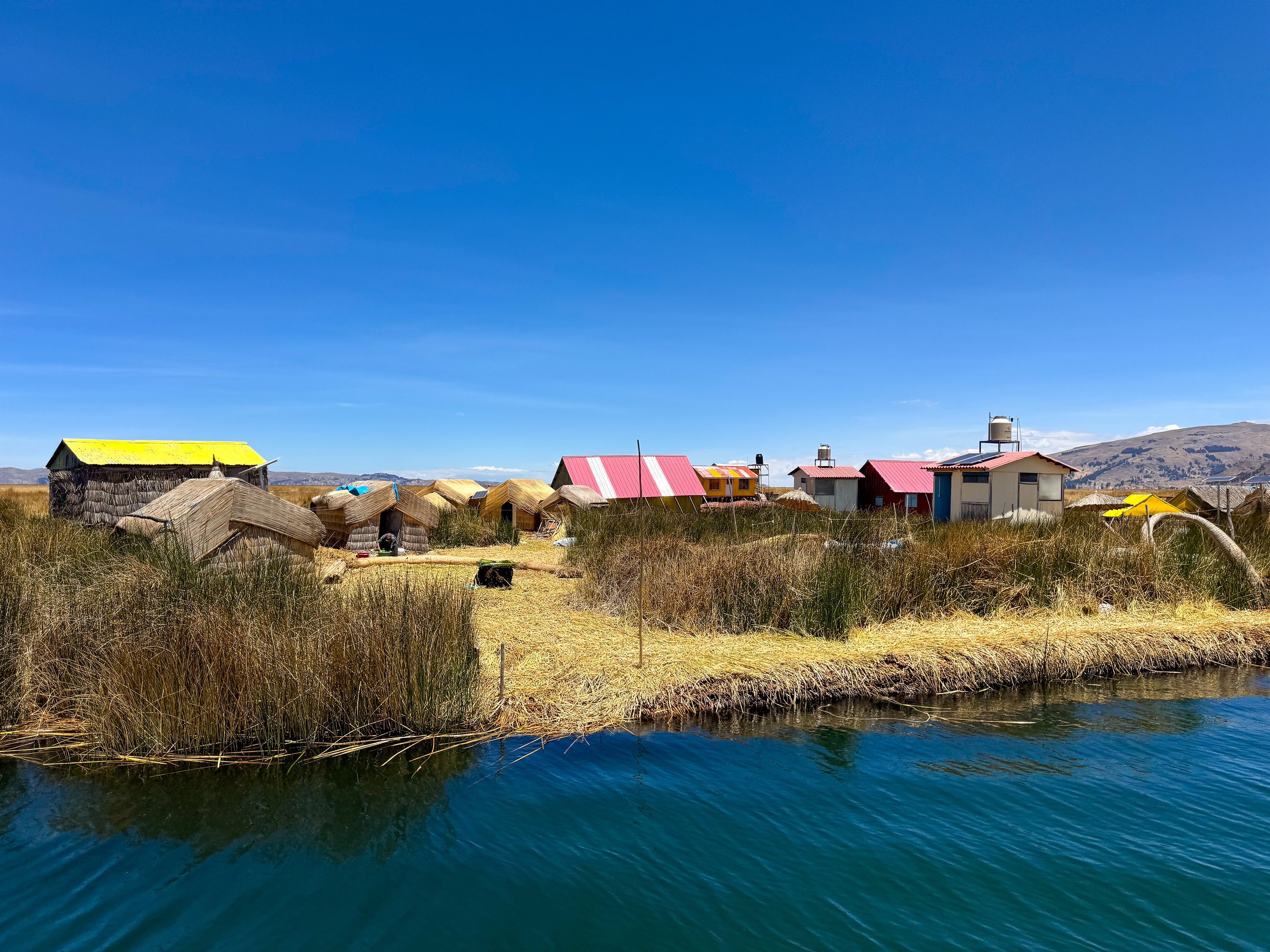
The totora is invaluable to the Uro people. It’s grown, harvested and dried then woven into blankets and bundles for use. It’s used to make everything from the floating islands themselves, to the houses people inhabit, the benches people sit on, the boats they navigate with and even hats, umbrellas and sculptures.
Everything made from the totora needs to be maintained. Each morning, boats carry fresh cut totora to the islands. The fresh totora is layered across the surface of the islands monthly while houses, boats and sculptures are remade every two years. The islands, if maintained, can float for up to 40 years before needing to be rebuilt.

Life on the Islands
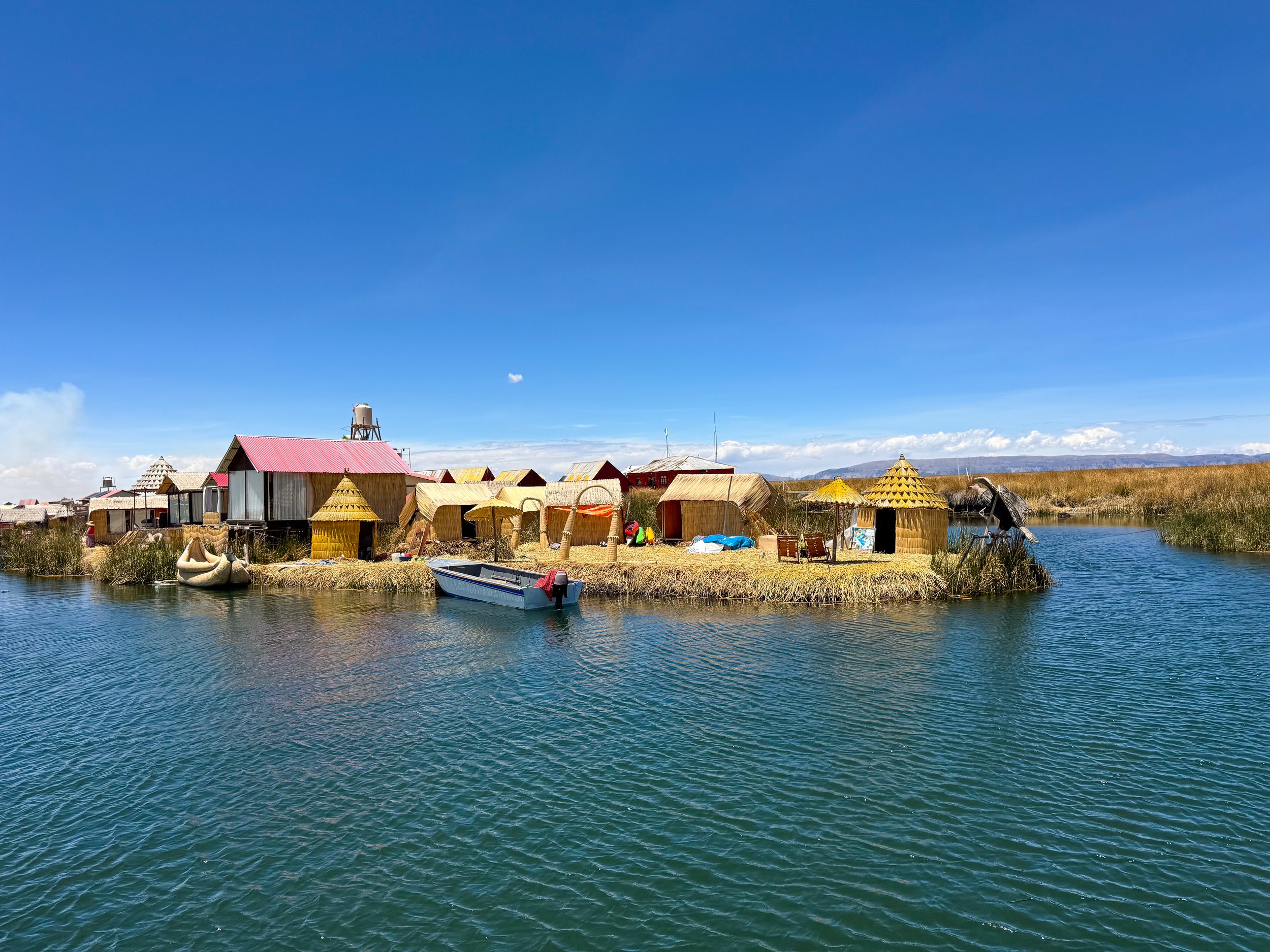
Each island houses a family with different structures used for sleeping, storage and eating. The grandparents even have a special cone shaped house that sets them apart as the elders while most others have a standard pentagon shape.
Fishing used to be the primary business for the Uro people. Today it’s tourism and handicrafts. This allows them to continue their way of life and share their community with the world. They gifted us handmade necklaces. We purchased a hand-stitched table runner and a totora basket for breads and fruits.
Home Stay at Isla Jacha Challwa
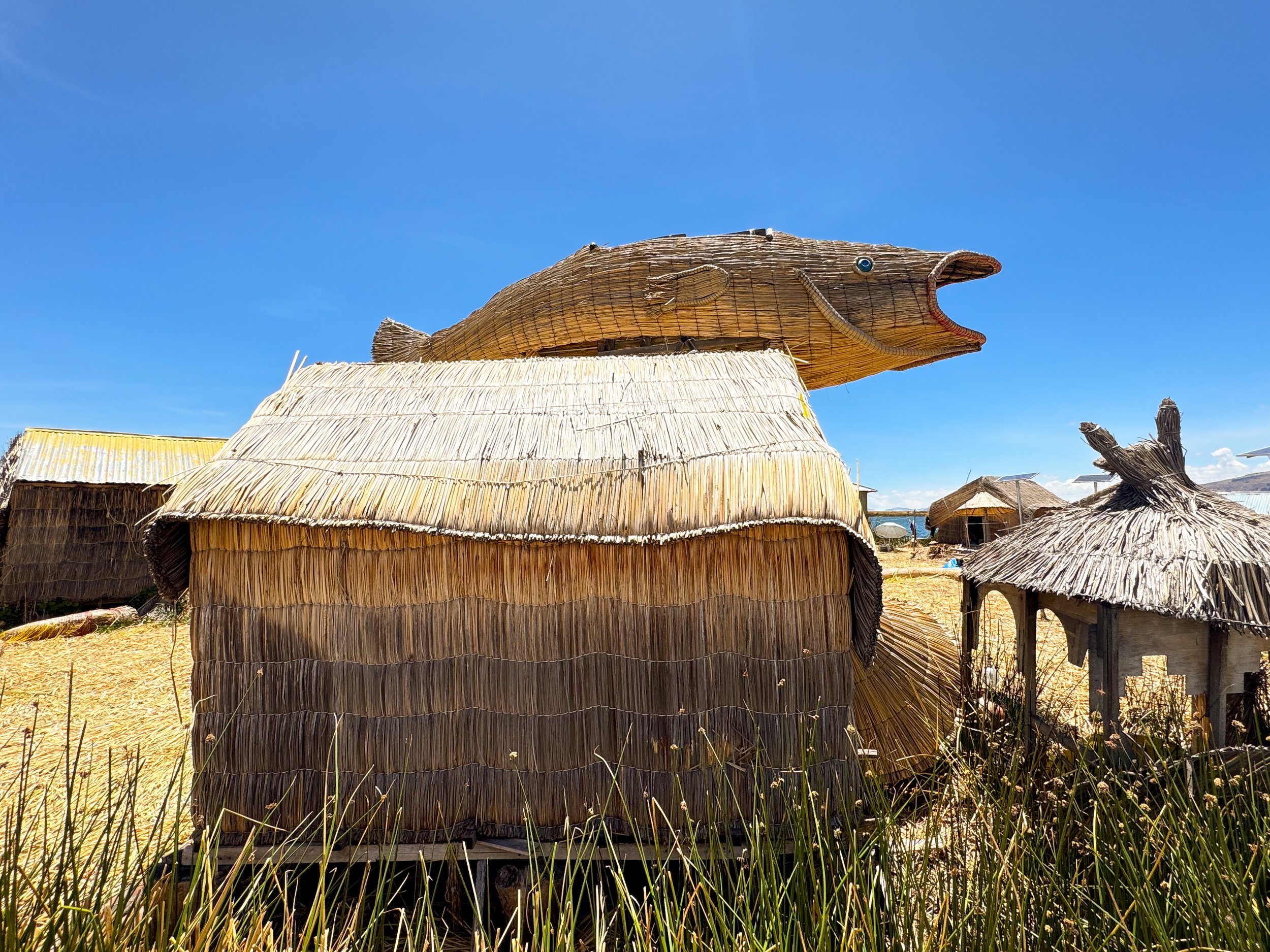
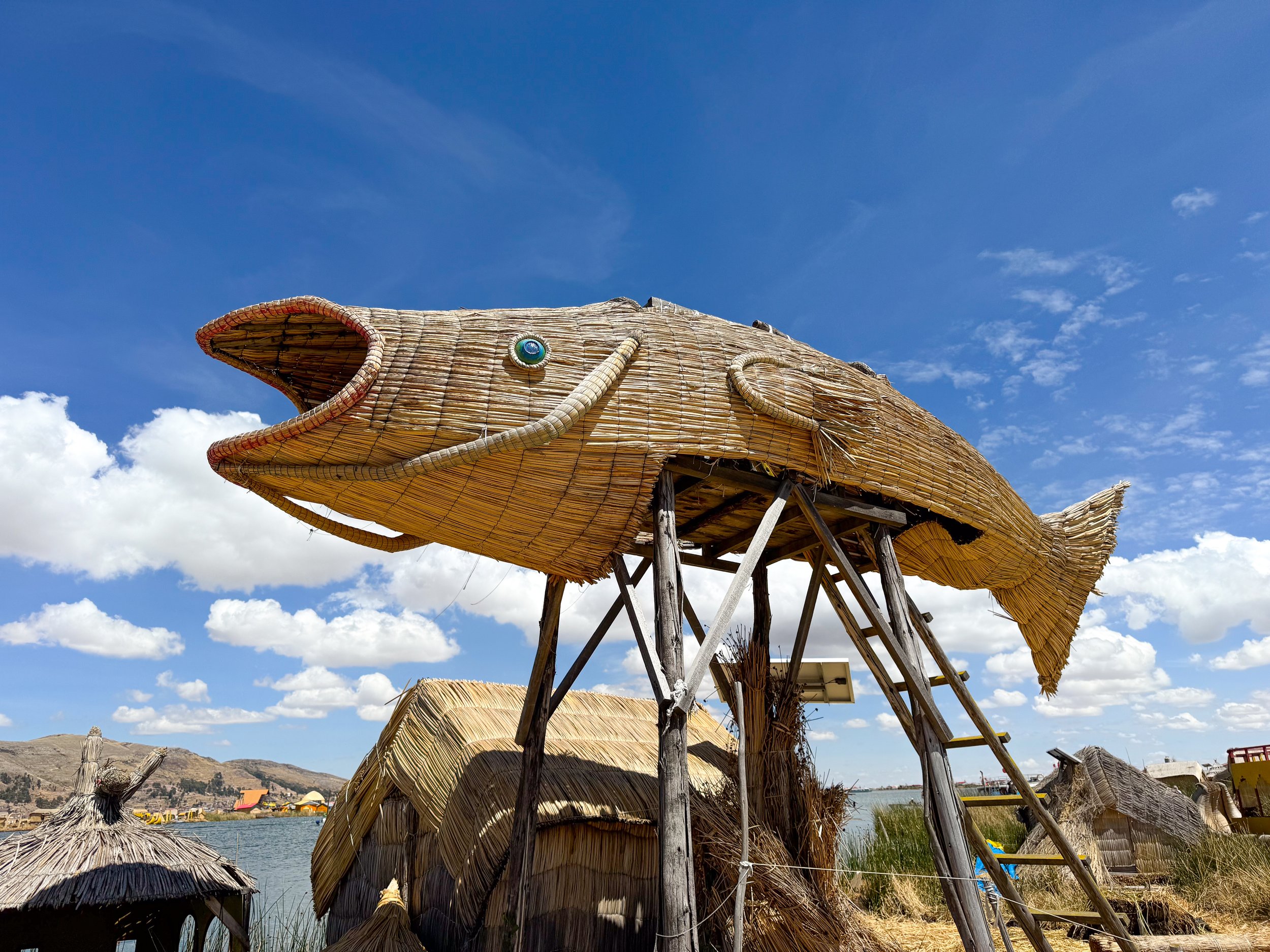
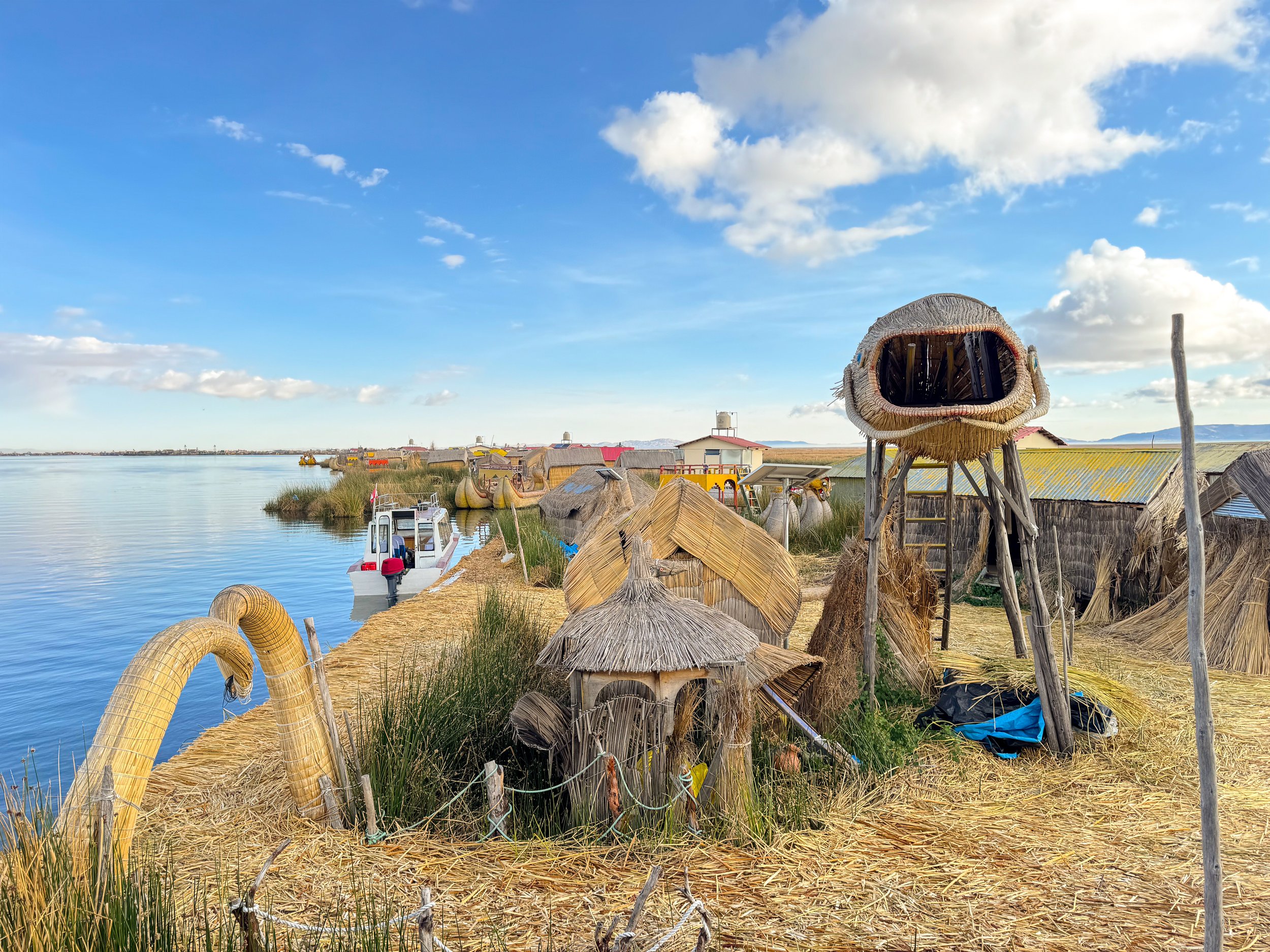
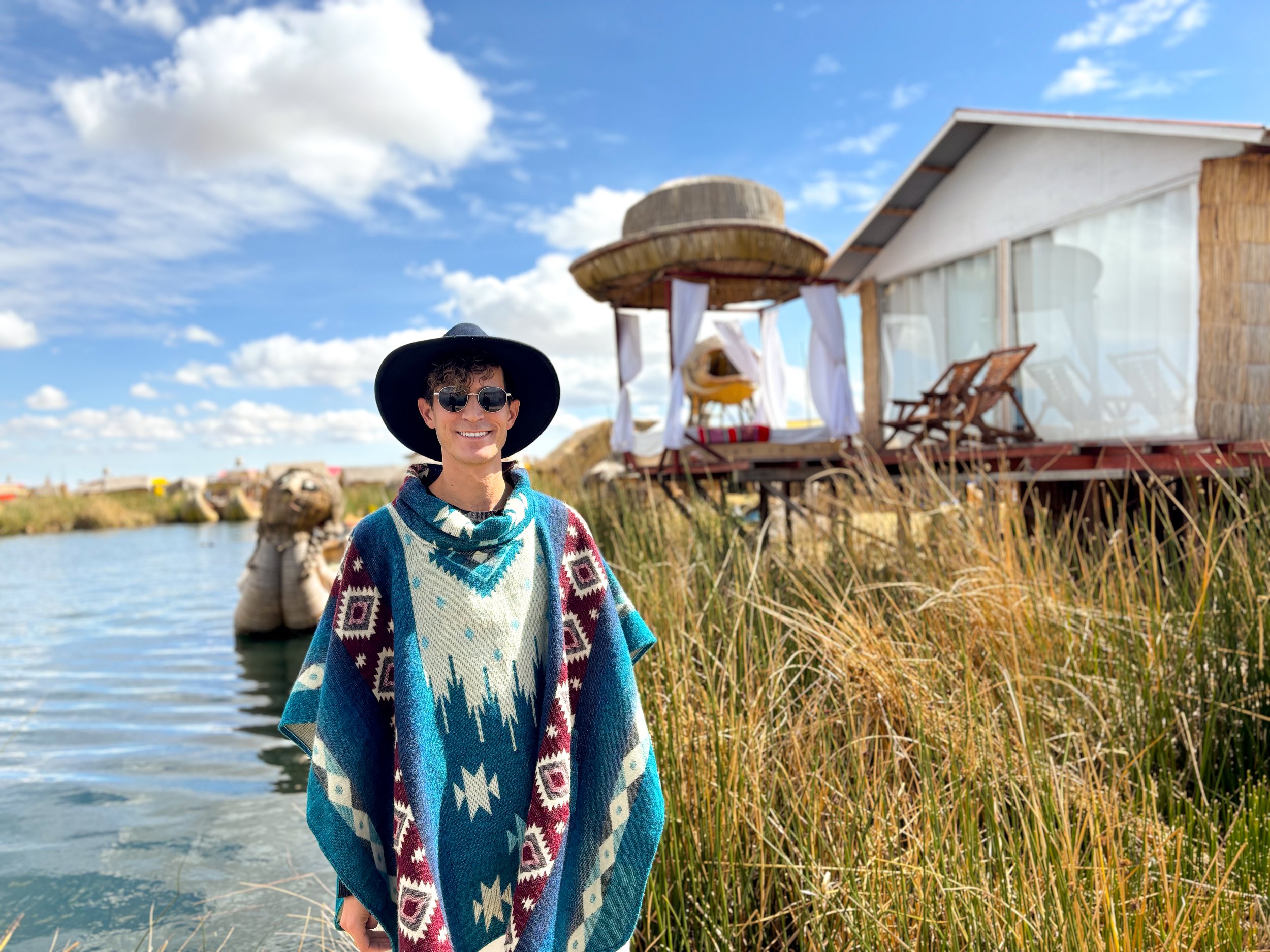
We stayed with a family while visiting the Uros Islands. They named their island, Isla Jacha Challwa, which translates to giant fish. They even built a lookout tower with a giant totora fish for its design! As we explored the island, the totora crunched beneath our feet and the entire island rocked gently as passing boats created a small wake.
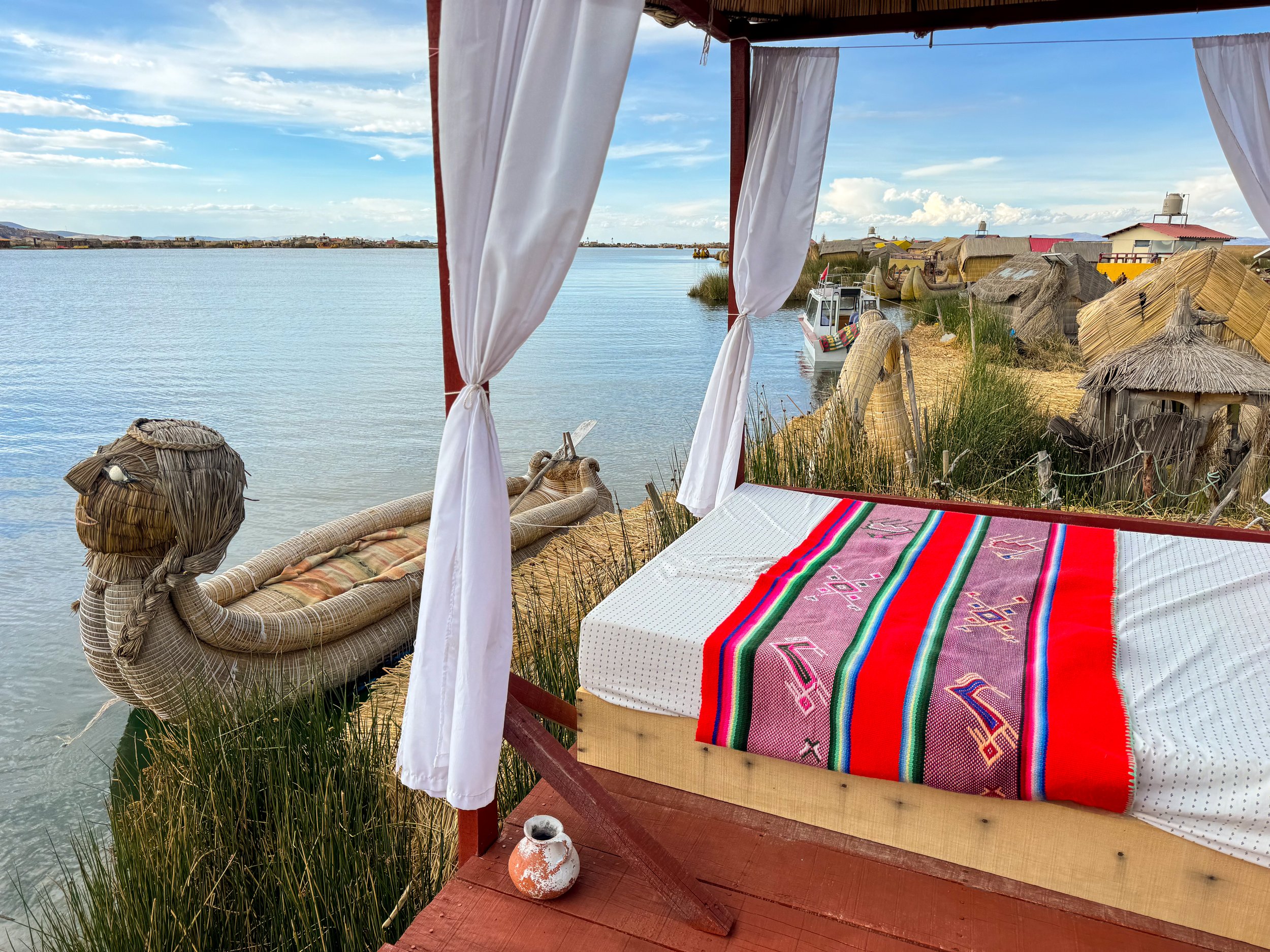
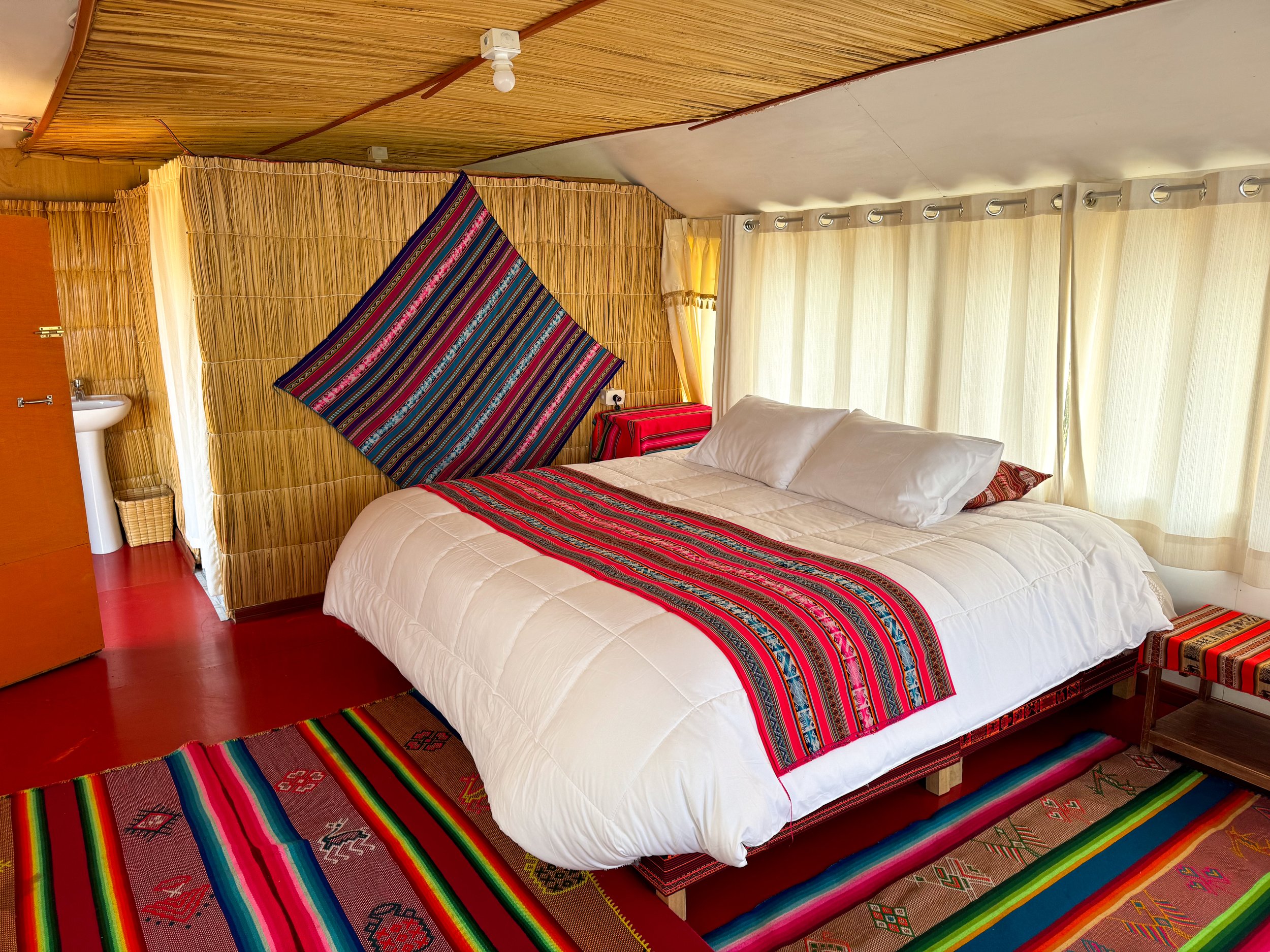
The house we stayed in was covered in the dried totora and the interior was decorated with colorful woven textiles. It had a patio that opened up to the lake with lounge chairs and an outdoor bed topped with a large woven hat for shade. We napped here and watched the sunset. Book here.
Caballitos de Totora (Totora Boats)
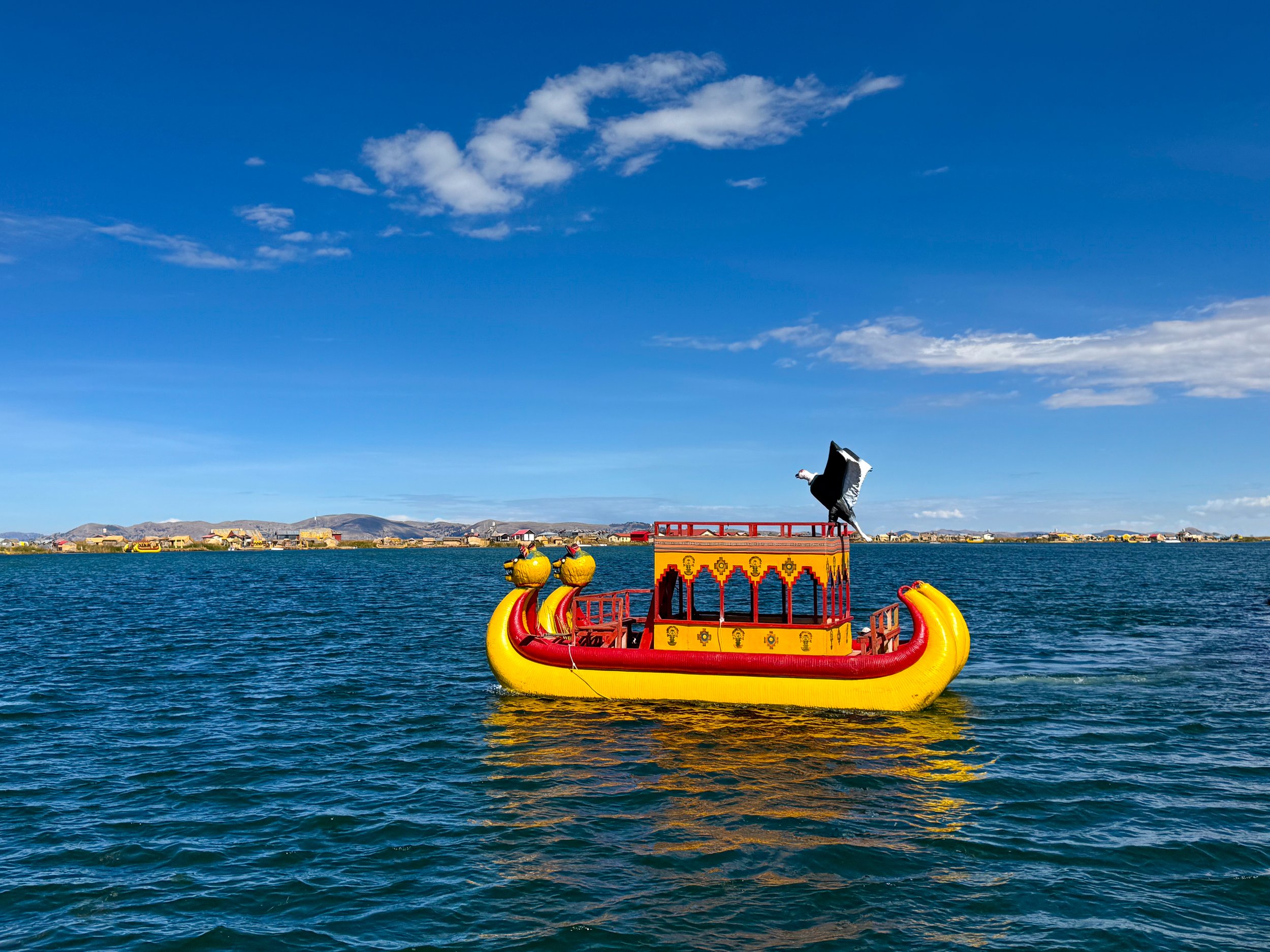
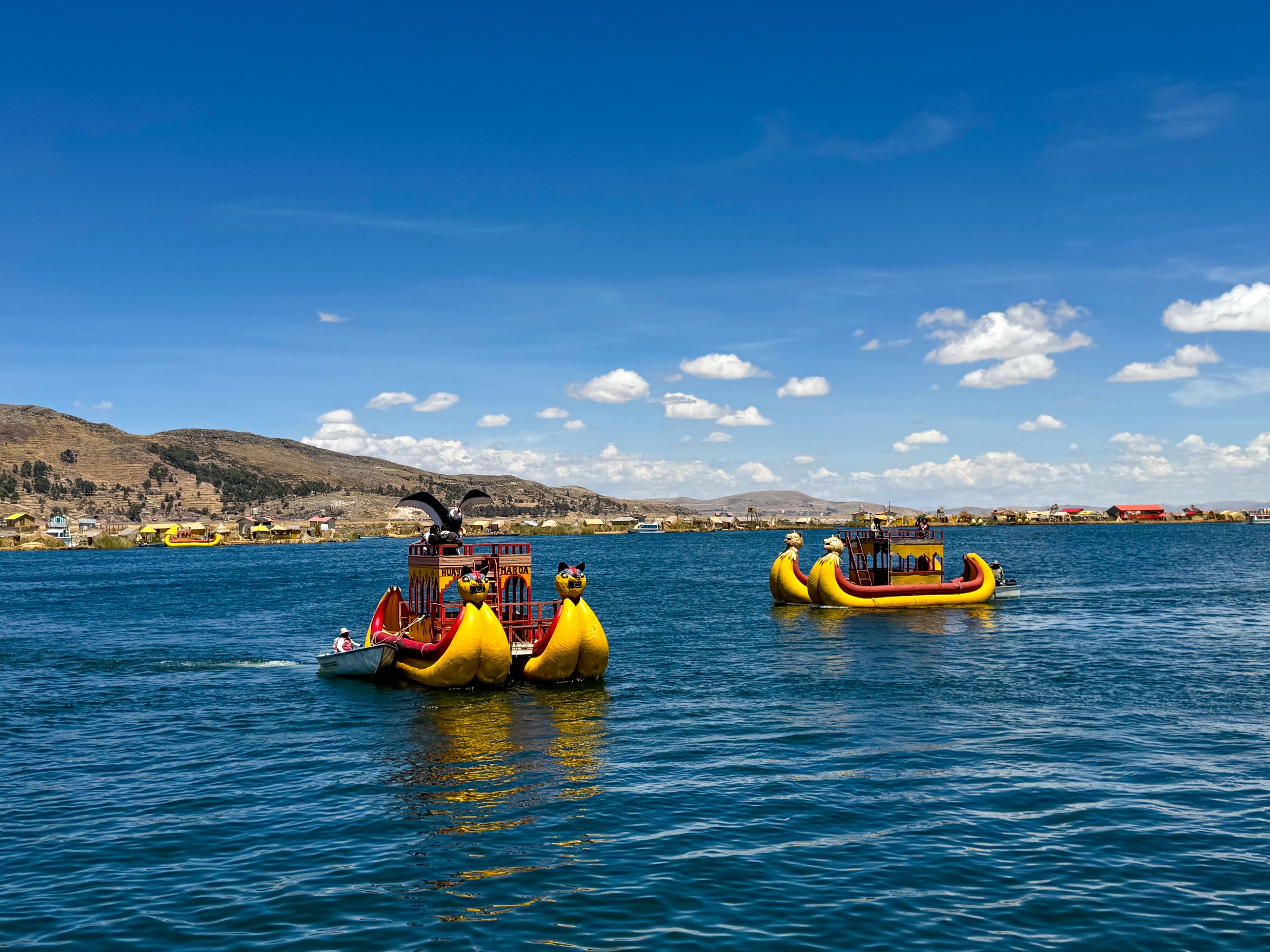
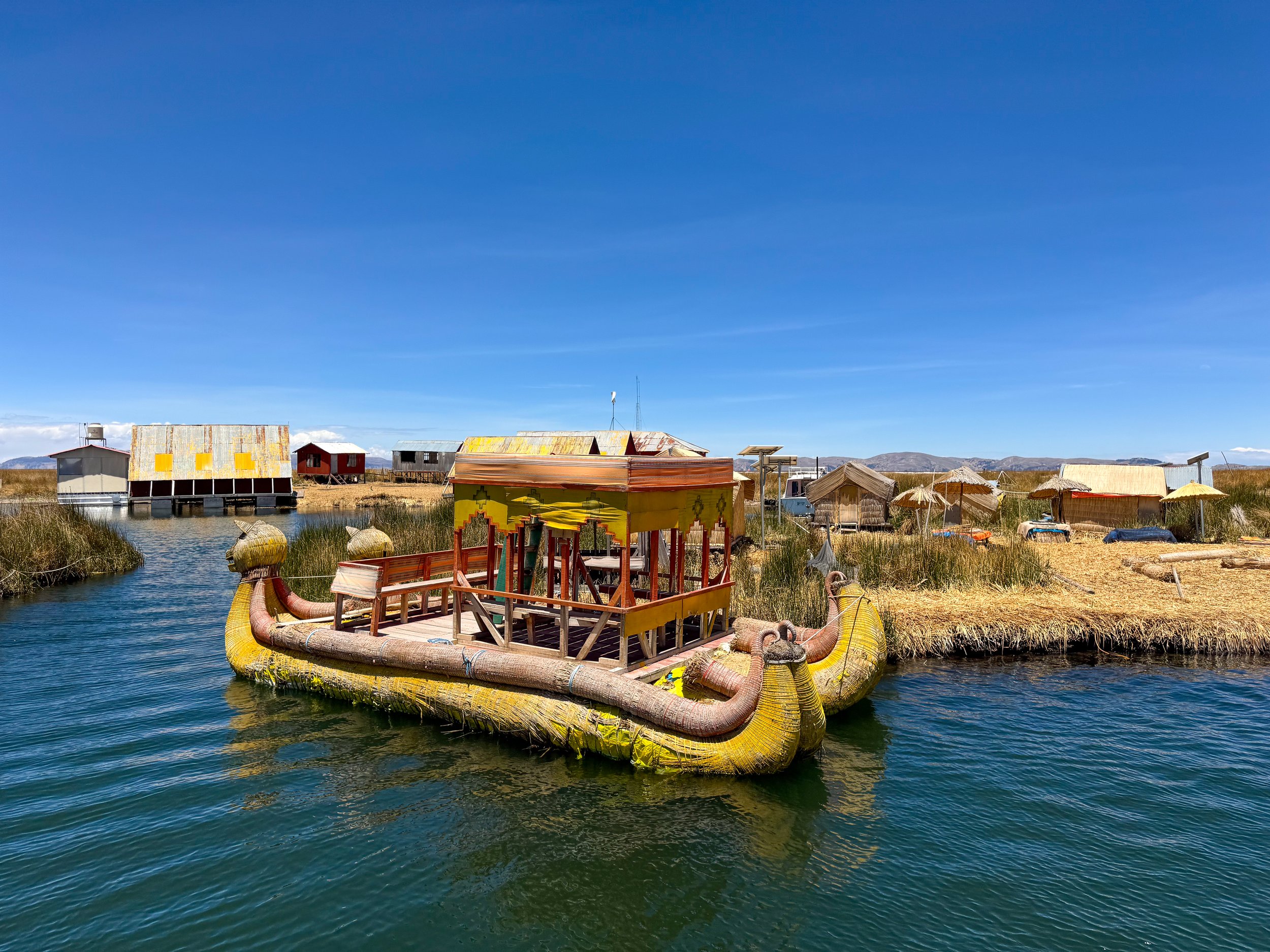
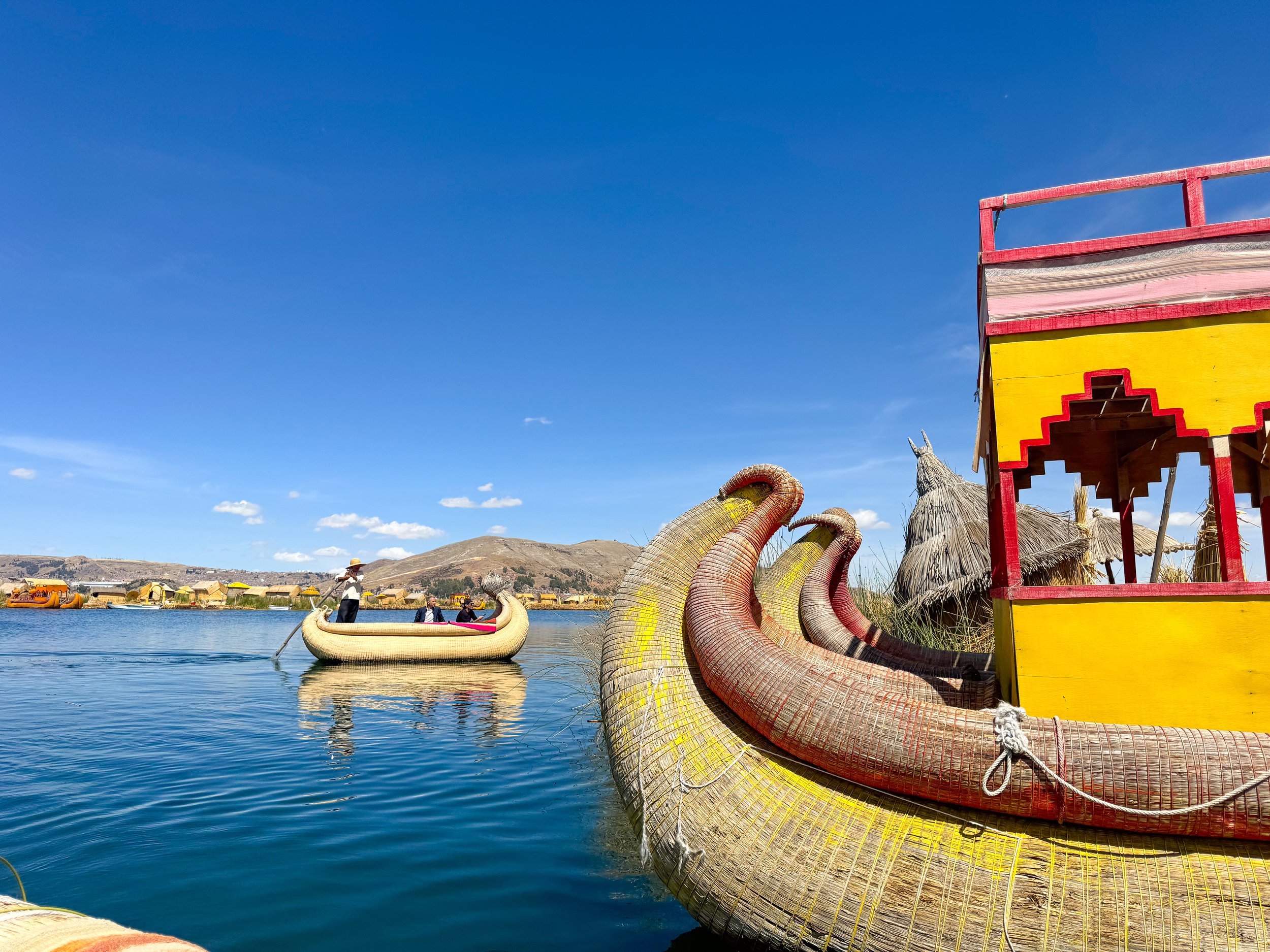
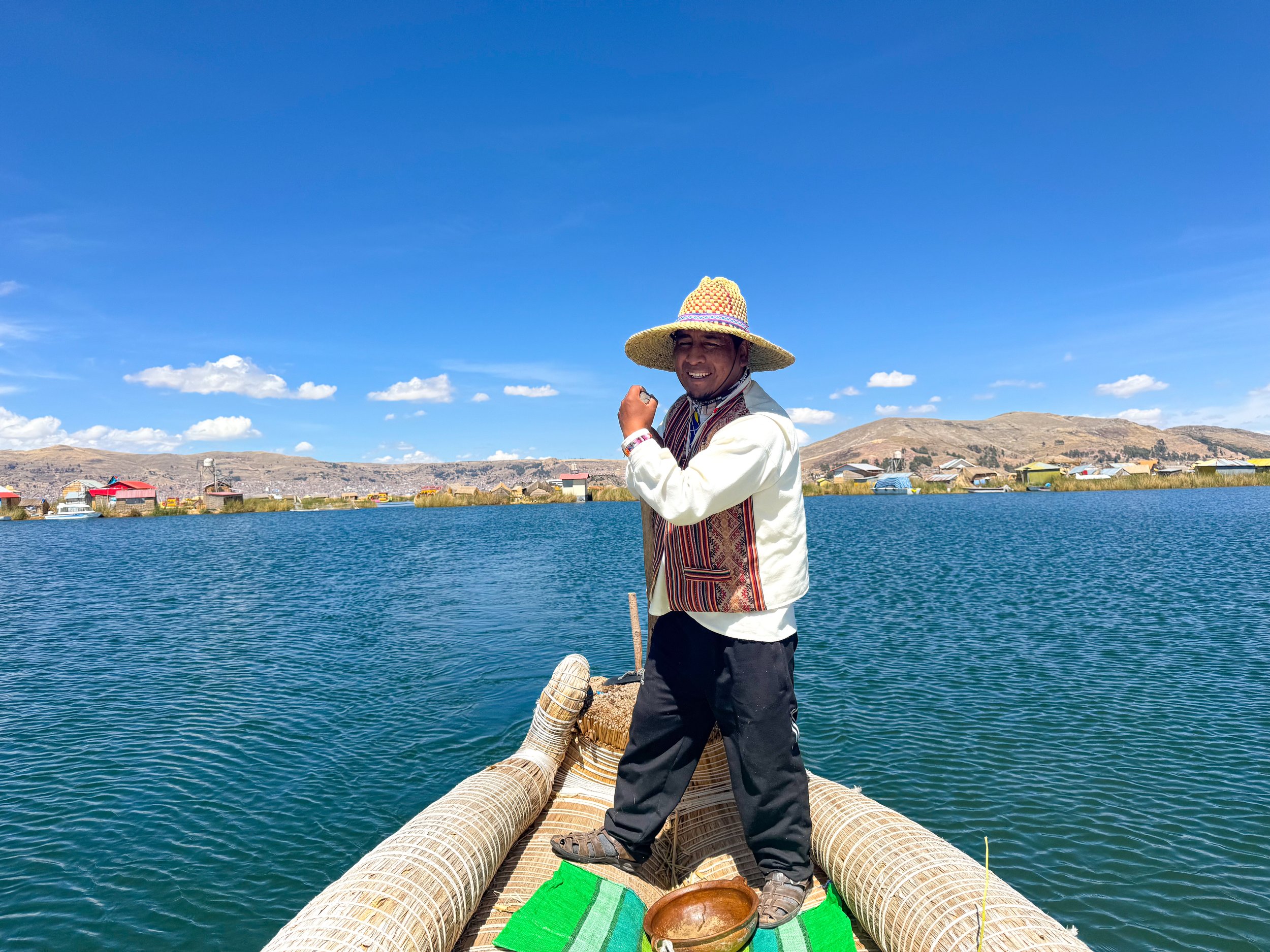
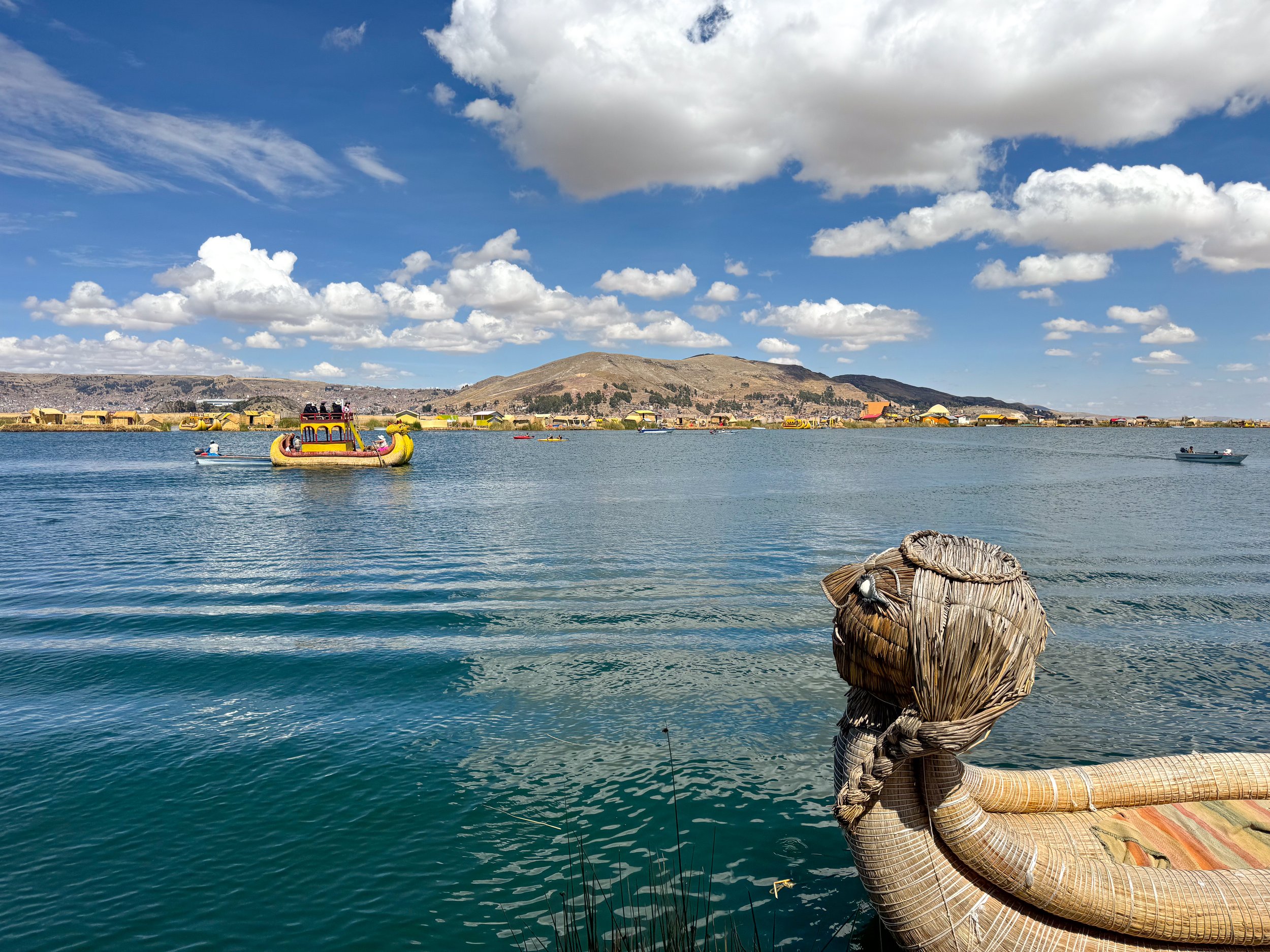
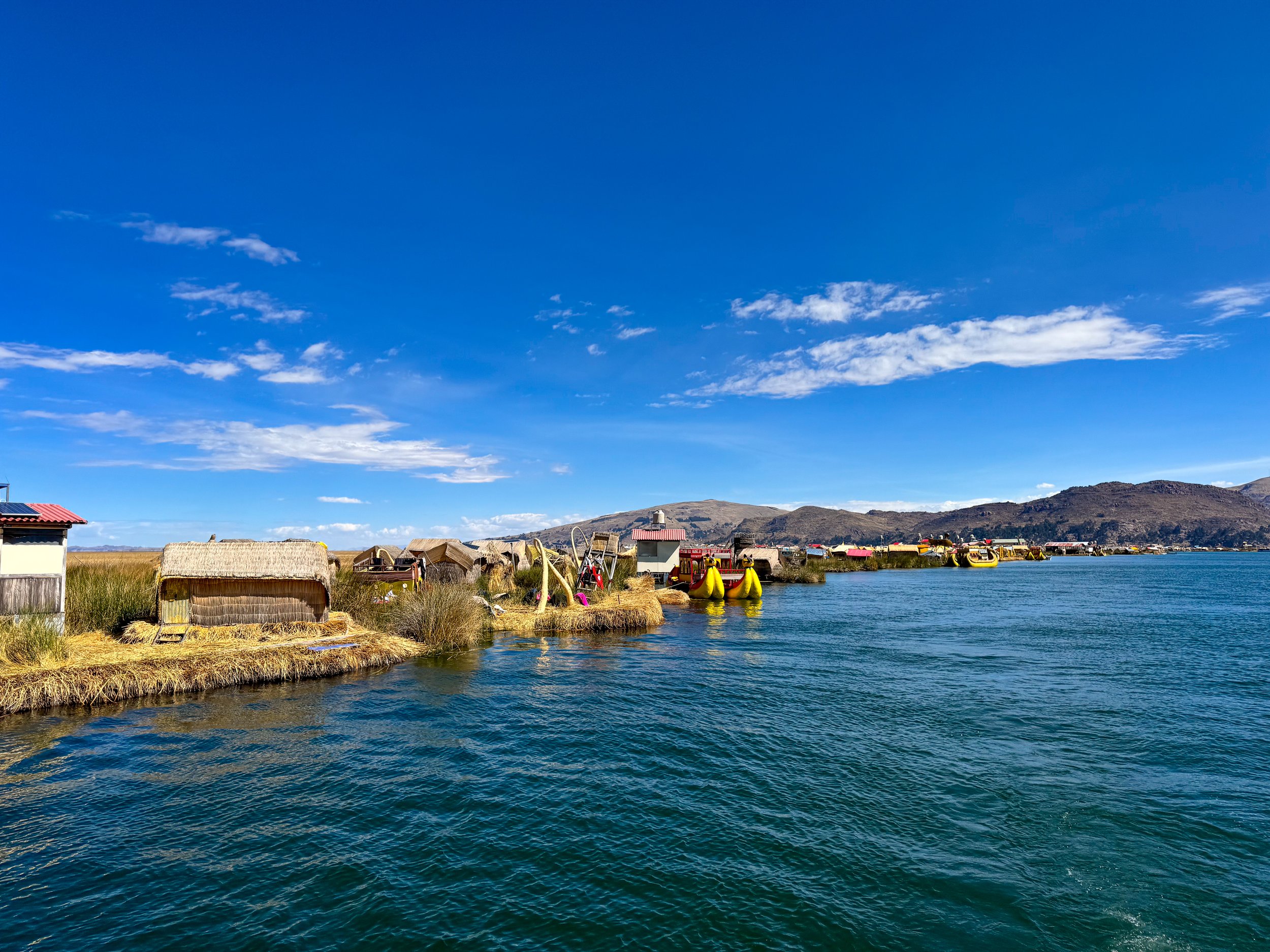
Caballitos de totora are the traditional boats used by the Uro people. Made from totora, they’re shaped into the body of a snake with the head of a puma. The larger boats are made from two smaller ones adjoined by a wooden platform. Some even have a sculpture of a condor or the sun as decoration. Many are left natural while others are painted in a yellow protective coating. The smaller boats are hand paddled while the larger ones are tugged by a motor boat.
Touring the Uros Islands
Our host took us on a tour of the islands, a sunset boat ride, net fishing and even let us attempt to paddle the boat. He shared stories of his father and grandfather, said to be the best fishermen on the lake. The matriarch caught fish and cooked meals for us including pan fried trout from the lake and soup made from our fresh catch.
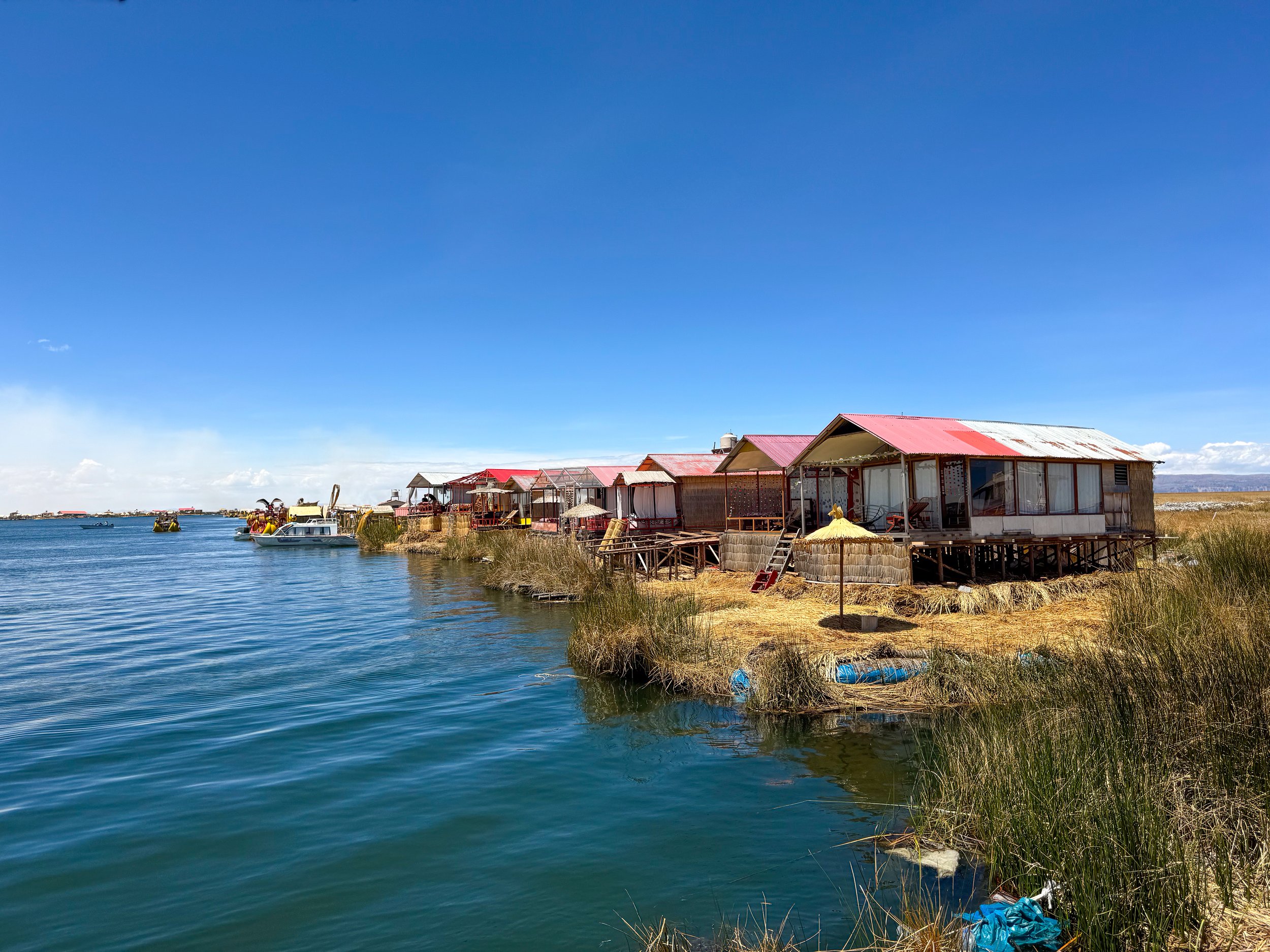
On our boat tour, we slowly passed nearly every island in the community, admiring the golden color from the thatched surfaces, the colorful textiles and unique styles of the boats. The islands are very welcoming of visitors, with home stays, small restaurants serving local cuisine and tiny shops. They have their own hospital, communal place of worship and elementary school.

Restaurant Titicaca
A popular lunch spot on the Uros Islands with traditional cuisine from Lake Titicaca. Trucha (trout) is the star of the menu. It’s prepared pan fried, deep fried or as ceviche, all with sides of Peruvian potatoes and rice. We dined in a pavilion, watching colorful boats pass by and enjoying the lake views.
Isla Taquile, Peru
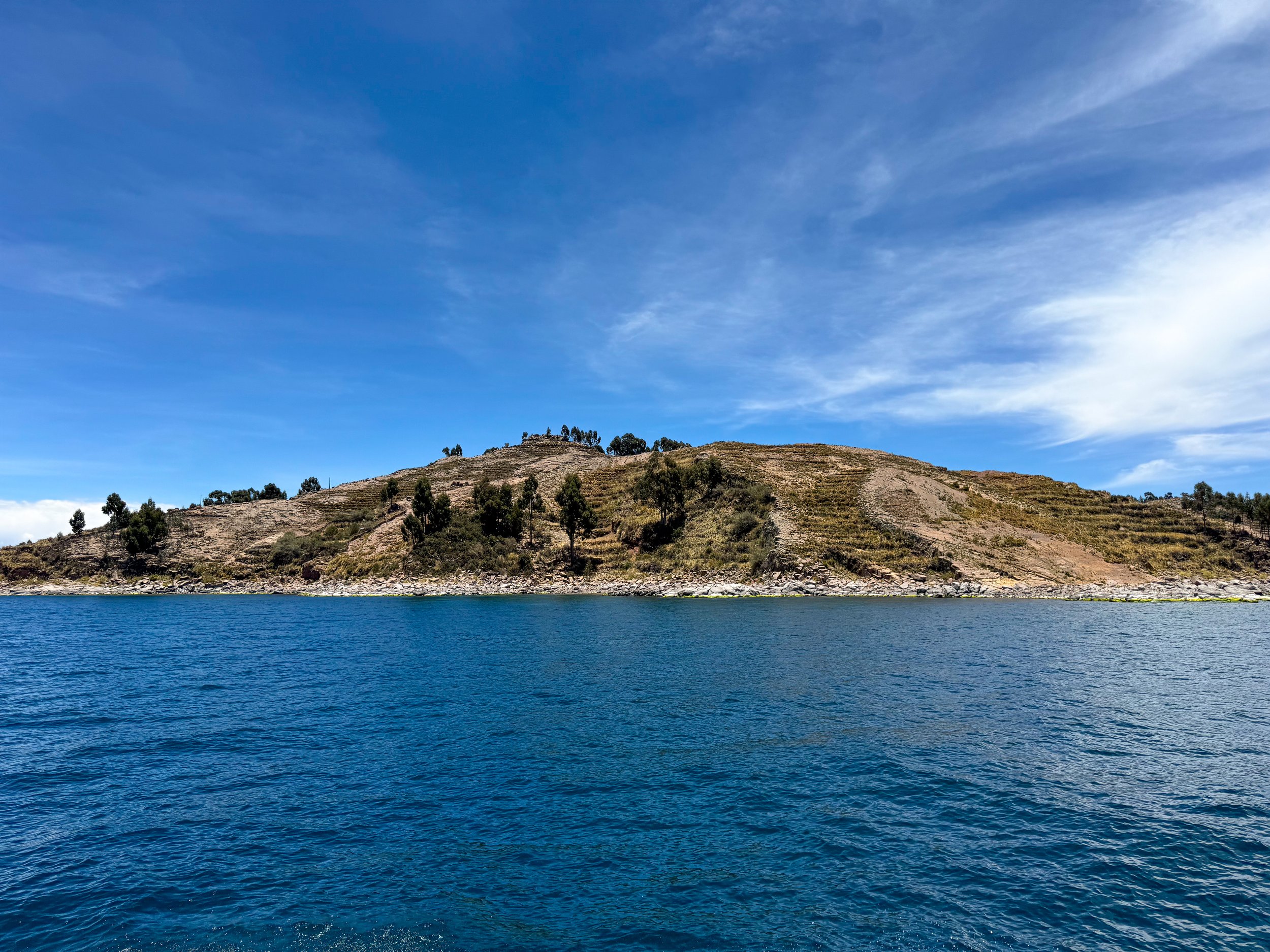
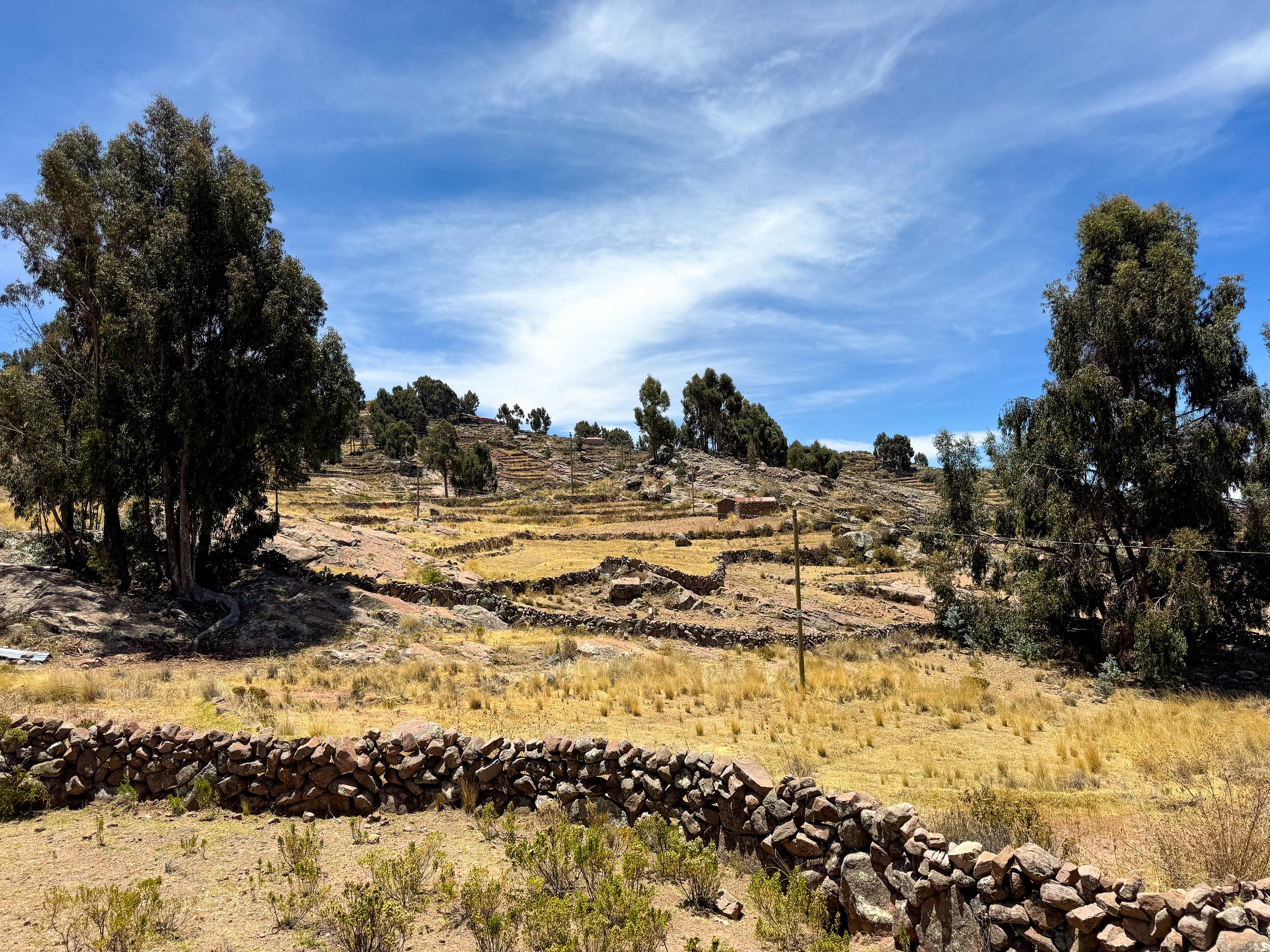
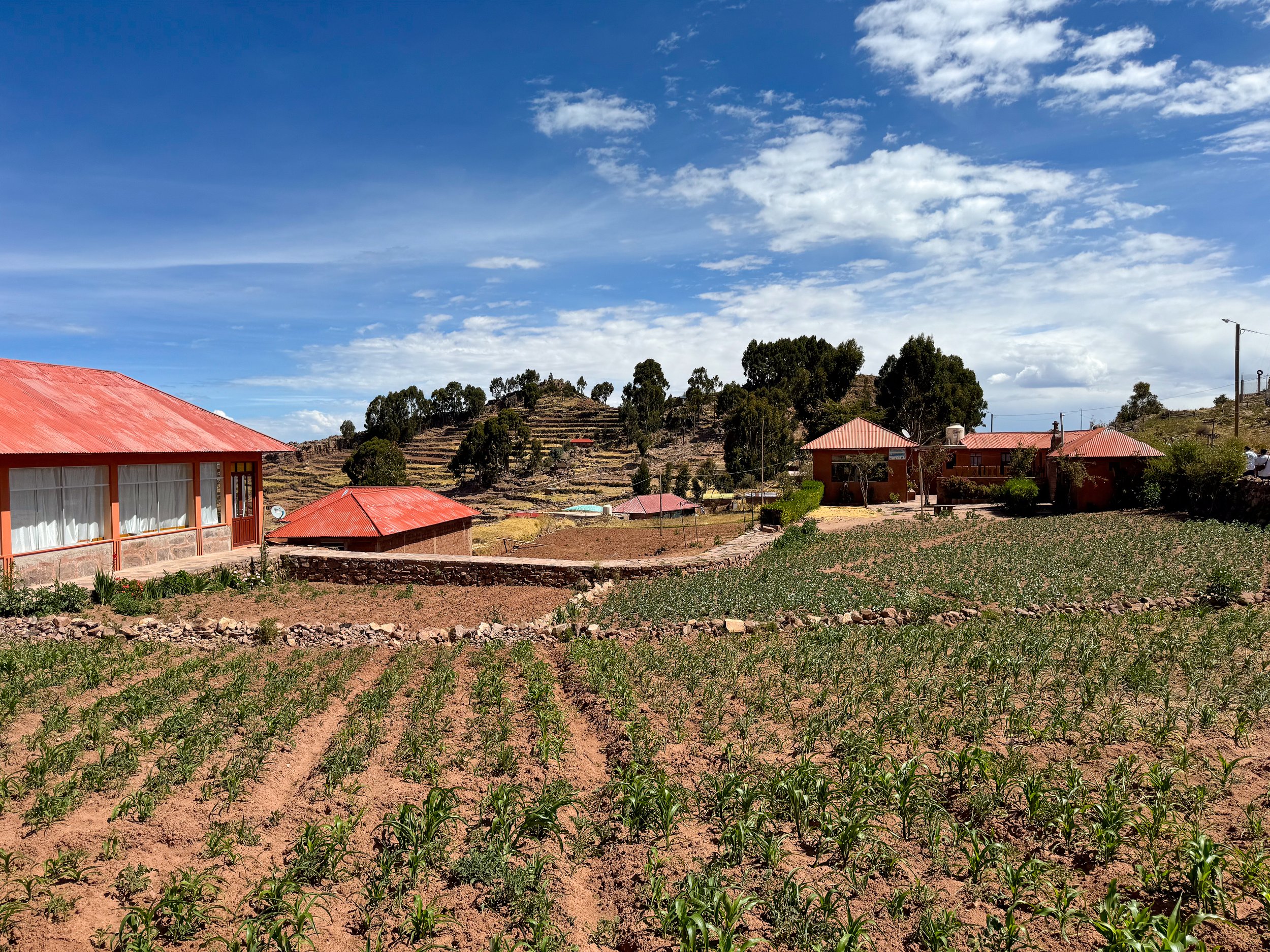
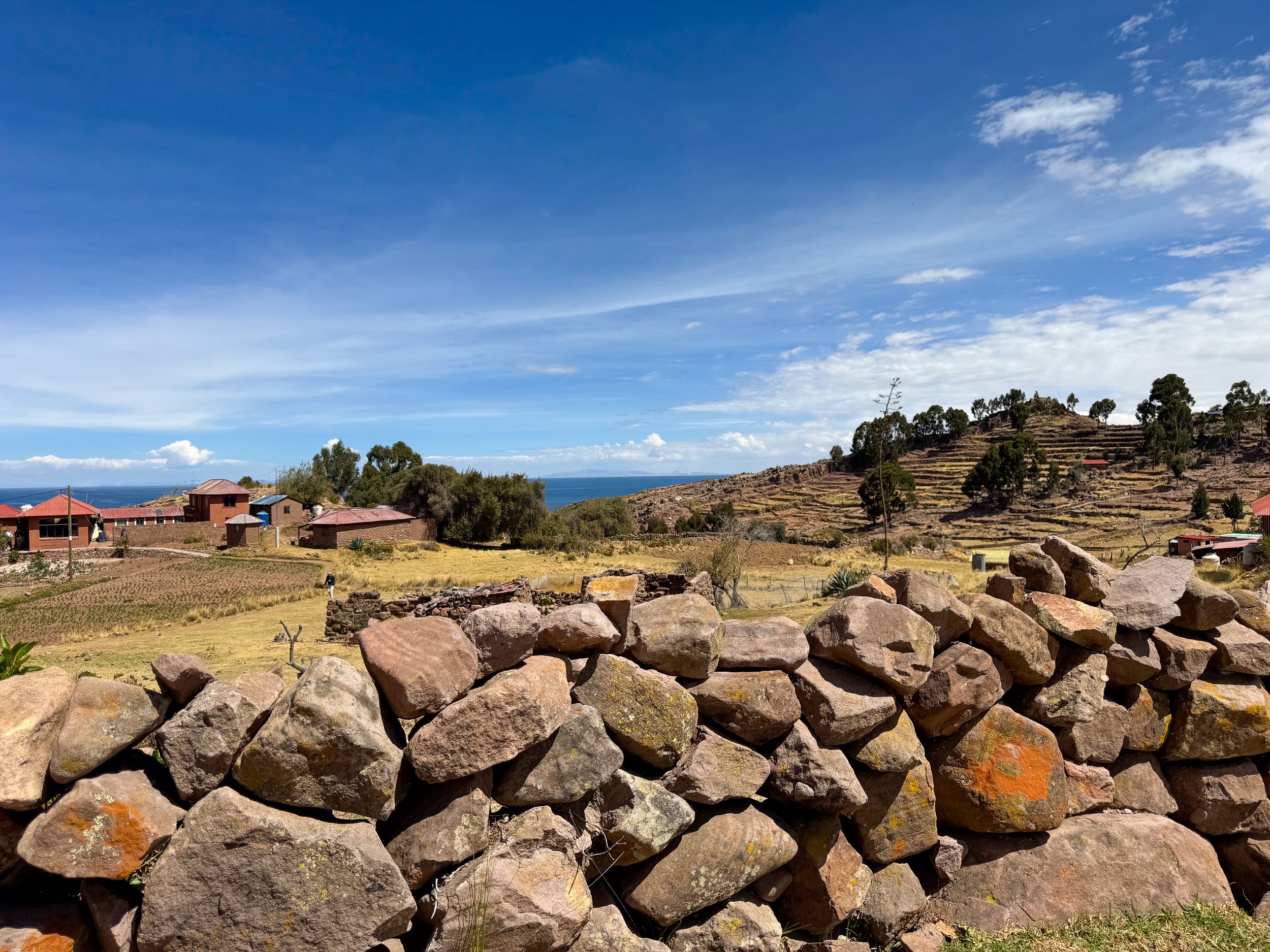
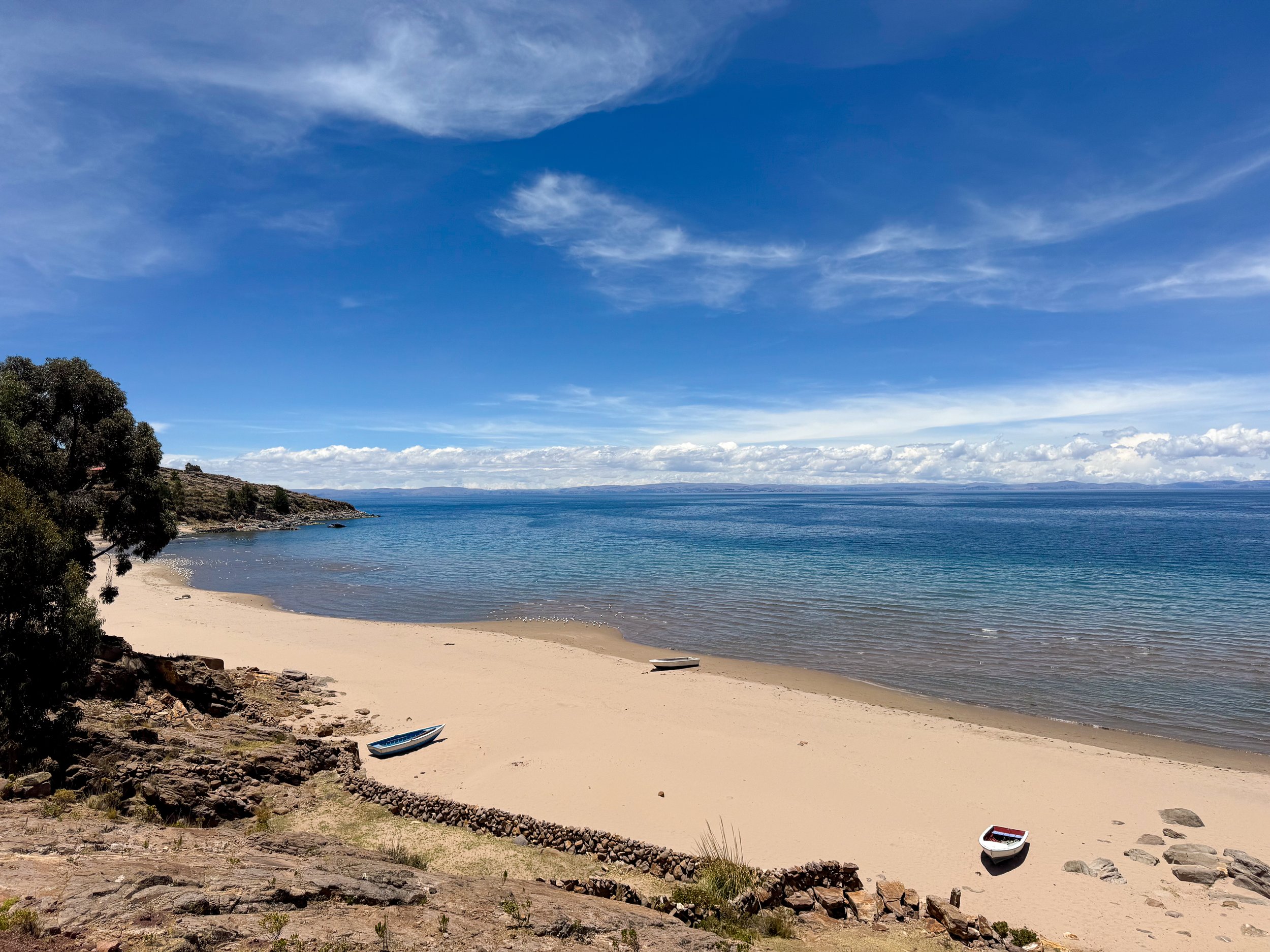
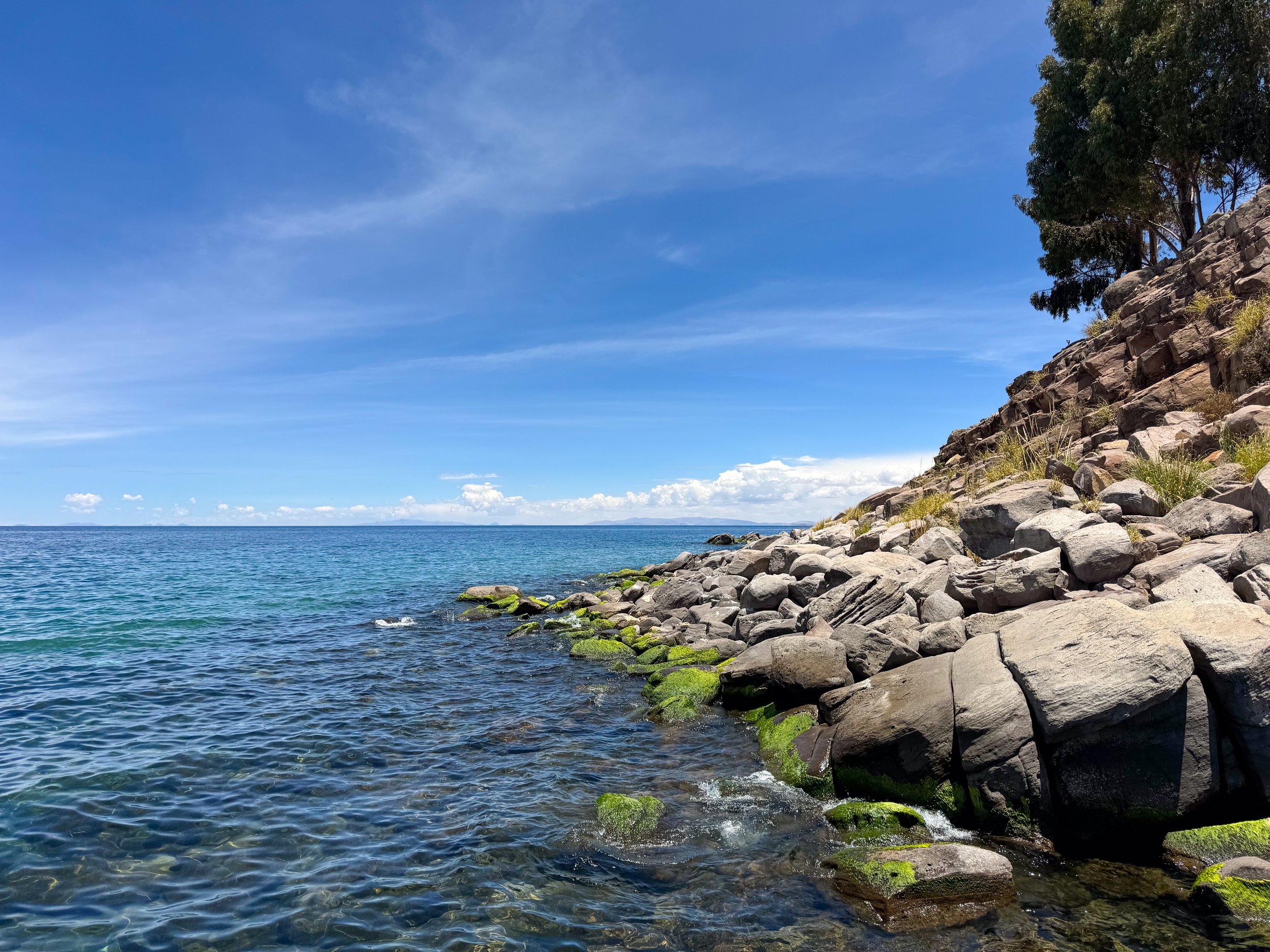
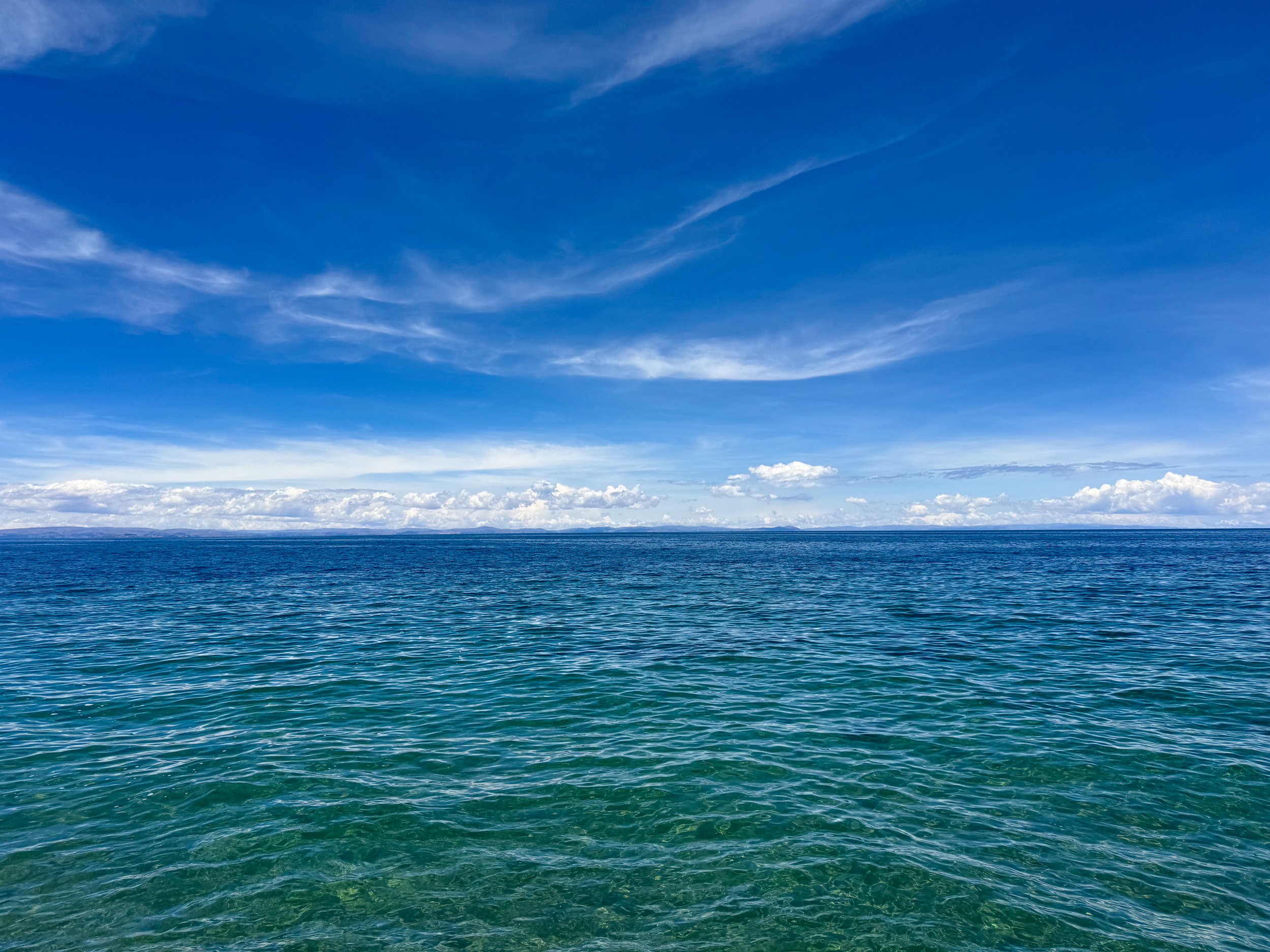
Taquile Island is an island on Lake Titicaca fully covered in agricultural terraces and internationally recognized for the cultural significance of its textiles. We took a half day tour to the island to explore its cuisine, textiles and landscape. Taquile Island is located 1 hour 30 minutes by ferry from the Uros Islands with tours departing at 10am and returning at 4pm.
The tour was simple, stopping on the island for a local lunch of pan fried trout, quinoa bread and quinoa soup. At the same time, we learned about the textiles and hats, primarily used to differentiate relationship status and mood. This was followed by a visit to an artisanal market with colorful and handmade woven items like hats, scarves, gloves, bracelets and bags.
Continuing, we walked along the island, overlooking agricultural terraces primarily used to grow potato, quinoa and corn. We passed walls of precariously stacked stones, pink and yellow wildflowers used to make textile dyes and cliffs with views of the expansive lake.

Copacabana, Bolivia
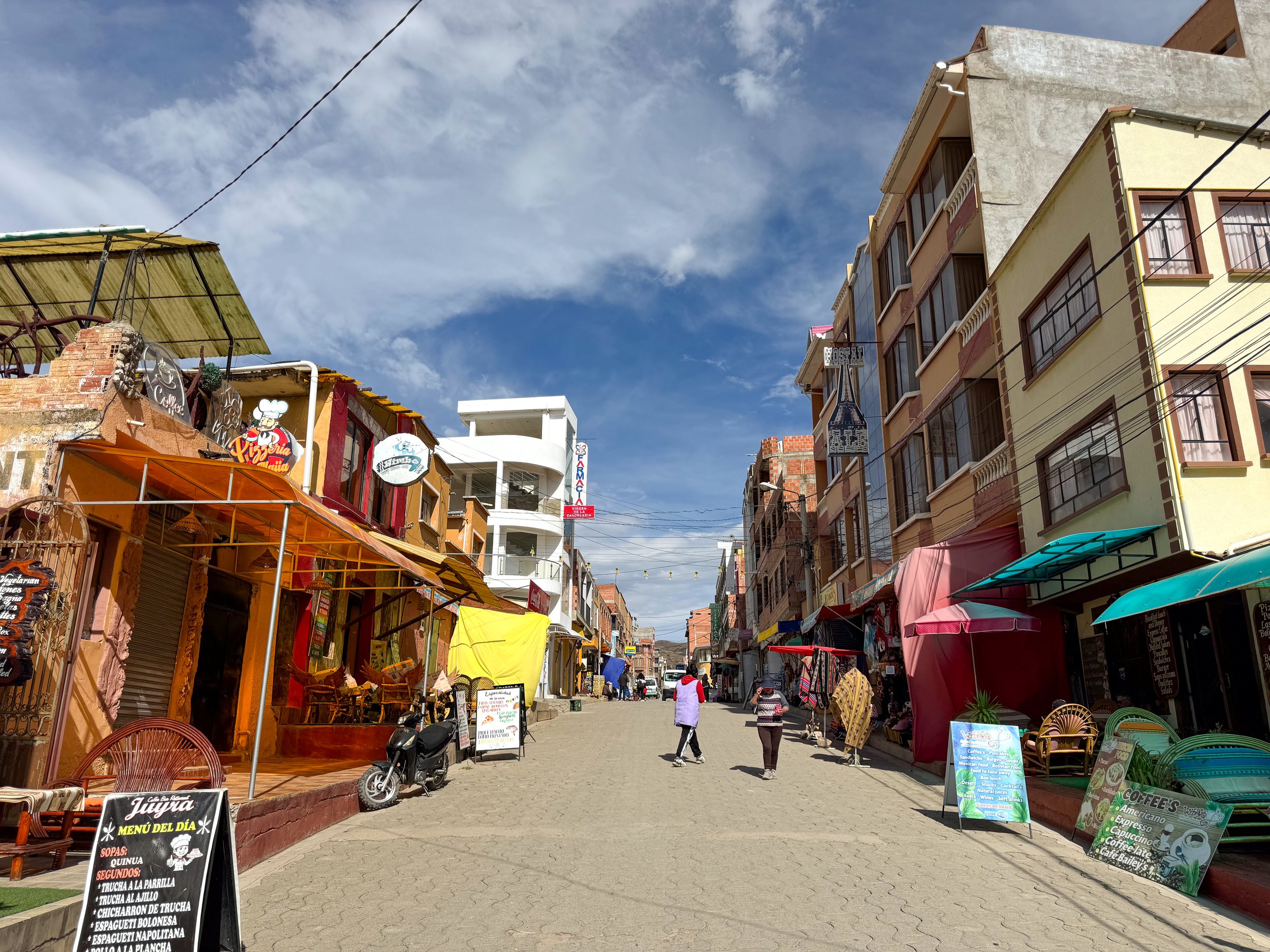
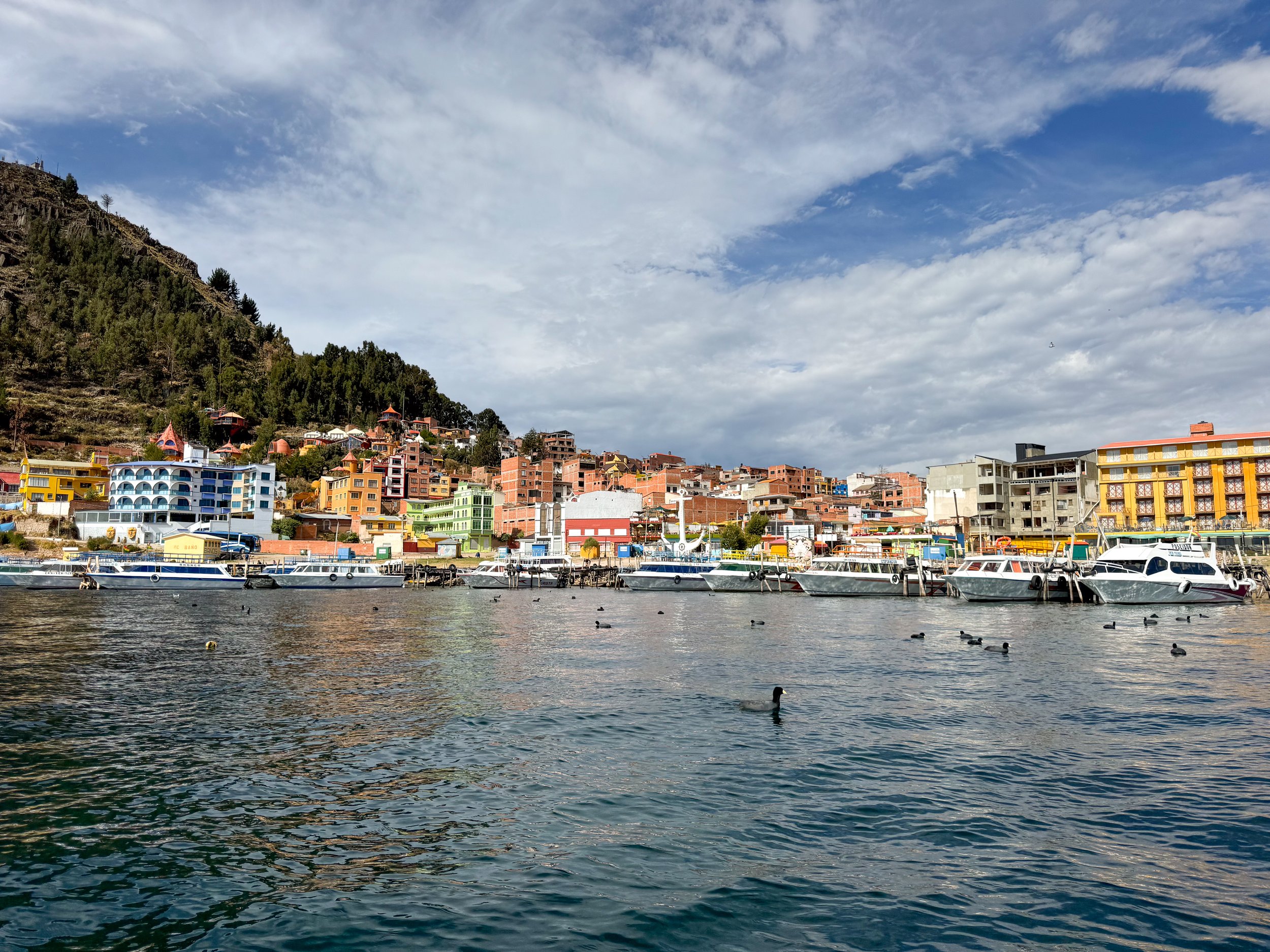
Copacabana is a colorful Bolivian town located on the eastern shores of Lake Titicaca. We spent an afternoon exploring the city, paddling around the lakefront and hiking to a mountaintop overlook.
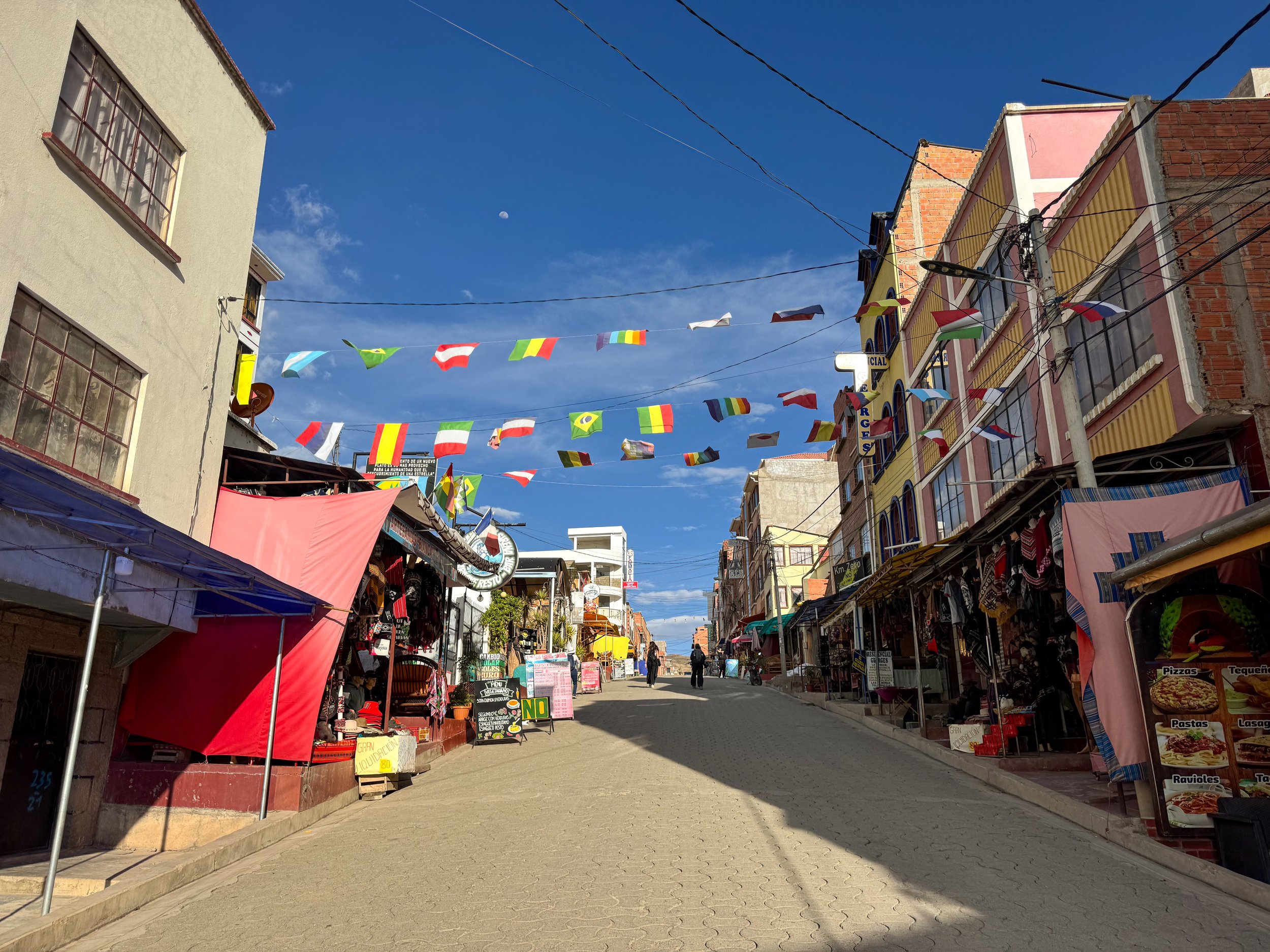
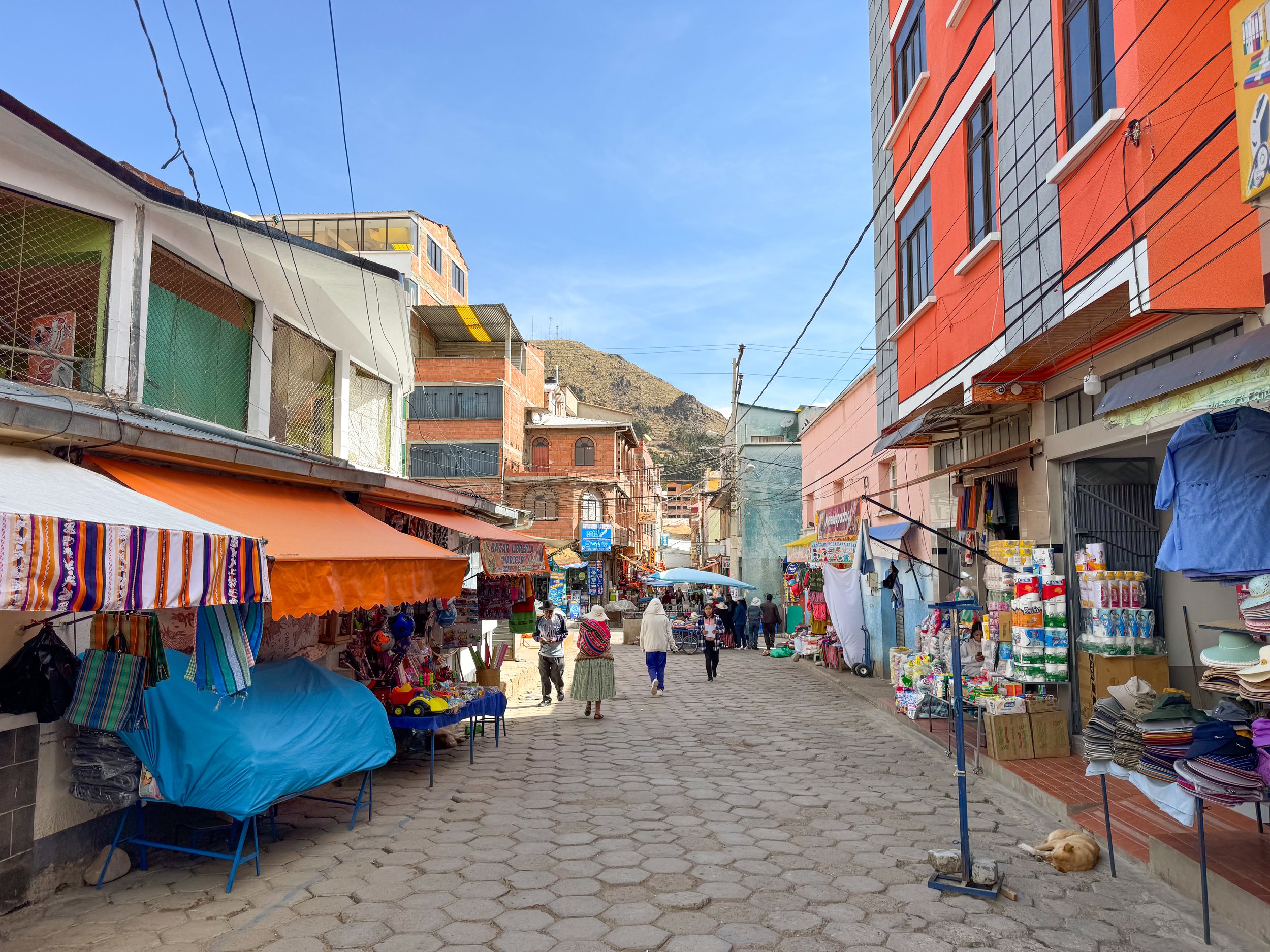
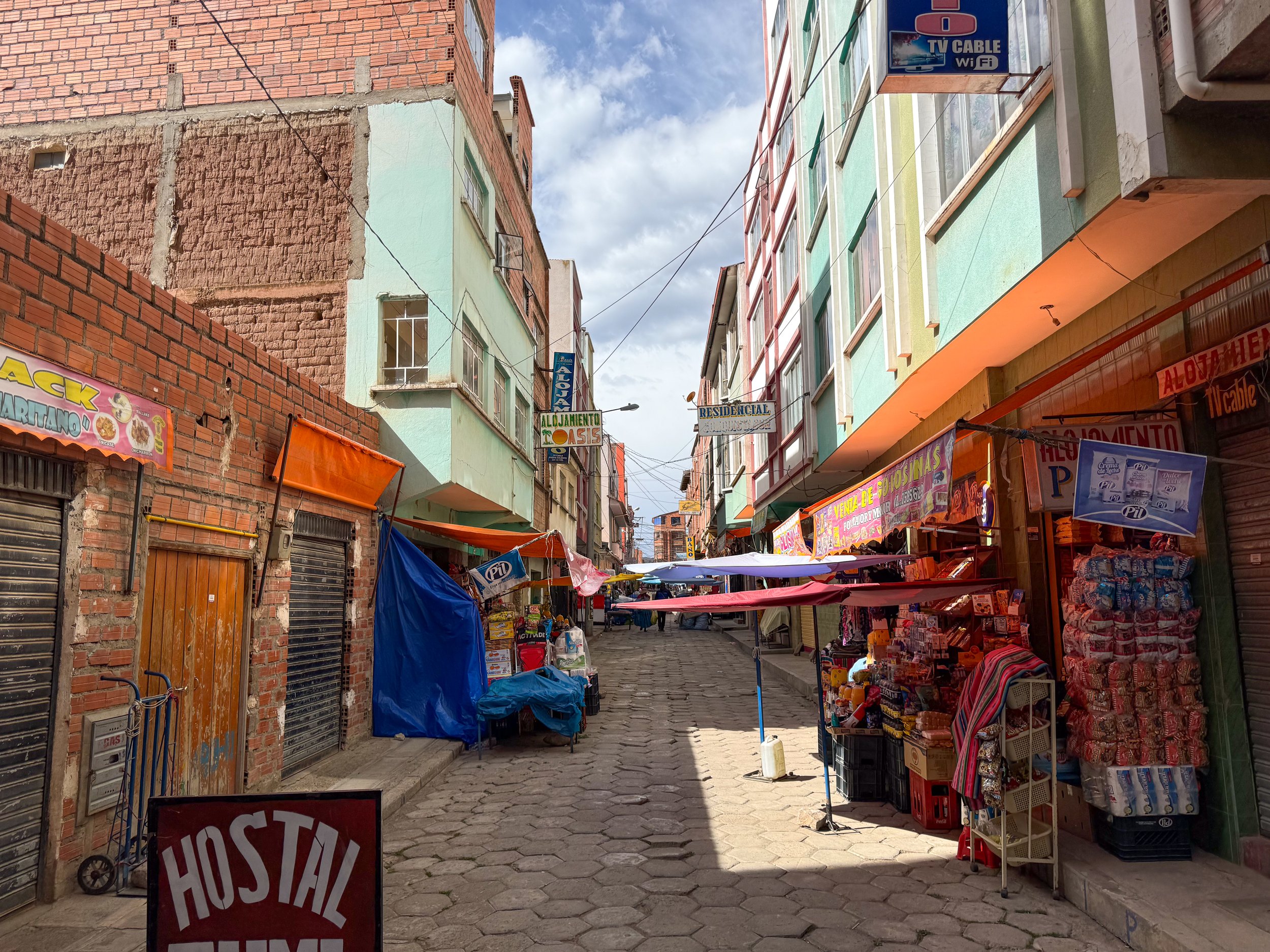
While walking through town, women are seen dressed in traditional Andean attire selling fruits and veggies, friendly stray dogs run around and sleep in the streets, backpackers arrive and depart by bus regularly and cars receive blessings while being decorated with strings of flowers and bouquets.
Around Town
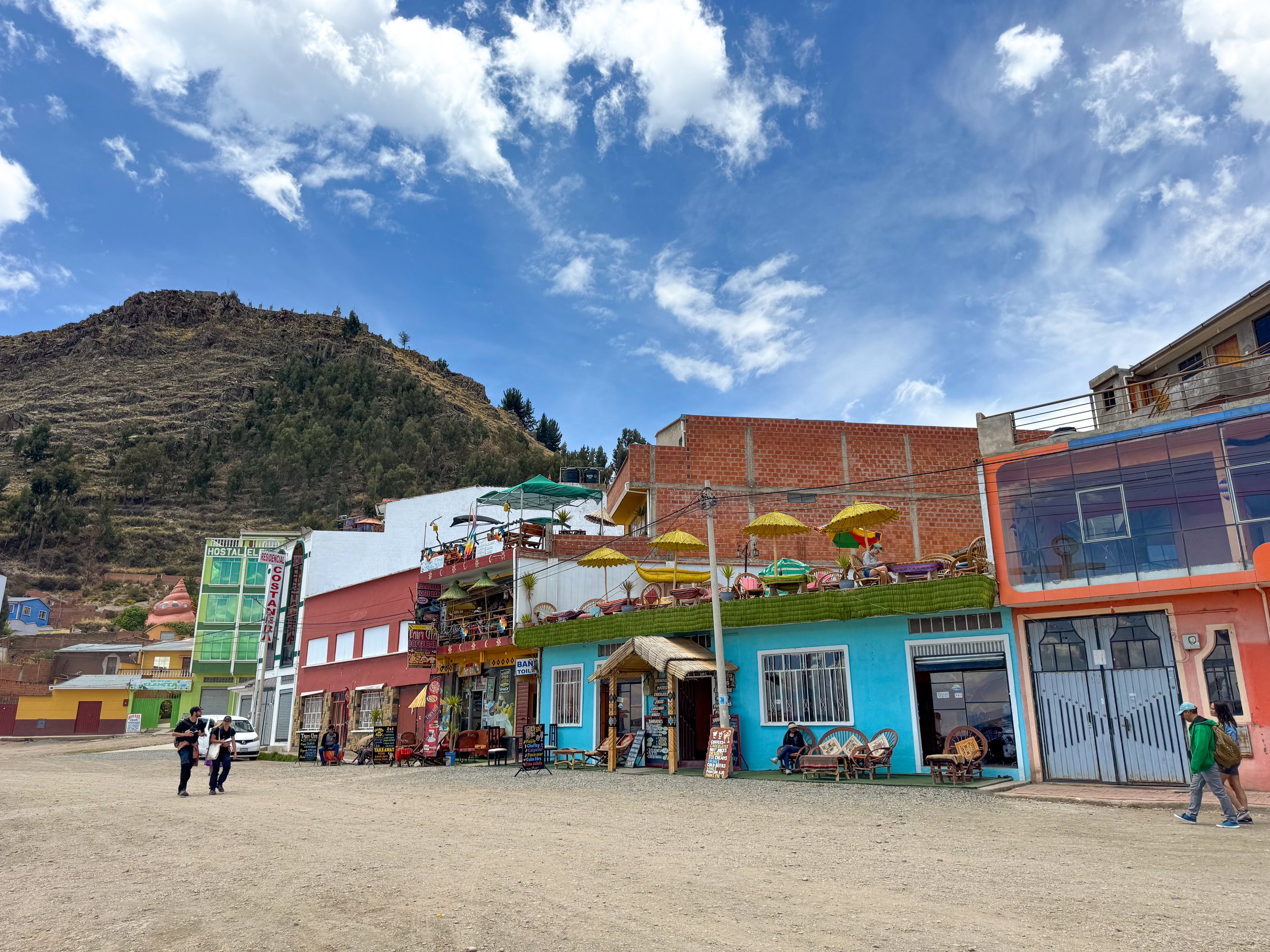
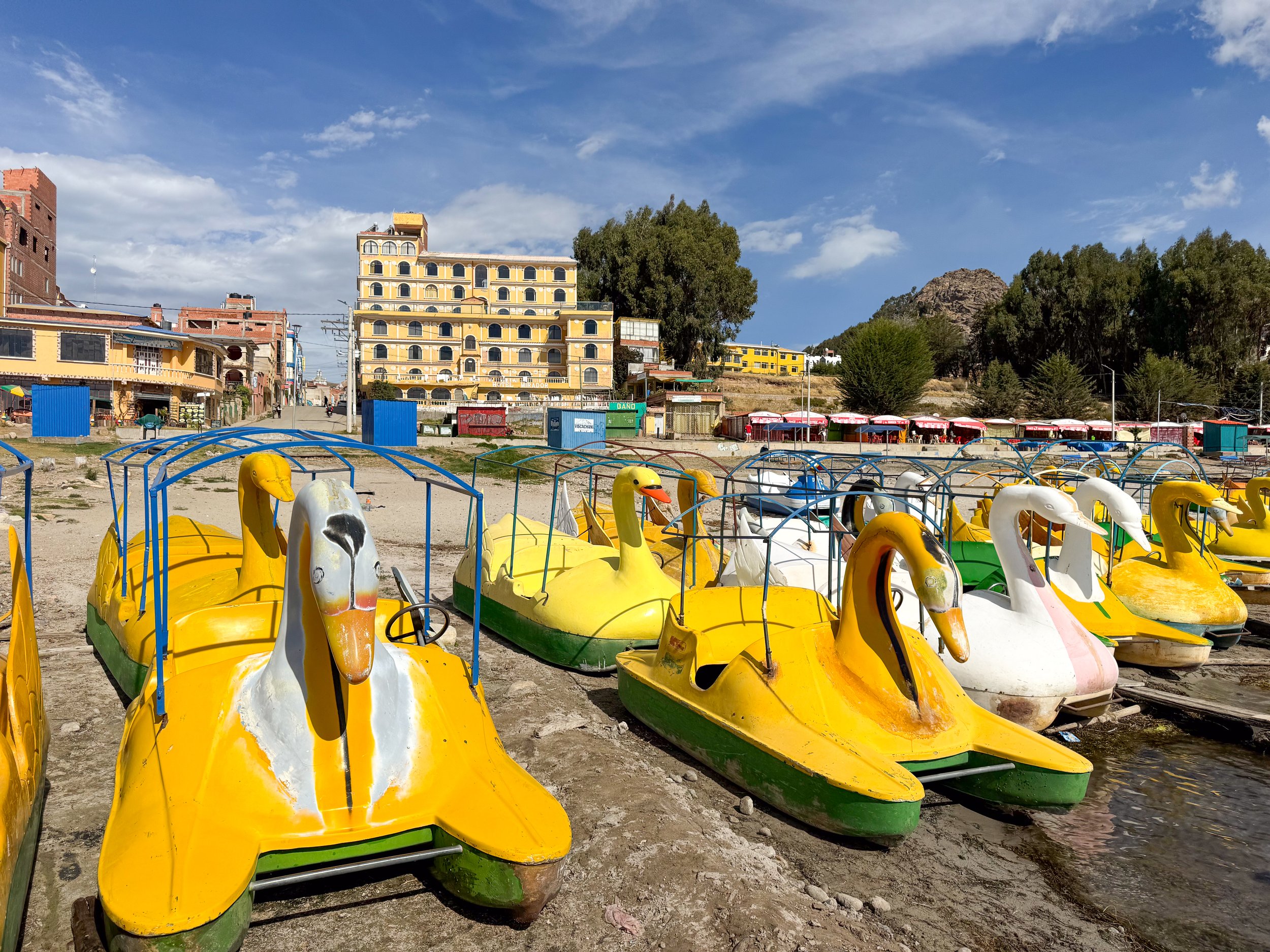
Av. Costanera. A dirt road parallel to the city harbor with local food kiosks, hotels with lake front views, swan style paddle boats and companies selling tours to the nearby islands.
Av 6 de Augusto. The main road through Copacabana with hostels, cafes, bars, restaurants, money exchanges, tour operators and souvenir shops. Many restaurants offer 2x1 happy hours and have simple menus consisting of lake trout, pizza and pasta.
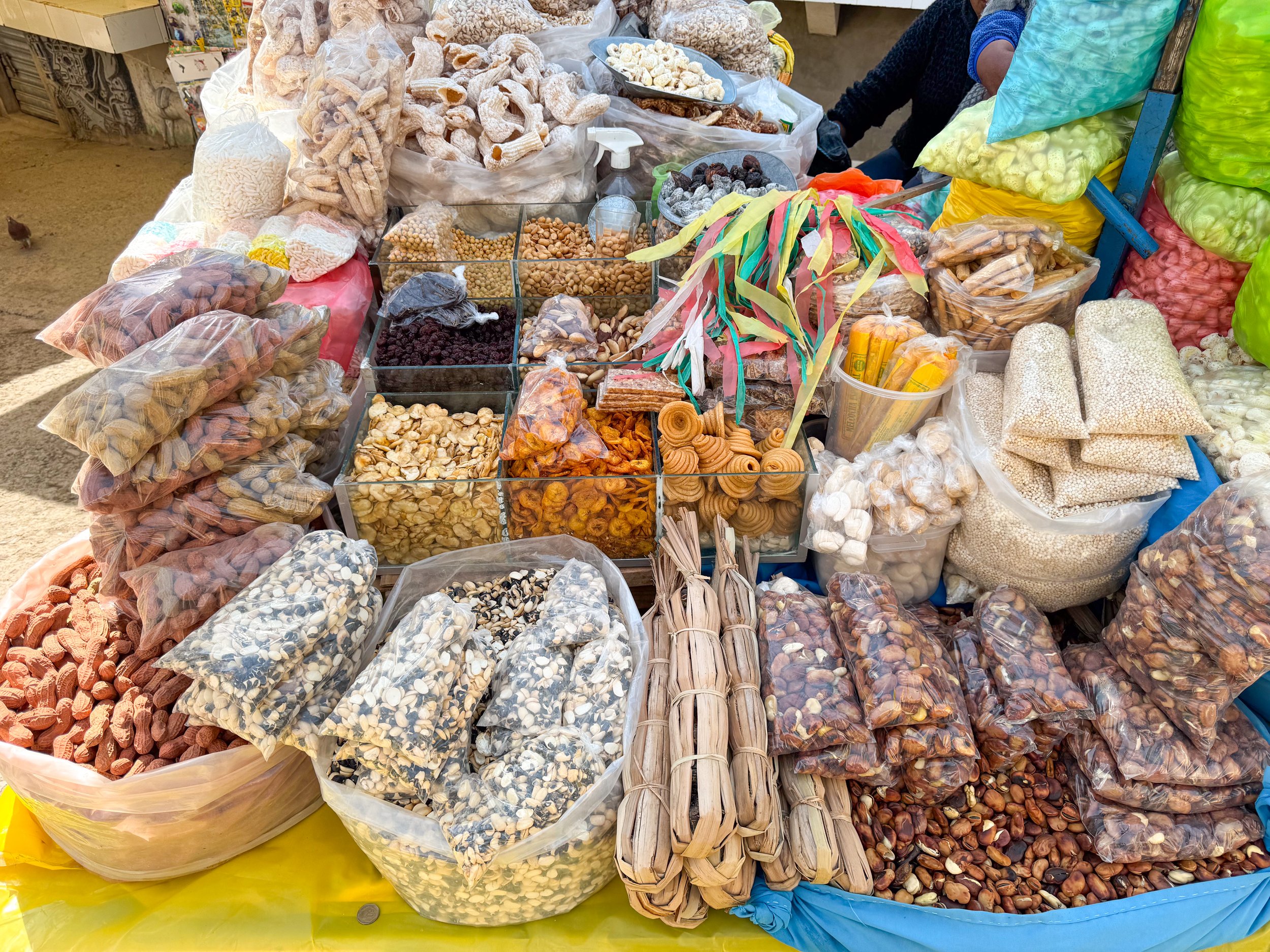
Al Paseo de Las Pasancallas. A market street with local vendors selling dry goods like peanuts, roasted beans, quinoa, puffed grains, popcorn and candies.
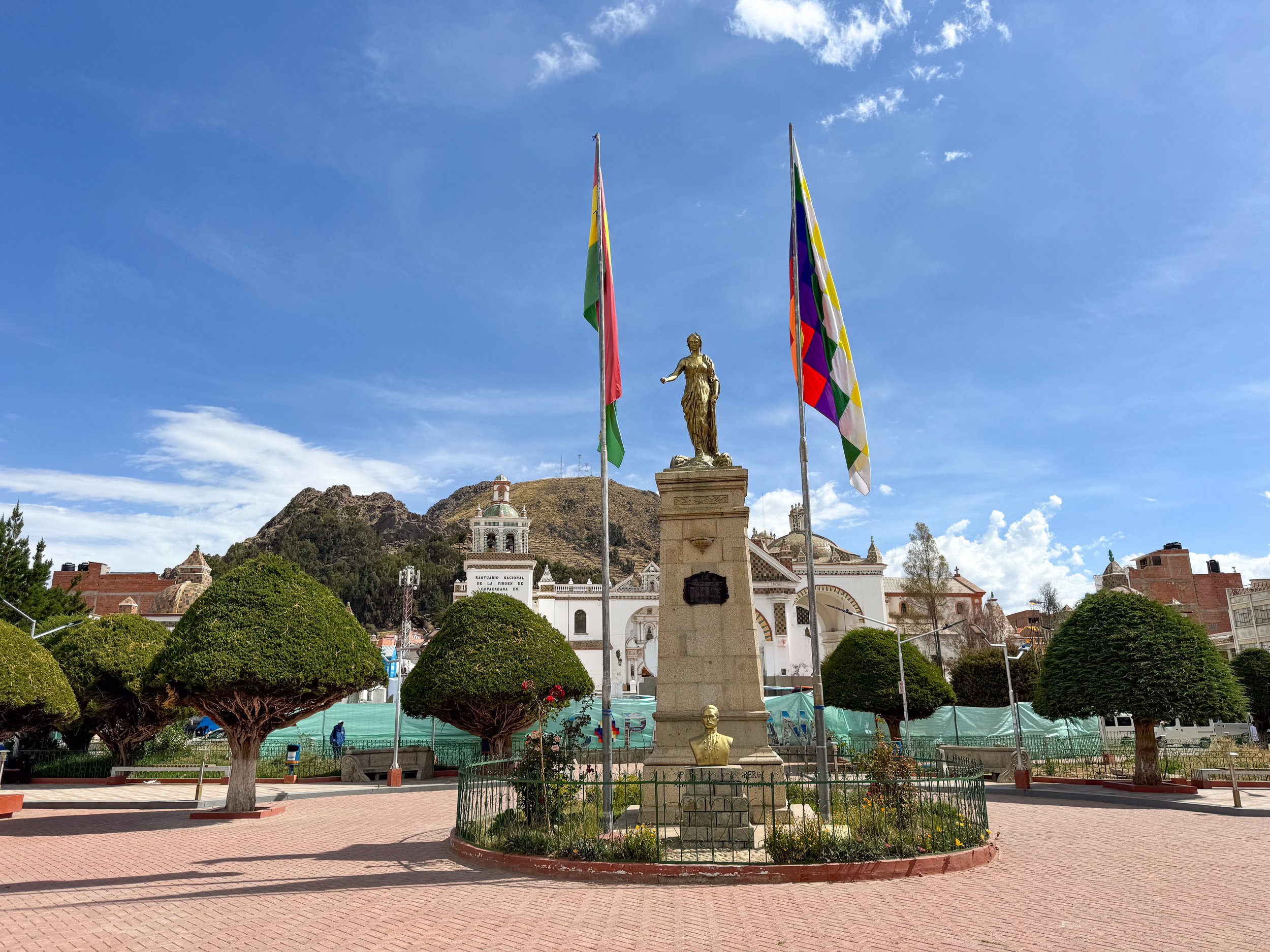
Copacabana Square / Plaza 2 de Febrero. The central town square with a red brick plaza and well manicured trees in front of the Basílica de la Virgen de Copacabana.
Basílica of Our Lady of Copacabana. A historic cathedral with a white painted exterior accented with Portuguese tiled moldings and bell towers.
Things to Do
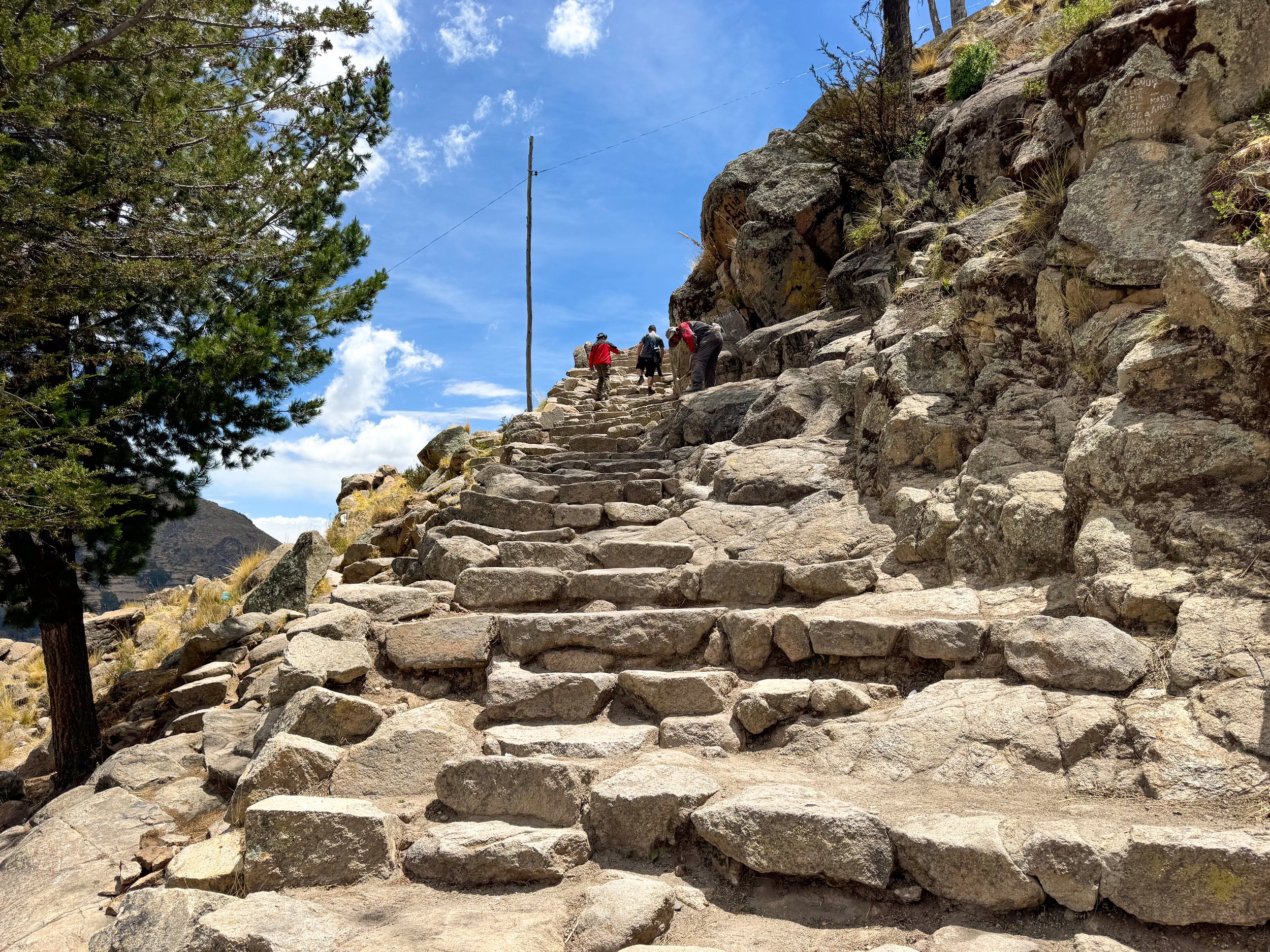
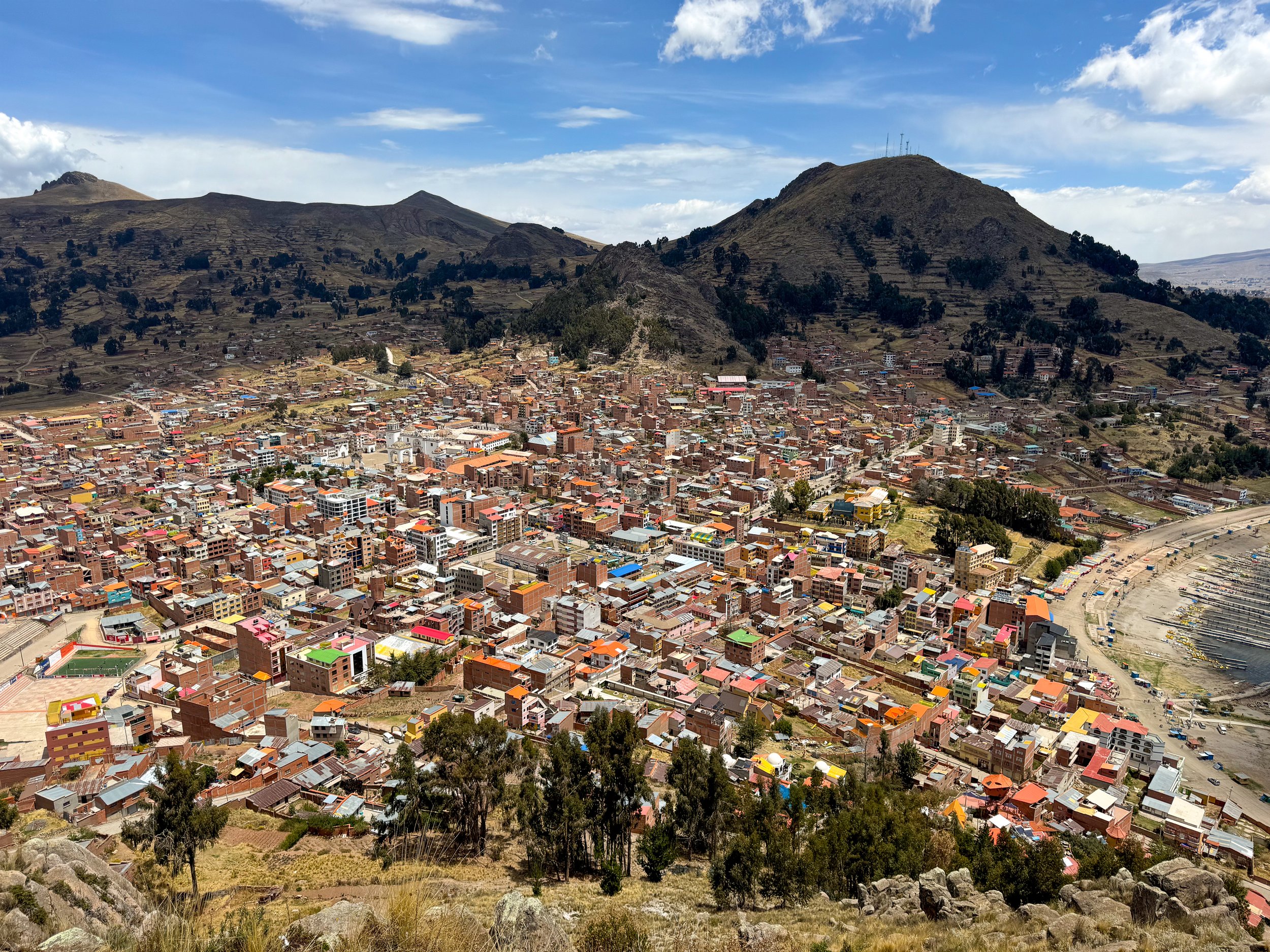
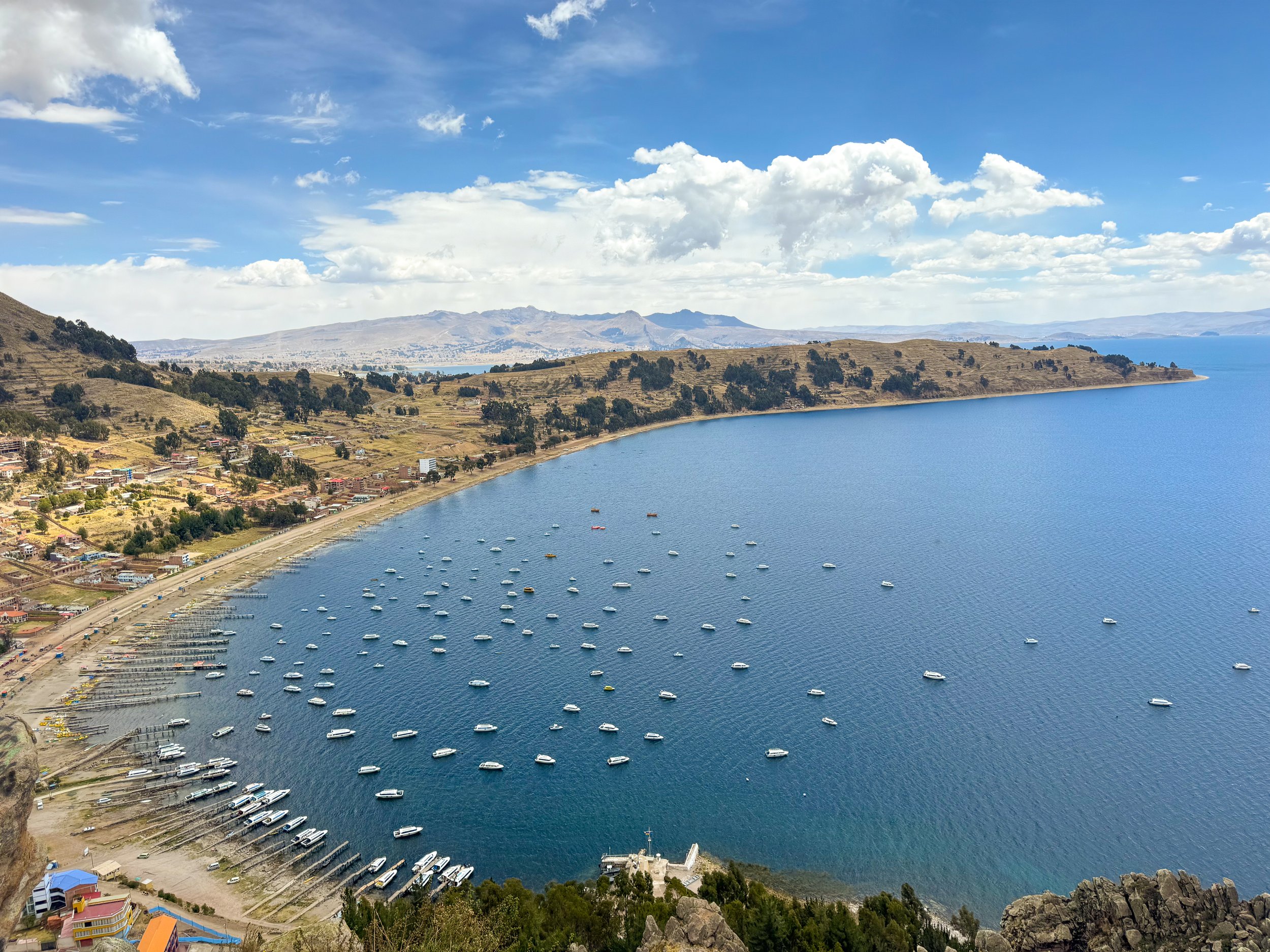
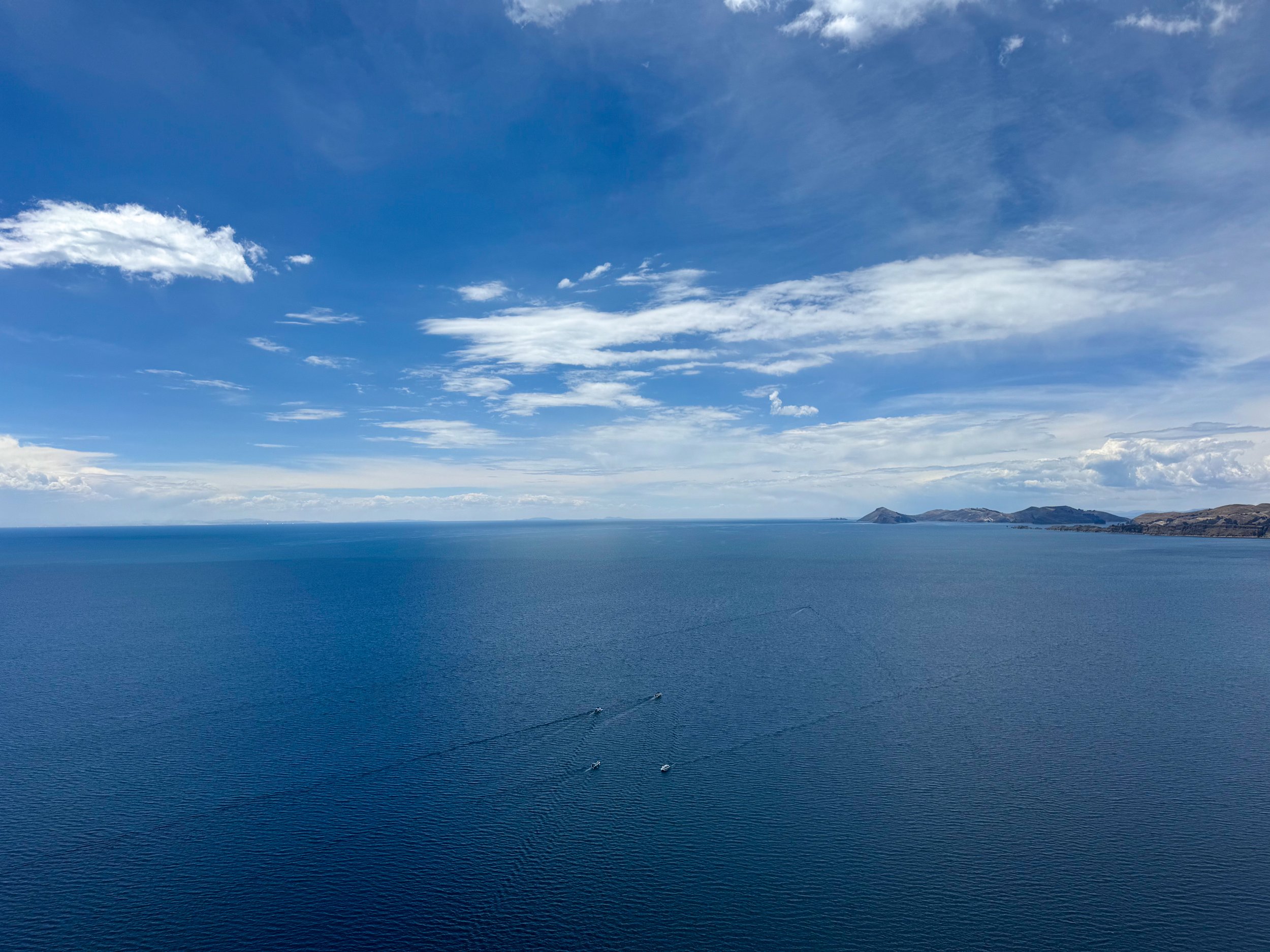
Hike Cerro El Calvario. A steep hike up rocky steps to a mountaintop lookout with views of Copacabana. From the summit, the clay tiled walls, colorful tin roofs and vibrantly painted facades of buildings of the city quickly blur into the countryside. Along the shore, fishing boats and tour ships are moored throughout the crescent shaped harbor while the expansive blue lake stretches far across the horizon.
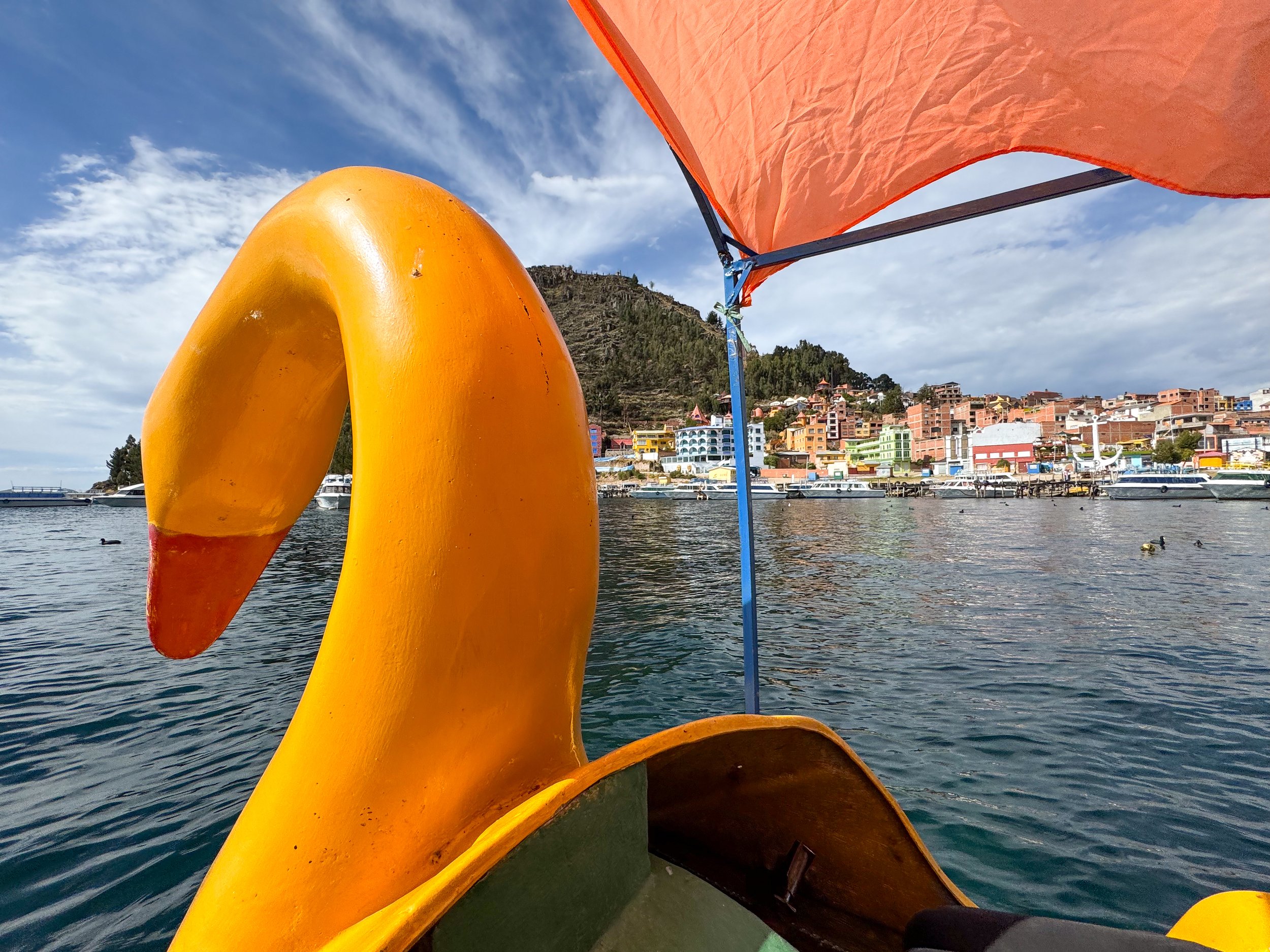
Rent A Paddle Boat. Rent a yellow duck paddle boat and float around the harbor for half an hour, looking back at the colorful city and mountains as the gentle waves rock the boat from side to side.

Places to Eat, Drink & Stay
Hostal La Cúpula. A hotel on the hill overlooking Copacabana with dome shaped buildings and flowering gardens. We came here for lunch at their restaurant, El Condor & The Eagle Cafe, a relaxing spot with a small dining room and outdoor patio with views of the city and harbor. The menu offers sandwiches and salads.
Hostal Las Olas. A one of a kind hotel with organic shell shaped architecture, tree houses, curved walls and colored glass windows on the hill overlooking Copacabana. Though we didn’t stay here, we stopped to admire the property.
Winay Marka. A restaurant and bar with a rooftop overlooking Lake Titicaca and the harbor. A relaxing atmosphere to enjoy a cocktail with Reggae vibes and natural decor like wicker furniture, Bolivian textile cushions and totora umbrellas.
Nimbo Café Restaurant. A family run restaurant along Av 6 de Augusto with happy hour cocktails and a large range of pizzas.
Location Specifics
The Climate. The climate is cool year round with slightly warmer temperatures during the day and freezing temperatures at night. It’s dry most of the year except for the rainy season from January to March.
Getting Here. The best way to reach the Uros Islands is by traveling to the city of Puno, from either Cusco or Arequipa by bus. The best way to reach Copacabana is from Puno or La Paz by bus. We took the Peru Hop bus on our journey around Lake Titicaca.
Elsewhere in Peru
From the sacred waters of Lake Titicaca to the peaks of the Andes, colonial cities and desert landscapes, explore more of Peru's diverse regions through these travel guides:
Peru Coast Travel Guide: Nazca Lines, Huacachina & Ancient Civilizations. Venture along Peru's coast where ancient civilizations, desert oases, vineyards and world renowned cuisine shape one of South America's most unique regions.
Peru Andes Travel Guide: Machu Picchu, Cusco & Inca Ruins. Wander through Peru's Andes where ancient Inca ruins, terraced farmland, colorful mountain landscapes and Andean communities preserve centuries of tradition.
Arequipa Peru Travel Guide: Colonial Architecture, Food & Culture. Explore Arequipa's historic streets where colonial architecture, regional cuisine and volcanic landscapes shape one of Peru's cultural capitals.
For Next Time…
Next time we visit Lake Titicaca, we plan to spend more time in Copacabana and visiting the nearby Incan Islands.
Isla del Sol. A sacred island on Lake Titicaca with dozens of Incan temple ruins, a terraced landscape and numerous home stays. The Incans believed the sun god originated from here.
Isla del Luna. A small island with a terraced landscape and the ruins of a temple.