

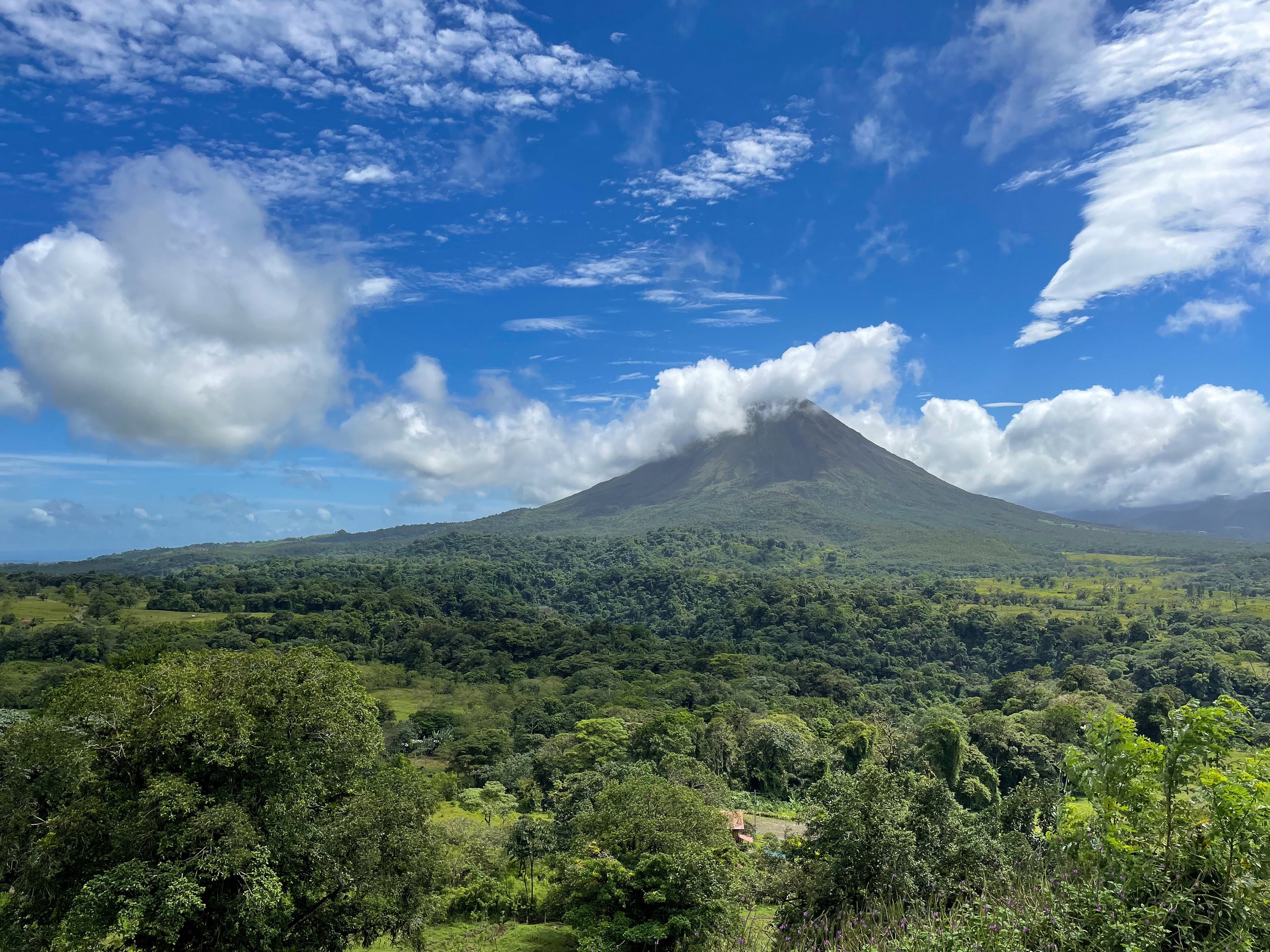
Costa Rica Road Trip Guide: Arenal Volcano, Manuel Antonio & Wildlife Adventures
Road trip across Costa Rica through lush rainforests, active volcanoes, wildlife reserves and tropical beaches from Arenal to Manuel Antonio.
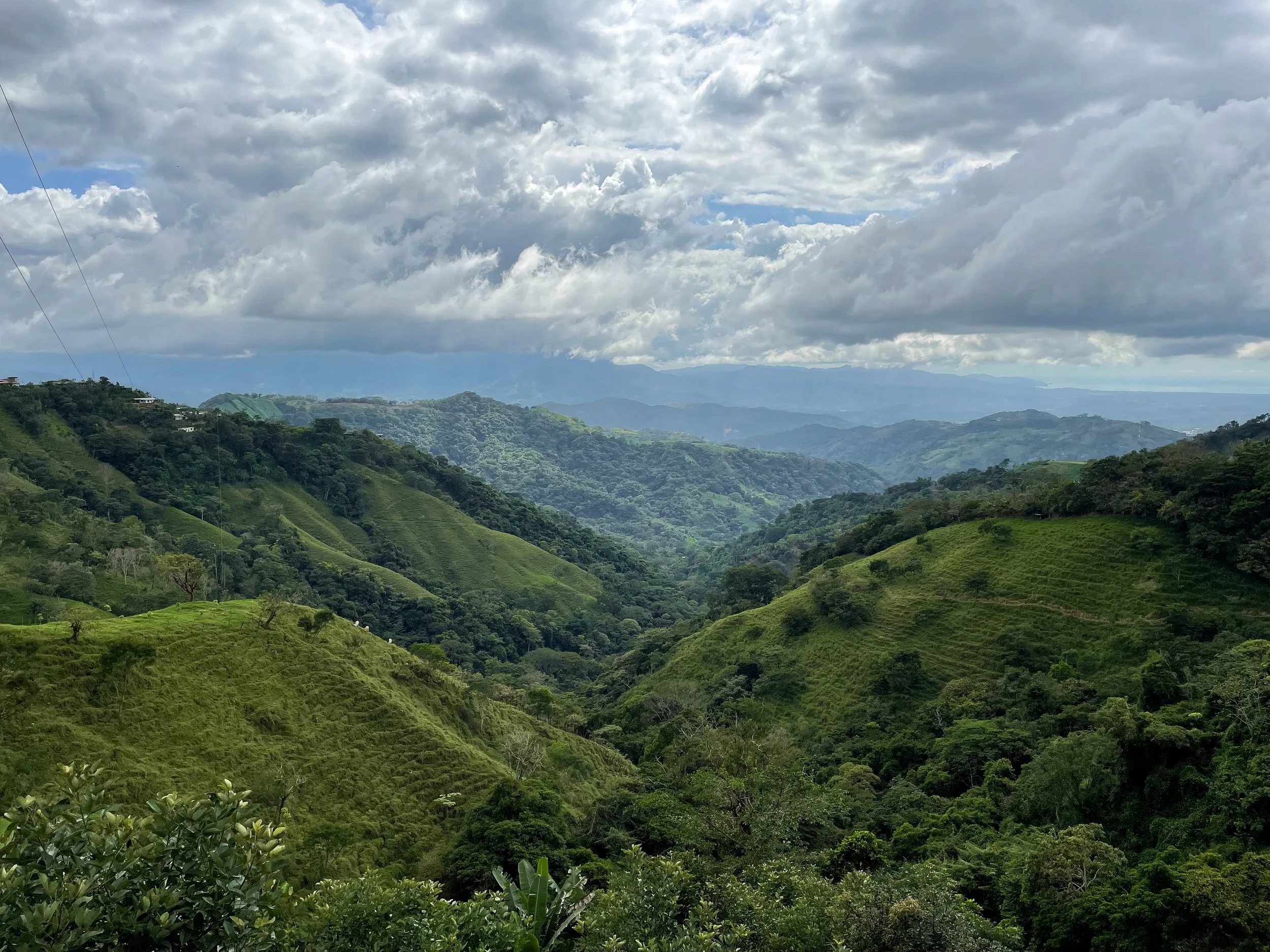
Costa Rica, Nature & Biodiversity
Costa Rica is a lush and biodiverse country in Central America known for its tropical rainforests, active volcanoes, nature reserves and exotic wildlife. We spent a week road tripping across the country, splitting our time equally between the Arenal Volcano in the mountains and Manuel Antonio Park on the Pacific coast.
San José, The Gateway to Costa Rica
San José is the capital city and gateway to Costa Rica. Located in the center of the country, it’s an easy point to begin and end any road trip from. We flew in around midnight and spent the evening at the nearby Hotel Mango before beginning our road trip the following morning. Reserve a rental car with Sixt.
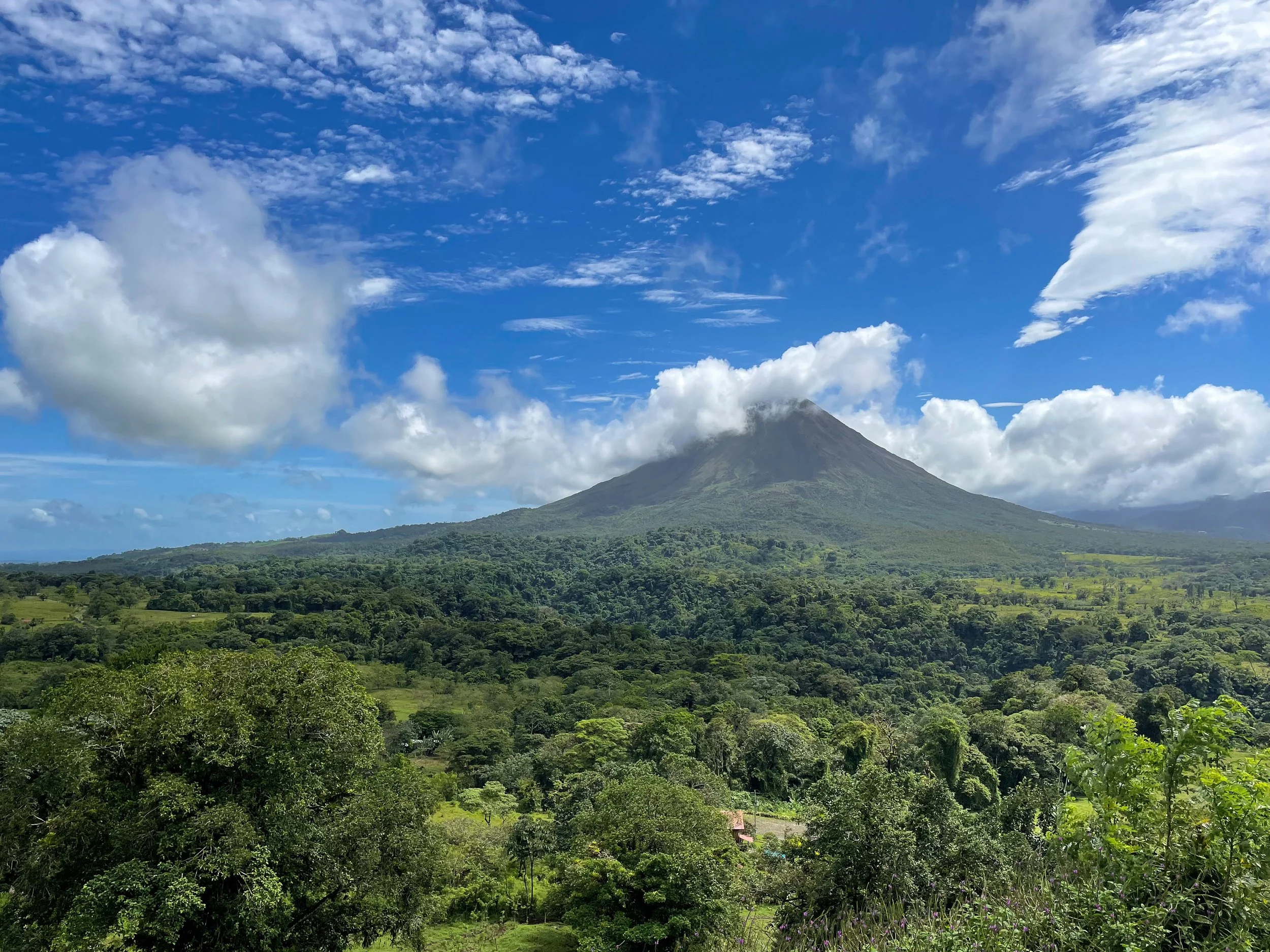
Volcán Arenal
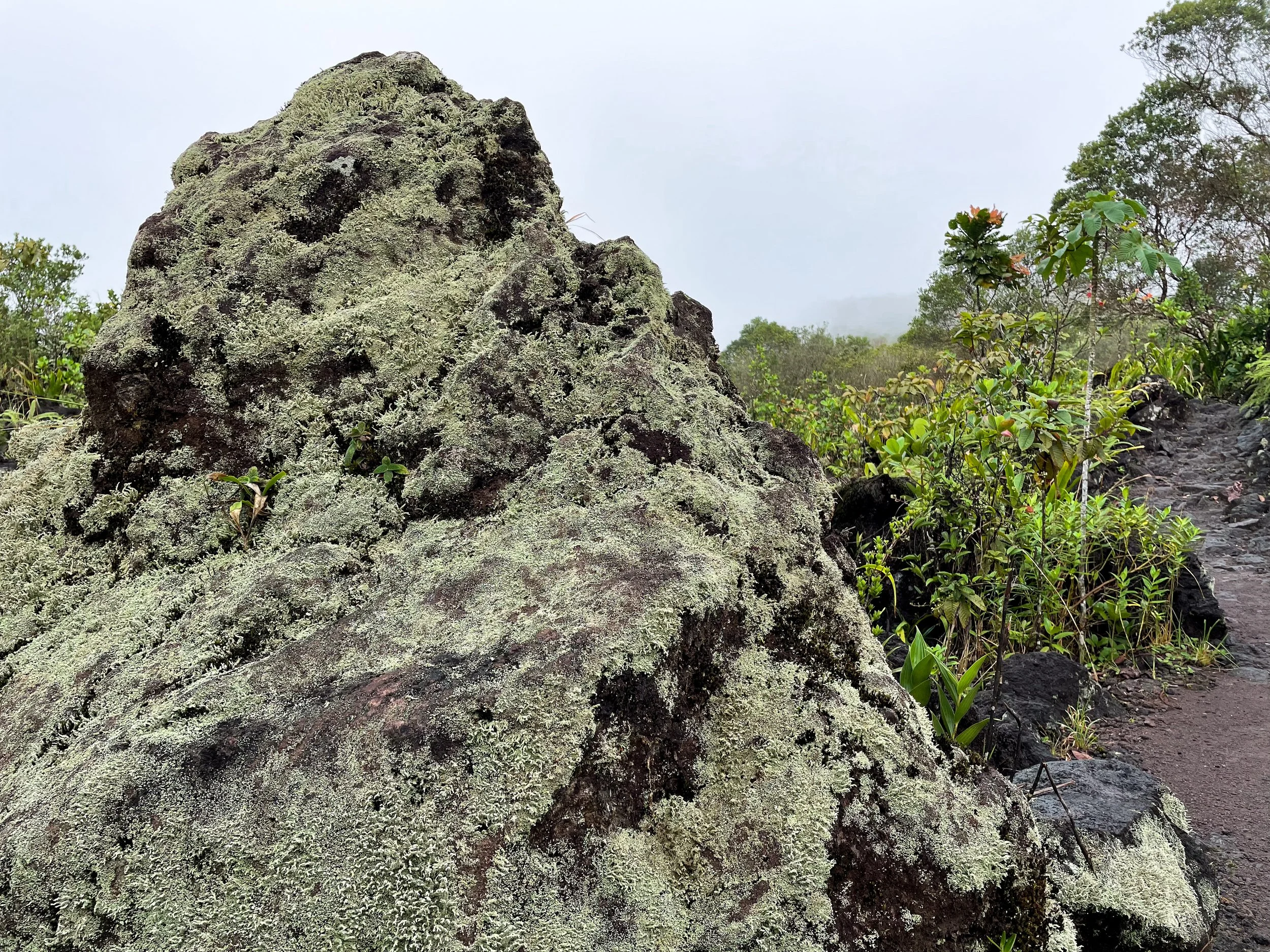
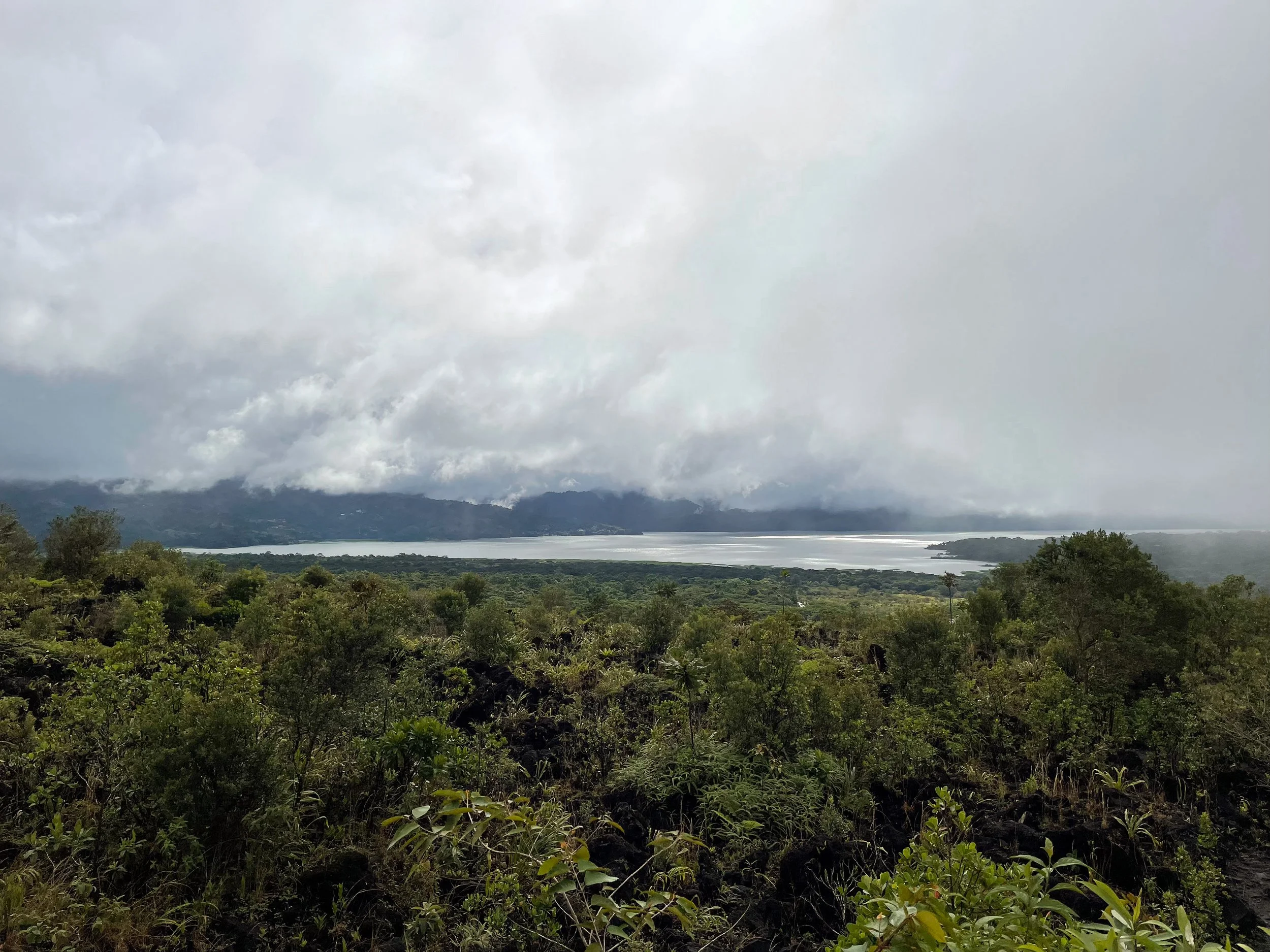
The Arenal Volcano is known for its symmetrical cone shape, hardened lava fields, hiking trails and large lake. We drove here from San José and arrived by early afternoon then hiked for about 3 hours.
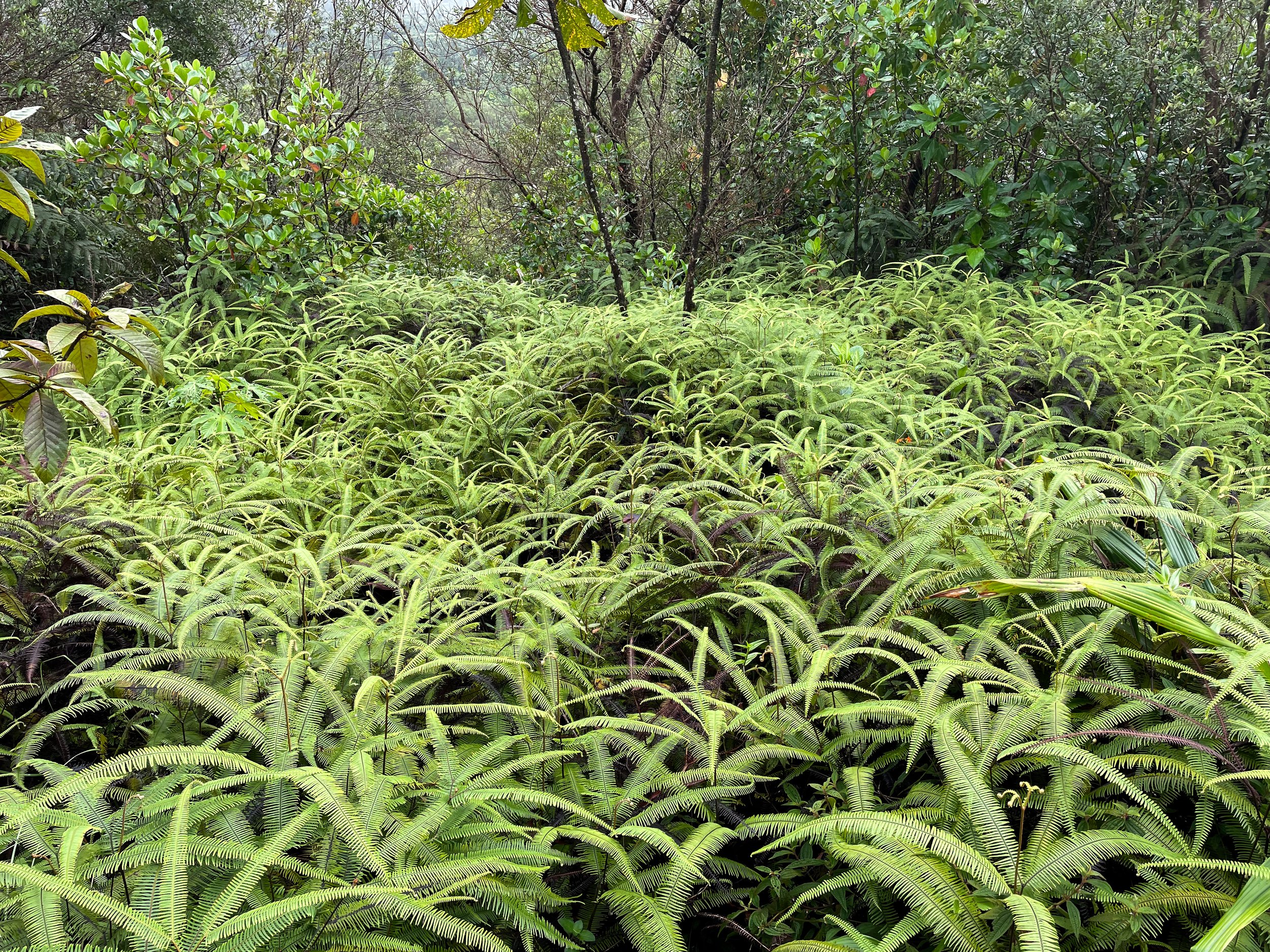
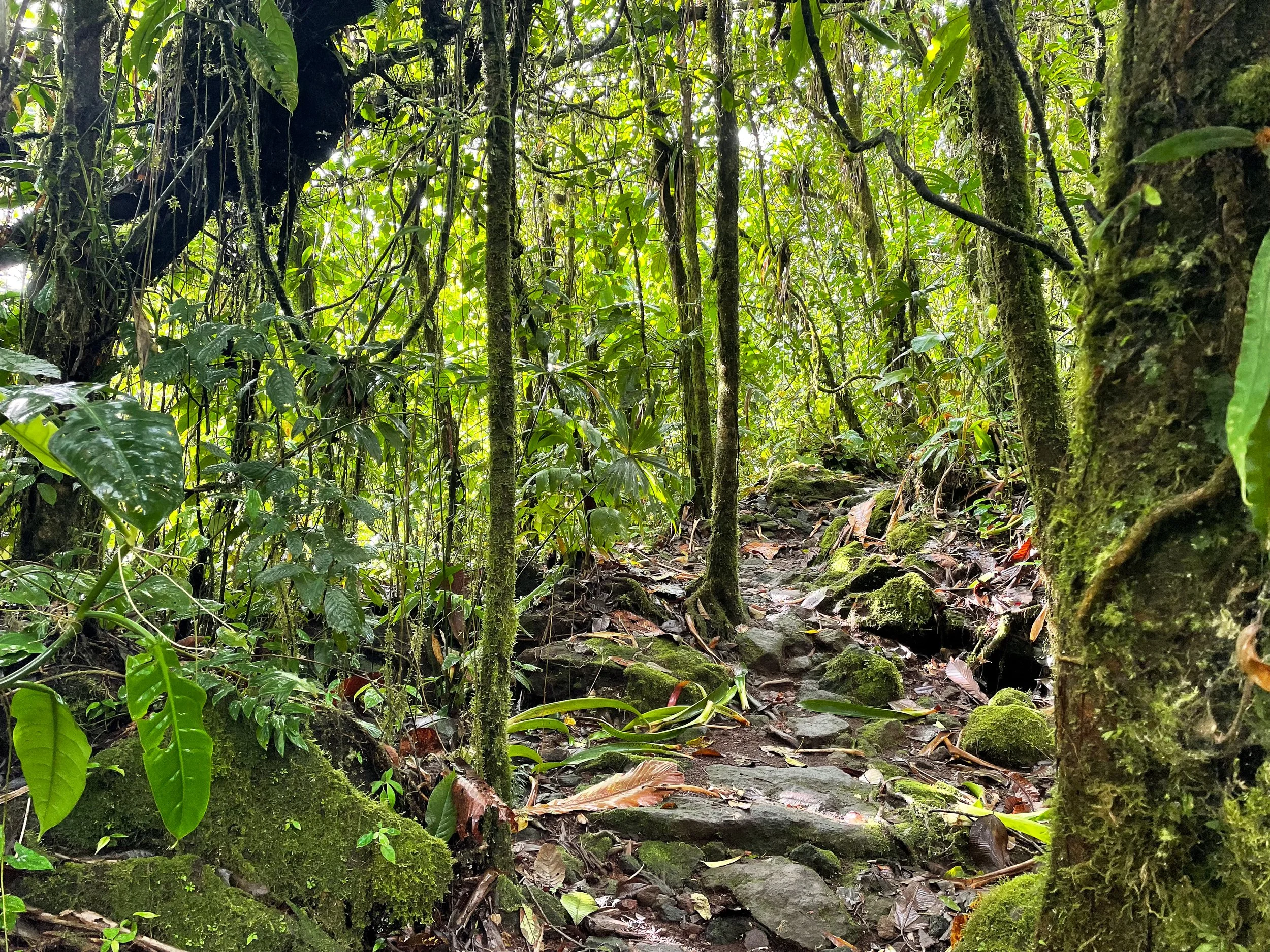
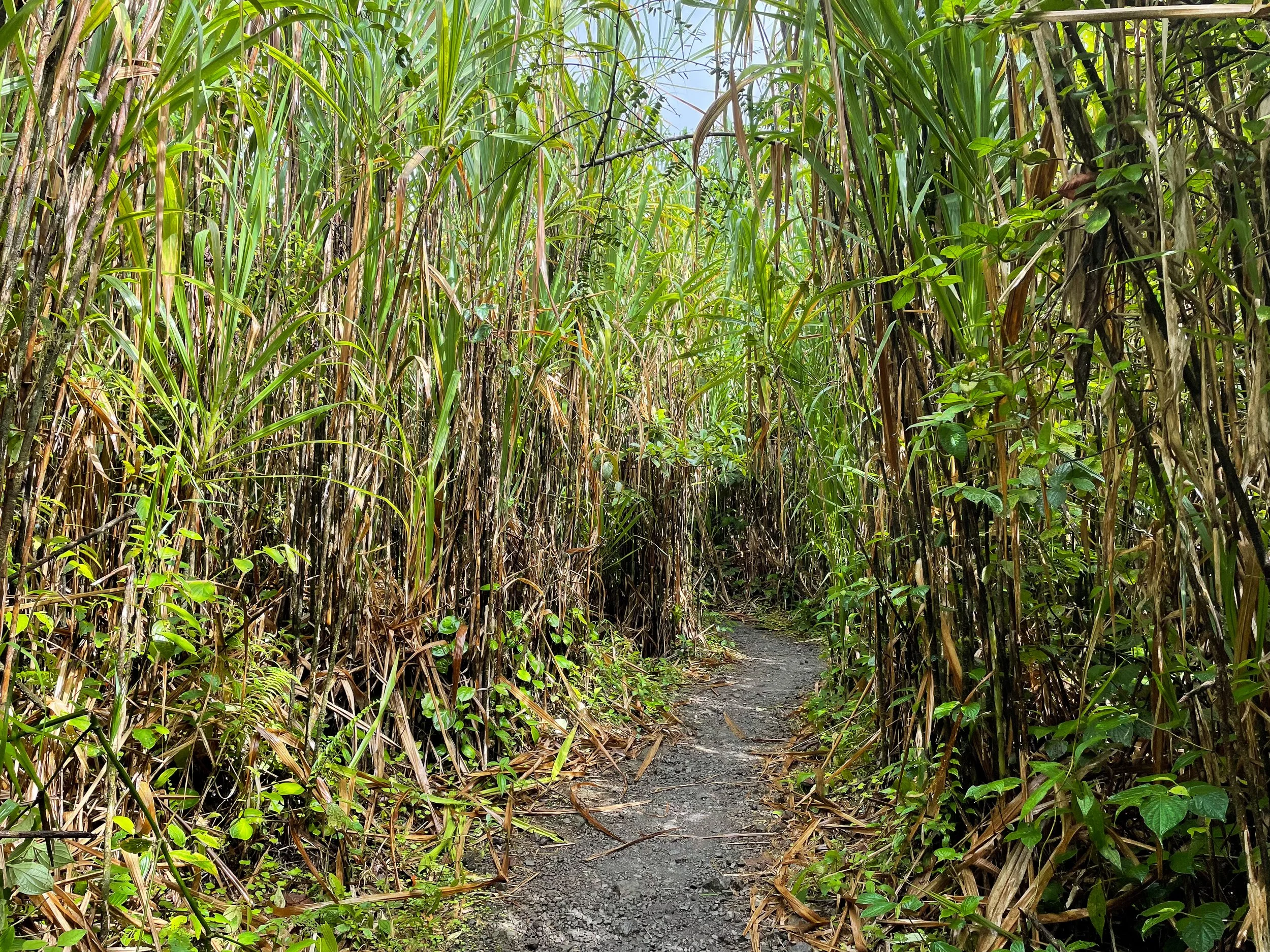
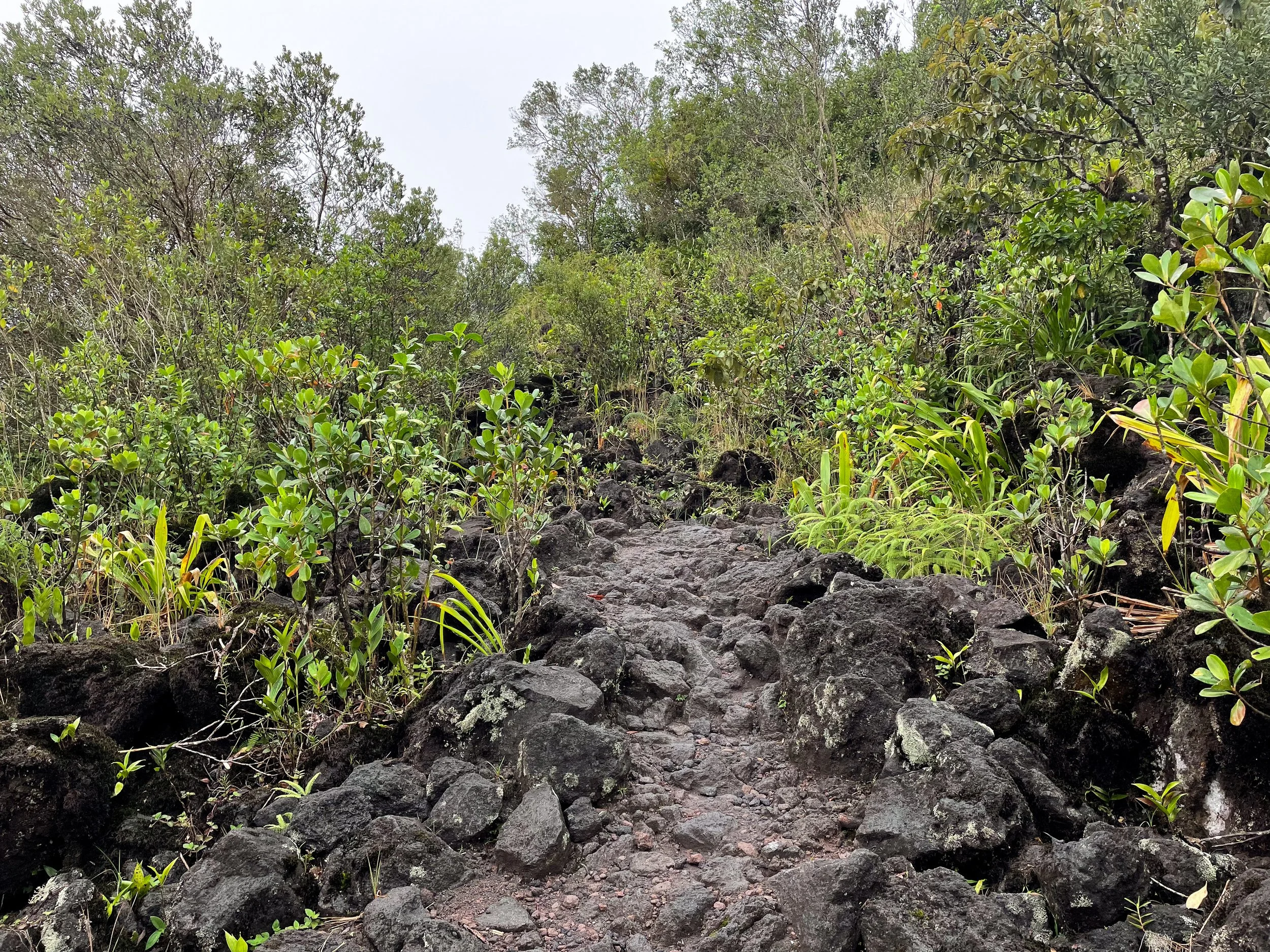
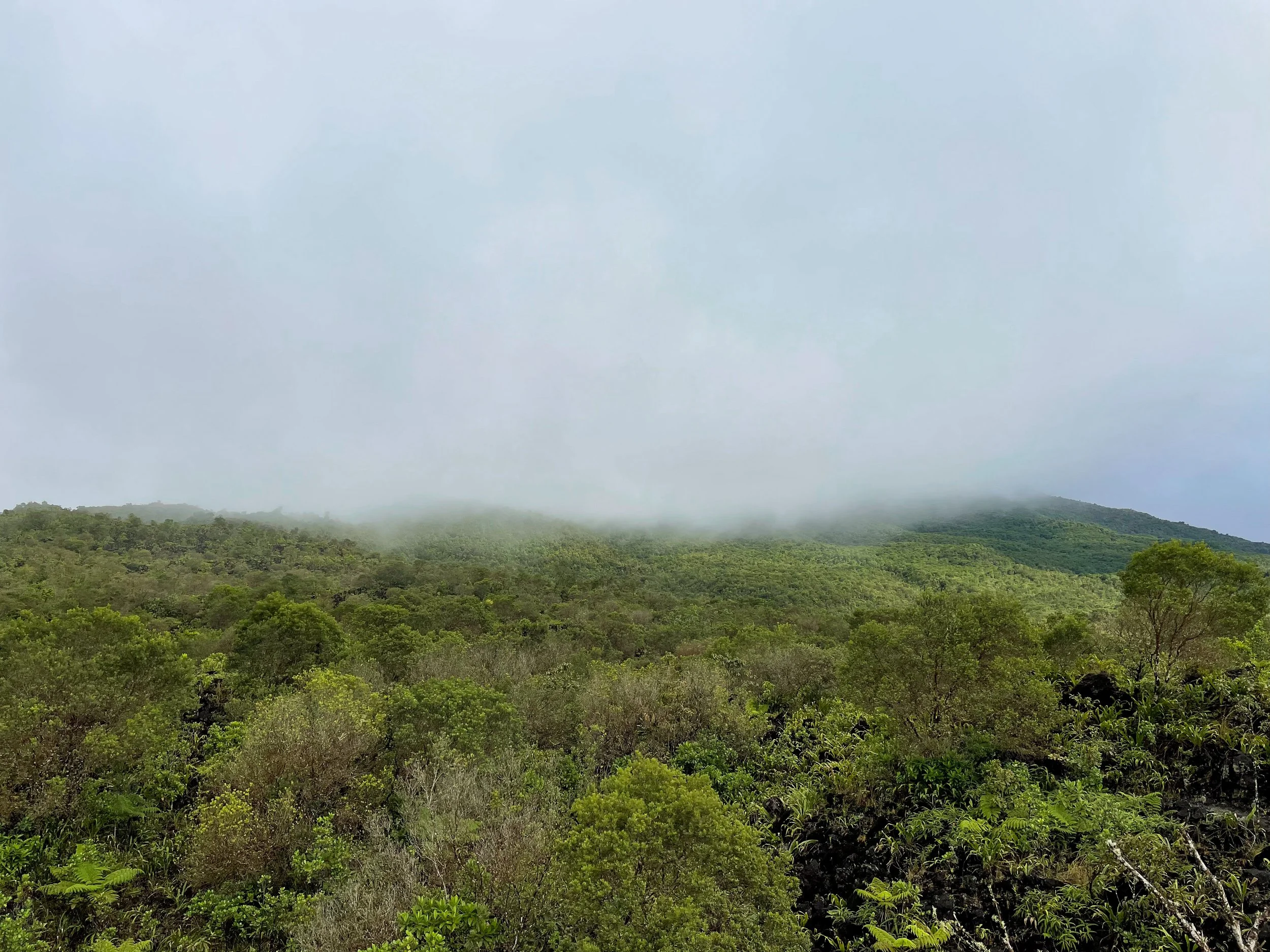
Parque Nacional Volcán Arenal
We hiked the Reserva Mirador el Silencio Loop at the Arenal 1968 Park, the site of a 1968 eruption. It connects multiple trails through lush secondary forest, hardened lava fields and dense primary forest around a lagoon. At the end of the hike is a small restaurant with snacks and beverages.
Arenal Hot Springs
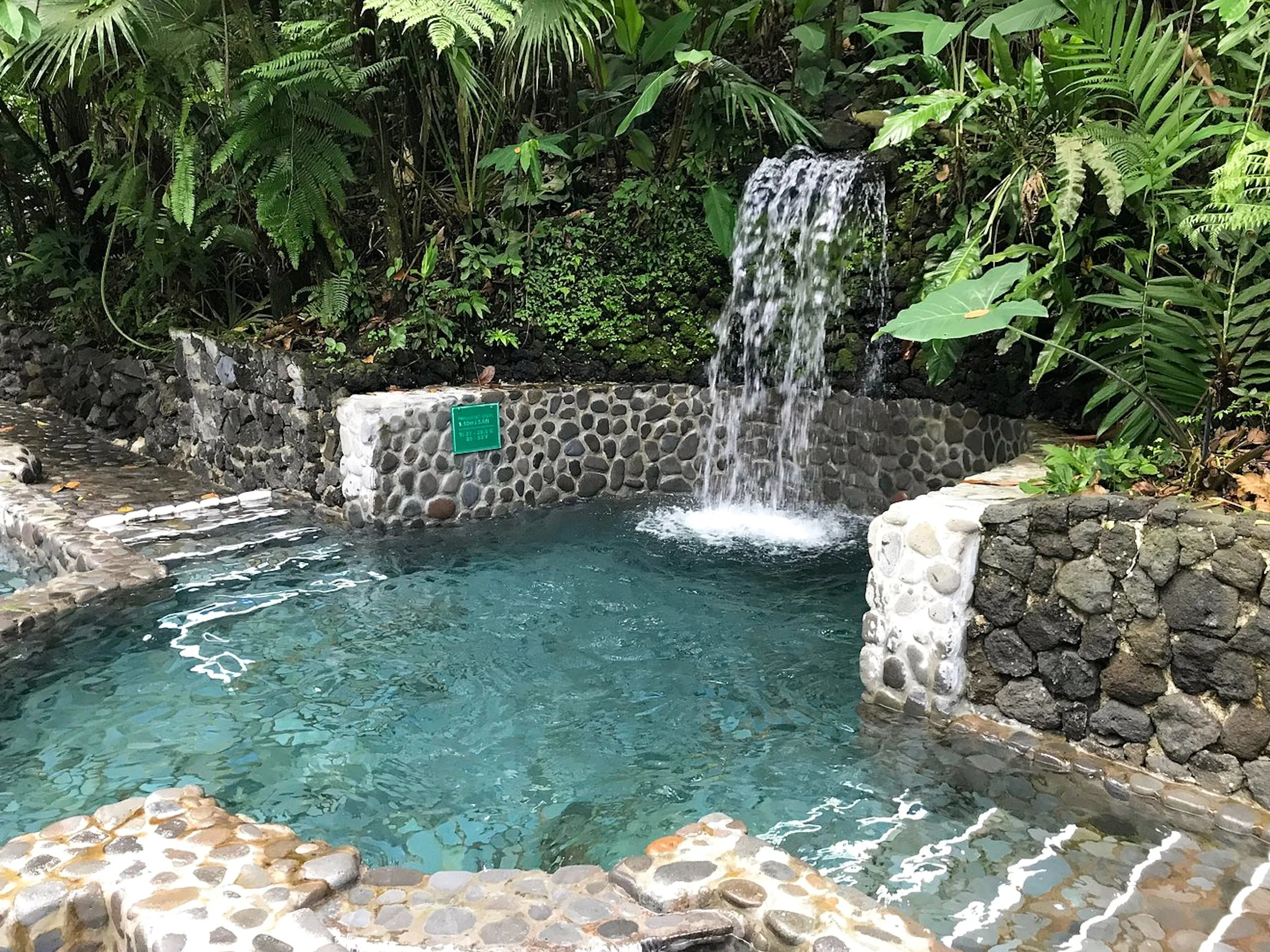
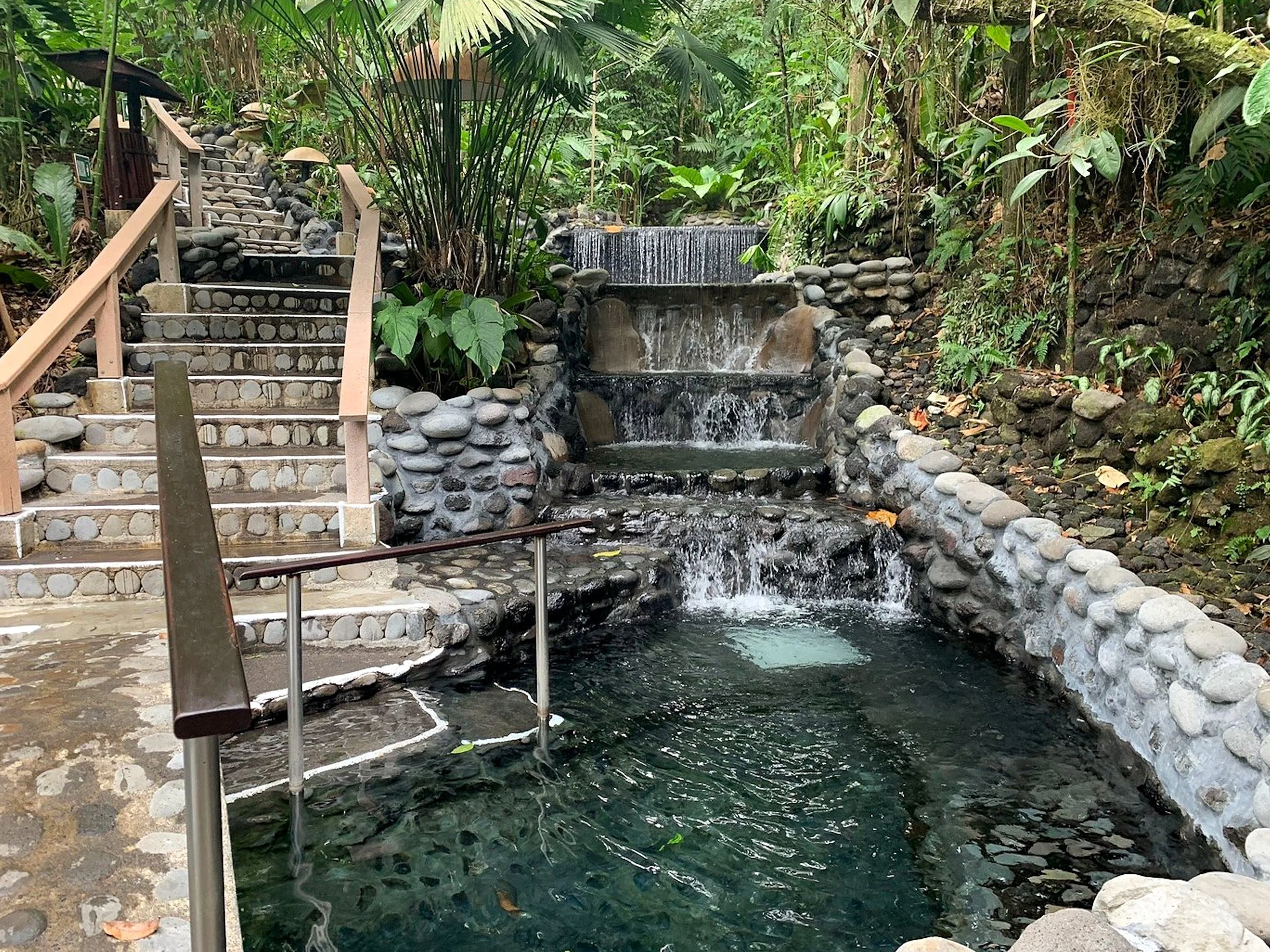
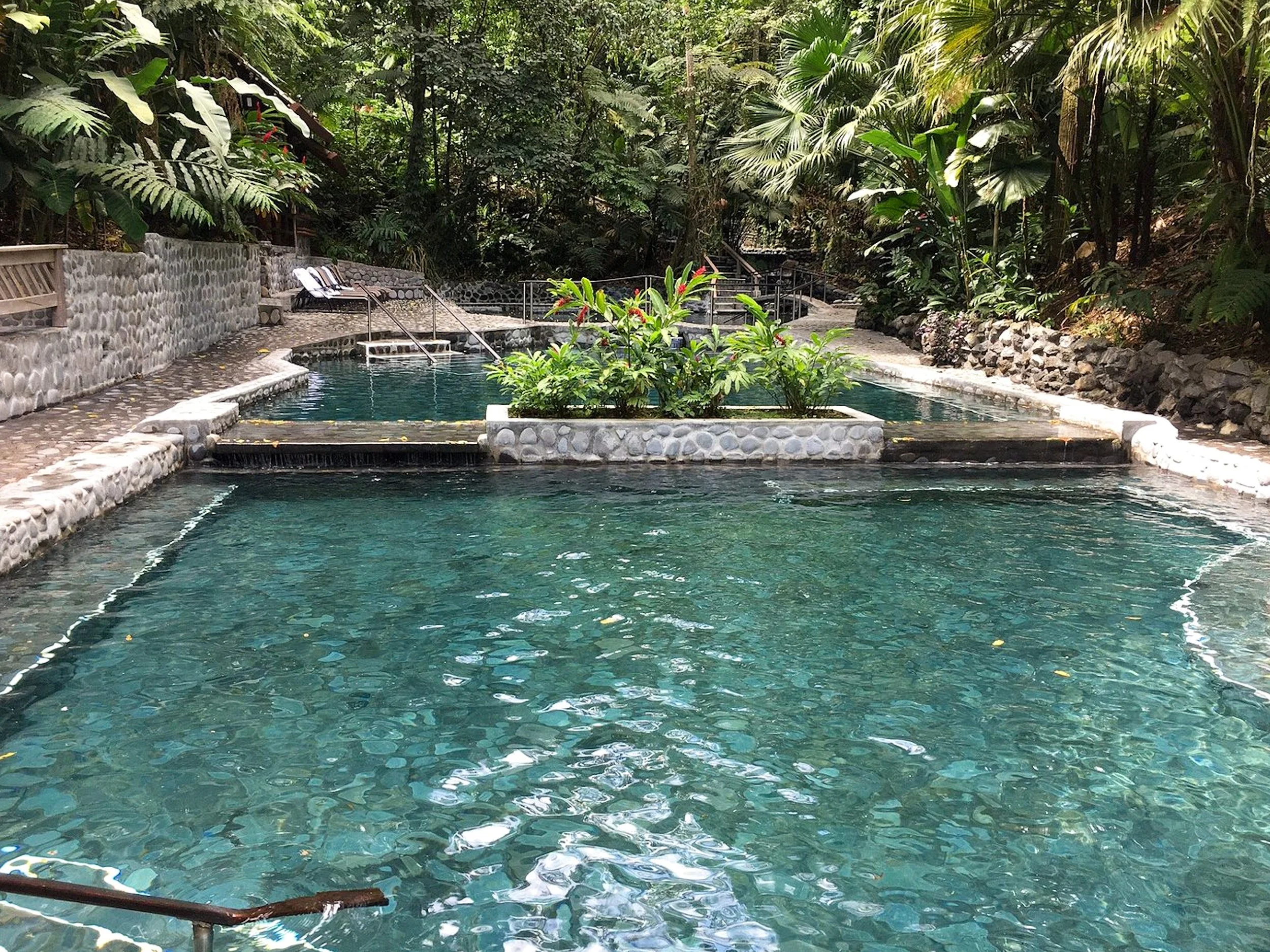
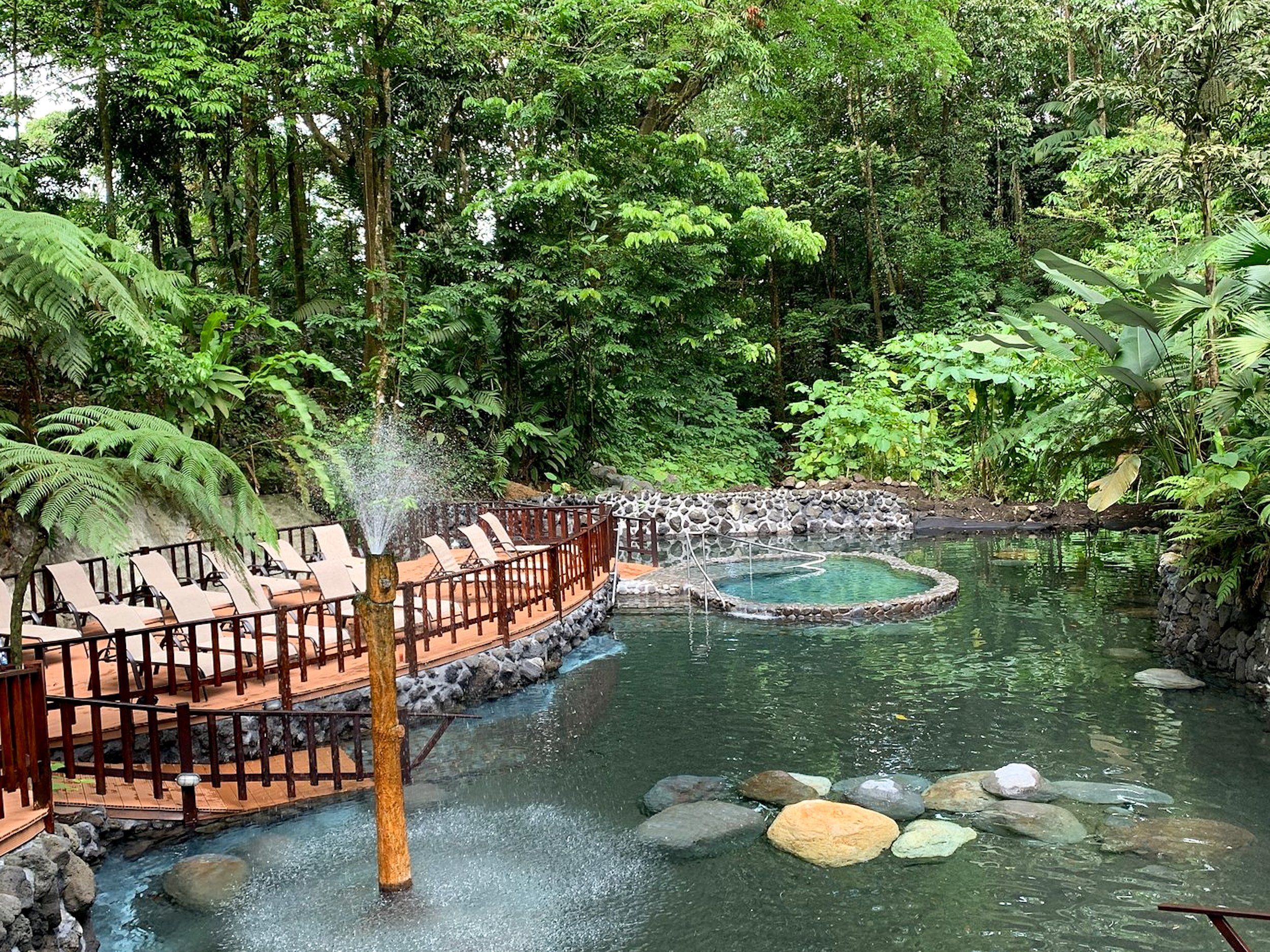
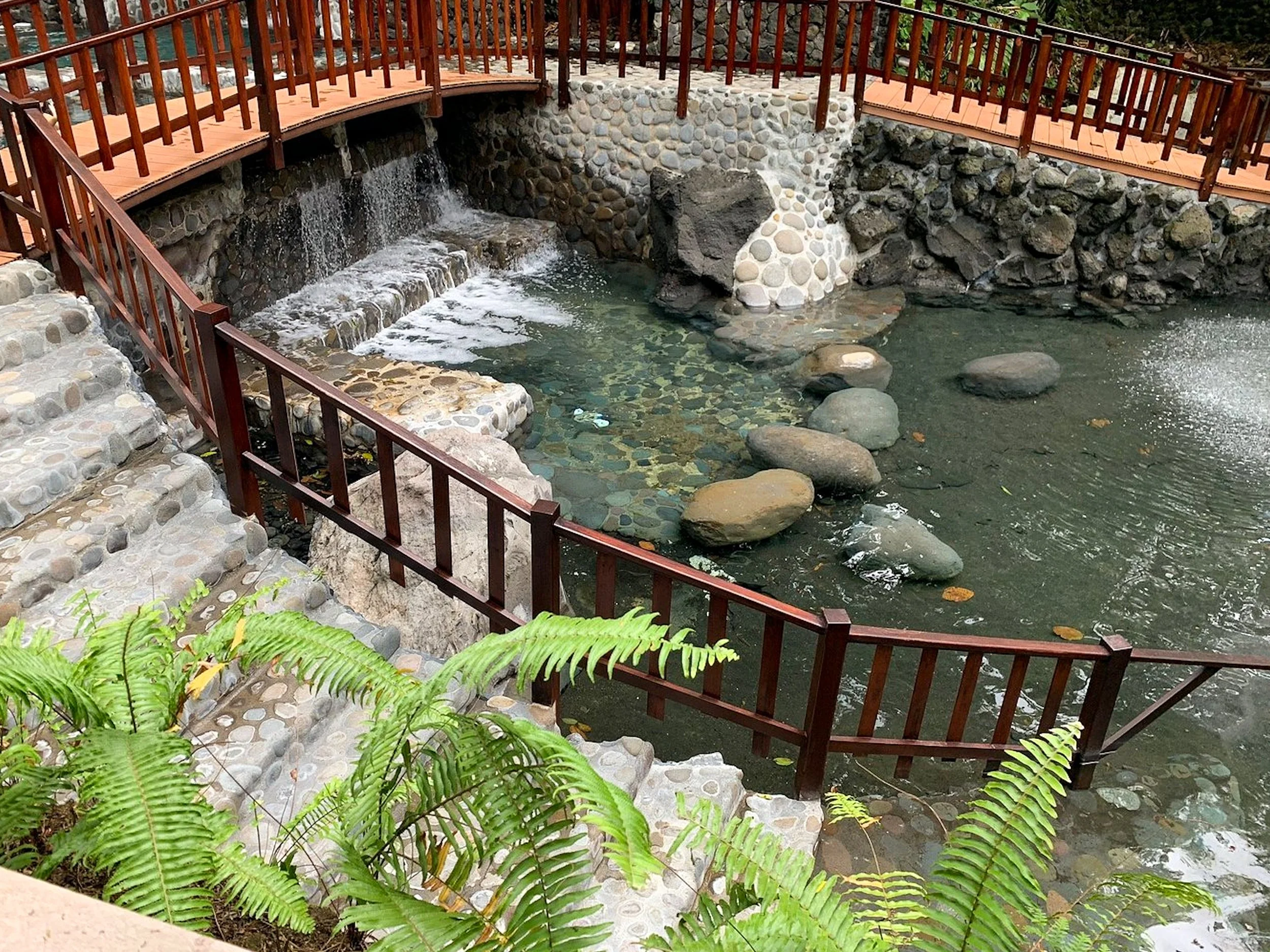
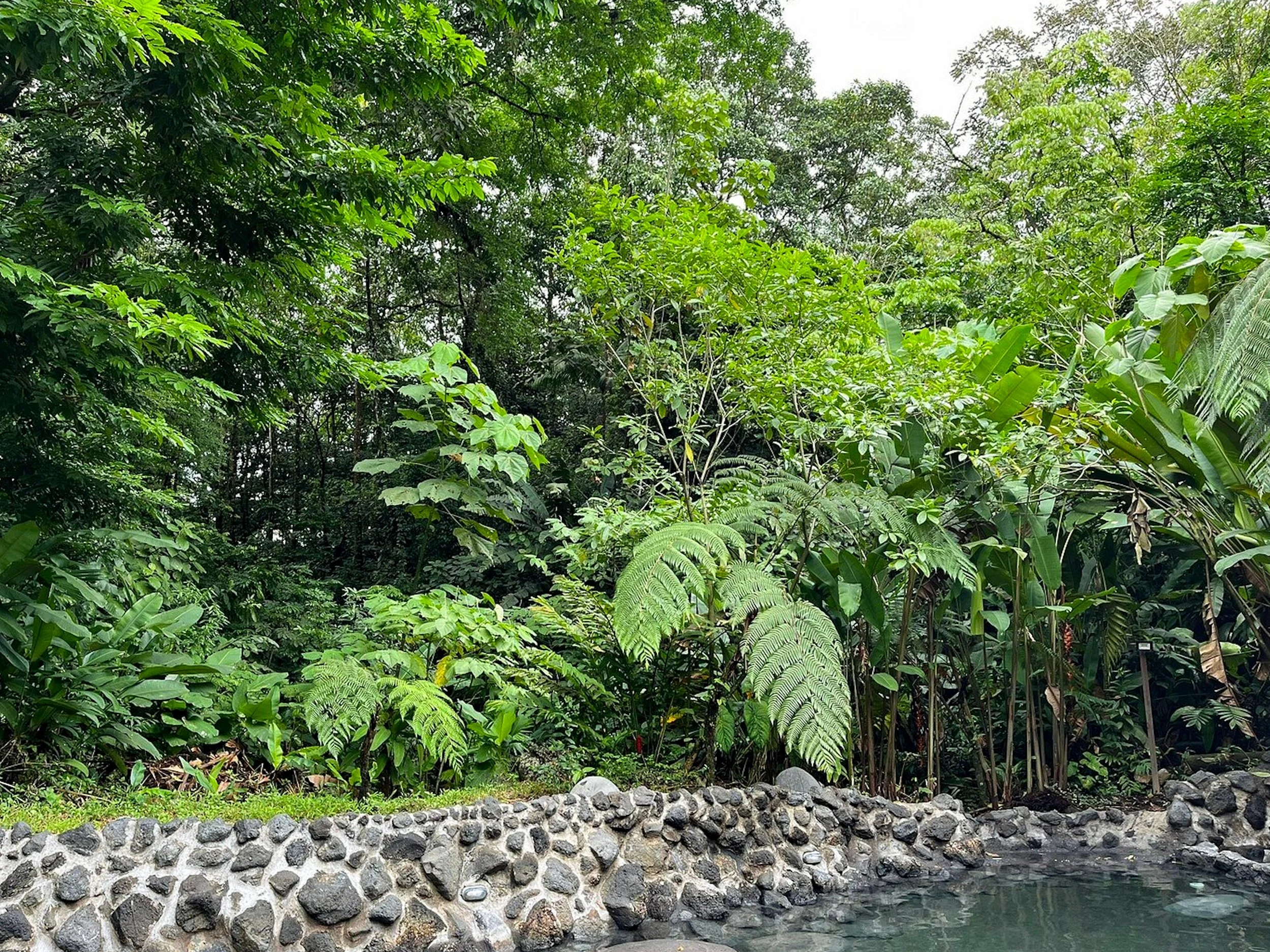
The area around the Arenal Volcano has several hot springs and resorts. We visited the Ecotermales Hot Springs for a relaxing evening after our hike. The hot springs consist of several cascading thermal pools ranging in temperature from hottest at the top to coolest at the bottom. The upper pool has a steamy waterfall that feeds into lower pools. A second waterfall flows into the bottom pool with seats below it. The resort offers Costa Rican cuisine like rice and beans, yucca, fish in a coconut sauce and sweet plantains. Photo credit to Trip Advisor.
Mistico Arenal Hanging Bridges Park
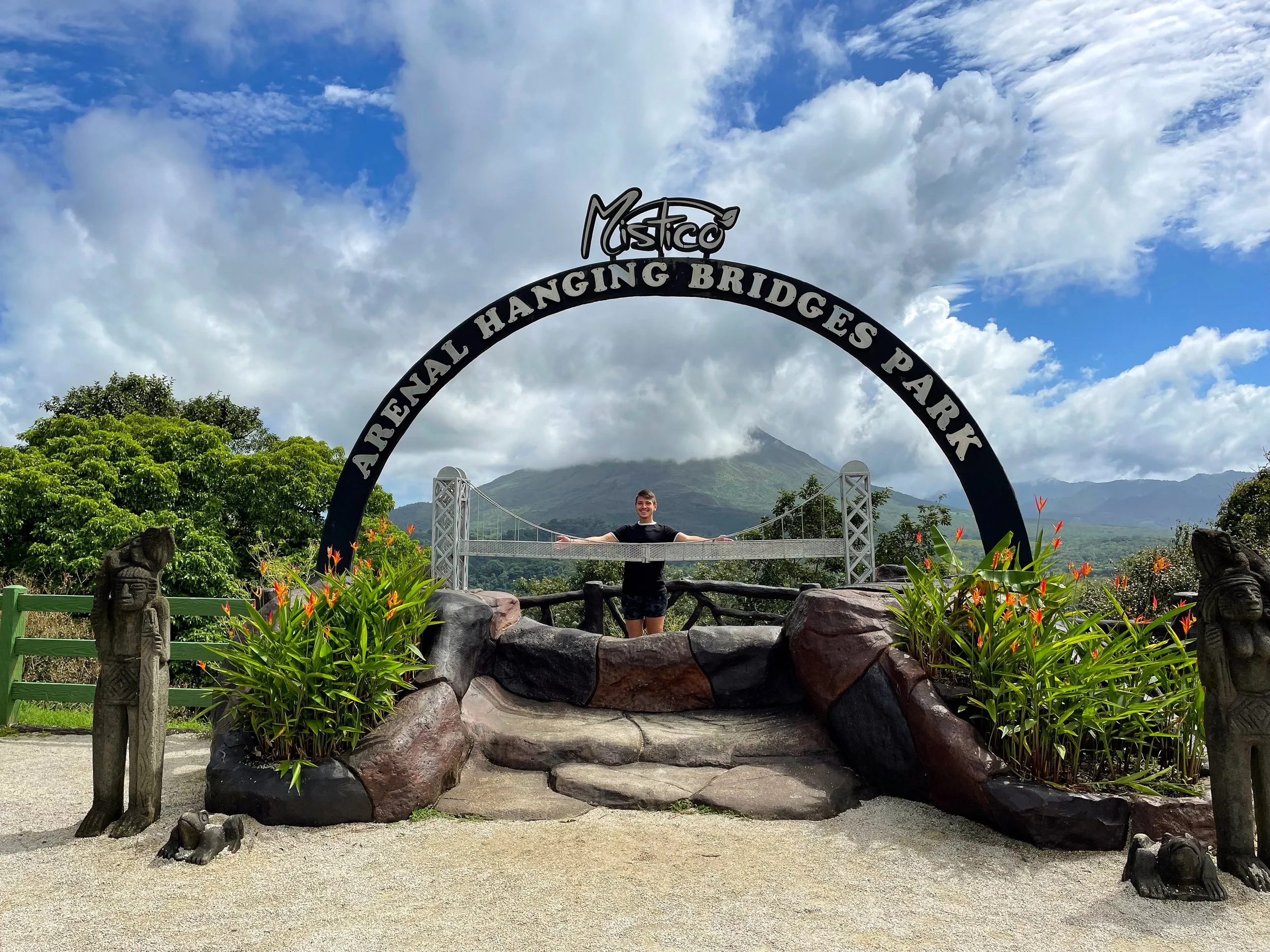
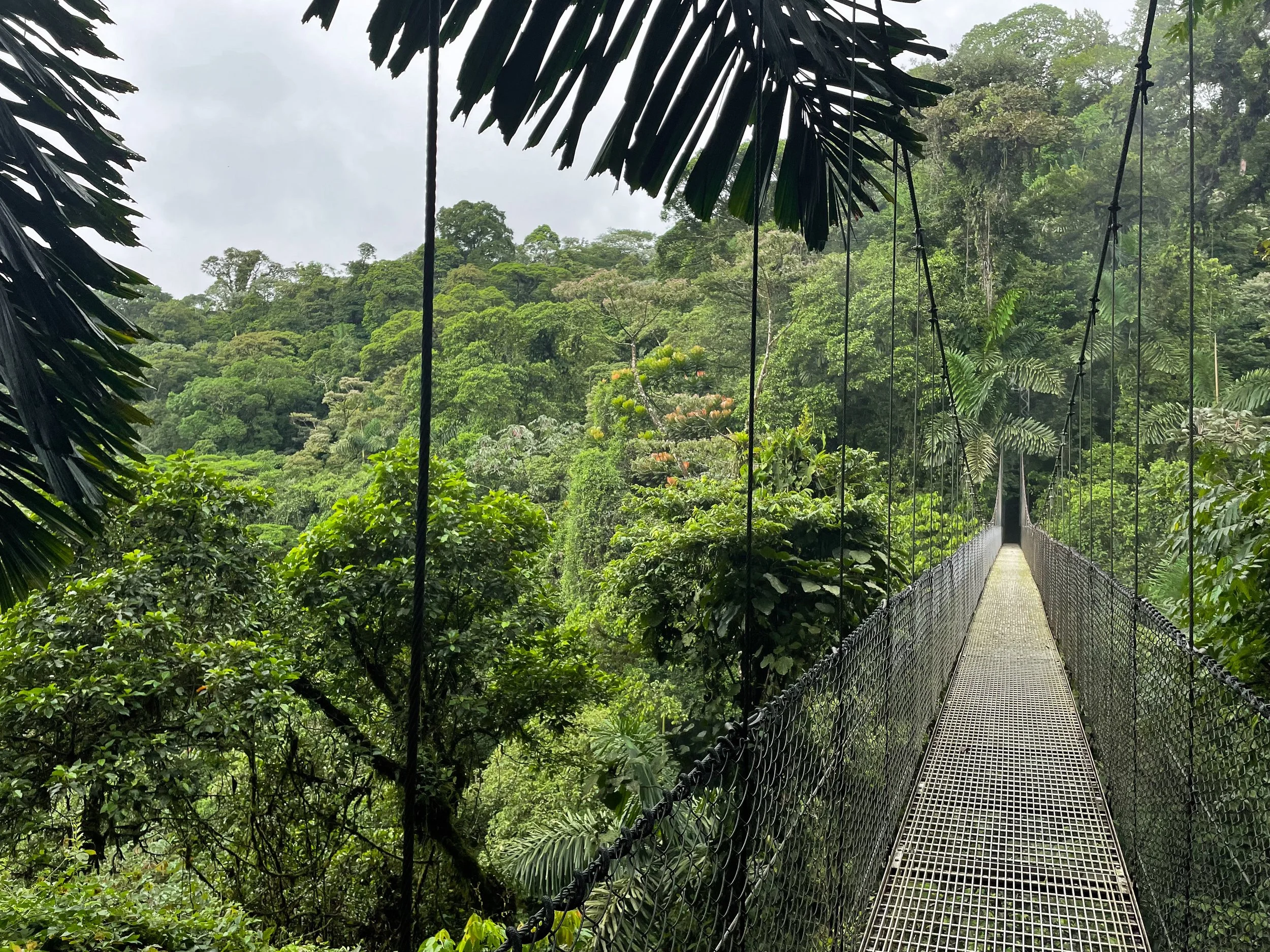
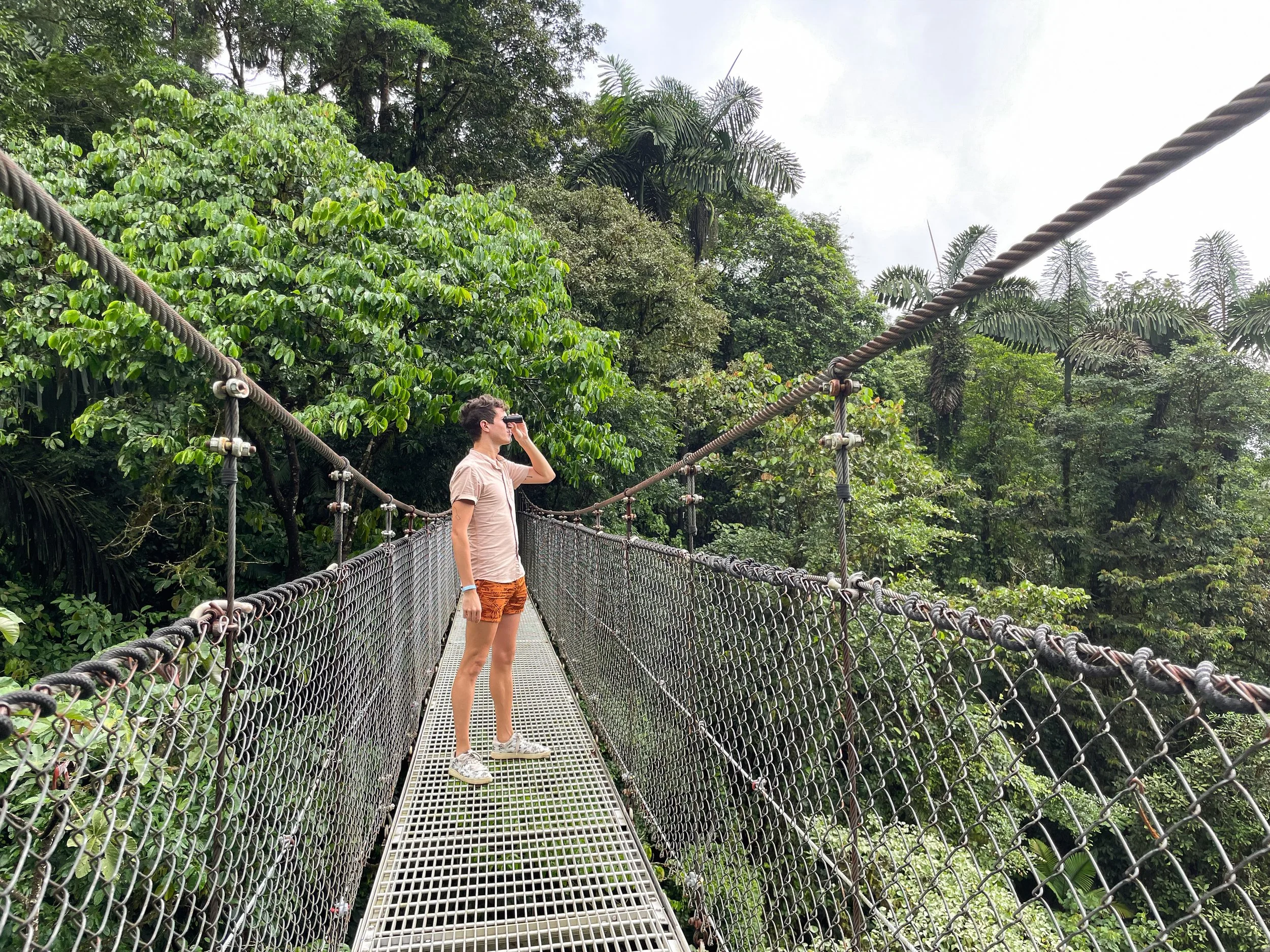
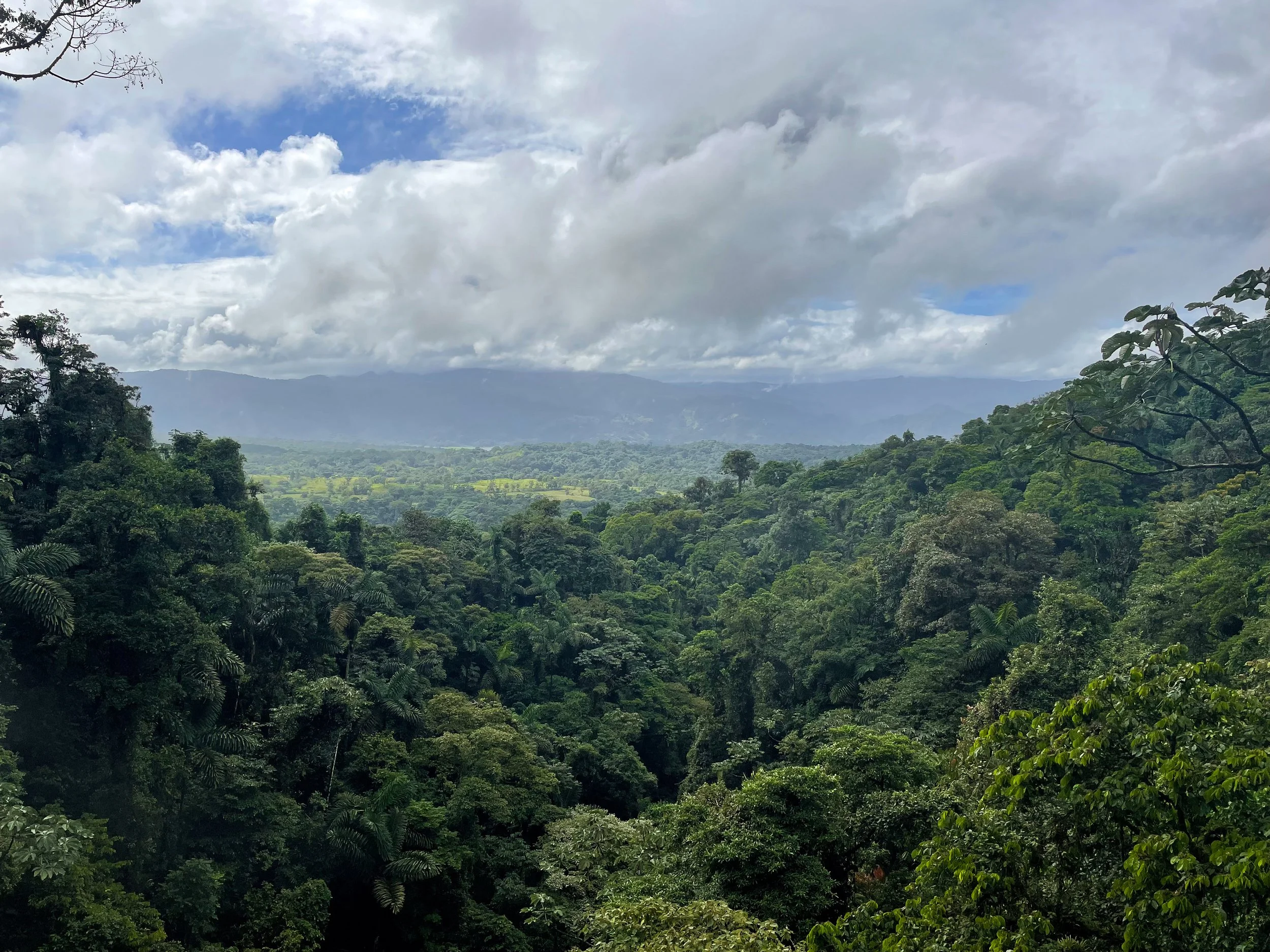
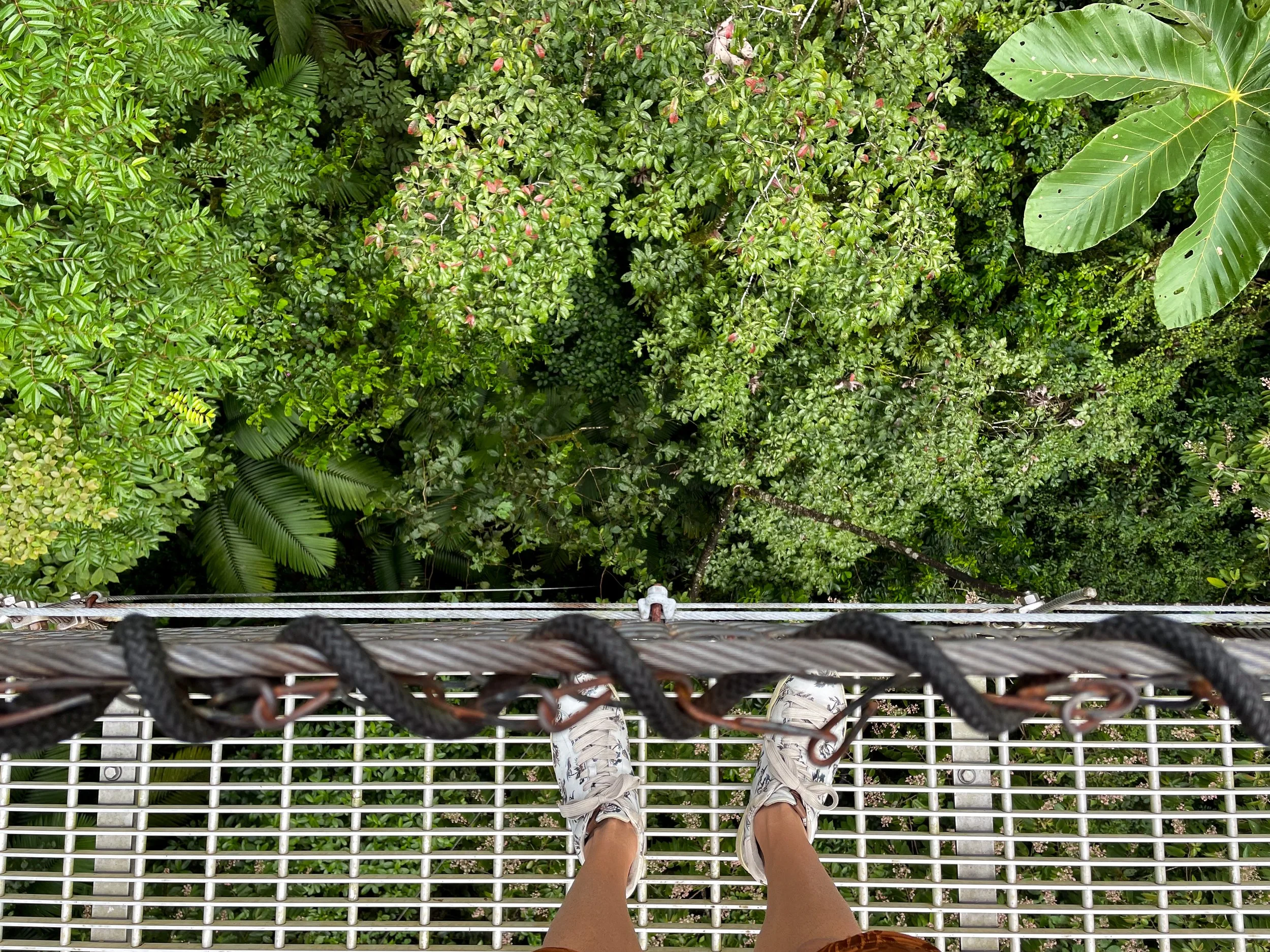
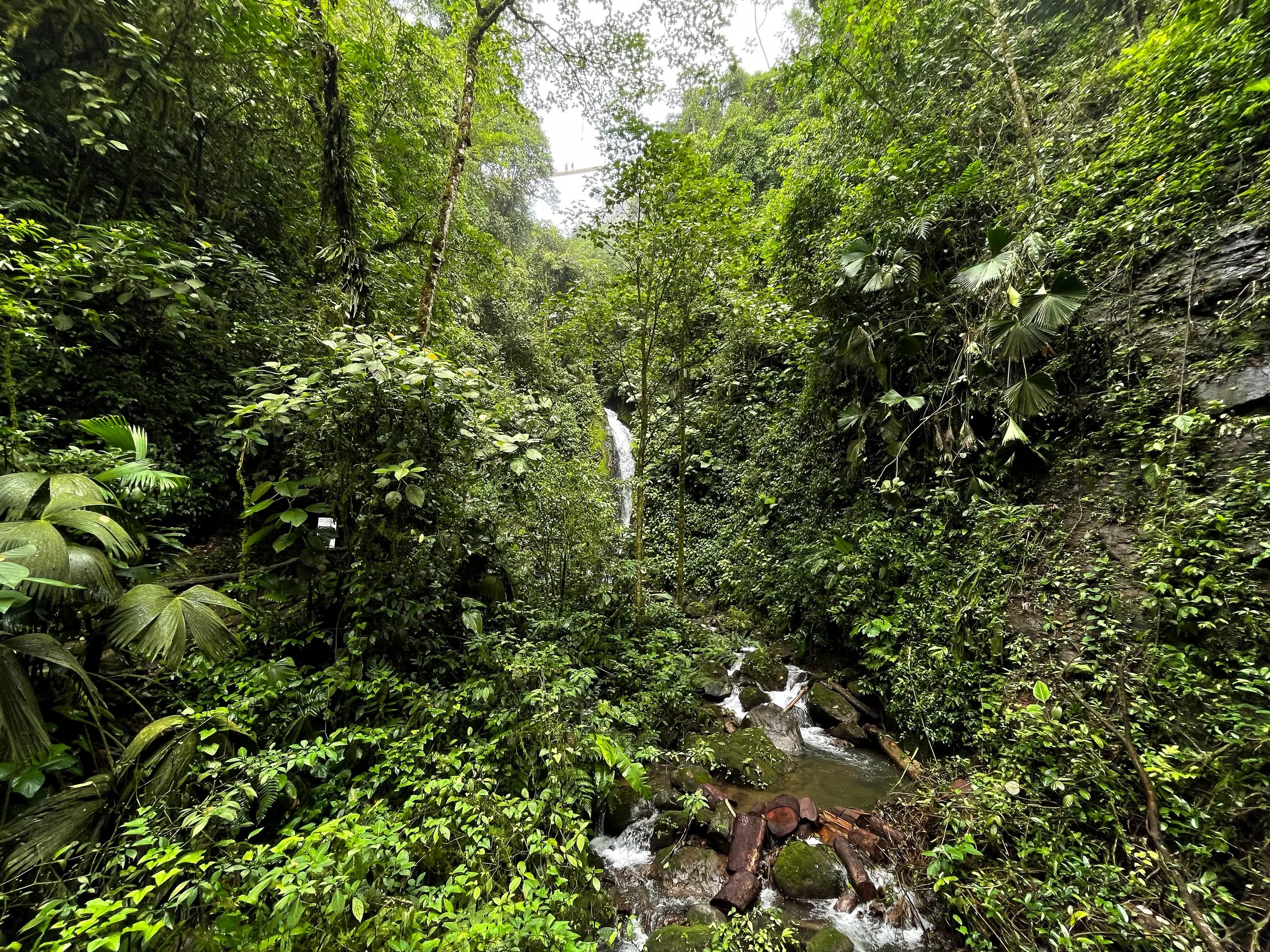
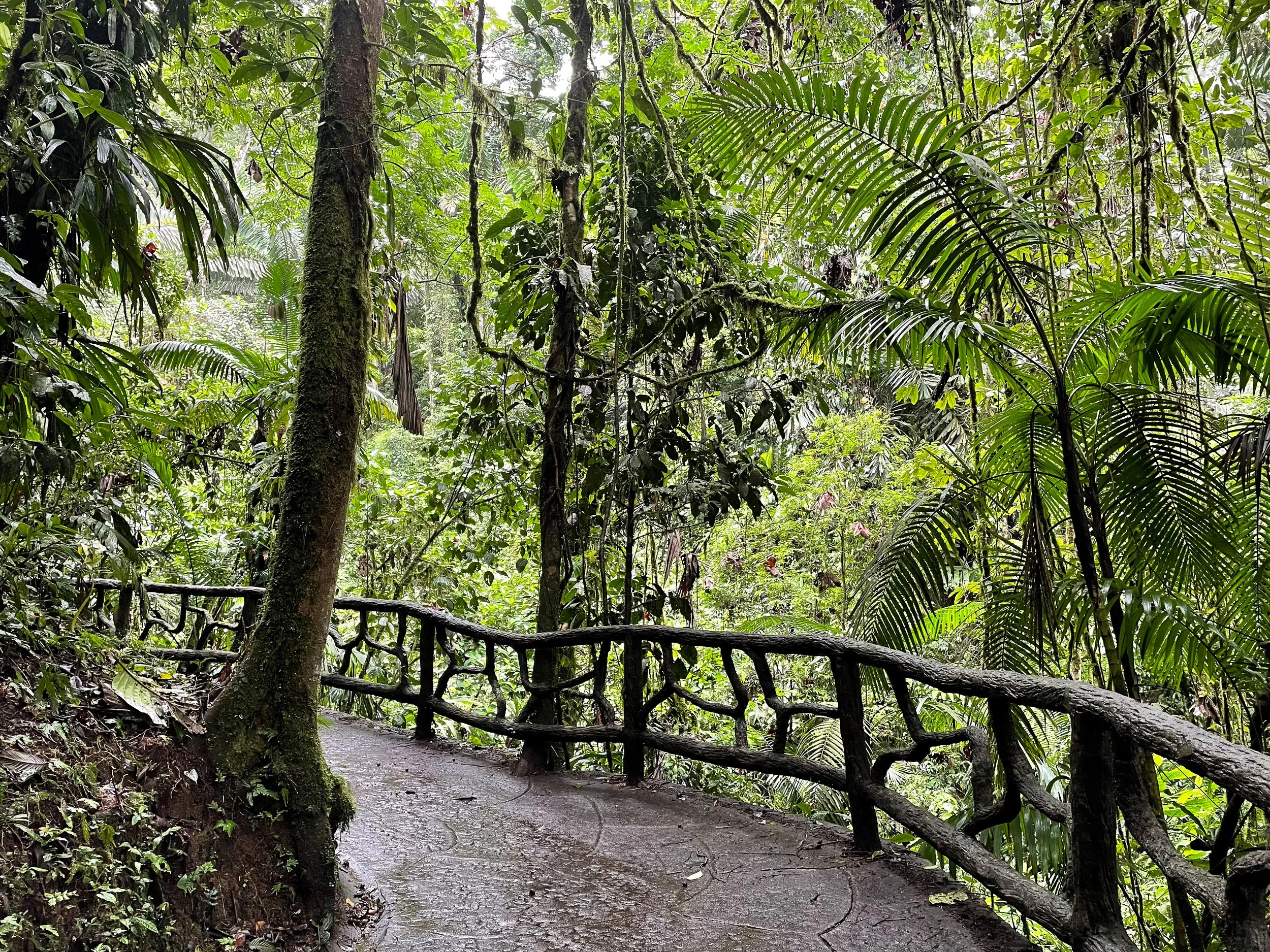
The Mistico Arenal Hanging Bridges Park is an eco park with 16 suspension bridges and nature trails weaving through the rain forest. The largest bridges are suspended over ravines and cut through the tree top canopy. The smallest bridges cross narrow streams and crevices. Massive trees, some hundreds of feet tall, line the trails alongside vibrant flowers and a small waterfall. The nature walk takes up to 3 hours at a leisurely pace while watching for wildlife and animals. The eco park has a restaurant overlooking the Arenal Volcano and verdant landscape.
Pro Tips. Arrive at 8am before the large tour groups to experience the trails and bridges mostly on your own. We bought tickets online and ahead of time to secure the earlier time slot. Book here.
Venado Caves
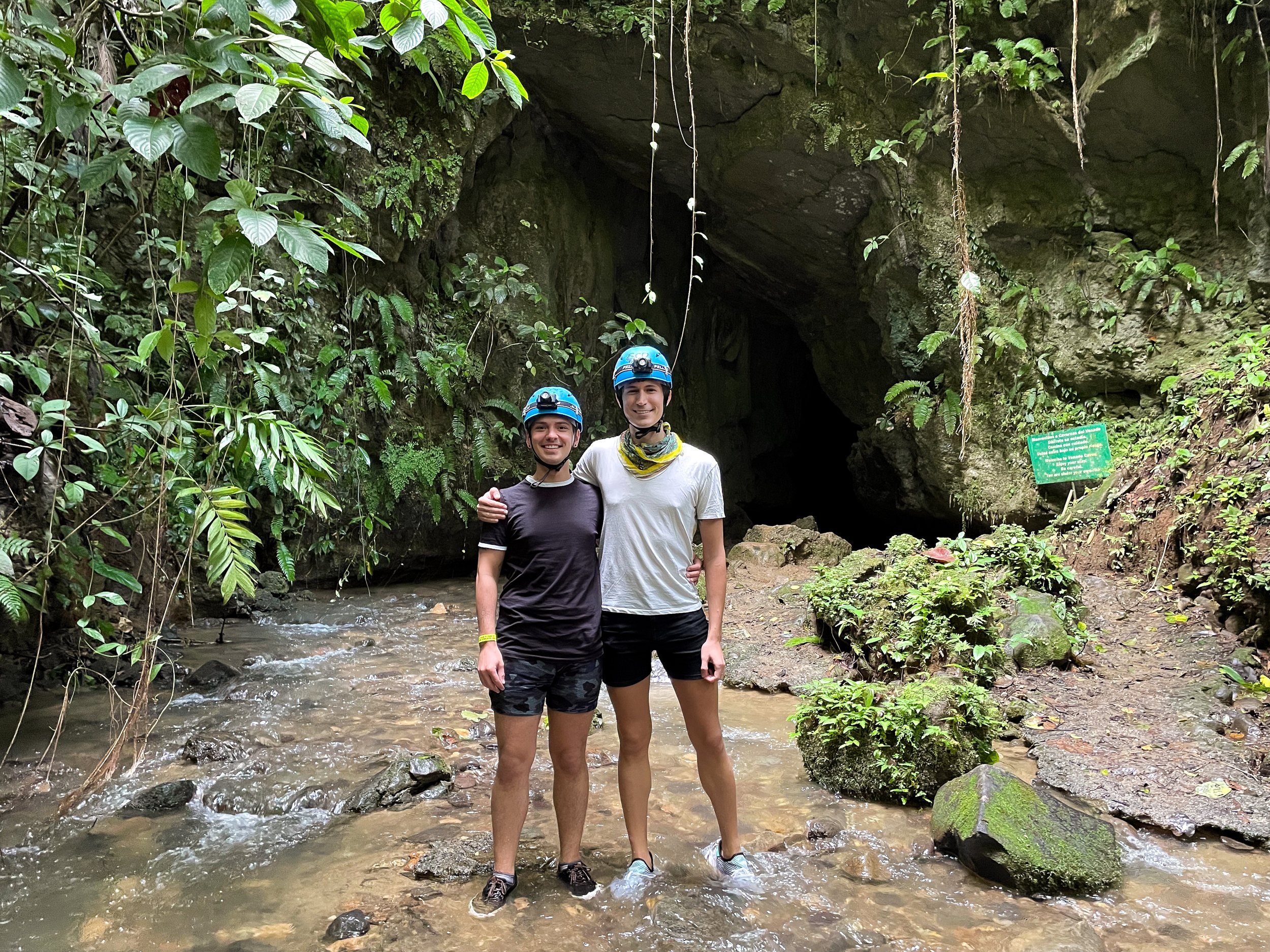
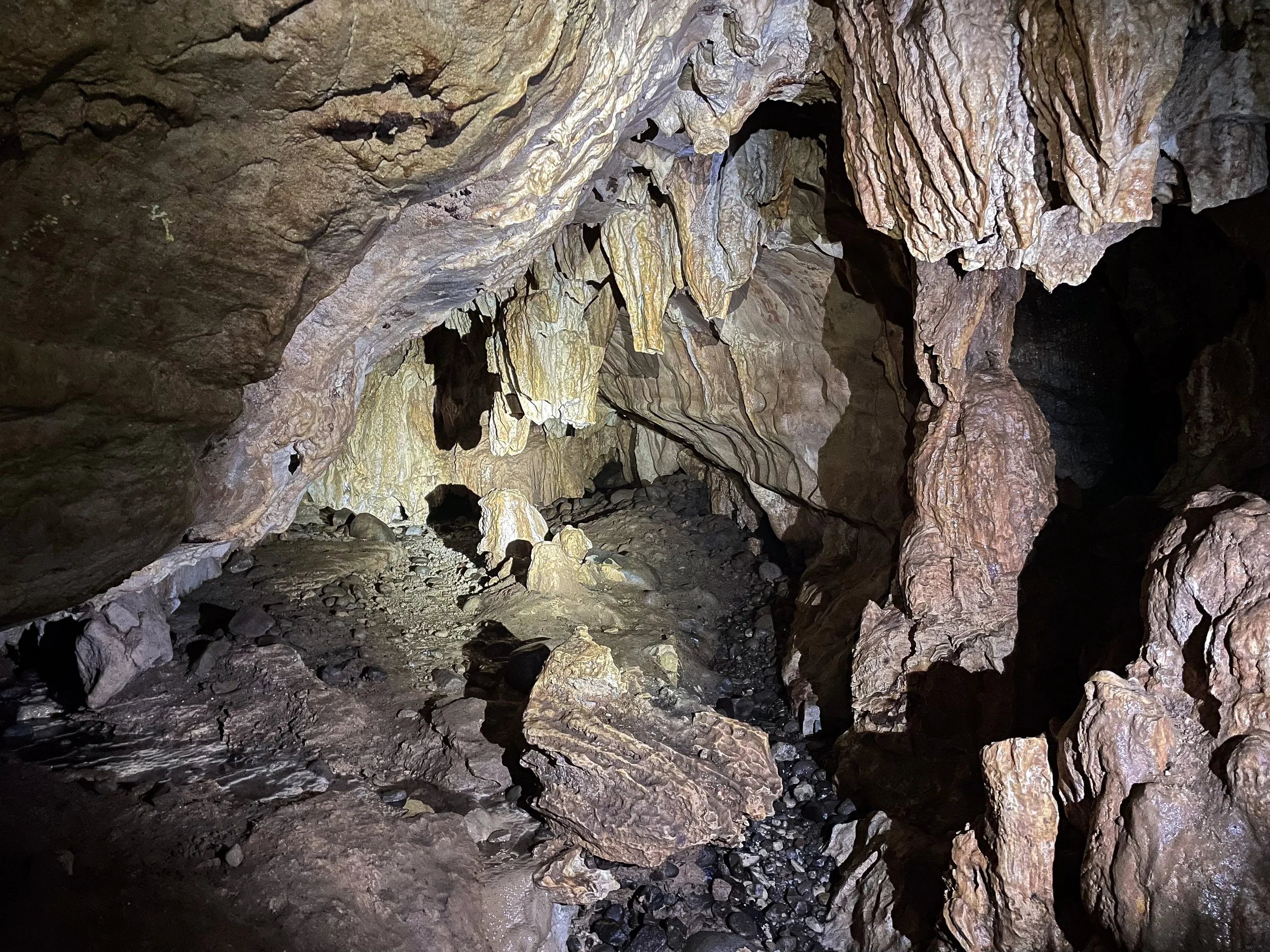
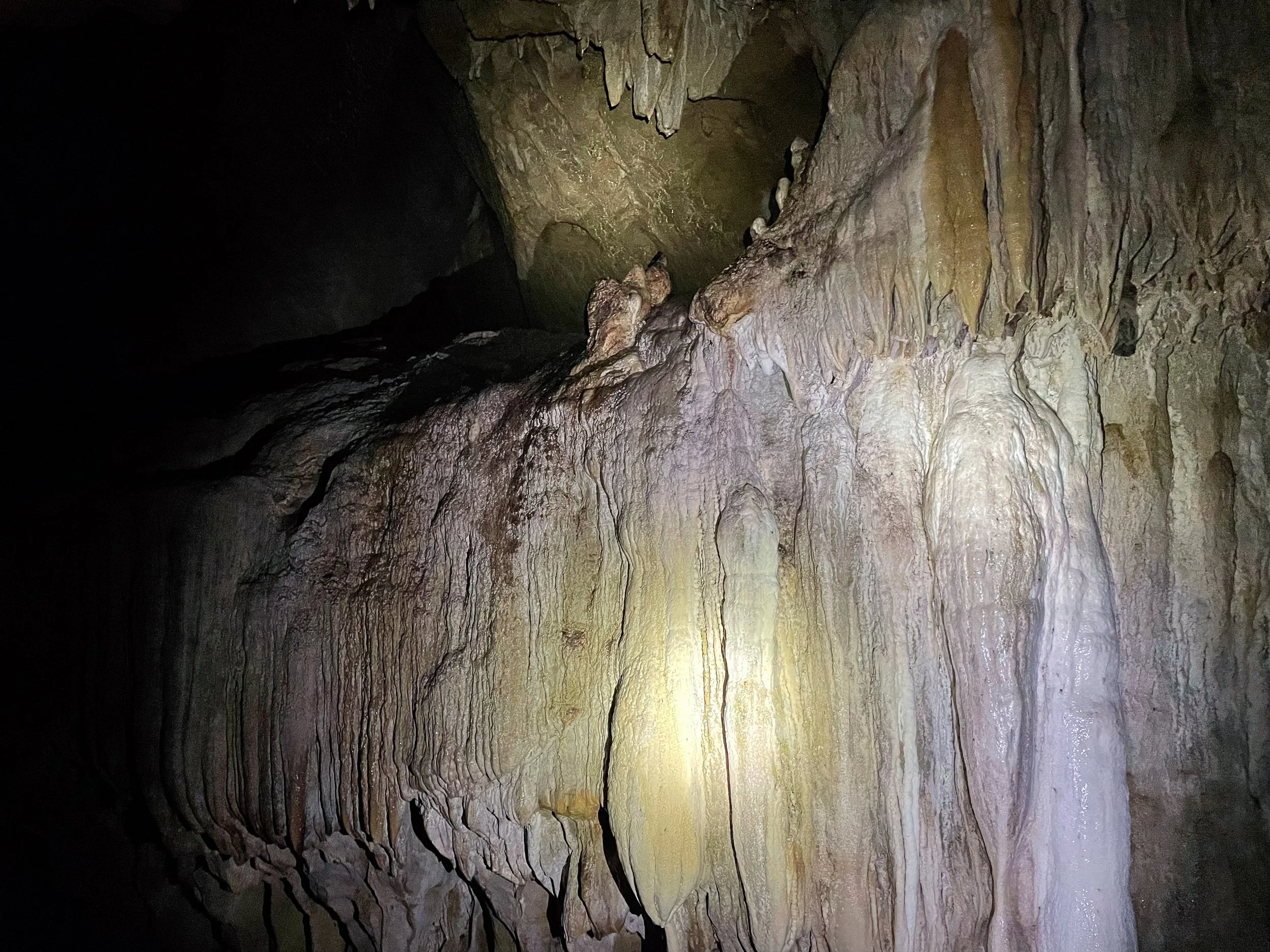
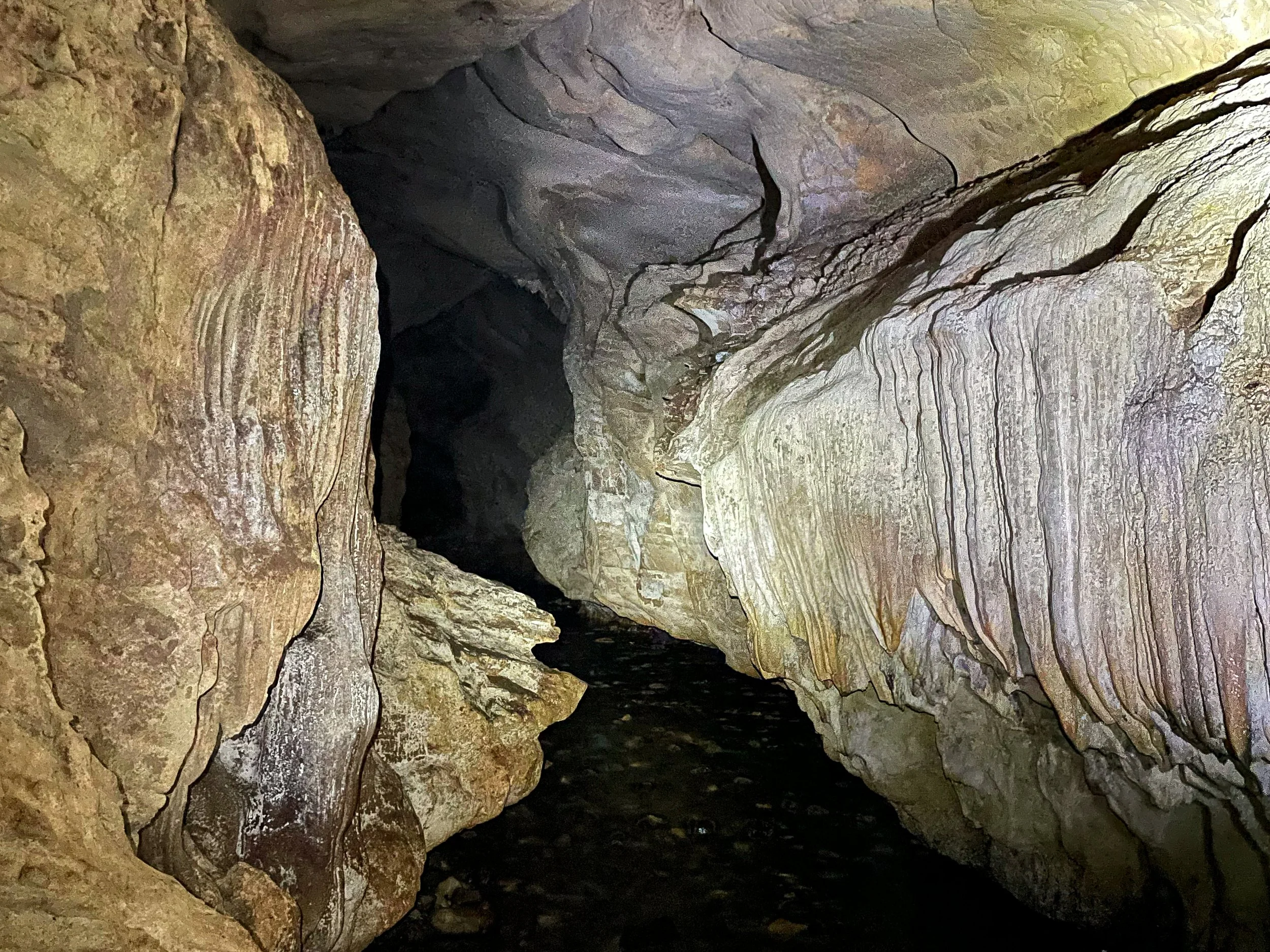
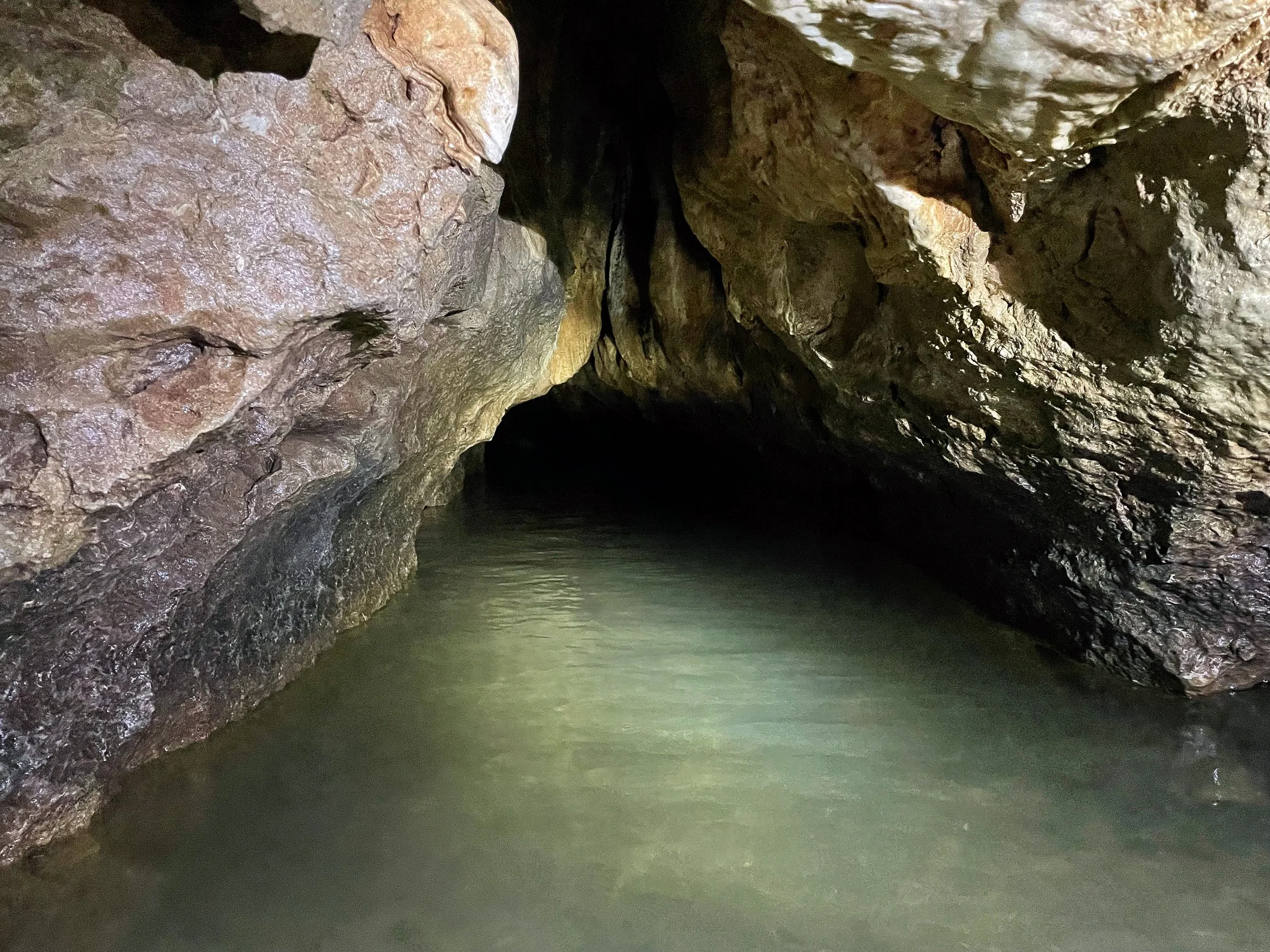
The Venado Cave system is an underground network of dark chambers, flooded passageways and crystalline rock formations. Fitted with headlamps and helmets, a guide led us into its depths of its main chamber and sub chambers. Book with Ecoterra Costa Rica on Viator.
The Main Chamber. A river leads upstream into the mouth of the cave and its main chamber. The underground river continues deeper into the cave and its numerous sub chambers.
The Raining Room. A narrow passageway led through an 18 inch wide crevice to the “Raining Room.” Water dripped from the ceiling and down the chamber walls as if raining underground. We shimmied and climbed 10ft vertically back into the main chamber.
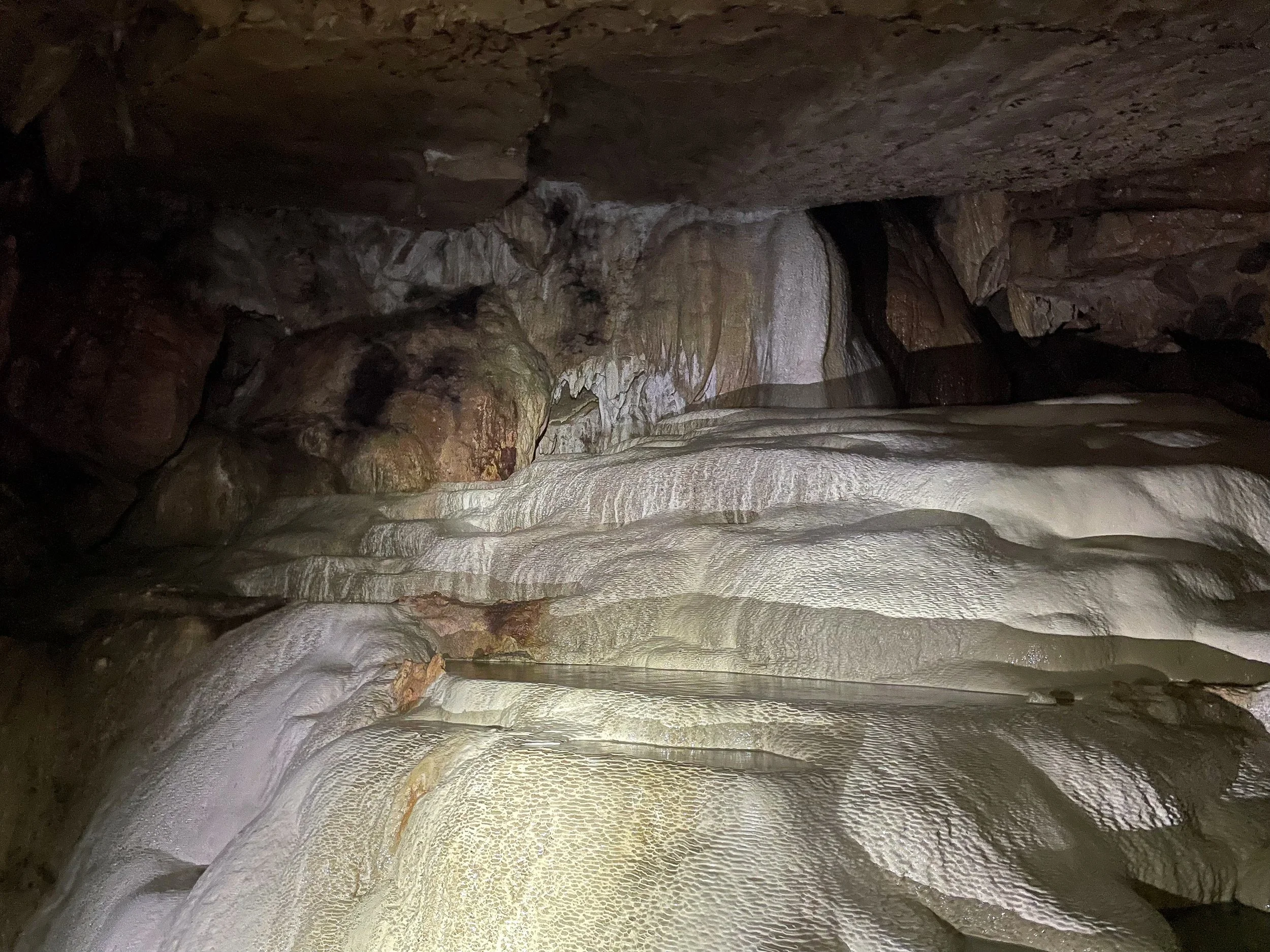
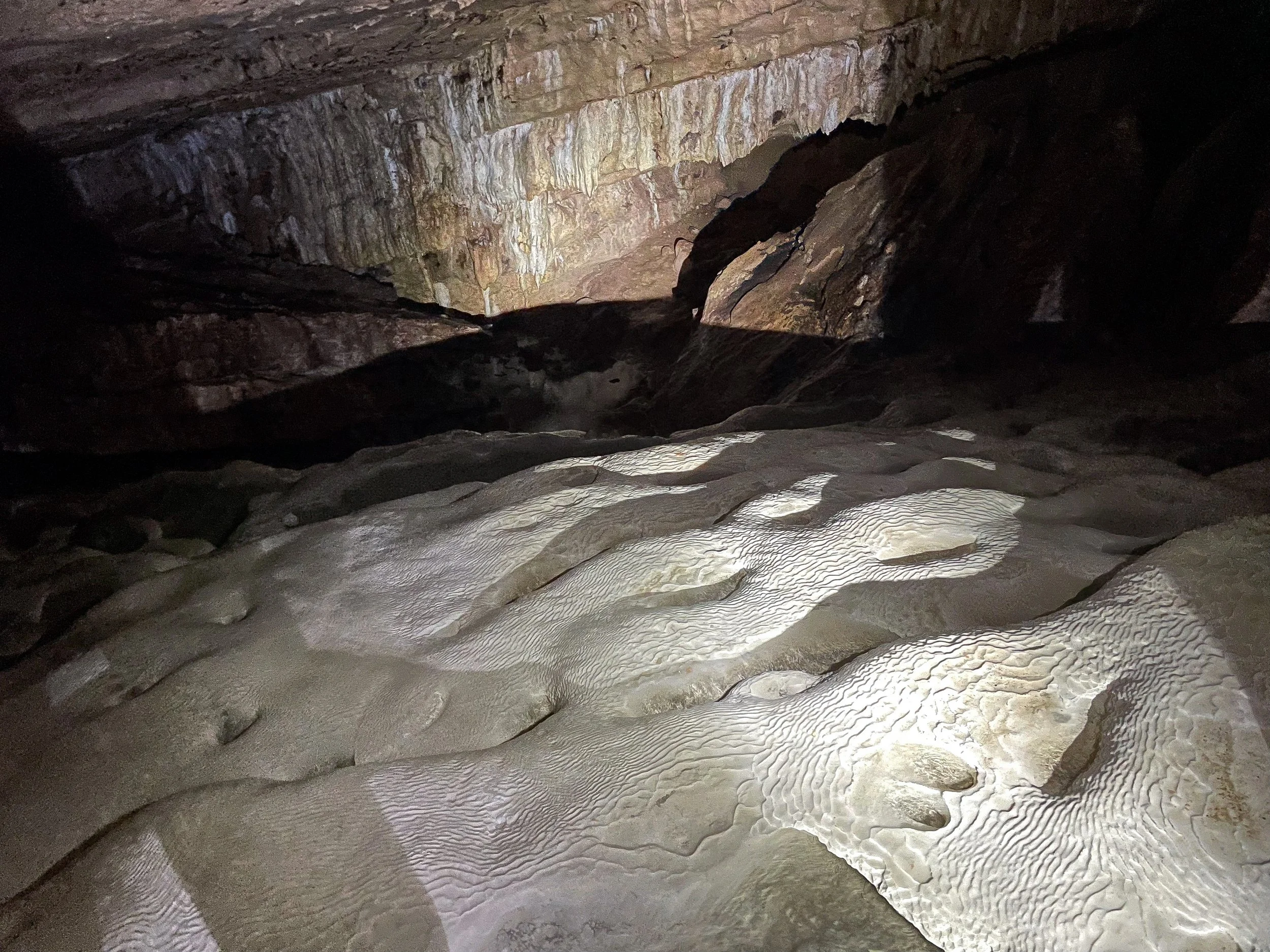
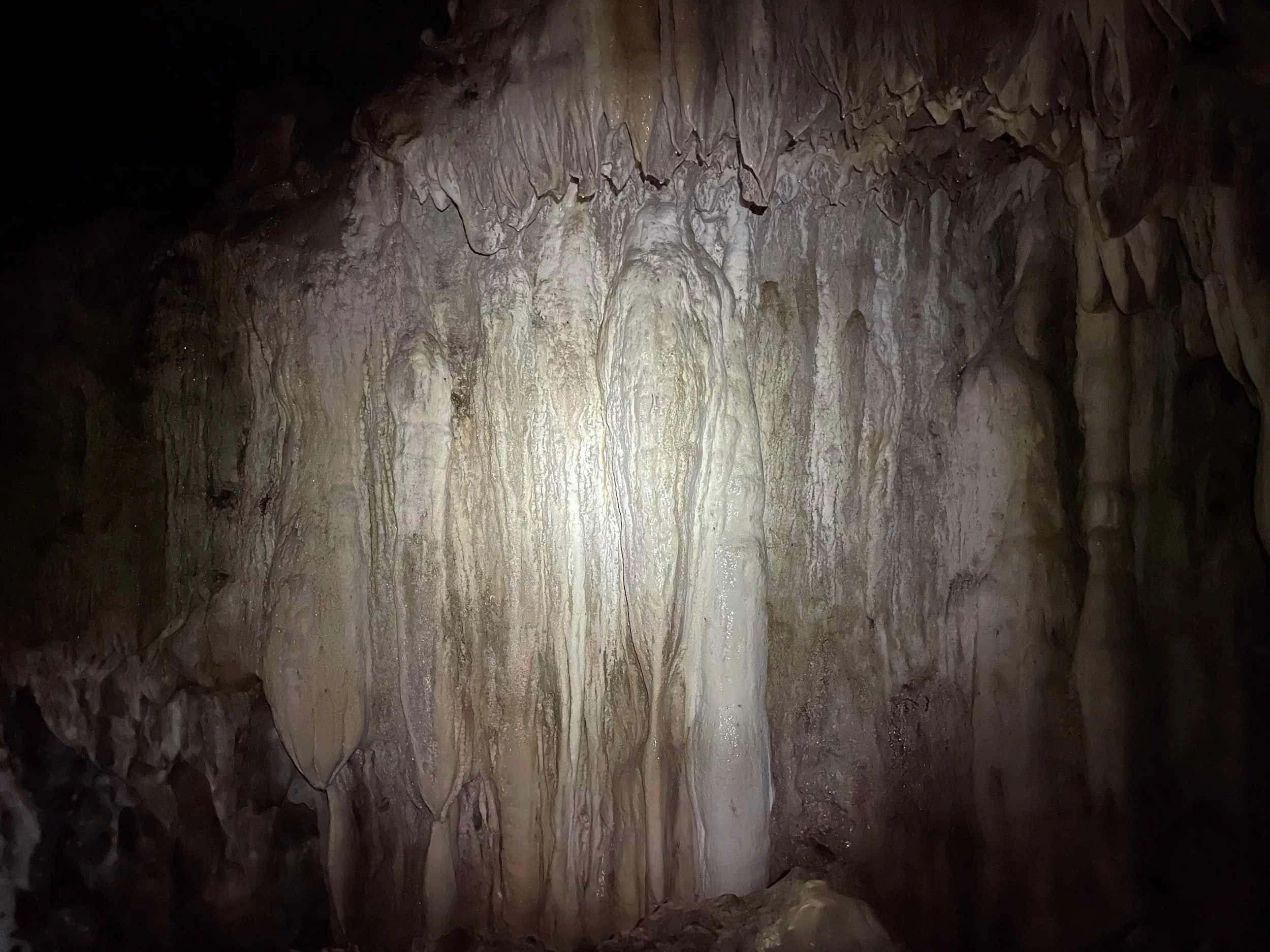
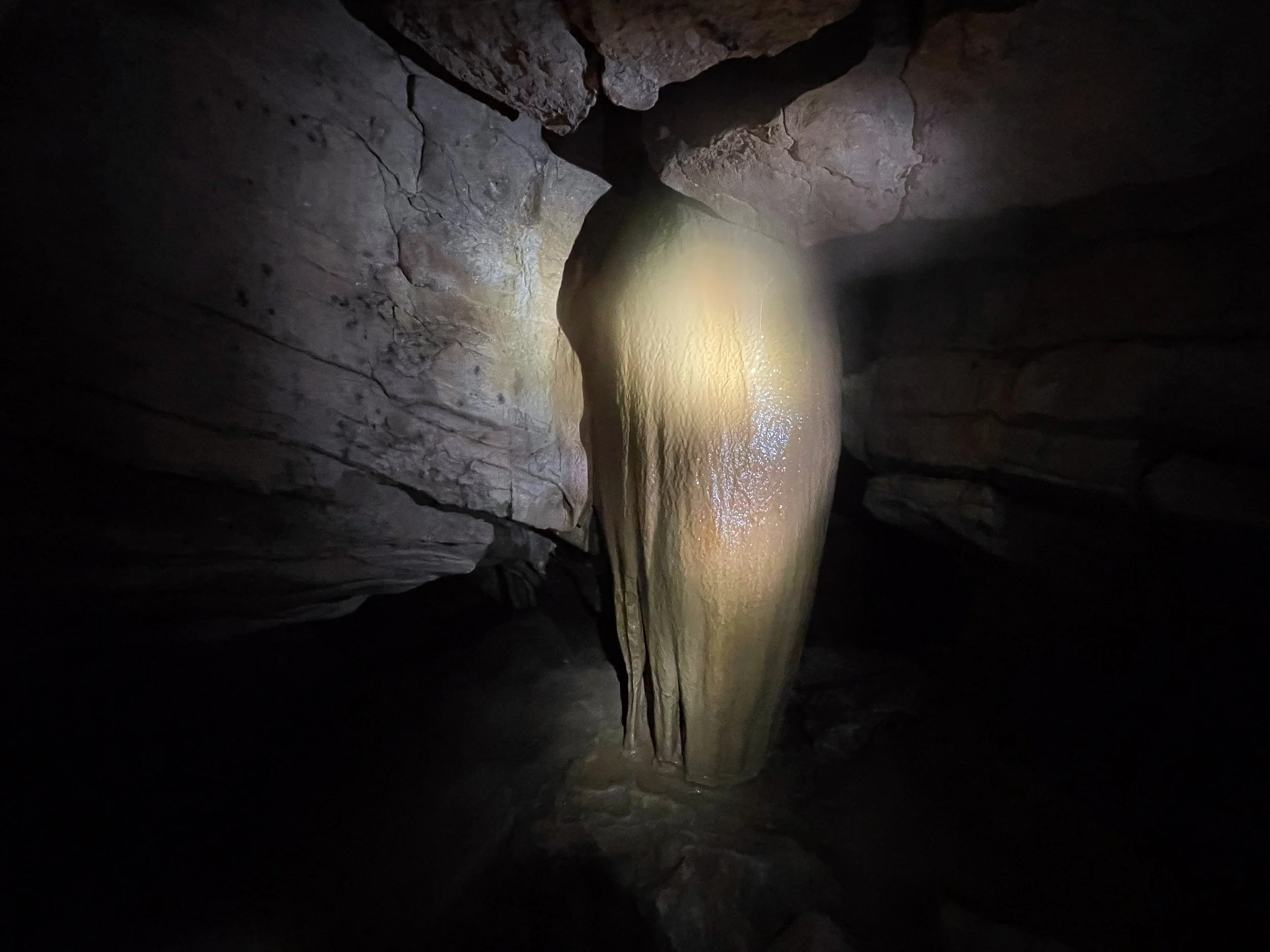
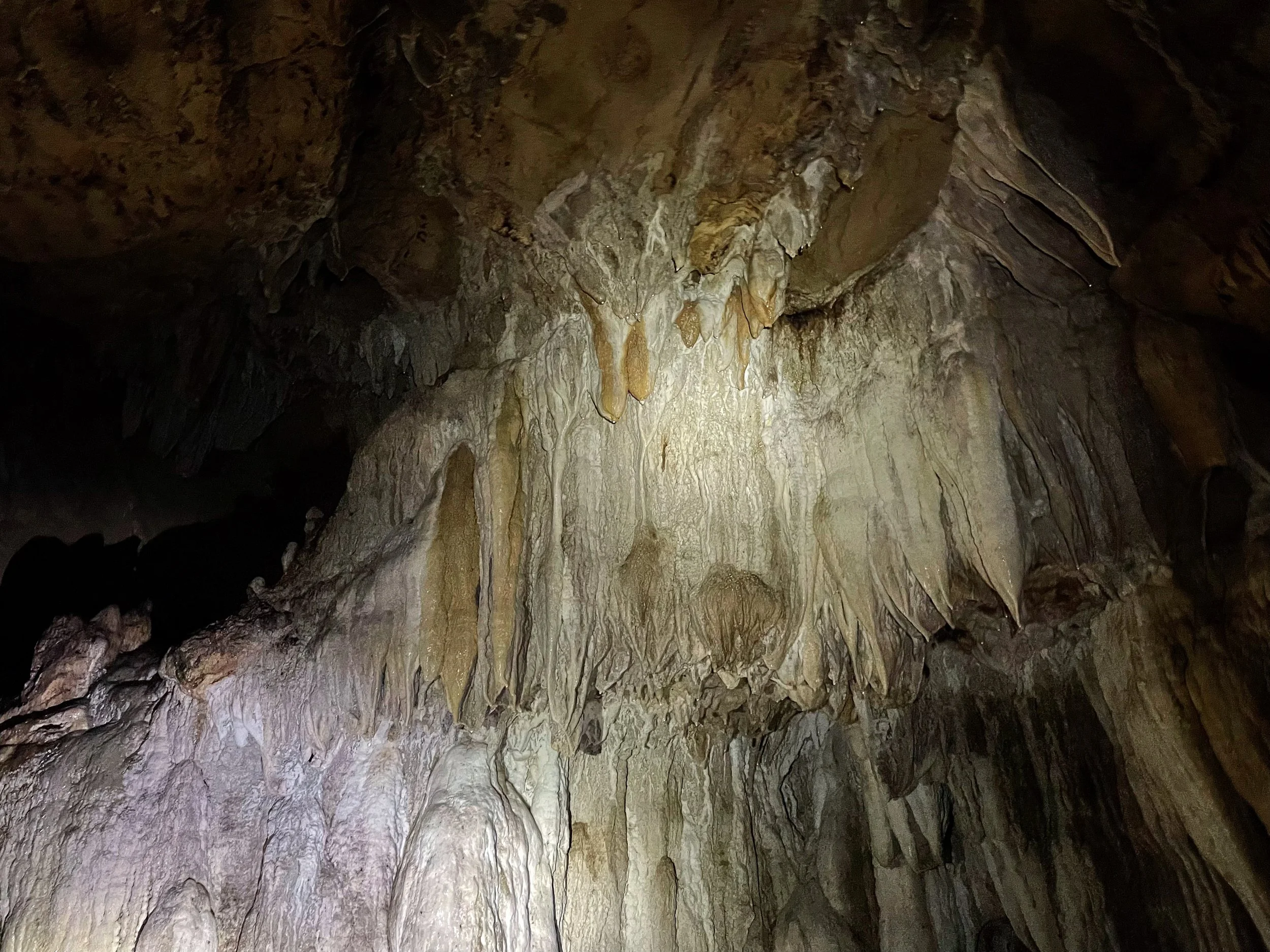
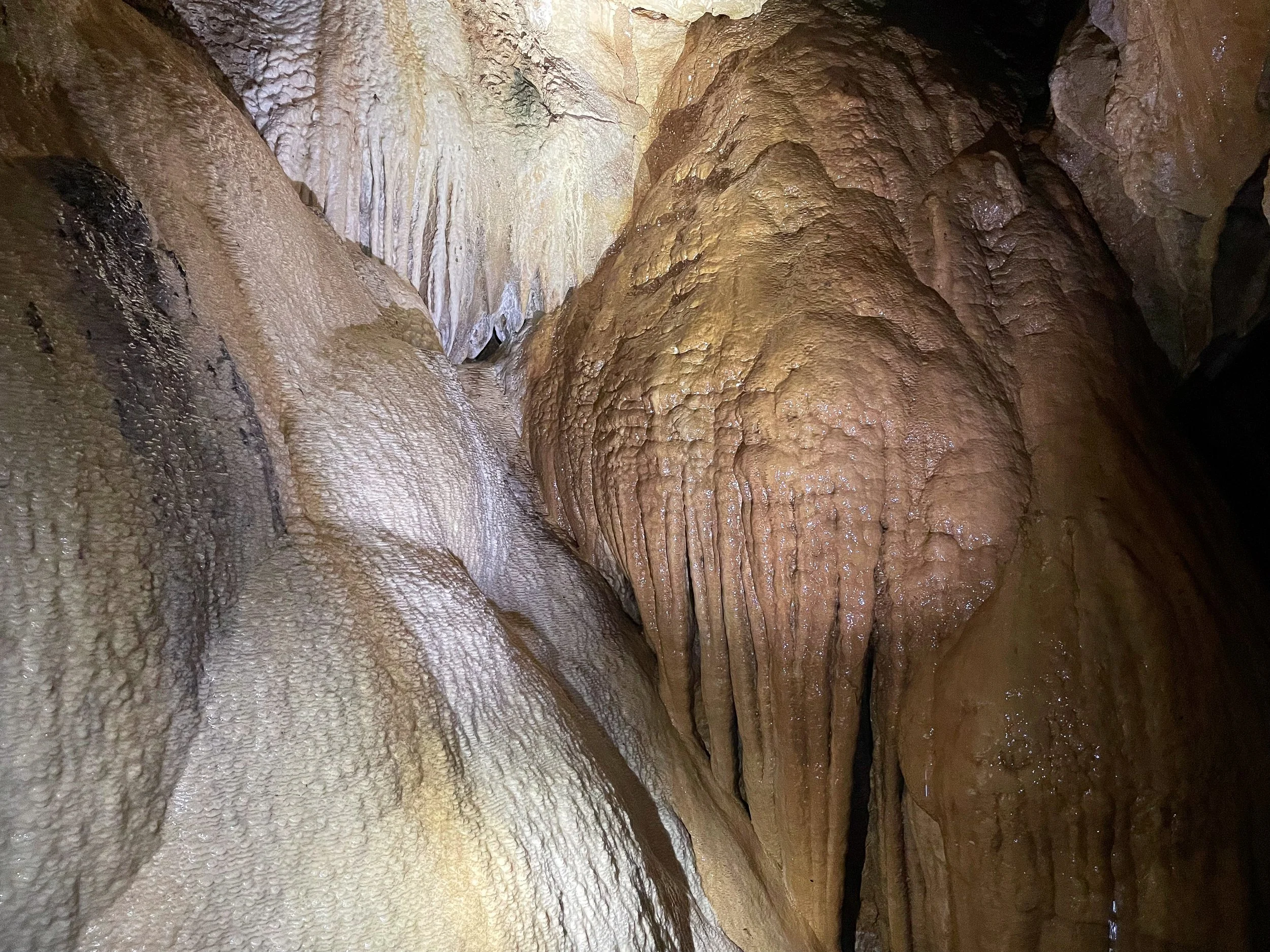
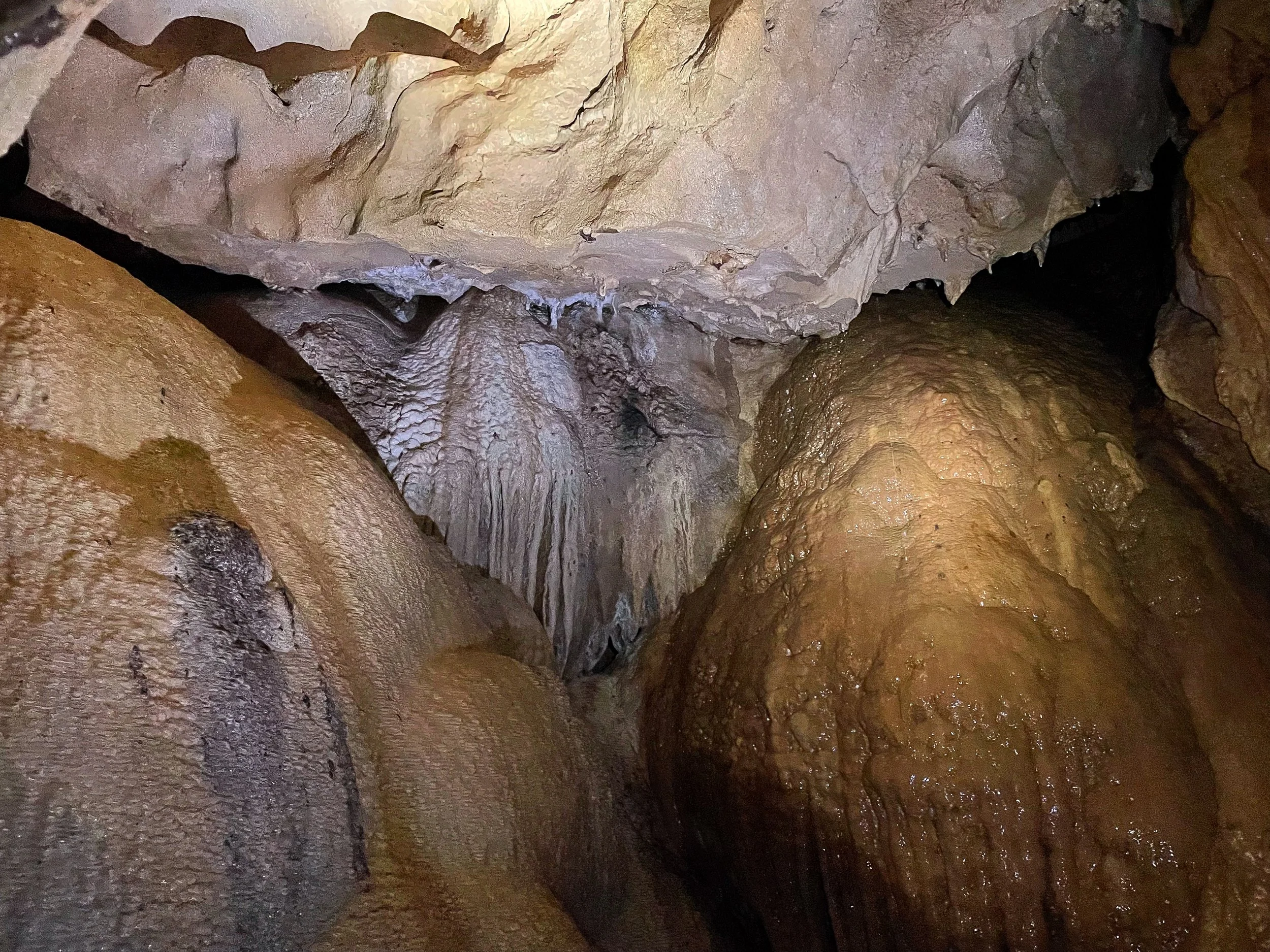
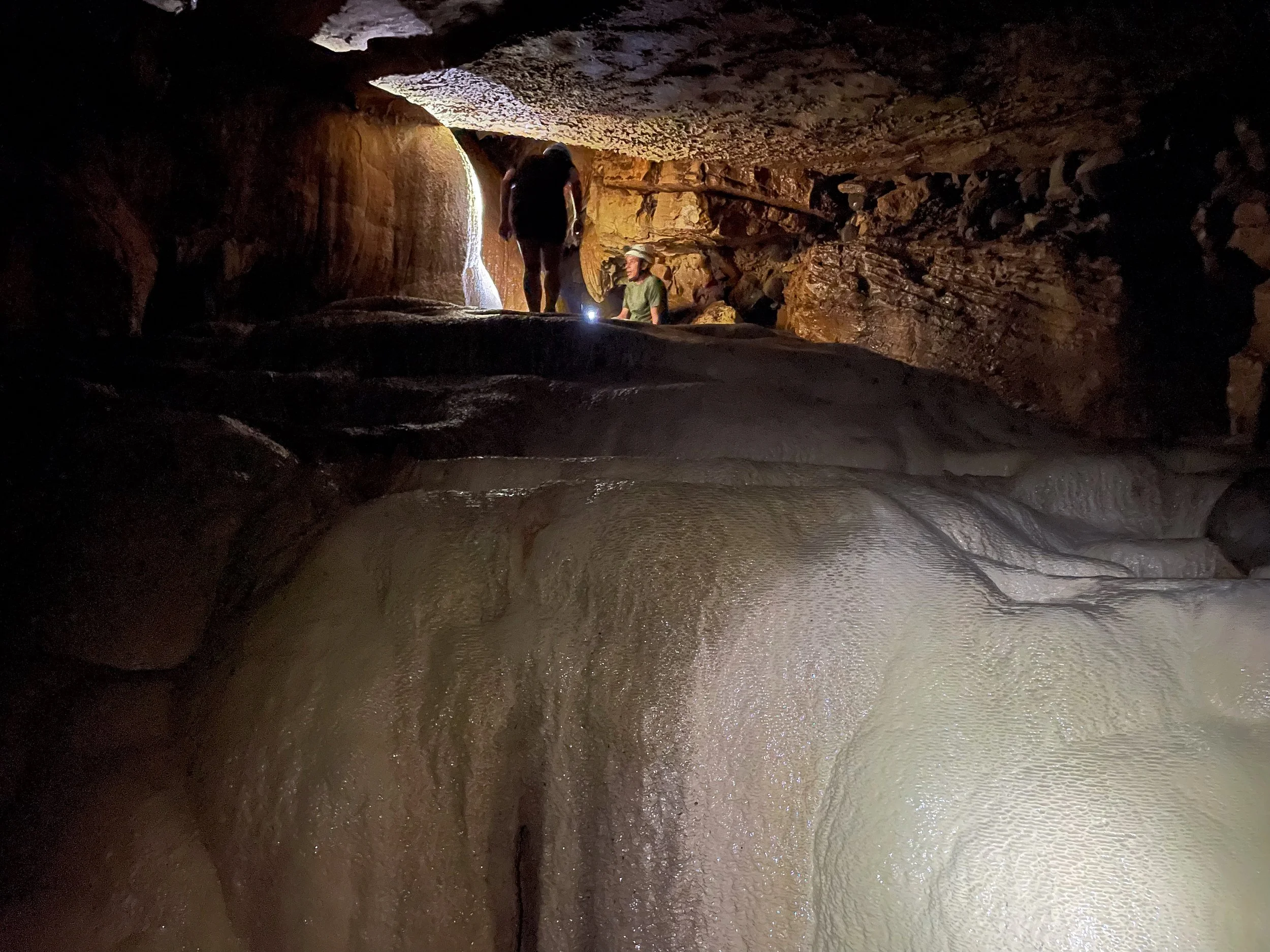
The Waterfall Room. The main chamber led to an underground waterfall with a secondary chamber hidden behind it. The room beyond is covered in a tiered flow stone comprised of sparking and rippled layers of sediment.
The Papaya Room. A chamber accessible by ladder from the “Waterfall Room” with a several million year old flow stone that resembles the shape of a papaya.
The Flooded Tunnel. The sub chambers continued deeper into the cave past stalactites and stalagmites to a “Flooded Tunnel,” only large enough to crawl through with our heads above the surface of the water.
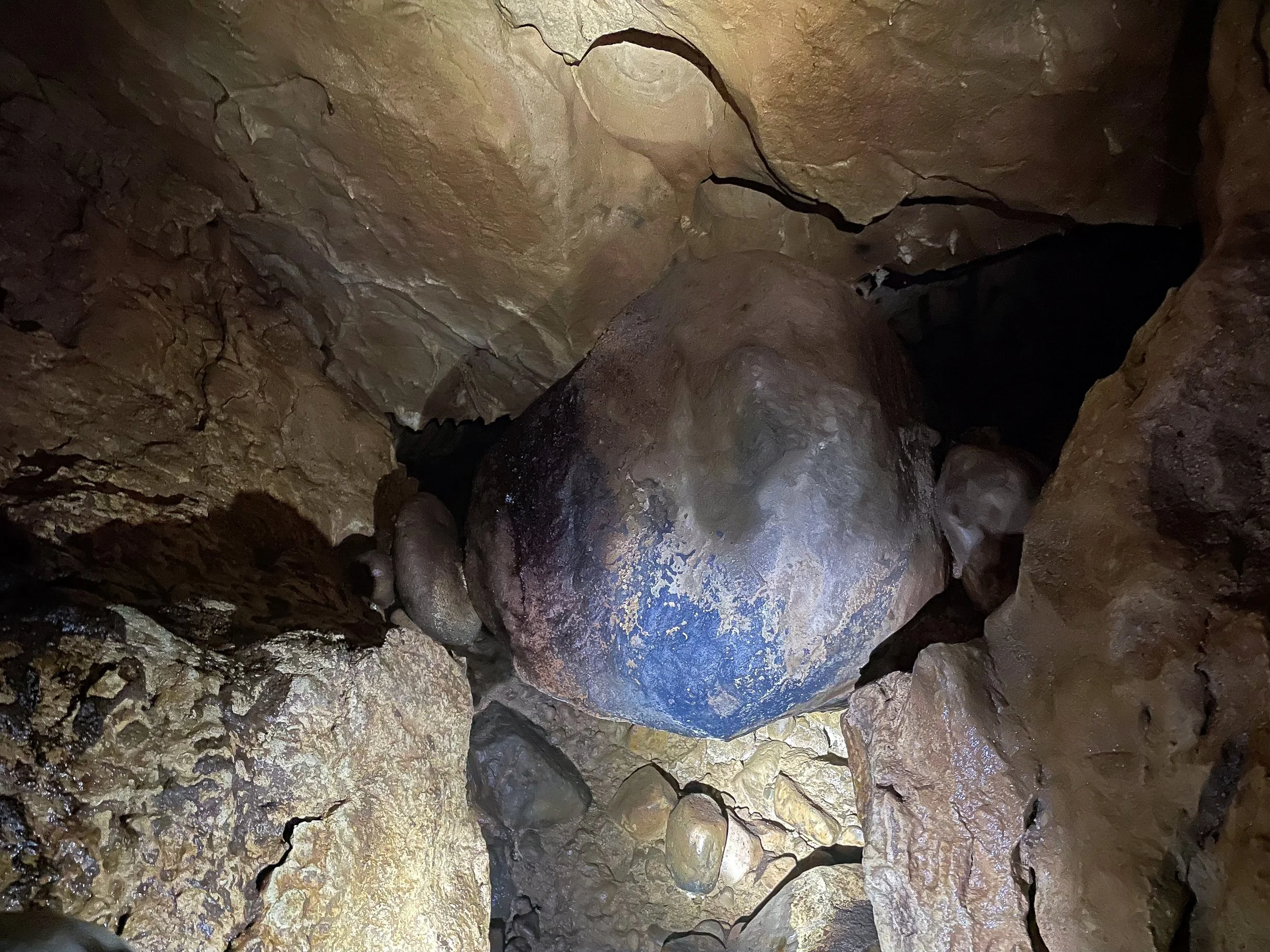
The Indiana Jones Room. The “Flooded Tunnel” continued into a narrow crevice only wide enough to fit through sideways. It led to the “Indiana Jones Room,” a chamber with a rushing waterfall and round boulder suspended between two rocks.
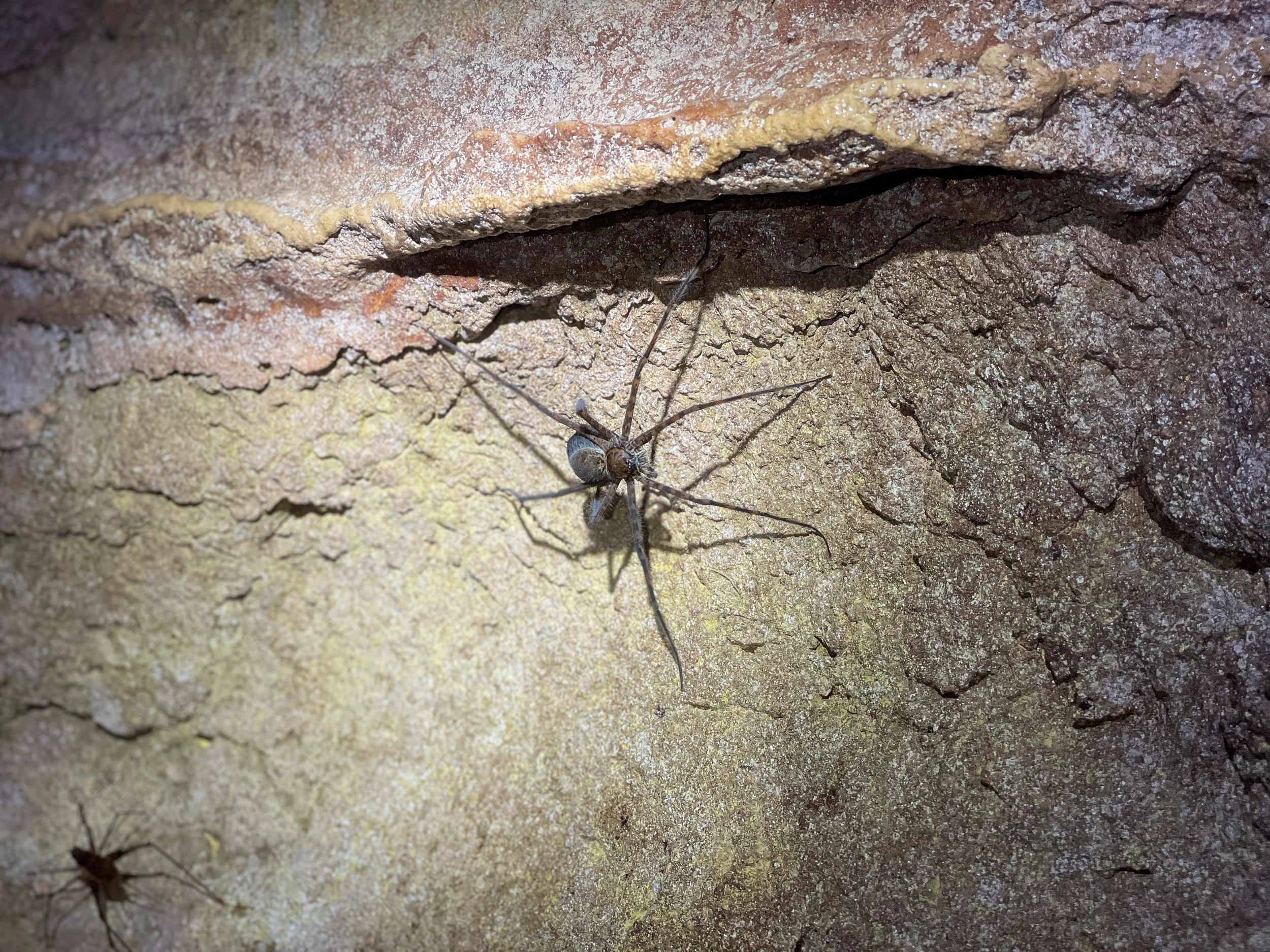
An Underground Ecosystem. The cave is home to an underground ecosystem of cave dwelling creatures. Fruit and vampire bats hung from the ceilings and fluttered around its chambers. Large cave crickets, cockroaches and scorpion spiders lurk on cave walls. Catfish swim downriver and between chambers.
Sloth’s Territory
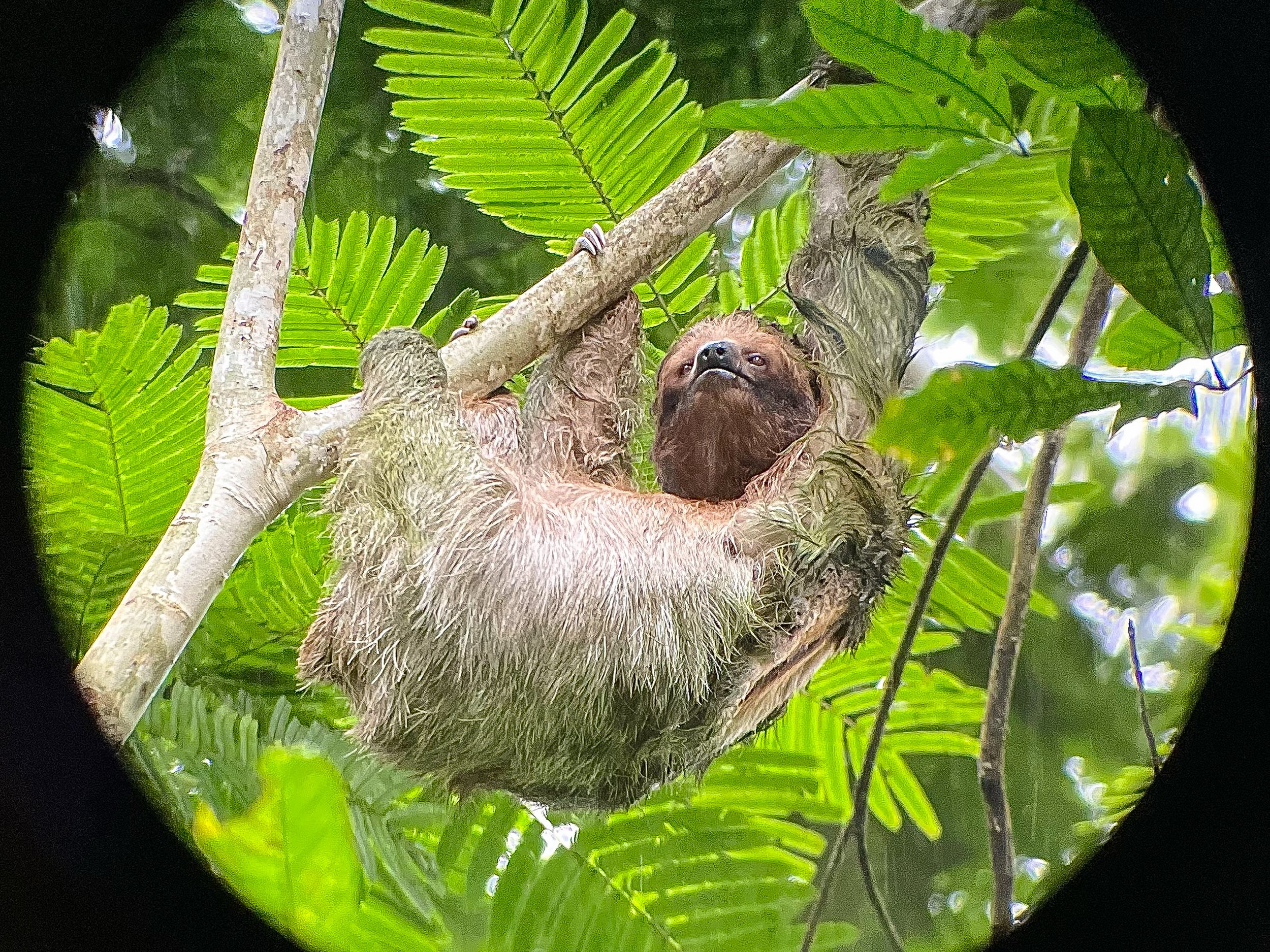
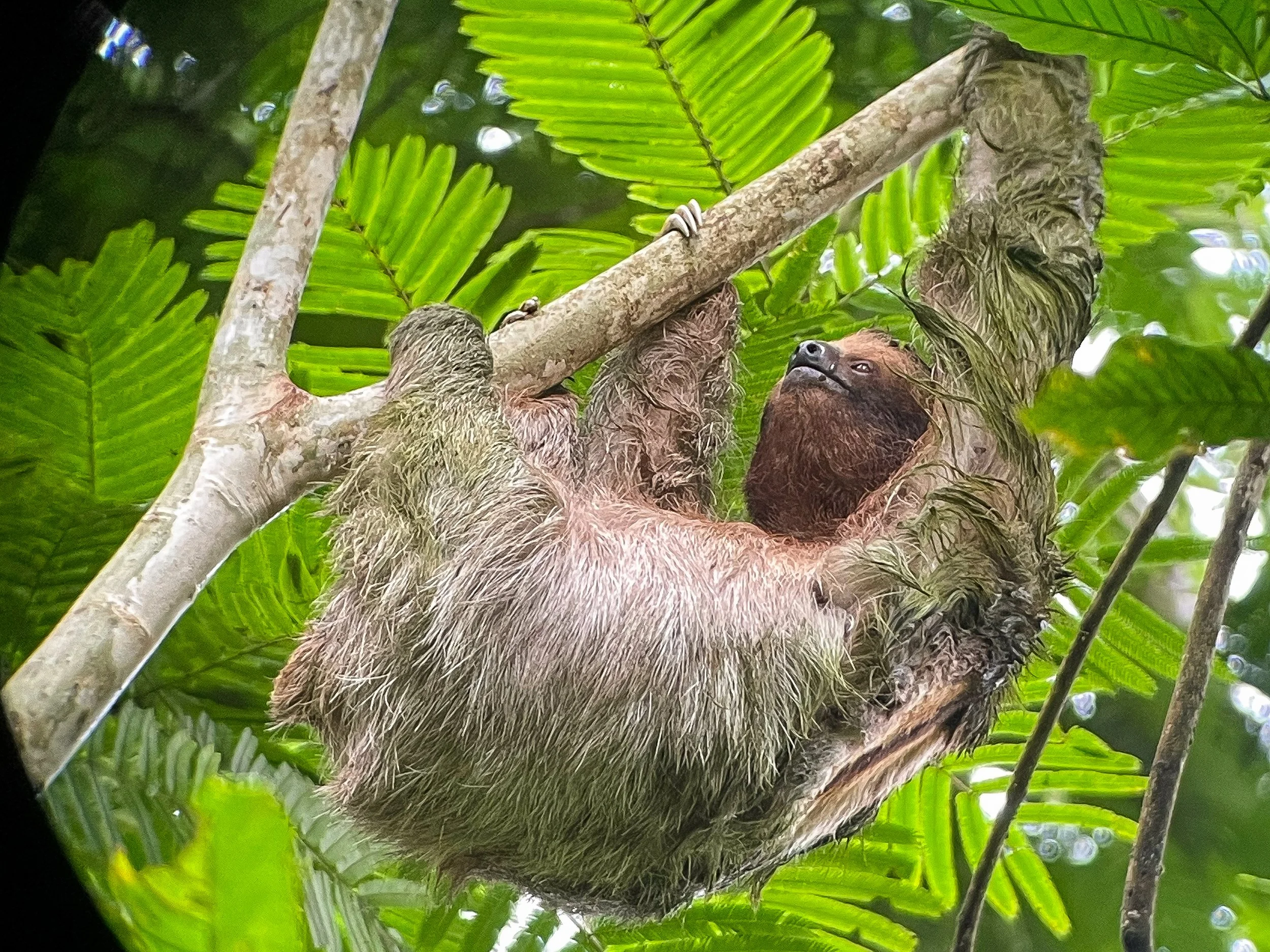
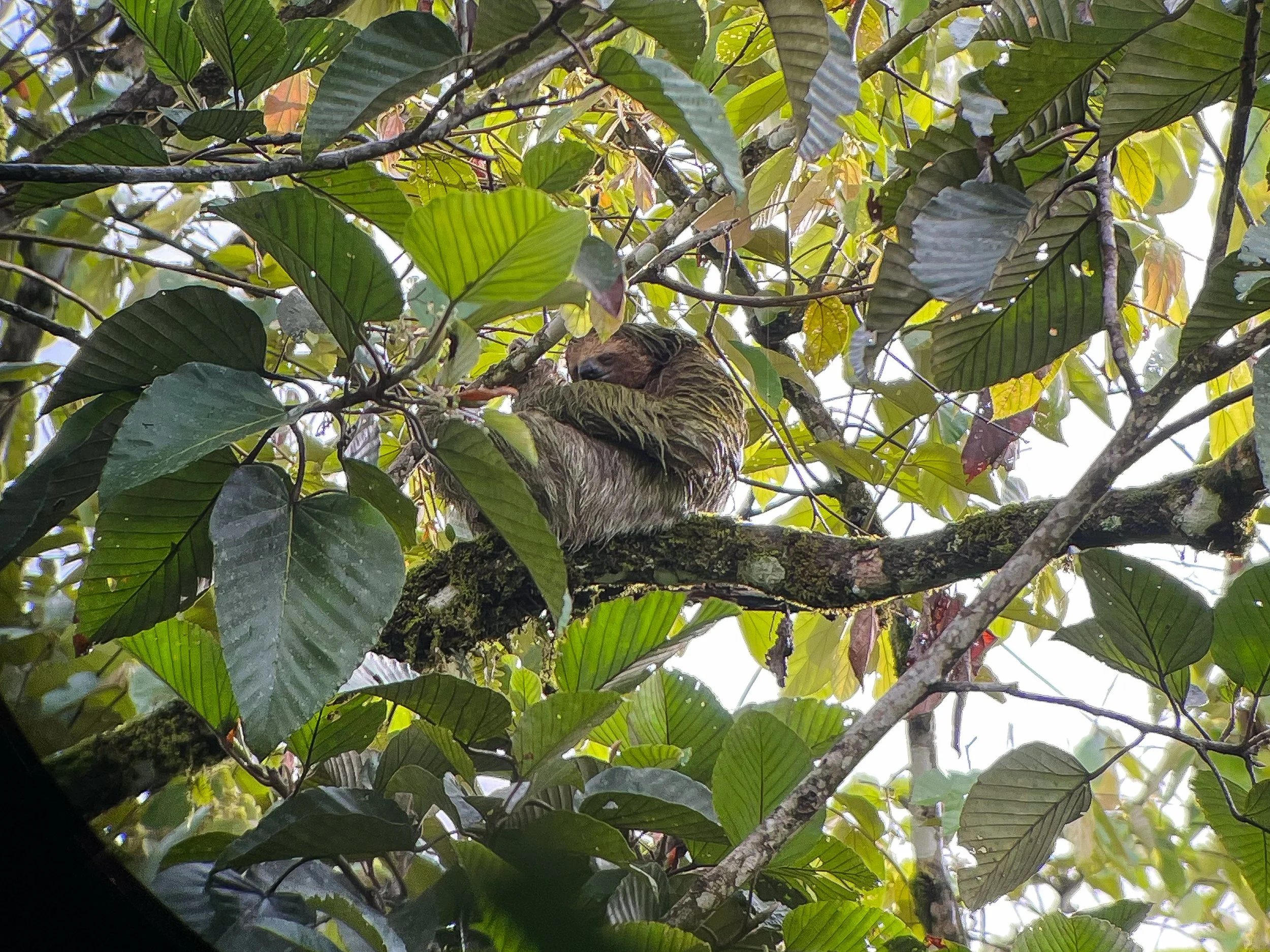
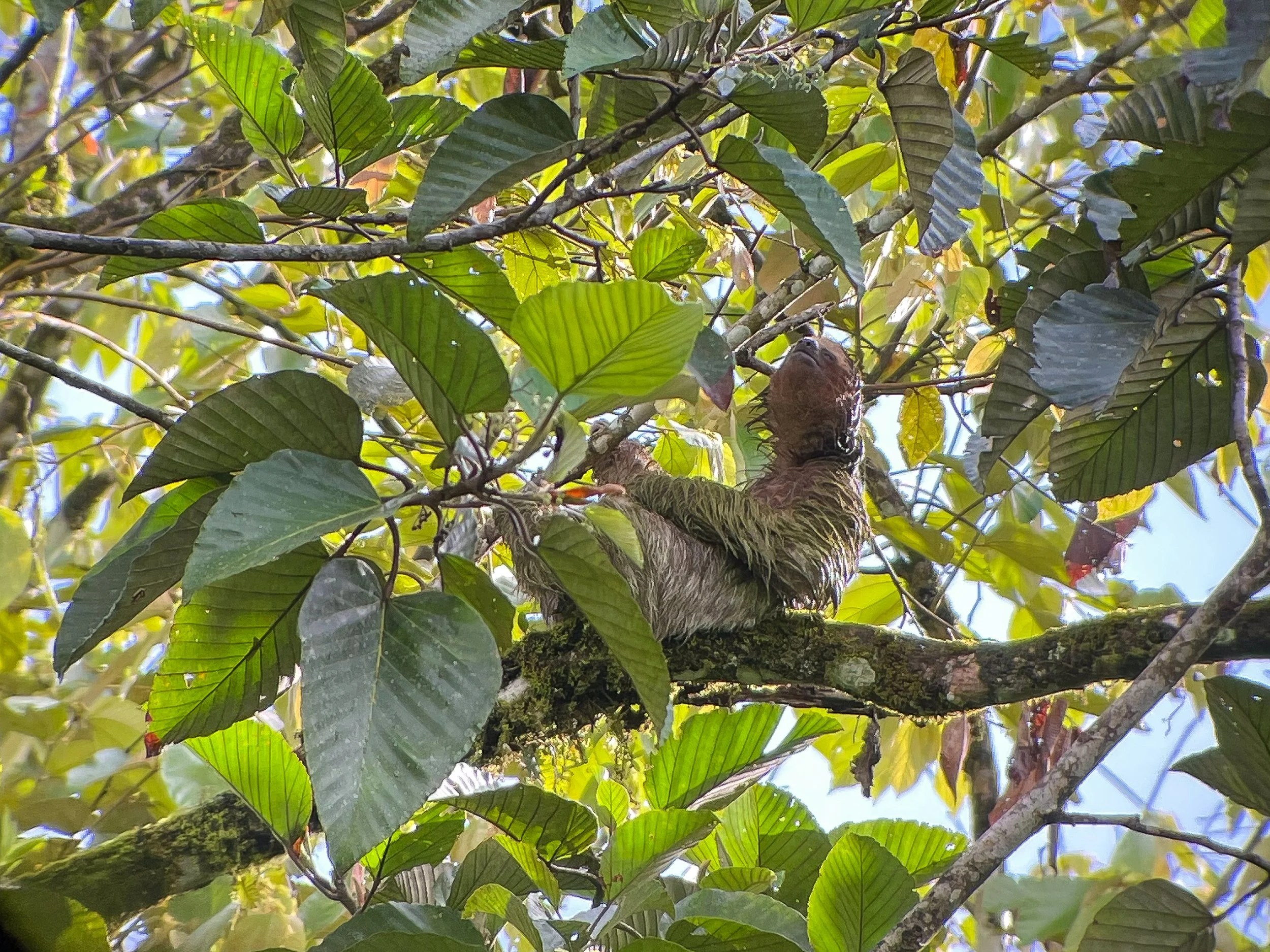
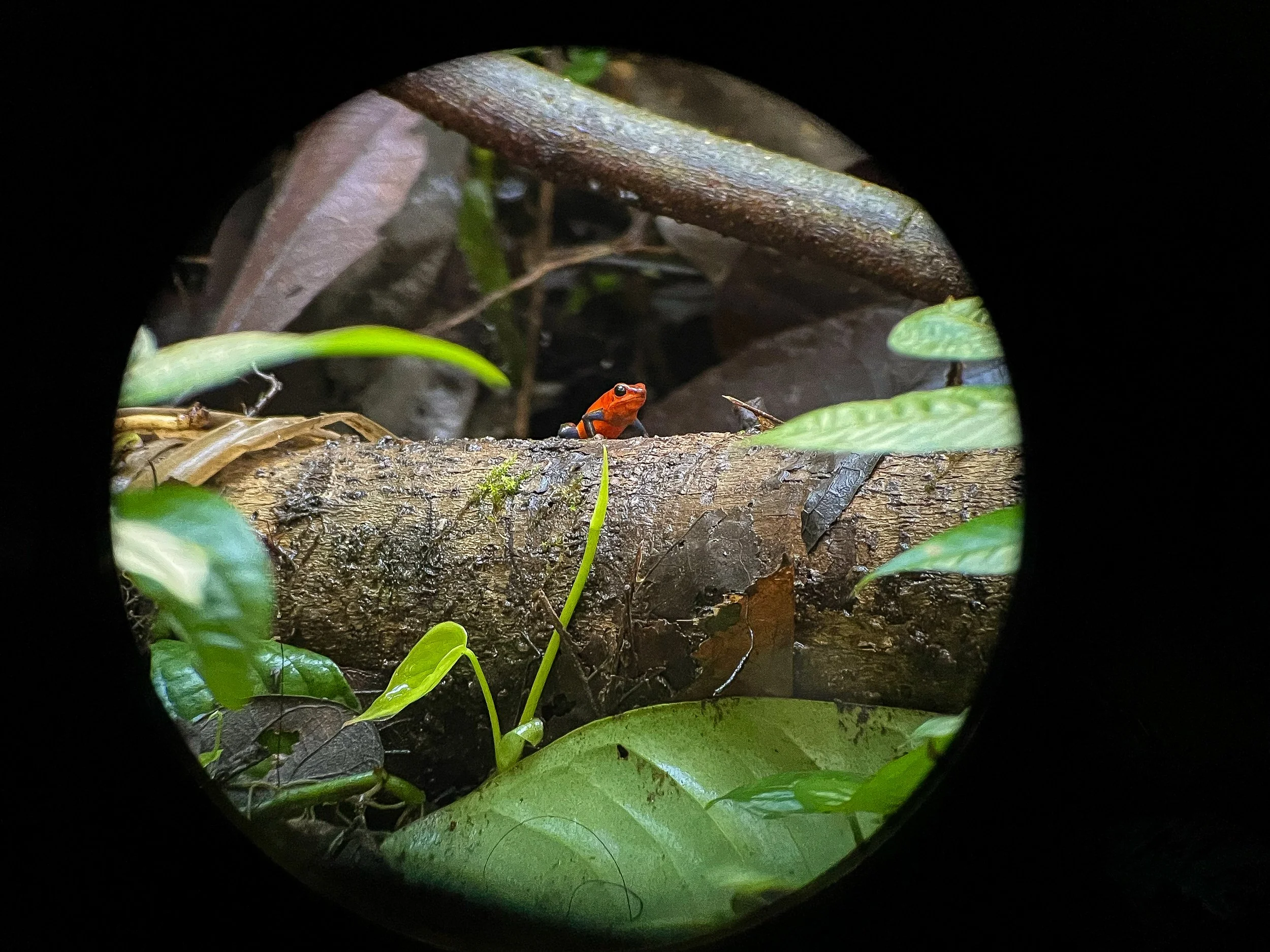
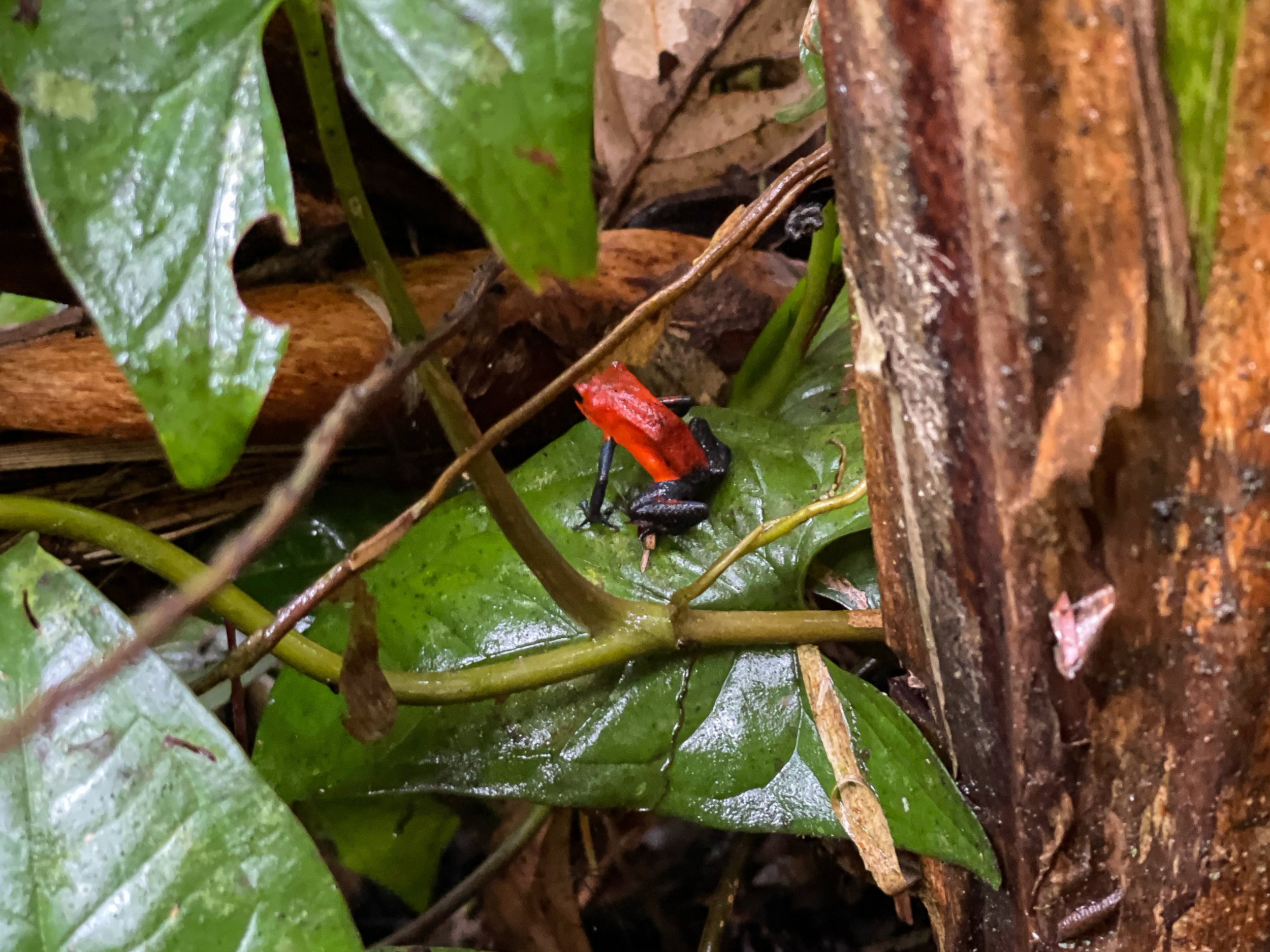
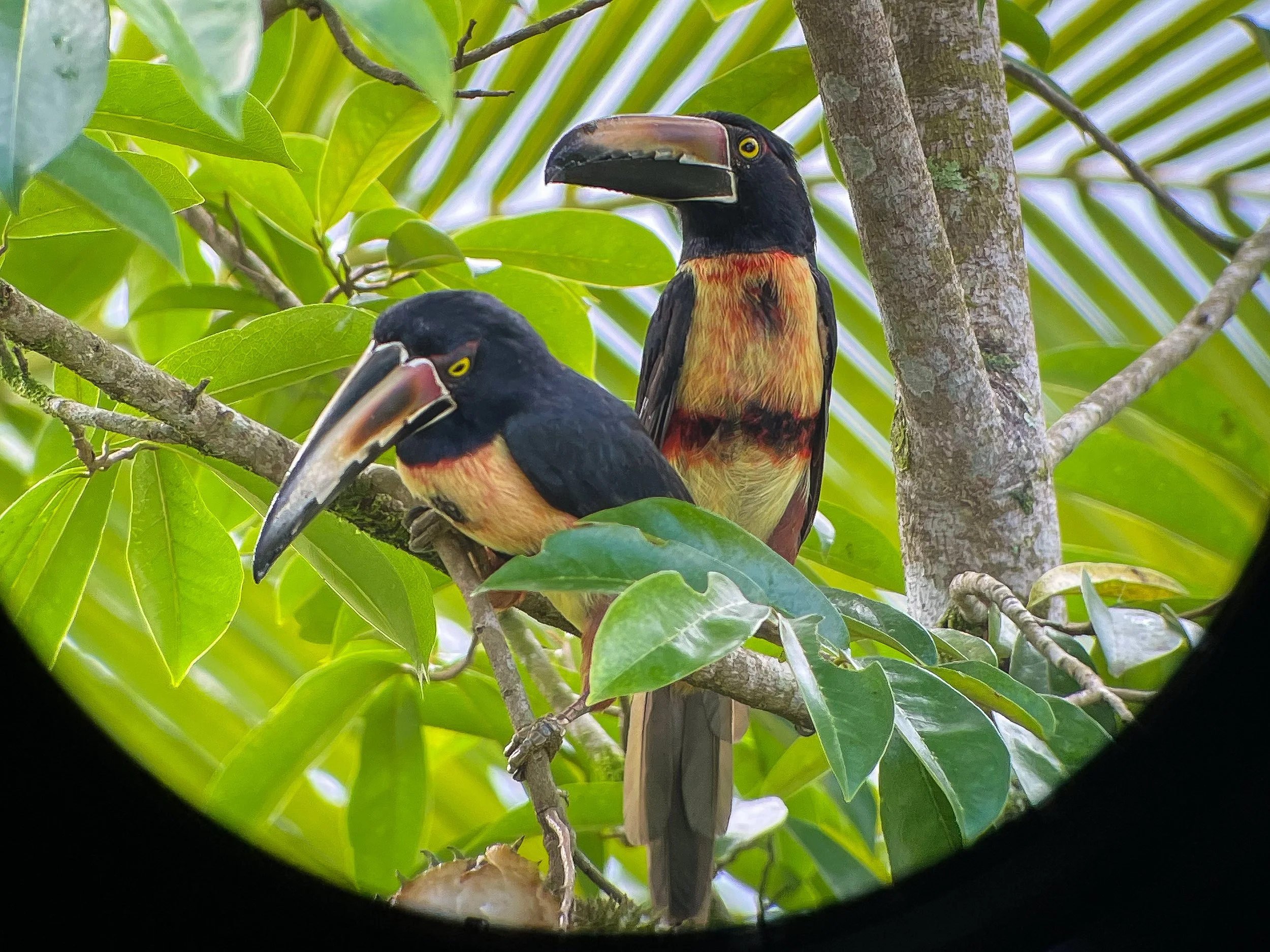
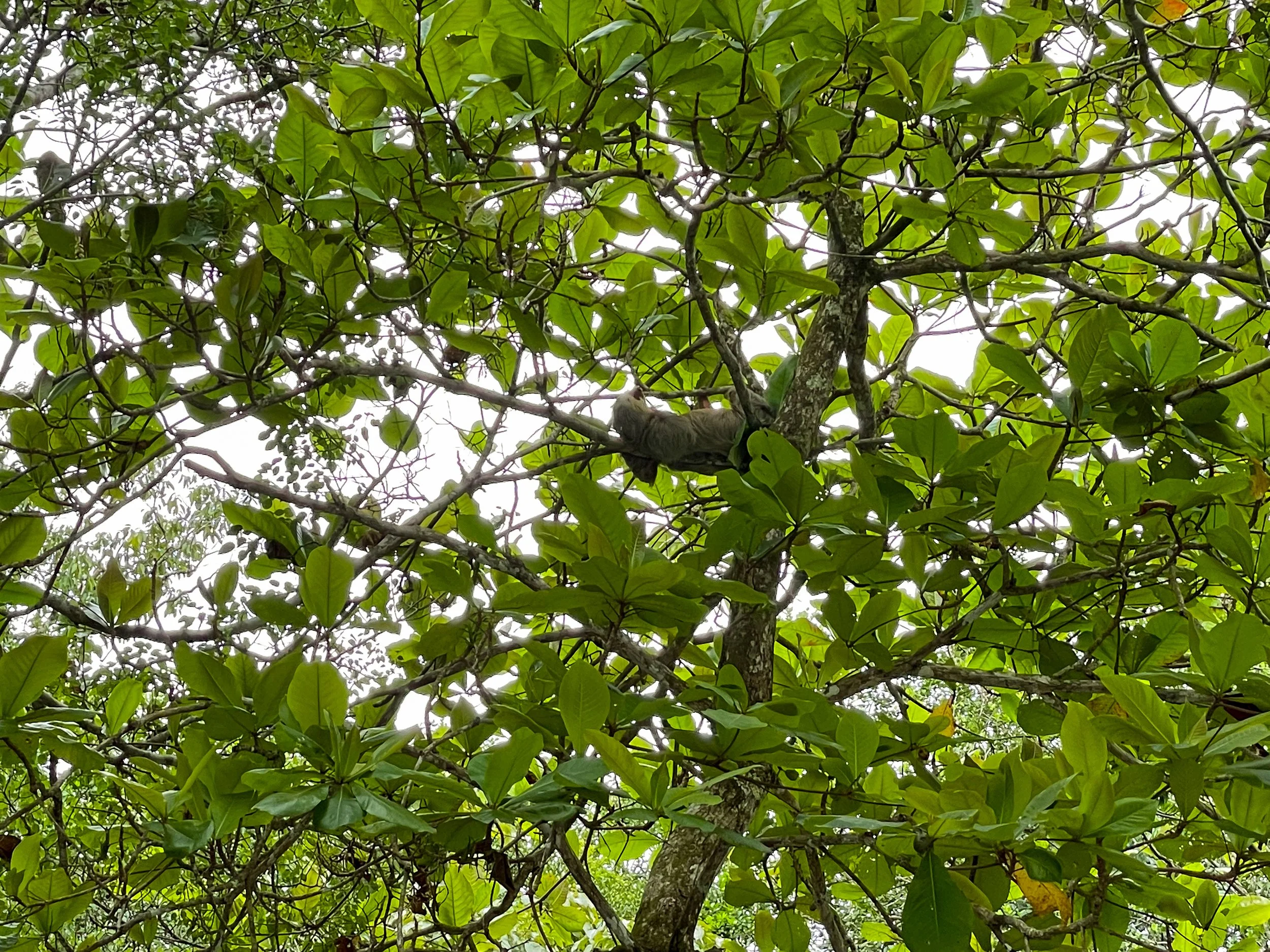
Sloth’s Territory is a nature preserve and protected habitat where sloths freely roam. Led by a guide, we walked through the preserve’s trails spotting several sloths climbing trees, sleeping in the sun and eating leaves. We even spotted a baby sloth slowly climbing alongside its mother. In addition to sloths, we spotted toucans and tiny red and blue poison dart frogs.
Sloth Spotting Tips. Look for trees with large 5 pointed leaves that resemble stars. These trees are tall and thin with white and brown bark. Look for dark masses sitting on tree branches. They are often sloths curled up and sleeping.
La Fortuna
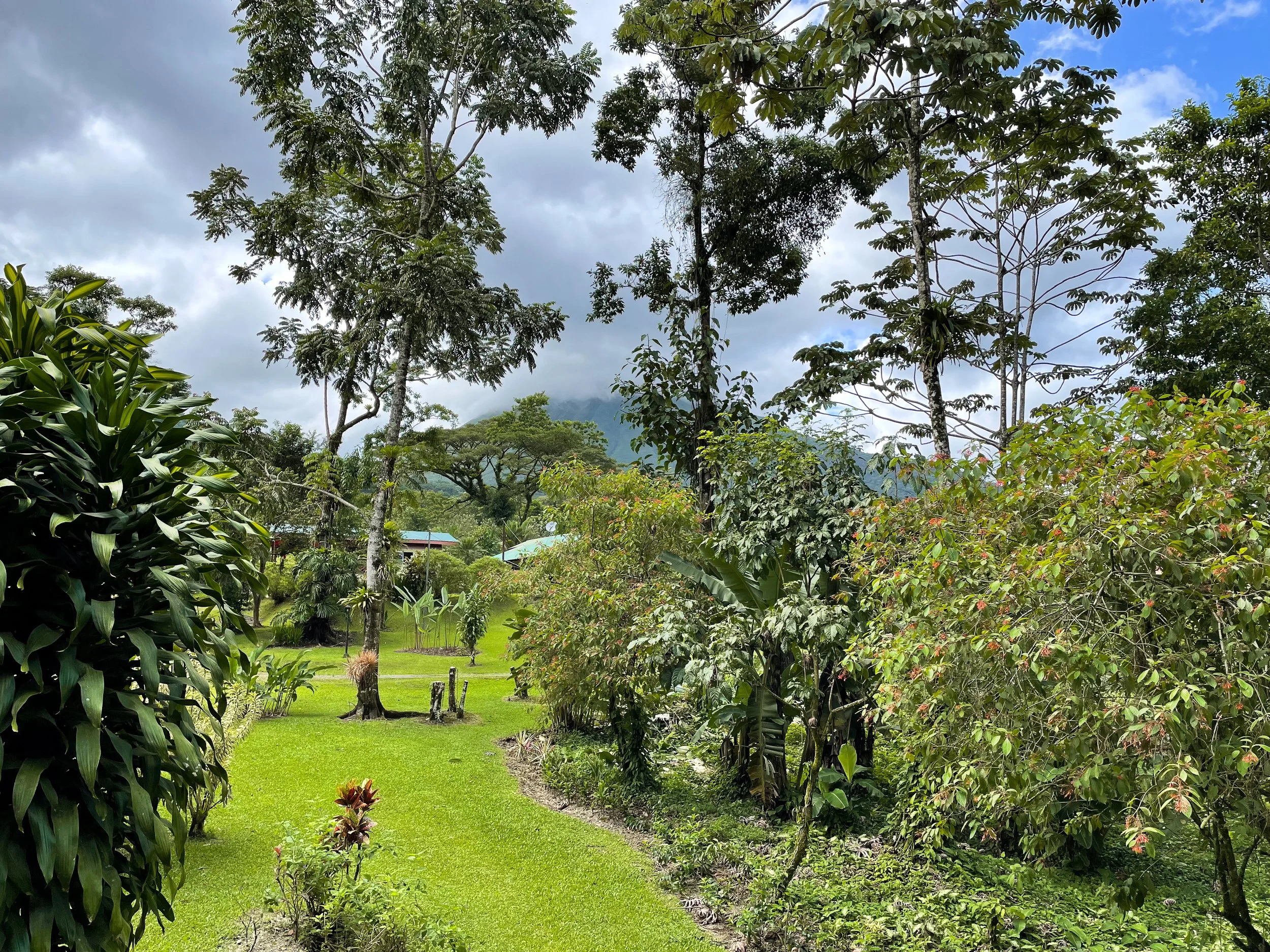
A small town at the base of the Arenal Volcano with restaurants, hotels and souvenir shops. We stayed here while exploring the nearby sights.
Brisas Arenal Hotel. An eco-hotel with individual wooden cottages, nearby nature trails and views of the Arenal Volcano. The main guest house has a restaurant that delivered us fruit bowls and coffee for breakfast and a fridge to buy beers from during the evening. Book here!
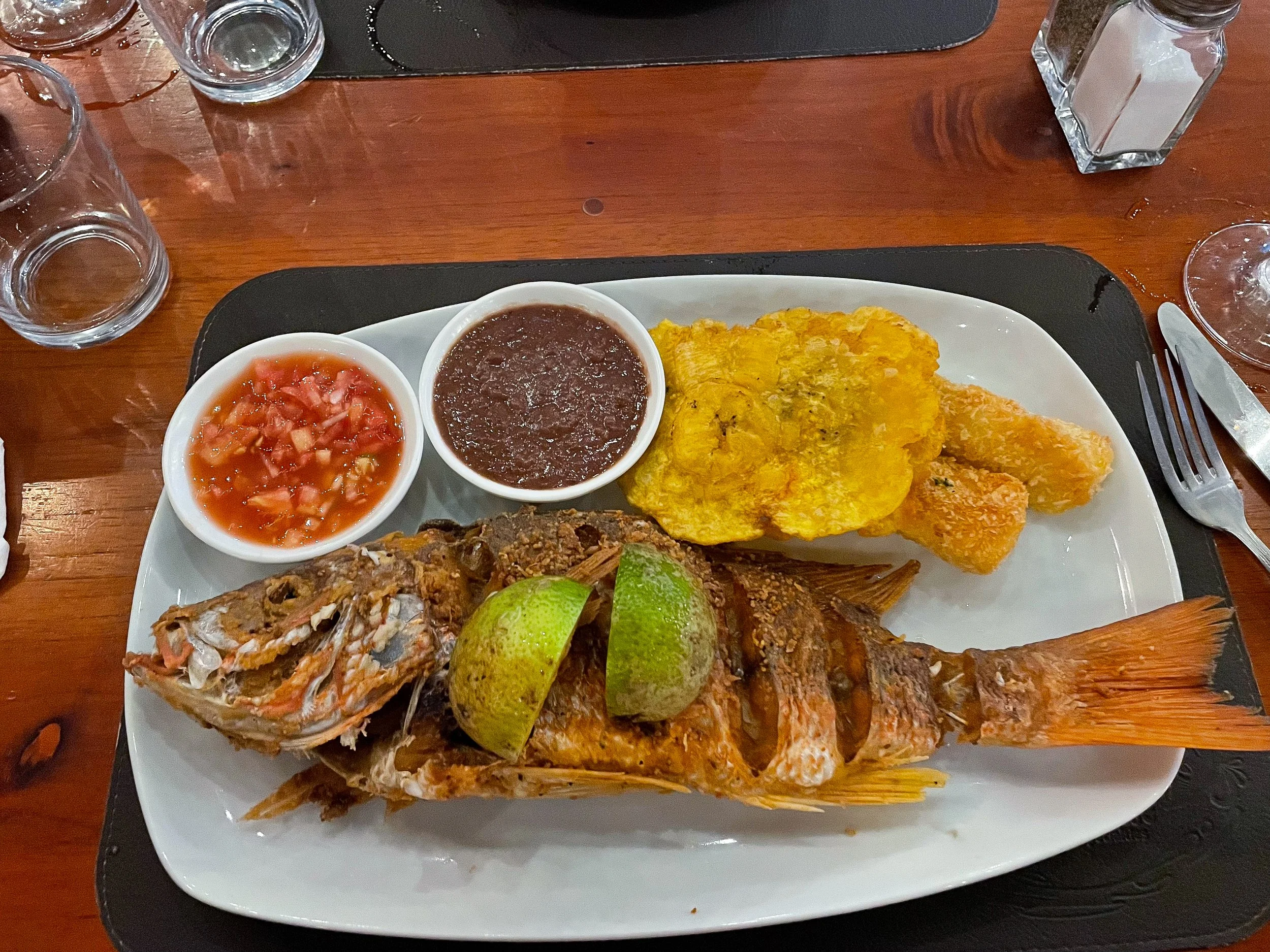
Snapper. A seafood restaurant with a tasty menu. We ordered volcano margaritas (spicy margs), seared tuna, baby shrimp arepas, a whole fried snapper, coconut seafood stew and tres leches.
On The Road
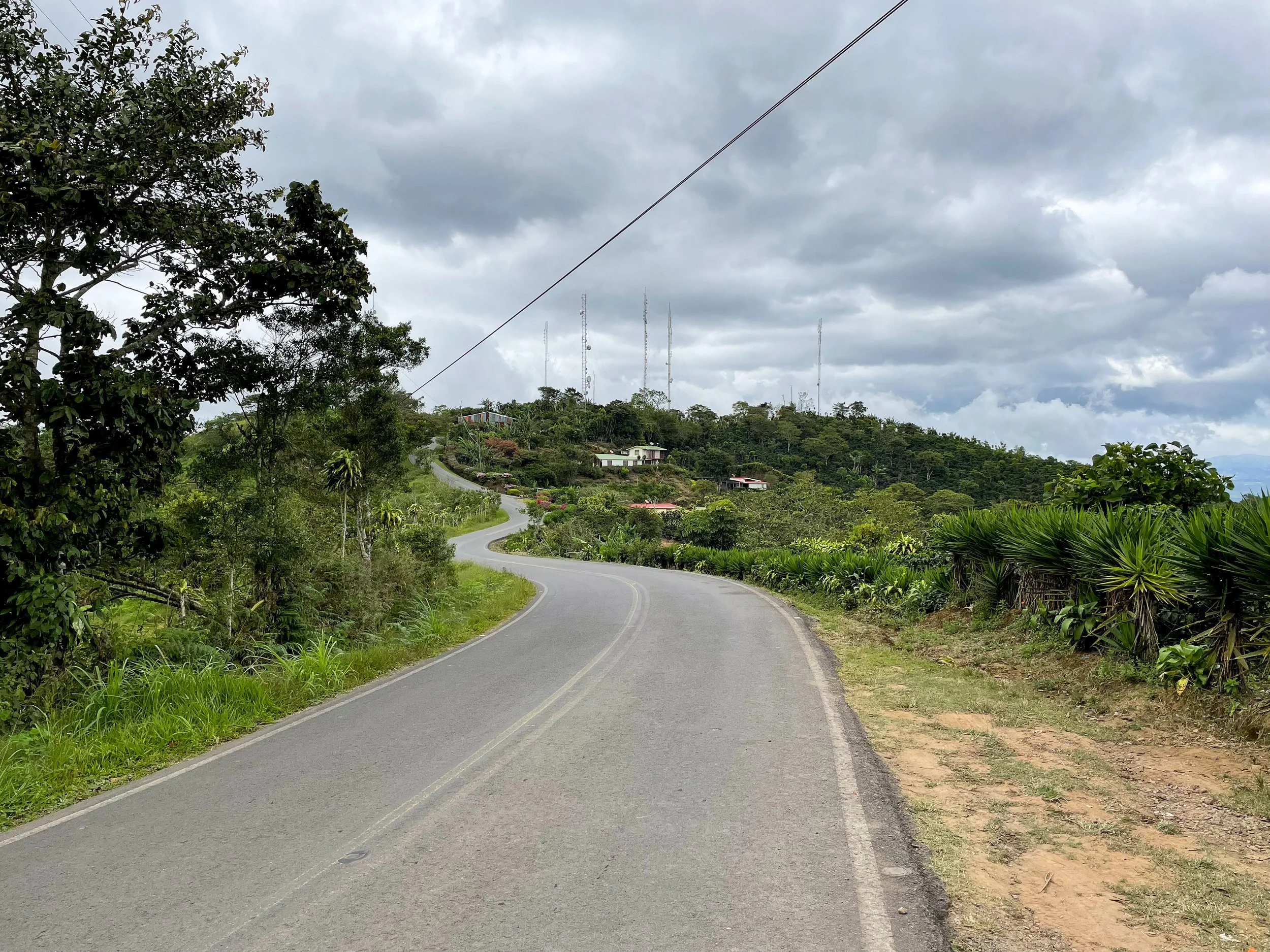
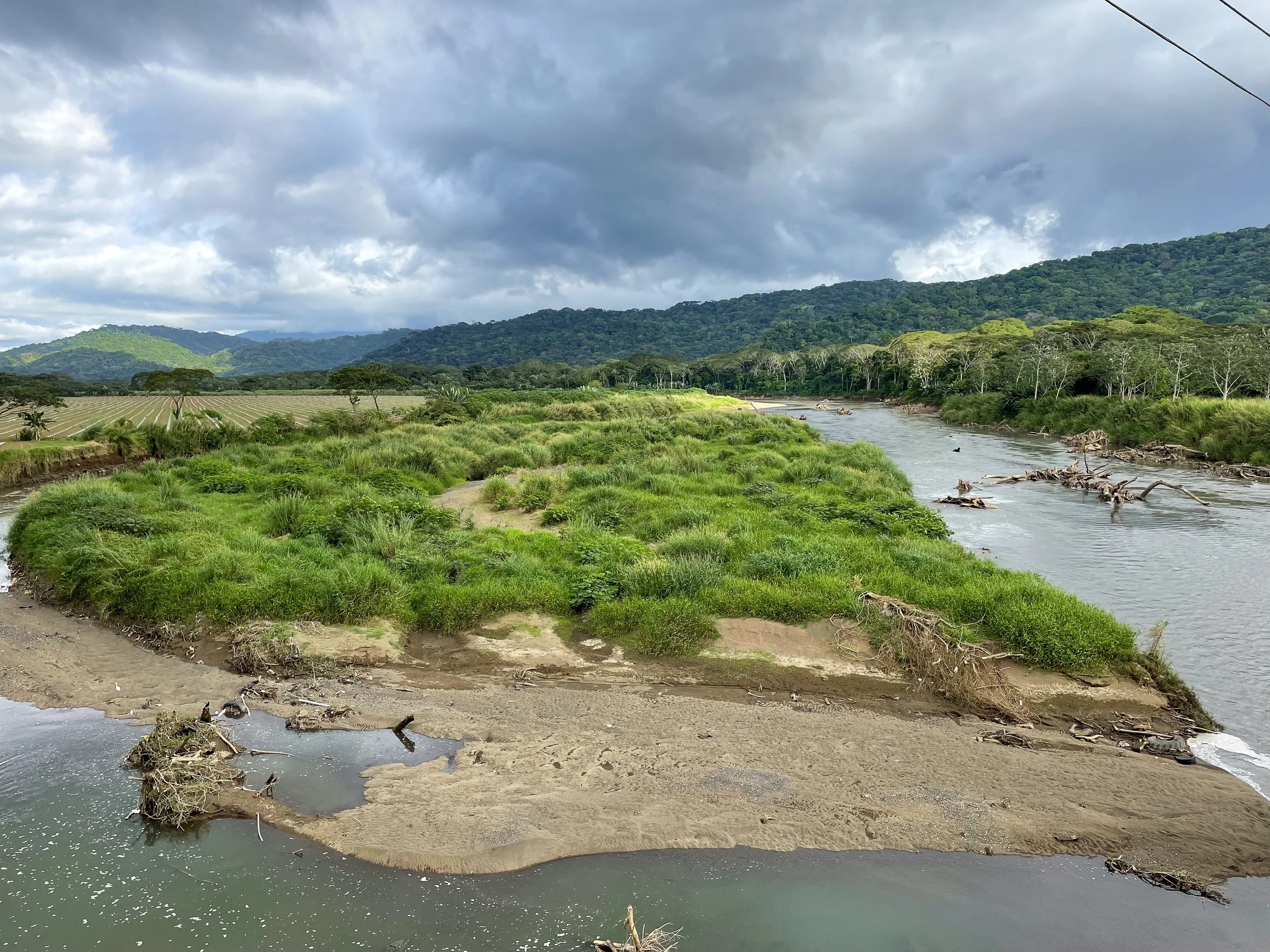
After leaving La Fortuna, we began our drive to Manuel Antonio stopping at a scenic overlook for lunch, to see a crocodile infested river and for a sunset dinner on the beach.
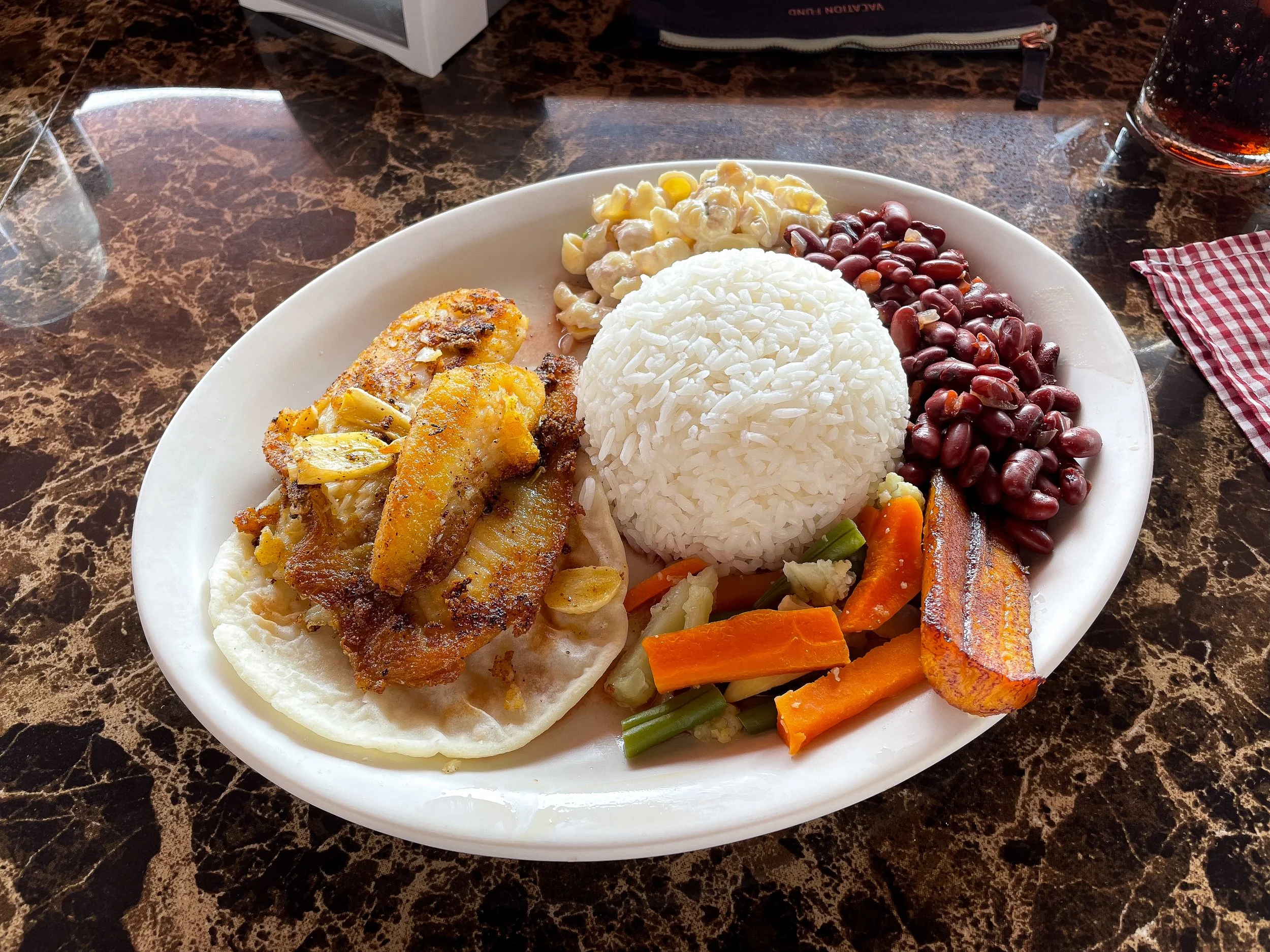
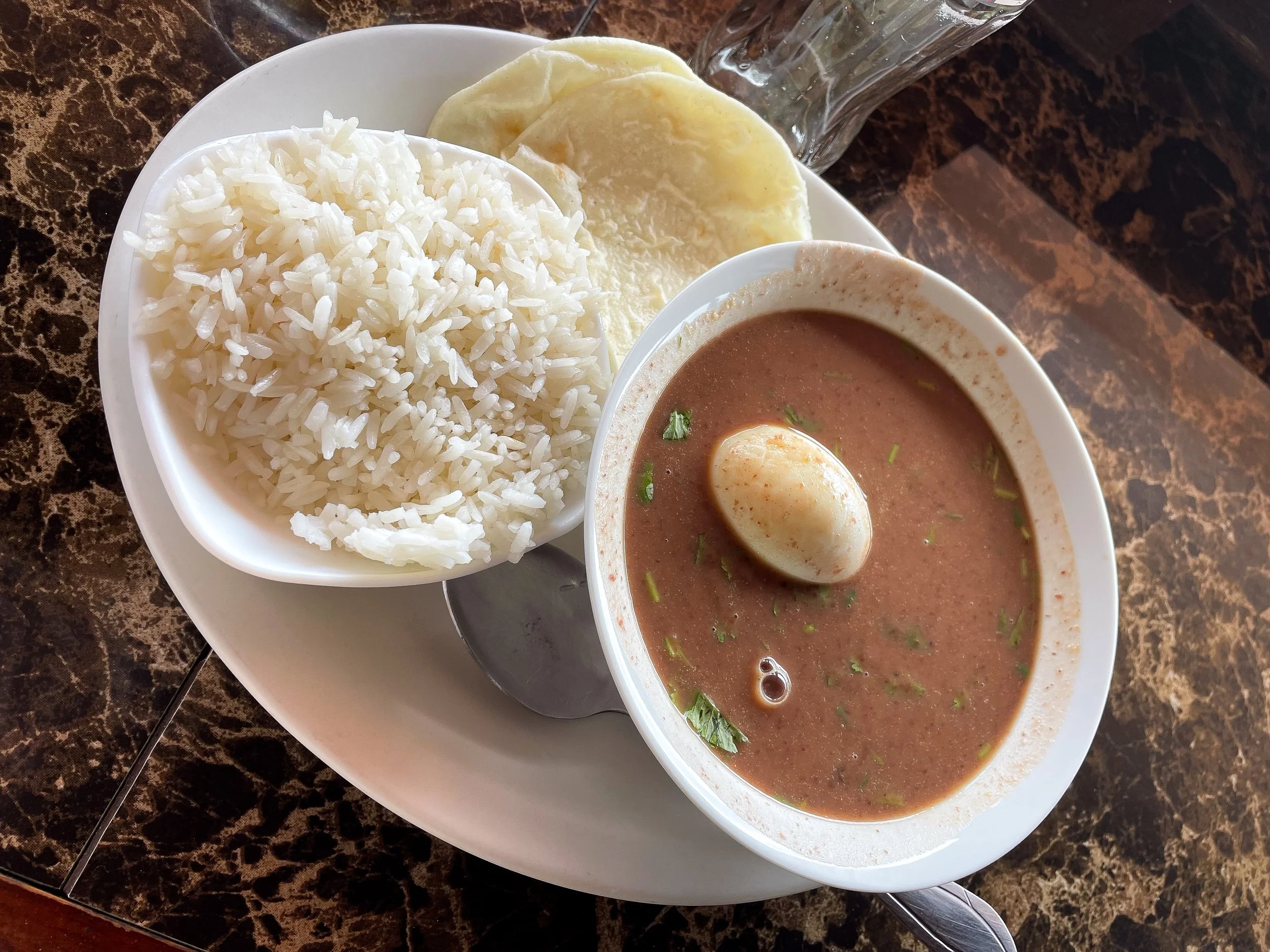
La Casita del Café. A roadside restaurant perched on a cliff with panoramic views of the lush and rugged mountainous landscape. We shared two common Costa Rican dishes, Sopa Negra and Casado.
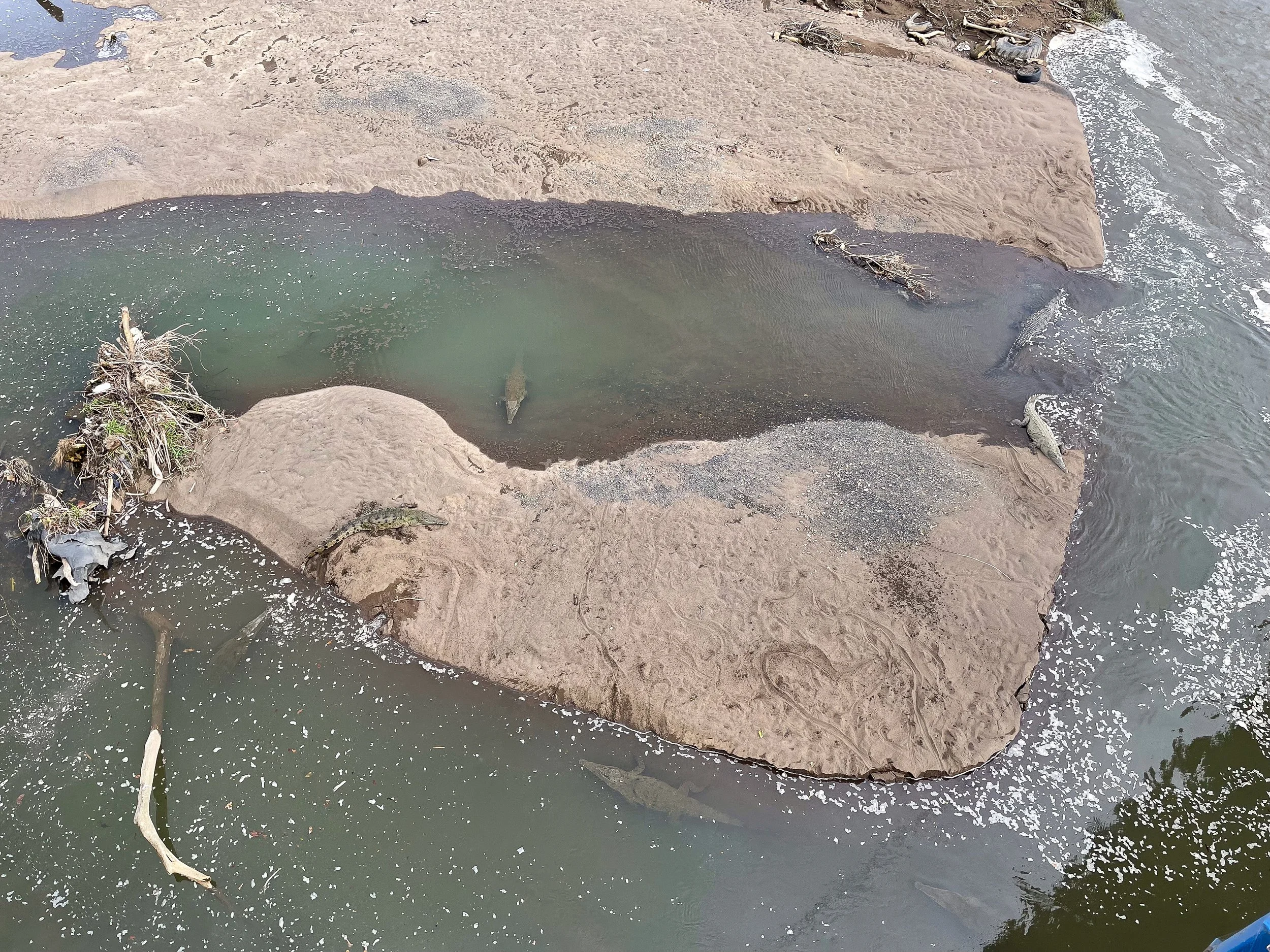
Río Tarcoles. A river on the route to Manuel Antonio known for its massive crocodiles. We parked at a souvenir stand and walked to the bridge overlooking the river. From here we saw dozens of 12ft long crocodile swimming and resting along the islands and banks of the river.
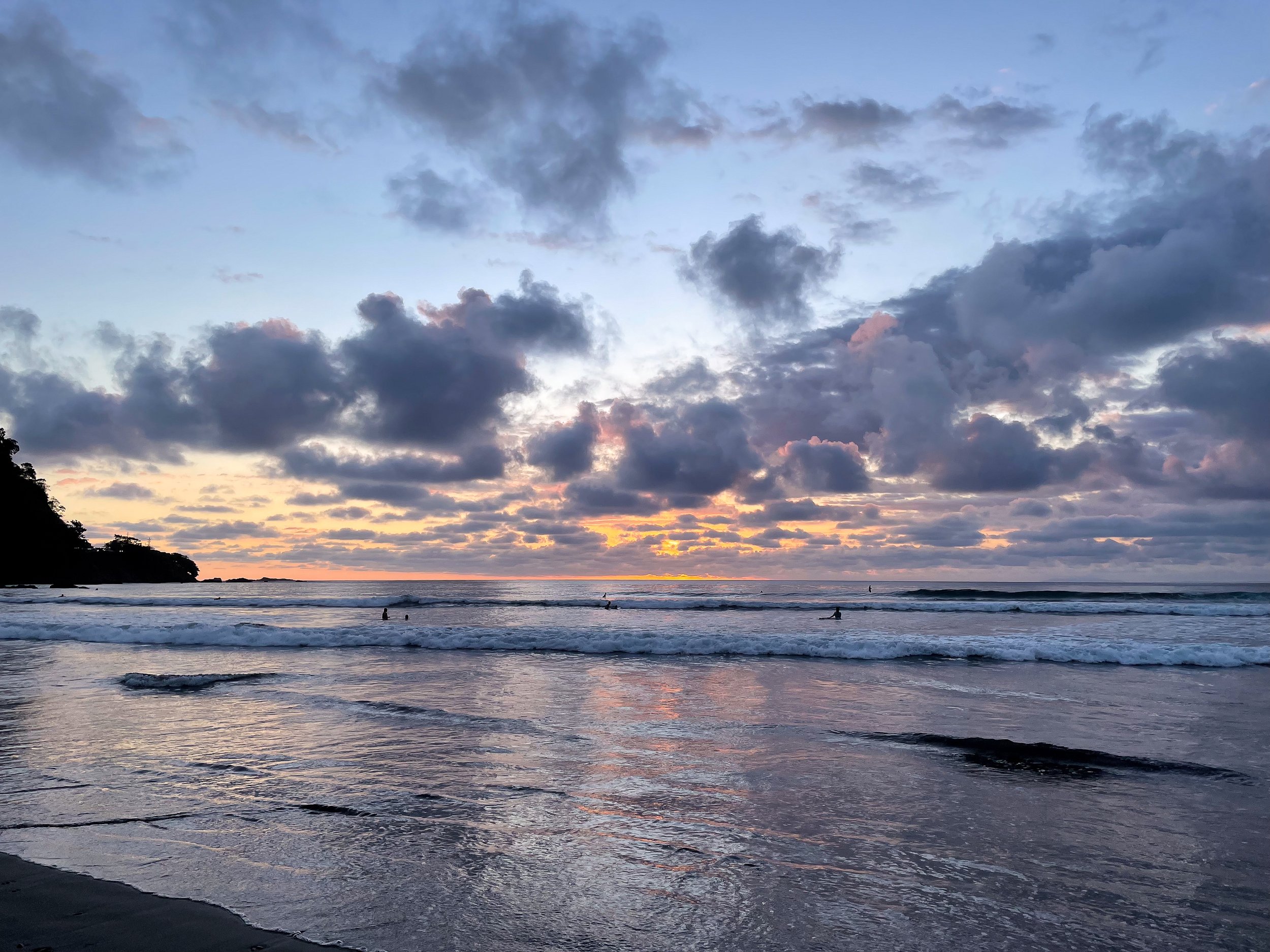
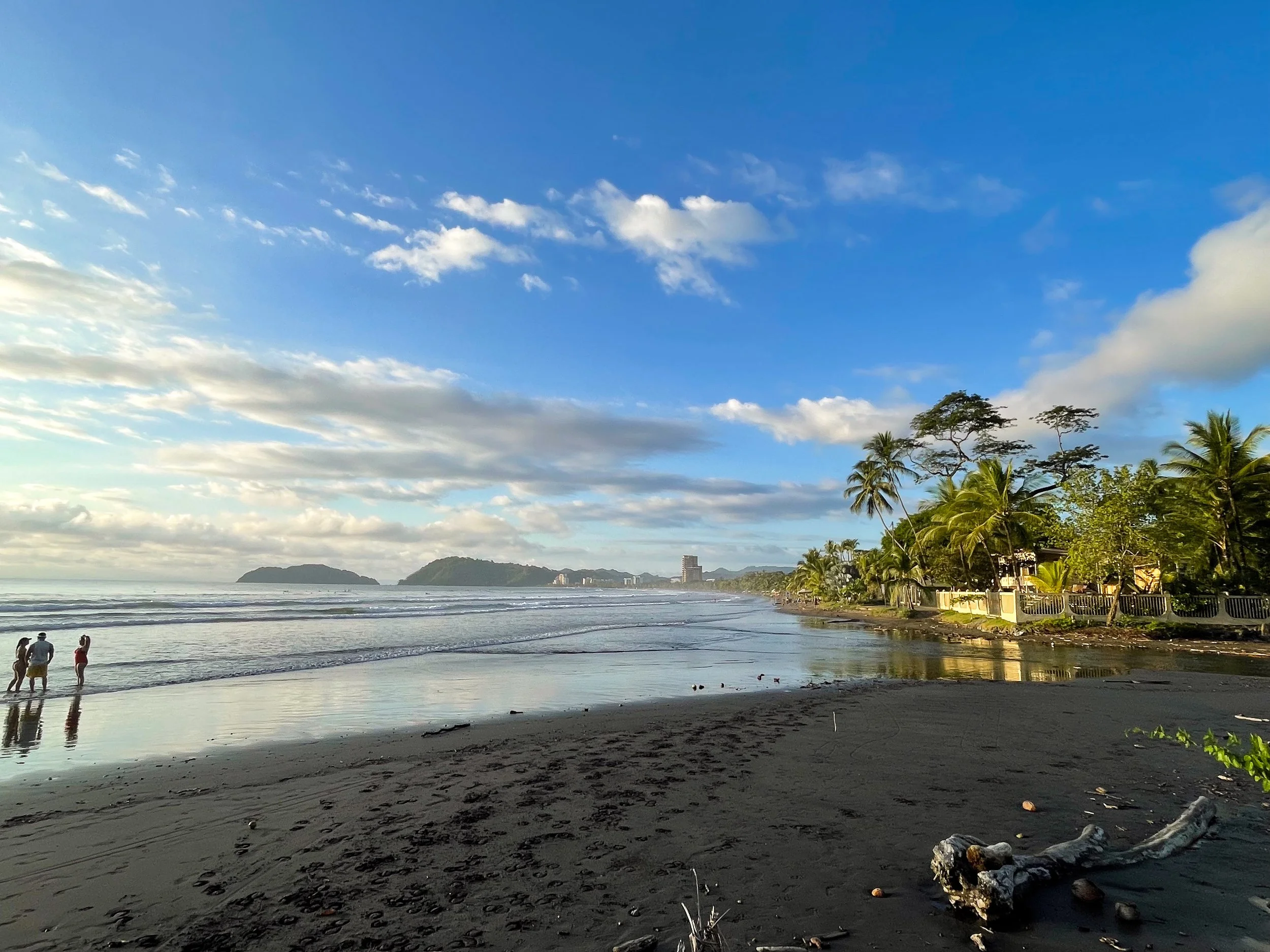
Jacó Beach. A beach town with a lengthly palm lined beach with a dark sandy shore, surf schools and waterfront restaurants. We enjoyed a sunset dinner at a spot called Tiki Bar. Come for the fish tacos, shrimp skewers and tropical cocktails.
Manuel Antonio National Park
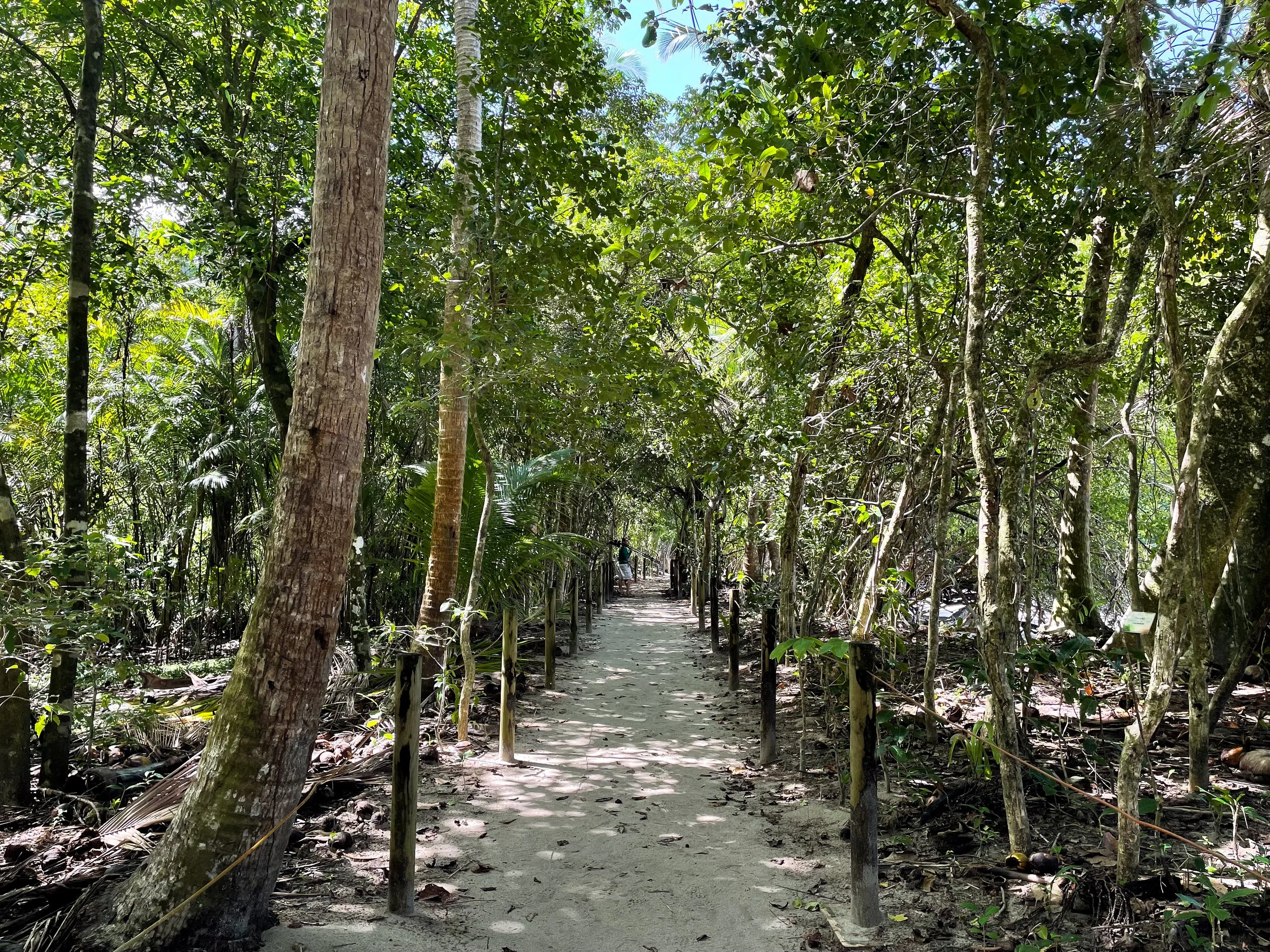
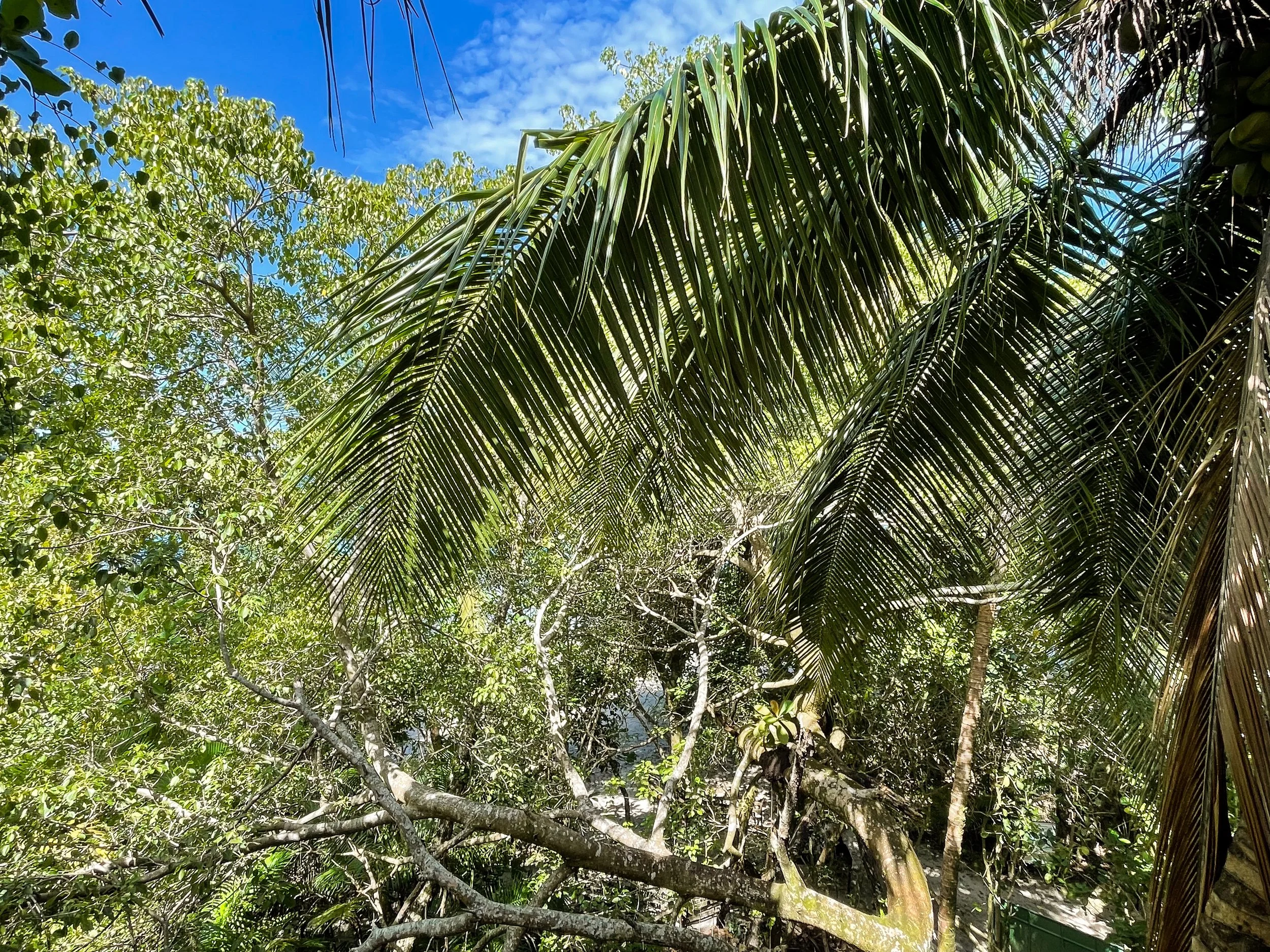
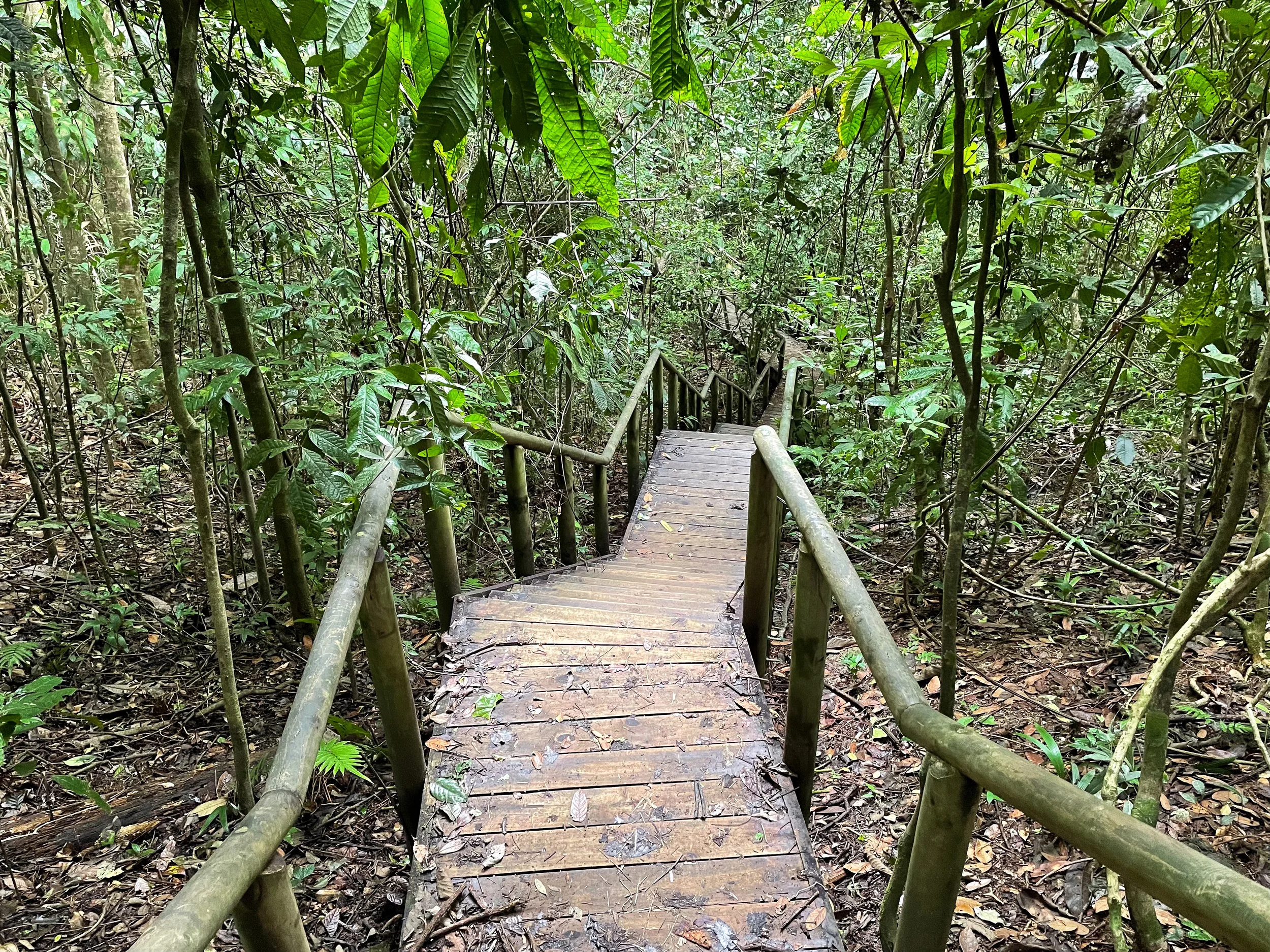
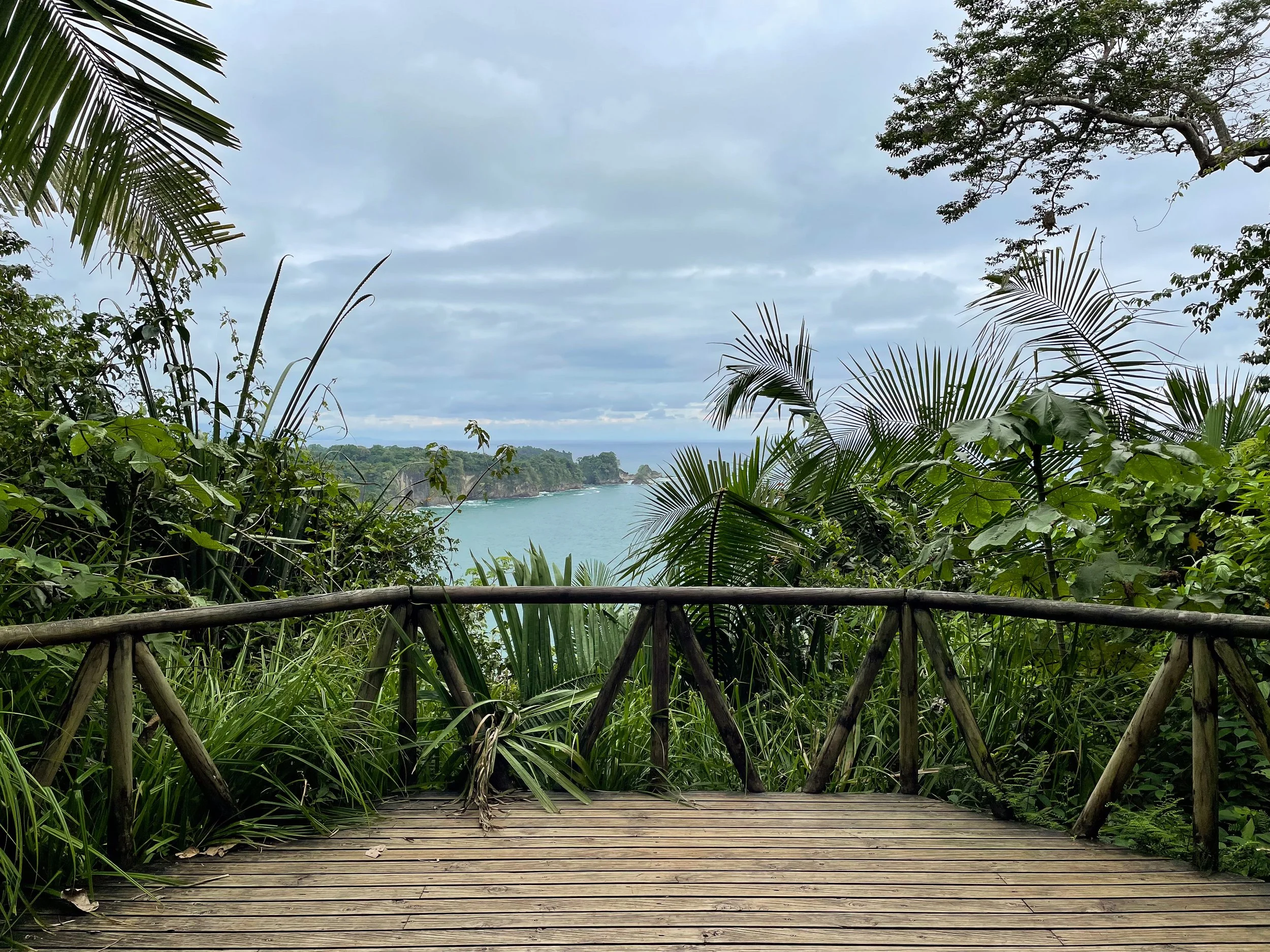
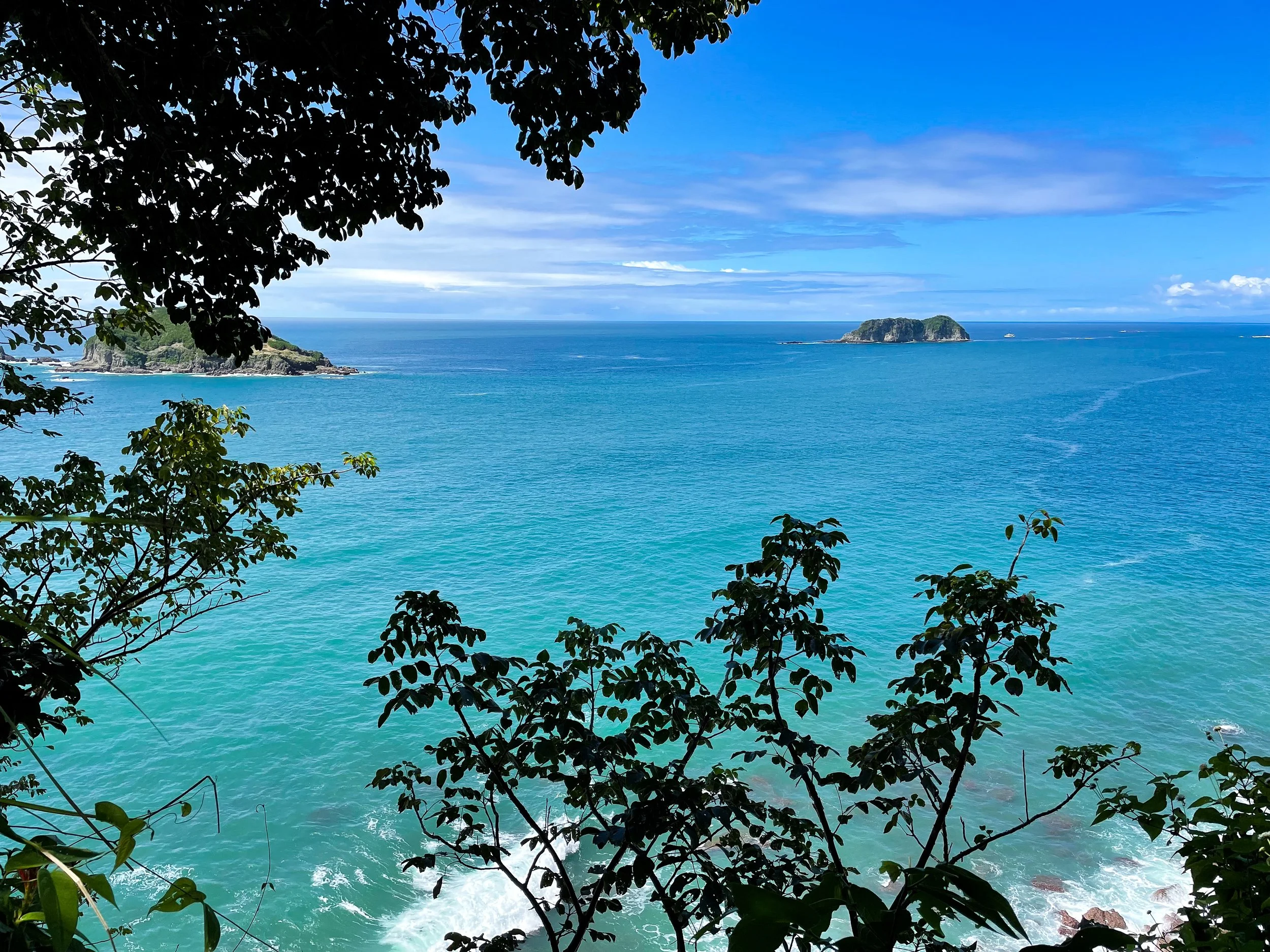
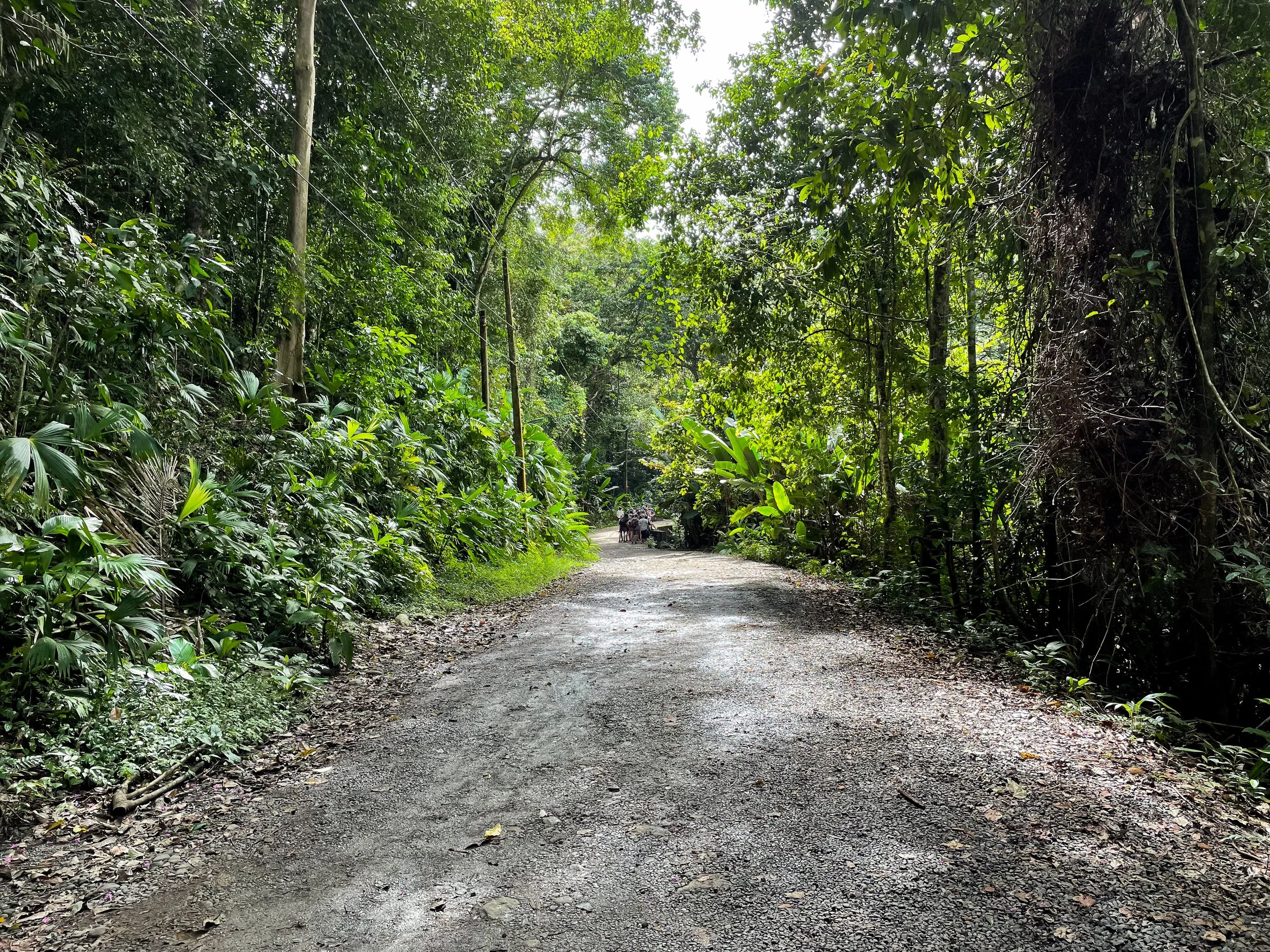
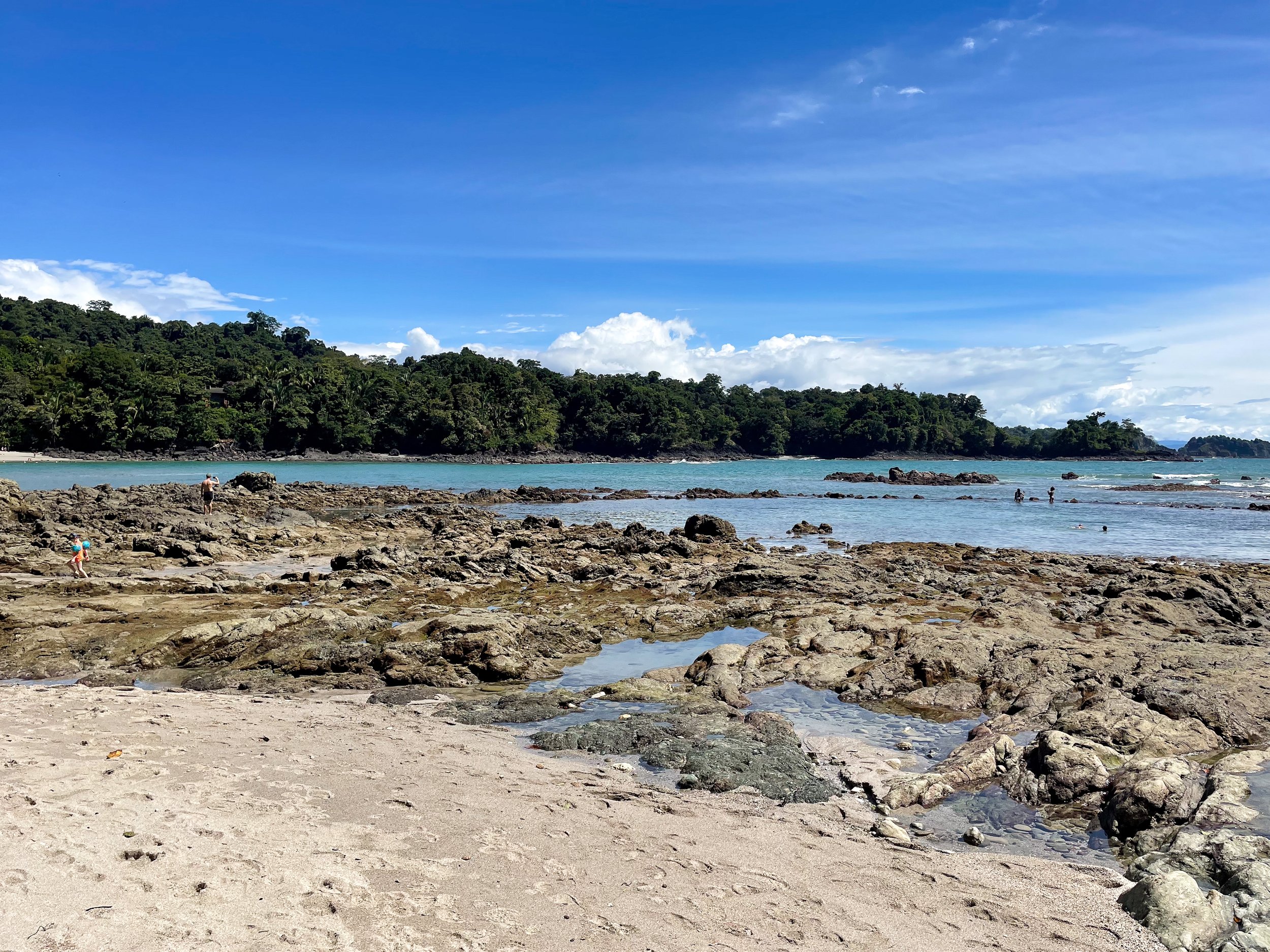
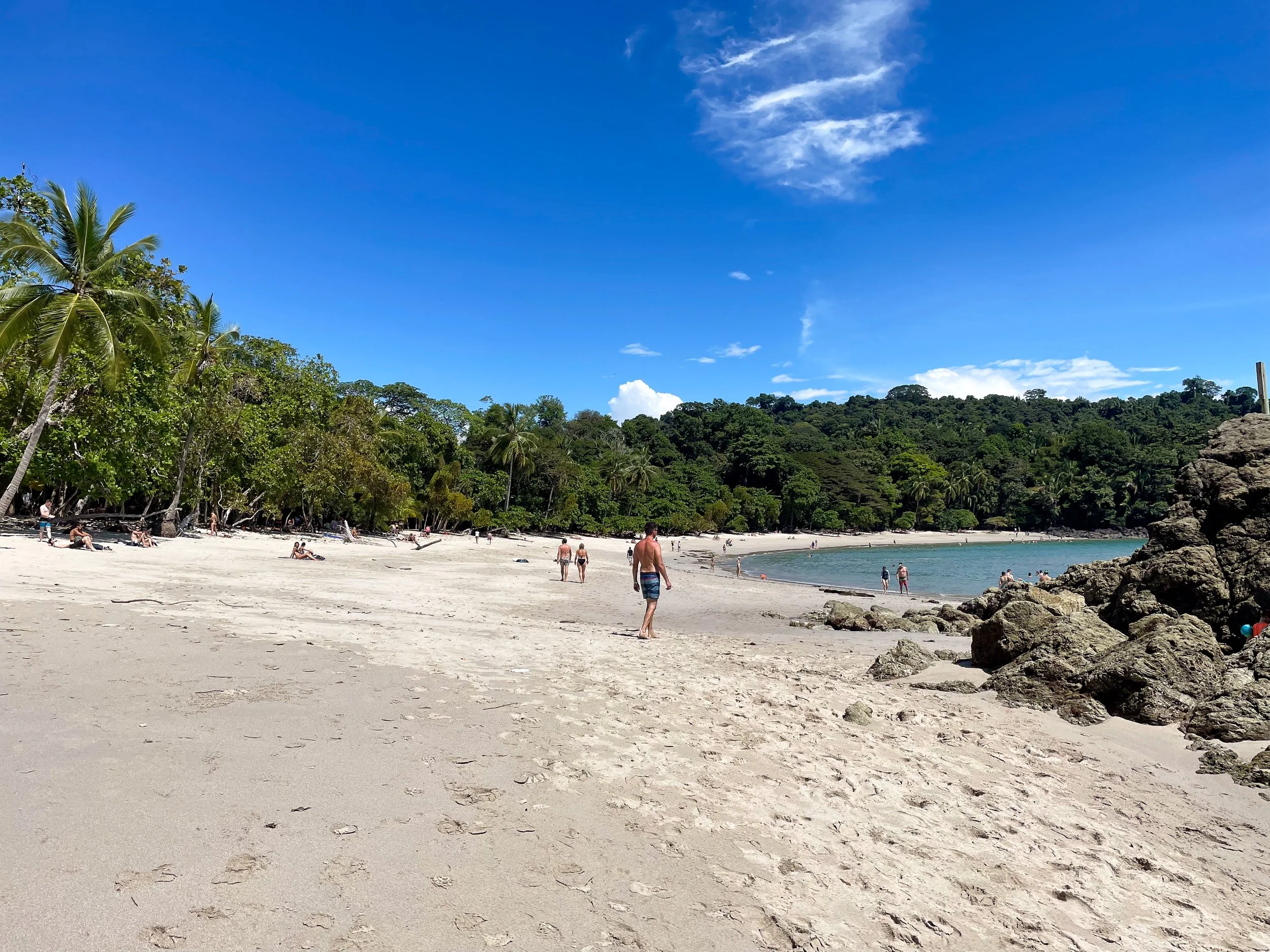
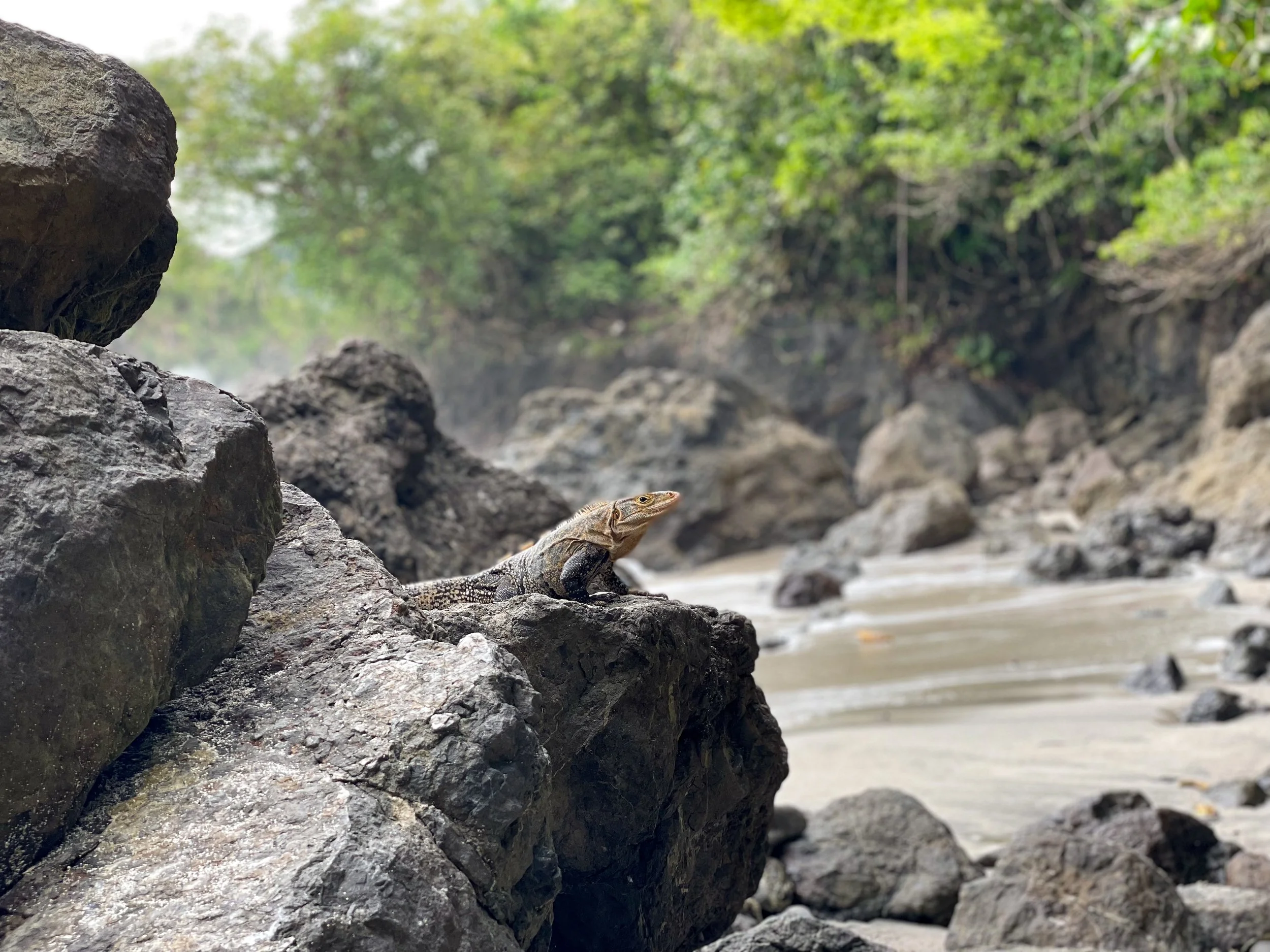
Manuel Antonio National Park is a nature preserve known for its biodiversity, rainforest, beaches, coral reefs, sloths, iguanas, spider monkeys, howler monkeys and hermit crabs. We spent an entire day in the park from opening until close hiking through the trails, visiting the beaches and spotting wildlife.
Manuel Antonio Trails
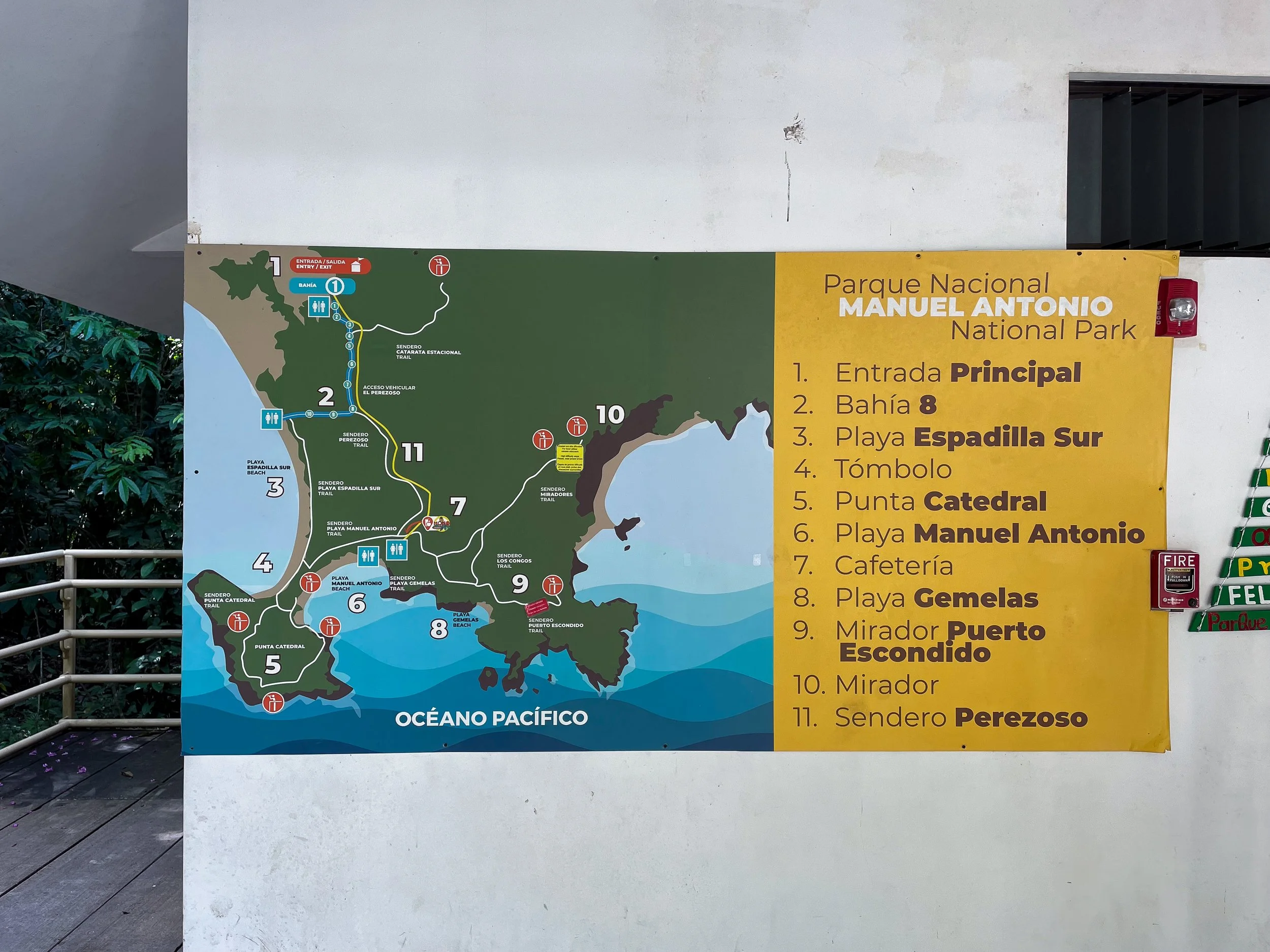
Sendero Principal. The park’s main trail. A 2.2km path that leads from the park entrance to Manuel Antonio Beach. Many guides spot sloths from here.
Sendero Perezoso (Sloth Trail). A 1.2 km trail that leads into the rainforest alongside Sendero Principal. It’s a good place to spot 2 and 3 toed sloths.
Sendero Punta Catedral. A 1.4km loop along the Tómbolo land bridge leading to the Punta Catedral Point lookout. We heard and spotted several howler monkeys here.
Sendero Playas Gemelas (Gemelas Beach Trail). A 1.6km trail off of Sendero Principal that leads to Gemelas Beach and the Escondido Beach lookout.
Sendero Mirador. A 1.3km cliffside trail that leads to Escondido Beach. It is an extension of Sendero Playas Gemelas. We couldn’t finish the trail because the boardwalk was badly damaged.
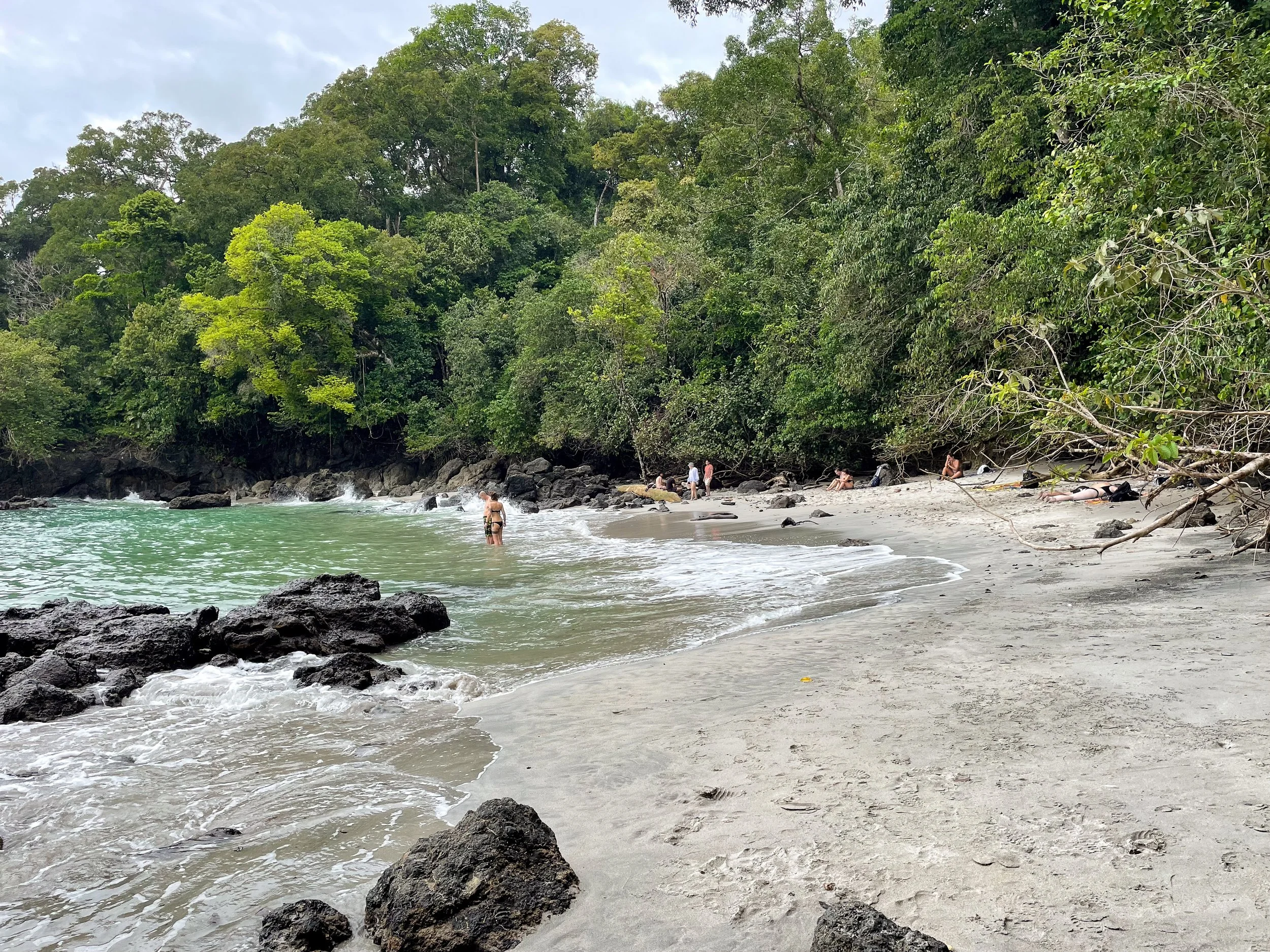
Manuel Antonio Beaches
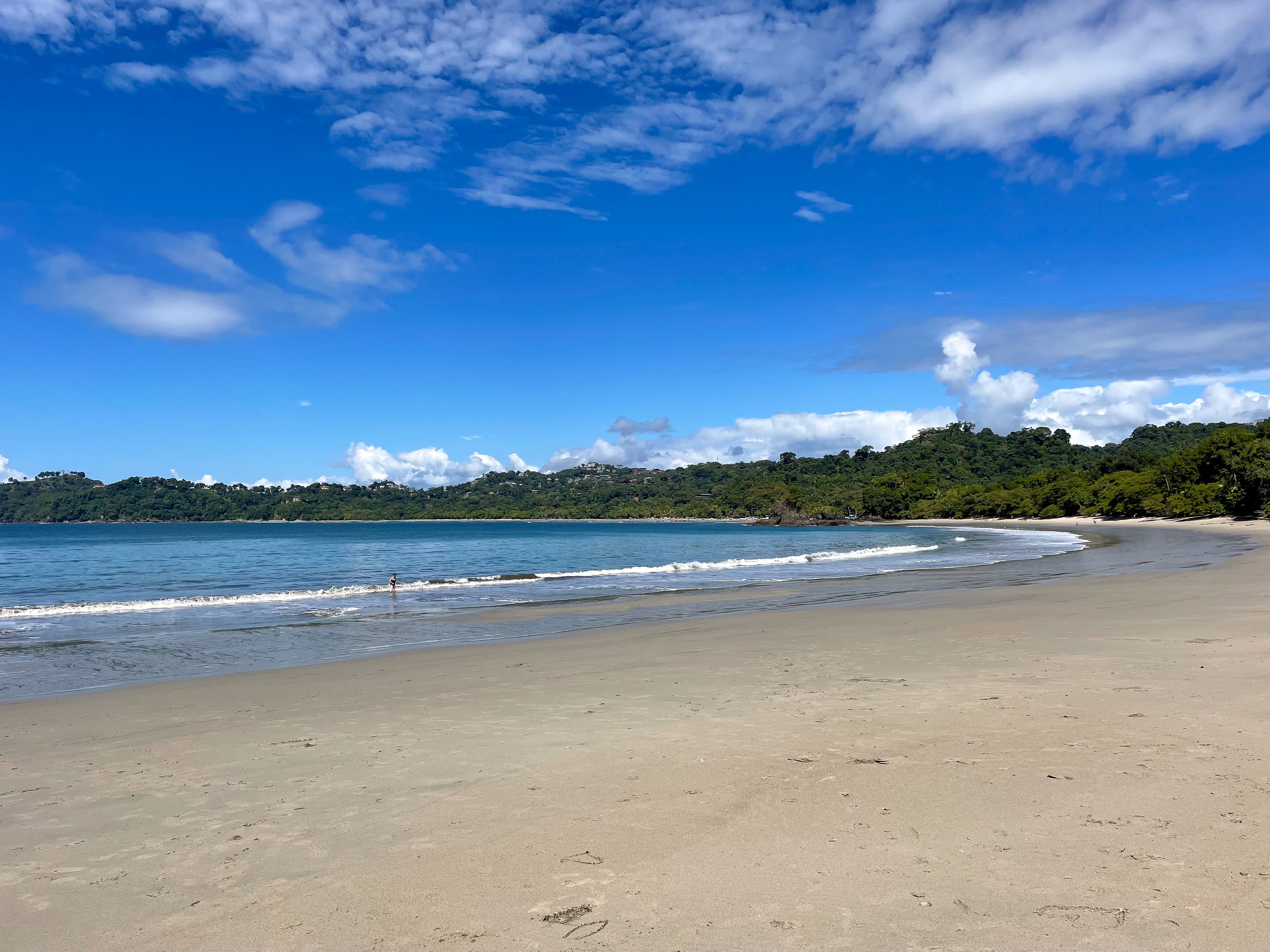
Espadilla Beach South. A long bow shaped beach with a narrow shoreline in Manuel Antonio Park. It’s a continuation of the city beach.
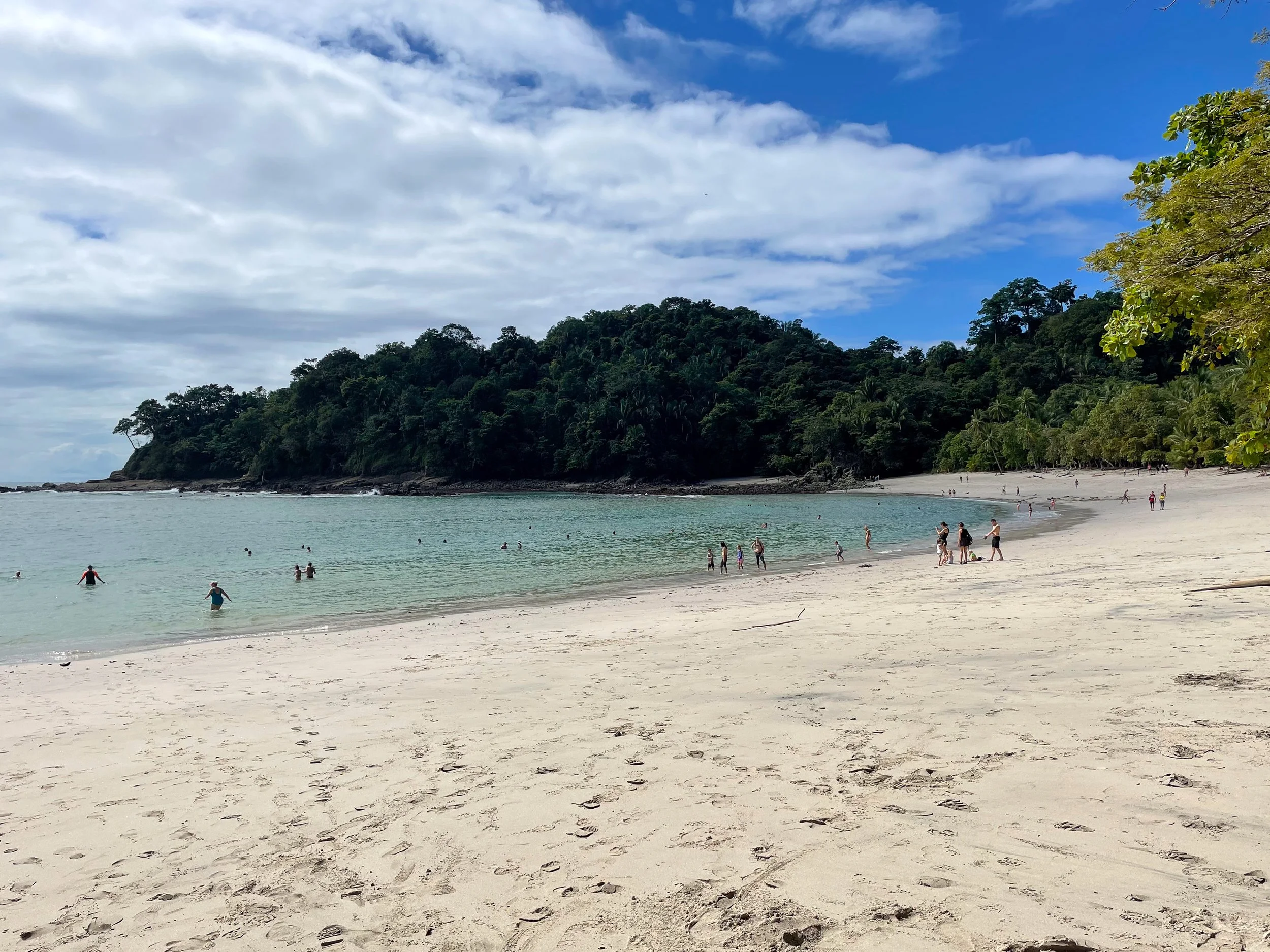
Manuel Antonio Beach. The park’s main beach with a white sand shore hugging the tree line of the lush rainforest.
Playa Gemelas. A small natural beach reachable by the Sendero Playas Gemelas.
Hiring a Guide or Not?
Hiring a naturalist guide guarantees you will spot a sloth in Manuel Antonio however, it’s not necessary. Guides will stay along the main road because it’s easier to spot sloths and other animals from. We opted out of hiring one and walked the Sloth Trail adjacent to the main road. It’s less traveled and equally as easy to spot sloths. We created a rag-tag group with other travelers on the trail and used our combined eyesight to spot sloths, monkeys, toucans, crabs and poison dart frogs.
Pro Tip 1. Guides can be hired at the entrance to the park for a negotiable fee depending on the length of hire.
Pro Tip 2. If without a guide, do not trail too closely behind them. They can get aggressive if they hear you listening in or watching sights they point out.
Pro Tip 3. If you don’t hire a guide, bring a good pair of binoculars view wildlife with.
Helpful Park Information
Hours. The park is open from 7am - 4pm daily (closed on Tuesday).
Tickets. You need to book tickets online ahead of time.
No Plastic or Food. Single use plastic, alcohol or food is forbidden in the park, except at park restaurants.
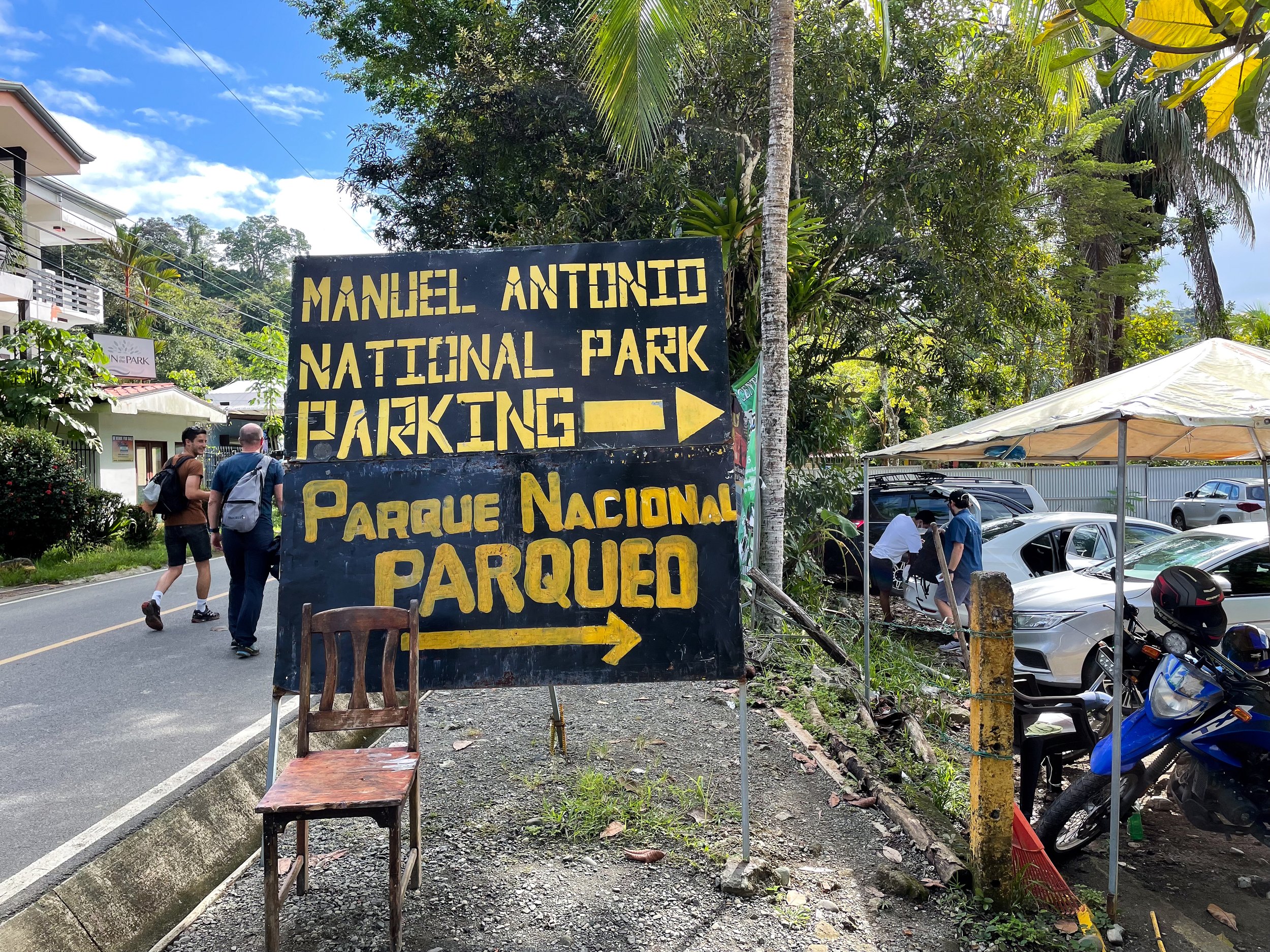
Parking. Arrive early and look for parking at the park entrance past all the scammers pretending to be park staff along the roadside. Parking should cost no more than 5,000 Colones.
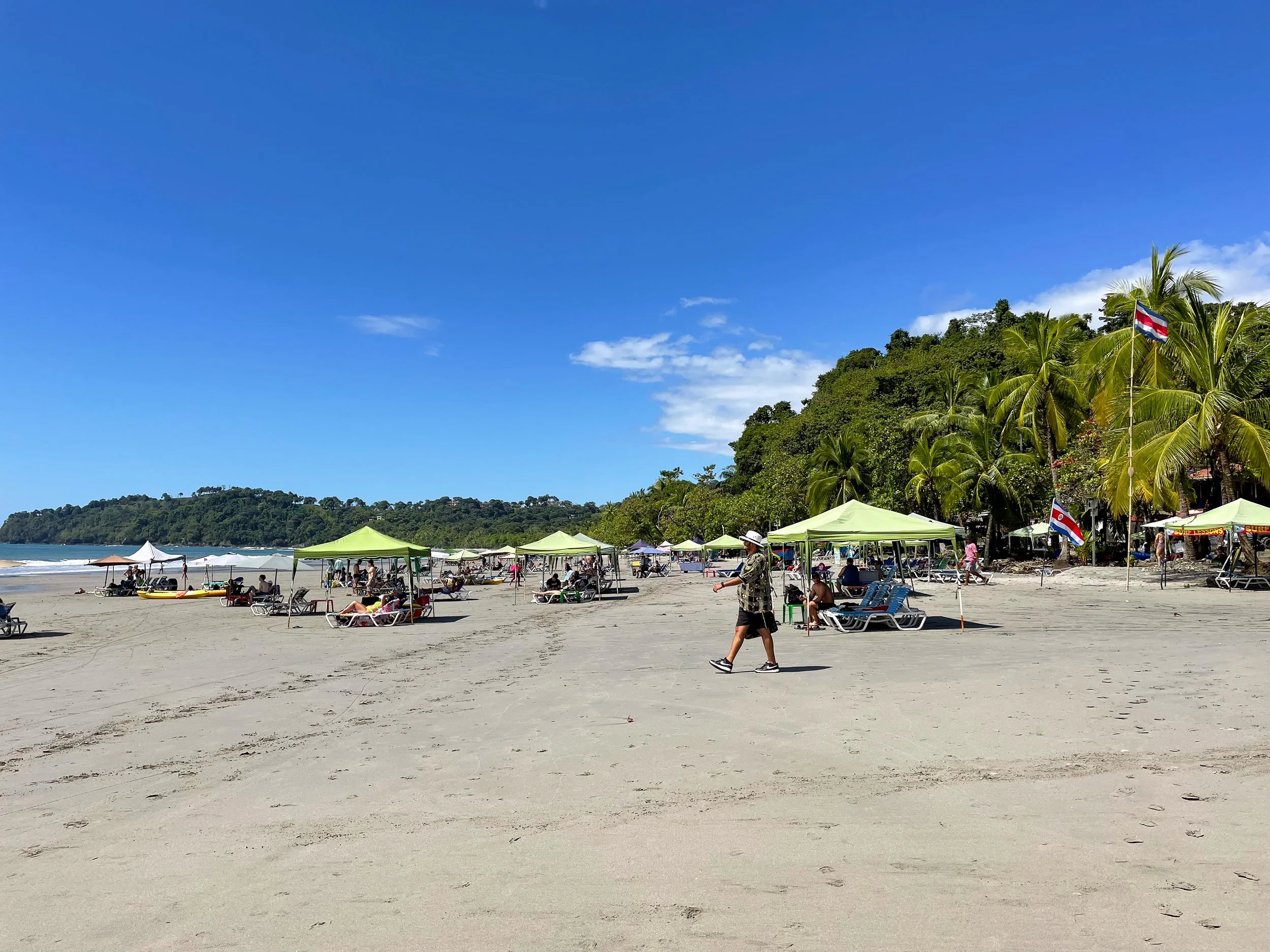
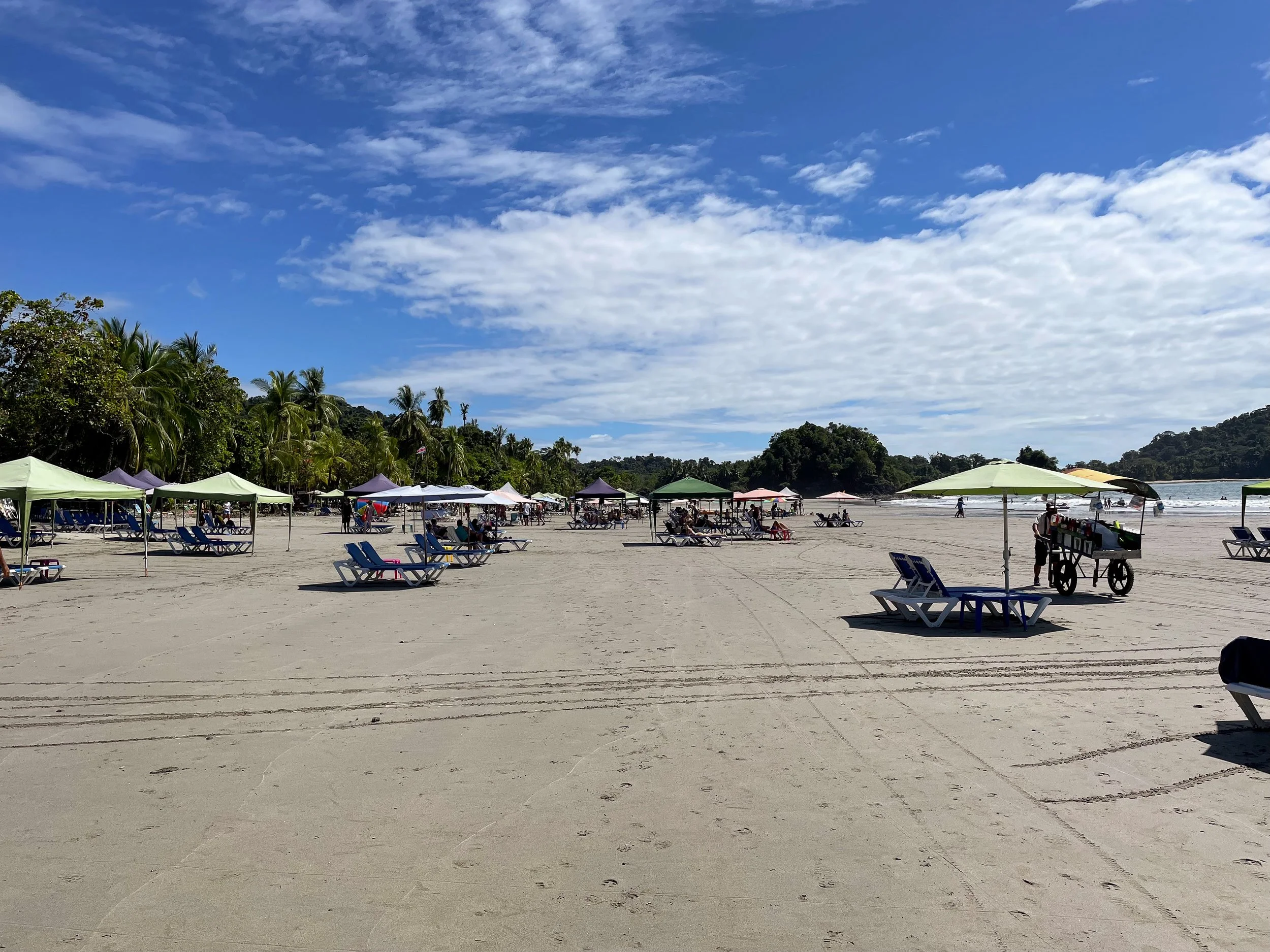
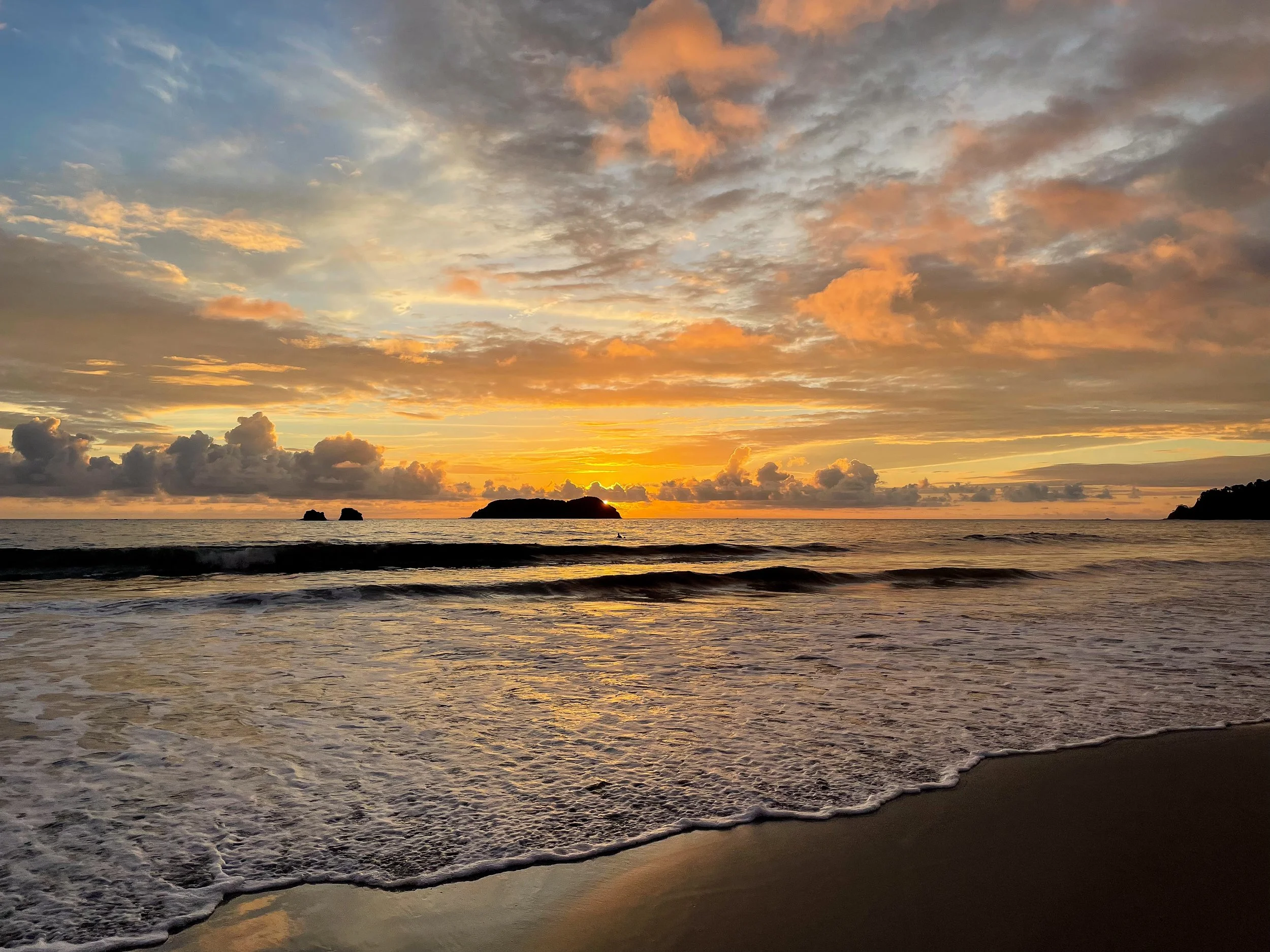
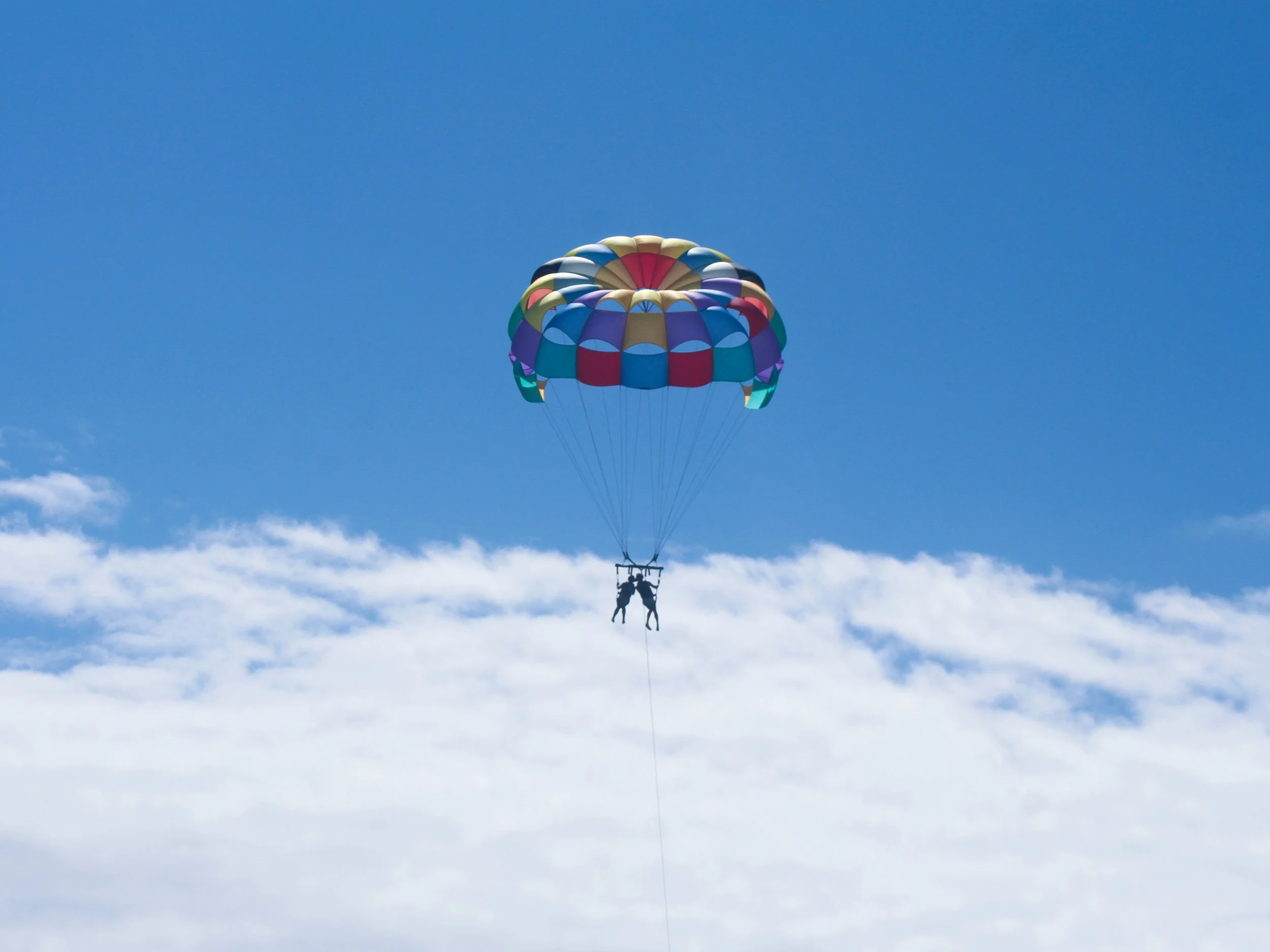
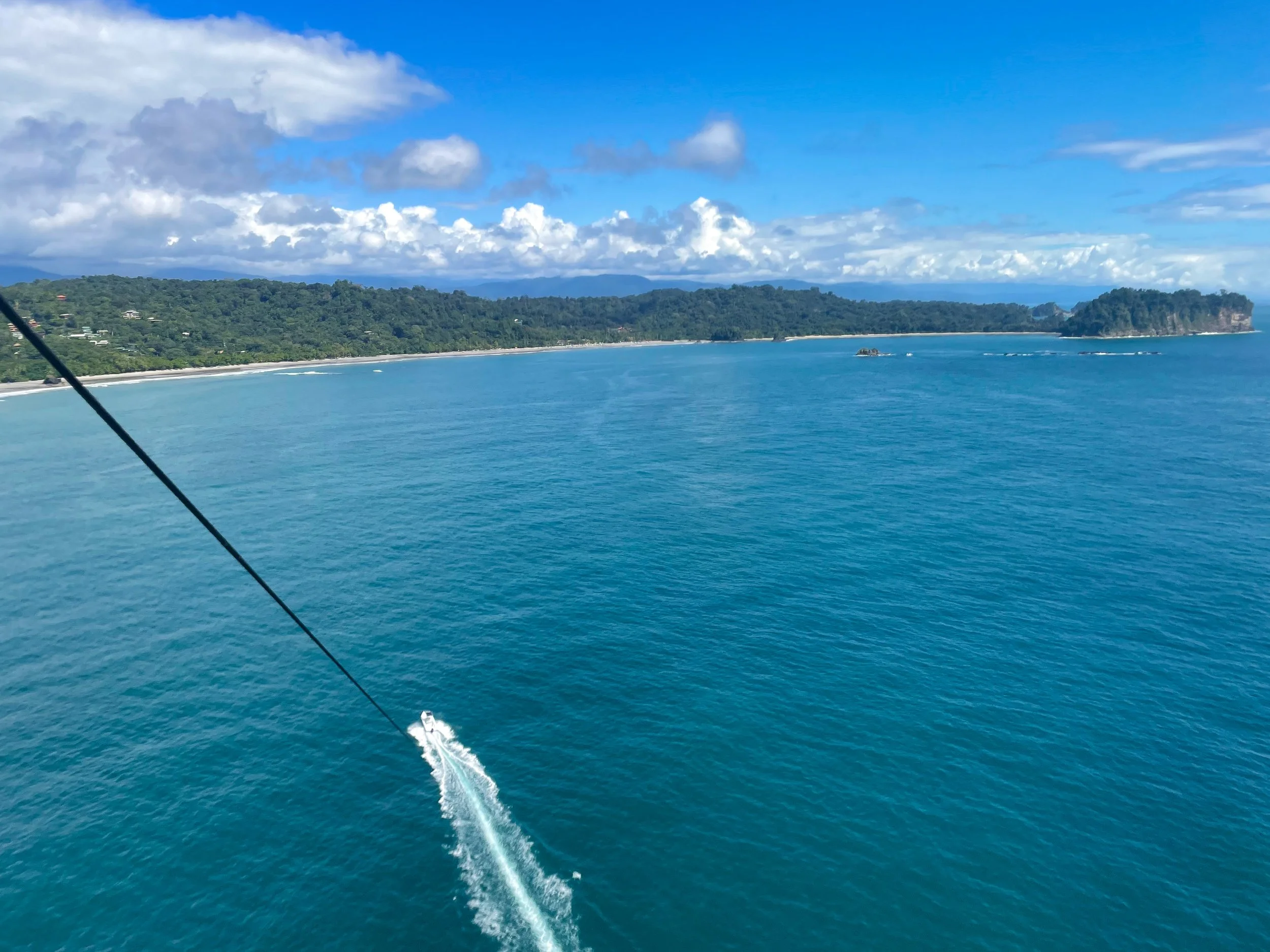
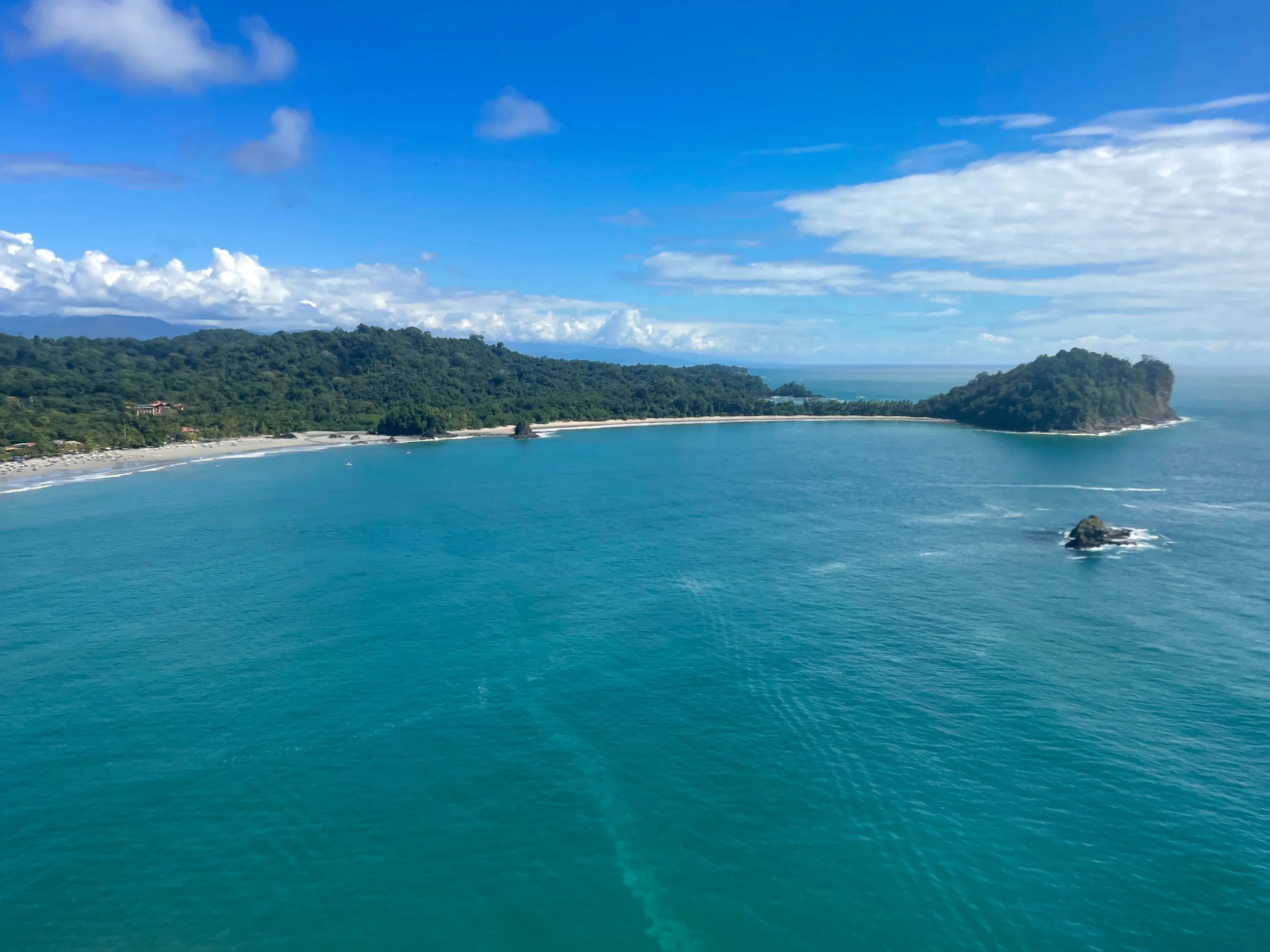
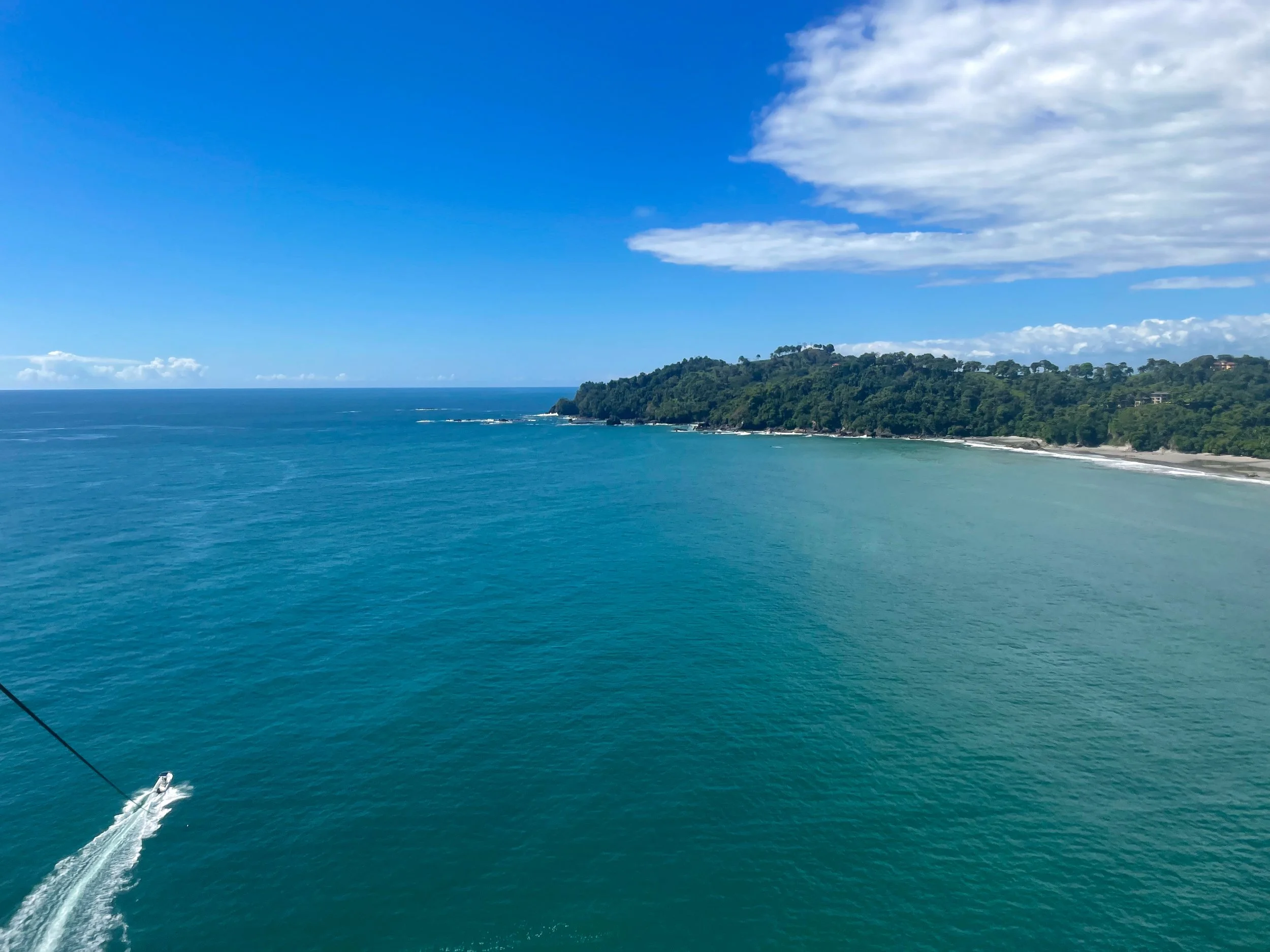
Espadilla Beach North
A lengthy beach extending outside of Manuel Antonio park with soft sandy shores and swimmable waters. There are nearby restaurants, beach bars, souvenir shops, surf schools and chair & umbrella rentals. Visit Aguas Azules for parasailing tours above Manuel Antonio’s deep blue bay, sandy coastline, rocky outcrops and lush jungle.
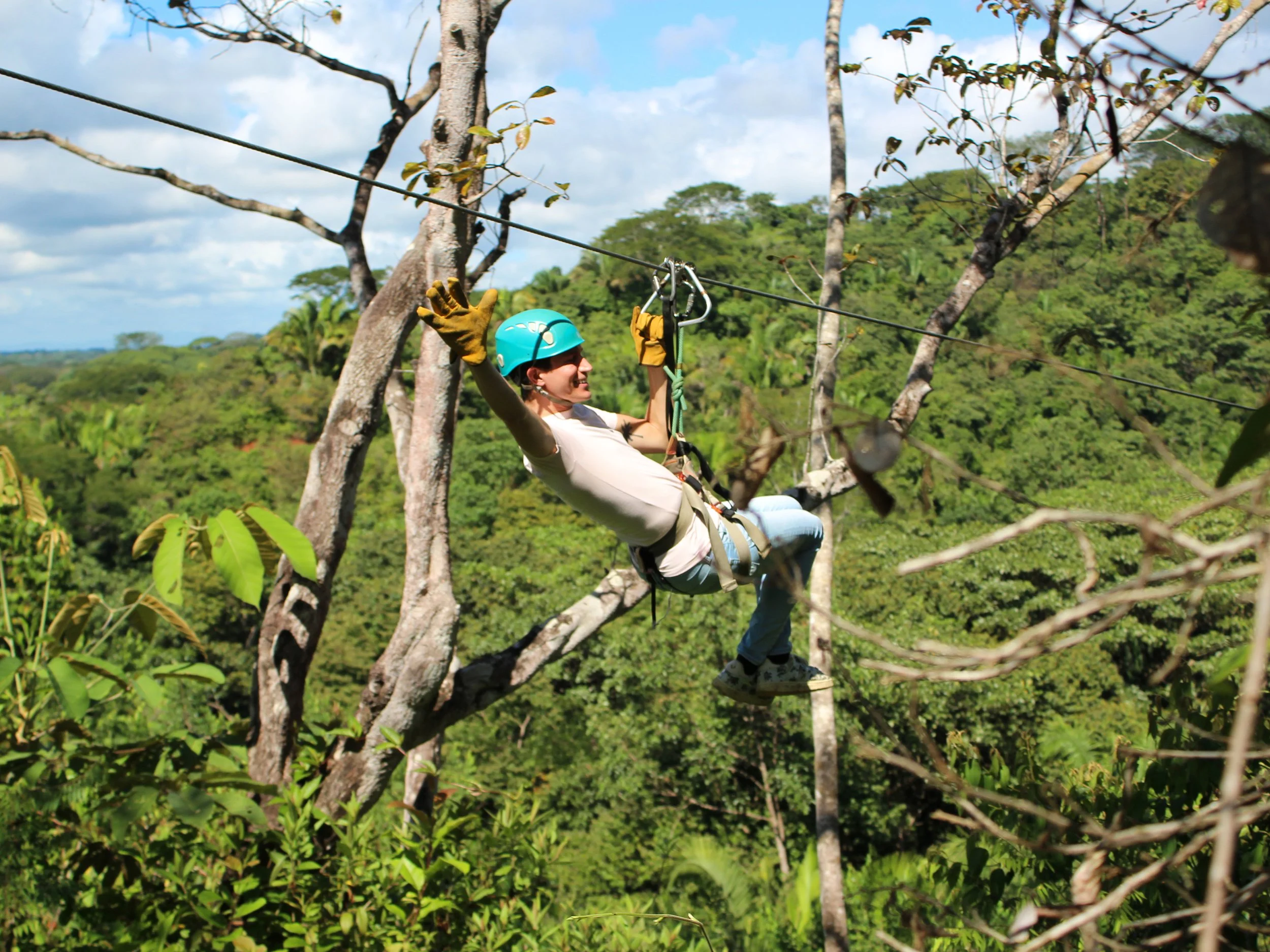
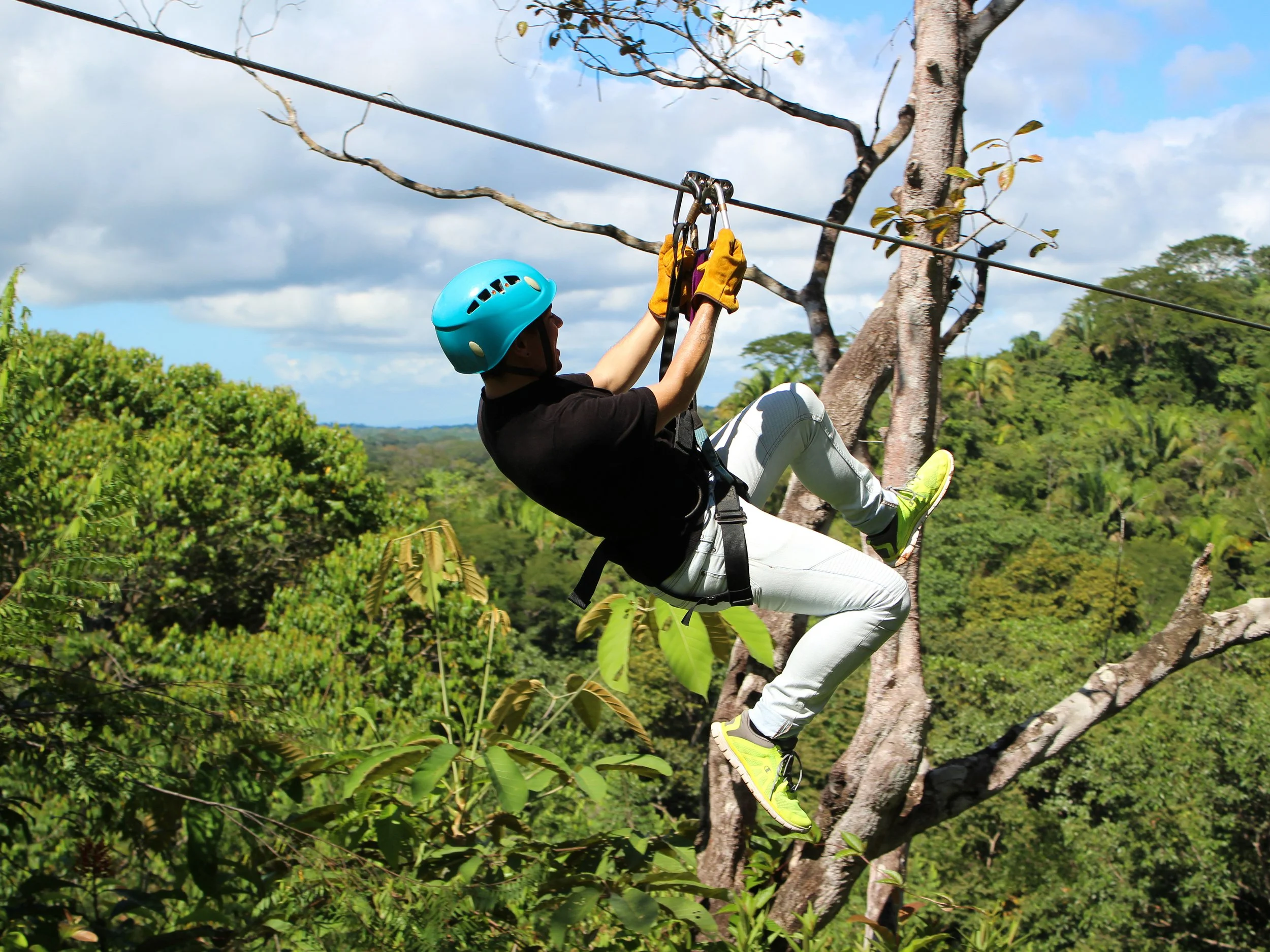
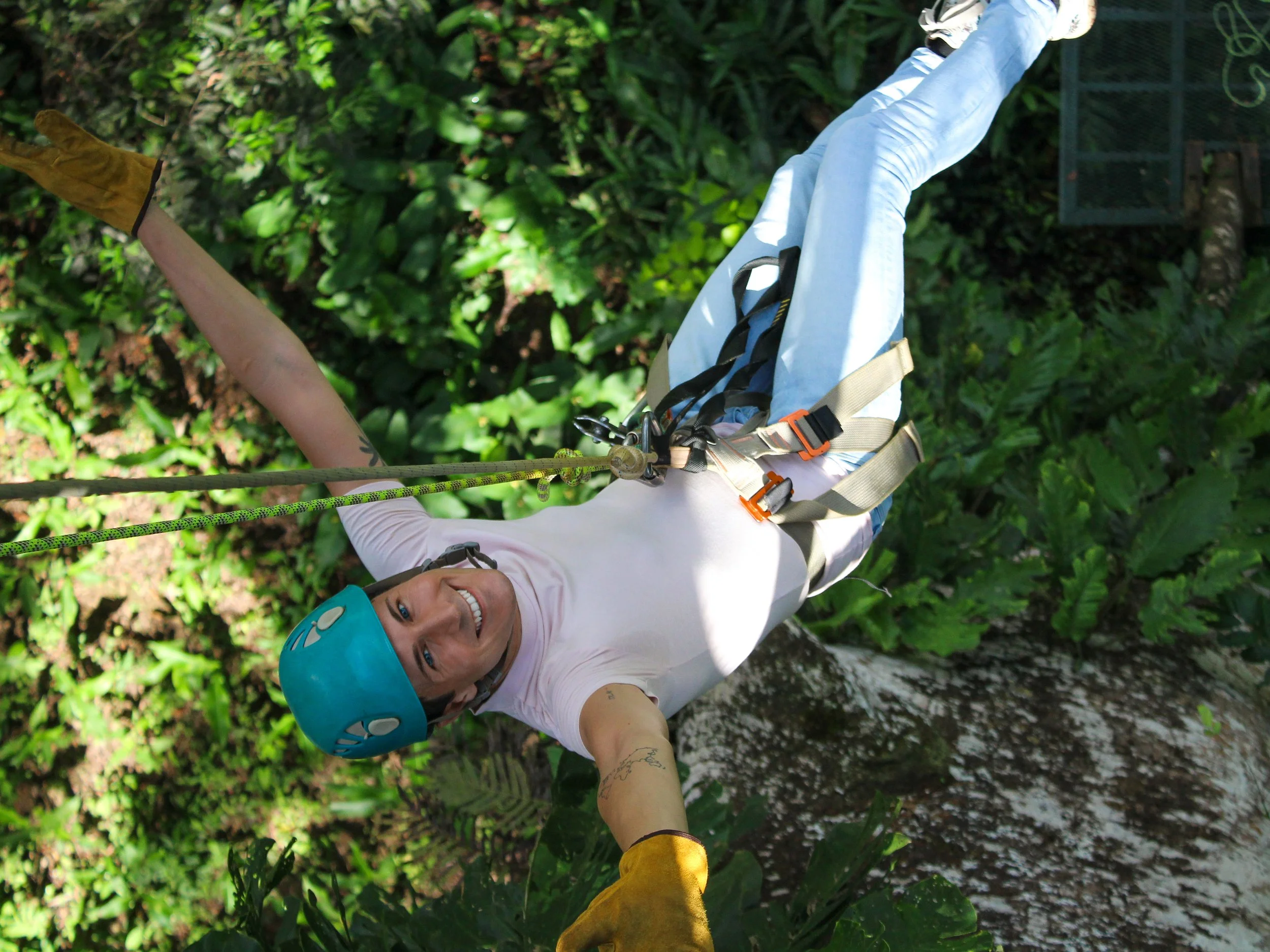
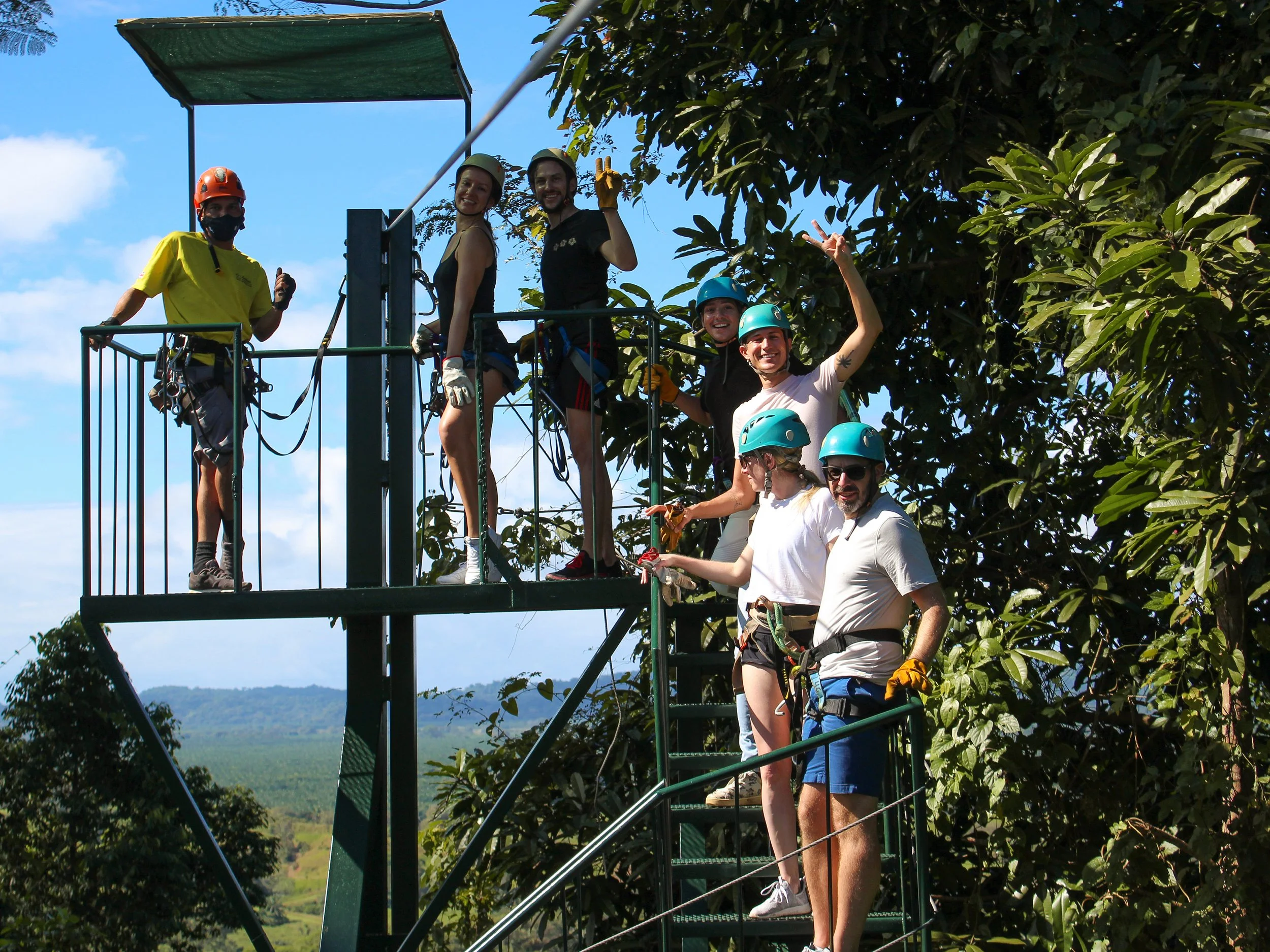
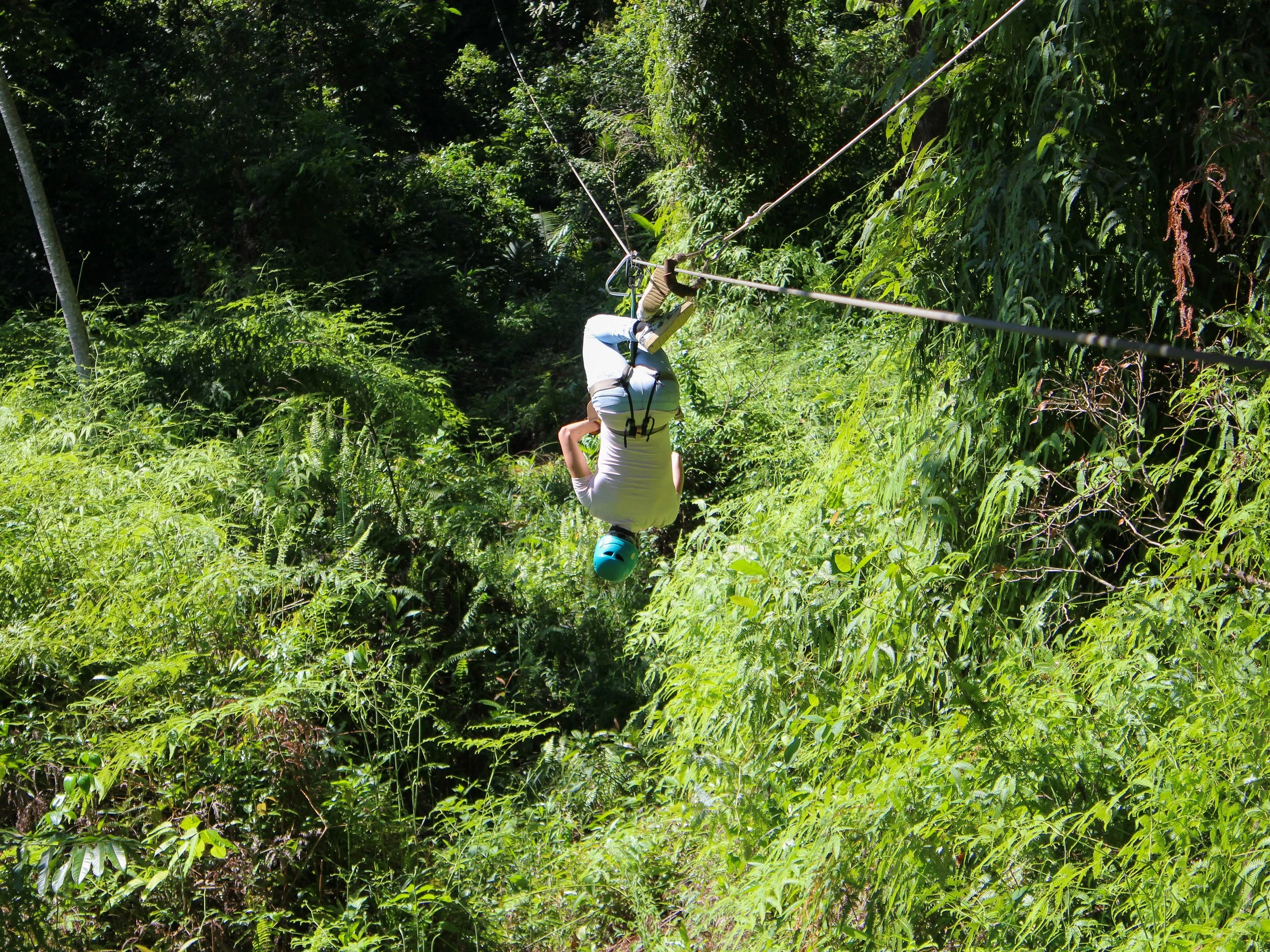
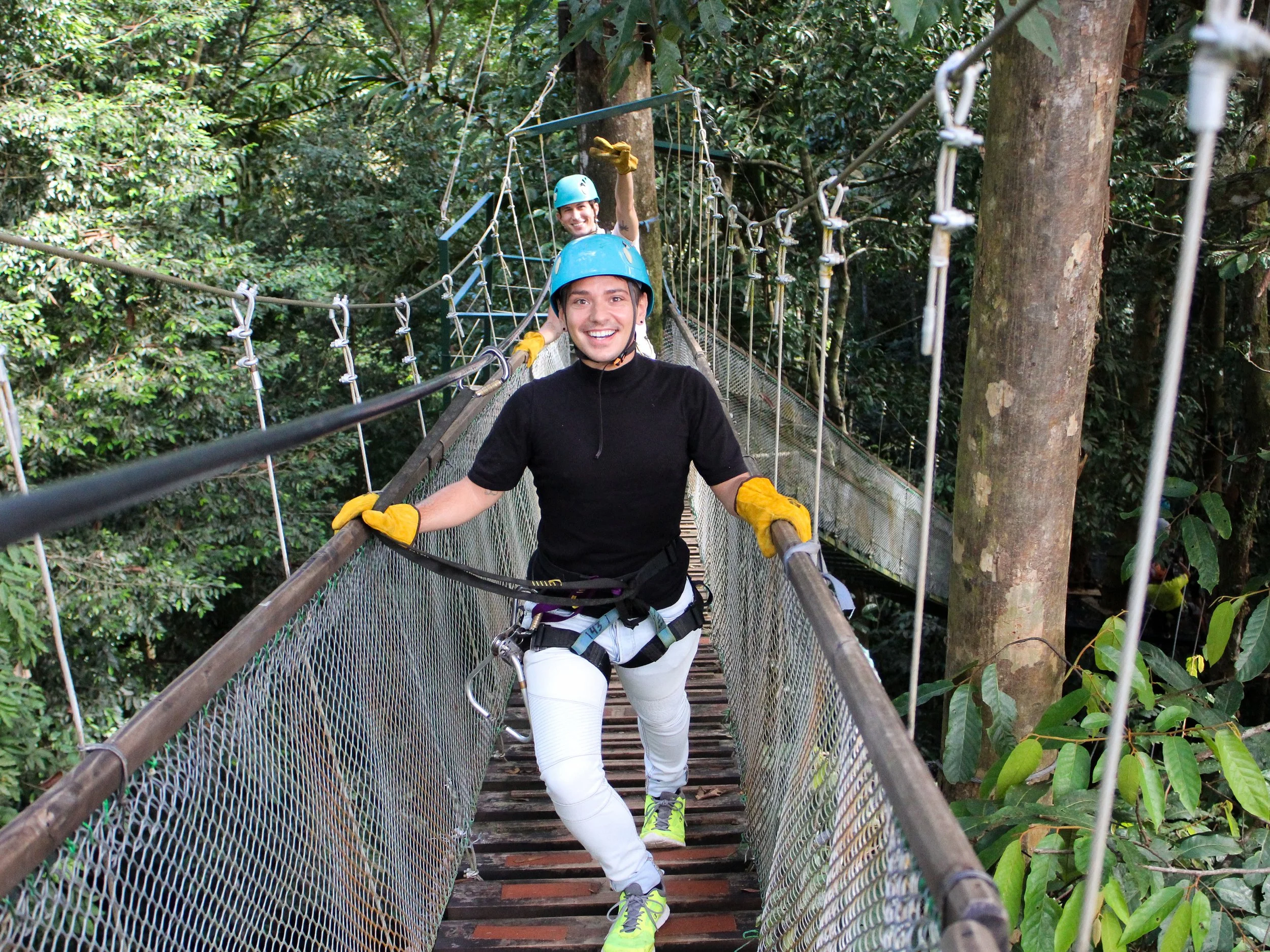
El Santuario Canopy Adventure Tour
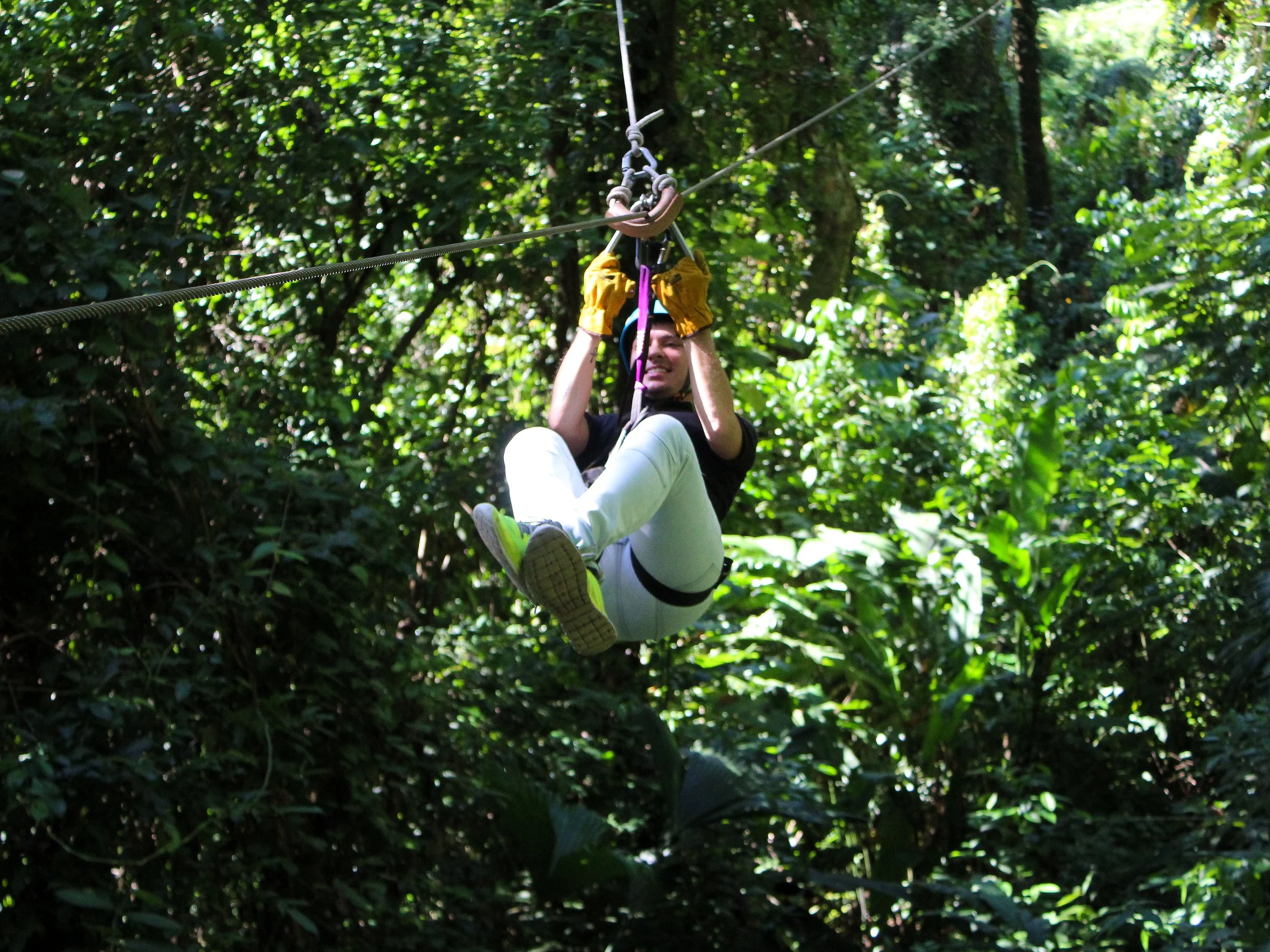
A semi-remote adventure park nearby Manuel Antonio. The course includes 10 zip-lines, 6 canopy bridges, 3 nature walks and 1 rappelling challenge through the forest. It includes Costa Rica’s longest zip-line at 4,300 ft. We got to ride a shorter one upside down. They offer two morning tours lasting about 4 hours each. Both include a fruit breakfast and lunch. Pictures cost $20 extra. Book here!
Manuel Antonio Finca
A town located outside of the Manuel Antonio National Park on the Pacific Coast. It’s a jungly beach town with hotels, restaurants, bars and nearby adventure activities.
Places to Eat & Drink
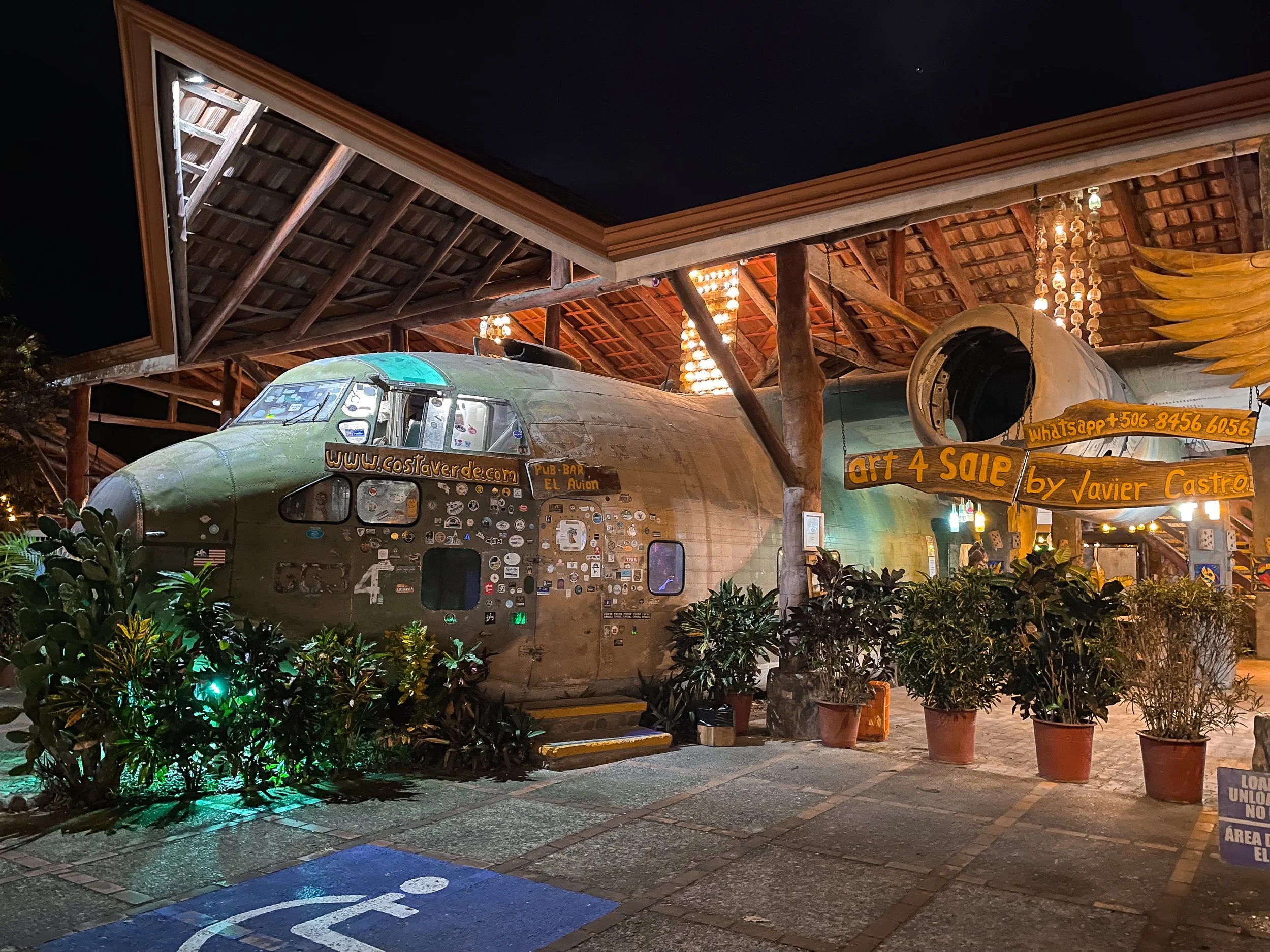
El Avión. An open air restaurant with wooden furniture built around an abandoned US military cargo plane. We ordered the crispy fried whole red snapper.
Contra Bar. A bar within the cargo plane at El Avión. We ordered a round of drinks and enjoyed them in the cockpit.
Café Milagro. A cafe in a tropical garden with house roasted coffee and breakfast dishes like guava and cheese crepes, banana pancakes and fresh fruit.
Restaurante Buru Seaside Manuel Antonio. Stop here for 2 for 1 happy hour cocktails from 3-6pm and sunset views after spending the day in Manuel Antonio park.
Meduza Restaurant. A hotel restaurant with a limited menu. We ordered and shared the seafood rice with a bottle of Imperial, Costa Rica’s most popular beer.
Where to Stay
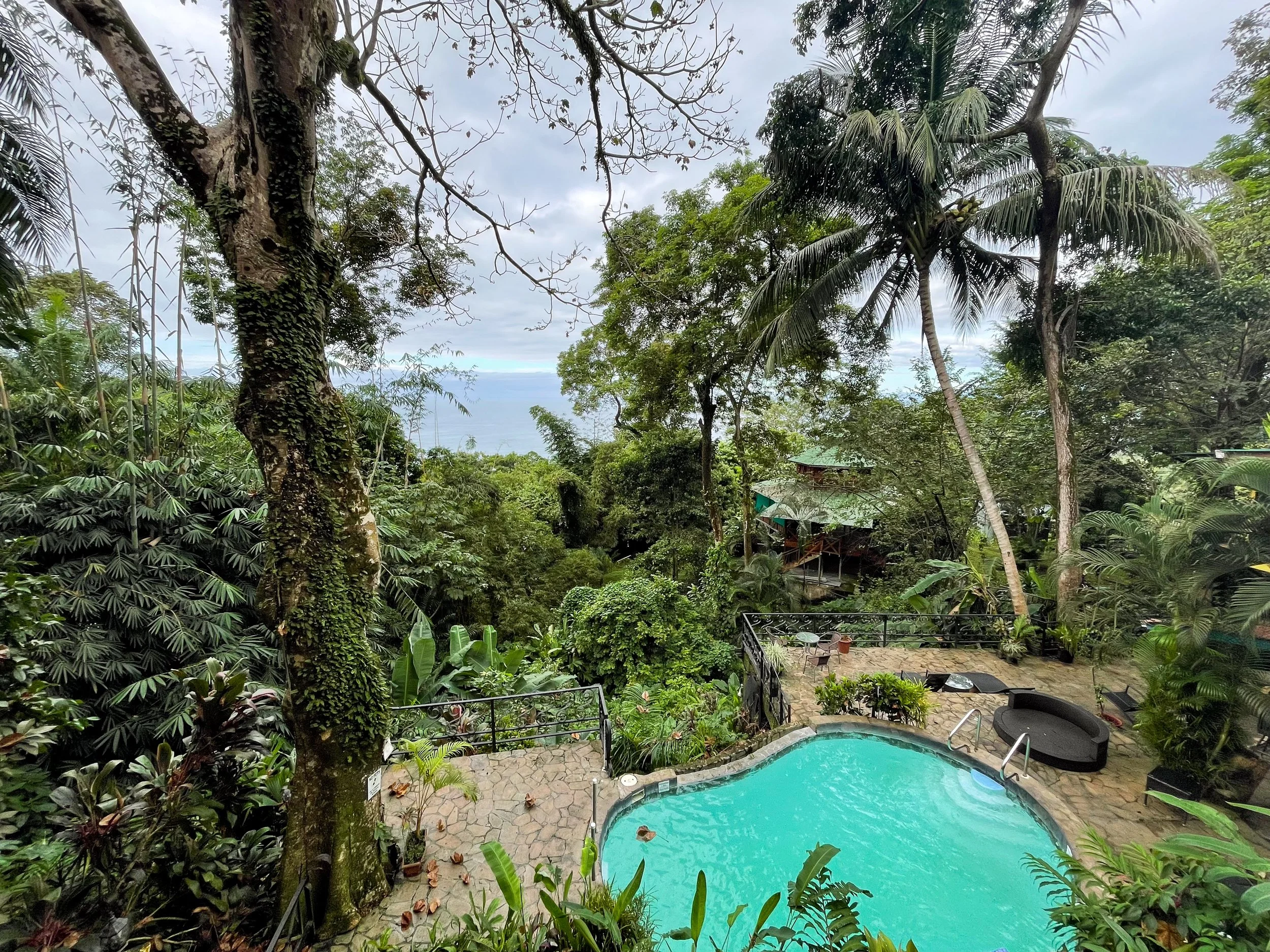
We stayed at Mango Moon Villa, a boutique hotel located near Manuel Antonio National Park. The hotel has views overlooking the Pacific Ocean. We stargazed in the evening and watched toucans and monkeys move between trees during the day. It includes a restaurant and bar with breakfast and dinner service.
Costa Rican Cuisine
When it comes to cuisine, Costa Rica is the land of tropical fruit, rice and beans.
Tropical Fruits. Tropical fruits are grown, sold and served across the country. Fresh papaya, watermelon, pineapple and banana are regularly served for breakfast alongside a glass of freshly squeezed orange juice.
Gallo Pinto. A rice and bean mixture served with a slice of fried plantain, scrambled eggs, queso palmito (fried cheese) and tortilla. It’s a common breakfast dish.
Sopa Negra. A black bean soup with cilantro and a hard boiled egg. Typically served for lunch or dinner.
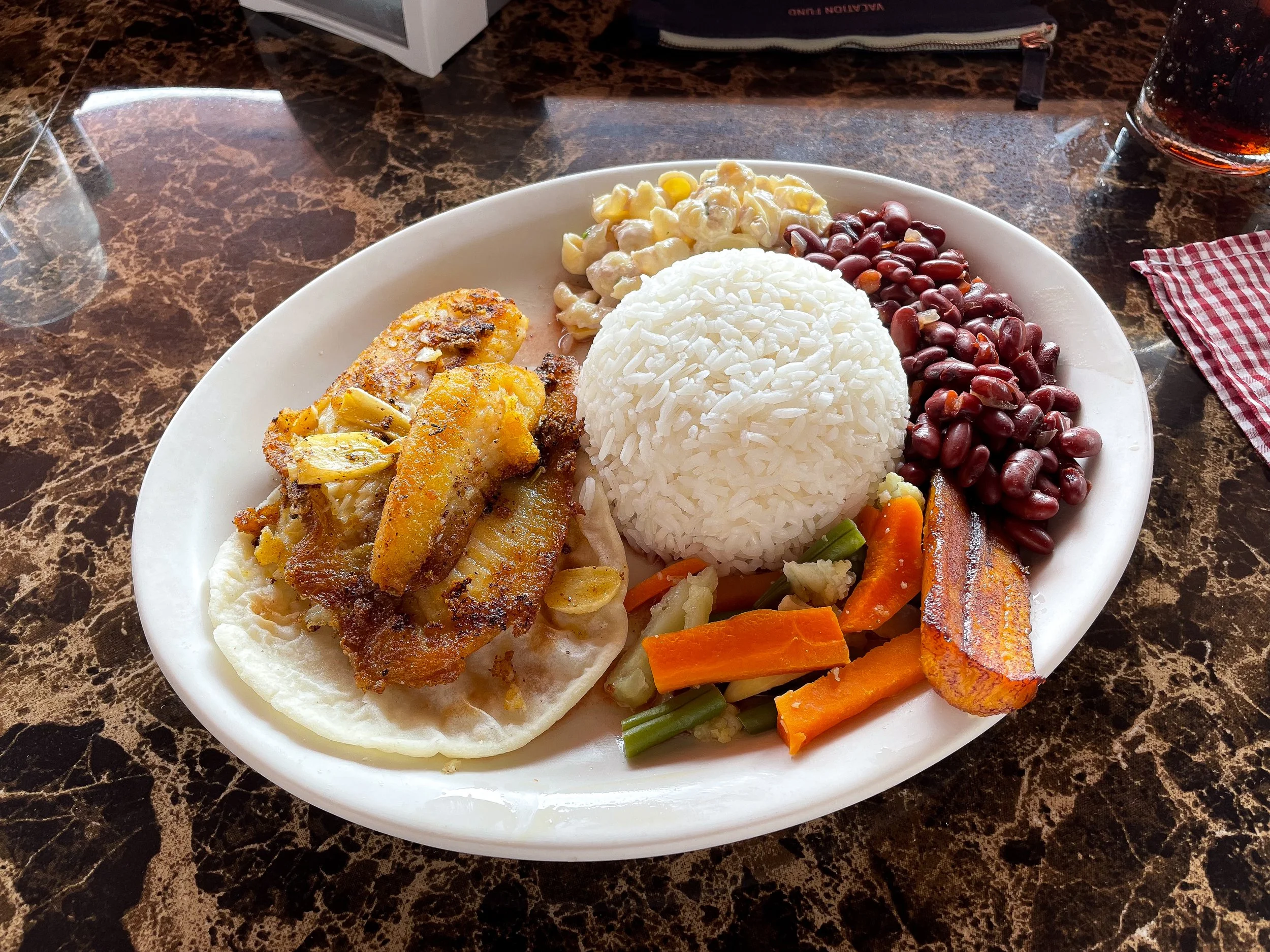
Casado. The national dish, a plate with rice, beans, grilled veggies, pasta salad, fried fish (or any meat protein), tortilla and sweet plantain. It’s typically served for lunch or dinner.
Imperial. Costa Rica’s national beer served almost everywhere. Order one at a bar or a bucket at the beach.
Driving in Costa Rica
Driving in Costa Rica is very scenic and one of the best ways to explore the country. Curvy roads snake through valleys and along mountain ridges with steep sections and roadside lookouts.
Visibility. Rain and fog drastically reduce visibility the higher we drove in altitude.
Road Conditions. Main roads are well maintained while back roads are often unpaved or in need of repair.
Rent a 4WD. A 4 wheel drive is necessary to navigate the roads.
Narrow Lanes. Many roads outside of the cities are 2 lanes wide with the occasional 1 lane bridge.
Traffic Jams. Traffic within and into San José was congested.
Refueling. Gas station attendants pump gas for you.
Speed Bumps. There are speed bumps in towns often with vendors set up selling snacks, fruit and juice.
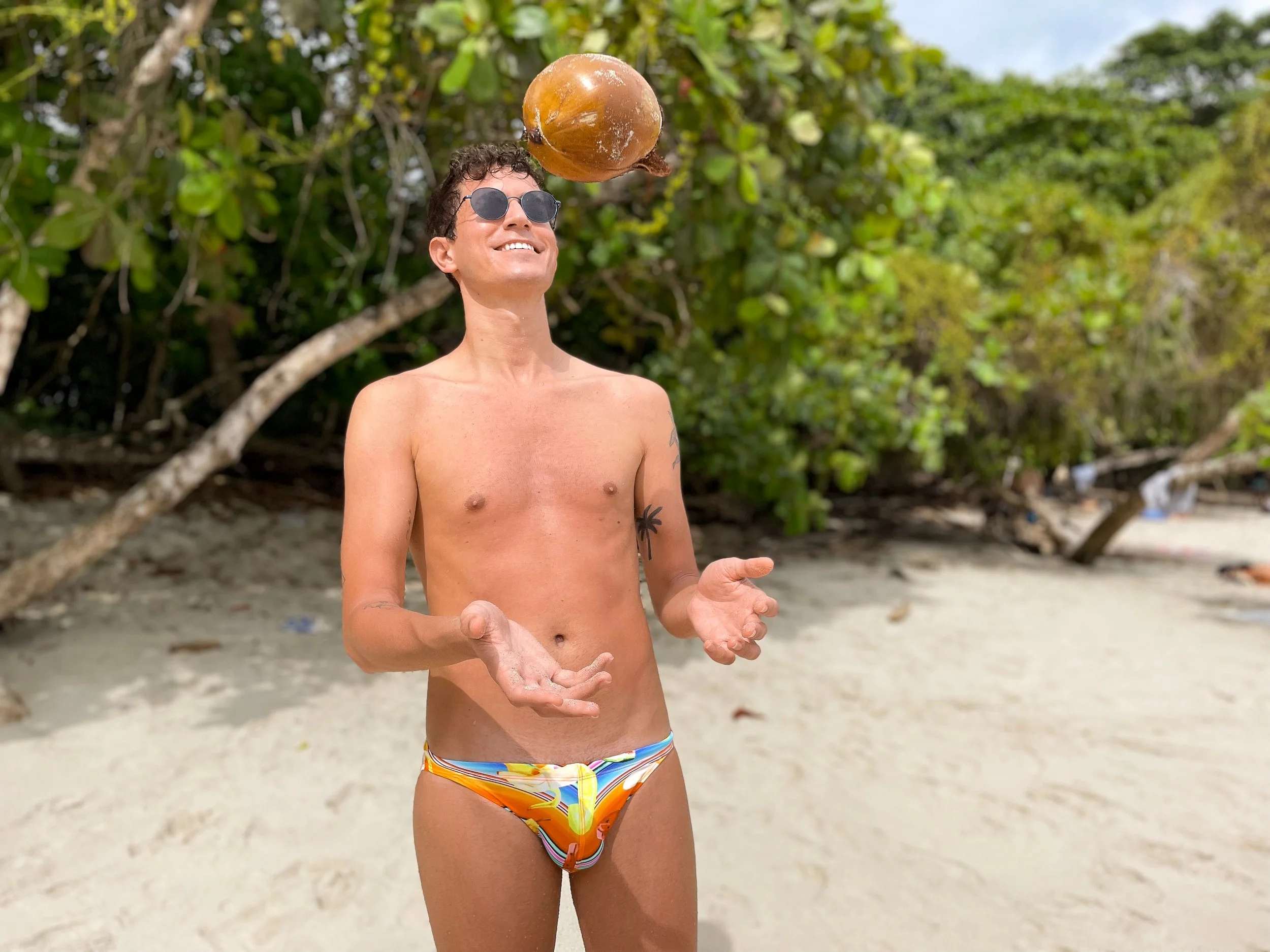
Falling Fruit. Don’t park under any fruit trees. Coconuts, papaya or other falling fruit can badly damage your car. This is often not covered by rental insurance.
For Next Time…
Costa Rica is one of the most incredible places we’ve had the pleasure to travel to. From its biodiversity to breathtaking landscapes, it’s a destination that has left us wanting to return and explore more. When we do, some locations at the top of our list are:
Poás Volcano National Park. The largest and most active volcano in Costa Rica with a gaseous crater, hot springs and hiking trails.
Guanacaste. A Province in the northwest of the country with surfing beaches, nature reserves, volcanoes, hot springs, waterfalls and wildlife.
Refugio Nacional Gandoca-Manzanillo. A marine reserve on the Caribbean side of the country with white sand beaches, coral reefs, mangrove forests and wetlands.