


Peru Coast Travel Guide: Nazca Lines, Huacachina & Ancient Civilizations
Venture along Peru's coast where ancient civilizations, desert oases, vineyards and world renowned cuisine shape one of South America's most unique regions.
Peru, Ancient Land of Mysteries
Peru is known for many great things, including the ruins of ancient civilizations, stunning nature and an unparalleled level of cuisine. We toured Lima and explored the Peruvian coast visiting numerous towns by bus including Pisco, Paracas, Ica, Huacachina and Nasca. During our past two trips along the Peruvian Coast, we were able to have authentic and local experiences through our own exploration and the eyes of multiple friends we met along the way.
Lima, The Capital of Peru
Lima is an expansive coastal city with stunning ocean views, Spanish colonial architecture, ancient ruins, catacombs, important cultural sights and irresistible cuisine, especially the seafood. In fact, we credit this trip with converting us from vegetarians into pescatarians. Lima is often an entry point to the country and jumping off point for other Peruvian destinations.
Lima Neighborhoods
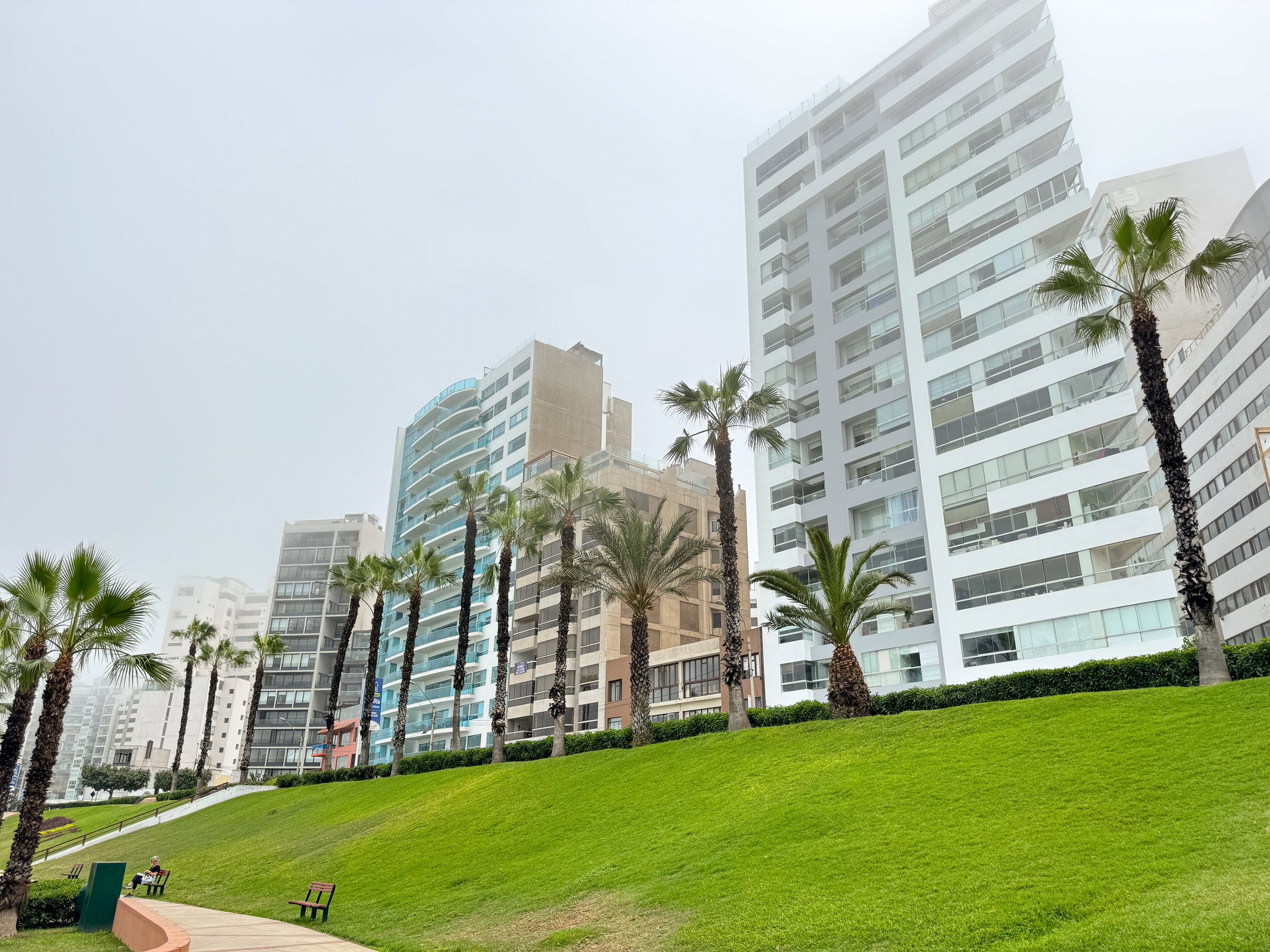
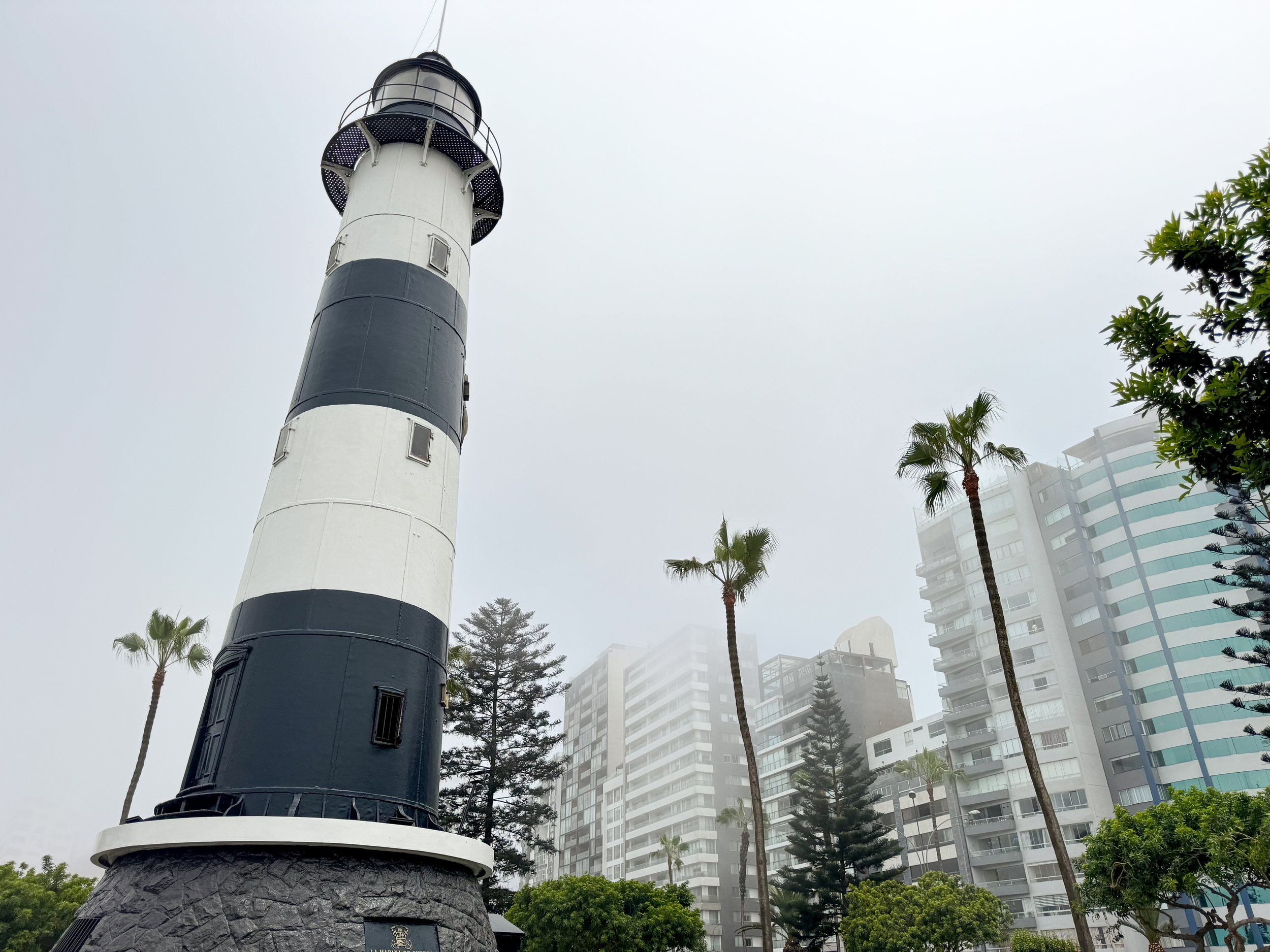
Miraflores. Which translates to “Look at the Flowers” is a green neighborhood in the heart of the city with lush parks and coastal vistas. It’s an elevated area with modern skyscrapers, beautiful residences and many restaurants.
Locramar. An outdoor shopping mall in Miraflores with stores, restaurants and bars built into a cliff overlooking the Pacific Ocean.
Cat Park. A tiny park, home to at least 100 kittens and cats cared for by the city. Come here to cuddle and play with them as they wander the park.
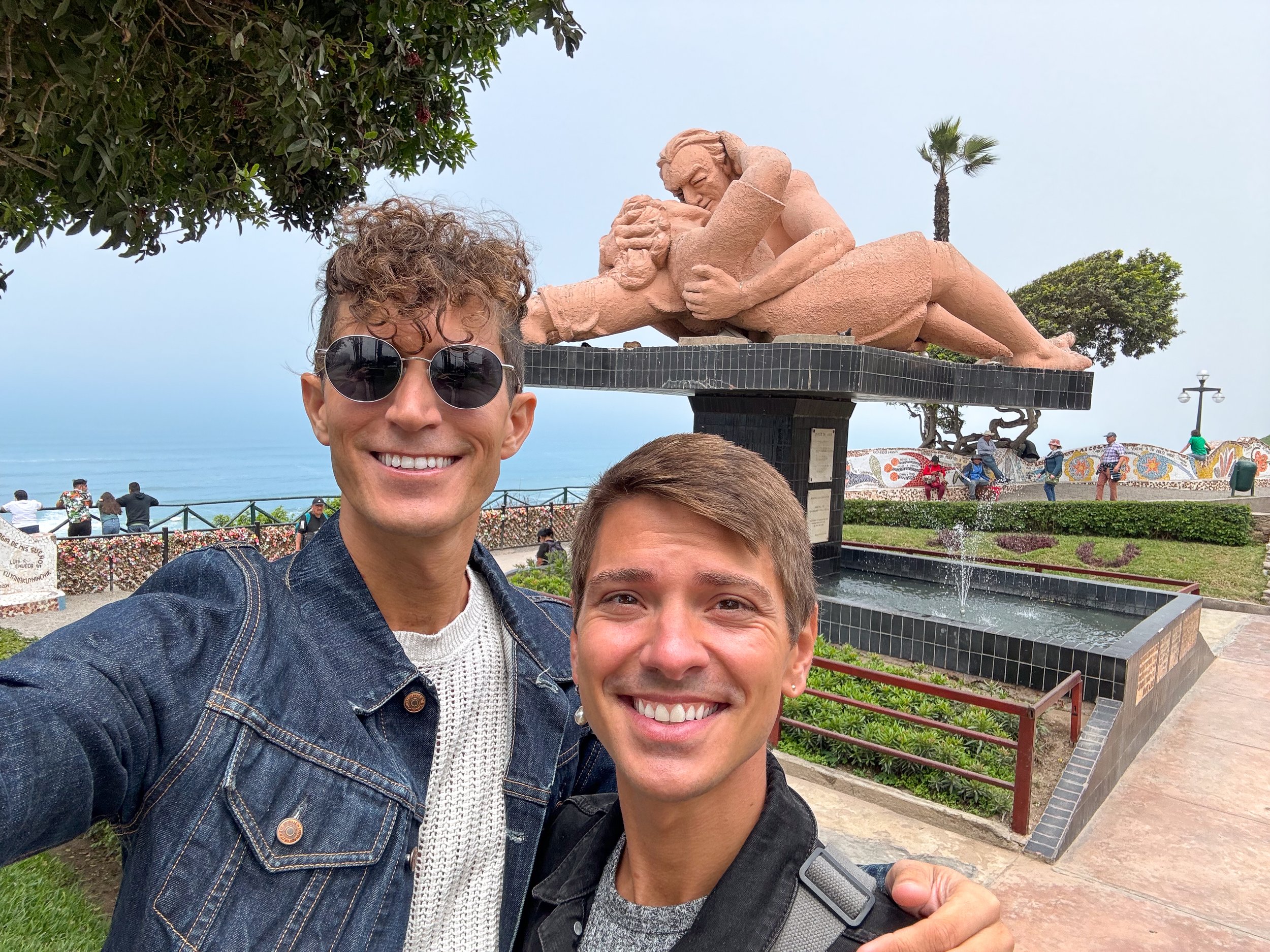
Love Park. A park along the seaside cliff in Miraflores with a large terracotta sculpture of two lovers lying and embracing, wavy colorfully tiled walls and a fence with heart shaped locks.
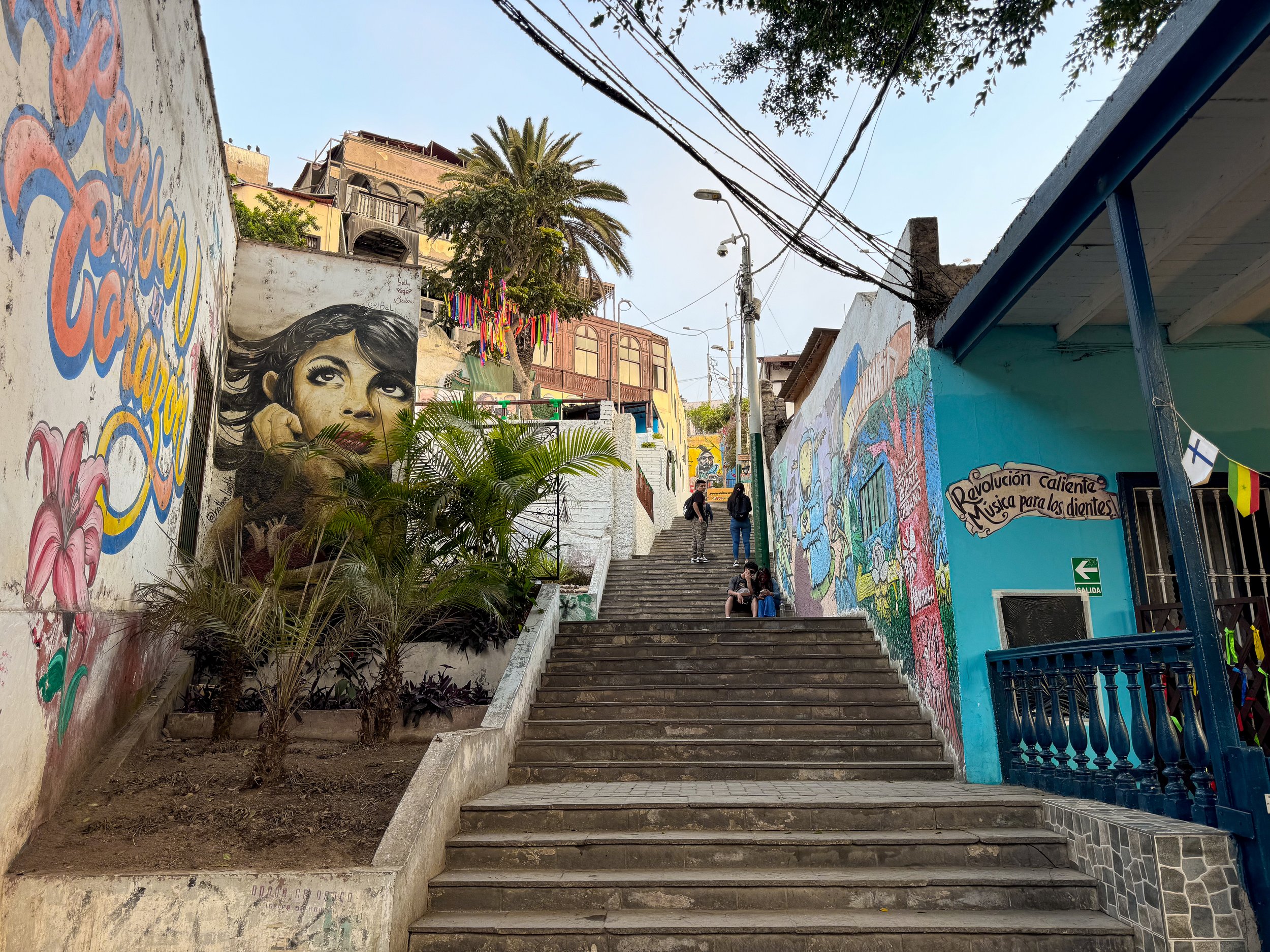
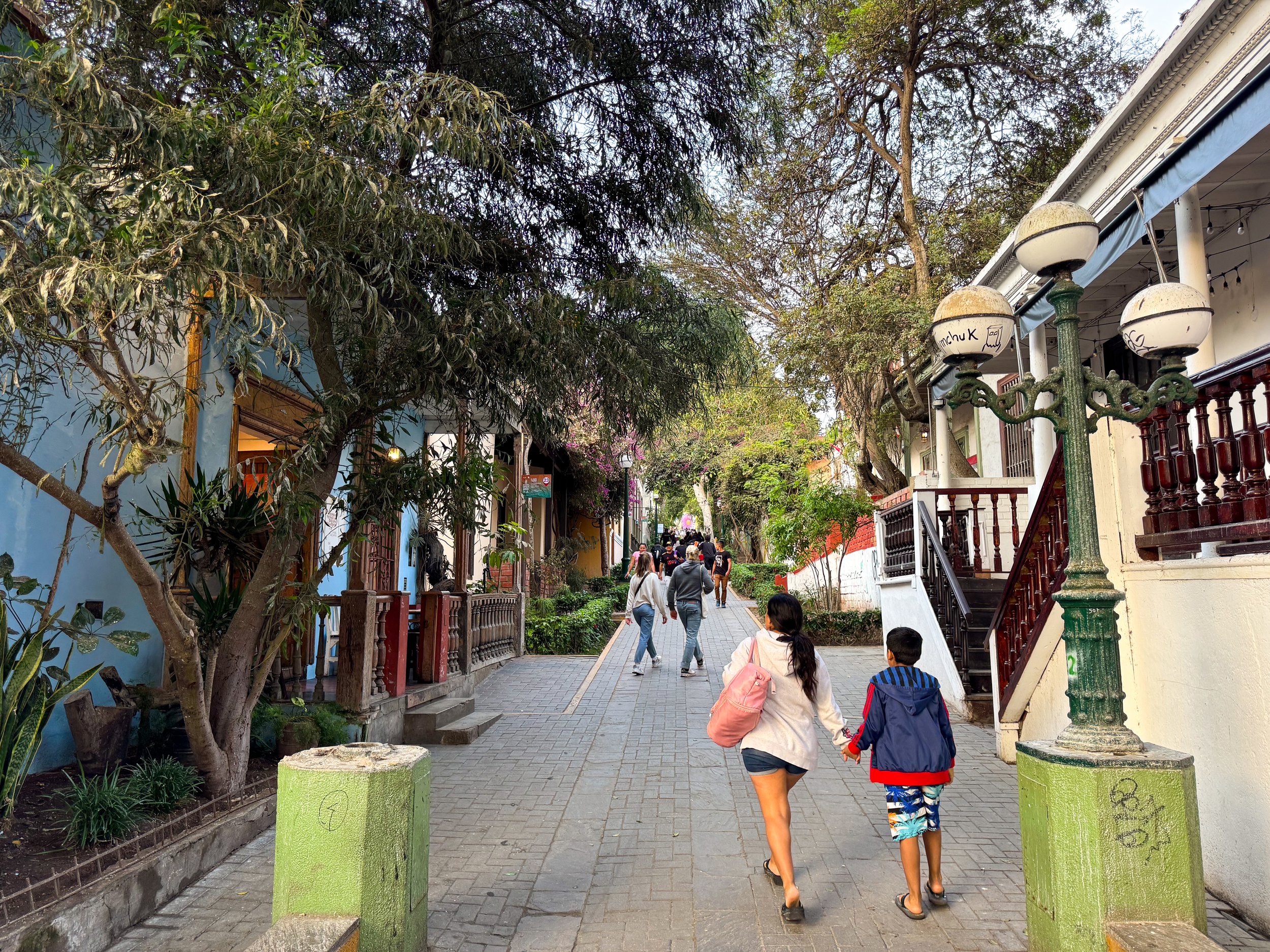
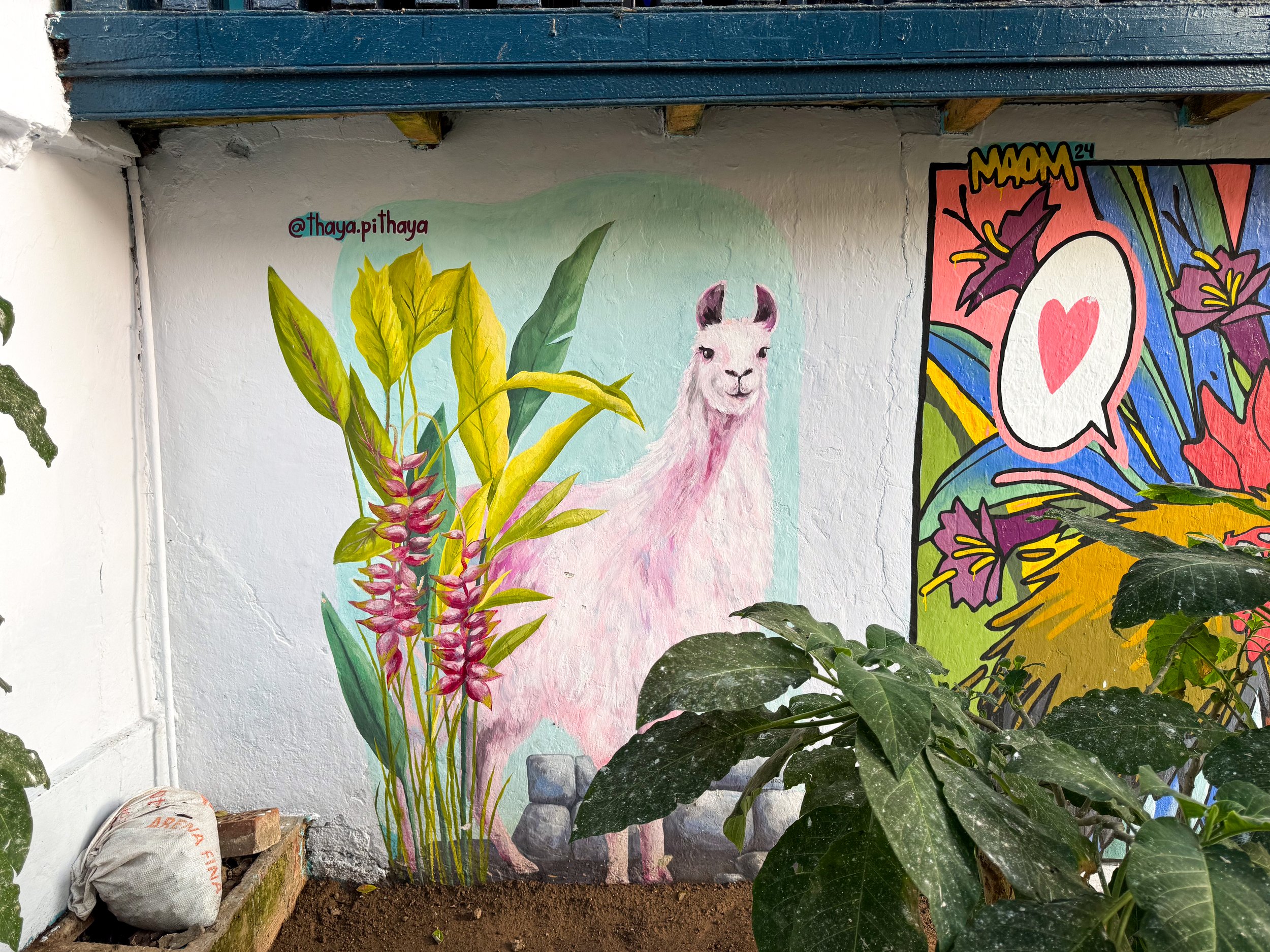
Barranco. A coastal neighborhood with an old world feel, local vibes and welcoming atmosphere. The neighborhood is walkable making it easy to spend time exploring by foot. We walked along narrow tree lined streets, through flowering parks, past historic buildings and admired the creative street art. There are plenty of bars, restaurants and coffee shops making it a lovely place to stay or visit.
Parque Federico Villarreal. A park with an abandoned cathedral and a pedestrian walkway leading from the top of the neighborhood to a lookout over the ocean past several restaurants, bars, cafes, art galleries and shops. The lookout is a beautiful spot to watch the sunset.
Puente de los Suspiros. A wooden pedestrian bridge with views of the walkway below.
Parque Municipal de Barranco. A historic plaza in the heart of the neighborhood with colonial architecture including a yellow neoclassical cathedral, a pink library and reflecting pool with a Greek style fountain.
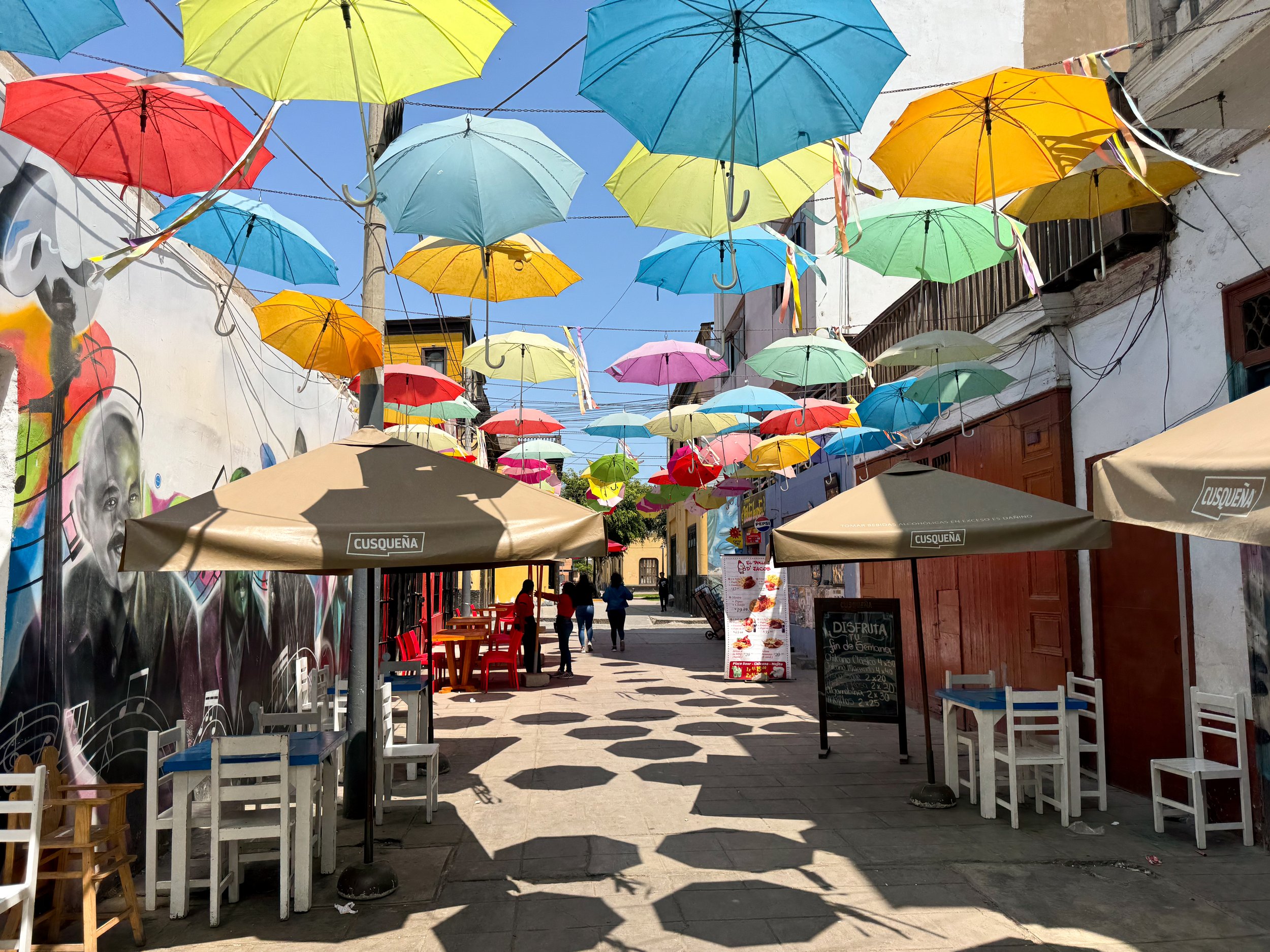
Callao. A neighborhood known locally for its fishing port and seafood restaurants. We explored the streets and sights around the central plaza where we stopped to eat ceviche and drink pisco sours. The area outside of the central plaza is considered unsafe to visit.
See the Sights & Museums
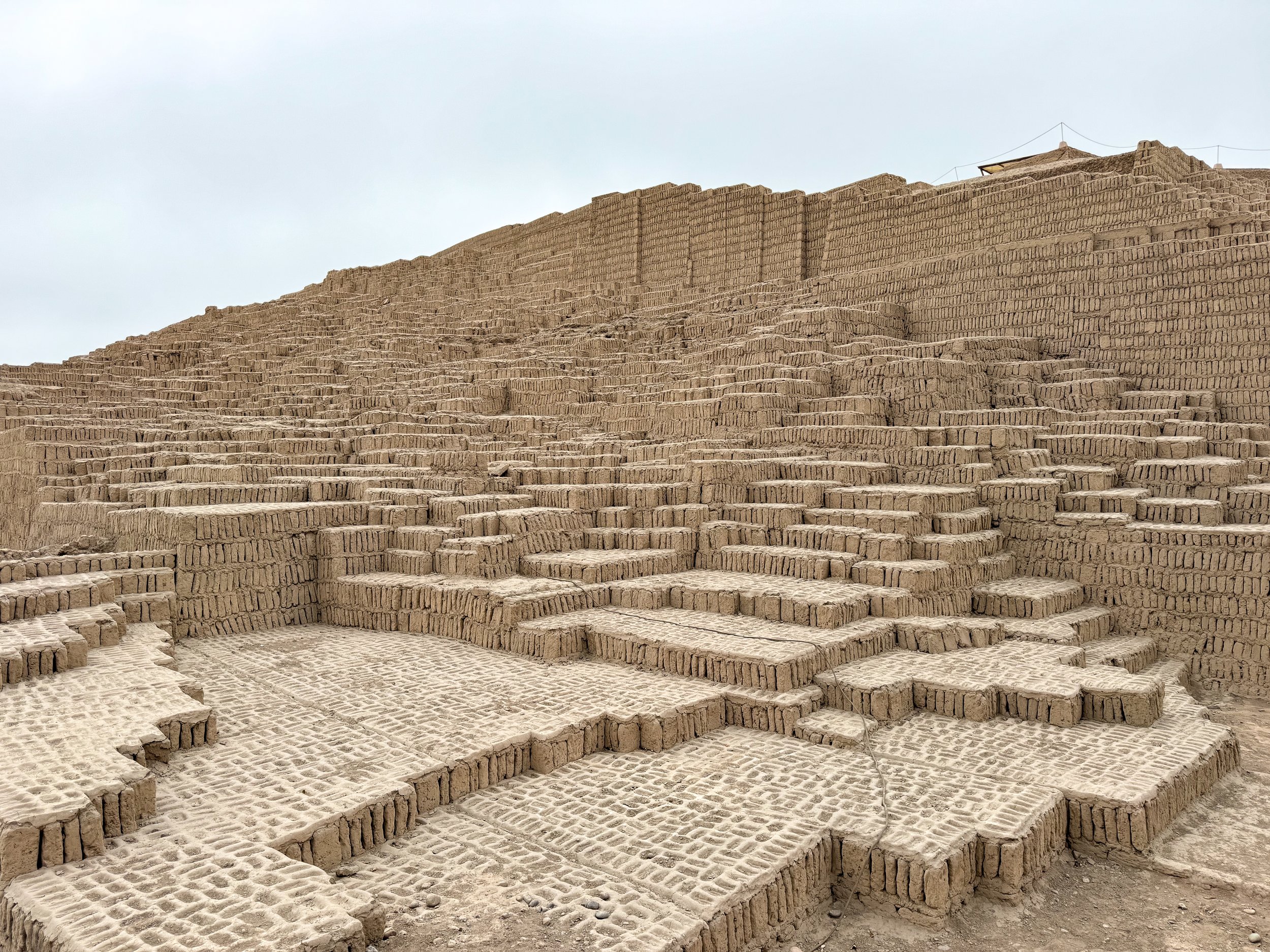
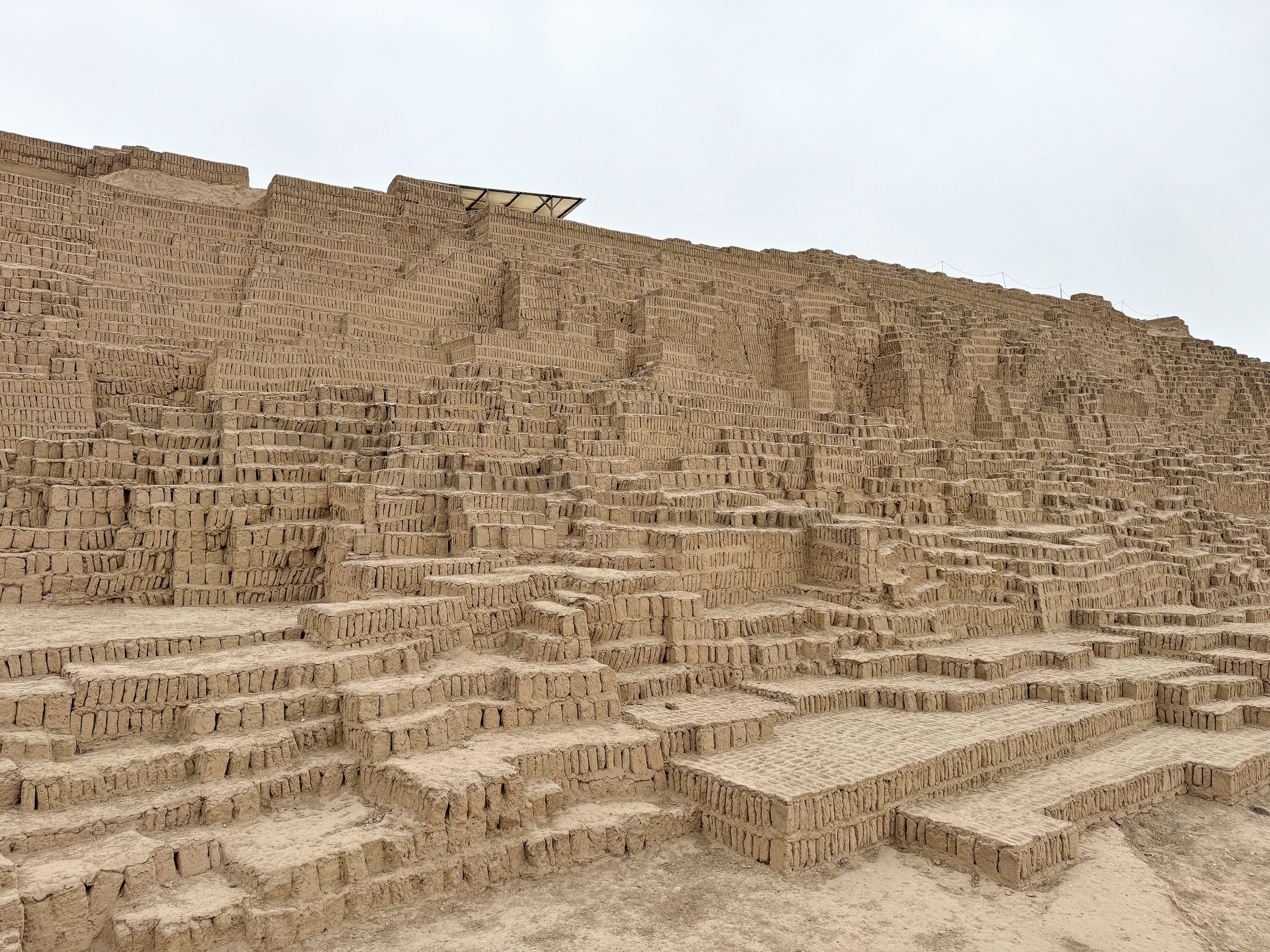
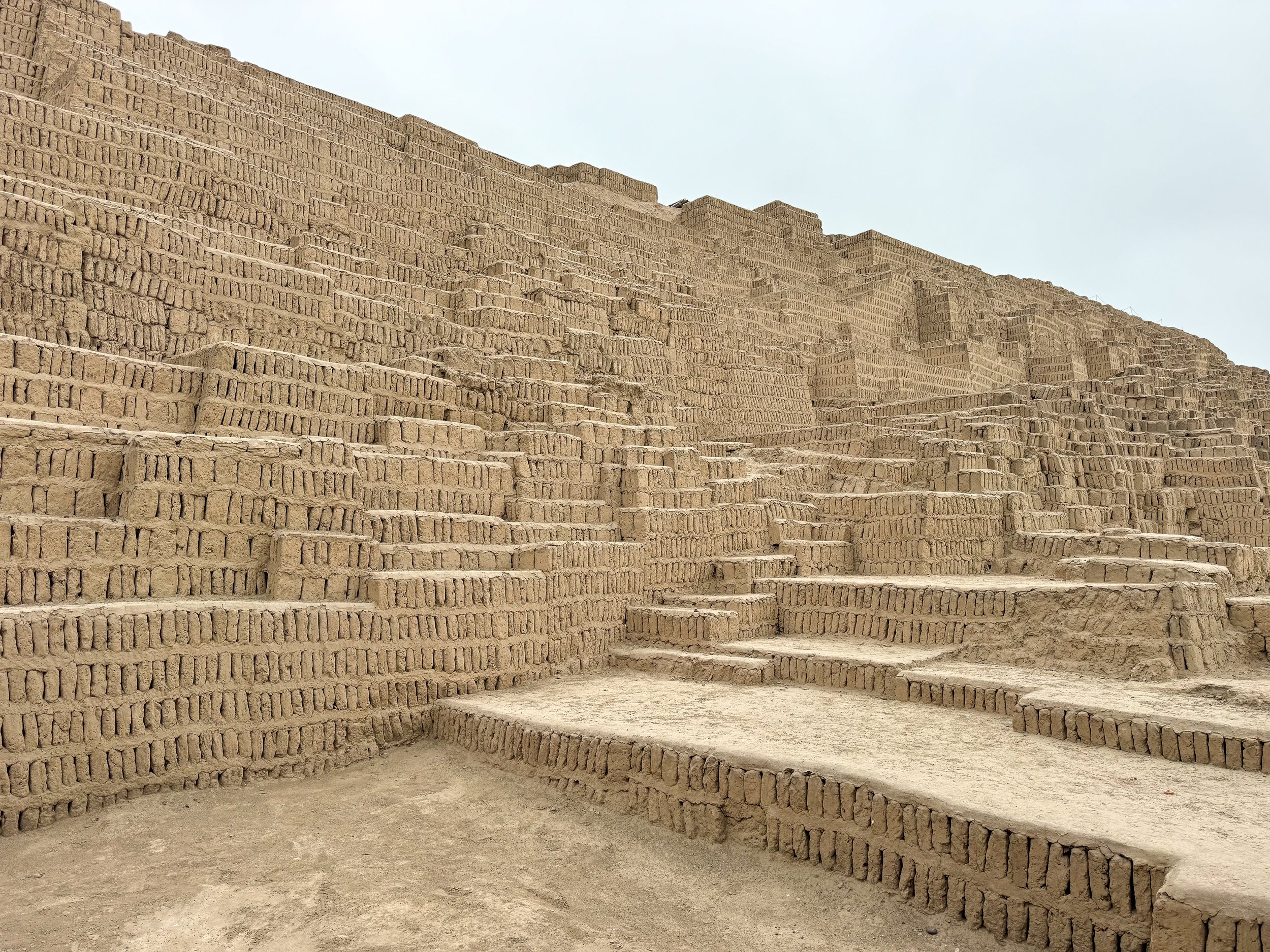
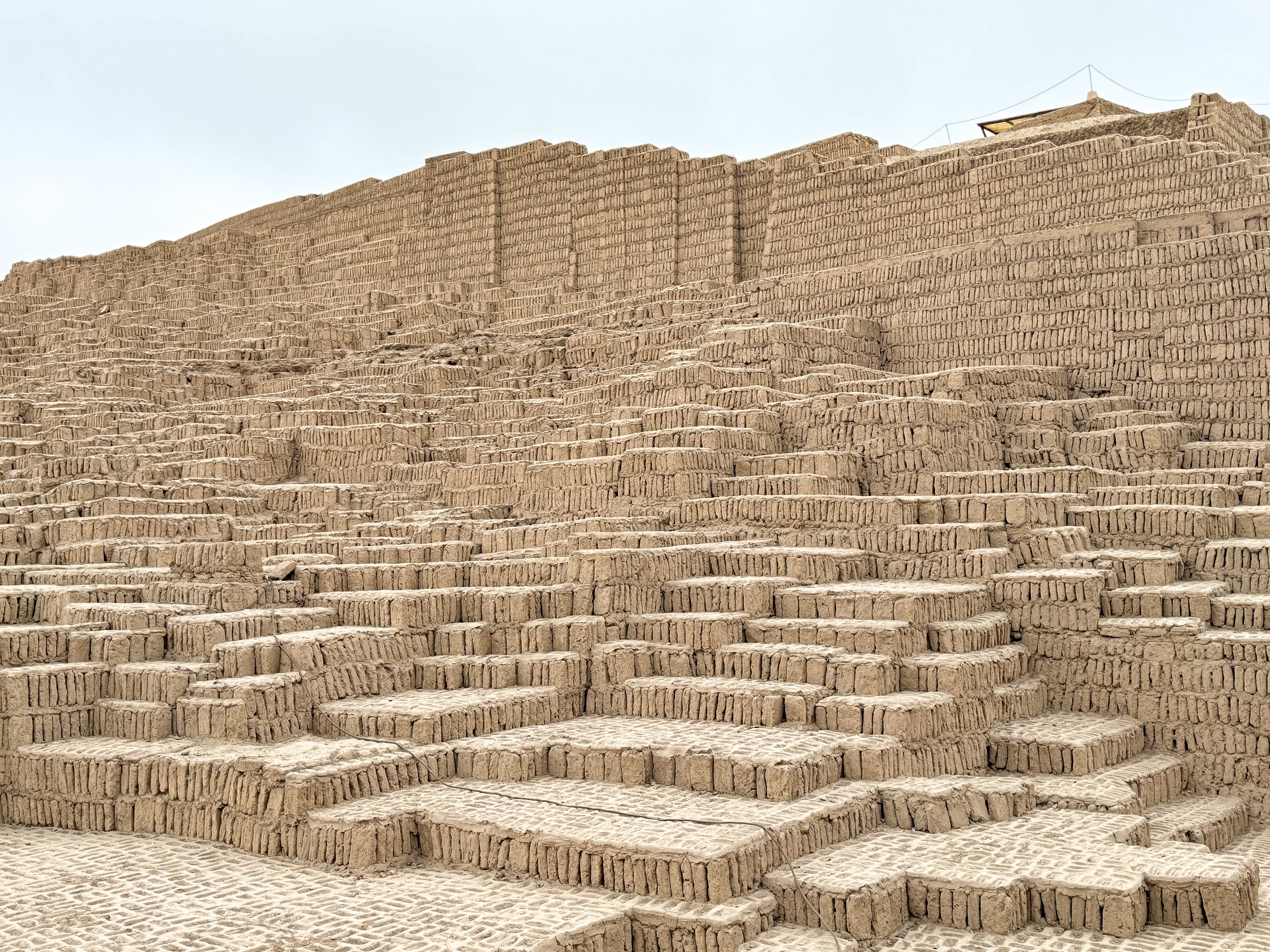
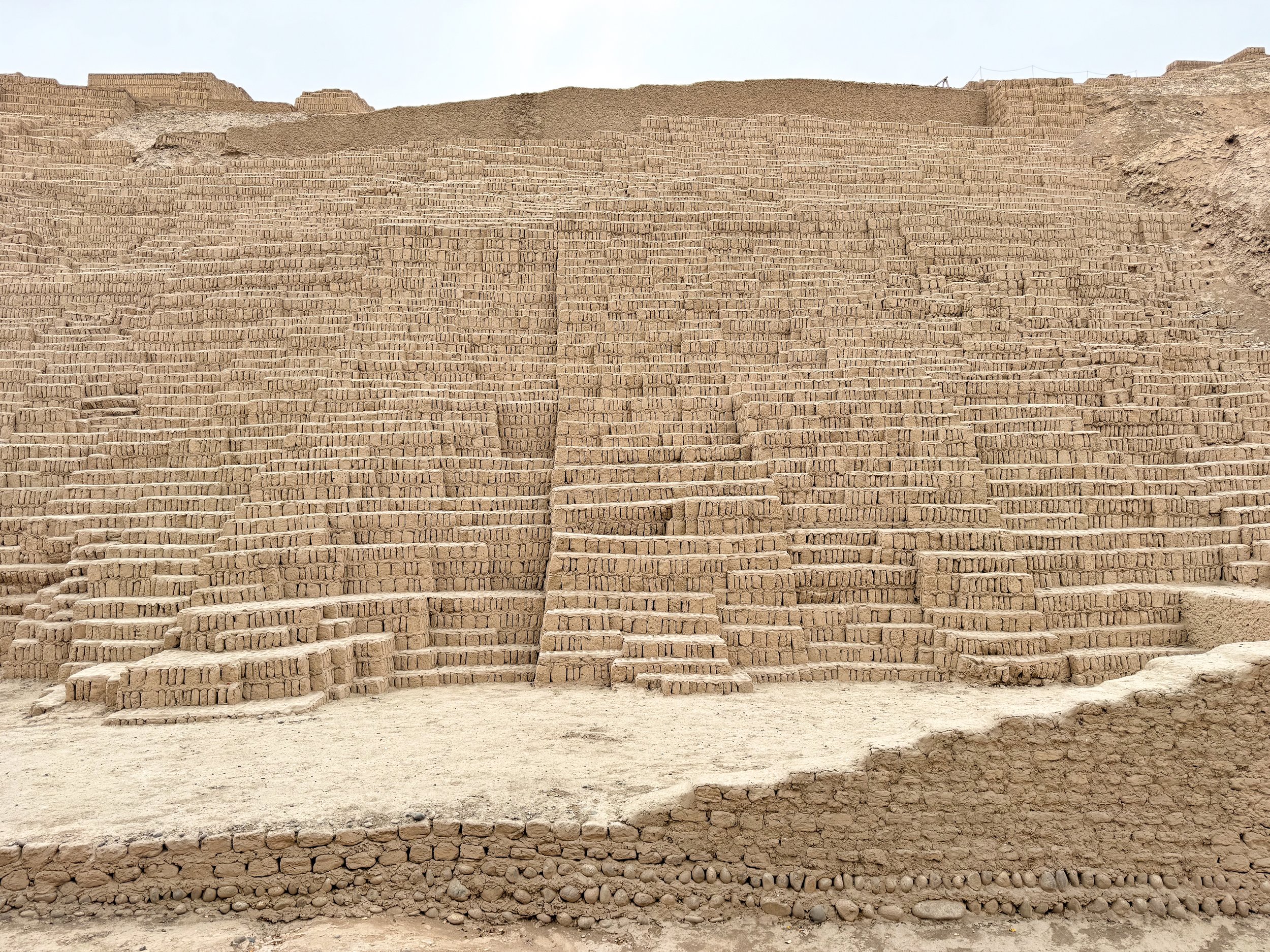
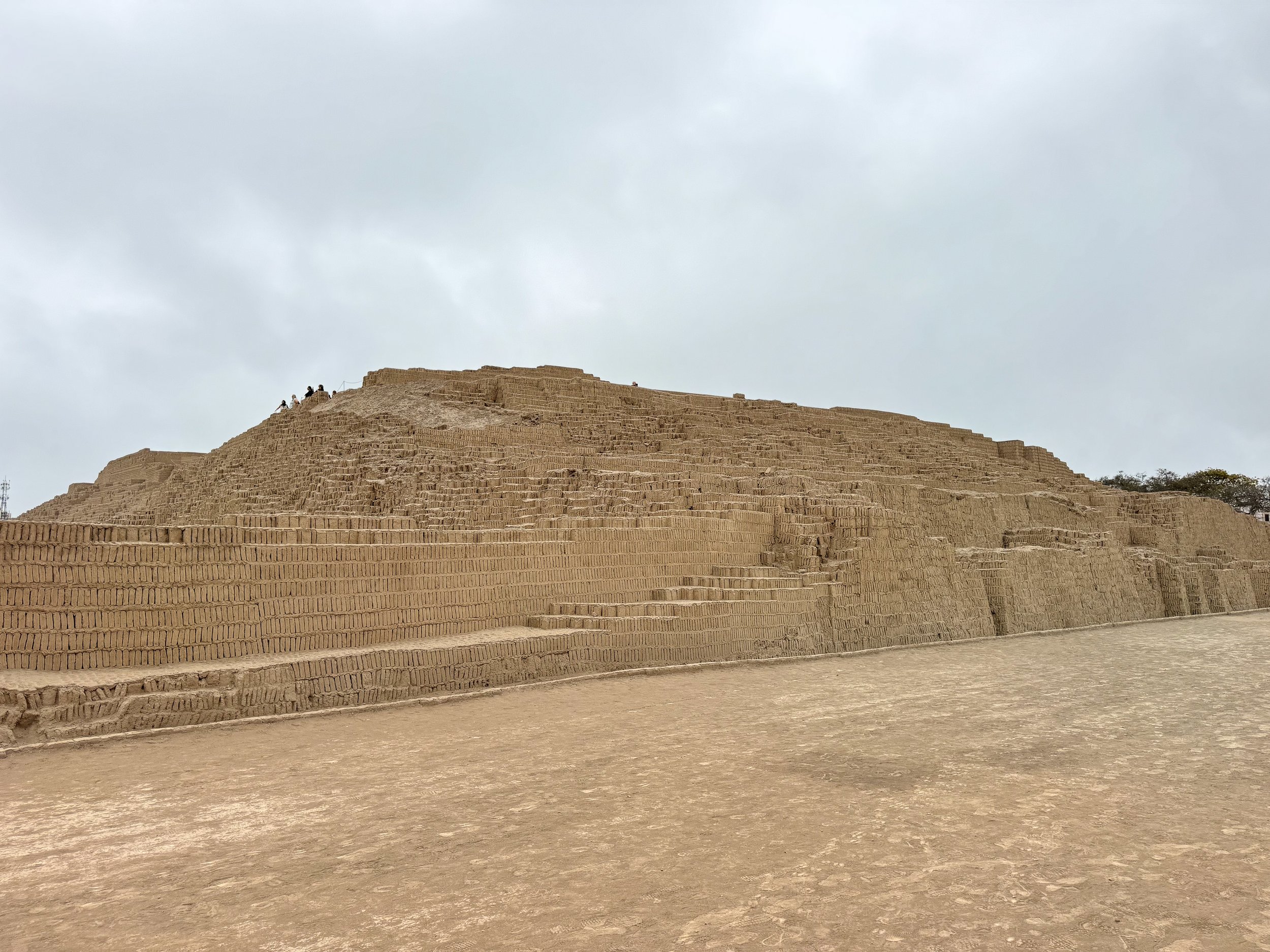
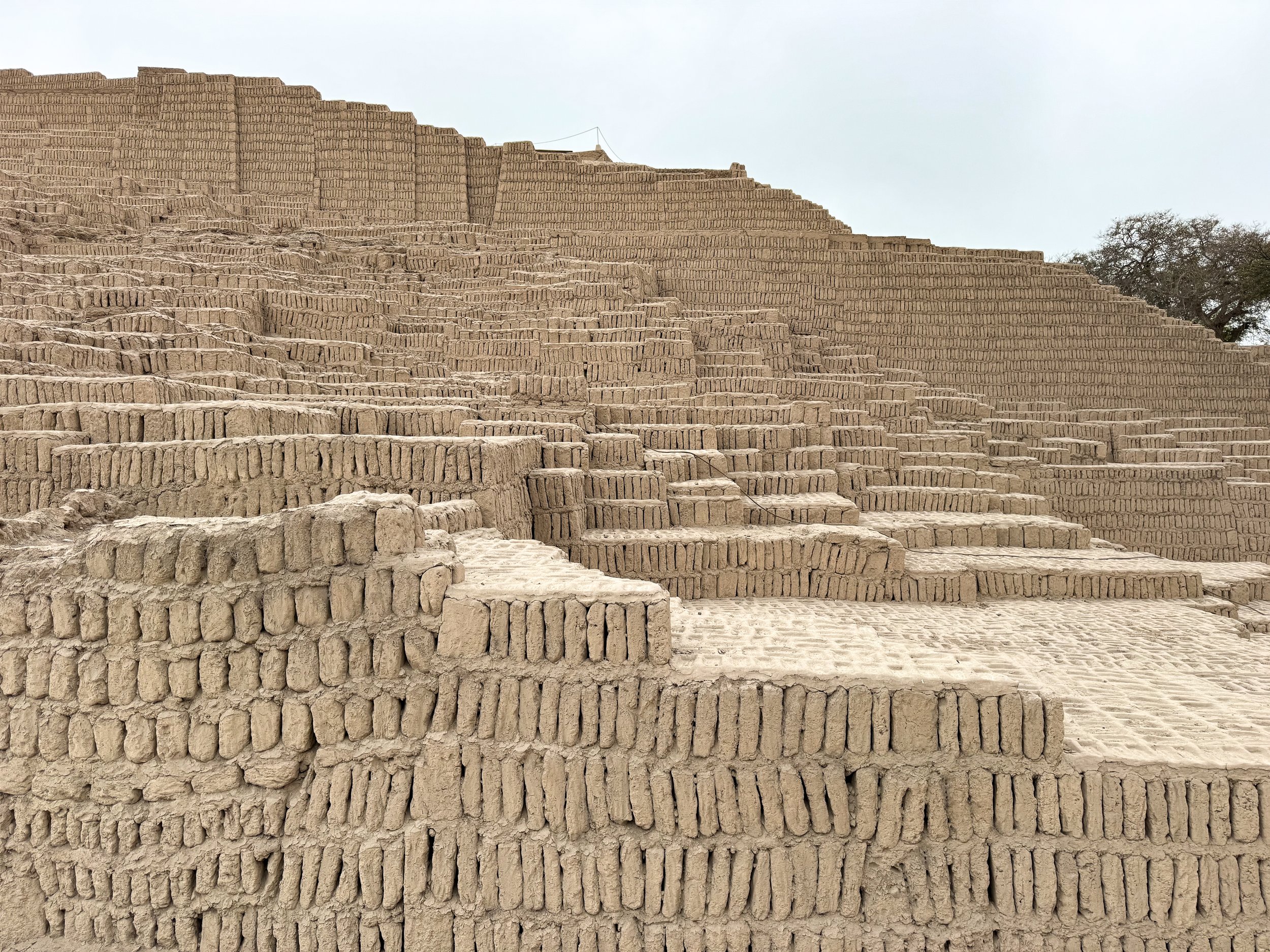
Huaca Pucllana Site Museum. An expansive adobe brick ruin that pre-dates the Incas. The grounds include the remains of a pyramid and many smaller structures. The pyramid is believed to have been used for ceremonial and sacrificial purposes. The ruins of other structures are thought to have been used for agricultural storage and administrative purposes for overseeing the civilization’s irrigation practices.
The site is located in the middle of Lima, surrounded by modern civilization offering a unique contrast. It can only be toured by guide, available from the ticket office. With our guides, we spent over an hour walking its pathways, courtyards and on top of the massive structure.
Paragliding. The cliffs of Lima provide the perfect location for paragliding! Having never tried it before, we decided to give it a try. Taking off on an improvised fan powered parachute, we soared into the air. From above, we overlooked the Pacific coast and the entirely of Lima, flying between Miraflores and Barranco before landing back at the beach. Our flight lasted about 20 minutes.
The Magic Water Circuit. It sounds extra touristy (and it kind of is) but it doesn’t make it any less grand. You’ll be treated to a light and water show within the park’s fountains, depicting holograms, images and music telling the story of Peru.
The Catacombs. A UNESCO World Heritage Site, located beneath the Basílica y Convento de San Francisco. The catacombs are lined with the skulls and bones of tens of thousands of humans, all uniquely organized and arranged in an array of terrifying yet beautiful patterns. No photos are allowed to be taken.
Plaza de Armas. The city’s historic center and main plaza. It’s surrounded by stunning government buildings, palaces and cathedrals.
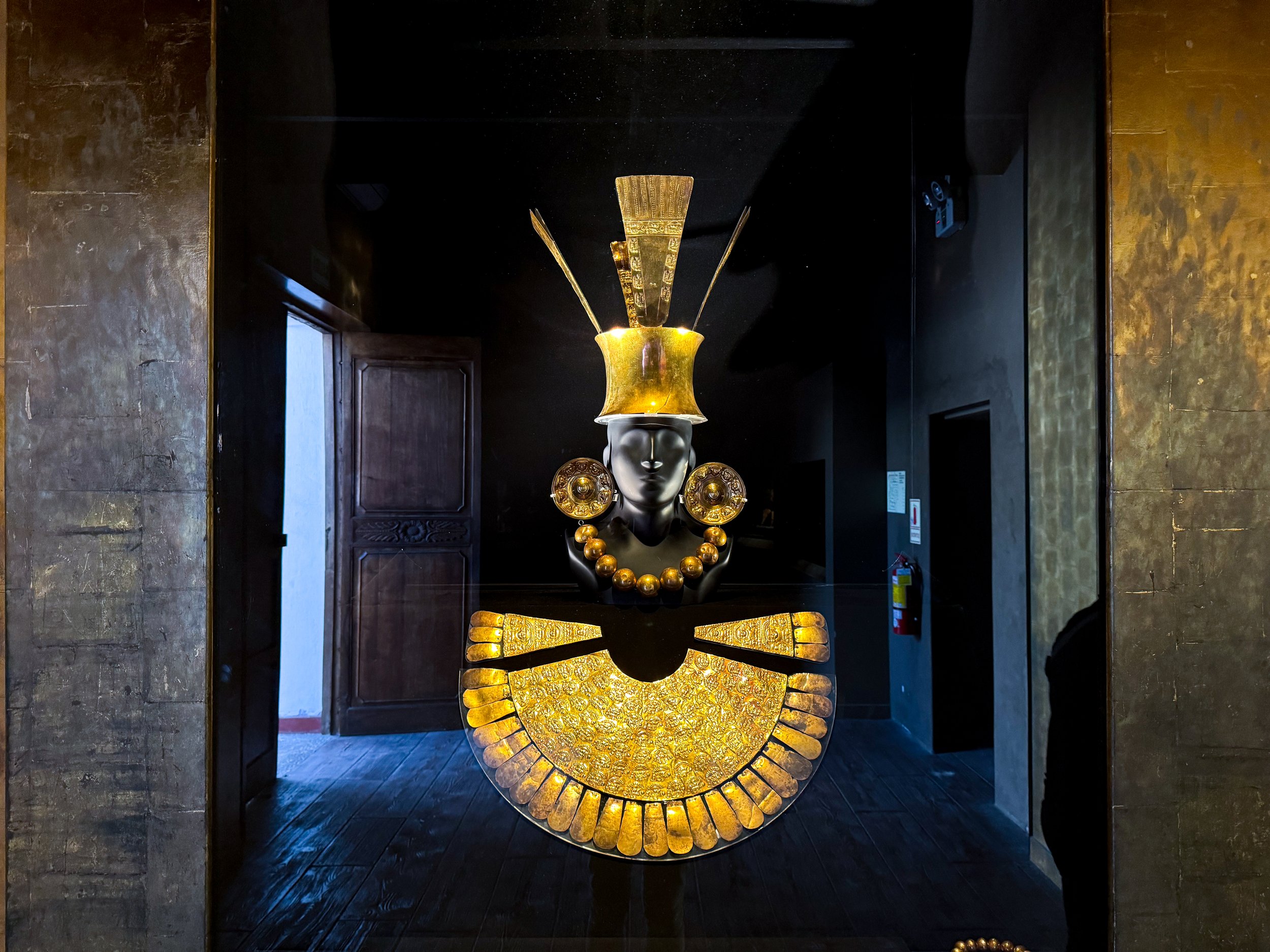
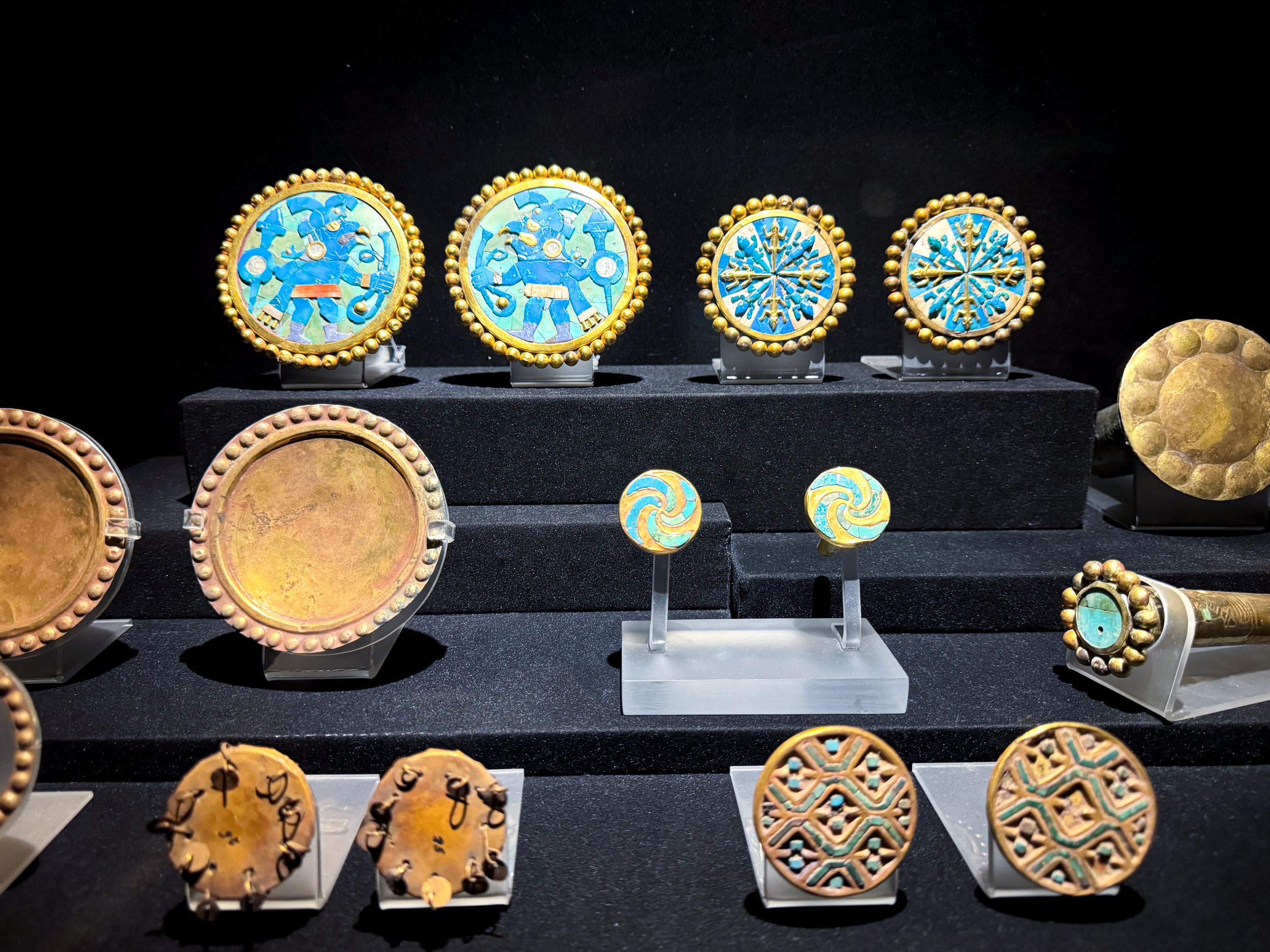
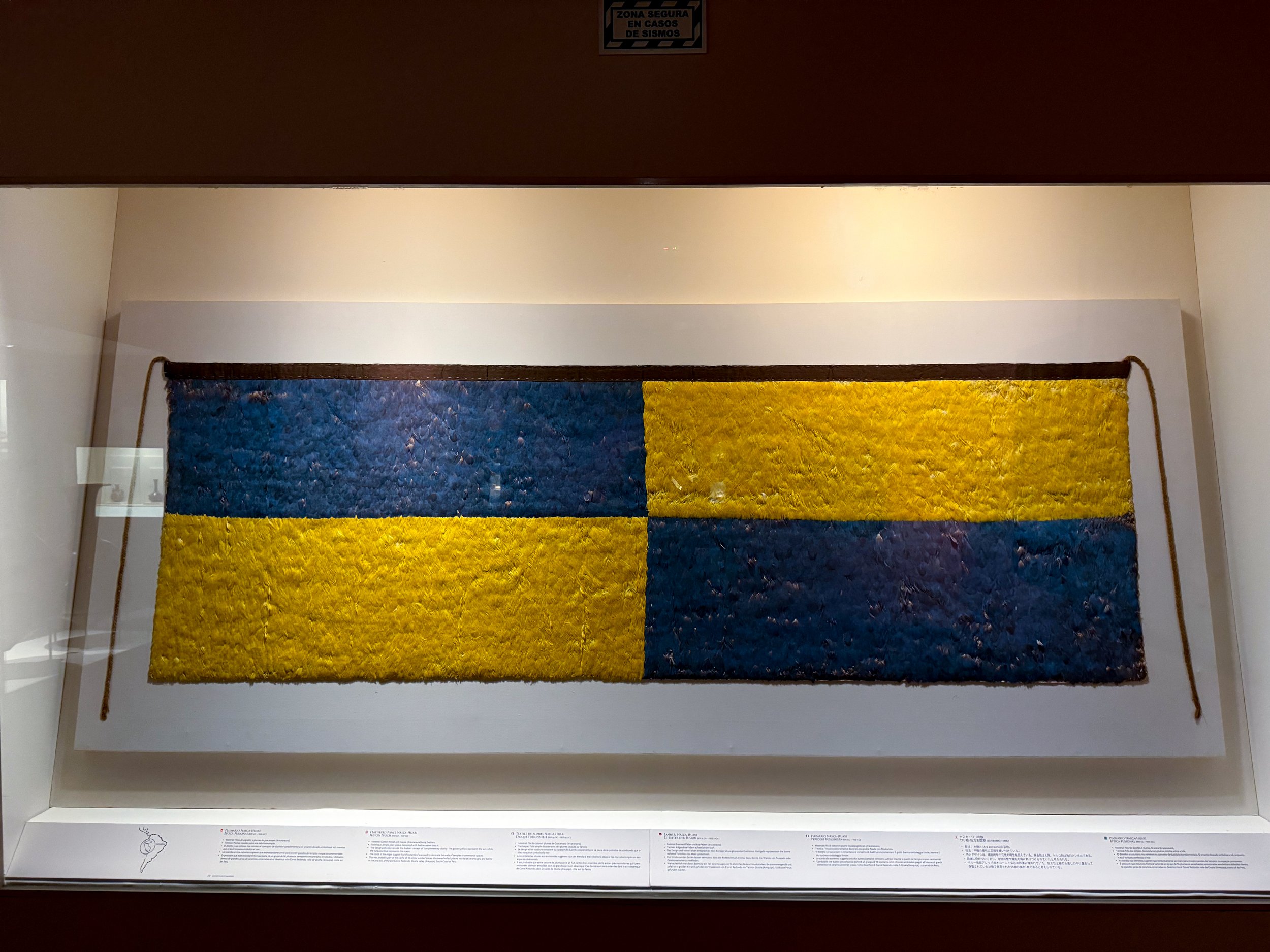
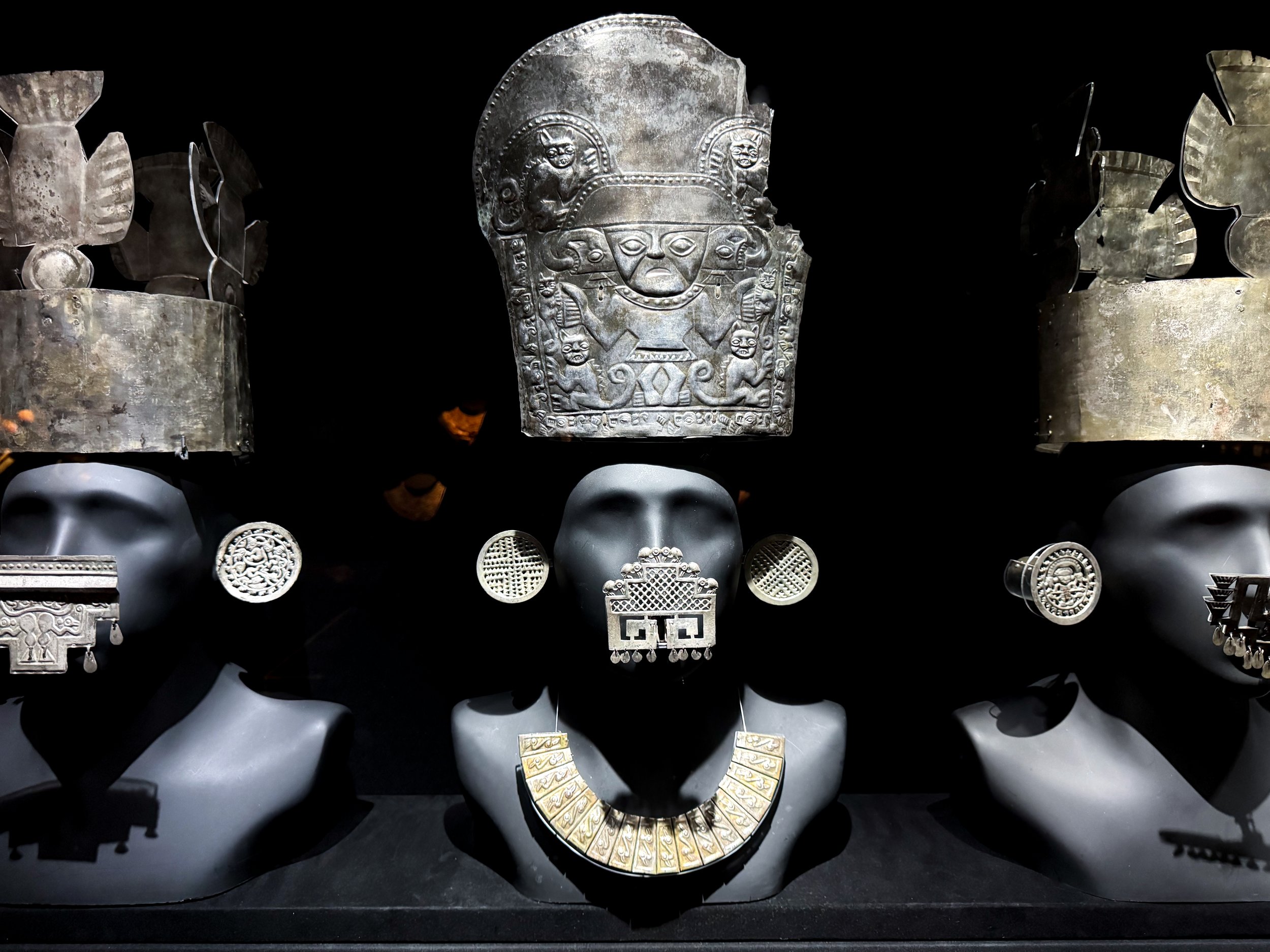
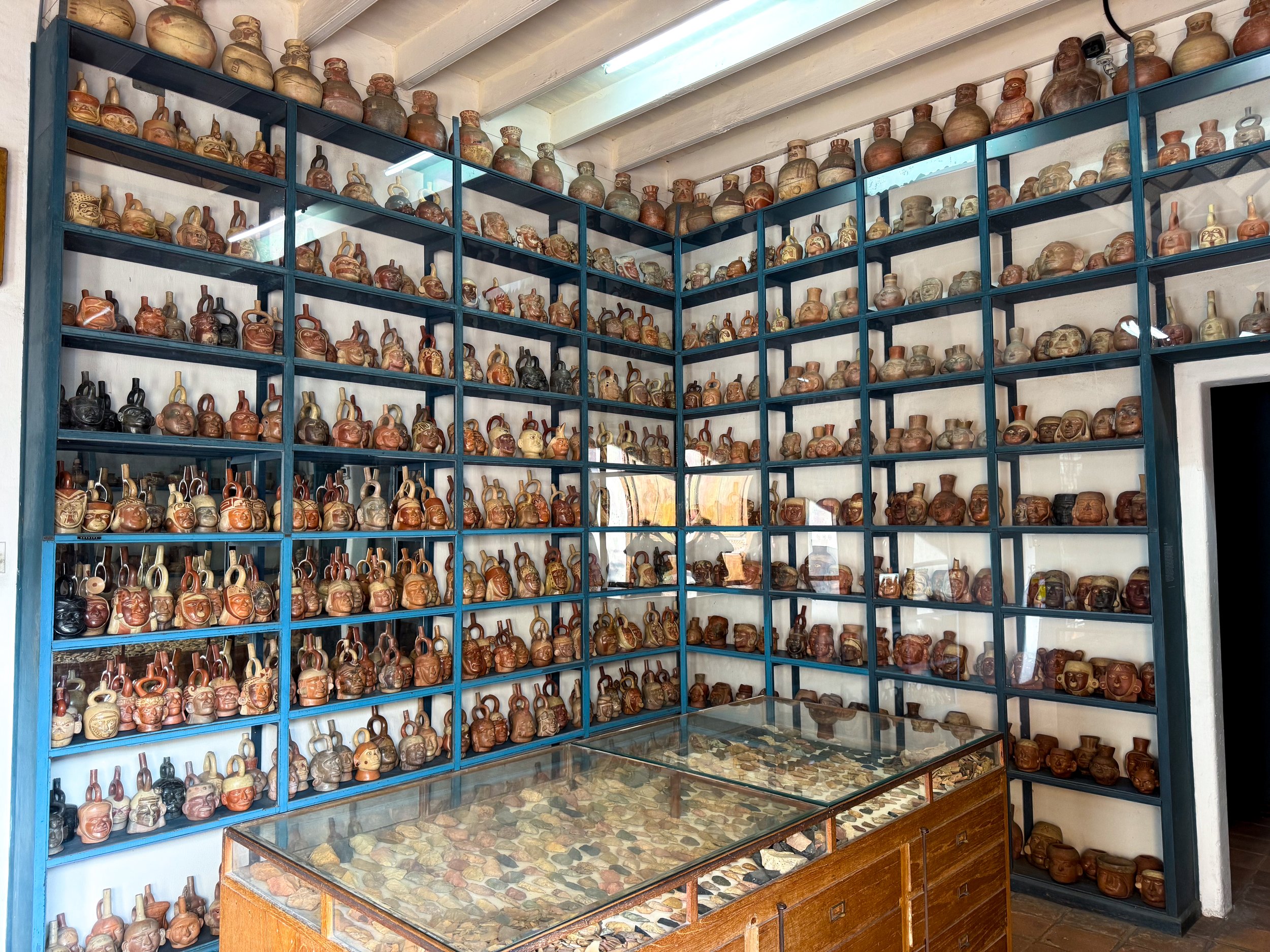
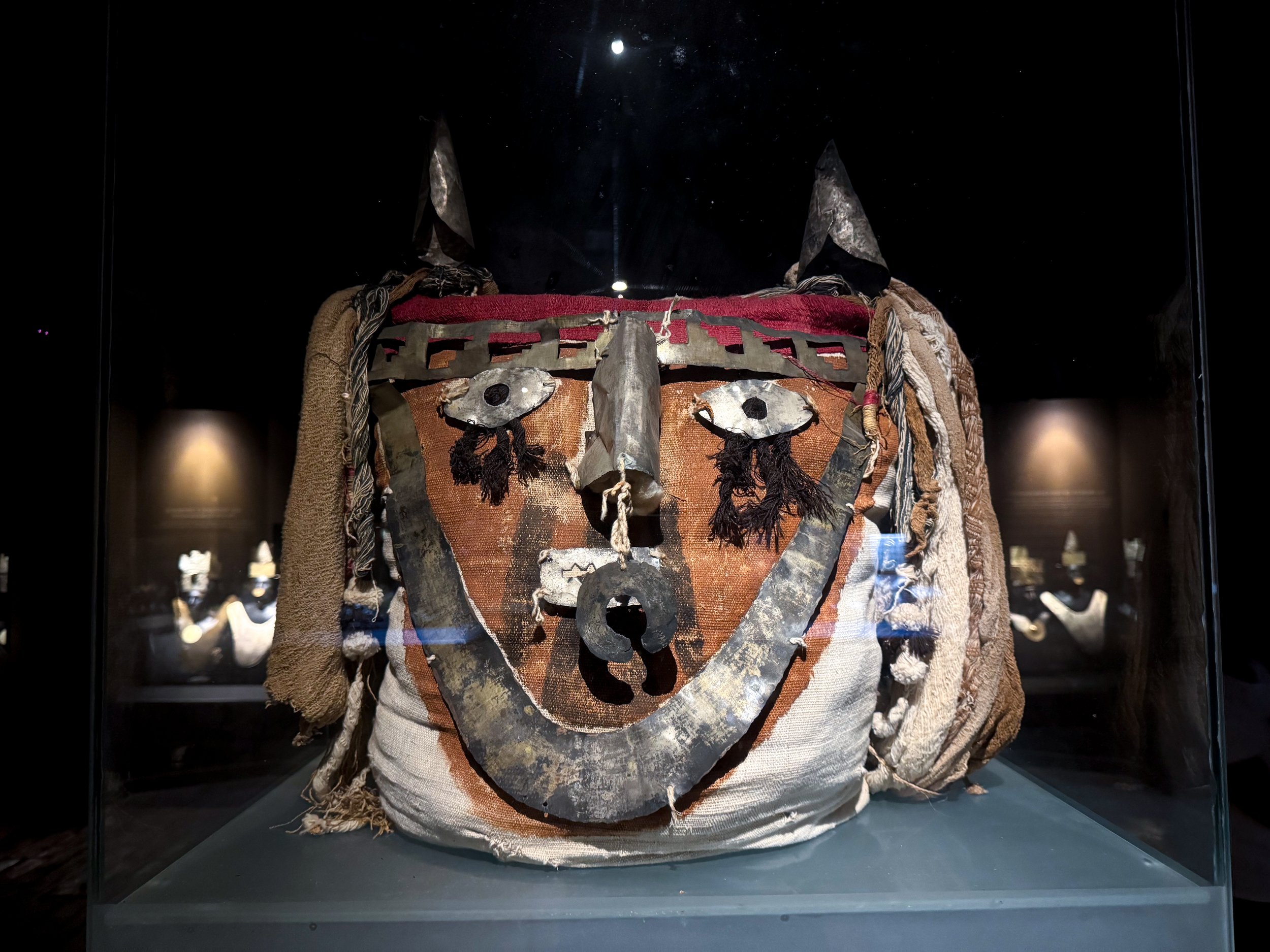
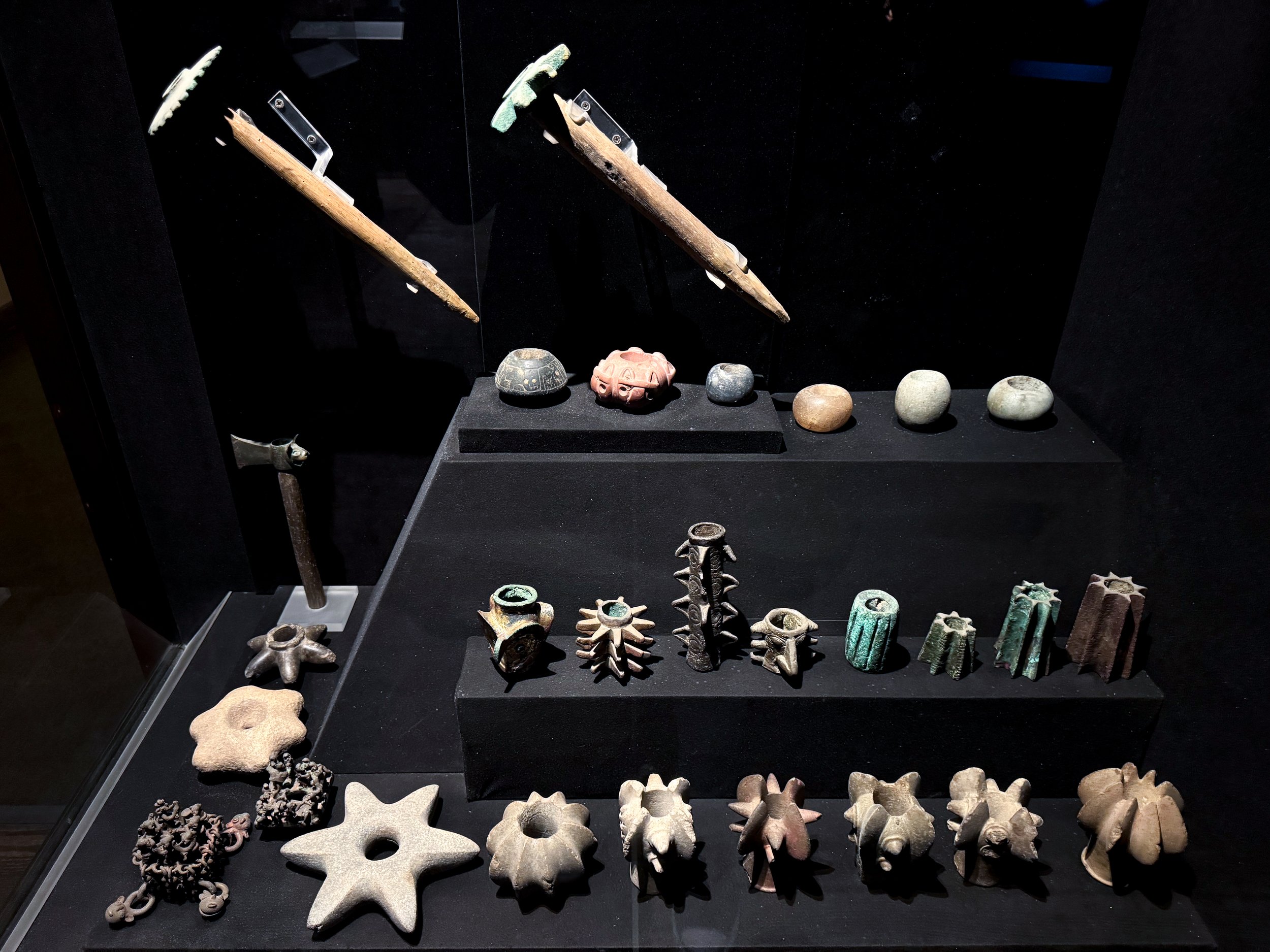
Larco Museum. An exquisite collection of Peruvian ceramics and artifacts dating back thousands of years until the arrival of the Europeans. The museum categorizes the ceramics by period and civilization, going into great detail about their design, manufacturing and cultural significance.
Other exhibits include one with erotic ceramics and a visible storage room. In addition to ceramics, some of the most interesting artifacts are textiles used for record keeping, a tunic made from macaw feathers, mummified remains, precious jewelry and the only complete royal funerary set with a golden mask, breast plate and headpiece.
Museo Oro del Perú y Armas del Mundo. A museum with gold and silver artifacts from past Peruvian civilization including jewelry, clothing, mugs, funeral offerings and carved stone weaponry. Some of the more fascinating artifacts are mummified remains, human skulls wearing ancient feathered headdresses, golden wall panels from the ancient city and gold plated blankets used by royals.
Fortaleza del Real Felipe. A historic stone military fortress with a pentagon shaped structure, round guard towers, walls lined with hundreds of cannons and a central courtyard still used by the military today. The two guard towers are the most impressive to visit. We explored their labyrinth of rounded tunnels, ramps and staircases leading to rooms, chambers and lookouts.
Places to Eat & Drink
Amankaya - Peruvian Food. A delectable seafood restaurant built within a house in Miramar neighborhood of Lima. We came here for the fresh ceviche, buttery seafood rice, flamed mixed seafood scallops and chilcano cocktails.
Coffeebrix. A cute cafe for artisan coffees, breakfast toasts, egg dishes and croissants.
Curayacu Tiki Bar - Barranco. Known as Peru’s first Tiki Bar, the mixologists at this hidden gem make inventive tiki drinks and the classics with Peruvian Rum and a theatrical performance sometimes including elaborate presentations, torched garnishing or a seafaring story. The bar is located in the basement in the Barranco neighborhood with tiki decor, a tropical ambience and one of a kind mugs.
En Su Punto. A seafood restaurant on a colorful street in Callao covered with umbrellas and banderas. We came here for their lunch specials and ordered the fried seafood chicharrón and ceviche for 25 Soles and 2 Pisco sours for 25 Soles.
Getting Around Lima
By Uber. Getting to and from the airport or longer distances within the city is easiest by Uber.
On Foot. The neighborhoods of Barranco and Miraflores are very walkable. We explore both on foot, even walking between them.
Getting Around Peru
From Lima, it’s easy to get around the country by bus. During our past two trips to Peru, we took Perubus & Peru Hop.
Perubus. During our first trip to Peru, we used Perubus to travel between Lima, Pisco and Ica. Prices are extremely affordable, costing less than $10 for tickets between destinations with bus terminals in all three cities.
Peru Hop. The best way to get around Peru is by Peru Hop, a hop on hop off bus with destinations all across the coast from Lima, Paracas, Huacachina and Nazca into the Andes to Arequipa, Cusco and Puno (Lake Titicaca) then onward to Copacabana and La Paz, Bolivia. It is by far the best way to see Peru, allowing us to build our own itinerary, stopping at as many destinations along the way for as long as we would like.

Paracas
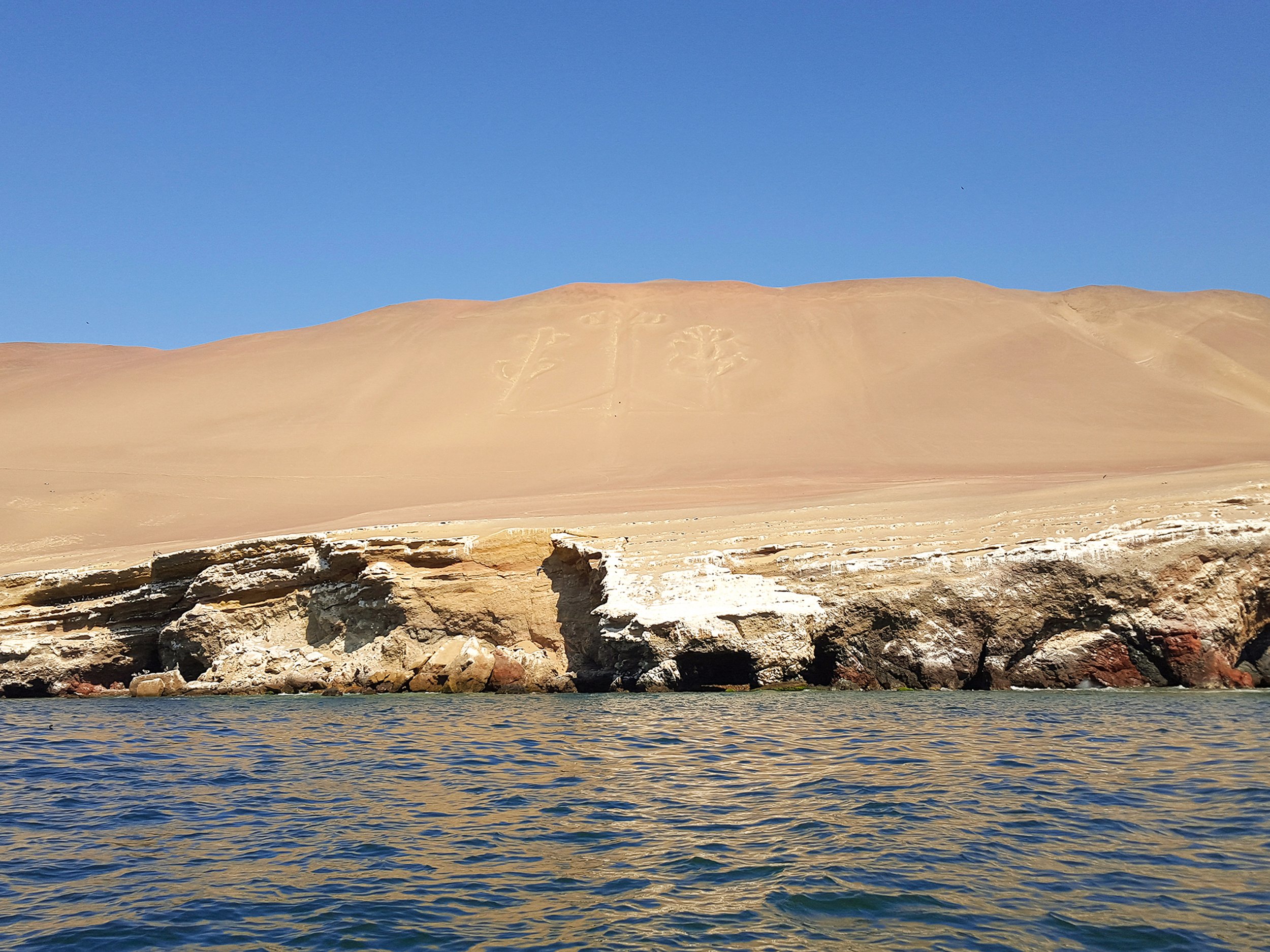
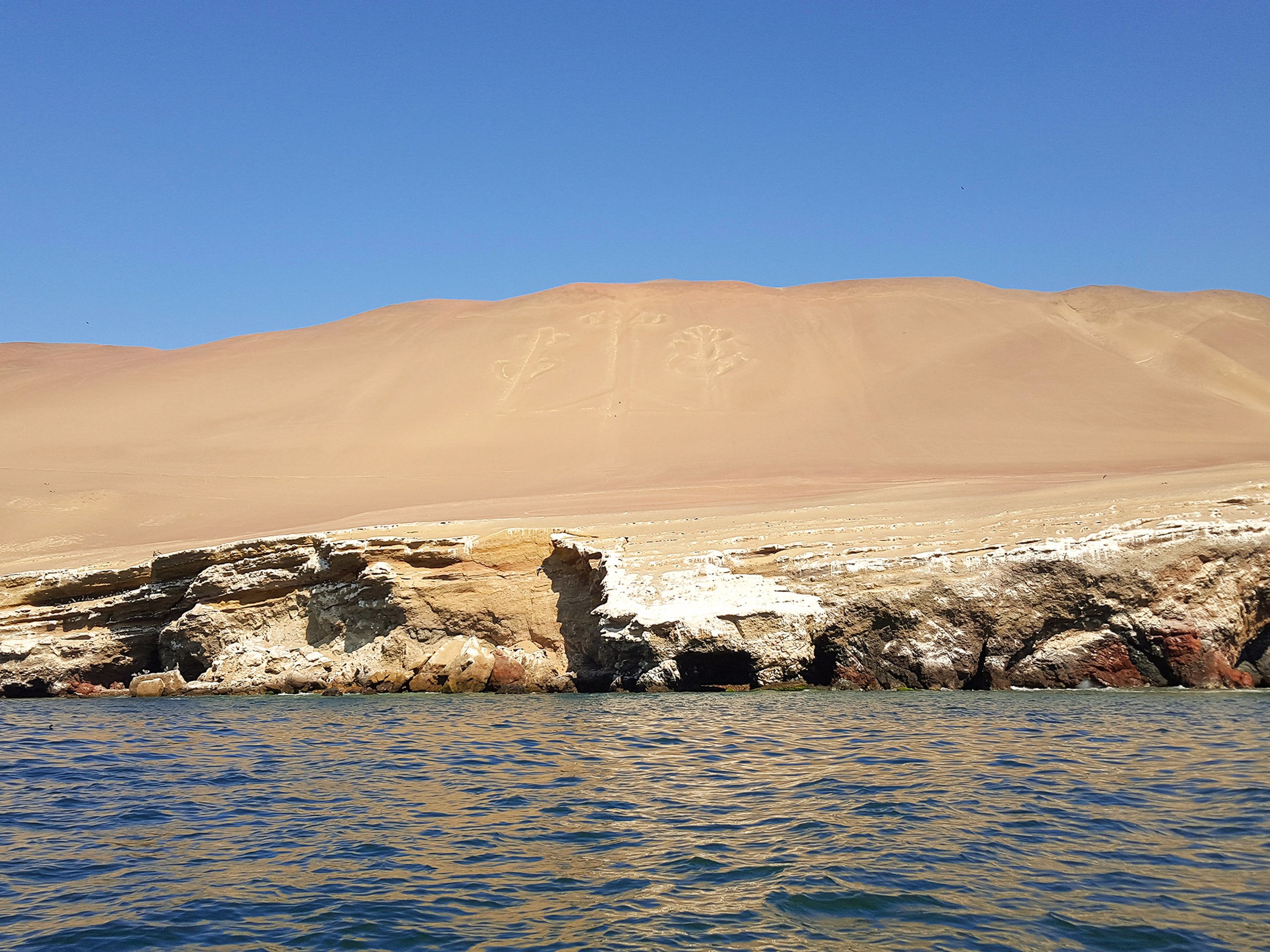
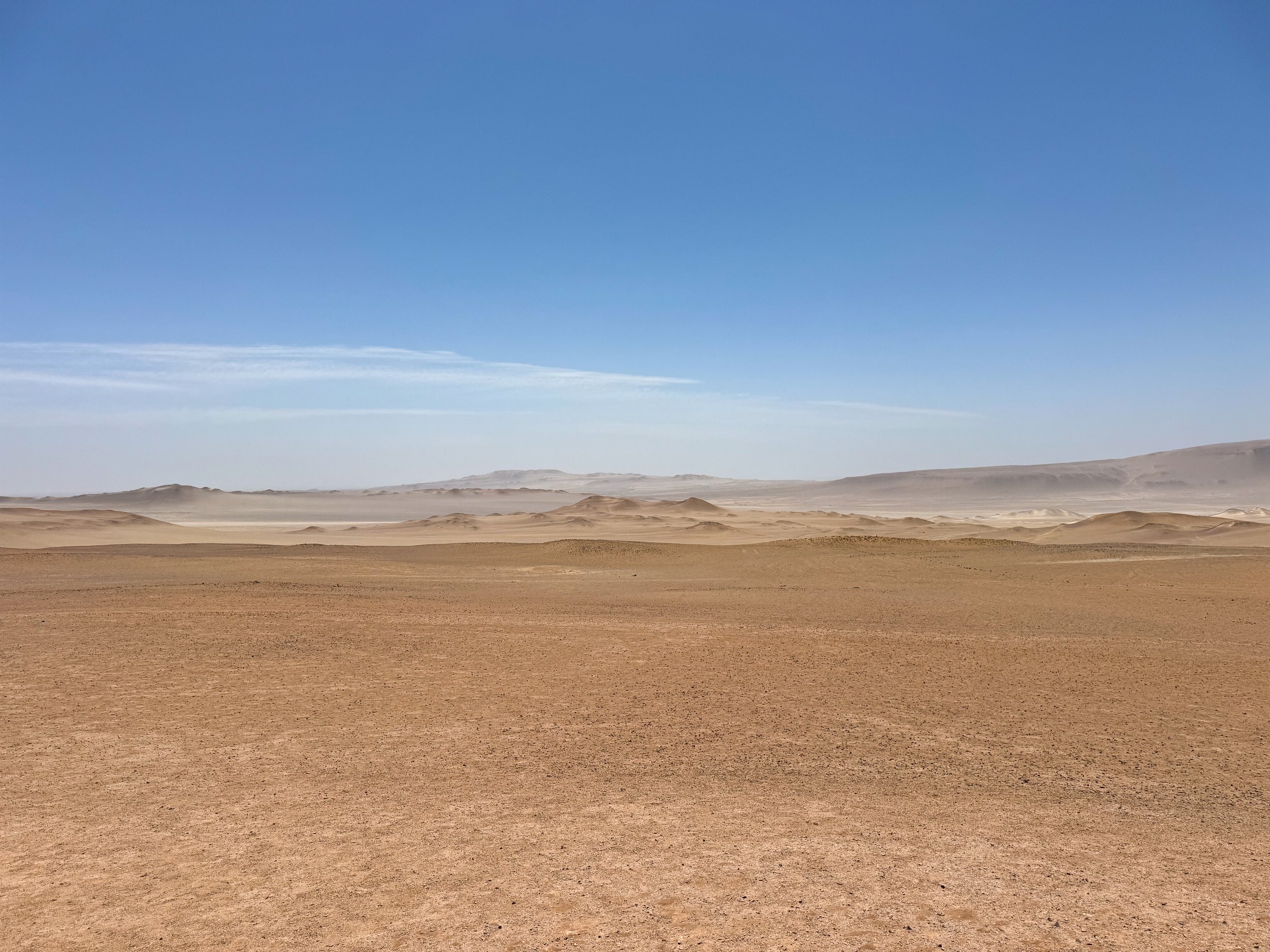
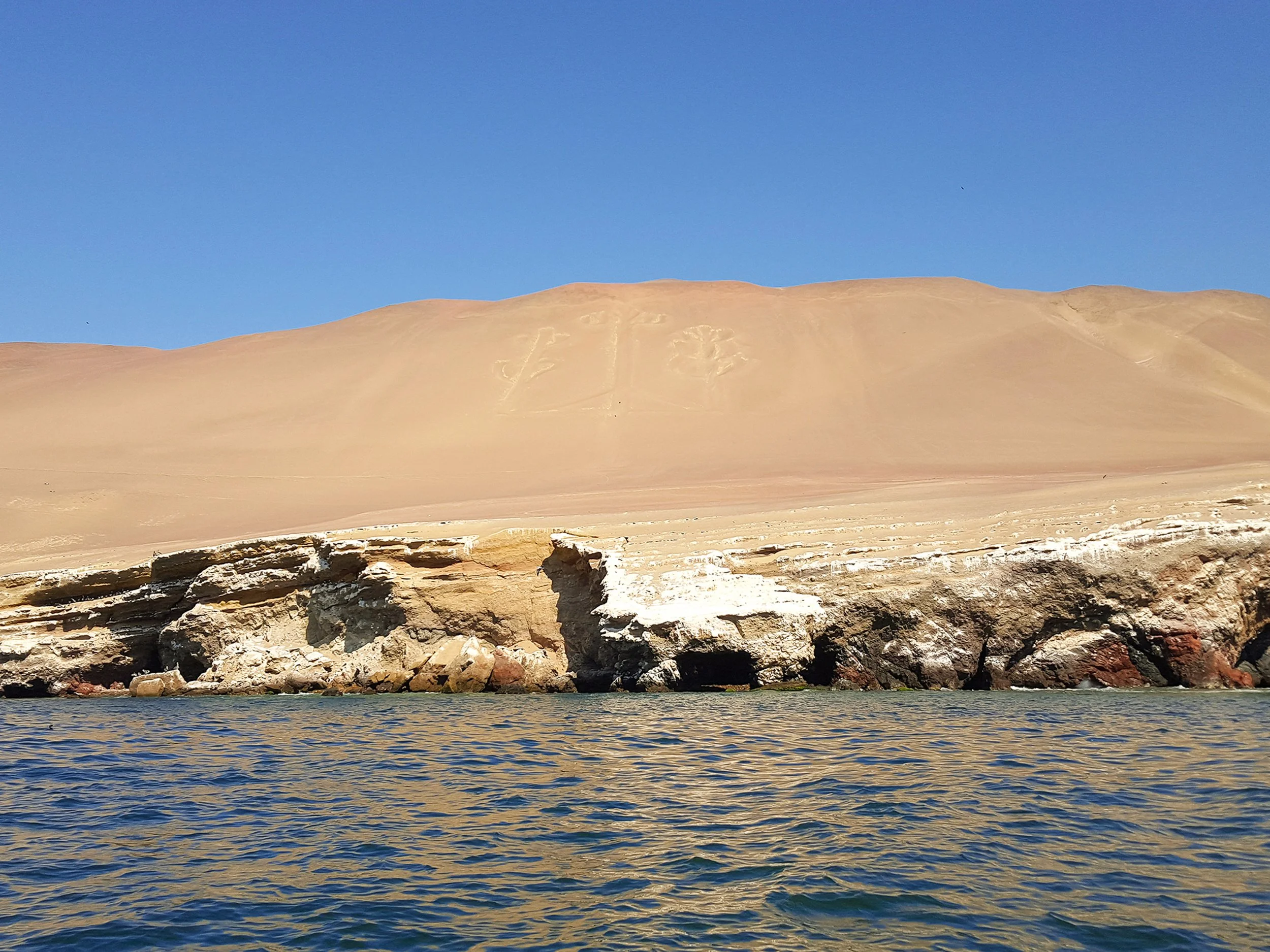
Paracas is a fishing village and backpackers’ haven along the Pacific coast known for its marine nature reserves, sprawling desert sand dunes and a large geoglyph called the Candelabra.
See the Sights
Paracas Harbor. The harbor is dotted with fishing boats bringing the days catch to the waterfront restaurants lining the beach in town. Its city center is surrounded by hostels, tour companies and more restaurants and bars. We ate lunch at Restaurant Tipico Bahia, a restaurant on the waterfront serving local Peruvian dishes. We ordered the ceviche, Jalea (mixed fried seafood) and Cusqueñas.
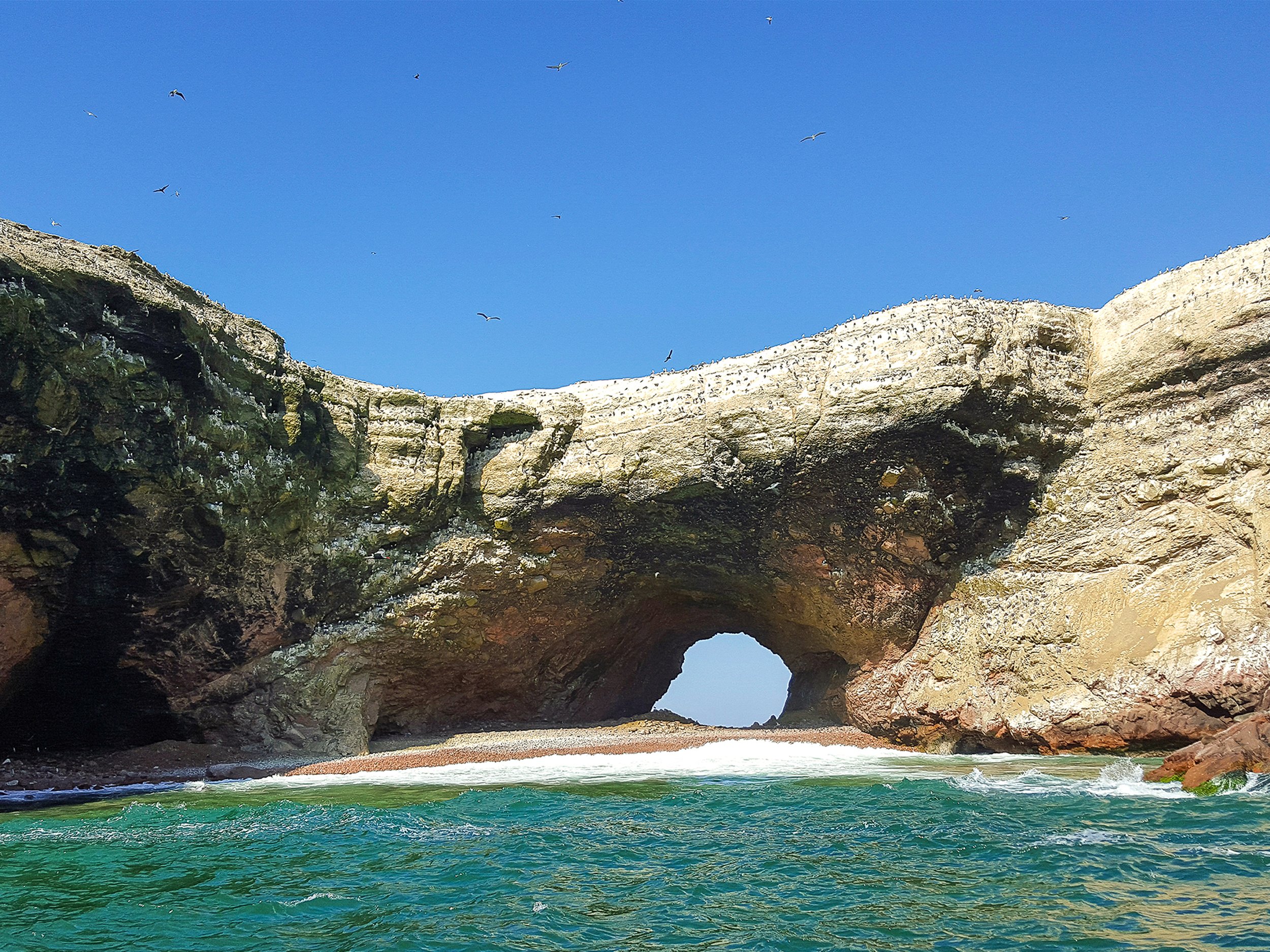
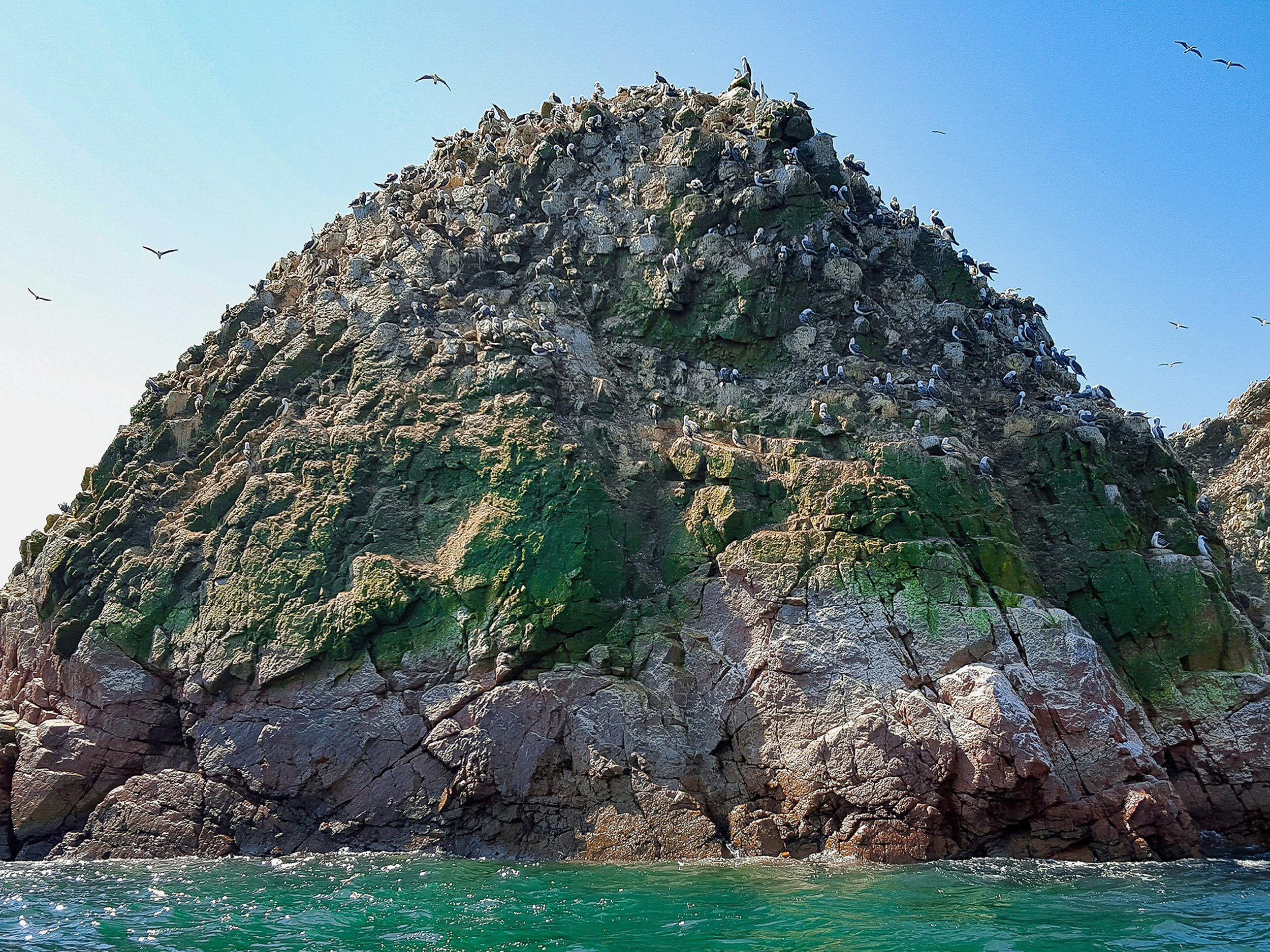
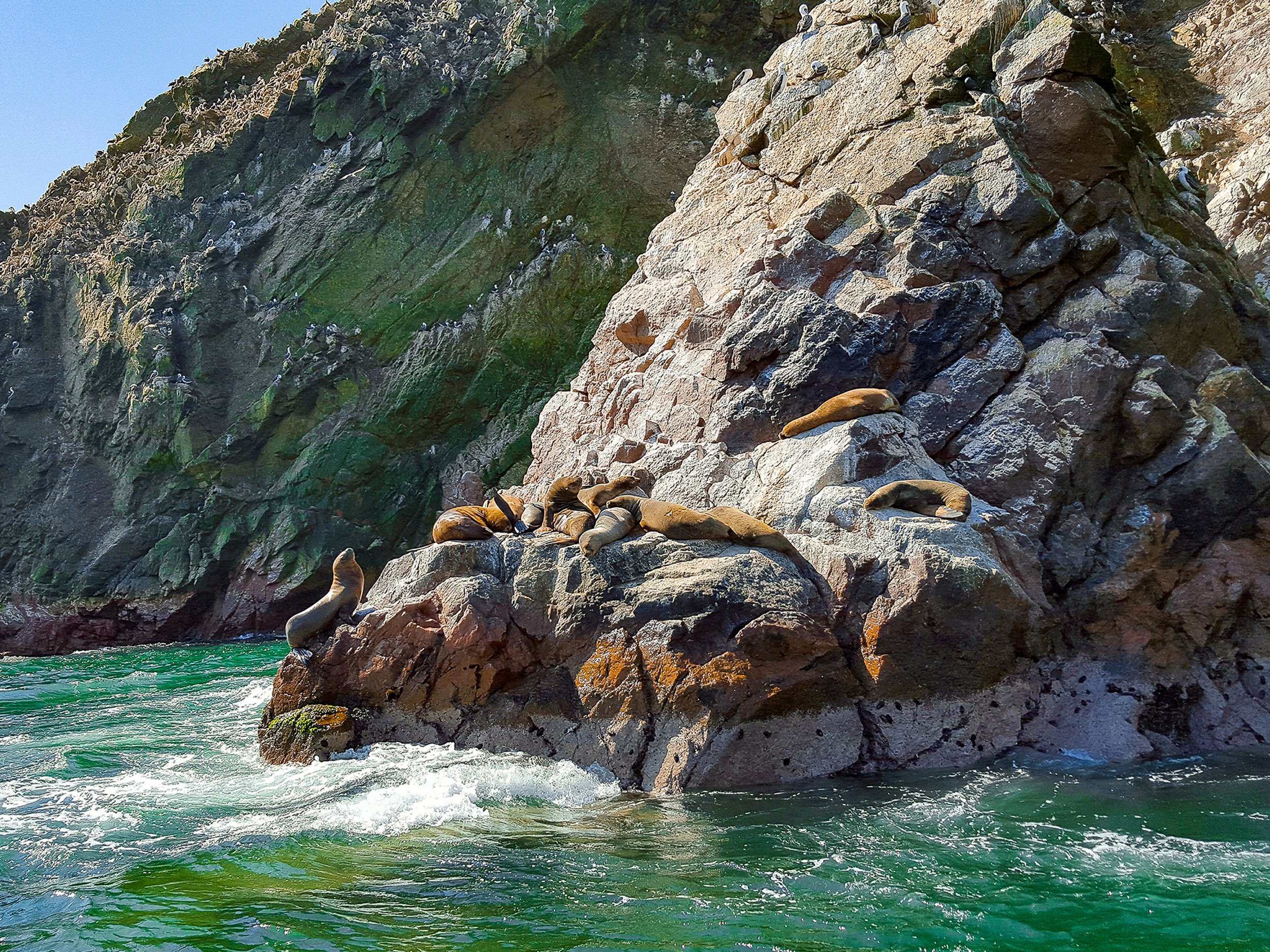
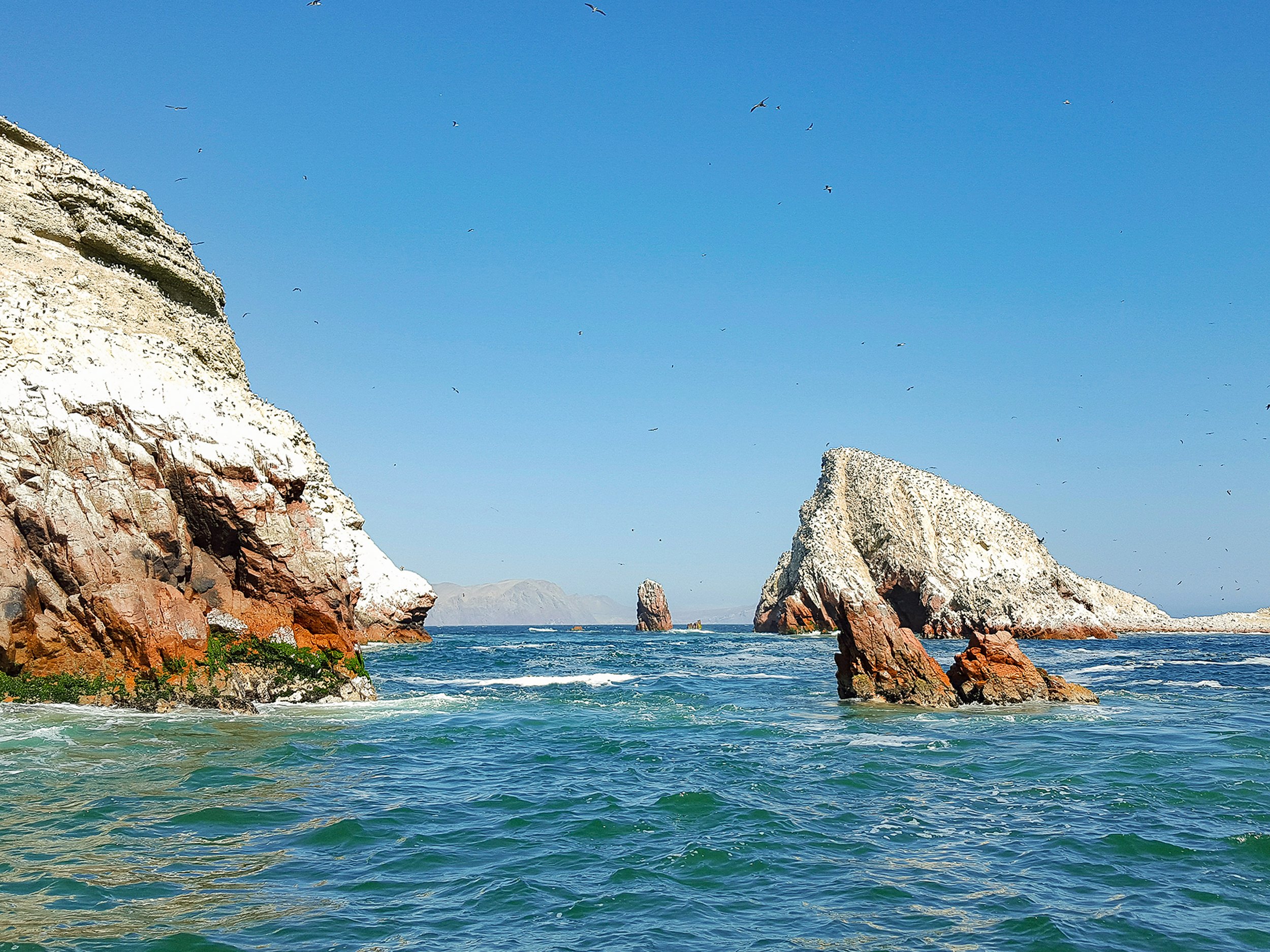
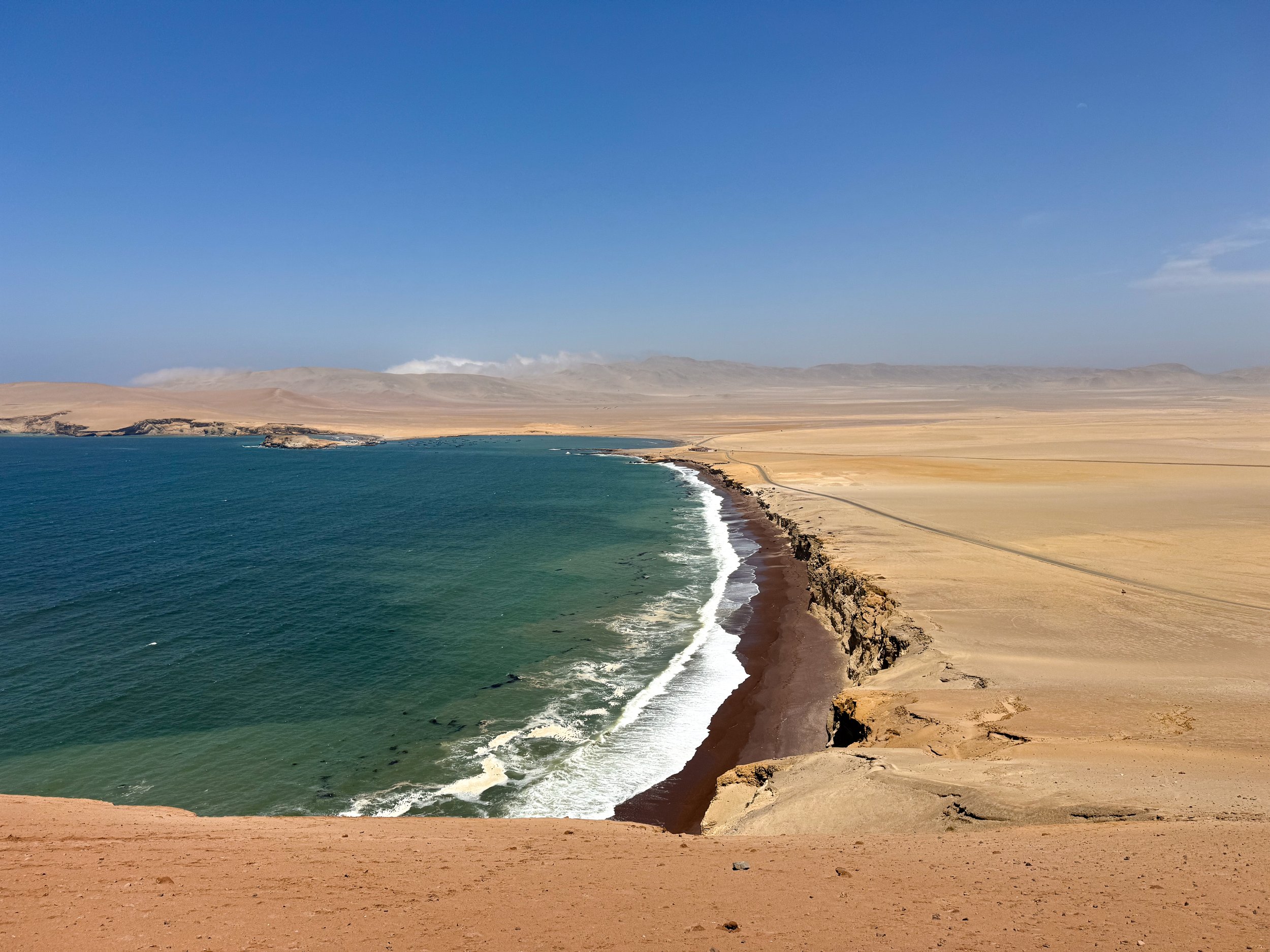
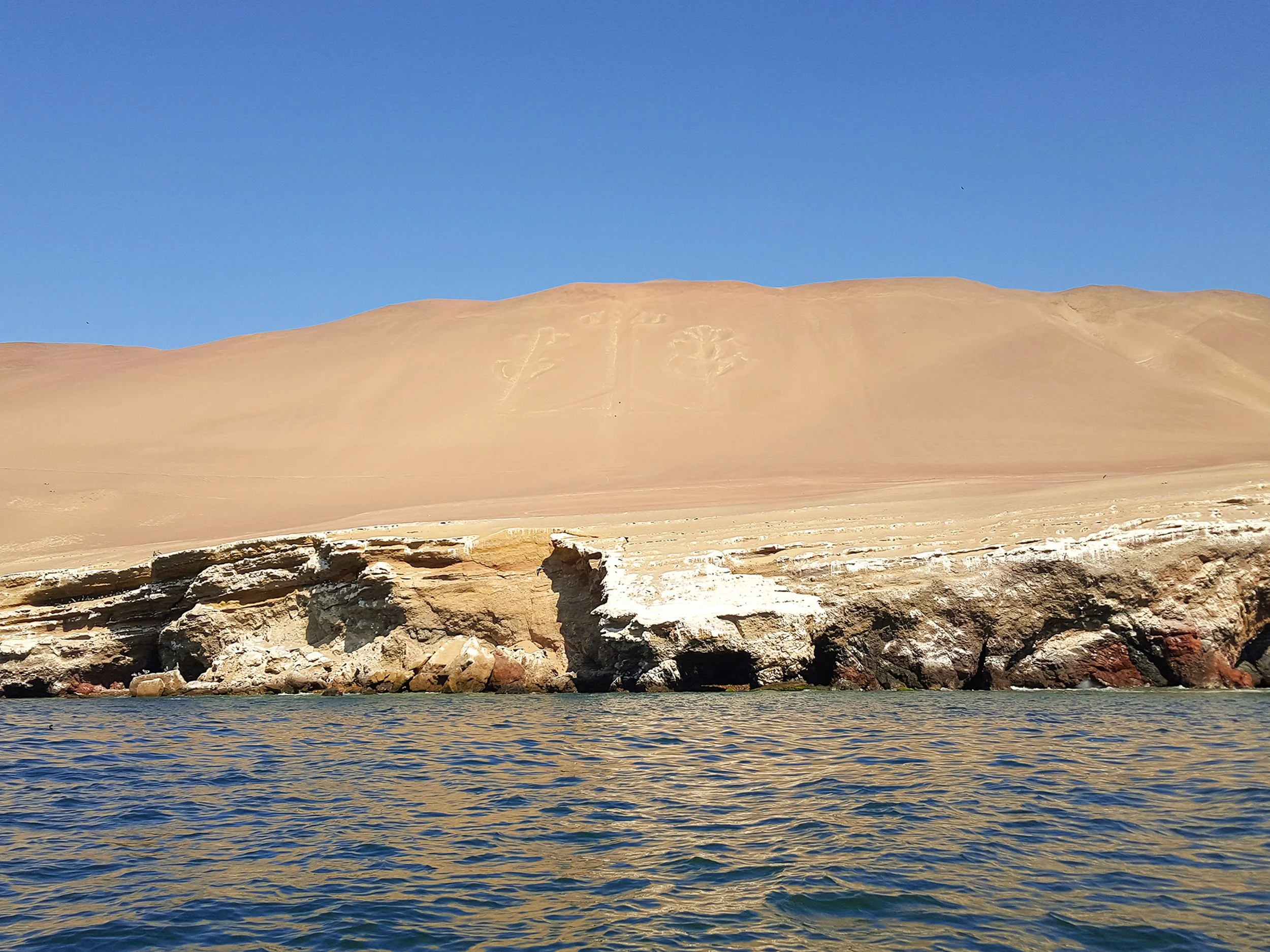
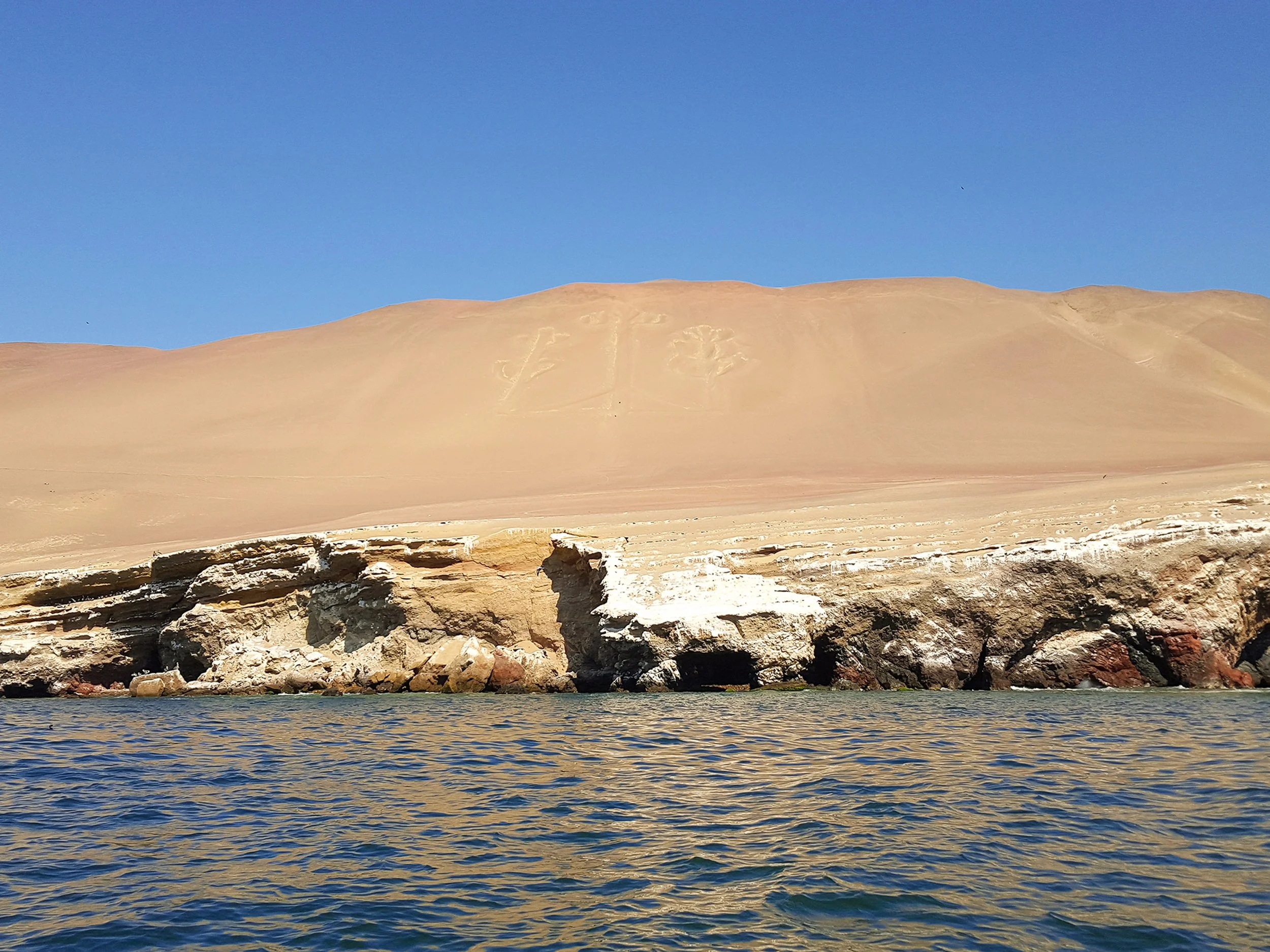
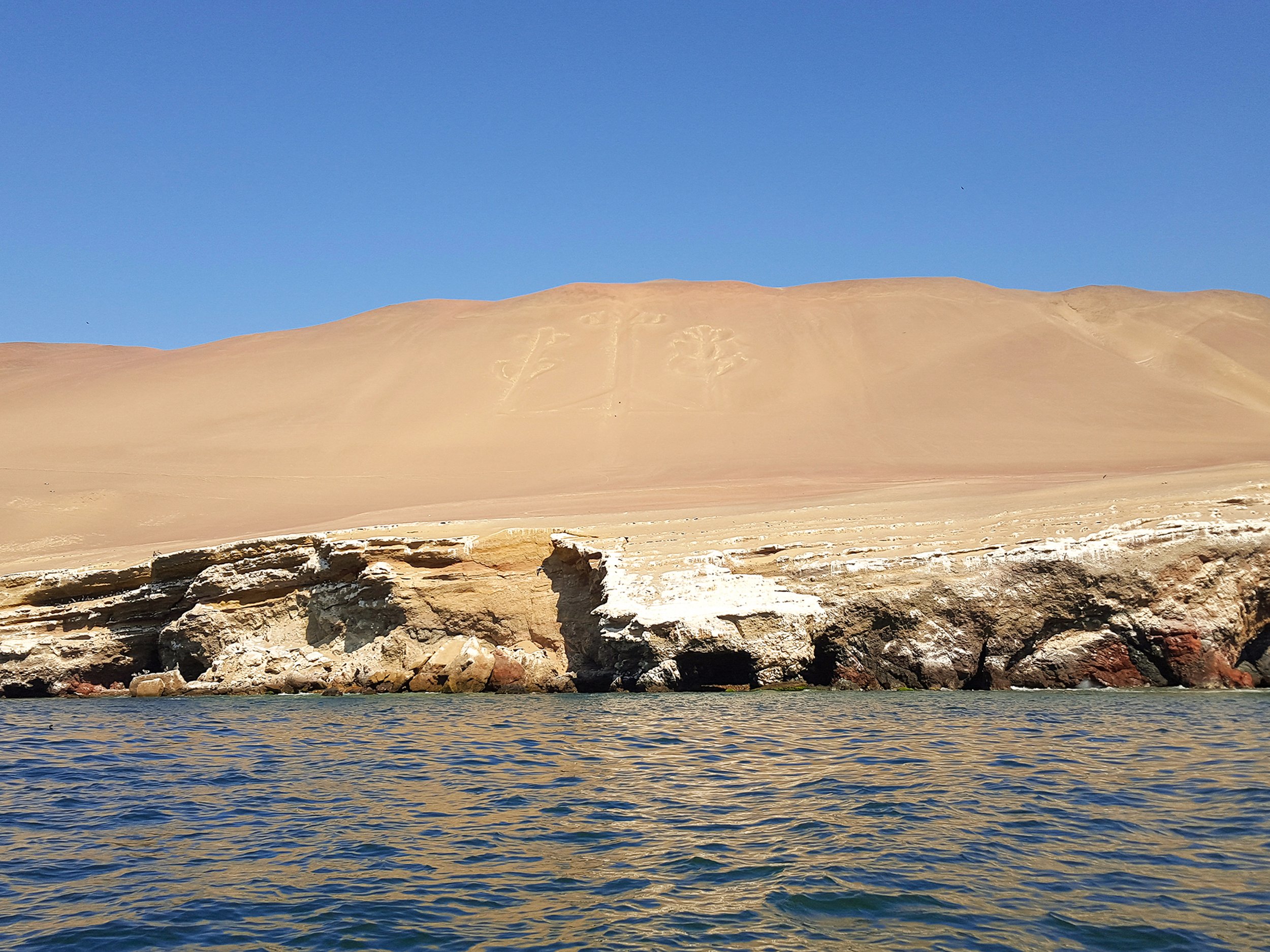
Reserva Nacional de Paracas. A national park in Paracas with a vast marine and desert reserve home to species of penguin, seabirds and sea lions. We explored The Ballestas Islands by boat, stopping at multiple locations to see penguins nesting, a large group of sea lions mating, flocks of birds feeding and a sea arch. Along the way, we passed the Paracas Candelabra, a massive geoglyph carved into the side of the mountain by an ancient civilization dating back 2,000 years. On land, we visited Playa Roja, a deep red sand beach along the cold Pacific waters. Above the beach, we stopped at Mirador Istmo II, a lookout with views of the shoreline and sprawling yellow sand desert.
The Paracas Desert. A vast desert stretching from the Pacific Coast to the Andes Mountains with a seemingly endless horizon of massive sand dunes. In town, there are a number of guides offering tours into the desert. We booked with one that took us on a wild dune ride that traversed the massive valleys of sand. Halfway through the tour, we stopped to try sand boarding for the first time. After several attempts, mostly involving tumbling down the dune and crawling back to the top, we eventually gave up. Afterwards, we stuck around late enough to watch the sunset.
Getting to Paracas
The best way to visit Paracas is by Peru Bus or Peru Hop. Plan to arrive by mid morning to get to the Ballestas Islands. There are many speedboat companies along the harbor that offer 2 to 3 hour tours for less than $20 per person. Prices and times are comparable for Dune Tours.

Pisco
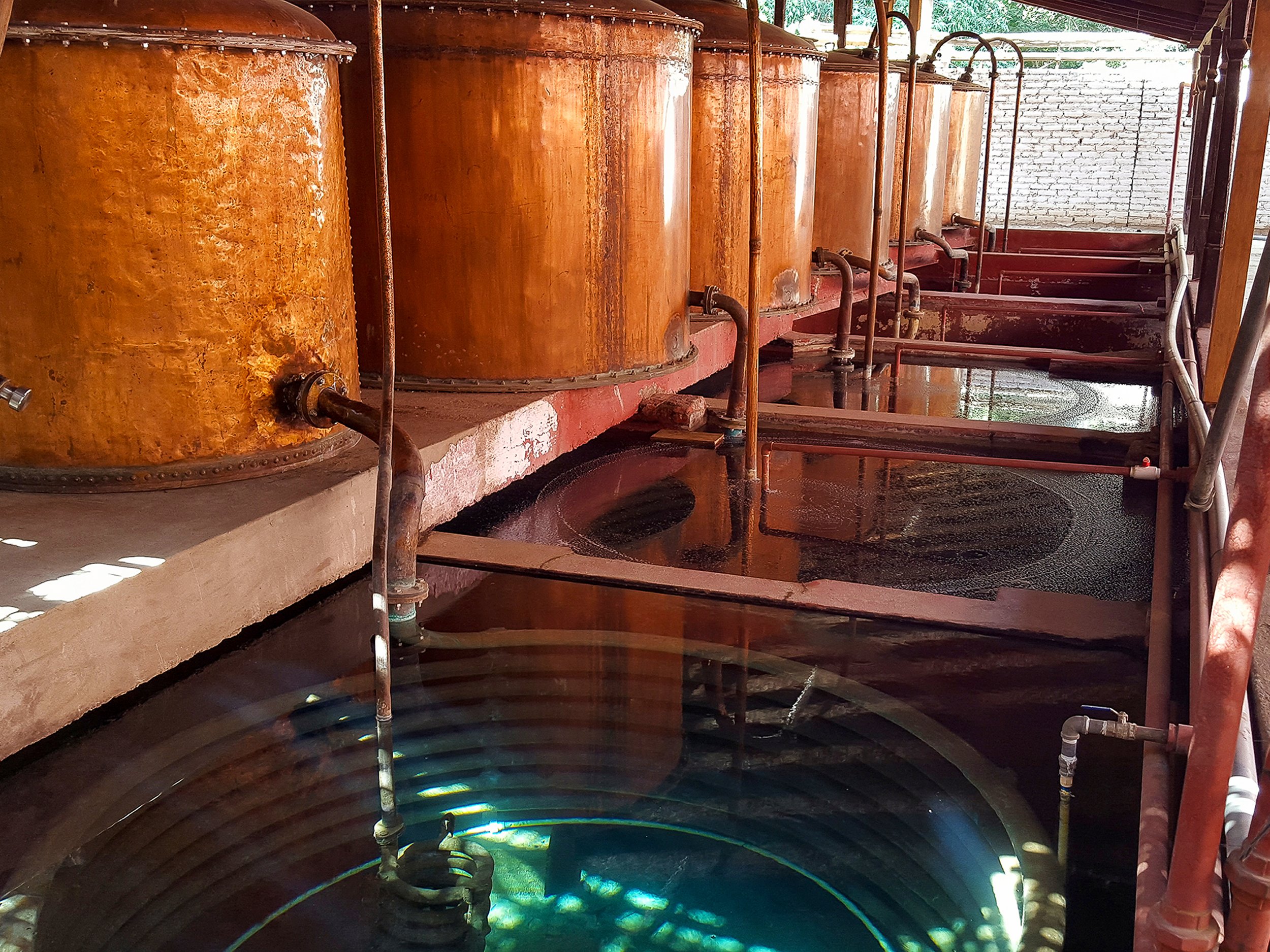
Home of Peru’s national drink, the Pisco Sour. Pisco is a spirit fermented from grapes and distilled in large copper basins. While staying in town with our friends’ relatives, we drank homemade Pisco and watched Peruvian late night television. The town is hyper local with a central square, very few travelers and tuk tuk taxis racing down the dusty streets.
Here is a great recipe for a Pisco Sour:
2 oz Pisco
3/4 oz fresh lime juice
1 oz simple syrup
1 egg white
Angostura bitters
Shake all ingredients vigorously for about 30 seconds, then add ice and shake for at least another 15 seconds. Strain into a chilled glass and garnish the frothy top with a few dashes of the bitters.
Ica
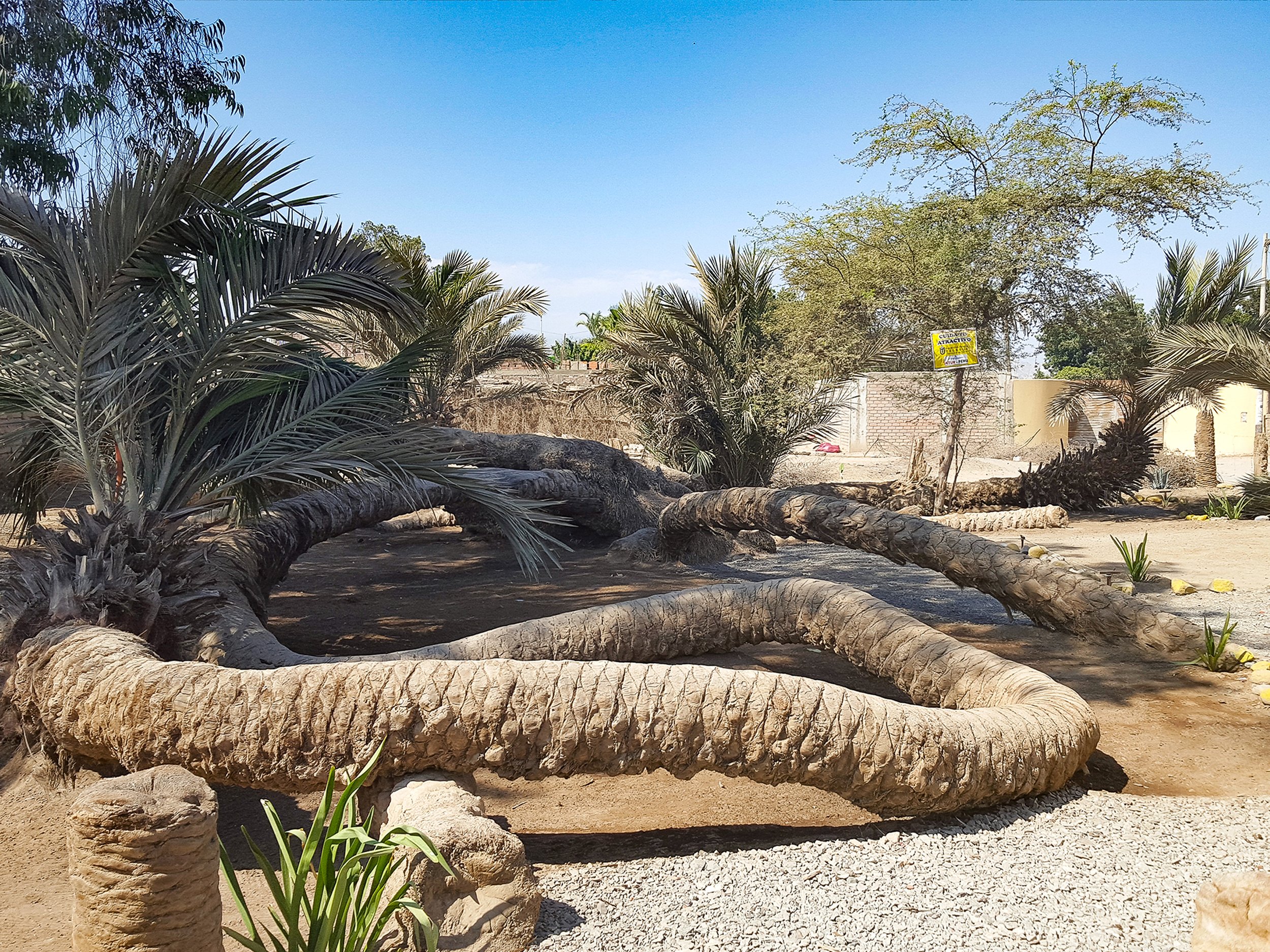
Ica is a region of the Peruvian desert at the base of the Andes Mountains with wine vineyards, Pisco distilleries, a desert oasis and nature reserves.
Peruvian Wines & Vineyards
Though Peru is not widely known for its wines, many incredible vintages come out of the country’s Ica Valley. During our 3 weeks in Peru, we sampled multiple wines, piscos and visited a couple of vineyards
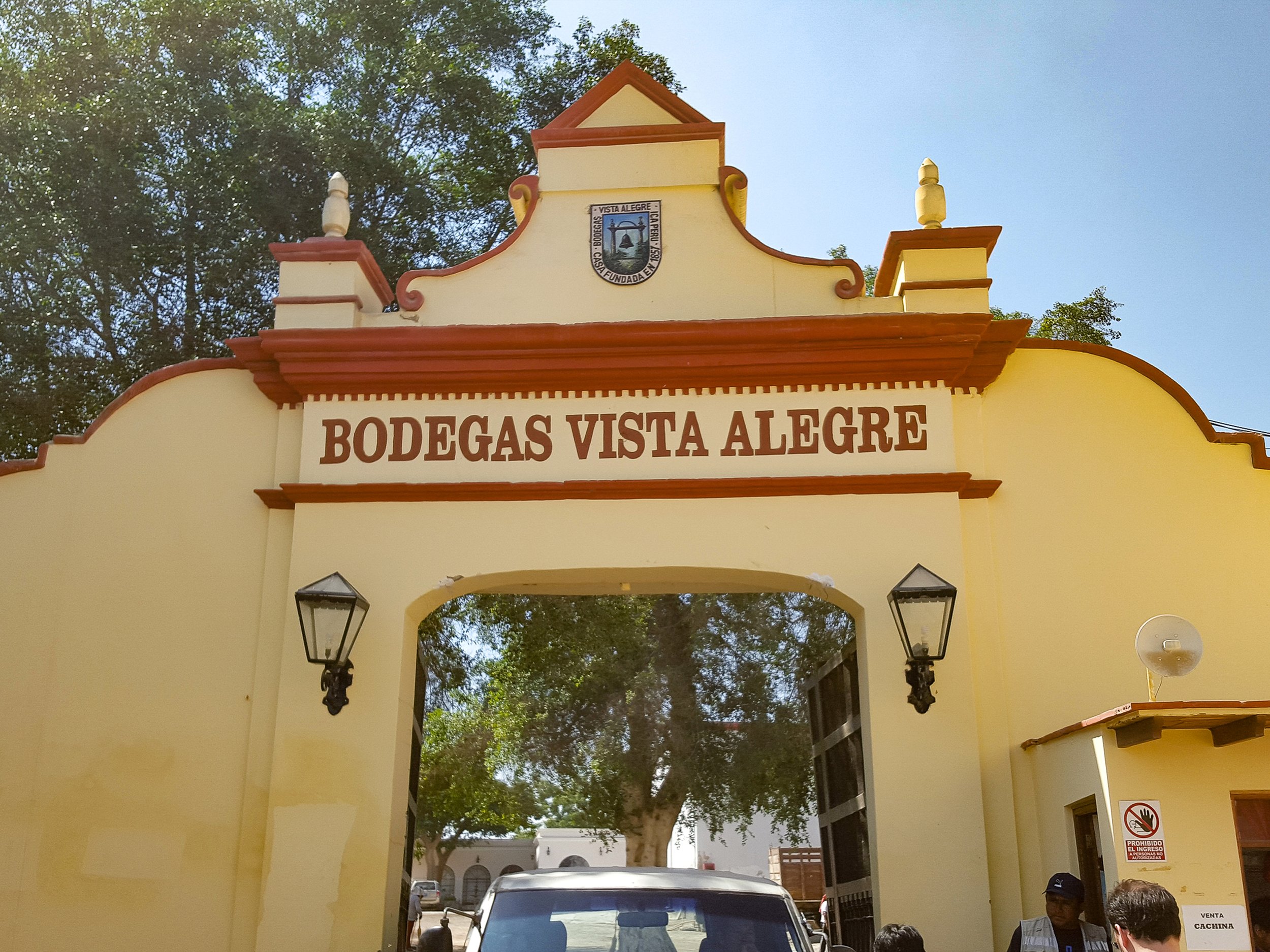
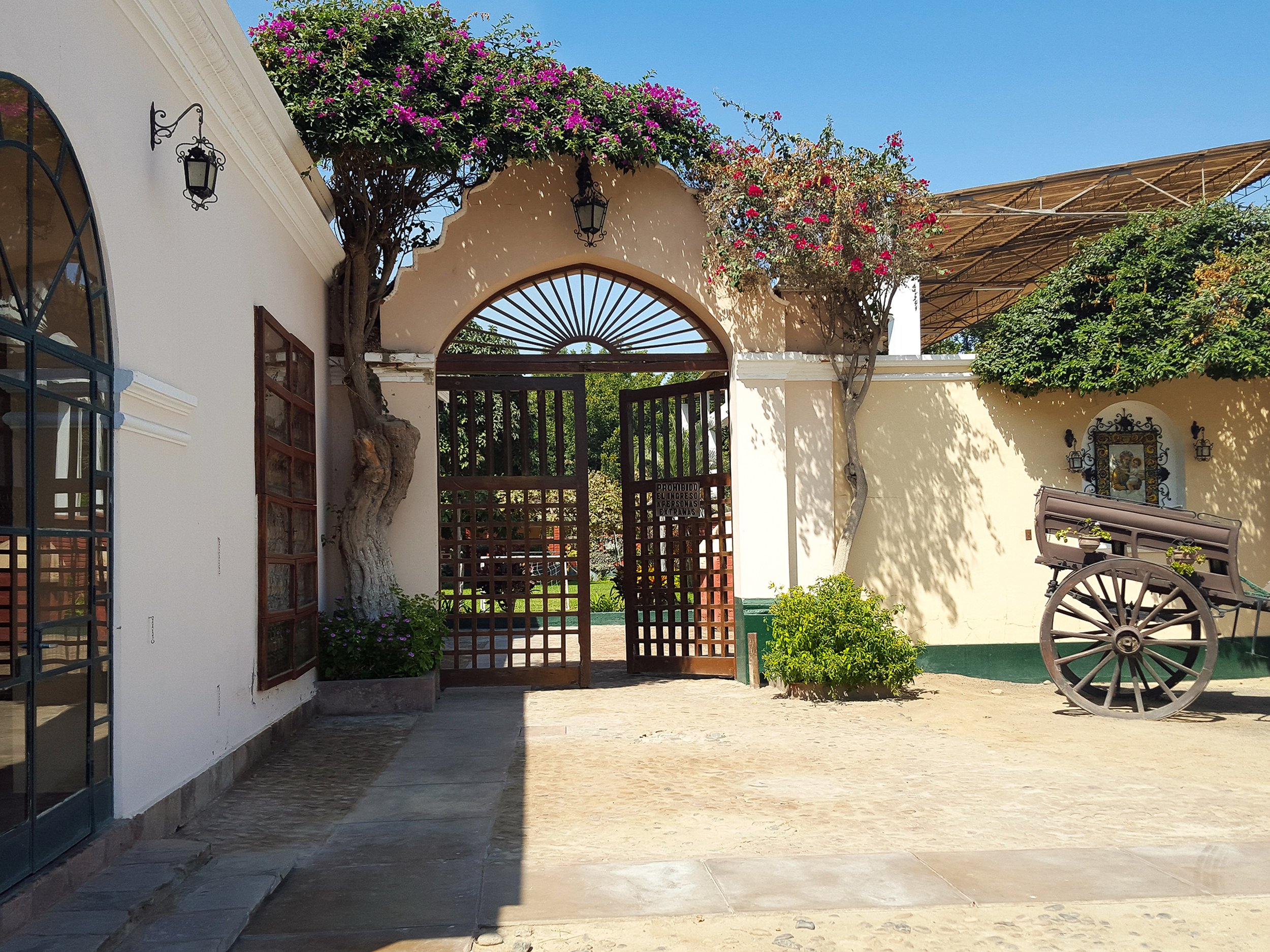
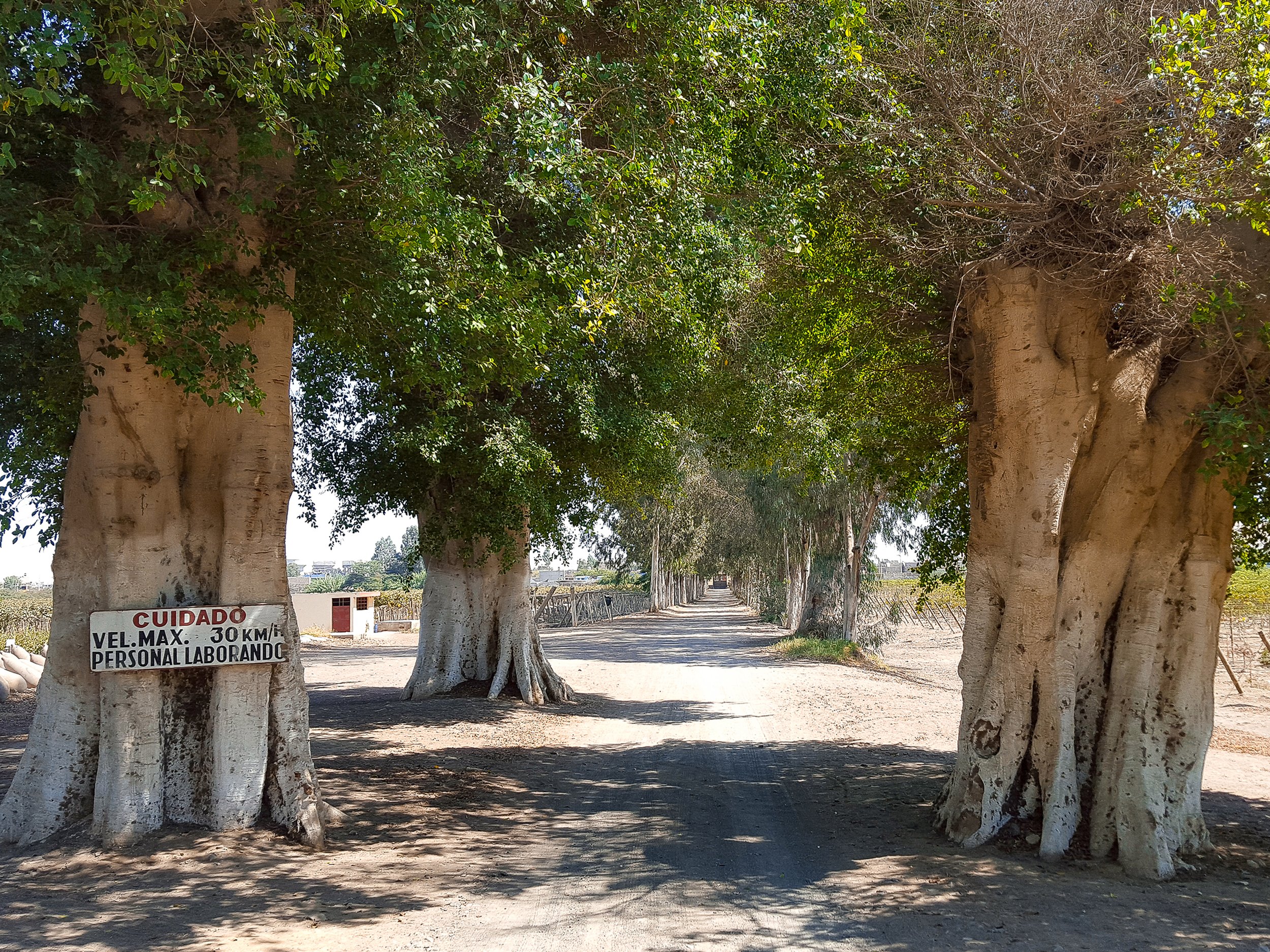
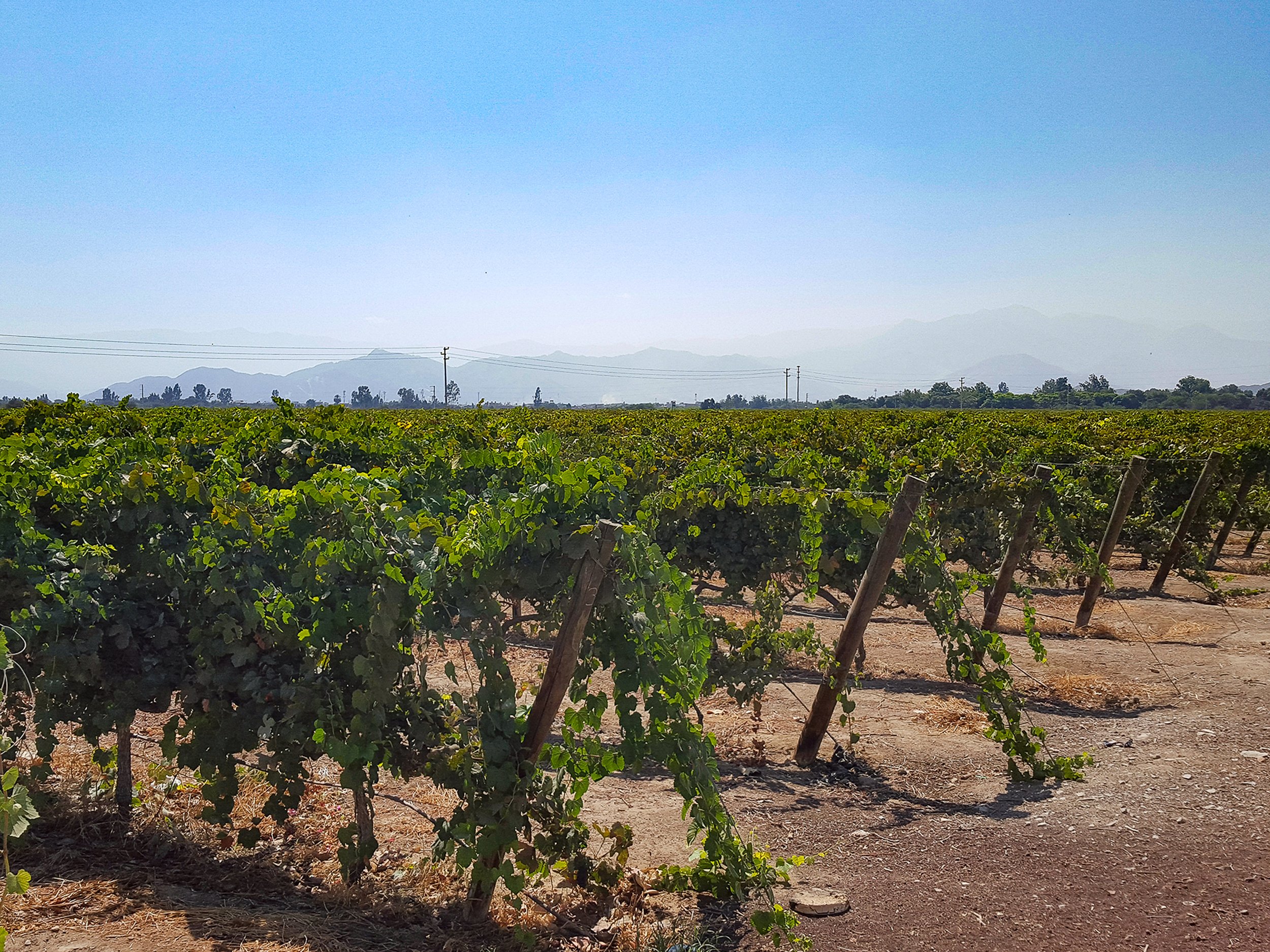
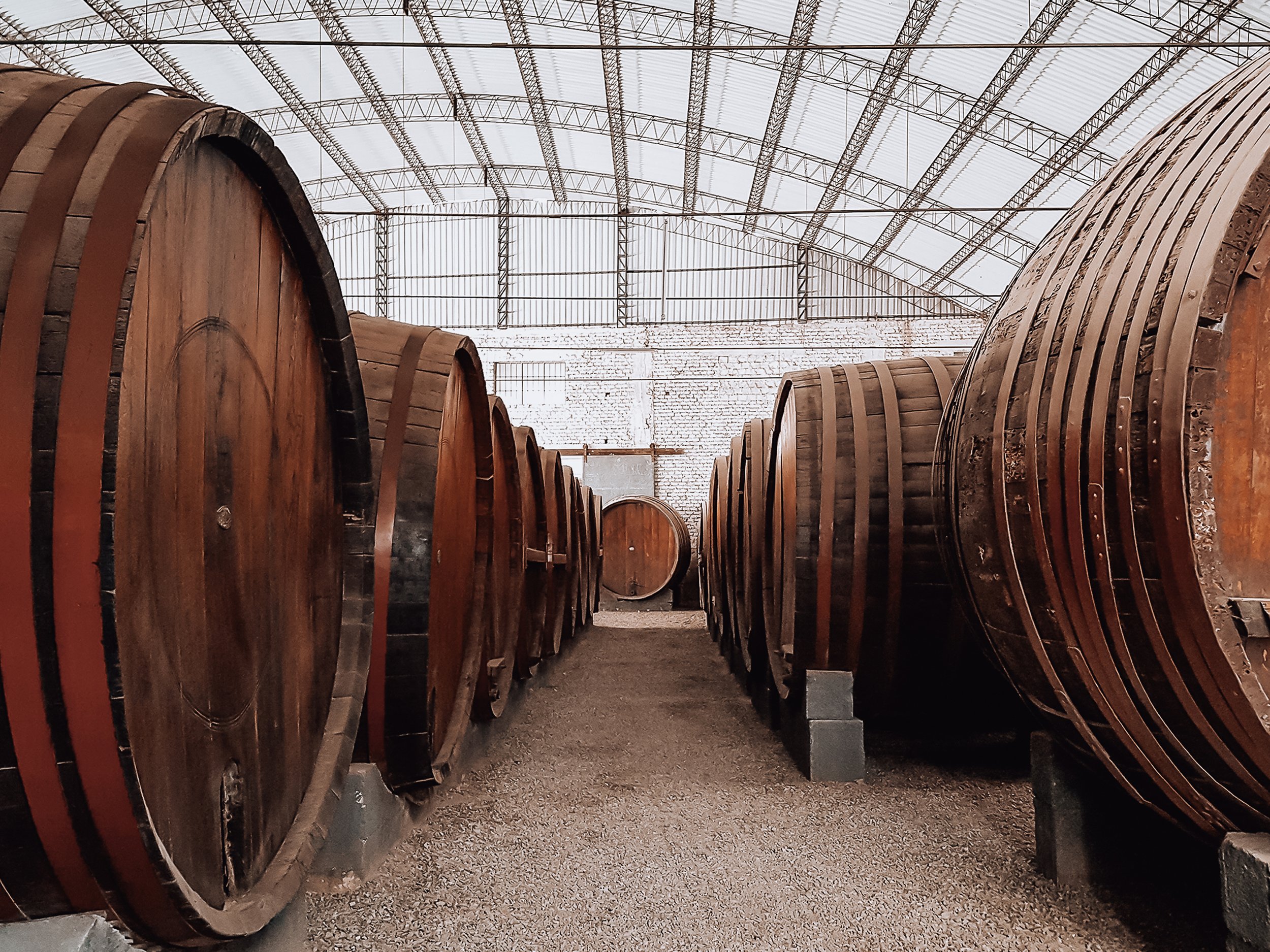
Bodegas Vista Alegre. One of Peru’s largest and oldest vineyards and Pisco distilleries. Rows of grape vines line the fields extending towards the edge of the Andes mountain range. We learned about how the grapes are harvested, toured the facilities where they are fermented, distilled and bottled before getting to enjoy some for ourselves.
Nietto Vineyard. A vineyard and Pisco distillery in Ica. We stopped here on the Peru Hop bus and sampled at least a dozen wines and Piscos before enjoying a lunch with our guide. The atmosphere made for a lively and memorable experience!
Vittoria Reserva Malbec, Valle de Ica, Peru. A flavorful, full bodied and dry red wine with rich fruity notes.
Intipalka Vino Cabernet Sauvignon Syrah Réserva, Valle de Sol, Peru. An easy drinking mid to full bodied and dry red wine.
Intipalka Reserva de Familia Malbec, Bakke de Ica, Peru. A flavorful, dry and full bodied red wine.
Tacama Gran Tinto Tres Cepas Malbec, Petit Verdot & Tannat. A popular mid bodied and dry Peruvian red wine sold across the country made from a blend of Malbec and Tannat.
Tacama Gran Blanco. A popular white wine sold across the country with a light body with a dry and stony flavor.
Getting Around Ica
By Taxi. The best way to tour Ica is to hire a taxi driver for the day or afternoon. Many of them will bring you to various sights, recommend places to eat and wait for you while you explore. The cost will depend on how long you hire them for and what you negotiate. In our instance, we hired a taxi for 4 hours and it cost $30.
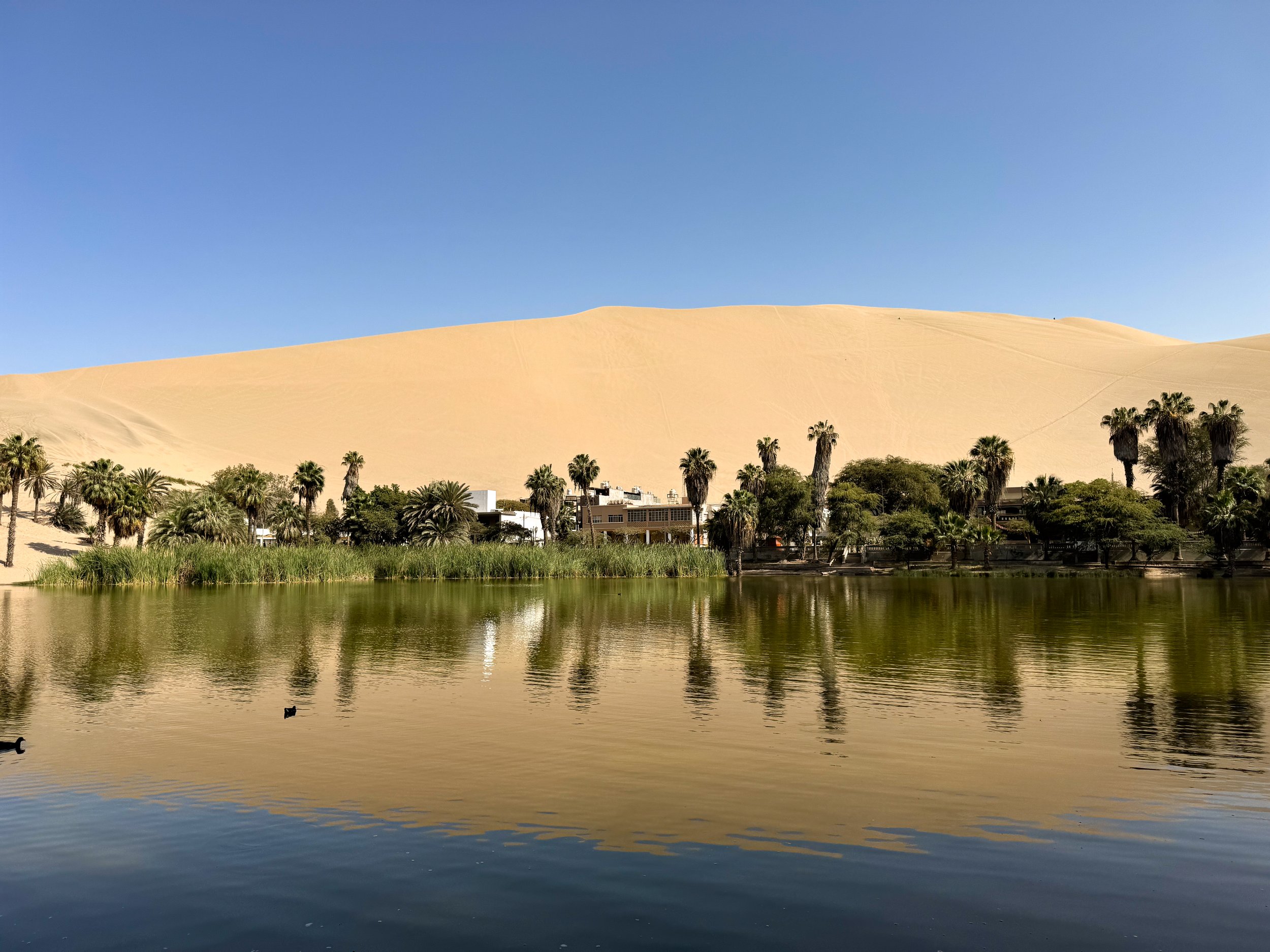
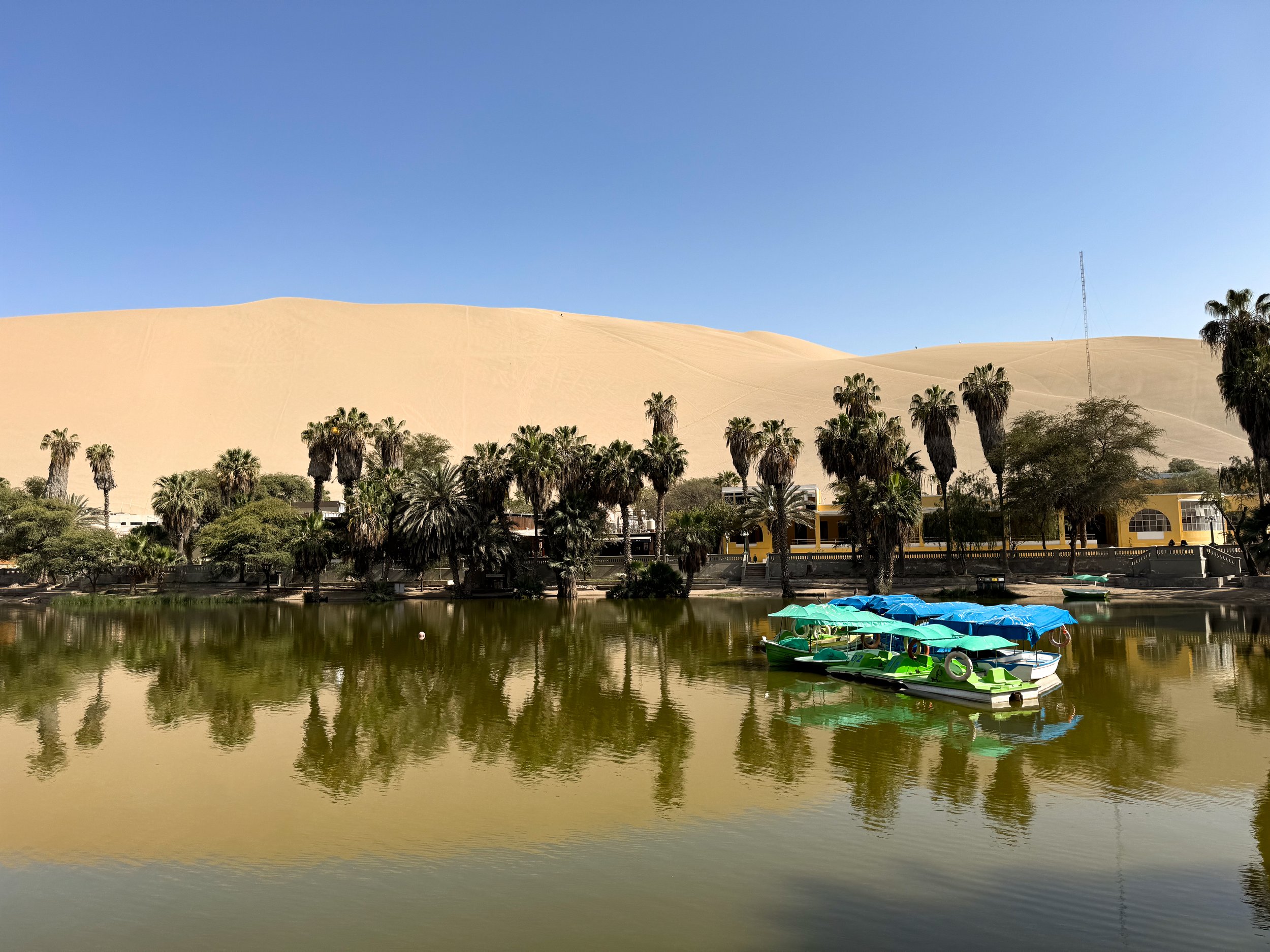
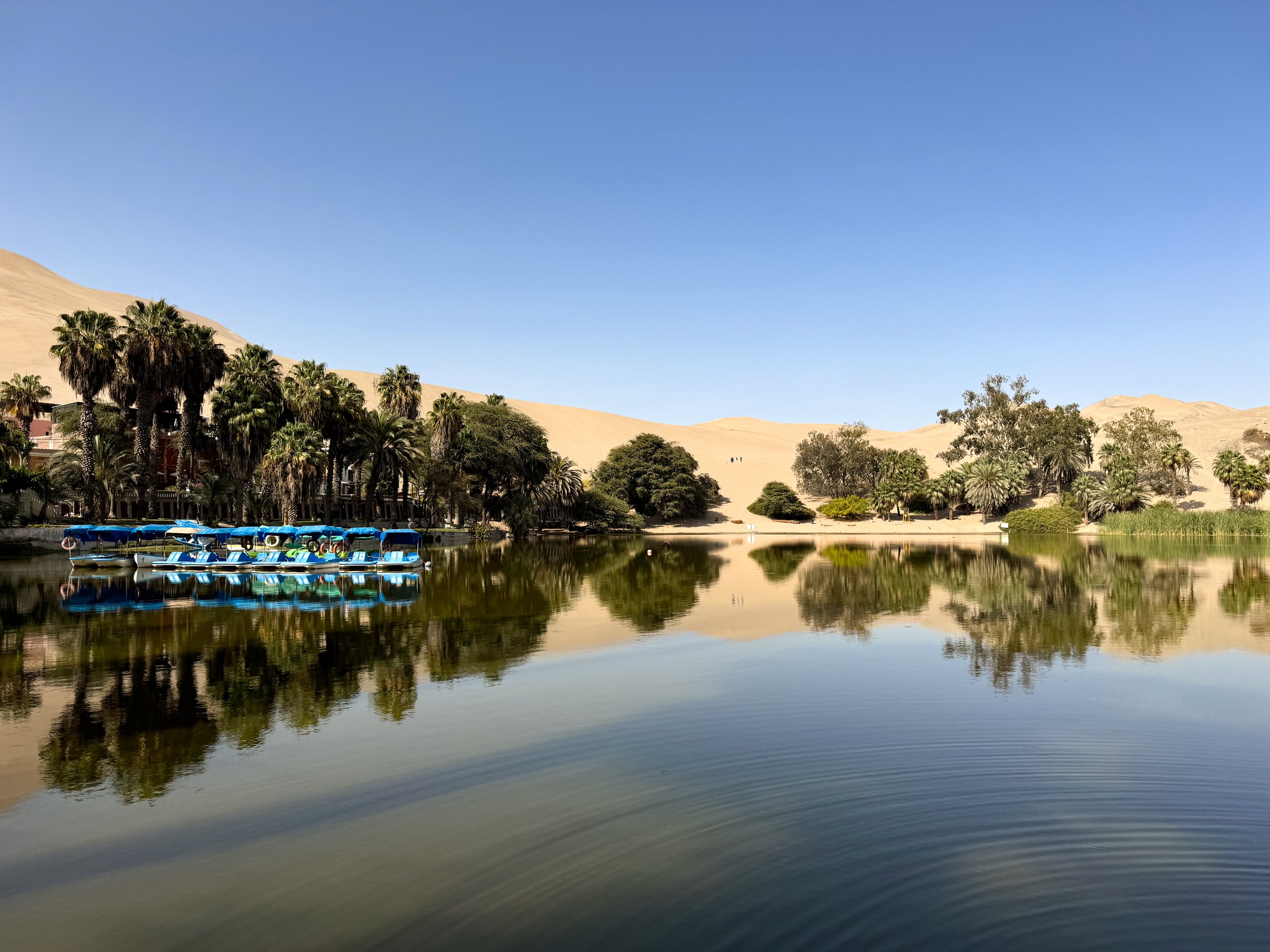
Huacachina
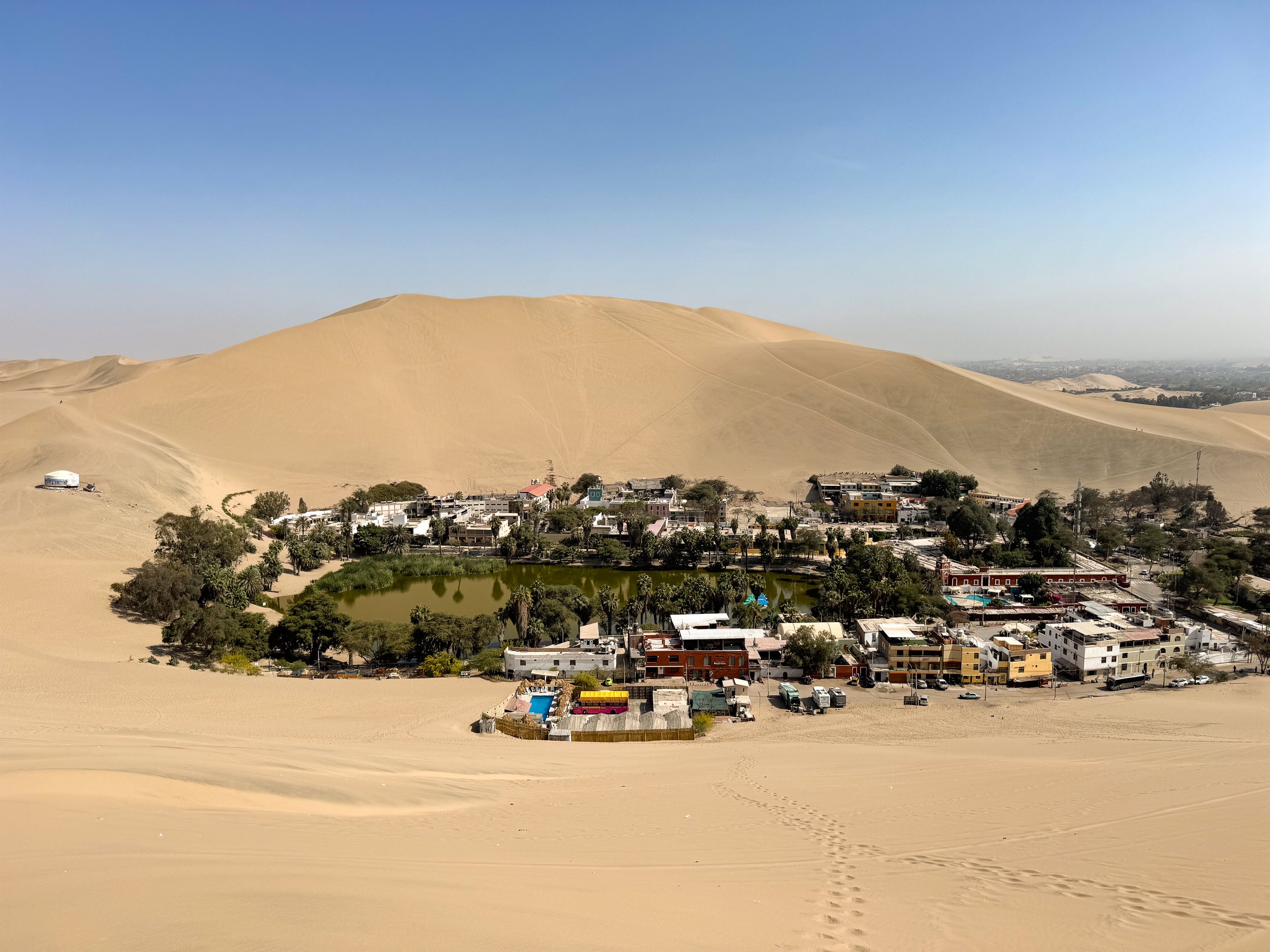
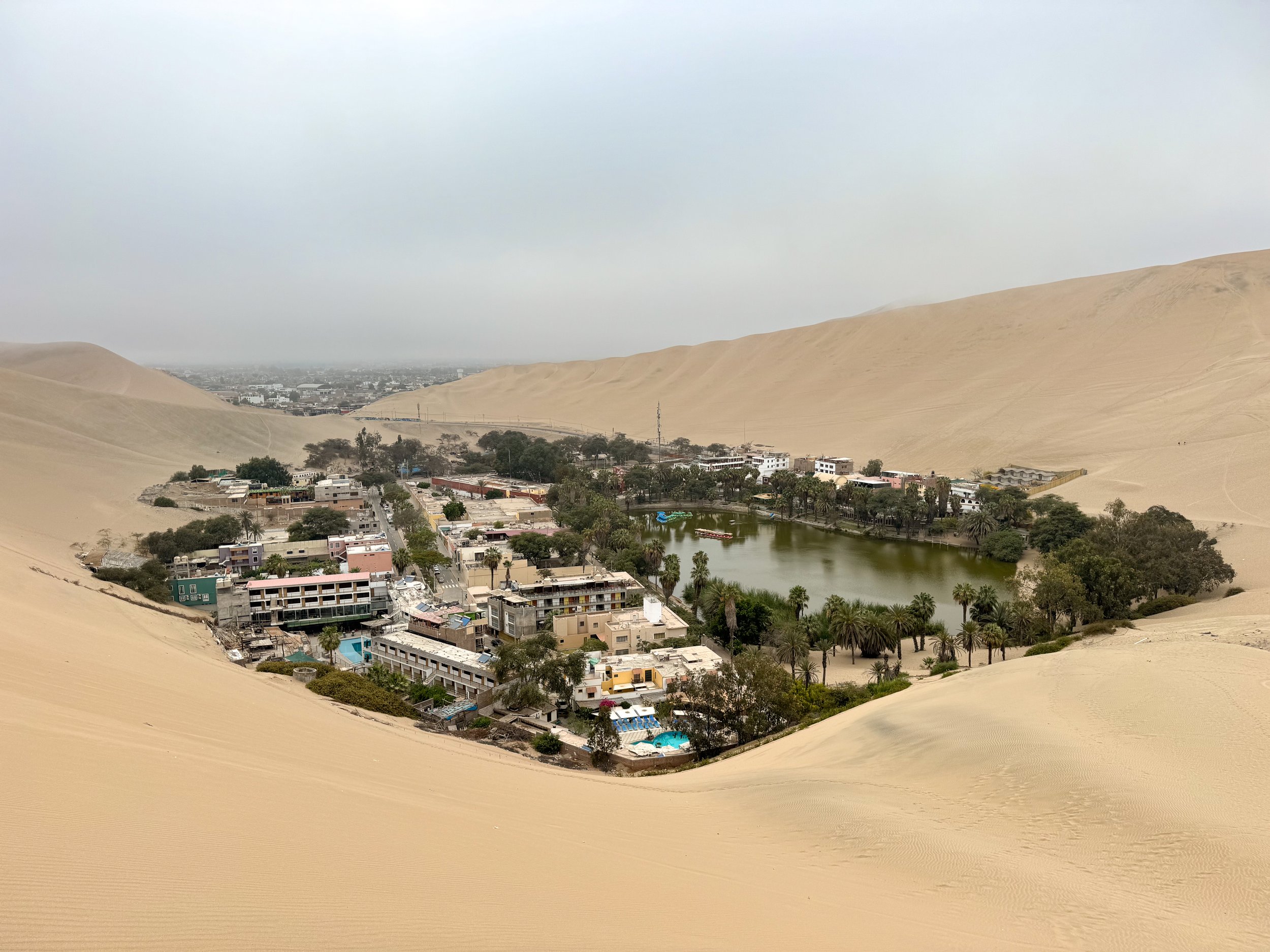
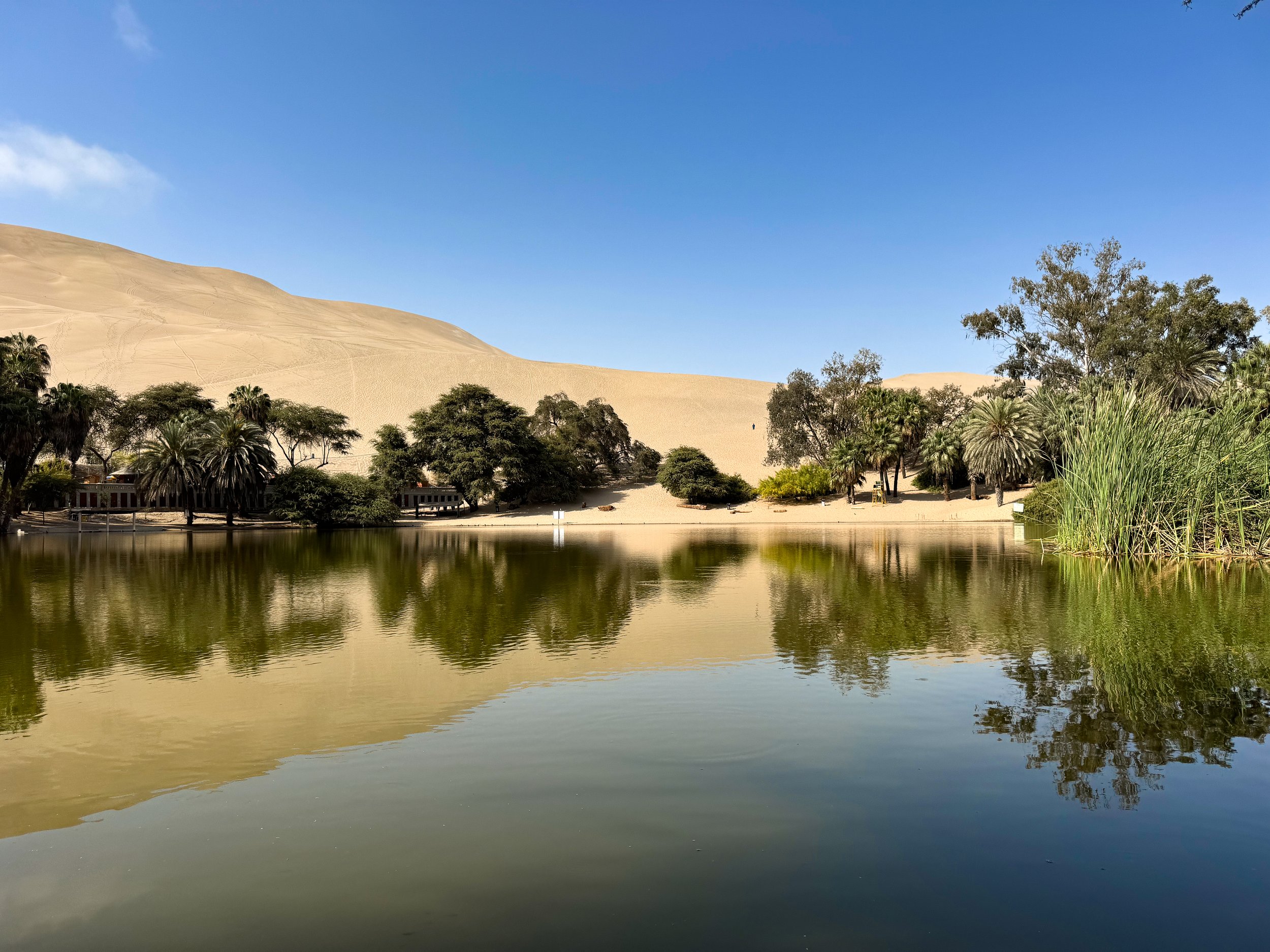
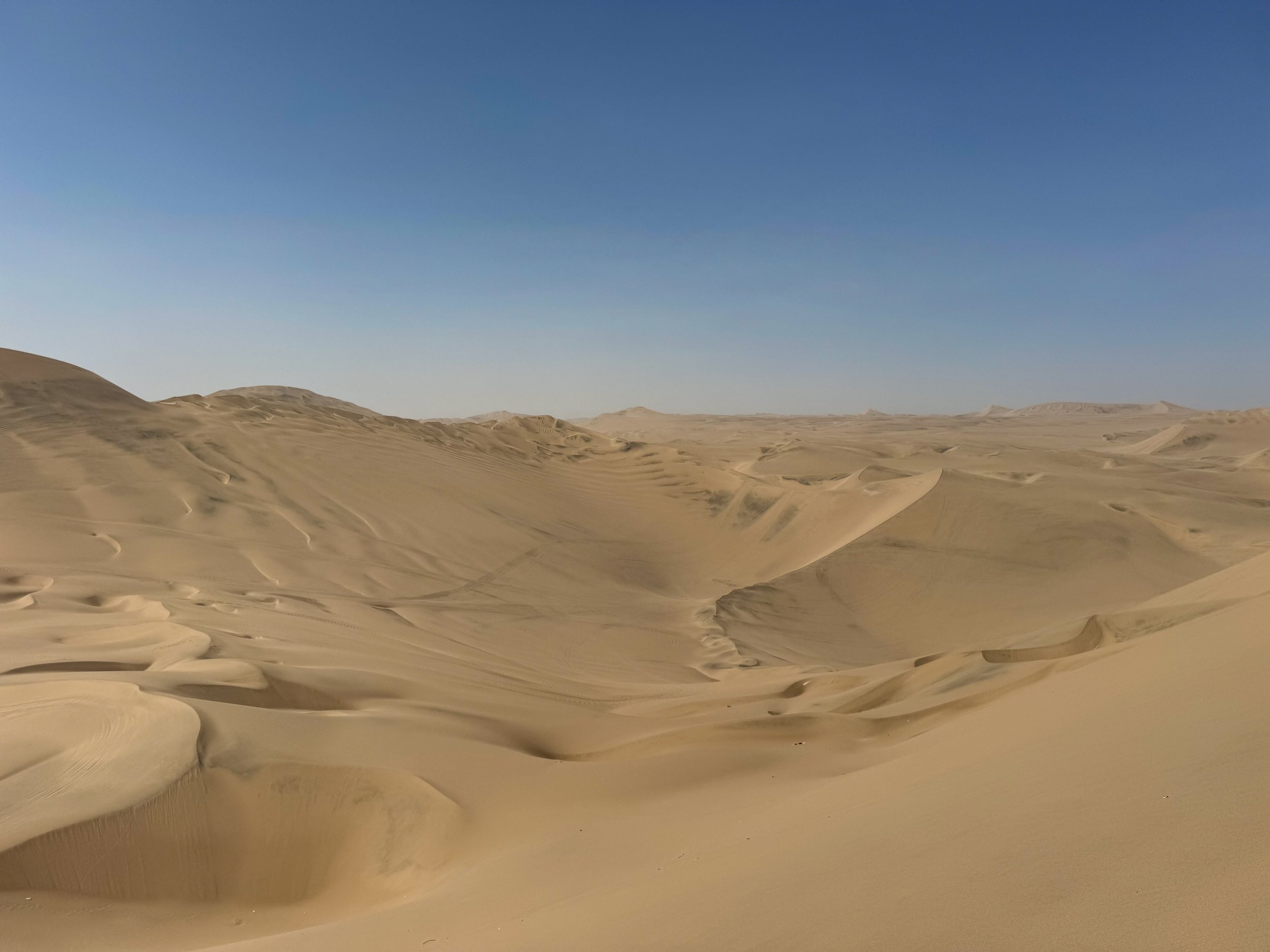
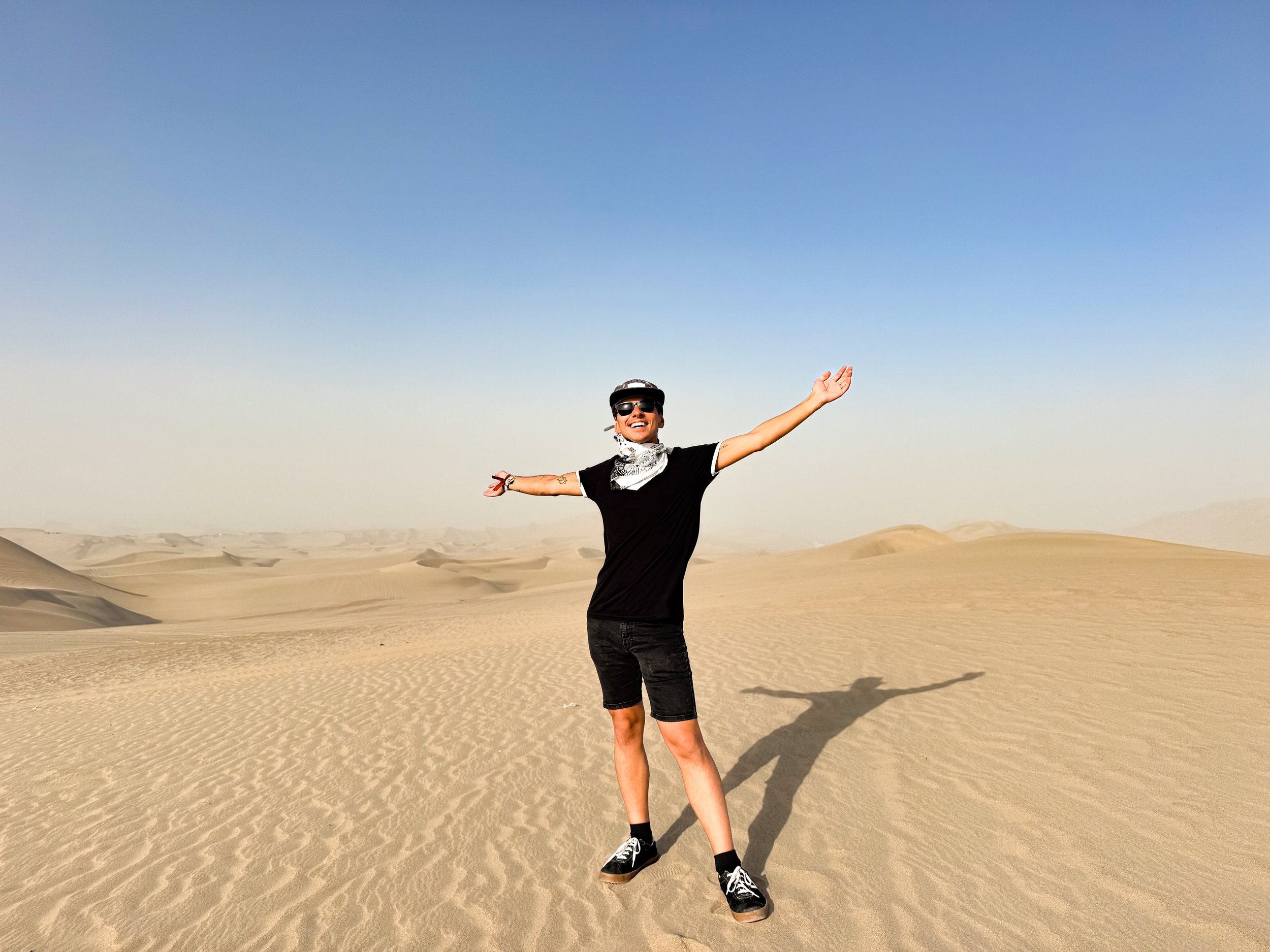
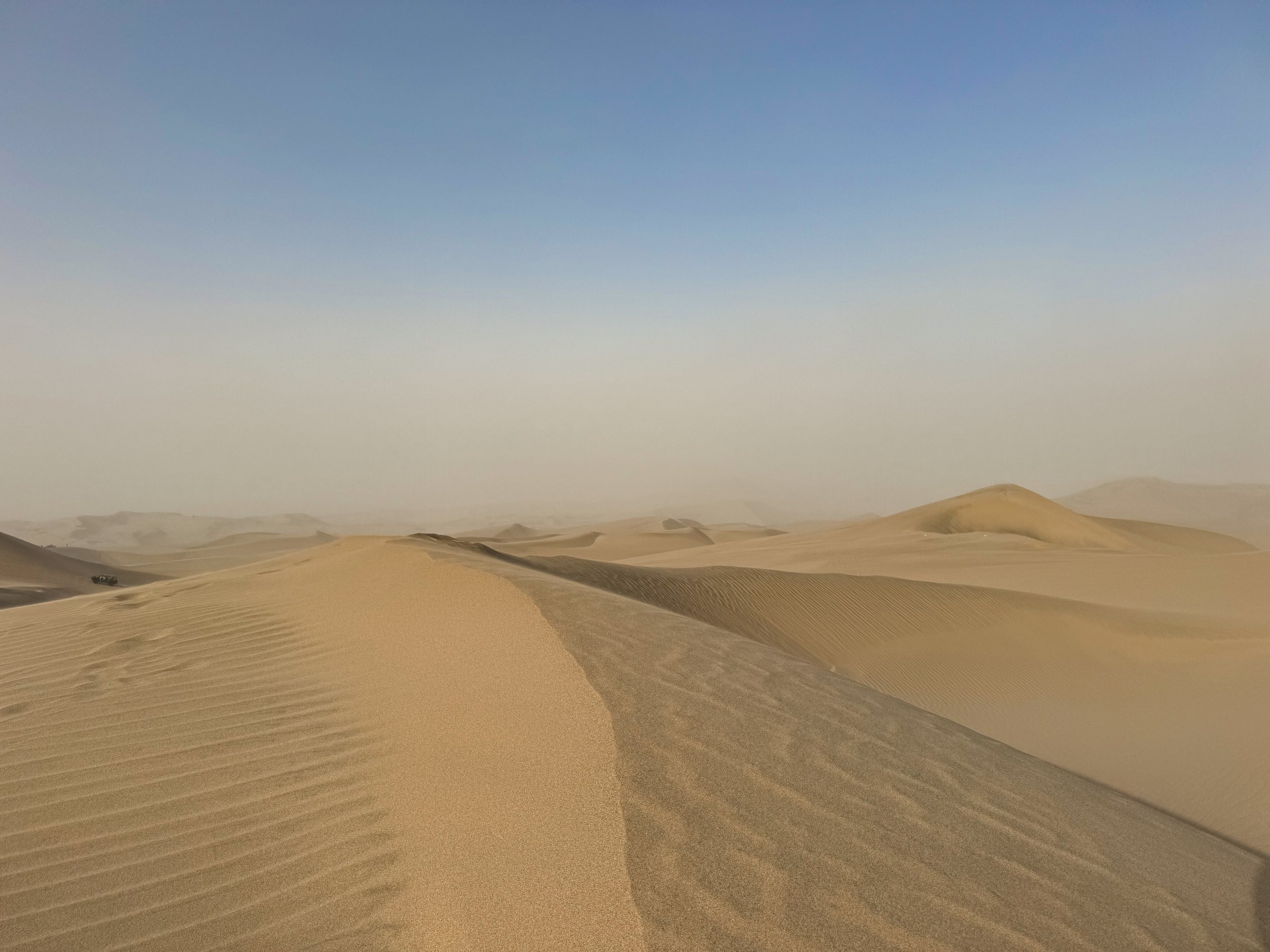
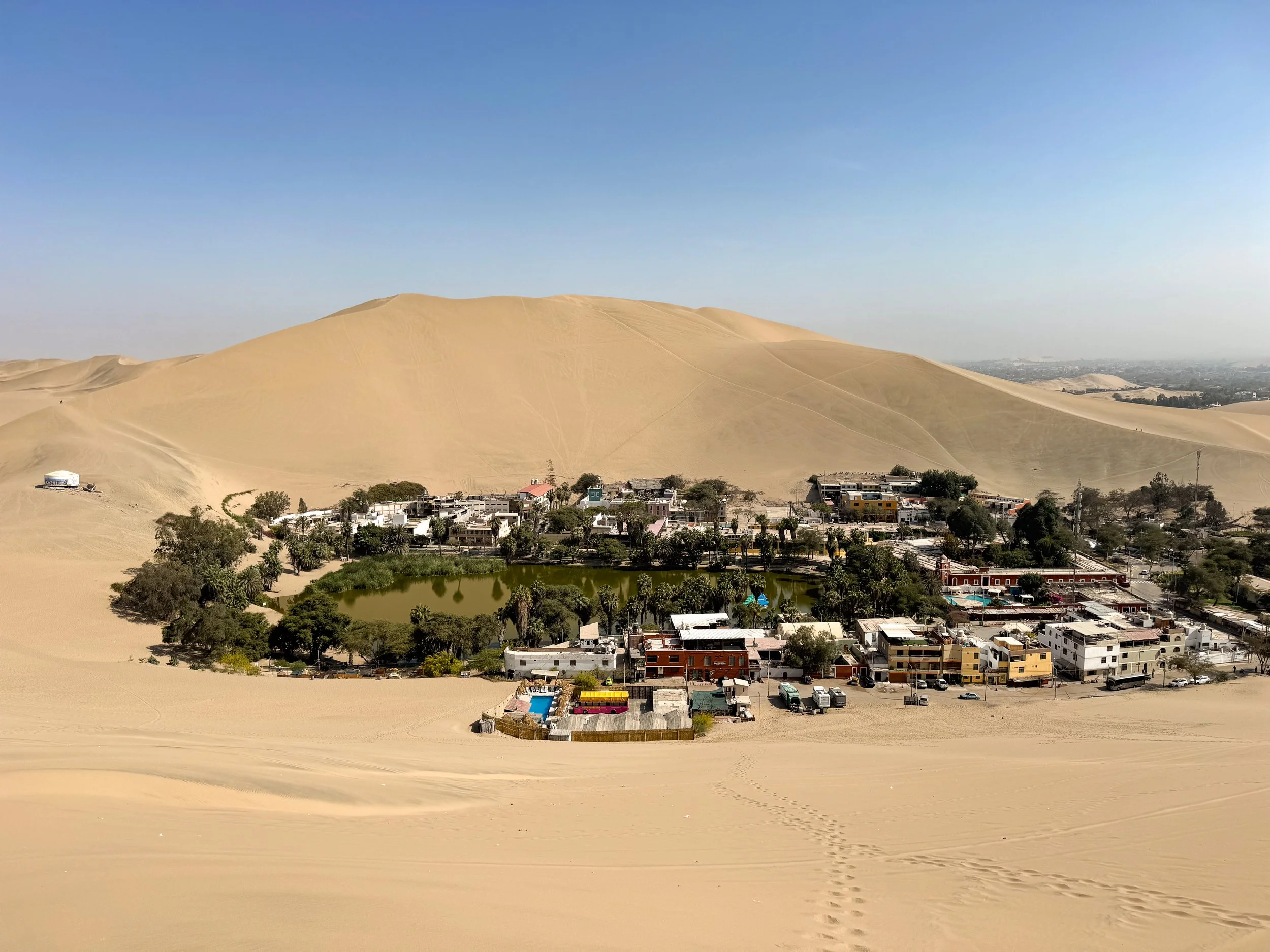
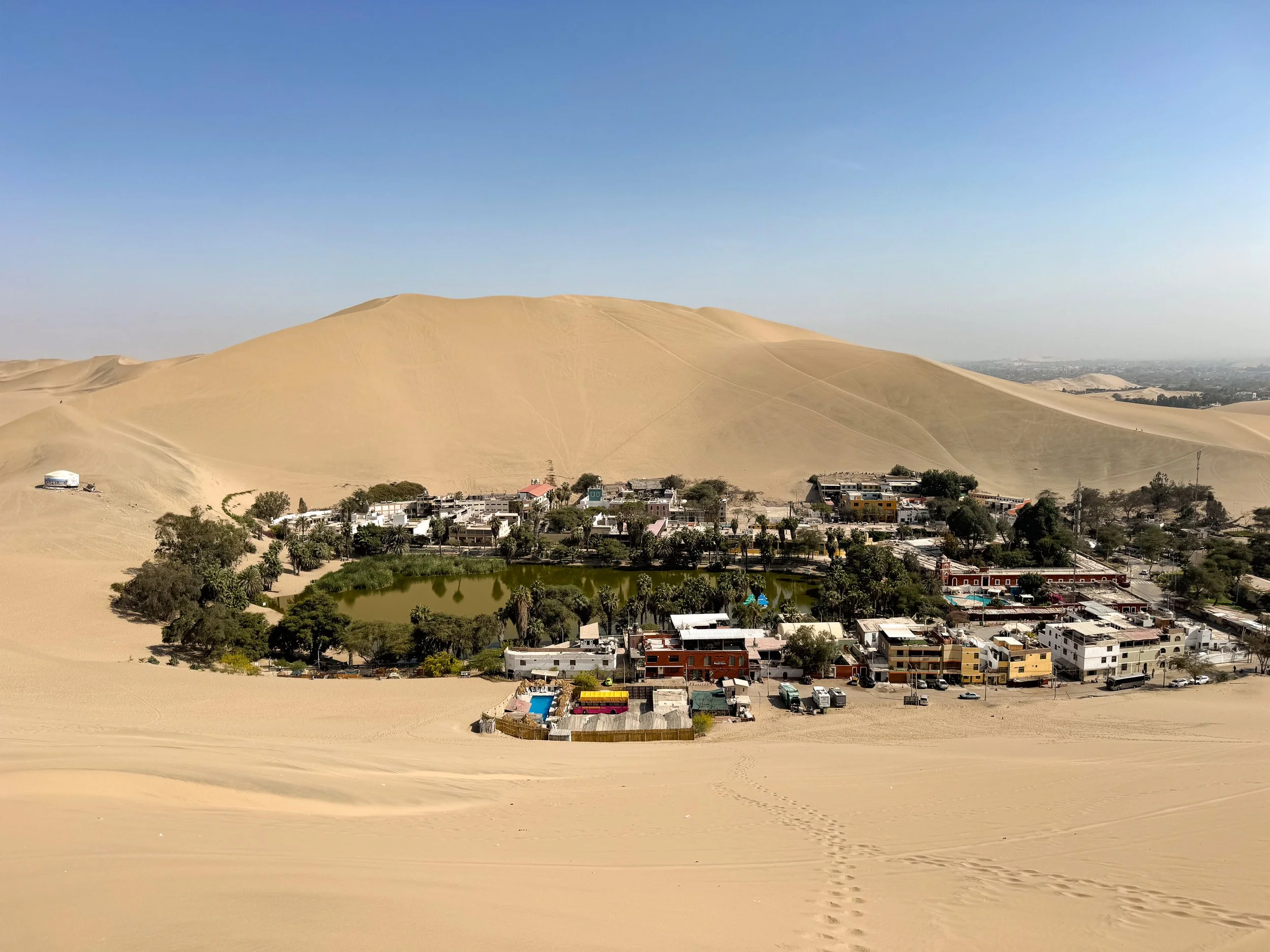
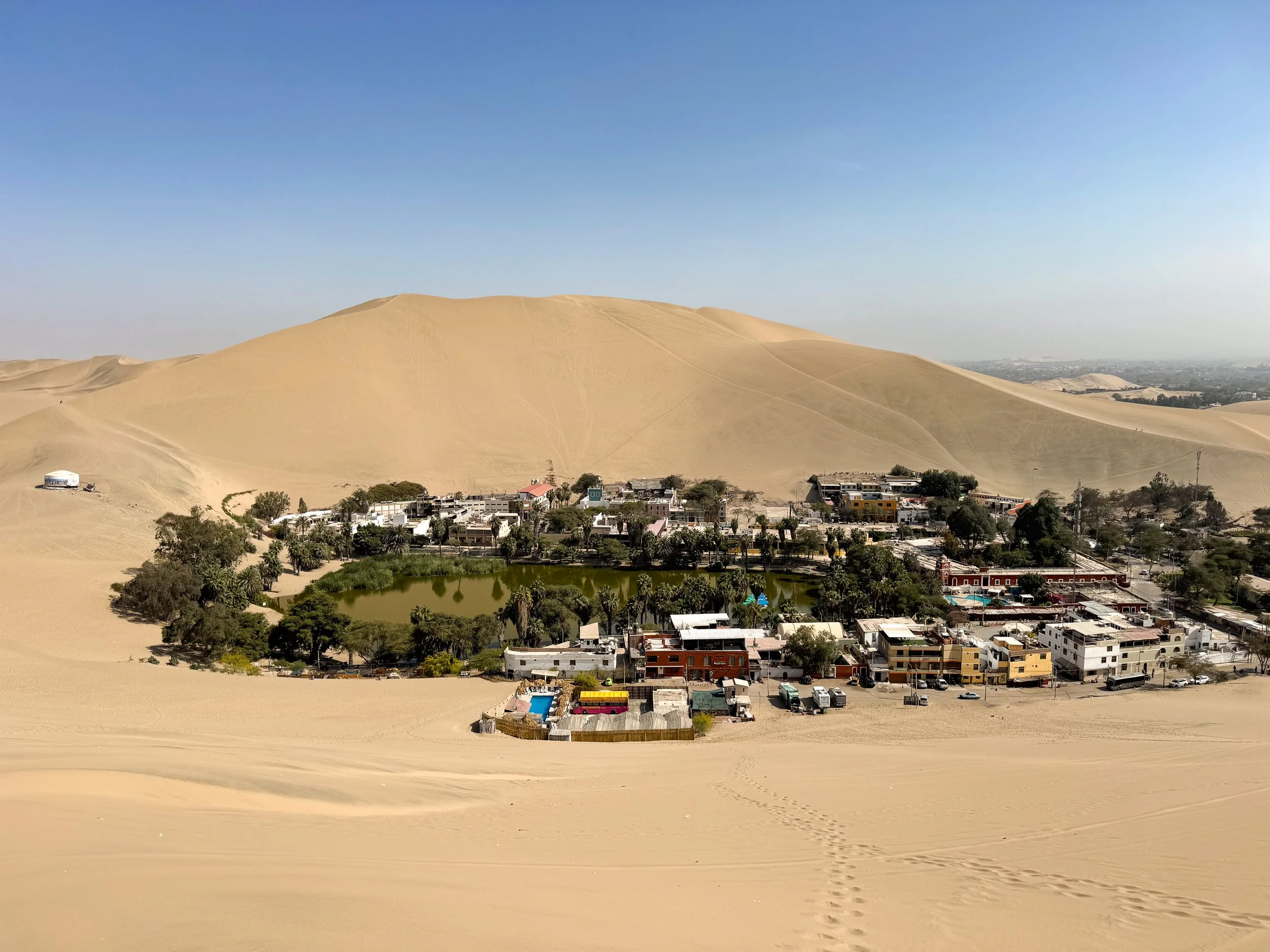
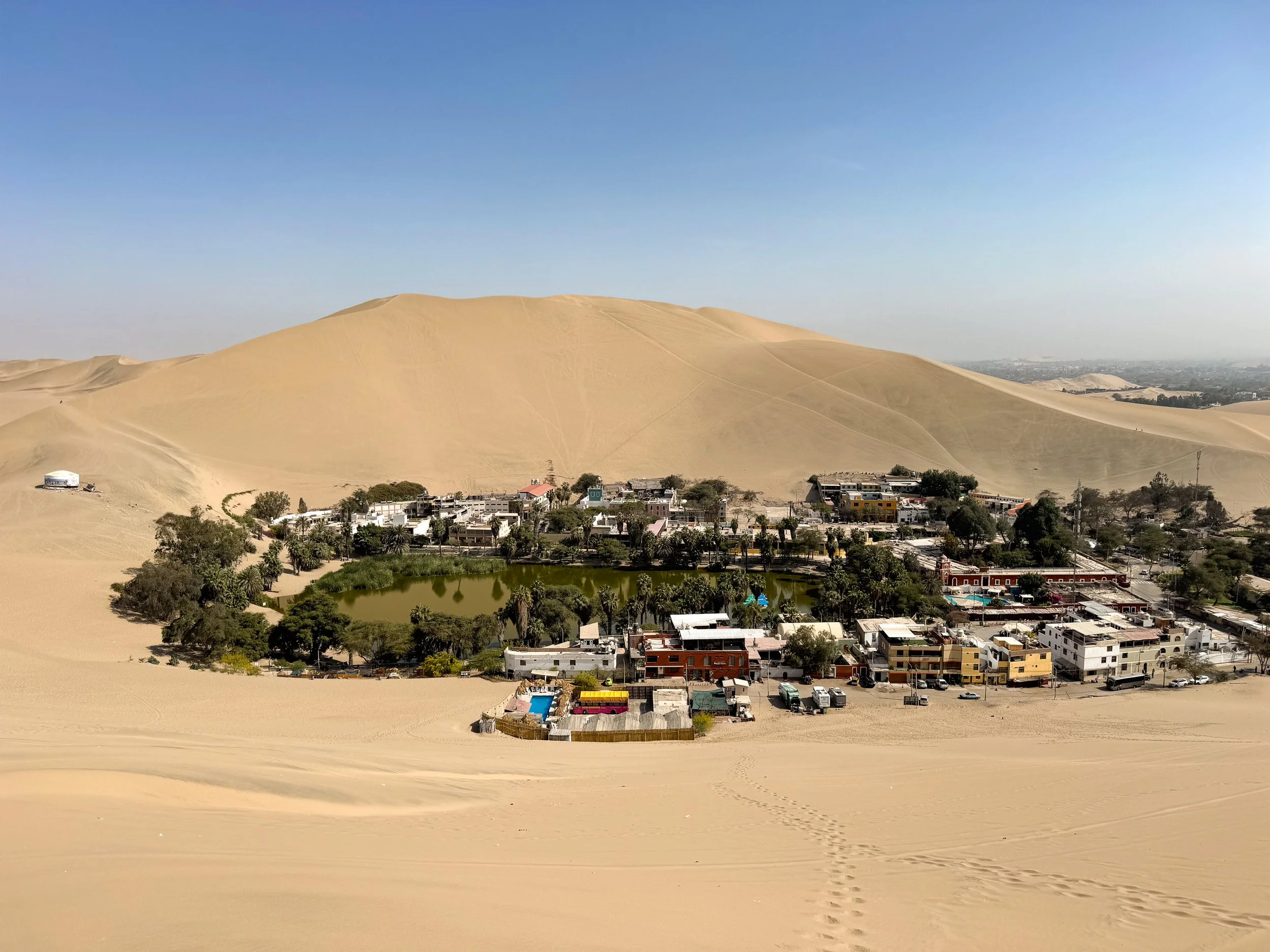
The Desert Oasis. Huacachina is a picturesque desert oasis hidden between monstrous sand dunes home to a tiny lake surrounded by palm trees, hostels, restaurants and bars. The town is popular with backpackers and desert activities like dune buggy rides & sand boarding.
Experience the Sand Dunes
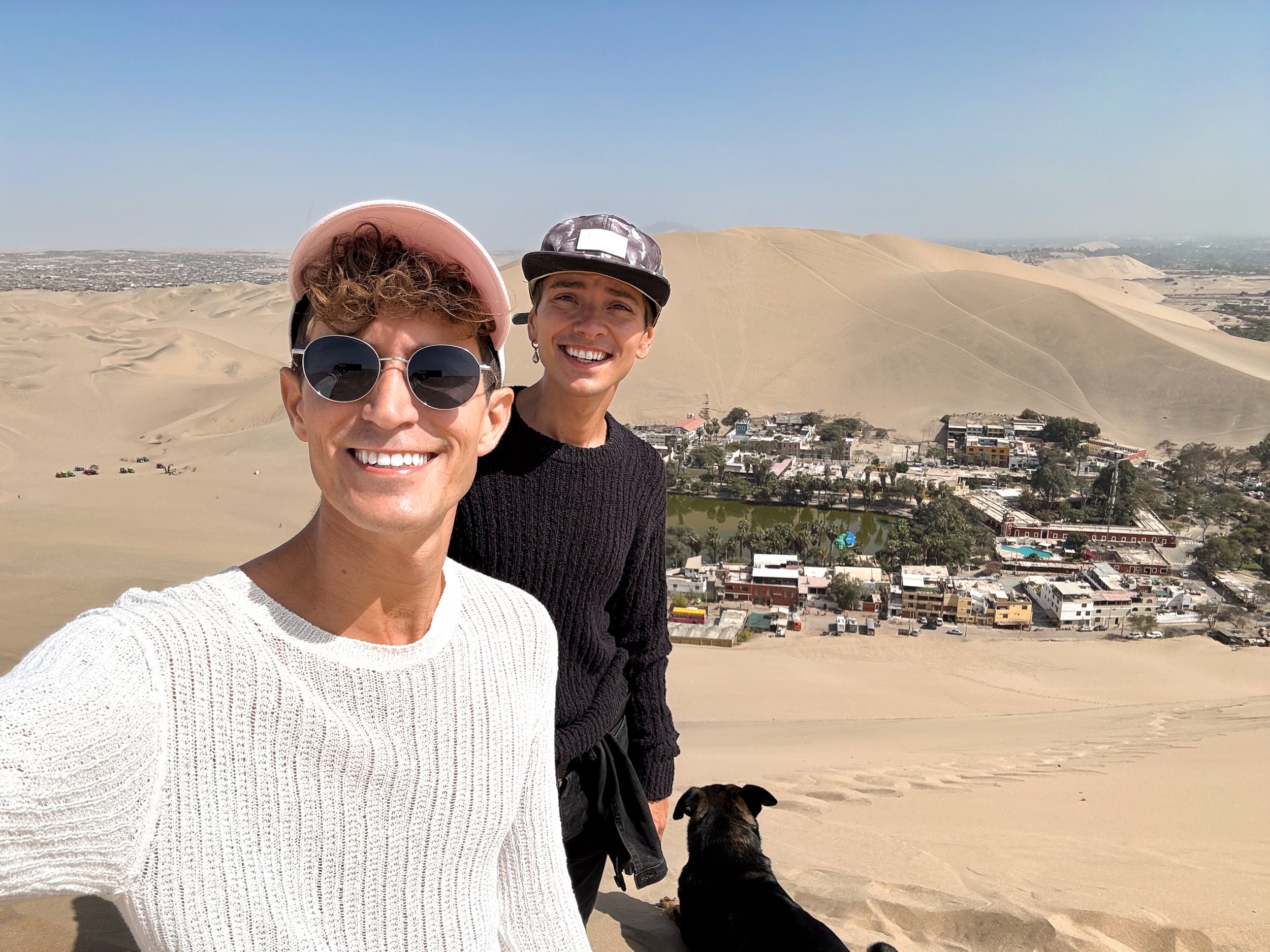
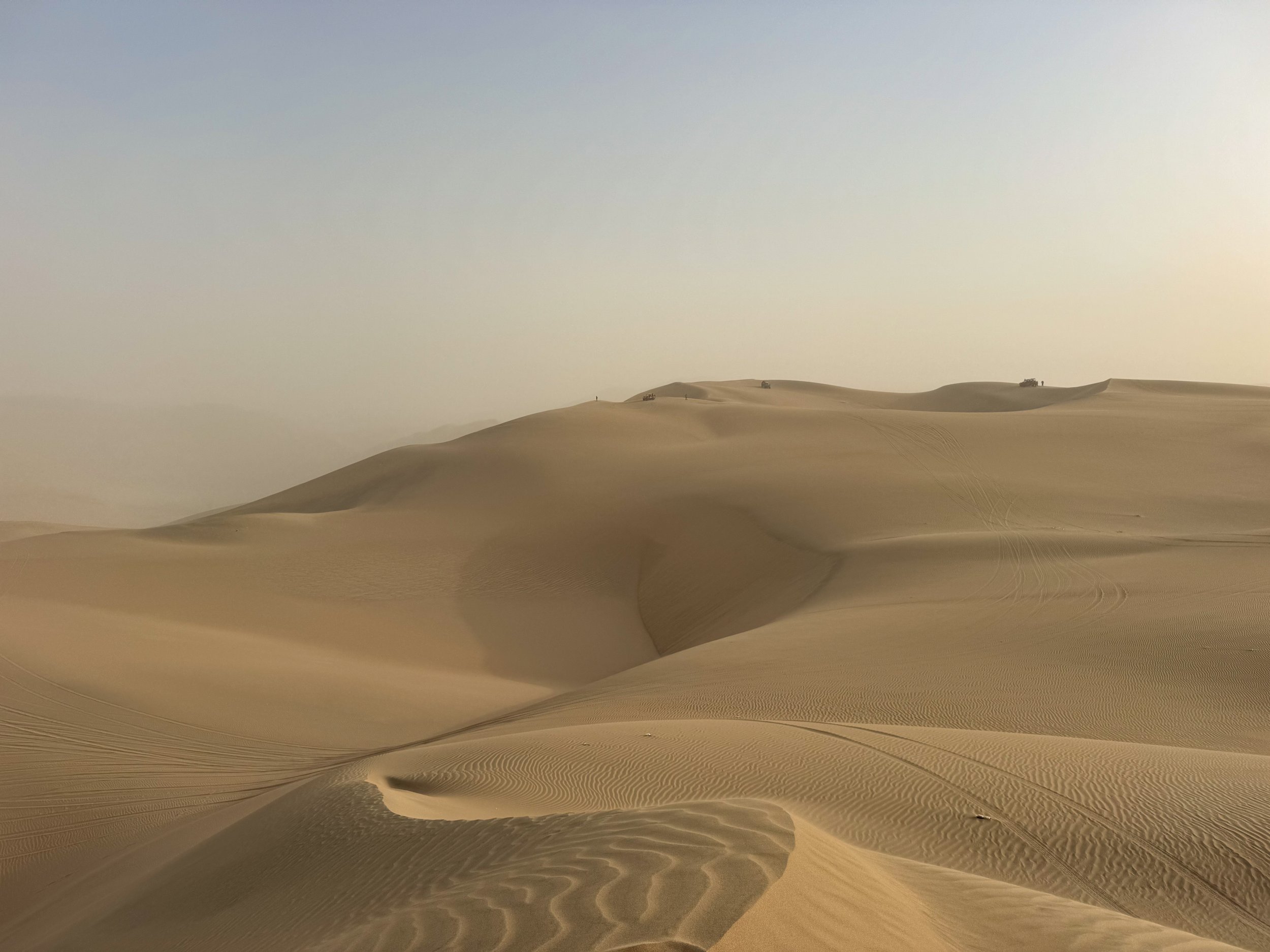
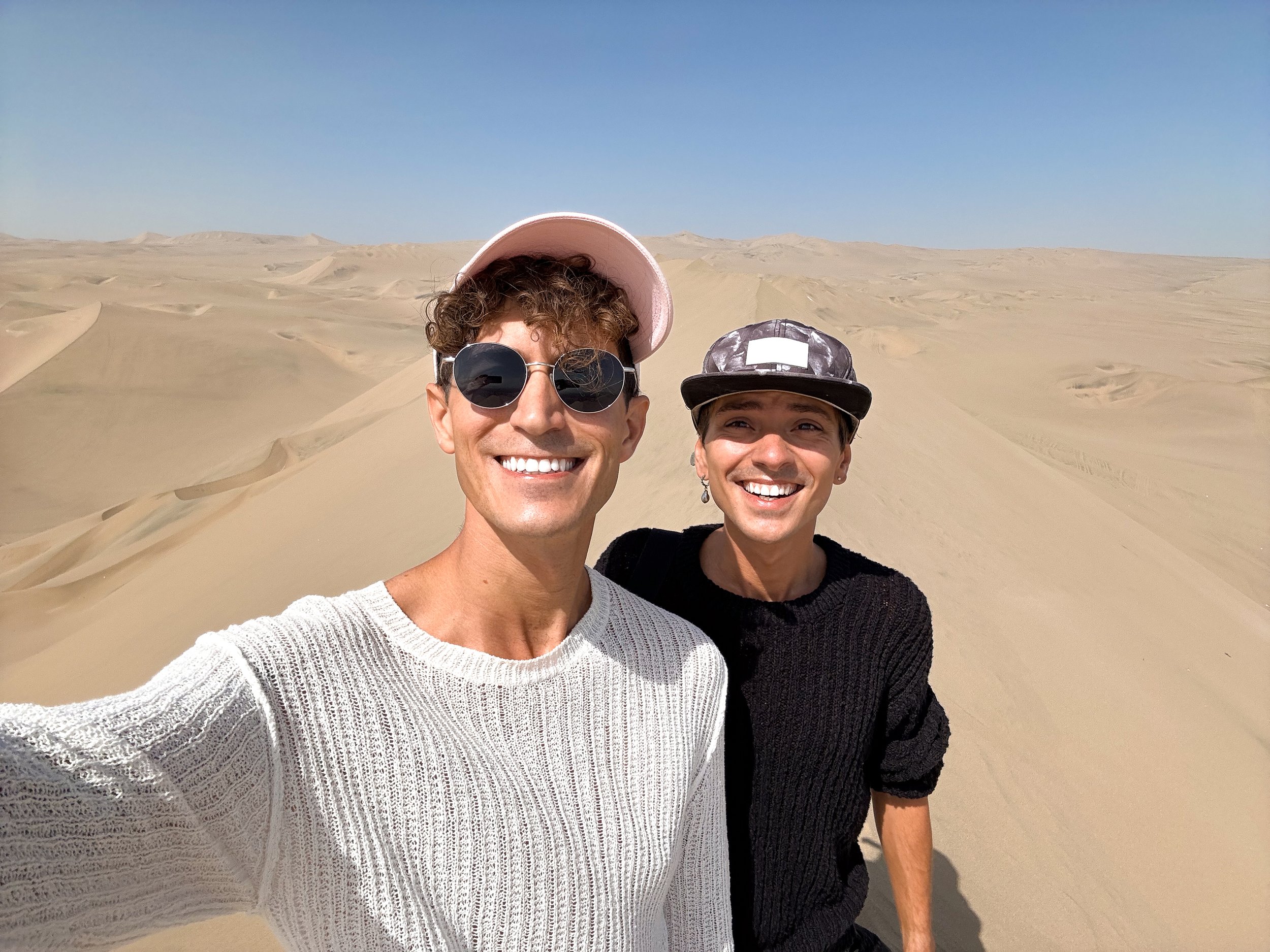
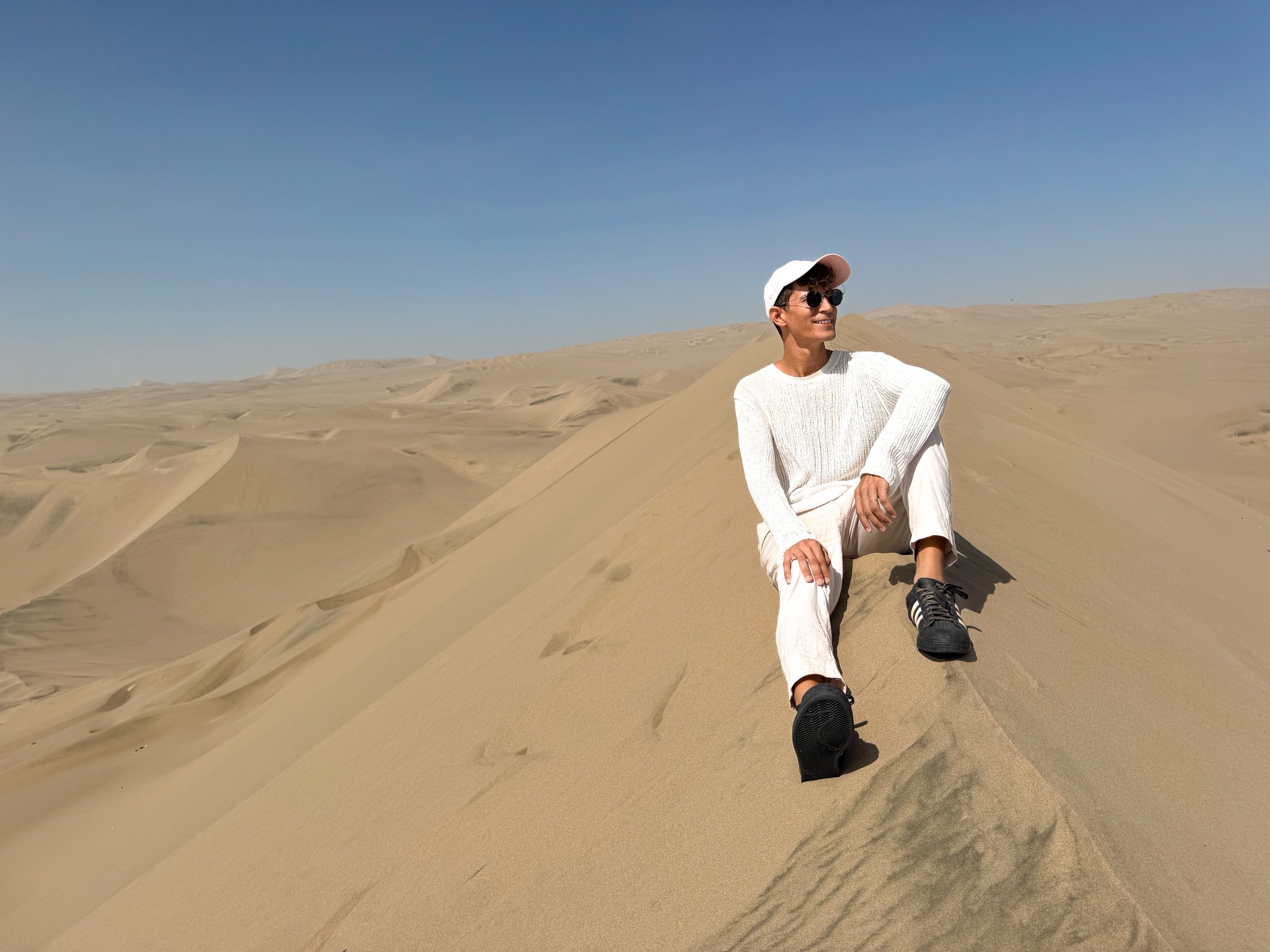
Huacachina Dunes. We woke up early and climbed both dunes surrounding the oasis. From the top of the first crest, we ate breakfast with the company of a doggie that followed us up. On the second dune, the morning fog had cleared, revealing a clear blue sky above the beautiful oasis and the vast desert dunes rippling far across the horizon.
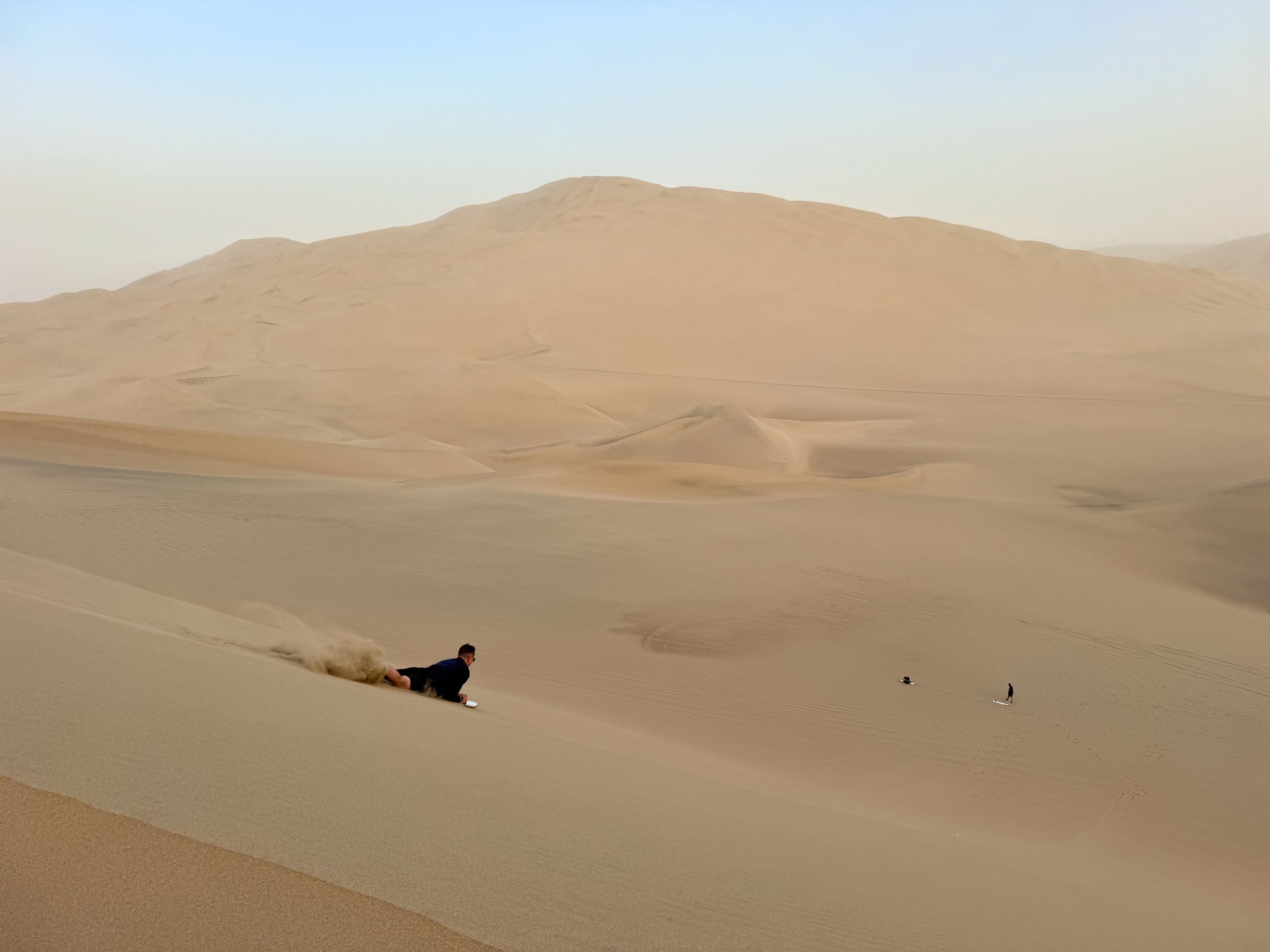
Dune Rides & Sand Boarding. We boarded a small dune buggy that rode into the desert for an exhilarating and heart dropping roller coaster ride through the dunes, drifting sideways across the sand and down steep dunes at high speeds. We stopped at multiple places for photos, sand boarding and the sunset. There were three dunes to sled, sand-board or ski down, each increasing in length and speed.
Places to Eat, Drink & Stay
Viajero Hostel Huacachina. With its inviting atmosphere and well run experience, Viajero is one of the best hostels we’ve stayed at! It has a large courtyard with a restaurant, bar, pool and numerous style lounge areas surrounded by multiple buildings home to dorms and private rooms. They offer nightly events to meet other guests and keep entertained including karaoke and dancing. Book here.
Vittoly Cafe. A small cafe with breakfast dishes, to go empanadas and cookies. It’s a quick spot to stop on the way into or out of town for a bite to eat and refreshment.
Huaca-Fucking-China. An iconic restaurant and bar in Huacachina known for its name, Peruvian dishes and cocktails. Come here for a drink and meal overlooking the lake.
Nasca
Nasca is a Peruvian desert city famed for the archeological ruins and remains of the Nazca civilization including the Nasca Lines, ancient aqueducts and cemeteries with mummified remains.
The Nasca Lines
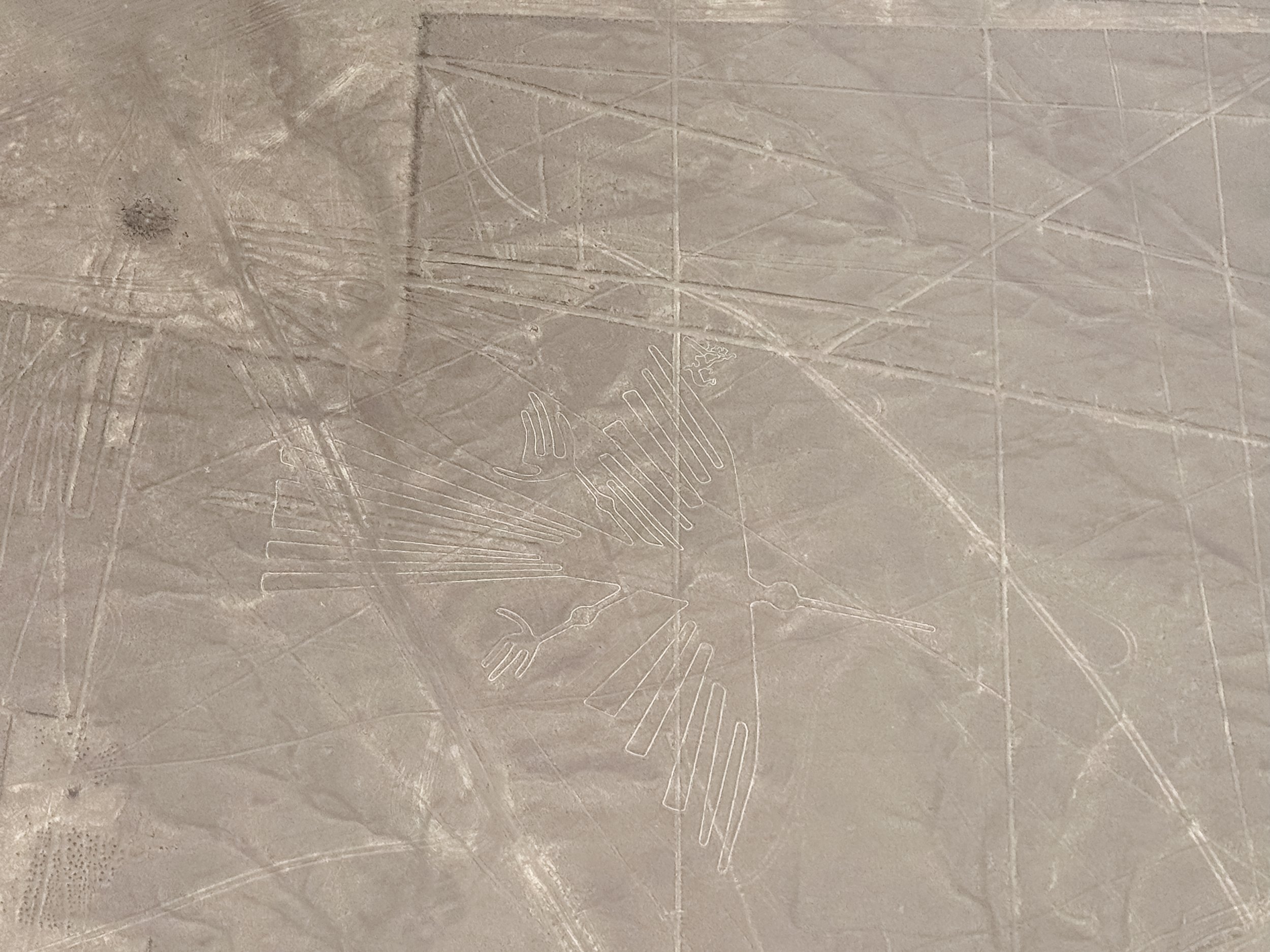
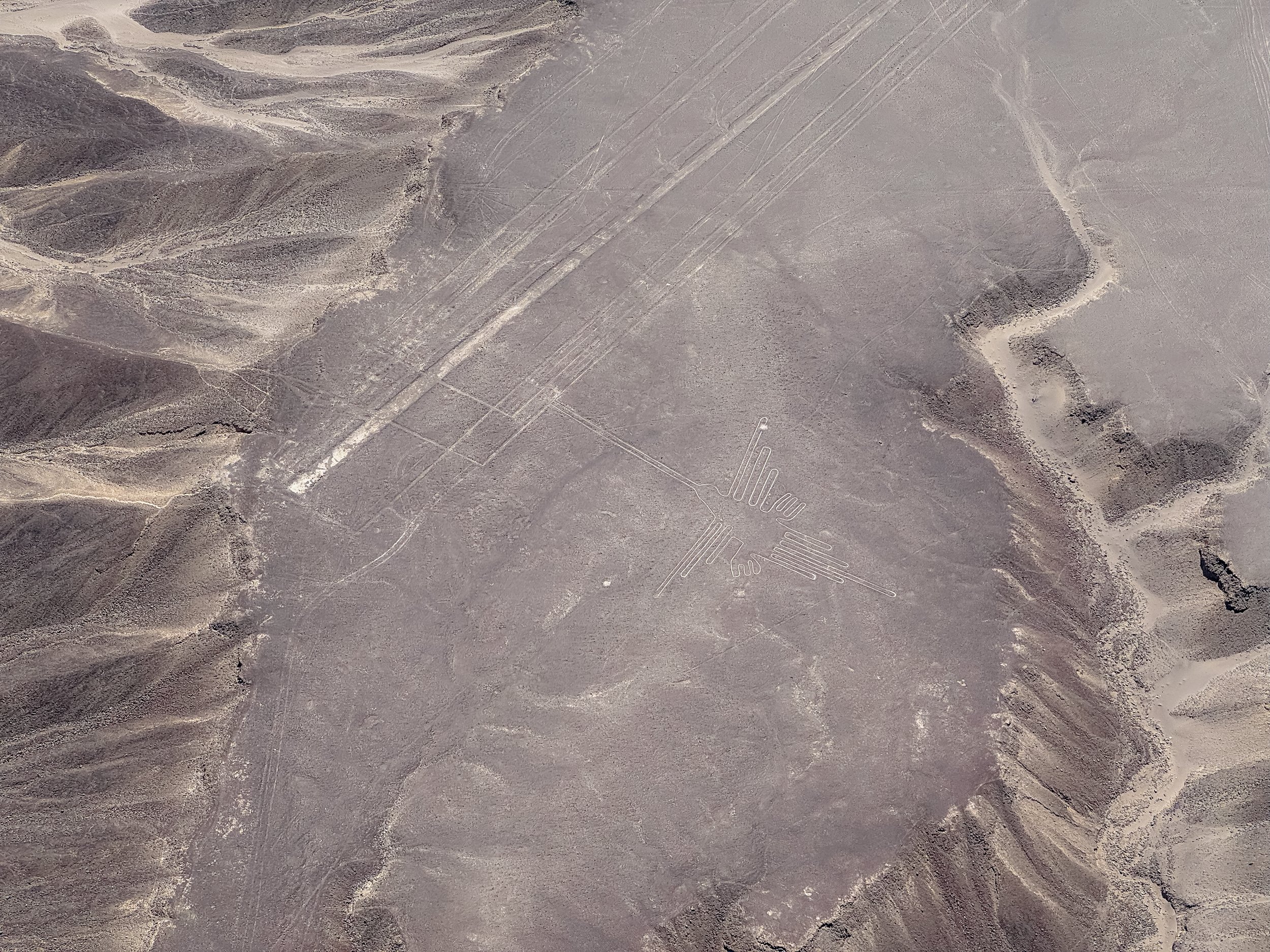
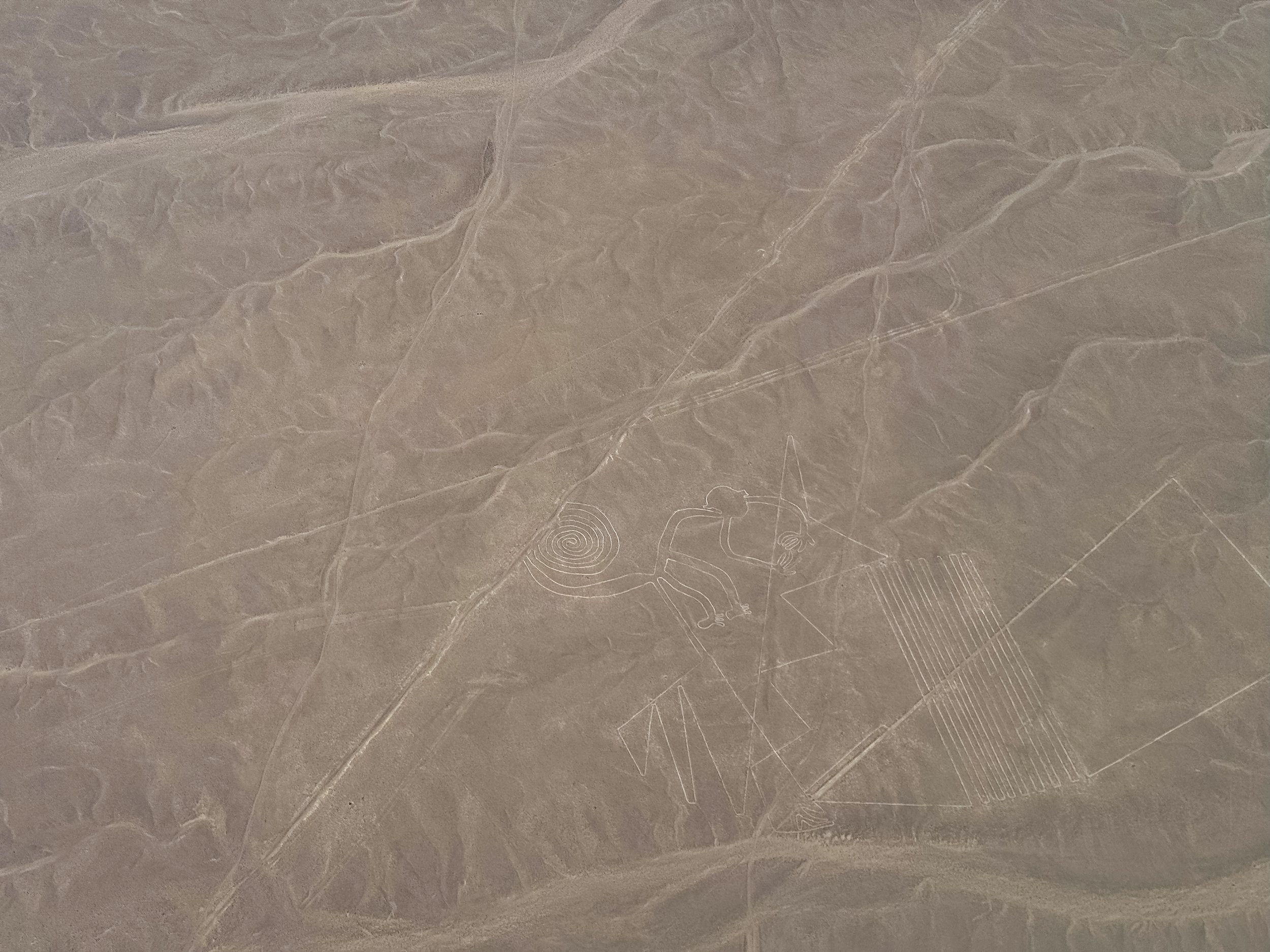
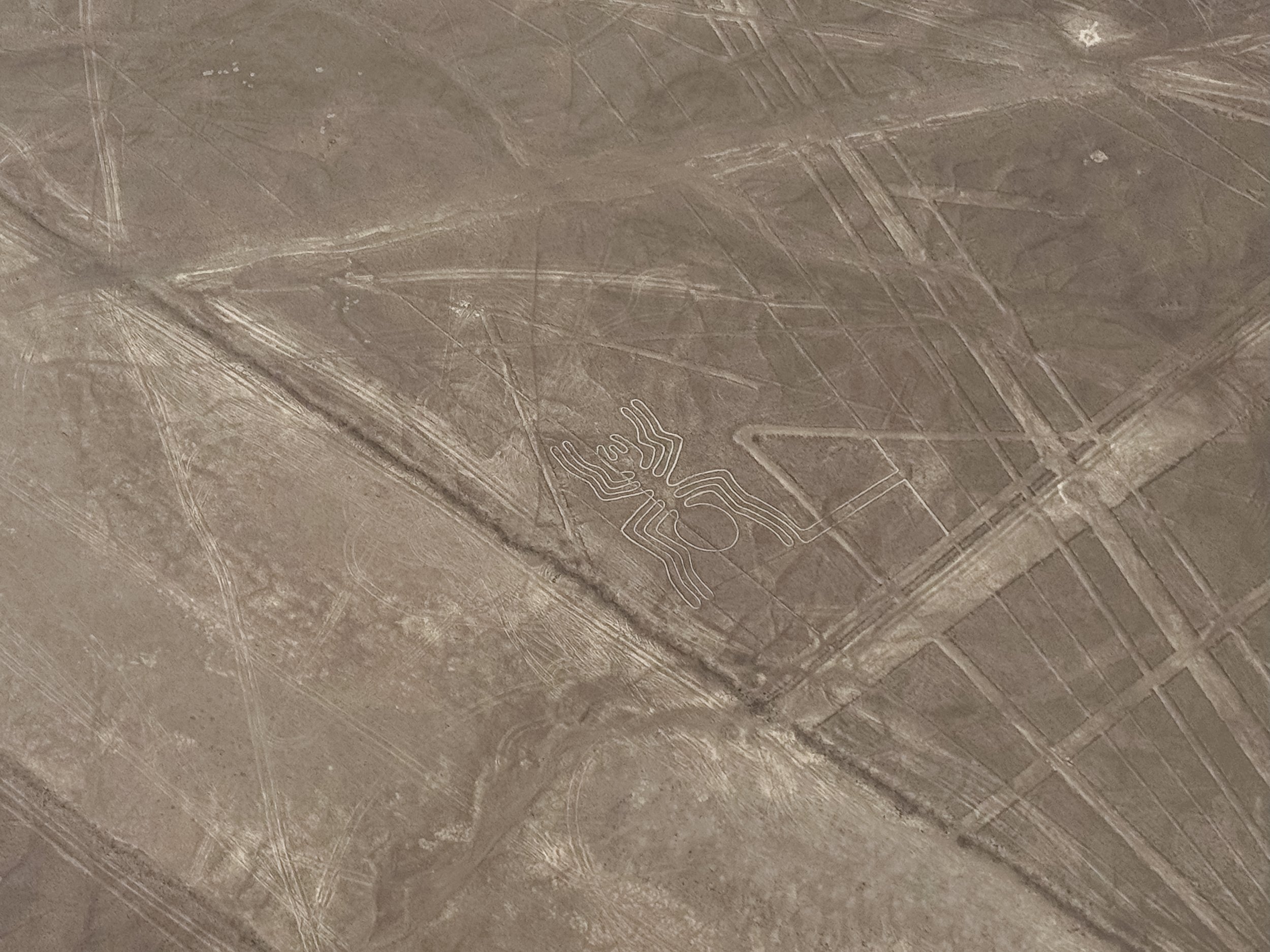
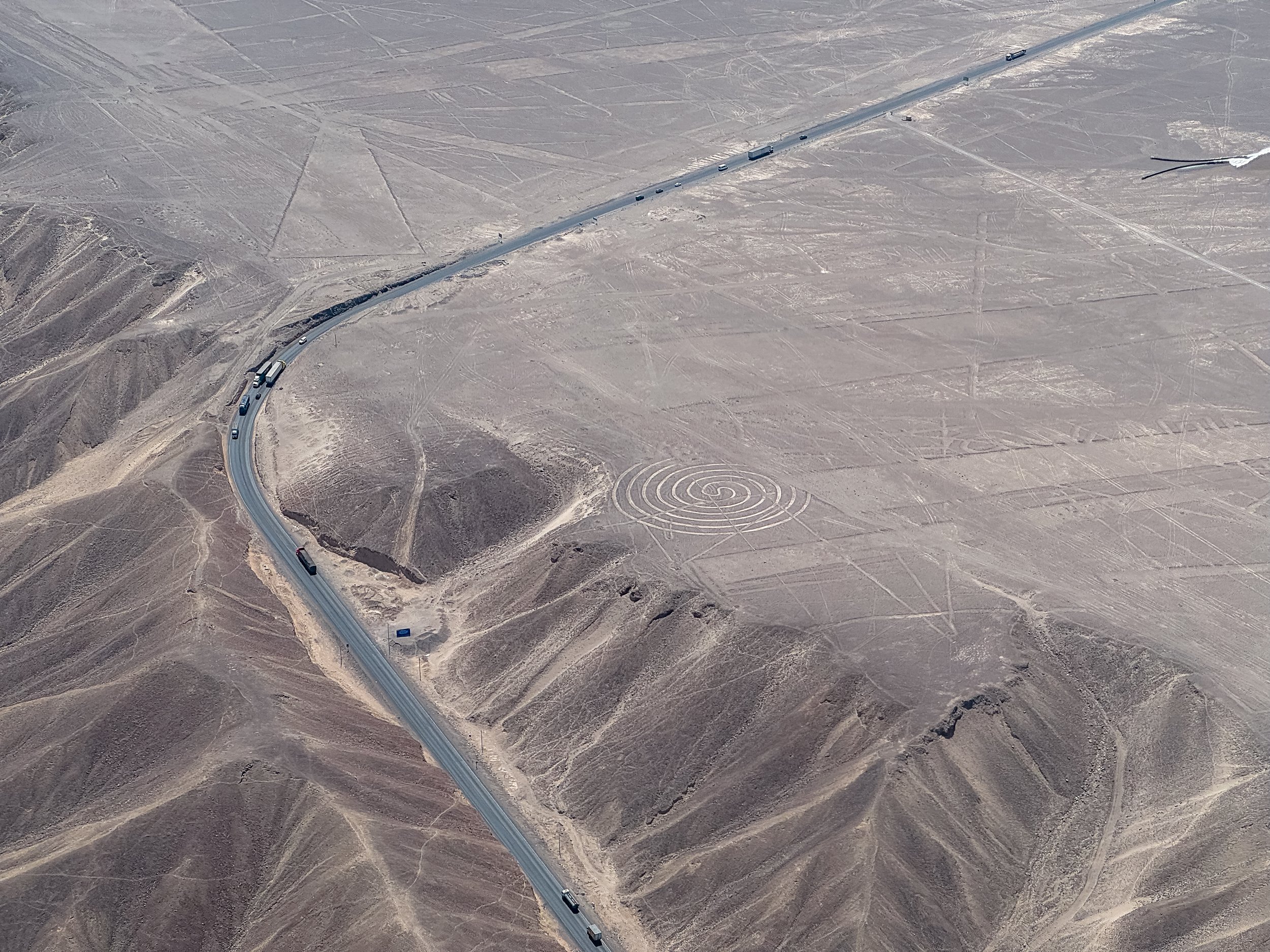
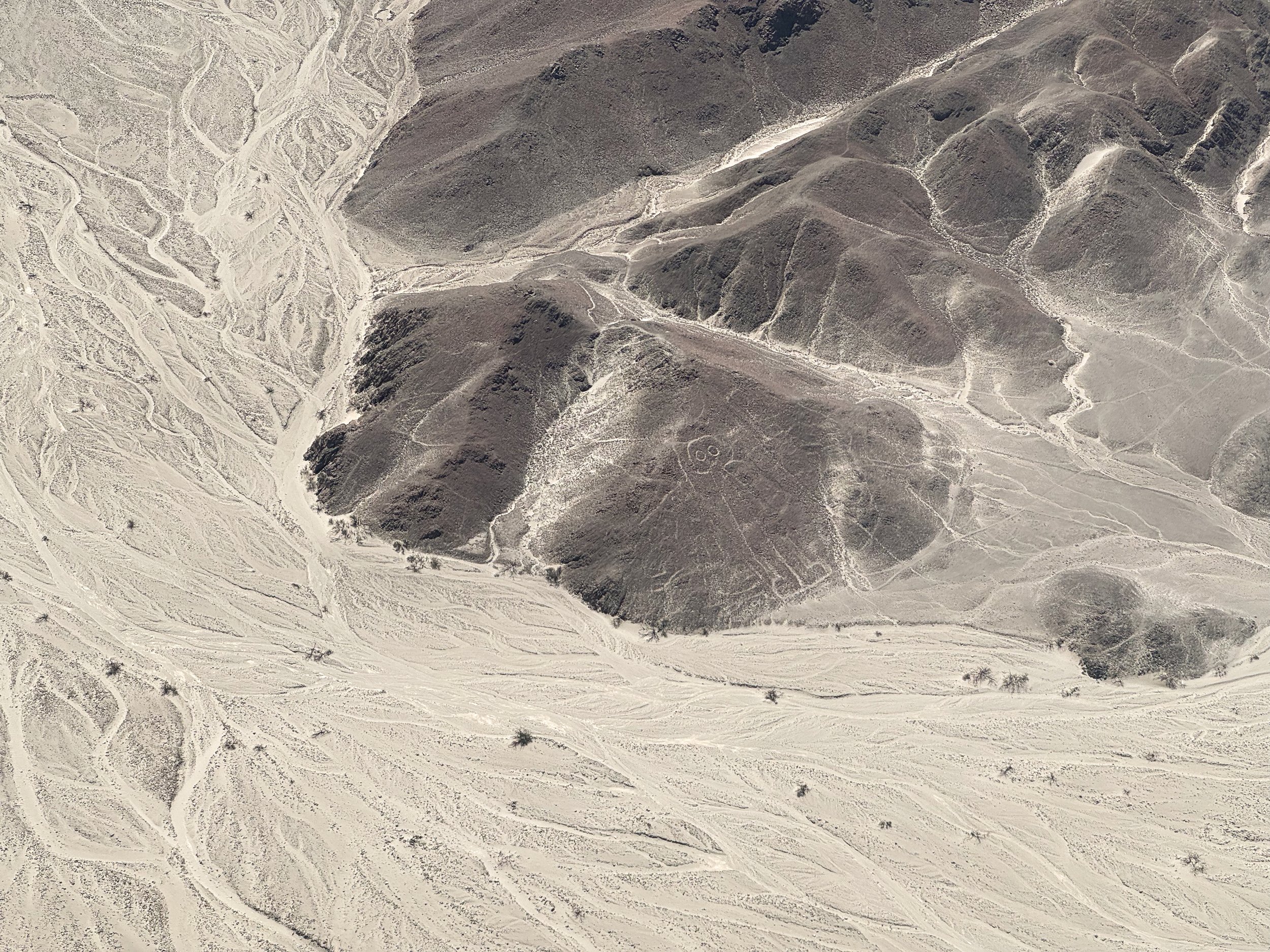
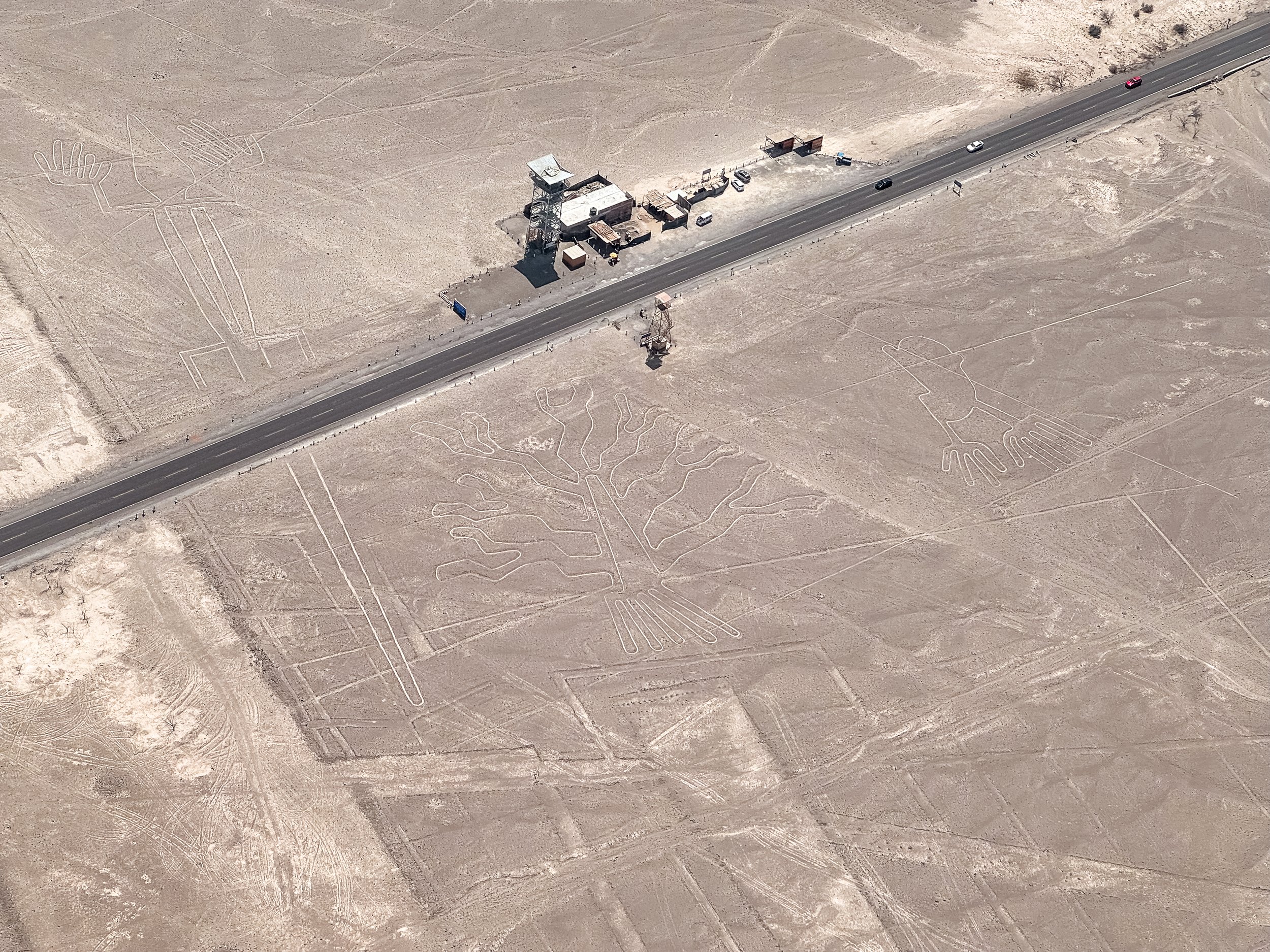
The Nasca Lines are some of the most significant archeological sights in Peru. Carved into the desert landscape by the Nasca people, the ancient geoglyphs depict animals, trees, people and mysterious shapes, some stretching hundreds of meters across. The lines can be observed from an observation tower or by flying above them.
Nasca Lines Flight. We took a flight over the Nasca Desert to view the Nasca Lines. During the flight, we flew over and circled many of the remarkable geo-glyphs including the most iconic like the spider, hummingbird, condor and monkey. In addition, we took in views of the desert landscape, farms and vineyards, foot hills of the Andes mountains and the world’s largest sand dune in the distance.
It is the best way to view a majority of the Nasca Lines though not the cheapest. The flight lasted about 30 minutes, costing $120 USD and 77 Sols in airport fees per person. The pilot circled about a dozen lines from both sides of the small plane as the co-pilot narrated. All 6 passengers, including us, had an equal opportunity to view most of the lines.
Nasca Tower. A roadside tower, about 4 stories tall, overlooking three of the Nasca Lines: one of a tree, one of hands and one of a salamander.
See the Sights
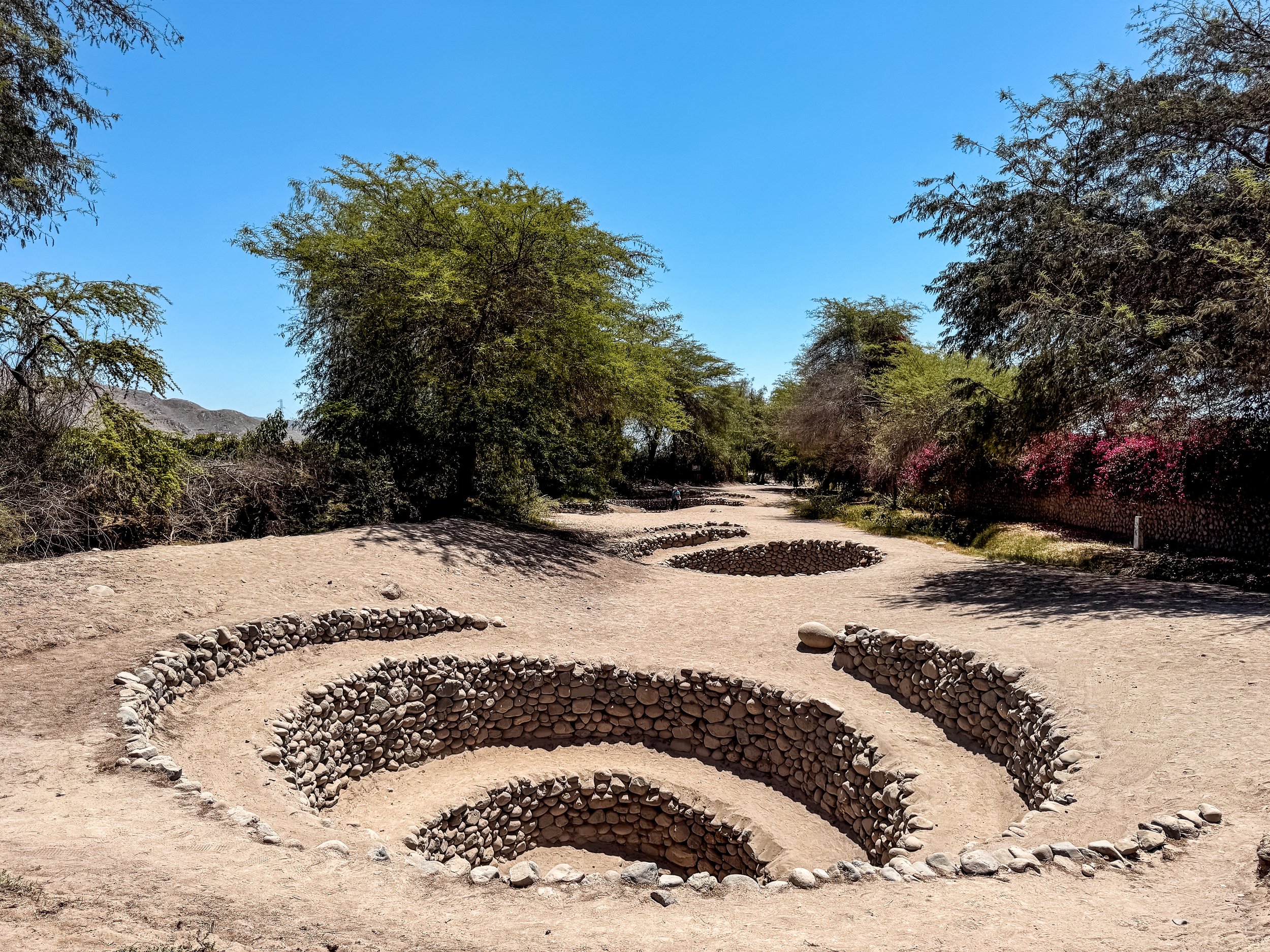
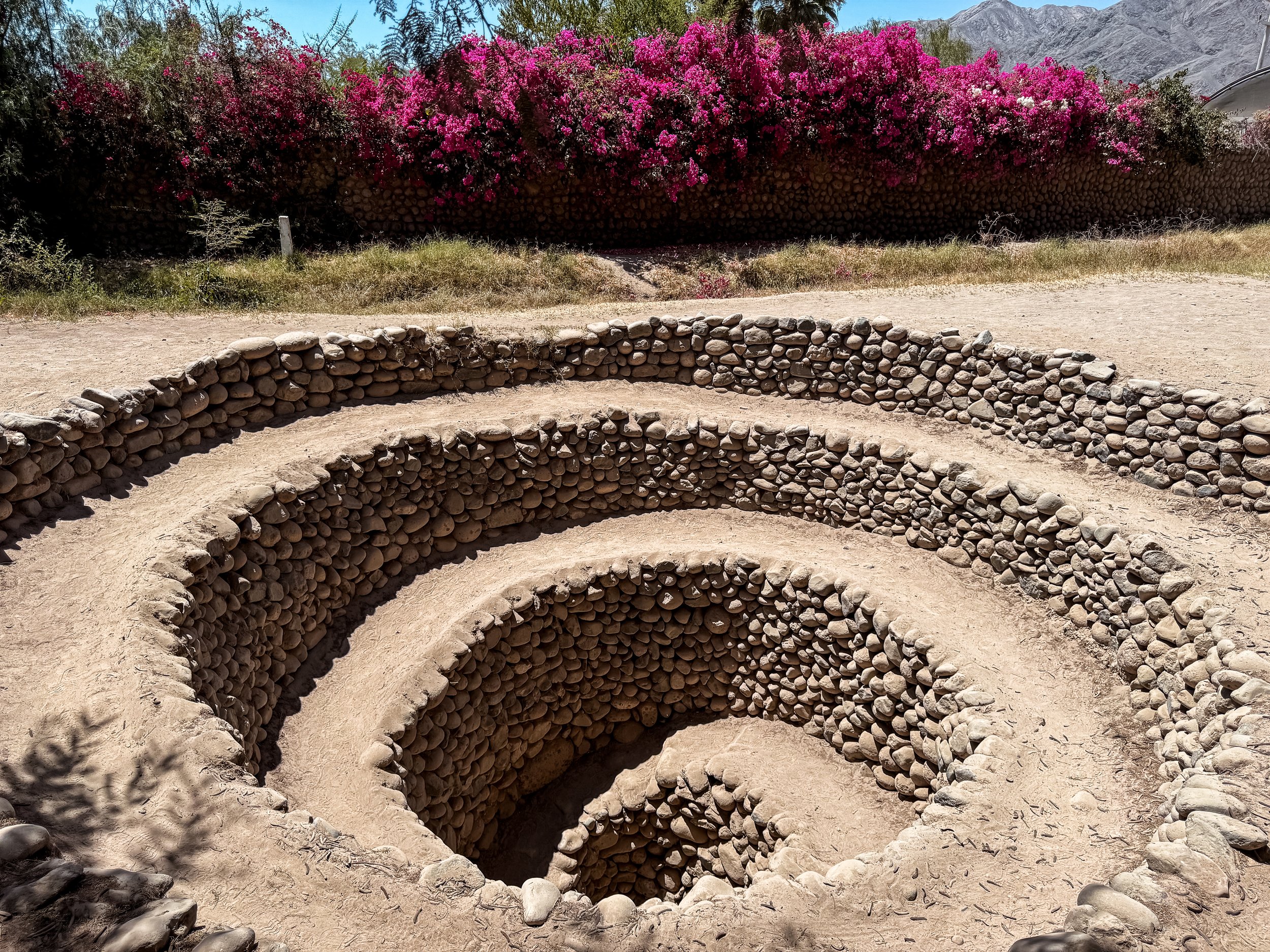
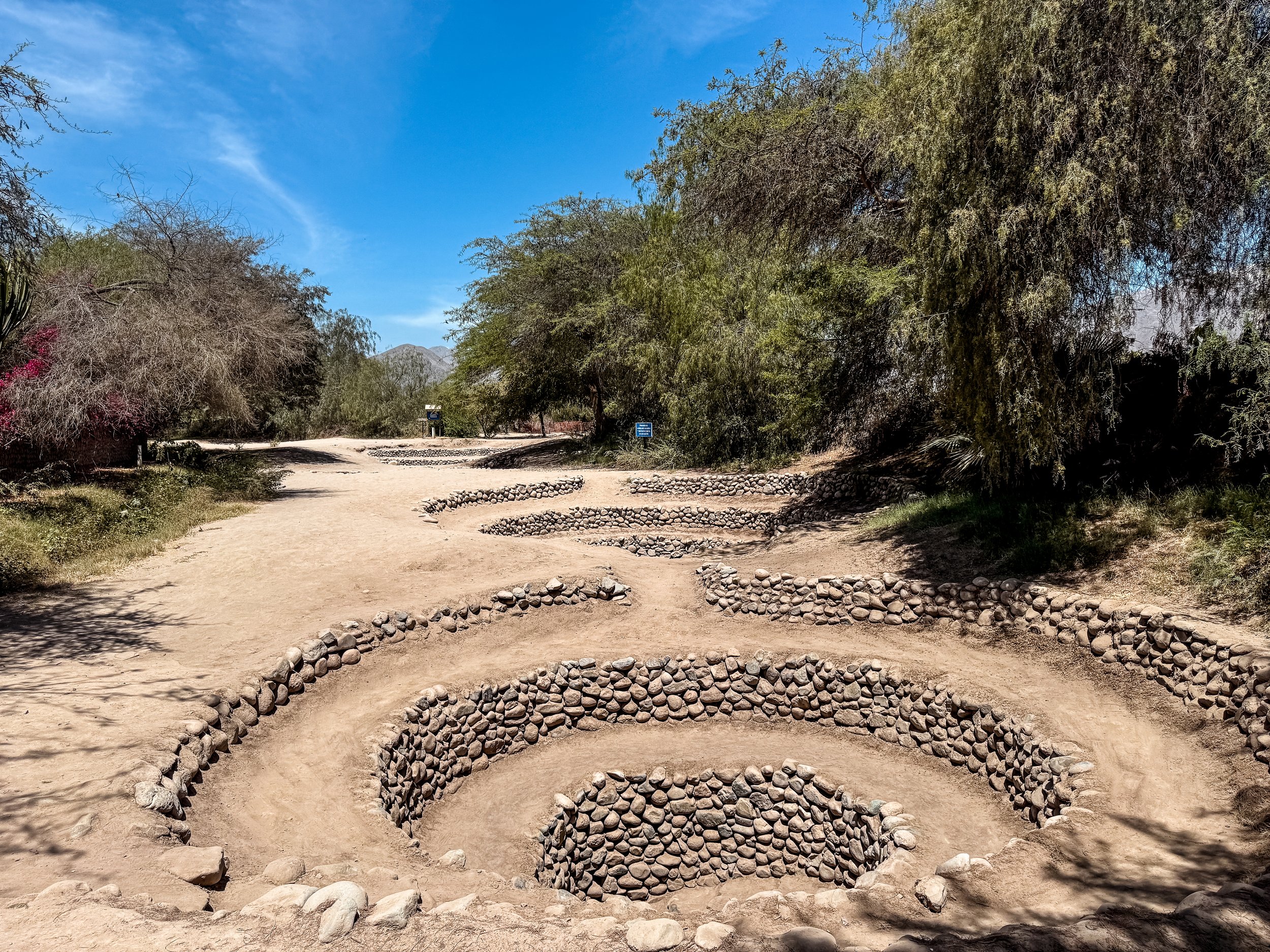
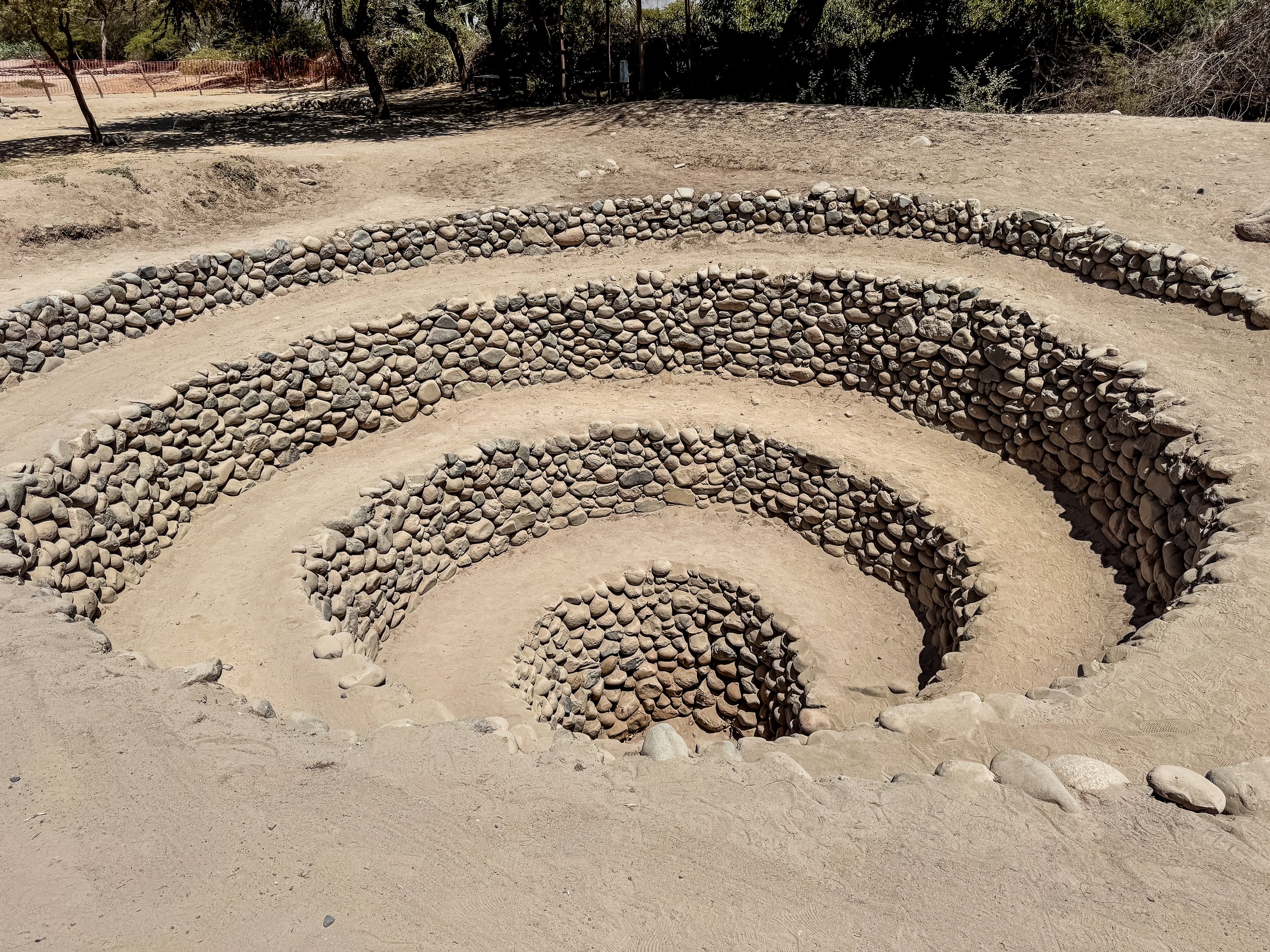
Cantalloc Aqueducts. A series of spiraled and circular stone aqueducts that drain into an underground canal for carrying water. Even during the peak of the dry season, the canal had flowing water while the adjacent river was completely dried up. They were built hundreds of years ago and are still in use today.
Los Paredones. The ruins of a terraced Incan city with trails leading past crumbling adobe brick walls, semi-restored buildings and broken fragments of ancient pottery scattered across the ground. It’s located about 20 minutes on foot from the Plaza de Armas. The ticket allows for access to other sights in the city including the Cantalloc Aqueducts.
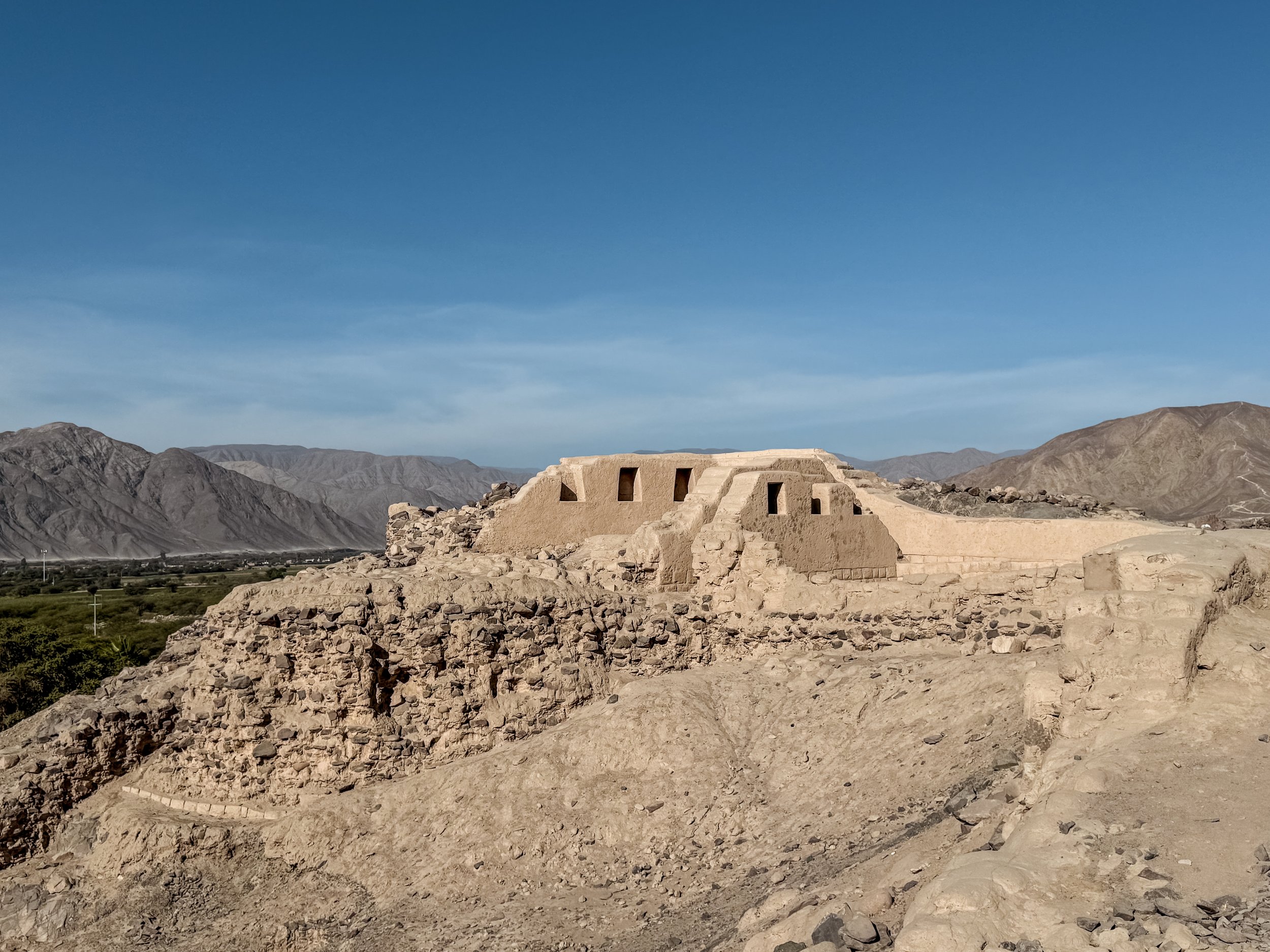
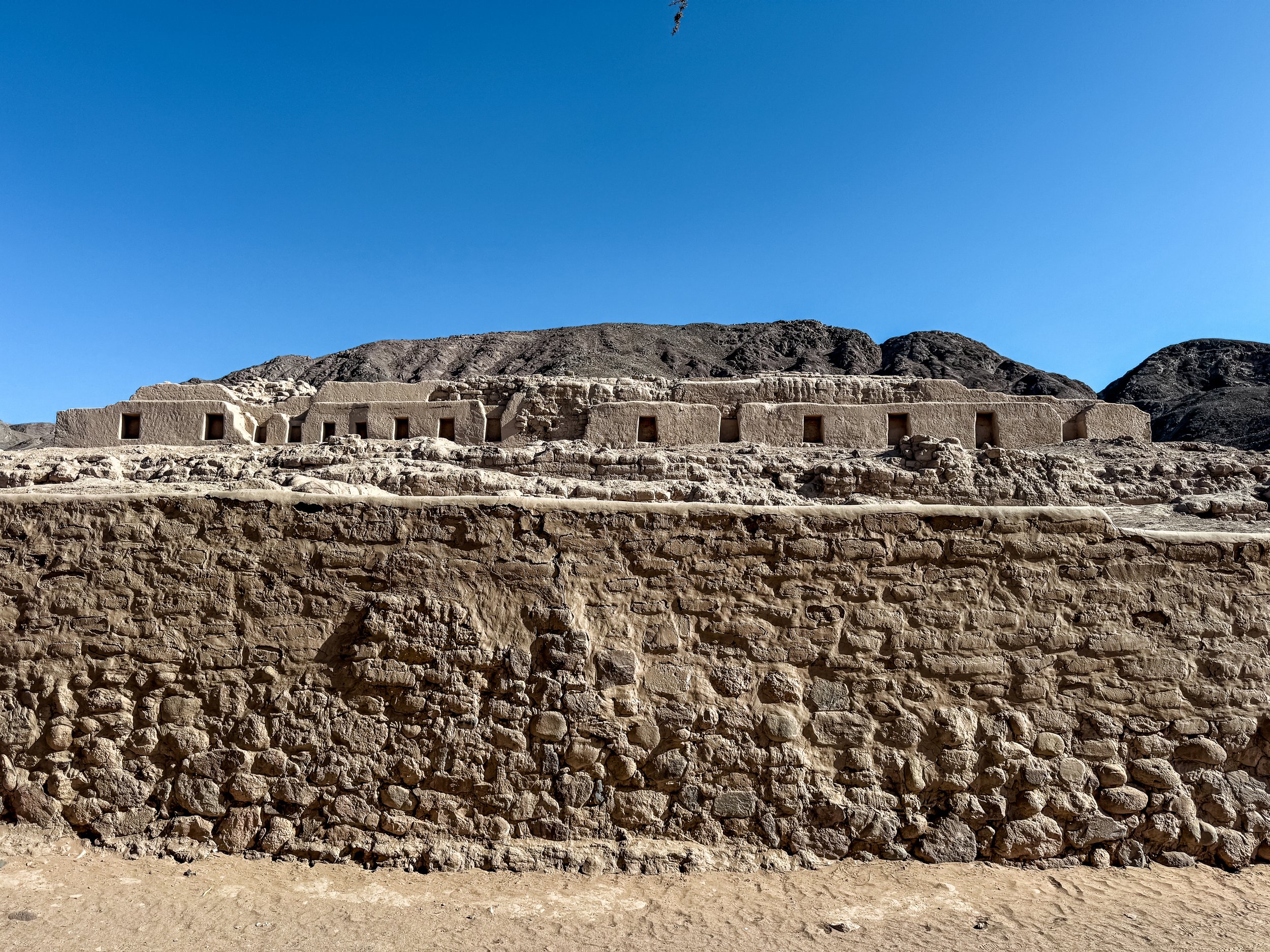
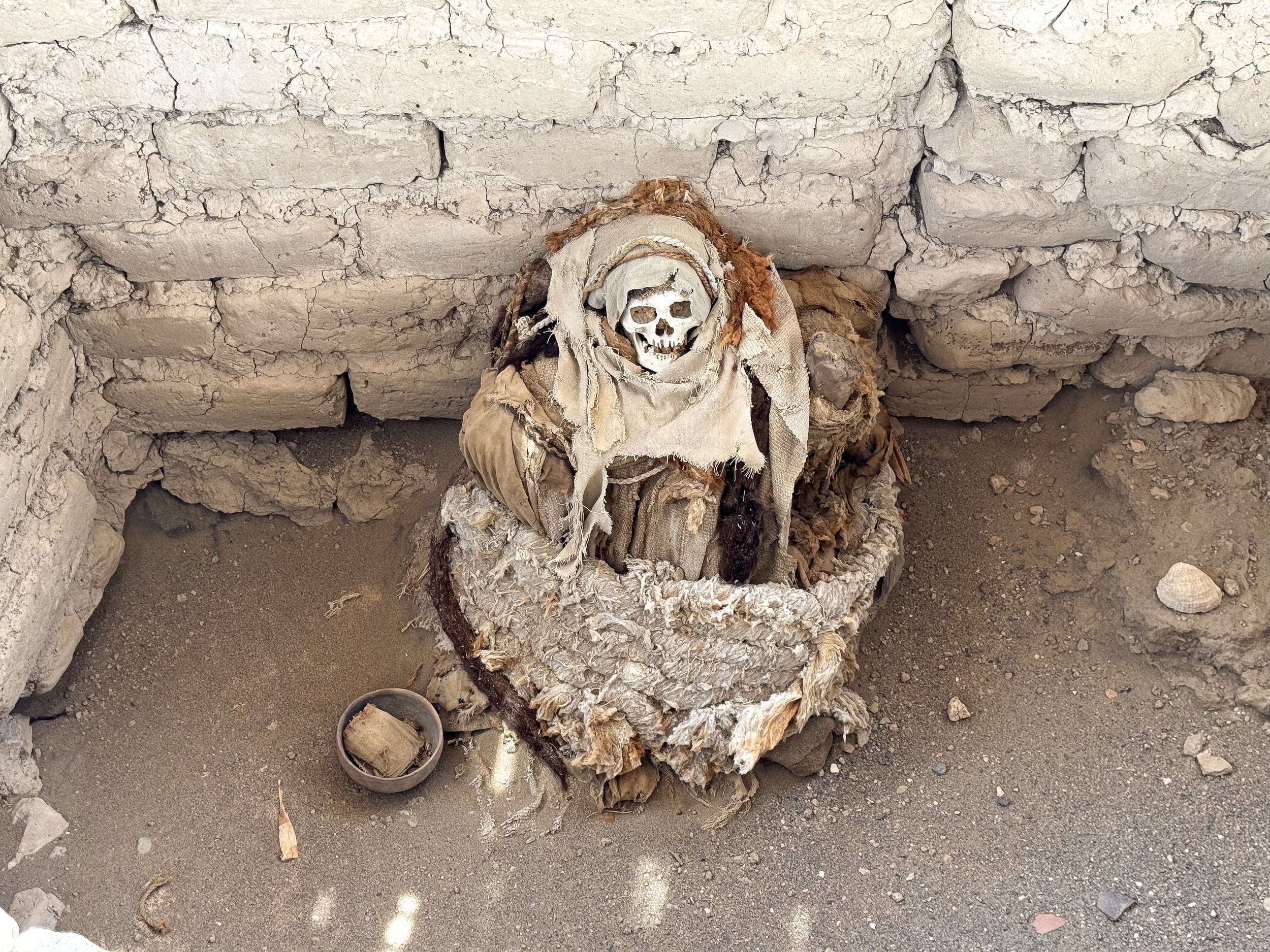
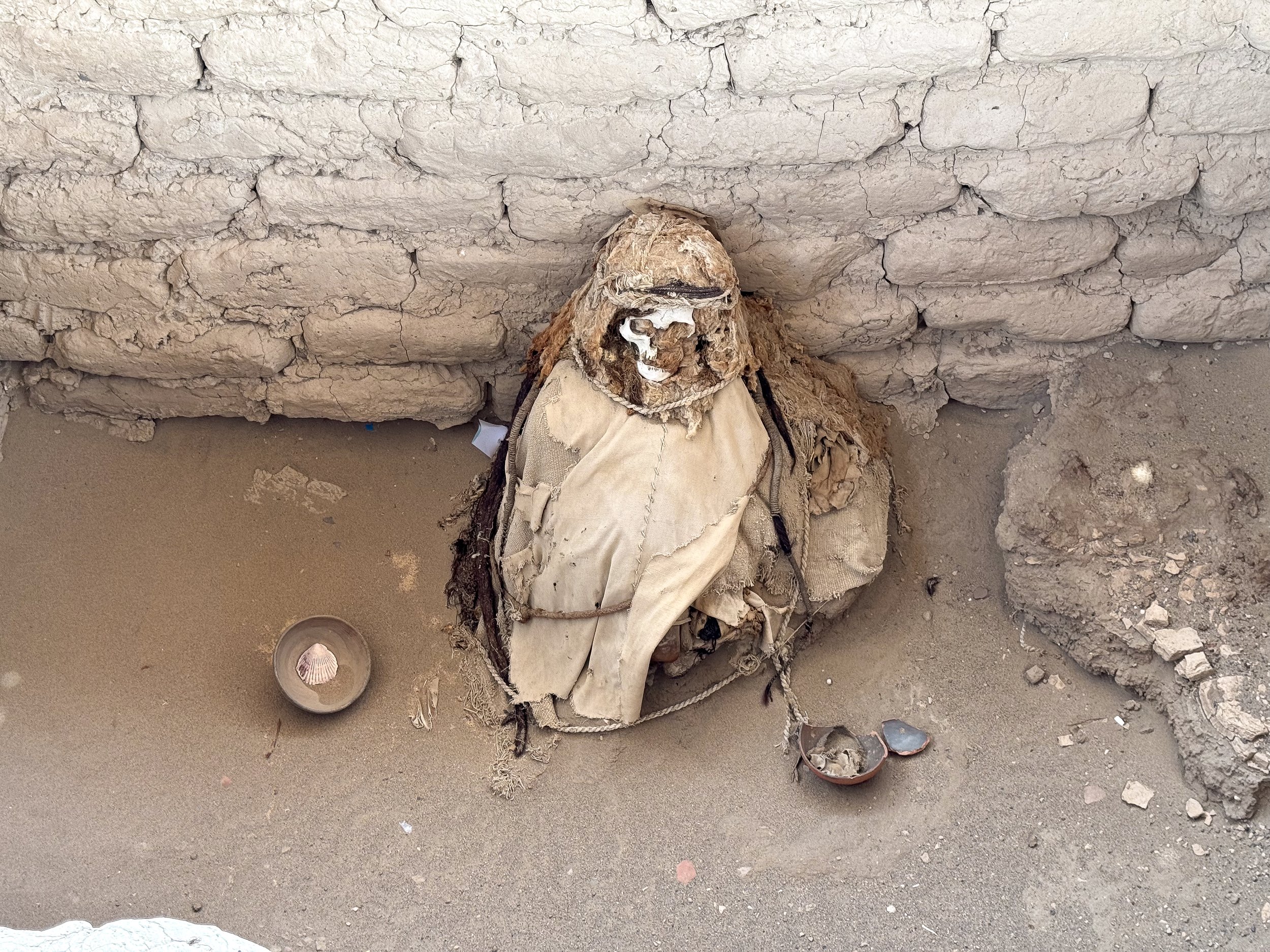
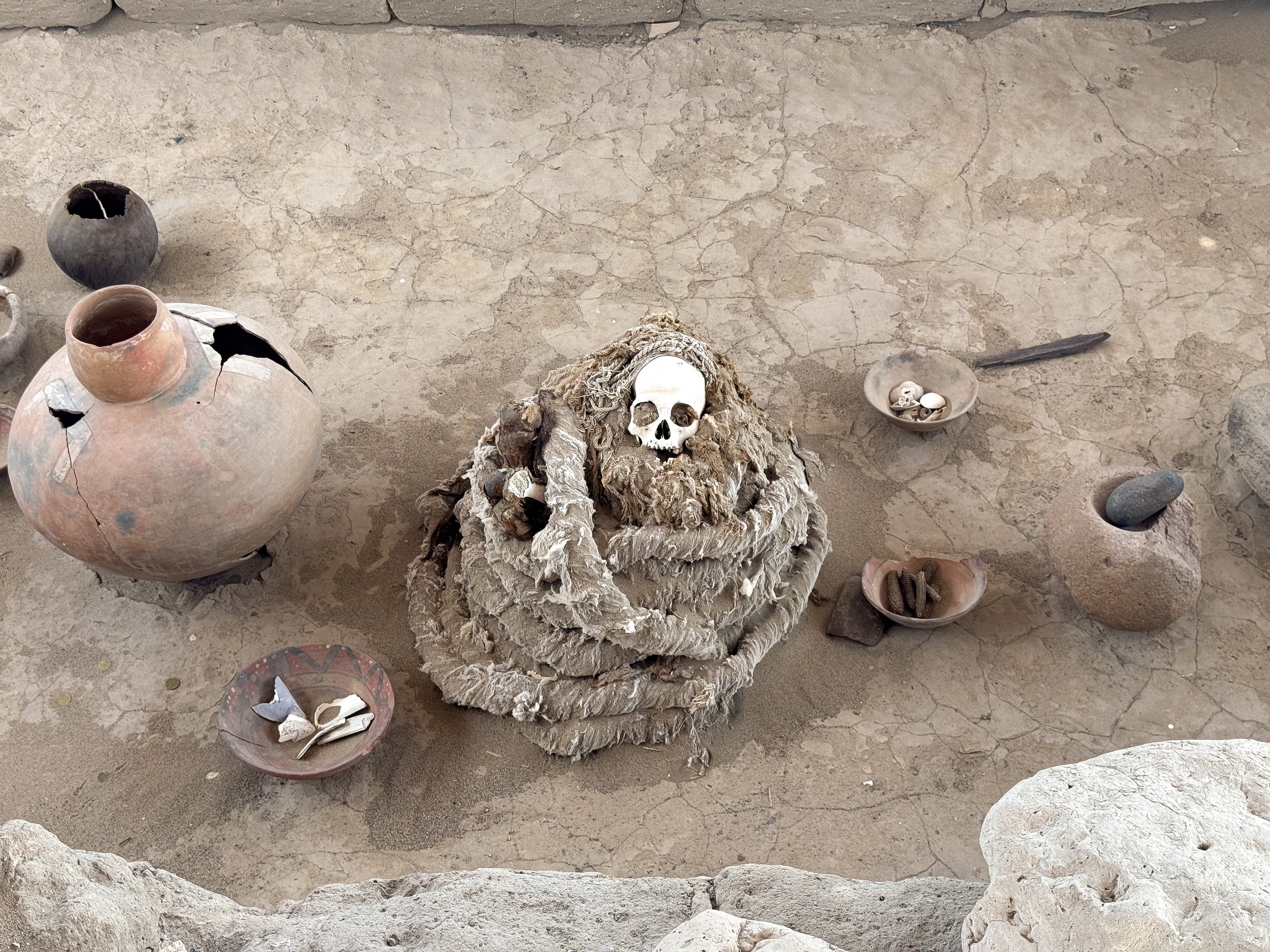
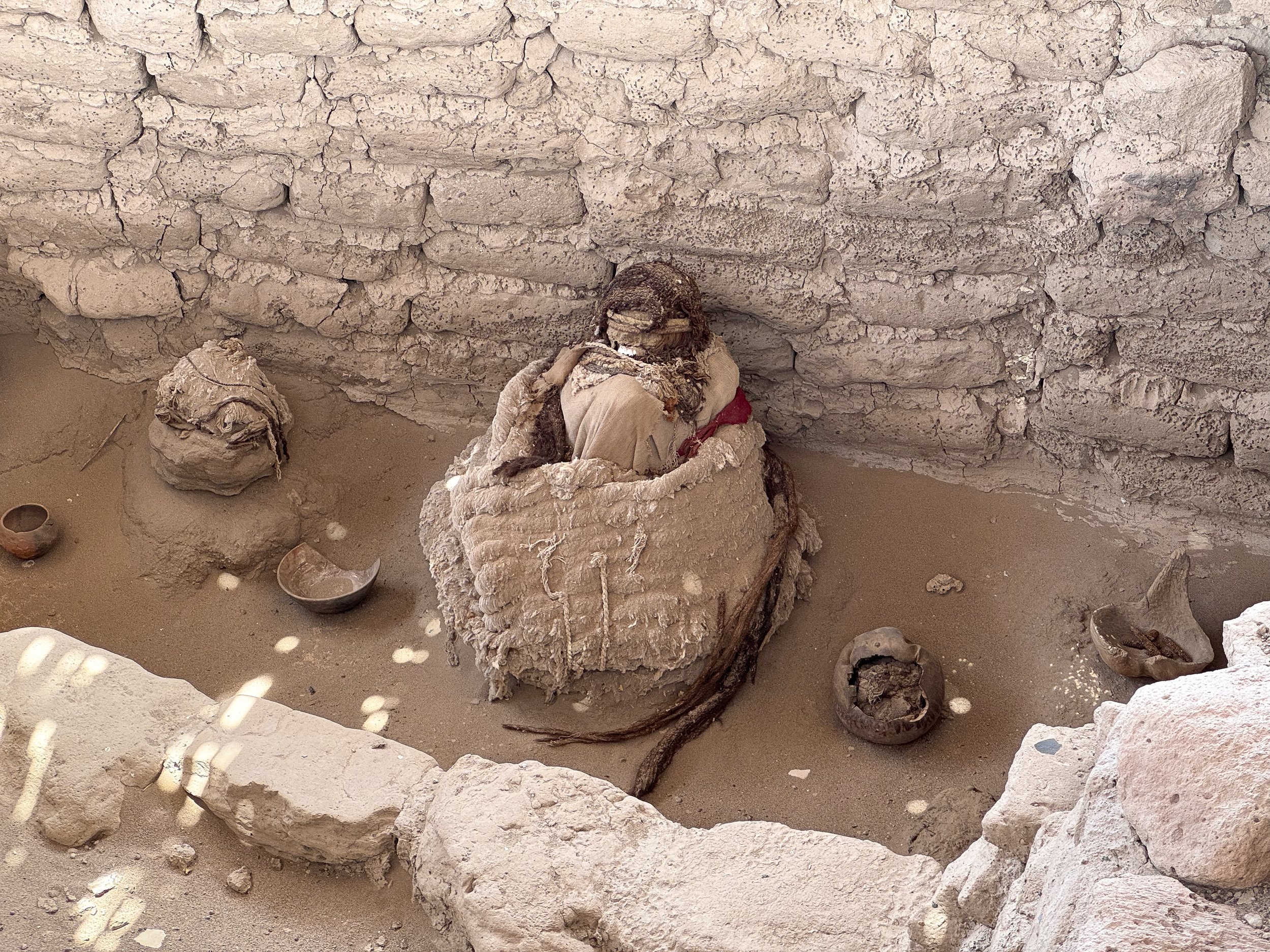
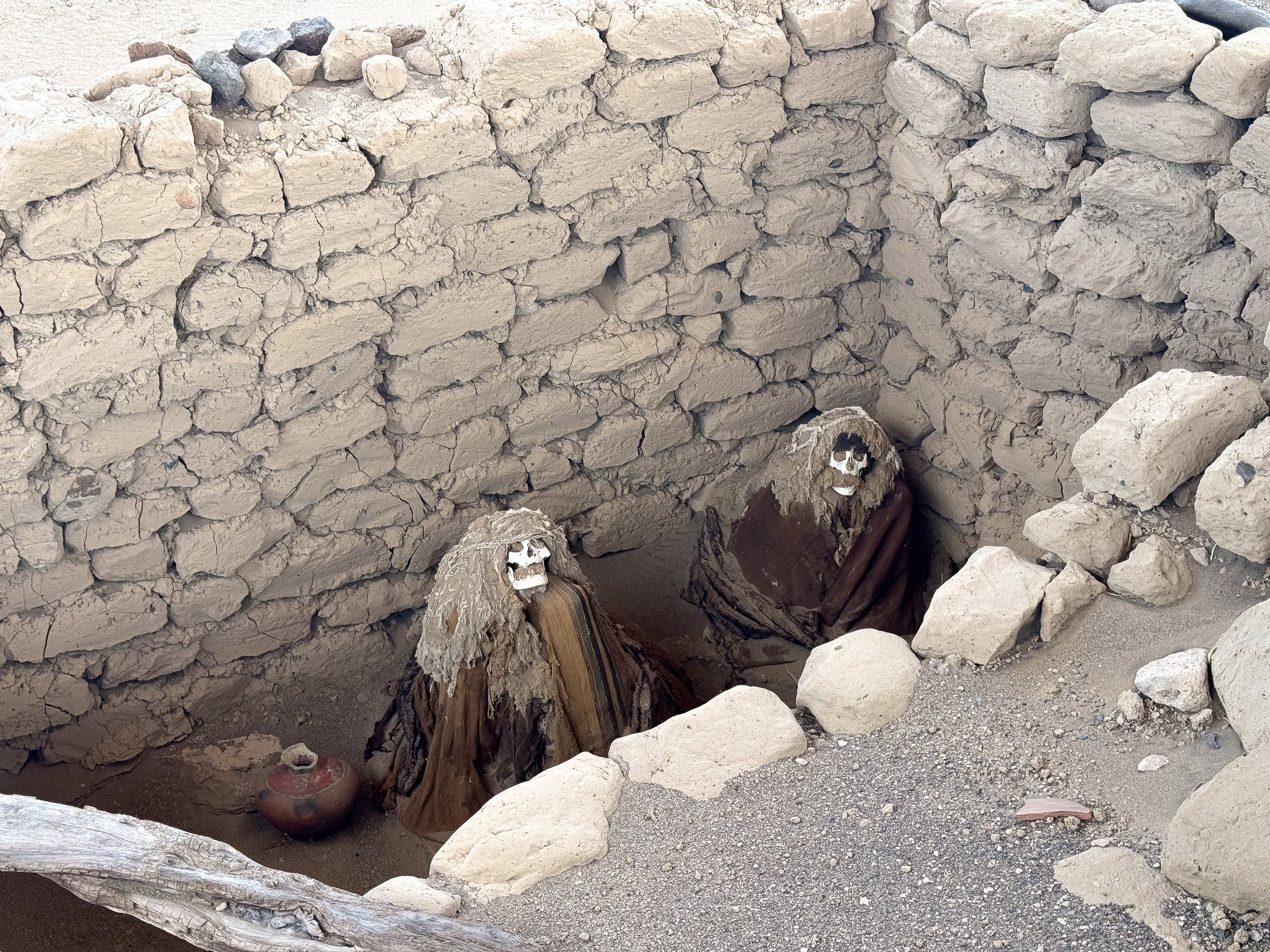
Cementerio Chauchilla. An ancient cemetery with the mummified and skeletal remains of the Nasca people dating back to 200 BCE. Inside the now exposed adobe brick tombs, bodies are buried facing east in an upright fetal position and wrapped in a basket of linens. Pottery holding objects meant for the afterlife are placed around them as their skulls stare outward bearing lengthy strands of braided hair.
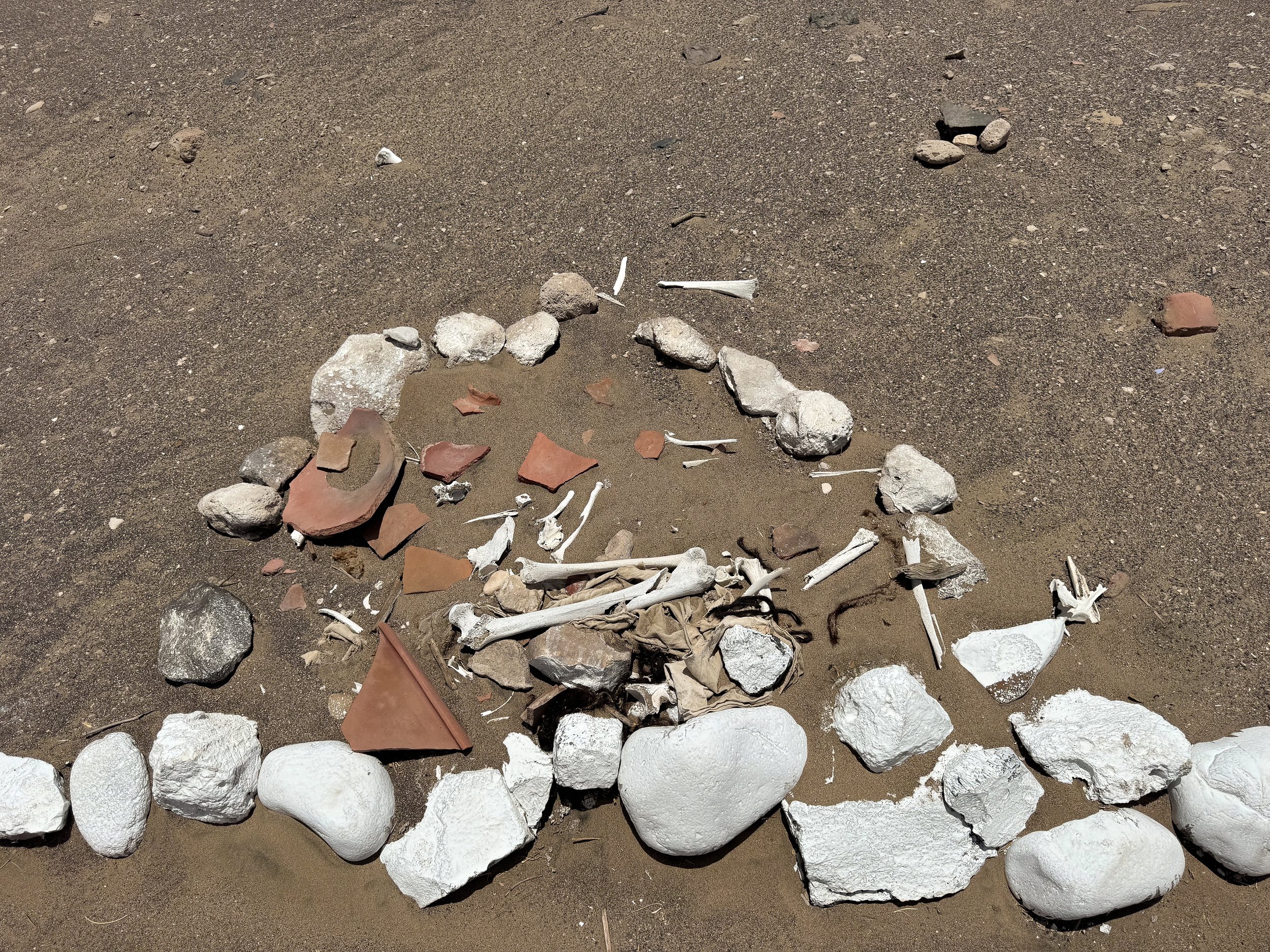
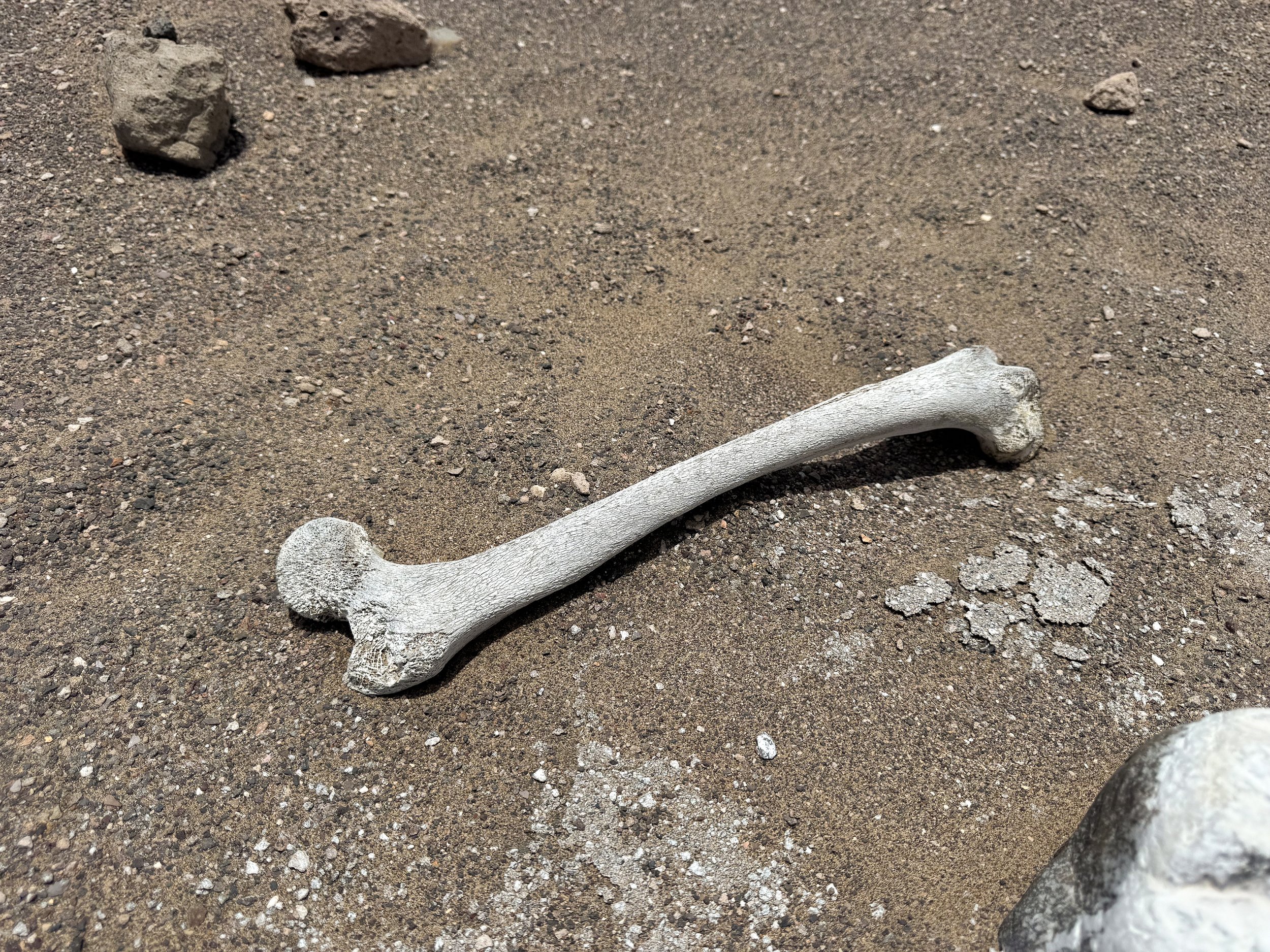
Due to grave robbing over the last century, bone fragments, torn linens and broken pottery from hundreds of tombs can be seen scattered across the landscape. Only the restored and preserved tombs are on display for viewing. The cemetery is located 45 min by car south of the city of Nasca.
Plaza de Armas. The tree lined central plaza with fountains, benches and artwork depicting the Nasca Lines. It’s a popular spot for families to hang out at night.
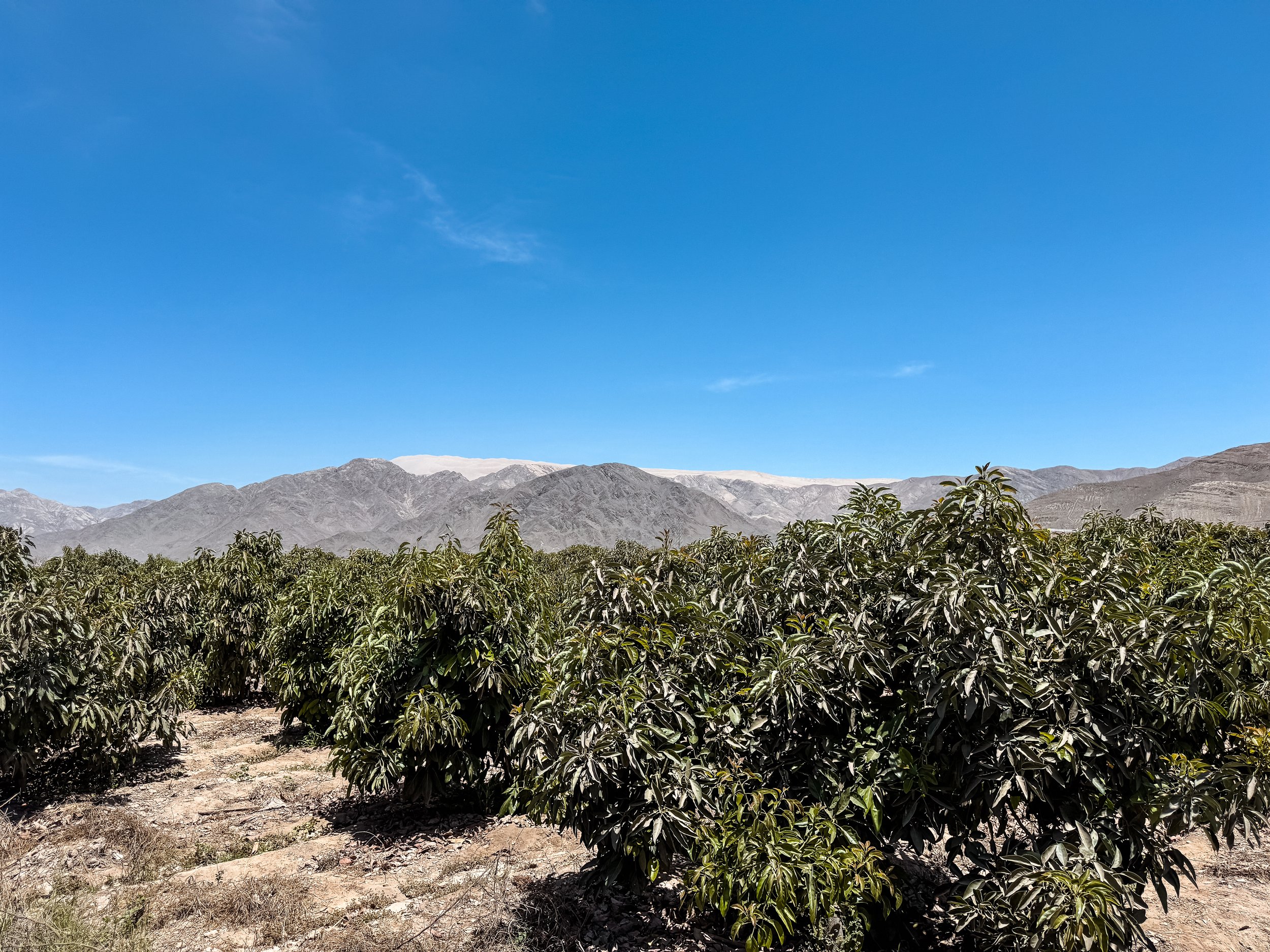
Feria de Comerciantes de Nasca. A traditional Peruvian fruit, vegetable and flower market with tables of vendors selling locally grown produce including avocado, blueberries, cherimoya, star fruit, passion fruit, giant squash, peanuts, farmer's cheese, breads and some meats.
Places to Eat & Drink
Killa Cafe & Bar. A restaurant and cafe with coffees and breakfast dishes. We stopped in shortly after arriving in Paracas on the morning Peru Hop bus from Lima.
Mamashana. A Peruvian restaurant with traditional dishes like Papa a la Huancana, Lomo Saltado, Chupe de Pescado and Potato Causas.
Mom’s Cafe. A café with empanadas, baked goods, coffees, sodas and beers. It’s a pick up and drop off location for the Peru Hop bus in Nasca.
La Casa del Pisco Garcia. A very local bar that serves various Piscos by the glass, carafe, full bottle or in cocktails.
D’Gula Restaurant. A Peruvian restaurant serving traditional dishes like causas, parihuela, lomo saltado and pasta cooked in huacallena sauce as well as Peruvian wines.
Street Tamales. The city comes to life at 8am with the call of the Tamale Guy driving by announcing “tamales, tamales, tamales” from a speaker in his car. We bought some wrapped in banana leaves, made with corn masa, spices and heart of palm.
Getting Around Nazca
On Foot. Upon arrival in Nazca, the best way to see the city and get around to nearby sights is on foot.
By Taxi. For further away sights more than 30min on foot, we opted to hire a taxi. Taxi drivers are plentiful across the city and should cost 10-20 Sols for short distances and around 50 Sols for larger distances.
Peruvian Cuisine
With access to the Pacific Ocean, cuisine along the coast of Peru is seafood heavy with many other dishes made from Peruvian potatoes and corn as well as cocktails made with Pisco.
Ceviche. A Peruvian staple typically made from raw fish cured in lime juice with onions, sweet potato and cilantro. Try it with Leche de Tigre, a spicy marinade often served in ceviche.
Jalea. Fried mixed seafood topped with pickled red onions, cilantro and tomato.
Parihuela. A fish stew made with white fish, shrimp, octopus and squid in a tomato broth.
Lomo Saltado. A stir fried and flamed beef dish cooked in a pan at high heat with onions and soy sauce. It can also be made vegetarian with bell peppers, eggplant or tofu.
Potatoes. Peru is known for having thousands of varieties of potatoes. They’re served mashed in causas, fried and in soups and stews.
Causa. A pureed potato dish layered with fish, meats or veggies served cold. It’s a common appetizer at restaurants across the country.
Papas de Huacallena. A sliced potato dish covered in Huacallena sauce and served with sliced boiled eggs and olives.
Huacallena Sauce. A savory Peruvian sauce made from yellow peppers and cheese. It can be served hot or cold.
Choclo con Queso. Boiled Peruvian corn wrapped in a grilled piece of Peruvian cheese.
Canchas. Toasted or fried Peruvian Corn served as a snack at restaurants or garnish in various dishes.
Pisco Sour. Peru’s national drink made from Pisco, lime juice, simple syrup and egg whites all mixed together.
Chilcano. A Peruvian cocktail made with Pisco, lime juice and ginger ale. We ordered the traditional version and one with passion fruit multiple times.
Inka Cola. A yellow soda popular across Peru with a tutti frutti flavor. Coming from the Midwest, it tastes similar to Faygo Rock n Rye.
Cusqueña. One of Peru’s national beers easily identifiable by its bottle cap with Machu Picchu on it and a bottle embossed in Incan stone work. It comes in three varieties, Dorado (Golden), Wheat and Negro (Stout).
Elsewhere in Peru
From the desert coast and ancient civilizations of the Nazca region to the heights of the Andes and sacred waters of Lake Titicaca, discover more of Peru through these travel guides:
Peru Andes Travel Guide: Machu Picchu, Cusco & Inca Ruins. Wander through Peru's Andes where ancient Inca ruins, terraced farmland, colorful mountain landscapes and Andean communities preserve centuries of tradition.
Arequipa Peru Travel Guide: Colonial Architecture, Food & Culture. Explore Arequipa's historic streets where colonial architecture, regional cuisine and volcanic landscapes shape one of Peru's cultural capitals.
Lake Titicaca Travel Guide: Floating Islands & Indigenous Culture. Voyage between Lake Titicaca's floating islands and lakeside communities where Indigenous culture, Andean traditions and centuries of history live on.
For Next Time…
Having visited Peru twice for a total of 4 weeks, we continue to discover more places to visit and sights to see. On our third trip, we hope to venture deep into The Peruvian Amazon to the cities of Iquitos and Puerto Maldonado as well as some national parks like the Tambopata National Reserve and Bahuaja-Sonene National Park.

Arequipa Peru Travel Guide: Colonial Architecture, Food & Culture
Explore Arequipa's historic streets where colonial architecture, regional cuisine and volcanic landscapes shape one of Peru's cultural capitals.

Arequipa, Peru’s Second City
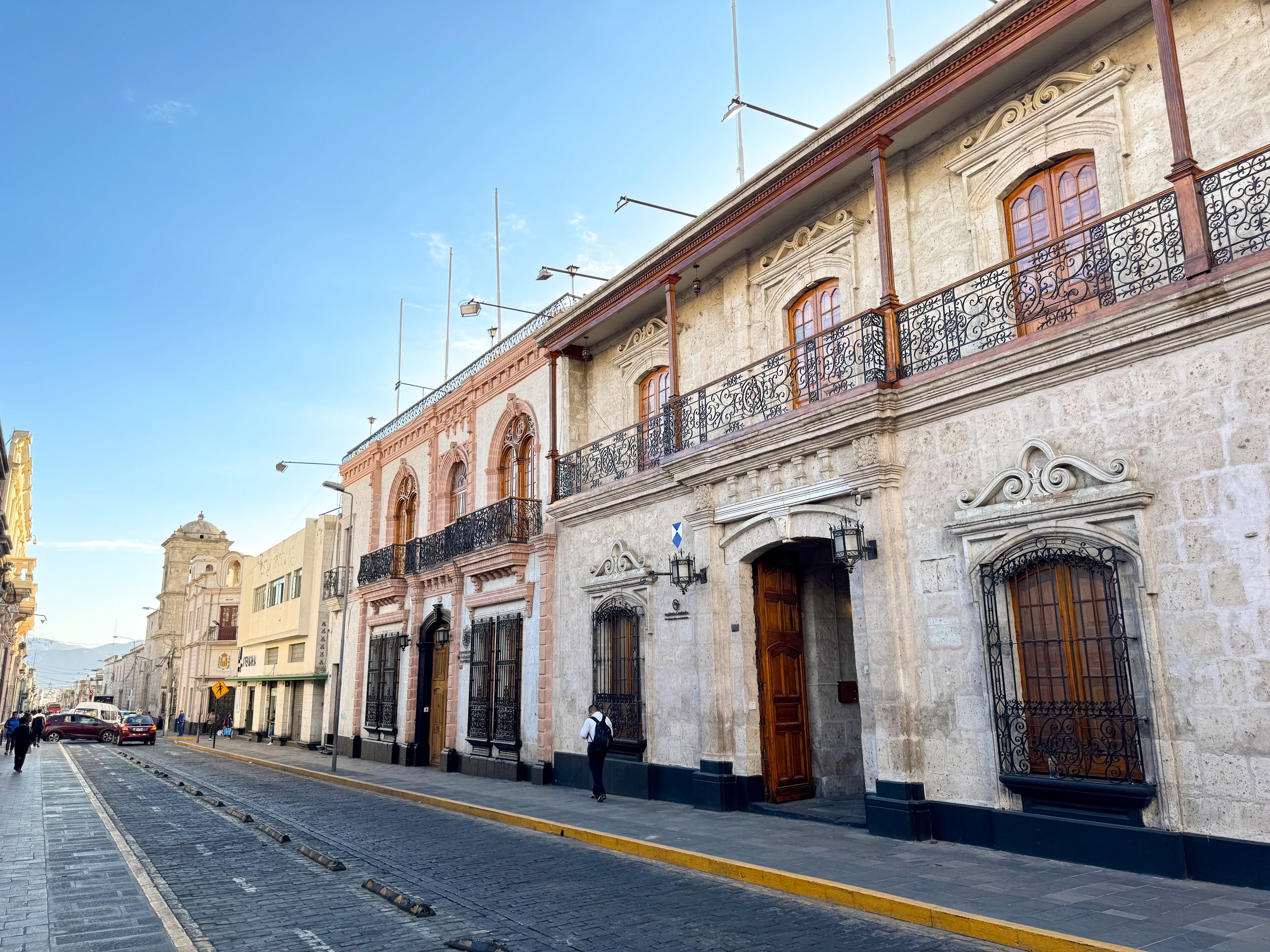
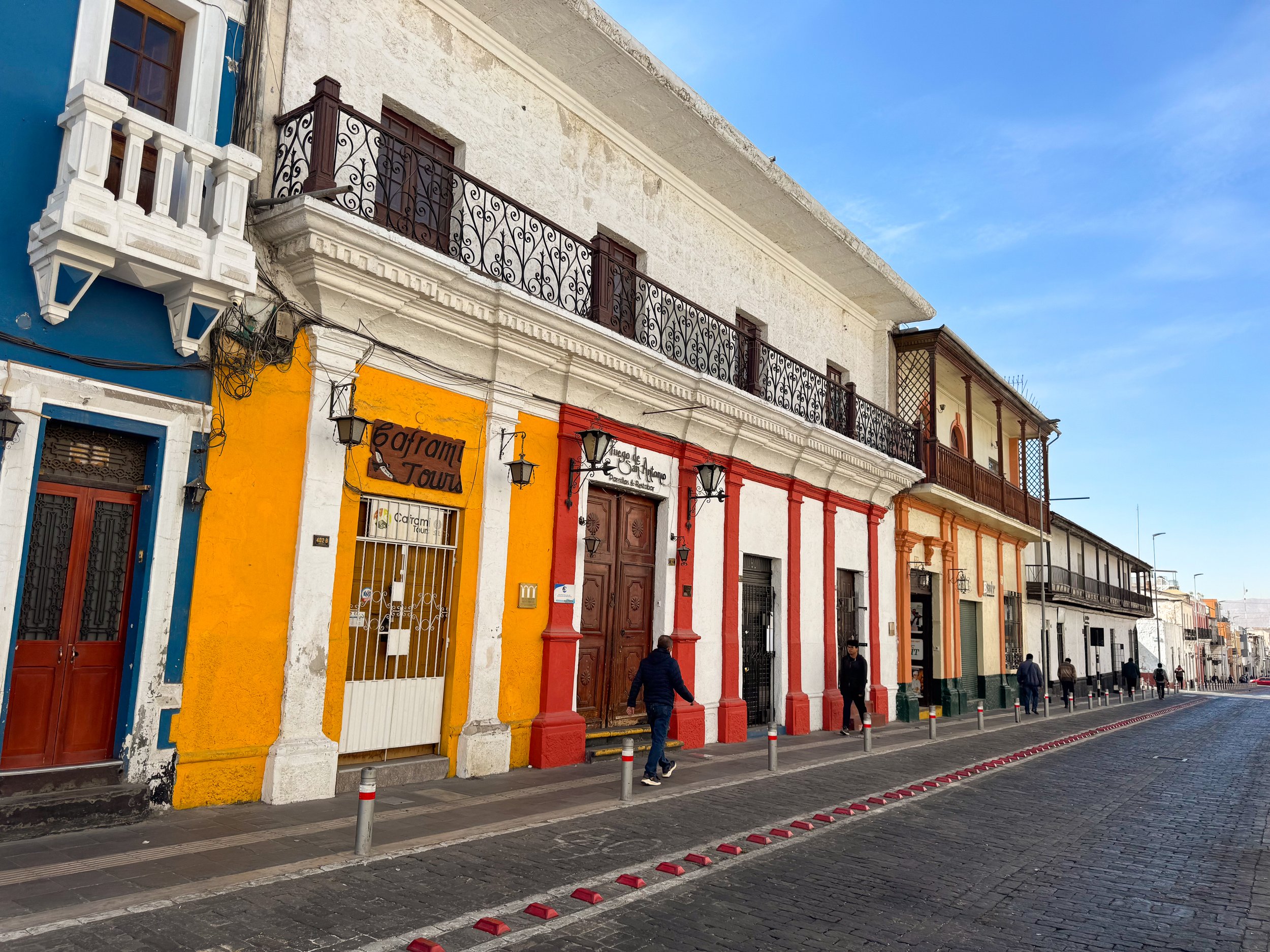
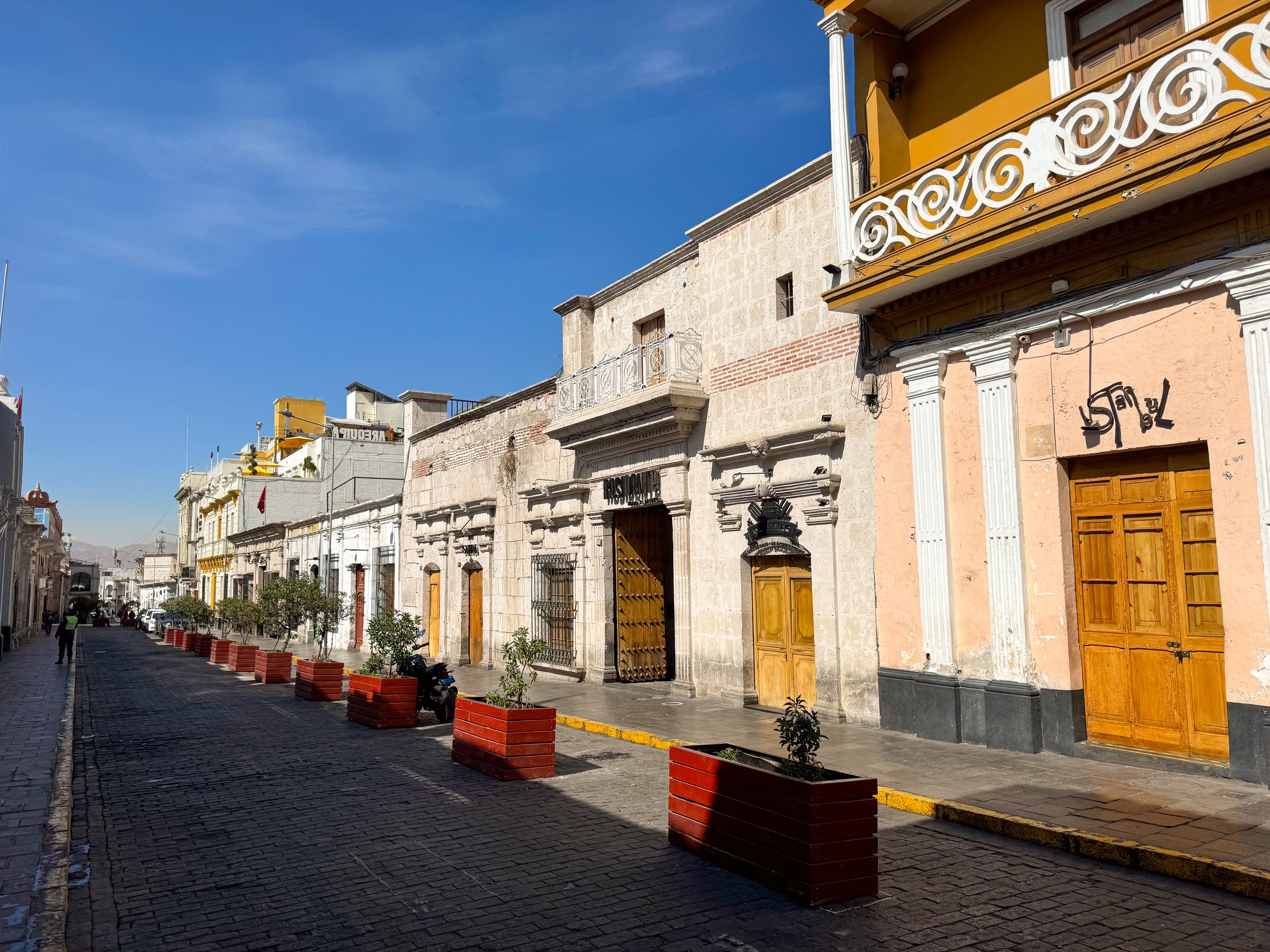
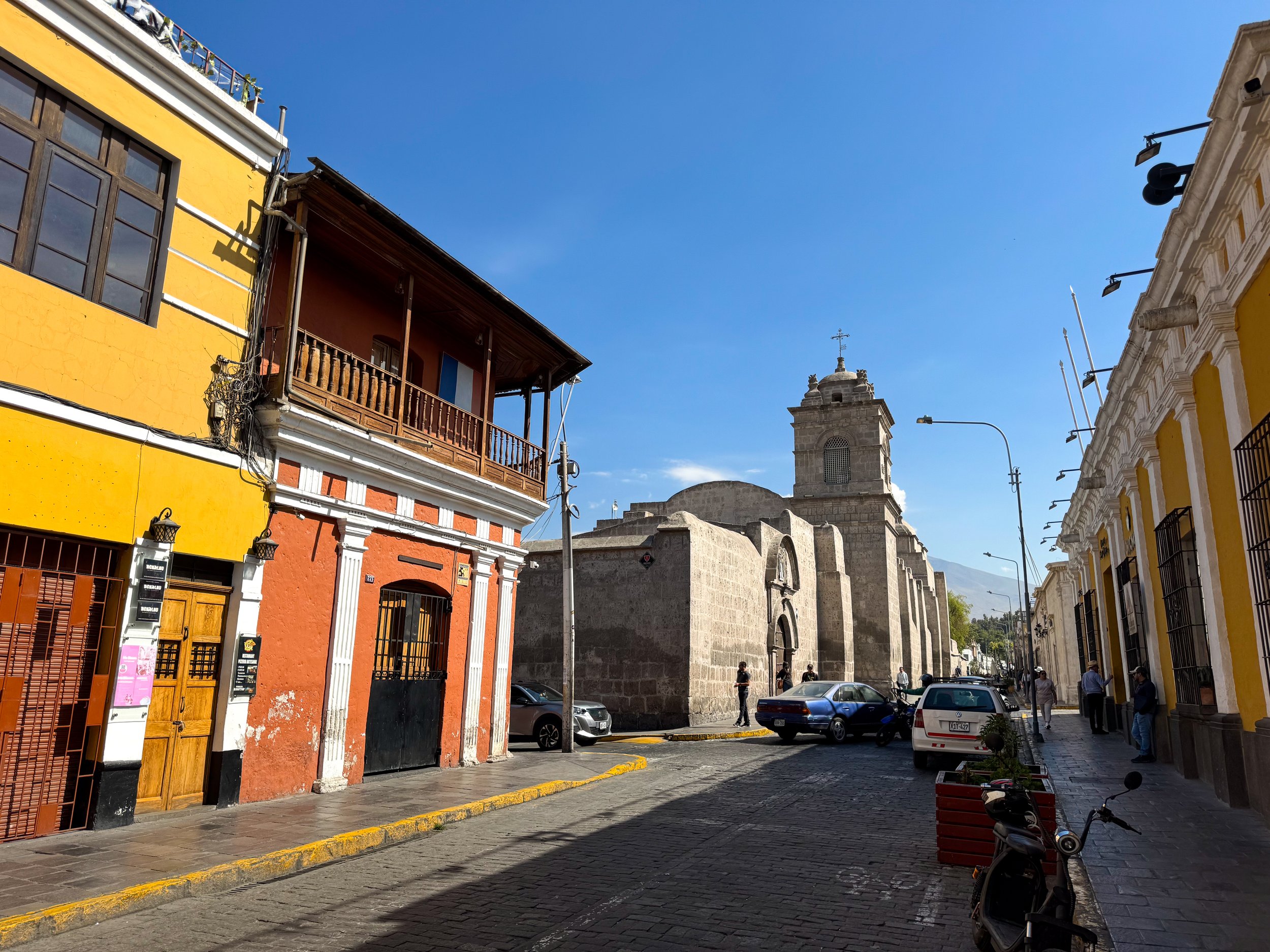
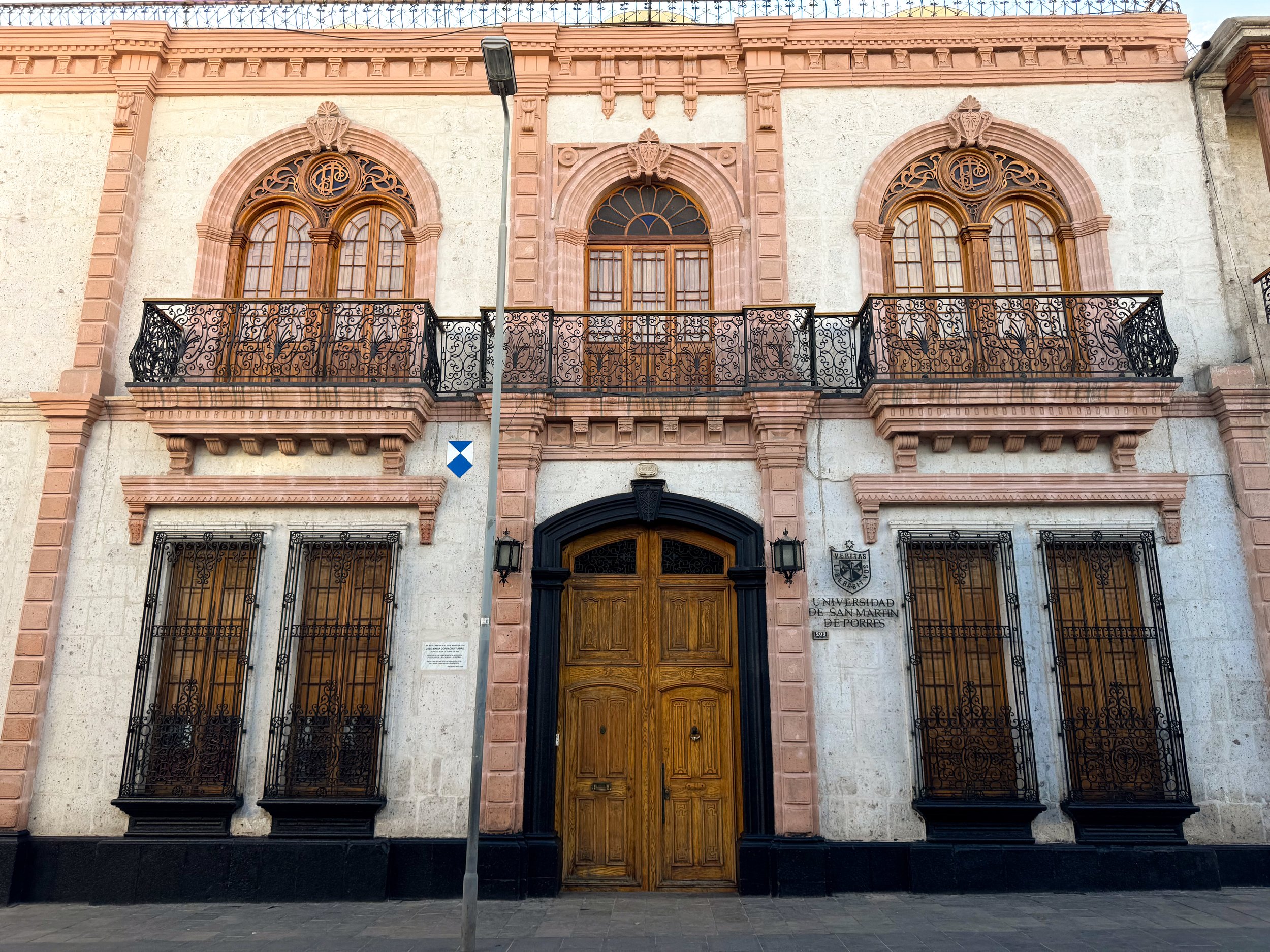
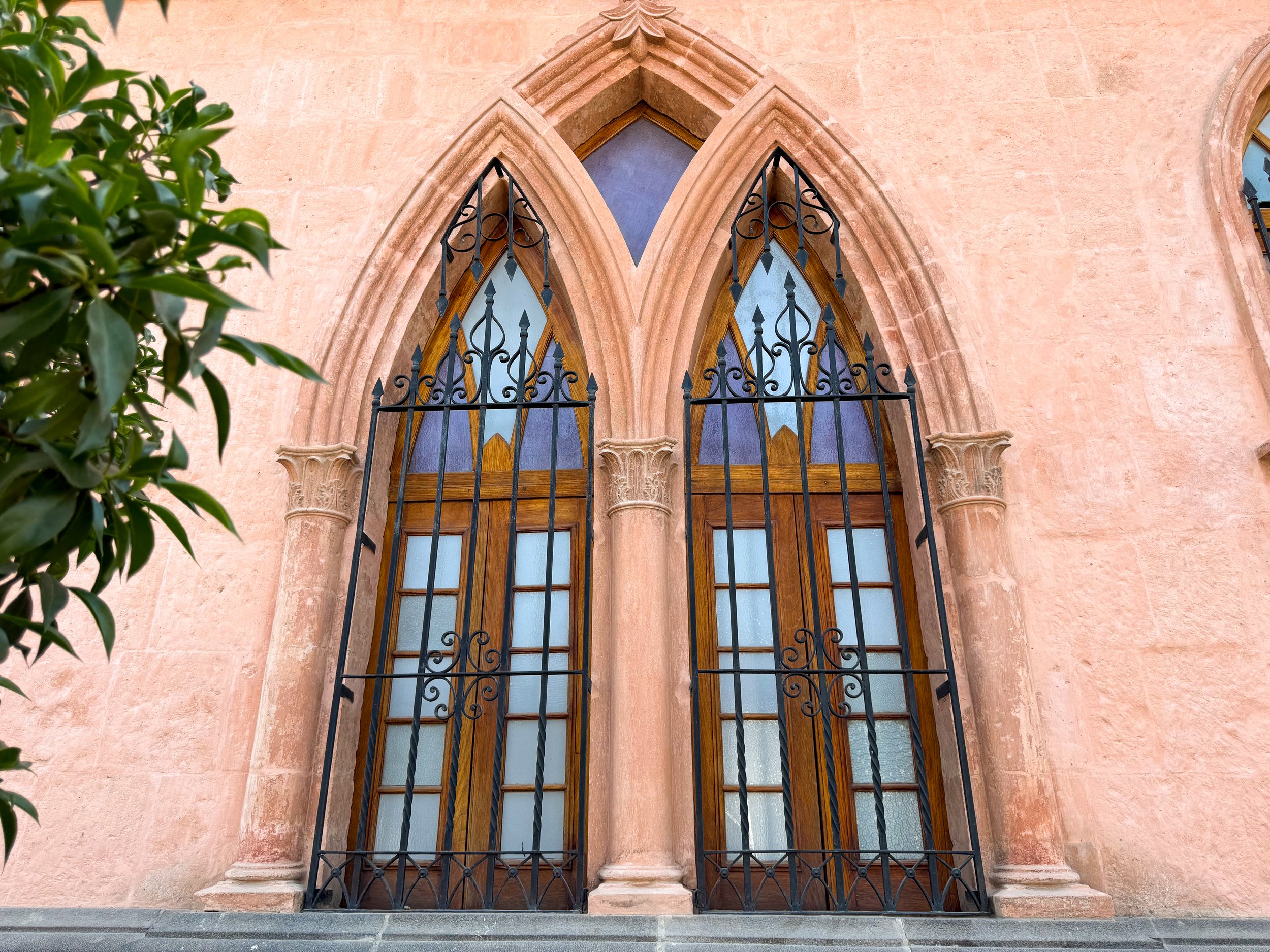
Arequipa, Peru’s second city, is widely considered its most beautiful with ornate white stone buildings set against the backdrop of multiple volcanoes. The city is a cultural hub with indigenous artisans manufacturing goods from alpaca and vicuña wool. It’s recognized as the gastronomic center of Peru for its cuisine with local dishes and Peruvian classics. Located between the Andes Mountains and Pacific Coast, its year round temperate climate makes it a popular destination with cool nights and warm sunny days.
Neighborhoods & Streets
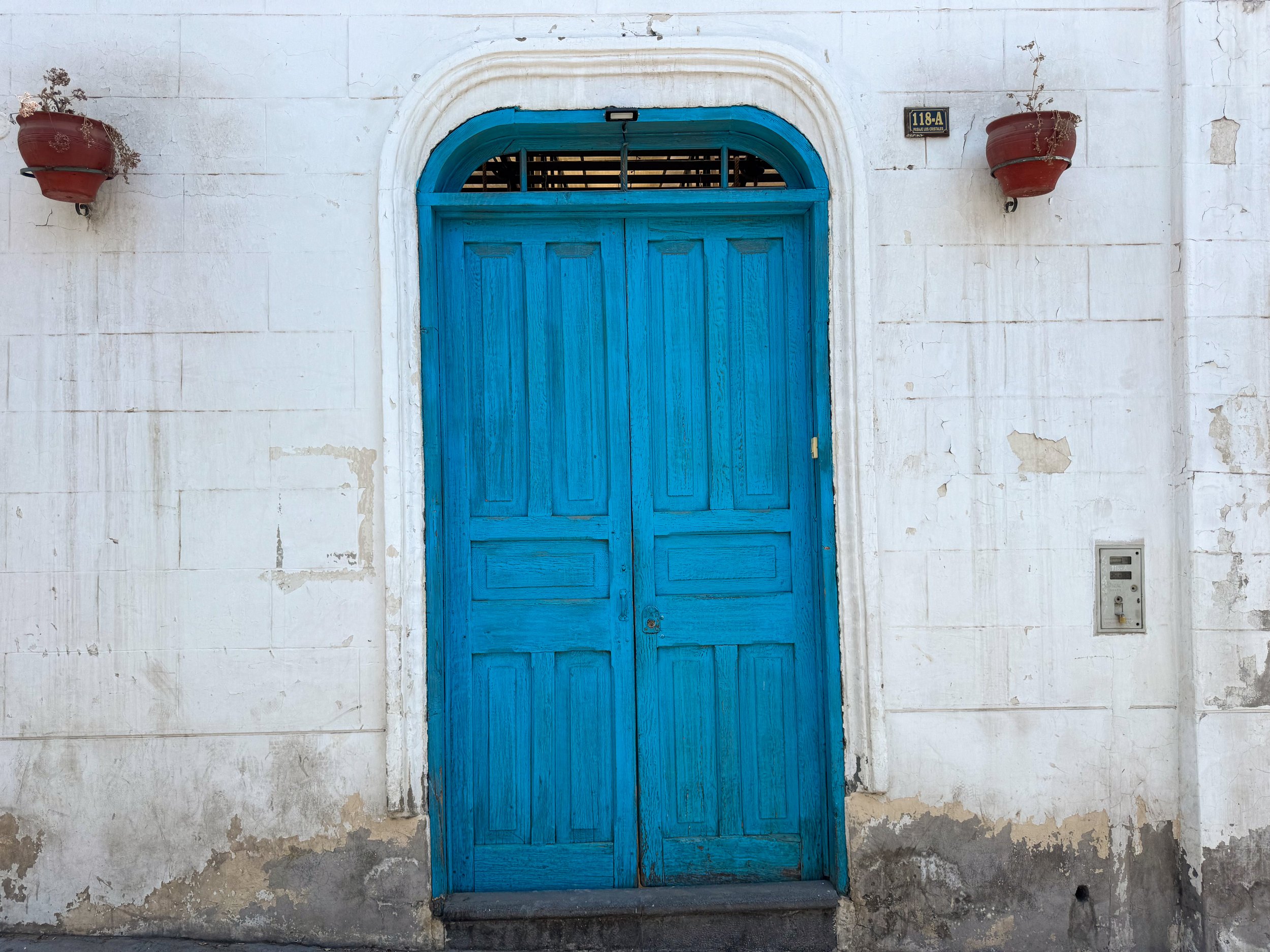
Centro Histórico. The historic center of Arequipa centered on the Plaza de Armas with the largest collection of baroque style buildings, museums and landmark sights.
Lázaro Neighborhood. The oldest neighborhood in Arequipa with white stone walls, cobblestone streets and a small central plaza with cafes and bars.
Yanahuara Neighborhood. A neighborhood across the river from the Centro Historico with views overlooking the city and volcanoes.
Calle Santa Catalina. A street through the Centro Historico with restaurants, cafes, bars and shops selling alpaca clothes and accessories.
Things to Do
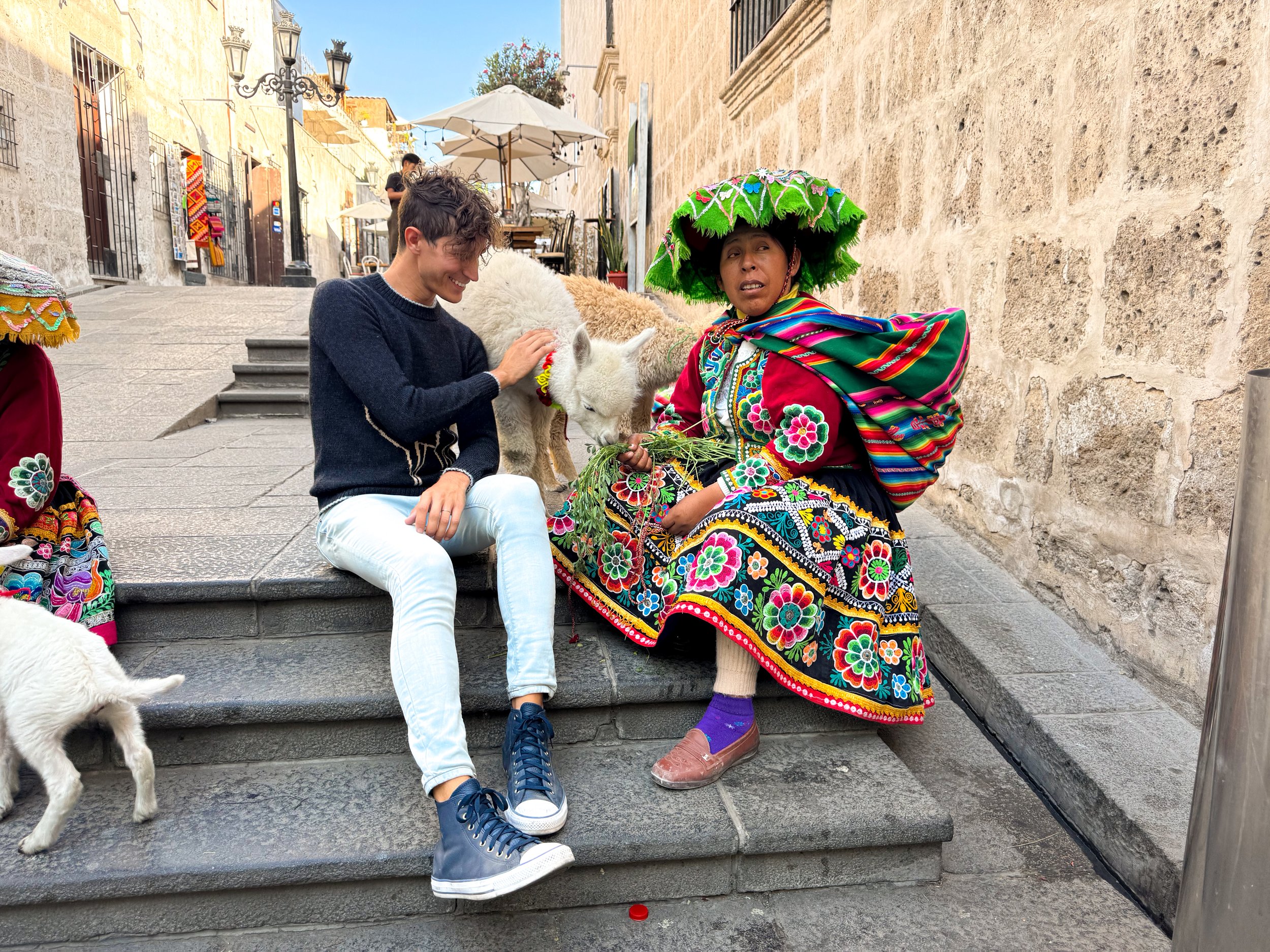
Pose with the Alpaca Ladies. A group of indigenous women dressed in traditional clothing walking baby alpacas. Pose with them and the alpaca for a small tip. When posing for photo, make sure to tip each woman individually.
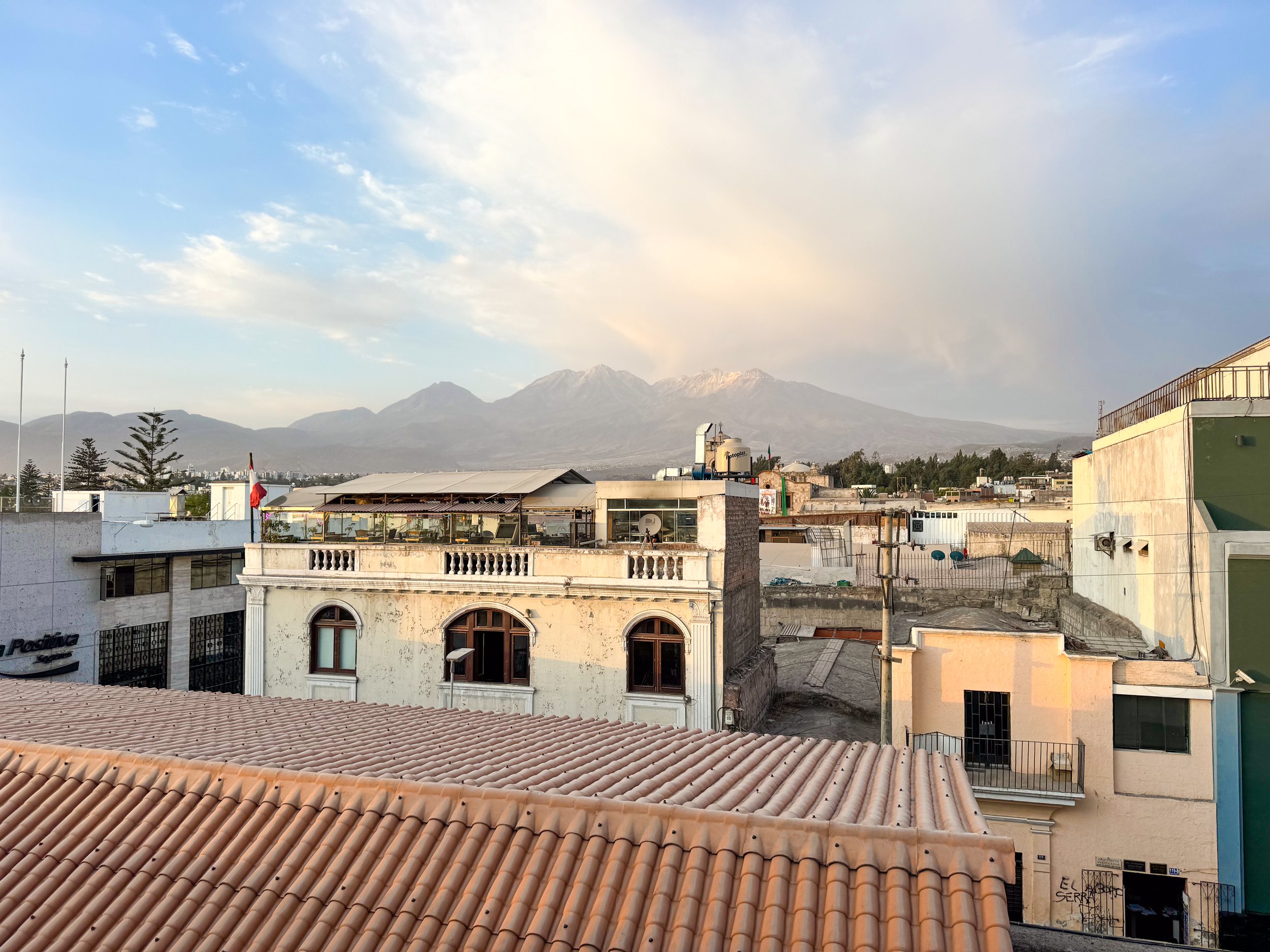
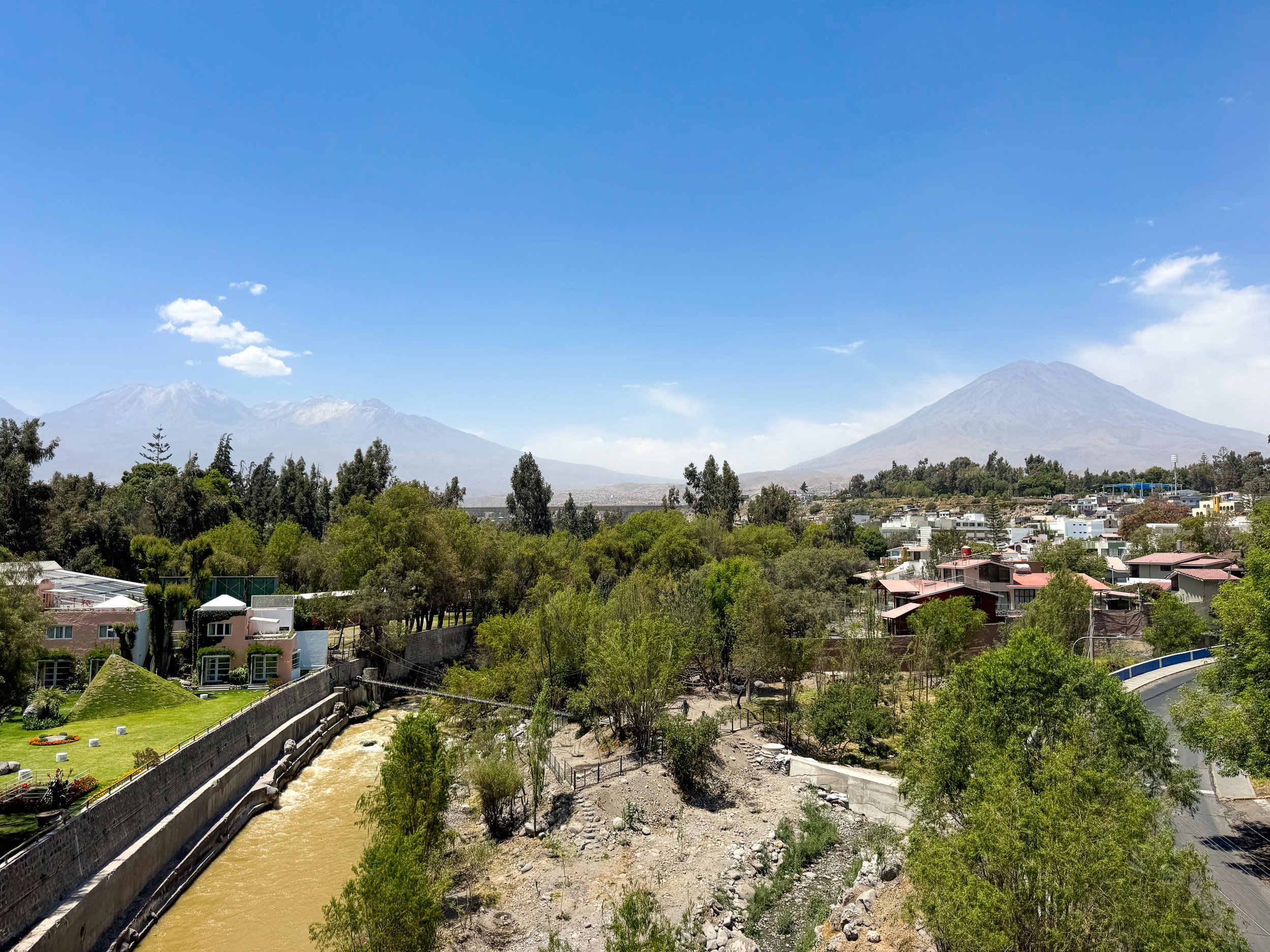
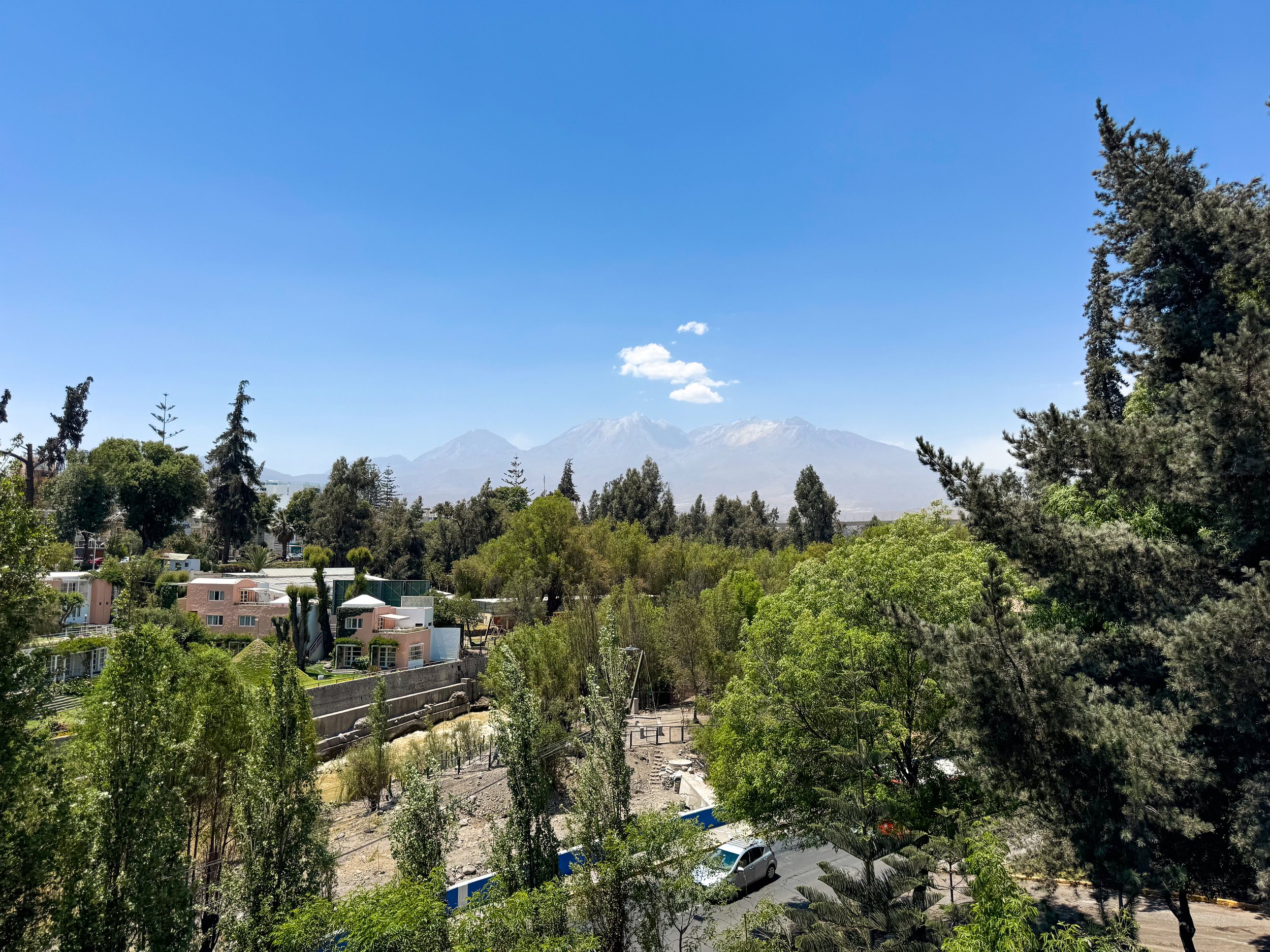
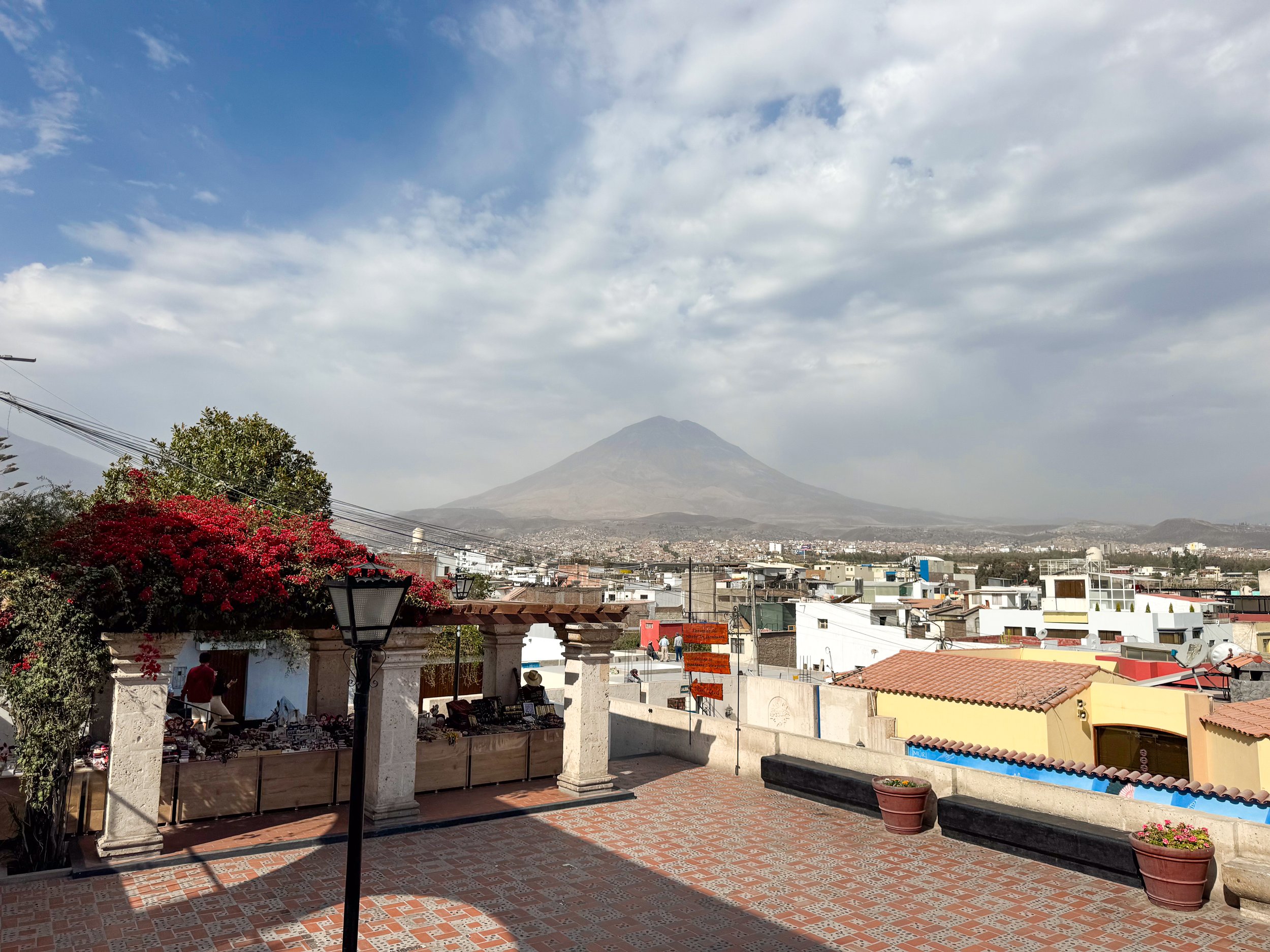
Puente Grau. Walk across the Puente Grau bridge with views of the Misti and Chachani volcanoes.
Eat & Drink at Rooftop Restaurant. Many restaurants have rooftop terraces and bars across Arequipa. They’re popular for leisurely breakfasts, enjoying views of the city, volcanoes and sunsets.
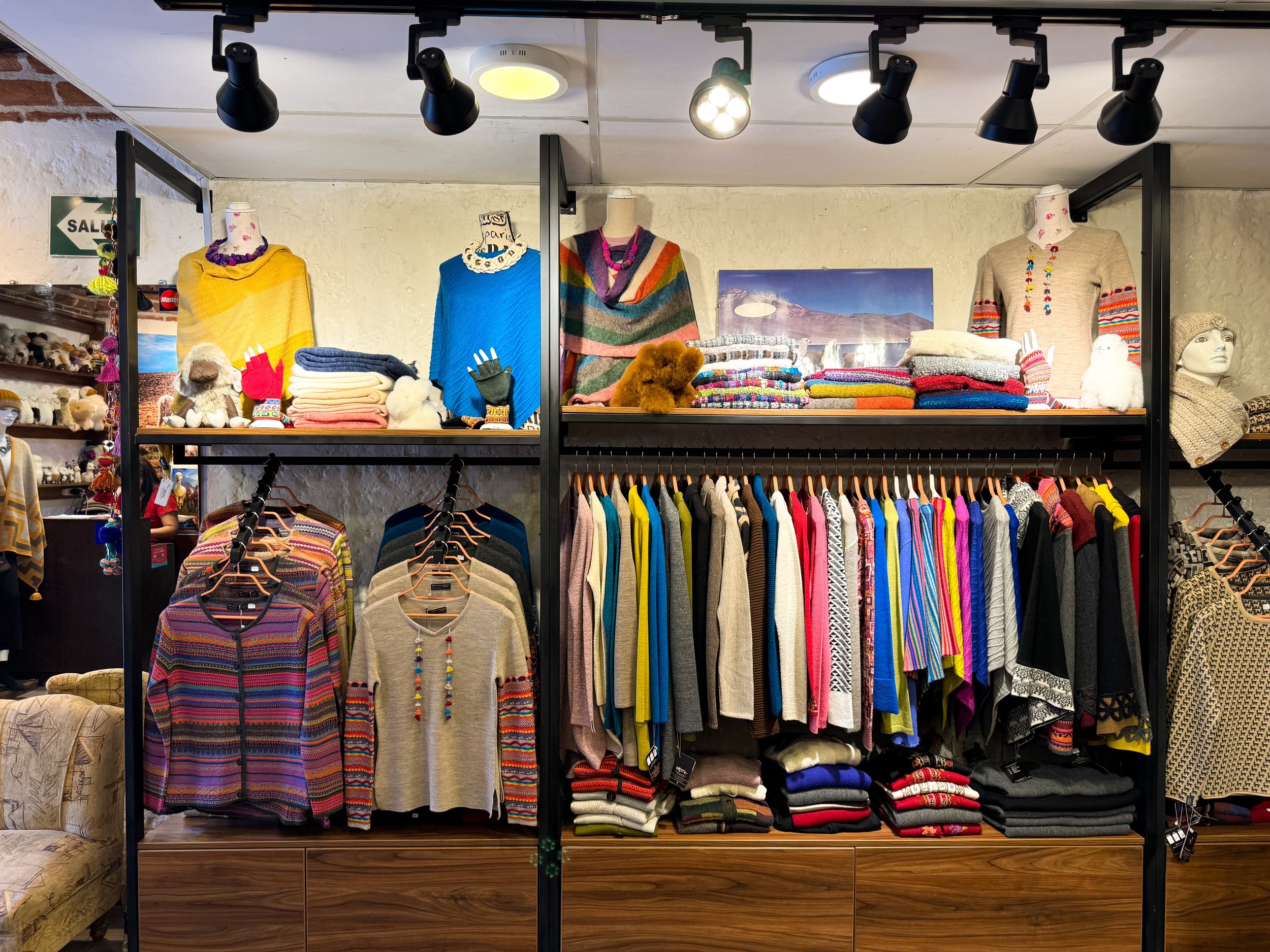
Alpaca Shopping. Go shopping for alpaca, llama or vicuna fur clothes, accessories or home goods.
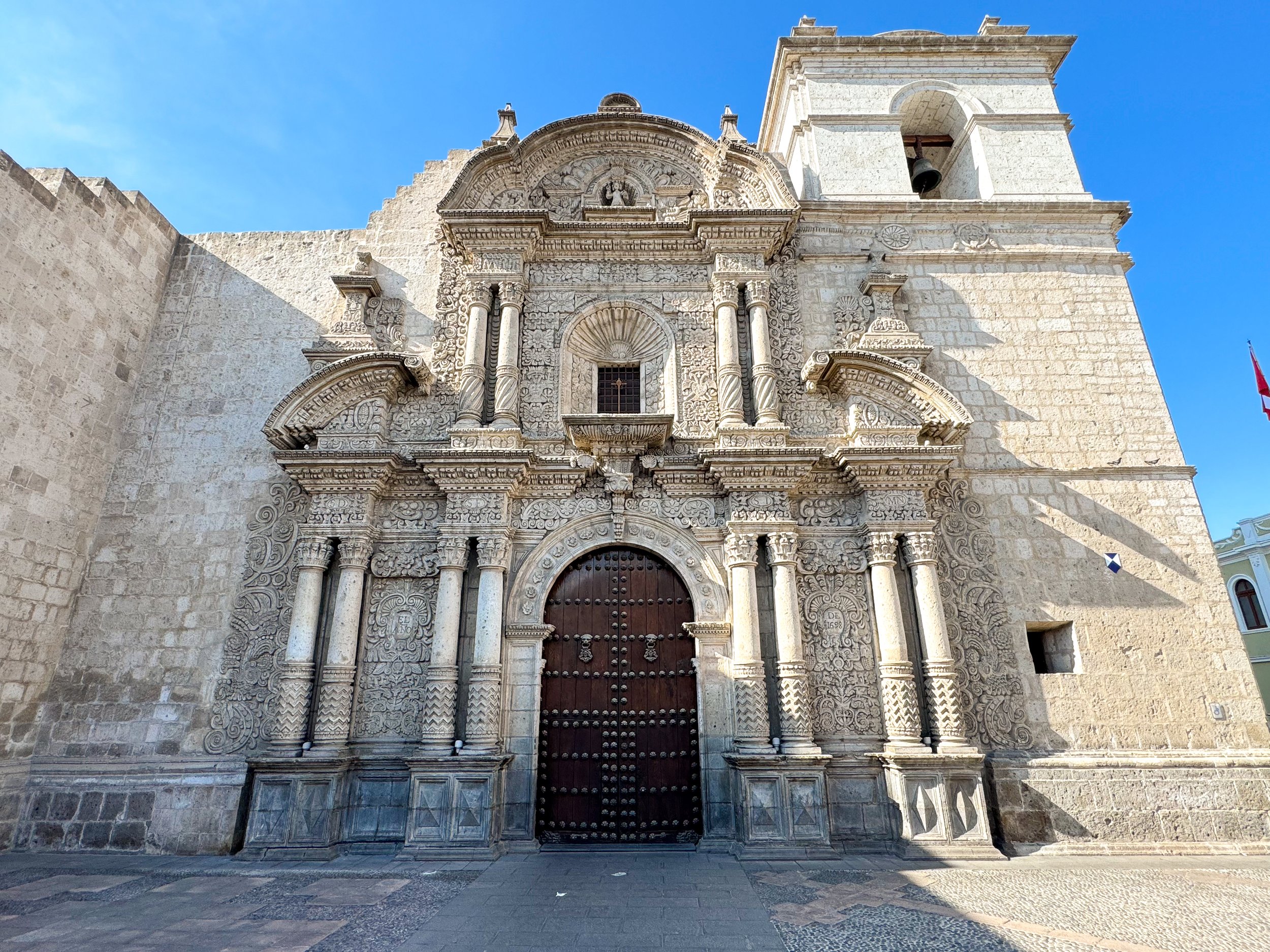
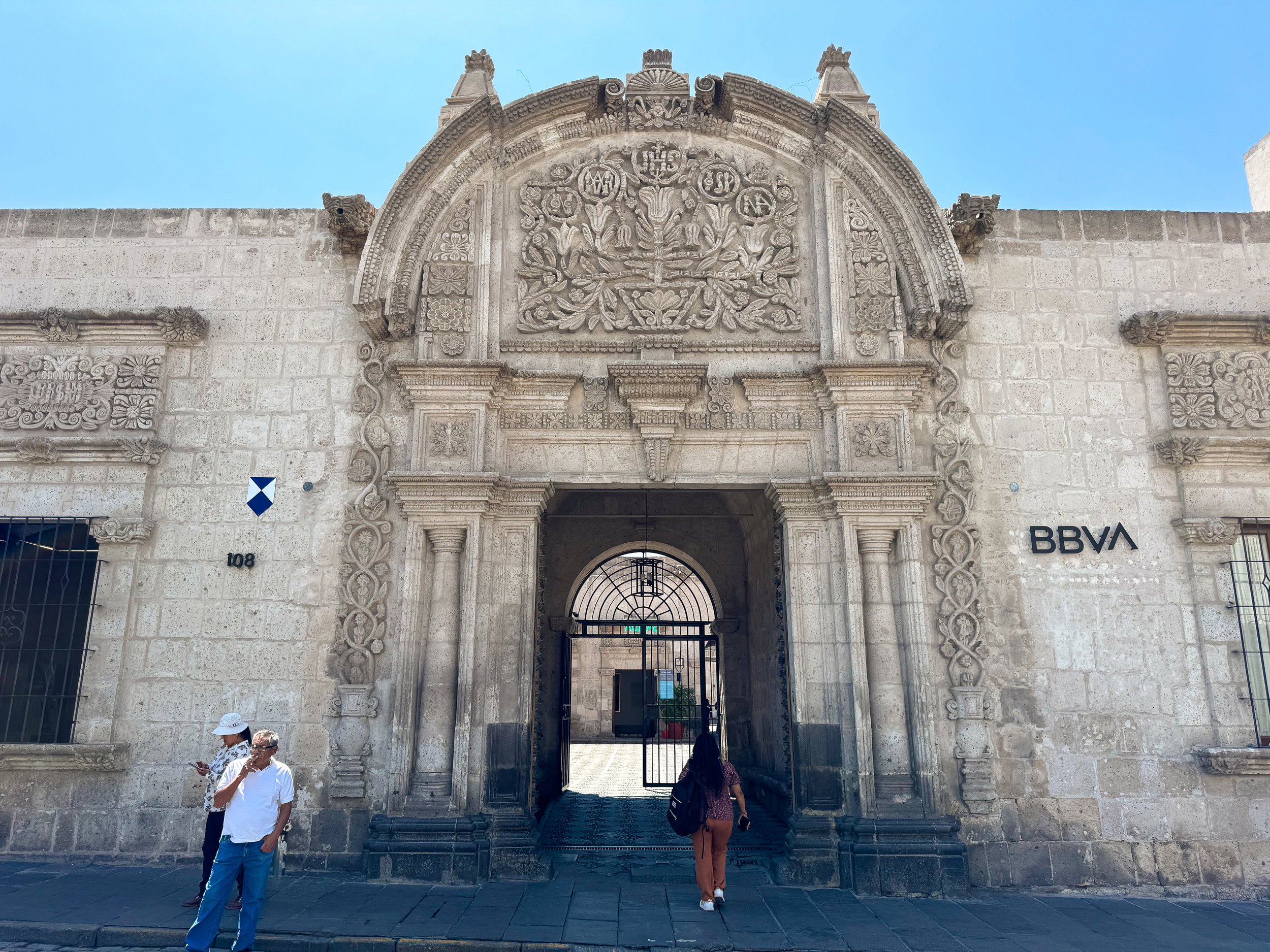
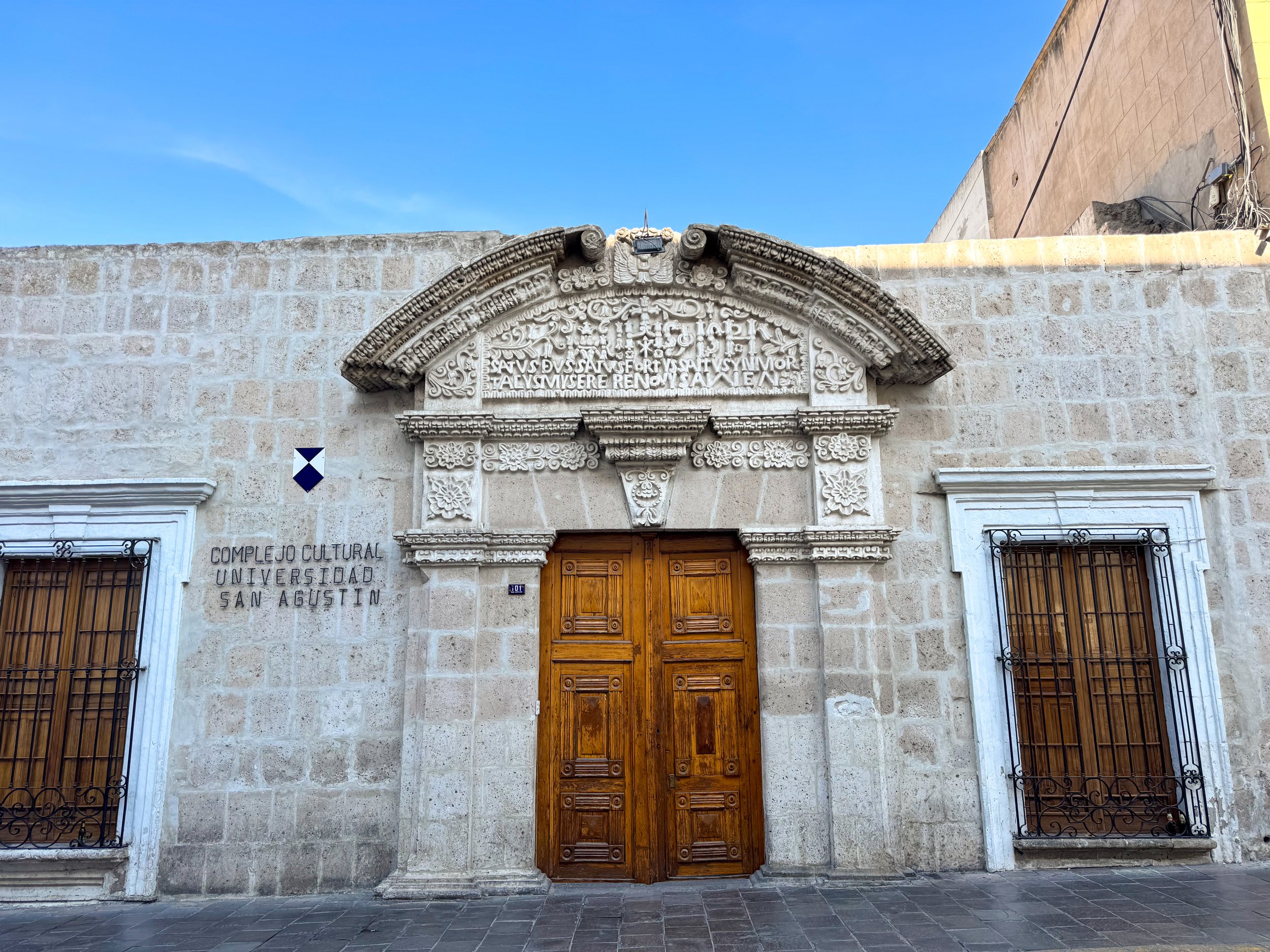
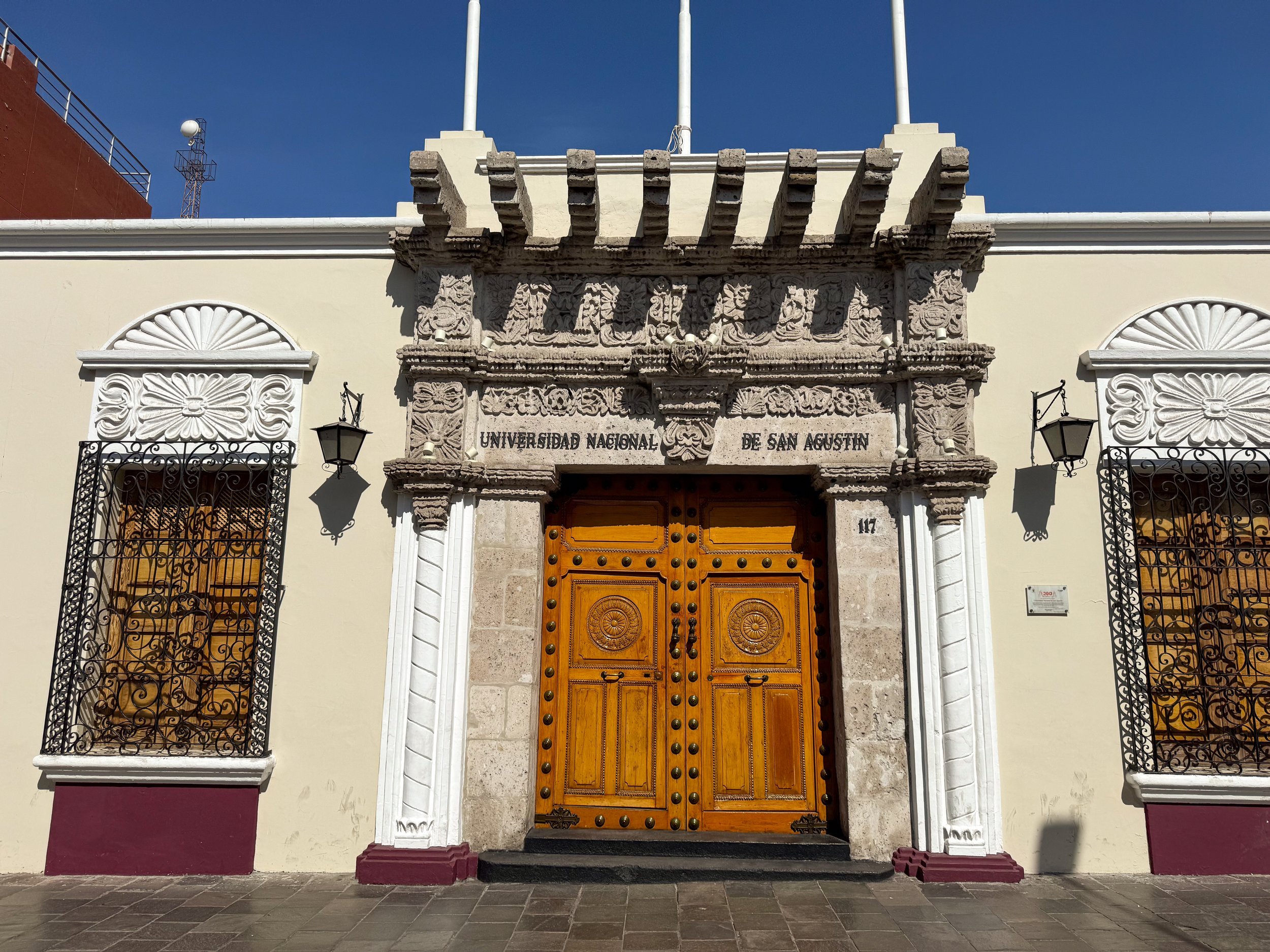
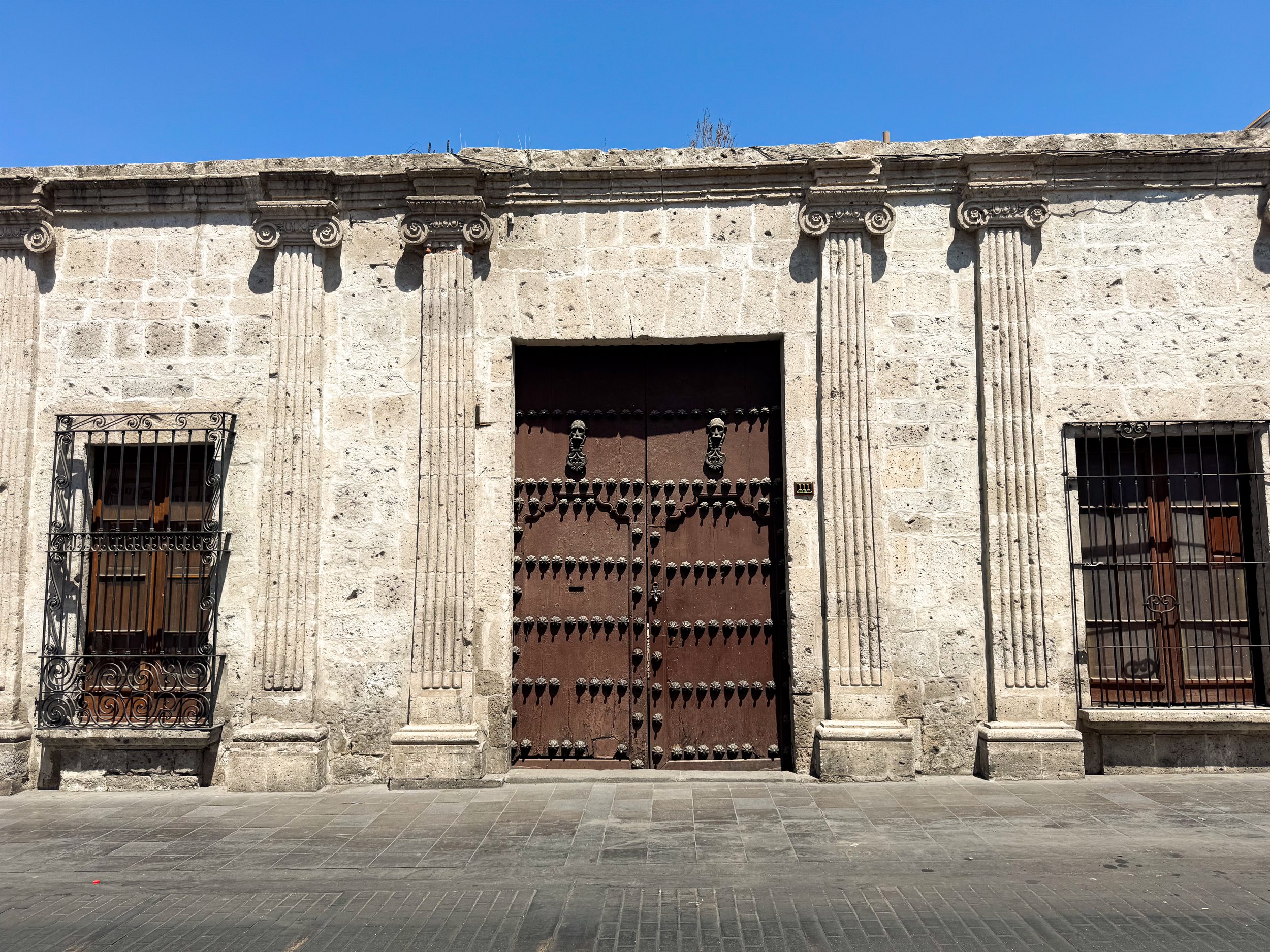
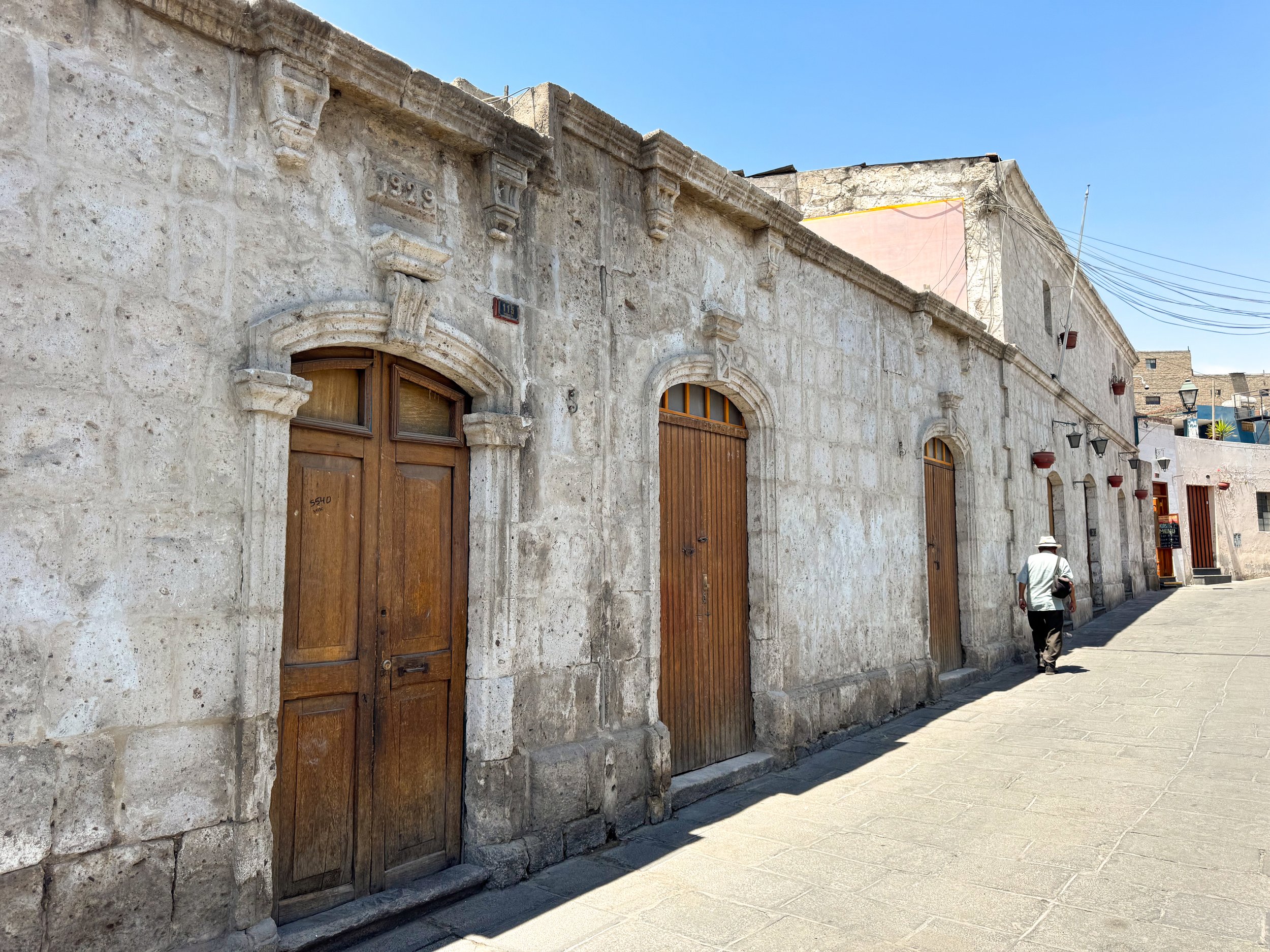
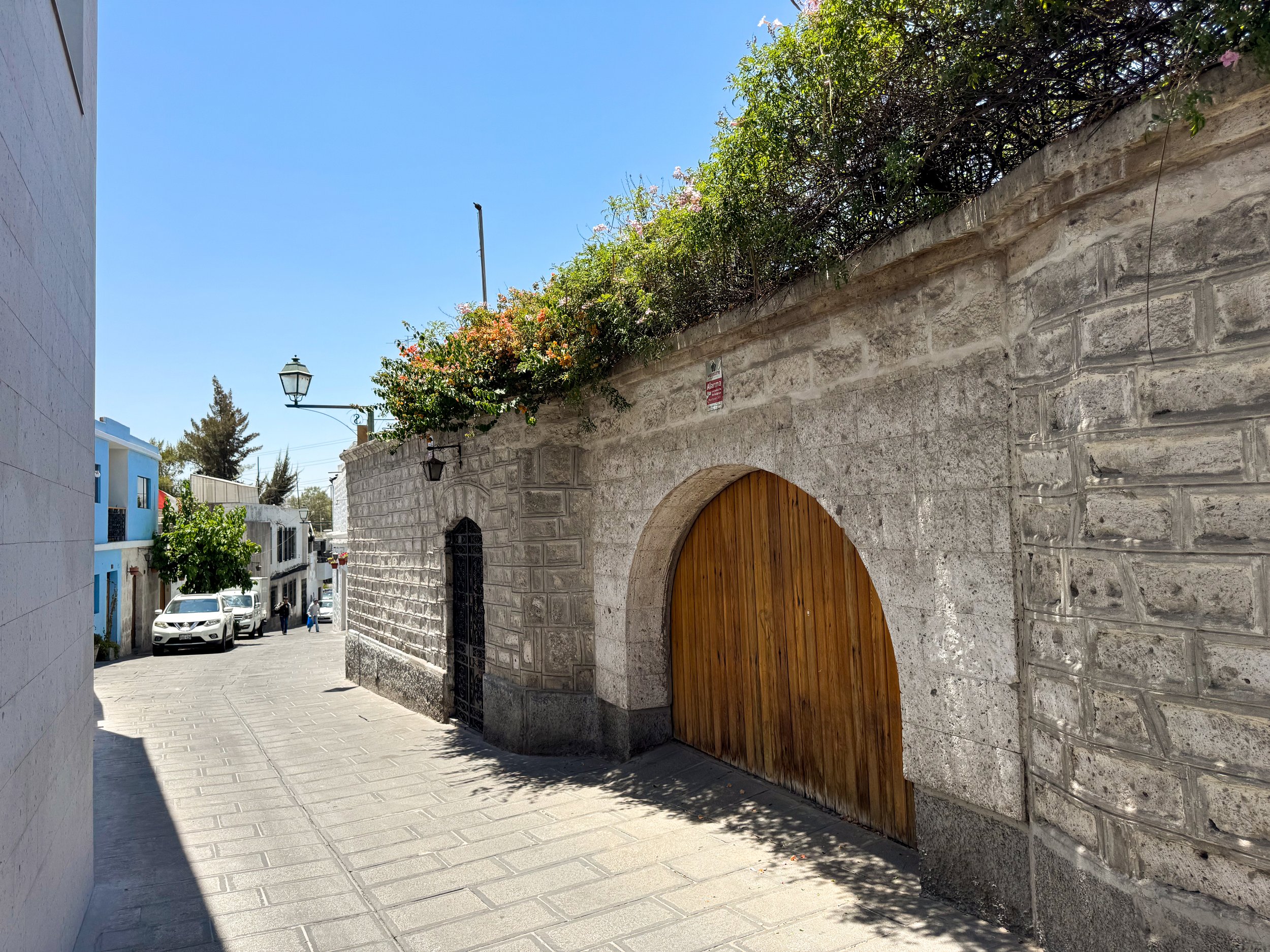
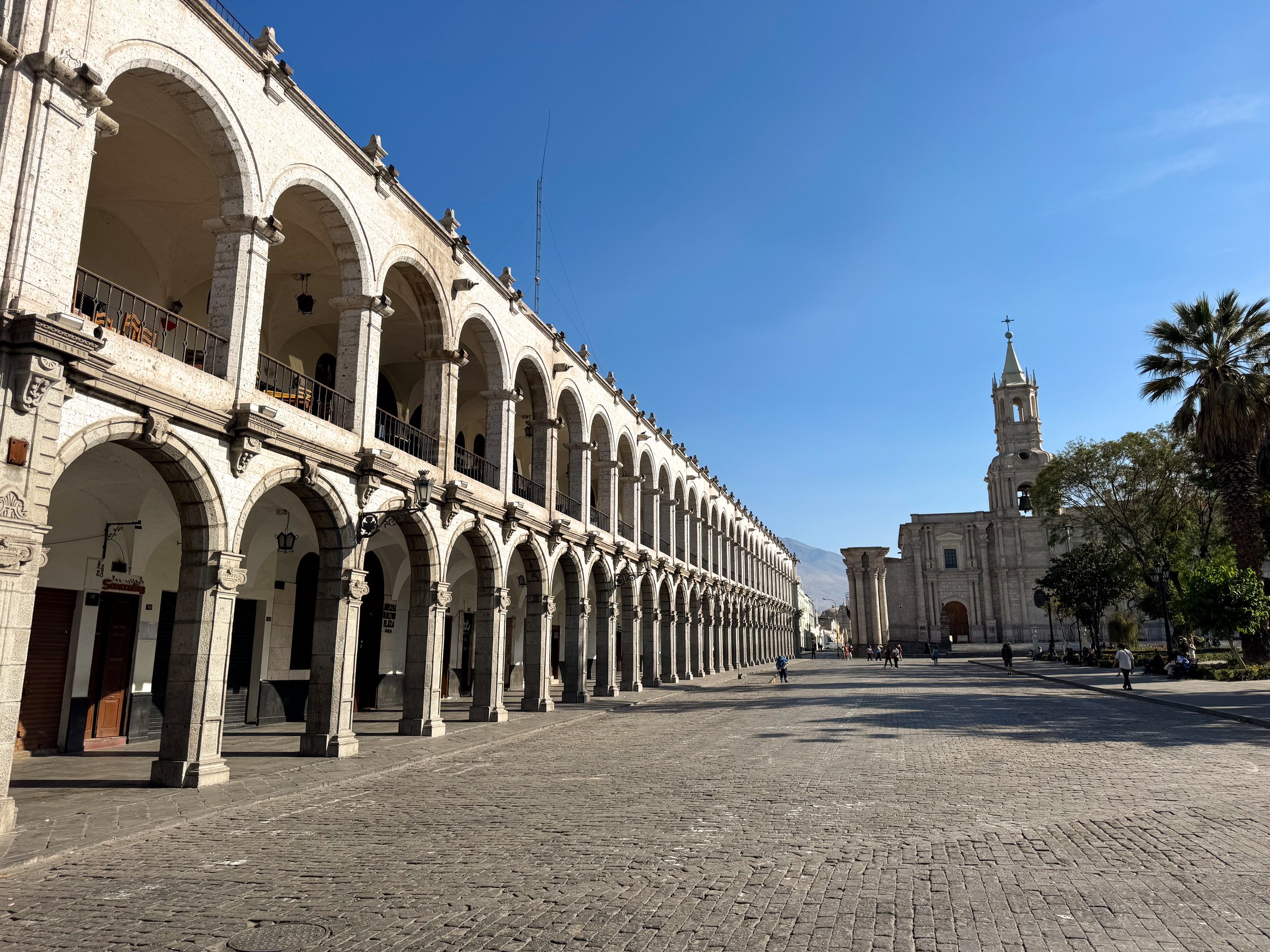
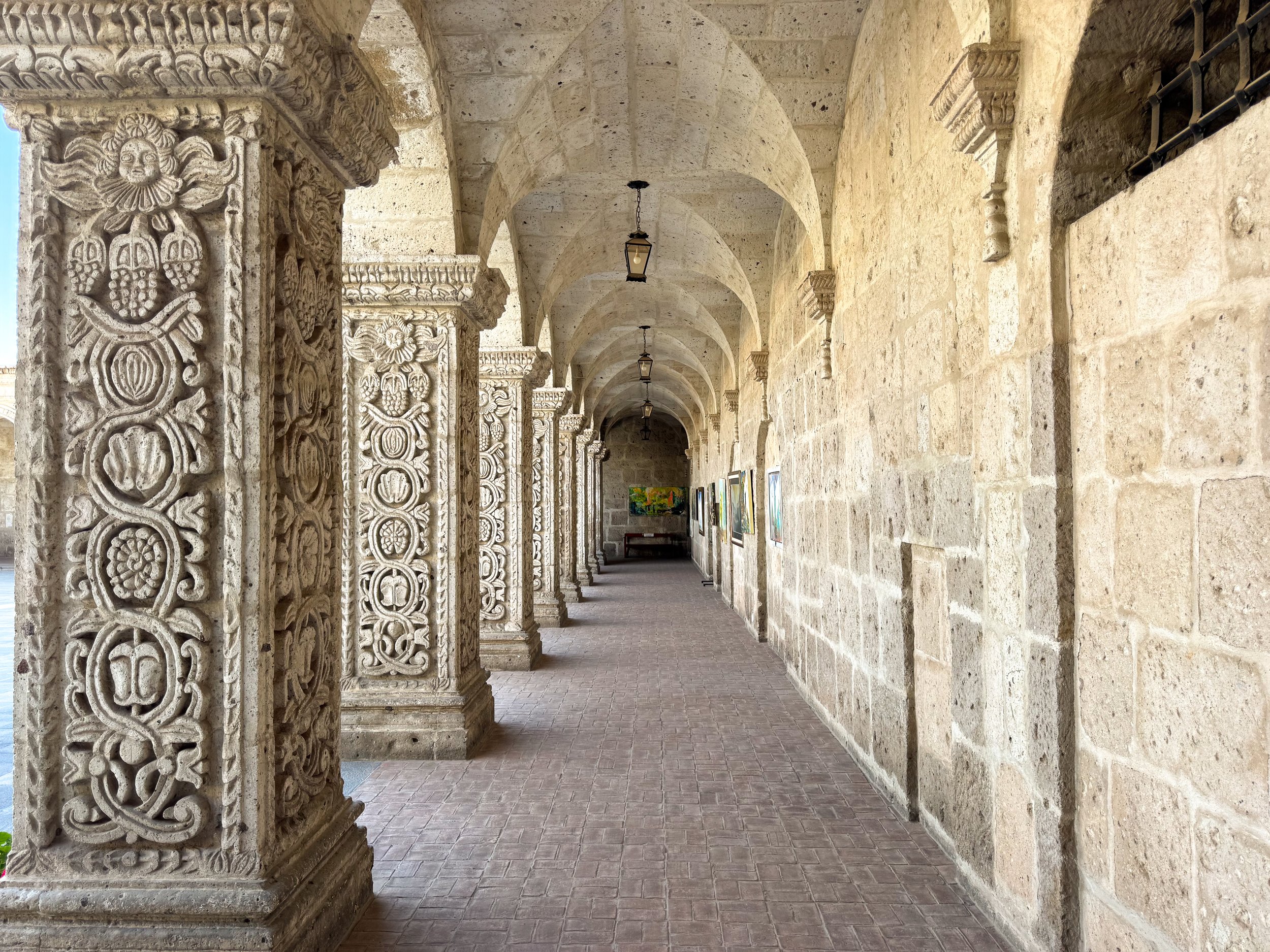
Admire The White City. Arequipa is called “The White City” for its buildings made from white volcanic stone and their ornate baroque style facades. We walked around the city admiring the architecture and touring landmark buildings. There are also walking tours in the Plaza de Armas based on tips.
See the Sights
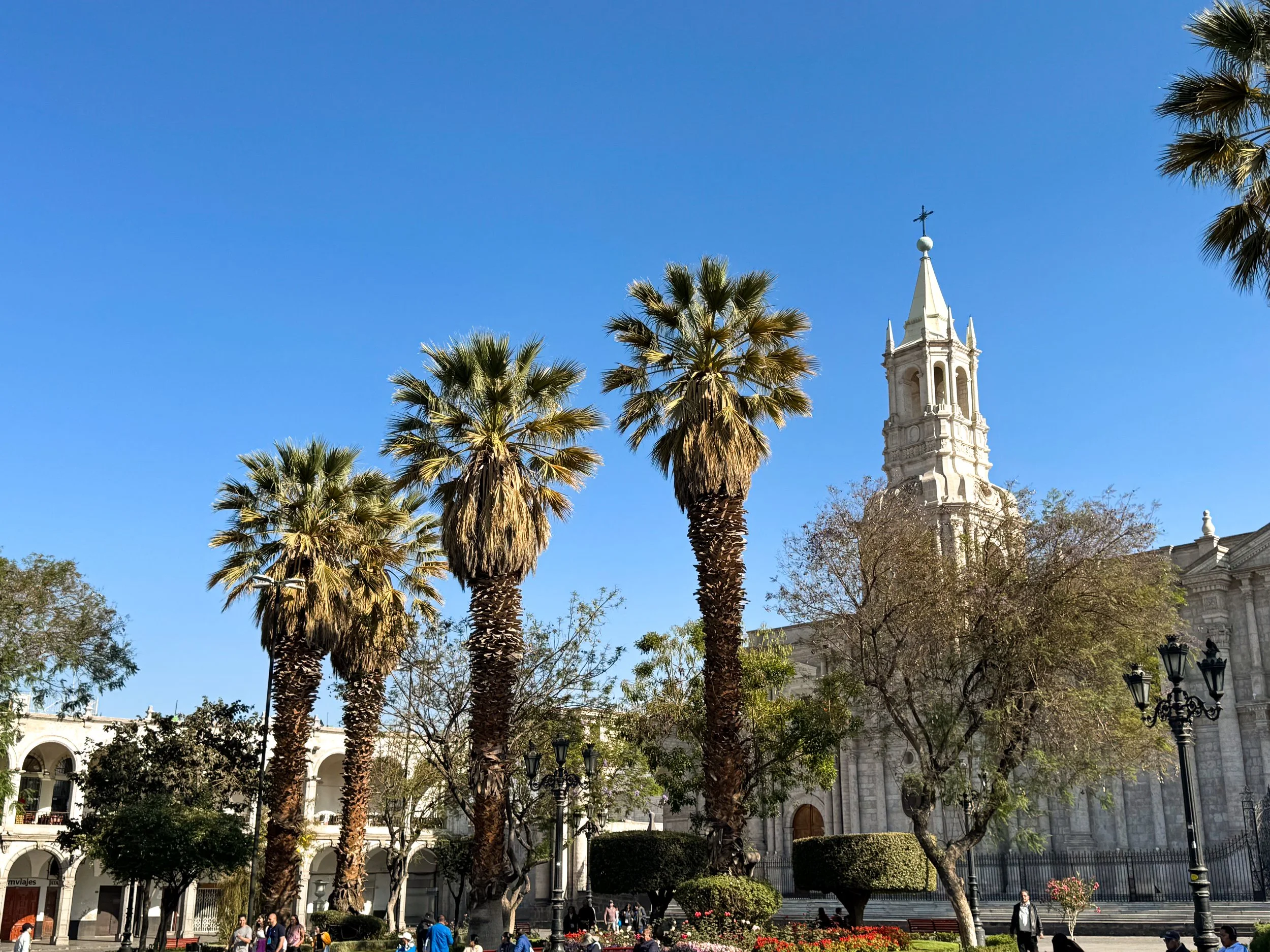
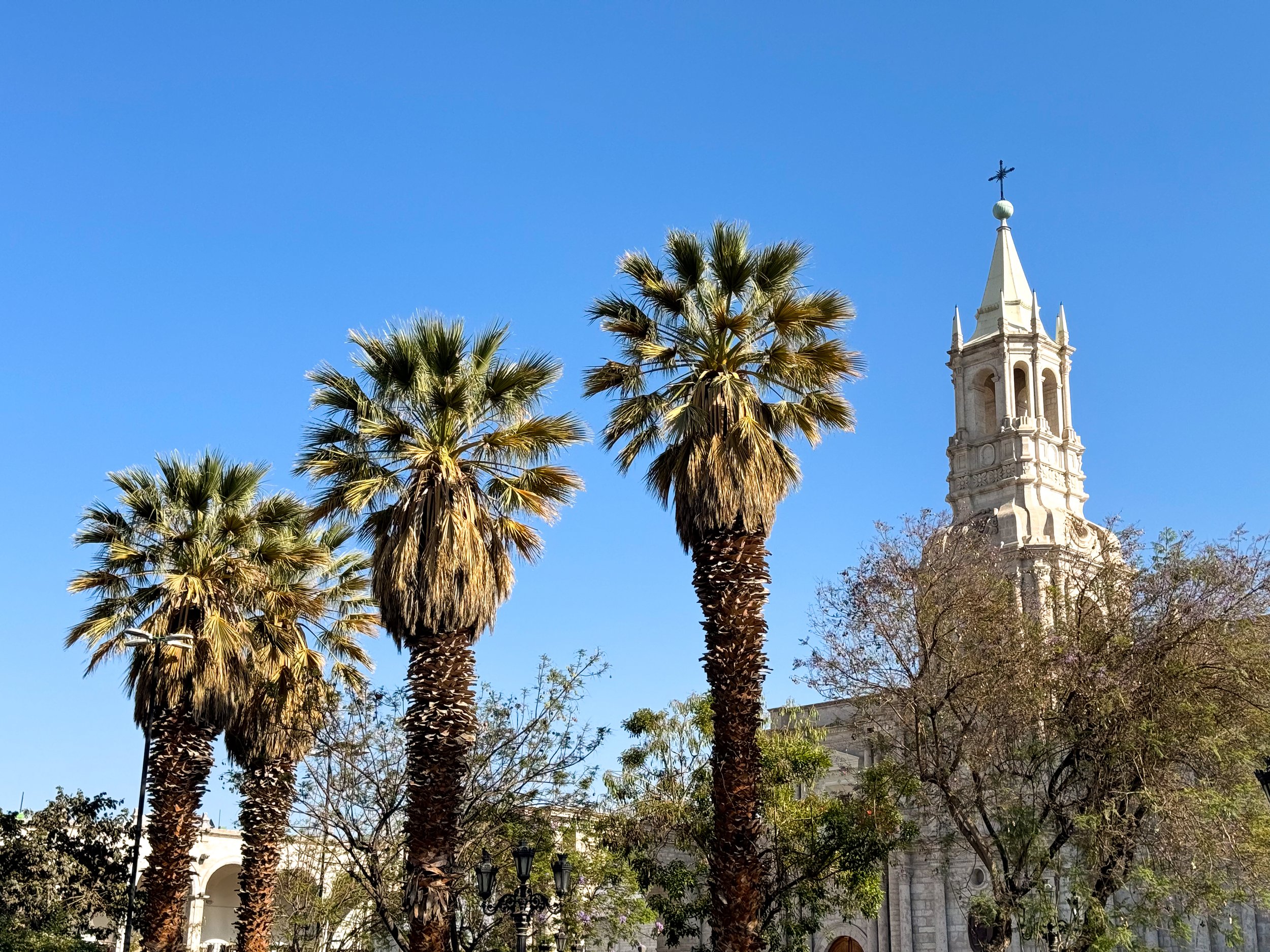
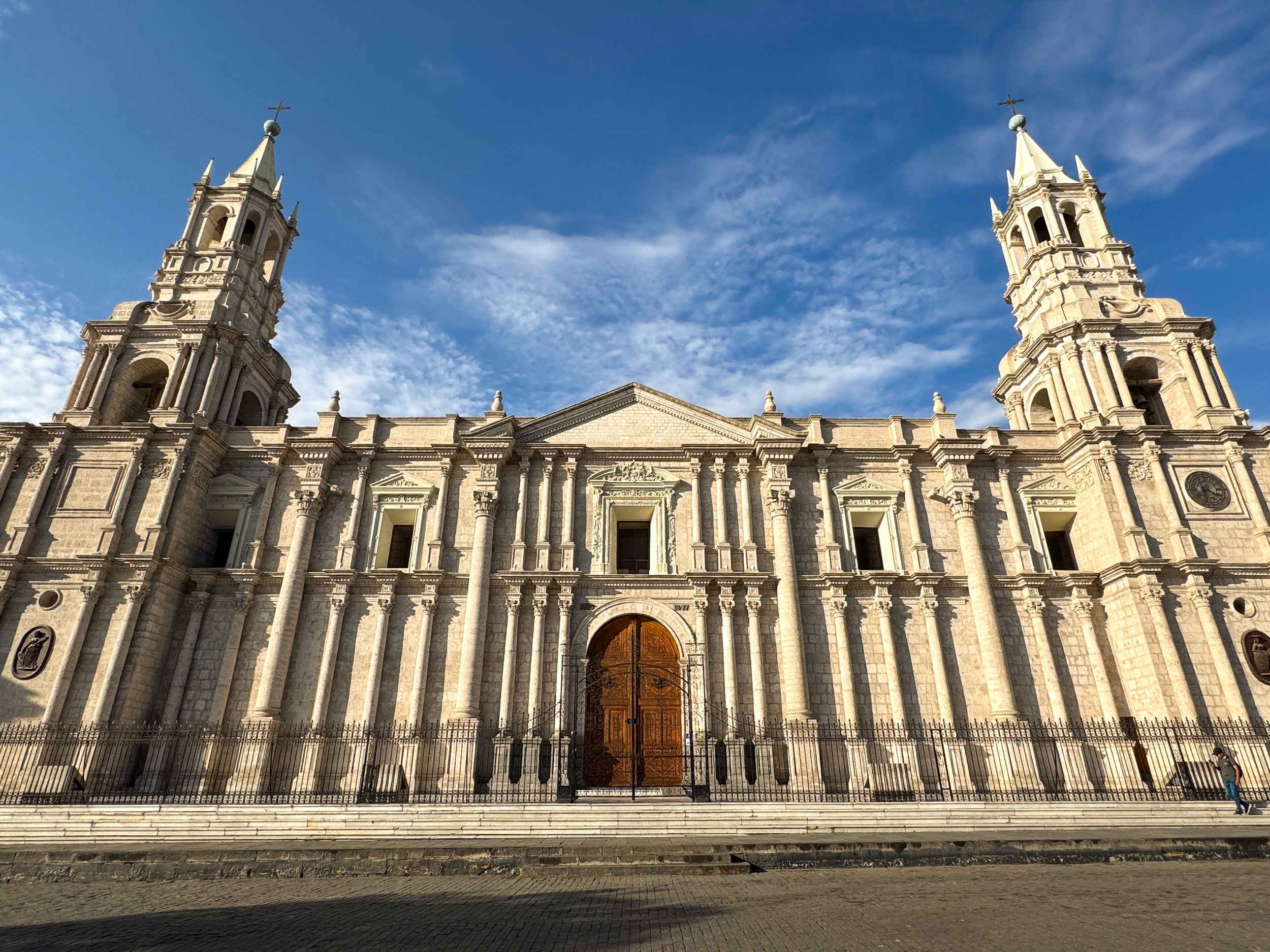
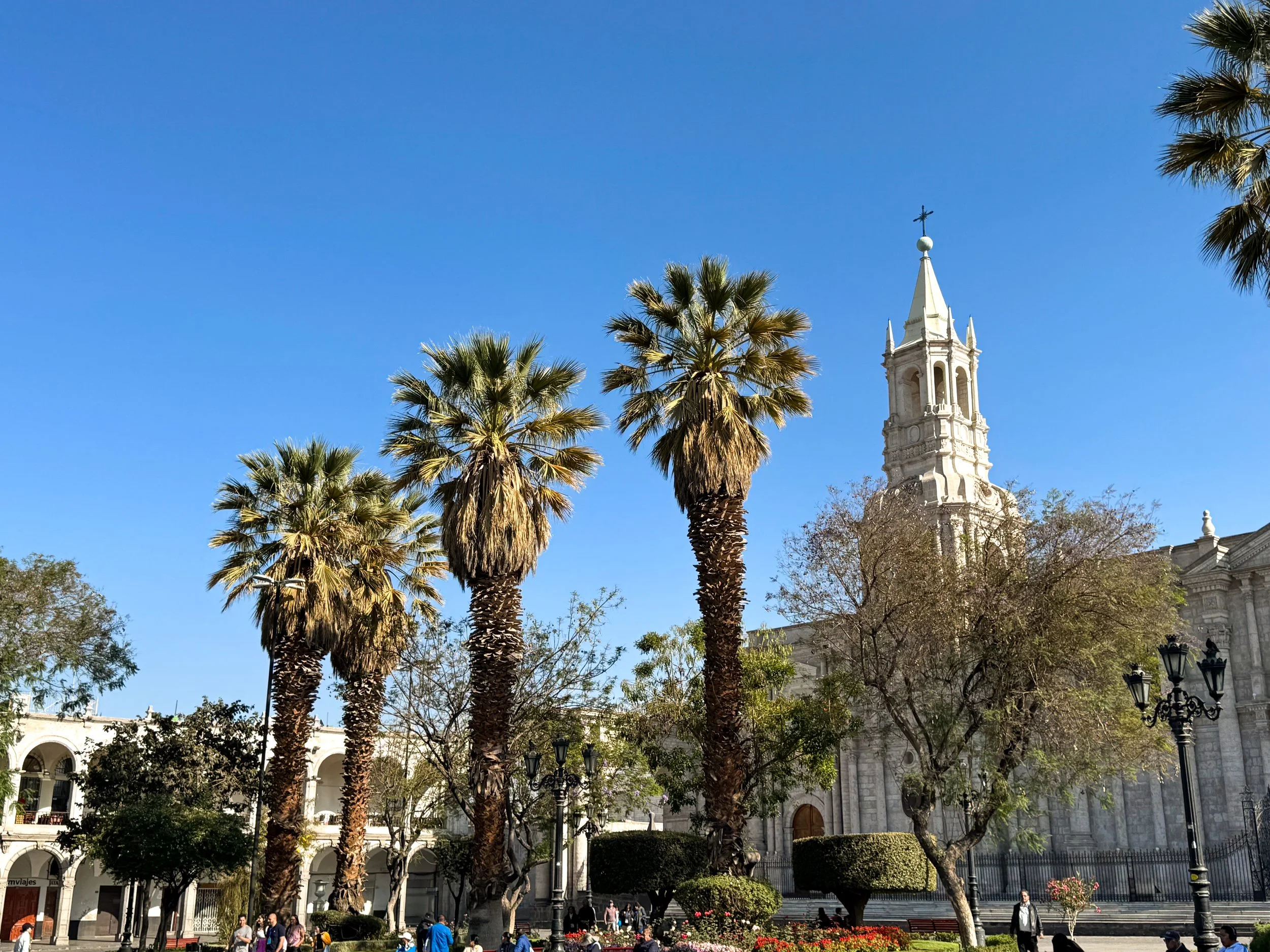
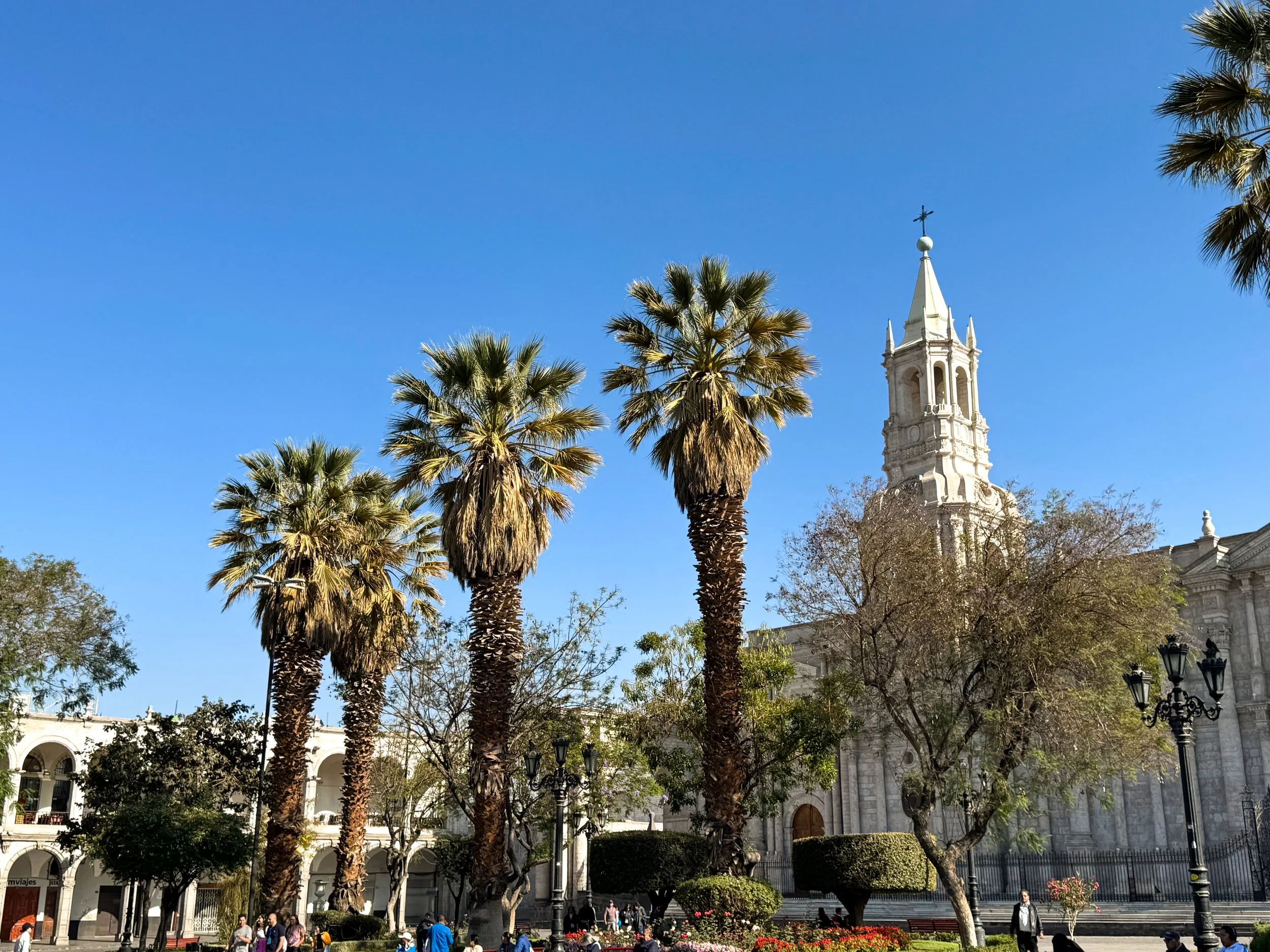
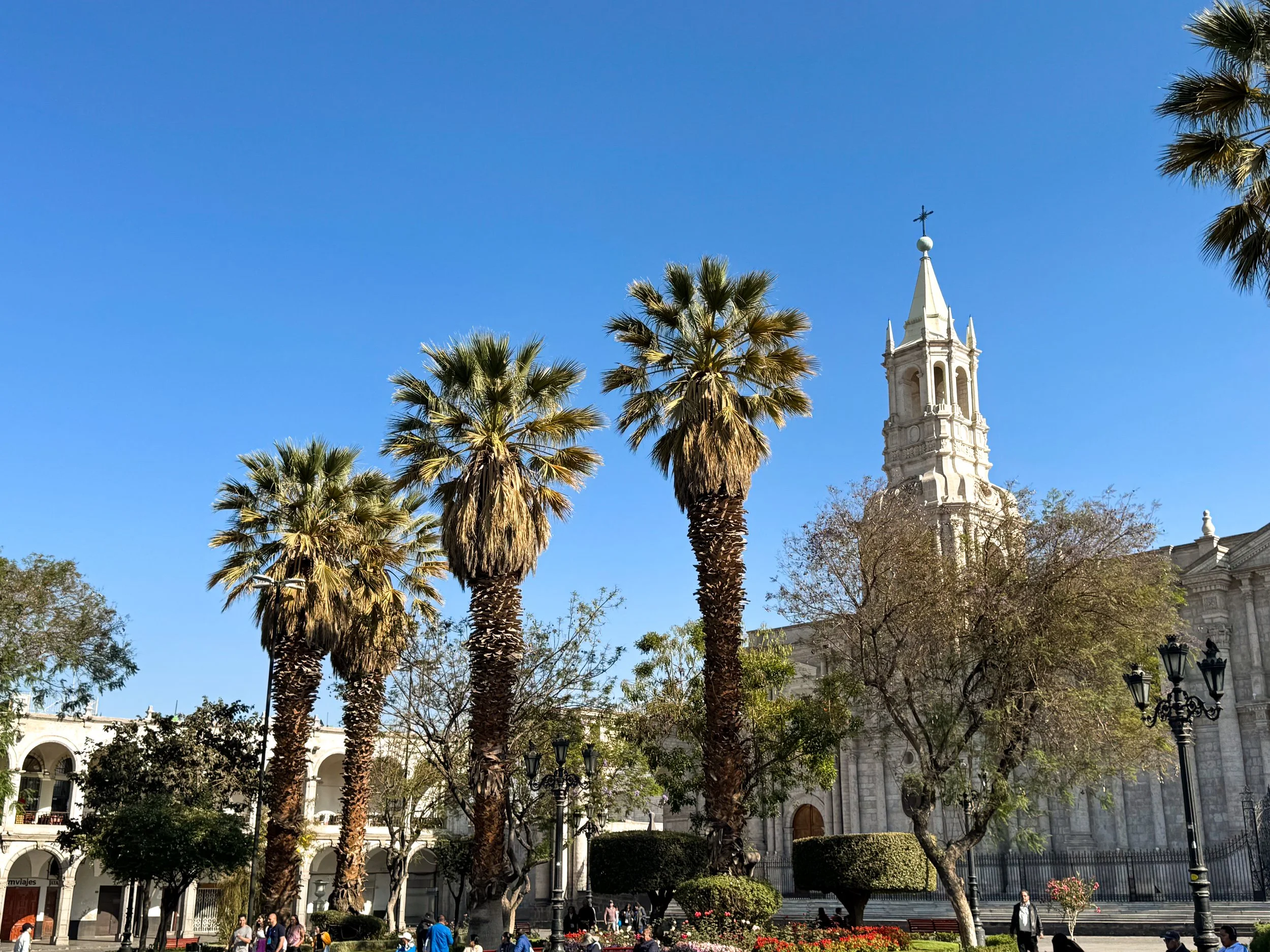
Plaza de Armas. A palm lined plaza at the heart of Arequipa’s historic neighborhood surrounded by white arched buildings and centered on the Basílica of Arequipa. It’s a culture center where locals come to relax and the city hosts events like live music and artisan markets.
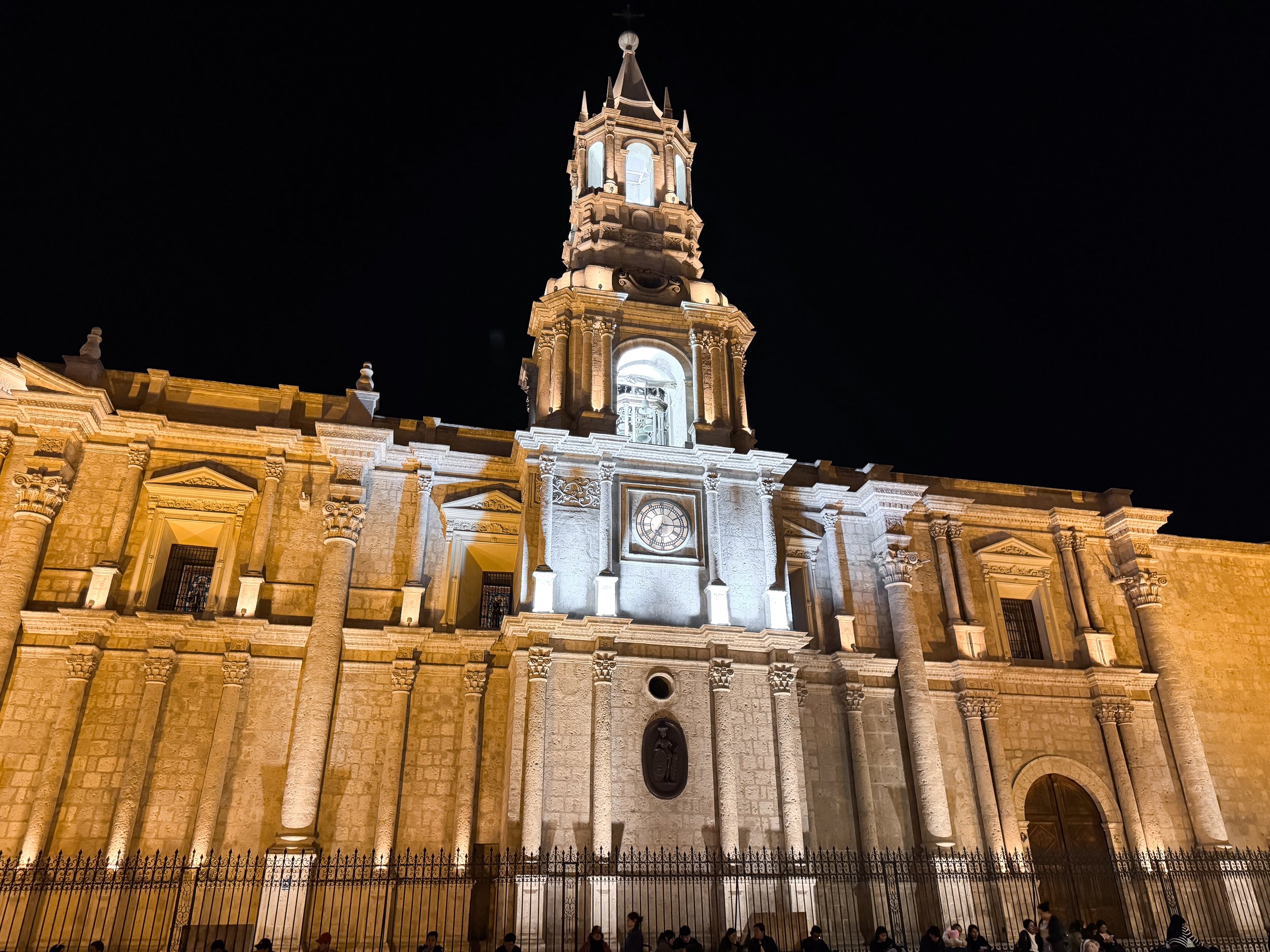
Basílica of Arequipa. A grand neo-gothic and renaissance style cathedral with two bell towers and ornate masonry built from white volcanic stone.
Cloisters of The Company. Two plazas with ornate white stone cloisters in the historic center of Arequipa home to cafes, bars and clothing stores selling alpaca and vicuña products.
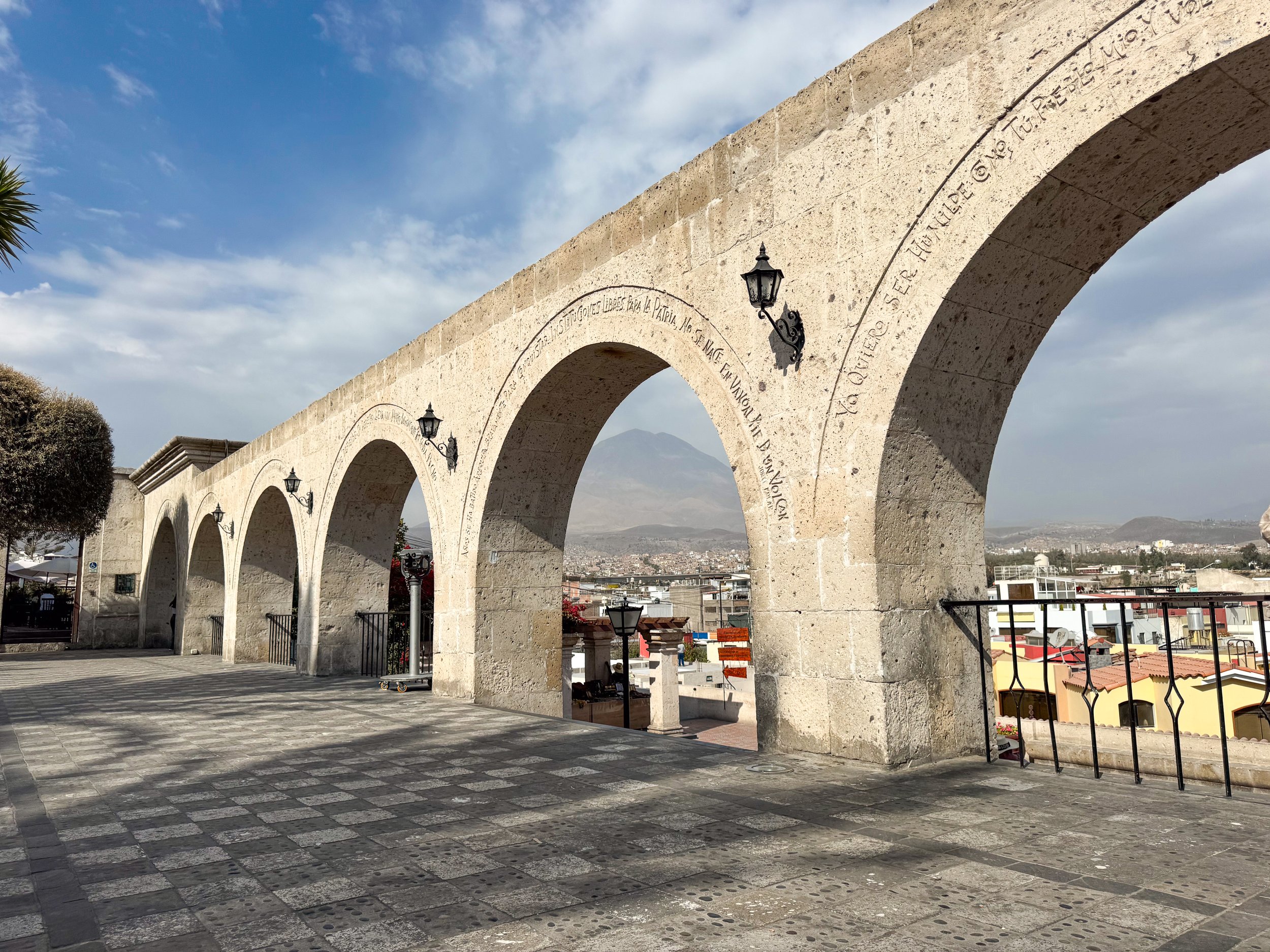
Mirador Yanahuara. A palm lined plaza with an arched wall and lookout over the historic center of Arequipa and the Misti Volcano.
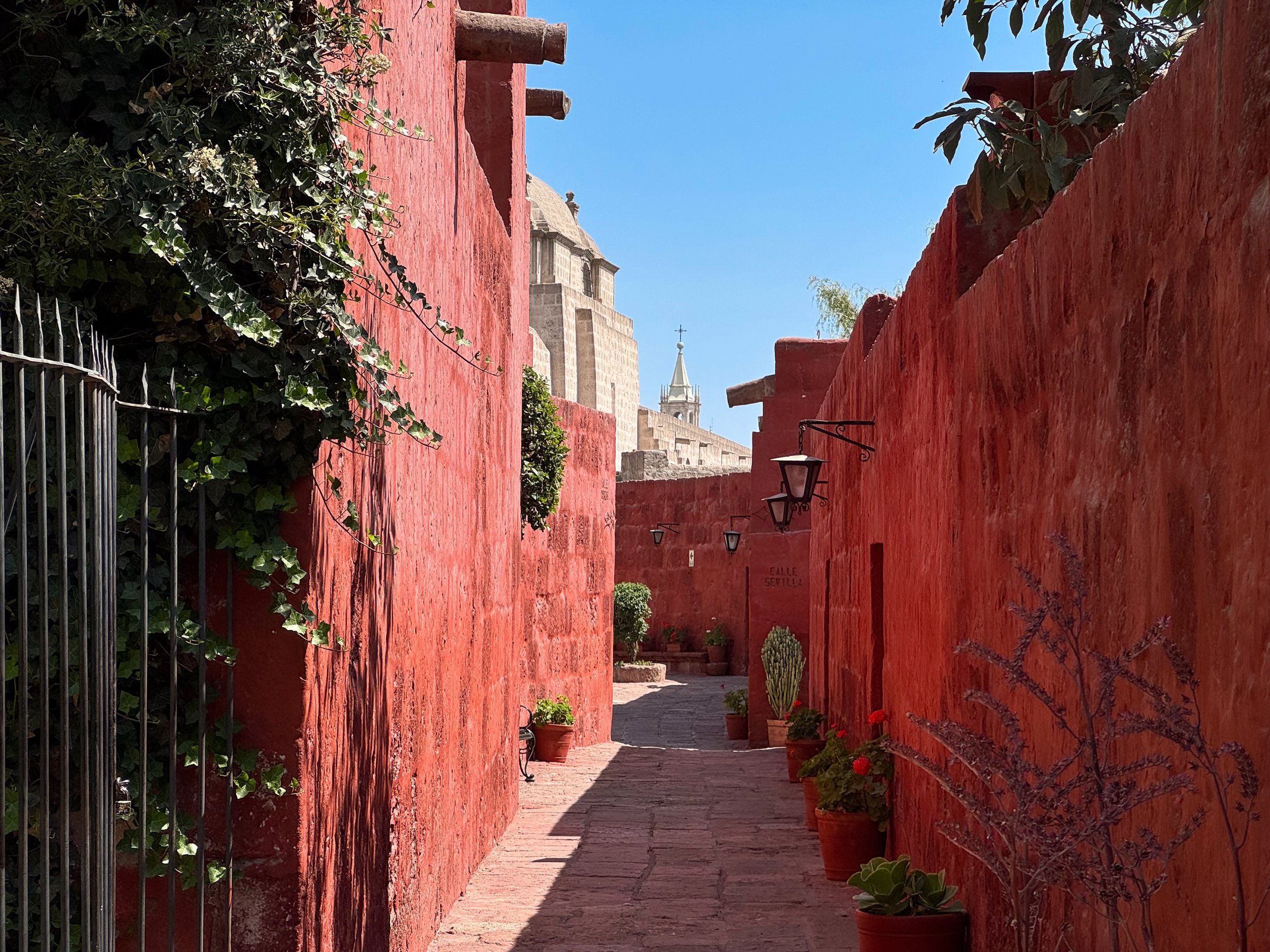
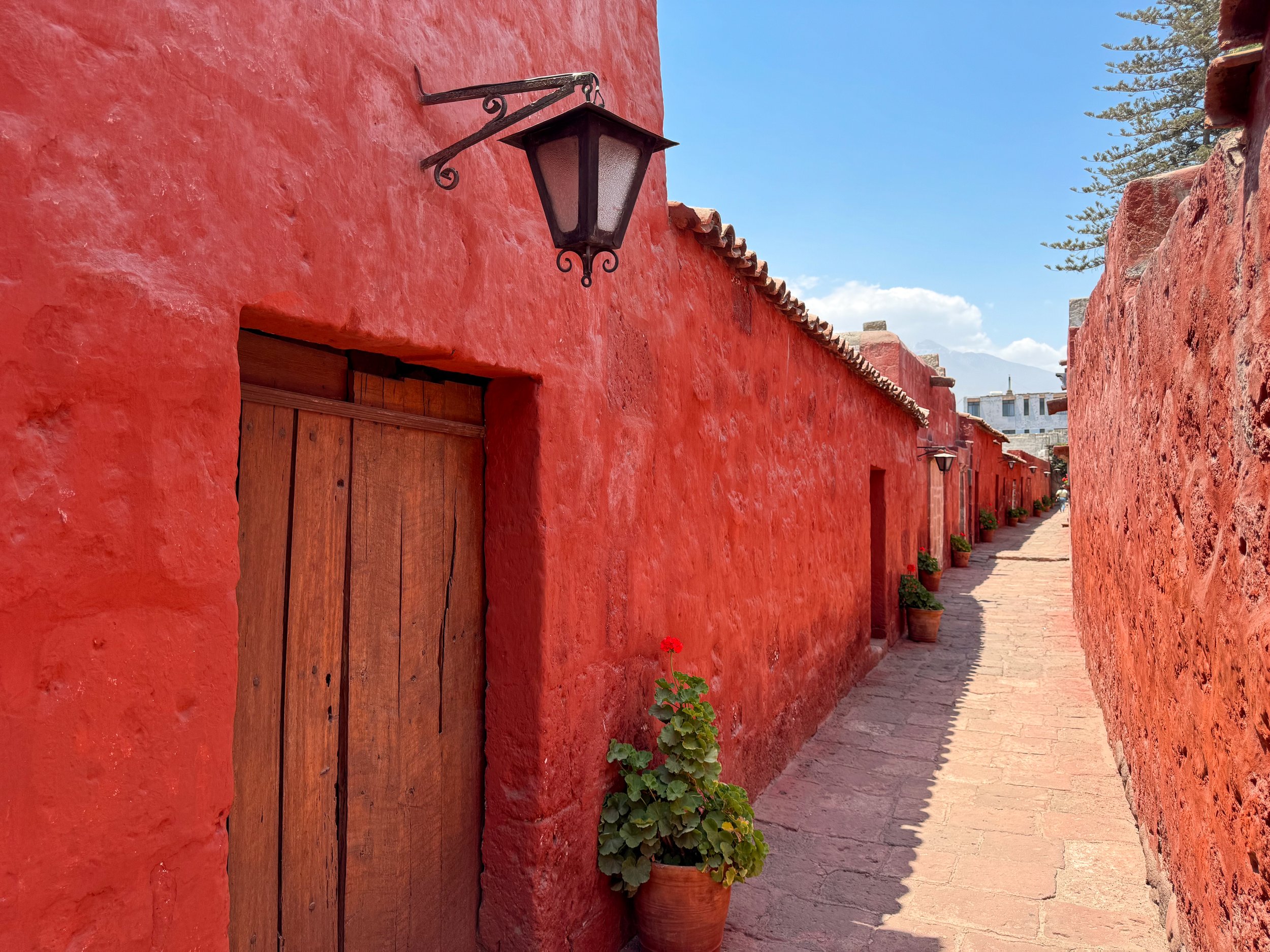
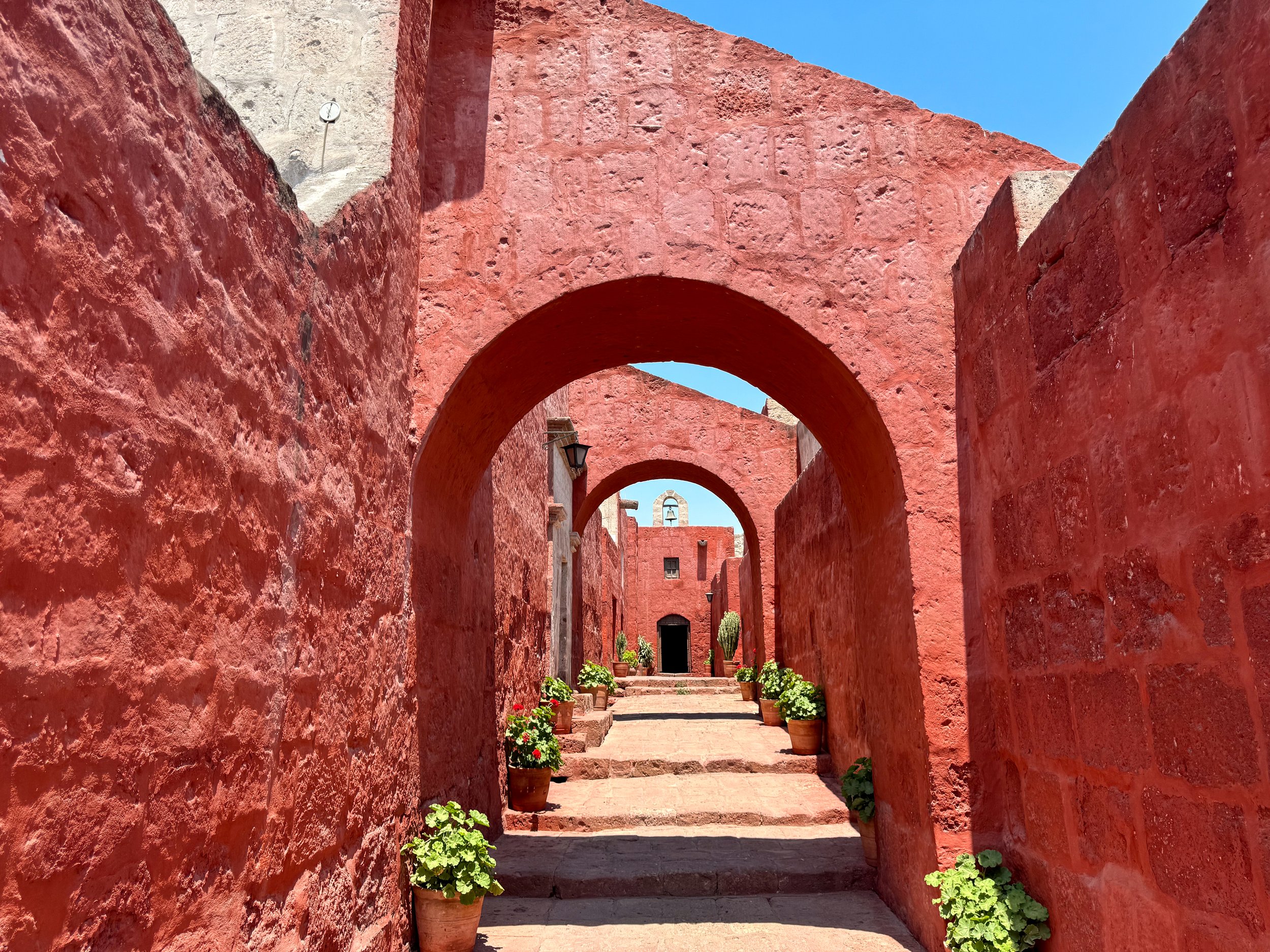
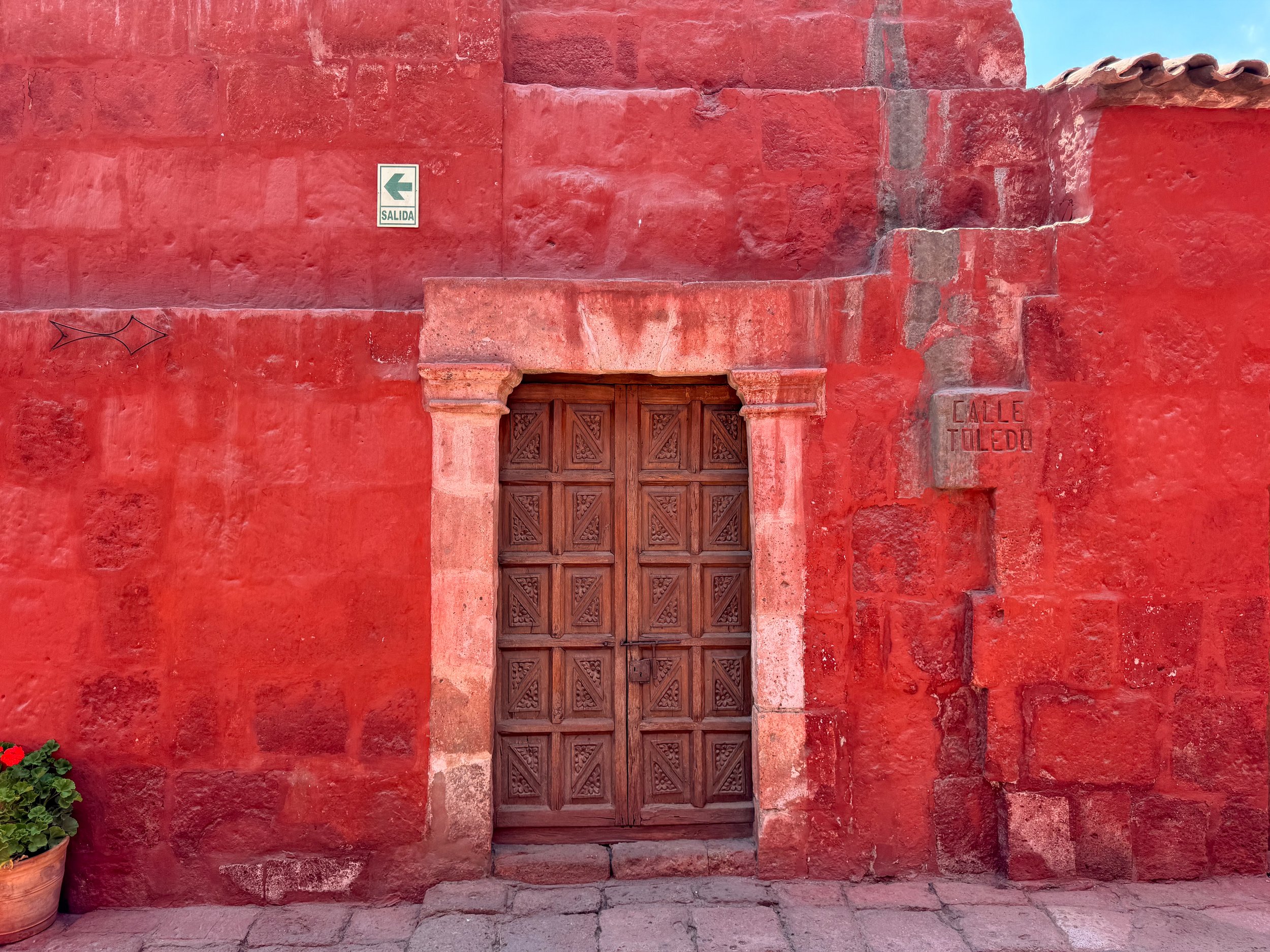
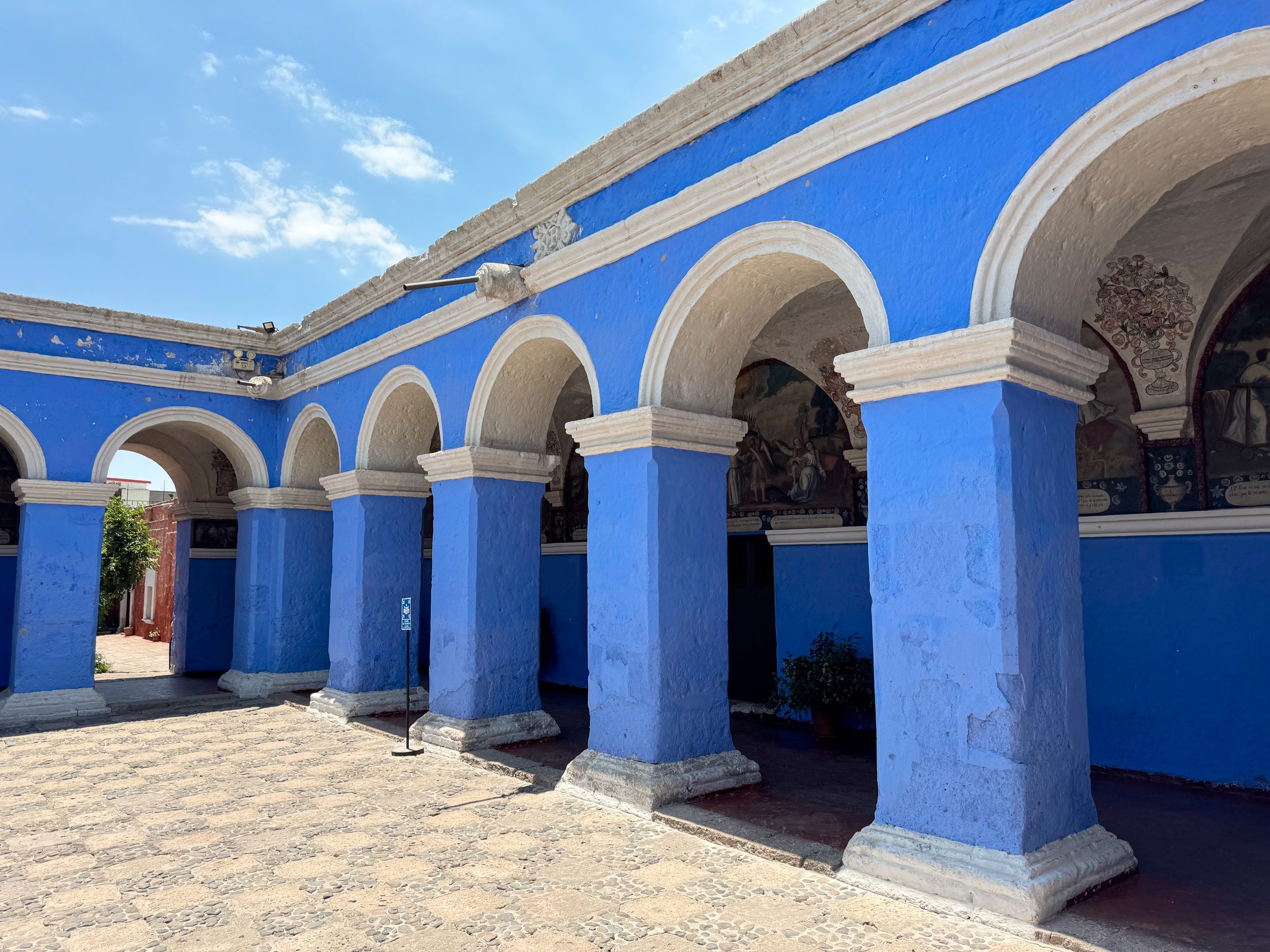
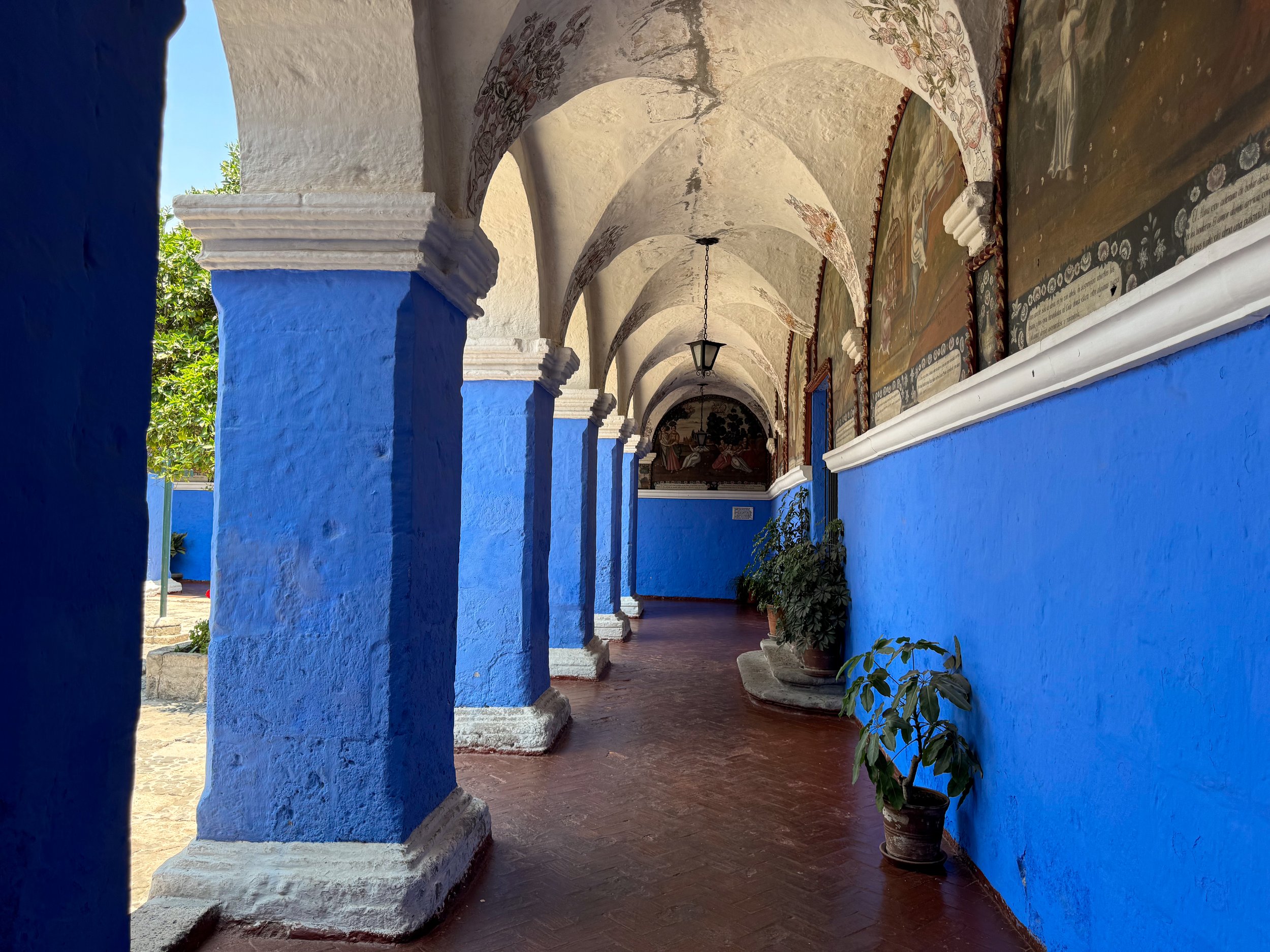
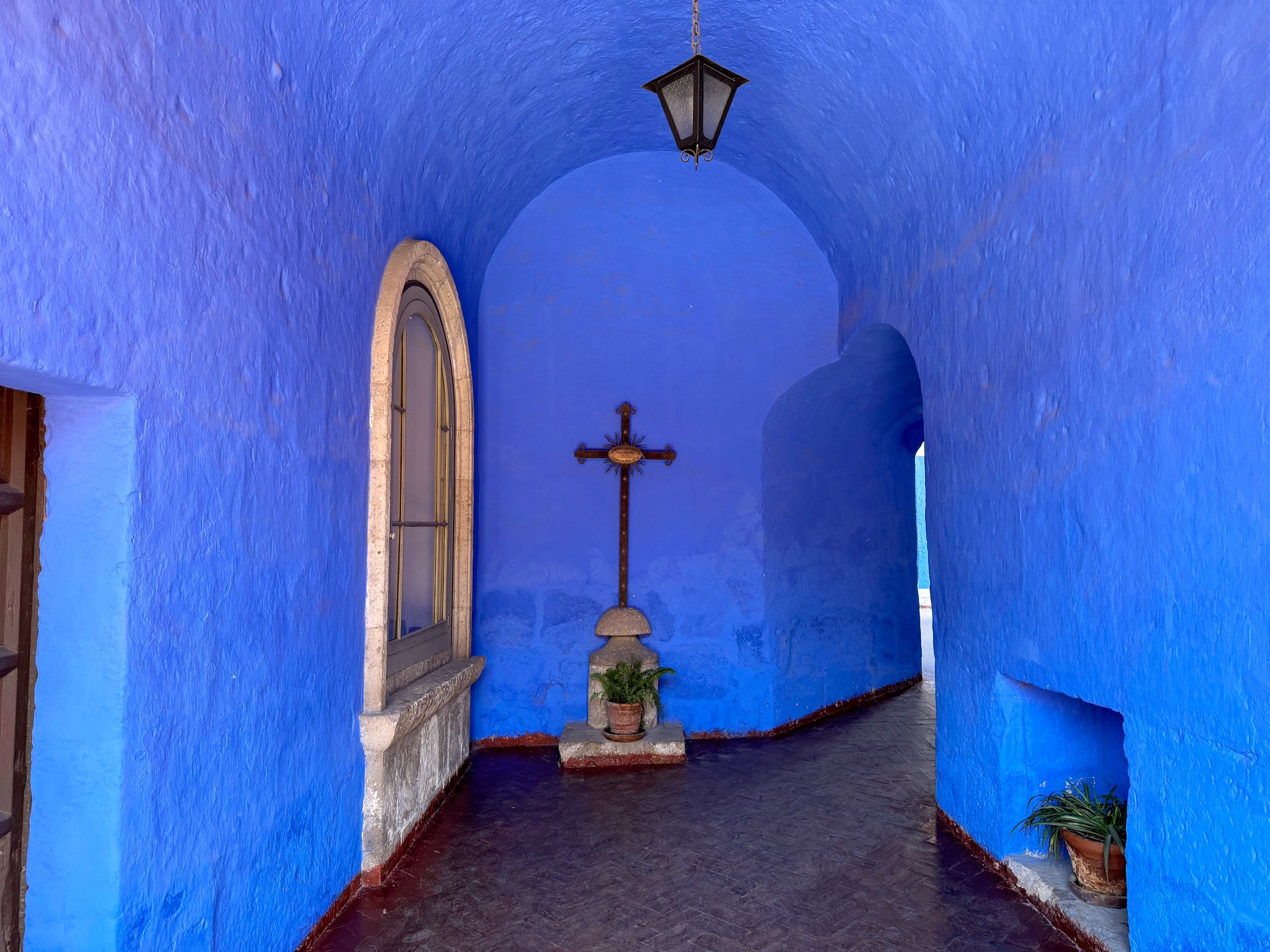
Santa Catalina Monastery. This large colonial monastery is a city within a city surrounded by a stone wall. It’s defined by its maze of narrow cobblestone streets with their own names and vibrantly painted red walls. Branching off of the streets are individual homes for the nuns, blue painted cloisters, chapels with religious artwork and lush courtyards including one where we stopped for an afternoon wine.
Visit the Museums
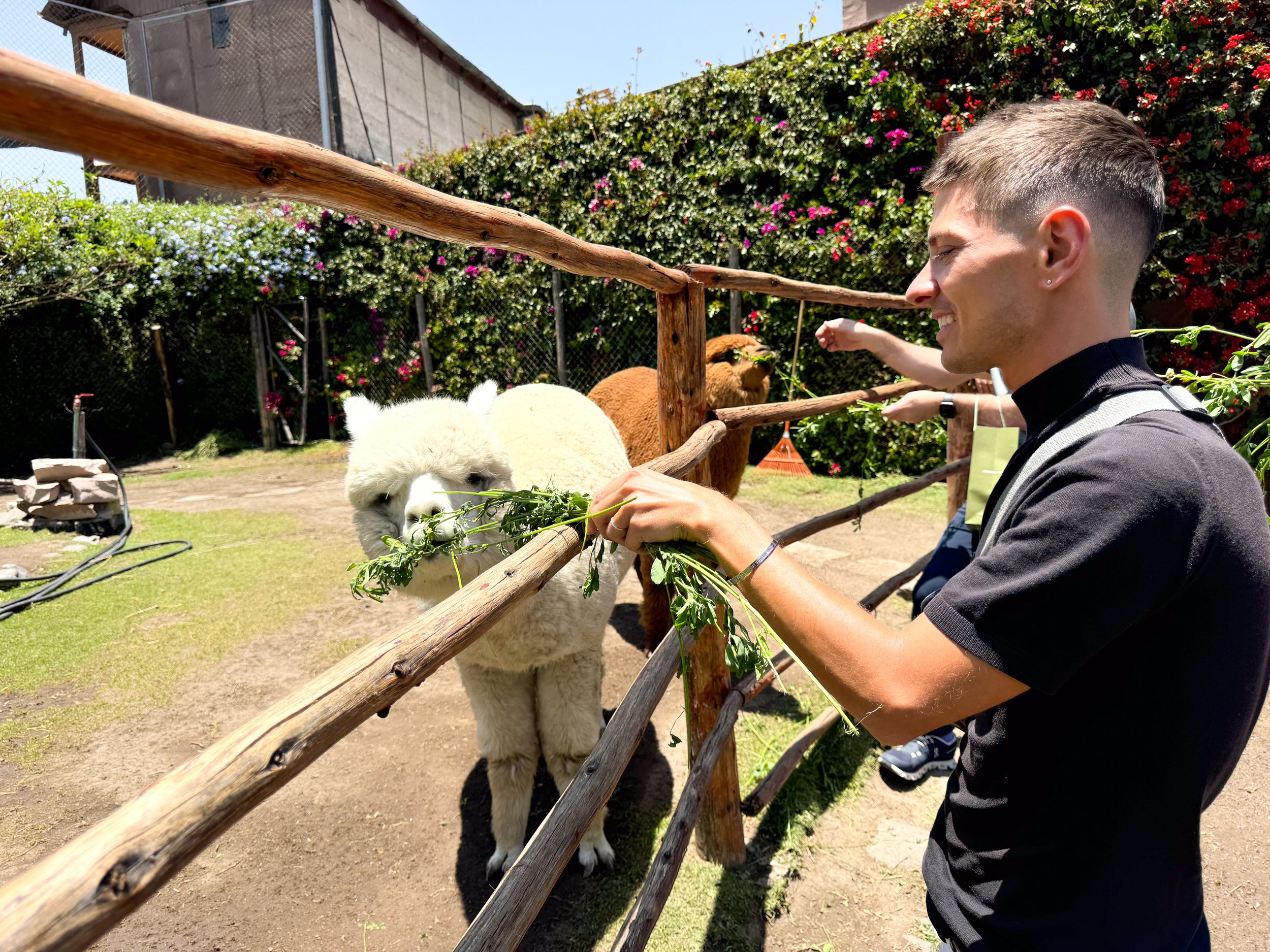
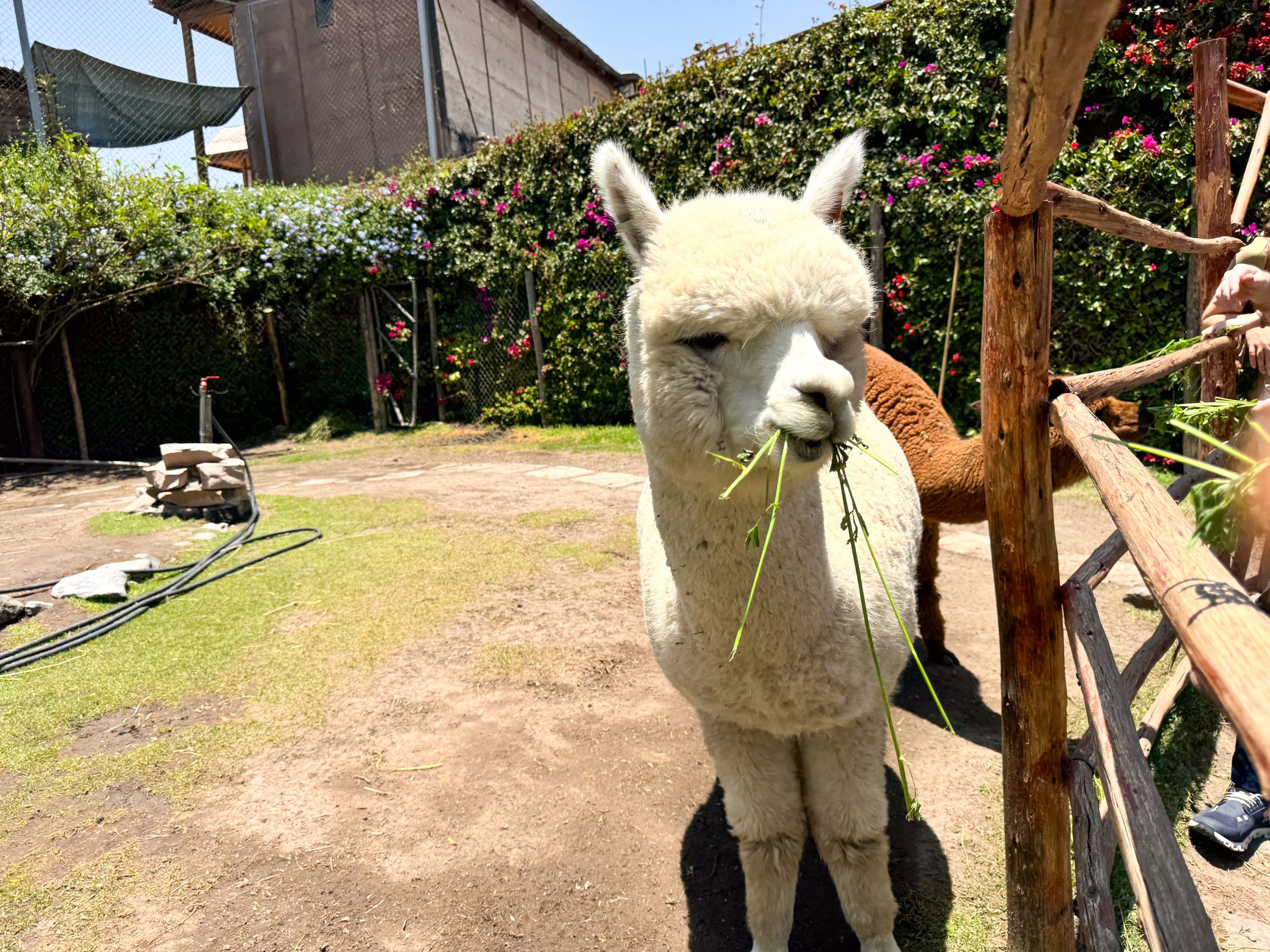
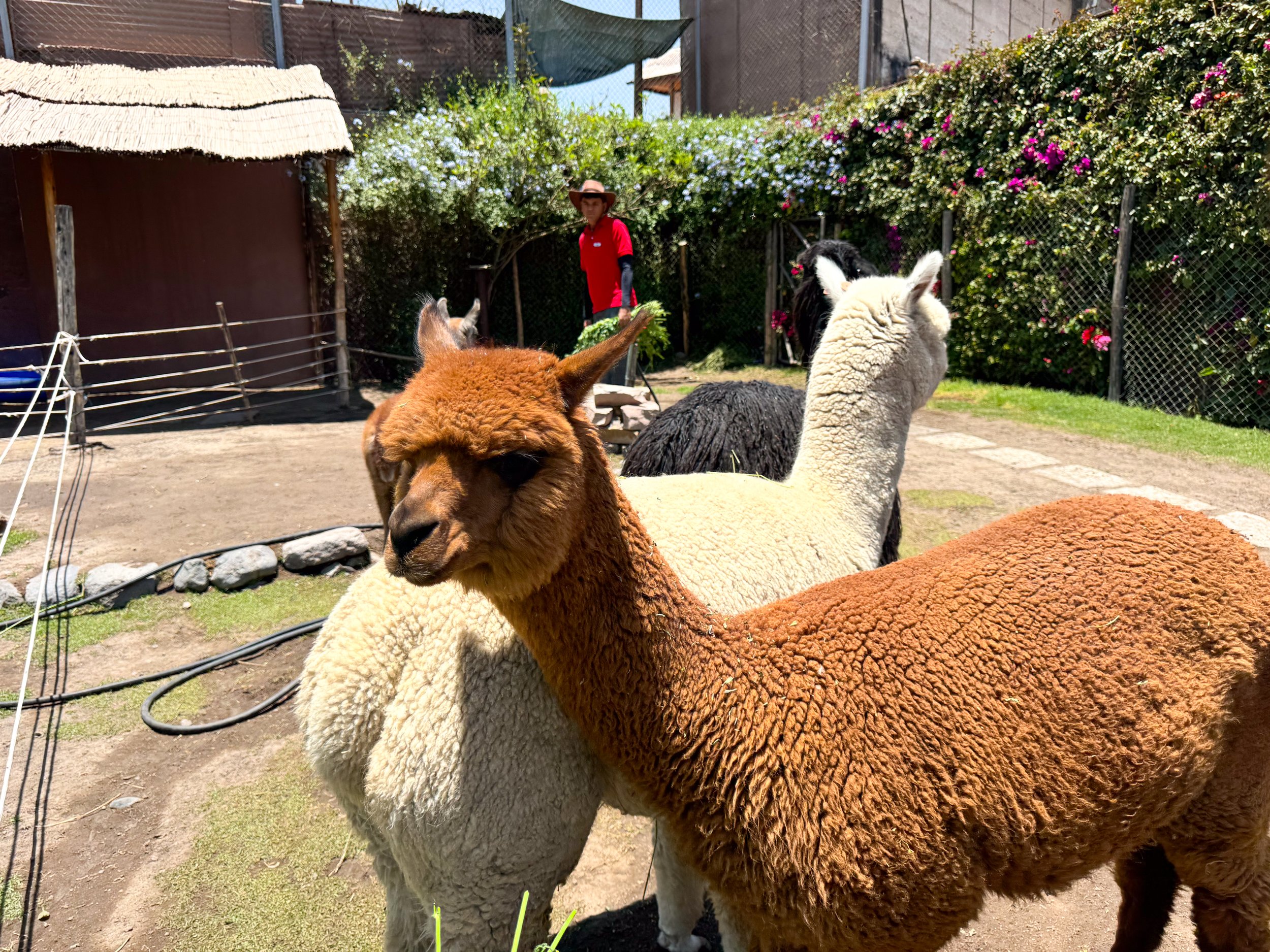
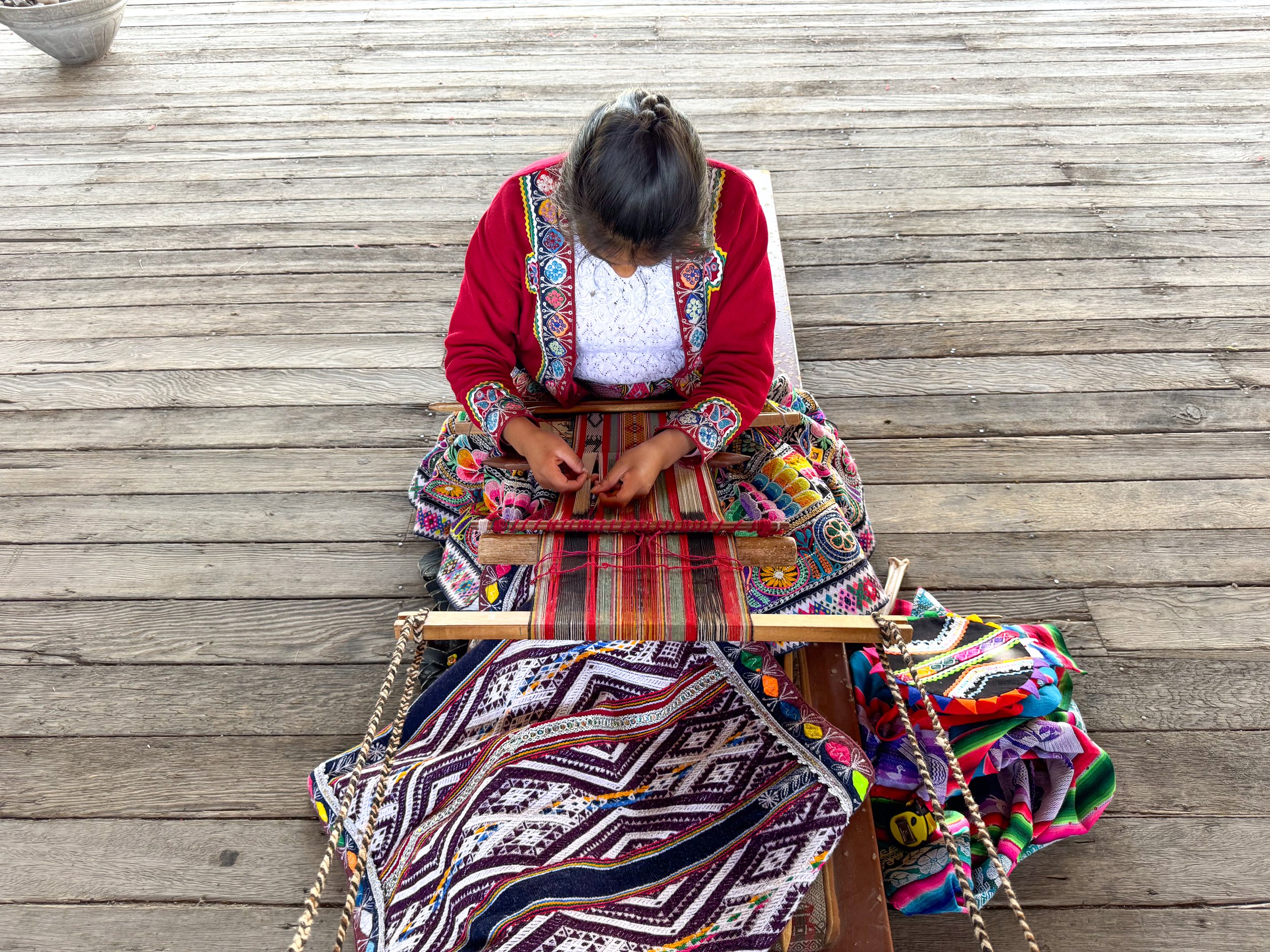
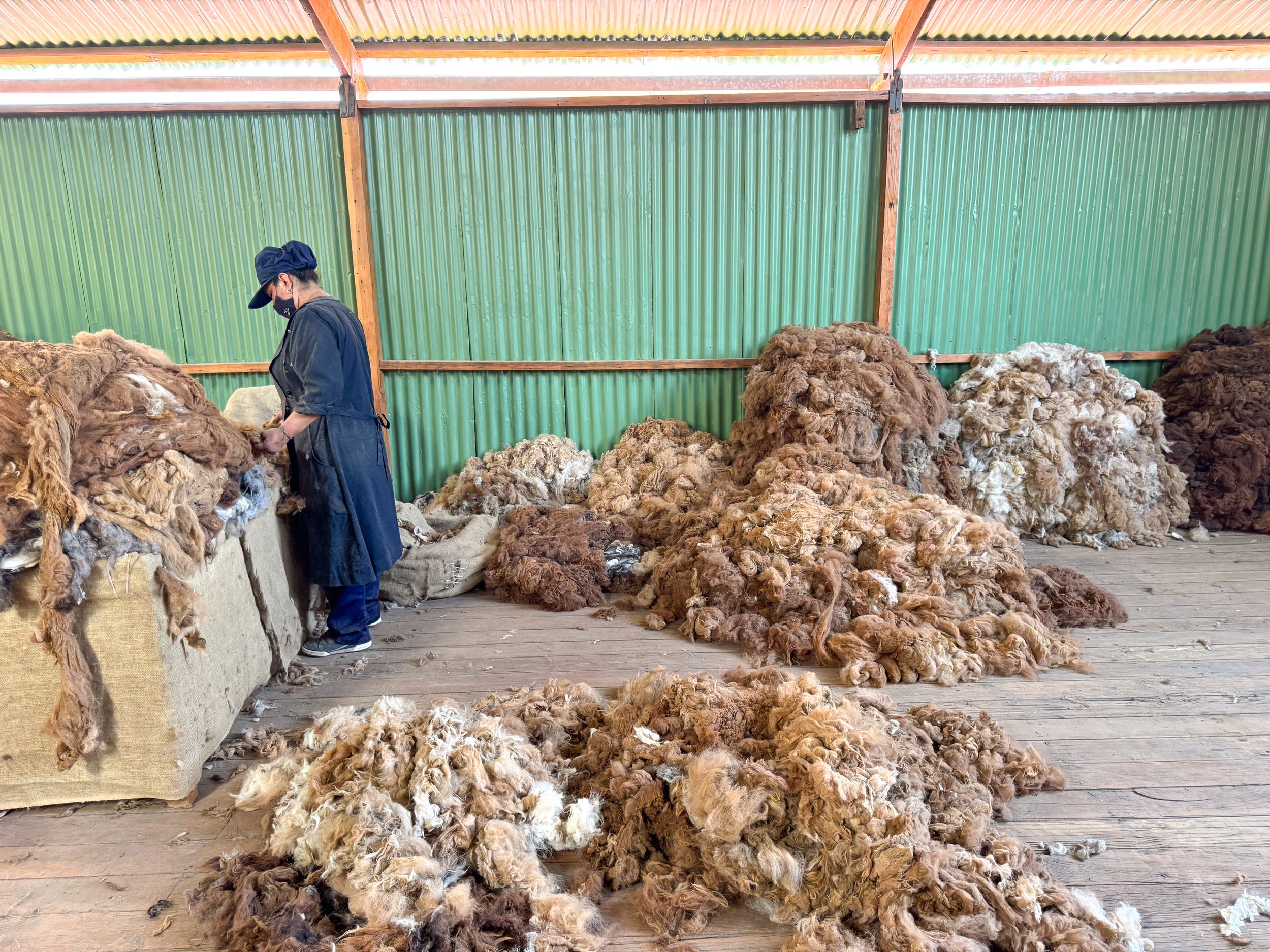
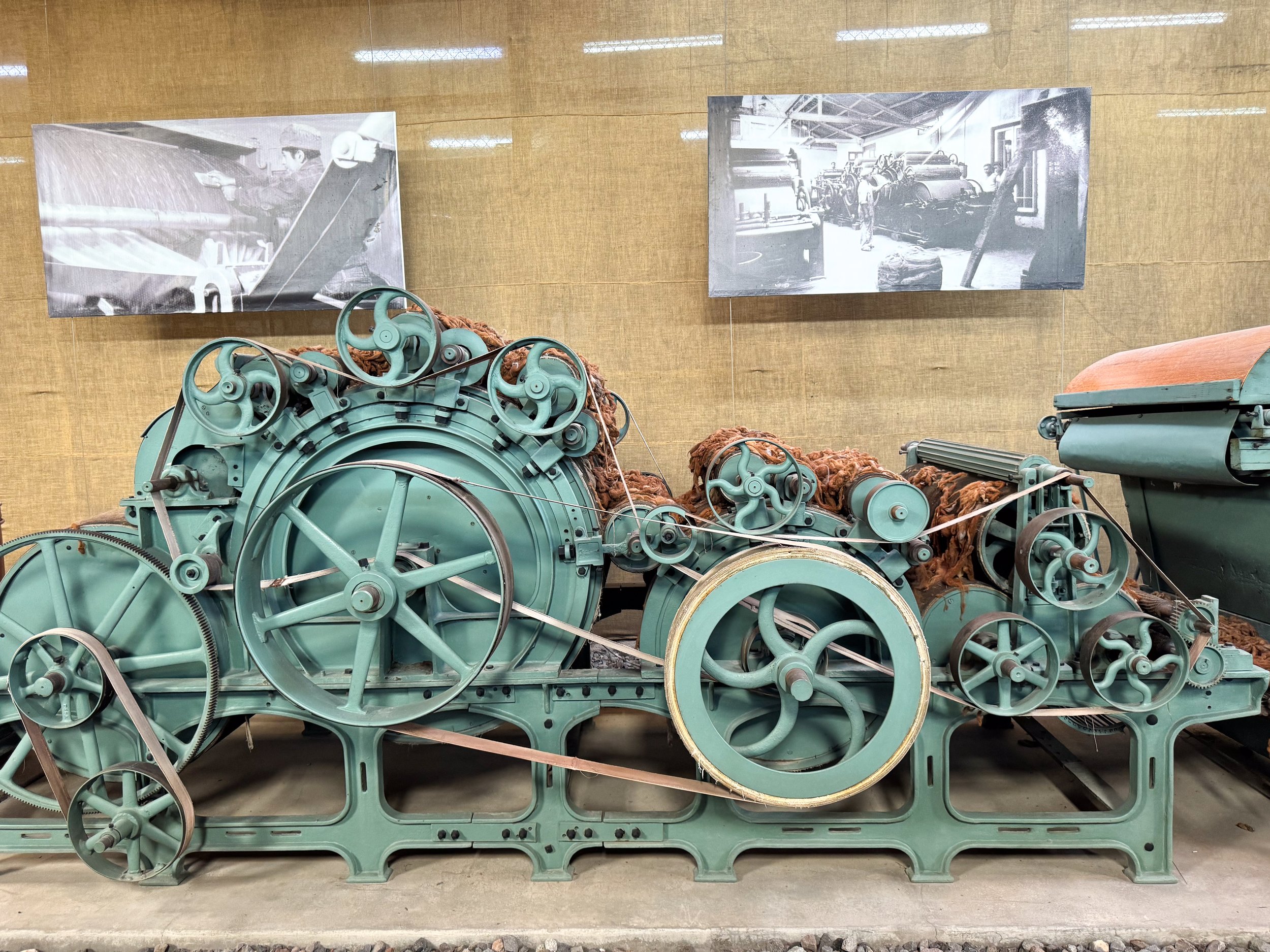
Mundo Alpaca. A free museum dedicated to Andean wool and the artistry used to transform it into vibrant textiles. The museum has a feeding enclosure with lively llamas, alpacas and vicuñas. Workers sort wool fibers while indigenous women weave beautiful blankets using traditional methods.
MUCEN Arequipa. A small museum in a historic building with a collection of Peruvian pottery organized by period of time, civilization and geographic regions across the country. Separate galleries display Arequipa style religious artwork and early forms of Peruvian currency. The museum is free to enter.
Places to Shop
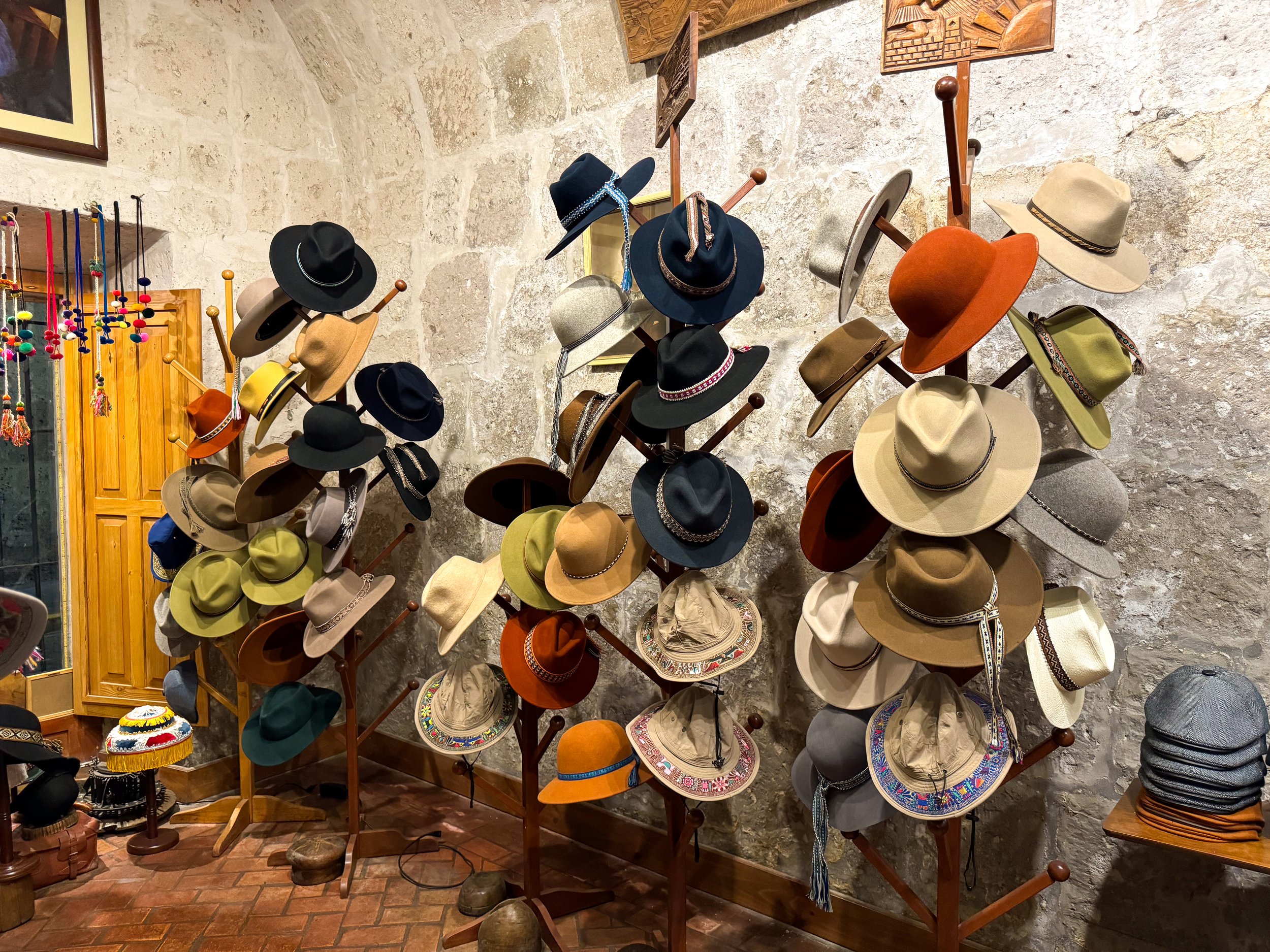
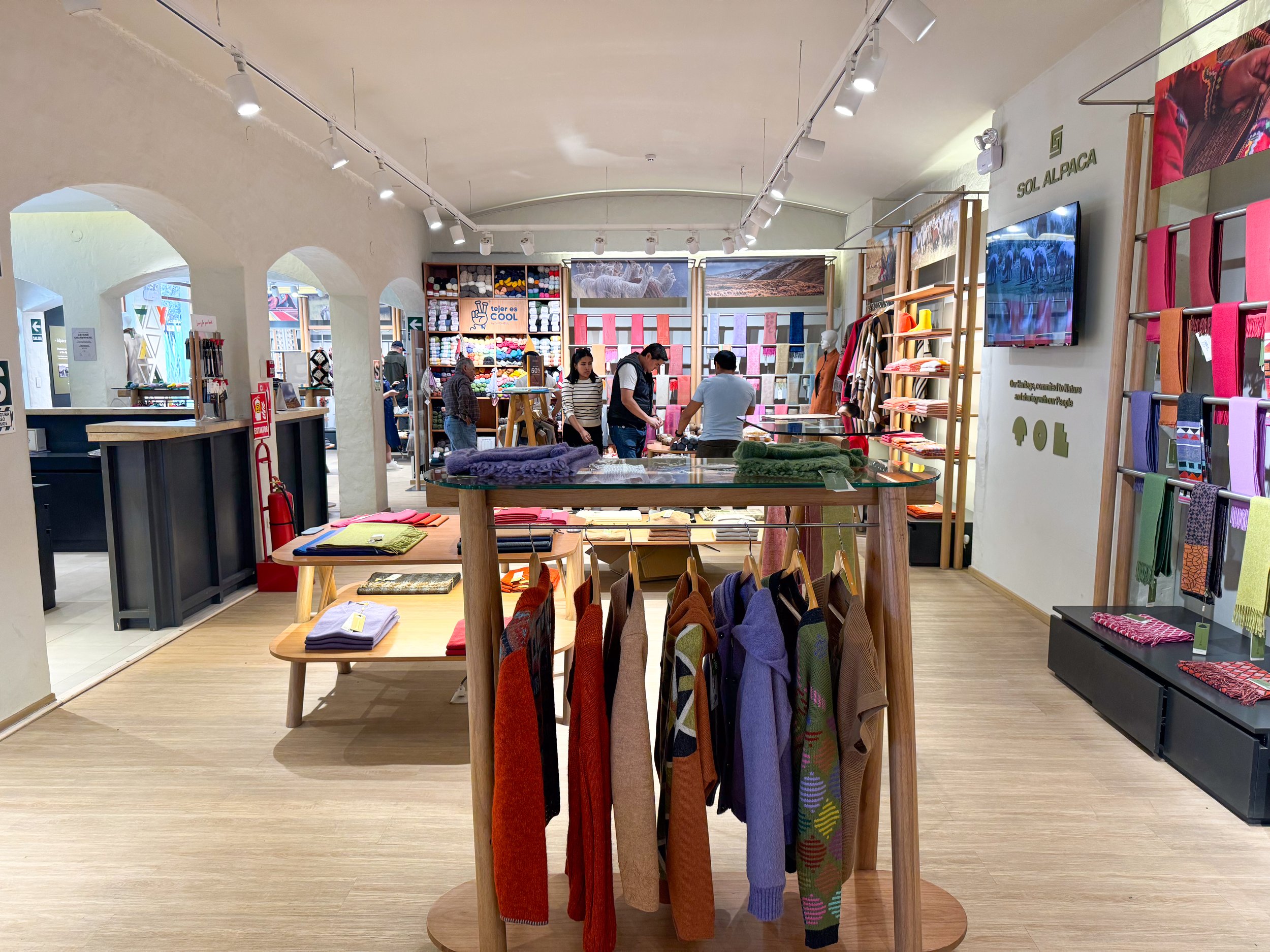
Arequipa is a hub for Peruvian alpaca and vicuñas textiles, clothing and accessories including ponchos, sweaters, hats, gloves, blankets and yarn. We shopped at high end clothing stores, artisan markets and souvenir style shops. The higher end shops offered seasonal discounts ranging from 10-40% off while prices were negotiable at the artisan markets and souvenir style shops.
Sol Alpaca. A higher end shop with finer grades of alpaca and vicuñas wool clothing and accessories made with modern designs and patterns. We bought a poncho and hat.
Carasco Company. A historic hat maker that sells traditional Peruvian style hats made from alpaca fibers. I bought a blue wool hat with a yellow band.
Qori Kancha. A shop that sells lesser grade alpaca wool clothing and accessories made with traditional designs and patterns. I bought a blue and red traditional style poncho with a geometric pattern from here.
Festival Artesanal Productores Arequipeños. A popup market near the Plaza de Armas with tents of local artisans knitting and selling alpaca fiber clothing and accessories. I bought a sweater with the design of a vicuña embroidered on it.
Fundo El Fierro Arequipa. An artisan craft market in the alleyway, plaza and market surrounding the Plaza de San Francisco. Come here for all manner of alpaca products, handmade items, gifts and souvenirs.
Arequipa Cuisine
Arequipa is recognized as a gastronomic hub for its cuisine and cultural significance in Peru. While here, we shopped and ate at the local market, dined at picantereas, tasted the street food and enjoyed rooftop cafes and bars.
Picantereas. A type of restaurant local to Arequipa known for spicy food.
Chupe de Camarones. A shrimp stew with potatoes and rice cooked in a spicy and creamy broth. It’s a popular dish local to Arequipa and sold at picantereas across the city.
Tantawawa. A Peruvian bread made specifically for Dia de los Muertos. It’s a spiced brioche style loaf commonly braided into the shape of a swaddled infant, llama or basket decorated in sesame seeds and colorful sprinkles.
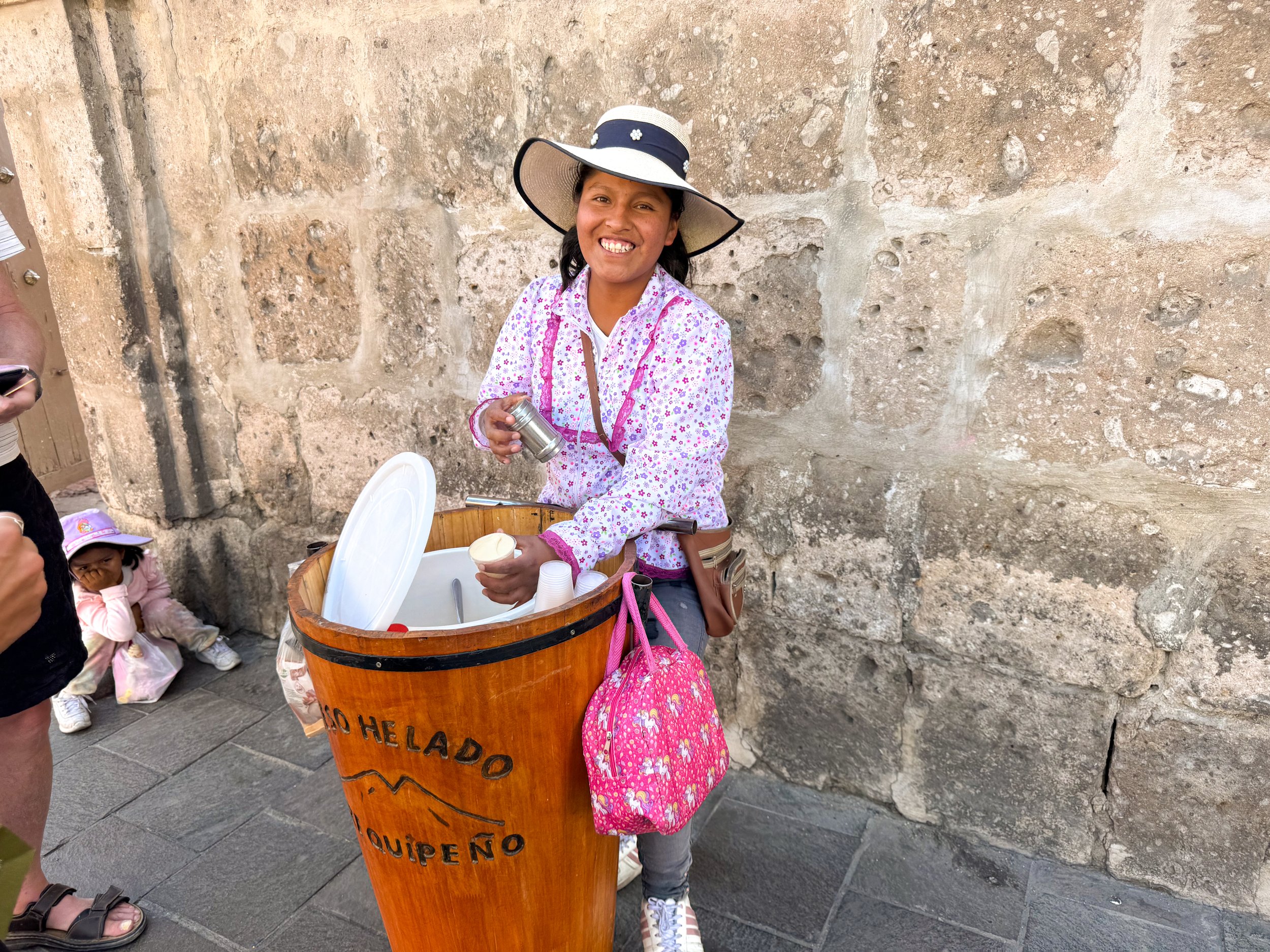
Queso Helado. An ice-cream made from local cheese. It’s commonly sold by the cup on the street.
Choclo con Queso. Boiled Peruvian corn wrapped in a grilled piece of Peruvian cheese.
Alpaca & Guinea Pig. We don’t eat meat however we saw both animals on the menu in restaurants across the city. Alpaca can be served as a steak while guinea pigs are often served whole.
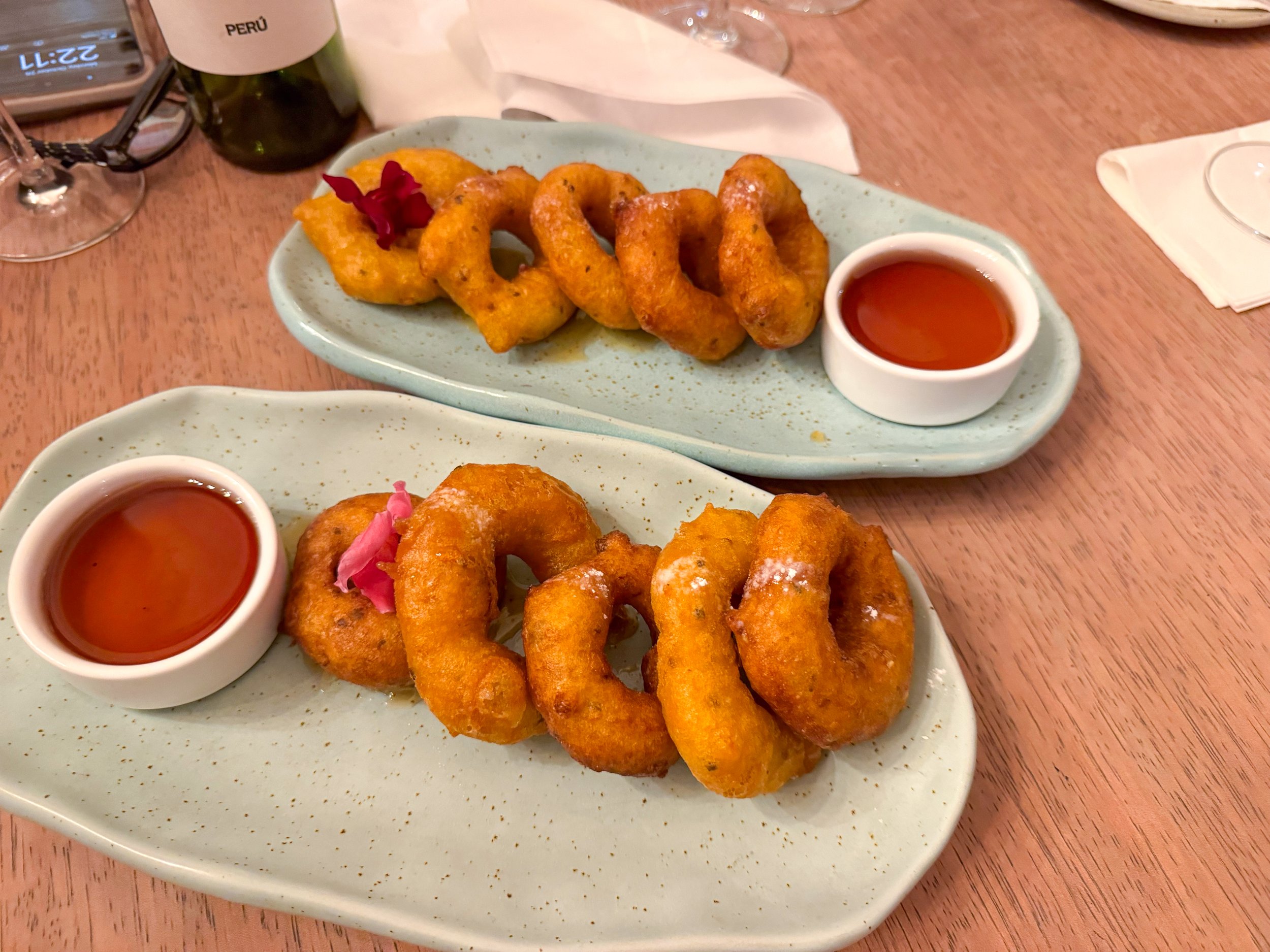
Picarones. A fried potato based donut served with honey.
Ocopa Sauce. A yellow creamy sauce made from peppers, cilantro and cheese. It’s often used to cover potato and meat dishes.
Chicha. A fermented drink made from purple corn. It was popular during the Incan times and is still drunk today by itself or as an ingredient in cocktails.
Cusqueña. One of Peru’s national beers easily identifiable by its bottle cap with Machu Picchu on it and a bottle embossed in Incan stone work. It comes in three varieties, Dorado (Golden), Wheat and Negro (Stout).
Chilcano. A Peruvian cocktail made with Pisco, lime juice and ginger ale. We ordered the traditional version and one with passion fruit multiple times, even making our own using this recipe.
2.5 oz Pisco (plain or with passion fruit)
0.5 oz Fresh lime juice
12 oz Ginger ale
2 dashes Angostura bitters
Stir together with ice
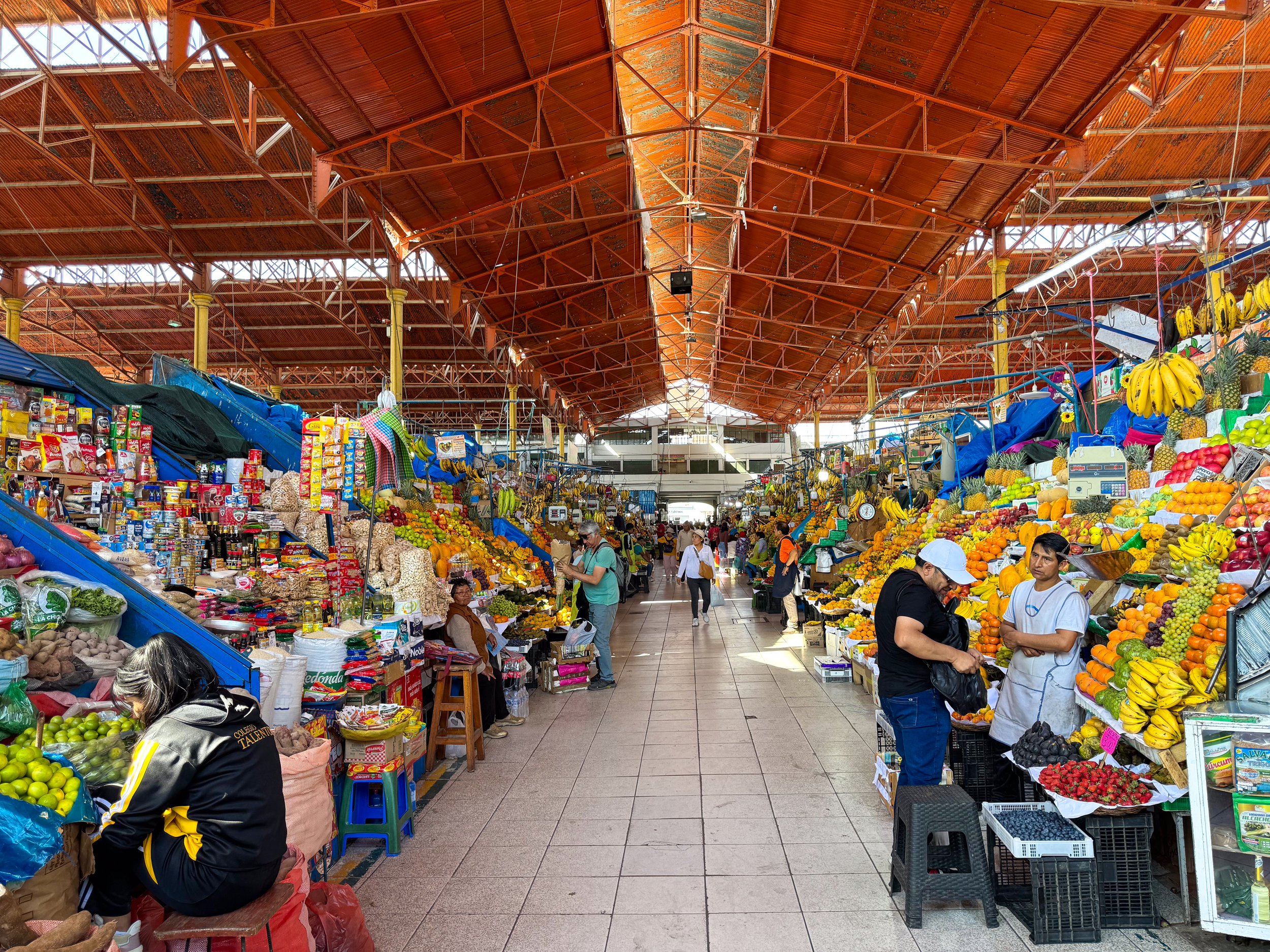
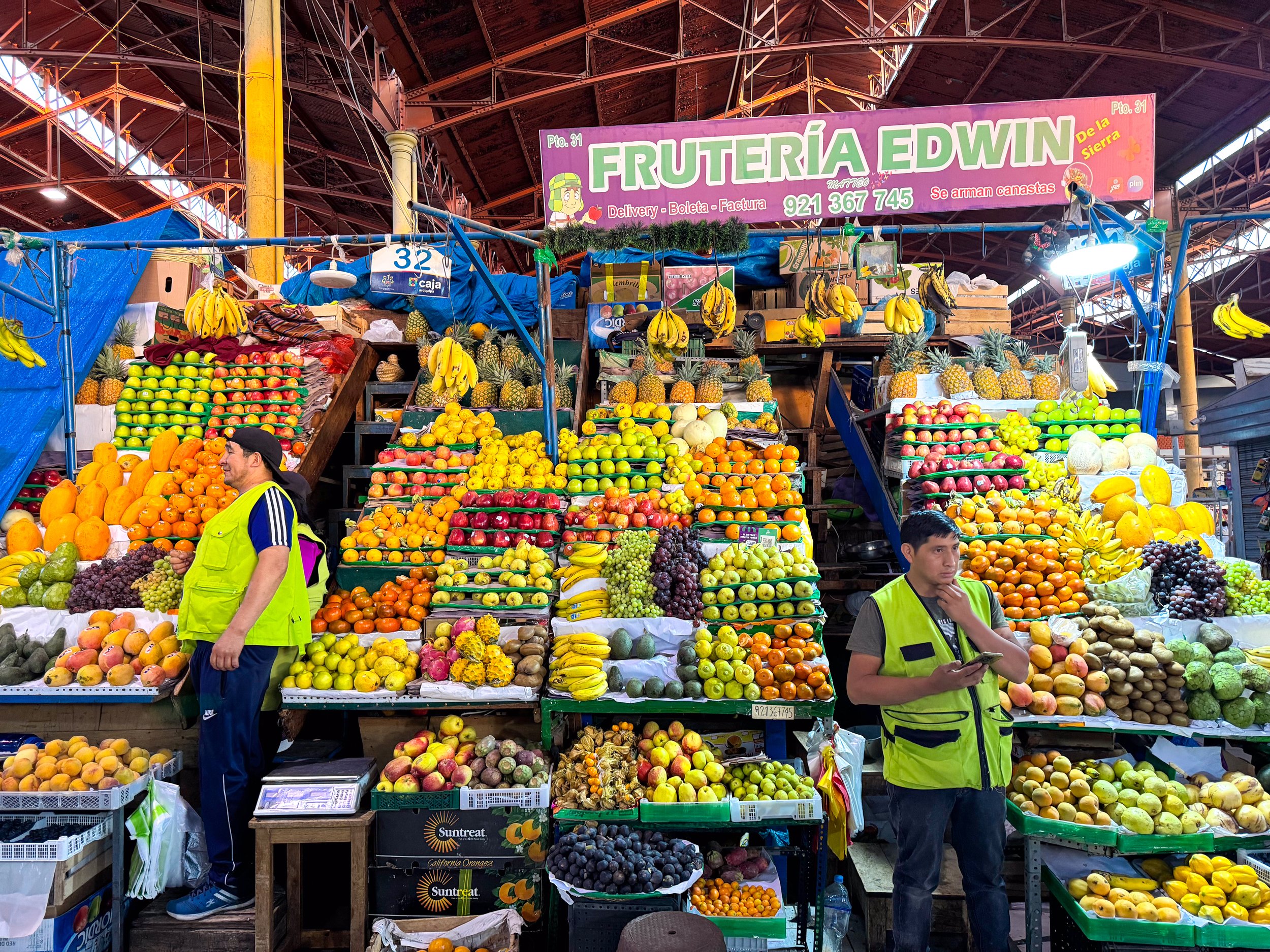
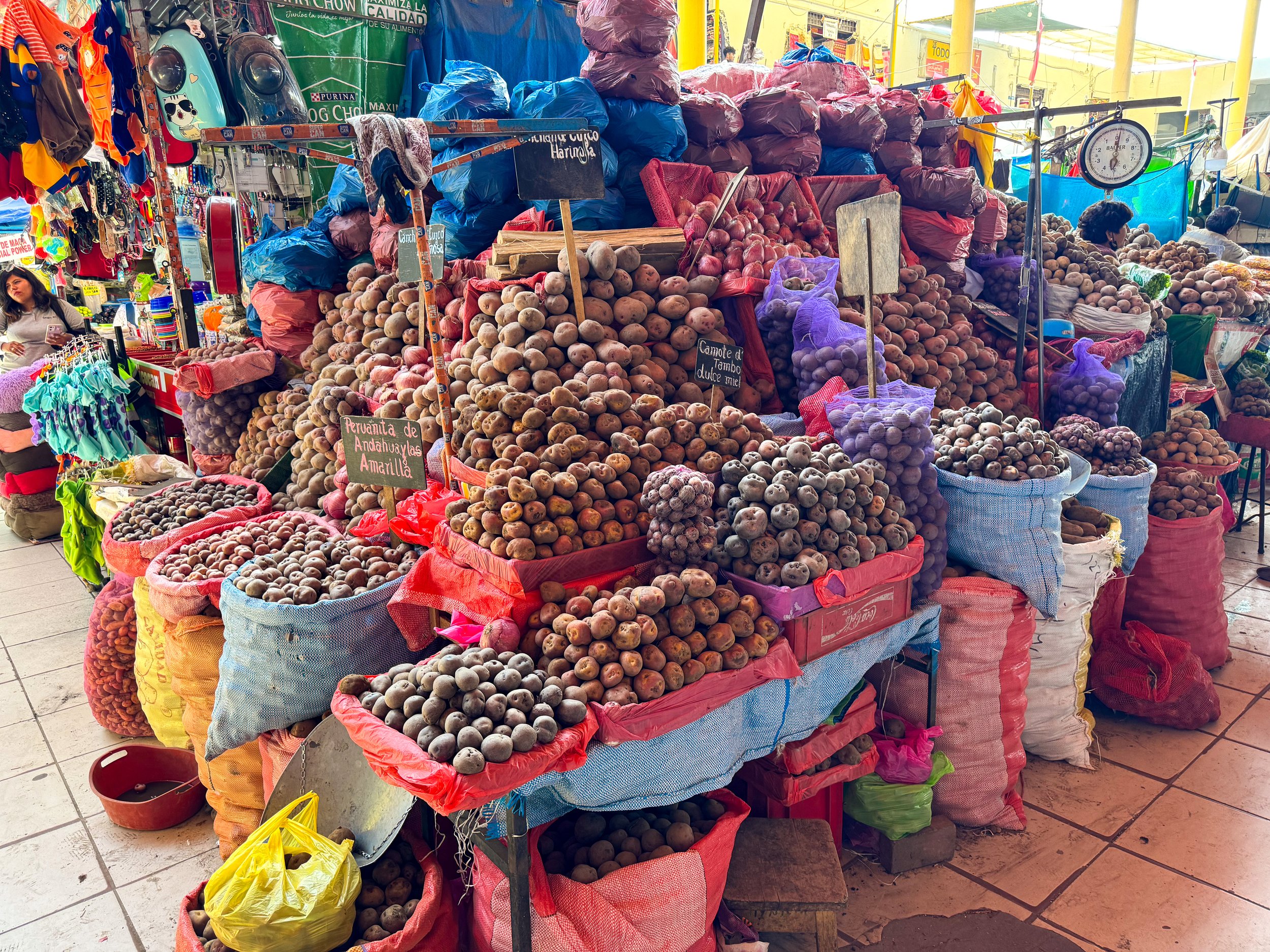
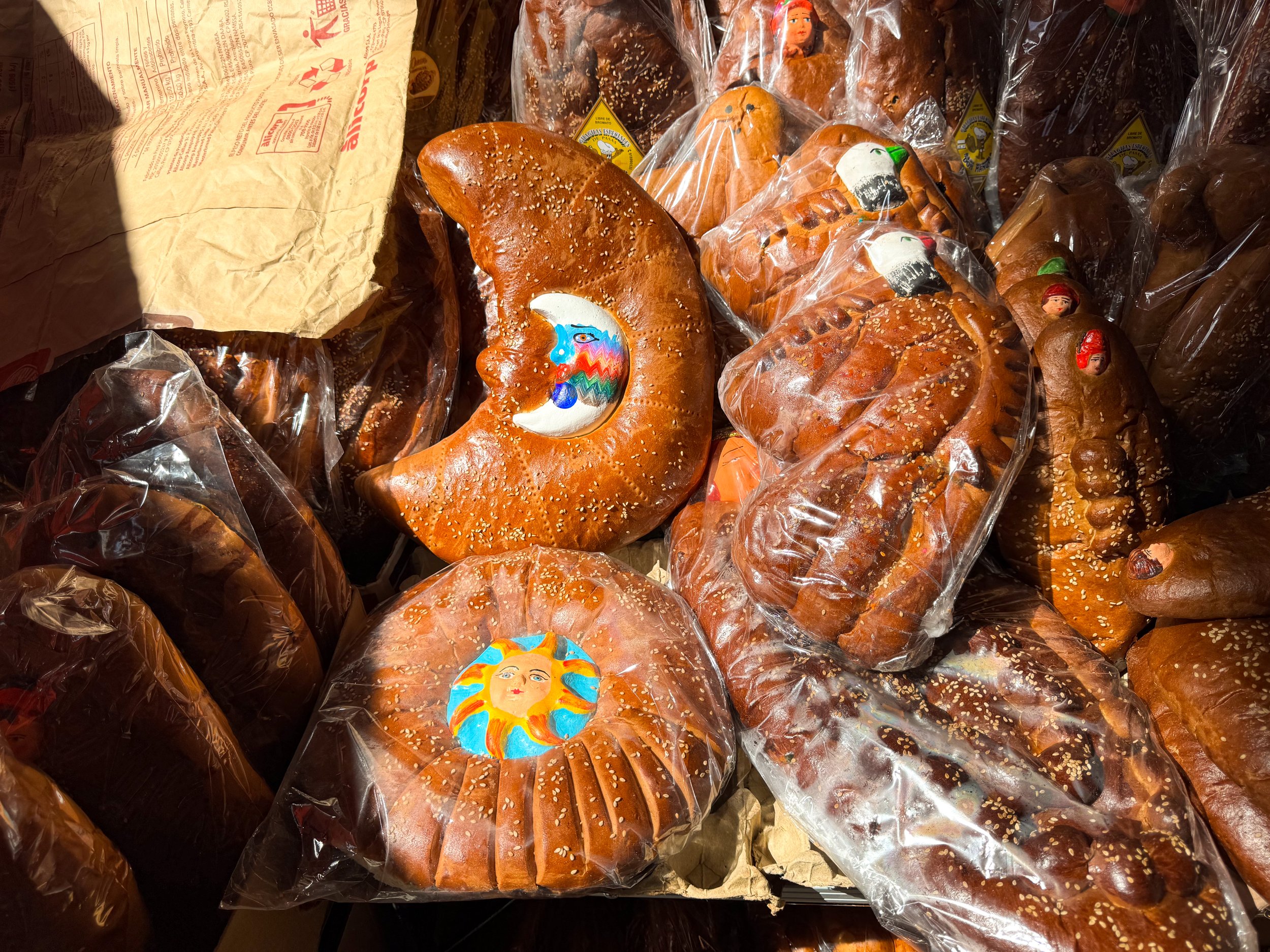
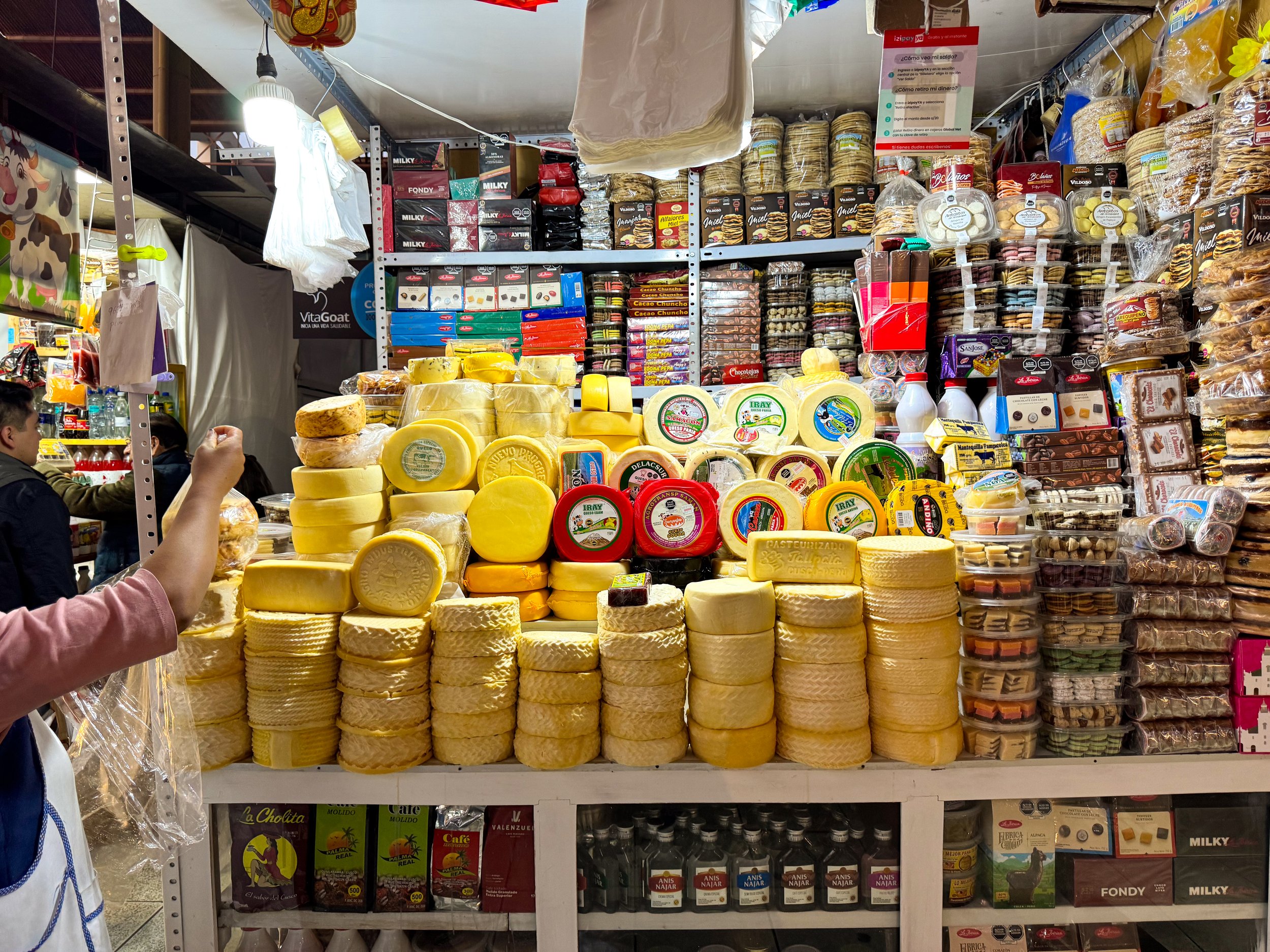
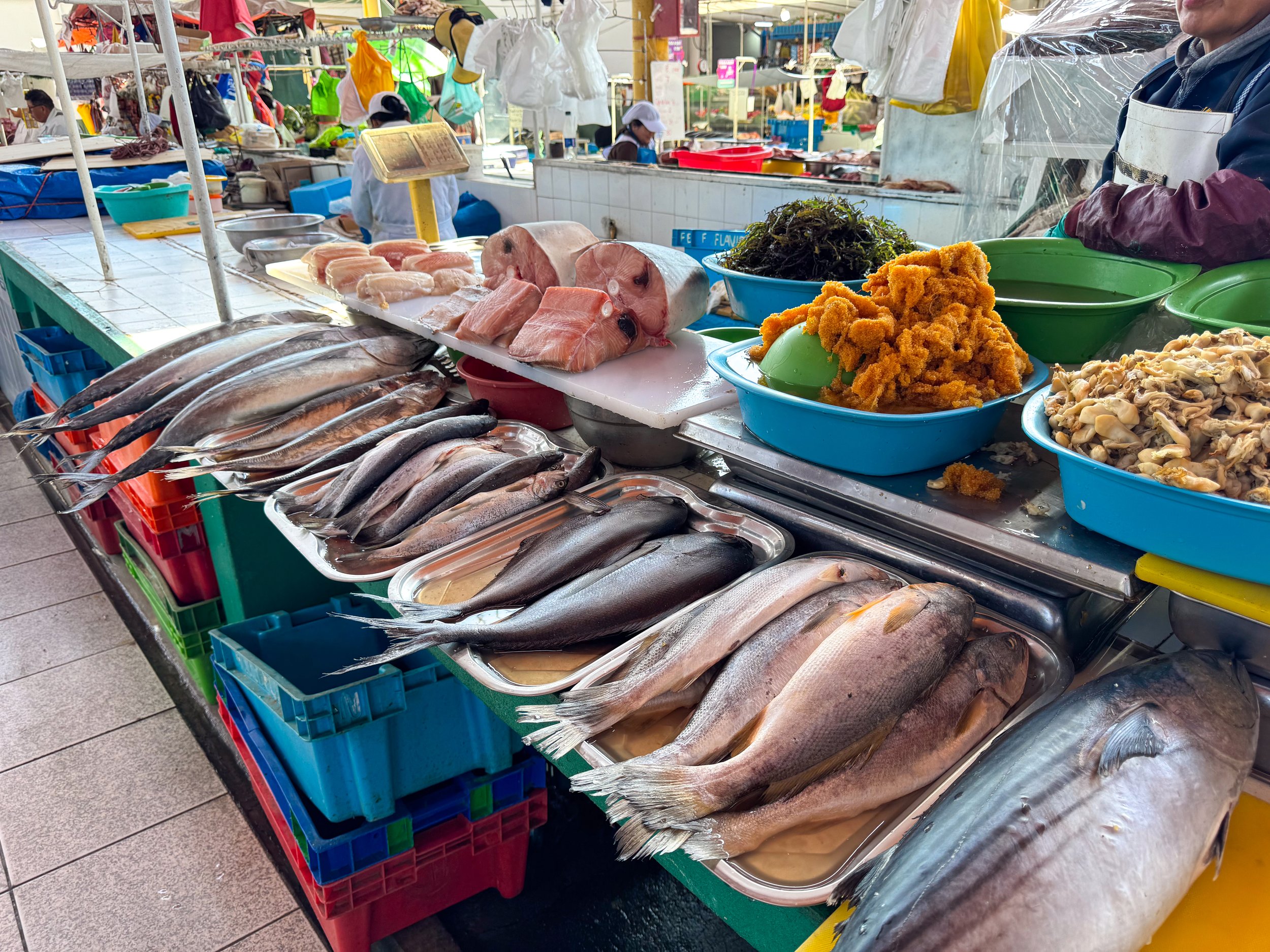
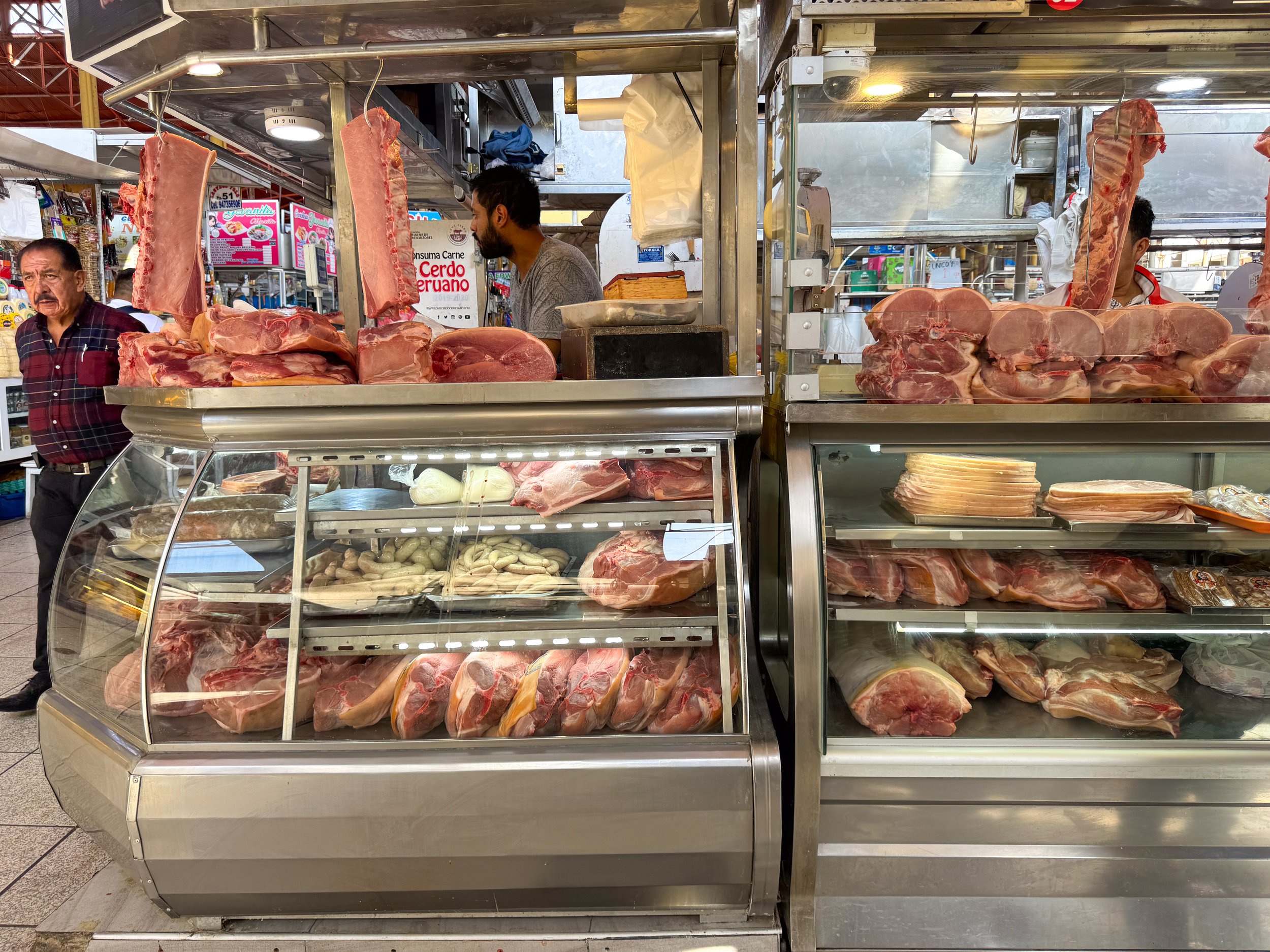
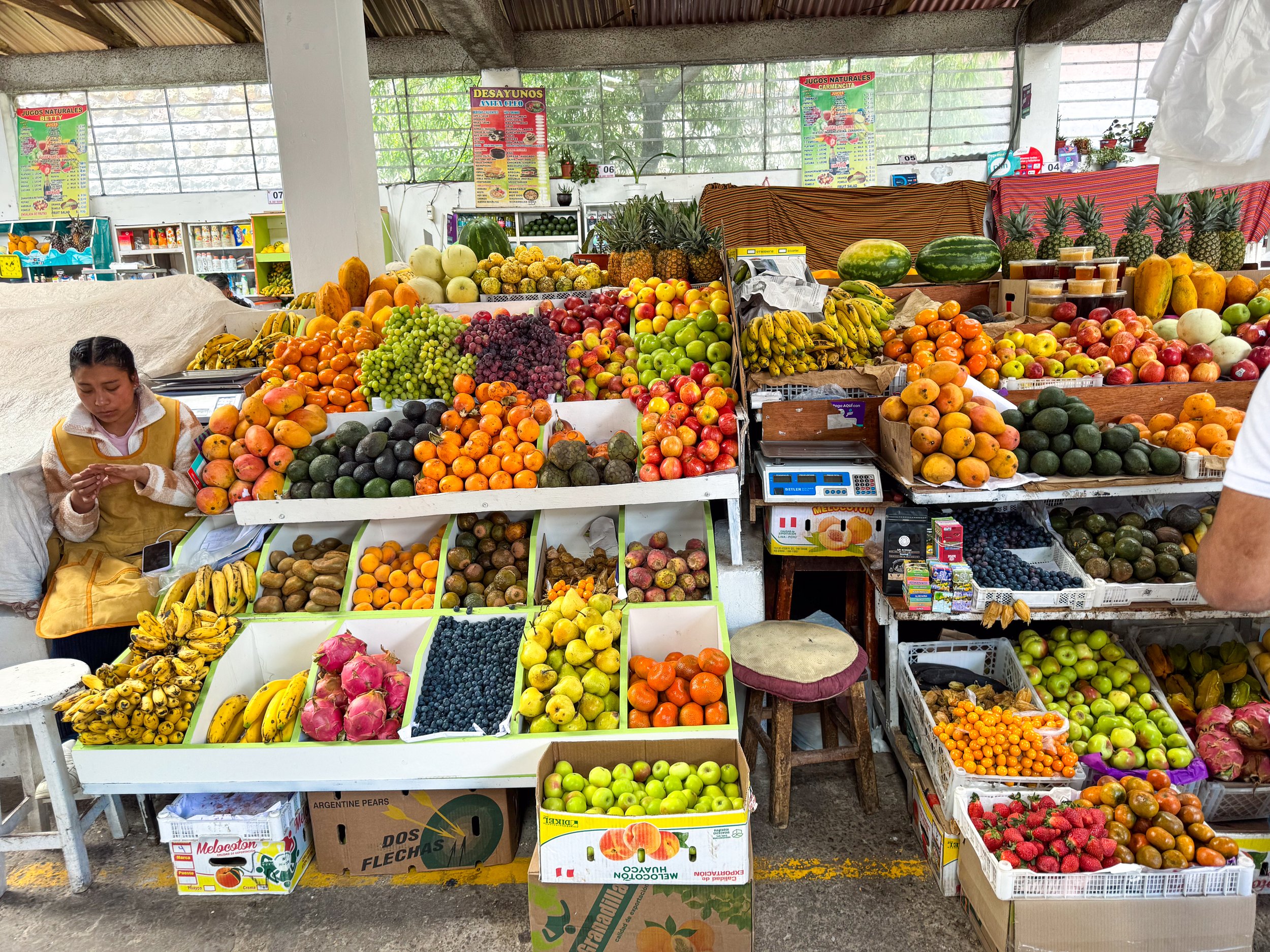
San Camilo Market. A central market with vendors selling fruit from towering shelves, baskets filled with potatoes, wheels of Peruvian cheese, aisles of freshly butchered meat and fish, pillowy breads, purple and yellow chicha, bins of coca leaves and rows of textiles. We left with a bag of breads and fruits including dragonfruit, cherimoya, pepinos, melones, avocado and blueberries.
Another reason to visit the market is for the street food and inexpensive lunches. We bought potato salteñas and empanadas from a vendor outside of the market and sat down at one of the restaurants inside for pescado frito con arroz verde and a Cusqueña, only spending 10 Soles per plate.
Places to Eat and Drink
Chicha por Gastón Acurio. An elegant restaurant with a warm terracotta colored interior lined with Peruvian clay pots and suspended basket lights. The menu includes traditional Peruvian cuisine like guinea pig and alpaca dishes, purple corn (chicha), different types of ceviche, chupe de camarón, picarones, Peruvian wine and cocktails like the pisco sour and chilcano. We came here with friends to celebrate Devin’s 30th birthday!
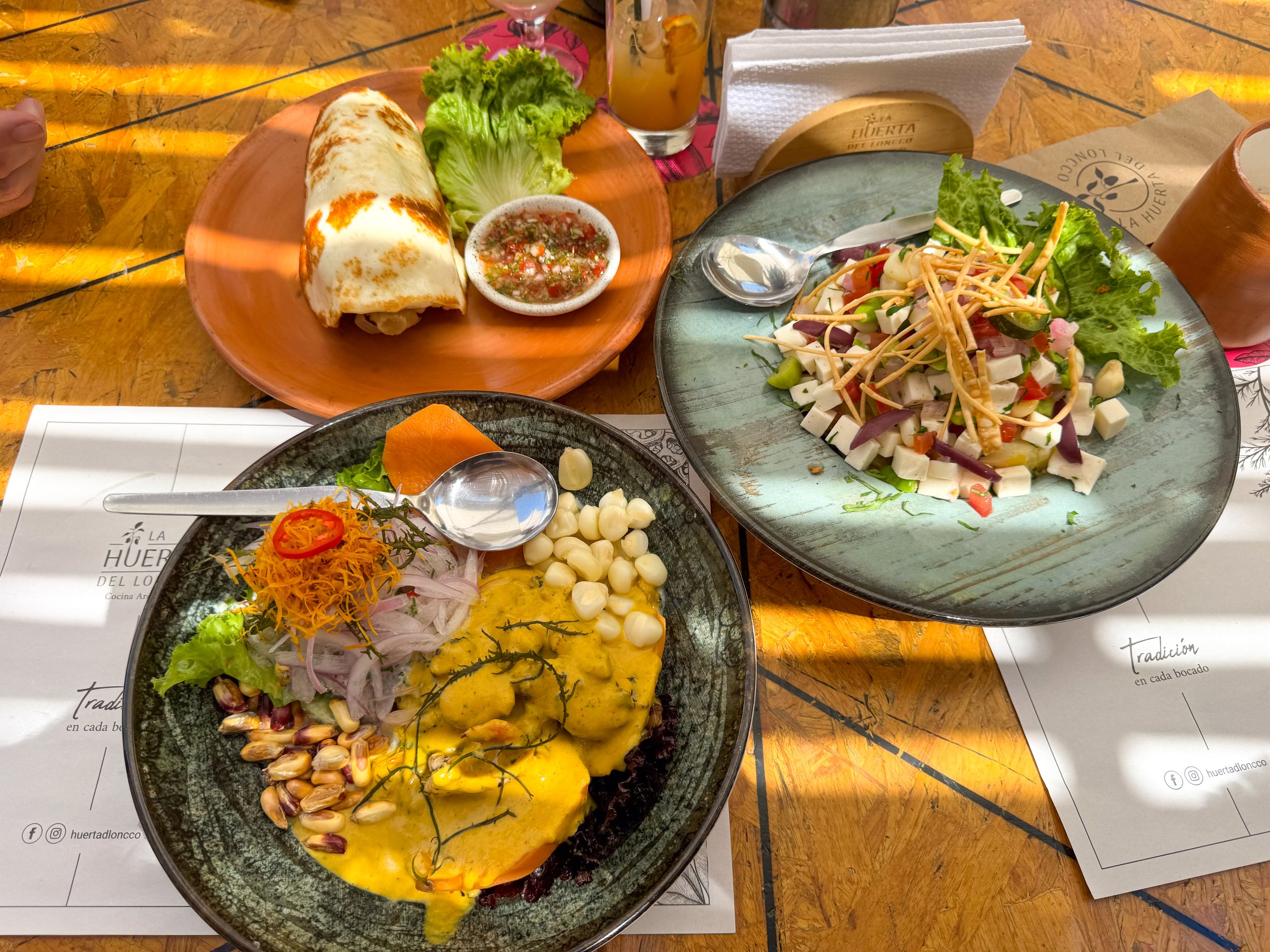
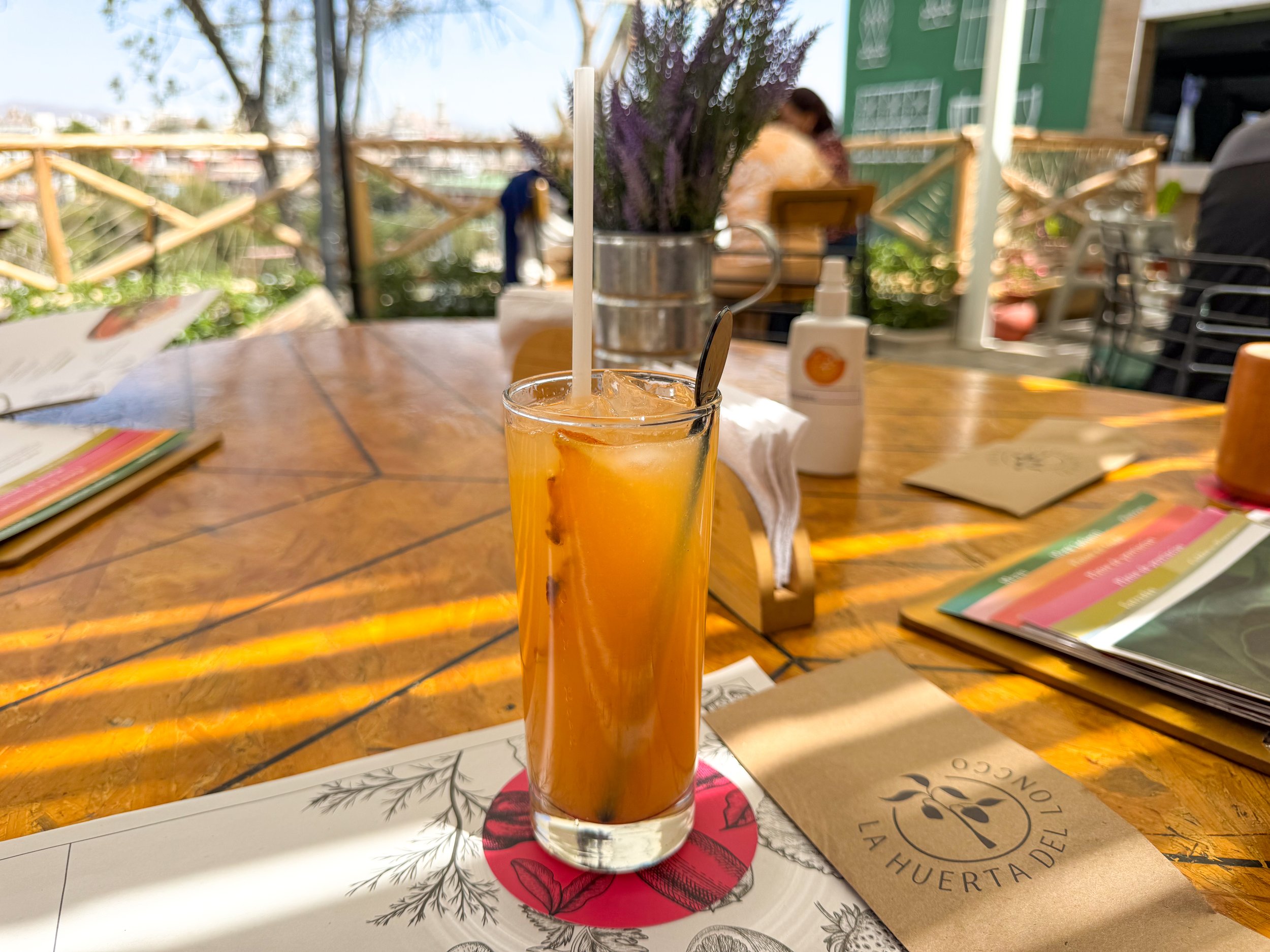
La Huerta del Loncco. A lunch spot with contemporary Peruvian dishes and a shaded outdoor patio overlooking the city. We ordered the choclo con queso, ceviche, potatoes and grilled seafood in ocopa sauce and queso salad.
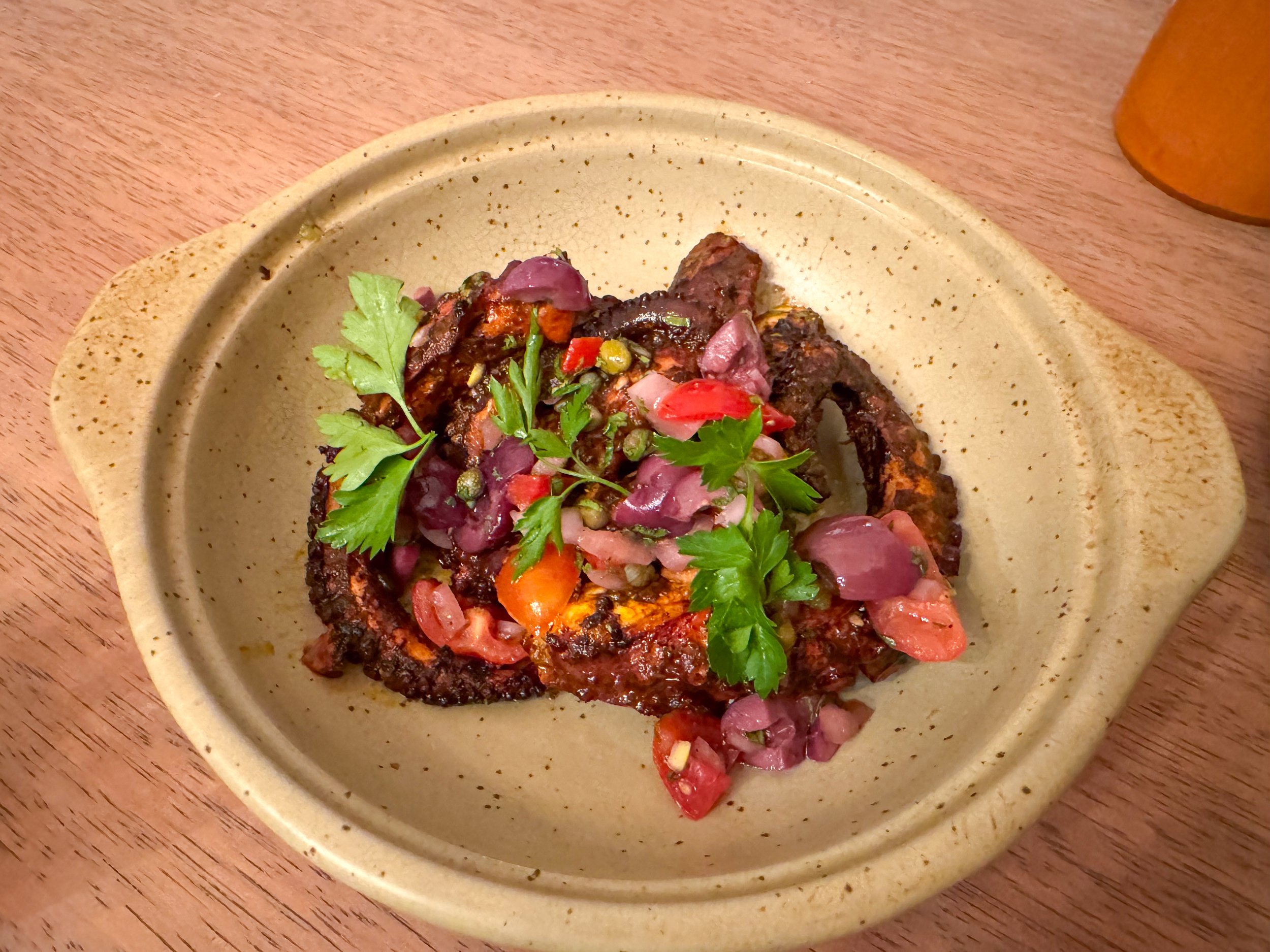
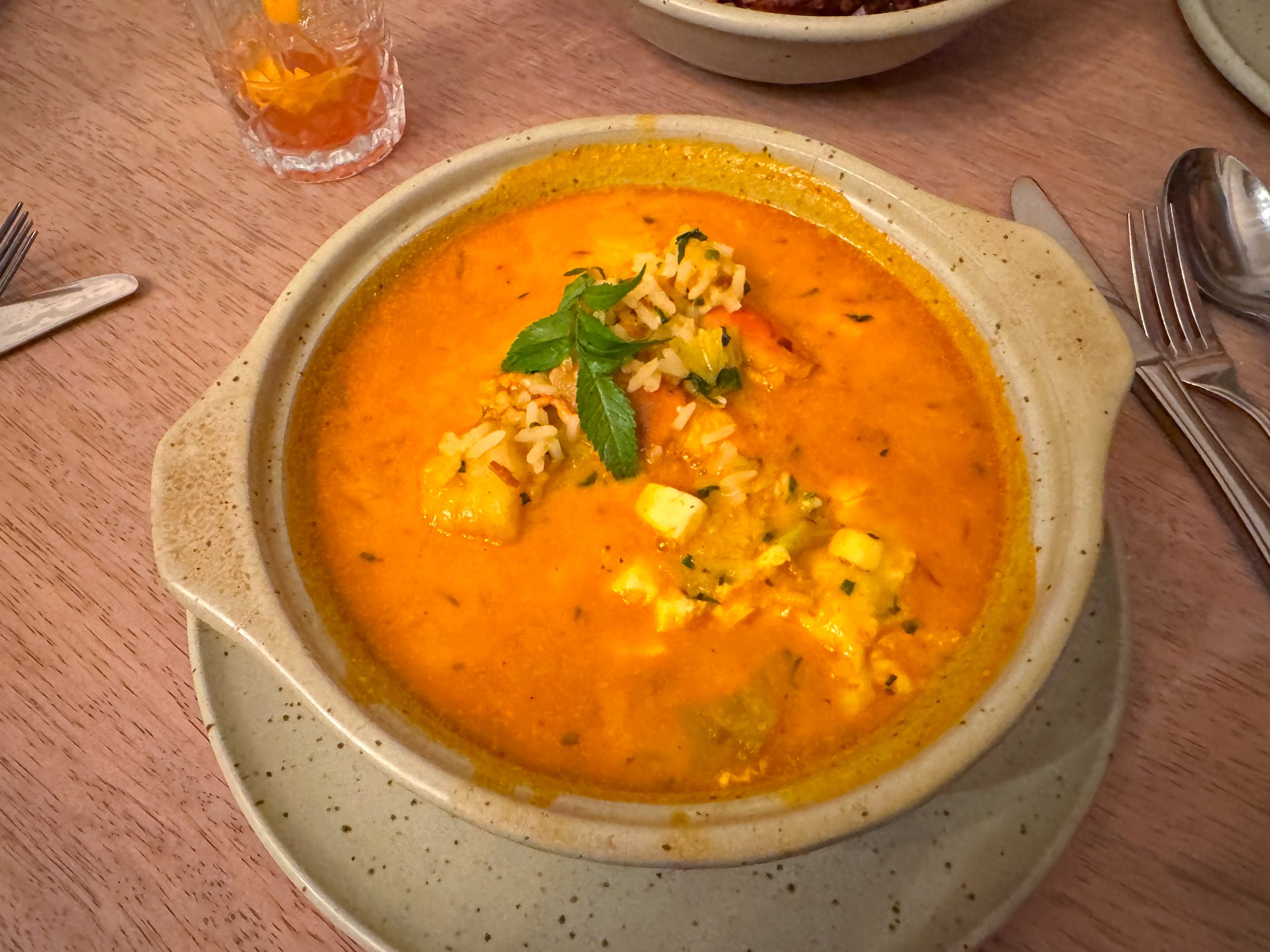
Dimas Restaurante. A charming restaurant inside a vaulted white volcanic stone dining room with a range of Peruvian and international dishes. We shared the broccoli cream soup and tuna tartare made with avocado, mango and passion fruit.
Zig Zag Restaurant. A restaurant that specializes in meat dishes and wines. We came here to enjoy a carafe of sangria before dinner in their historic dining room built from white volcanic stones and a wrought iron spiral staircase designed by Gustave Eiffel.
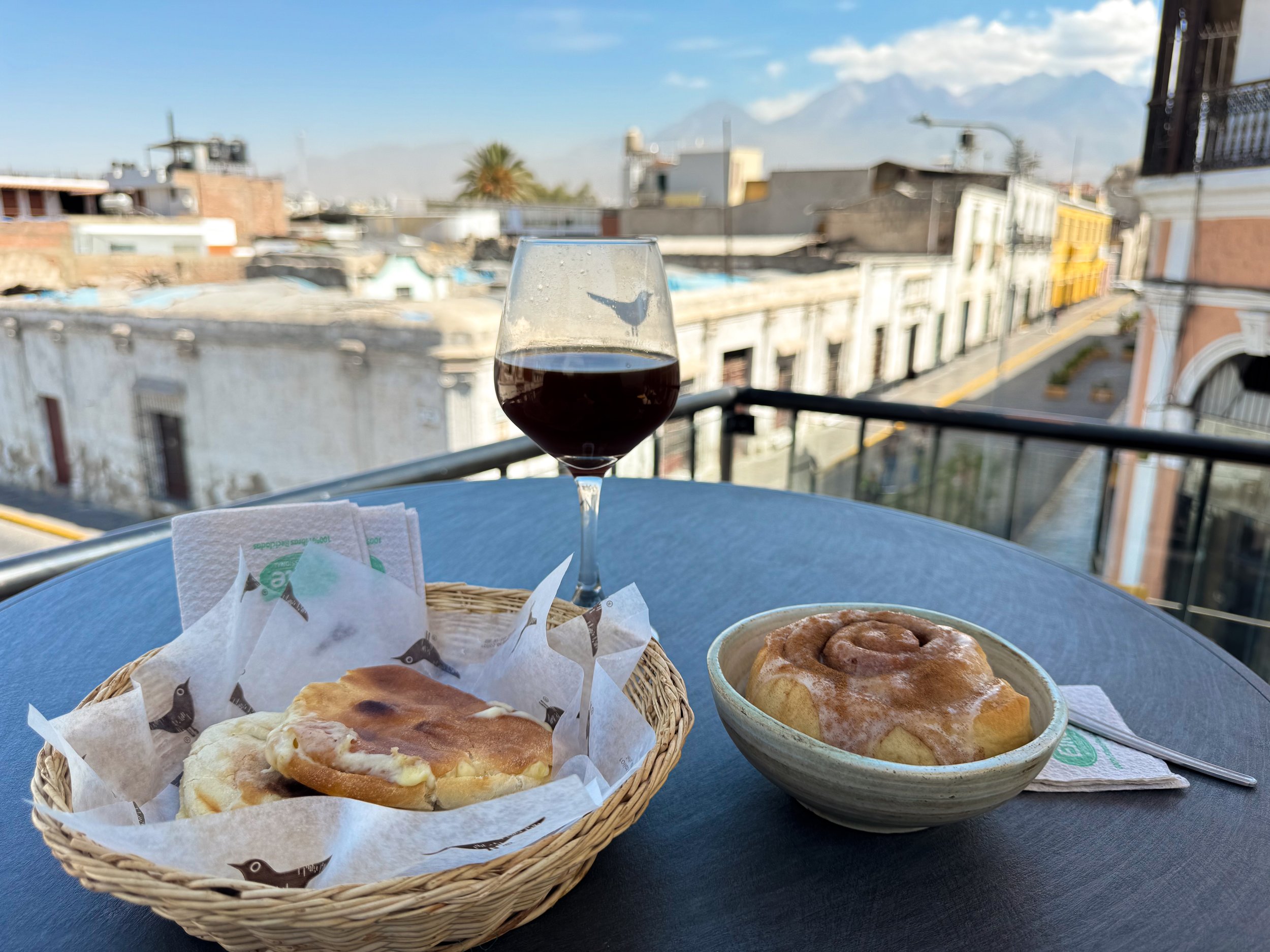
Puku Puku Arequipa. A rooftop cafe with views of the mountains and volcanoes. We came here in the morning for breakfast pastries and ordered Peruvian roasted coffee brewed in a French press and Chemex. They also offer coffee brewed by Aeropress or espresso carafe.
Amaray. A cafe and restaurant on the second floor of an arched building overlooking the Plaza de Armas and Basílica of Arequipa.
Museo del Pisco. A Pisco bar in a historic building made from Arequipa’s iconic white stones. Come here to order Pisco cocktails, taste various types of Pisco or join mixology class.
Zingaro Wine Bar. A wine bar and shop with Peruvian wines. We bought and shared multiple bottles from here including Vittoria Reserva Malbec from the Valle de Ica, Peru and Intipalka Vino Cabernet Sauvignon Syrah Réserva from the Valle de Sol, Peru.
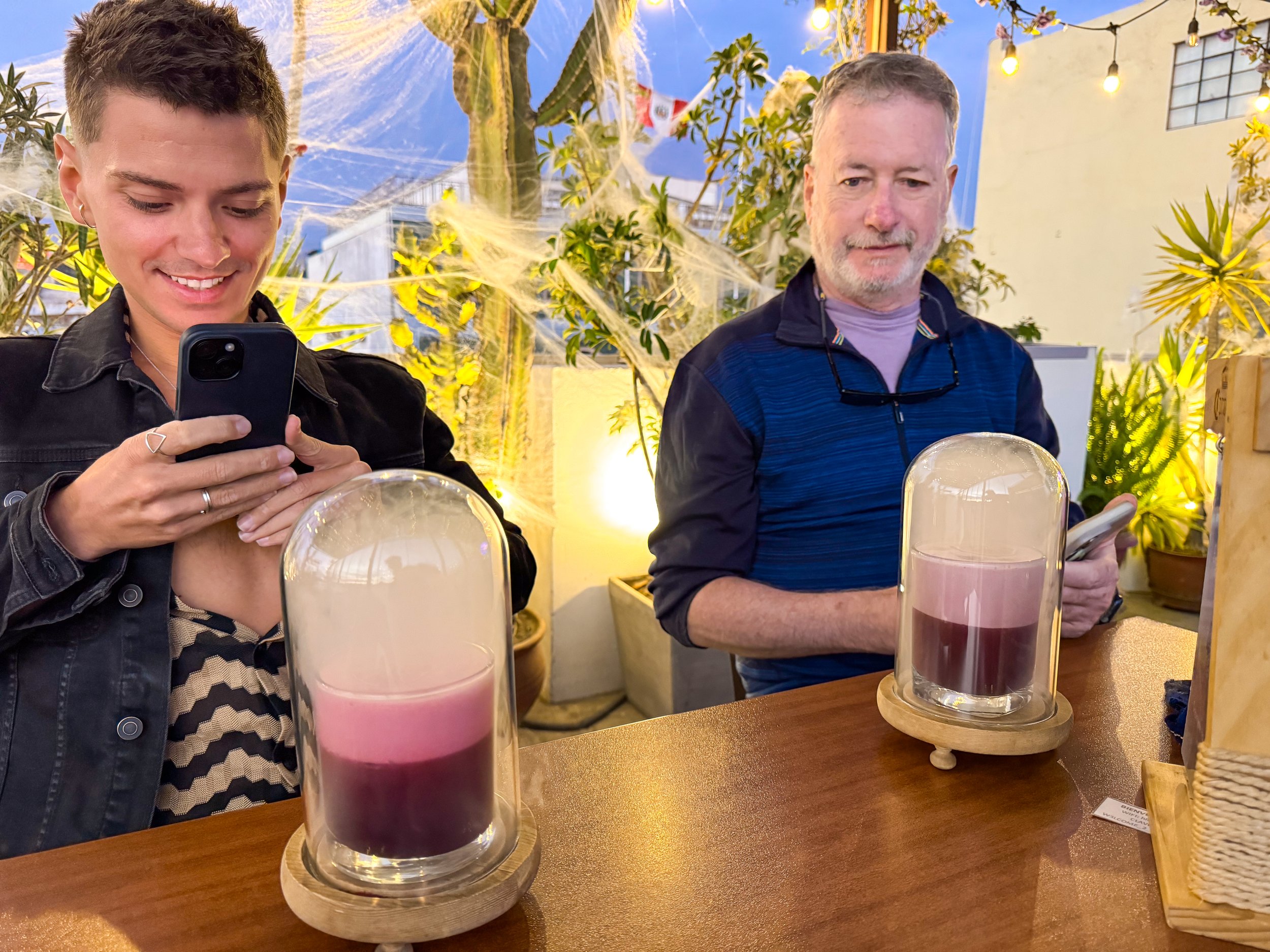
Sunset Rooftop Bar. A rooftop bar at the Le Foyer Hotel with views of the sunset, city, mountains and volcanos. We came here for smoked chicha and Pisco cocktails.

Where to Stay
We stayed at two accommodations during our time in Arequipa: an Airbnb and a boutique hotel.
Historic Airbnb. A spacious rental unit in a white volcanic stone and arched room. The public spaces included a living room, luggage lockers and kitchen.
Le Foyer Arequipa. A boutique hotel with simple rooms, luggage store and a rooftop bar.
Katari Hotel At Plaza De Armas. A luxury hotel in the central plaza with beautifully decorated rooms and a roof top restaurant. We visited a friend that was staying here.
Location Specifics
Sand Flies. An insect similar to mosquitos. They leave much larger welts after sucking blood. They were present in October and November in Arequipa.
Language. Spanish is the most common and widely spoken language. Few people speak English.
Cash vs Card. Both cash and card were widely accepted. Carry coins and small bills for street food and markets.
Elsewhere in Peru
From colonial cities and landscapes to the Andes mountains, desert coast and Lake Titicaca, discover more of Peru beyond Arequipa through these travel guides:
Peru Coast Travel Guide: Nazca Lines, Huacachina & Ancient Civilizations. Venture along Peru's coast where ancient civilizations, desert oases, vineyards and world renowned cuisine shape one of South America's most unique regions.
Peru Andes Travel Guide: Machu Picchu, Cusco & Inca Ruins. Wander through Peru's Andes where ancient Inca ruins, terraced farmland, colorful mountain landscapes and Andean communities preserve centuries of tradition.
Lake Titicaca Travel Guide: Floating Islands & Indigenous Culture. Voyage between Lake Titicaca's floating islands and lakeside communities where Indigenous culture, Andean traditions and centuries of history live on.

For Next Time…
Next time we visit Arequipa, we plan to venture out of the city and see some of the regions most impressive sights.
Reserva Nacional de Salinas y Aguada Blanca. A high altitude nature reserve home to vicuñas, alpaca and flamingos with a dry grassy landscape, mountains, volcanoes, salt water lagoons and rivers. We drove through here on our way to Cusco spotting large groups of vicuñas, llamas and alpaca grazing in the dry grassy terrain as well as bright pink flamingos contrasted against the dark color of the mountain lagoons. Along the road, as we continued into the Andes, we passed through small towns with indigenous Peruvians dressed in colorful attire and freshly shaved llamas wearing coats.
Colca Canyon. The second deepest canyon in the world surrounded by steep mountains and snow covered volcanoes. We would love to visit to spot the condors, hike its trails, swim in the natural hot springs and raft in the Colca River.
El Misti Volcano. The prominent conical shaped volcano seen from Arequipa. We would love to take an overnight hike to reach its summit at an elevation over 19,000 ft.

Peru Andes Travel Guide: Machu Picchu, Cusco & Inca Ruins
Wander through Peru's Andes where ancient Inca ruins, terraced farmland, colorful mountain landscapes and Andean communities preserve centuries of tradition.

The Peruvian Andes
The Peruvian Andes is a breathtaking region, both in altitude and natural beauty. Its mountainous landscape is covered in Incan ruins, snow covered peaks, colorful valleys and terraced farmland with herds of alpaca and llama.
Cusco & The Incan Empire
Within the mountains is the city of Cusco, a sprawling metropolis home to ruins of the Incan empire and pre-colonial civilizations. It’s the branching off point for Machu Picchu and numerous sights in The Sacred Valley. Having previously visited Machu Picchu, we used our second trip into the Peruvian Andes to see sights we missed in Cusco and the Sacred Valley.
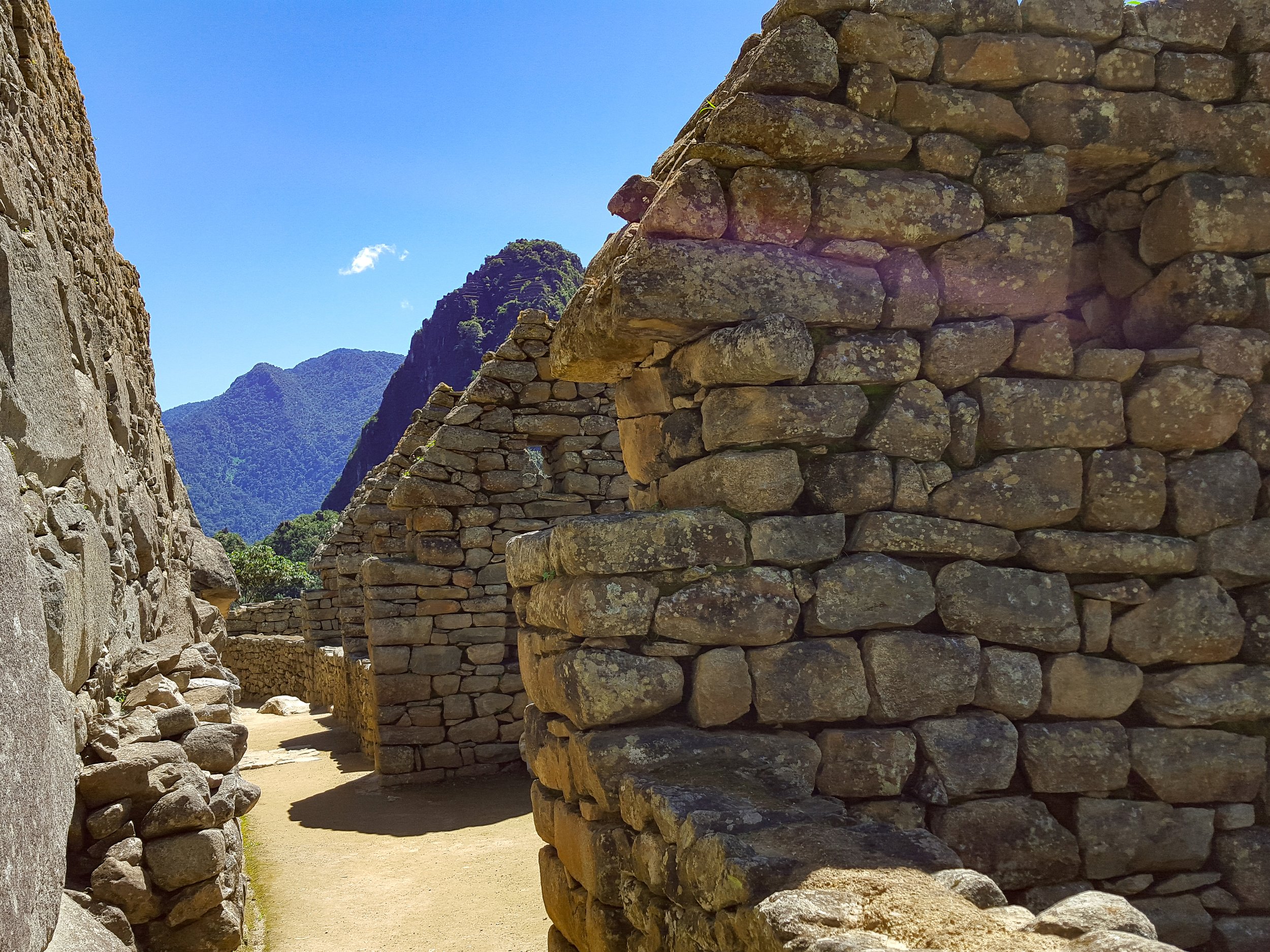
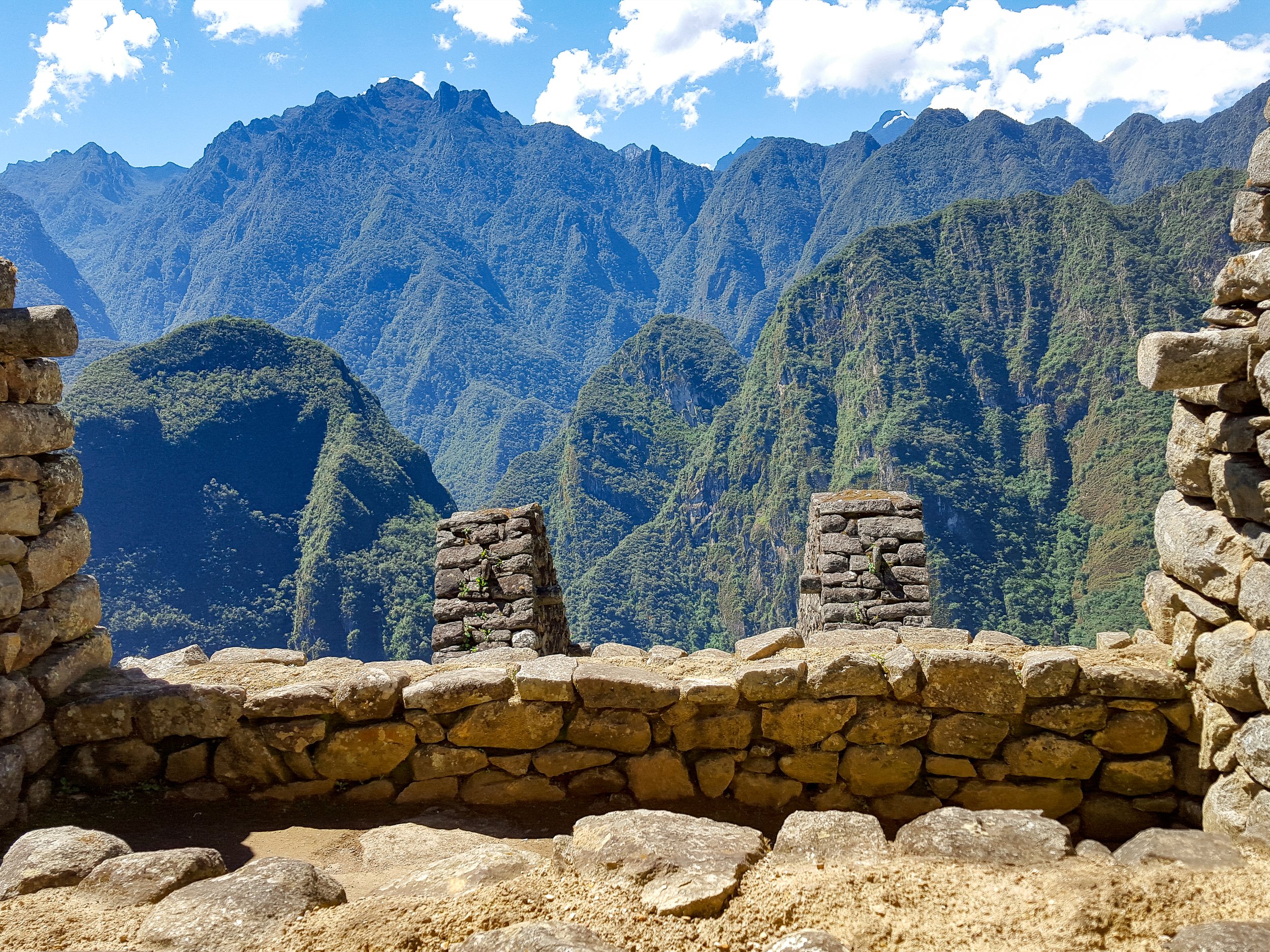
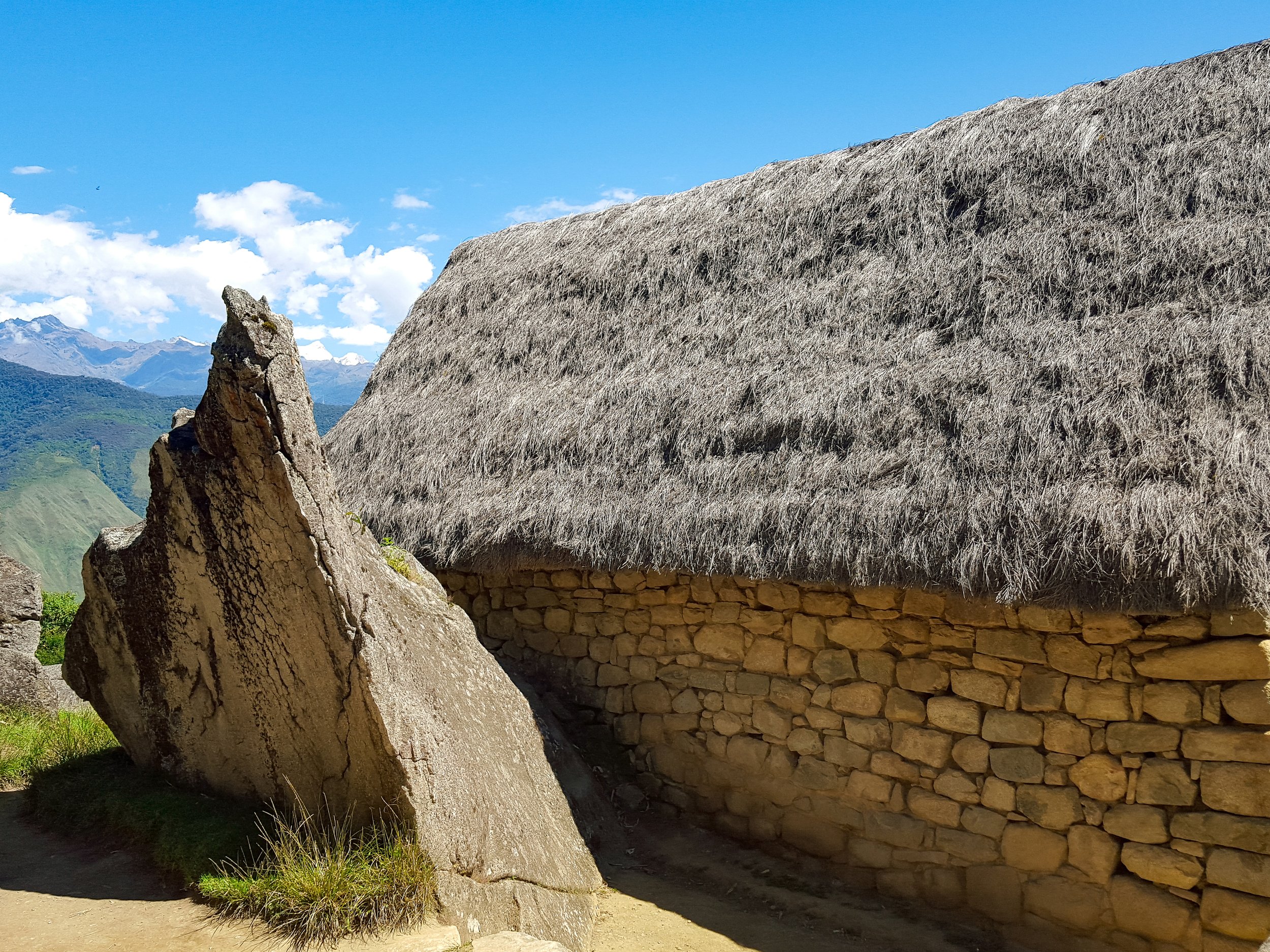
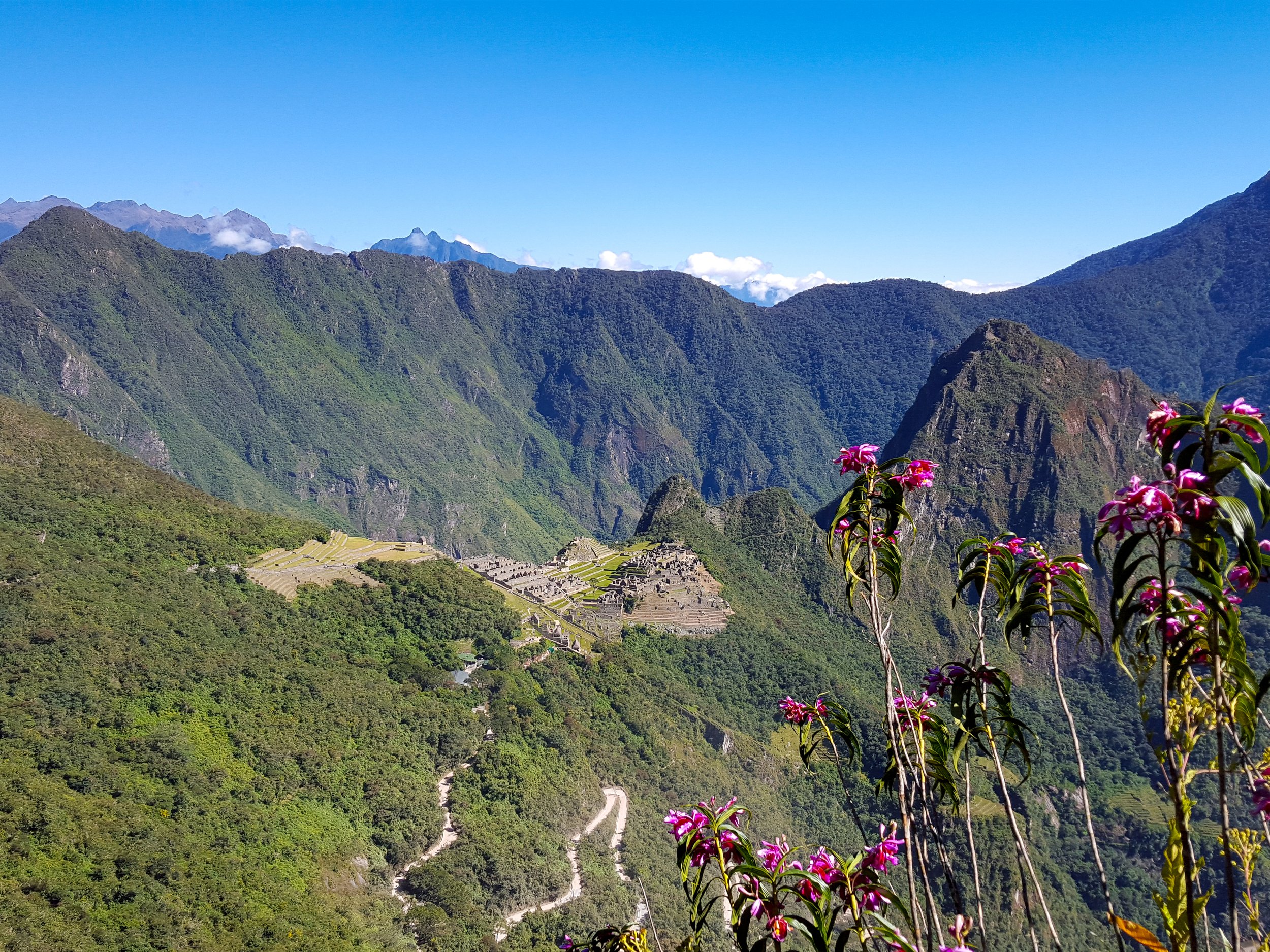
Machu Picchu
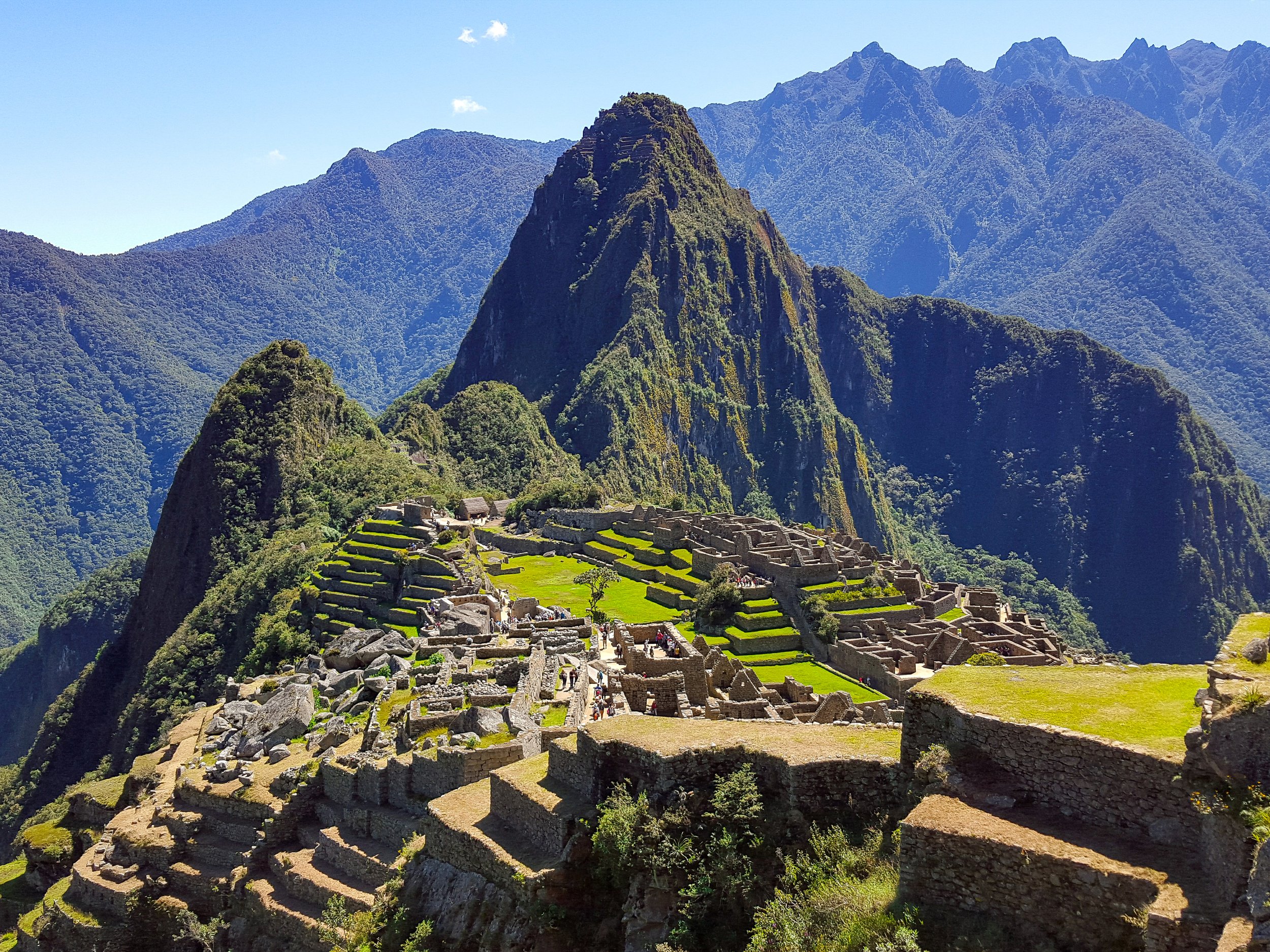
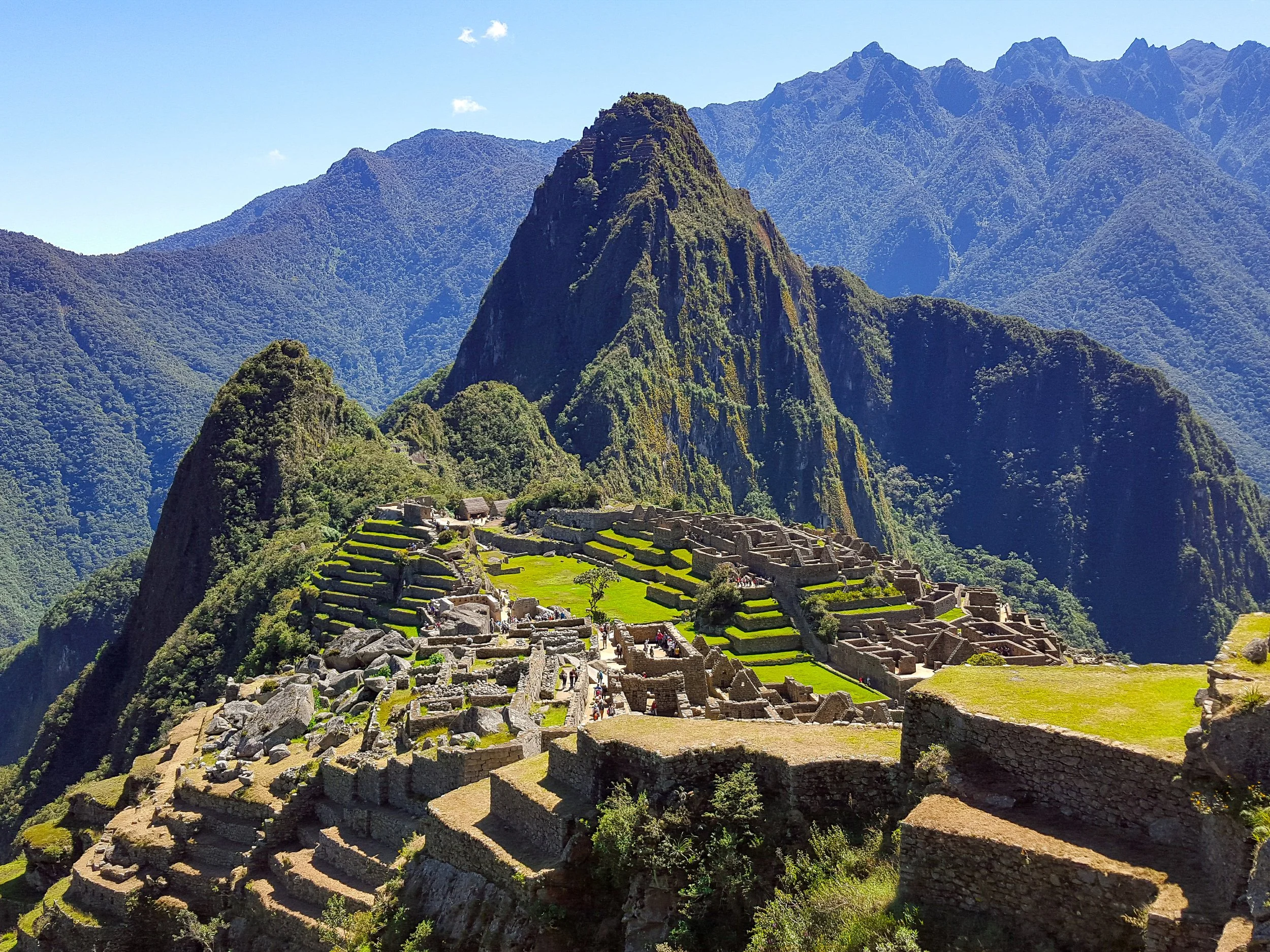
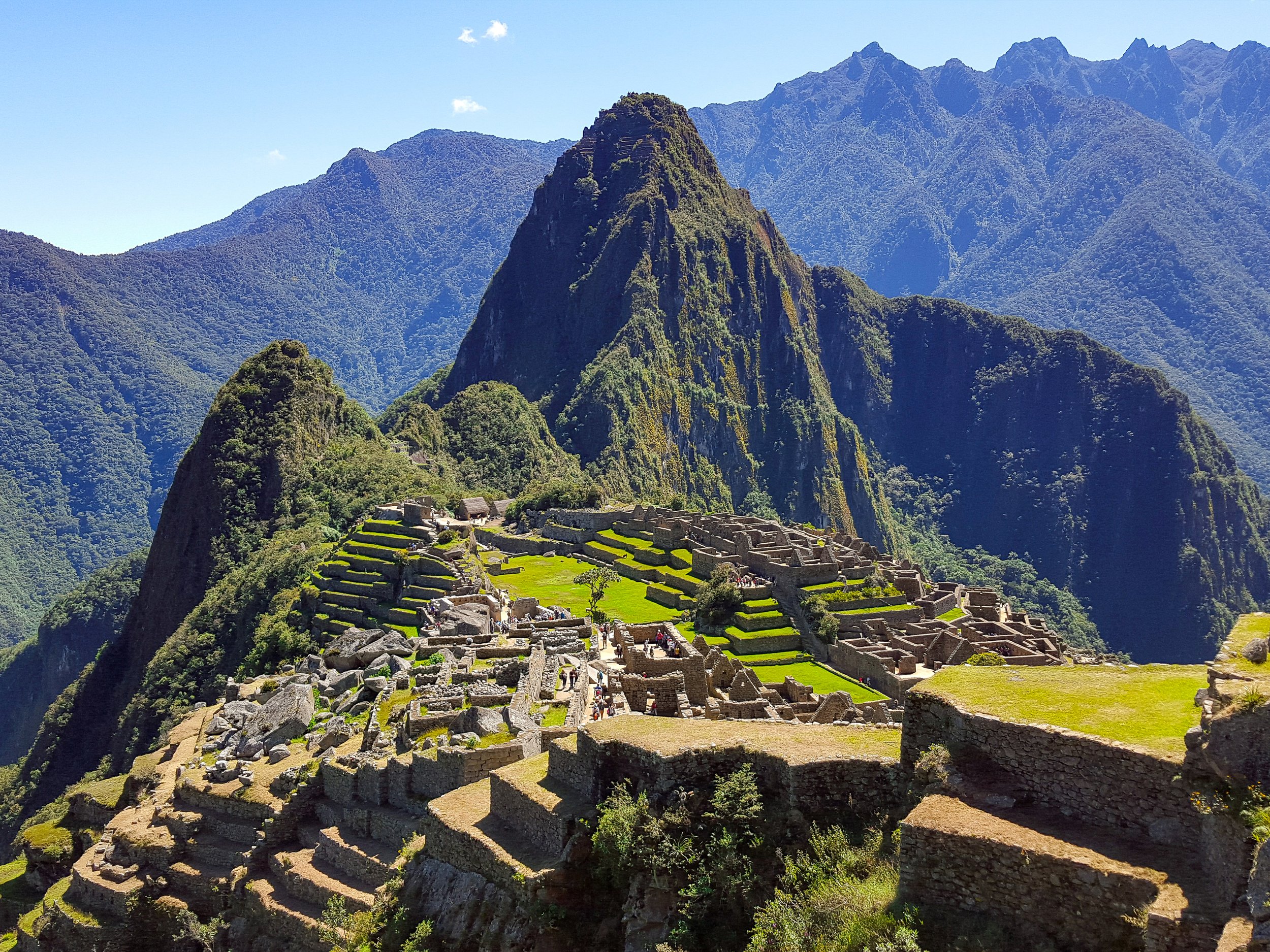
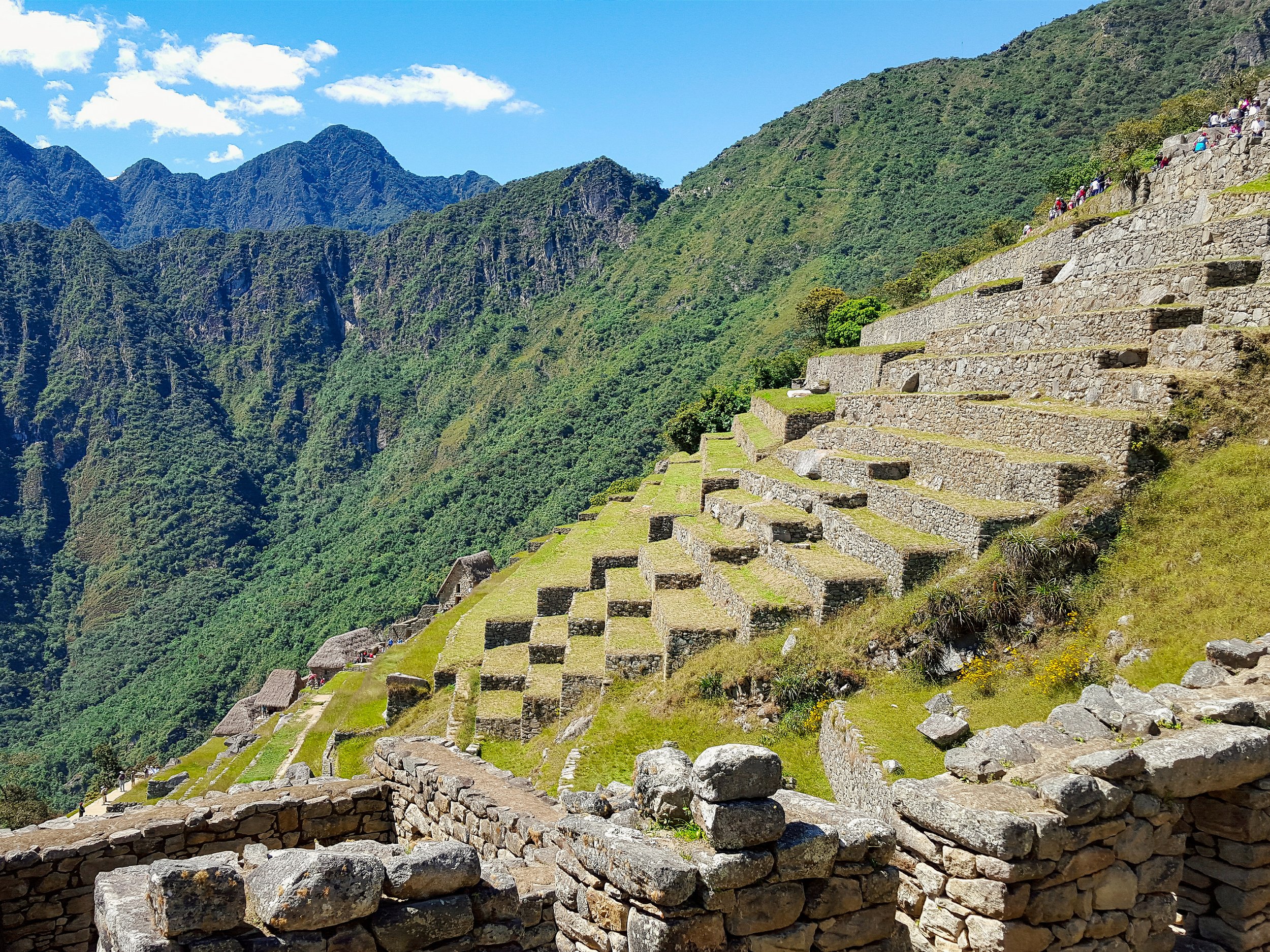
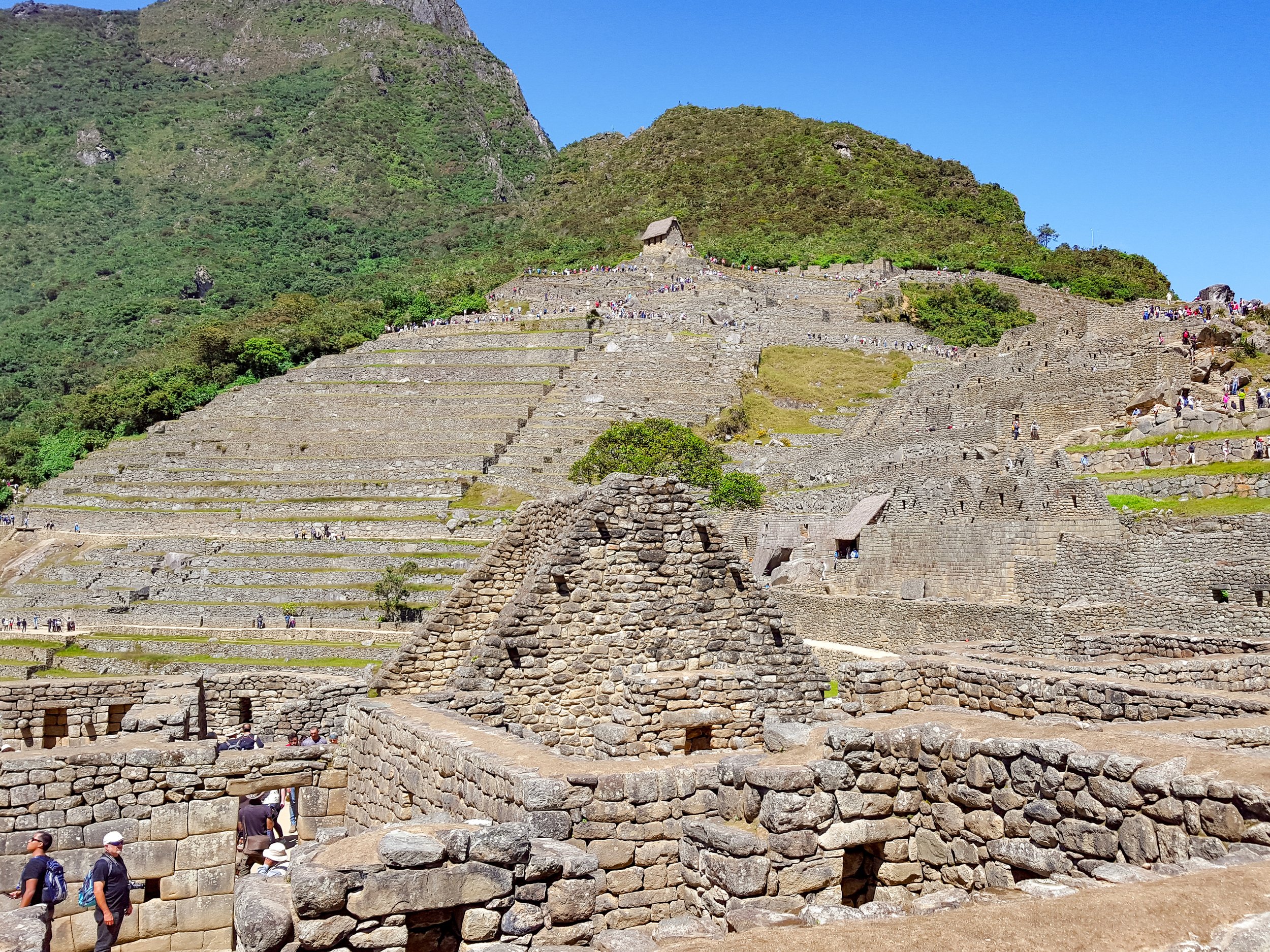
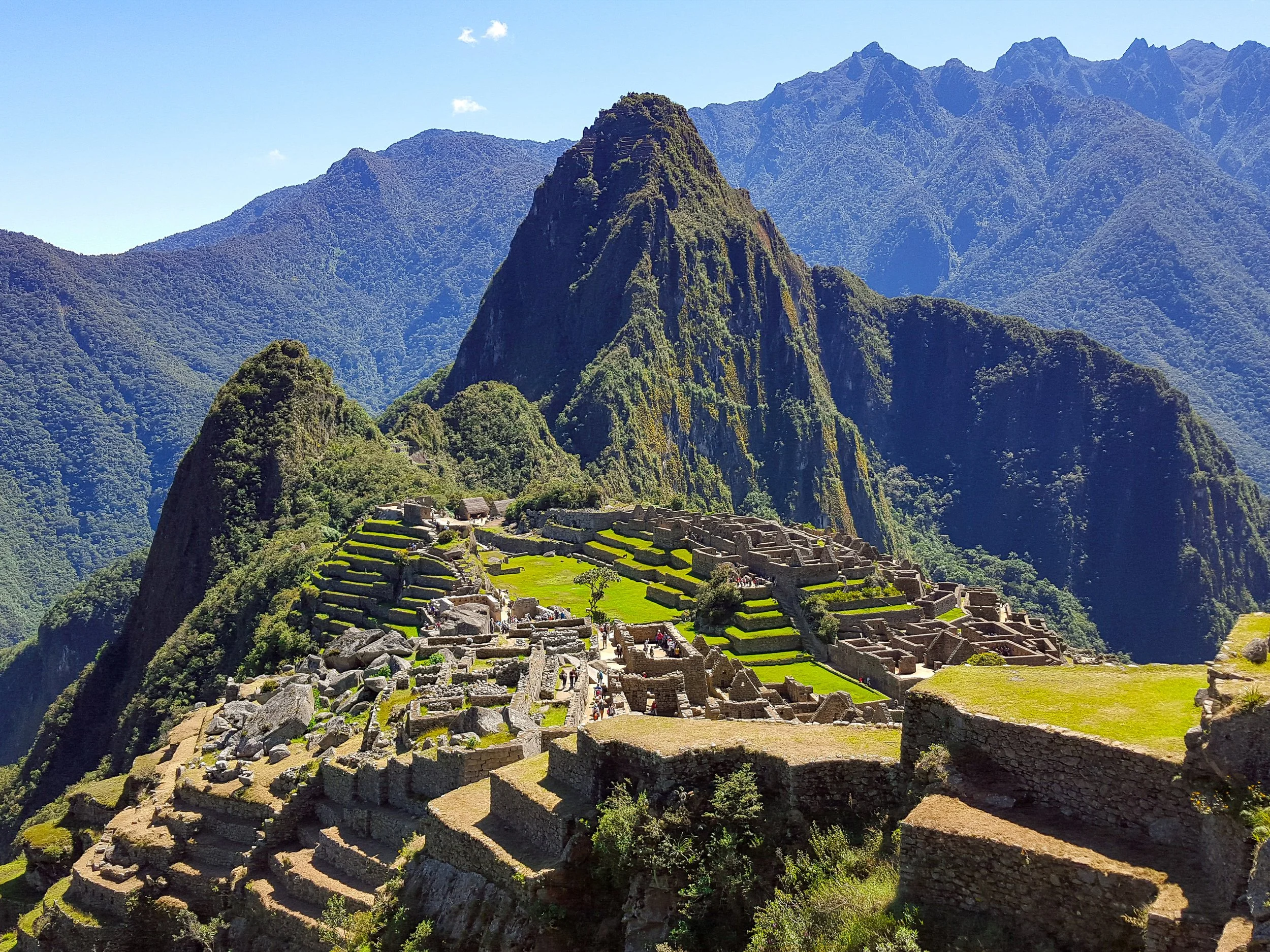
Hidden for centuries, Machu Picchu is known as The Lost City of the Incas. The sprawling ruins of the ancient acropolis rest atop a mountain set against the dramatic Andean landscape. The citadel is comprised of residential neighborhoods, layers of agricultural terraces, stone storage structures, ceremonial temples and a central plaza with free roaming llamas. We spent a half day meandering through the ruins of the city, observing it from scenic overlooks and hiking partly along the Inca Trail.
Tips for Visiting:
Access. When we visited in 2016, only 2,500 people were allowed to visit Machu Picchu per day. At the time, we were free to access most areas of the ancient city. As of 2024, the limit has been increased to 4,500 people and “circuits” have been established, regulating the specific areas visitors can access.
Tickets. Book tickets months ahead of time. Given the new “circuits”, it’s best to visit over a two day period booking multiple tickets to see more of the ancient city.
Inca Rail. One of the train companies offering roundtrip rides between Cusco and Machu Picchu through the Sacred Valley. The train has a vintage feel with green painted historic carriages and large viewing windows.
Aguas Calientes
The town at the base of Machu Picchu with hotels, restaurants, bars, an artisan market and thermal hot springs.
Mercado Artesanal. A sprawling artisan market with aisles of vendors selling Peruvian textiles, woven goods and souvenirs underneath a corrugated sheet metal roof. We haggled for a baby alpaca blanket and hand painted coasters.
Baños Termales. The thermal hot springs the town of Aguas Calientes is named after. We came here late in the afternoon to relax in the warm water pools before catching our train back to Cusco.
Imperio de los Incas. A road along the Urubamba River with restaurants, bars and hotels overlooking the rapids and riverbank.
Sacred Valley
The Sacred Valley follows the Urubamba River from Cusco to Machu Picchu past some of the Incan Empire’s most important sights including: Pisac, Salineras de Maras, Moray Terraces and Ollantaytambo. We took a full day private tour from Cusco that brought us to all four sights. Book here.
Pisac Ruins
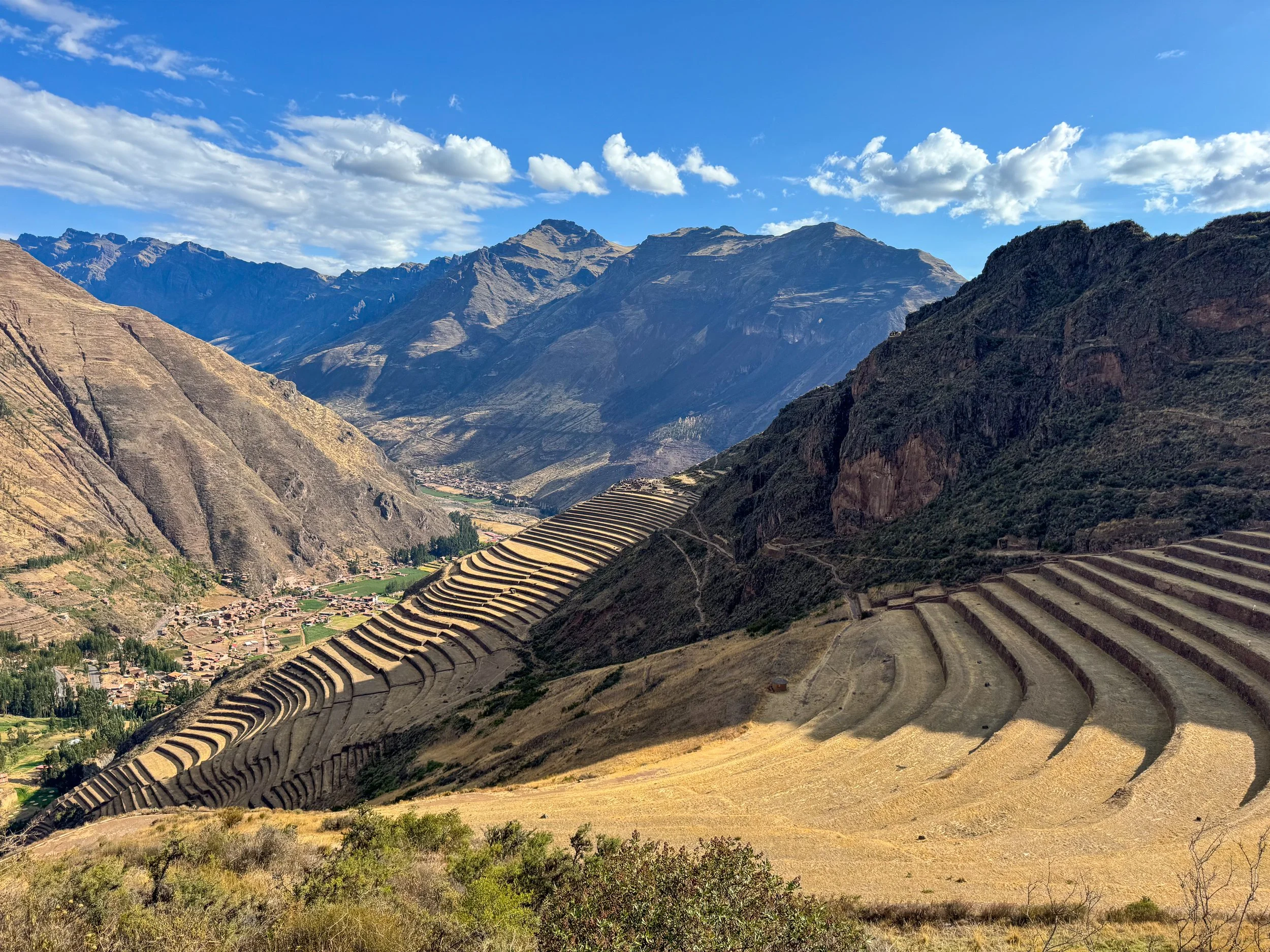
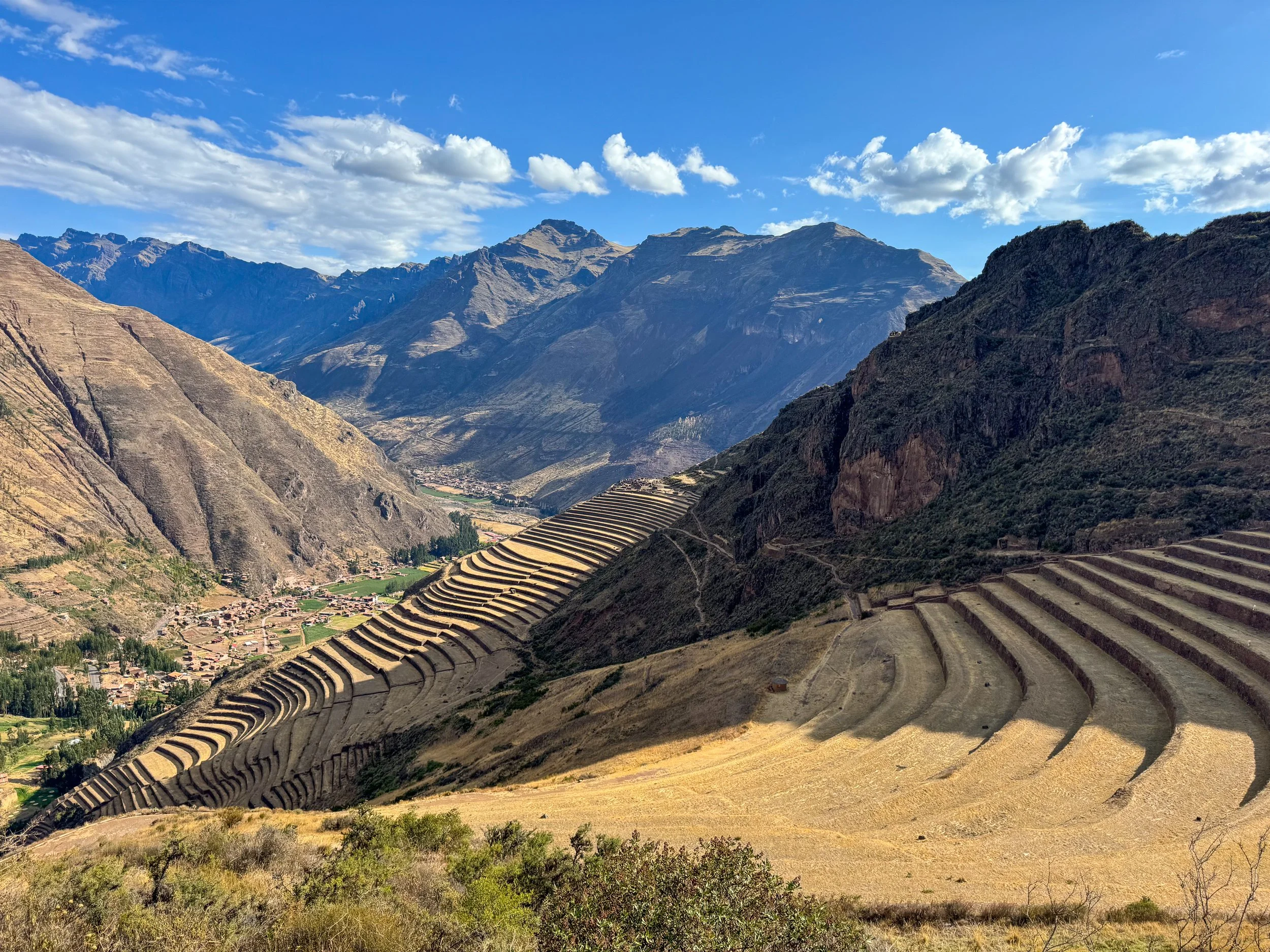
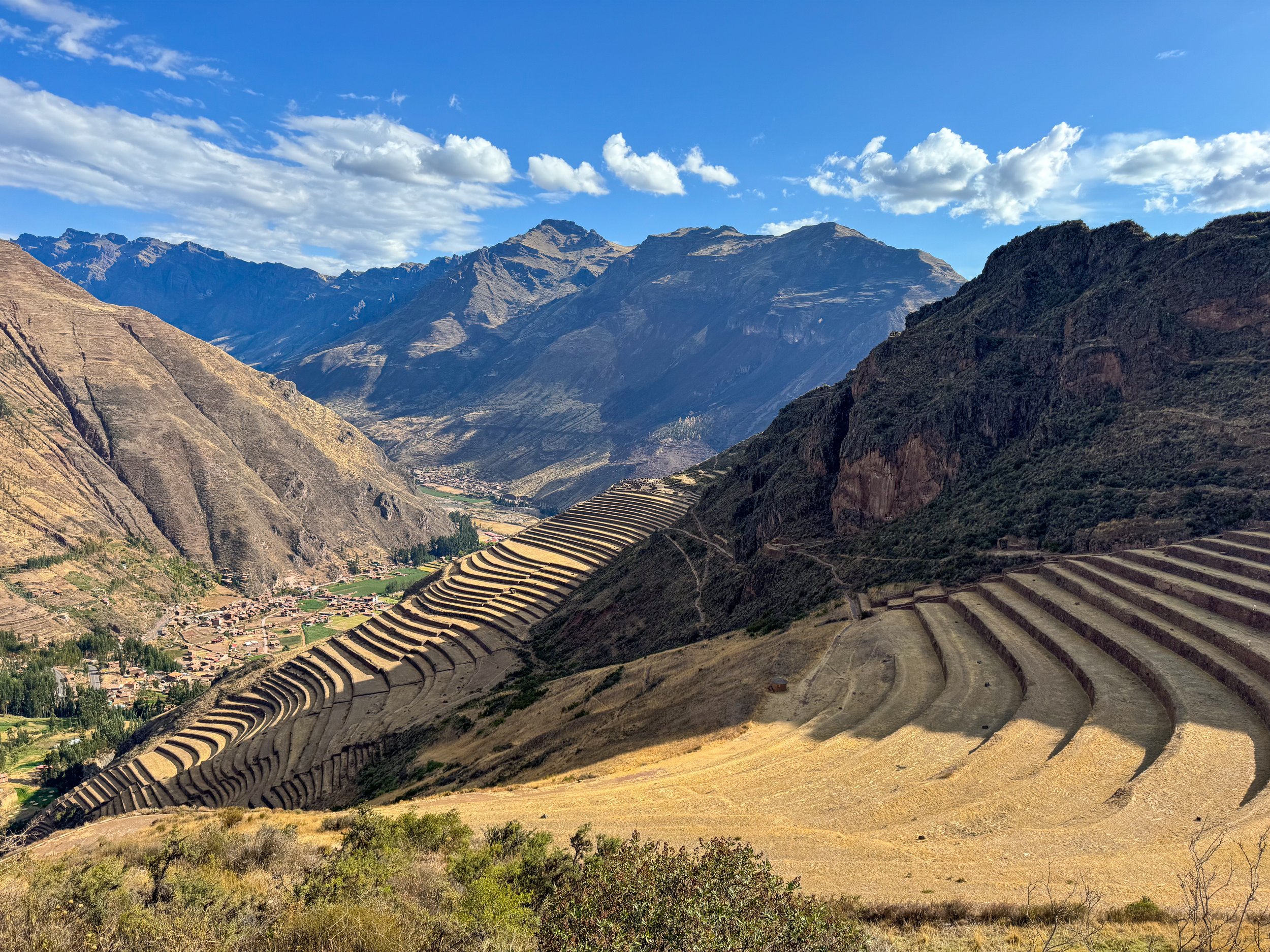
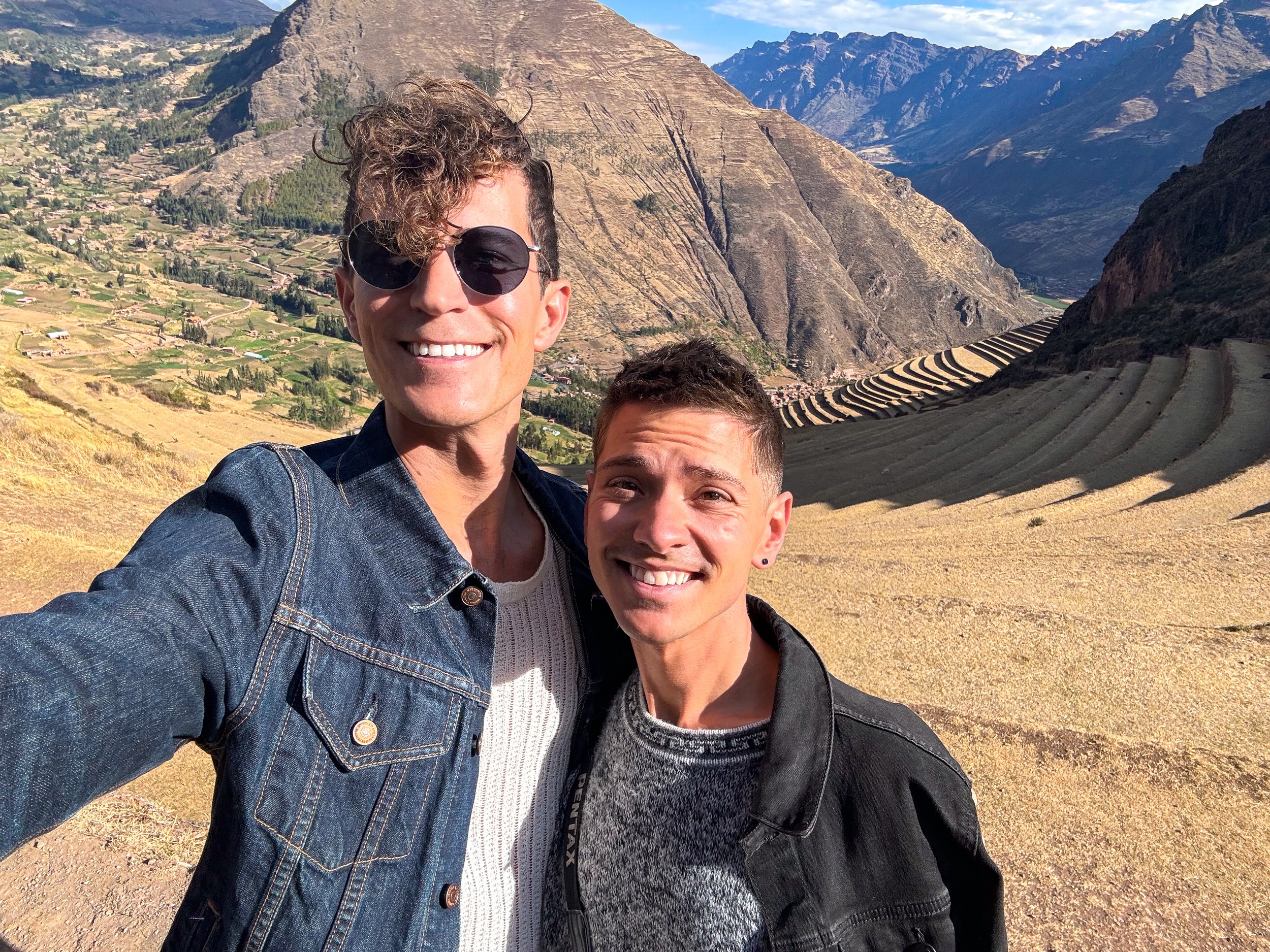
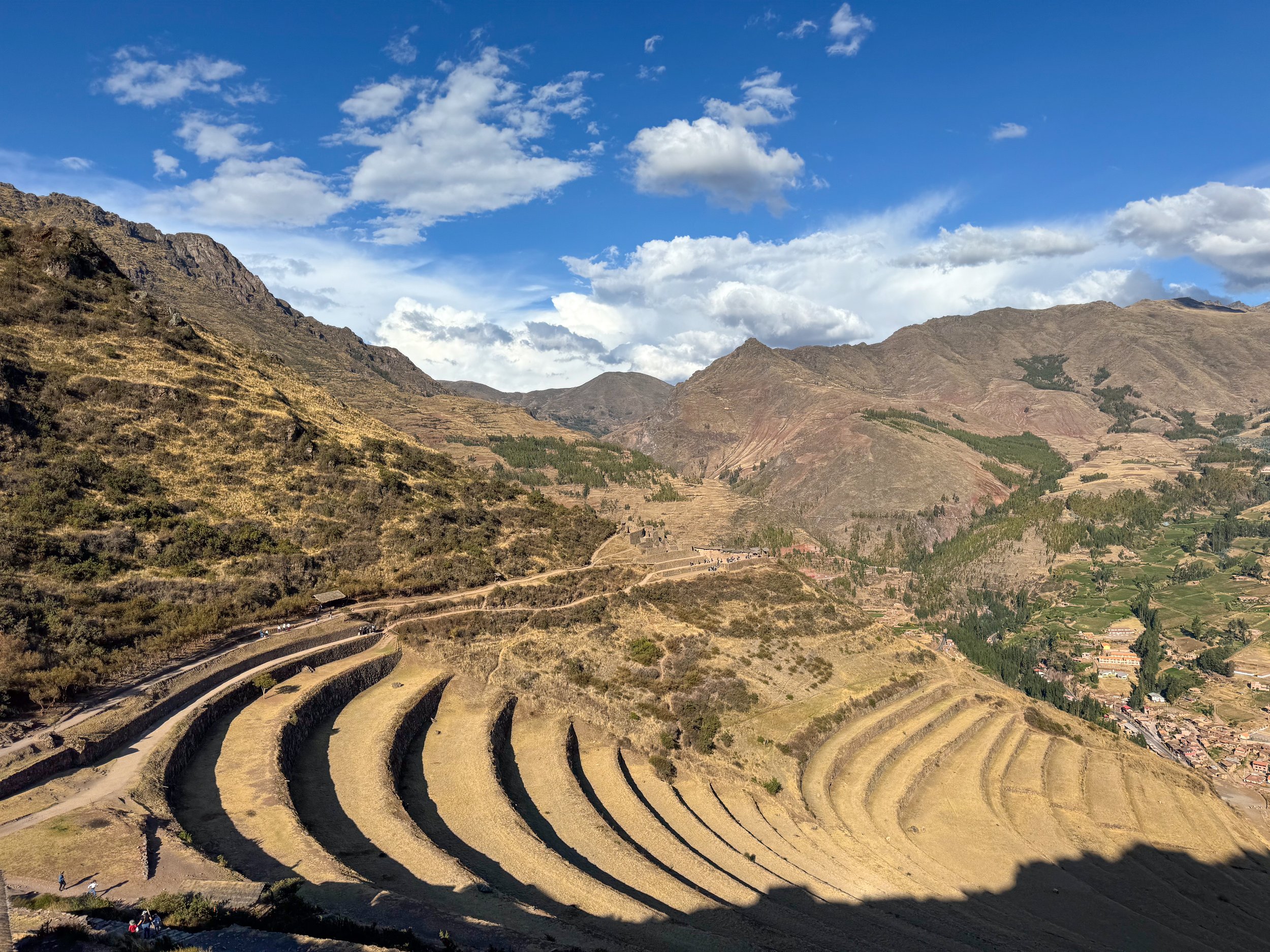
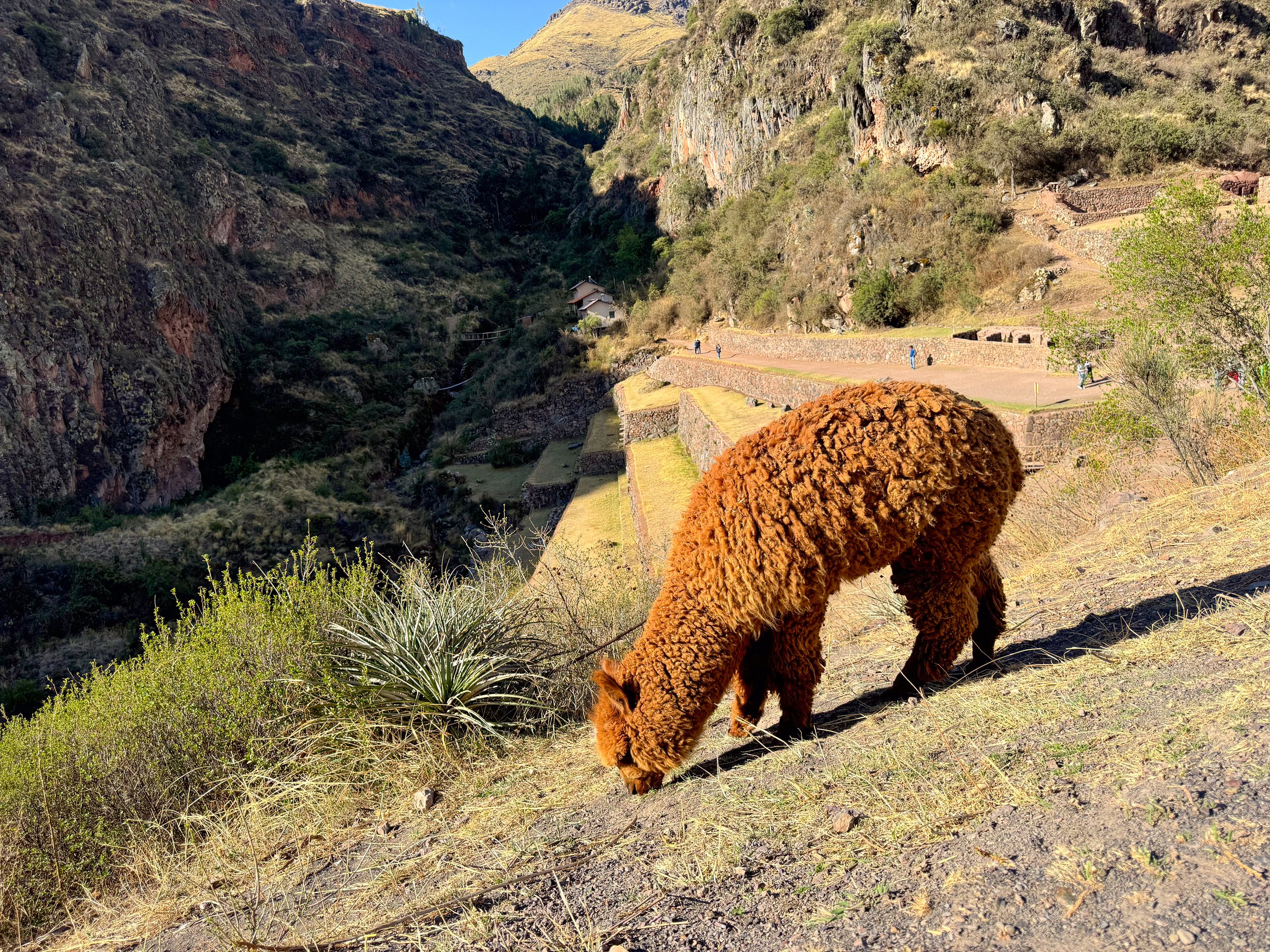
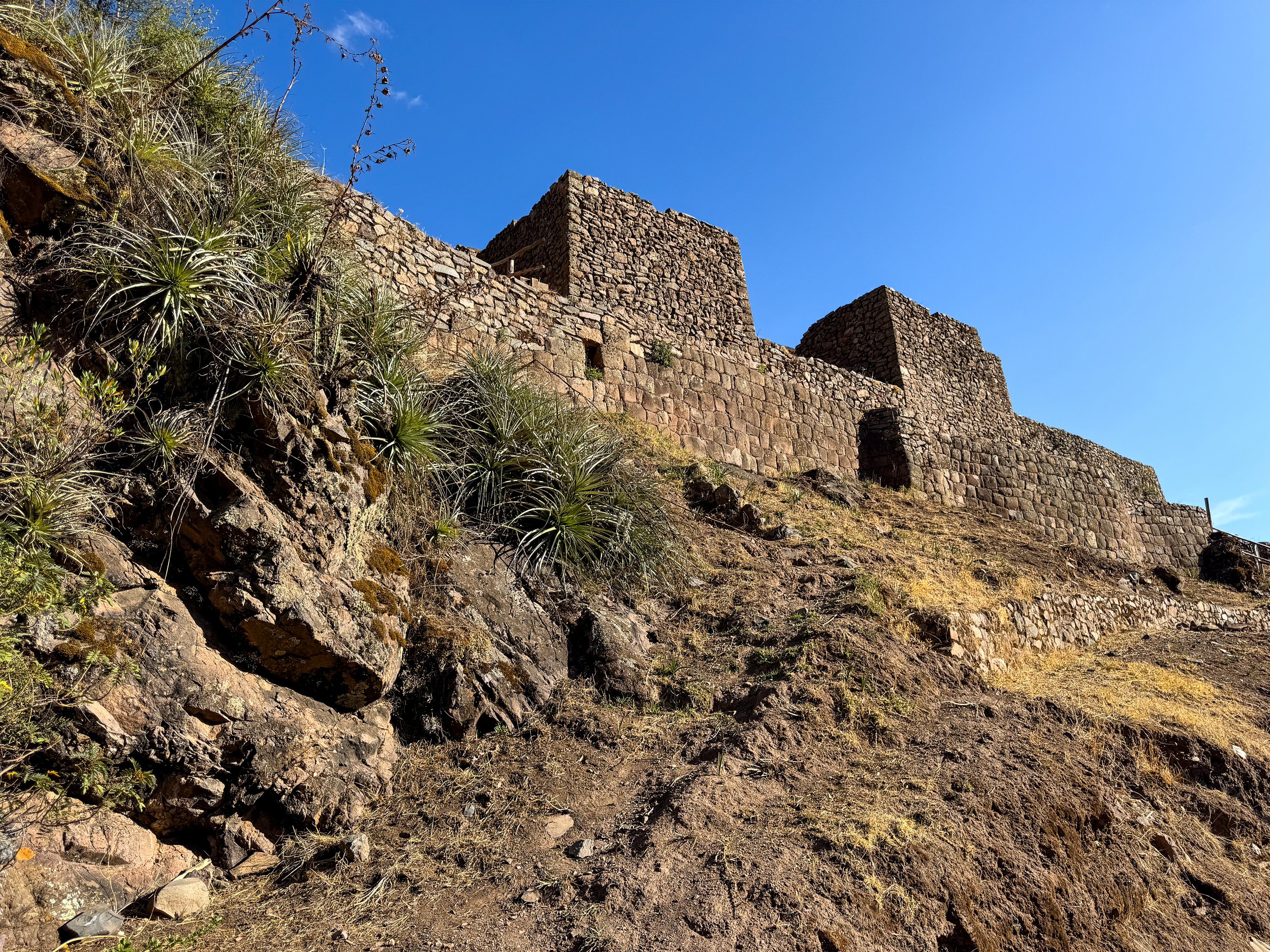
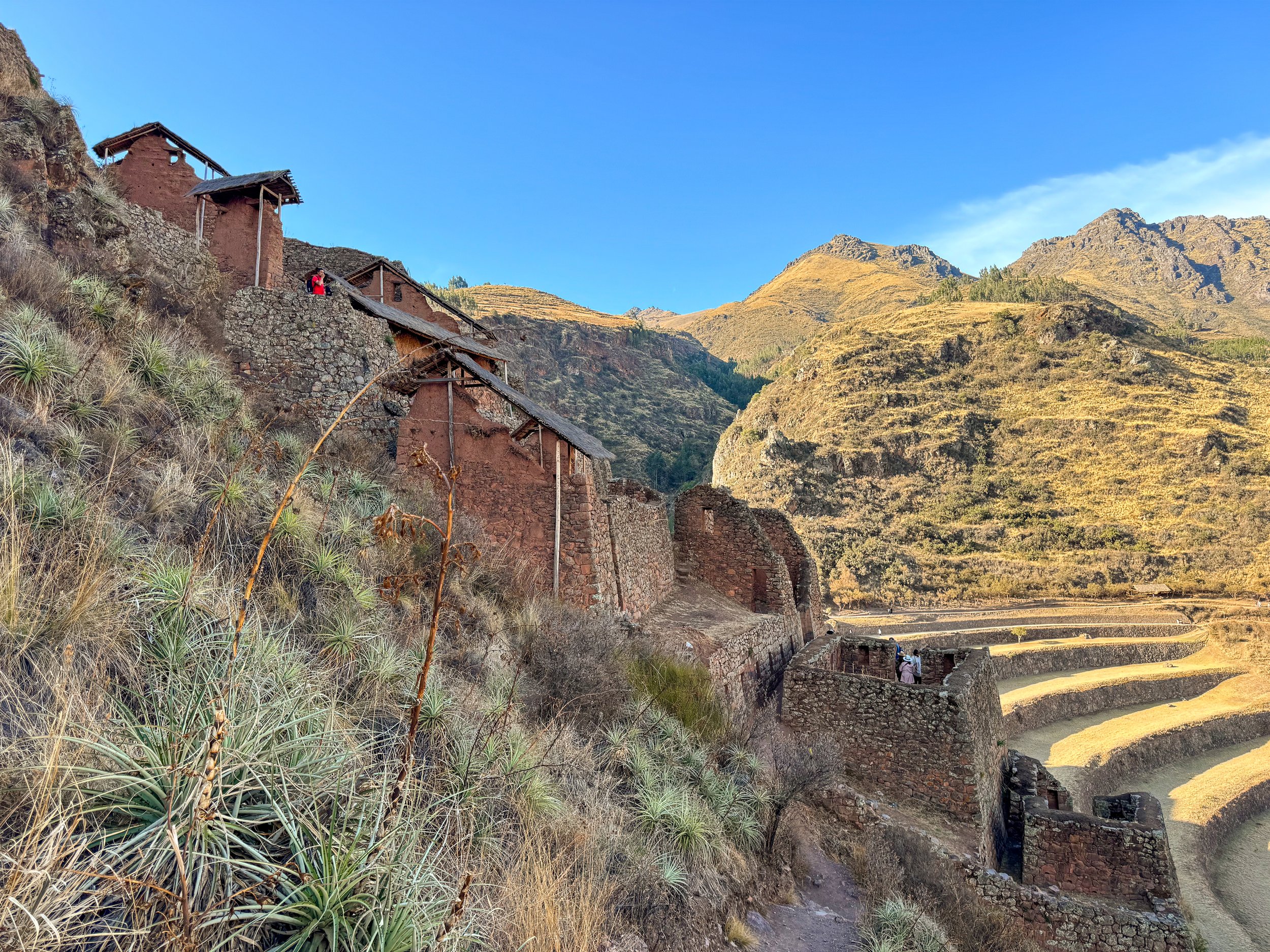
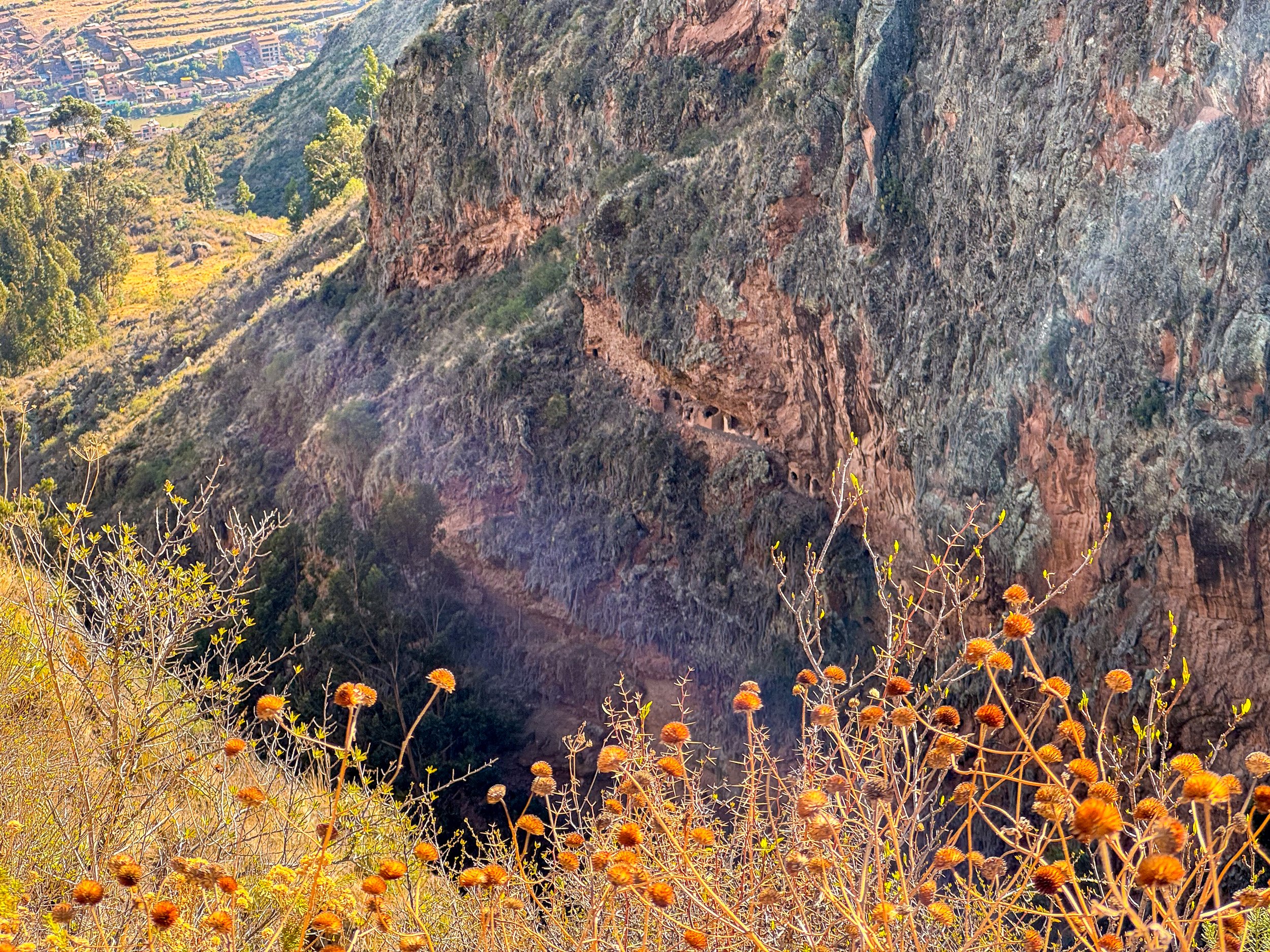
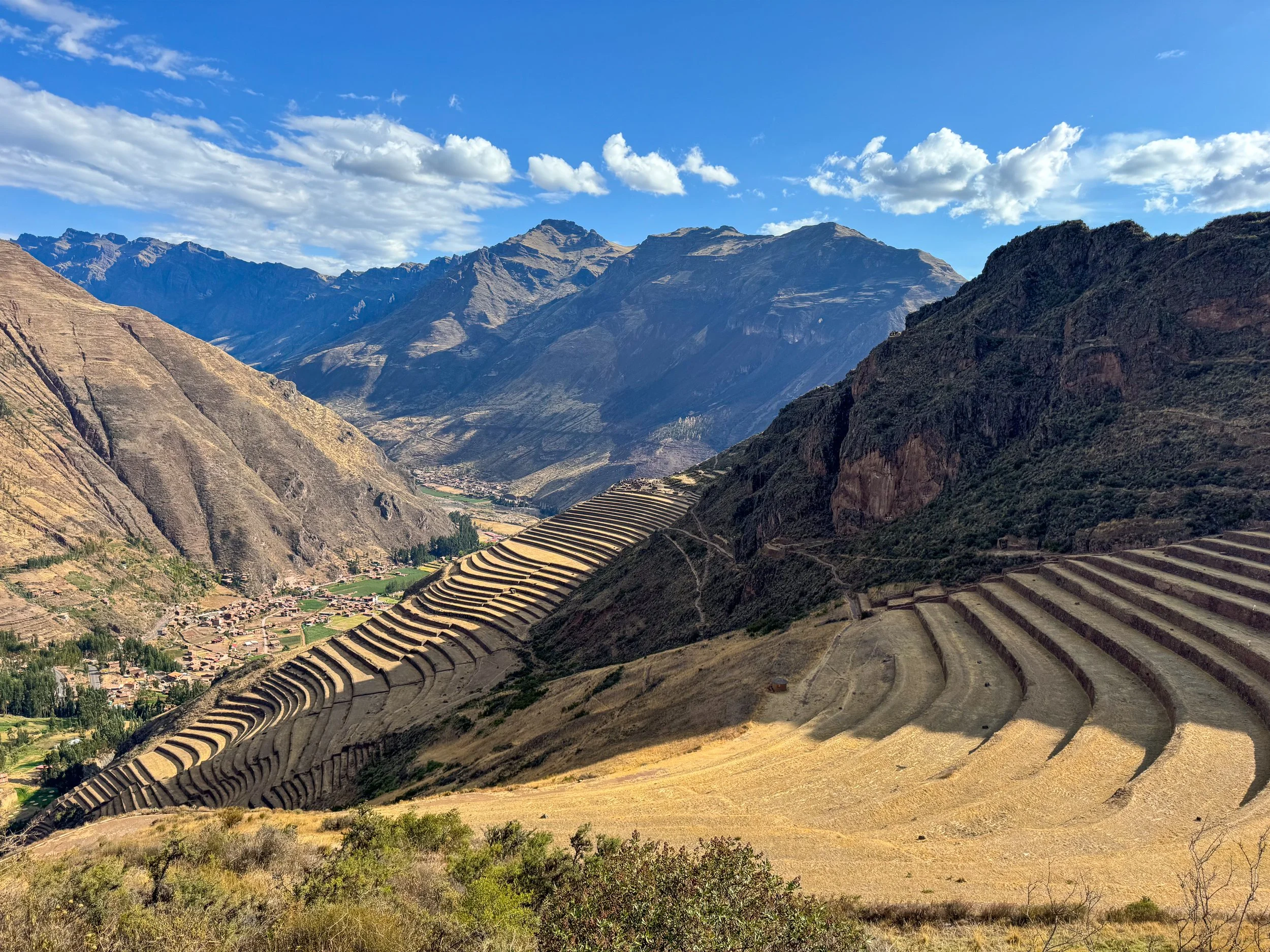
The Pisac Ruins are home to sprawling agricultural terraces covering the hillside leading to the ruins of a mountaintop city with a maze of stone buildings and staircases leading to its summit overlooking the valley. Along the terraces, llamas and alpacas roam free feeding on the grass. Behind the ancient city is a cemetery built into the vertical cliff with holes where the Incas would bury their dead.
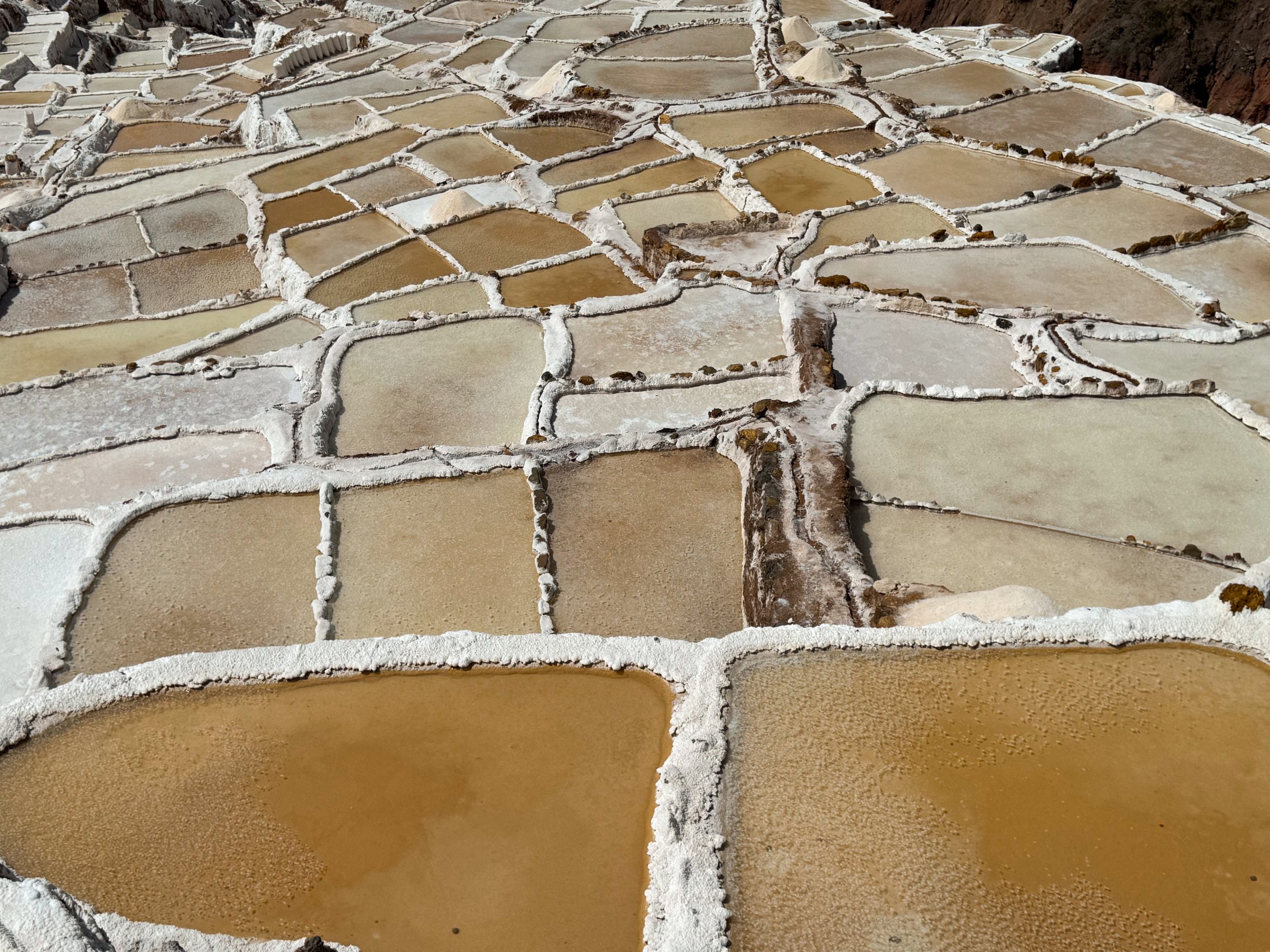
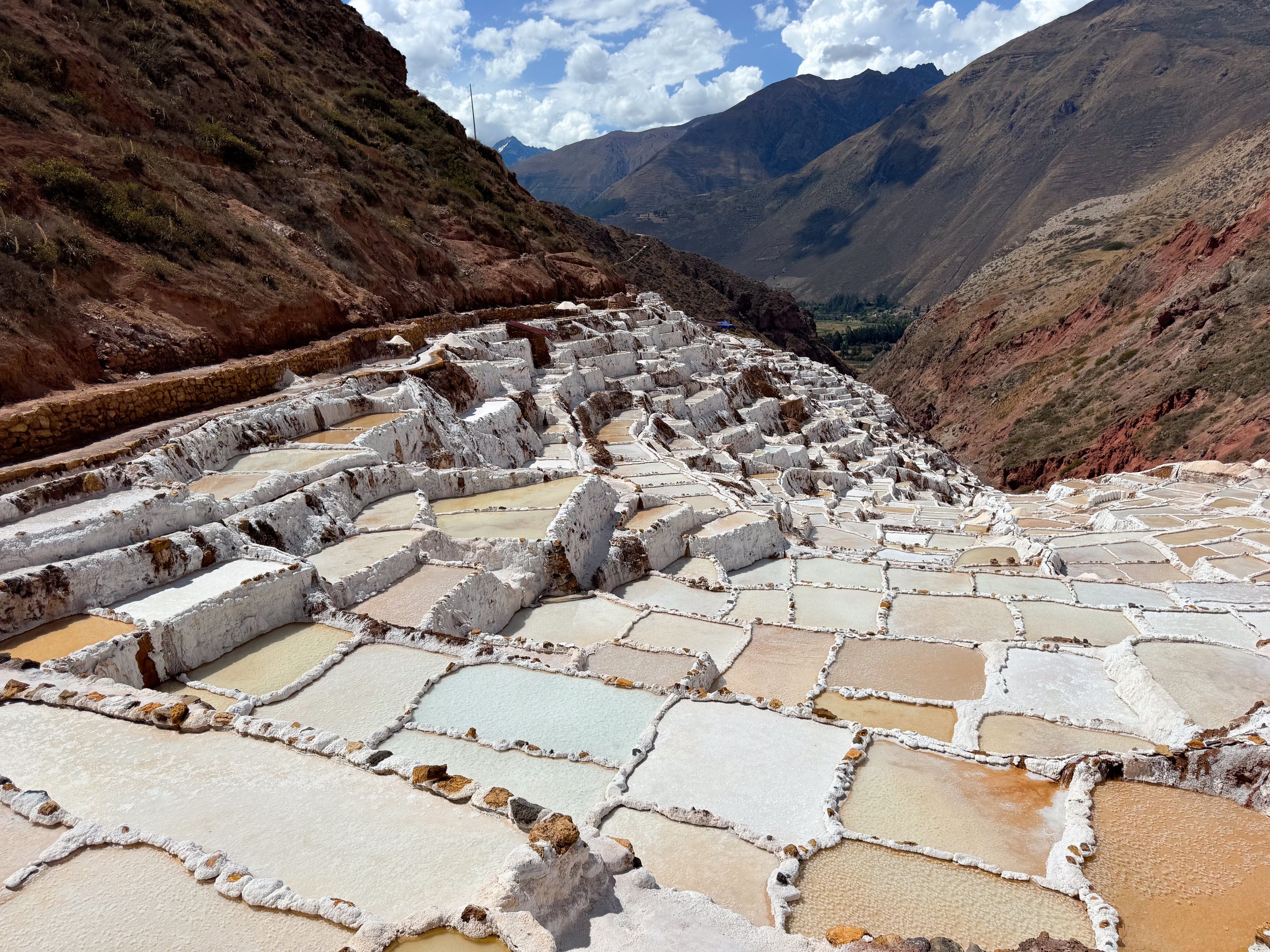
Salineras de Maras
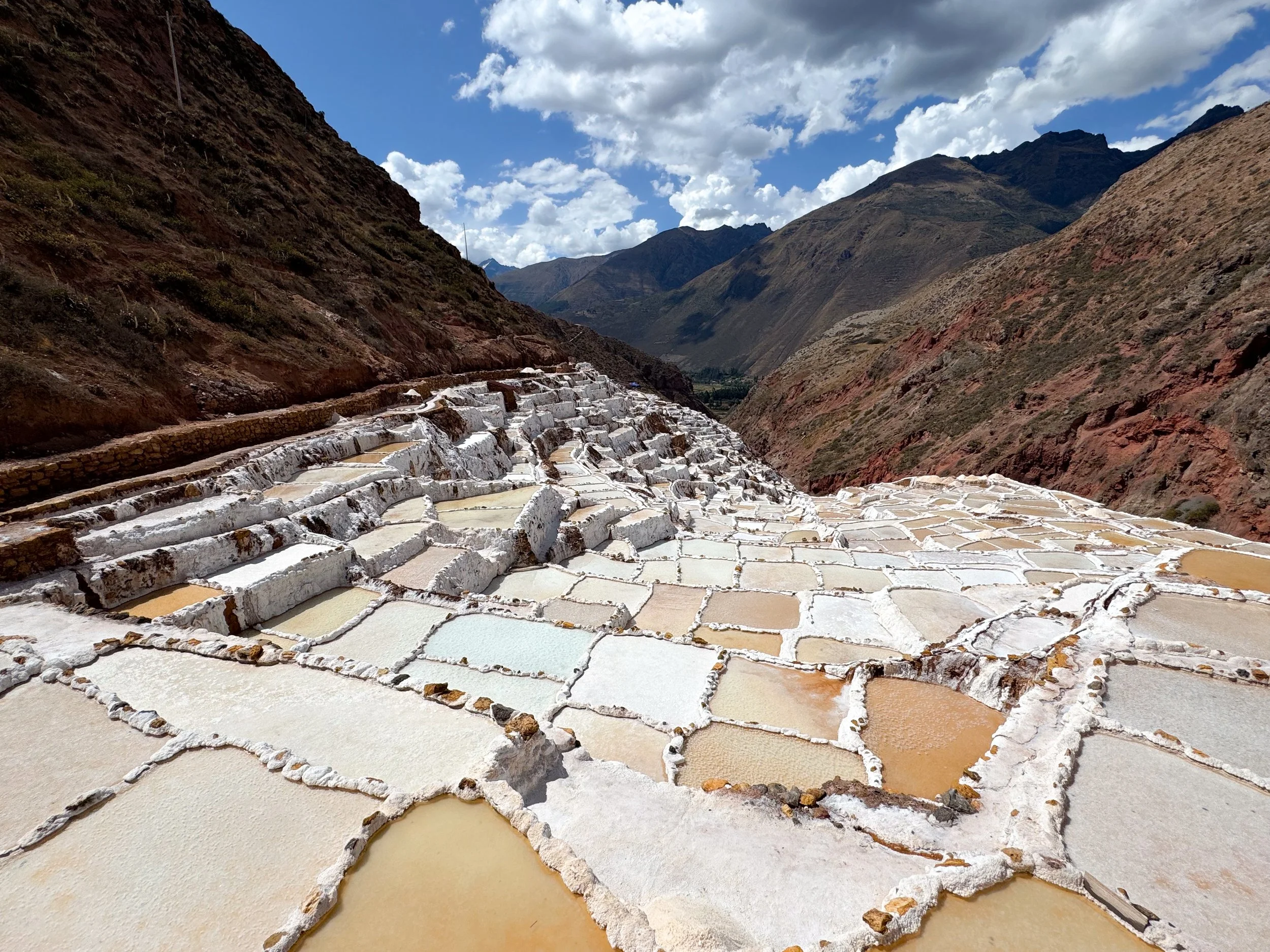
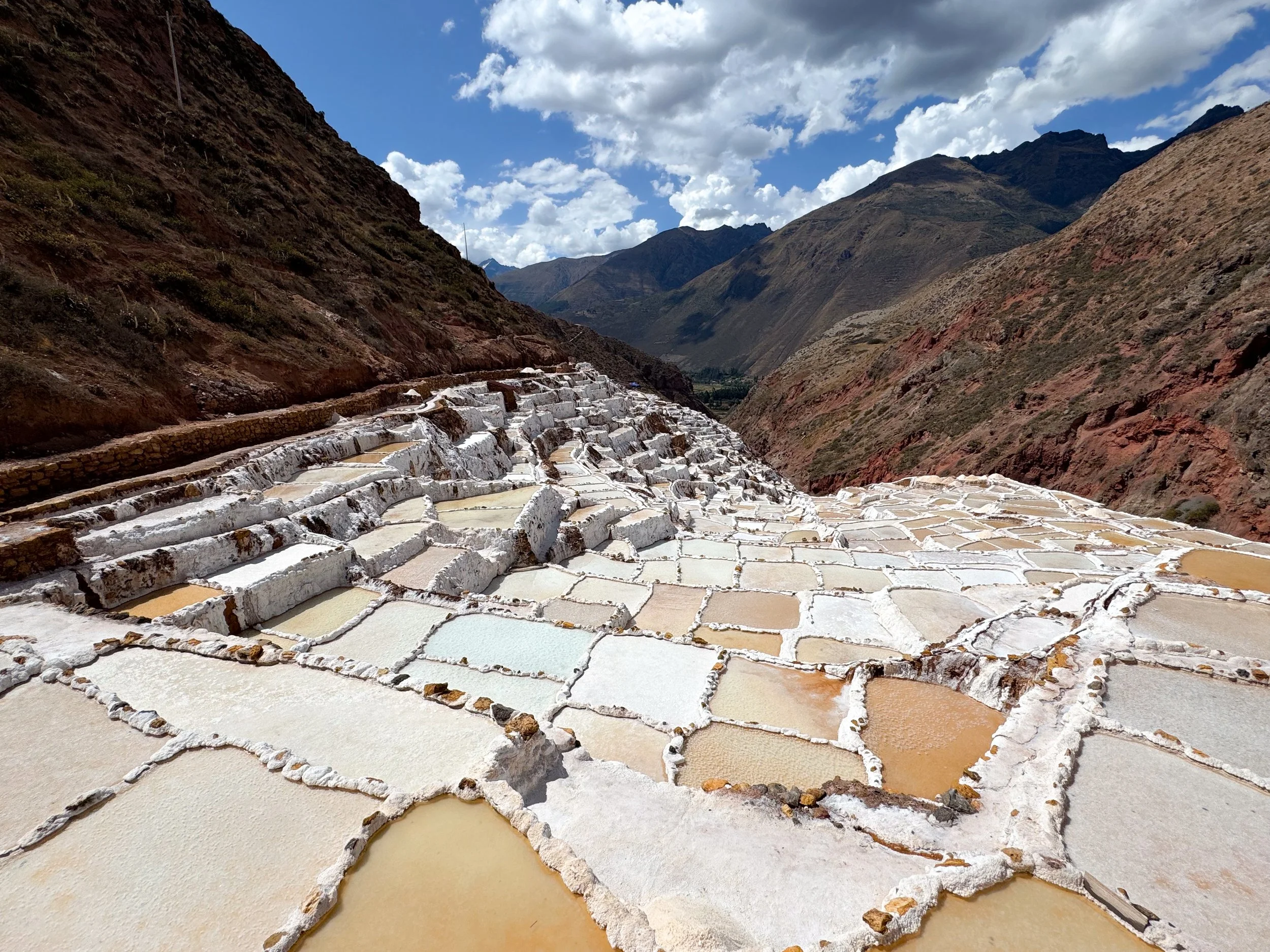
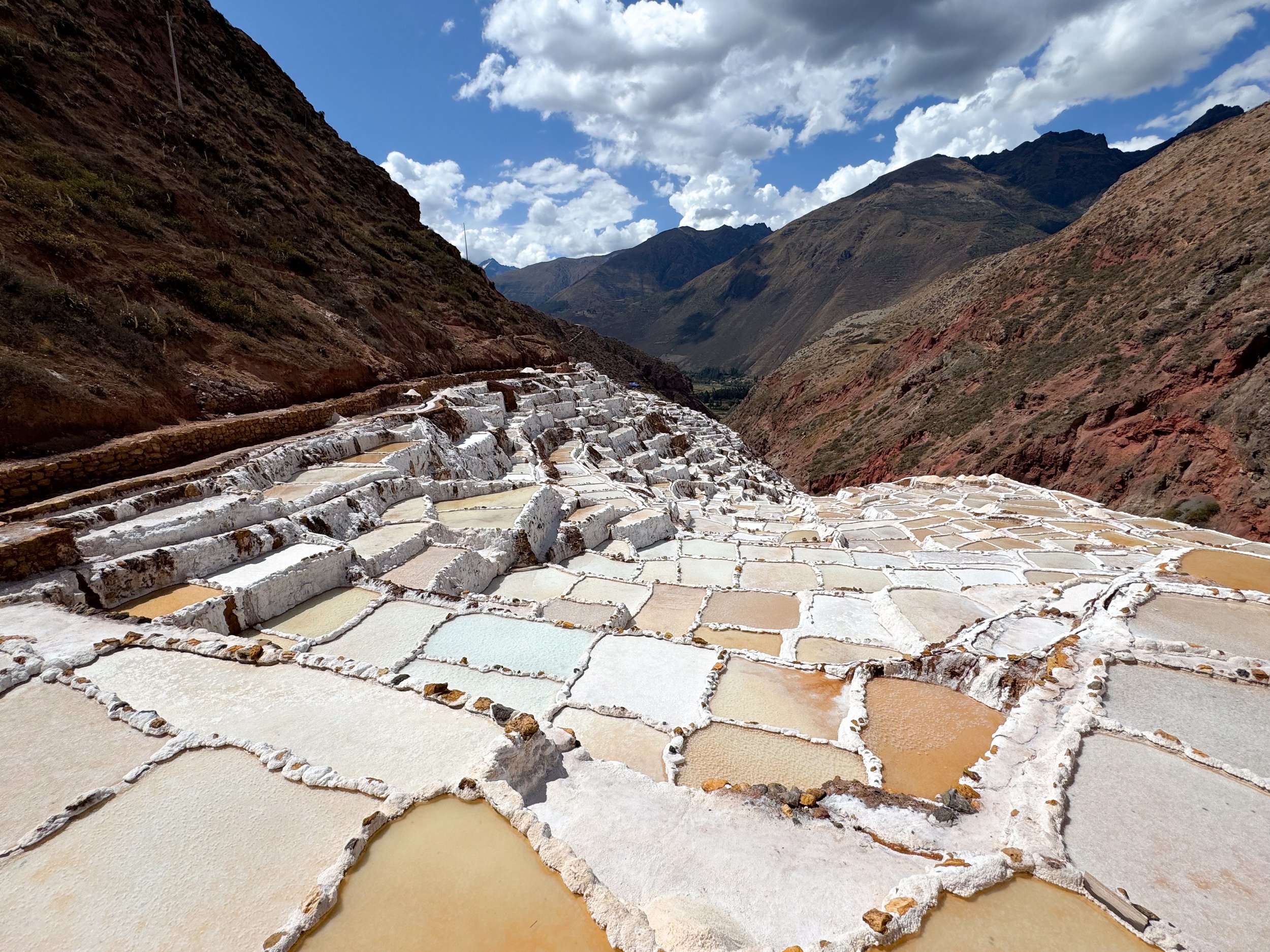
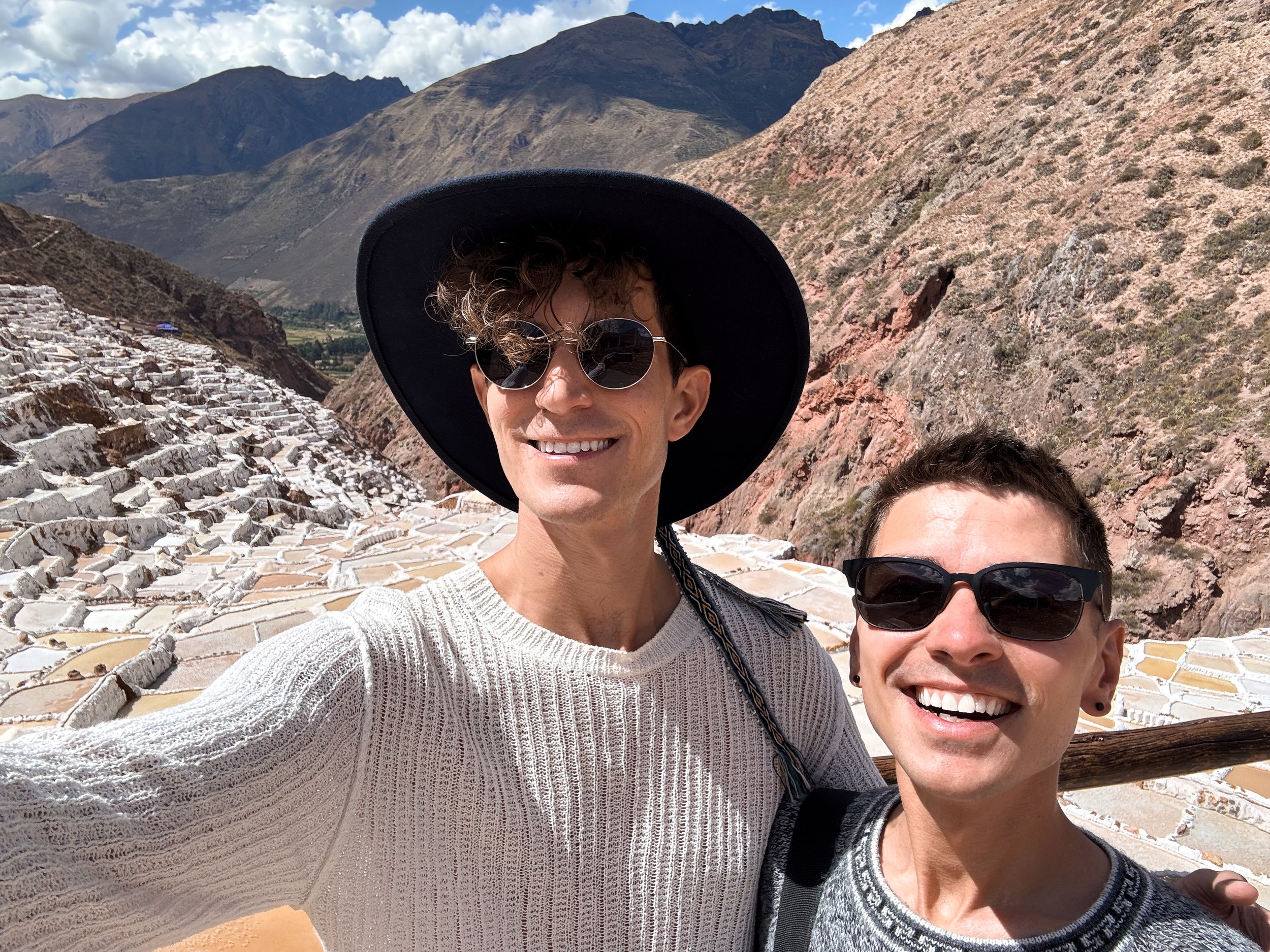
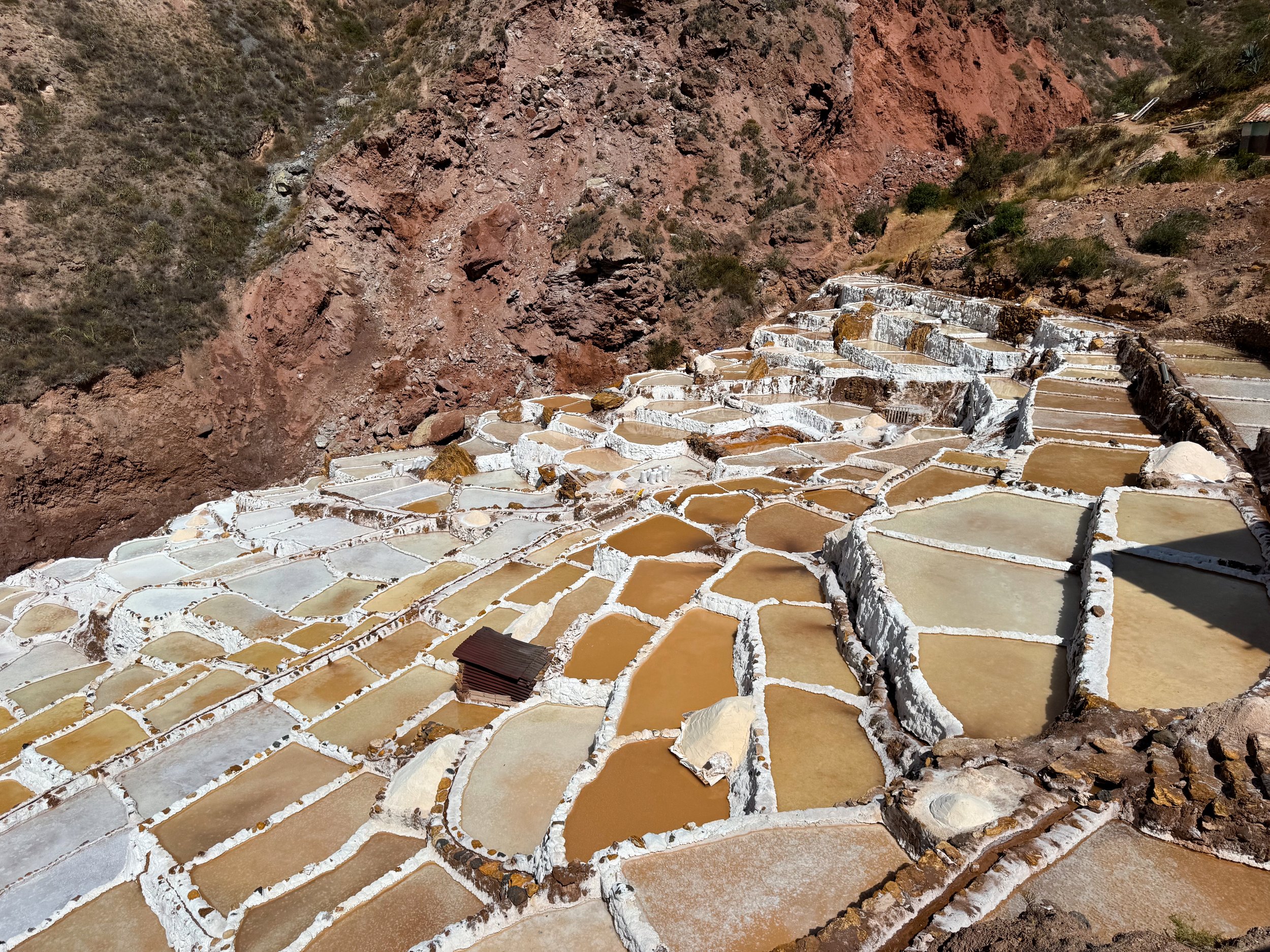
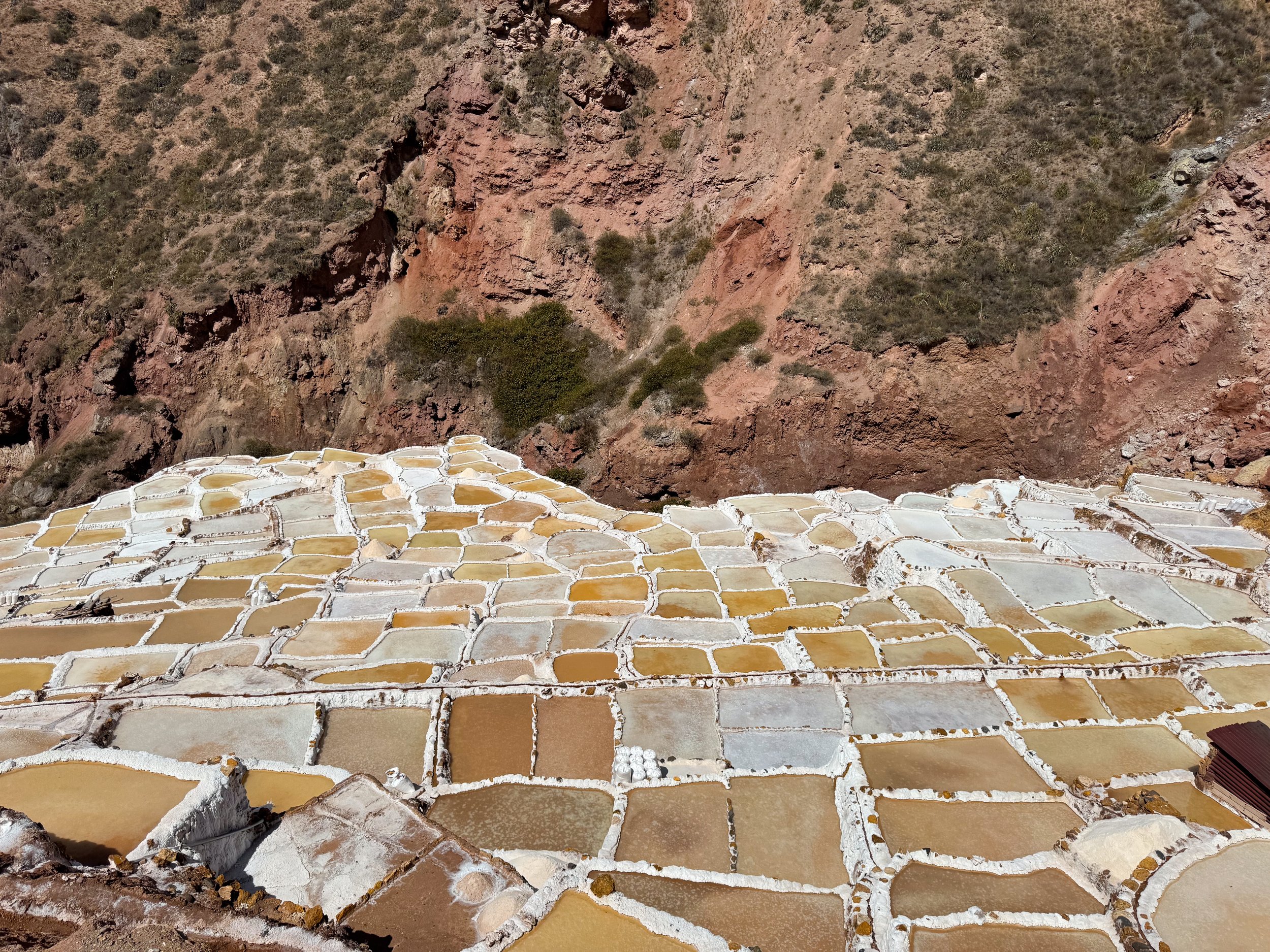
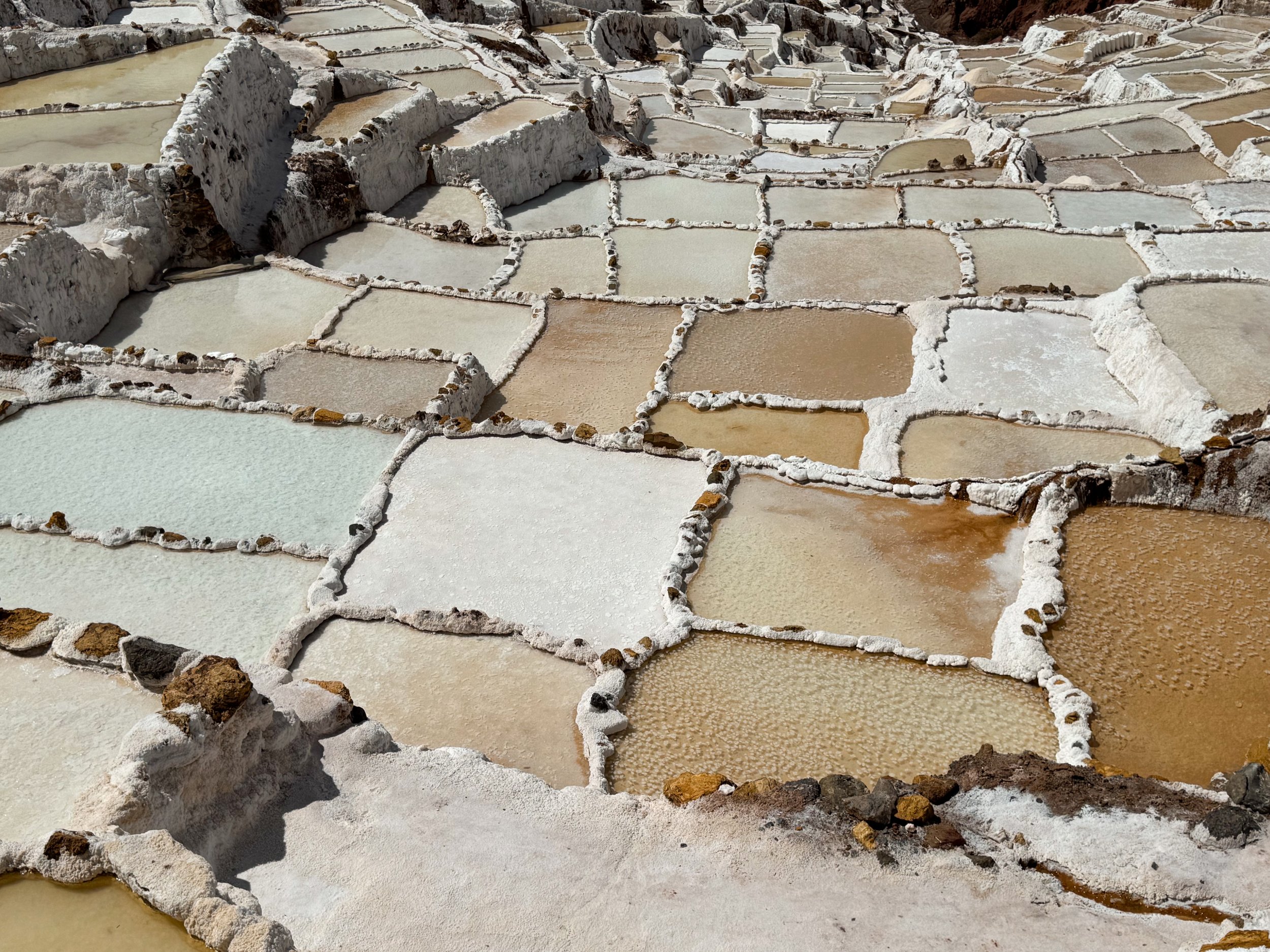
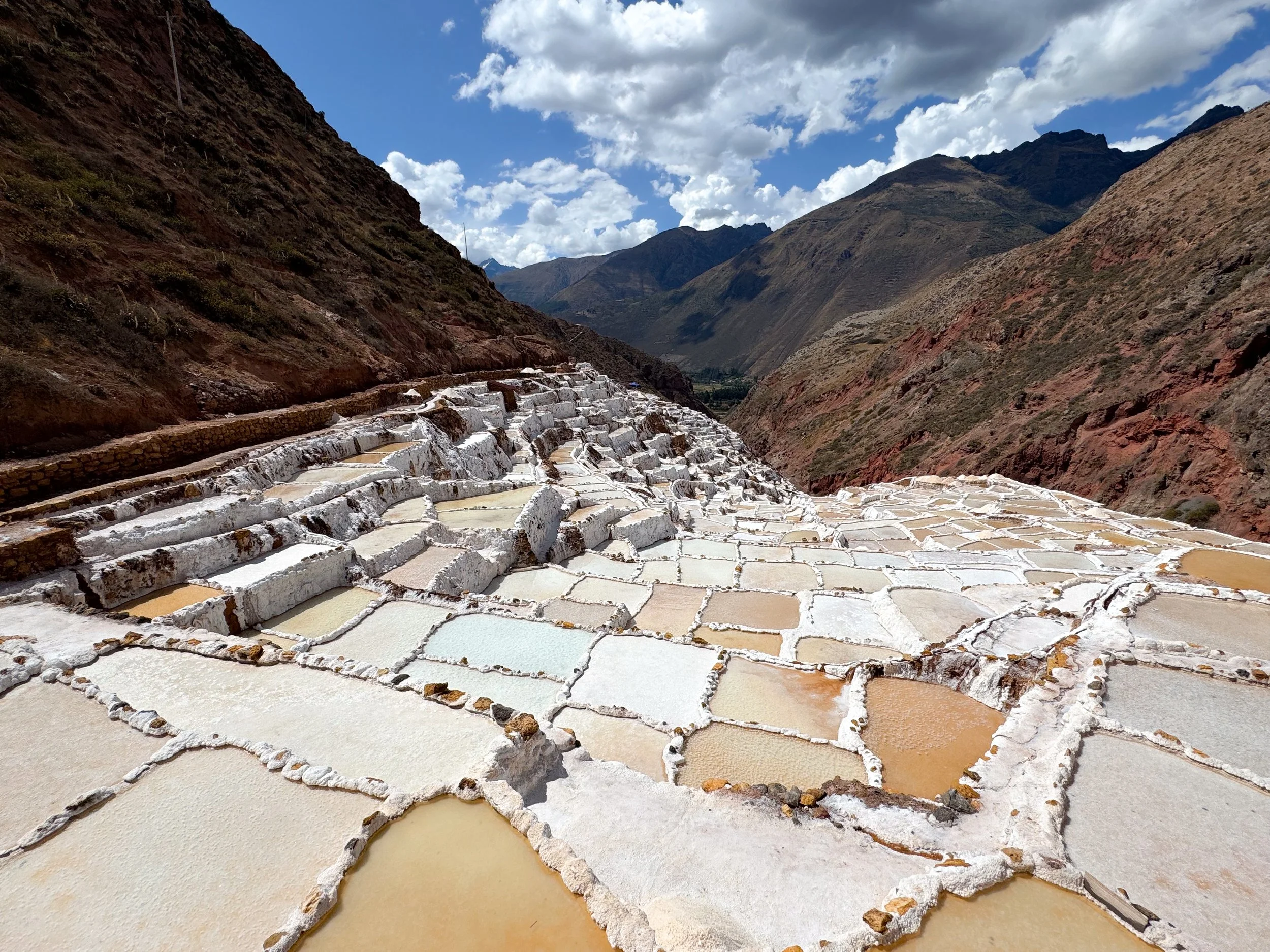
Salineras de Maras is a series of terraced salt pools ranging in color from white to light blue, beige and brown with thin layers of salty spring fed water covering their surfaces. Many of the terraces predate the Incans and are still in use for harvesting salt. There are routes with overlooks above the terraces to admire their beauty and structure.
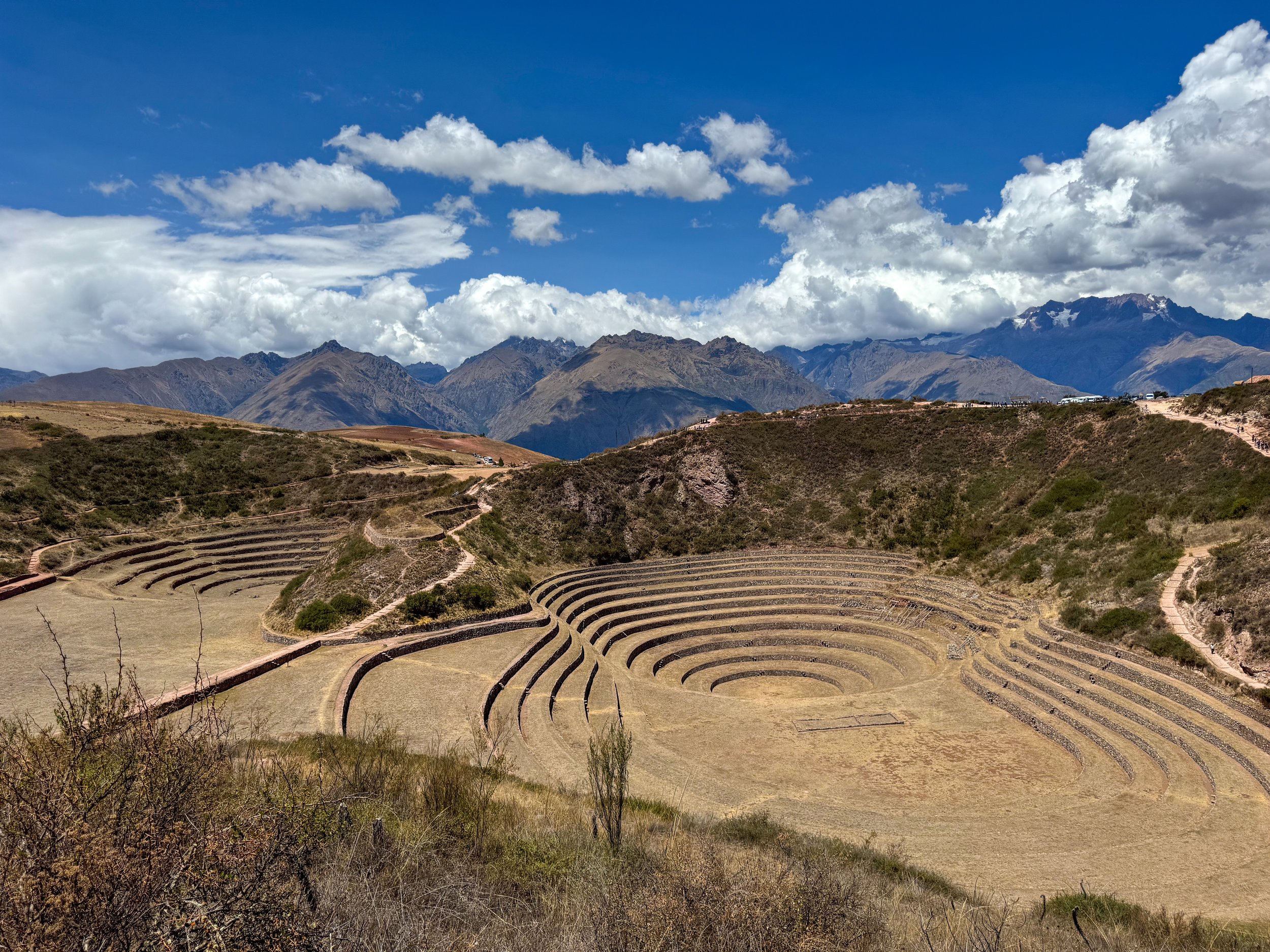
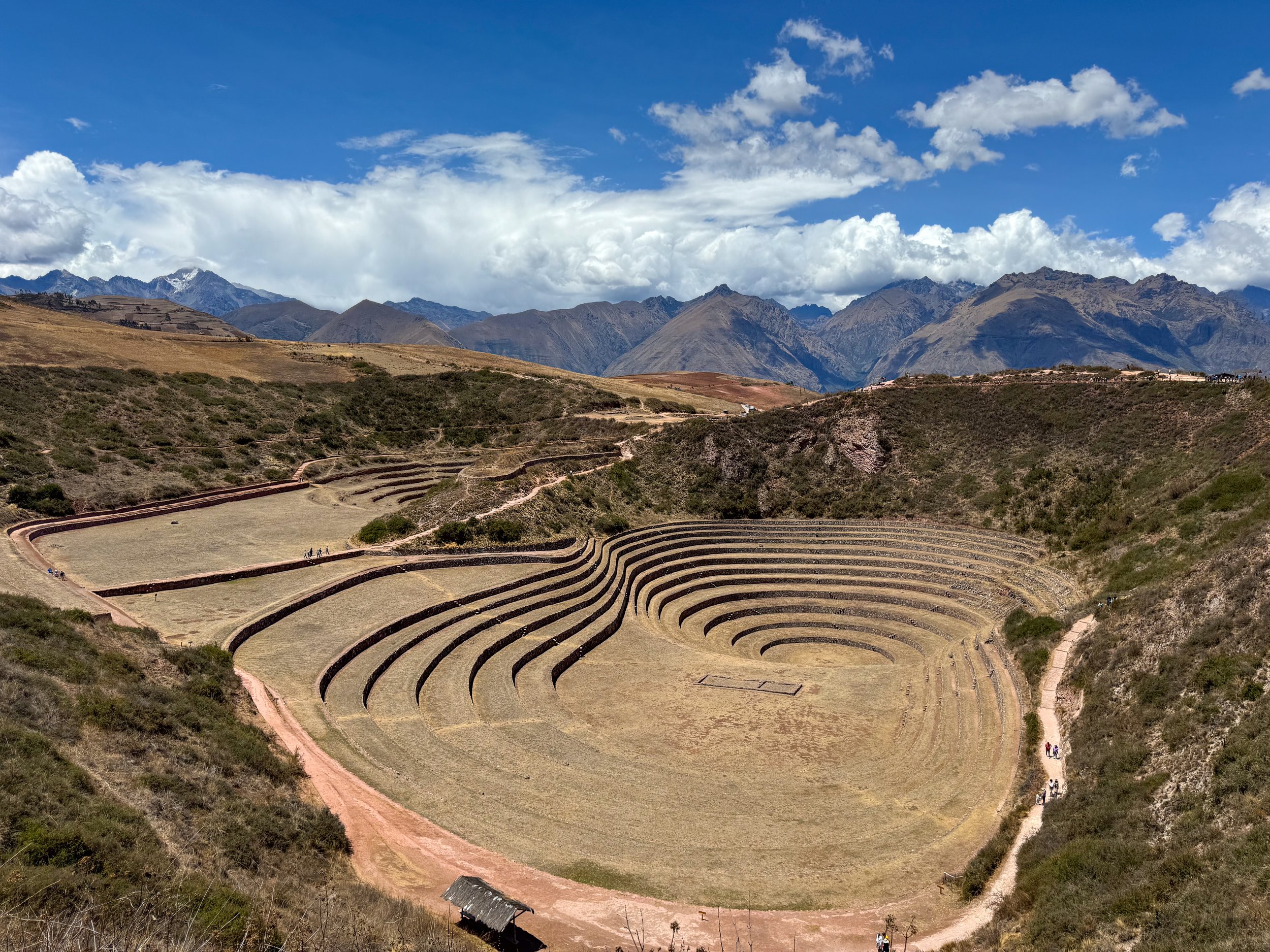
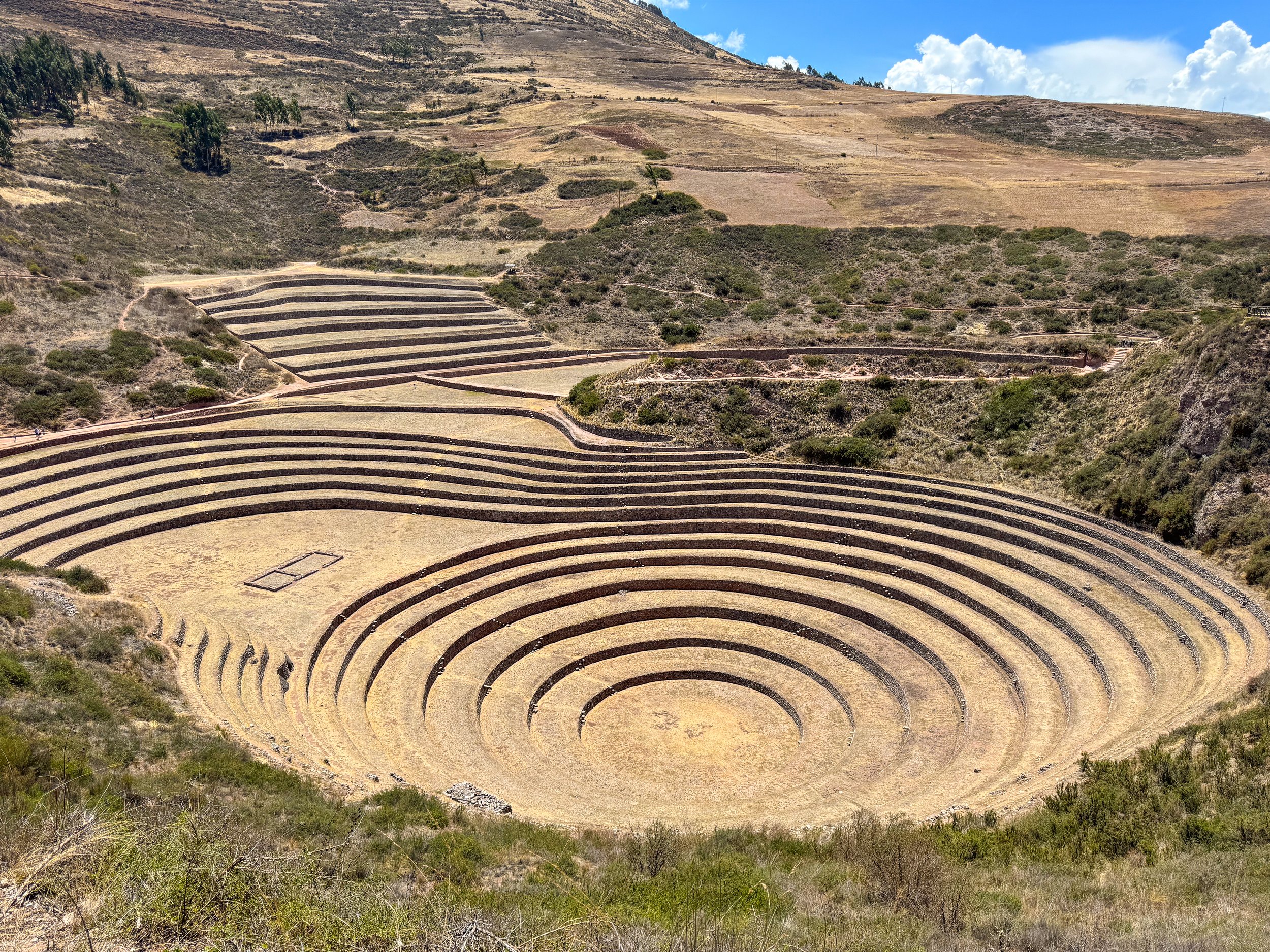
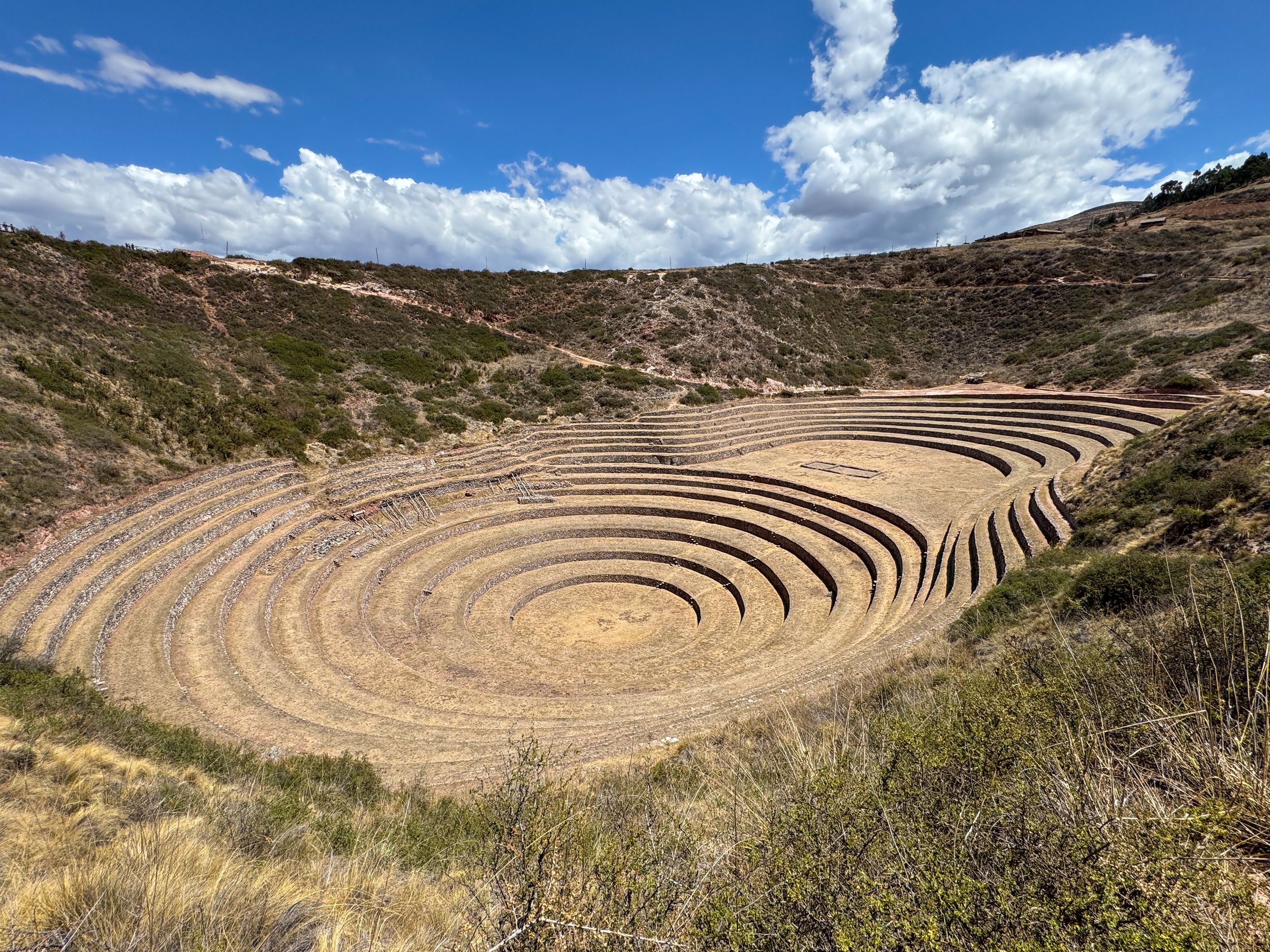
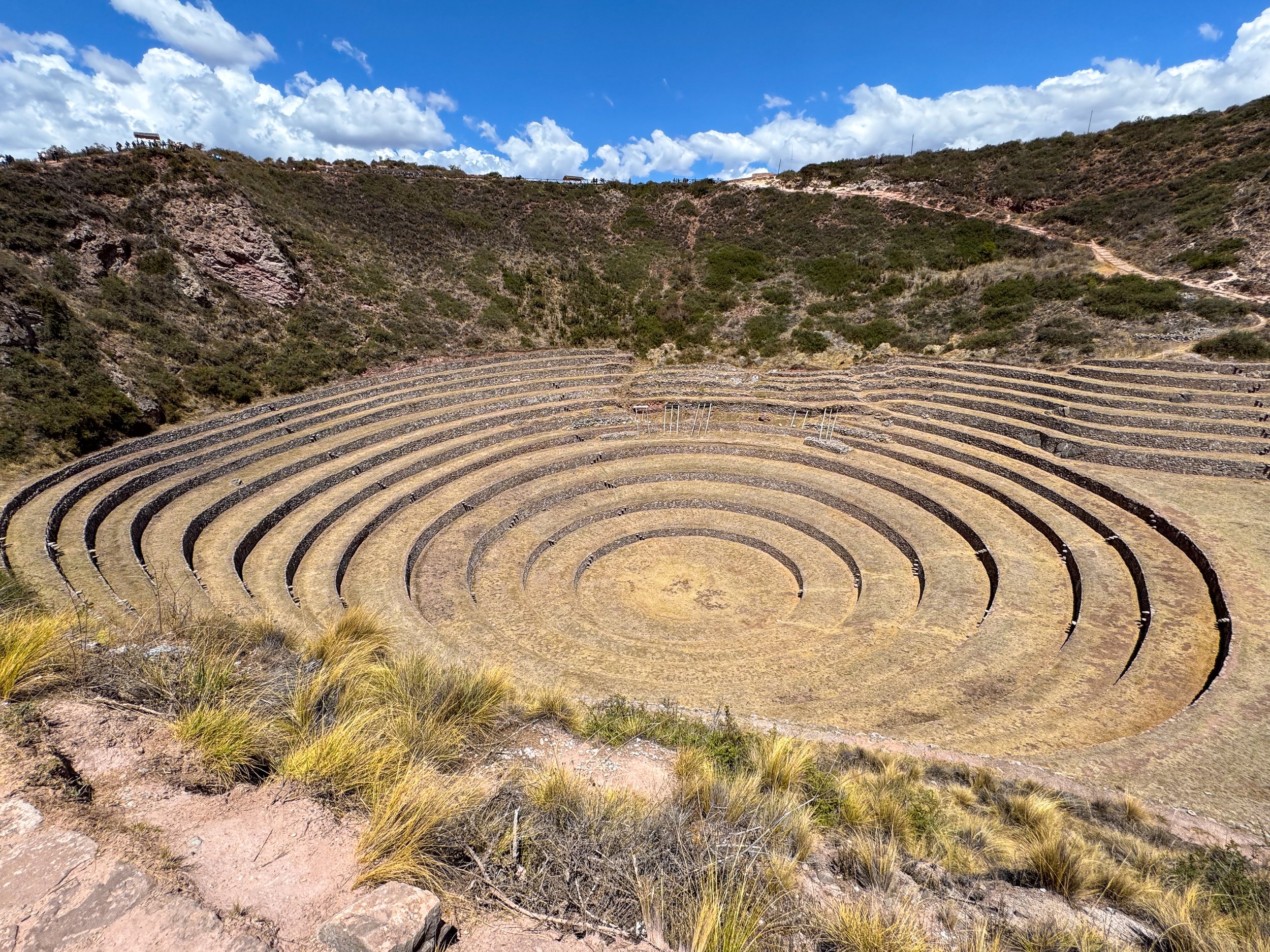
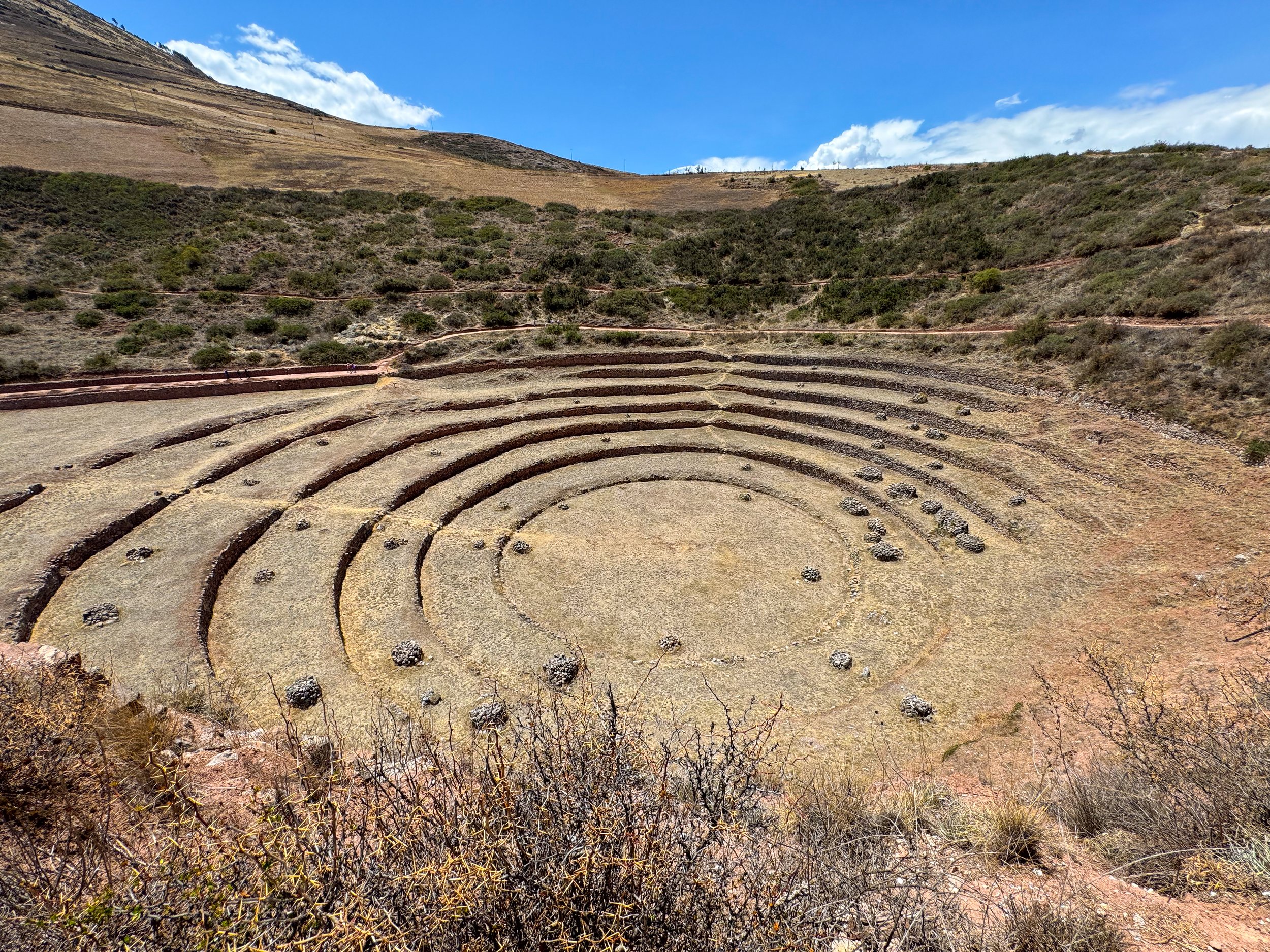
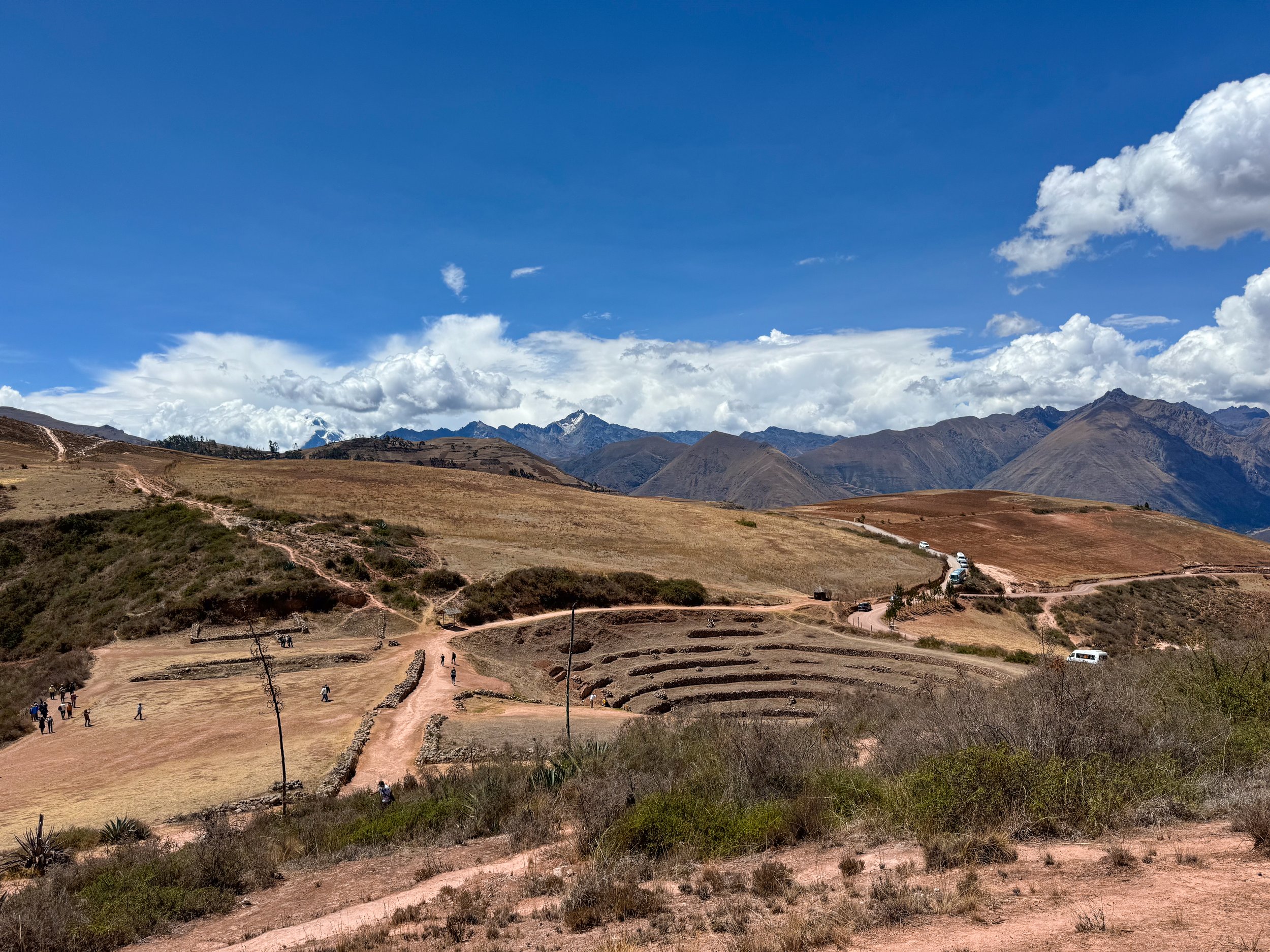
Moray Terraces
The Moray Terraces are a series of circular and organic agricultural terraces built into a mountain valley by the Incans to test crop production. We walked around the terraces, following a series of trails that weave through them with views of the snow covered Andes Mountains in the background. The largest terrace is restored while the two small ones remain ruins.
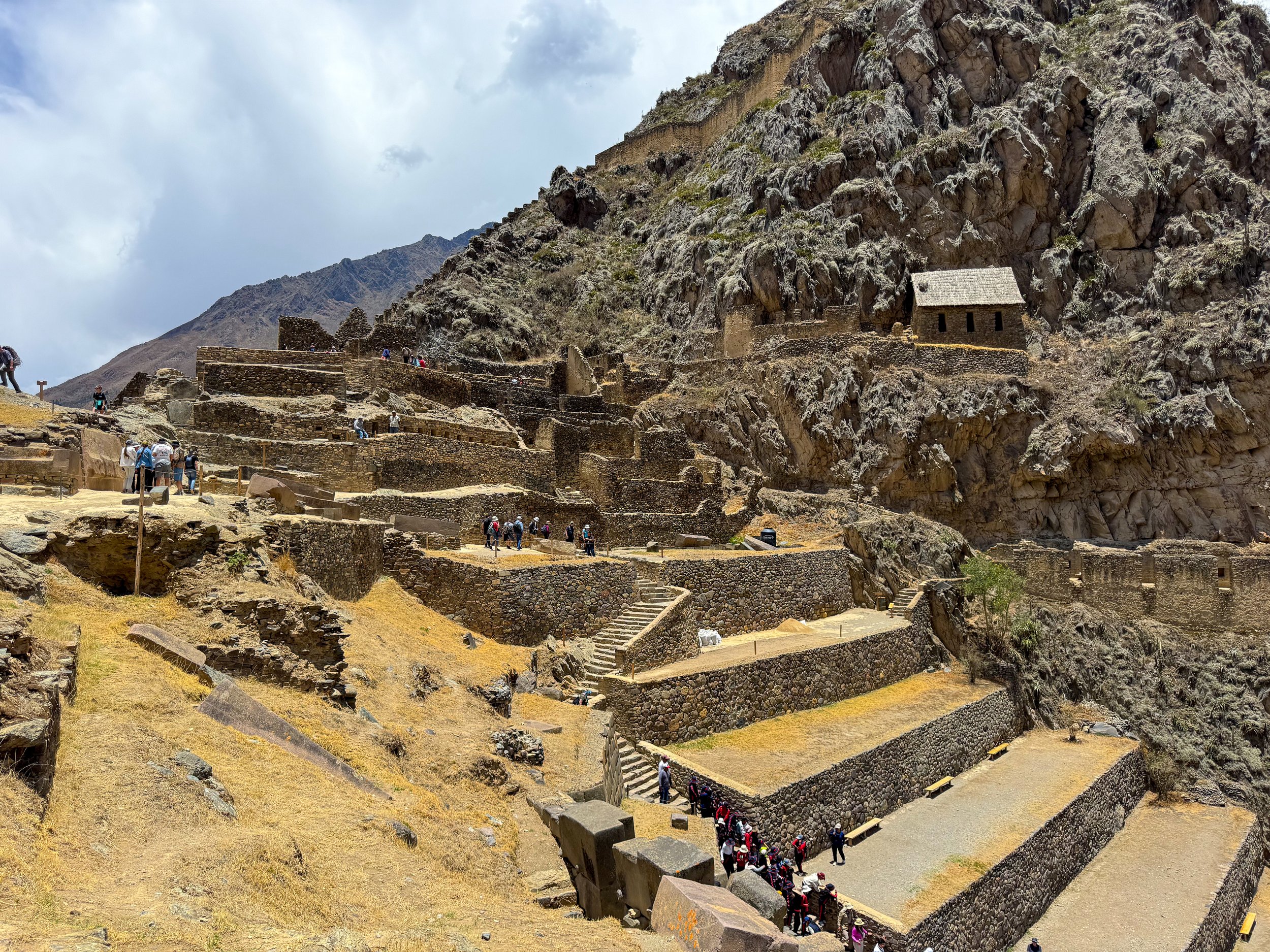
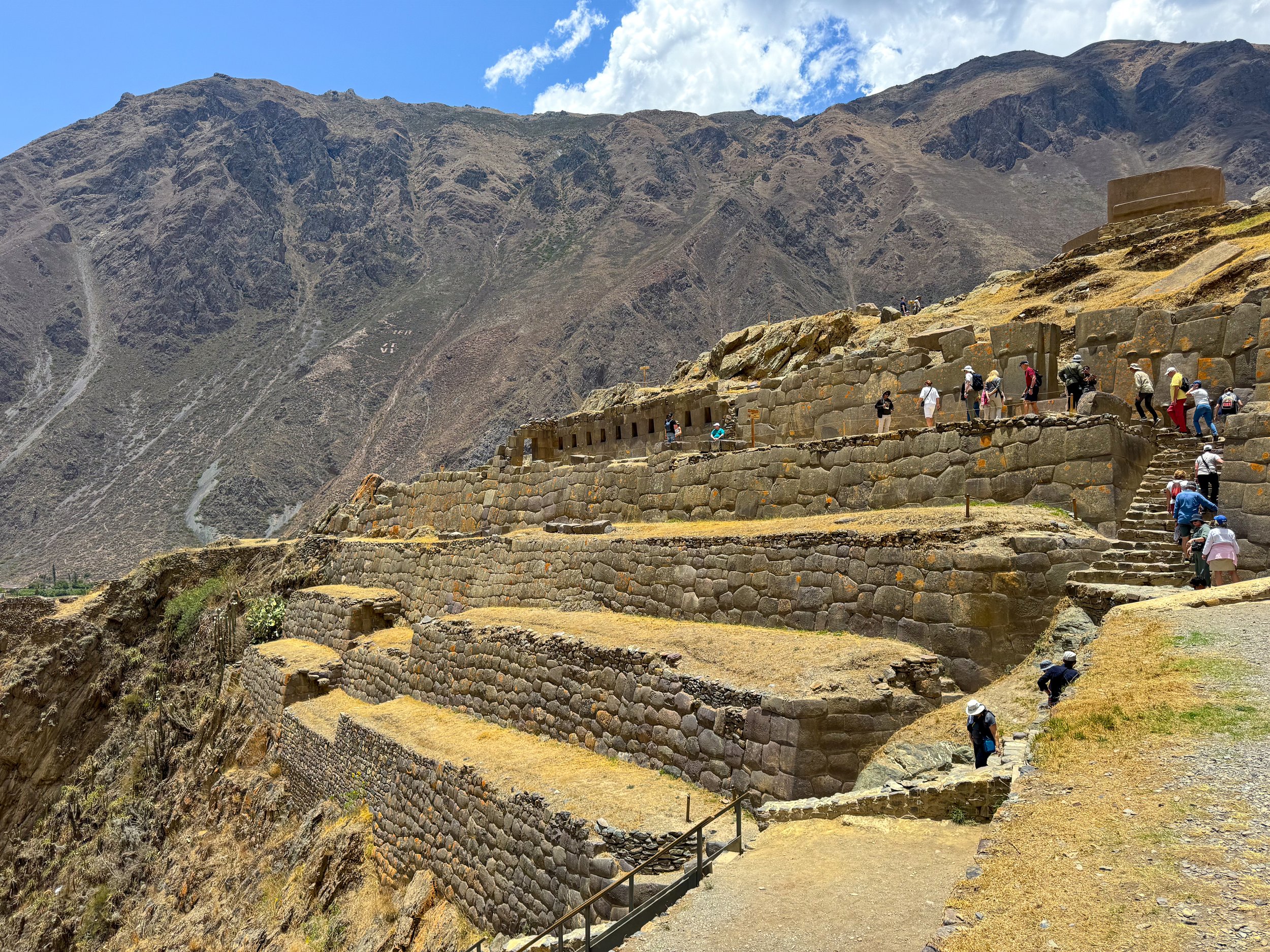
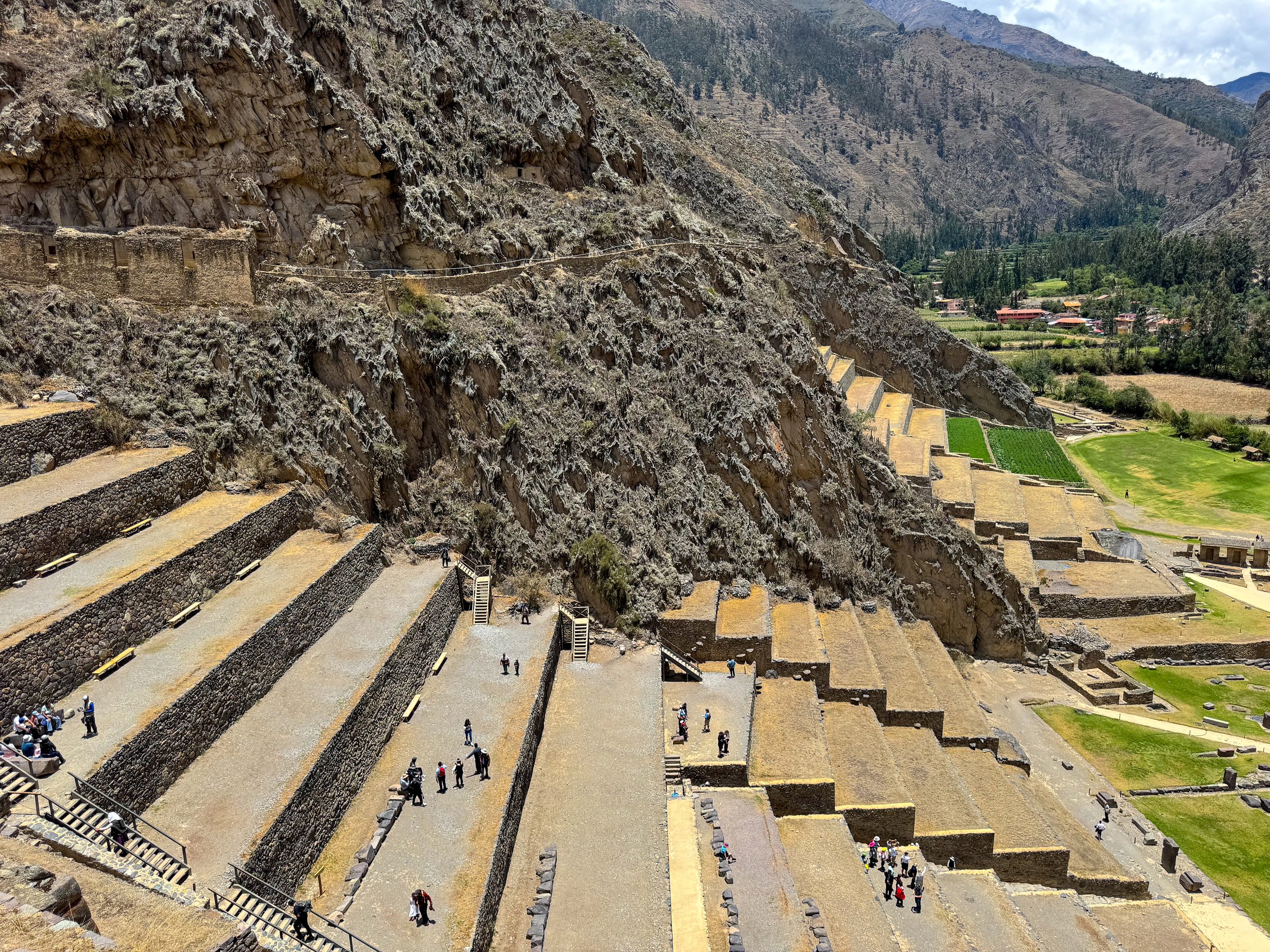
Ollantaytambo
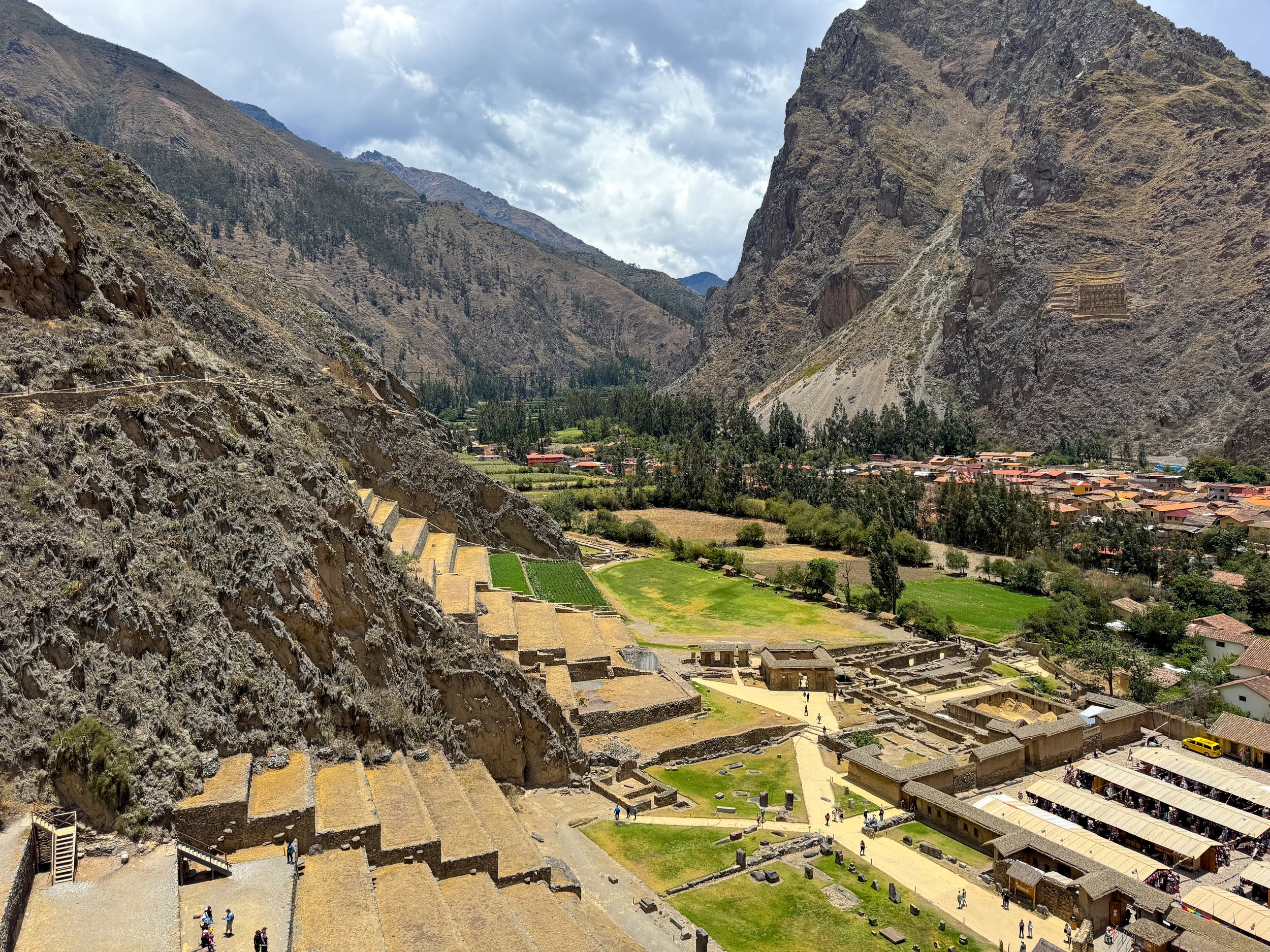
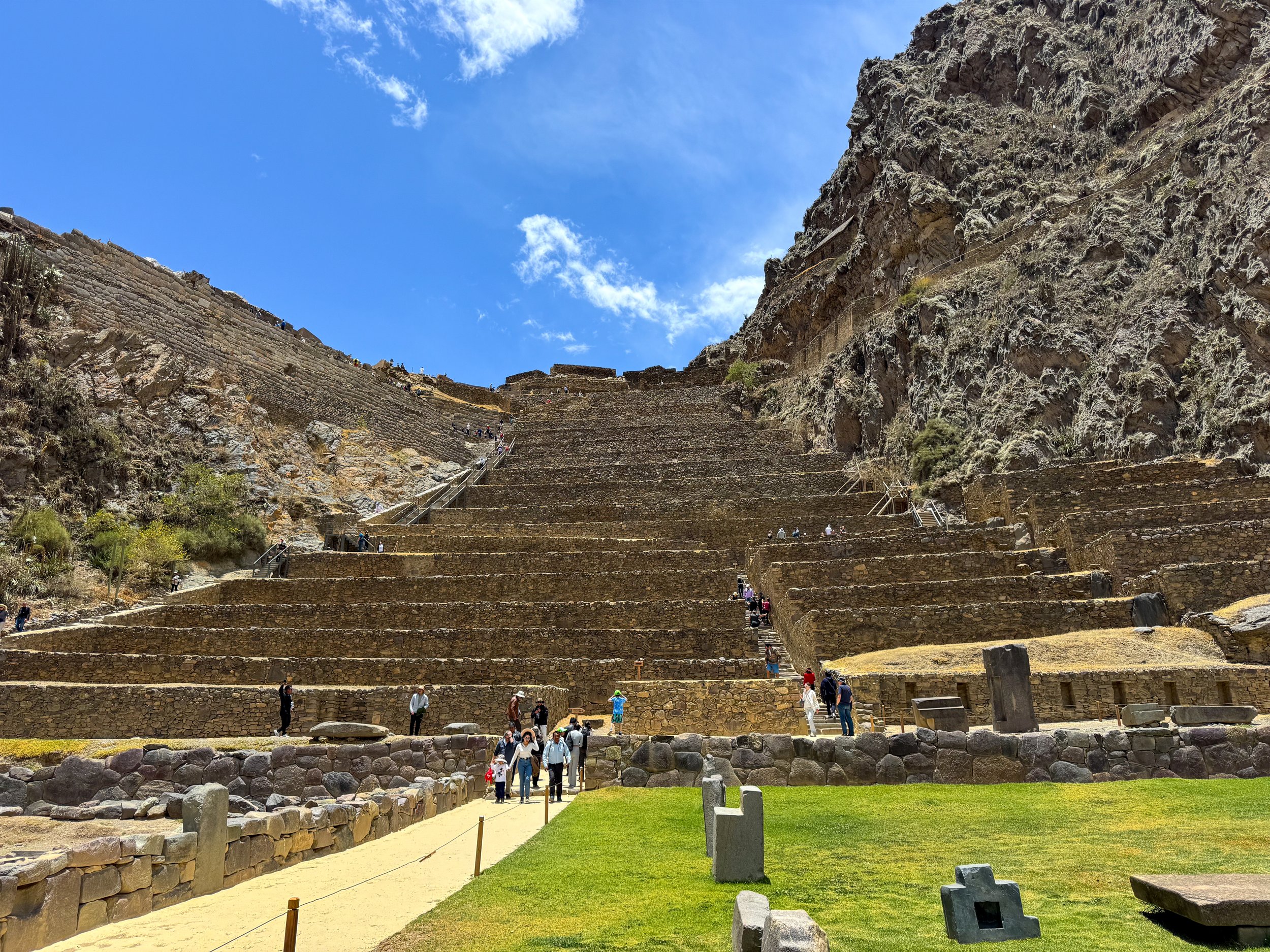
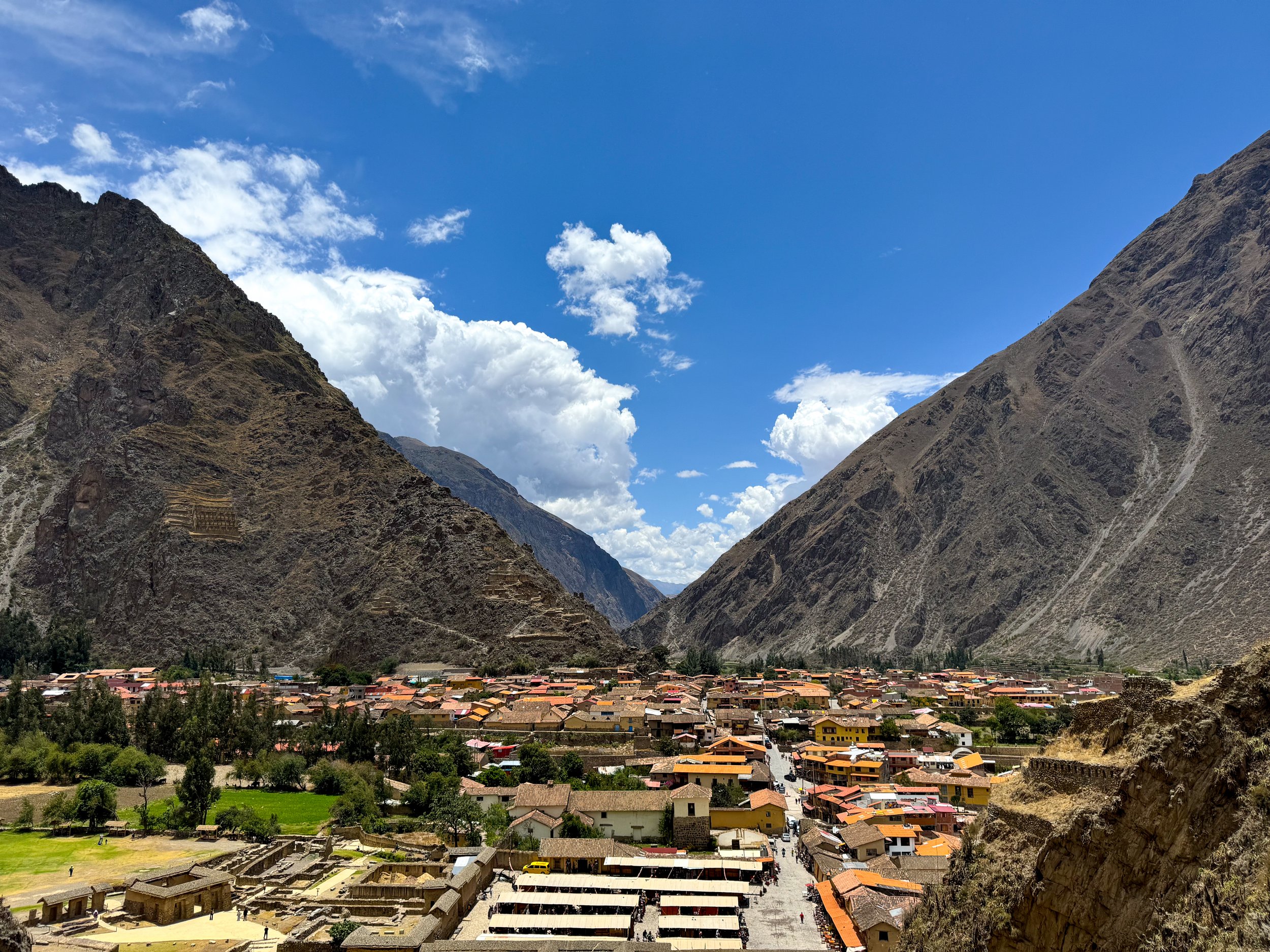
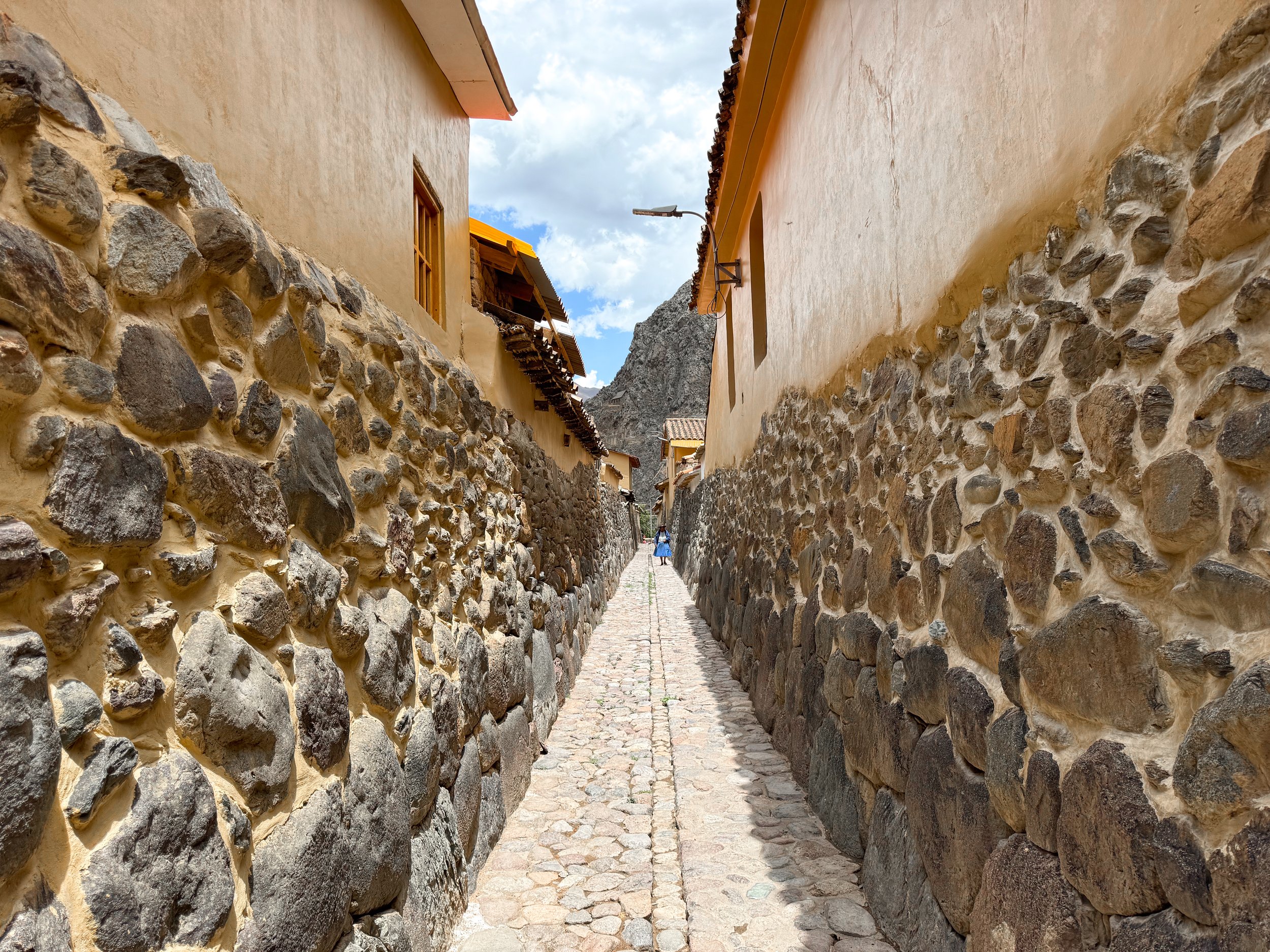
Ollantaytambo is an Incan city built into the valley and up the mountainside with large agricultural terraces, grain storage buildings, a temple dedicated to the worship of the sun and winding hiking trails. We explored the ruins, hiking up the terraces to the Temple of the Sun and through the city. The stone roads, walls and irrigation canals from the Incan city remain and have been built upon by modern day Peruvians. The town has many hostels, restaurants, cafes and textile shops.

Ñaupa Iglesia
Ñaupa Iglesia is a hidden temple located above a terraced agricultural slope on the side of the mountain near Ollantaytambo. We hiked the terraces to a hidden temple with a niche and throne carved into the rock protruding from the entrance of a cave.
The Rainbow Mountain & Red Valley
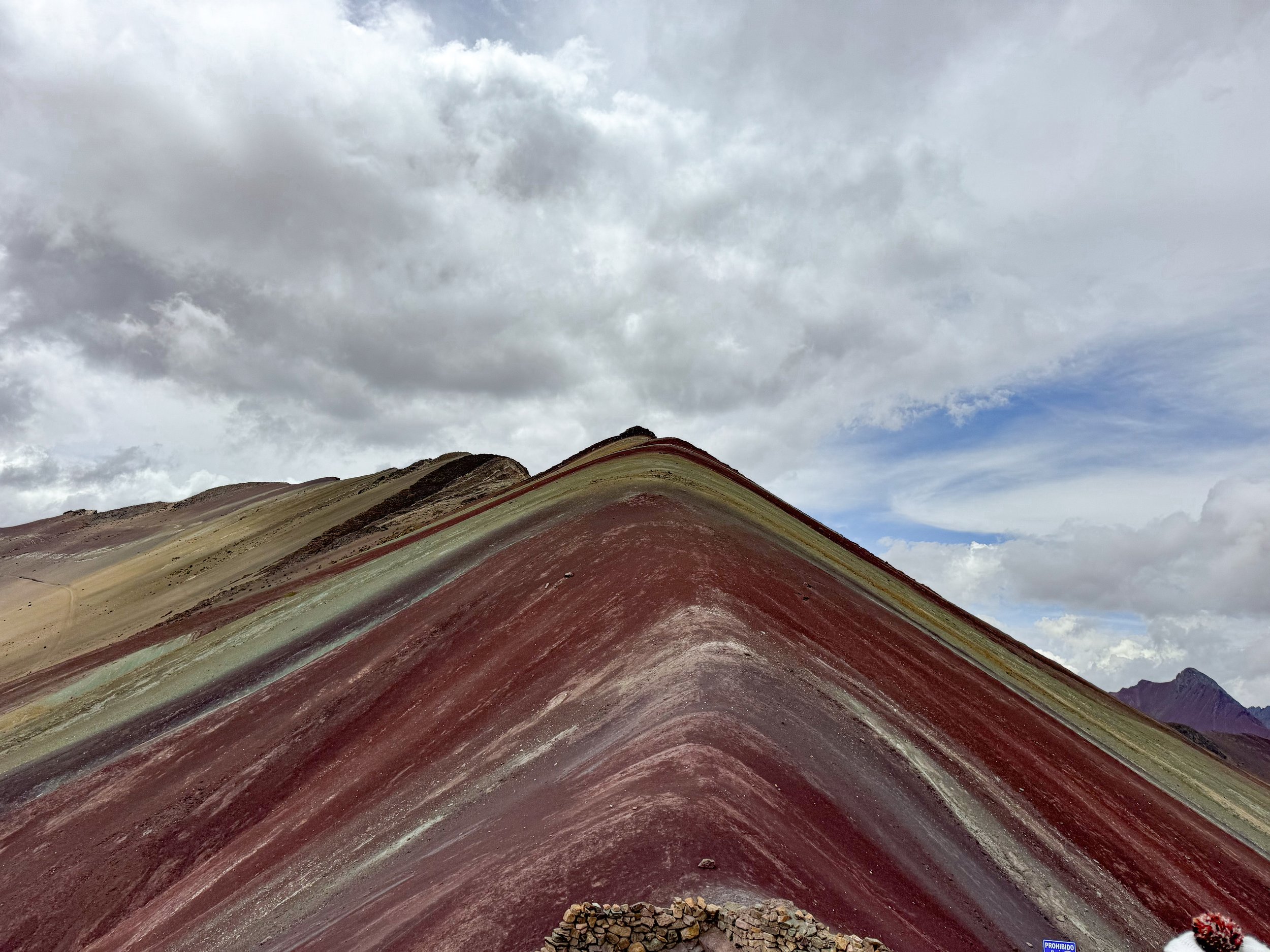
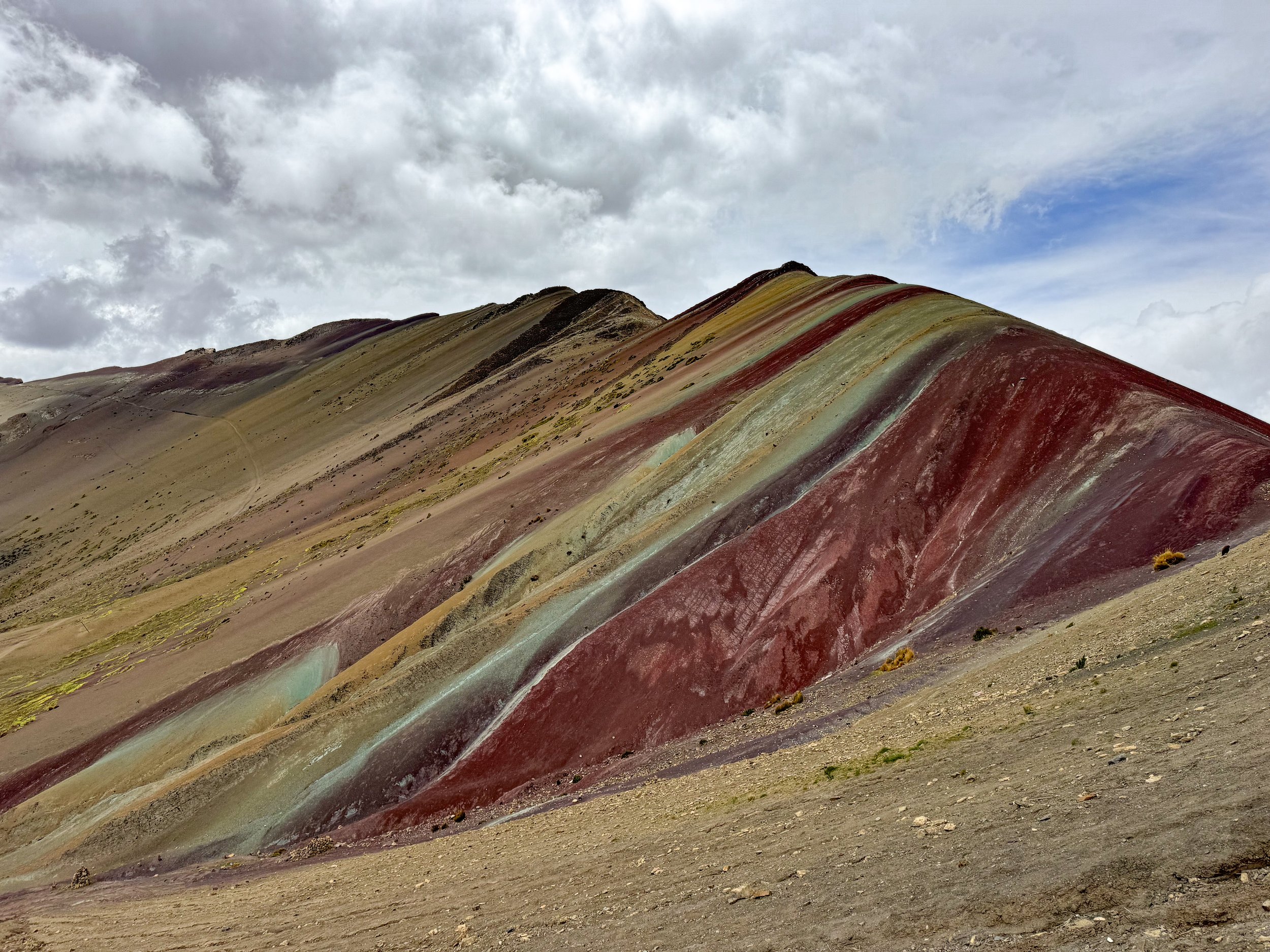
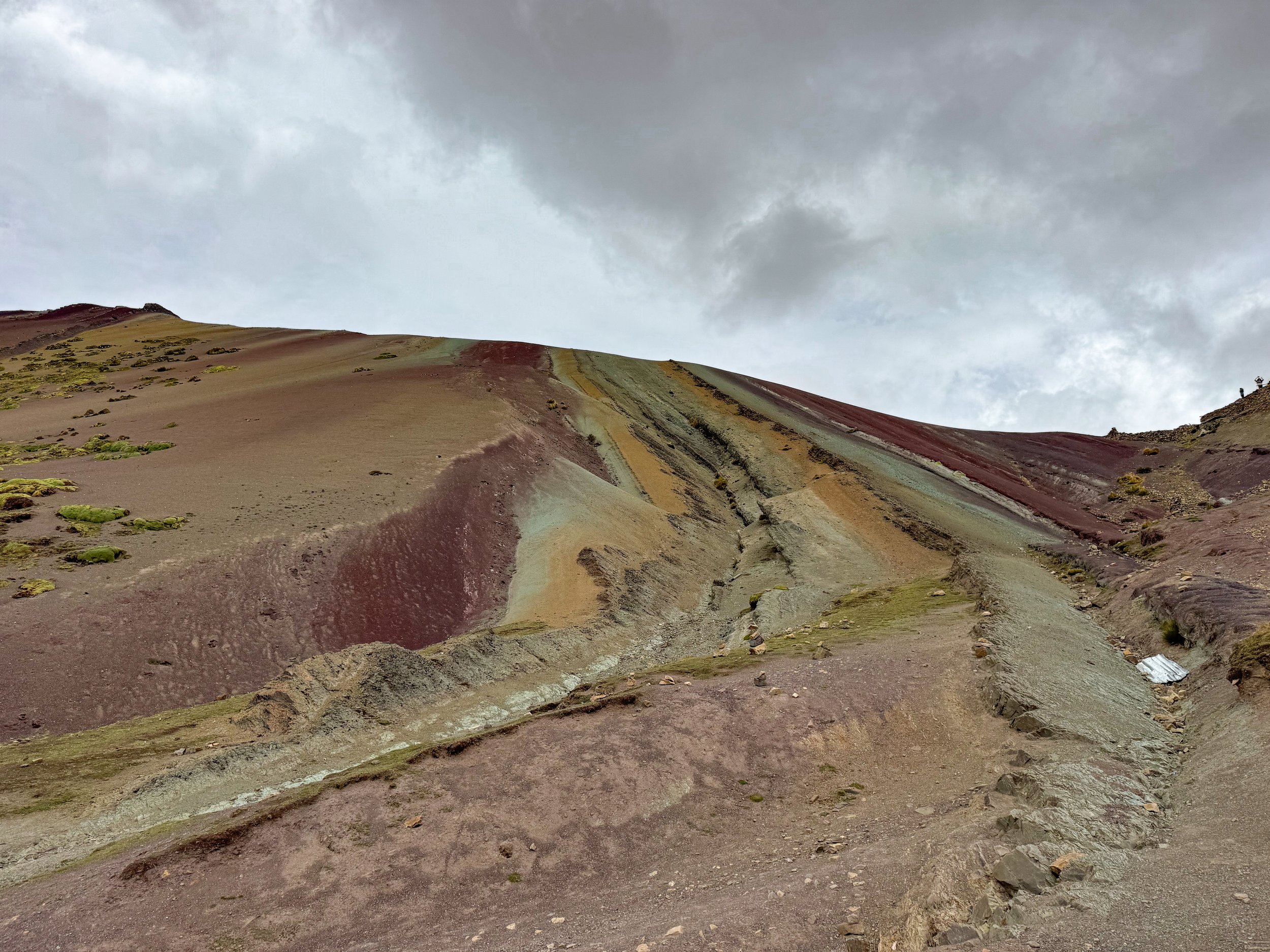
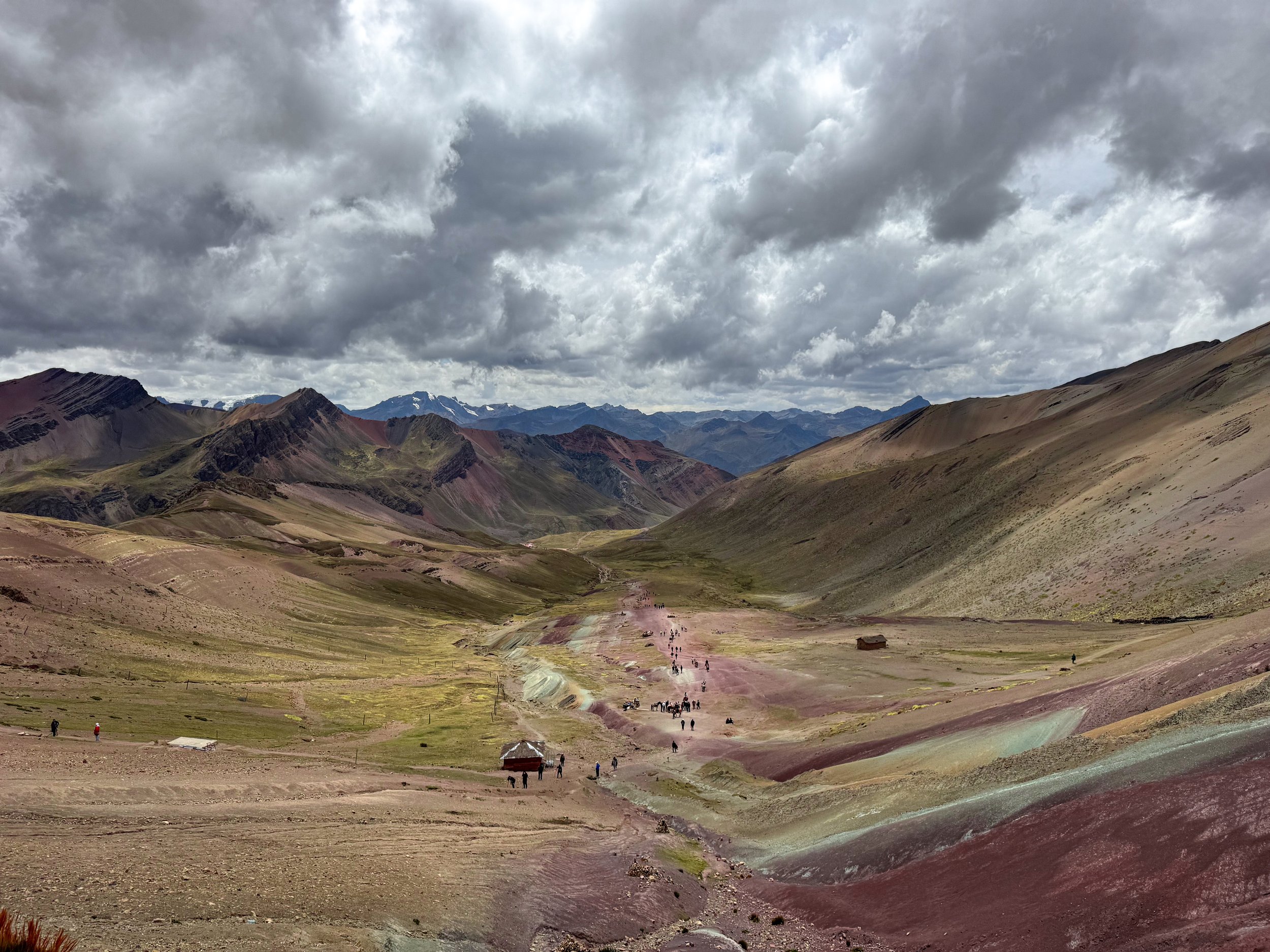
The Rainbow Mountain & Red Valley are two recently discovered geological rock formations in the Peruvian Andes with vibrantly colored sediment.
The Rainbow Mountain
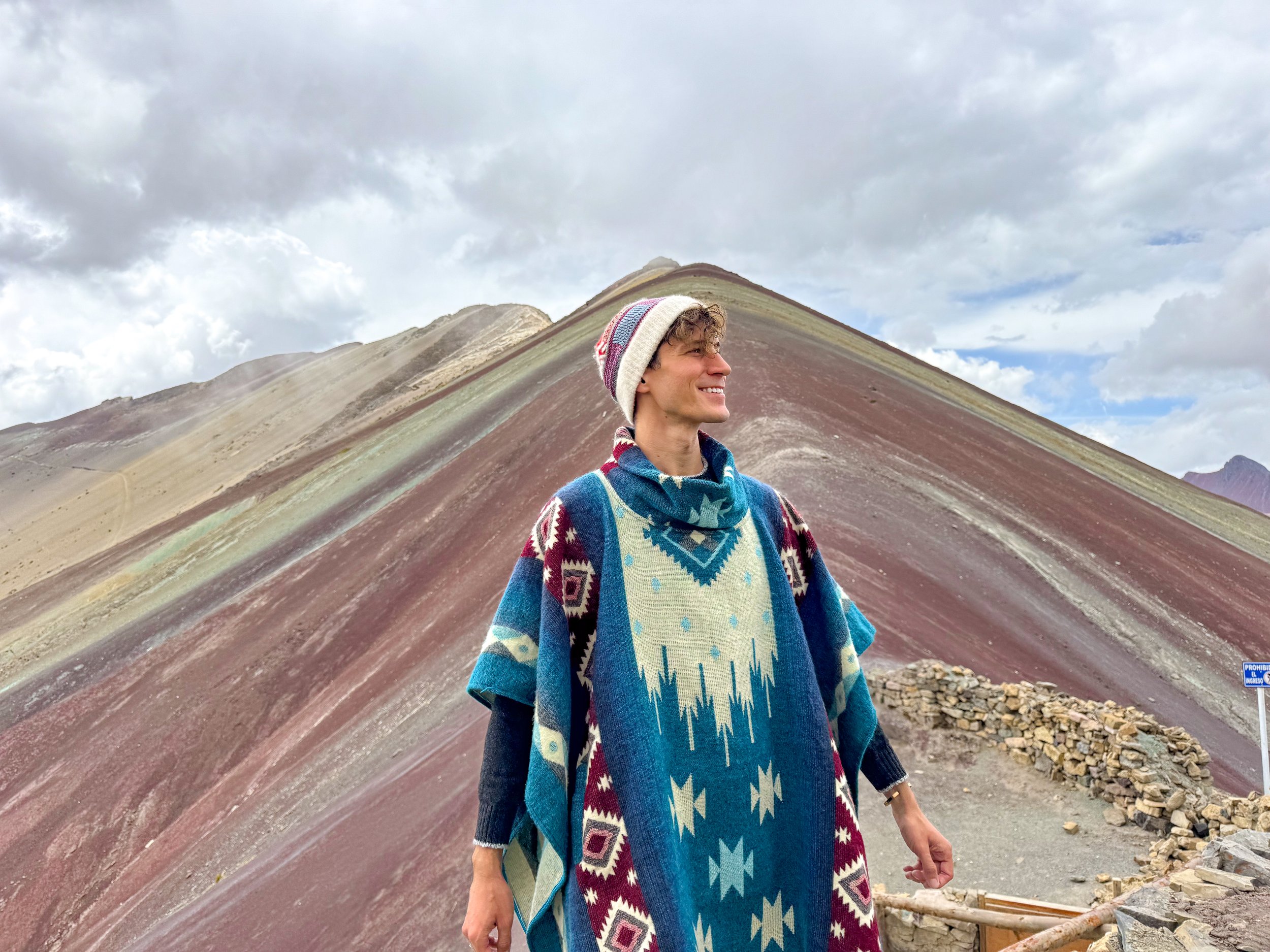
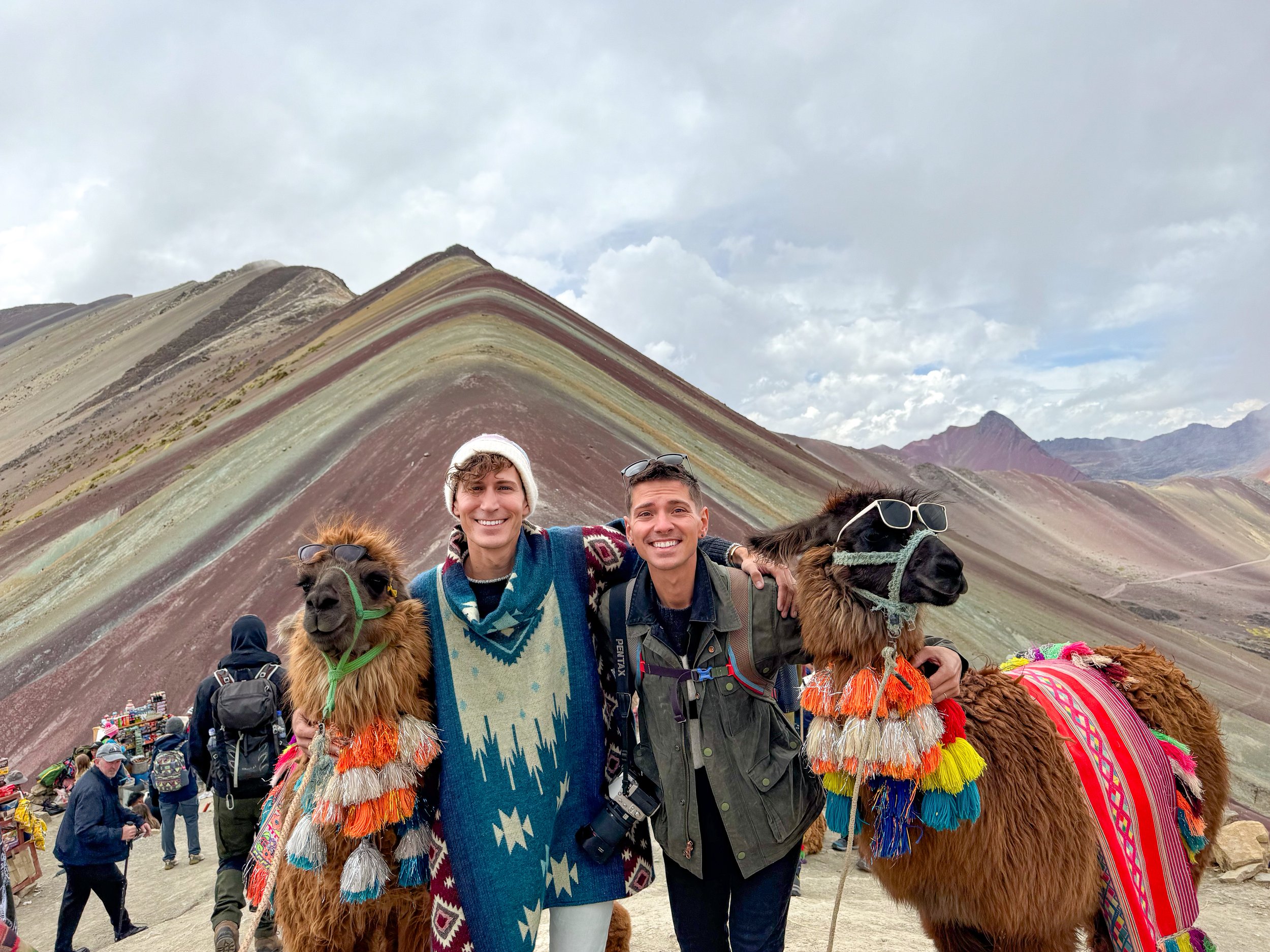
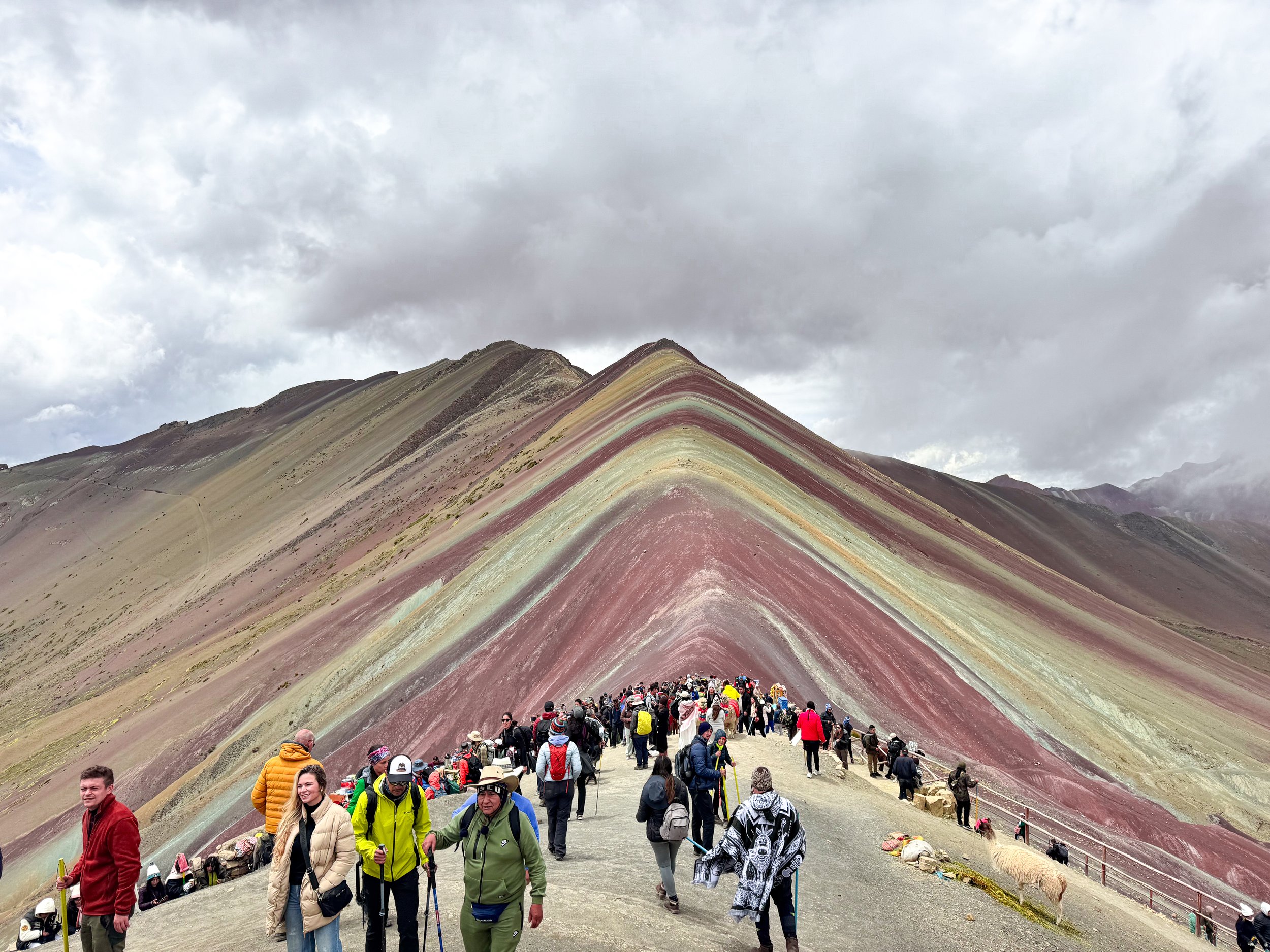
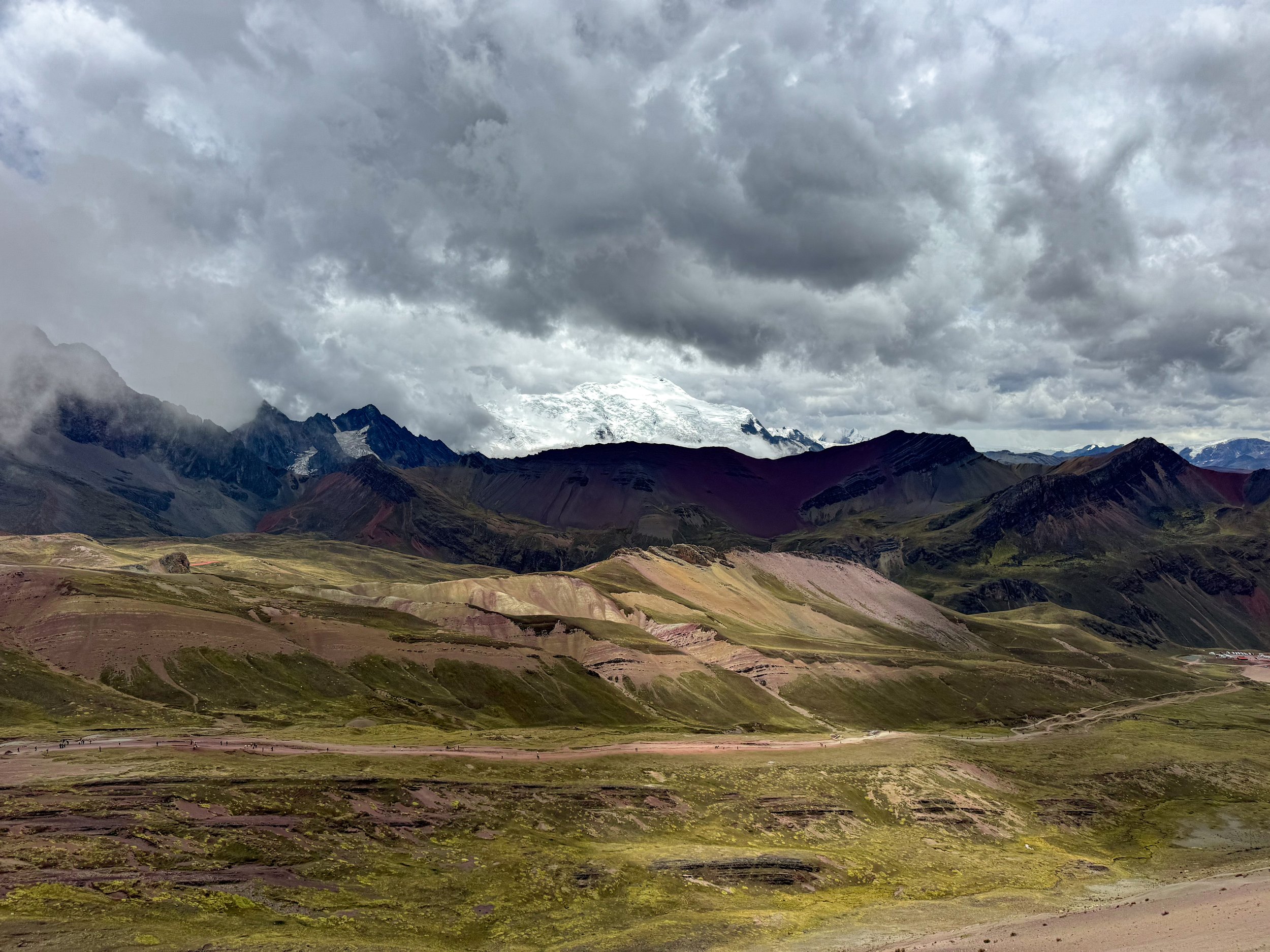
The Rainbow Mountain is a remote mountain in the Peruvian Andes with bands of oxidized minerals creating a rainbow effect in the soil. The view from the mountain’s summit is awe inspiring! At 5,036 meters (17,060 feet), the summit has views of the rainbow bands, moss covered valley and distant snow capped Andean mountains. It’s a popular destination with thousands of visitors per day coming to overlook the landscape. There are indigenous Peruvians with pairs of colorfully accessorized llamas posing for photos for a small donation.
The Red Valley
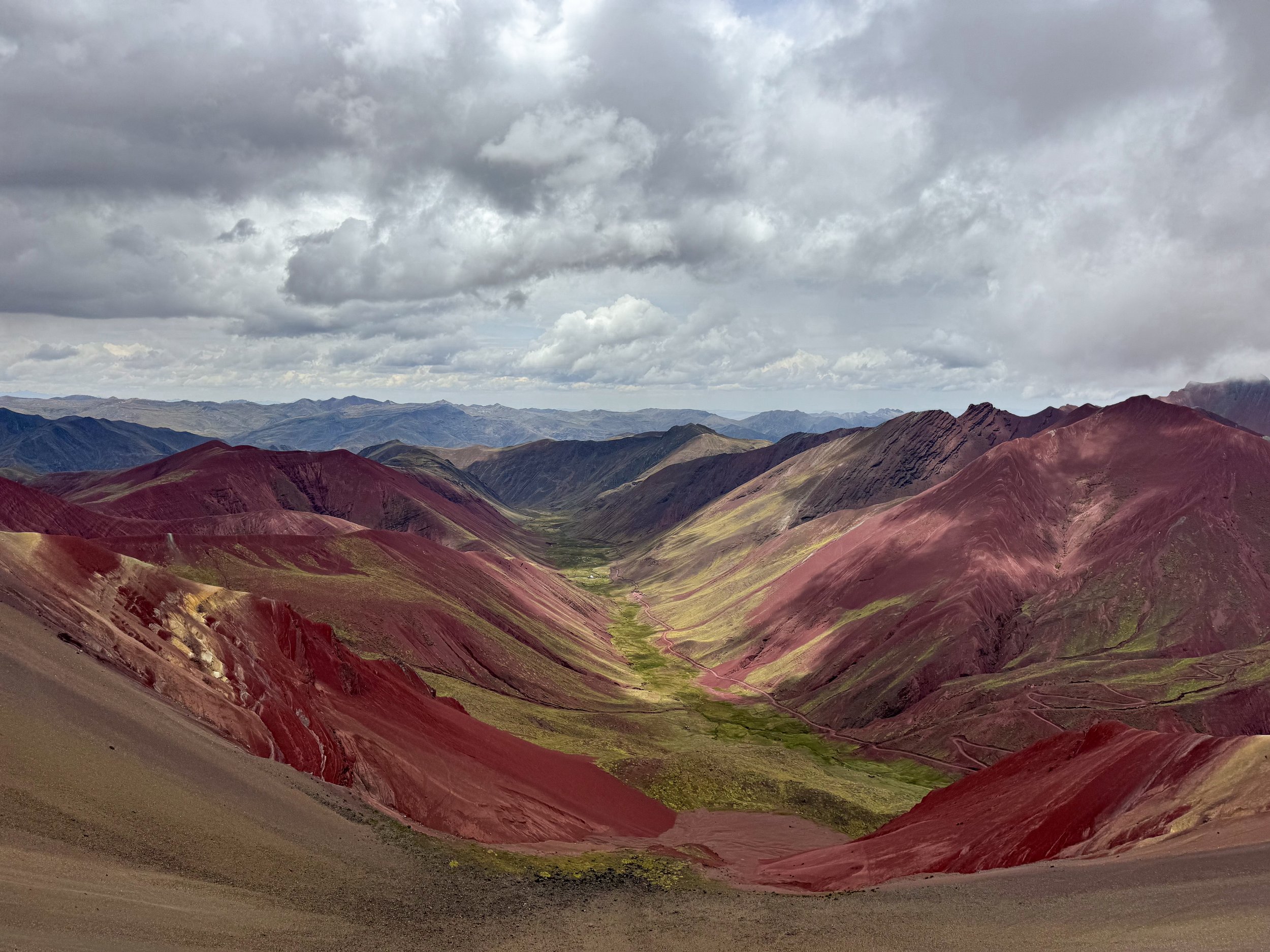
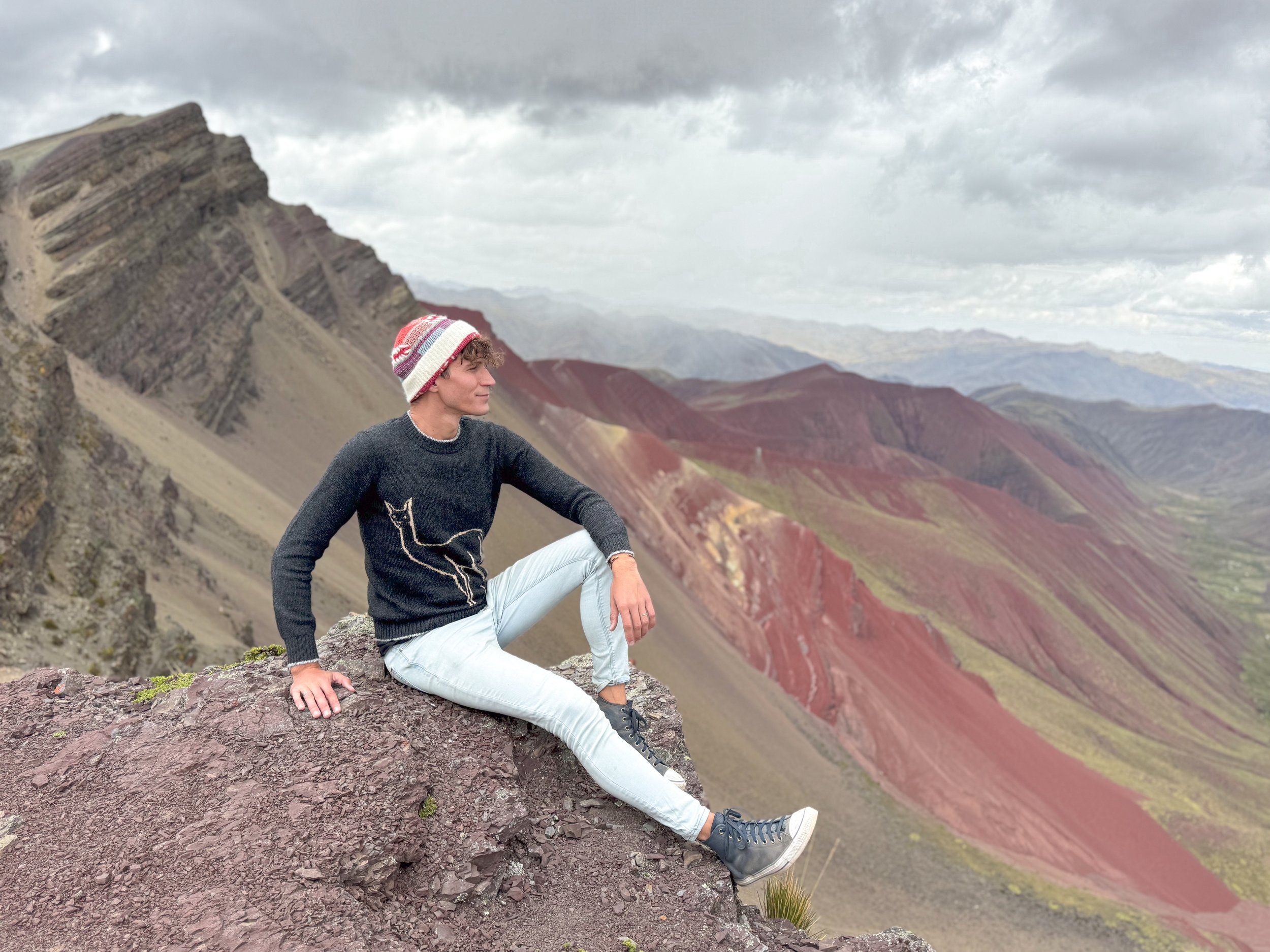
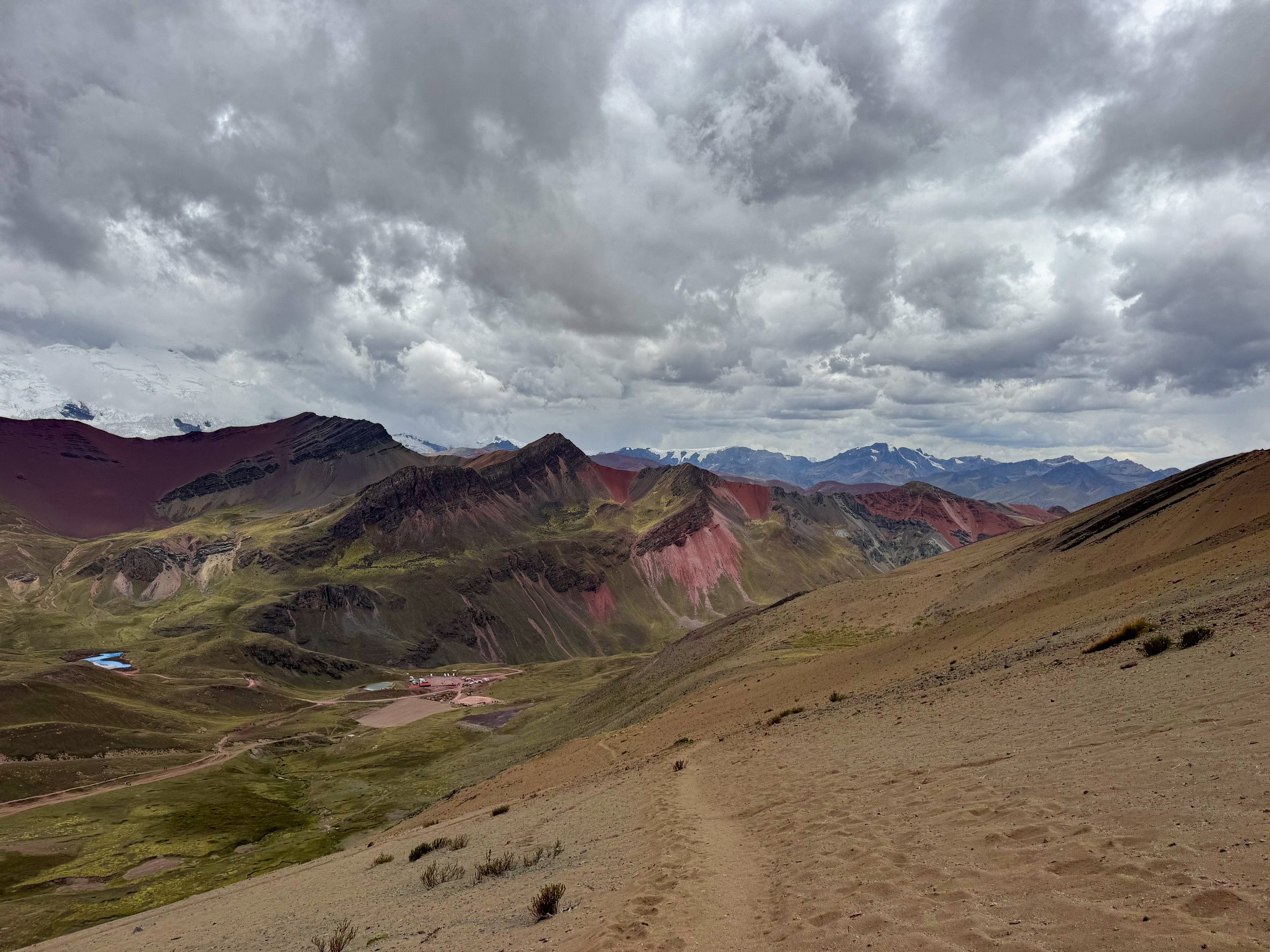
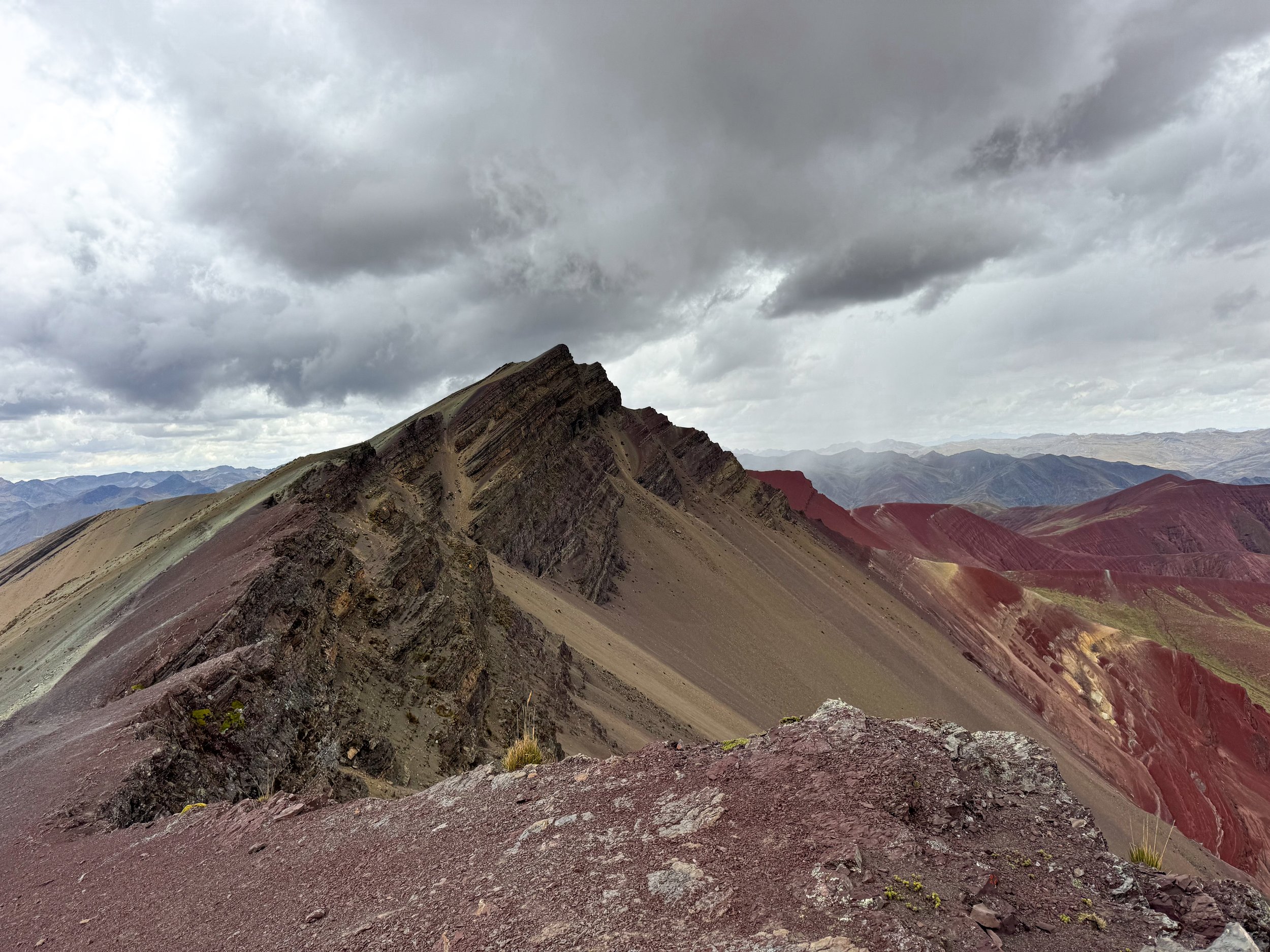
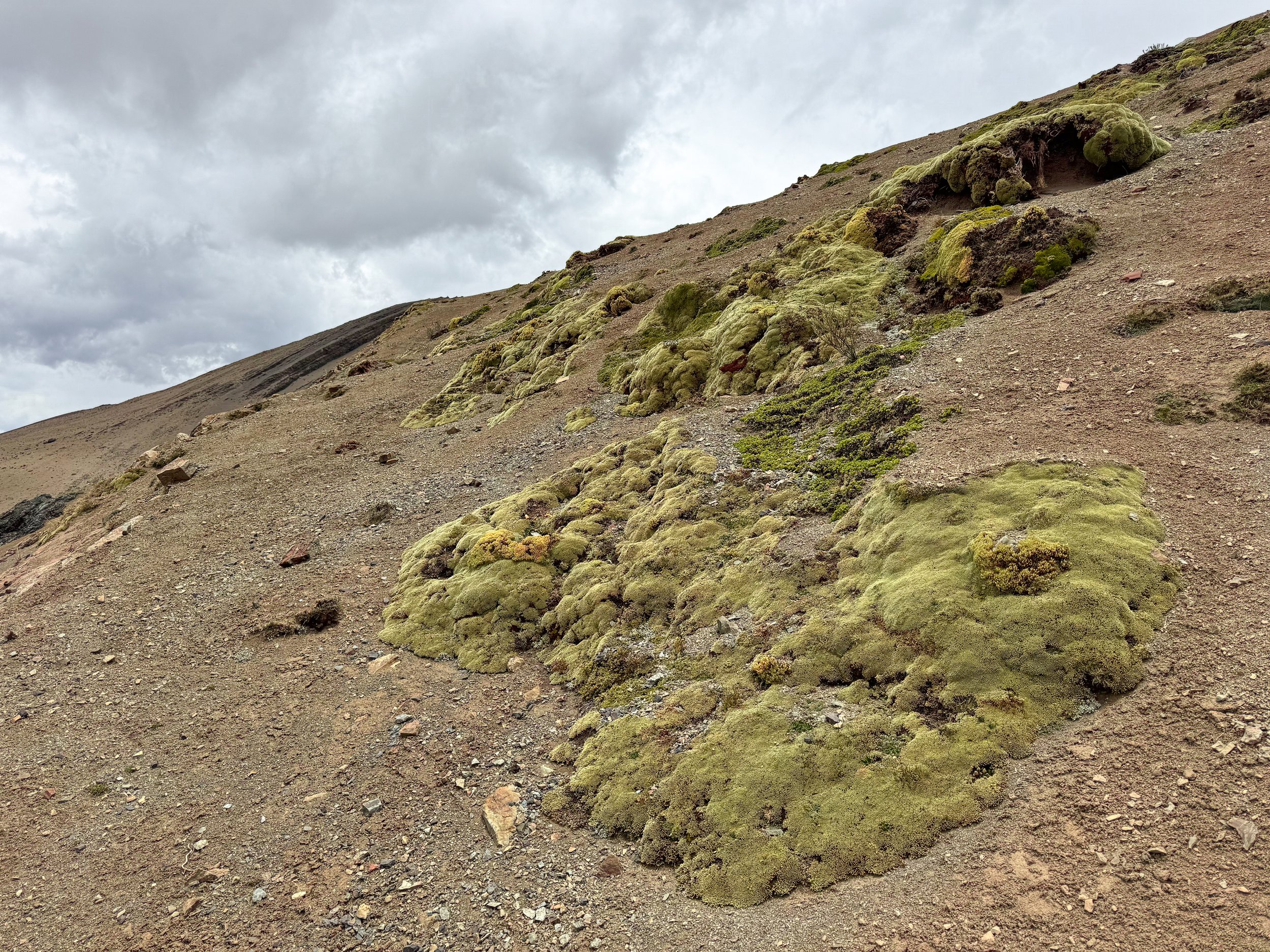
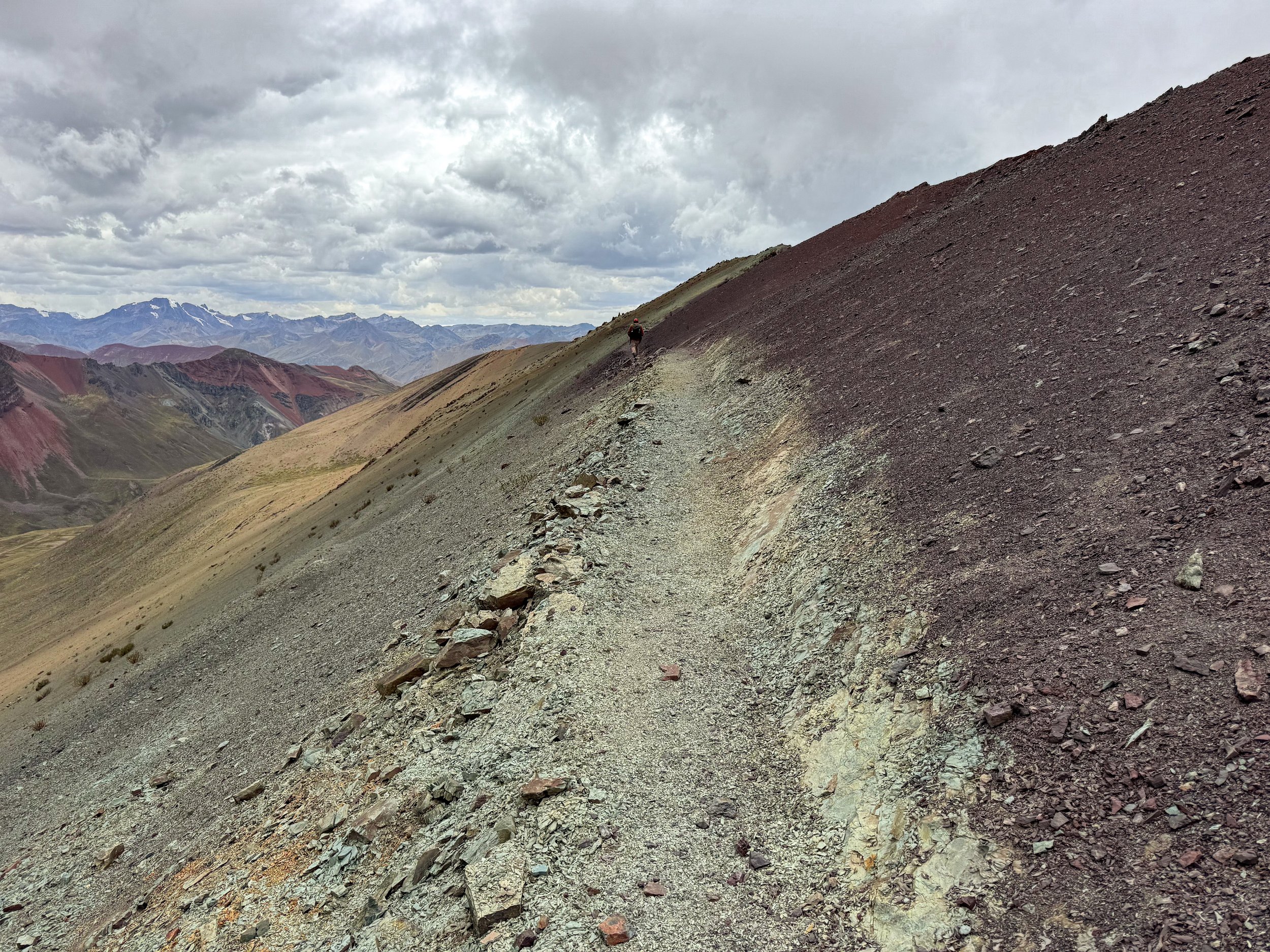
The Red Valley is a valley with blood red soil and green moss spanning between two mountains on the other side of the rainbow mountain. The panoramic view from the crest overlooking the valley is a surreal experience that left us feeling tiny compared to the surrounding world. Along the trail, we passed colorful stones, vibrant green moss and observed magnificent views of the mountains and glaciers. It is far less touristy with less than a dozen visitors.
Getting Here. We visited both the Rainbow Mountain and Red Valley on a small group guided tour from Cusco. It included transportation, breakfast and lunch. Starting at 4:30am, we drove from Cusco high into the Andes along narrow switchback roads, past terraced fields and countless llamas to reach the trail head. It took 45 minutes to hike uphill to reach the Rainbow Mountain and 25 minutes further to reach the Red Valley. We felt good enough to hike the trail but for those with altitude sickness, there are horses, motorbikes and quads for hire. Book here.
Cusco, Peru
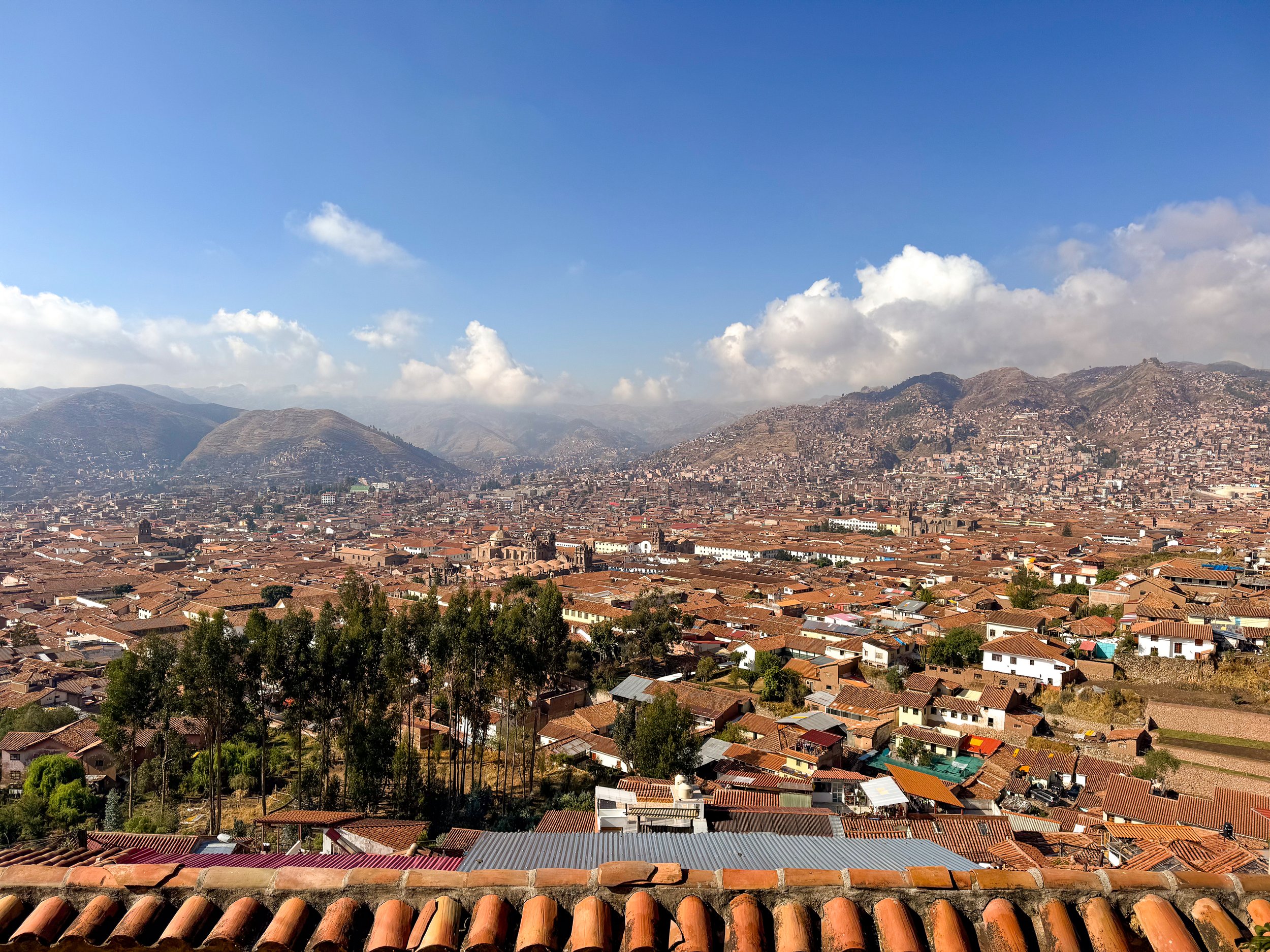
Cusco is a modern city at the heart of the Incan Empire in the Andes Mountains with archeological ruins, historic neighborhoods, museums and beautiful landscapes.
Neighborhoods
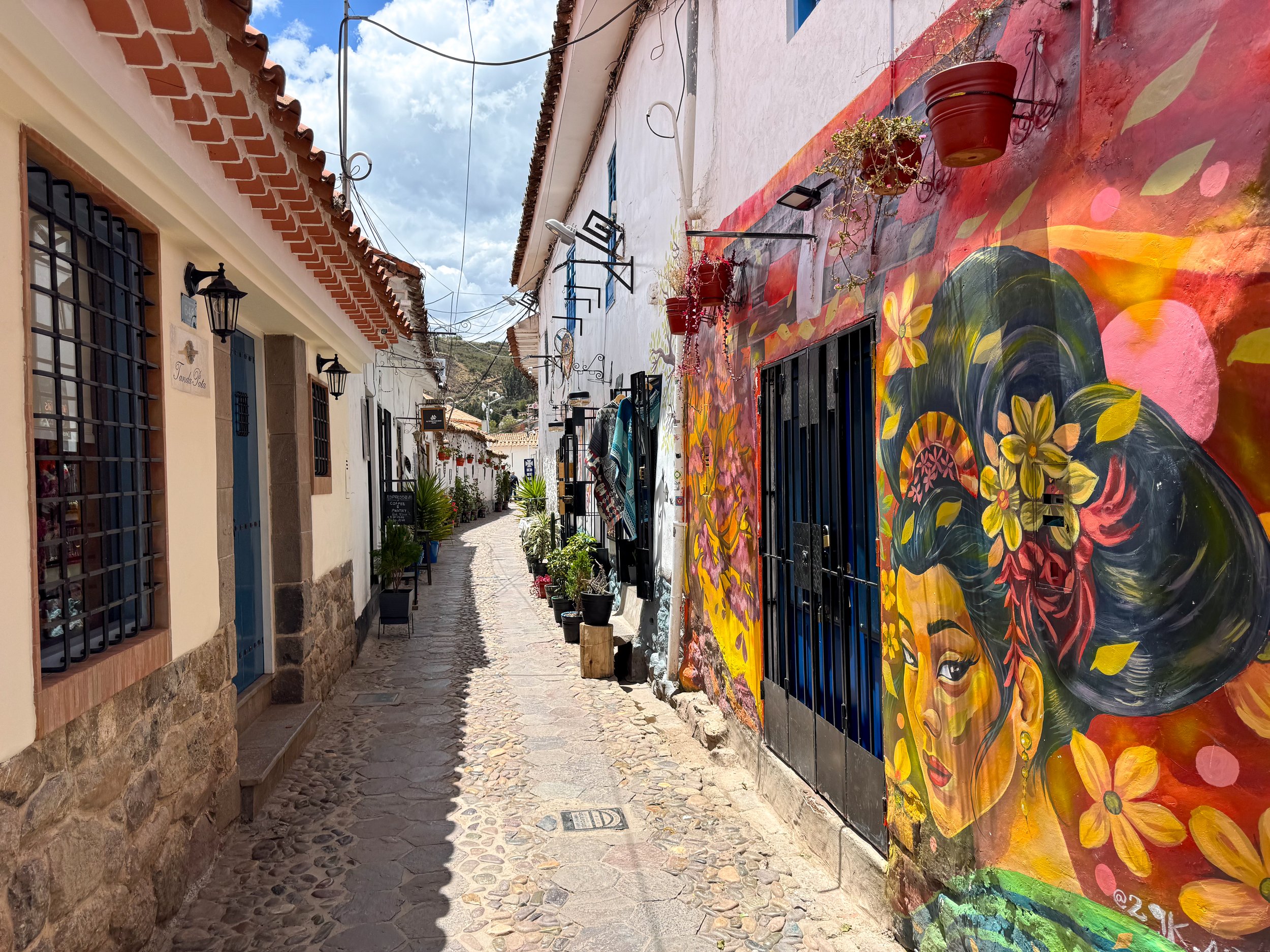
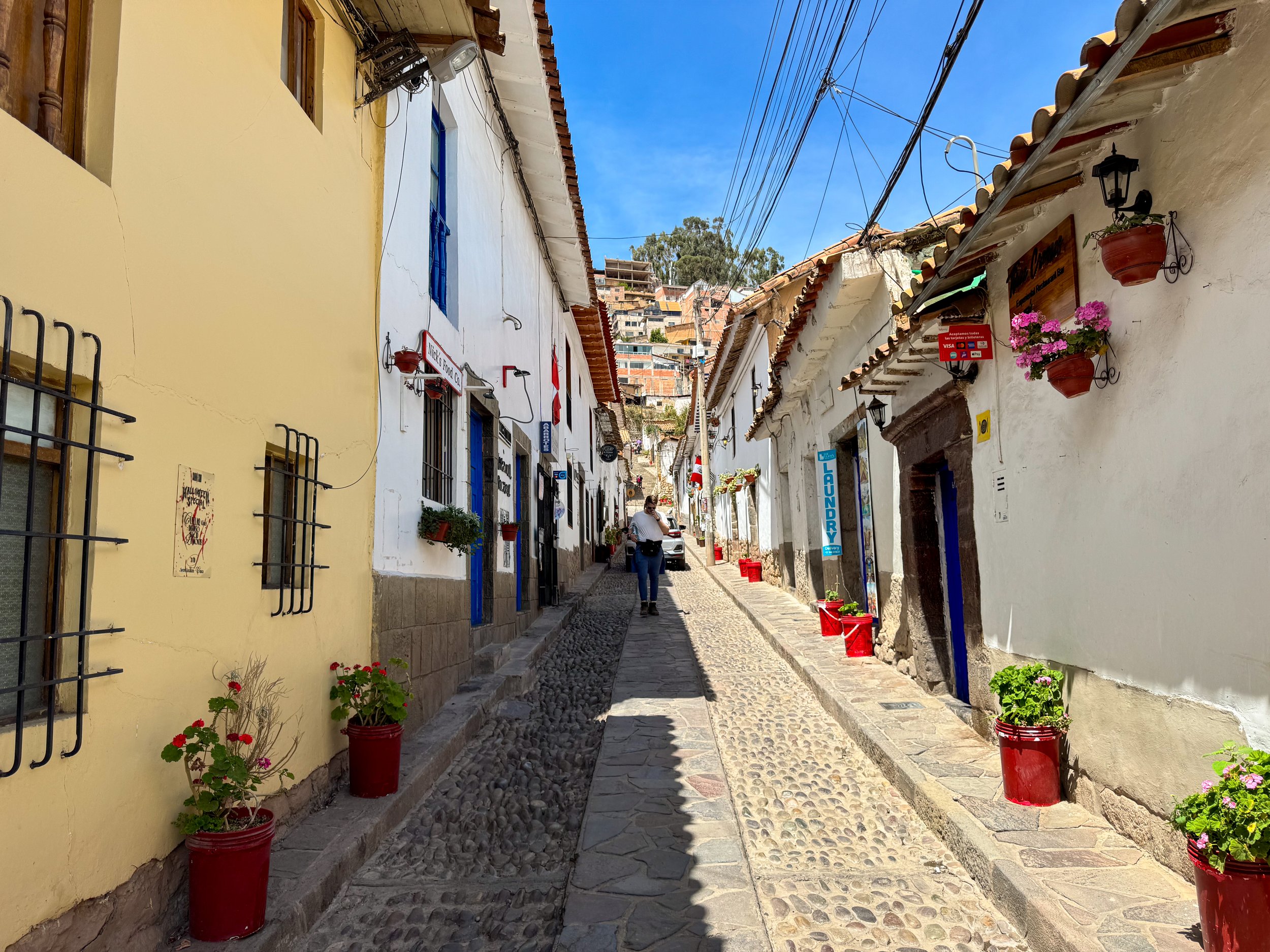
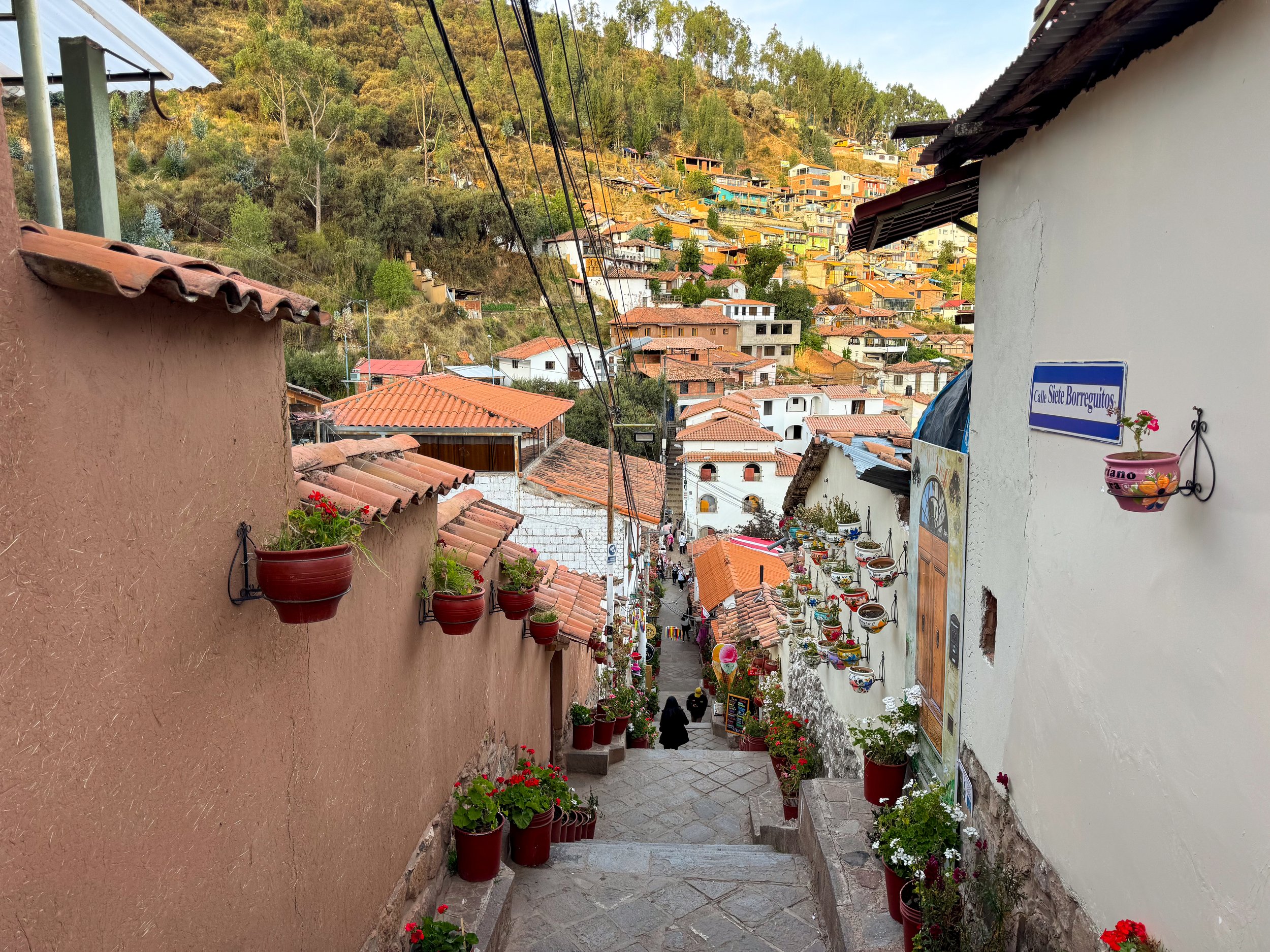
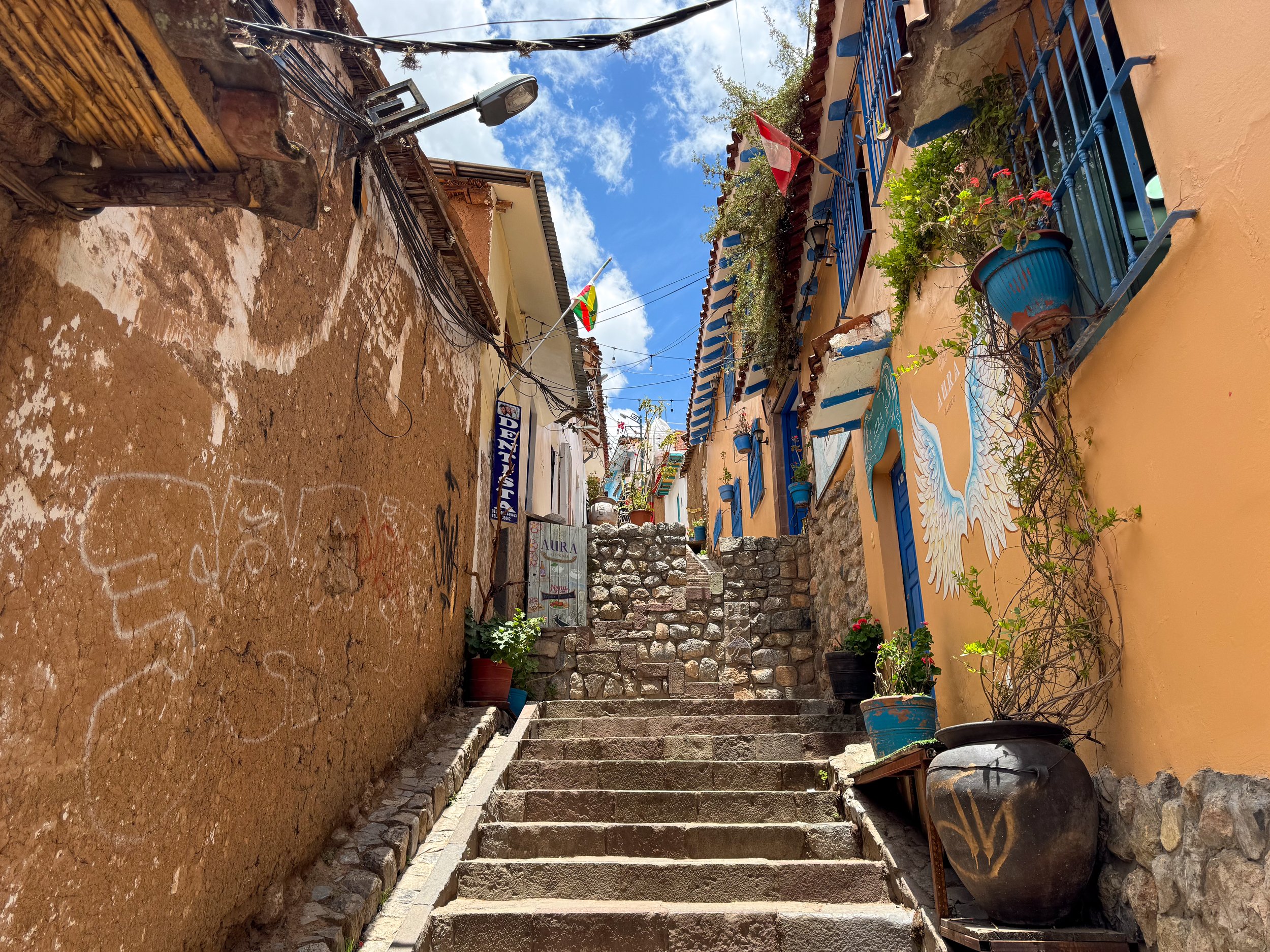
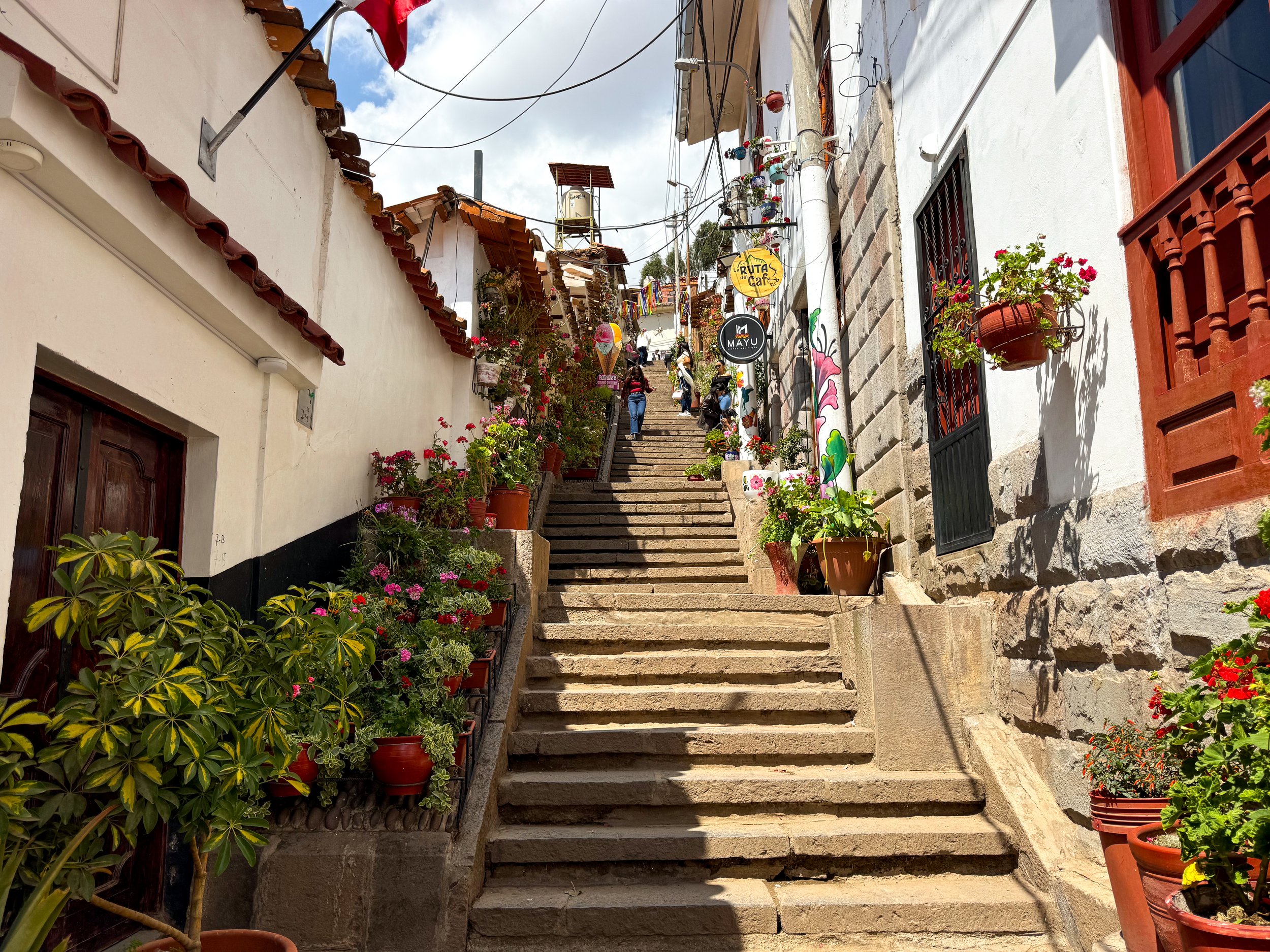
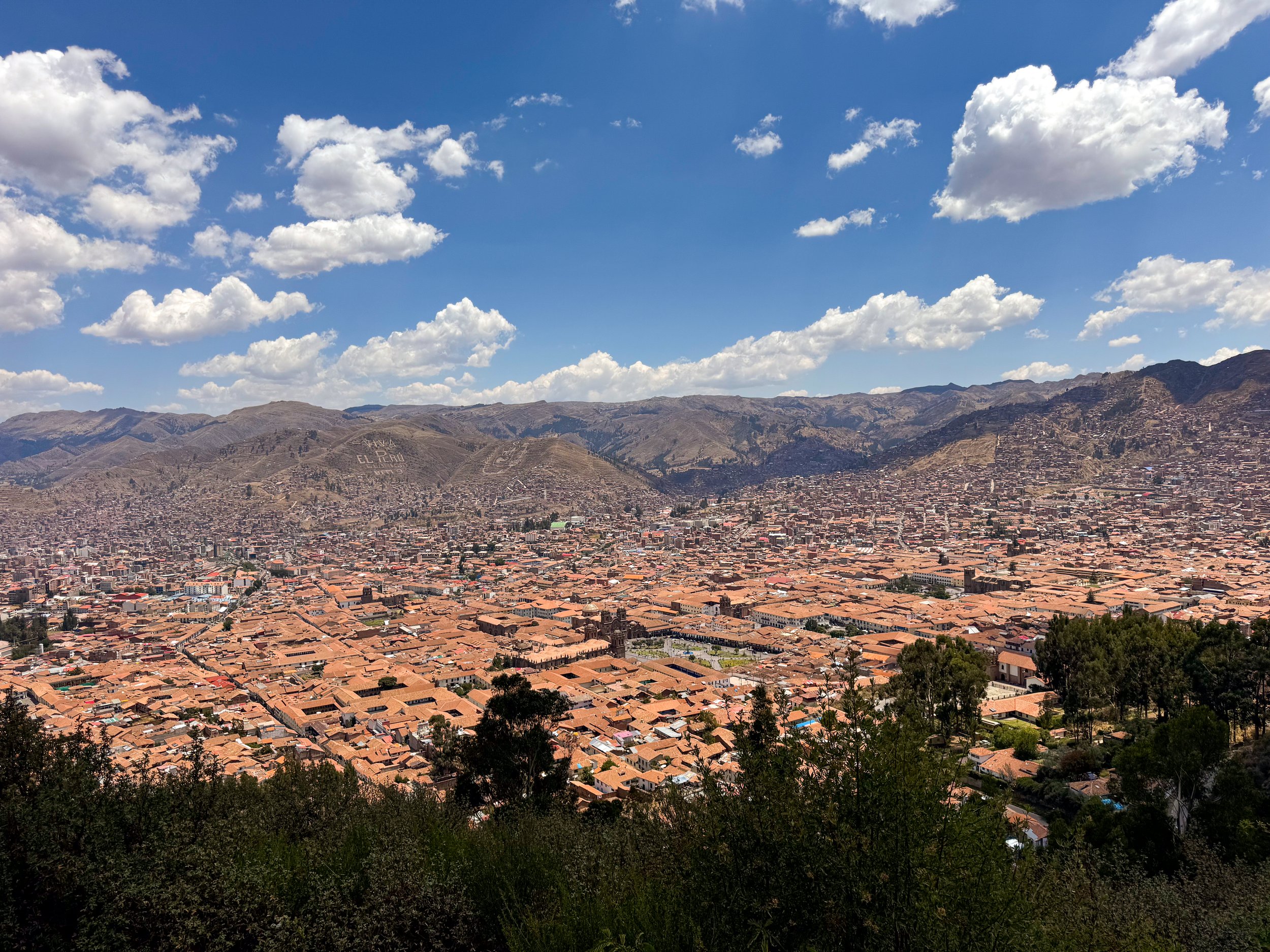
San Blas Neighborhood. A trendy yet quiet neighborhood with ancient Incan roads, steep staircases and narrow cobblestone streets home to a variety of cafes, restaurants, boutiques, art galleries, tattoo shops and small convenience stores. Many of the buildings are painted white with blue wooden doors, wall hung planters and vibrant murals. The neighborhood is close to several Incan ruins, the central plaza and has panoramic views of the Cusco Valley, its clay tiled roofs by day and twinkling lights at night.
Coripata. A bustling local neighborhood, you won’t spot another tourist here! There are women selling boiled quail eggs, fresh juice, wheelbarrows and blankets with fruit, fried plantain chips and ice-cream from carts.
Santa Catalina. A quieter local neighborhood with an arch along its main road, chain hostels, stray dogs and city views. There’s not much going on in terms of restaurants, cafes, bars or nightlife.
Centro Histórico. The central neighborhood of Cusco is home to the grand plazas, large stone cathedrals, historic architecture, Peruvian restaurants, clothing shops, souvenir stores and hotels. It’s a touristy area with peddlers calling you into their restaurants, trying to sell something or offering massages.
Visit the Incan Ruins
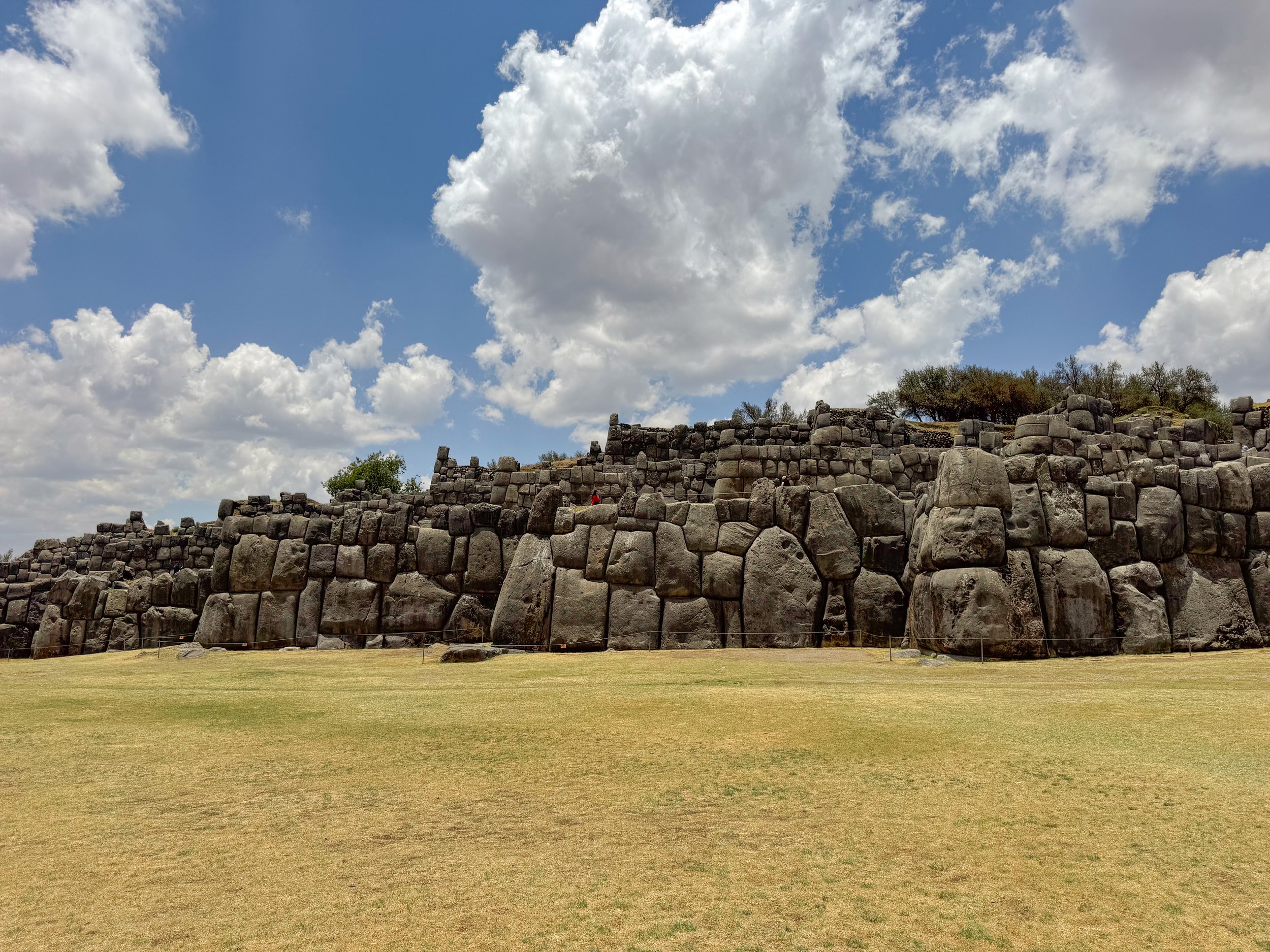
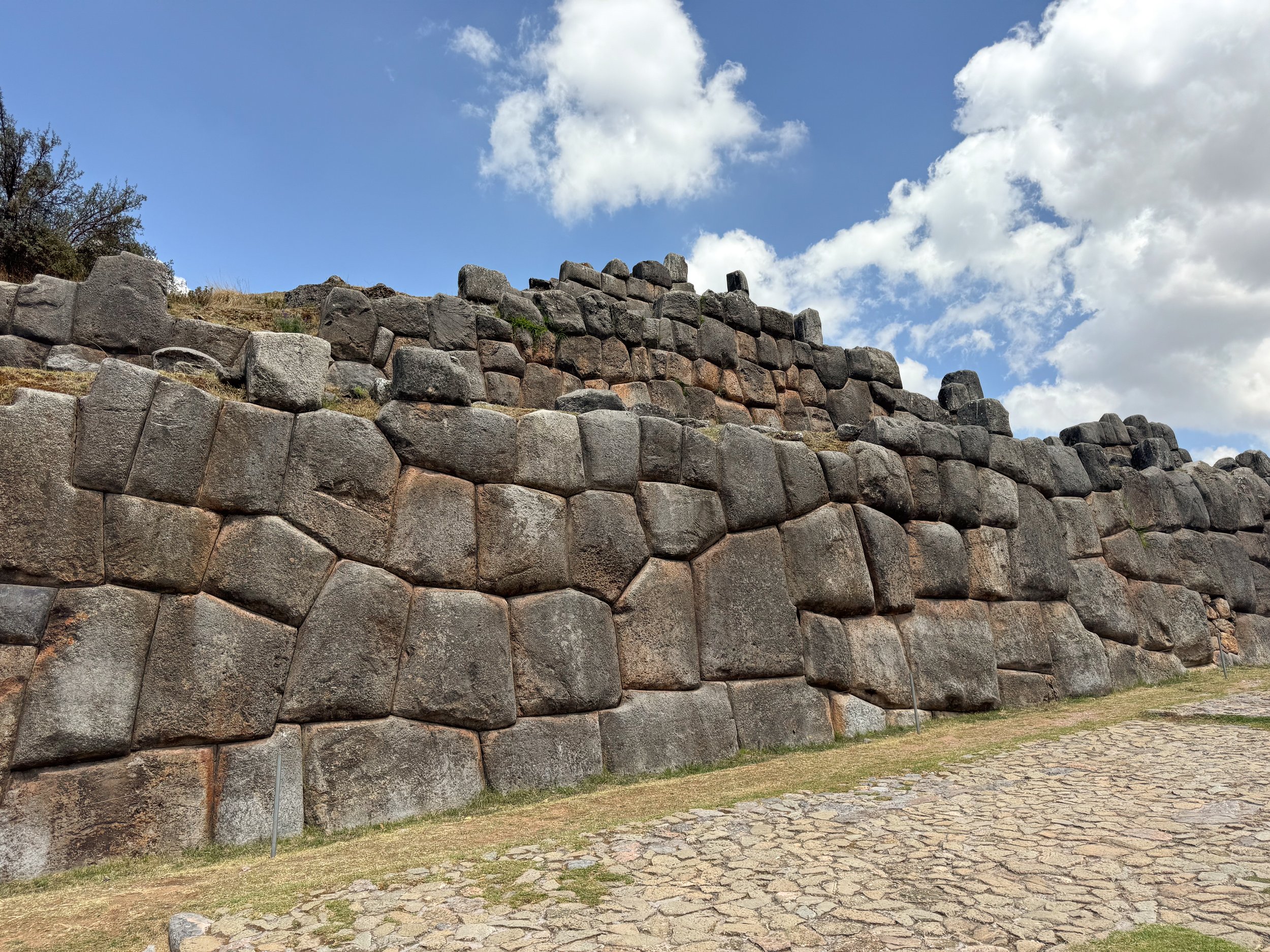
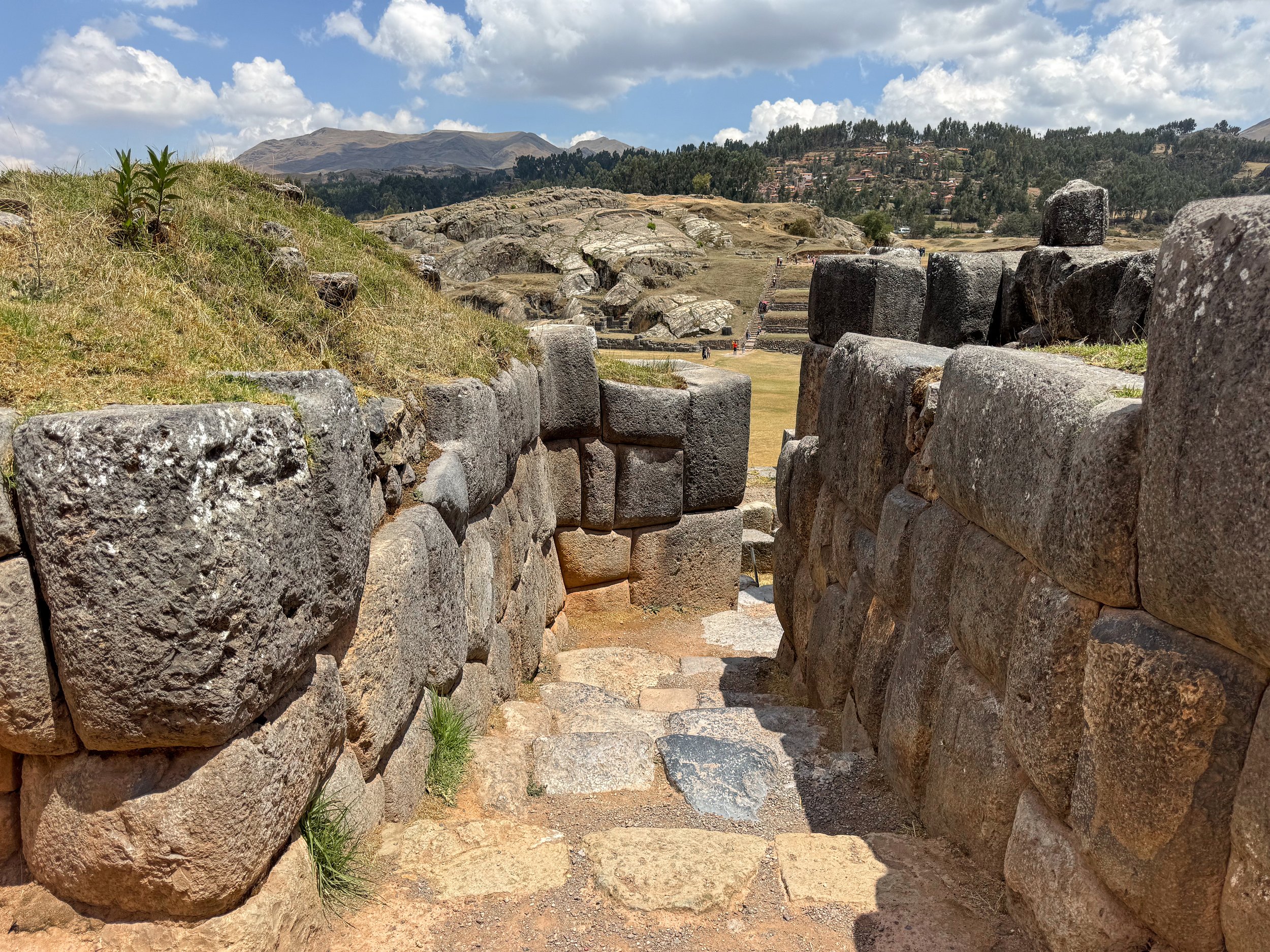
Cusco, the center of the Incan Empire, is home to numerous ruins, ancient stone streets and former temples. We walked across the city visiting several of the sights during our stay.
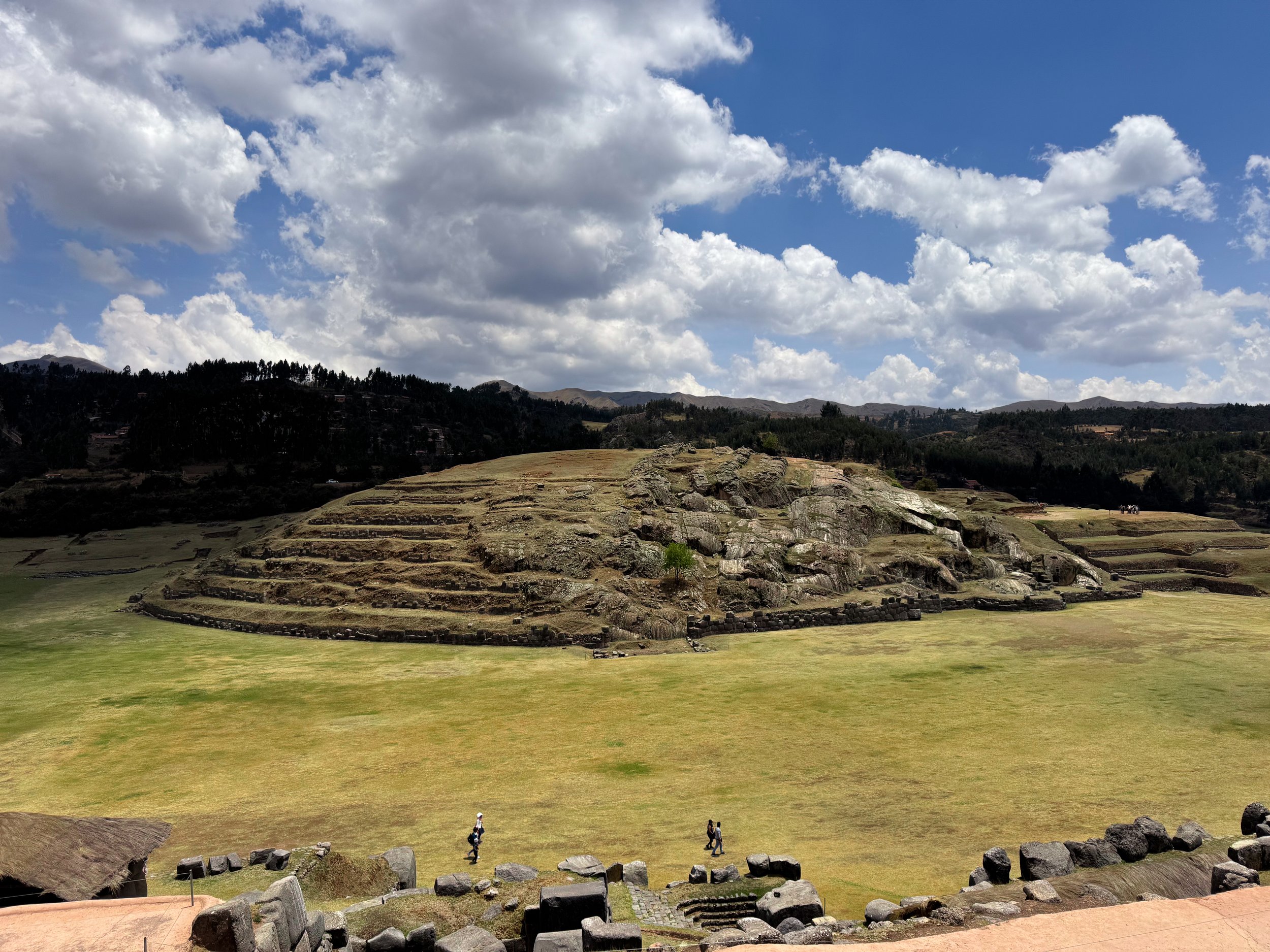
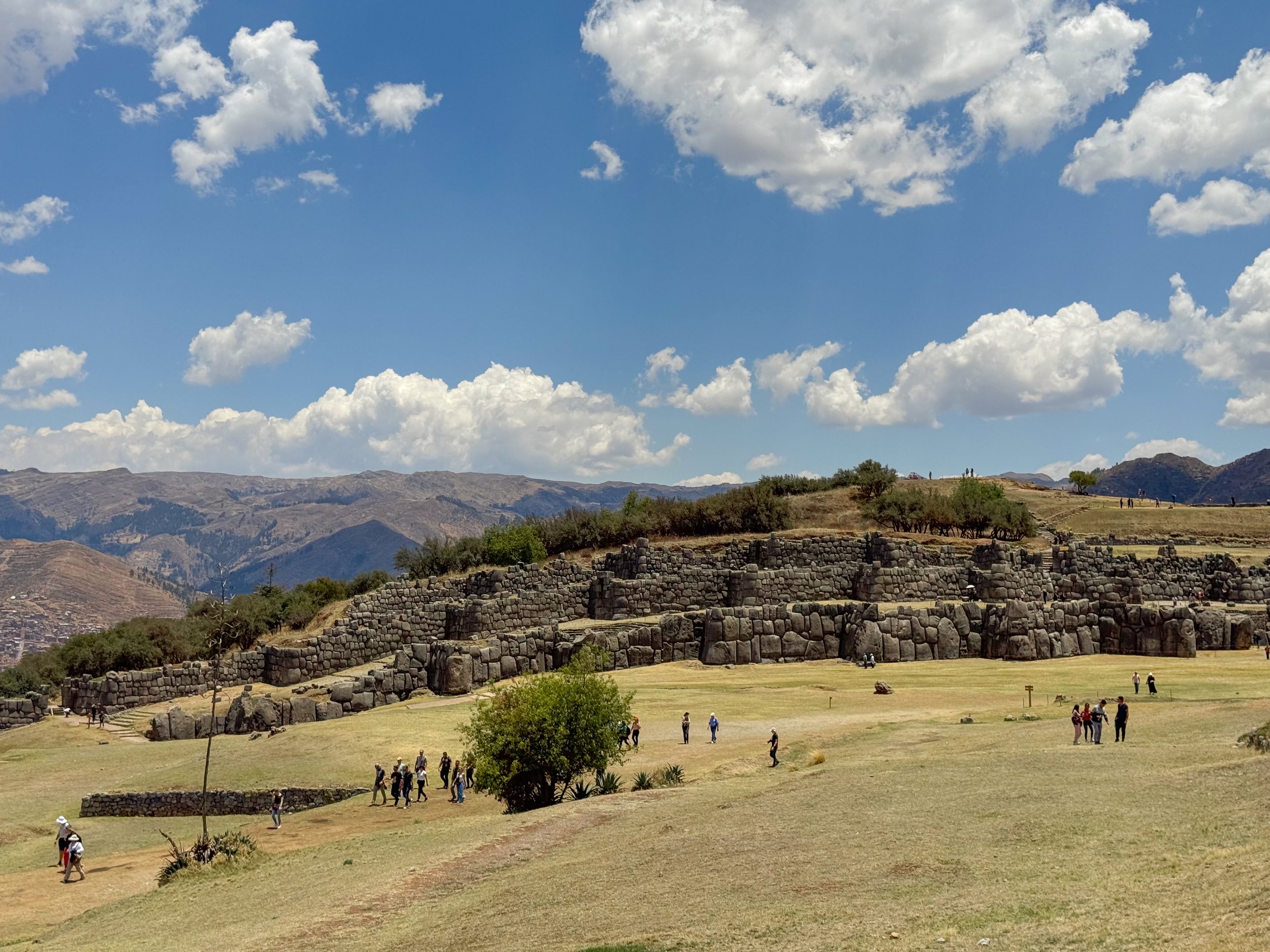
Sacsayhuaman. The citadel of the Incan empire with a large stone fortress, royal thrones, carved rock temples, agricultural terraces and aqueducts.
Muyuq Marka. The central fortress made from three terraced stone walls shaped in a zig zag pattern with stone gates, guard posts, astronomical temples and platforms to store water.
Trono del Inca. A rock formation with thrones carved into it overlooking the fortress and Cusco valley.
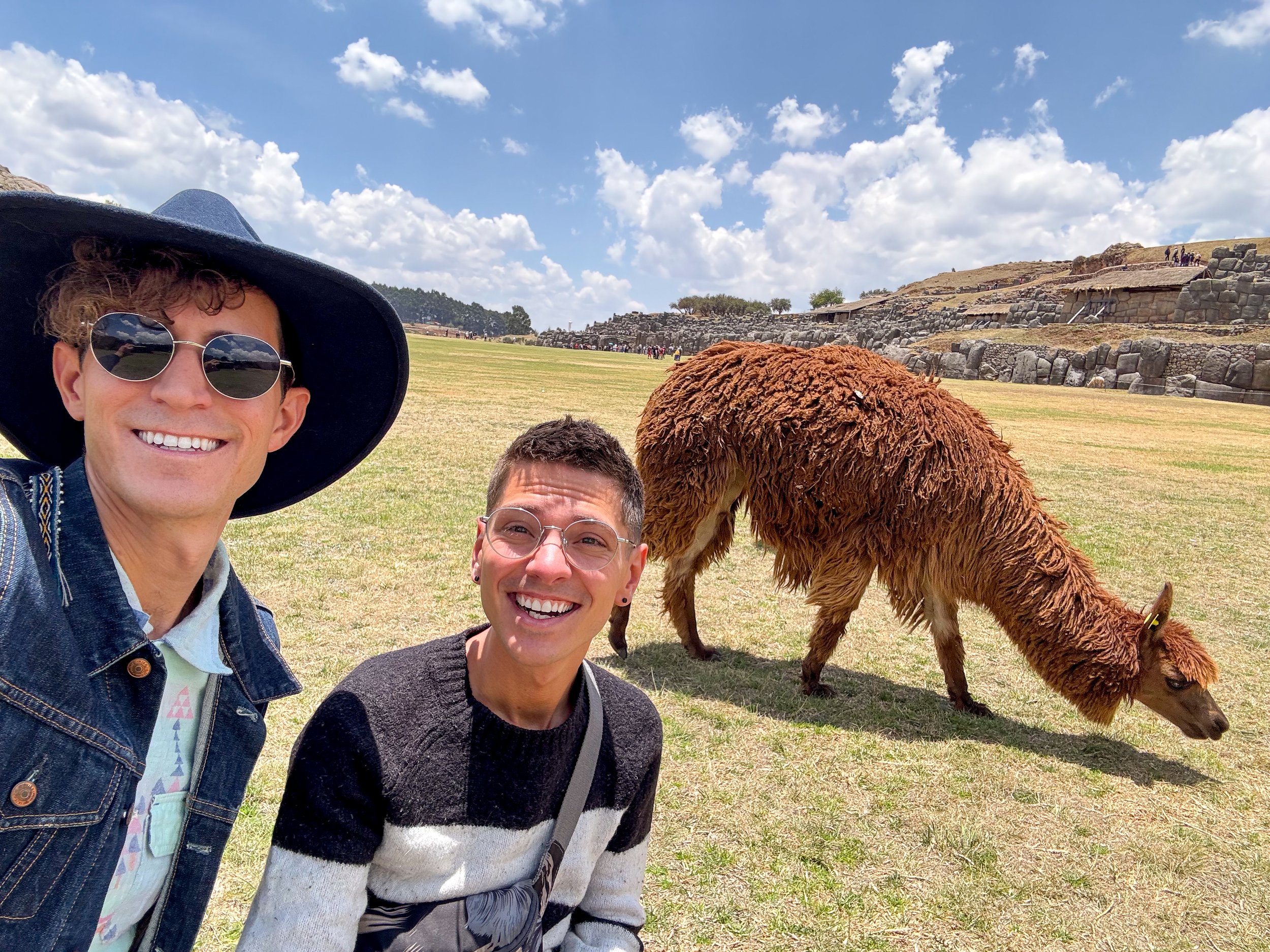
Explanada. A central field with views of the stone walls and throne, home to a small herd of grazing alpacas.
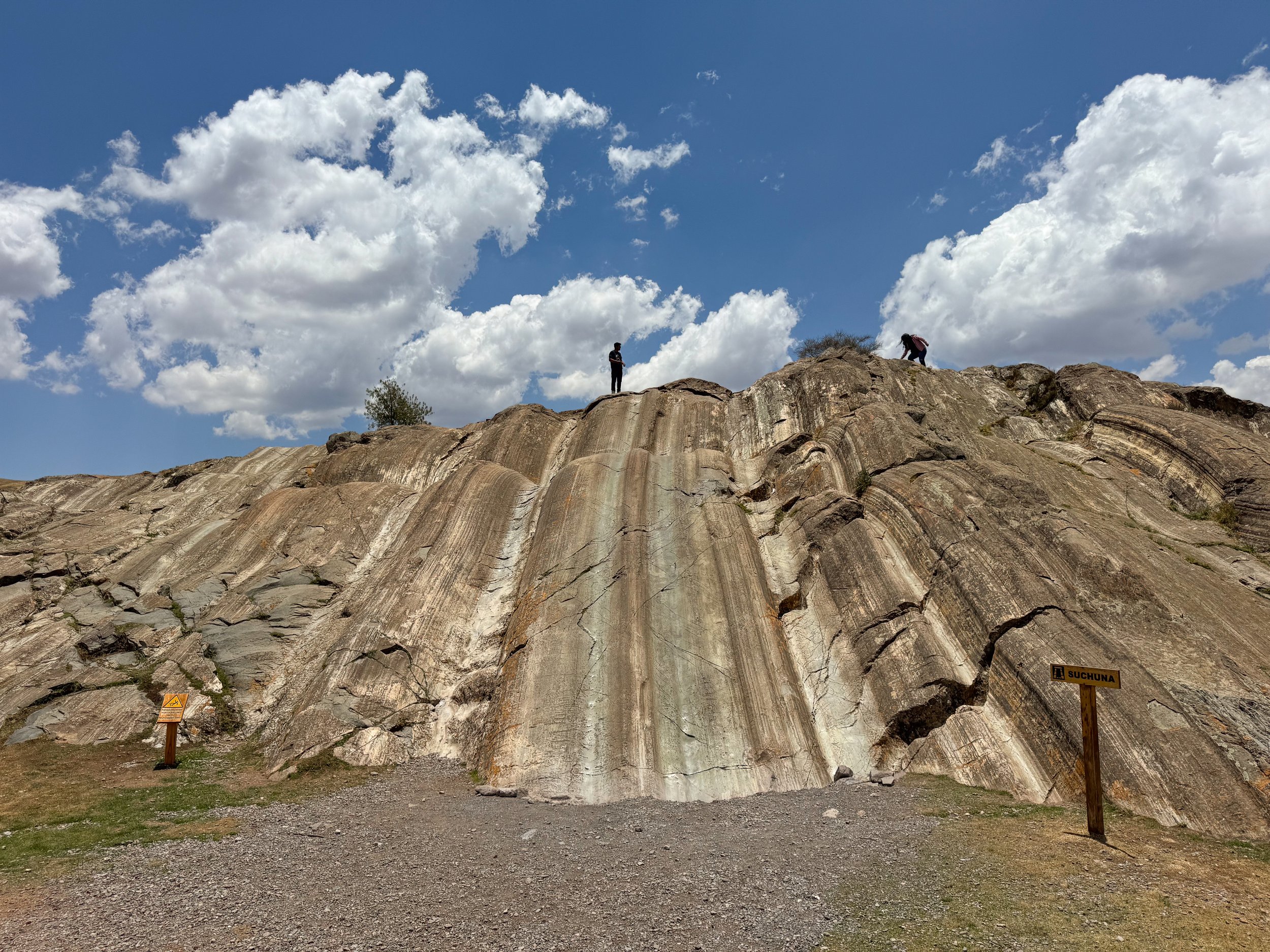
Rodadero. A rock formation used as a stone quarry with section of carved stone, upside down stairs and a natural slide polished smooth over hundreds of years by people sliding down it. We joined the locals and slid down its surface with ease.
Chincana Chica. An underground cave leading through a narrow stone passageway used by the Incas for worship and storage.
Qochas Chincanas. A circular arena with a grassy field and stone bleachers surrounding it used for celebrations and sacrifices.
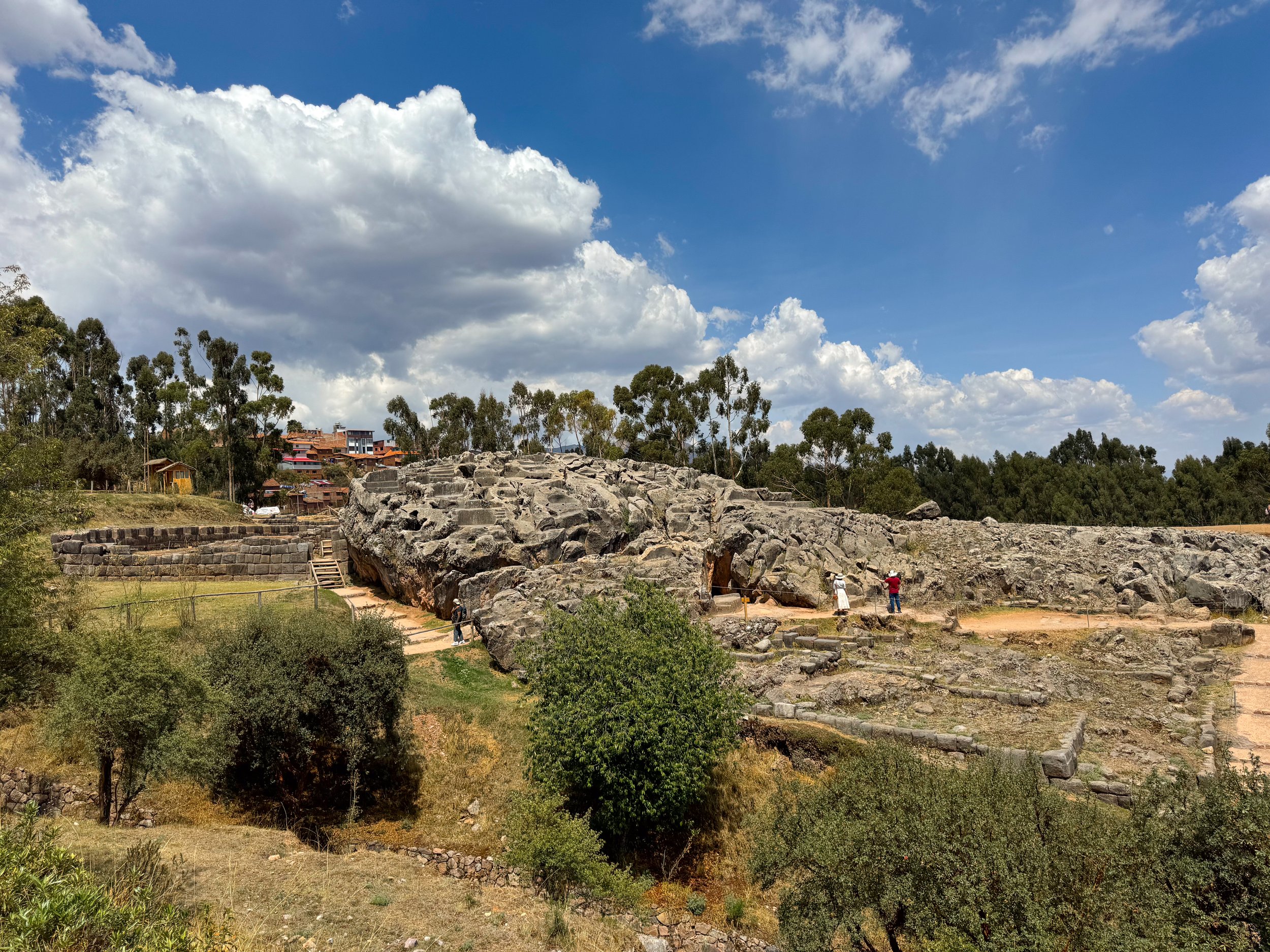
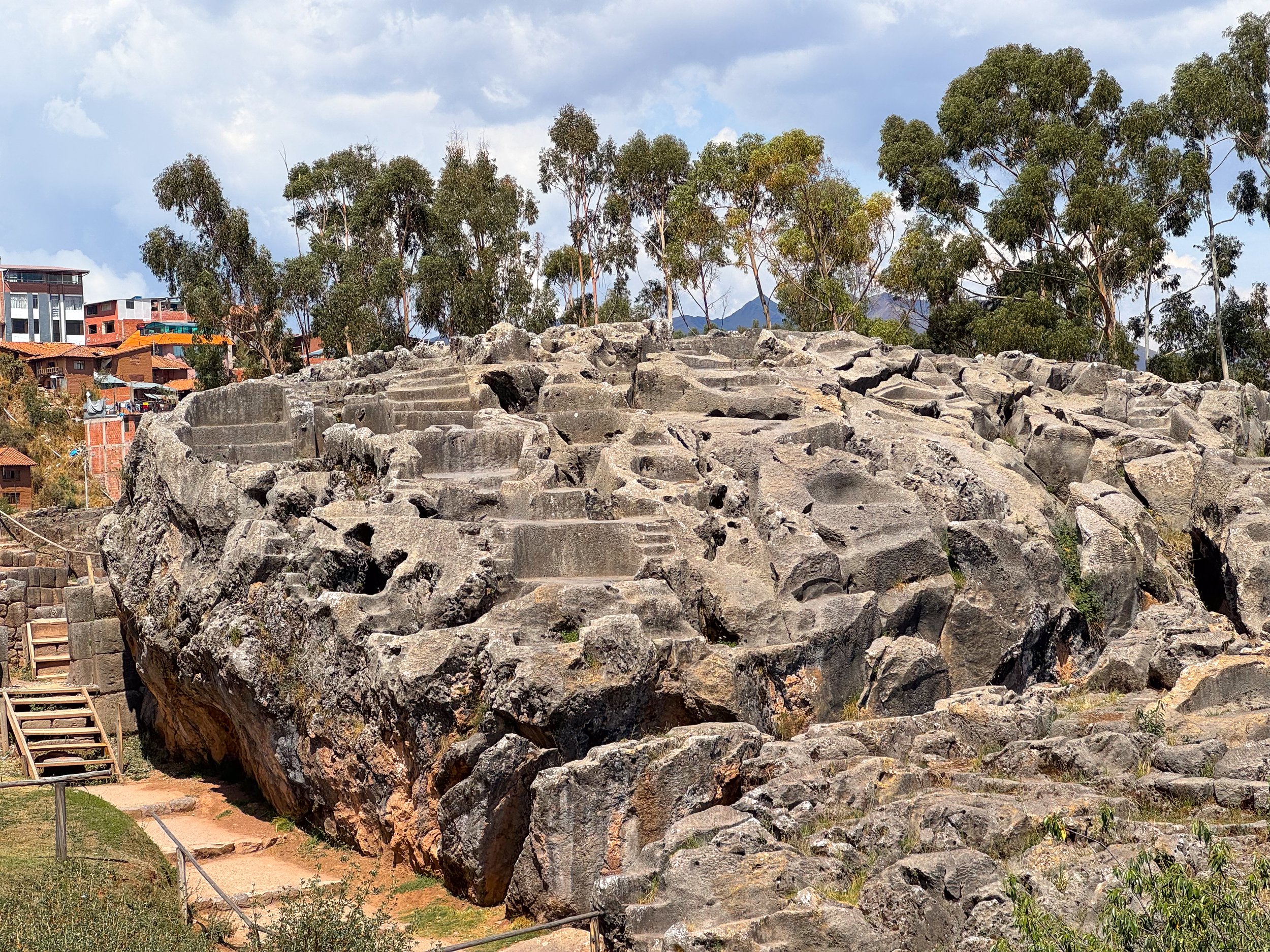
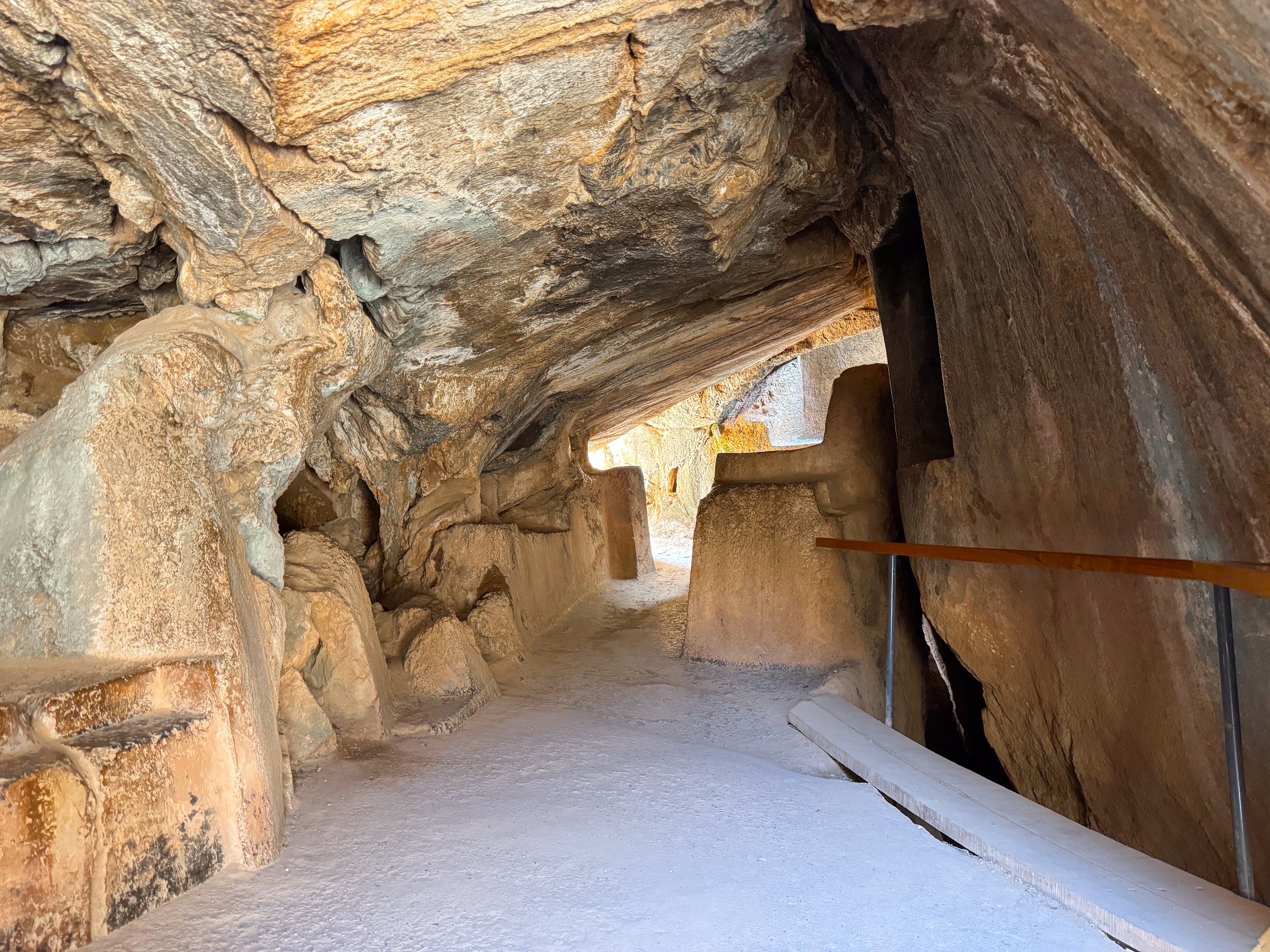
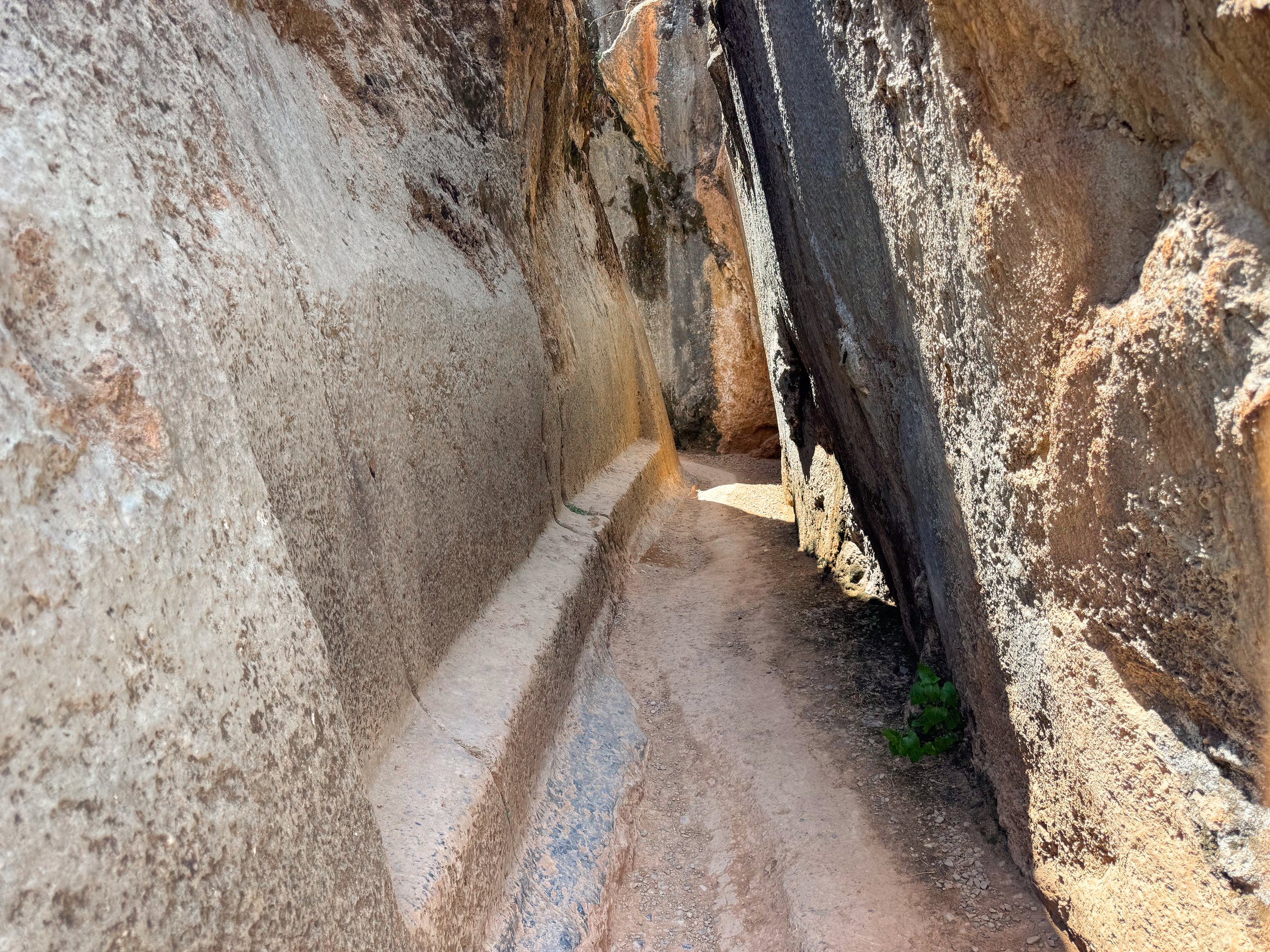
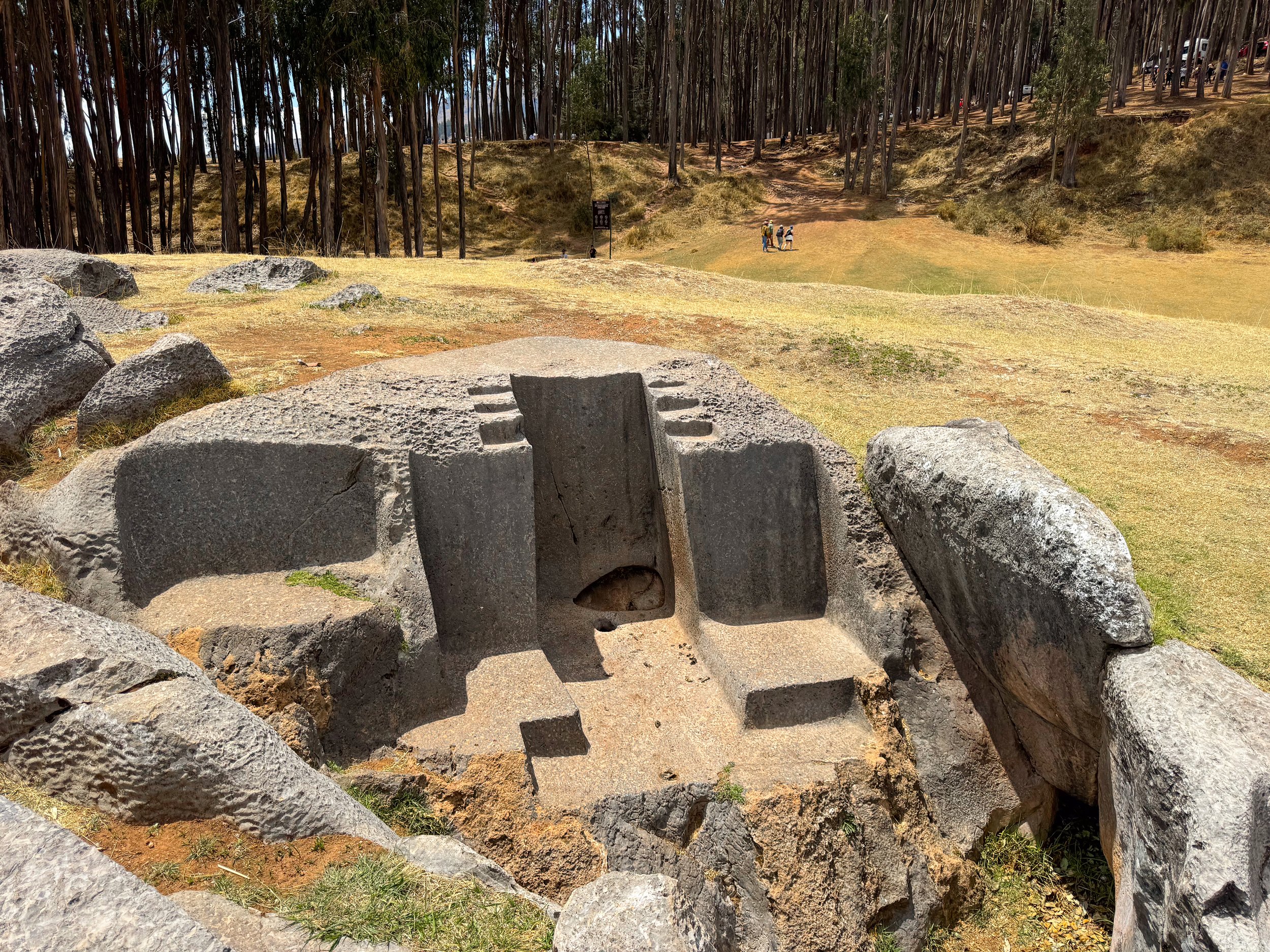
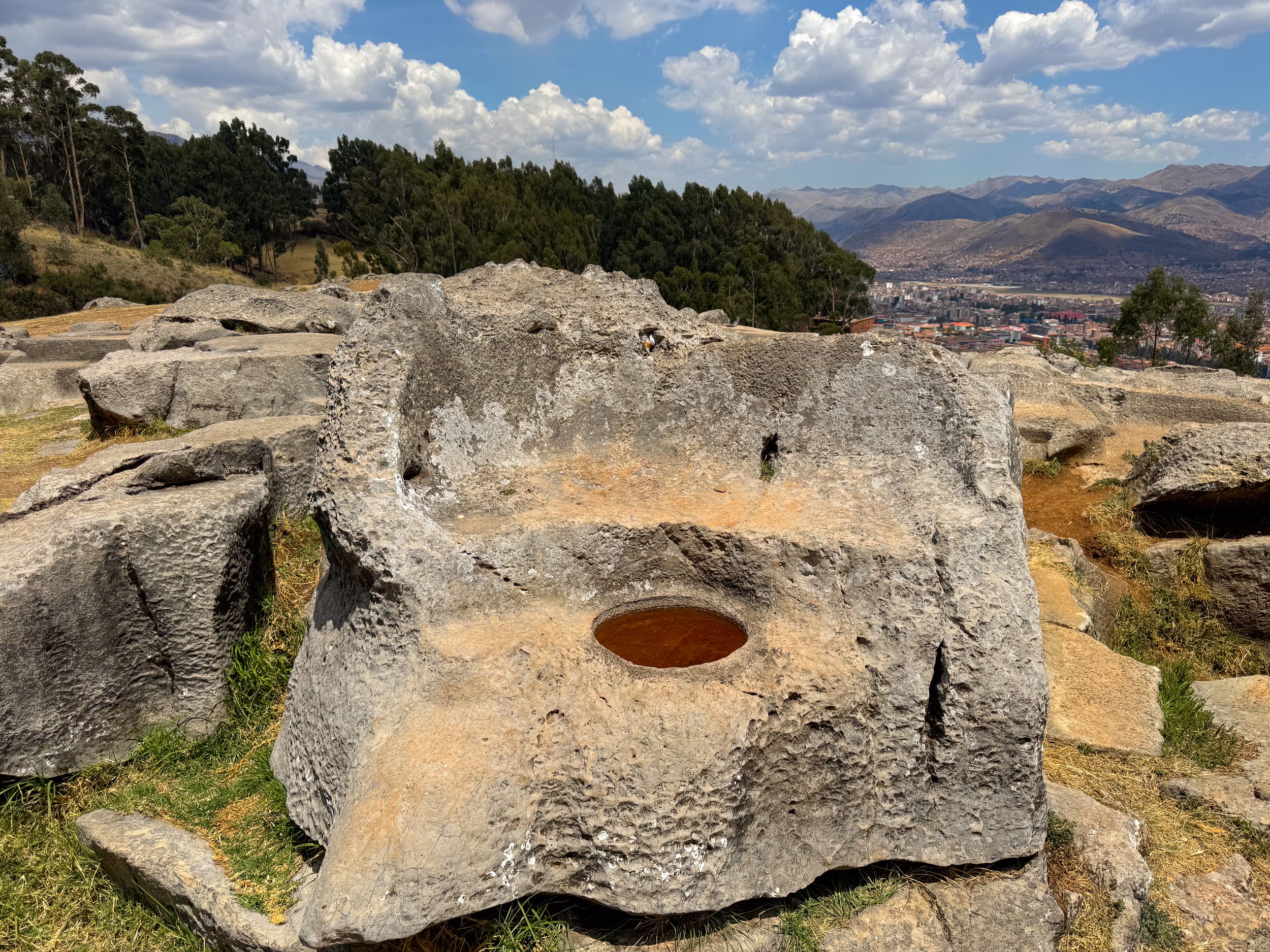
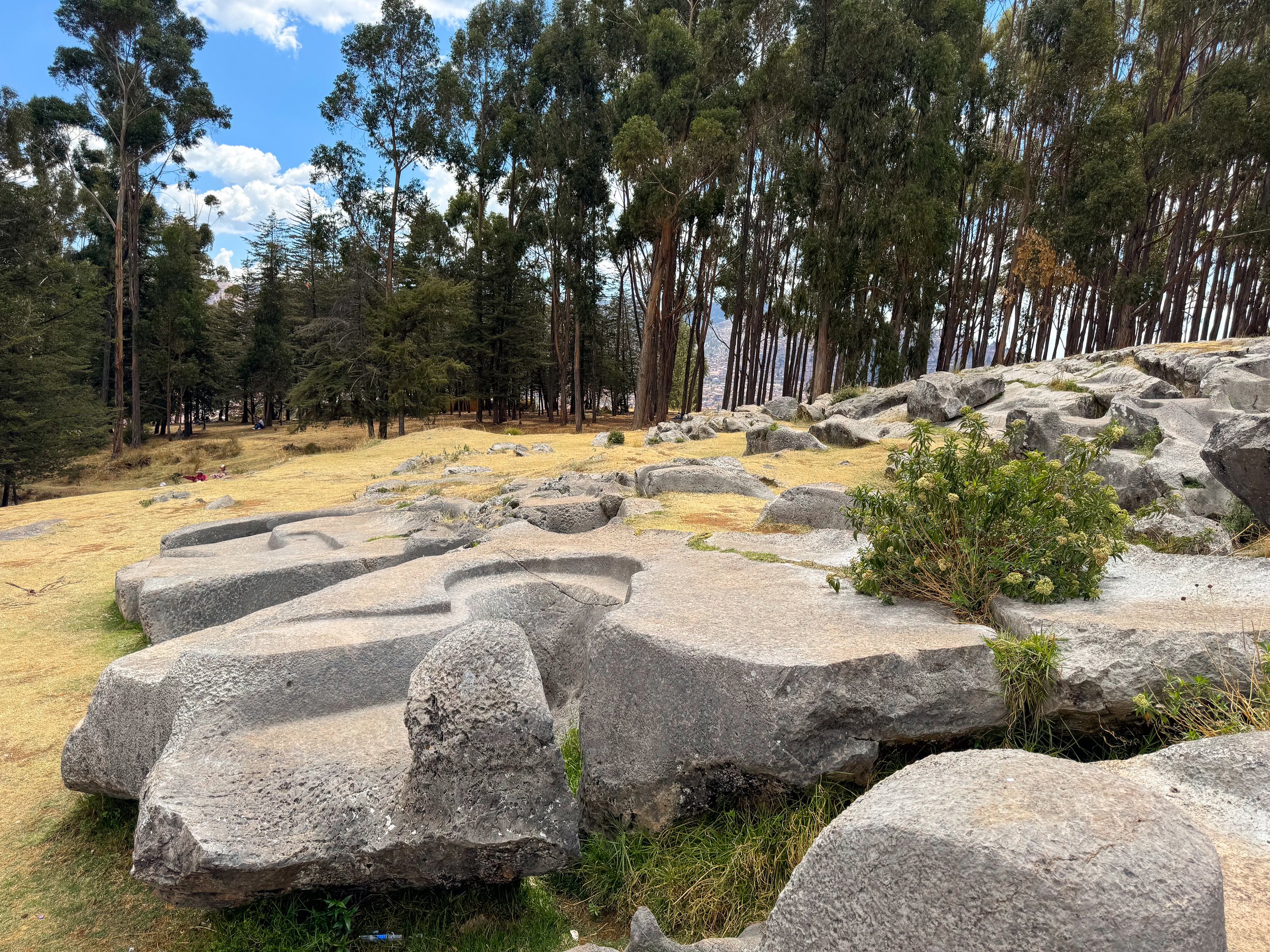
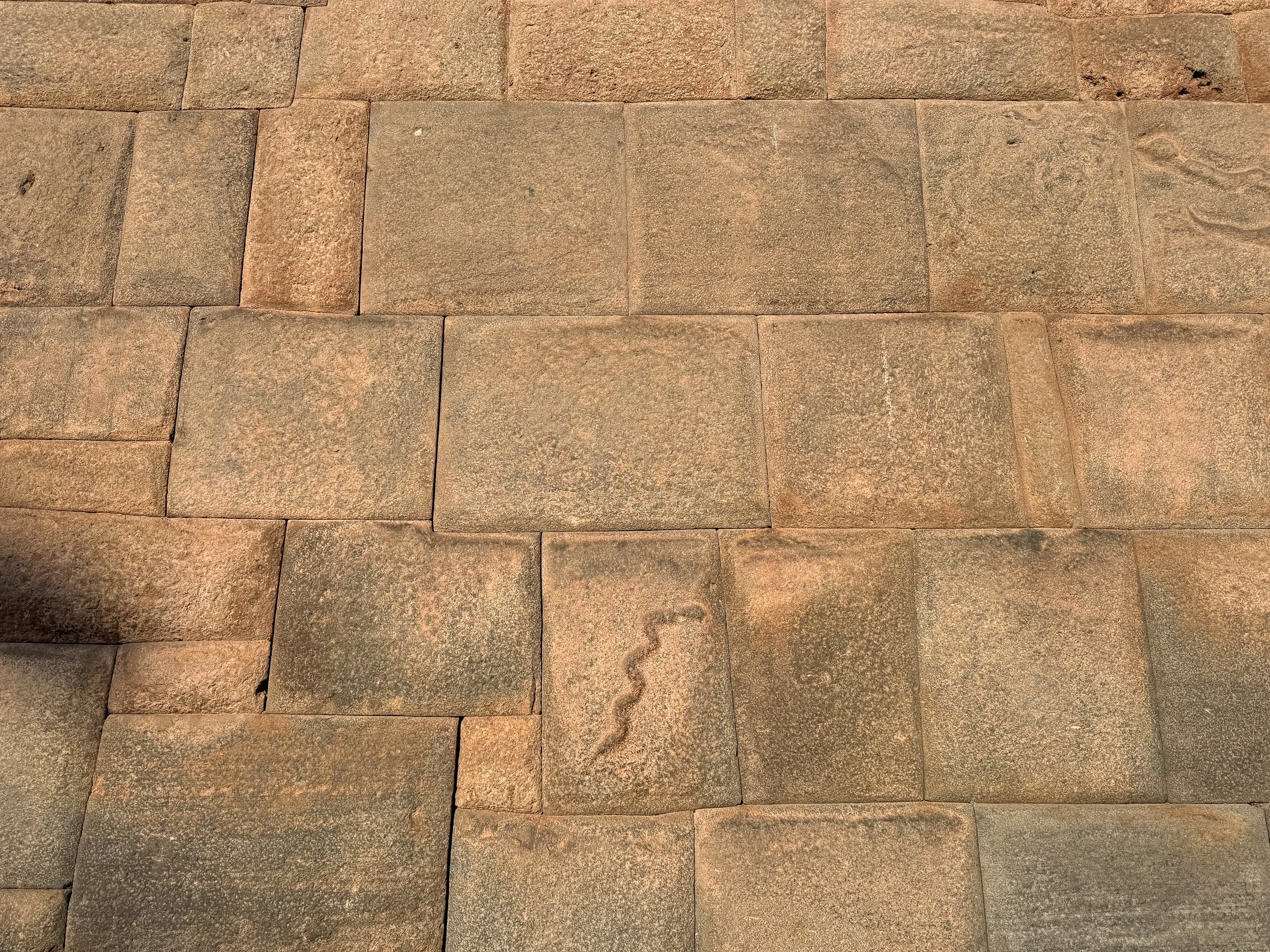
Q’enco. Stone ruins of a ceremonial site used by the Incas to sacrifice humans and animals. We followed a guided path through an amphitheater used to watch sacrifices, past observation thrones, stone sacrificial beds, pools for blood to accumulate, through caves used to leave offerings and a canal for blood to flow along, including one shaped like a snake. The top is forbidden to walk on.
Q’enco Chico. A smaller ceremonial site below Q’enco used for the same sacrificial purposes. Unlike Q’enco, this site can be walked on and explored more freely. Today, it’s a popular picnic sight.
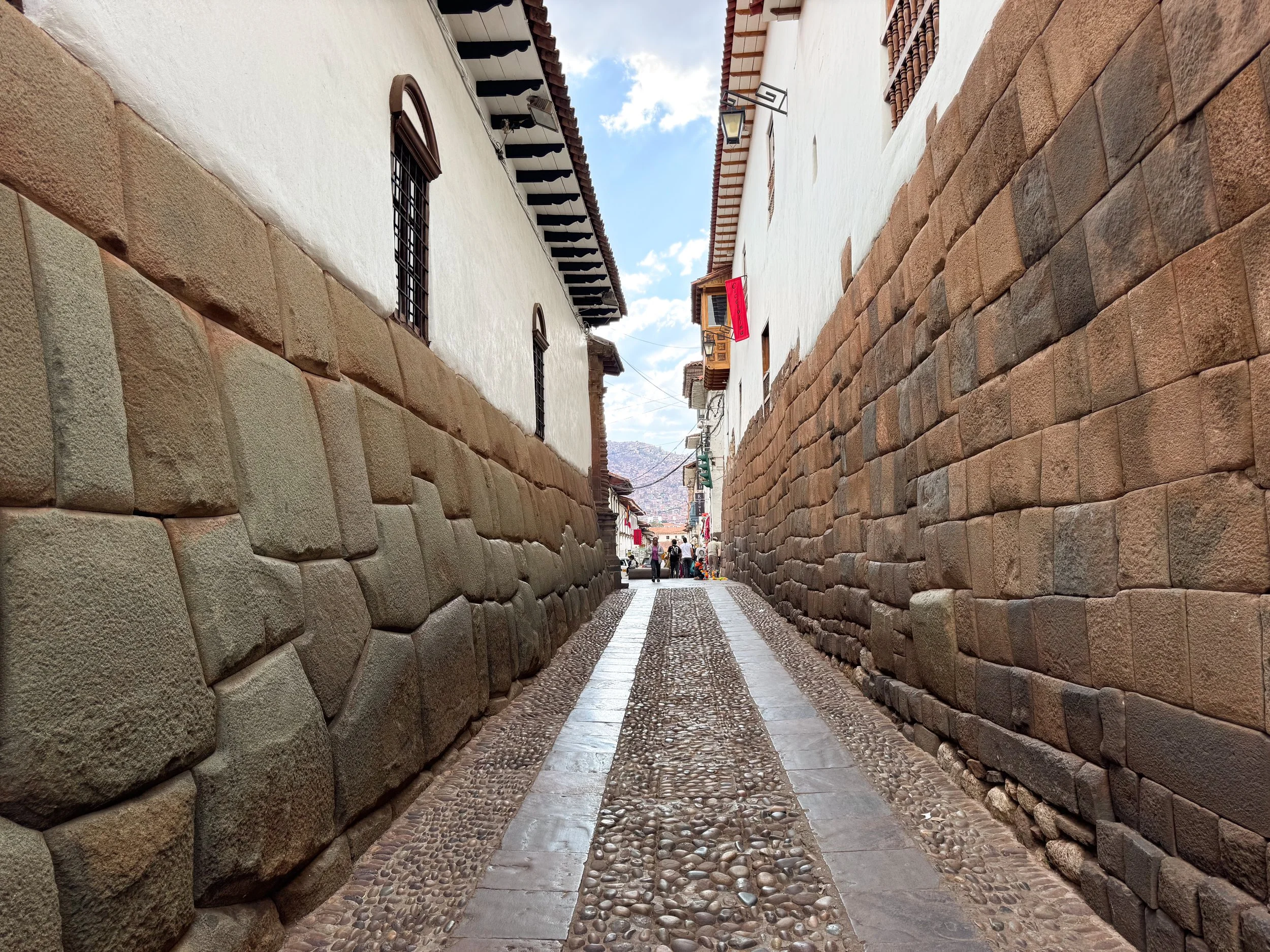
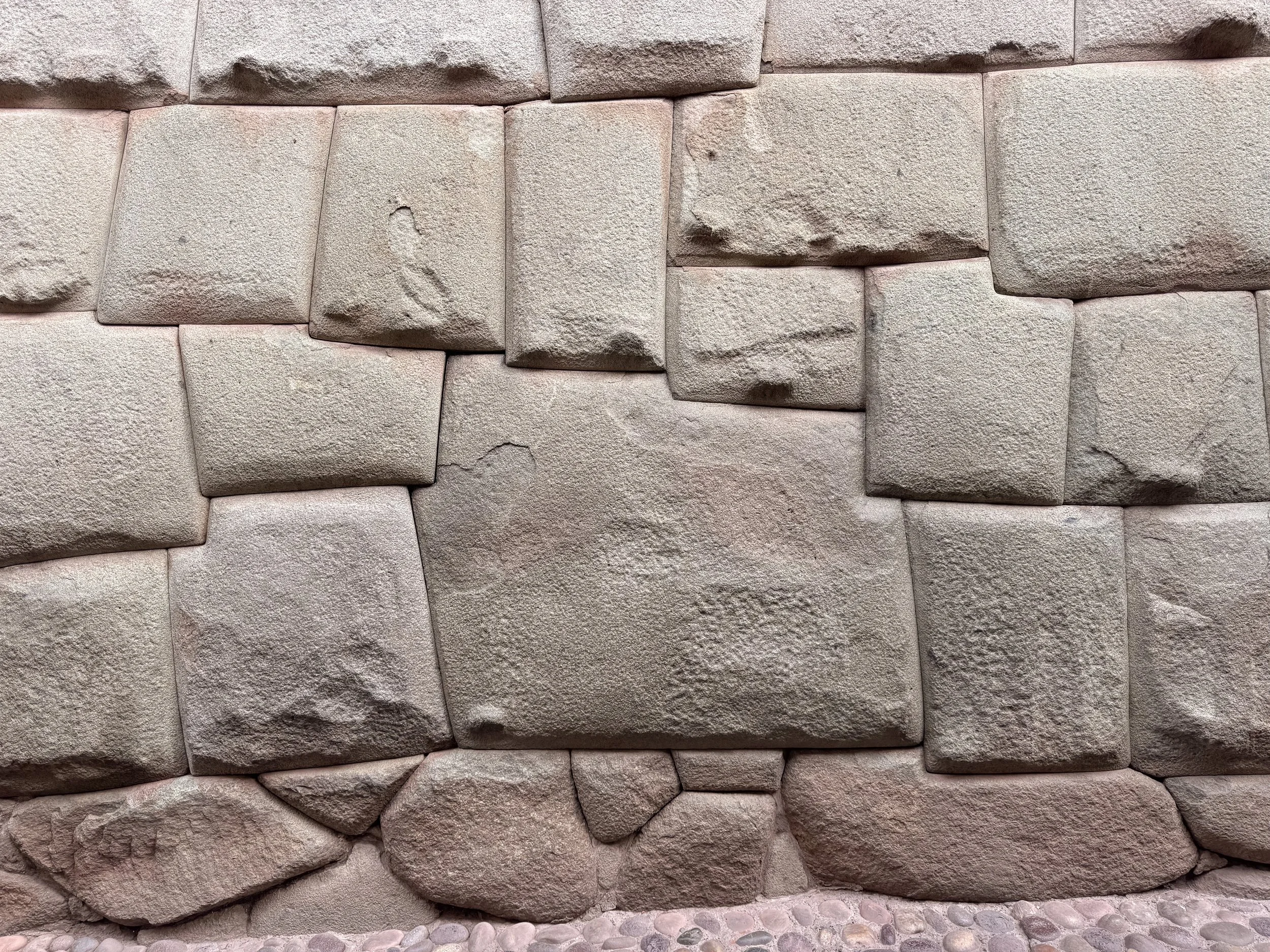
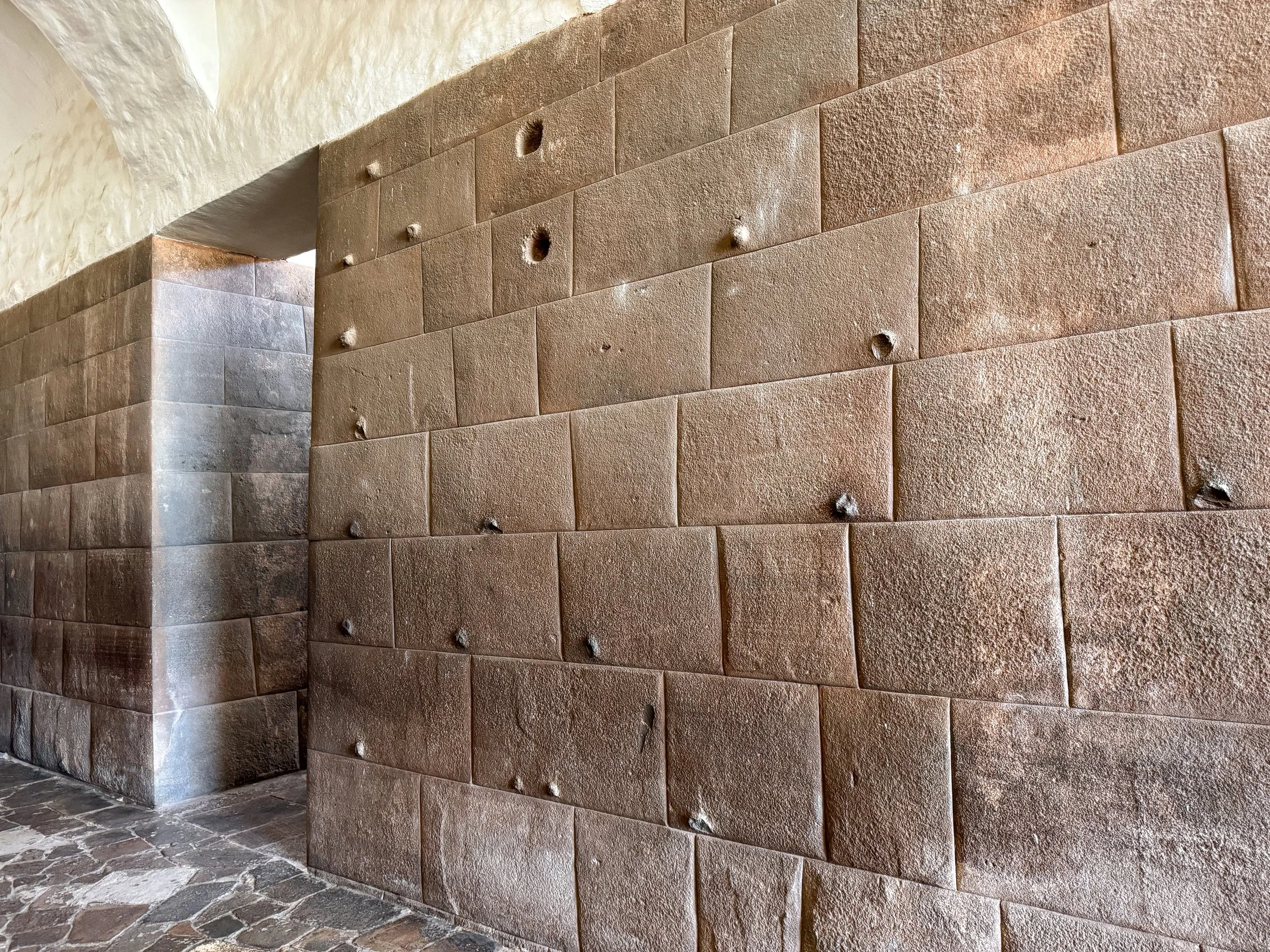
Calle Hatunrumiyoc. A historic street with Incan stone walls on both sides. It’s a good place to see the complexity of the stonework made by the Incans. The most prominent feature is Piedra de los 12 Ángulos, a large stone carved with 12 corners and perfectly fitted with the surrounding stones.
Calle de Siete Culebras. An Incan street with stone walls and carvings of snakes.
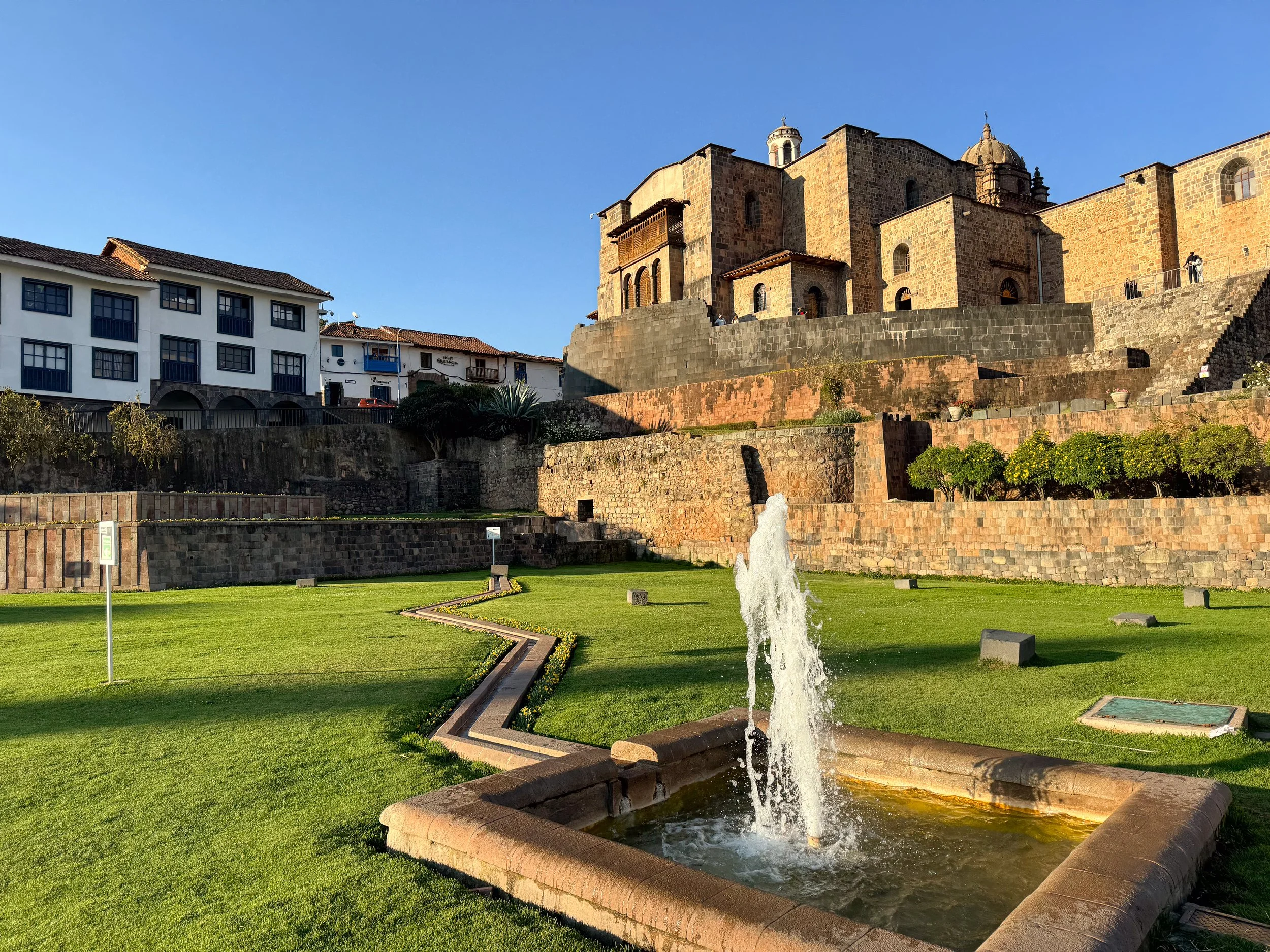
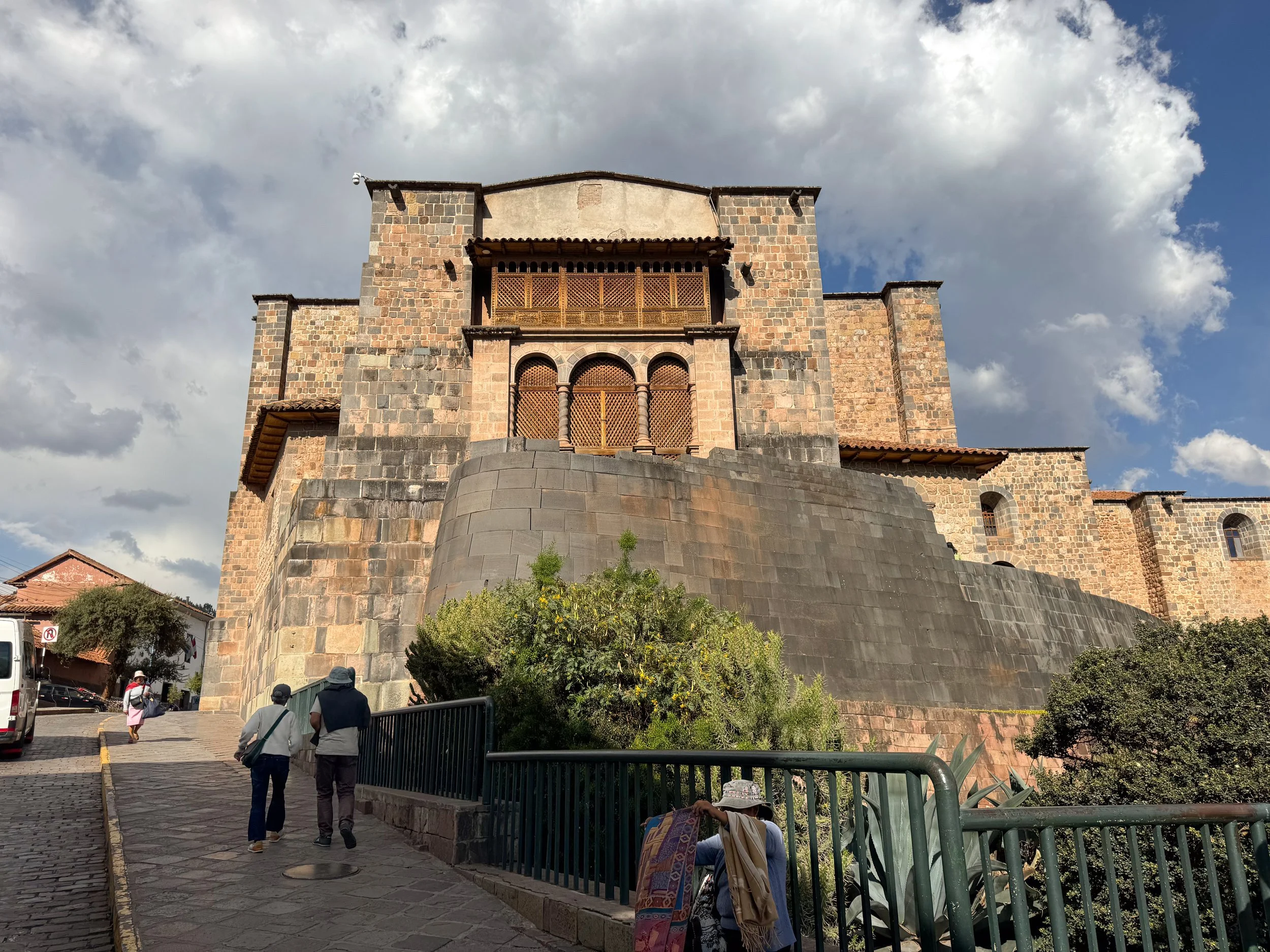
Qorikancha Temple (Golden Temple of the Sun). The ruins of an Incan temple dedicated to the worship of the sun. Prior to the Spanish conquest, the temple was plated in gold. It was stripped off and a cathedral was built on top of its walls. The temple remains mostly intact and can be toured from within the cathedral. We climbed the bell tower of the cathedral overlooking Cusco.
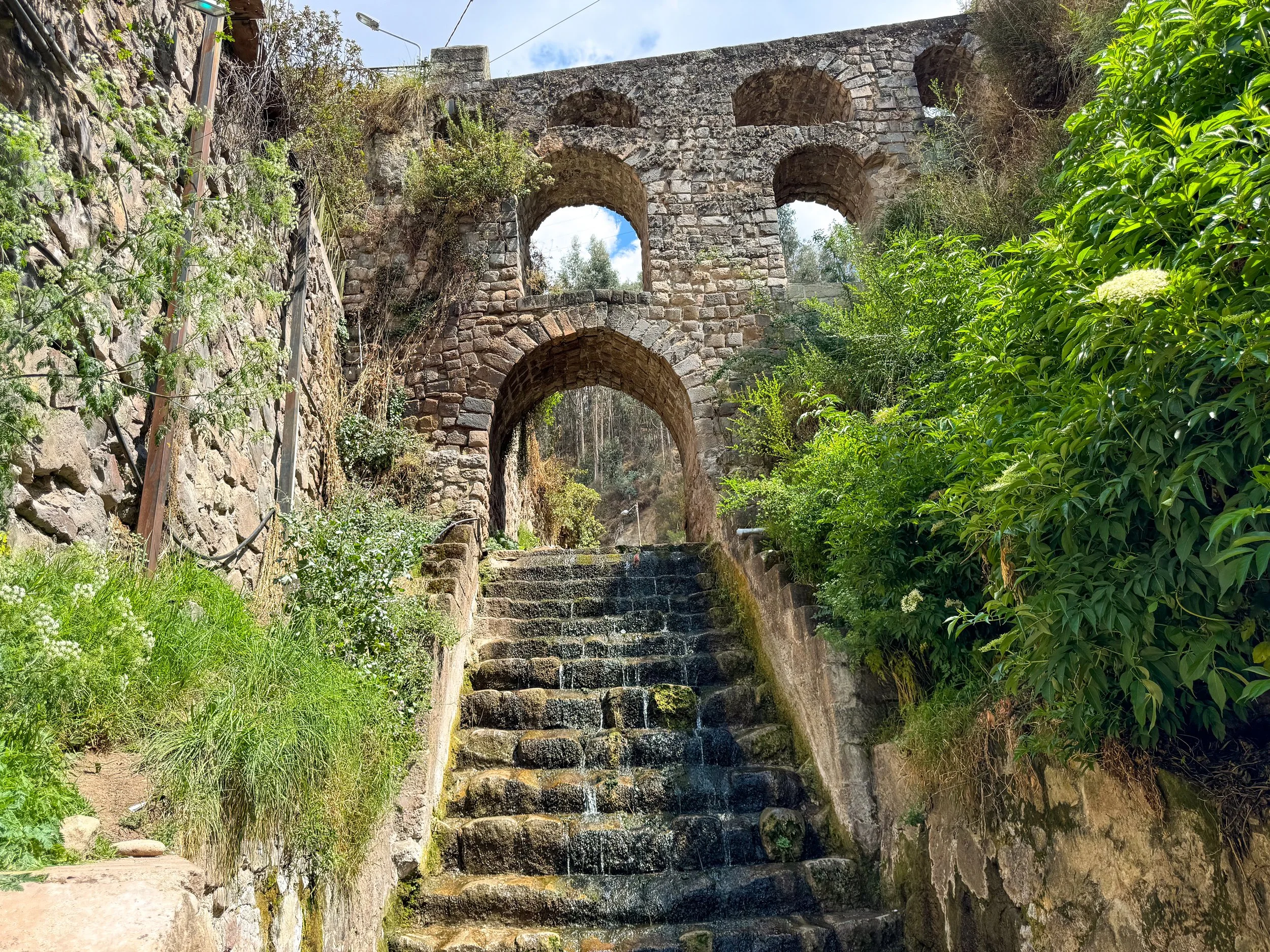
Sapantiana Aqueduct. An ancient stone aqueduct bridge and canal used to transport water by the Incas and still used today.
See the Sights & Museums
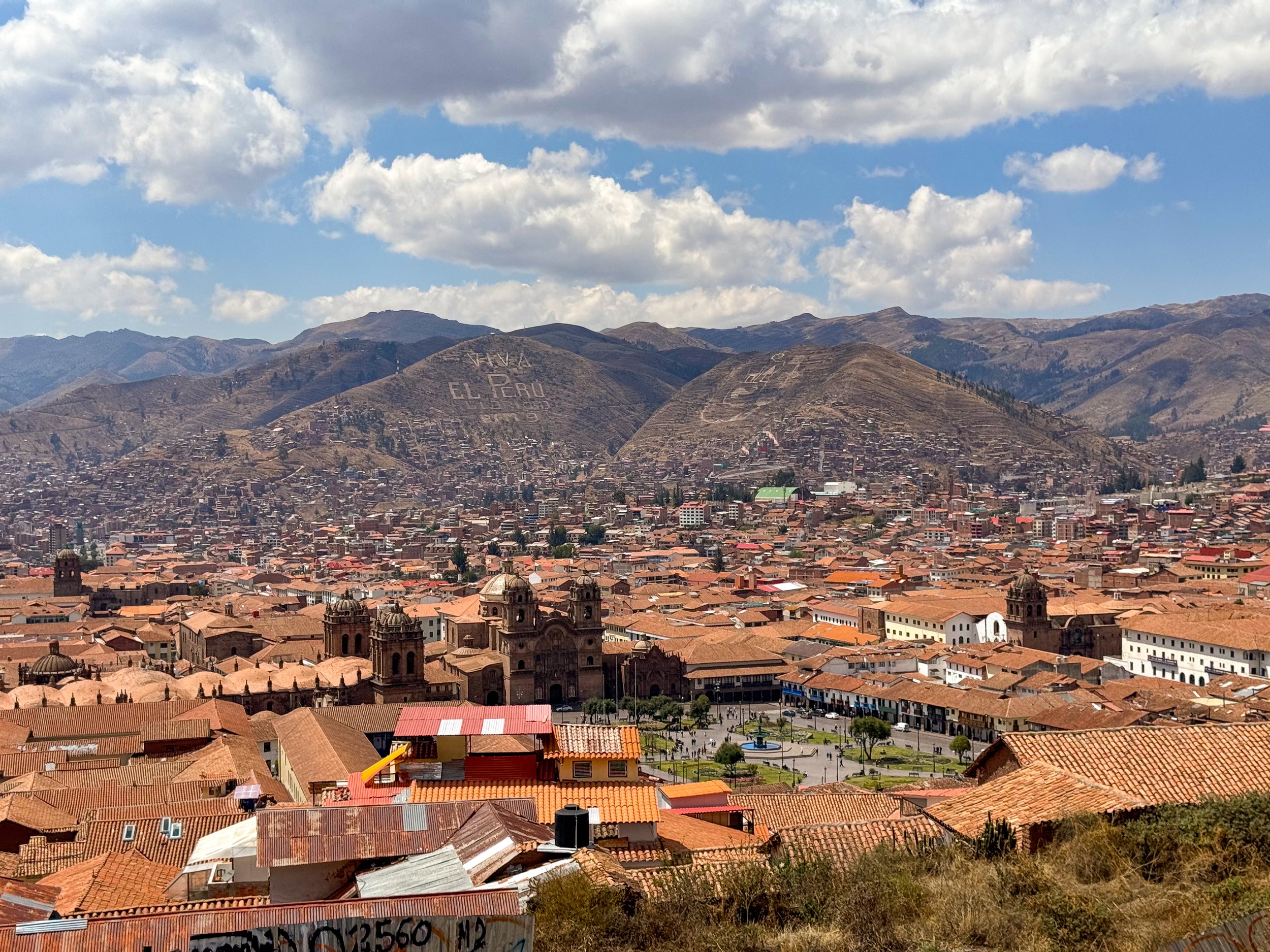
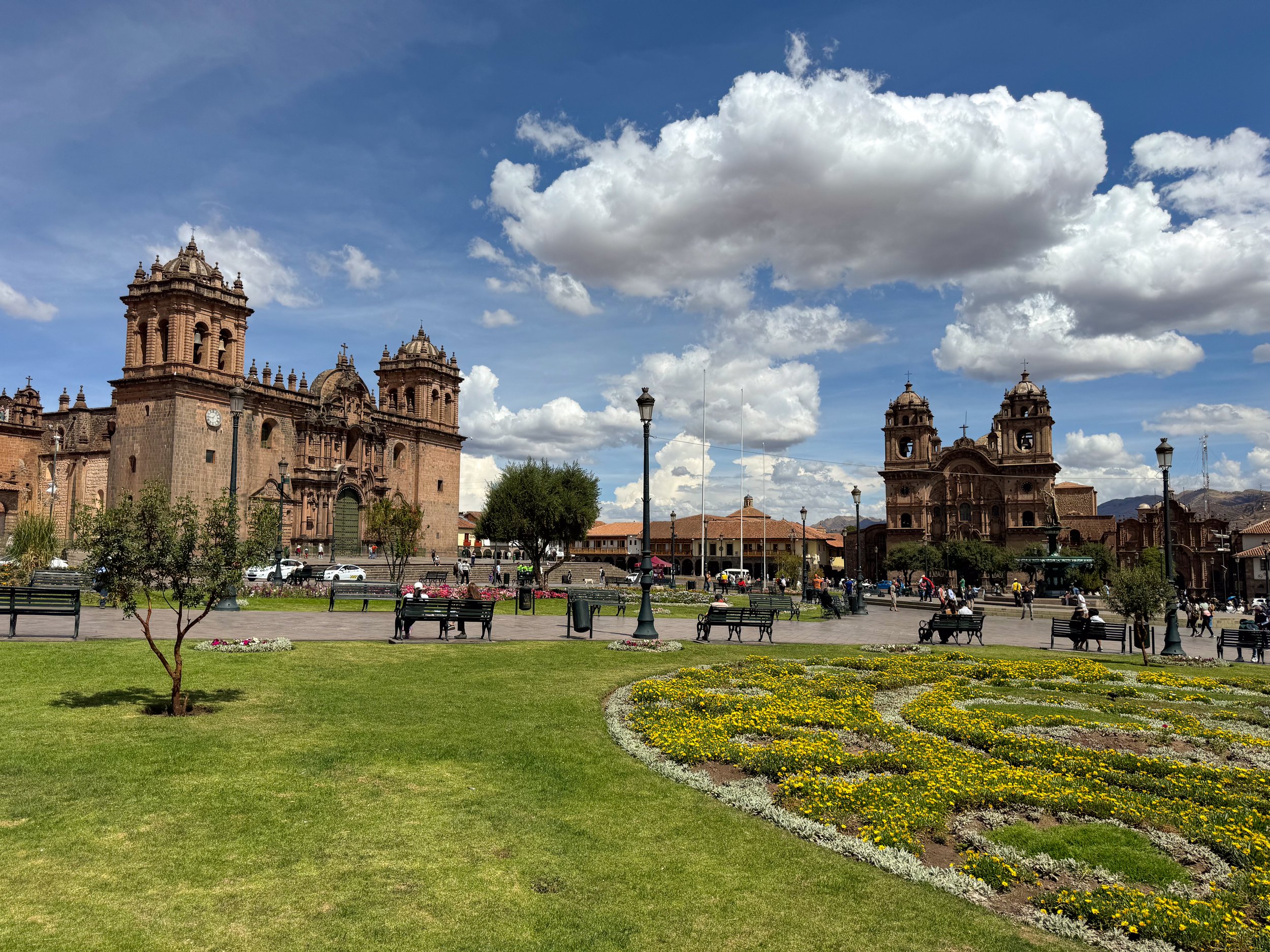
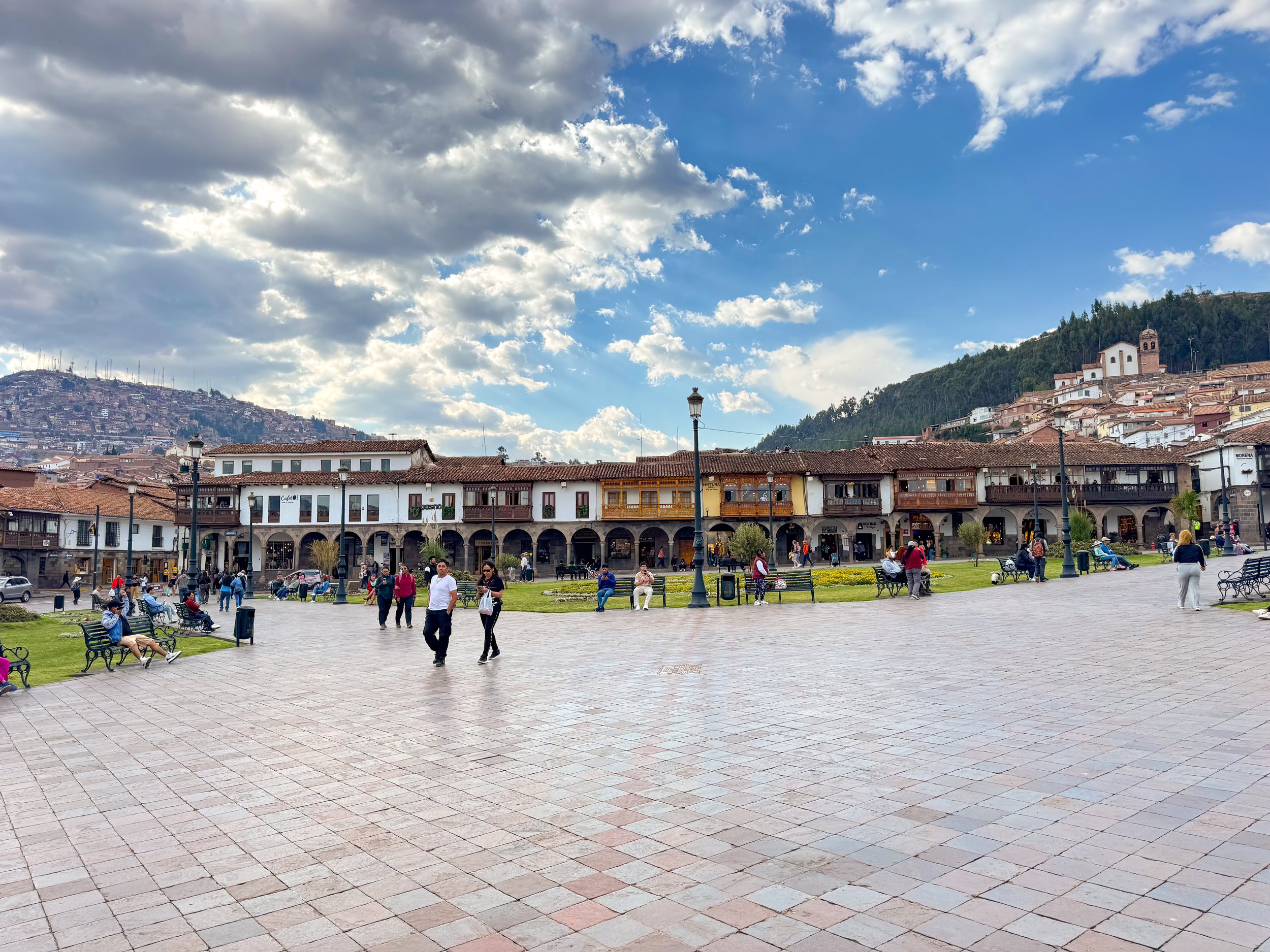
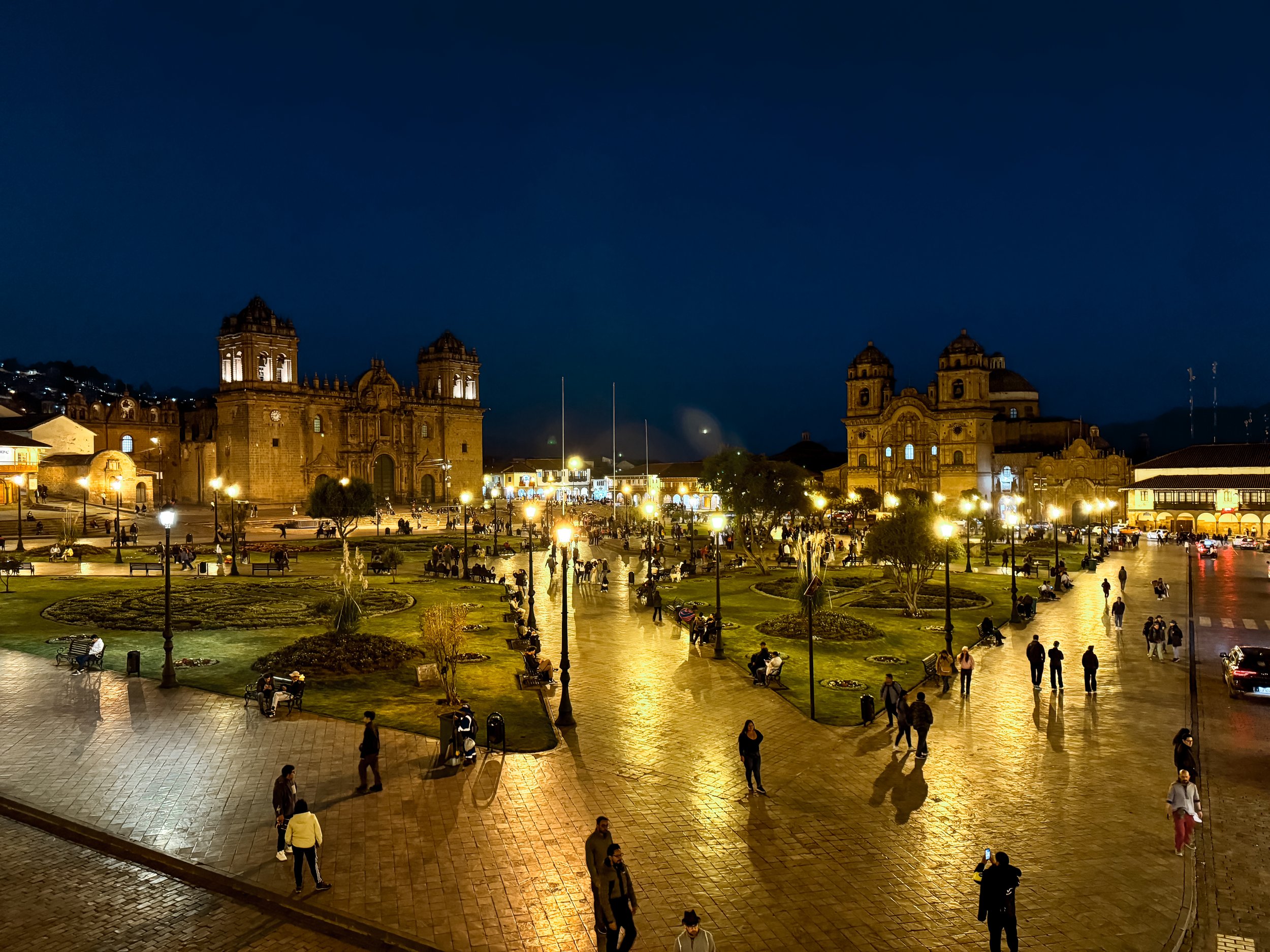
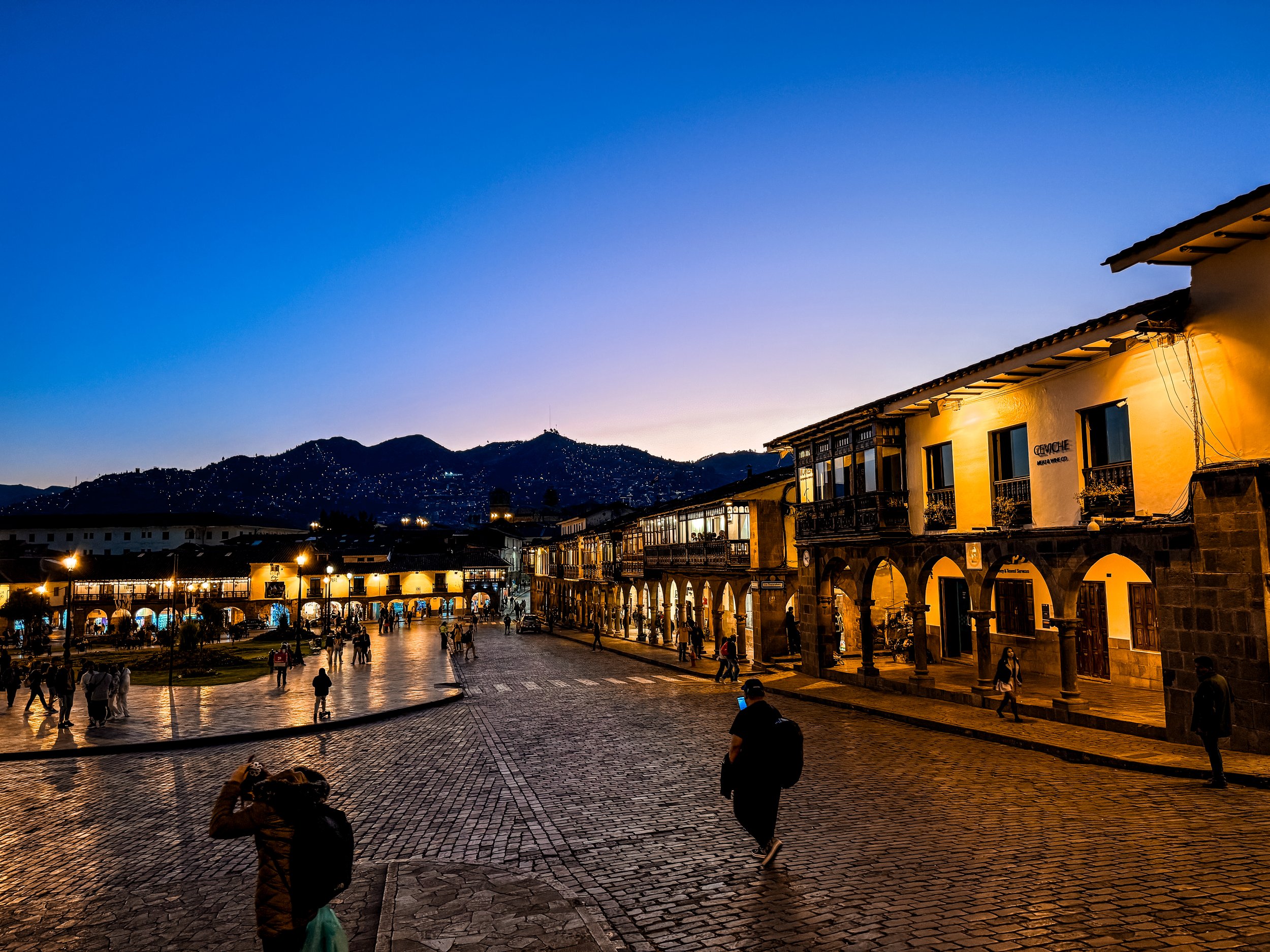
Plaza Mayor. The central plaza in Cusco with two large cathedrals, balcony lined buildings, flowering gardens and a central monument dedicated to the Incas. It is a hub for restaurants, tour companies, massage parlors, textile stores and souvenir shops.
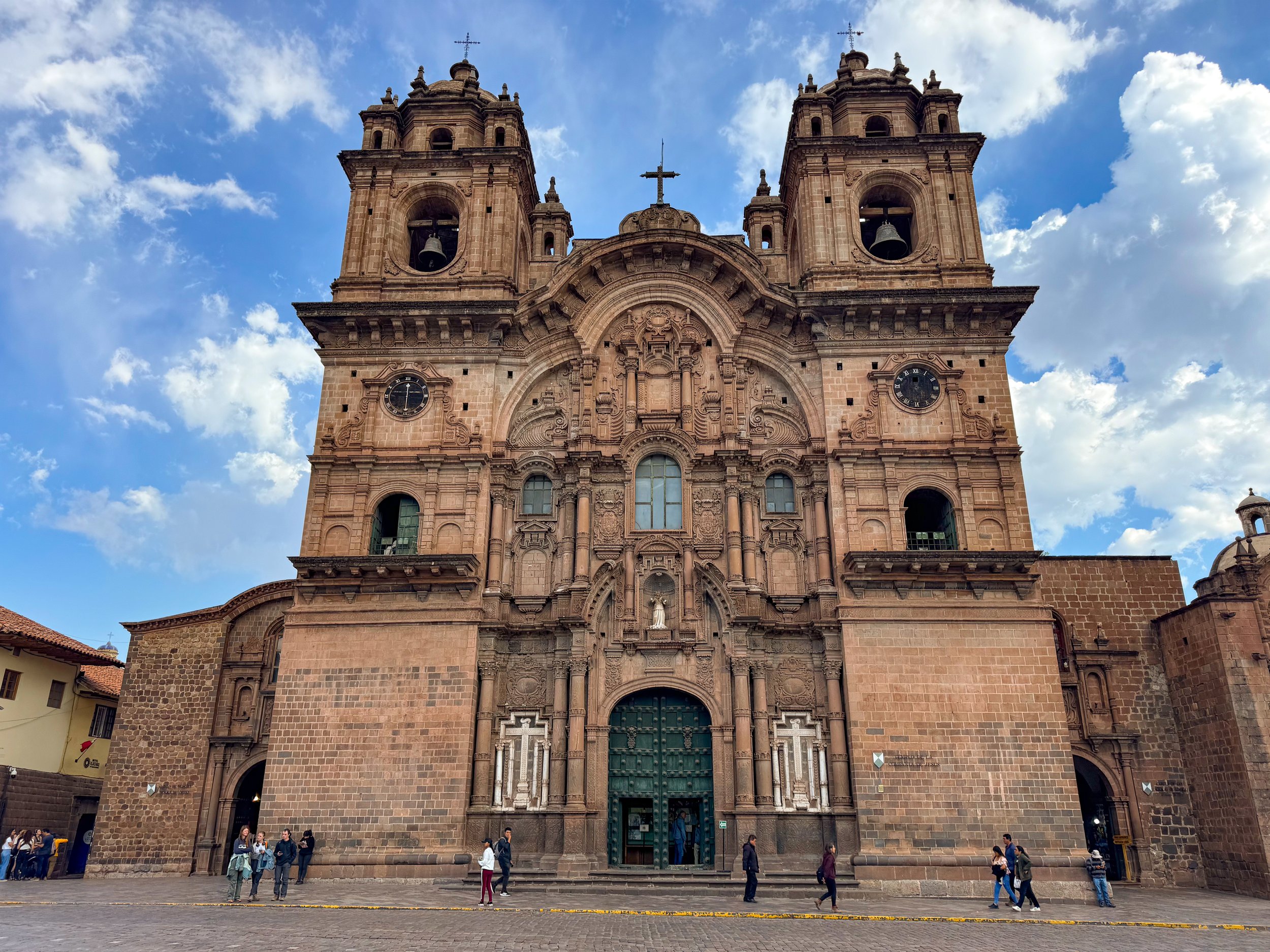
Cusco Cathedral. The cathedral at the south side of Plaza Mayor with an ornate stone facade and two large bell towers. We toured the gold gilded interior, visited the crypt and climbed to the second level of both bell towers overlooking the plaza.
Museo de Arte Pre-Columbia. A museum dedicated to the pre-Columbian civilizations and cultures of ancient Peru. The ground floor galleries separate artifacts by the material they are made from including shell, silver, gold, wood, stone and ceramic. The second floor galleries separate artifacts by the regions and cultures of ancient Peru through Incan times to the Spanish conquest.
Qorikancha Museum. An underground museum beneath the lawn outside of the Qorikancha Temple with artifacts including ceramics, textiles, mummified remains and skulls with surgical markings and deformations. The museum exits through the lawn with the ruins of Incan stones and an aqueduct.
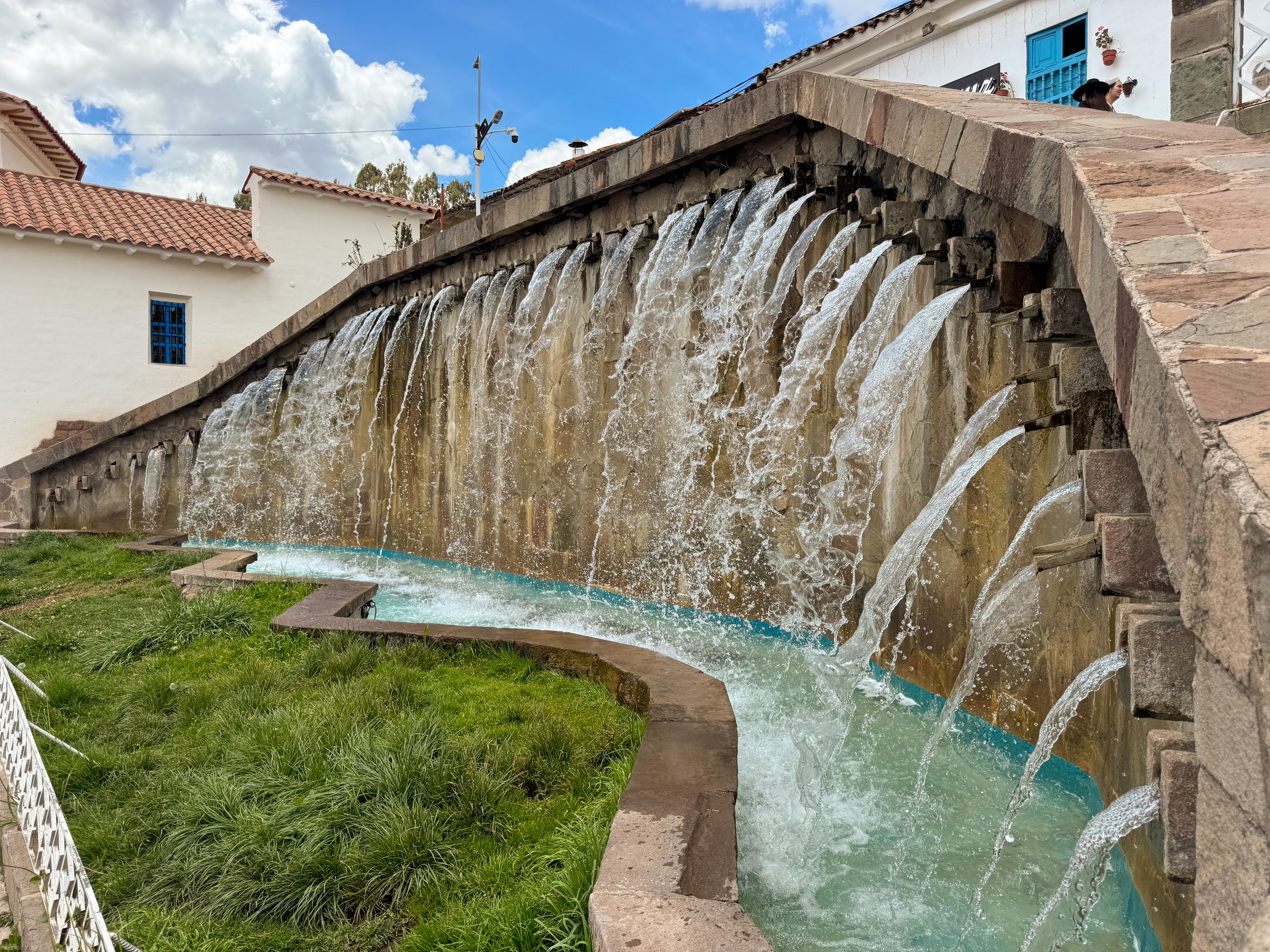
Plaza San Blas. A plaza with a large fountain, church, small museums, an artisan market and shops.
Mirador San Blas. A romantic plaza with views of the neighborhood and Cusco. Couples attach love locks to the rails and make out on the park benches.
The San Cristóbal Viewpoint. A scenic lookout above Cusco with panoramic views of the clay tiled roofs of the city, the stone cathedrals and the distant hillside.
The Cristo Blanco Viewpoint. A lookout high above the city with a small white painted copy of Rio's Christ the Redeemer.
Shop the Markets
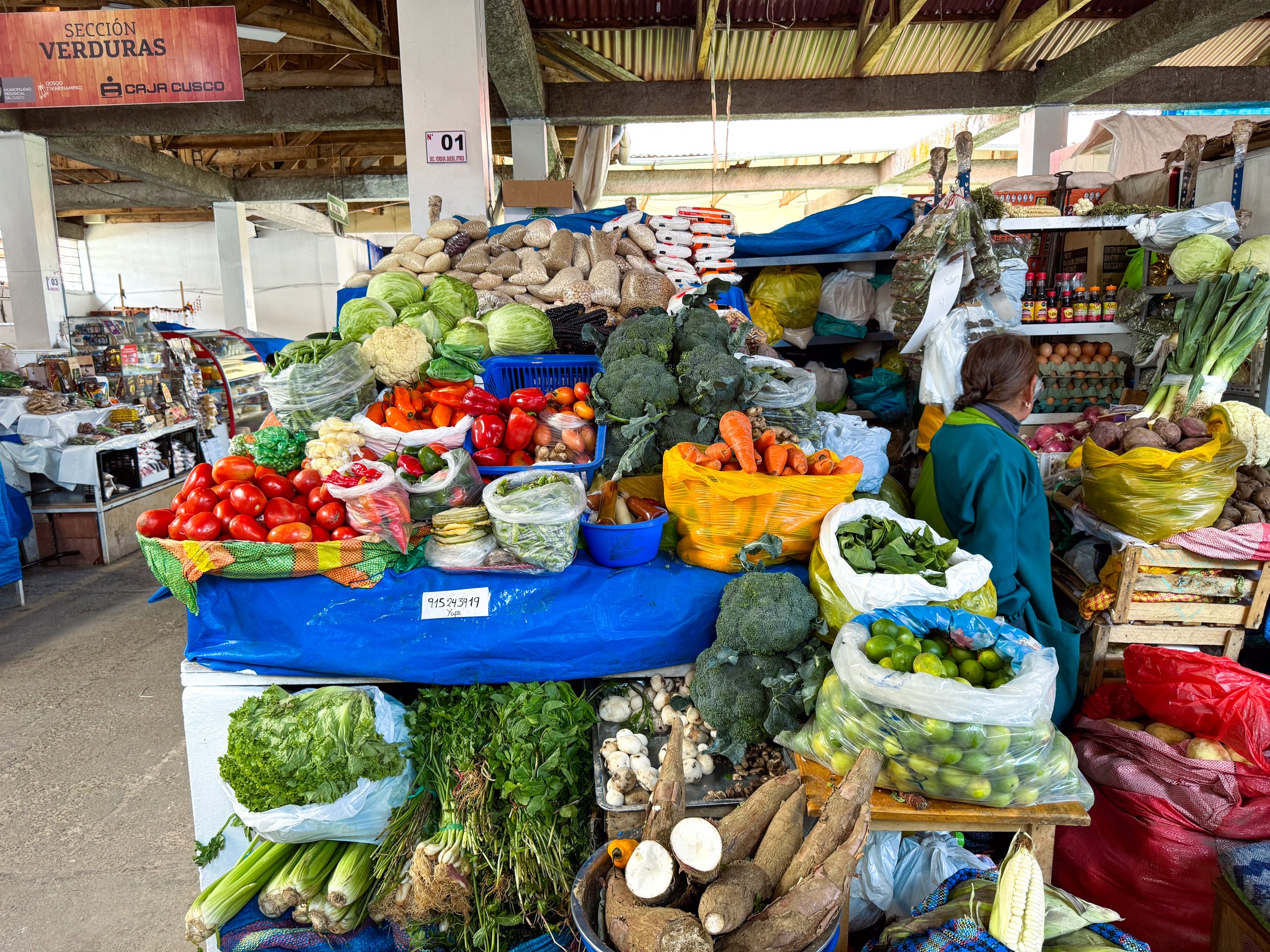
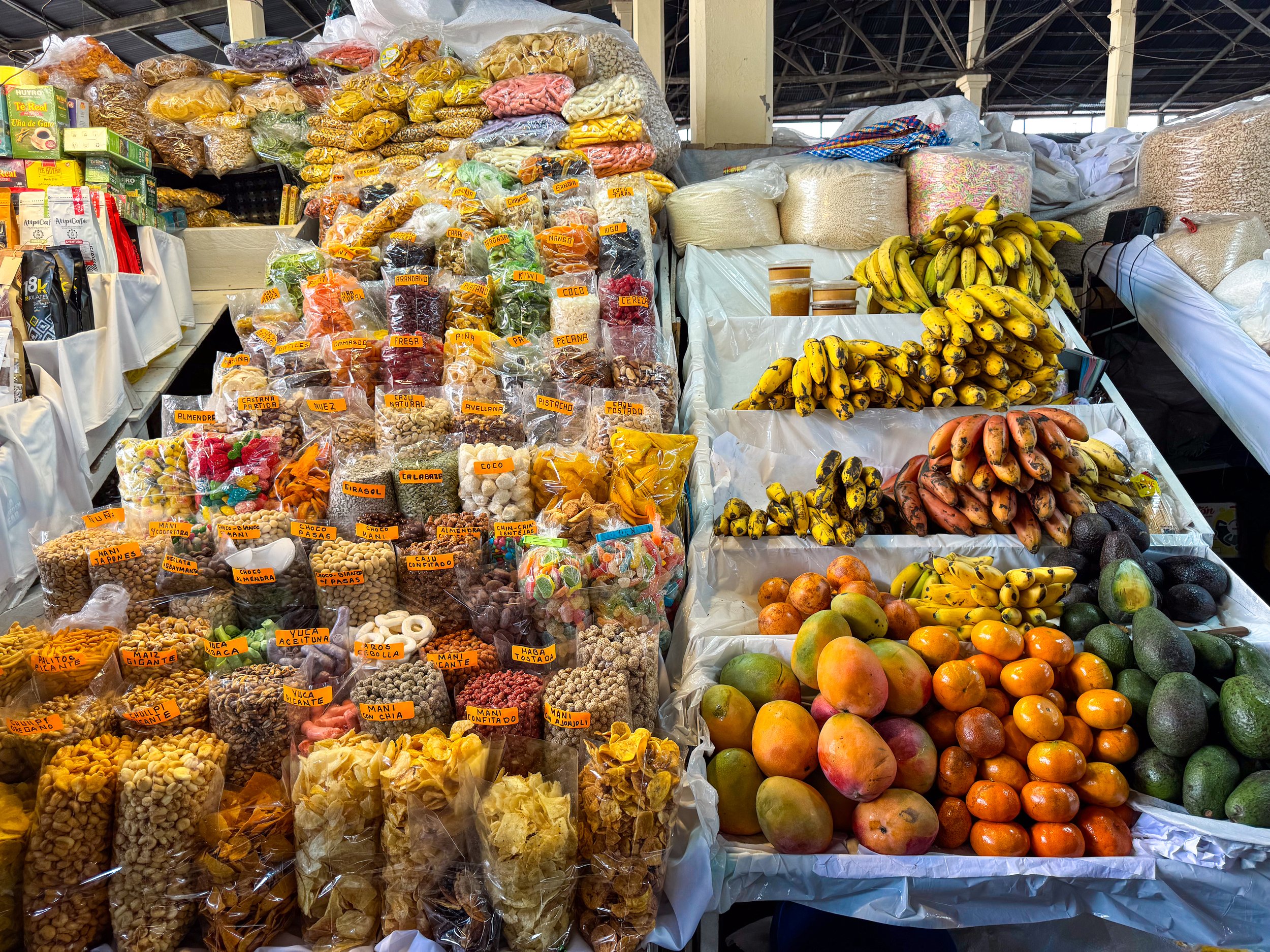
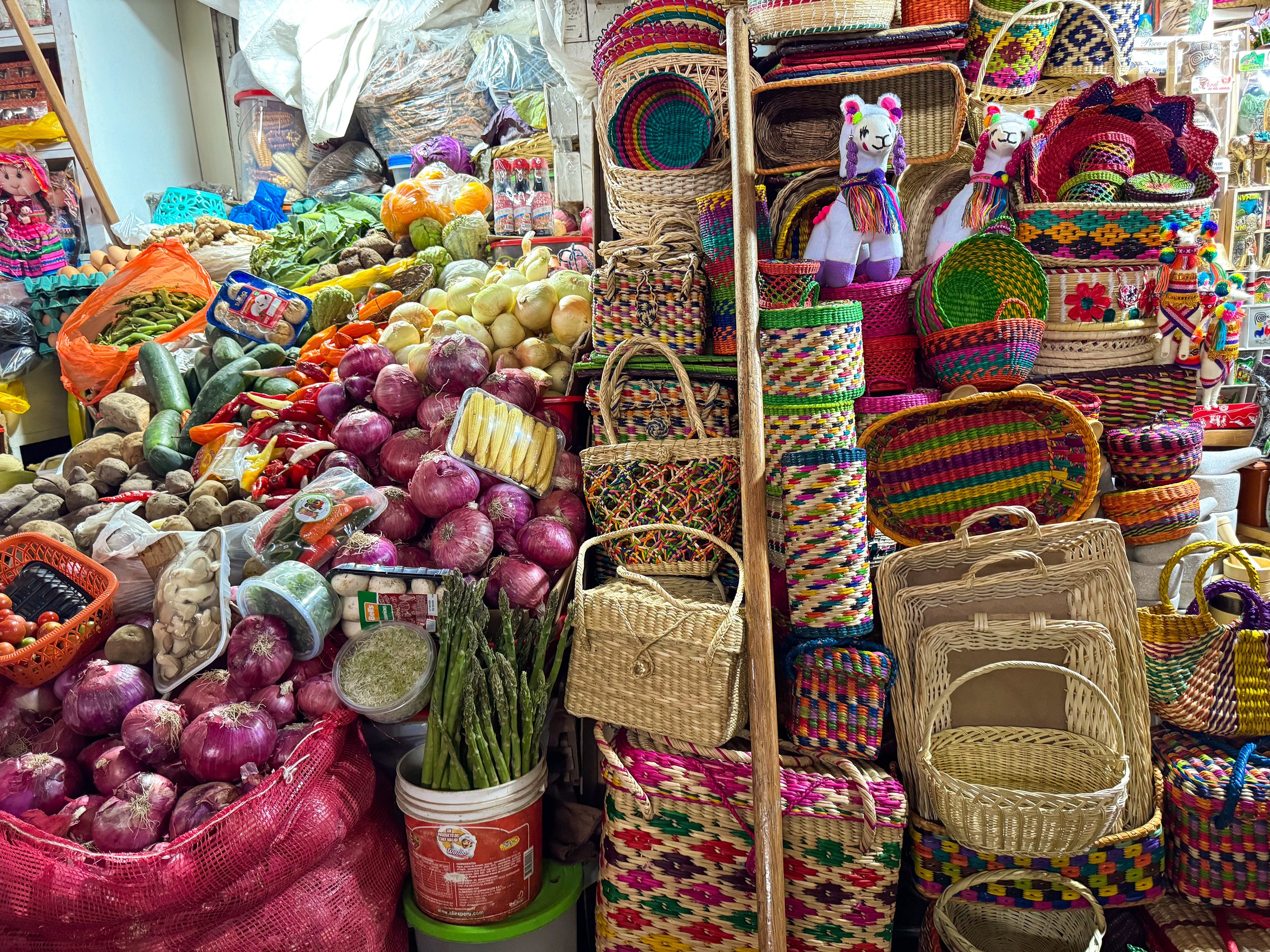
San Blas Market. A small neighborhood market catering to a mix of locals, expats and backpackers with vendors offering a robust mix of fresh produce, vegetables, meats, fish, dairy and dry goods. We bought a variety of Peruvian potatoes, squash, fruits, Andean cheese, eggs, milk, butter, flour and yeast to cook meals throughout the week.
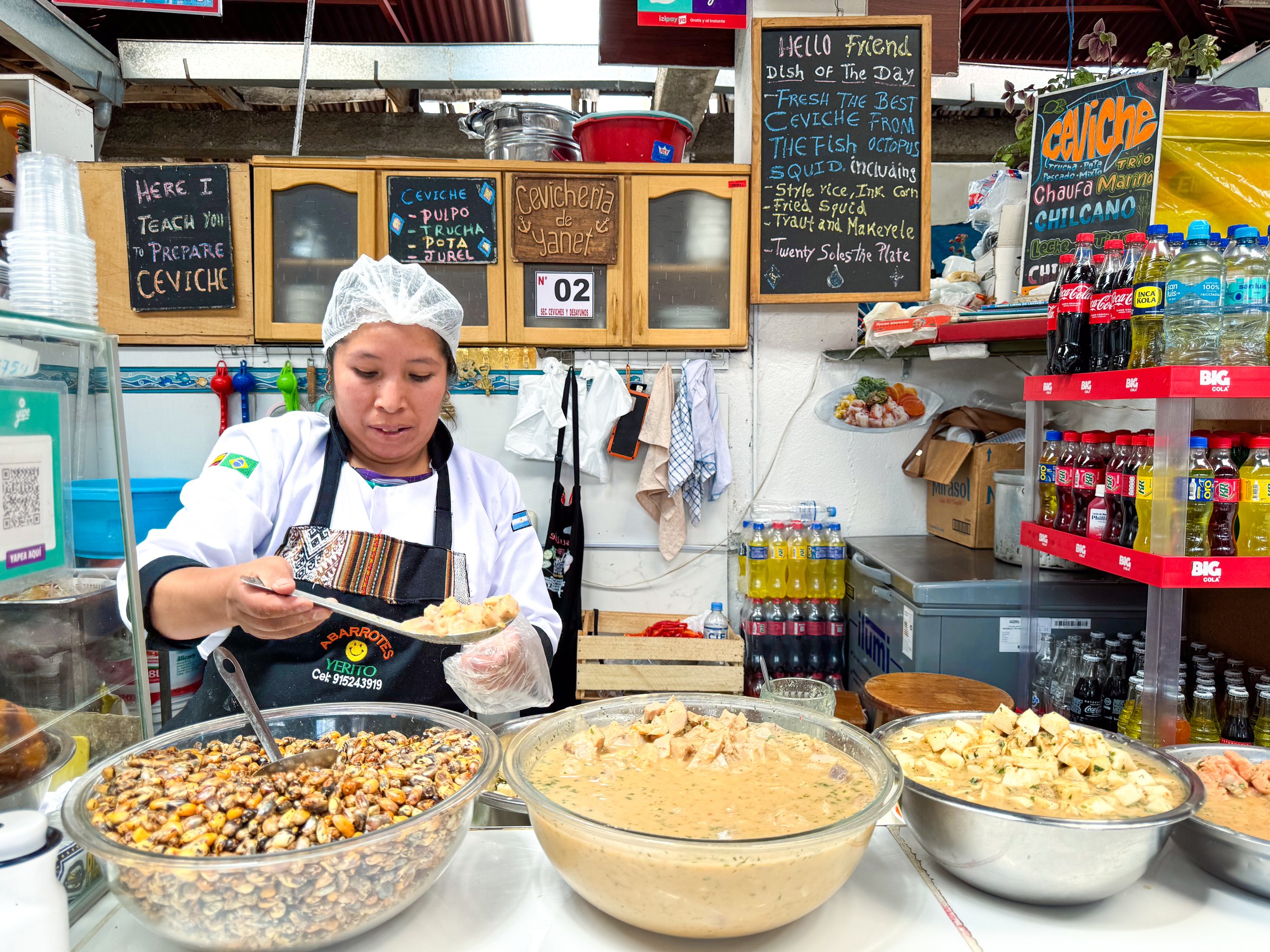
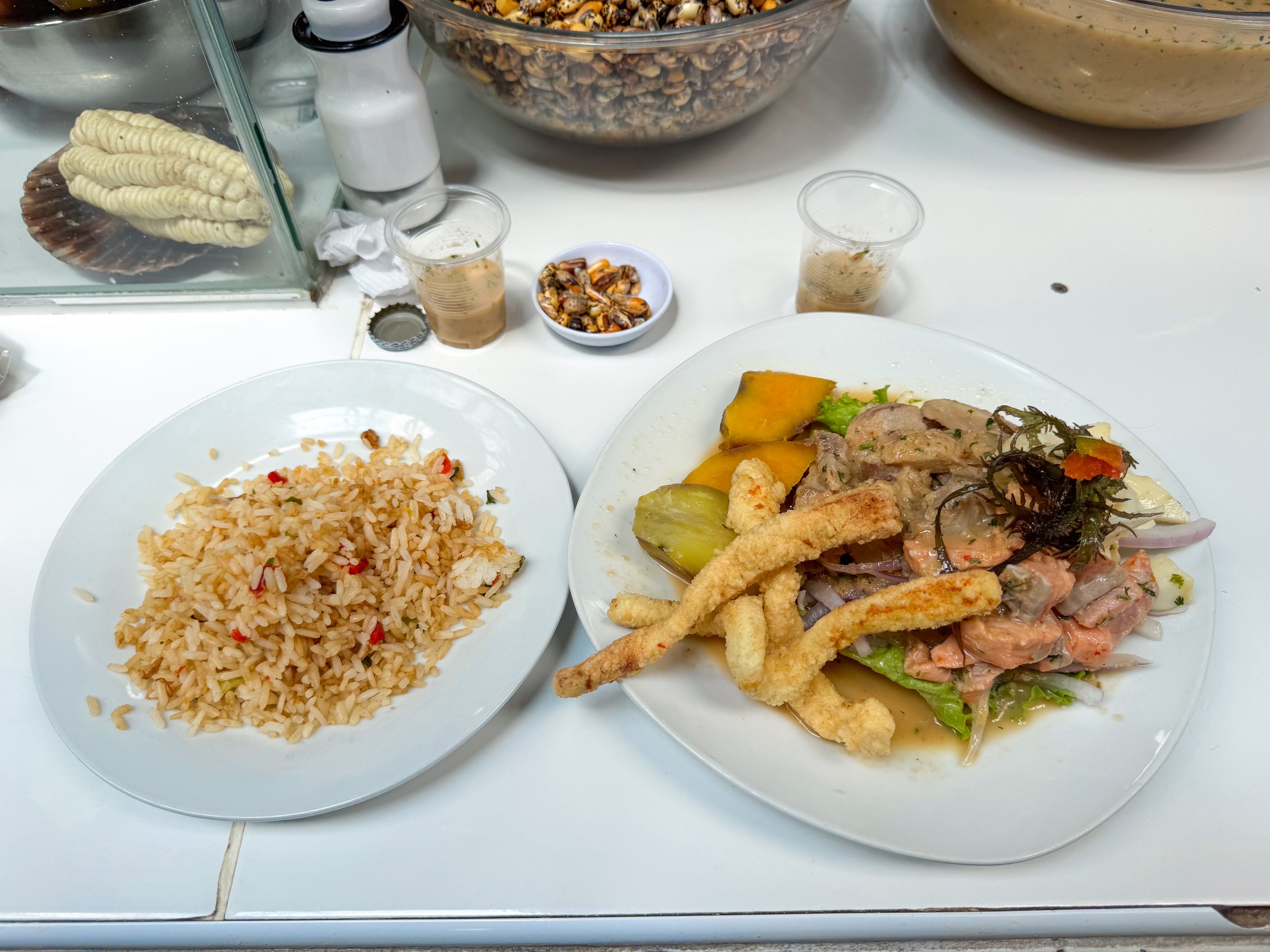
The market is the perfect spot for a local lunch with restaurants serving Peruvian and vegan cuisine. We ate at Cevicheria de Yanet, sharing a bowl of mixed ceviche made with squid, trout and mackerel. It came with sides of chicharrón de calamari, seafood soup, canchas and homemade chicha.
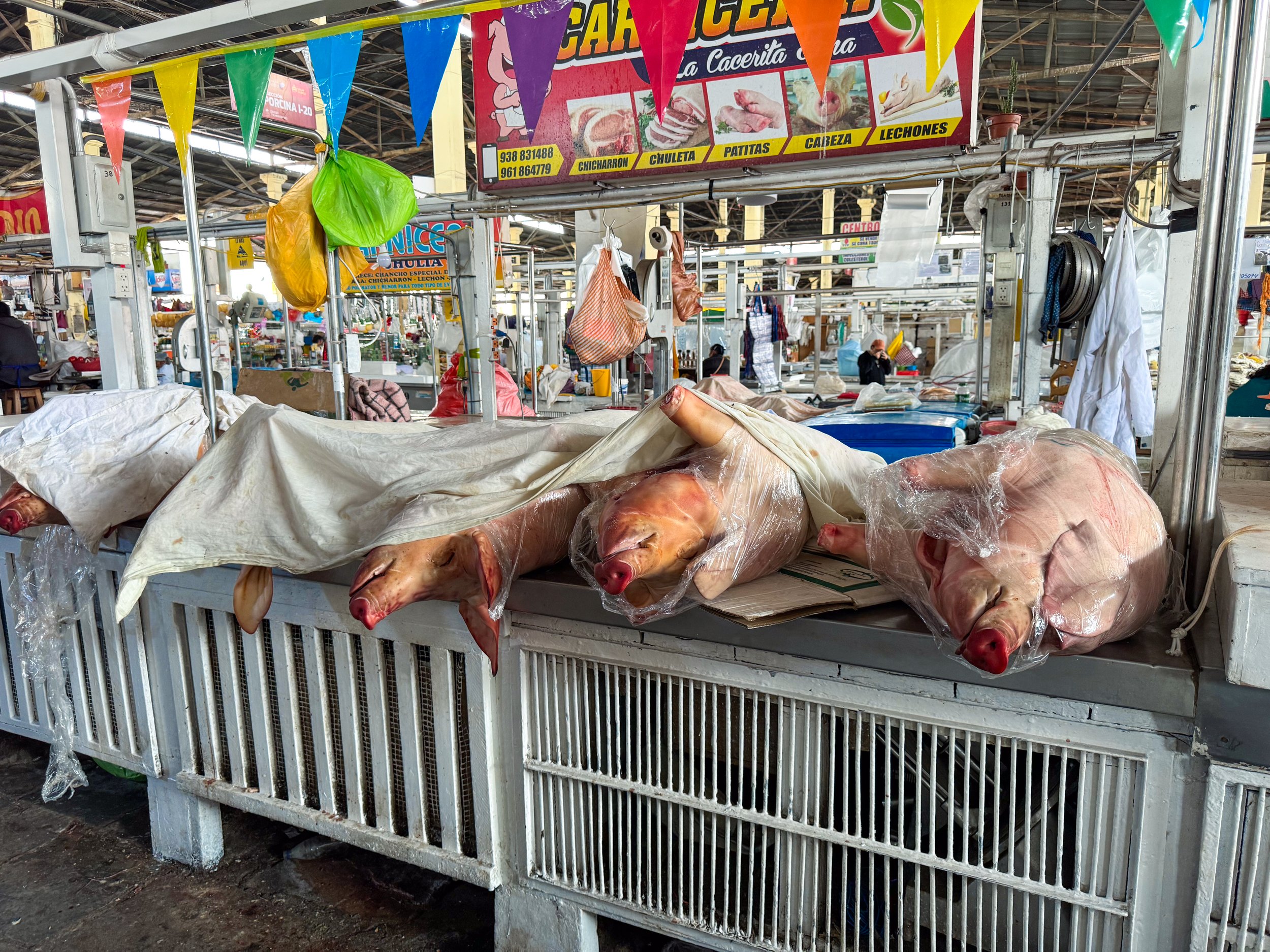
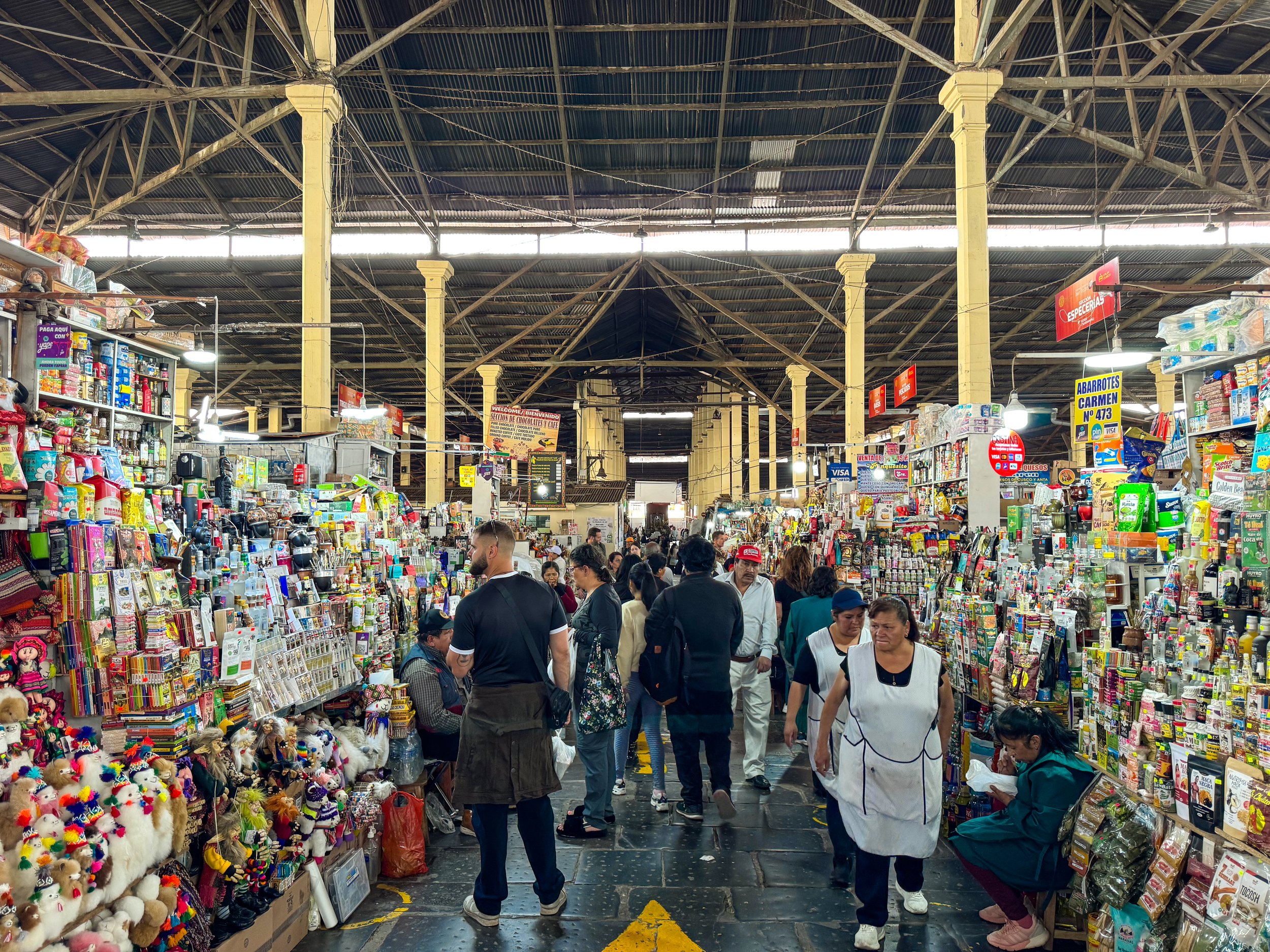
San Pedro Market. A large and colorful market with vendors selling handicrafts, fruits, vegetables, grains, herbal remedies, snacks, candies, flowers and meats. The meat market is a bit intense with butchers selling whole pigs, skinned horse heads, bloody bull horns and organs.
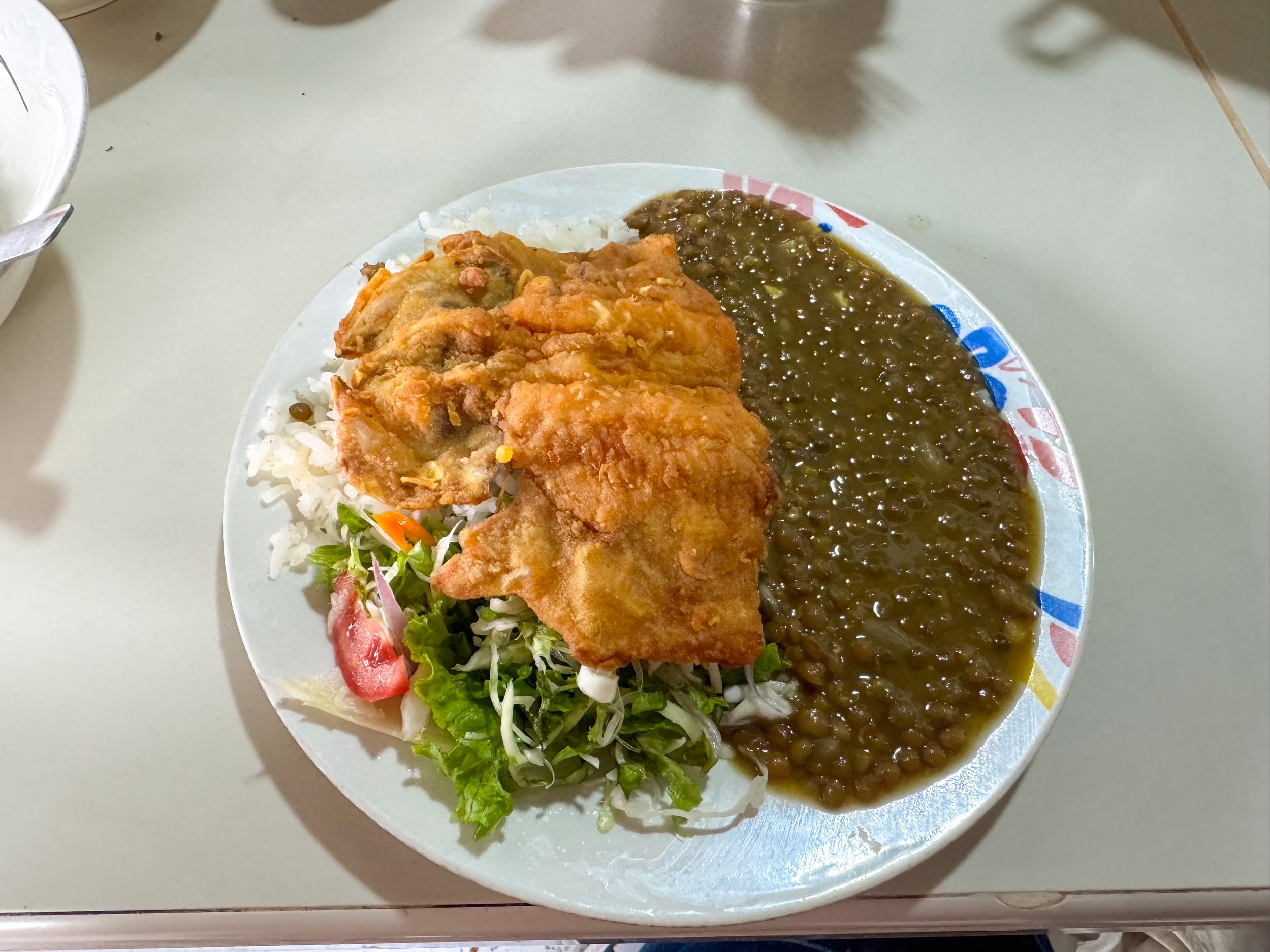
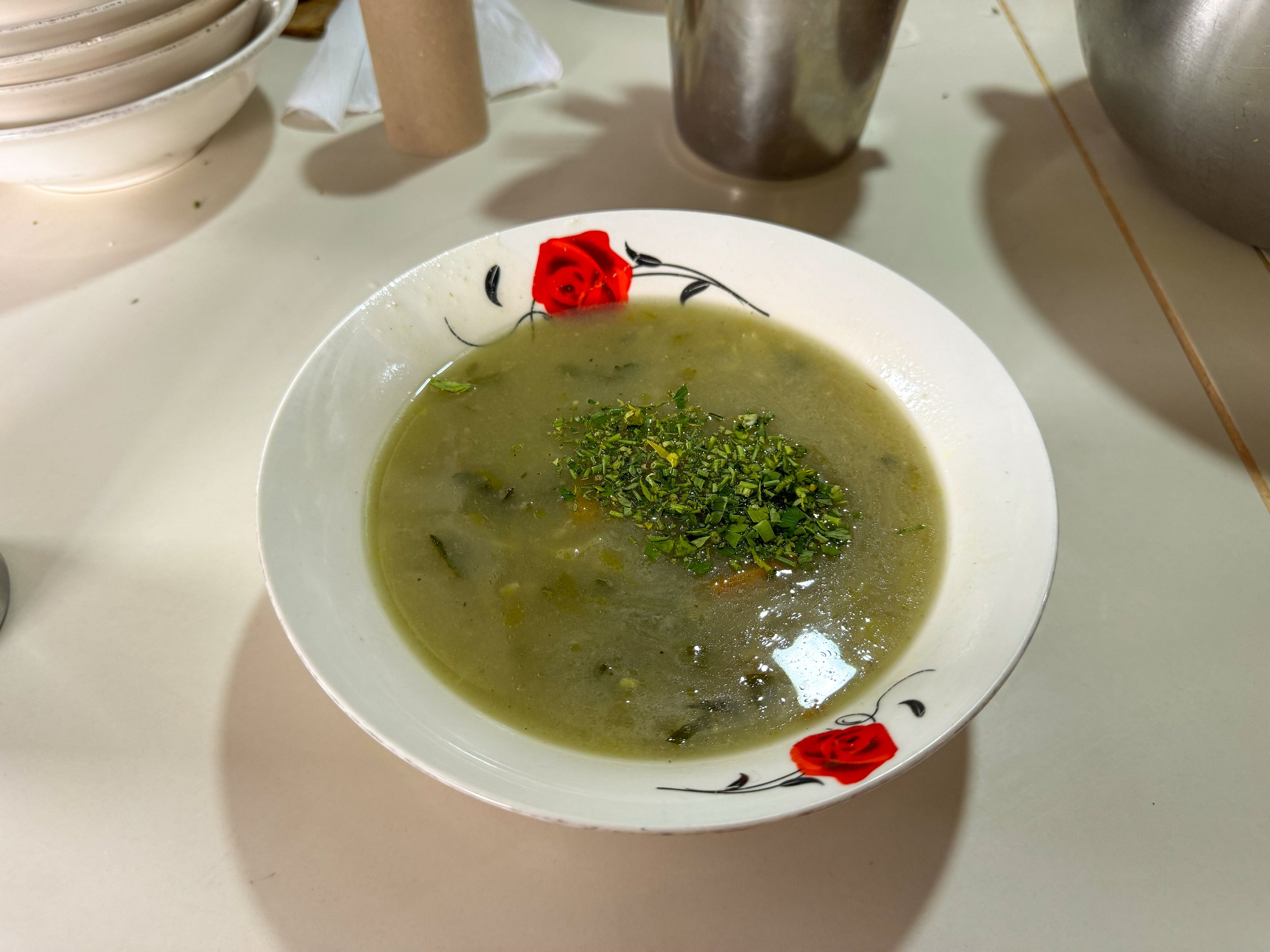
The most popular reason to come here is for the fresh juices, Peruvian style street food and aisles of small restaurant stands. The cooks at each stand called for us to sit down, competing with their neighbors, as we walked past the benches of customers and busy kitchens with large steaming pots. After scanning the menus, we sat down and ordered a plate of fried trout with lentils, rice, salad and a bowl of vegetable soup for 8 Soles each.
Places to Eat & Drink
Fusion Andina. A restaurant overlooking Plaza Mayor and the city’s hillside with a menu of Peruvian and Andean cuisine. We came here for dinner, overlooking the twinkling lights of the city at night while sipping on Peruvian wine. The menu includes dishes made with Andean trout, alpaca and guinea pig.
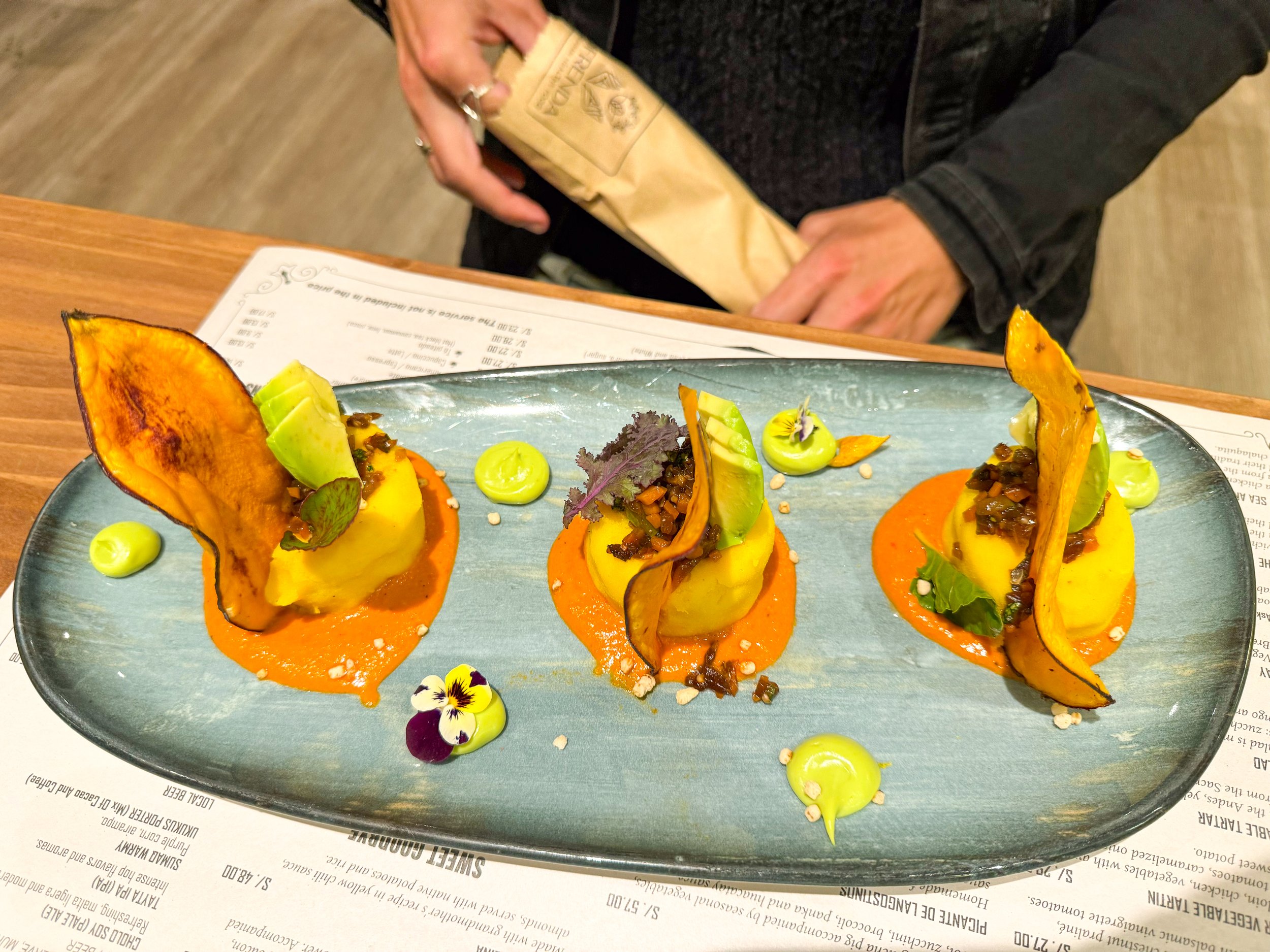
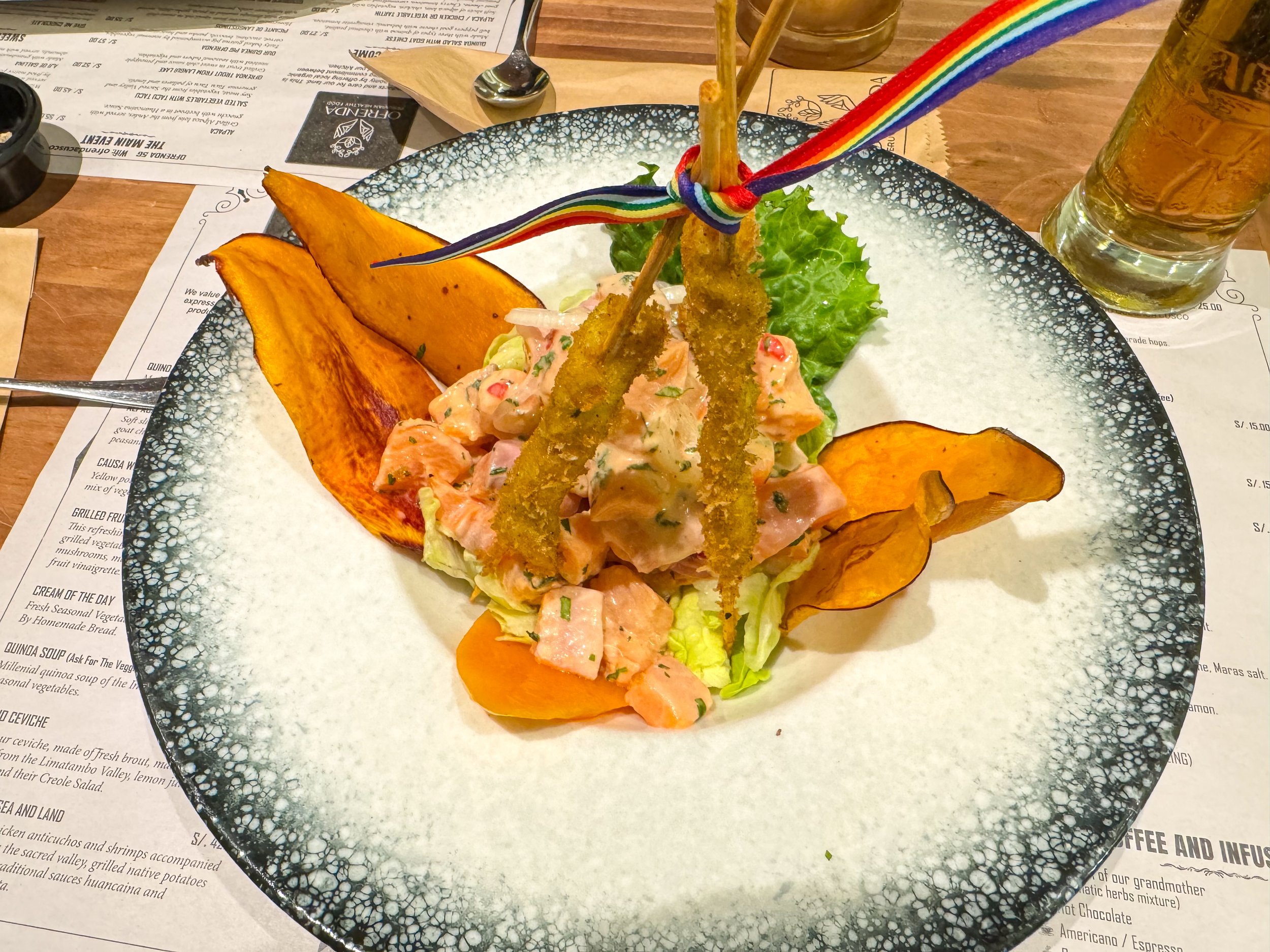
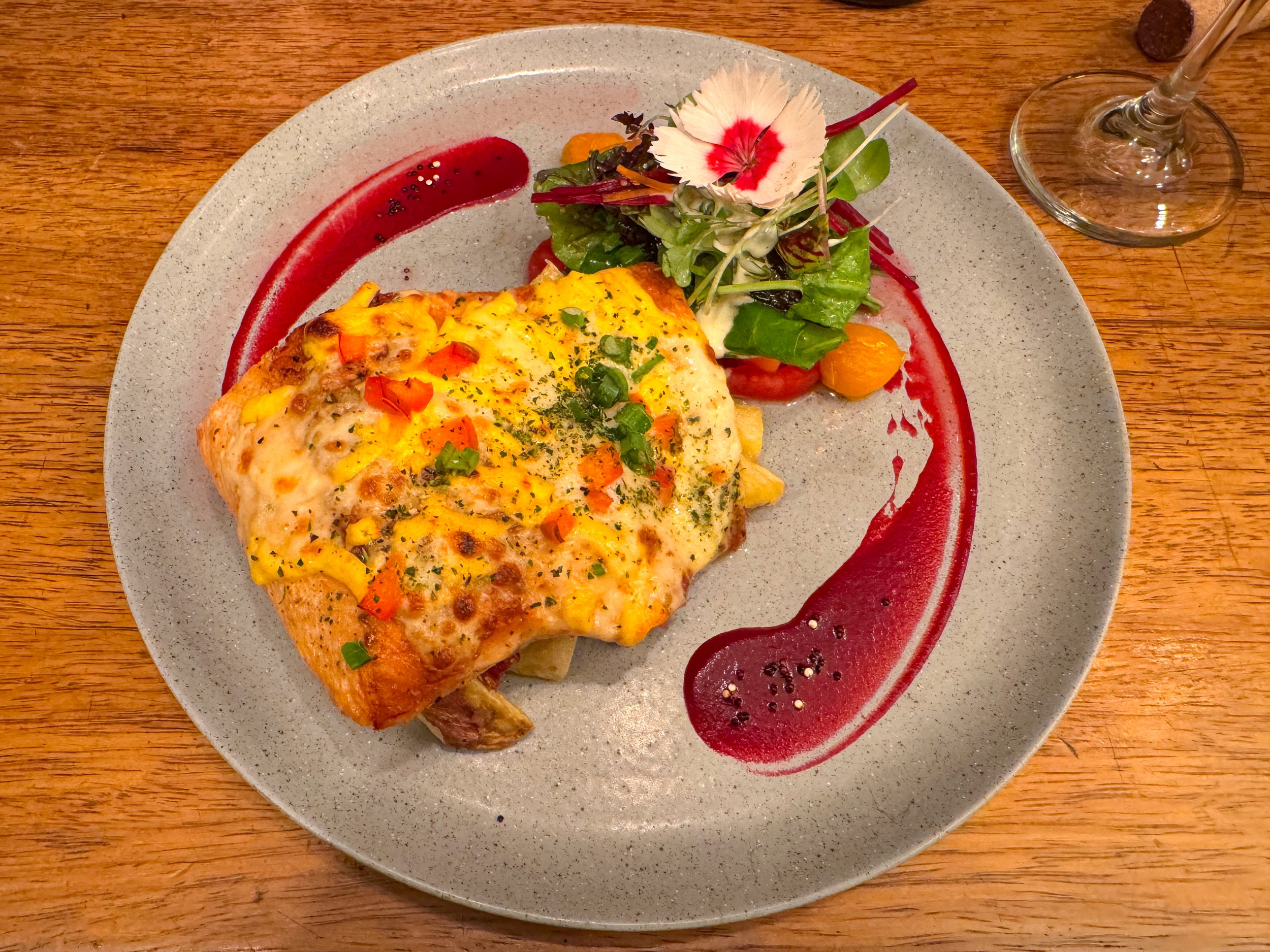
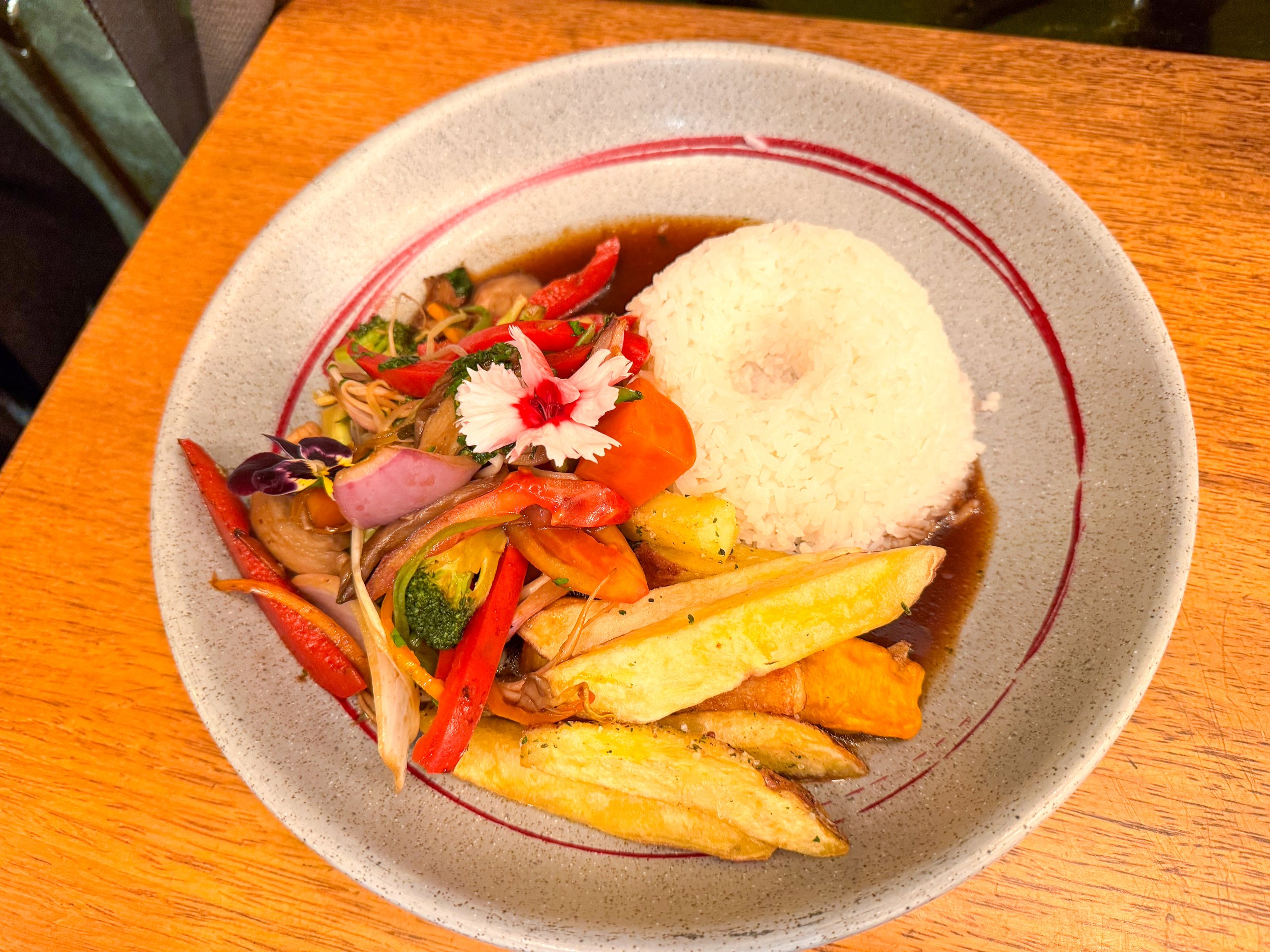
Ofrenda Peruvian Healthy Food. A Peruvian restaurant with colorful and beautifully plated meals and desserts. Come for the causas, ceviche, cheesecake and chocolate cake.
Café Dwasi. Come here for their specialty coffee, cappuccinos with llama artwork foam and breakfast dishes like pancakes or omelets.
Kaldi Coffee. A café and bar in San Blas with rooftop views of Cusco, artisan coffees, empanadas, ice cream and cocktails.
Cafetoe. A coffee shop on the corner of Plaza Mayor with balconies overlooking it. We came here one chilly night for a Peruvian hot chocolate, made from milk and cocoa powder.
ERA. A rooftop bar in San Blas above the Mirador de San Blas overlooking Cusco. Come here for the 2 x 30 Sol happy hour with Pisco cocktails.
Something Special. A restaurant and bar with views overlooking the clay tiled roofs, Plaza Mayor and Viva El Peru sign. We ordered a chicha Pisco sour and Cerveza Raymi, an artisan Cusco brewed beer.
Pizzos. Come here for the clay oven pizzas and cocktails. They have a 2 x 25 Sol happy hour for regular and flavored Pisco Sours.
KM.0. A restaurant and cocktail bar with a long list of drinks and a 2 x 28 Sol happy hour.
Barden. A bar and restaurant with a terrace overlooking Cusco and a garden with warm string lights suspended from the trees above.
Peruvian & Andean Cuisine
Coca Tea. The popular Peruvian herbal tea made from the leaves of the coca plant used to combat altitude sickness. After drinking the tea, it’s common to chew on the leaves for their medicinal properties.
Trout. Andean trout is abundant in the high mountain lakes and rivers. It’s served grilled, fried and as ceviche.
Potatoes. Peru is known for having thousands of varieties of potatoes. They’re served mashed in causas, fries and in soups & stews.
Choclo con Queso. Boiled Peruvian corn wrapped in a grilled piece of Peruvian cheese.
Alpaca & Guinea Pig. We don’t eat meat however; we saw both animals on the menu in restaurants across the city. Alpaca can be served as a steak while guinea pigs are often served whole.
Tumbo. A popular Peruvian fruit that’s a cross between a passion fruit and pomegranate.
Cherimoya. A green scalloped tropical fruit with a custardy interior and large black seeds with a taste similar to strawberry ice cream.
Cusqueña. One of Peru’s national beers easily identifiable by its bottle cap with Machu Picchu on it and a bottle embossed in Incan stone work. It comes in three varieties, Dorado (Golden), Wheat and Negro (Stout).
Inka Chips. A local brand of potato chips made from Peruvian potatoes.
Where to Stay
Inti Wasy. We stayed at an Airbnb in San Blas neighborhood with panoramic views of the Cusco Valley. The private apartment had a comfy bed, well outfitted kitchen and laundry machine. The space feels authentic with Incan and Peruvian decor. We were thankful to have an incredibly kind host and family of doggies to greet us throughout our stay. Book here.
Cusco Plaza Hostel. A boutique hotel on the corner of the Plaza Mayor in the city center. We visited a friend of ours staying here. The rooms are basic but the rooftop is a tranquil place to enjoy a bottle of Peruvian wine and the views of the city’s rooftops and cathedrals. Book here.
Location Specifics
The Boleto de Turístico. A ticket that includes entry to a majority of the Incan ruins in Cusco and the surrounding valleys as well as several museums in the city. Tickets can only be purchased by cash in person at the tourist office one block from the Plaza de Armas.
The Altitude. Cusco is 3,339 meters (11,152 ft) above sea level. It takes some adjusting to get used to. After a few days, we no longer felt winded or tired.
Language. People in Cusco speak Spanish. Outside of the restaurants and shops in the Centro Historico, few locals speak English.
Cash vs. Card. Cash is preferred at businesses and museums across Cusco. When using Peruvian Sols, make sure to carry small bills and coins.
Elsewhere in Peru
From the peaks of the Andes and Machu Picchu to Peru's desert coast, colonial cities and high altitude lakes, continue exploring Peru's diverse landscapes and cultures through these travel guides:
Peru Coast Travel Guide: Nazca Lines, Huacachina & Ancient Civilizations. Venture along Peru's coast where ancient civilizations, desert oases, vineyards and world renowned cuisine shape one of South America's most unique regions.
Arequipa Peru Travel Guide: Colonial Architecture, Food & Culture. Explore Arequipa's historic streets where colonial architecture, regional cuisine and volcanic landscapes shape one of Peru's cultural capitals.
Lake Titicaca Travel Guide: Floating Islands & Indigenous Culture. Voyage between Lake Titicaca's floating islands and lakeside communities where Indigenous culture, Andean traditions and centuries of history live on.
For Next Time…
Return to Machu Picchu. We visited the ancient Incan city in 2016, passing it by on our recent trip to Cusco. When we return for a third time, we would love to revisit the awe inspiring world wonder that is Machu Picchu.
Ollantaytambo. Our tour of the Sacred Valley did not include enough time at Ollantaytambo. Next time, we plan to stay at one of the hostels and take at least an entire day to explore the ruins, mountain trails and terraces.
Skylodge. Having seen the iconic cliffside hotel made from geometric glass pods suspended from the mountainside, we fully intend to stay here during our next trip to the Sacred Valley.
Visit The South Valley. We had a tour booked to visit the Incan and Wari ruins in the South Valley but couldn’t make it due to an emergency. This will be one of the first sights we see next time in Cusco.
The Mountain Lakes. Due to melting ice, several mountain lakes and lagoons have formed over the past decades. The most famous are Humantay Lake with turquoise waters and Laguna Roja with chocolaty red waters.

Lake Titicaca Travel Guide: Floating Islands & Indigenous Culture
Voyage between Lake Titicaca's floating islands and lakeside communities where Indigenous culture, Andean traditions and centuries of history live on.

Lake Titicaca
Lake Titicaca is a massive Andean lake bordering both Peru and Bolivia. It’s culturally significant for its floating villages, terraced agricultural islands, colorful handmade textiles and dishes made from lake fish. We spent three full days on the lake, exploring both the Peruvian and Bolivian shores.

The Uros Islands, Peru
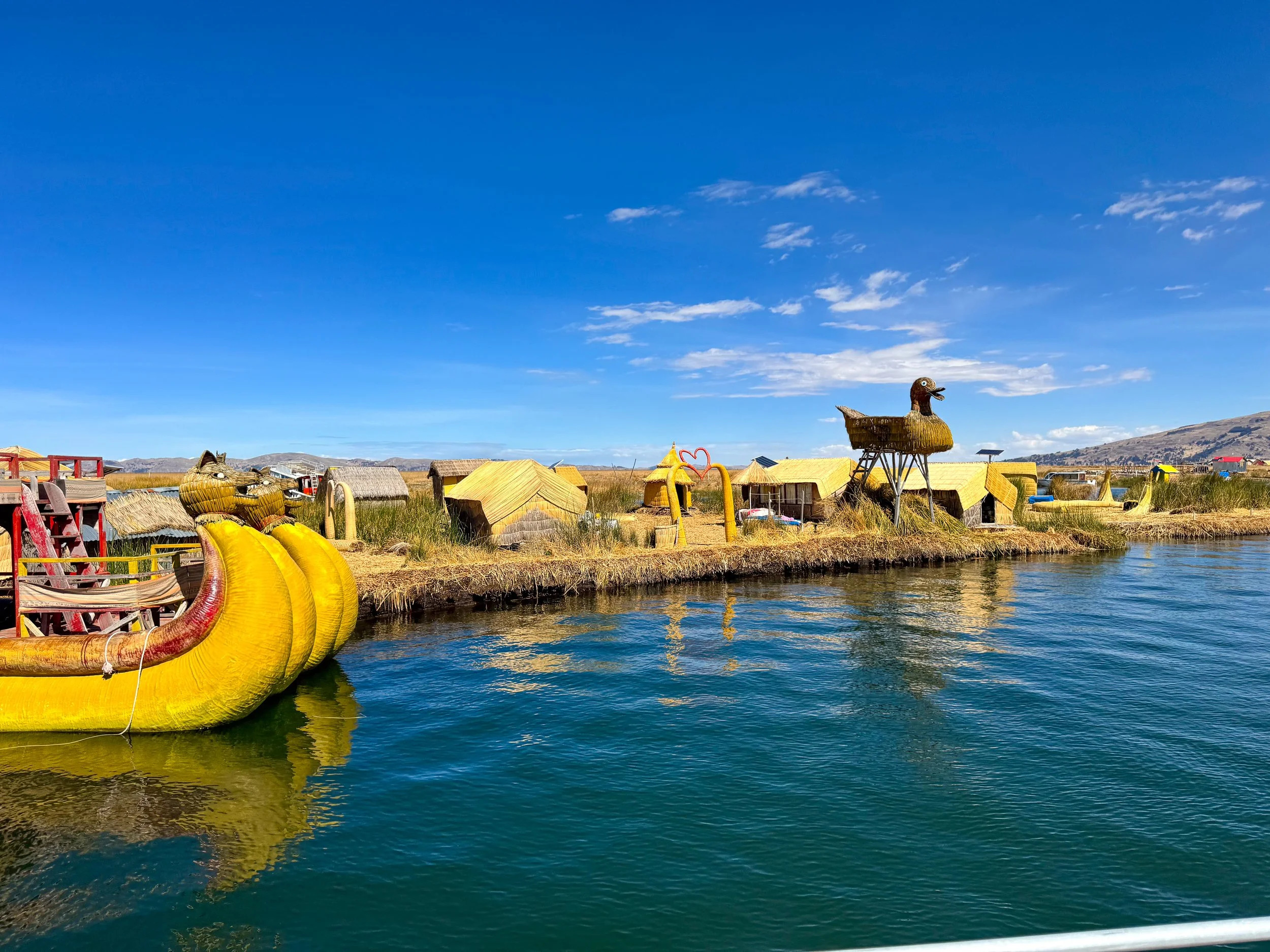
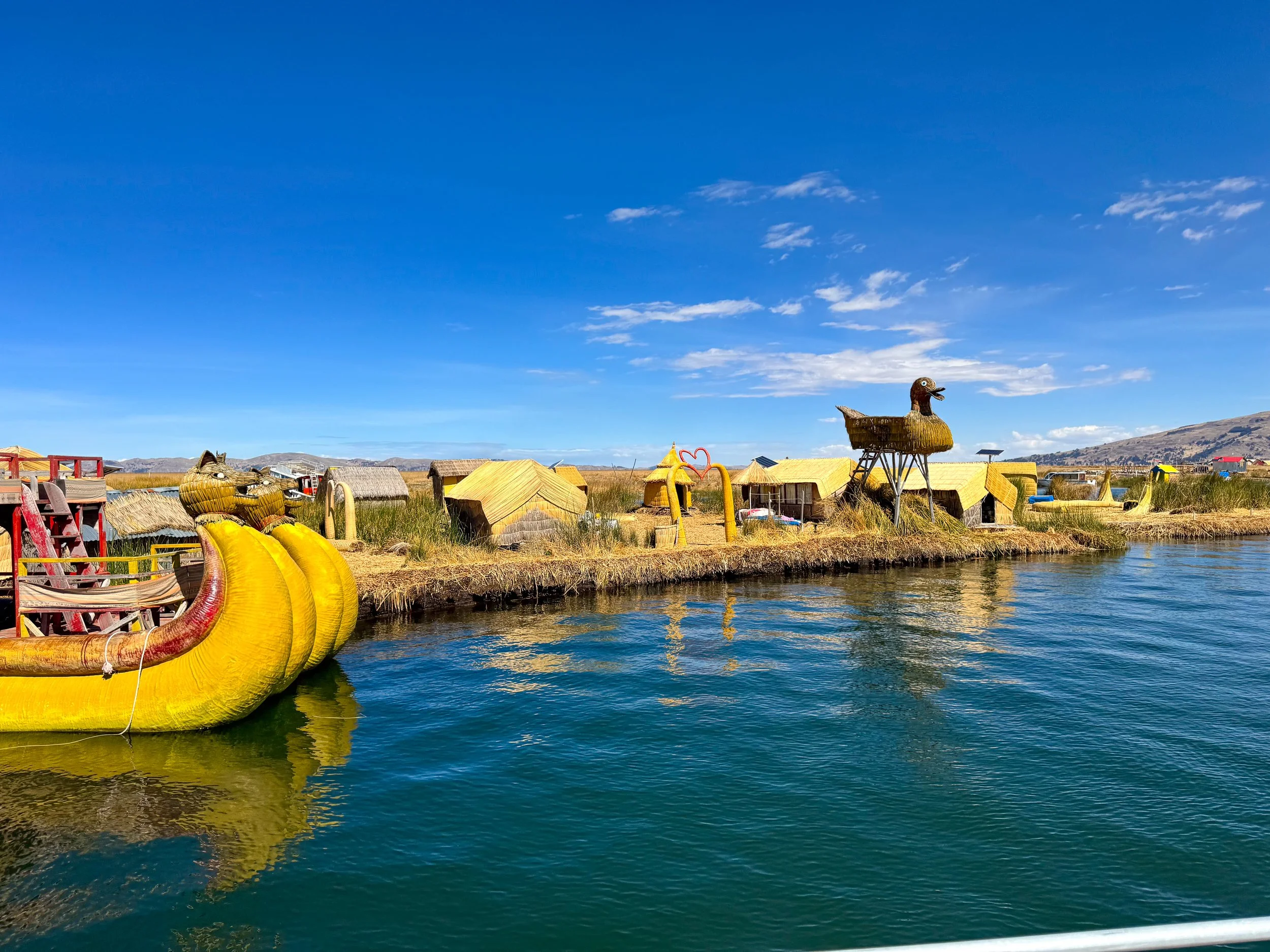
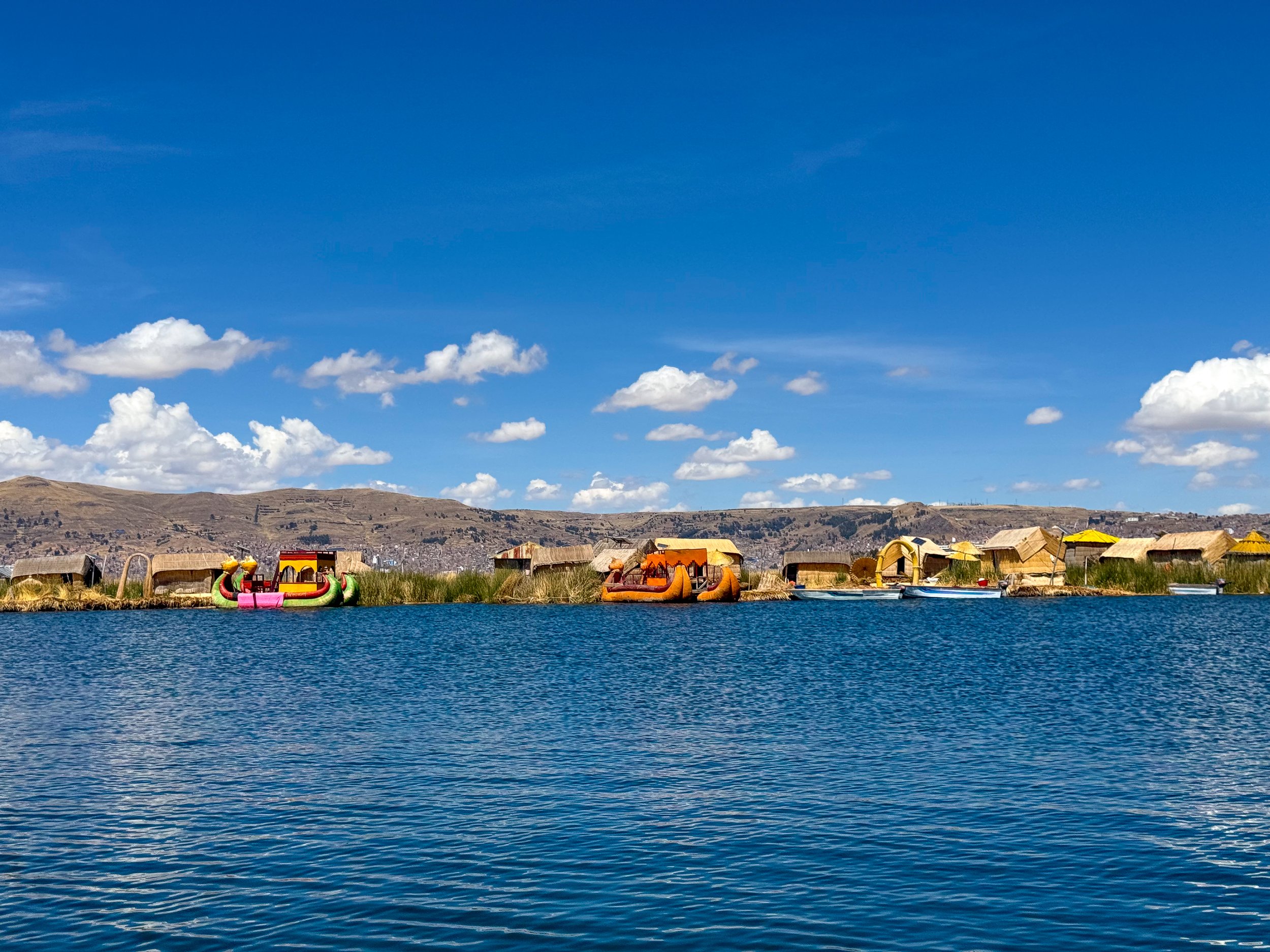
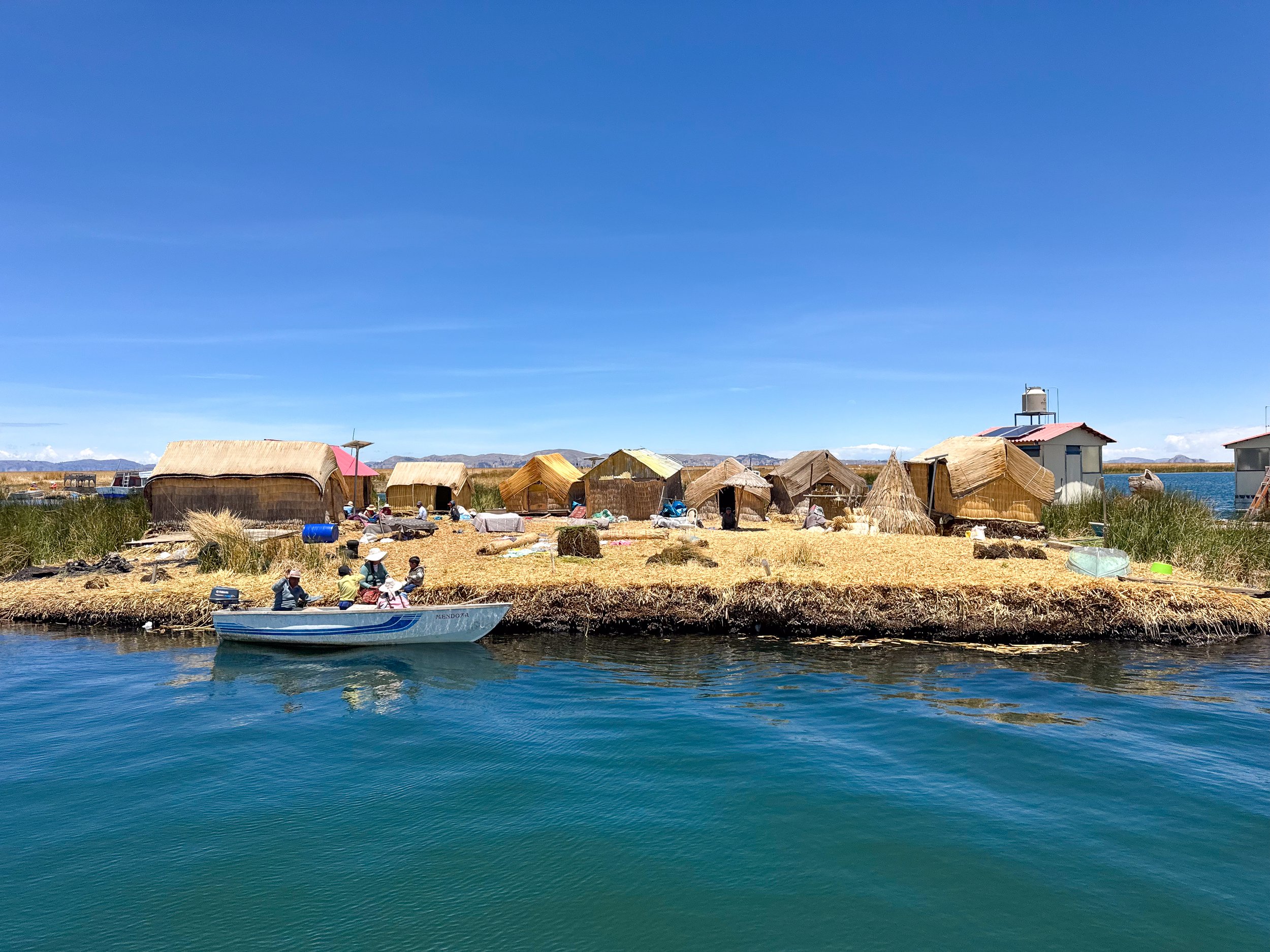
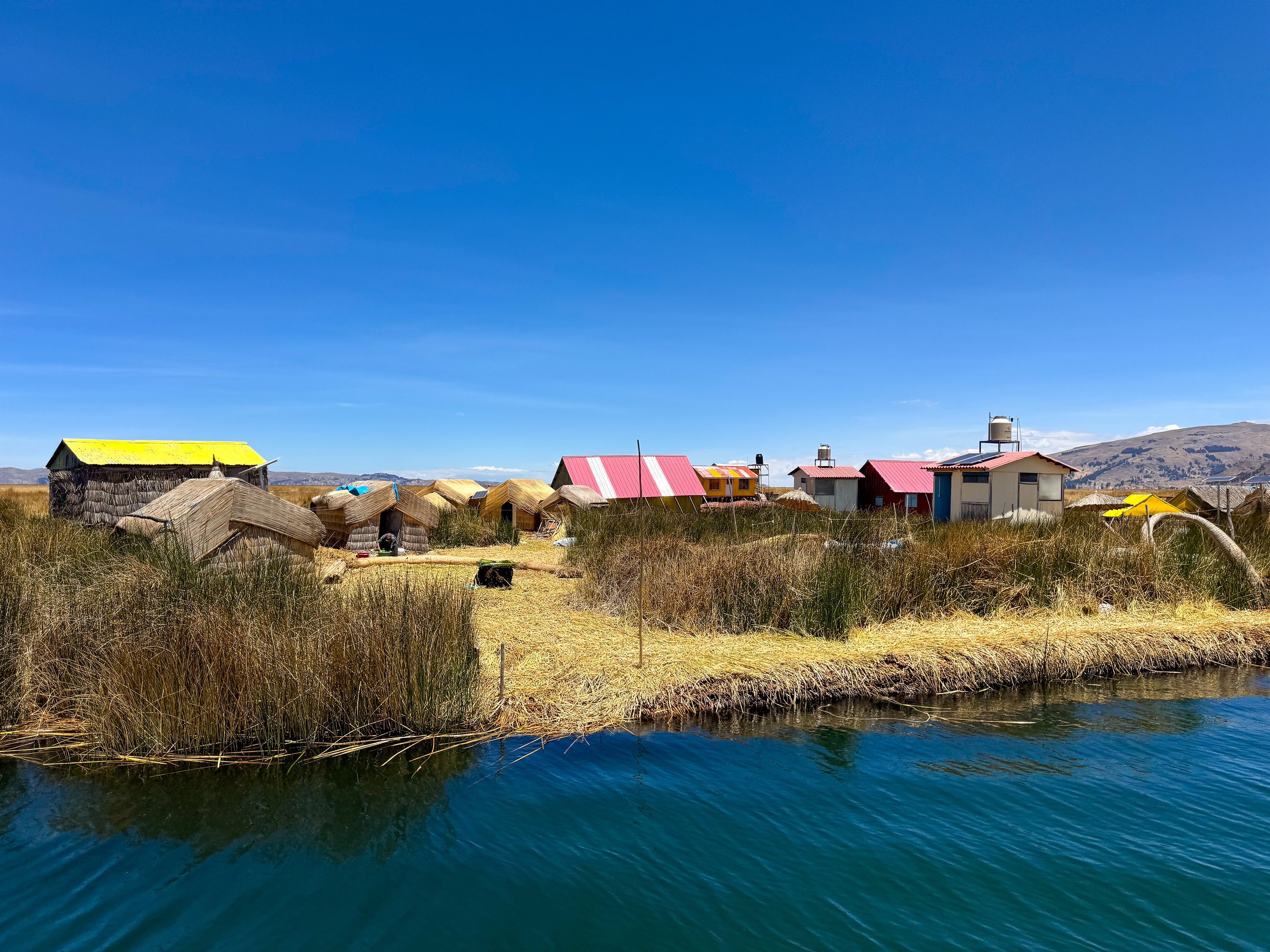
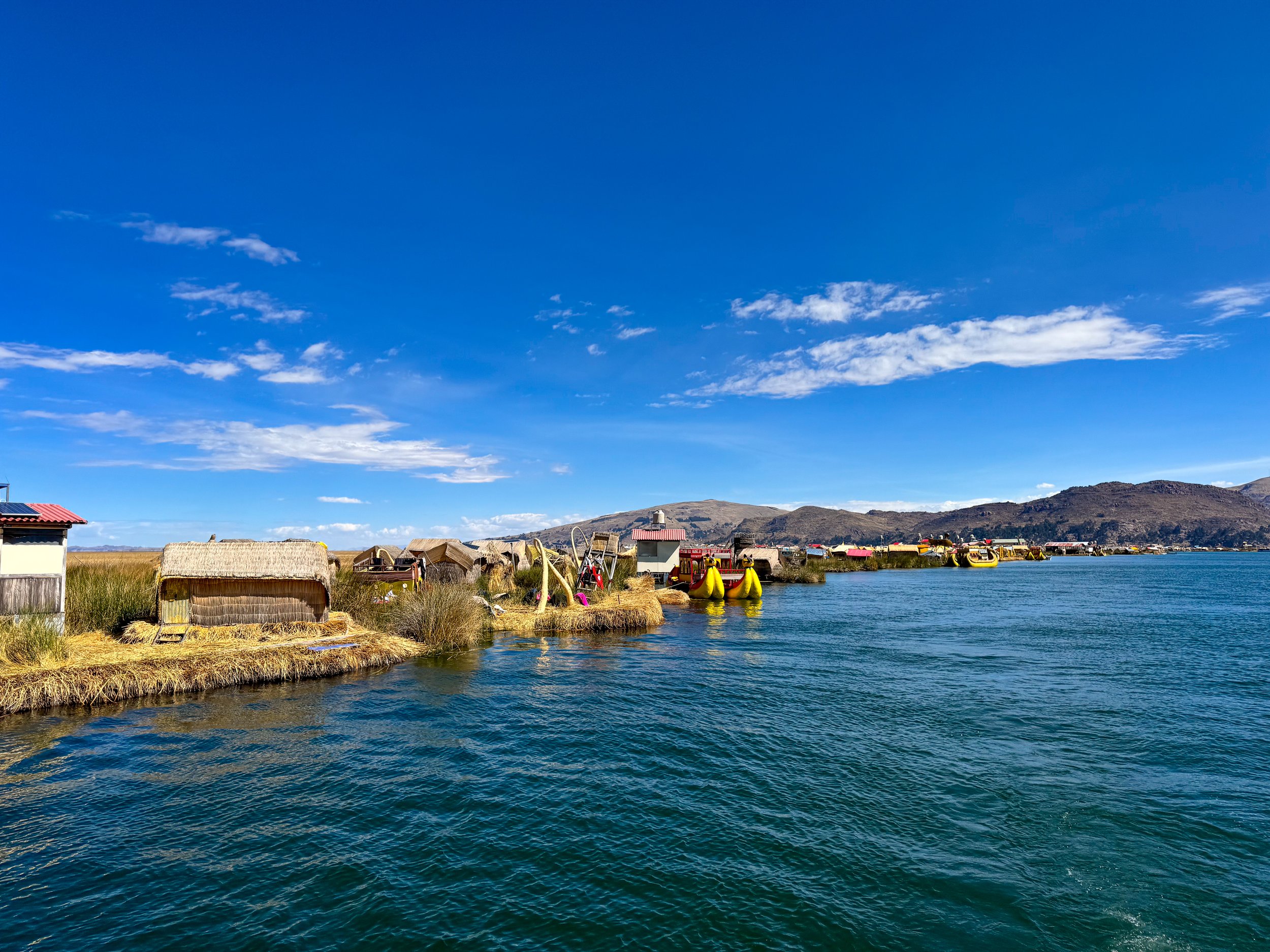
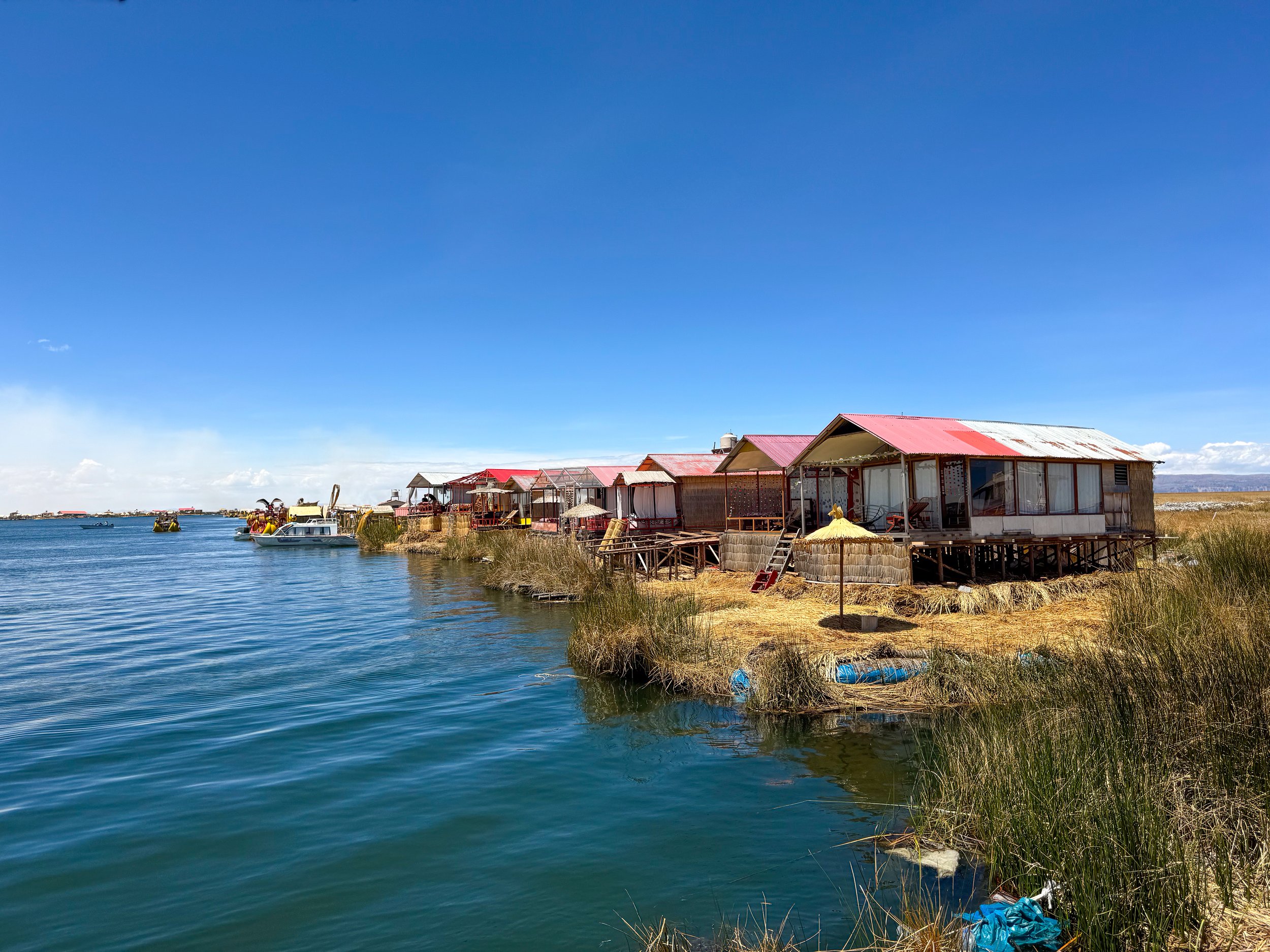
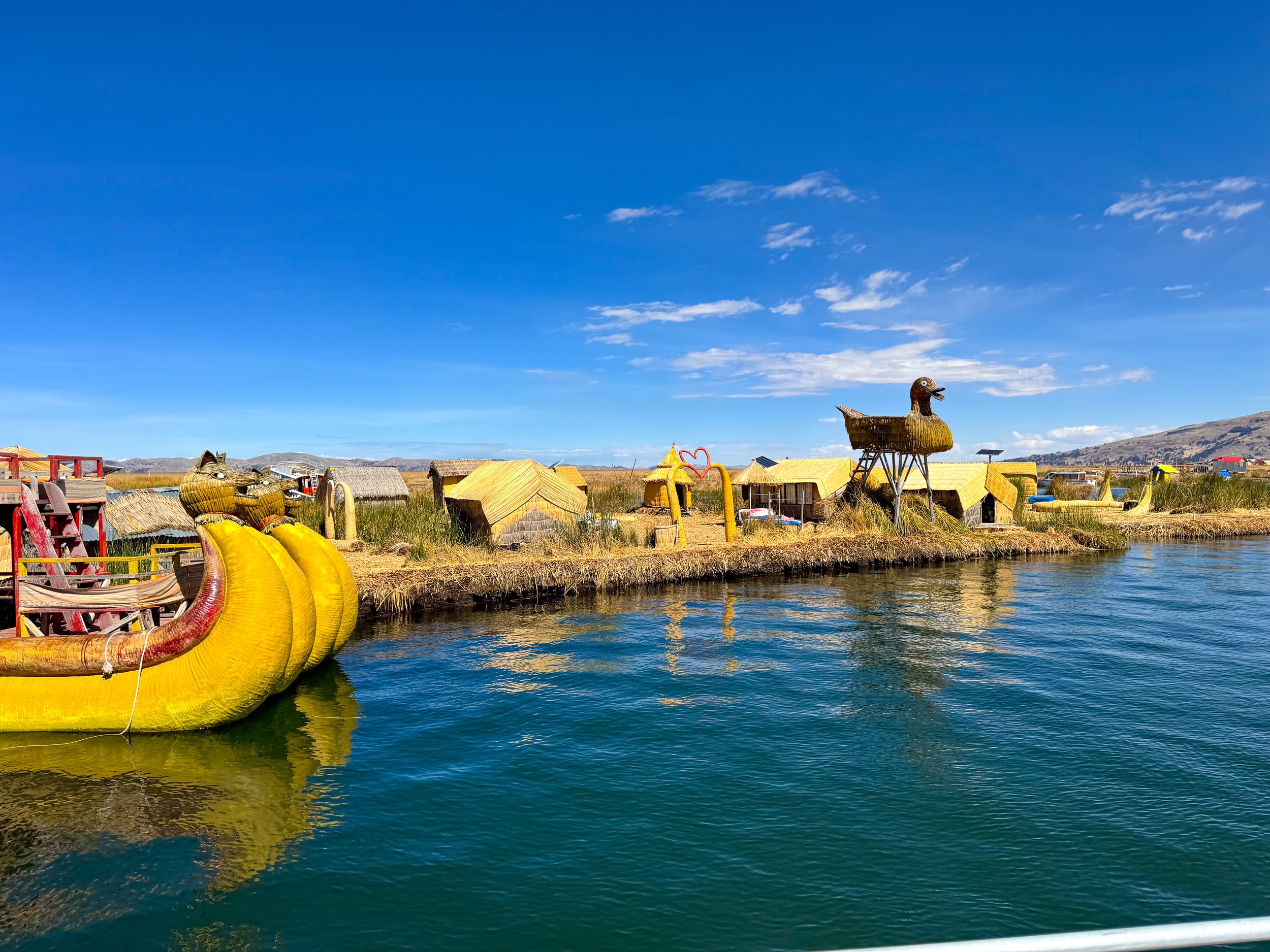
The Uros Islands are a series of floating islands on Lake Titicaca made from buoyant mud bricks and totora, a reedlike grass that grows in the shallows and marshes of the lake.

The Totora
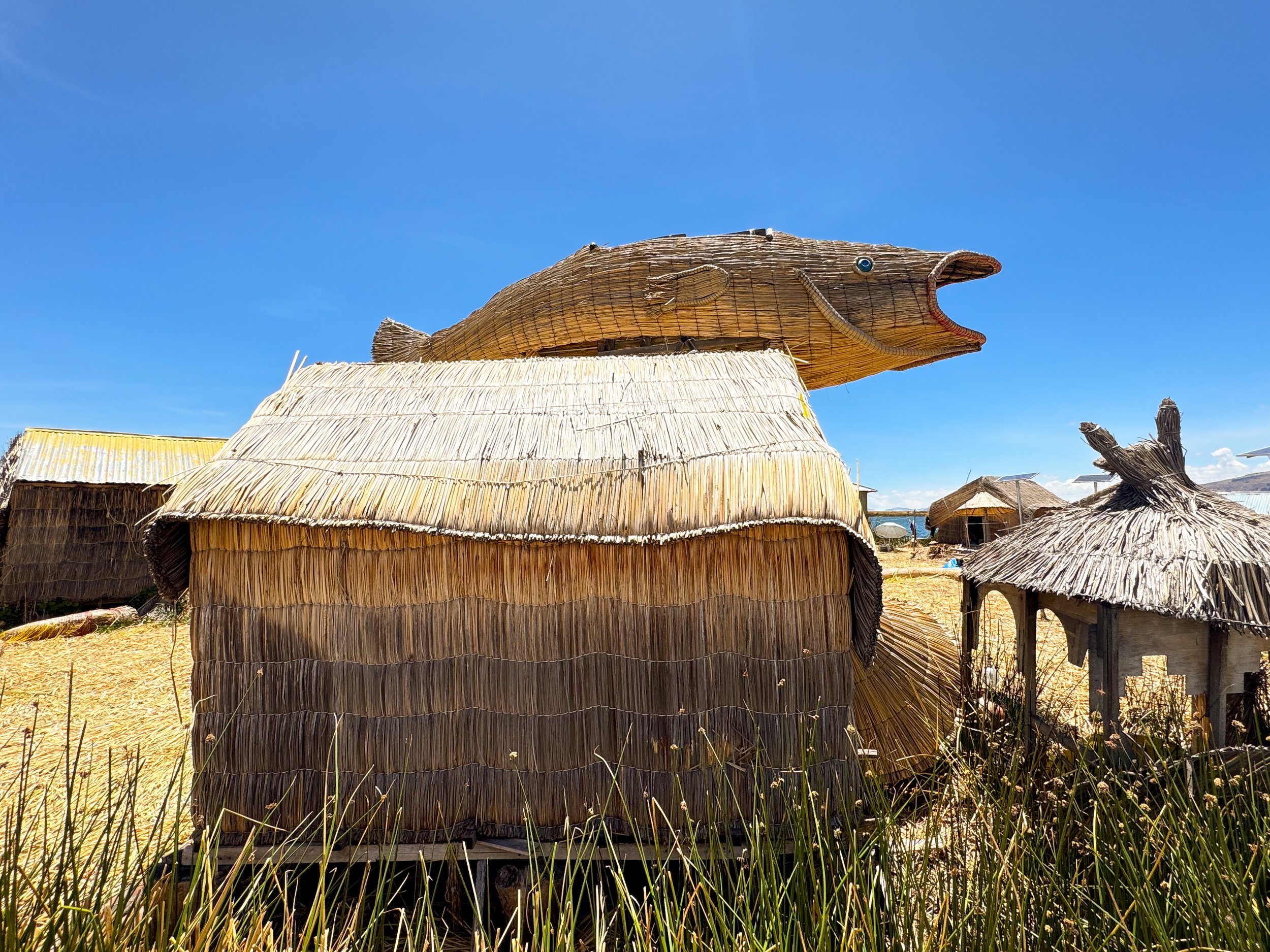
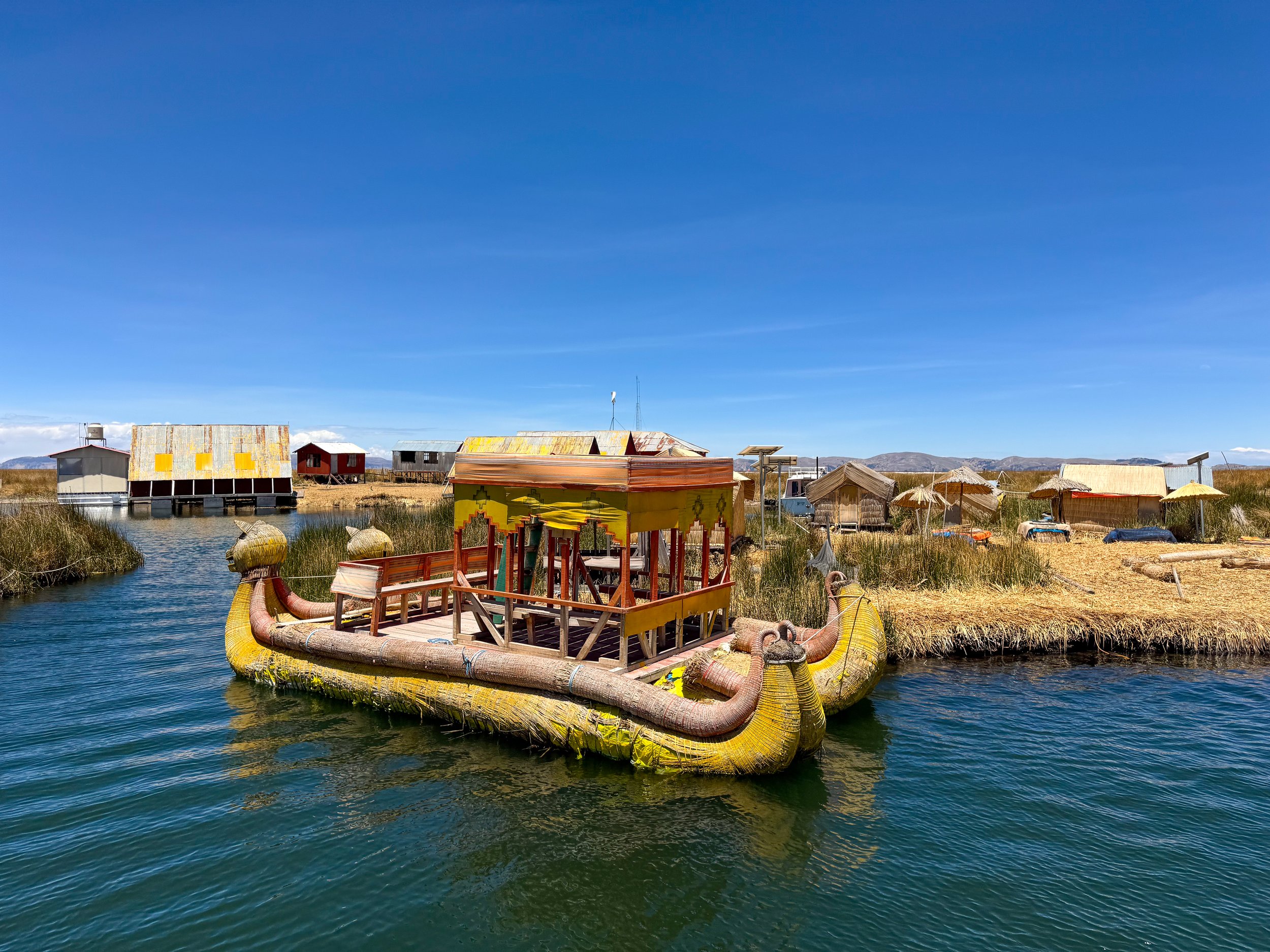
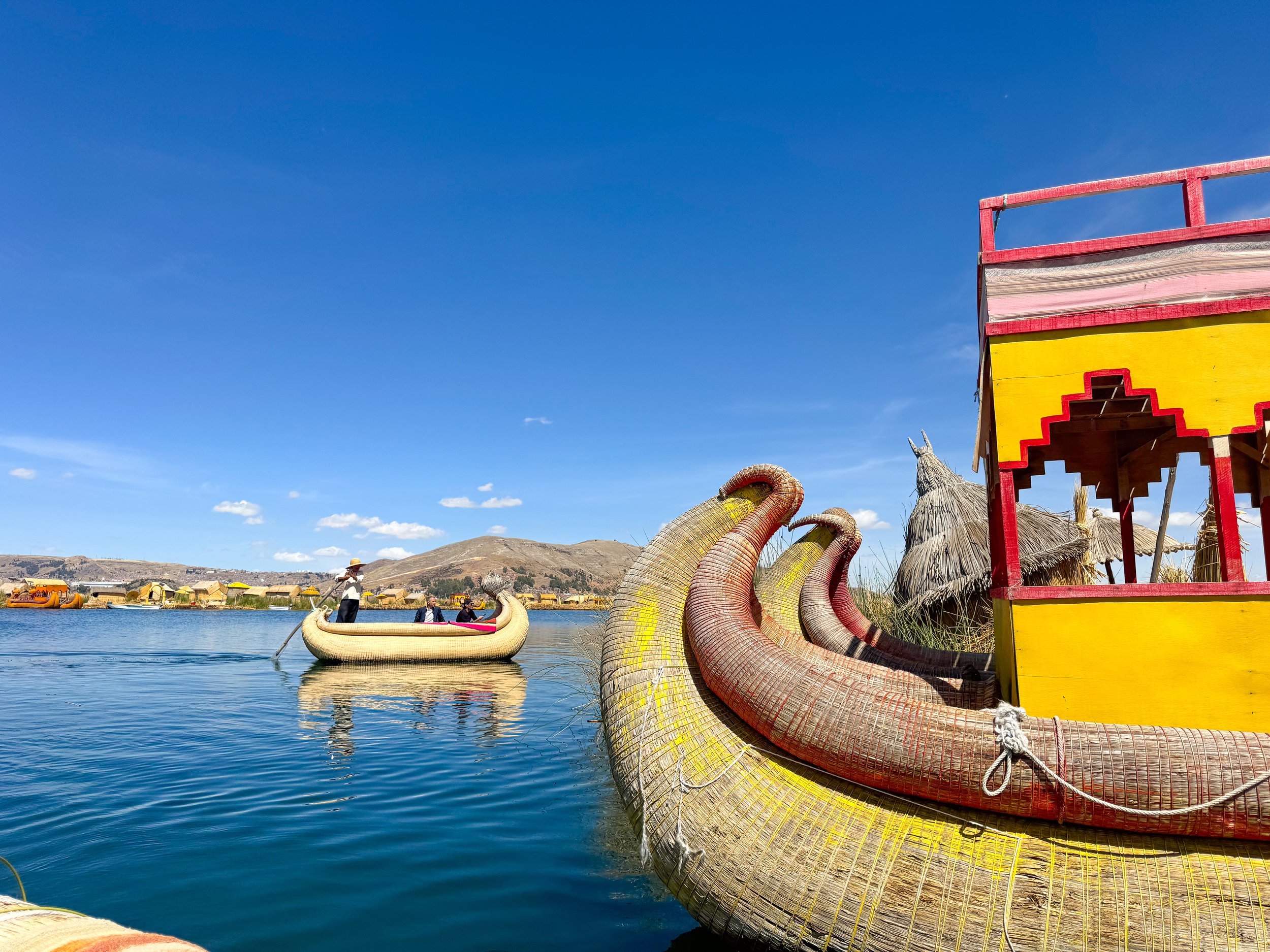
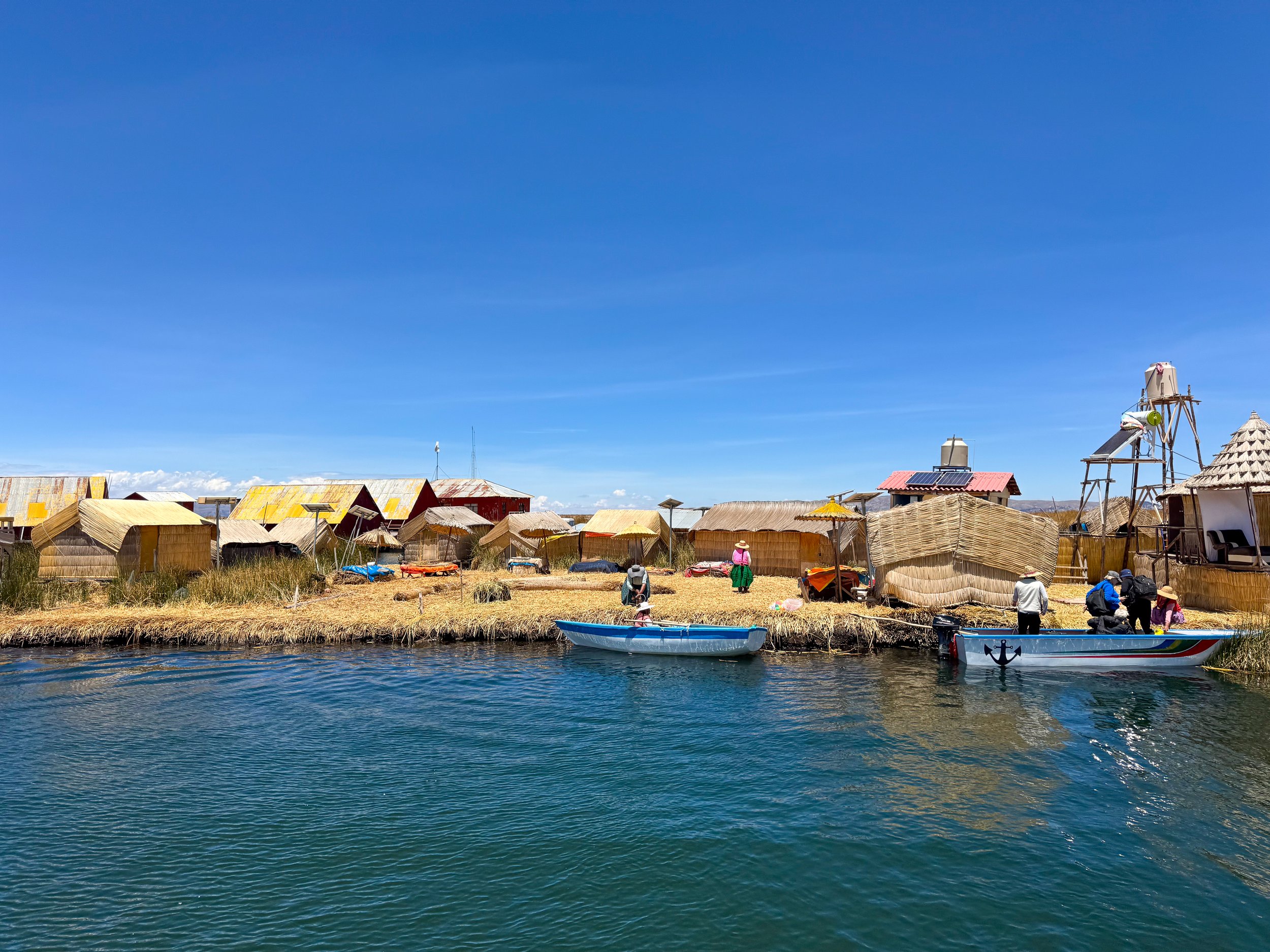
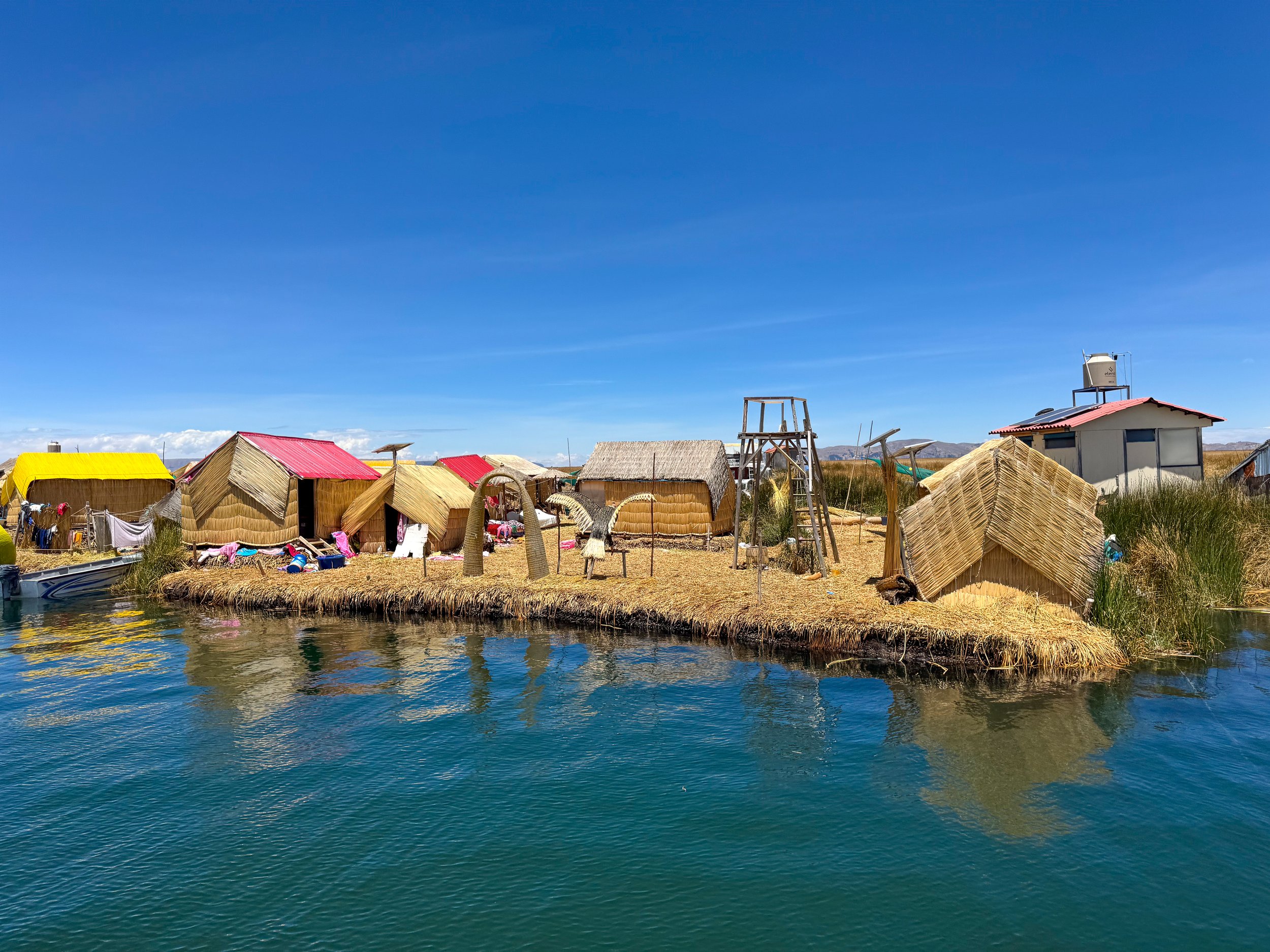
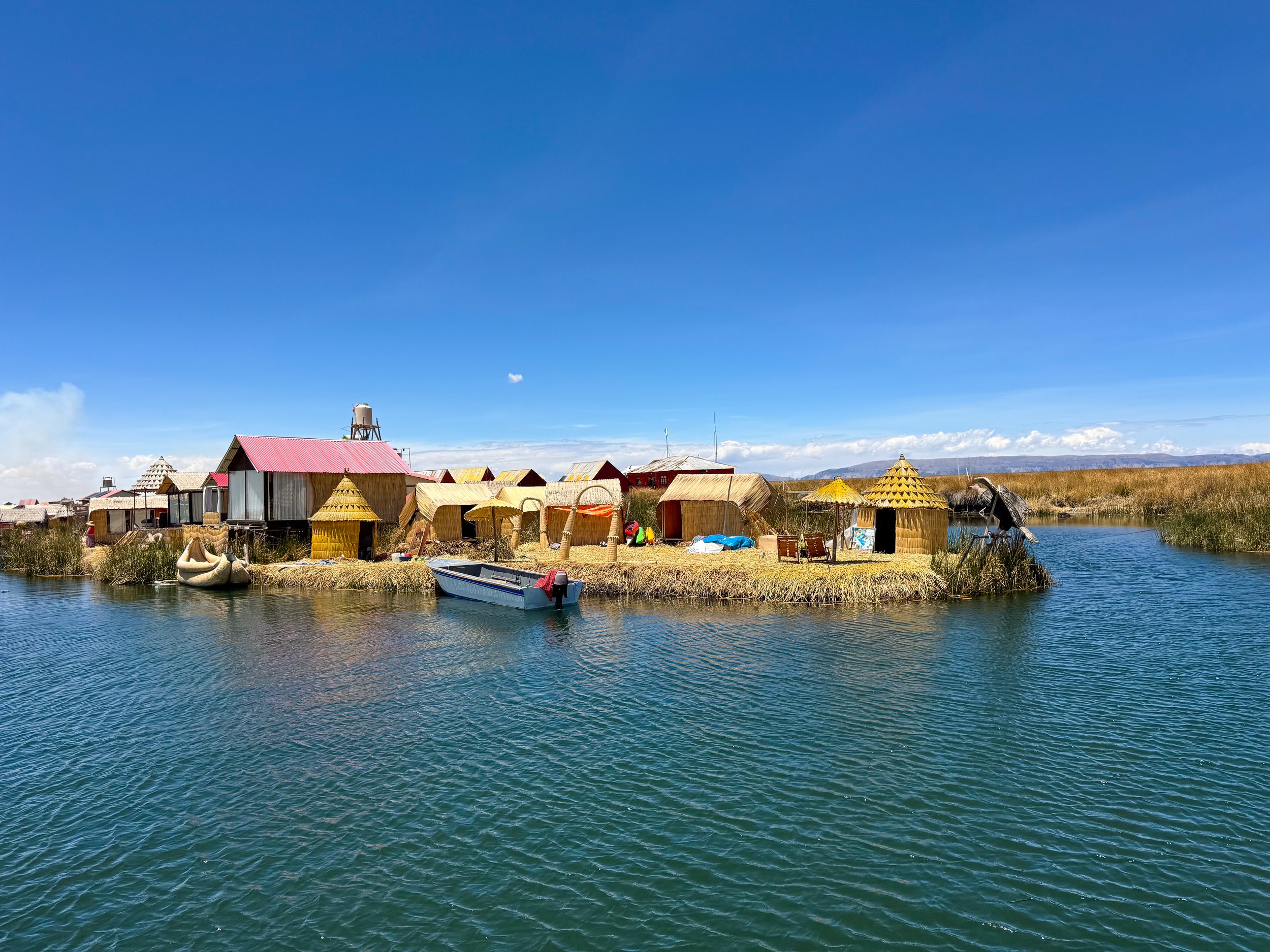
The totora is invaluable to the Uro people. It’s grown, harvested and dried then woven into blankets and bundles for use. It’s used to make everything from the floating islands themselves, to the houses people inhabit, the benches people sit on, the boats they navigate with and even hats, umbrellas and sculptures.
Everything made from the totora needs to be maintained. Each morning, boats carry fresh cut totora to the islands. The fresh totora is layered across the surface of the islands monthly while houses, boats and sculptures are remade every two years. The islands, if maintained, can float for up to 40 years before needing to be rebuilt.

Life on the Islands
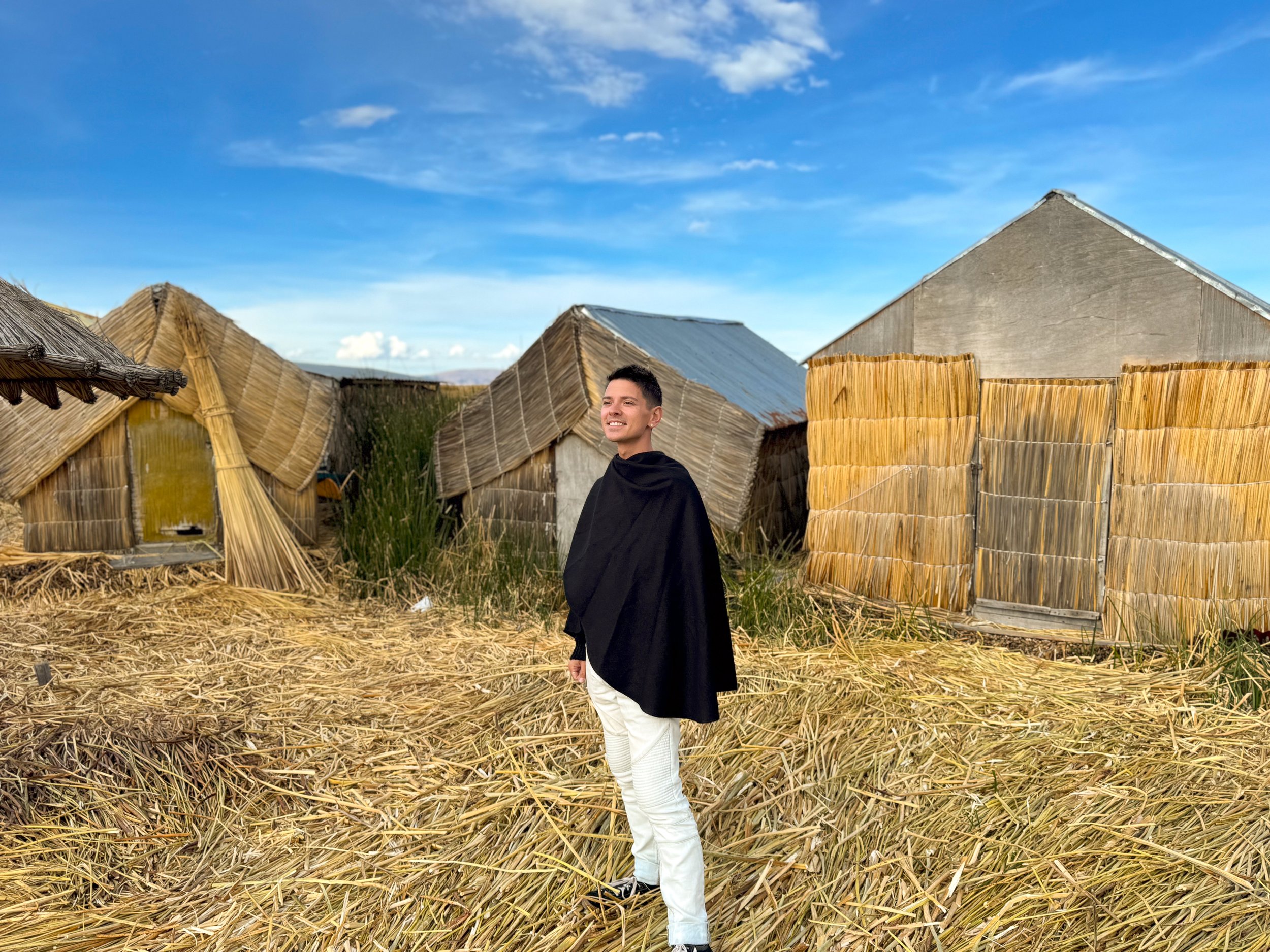
Each island houses a family with different structures used for sleeping, storage and eating. The grandparents even have a special cone shaped house that sets them apart as the elders while most others have a standard pentagon shape.
Fishing used to be the primary business for the Uro people. Today it’s tourism and handicrafts. This allows them to continue their way of life and share their community with the world. They gifted us handmade necklaces. We purchased a hand-stitched table runner and a totora basket for breads and fruits.
Home Stay at Isla Jacha Challwa
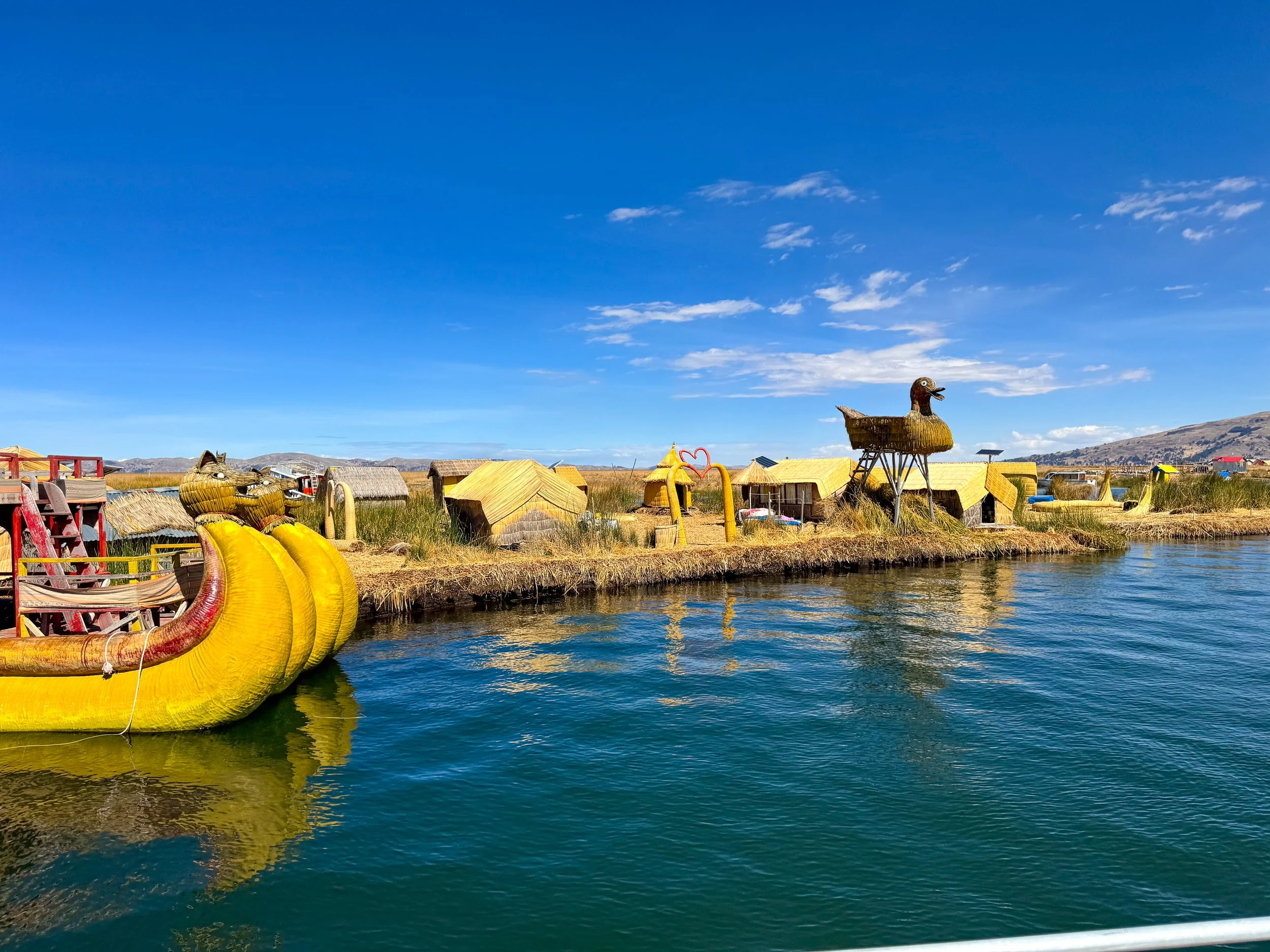
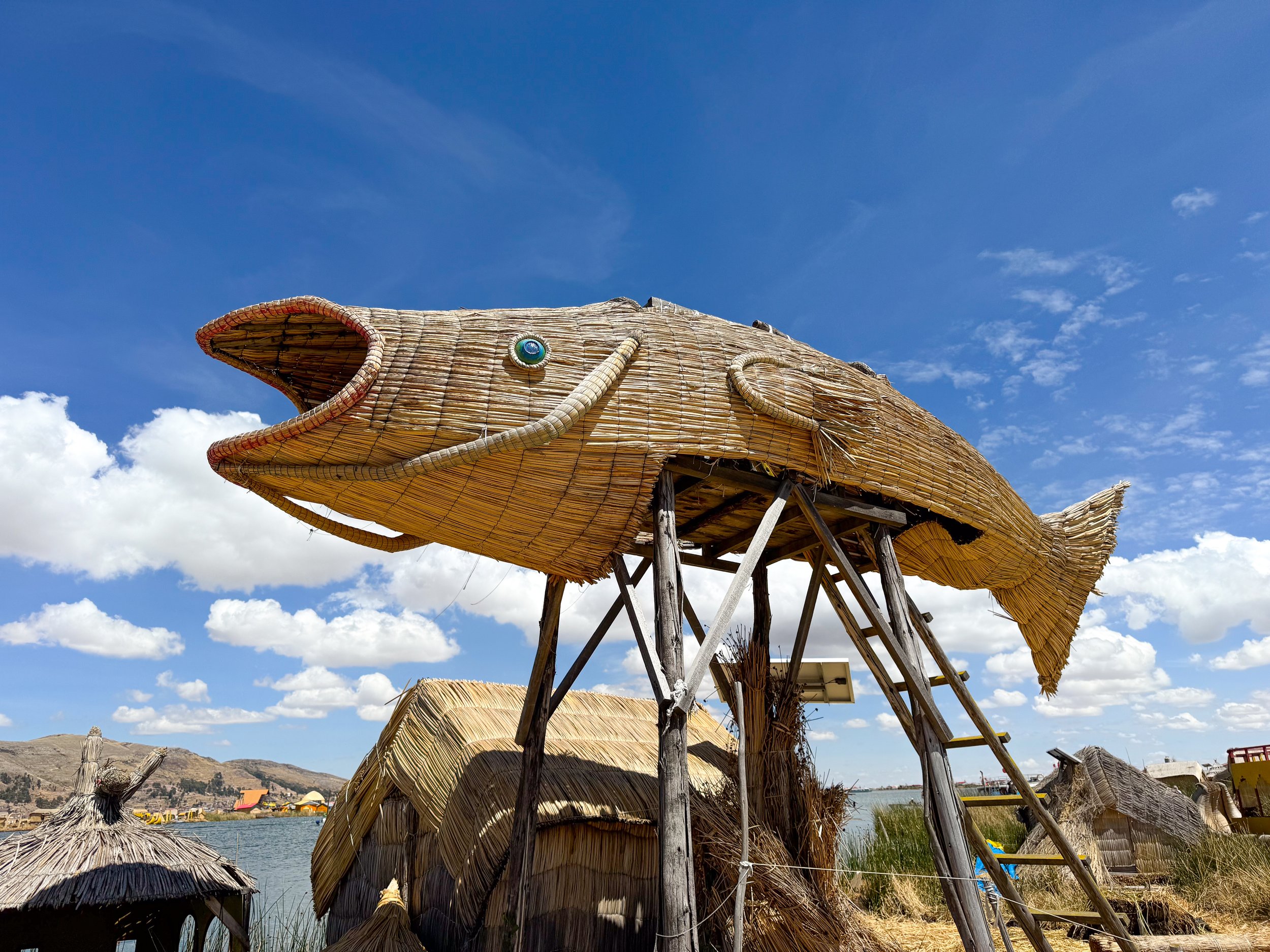
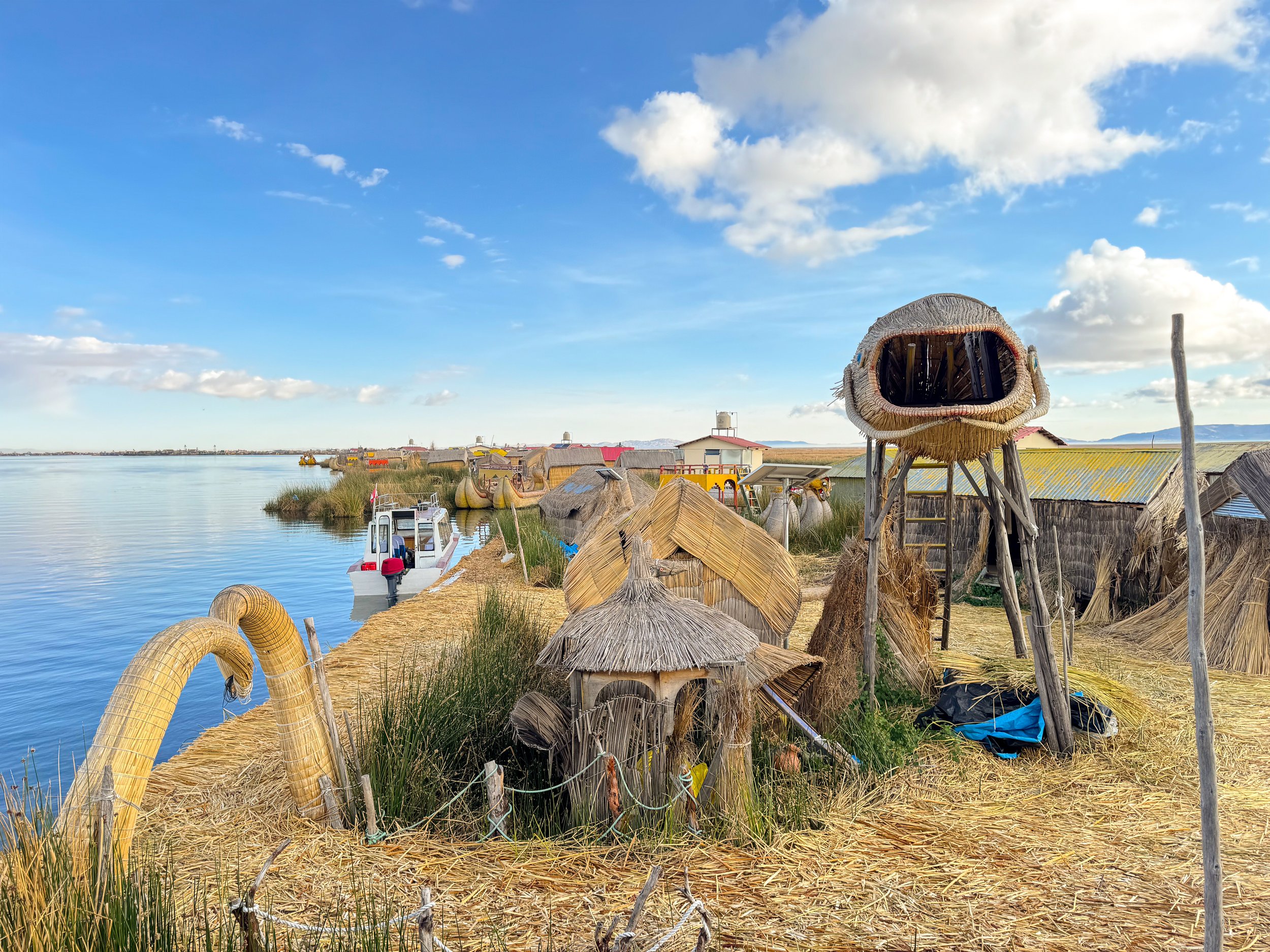
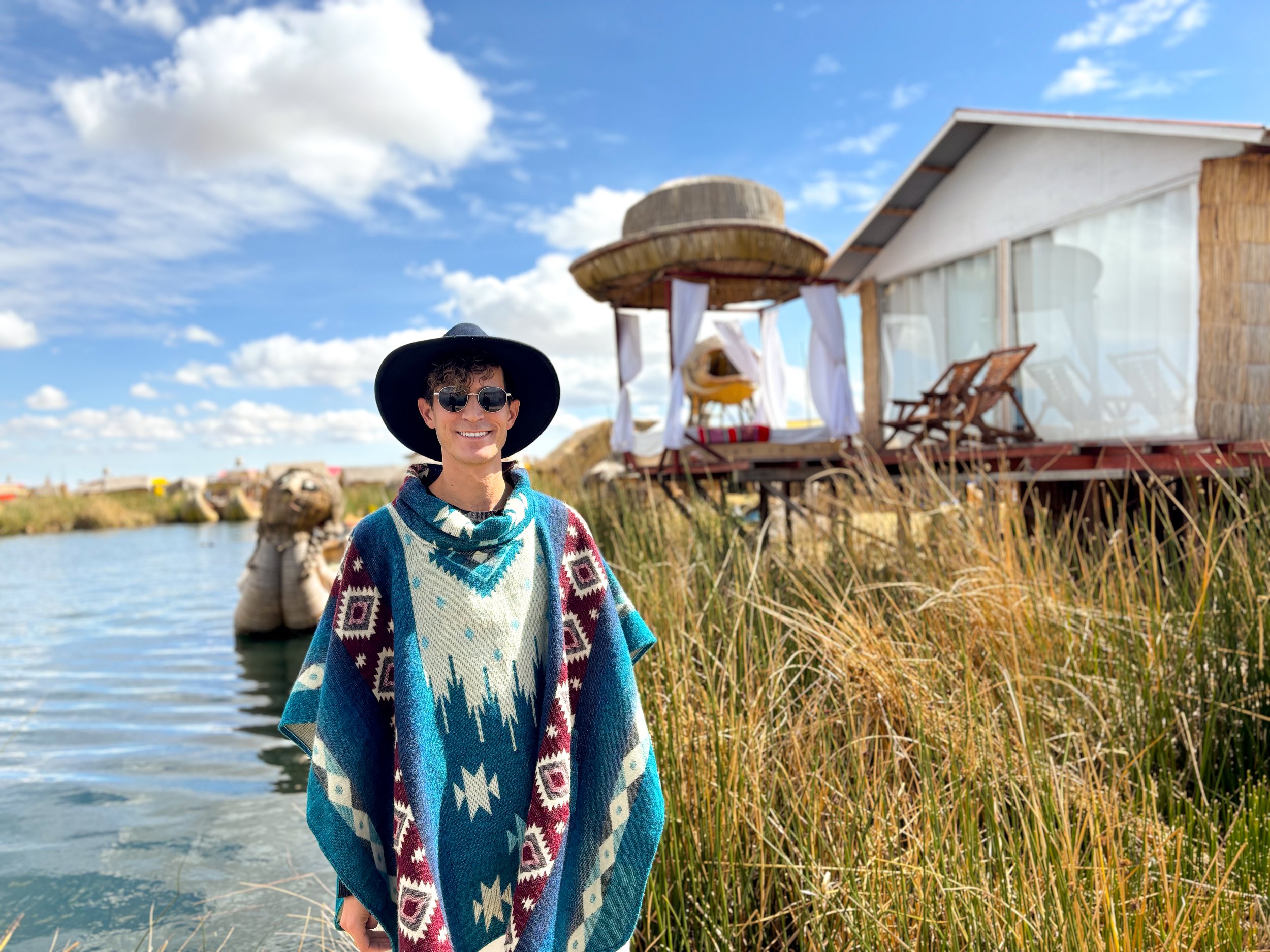
We stayed with a family while visiting the Uros Islands. They named their island, Isla Jacha Challwa, which translates to giant fish. They even built a lookout tower with a giant totora fish for its design! As we explored the island, the totora crunched beneath our feet and the entire island rocked gently as passing boats created a small wake.
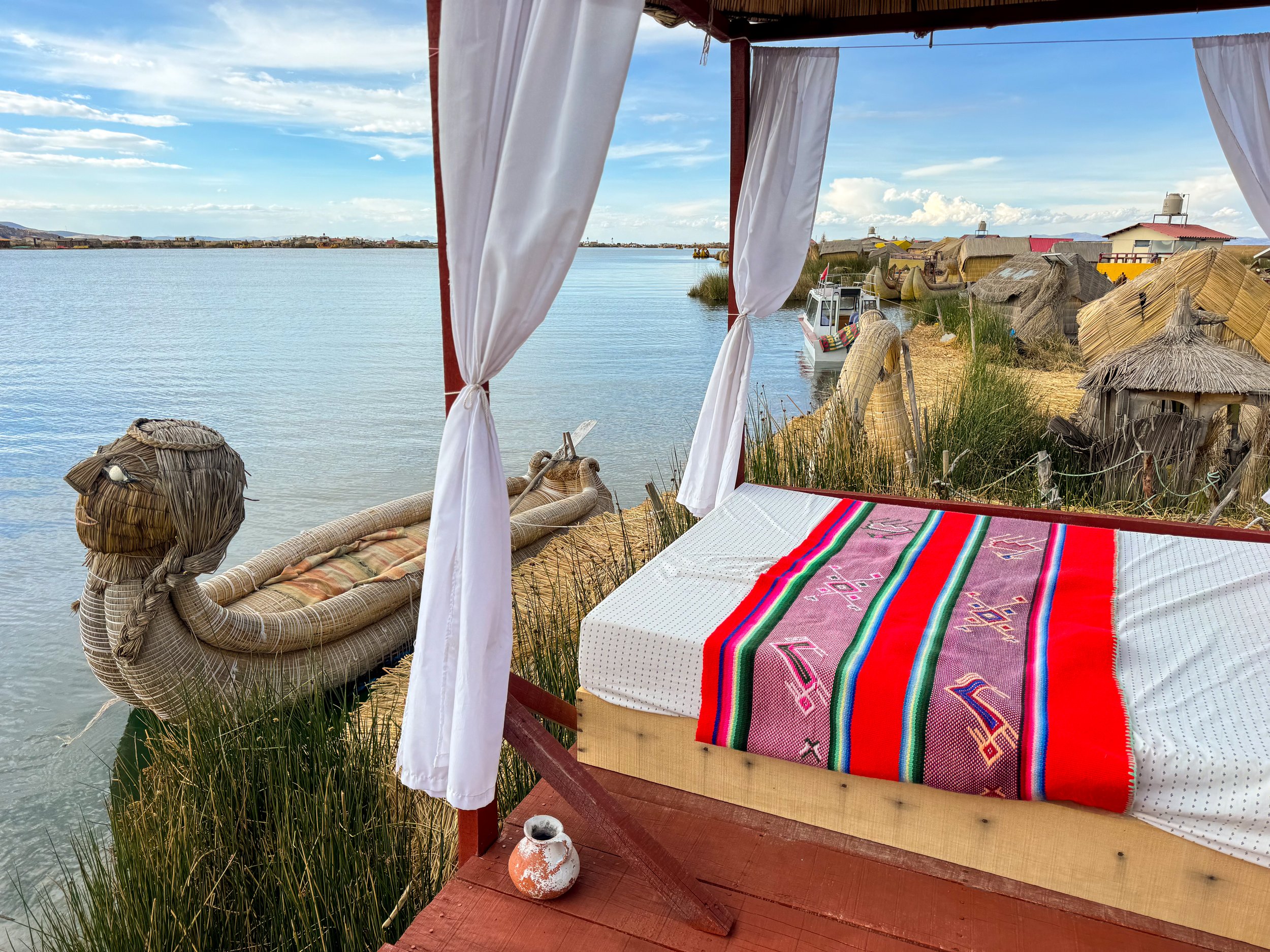
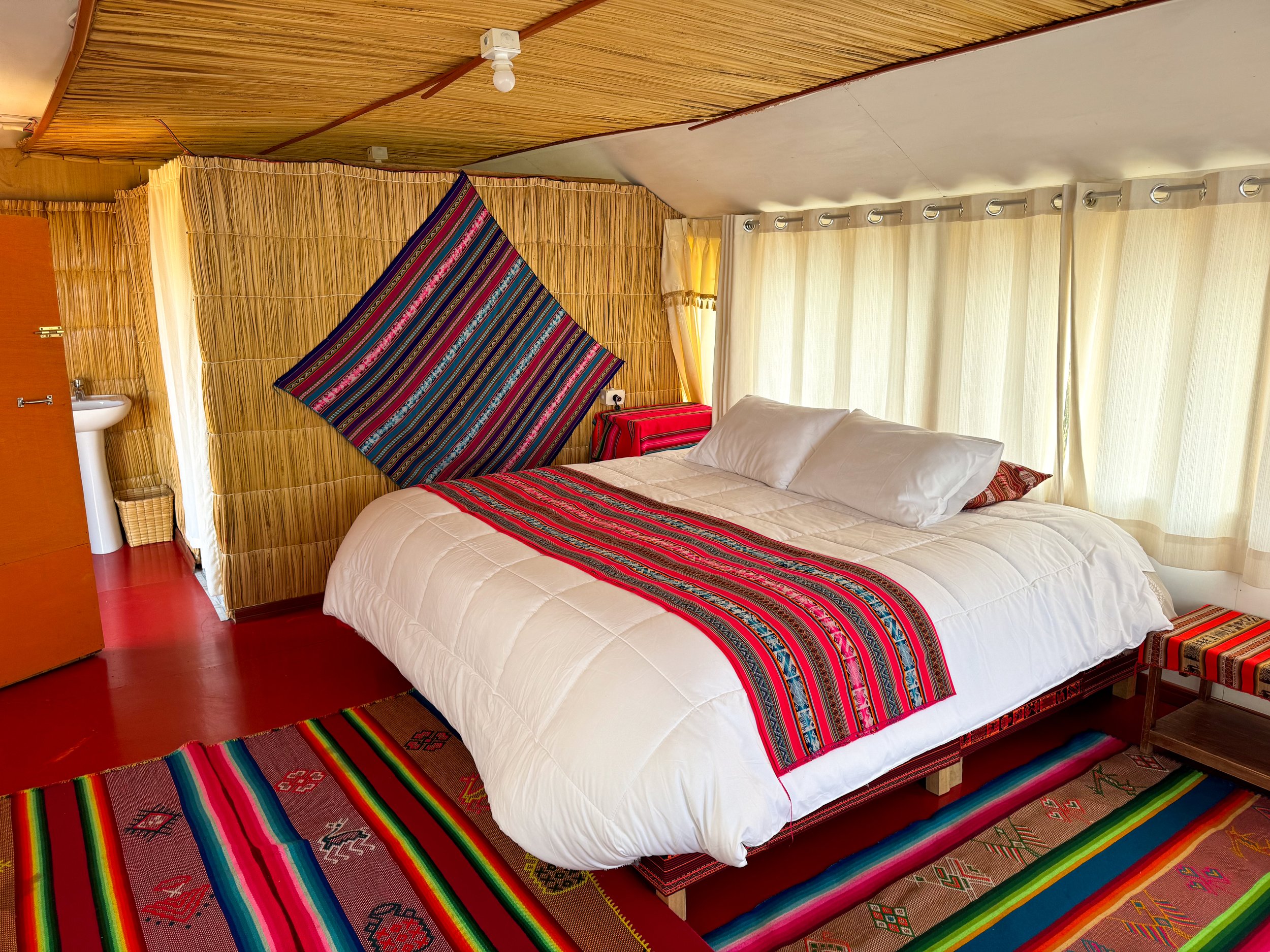
The house we stayed in was covered in the dried totora and the interior was decorated with colorful woven textiles. It had a patio that opened up to the lake with lounge chairs and an outdoor bed topped with a large woven hat for shade. We napped here and watched the sunset. Book here.
Caballitos de Totora (Totora Boats)
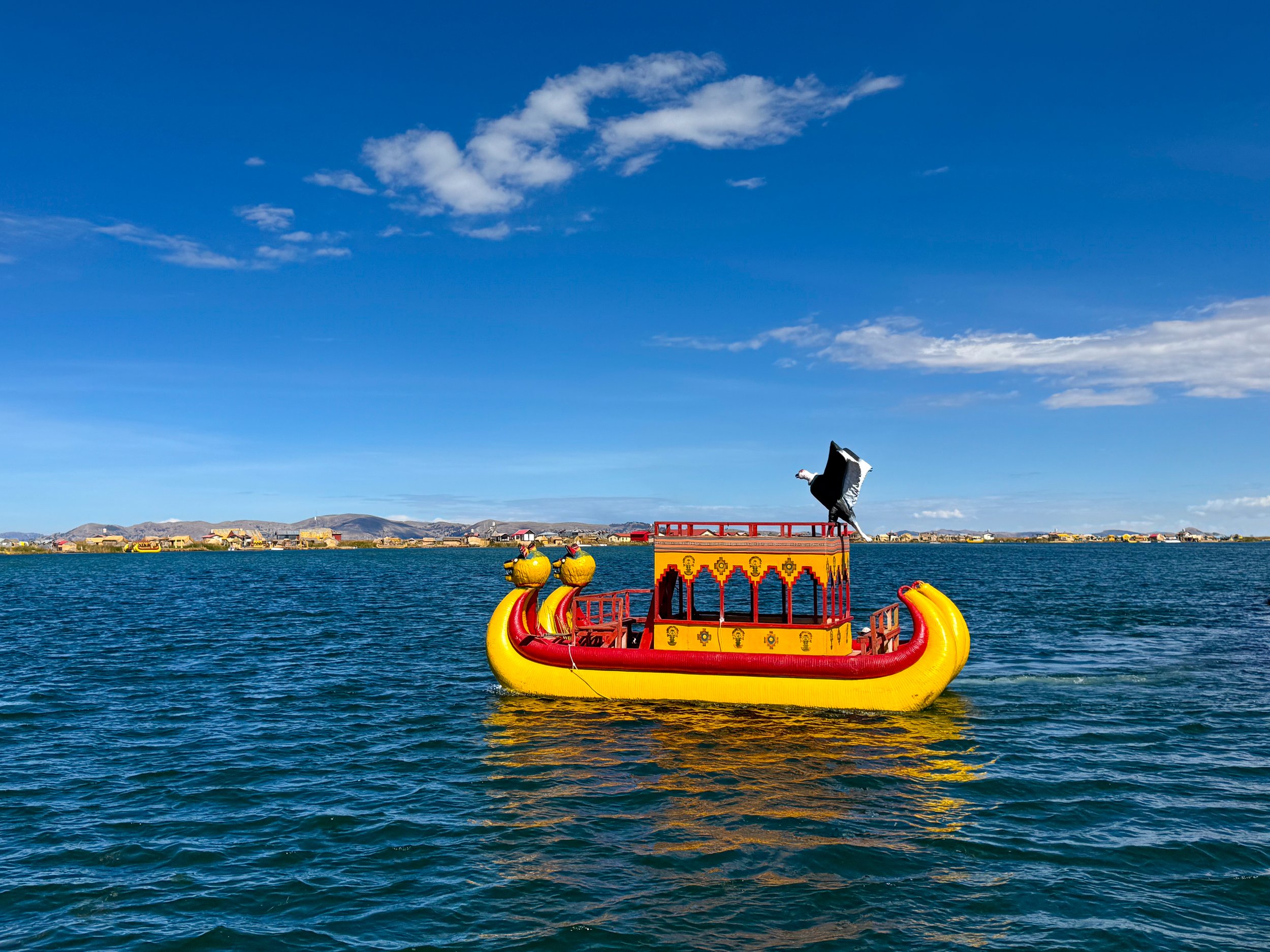
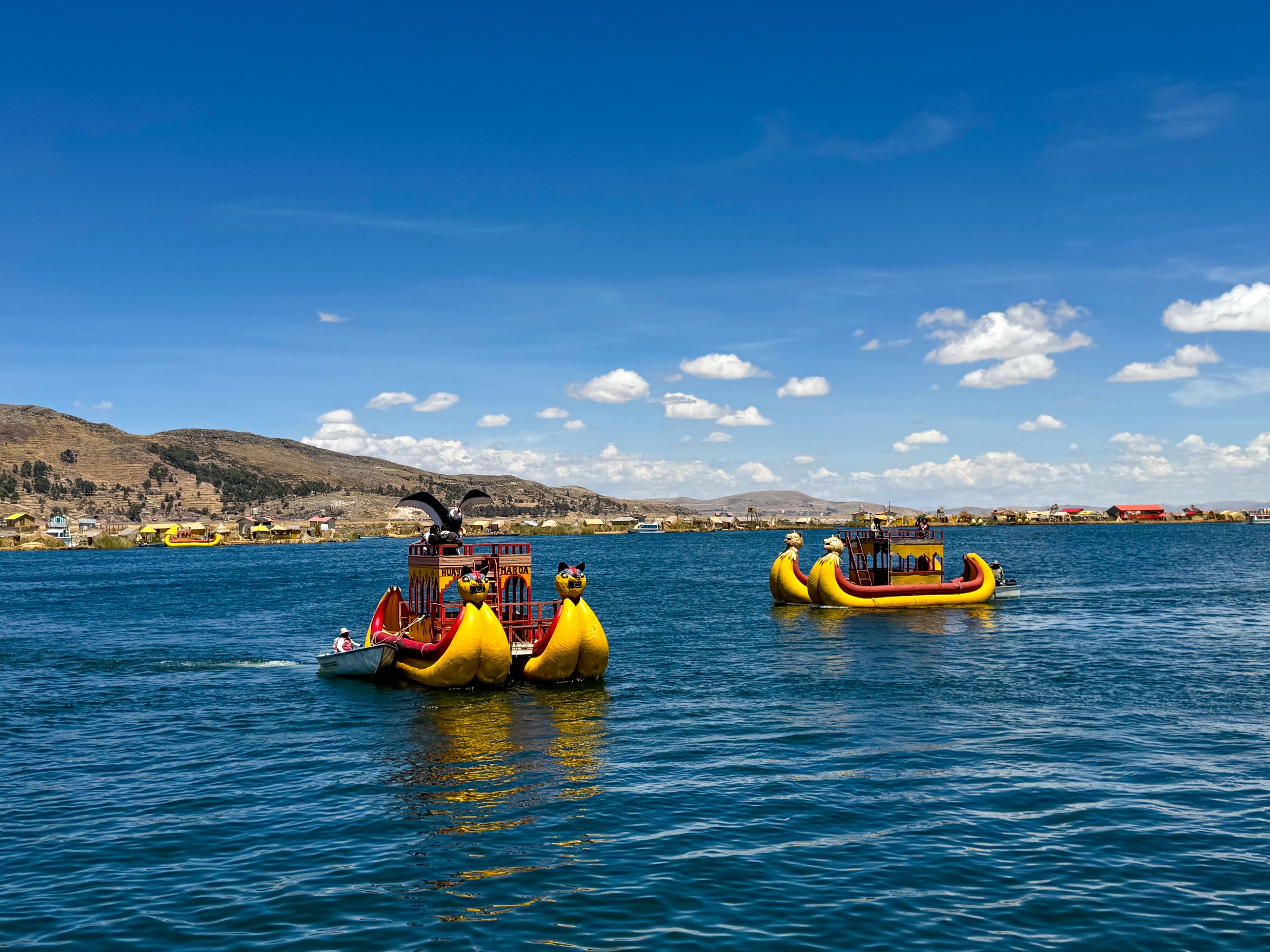
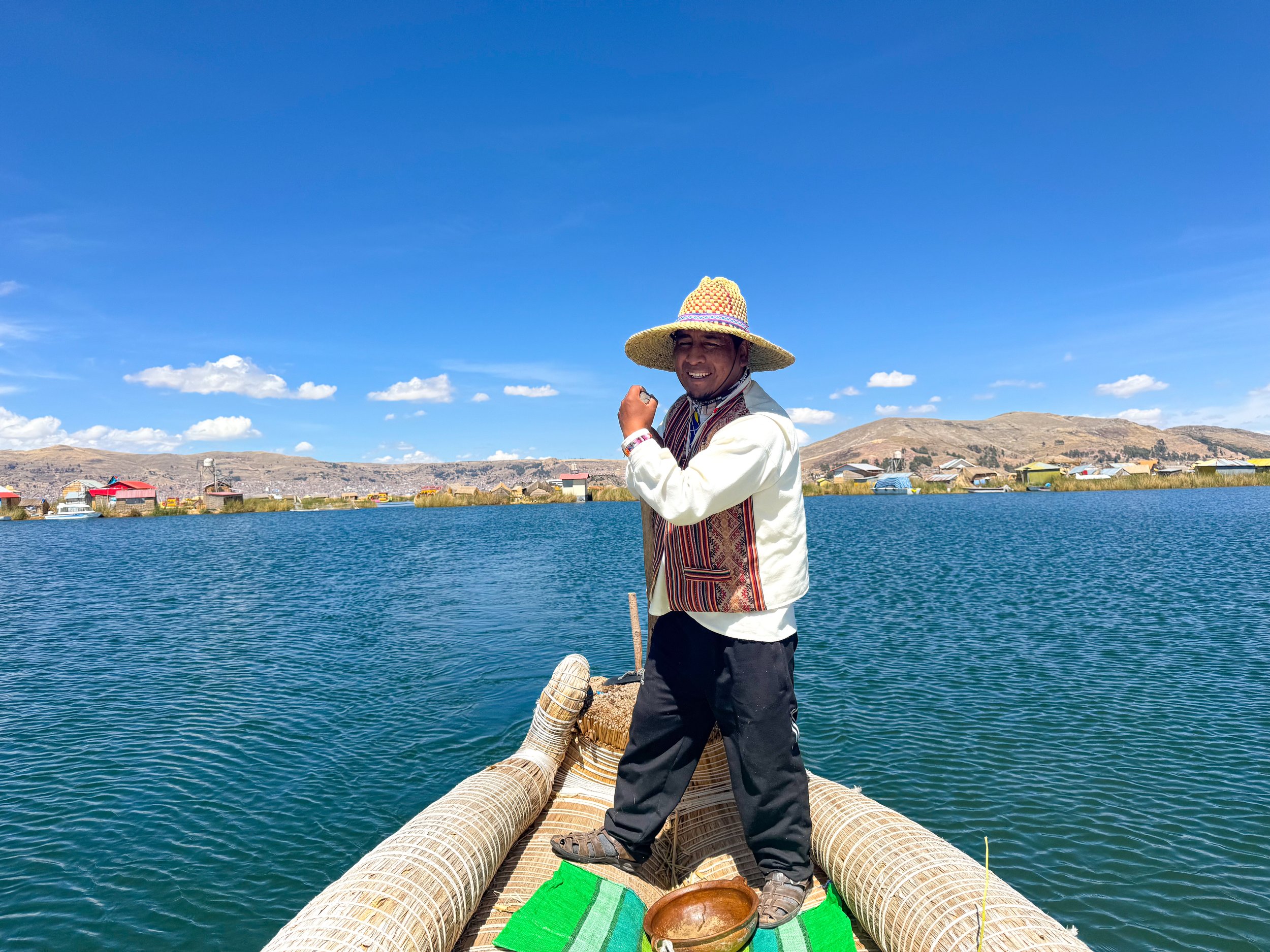
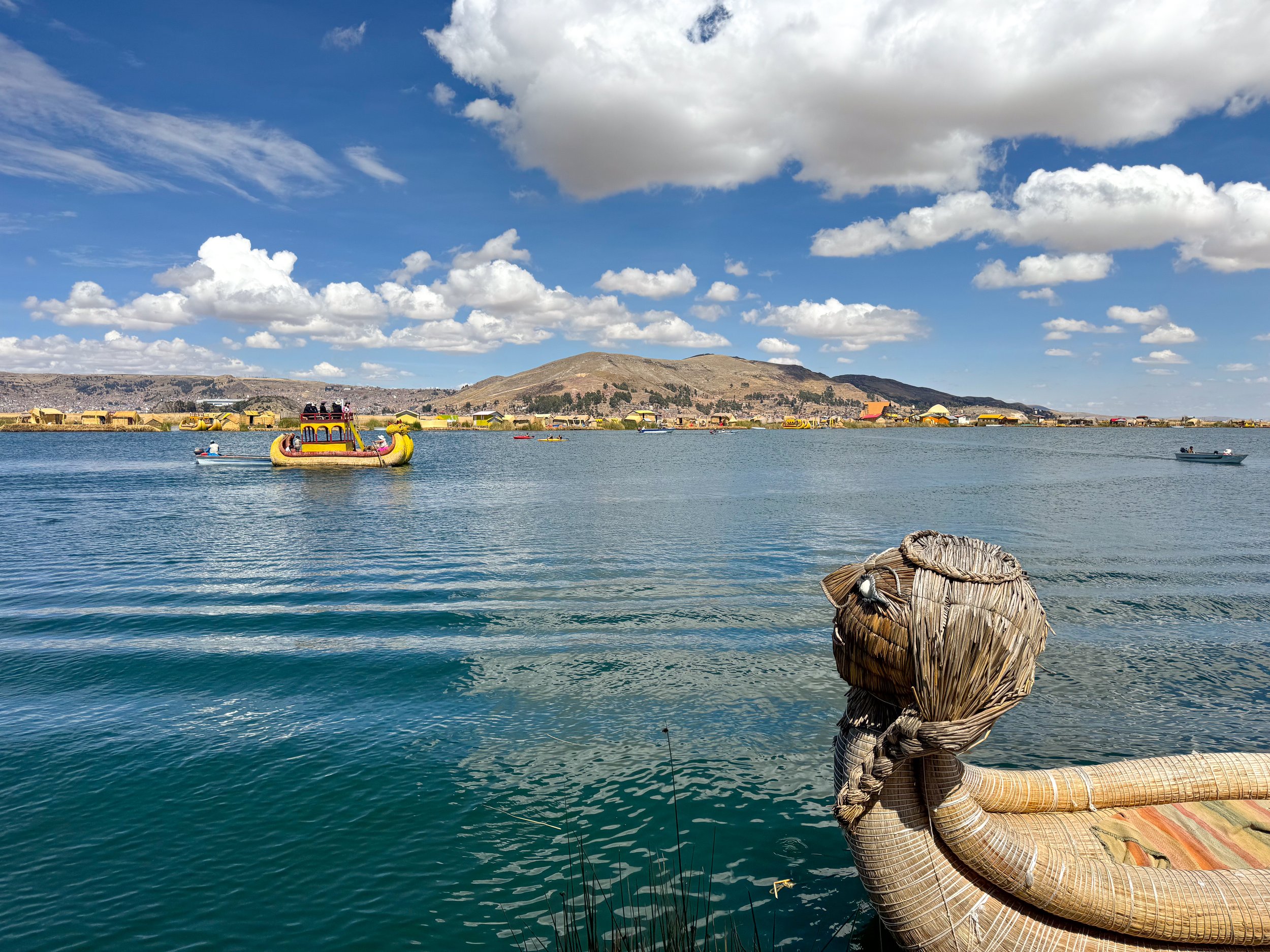
Caballitos de totora are the traditional boats used by the Uro people. Made from totora, they’re shaped into the body of a snake with the head of a puma. The larger boats are made from two smaller ones adjoined by a wooden platform. Some even have a sculpture of a condor or the sun as decoration. Many are left natural while others are painted in a yellow protective coating. The smaller boats are hand paddled while the larger ones are tugged by a motor boat.
Touring the Uros Islands
Our host took us on a tour of the islands, a sunset boat ride, net fishing and even let us attempt to paddle the boat. He shared stories of his father and grandfather, said to be the best fishermen on the lake. The matriarch caught fish and cooked meals for us including pan fried trout from the lake and soup made from our fresh catch.
On our boat tour, we slowly passed nearly every island in the community, admiring the golden color from the thatched surfaces, the colorful textiles and unique styles of the boats. The islands are very welcoming of visitors, with home stays, small restaurants serving local cuisine and tiny shops. They have their own hospital, communal place of worship and elementary school.

Restaurant Titicaca
A popular lunch spot on the Uros Islands with traditional cuisine from Lake Titicaca. Trucha (trout) is the star of the menu. It’s prepared pan fried, deep fried or as ceviche, all with sides of Peruvian potatoes and rice. We dined in a pavilion, watching colorful boats pass by and enjoying the lake views.
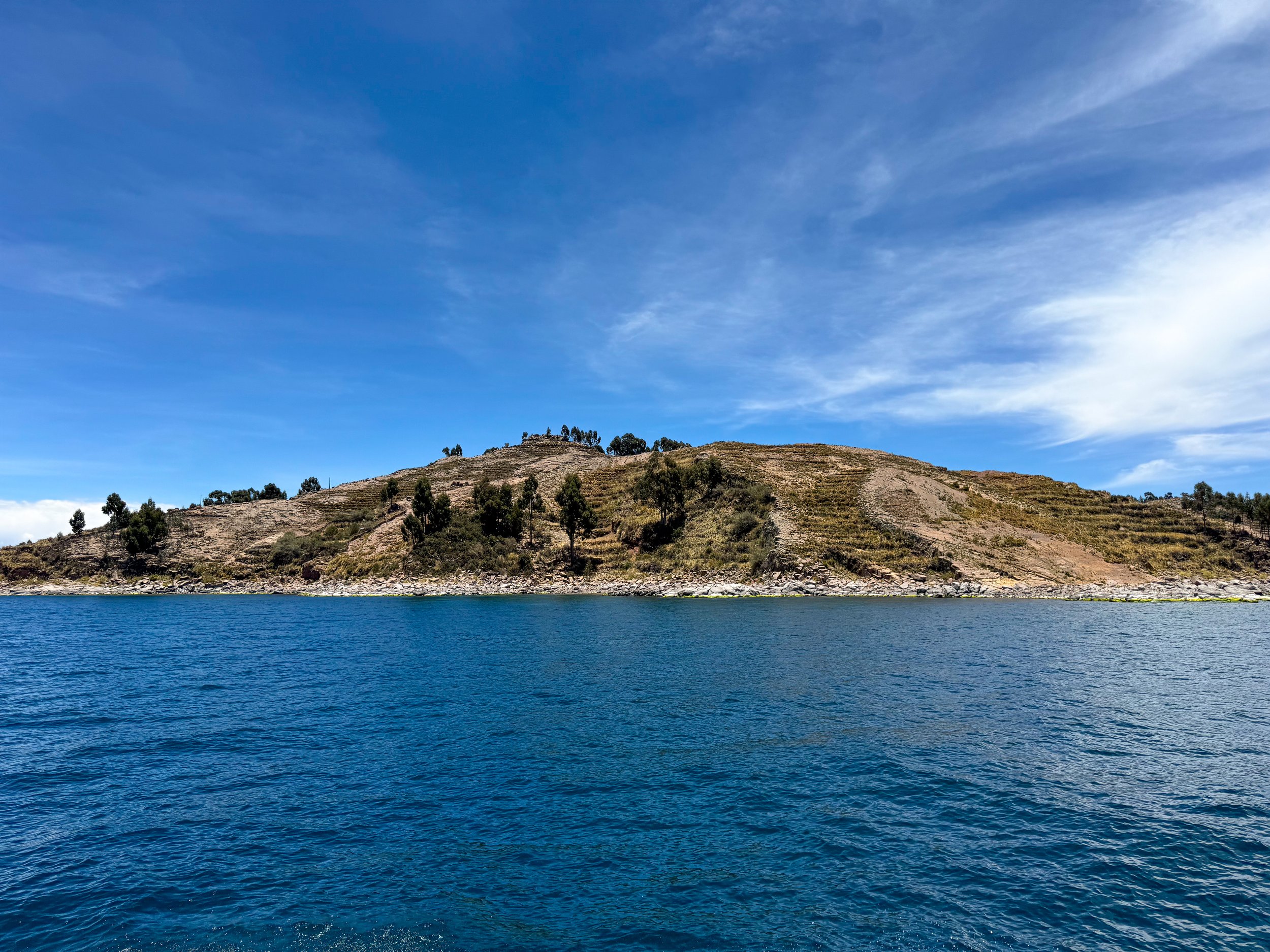
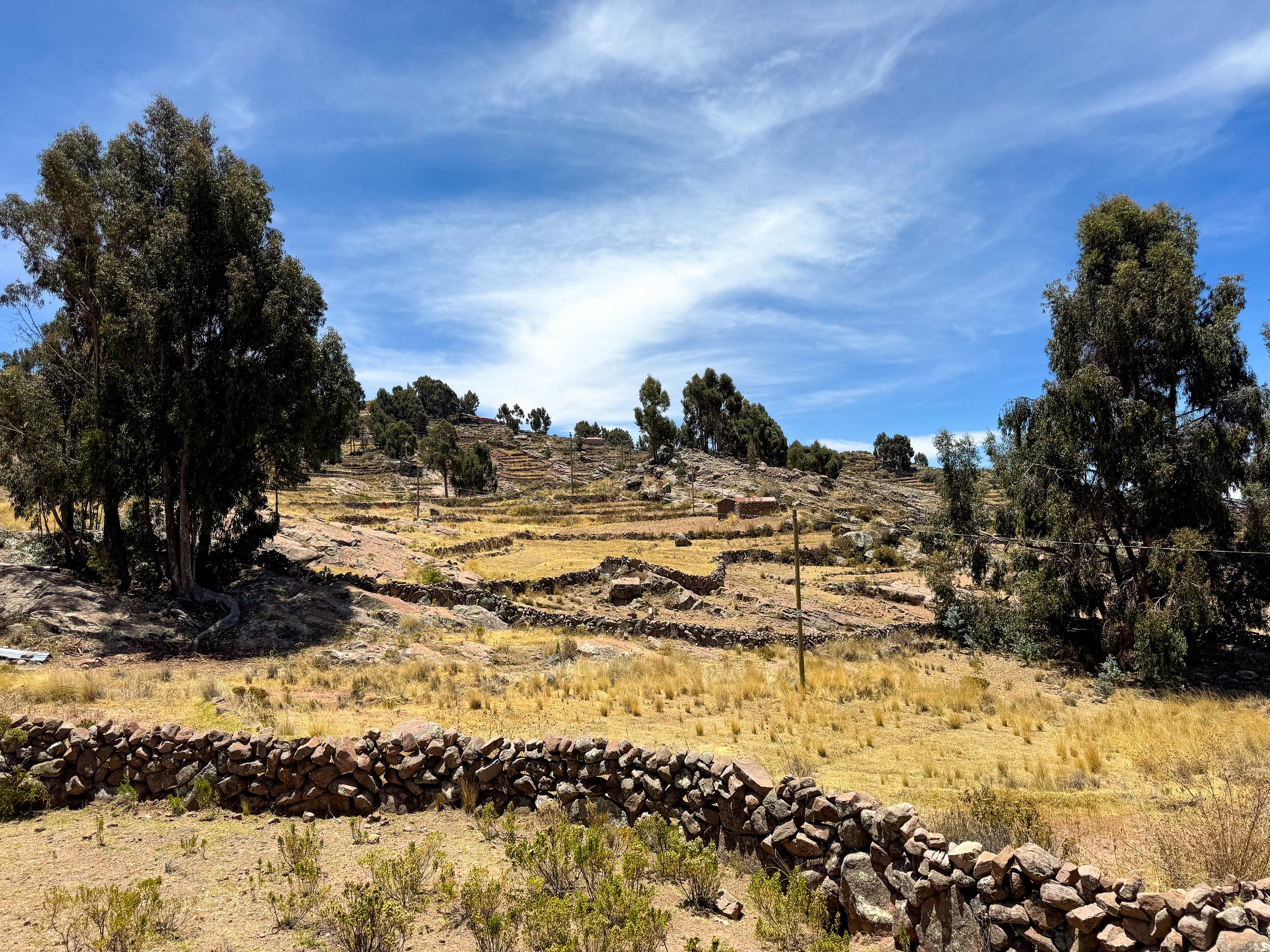
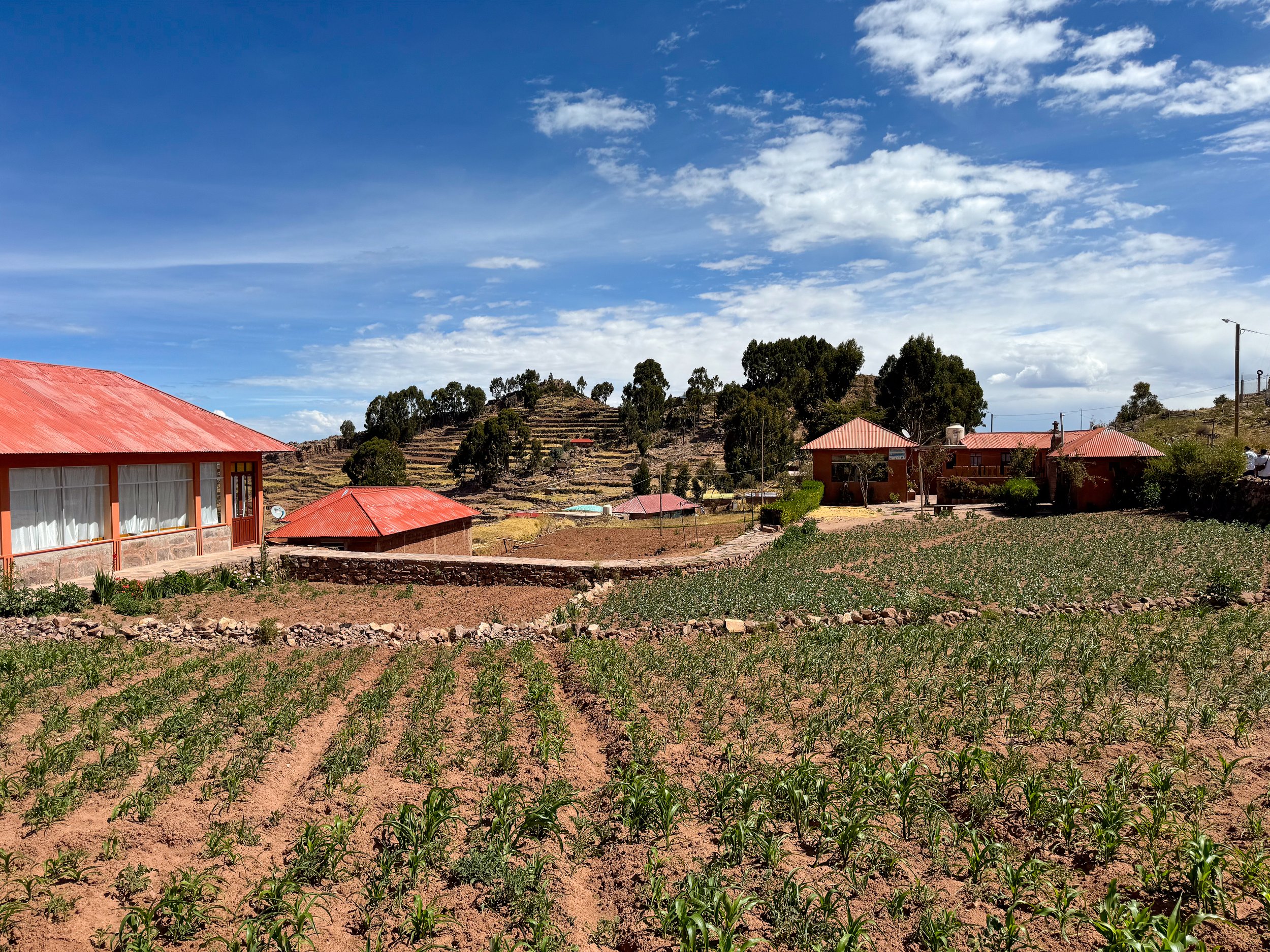
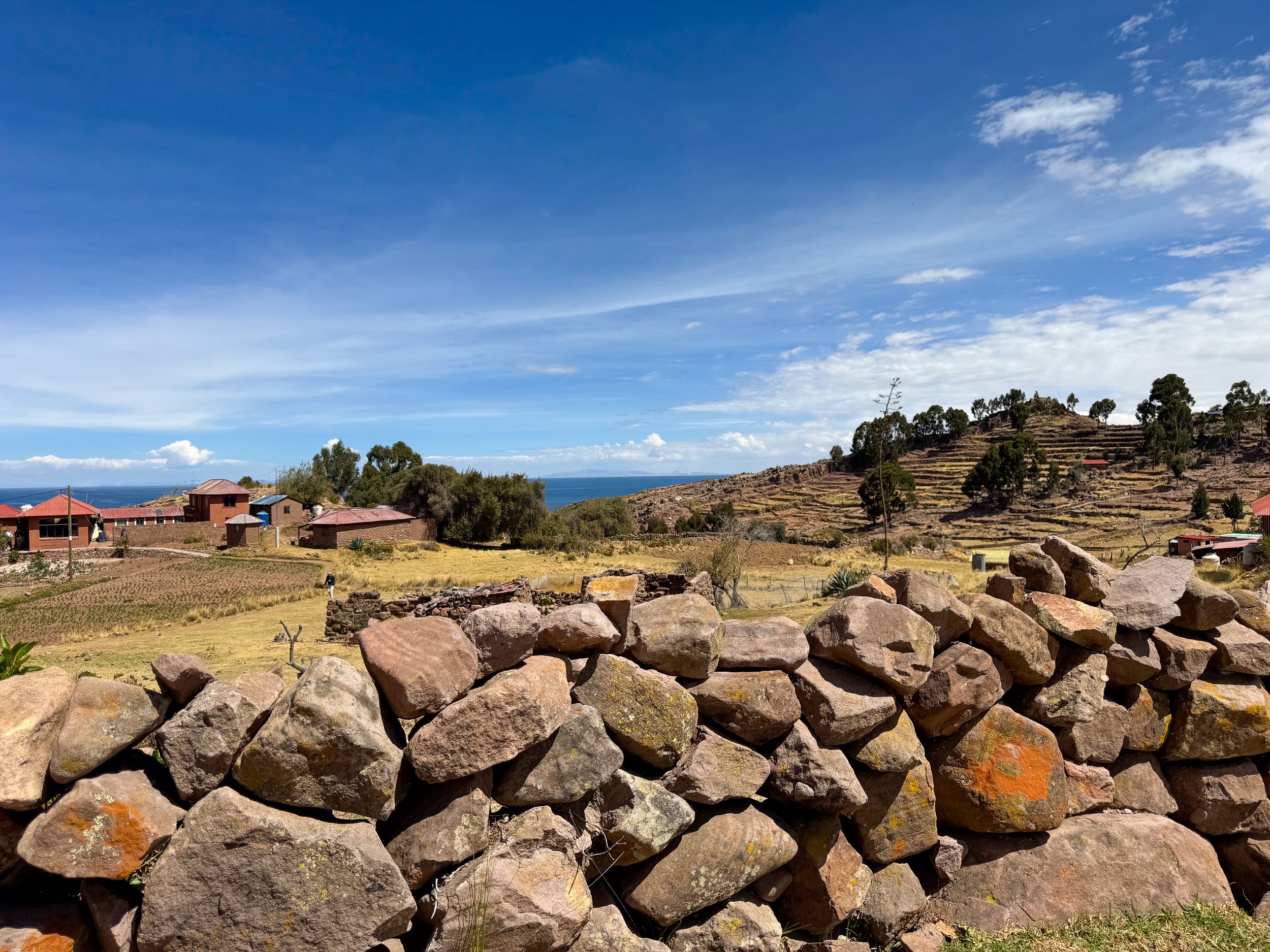
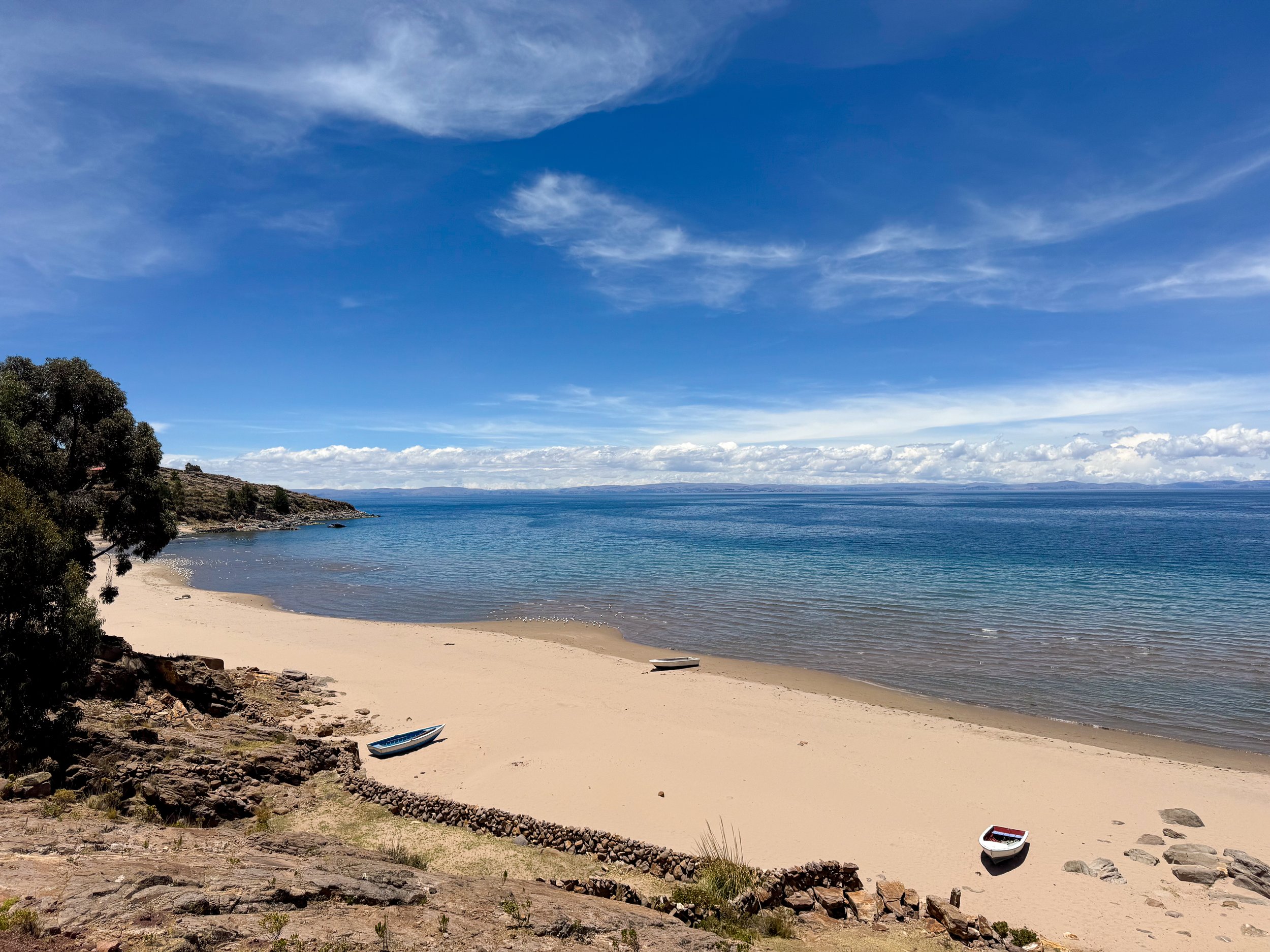
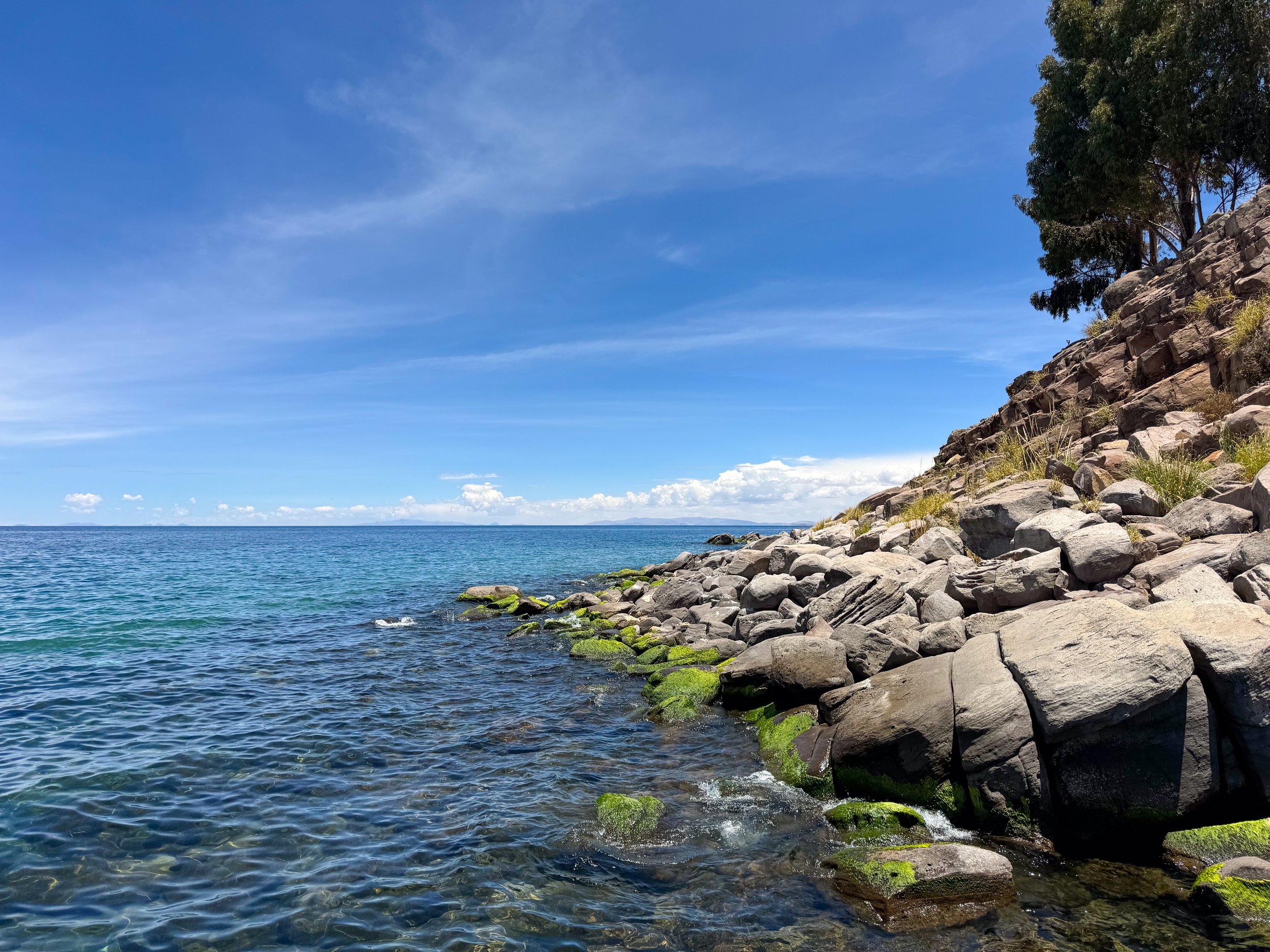
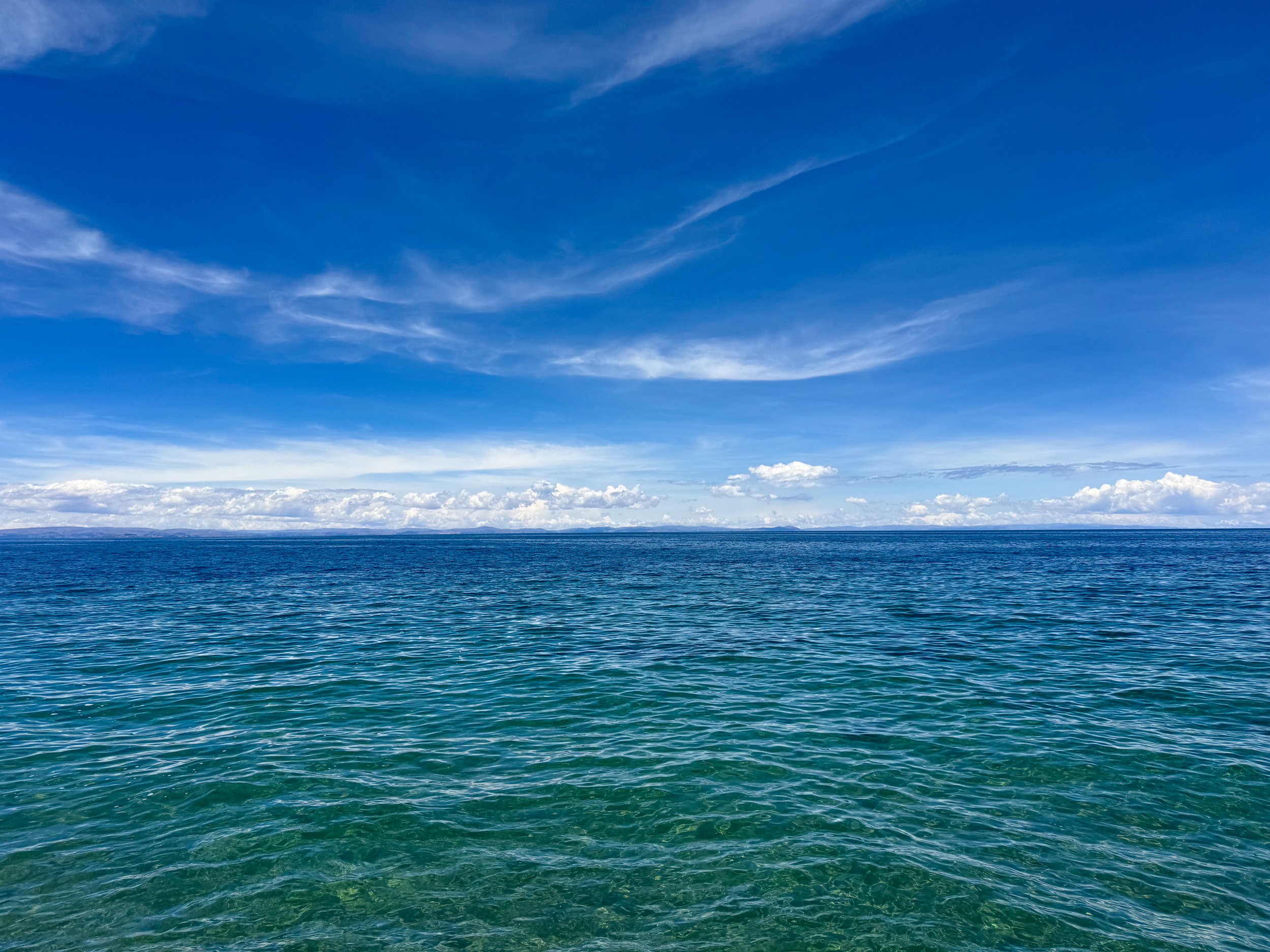
Isla Taquile, Peru
Taquile Island is an island on Lake Titicaca fully covered in agricultural terraces and internationally recognized for the cultural significance of its textiles. We took a half day tour to the island to explore its cuisine, textiles and landscape. Taquile Island is located 1 hour 30 minutes by ferry from the Uros Islands with tours departing at 10am and returning at 4pm.
The tour was simple, stopping on the island for a local lunch of pan fried trout, quinoa bread and quinoa soup. At the same time, we learned about the textiles and hats, primarily used to differentiate relationship status and mood. This was followed by a visit to an artisanal market with colorful and handmade woven items like hats, scarves, gloves, bracelets and bags.
Continuing, we walked along the island, overlooking agricultural terraces primarily used to grow potato, quinoa and corn. We passed walls of precariously stacked stones, pink and yellow wildflowers used to make textile dyes and cliffs with views of the expansive lake.

Copacabana, Bolivia
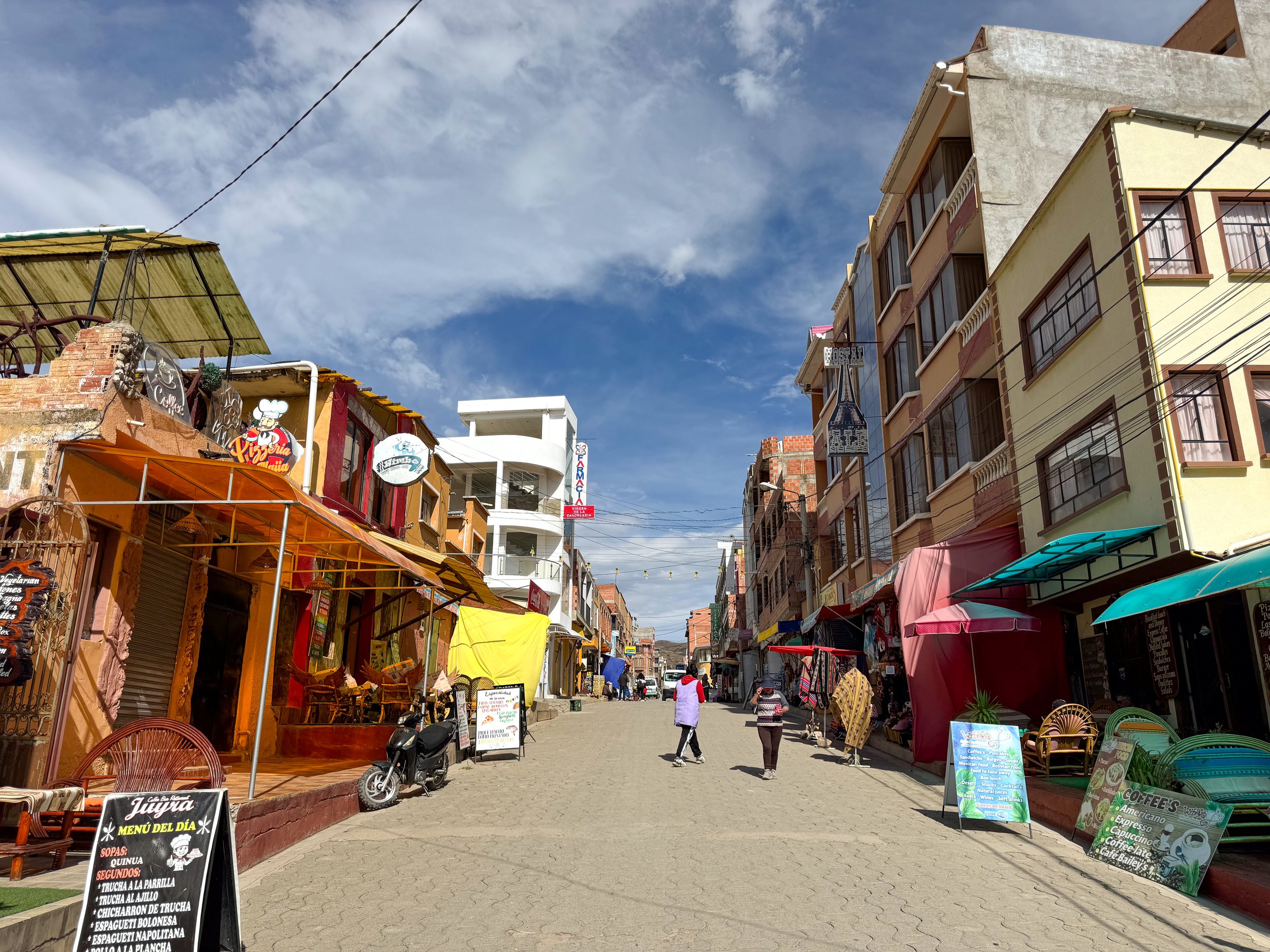
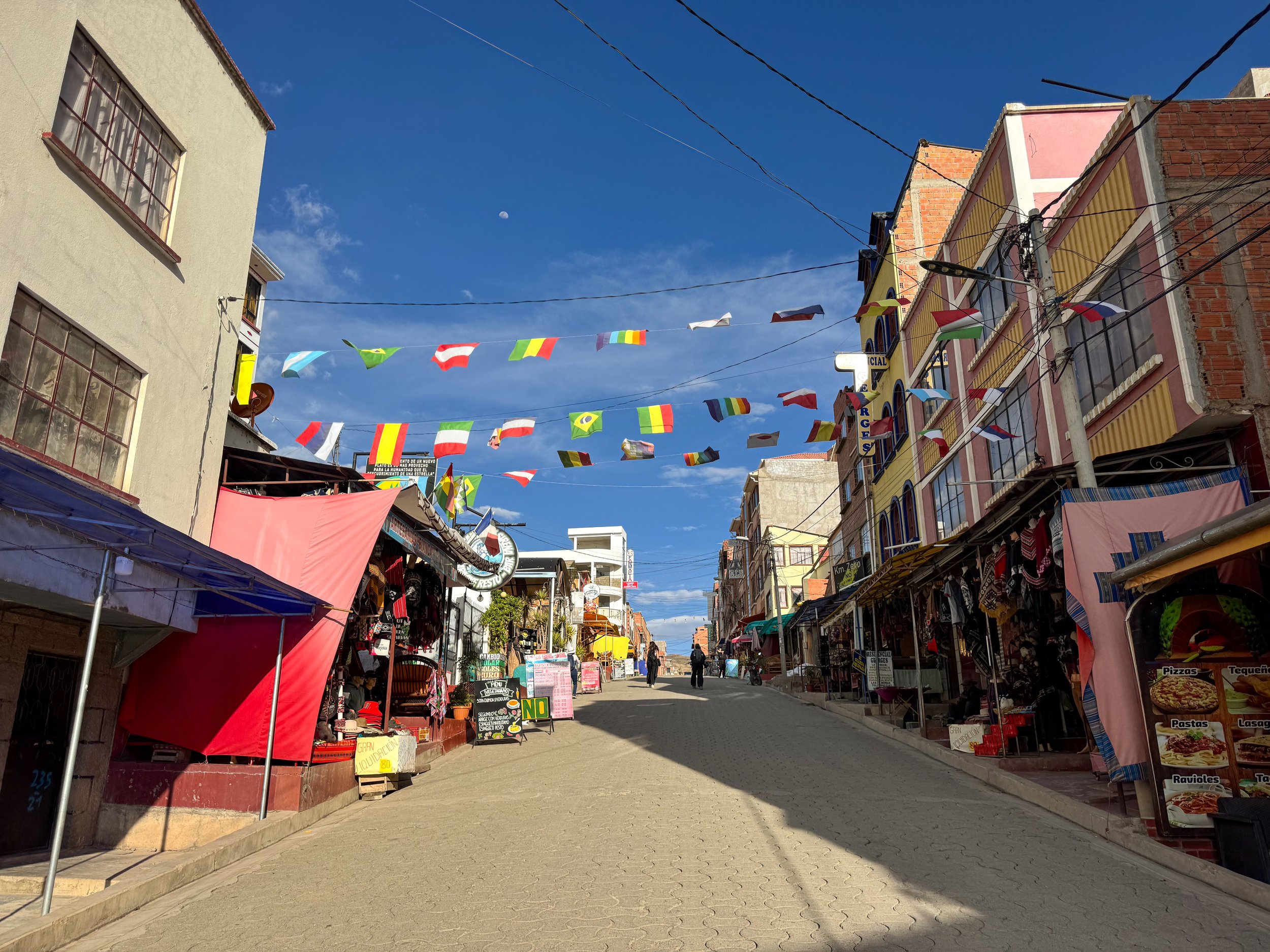
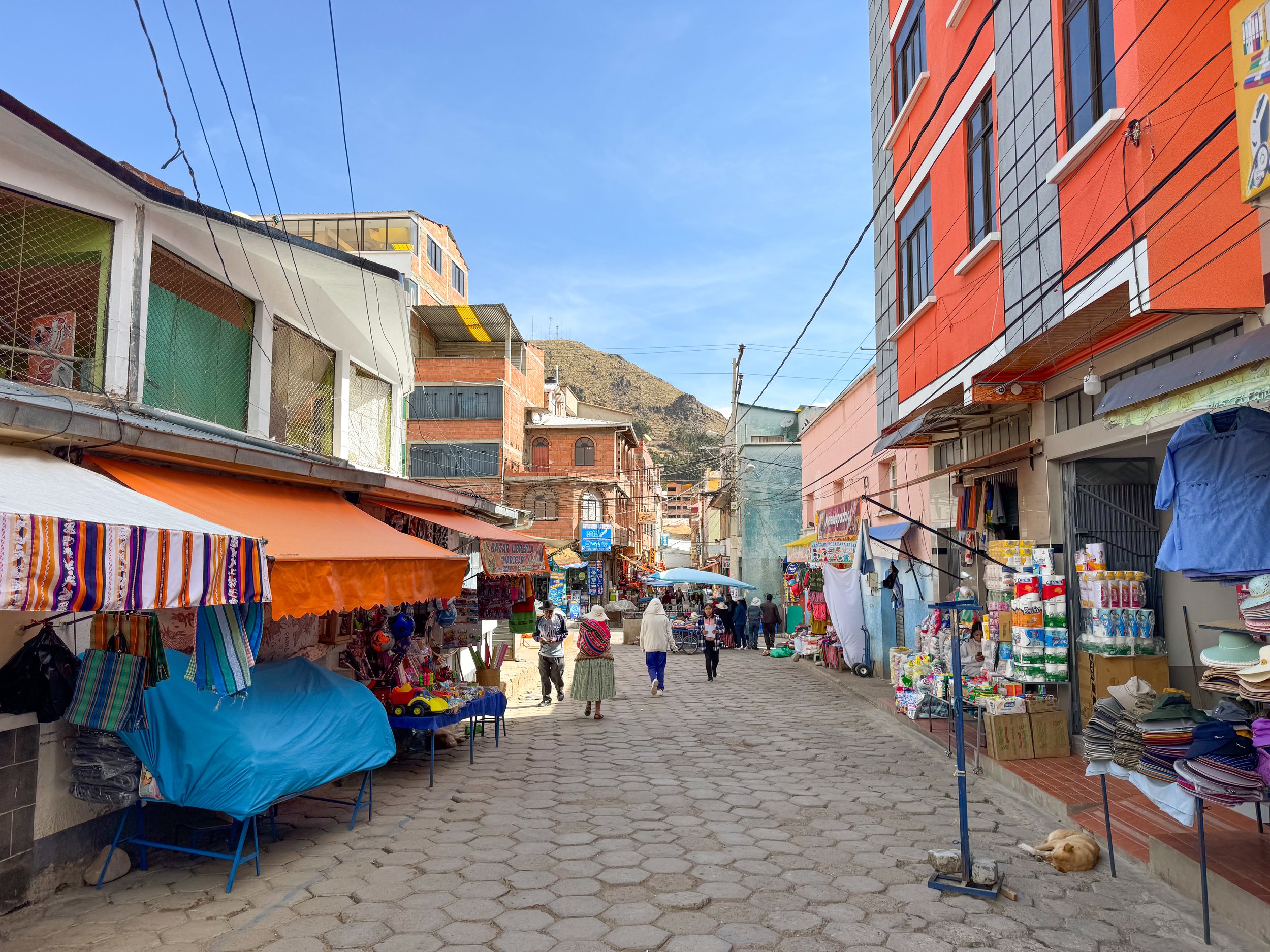
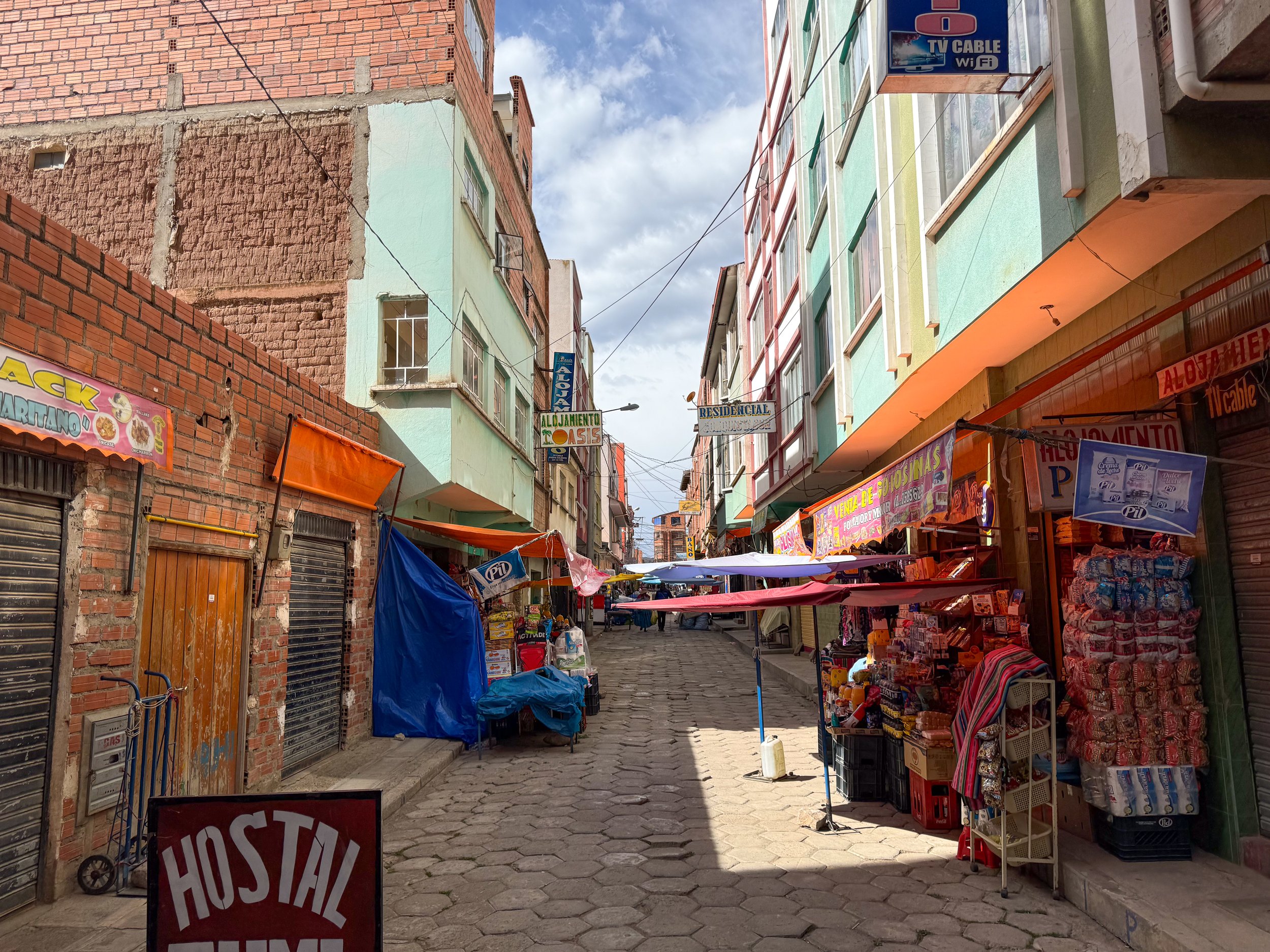
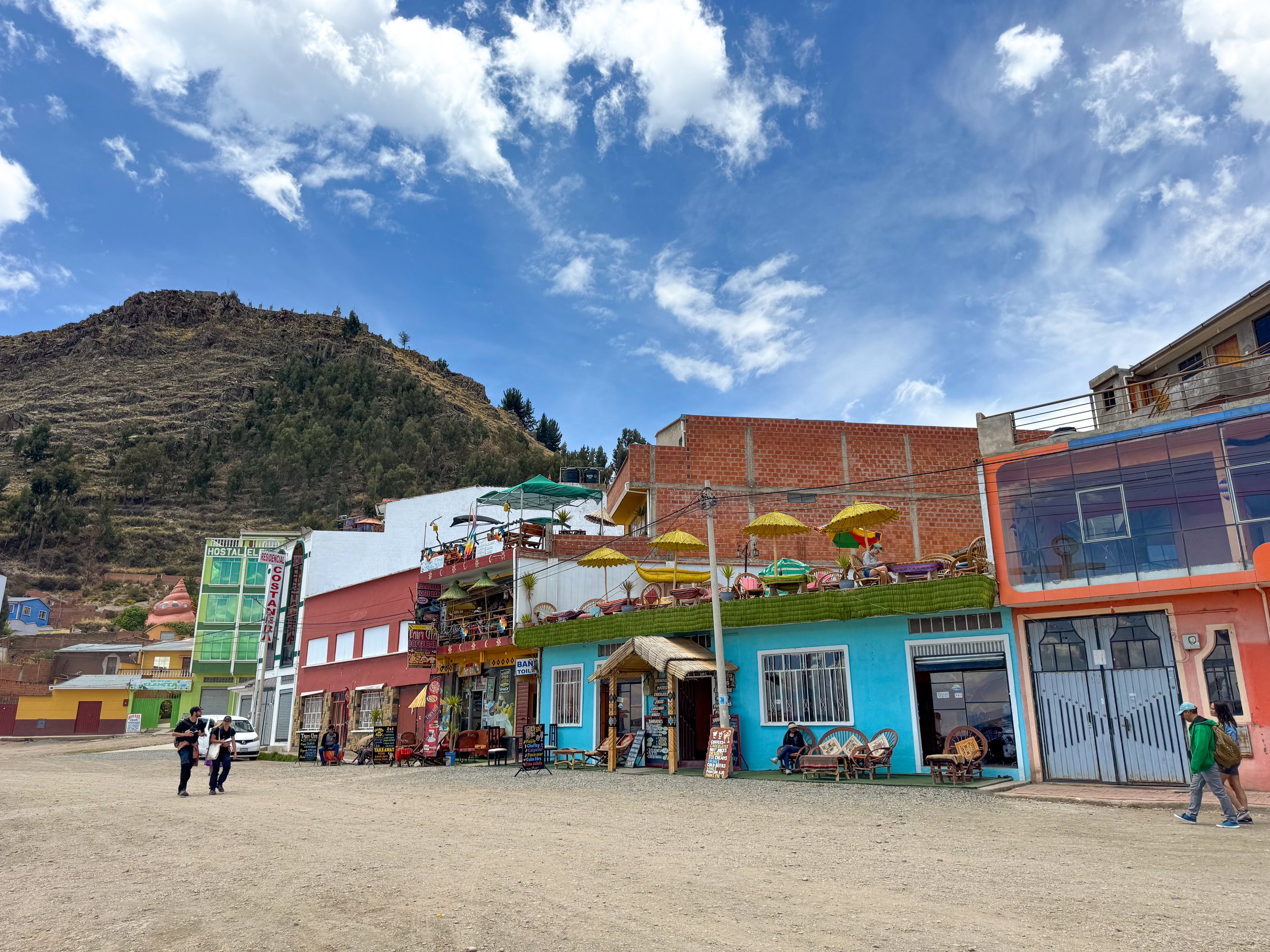
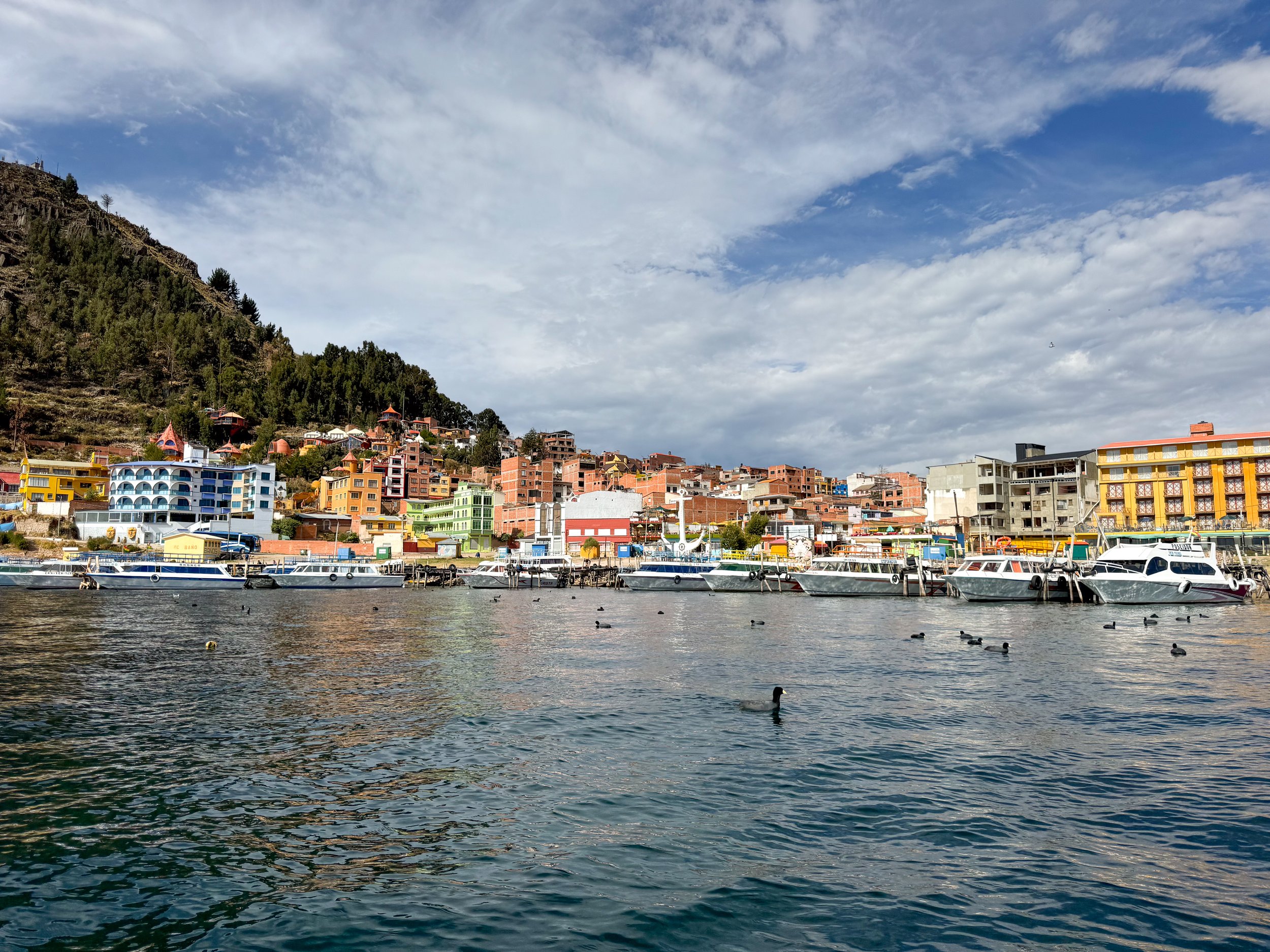
Copacabana is a colorful Bolivian town located on the eastern shores of Lake Titicaca. We spent an afternoon exploring the city, paddling around the lakefront and hiking to a mountaintop overlook.
While walking through town, women are seen dressed in traditional Andean attire selling fruits and veggies, friendly stray dogs run around and sleep in the streets, backpackers arrive and depart by bus regularly and cars receive blessings while being decorated with strings of flowers and bouquets.
Around Town
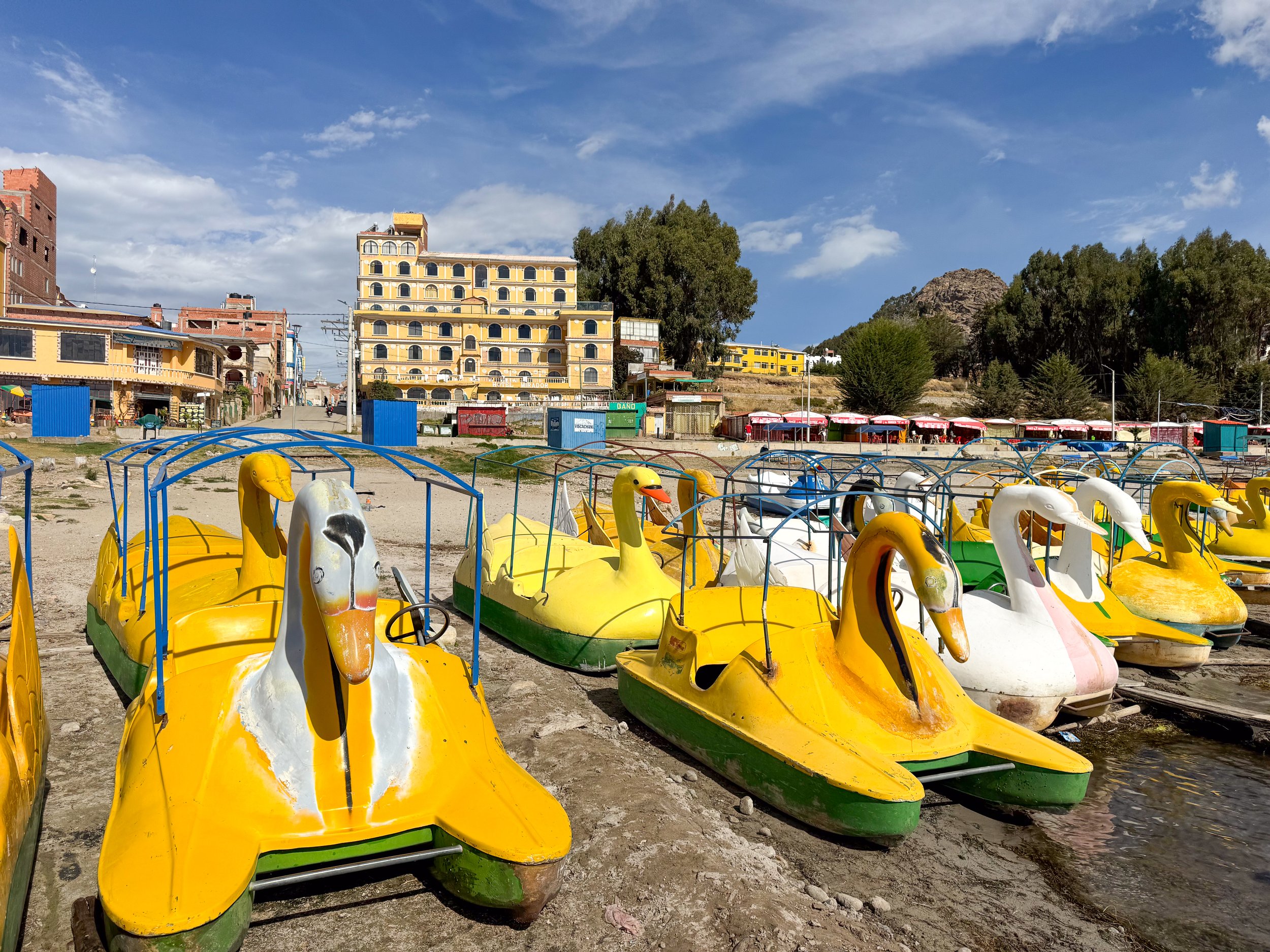
Av. Costanera. A dirt road parallel to the city harbor with local food kiosks, hotels with lake front views, swan style paddle boats and companies selling tours to the nearby islands.
Av 6 de Augusto. The main road through Copacabana with hostels, cafes, bars, restaurants, money exchanges, tour operators and souvenir shops. Many restaurants offer 2x1 happy hours and have simple menus consisting of lake trout, pizza and pasta.
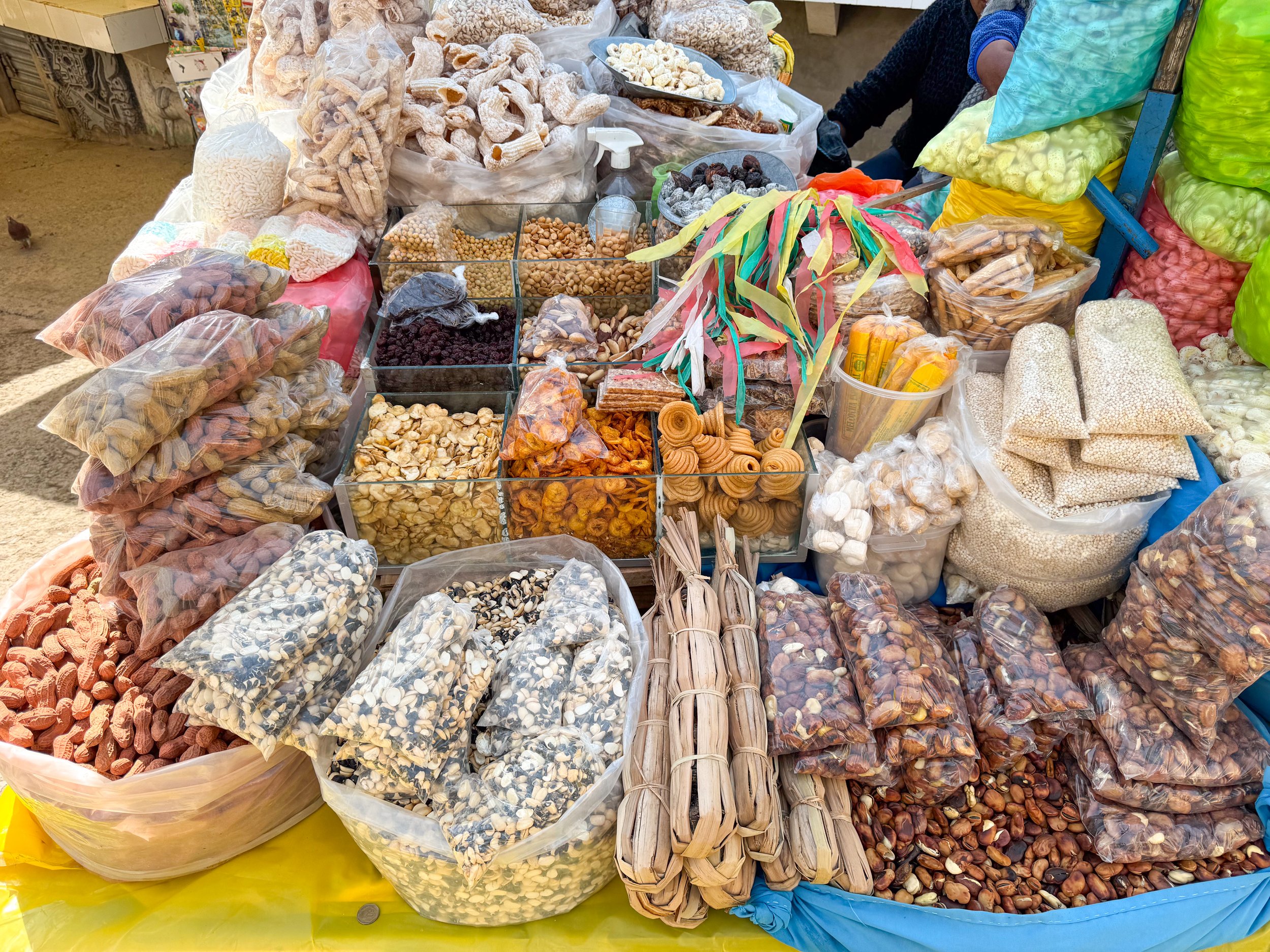
Al Paseo de Las Pasancallas. A market street with local vendors selling dry goods like peanuts, roasted beans, quinoa, puffed grains, popcorn and candies.
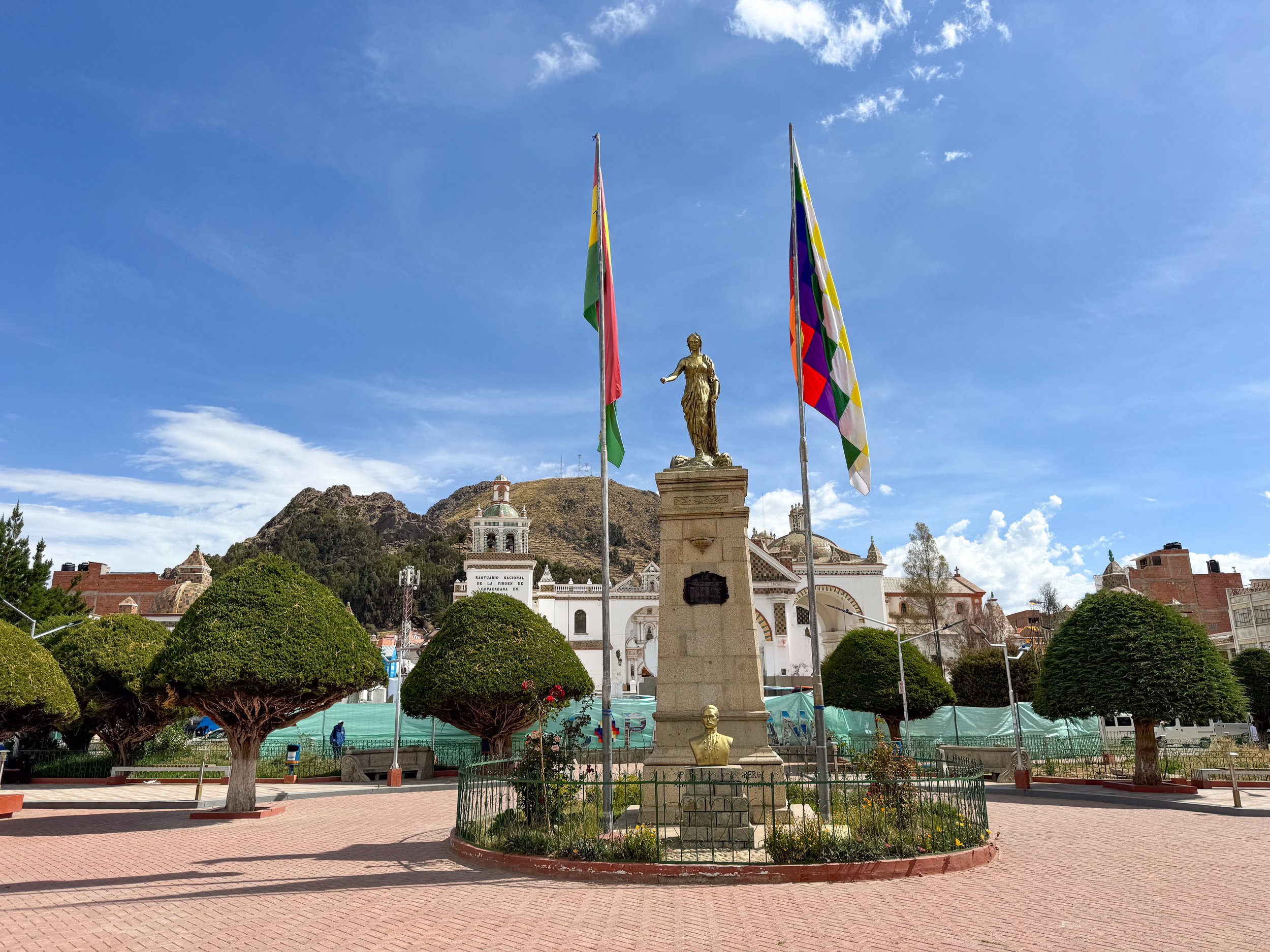
Copacabana Square / Plaza 2 de Febrero. The central town square with a red brick plaza and well manicured trees in front of the Basílica de la Virgen de Copacabana.
Basílica of Our Lady of Copacabana. A historic cathedral with a white painted exterior accented with Portuguese tiled moldings and bell towers.
Things to Do
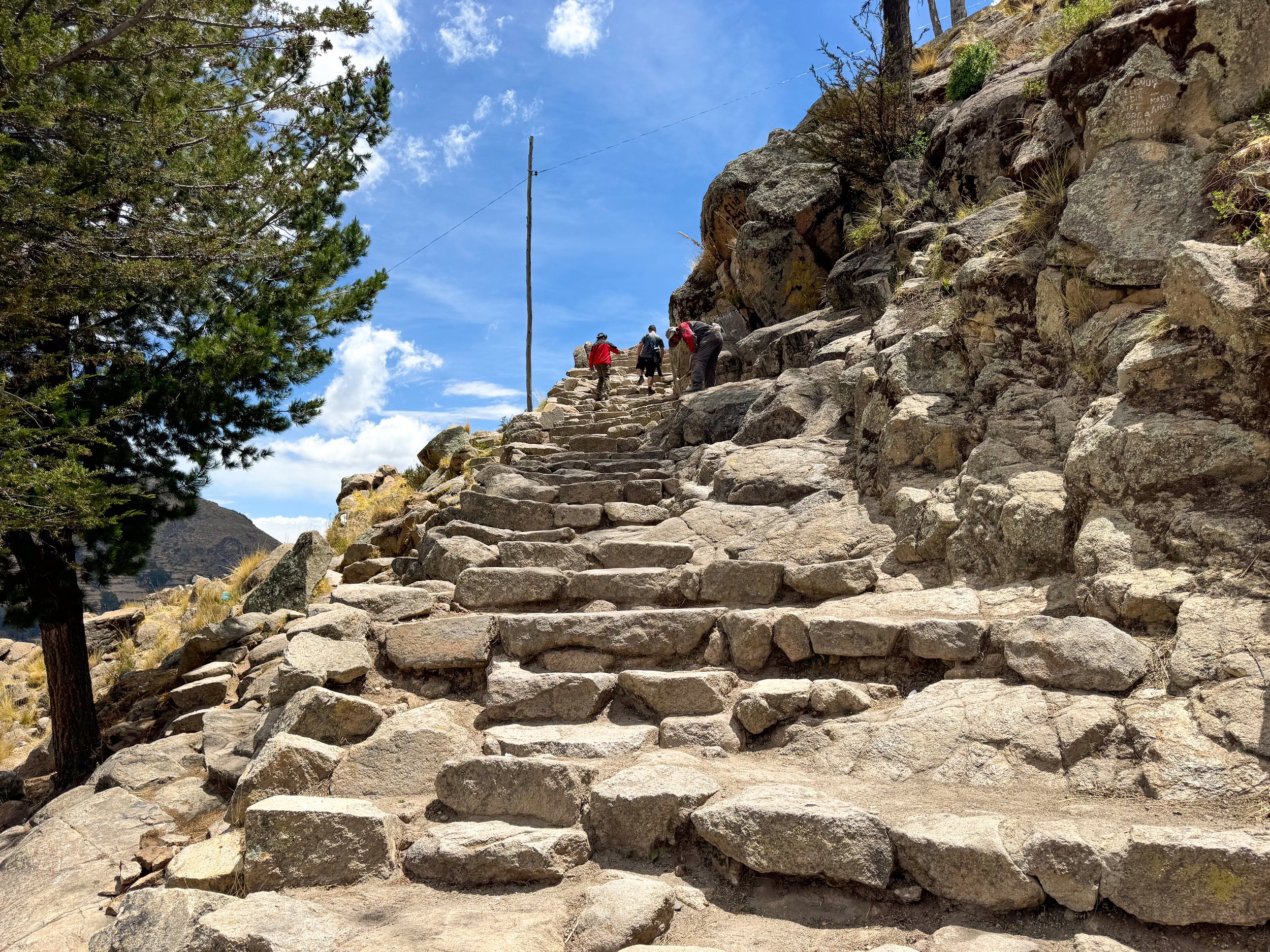
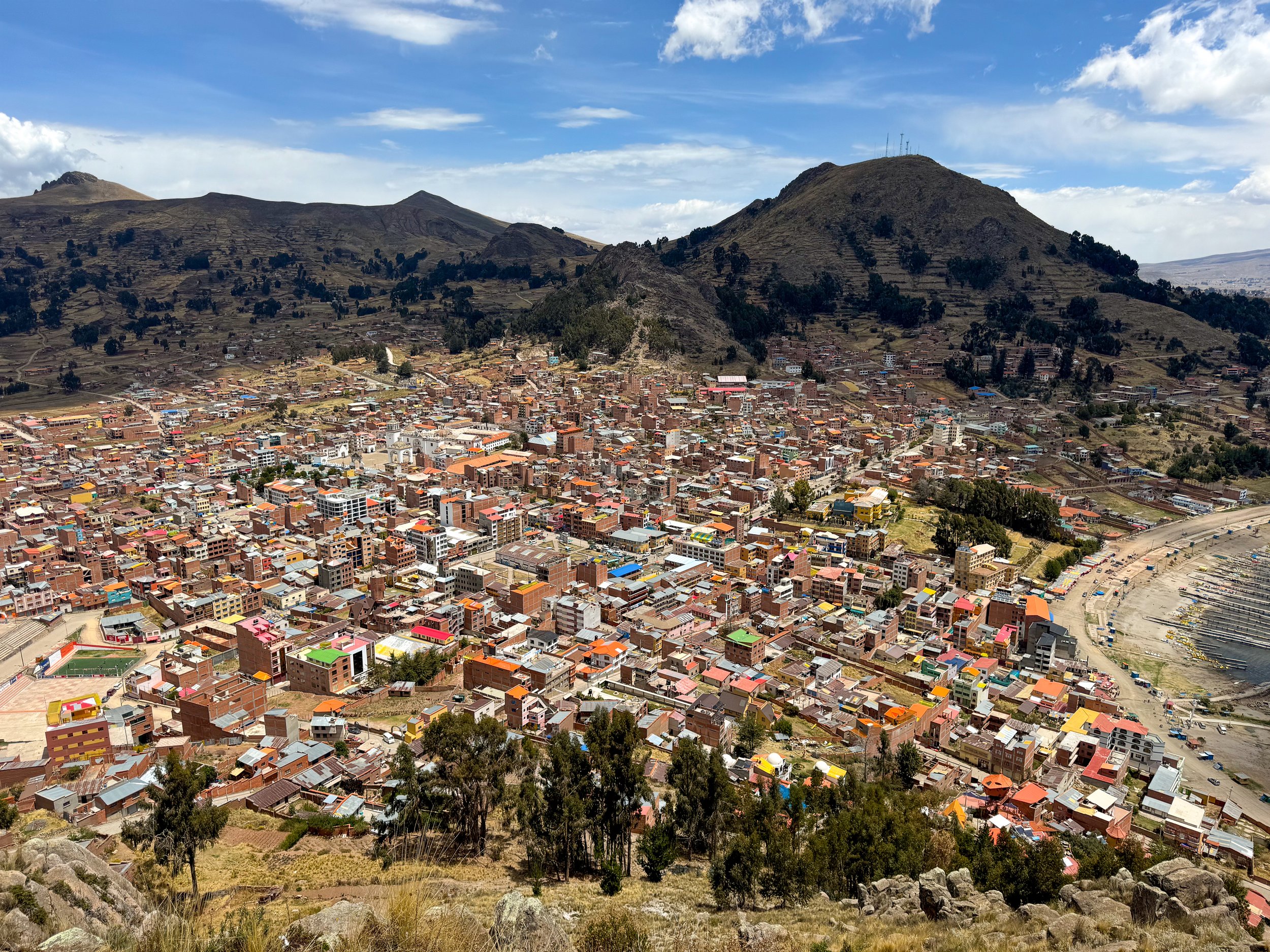
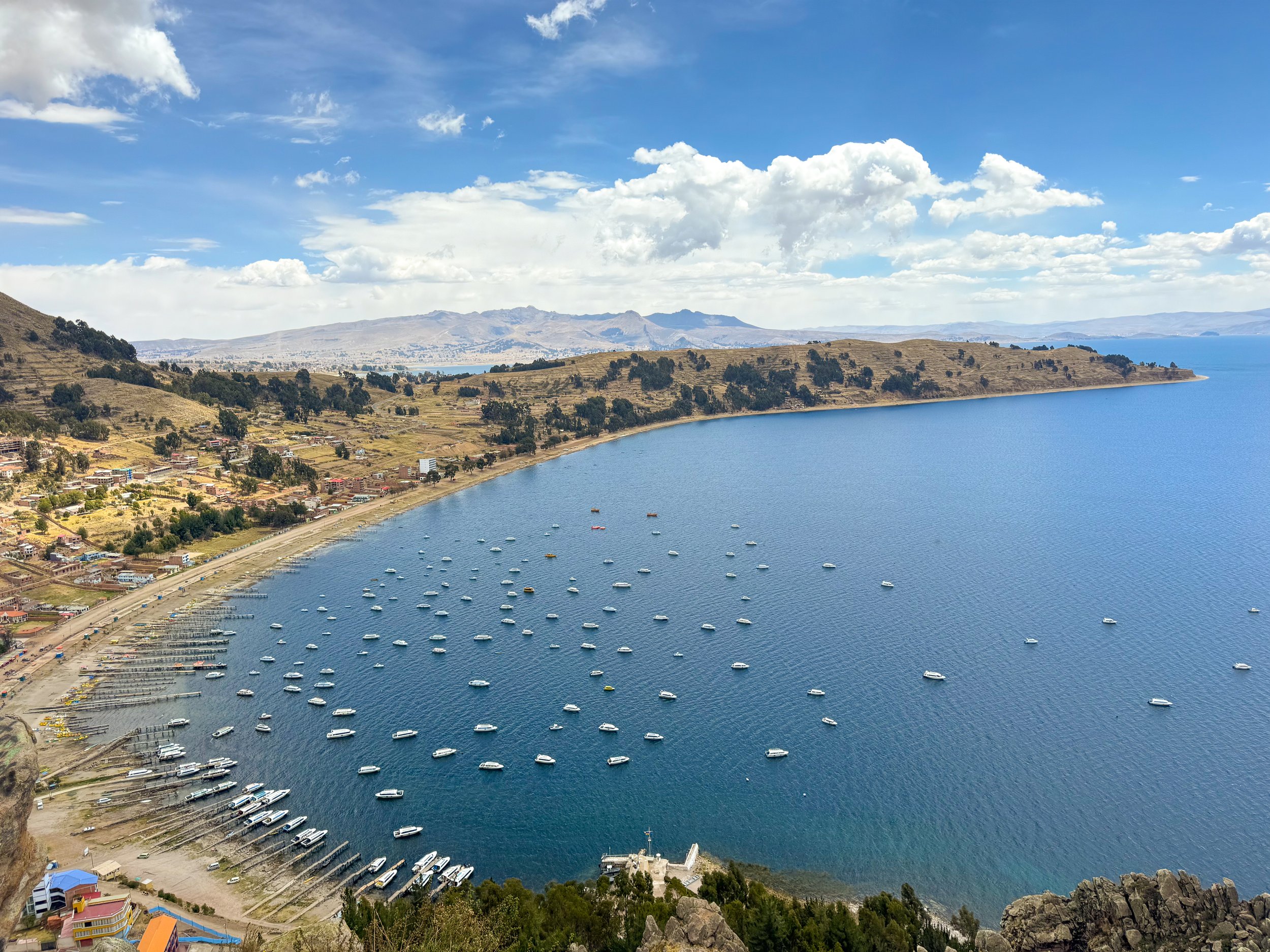
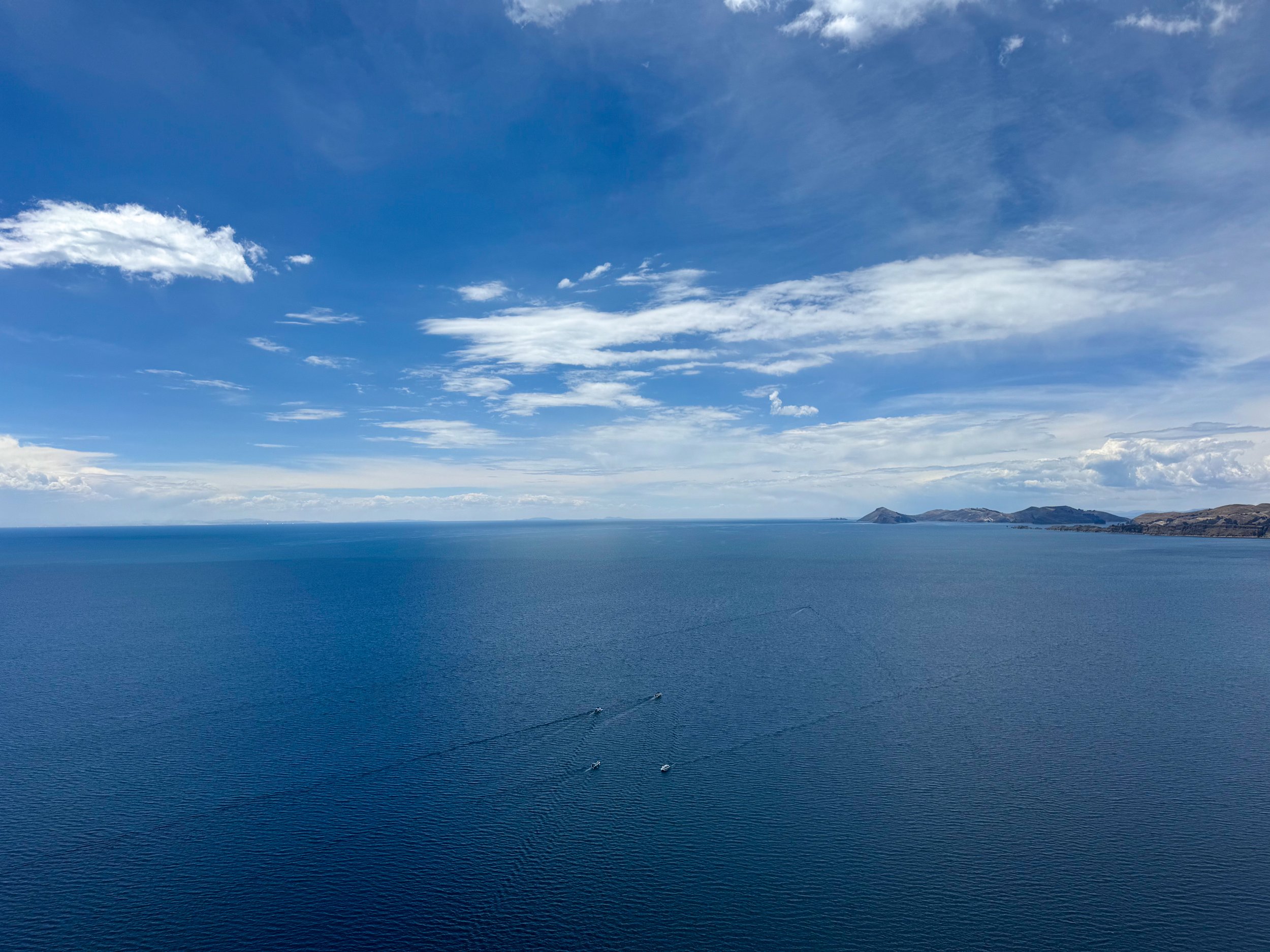
Hike Cerro El Calvario. A steep hike up rocky steps to a mountaintop lookout with views of Copacabana. From the summit, the clay tiled walls, colorful tin roofs and vibrantly painted facades of buildings of the city quickly blur into the countryside. Along the shore, fishing boats and tour ships are moored throughout the crescent shaped harbor while the expansive blue lake stretches far across the horizon.
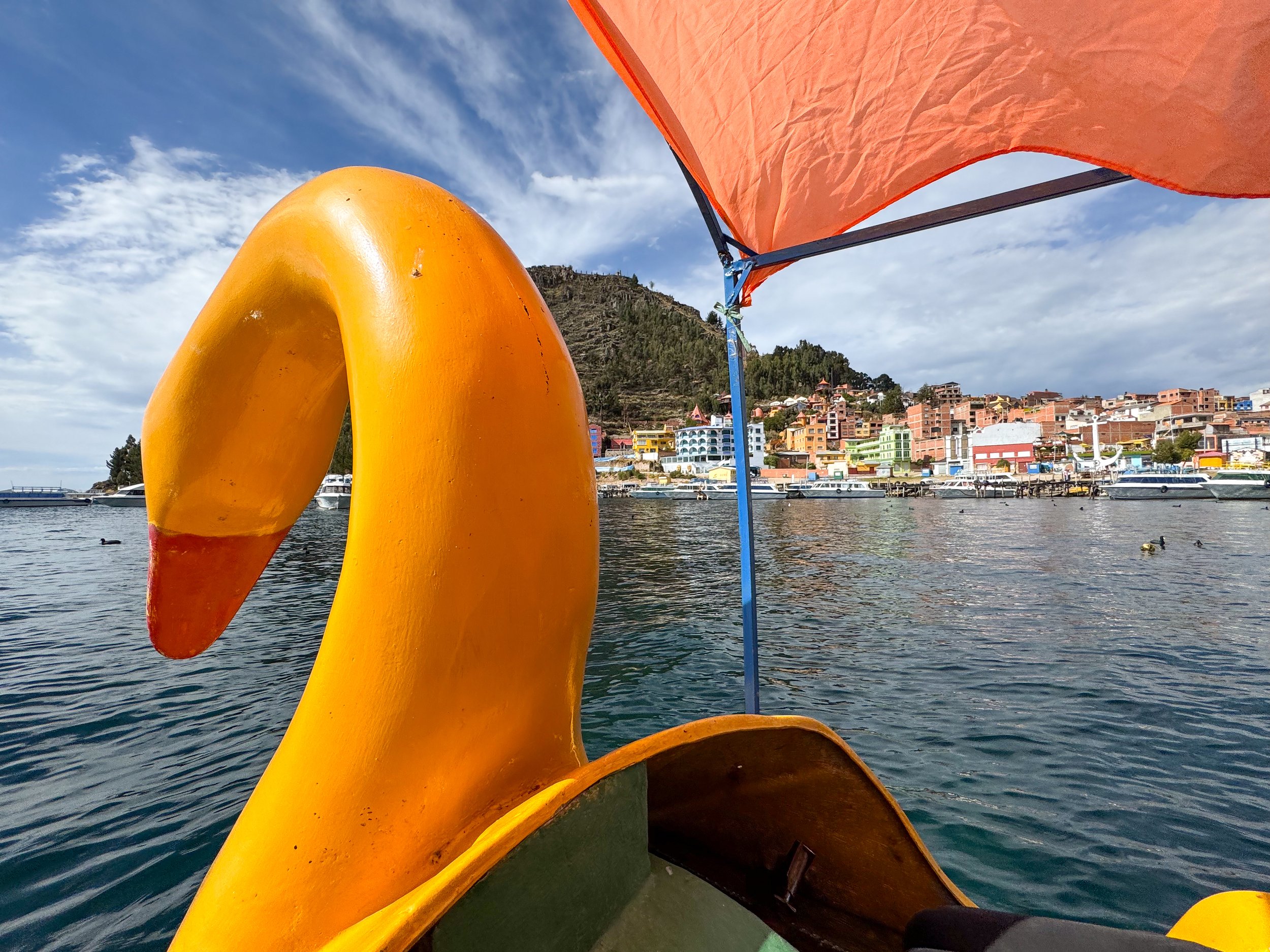
Rent A Paddle Boat. Rent a yellow duck paddle boat and float around the harbor for half an hour, looking back at the colorful city and mountains as the gentle waves rock the boat from side to side.

Places to Eat, Drink & Stay
Hostal La Cúpula. A hotel on the hill overlooking Copacabana with dome shaped buildings and flowering gardens. We came here for lunch at their restaurant, El Condor & The Eagle Cafe, a relaxing spot with a small dining room and outdoor patio with views of the city and harbor. The menu offers sandwiches and salads.
Hostal Las Olas. A one of a kind hotel with organic shell shaped architecture, tree houses, curved walls and colored glass windows on the hill overlooking Copacabana. Though we didn’t stay here, we stopped to admire the property.
Winay Marka. A restaurant and bar with a rooftop overlooking Lake Titicaca and the harbor. A relaxing atmosphere to enjoy a cocktail with Reggae vibes and natural decor like wicker furniture, Bolivian textile cushions and totora umbrellas.
Nimbo Café Restaurant. A family run restaurant along Av 6 de Augusto with happy hour cocktails and a large range of pizzas.
Location Specifics
The Climate. The climate is cool year round with slightly warmer temperatures during the day and freezing temperatures at night. It’s dry most of the year except for the rainy season from January to March.
Getting Here. The best way to reach the Uros Islands is by traveling to the city of Puno, from either Cusco or Arequipa by bus. The best way to reach Copacabana is from Puno or La Paz by bus. We took the Peru Hop bus on our journey around Lake Titicaca.
Elsewhere in Peru
From the sacred waters of Lake Titicaca to the peaks of the Andes, colonial cities and desert landscapes, explore more of Peru's diverse regions through these travel guides:
Peru Coast Travel Guide: Nazca Lines, Huacachina & Ancient Civilizations. Venture along Peru's coast where ancient civilizations, desert oases, vineyards and world renowned cuisine shape one of South America's most unique regions.
Peru Andes Travel Guide: Machu Picchu, Cusco & Inca Ruins. Wander through Peru's Andes where ancient Inca ruins, terraced farmland, colorful mountain landscapes and Andean communities preserve centuries of tradition.
Arequipa Peru Travel Guide: Colonial Architecture, Food & Culture. Explore Arequipa's historic streets where colonial architecture, regional cuisine and volcanic landscapes shape one of Peru's cultural capitals.
For Next Time…
Next time we visit Lake Titicaca, we plan to spend more time in Copacabana and visiting the nearby Incan Islands.
Isla del Sol. A sacred island on Lake Titicaca with dozens of Incan temple ruins, a terraced landscape and numerous home stays. The Incans believed the sun god originated from here.
Isla del Luna. A small island with a terraced landscape and the ruins of a temple.