

Singapore Travel Guide: Marina Bay, Hawker Food & Cultural Districts
Step into Singapore where Marina Bay, Gardens by the Bay, hawker food centers, colorful shophouses and historic districts reflect the city's multicultural identity.
A Weekend in Singapore
Singapore is living in the future! The city seamlessly blends architecture and nature with its contemporary marvels. The oldest neighborhoods are lined with rows of colorful and historic shop houses. It’s a sophisticated urban playground with cultural institutions, renowned cocktail bars and food halls serving Singaporean and regional cuisine. We spent a long weekend here, exploring the city-state and its alluring ambience.
Arab Quarter
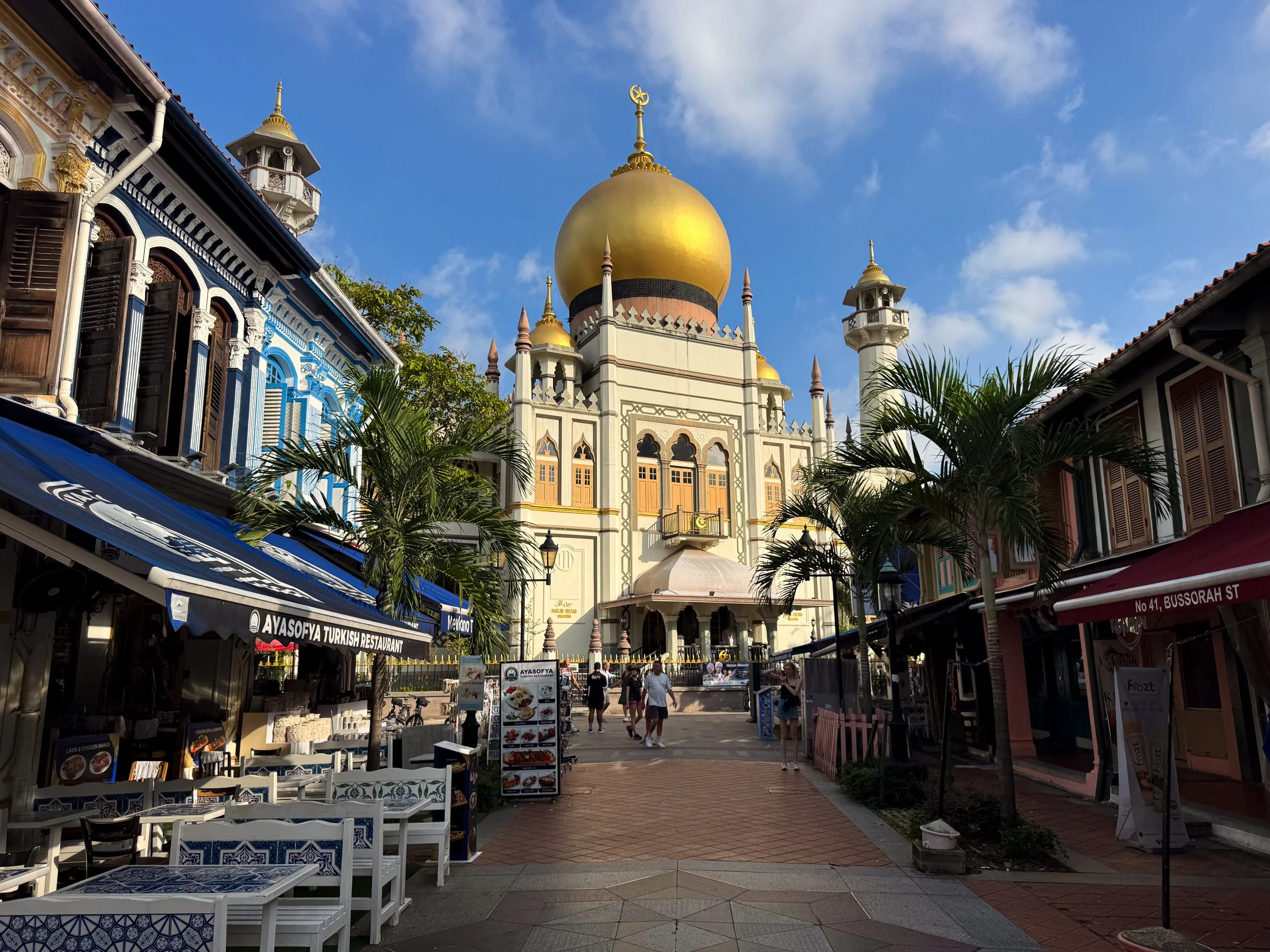
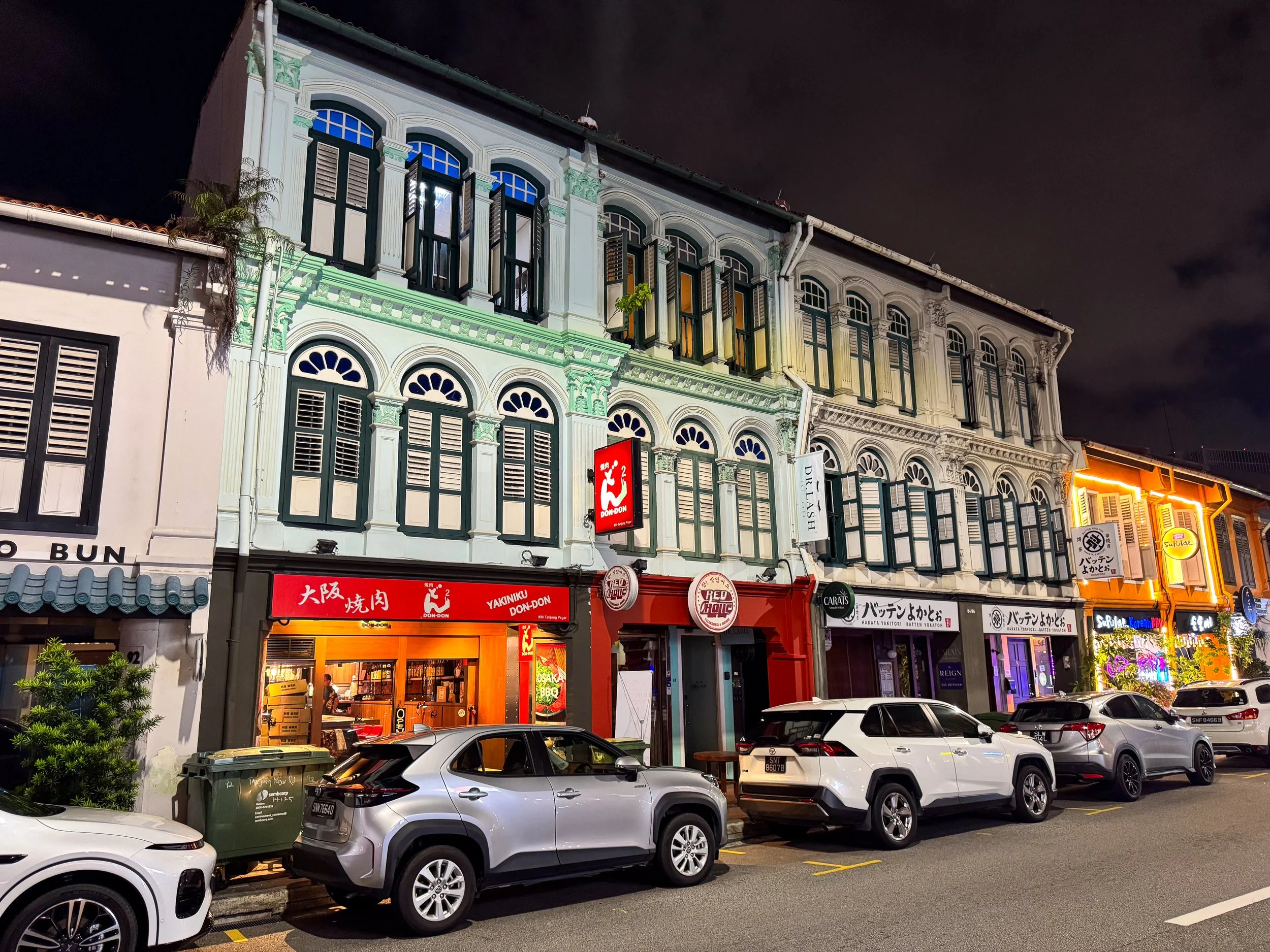
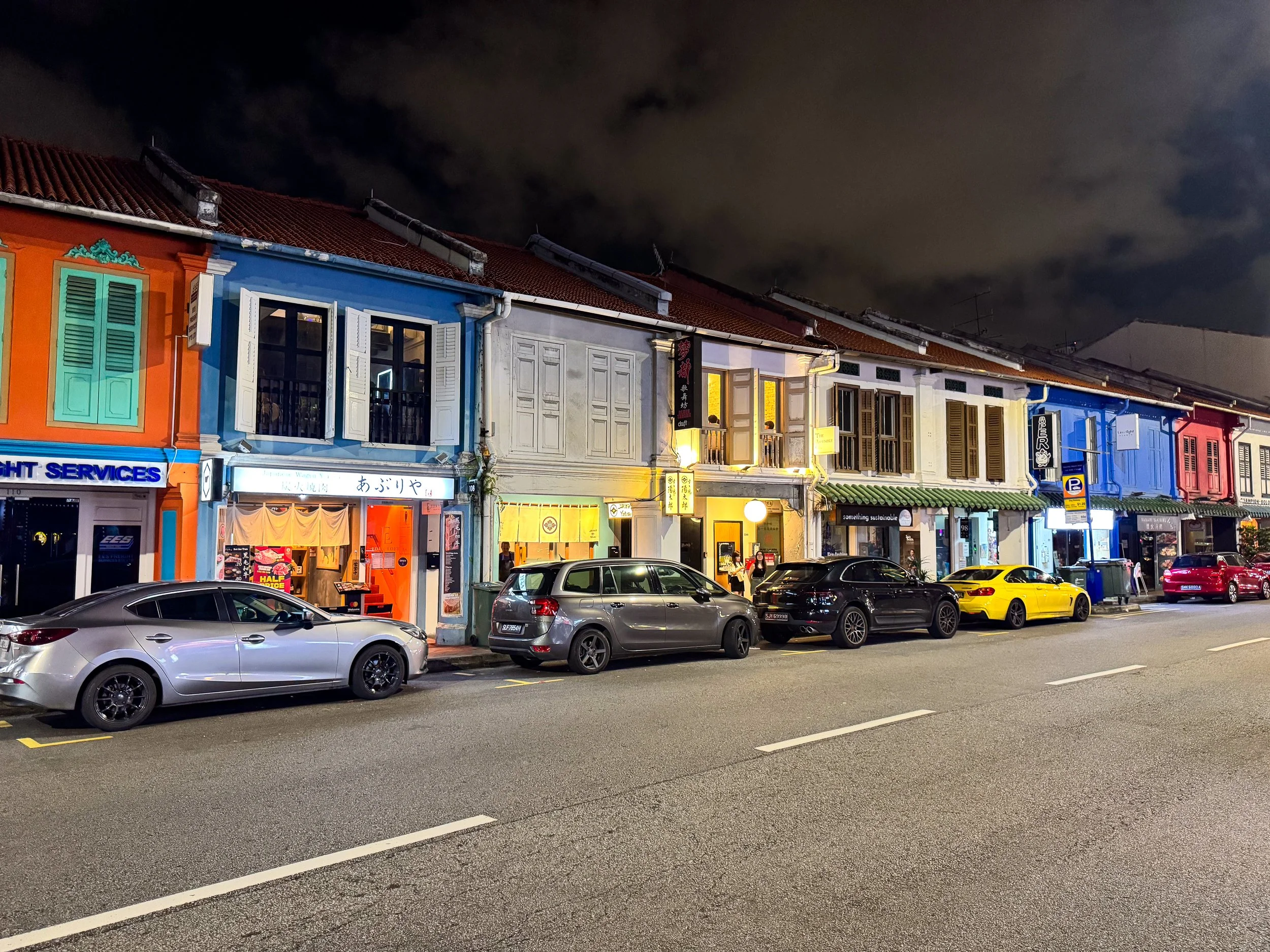
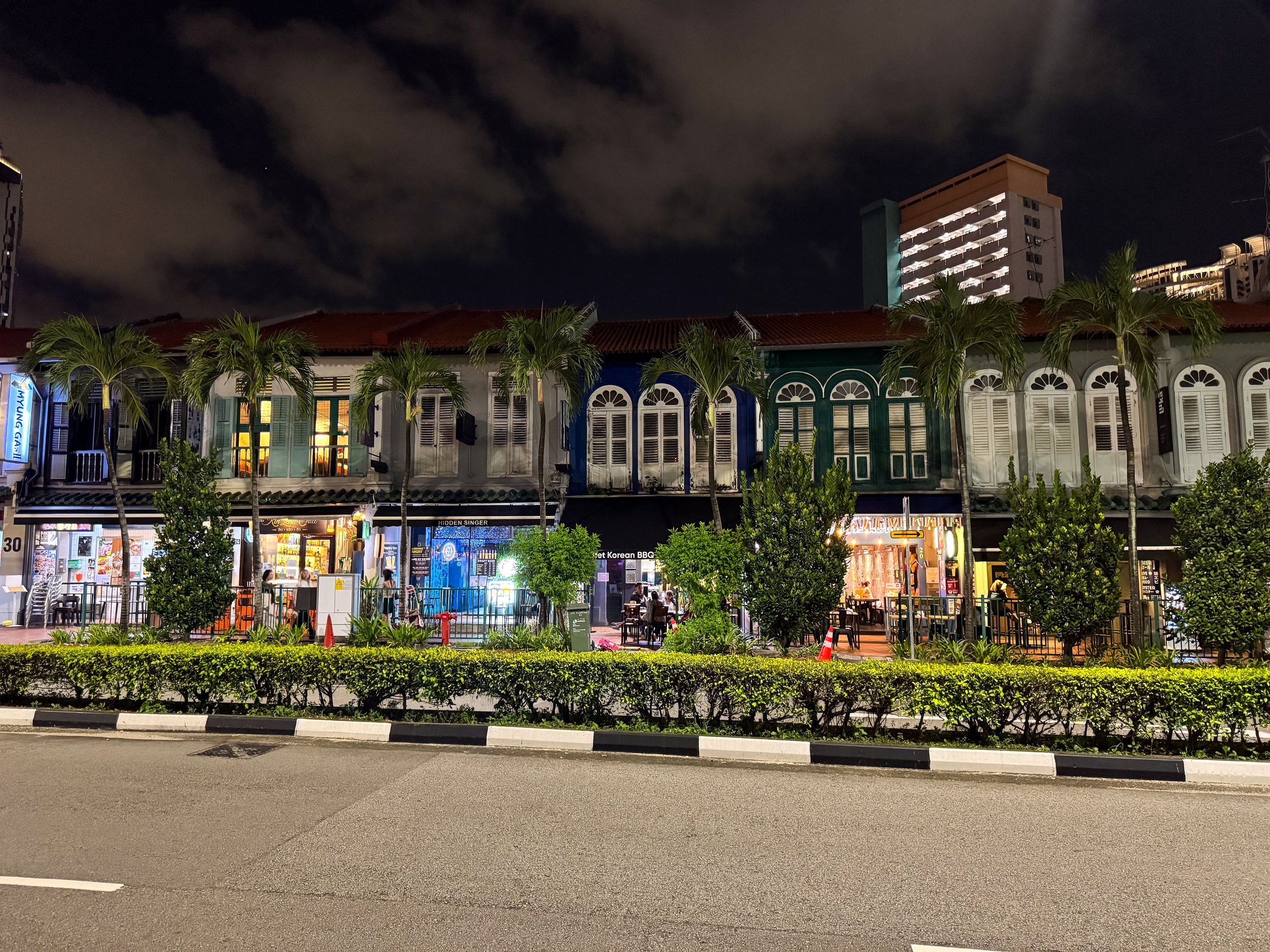
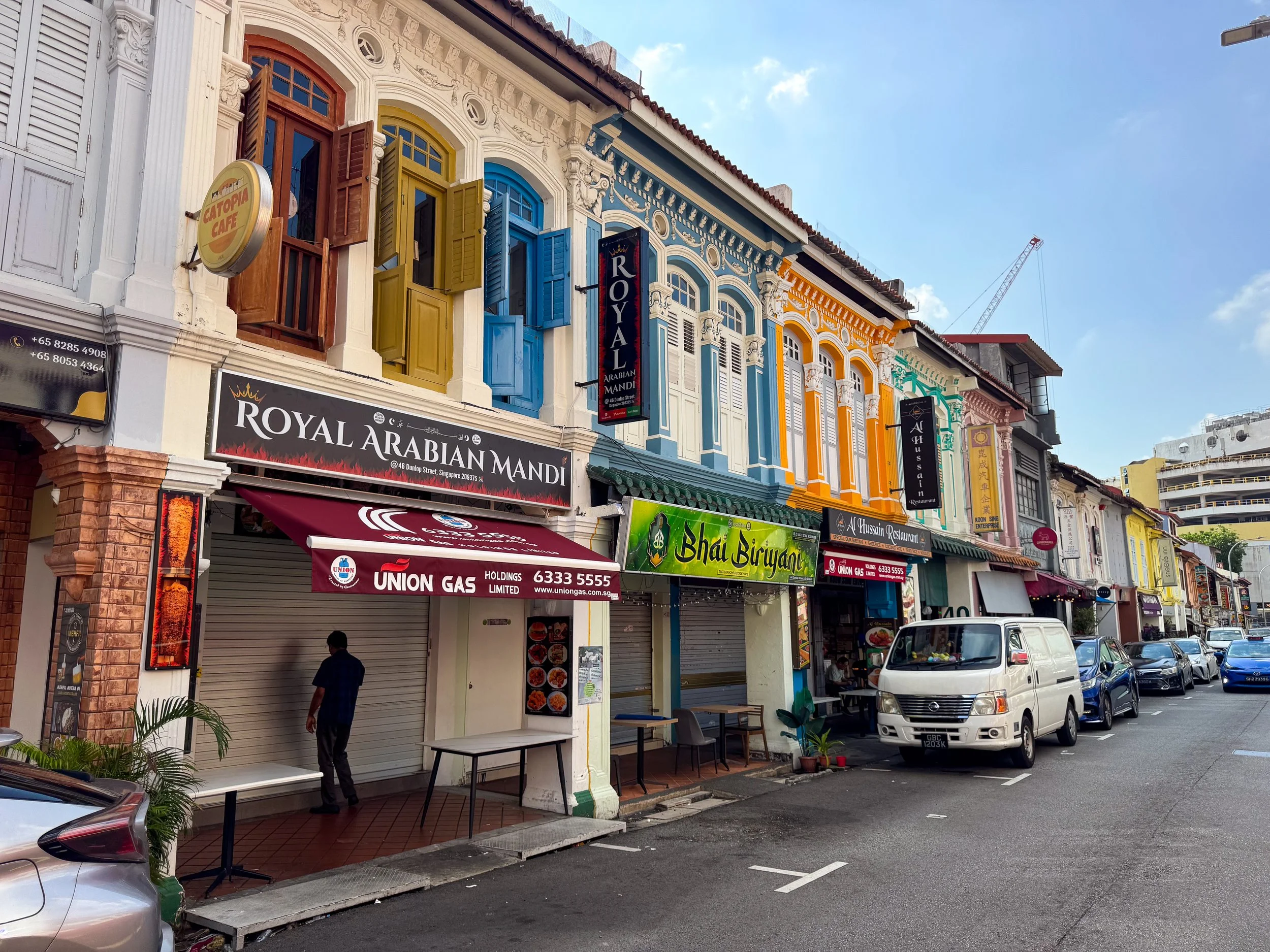
The Arab Quarter is a historic neighborhood of Singapore home to a large Arab population and unique cultural identity. The scent of Middle Eastern and Mediterranean cuisine wafts from Turkish bakeries and Lebanese grills. Persian rug stores, batik and silk textile vendors and bazaar style souvenir shops occupy ground floor businesses. Streets named after Middle Eastern countries and cities cross the neighborhood. Colorful and ornate shop houses differing in height line the streets.
Sultan Mosque. A white stone and golden domed mosque at the end of a palm lined pedestrian street. It’s one of the most photogenic and visited sights in the Arab Quarter.
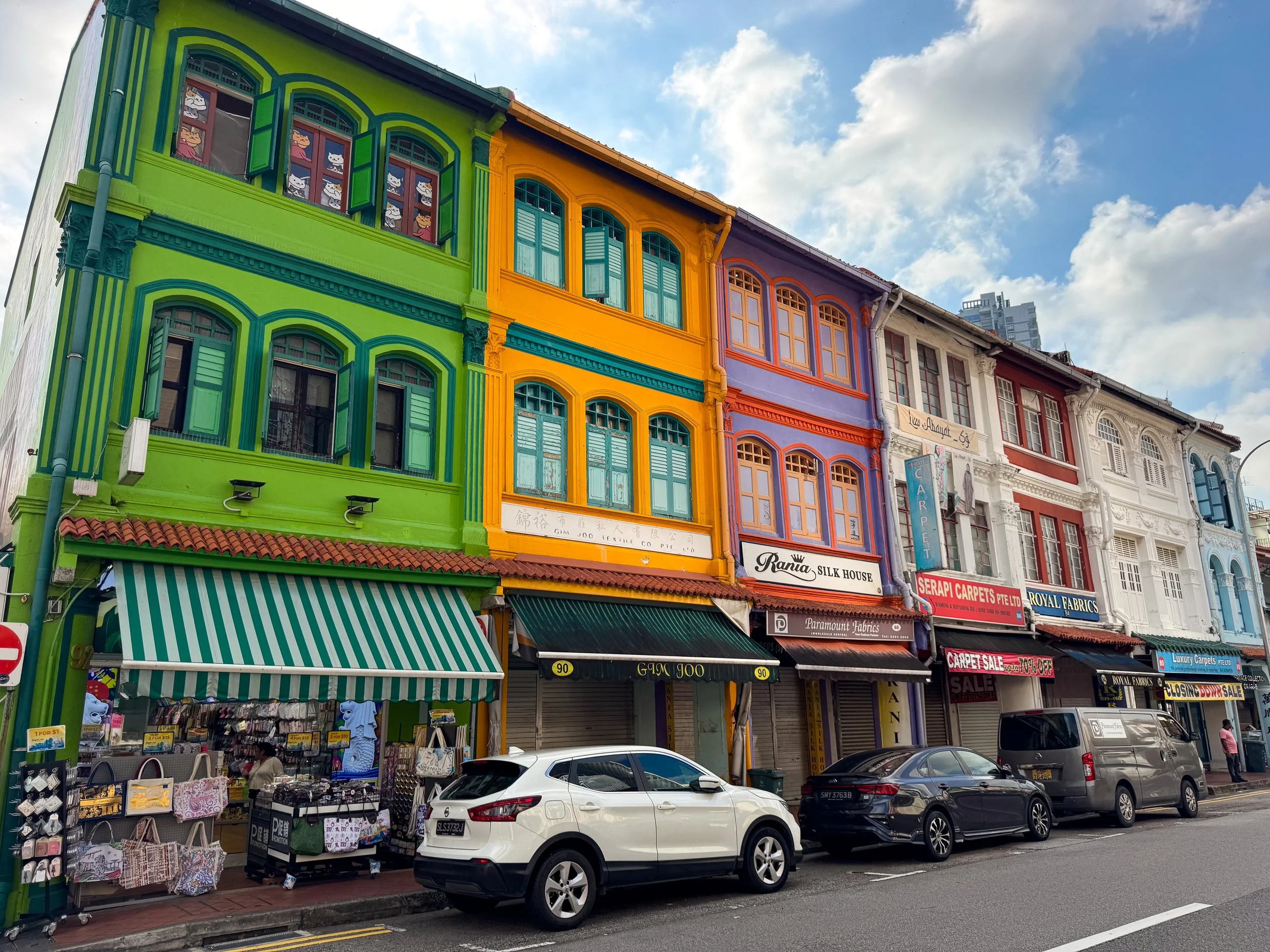

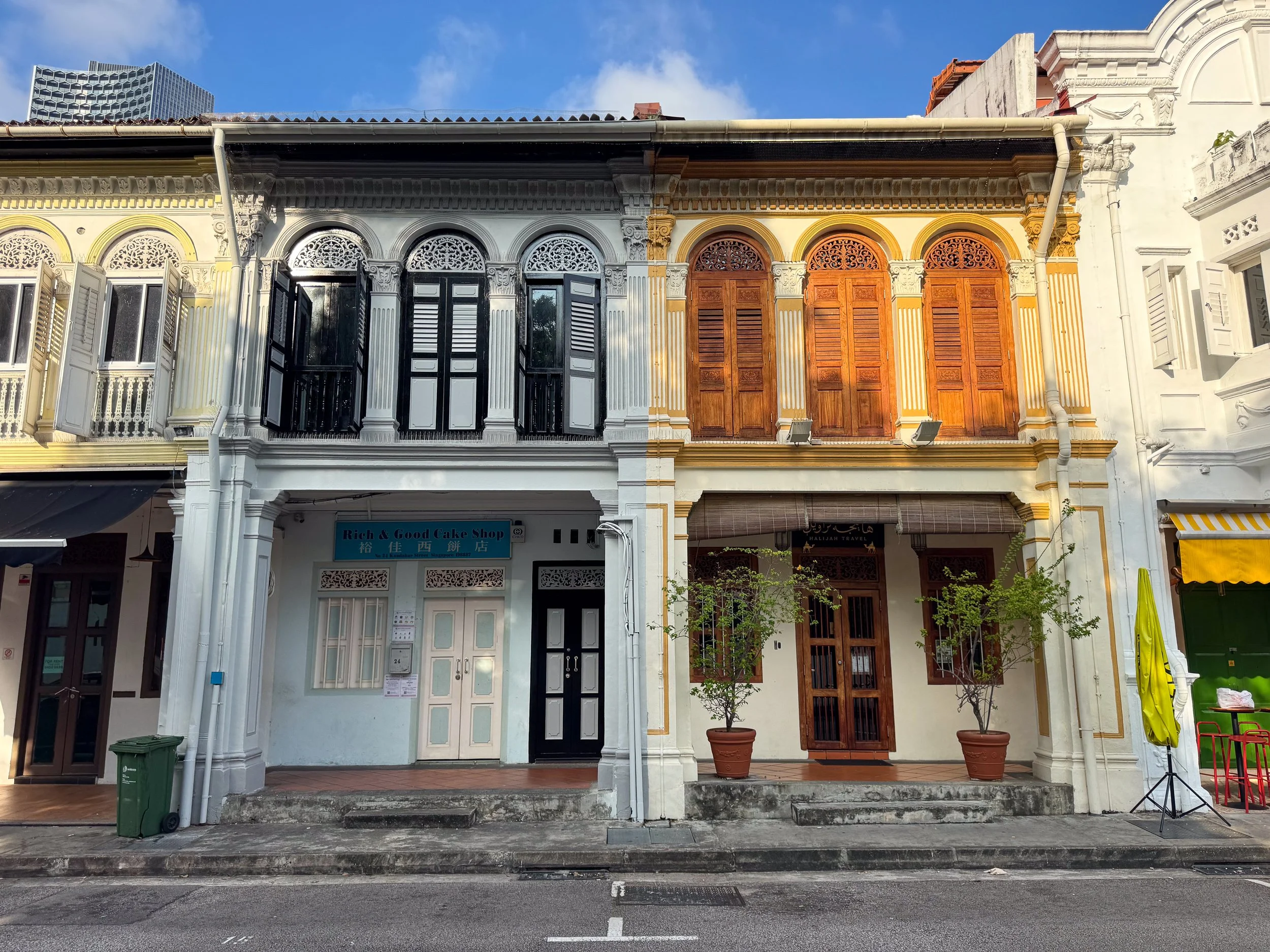
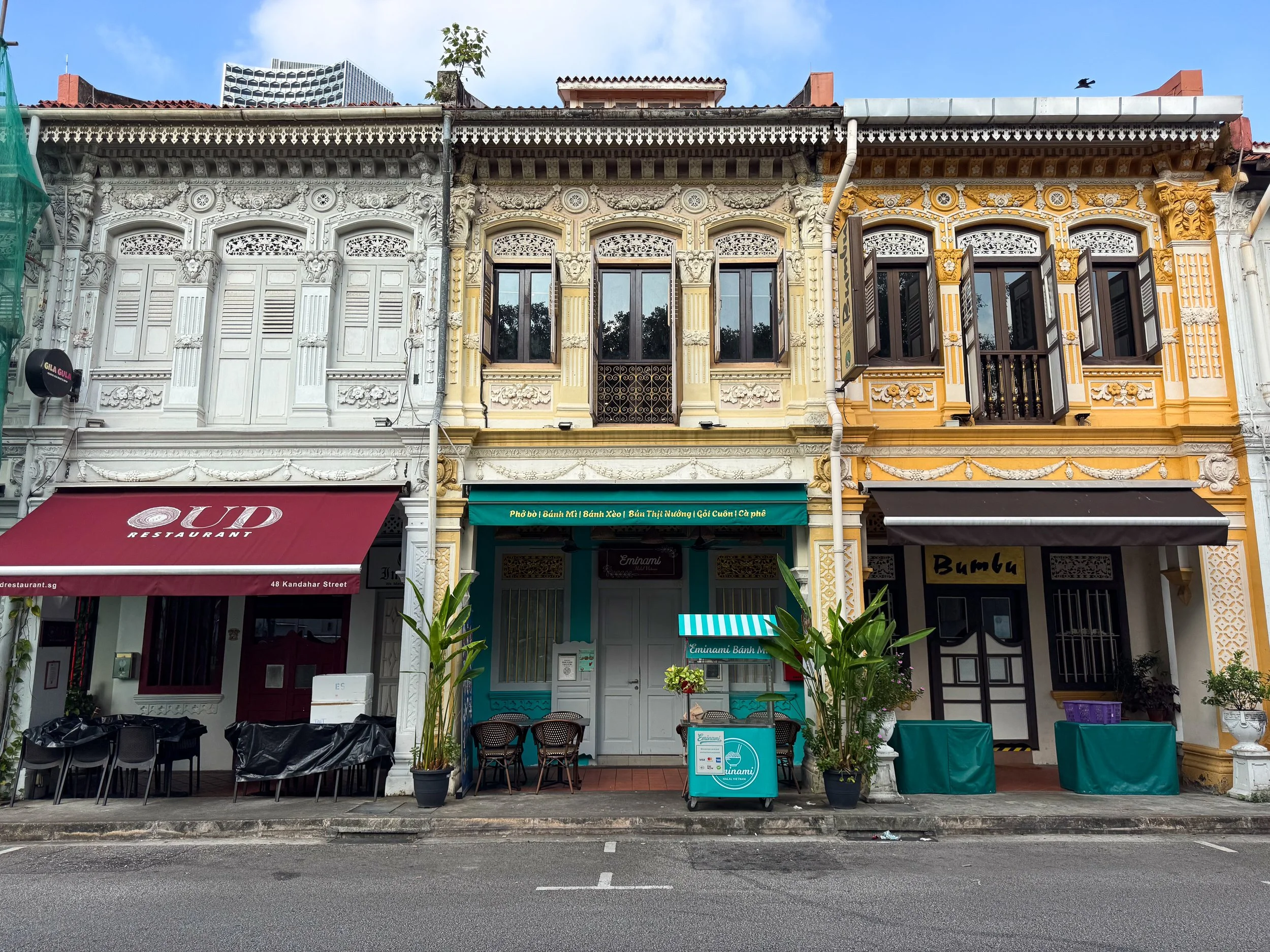
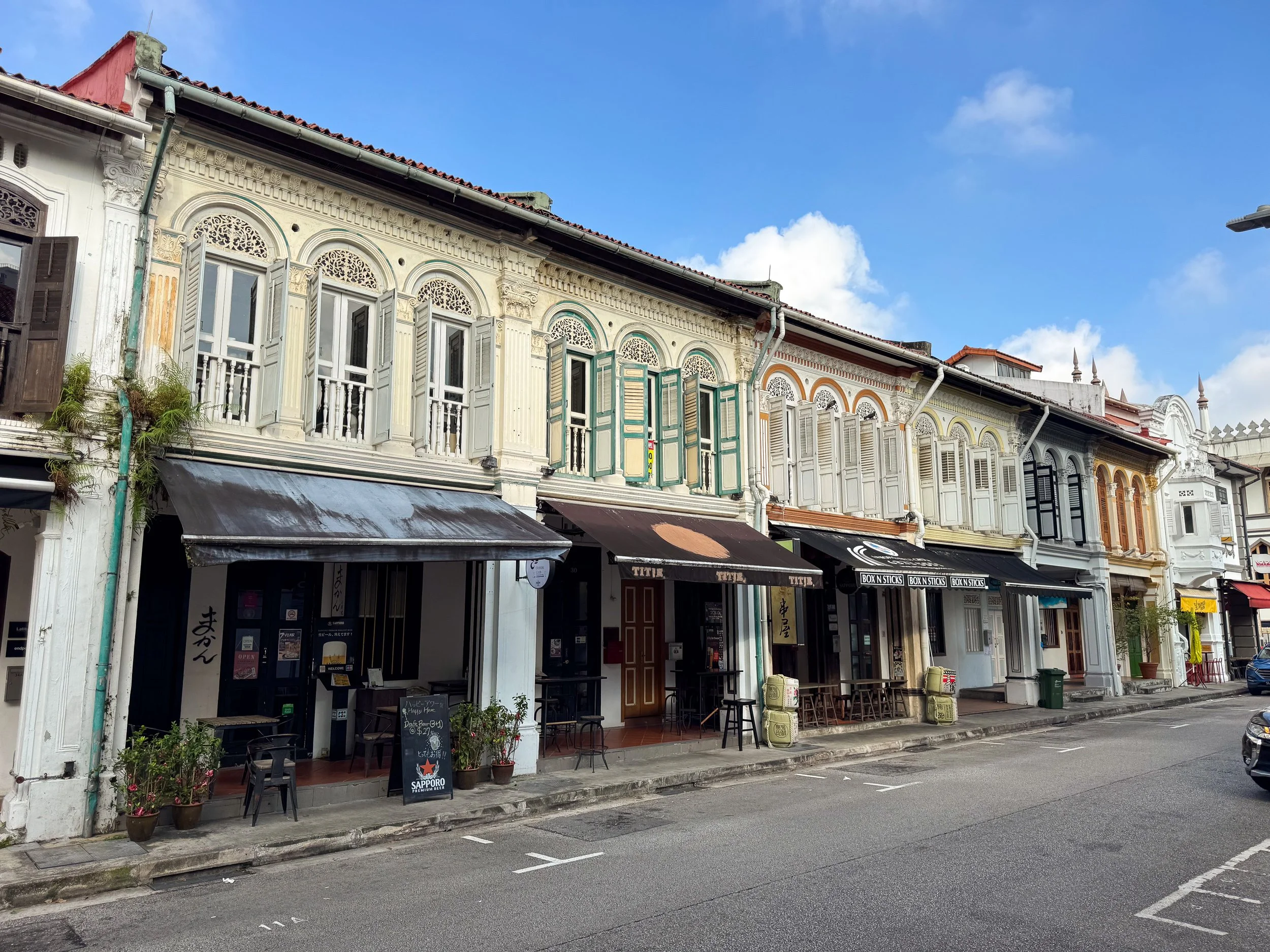
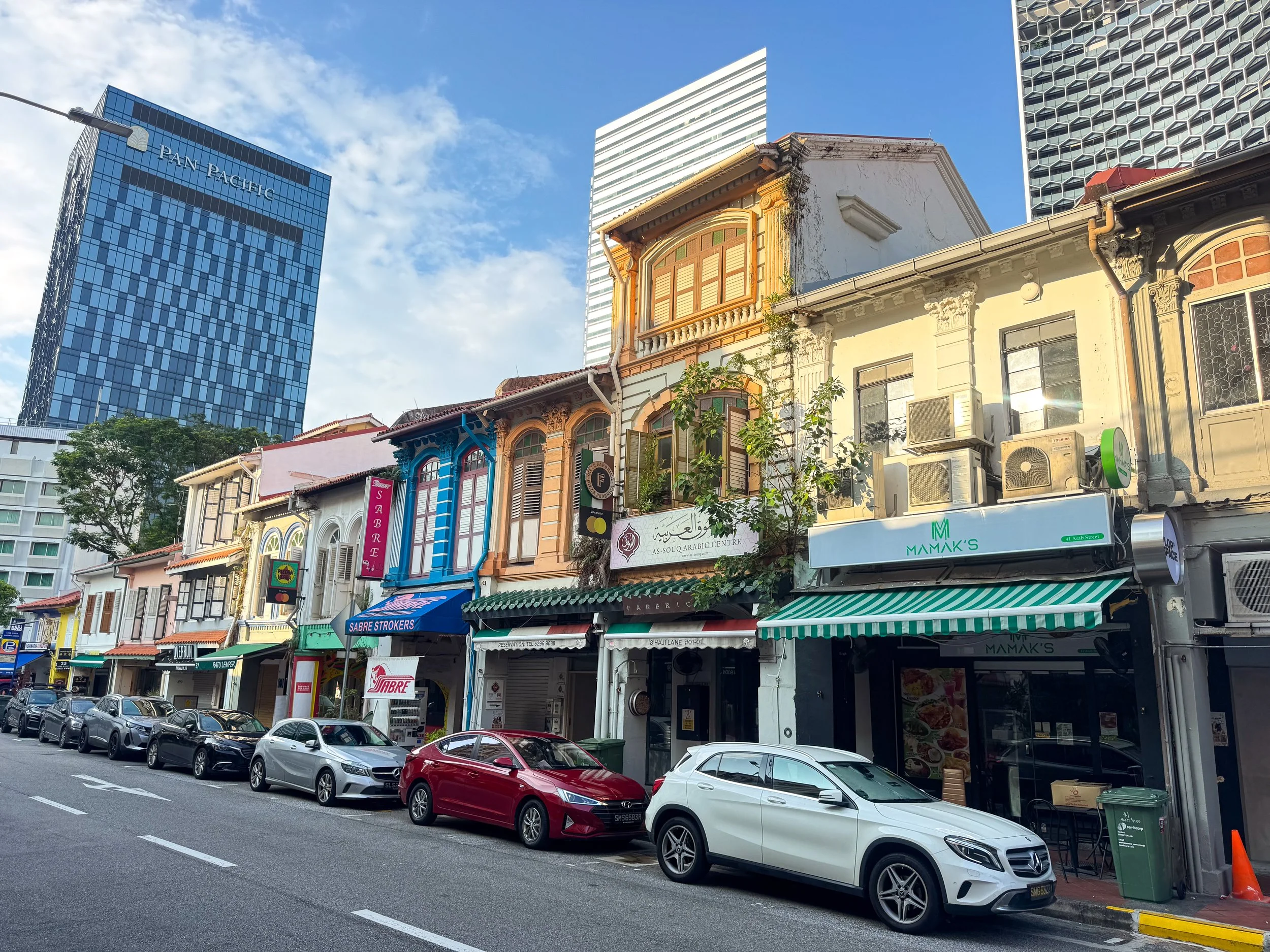
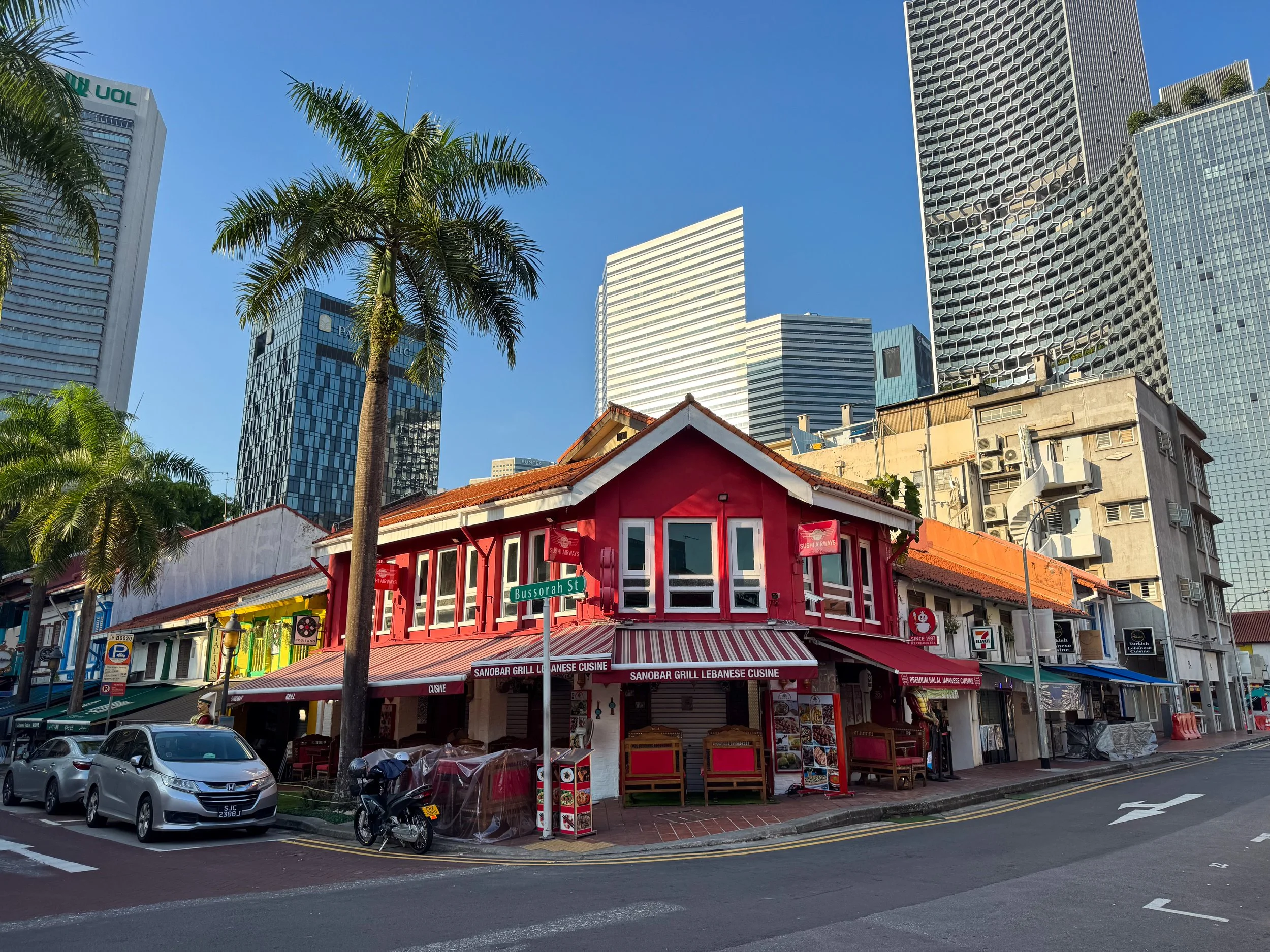
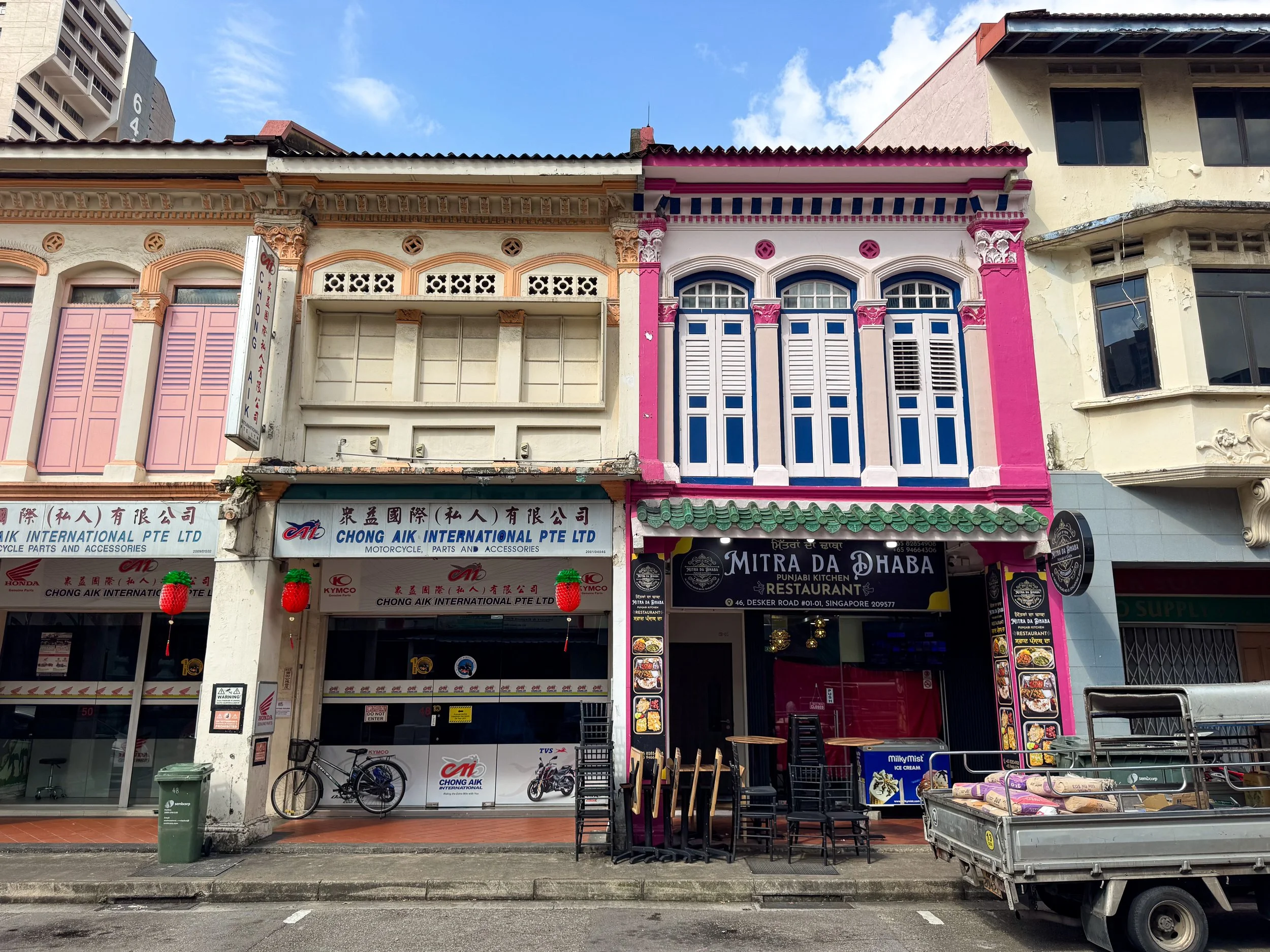
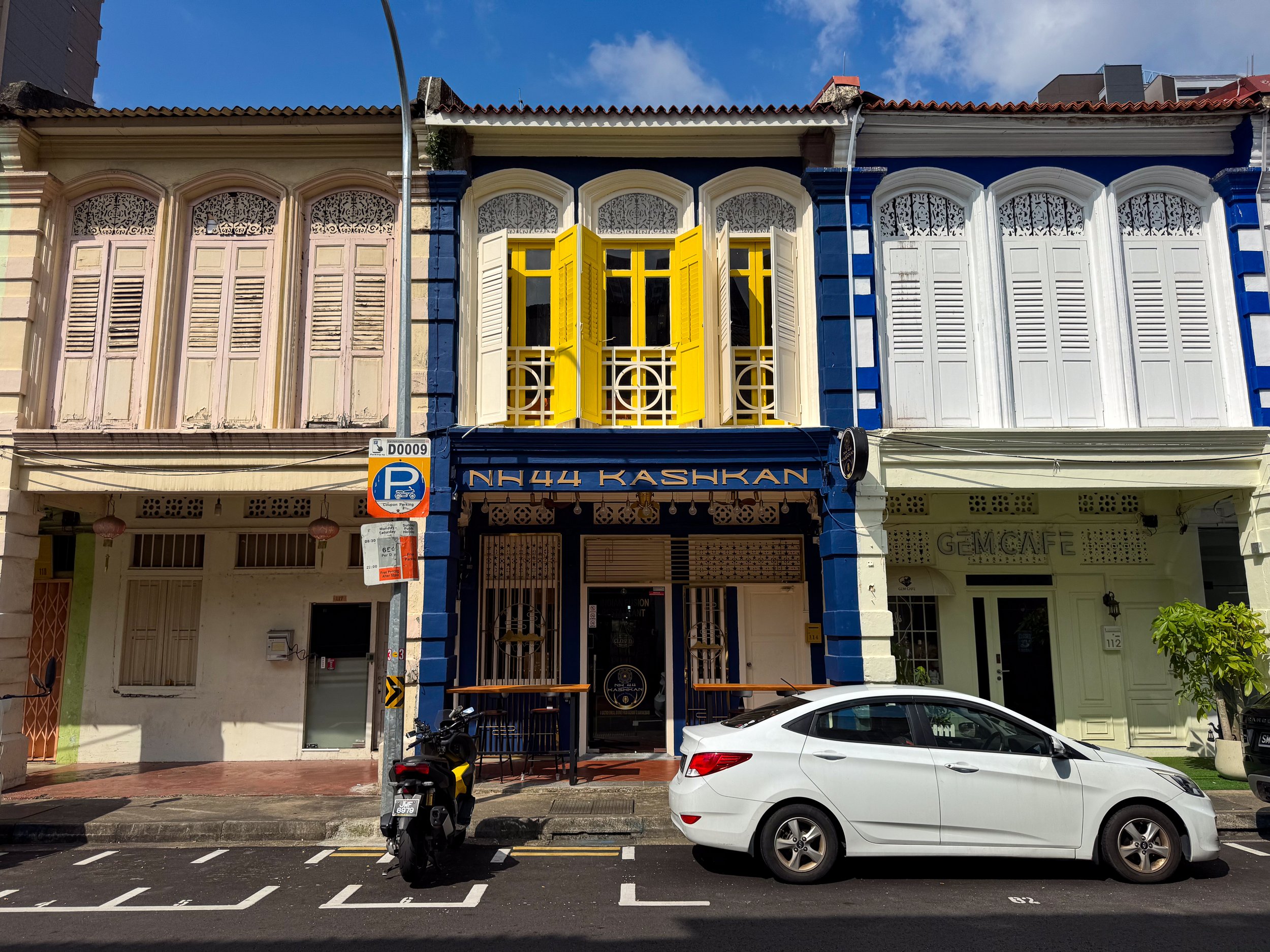
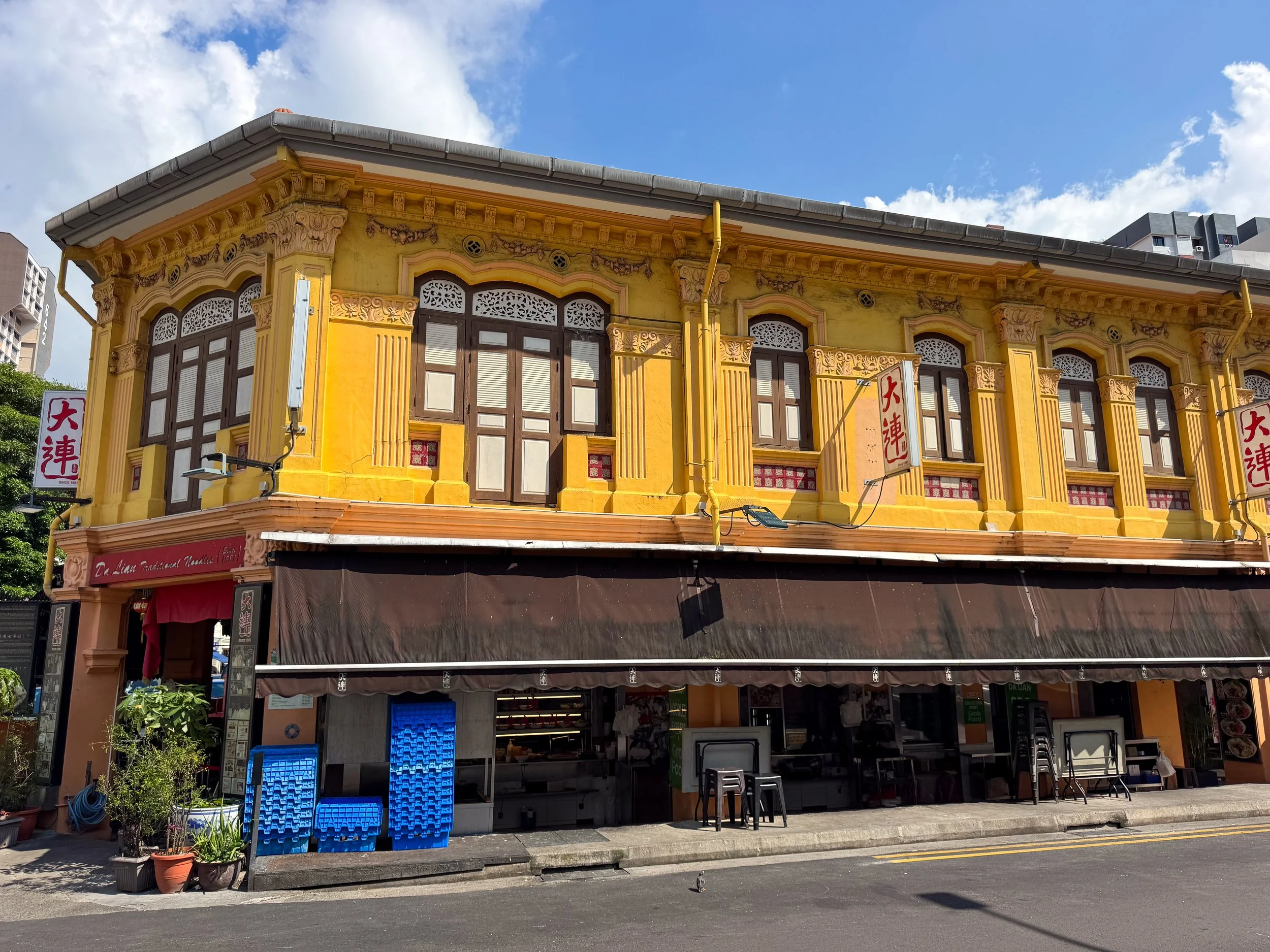
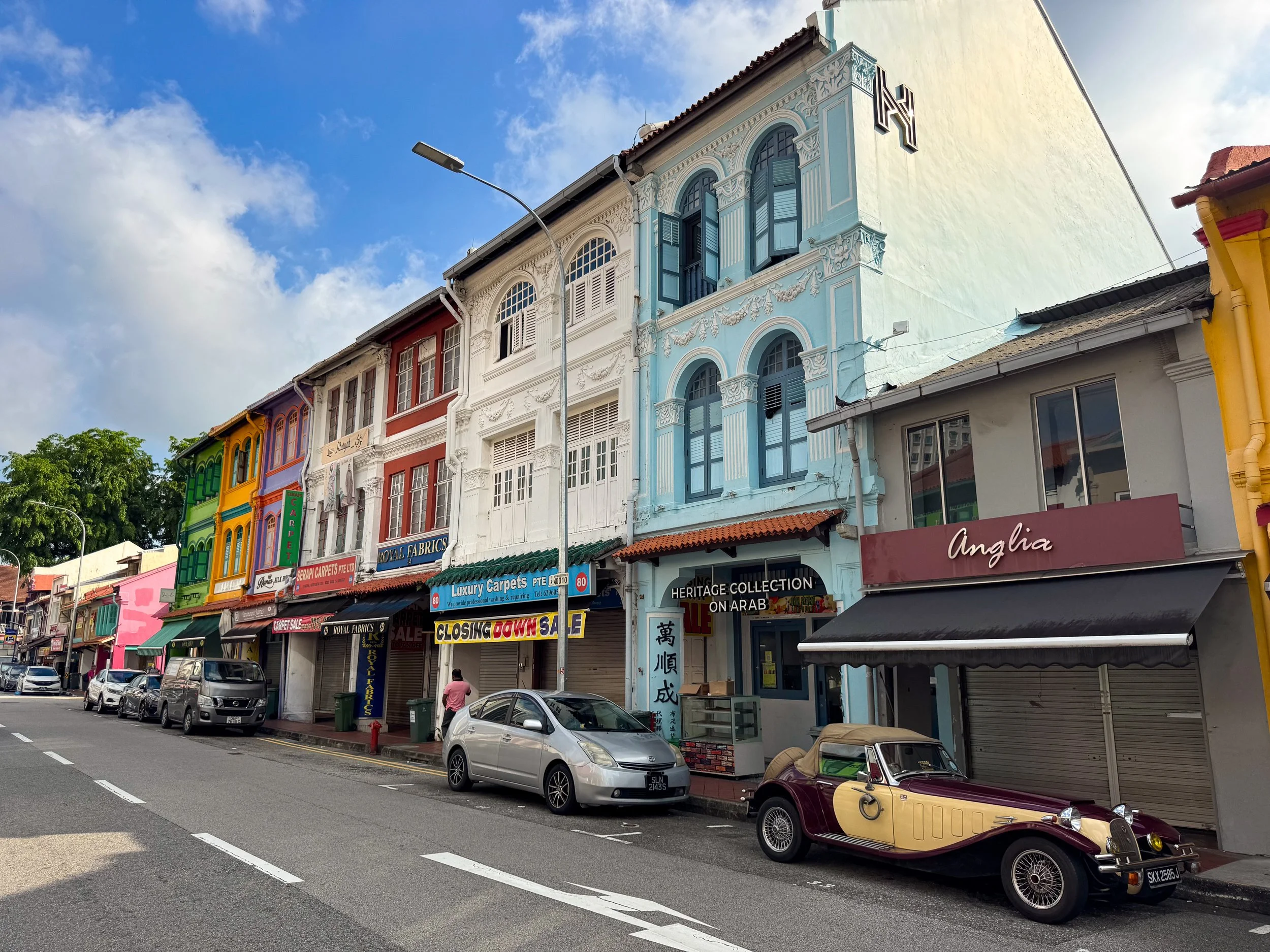
Arab Street. The main road leading through the Arab Quarter with some of the neighborhood’s oldest and most beautiful shop houses. The single to three floor buildings often have Baroque plaster facades, arched windows with wooden shutters, clay tiled roofs and covered sidewalks.
Muscat Street. An alleyway with eclectic, colorful and funky murals covering the backsides of the shop houses.
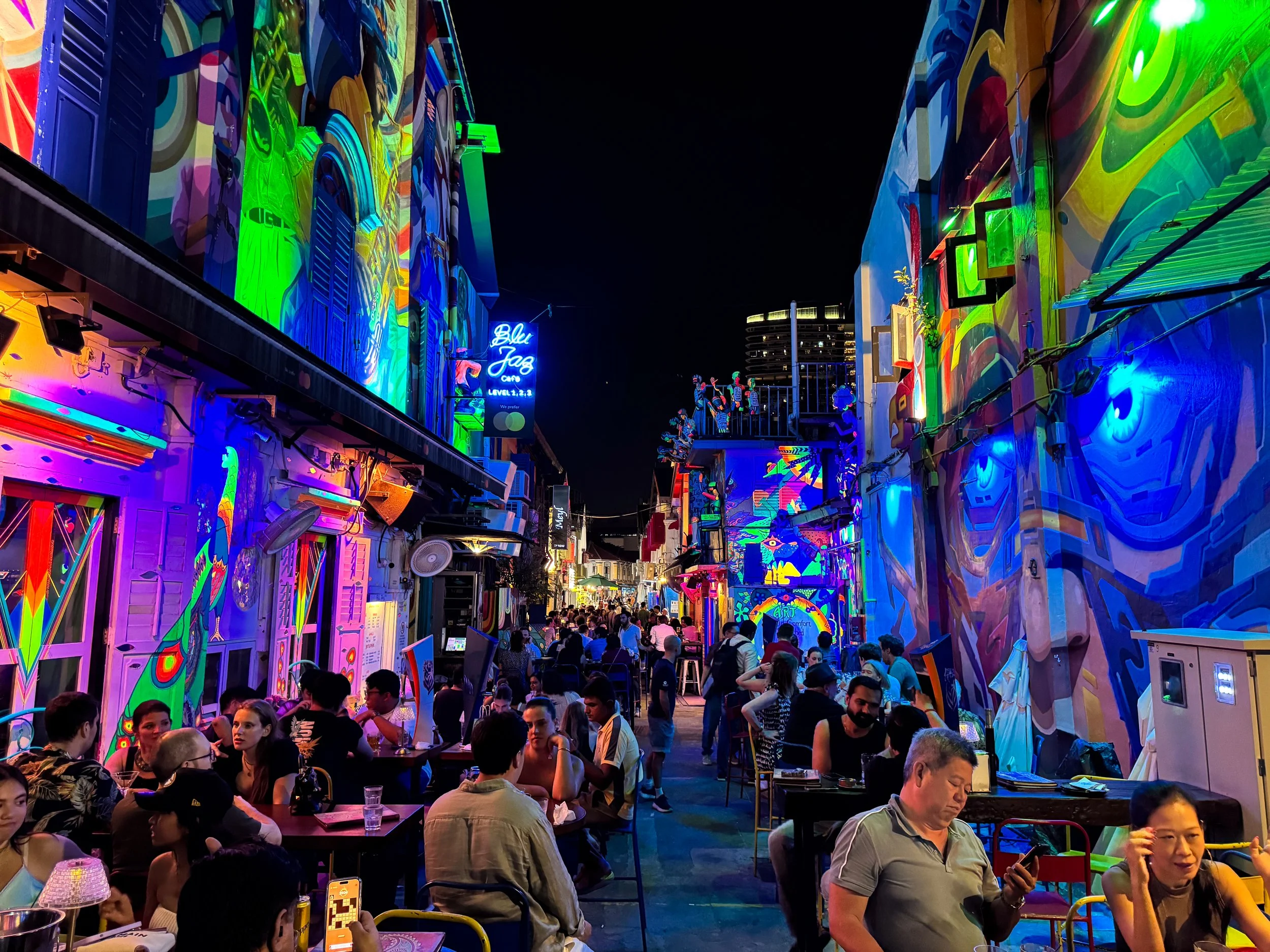
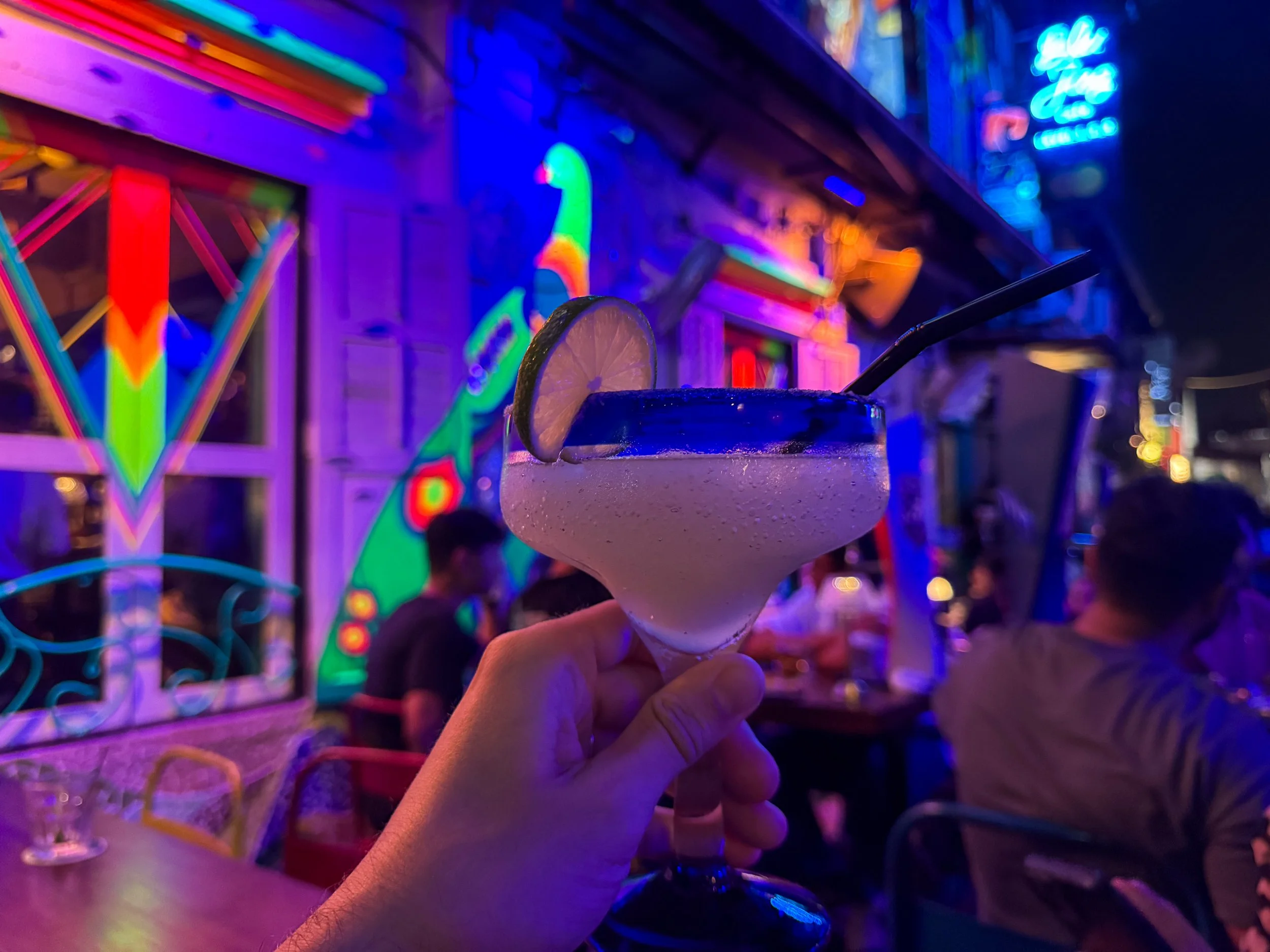
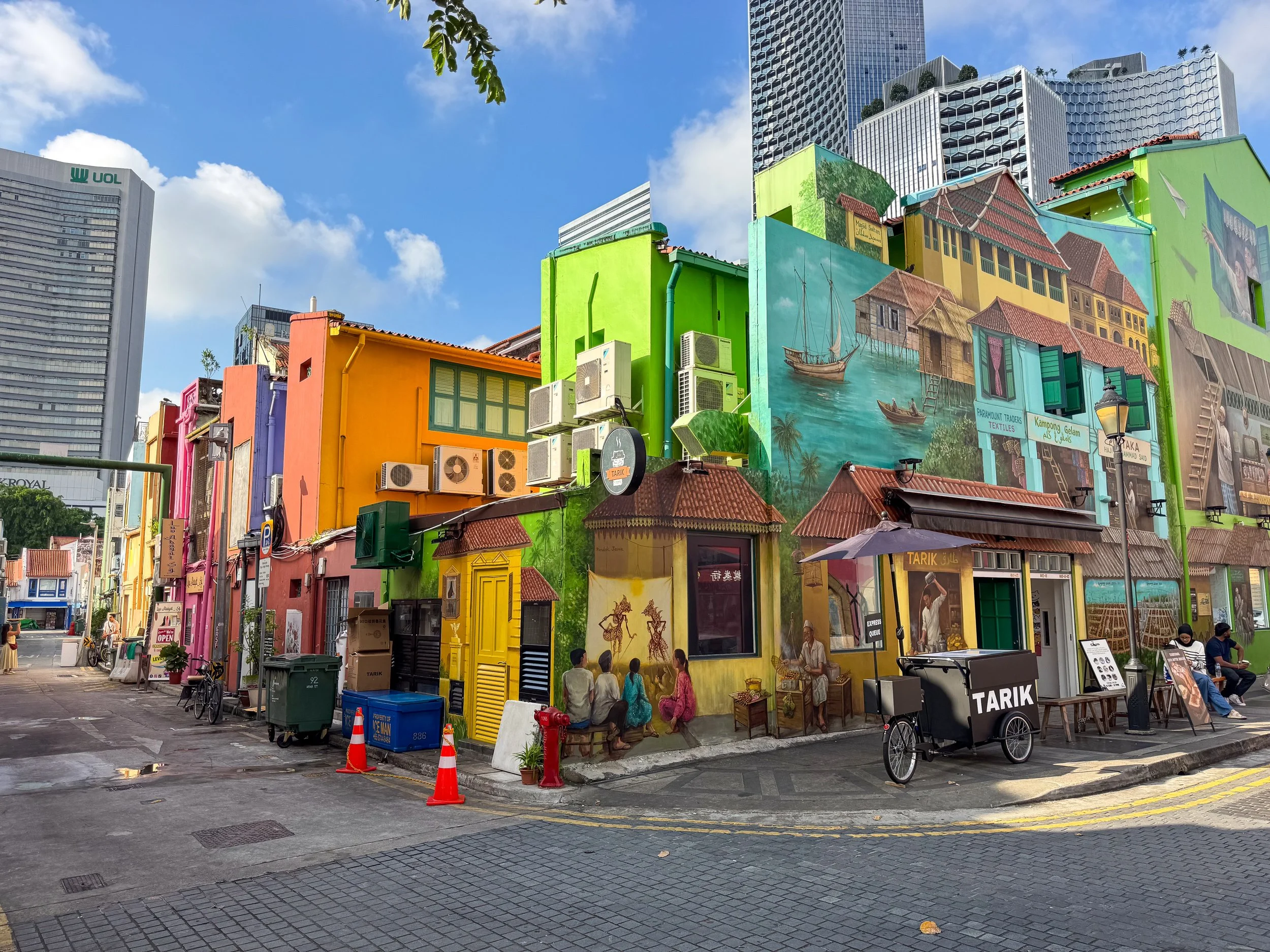
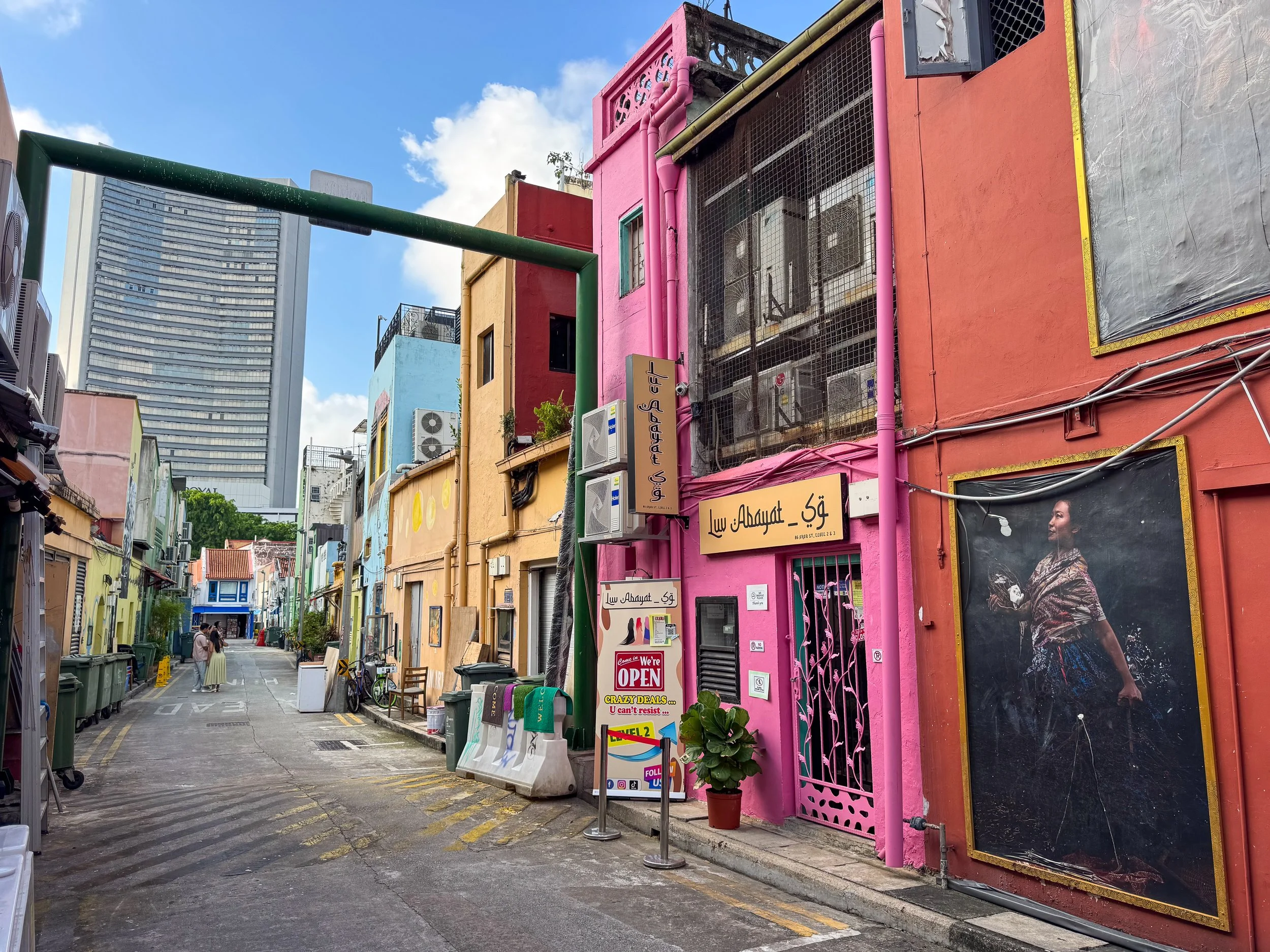
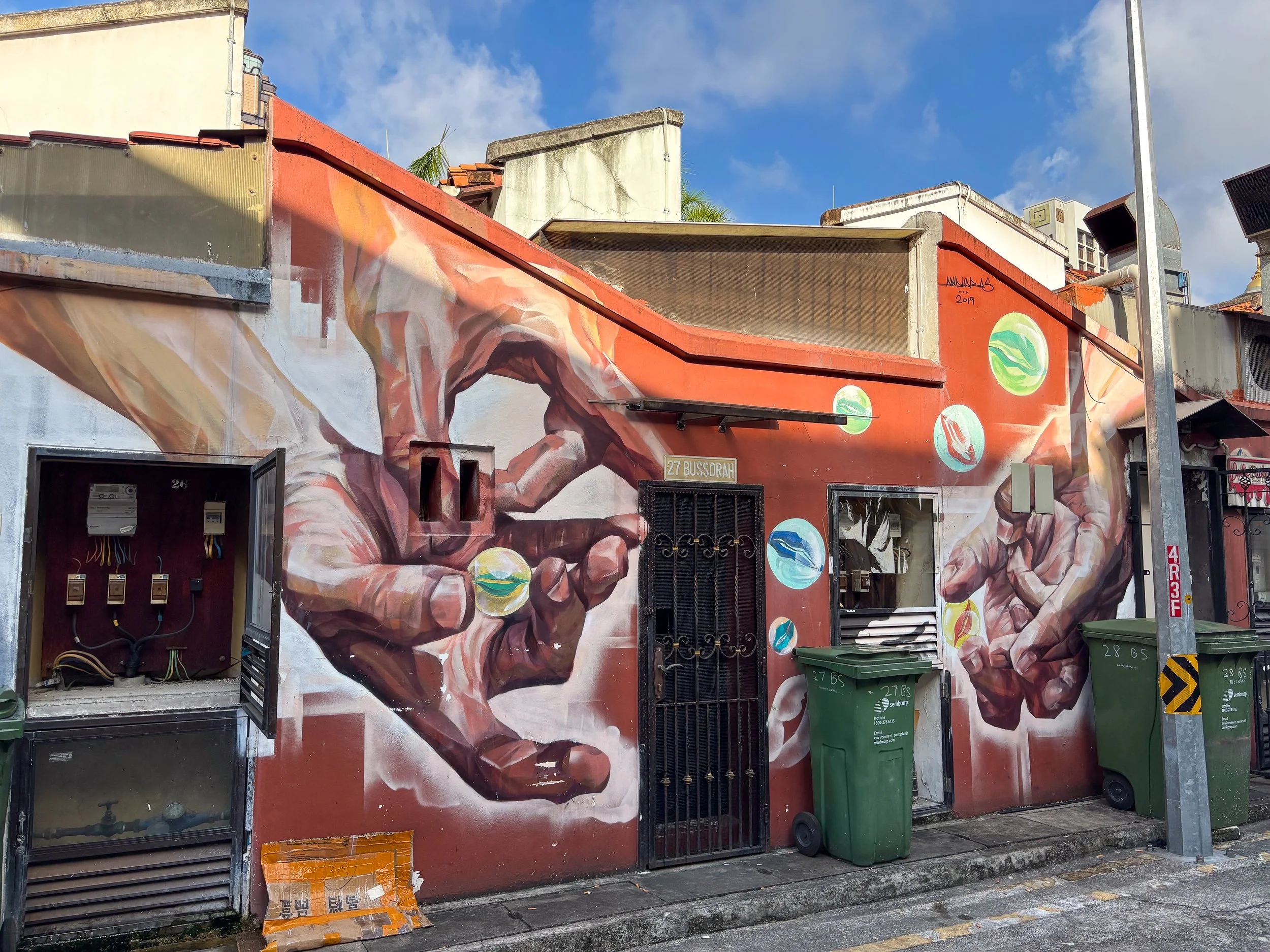
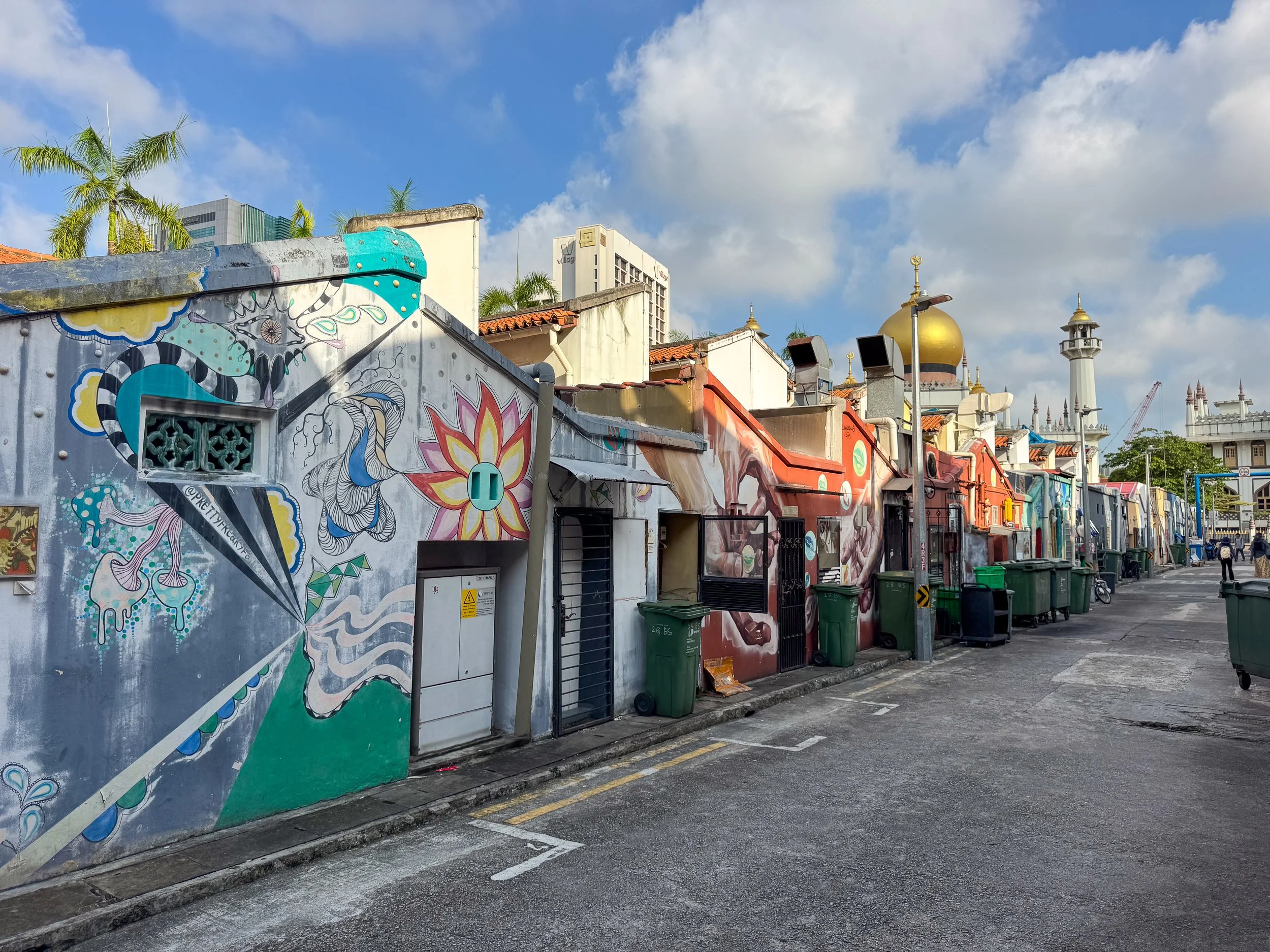
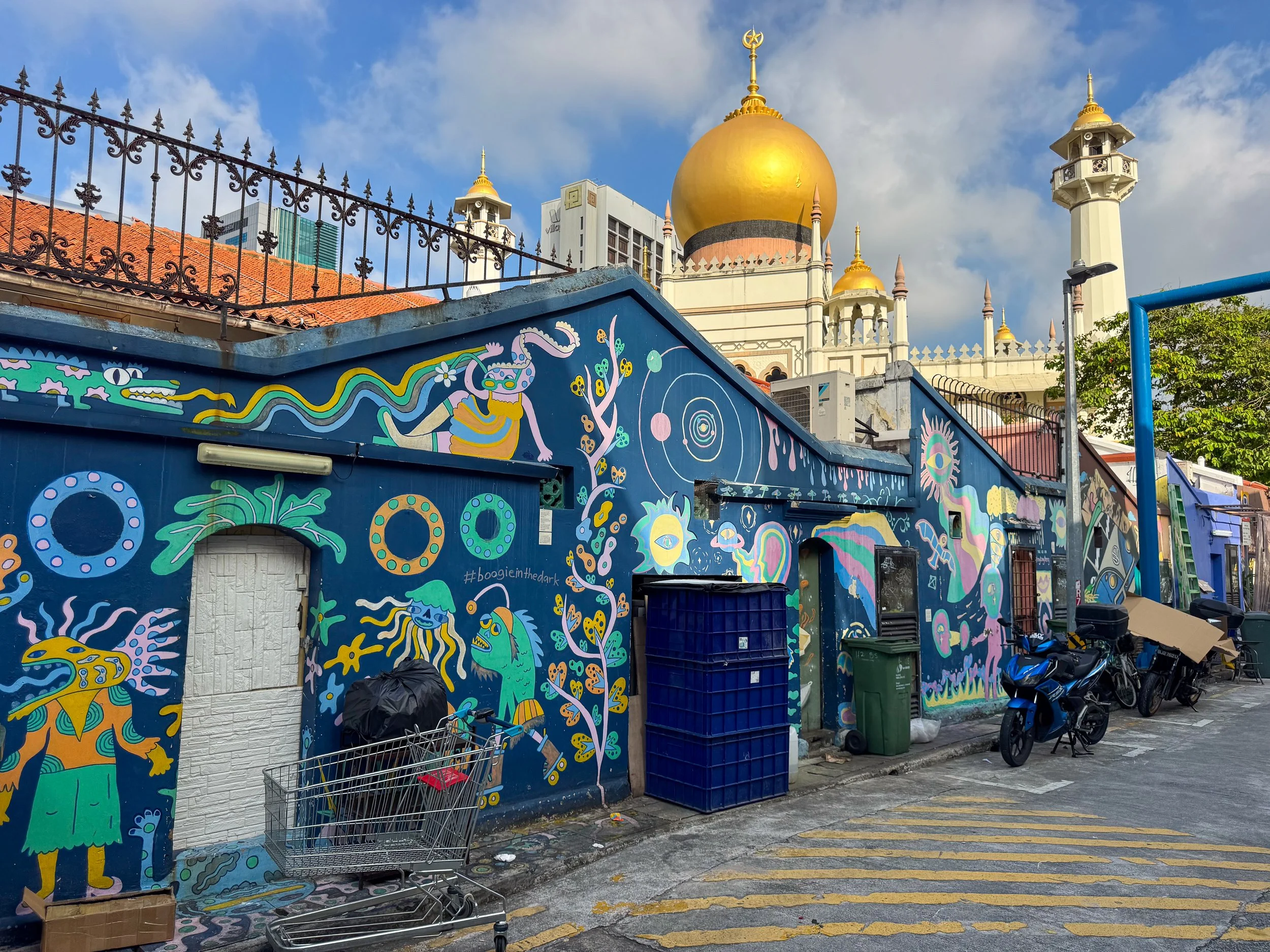
Haji Lane. A narrow lane known locally for its nightlife and vibrantly painted street art, colorful murals and neon graffiti. Restaurants and bars spill out into the lane, visited by hundreds of people nightly. Live music echoes from some bars, particularly the lively Blu Jazz Club.
China Town
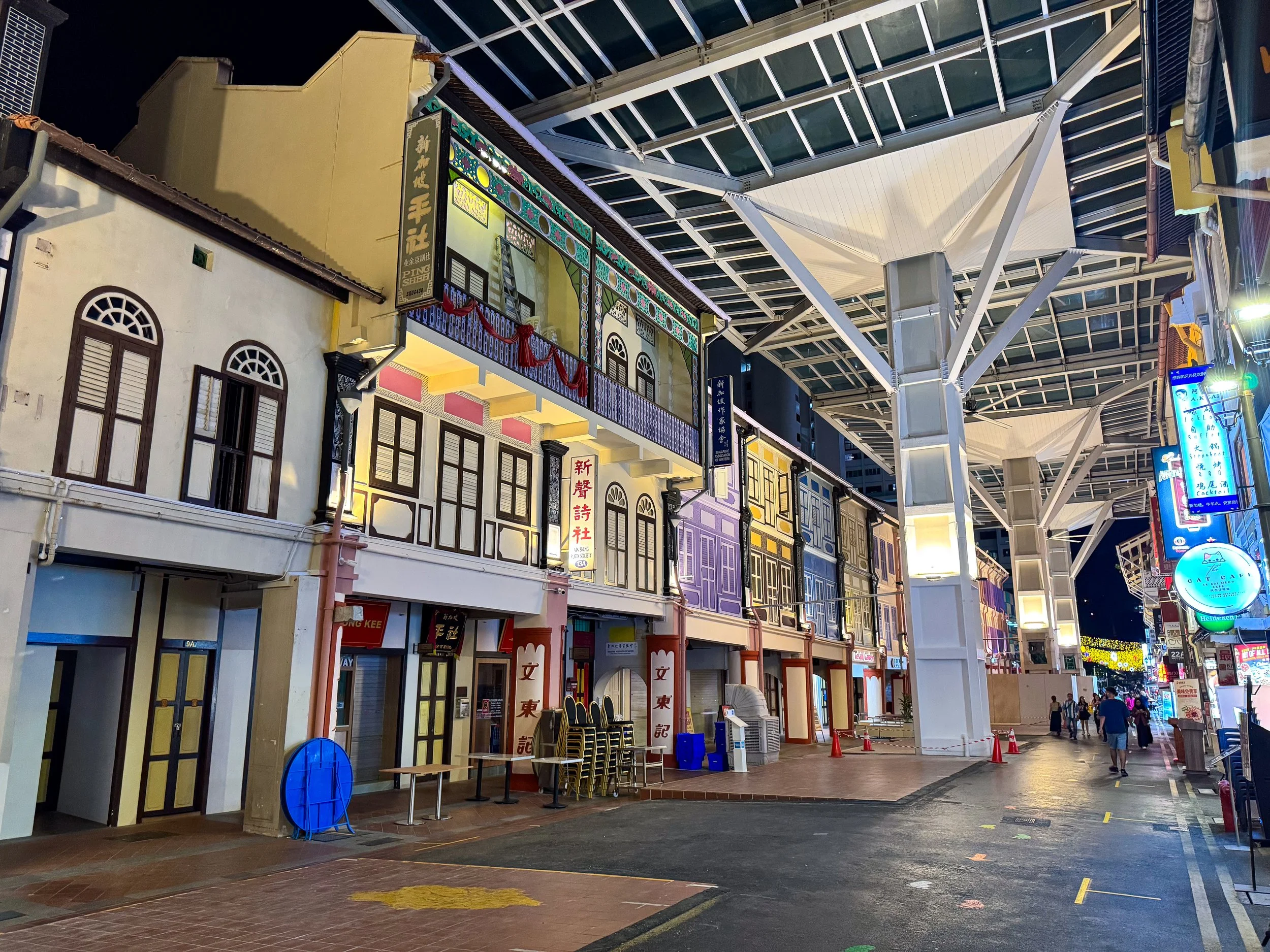
China Town is one of Singapore’s most historic and vibrant neighborhoods. It is a multicultural district with Chinese influences representative of the city’s modern diversity. The street scene is comprised of eastern and western restaurants, world class cocktail bars, local cafes, bustling night markets and hawker food halls. It’s home to many worldly expats and even LGBTQ+ friendly businesses flying progress flags. Palm lined streets and covered alleyways are flanked by colorful shop houses and religious temples.
China Town Street Market. A large street and night market spanning several streets throughout China Town with vendors and shops selling souvenirs and street food.
Smith Street. A covered street with beautifully restored and vibrantly painted shop houses home to restaurants and shops.
Ann Siang Hill Park. A small hilltop park with a winding path surrounded by lush greenery and skyscrapers.
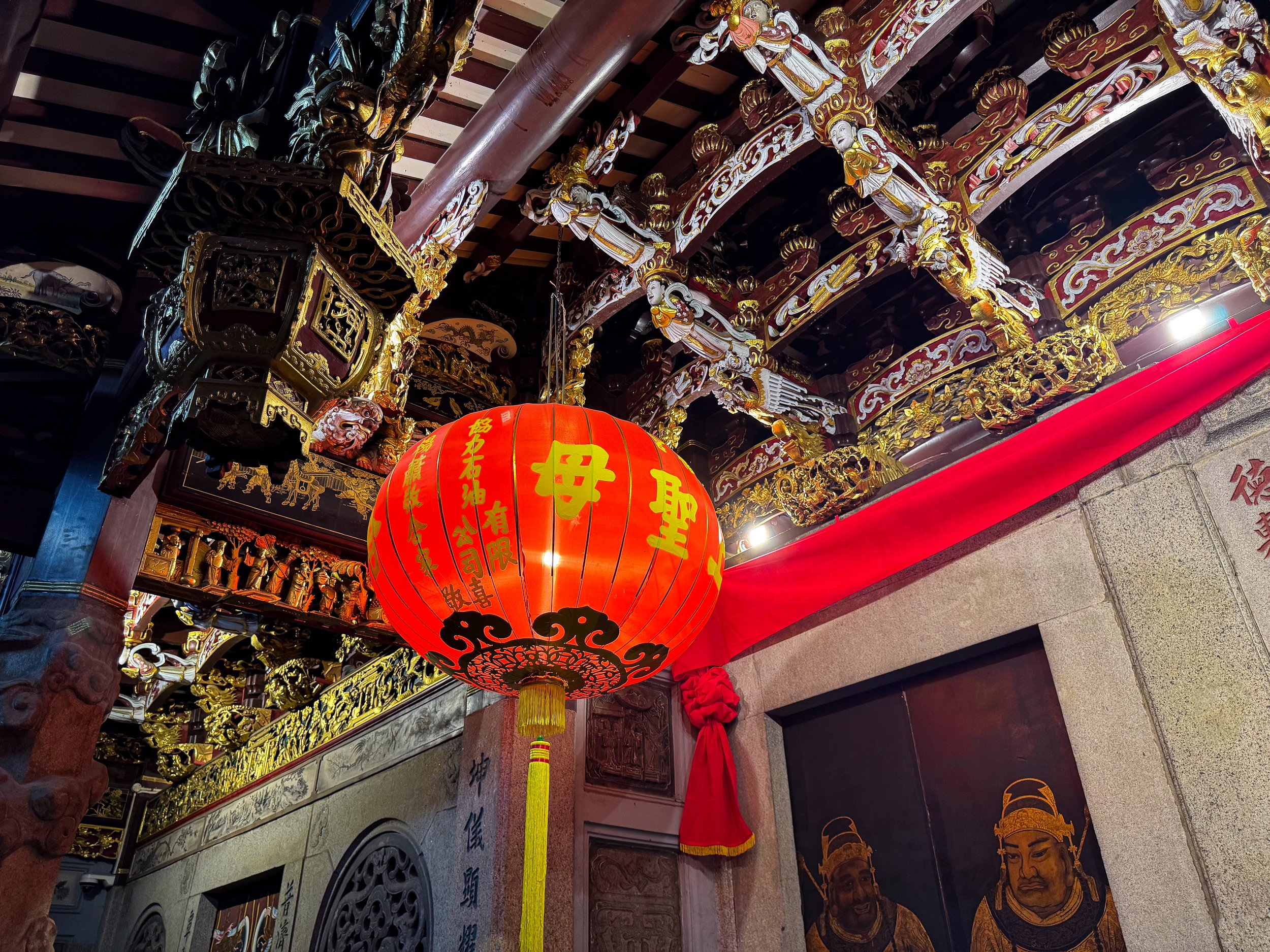
Thian Hock Keng Temple. A Taoist temple decorated with dragon columns, Chinese lanterns, golden accents and ornate carvings.
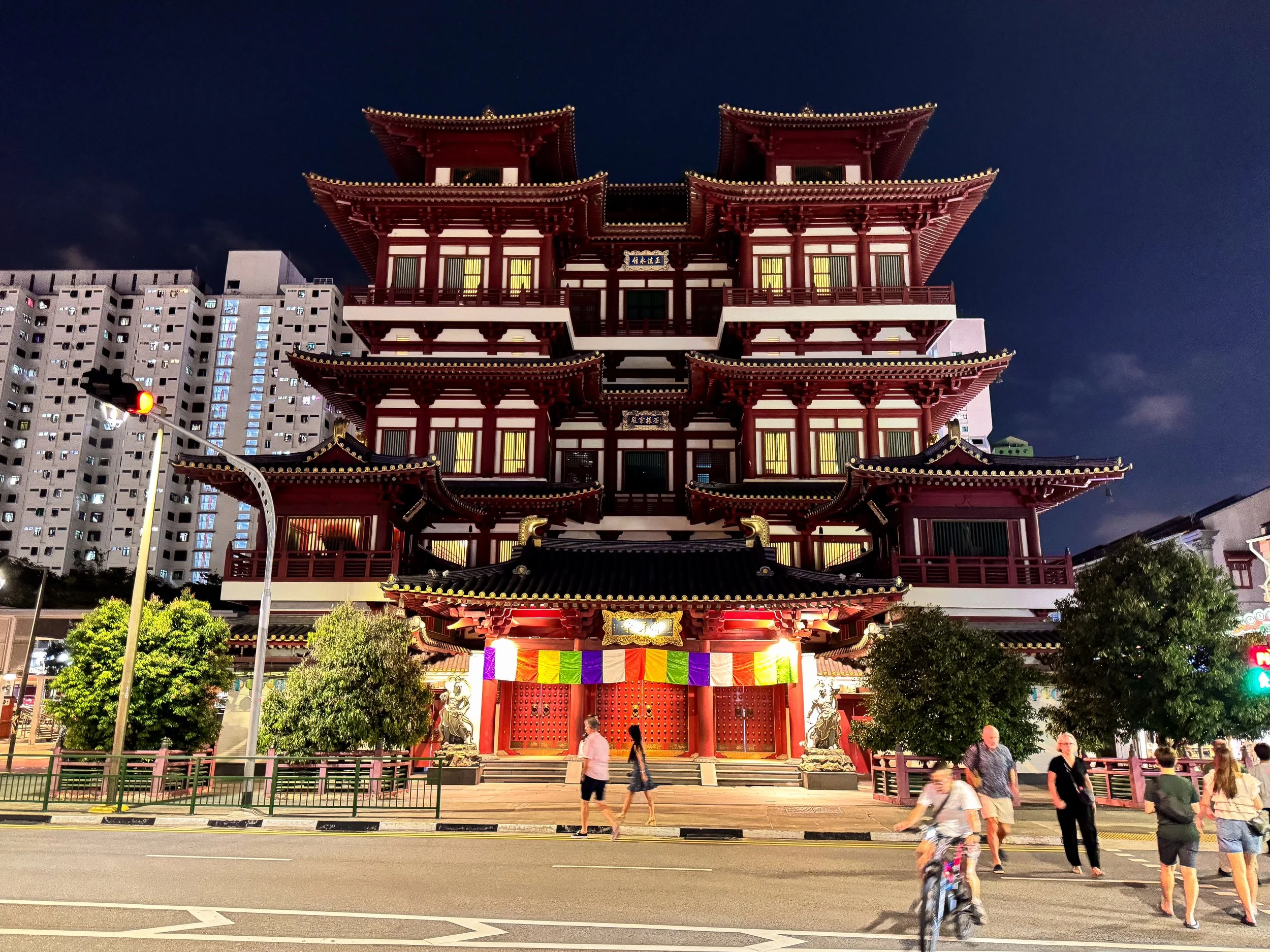
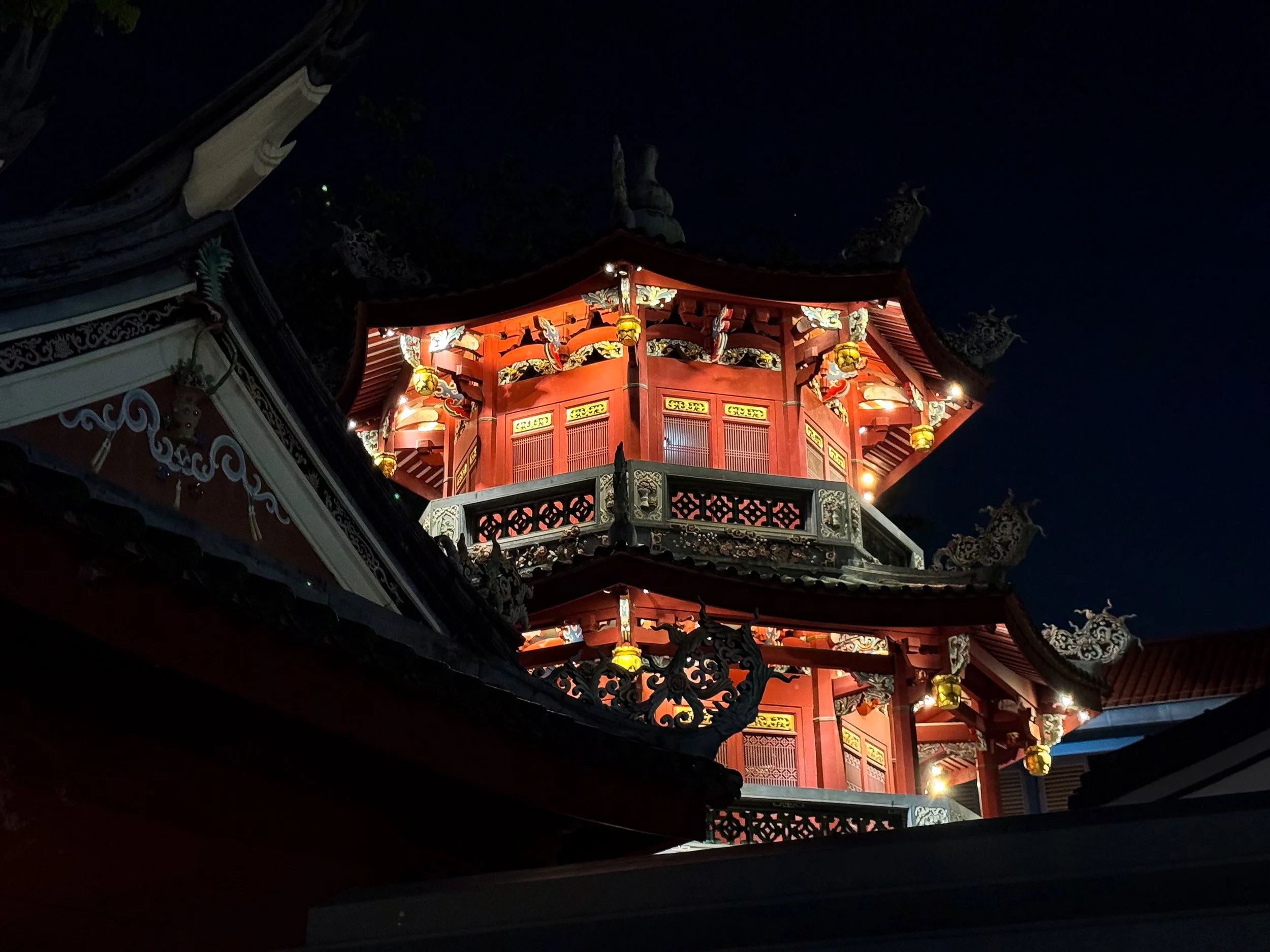
Buddha Tooth Relic Temple. A large Chinese style Buddhist temple and museum. Its red and gold tiered pagoda design makes it one of the best examples of Chinese architecture in China Town. Inside are sacred artifacts said to belong to the Buddha.
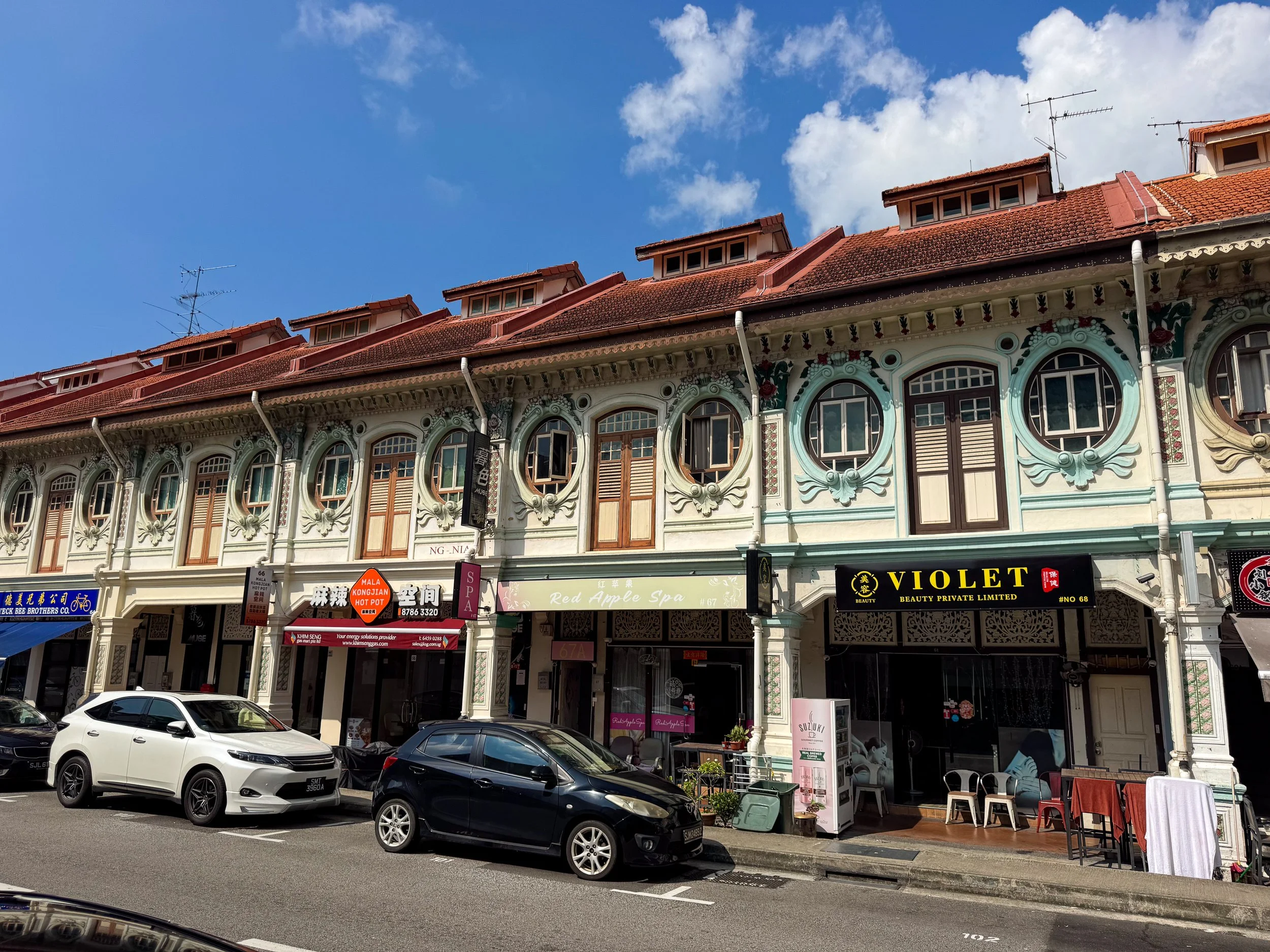
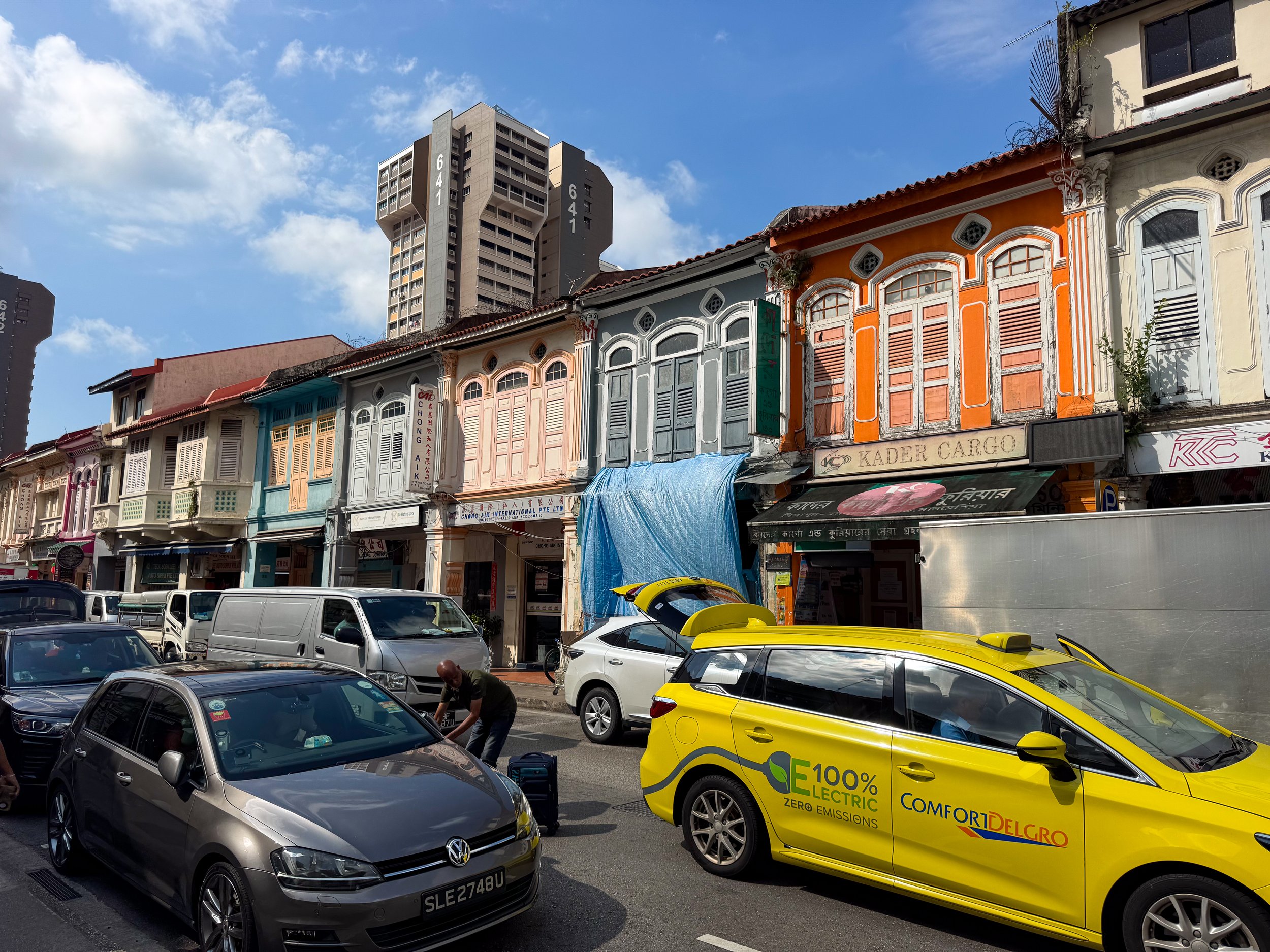
Little India
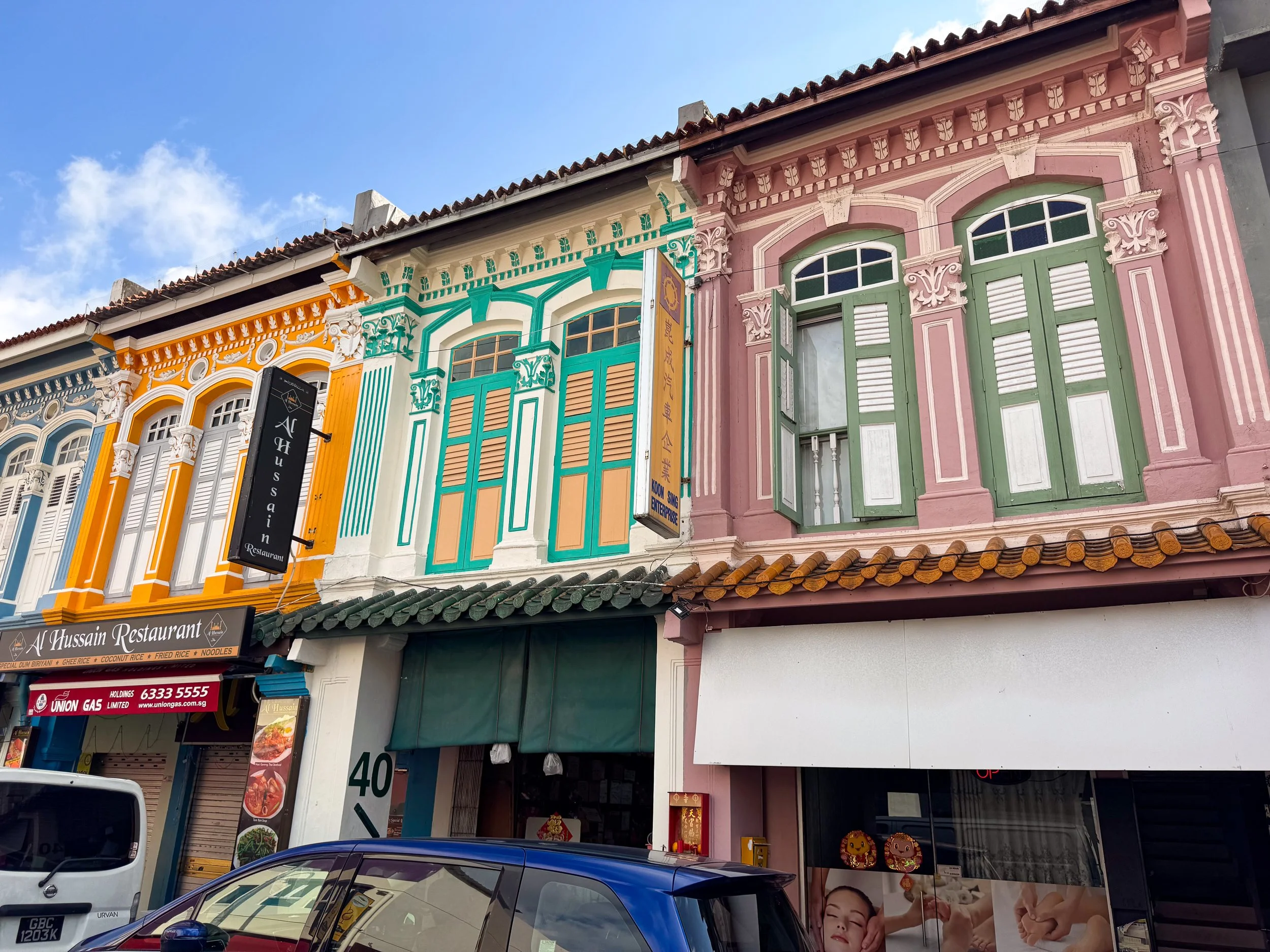
Little India is a neighborhood with many Indian influences, residents and businesses. The scents of spices, incense and Indian cuisine waft from street side markets, Hindu temples and Biryani restaurants. Baroque style shop houses are home to tea rooms, barbers, jewelers and electronics stores.
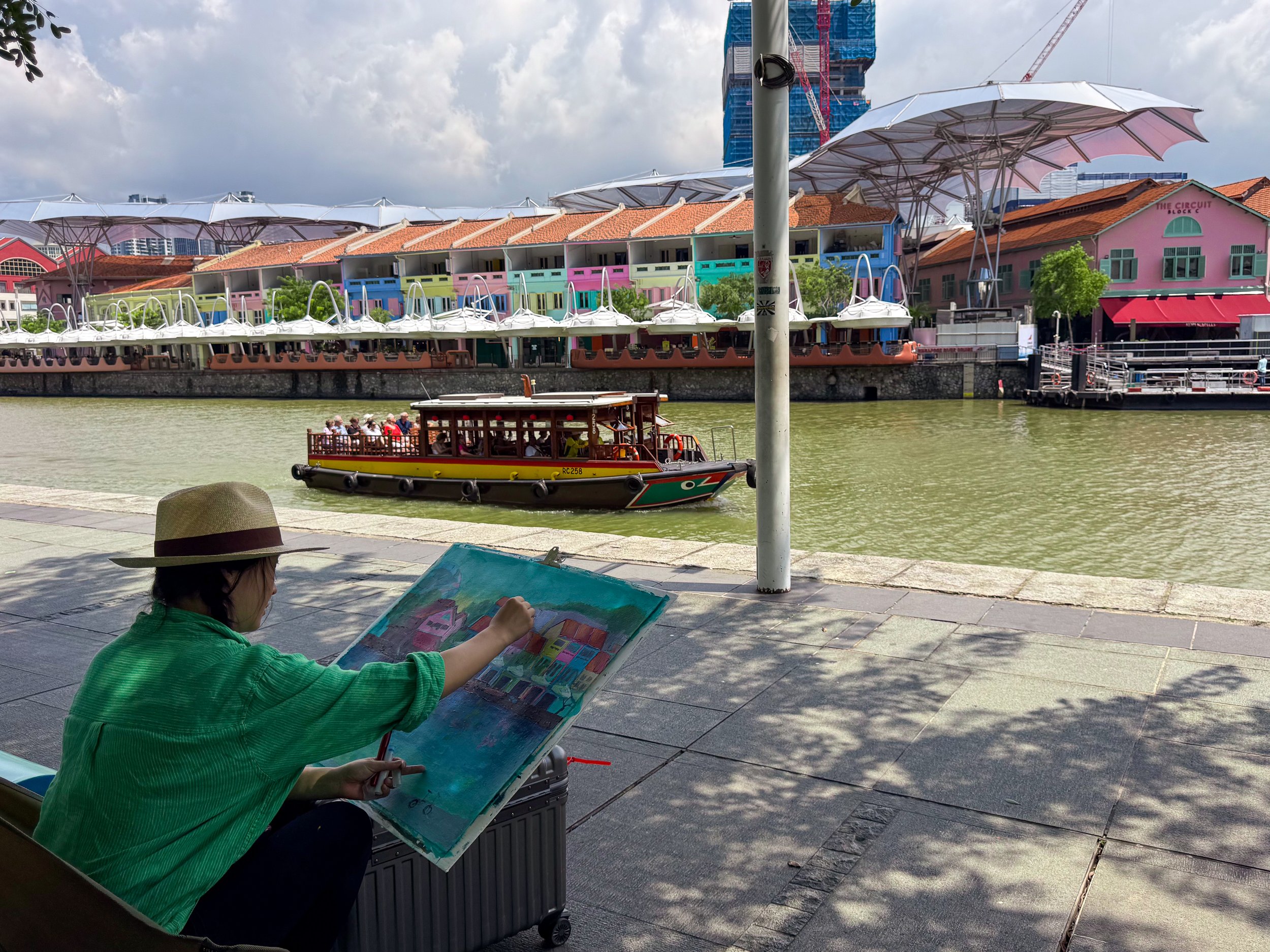
Clarke Quay
Clarke Quay is a lively neighborhood along the Singapore River promenade with brightly painted shop houses, covered streets, touristy restaurants and shopping malls. It’s the launching point for Bumboat Cruises, a sightseeing tour of the Singapore River and Marina Bay on a traditional wooden boat. The narrated boat tour passes several of the city’s most prominent sights and neighborhoods over the course of 40 minutes.
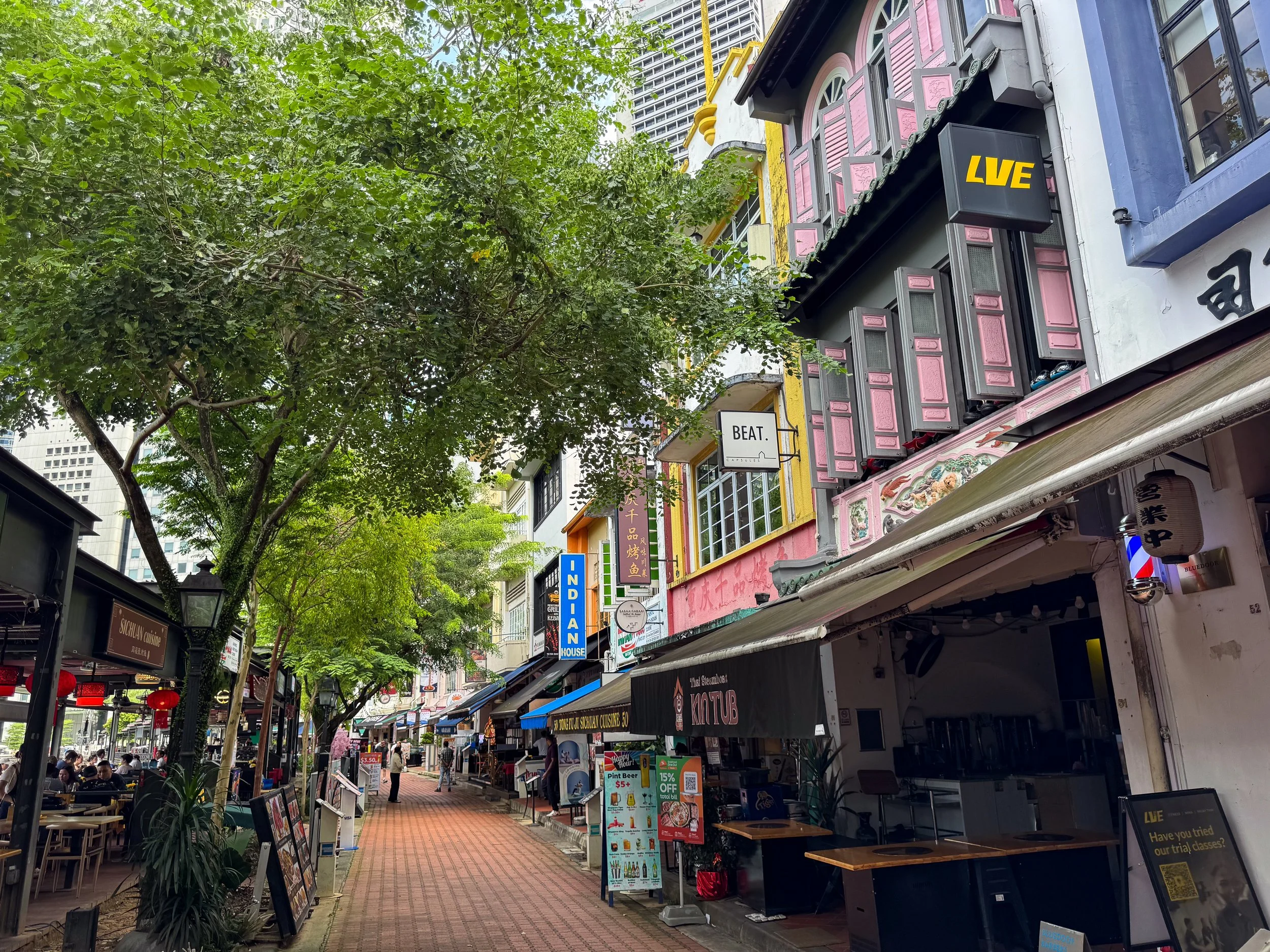
Boat Quay
Boat Quay is a historic neighborhood along the Singapore River with an arc of colorful shop houses and waterfront restaurants. The promenade is lively well into the evening with numerous bars and seafood restaurants specializing in Singapore’s famed chili crab.
Marina Bay
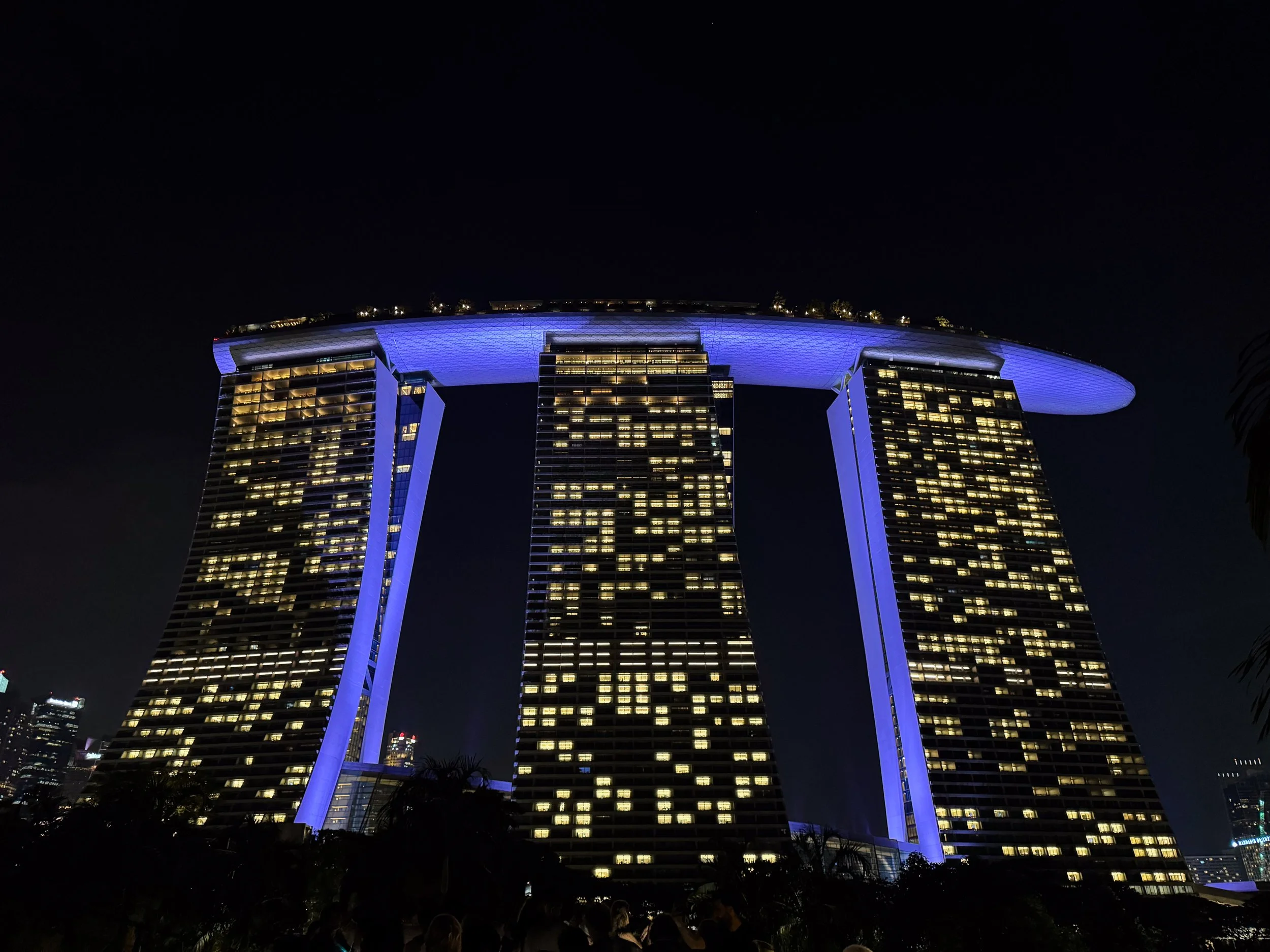
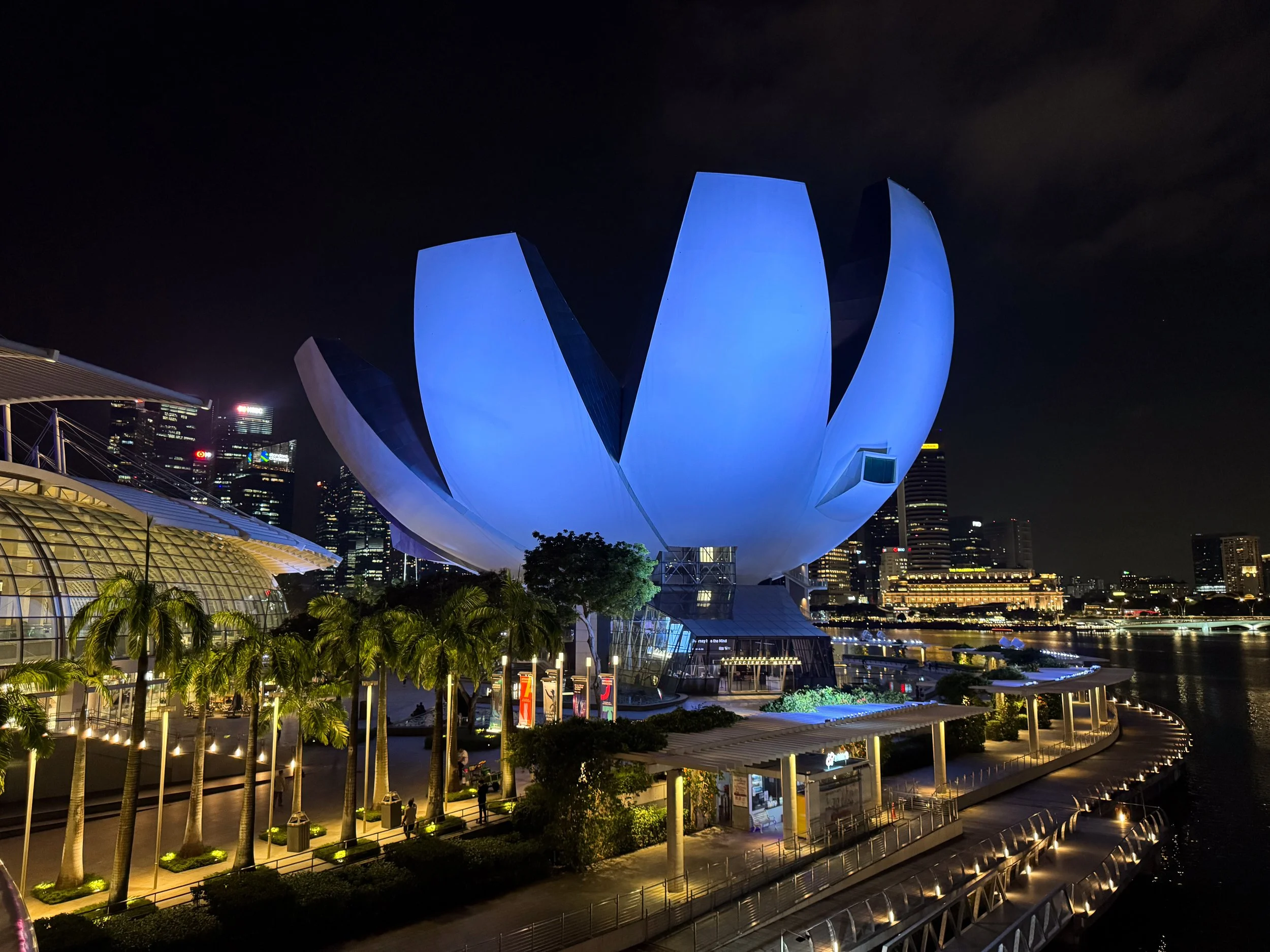
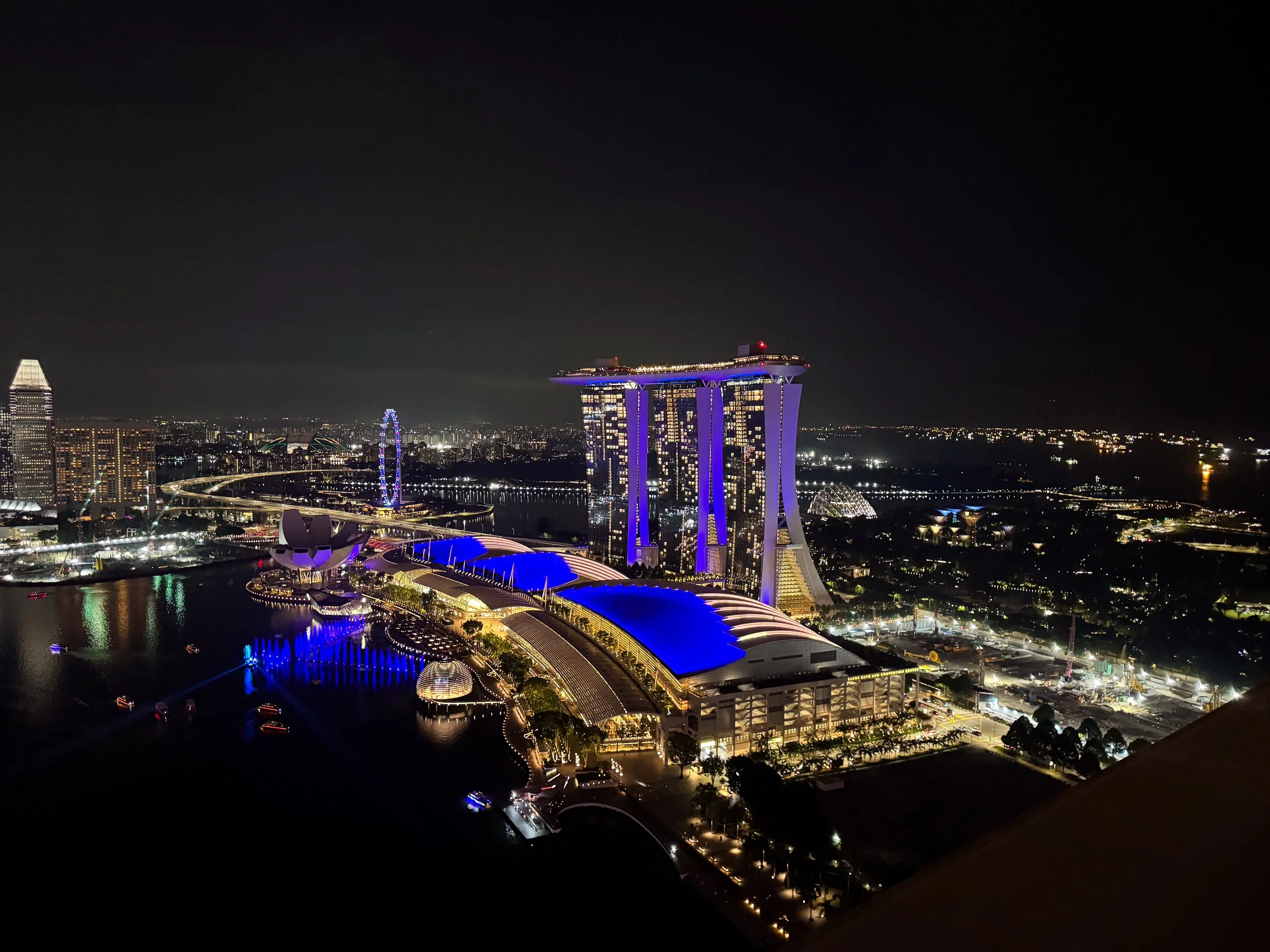
Marina Bay is Singapore’s famed bay and waterfront walkway. It’s surrounded by modern glass skyscrapers, monuments, museums, luxury stores and hotels, most notably the iconic Marina Bay Sands Hotel.
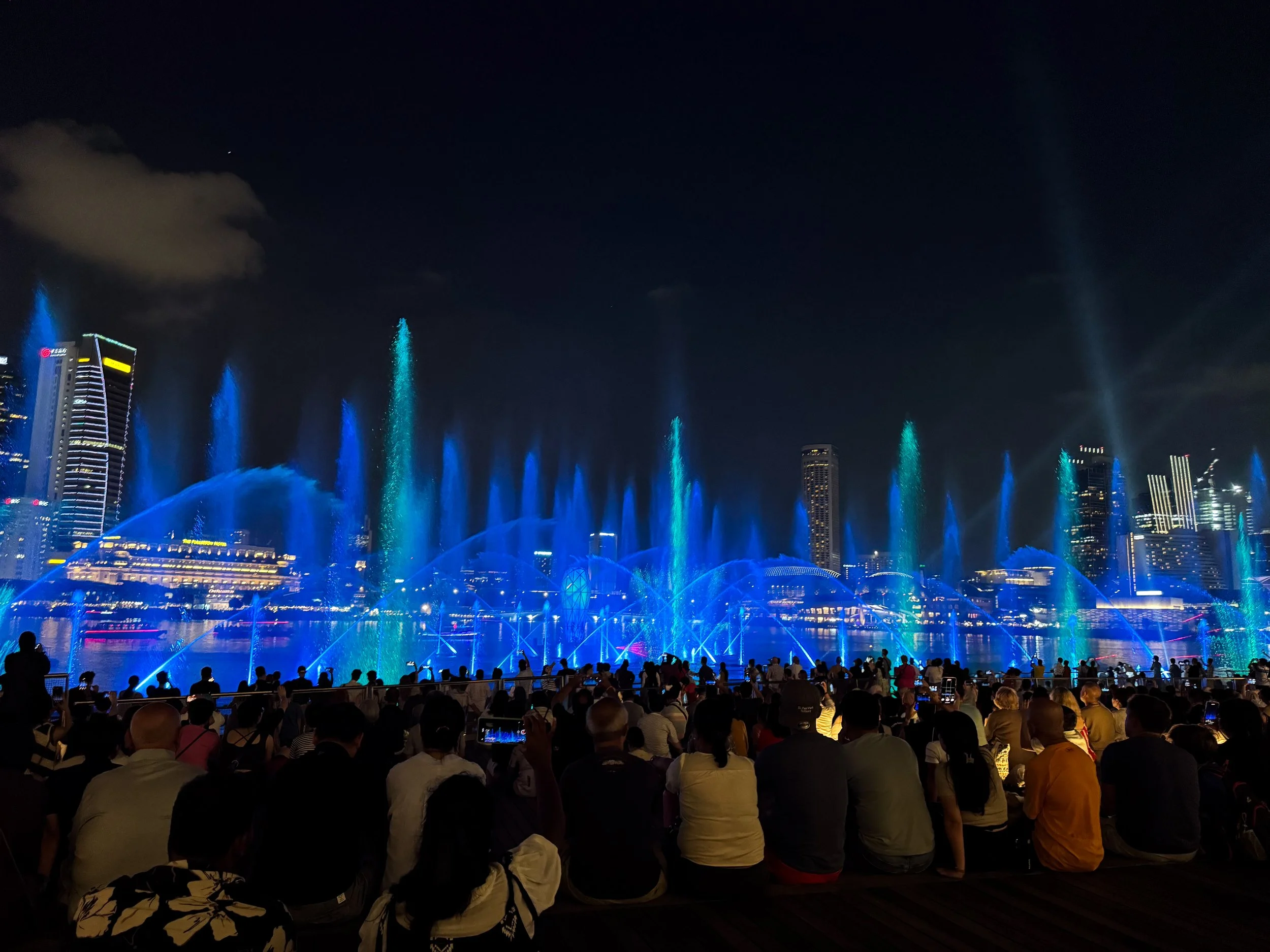
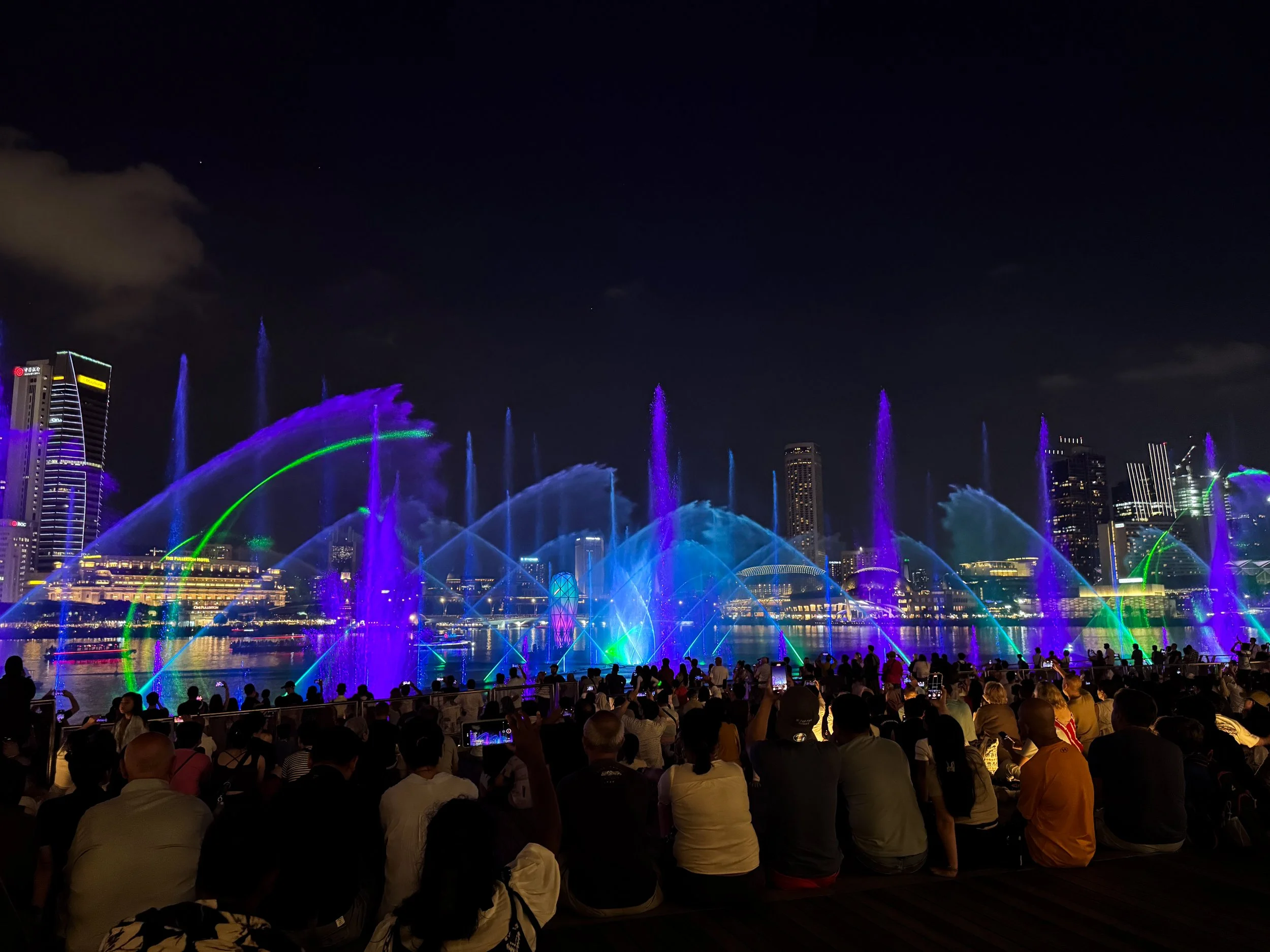
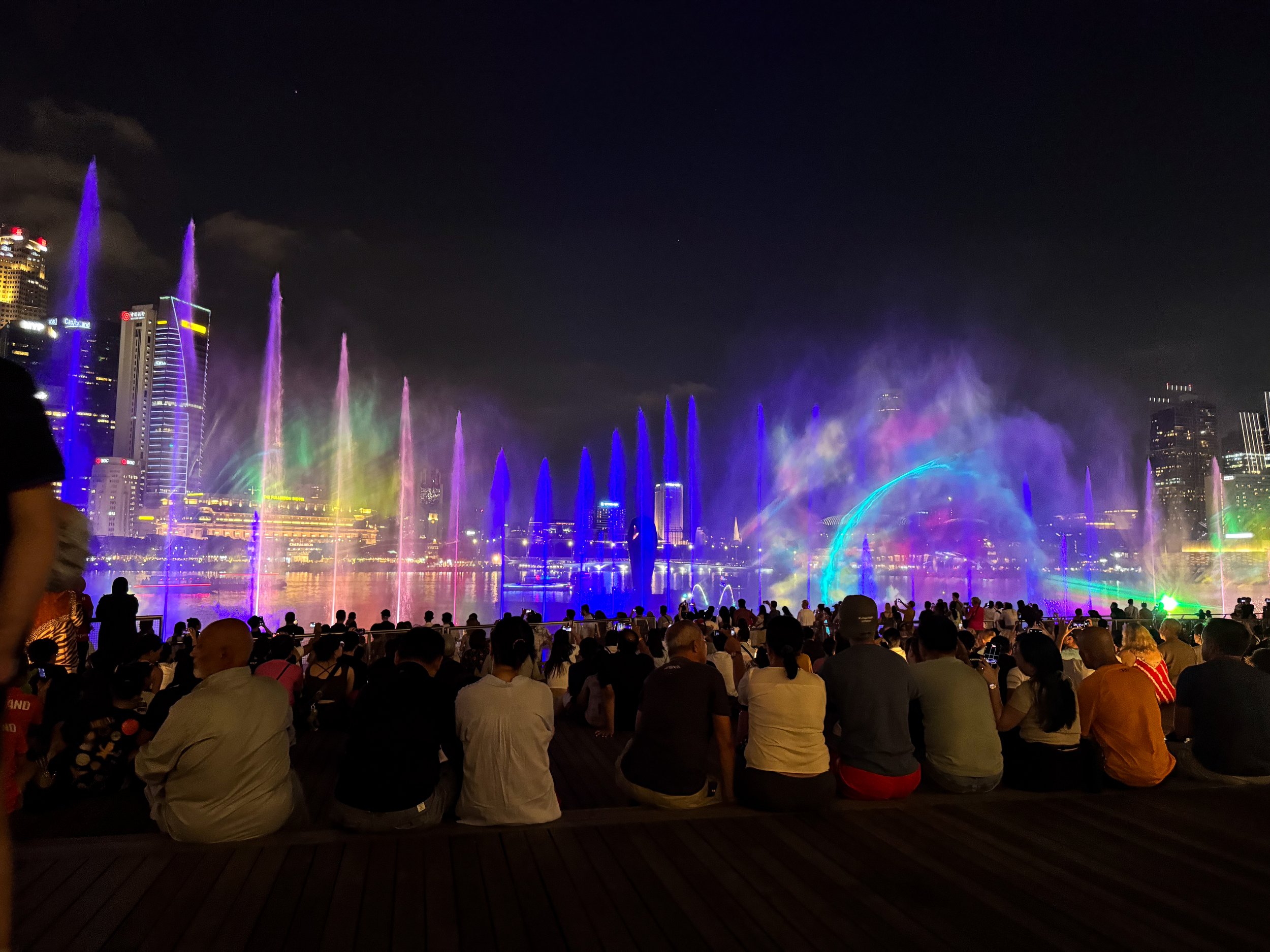
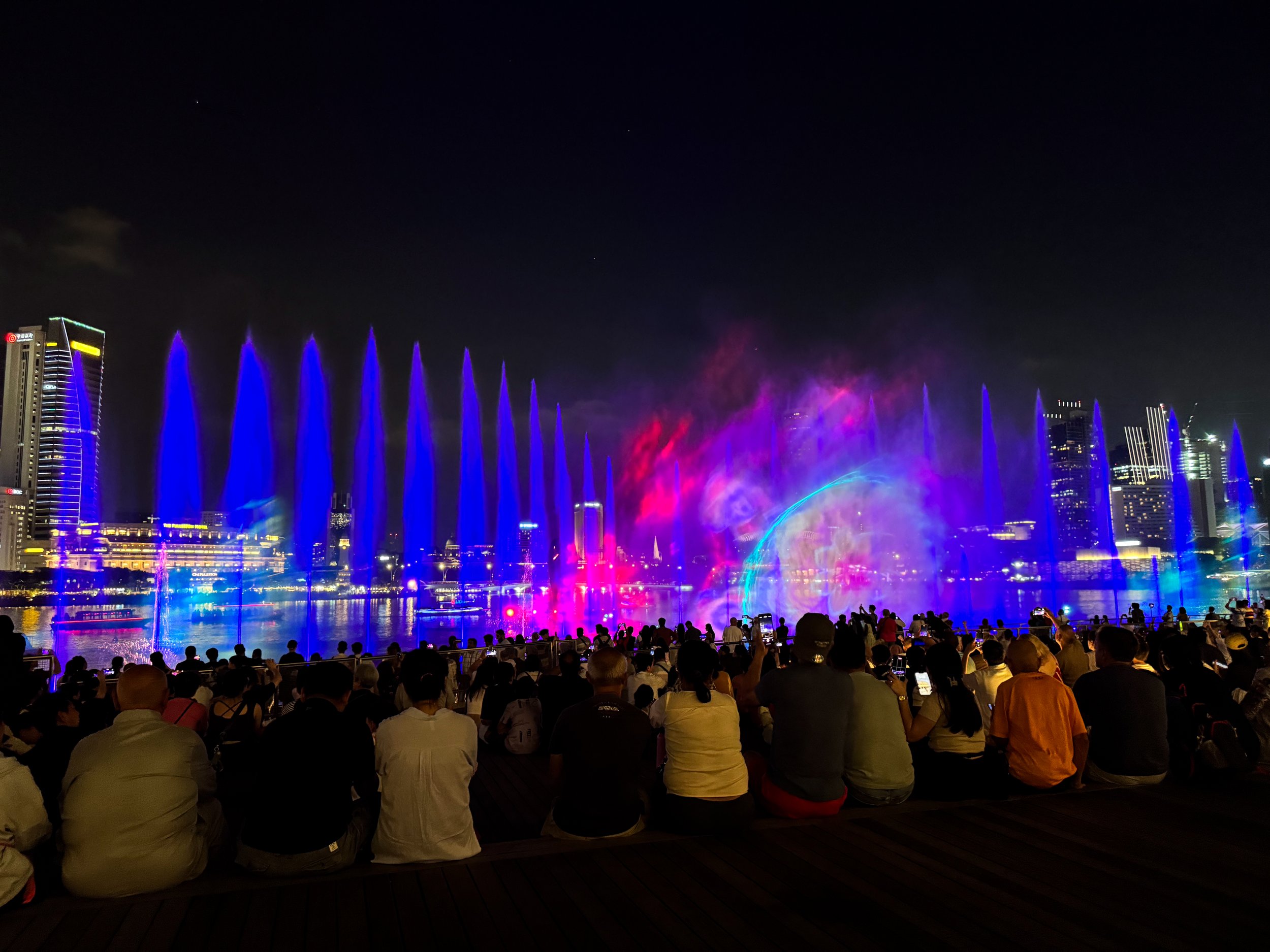
Spectra - A Light and Water Show. A free light and water show in front of Mariana Bay Sands. Fountains spray jets of water and mist into the air as choreographed projectors and lights illuminate them in various colors and images.
Good to Know. Shows happen nightly at 8pm. Arrive about 30 minutes early to get a seat along the viewing steps.
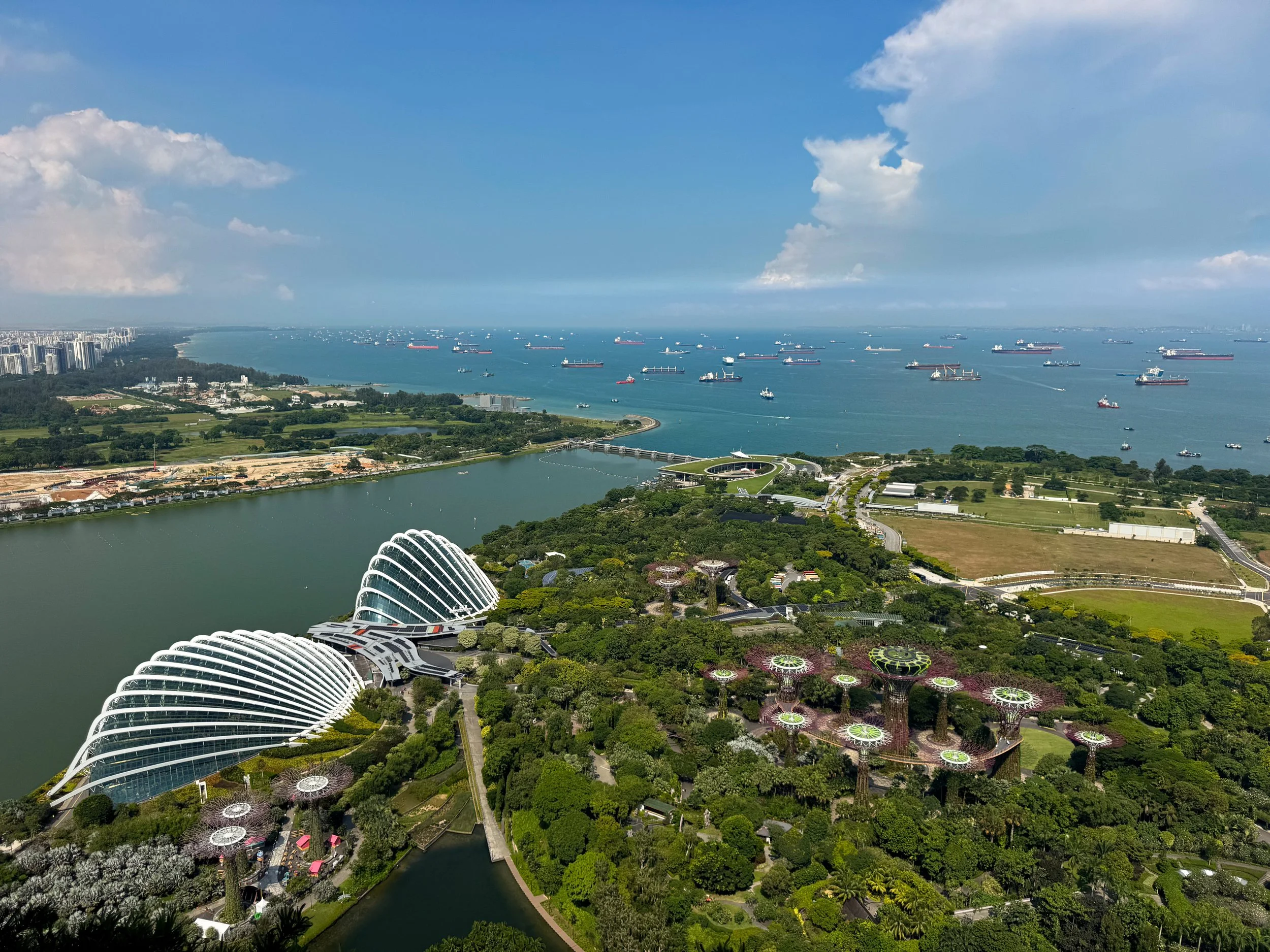
Marina Bay Sands. Singapore’s most iconic building, recognizable by its three towers connected on top by a large boat shaped platform. The entertainment complex hosts a hotel, mall, casino and series of restaurants. Its platform has an observation deck and multiple rooftop restaurants. We visited Spago, an elegant bar with views of the city, Gardens by the Bay, the Super Trees and strait with hundreds of large container boats.
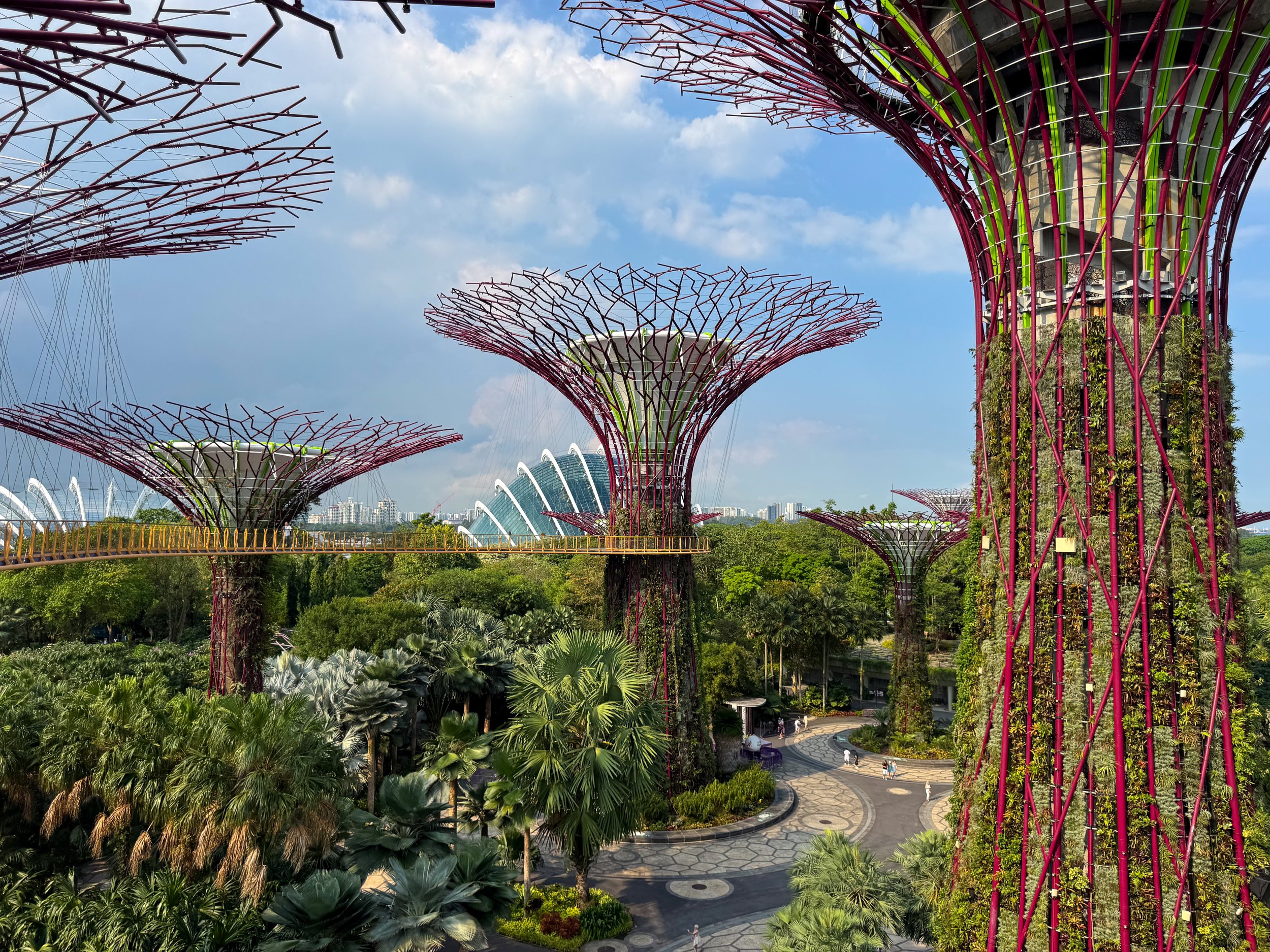
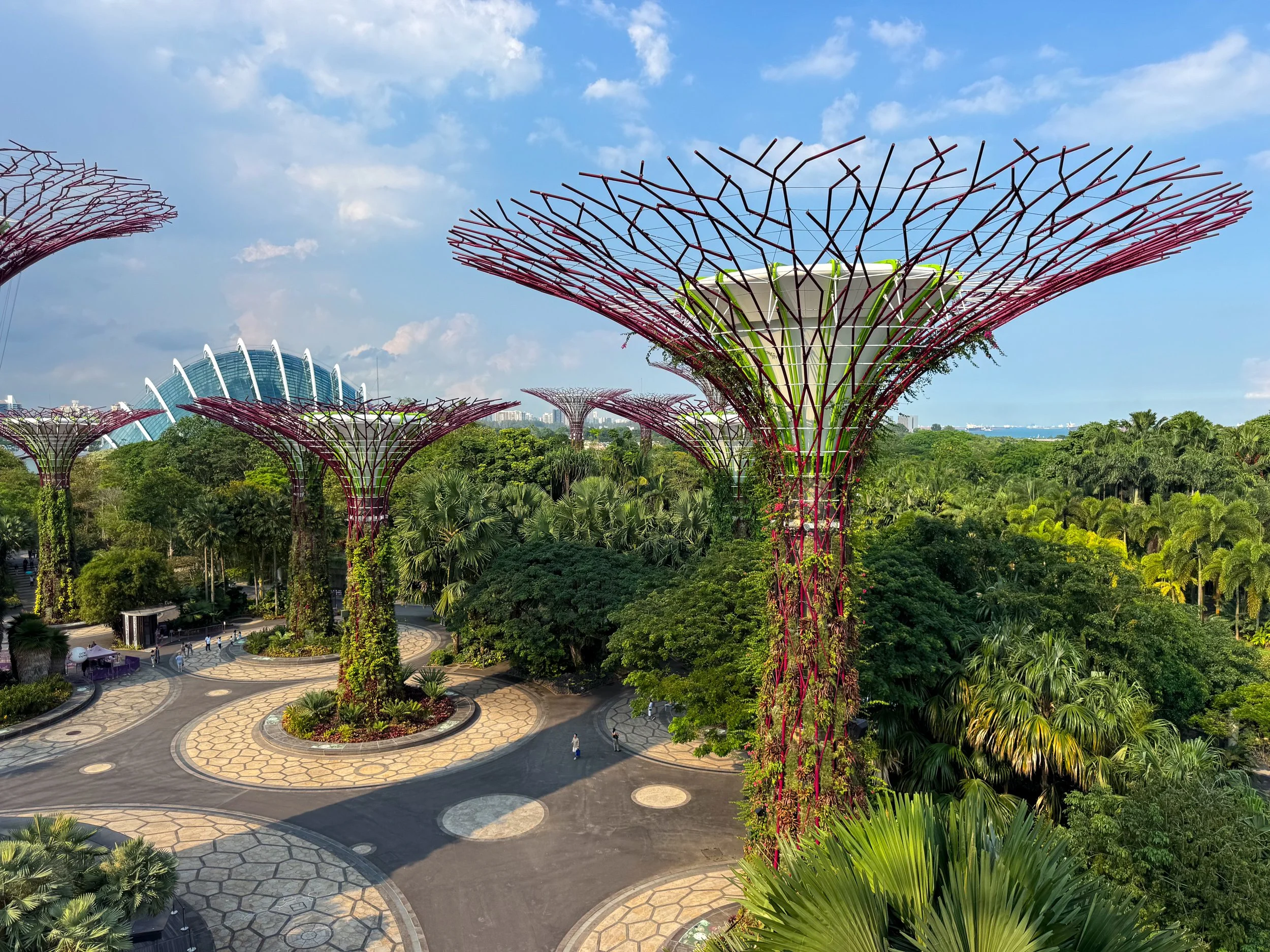
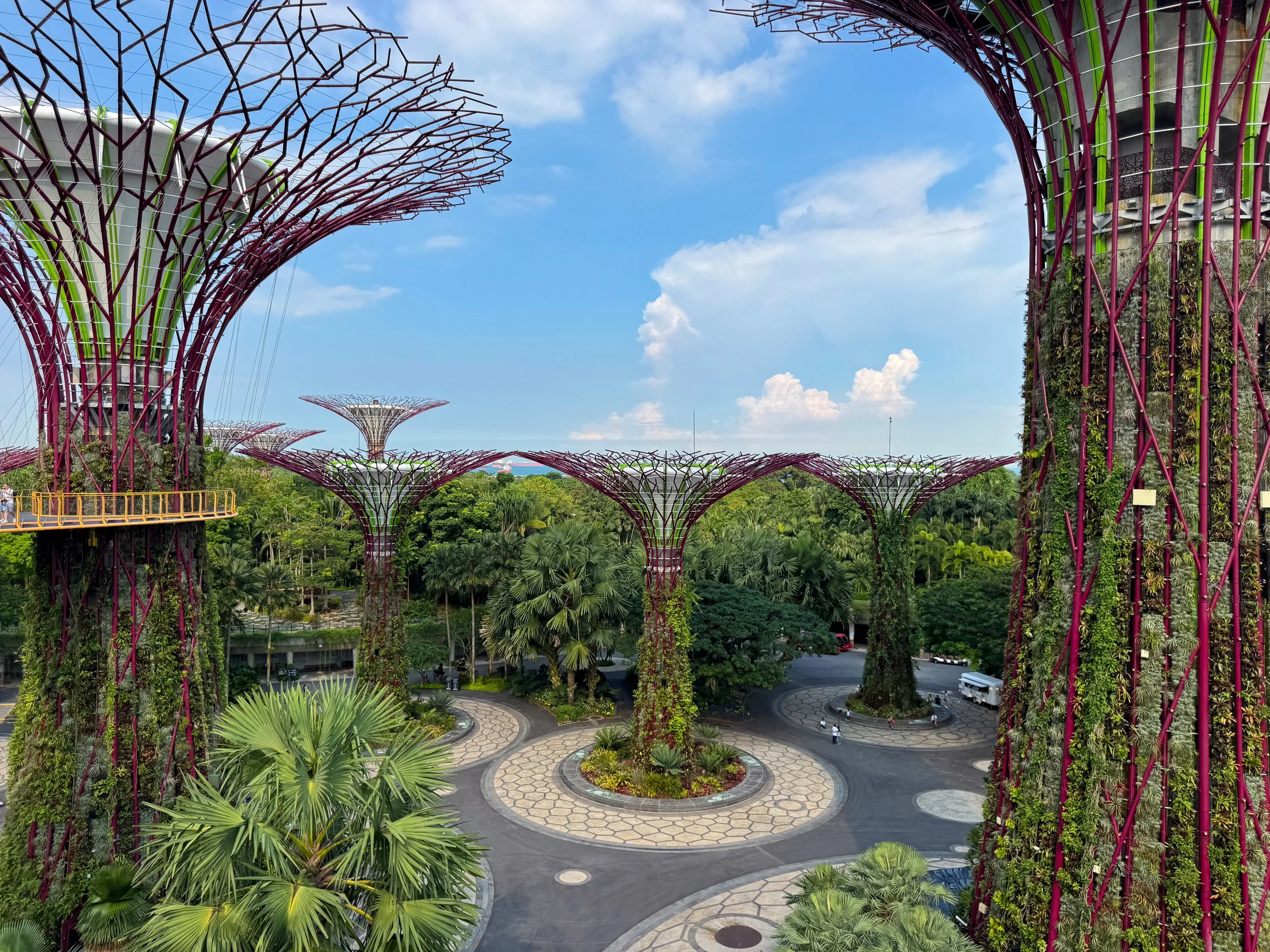
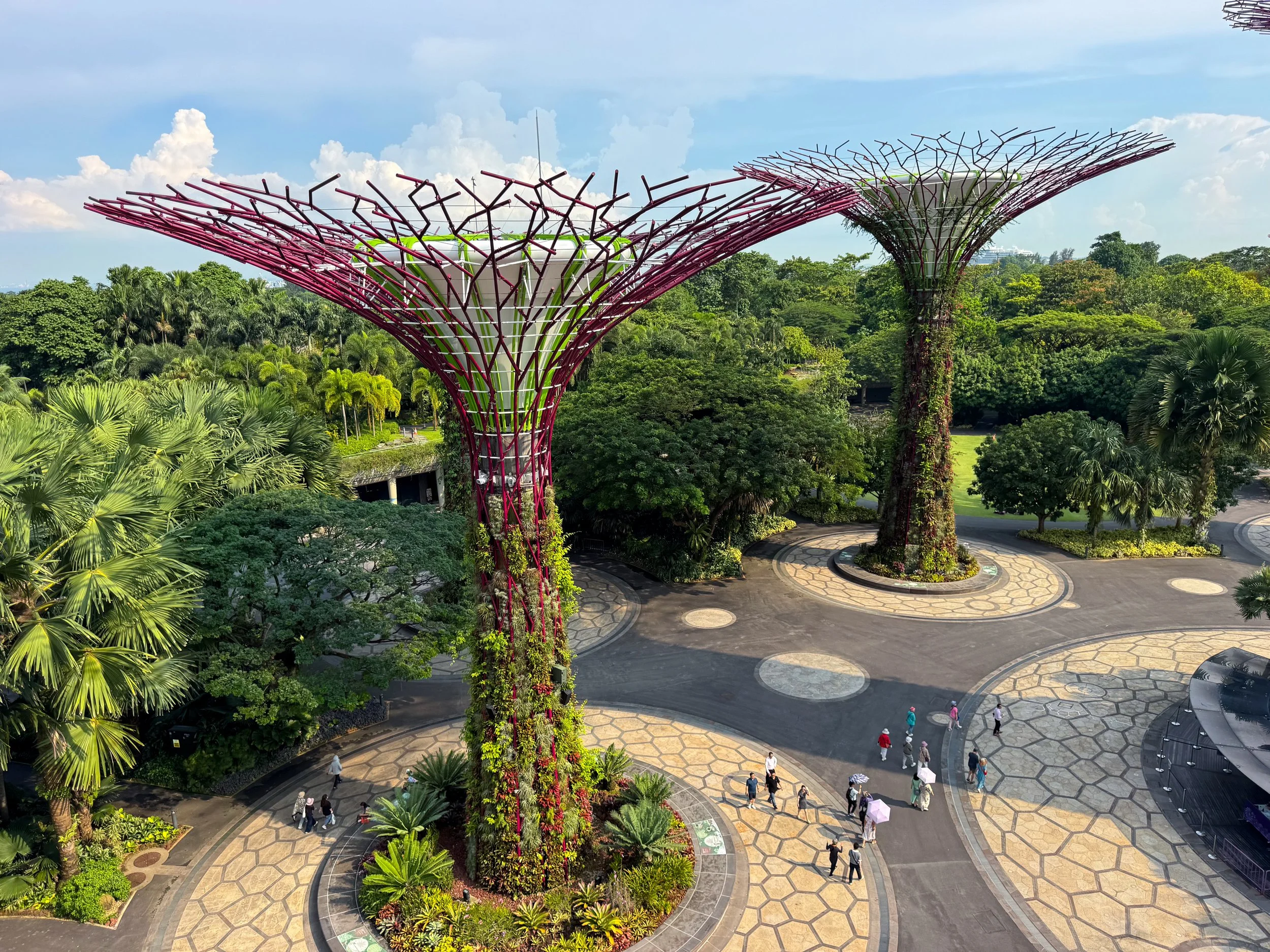
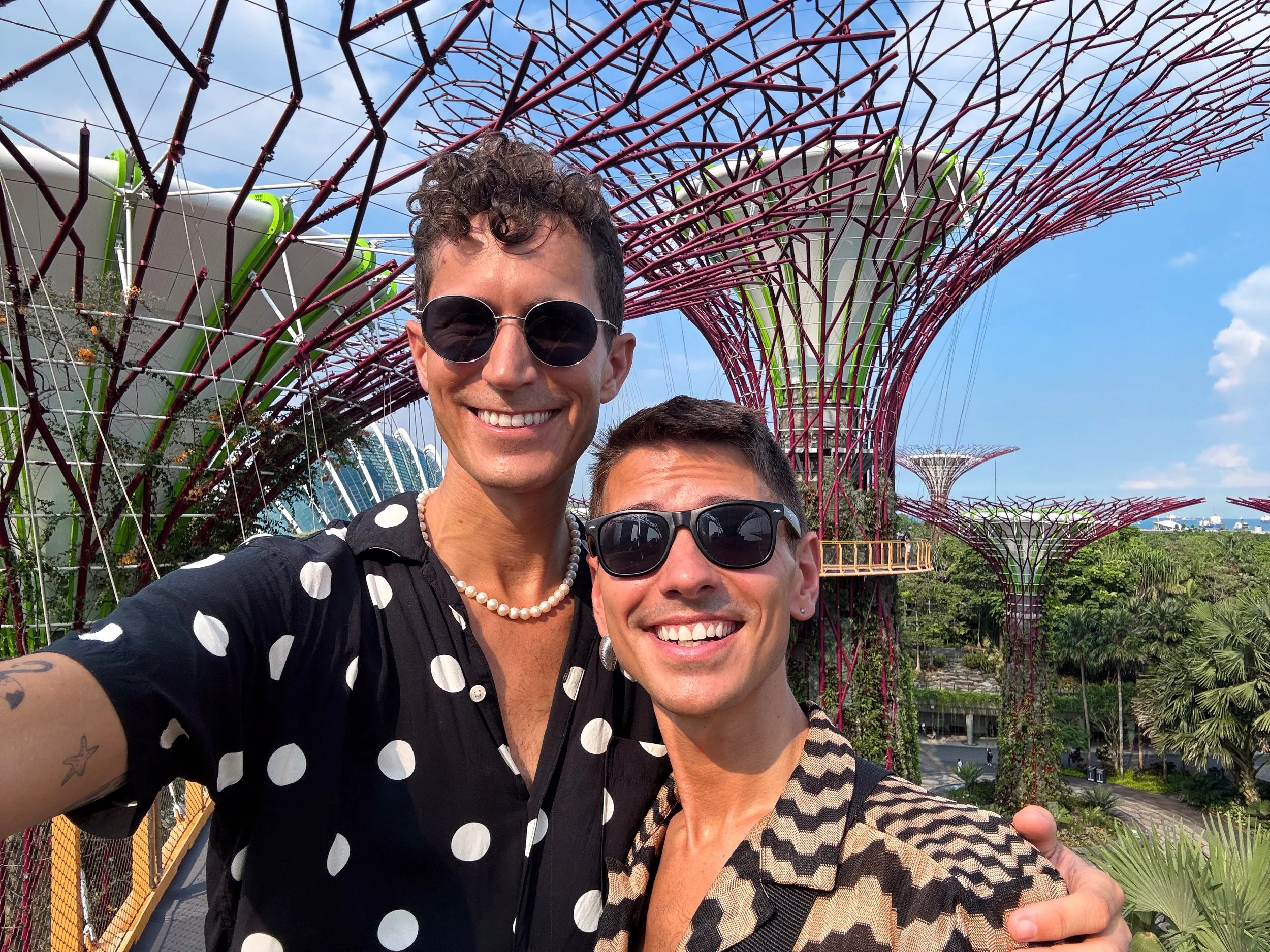
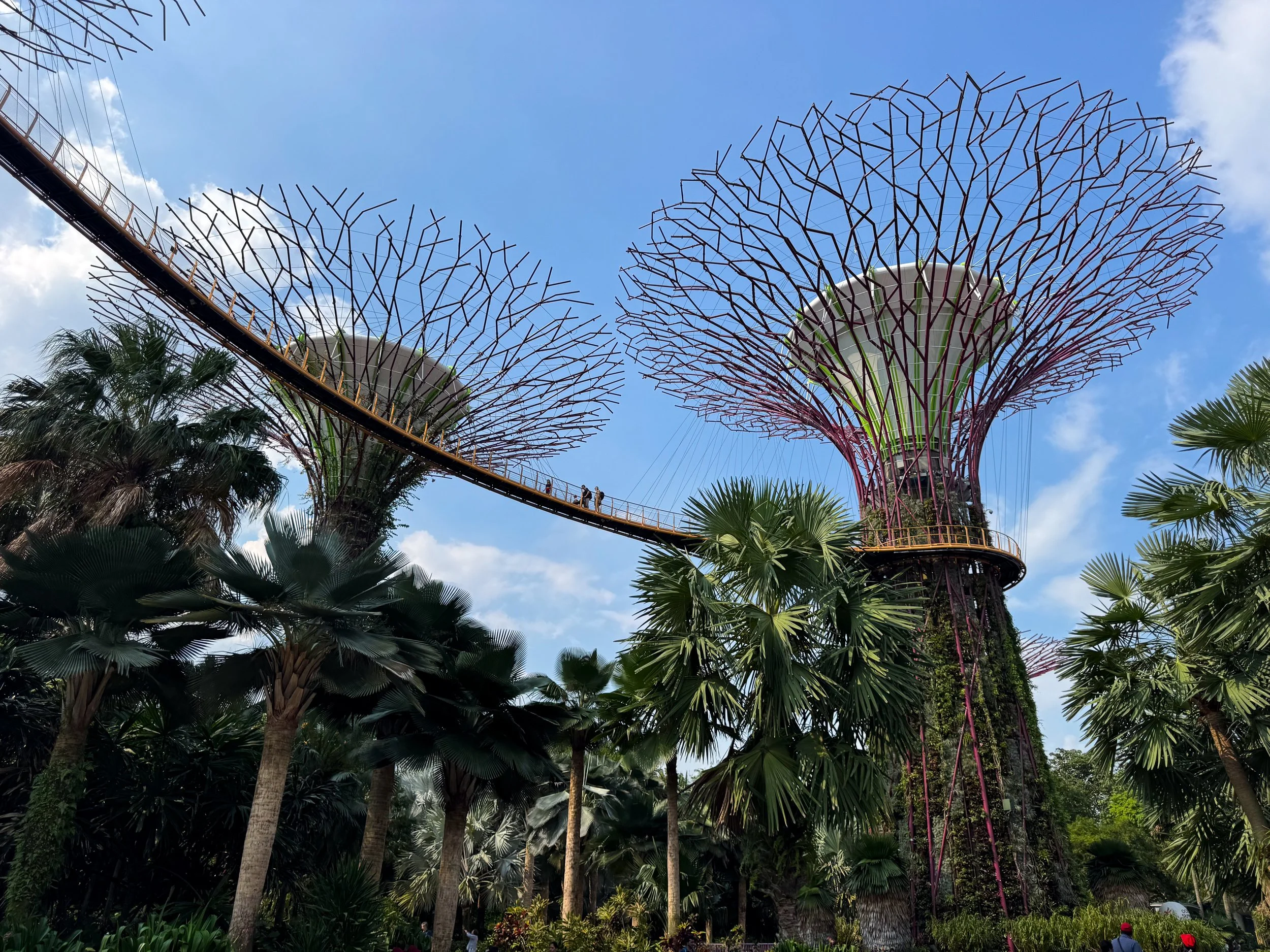
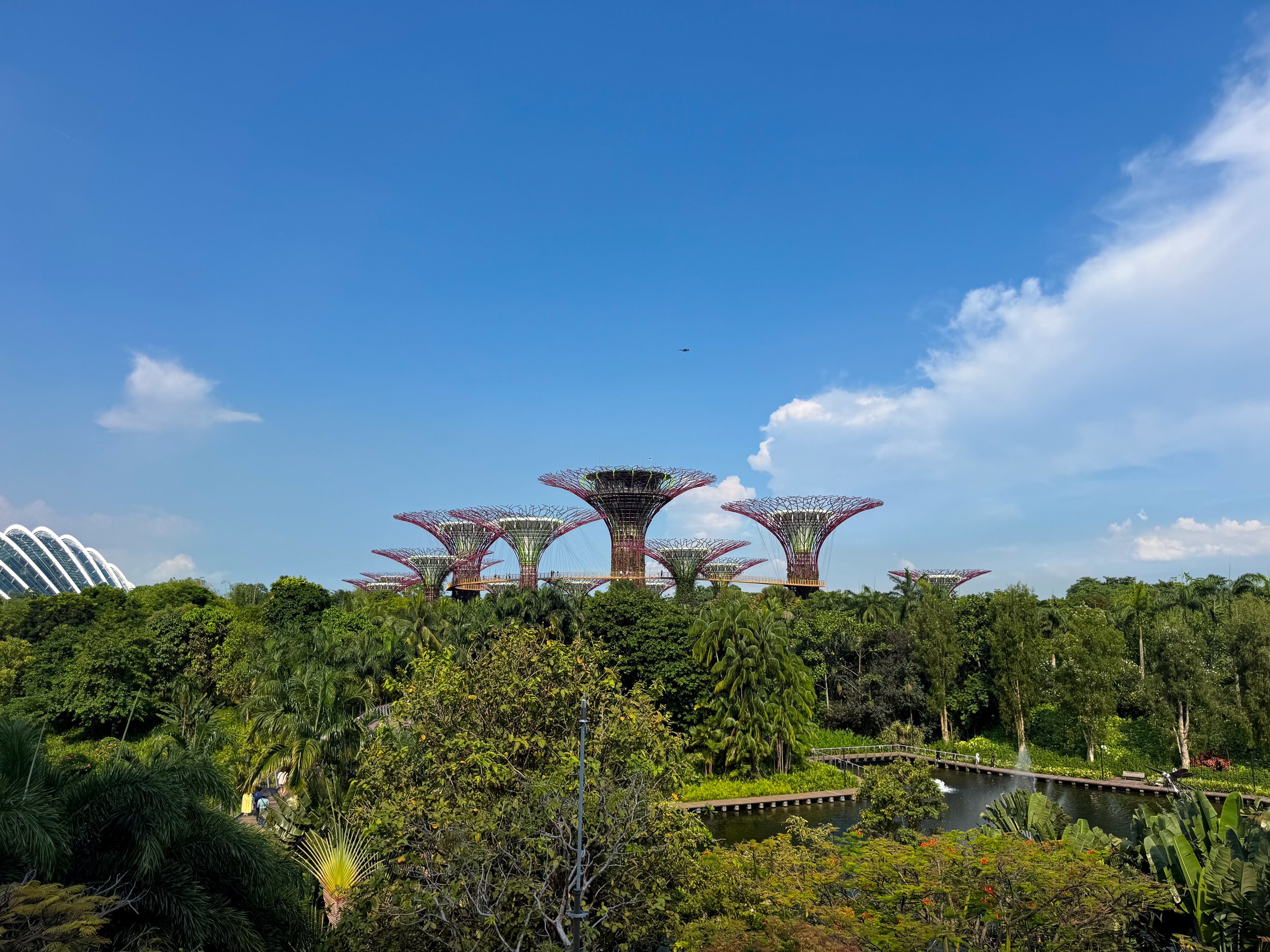
Gardens by The Bay. An impressive city park set against the backdrop of Marina Bay Sands. Its verdant gardens and walkways are home to the famed Super Tree Grove, Cloud Forest and Flower Dome. One can easily spend a whole day exploring the garden’s many sights and wonders.
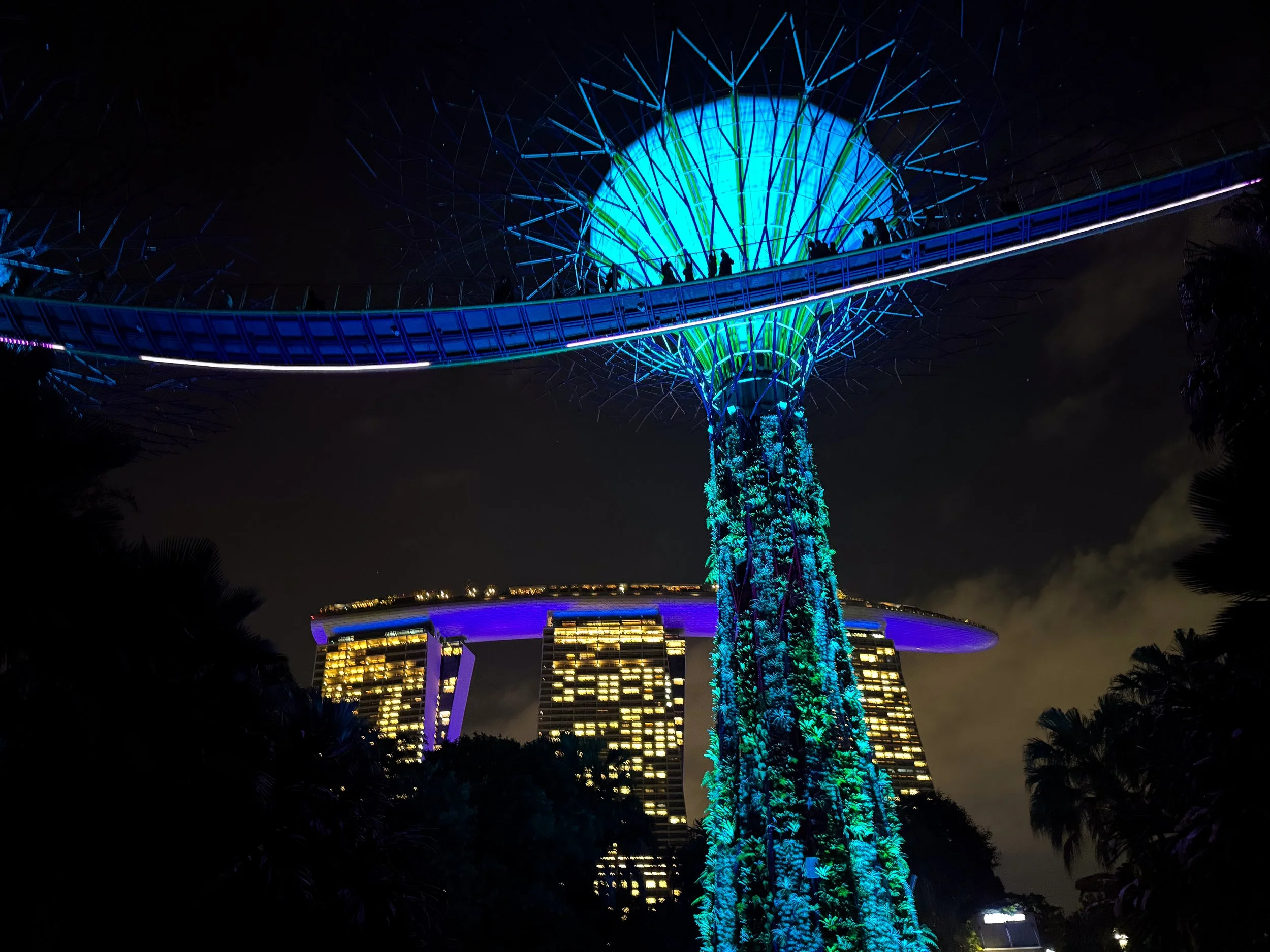
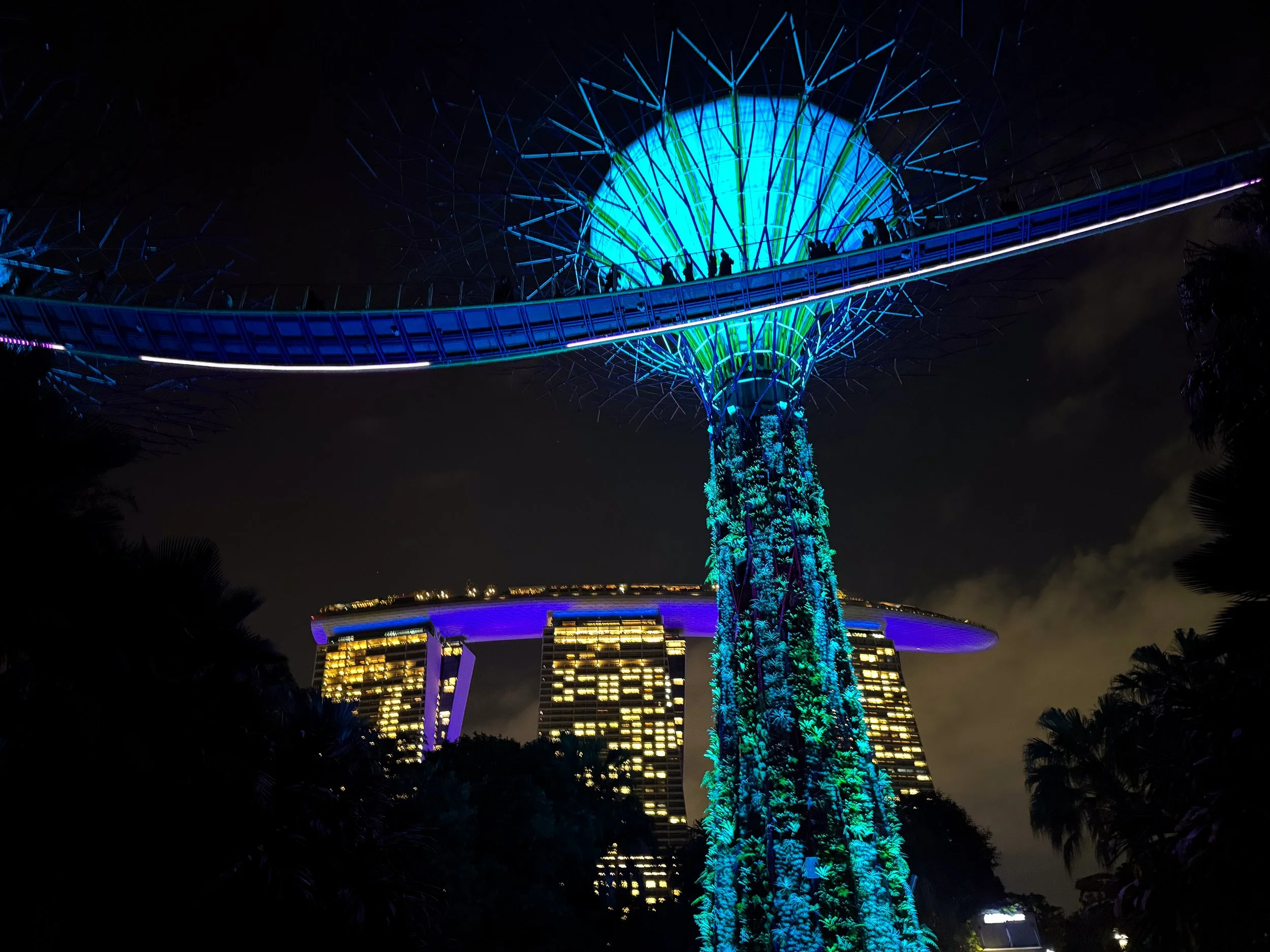
The Super Tree Grove. The Super Trees are a series of towering vertical gardens with latticed canopies resembling the shape of trees. Self sustaining local flora grows from planters covering their exterior. At night, the trees are illuminated in vibrant color changing lights. Walking around the Super Trees is a mesmerizing experience both day and night!
Super Tree Skyway. A 22m high skyway connecting multiple Super Trees with breathtaking views and perspectives of the surrounding grove, gardens and Marina Bay Sands.
Super Tree Observatory. A 60m high observatory on the roof of the tallest Super Tree with panoramic views and an indoor café. We preferred the perspective from the skyway much more.
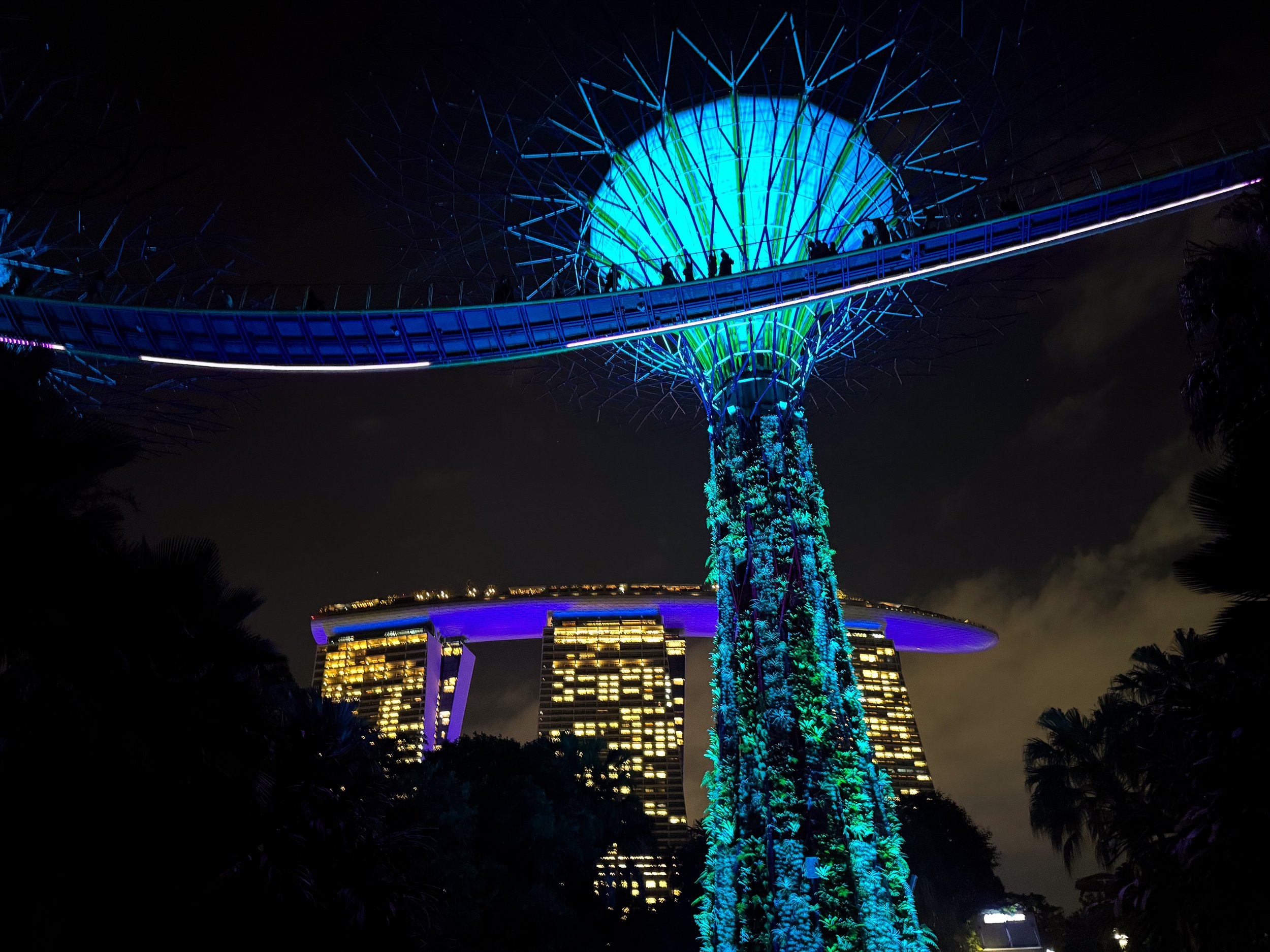
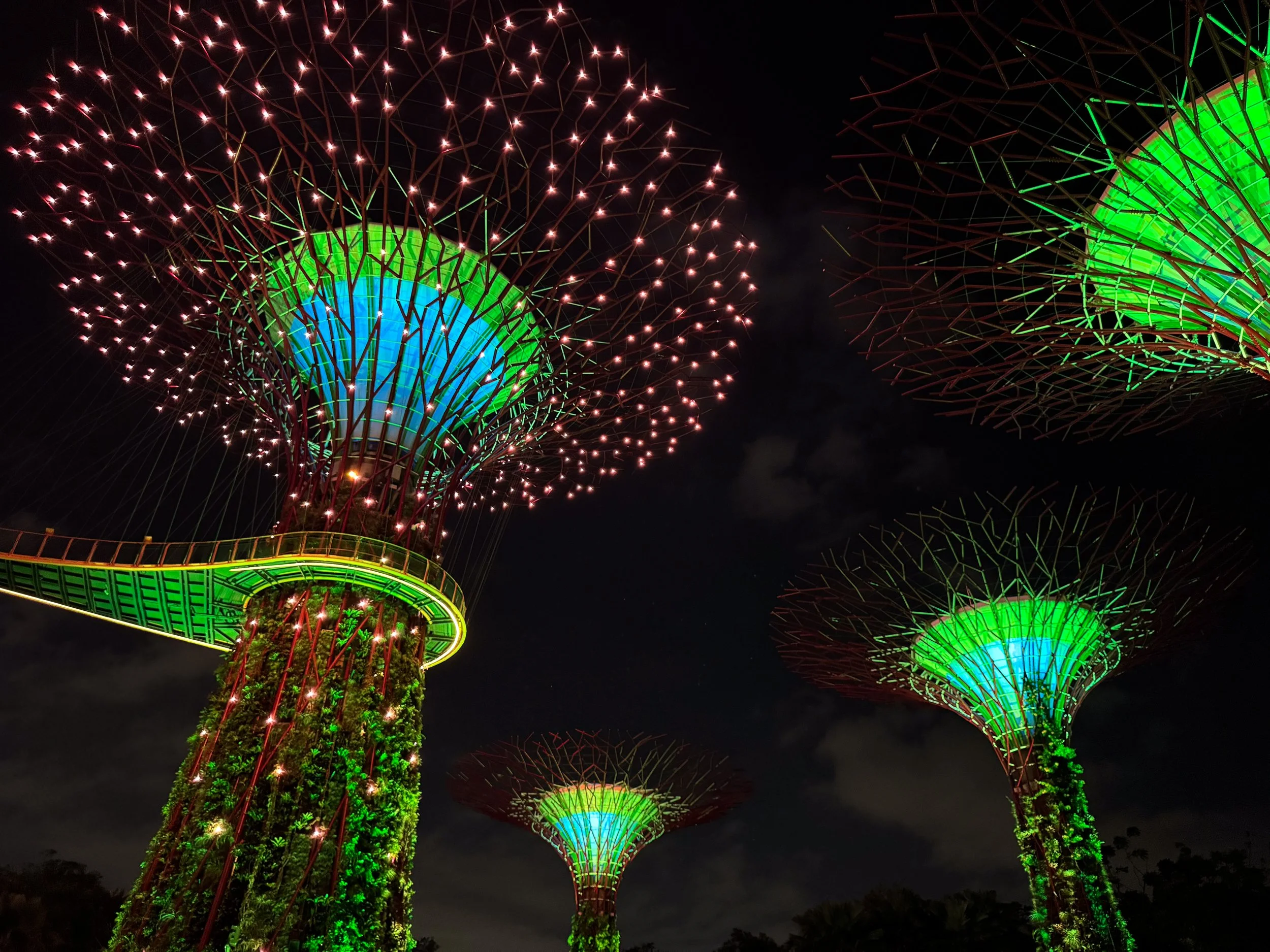
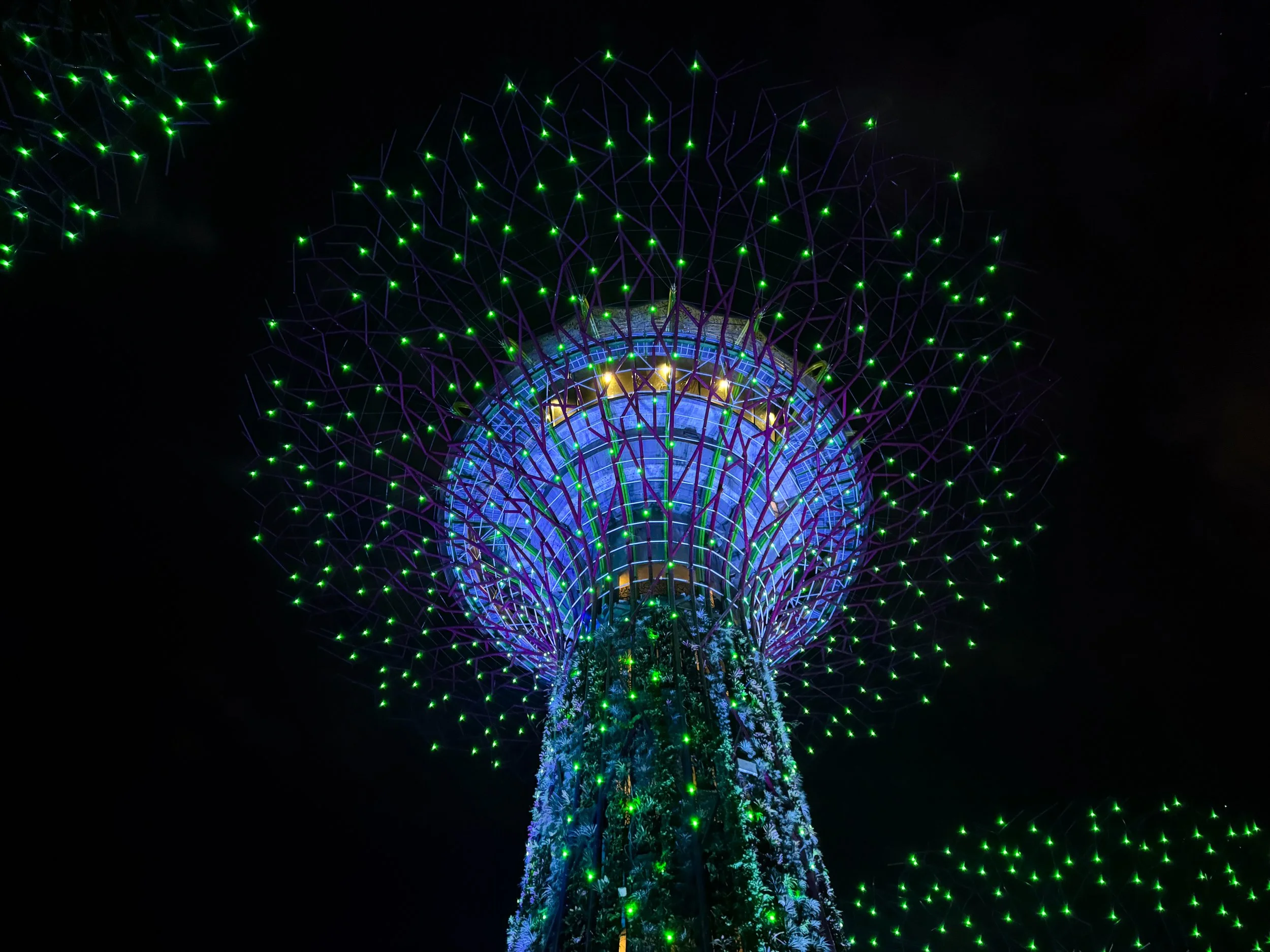
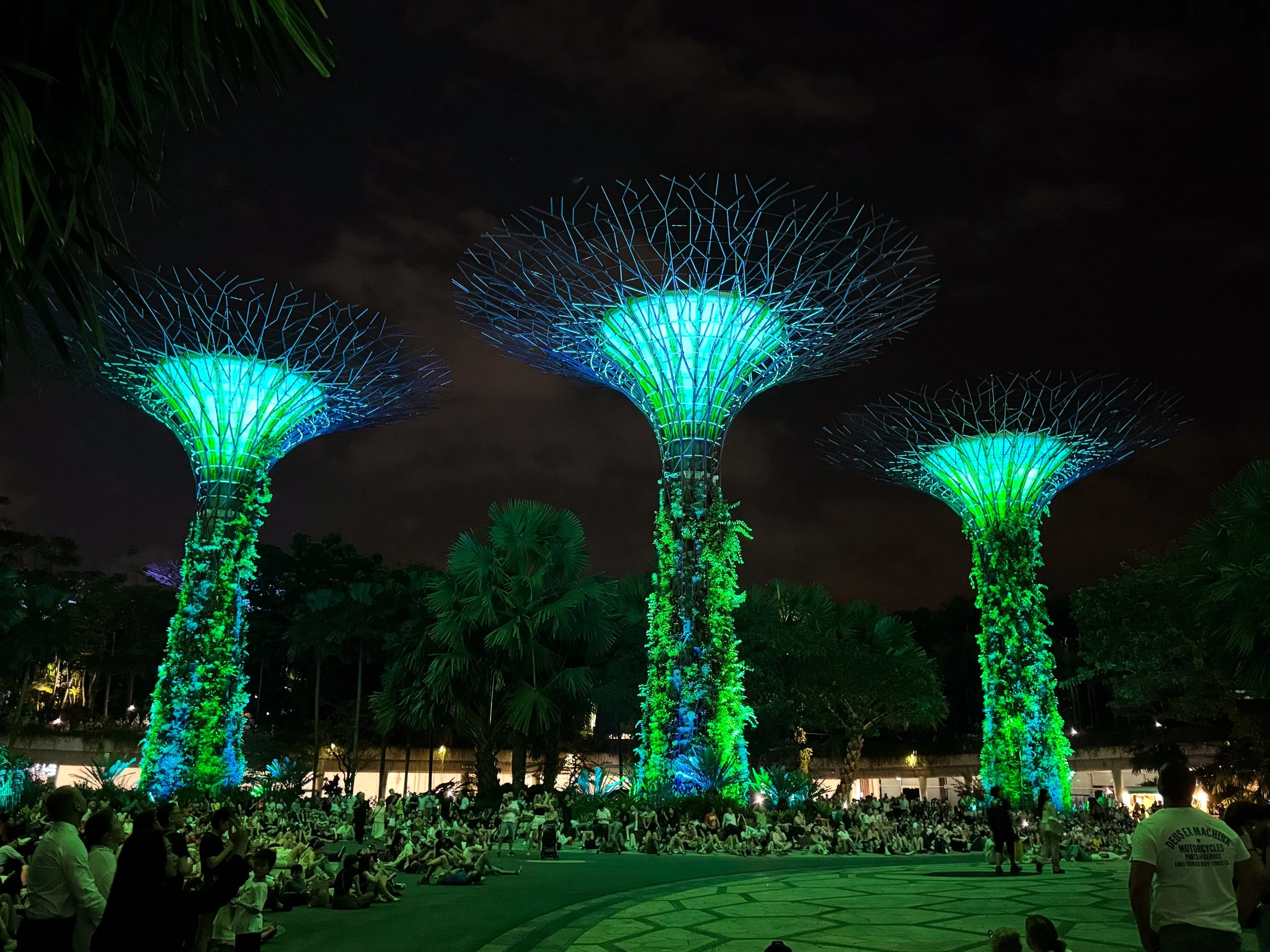
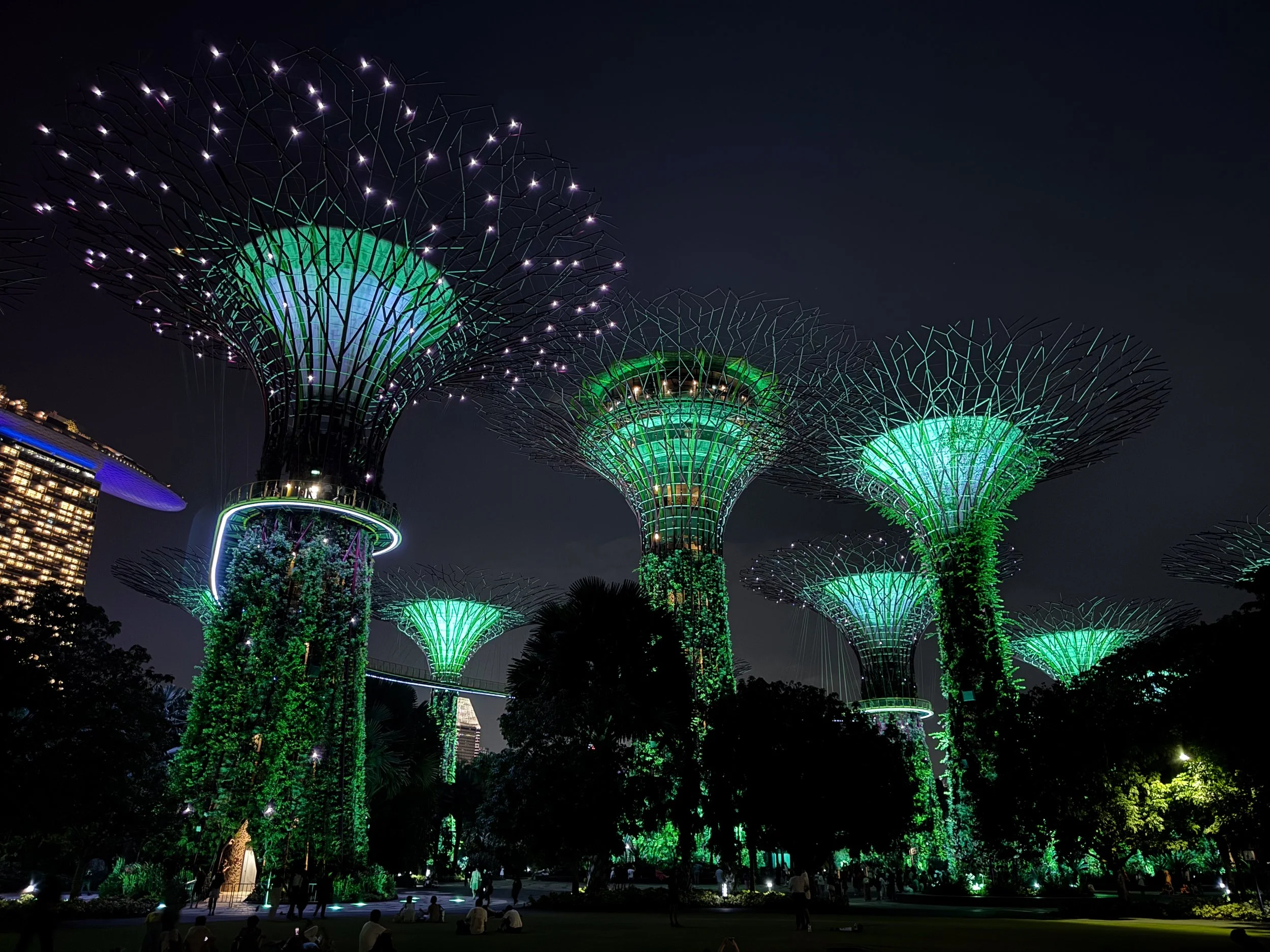
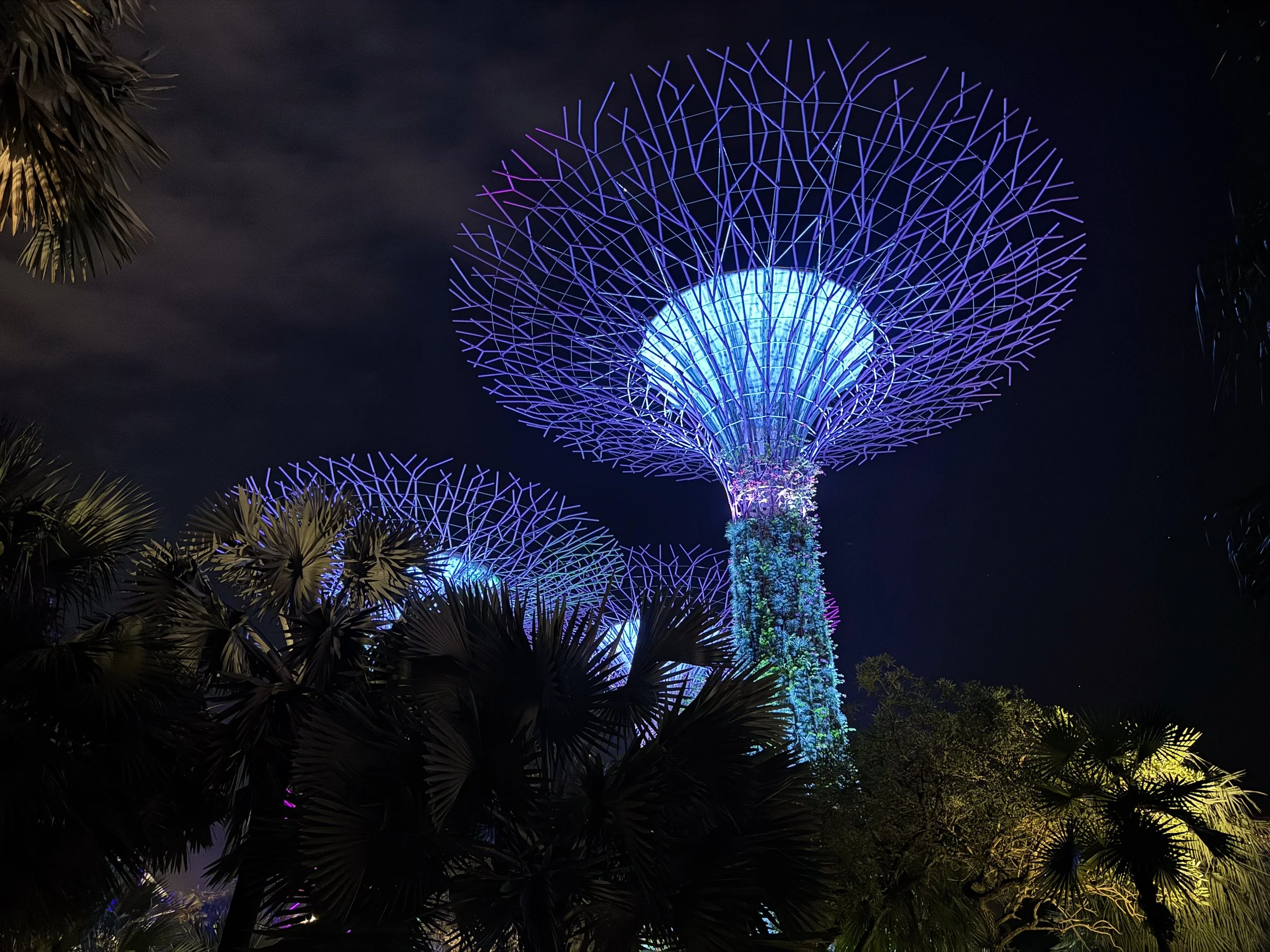
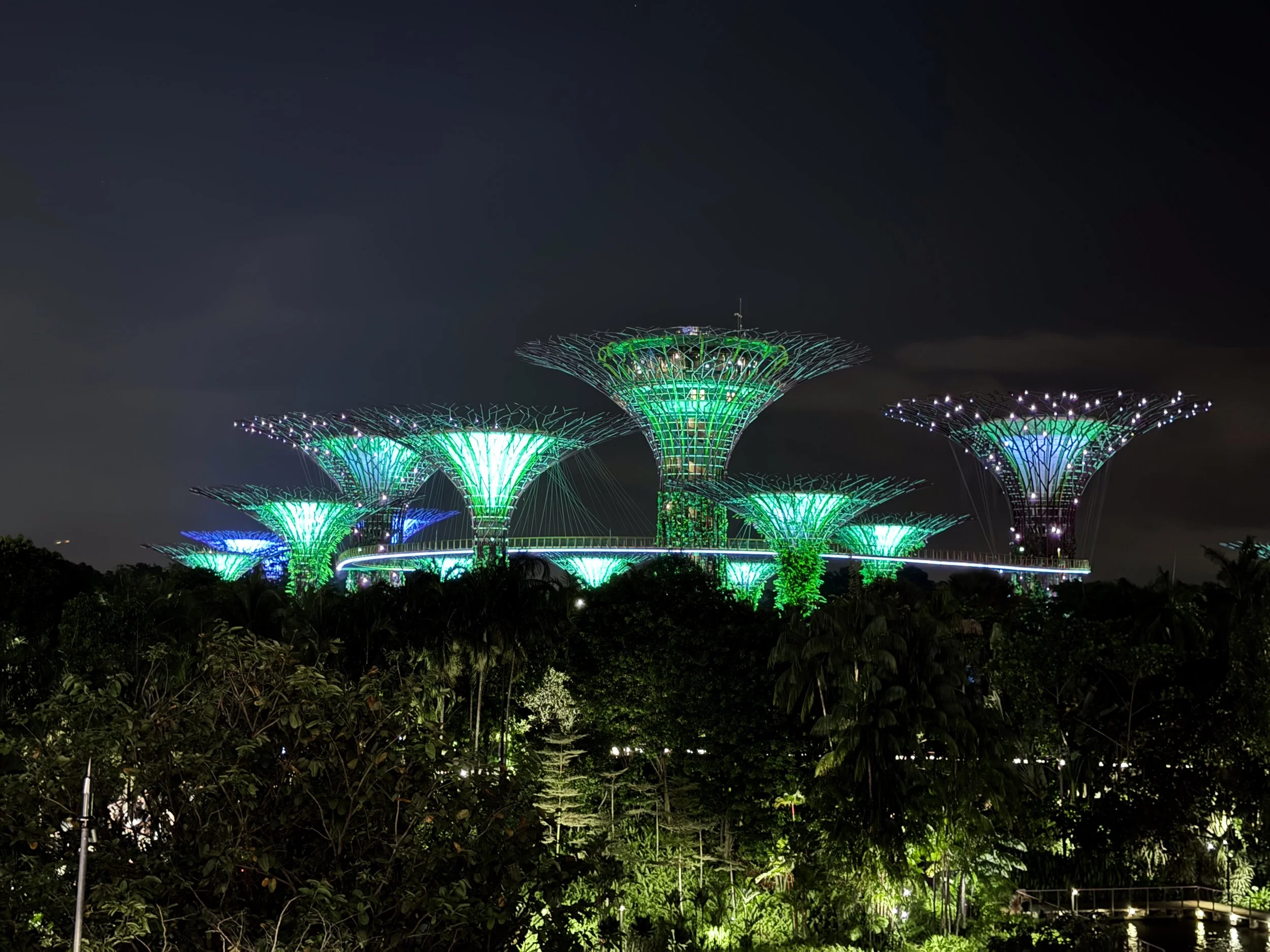
Garden Rhapsody. A nightly light show at The Super Tree Grove. The tree’s canopies and trunks light up in a spectrum of colors, flashing, pulsing and twinkling to the soundtrack of movie scores. It’s a truly magical experience and unlike anything we’ve experienced.
Good to Know. There are two light shows per night. One at 7:45pm and the other at 8:45pm.
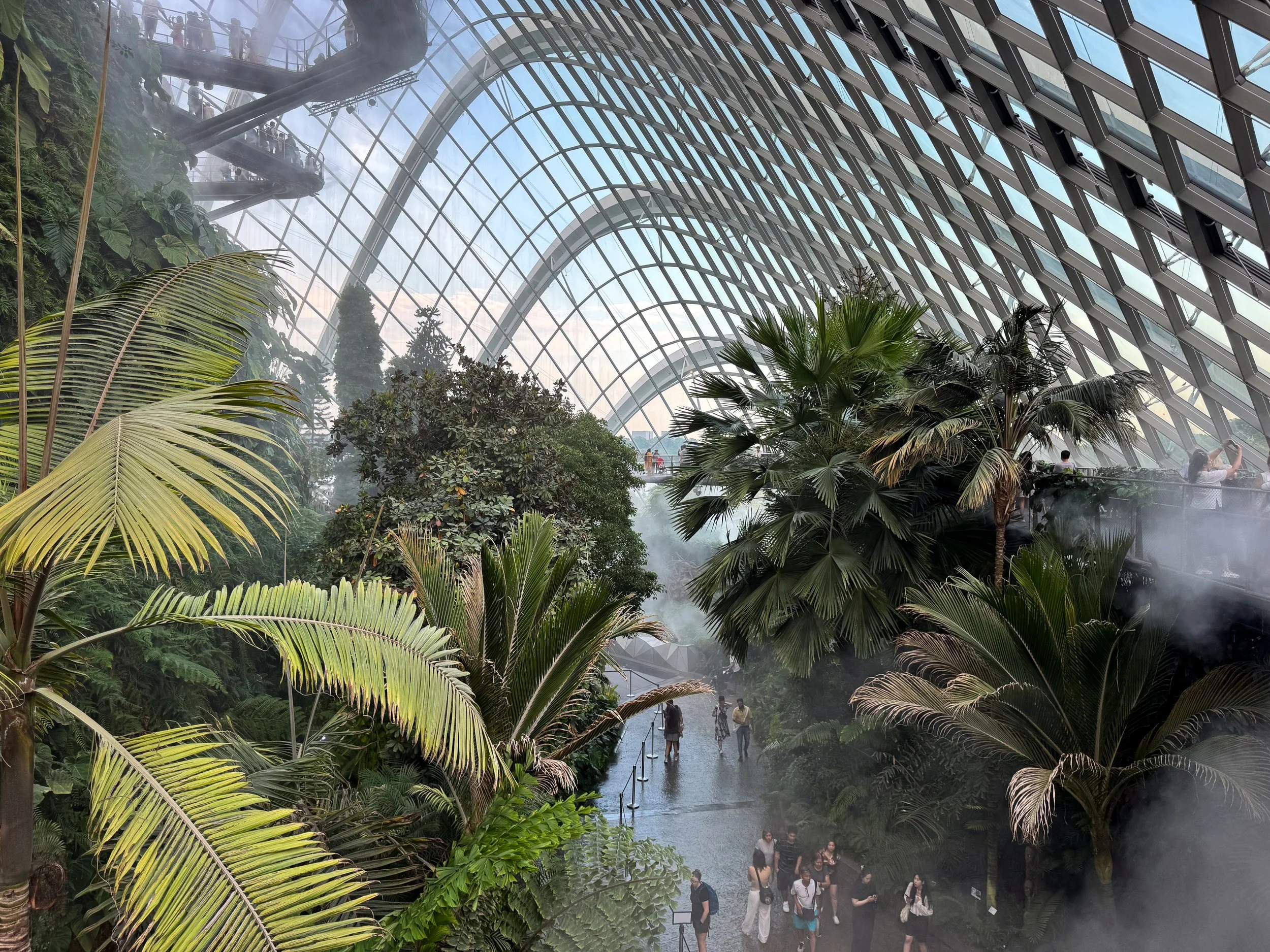
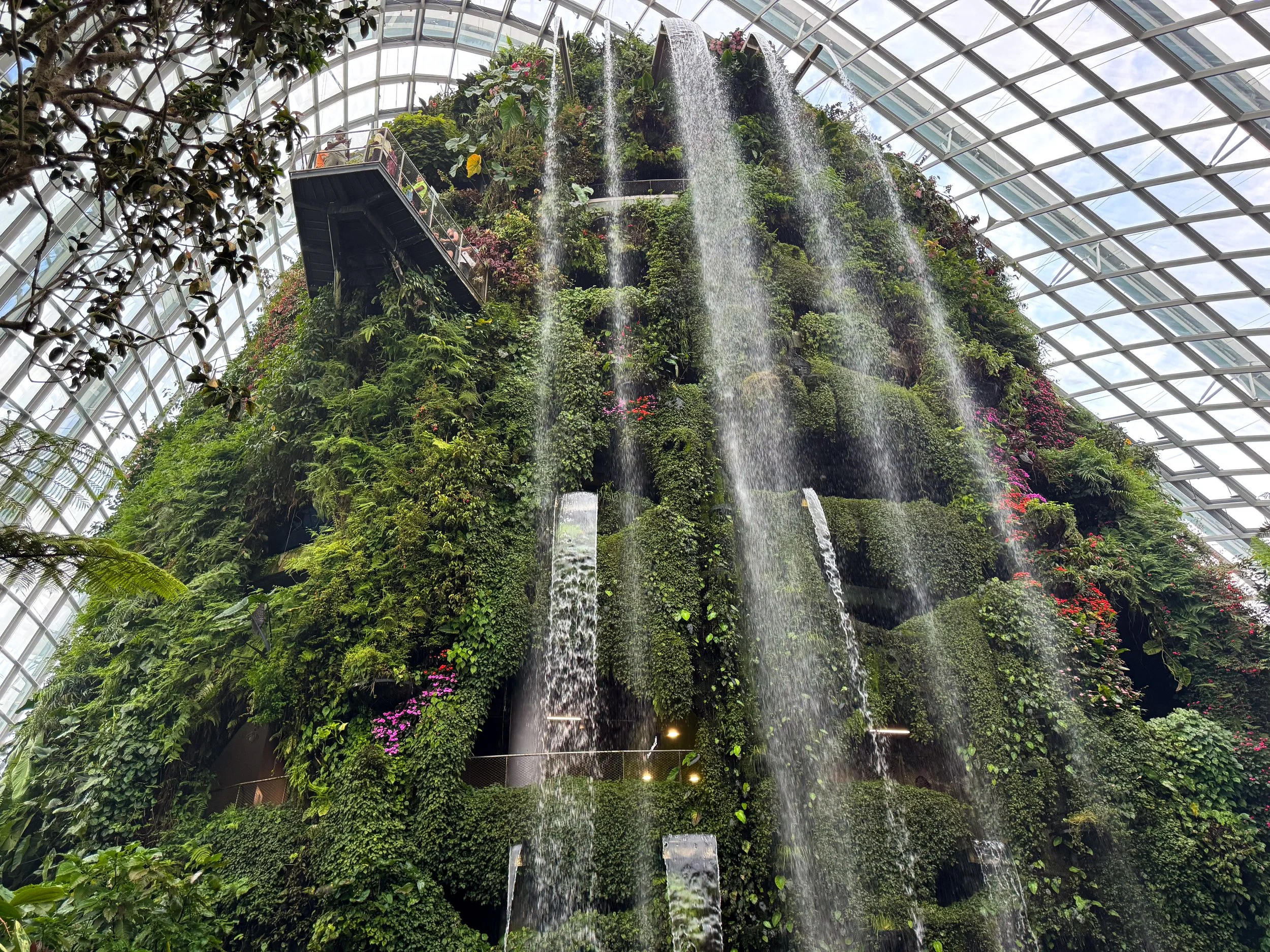
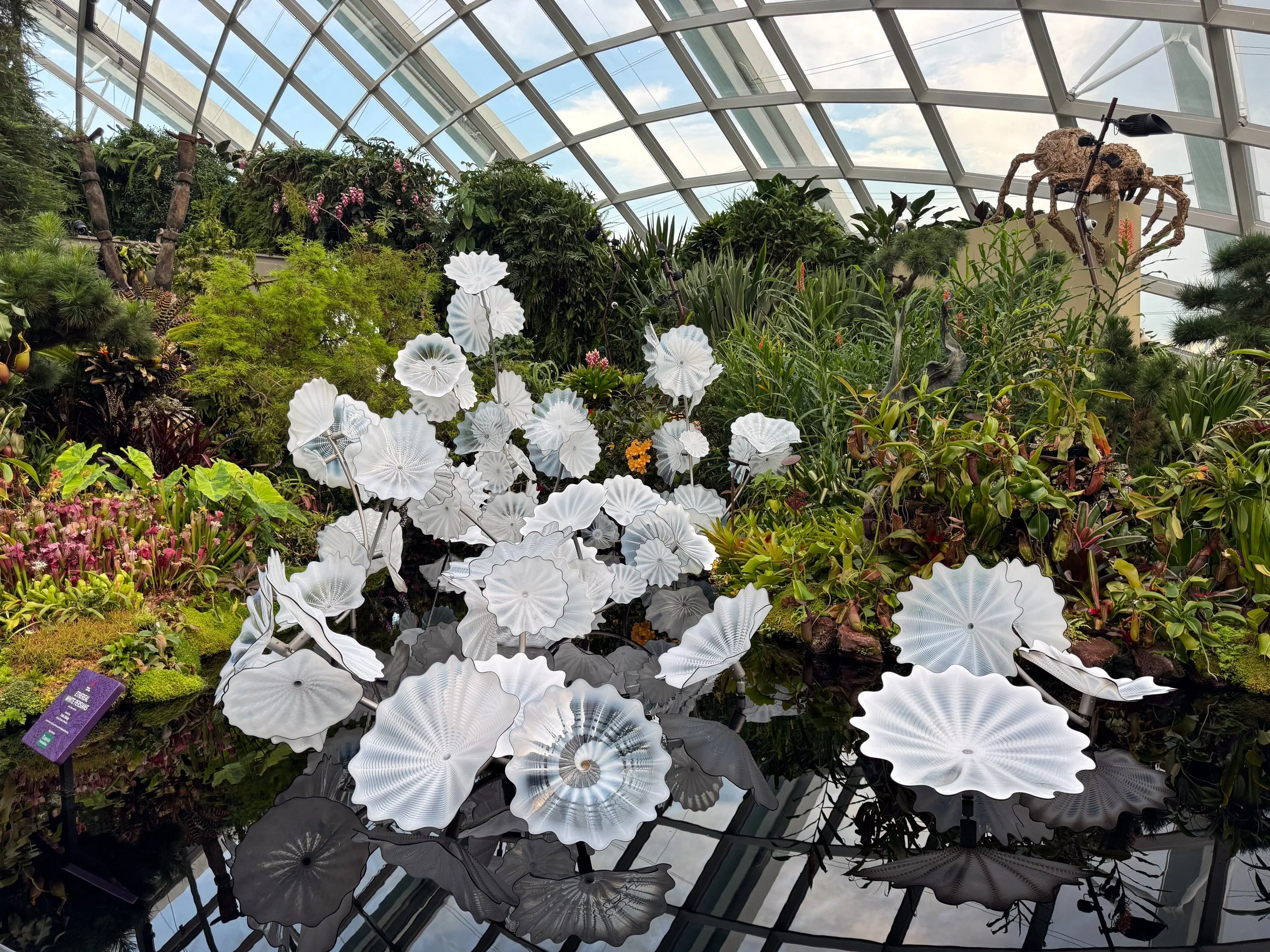
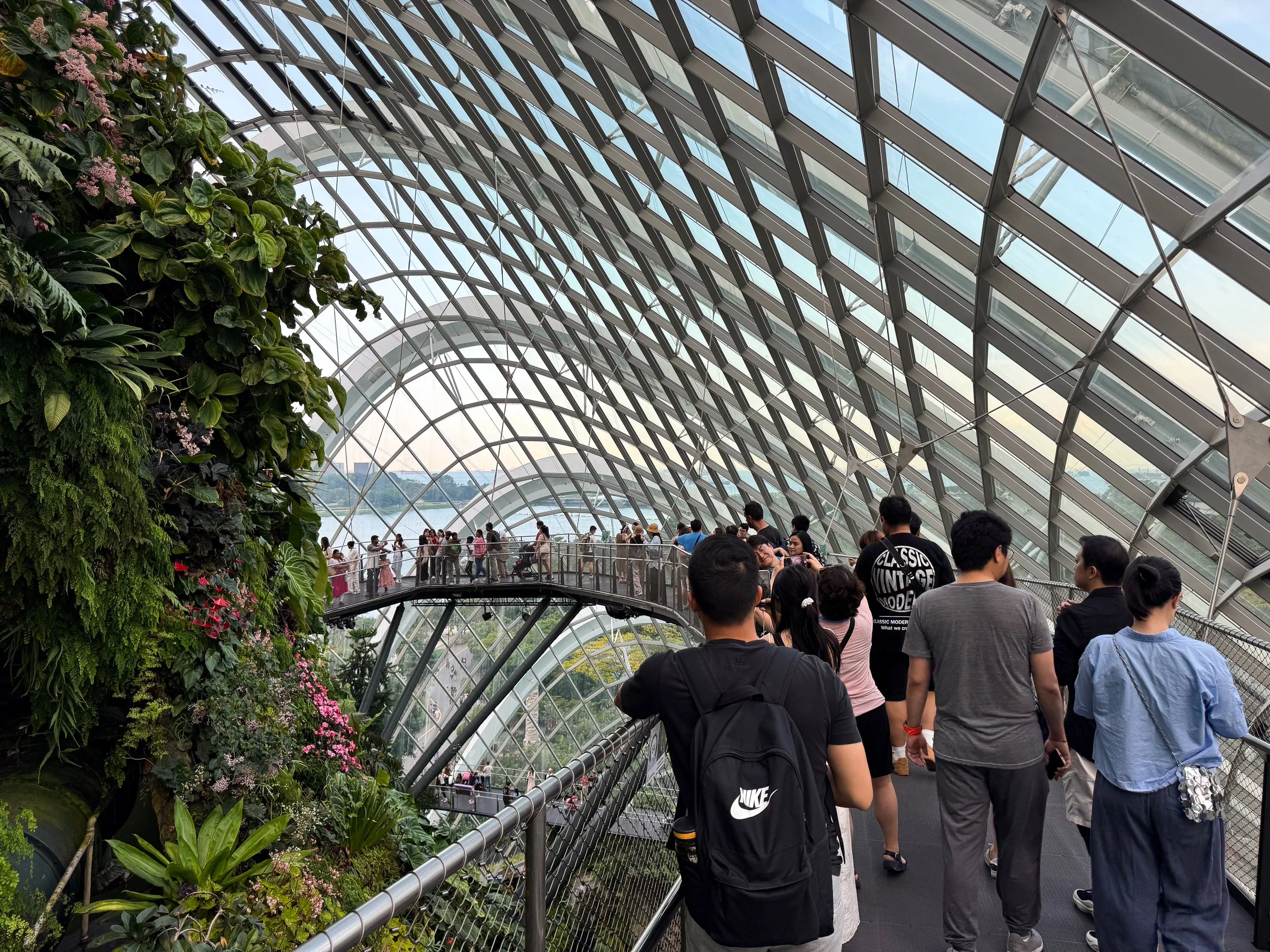
Cloud Forest. An air conditioned conservatory housing an artificial cloud forest with tropical plants and flowers that thrive in cool and humid environments. An irrigation system releases fog and mist throughout the dome while a large waterfall spills over a towering green wall. Multilevel walkways loop around the dome’s foliage covered hill.
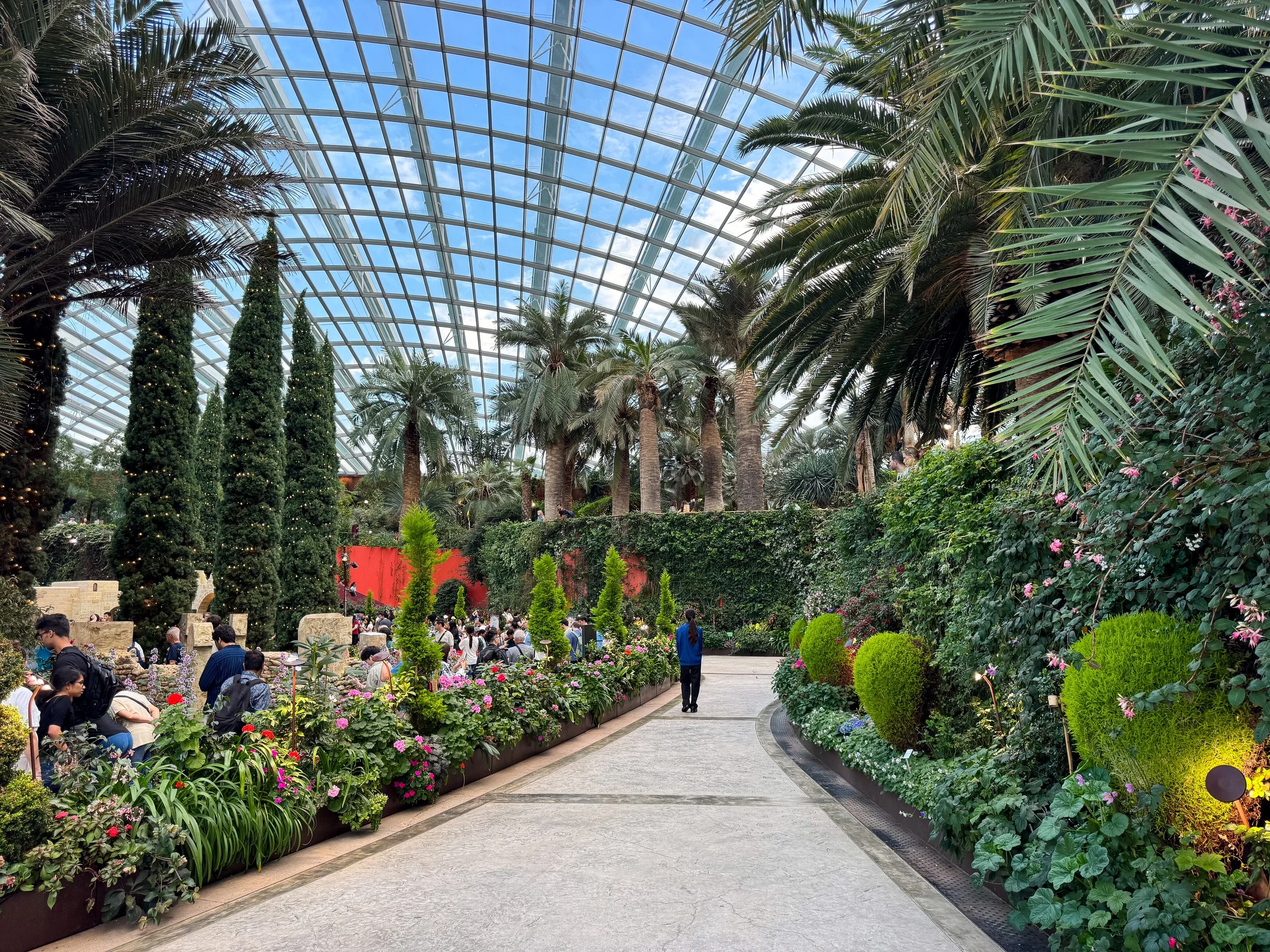
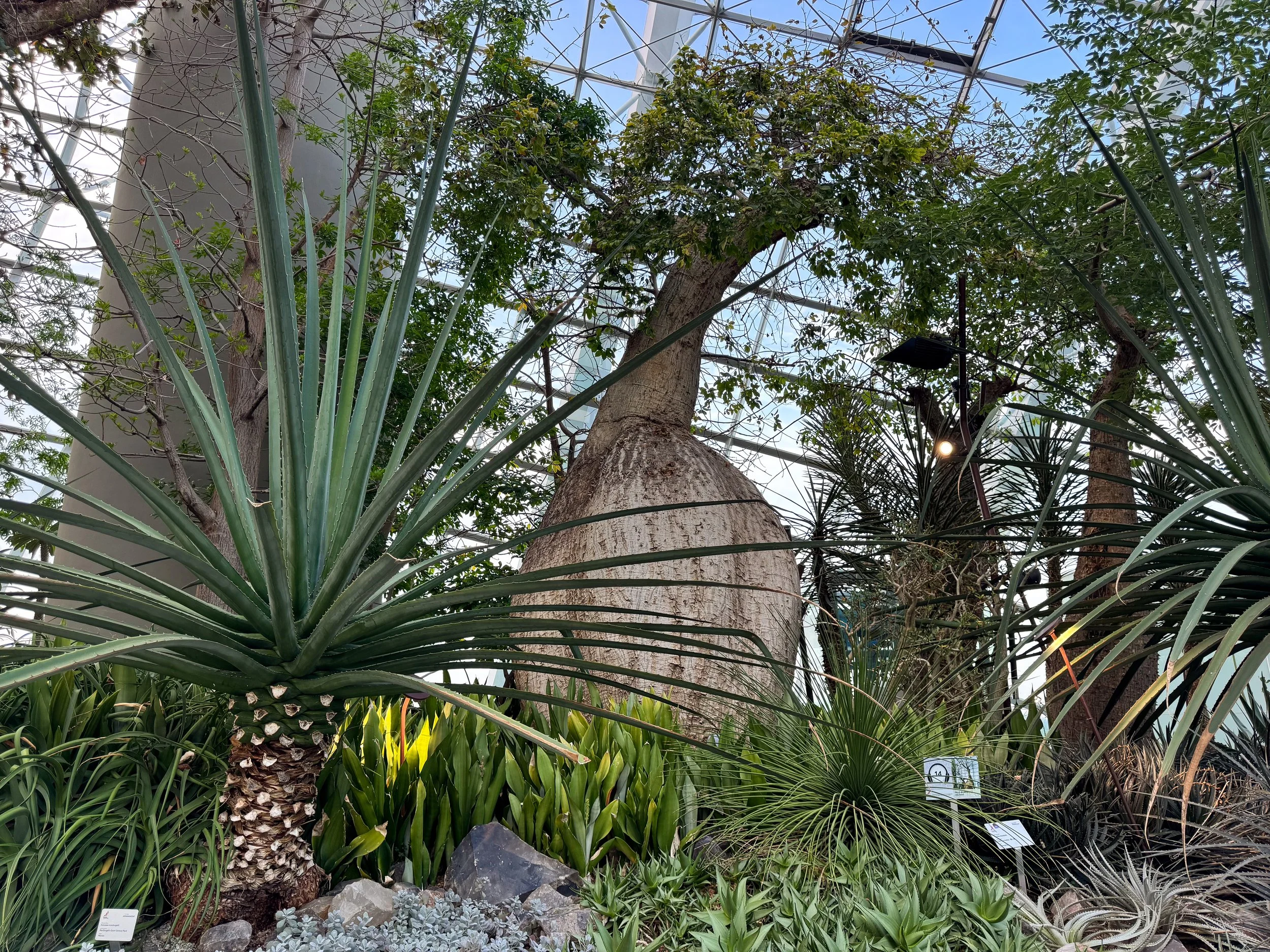
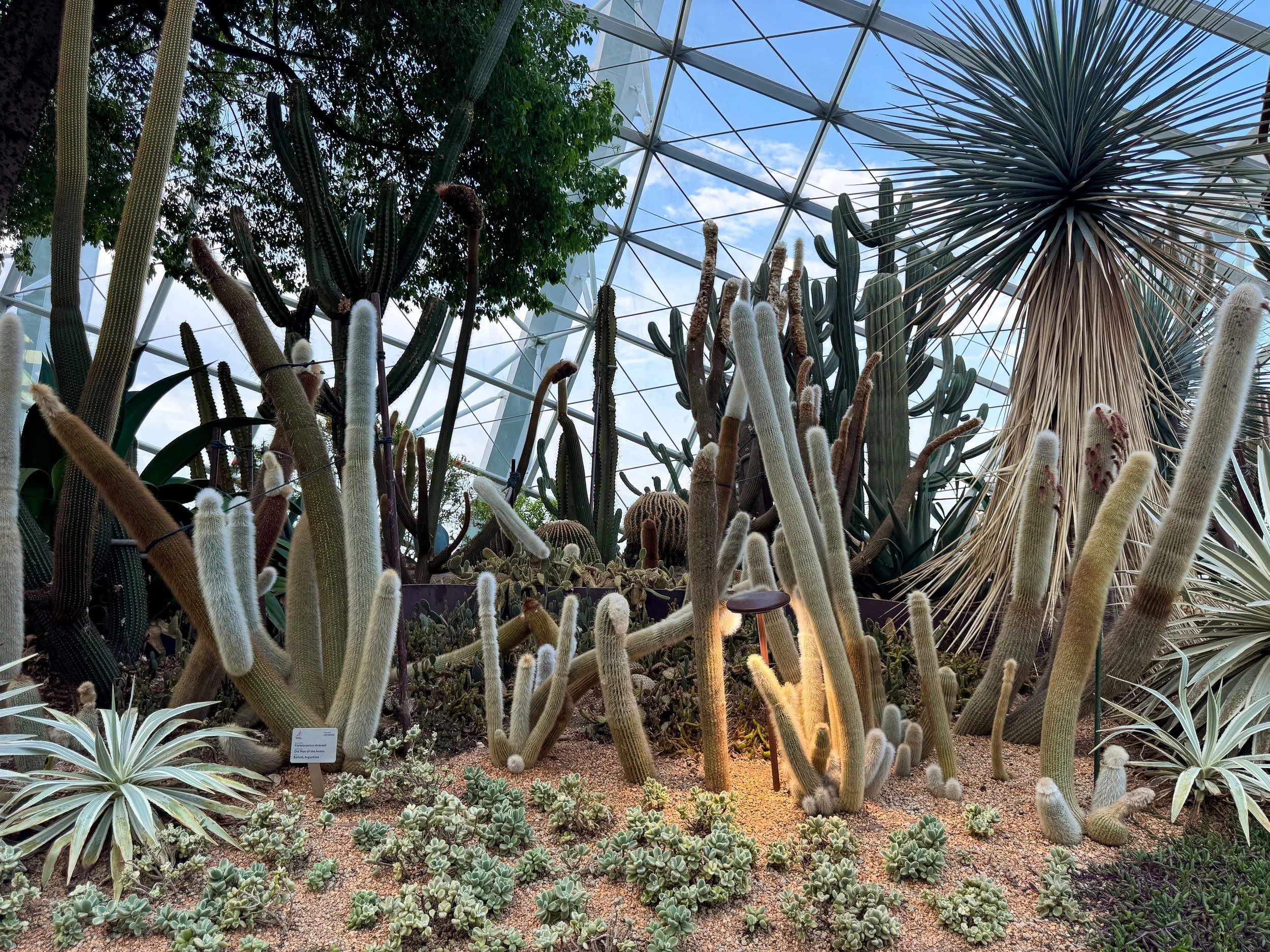
Flower Dome. A conservatory housing plants, trees, cacti, succulents and flowers from several regions of the world. Walkways lead through the indoor gardens past baobab trees from Madagascar, dragon trees from Yemen, olive trees from Italy, agave plants from Mexico, cacti from Bolivia and tulips from the Netherlands.
Good to Know. Gardens by the Bay is one of the few free sights in Singapore and easily one of the best. The Cloud Forest, Flower Dome, Super Tree Skyway and Observatory each cost extra.
See the Sights
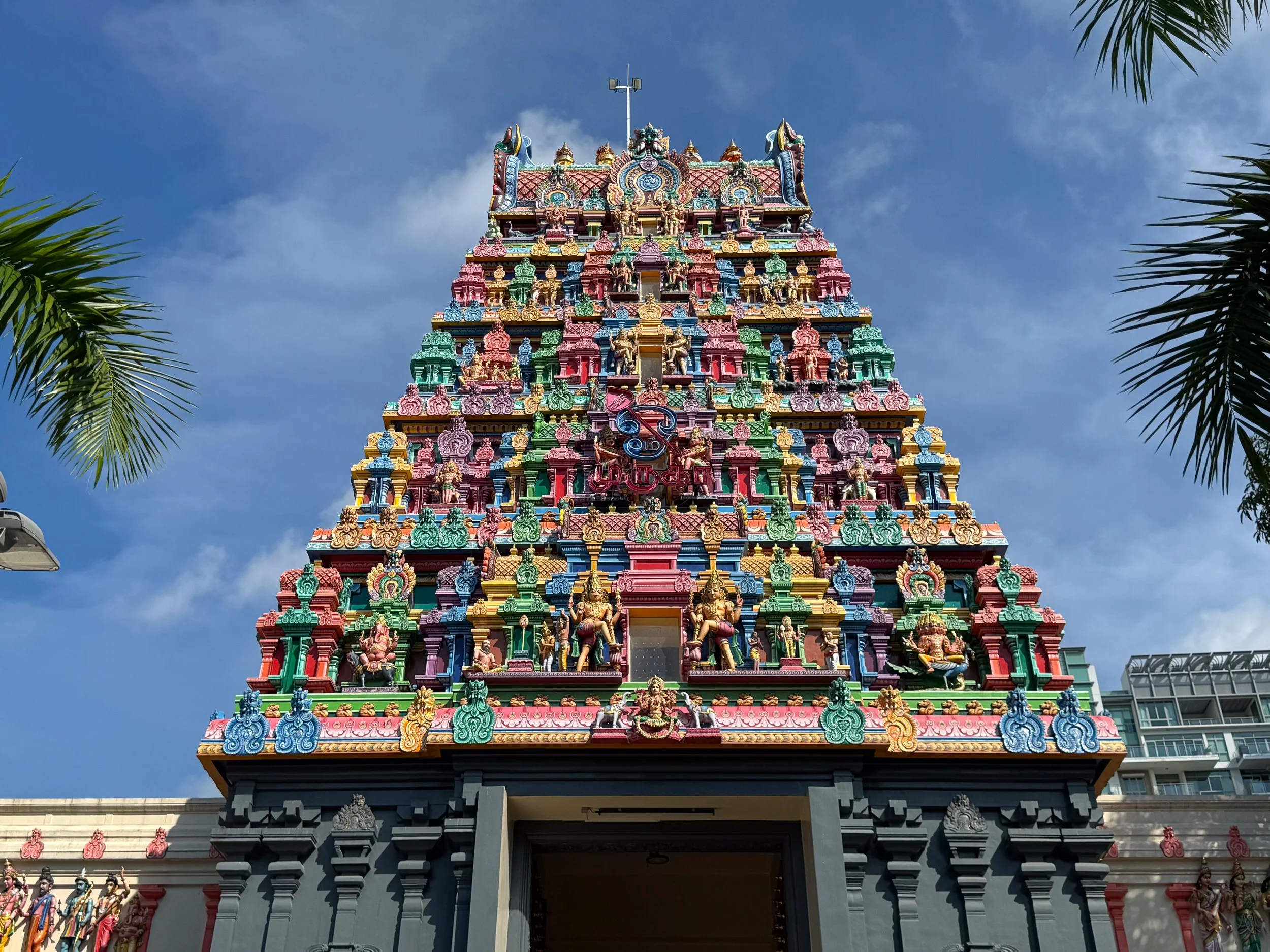
Sri Thendayuthapani Monument. A Hindu temple with a Gopuram, a multicolored pyramid shaped gate decorated with layers of sculptures and statues
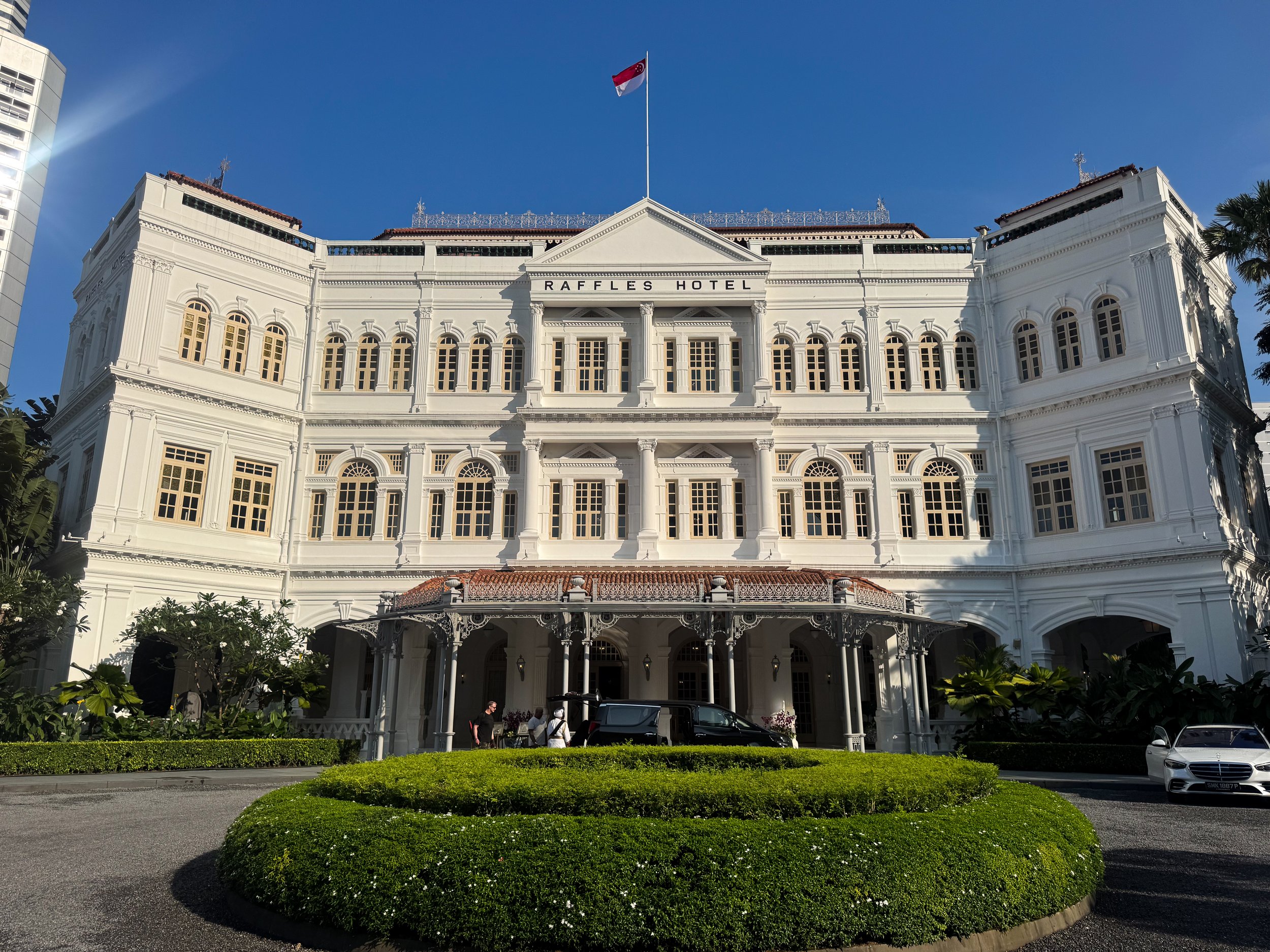
The Raffles Hotel. A historic luxury hotel with tropical gardens and an arcade with shops and restaurants. Visit The Long Bar for a Singapore Sling.
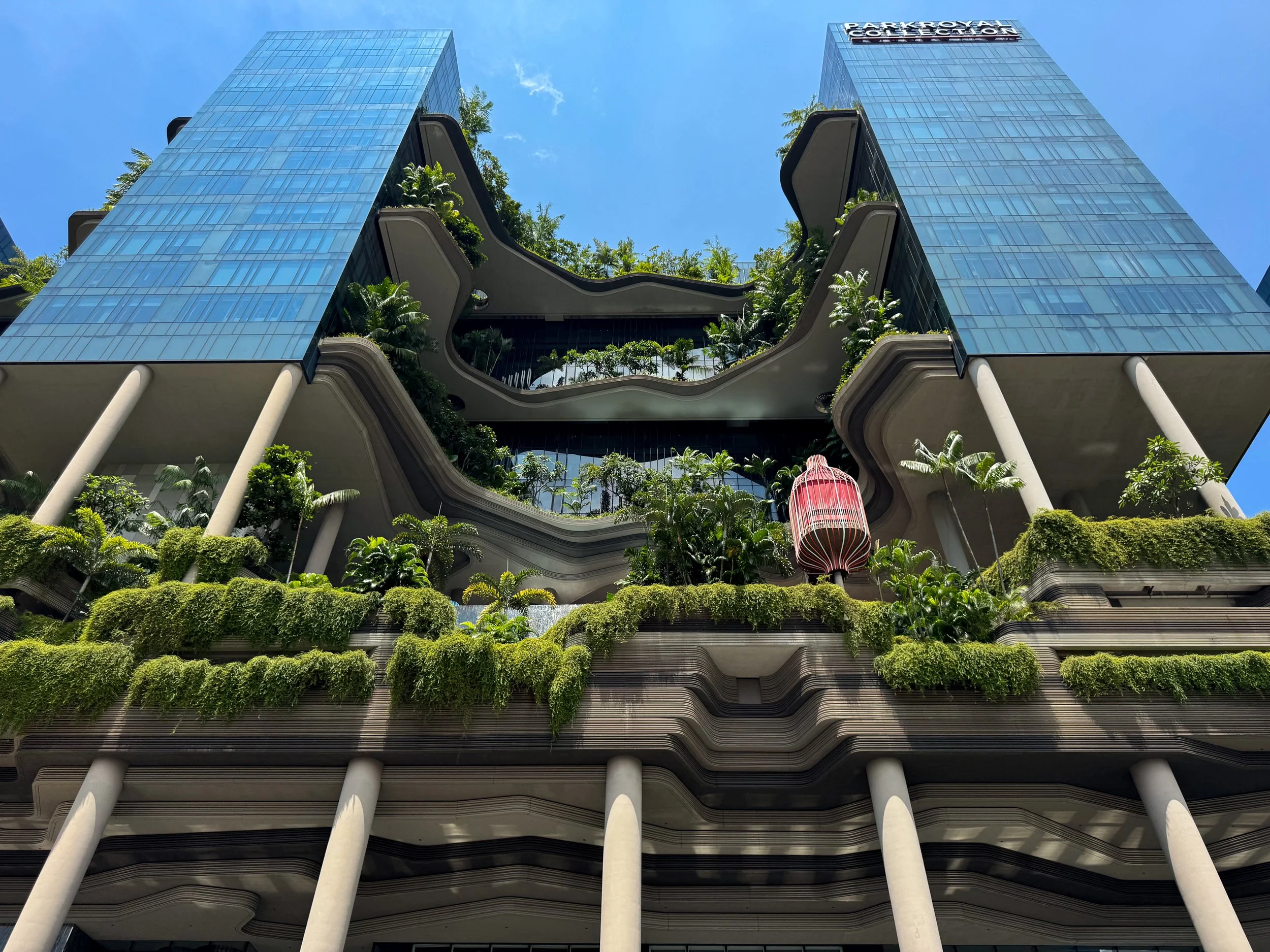
Park Royal Hotel. An iconic garden hotel with a topographical facade covered in verdant gardens, green walls and water features.
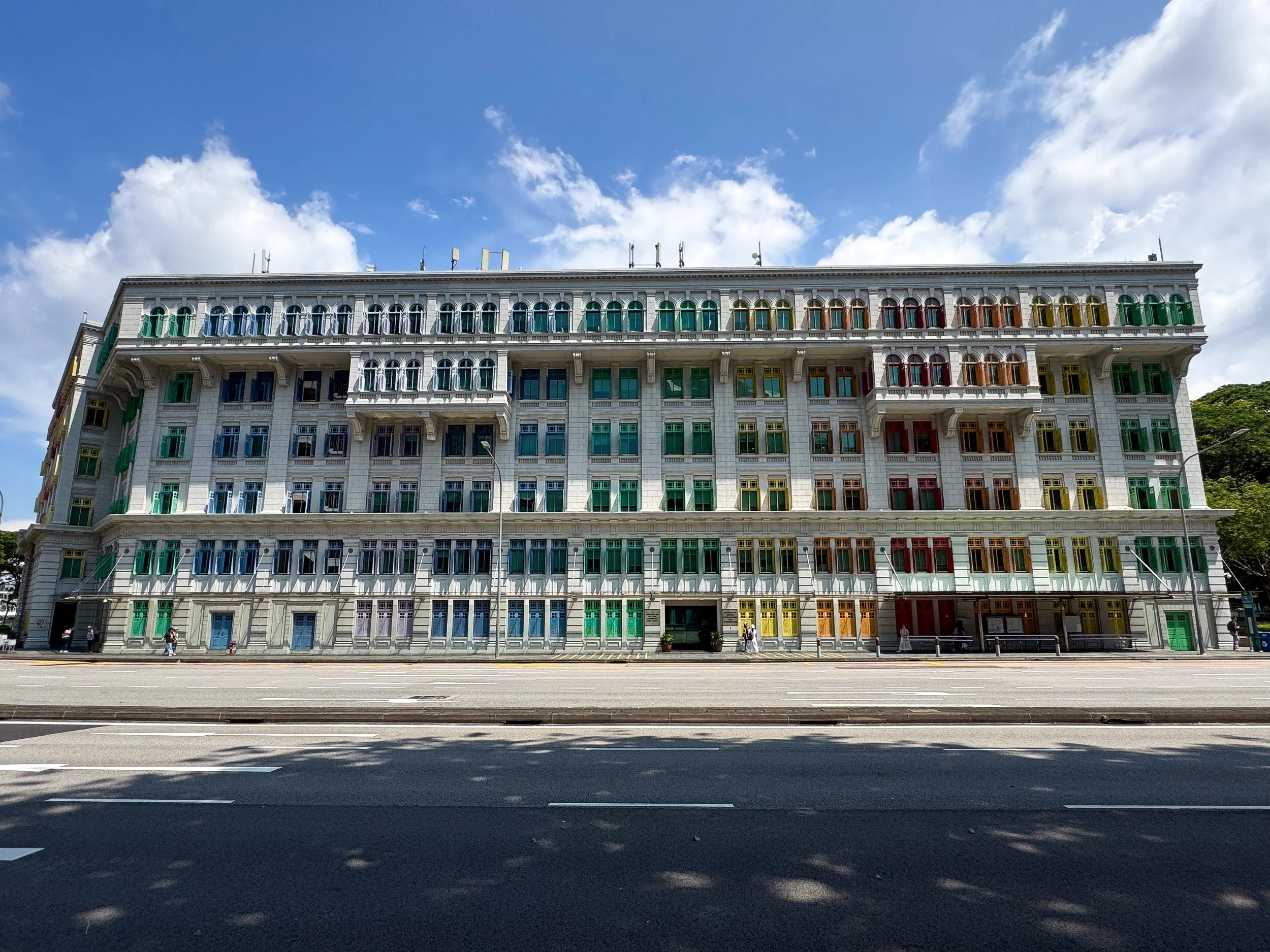
Old Hill Police Station. A historic building and former police station along the Singapore River. Hundreds of window shutters, painted in a gradient of colors, cover its white neoclassical facade.
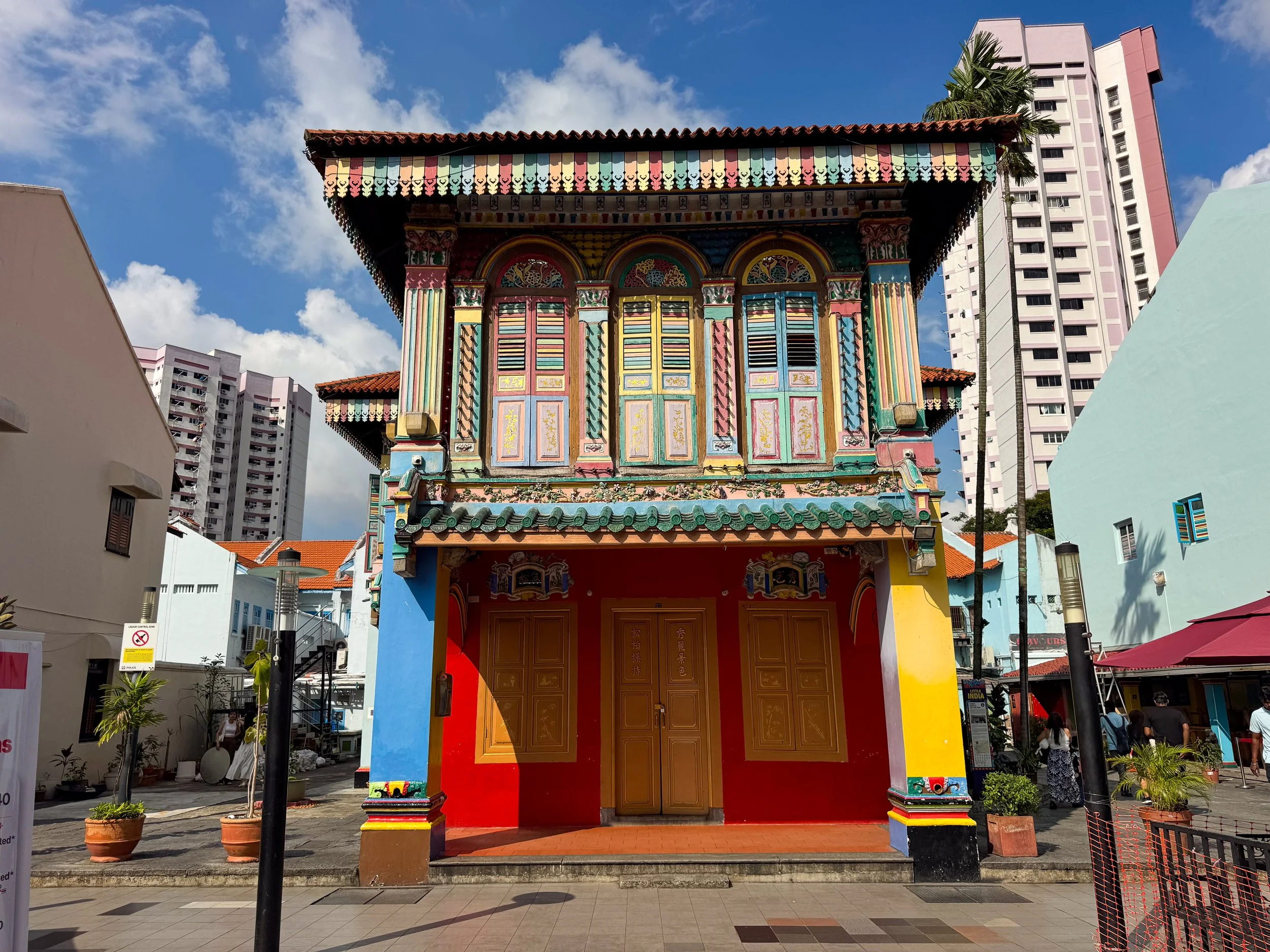
Former House of Tan Teng Niah. One of the few remaining Chinese shop houses in Little India. Every surface and ornamental element is painted in a rainbow of colors representing the diversity of the neighborhood and city.
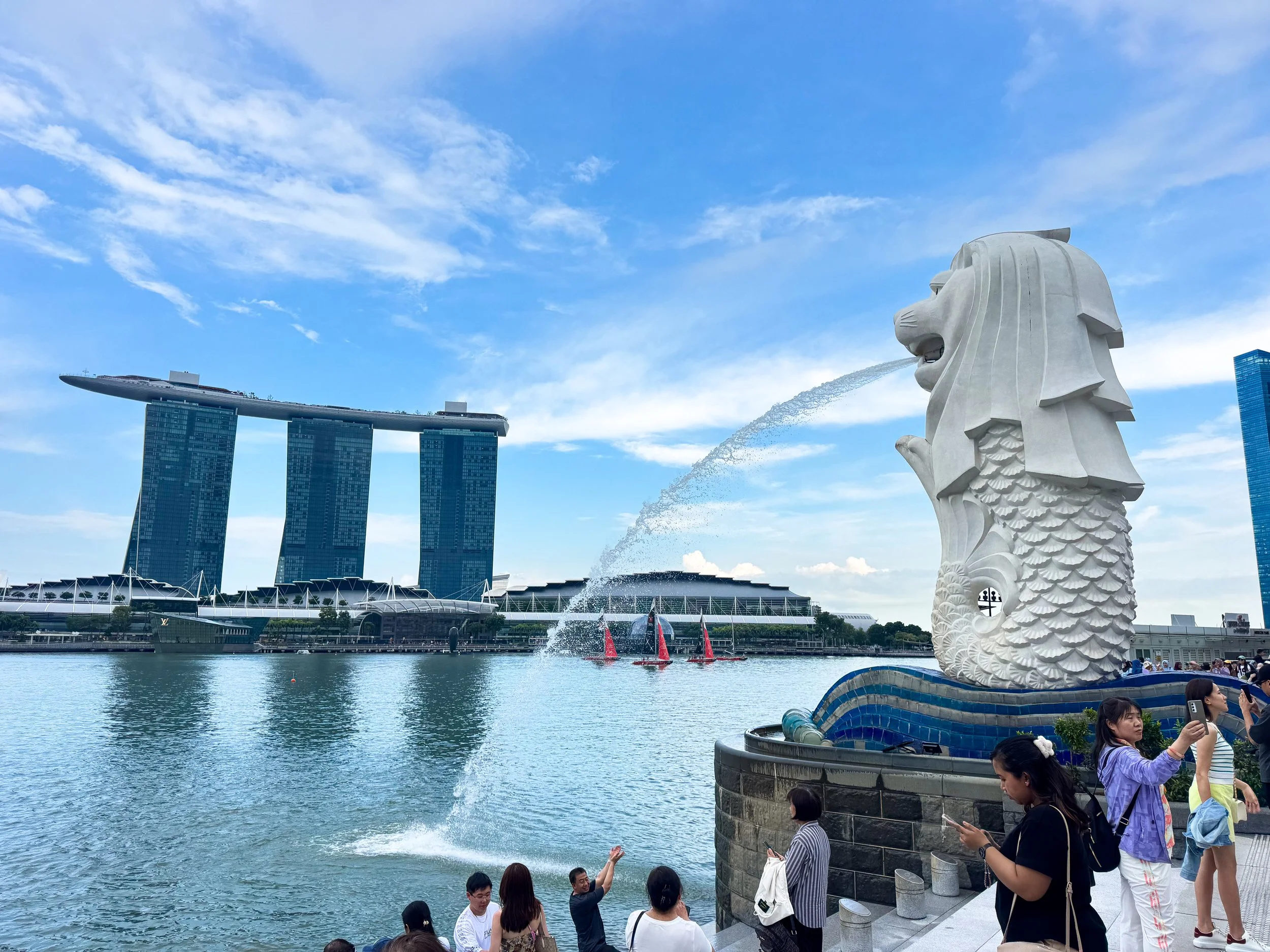
Merlion Park. A park along Marina Bay with a statue of a lion head on the body of a fish. The head of the Merlion is a fountain that flows into the bay. It’s a symbol of the port city’s strength.
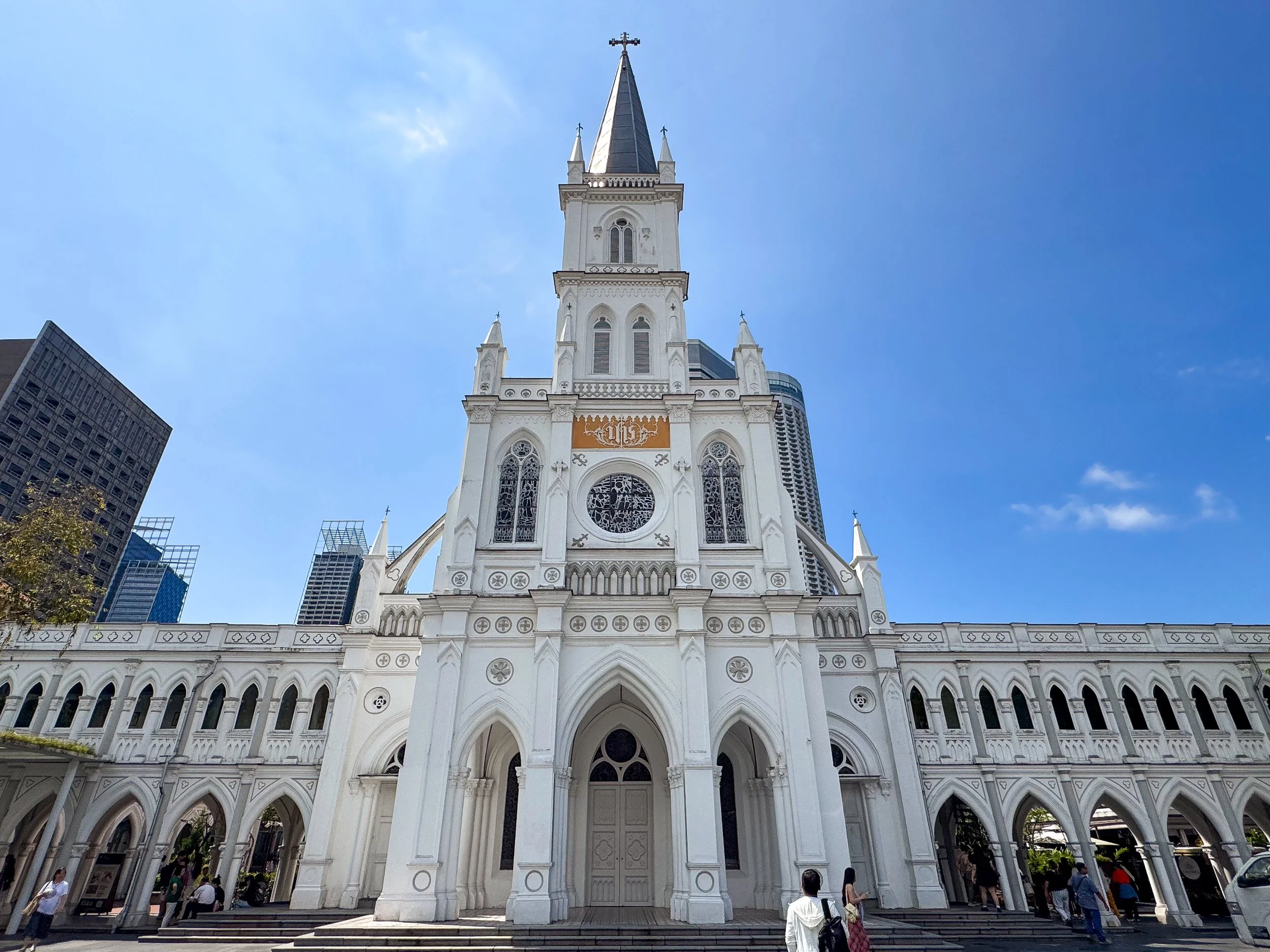
Chijmes Hall. An iconic white cathedral converted into a wedding venue and concert hall known for its candlelit concerts. The hall is surrounded by an outdoor mall with dozens of restaurants, cafés and bars with stages for live musical performances.
Fort Canning Park. A hilltop park in the center of the city with historical significance and various walking trails. It was once the residence of Malay royalty and the city’s colonial founder.
National Museum of Singapore. A museum dedicated to the history of Singapore with exhibits recounting the early Malay period, British colonization, Japanese occupation, independence and modern day. Artifacts on display include several hundred year old pieces of Chinese ceramics, royal jewelry found in present day Fort Canning Park, colonial era maritime maps and portraits of British governors. The museum itself is a prime example of neoclassical architecture. Most of it was under restoration when we visited.
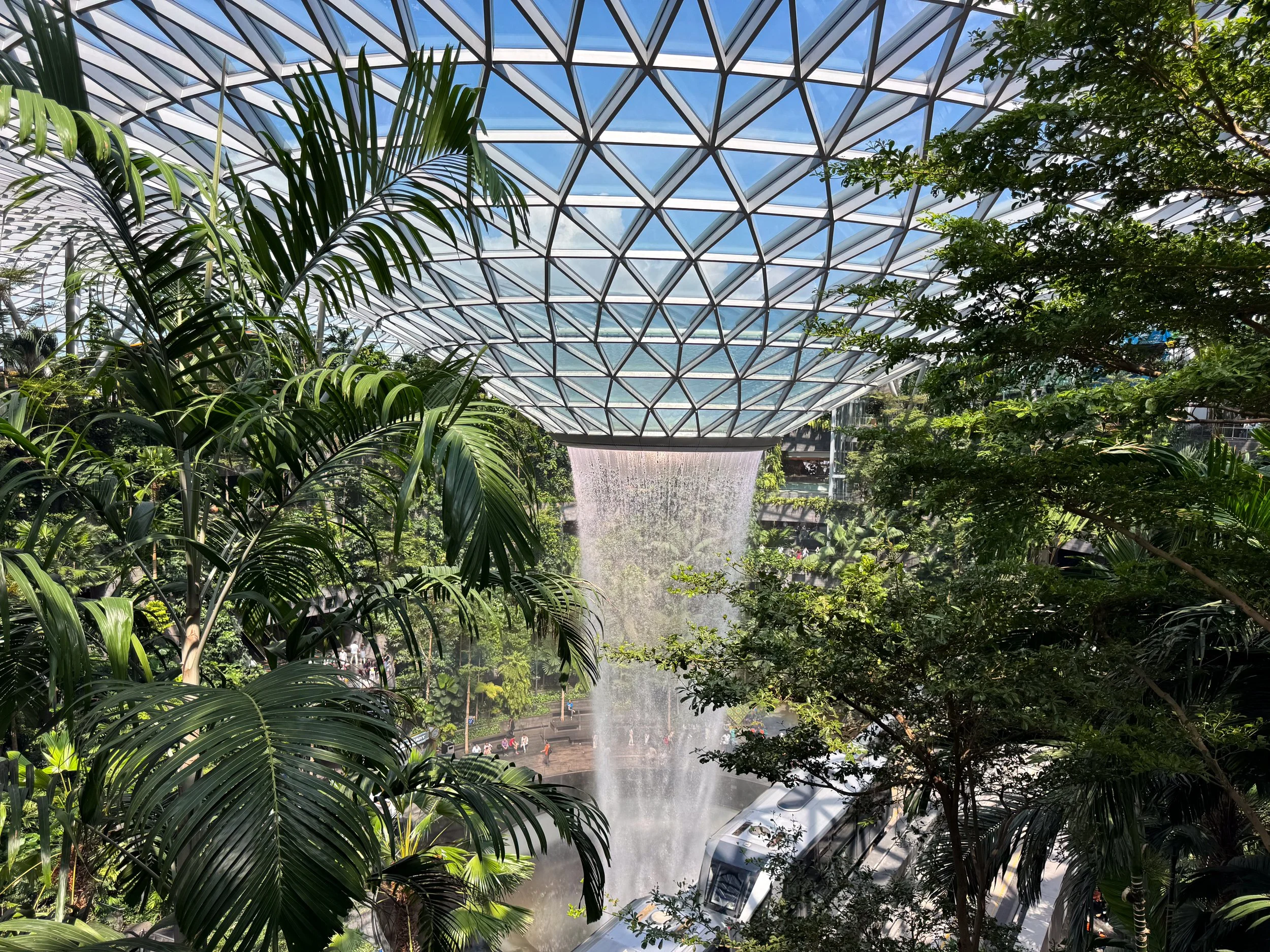
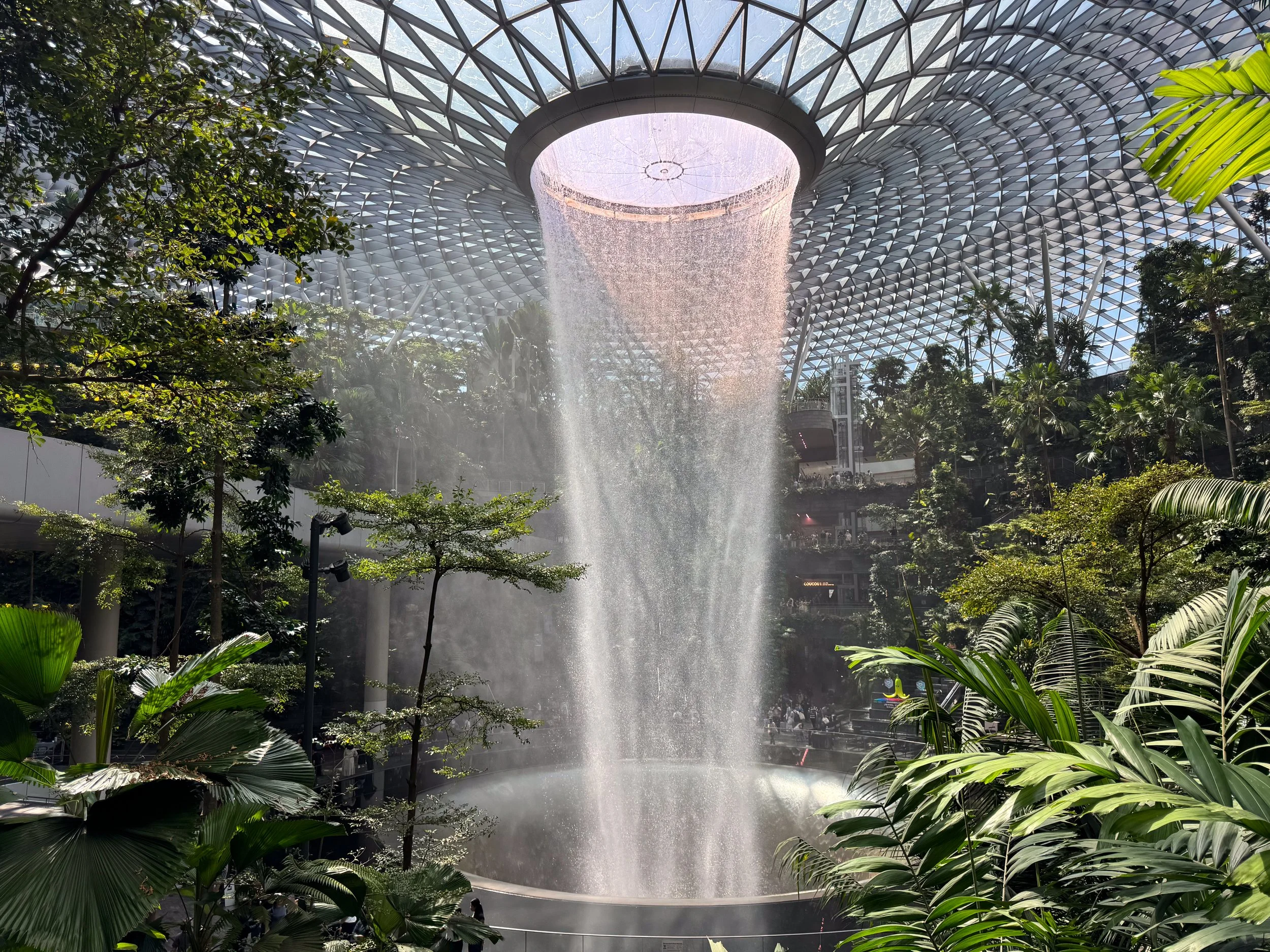
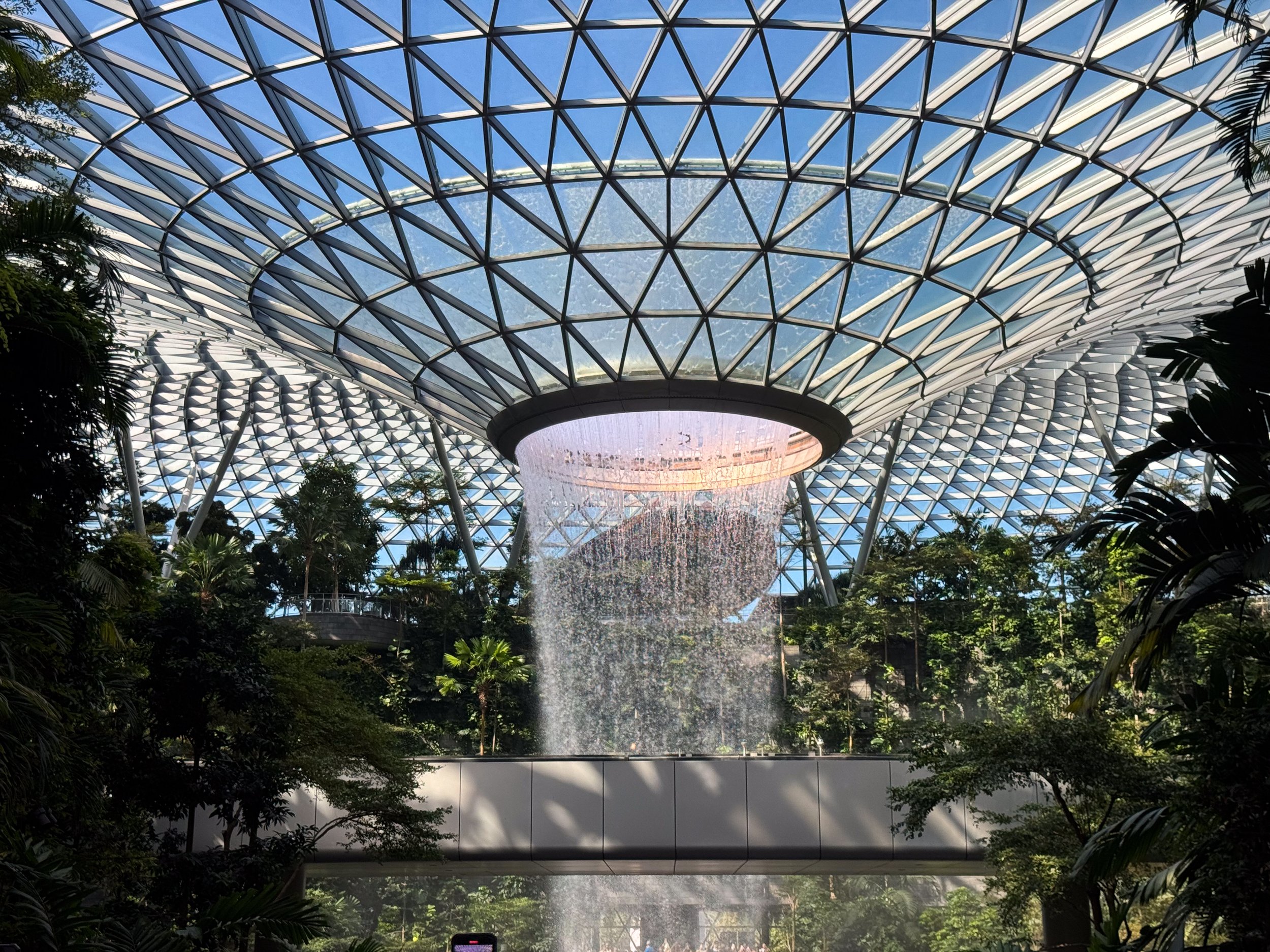
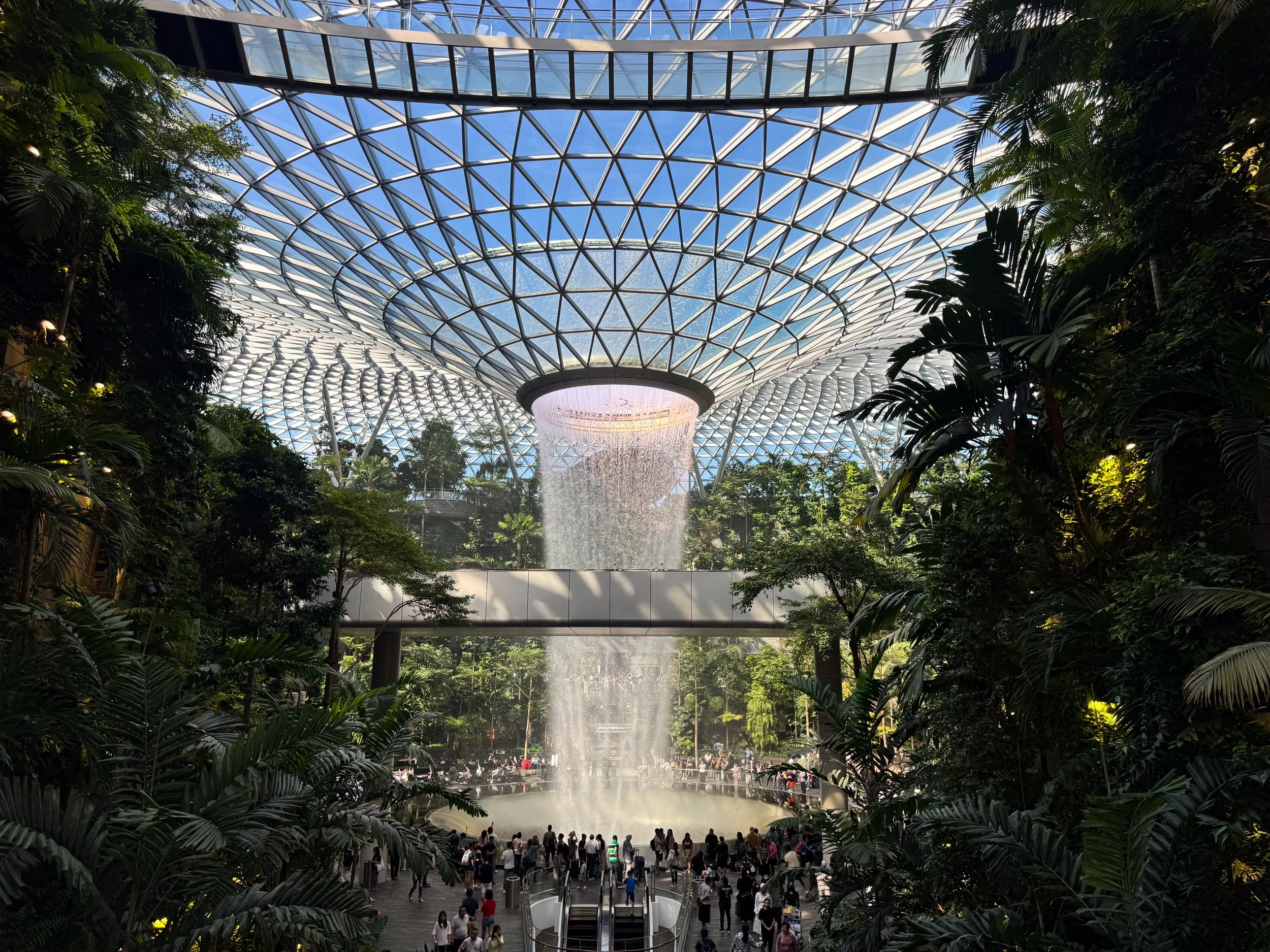
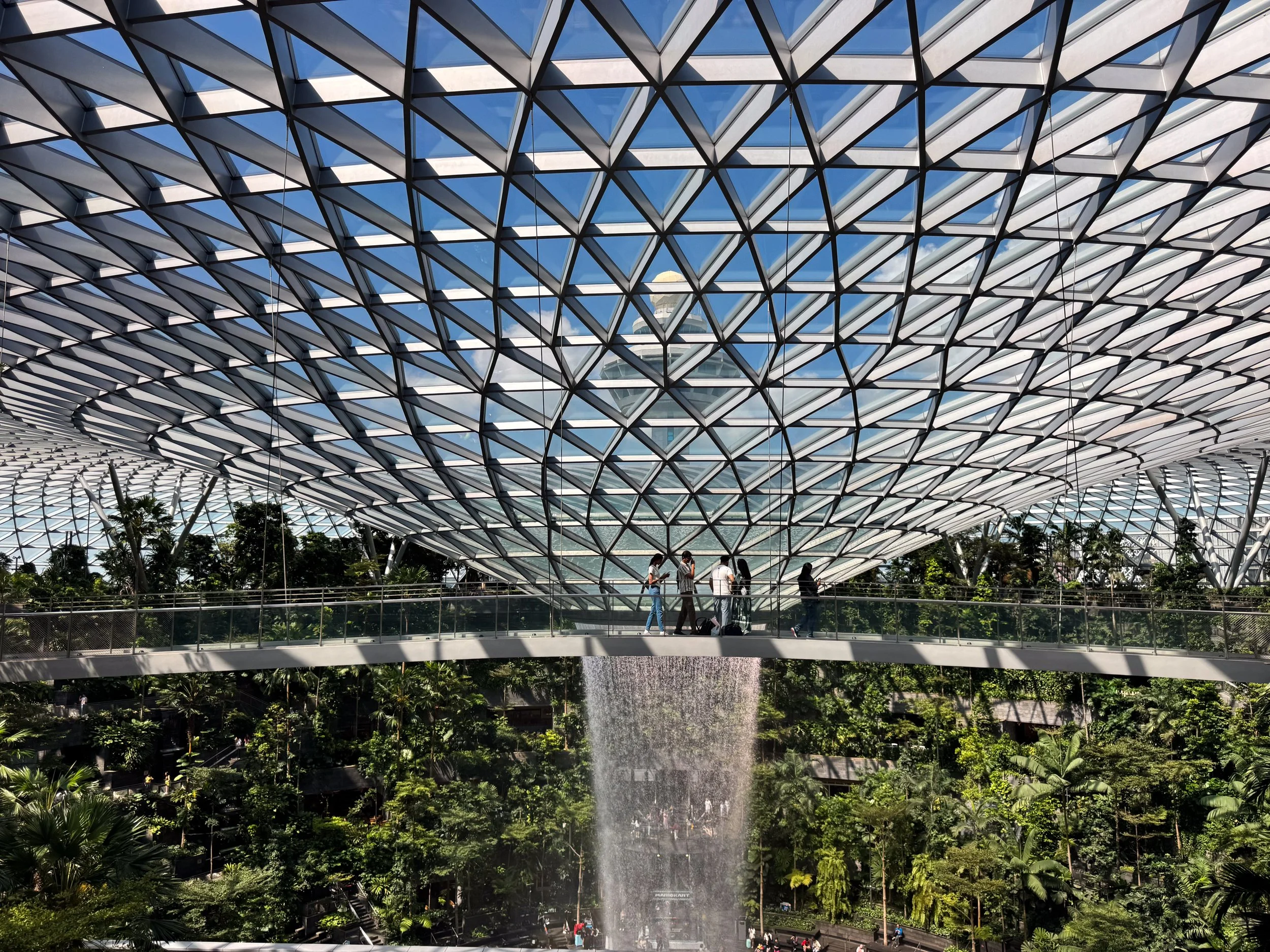
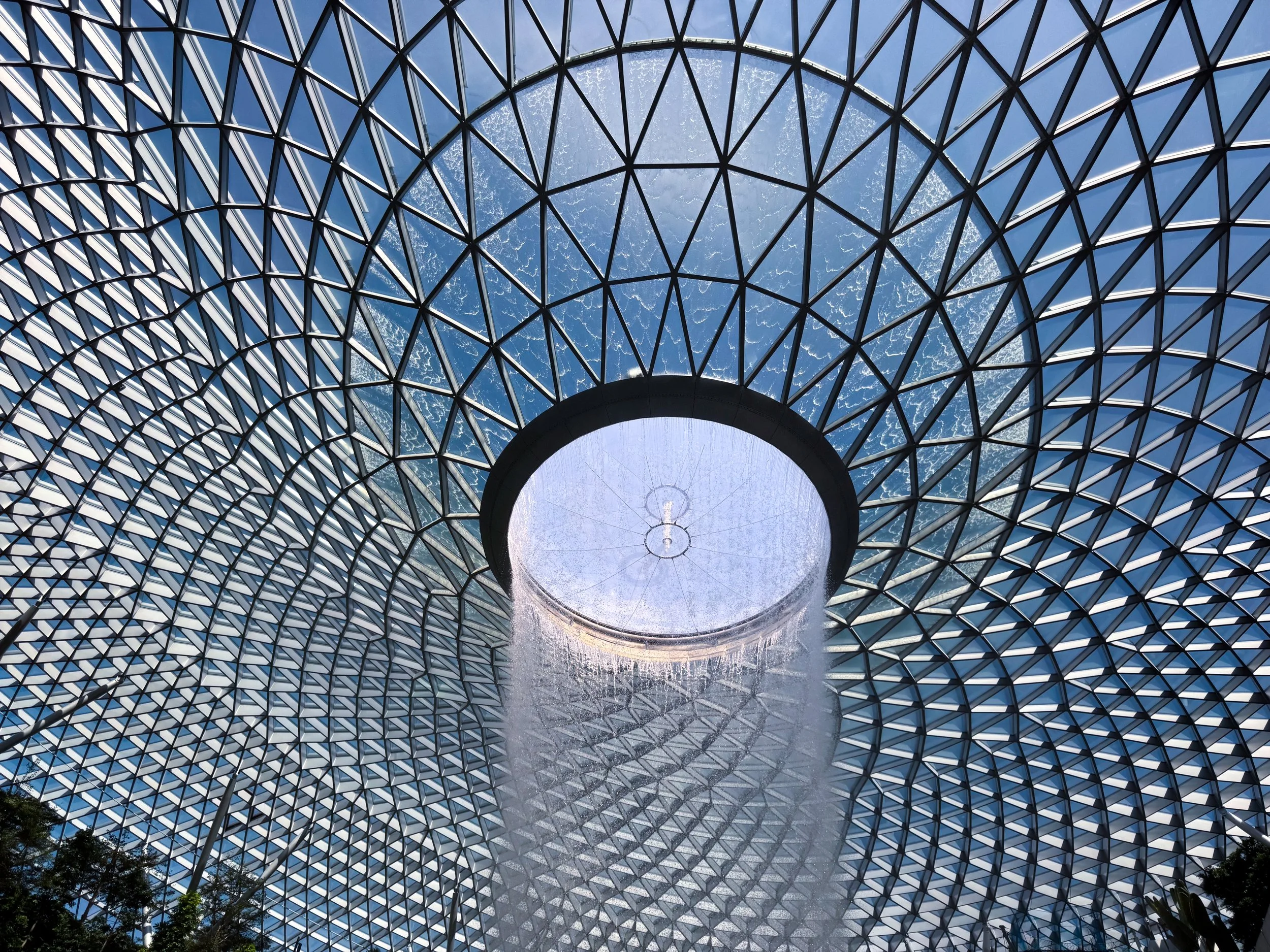
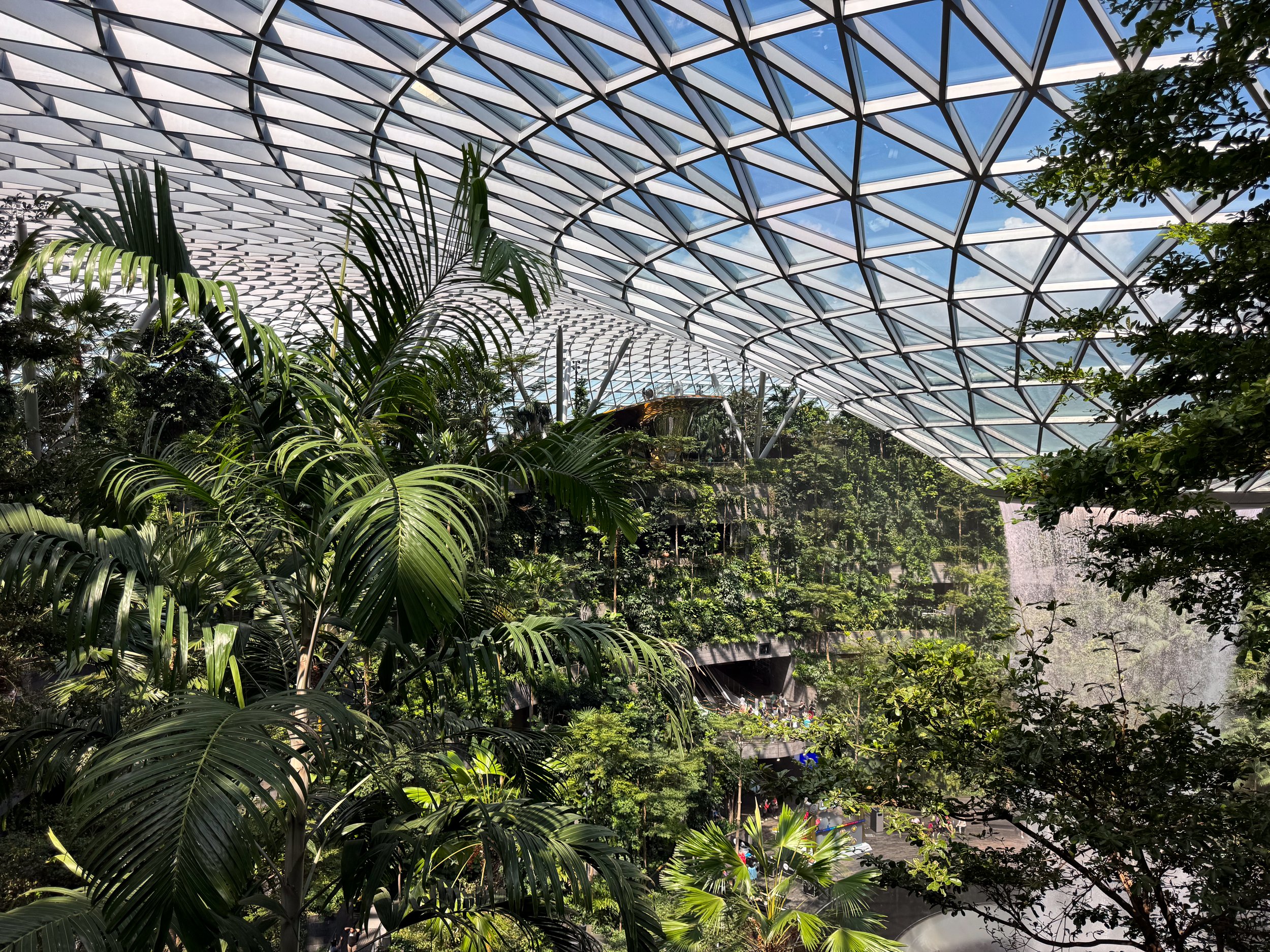
Jewel Changi. A contemporary conservatory and mall at Singapore’s international airport. A circular waterfall flows from the center of the donut shaped glass ceiling. At 40 meters high, it’s famed as the world’s tallest indoor waterfall. Surrounding it are terraced walkways and observatories with views of the verdant and lush interior. Palm trees, tropical ferns, birds of paradise and all types of greenery grow at every level of the indoor forest. The outer corridors are home to a range of shops and restaurants.
Pro Tip. Arrive at or after 10am when the waterfall begins to flow. Spend at least an hour here before departing or after arriving.
Hawker Food Halls
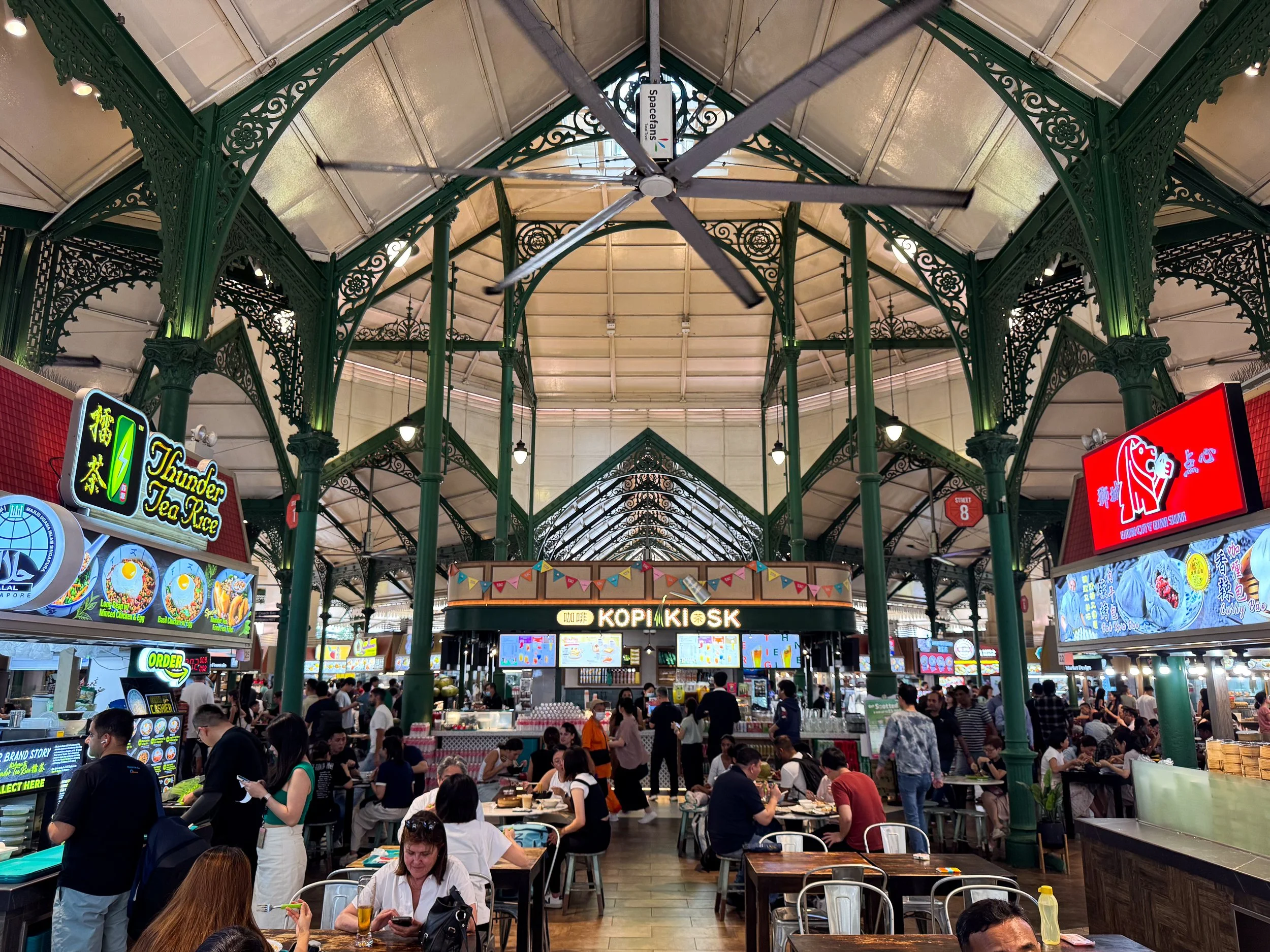
Hawker Food Halls are traditional Singaporean markets with food stalls selling local and regional cuisine influenced by the city’s multicultural population. They’re some of the most inexpensive places to eat culturally significant meals in Singapore.
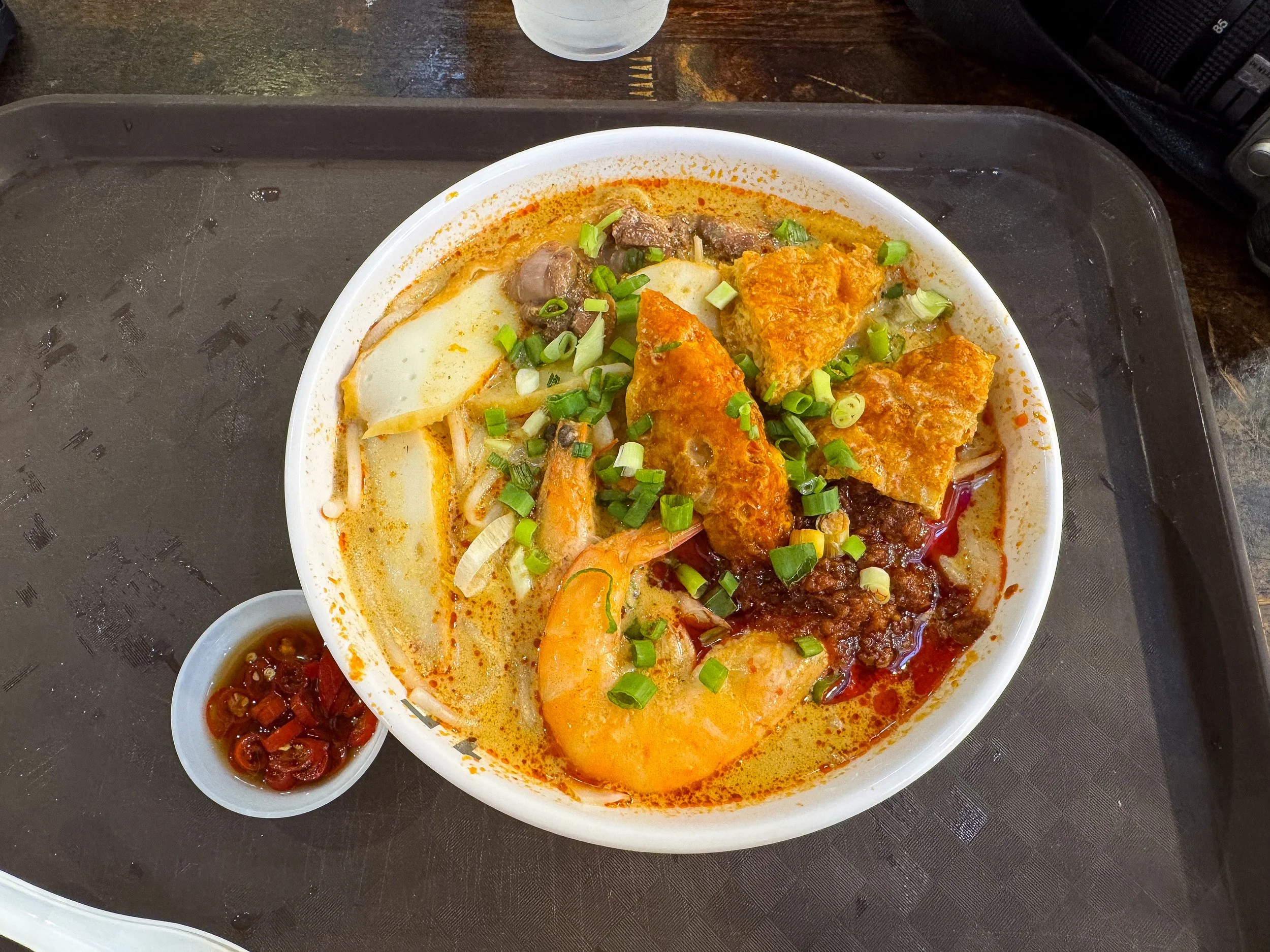
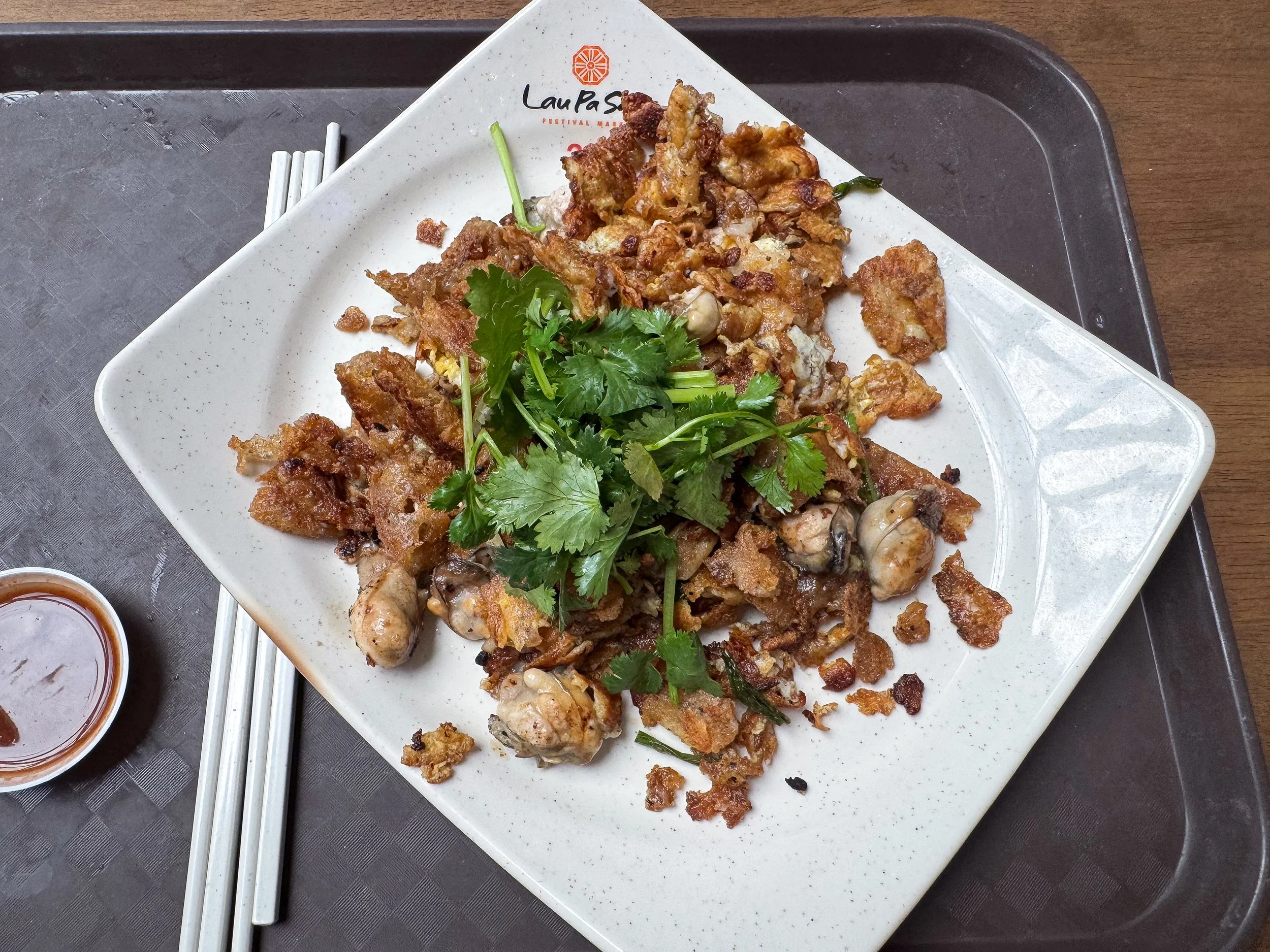
Lau Pa Sat. The largest and most famous Hawker Food Hall in Singapore. The historic market is housed under an octagonal wrought iron pavilion dating back to the late 1800s. Inside are nearly 100 street food vendors and restaurants selling traditional Malay, Indian, Halal, Thai, Korean, Japanese, Chinese, Turkish and Filipino cuisine. In addition to food, beverage centers sell fresh juices and local beers. We visited two stalls for an Oyster Omelette and a bowl of Seafood Laksa, two classic Singaporean staple dishes.
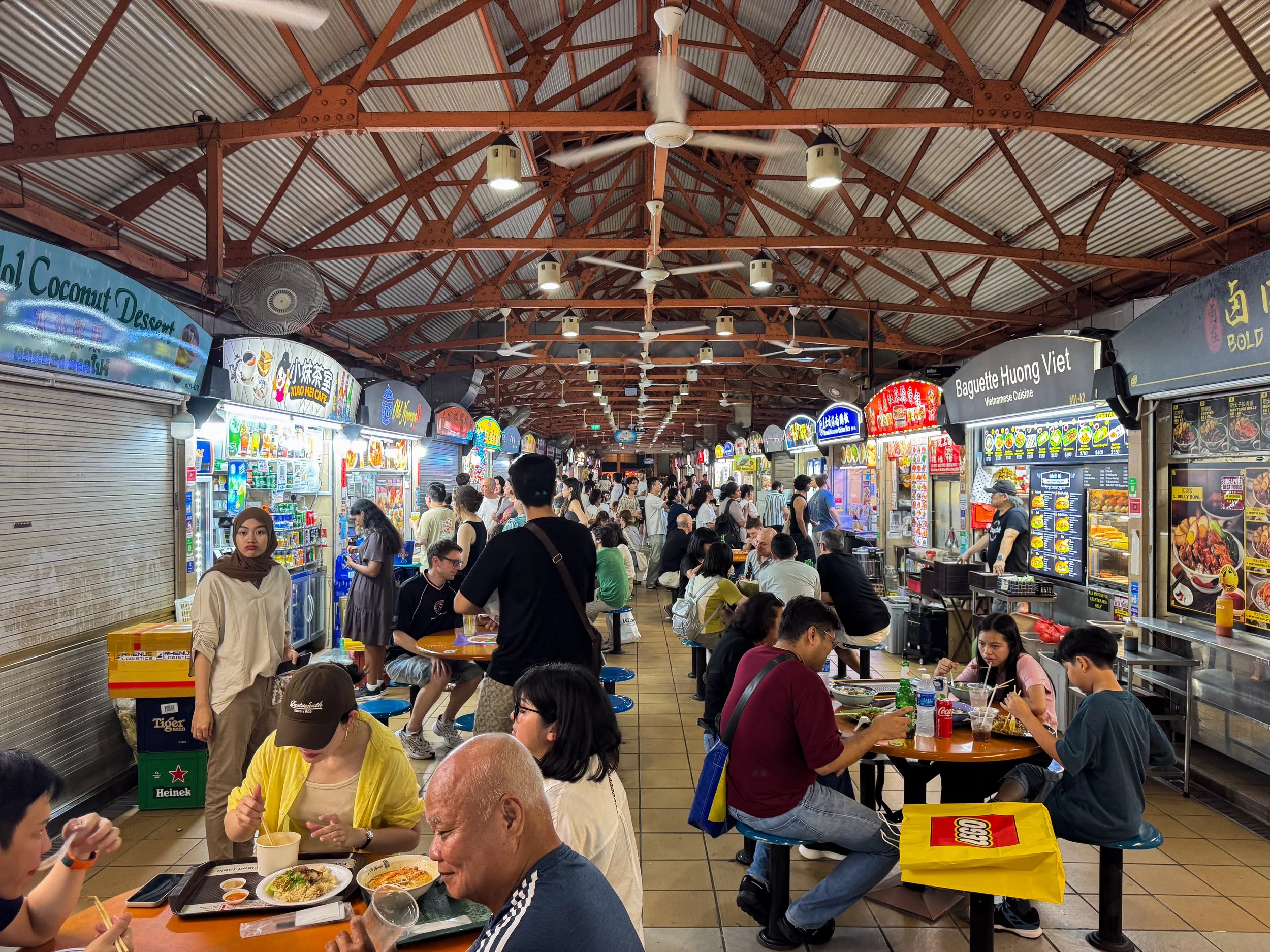
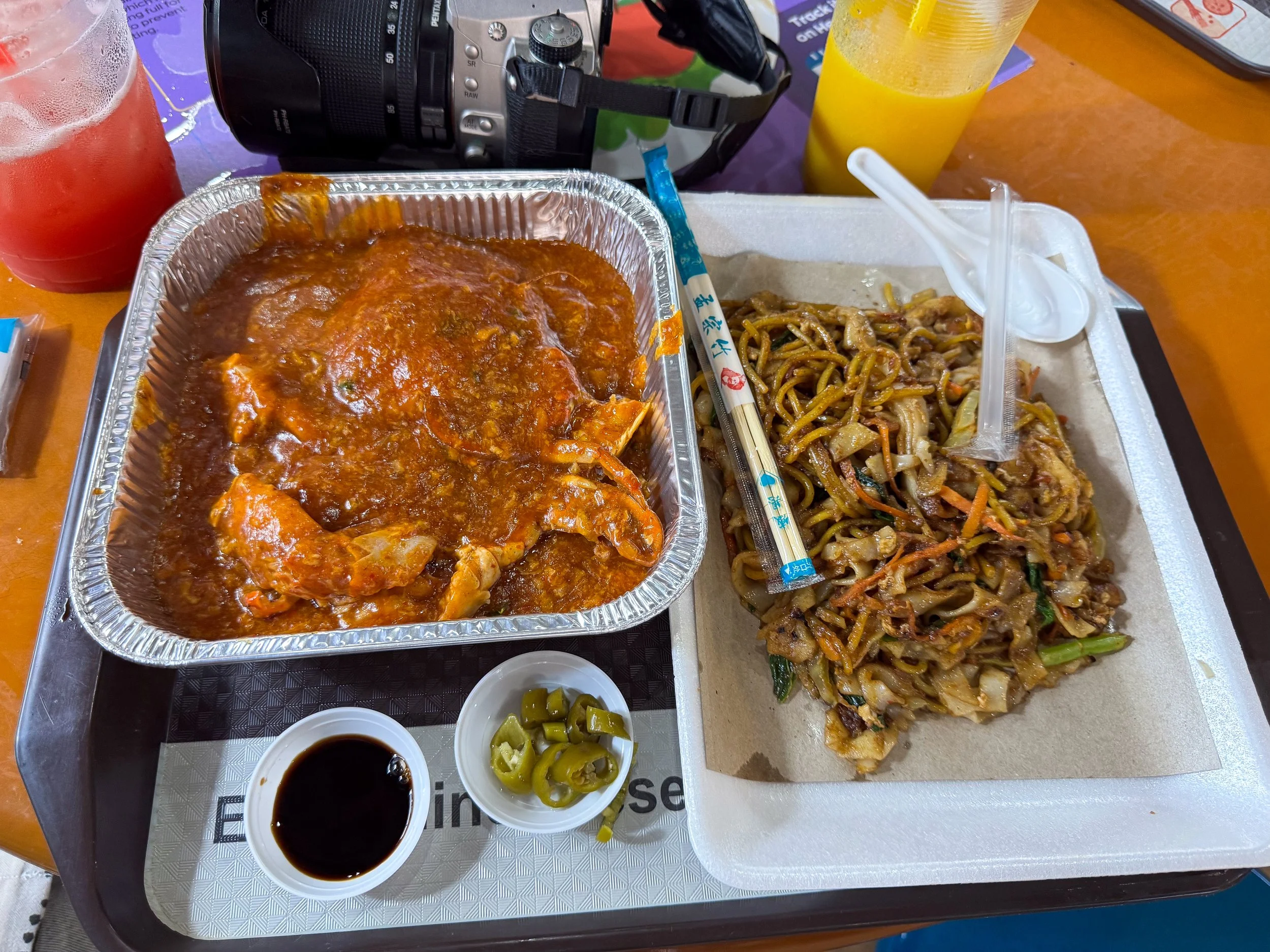
Maxwell Food Center. A Hawker Food Hall in China Town popular with locals and expats. It’s an affordable place to try traditional and regional dishes, one of the most popular being Chili Crab. The dish is made with a fresh crab cooked in and covered with a chili spiced tomato sauce. It’s an extremely delectable and messy dish. We also shared a dish of stir fried noodles, mango smoothie and watermelon juice.
Good to Know. Bring your own napkins and remember to clean your table to avoid a fine.
Places to Eat & Drink
Singapore has a vast range of places to eat and drink from local spots to high end restaurants and bars.
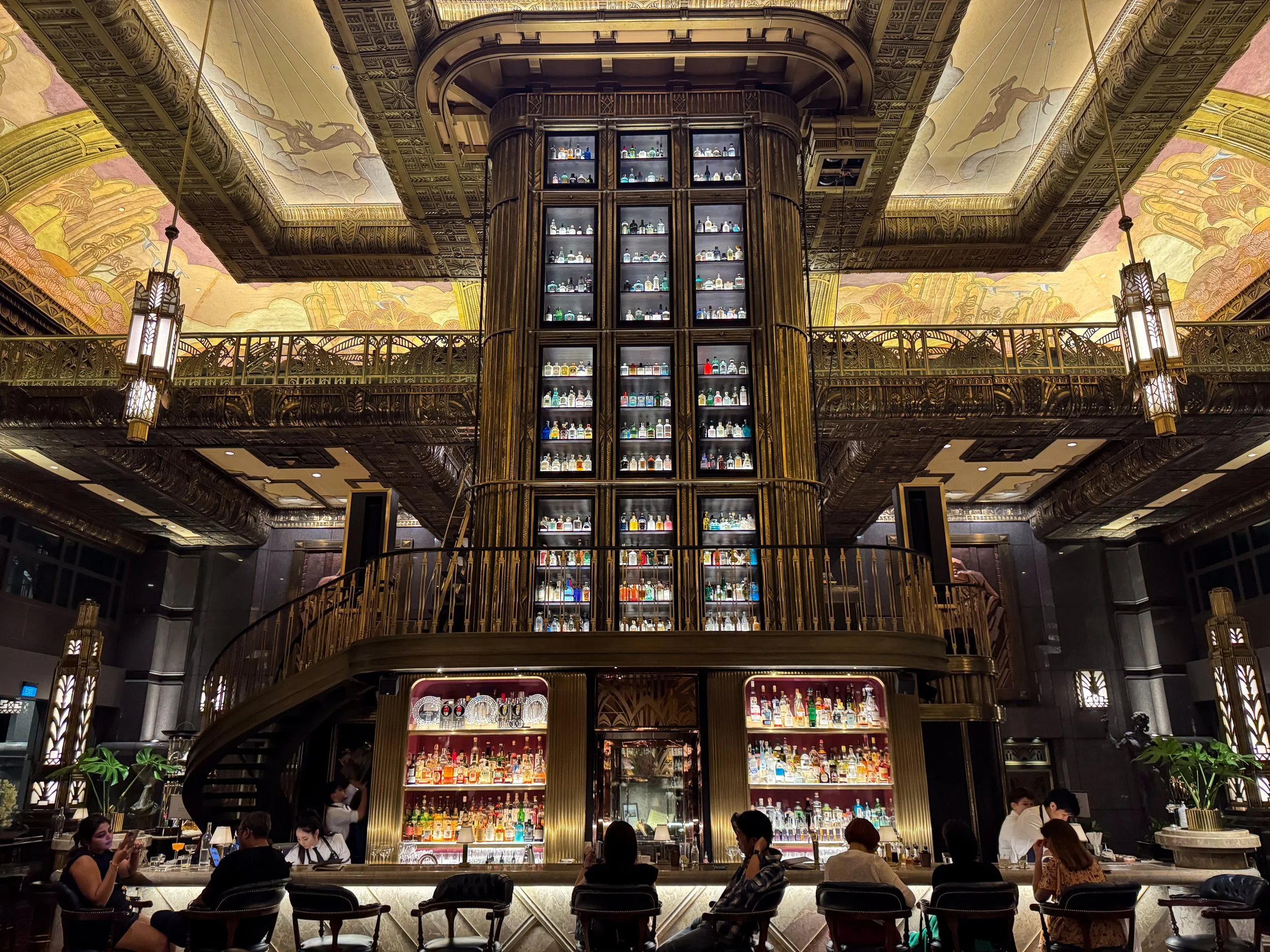
Atlas Bar. A grand and luxurious Art Deco styled bar with elegant cocktails. The space is decorated with velvet and leather furniture, bronze and brass finishes, dimly lit chandeliers and lamps, a balcony overlook and a floor to ceiling bar. Their menu consists of martinis, gin cocktails, prohibition era drinks and vintage spirits.
Good to Know. Reservations are recommended; however, we walked in and joined a short waiting list. There is a smart casual dress code after 5pm.
Spago. A restaurant and bar at the top of Marina Bay Sands with sweeping views of Gardens by the Bay and the ship dotted Singapore Strait. We skipped the observatory and came here to enjoy the view while clinking glasses of champagne in a relaxed setting.
Good to Know. They have a $30 SGD minimum per person. Most times are “coincidentally” $1 SGD less than the minimum encouraging guests to spend more.
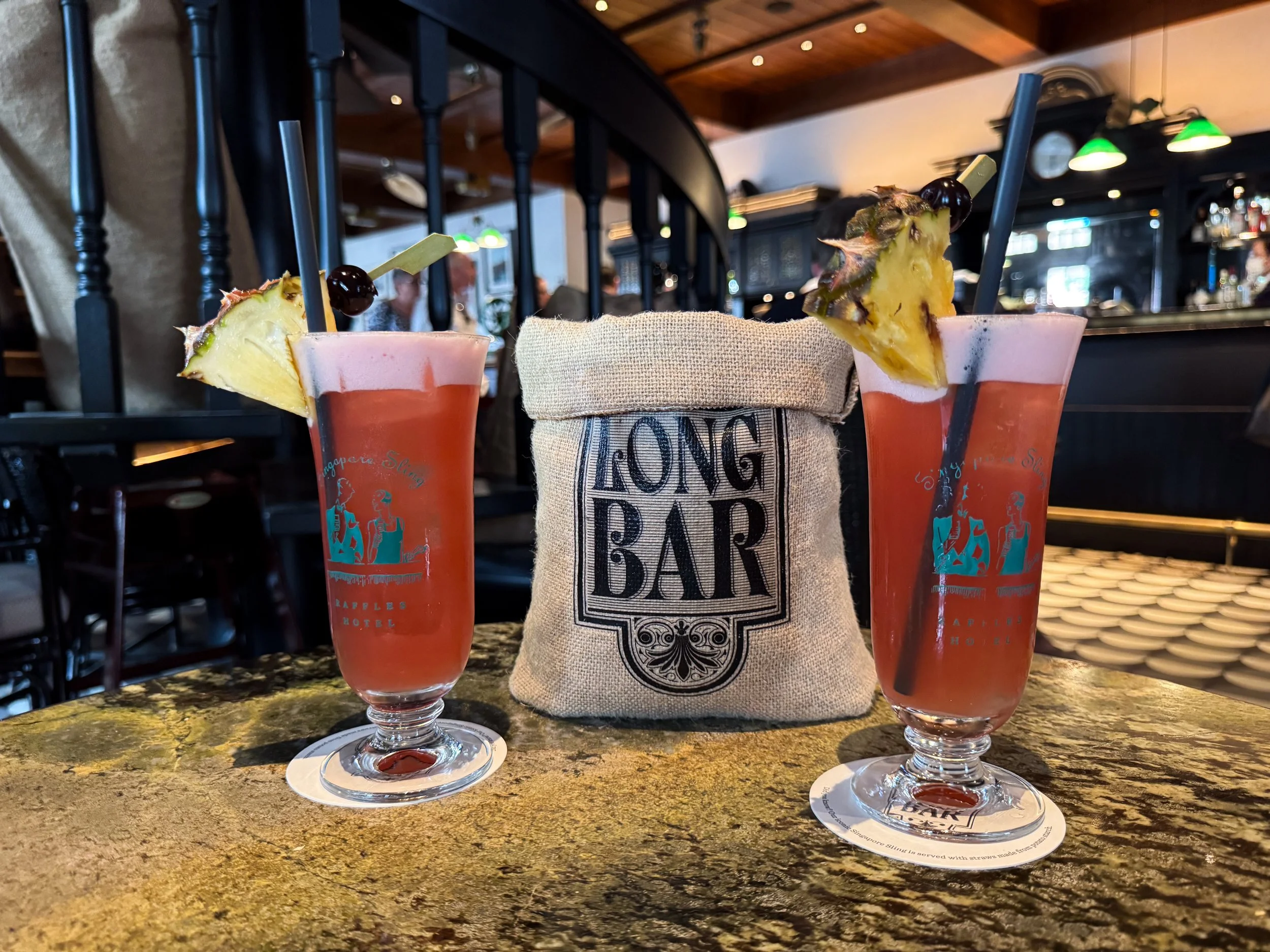
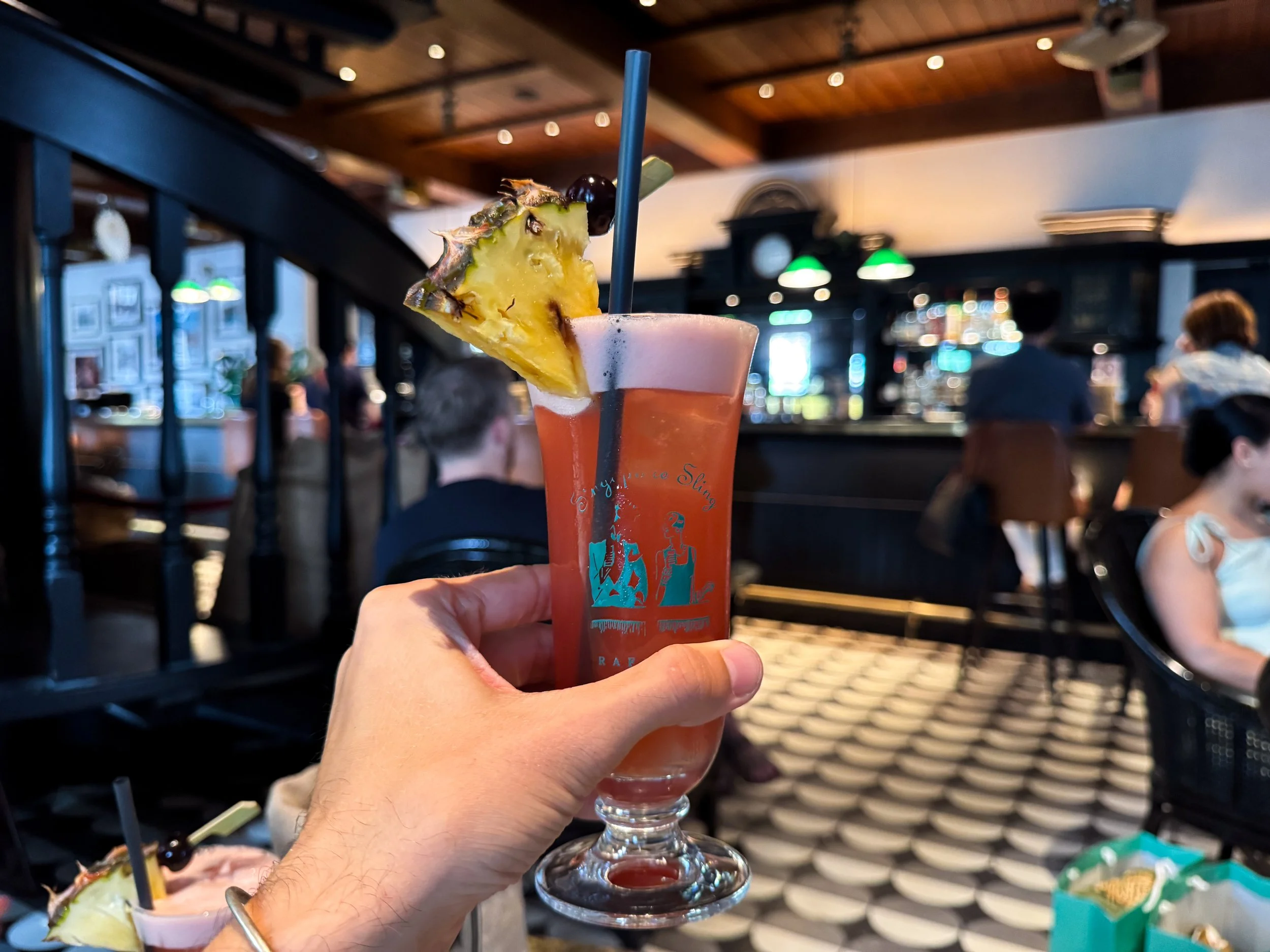
The Long Bar. A historic bar at the city’s iconic Raffles Hotel credited with inventing the Singapore Sling. To this day, they make one of the best versions of the fruity and strong cocktail. Try other drinks made with ingredients grown on Singapore’s former spice plantations while shucking peanut shells and tossing them on the floor.
Good to Know. No reservations are accepted. Show up and wait online for about 30 minutes before being seated.
Junior The Pocket Bar. A hidden cocktail bar in China Town known for reinventing its menu and decor every several months. We visited when the bar was called Marathi. The space and cocktails reflected 1990s Mumbai. Vibrant colors, spice forward cocktails and indi-pop were emulated throughout the bar. We ordered the Fizzwala, a ginger and pomegranate forward gin & tonic, as well as the Amrood, a salty citrus and guava cocktail.
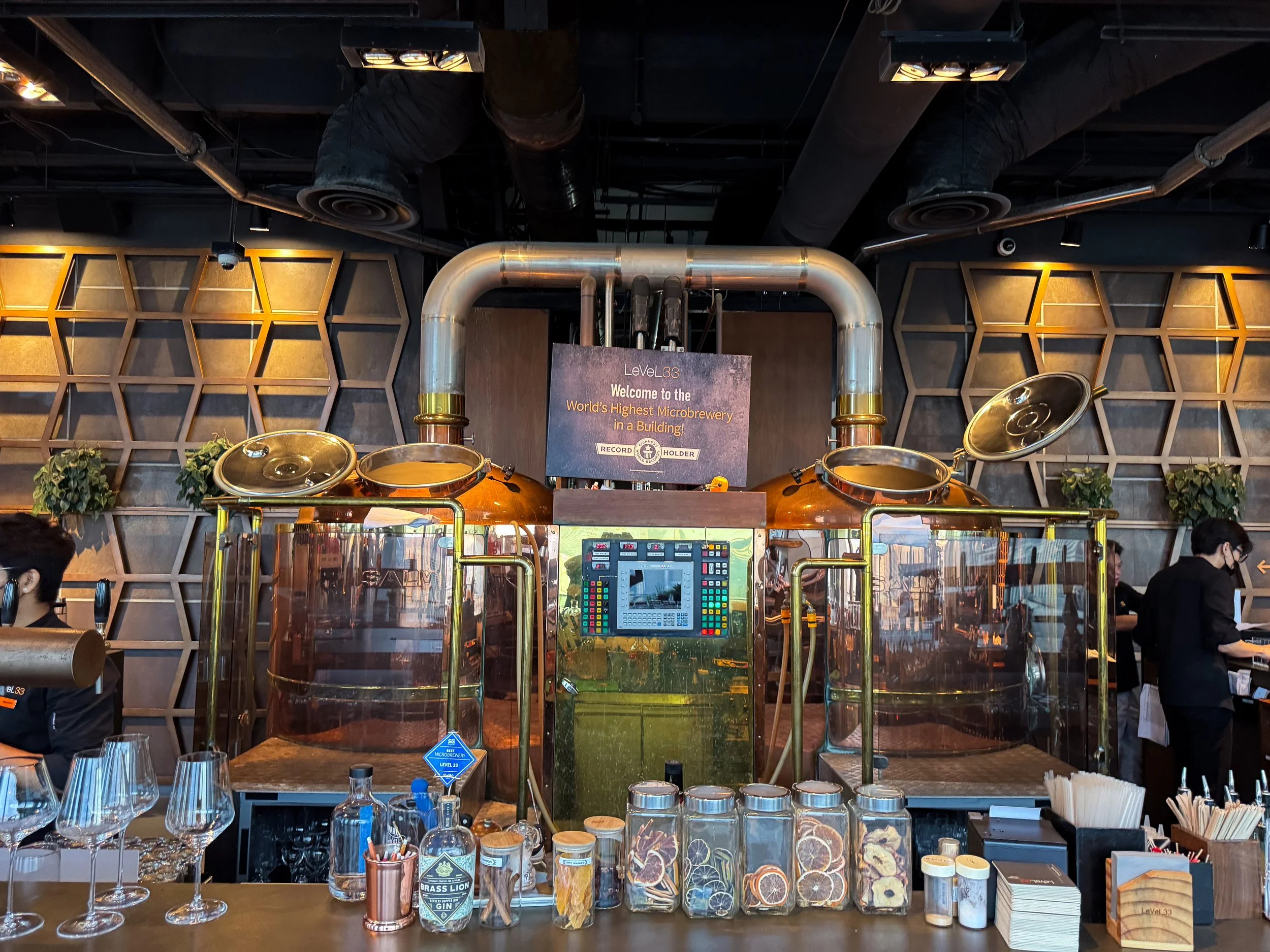
LeVel33. A brewery that holds the world record for the “highest micro brewery in a building.” While its brews are flavorful and its international menu delicious, the real reason to come here is for the view. The outdoor balcony overlooks Marina Bay and some of the city’s most iconic sights.
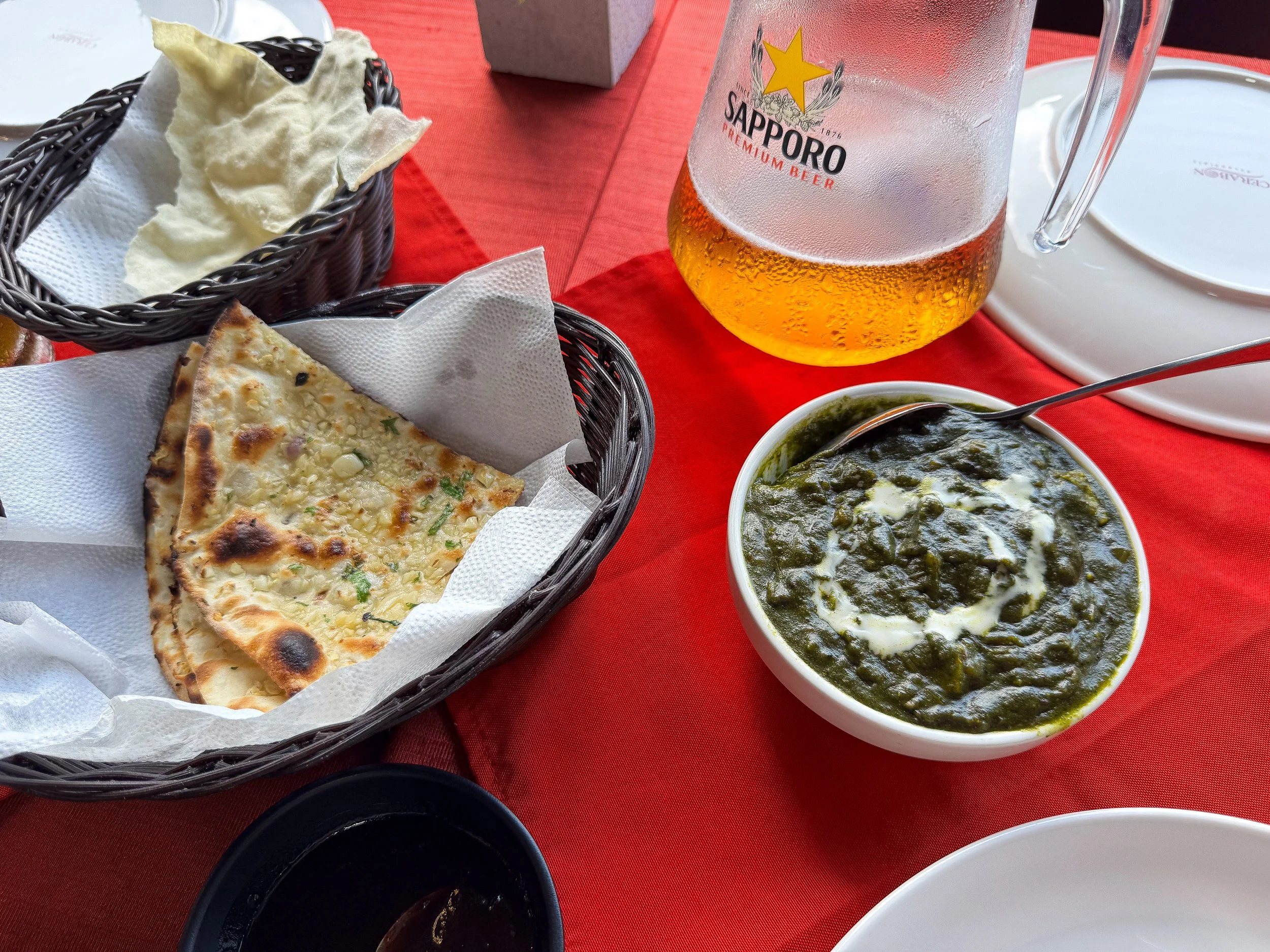
Shahi Maharaja. A northern Indian restaurant along the Singapore River in the Boat Quay neighborhood. We stopped in for lunch with a view, samosas and palak paneer.
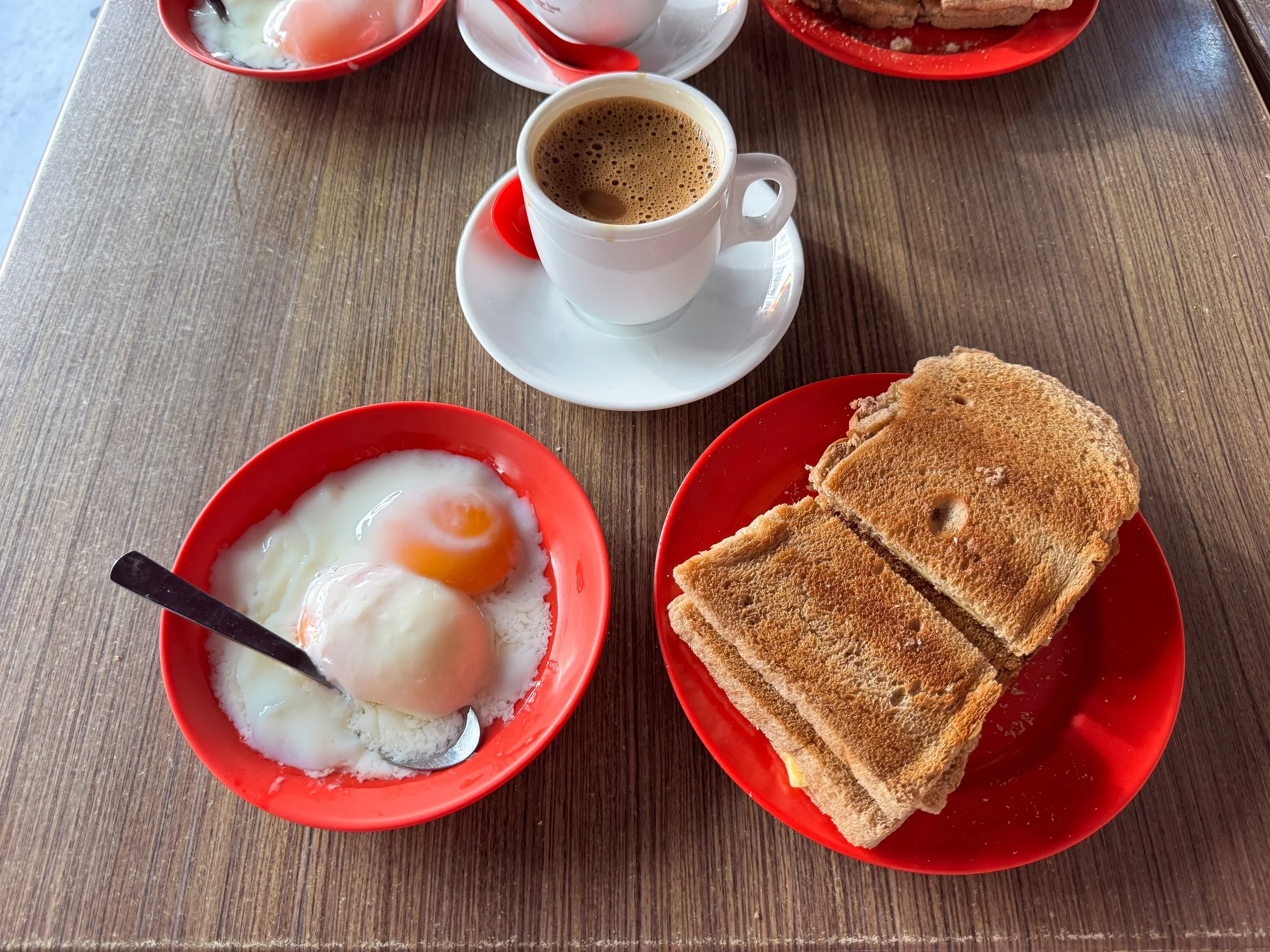
Ya Kun Kaya Toast. A popular breakfast chain serving Kopi Coffee and the Singaporean staple dish, Kaya Toast.
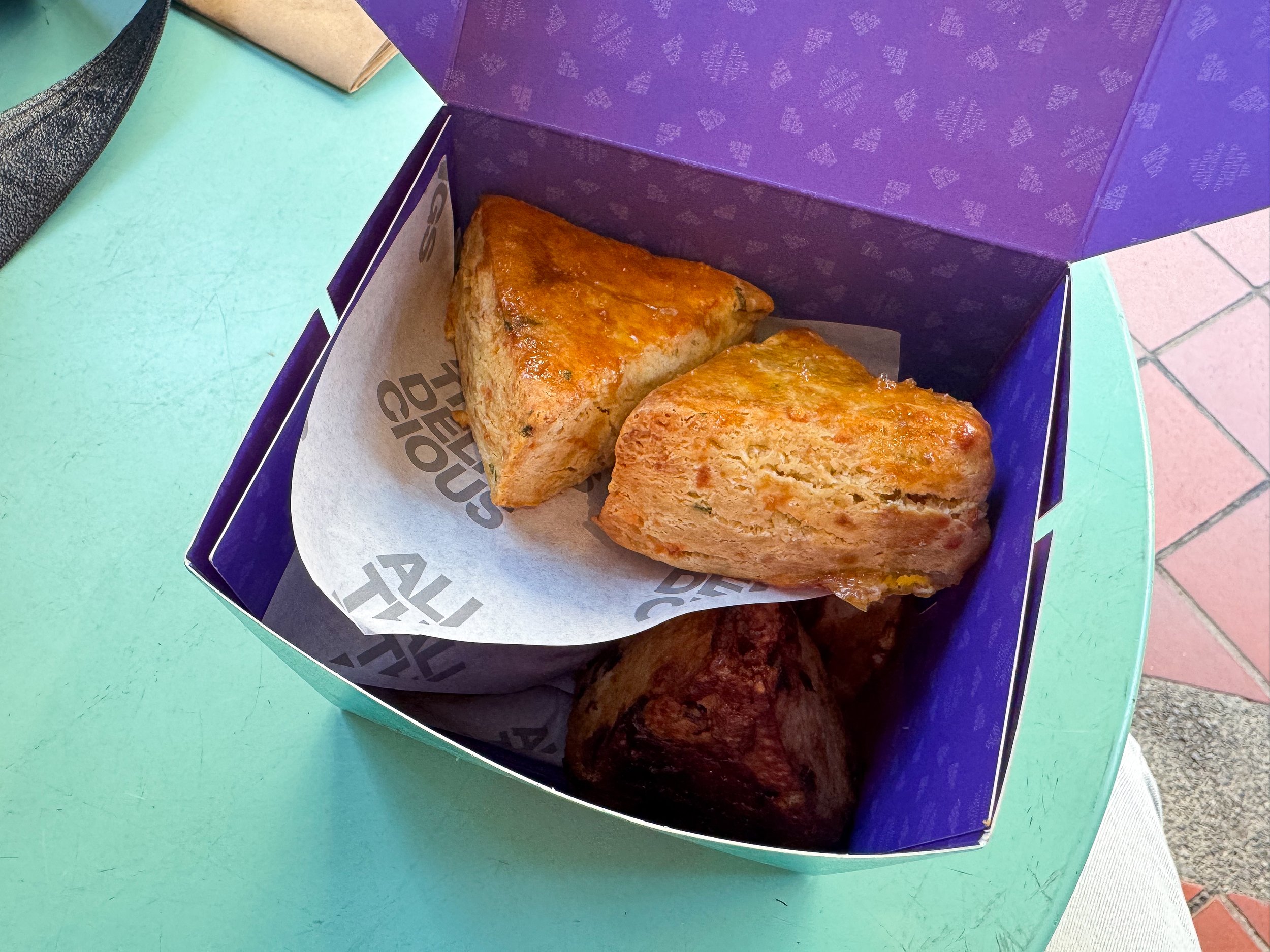
All Things Delicious. A café and bakery on Arab Street with pastries made using Middle Eastern ingredients. We ordered a spread of caramel date, gula melaka and feta scallion flavored scones.
Overscoop. An ice cream shop in China Town with dozens of flavors. Their concept is to add a small “overscoop” of any flavor on top of what you order. We ordered a combination of black sesame, ube, taro coconut and green tea flavors.
iJooz. A popular vending machine serving glasses of freshly squeezed orange juice from its cache of oranges. There are locations on streets across the city.
Singaporean Cuisine
Singaporean cuisine is a blend of Indonesian, Malay, Chinese and Indian flavors. Some of the most iconic dishes to try are:
Chili Crab. The national dish of Singapore and a must have when visiting the country. The dish is made with a fresh crab cooked in and covered with a chili spiced tomato sauce.
Oyster Omelette. An egg omelette cooked with a starchy batter, oysters and fish sauce. It’s sautéed until crispy and broken into smaller pieces.
Seafood Laksa. A spicy and flavorful Singaporean noodle soup made with a mixture of seafood like shrimp, clams, oysters and fish.
Kaya Toast. A sandwich made from crustless and toasted white bread with slices of butter and Kaya Jam, a coconut and pandan spread. It’s often served with soft boiled eggs and kopi coffee.
Kopi Coffee. A traditional Singaporean coffee made using robusta beans brewed in a cloth percolator and poured from a long spouted pot.
Gula Melaka. A sugar made from the sap of coconut palms. It’s a common flavoring in pastries and desserts with a sweet and caramelly flavor.
Singapore Sling. A gin based cocktail with fruity and tropical flavors including pineapple and cherry.
Where to Stay
The Heritage Collection. A local hotel chain that specializes in converting shop houses across the city into short term rentals. We stayed at their location on Arab Street. Book on Airbnb.
Location Specifics
Cash vs Card. Cash is not needed. Credit cards are accepted everywhere.
Local Laws. Be aware of local laws before traveling to Singapore. The country has strict punishments for what it sees as disrupting public order. Some examples relate to cursing, chewing gum, singing, public displays of affection, smoking and drinking.
Singapore is Expensive! Singapore is an extremely expensive destination. We limited our time here to only a few days and braced ourselves for the sticker shock before arriving. Some tips for traveling here on a budget:
Eat at hawker food halls for authentic and inexpensive meals.
Seek out happy hours for drinks or avoid purchasing alcoholic beverages.
Sightsee on foot without booking tours.
The light shows at Marina Bay Sands and the Super Tree Grove in Gardens by the Bay are free!
For Next Time…
We loved our short but packed time in Singapore. We can’t wait to return for another long weekend or even more extended stay.
Stay in China Town. We only felt a taste of the energy and atmosphere of China Town. Next time we visit Singapore, we plan to stay here, likely in Heritage Collection Chinatown.
Visit the Nature Parks. Outside of the modern city are multiple nature parks and reserves with unique features specific to Singapore.
Tree Top Walk. An adventure park with tree top suspension bridges and boardwalks leading through and over the rainforest.
Bukit Timah Nature Reserve. A small nature reserve with various hiking trails and opportunities for wildlife spotting.
Night Safari at the Singapore Zoo. A biodiverse zoo with a nightly safari through trails to spot nocturnal animals.