


La Paz Bolivia Travel Guide: Cable Cars, Markets & Mountain Views
Wander through La Paz where Indigenous culture, bustling markets and Andean flavors thrive beneath dramatic mountain peaks and a network of city wide cable cars.

La Paz, An Andean Metropolis
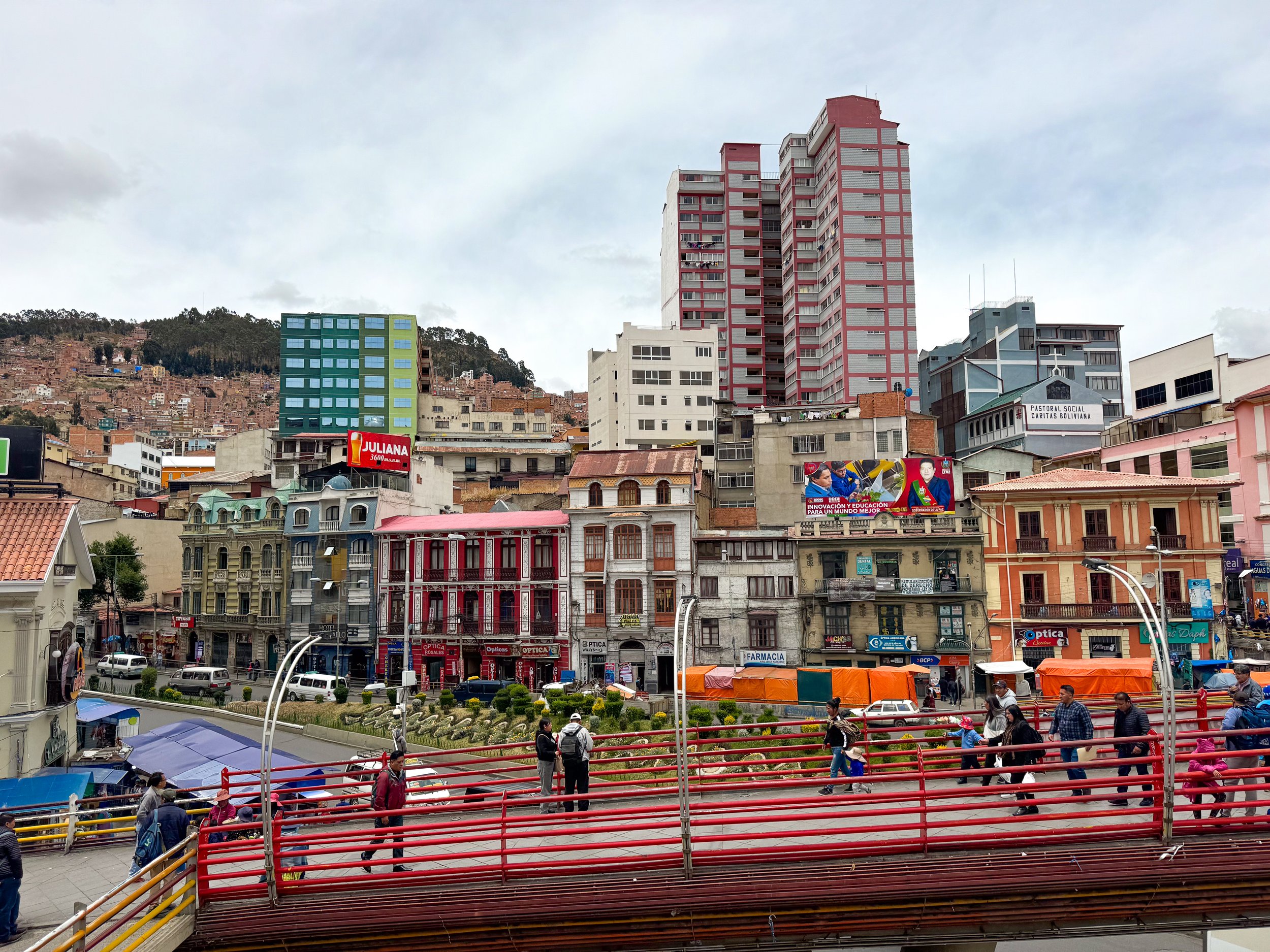
La Paz is the capital of Bolivia sitting nearly 12,000ft above sea level in the Central Andes. It’s a melting pot for Bolivian peoples, both indigenous and urban as well as a gastronomic hub for Andean and Amazonian flavors. Between its green spaces, markets and skyscrapers, the metropolis is a sprawling place to explore. We wandered the busy streets, rode the teleferico high above the city and hiked to urban lookouts. At night, as the colorful roofs fade into darkness, the city begins to glow with the warmth of twinkle lights.
Neighborhoods
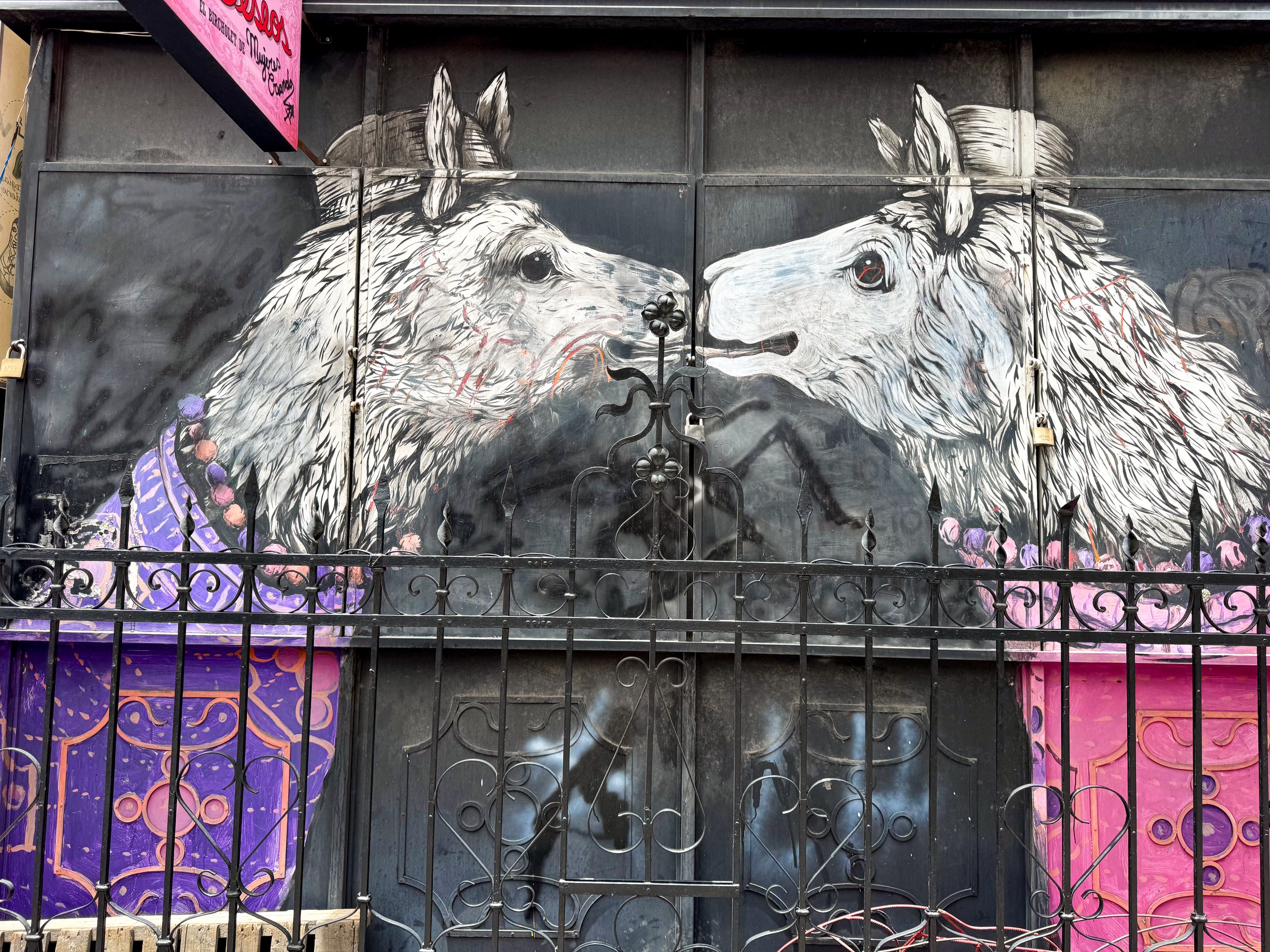
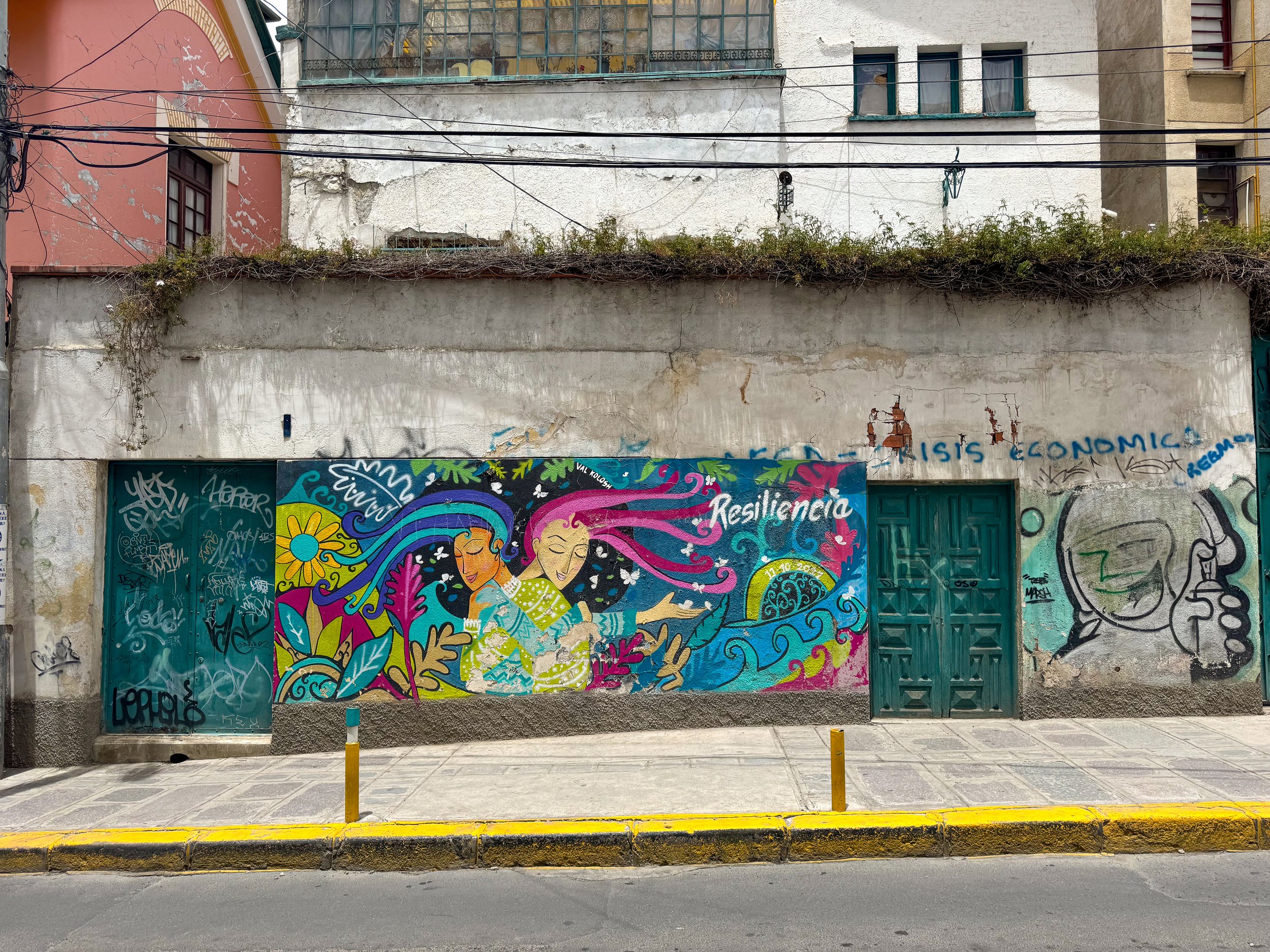
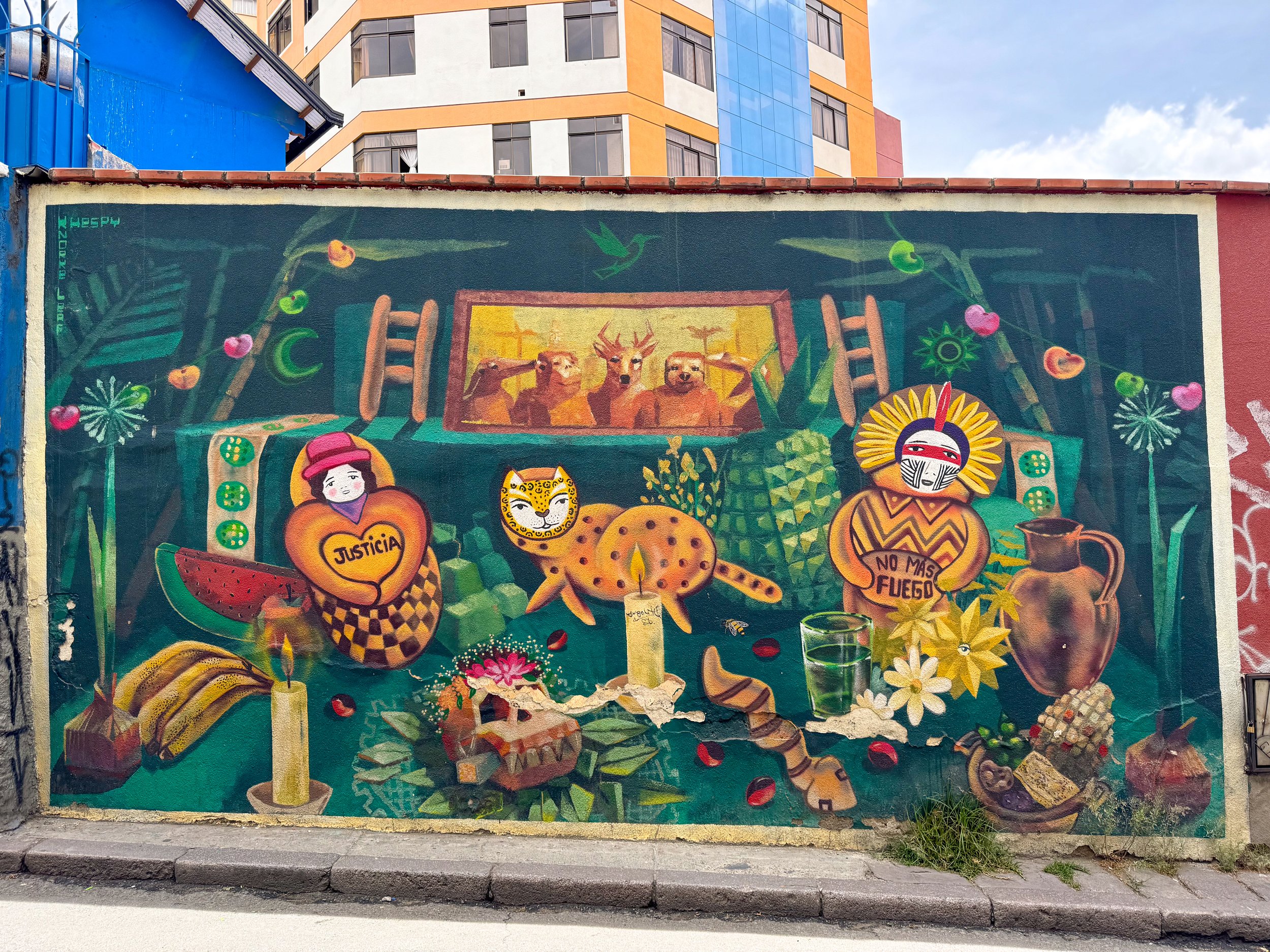
Barrio Sopocachi. A bohemian and artsy neighborhood with murals, small parks, cafes and bars. It’s quieter and removed from the central neighborhood.
El Centro. The historic center of La Paz with museums, government buildings, colonial architecture and markets.
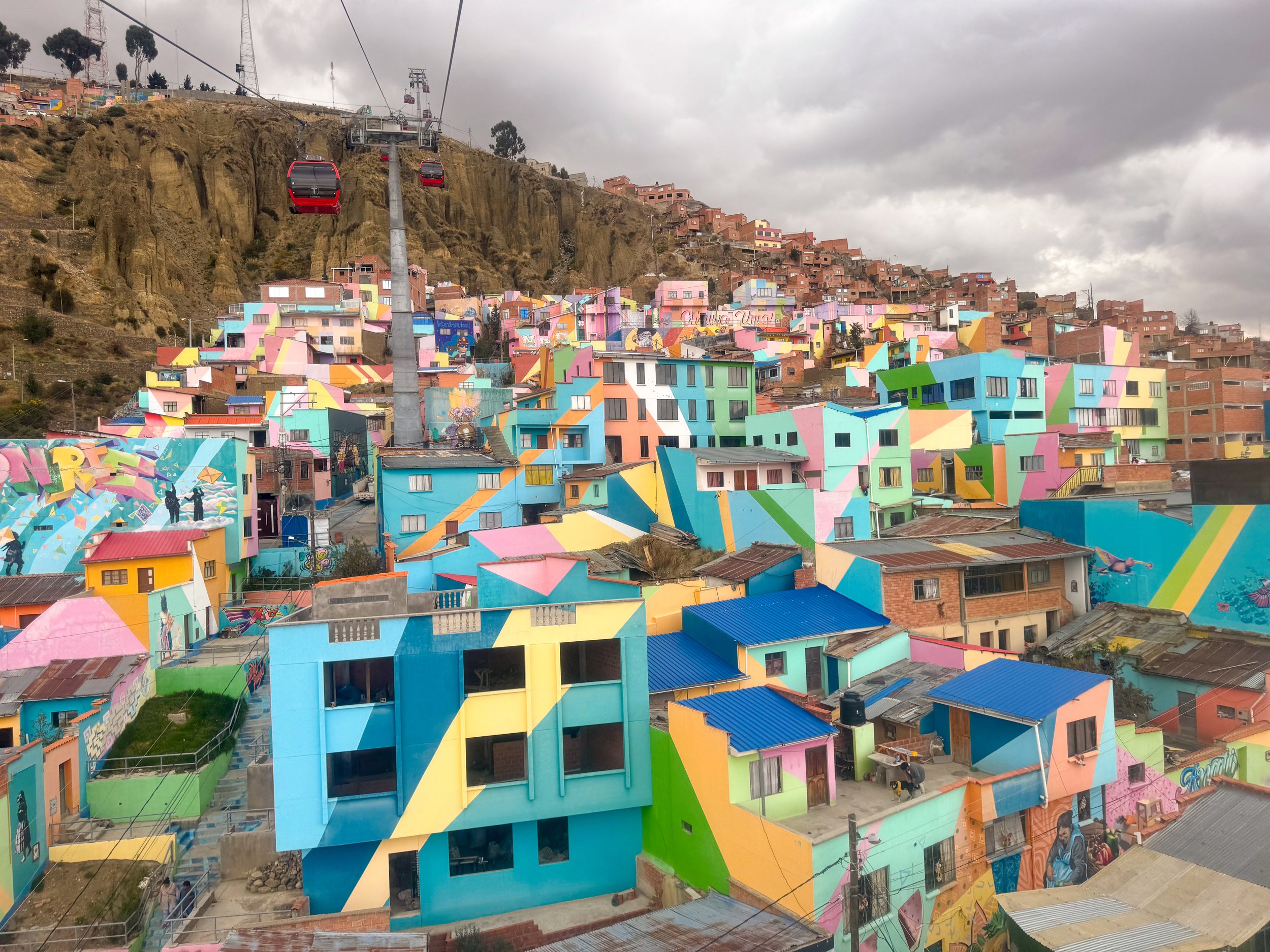
Chualluma. A hilly neighborhood with buildings and steep staircases painted in vibrant and pastel colors. It’s viewable on the red teleferico line from the Central Station.
Calacoto. A high end residential and business district at the lower end of the La Paz Valley with elegant homes and towering glass skyscrapers.
See the Sights & Museums
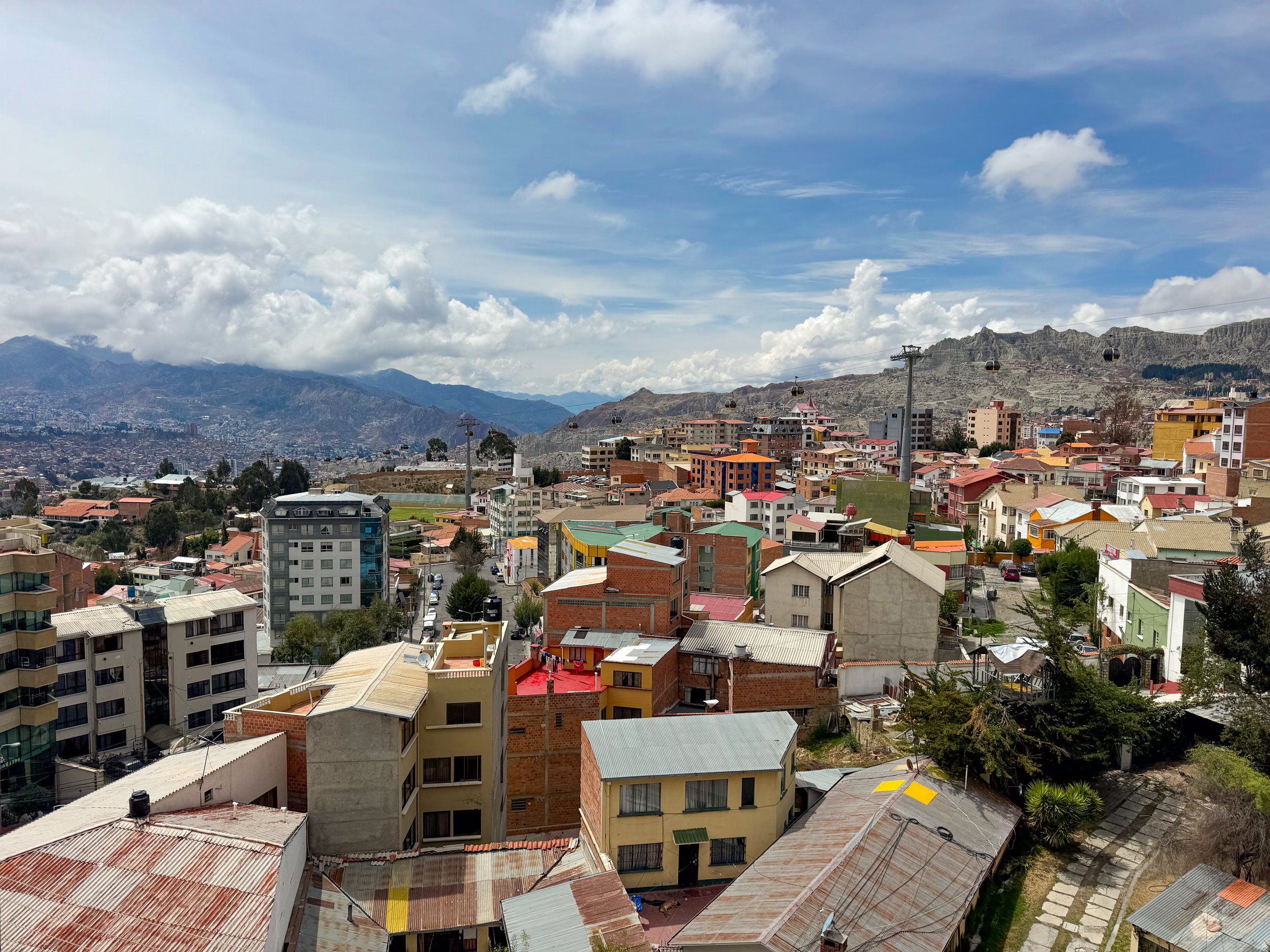
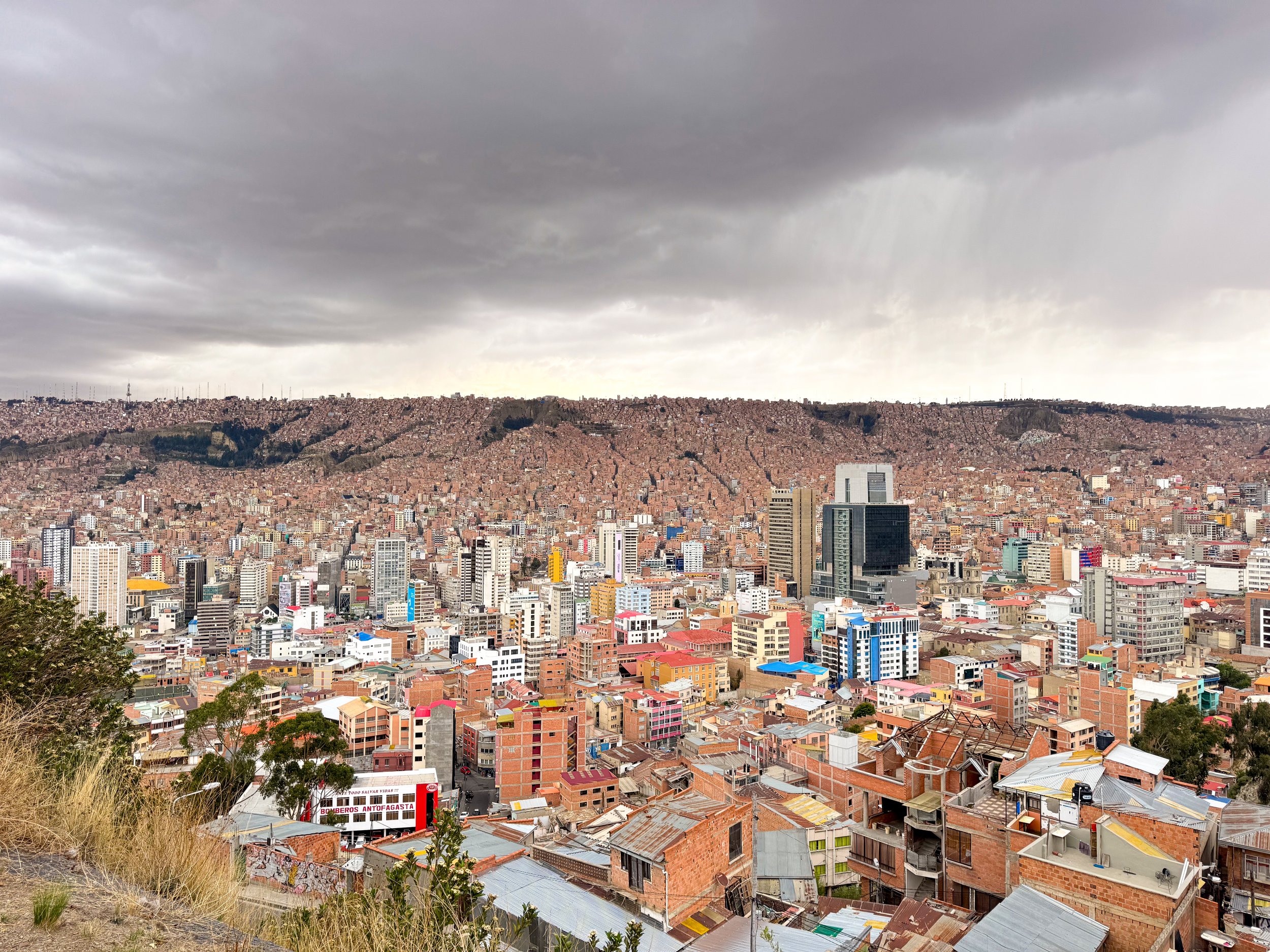
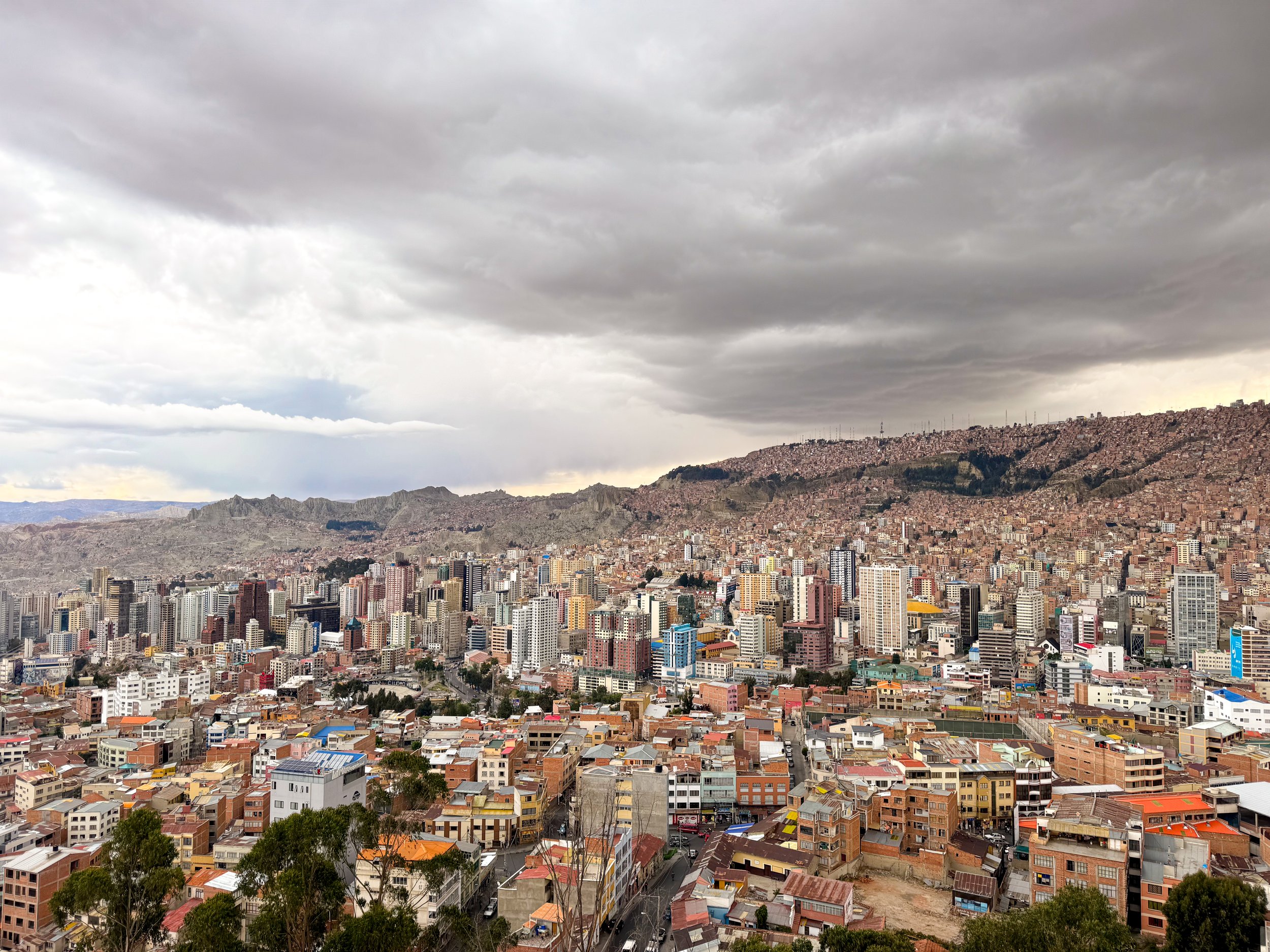
Mirador Killi Killi. A lookout in the middle of La Paz with views of the valley and sprawling city crawling up the mountainsides.
Montículo. A peaceful park and lookout in the middle of Barrio Sopocachi with views of the neighborhood, modern skyscrapers, teleferico and mountains.
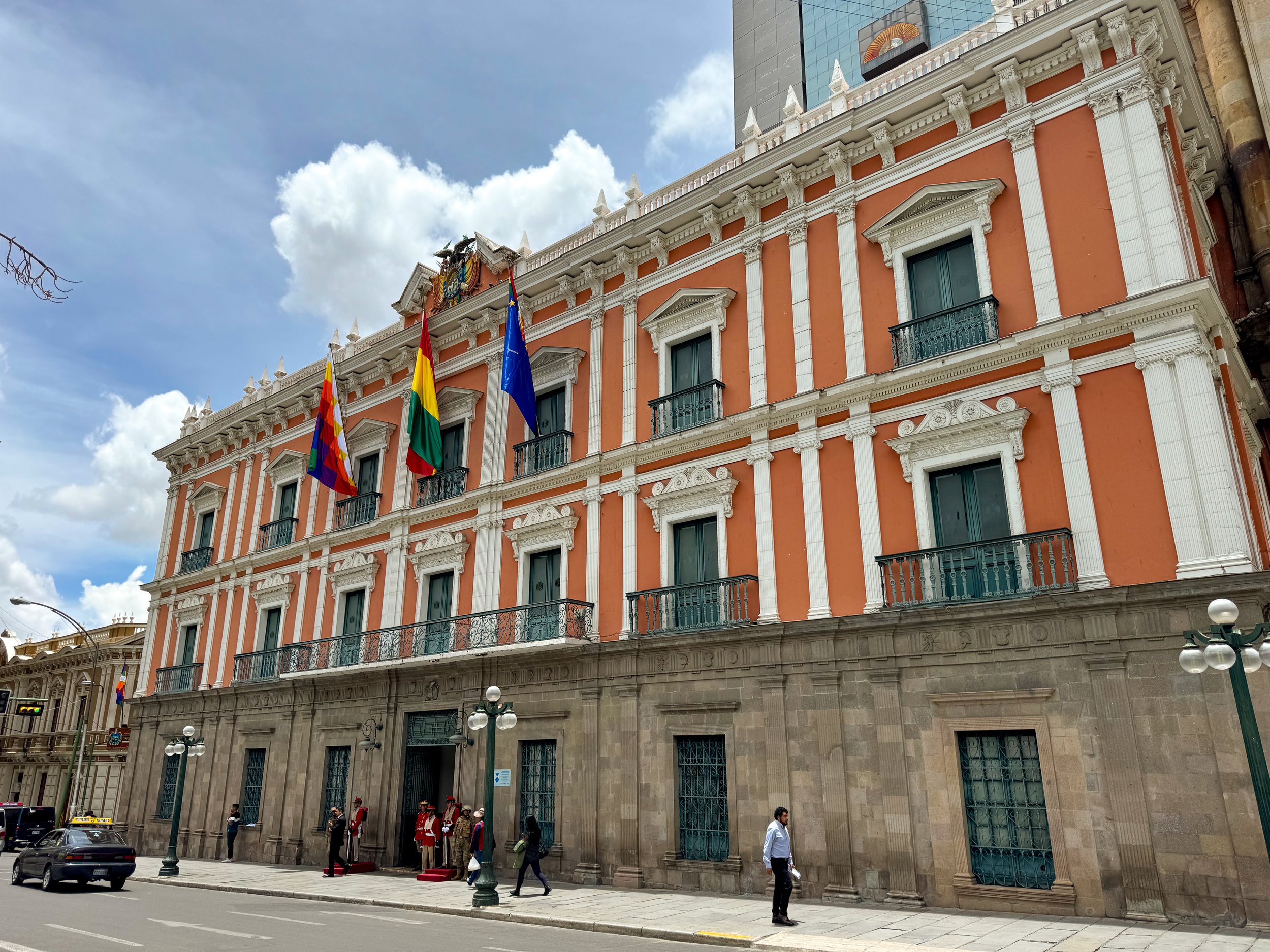
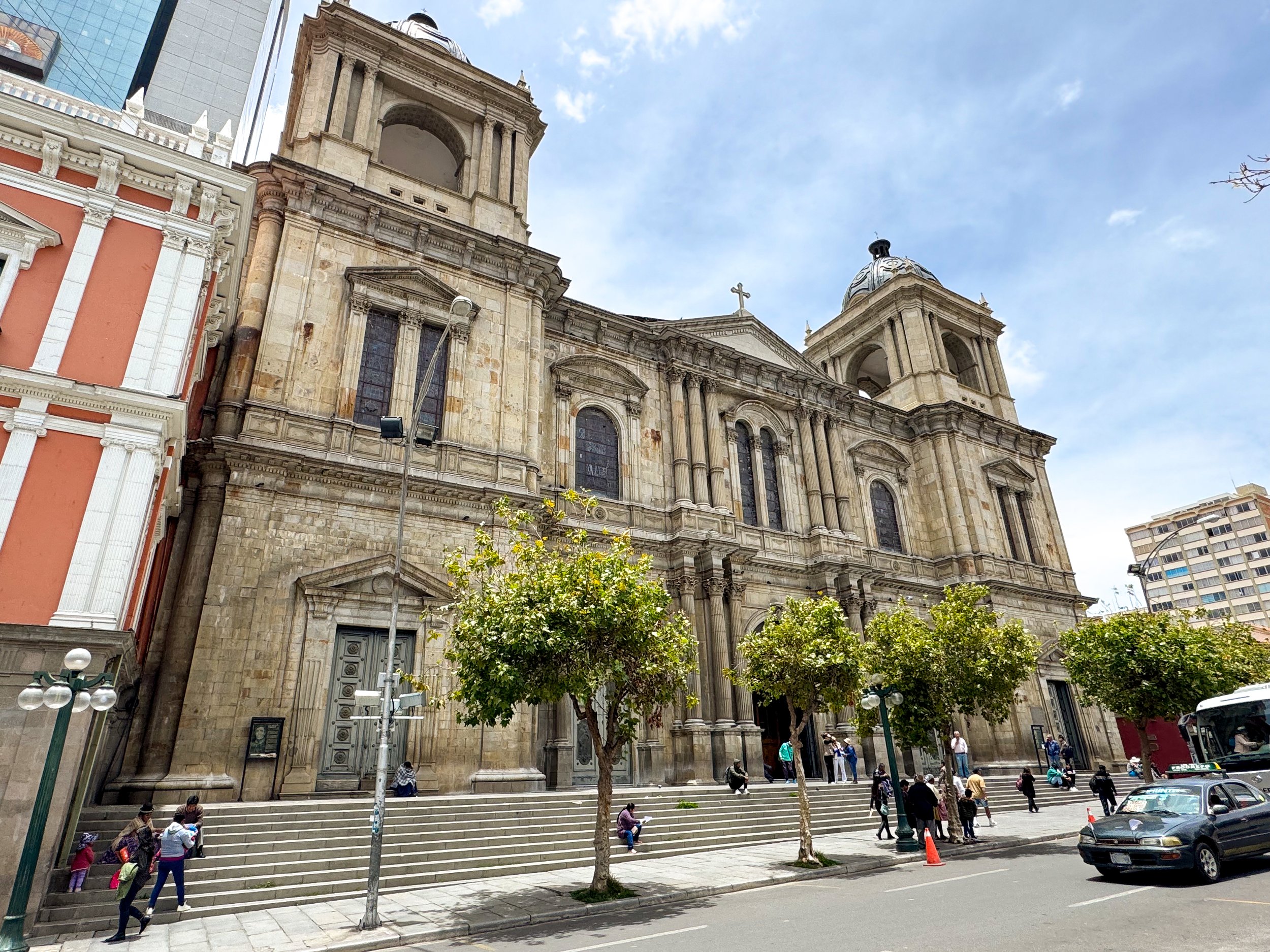
La Plaza Murillo. A central plaza surrounded by stately buildings flying the Bolivian and Andean flags with a large population of pigeons. Notable buildings include:
The Presidential Palace. A stone and red painted building patrolled by military police and presidential guard.
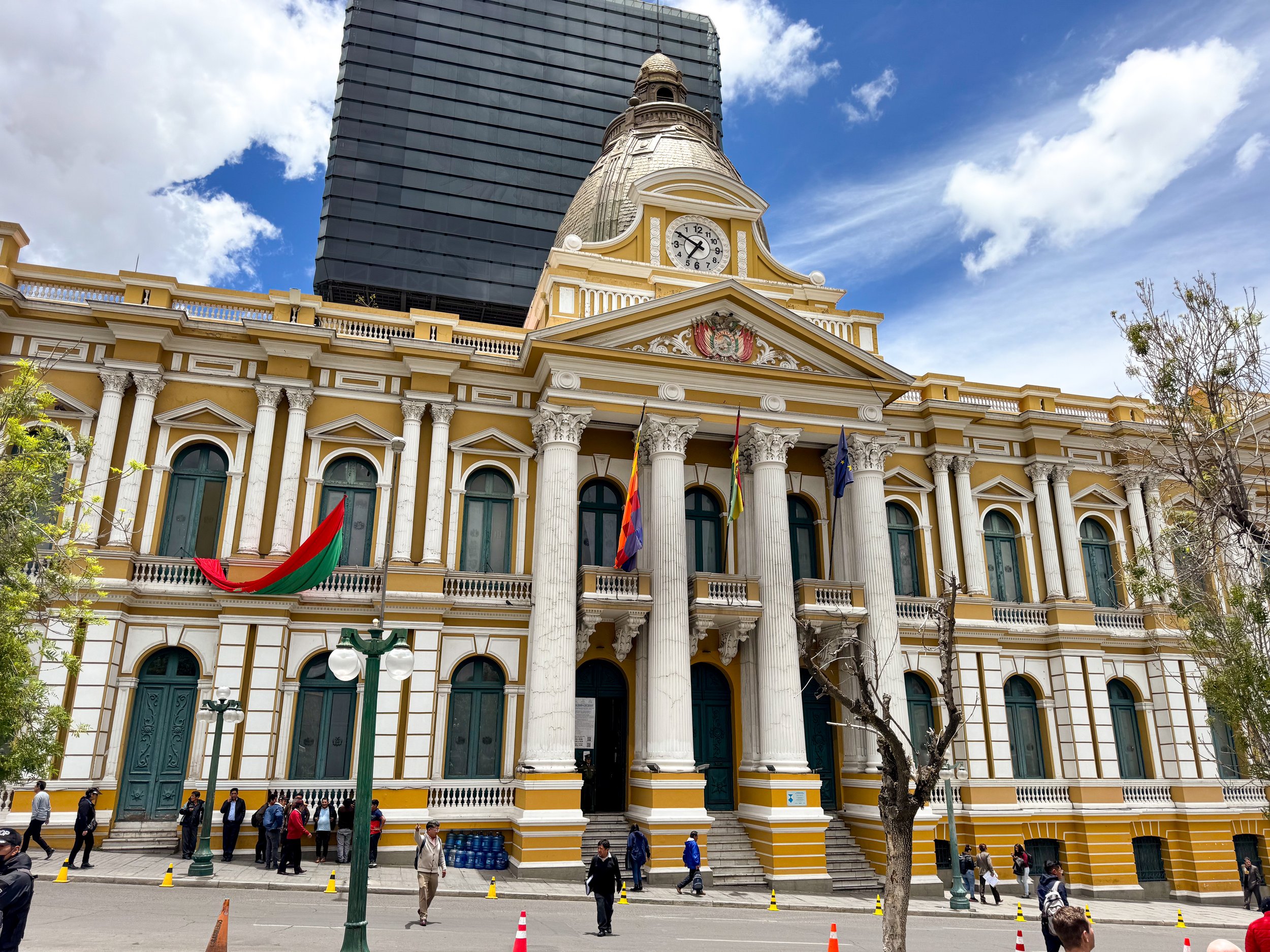
Legislature. A neoclassical building with white marble columns and a backwards clock representative of political change.
Basilica of Our Lady of Peace. A Renaissance style stone cathedral.
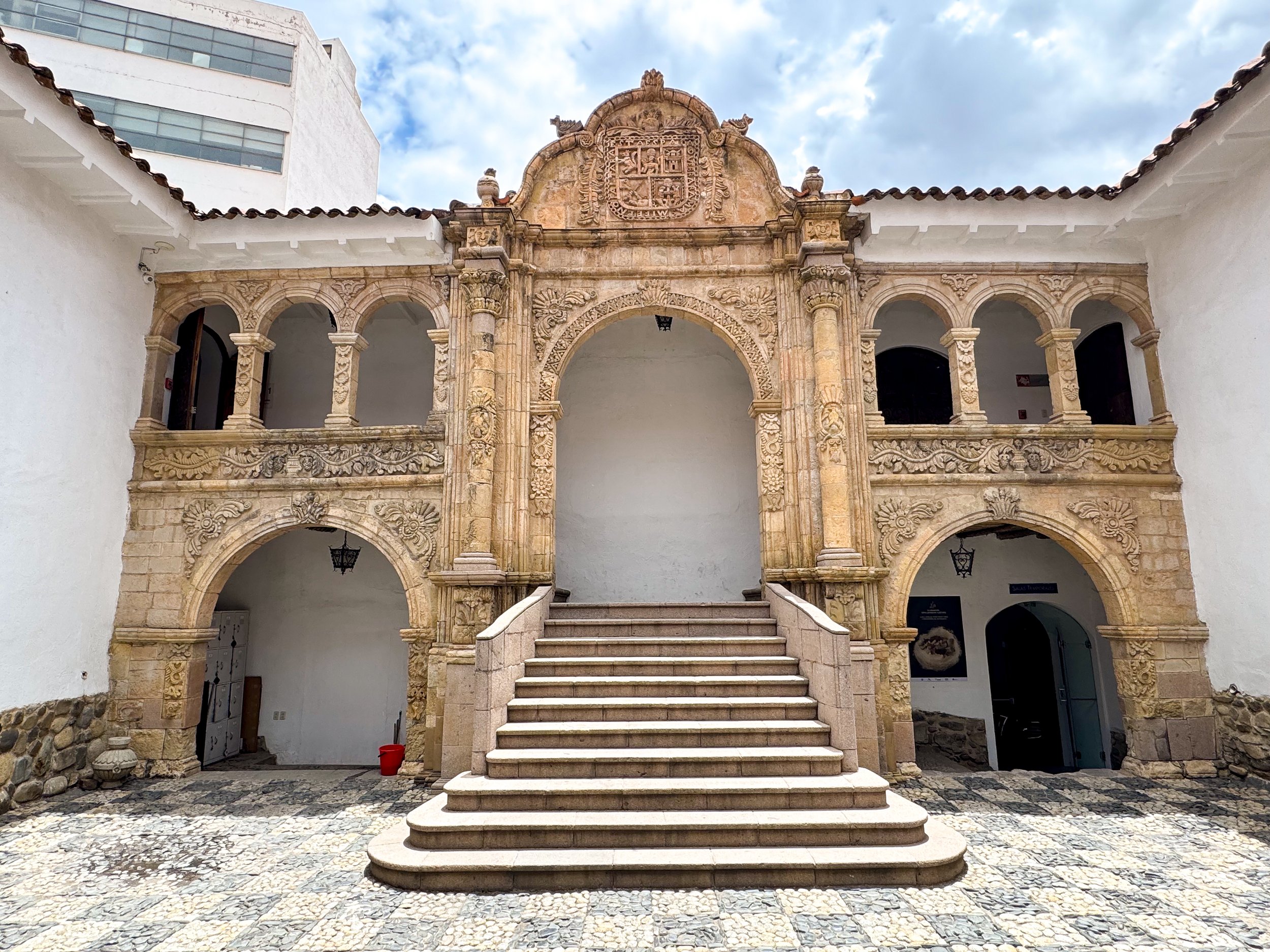
The National Museum of Ethnography & Folklore. A museum with exhibits on the use of natural resources by indigenous Bolivians. The exhibits showcase artifacts including ornate textiles, clothing and hats, elaborate feathered headdresses and totems, colorful Indigenous masks, ceramics and metalwork.
Plaza Abaroa. We stumbled upon this plaza while wandering through Barrio Sopocachi. At the time, it had a market with vendors selling textiles, jewelry and clothes. We bought crossbody bags embroidered in Bolivian textiles.
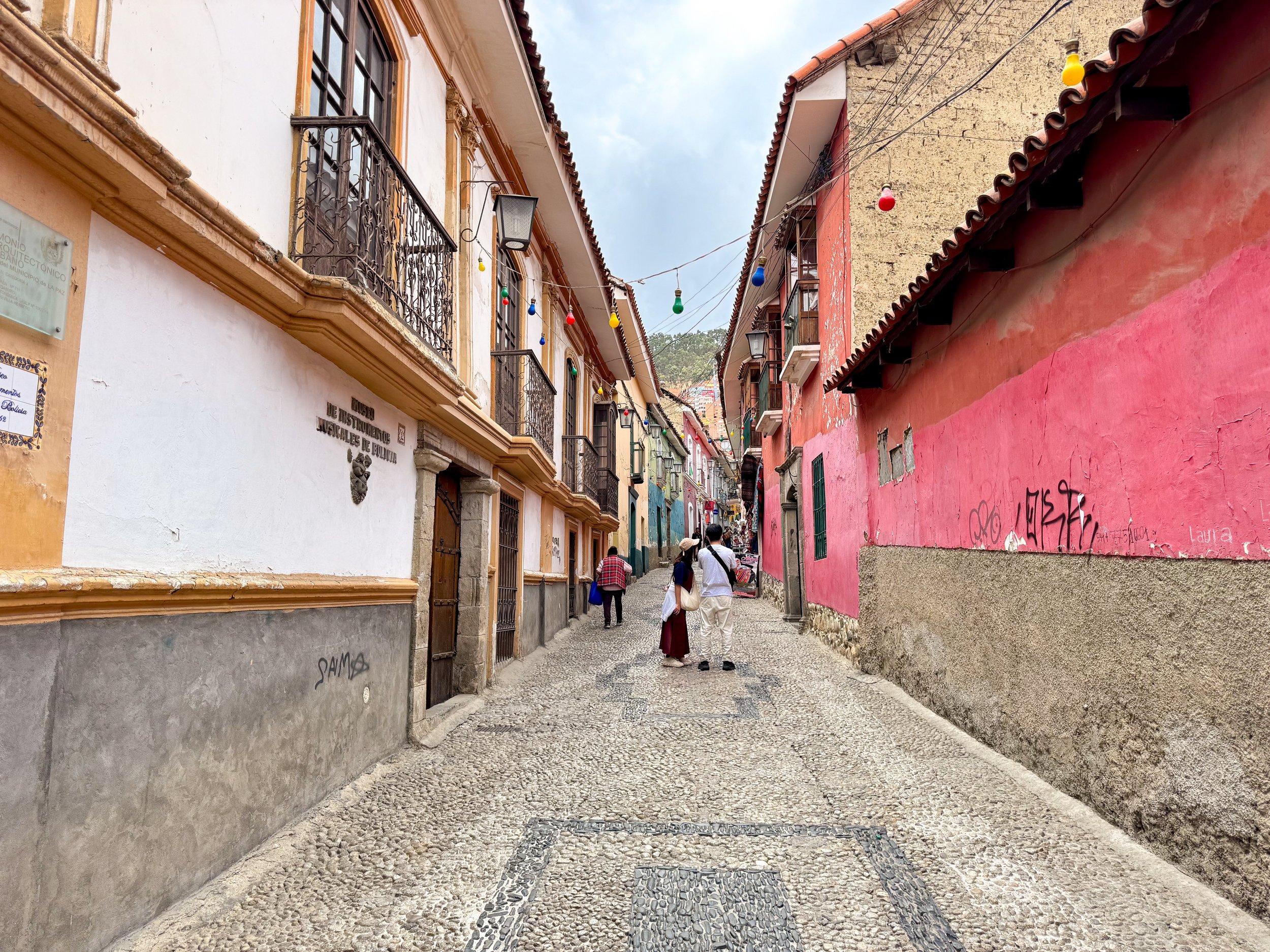
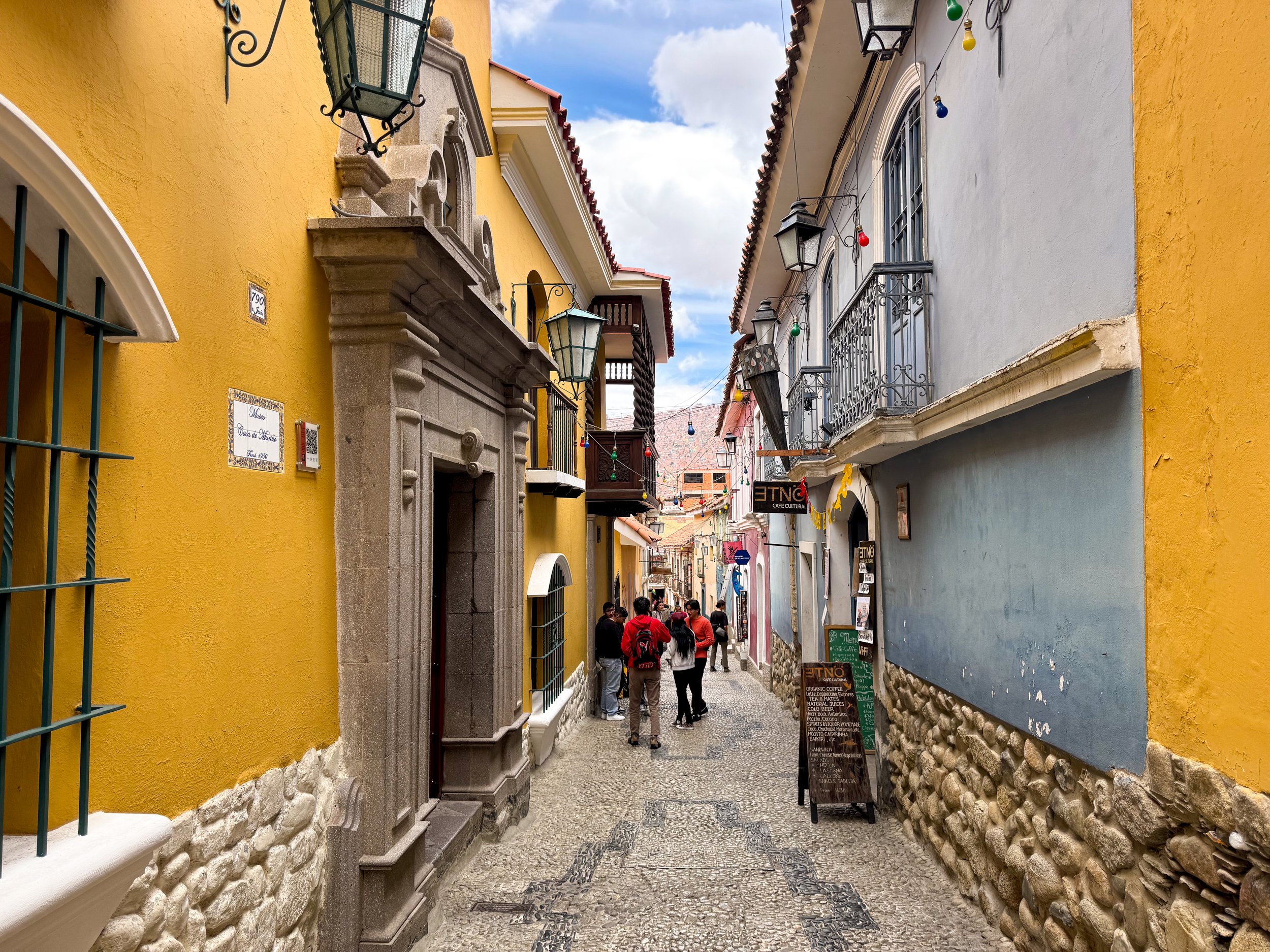
Calle Jean. A cobblestone street with colorful colonial buildings, art galleries, small museums and souvenir shops.
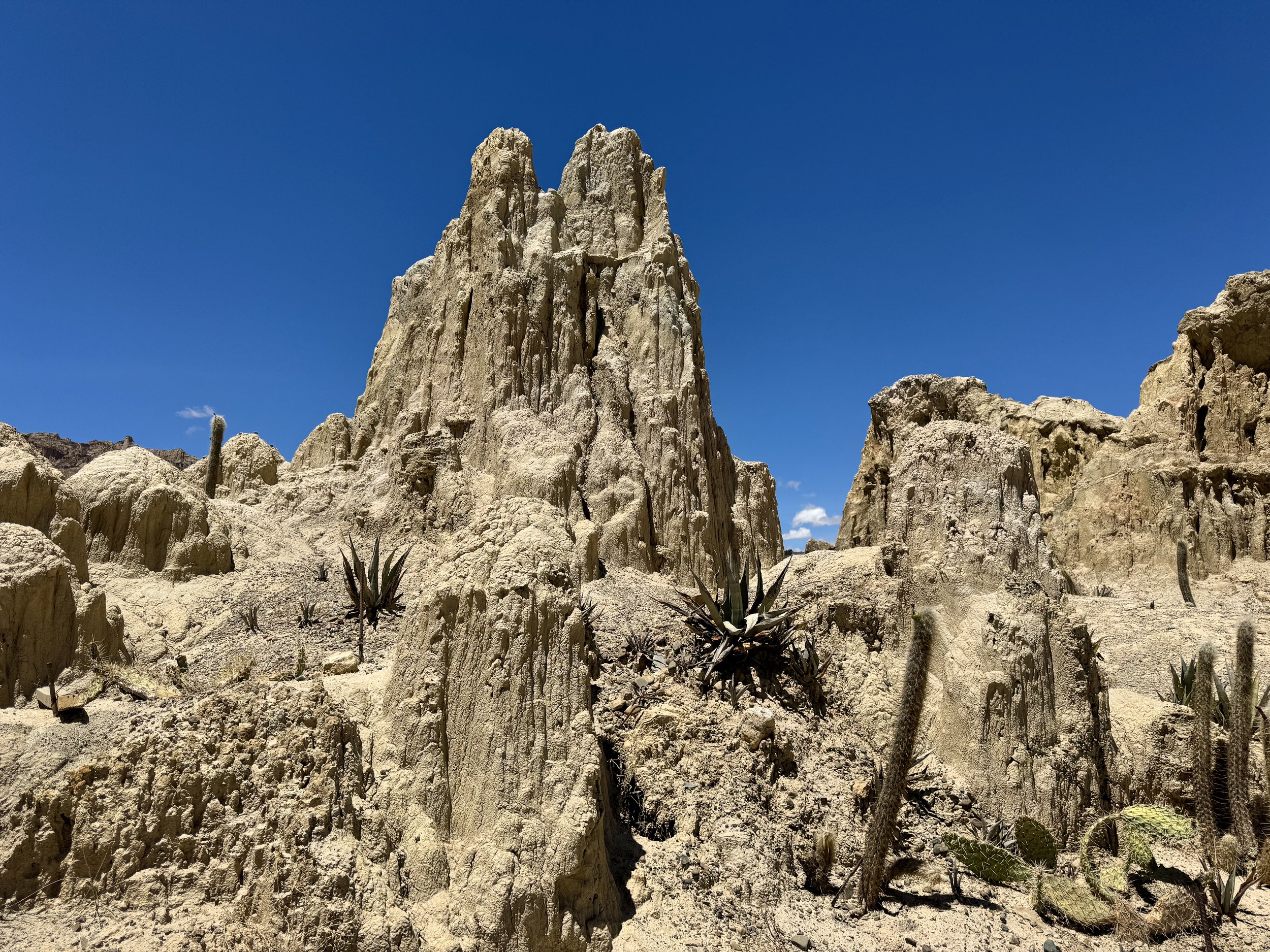

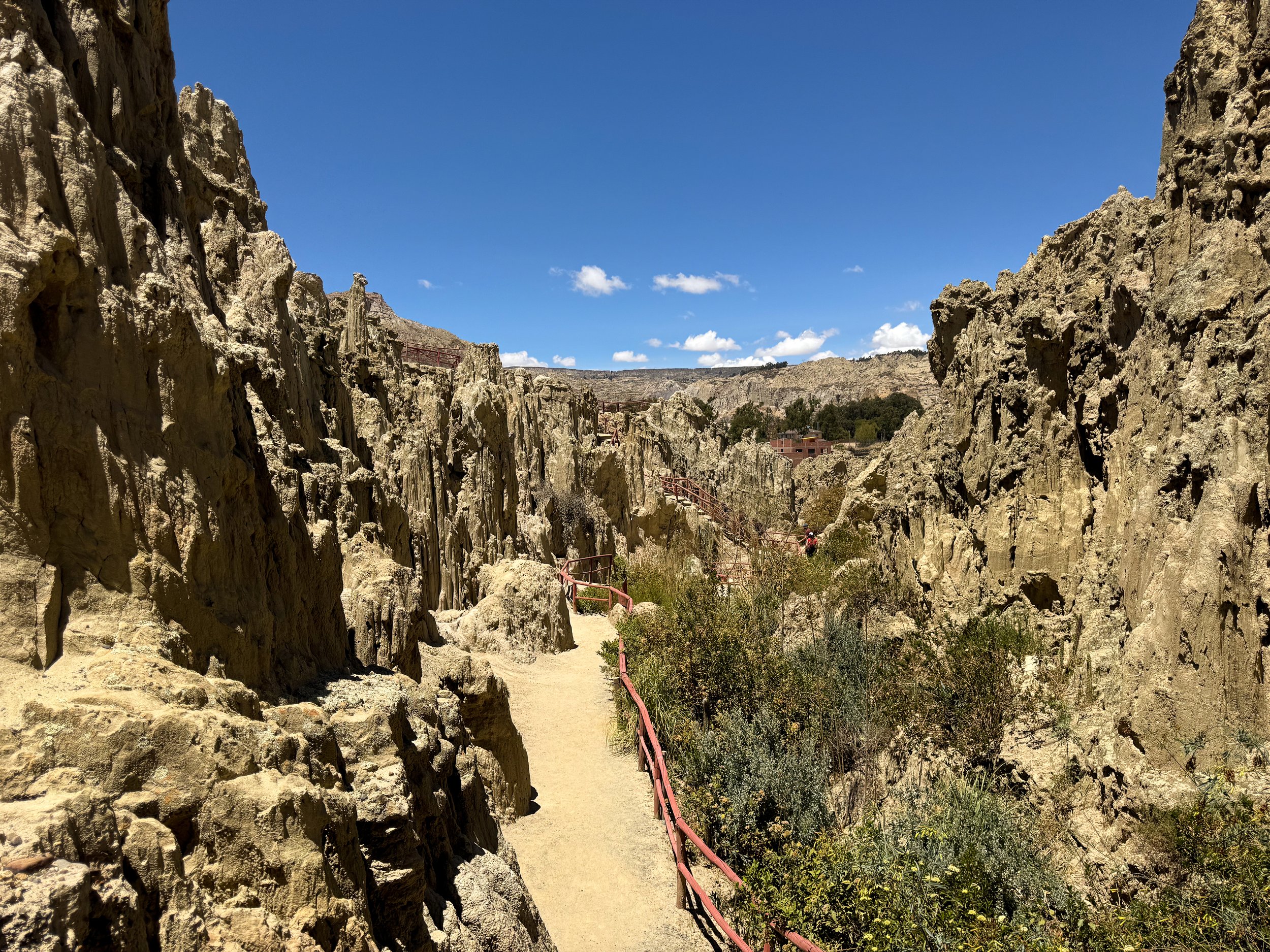
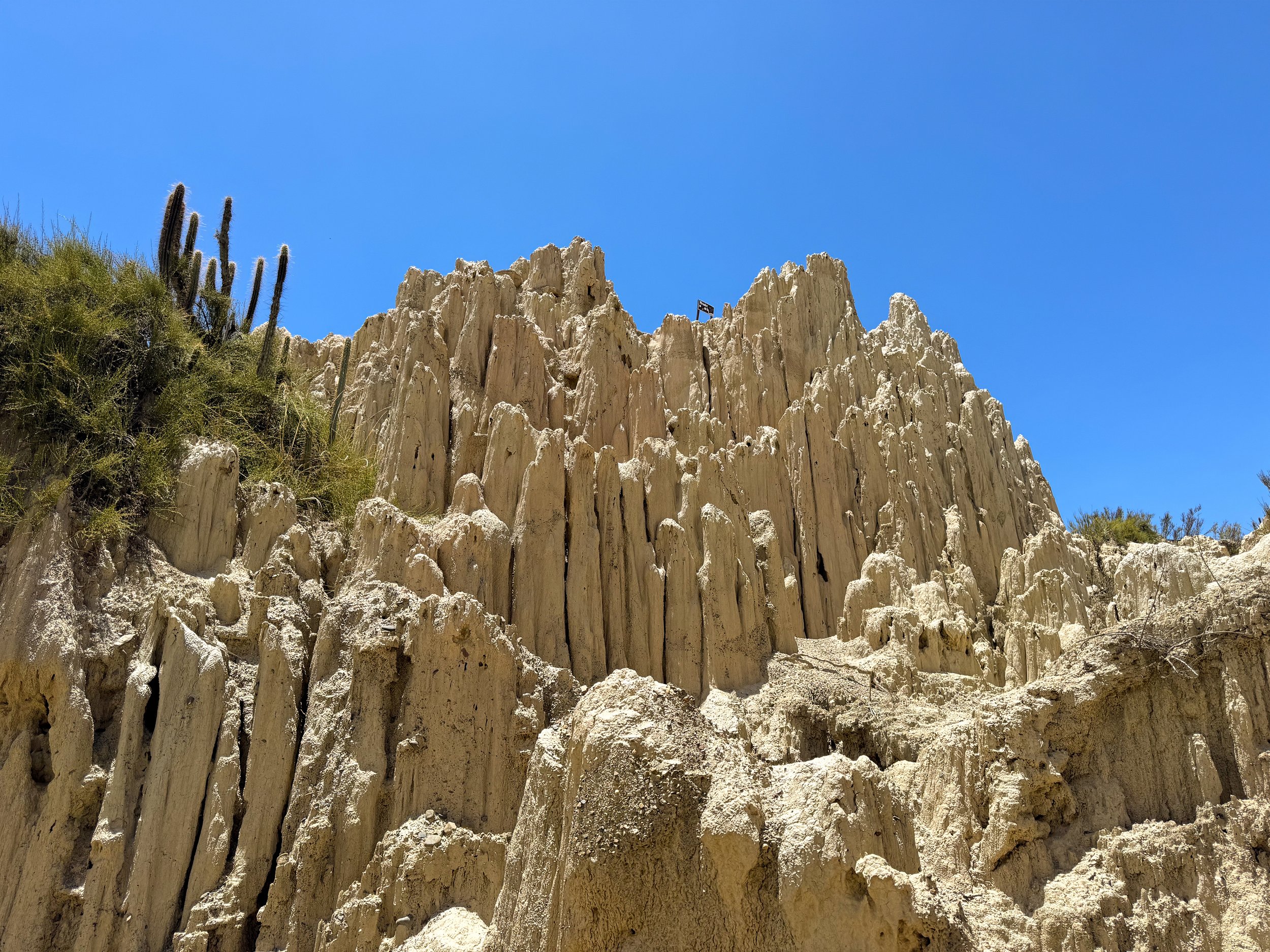
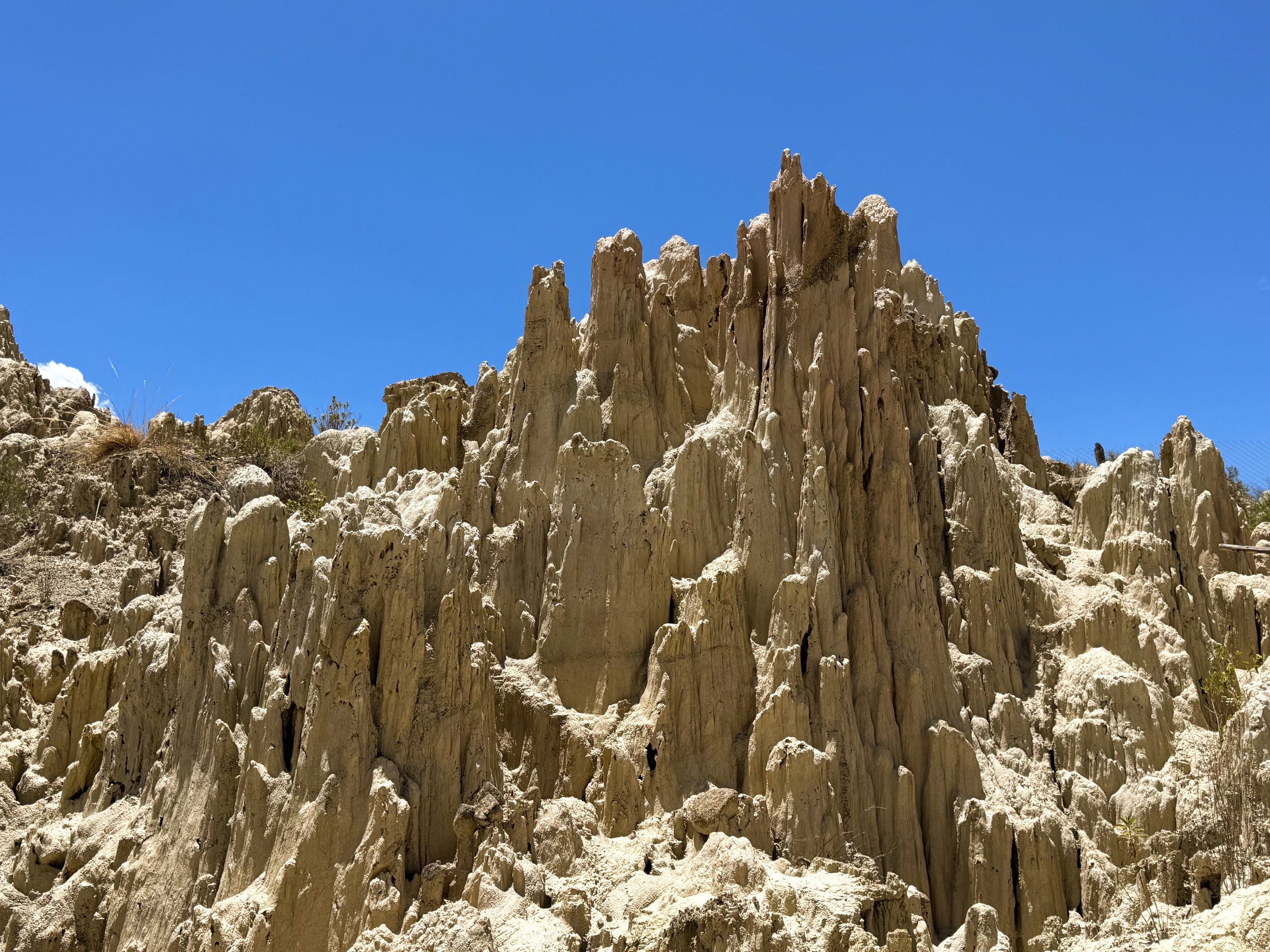
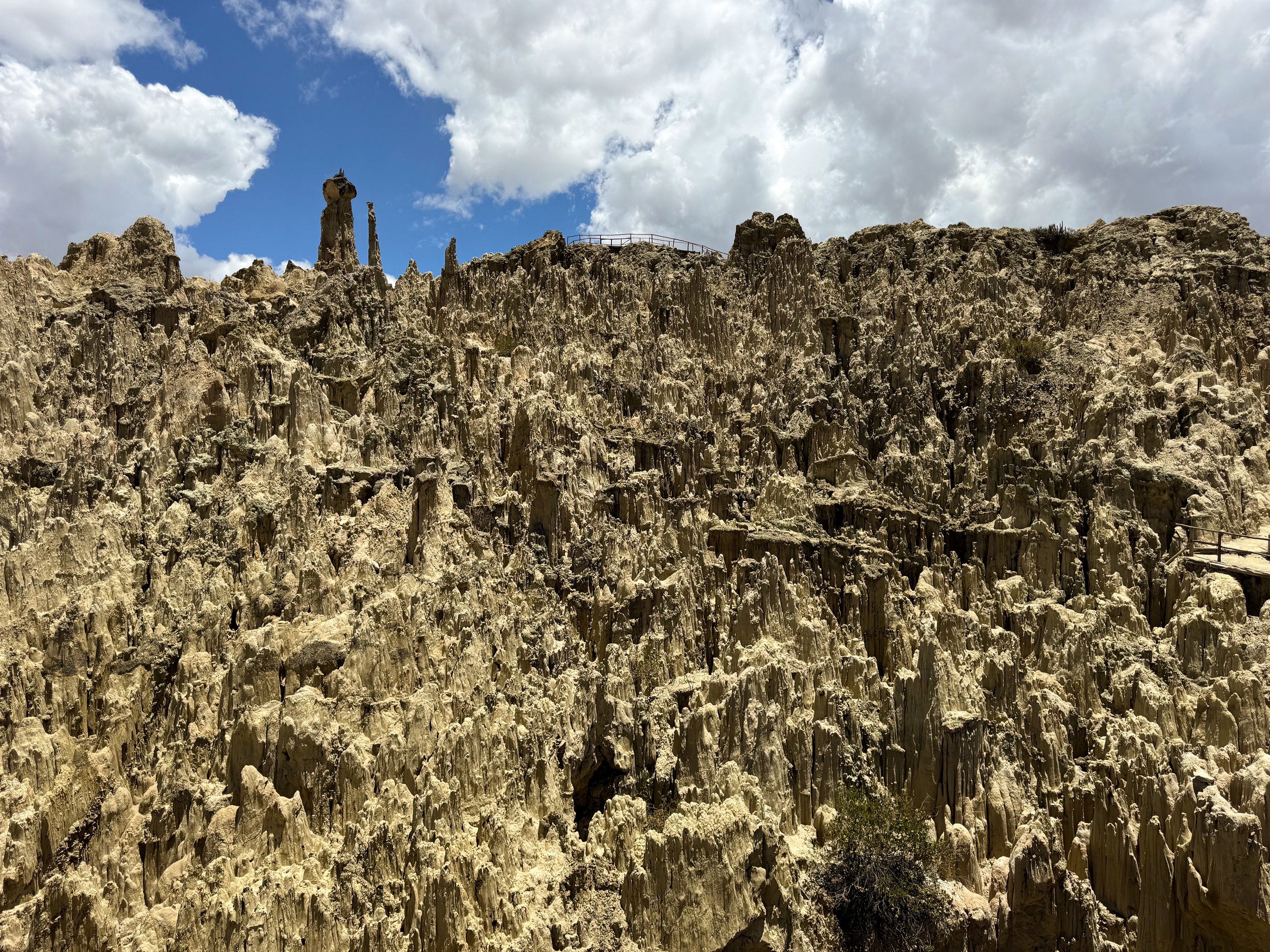
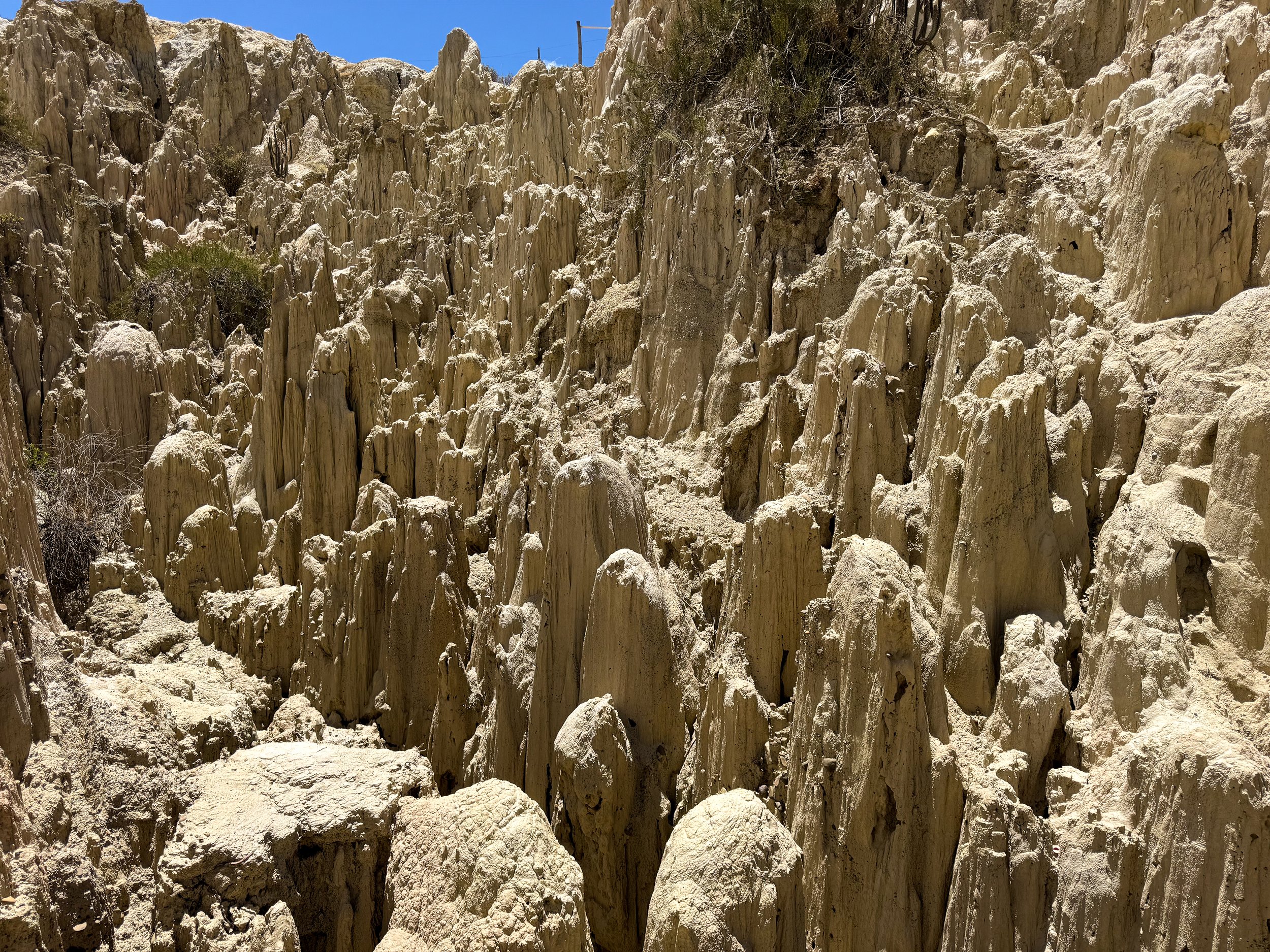
Valle de la Luna. A nature park just outside of La Paz with trails leading through an otherworldly desert landscape created by eroding rock pillars and jagged geological formations.
Shop the Markets
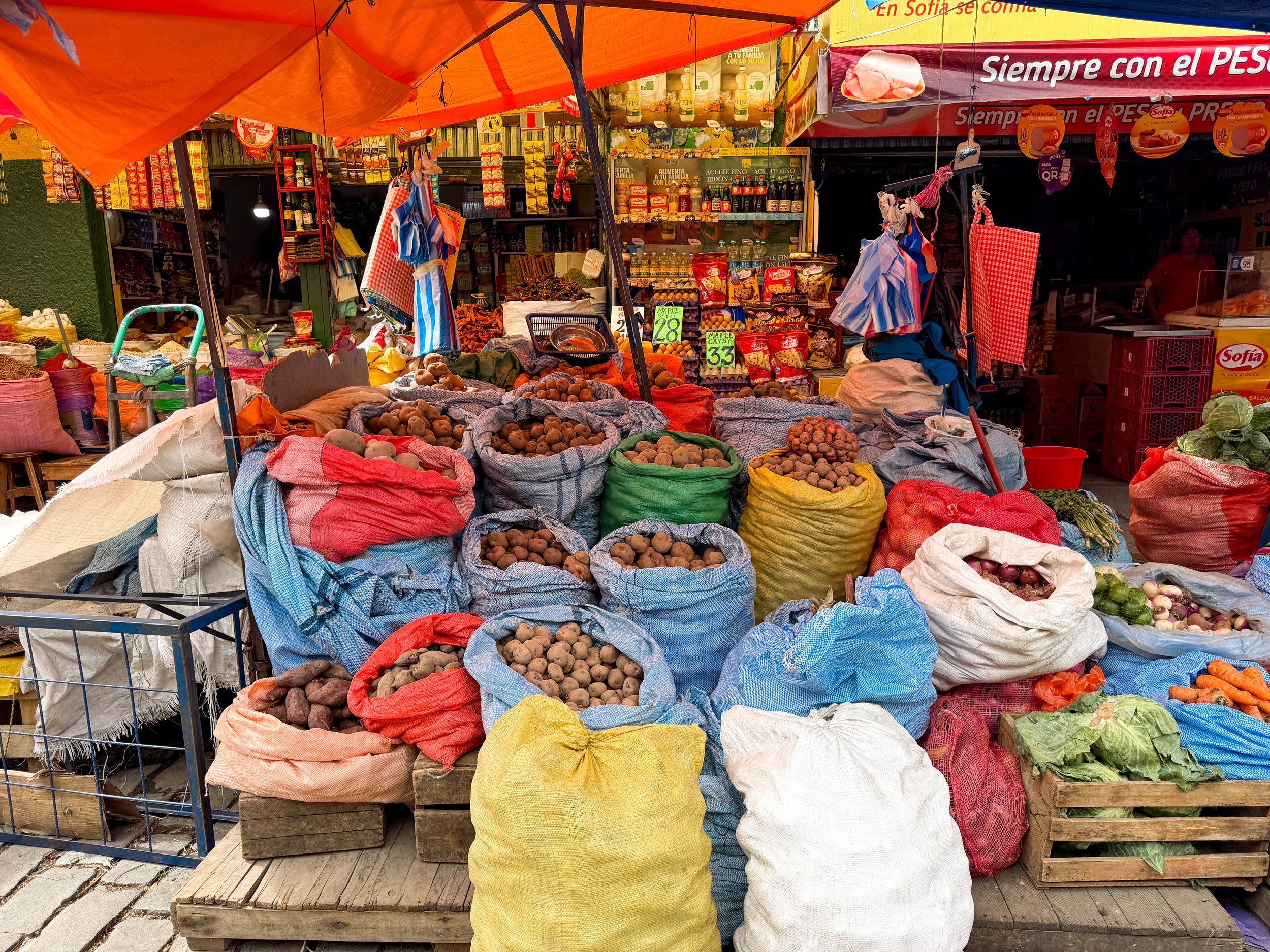
La Paz has numerous markets across the city in almost every neighborhood. We visited three to shop for groceries, eat street food and look for handicrafts.
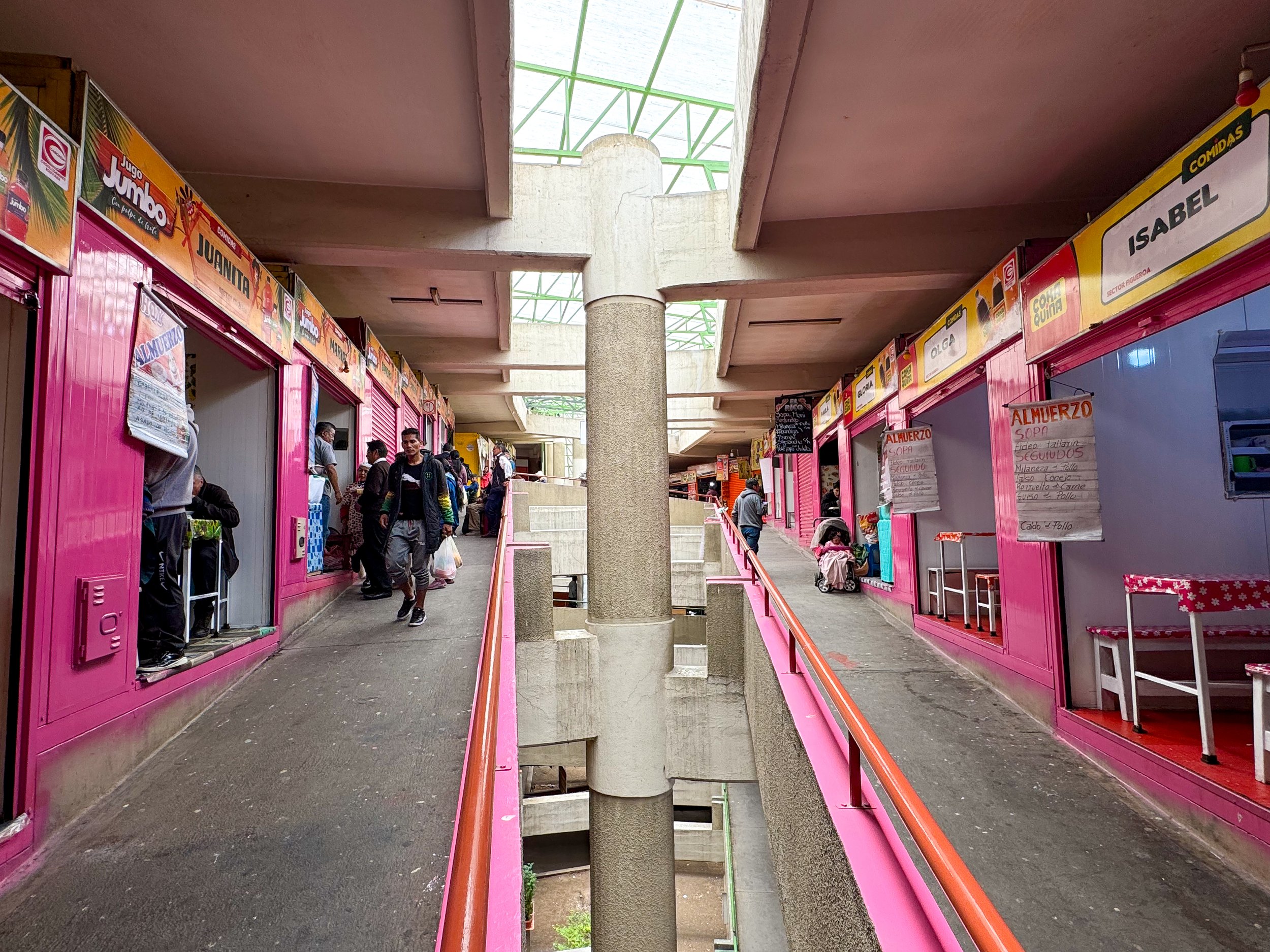
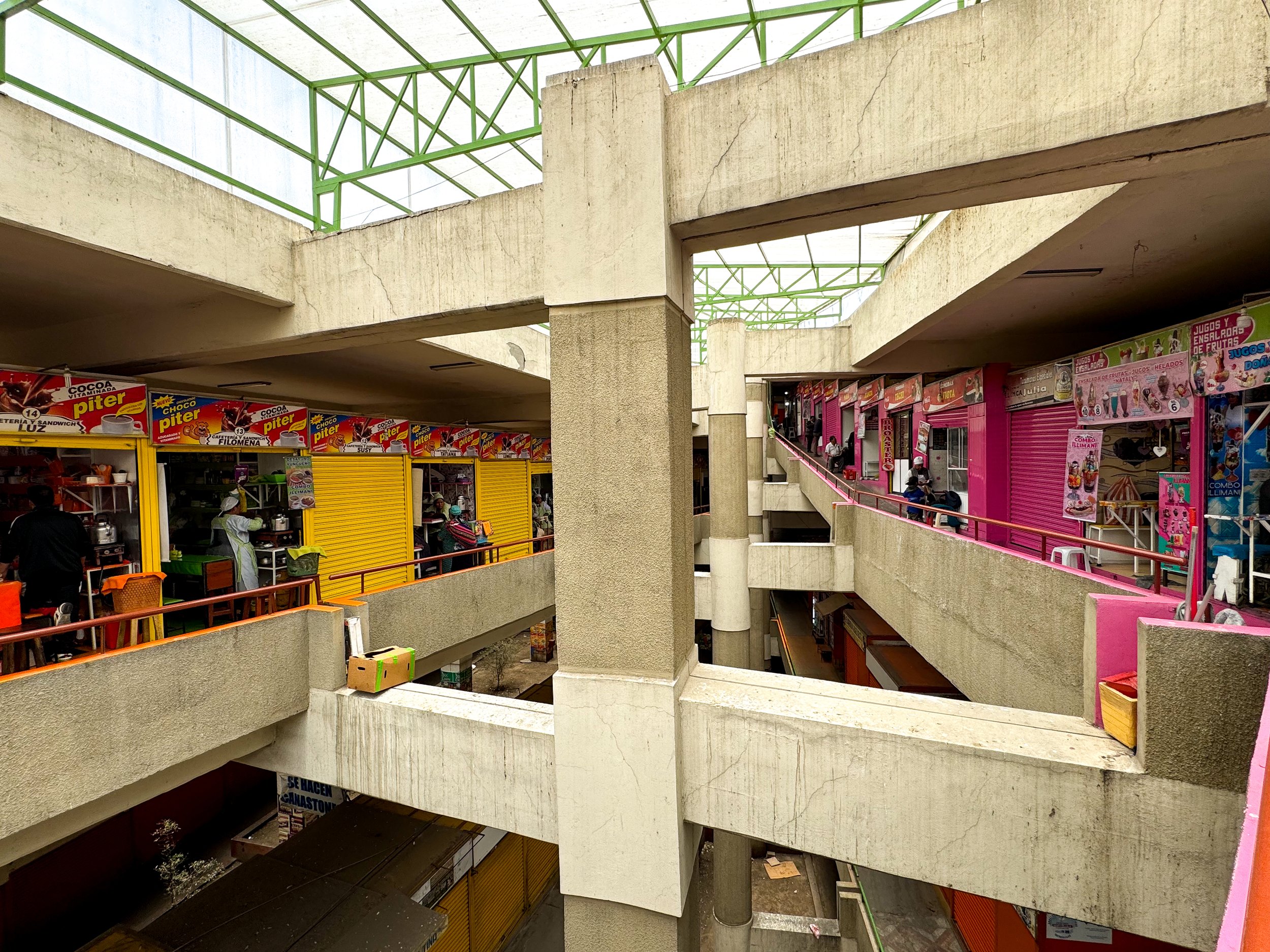
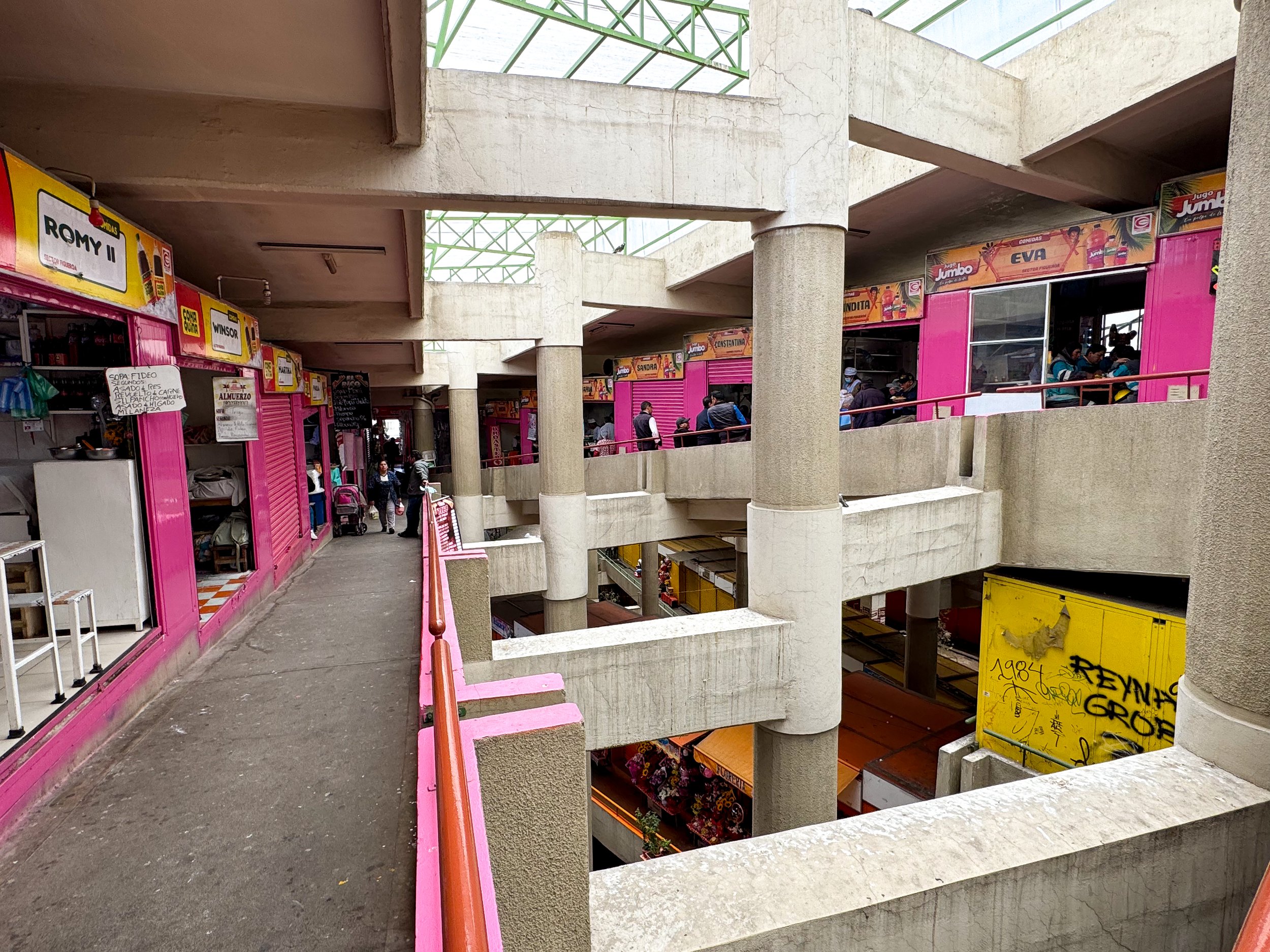
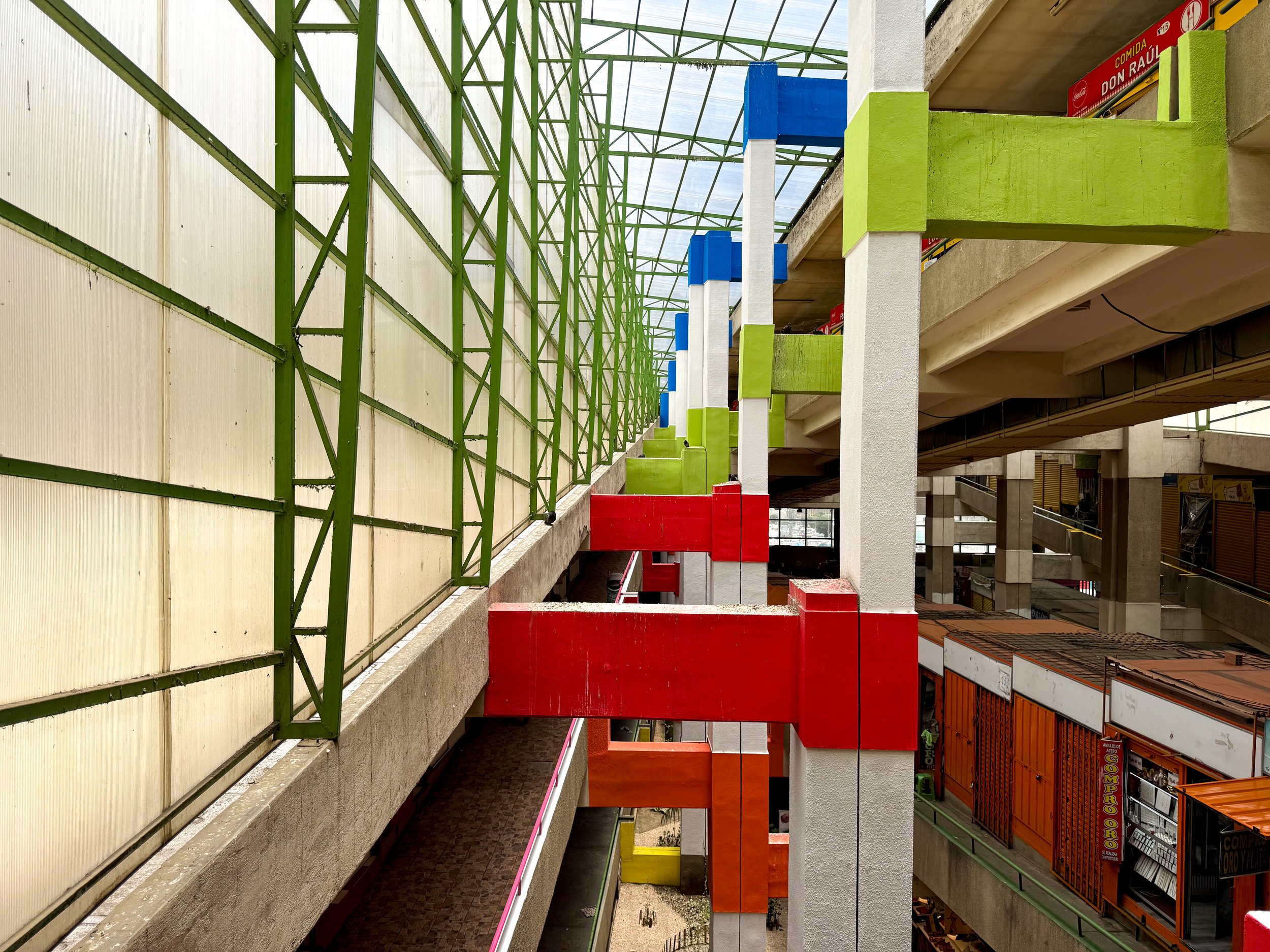
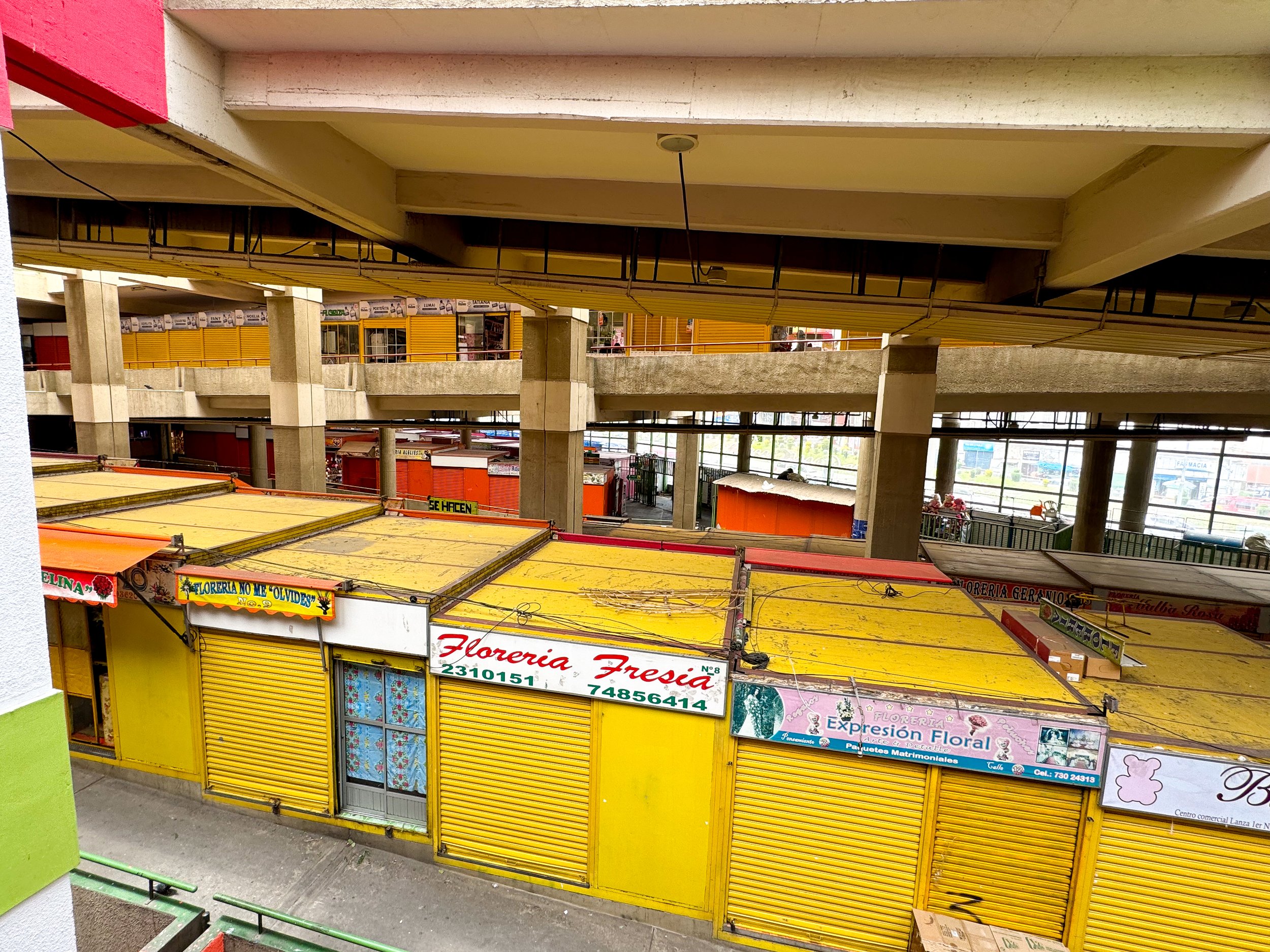
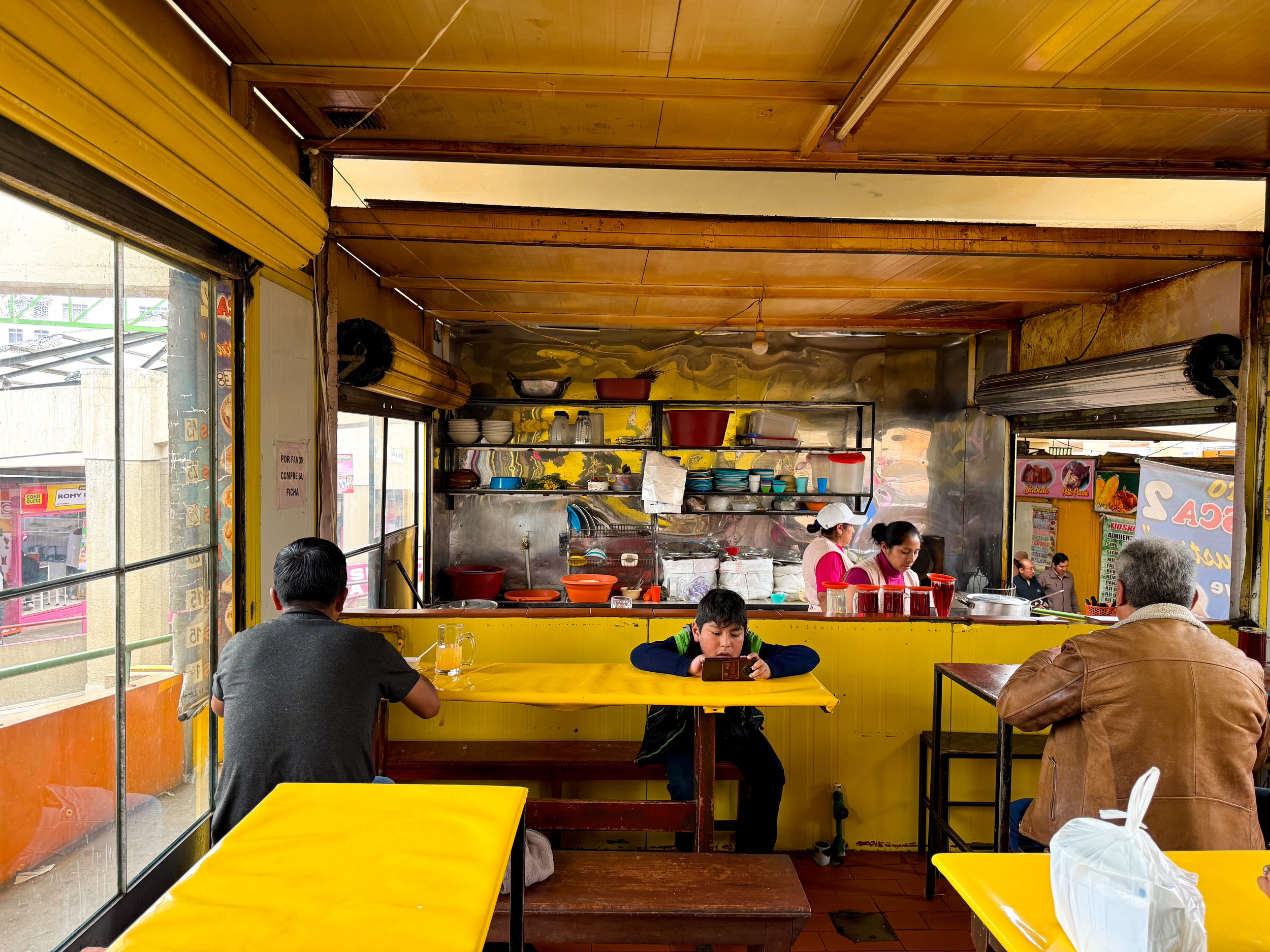
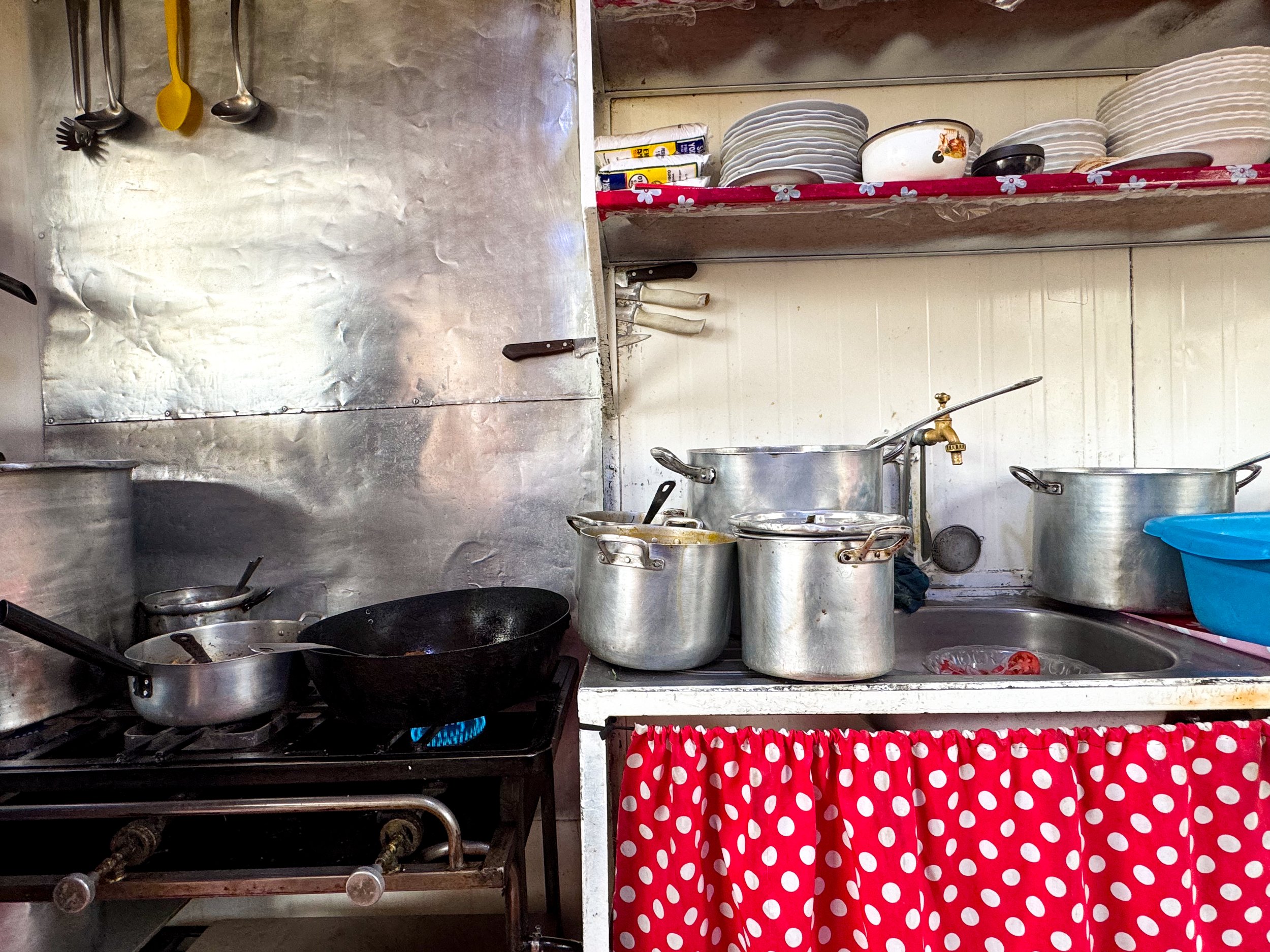
Mercado Lanza. A maze like market in a brutalist building with levels of intertwining ramps of vendors selling all kinds of inexpensive meals and juices. We wandered between sections as cooks called us into their nooks until finally stopping to eat. We sat down at one vendor’s kitchen for Sopa de Maní (peanut soup) and another for fried Mauri (an Andean fish).
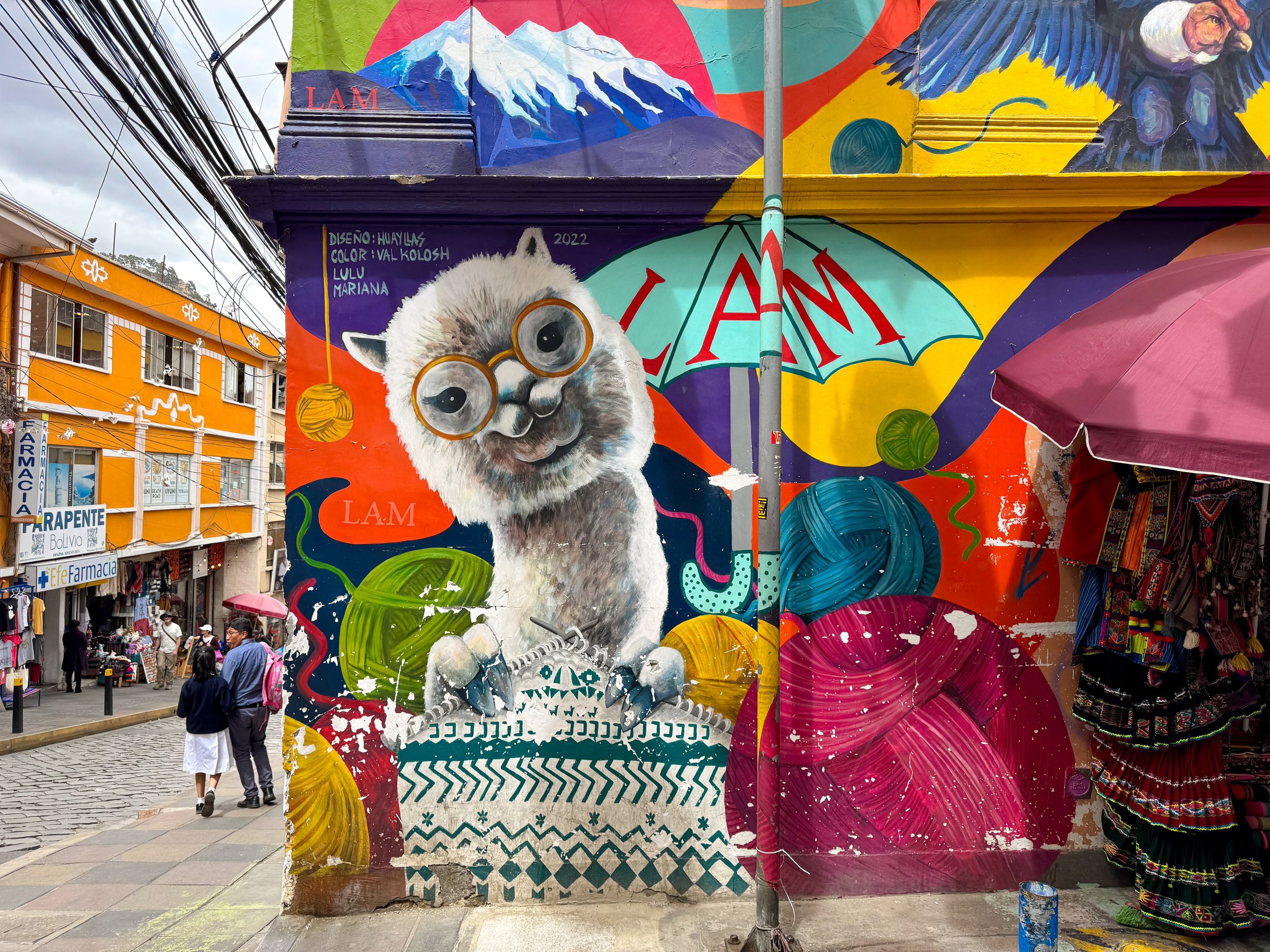
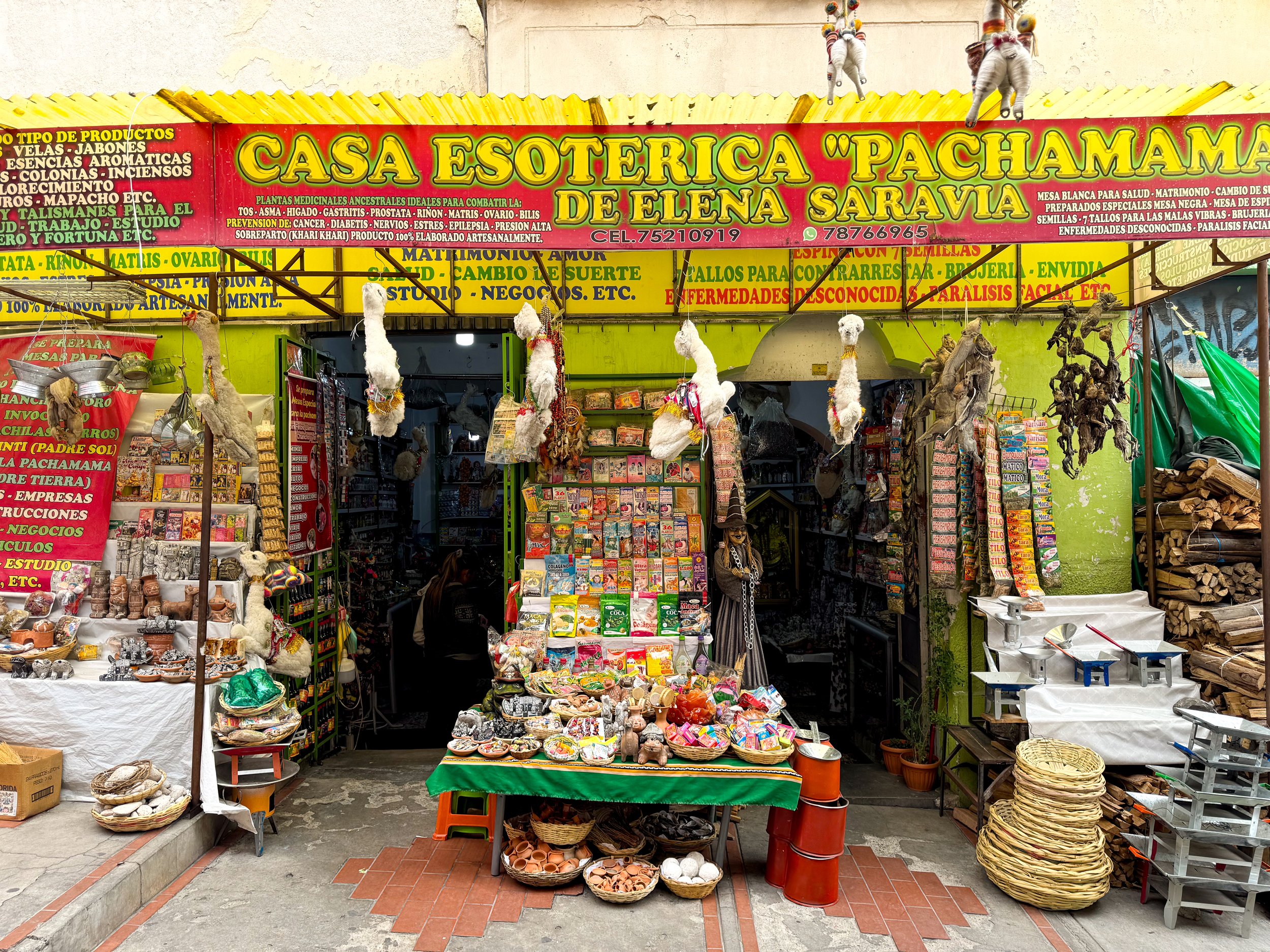
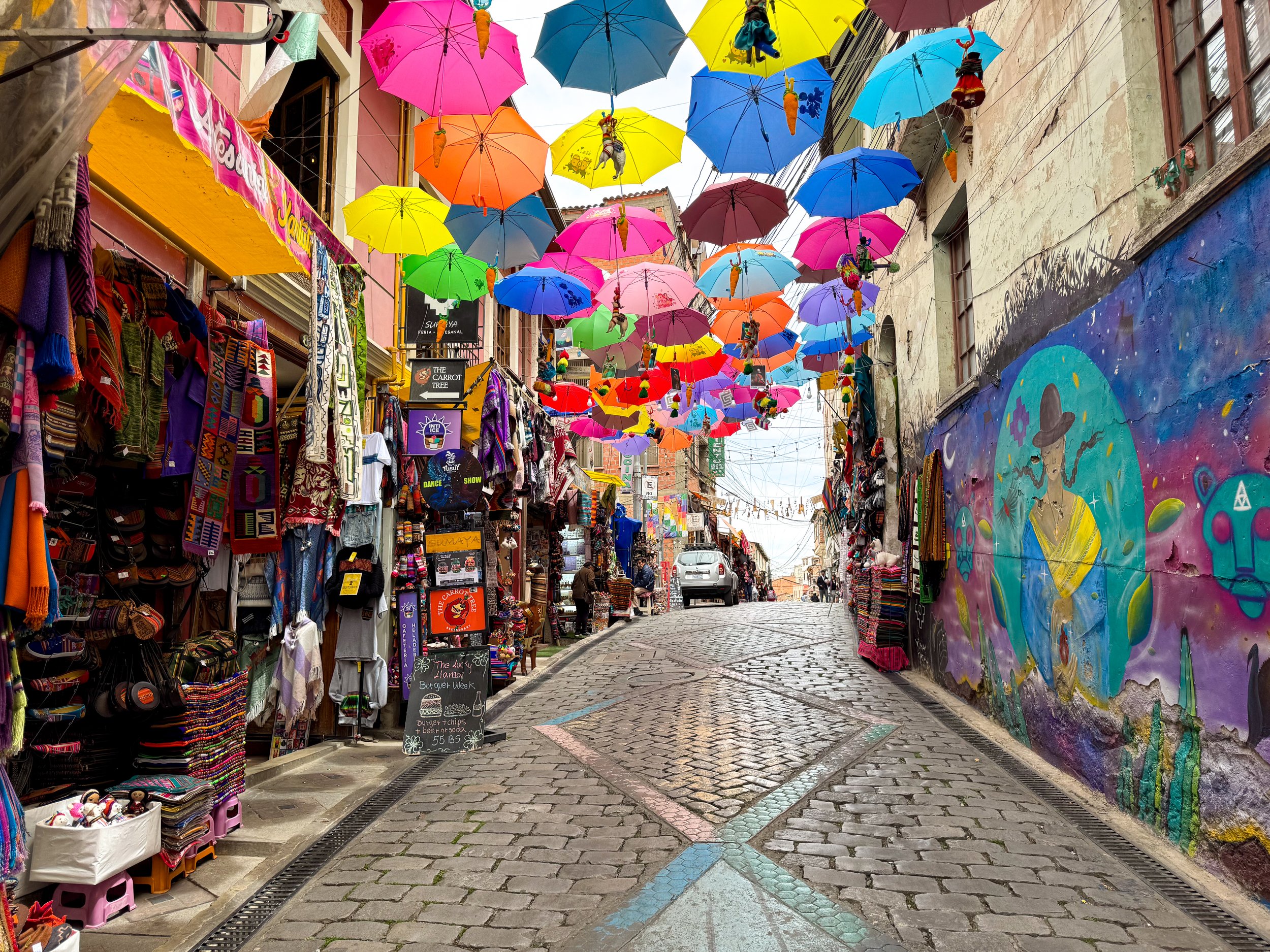
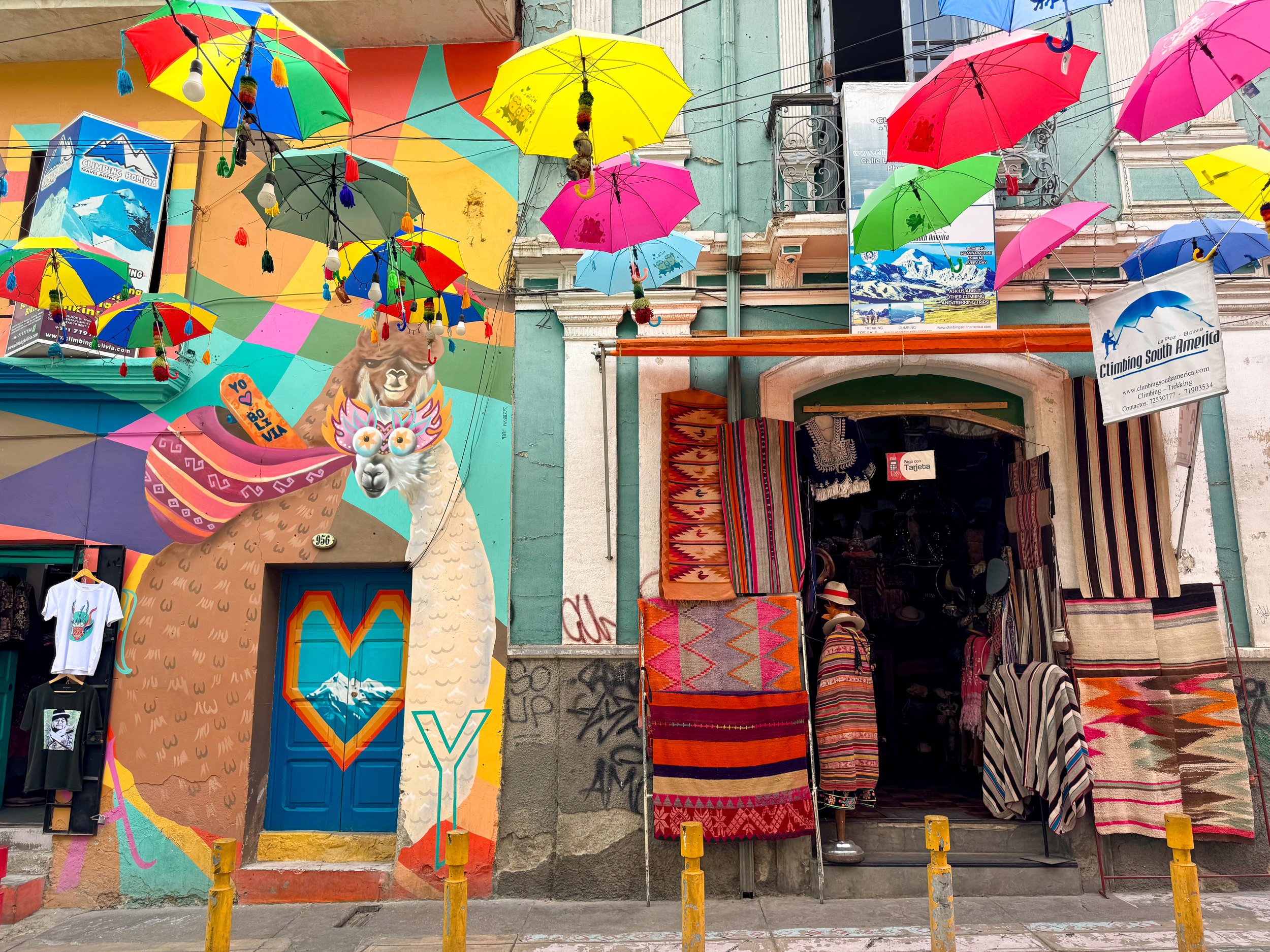
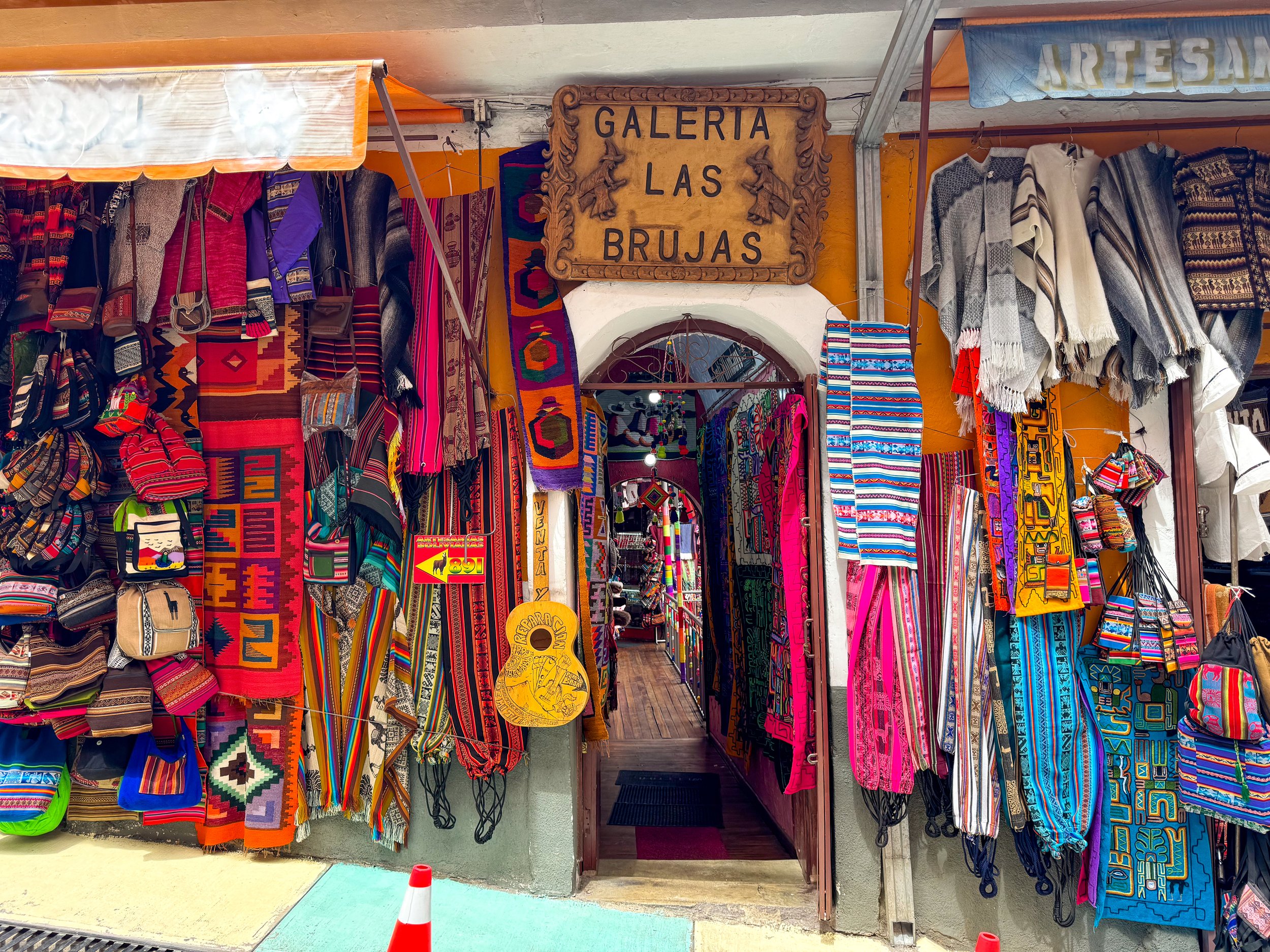
Mercado de las Brujas. A market street covered in upside down umbrellas and streamers with vendors selling musical instruments, hand woven textiles, antique indigenous artifacts and all types of machine made souvenirs. One of the draws is the dried llama fetuses and stuffed baby llamas suspended from shops. They’re used as offerings every August to Pachamama (Mother Earth) by the indigenous community.
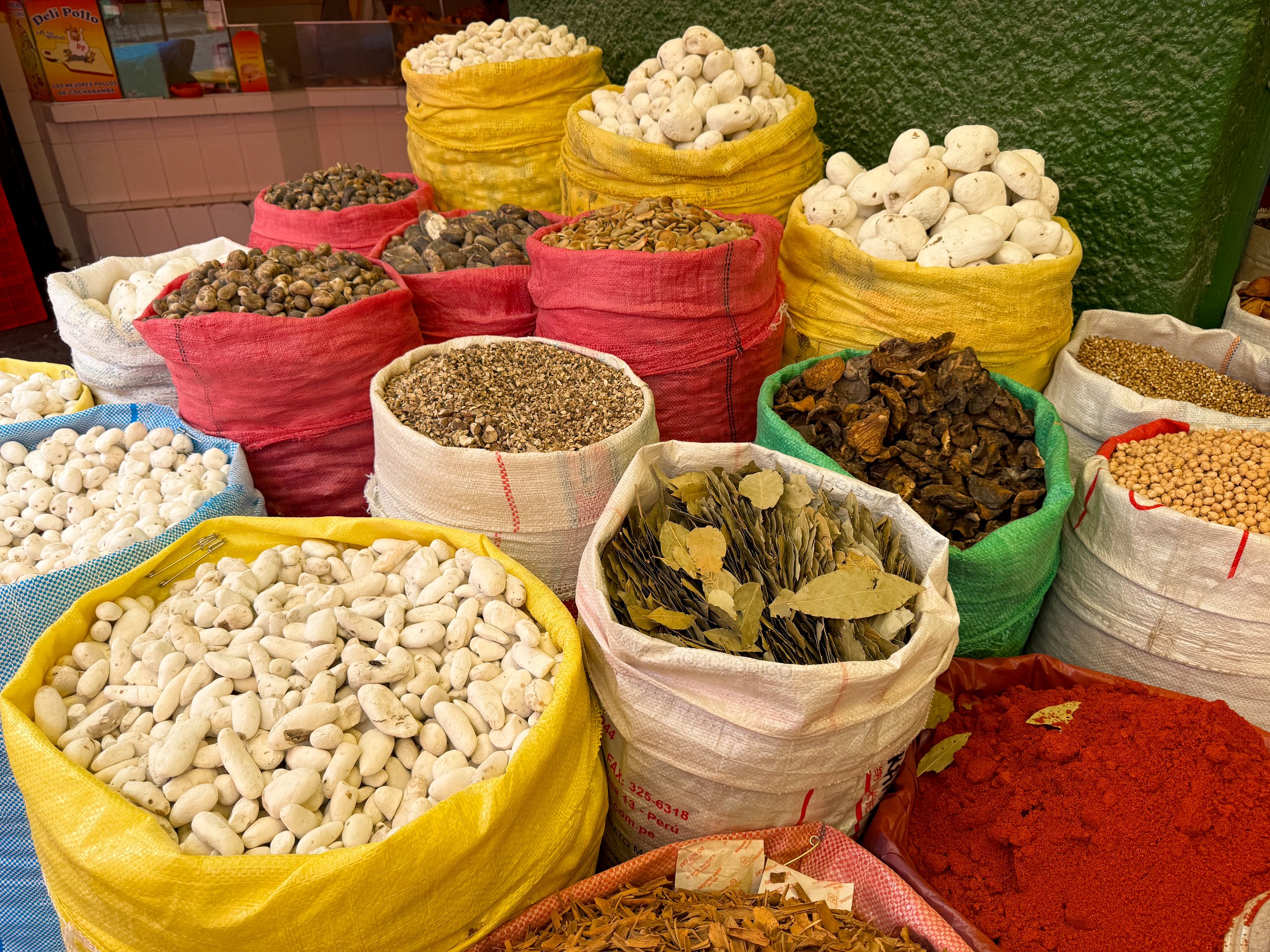
Mercado Rodríguez. A street market with vendors selling vegetables, fruits, herbs, breads and spices. There is an indoor market for fresh cut flowers and meats.

Places to Eat & Drink
Ali Pacha. A fine dining vegetarian restaurant offering surprise tasting menus blending Bolivian ingredients with international cuisine. We celebrated my birthday here opting for the standard tasting menu paired with Bolivian red wine. Our menu came with a cassava croquette, sourdough breads, fermented quinoa stew, purple corn tacos, quinoa dumplings and two desserts.
Paceña La Salteña. A restaurant chain that bakes the beloved Bolivian street food, Salteña. Any location is a reliable spot to find a vegetarian version.
Cielo Bar. A high end cocktail bar on the 38th floor of Bolivia’s tallest building with views of the city and mountains. We came here for drinks at sunset!
El Bestiario. A bohemian style and queer friendly bar that specializes in gin cocktails made from their house gin. We met up with new friends here, sipping on inventive concoctions and classics like the Negroni. Try the Llamero Solitario, an aromatic gin cocktail made with a heavy garnish of Andean herbs or the Api Love made with purple corn.
Retrato Café. A cozy cafe in Sopocachi that feels more like someone’s house than a coffee shop. We came here for Bolivian coffee and breakfast dishes.
Hb Bronze Coffee Bar. A romantic coffee bar with table side and candlelight coffee preparation of your choice. They specialize in geisha coffee, coffee infused cocktails and wines.
Eli’s Pizza. A restaurant in an old train car at the Central Station with pizzas and salteñas, including vegetarian options.
Friddo. An ice cream cart at the Central Station serving Bolivian flavors like dulce de leche, mocha, cherimoya and tumbo.

Bolivian Cuisine
From street food to contemporary cuisine, La Paz is a gastronomic hub for Andean and Amazonian flavors.
Salteñas. A savory Bolivian pastry that’s a cross between a baked empanada and a soup dumpling. A semi-sweet dough that caramelizes along the crimped edges filled with stewed meats or veggies and a sauce containing Andean spices. They’re often served from morning through mid-afternoon.
Plato Paceño. The national dish made from choclo (corn), potatoes and habas (large green beans) boiled with anise, served with grilled Andean cheese and a portion of meat.
Sopa de Maní. A vegetarian soup made from peanuts, veggies and noodles. It’s often served with a side of a spiced herb sauce.
Trucha. Trout from Lake Titicaca or other Andean bodies of water. It’s often served, either pan fried in butter and spiced or breaded and deep fried.
Cuñape. A cheesy bread ball made with queso fresco and mozzarella. It’s similar to Brazil’s pao de queijo.
Tropical Fruits. A majority of Bolivia is within the Amazon which supplies the country with an array of tropical and exotic fruits. Some include tumbo, cherimoya, mango, kiwi, banana, avocado and papaya.
Pasankallas. A snack similar to popcorn made from large corn kernels that have been dried, puffed and then coated with sugar, salt or other spices.
Paceña. A classic pilsner and Bolivia’s national beer.
Ch’Ama. A craft beer made with coca leaves.
Chuflay. A traditional Bolivian cocktail made from Singani, a distilled grape liquor, a soda such as Sprite or ginger ale and slices of lemon served on the rocks.

Getting Around
Mi Teleferico. A transit network of cable cars used to get around the city. It’s by far the best way to get around La Paz and sight see. There are several different color coded lines that connect the city, cross valleys and reach into the mountains, each with unique aerial views of the city and Andean landscape. We purchased a rechargeable card to share with fares costing a couple Boliviano per ride.
By Uber. For distances not reachable by the Teleferico, we took Ubers to get around. They are readily available and inexpensive.
Location Specifics
Cash vs. Card. Cash is most commonly accepted. Very few places accept debit or credit cards.
Currency. The Bolivian Bolivar is the only accepted currency however US dollars can be exchanged for rates higher than the accepted rate.
Altitude. La Paz is the highest capital city in the world at an altitude of 12,000ft above sea level. If you haven’t acclimated, it can be tiring and different.
UV Protection. With the high altitude, the UV is significantly harsher than at sea level. Pants, long sleeves, sunglasses and broad spectrum sun block are necessary not to burn.
Water. The tap water is unsafe to drink, even if boiled. It’s often contaminated with heavy metals by runoff from nearby mines. Drink filtered or bottled water only.
LGBTQ+ Safety. Bolivia is increasingly accepting of LGBTQ travelers though PDA is not common.
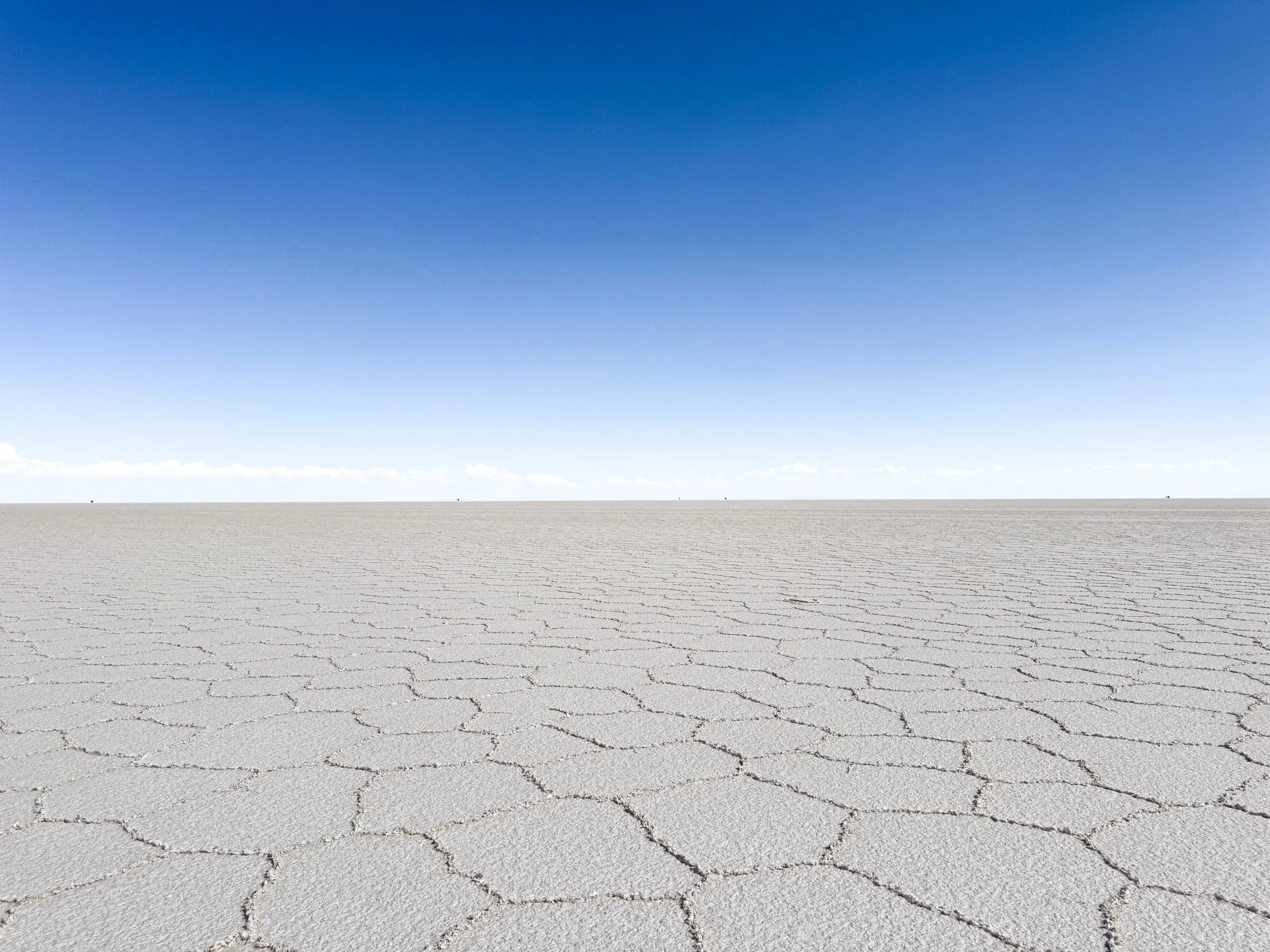
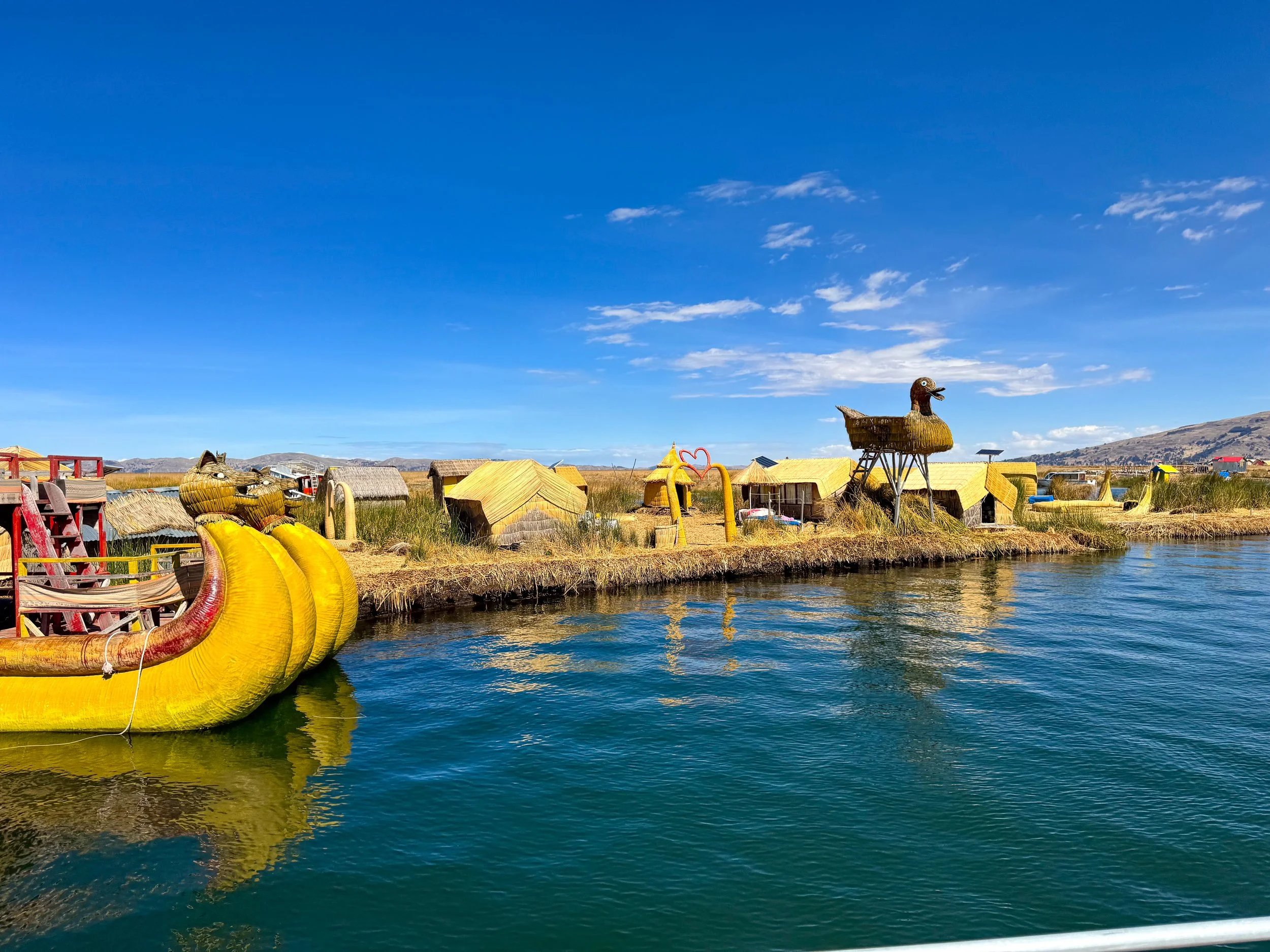
Elsewhere in Bolivia
From bustling markets and mountain views to ancient island communities and the otherworldly landscapes of Salar de Uyuni, discover more of Bolivia through these travel guides:
Salar de Uyuni Travel Guide: Salt Flats, Lagoons & Desert Landscapes. Journey across Salar de Uyuni's vast salt flats and Bolivia's high altitude deserts where colorful lagoons, flamingos, volcanoes and geysers create extraordinary landscapes.
Lake Titicaca Travel Guide: Floating Islands & Indigenous Culture. Voyage between Lake Titicaca's floating islands and lakeside communities where Indigenous culture, Andean traditions and centuries of history live on.
For Next Time…
During our 3 days in La Paz, we spent our time exploring the city and tasting the cuisine. With more time, we would venture out to an archeological complex and the Amazon.
Tiwanaku Archaeological Complex. The ruins of a pre-Incan civilization’s capital with stone walls, a large gate, statue and plazas. It’s located 2 hours south of La Paz.
The Bolivian Amazon. The sprawling South American Rainforest is located on the other side of the Andes less than 2 hours by car from La Paz.

Brazilian Amazon Travel Guide: Manaus, River Cruises & Indigenous Culture
Cruise through the Brazilian Amazon where remarkable wildlife, Indigenous cultures and vast rainforest landscapes define one of Earth's greatest ecosystems.

The Amazon Rainforest
The Brazilian Amazon is a vast rainforest covering Northern Brazil and a large area of the South American continent. It’s home to the Amazon Rainforest and River, an immense amount of biodiversity and wildlife, indigenous tribes, eco-activities, river cruises and millions of people. We spent over a week in the region, splitting our time between a multi night river boat tour and in the city of Manaus.
Multi Day River Cruise
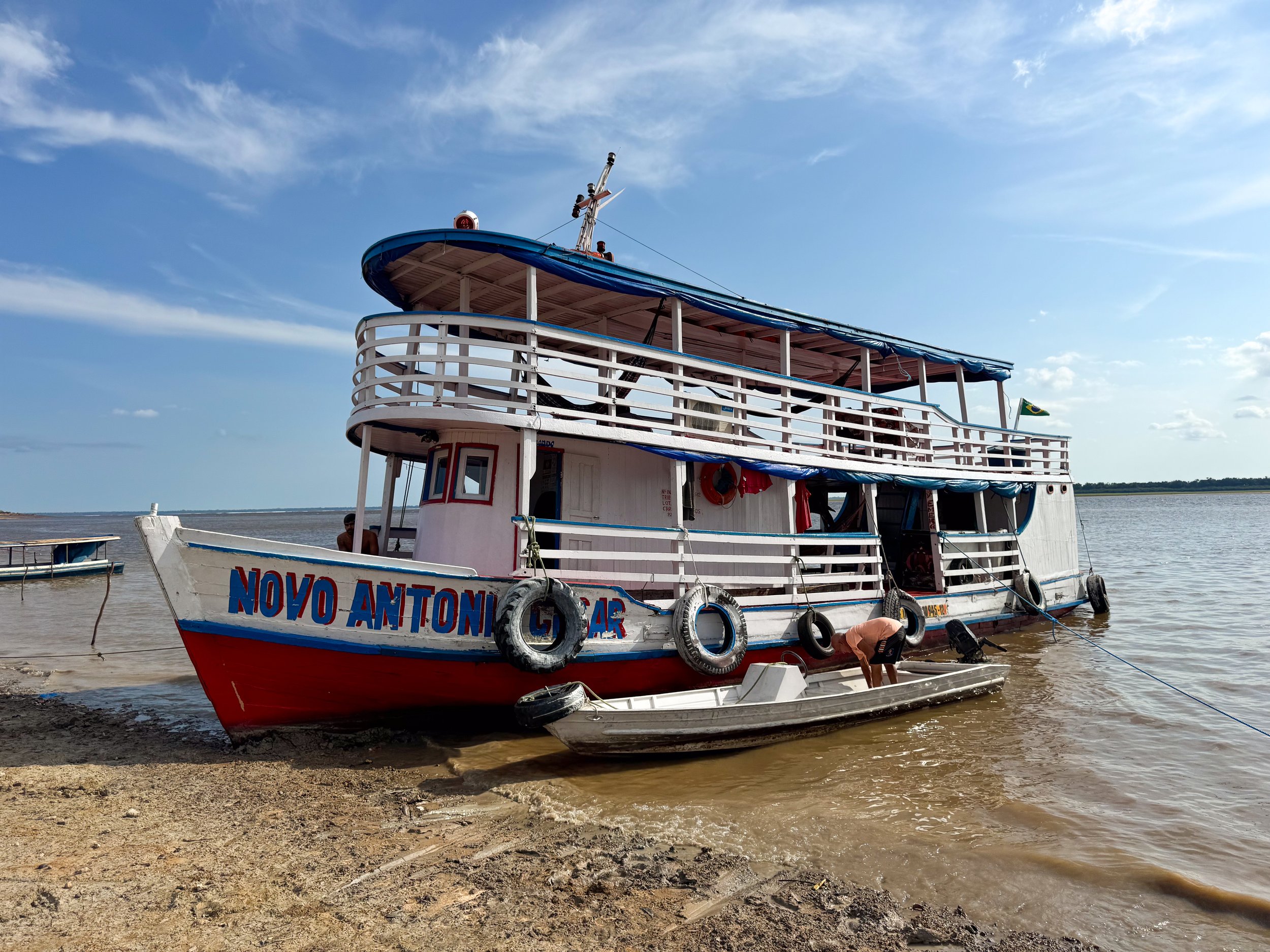
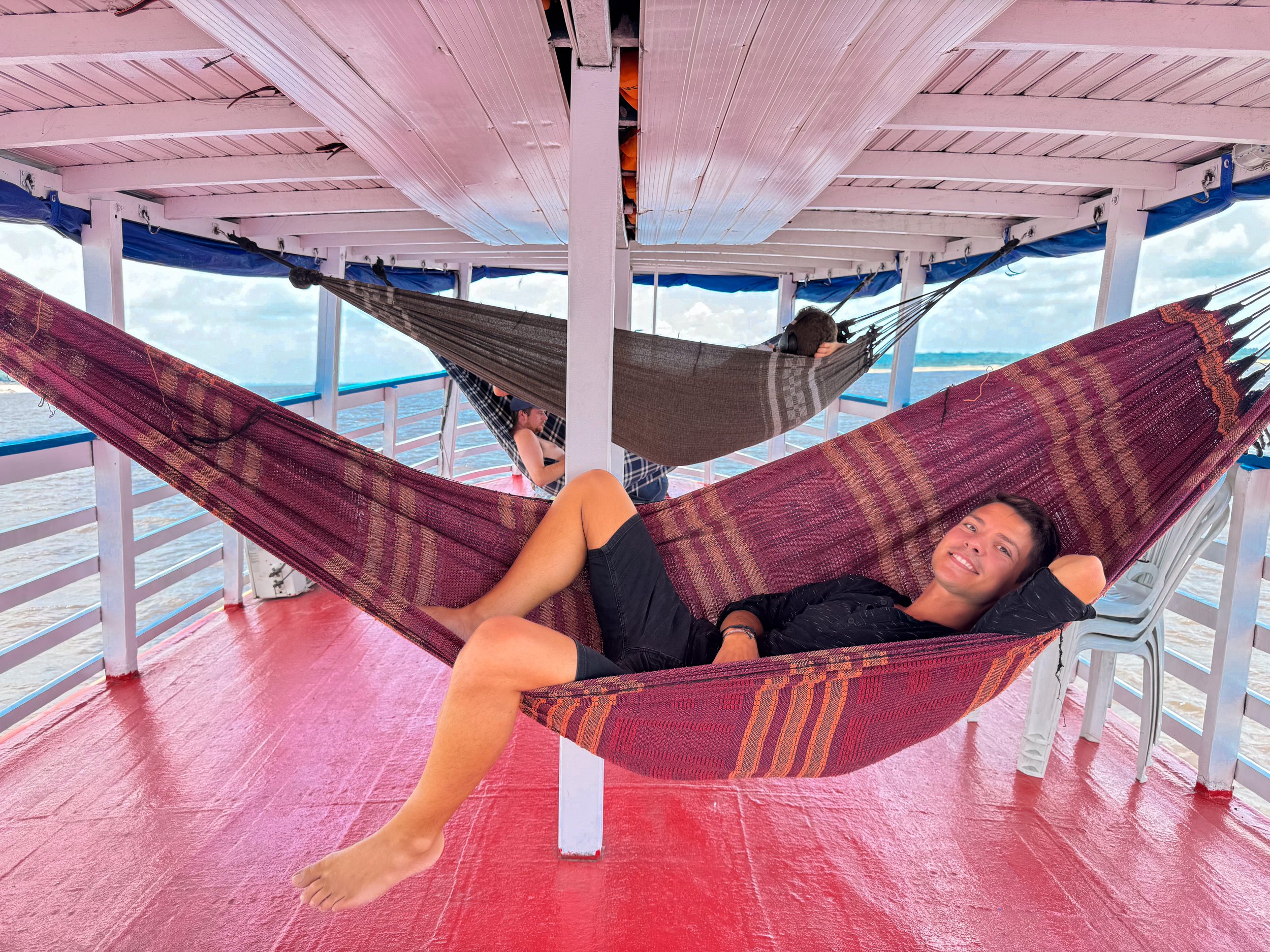
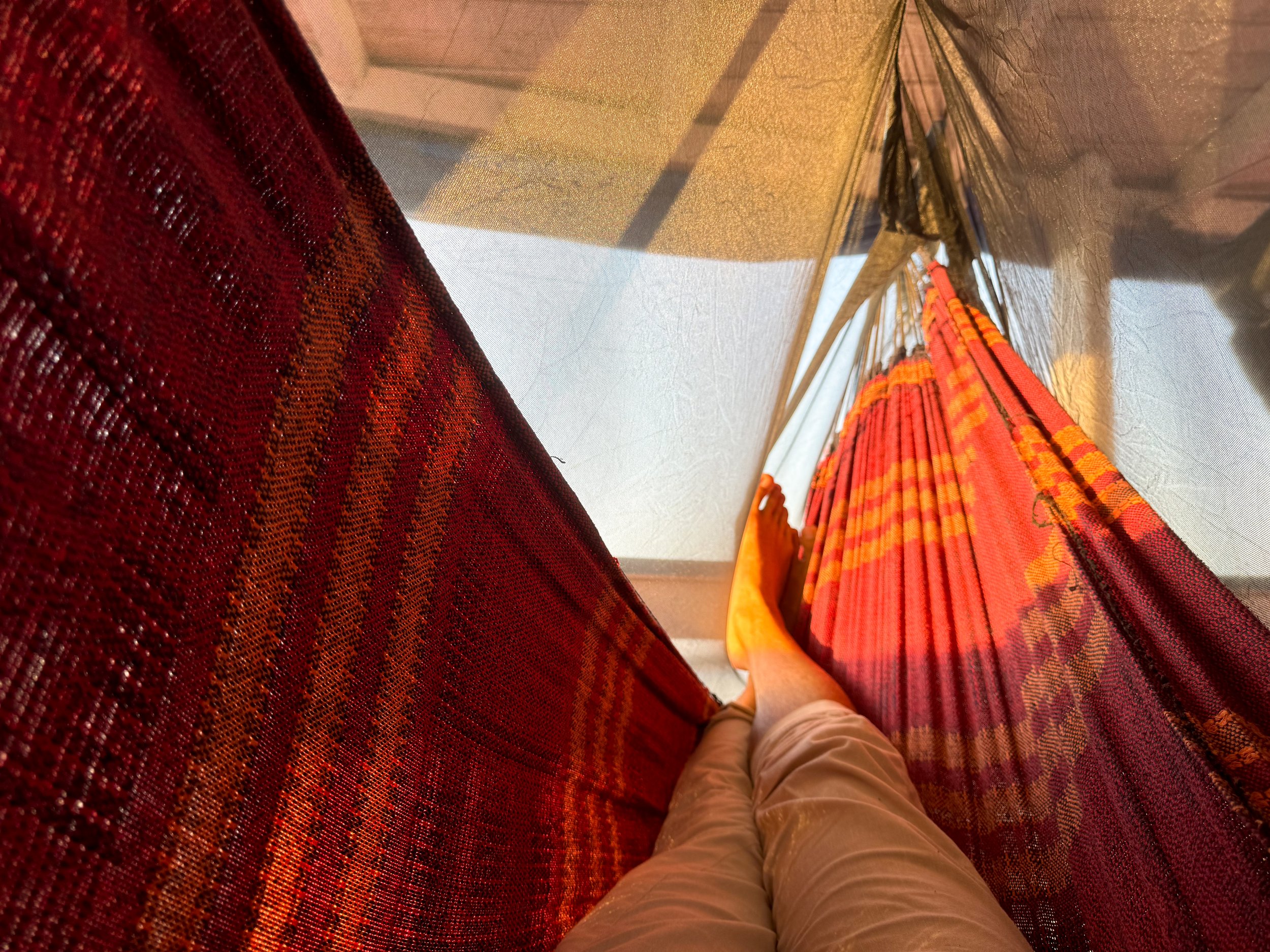
We booked a four day, three night river boat tour of the Amazon and Rio Negro from Manaus. We cruised up and down the river, stopping at various white sand beaches to swim in the piranha infested waters and with pink river dolphins. By day, our guide brought us hiking and camping in the rainforest, to cooling cold springs, on a tour of an indigenous village, fishing for piranha and searching for caiman. At night, we slept in woven hammocks stretching across the upper deck of the wooden river boat. All meals were included, including several Amazonian fish dishes and fruit juices.

Amazonian Rivers
We visited two Amazonian rivers on our tour. The mighty Amazon River, its largest tributary, the Rio Negro and the location where both rivers meet.
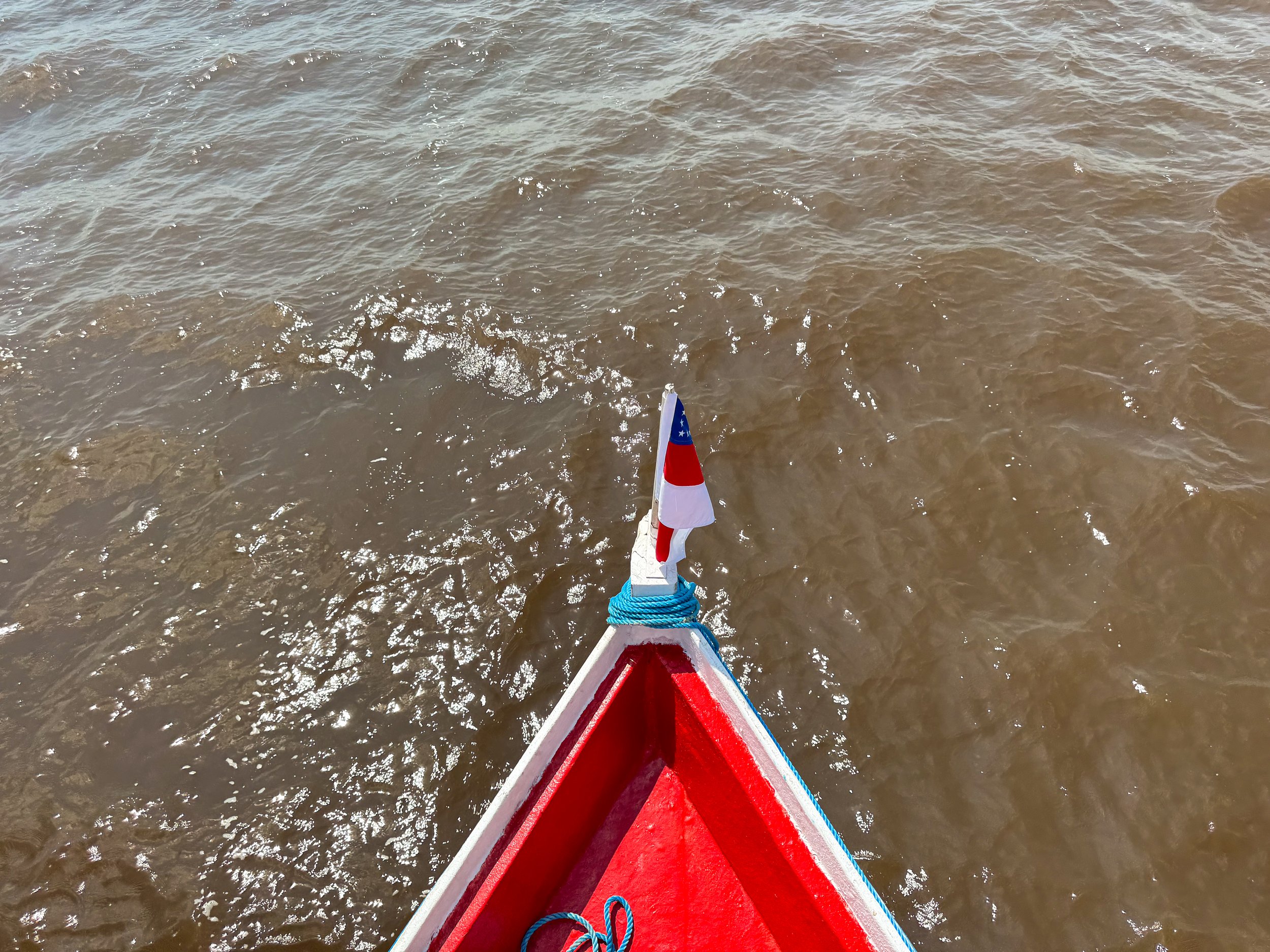
The Amazon River. The world’s largest river, winding 4,000 miles across South America. Its muddy brown waters are a lifeline to the Amazon Rainforest, its biodiversity and indigenous communities.
The Rio Negro. The largest tributary feeding the Amazon River named after its dark colored water. By volume, it’s one of the largest rivers in the world.
The Meeting Waters. The location where the milky brown water of the Amazon River and dark brown waters of the Rio Negro meet.
The Amazon - Day One
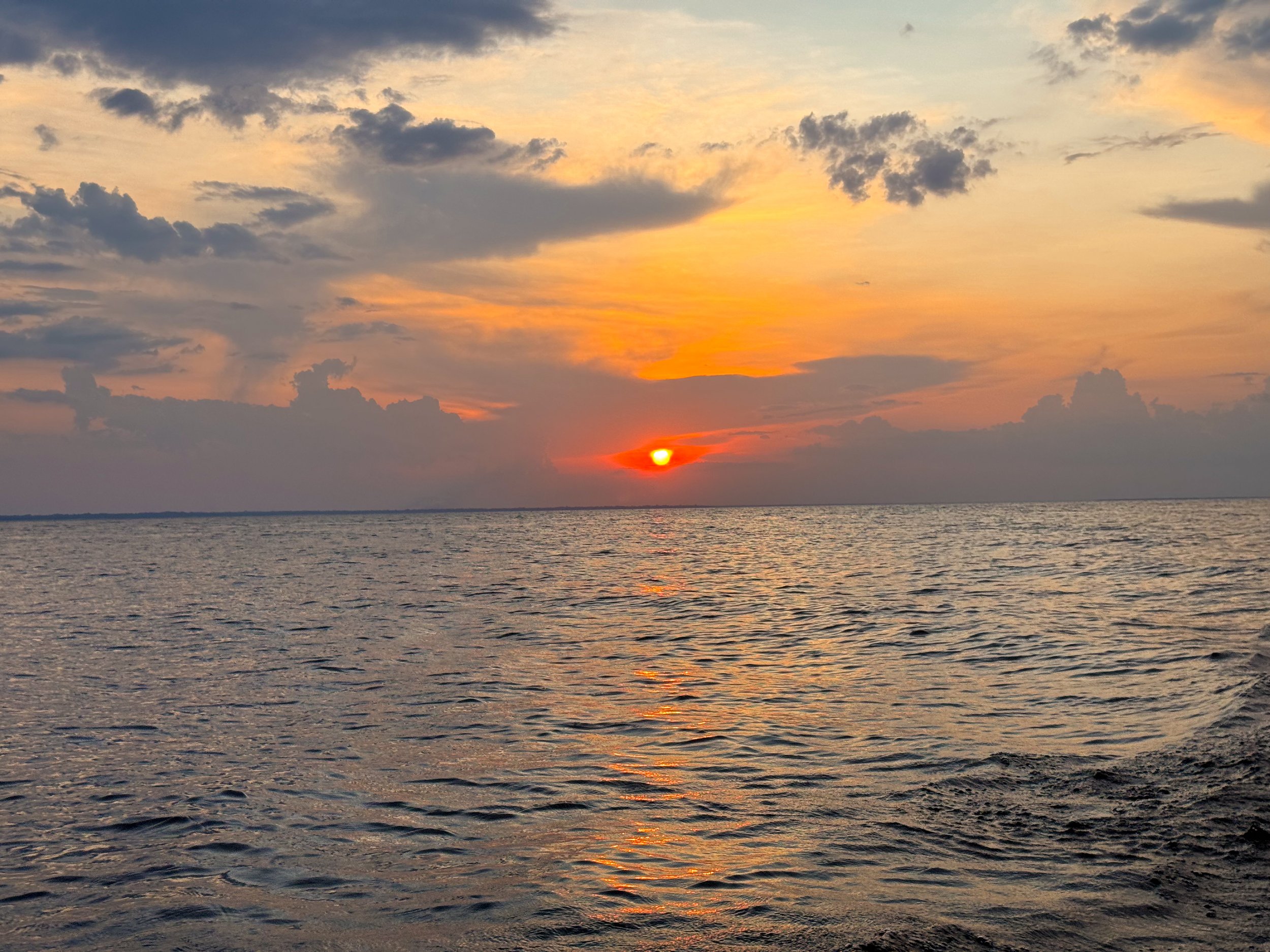
We spent our first day in the Amazon on the Rio Negro and our first night, sleeping in a hammock within the jungle.
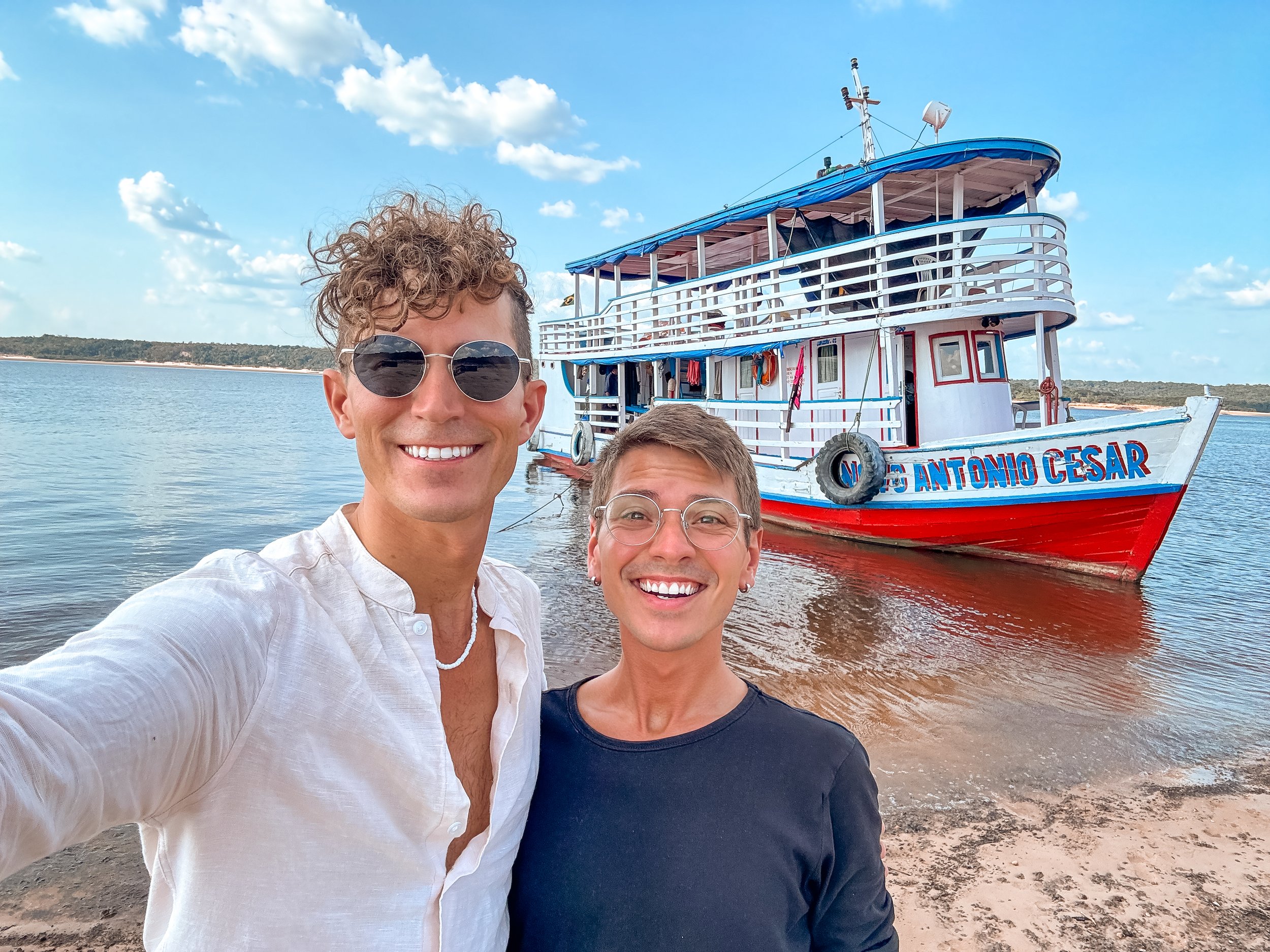
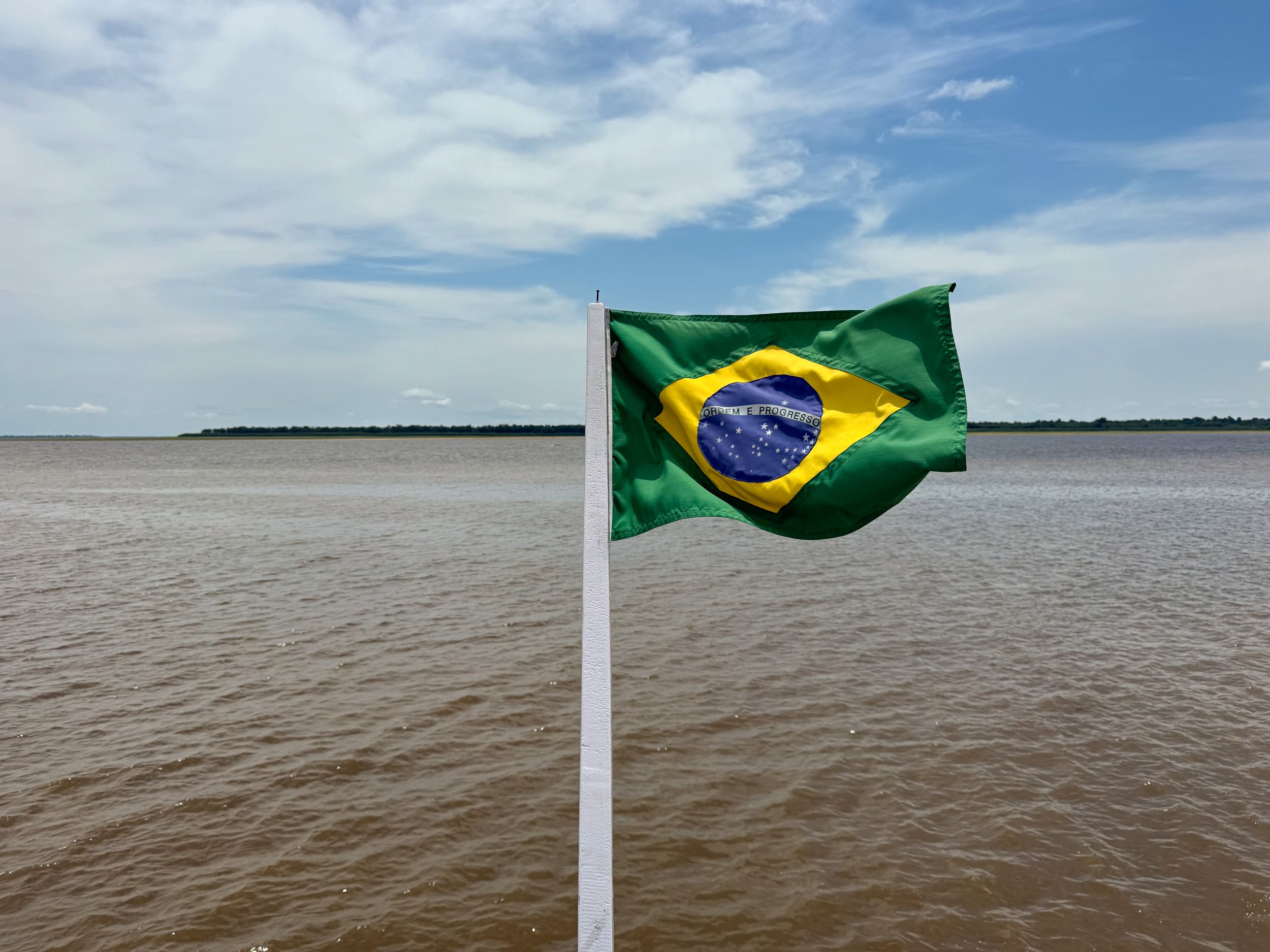
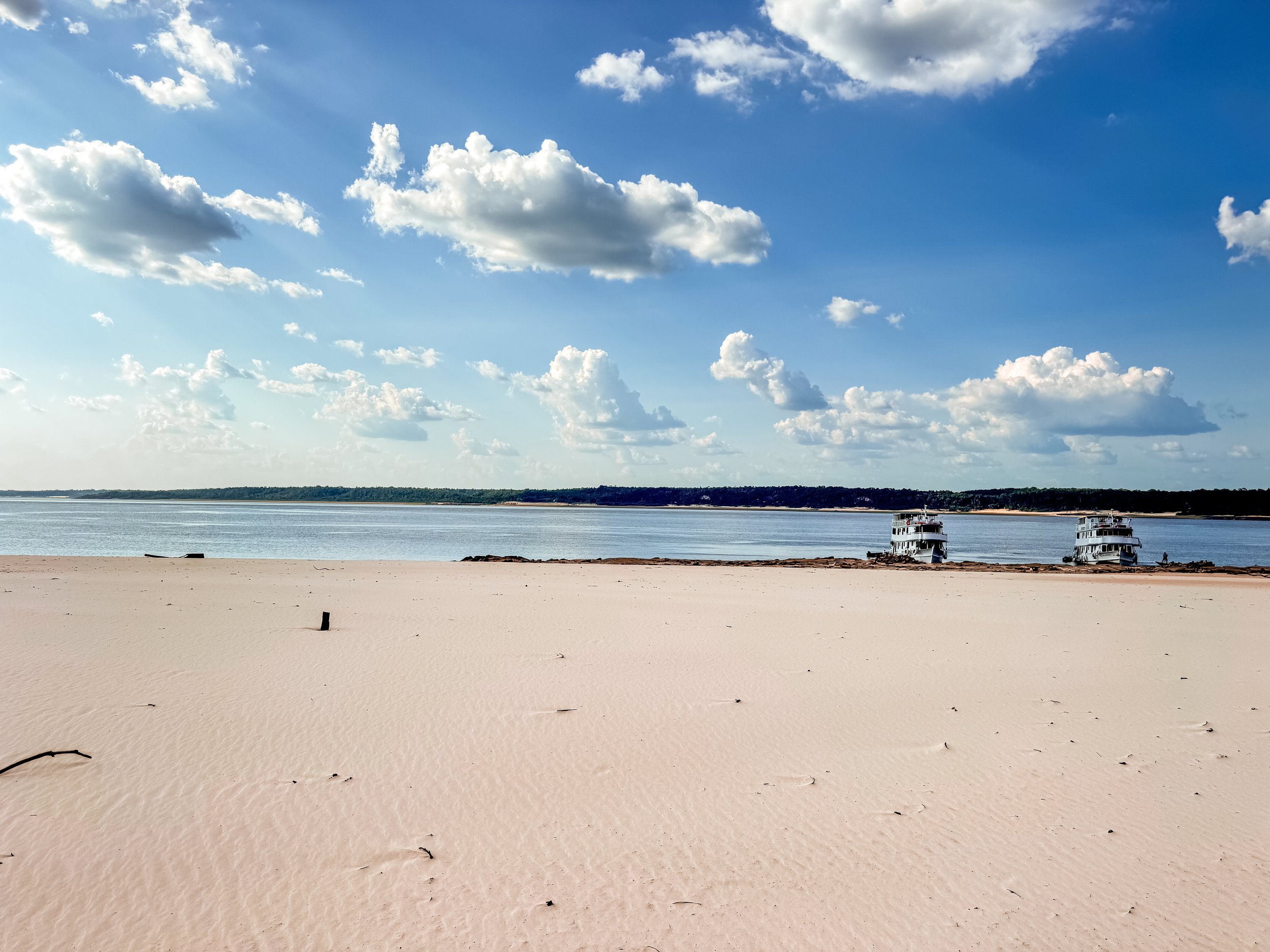
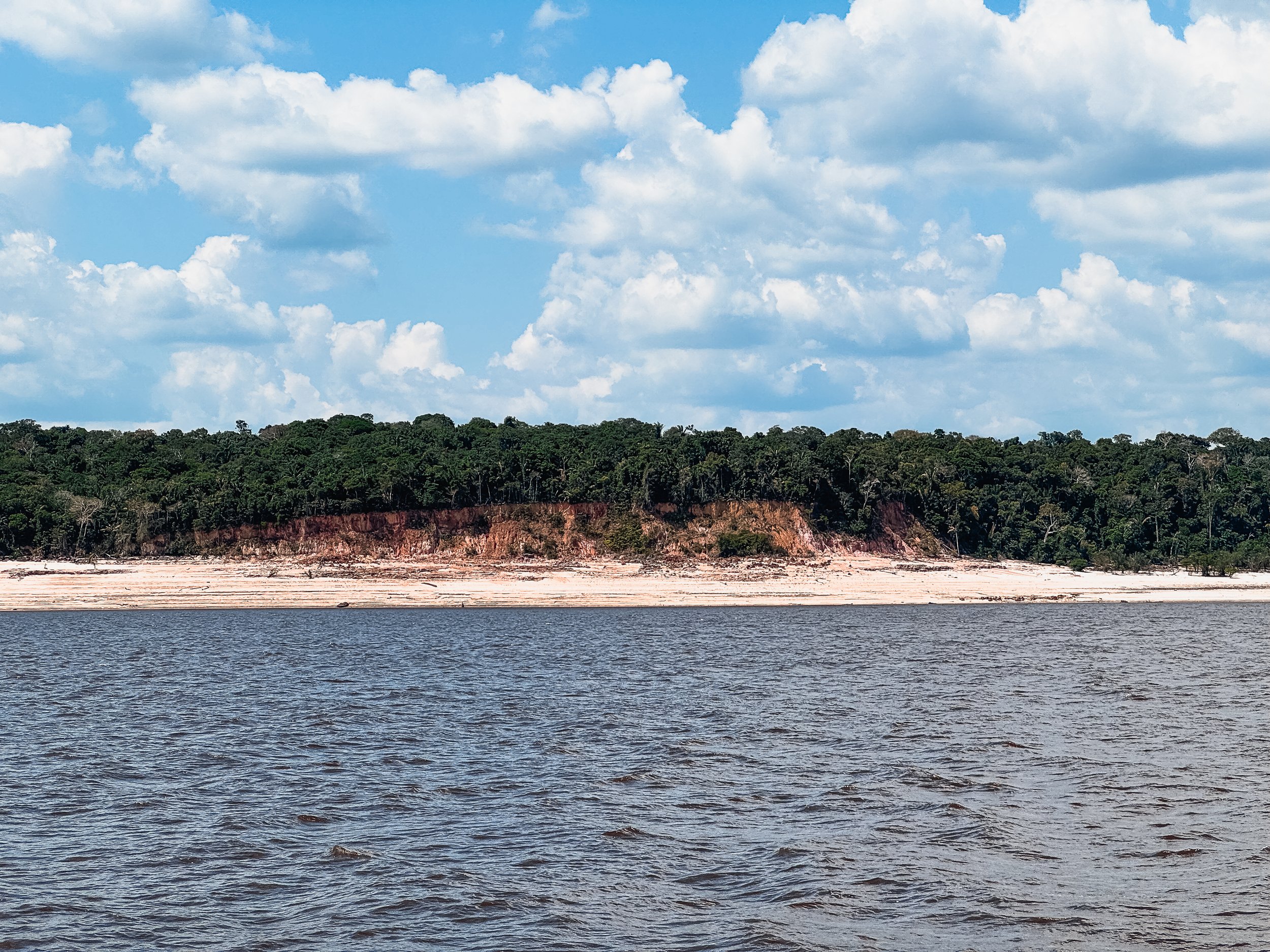
At the Manaus Harbor, we boarded a speed boat and navigated through a storm and choppy water along the Rio Negro to reach The Meeting Waters where we floated between both rivers. We returned to Manaus where we refueled, stocked up on groceries and ate breakfast at a floating gas station before continuing up river. From the bow of the boat, the Rio Negro stretched far over the horizon. Along its banks were surprisingly white sand beaches, dense tree lines and the occasional river boat, eventually including ours. Arriving at the boat, the crew welcomed us on board and showed us to the upper deck where we would be sleeping in hammocks for the following nights. We relaxed for the afternoon, enjoying fried pirarucu and cashew juice for lunch.
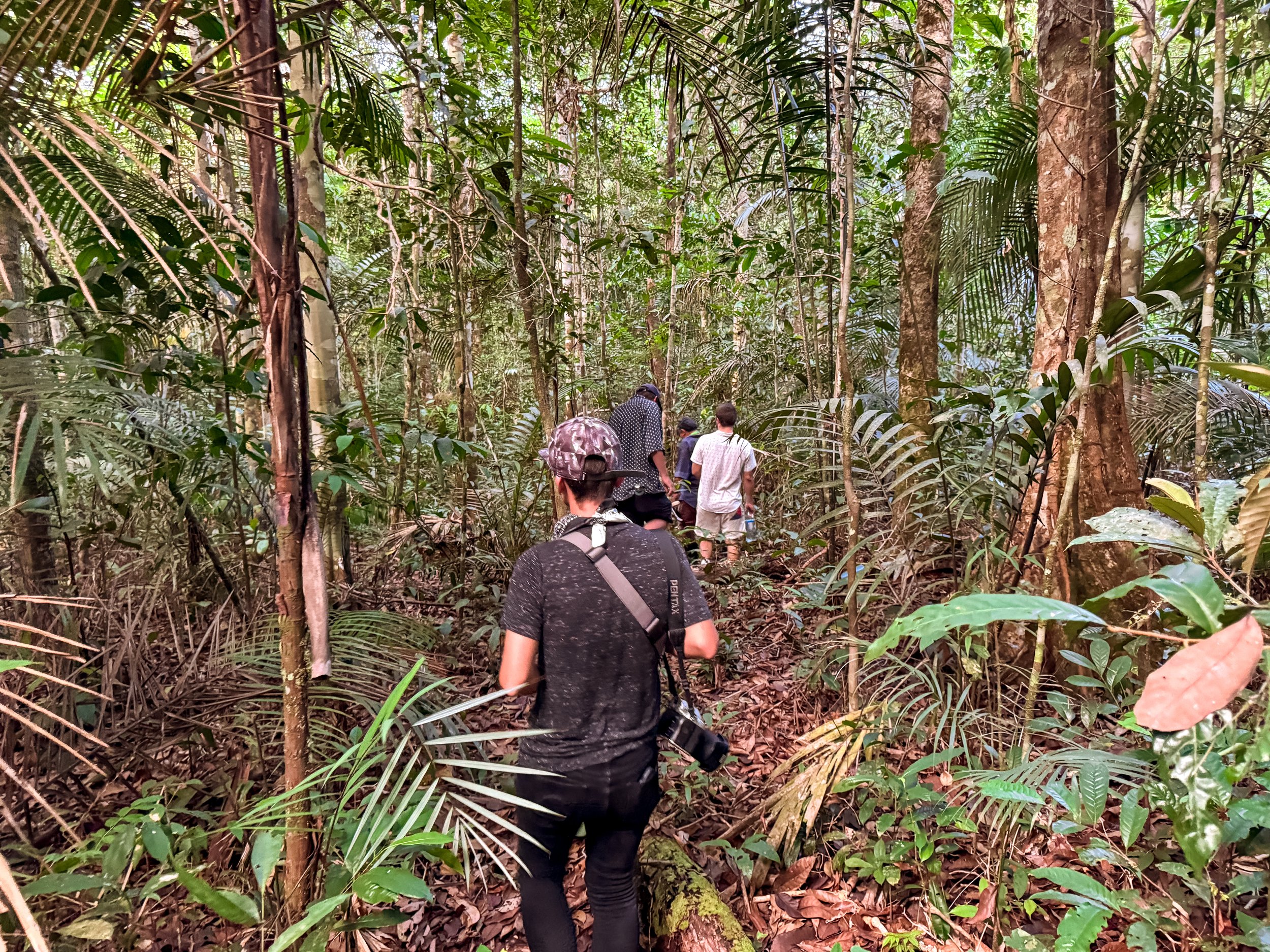
Late in the afternoon, we packed an overnight bag with our hammocks and were led ashore and into the jungle by our guide. Along the trail, he stopped to point out Amazonian fruits, medicinal plants, poisonous spiders and demonstrated how the rubber tree is processed. As night fell, we made camp under a small hut, hung our hammocks and ate fried piranha for dinner. While lying in our hammocks, the noise of the jungle kept us awake for some time. We listened to the roar of howler monkeys, chirps of crickets, croaks of frogs, squawks of birds and hum of cicadas fill the air.
The Amazon - Day Two
We spent our second day in the Amazon swimming in the Rio Negro, relaxing in our hammocks and cooling off in a cold stream.
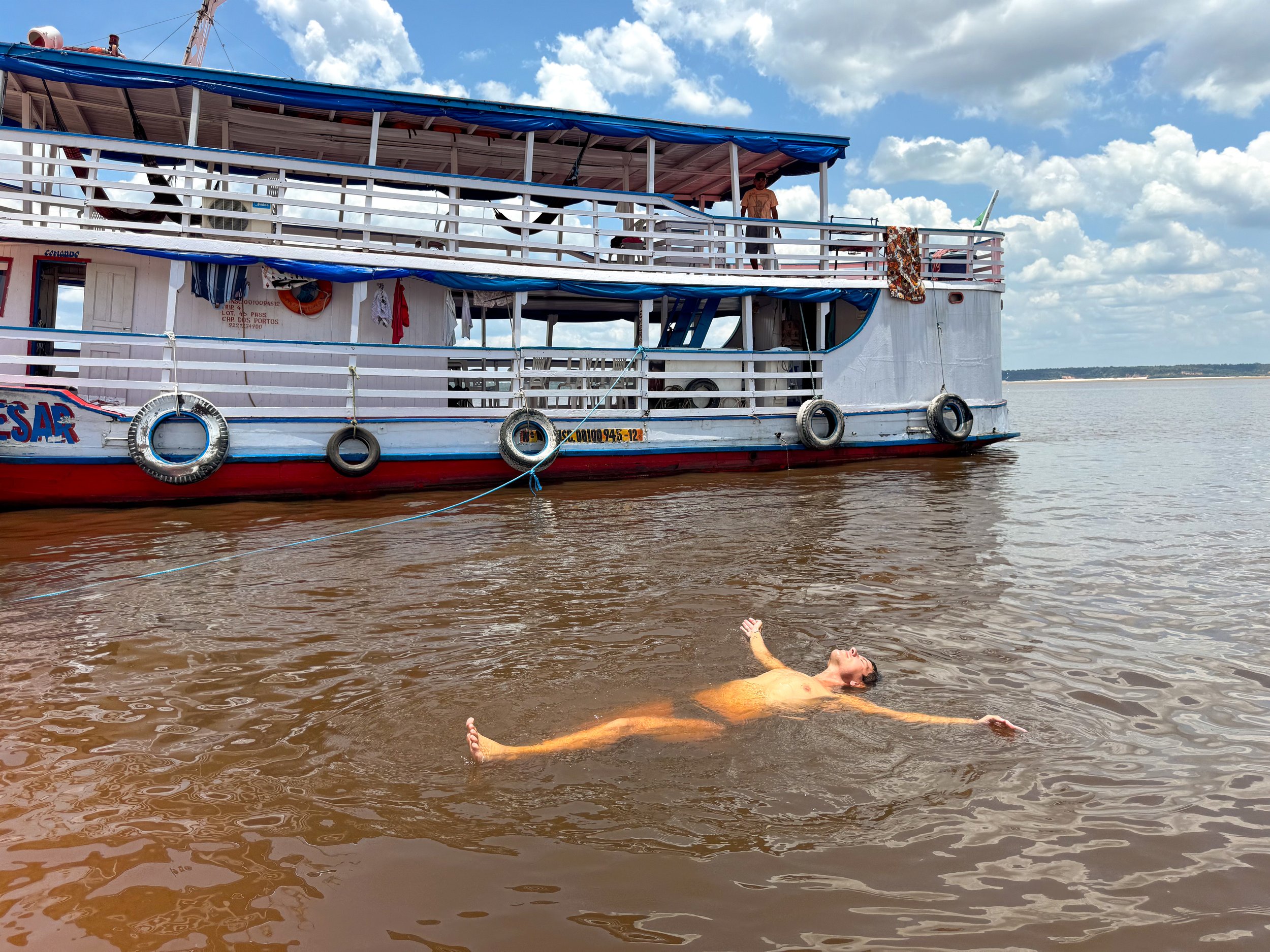
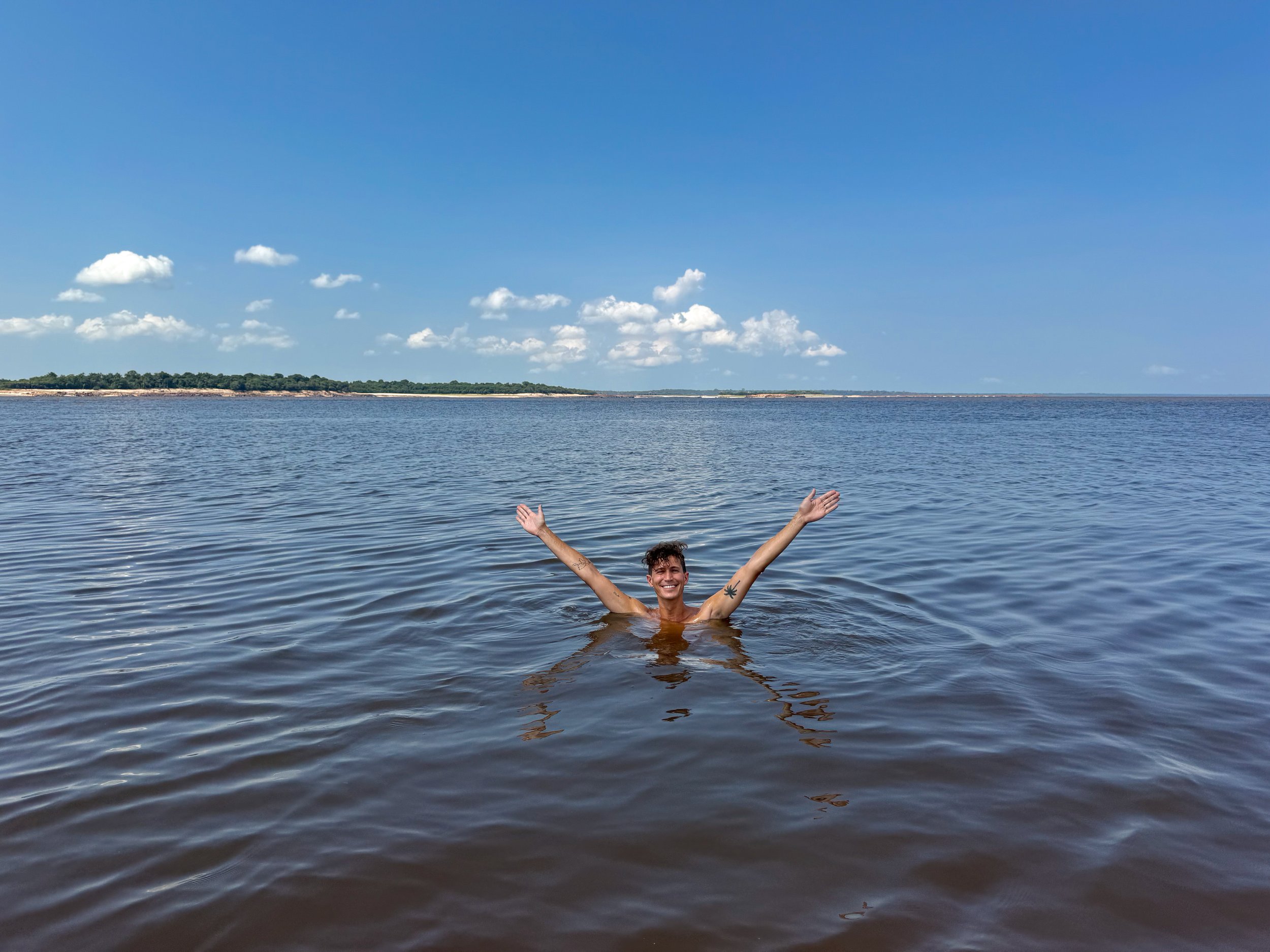
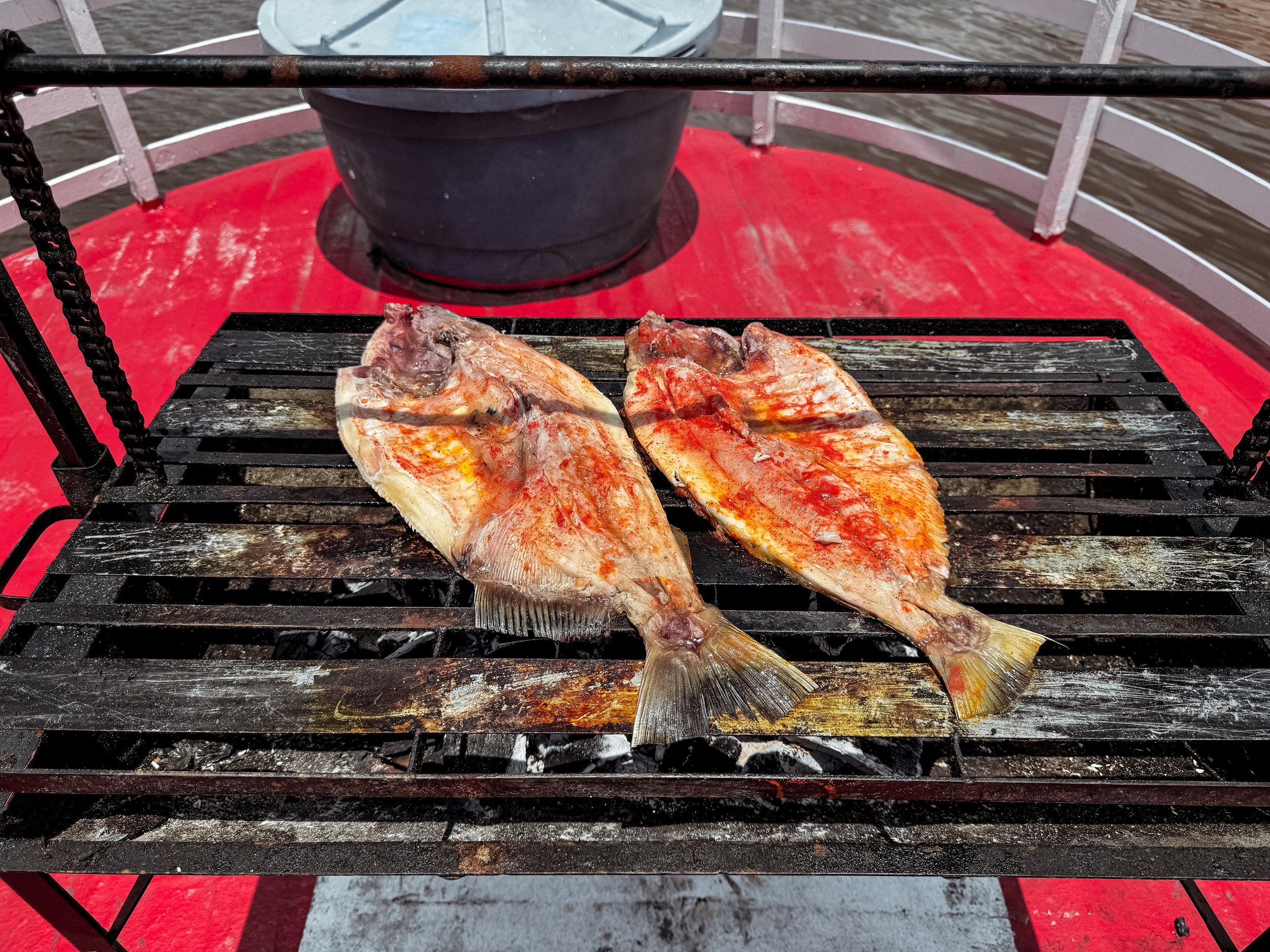
After our night in the jungle, we returned to the river boat for eggs, tropical fruits and avocado juice. While eating, we cruised down river and moored at a white sand beach. We spent the morning here sunbathing on shore, spotting dolphins and swimming in the warm waters of the Rio Negro. As we swam, little fish nibbled at our toes, thankfully not a school of piranha! For lunch, the crew grilled fish, tambaqui de banda, an Amazonian staple. We spent the afternoon on board, feasting on the meal, sipping on Brazilian beer and relaxing in our hammocks.
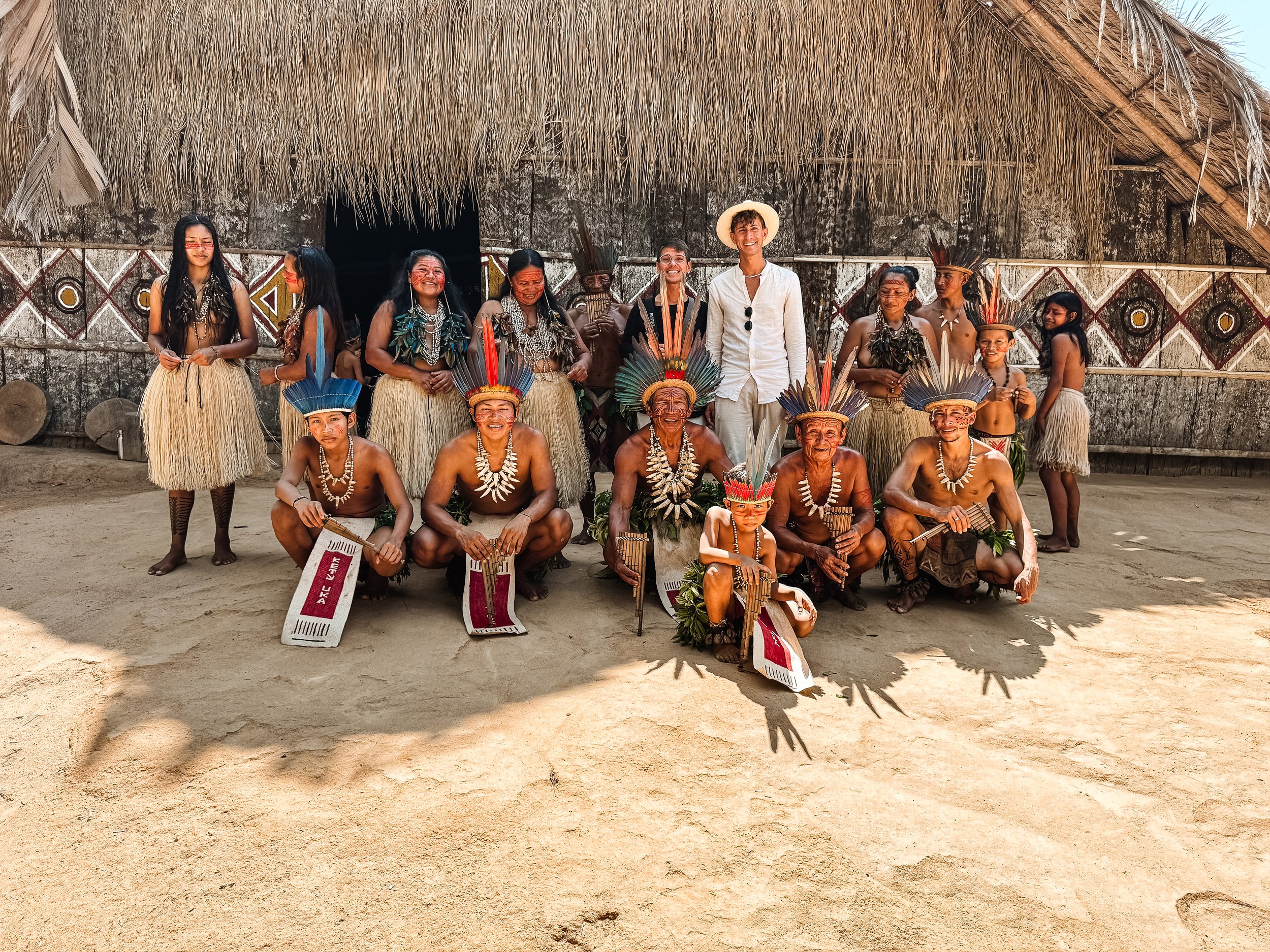
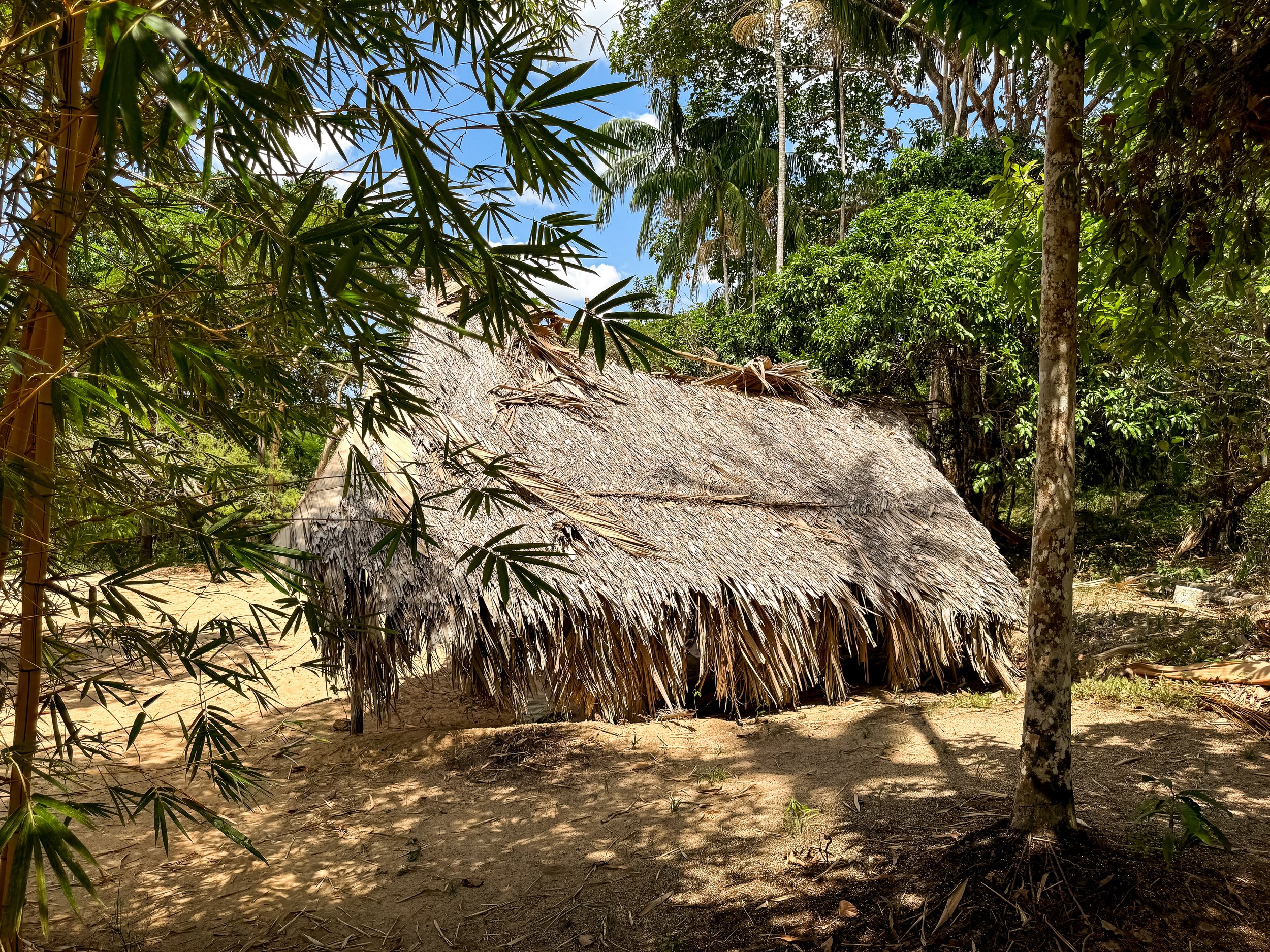
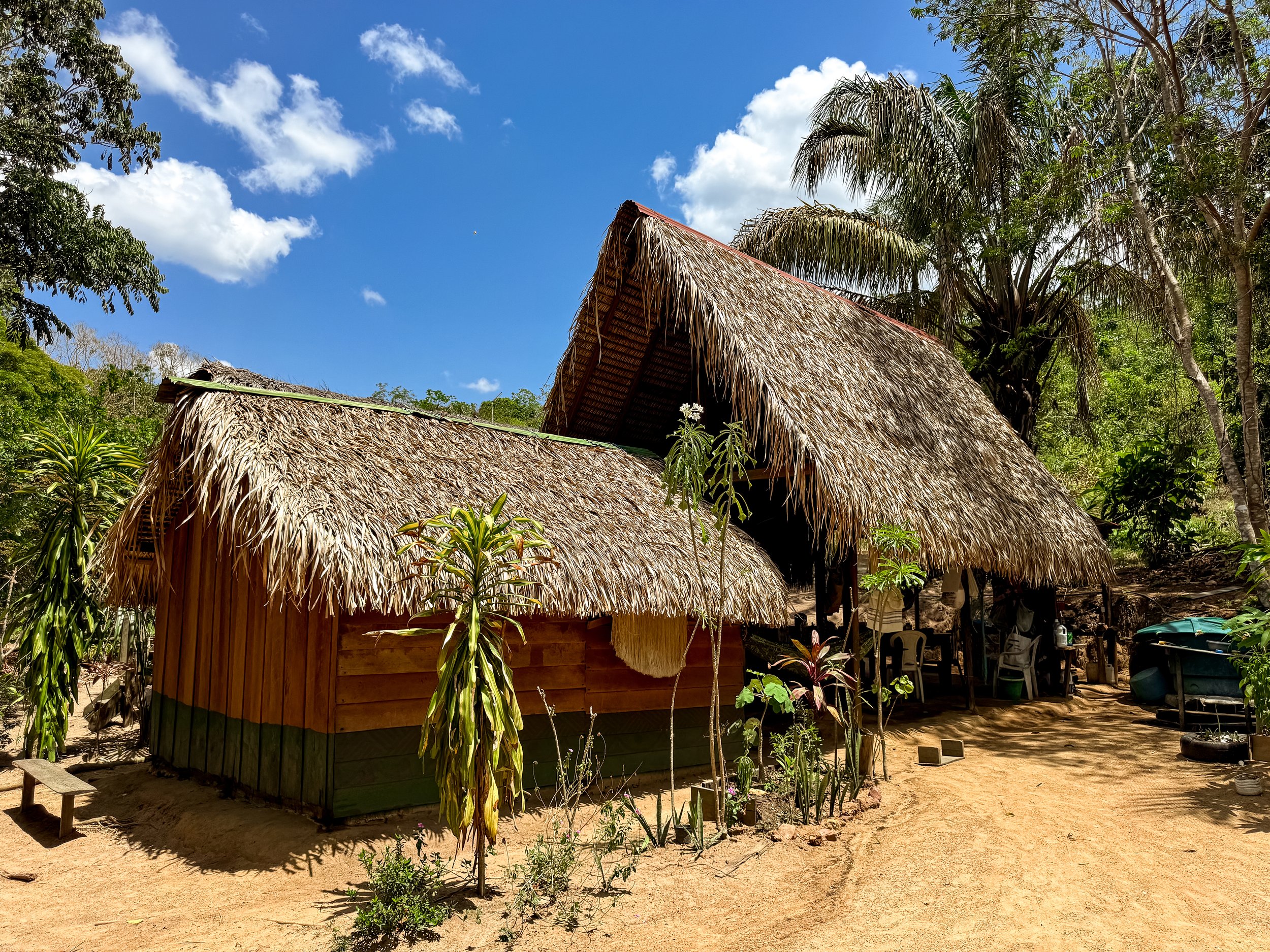
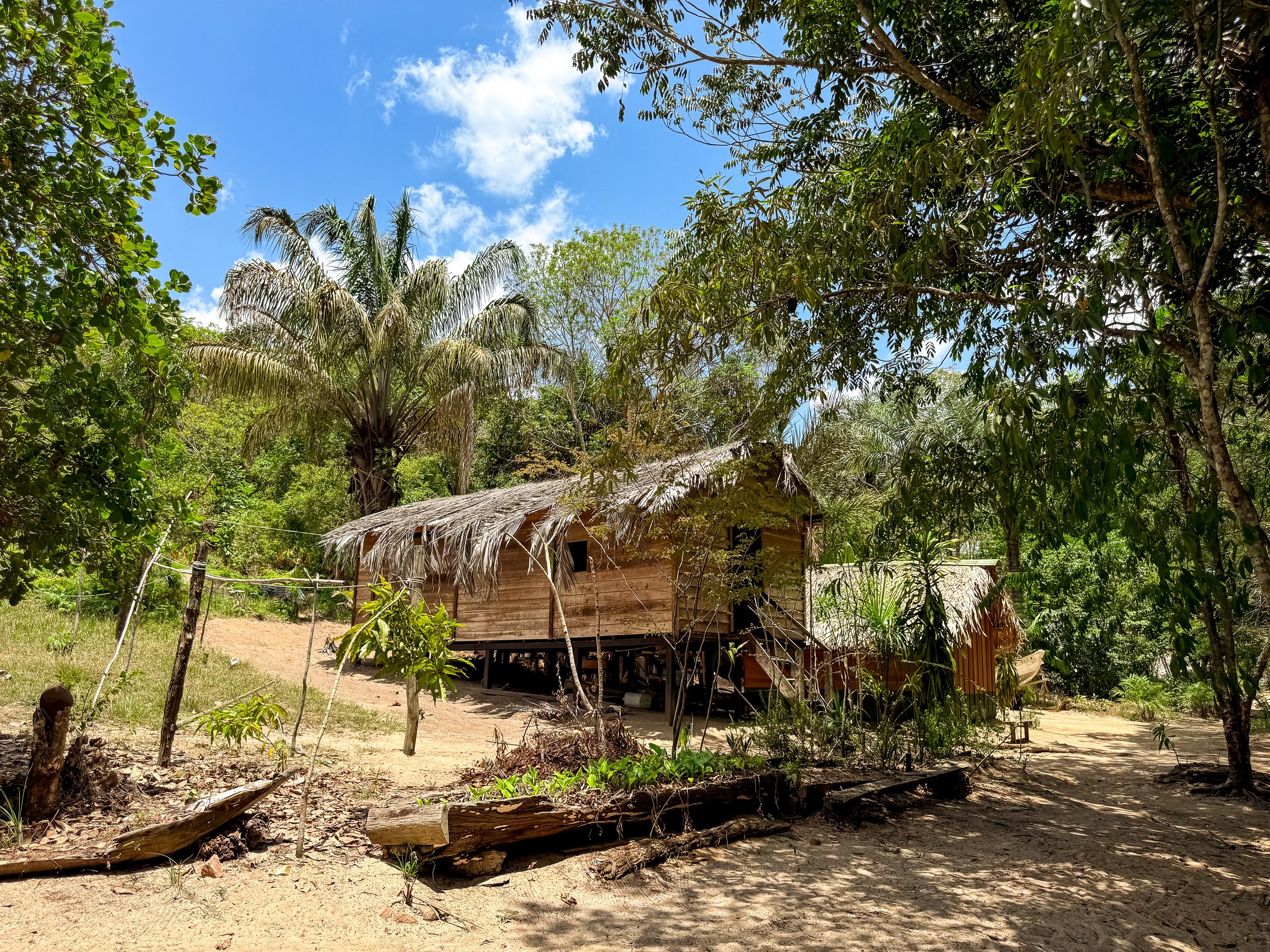
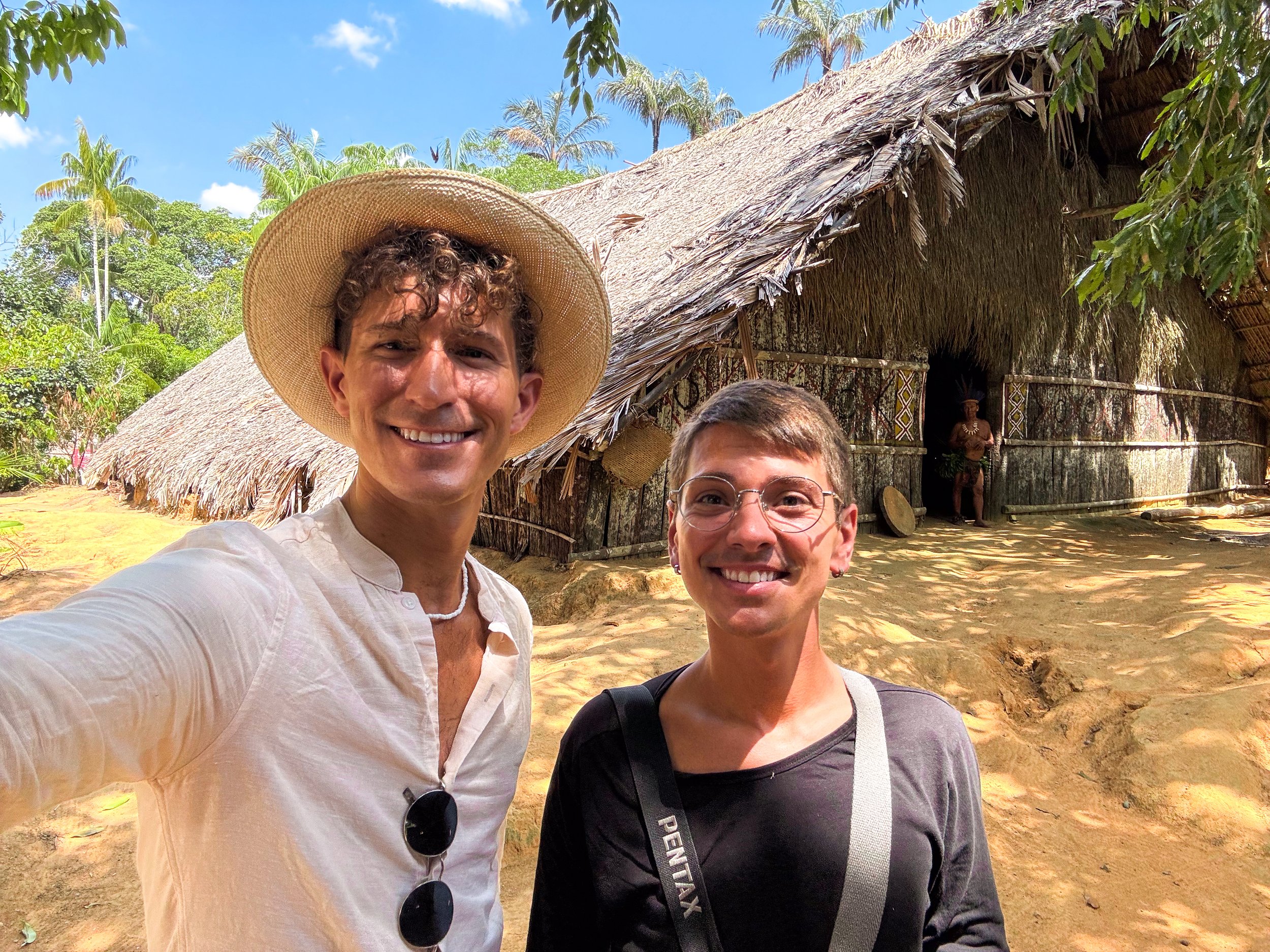
As the late afternoon heat peaked, our guide brought us ashore to bathe in a cold stream at the base of the indigenous Tatuyo Village, which translates to “Big Snake.” In the village, we visited an indigenous friend of our guide, who invited us into his palm thatched home for coffee. At sunset, we made our way back to the boat, meeting the village Shaman along the way. He invited us back to the village the next morning for a ceremonial ritual.
After sunset and dinner, we laid in our hammocks, reminiscing on the day as the gentle waves rocked the boat and us to sleep.
The Amazon - Day Three
We spent our third day in the Amazon at the indigenous village of Tatuyo for a ritual ceremony, bathing in a cold spring, fishing for piranha and spotting caiman.
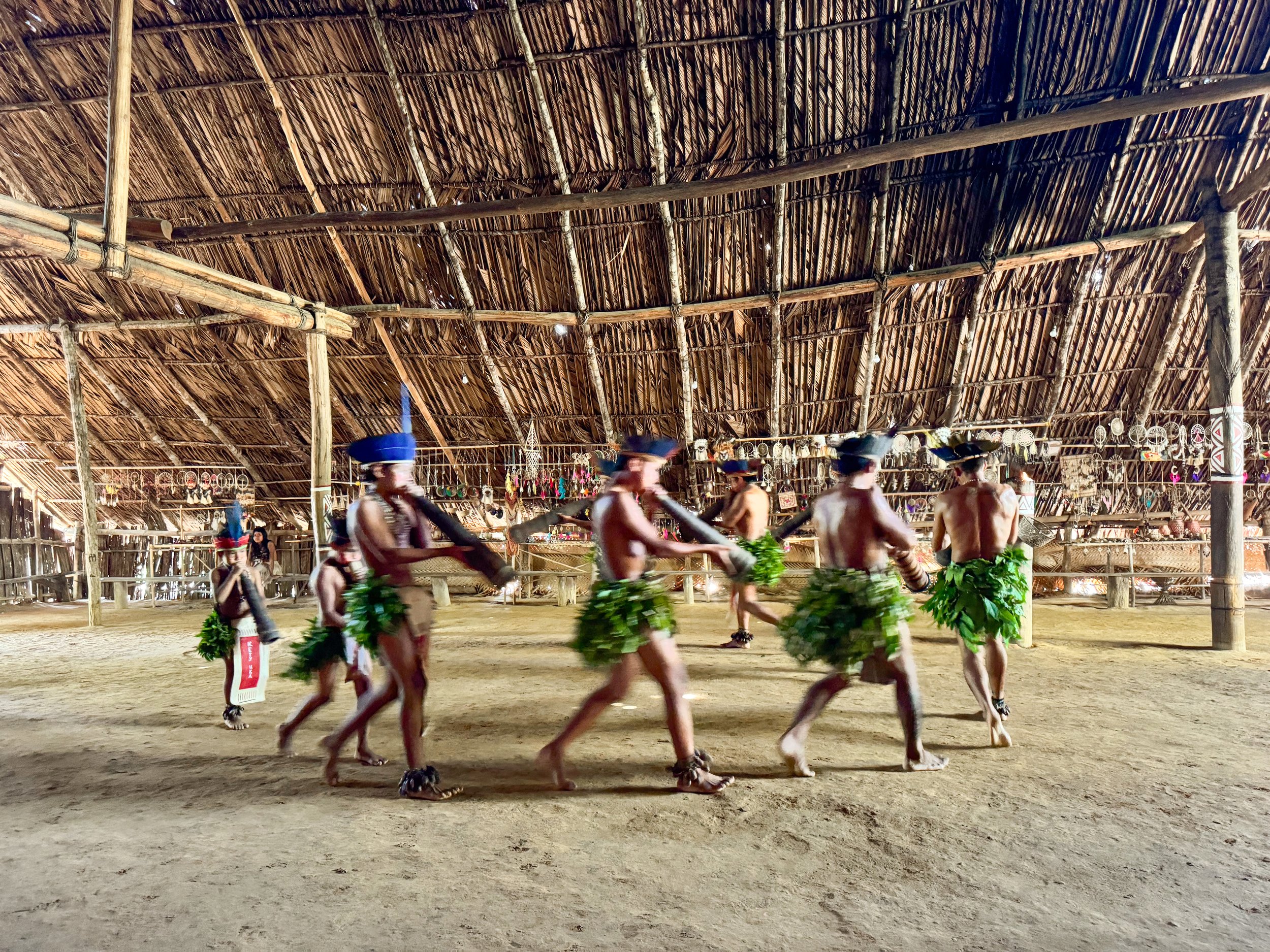
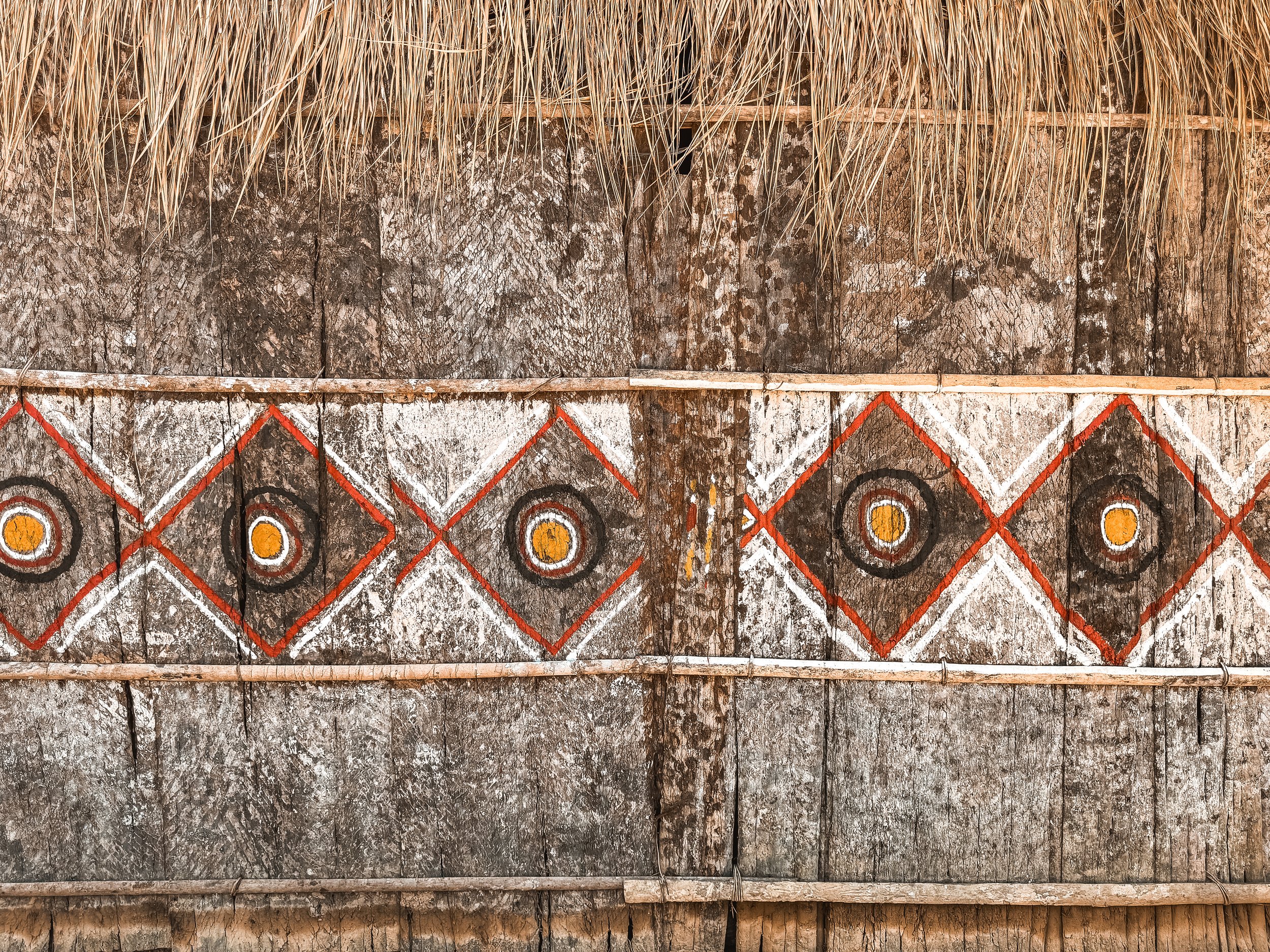
As dawn broke, we woke up to warmth of the sun hitting our hammocks and met the crew downstairs for breakfast. Once we finished eating, we returned to the Village of Tatuyo for the ceremonial ritual. The shaman and several others, dressed in ceremonial attire, greeted us at a large palm thatched pavilion with wooden walls painted in a snake like pattern. Women wore large feather earrings that covered their breasts, açaí bead necklaces and grass skirts. Men wore feather headpieces, caiman and jaguar teeth necklaces and skirts made of leaves. All of which had red painted patterns on their faces similar to the ones on the walls of the pavilion.
The shaman explained the ritual and ceremonial dances they were going to share with us. Each symbolized an important moment in a person’s life while the final dance is used for general celebrations. Led by two women, we were able to participate in the latter. Each dance was unique, involving different flute like musical instruments, songs and choreography. The group danced in circular, spiral and figure eight patterns as the smell of incense filled the pavilion.
Once the ritual ceremony had completed, we met our guide’s friend who showed us a cold spring where we bathed in the refreshingly cool water. After cooling off, we returned to the boat for lunch and to hike along the river bank listening to macaws and howler monkeys in the jungle.

Near sunset, we cruised to a cove to fish for piranha! Using bamboo poles baited with meat, we splashed them around in the water to attract piranha. Within seconds one would bite, often tearing off the bait. Luckily our guide caught several piranha which the crew fried in farina for dinner.
After dark, we took the speedboat to look for caiman, shining a light along the shoreline looking for the glow of their eyes. The light attracted tiny fish that jumped out of the water, one landing in my lap (thankfully not a piranha). Within moments, we spotted a caiman lurking in the shallows. After a very full day, we returned to the riverboat and fell asleep on deck in our hammocks.
The Amazon - Day Four
We spent our fourth day in the Amazon swimming with pink river dolphins and relaxing at a beach before returning to Manaus.
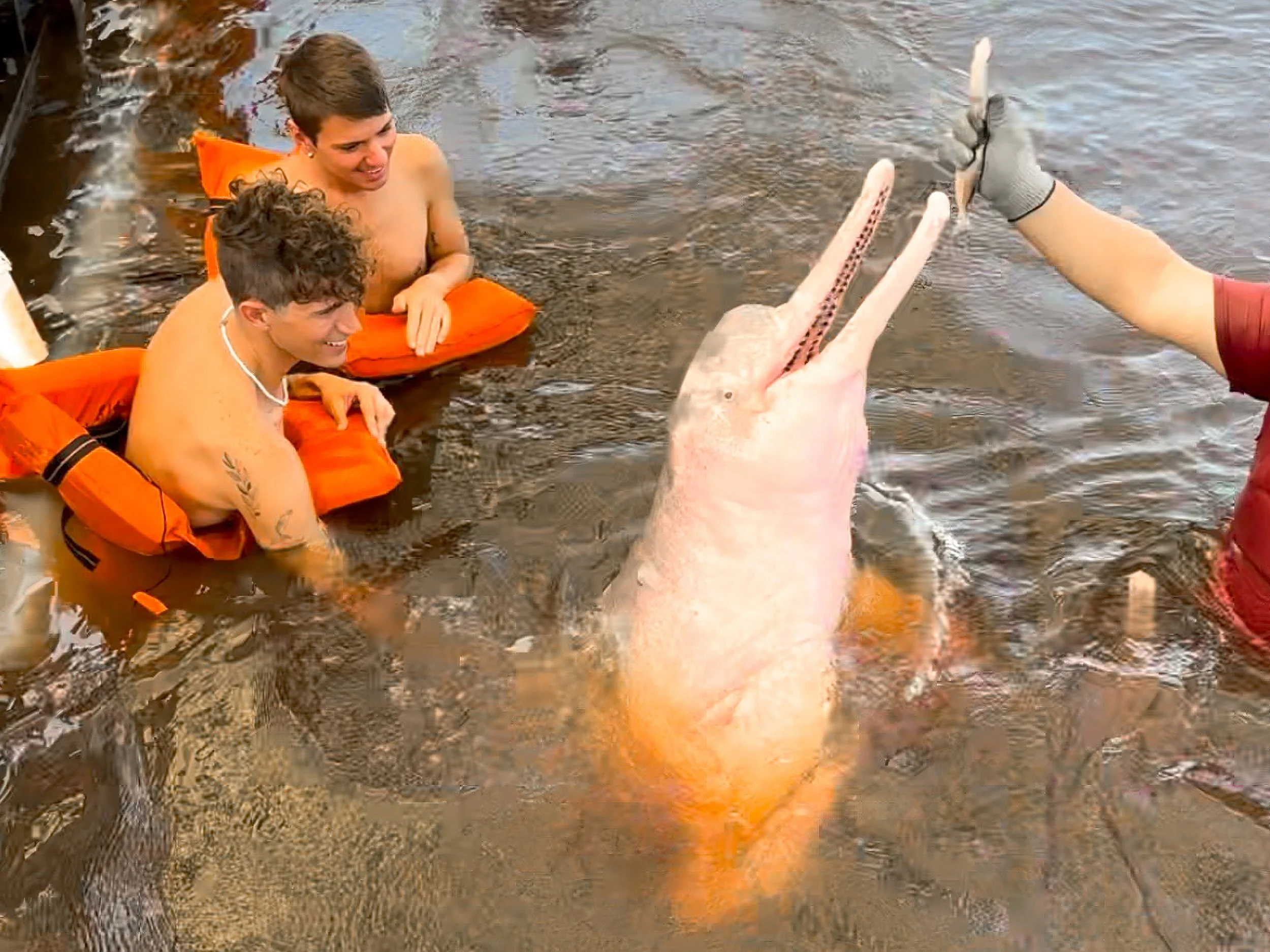
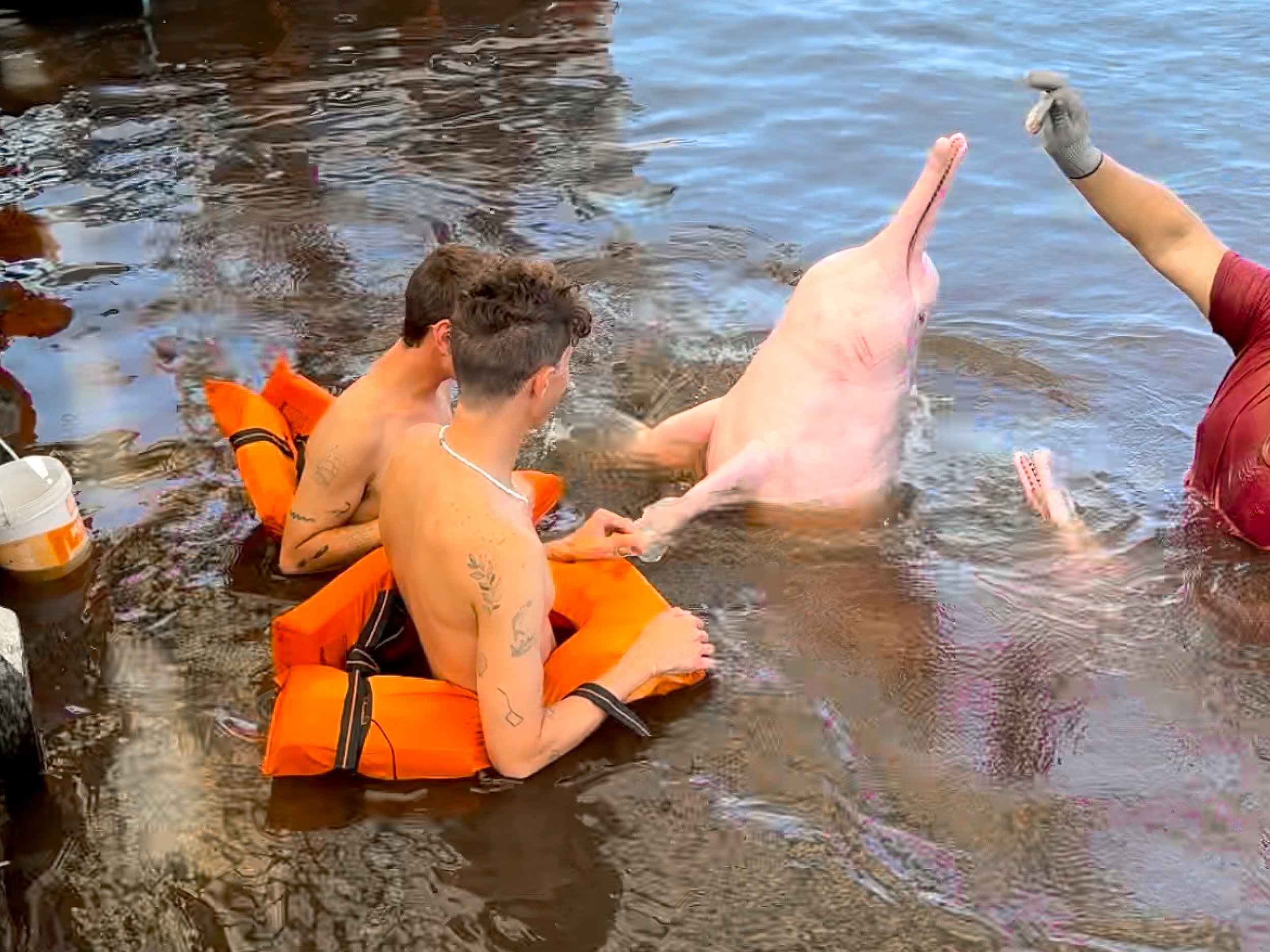
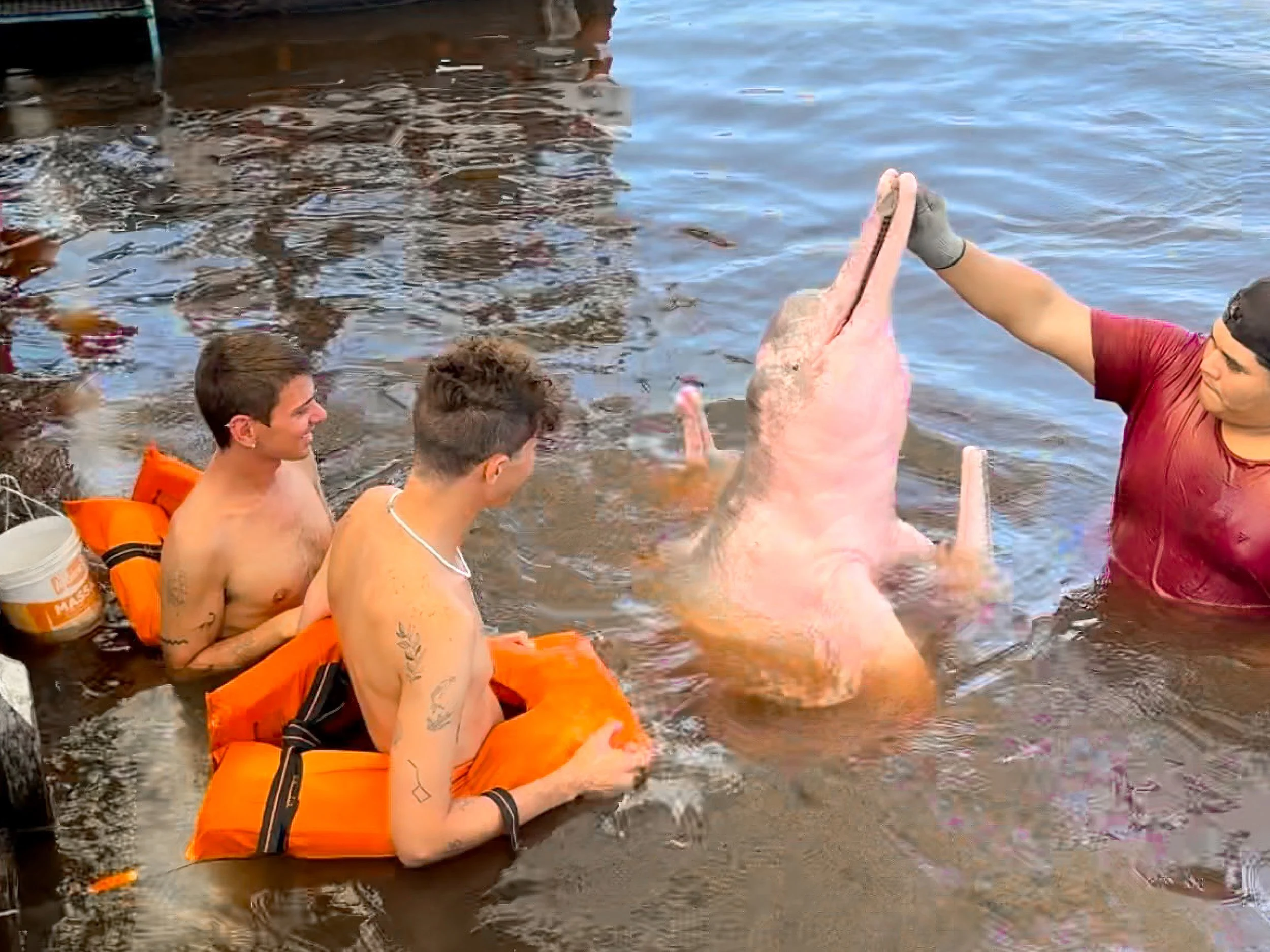
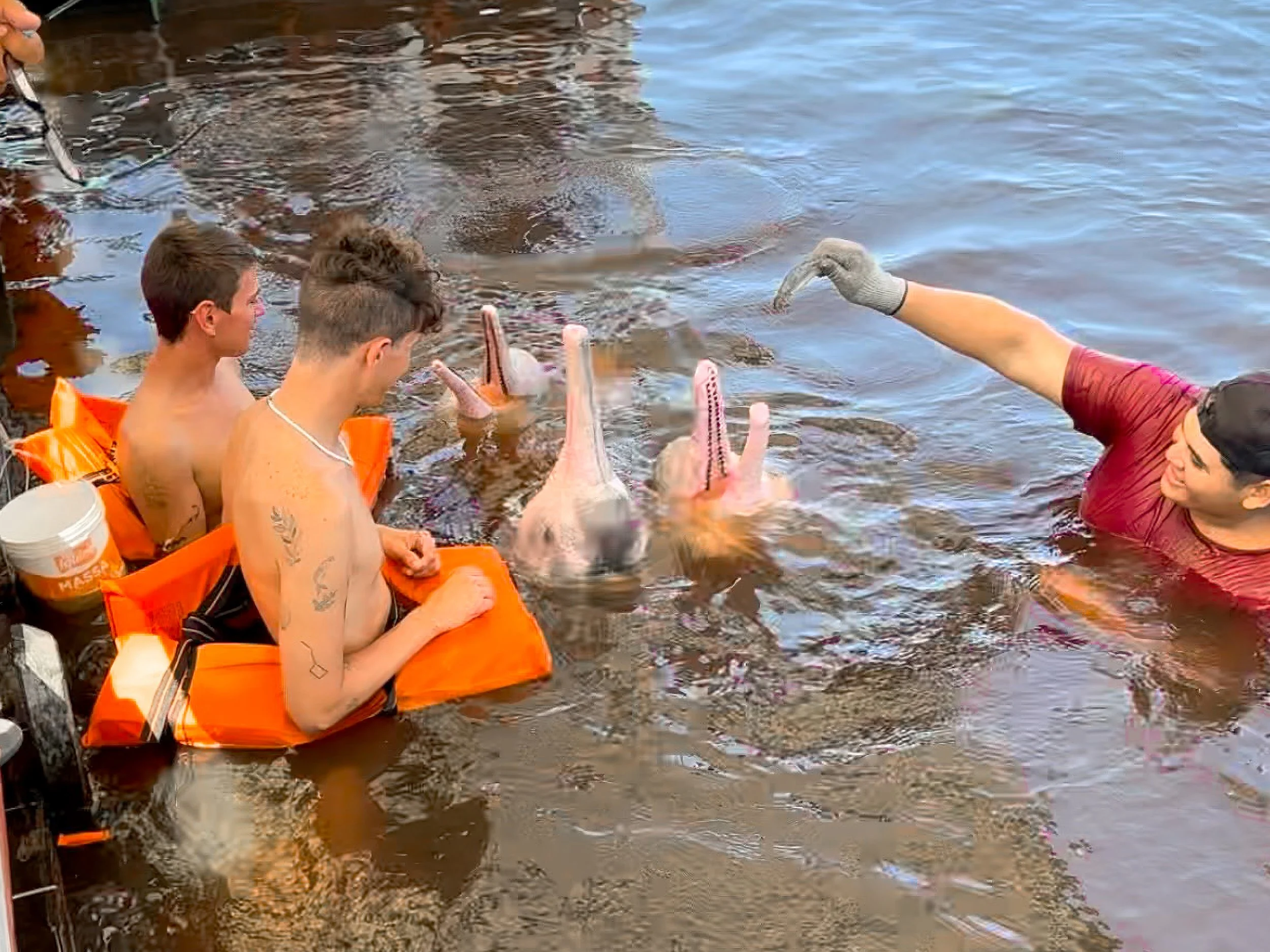
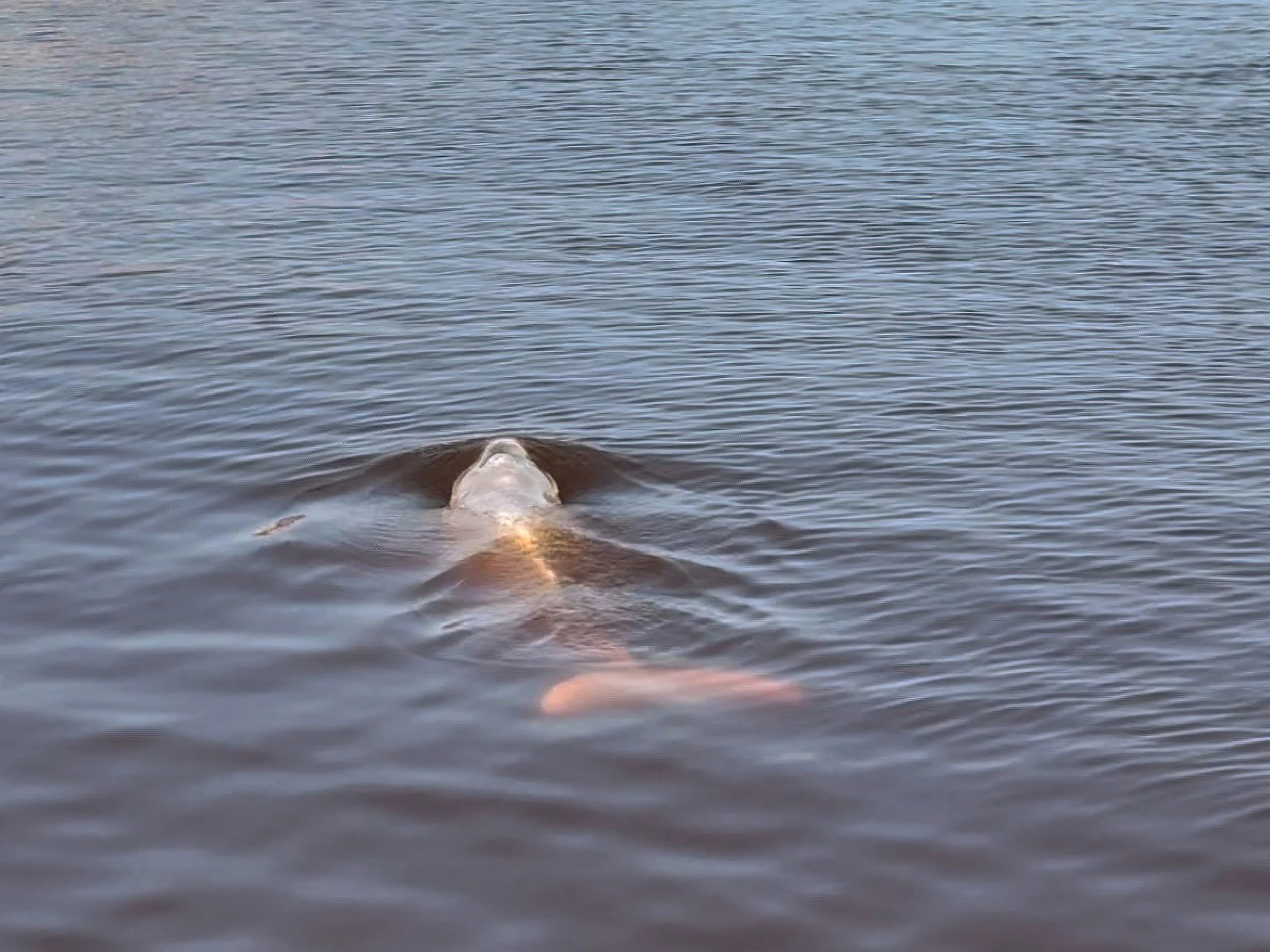
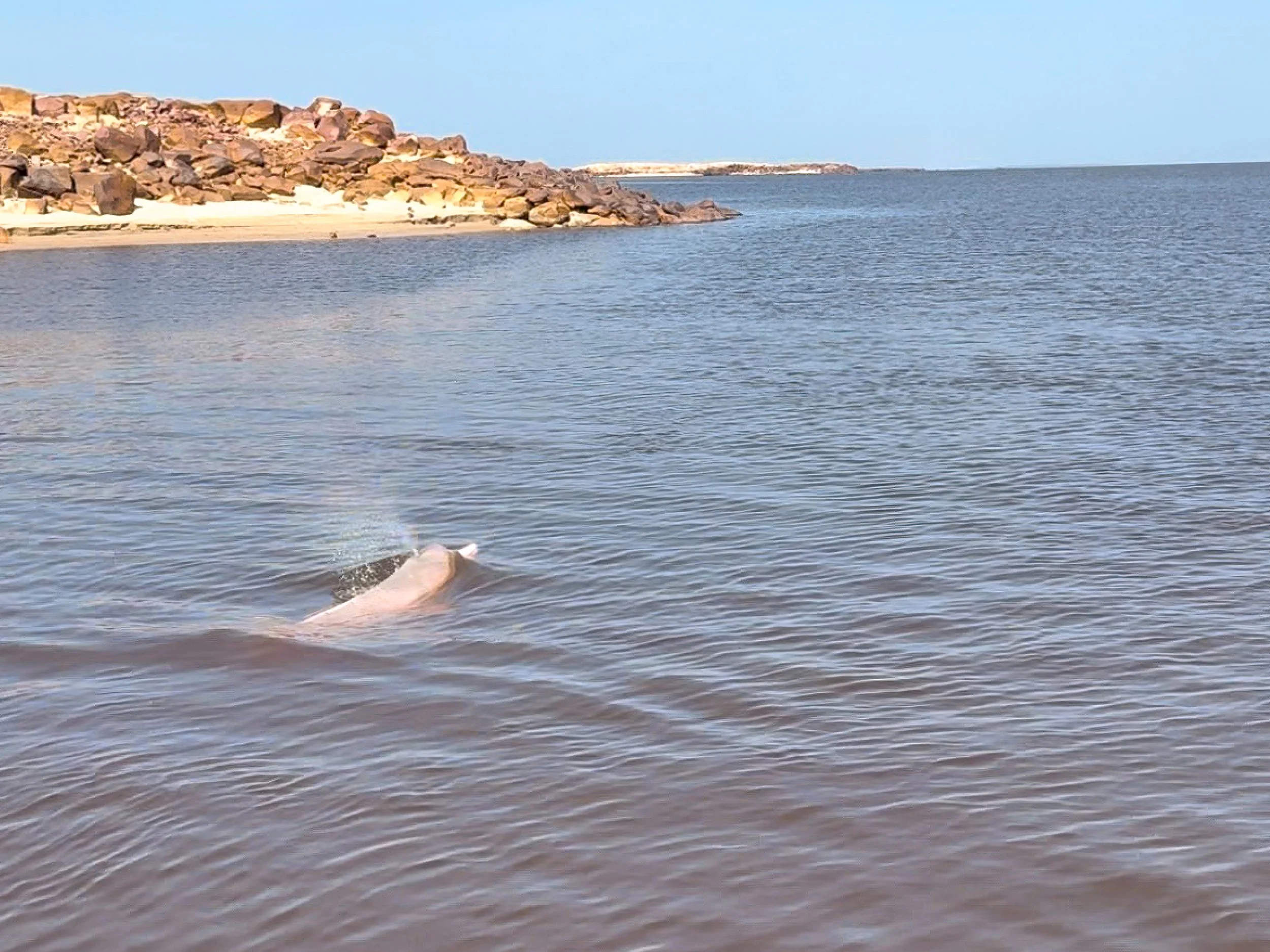
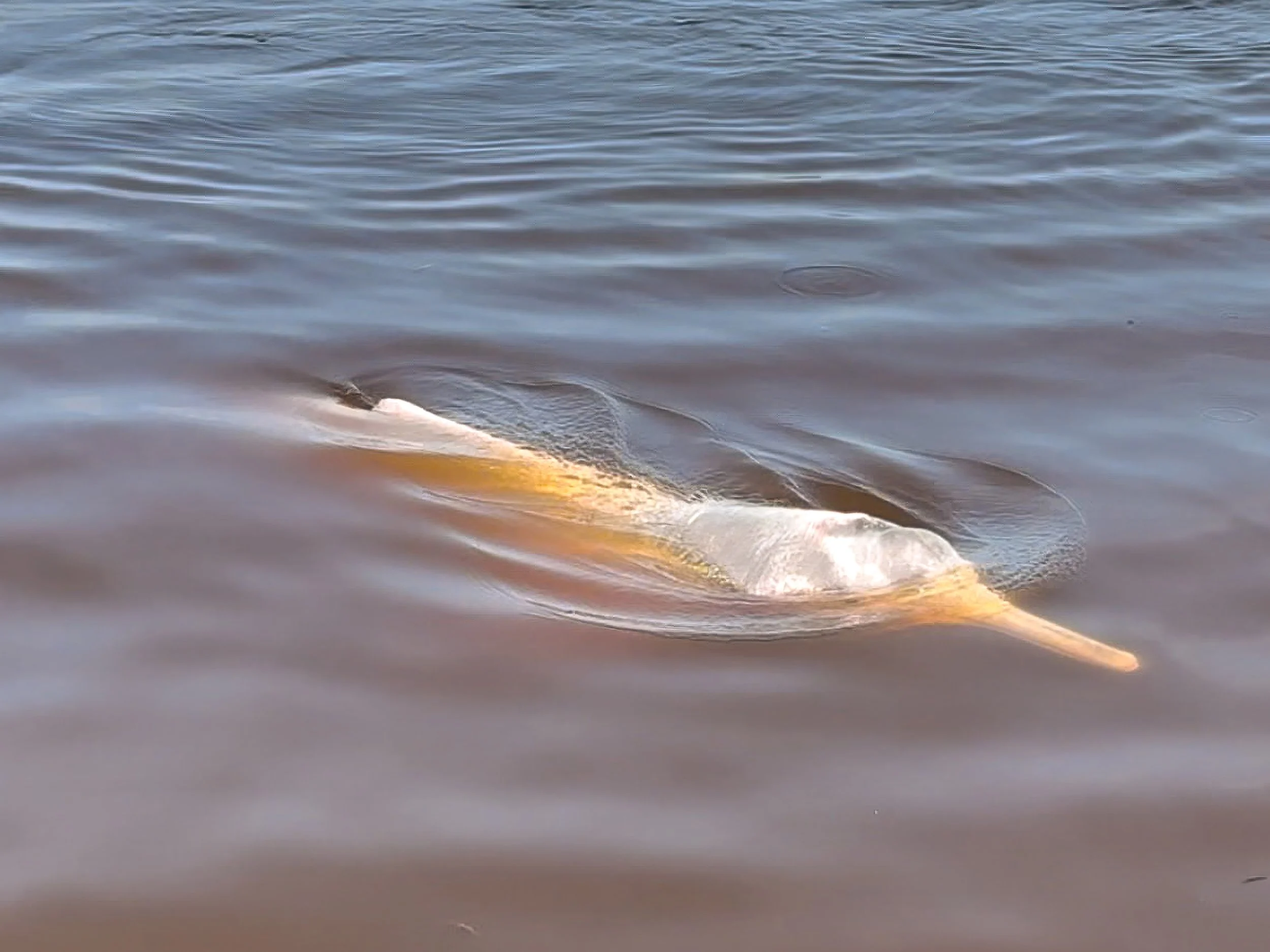
We woke up to breakfast with fresh fruit and tapioquinha while watching pink river dolphins swim around the boat. In a nearby cove, we watched as a handler fed the dolphins fish. Up close, we could admire them in detail. They have pink skin with grey splotches, long mouths lined with rows of nail like teeth and a wide upper fin. In the water, the dolphins swam around our legs, poked their heads up and swam off when fed. It was truly an incredible Amazonian experience!
After swimming with the dolphins, the crew began preparing lunch, tambaqui de banda. As the fish grilled, we stopped to swim at a white sand beach and enjoyed the last meal onboard the boat. After lunch, we napped in our hammocks as we cruised back to Manaus.
Tips for Cruising The Amazon
Cell Service. As we expected, this area is very remote, there is little to no cell service or data outside of Manaus.
Mosquitos. We brought a mosquito net specifically to cover our hammock at night. In addition, we wore copious amounts of insect repellants when in the jungle.
Piranha. The carnivorous fish are generally not attracted to humans. Still, it’s best to avoid entering the water with an open wound, making sudden movements and splashing around.
Pink River Dolphins. Unlike many “dolphin encounters” the pink river dolphins are protected and remain wild. It’s regulated how many fish can be fed to them per day as not to build a dependency.
Cost. Multi night Amazon tours are not cheap. They can range from several hundred dollars well into the thousands per person.
Where to Book. We booked our tour with Amazon Amazing Tours on Get Your Guide. It was one of the more cost effective tours and well worth the experience!

Amazonian Cuisine
A huge part of our time in the Amazon was trying the cuisine! The flavors of the Amazon are as vast as the rainforest itself including tropical fruits, starchy root vegetables, fresh water river fish and even insects.
Amazonian Fruit
Açaí. The tiny Amazonian super fruit from the Açaí palm. By itself, it has a bitter blackberry like flavor. It’s often served as a sorbet with other fruits, granola and honey. Its pits are used for jewelry and decor.
Cupuaçu. A brown podlike fruit with a seeded spongy interior. It’s often processed into a cream and added to drinks, desserts and açaí.
Tapereba. An Amazonian fruit with an orange skin and the flavor of a plum and mango but less sweet. It’s served in juices, ice cream, fresh or peeled and sautéed.
Brazil Nut. Technically not a fruit, however the nut is sold at some food carts and stands around Manaus.
Tropical Juices. Many Amazonian fruits are used to make tropical juices including avocado, cashew, maracujá and guava.
Avocado Juice. Avocado blended with milk and sugar. If you’ve never had it, it sounds strange but is tasty and mildly addicting.
Cashew Juice. Juice made from the cashew fruit, the source of the cashew nut. It has a unique, slightly acrid, sweet flavor. When underripe, it has a mango like flavor.
Maracujá Juice. The sweet sour juice from passion fruit, with seeds and all.
Guava Juice. Juice made from guava, it has a tangy plumelike flavor and creamy texture.
Other common fruits are watermelon, papaya, pineapple, mango, banana, orange and coconut.
Amazonian Fish
Tambaqui. A popular freshwater fish from the Amazonian rivers. At restaurants, halves of the fish called Tambaqui Banda, are often served grilled or fried for multiple people to share. Its ribs (yes literal ribs), called Tambaqui Costela, are served as individual portions either grilled or fried. The fish can also be prepared in a savory vegetable stew called Caldeirada de Tambaqui. We tried it all ways and it’s easily one of the most flavorful fish we’ve ever tasted!
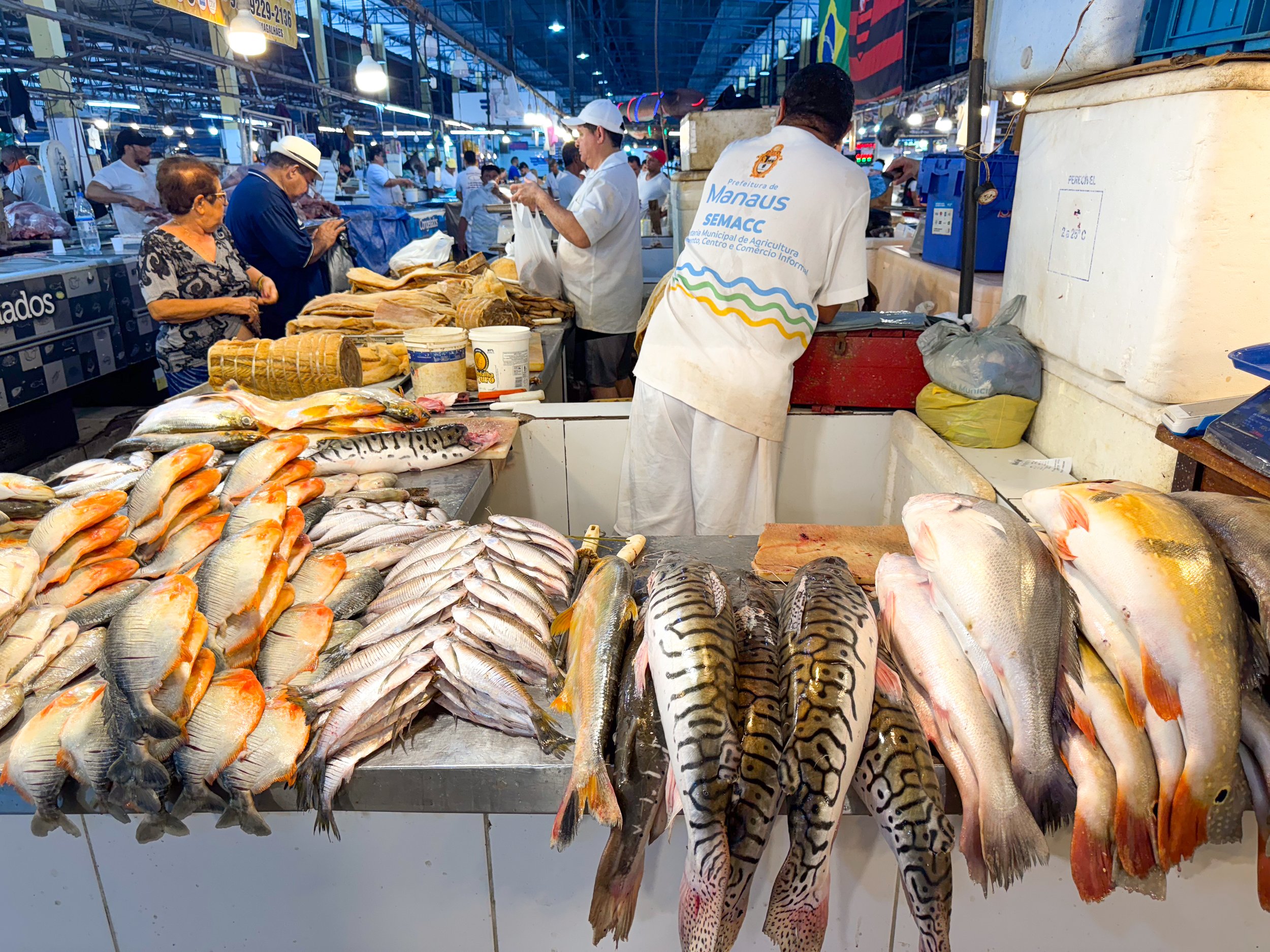
Pirarucu. A very large freshwater fish from the Amazonian rivers. It’s a common menu item at restaurants served alone or inside various dishes. It has a tender, buttery texture and the flavor of a white fish. It’s locally known as the “Cod of the Amazon.” Filets measuring a few inches to several feet long can be bought fresh or salted from the fish market.
Red Bellied Piranha. The well known tiny carnivorous Amazonian fish with razor like teeth. They are served fried or grilled and have a tender flavor similar to any white fish. Multiple are typically served at once since each only has a few bites of meat.
Amazonian Dishes
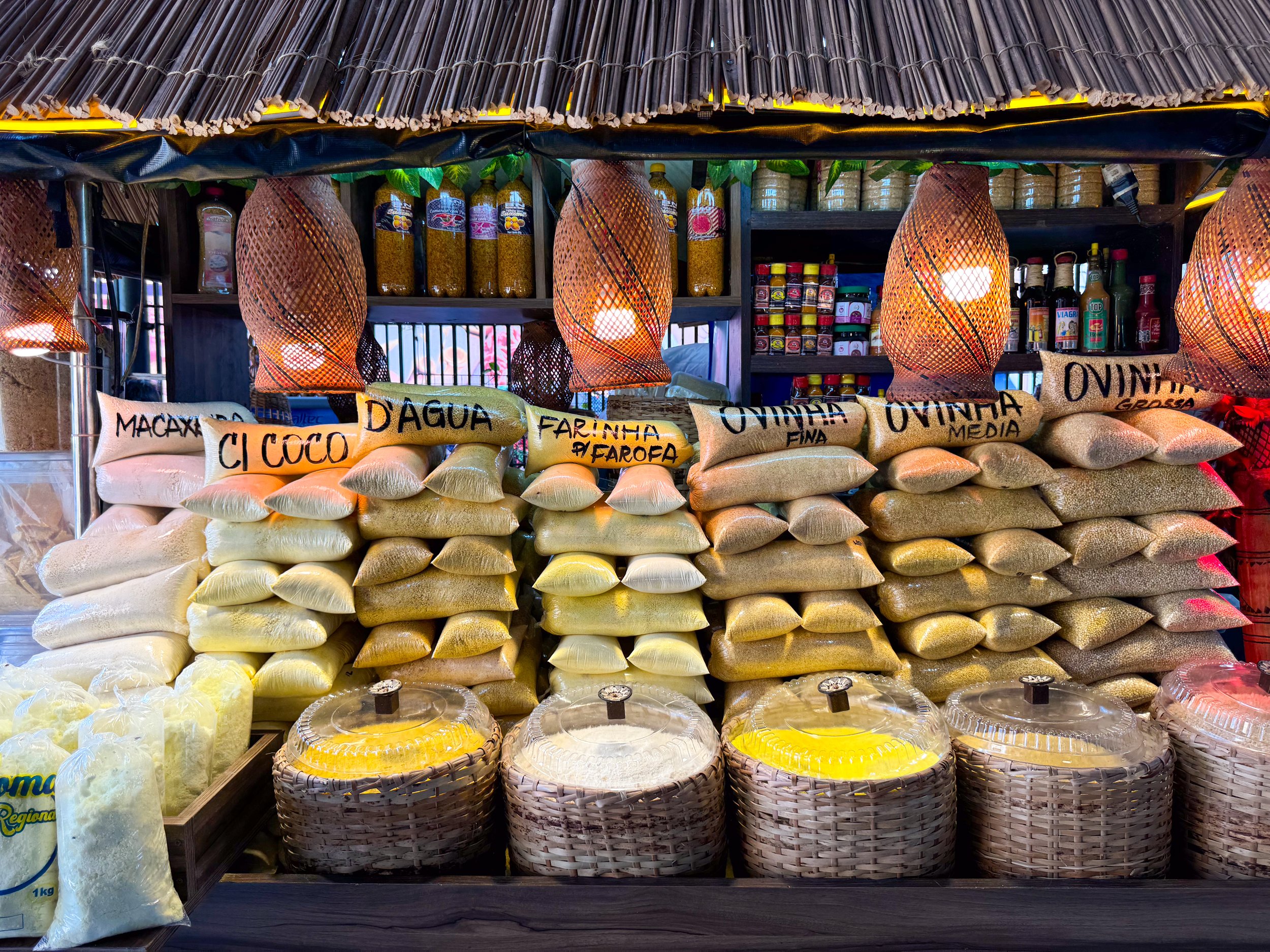
Farinha. An Amazonian “grain” specific to the region made from ground cassava prepared in fine to large granules. It’s served as a side and topping on many dishes.
Tapioquinha. A Brazilian style crepe made from tapioca flour and filled with Amazonian fruits, eggs, cheese or meats. It’s a popular breakfast dish.
Ants. Though not common, they are a delicacy stemming from Indigenous Amazonian tribes. The two most popular are Saúva Ants and Maniwara Ants. The first is a burgundy colored leaf cutter ant with a tangy grassy flavor. The second is a larger tan ant with a sweet toasty flavor.
Vatapá. A creamy paste like stew made with coconut milk, shrimp and tomatoes. It has a savory, somewhat bitter and starchy flavor.
Tacacá. A soup made from boiled cassava broth, cassava gel, herbal jambu leaves and salted shrimp. It’s traditionally served in a calabash (a bowl made from a gourd) and sipped on using a wooden skewer to eat the jambu greens and shrimp. It’s popular in Amazonia, even on scorching hot days.
Amazonian Beverages
Guaraná Antarctica. A very popular soda made from the guaraná fruit. It has a bubbly honey like flavor.
Guaraná Baré. Manaus’s version of Guaraná Antarctica. It has a similar flavor, it is less carbonated and slightly sweeter.
Guaraná Smoothie. A smoothie made with guaraná syrup and powder mixed with peanuts and milks.
Caipirinha. A cocktail made with Cachaça (a Brazilian rum), muddled limes, sugar and ice. It’s commonly served at bars in its classic form or with Amazonian fruit flavors.

Manaus, Amazonia
Manaus is a city in the heart of the Brazilian Amazon where concrete jungle meets literal jungle. It’s an adventurous hub for Amazonian excursions including multi-night river tours, cultural experiences with indigenous tribes, rainforest hikes and swimming with pink river dolphins. The city is famed across the region for its Amazonian markets, restaurants and historic architecture dating back to the “rubber boom” of the late 1800s.
See the Sights
There are many sights to see around Manaus, especially in the city’s central neighborhood including historic landmarks, treelined plazas and indigenous themed murals. Across the city are nature parks, beaches and harbors overlooking the river.
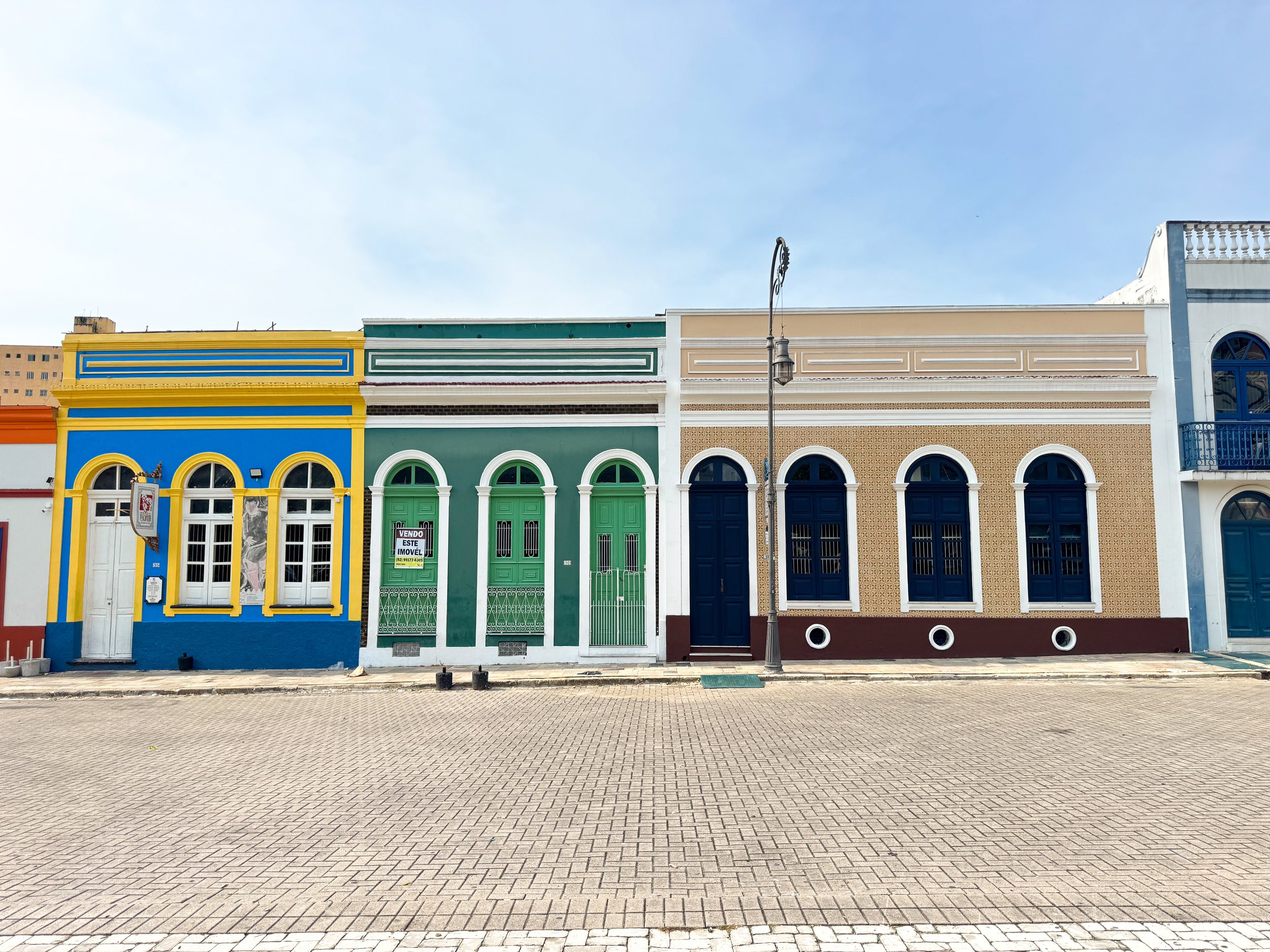
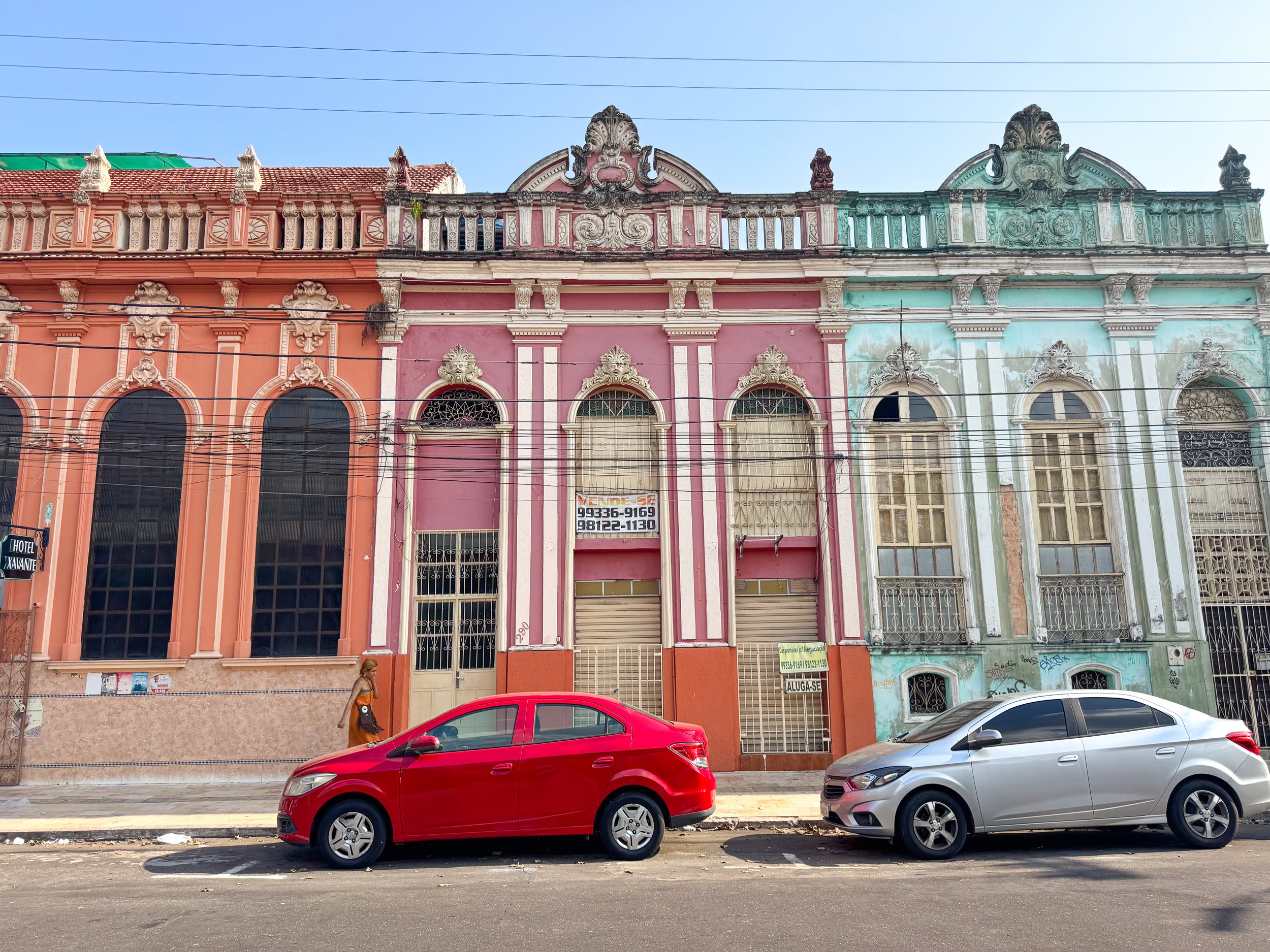
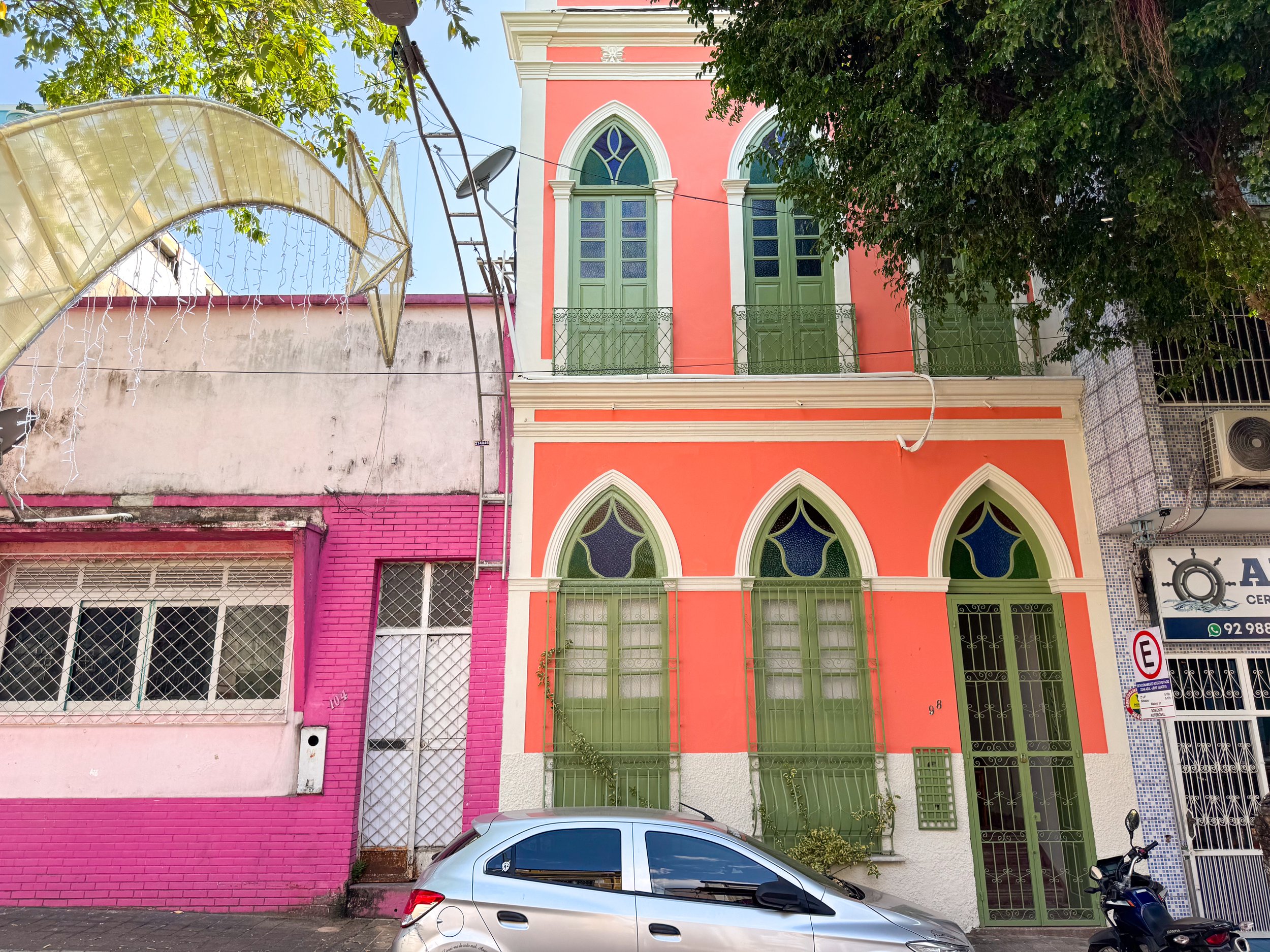
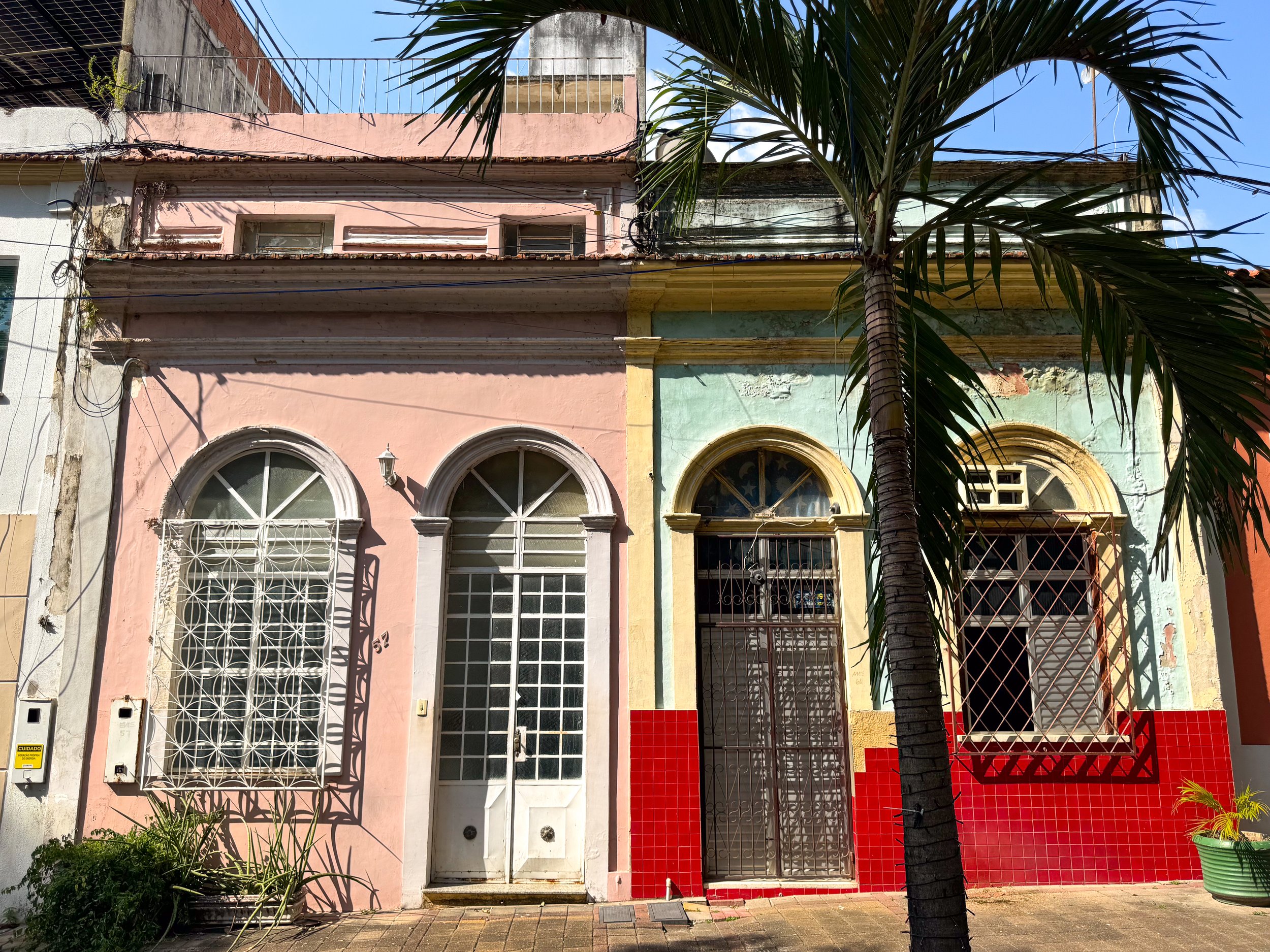
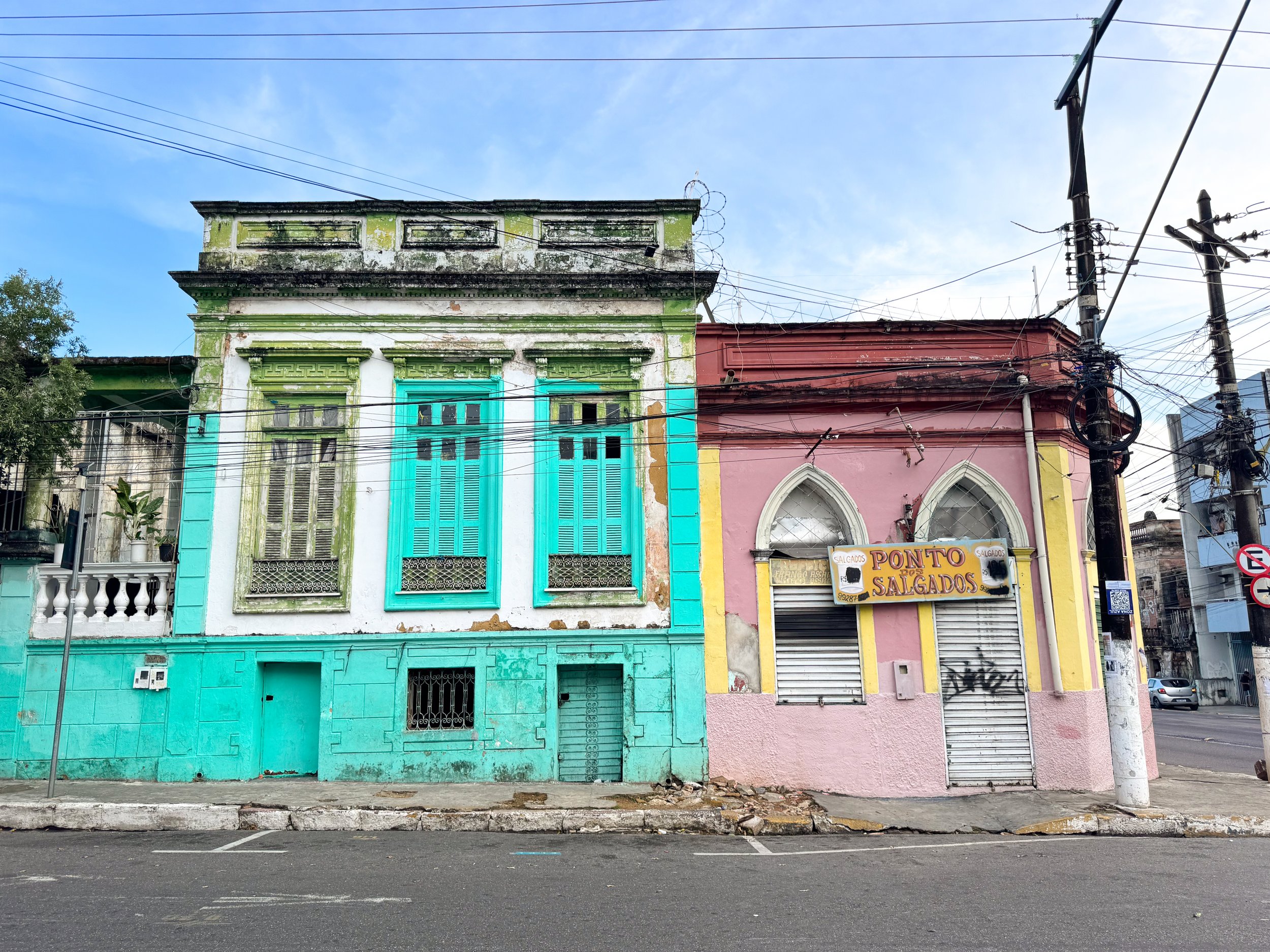
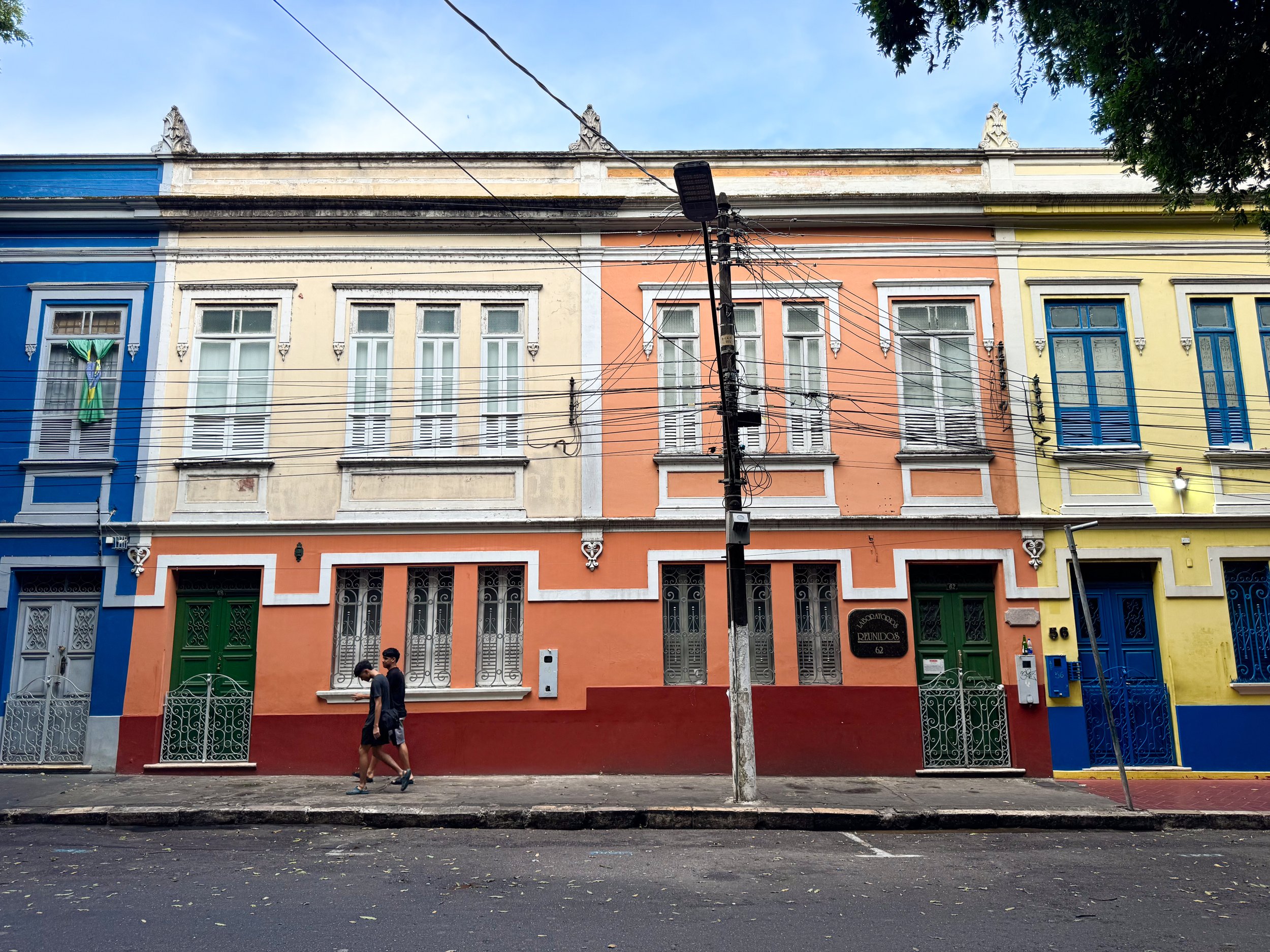
El Centro. The historic neighborhood of Manaus with tree lined streets, pink stone roads, beautiful plazas, countless food carts, Amazonian restaurants and colorful Portuguese style architecture decorated with tiled facades.
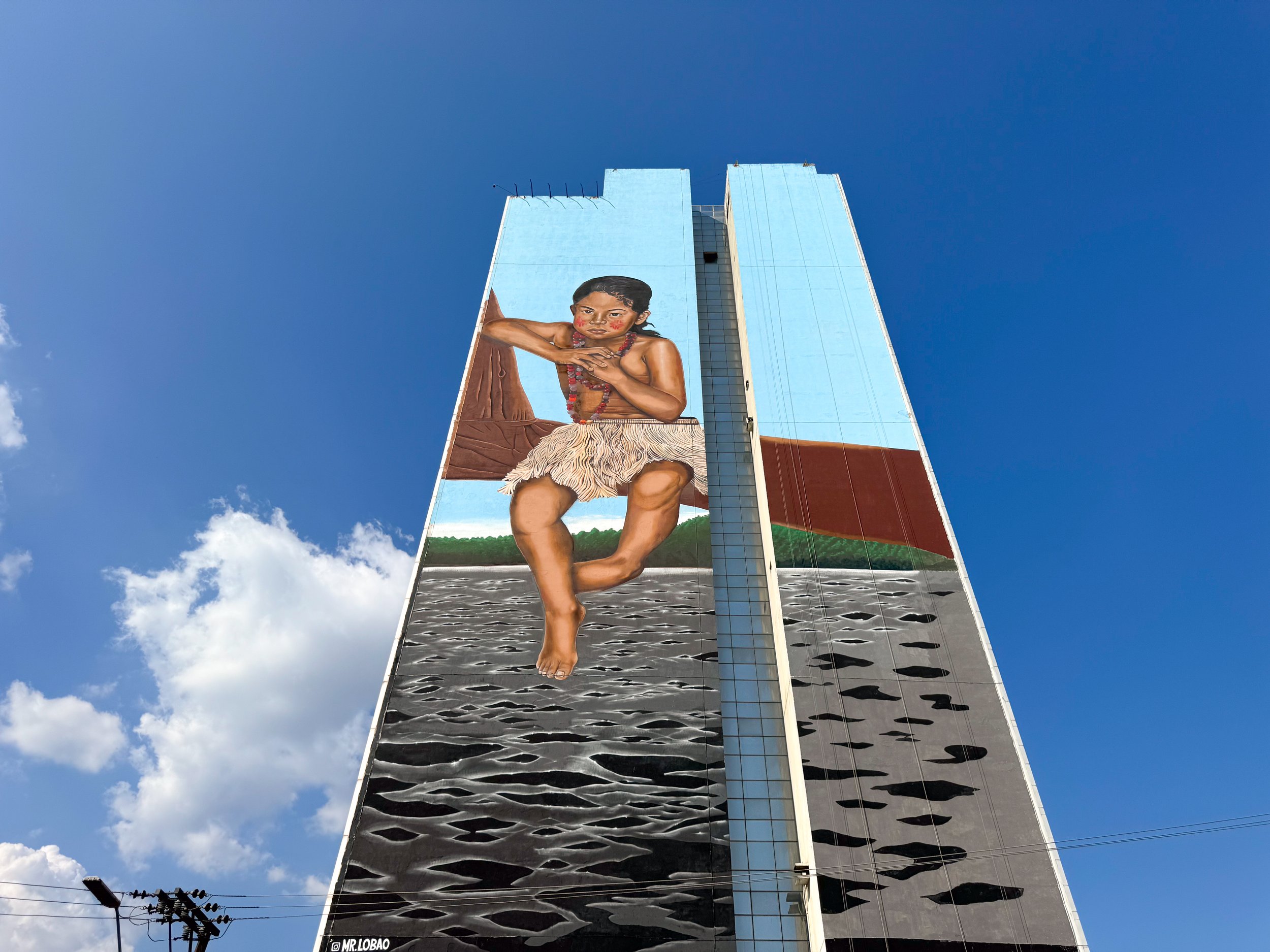
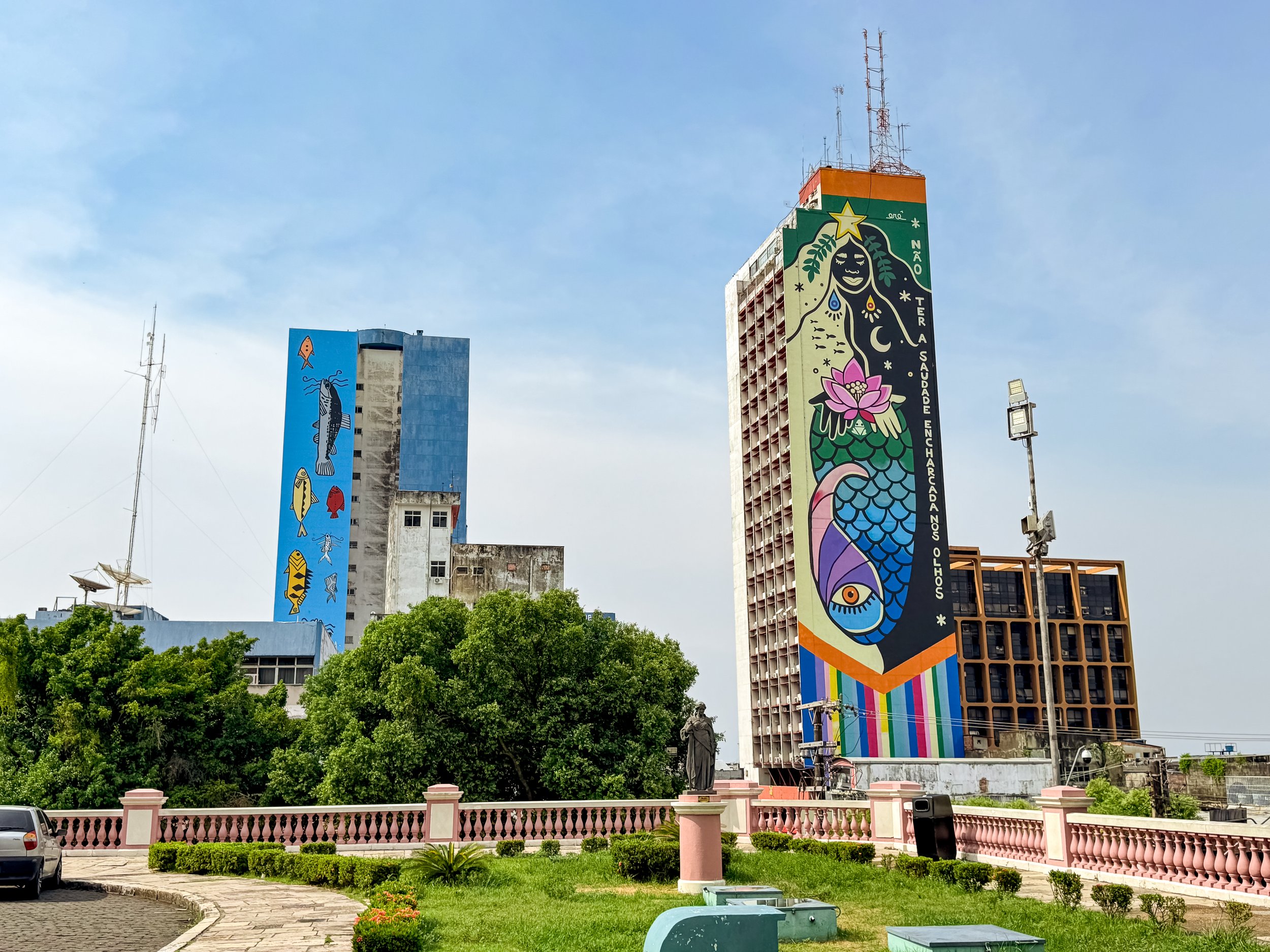
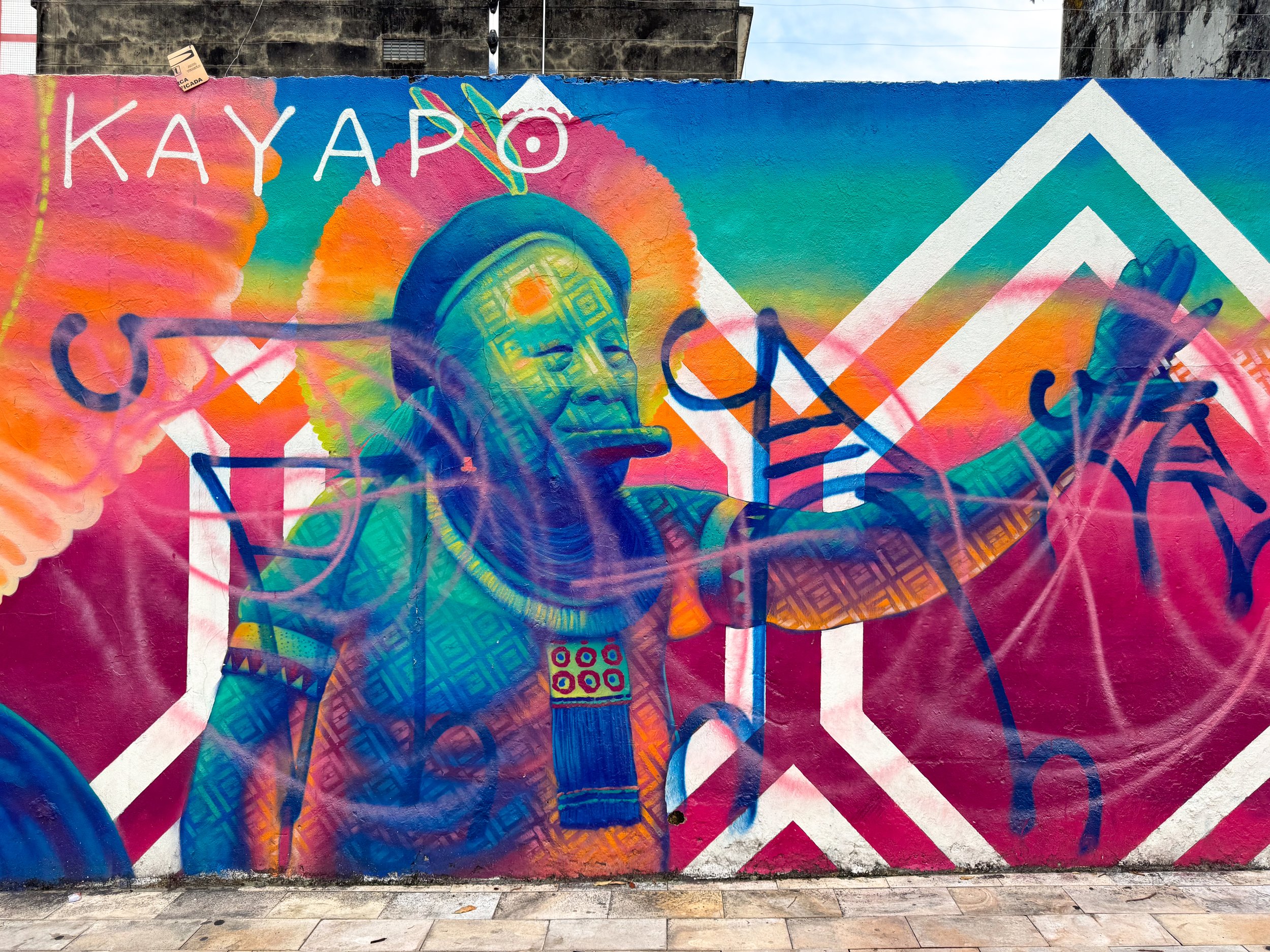
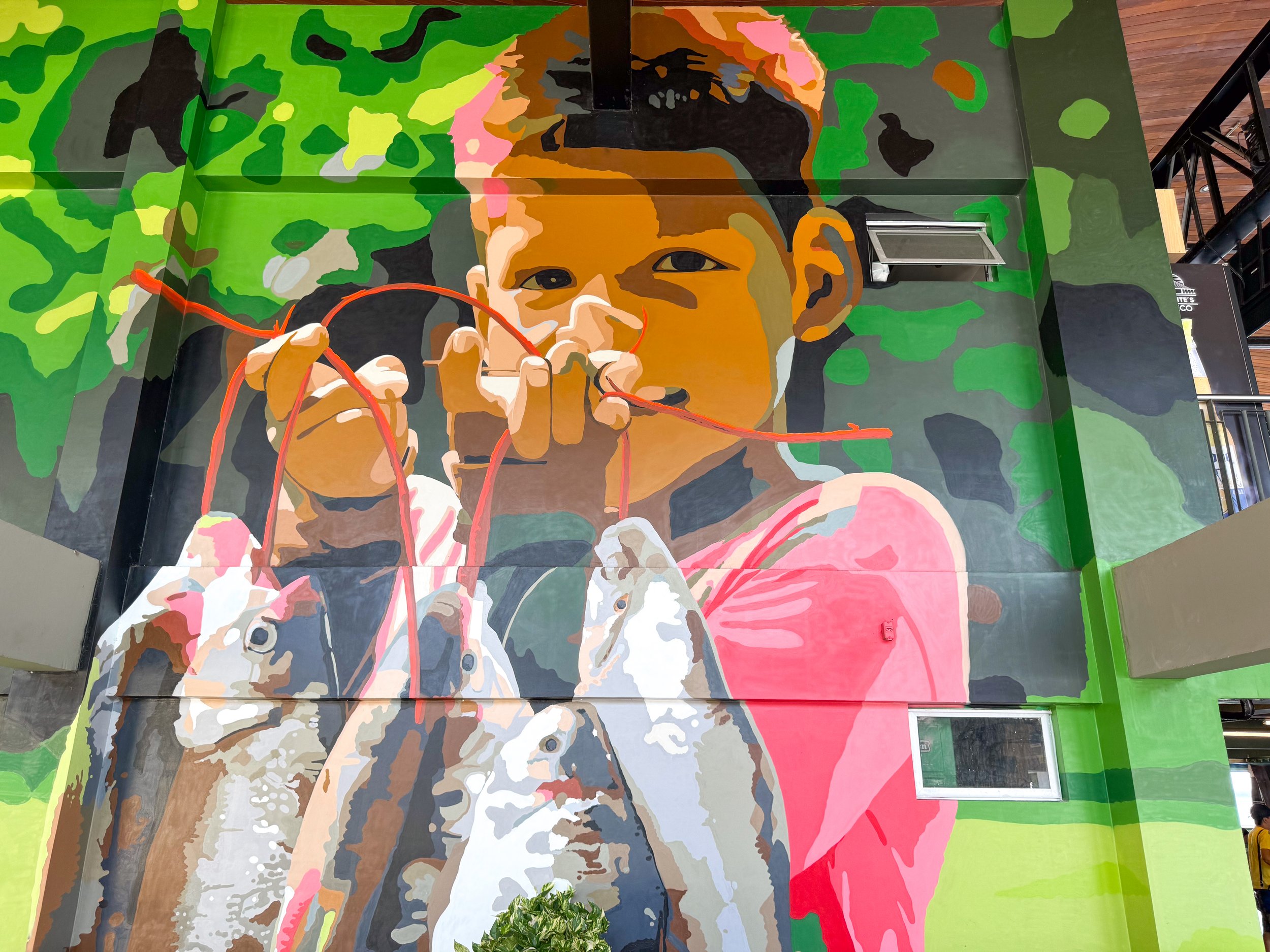
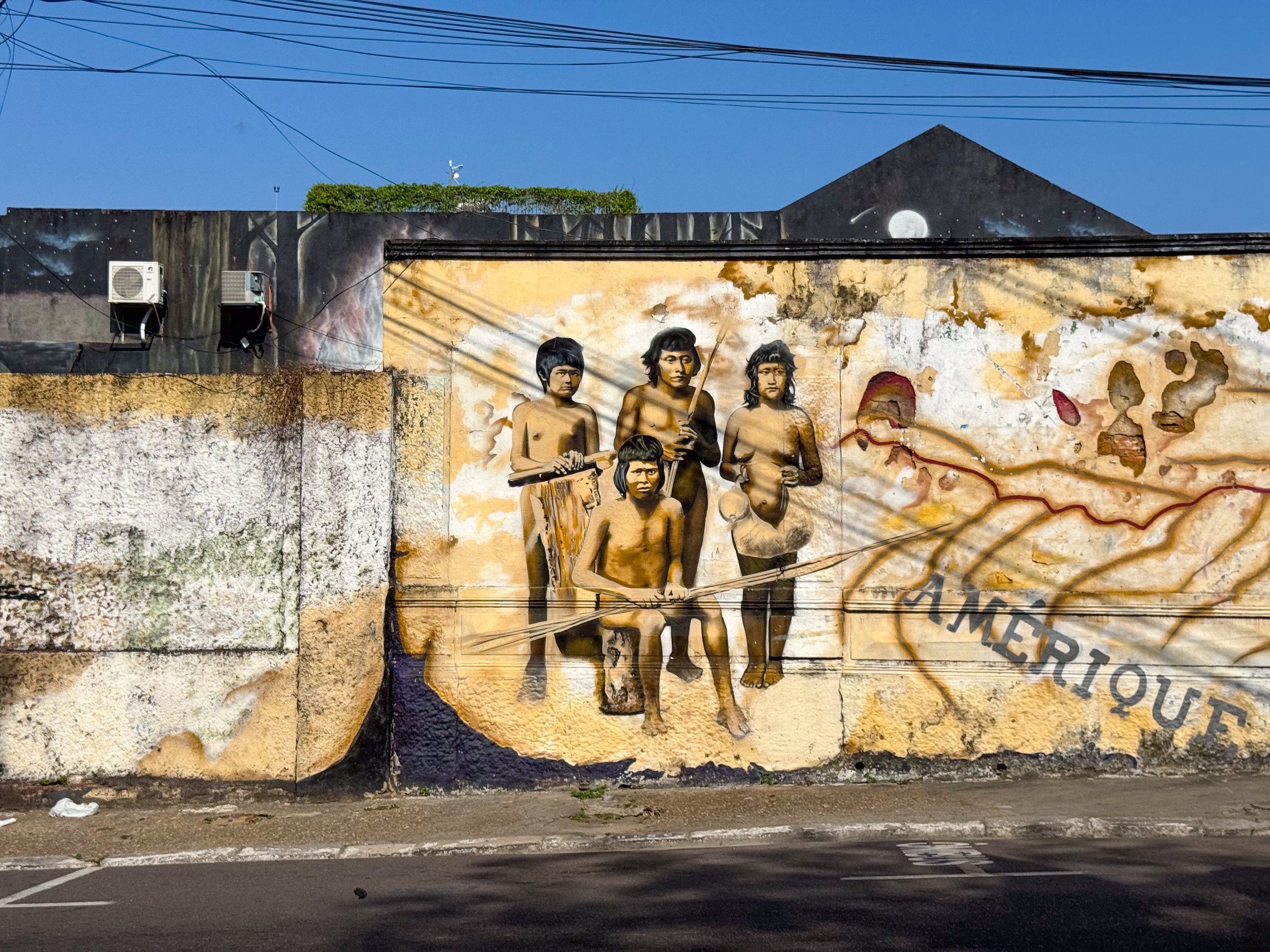
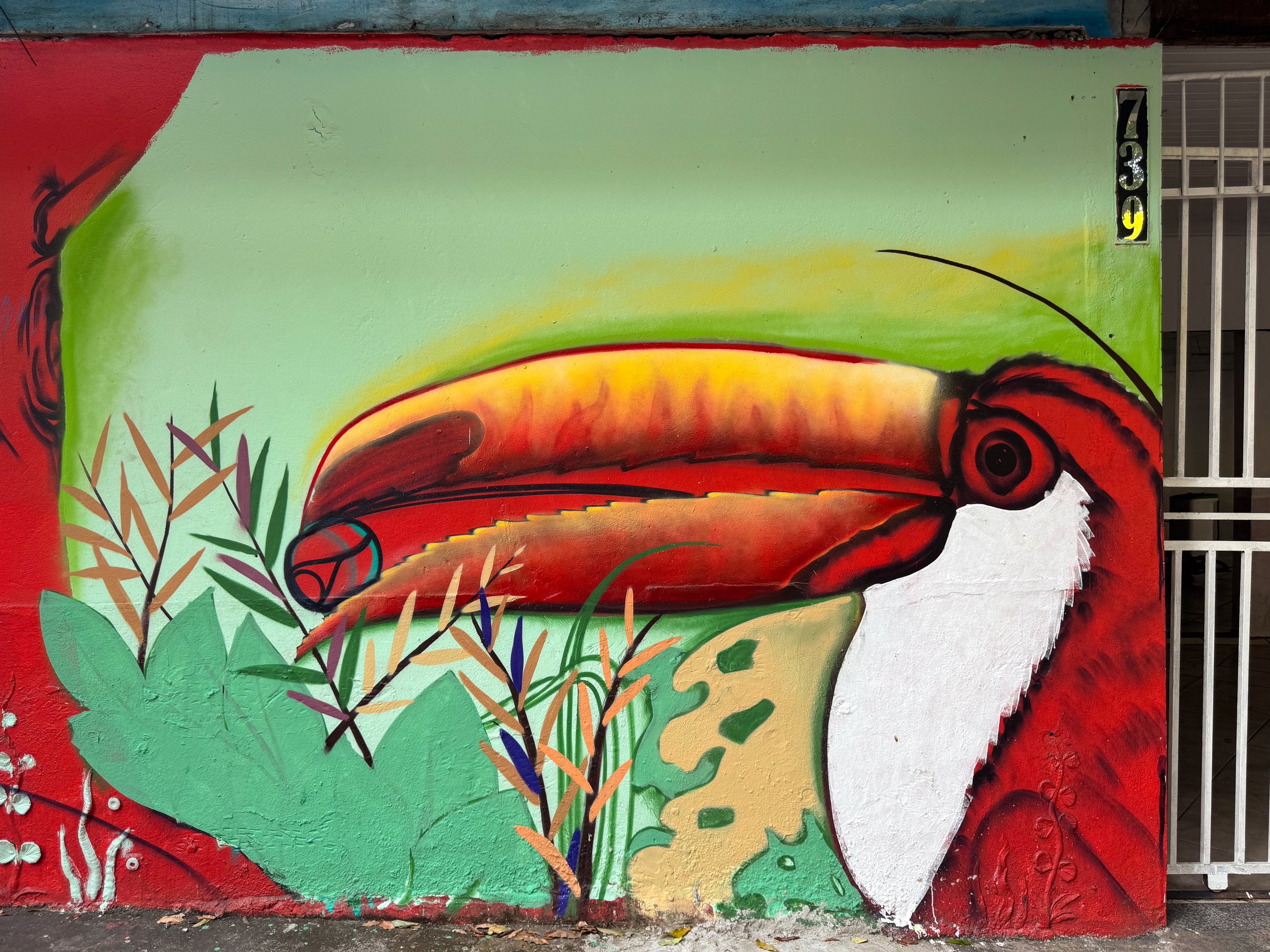
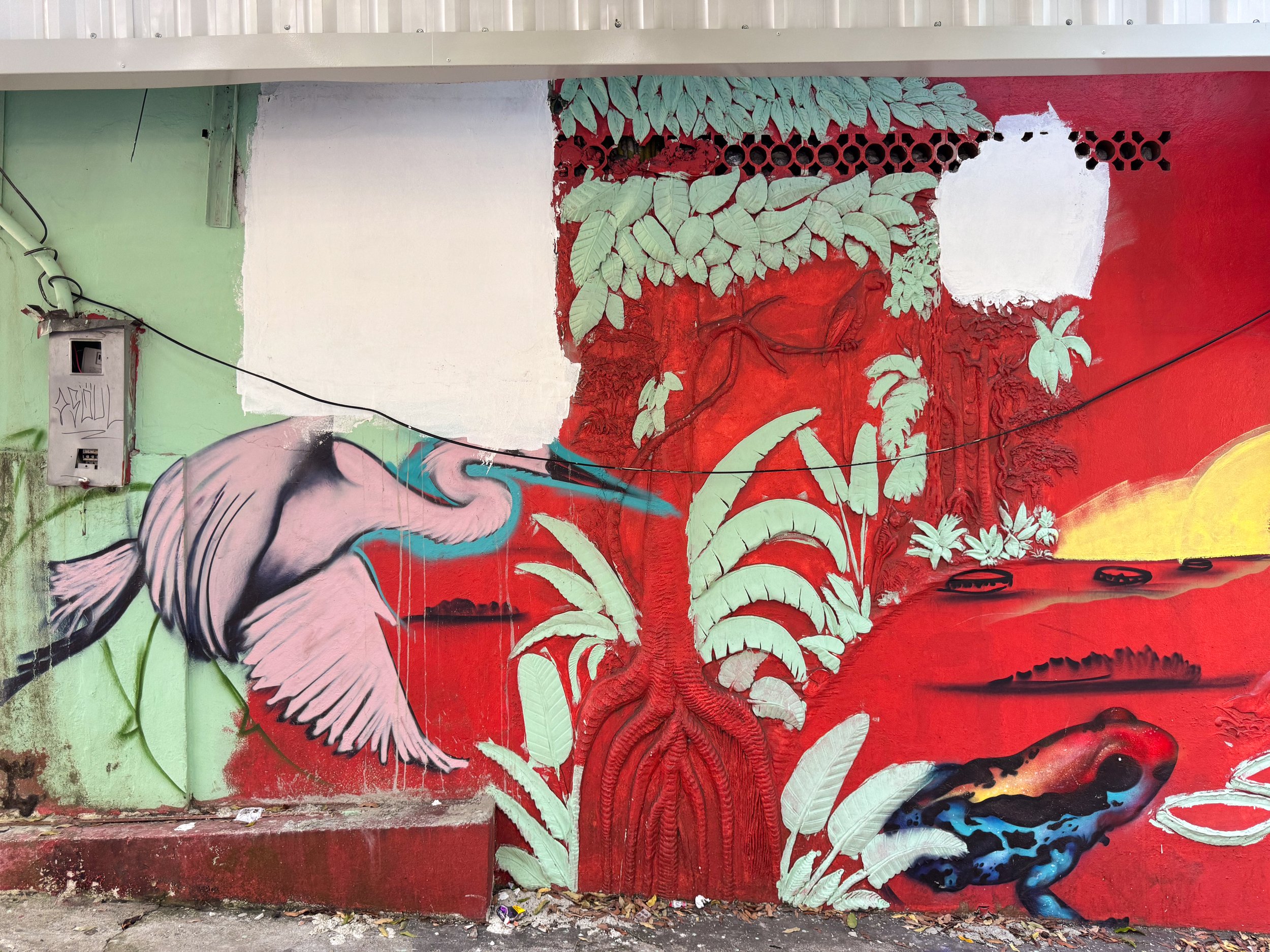
Indigenous Artwork. There is indigenous themed artwork and murals across the city, some spanning the height of entire skyscrapers. The best place to admire the art is around the streets of El Centro.
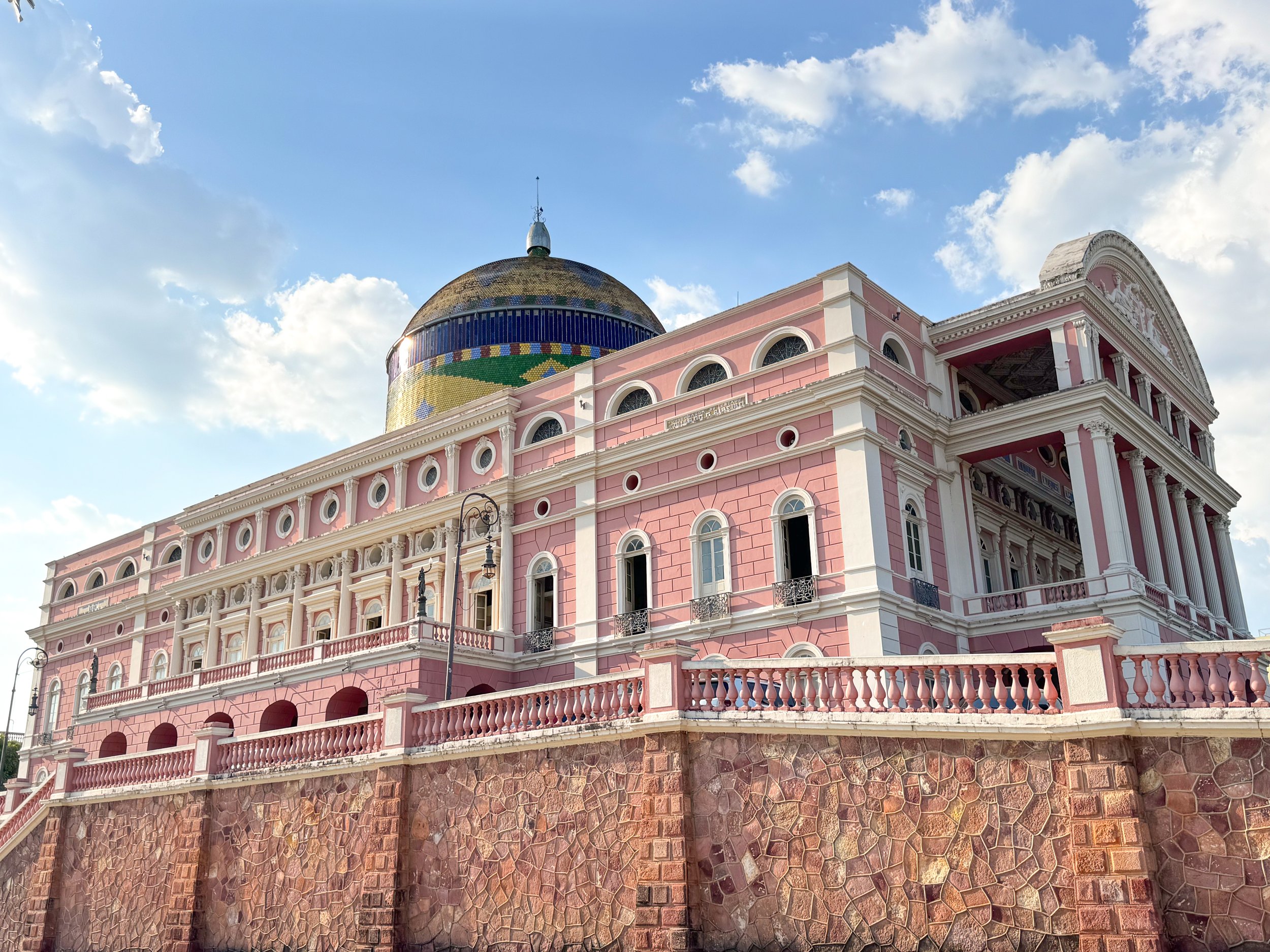
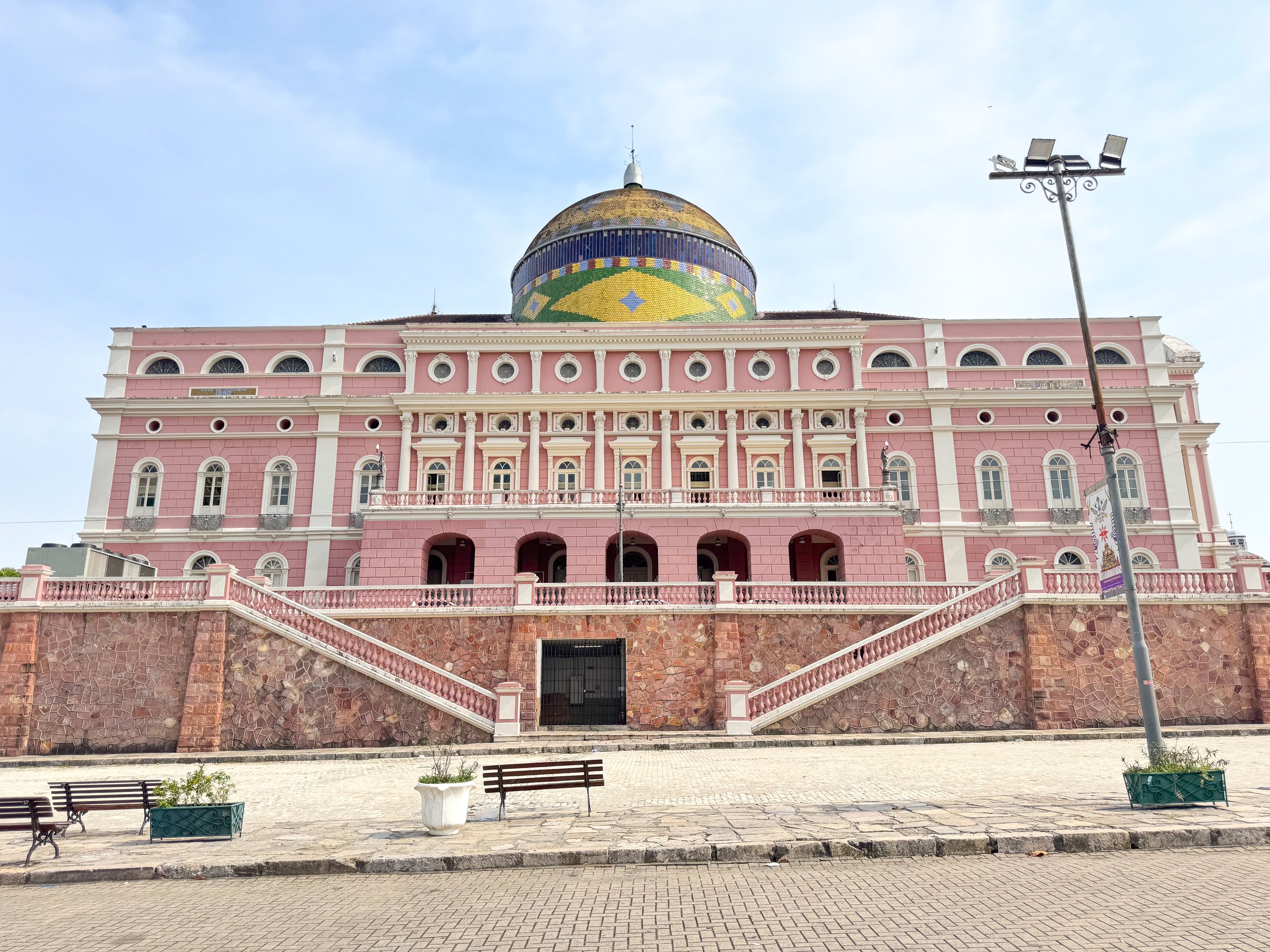
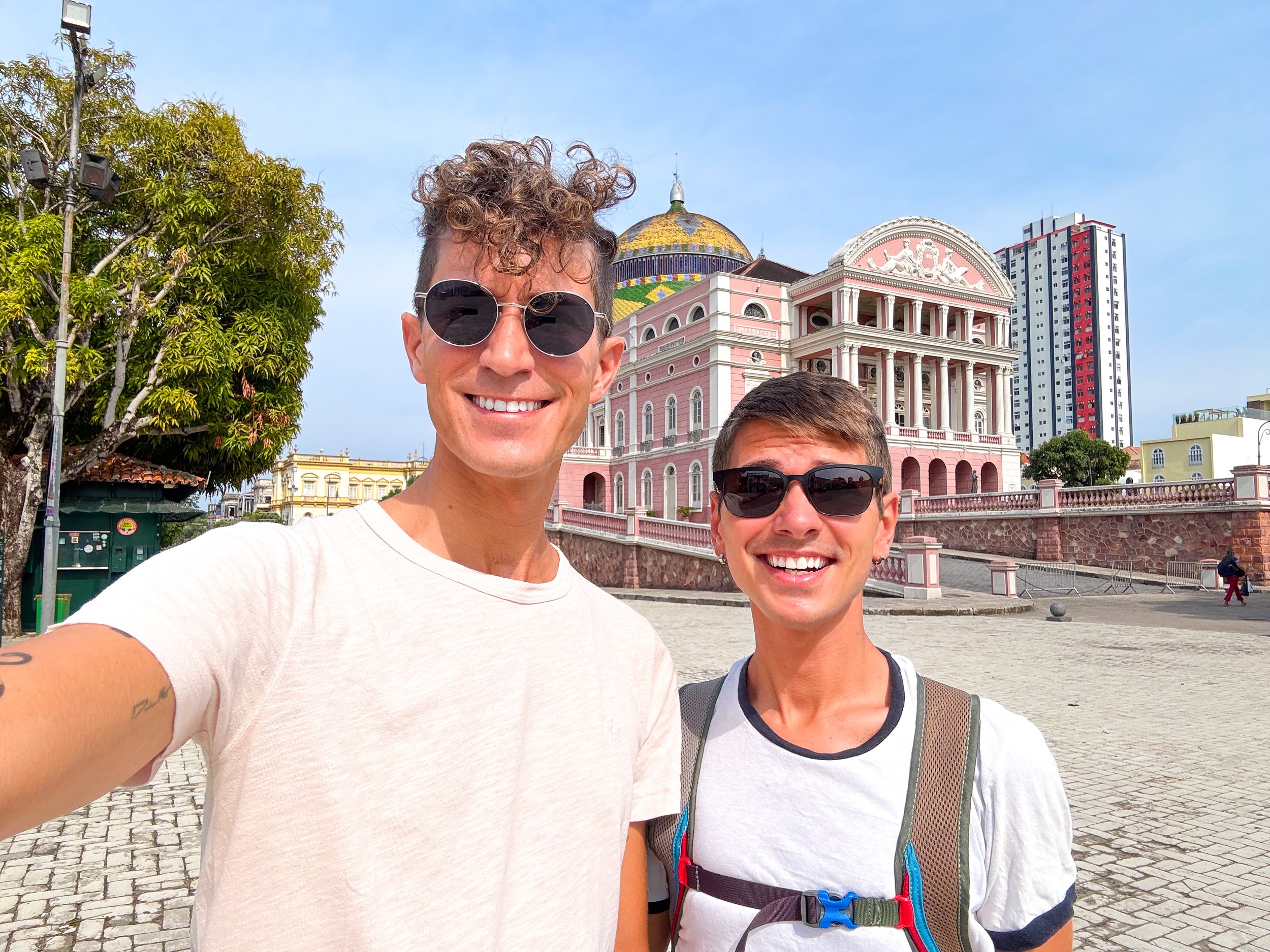
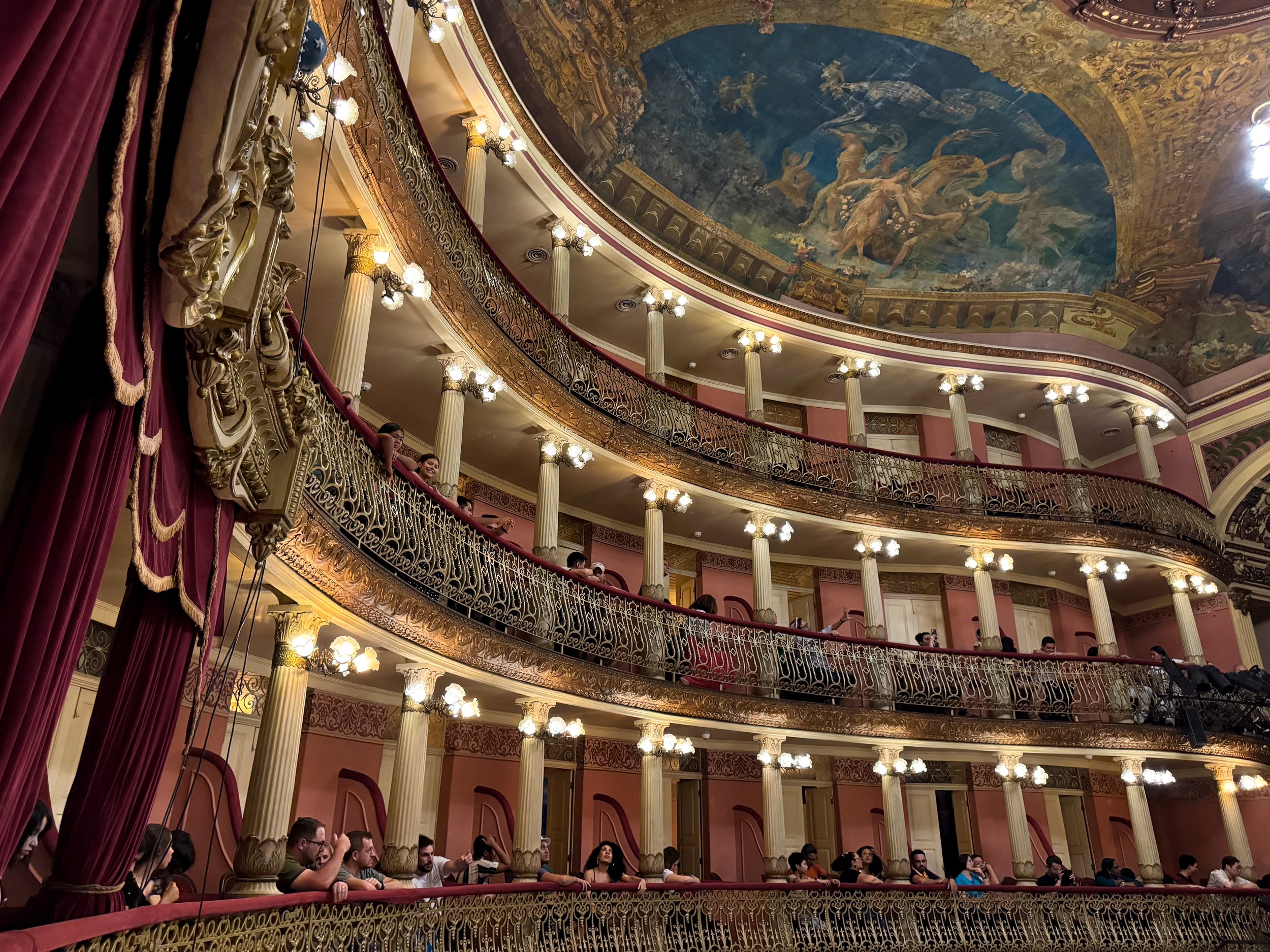
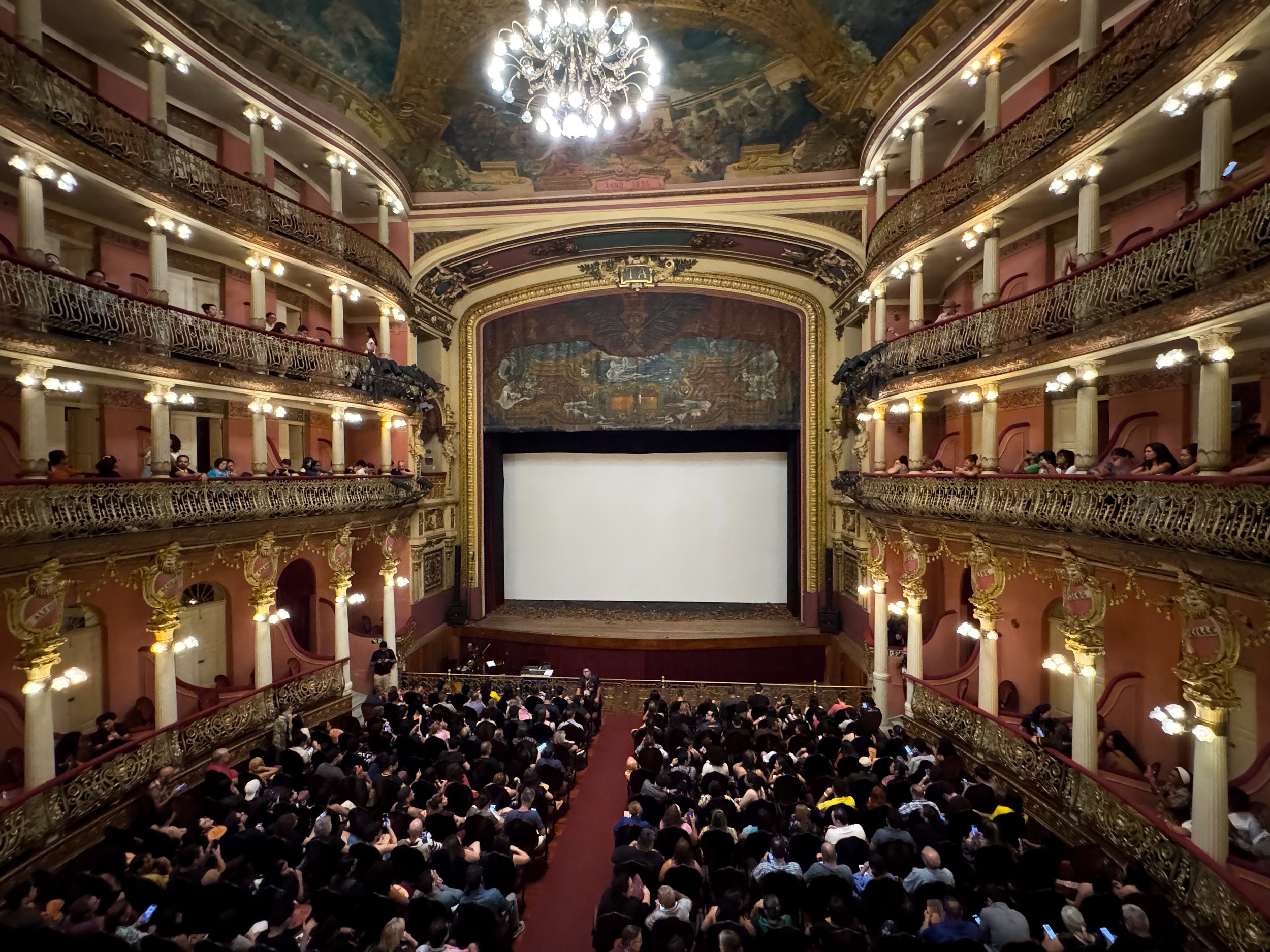
Amazon Theater. A grand and historic theater built from pink and white stones topped with a mosaic tiled dome featuring the Brazilian flag. The interior is elaborately designed with ornate details, velvet seats, warm lighting and multiple levels of opera boxes.
We visited during the Festival of the Theater of the Amazon and saw a free live performance dedicated to the women of the Amazon. The story spoke to the loss of tradition and indifference felt by many indigenous women through male control and westernization. We watched from an opera box with new friends we met in line.
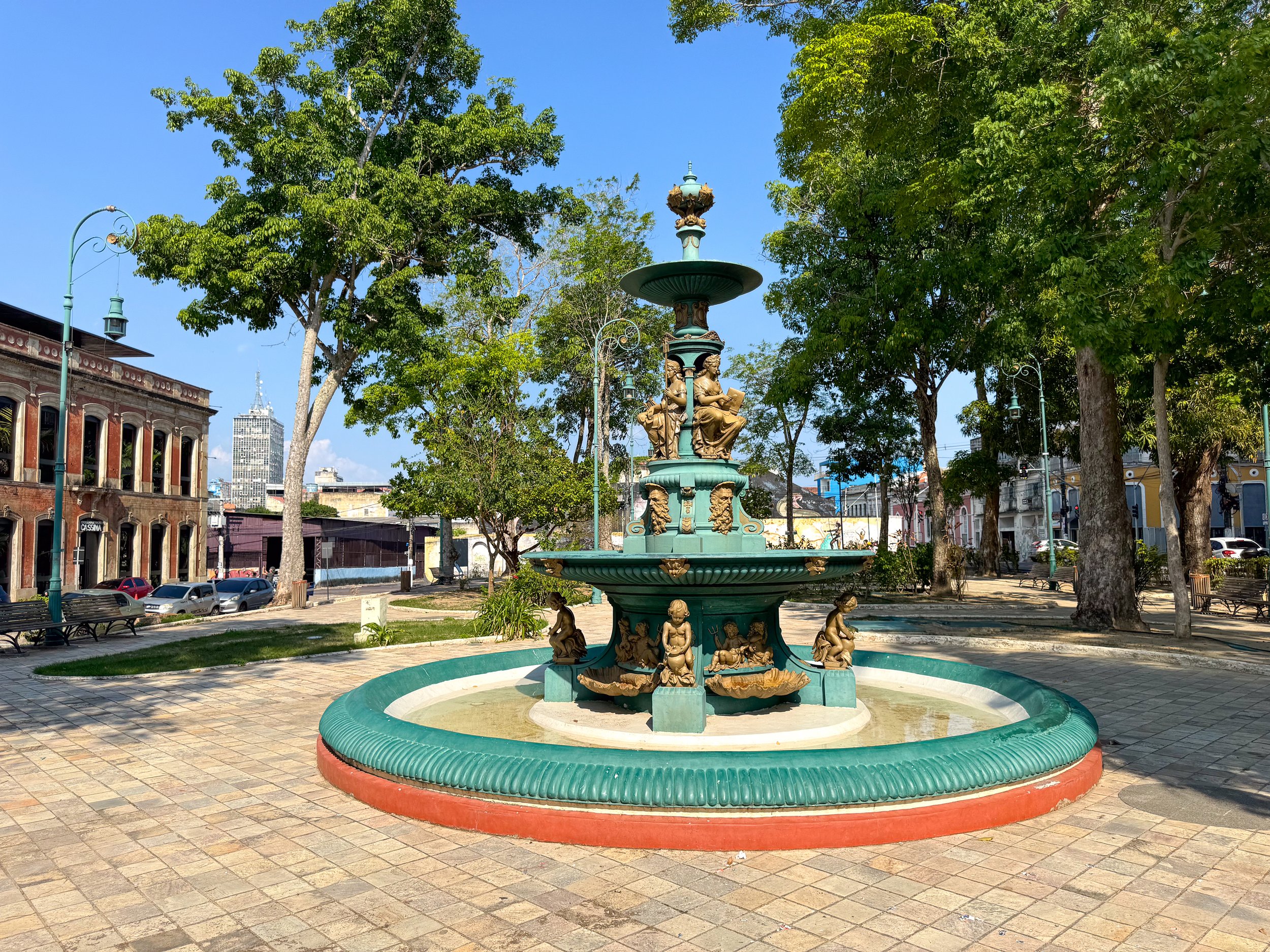
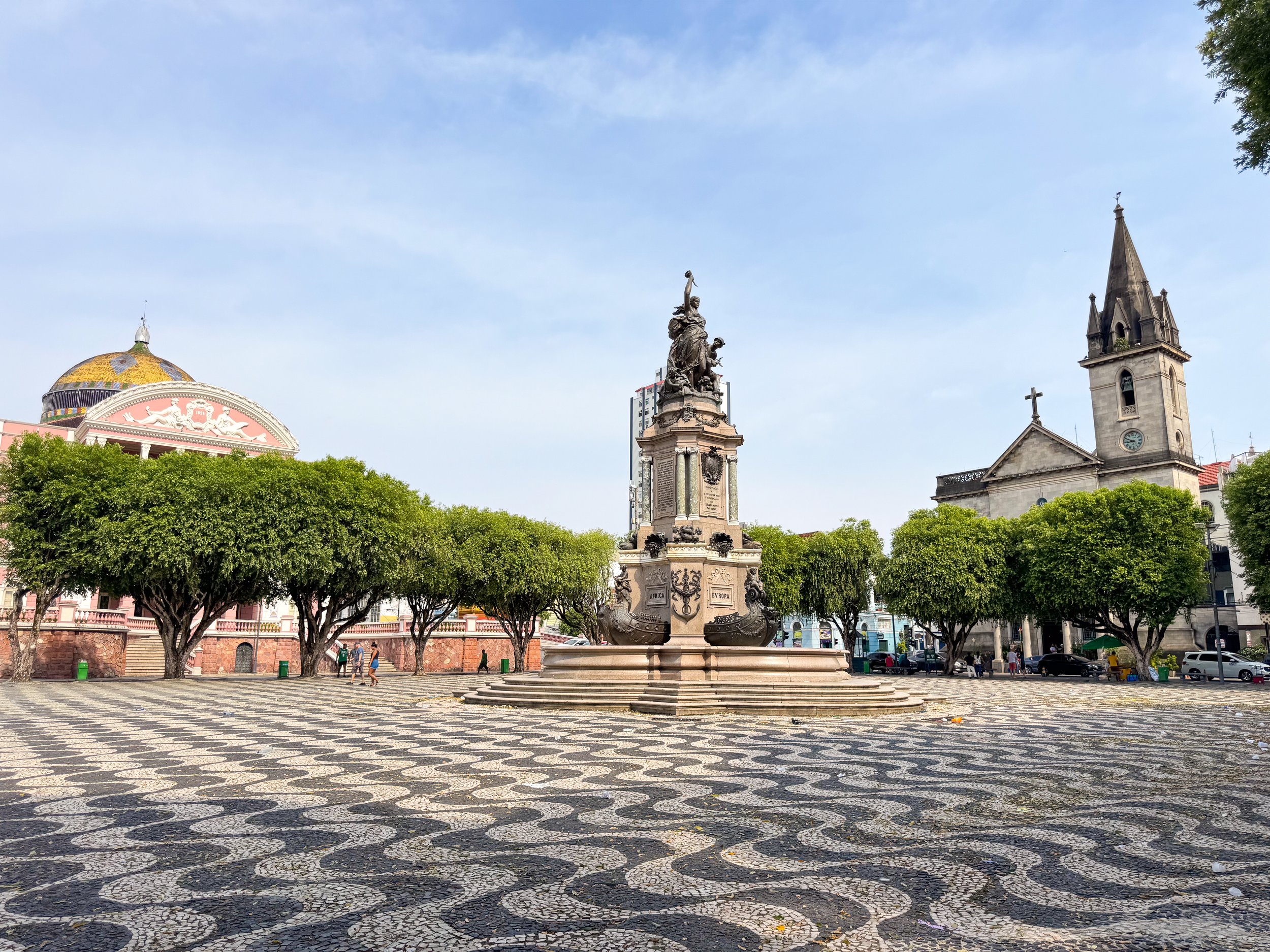
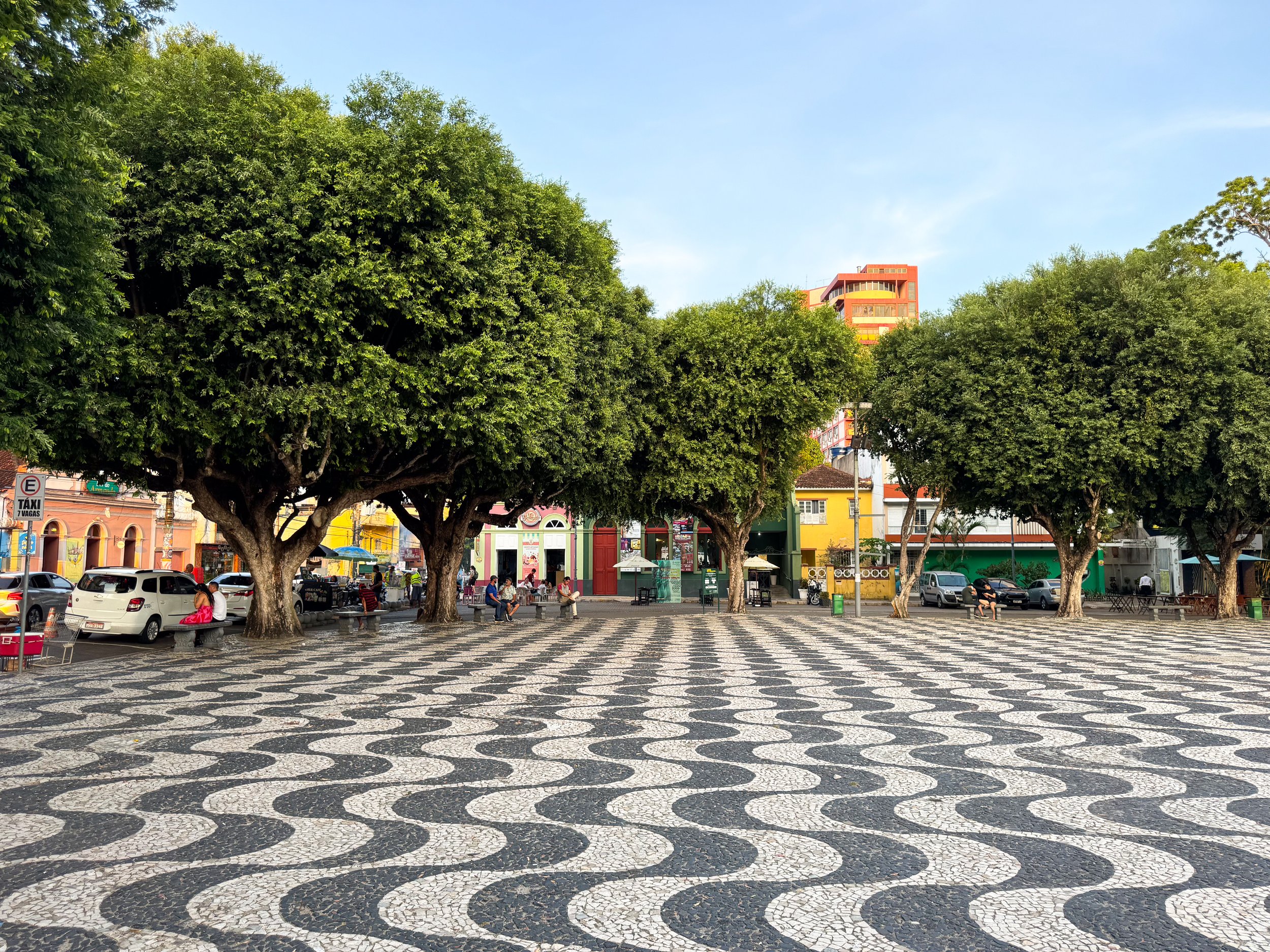
Largo de São Sebastião. A wavy black and white tiled plaza with a large nautical fountain at its center in front of the Amazon Theater. It’s lined with native trees home to tropical birds. We saw flocks of macaws and parakeets fly over, a reminder we were in the Amazon even within the city. The plaza is a hub for music and food! Surrounding restaurants serve Amazonian cuisine while vendors sell tacacá, açaí, cassava chips, popcorn and caipirinhas.
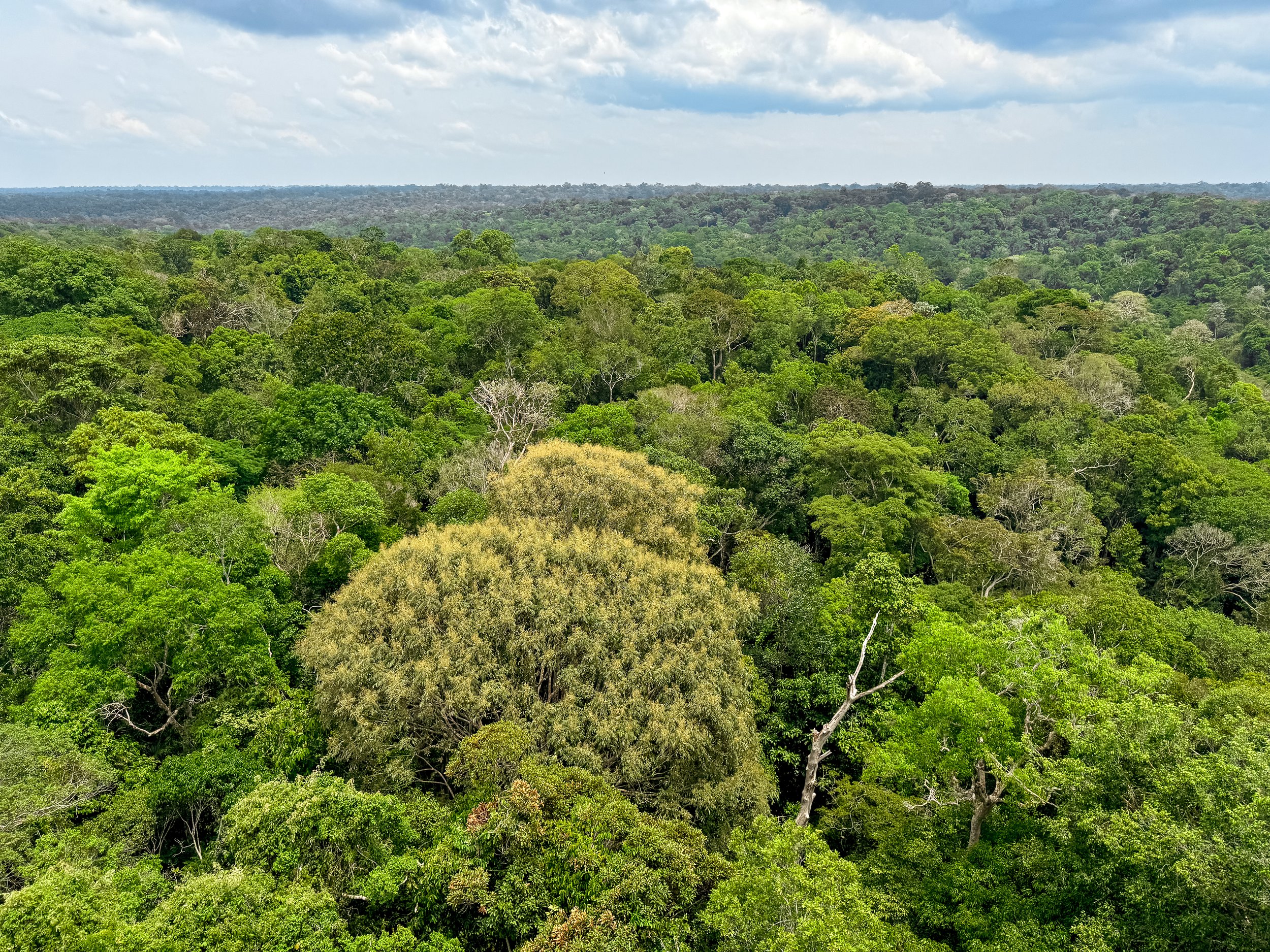
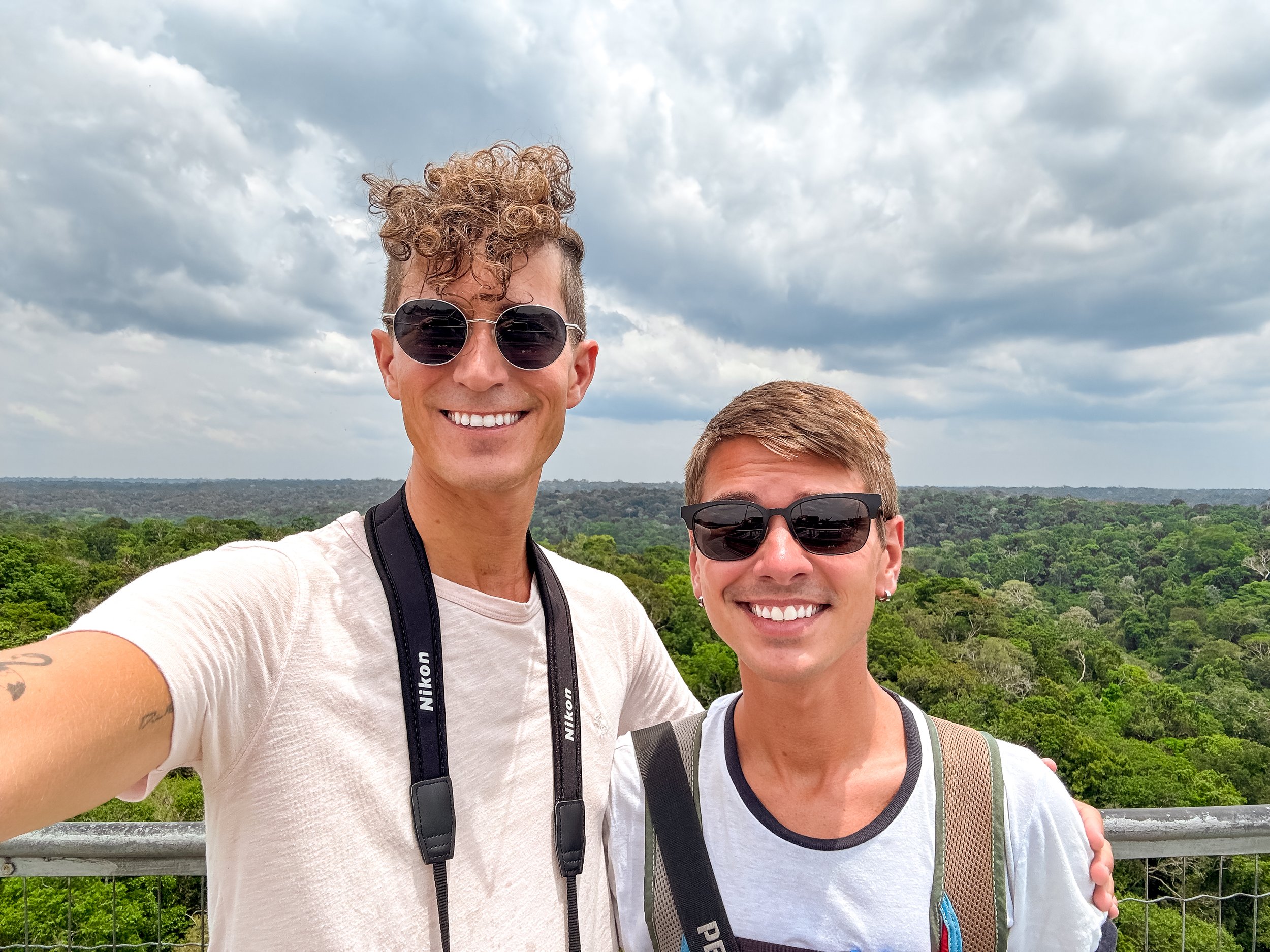
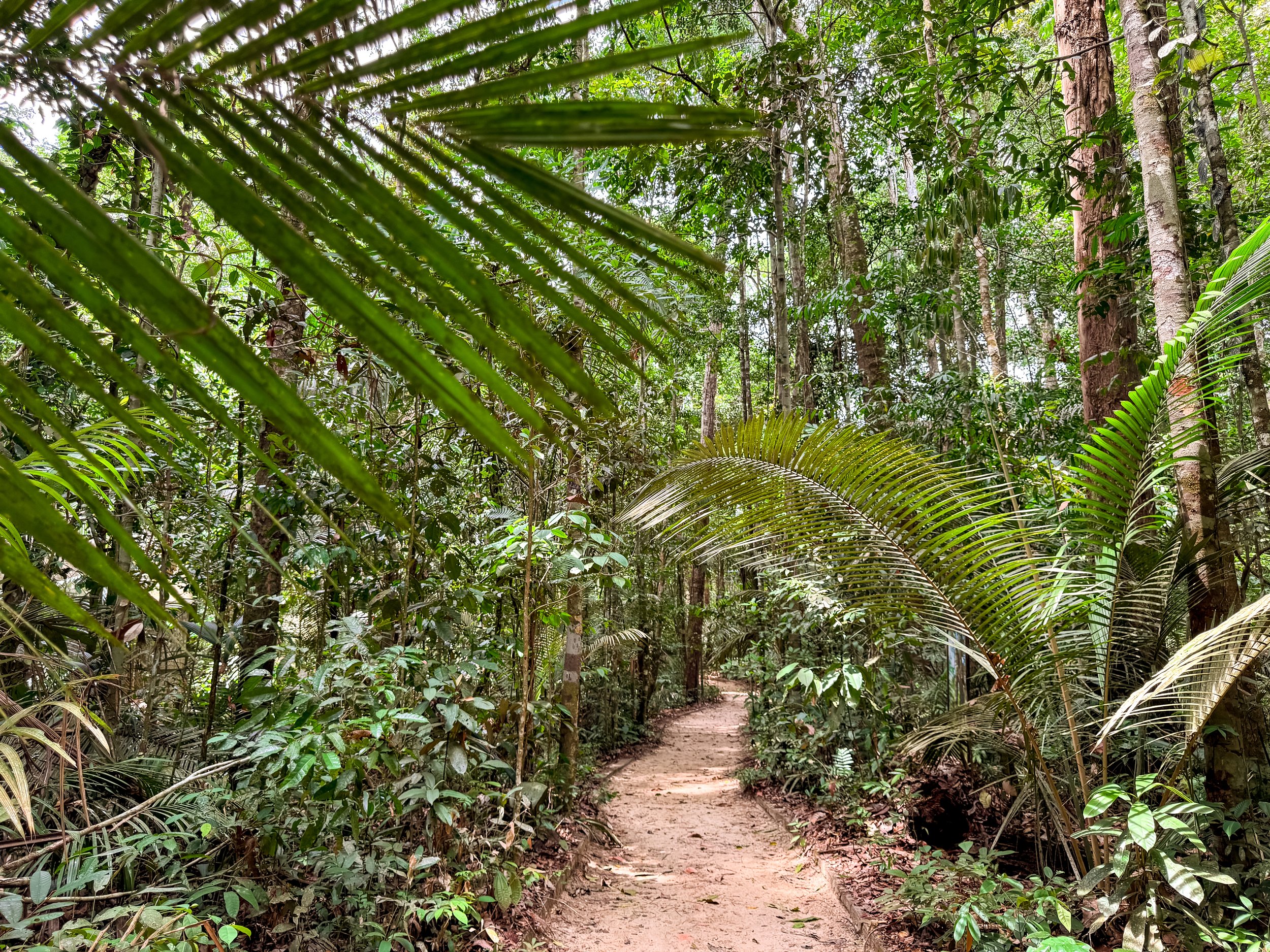
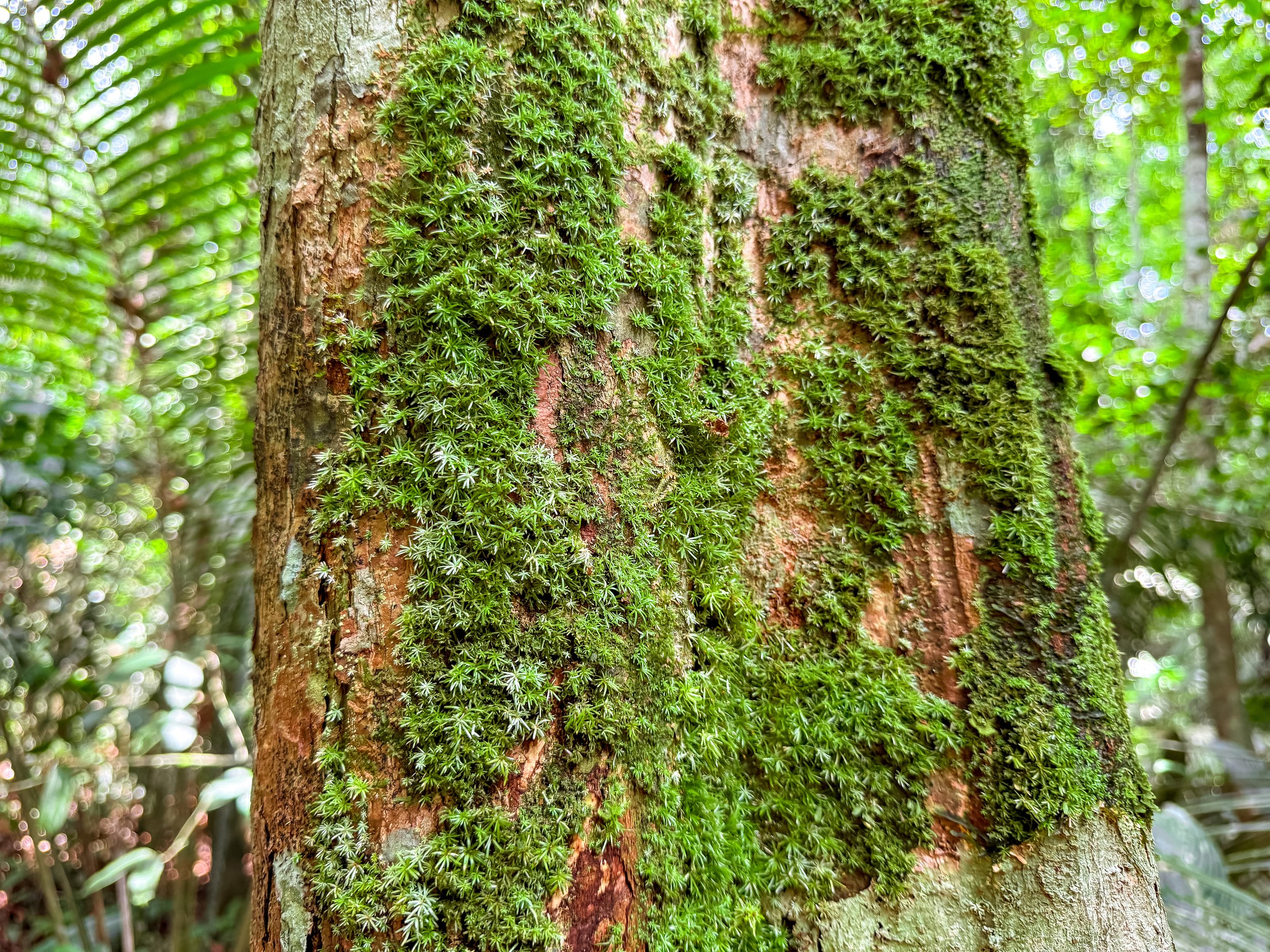
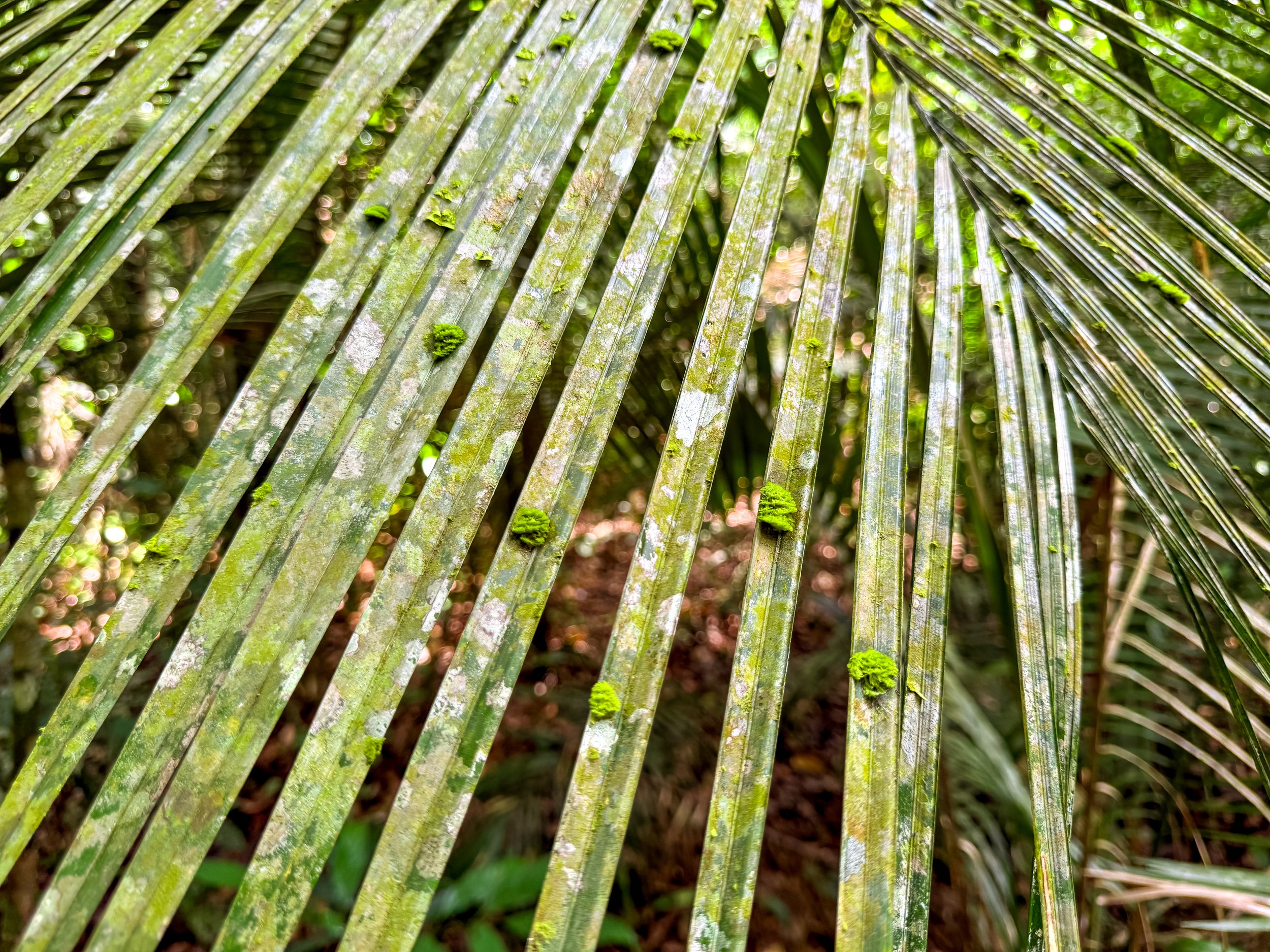
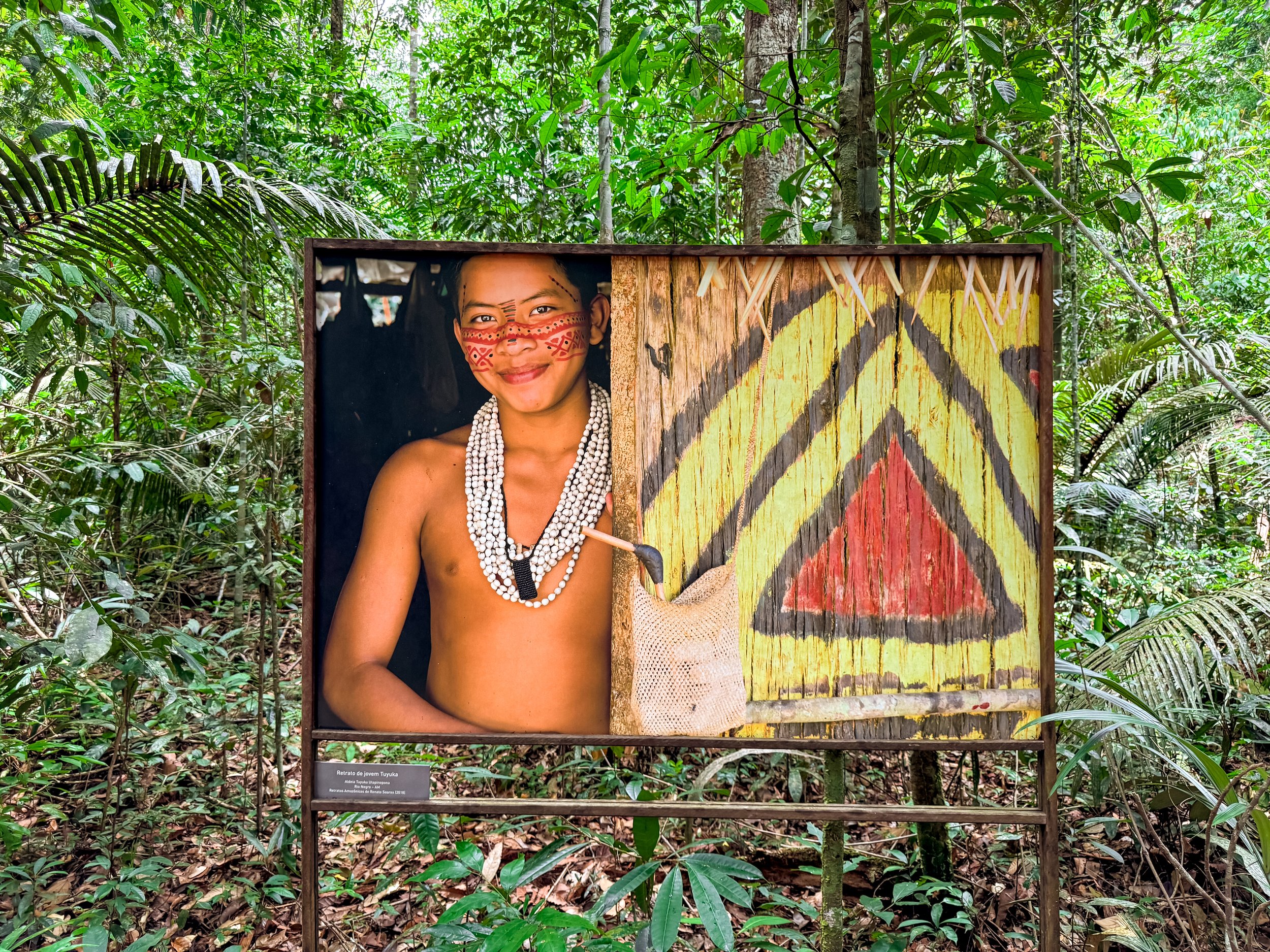
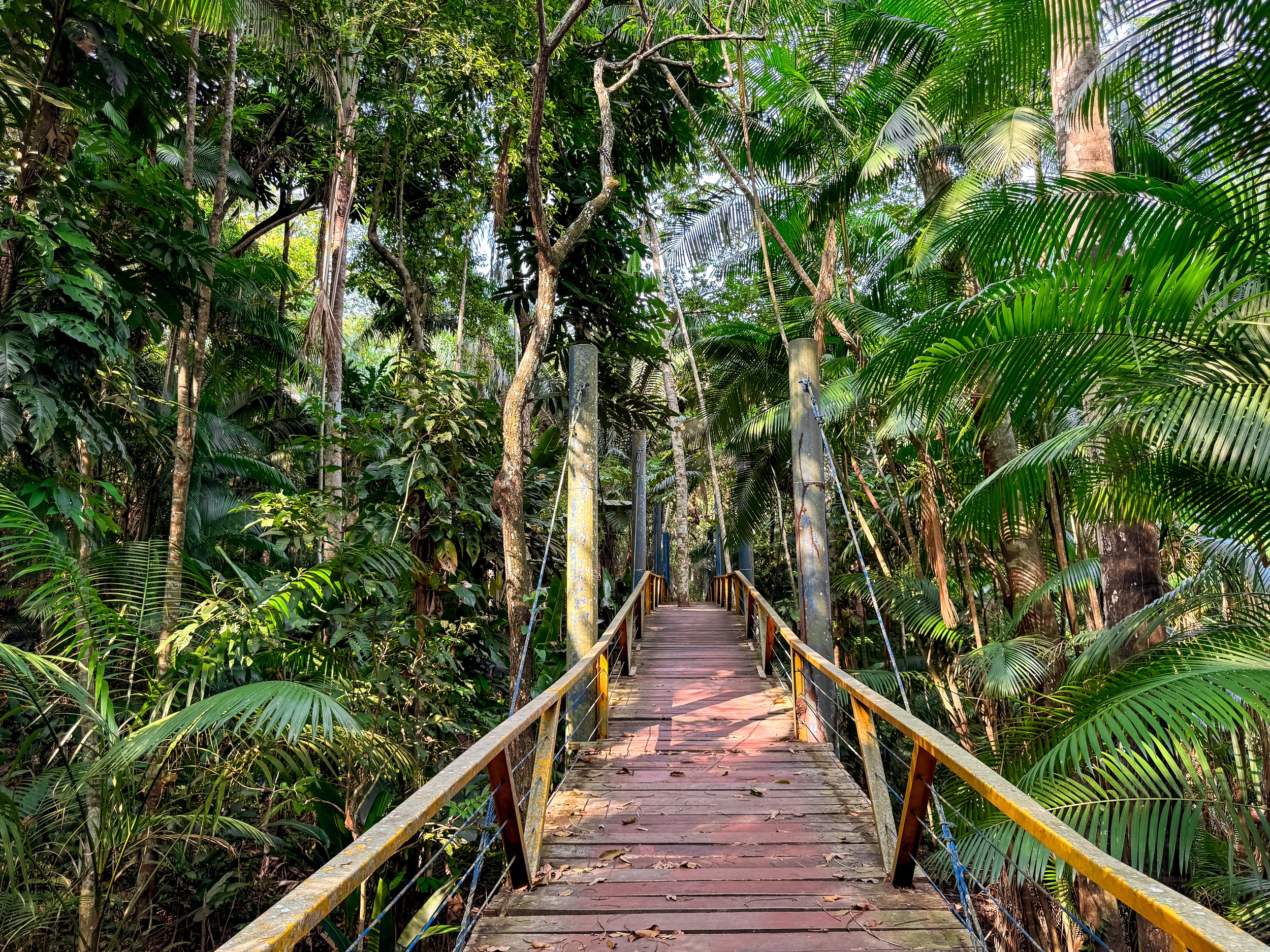
Museu da Amazonia (MUSA). A rainforest reserve at the edge of the city with nature trails through the jungle. Come here to overlook the treetop canopy and spot monkeys from the lookout tower, admire the indigenous photography lining the trails and visit exhibits and gardens with Amazonian species including palms, ferns, snakes, spiders, butterflies, cicadas and mushrooms. The park is located about 40-45min from El Centro by Uber or car. Ubers cost about $15 one way.
Parque do Mindu. A lesser maintained city park with nature trails, açaí palm trees, flocks of parakeets, leaf cutter ants and many flying insects. We walked the trails while listening to the calls of birds including macaws, toucans and mockingbirds. Wear plenty of insect repellant when visiting.
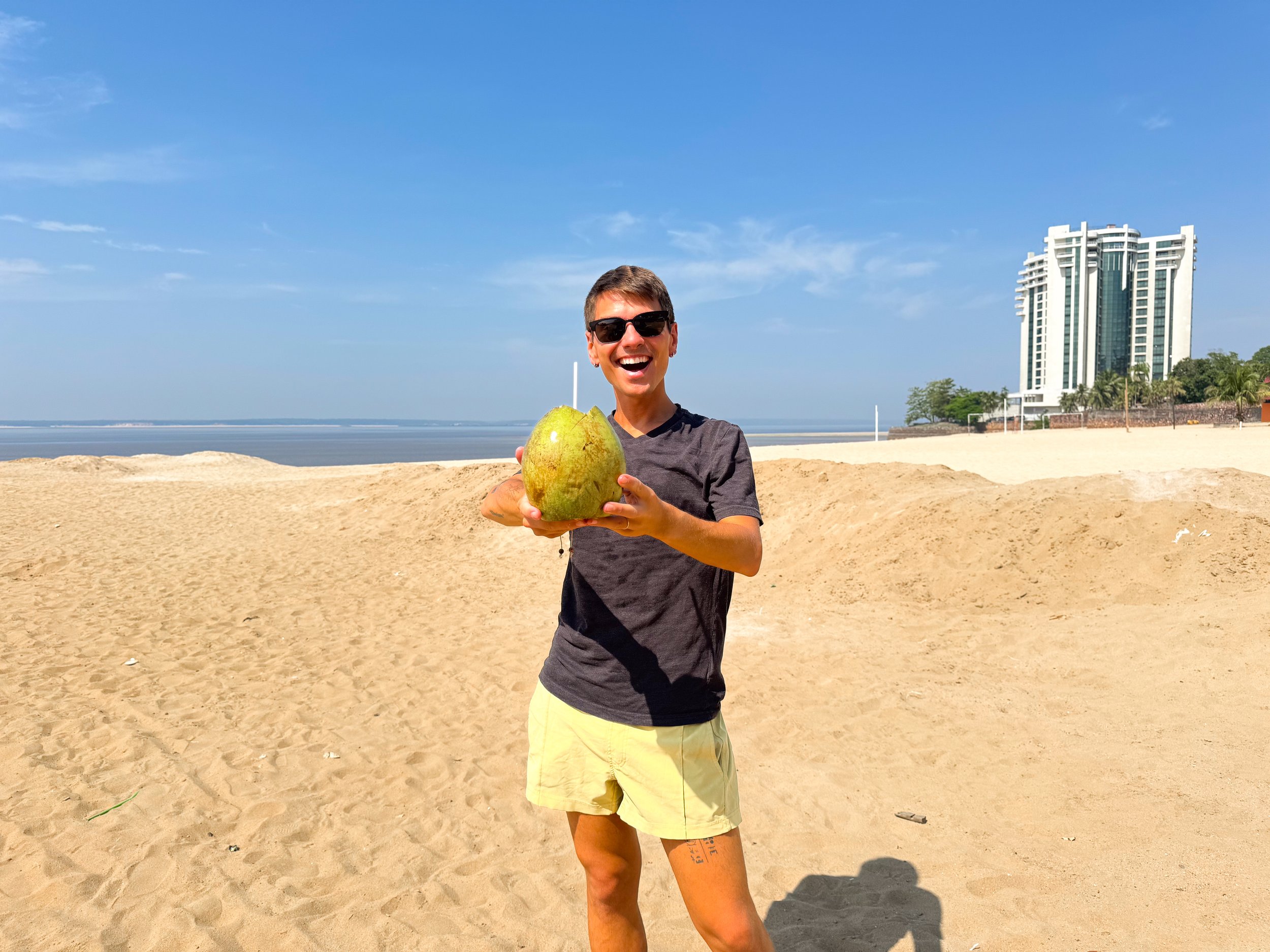
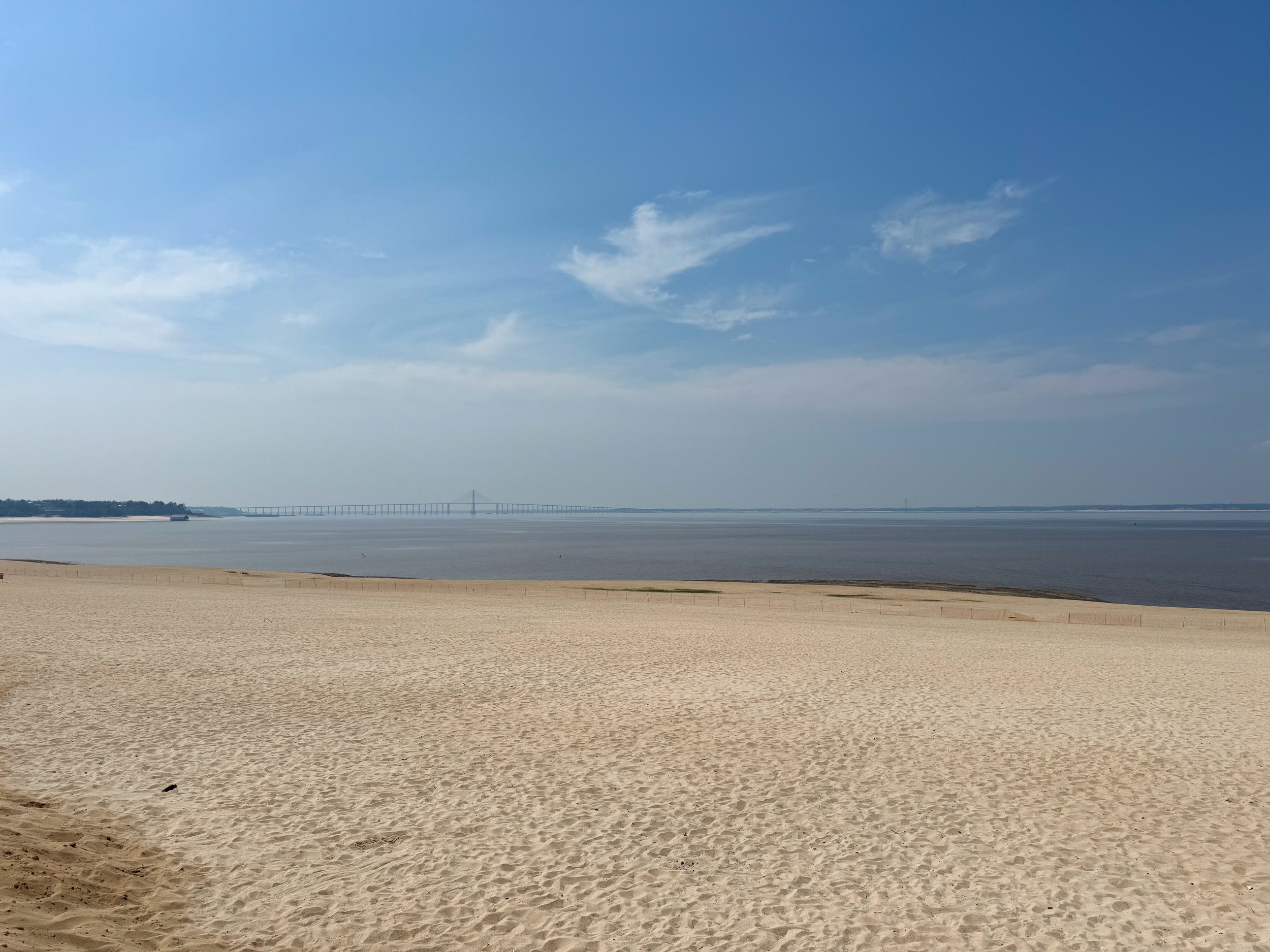
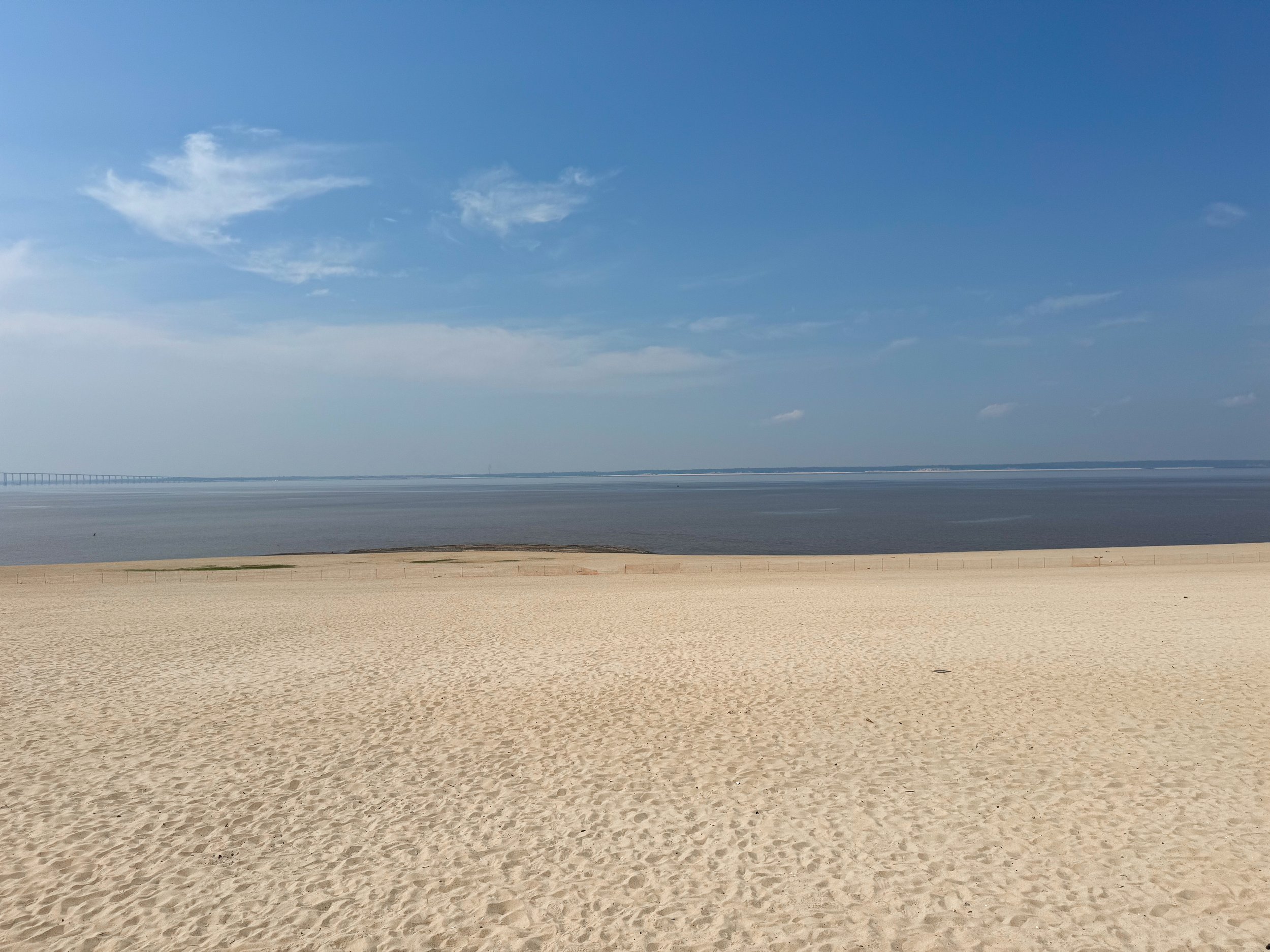
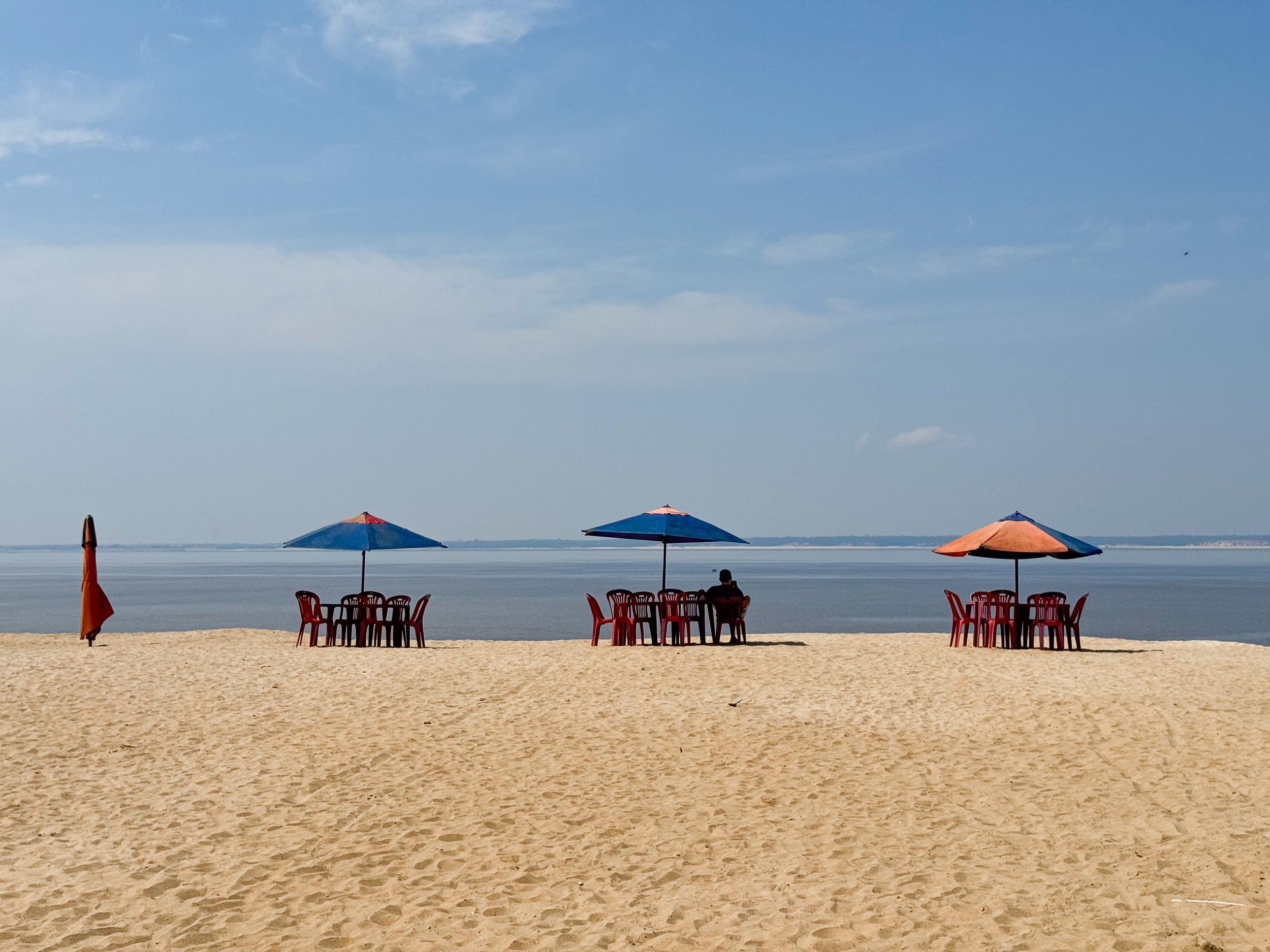
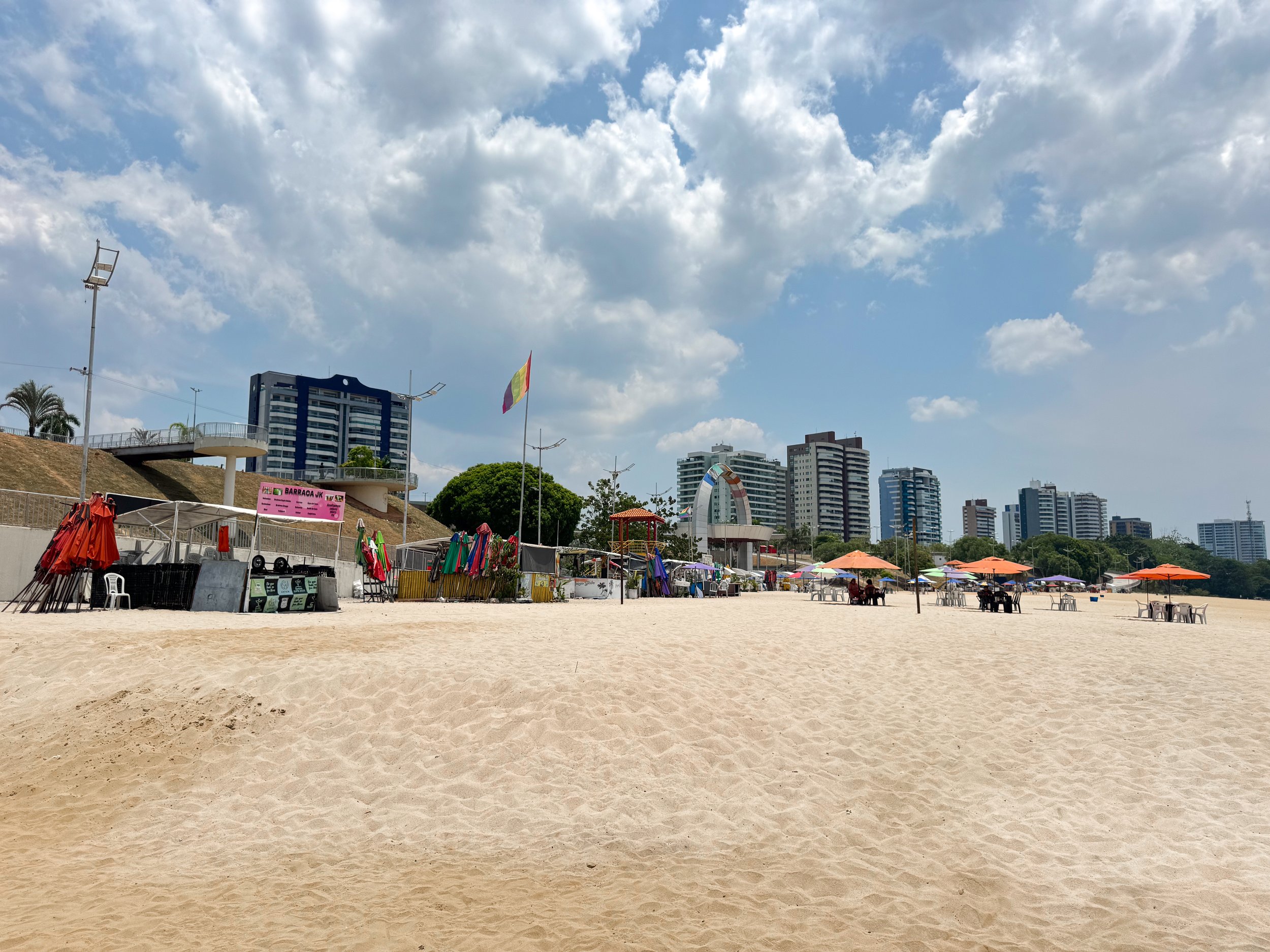
Praia de Ponta Negra Beach. A large sandy beach on the Rio Negro with a treelined promenade, volleyball courts, an amphitheater and Barracas, food vendors in beach tents. We bought fresh coconuts to hydrate and açaí sorbet to cool down. There is no shade on the beach however, the Barracas also offer chair and umbrella rentals. People often come here to swim, however when we visited, swimming was banned due to the record drought. The beach is a 20 min Uber ride from El Centro.
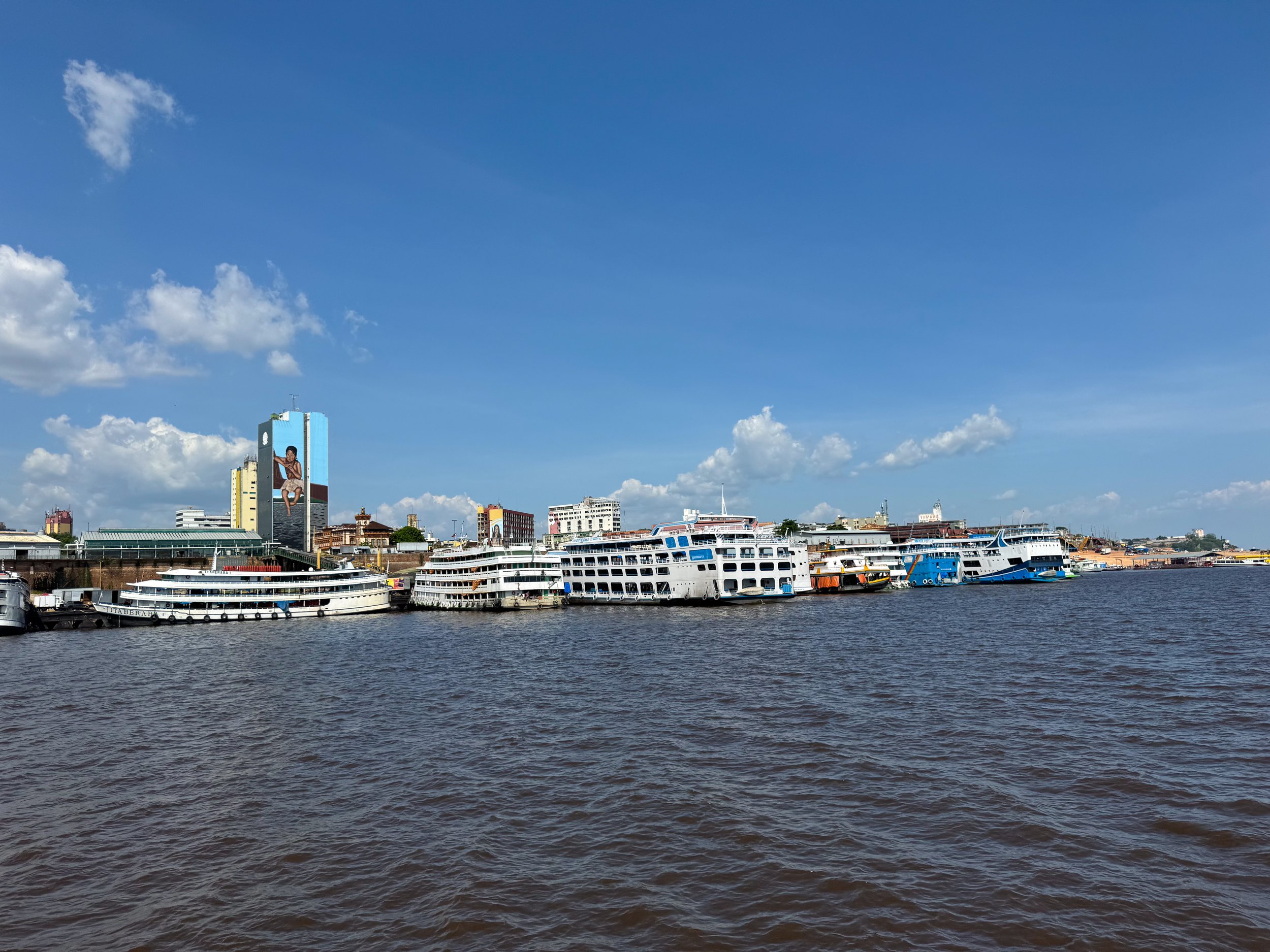
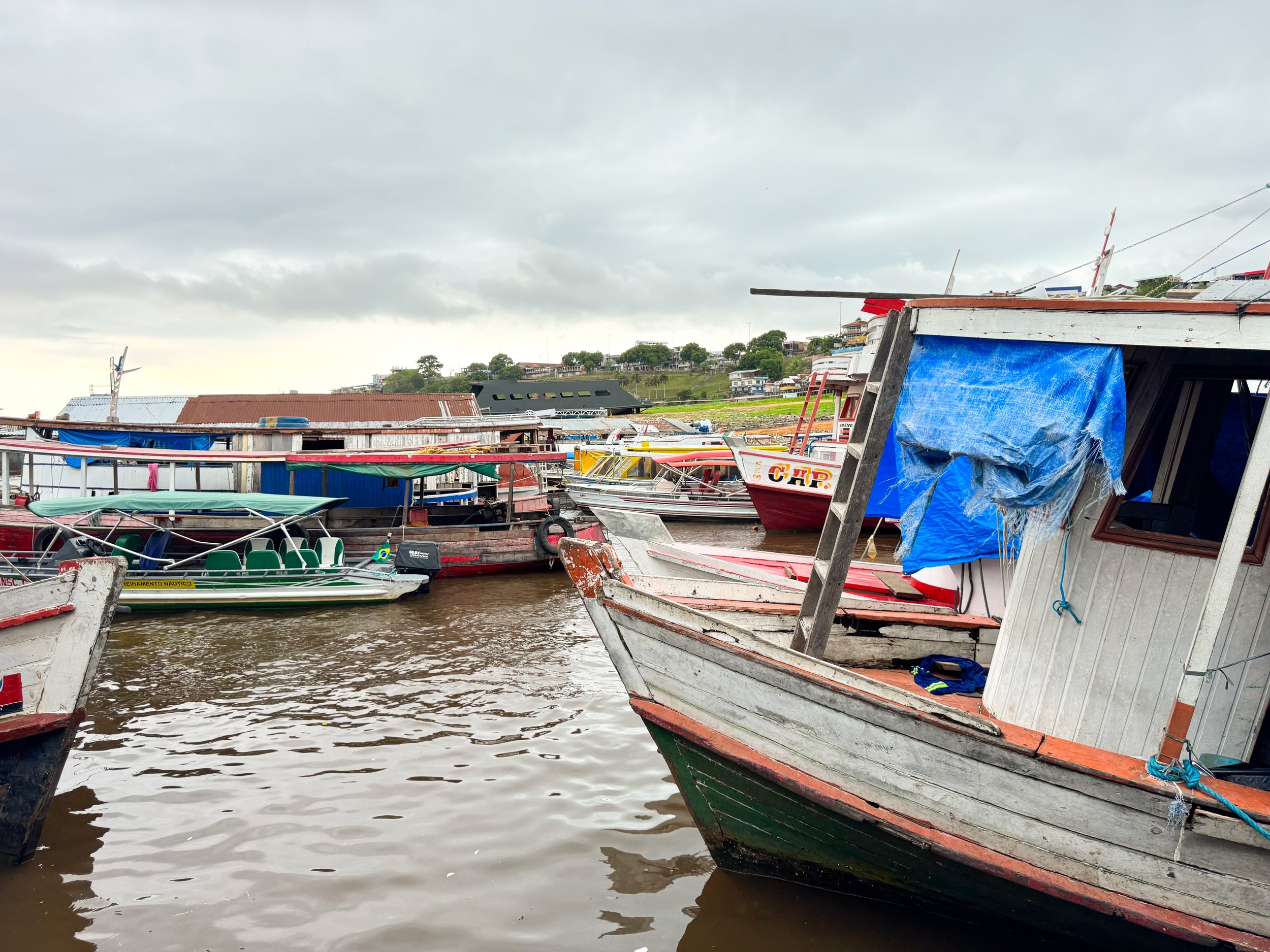
Manaus Harbor. The harbor is the transport and shipping hub for Manaus and the Amazon region. Many tours and cruises leave from here. When we visited, the water level was so low due to the record drought that the Brazilian government had to begin dredging the harbor.
Mirante. A multi-floor complex and port for Amazon cruises with restaurants, cafes, bars, a lookout over the Rio Negro and indigenous themed artwork.
Places to Eat & Drink
One of the best ways to try Amazonian cuisine is by eating at local restaurants in Manaus, trying the street food and exploring the markets.
Tambaqui de Banda. A restaurant in Largo de São Sebastião that specializes in Amazon fish like the restaurant’s namesake, tambaqui. We ordered the fried tambaqui costela, barbecued pirarucu and shrimp vatapa with sides of farinha. The bar offers specialty cocktails and juices made from Amazonian fruits and Cachaça. Our favorite was the Todo de Amazon, made with açaí, capuaçu foam and guaraná grated using a dried pirarucu tongue. Stick around for happy hour for half off caipirinhas, discounted snacks and live music.
Biatuwi. A restaurant specializing in Amazonian dishes traditionally prepared by indigenous tribes. We ordered the tambaqui costela cooked in a cocoa leaf, toasted Saúva and Maniwara ants, and Aluá, a fermented pineapple drink similar to kombucha. All dishes and drinks came out in calabash bowls resting on a ring of dried açaí seeds.
Coreto dos Manaós. A restaurant at the Mercado Municipal Adolpho Lisboa with a lush shaded garden. We came here for breakfast to try Tapioquena. We ordered two, one stuffed with tacumã and banana, the other with egg and cheese.
Tacacá da Gisela. A popular soup stand specializing in Tacacá located in Largo de São Sebastião.
Açaí do Largo. An açaí stand specializing in “Creme de Cupuaçu with Açaí” located in Largo de São Sebastião.
Sorveteria Glacial - Self Service (Loja 1). A self service ice cream shop that sells by weight. Come here for exotic flavors only found in the Amazon including fruits and nuts like Açaí, Castanha do Brazil (Brazil nut), Maracujá (passion fruit), Cupuaçu, Tapereba and Doce de Leite.
Shop the Markets
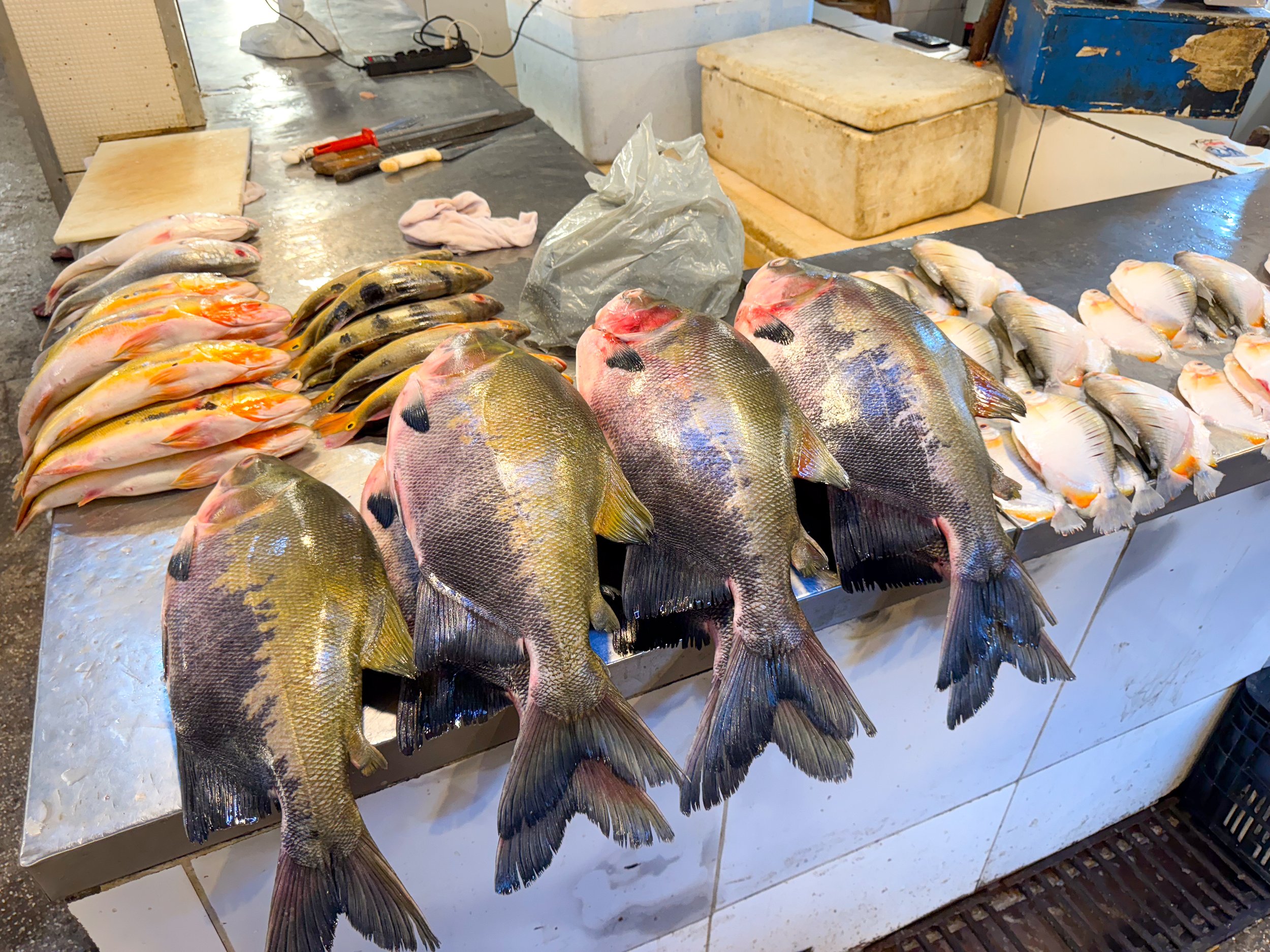
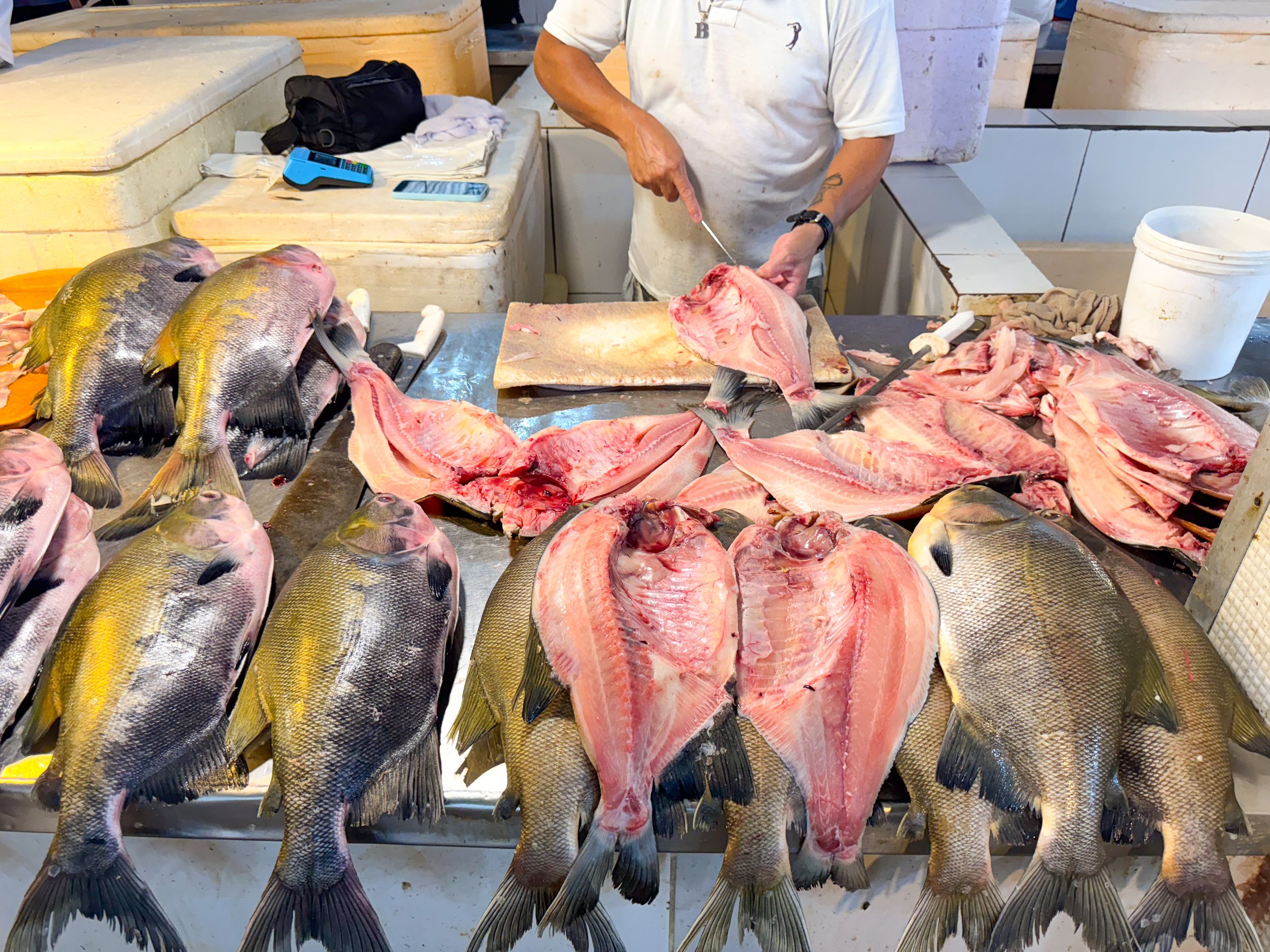
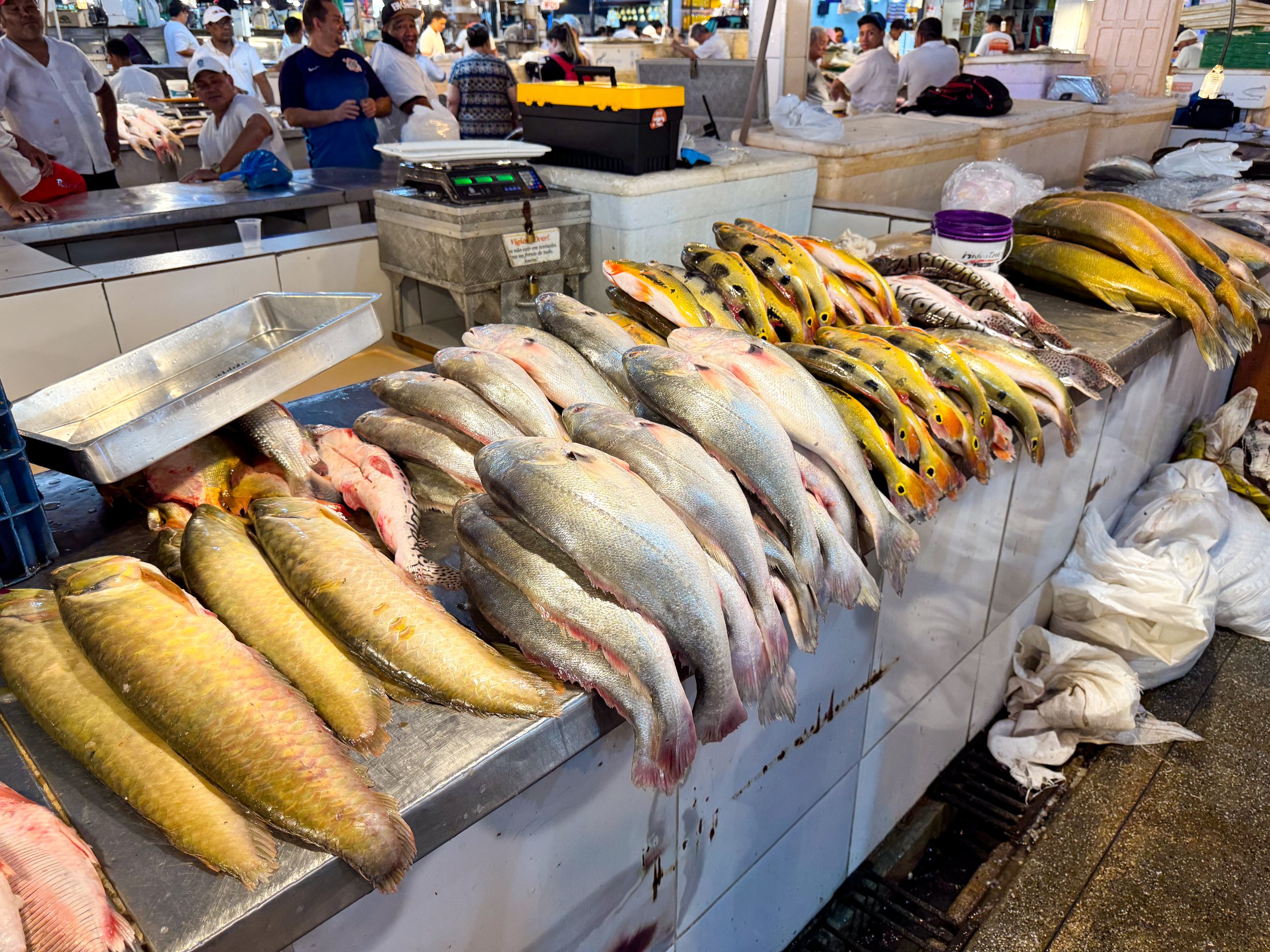
Manaus is well known across the Amazon region for its food markets, especially when it comes to Amazonian fish.
Feira Manaus Moderna. A massive and bustling food market with aisles of hundreds of vendors selling fish, meats, produce, fruit, cheese and grains. Freshly caught Amazonian fish are delivered directly from the outside pier to fish mongers sharpening knives and preparing them for consumption. Tables are covered in all manner of fish including Tambaqui, Pirarucu, Red Bellied Piranha, Peacock Bass and Spotted Catfish. Elsewhere outside the market, merchants sell fishing supplies including nets, hooks and coolers.
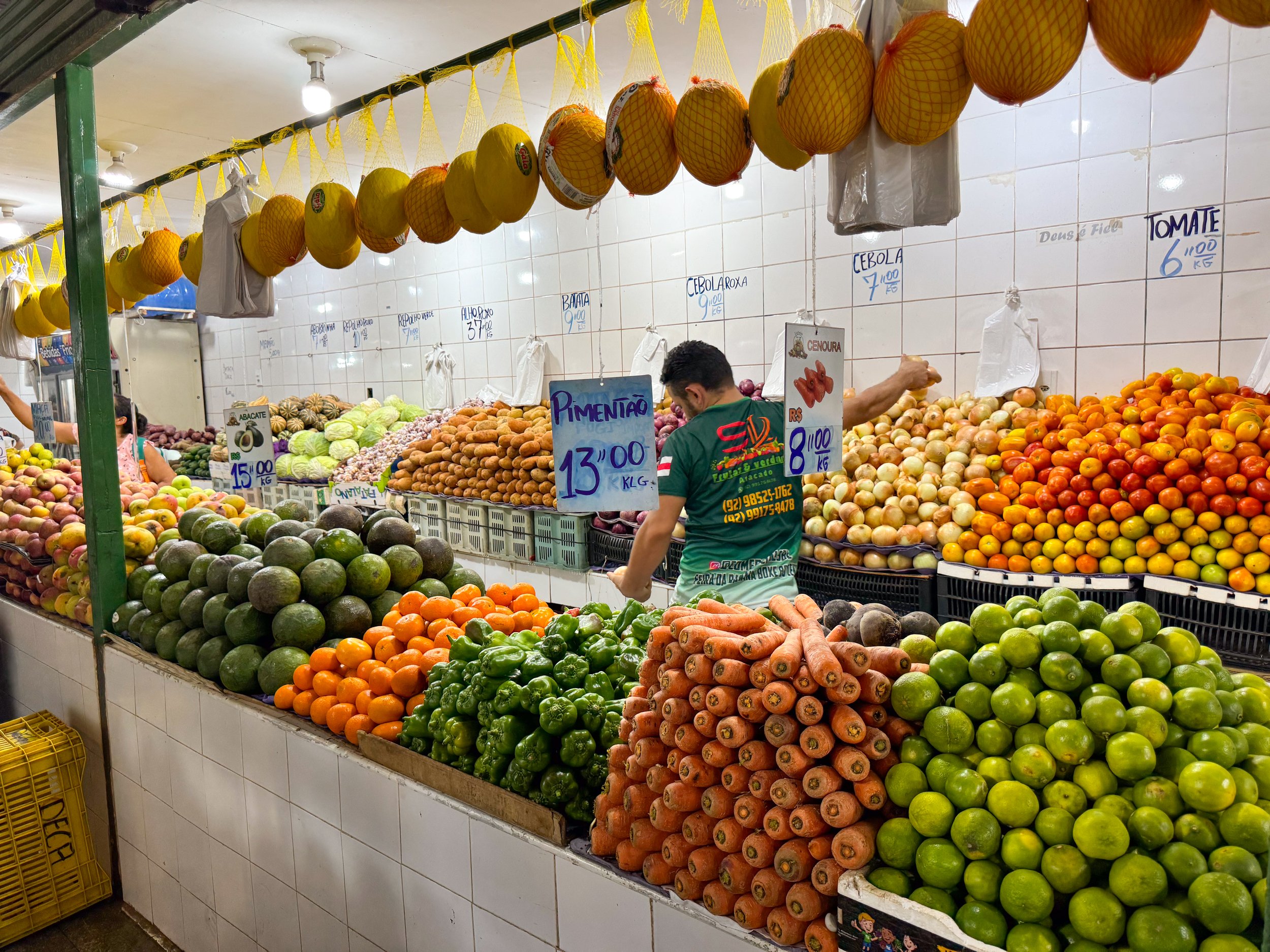
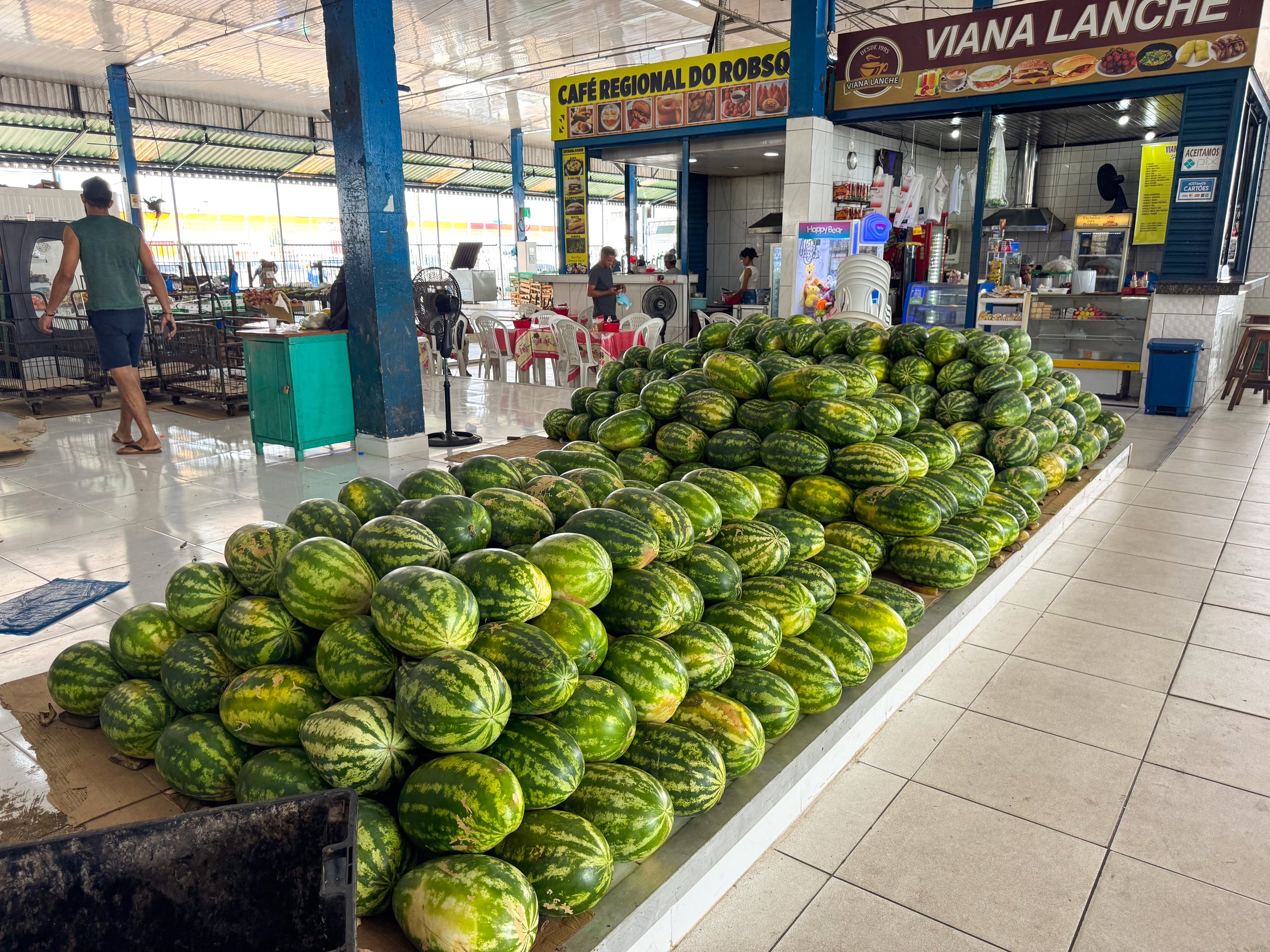
Feira Moderna da Banana de Manaus. A large fruit market under a shed with vendors selling bunches of plantains, crates of bananas, fresh juices, sacs of oranges, crates of mangos, piles of watermelons and tables covered in papayas, pineapples and limes.
Mercado Municipal Adolpho Lisboa. A historic wrought iron market with restaurants and cafes, Amazonian crafts, meat and fish vendors and medicinal goods including oils, herbs and natural supplements.
Getting Around
By Uber. We took Ubers to get around the city. They are extremely affordable, costing $2 - $5 to get around the city and $10 to/from the airport to the city center.
On Foot. The El Centro neighborhood of the city is walkable.
Location Specifics
Safety. It’s smart to be aware of your surroundings. The city has pockets of dodgy areas, even around the El Centro.
Language. Portuguese is the national language of Brazil. Very few people speak English. We got by on some basic Portuguese phrases and words combined with some Spanish and Google Translate.
LGBTQ+ Safety. We felt safe and welcomed as a gay couple in Manaus, especially in the El Centro. We saw many queer people from across the spectrum, progress flags and even befriended another gay visiting from São Paulo.
Temperature. We visited during the dry season. Temperatures reached a peak of 102 Fahrenheit! We avoided the heat when possible and drank between 2-3 liters of water per day to stay hydrated.
Drinking Water. It’s not recommended to drink the tap water in Manaus. It should be filtered or boiled before consumption. Stick to bottled water when possible.
Wear Sunblock. During the dry season, the UV was often very high. Sunblock and umbrellas were necessary to prevent sunburns.
Insects. It’s the Amazon; there are insects and mosquitos anywhere near water and in the forest. Insect repellant and mosquito nets are necessary to reduce bites.
Vaccinations. We took malaria pills daily while visiting the Amazon as well as received the Yellow Fever vaccine prior to traveling.
Climate Change
The Amazon is directly affected by climate change through pollution, deforestation and drought. This was evident during our time in Manaus as we toured the region, spoke with locals and read recent news headlines.
Pollution Problem. Manaus has an unfortunate pollution problem. There is trash blowing around the central plaza, piling up in the streets and large amounts of waste building up in the waterways, piers and beaches. When we left for our river cruise, the Manaus Harbor looked like a landfill. Fortunately, days later when we returned, city workers had begun cleaning enough waste to fill an entire barge.
Deforestation. The signs of climate change and habitat loss were visible as we flew over the Amazon. From the air, vast regions of Amazon had been deforested, burnt down or converted to farmland. Even during our river tour, there were ash clouds rising in the distance from forest being burned for agriculture.
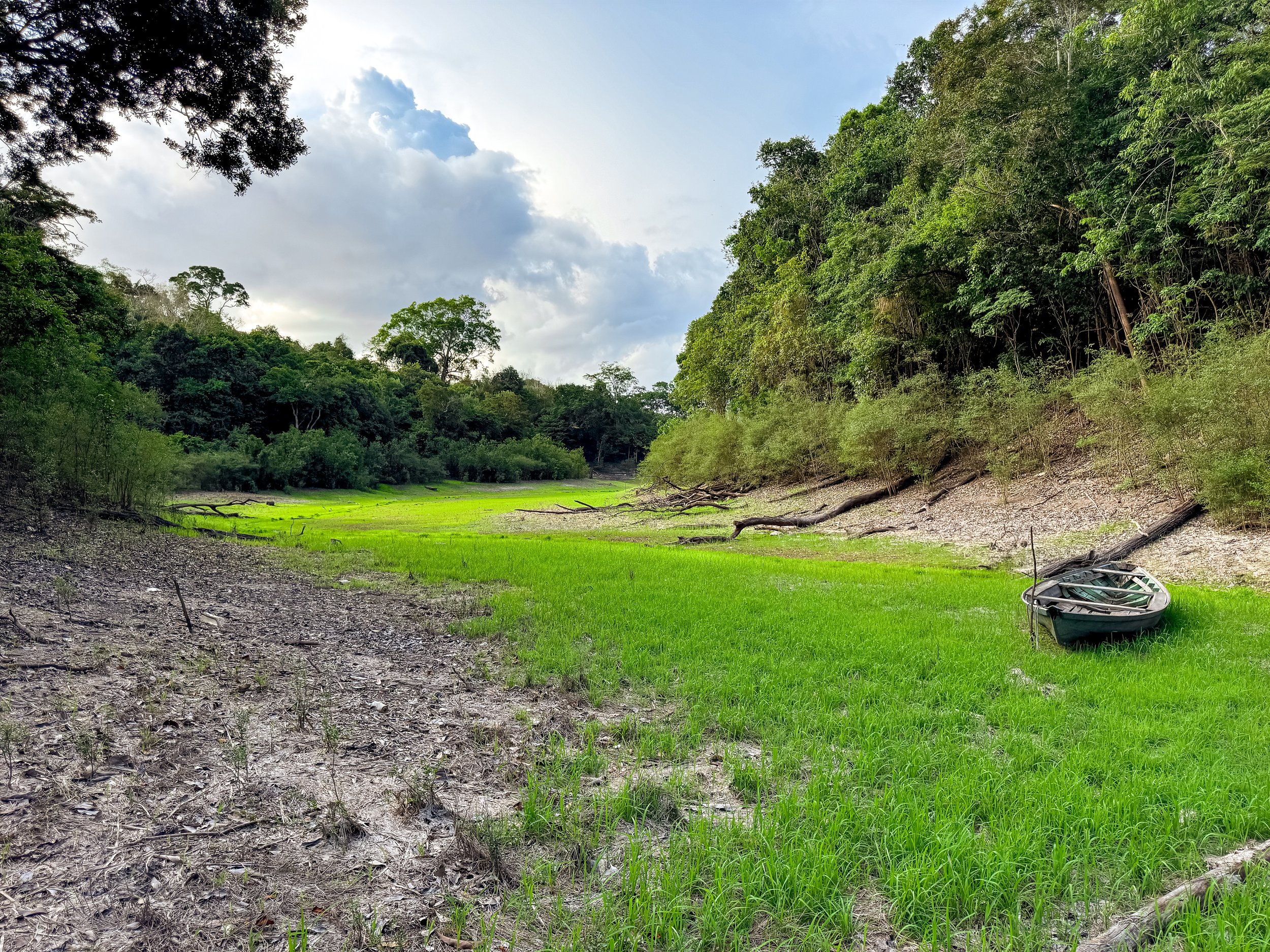
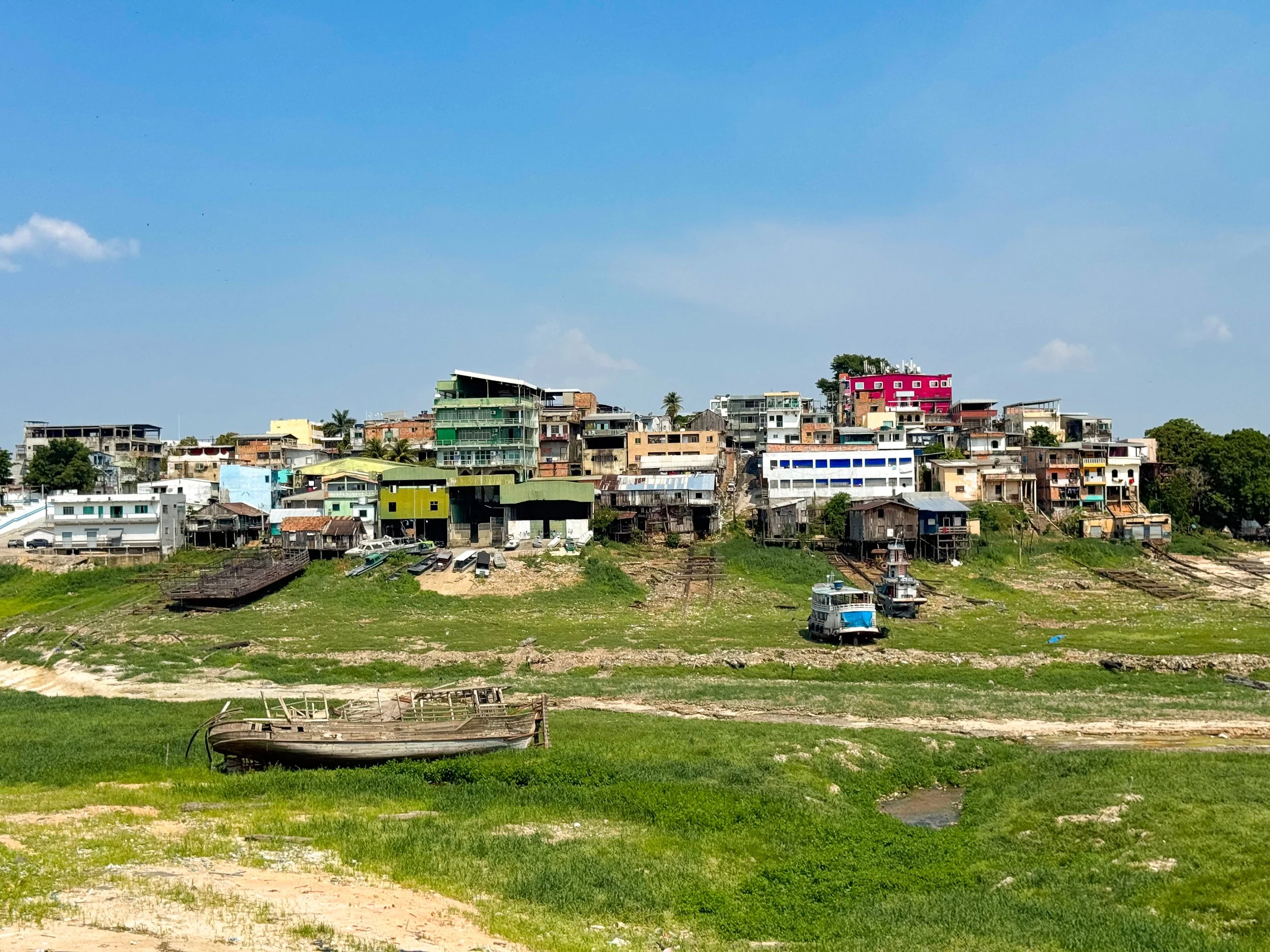
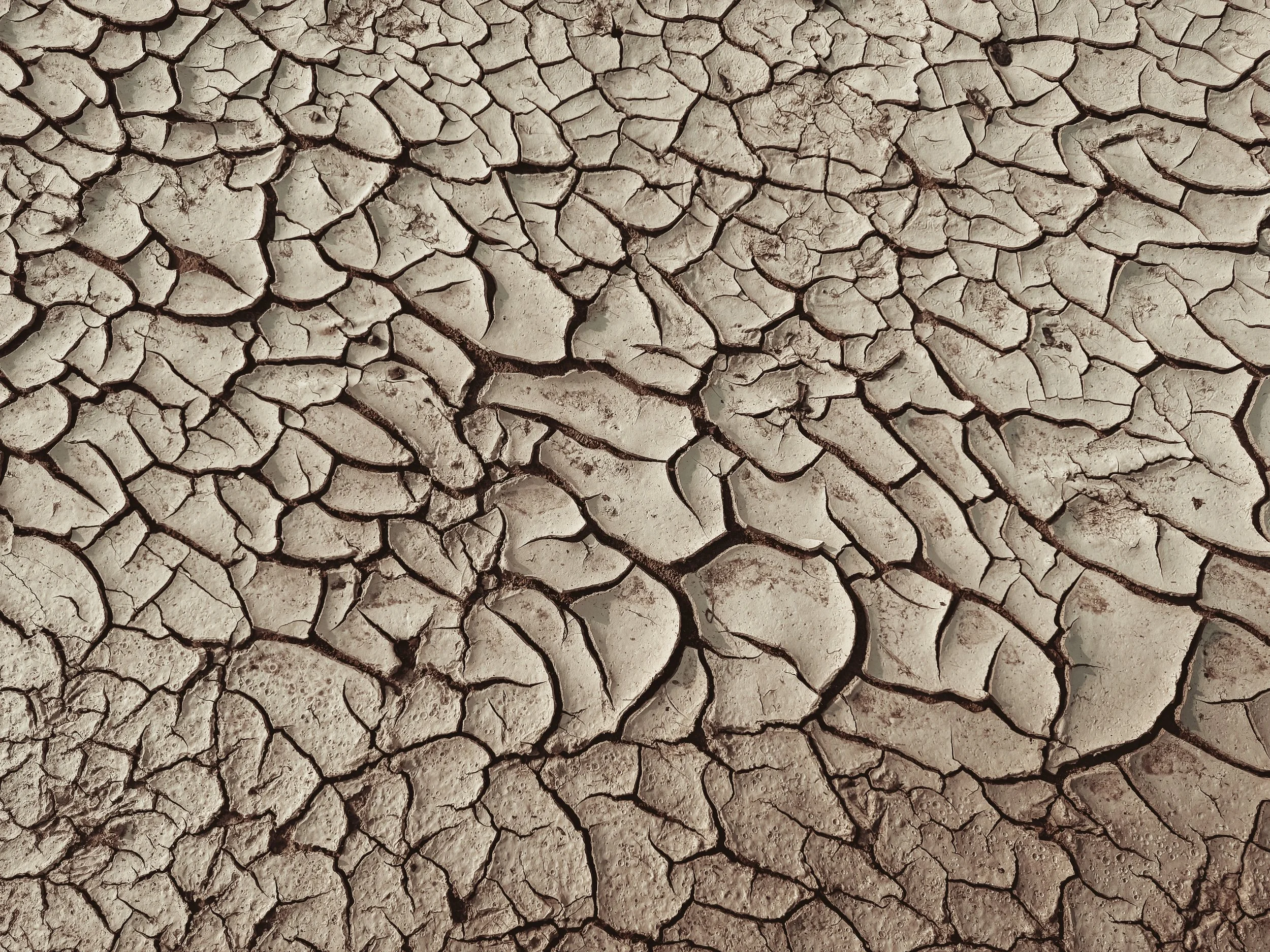
Record Drought. We visited during the Amazon’s worst drought on record, going back 144 years. The mighty Amazon River and its largest tributary, the Rio Negro, had reached record lows. Large sand banks and islands formed in both rivers while floating houses and boats sat on the bottom of dried river beds and smaller tributaries. Even our river boat ran aground in the shallows while the city’s main beach was closed for swimming.
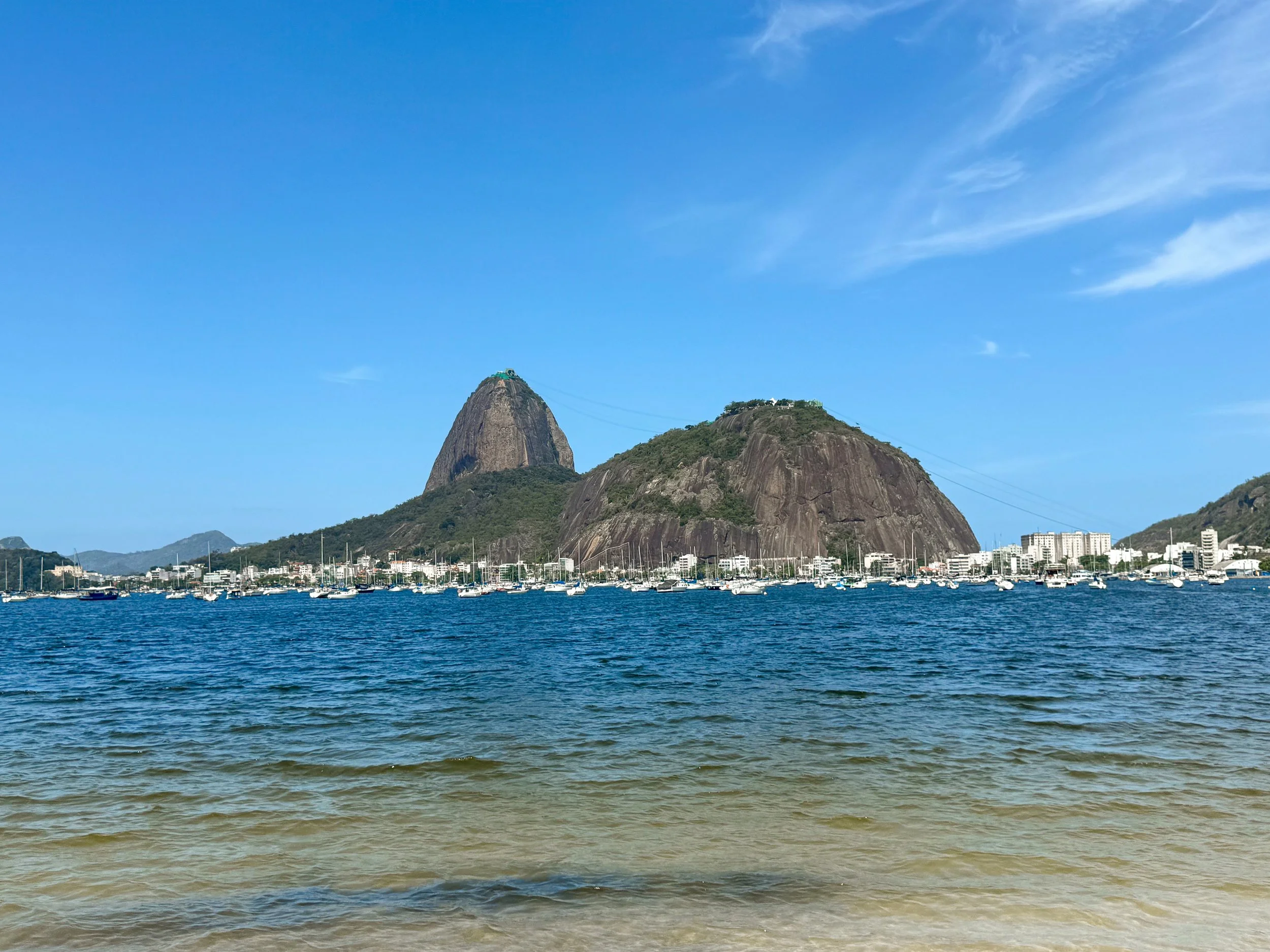
Elsewhere in Brazil
From the vast Amazon rainforest to Rio de Janeiro’s beaches, landmarks and coastal neighborhoods, continue exploring Brazil’s contrasting environments.
Rio de Janeiro Travel Guide: Beaches, Landmarks & Local Culture. Experience Rio de Janeiro's iconic beaches, world famous landmarks, samba culture and breathtaking landscapes where city life and natural beauty intertwine.
For Next Time…
The Rainy Season. Having visited during the dry season and worst recorded drought, we would love to return to the Amazon during the rainy season to see the difference in water levels and climate.
The Western Amazon. The Amazon stretches across several countries in South America. Having visited the Brazilian and Surinamese Amazon, we have our eyes on seeing areas to the west in Bolivia, Peru, Colombia and Ecuador.