Atacama Desert Travel Guide: Best Things to Do from San Pedro de Atacama

Atacama, Chile
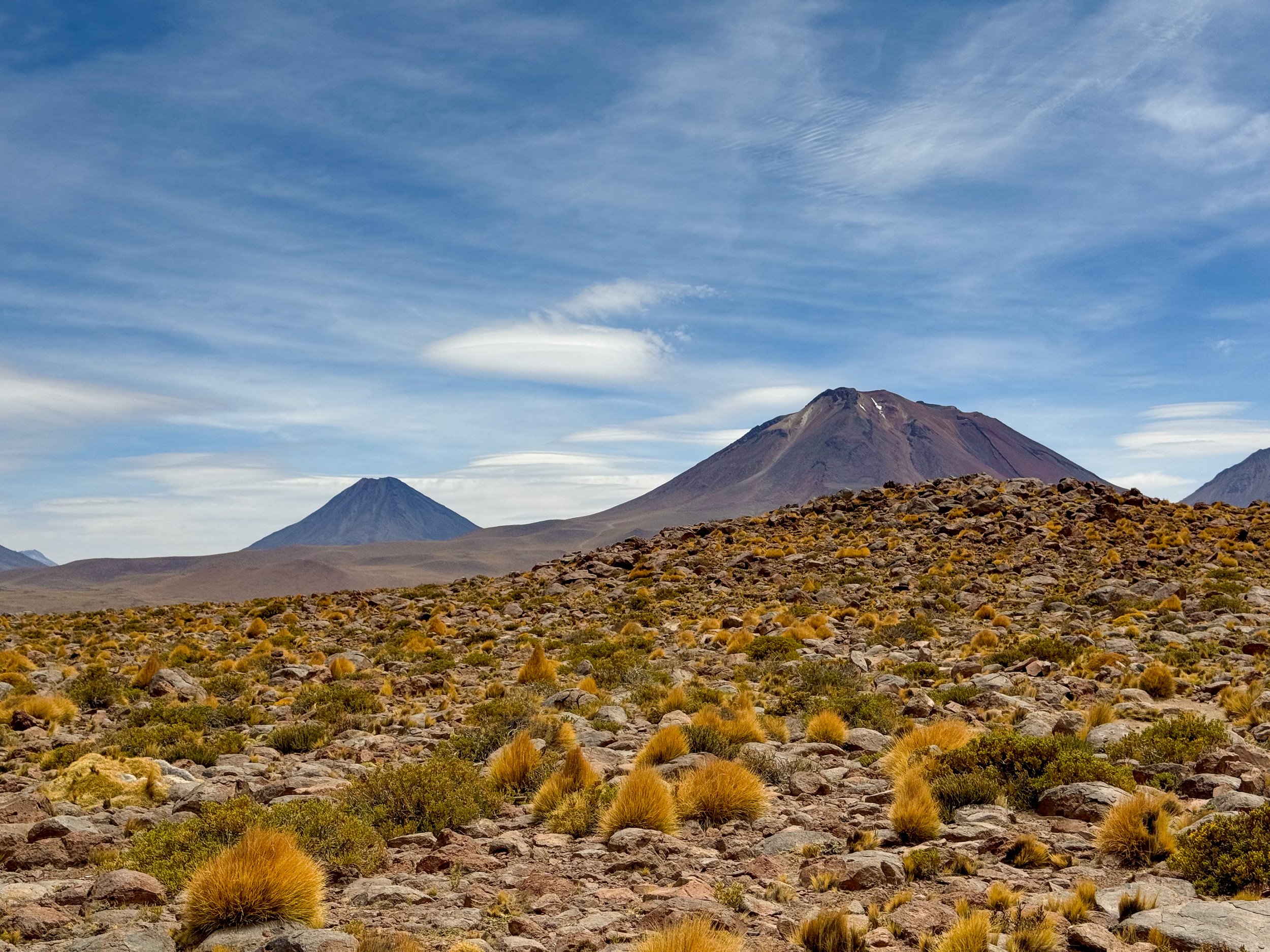
The Atacama Desert is the driest place on the planet with an aired landscape comprised of countless volcanoes, erupting geysers, rocky valleys, jagged mountains, gargantuan sand dunes, vast salt flats, vibrant lagoons, spiraling dust devils and small desert towns. From the adobe town San Pedro de Atacama, we ventured into the remote landscapes of the Atacama Desert.
San Pedro de Atacama, Chile
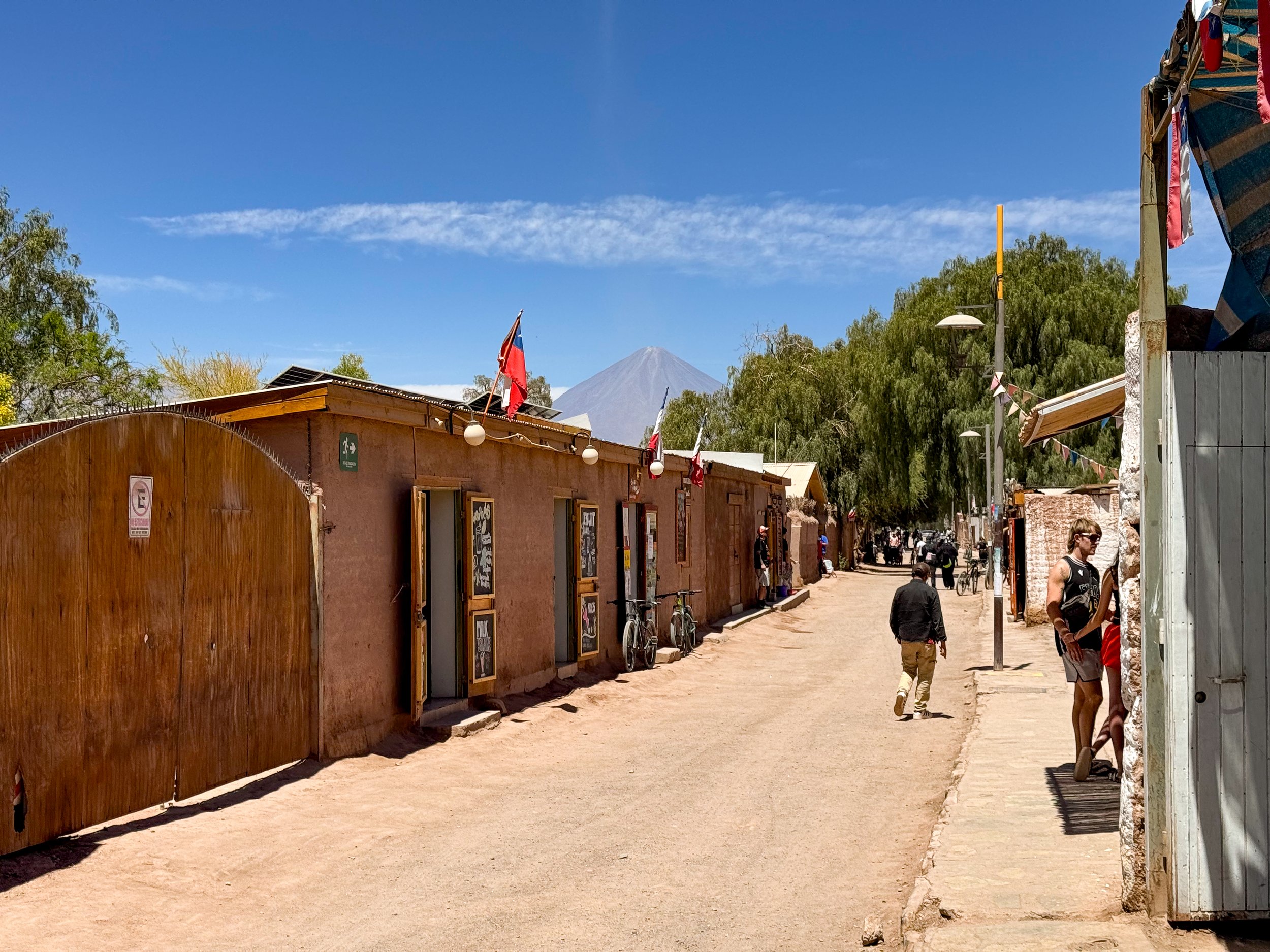
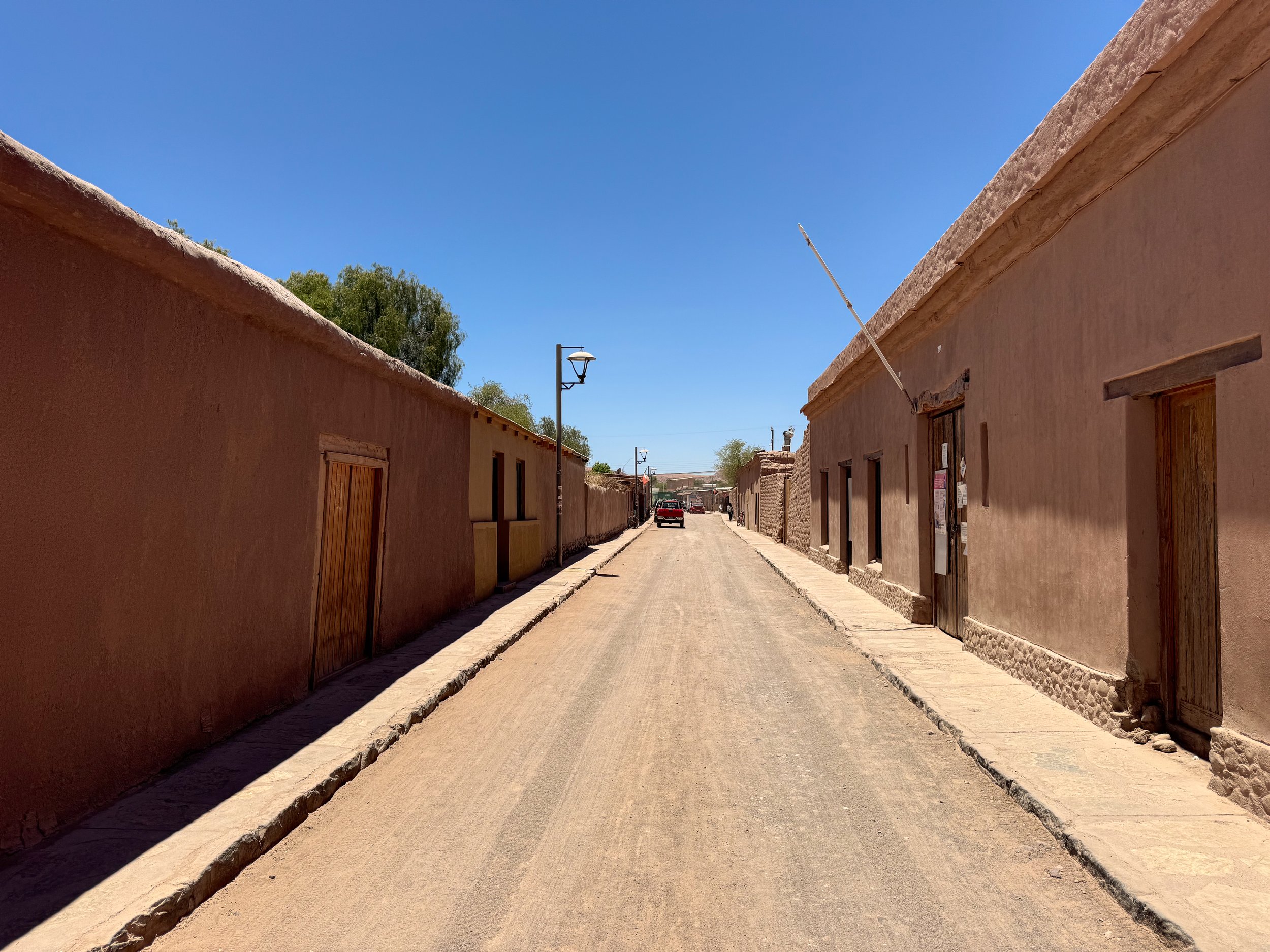
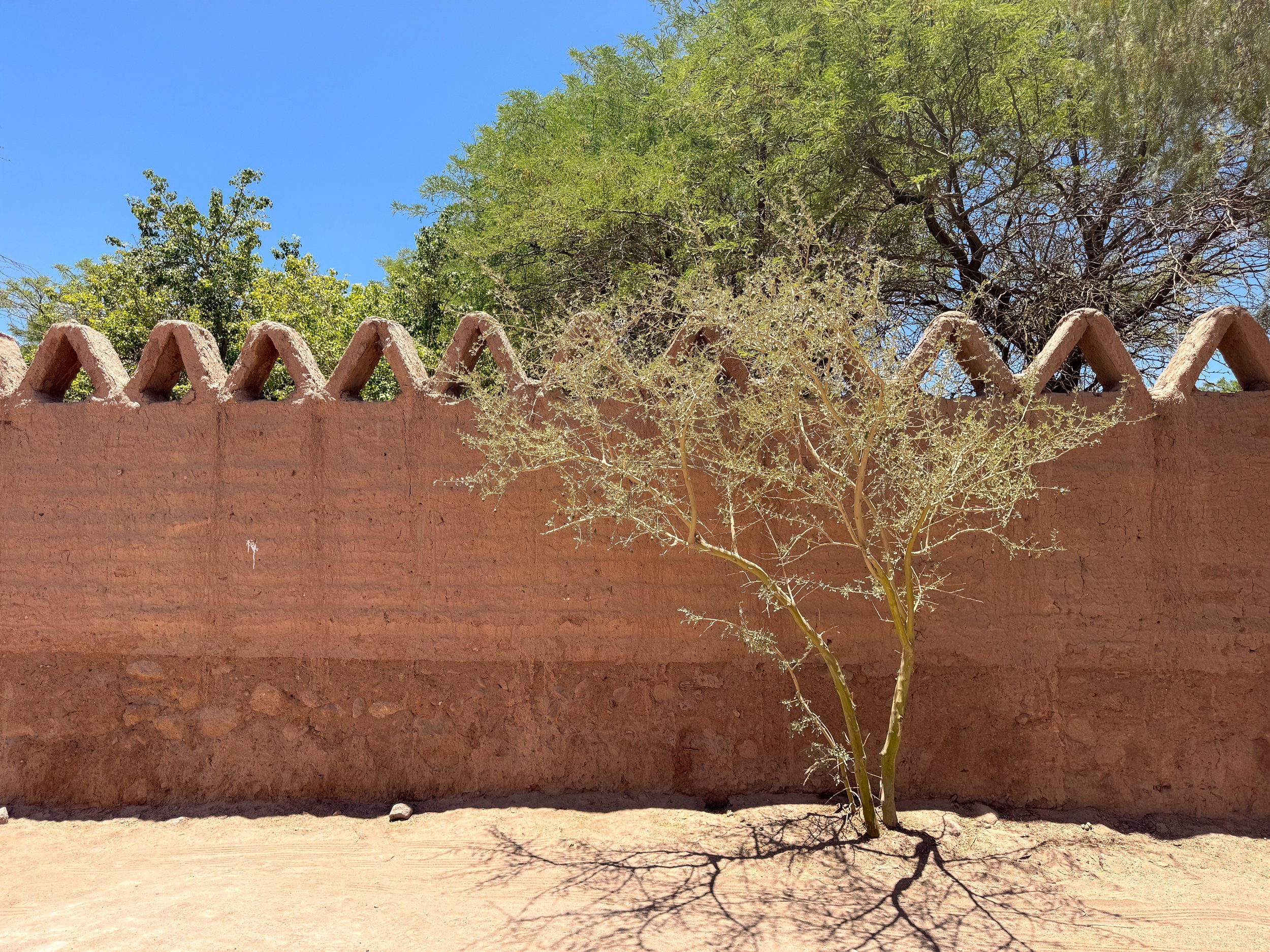
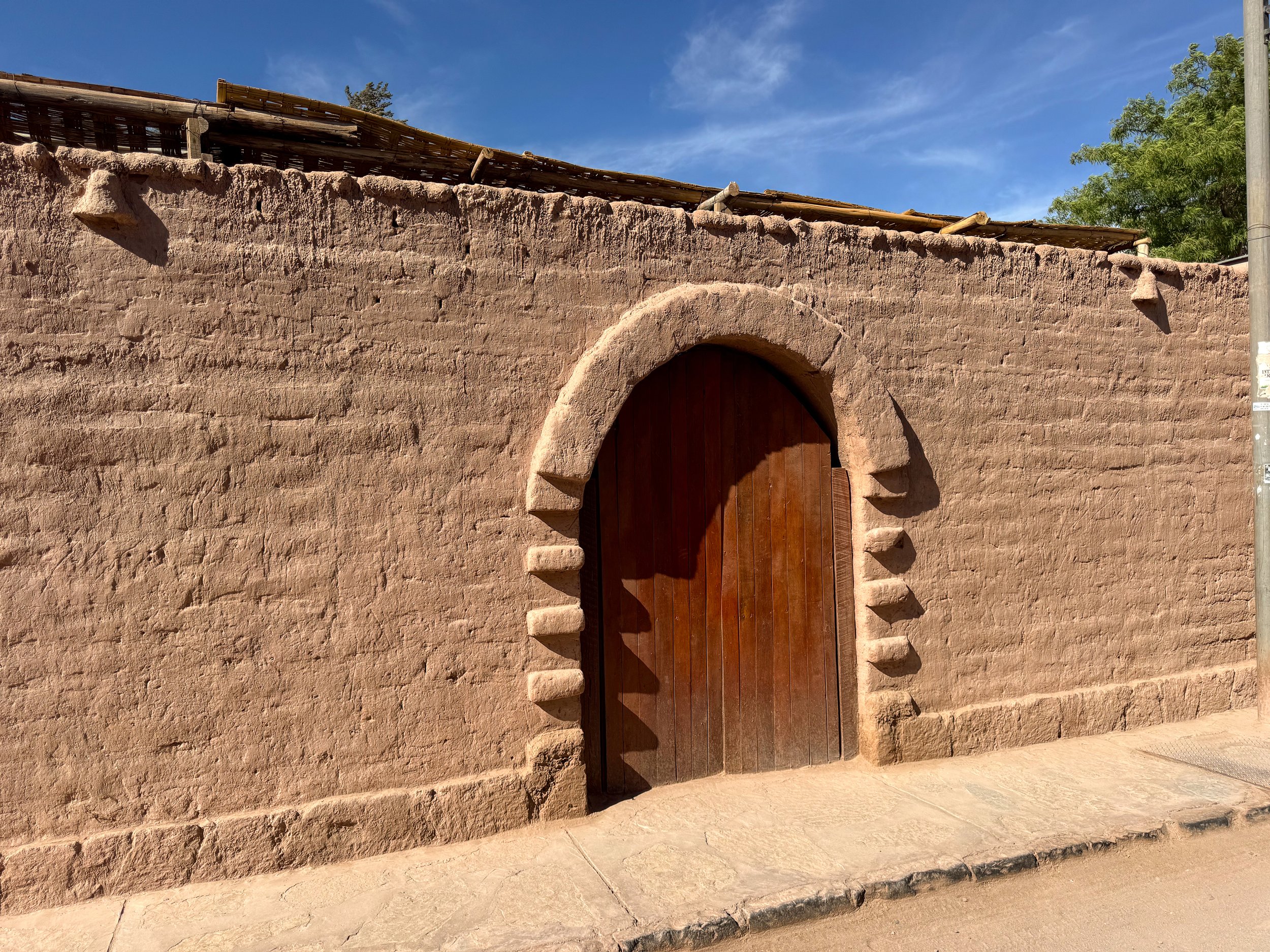
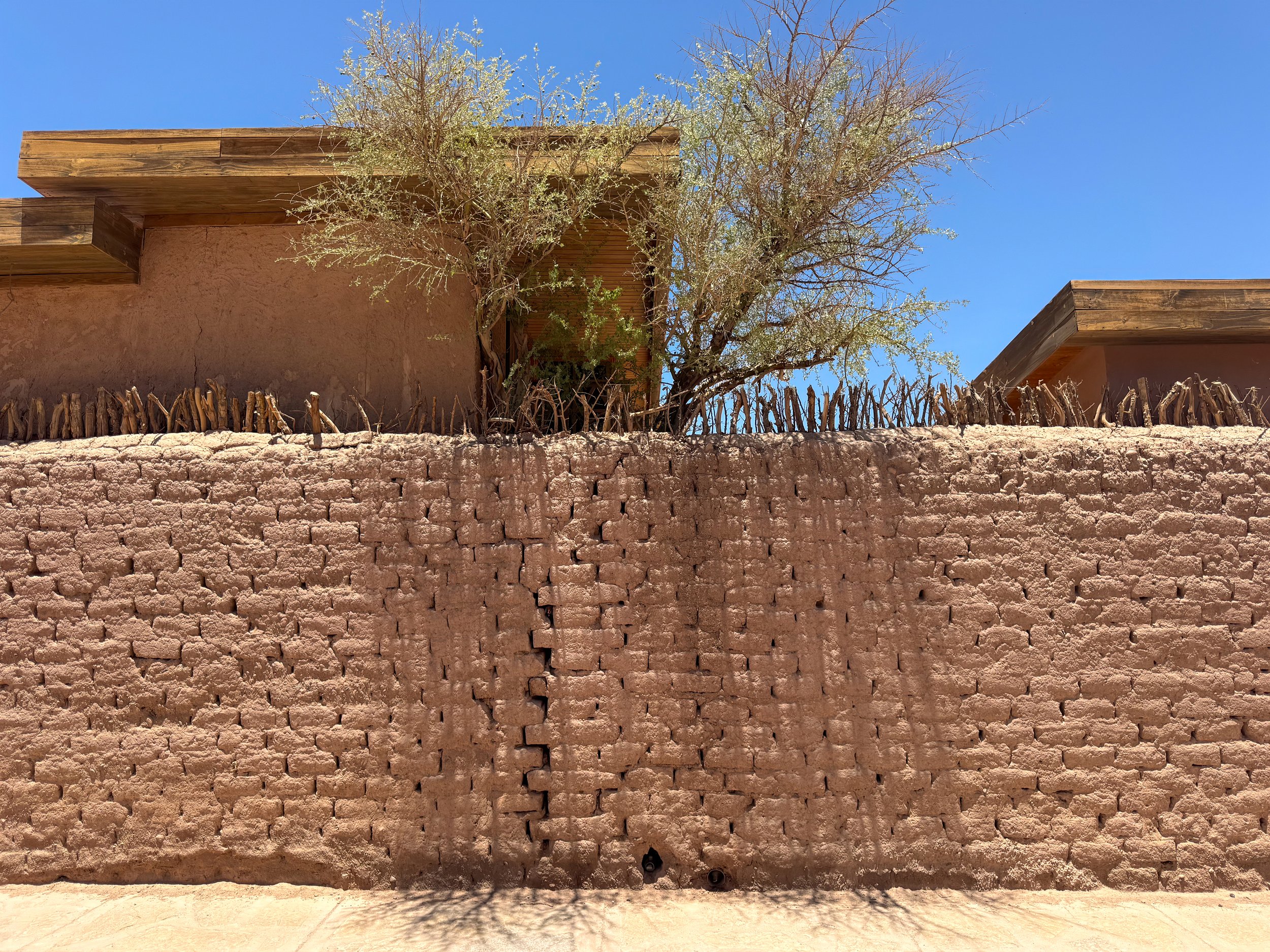
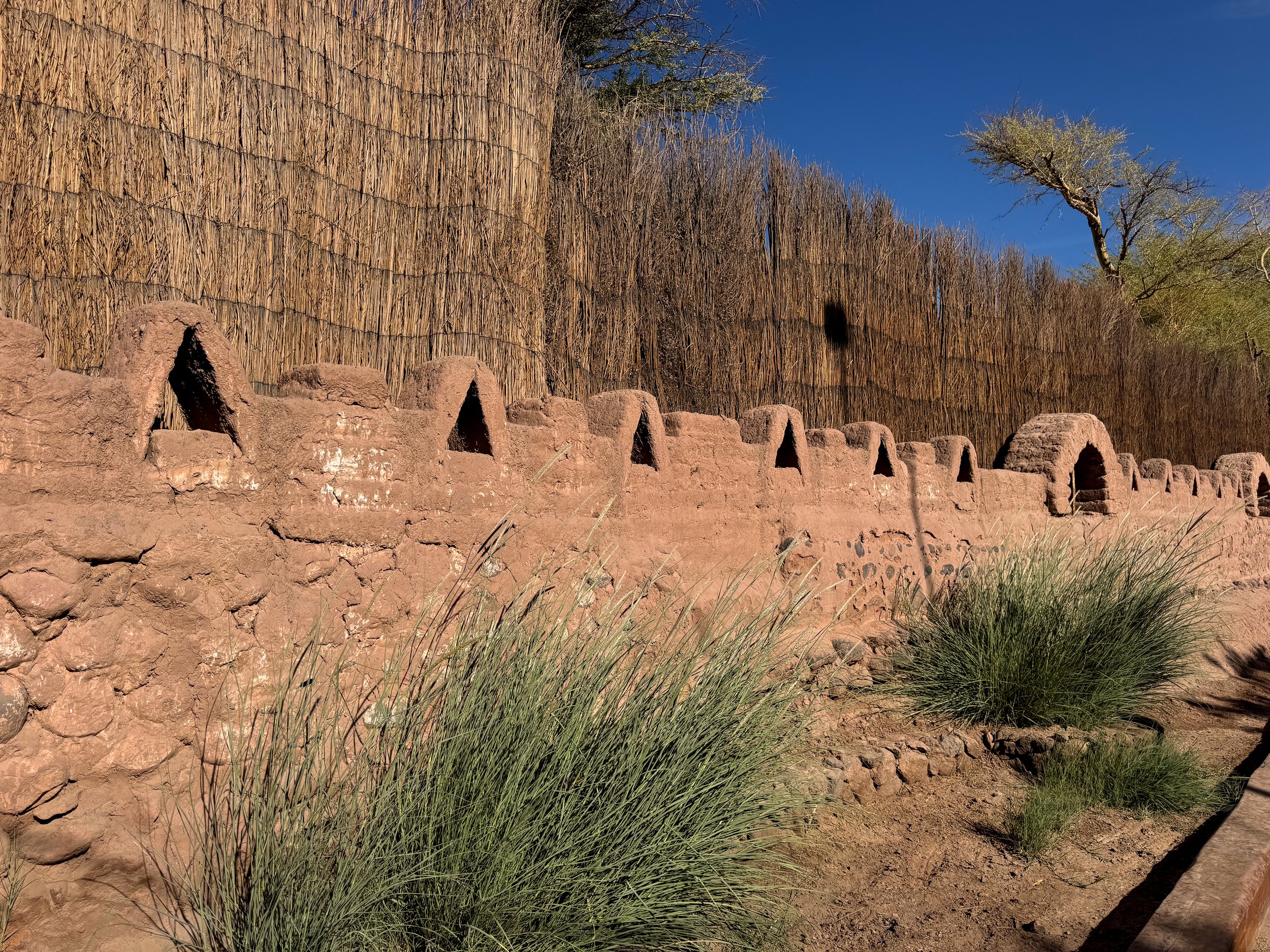
San Pedro de Atacama is a western style town with a bohemian, adventurous and positive touristy vibe. The city is an oasis in the Chilean Atacama Desert with adobe houses, desert lodges, narrow dirt roads and access to some of the region’s natural sights.
Calle Caracoles. A dusty dirt road that passes through the center of San Pedro de Atacama with Chilean restaurants, live music, cocktail bars, ice cream shops, outdoorsy stores and tour operators.
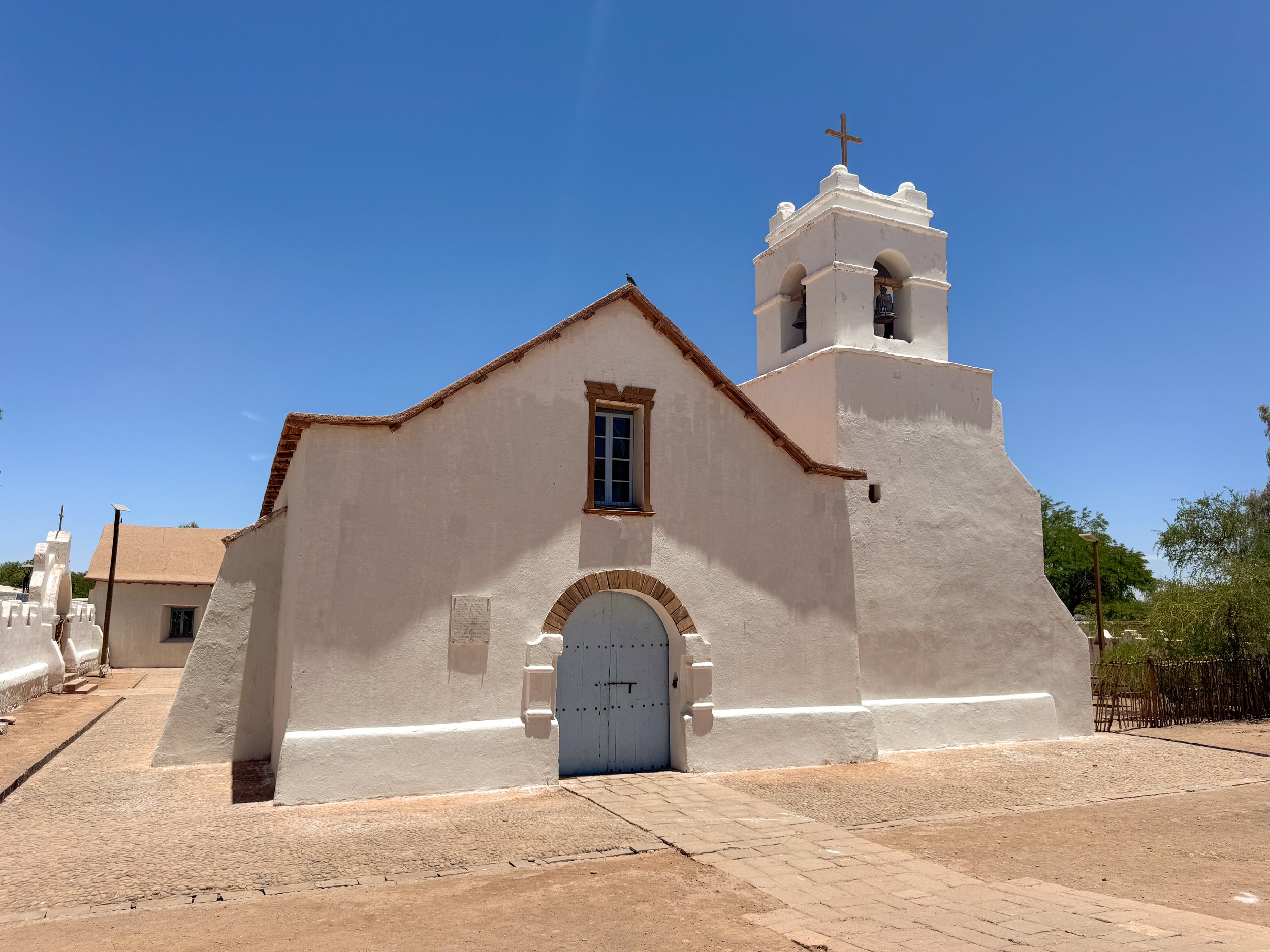
Plaza de San Pedro de Atacama. A tree covered plaza with cacti gardens surrounded by beautiful adobe buildings including a historic church.
Trópico de Capricornio. Located about an hour south of San Pedro de Atacama along Chile Highway 23, a road sign marks the location of the Southern Hemisphere’s tropical latitude, the Tropic of Capricorn.
Salt Flats
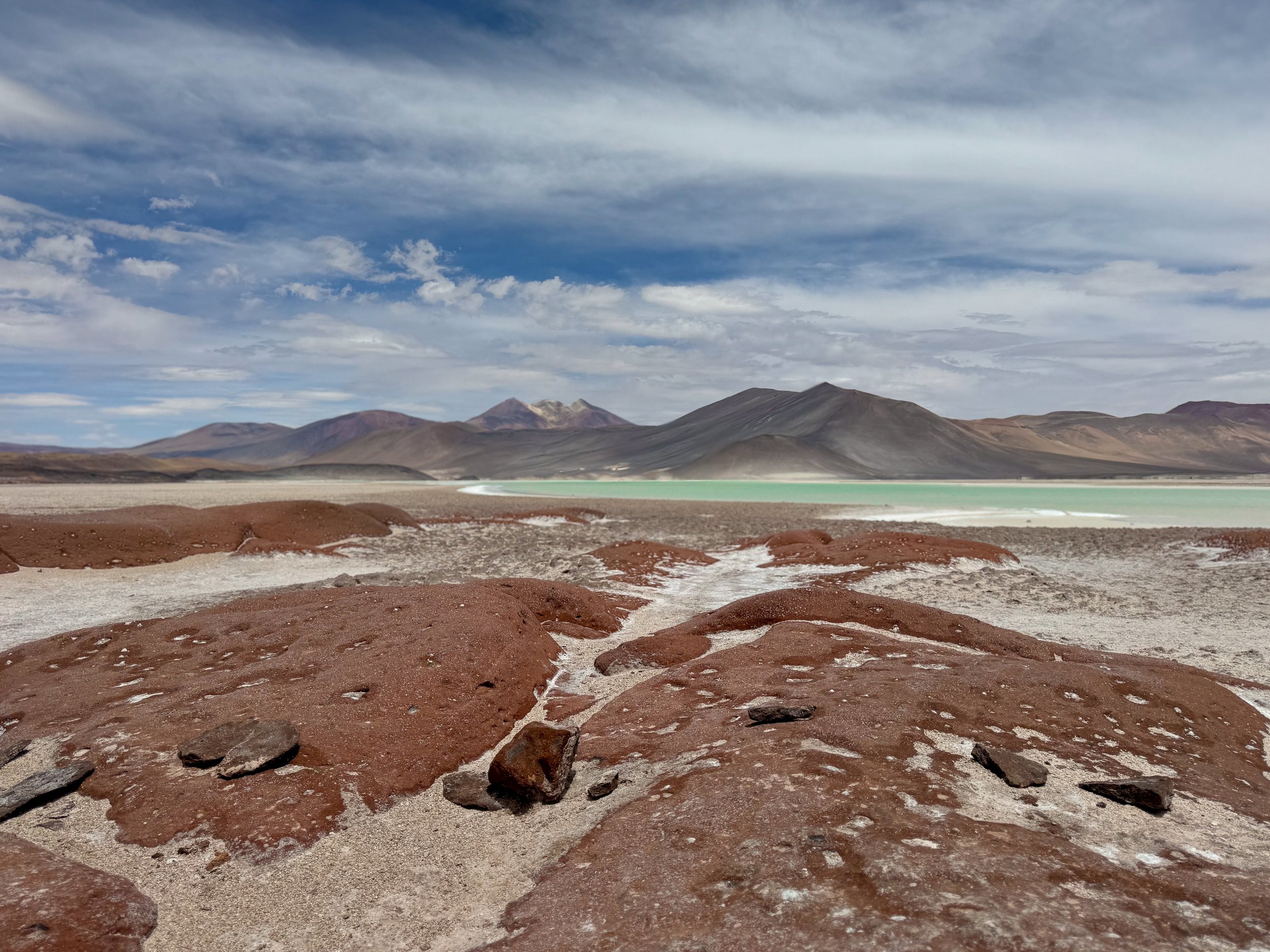
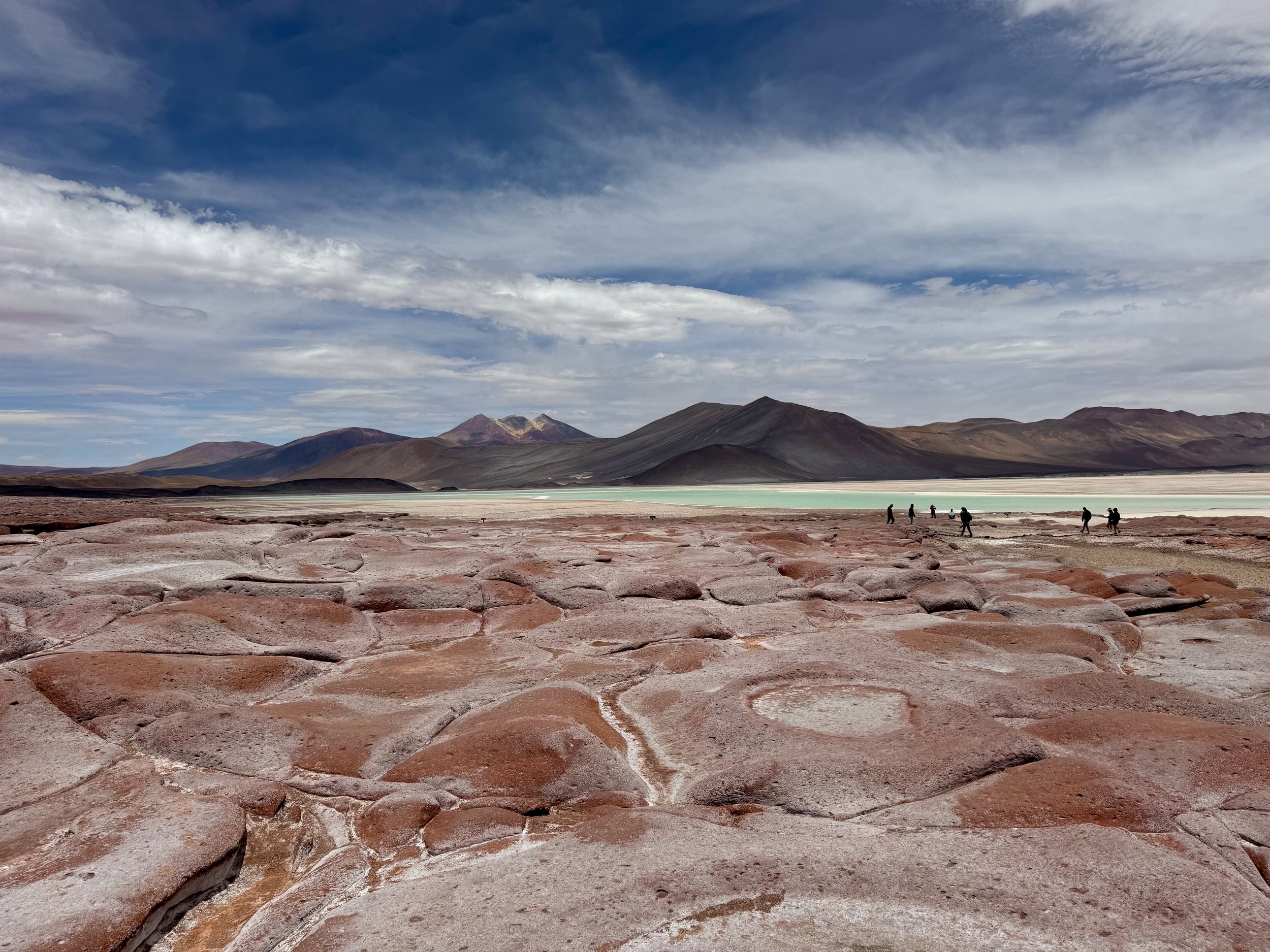
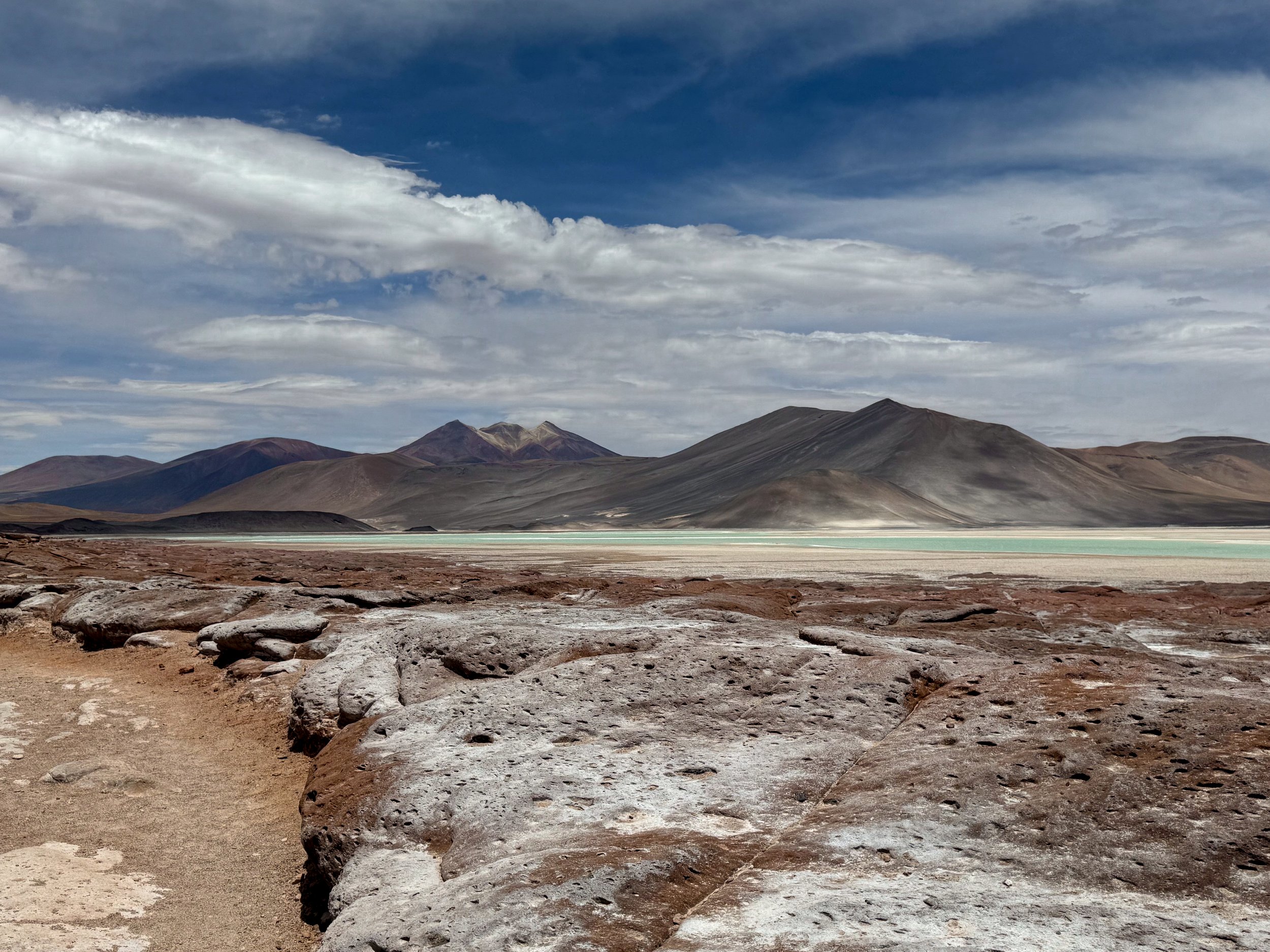
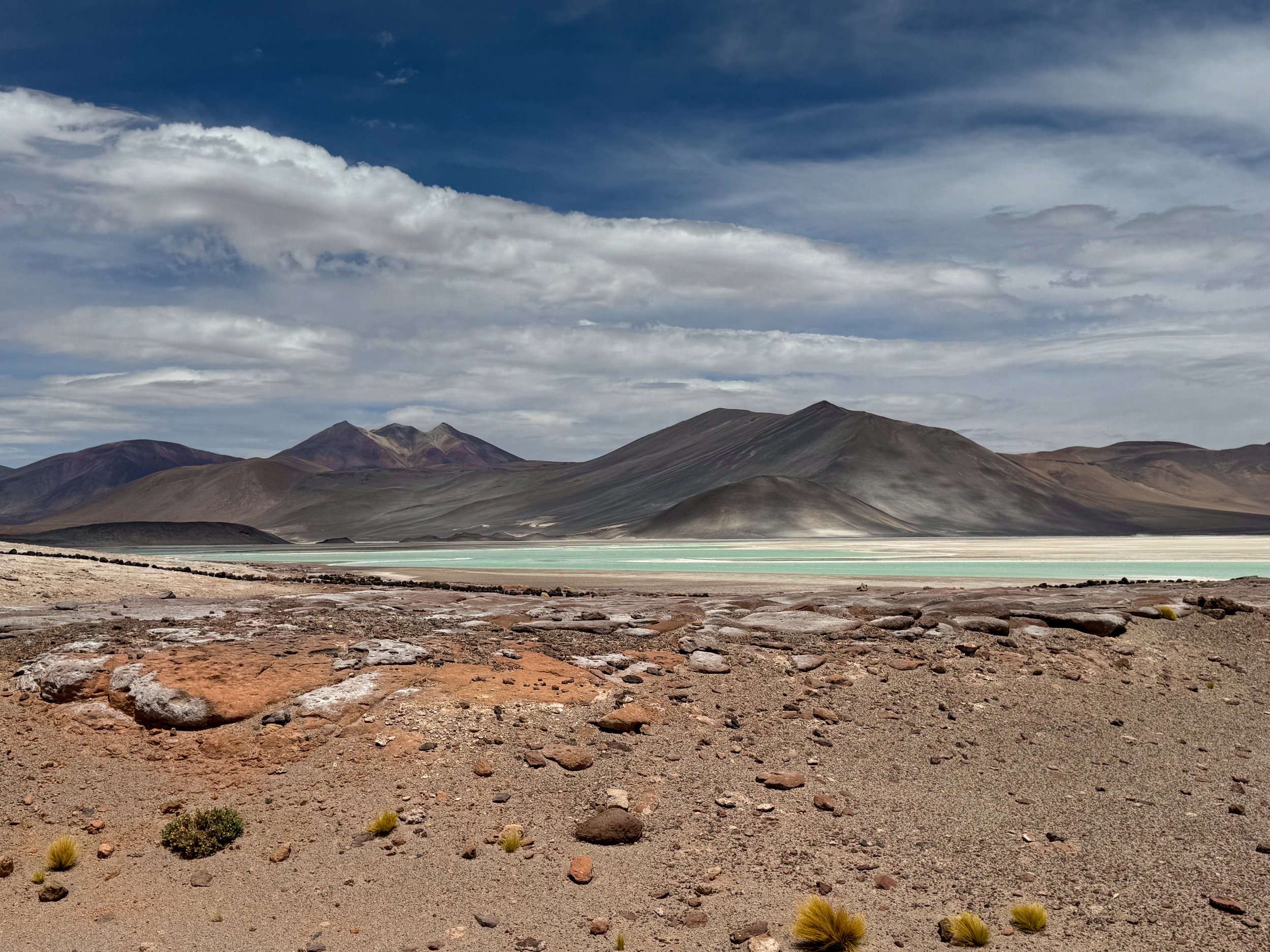
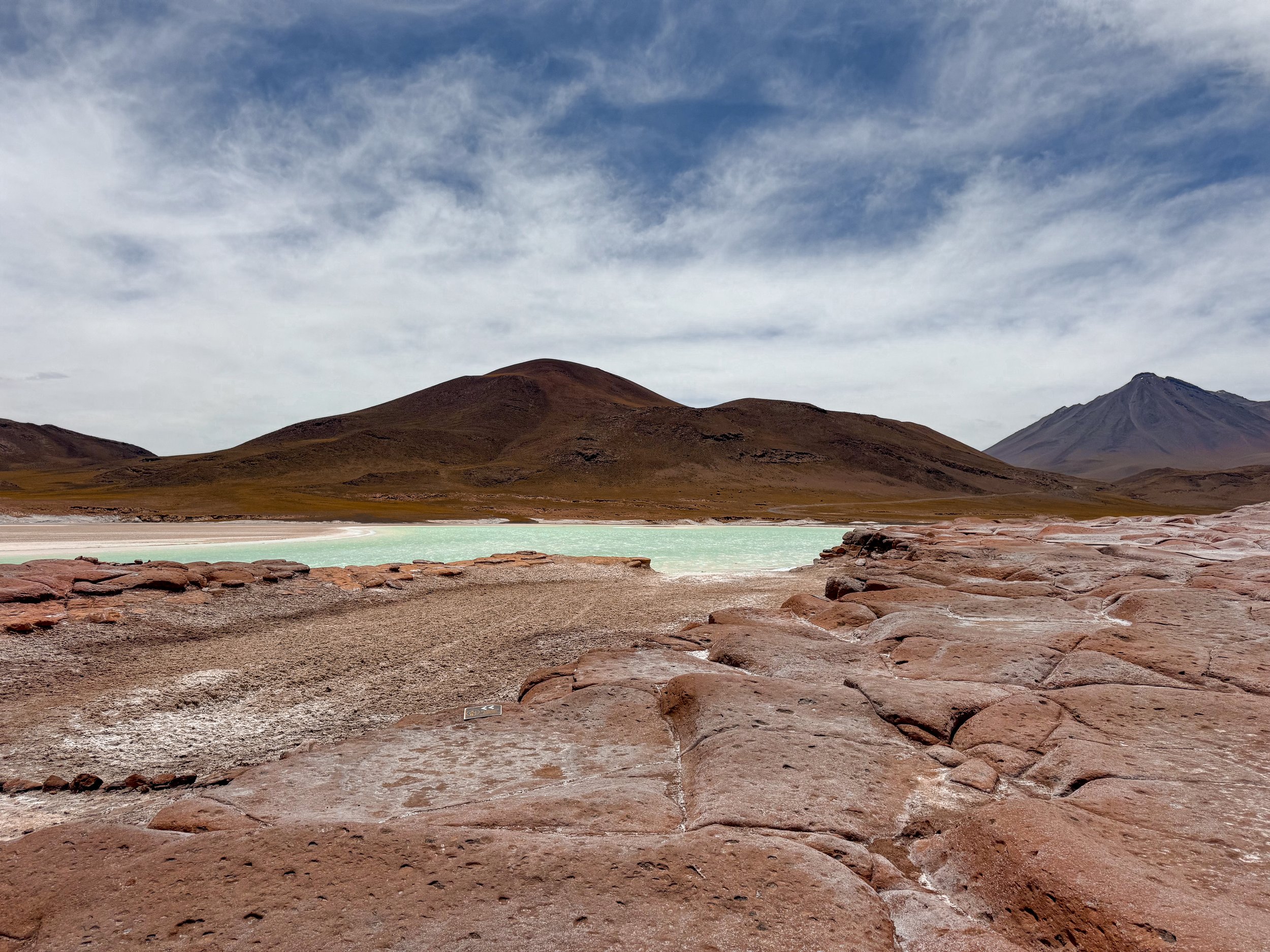
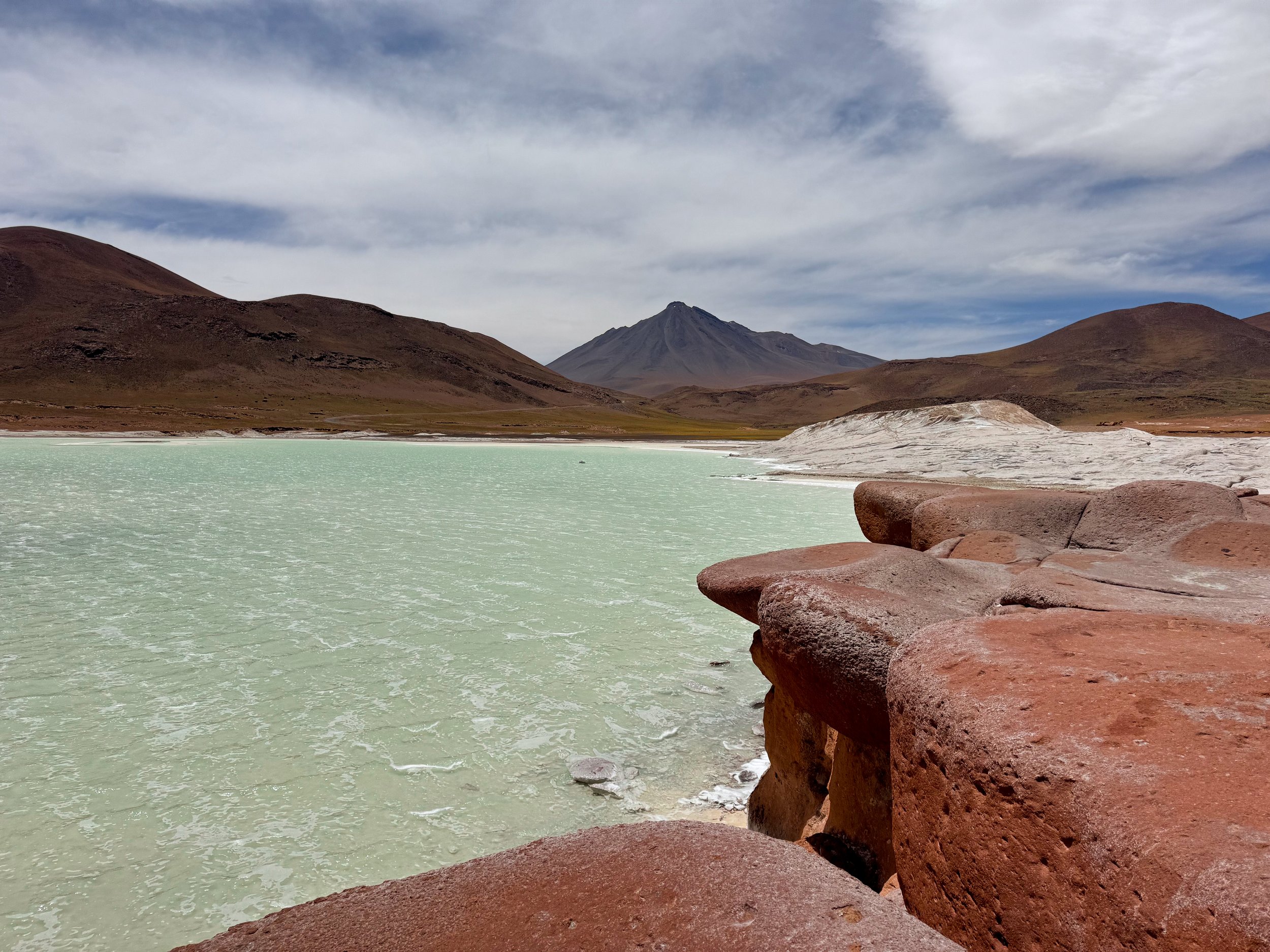
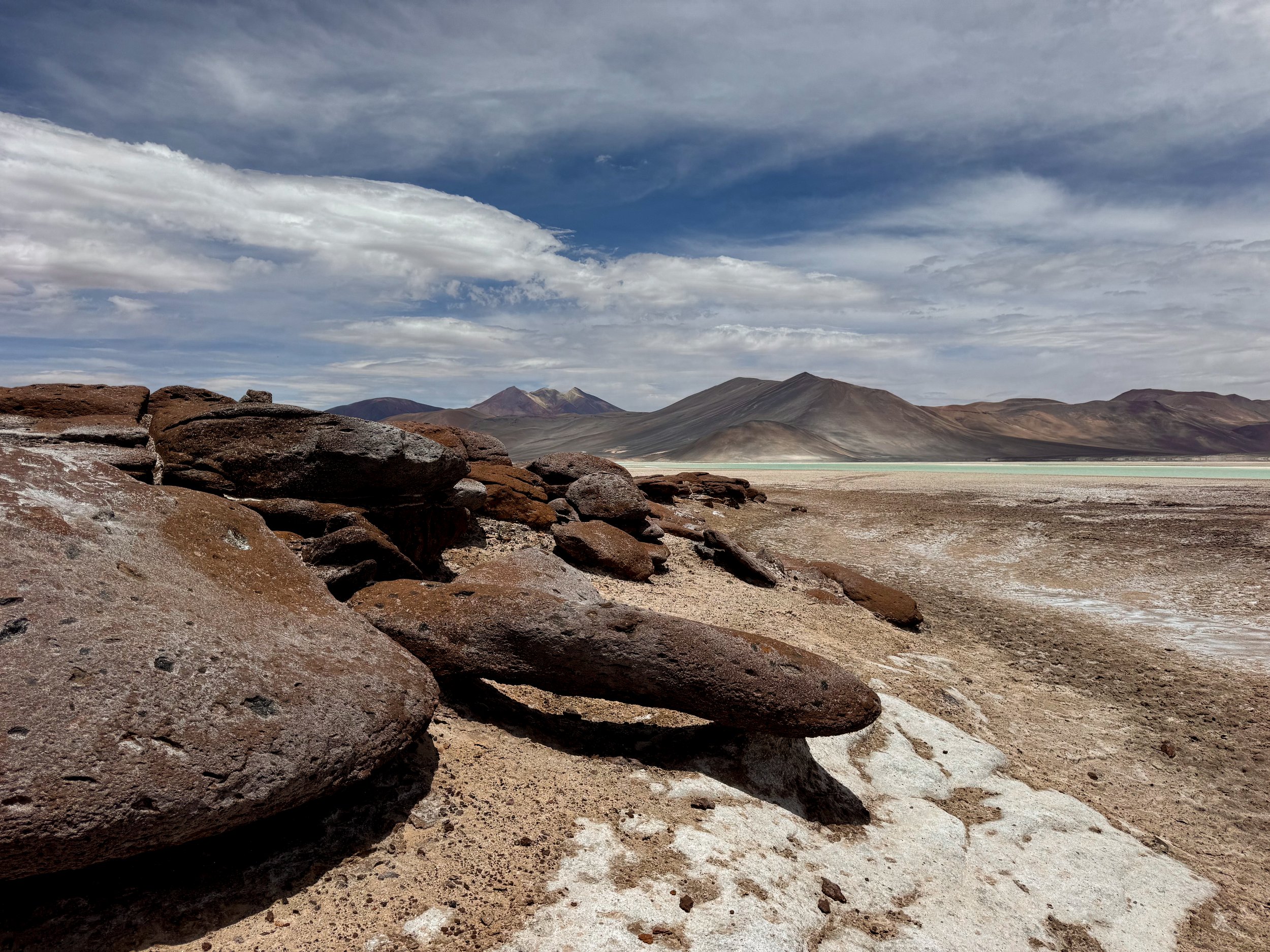
Salar de Aguas Calientes (Piedras Rojas). A milky blue lagoon covering a pure white salt flat juxtaposed by a hardened red rock lava flow with a smooth and wavy texture. The lagoon is surrounded by towering volcanoes with dark slopes and streaks of colorful mineral deposits near their summits.

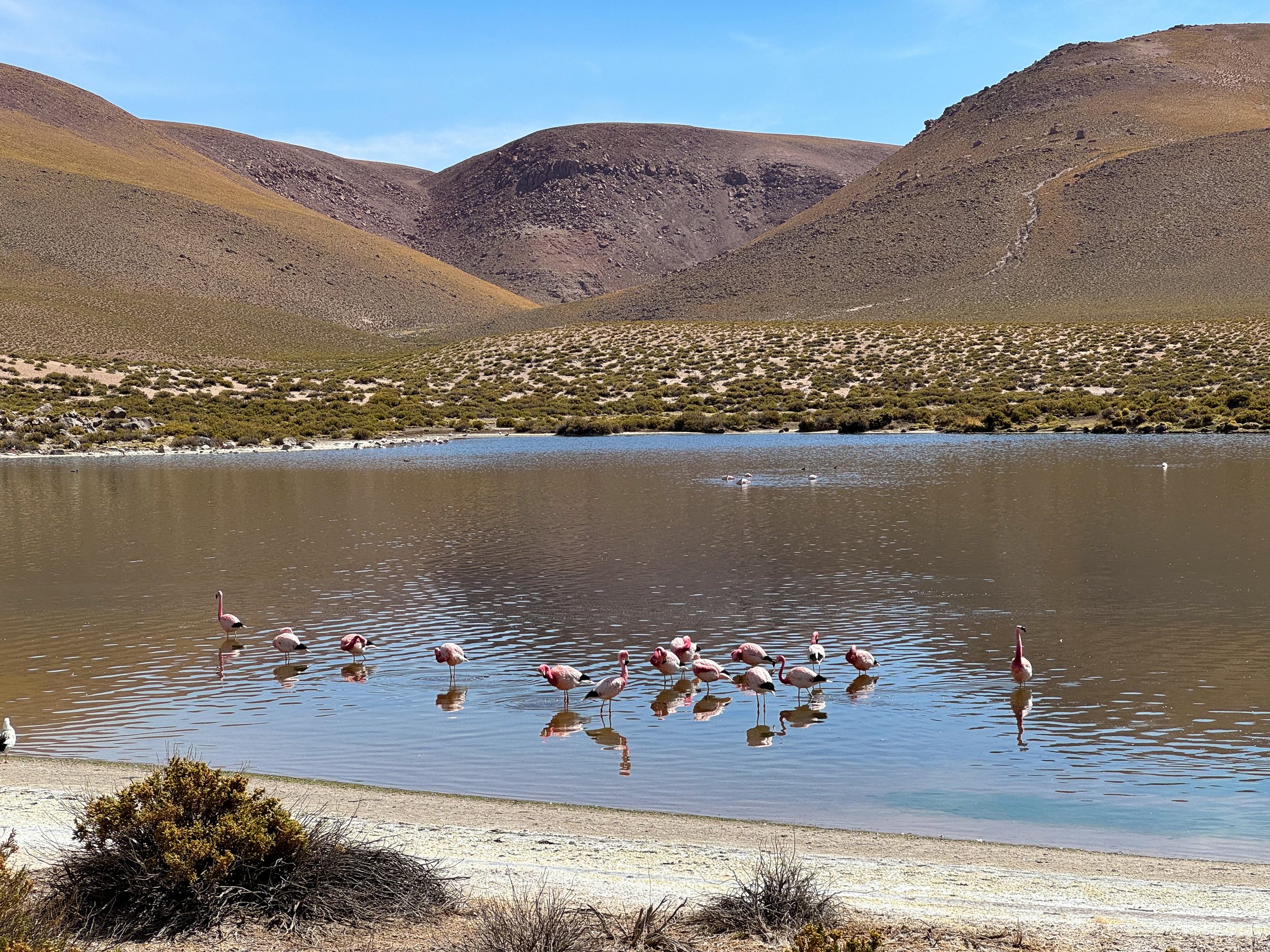
Salar de Atacama. A craggily salt flat flanked by three mountain ranges home to multiple species of flamingos and migratory birds. We walked one of the trails, watching the flamingos feed and fly.
Lagoons
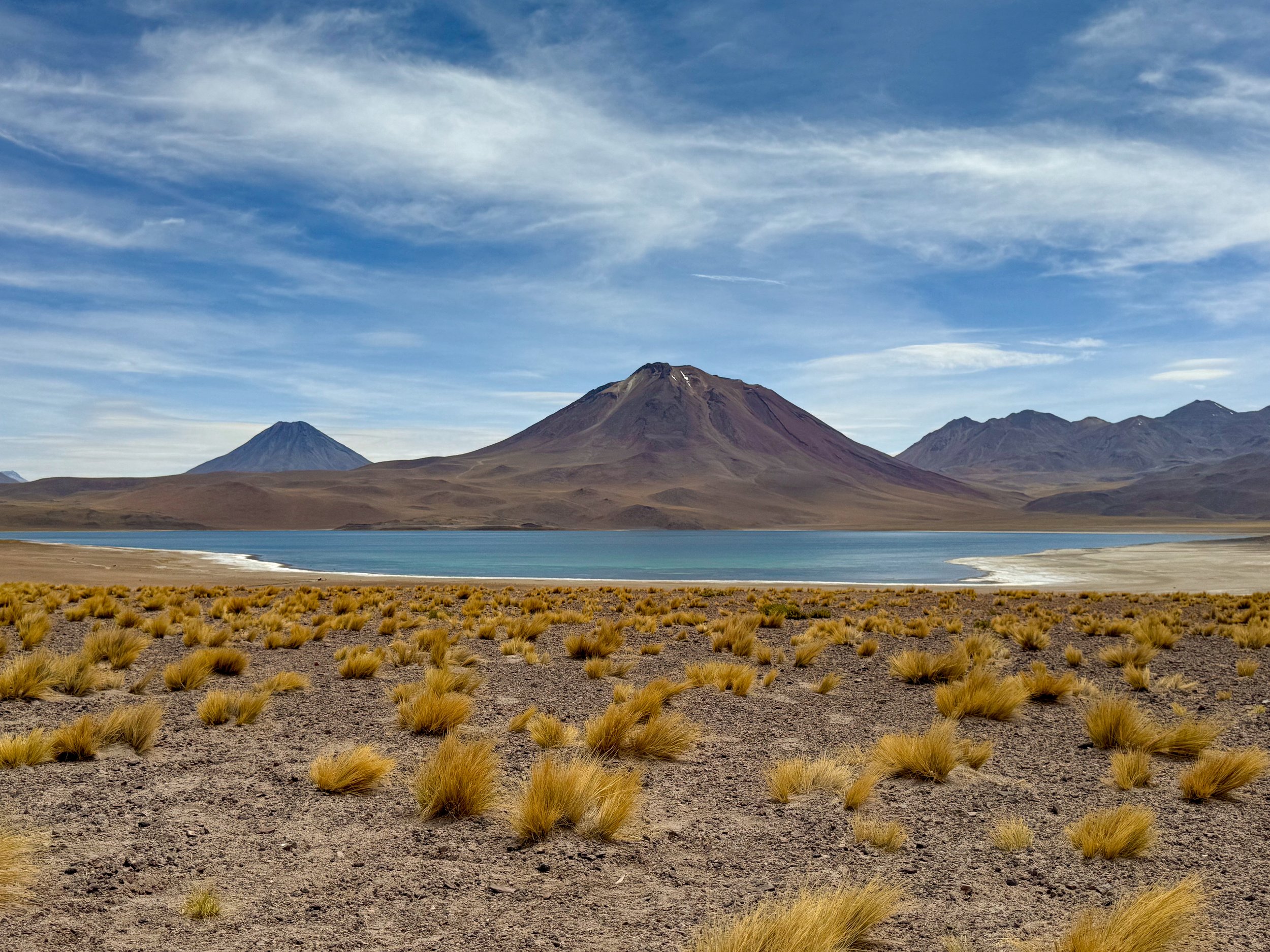
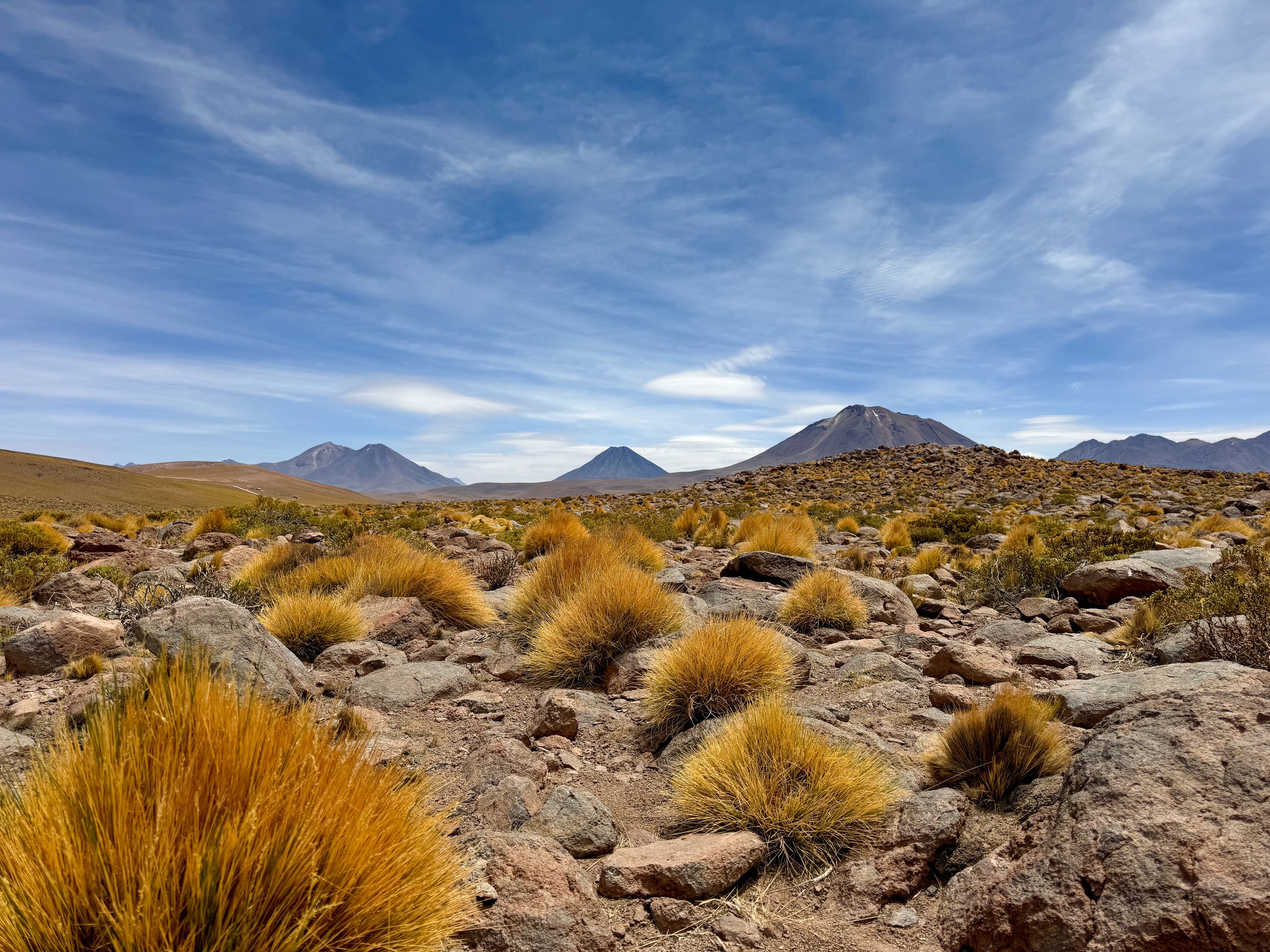
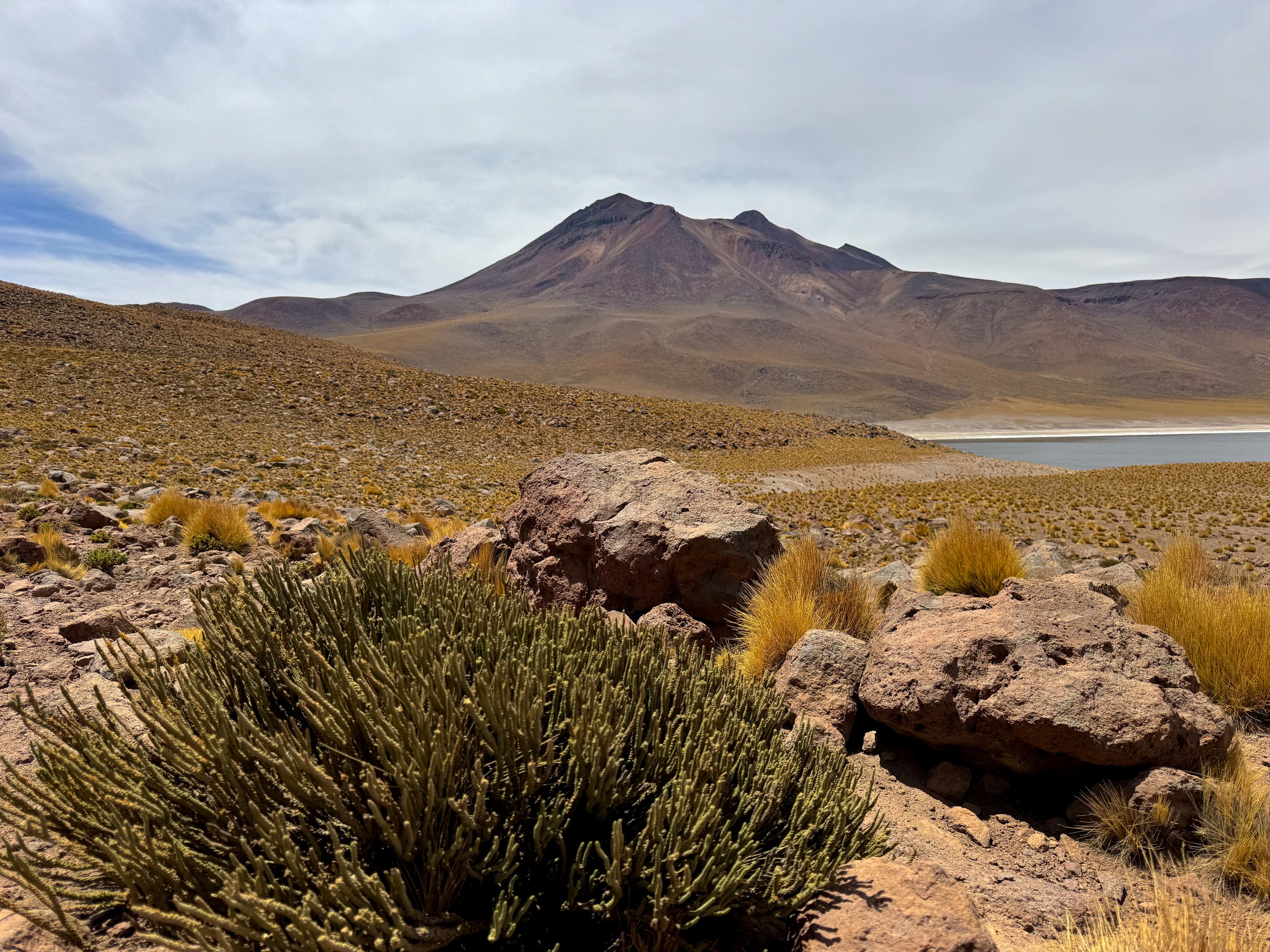
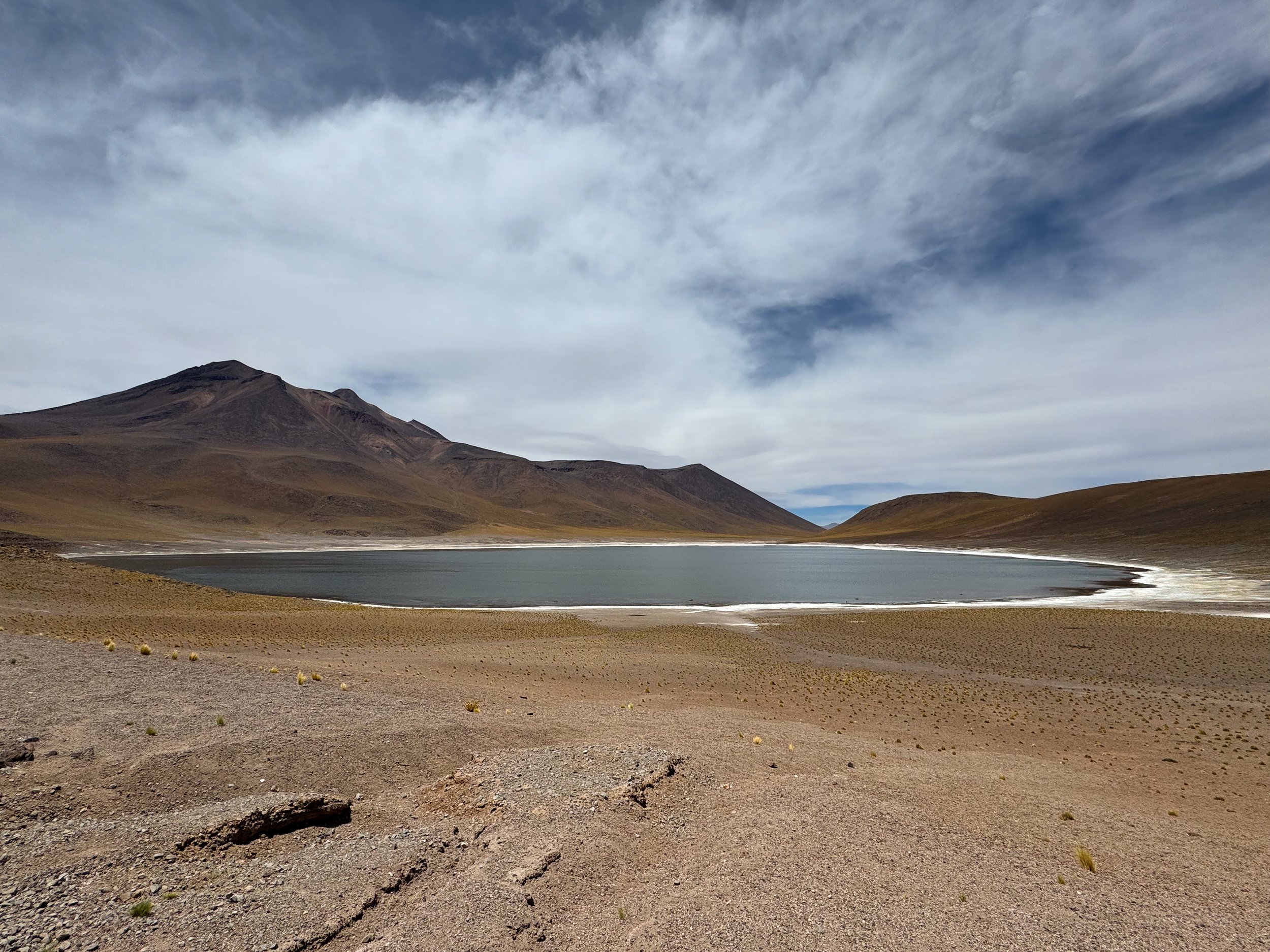
Laguna Miñiques. A large freshwater lagoon with a blue hued color at the base of the Miñiques Volcano. The lookout offers panoramic views of both as well as the volcanic mountain range beyond, shrub covered hills and distant vicuñas (a cute camelid) and suri (a large ostrich like bird).
Laguna Miscanti. A dark hued freshwater lagoon at the base of the Miscanti Volcano home to the Horned Coot, marine birds that build cone shaped mud nests in the lagoon near the shore.
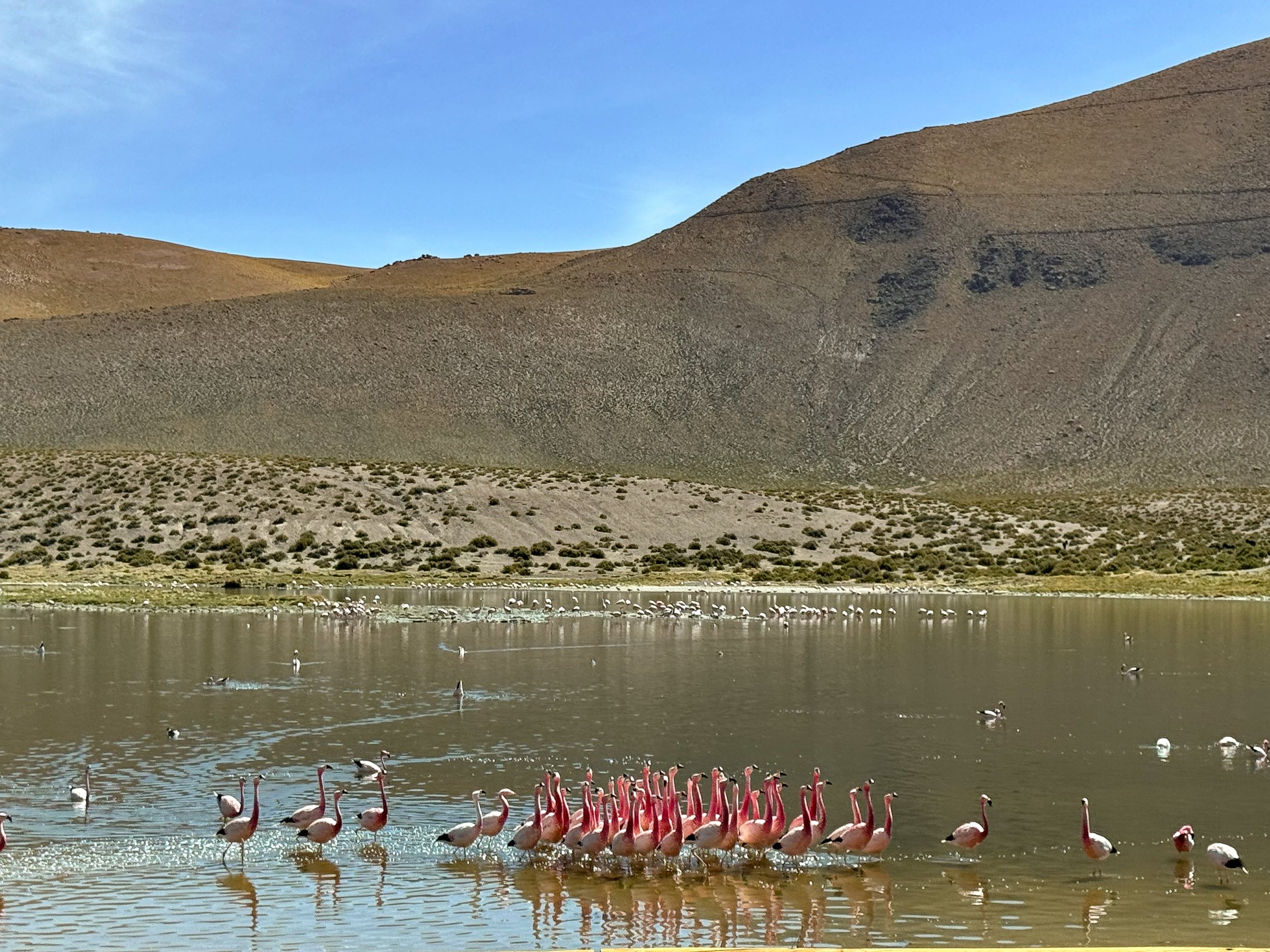
Laguna de Machuca. A freshwater lagoon with hundreds of vibrant pink flamingos feeding, flying and mating around the shallow water. We spotted a large group of male flamingos dancing in unison to attract females.
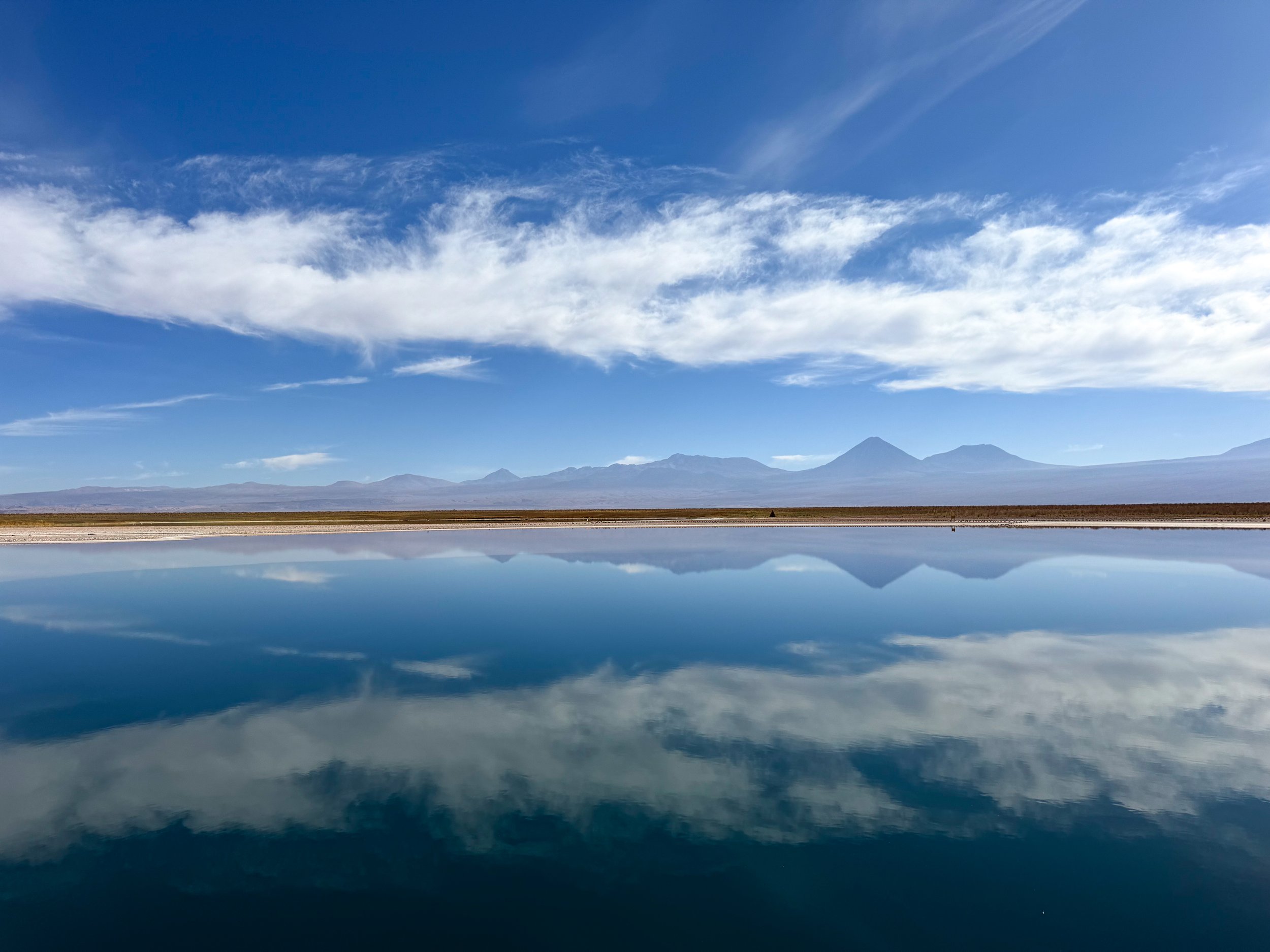
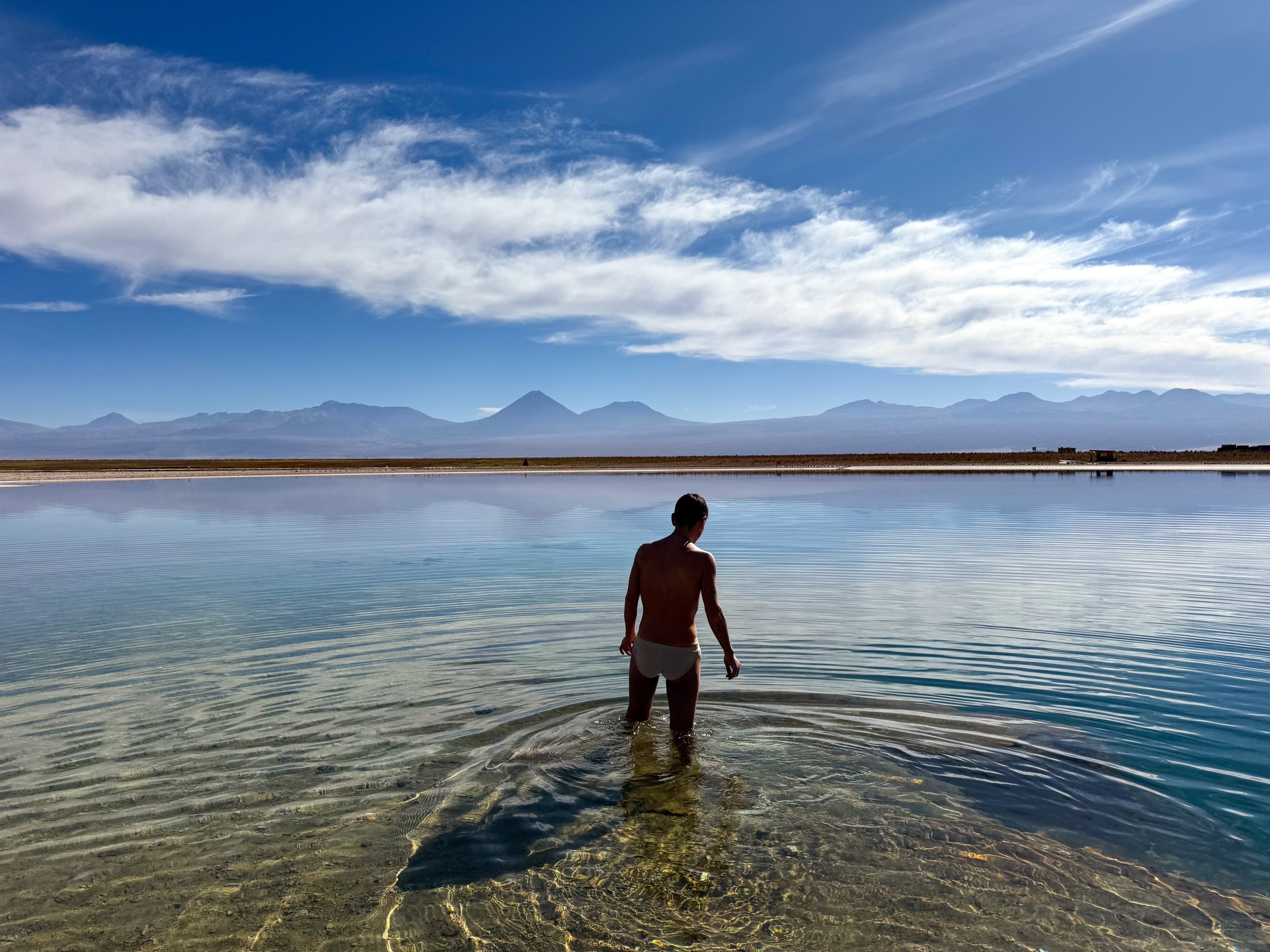
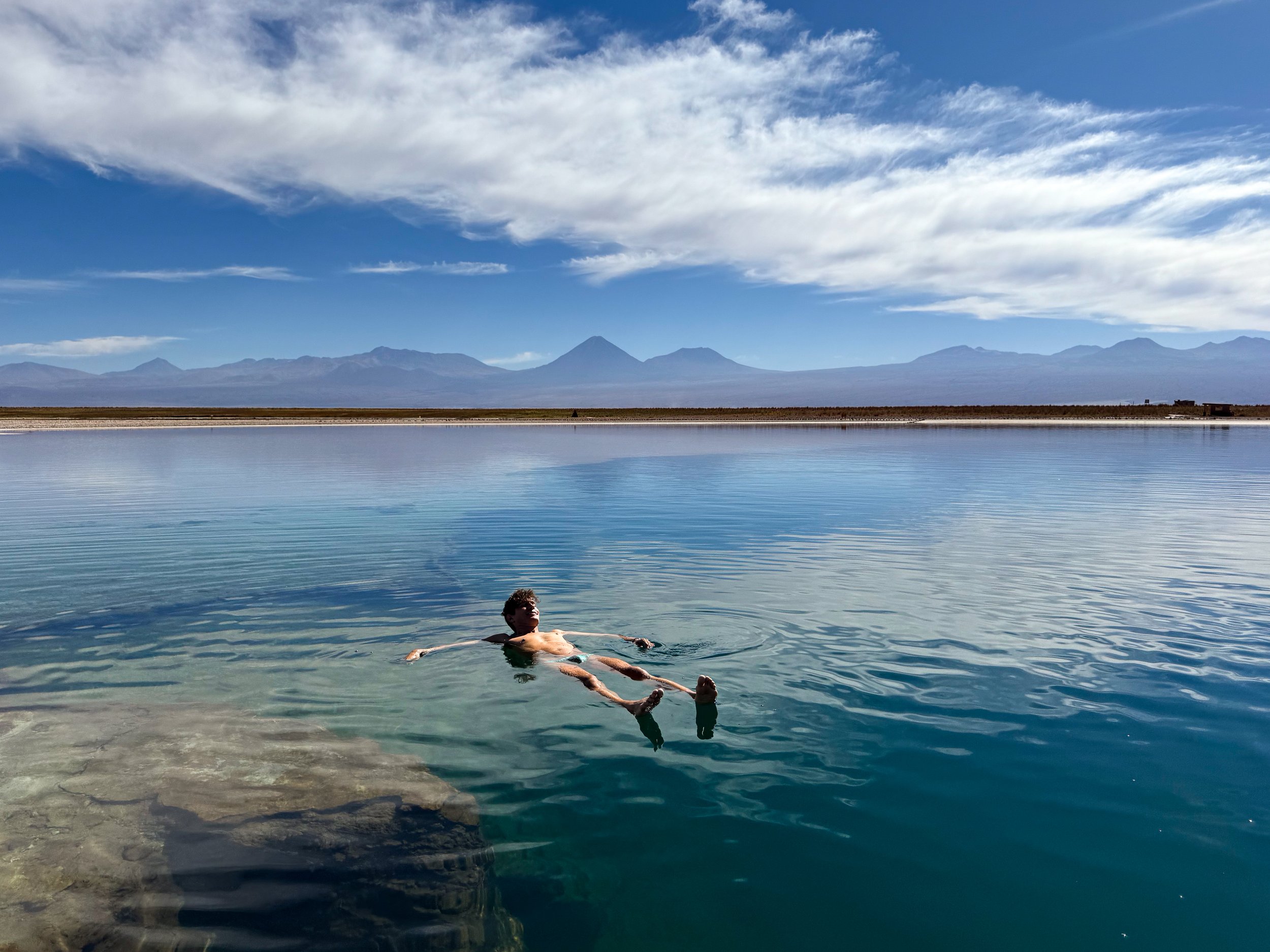
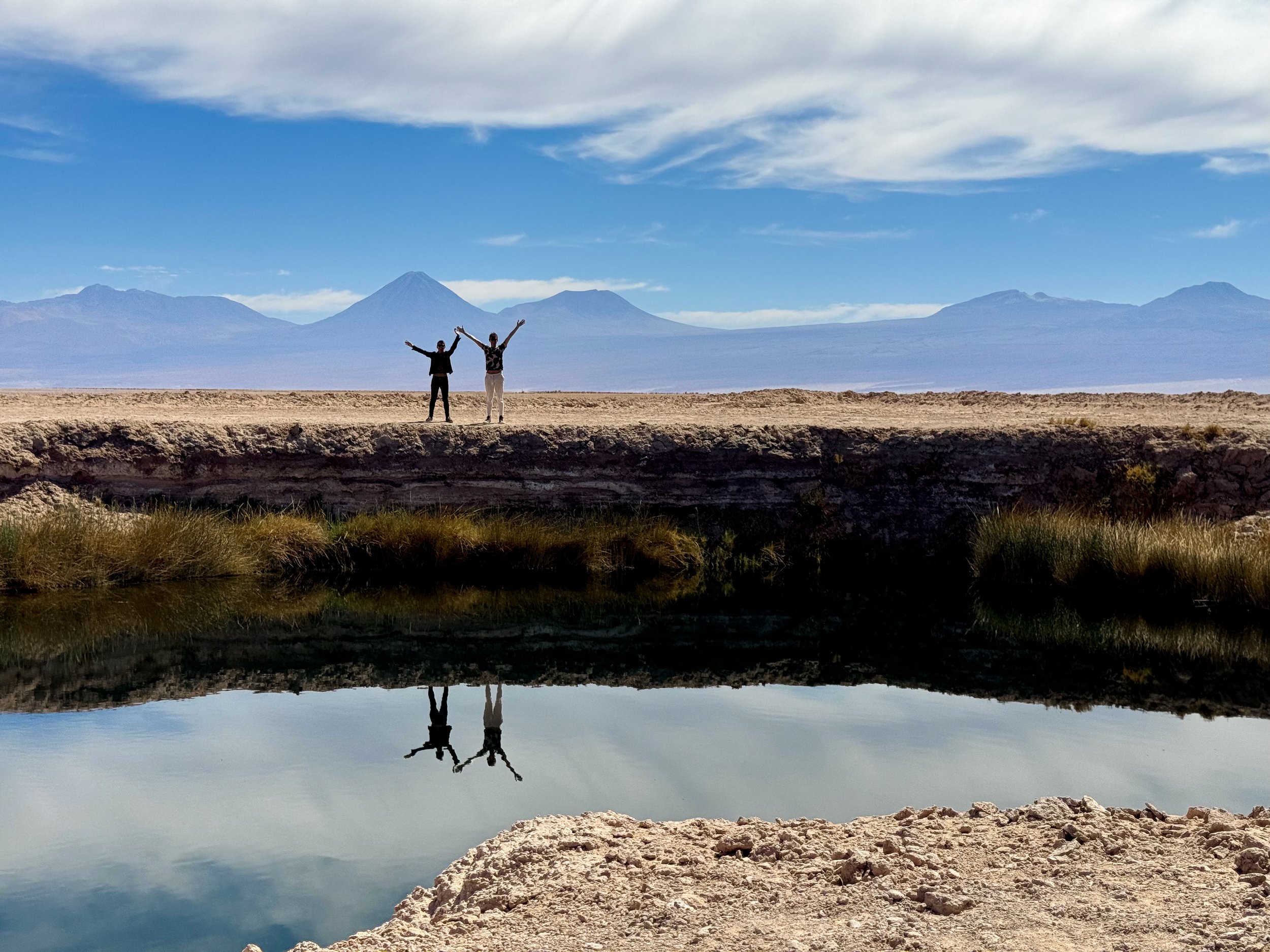
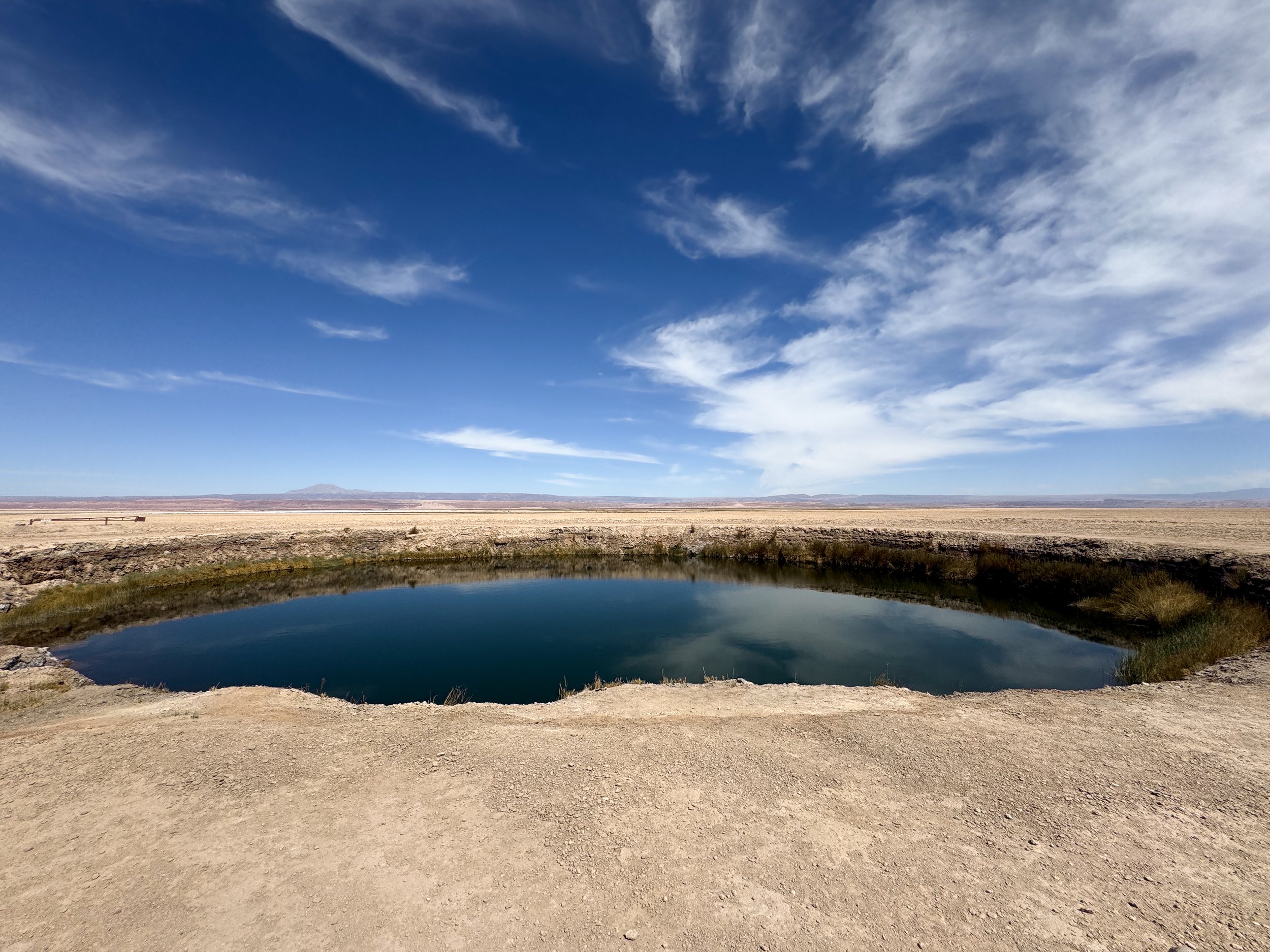
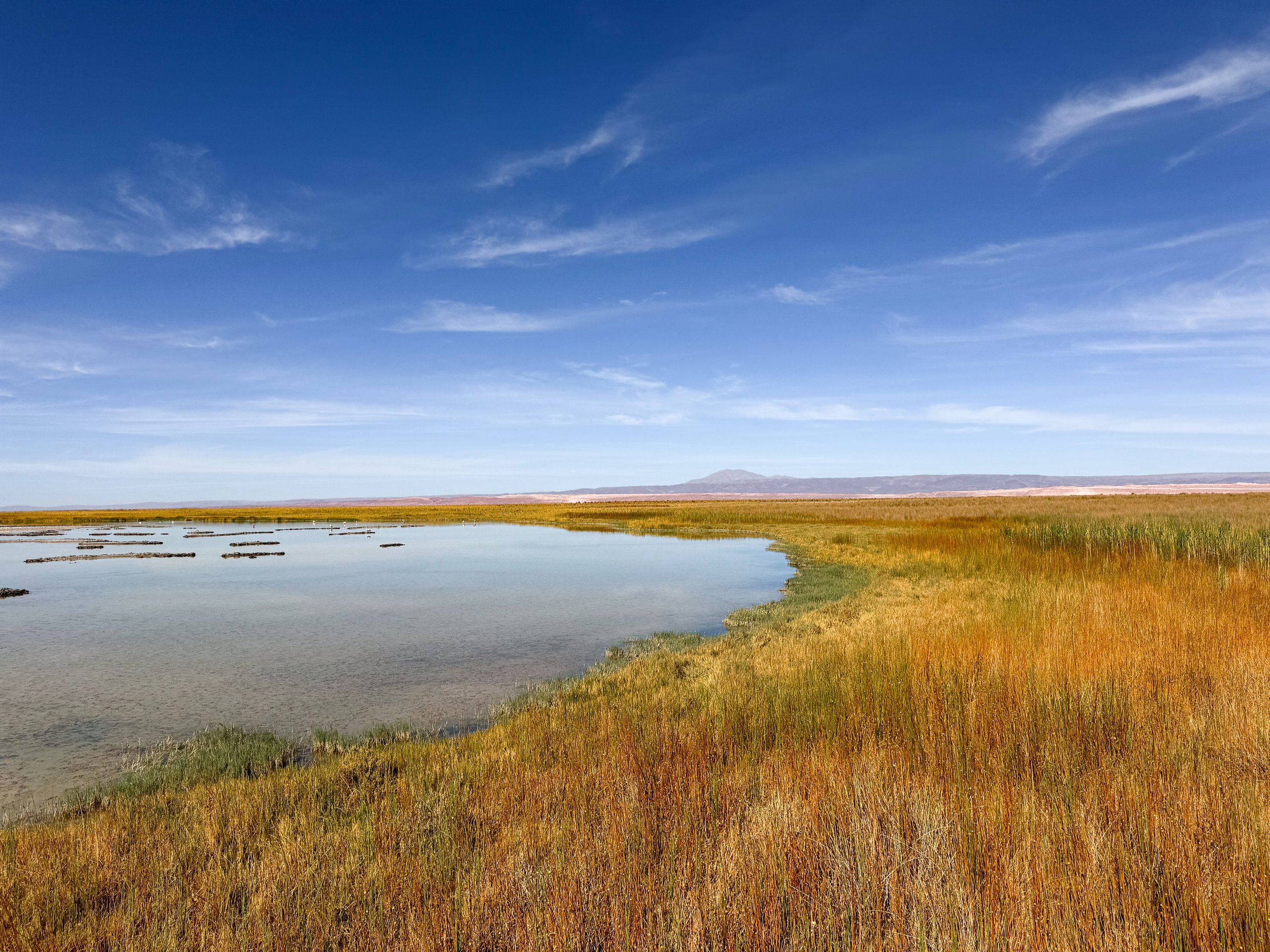
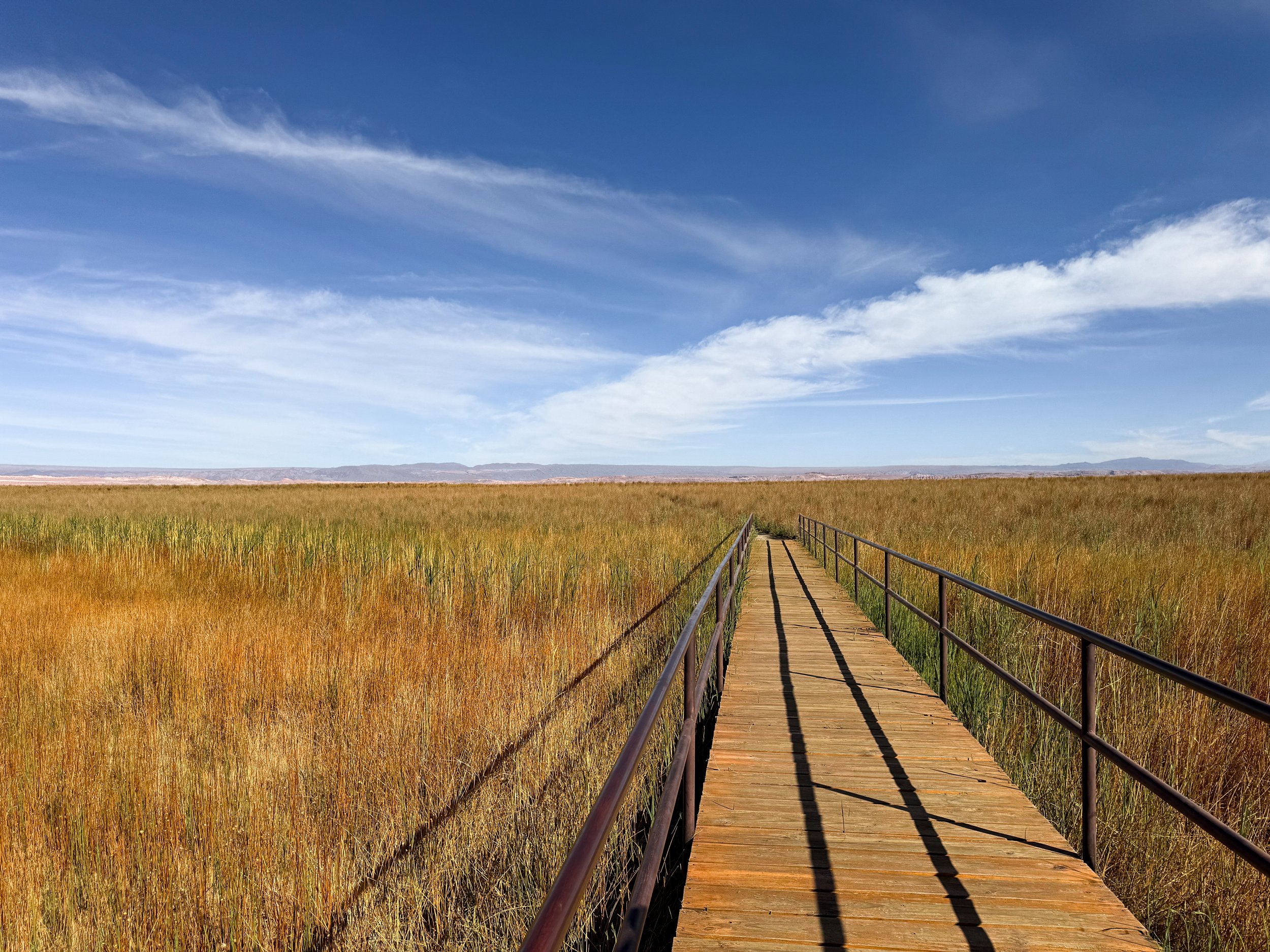
Lagunas Escondidas de Baltinache. A salt water lagoon with a mirror effect reflecting the volcanos and sky. It’s one of the only lagoons in the Atacama that people are allowed to swim in. We walked into the cold water and effortlessly floated at the surface.
Ojos del Salar. Two small, nearly perfectly round lagoons that resemble a pair of eyes.
Laguna Cejar. A lagoon with a boardwalk along its grassy edge and flamingos feeding in the distance.
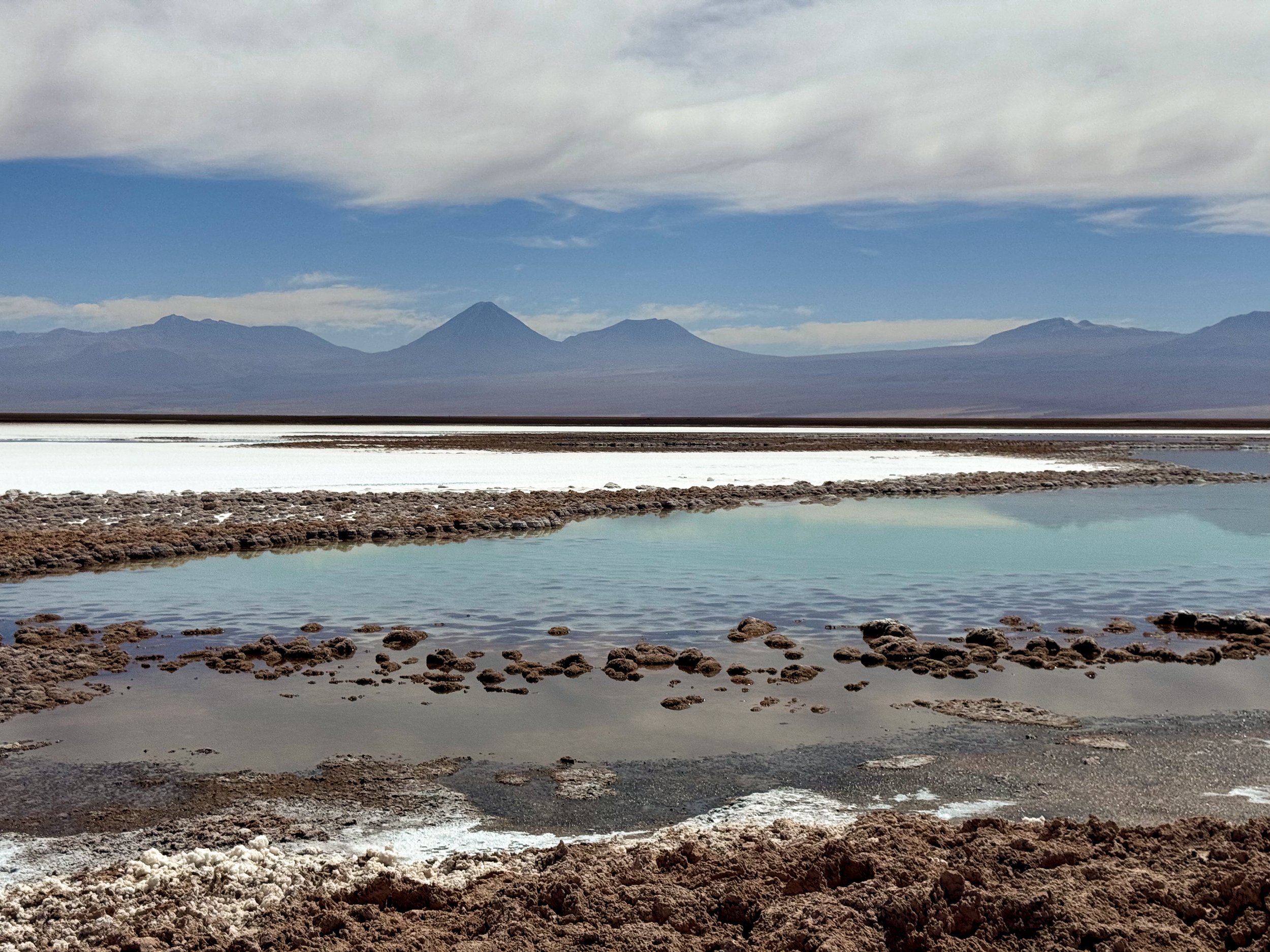
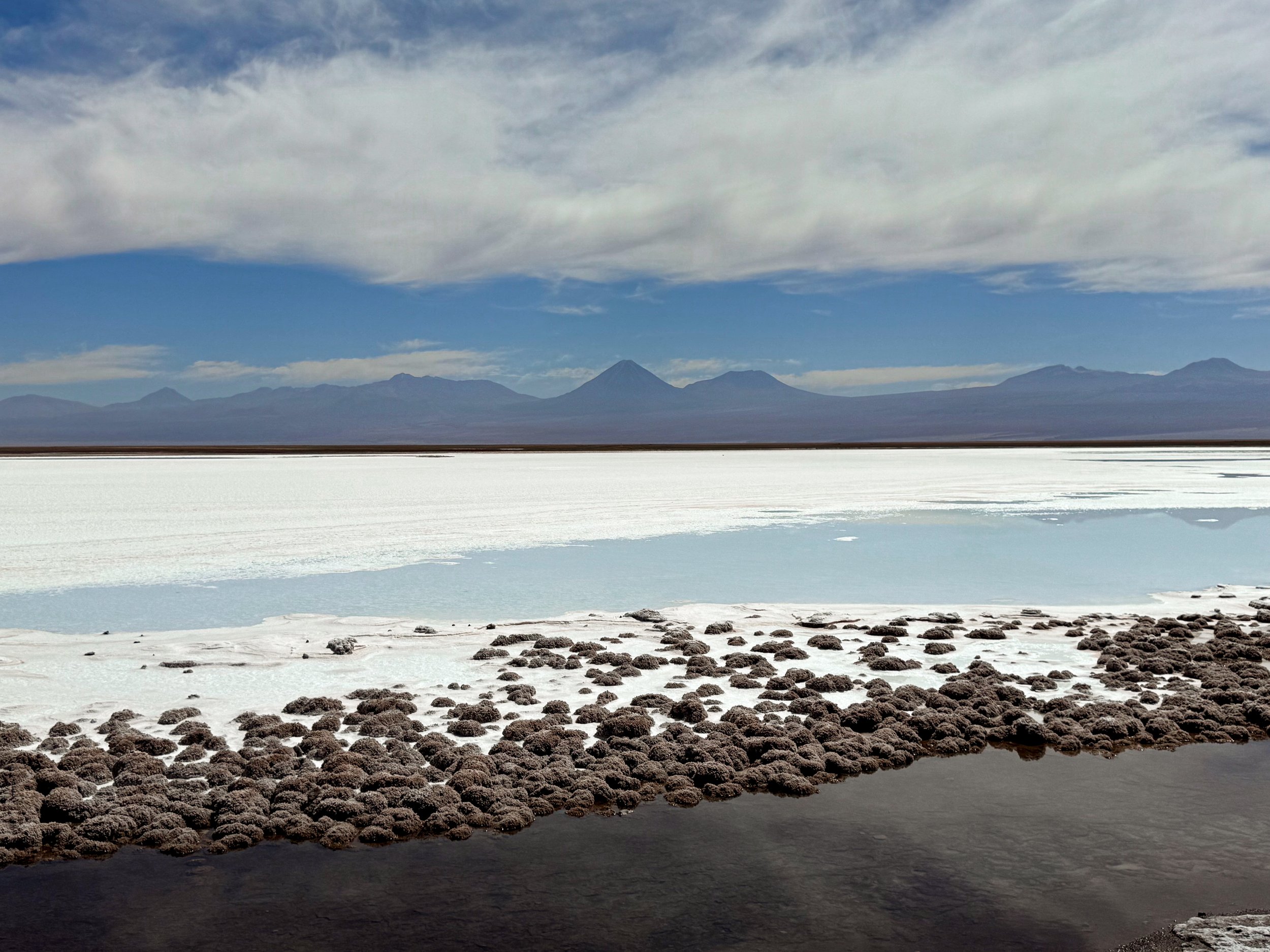
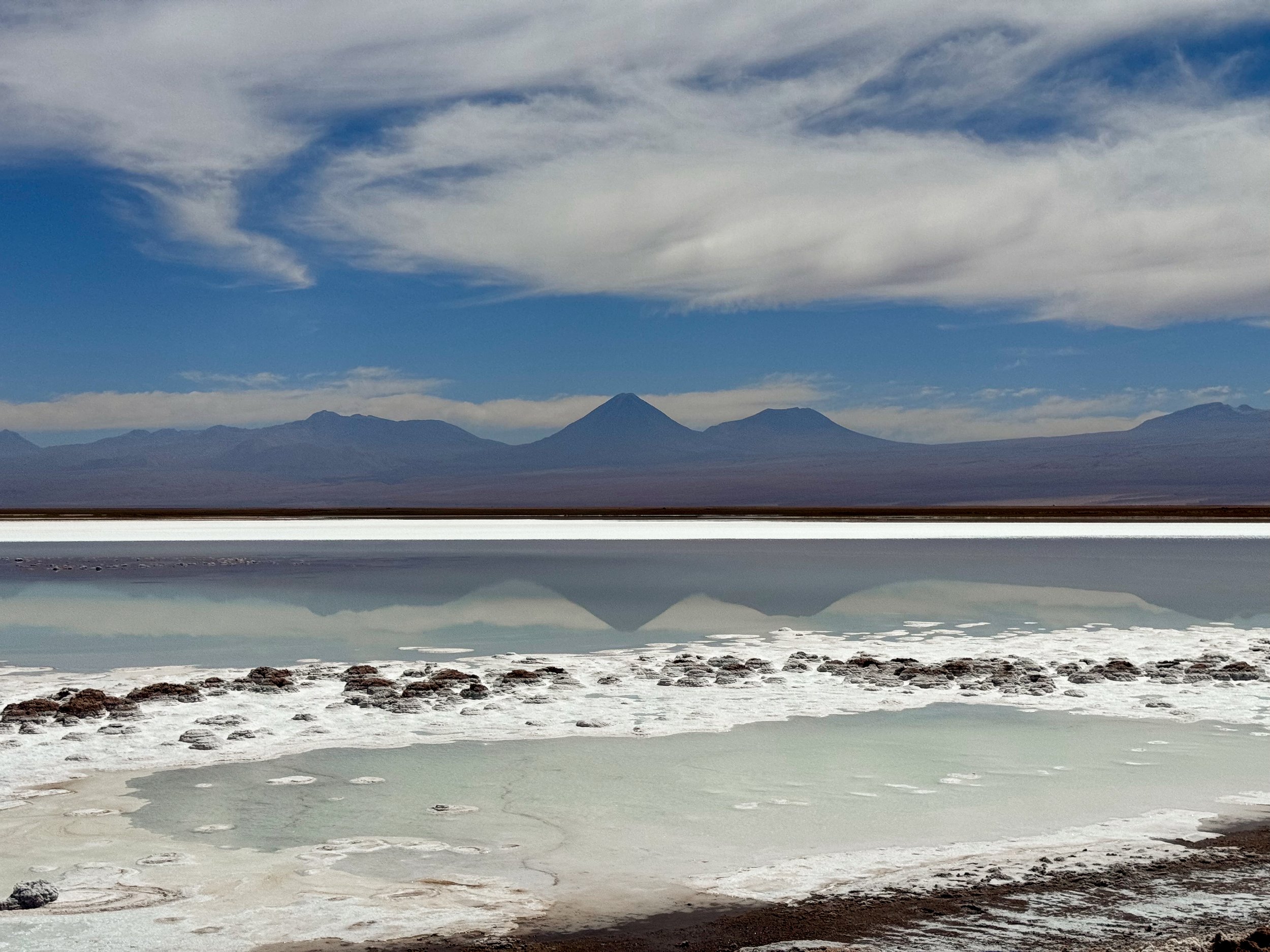
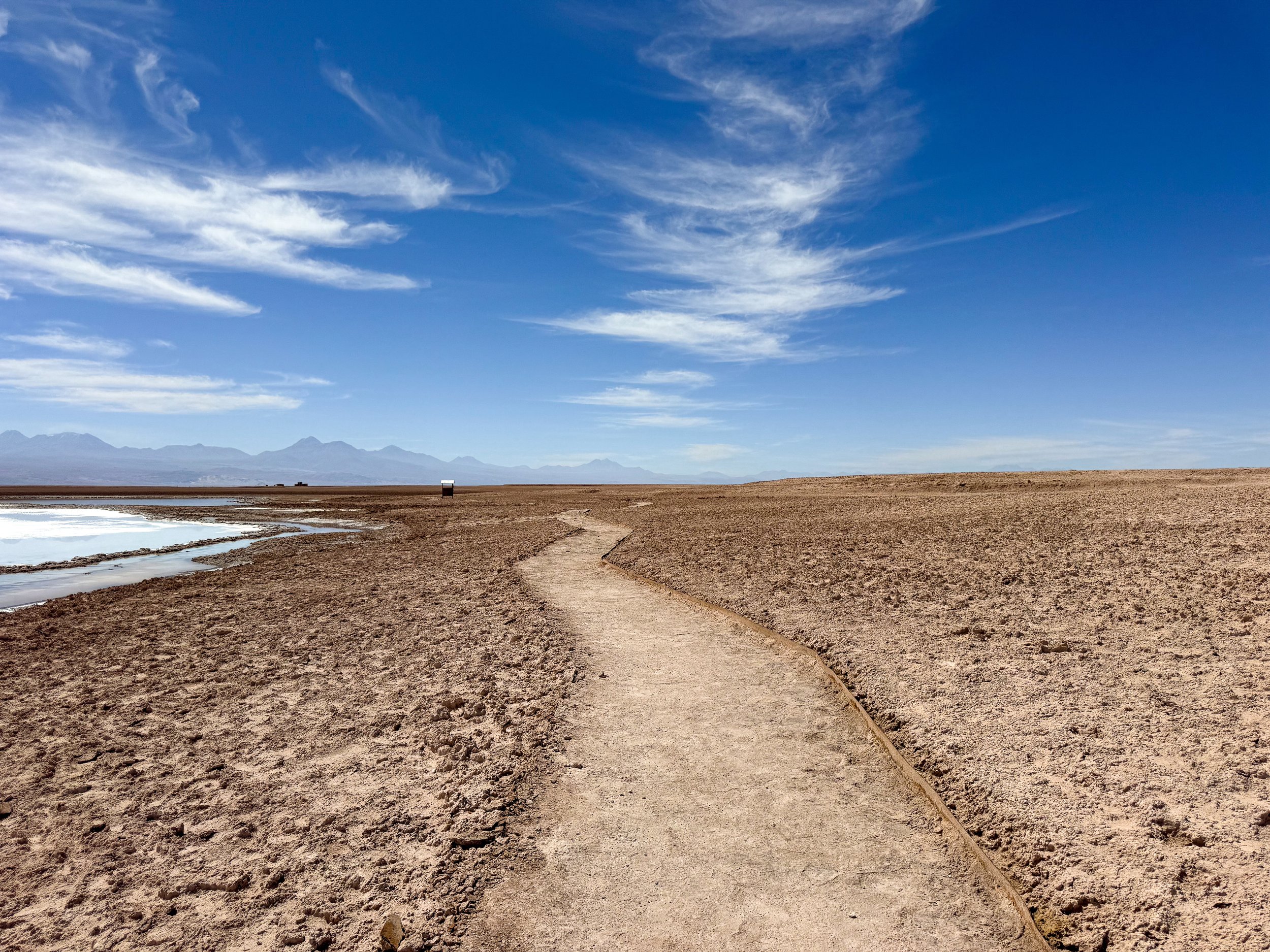
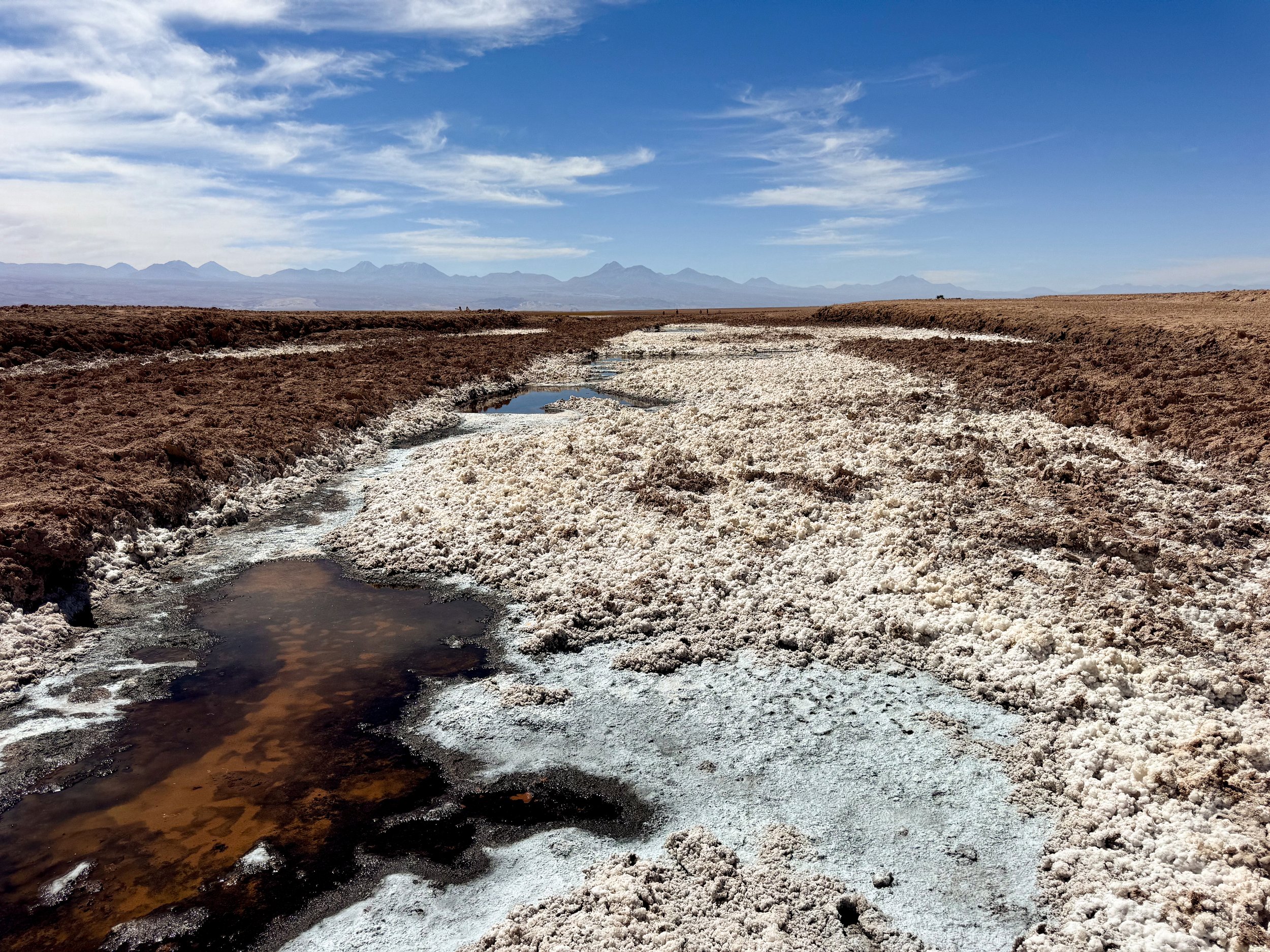
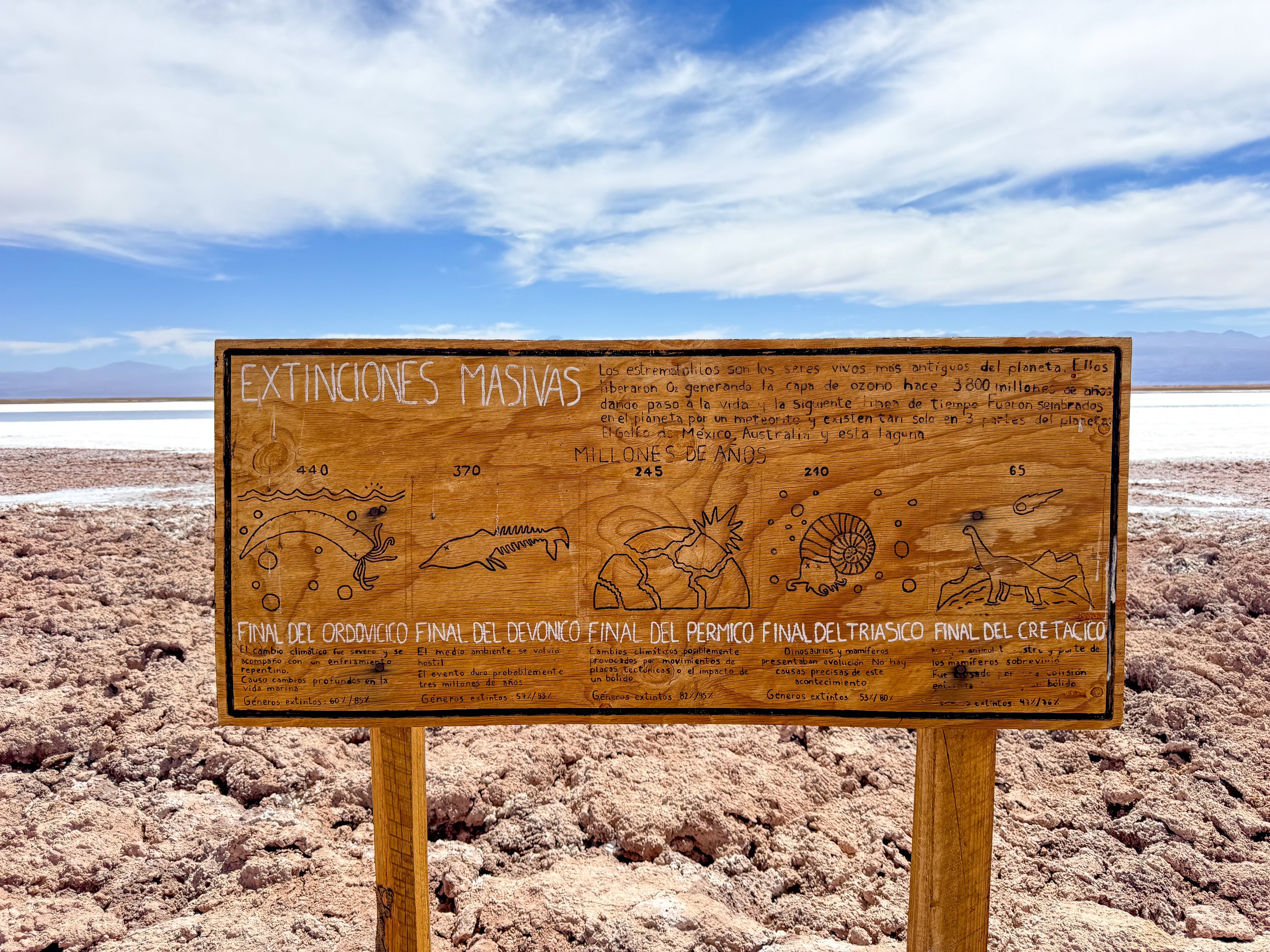
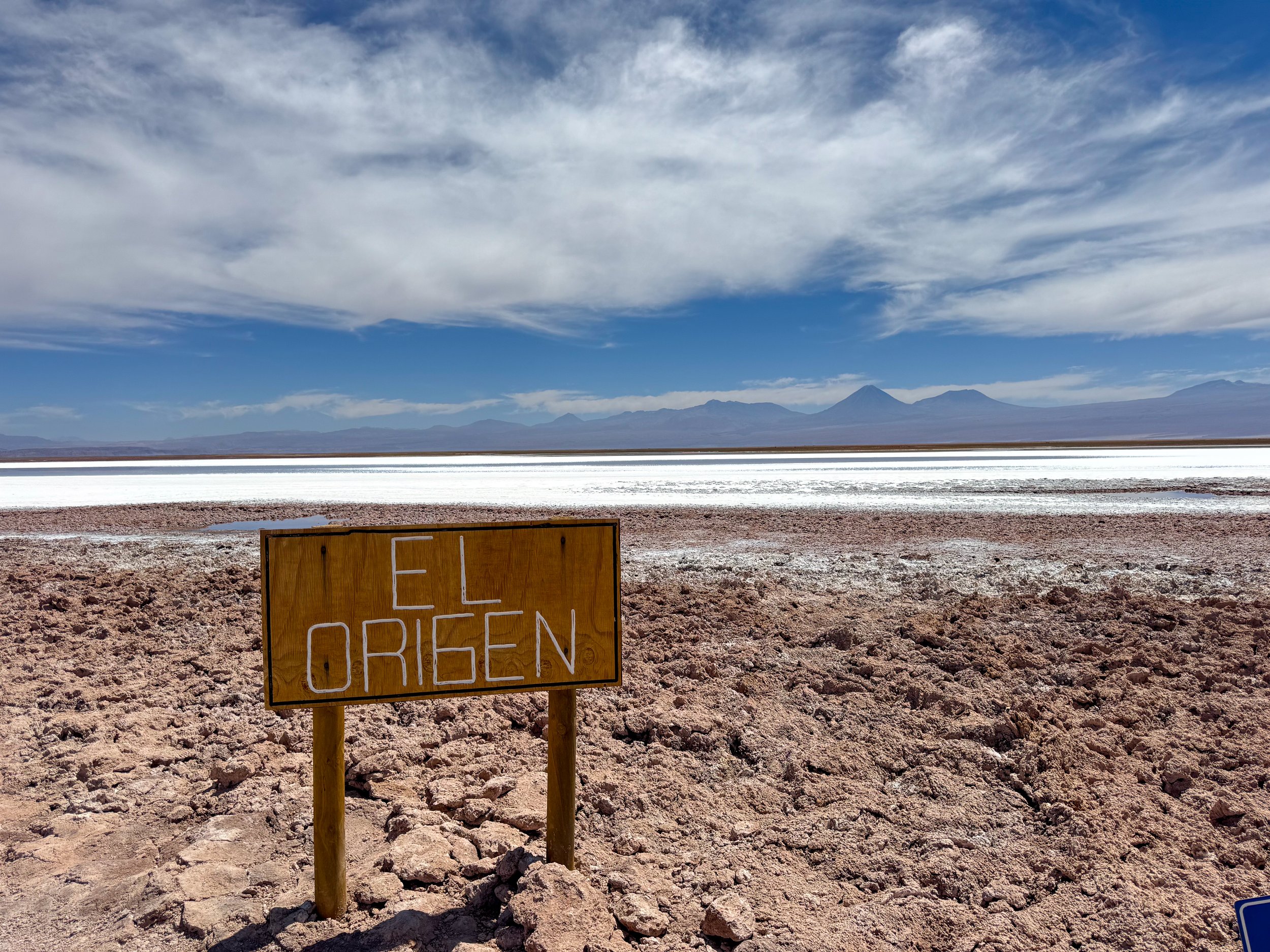
Laguna Tebenquiche. A shallow salty lagoon in a salt flat home to colonies of stromatolites, the first life forms on Earth. The trail emphasizes how they were the origin of life on Earth and have played a role in continuing life after the past 5 mass extinction events.
Geysers & Wetlands
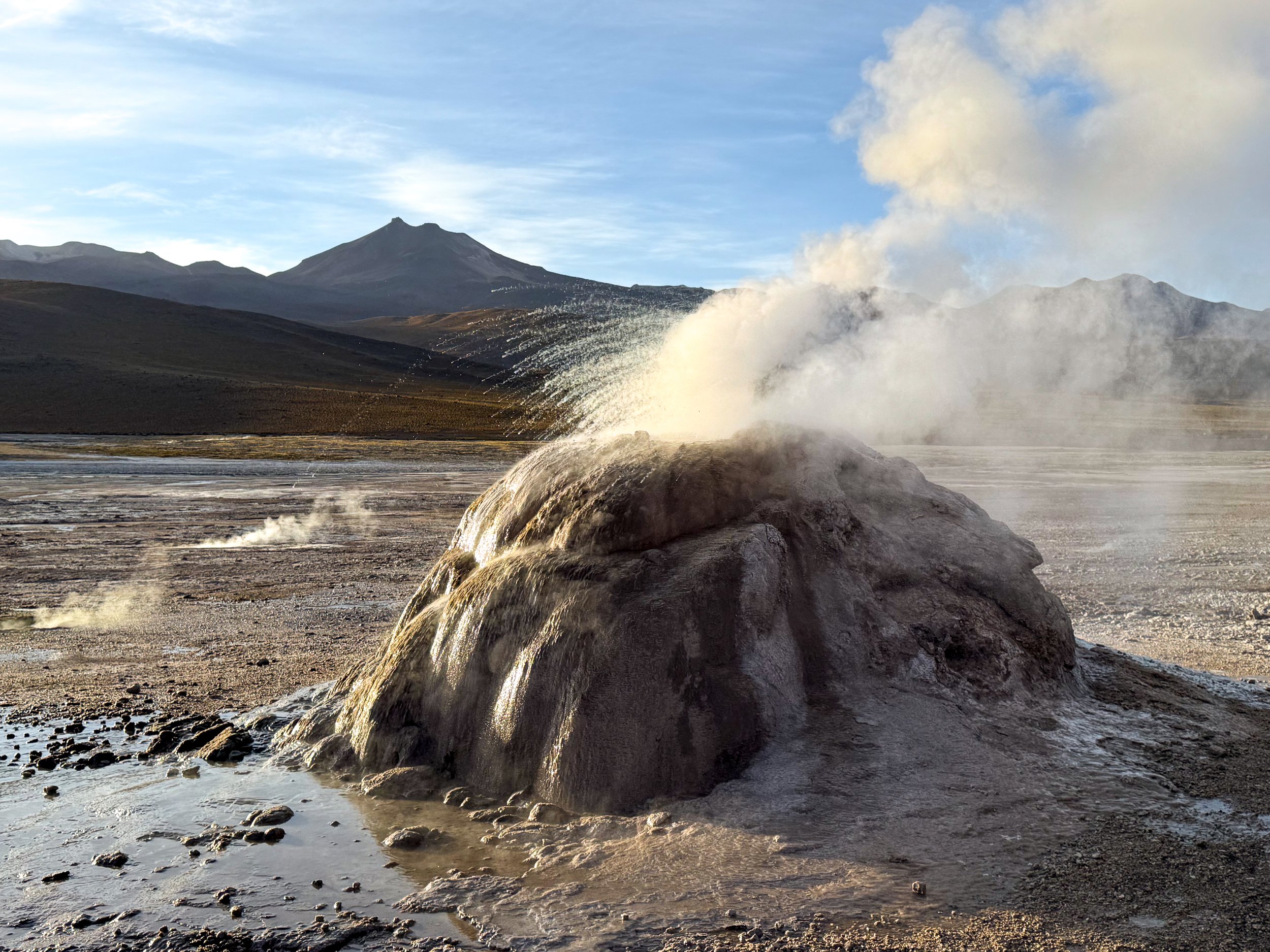
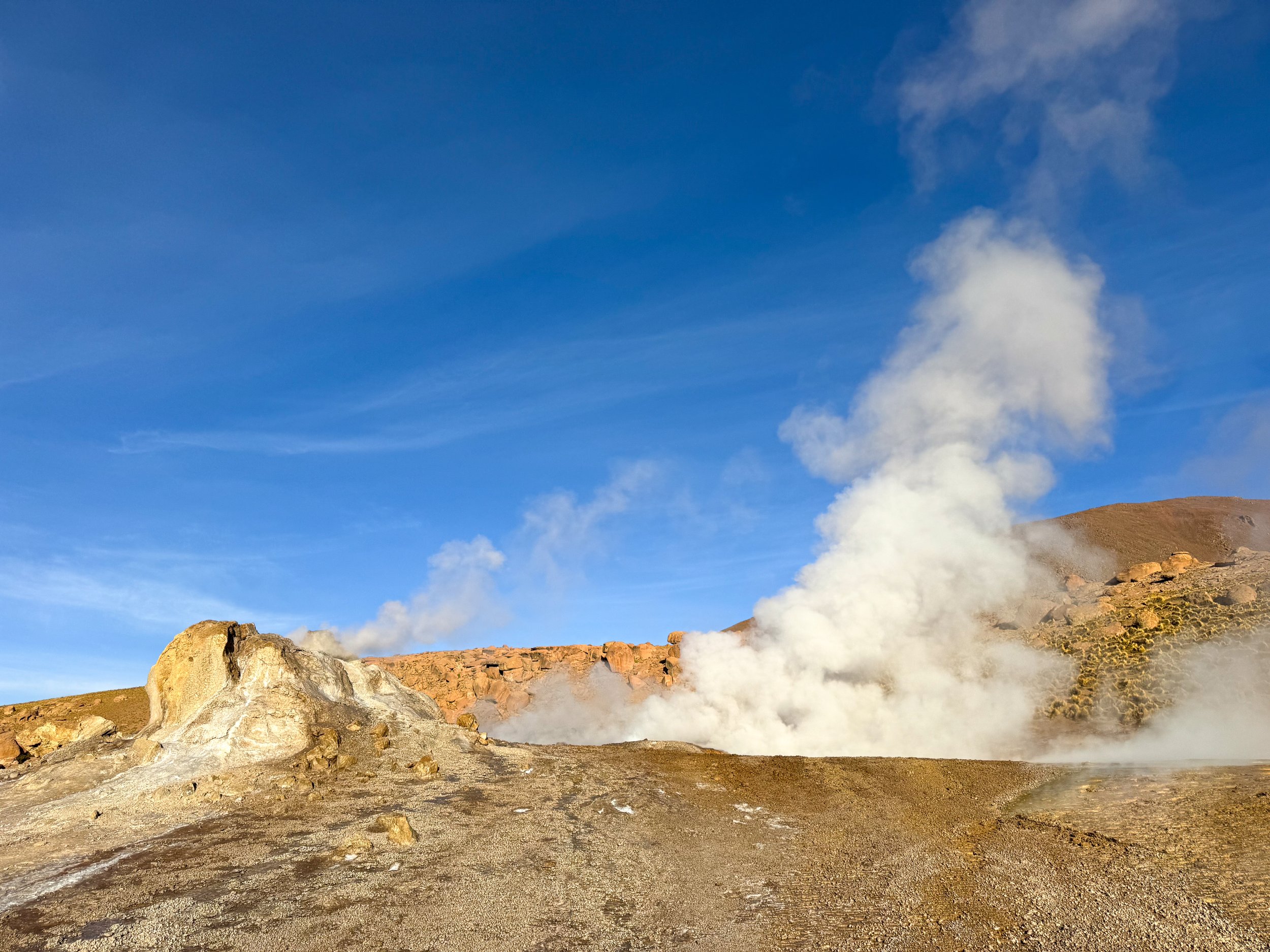
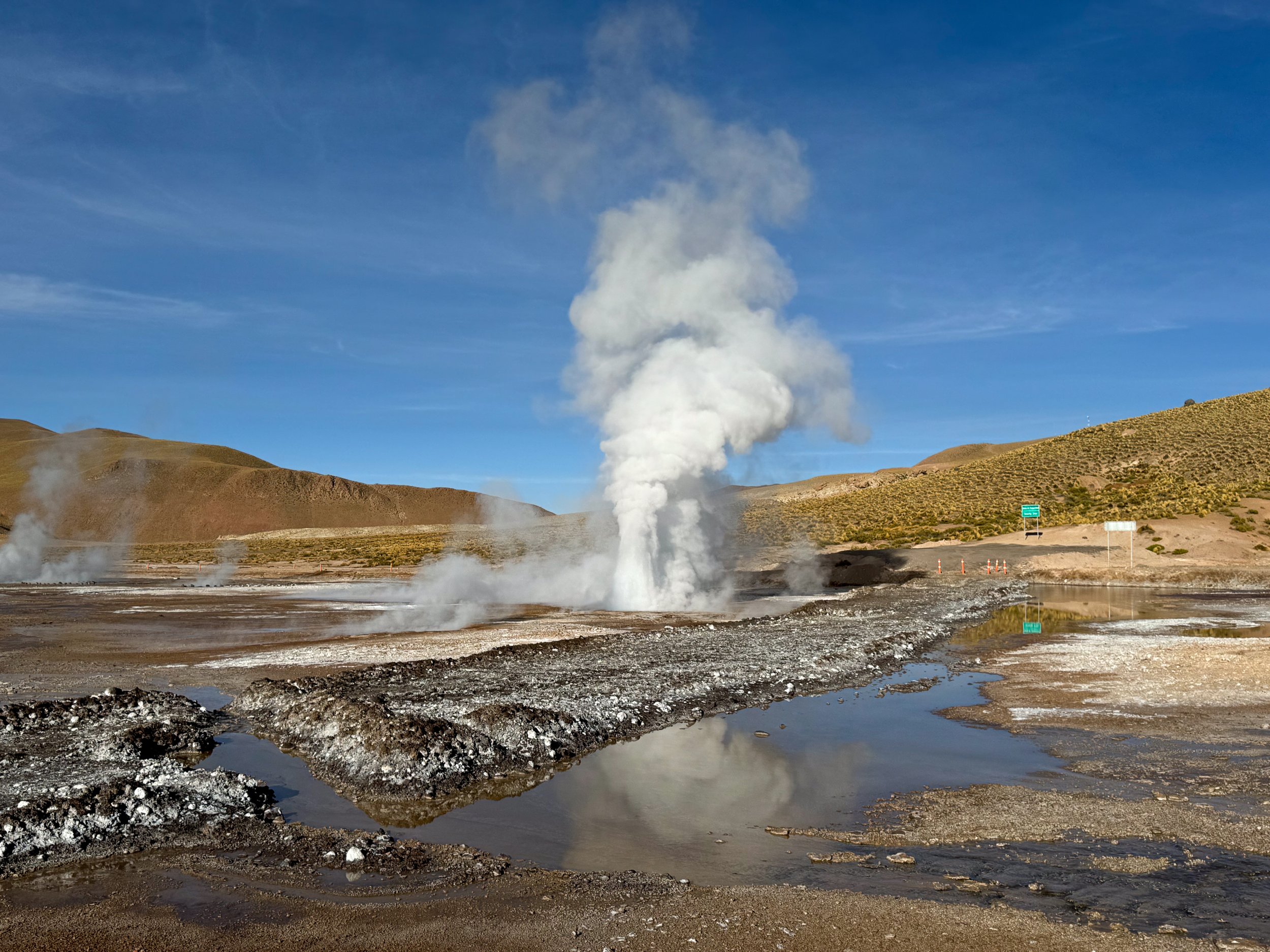
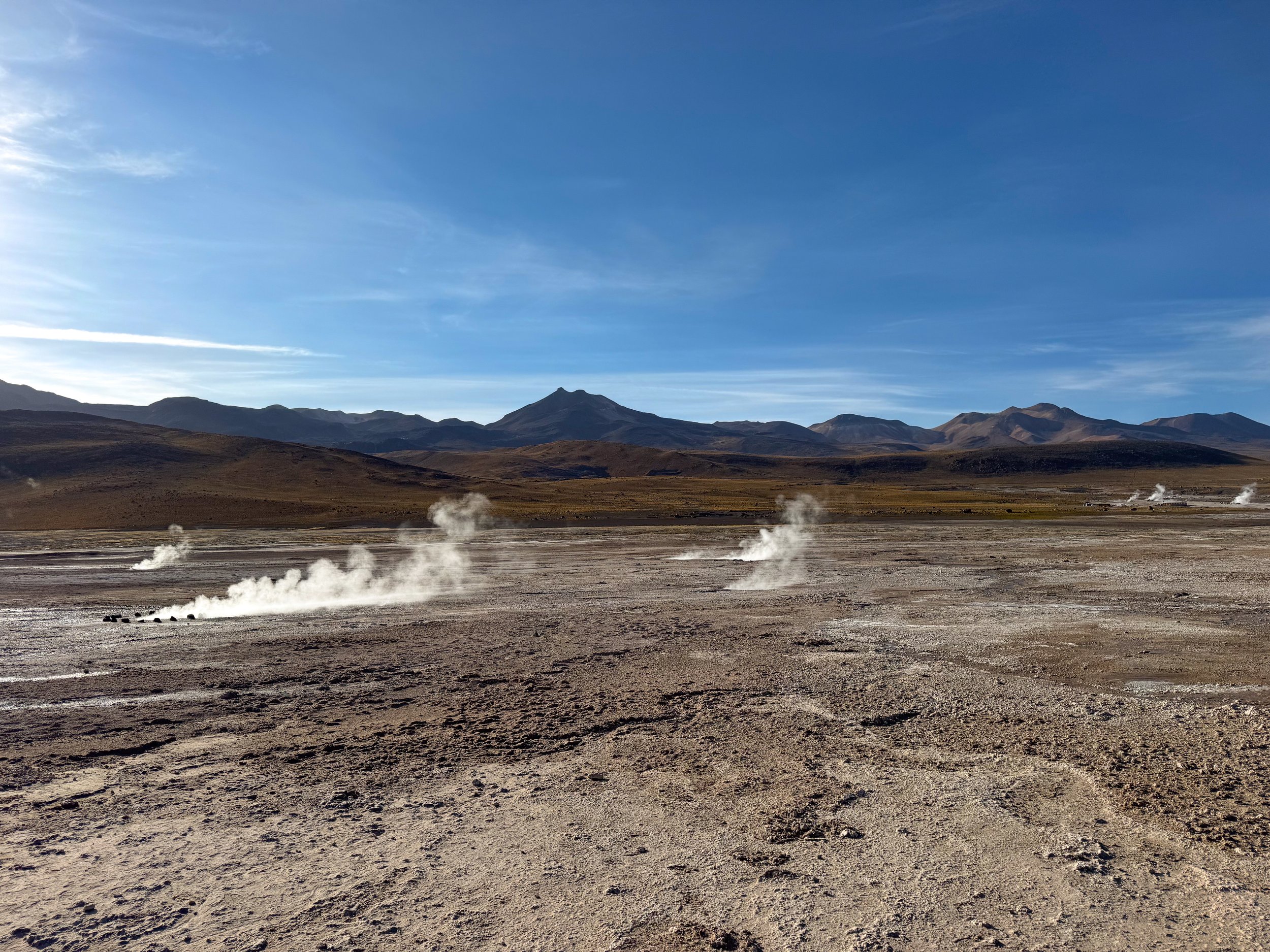
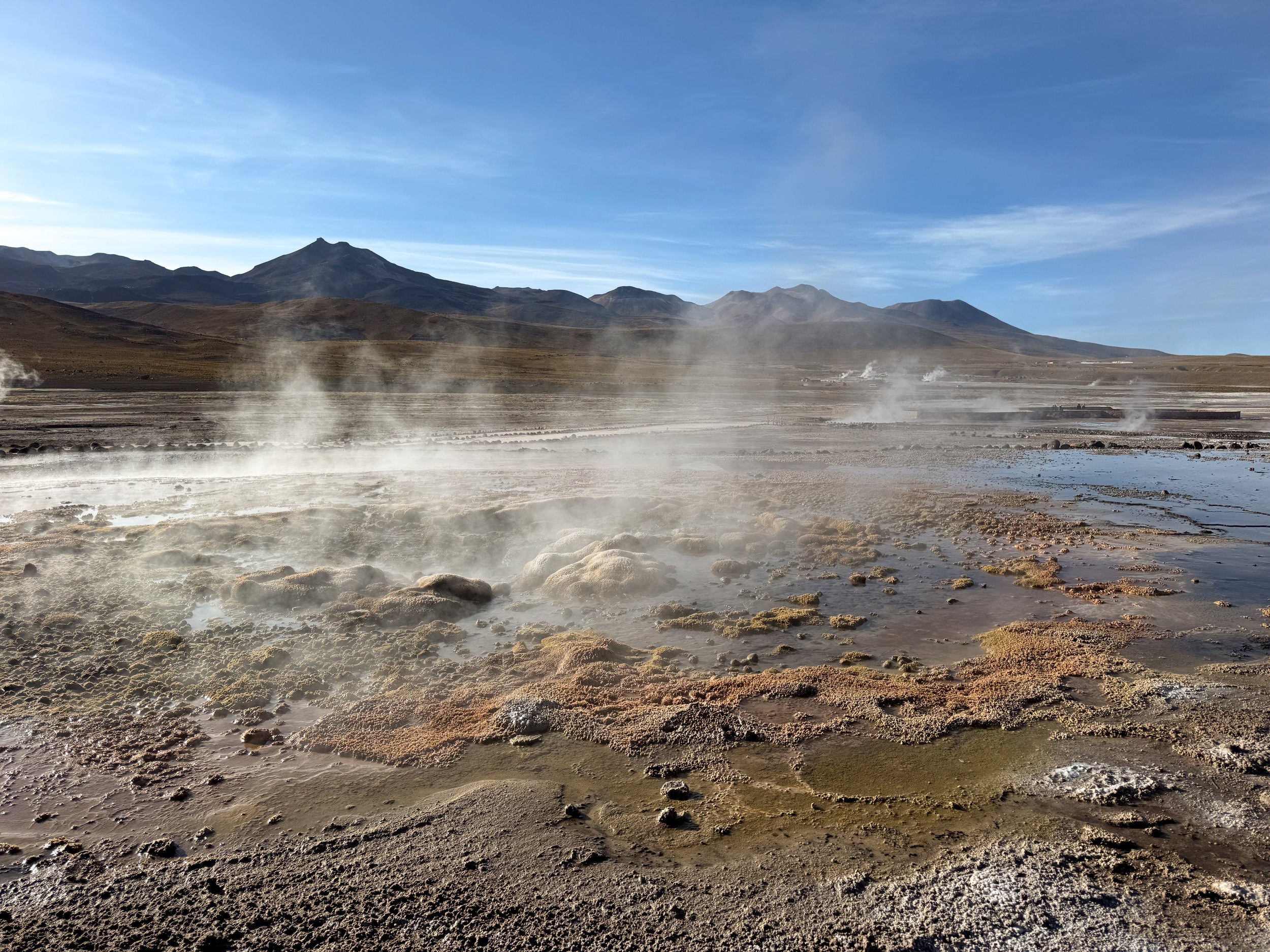
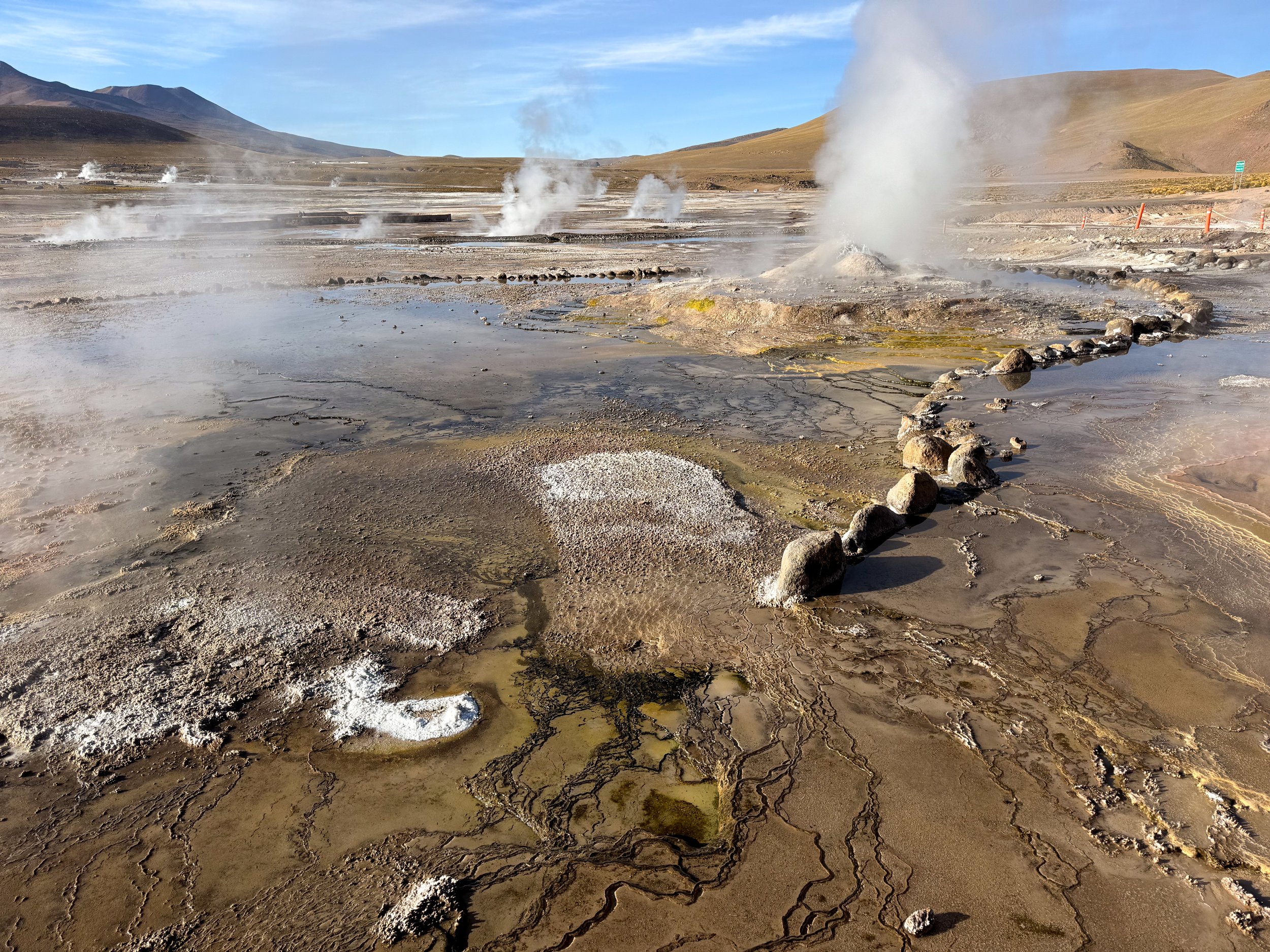
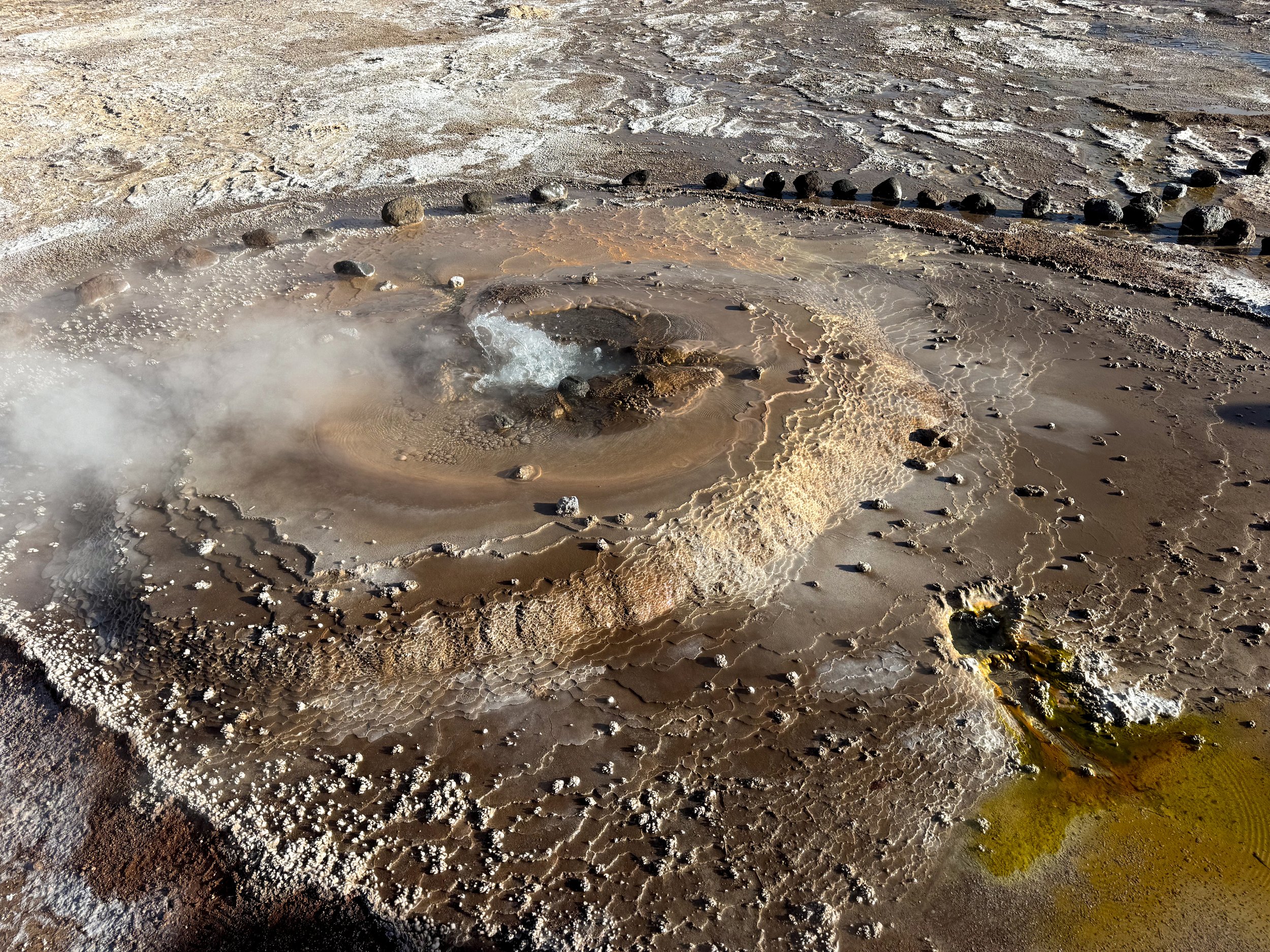
El Tatio Geysers. A large geothermal field in a valley with dozens of steaming vents, bubbling pools, erupting geysers and streams of scalding water. The geysers are small but varied. Some erupt from cone like structures of sediment, others bubble and sputter from shallow pools of water and some steam from tiny holes. The frigid morning temperatures make the steam from the geysers most visible. In the extreme cold, boiling water erupting from the geysers freezes immediately creating sparkling streaks of ice. It was -8C the spring morning we visited so warm clothes and layers were a necessity.

Vado Putana Wetlands. A desert wetland at the base of the Cerro Pabellón Volcano. It’s a place where a variety of birds and wildlife acclimate at. We stopped to admire the green and yellow marshy landscape spotting flamingos, vicuñas, horned coot and blue beaked ducks.

Rock Formations
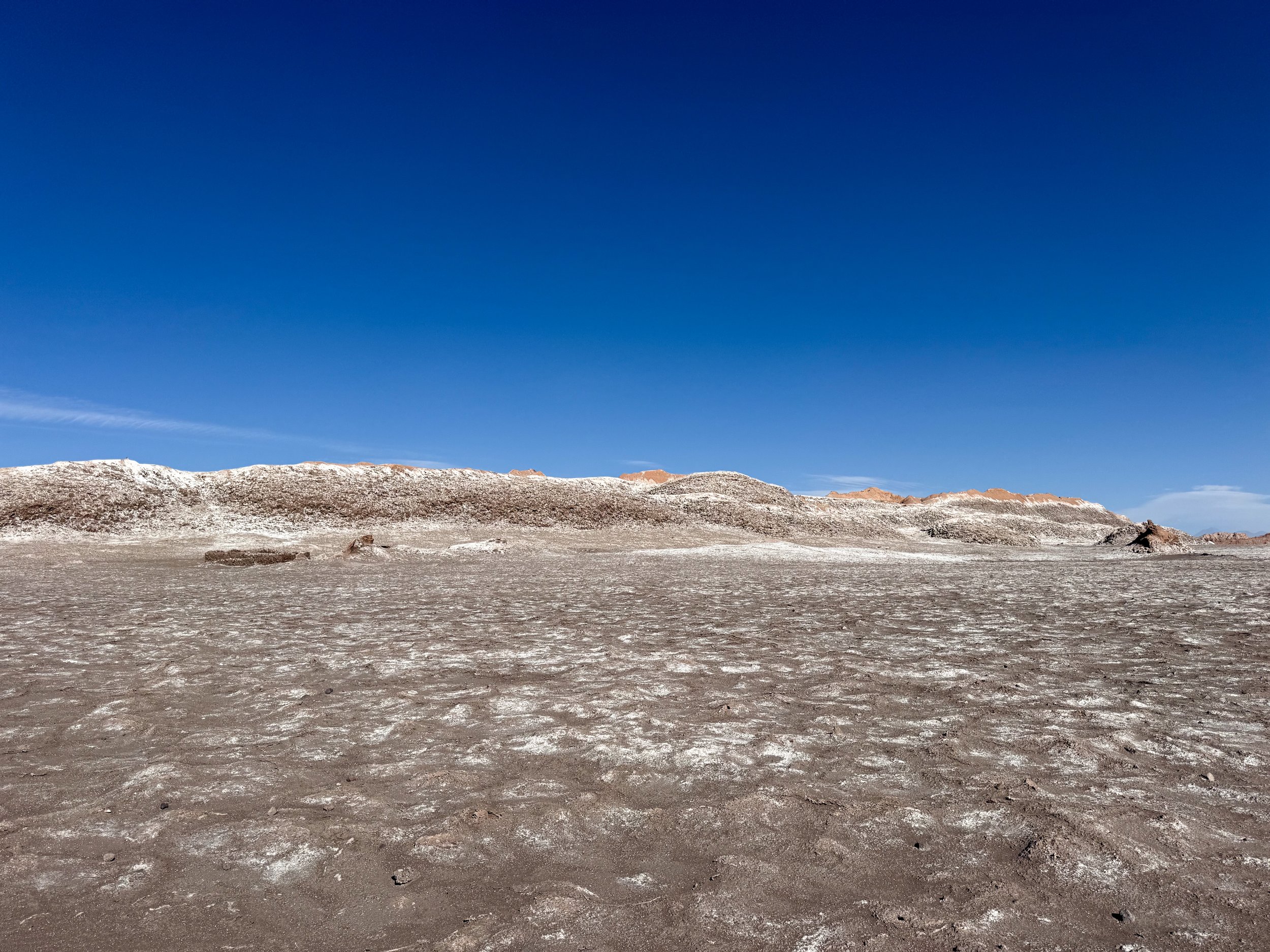
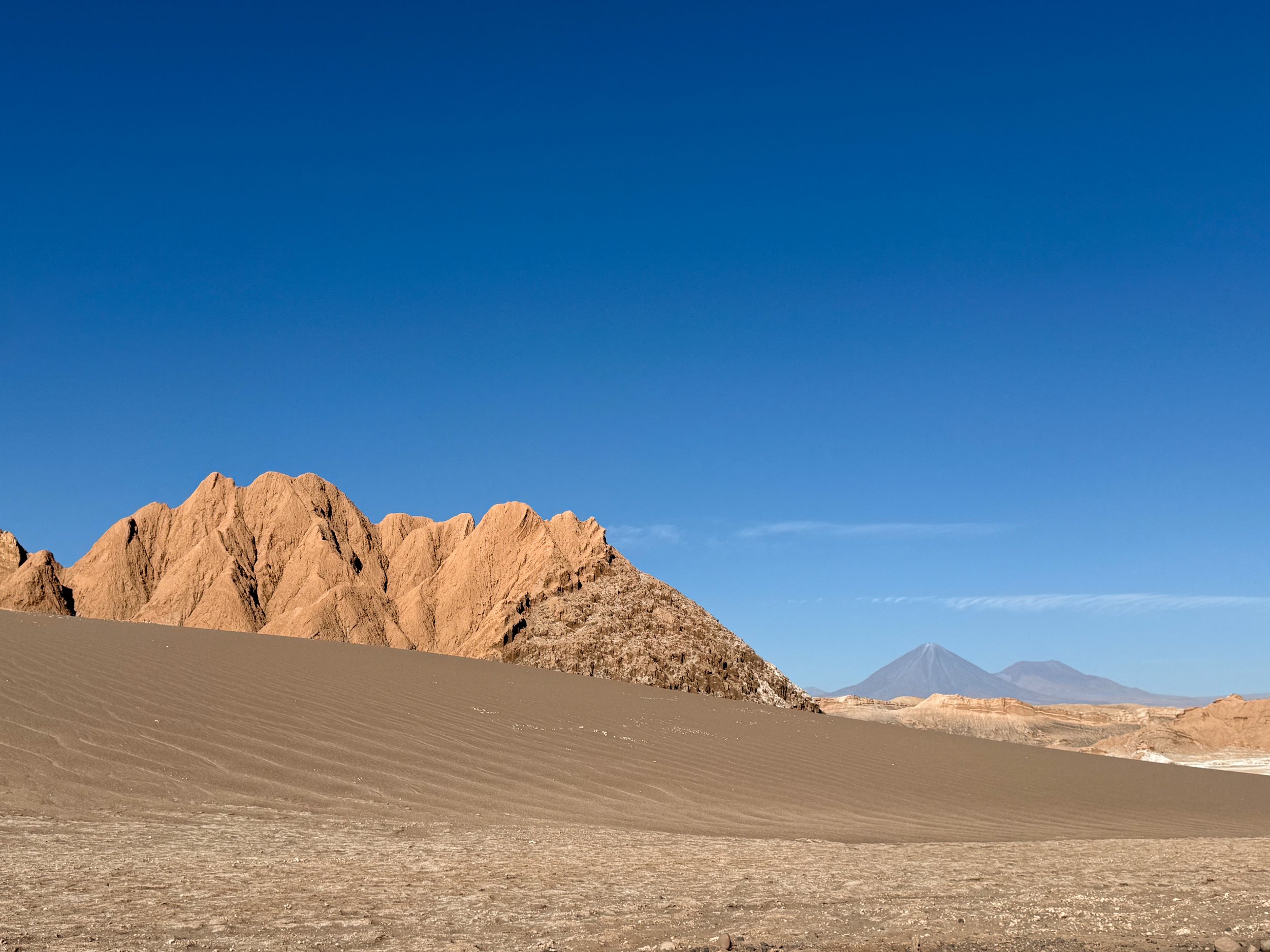
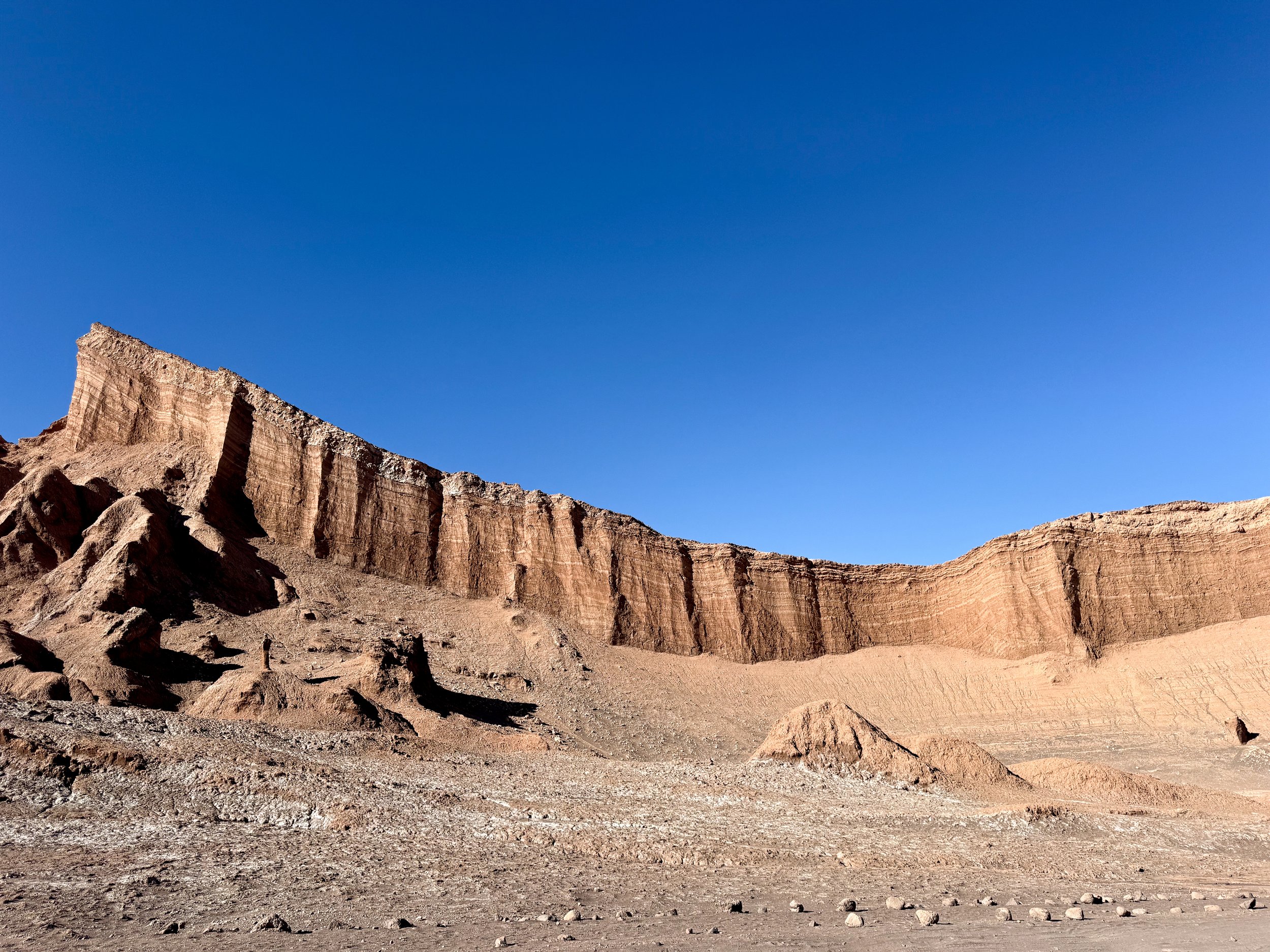
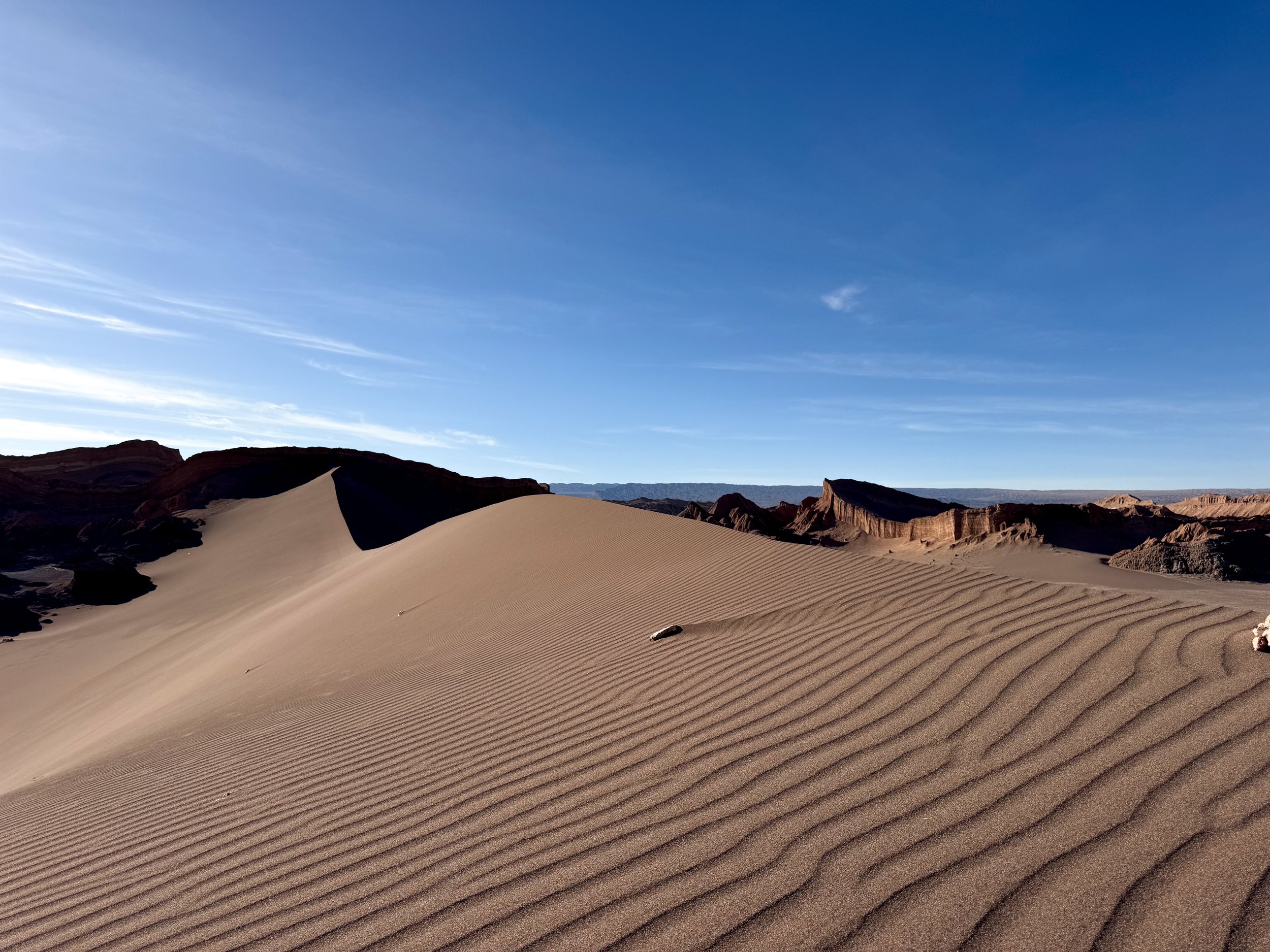
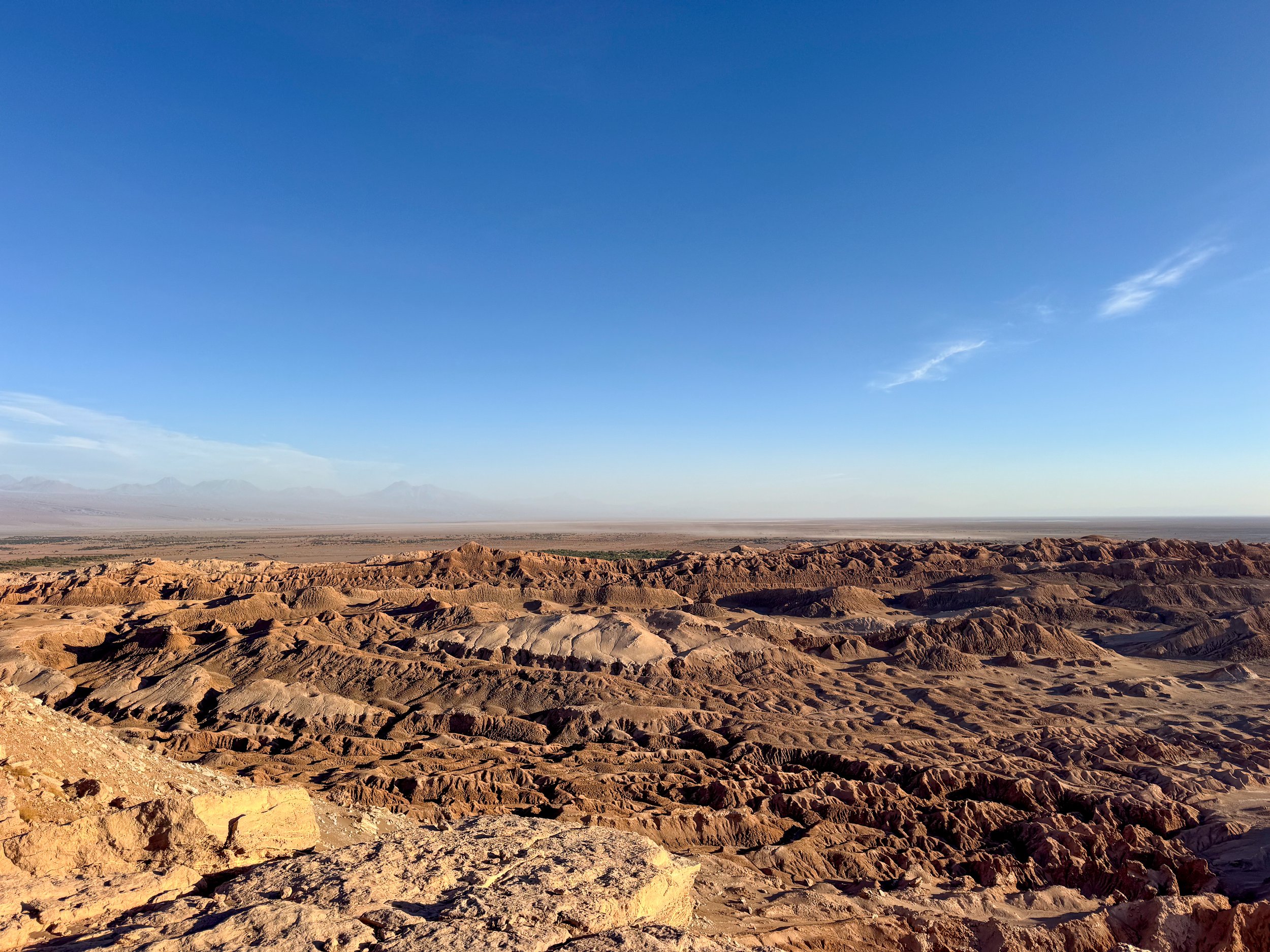
Valle de la Luna (Moon Valley). A desert valley named after white dustings of salt over the valley’s surfaces, resembling the moon. We hiked through the valley, stopping to see rock formations, climb giant dunes and take in the view from scenic overlooks.
Mina Victoria. A former salt mining area to listen to the salt creaking and cracking as the afternoon temperature drops.
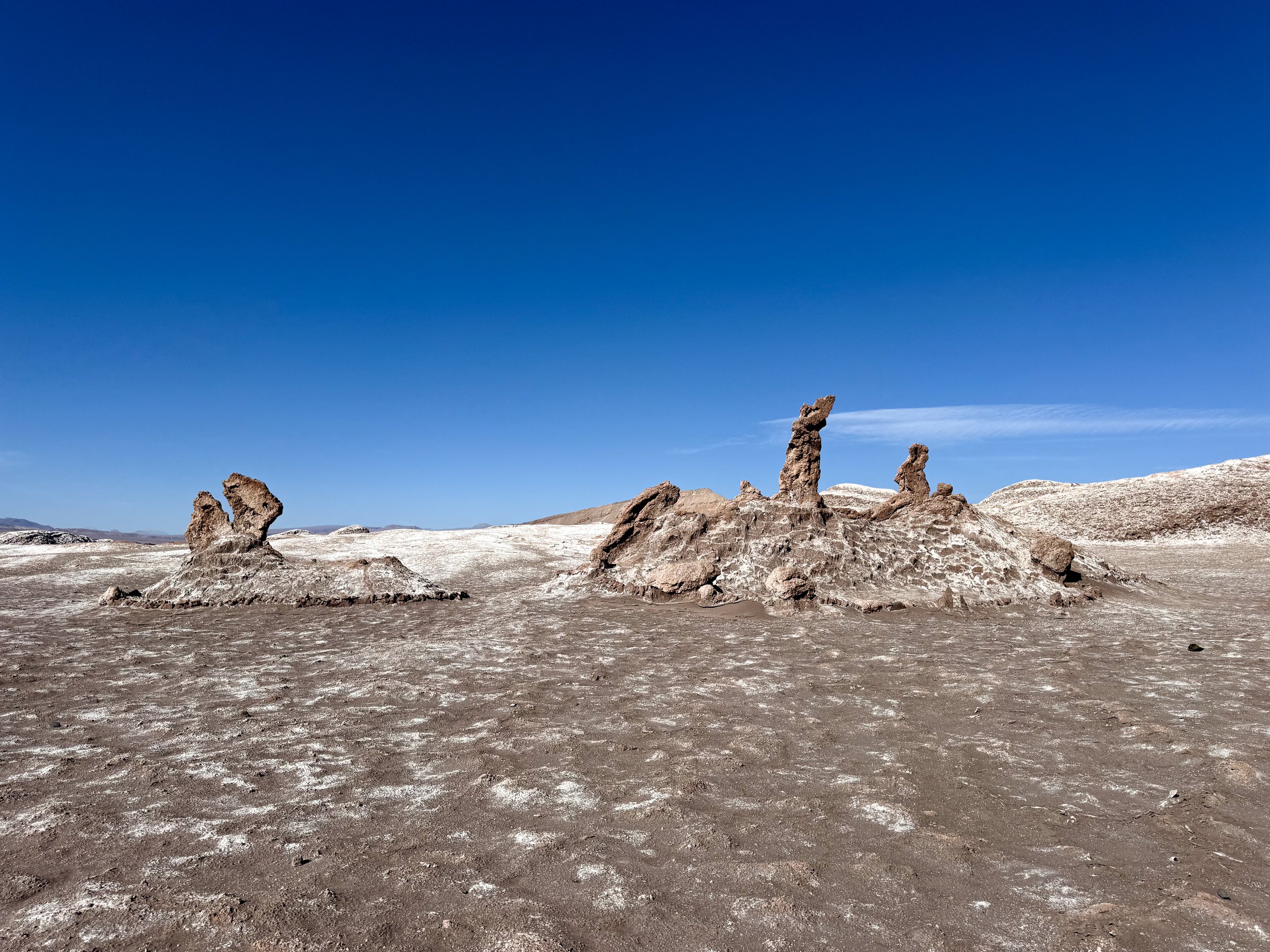
Tres Marias. A rock formation that looks like two women praying with their hands up. The third Maria has eroded.
The Amphitheater. A large crescent shaped bluff with layers of brown, orange and salty sediment. We followed a trail leading along its base.
Duna Mayor. A massive tan and grey sand dune with a trail leading up to its crest overlooking the valley.
Good to Know. The park cannot be entered on foot. It can be entered by bike before 11am. Getting here by car with a tour company is the best way to visit.
Mirador de Kari & Piedra del Coyote. A popular cliff side overlook to visit at sunset overlooking the Valley of the Moon and canyon below. On a windy day, the dust and sand blowing from the canyon below can be unbearable.

Desert Animals. The Atacama Desert and Chilean Andes are home to a variety of wild animals. On our tours across the region, we spotted several of the most common animals including Chilean flamingos, vicuñas, chinchillas, desert foxes, and ñandús.
Astronomical Sights
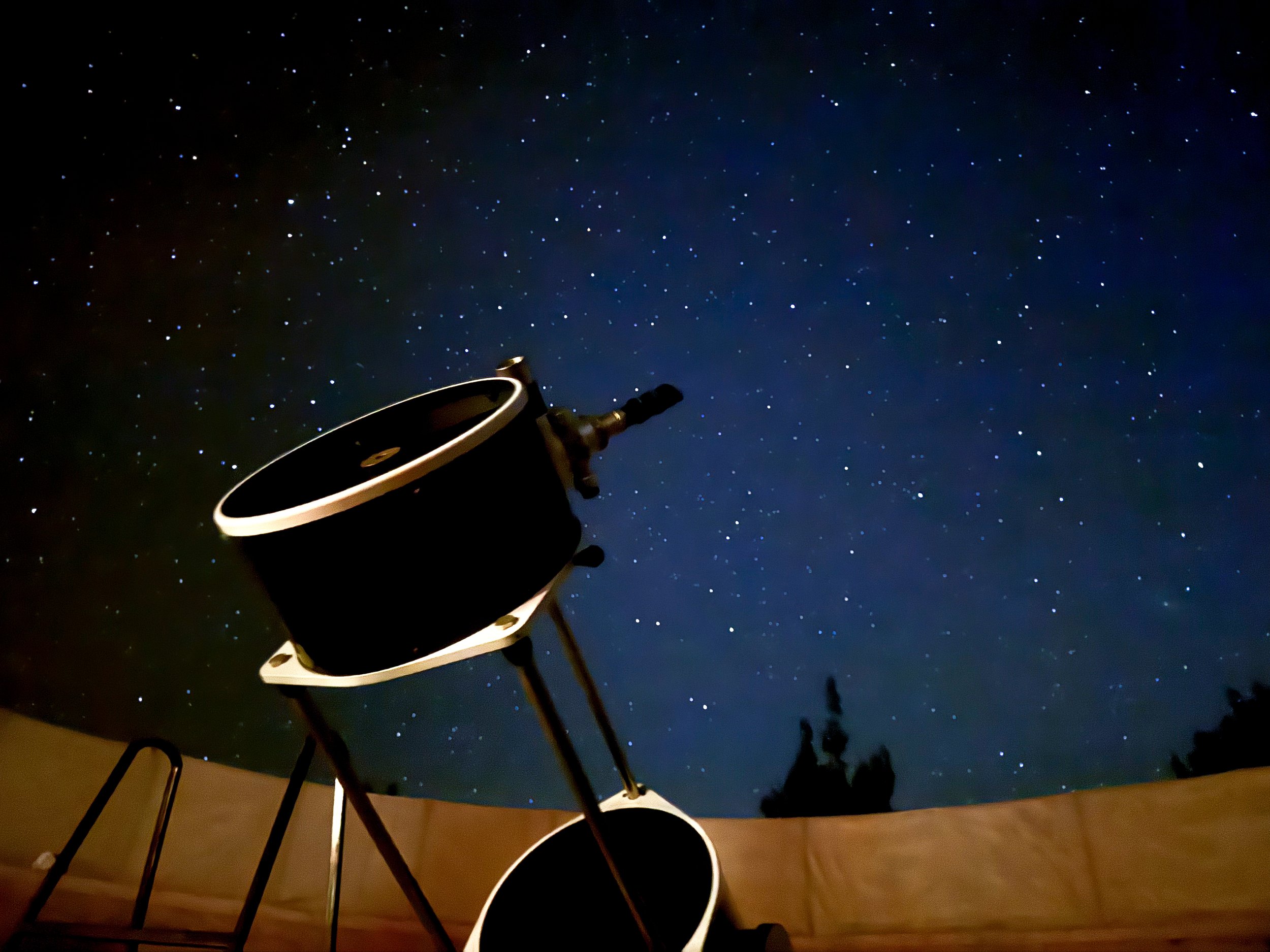
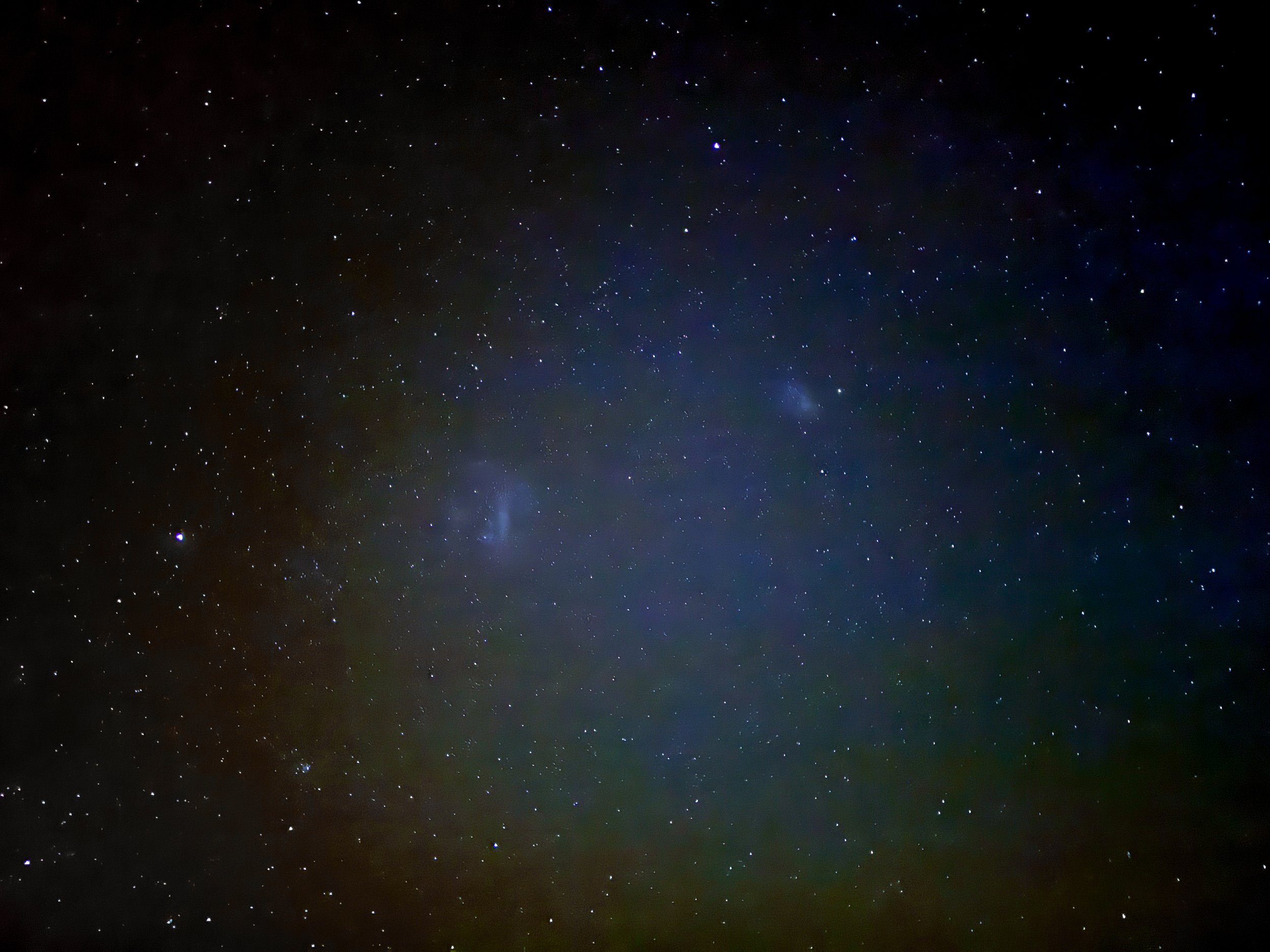
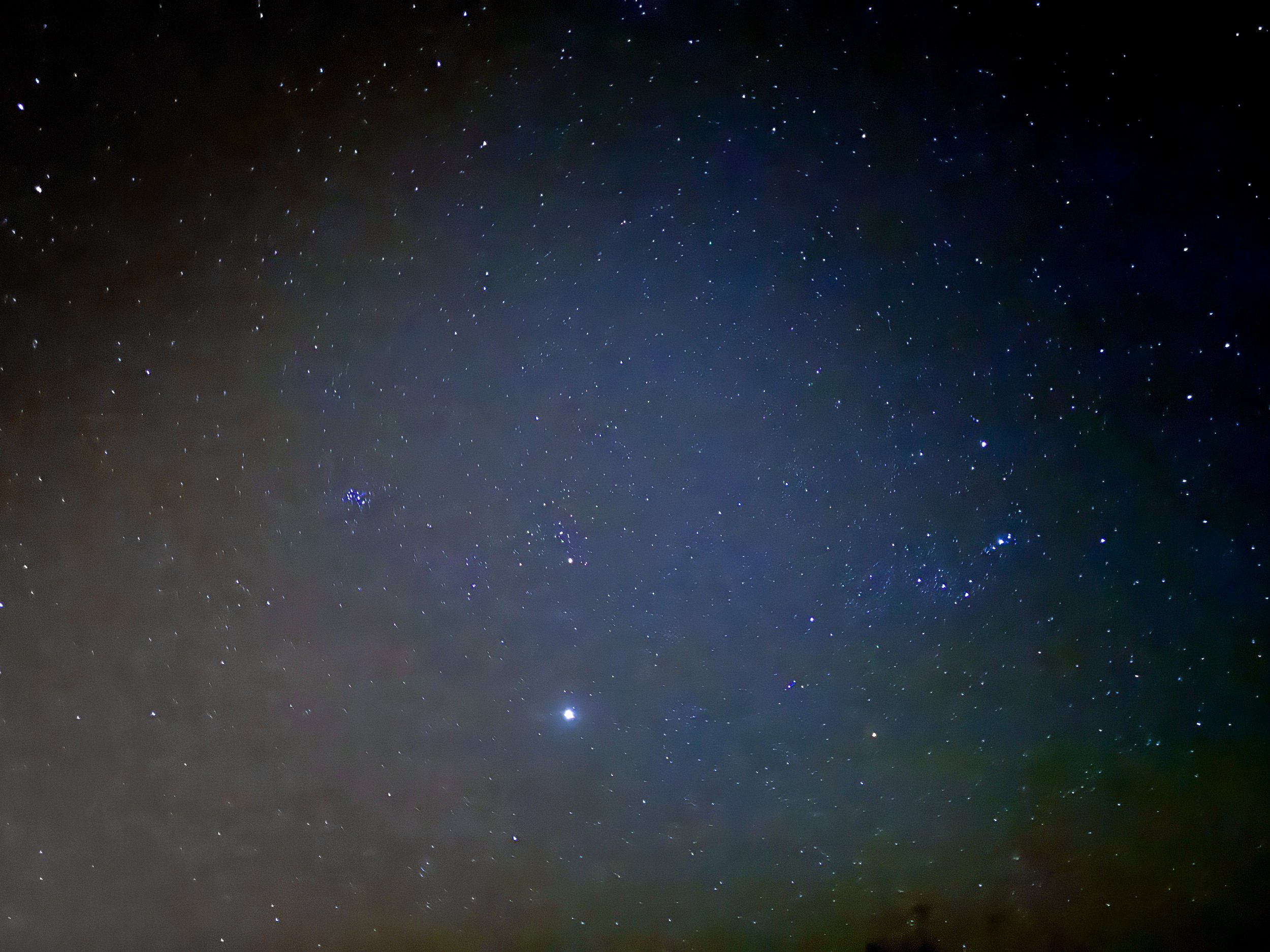
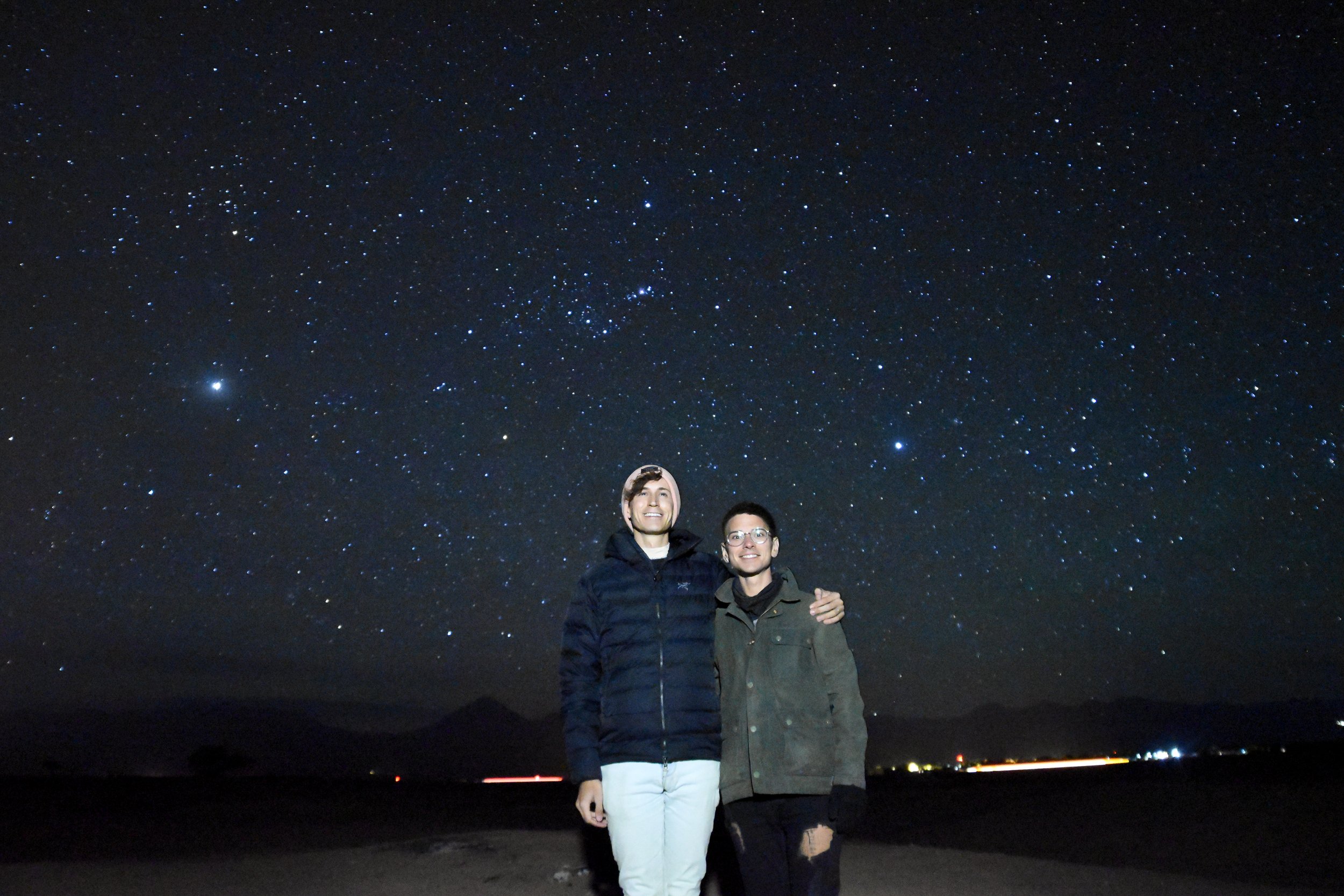
Stargazing Tour. The Atacama Desert is one of the world’s designated dark sky regions. We took a stargazing tour and got to see meteors streaking across the sky, satellites orbiting and an incredible array of celestial objects!
Through three telescopes, the astronomers pointed out two nebulae including the cloudy mass of the Orion Nebula and the cosmic veins of the Tarantula Nebula. We observed the blue star cluster of The Pleiades and a globular cluster with over 6 million stars held together by a supermassive black hole. We spotted the fuzzy disk of the Andromeda Galaxy and the bright blue star, Achernar. They showed us the planet of Saturn, its rings and 2 of its moons as well as Jupiter and 3 of its moons. We ended the night with wine and photos under the dark sky.
Good to Know. Though the Atacama is a dark sky region, the conditions also need to be right. It’s best to stargaze when the moon is not visible. The light pollution is less the further away from San Pedro de Atacama.
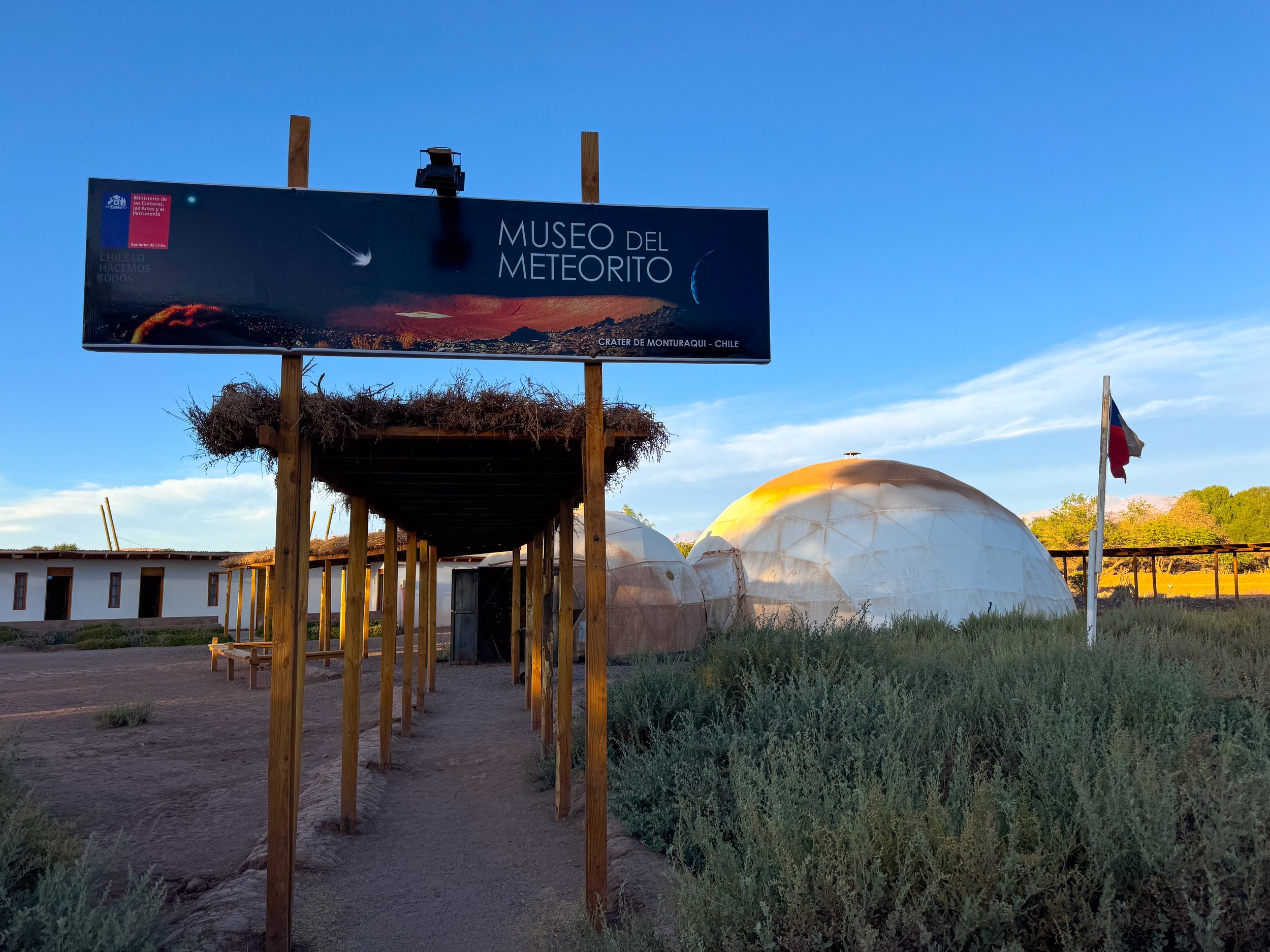
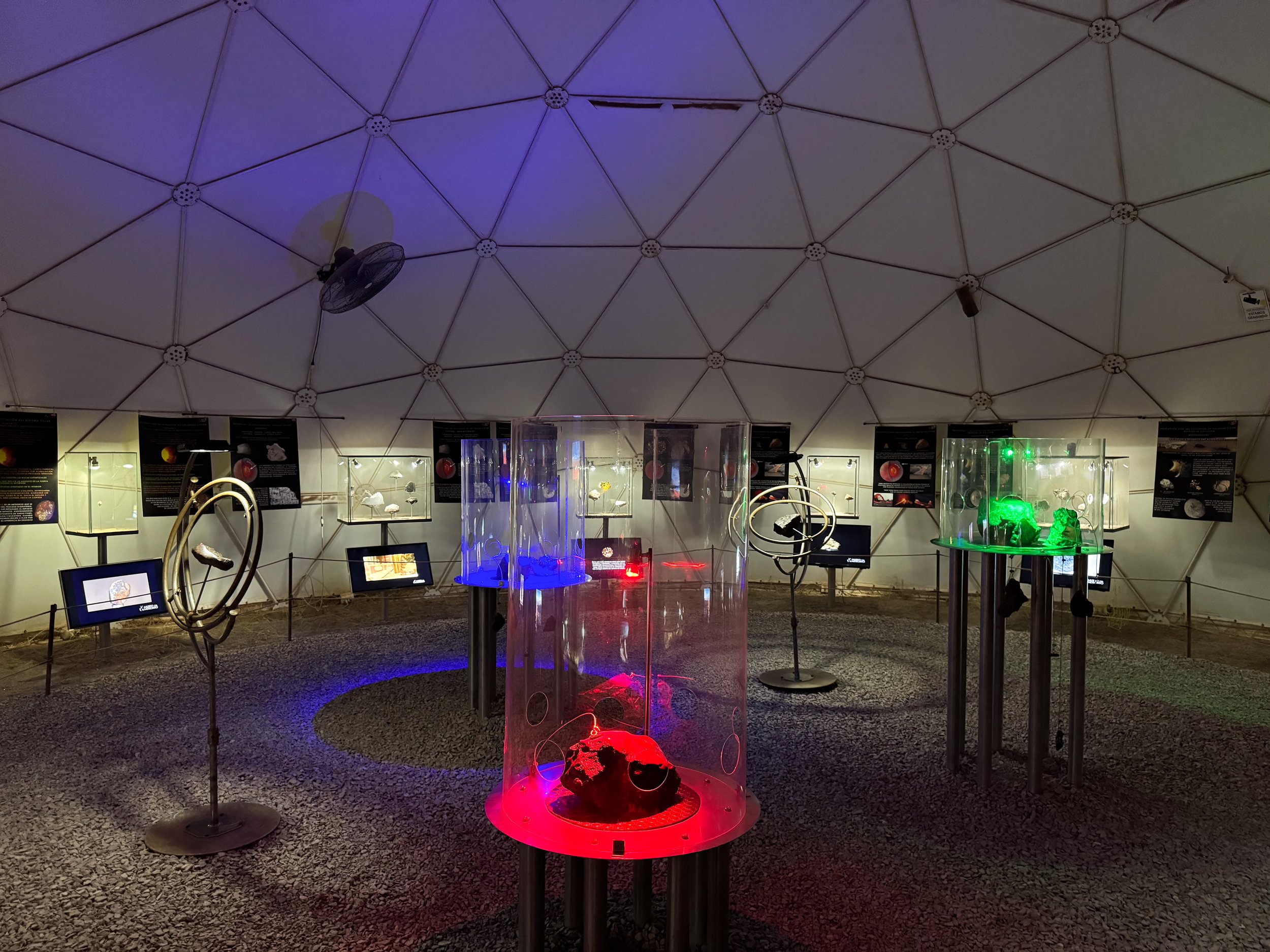
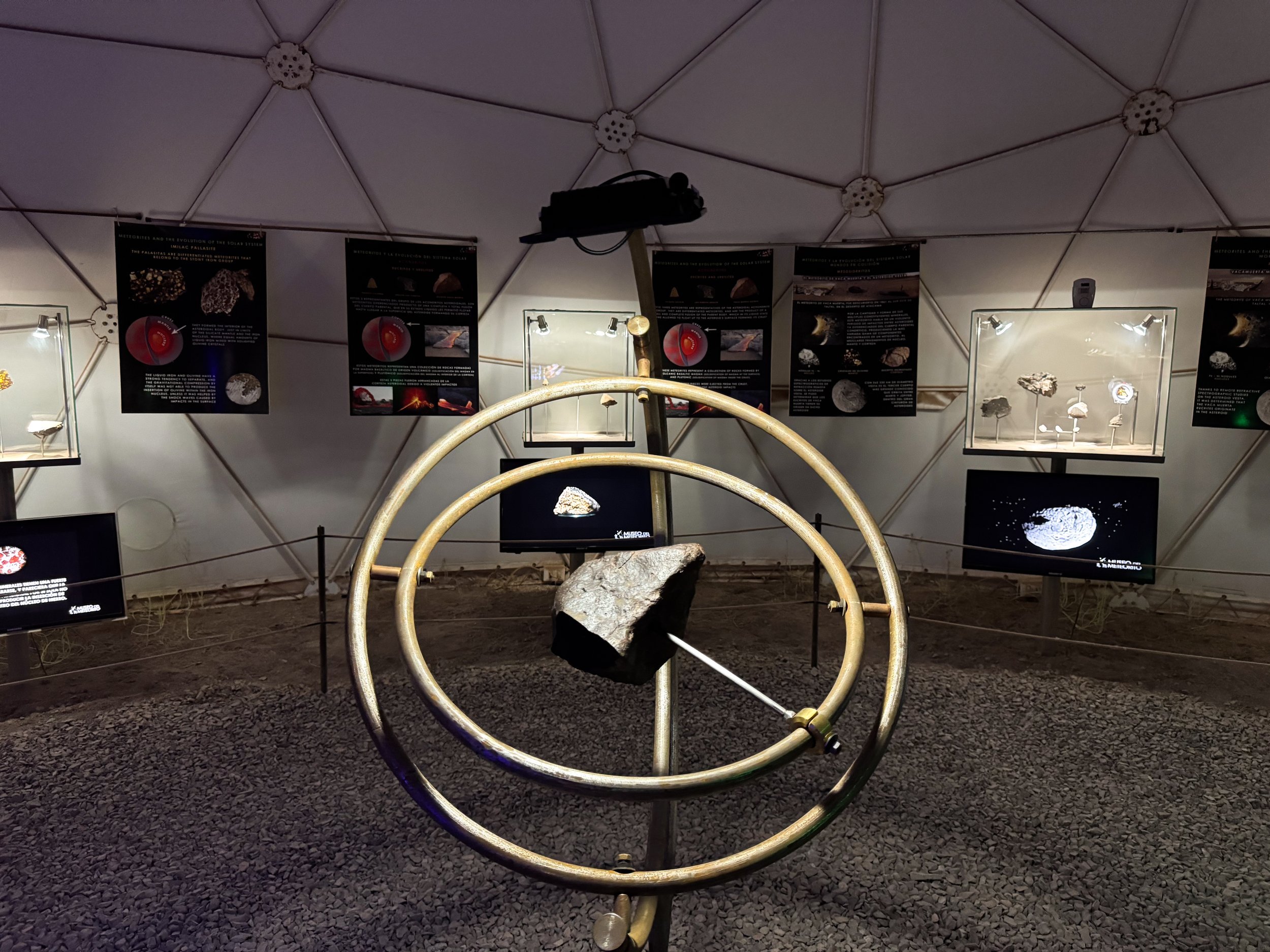
Meteorite Museum. A museum in a geodesic dome housing a collection of meteorites, many of which are from the Chilean Atacama Desert. The guided audio tour explains the types of meteorites and their importance in building the inner planets of our solar system. Some are available to touch and there is even a small display case with slices of of Chilean meteorites for sale ranging in price from $10 to $200
Tour Companies
Dozens of tour companies operate along Calle Caracoles offering excursions throughout the Atacama. We booked our tours with multiple companies in person, on Viator and through Get Your Guide. Most tours offer pick up and include a table spread of food and beverages. Here are the tours we booked:

Places to Eat & Drink
Adobe. A beautiful restaurant with an outdoor patio surrounded by adobe brick walls and shaded by a thatched awning. We dined here at lunch while listening to live music and sipping on spiced Pisco Sours. To eat, we ordered traditional Chilean seafood dishes including the Southern Hake and Camarones al Pil Pil.
La Casona. A popular restaurant with nightly musical performances and an outdoor fire pit. We sat in their outdoor patio, listening to live music, sipping on cocktails and eating vegetarian versions of traditional Chilean dishes like Chorrillana and Pastel de Choclo.
Helderia Babalu. An Ice cream and gelato shop serving a range of Chilean and inventive flavors. We came here three times, trying several flavors like: pineapple-mint, orange-ginger, prickly pear, quinoa leche, lucuma (similar to passion fruit) and tres leches.
Emporio Andeno. A cafe and empanaderia with coffees and a list of over a dozen empanadas including vegetarian versions of Champiñón made with mushrooms, corn and cheese or the Vegano Verde made with mushrooms, spinach, corn salsa and vegan béchamel.
Karavan Restobar. A restaurant and bar with adobe booths & tables, live music, local dishes and fresh juices. We ordered a few afternoon snacks, Bolitas de Queso y Jalapeño and Sopaipillas with pico de gallo. For drinks, we sipped on fresh pressed lemonade rica rica and passion fruit juice.
La Picada Del Indio. A popular restaurant and bar. Come here for all day happy hour in their back patio, two cocktails for 8,000 Chilean pesos.
Charrua. A pizzeria with a range of thin crust pizzas. We ordered a classic margherita pizza and four cheese pizza, each with rica rica seasoning. It was our first pizza in nearly 3 months and did not disappoint!
La Franchuteria. A bakery and cafe with a peaceful dining area in a lush outdoor patio surrounded by tiny chirping birds. Come here for their pastries, quiche and fresh breads, especially the baguettes and baguette sandwiches.
El Barro. A beer garden style restaurant with a large shaded patio. Come here for their affordable prix fixe menus and generous portions. Try the ceviche, fried fish, daily dessert and red sangria.

Chilean Cuisine
Chorrillana. A traditional Chilean dish made from French fries covered with meat or vegetables and topped with artichoke hearts and cherry tomatoes.
Pastel de Choclo. A Chilean version of shepherd's pie made with a mixture of sautéed vegetables and meat topped with a creamy corn pudding and broiled.
Pil Pil. A traditional style Chilean dish made from meat, seafood or mushrooms cooked in a spicy and savory sauce flavored with garlic and chili cacho de cabra. It’s typically served with papas doradas.
Sopaipillas. Fried flat breads served with a sweet or savory topping like jams, salsa or ceviche. It’s often served as a snack or appetizer.
Bolitas de Queso. Deep fried balls of cream cheese. It’s often served as a snack or appetizer.
Fresh Juice. Freshly pressed fruit, herb and veggie juice blends are incredibly popular across the town with dedicated juice bars and menus dedicated to juices at restaurants.
Rica Rica. A popular herb used in many dishes that tastes and smells similar to oregano.
Olives. Olives and olive oil are typical ingredients in many dishes. Most restaurants even serve olive oil table side with meals.
Wine. Chile has several grape growing regions used to make wine. Malbecs and Merlots are the most common.

Where to Stay
Desert Eco Dome. We stayed in an eco dome outside of the city center that we found on Airbnb. The white domed structure houses a kitchen, living room and lofted bedroom. The desert property has an adobe house, outdoor hammocks and shaded lounge areas. Book here.
Getting Around
On Foot. The town of San Pedro de Atacama is easily walkable. Everything is within 1km of the main street, Calle Caracoles.
By Bike. Several companies around the city center rent bikes by the day. This is a great option to visit sights in the outskirts of the city without a tour.
By Tour. The most efficient way to visit sights across the region is by tour. Tours offer pick up from accommodations, via a sprinter van and return to the city center.
Airport Transfer. Most flights in and out of San Pedro de Atacama leave from the town of Calama 1 hour 30 minutes away. We booked a transfer with Ruta Chile. Book here.
Location Specifics
Drinking Water. Tap water is generally not safe to consume in San Pedro de Atacama. It’s best to drink filtered or bottled water.
Toilets. Like most places in South America, signs advise people not to flush toilet paper due to risk of clogging the plumbing.
Cash vs. Card. Many businesses accept credit cards but cash is often preferred.
Exchanging Cash. If exchanging US dollars for Chilean Pesos, make sure the bill is in perfect condition (no minor tears or markings) or it will not be accepted.
Language. Spanish is the dominant language however English and Portuguese are commonly spoken.
LGBTQ+ Safety. San Pedro de Atacama is very friendly to and accepting of queer travelers and locals.
Elsewhere in Chile
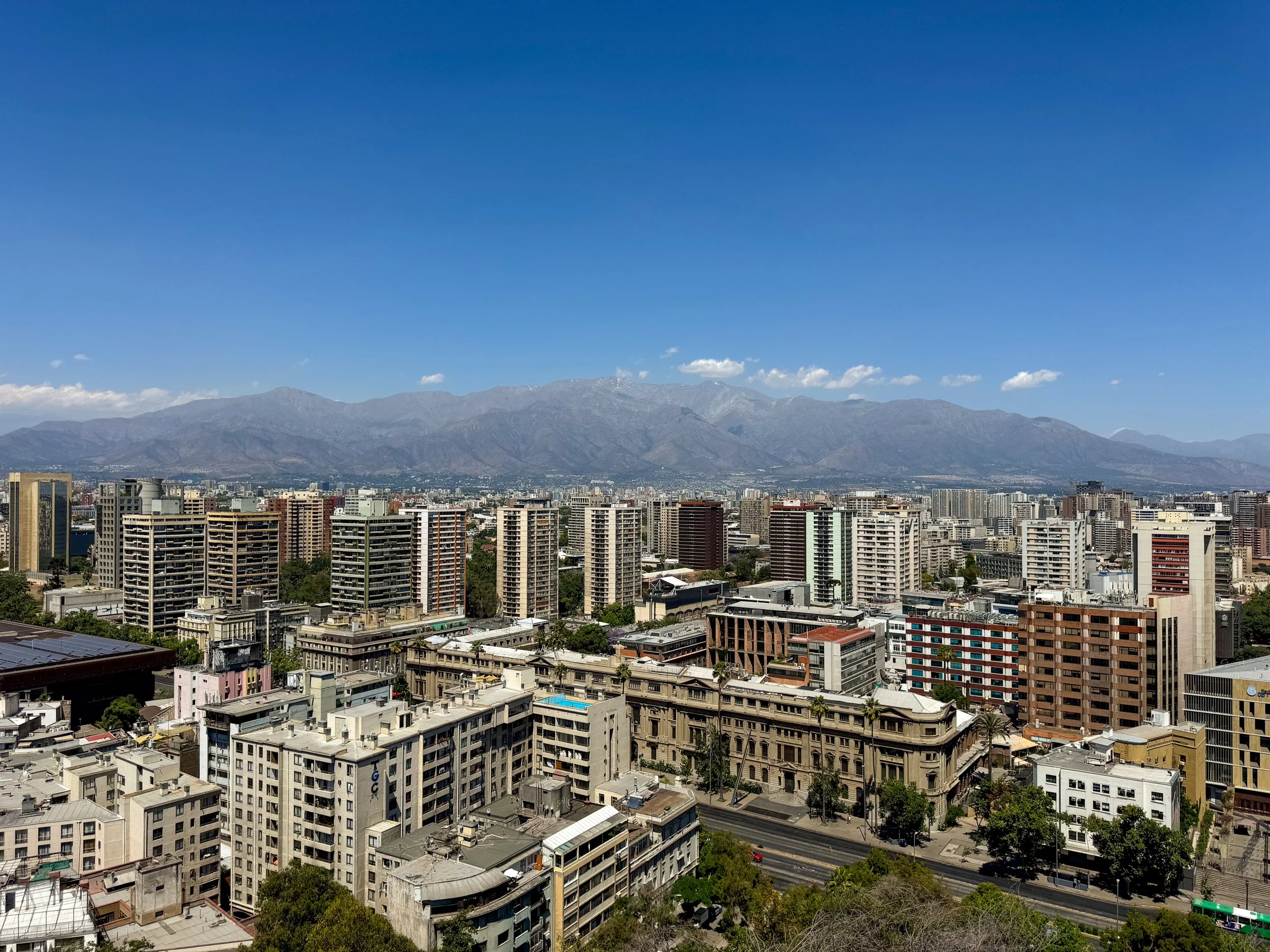
From the surreal deserts of Atacama to the urban energy of Santiago and the glaciers of Patagonia, continue your journey through Chile's diverse landscapes with these travel guides:
Santiago Chile Travel Guide: Neighborhoods, Food & Local Markets. Discover Santiago's vibrant neighborhoods, urban green spaces, celebrated food scene and cosmopolitan culture beneath the snow capped peaks of the Andes.
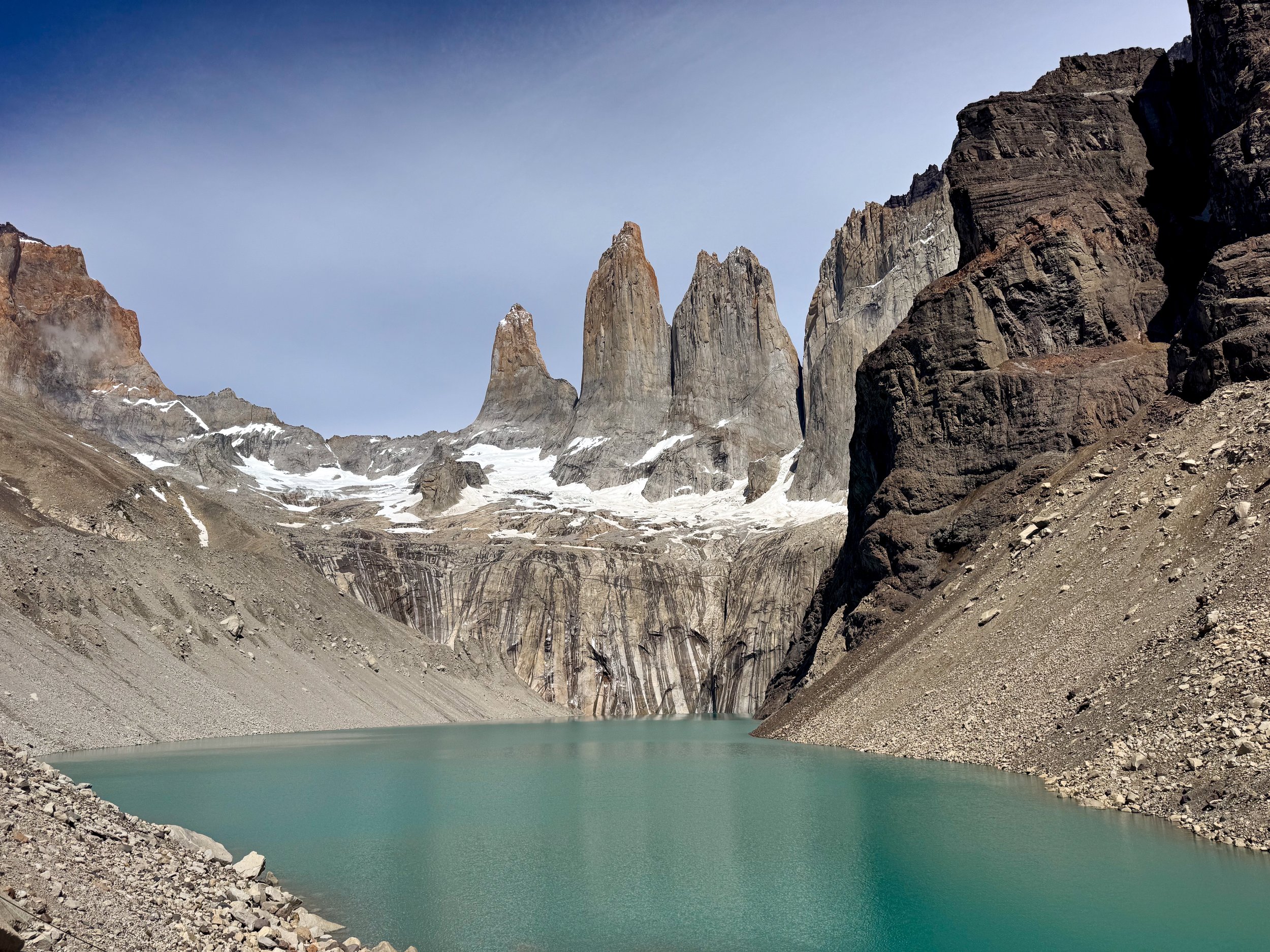
Patagonia Chile Travel Guide: Torres del Paine, Hiking & Road Trips. Road trip through Chilean Patagonia where scenic hikes, wildlife encounters, turquoise waterfalls and rugged landscapes create an unforgettable wilderness adventure.