

Patagonia Chile Travel Guide: Torres del Paine, Hiking & Road Trips
Road trip through Chilean Patagonia where scenic hikes, wildlife encounters, turquoise waterfalls and rugged landscapes create an unforgettable wilderness adventure.
Patagonia, Chile
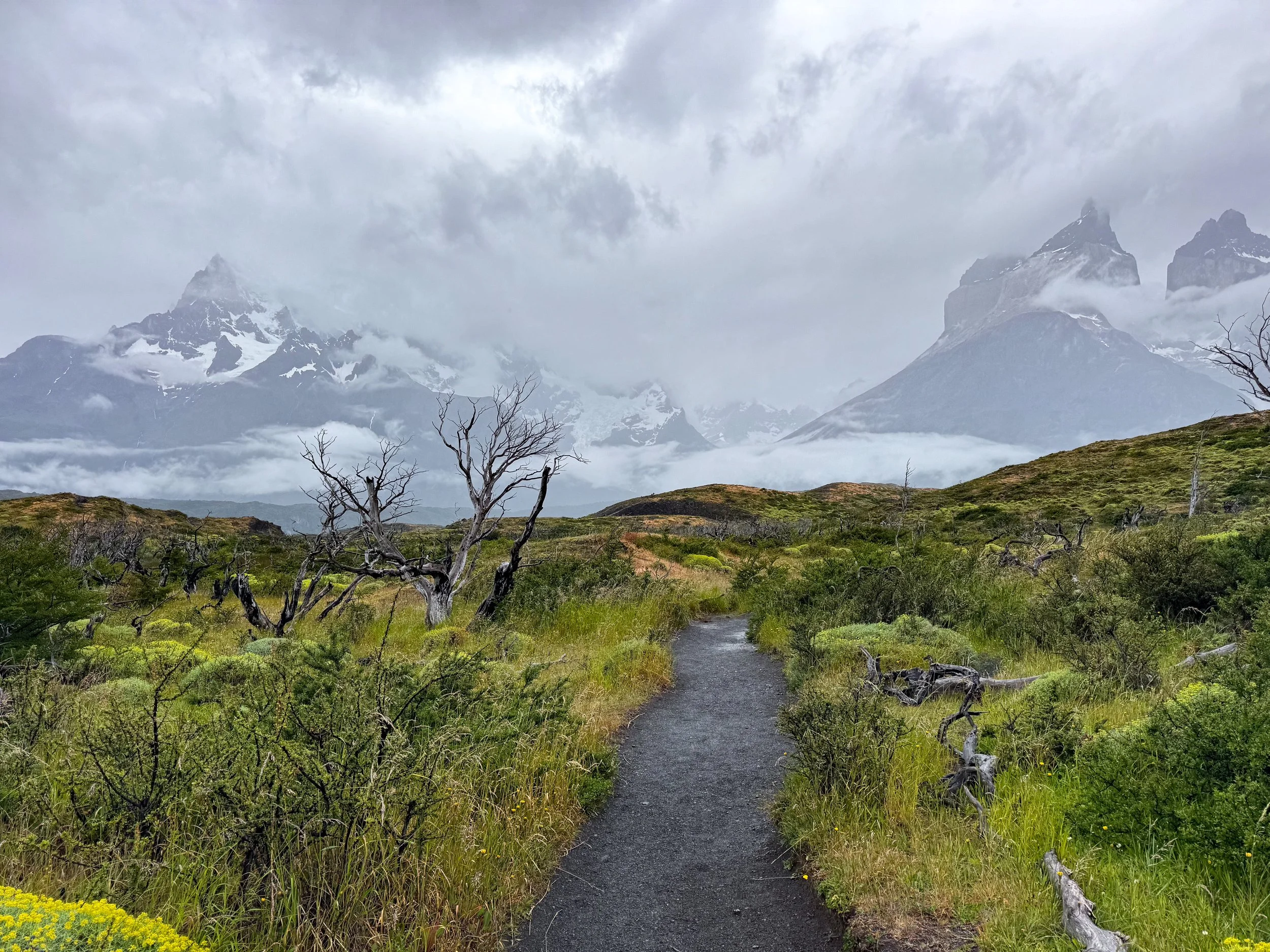
Patagonia is an awe inspiring and remote corner of the world spanning southern Chile. Its rugged terrain is covered in snow capped peaks, glacial lagoons, turquoise waterfalls and fjords. It’s an adventurous destination to road trip through with scenic lookouts, cave systems and mountainous hikes.
Torres del Paine National Park
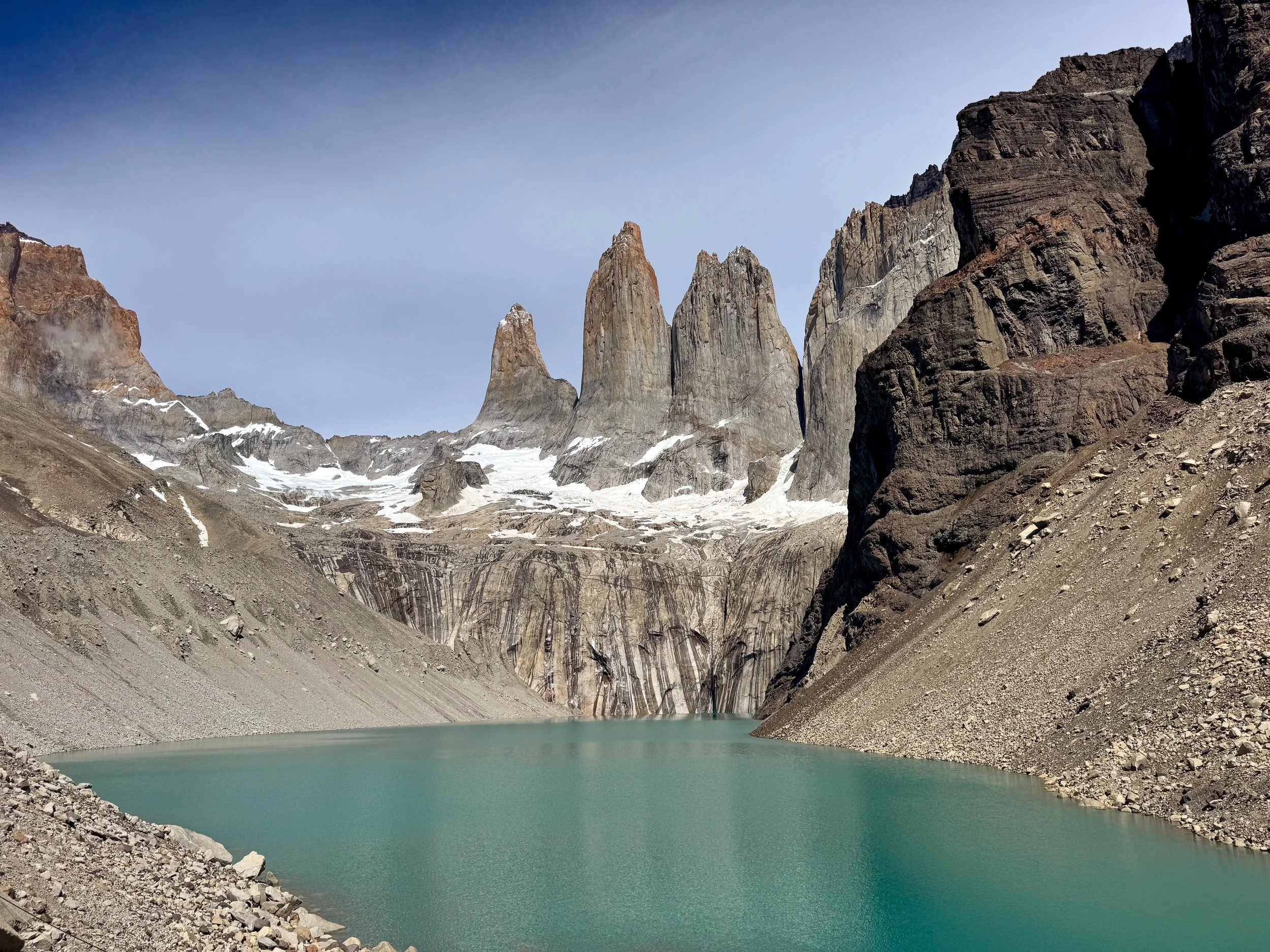
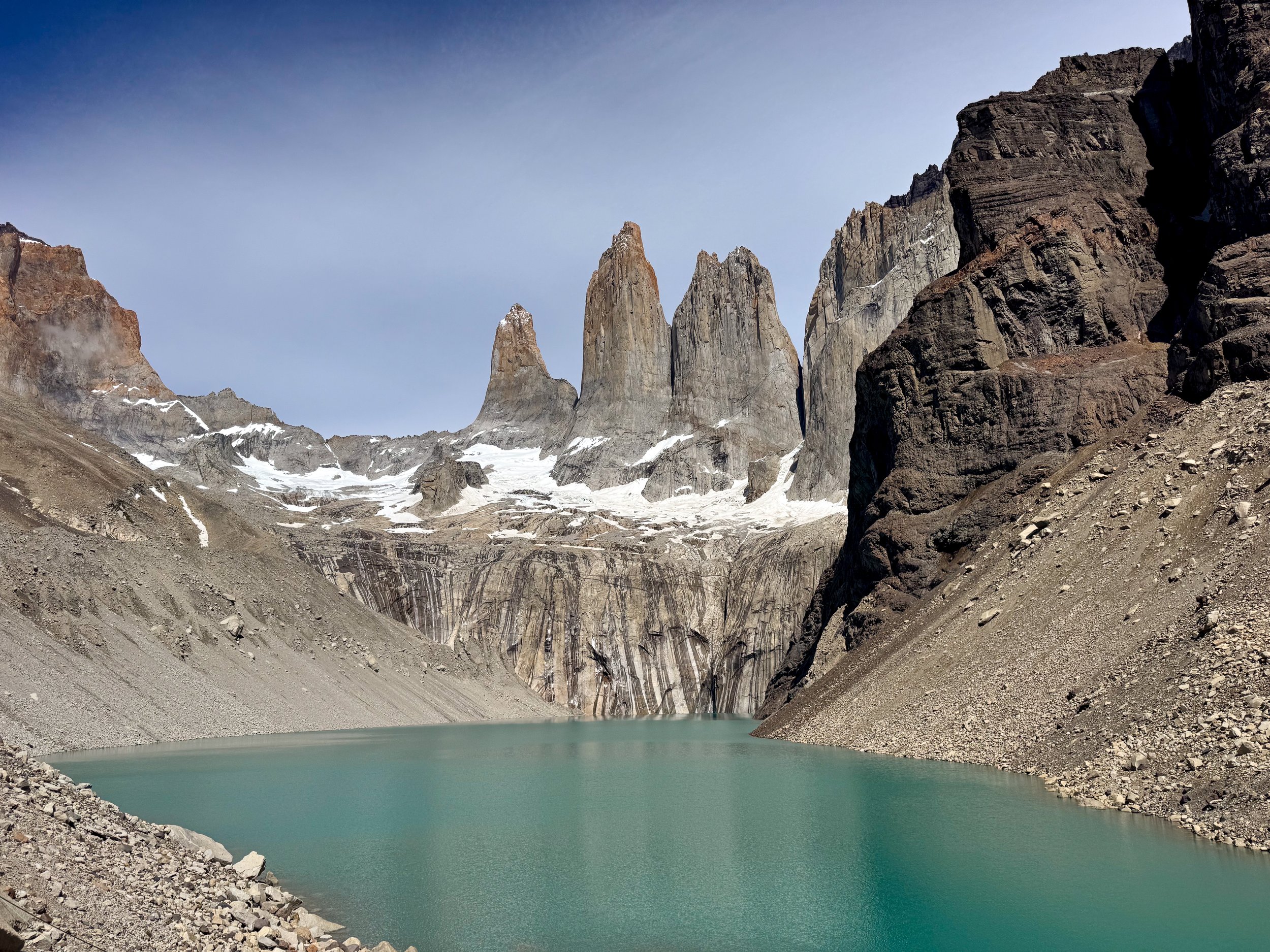
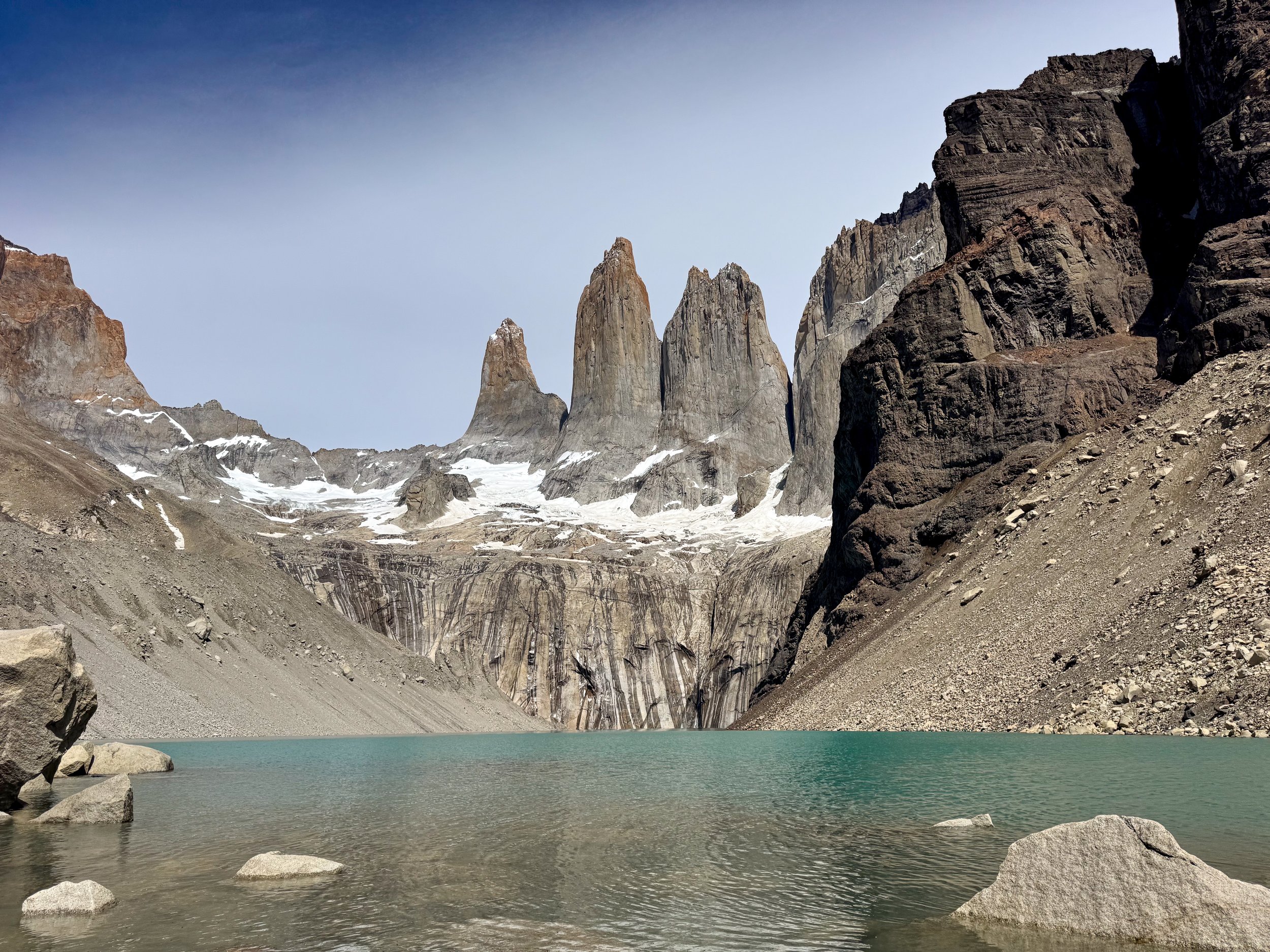
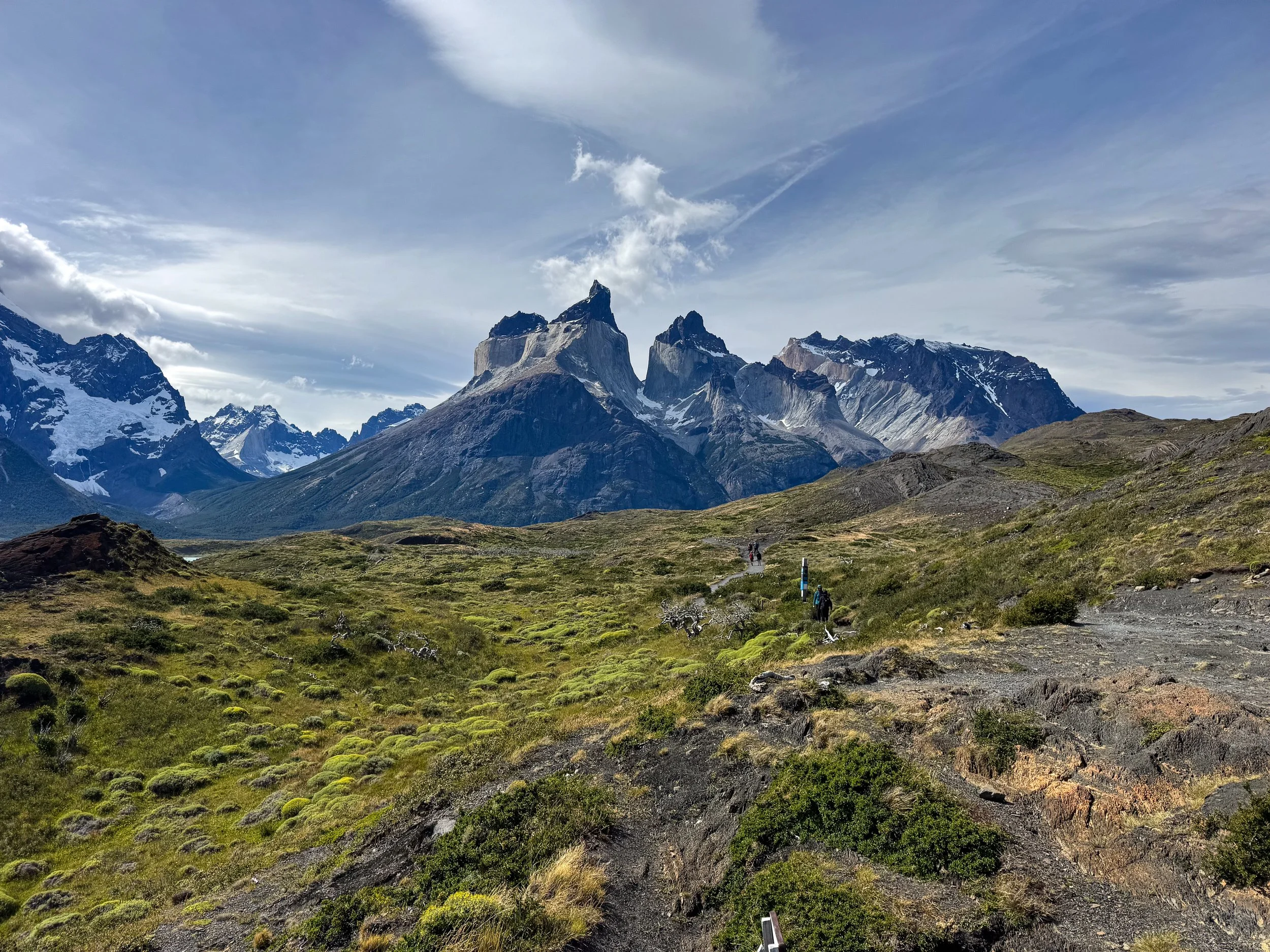
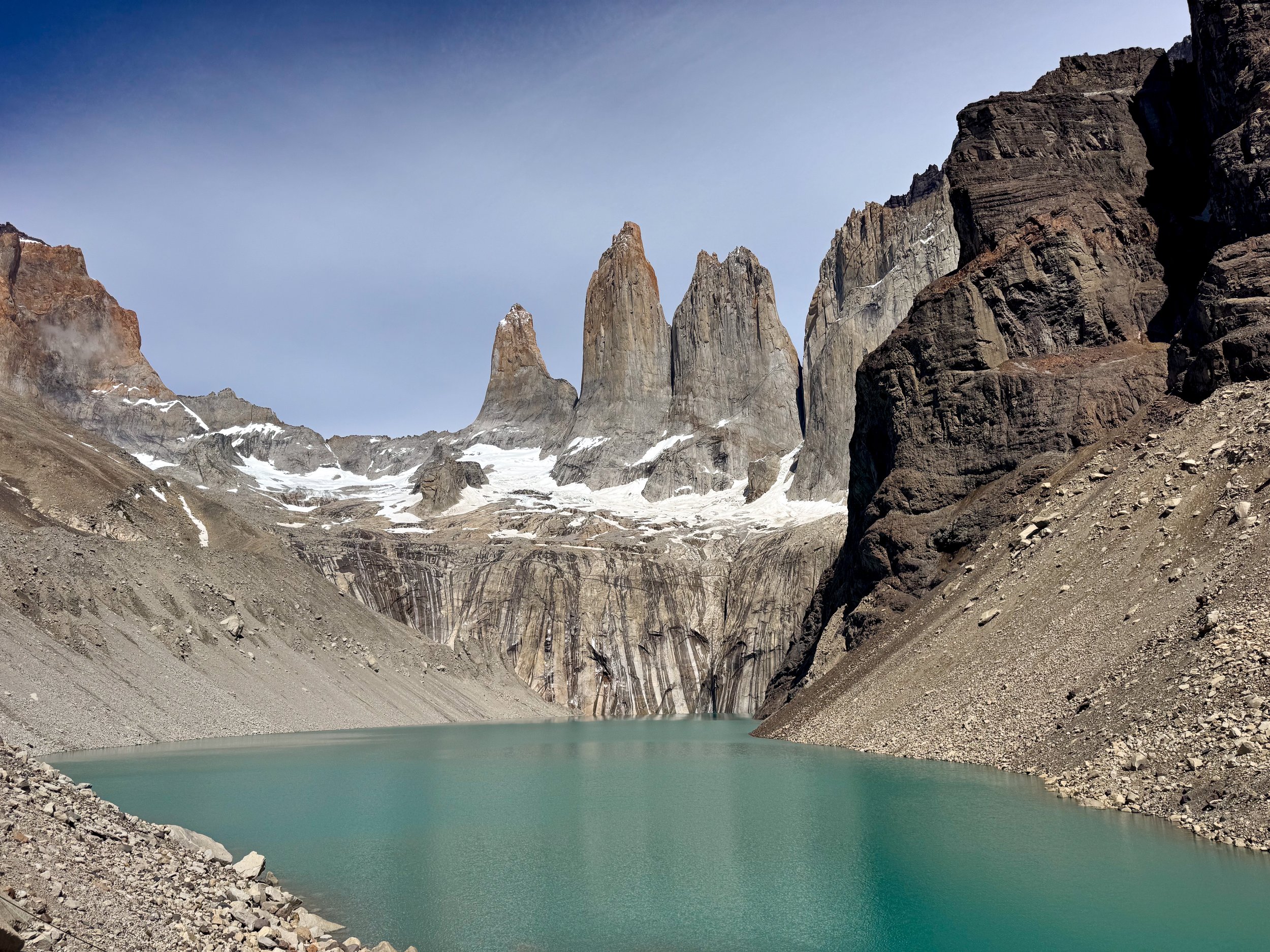
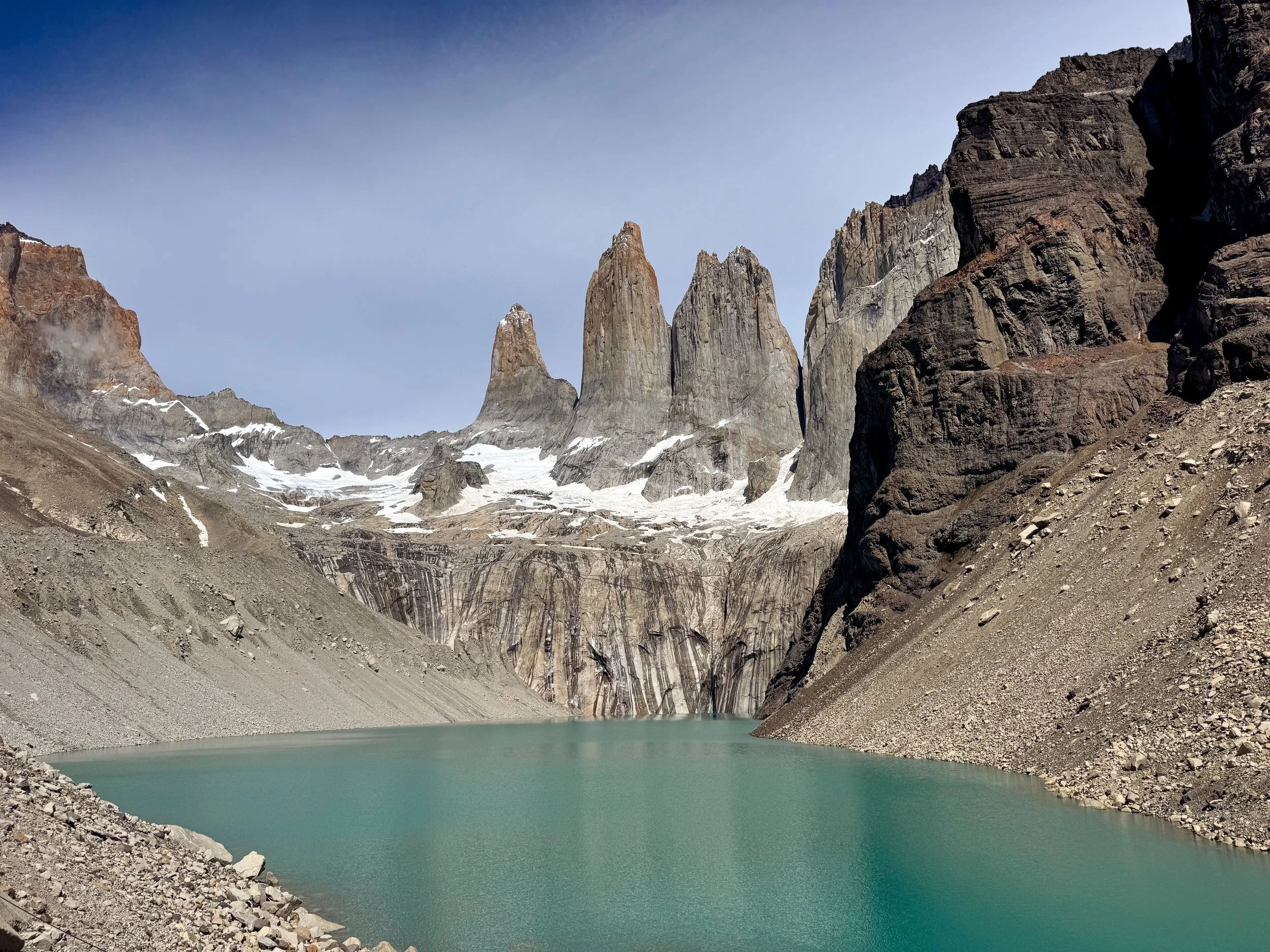
Torres del Paine is a national park centered around three vertical white granite peaks at the base of a turquoise mountain lagoon. The vast landscape is comprised of jagged mountains, snowy glaciers, glacial lakes and lagoons, winding rivers with misty waterfalls and wildlife. It’s one of the most popular national parks in Patagonia with campgrounds, multi day treks and breathtaking natural sights.
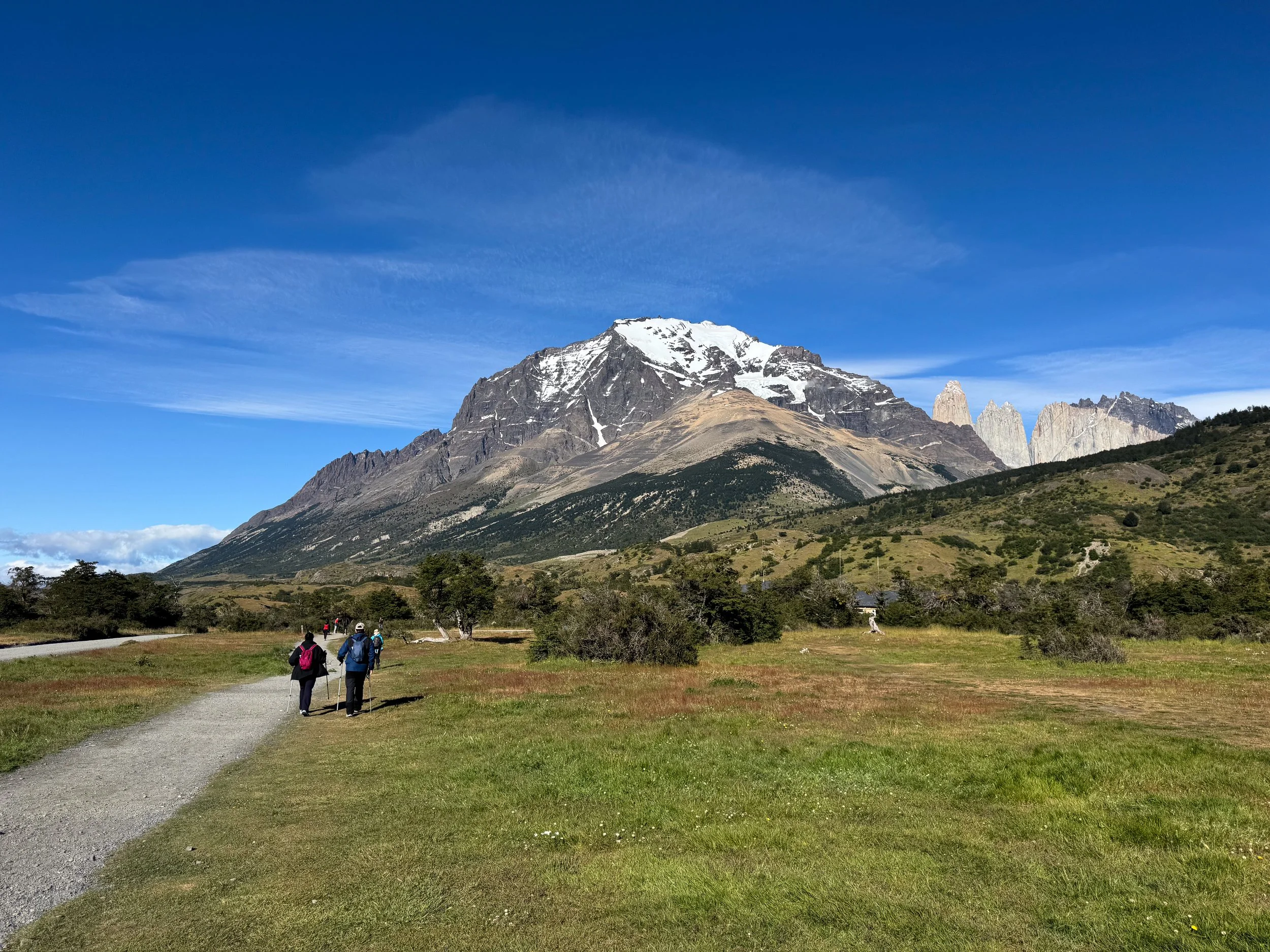
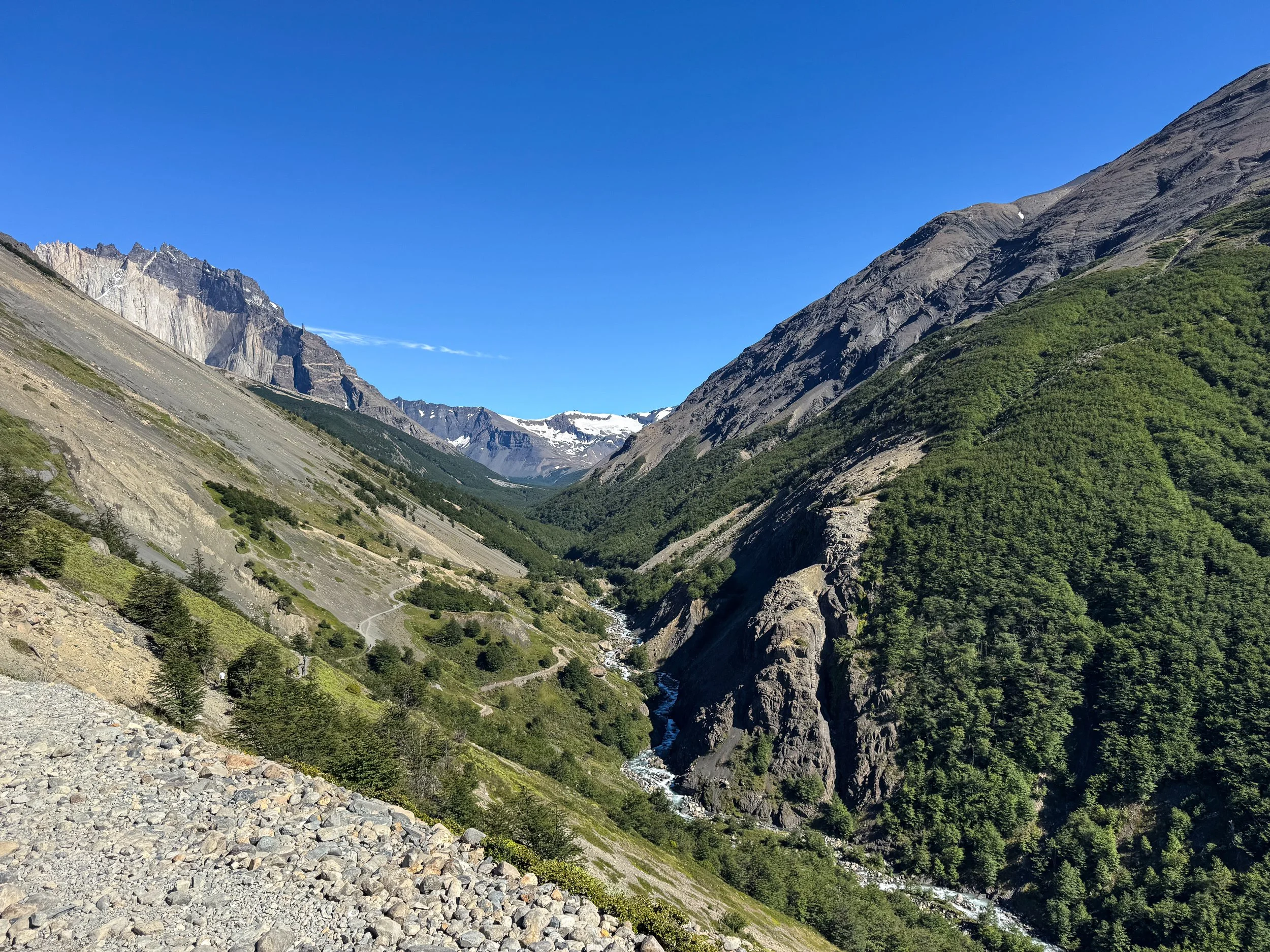
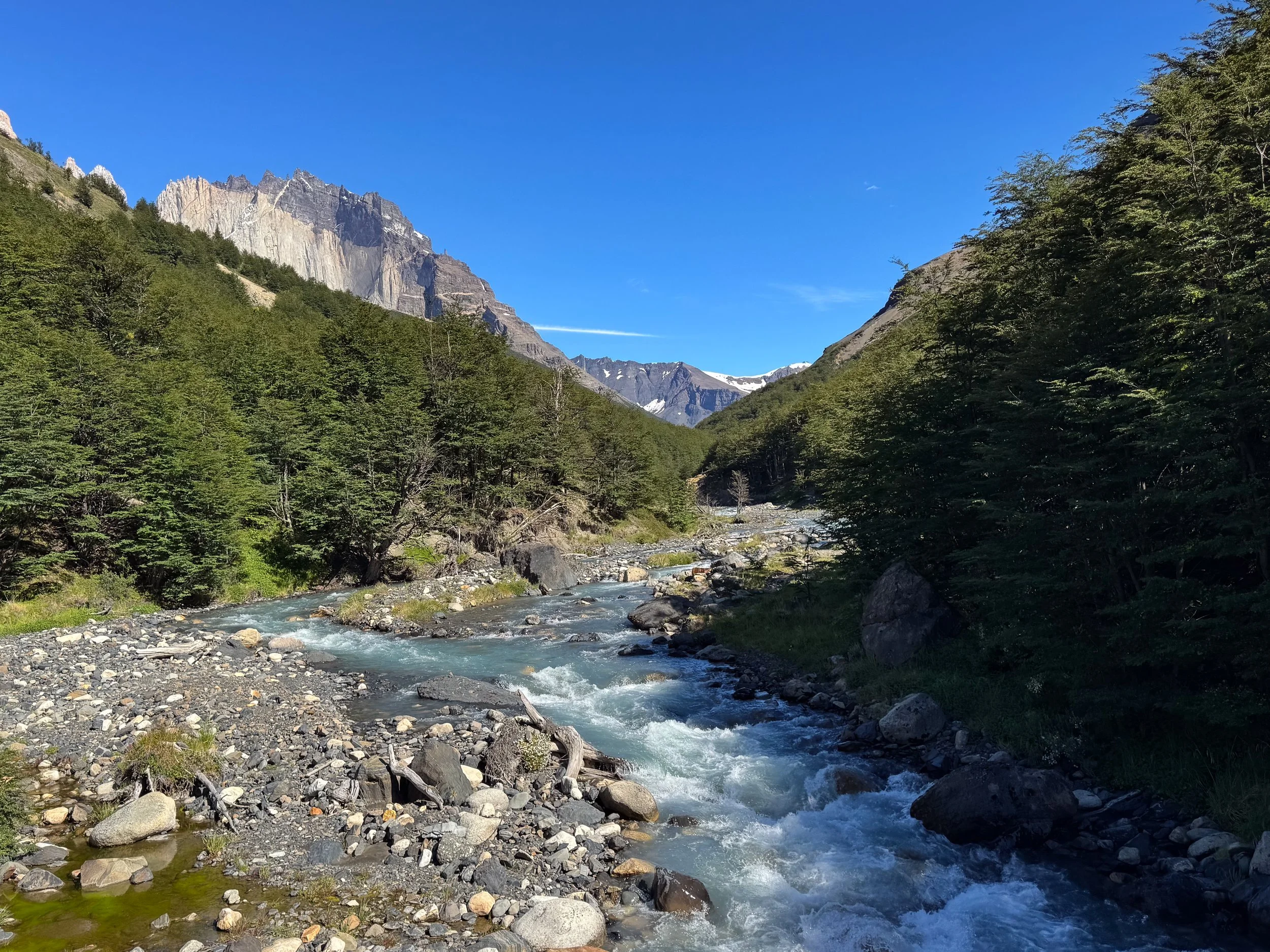
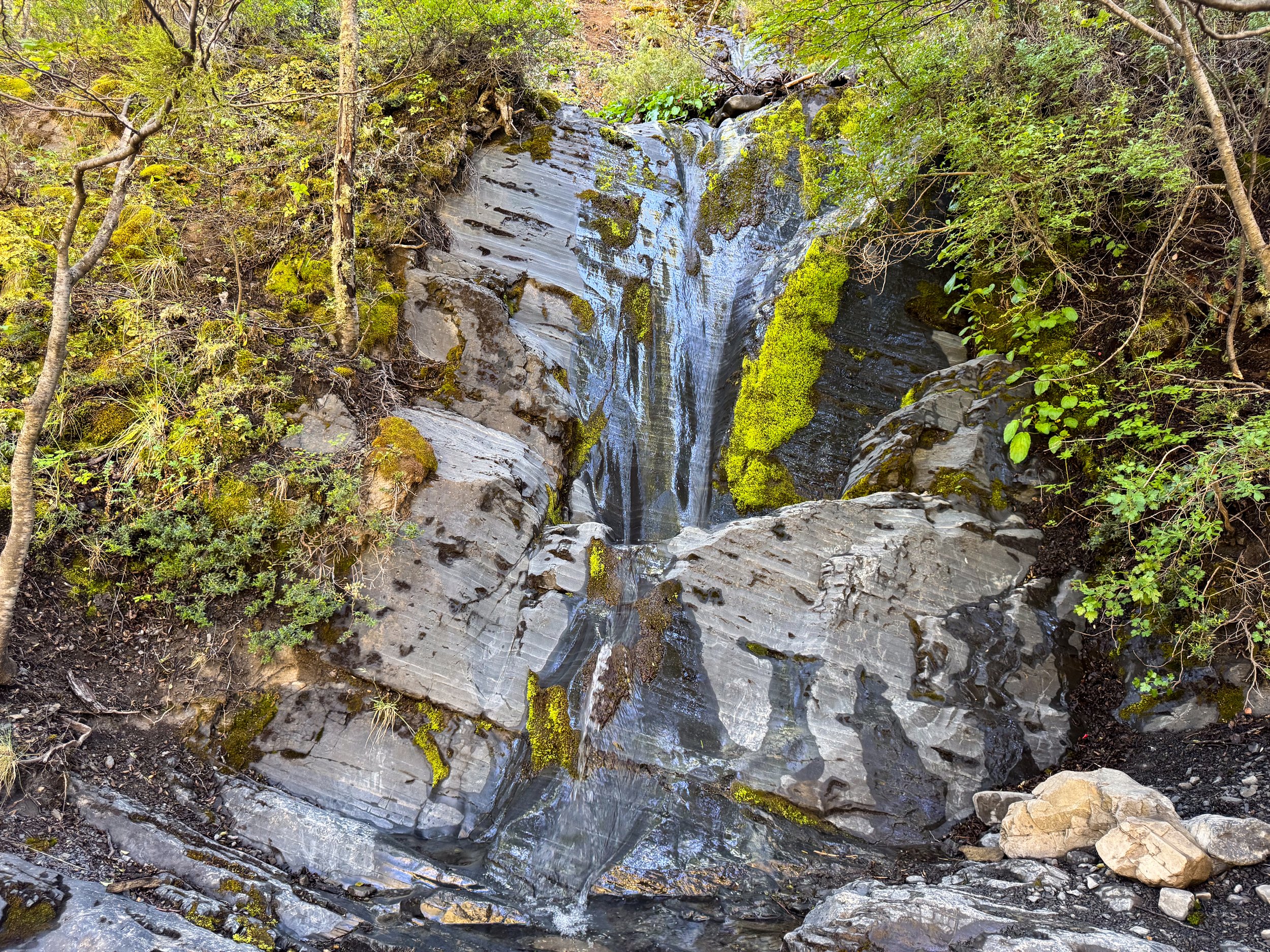
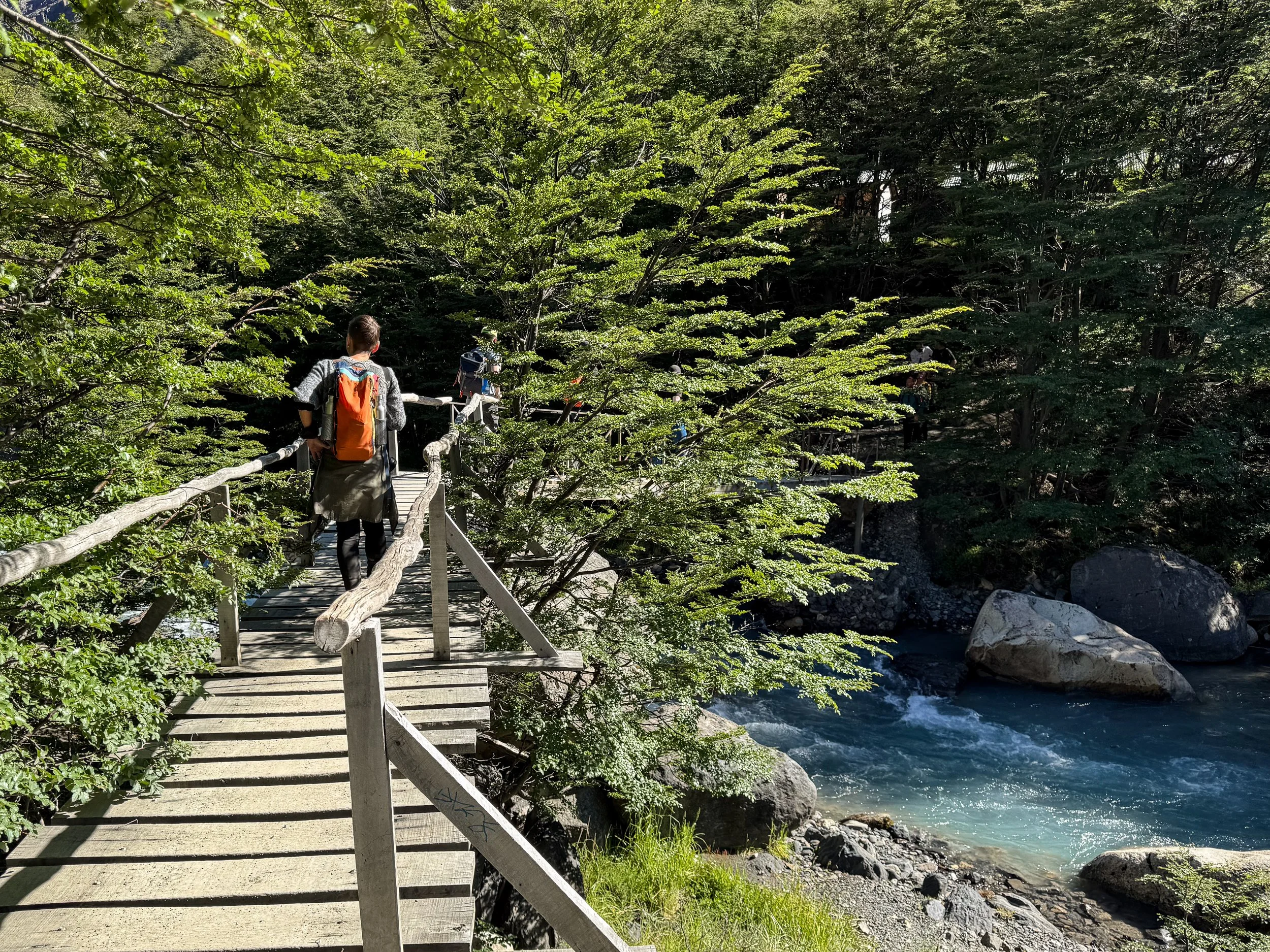
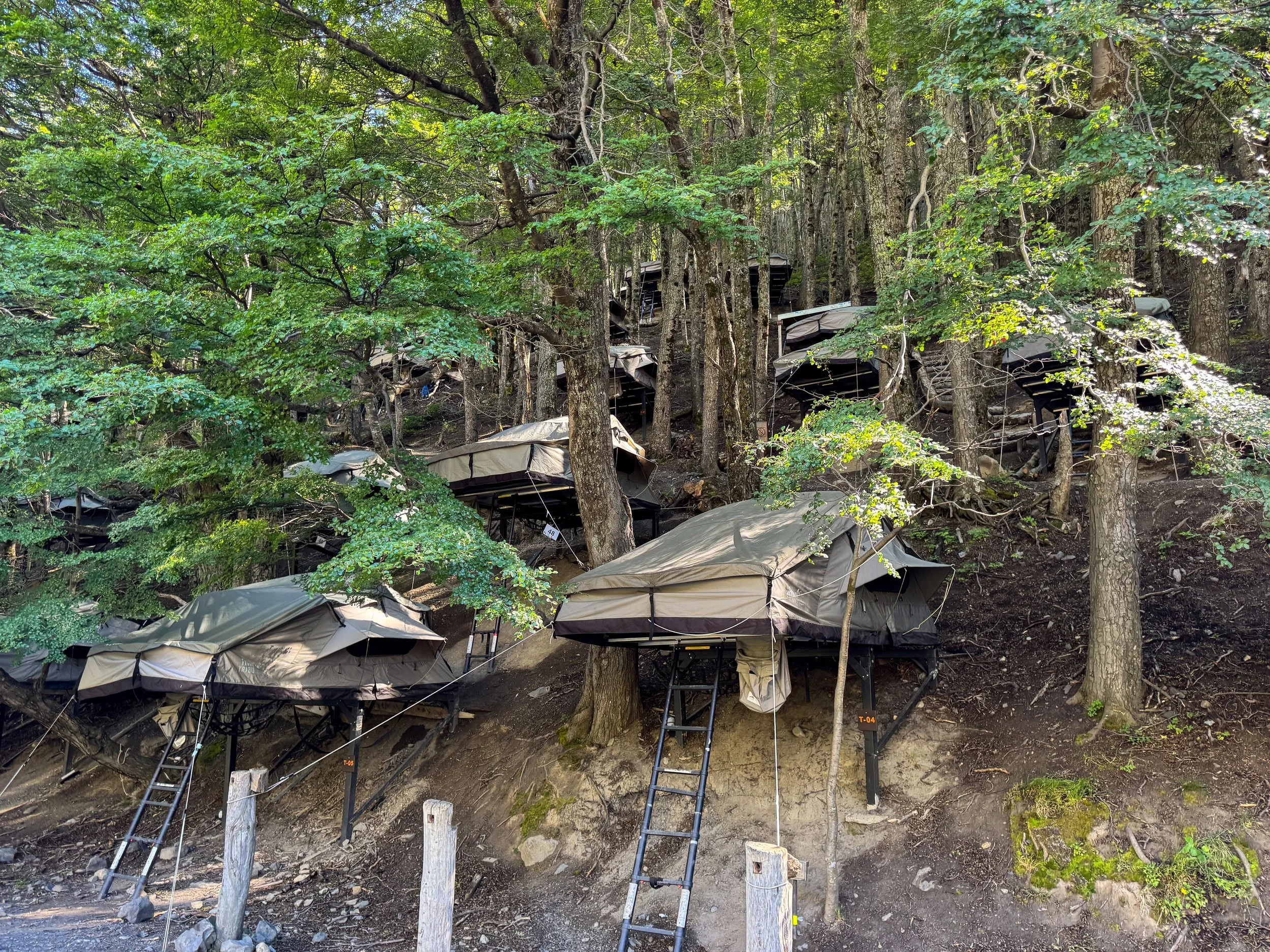
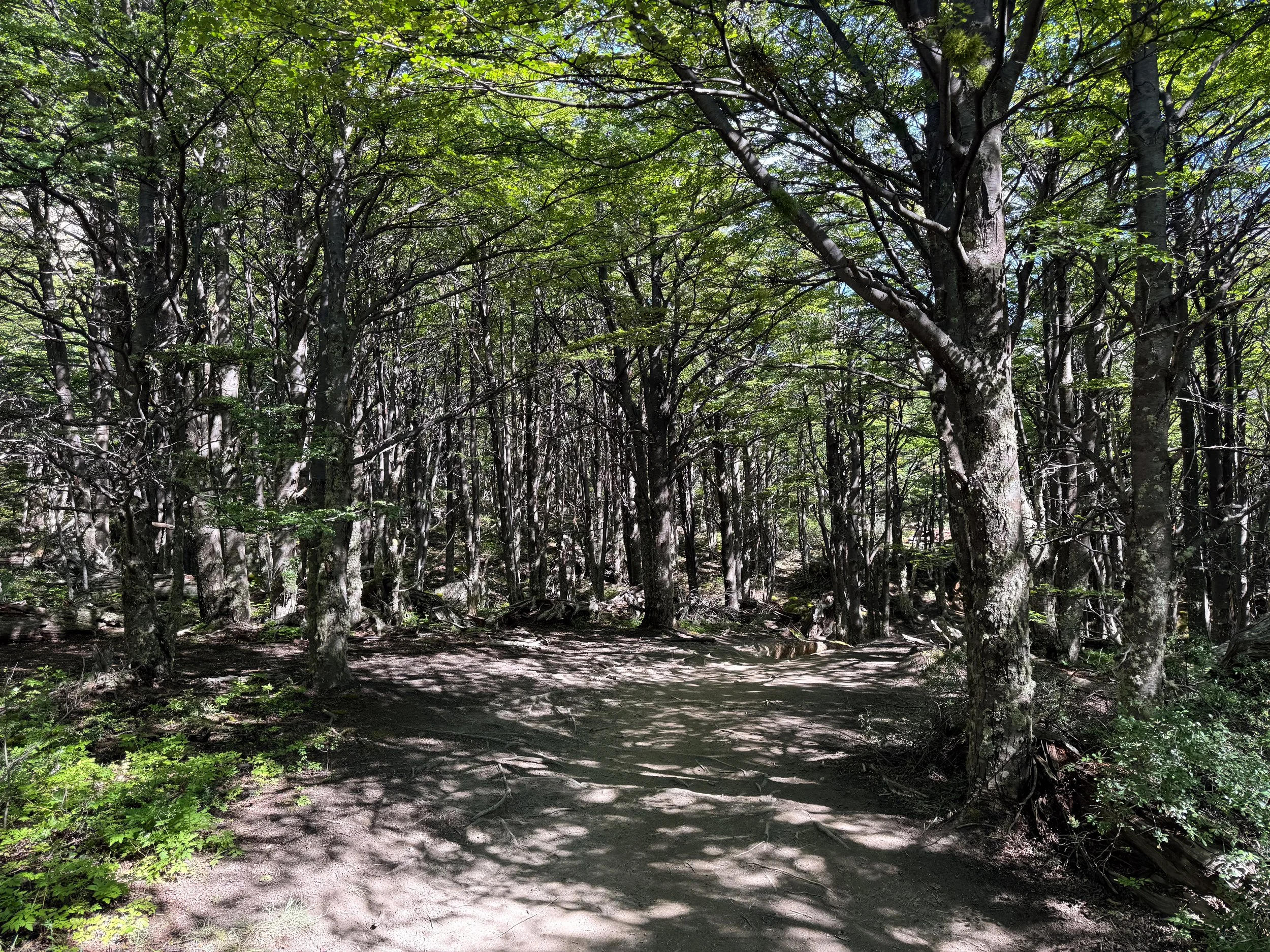
Sendero Mirador las Torres. A 16km roundtrip trail to the three iconic towers and glacial lagoon. It’s the most accessible hike in the national park and perfect for single day trekkers. Keeping a comfortable pace, we were able to hike from the welcome center to the lagoon in about 2 hours and 30 minutes.
Mirador las Torres Trailhead. The trailhead is reachable after a 1km hike from the welcome center across relatively flat terrain. The trail is well marked, with orange signs attached to red posts and two check points along the way, Refugio Chileno and Guardia Parques.
Refugio Chileno. From the trailhead, the route ascends and descends along the river for 3km before reaching Refugio Chileno. Along the way, we spotted condors circling above, blossoming flowers and bushes with El Calafate berries. Midway we stopped to admire the views at Paso de los Vientos, a panoramic lookout with sweeping views of the valley, forested mountainsides and snowcapped peaks. Refugio Chileno serves as many hikers’ “base camp” with a restaurant, small shop and campground of hillside tented platforms available for rent. We stopped here for a celebratory beer on the trek back.
Guardia Parques. For 3km after passing Refugio Chileno, the trail follows the river, crisscrossing it on wooden footbridges. After the third bridge, Puente Limit, the trail leads into a semi-hilly stretch of forest along the base of the mountains.
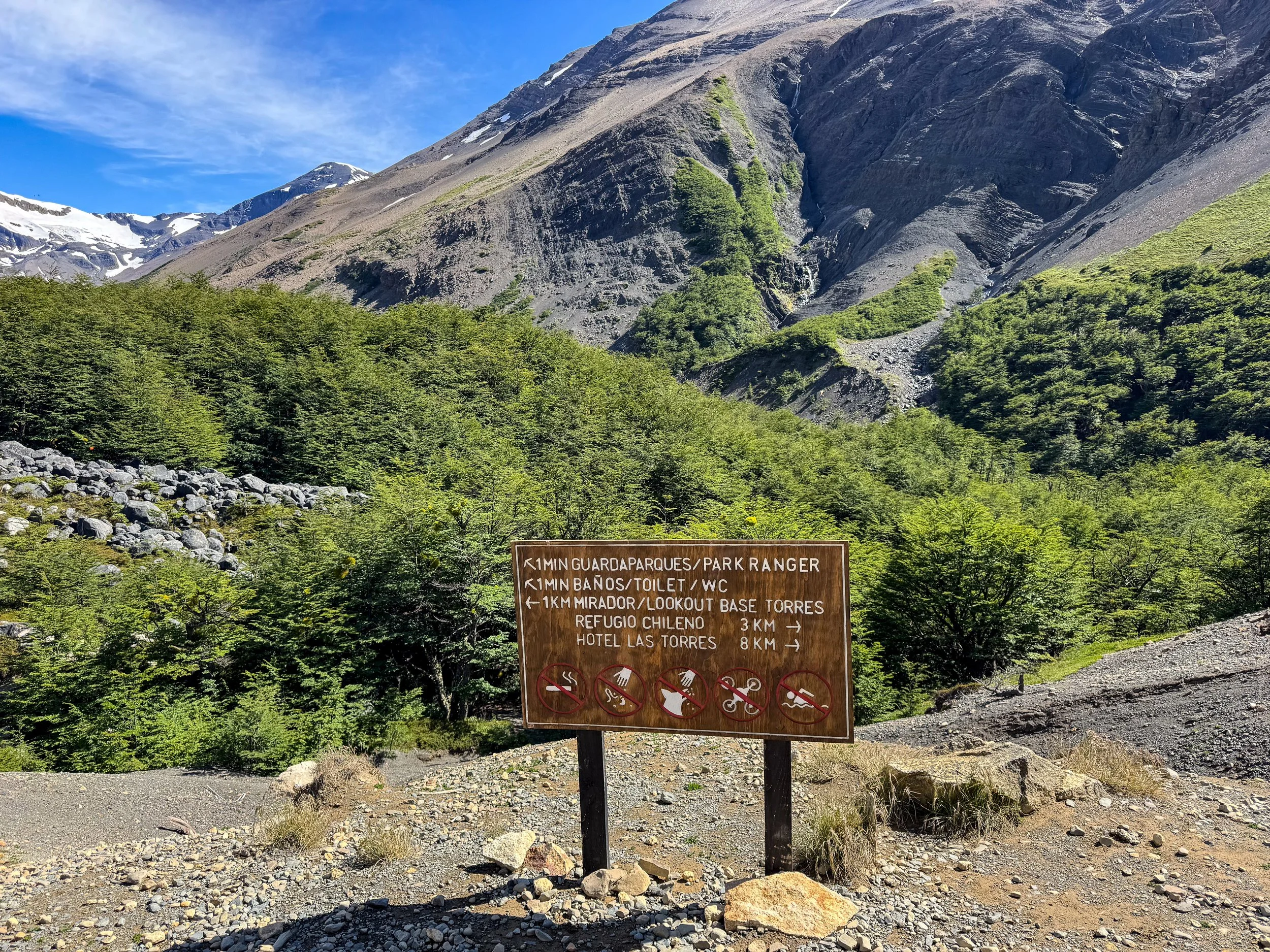
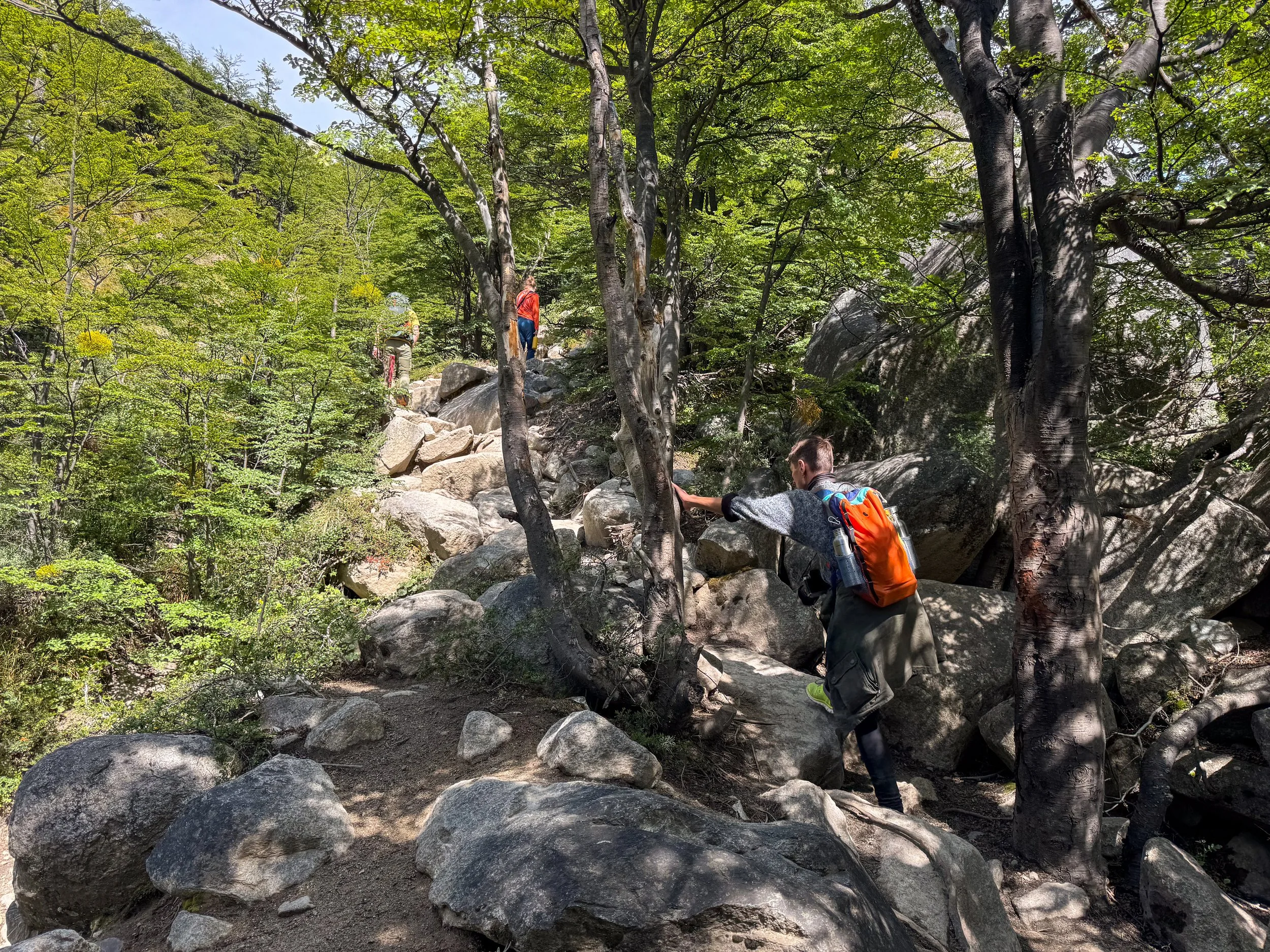
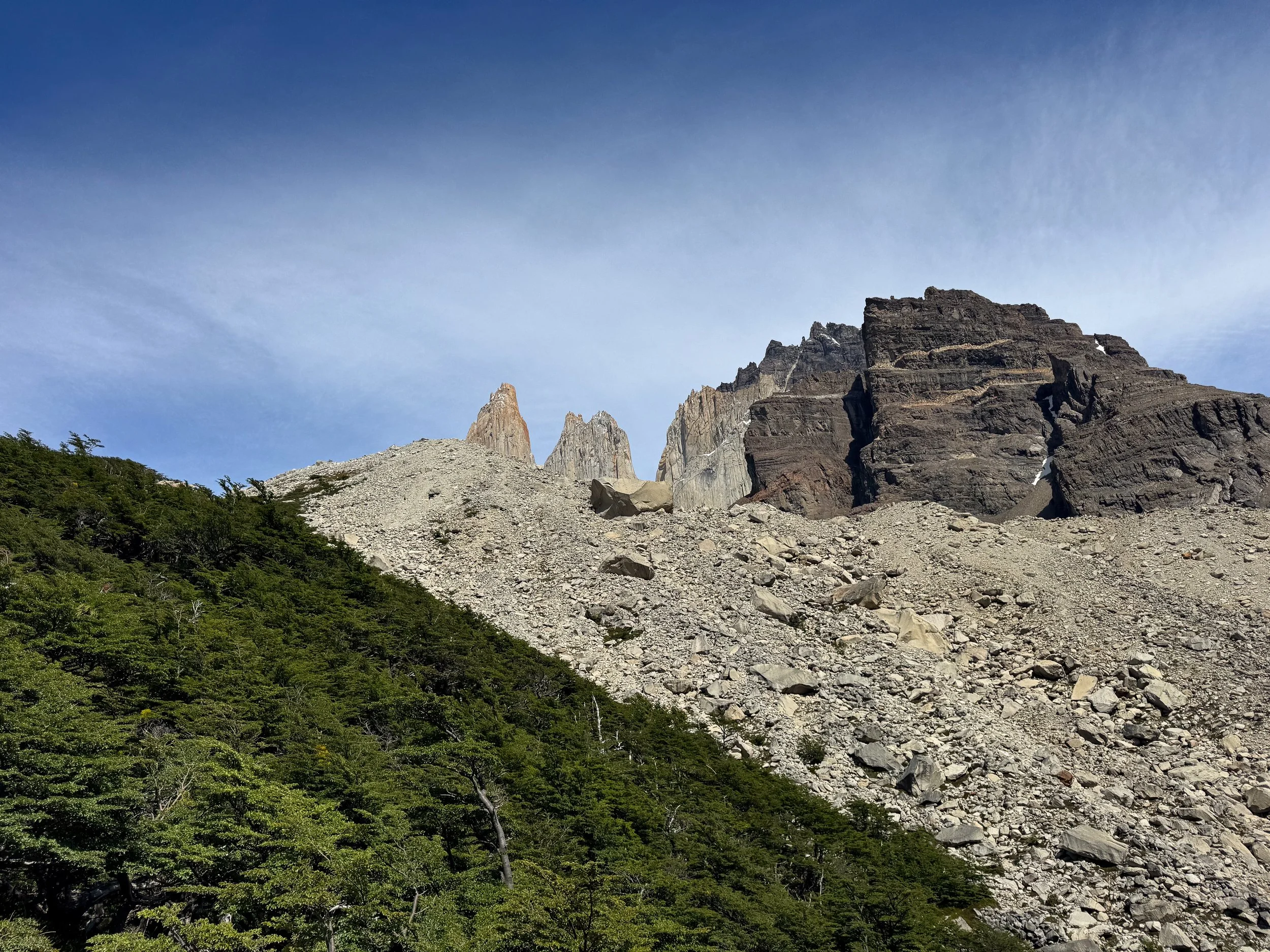
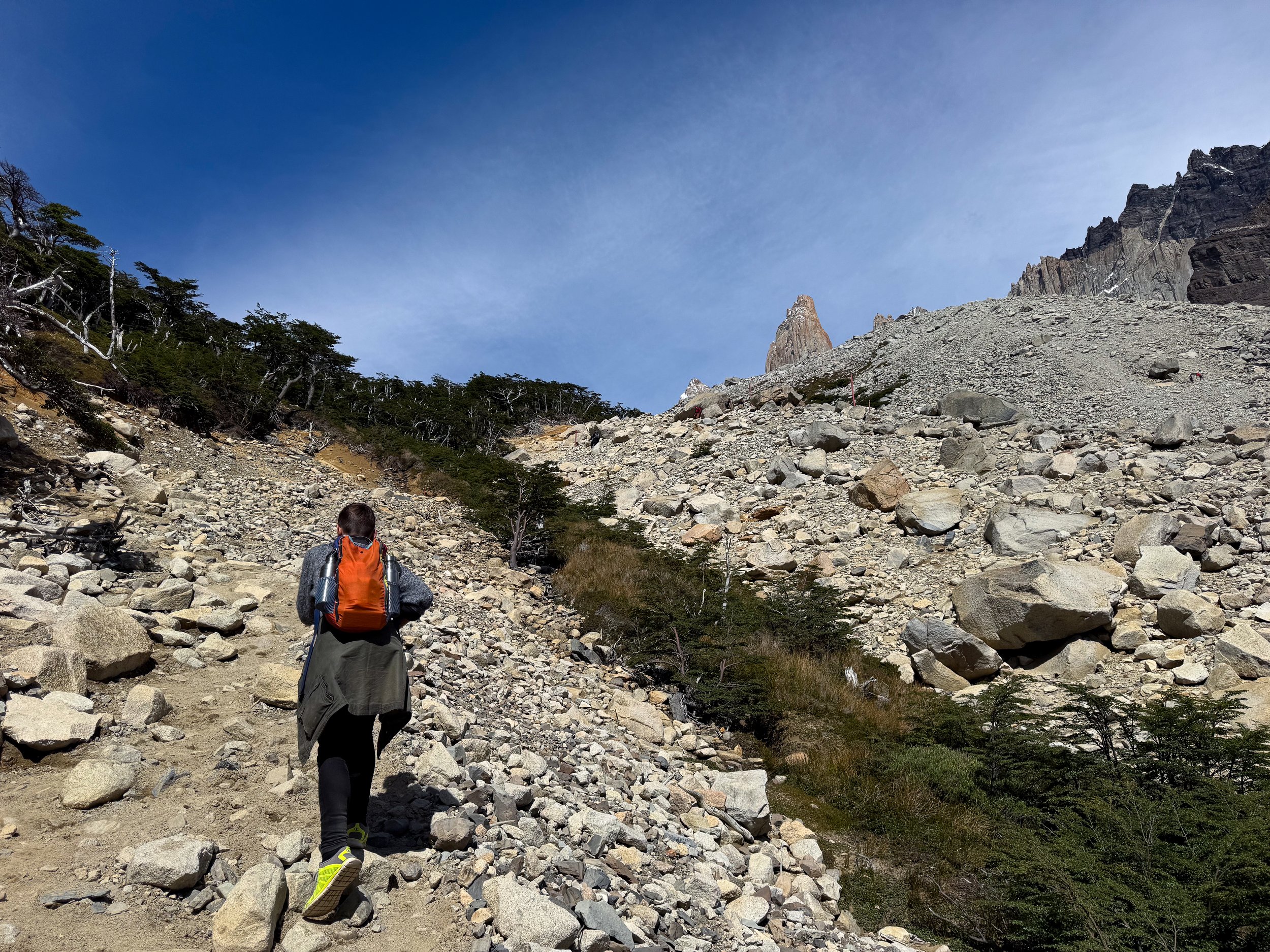
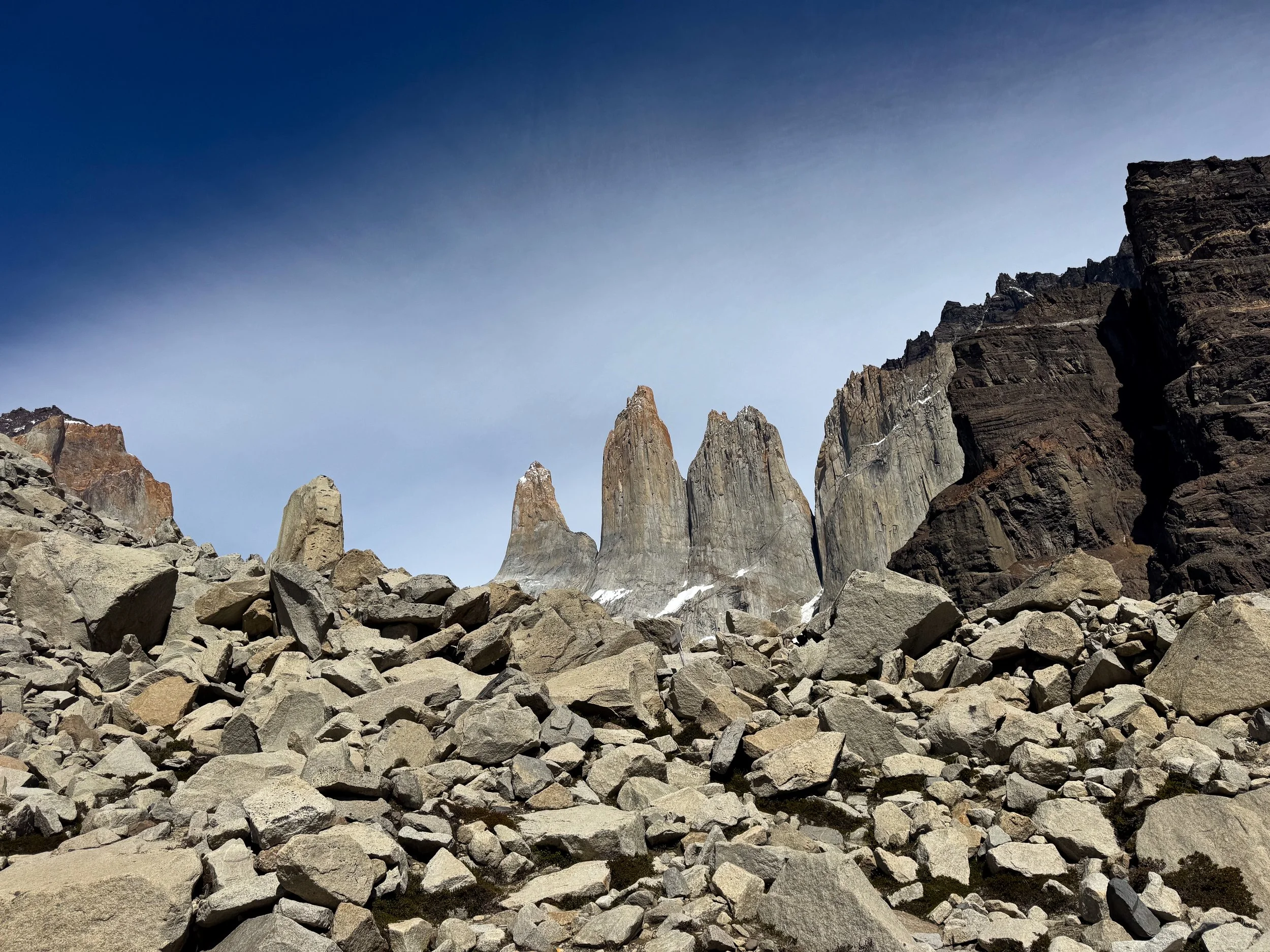
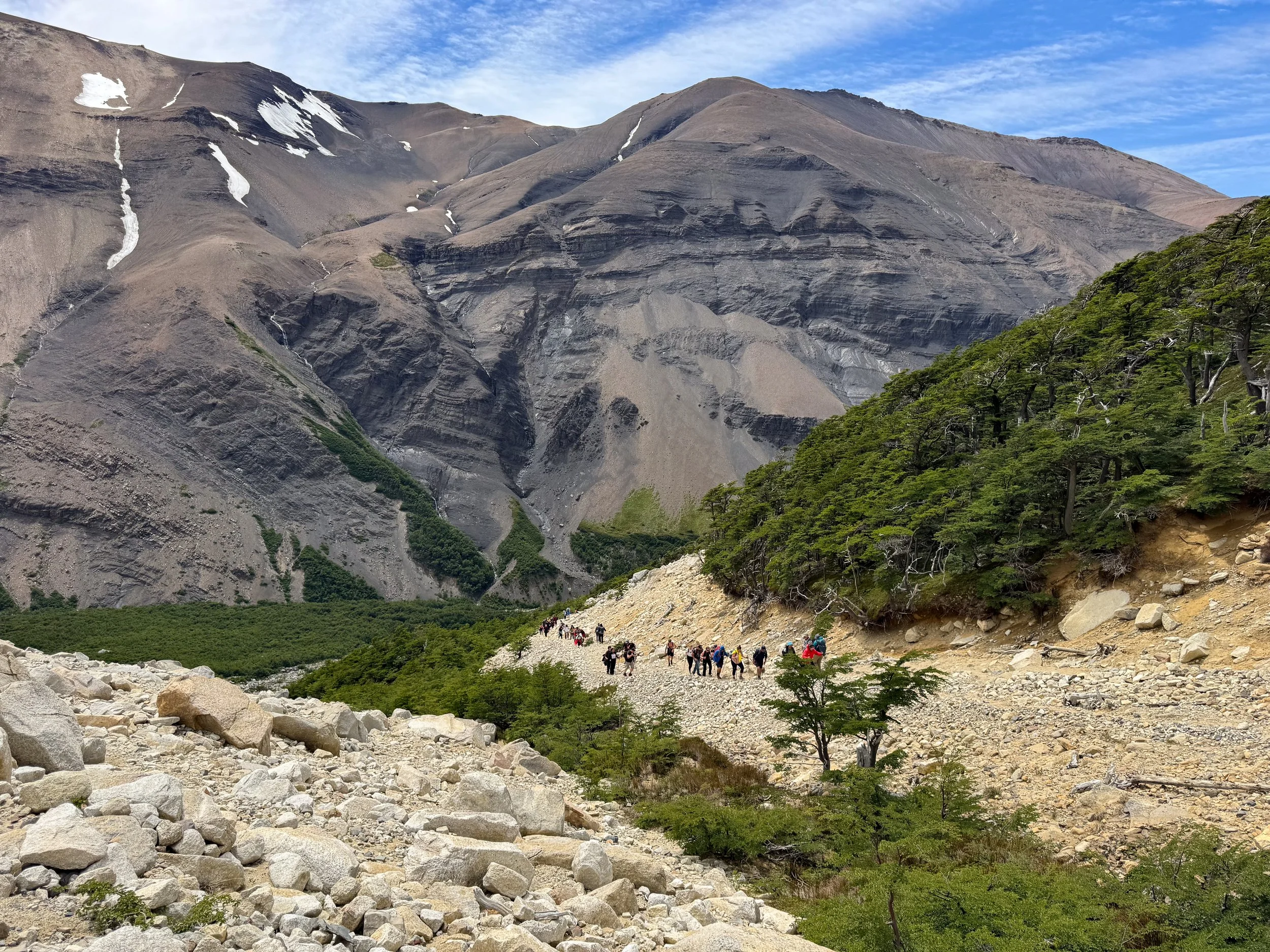
Guardia Parques. A clearing in the forest opens up to the second checkpoint, Guardia Parques. It’s here where the granite peaks of Torres del Paine only come back into view. It also marks the most rigorous point of the hike. From here, the final 1km of the trail leads over steep terrain, loose gravel and slippery boulders until coming upon the mirador! There is a ranger station and restroom at the Guardia Parque. The trail leads left to the mirador and right to continue further into the park.
Mirador las Torres. After hiking 8km, the reward was worth the Paine! The iconic view of the three white granite towers and turquoise lagoon came fully into view at the Mirador. We sat on the rocks, admired the inspiring landscape and watched as streams of water from the melting snow and ice ran down the cliff into the lagoon.
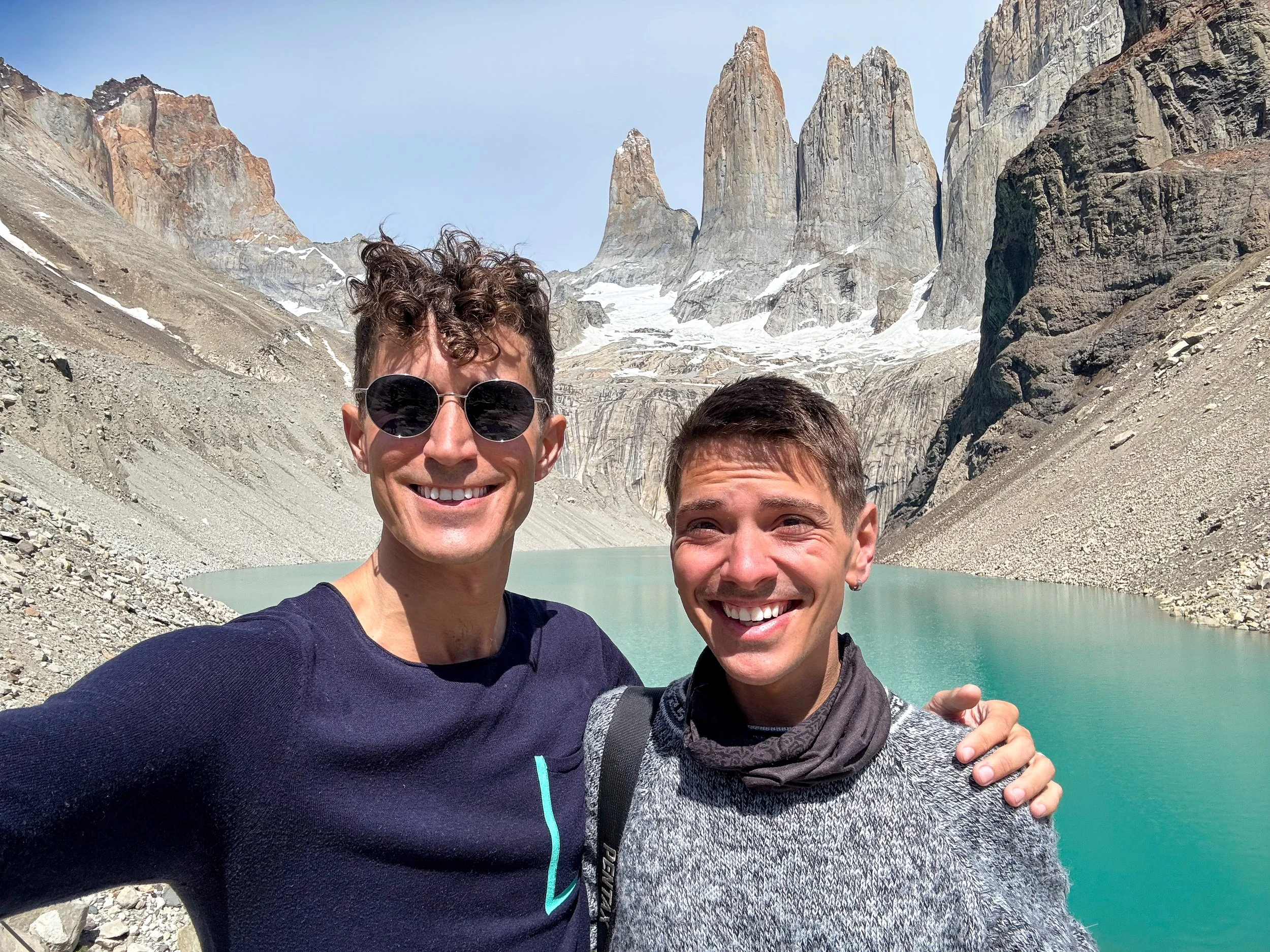
Getting Here. Drive to the Guardería Laguna Amarga to show your ticket and passport. The entrance is 1 1/2 hours from Puerto Natales and less than 10 minutes from Laguna Amarga. From here, drive 15 minutes to the Torres del Paine Welcome Center with a cafe, restrooms and shop. After passing through the welcome center, walk to the Torres de Paine Trail Head 1km away to begin the hike.
Tips for Visiting Torres del Paine National Park:
Tickets. Park tickets can be purchased 2 months in advance online with Pases Parques Nacionales. Tickets are valid for 3 or 7 days.
Hours. The park opens at 7am. Entry to the trail closes at 3pm and the mirador closes at 4pm. Begin hiking early to avoid the crowds.
Timing. We started the trek at 9am arriving to the lagoon at 11:30am. On the descent, the trail was packed with hundreds of hikers in line walking up the mountain.
Weather. Check the weather ahead of time and only hike on a clear day to maximize chances of seeing the granite towers in all their splendor.
Difficulty. It’s a long hike and difficult at times but not severely rigorous. We saw young children and met people over the age of 60 completing the hike.
Puerto Natales
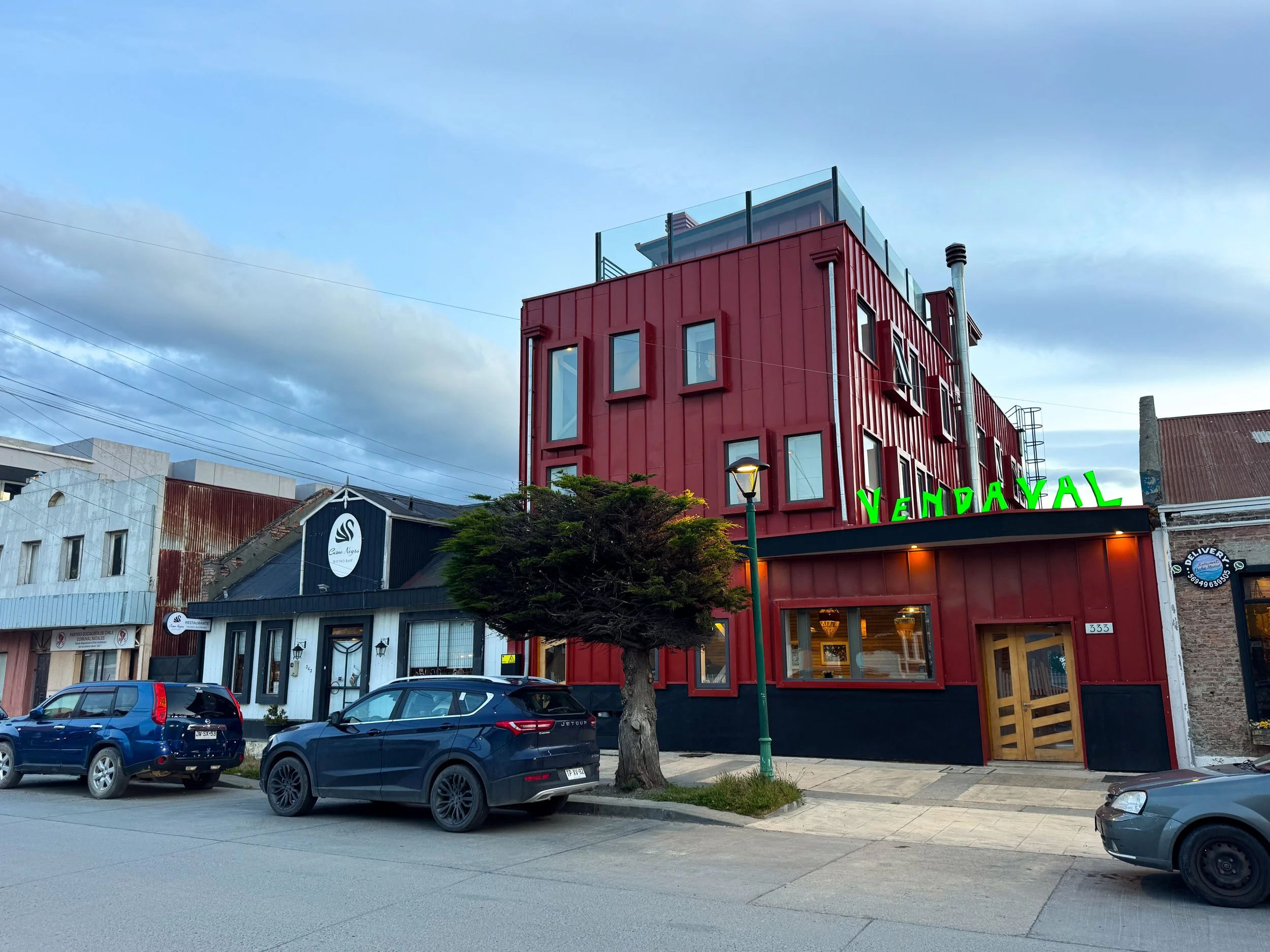
Puerto Natales is a Patagonian port town. Its central location makes it easy to explore the region from. The city is comprised of modern cabins, converted shipping container buildings, wood tiled homes and sheet metal houses. The main street, Manuel Bulnes, is home to restaurants, cafes, bakeries, bars, grocery stores, outdoor outfitters and tour companies.
Patagonian Road Trip
We road tripped between Puerto Natales and Torres del Paine National Park, stopping at scenic lookouts, glacial lagoons, waterfalls, caves and hiking trails.
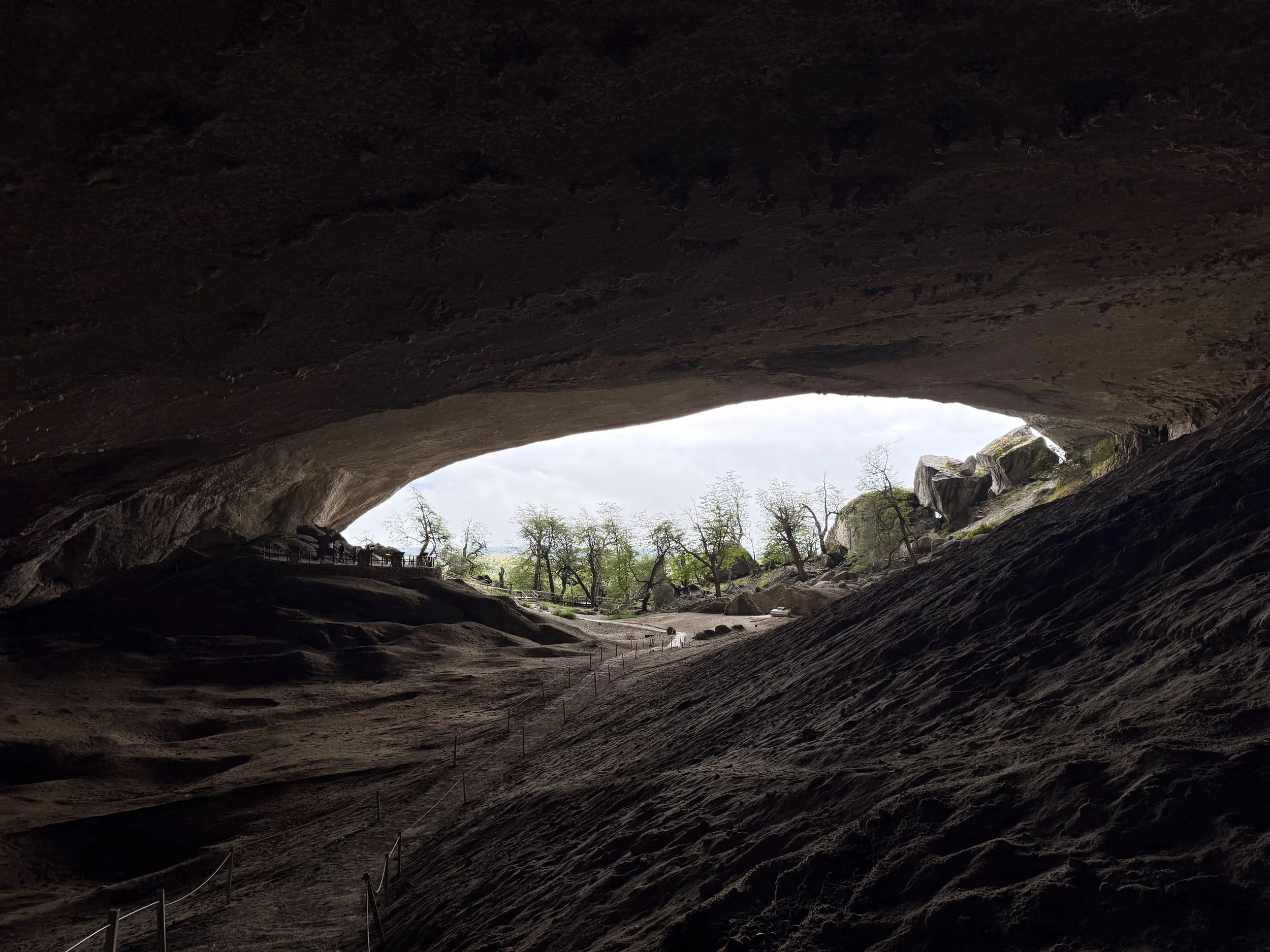
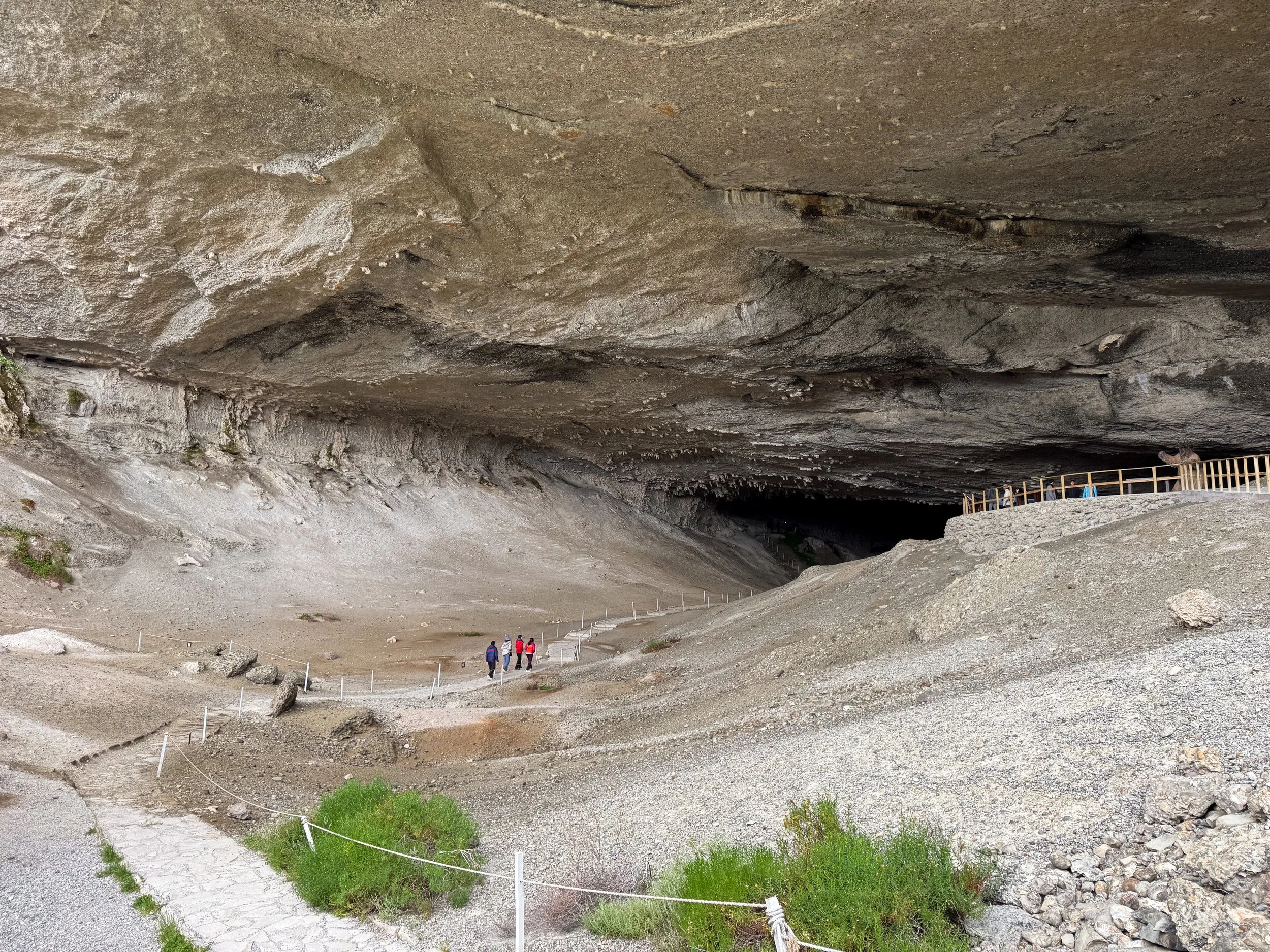
Cueva del Milodon. A massive cave once inhabited by prehistoric humans and the Milodon, a now extinct giant ground sloth. A trail leads to the cave from the visitor center, setting the stage with informational signs explaining the geology and formation of it, insights on the humans that lived within it 14,000 years ago and the former megafauna of the area, including the Milodon, Sabertooth tigers and Patagonian Panthers. The mouth of the cave is grand, measuring 200 meters deep, 80 wide and 30 tall. A trail leads into it past archeological dig sites, dangling stalactites and a panoramic overlook. The cave is located 30 minutes by car from Puerto Natales.
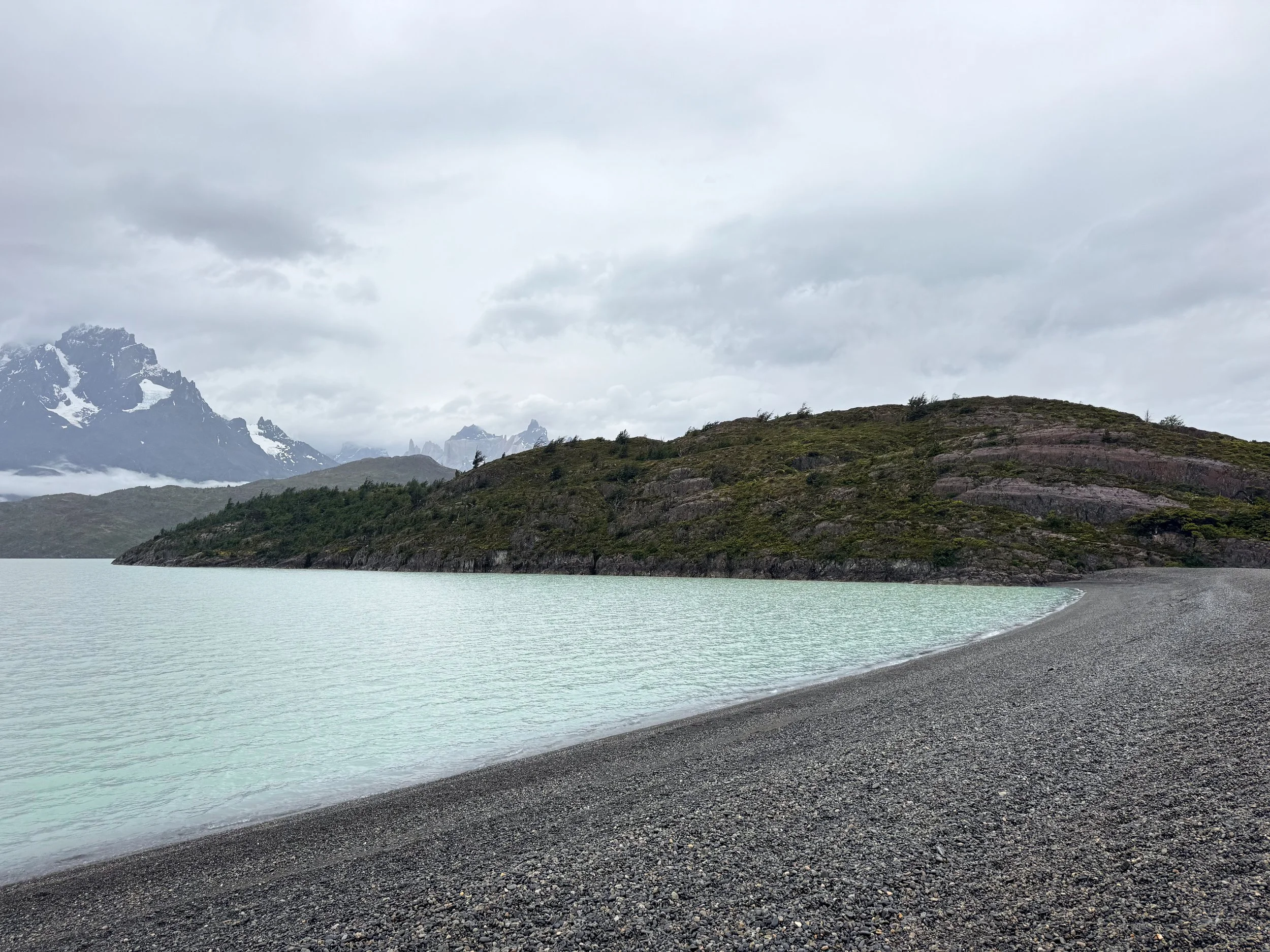
Mirador Grey. A series of roadside lookouts above Lago Grey, a greenish grey colored glacial lagoon surrounded by snowcapped mountains and lush hillsides. The miradors are located 1 hour from Cueva del Milodon.
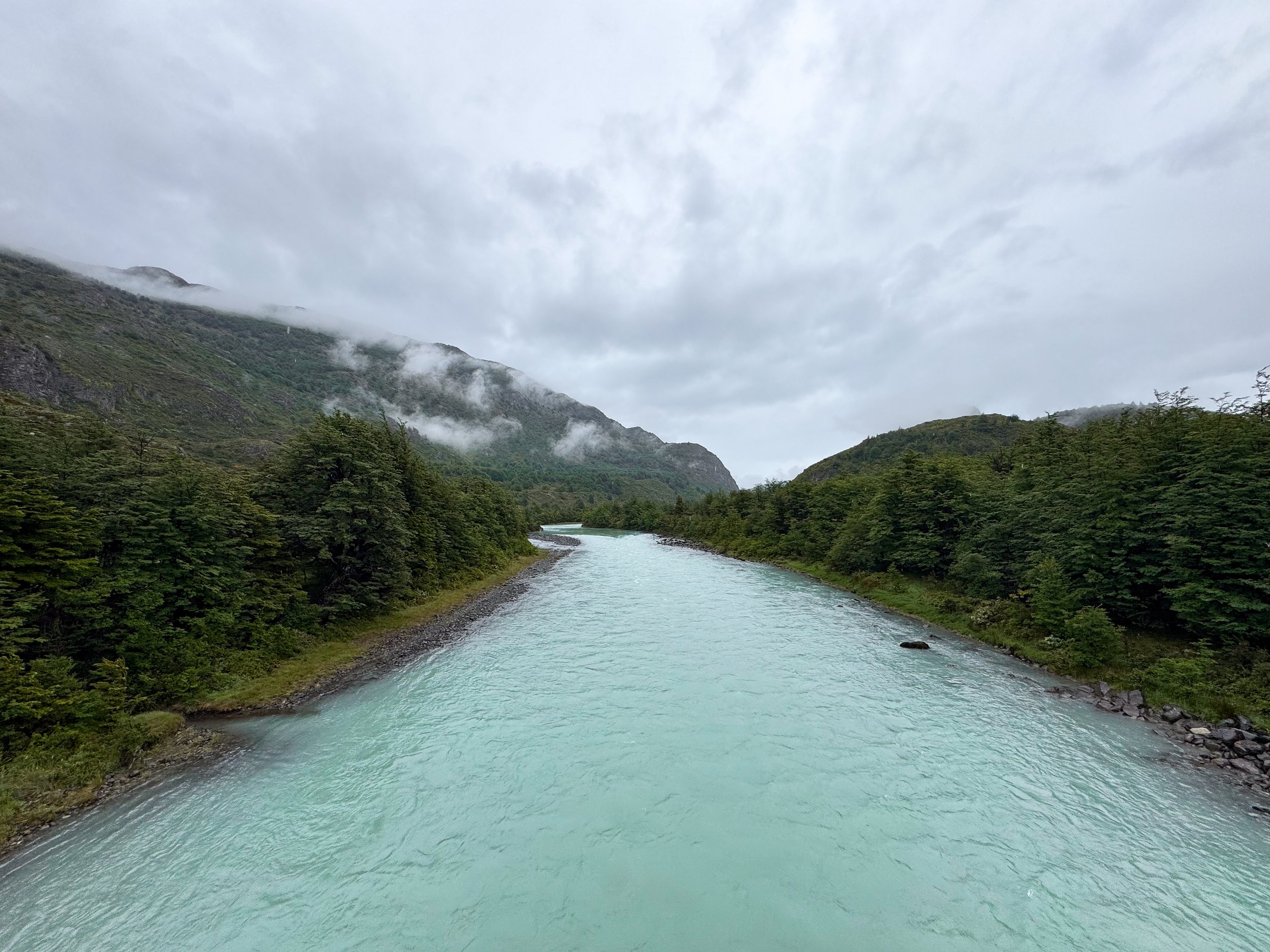
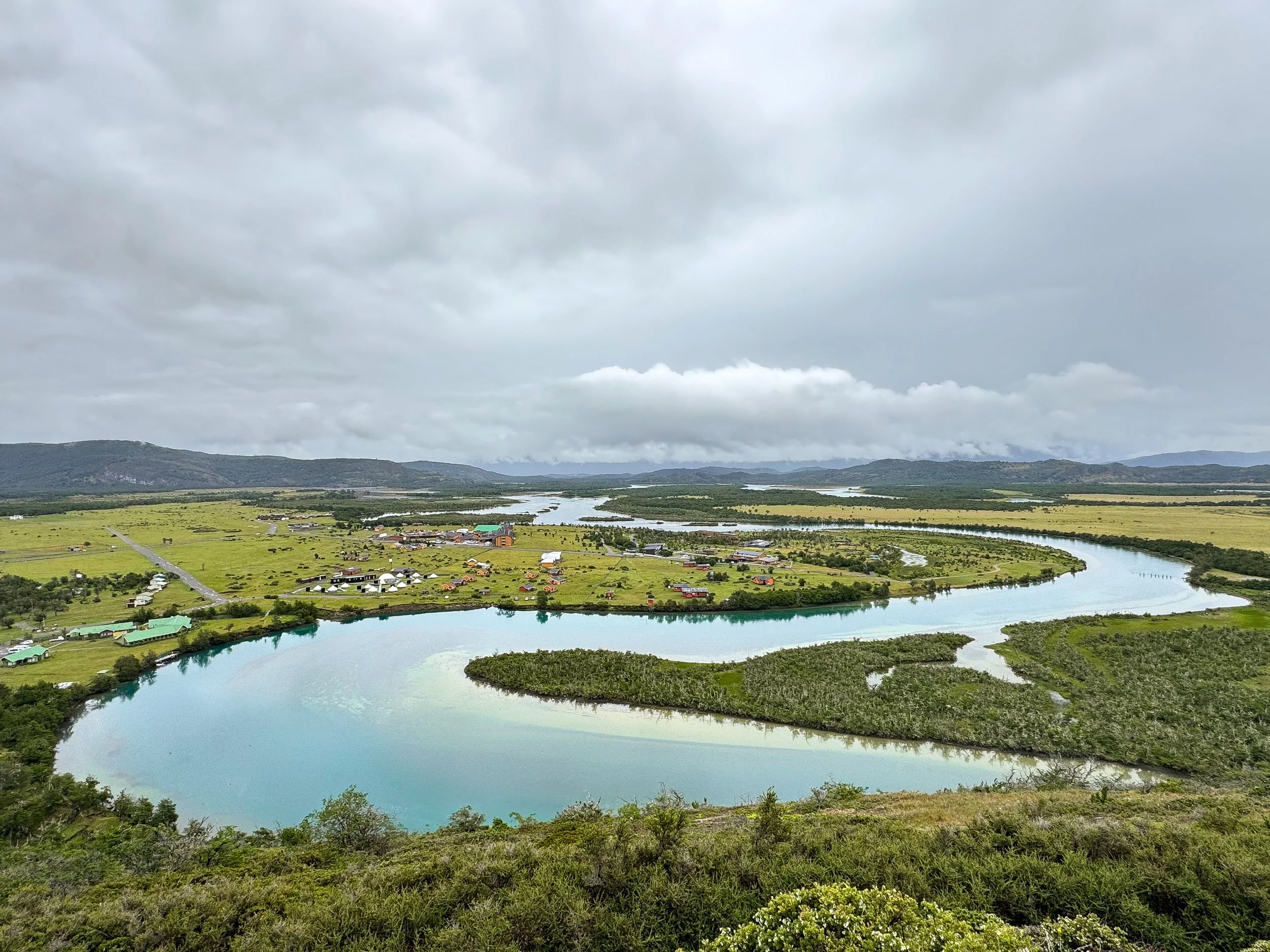
Mirador Río Serrano. A scenic lookout on the bluffs over the Río Serrano Valley with views of the winding blue river and on a clear day, the mountain peaks of Torres del Paine. There is a small tourist town below with hostels, hotels and glamping sites. It’s often the entry point for most people staying outside of Torres del Paine National Park. The lookout is located 15 minutes from Mirador Grey.
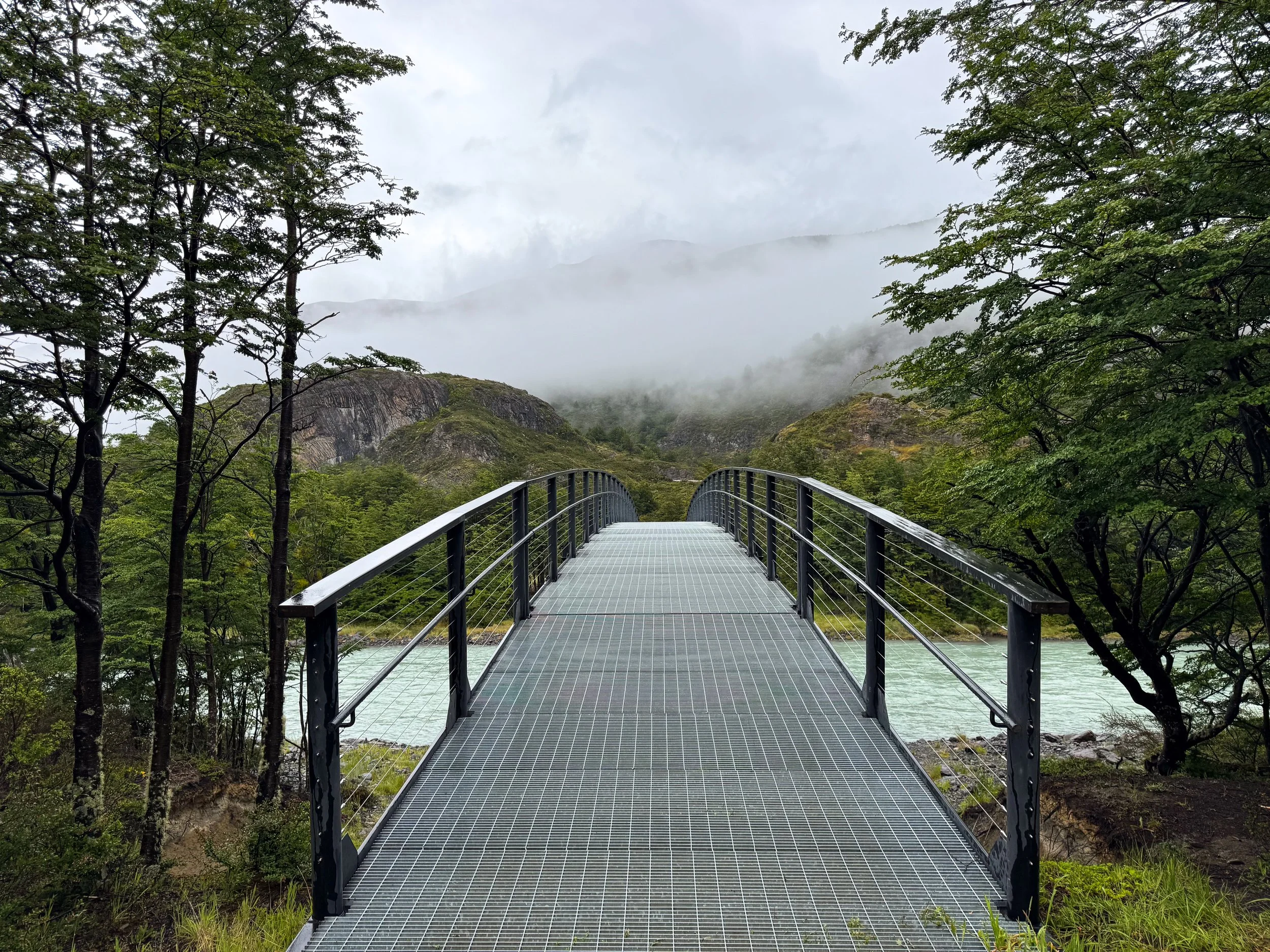
Guardería Grey. A welcome center and restaurant with access to Sendero Lago Grey, a trail leading to the Grey Lake. We took the trail to a foot bridge across the Rio Pingo and to a peninsula with a black sand and pebble beach, far away views of the glacier and blue floating icebergs. Boat tours depart near the Hotel Lago Grey up to the leading edge of the Grey Glacier. The welcome center is located 30 minutes from Mirador Río Serrano.
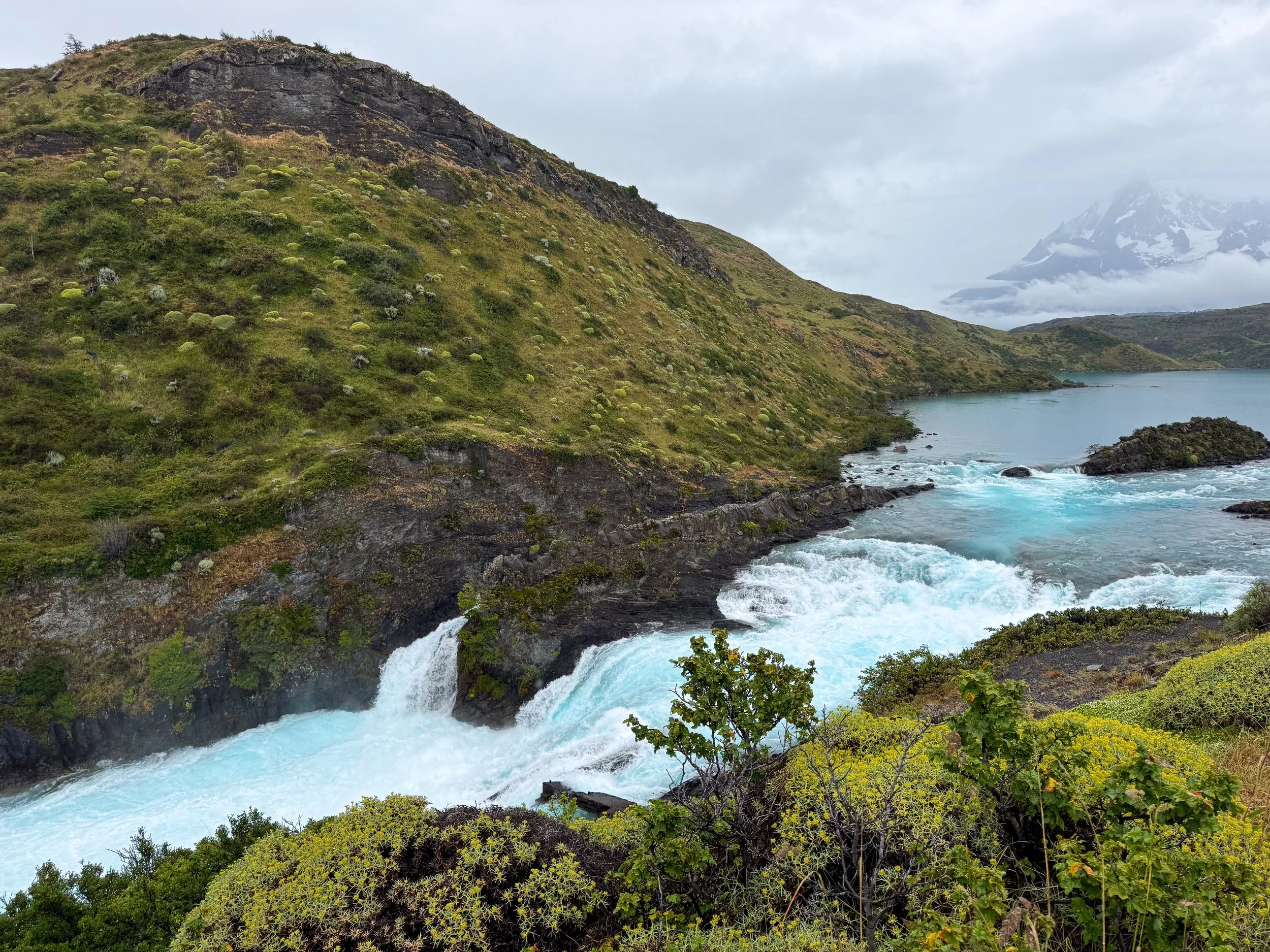
Salto Chico Falls. A turbulent and eclectic blue colored waterfall on the Rio Paine accessible by a wooden boardwalk from the parking lot. The boardwalk leads through the lush hillside along the volcanic stone banks of the river to reach the viewpoint. The trail takes less than 30 minutes round trip. There is a hotel, restaurant and spa here for people looking to stay the night in a natural and luxurious setting. The waterfall is located 30 minutes from Guarderia Grey.
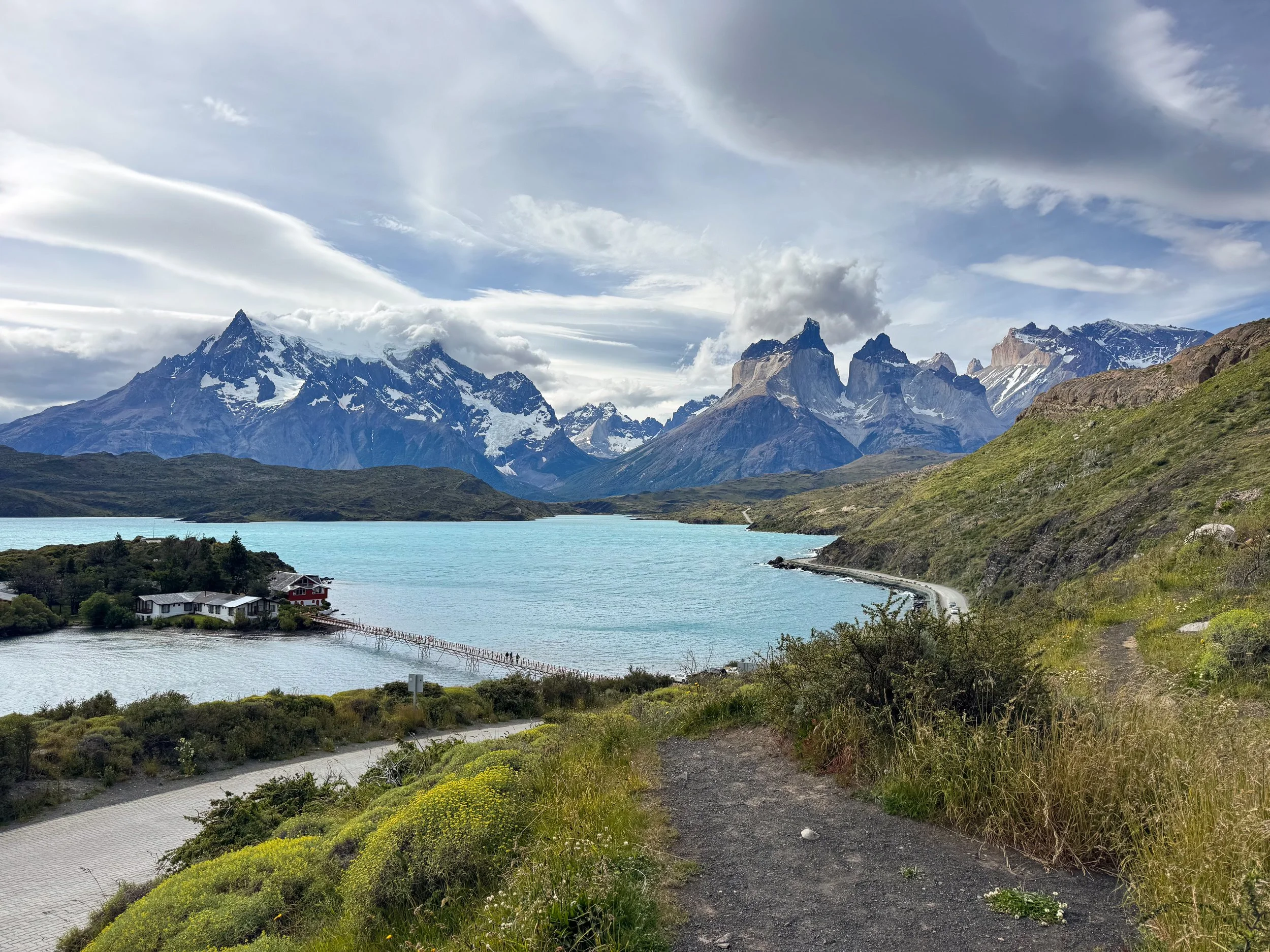
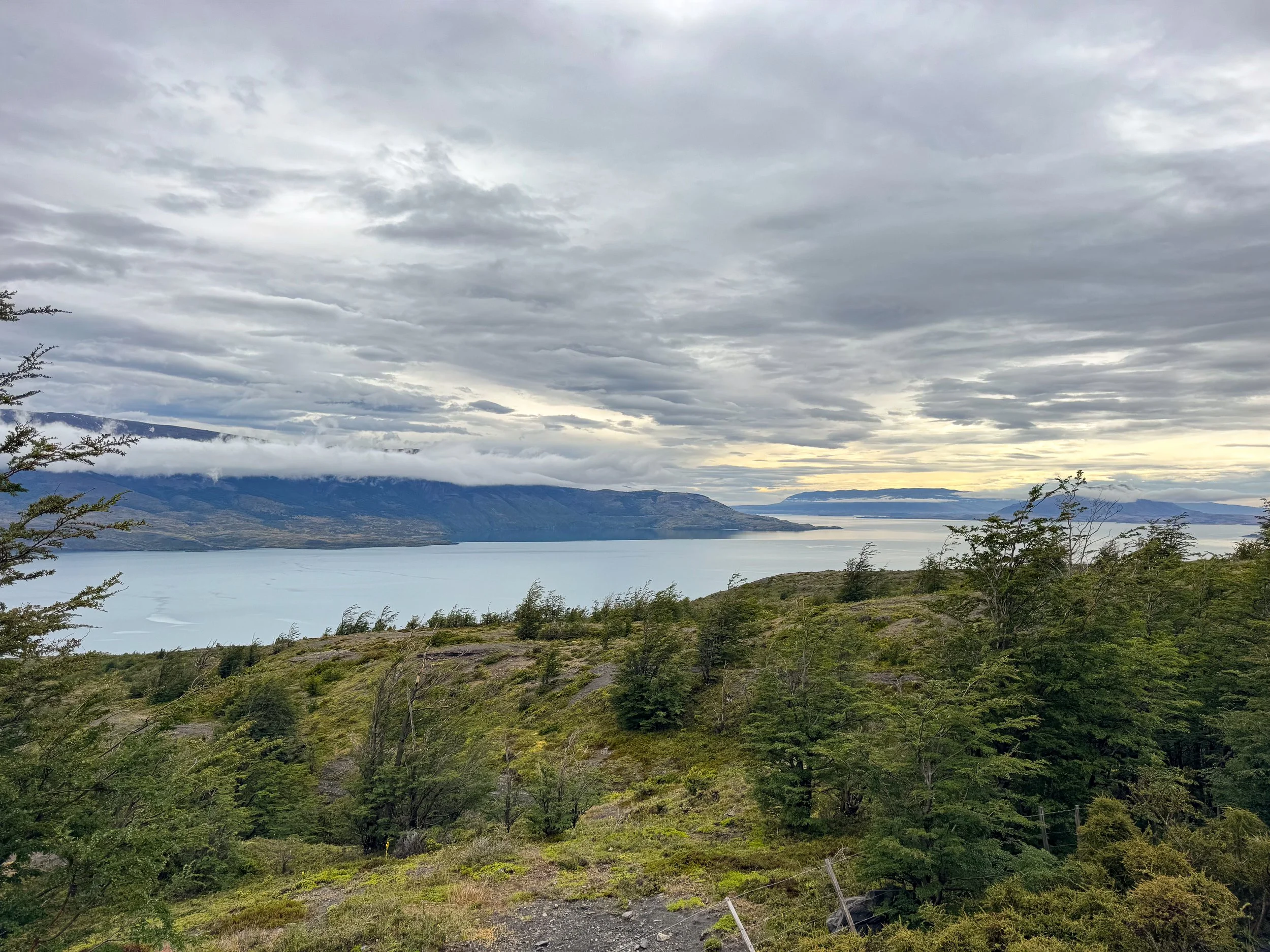
Mirador Lago Pehoé. An incredibly beautiful roadside lookout over Lago Pehoé with scenic views of the dark blue colored lake surrounded by rugged mountains. From here, a trail leads to Mirador de Condor with panoramic views. In view of the Mirador is an island with hotels and restaurants. The lookout is located less than 10 minutes from Salto Chico Falls.
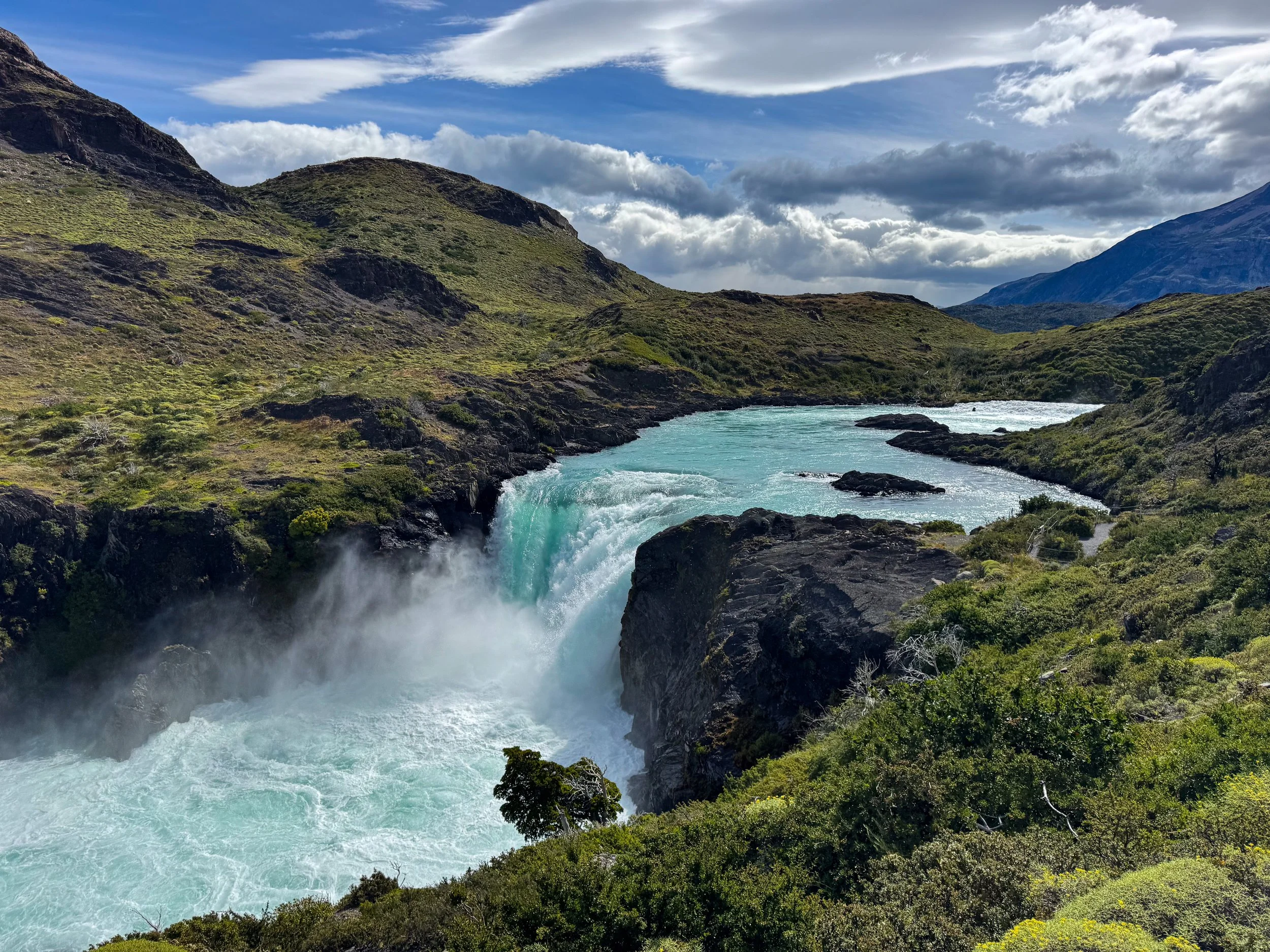
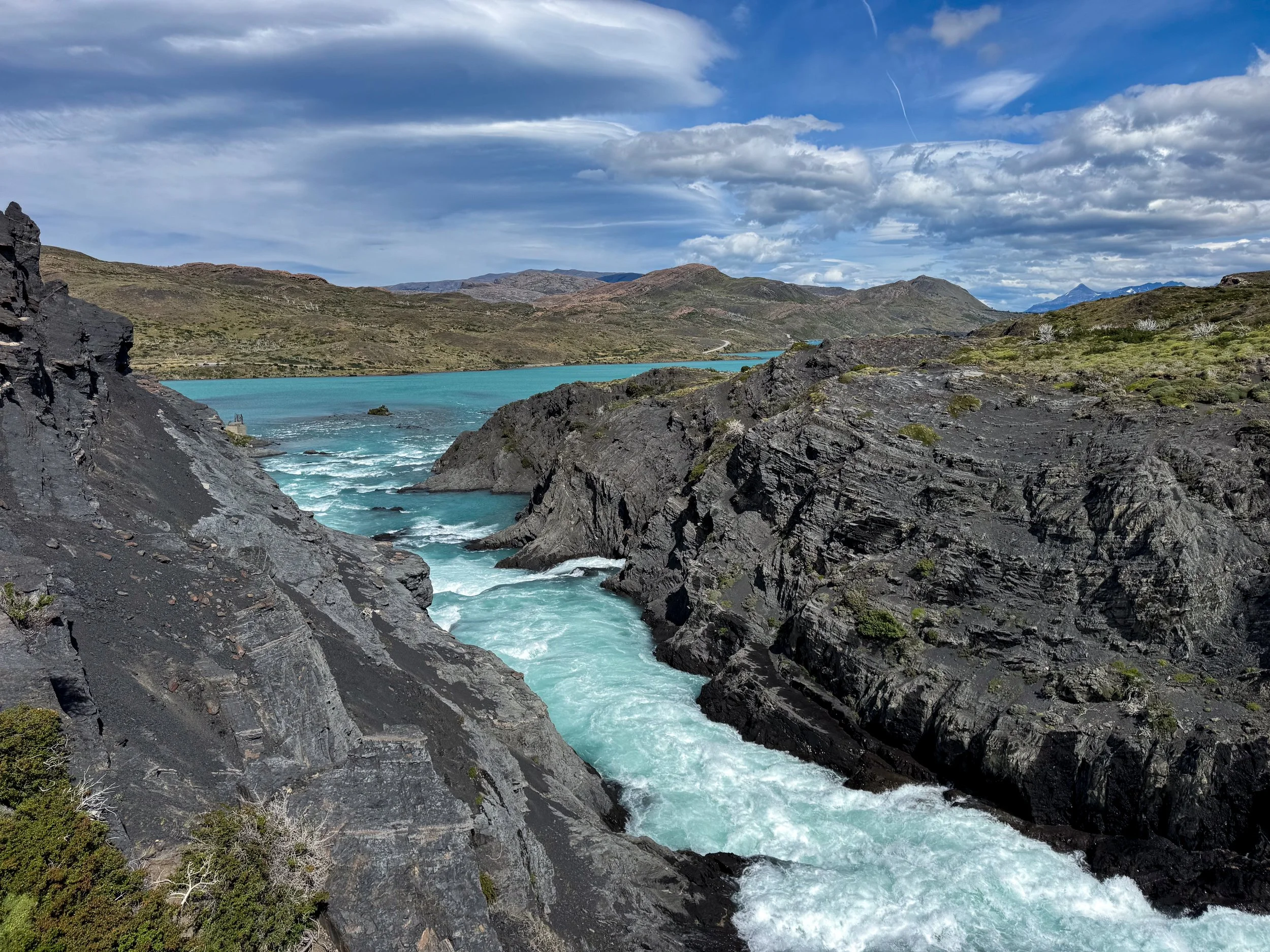
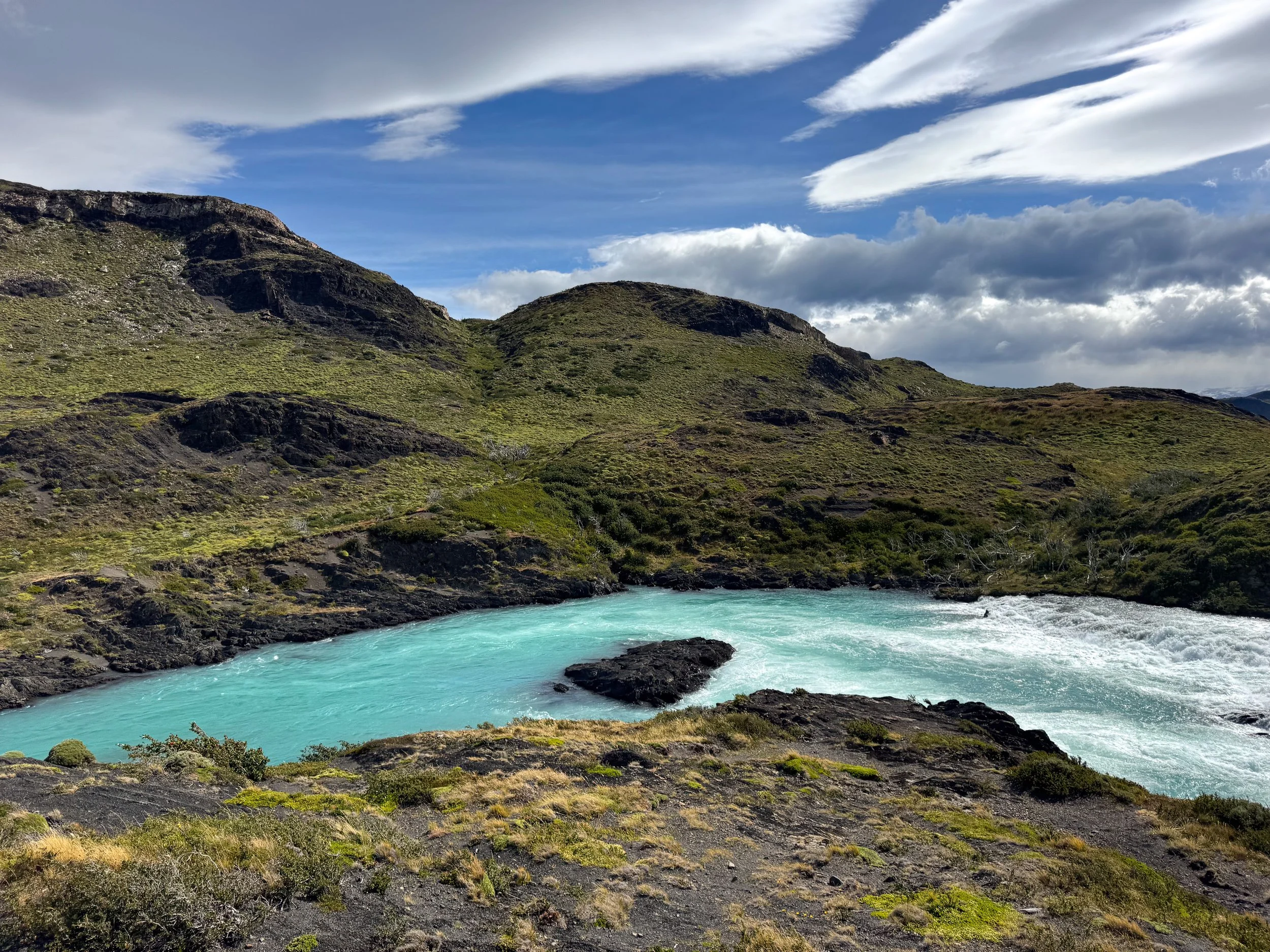
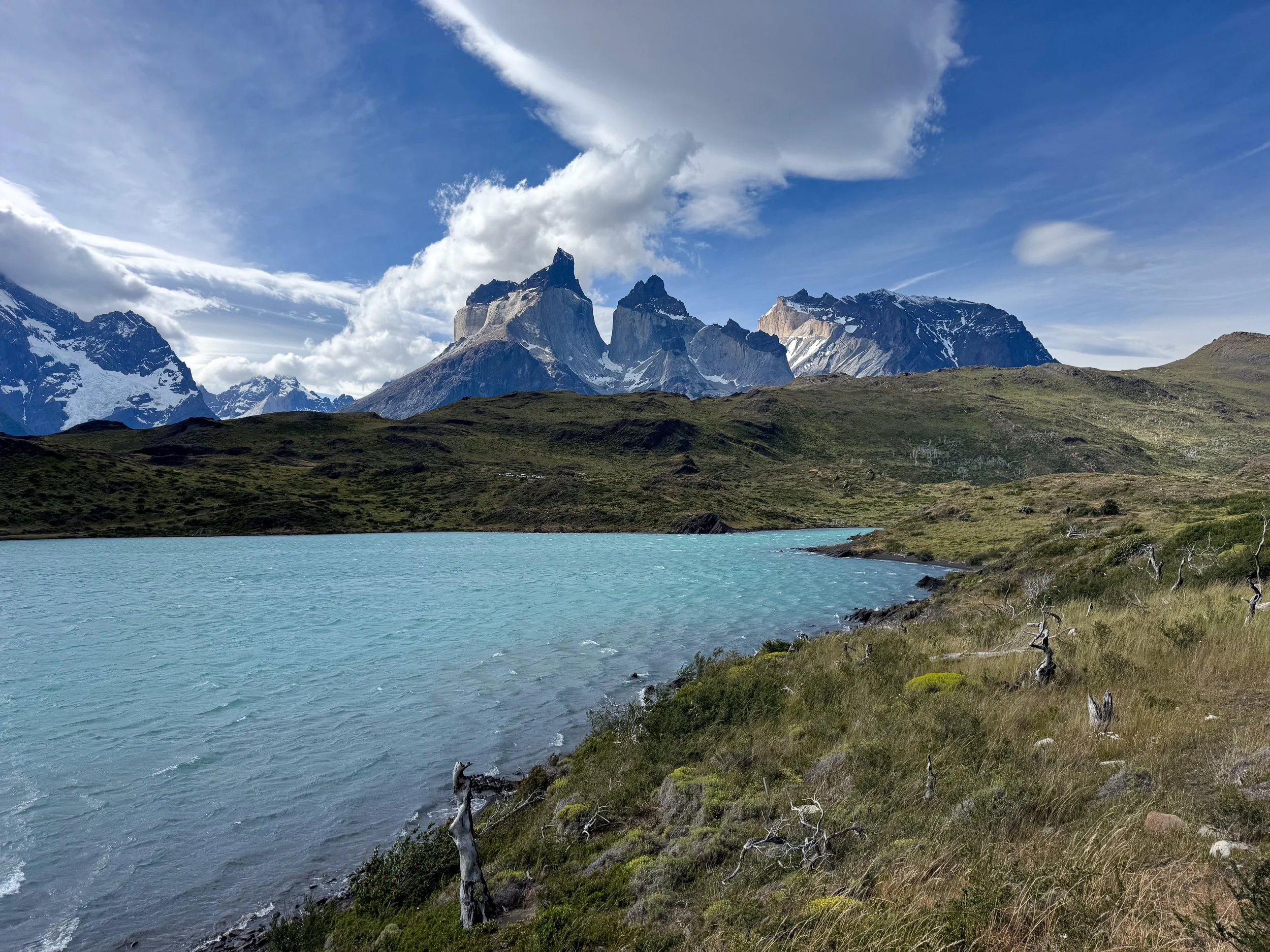
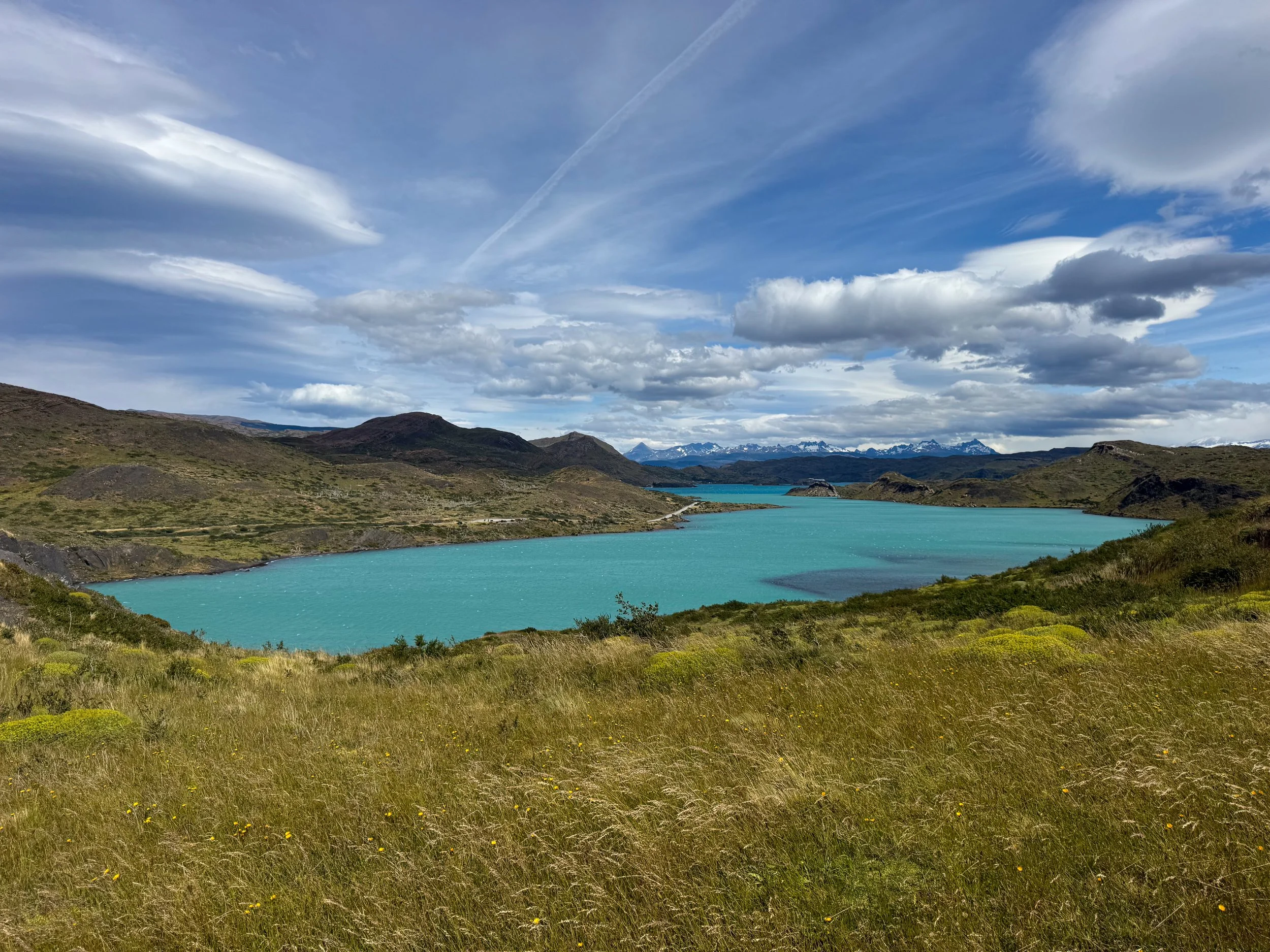
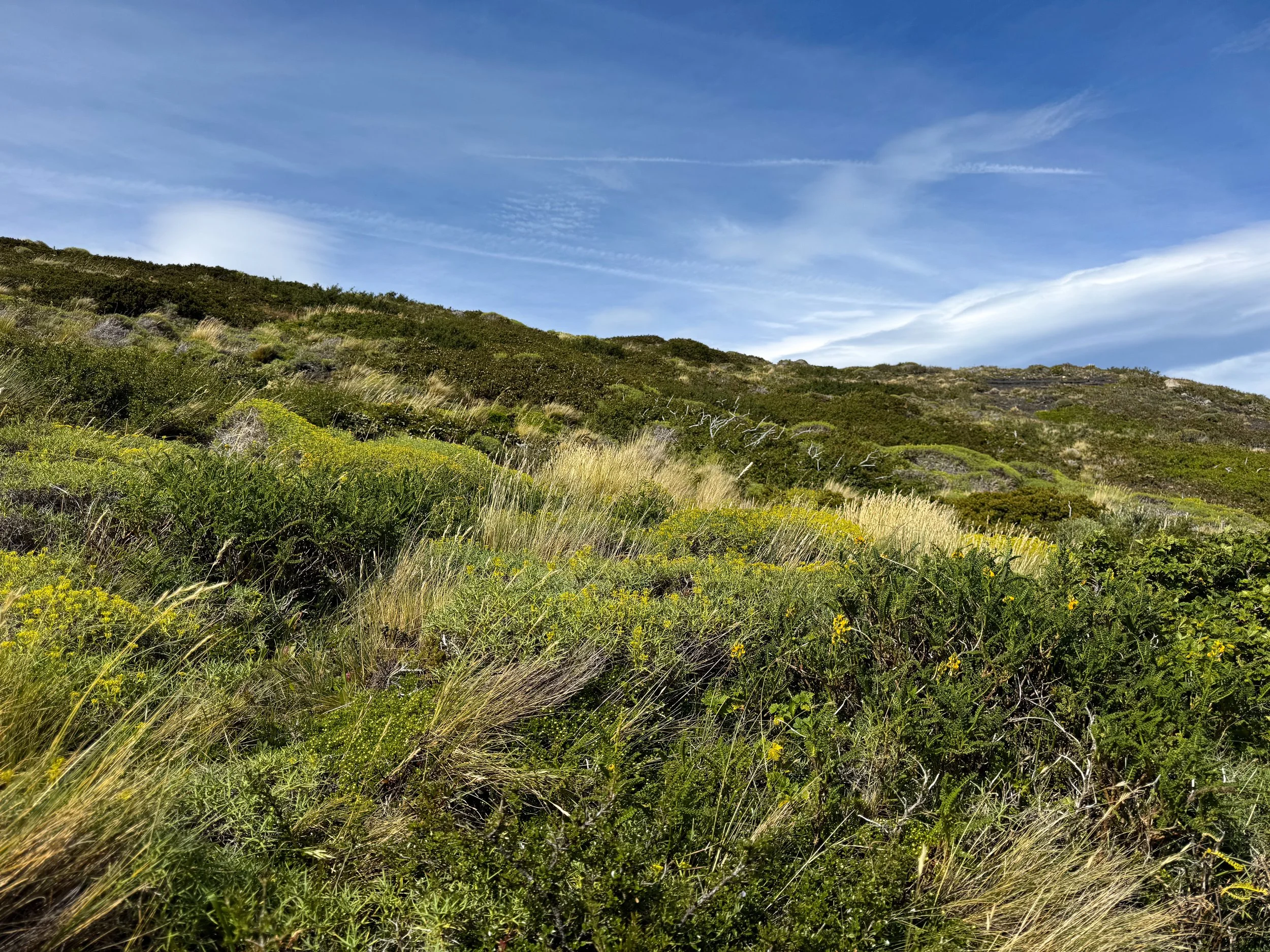
Salto Grande Waterfall. A misty aquamarine waterfall contrasted against black volcanic cliffs in a channel between two glacial lakes. The waterfall viewpoint is a 15 minute walk from the parking lot past lush hillsides with green bushes, flowering plants and mountainous views. The trail continues a further 5km to Mirador Cuernos with a lookout overNordenskjöld Lake. Beware of high winds that can reach speeds of 120km/h. The waterfall is located less than 15 minutes from Mirador de Condor.
Mirador Nordenskjöld Lake. A roadside lookout over a lagoon and lake with mountains on its opposite side. Between the mountains is a cascading glacier with blue ice and fresh snow. It was at this time that the rain started to subside. Soon afterwards, birds began flying around and guanaco started appearing on the tops of the hills, curiously looking around in all directions. The mirador is located 15 minutes from Salto Grande.
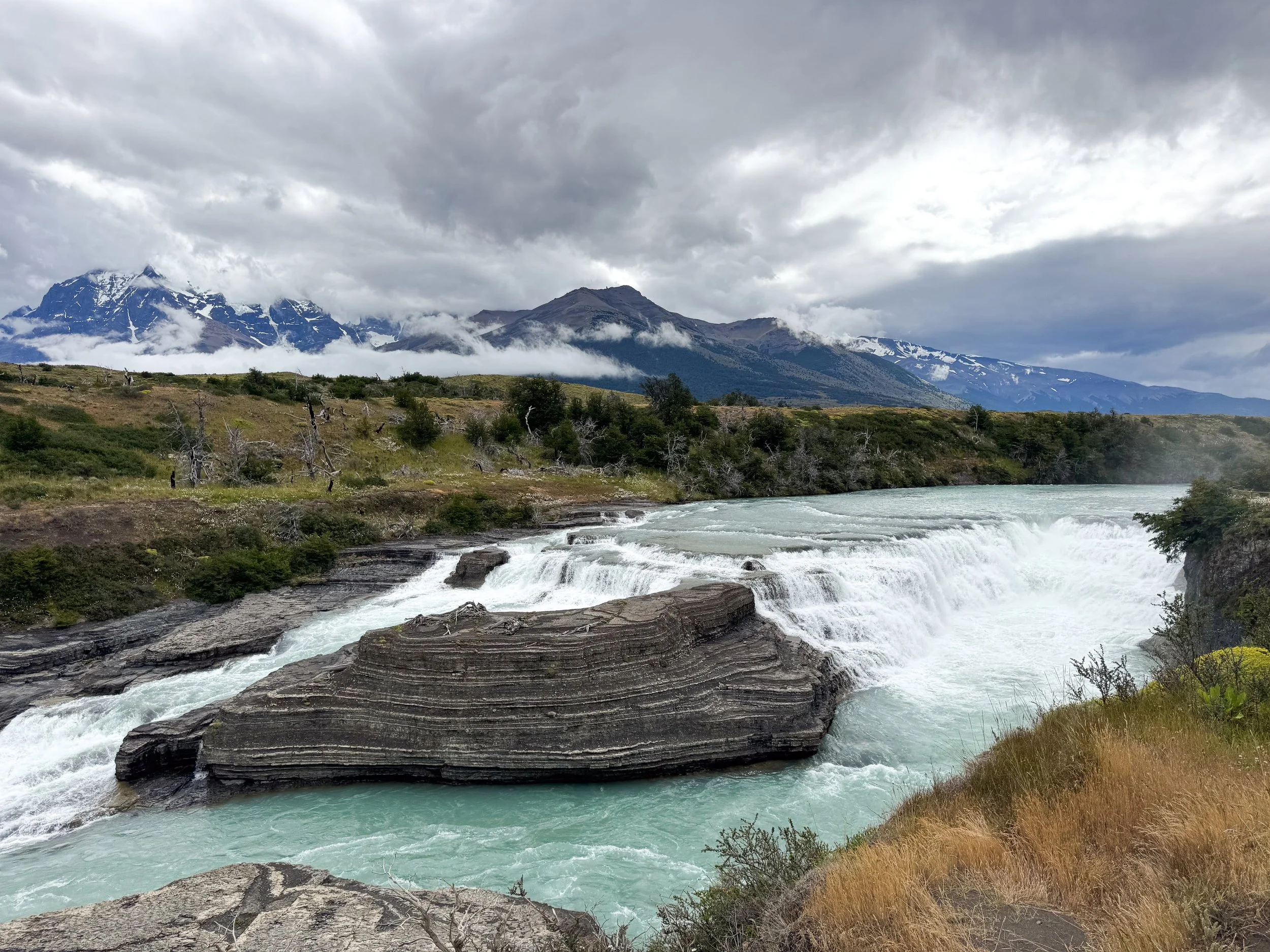
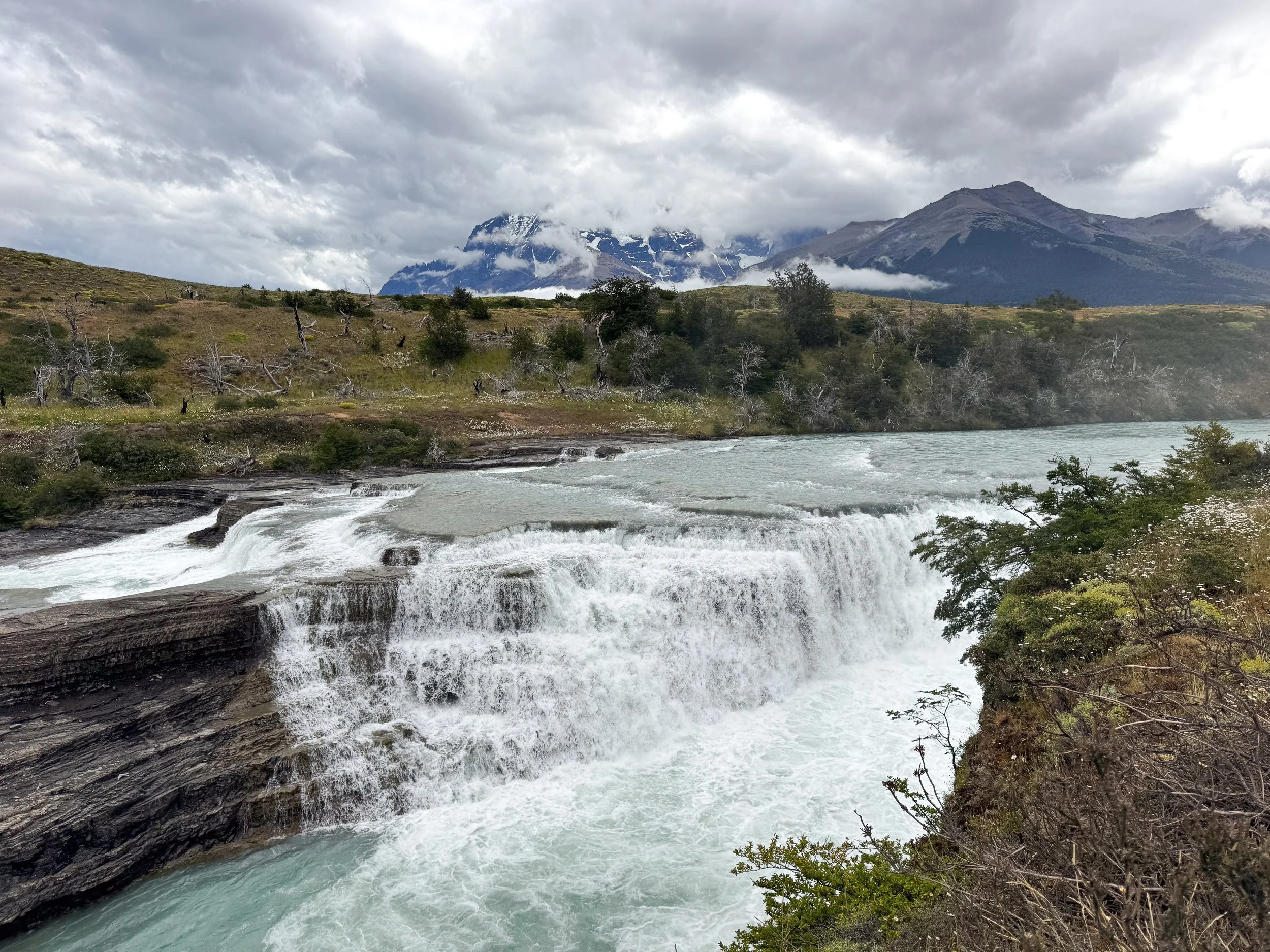
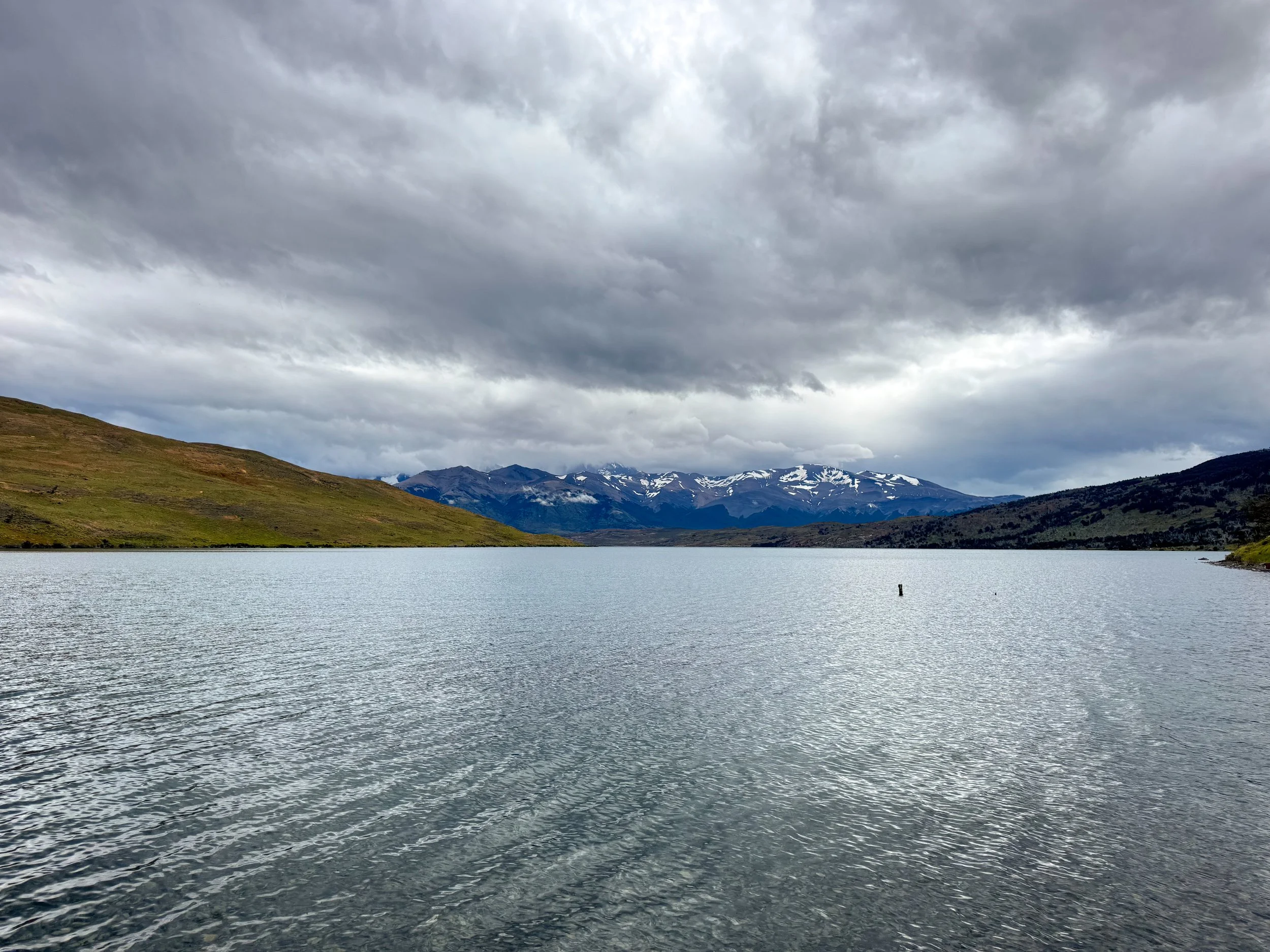
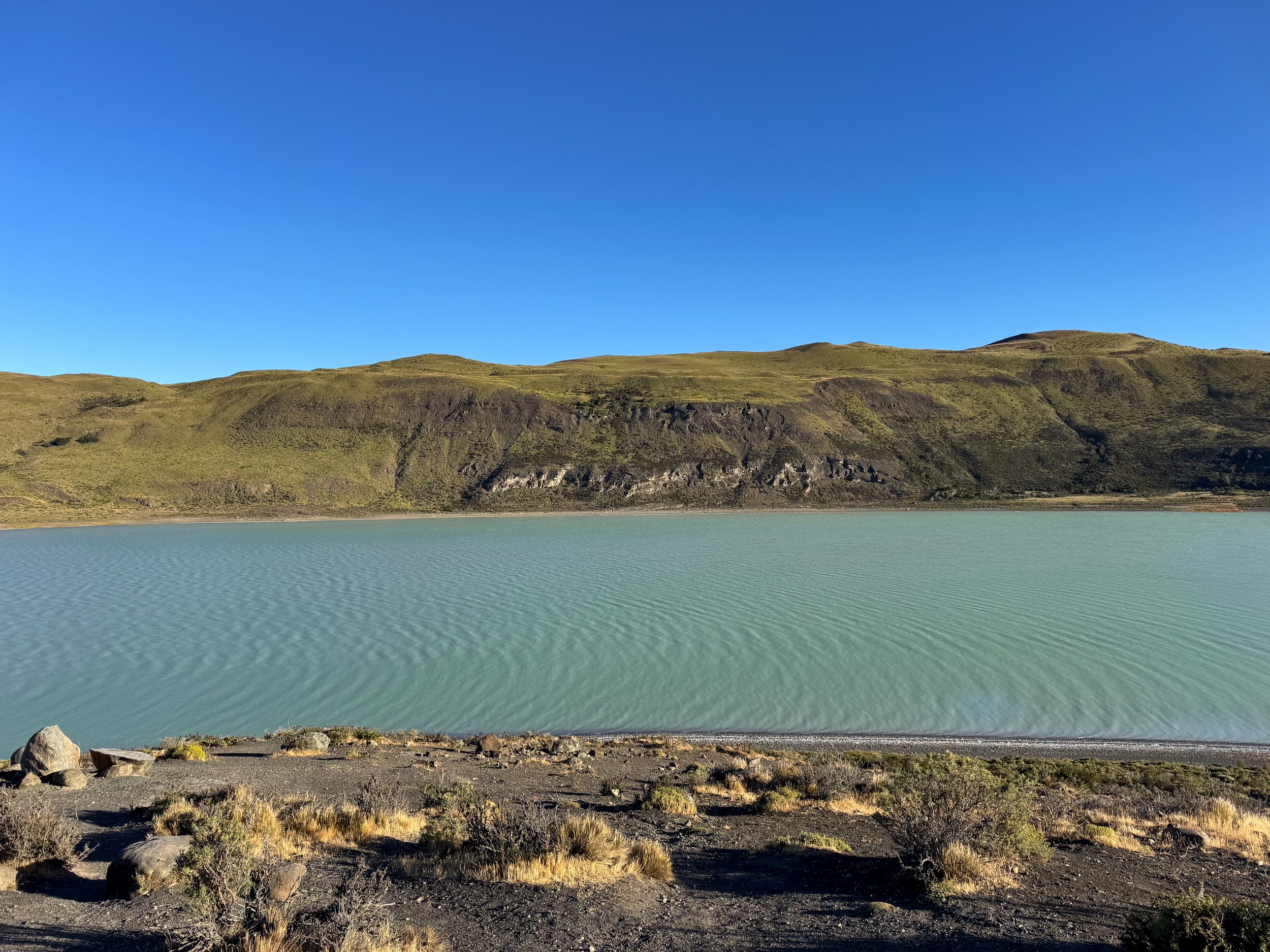
Cascada Río Paine. A cascading and angled waterfall in the Río Paine with views of the mountains. The roadside lookout is located 30 minutes from Mirador Nordenskjöld Lake.
Guardería Laguna Azul. A blue mountain lake surrounded by grassy fields home to the region’s largest population of Guanaco. Along its shores are narrow black sand and pebble beaches, hiking trails and a van campground. The lookout is located 15 minutes from Cascada Río Paine.
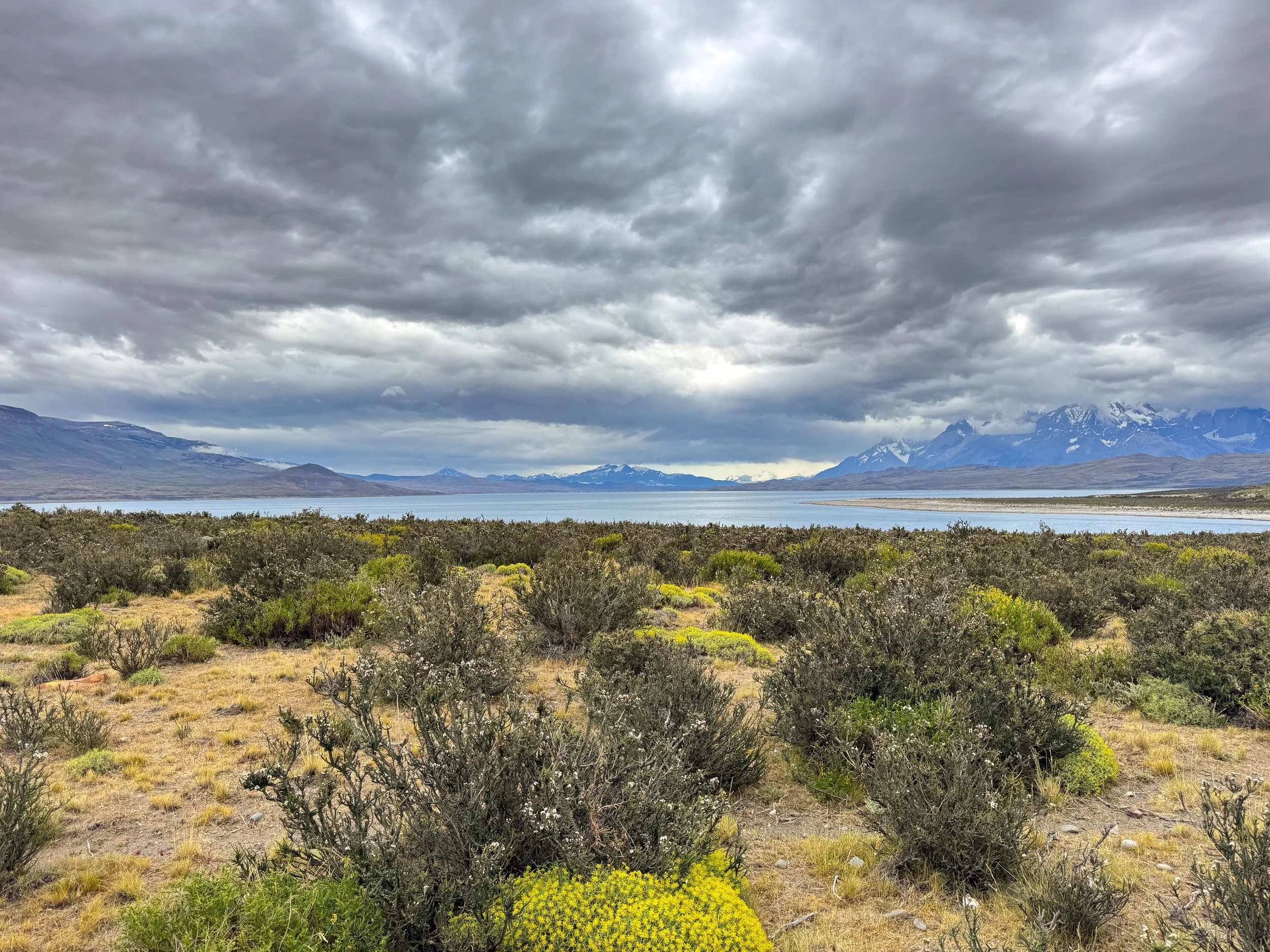
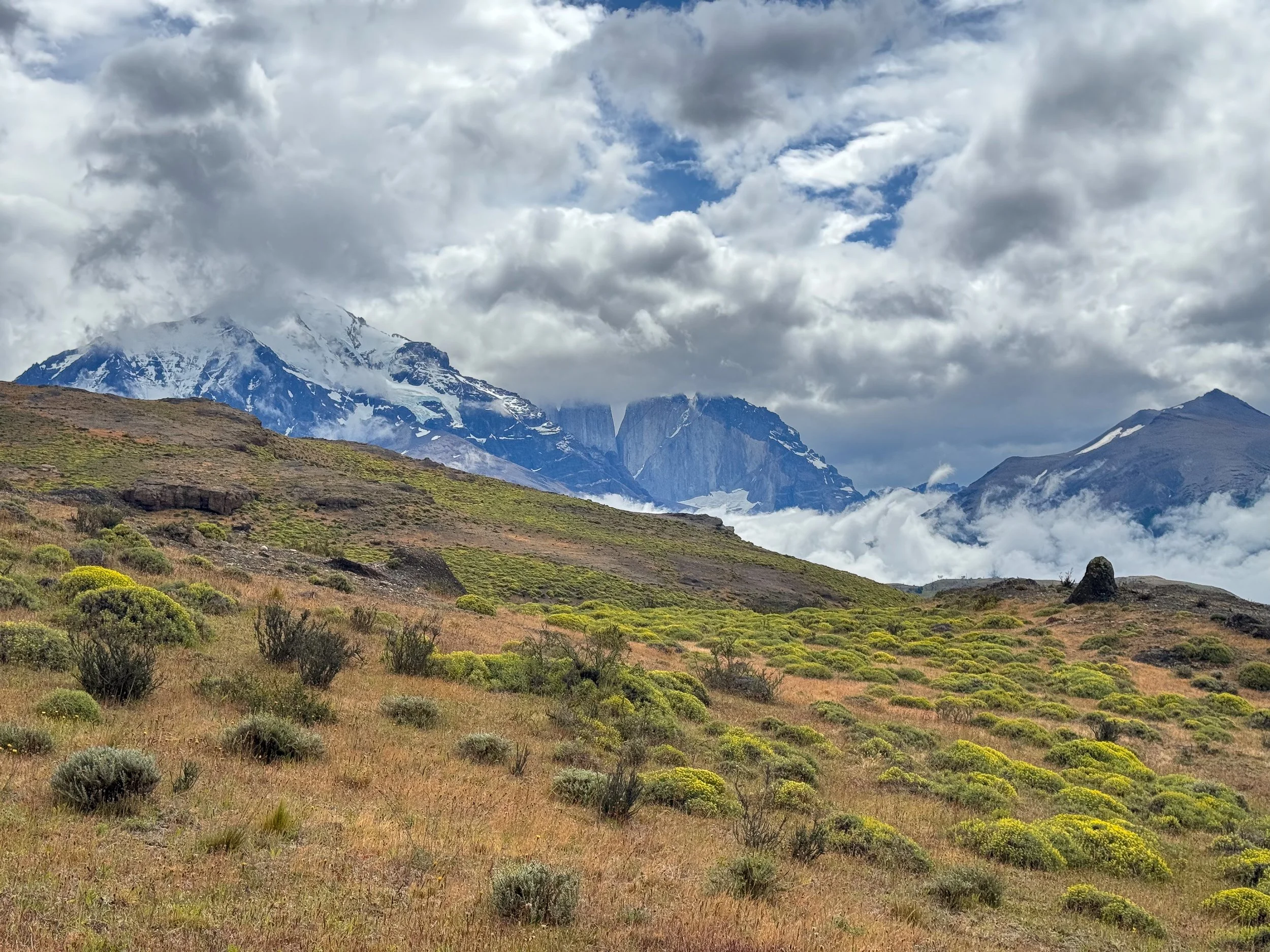
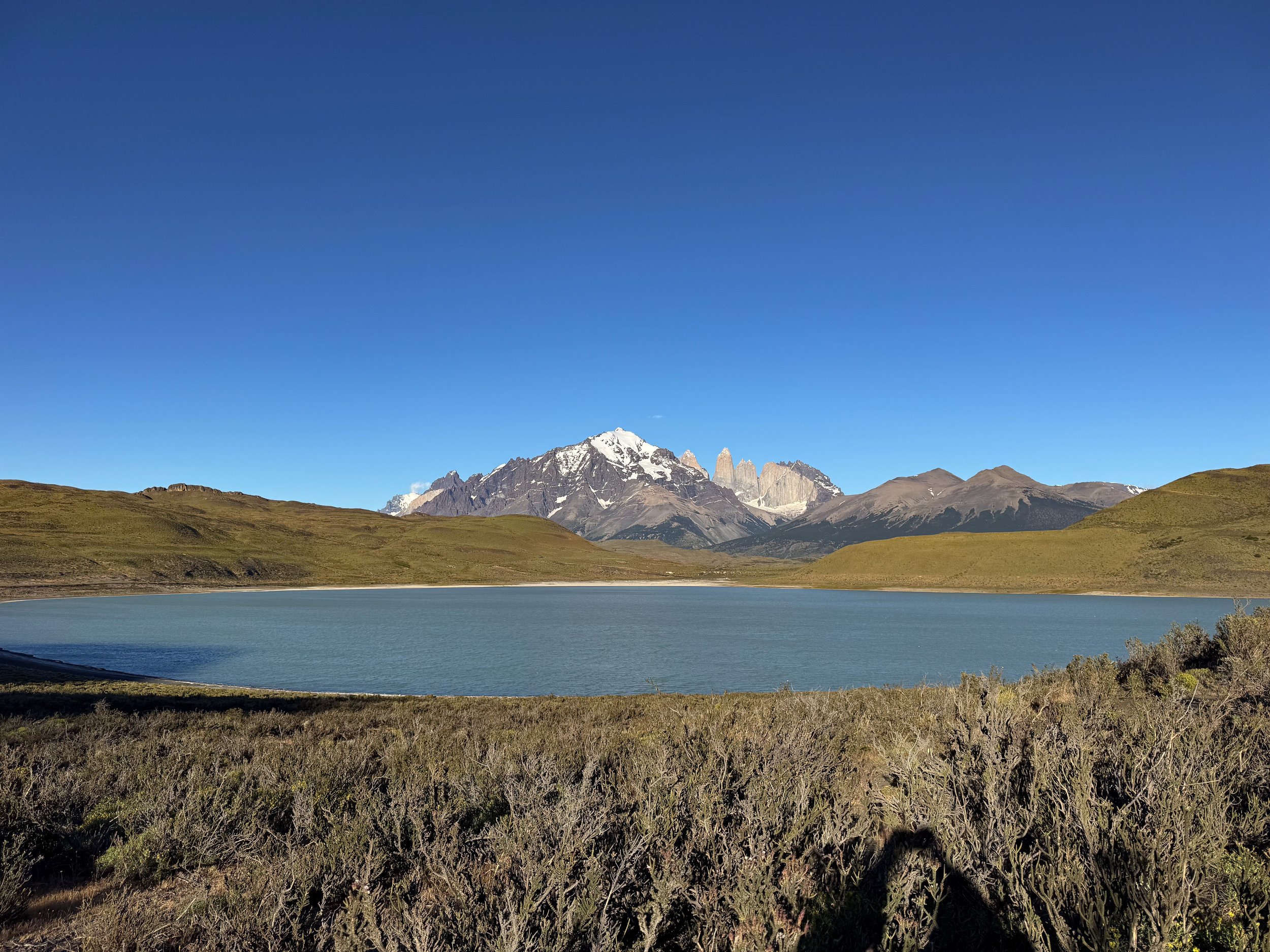
Laguna Amarga. A milky blue lagoon with partial views of the Torres del Paine from outside of the national park. On the day of our roadtrip, clouds completely obscured the granite peaks however, we saw an incredible view the following morning on our way to hike to their base. The lookout is located 30 minutes from Laguna Azul.
Mirador del Lago Sarmiento. A deep blue mountain lake surrounded by desert bushes and plants with views of the mountainous snow covered peaks in the distance. The lake is located on Ruta fin del Mundo 30 minutes from Laguna Amarga.
Mirador Lago Figueroa. A roadside lookout over a green lagoon at the base of tree and shrub covered hills. The lookout is located about 45 minutes from the lake and 30 minutes from Puerto Natales.
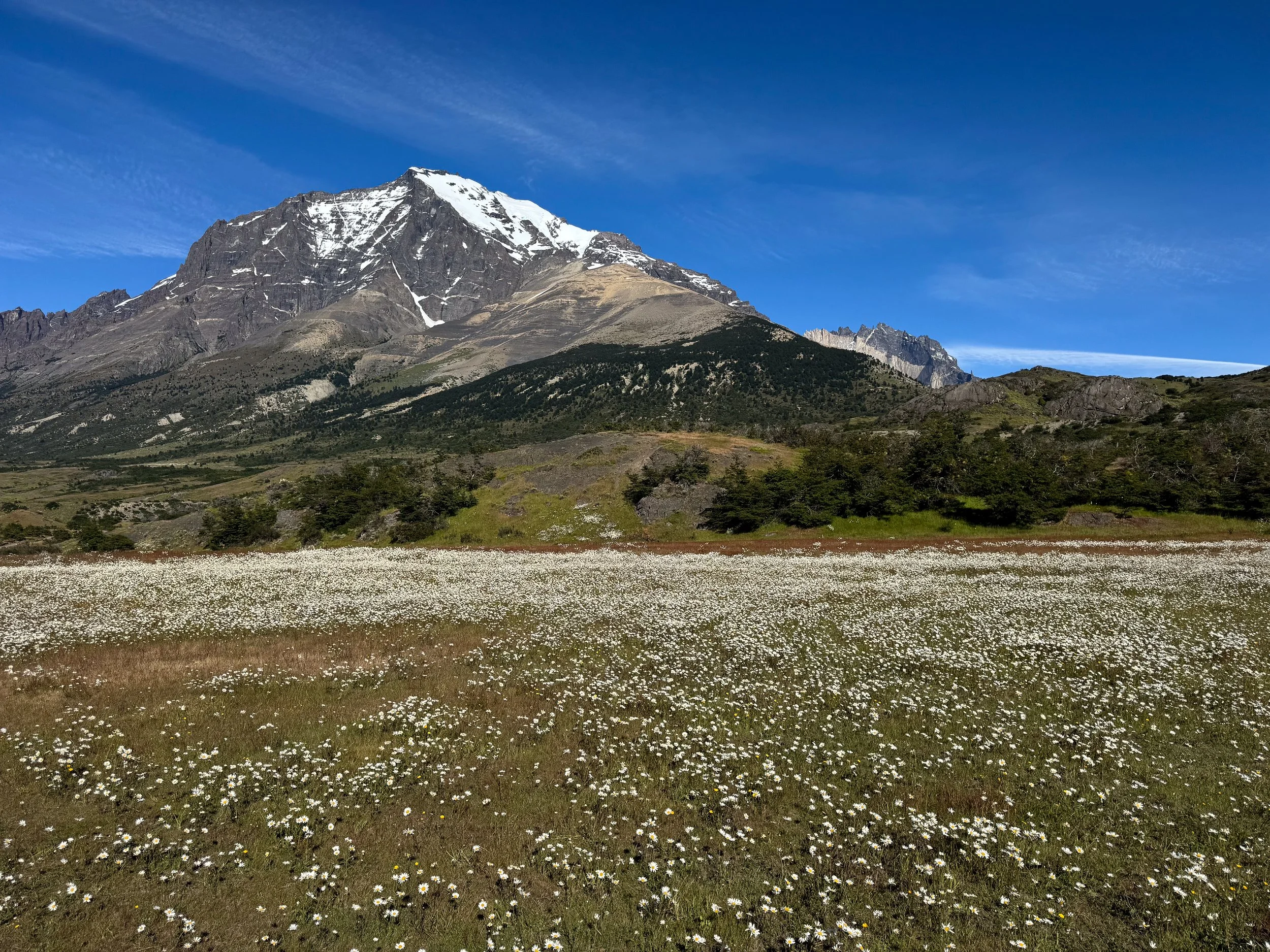
White Snow. In late December, super blooms of flowers emerge across the landscape. One of the most iconic is White Snow, a tiny white petaled flower with a yellow center that blooms by the millions, blanketing grass fields in a layer of white, imitating snow.
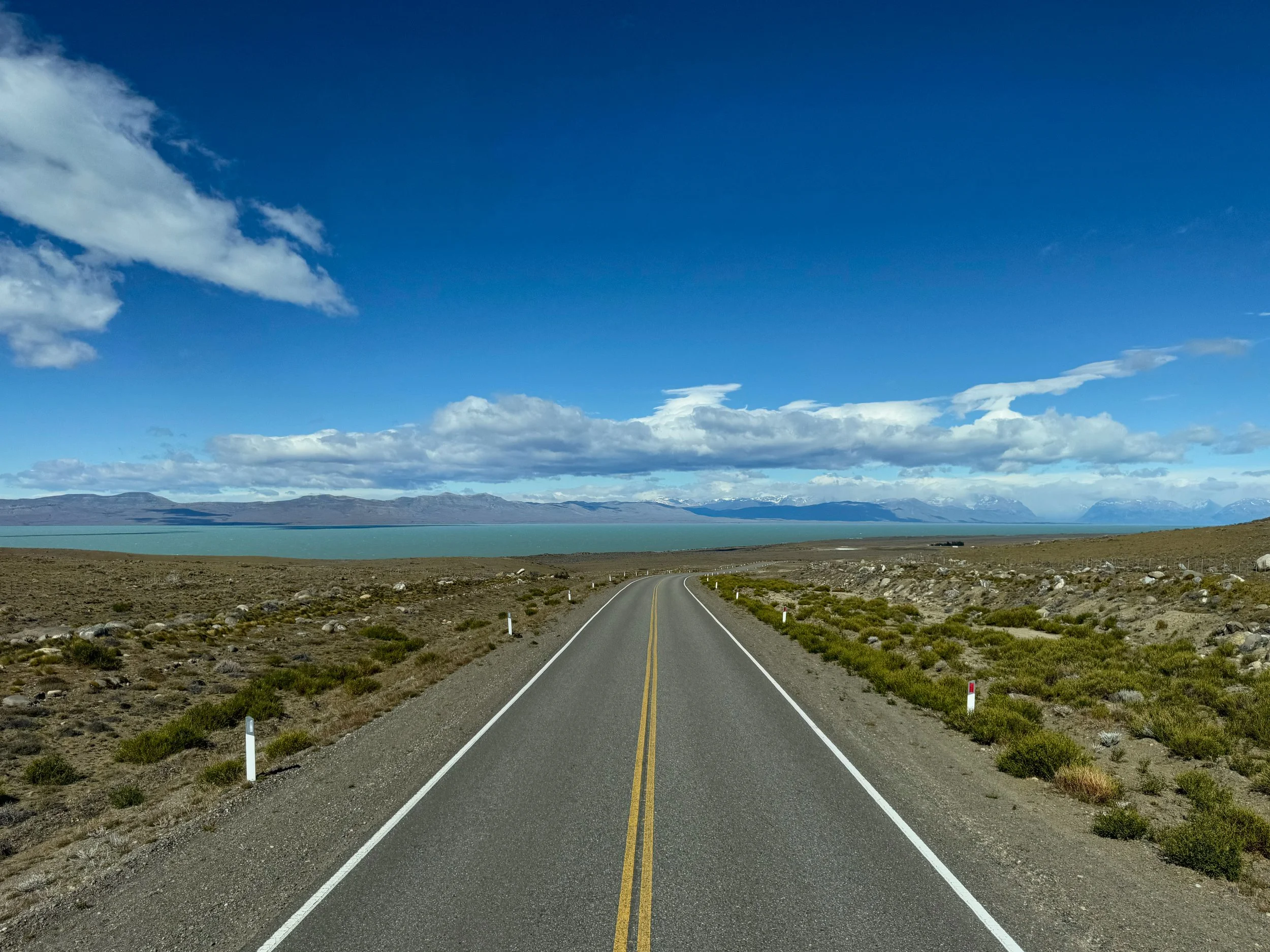
Driving in Patagonia
Driving in Patagonia was easy, granted we were driving during the warmer summer months with significantly more daylight than night. Regardless, there are different types of roads to be aware of when driving here.
Ruta fin del Mundo (End of the World Route). A vast highway leading through Patagonia to the southern tip of South America. Between Puerto Natales and Torres del Paine, the highway is well maintained with scenic lookouts and faster speeds than the asphalt and dirt back roads.
Asphalt Roads. The asphalt roads between Puerto Natales and Torres del Paine are the most dangerous due to clusters of deep potholes. Drive slowly and be ready for evasive maneuvering.
Dirt Roads. The dirt roads within Torres del Paine and between here and Puerto Natales are easy to drive on and regularly smoothed. Other than little bumps and clouds of dust, we had no issues. Keep distance between cars to avoid windshield chips.
Pro Tip. When leaving Puerto Natales, depart with a full tank of gas. There are no gas stations outside of the city.
Car Rental
One of the best ways to see Patagonia is on your own. Though expensive, having a car saved us from booking any costly tours and allowed us the freedom to move at our own pace. When in Puerto Natales, we rented a car and spent two days exploring the Torres del Paine National Park. We booked with Magallanes Rent-A-Car.We requested to book 6 months before arriving and paid a 50% deposit 1 month before and the remainder at pick up.
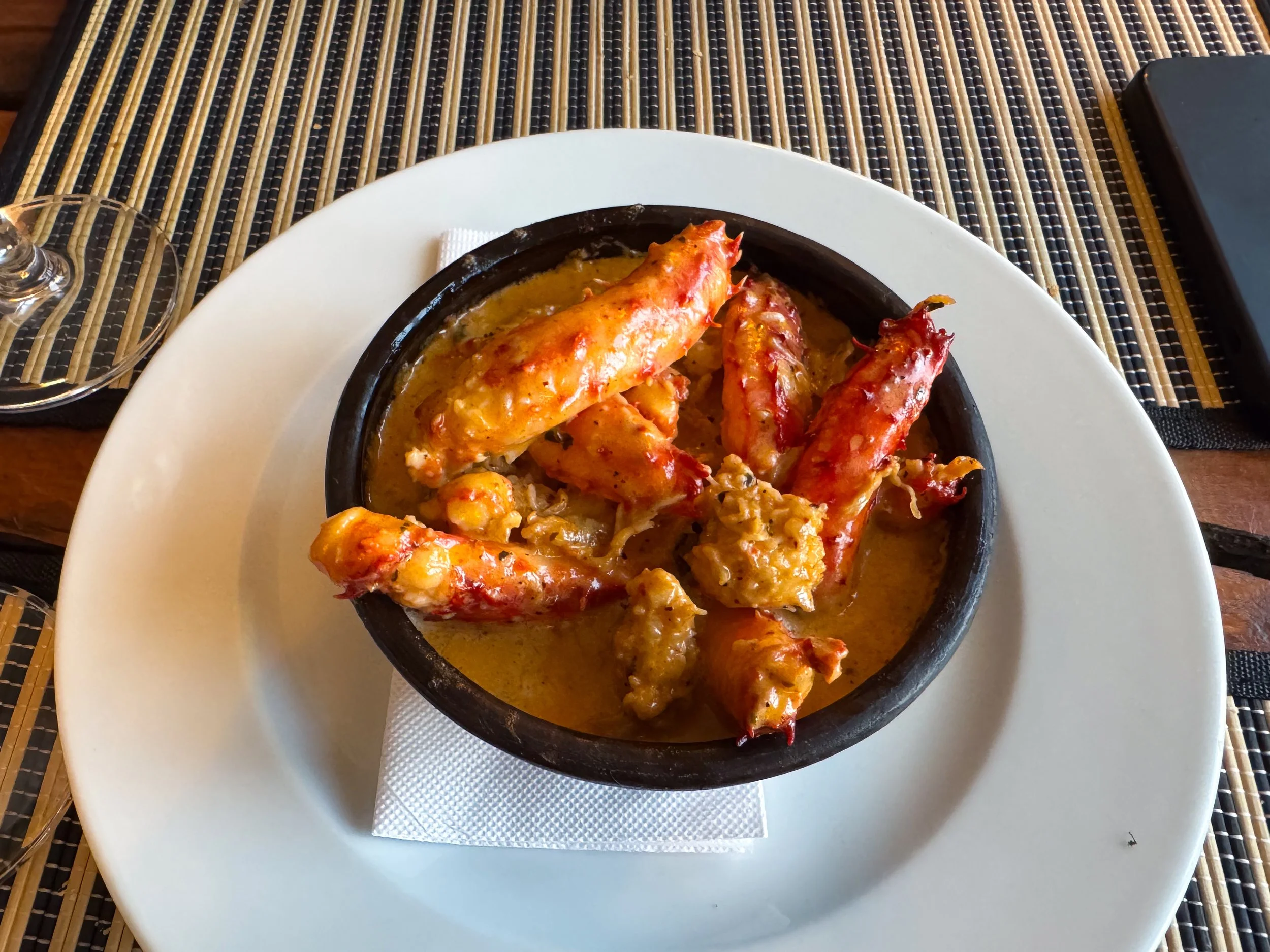
Chilean King Crab
Puerto Natales is famed in Chile for its seafood, specifically king crab. One of the best restaurants in town for king crab is Santolla. They serve entire king crabs and a range of dishes made from its meat. We savored 3 tapas style dishes: the crab legs cooked in a spicy white wine sauce, a king crab cake and scallops pil pil. To drink, a Patagonian gin & tonic and a glass of Chilean Carmenere. The restaurant built from repurposed shipping containers, a nod to the port town’s shipping industry.
When to Visit
We visited Patagonia from mid to late December when the days are at their longest, lasting nearly 18 hours. The days are warm and the nights are chilly. The landscape was coming to life with green bushes, flowering shrubs and budding wild berries.
Location Specifics
Exchanging USD. You need to have near perfect bills free of tears, markings or a tattered appearance when exchanging for pesos or paying.
Cash vs Card. Cash is king however many places do accept card. There is often a fee ranging up to 20% for using card. There is an occasional 10% discount for paying in cash.
ATM. Regardless of banks, cash machines will only allow foreigners to request 2,000 pesos per day (about $2 USD) with fees costing close to 15,000 pesos.
Tipping. Tipping 10% is customary. Tips are cash only.
Prices. The prices of tours, cost of accommodations and meals are very expensive in Patagonia.
Ticket Fees. Ticket fees and entrance tickets often cost up to 3 times more for foreigners.
Bookings. Tours and accommodations book up in advance. We booked everything 2 to 6 months ahead of time.
Elsewhere in Patagonia
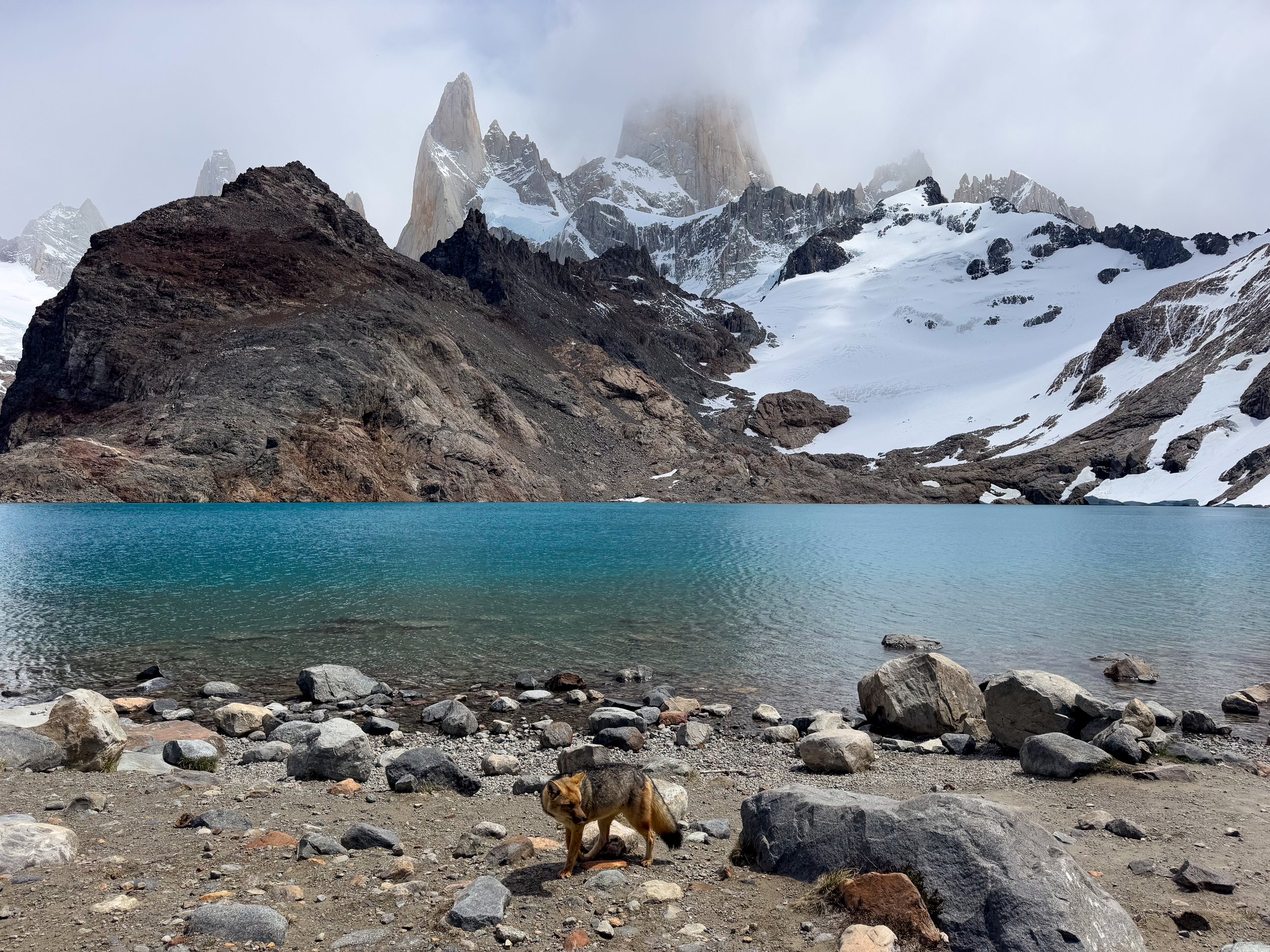
From the rugged trekking routes of Torres del Paine to the glaciers and mountain towns of Argentine Patagonia, discover more of the shared Patagonian wilderness:
Patagonia Argentina Travel Guide: Perito Moreno Glacier, El Calafate & Fitz Roy. Explore Patagonia's dramatic landscapes where glaciers, turquoise lakes, snow capped mountains and alpine towns define Argentina's remote southern frontier.
For Next Time…
Walk with Penguins. Nearby the Chilean Patagonian town of Punta Arenas is a remote island home to colonies of penguins. We plan to tour the island and walk with them on our next trip to the region.
Tour the Fjords. Patagonia's fjords are a boat ride from the city’s port. When we return, we plan to tour them, their mountains, waterfalls and glaciers, including the Balmaceda and Serrano Glaciers.
Last Hope Distillery. Patagonian gin is one of our favorite styles of gin for its herbal and floral flavors. We missed our chance to visit the city’s only gin distillery. We hope to make it on one our first stops next time.
Puma Tracking. We saw signs and warnings about the Puma everywhere. We were either lucky or unlucky not to spot one. When we return, we plan to hire a guide to bring us puma tracking in hopes of spotting one of the big cats.

Atacama Desert Travel Guide: Best Things to Do from San Pedro de Atacama
Explore the Atacama Desert from San Pedro de Atacama where volcanoes, salt flats, vibrant lagoons and geysers create otherworldly landscapes.

Atacama, Chile
The Atacama Desert is the driest place on the planet with an aired landscape comprised of countless volcanoes, erupting geysers, rocky valleys, jagged mountains, gargantuan sand dunes, vast salt flats, vibrant lagoons, spiraling dust devils and small desert towns. From the adobe town San Pedro de Atacama, we ventured into the remote landscapes of the Atacama Desert.
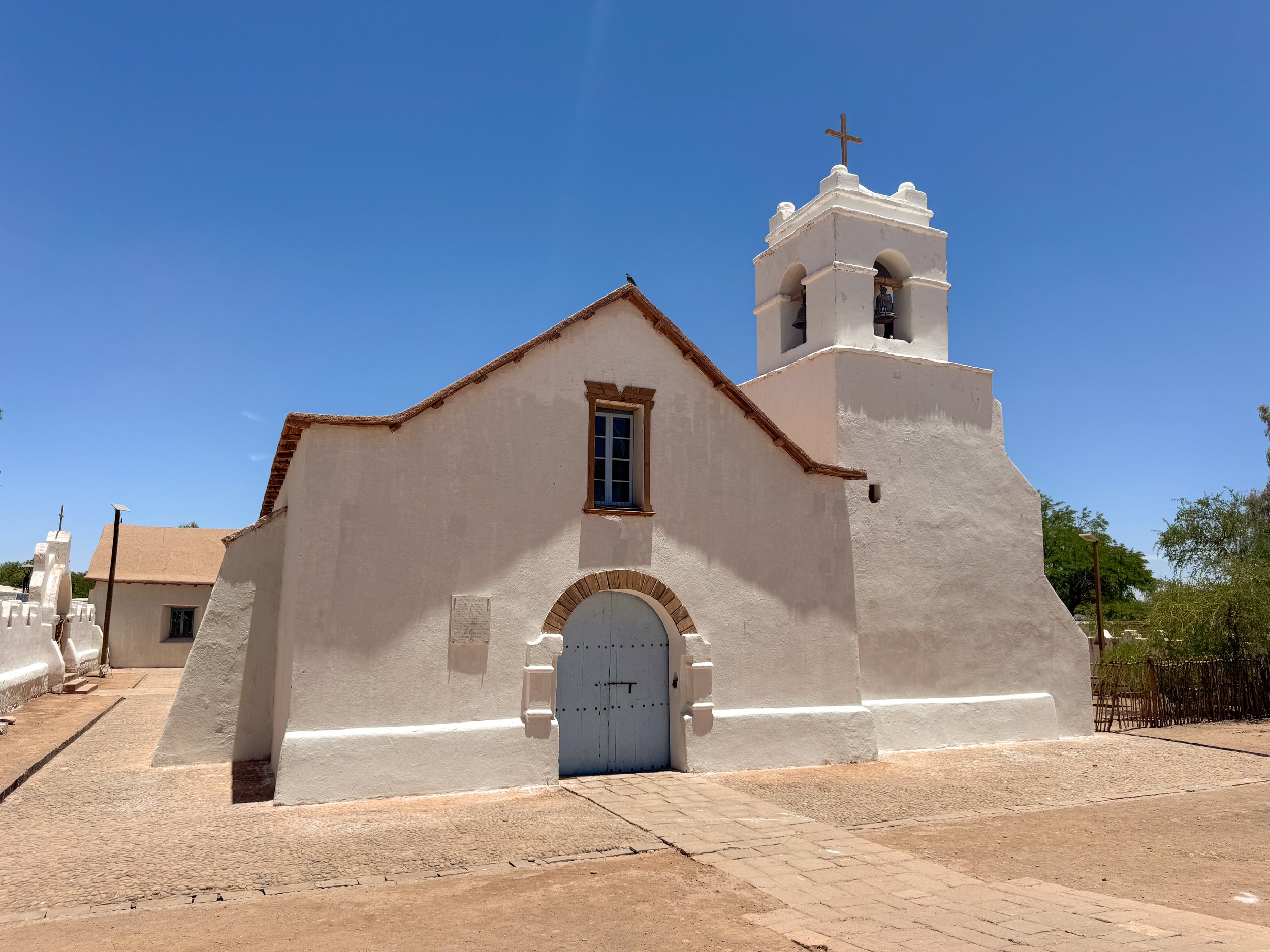
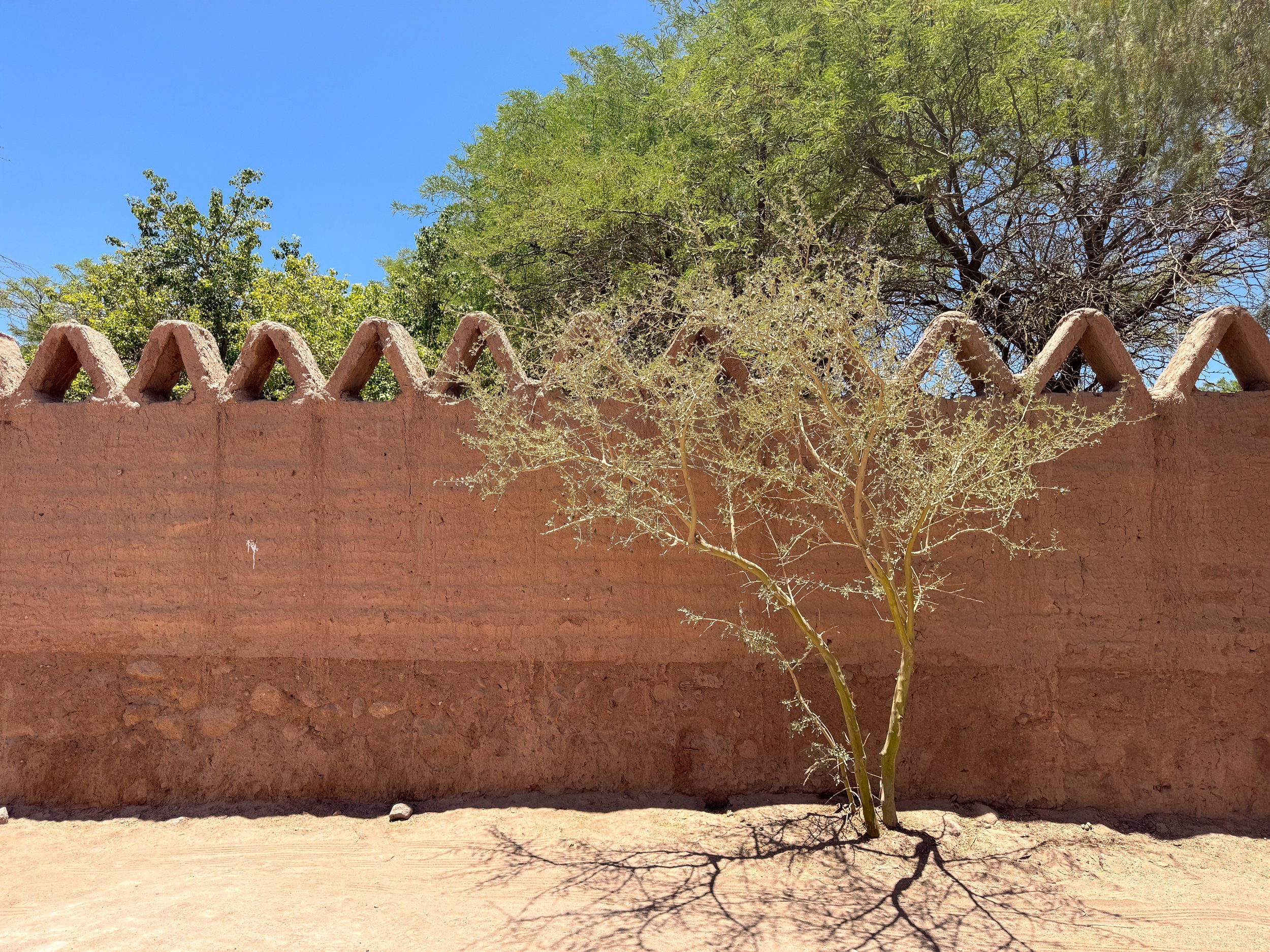
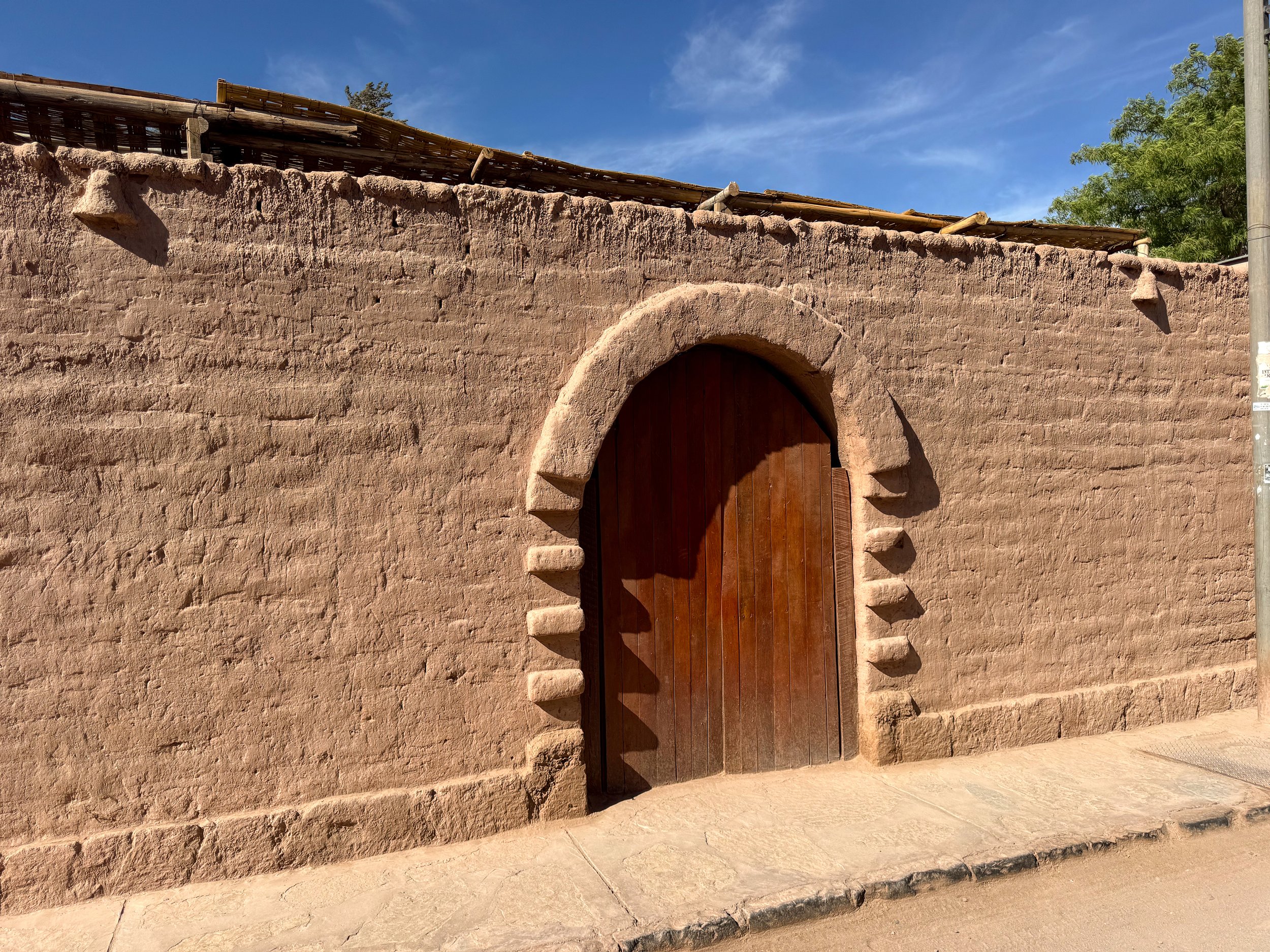
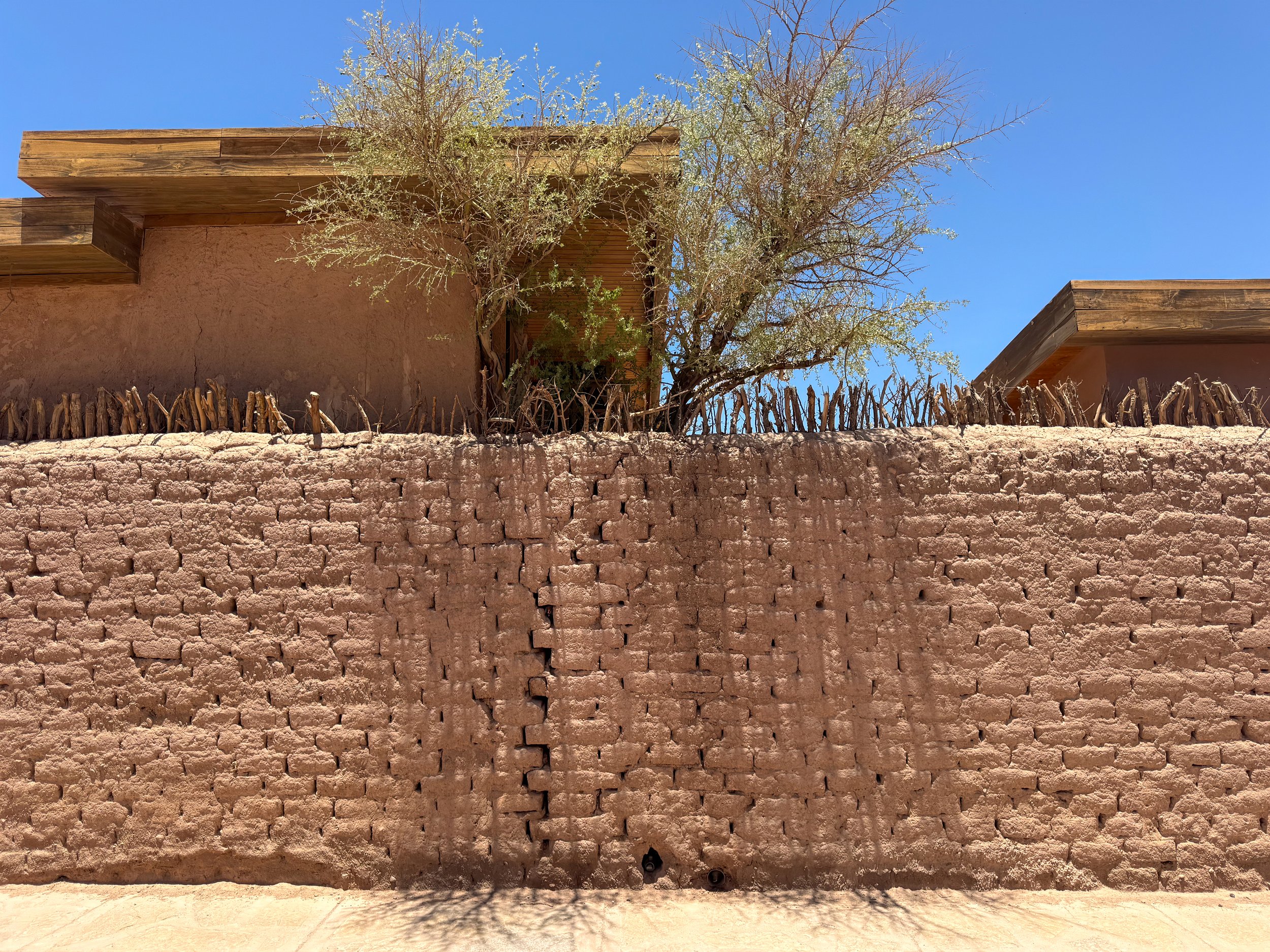
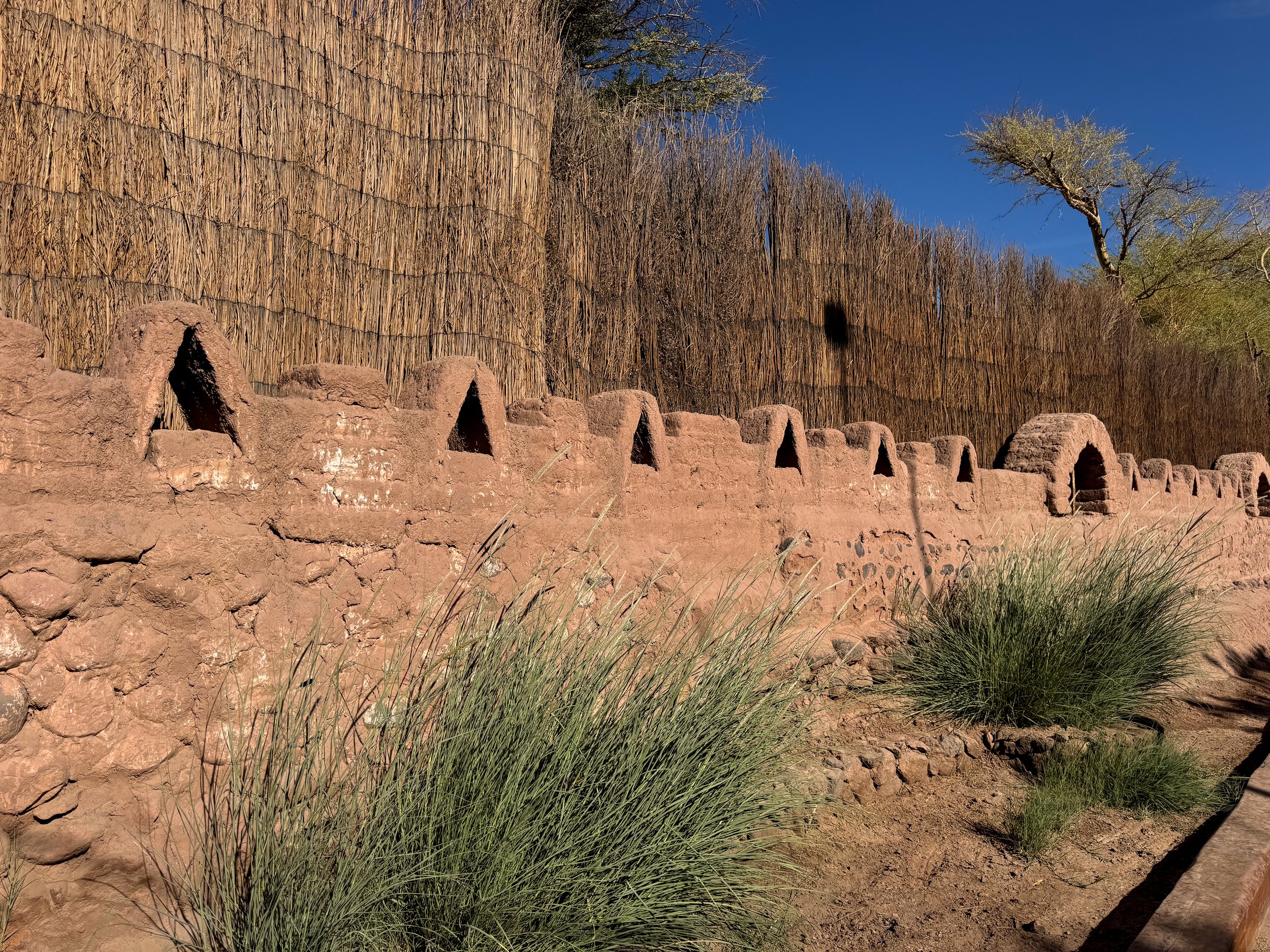
San Pedro de Atacama, Chile
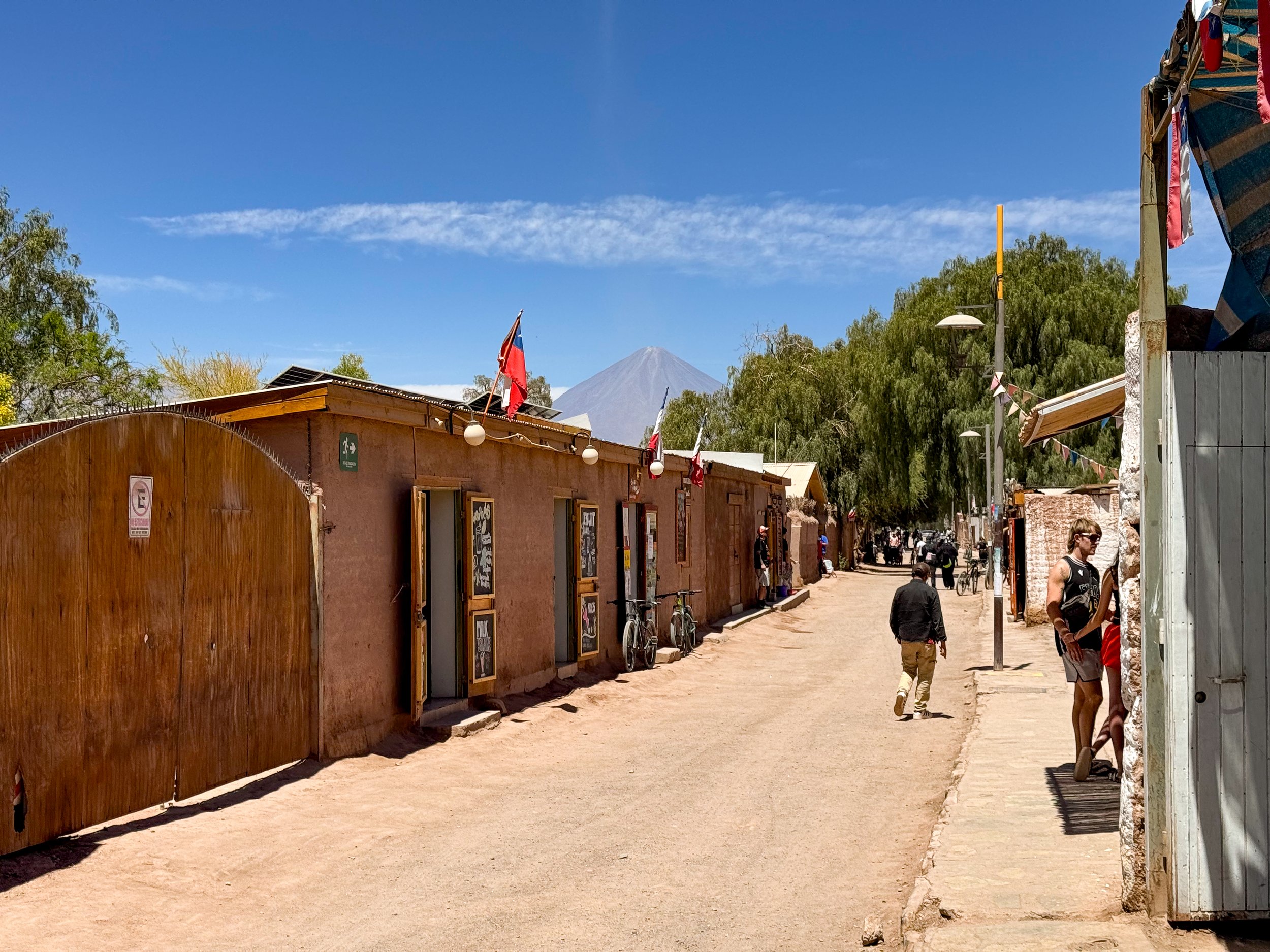
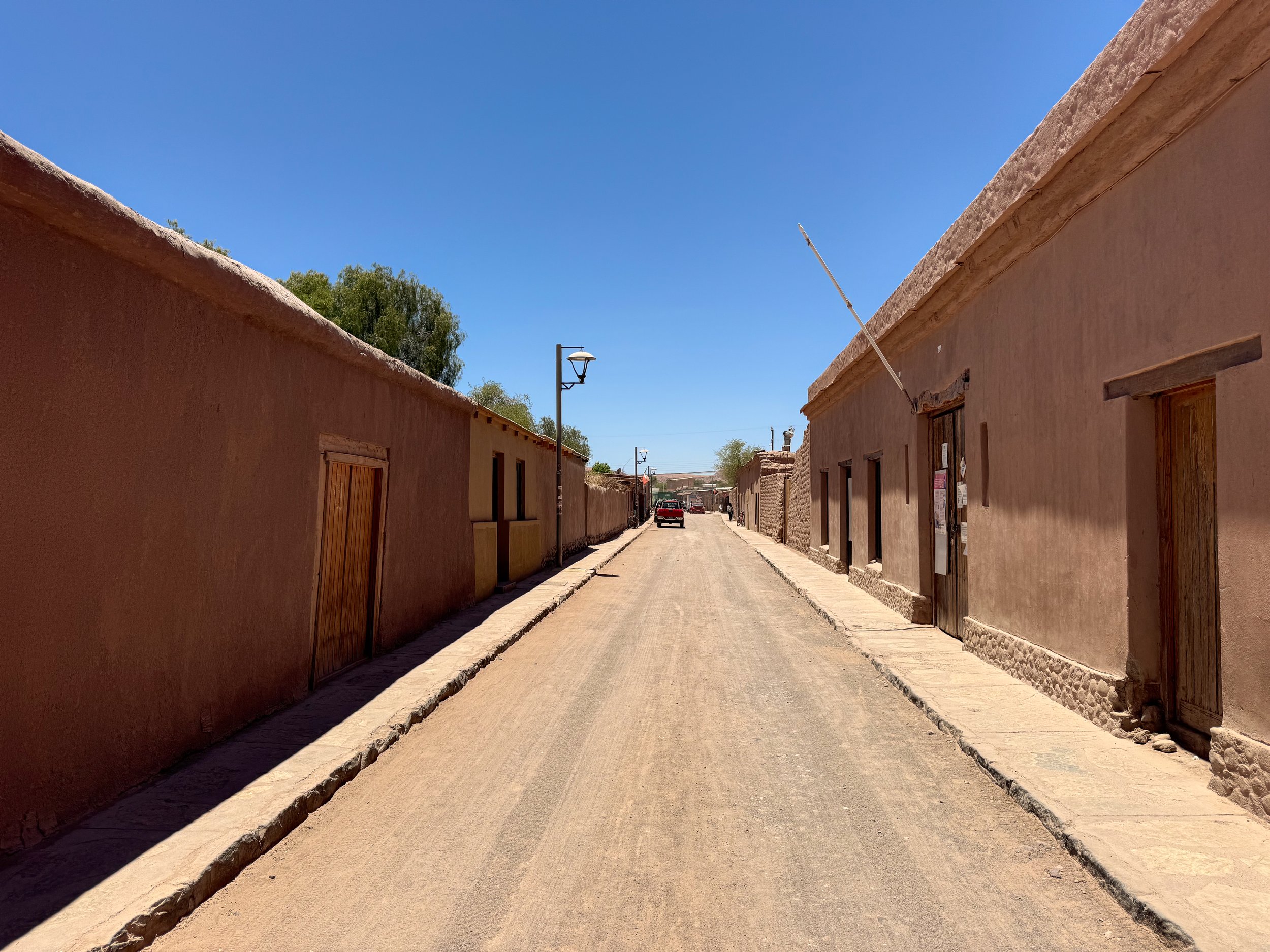
San Pedro de Atacama is a western style town with a bohemian, adventurous and positive touristy vibe. The city is an oasis in the Chilean Atacama Desert with adobe houses, desert lodges, narrow dirt roads and access to some of the region’s natural sights.
Calle Caracoles. A dusty dirt road that passes through the center of San Pedro de Atacama with Chilean restaurants, live music, cocktail bars, ice cream shops, outdoorsy stores and tour operators.
Plaza de San Pedro de Atacama. A tree covered plaza with cacti gardens surrounded by beautiful adobe buildings including a historic church.
Trópico de Capricornio. Located about an hour south of San Pedro de Atacama along Chile Highway 23, a road sign marks the location of the Southern Hemisphere’s tropical latitude, the Tropic of Capricorn.
Salt Flats
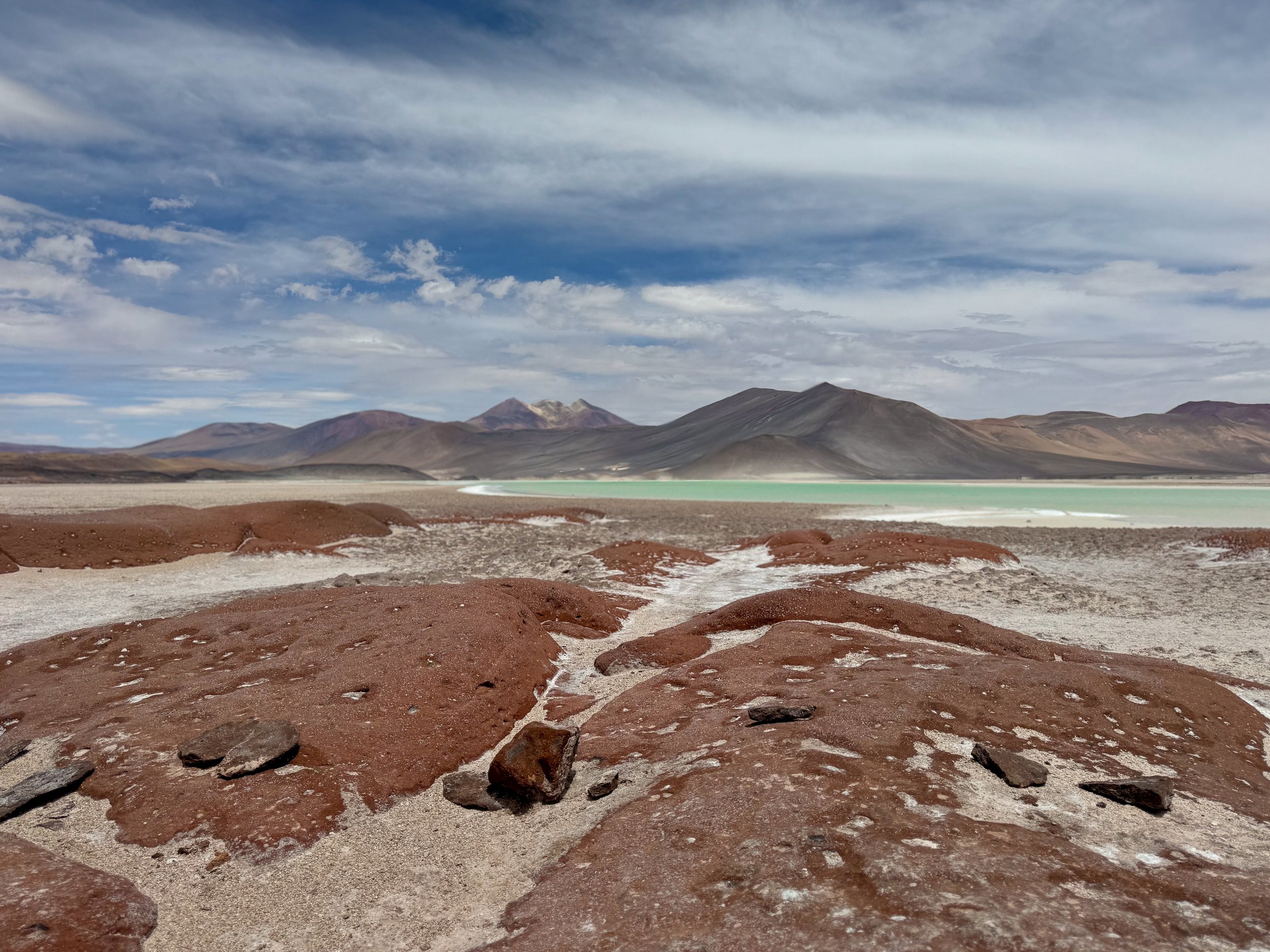
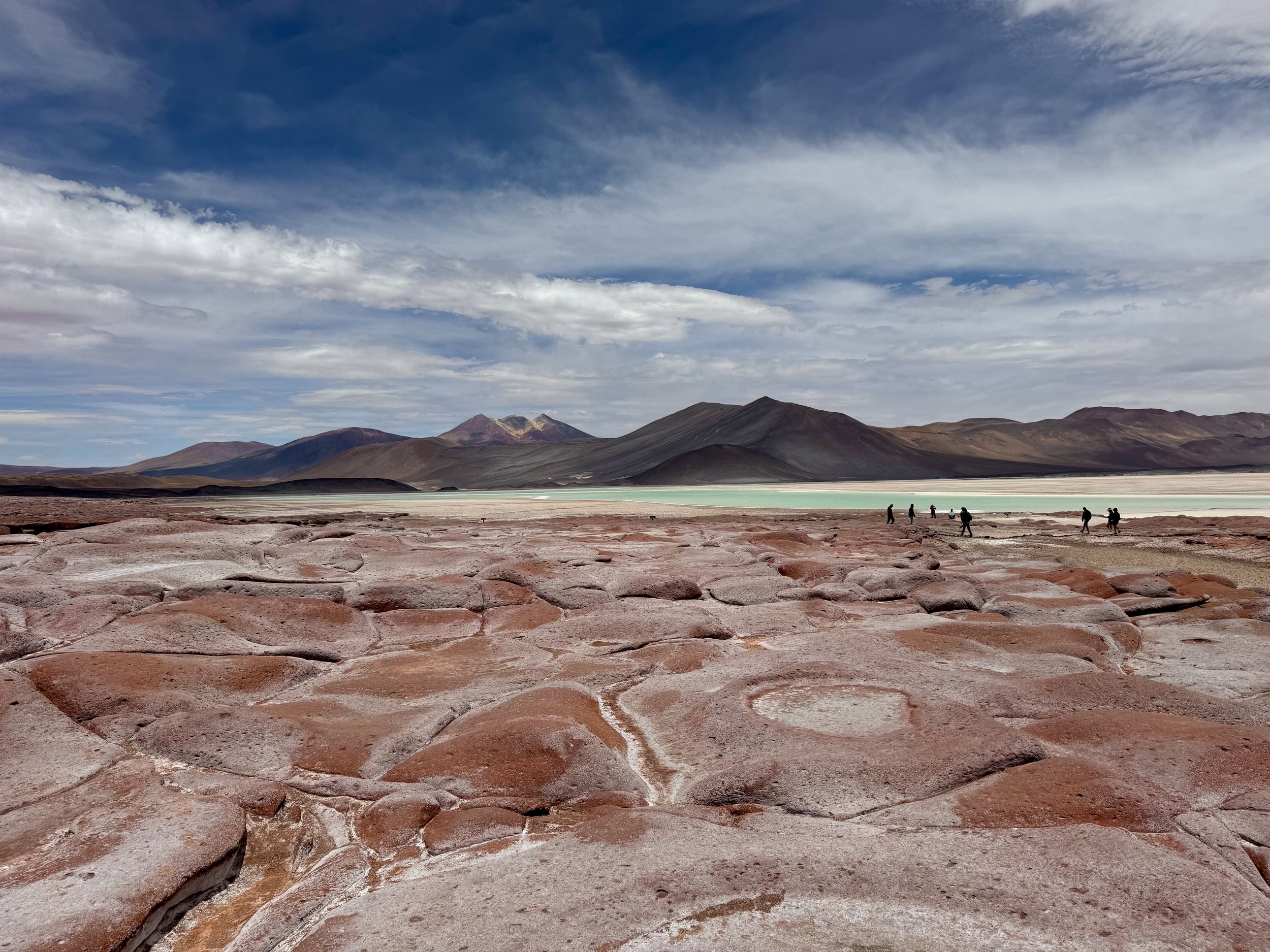
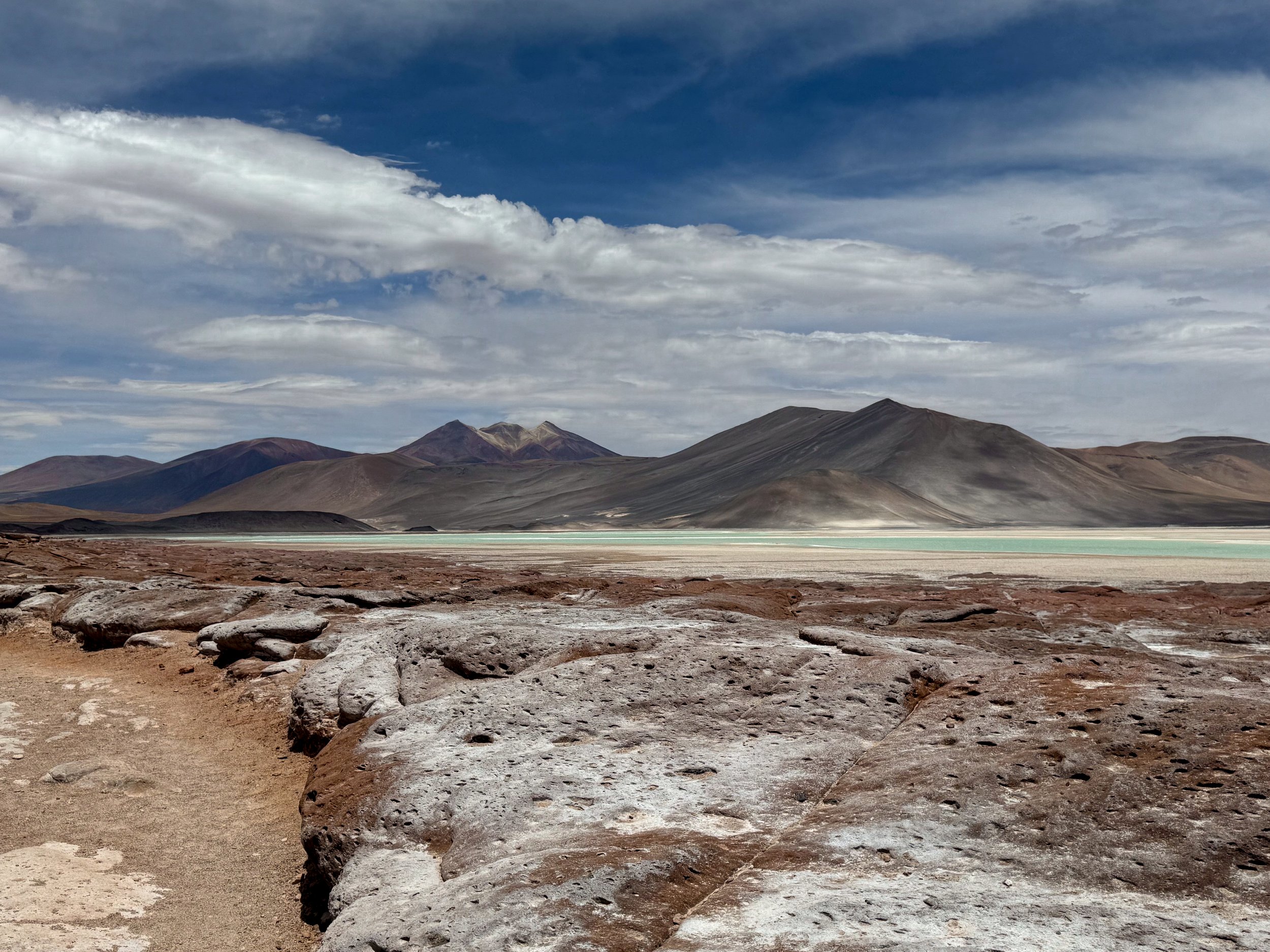
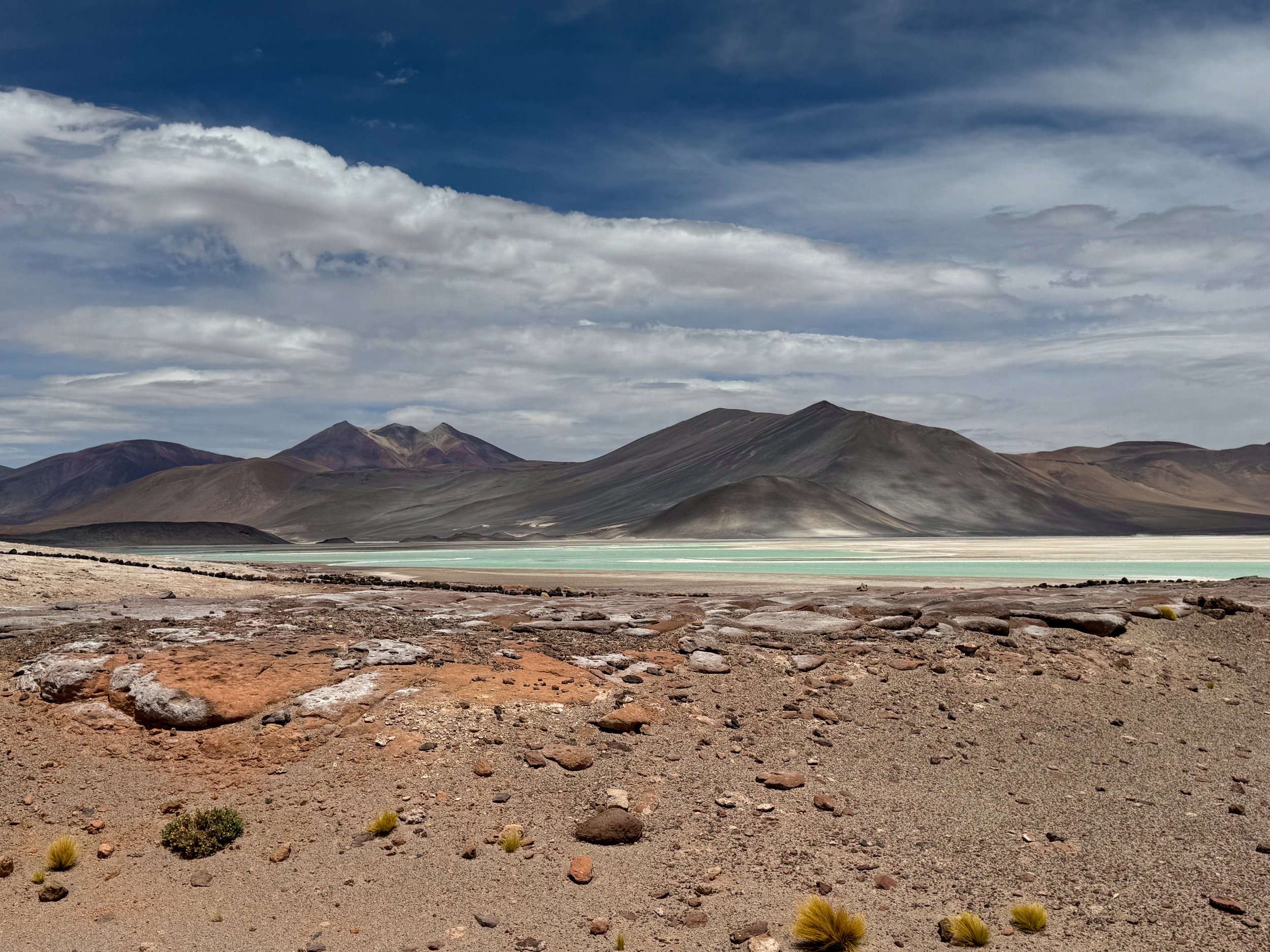
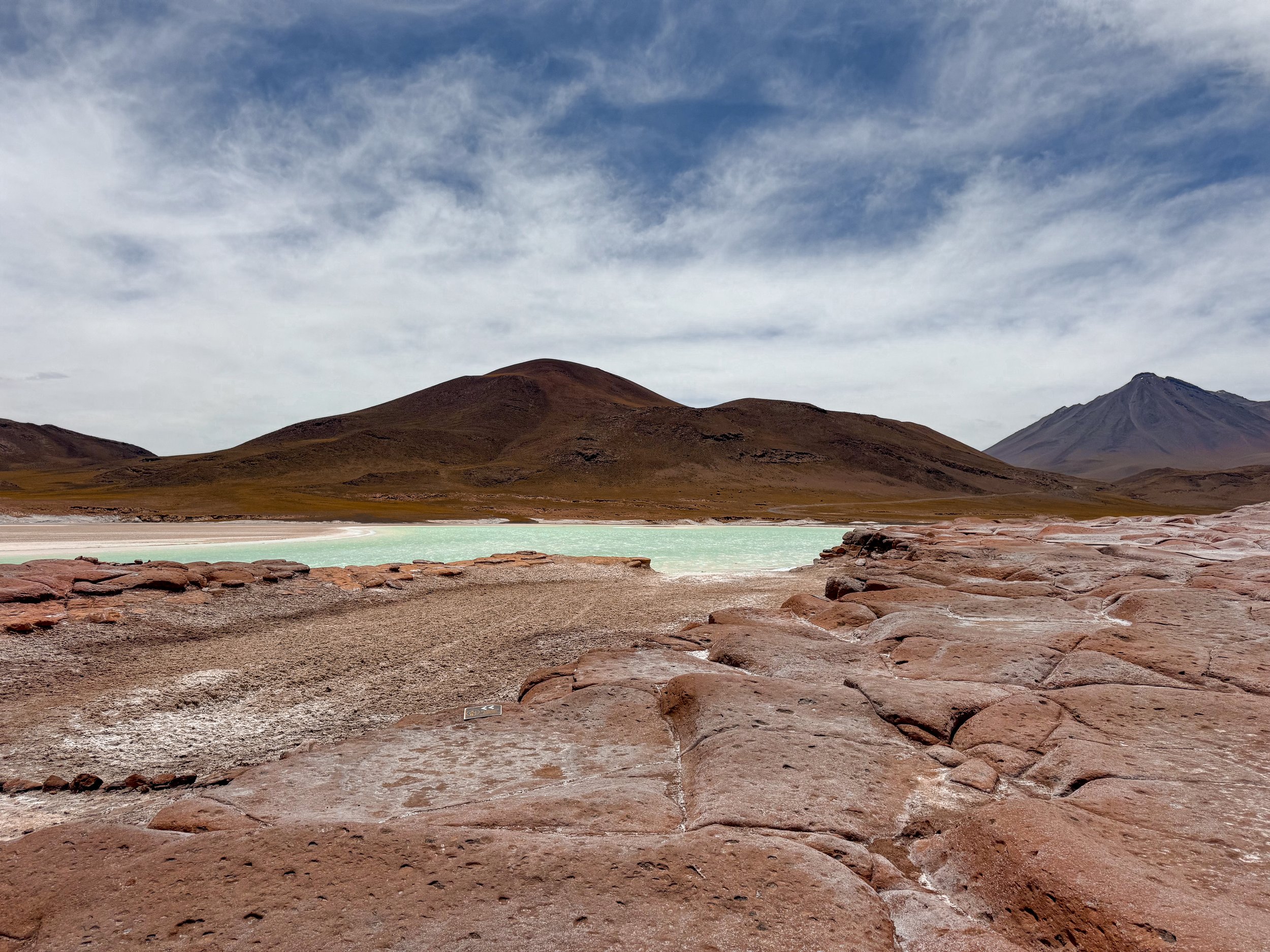
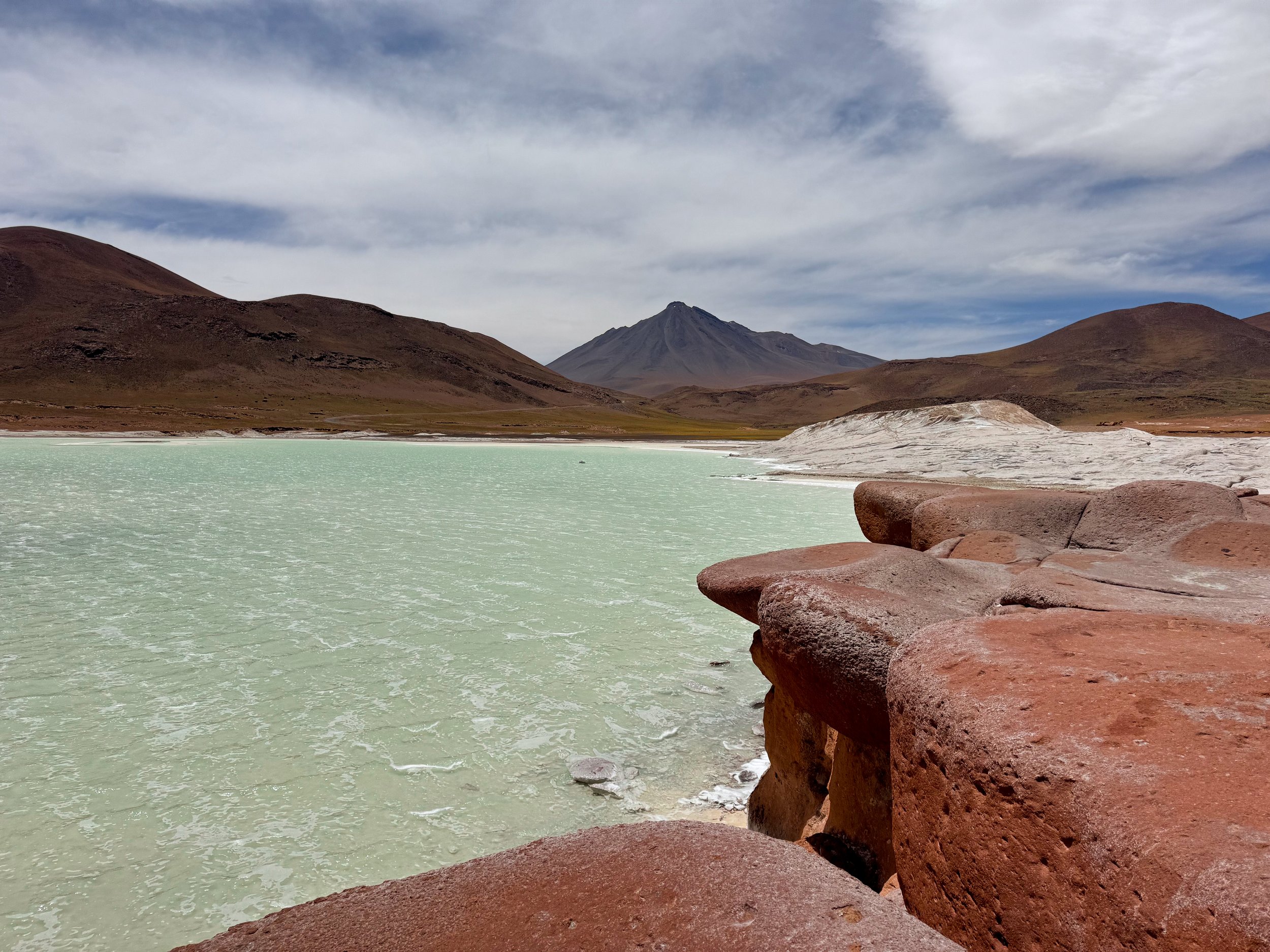
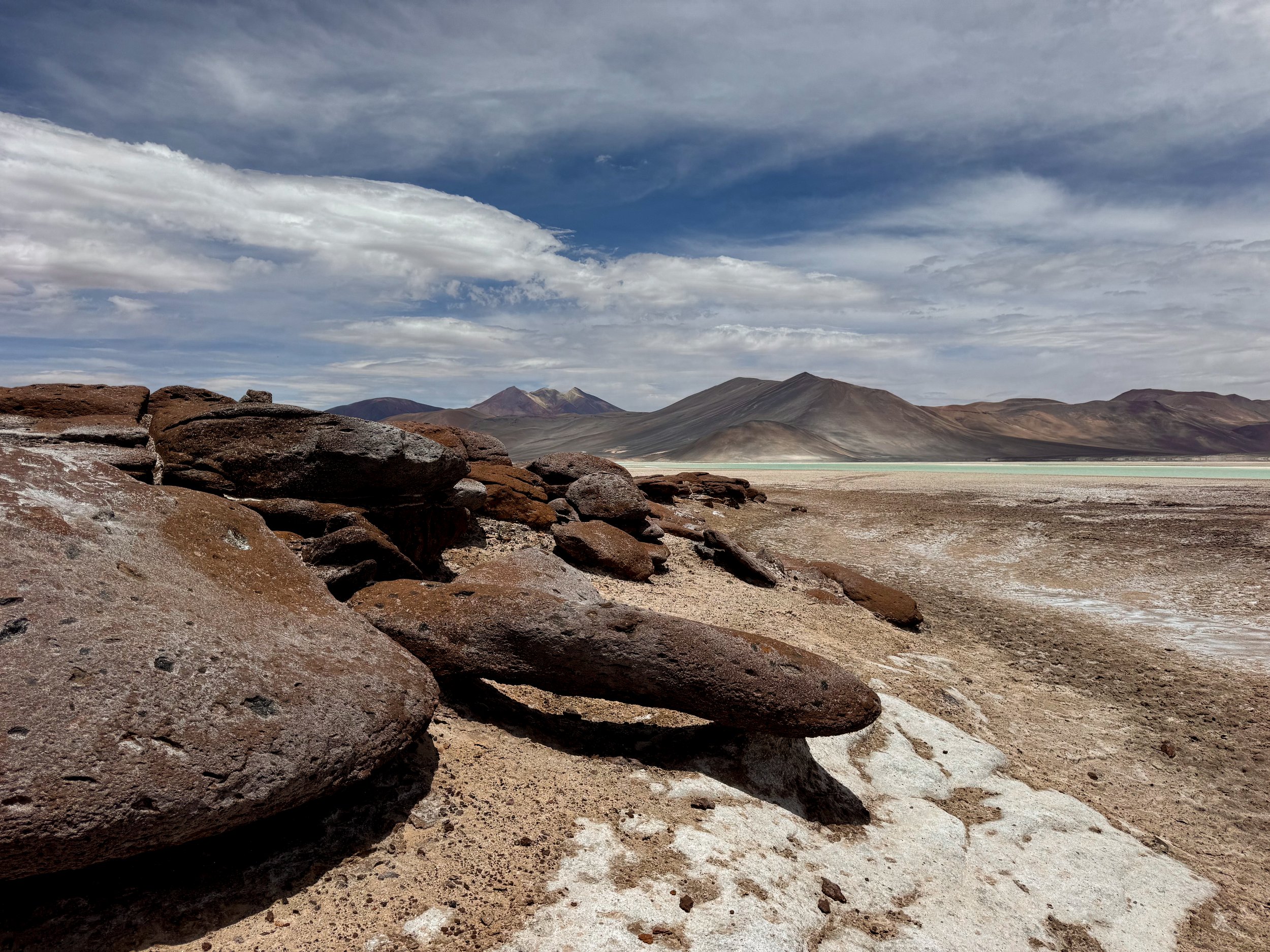
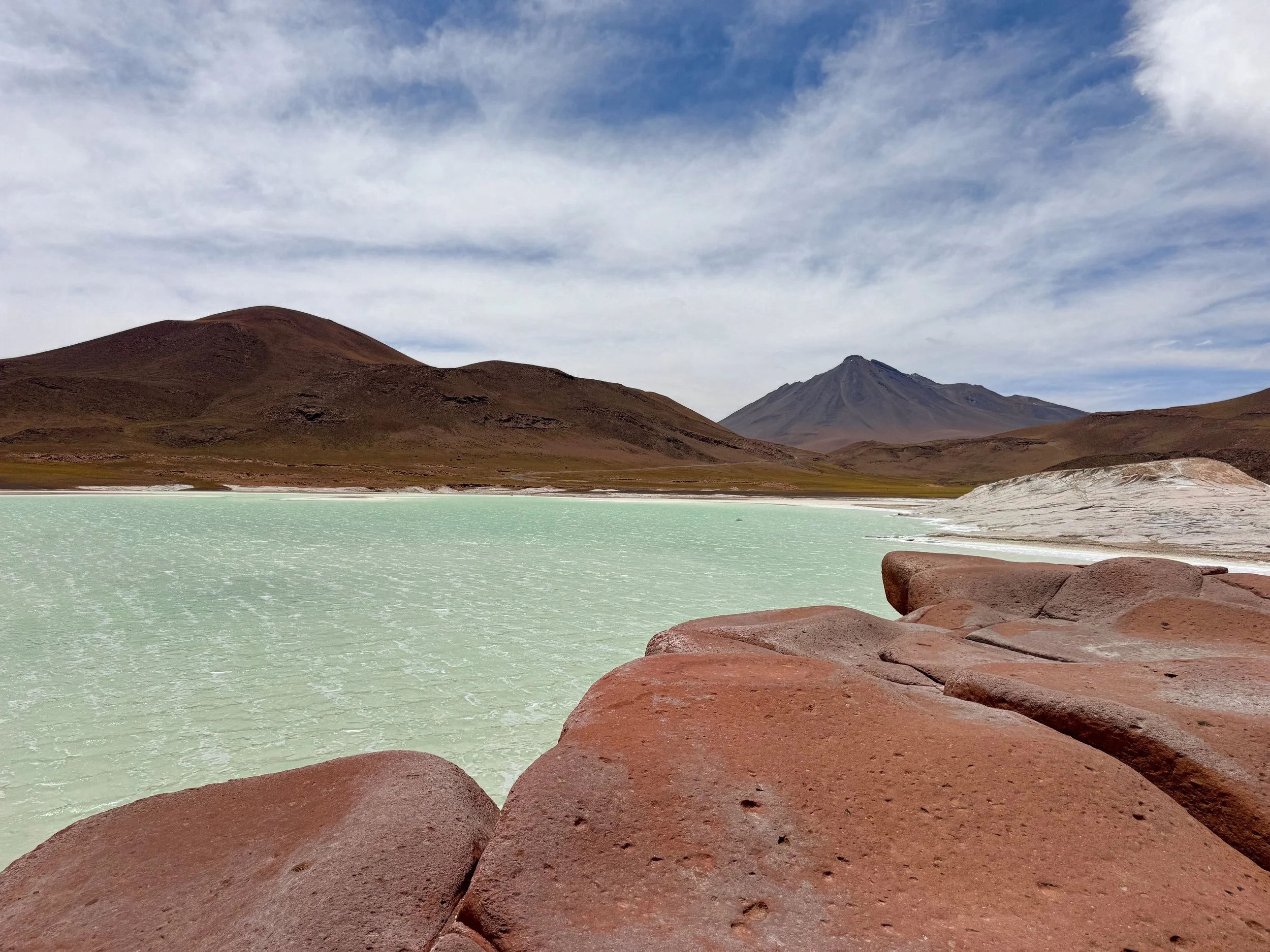
Salar de Aguas Calientes (Piedras Rojas). A milky blue lagoon covering a pure white salt flat juxtaposed by a hardened red rock lava flow with a smooth and wavy texture. The lagoon is surrounded by towering volcanoes with dark slopes and streaks of colorful mineral deposits near their summits.

Salar de Atacama. A craggily salt flat flanked by three mountain ranges home to multiple species of flamingos and migratory birds. We walked one of the trails, watching the flamingos feed and fly.
Lagoons
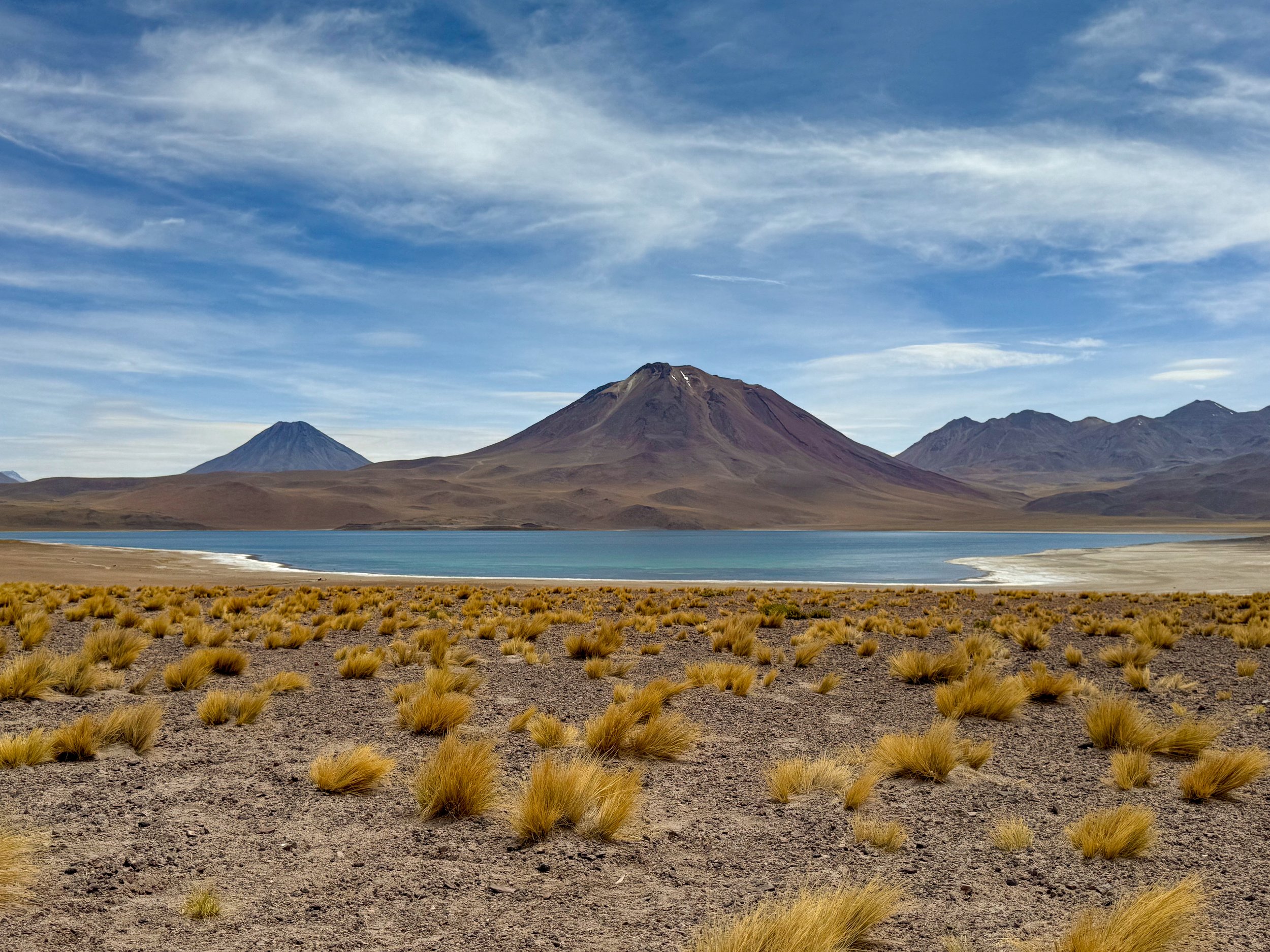
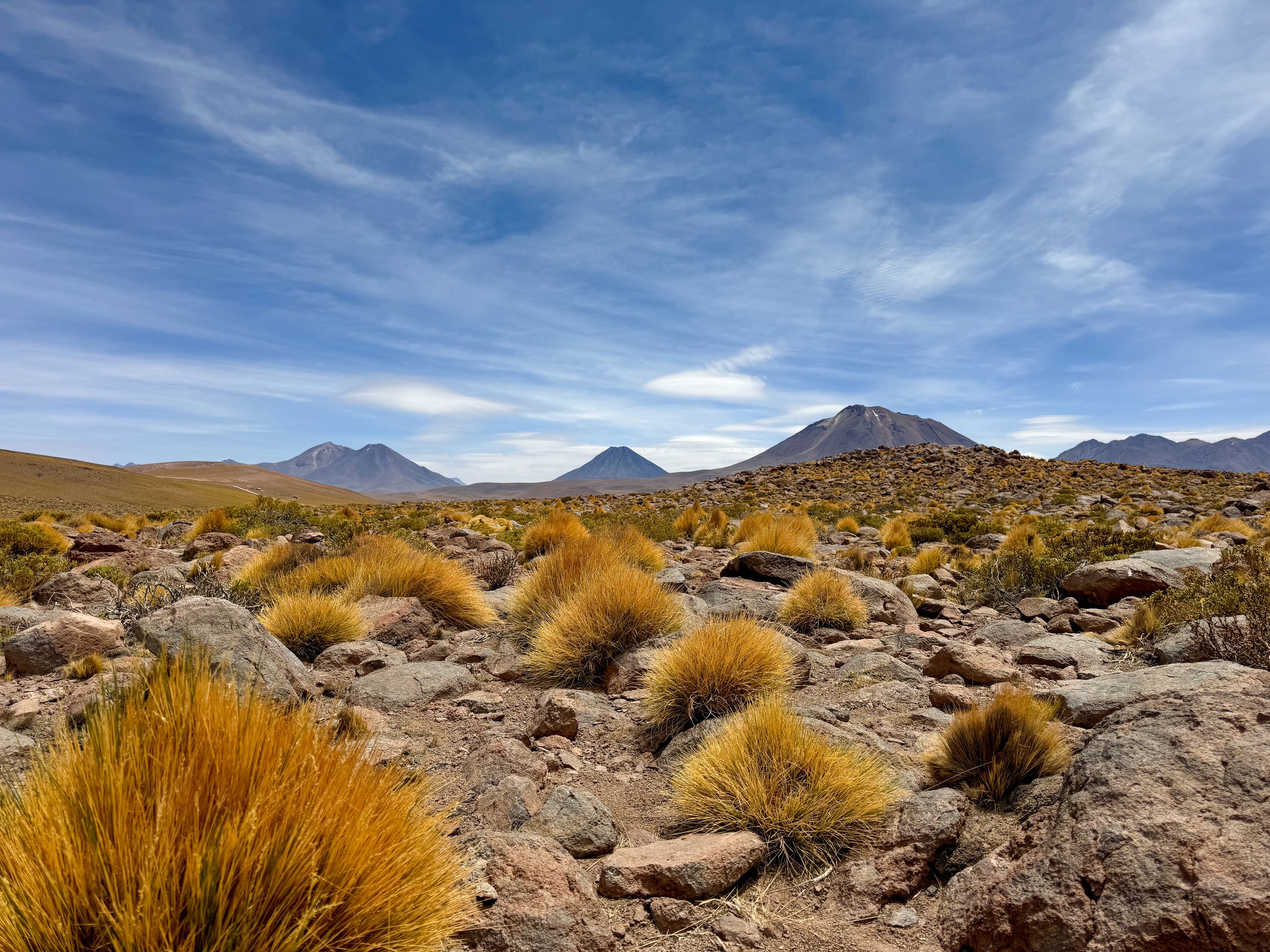
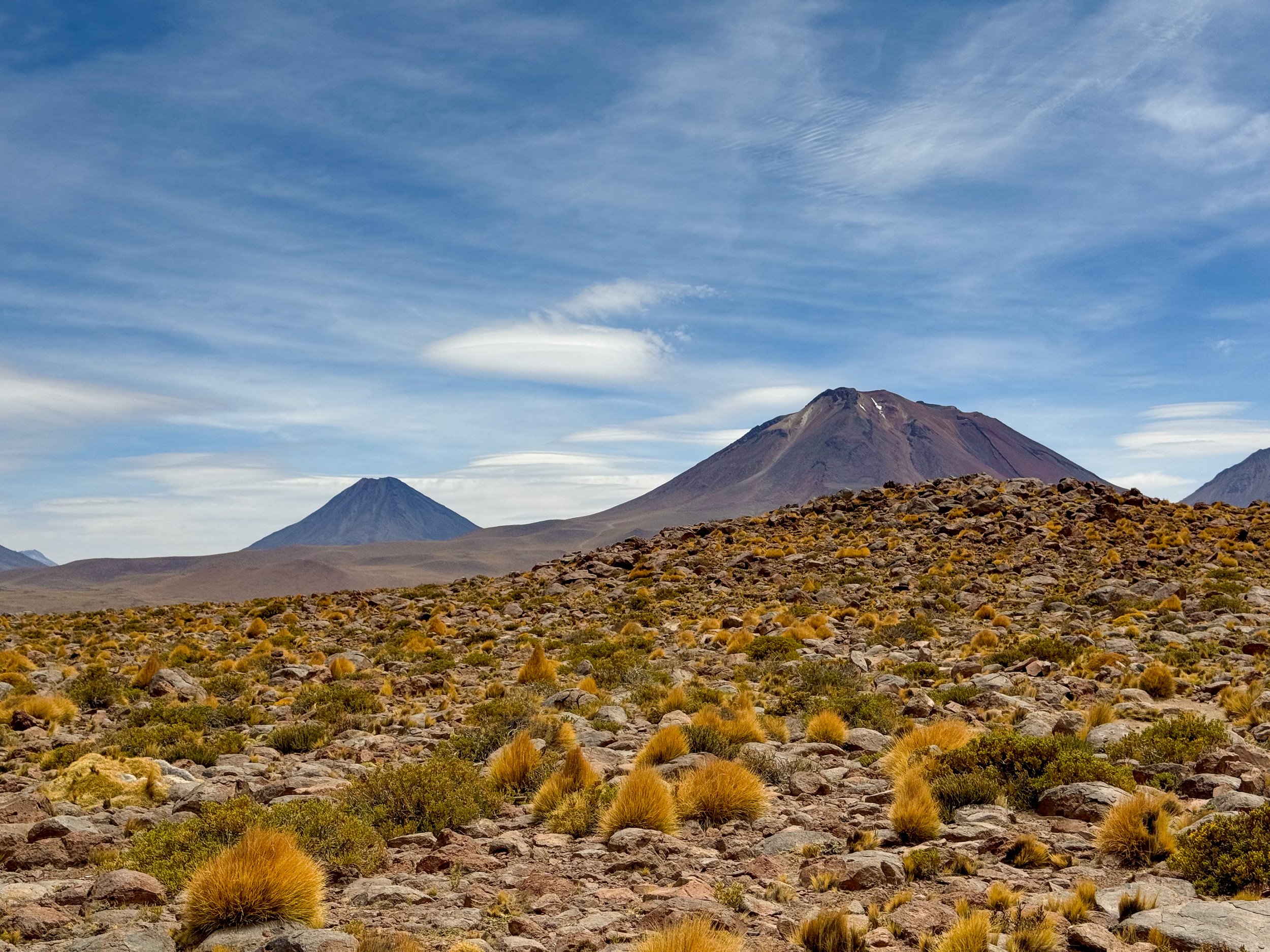
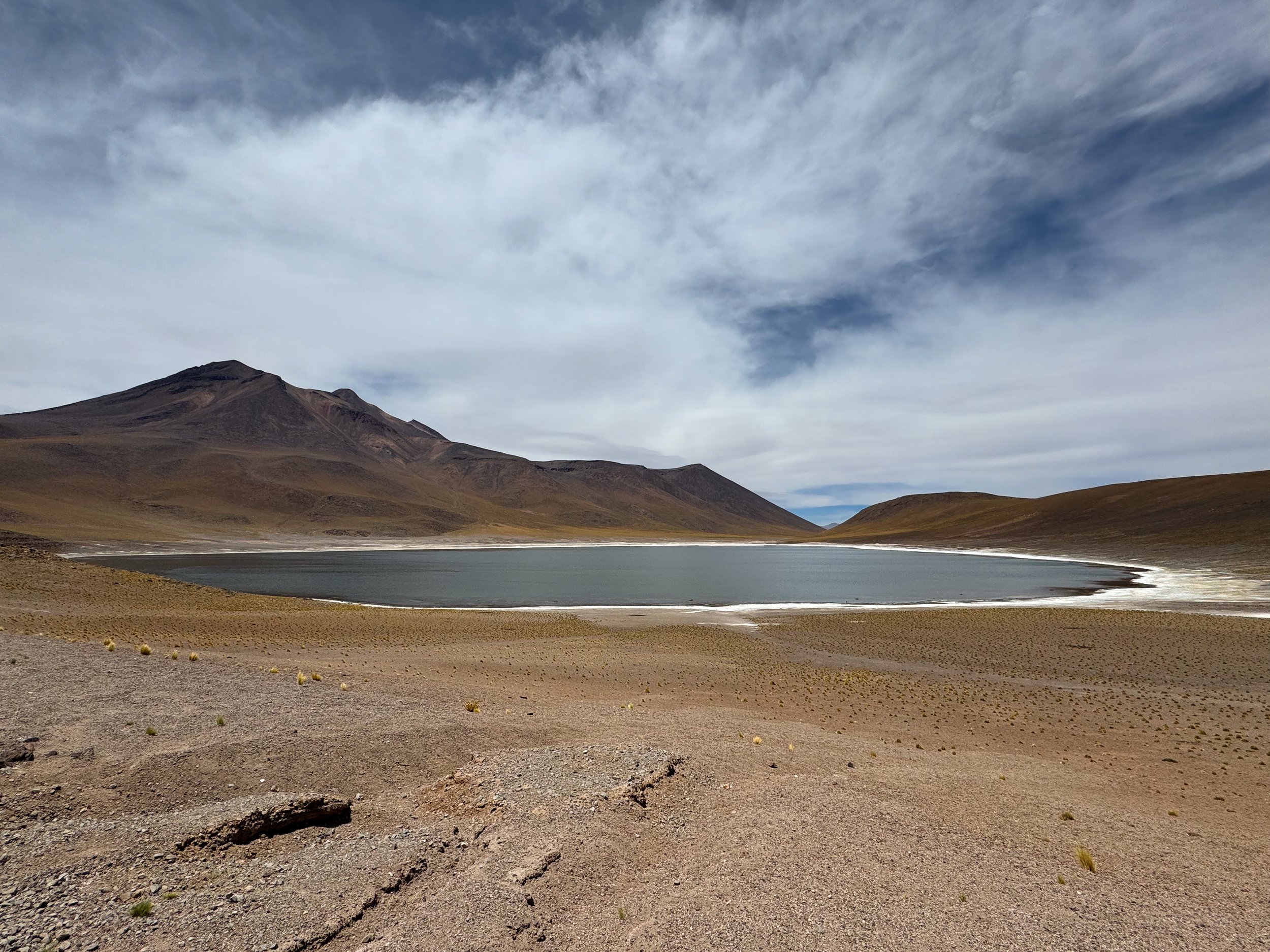
Laguna Miñiques. A large freshwater lagoon with a blue hued color at the base of the Miñiques Volcano. The lookout offers panoramic views of both as well as the volcanic mountain range beyond, shrub covered hills and distant vicuñas (a cute camelid) and suri (a large ostrich like bird).
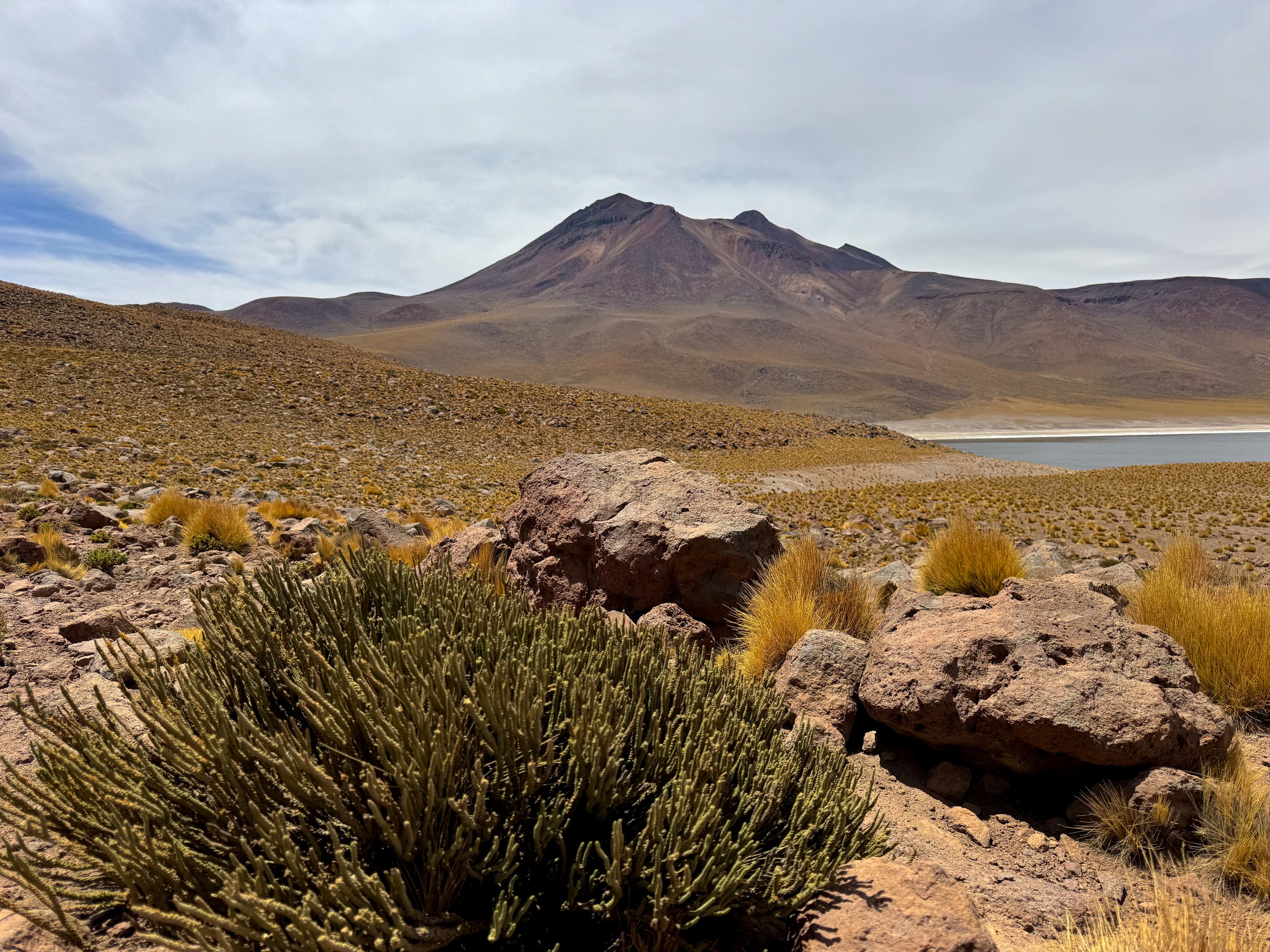
Laguna Miscanti. A dark hued freshwater lagoon at the base of the Miscanti Volcano home to the Horned Coot, marine birds that build cone shaped mud nests in the lagoon near the shore.
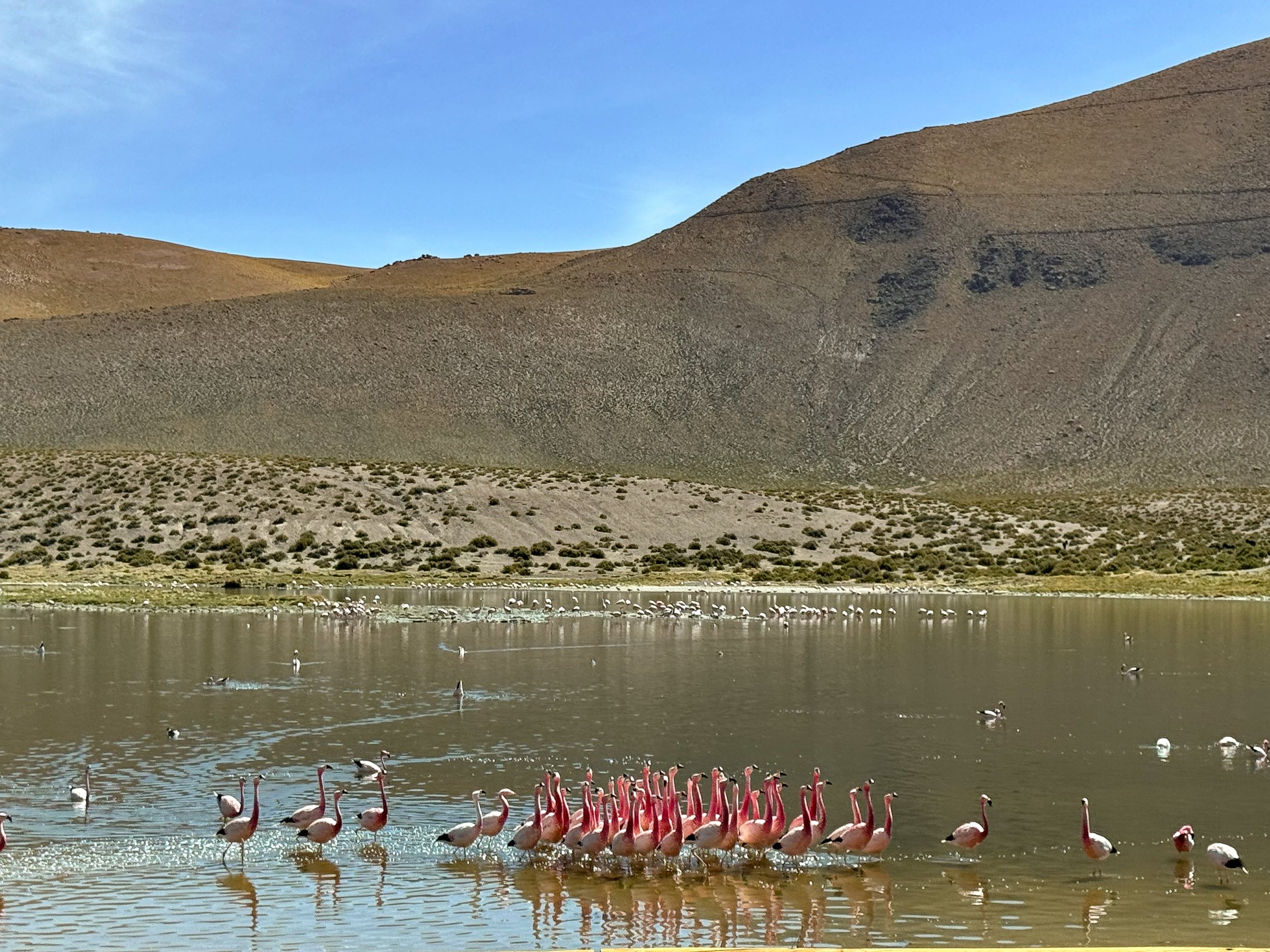
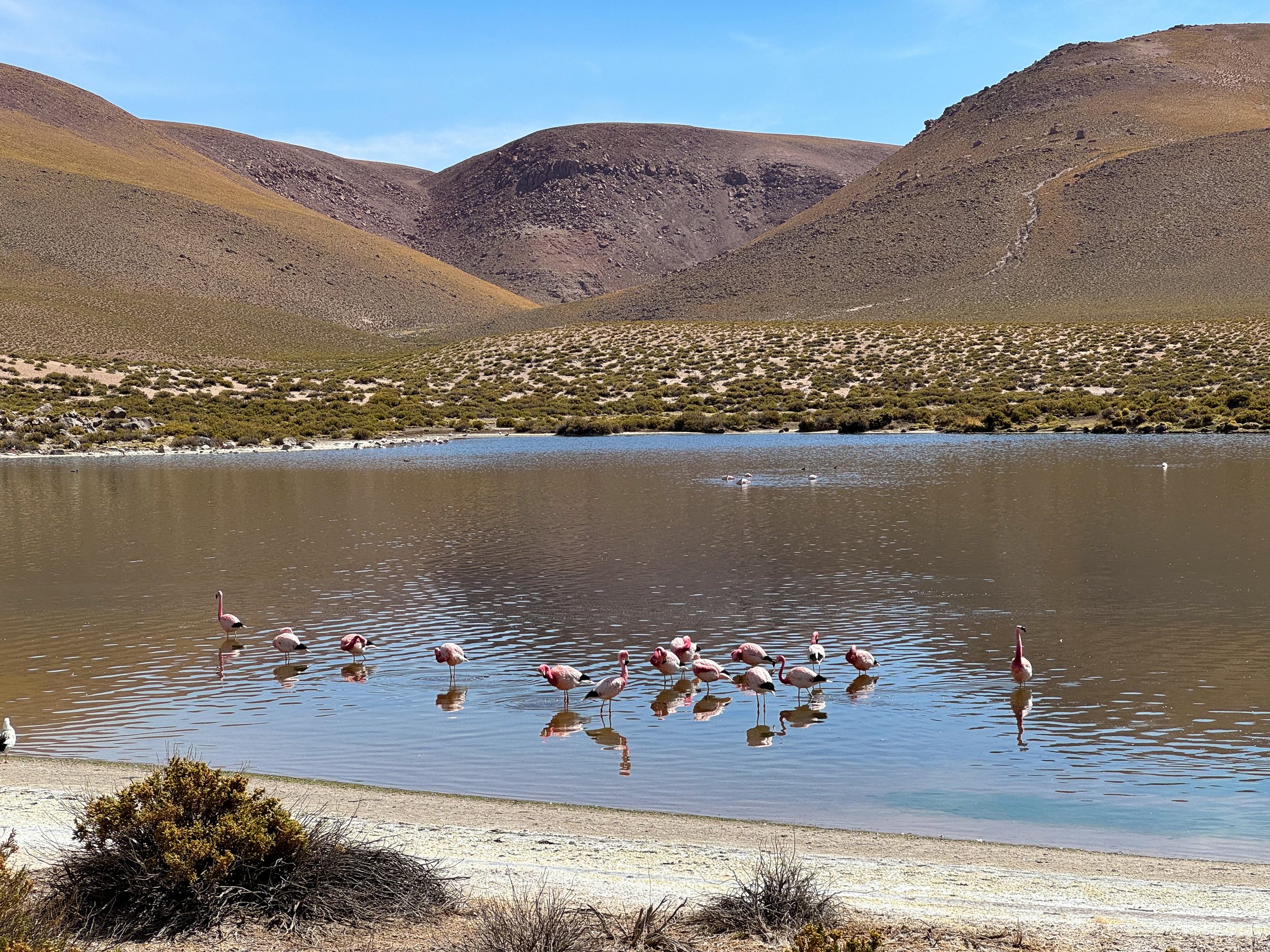
Laguna de Machuca. A freshwater lagoon with hundreds of vibrant pink flamingos feeding, flying and mating around the shallow water. We spotted a large group of male flamingos dancing in unison to attract females.
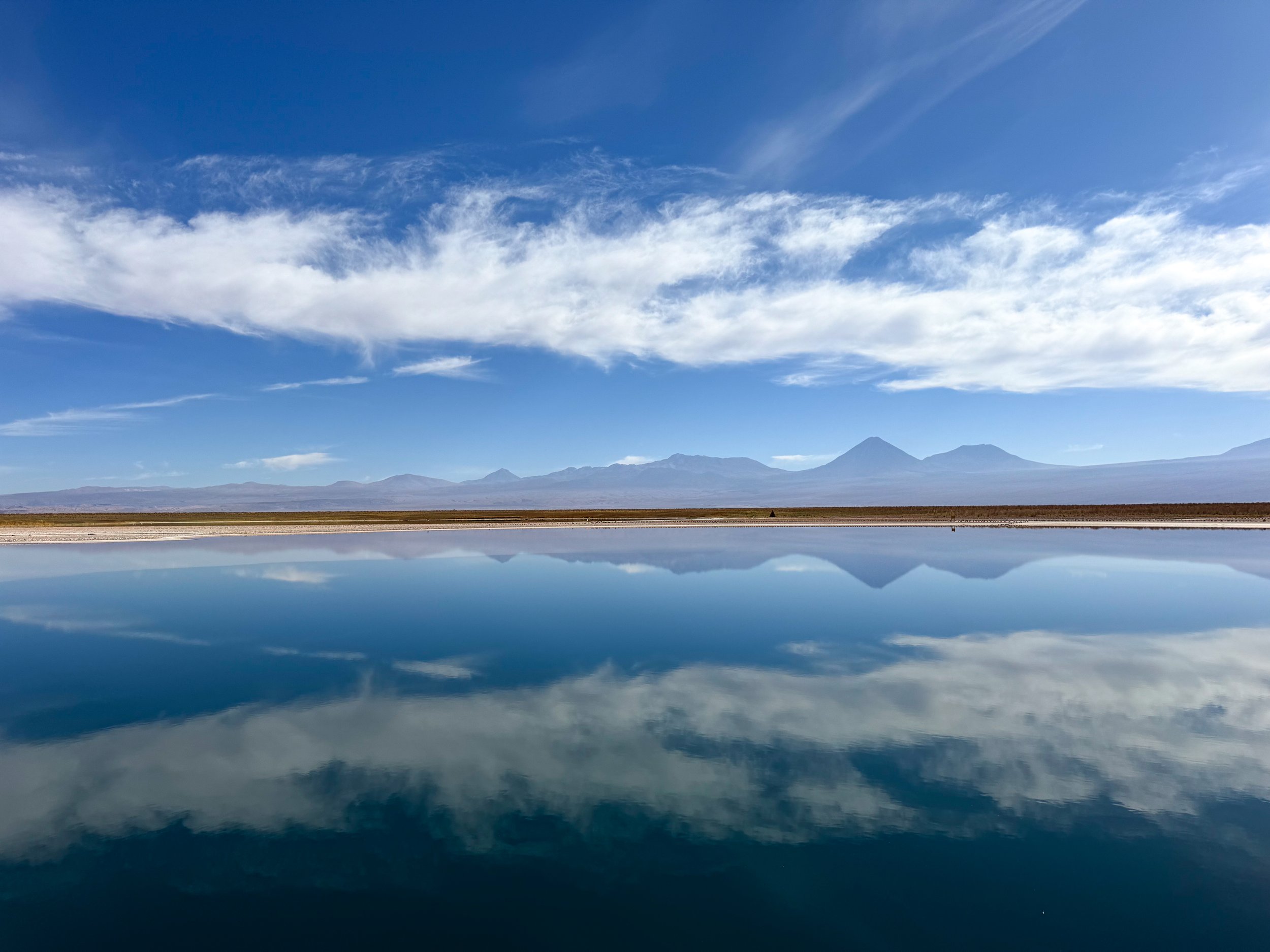
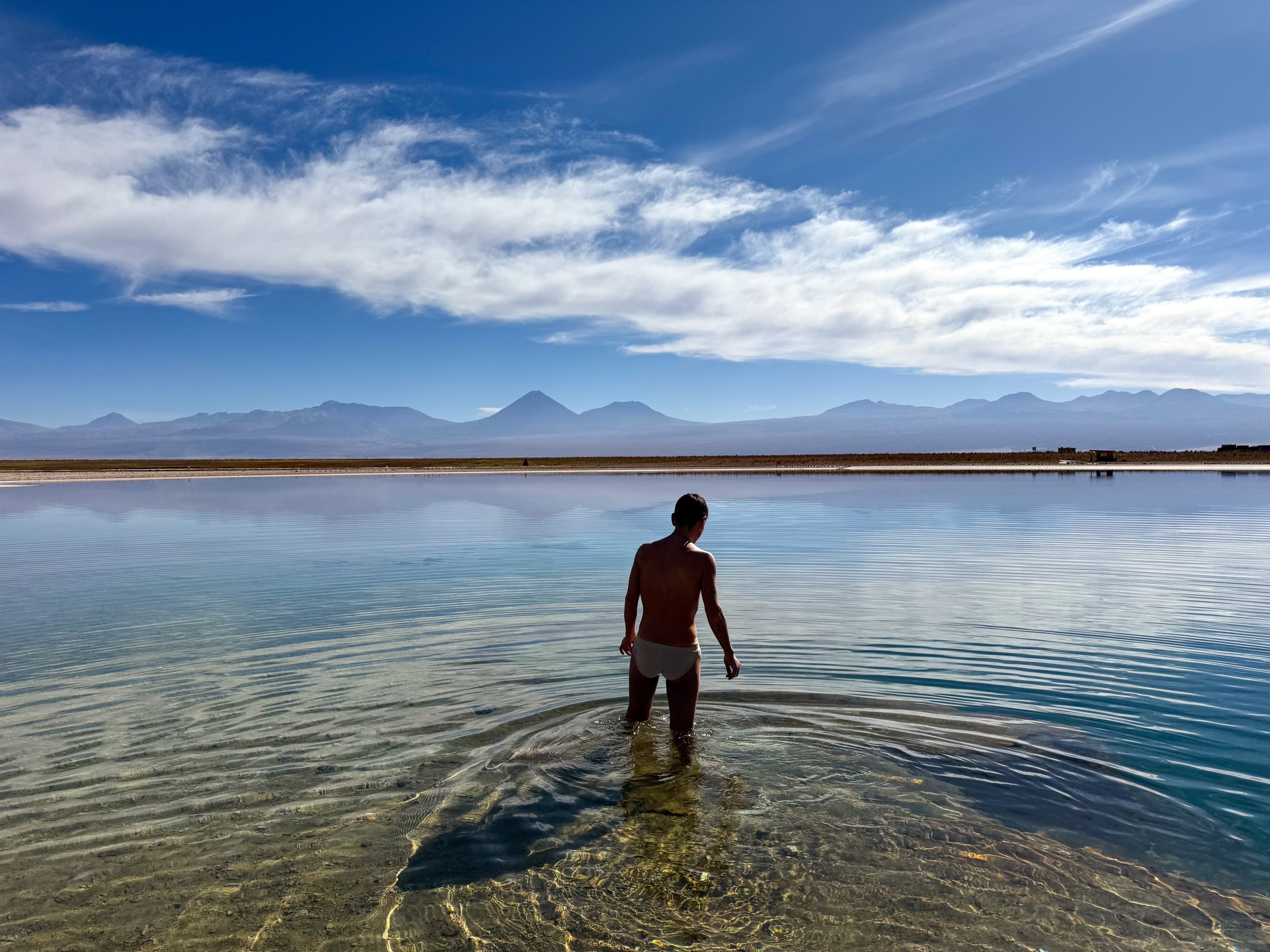
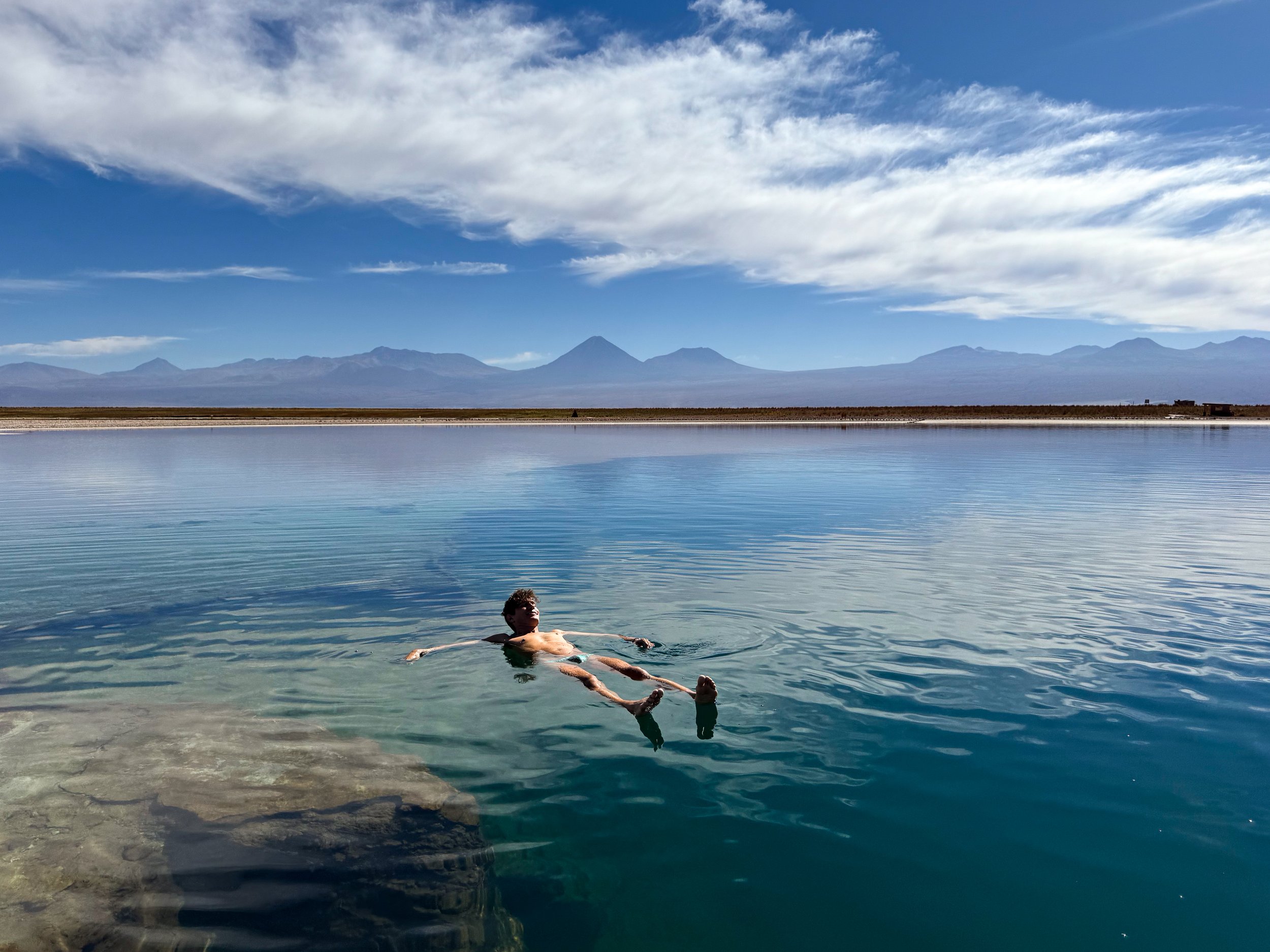
Lagunas Escondidas de Baltinache. A salt water lagoon with a mirror effect reflecting the volcanos and sky. It’s one of the only lagoons in the Atacama that people are allowed to swim in. We walked into the cold water and effortlessly floated at the surface.
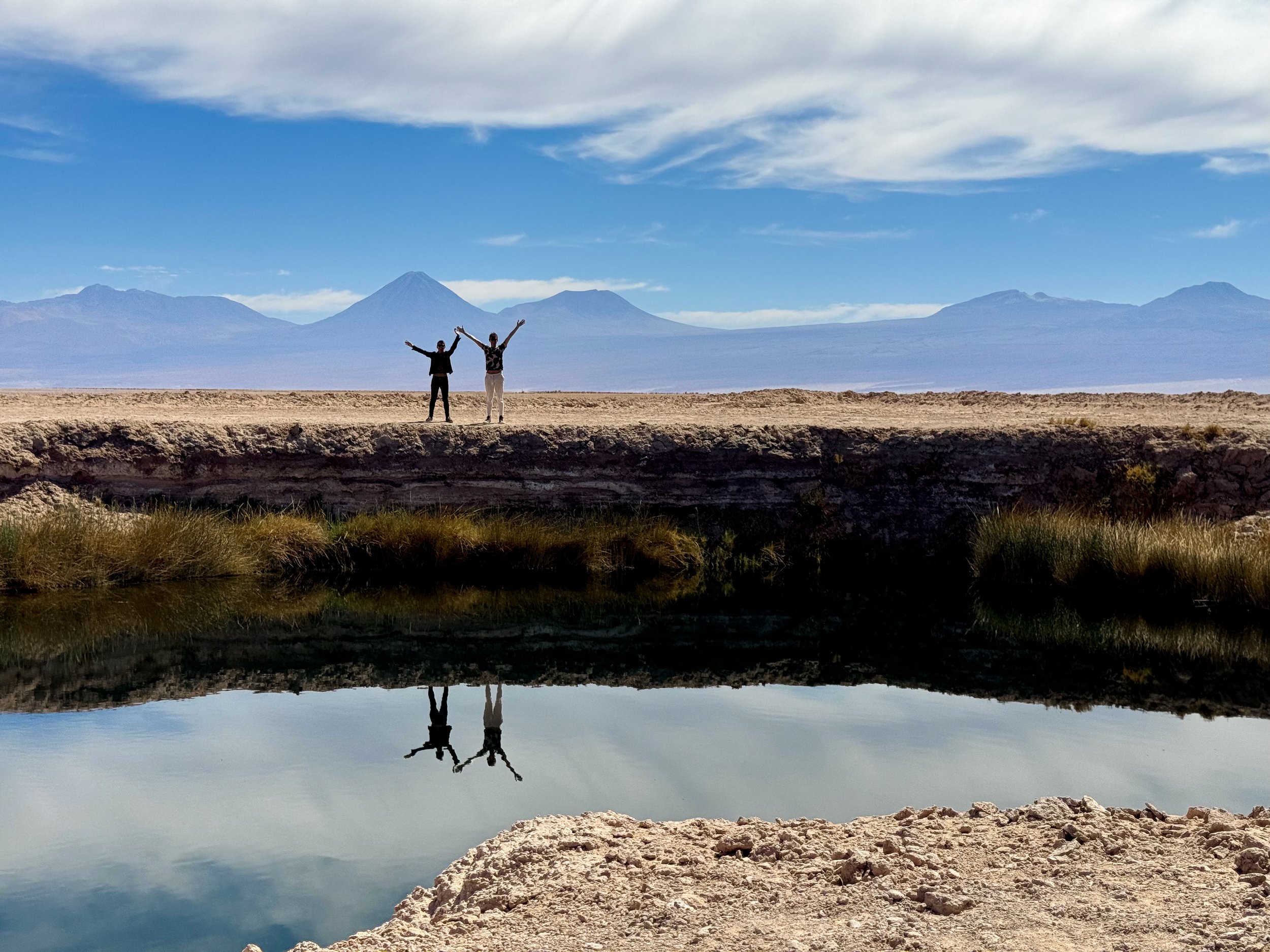
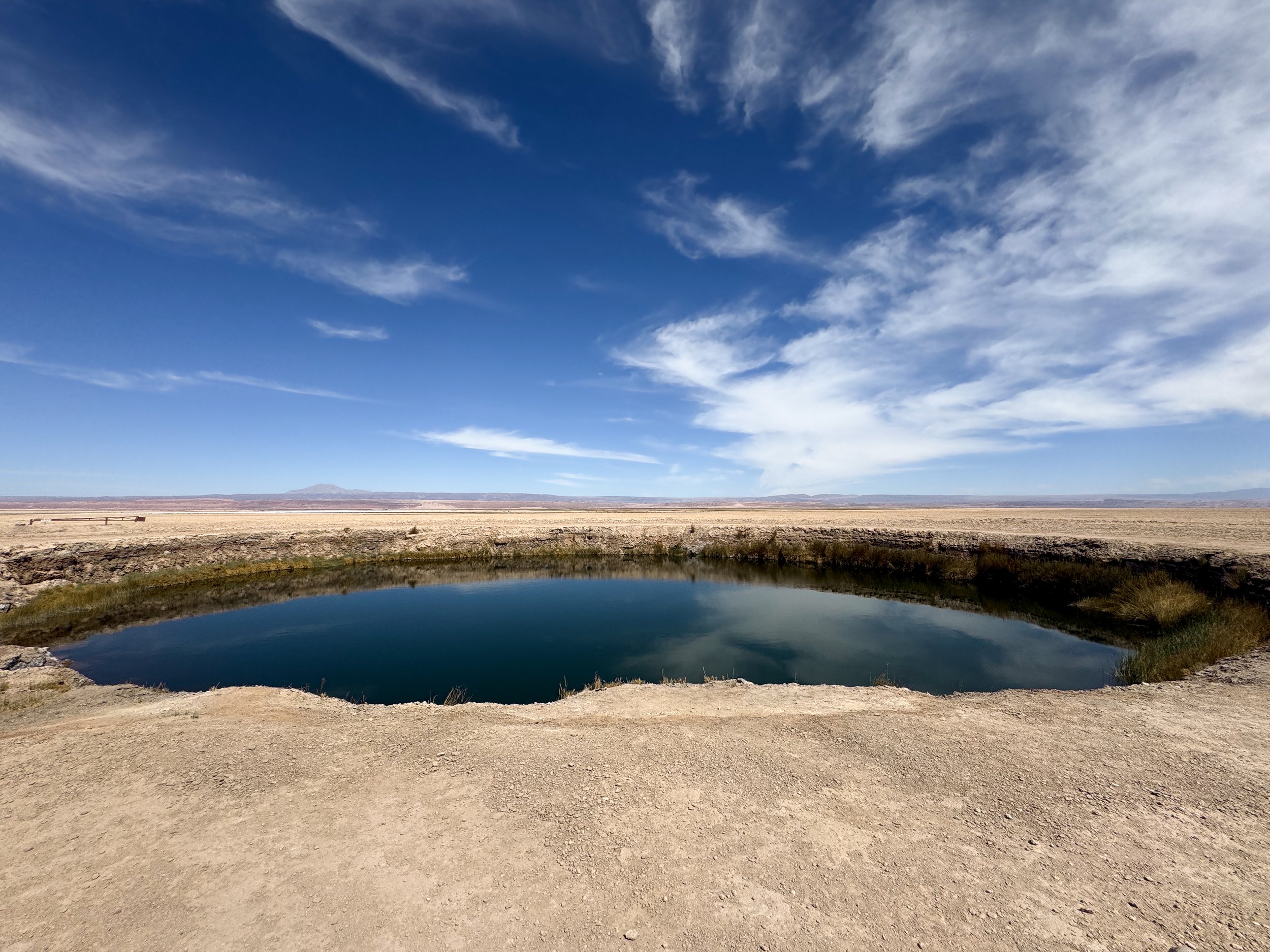
Ojos del Salar. Two small, nearly perfectly round lagoons that resemble a pair of eyes.
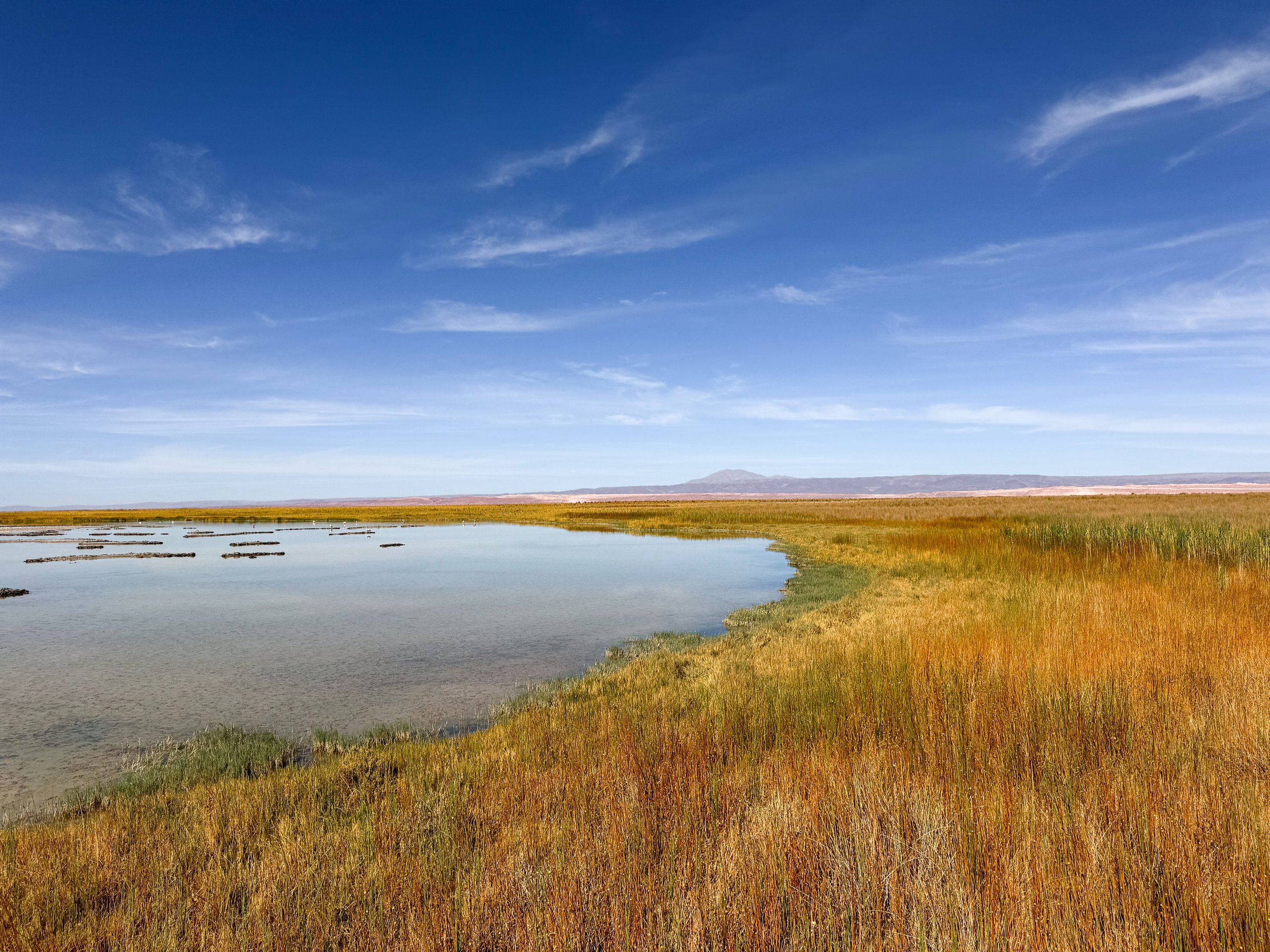
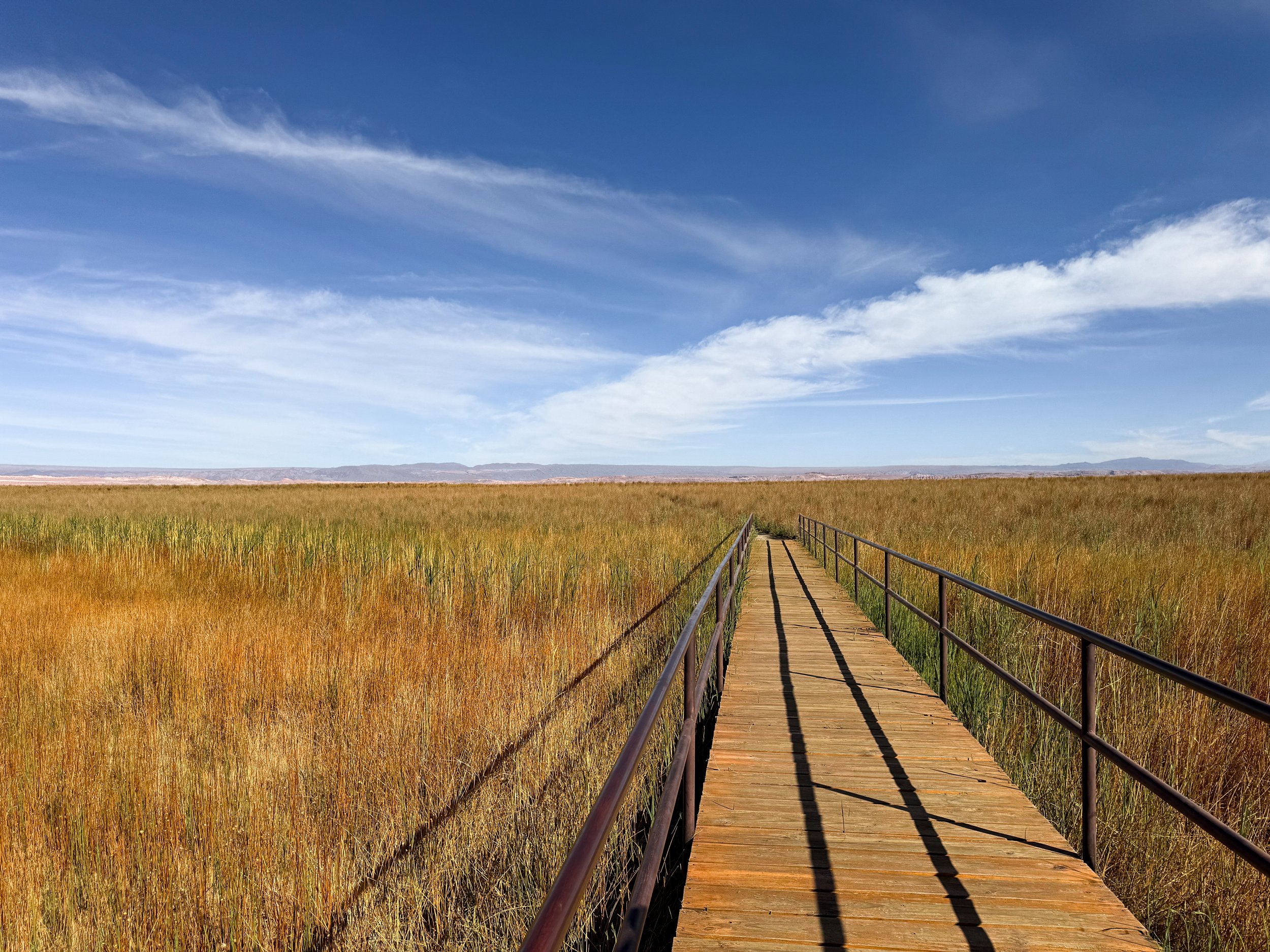
Laguna Cejar. A lagoon with a boardwalk along its grassy edge and flamingos feeding in the distance.
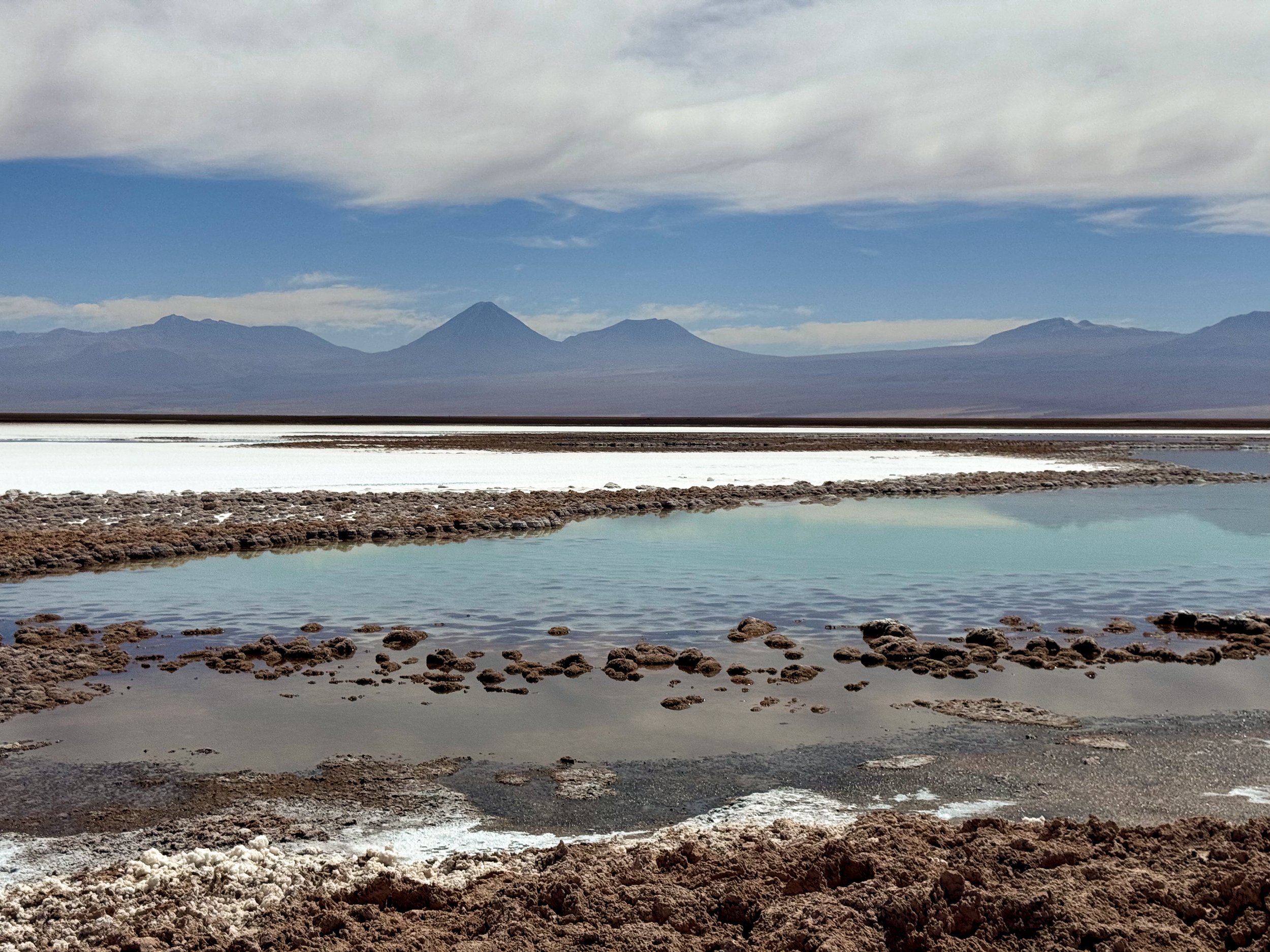
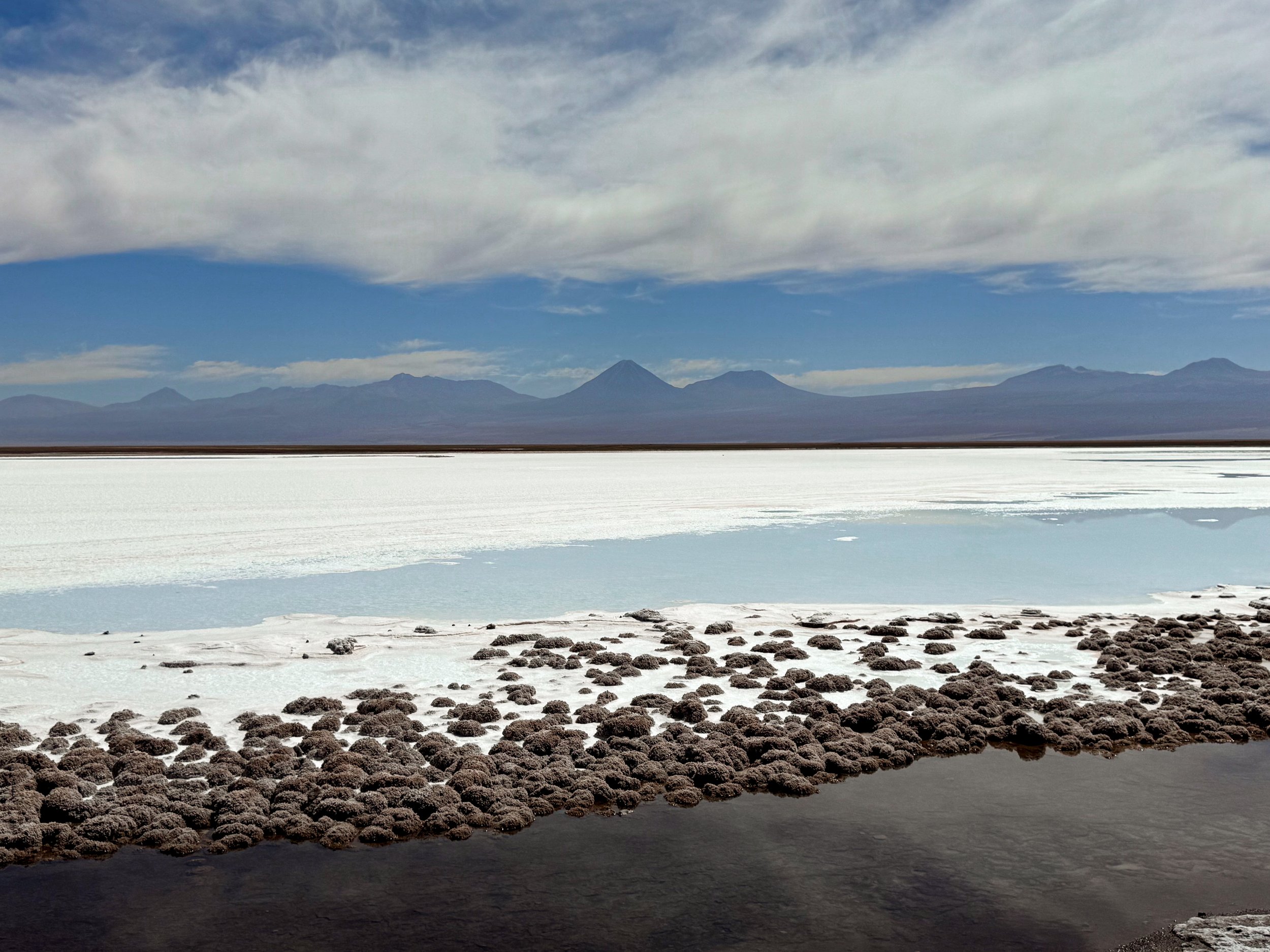
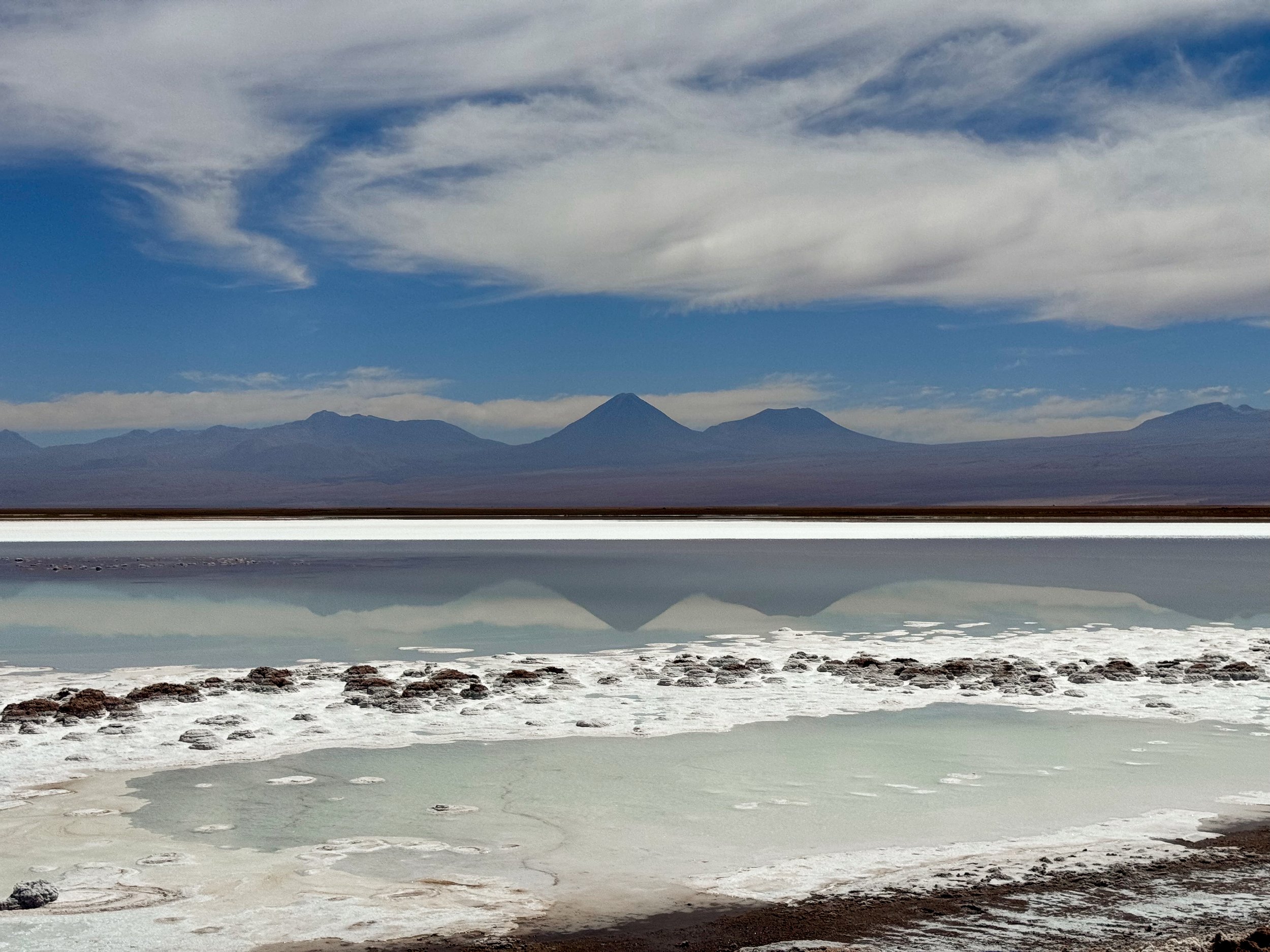
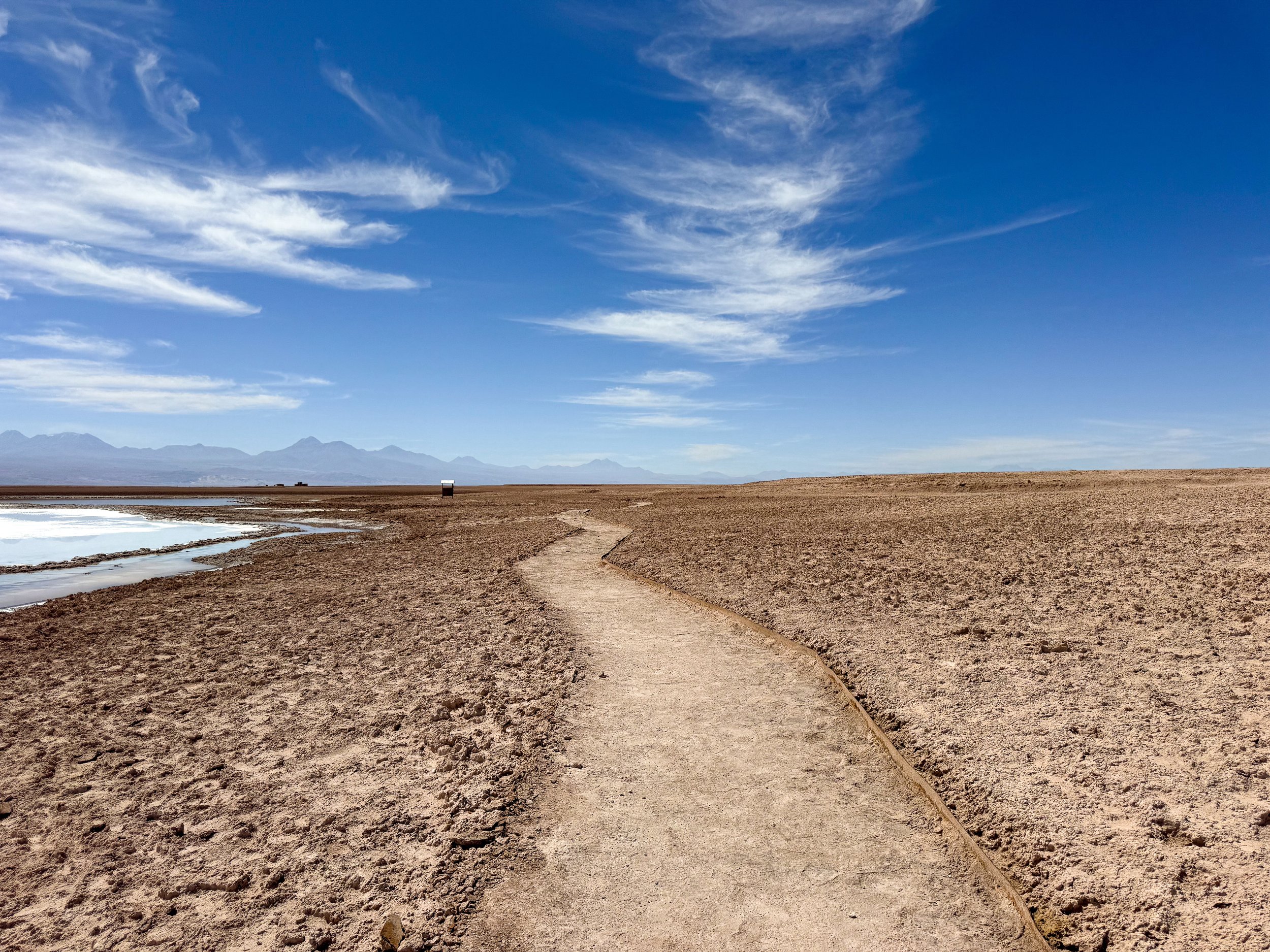
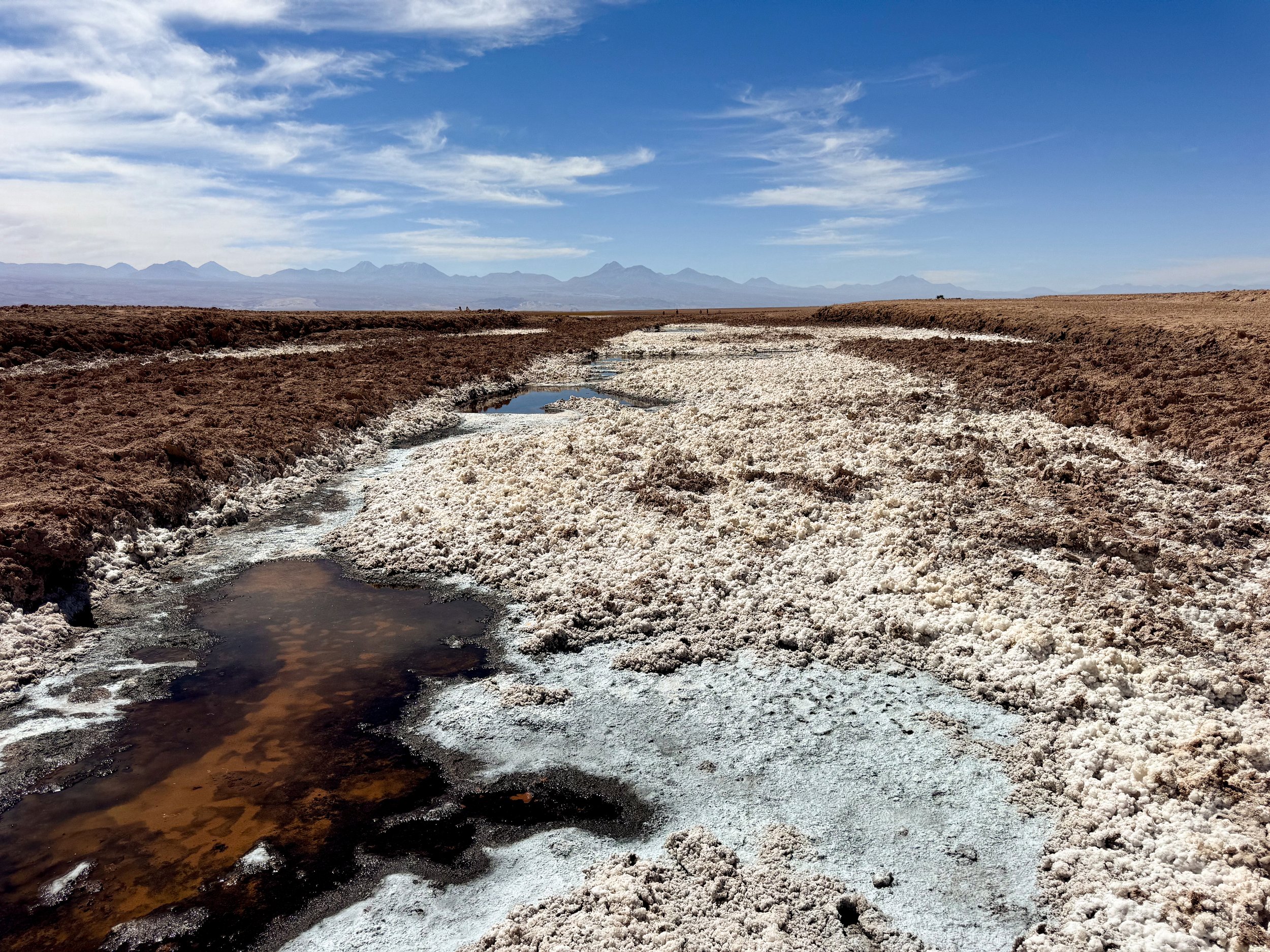
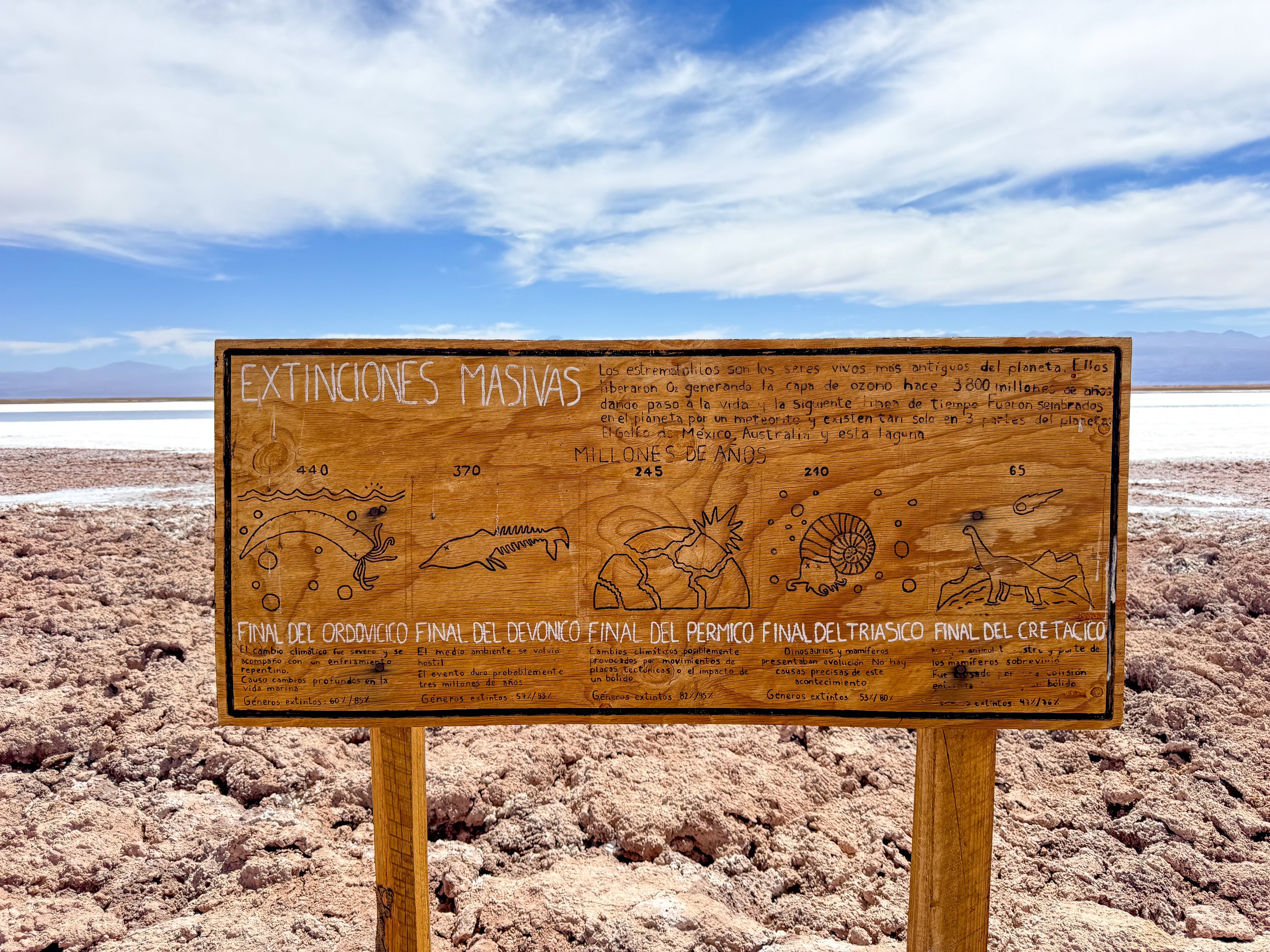
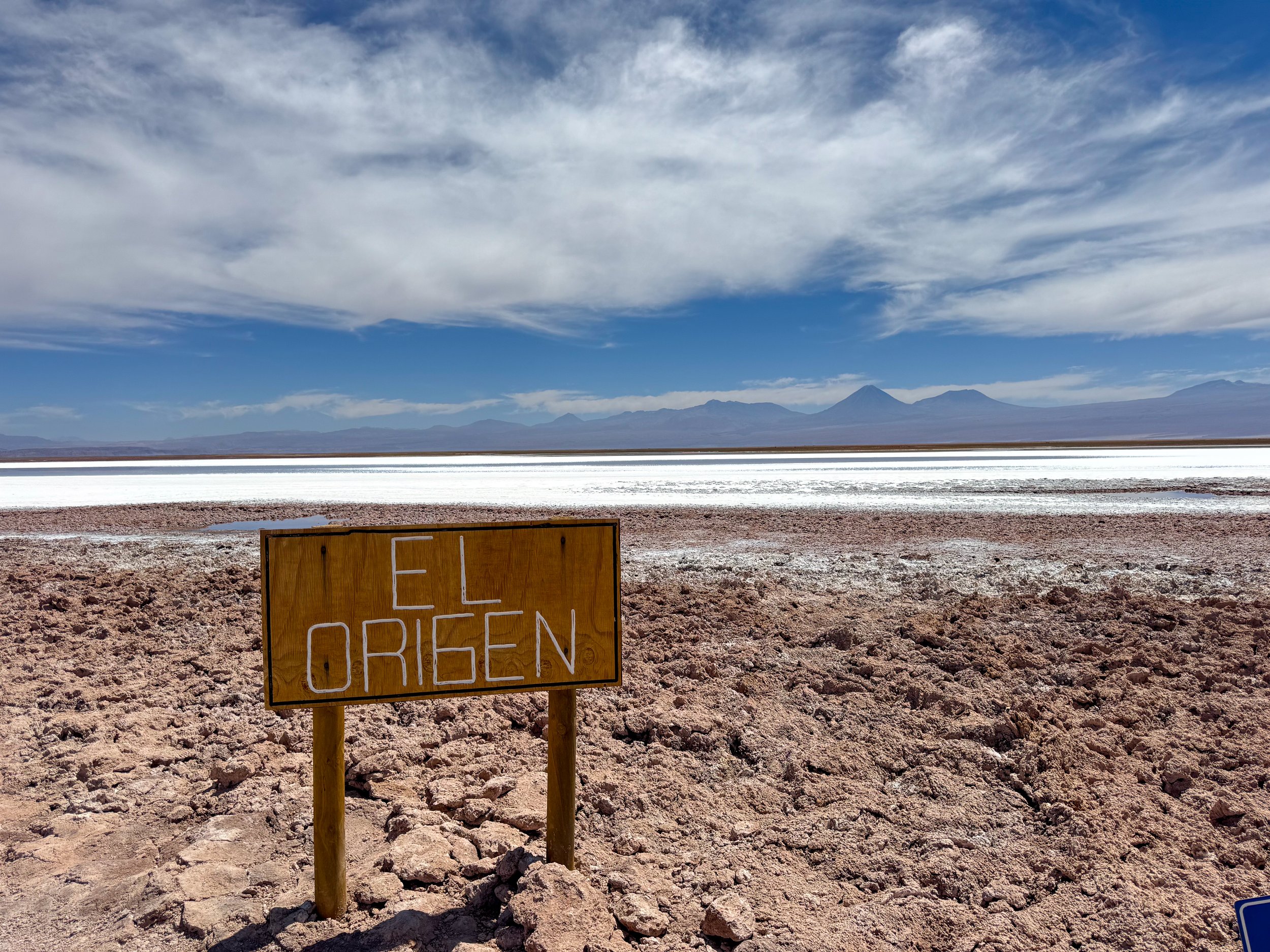
Laguna Tebenquiche. A shallow salty lagoon in a salt flat home to colonies of stromatolites, the first life forms on Earth. The trail emphasizes how they were the origin of life on Earth and have played a role in continuing life after the past 5 mass extinction events.
Geysers & Wetlands
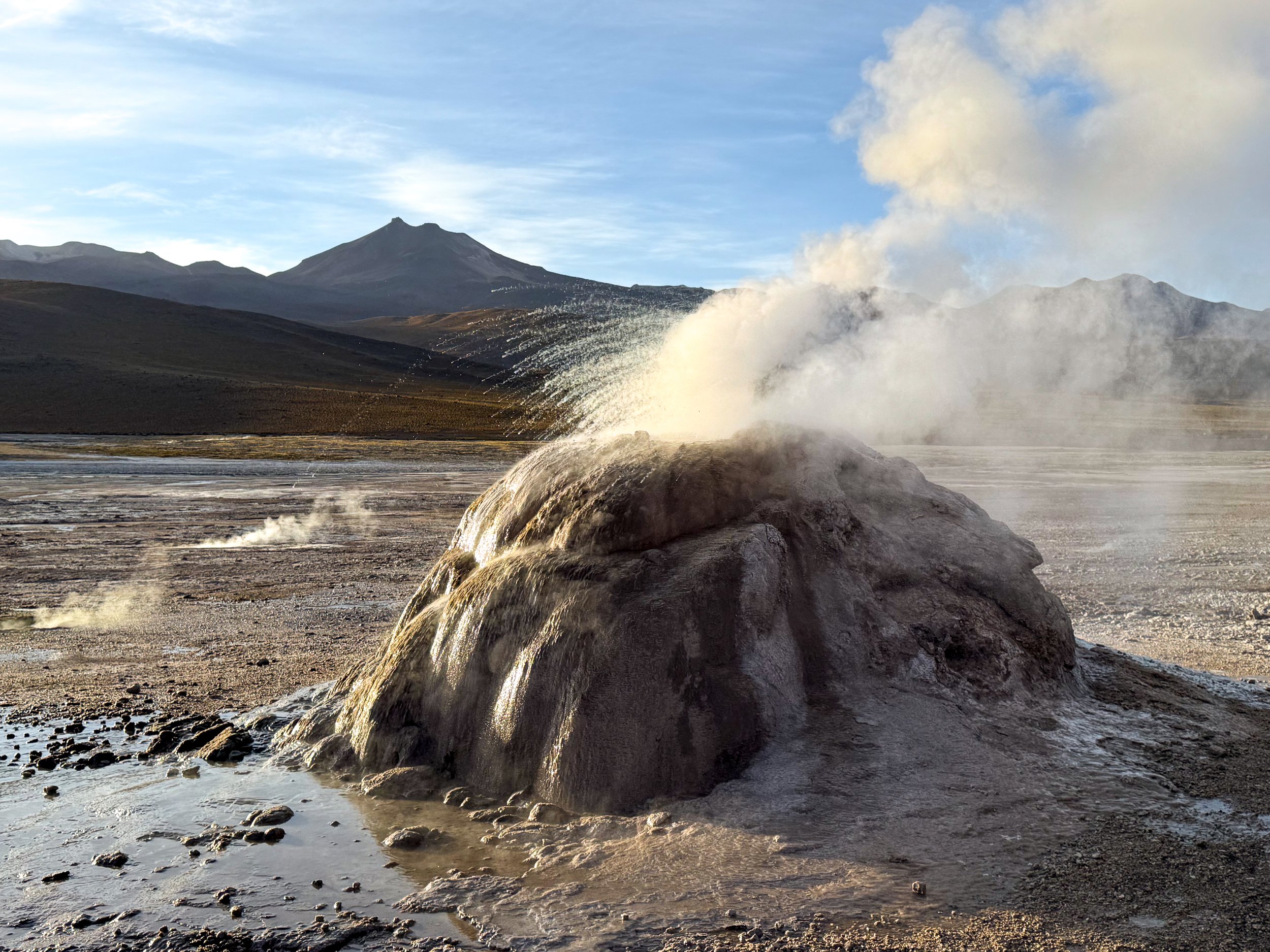
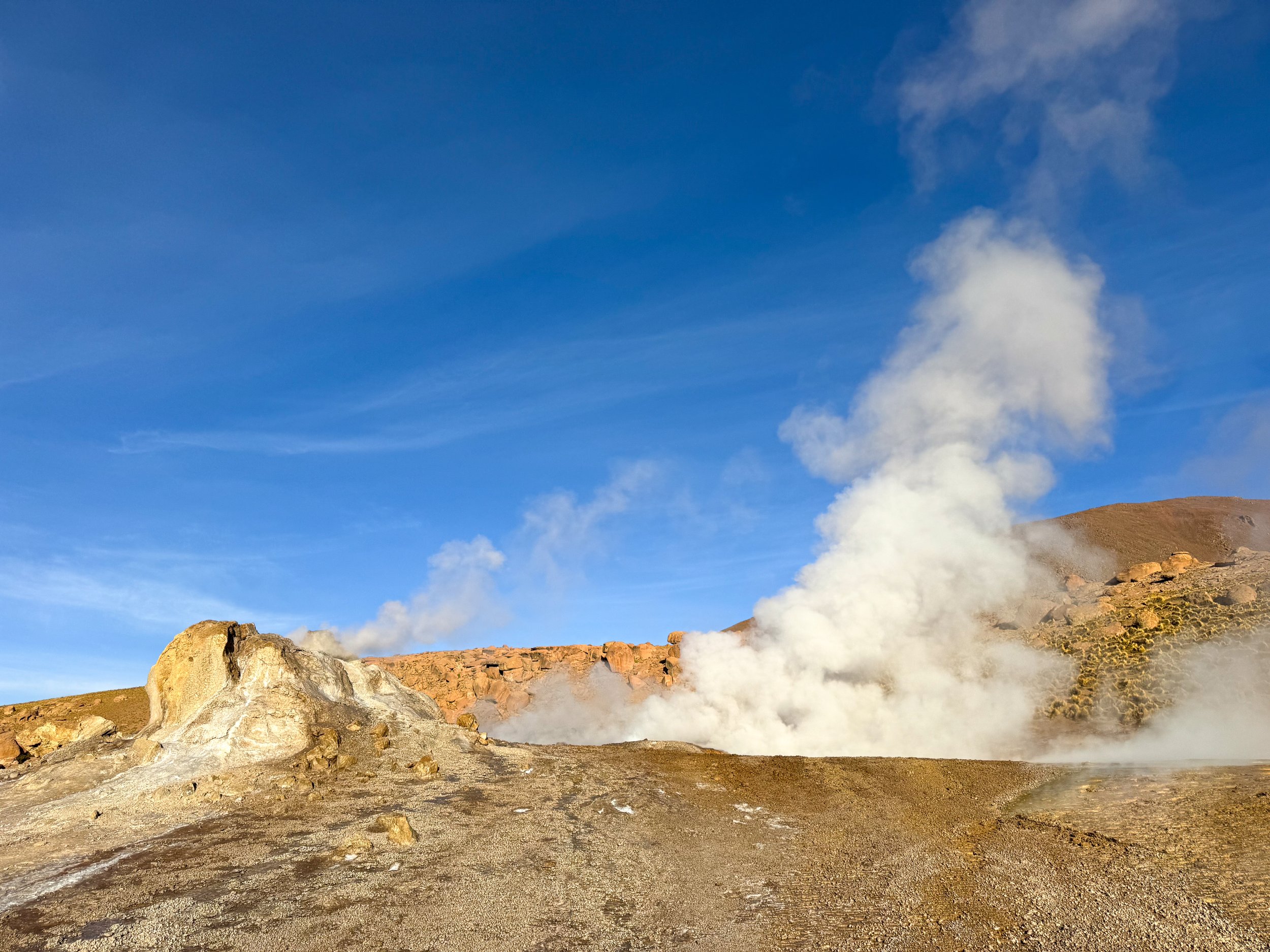
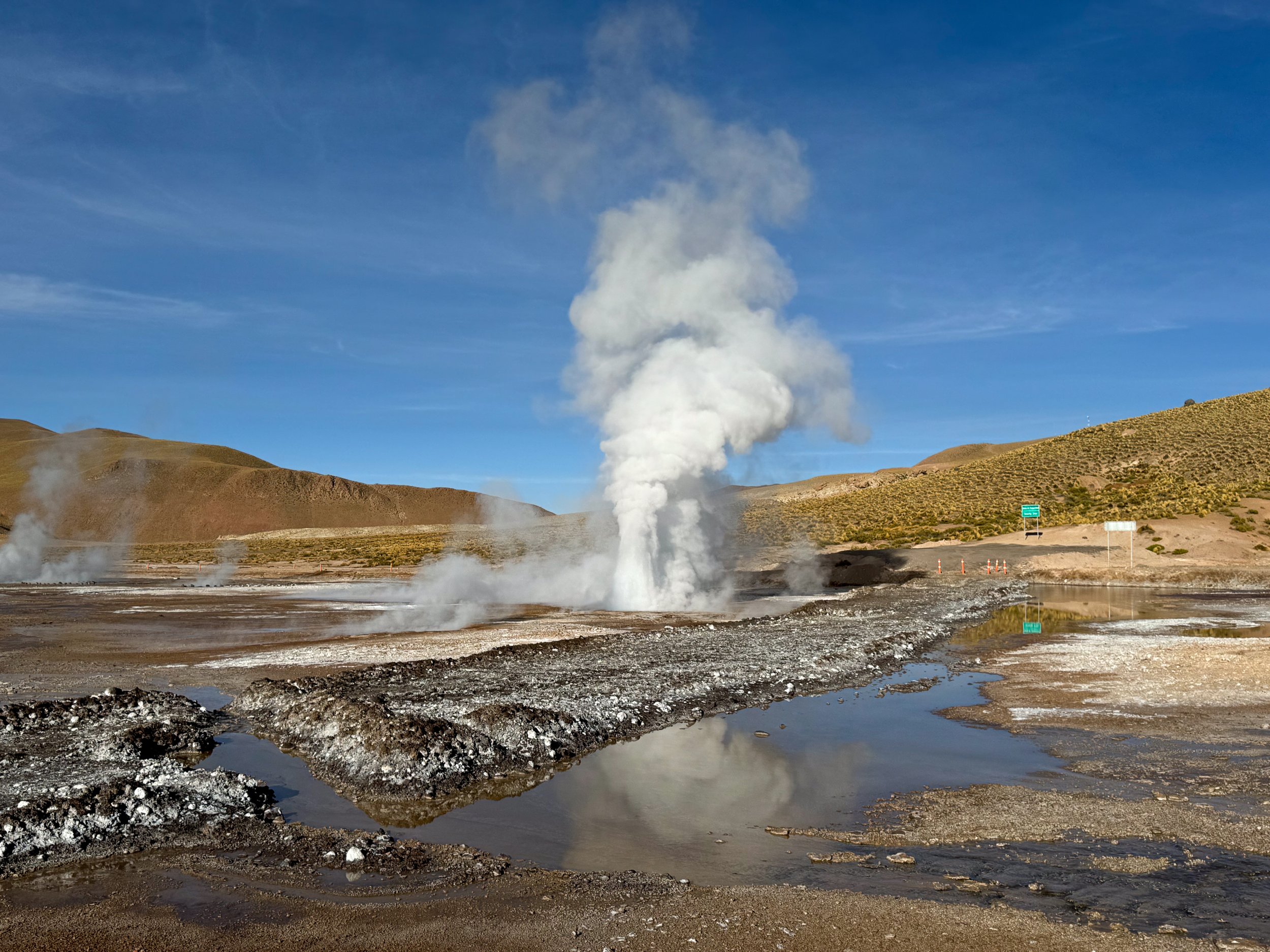
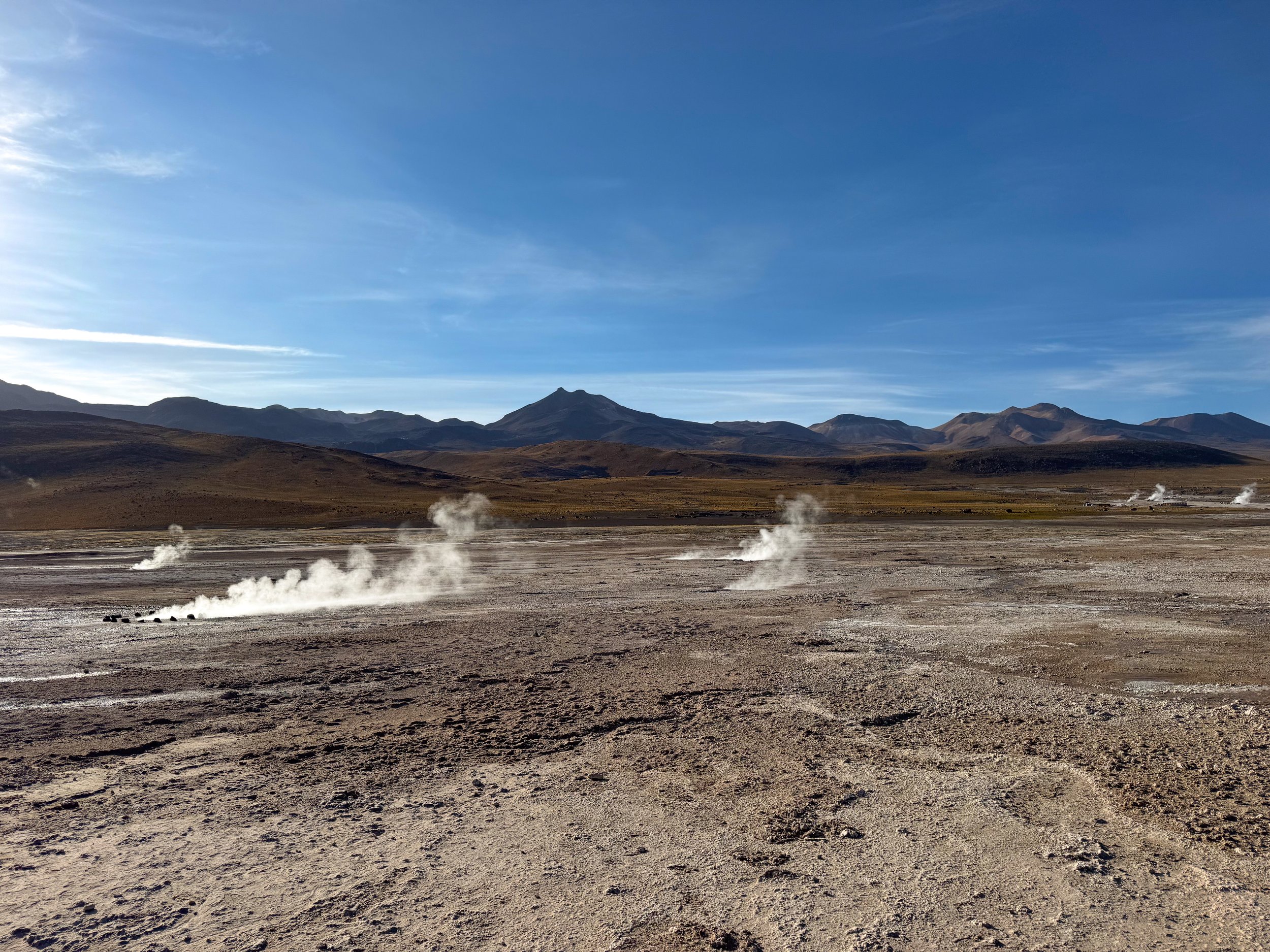
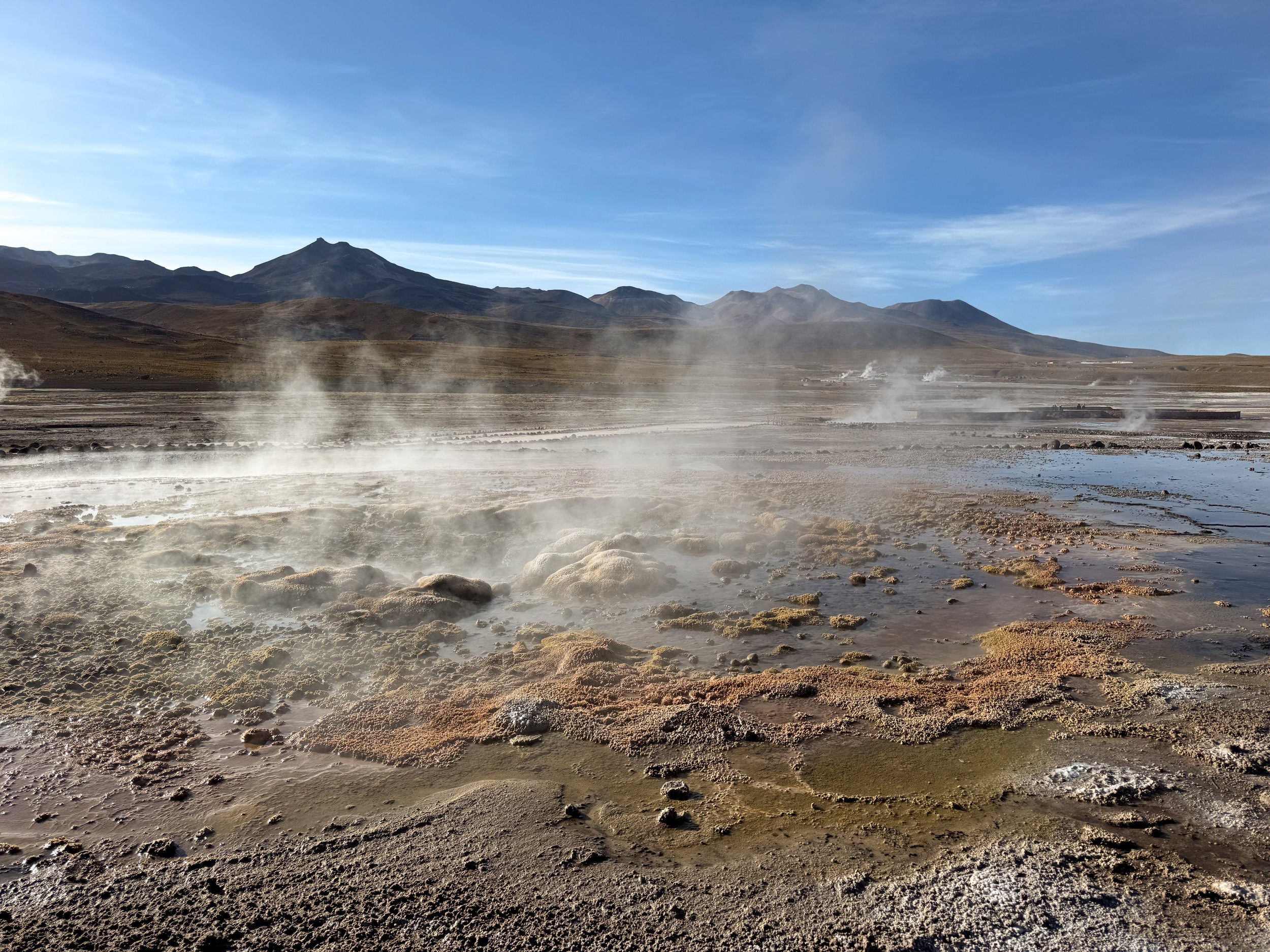
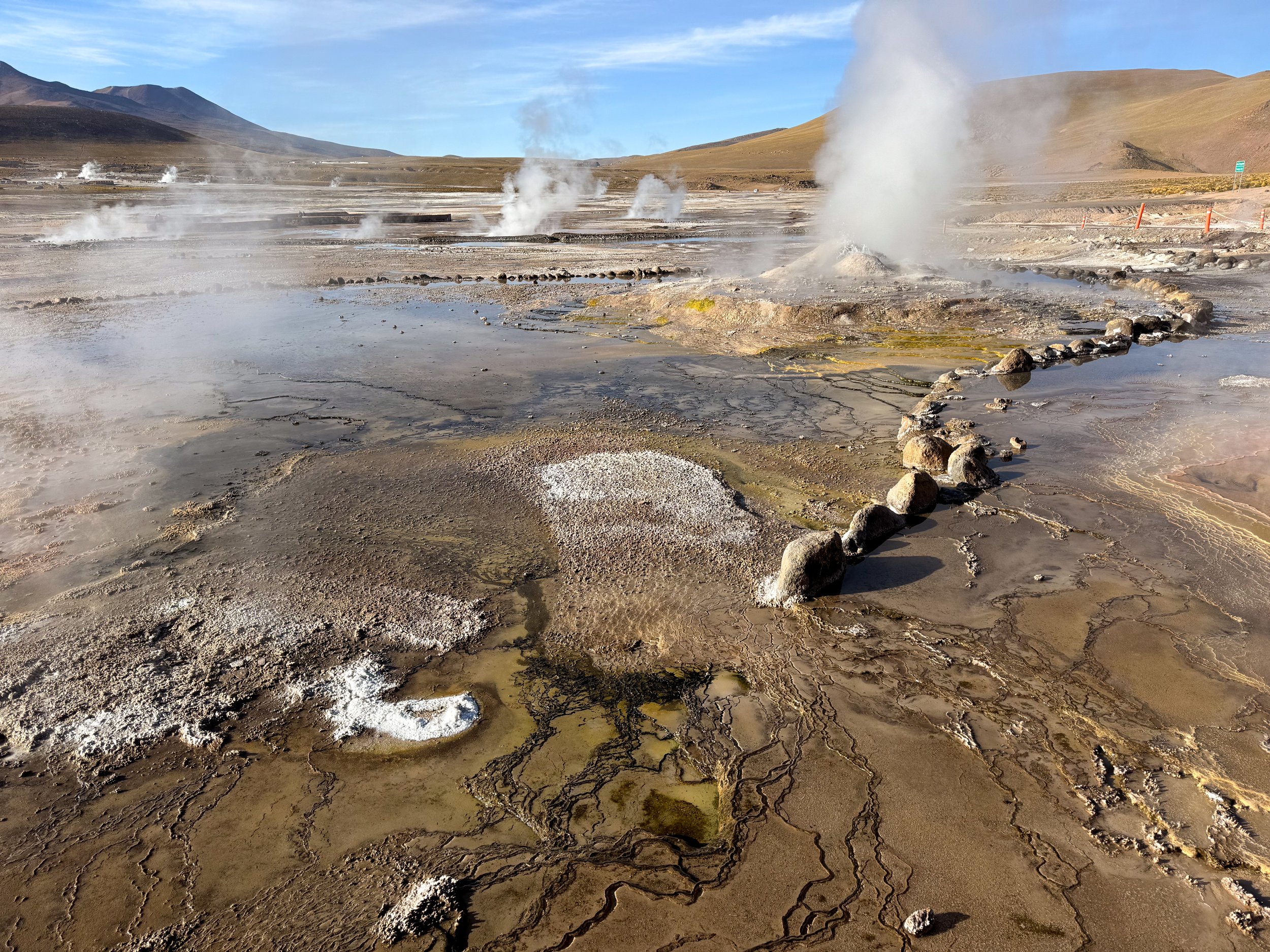
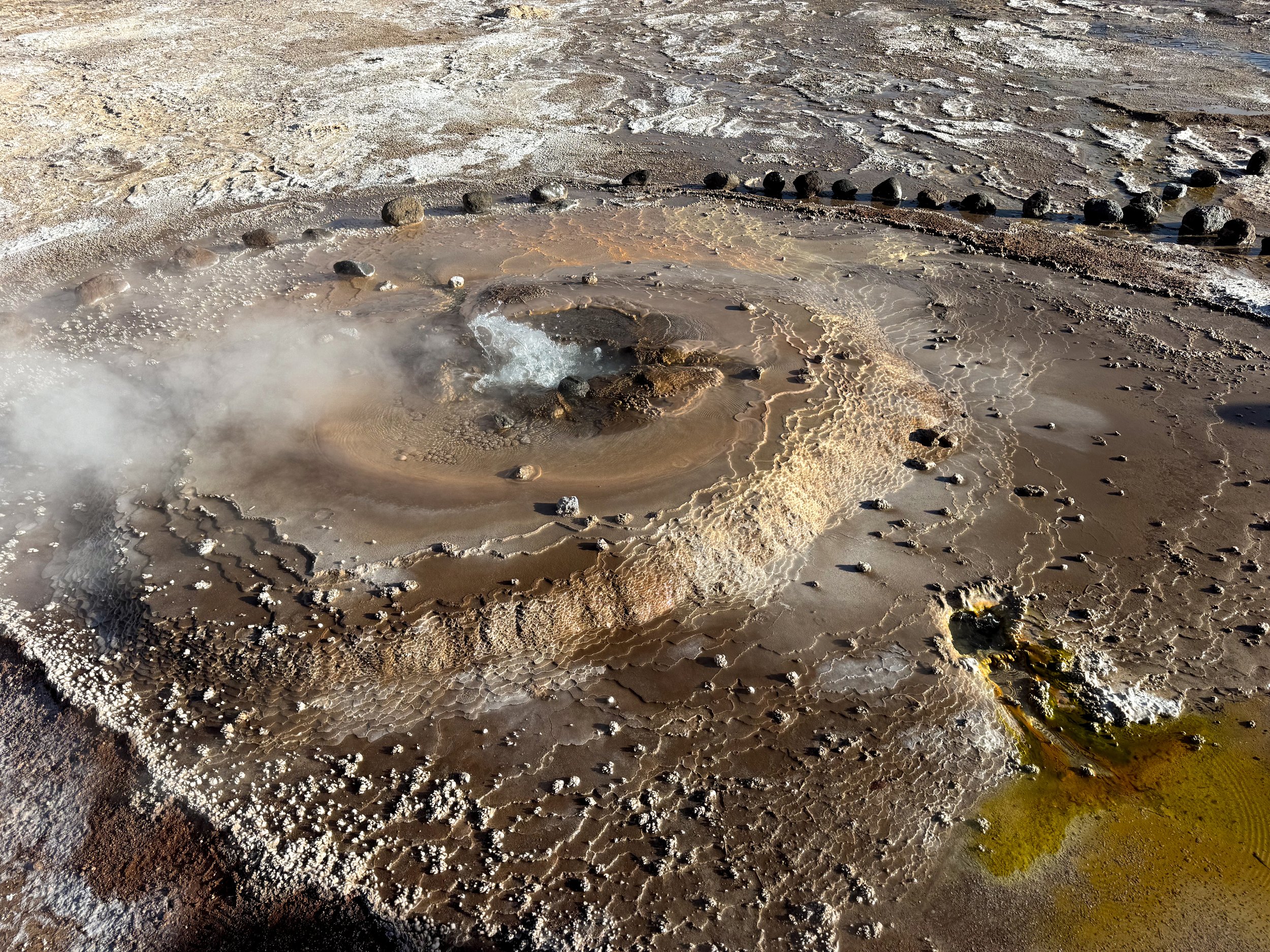
El Tatio Geysers. A large geothermal field in a valley with dozens of steaming vents, bubbling pools, erupting geysers and streams of scalding water. The geysers are small but varied. Some erupt from cone like structures of sediment, others bubble and sputter from shallow pools of water and some steam from tiny holes. The frigid morning temperatures make the steam from the geysers most visible. In the extreme cold, boiling water erupting from the geysers freezes immediately creating sparkling streaks of ice. It was -8C the spring morning we visited so warm clothes and layers were a necessity.

Vado Putana Wetlands. A desert wetland at the base of the Cerro Pabellón Volcano. It’s a place where a variety of birds and wildlife acclimate at. We stopped to admire the green and yellow marshy landscape spotting flamingos, vicuñas, horned coot and blue beaked ducks.

Rock Formations
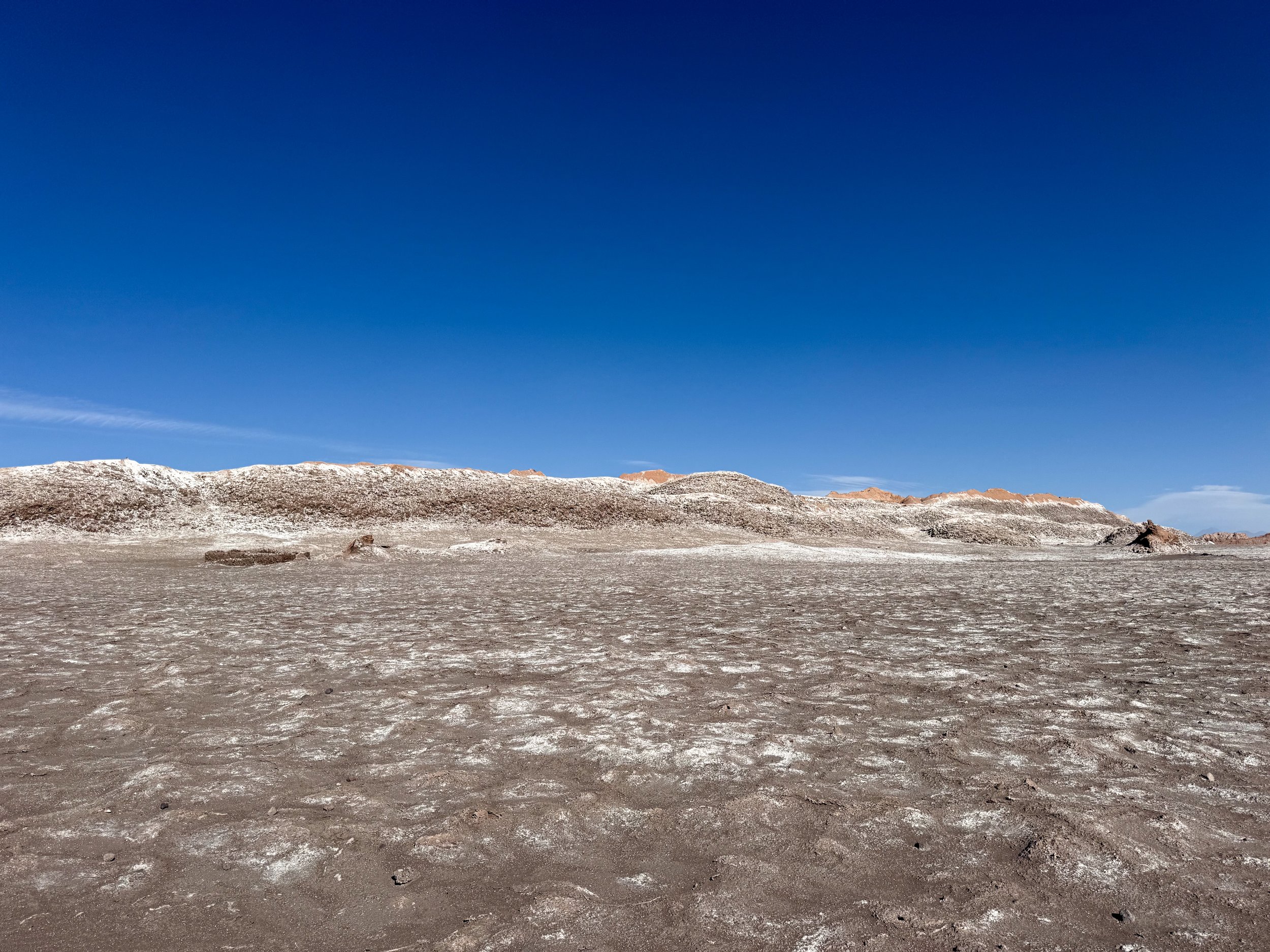
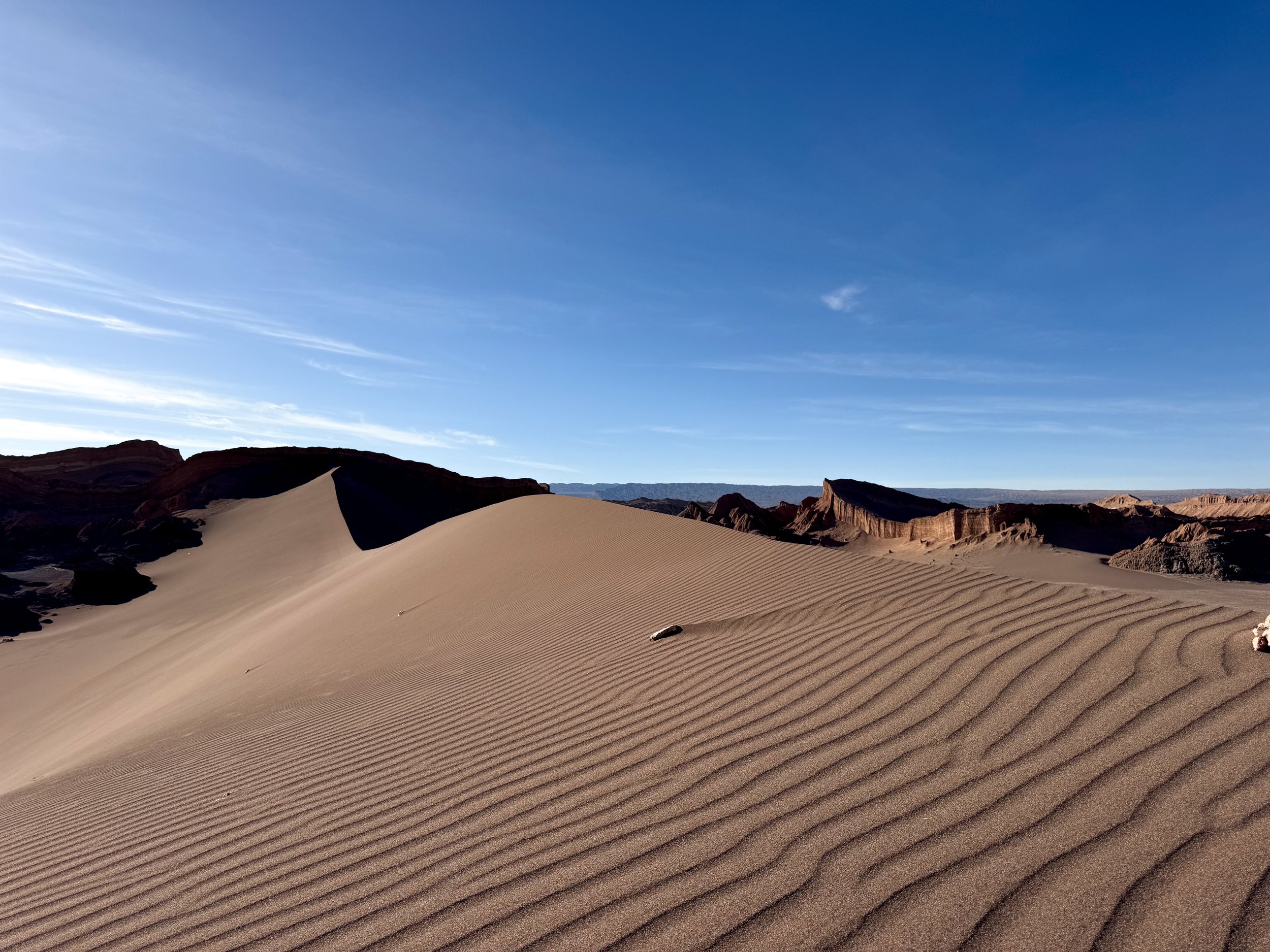
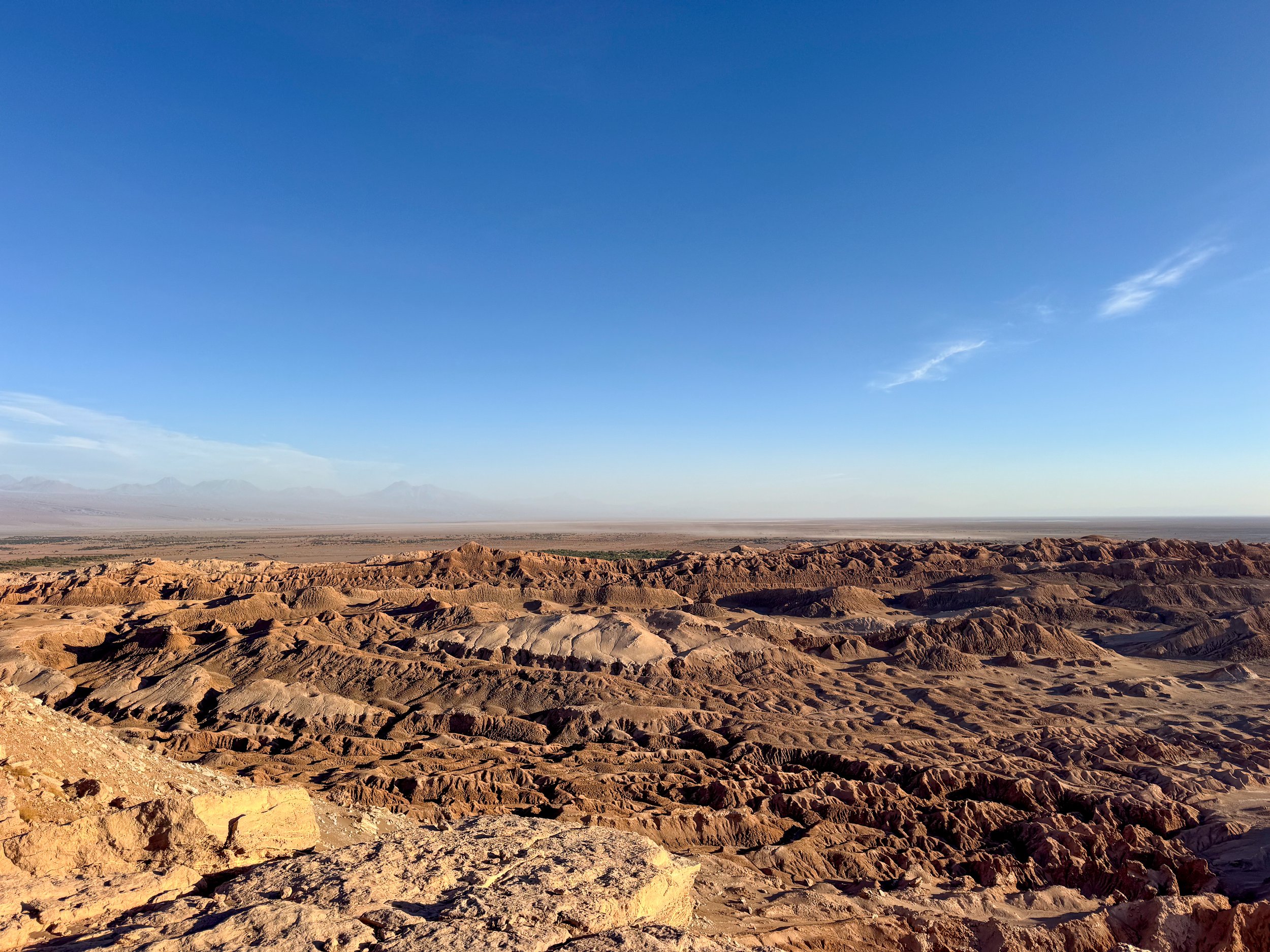
Valle de la Luna (Moon Valley). A desert valley named after white dustings of salt over the valley’s surfaces, resembling the moon. We hiked through the valley, stopping to see rock formations, climb giant dunes and take in the view from scenic overlooks.
Mina Victoria. A former salt mining area to listen to the salt creaking and cracking as the afternoon temperature drops.
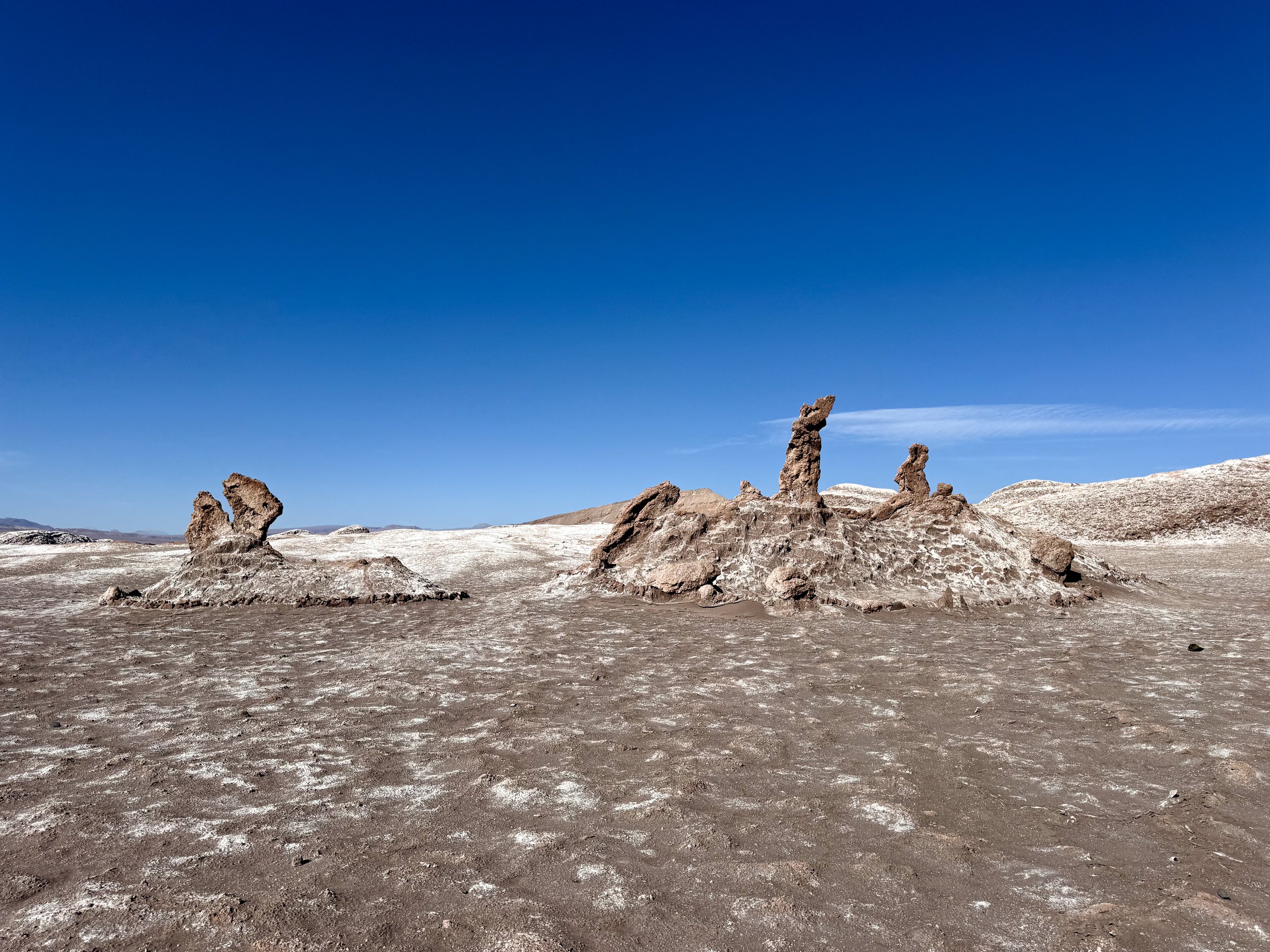
Tres Marias. A rock formation that looks like two women praying with their hands up. The third Maria has eroded.
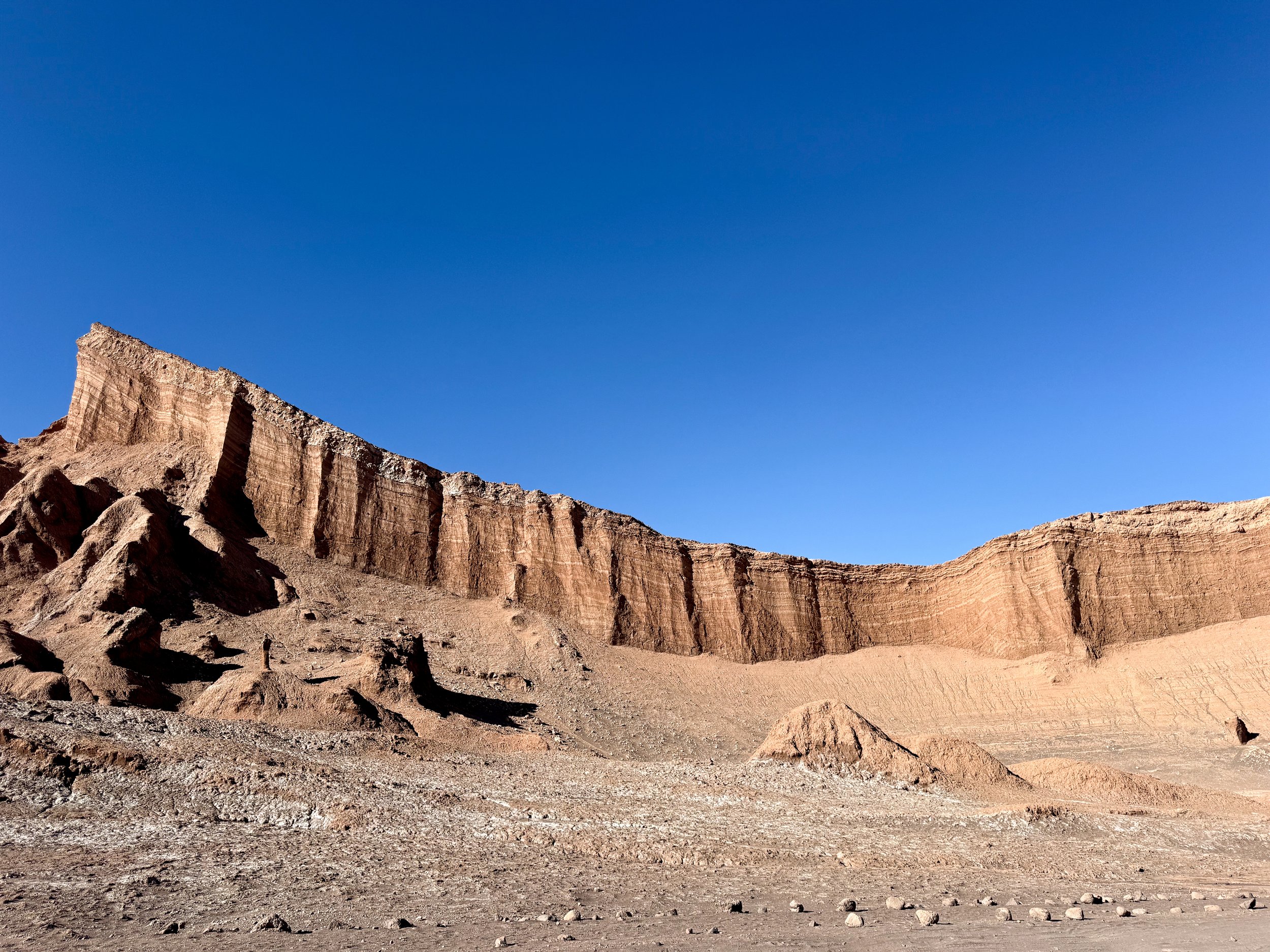
The Amphitheater. A large crescent shaped bluff with layers of brown, orange and salty sediment. We followed a trail leading along its base.
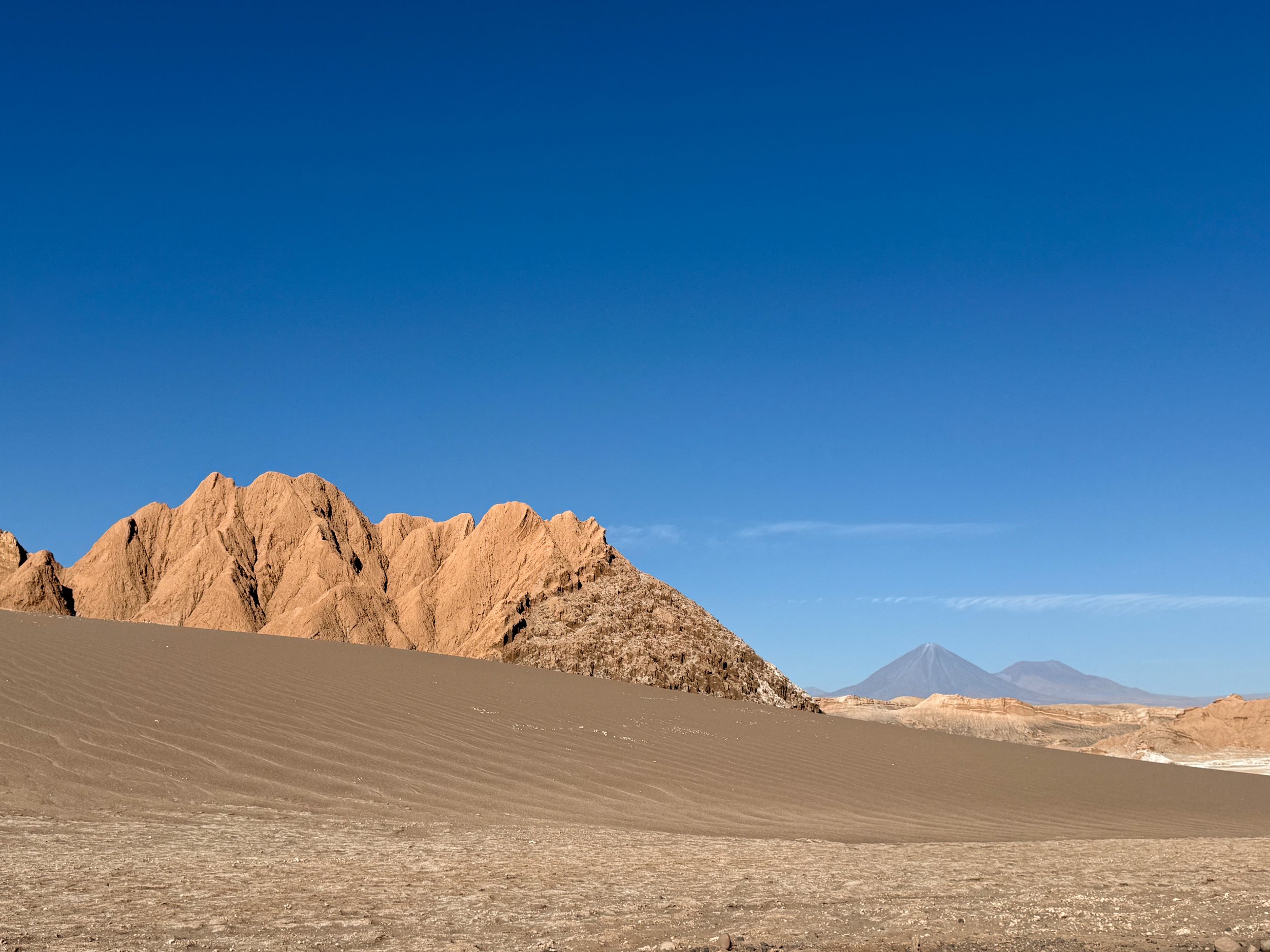
Duna Mayor. A massive tan and grey sand dune with a trail leading up to its crest overlooking the valley.
Good to Know. The park cannot be entered on foot. It can be entered by bike before 11am. Getting here by car with a tour company is the best way to visit.
Mirador de Kari & Piedra del Coyote. A popular cliff side overlook to visit at sunset overlooking the Valley of the Moon and canyon below. On a windy day, the dust and sand blowing from the canyon below can be unbearable.

Desert Animals. The Atacama Desert and Chilean Andes are home to a variety of wild animals. On our tours across the region, we spotted several of the most common animals including Chilean flamingos, vicuñas, chinchillas, desert foxes, and ñandús.
Astronomical Sights
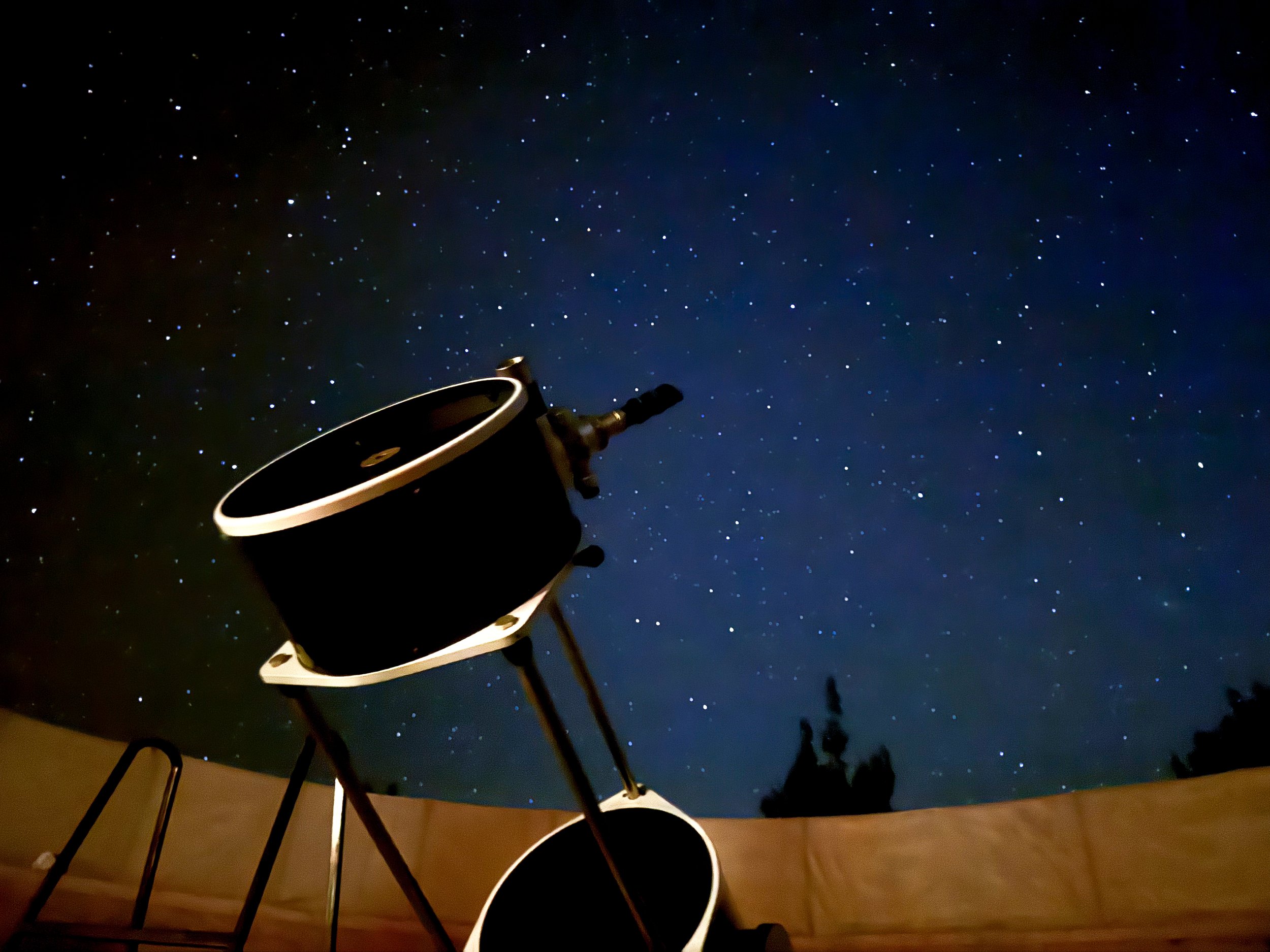
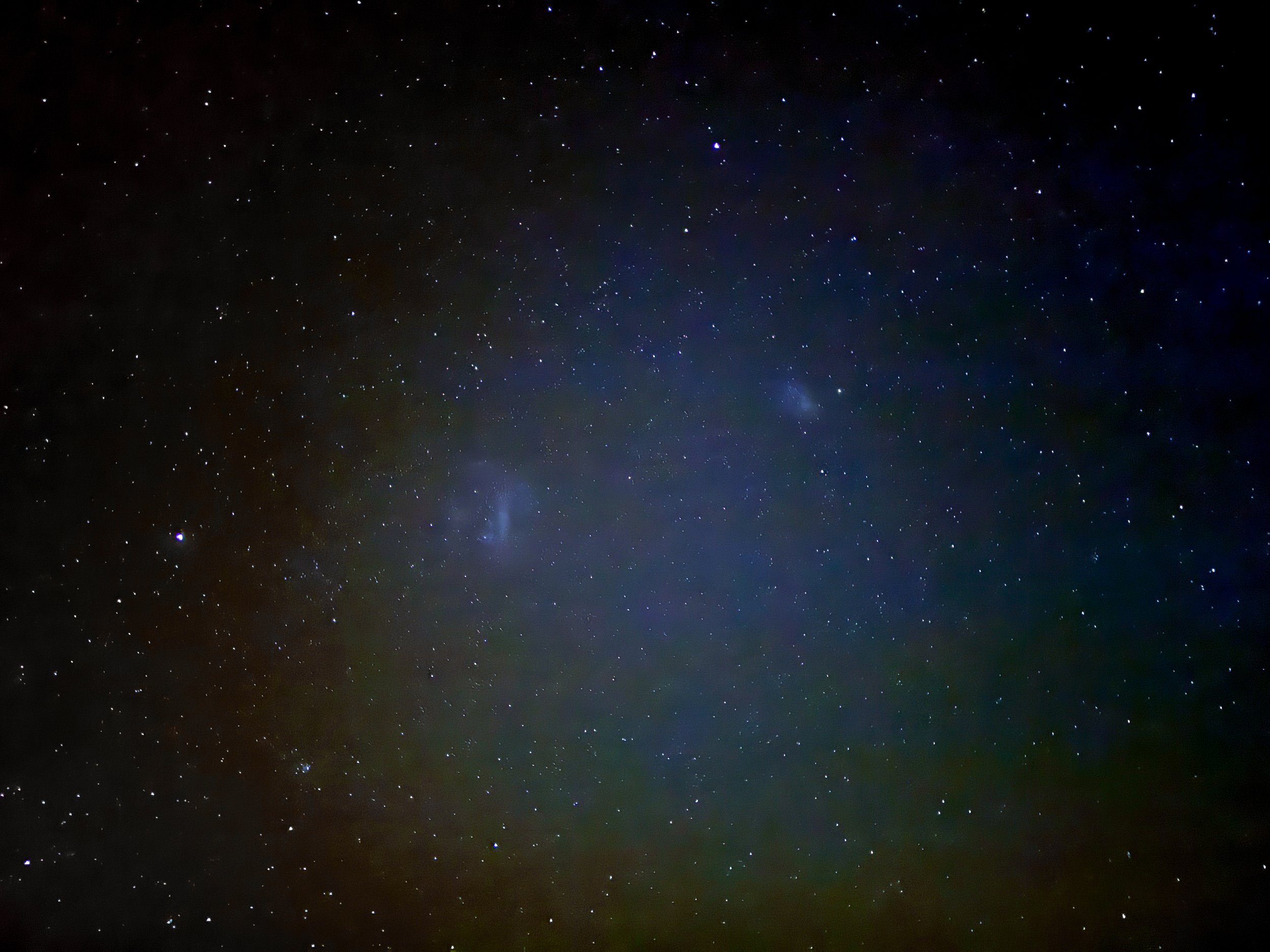
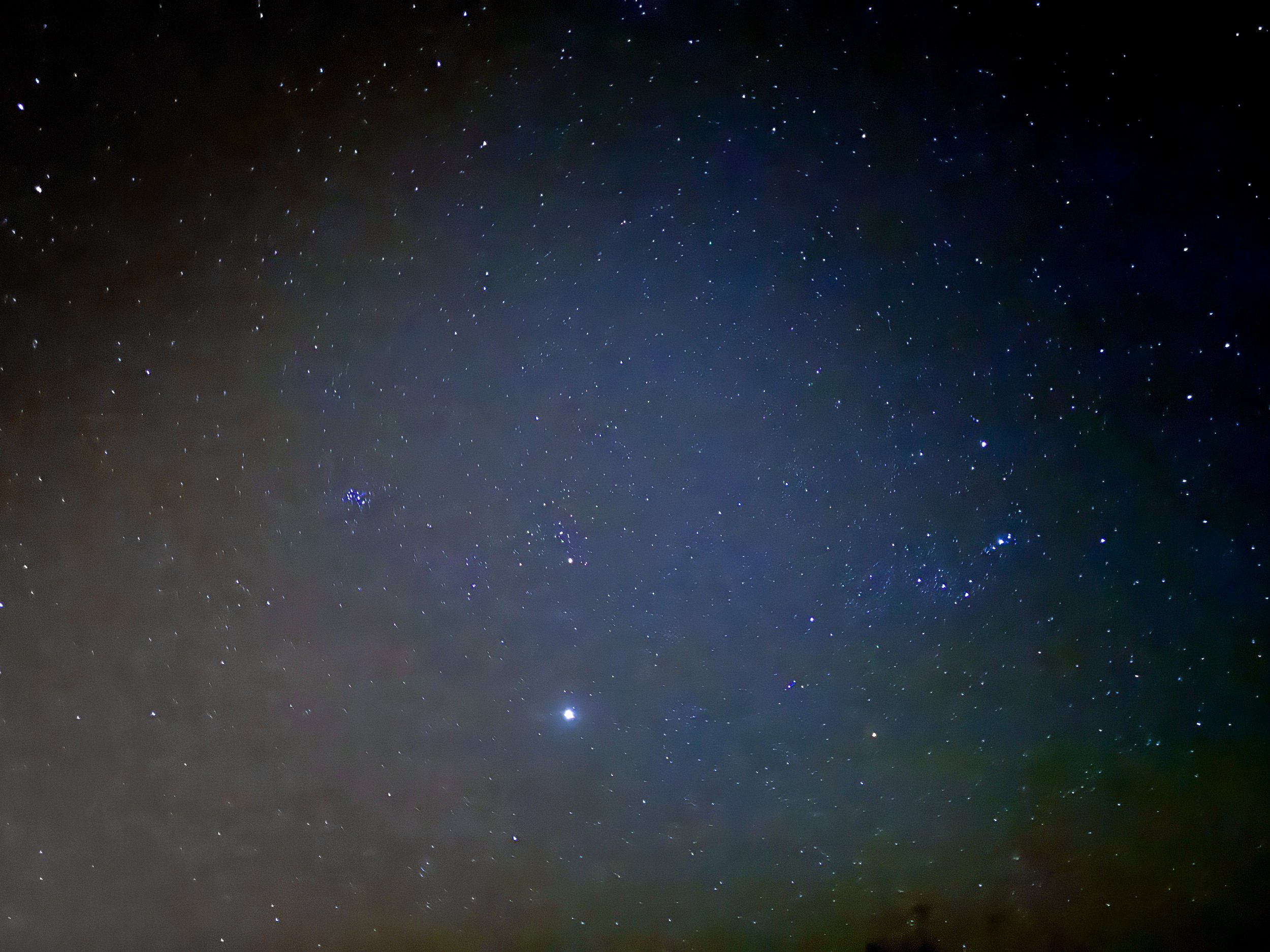
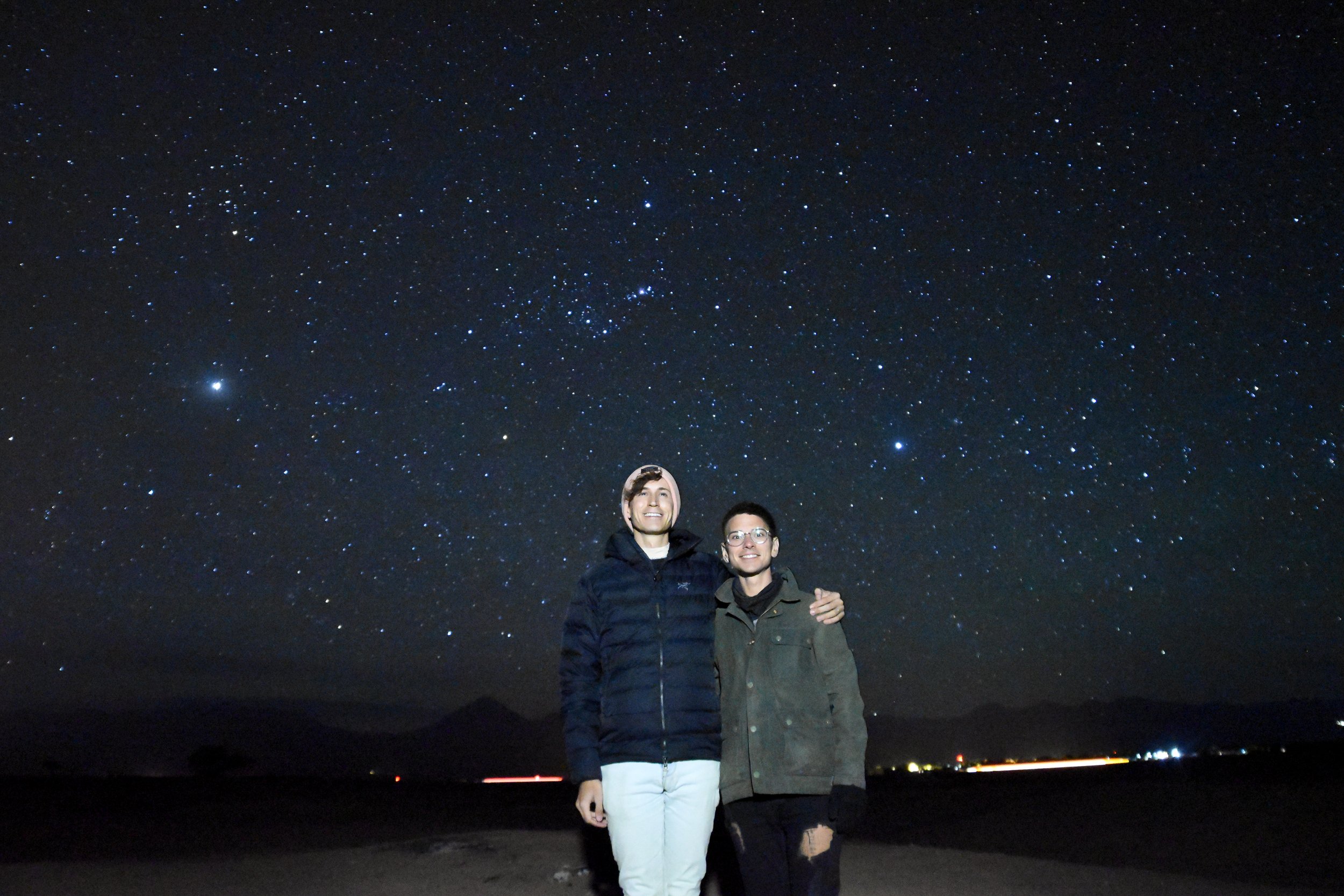
Stargazing Tour. The Atacama Desert is one of the world’s designated dark sky regions. We took a stargazing tour and got to see meteors streaking across the sky, satellites orbiting and an incredible array of celestial objects!
Through three telescopes, the astronomers pointed out two nebulae including the cloudy mass of the Orion Nebula and the cosmic veins of the Tarantula Nebula. We observed the blue star cluster of The Pleiades and a globular cluster with over 6 million stars held together by a supermassive black hole. We spotted the fuzzy disk of the Andromeda Galaxy and the bright blue star, Achernar. They showed us the planet of Saturn, its rings and 2 of its moons as well as Jupiter and 3 of its moons. We ended the night with wine and photos under the dark sky.
Good to Know. Though the Atacama is a dark sky region, the conditions also need to be right. It’s best to stargaze when the moon is not visible. The light pollution is less the further away from San Pedro de Atacama.
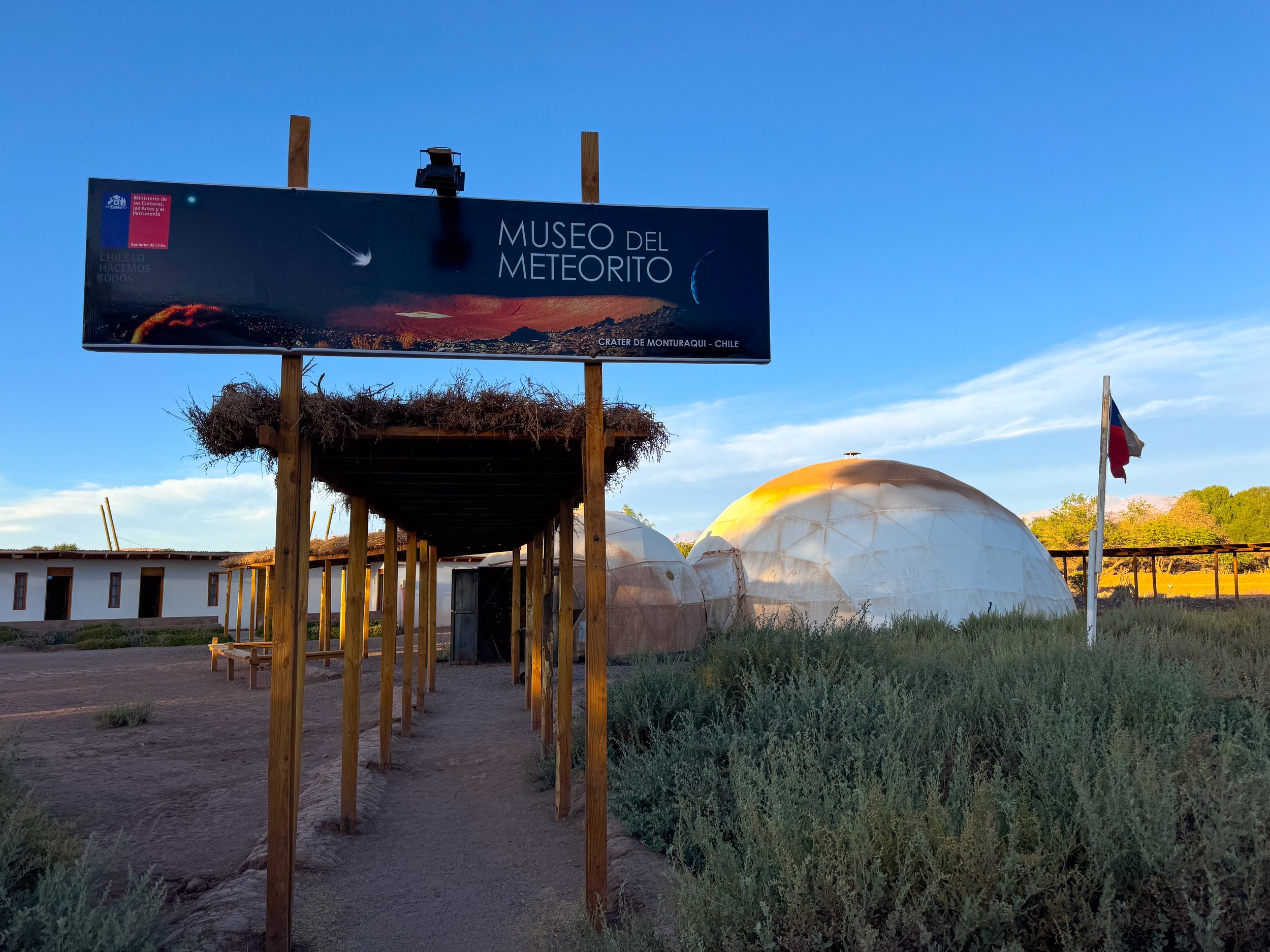
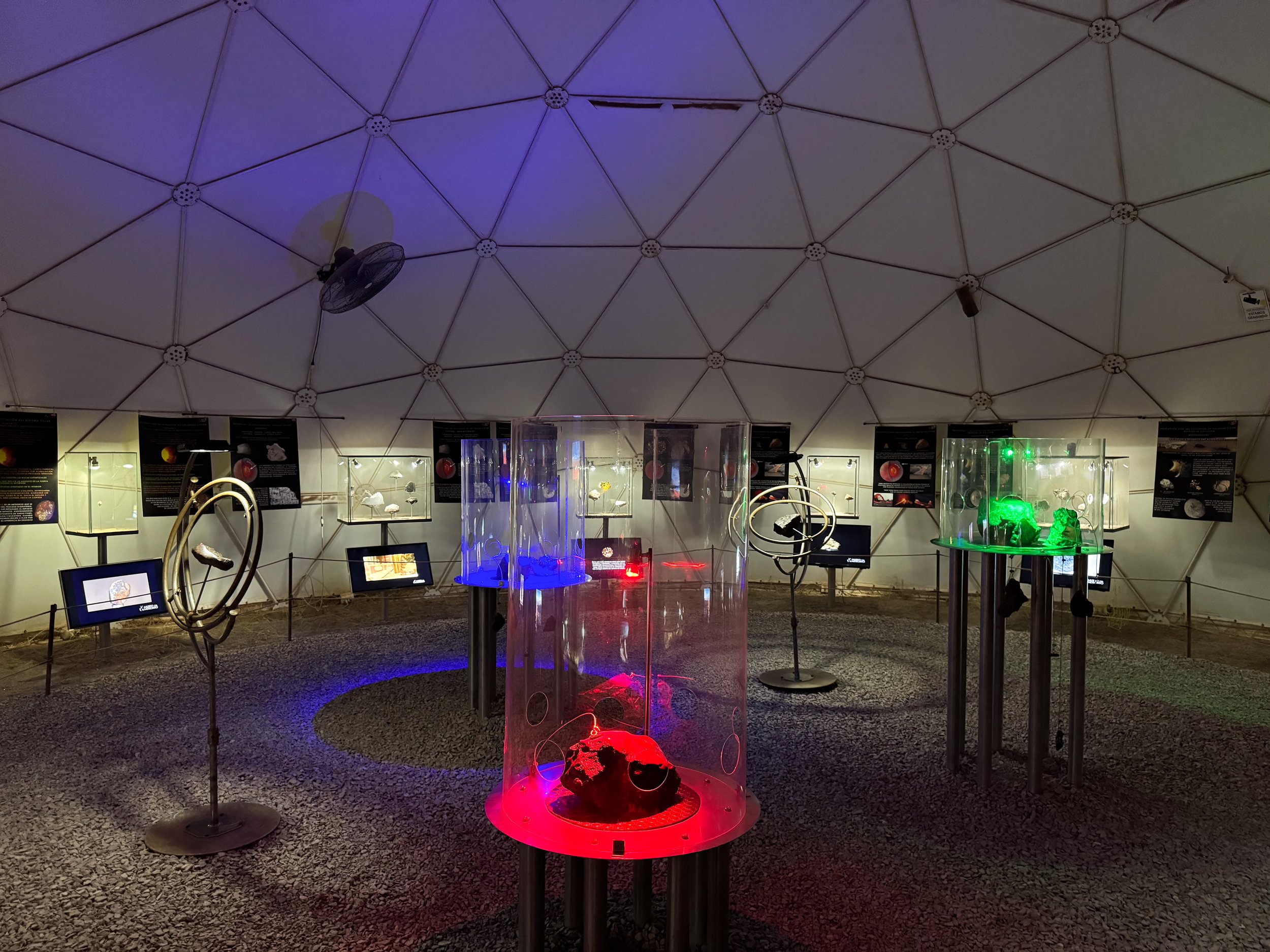
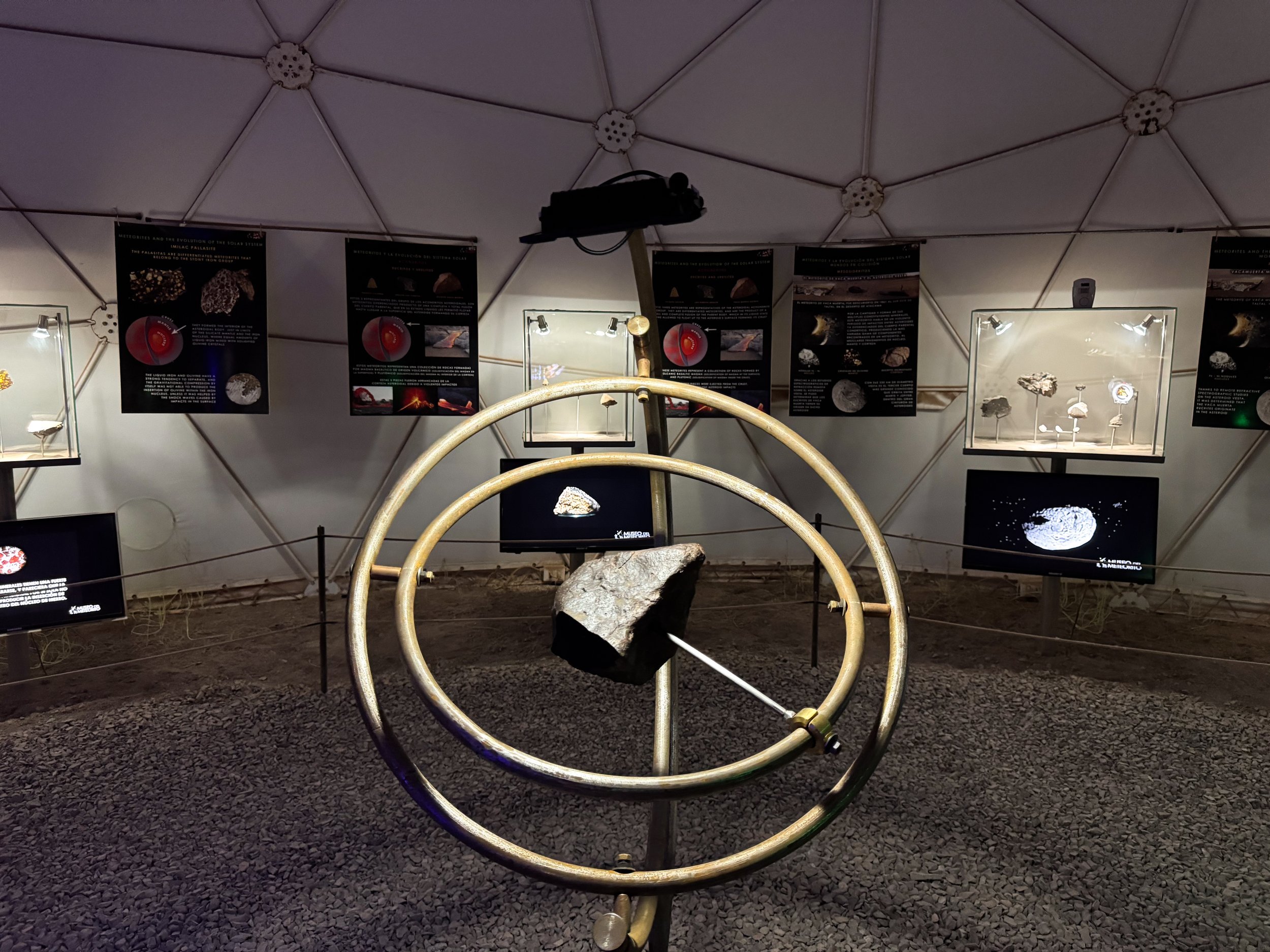
Meteorite Museum. A museum in a geodesic dome housing a collection of meteorites, many of which are from the Chilean Atacama Desert. The guided audio tour explains the types of meteorites and their importance in building the inner planets of our solar system. Some are available to touch and there is even a small display case with slices of of Chilean meteorites for sale ranging in price from $10 to $200
Tour Companies
Dozens of tour companies operate along Calle Caracoles offering excursions throughout the Atacama. We booked our tours with multiple companies in person, on Viator and through Get Your Guide. Most tours offer pick up and include a table spread of food and beverages. Here are the tours we booked:

Places to Eat & Drink
Adobe. A beautiful restaurant with an outdoor patio surrounded by adobe brick walls and shaded by a thatched awning. We dined here at lunch while listening to live music and sipping on spiced Pisco Sours. To eat, we ordered traditional Chilean seafood dishes including the Southern Hake and Camarones al Pil Pil.
La Casona. A popular restaurant with nightly musical performances and an outdoor fire pit. We sat in their outdoor patio, listening to live music, sipping on cocktails and eating vegetarian versions of traditional Chilean dishes like Chorrillana and Pastel de Choclo.
Helderia Babalu. An Ice cream and gelato shop serving a range of Chilean and inventive flavors. We came here three times, trying several flavors like: pineapple-mint, orange-ginger, prickly pear, quinoa leche, lucuma (similar to passion fruit) and tres leches.
Emporio Andeno. A cafe and empanaderia with coffees and a list of over a dozen empanadas including vegetarian versions of Champiñón made with mushrooms, corn and cheese or the Vegano Verde made with mushrooms, spinach, corn salsa and vegan béchamel.
Karavan Restobar. A restaurant and bar with adobe booths & tables, live music, local dishes and fresh juices. We ordered a few afternoon snacks, Bolitas de Queso y Jalapeño and Sopaipillas with pico de gallo. For drinks, we sipped on fresh pressed lemonade rica rica and passion fruit juice.
La Picada Del Indio. A popular restaurant and bar. Come here for all day happy hour in their back patio, two cocktails for 8,000 Chilean pesos.
Charrua. A pizzeria with a range of thin crust pizzas. We ordered a classic margherita pizza and four cheese pizza, each with rica rica seasoning. It was our first pizza in nearly 3 months and did not disappoint!
La Franchuteria. A bakery and cafe with a peaceful dining area in a lush outdoor patio surrounded by tiny chirping birds. Come here for their pastries, quiche and fresh breads, especially the baguettes and baguette sandwiches.
El Barro. A beer garden style restaurant with a large shaded patio. Come here for their affordable prix fixe menus and generous portions. Try the ceviche, fried fish, daily dessert and red sangria.

Chilean Cuisine
Chorrillana. A traditional Chilean dish made from French fries covered with meat or vegetables and topped with artichoke hearts and cherry tomatoes.
Pastel de Choclo. A Chilean version of shepherd's pie made with a mixture of sautéed vegetables and meat topped with a creamy corn pudding and broiled.
Pil Pil. A traditional style Chilean dish made from meat, seafood or mushrooms cooked in a spicy and savory sauce flavored with garlic and chili cacho de cabra. It’s typically served with papas doradas.
Sopaipillas. Fried flat breads served with a sweet or savory topping like jams, salsa or ceviche. It’s often served as a snack or appetizer.
Bolitas de Queso. Deep fried balls of cream cheese. It’s often served as a snack or appetizer.
Fresh Juice. Freshly pressed fruit, herb and veggie juice blends are incredibly popular across the town with dedicated juice bars and menus dedicated to juices at restaurants.
Rica Rica. A popular herb used in many dishes that tastes and smells similar to oregano.
Olives. Olives and olive oil are typical ingredients in many dishes. Most restaurants even serve olive oil table side with meals.
Wine. Chile has several grape growing regions used to make wine. Malbecs and Merlots are the most common.

Where to Stay
Desert Eco Dome. We stayed in an eco dome outside of the city center that we found on Airbnb. The white domed structure houses a kitchen, living room and lofted bedroom. The desert property has an adobe house, outdoor hammocks and shaded lounge areas. Book here.
Getting Around
On Foot. The town of San Pedro de Atacama is easily walkable. Everything is within 1km of the main street, Calle Caracoles.
By Bike. Several companies around the city center rent bikes by the day. This is a great option to visit sights in the outskirts of the city without a tour.
By Tour. The most efficient way to visit sights across the region is by tour. Tours offer pick up from accommodations, via a sprinter van and return to the city center.
Airport Transfer. Most flights in and out of San Pedro de Atacama leave from the town of Calama 1 hour 30 minutes away. We booked a transfer with Ruta Chile. Book here.
Location Specifics
Drinking Water. Tap water is generally not safe to consume in San Pedro de Atacama. It’s best to drink filtered or bottled water.
Toilets. Like most places in South America, signs advise people not to flush toilet paper due to risk of clogging the plumbing.
Cash vs. Card. Many businesses accept credit cards but cash is often preferred.
Exchanging Cash. If exchanging US dollars for Chilean Pesos, make sure the bill is in perfect condition (no minor tears or markings) or it will not be accepted.
Language. Spanish is the dominant language however English and Portuguese are commonly spoken.
LGBTQ+ Safety. San Pedro de Atacama is very friendly to and accepting of queer travelers and locals.
Elsewhere in Chile
From the surreal deserts of Atacama to the urban energy of Santiago and the glaciers of Patagonia, continue your journey through Chile's diverse landscapes with these travel guides:
Santiago Chile Travel Guide: Neighborhoods, Food & Local Markets. Discover Santiago's vibrant neighborhoods, urban green spaces, celebrated food scene and cosmopolitan culture beneath the snow capped peaks of the Andes.
Patagonia Chile Travel Guide: Torres del Paine, Hiking & Road Trips. Road trip through Chilean Patagonia where scenic hikes, wildlife encounters, turquoise waterfalls and rugged landscapes create an unforgettable wilderness adventure.

Santiago Chile Travel Guide: Neighborhoods, Food & Local Markets
Discover Santiago's vibrant neighborhoods, urban green spaces, celebrated food scene and cosmopolitan culture beneath the snow capped peaks of the Andes.

A Weekend in Santiago
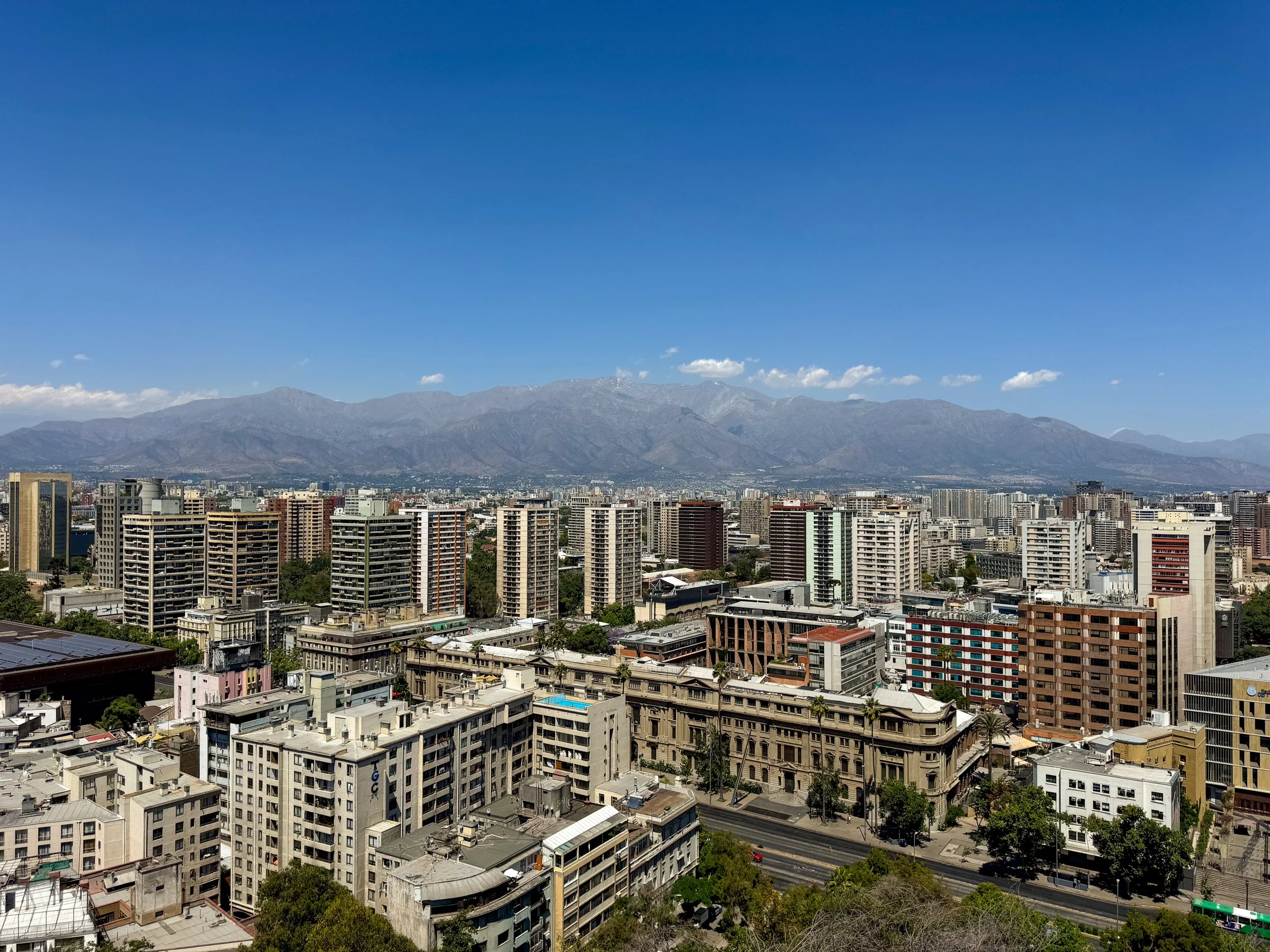
Santiago is an enchanting metropolis with colorful city streets, lush hilltop parks, historic buildings, towering skyscrapers and views of the Andes Mountains. It’s a hub for Chilean wine and cuisine, queer nightlife and cultural sights. We spent a weekend exploring the city, getting a taste of what it has to offer and leaving with a strong desire to return.
Neighborhoods
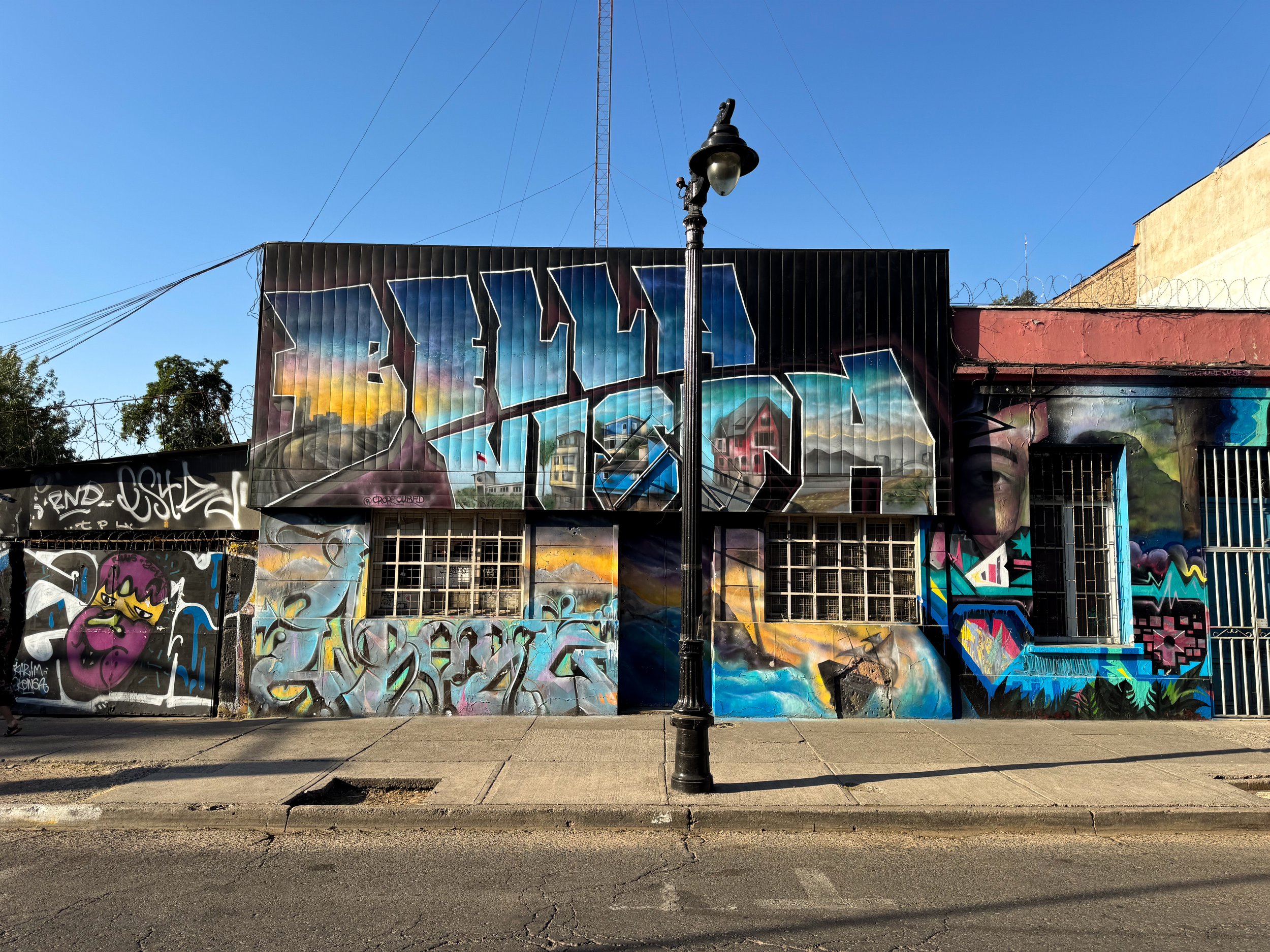
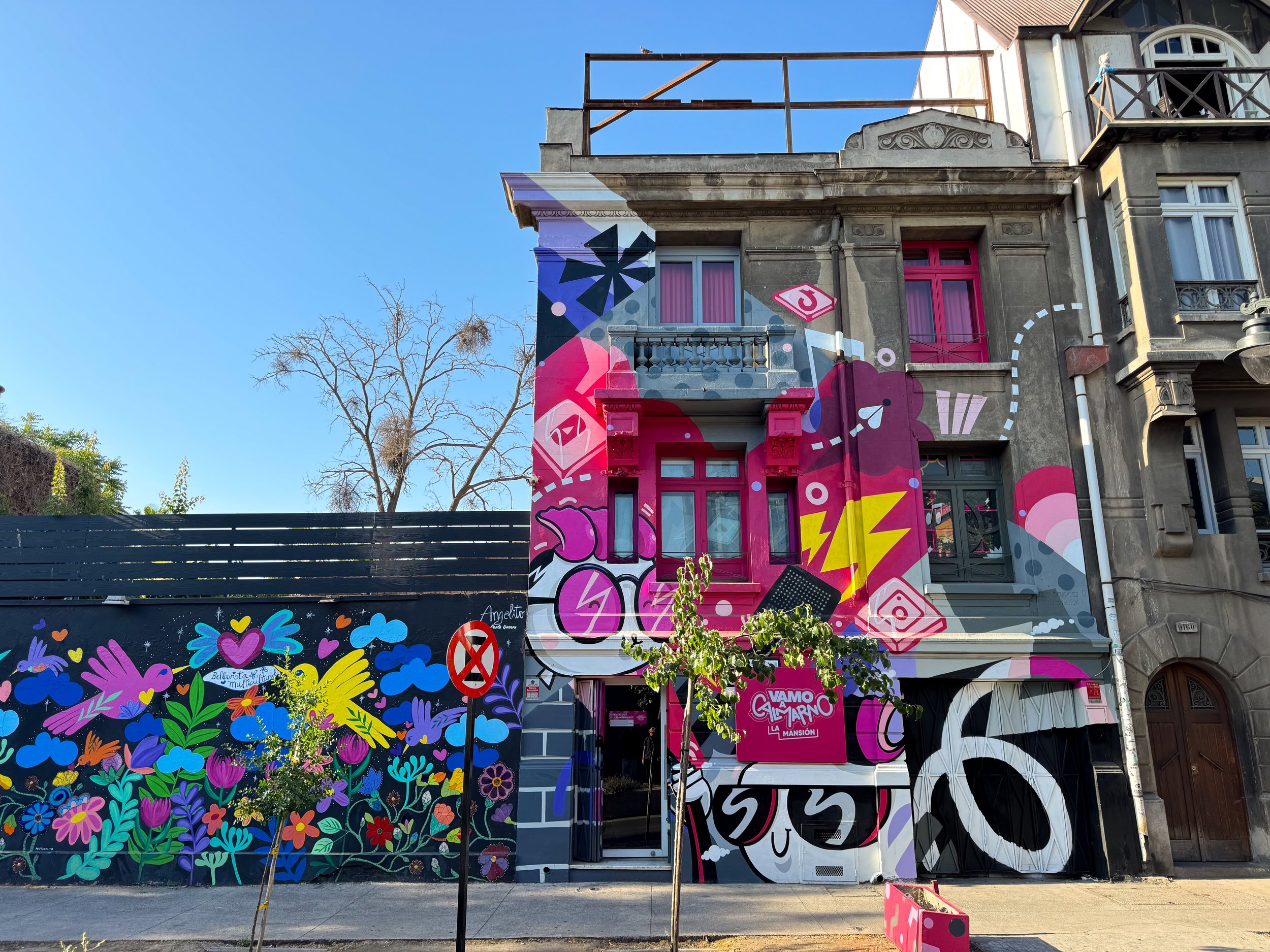
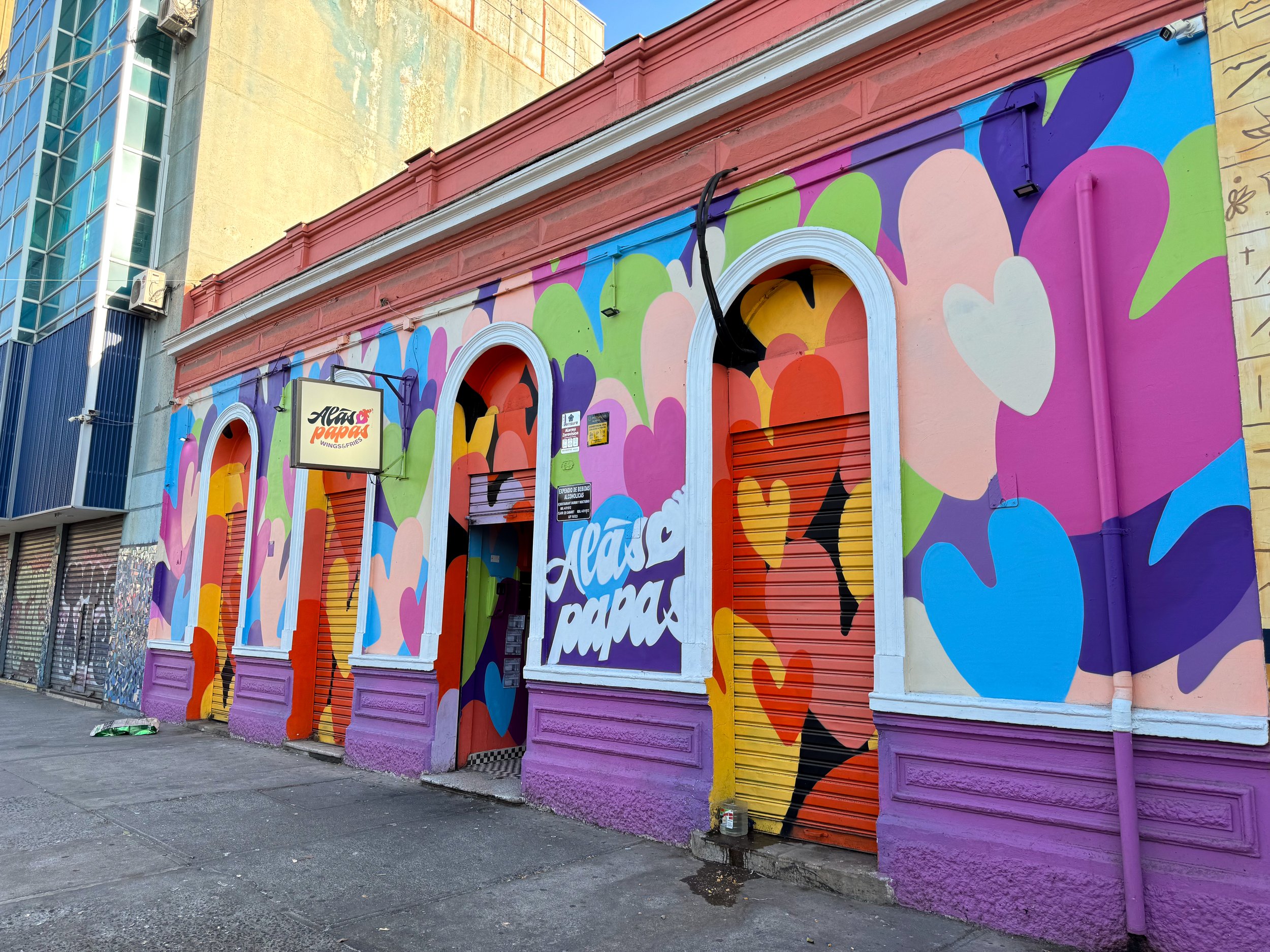
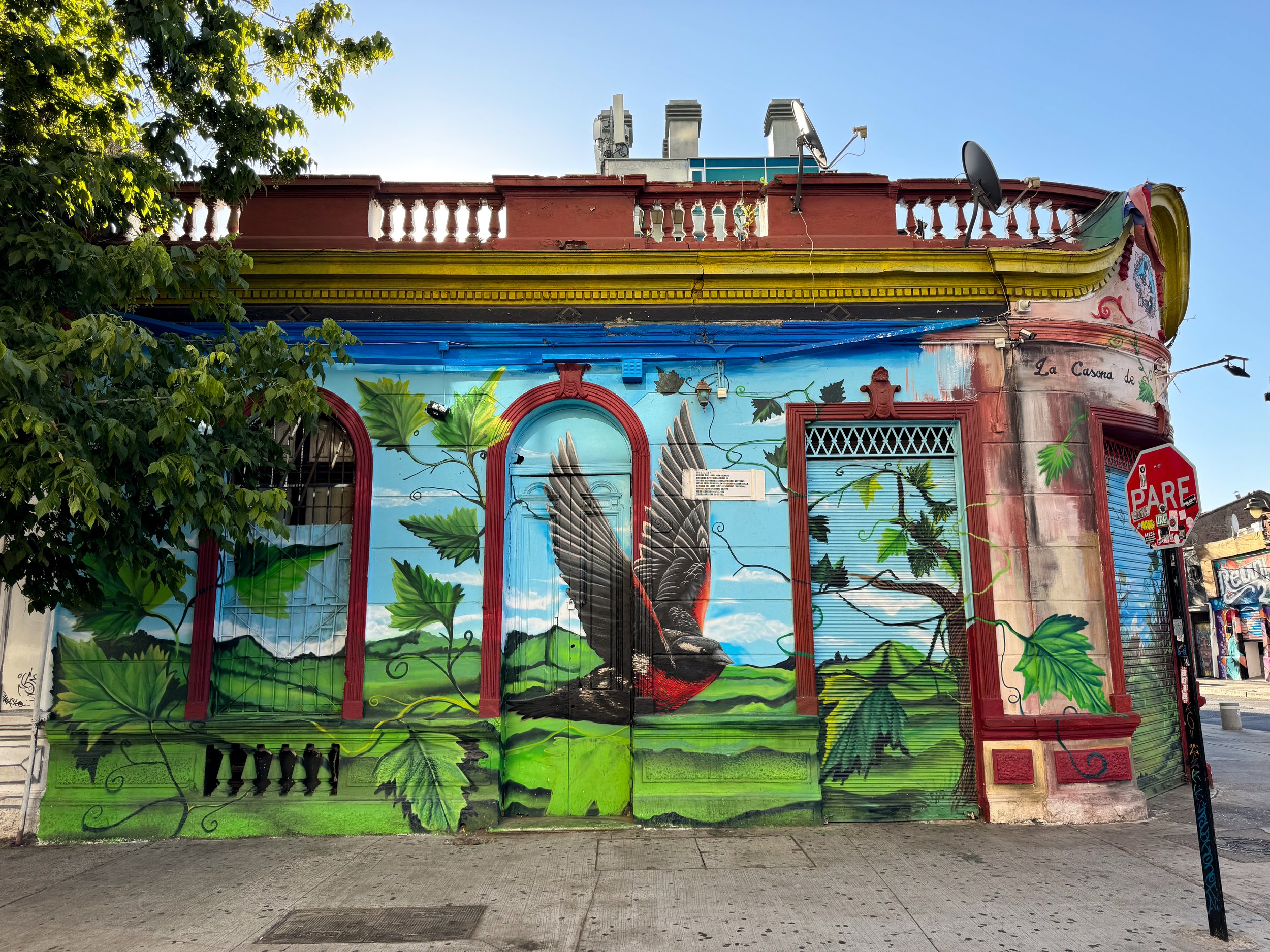
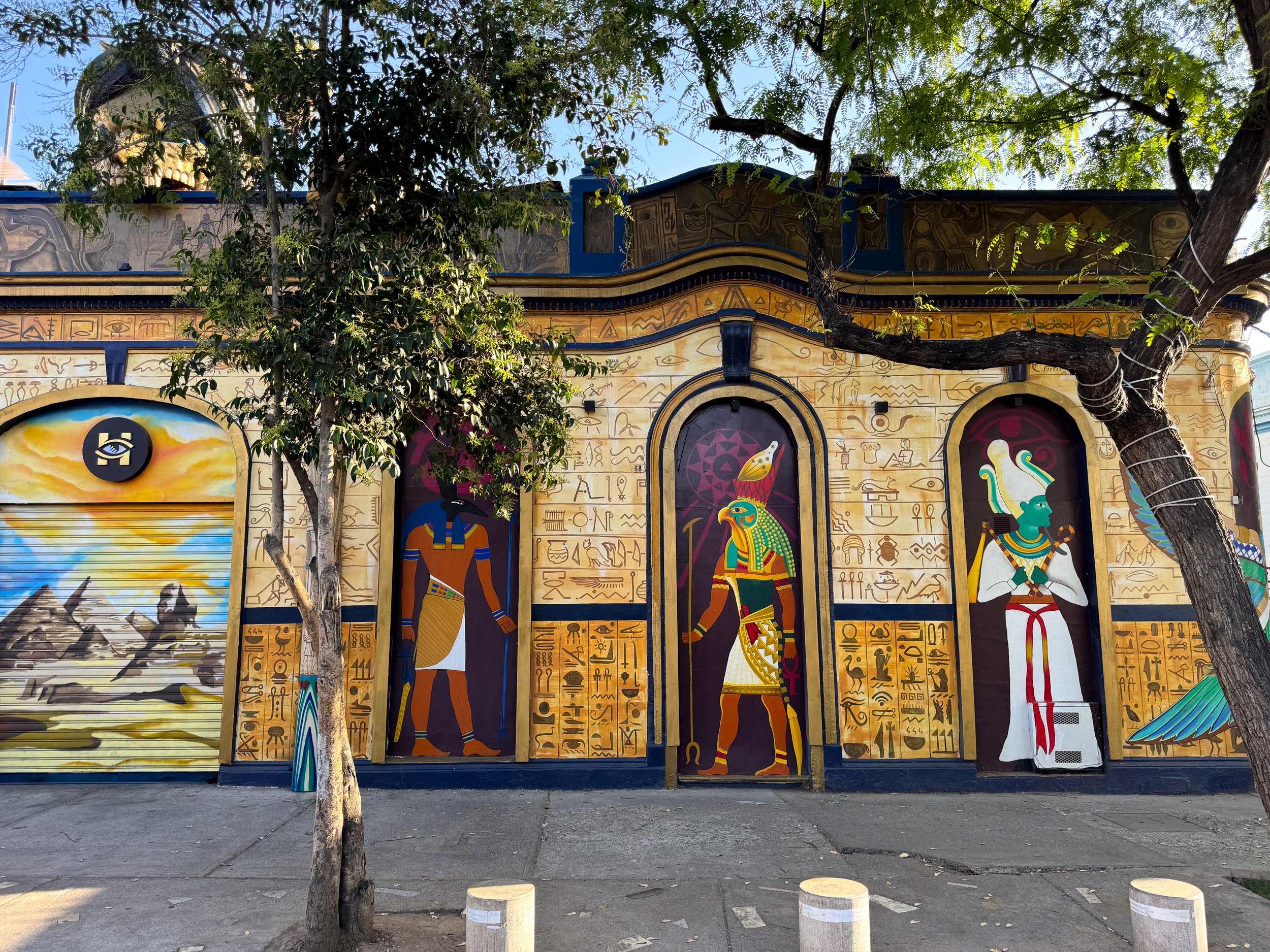
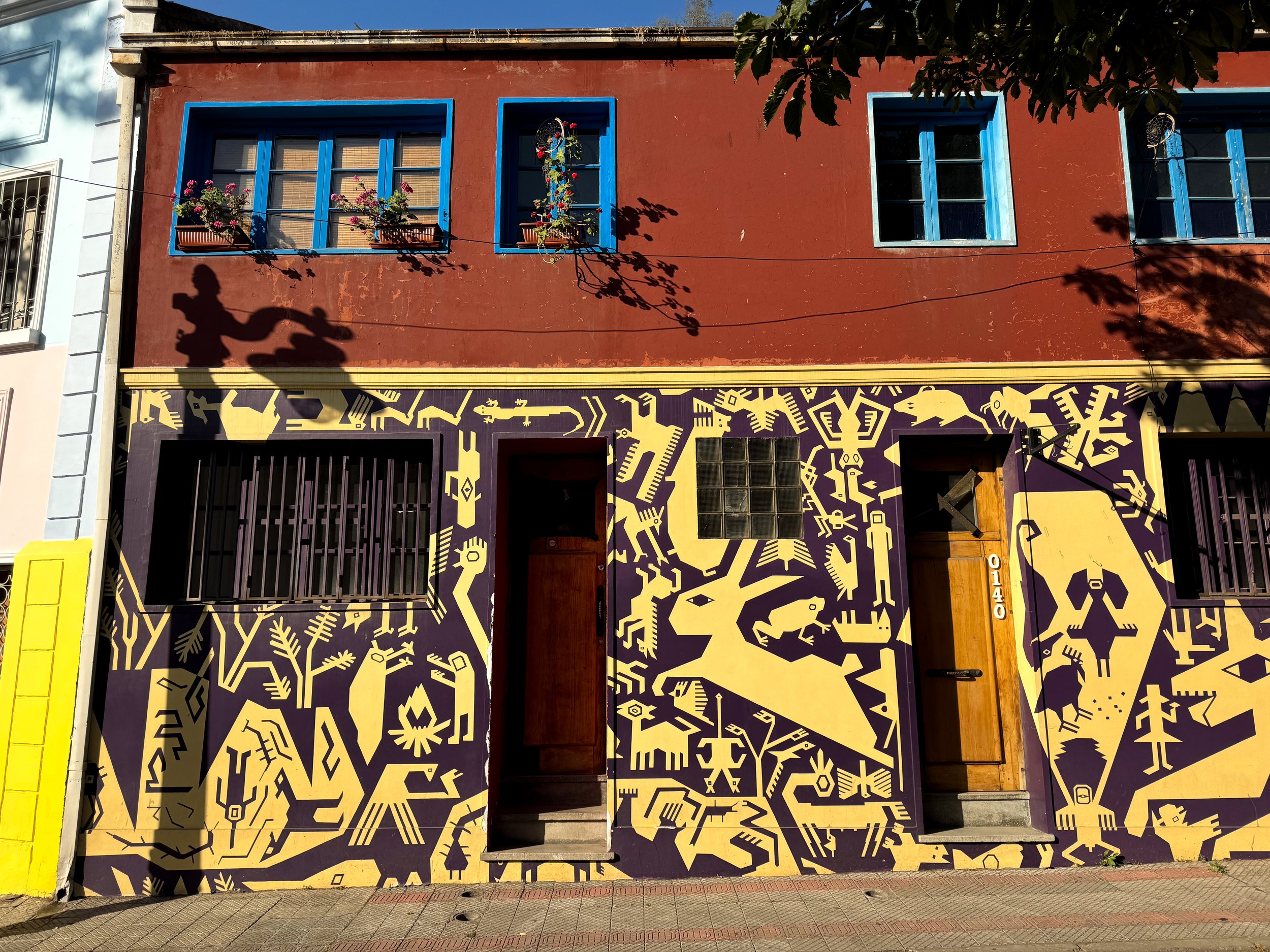
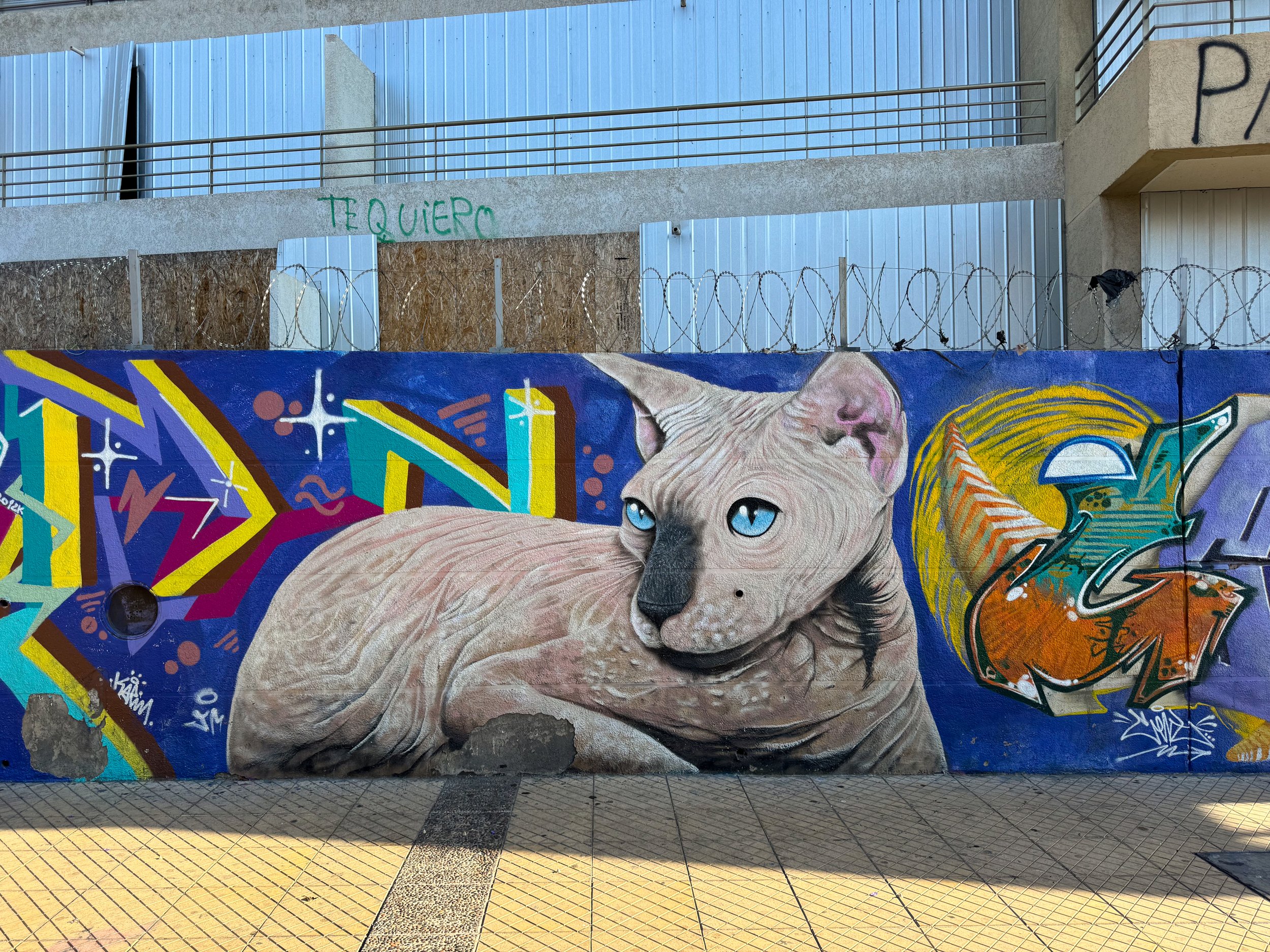
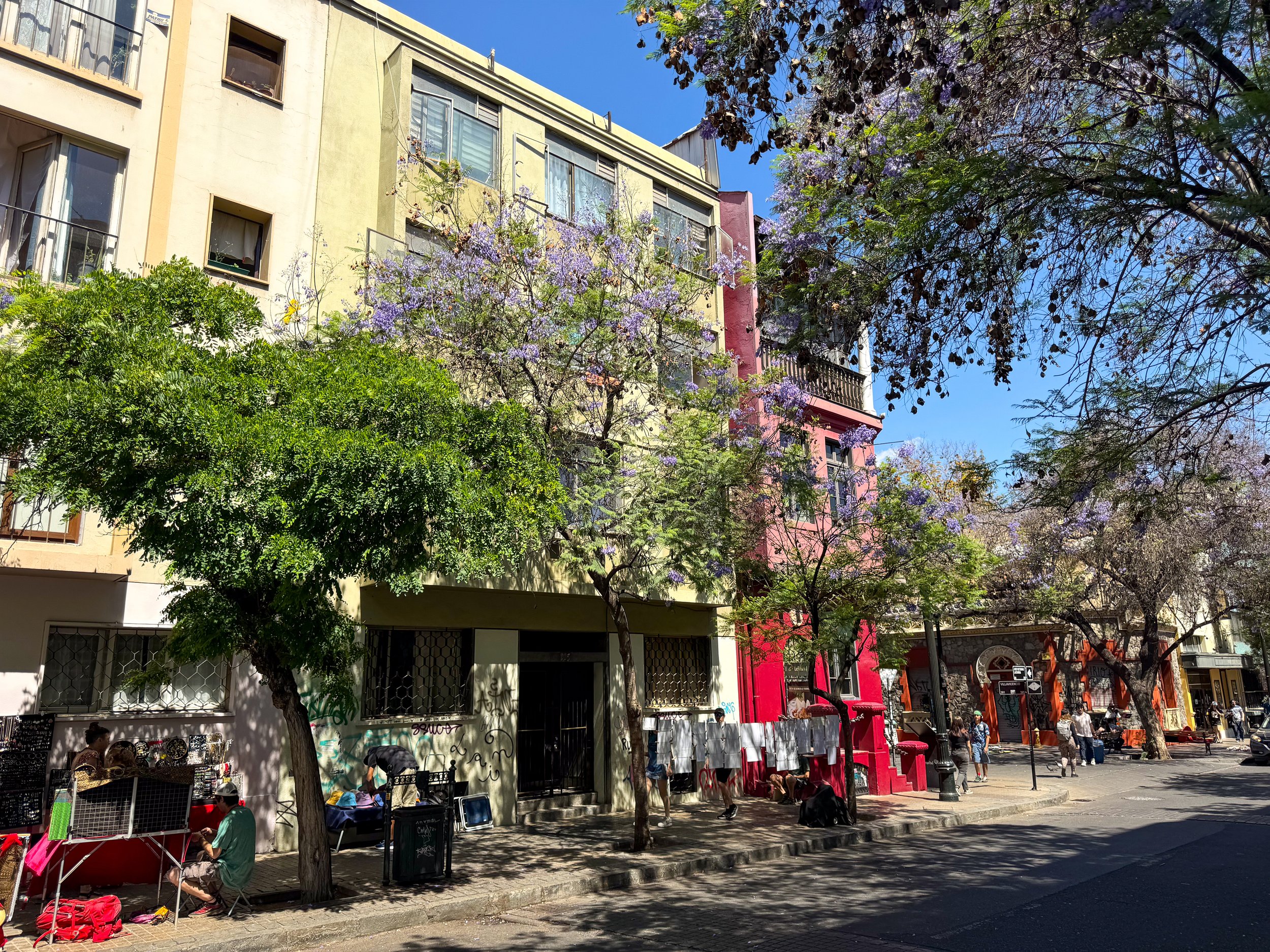
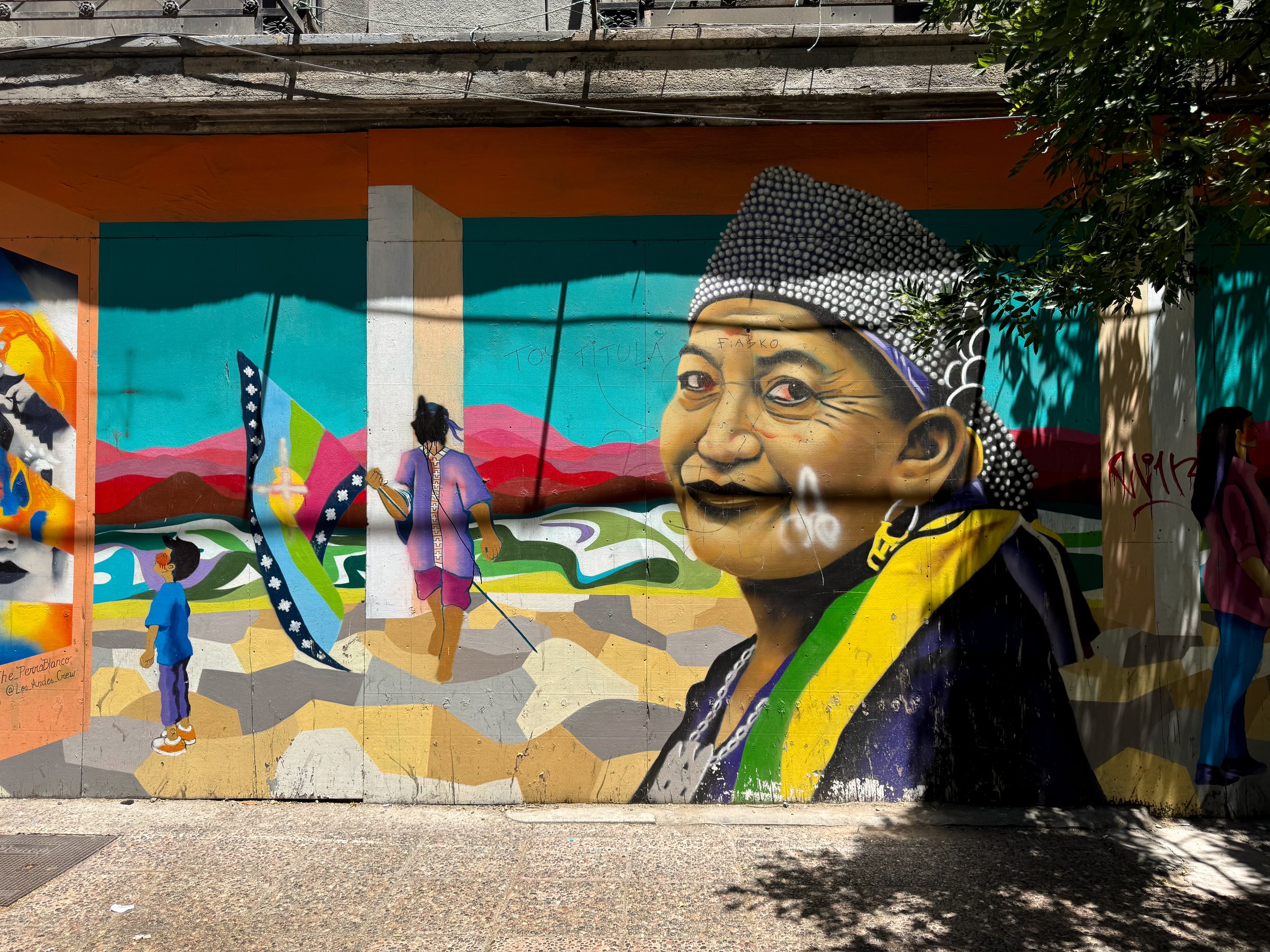
Barrio de Bellavista. A charming neighborhood with treelined streets, colorful historic homes, cute coffee shops and main streets painted in murals and graffiti. The neighborhood is a cultural hub that comes to life at night! Local cuisine is served at Chilean restaurants, fans cheer on their favorite soccer teams at sports bars, glammed up drag queens perform at queer friendly bars and mixologists shake cocktails late into the evening.
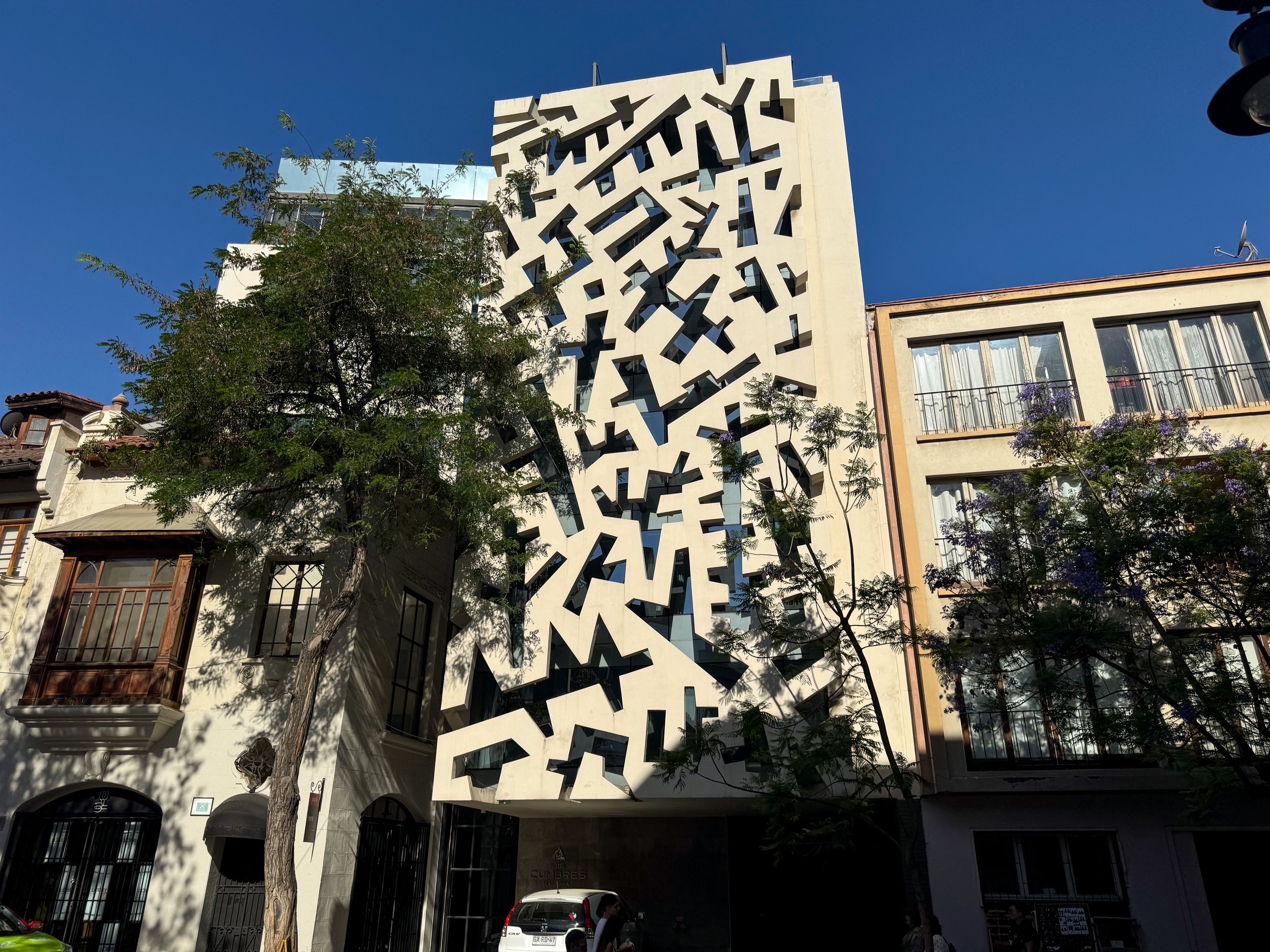
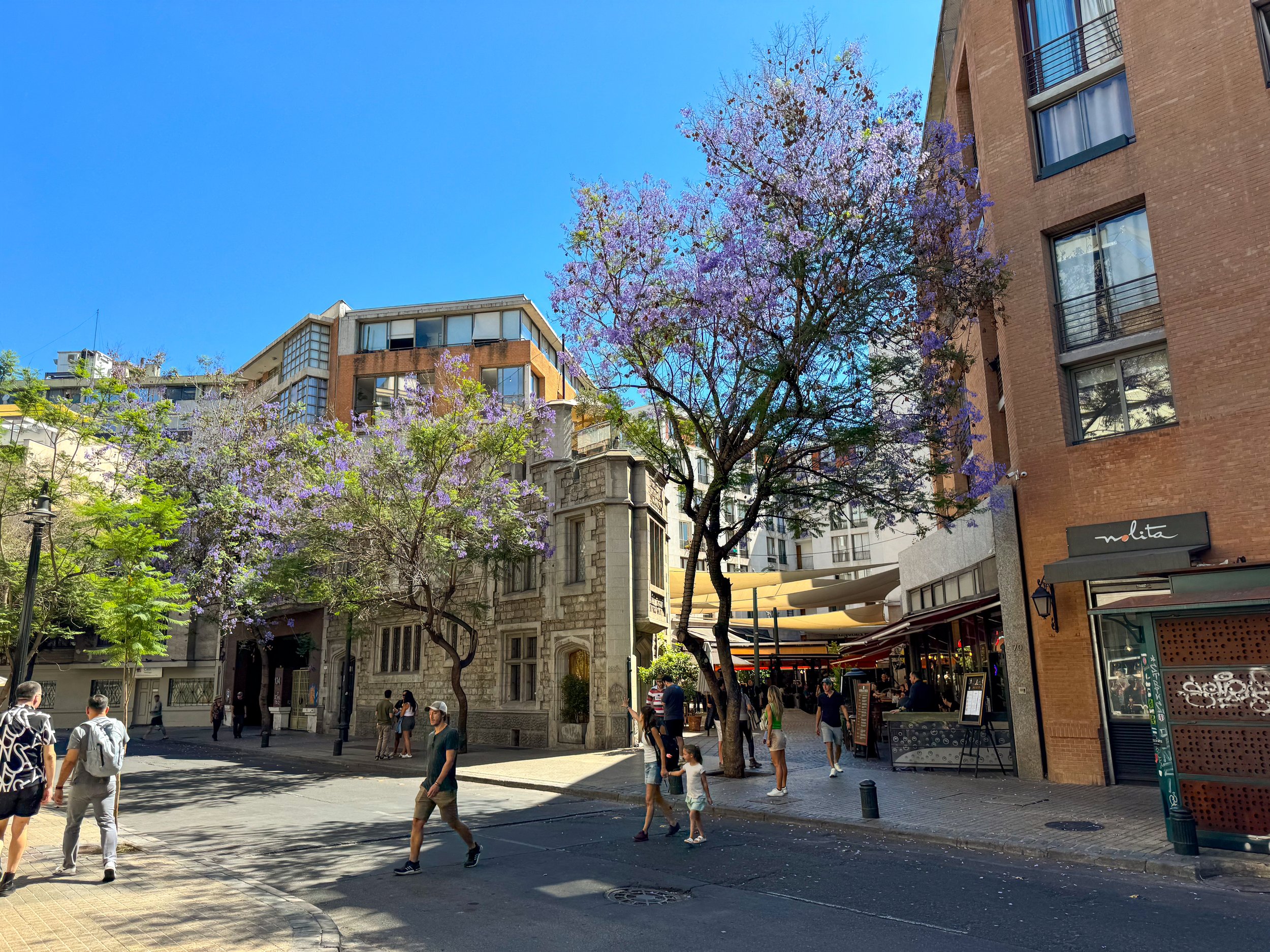
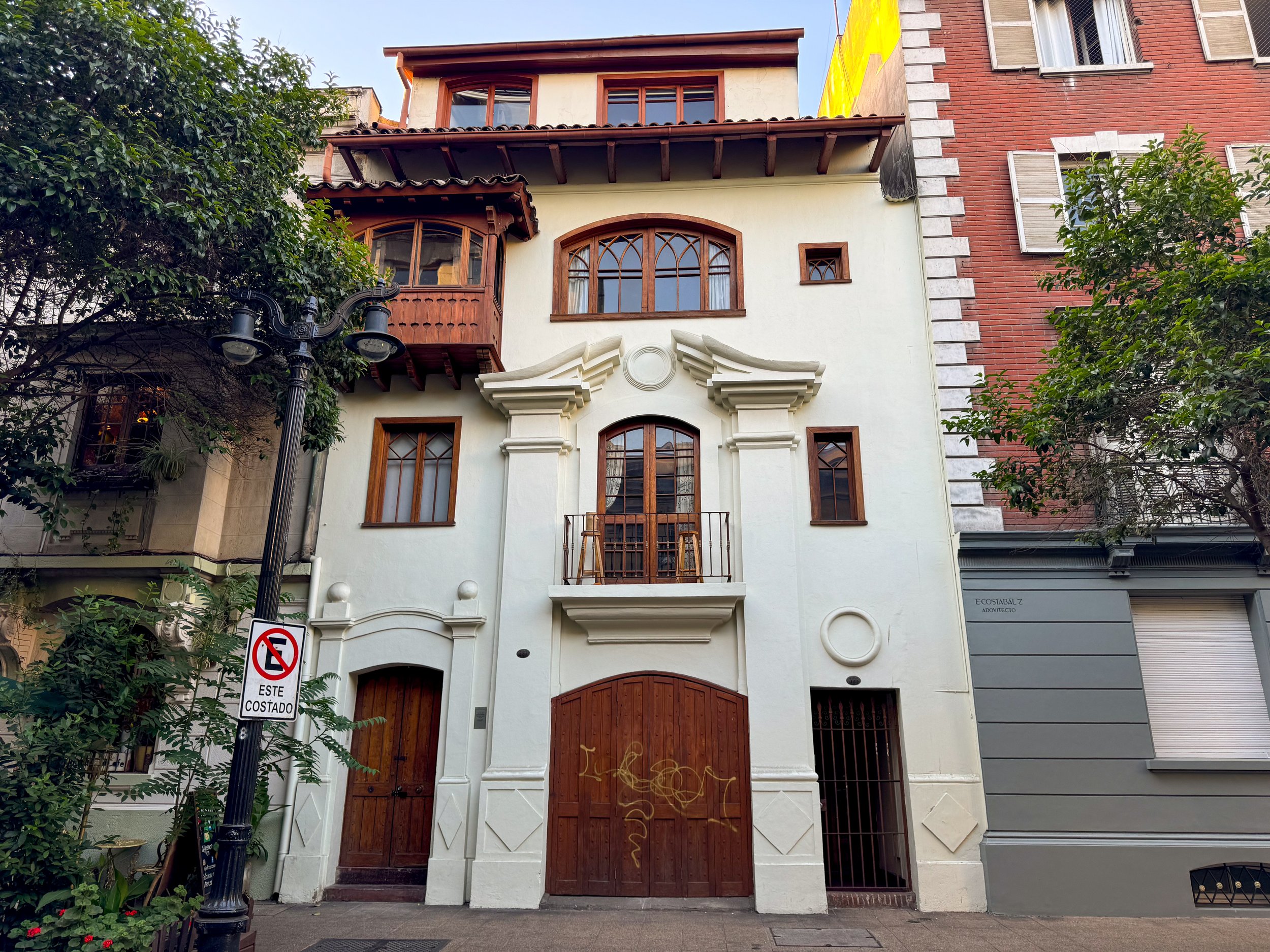
Lastarria Neighborhood. A small and trendy neighborhood with cobblestone streets, colorful ornate buildings, high end restaurants and Chilean wine bars. It’s a calm area to walk around, stop for a glass of wine or dine at a sidewalk patio. To us, it feels very similar to the cute streets of the West Village in NYC.
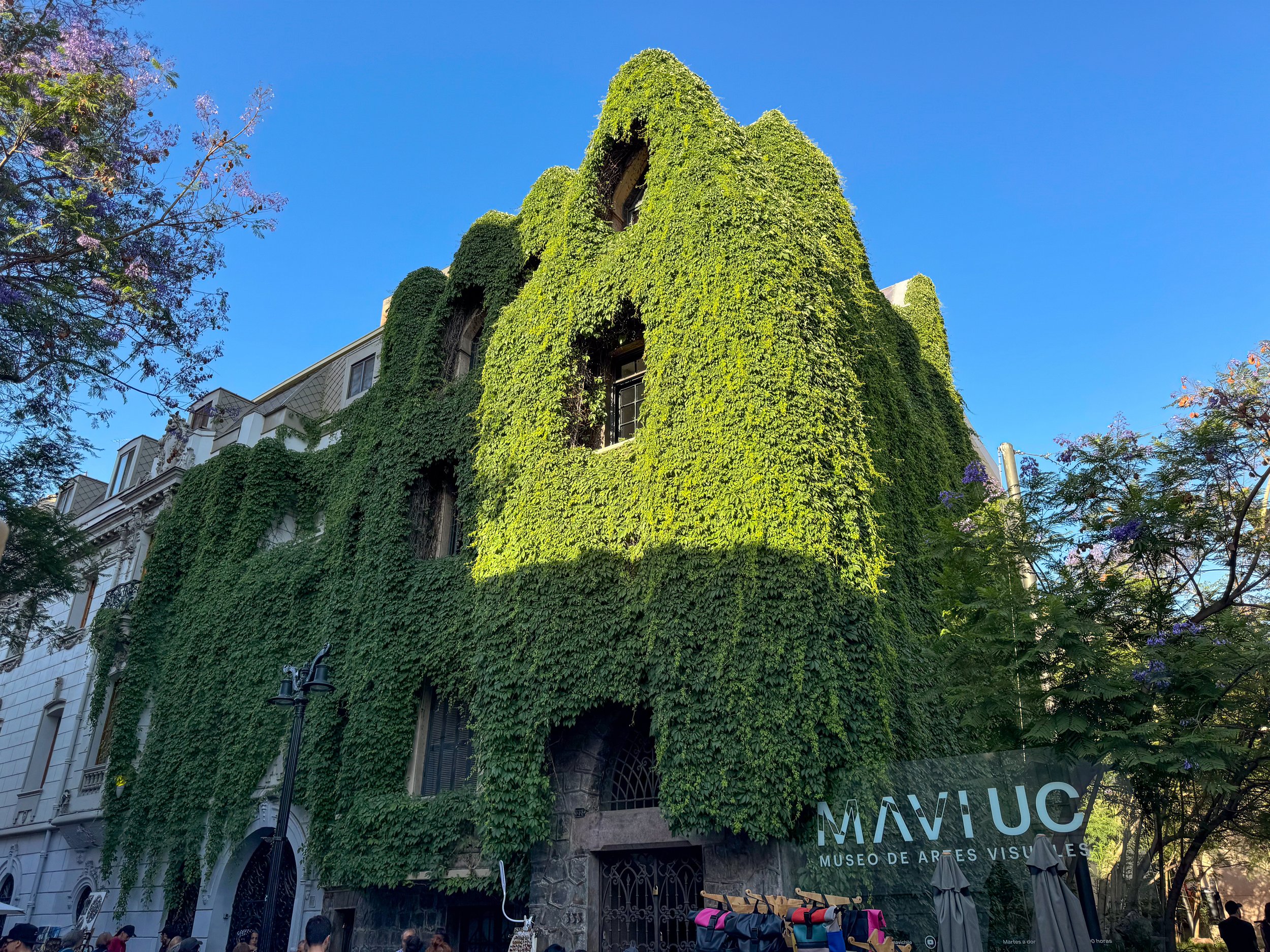
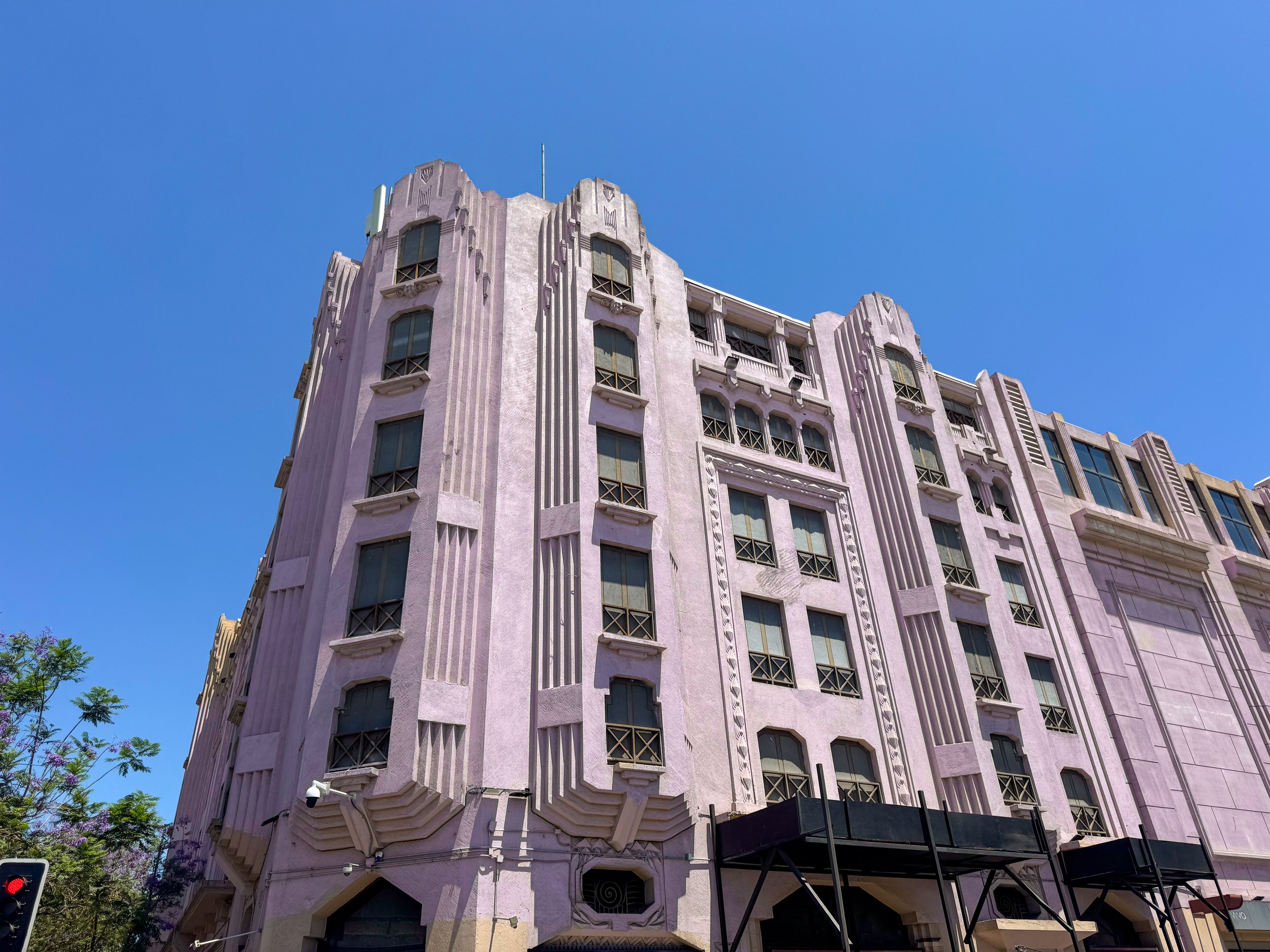
Centro Histórico. The historic center of Santiago with tree lined plazas, ornate stone buildings, cultural sights and museums.
City Parks
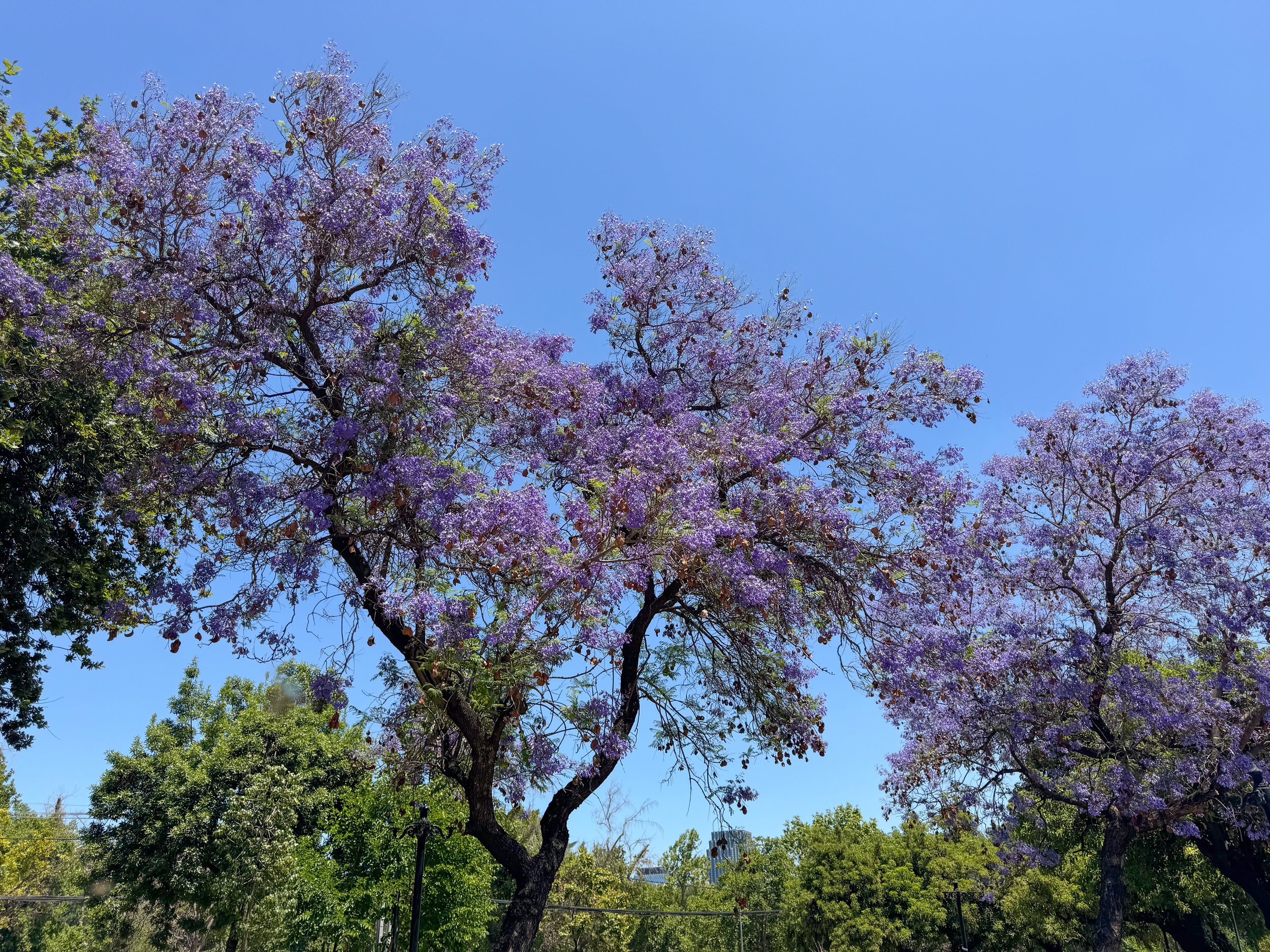
Jacaranda Trees. For one to two weeks during southern spring, the Jacaranda trees are in full bloom. These beautiful trees blossom with tiny bell shaped lavender colored flowers visible around the city streets and from the lookouts. We were lucky enough to see them across the city when we visited in late November.
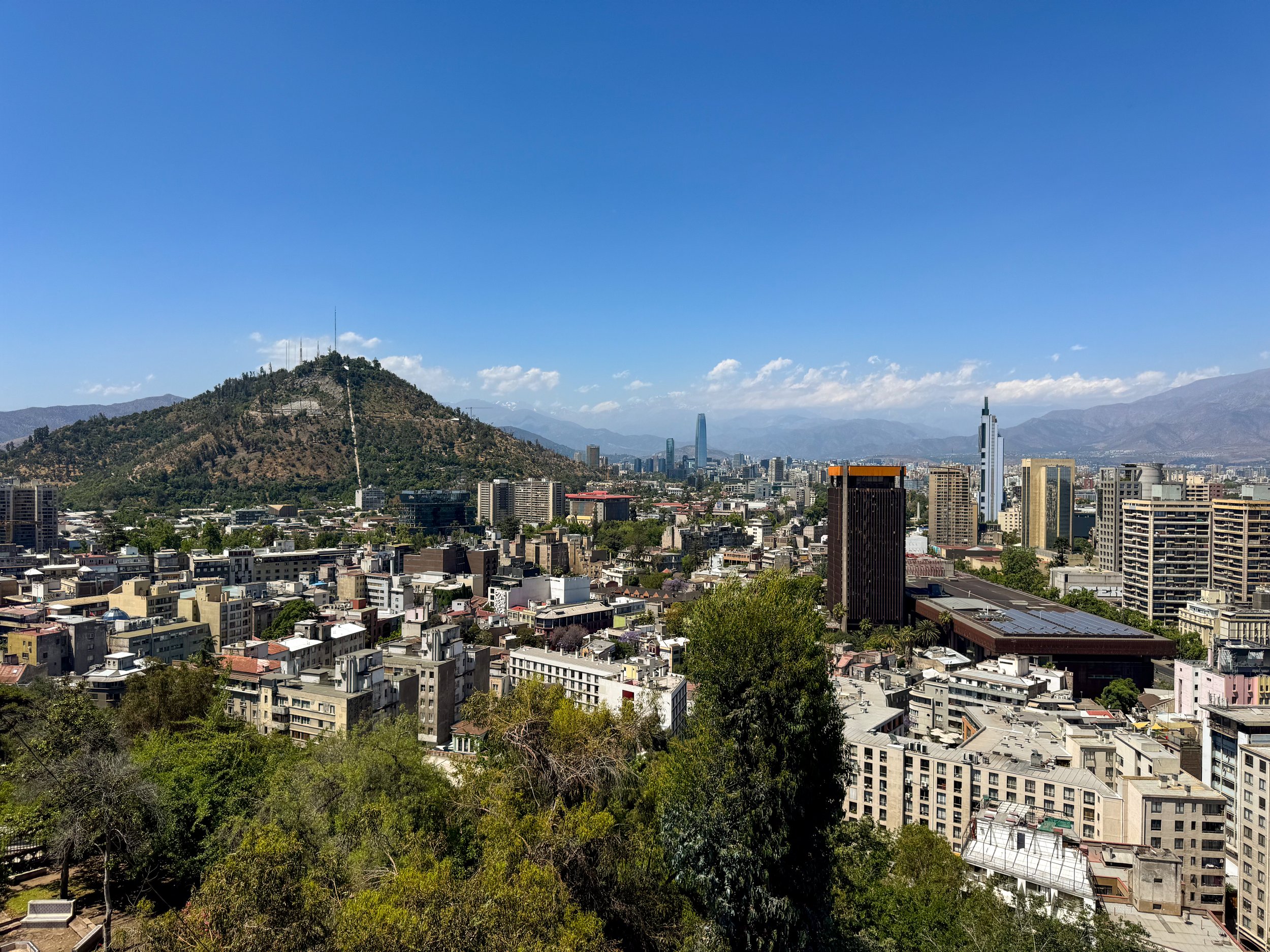
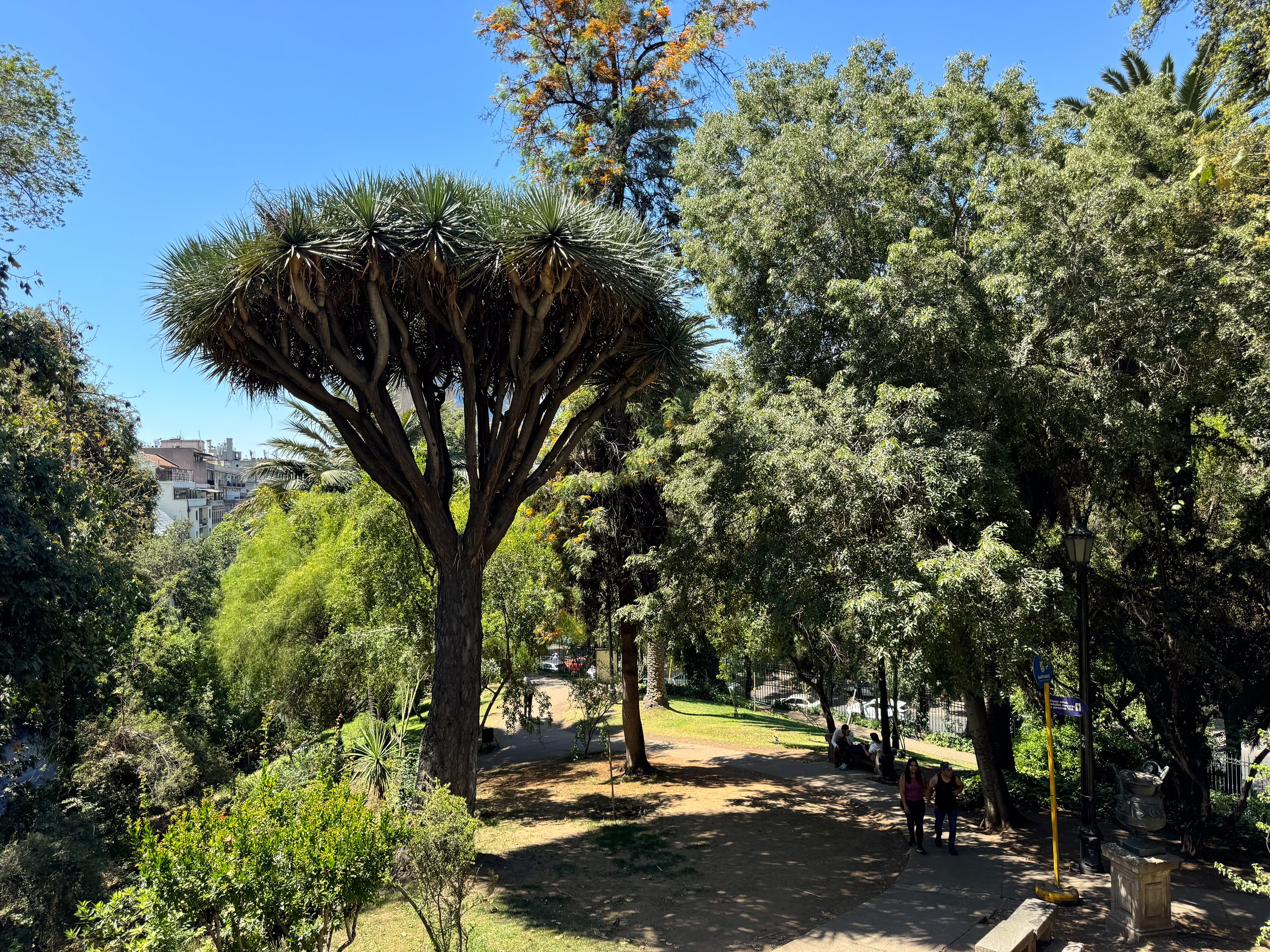
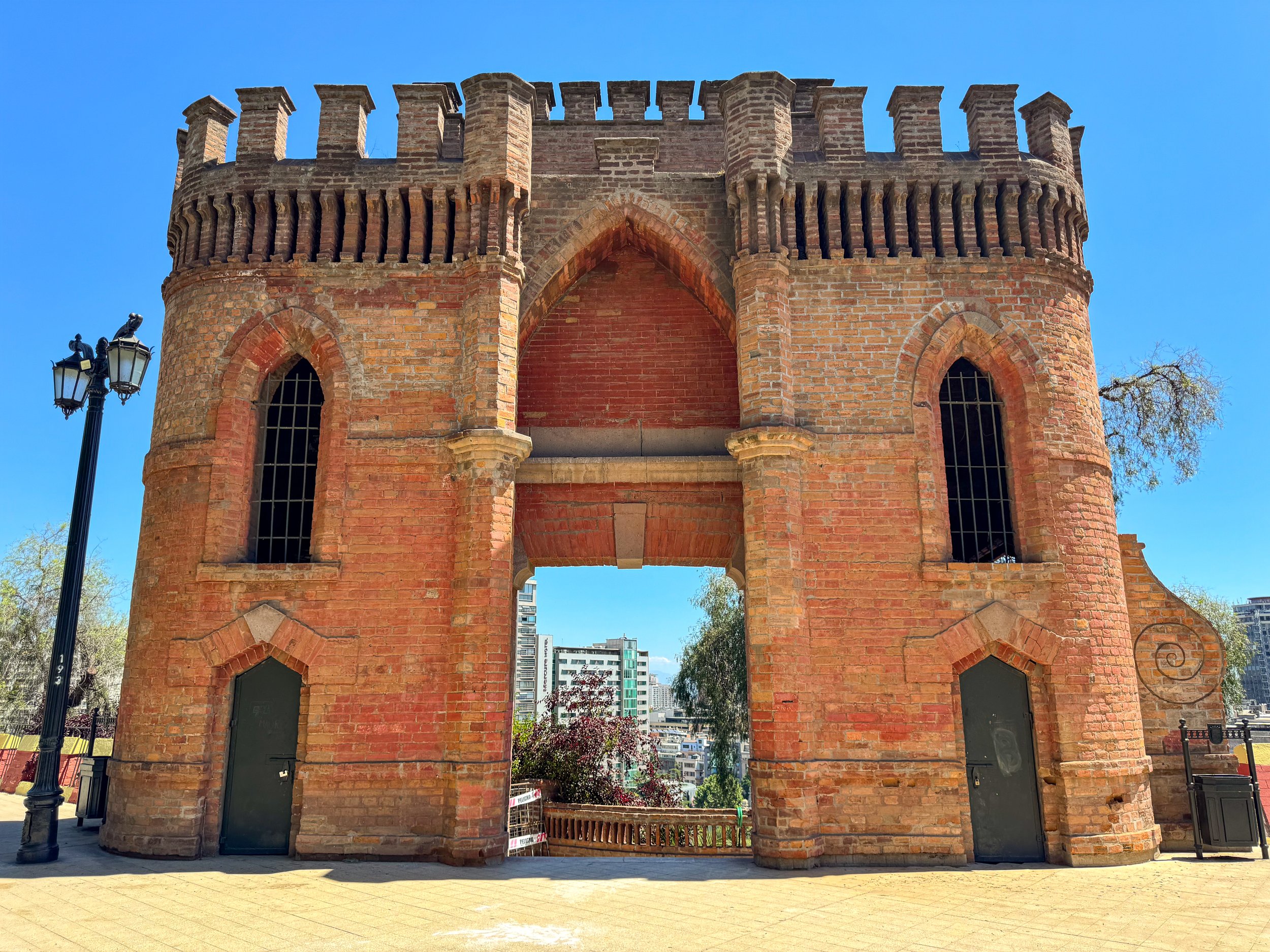
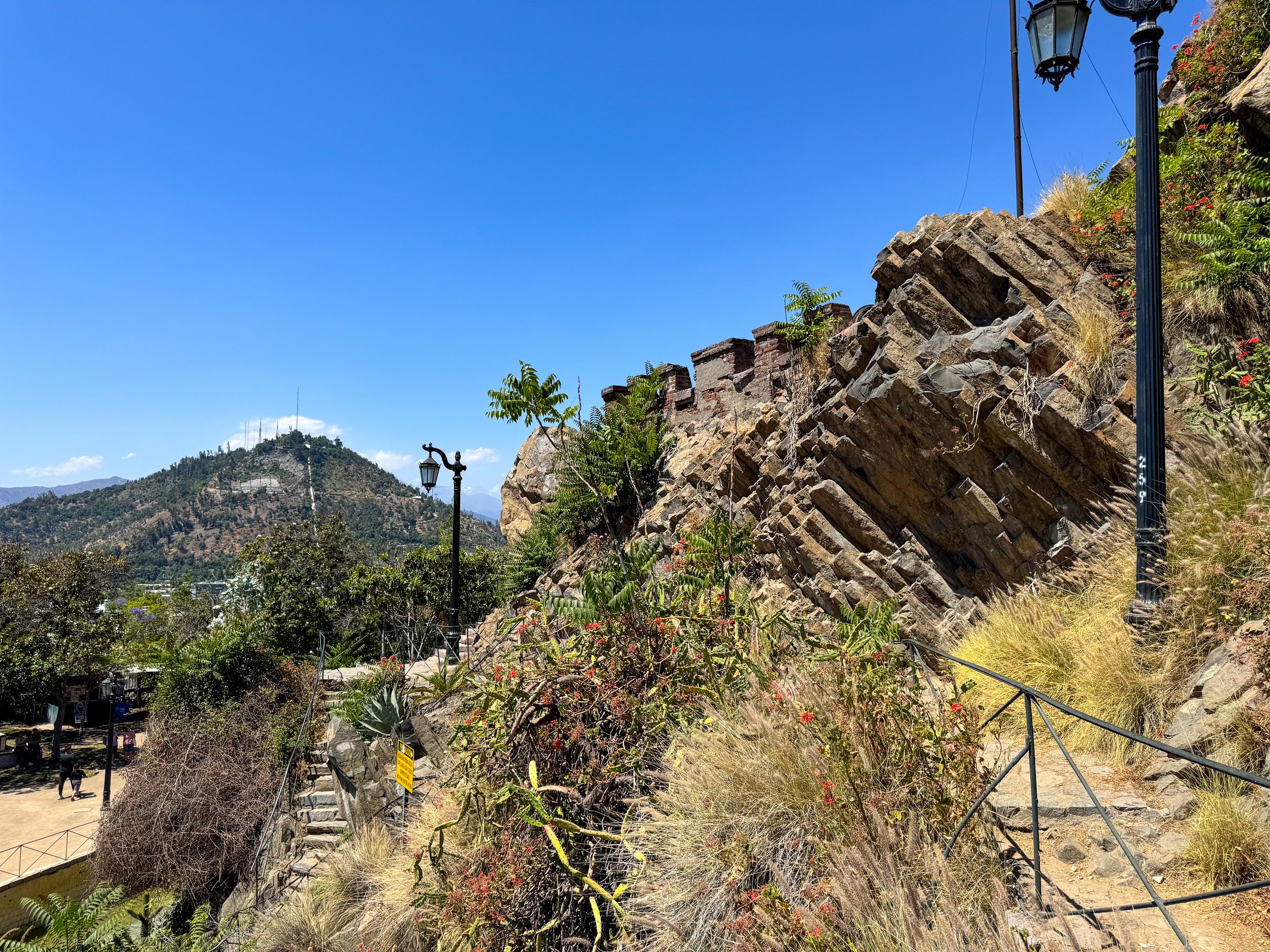
Cerro Santa Lucía. A beautiful hilltop park in the middle of the city with panoramic views of Santiago and the Andes Mountains. We walked the winding cobblestone paths, gradually meandering upwards through the park. Along the way, we passed ornate tiled fountains, bronze statues and medieval style architecture with castle walls, towers, lookouts and cannons. The green space is home to natural hexagonal basalt columns, flowering jacaranda trees, towering palms and even a single Socotra Dragon Tree native to an Arabian island in Yemen.
Parque Forestal Museo. A verdant treelined city park with small meadows and walkways. It’s a retreat for locals on the weekend with couples lounging in the grass, pet owners playing fetch with their dogs and cyclists riding down the dirt pathways.
Parque Metropolitano de Santiago. A mountainous park in the middle of Santiago with winding walkways and bicycle paths, picnic areas, scenic lookouts, a zoo, a botanical garden and Japanese garden.
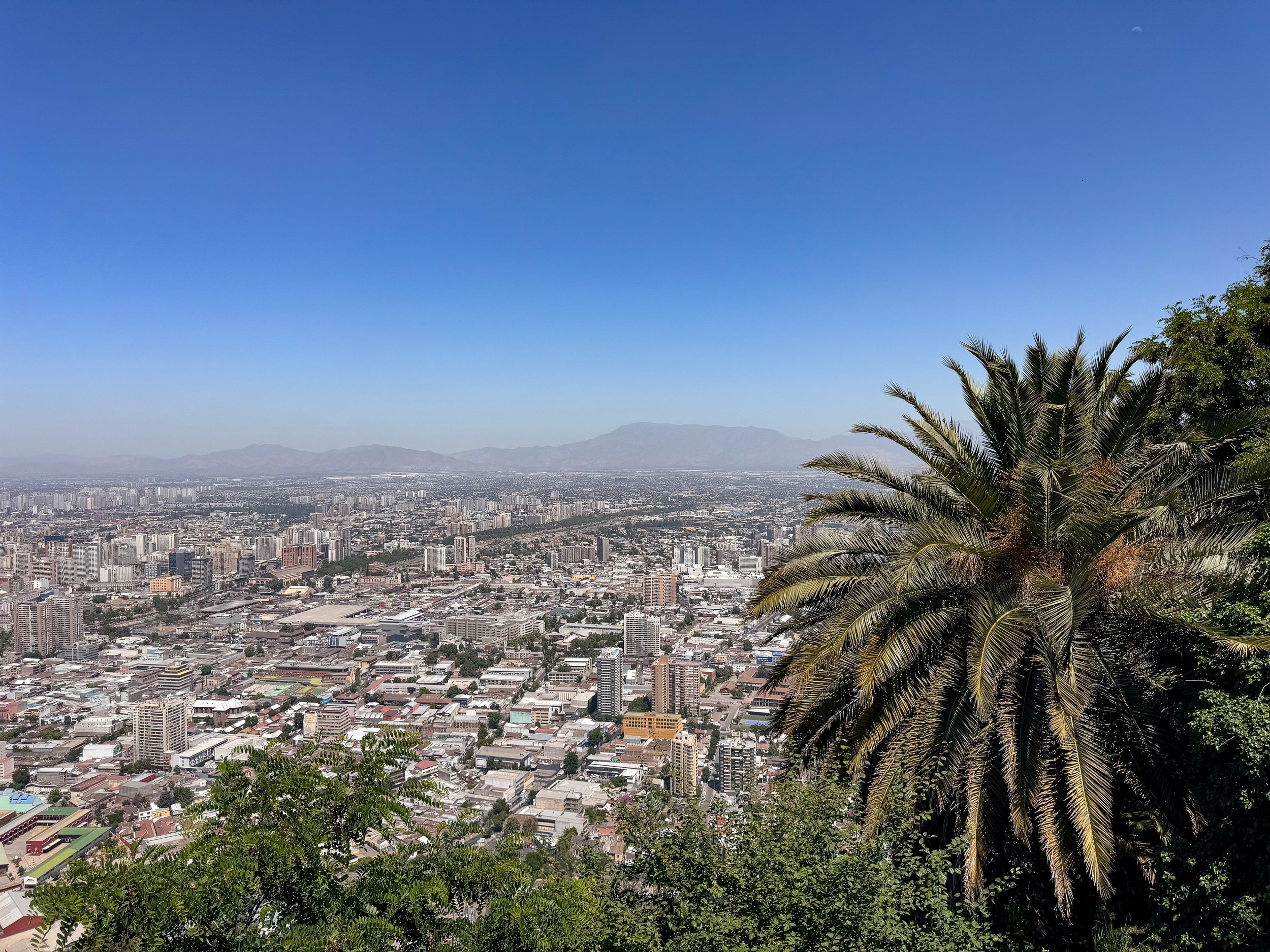
Cerro San Cristóbal. A mountaintop lookout in the middle of the Parque Metropolitano de Santiago. It has beautiful views of the city, small cafes and a religious atmosphere with an outdoor church and various Christian shrines.
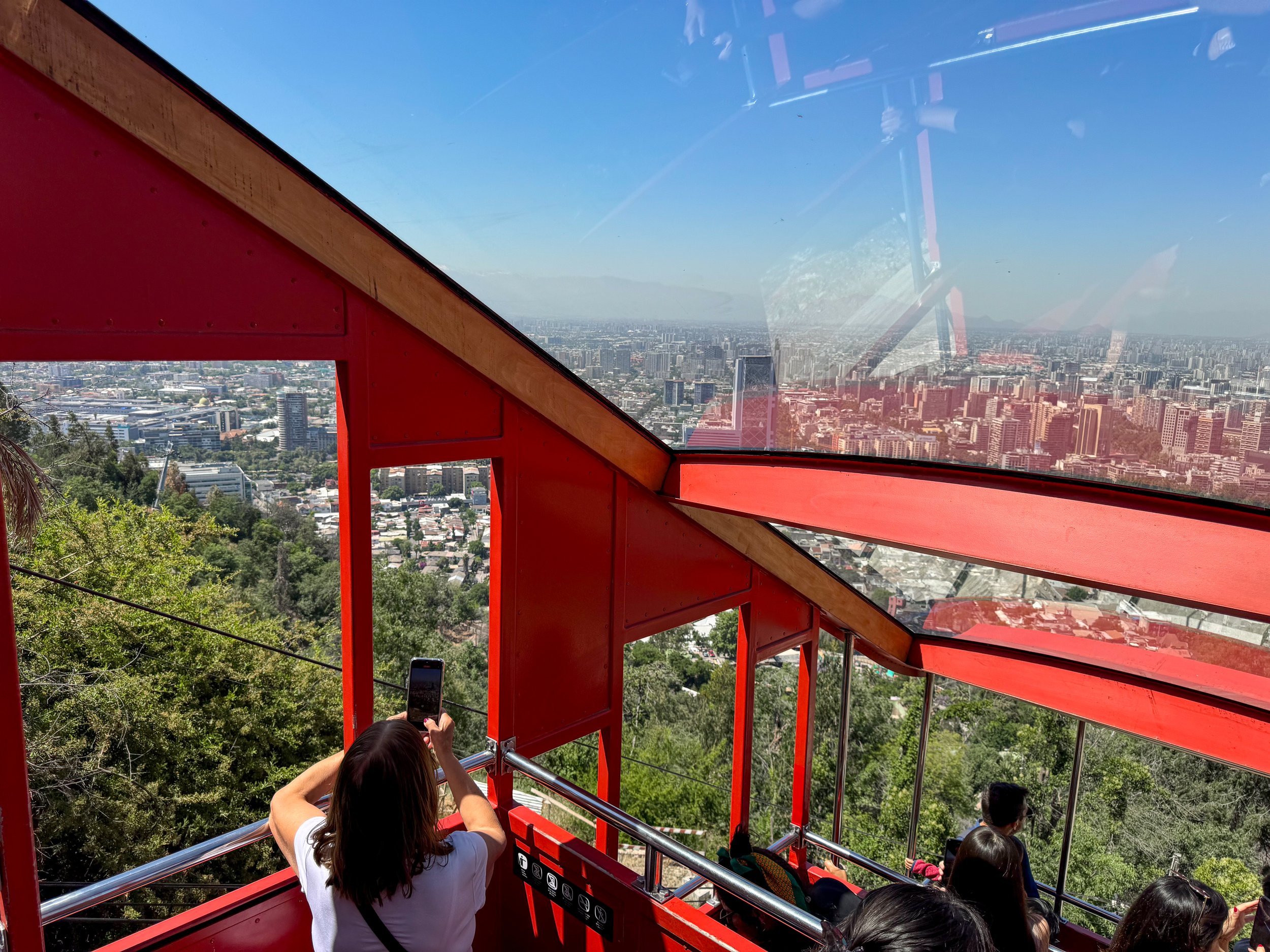
Funicular & Teleferico. We rode the funicular up the mountain from the Bellavista neighborhood to reach the Cerro San Cristobal. From the lookout, we continued on the teleferico across the mountainous park with views of the landscape and surrounding city.
See the Sights
Sky Costanera. A modern glass tower and the tallest building in South America! Come here for a cocktail at its observatory while enjoying panoramic views of Santiago and the Andes Mountains. The 300 Bar serves inventive cocktails served in unique glasses, with bubbles of smoke and floral garnishing.
Plaza de Armas. A palm covered plaza and the city’s main square with several monumental buildings, street performers and vendors. It’s a scenic spot to sit down, people watch and enjoy the city.
Plaza de la Constitución. A stately square lined with Chilean flags surrounded by government buildings including the presidential palace, Palacio de La Moneda.

Shop the Markets
Mercado Central. A historic seafood market in an ornate wrought iron building with seafood restaurants and vendors selling an immense variety of the day's fresh catch on large beds of ice. We enjoyed lunch at Donde Augusto, a longtime seafood restaurant in the middle of the market serving Chilean dishes like sautéed sea bass and Paila Marina. Afterwards, we shopped around for ingredients to prepare a traditional Chilean dish, Shrimp Pil Pil.
La Vega Central. A large produce market with vendors selling fruits, vegetables, potatoes, nuts and dry goods. The market is a great spot to shop for fresh and local ingredients at affordable prices. A cute and unexpected scene was the number of cats roaming around the market and even sleeping alongside bins of produce.
Good to know. The scene outside of the market is chaotic with shipments of produce being delivered, vendors selling miscellaneous goods on the sidewalks and unsavory characters stumbling around the area. Avoid the area after dark.
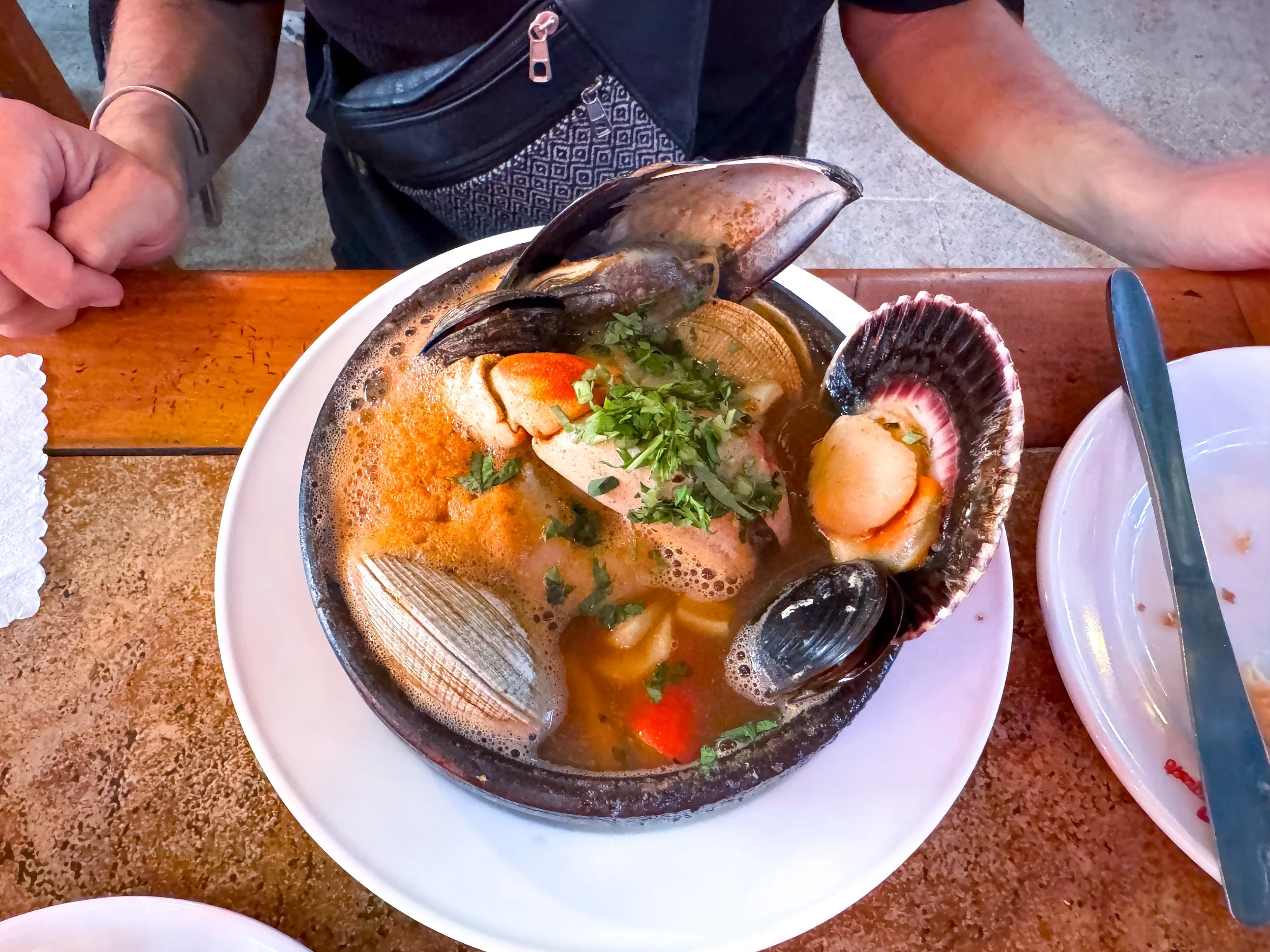
Chilean Cuisine
Chilean Sea Bass. The famed Chilean fish seen on menus at high end restaurants around the world. The tender white fish is often served grilled, sautéed in butter or as ceviche.
Empanadas. Served everywhere across Santiago and stuffed with fillings ranging from spiced vegetables and savory seafoods to herbed cheeses and meats. These large folded pockets of flaky dough are a staple of Chilean cuisine.
Caldillo de Congrio. A very traditional Chilean stew made from a seafood broth boiled with a large piece of conger eel served with its skin and bones still attached.
Pil Pil. A traditional style Chilean dish made from meat, seafood or mushrooms cooked in a spicy and savory sauce flavored with garlic and chili cacho de cabra. It’s typically served with papas doradas.
Paila Marina. A traditional Chilean seafood soup made from at least a dozen types of seafood including scallop, clam, crab, mussel, octopus, sea bass and shrimp cooked in a savory broth with herbs and spices.
Alfajores. A Chilean dessert with a heavy layer of dulce de leche sandwiched between two cookies or crackers. Some bakeries and cafes even encase them in baked meringue.
Places to Eat & Drink
Viva La Vida. A Chilean restaurant in Bellavista with a menu of local and national dishes. Come here for everything from Chilean sea bass grilled with veggies and potatoes to the Caldillo de Congrio, a savory seafood and potato soup served with a large piece of eel.
Sanguchería Ciudad Vieja. A multi-level restaurant and cocktail bar in a historic corner building in Bellavista with sophisticated cocktails and late night bites.
El Jardín Cafetería. A café in Bellavista with a garden themed interior and sidewalk patio. Come here for avocado toasts, egg dishes, pastries and coffee.
Marciel Art Cafe. A cozy café in Bellavista with an electric art gallery vibe. Come here for croissant sandwiches, pastries and coffee.

Chilean Wine
Bocanáriz. A wine bar with hundreds of Chilean wines served by tasting flights, the glass or full bottle. Short on time in Santiago, we came here to try Chilean wines instead of going on a vineyard tour. We ordered a flight of the “Signature Wines” including a pinot noir, garnacha and merlot. Our second flight, “Carmenere, National Emblem” included 3 of the country’s beloved carmenere wines. We also ordered a tasting of a brut rose and merlot a-la-carte.
Santiago Wine Club. A wine shop in the Lastarria neighborhood specializing in Chilean wines. We came here after our tastings at Bocanáriz and bought two bottles of our favorites, a cabernet franc from the Valle de Lolol and a carmenere from the Calle del Maule.

Where to Stay
We stayed at a studio in the middle of the Bellavista neighborhood with views of the Andes Mountains, nearby restaurants, bars and several of the sights we saw. When we return to Santiago, we will definitely be booking here again.
Elsewhere in Chile
From Santiago's vibrant city life to the lunar landscapes of the Atacama Desert and the wild peaks of Patagonia, discover more of Chile beyond the capital through these travel guides:
Atacama Desert Travel Guide: Best Things to Do from San Pedro de Atacama. Explore the Atacama Desert from San Pedro de Atacama where volcanoes, salt flats, vibrant lagoons and geysers create otherworldly landscapes.
Patagonia Chile Travel Guide: Torres del Paine, Hiking & Road Trips. Road trip through Chilean Patagonia where scenic hikes, wildlife encounters, turquoise waterfalls and rugged landscapes create an unforgettable wilderness adventure.
For Next Time…
We have a lot to see the next time that we return to Santiago! We plan to return for at least two weeks to explore more of the city and region.
Visit the Vineyards. Having had a taste for Chilean wine at the source, we plan to return and visit some of the wine producing regions like the Maipo Valley and Casablanca Valley.
Hike the Andes. There are several nearby hikes on the outskirts of the city with views of Santiago and the Andes Mountains. In addition, we’d like to venture further into the Andes to see the snow covered mountains, fresh water lagoons and small alpine style towns.
See the Museums. The weekend we visited was the gubernatorial elections and all of the museums we wanted to visit were closed. High on our list are Museo Histórico Nacional, Museo de la Memoria y los Derechos Humanos and Museo Nacional de Bellas Artes.
Head to the Coast. The Pacific shores are less than two hours from Santiago. We were recommended by locals and other travelers to spend time in the coastal cities of Valparaíso and Viña del Mar.
Rapa Nui National Park. Far from the coast of Chile in the middle of the South Pacific is the Polynesian island of Rapa Nui (aka Easter Island). We plan to visit and see the famed Moai stone faces.