Uruguay Travel Guide: Colonia del Sacramento, Montevideo & Punta del Este
Uruguay
Uruguay is an under the radar destination with a relaxed and unpretentious atmosphere. Its blend of European influences, subtropical climate, colonial architecture and thriving wine culture adds to its welcoming allure. We spent a week traveling along the scenic coastline between historic cities and seaside towns.
Colonia del Sacramento
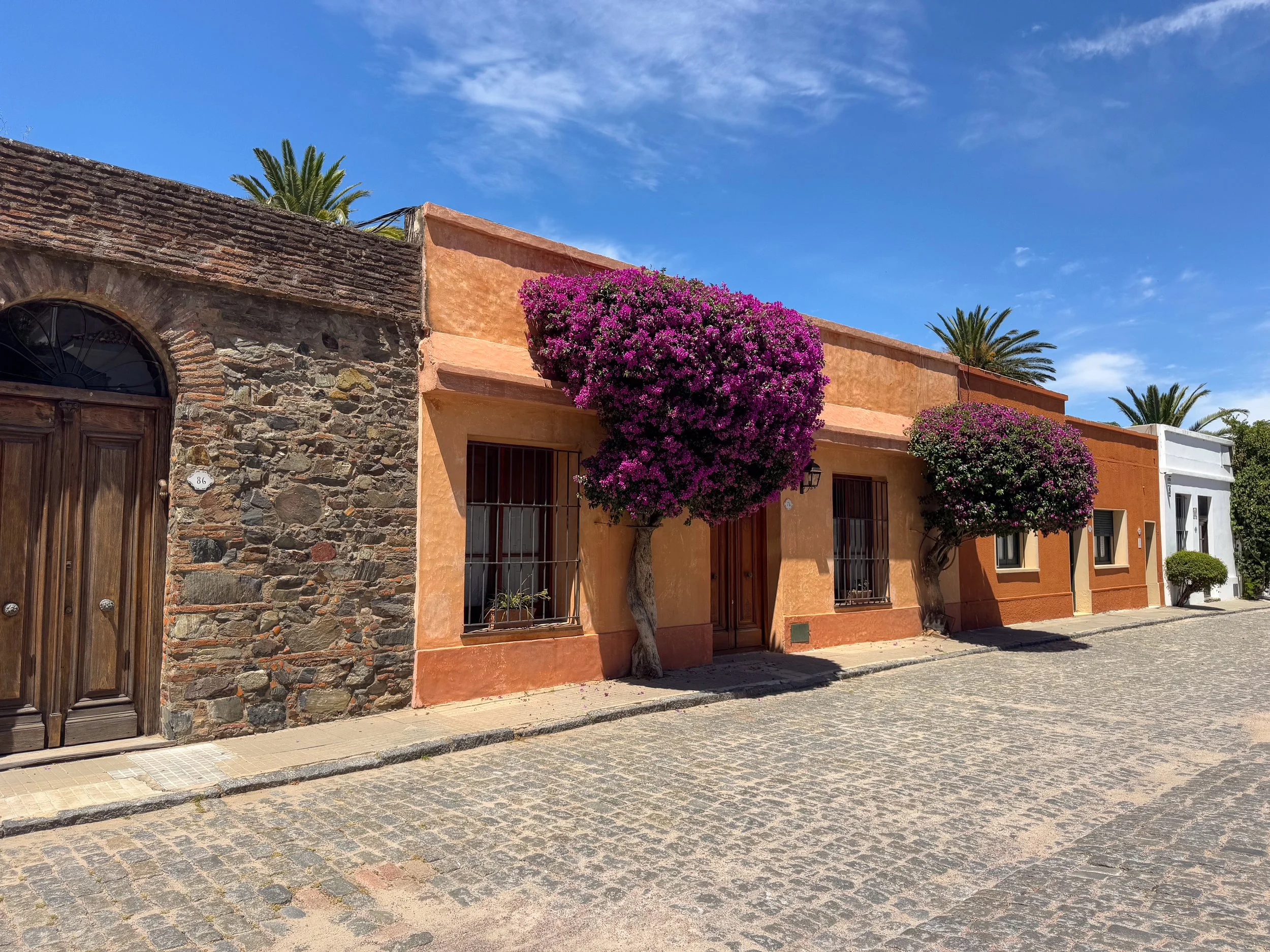
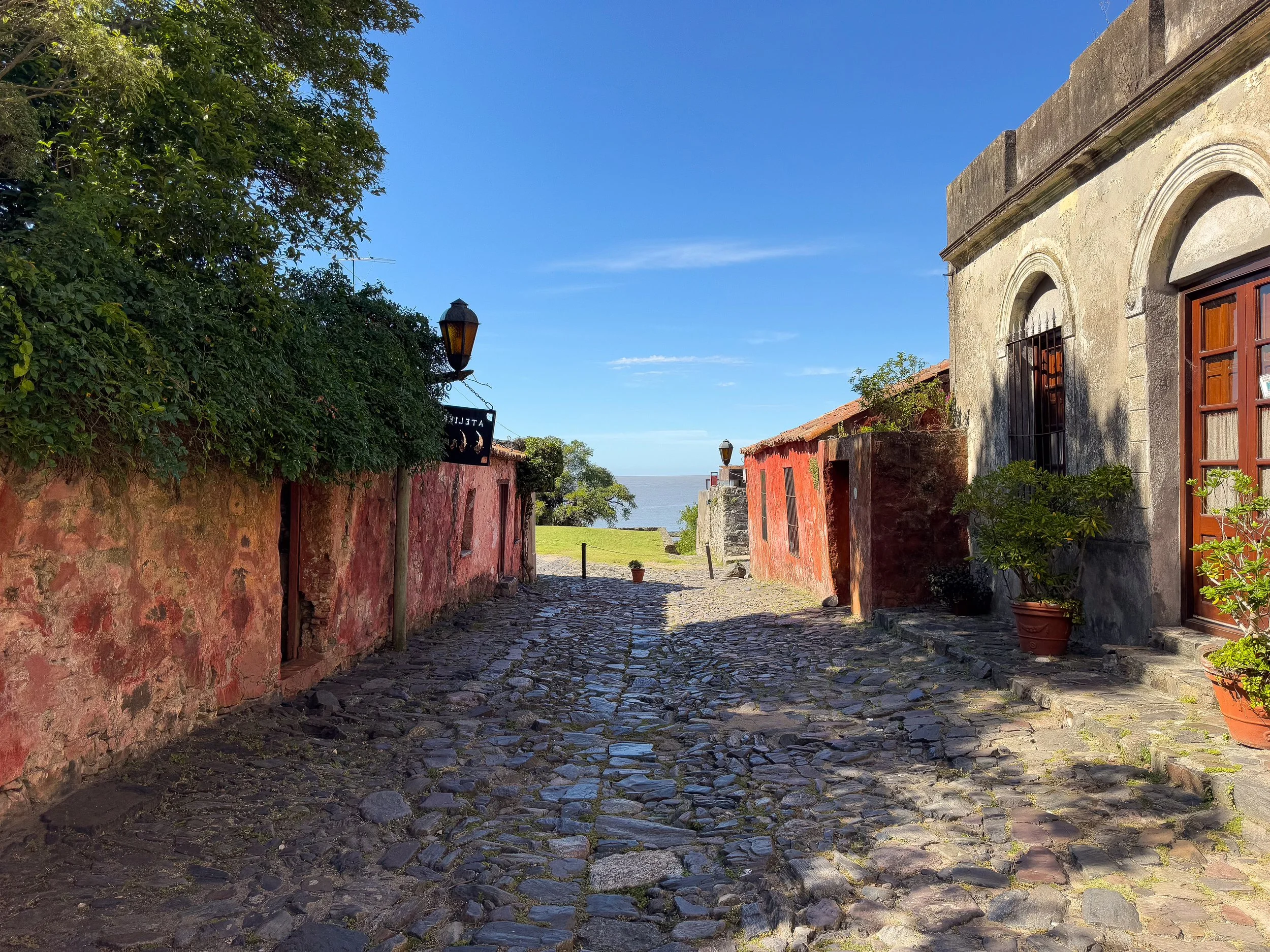
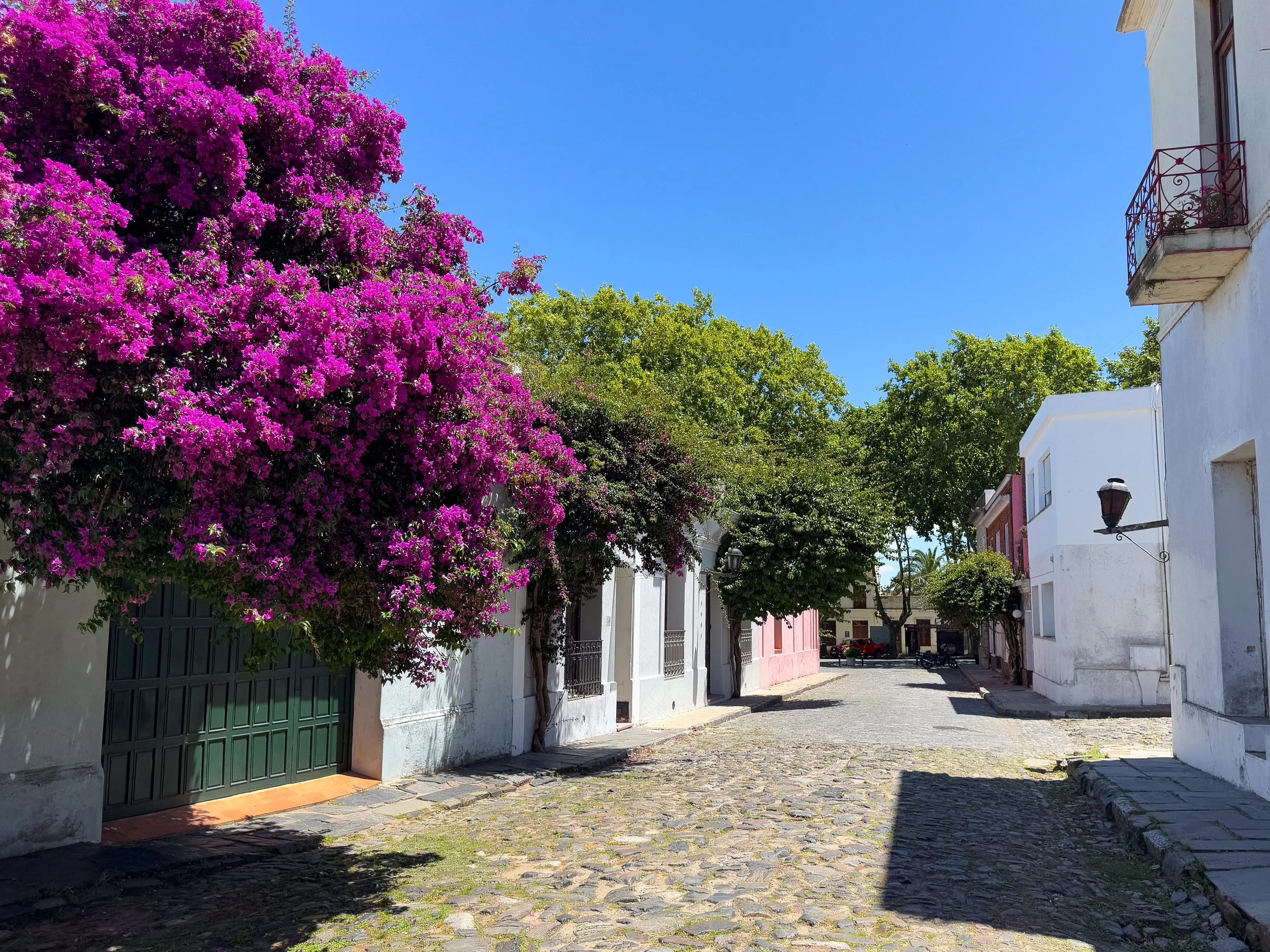
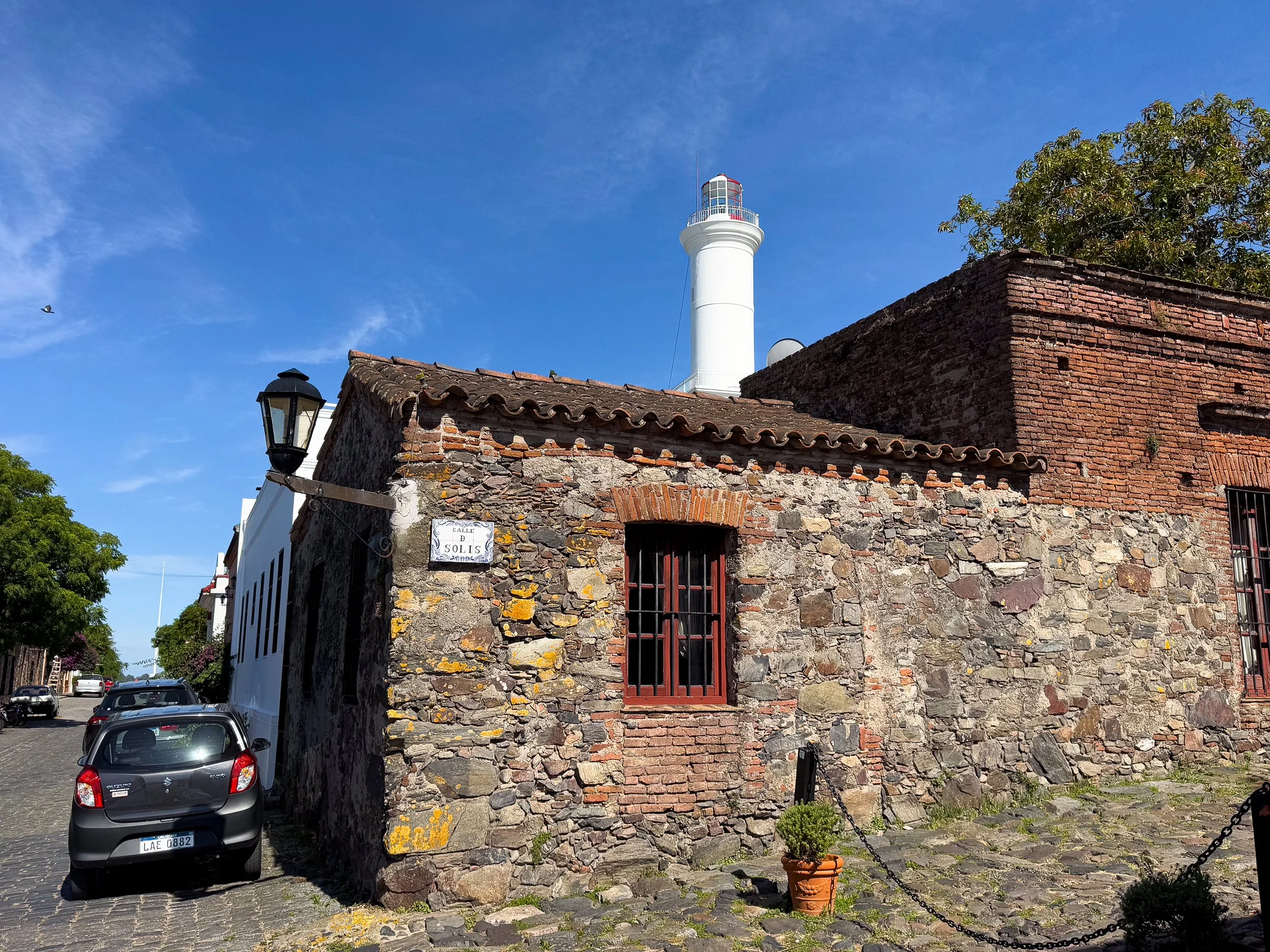
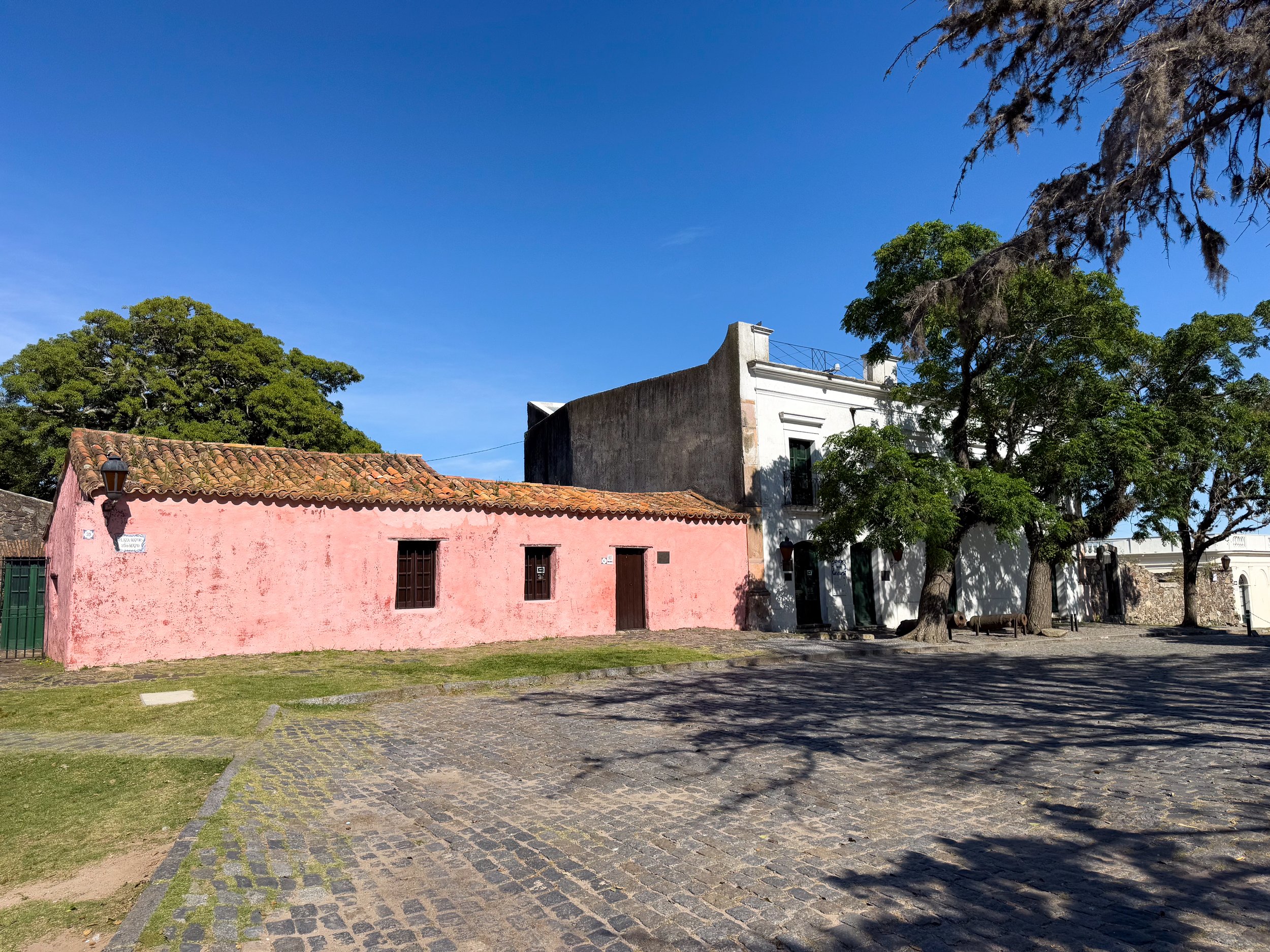
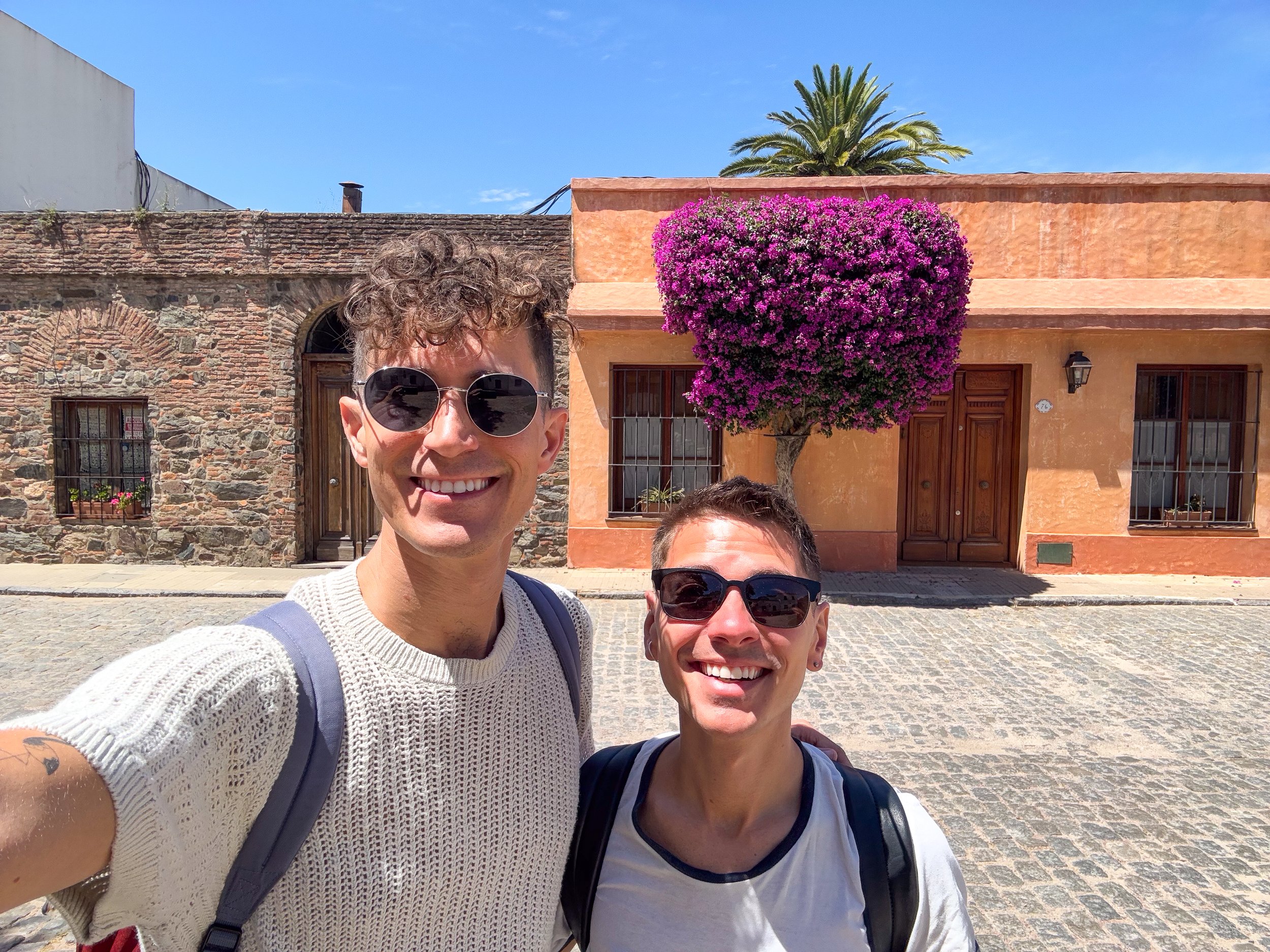
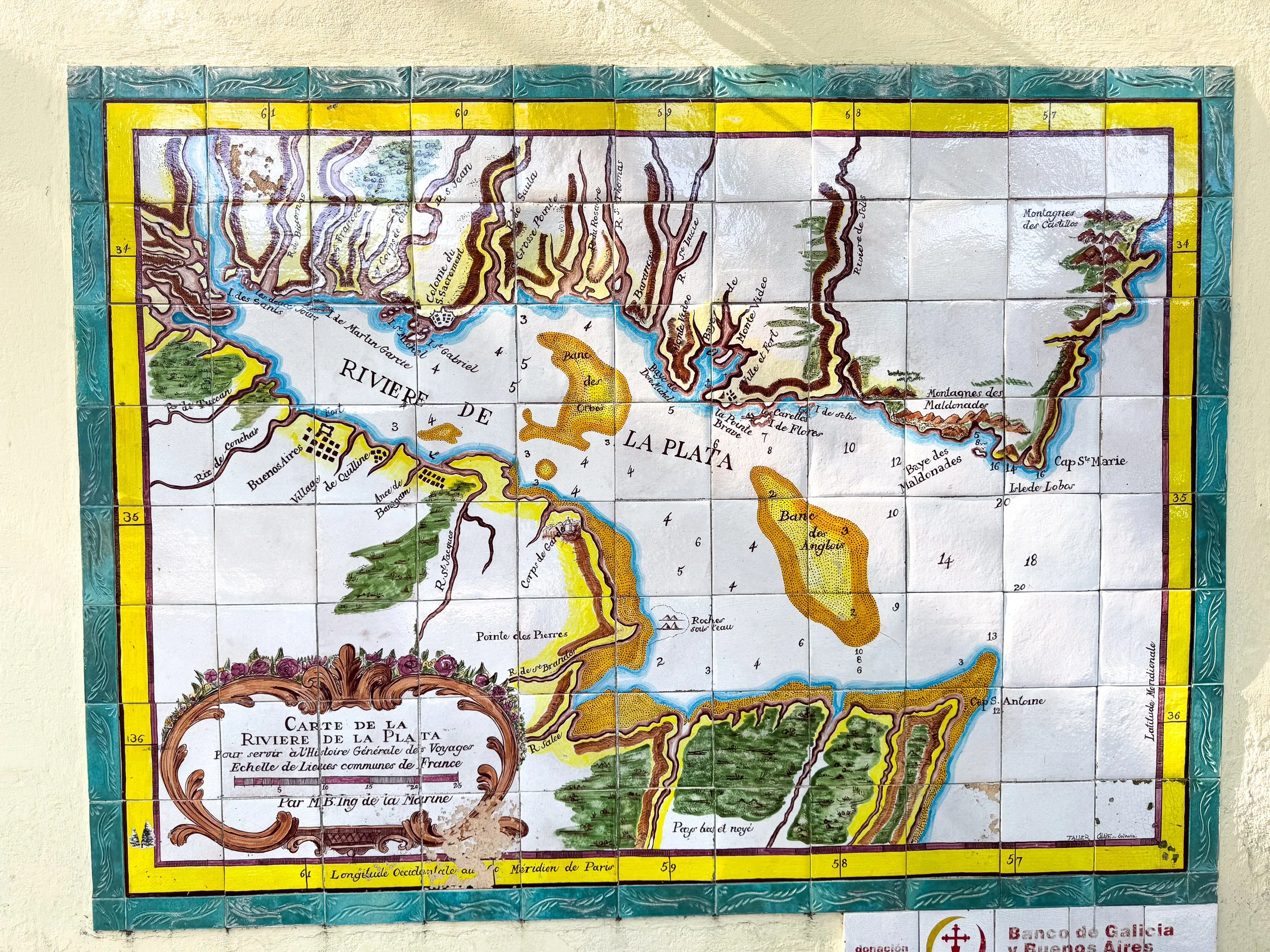
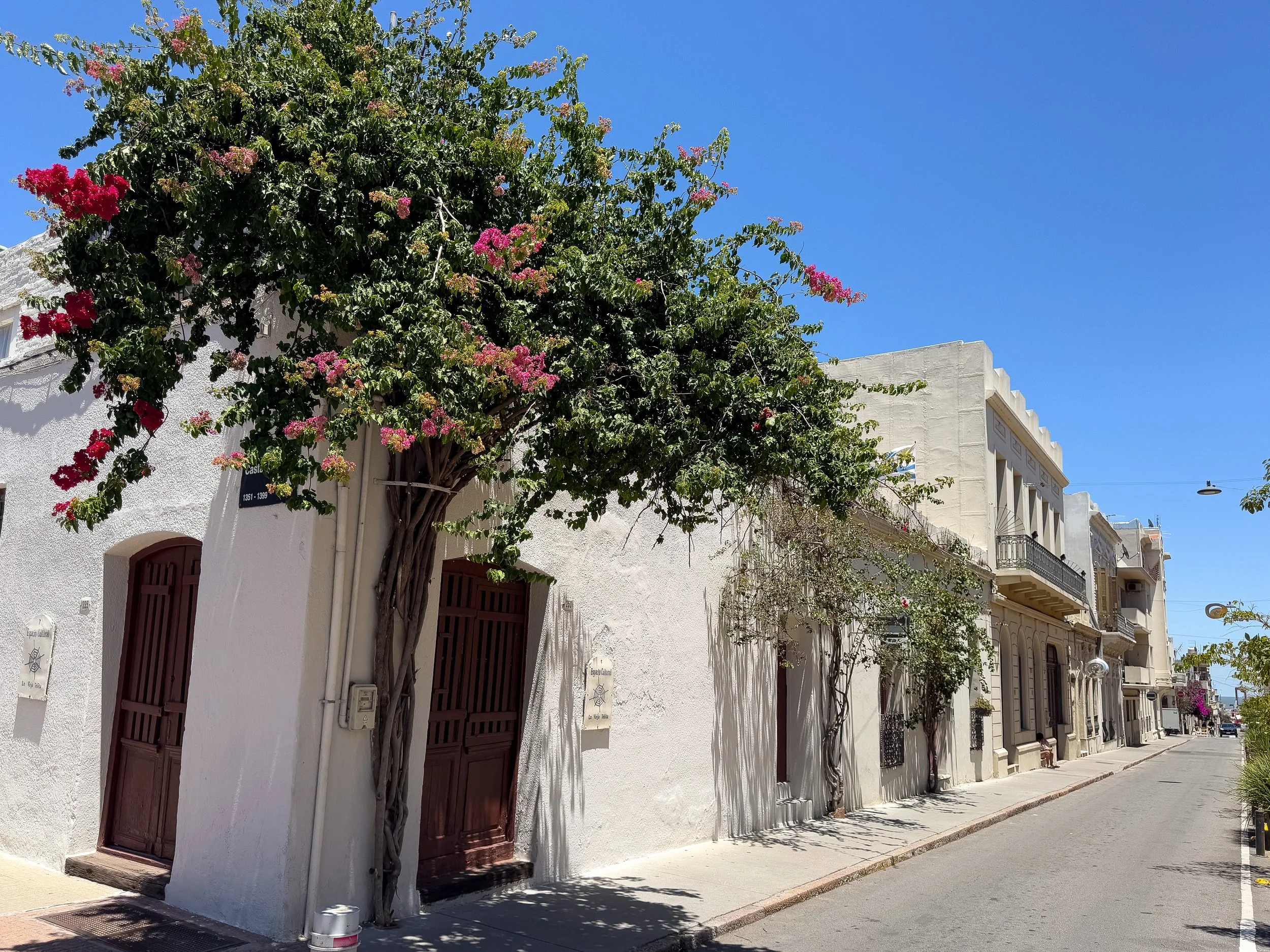
Colonia del Sacramento is a charming and picturesque colonial old town along Uruguay’s Rio de la Plata. With its Spanish and Portuguese influences, the city is an architectural gem comprised of stone buildings, colorfully painted facades, crumbling ruins, cobblestone streets and lush plazas.
Springtime in Colonia
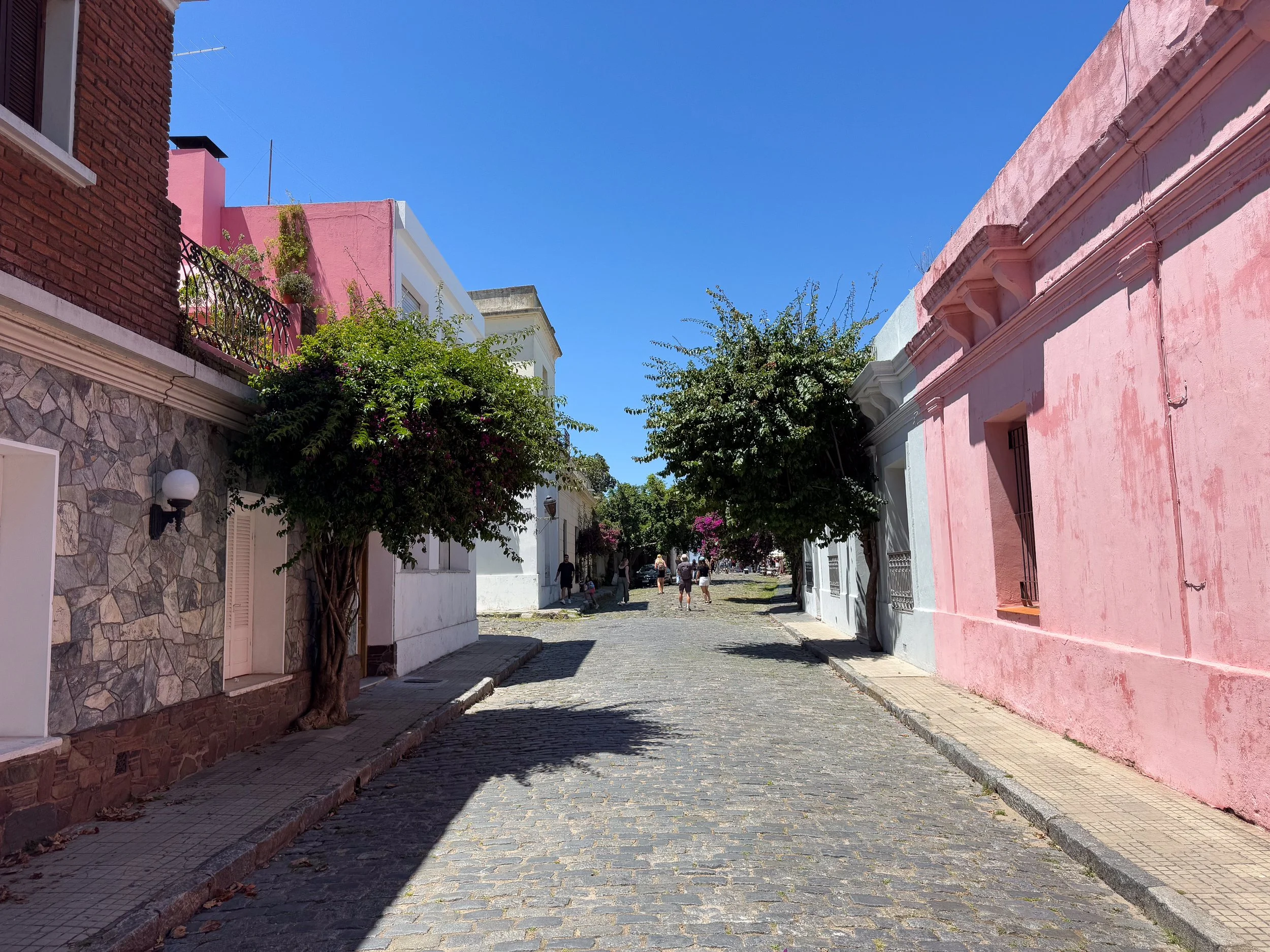
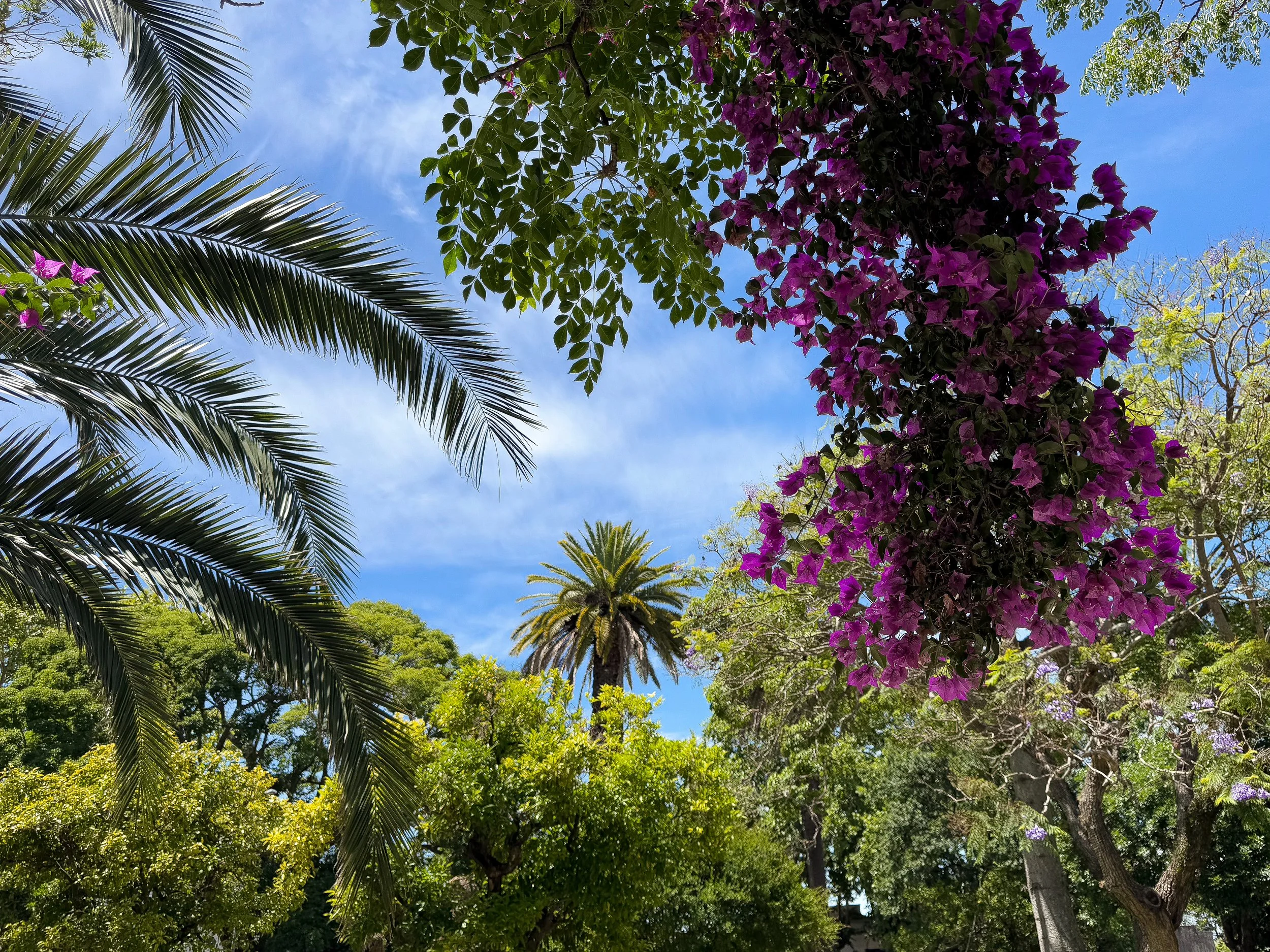
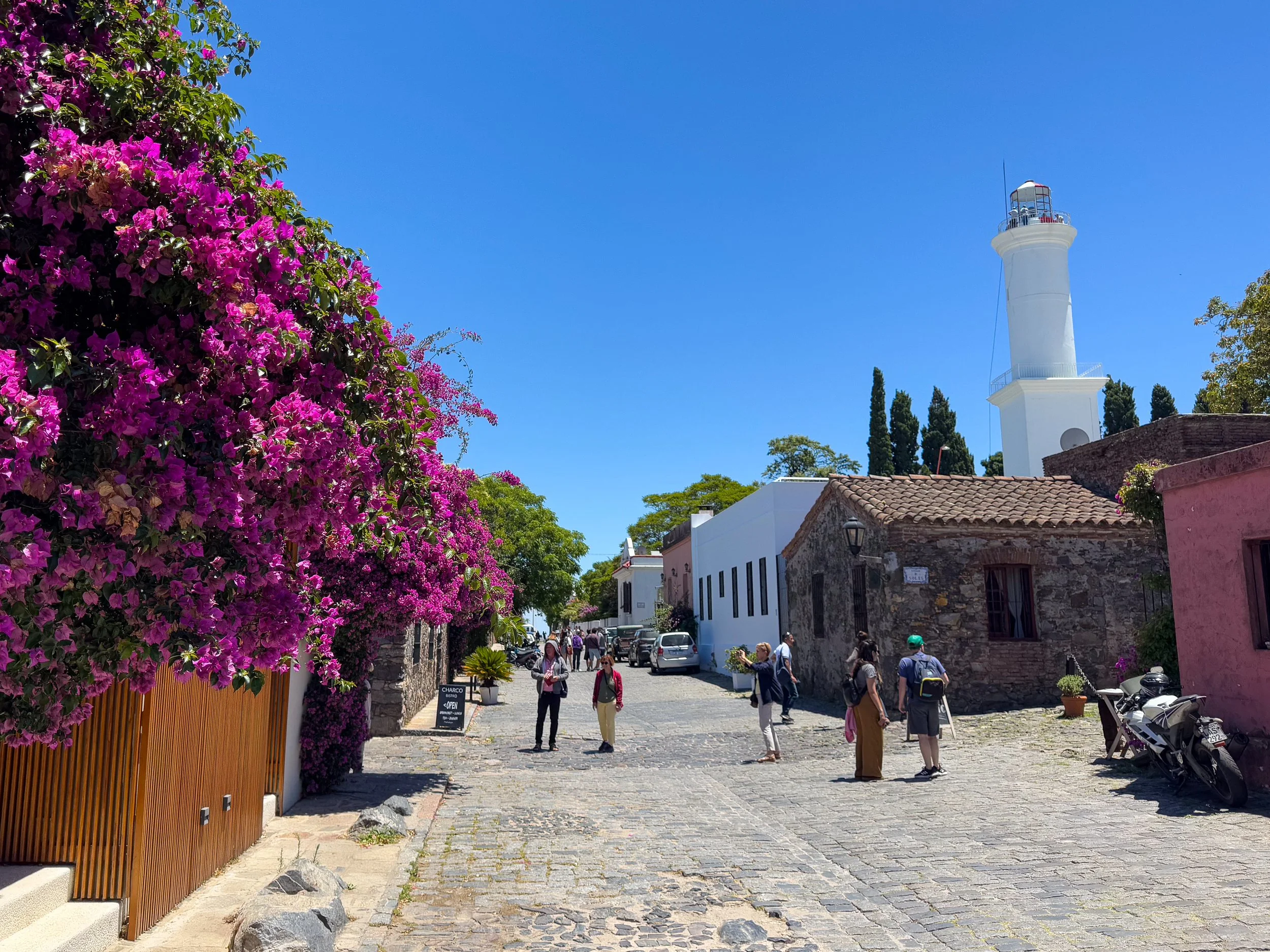
The town is a verdant place during the springtime. Towering sycamore trees line the streets while purple flowering bougainvillea bushes grow along the facades of colonial buildings. Lush palm trees shade the plazas as bright green parquets chirp overhead.
Colonial Sights
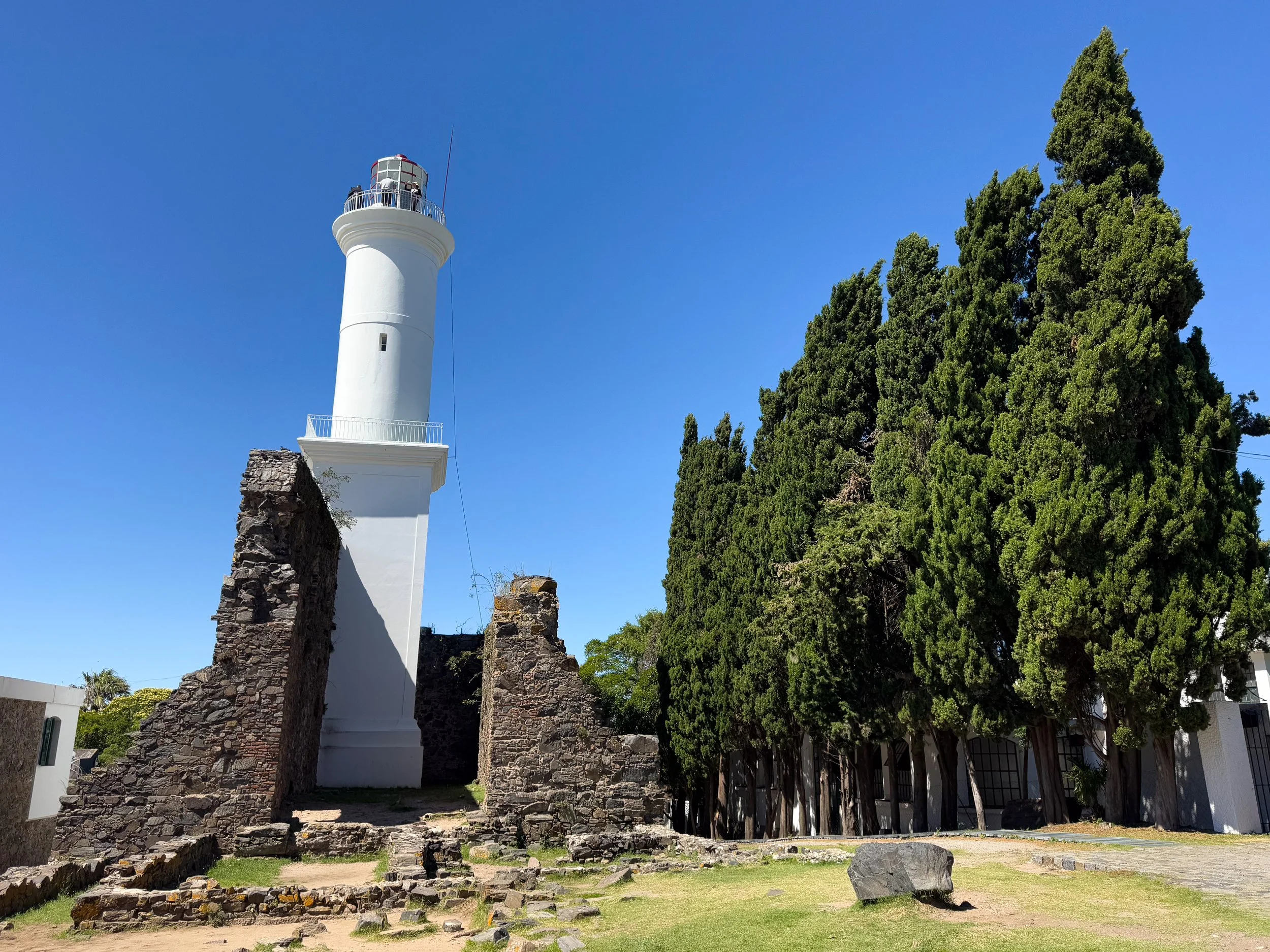
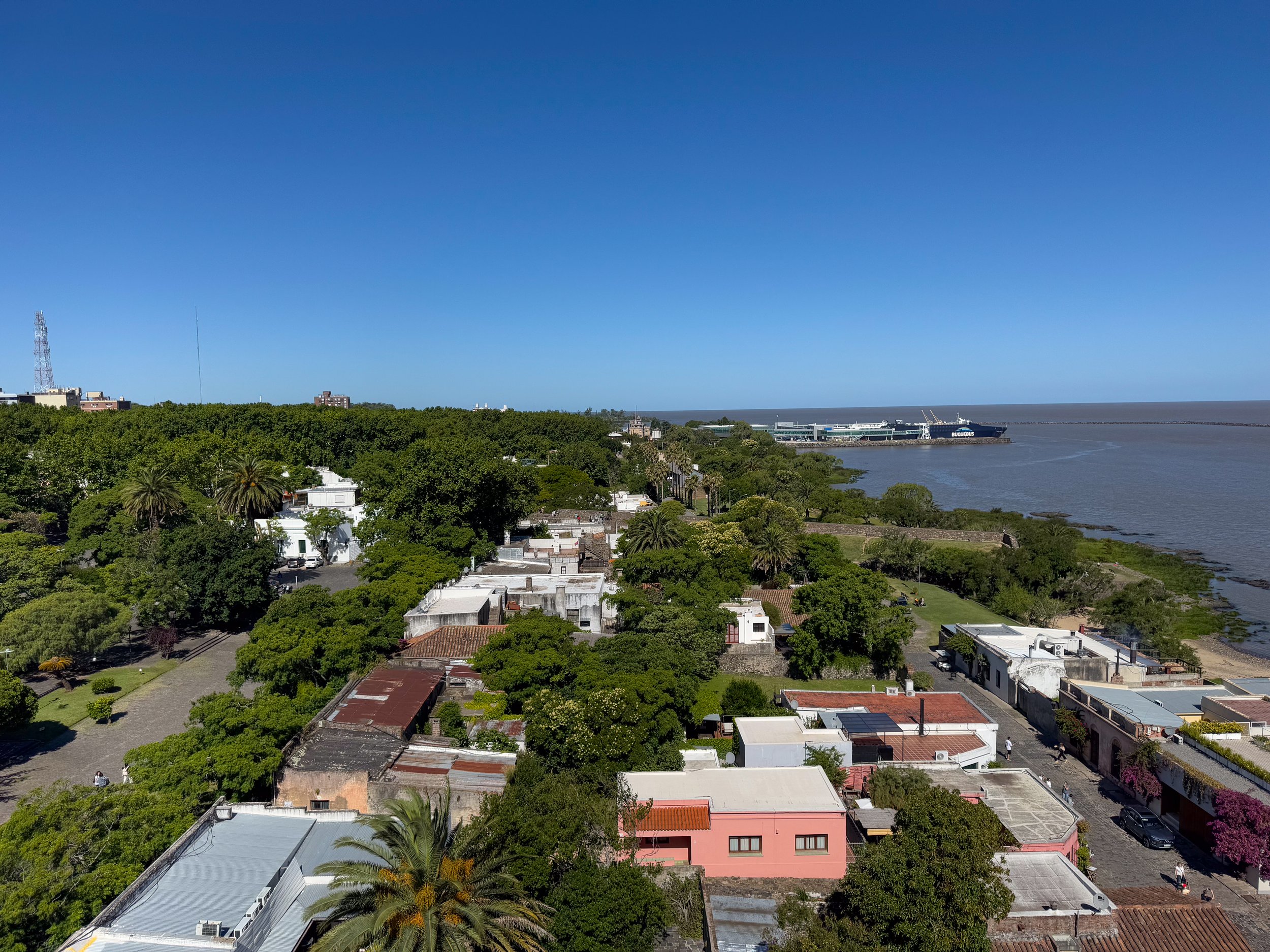
El Faro de Colonia. A slender white lighthouse attached to the crumbling ruins of a former convent. We climbed its spiral staircase to the observatory with panoramic views of the colonial city.
Plaza Mayor. A tree covered plaza in the center of the off town surrounded by cobblestone streets, historic sights and colonial buildings with restaurants, cafes and shops.
Basilica del Santisimo Sacramento. A historic colonial church with a white painted exterior and two bell towers with Portuguese tiled domes.
Plaza de Armas. A tree covered plaza at the foot of the Basilica del Santisimo Sacramento with restaurants and cafes.
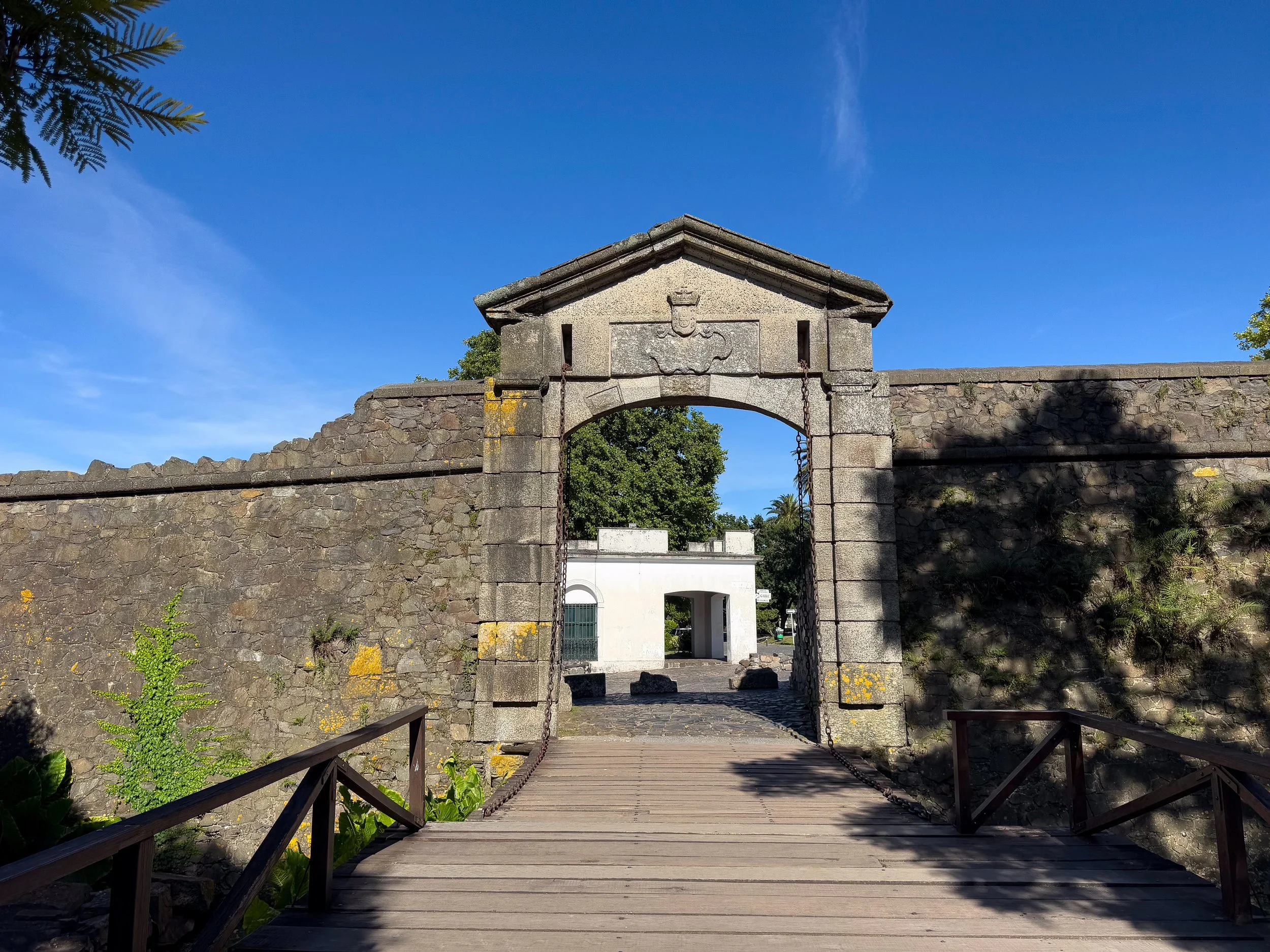
Porton de Campo. A remnant of the stone wall once surrounding the colonial city with a wooden drawbridge and gate marking the entrance to the old town.
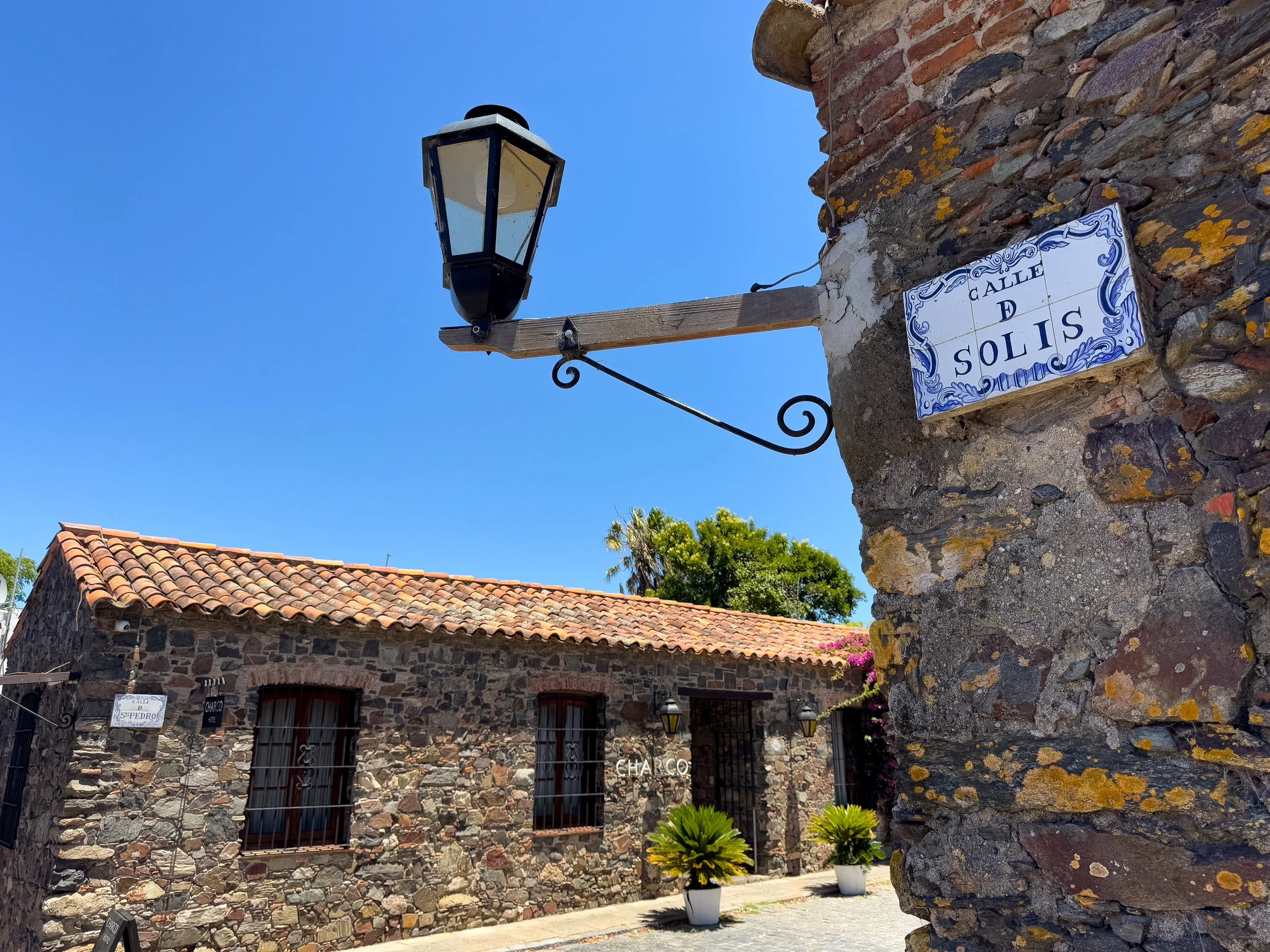
Bastions Santa Rita, San Pedro & San Miguel. Three sections of the stone wall with tiny plazas over looking the water surrounding the colonial town.
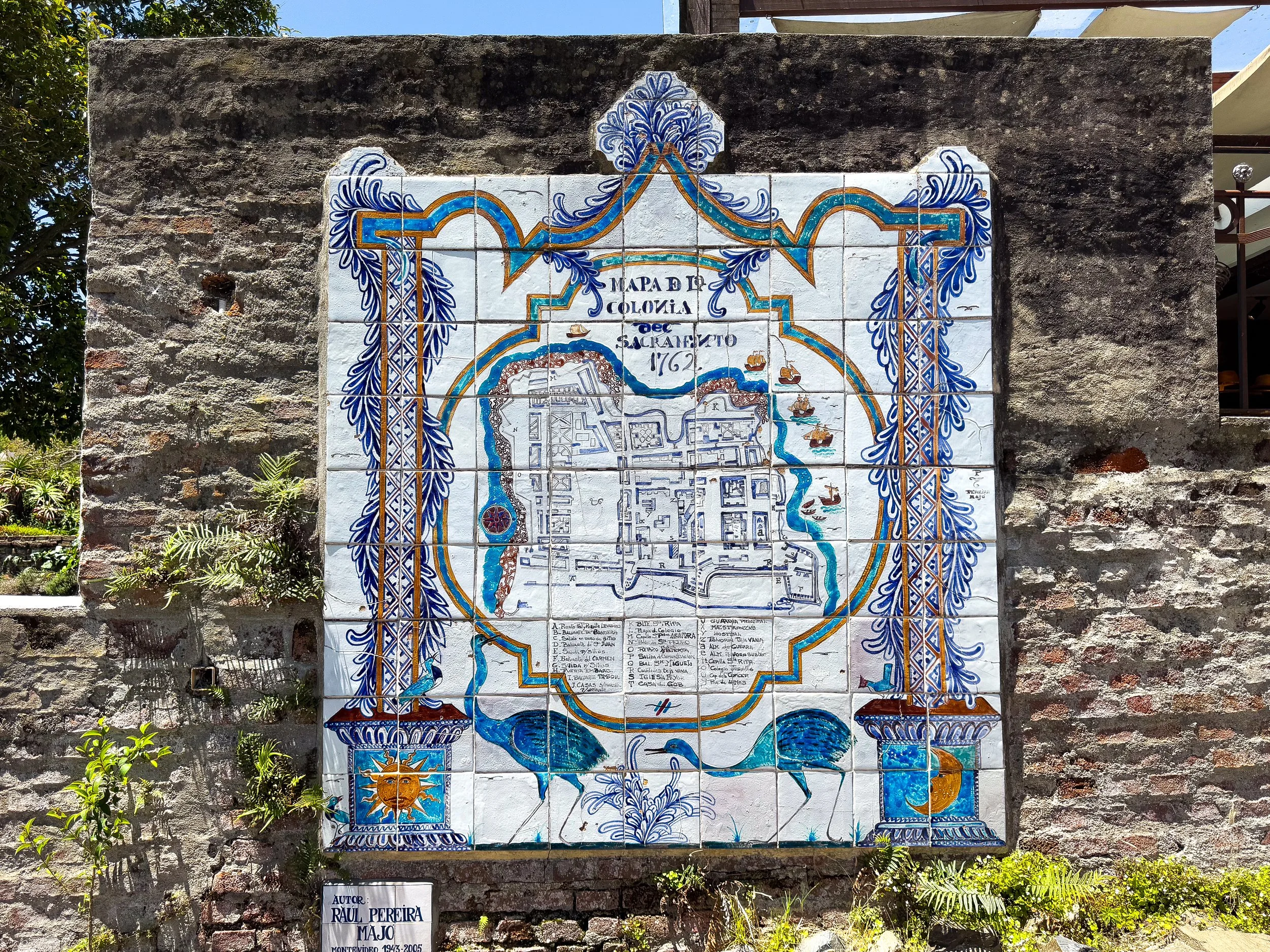
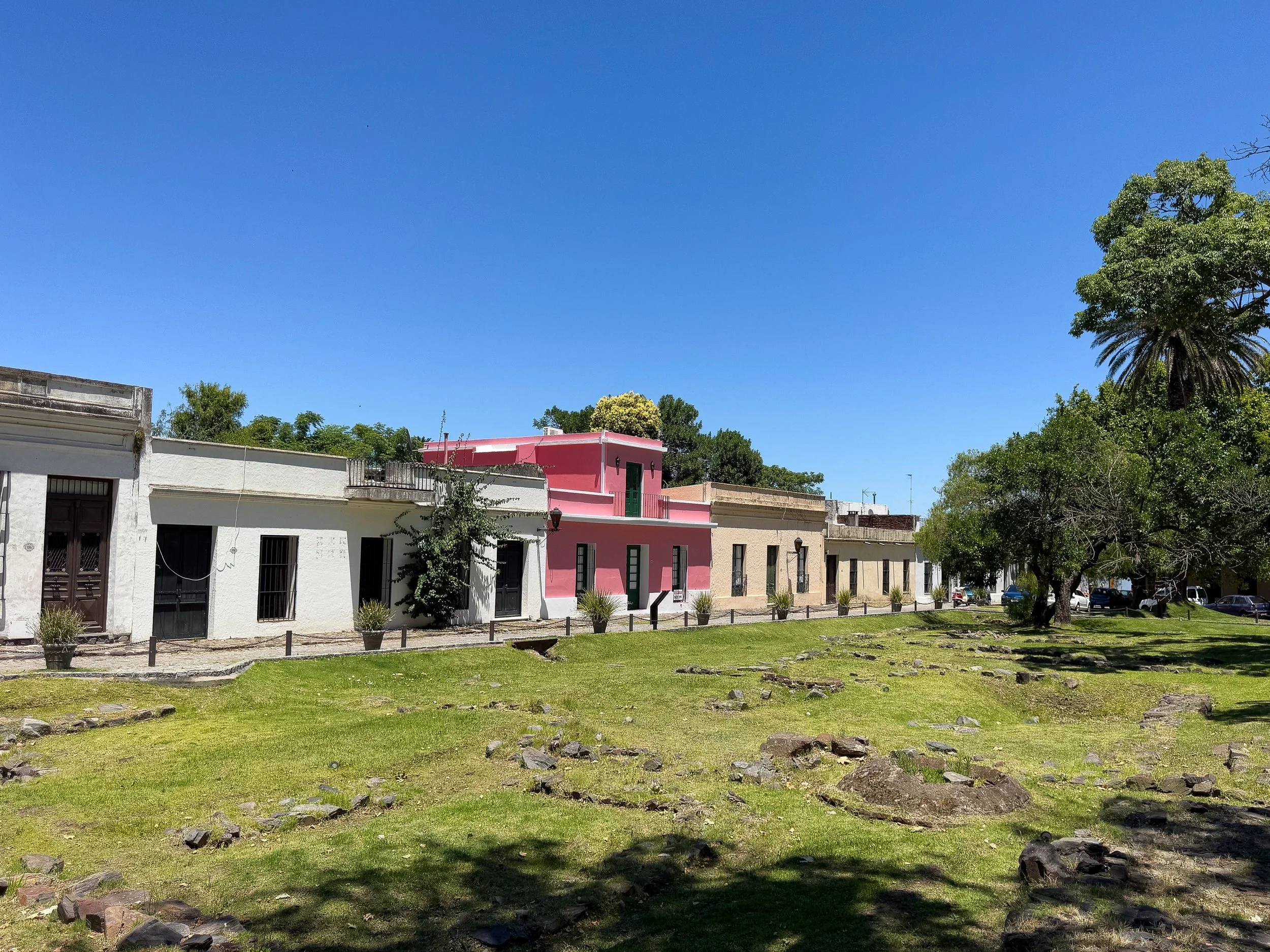
Calle de Portugal. One of the most beautiful and historic streets in Colonia. It’s an original Portuguese street with a stone road, colorful buildings, giant flowering trees and street lanterns.
Calle de los Suspiros. The oldest colonial street in Barrio Historico with stone building and views of the Rio de la Plata.
Ruínas das Casa dos Governadores Portugueses. The overgrown stone ruins and foundation of a mansion belonging to the former Portuguese governor of Colonia de Sacramento. Families of parquets live in the palm trees growing from the ruins.
Plaza de Augusto. A tree covered plaza with a central fountain, park benches and an outdoor gallery of natural photography.
Mercado Artesanal de Colonia. A market building with a cafe and vendors selling local crafts, jarred goods and Uruguayan wines.
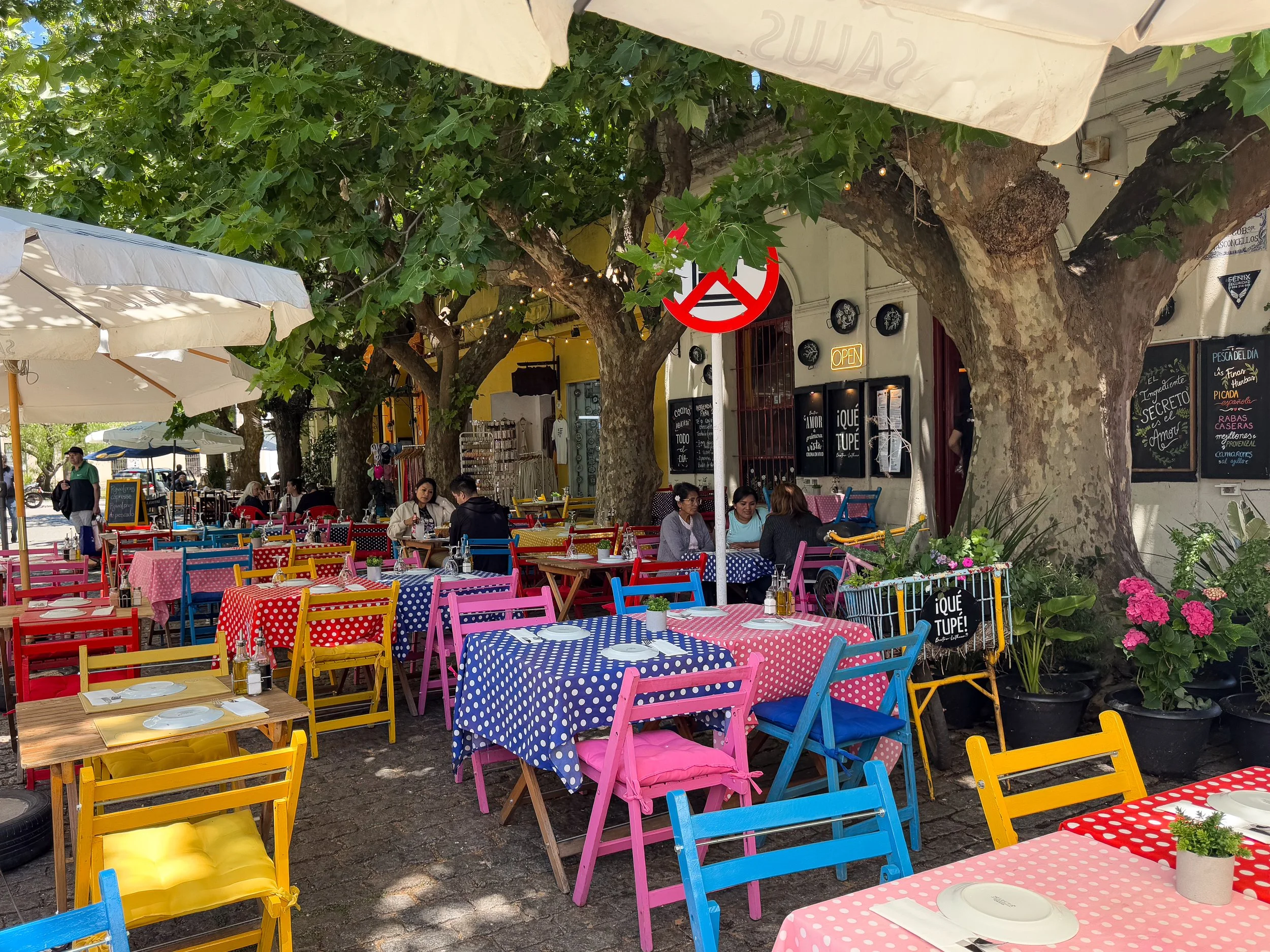
Places to Eat & Drink in Colonia
Serrano Cafe. A rooftop cafe with pastries, breakfast dishes and views overlooking the Rio de la Plata. We came here for brunch, ordering an egg and avocado toast, a yogurt bowl and house lemonade made with mint and hibiscus.
Resto-Morriña. A fusion restaurant merging Uruguayan and Galician cuisine with a tapas style menu. We shared everything, ordering the pulpo croquettes, papas bravas and cazuela de pescado y mariscos.
Freddos. A national cafe chain known for its ice cream. We visited the location in Plaza Mayor for an afternoon coffee under the shaded umbrellas.
Irenes Naturalmente Sabroso. A local vegan and vegetarian restaurant serving traditionally meat forward Uruguayan dishes like Milanesa and Chivito, a sandwich made with seitan steak, lettuce, tomato and mayonnaise.
El Buen Suspiro. A wine bar in one of the oldest buildings in Colonia with thick plastered walls, short wooden doorways and a wall of Uruguayan wines. We ordered a glass of the Bodega Irurita Tannat Reserva and Bodega los Cerros de San Juan Tannat Tempranillo along with a charcuterie platter of four cheeses and bread.
Vinos del Mundo. A wine bar and shop in the Plaza de Armas with a wide selection of Uruguayan wines, especially Tannat and Tempranillo. We bought a bottle of Tannat and sipped on it later that afternoon on the roof of our hostel.
Tips for Visiting Colonia
Getting Here. Colonia is reachable 1 hour by ferry from Buenos Aires or 2 hours 30 minutes by bus from Montevideo. We booked our ferry with Buquebus and departed by bus with COT (Compaña Oriental de Transpotre).
How Long to Visit. Most sights can be seen easily within a day but it’s better to stay overnight to enjoy the the town at slower pace.
Where to Stay. We stayed the night at Viajero Colonia, a hostel chain across South America. The accommodation was simple but central with a rooftop over looking the coast, luggage storage and breakfast included.
Montevideo
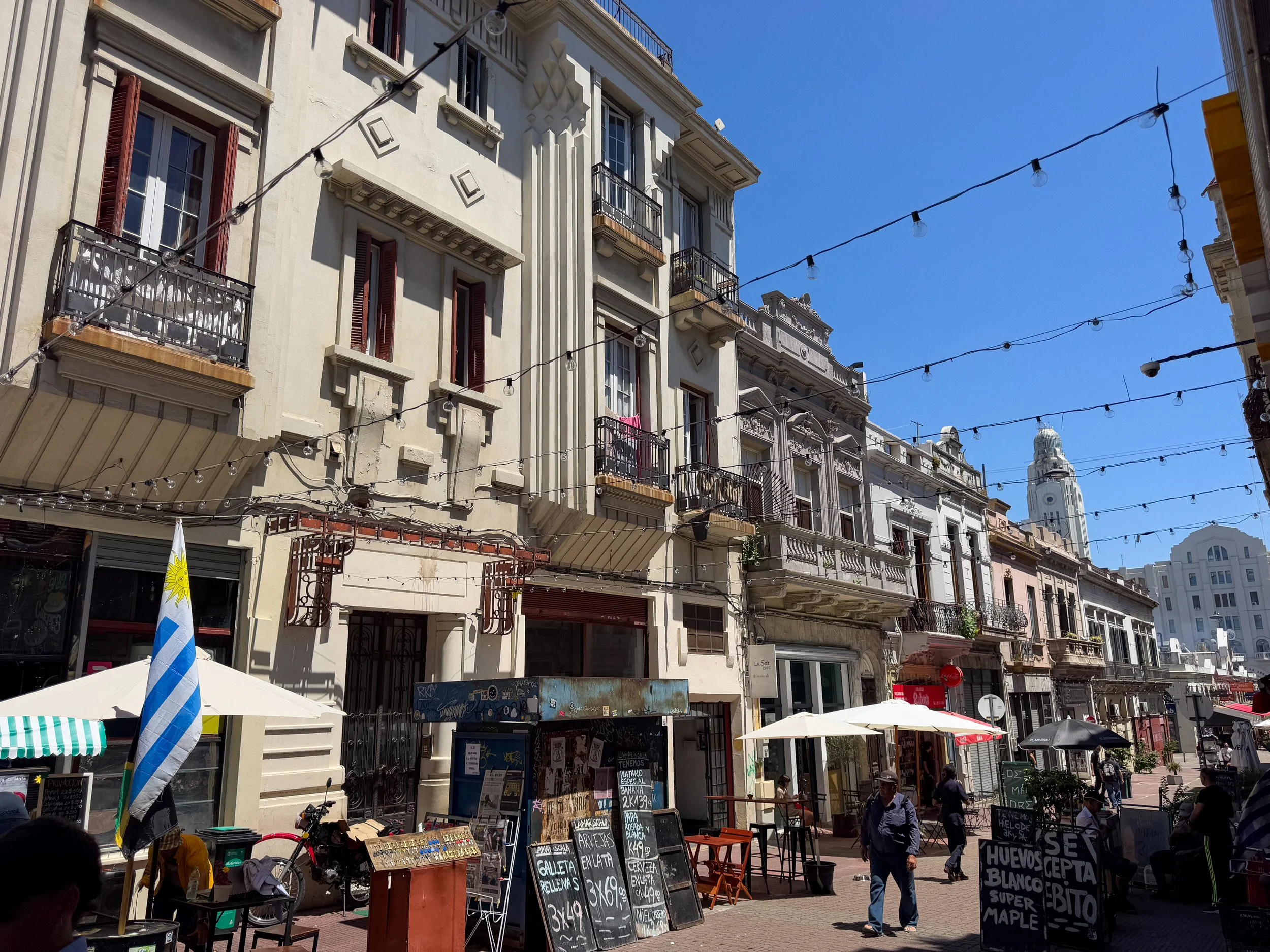
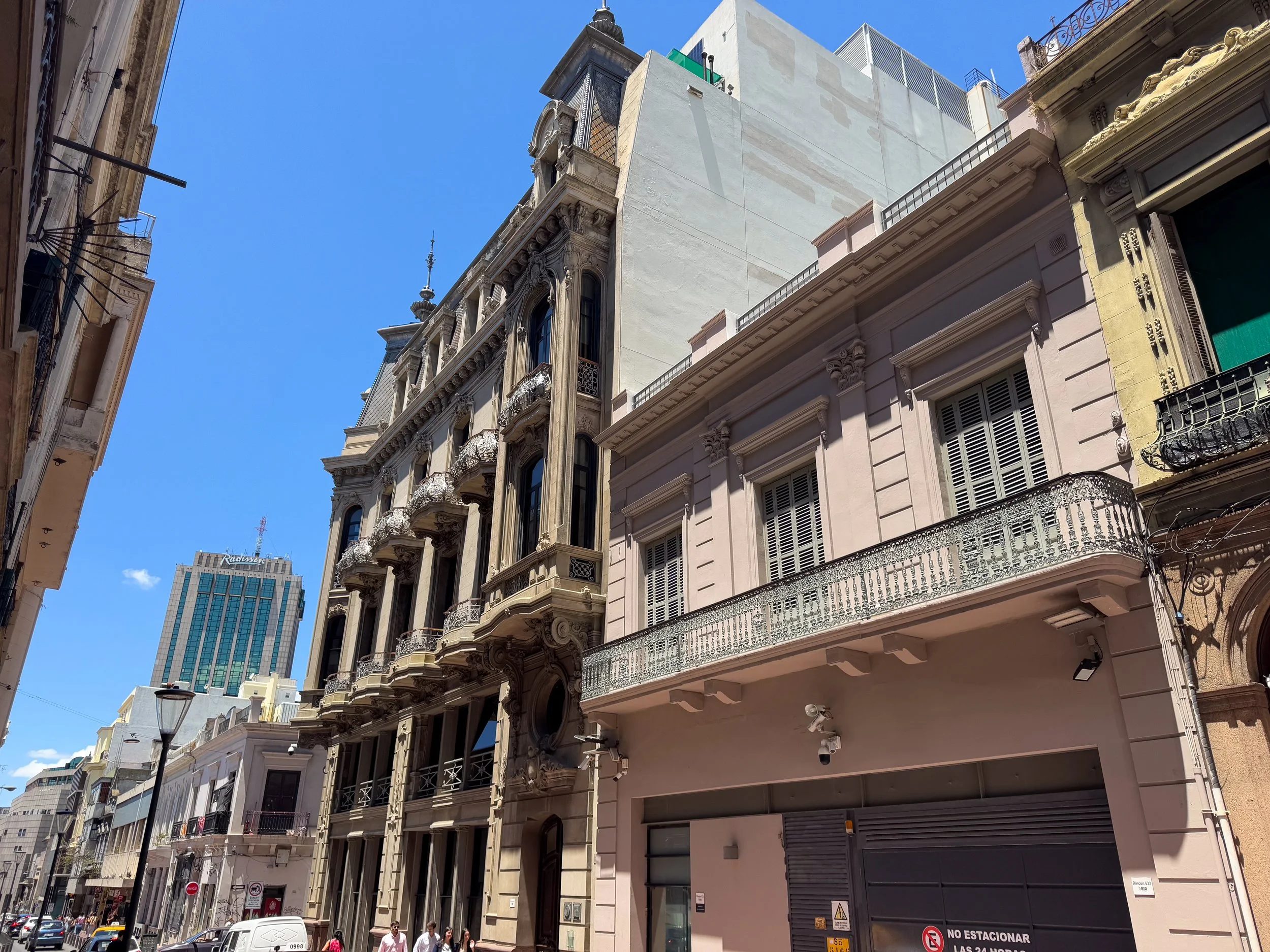
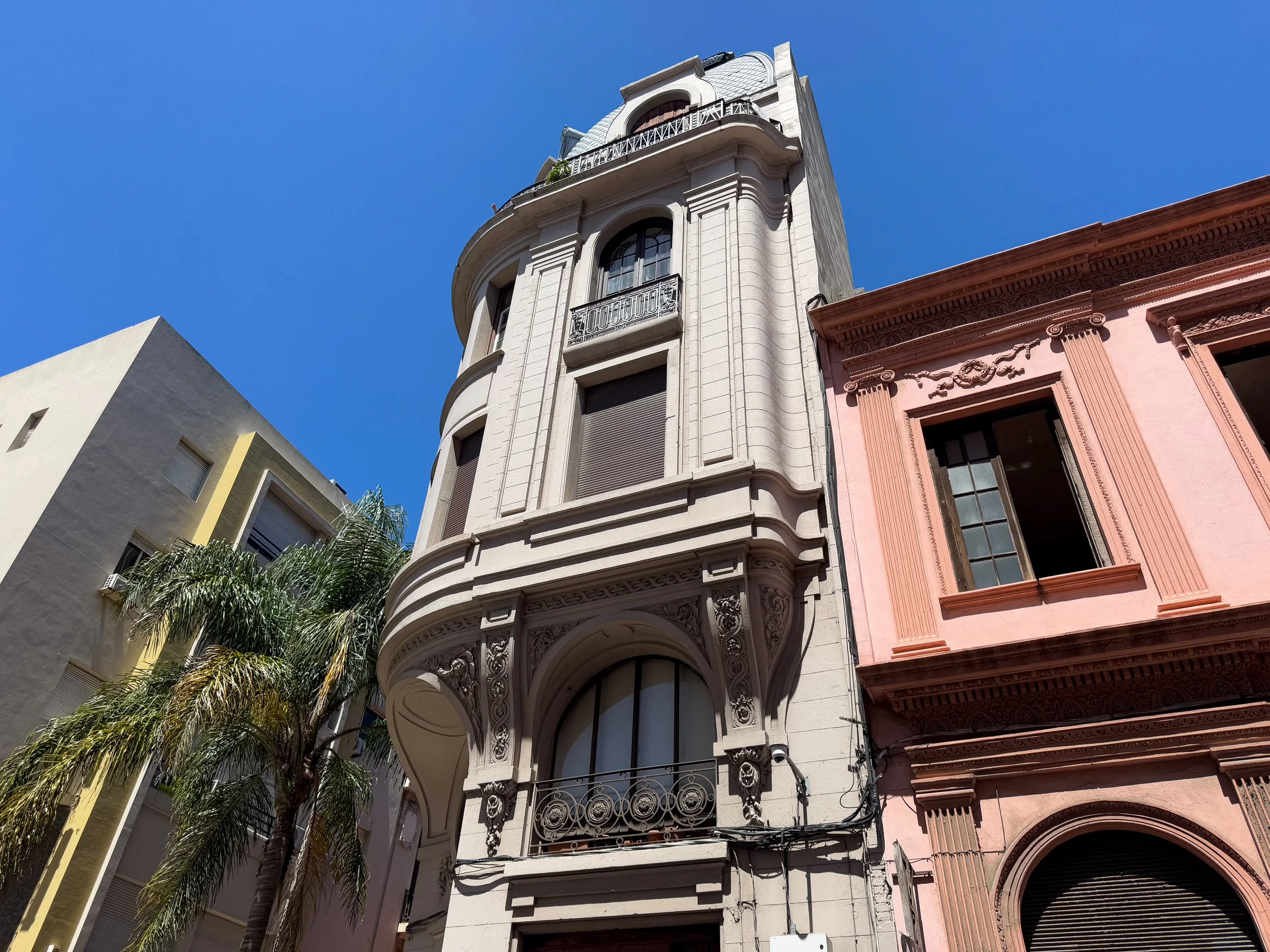
Montevideo is a metropolitan city with historic architecture, graffitied streets, numerous museums, tree covered plazas and white sand beaches. For a capital city, it has a quiet vibe, an inviting atmosphere and unpretentious allure that quickly had us saying, “we could live here.”
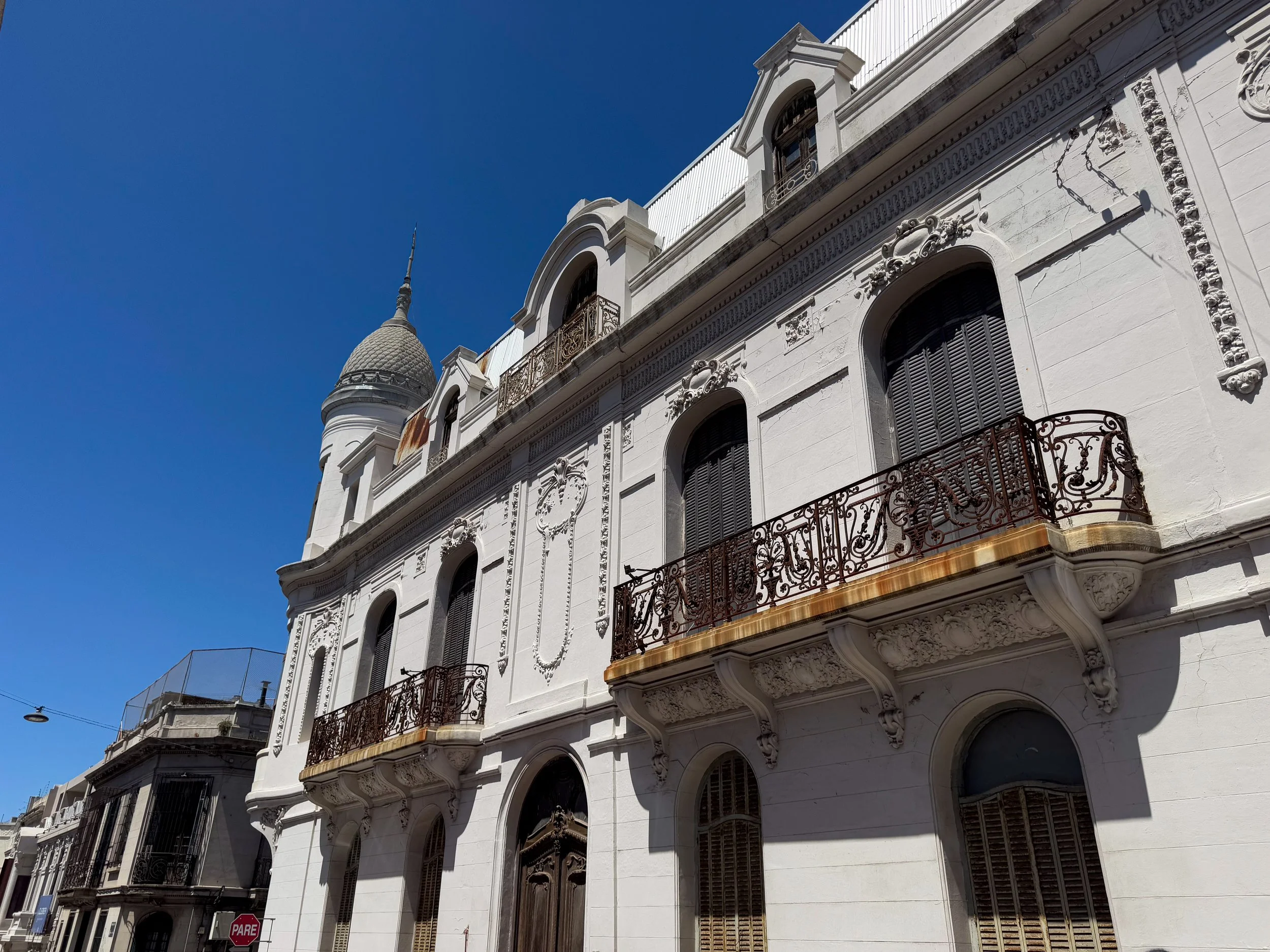
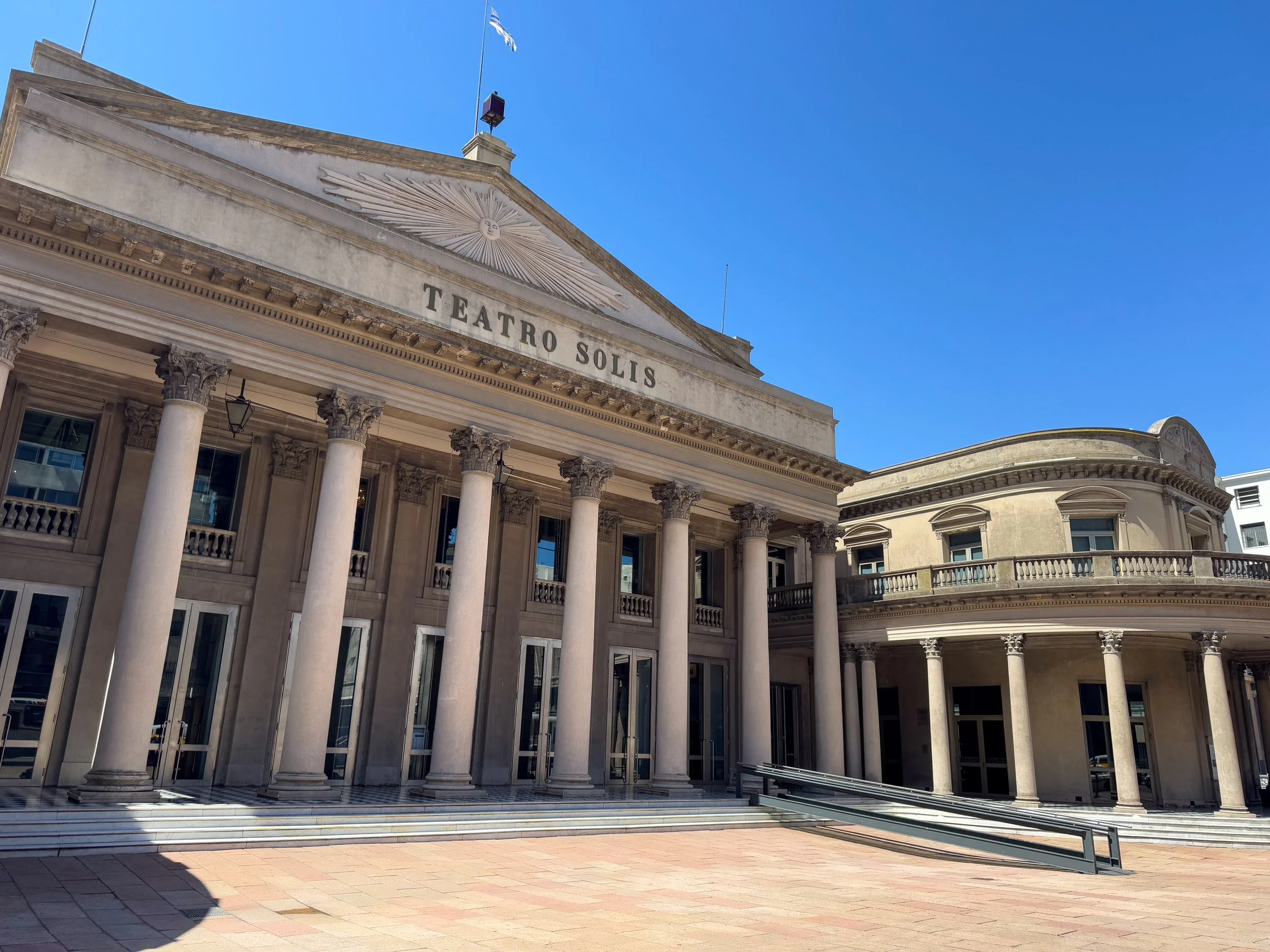
The city is heavily influenced by European immigrants reflected in both the cuisine and architecture. Buildings are designed in Art Nouveau, Neoclassical, Renaissance, Gothic and Spanish colonial styles. Restaurants serve Spanish tapas, Italian pastas, pizzas & gelato as well as French pastries.
Neighborhoods
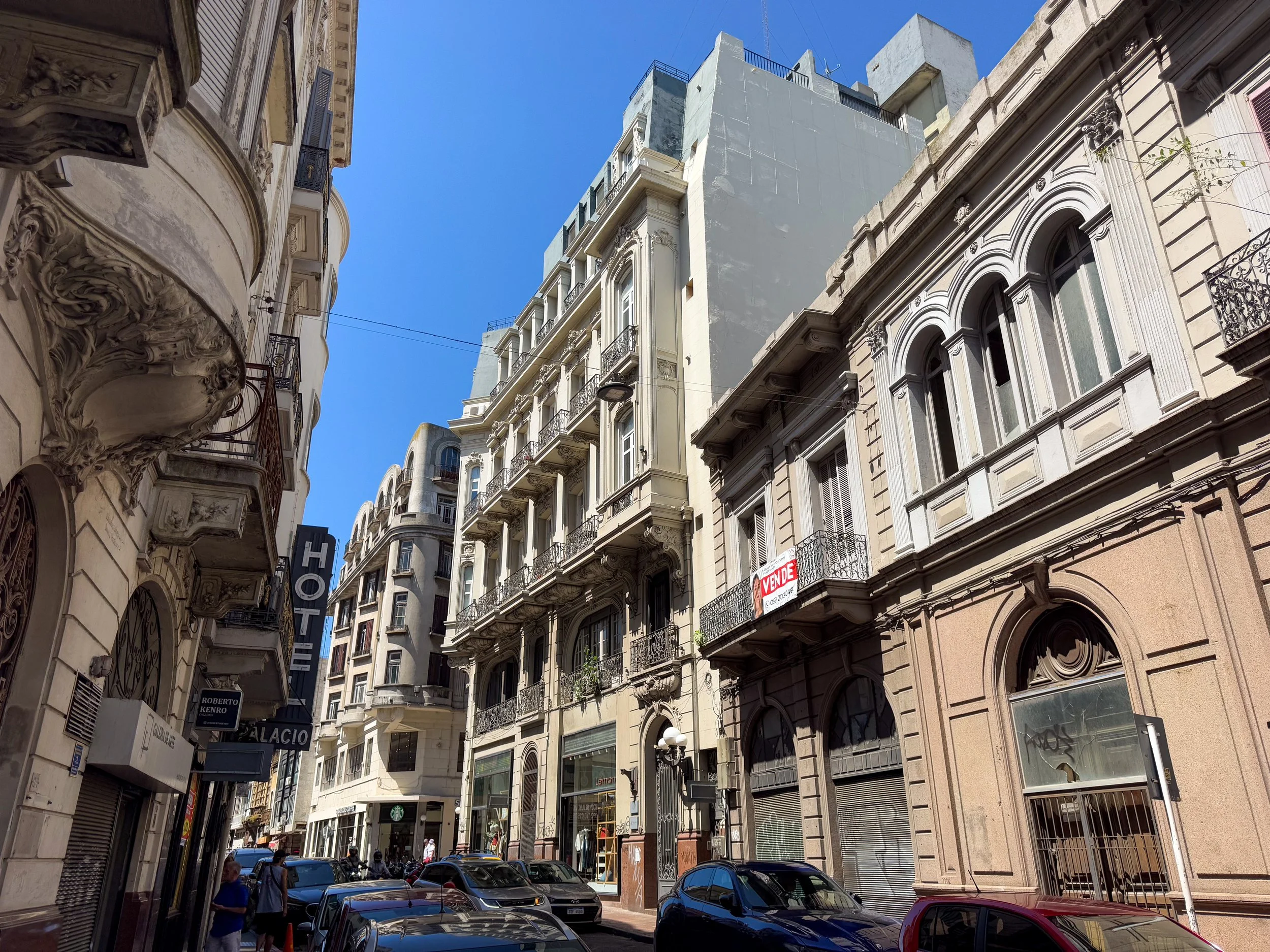
Ciudad Viejo. The oldest neighborhood of Montevideo once surrounded by a city wall during the colonial era. It’s an attractive neighborhood to explore on foot with pedestrian streets lined with vendors, lush shaded plazas, quaint cafe, Uruguayan restaurants and numerous museums.
El Centro. The business district of Montevideo with office buildings, theaters, shops and public plazas. Its main avenues are hubs for all types of commerce and its side streets host small cafes, restaurants and residences.
Barrio Parque Rodó. A beautiful neighborhood named after the park that resides in it. Come here to walk around the tree covered streets, admire the various architectural styles, sunbathe at Playa Ramires, visit the National Art Museum and sip on cocktails at one of the many nearby bars.
Enjoy the Parks & Plazas
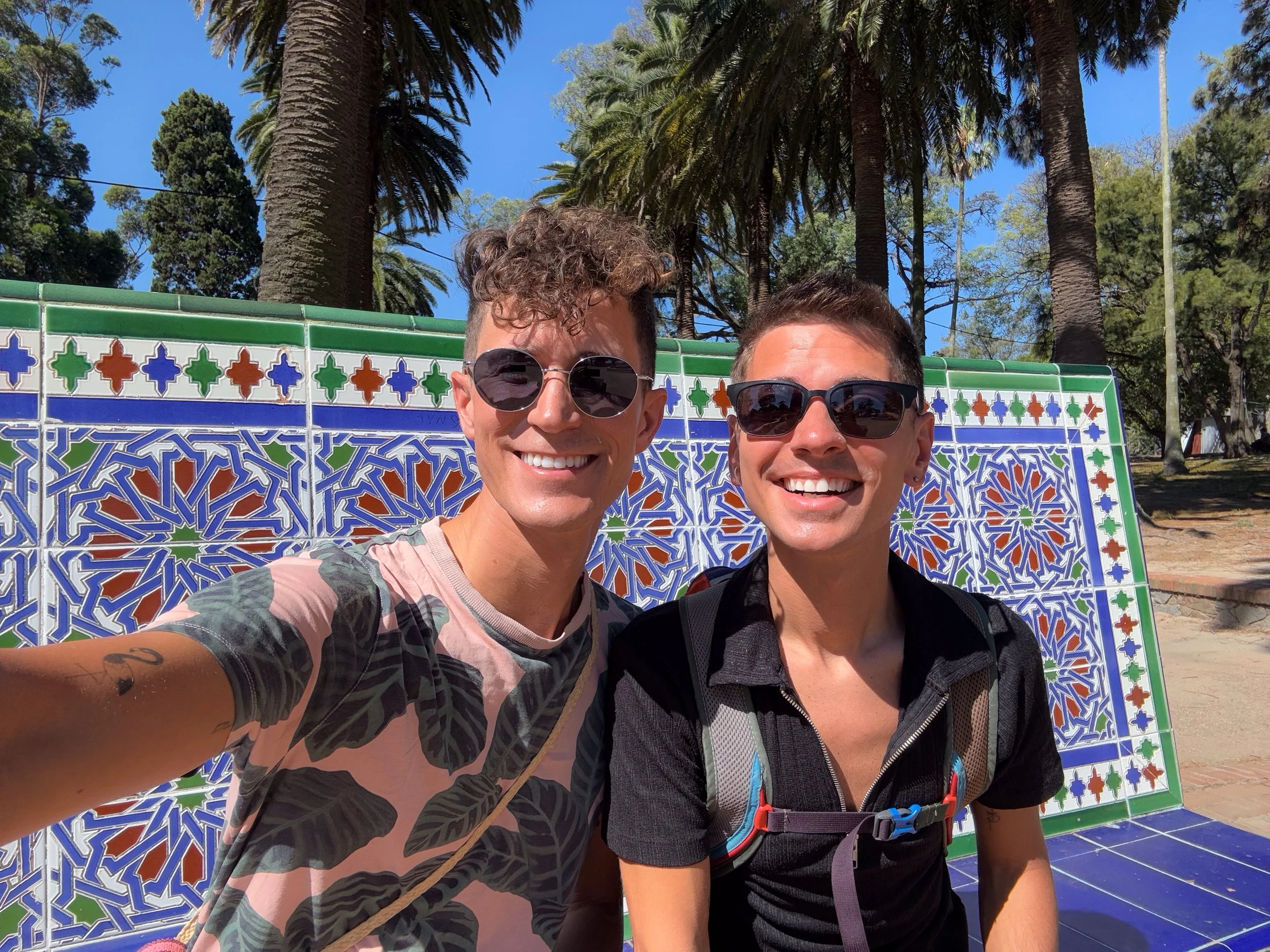
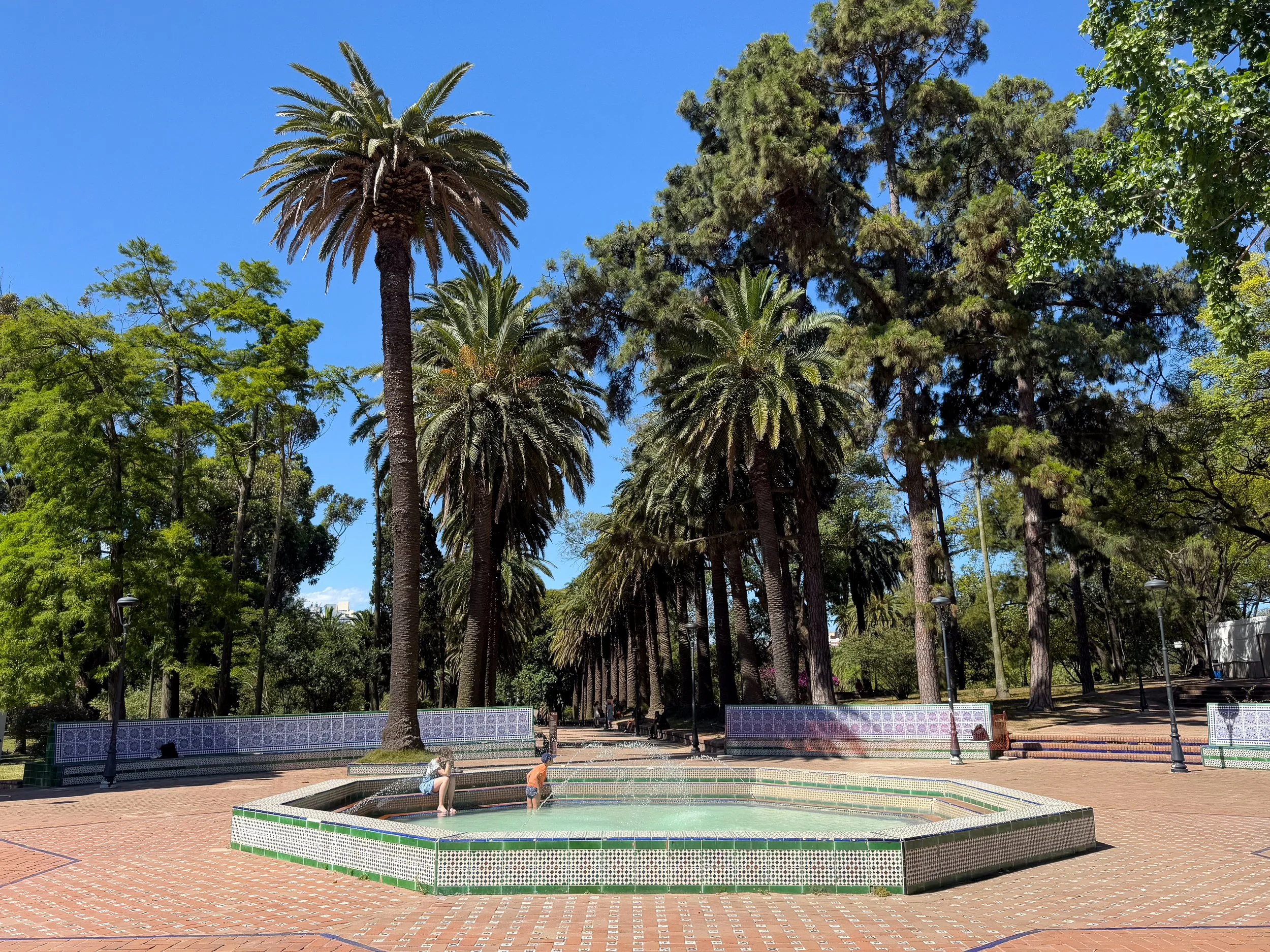
Parque Rodó. A seaside park next to Playa Ramirez with a colorful Spanish tiled fountain, an alley of towering palm trees, a lagoon with paddle boats, bronze statues, flowering gardens, small amusement park rides and a holiday craft fair.
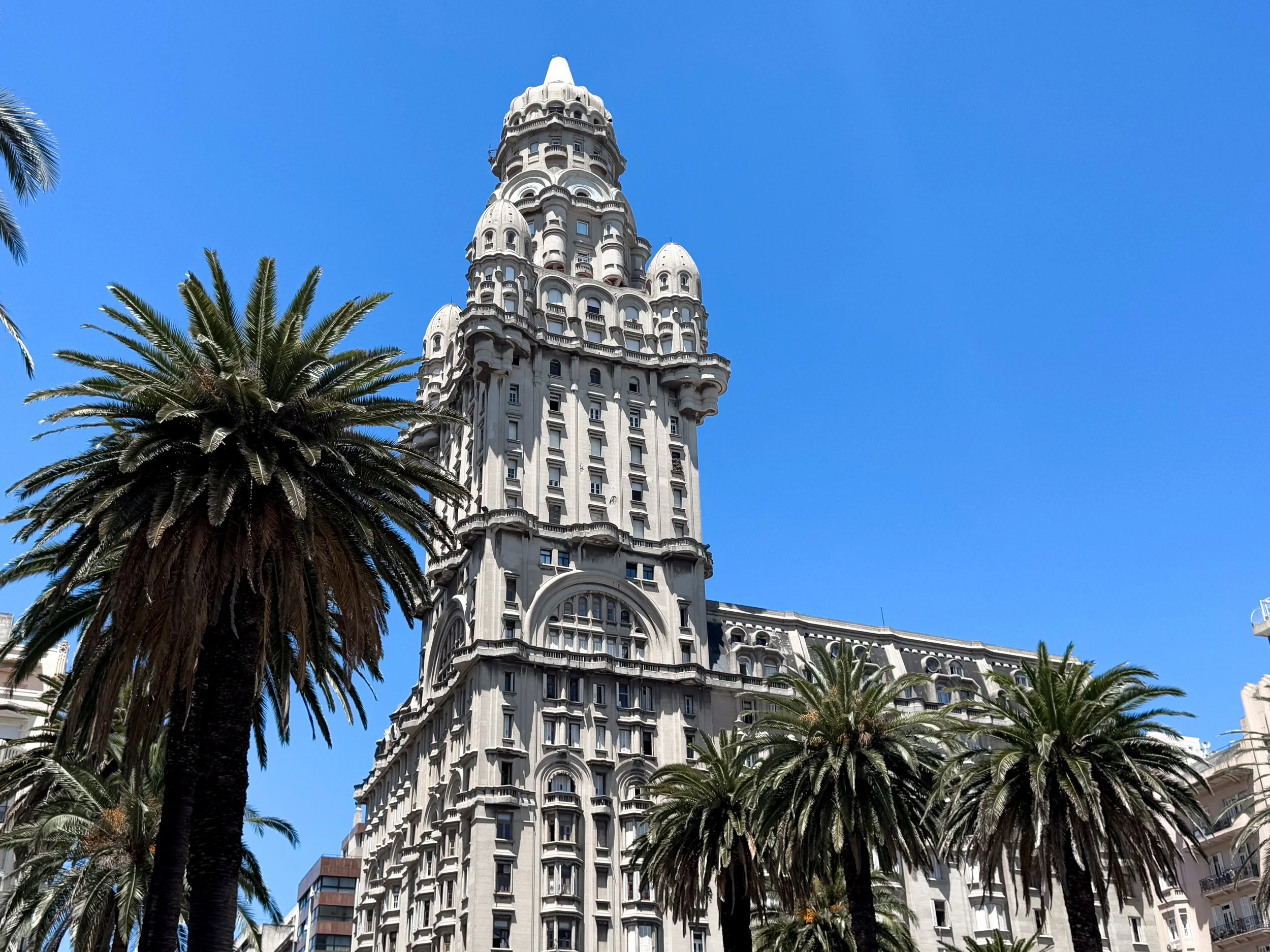
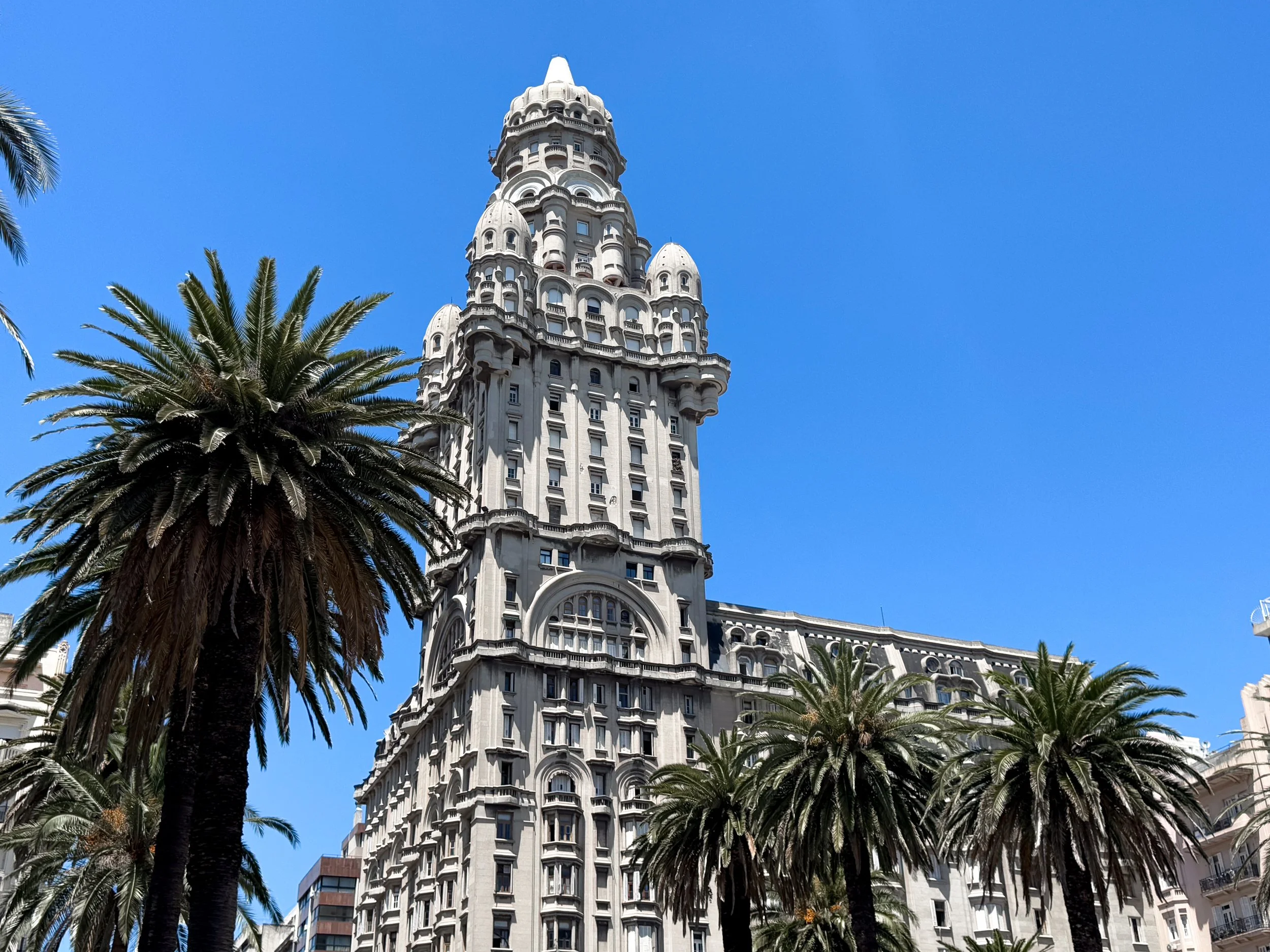
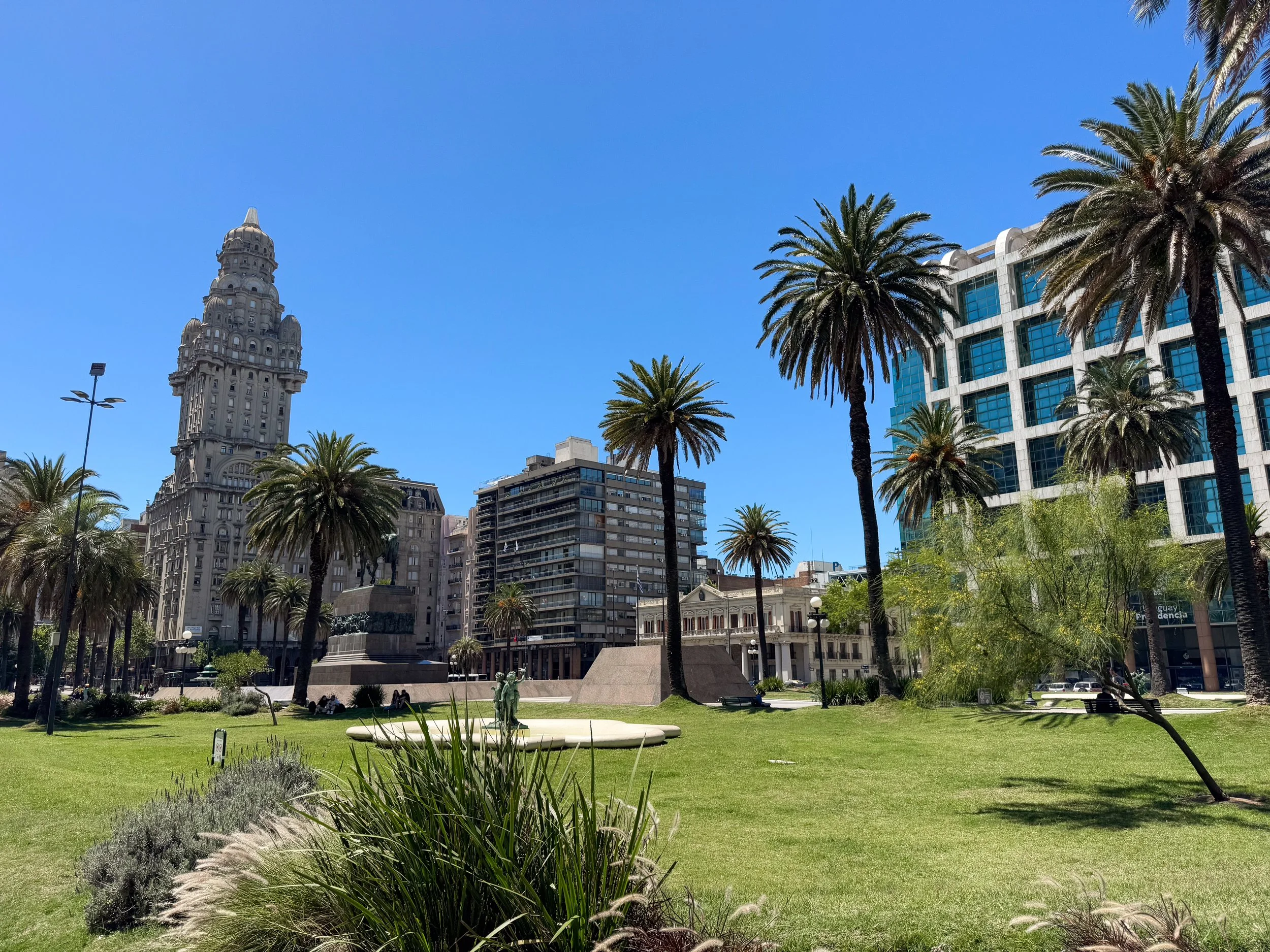
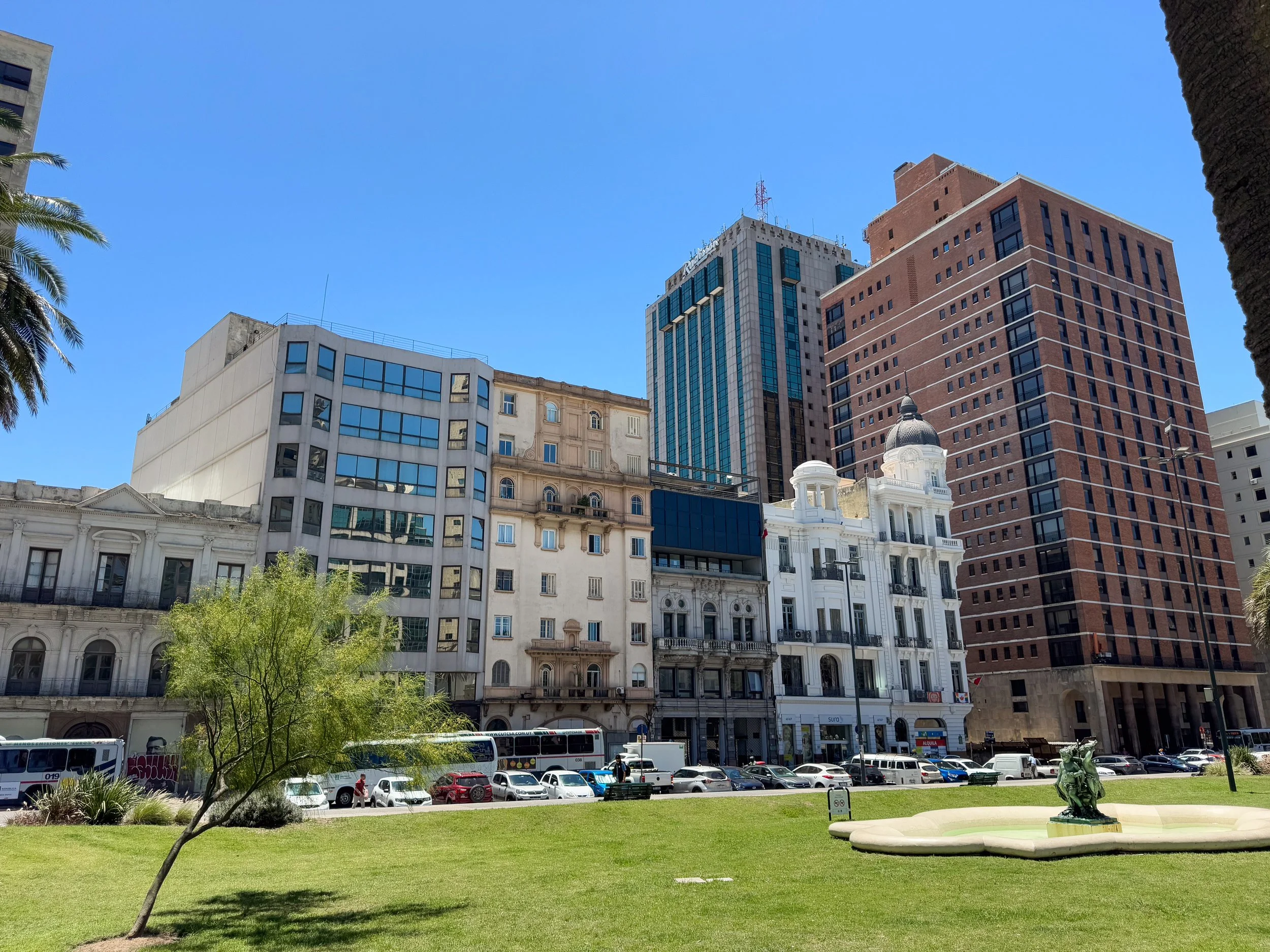
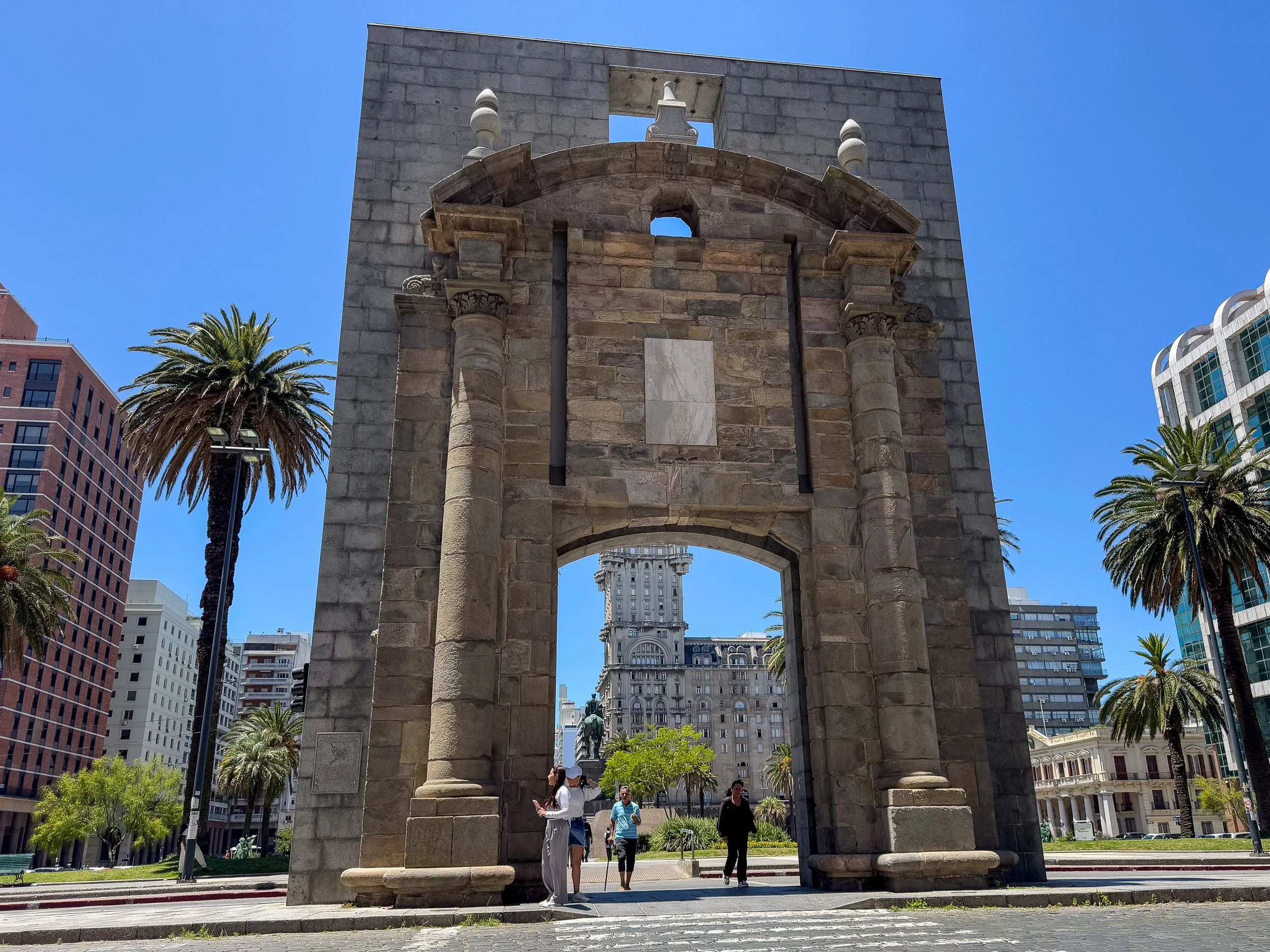
Plaza de la Independencia. A palm lined central plaza with a large military mausoleum, the preserved ruins of the old town’s city gate and small fountains. It’s surrounded by historic and government buildings, most notably the Palacio Salvo.
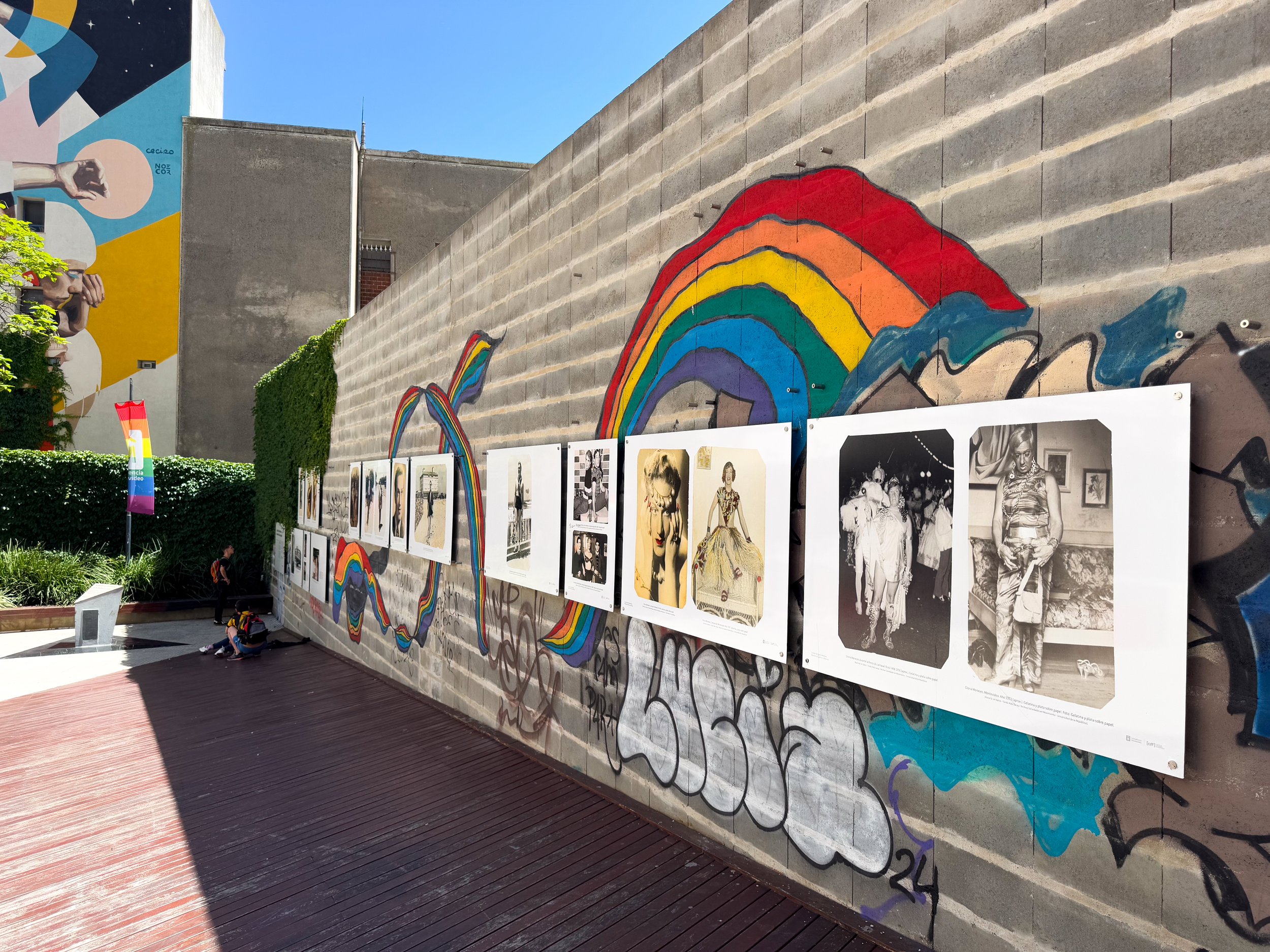
Plaza de la Diversidad Sexual. A plaza in the old town dedicated to the LGBTQ+ community of Montevideo. The triangular plaza has a colorful mural and photo gallery honoring a transgender activist.
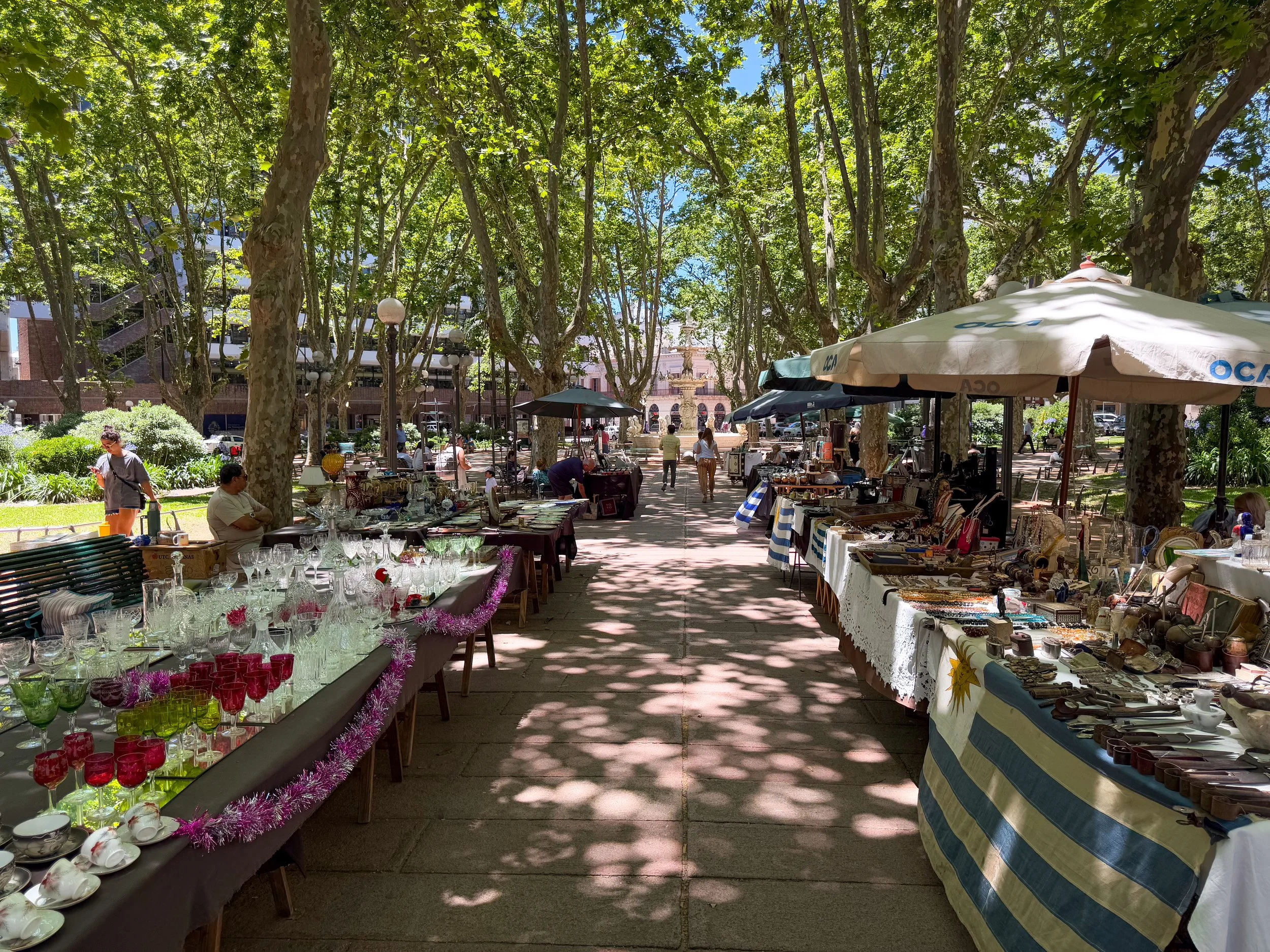
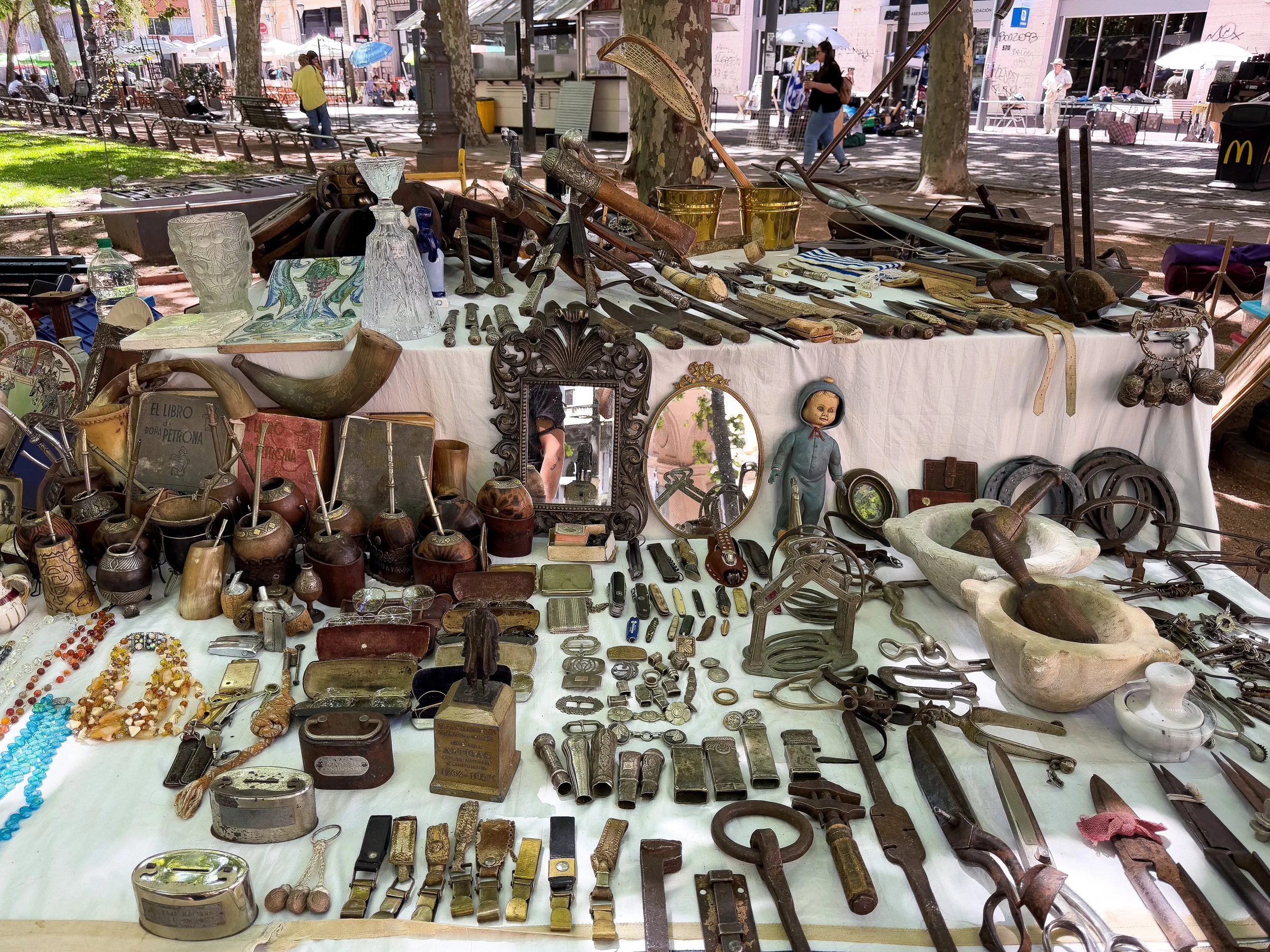
Plaza de la Constitución. A lush plaza covered by a canopy of sycamore and palm trees. At its center is a tiered marble fountain celebrating Uruguay’s independence with motifs of dragons spouting water. The plaza frequently hosts a market of vendors selling artwork, antiques, handmade items and souvenirs.
Relax at the City Beaches
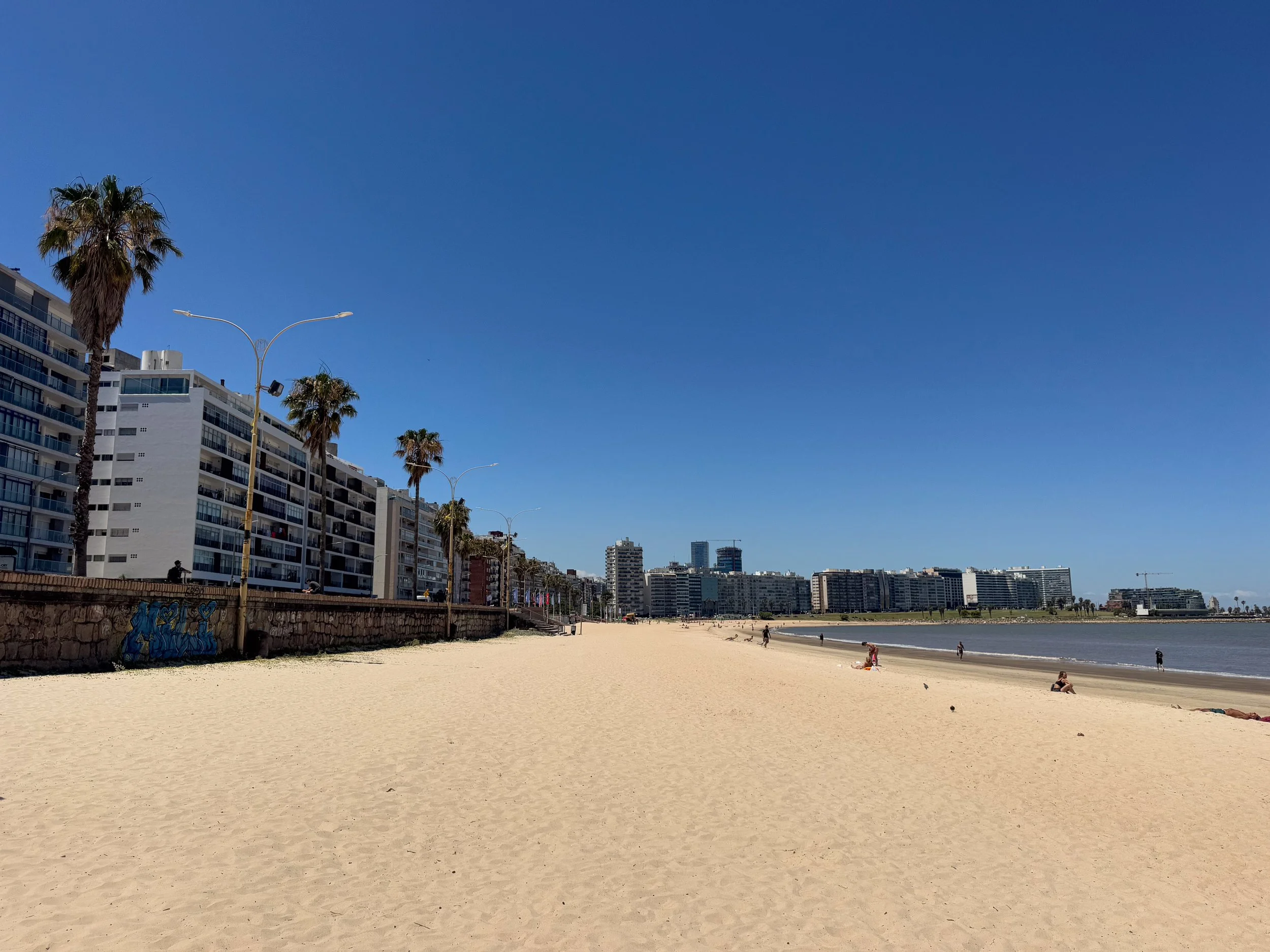
Playa Ramirez. A crescent shaped white sand beach along the Rio de la Plata in the city center. It’s popular with locals for sunbathing, picnics and playing futbol. We spent an afternoon here sunbathing.
Playa de Los Pocitos. A large crescent shaped white sand beach along the Rio de la Plata. It’s Montevideo’s main beach, hugged by a skyline of residential towers and a palm lined promenade popular with joggers and bikers. We came here for the afternoon to listen to waves and sunbathe. Midway along the beach is Los Delfines, a small beach bar with strong mojitos and caipirinhas.
See the Museums
Museo Andes 1972. A museum dedicated to the story of the Uruguayan airplane crash in the Andes Mountains. It accurately tells the stories of the survivors and remembers those that died. The exhibits include artifacts from the tragedy like clothes, aircraft parts, letters and IDs.
Museo de Arte Precolombino y Indigent (MAPI). A museum in a restored colonial building dedicated to the indigenous cultures of the Americas. The exhibits displayed and compared artifacts from North American tribes, Central American civilizations, Andean societies and the local peoples of Uruguay and Argentina. When we visited, a temporary exhibit displayed hundreds of masks from cultures across the Americas.
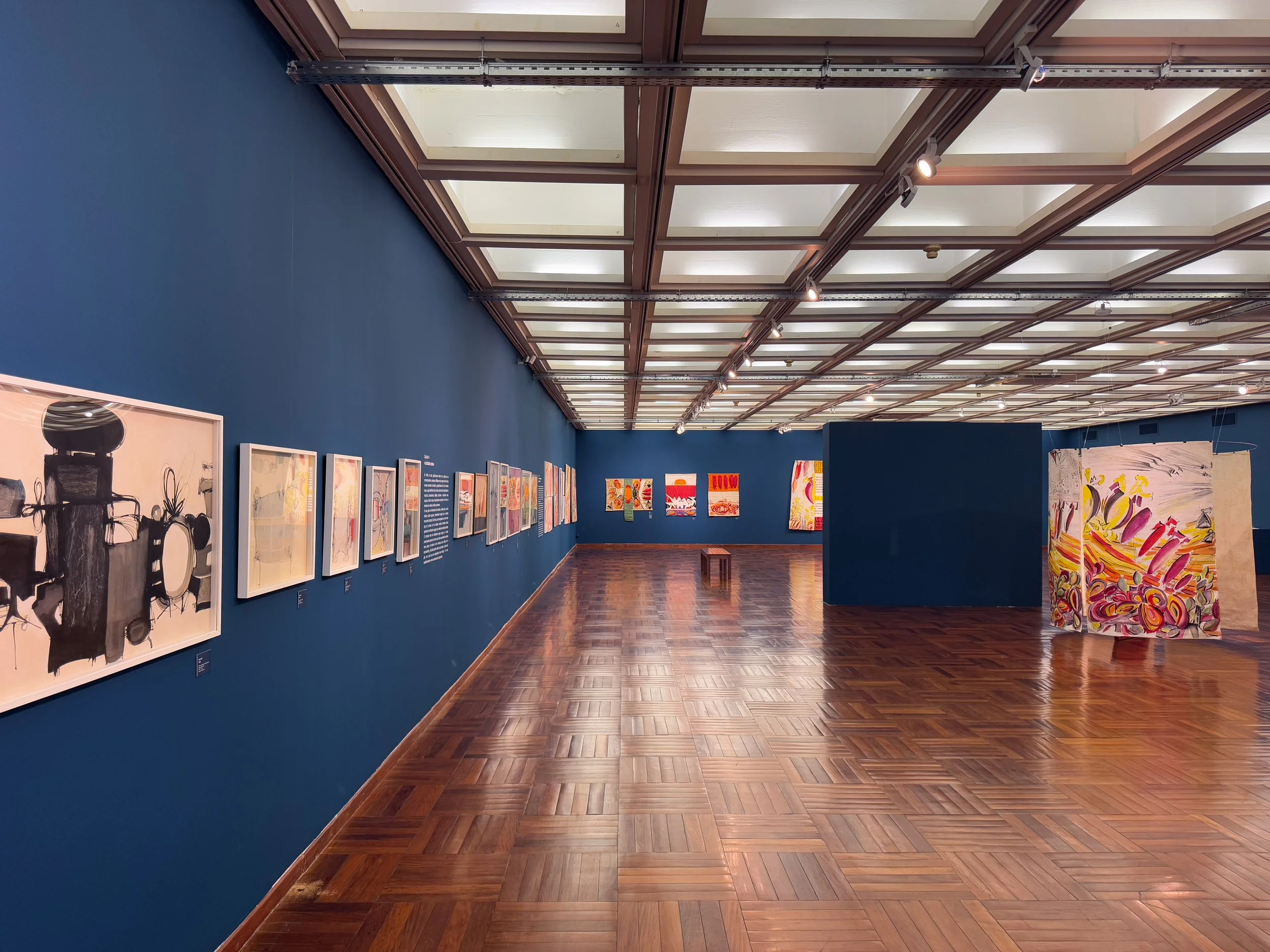
Espacio de Arte Contemporáneo. A contemporary art museum with works by Uruguayan artists. The museum is located in a former prison with its cells transformed into galleries and exhibit space. It’s free to enter!
Museo Nacional de Artes Visuales. An art museum housing a permanent collection of Uruguayan art with rotating galleries by Uruguayan artists. Art ranges from the colonial era to modern day. It’s free to enter!
Tango Museum. A museum dedicated to the history of Tango, the Tango bar that once stood in place of Palacio Salvo and the Uruguayan Tango composer, G.H. Matos Rodrigues, famed for his song La Cumparsita.
Visit the Sights
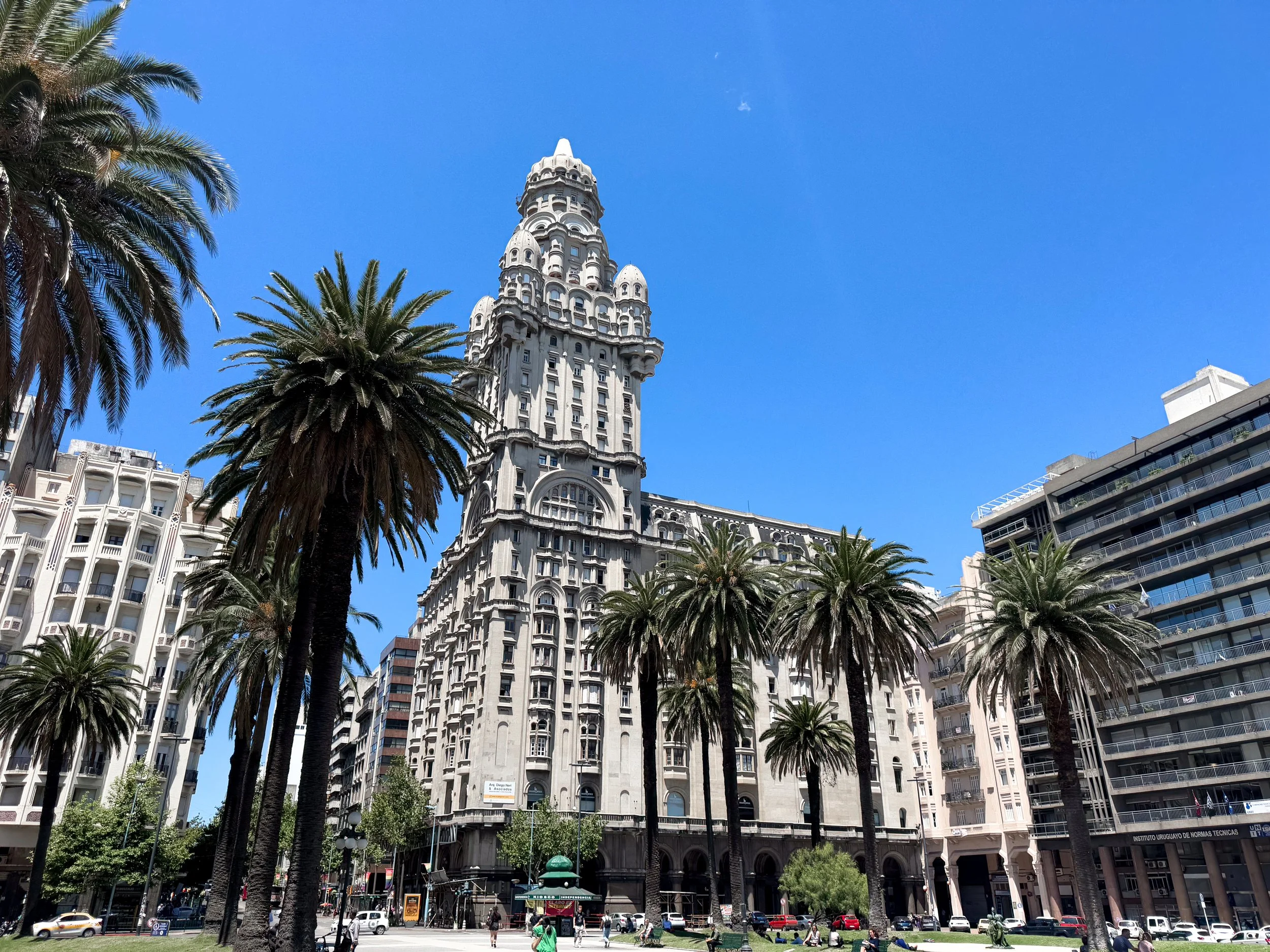
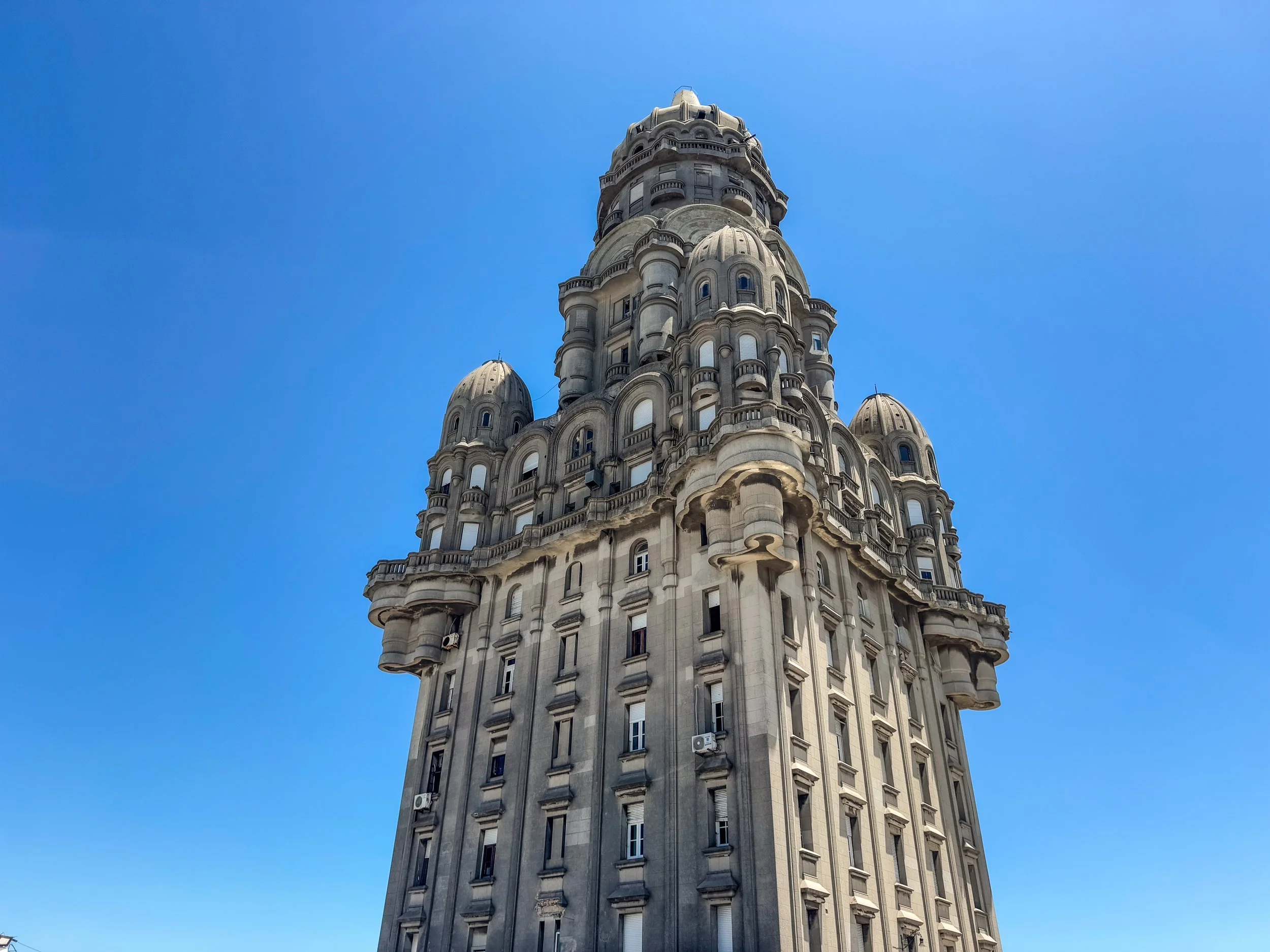
Palacio Salvo. A historic skyscraper and symbol of Uruguay dating back to 1928. Designed in multiple architectural styles, it stands out with its ornamental tower, organic corners and domed roof. Originally built as a hotel, it’s now a residential building with hundreds of apartments. We stayed at an Airbnb on the 8th floor, overlooking the plaza. We toured the building, visiting the observatory just below the domed roof, the 10th deck with close up views of the tower and the Tango Museum at its base.
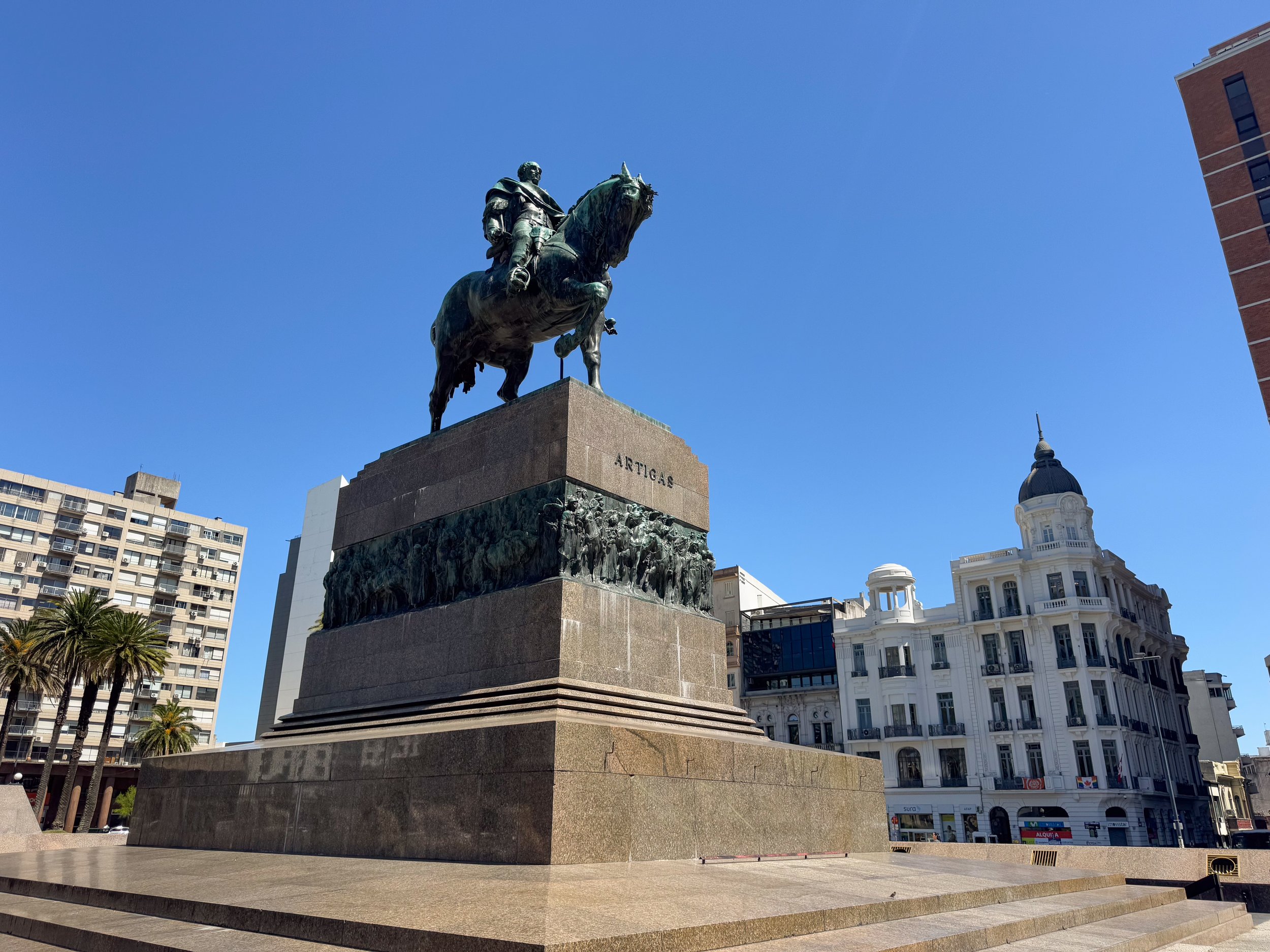
Mausoleo de José Gervasio Artigas. A large monument dedicated to the revolutionary hero with an underground mausoleum protected by two presidential guards.
Puerta de la Ciudela. One of the few remaining walled city gates that surrounded colonial Montevideo.
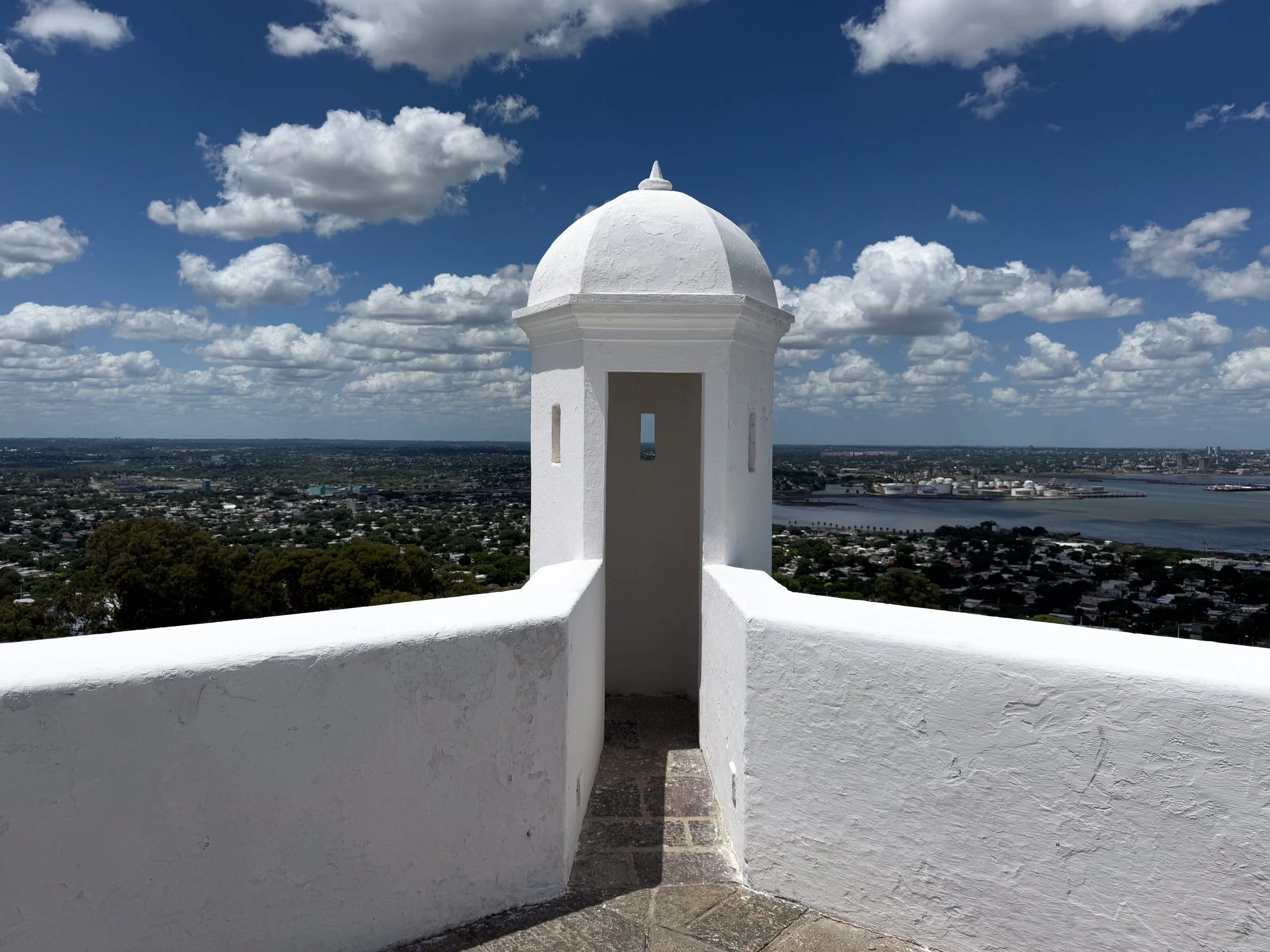
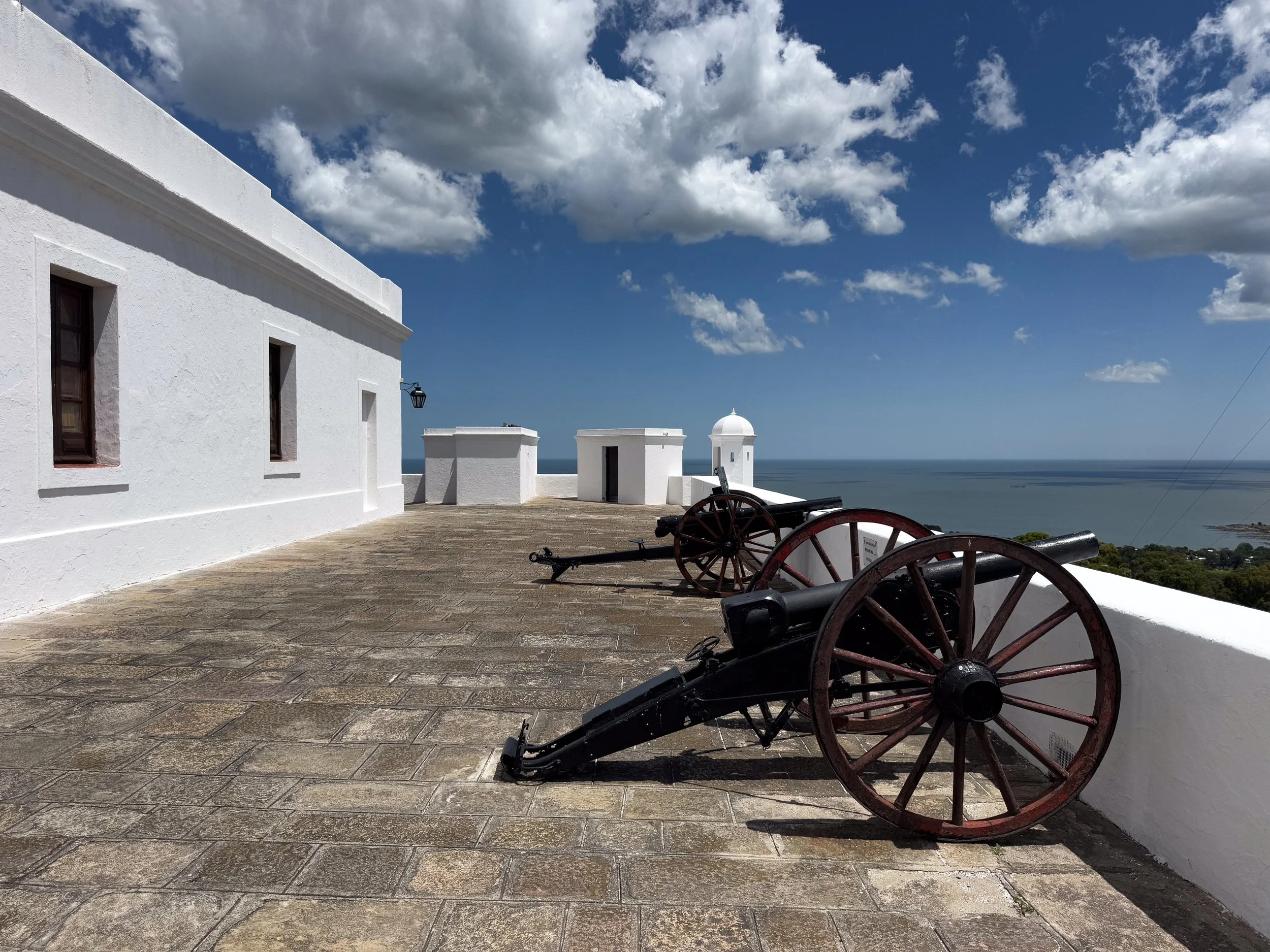
Fortaleza Del Cerro. A Spanish style hilltop fort built from stone with white painted guard towers and cannons lining its wall. The fort offers views of the city, Rio de la Plata and countryside. Inside of its walls is a military history museum dedicated to the country’s independence with exhibits housing antique guns and swords.
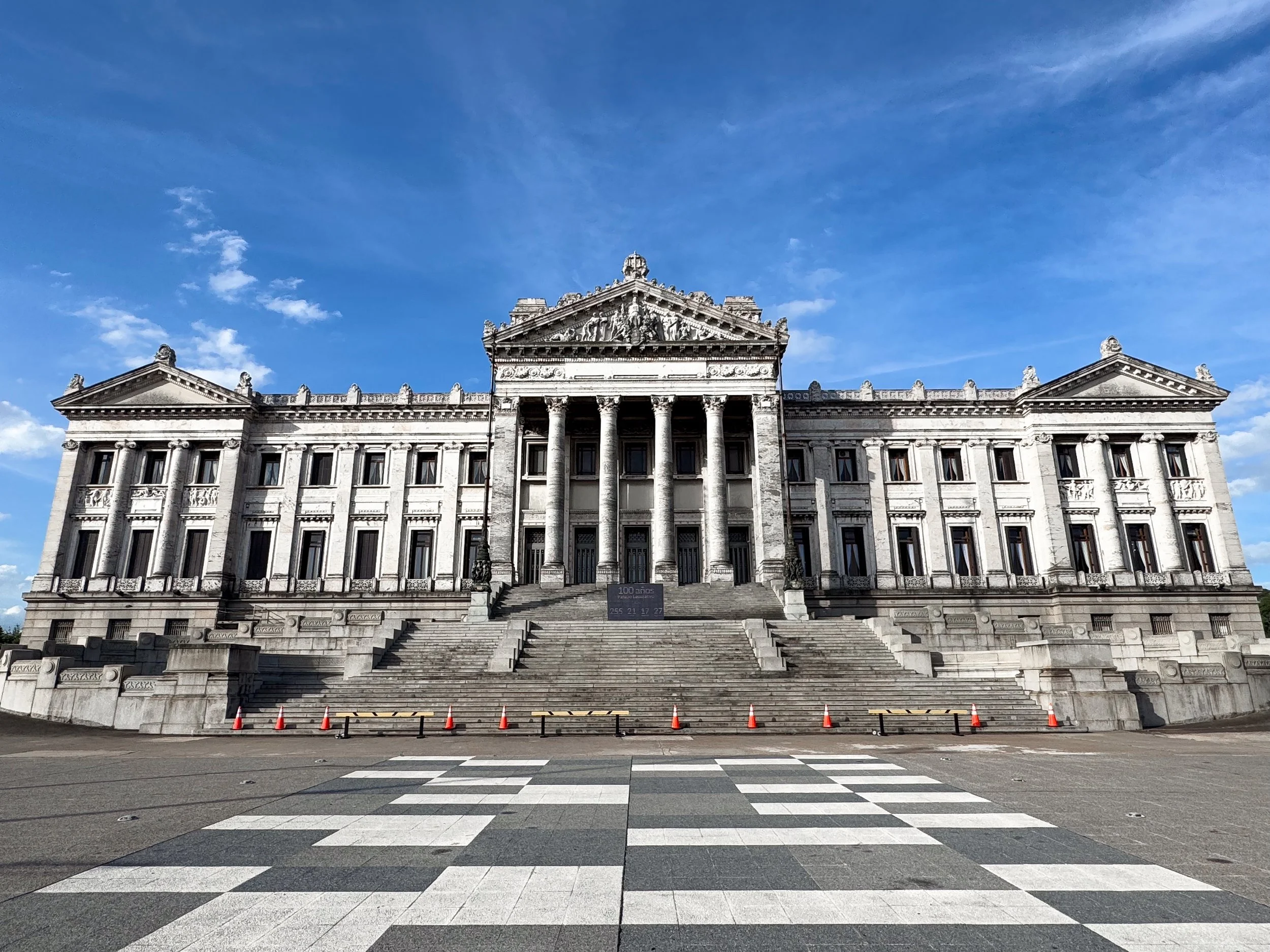
Palacio Legislativo. The capital building of Uruguay and seat of the country’s legislative branch. The intricately designed building is carved from stone blocks with statues, sculptures, columns and ornate reliefs covering its exterior. Instead of a domed roof, the building features a columned pantheon style crown.
La Rambla. A waterfront promenade and road stretching along the city’s coast with beaches, parks and bike paths.
Experience the Festivals and Markets
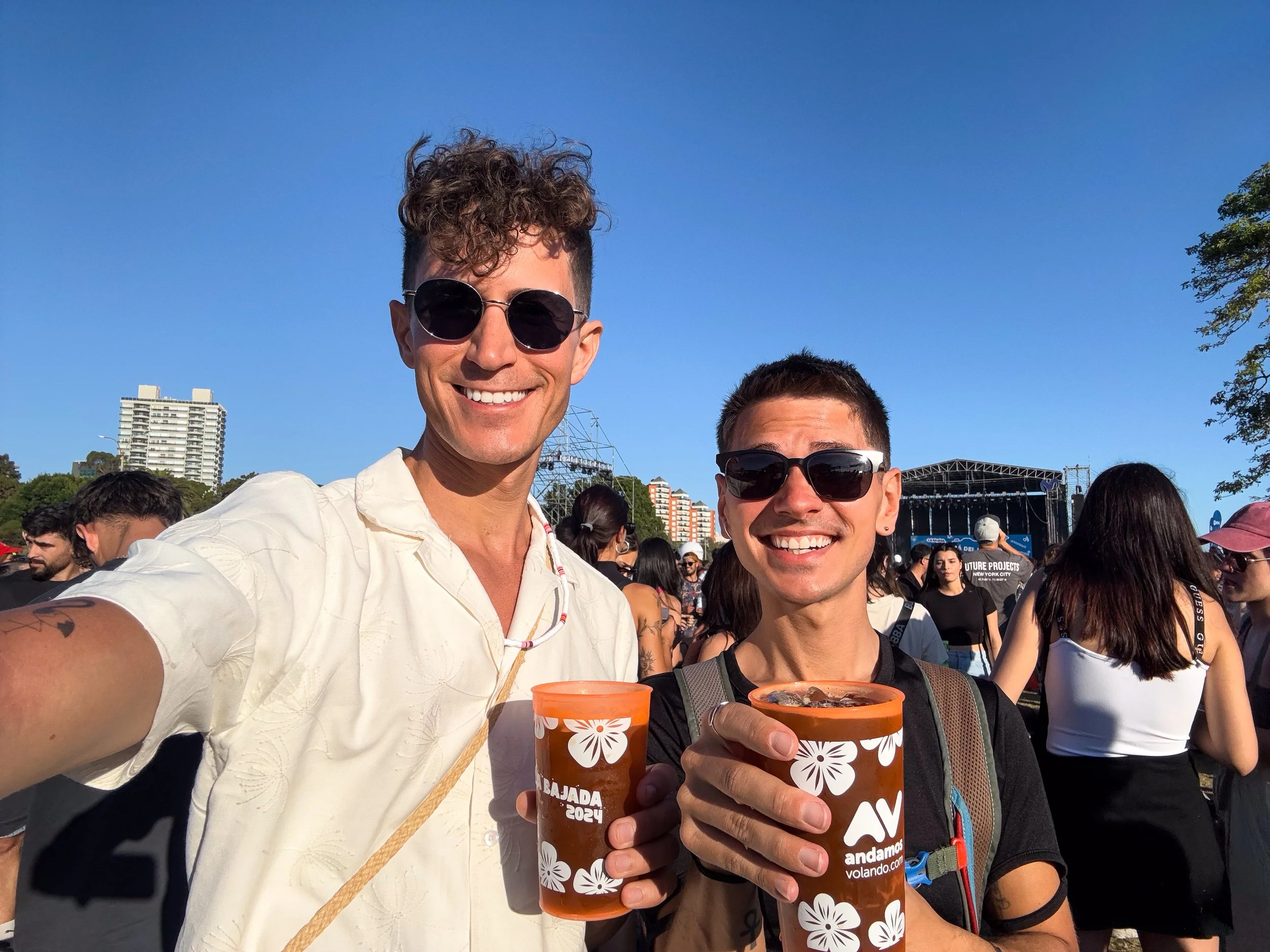
La Bajada. Uruguay’s largest music festival! A summery party scene celebrating the end of the year with thousands of people singing and dancing along to Latin music, live performances and Uruguayan DJs. The date and location are only announced the week of. It’s free to enter, starting in the late afternoon and going into the night. We discovered it completely by accident while walking along La Rambla.
Feria del Parque Rodó. A holiday craft fair that operates from early December until Christmas. Hundreds of vendors set up in tents lining the perimeter of Parque Rodó selling herba mate accessories, jewelry, house-plants, leather goods, cutting boards, clothing, crystals and gifts. There are two sections with food trucks selling all varieties of cuisine and beverages.
Mercado del Puerto. A historic market in a wrought iron and wooden pavilion with many restaurants specializing in Parrilla. Smoke from wood burning grills fills the air with an aromatic haze as coils of sausage, slabs of meat and red bell peppers cook on large grates. Other vendors sell empanadas, Uruguayan wines, alfajores, yerba mate, gaucho style clothing and souvenirs.
Places to Eat and Drink in Montevideo
Toque Toque Bar. A historic Renaissance style house converted into a restaurant and bar with an outdoor patio and indoor dining room beneath a brightly colored stained glass roof. The menu features Spanish style tapas and cocktails. We came here for pre-dinner drinks. Try the Tropical Gin made with gin, passion fruit, lemon and vanilla or the Free Bird mixed with rum, strawberry, Aperol and mint.
Toledo Tapas Bar. An elevated tapas bar in a converted neo-classical home with contemporary twists on Spanish dishes. We shared the Peruvian style ceviche, garlic shrimp cooked with caramelized onions and carrots, and the Papas Bravas, prepared as a savory layered tart containing the sauce within. To drink, we sipped on a tiki style rum cocktail and a light but refreshing gin and tonic with grapefruit.
Bar Rodó. A popular bar in the Barrio Parque Rodó with multiple locations. Come here for Uruguayan bar food, cocktails and regional beers.
Baker’s Bar. A local feeling cocktail and tapas bar with well made drinks. Try a classic drink like the mai tai or one of their house concoctions like La Picosa, made with mezcal and garnished with a purple foam.
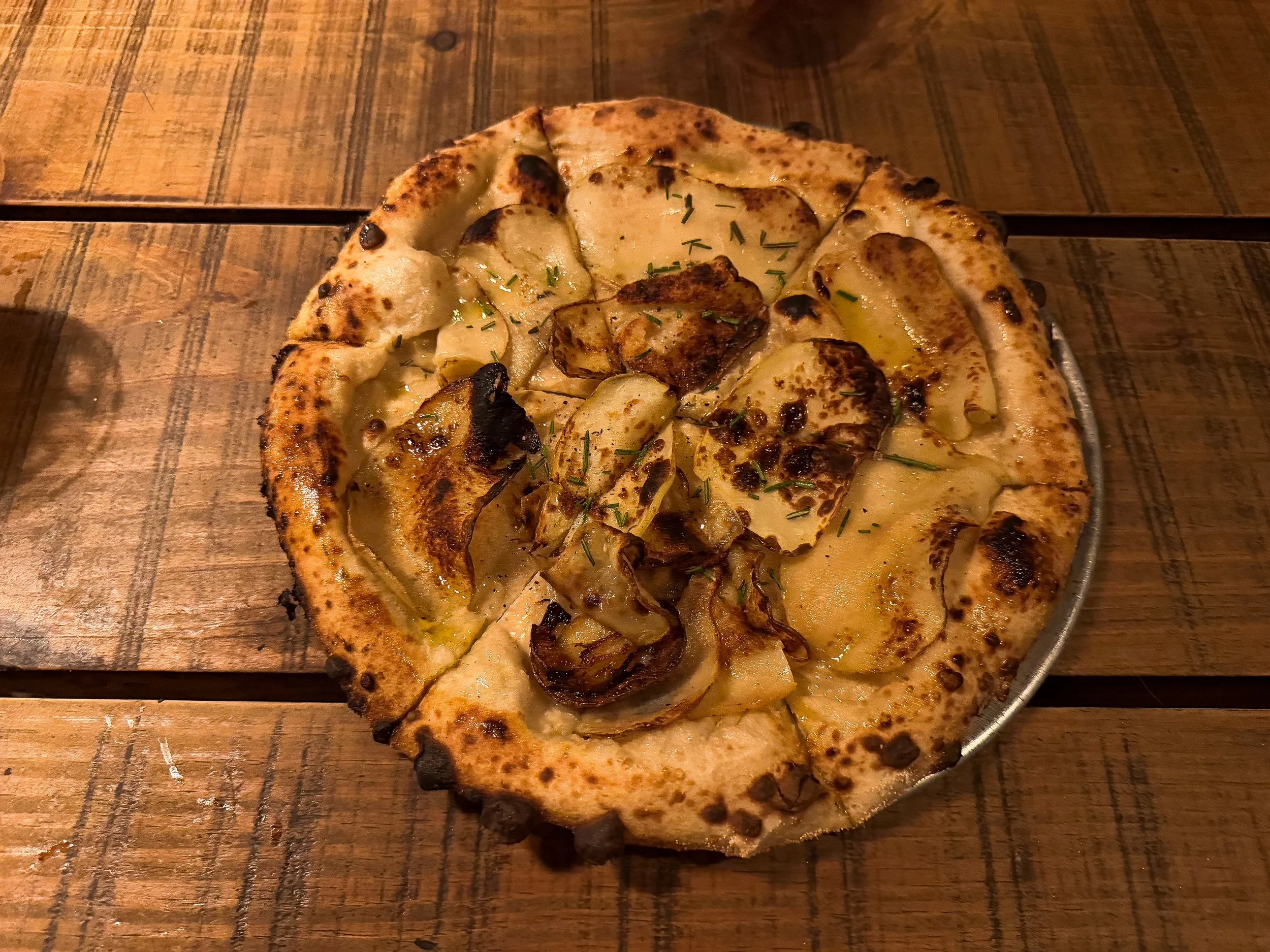
Cerveceria Malafama. A large beer hall and brewery in a warehouse style building with house brewed lagers, IPAs, stouts and sours. Their kitchen turns out delicious Uruguayan style pizzas and traditional tapas. We tried the amber lager, west coast IPA and “Bianca de Papas,” a pizza made with a garlic cream and thinly sliced potatoes.
Restaurant El Navegante. A seafood restaurant with nautical decor, a fish tank in the bar and a menu of basic but tasty versions of traditional Uruguayan dishes. We ordered the Merluza (fried hake) and Miniaturas de Pescado (small fried fish bites).
Cafe Salvo. A cafe at the base of the Palacio Salvo with coffee, pastries and sandwiches. We stopped in one morning for a quick breakfast.
Punta del Este
Punta del Este is a resort town with sandy beaches, upscale neighborhoods and a historic peninsula lined with restaurants, bars, cafes and shops. We spent a long weekend in Punta relaxing on the beaches, walking the around the city’s central neighborhoods and visiting nearby sights.
Neighborhoods & Sights
The Peninsula. The neighborhood on the city’s peninsula with restaurants, bars, cafes, shops, small beaches, a harbor, high end homes and the country’s southernmost point.
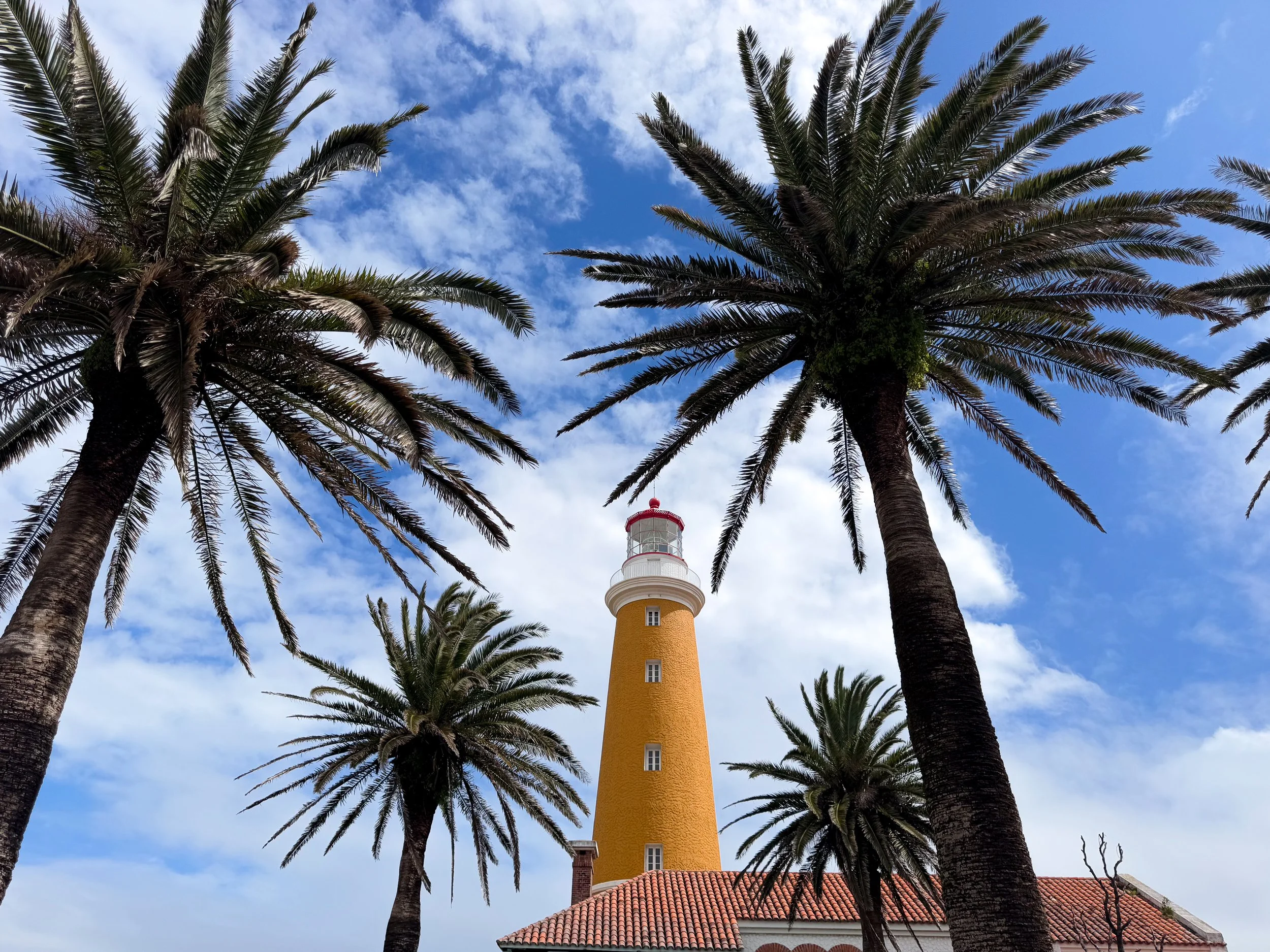
Faro de Punta del Este. A golden orange light house in the middle of the peninsula with a brick light house keepers home at its base. We tried to visit its observation deck twice but it was closed due to the off season.
Avienda Gorlero. A touristy and commercial street in the center of the peninsula with shops, restaurants, cafes, art galleries, real estate offices and markets.
Punta Salinas. The furthest point on the peninsula and southernmost point in Uruguay. There is an ocean view lookout and small war memorial.
Feria de Artesanos de Punta del Este. A market on a palm lined plaza of the peninsula with dozens of vendors set up in a series of kiosks selling handmade items, mate accessories, beachwear and souvenirs.
San Rafael Neighborhood. The upscale neighborhood along Playa Brava with beachfront skyscrapers, luxury residences and high end hotels.
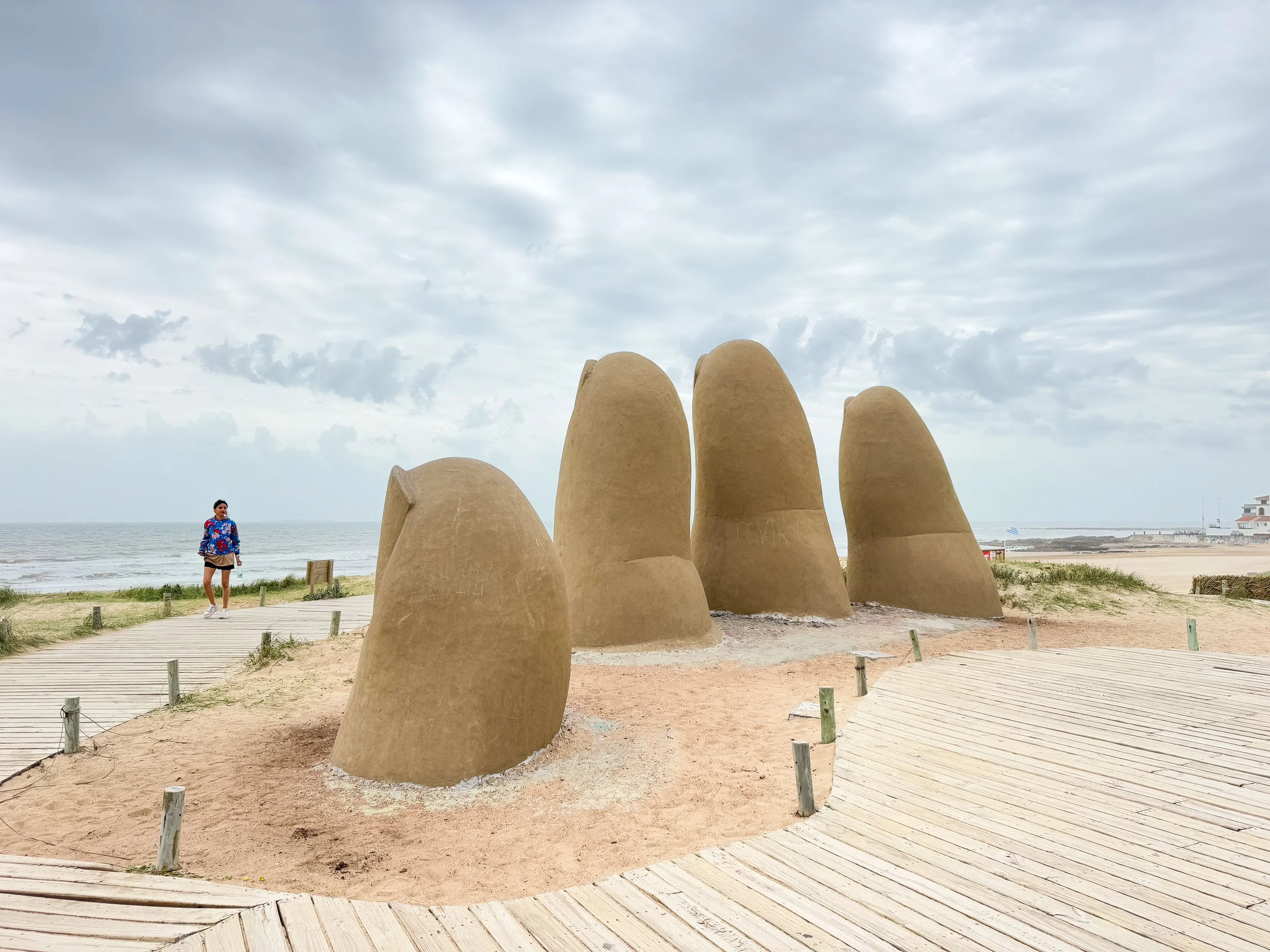
La Mono en La Arena. A sculpture of a hand crawling out of the sand built as a warning sign of the risk of drowning in the powerful currents.
Playa Brava. A lengthy yellow sand beach along the Atlantic with several seasonal restaurants, surf schools and nearby hotels. It’s a popular spot for sunbathing and relaxing along shore.
Places to Eat & Drink in Punta del Este
Restaurante Raíces. A Spanish restaurant with several types of paella, tapas style starters and Uruguayan wines. We shared the “A Banada” paella made with mixed seafood like shrimp, mussel, scallops and calamari. We shared a bottle to Cabernet Franc from Bodega Garzón, recognized one of the country’s best vineyards.
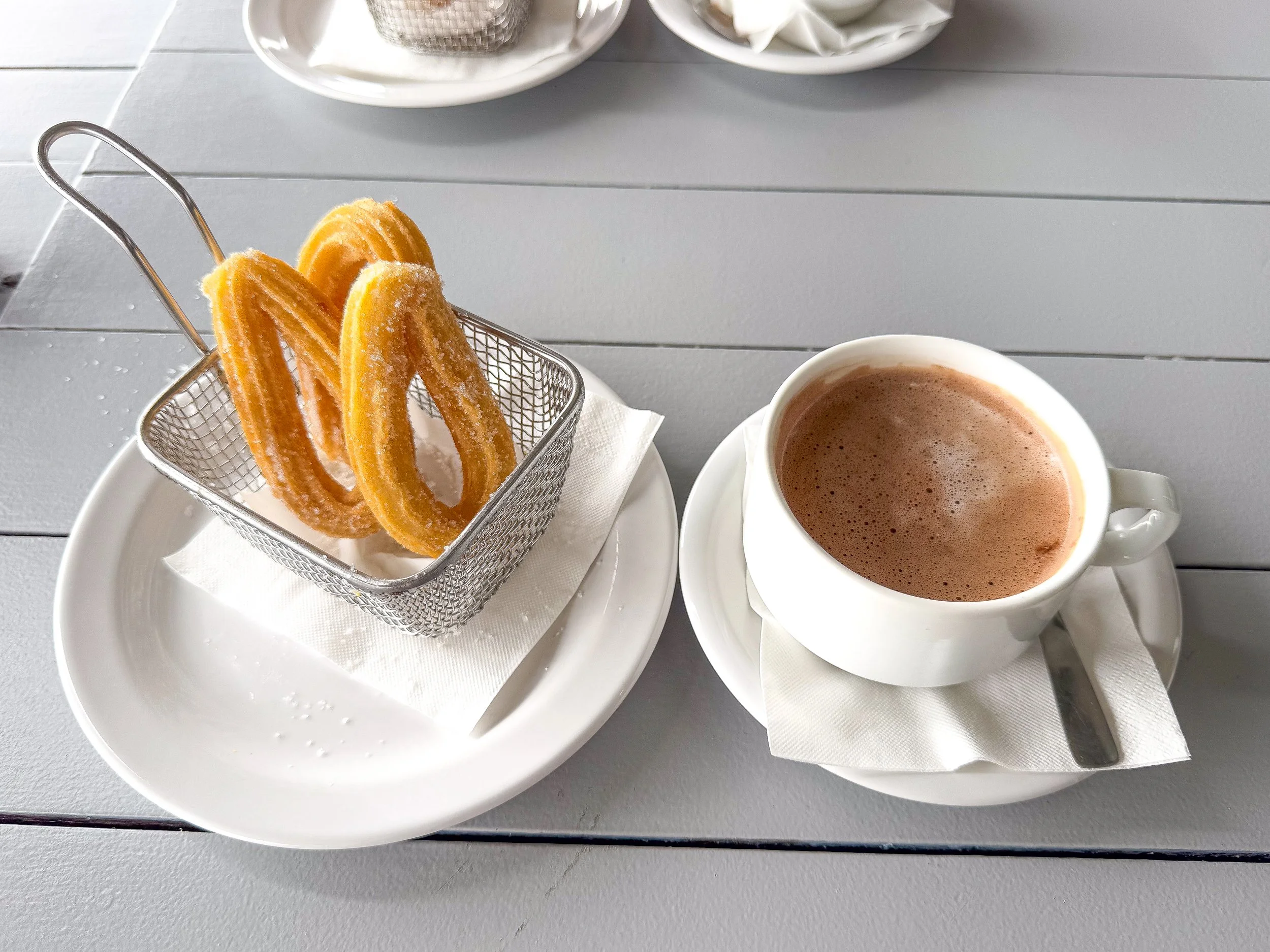
Puerto de Punta del Este. A dining complex near the harbor with seafood restaurants, cafes, bars and ice-cream shops. We stopped by La Marea for Chocolate con Churros!
Manantiales Point. A two level restaurant over looking the harbor with multiple bars. We stopped in for their afternoon happy hour, sharing a pitcher of Sangria made from Uruguayan wine.
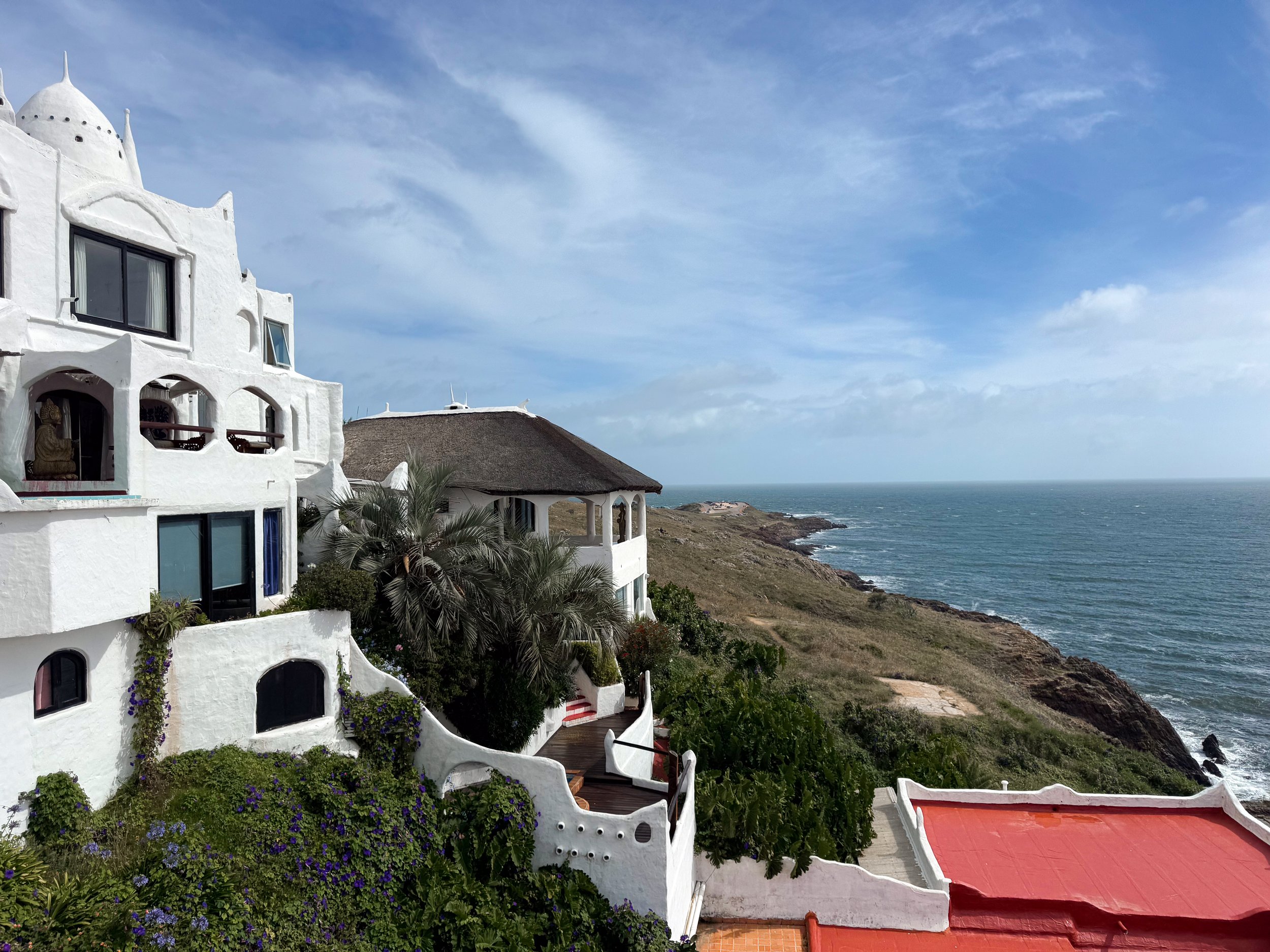
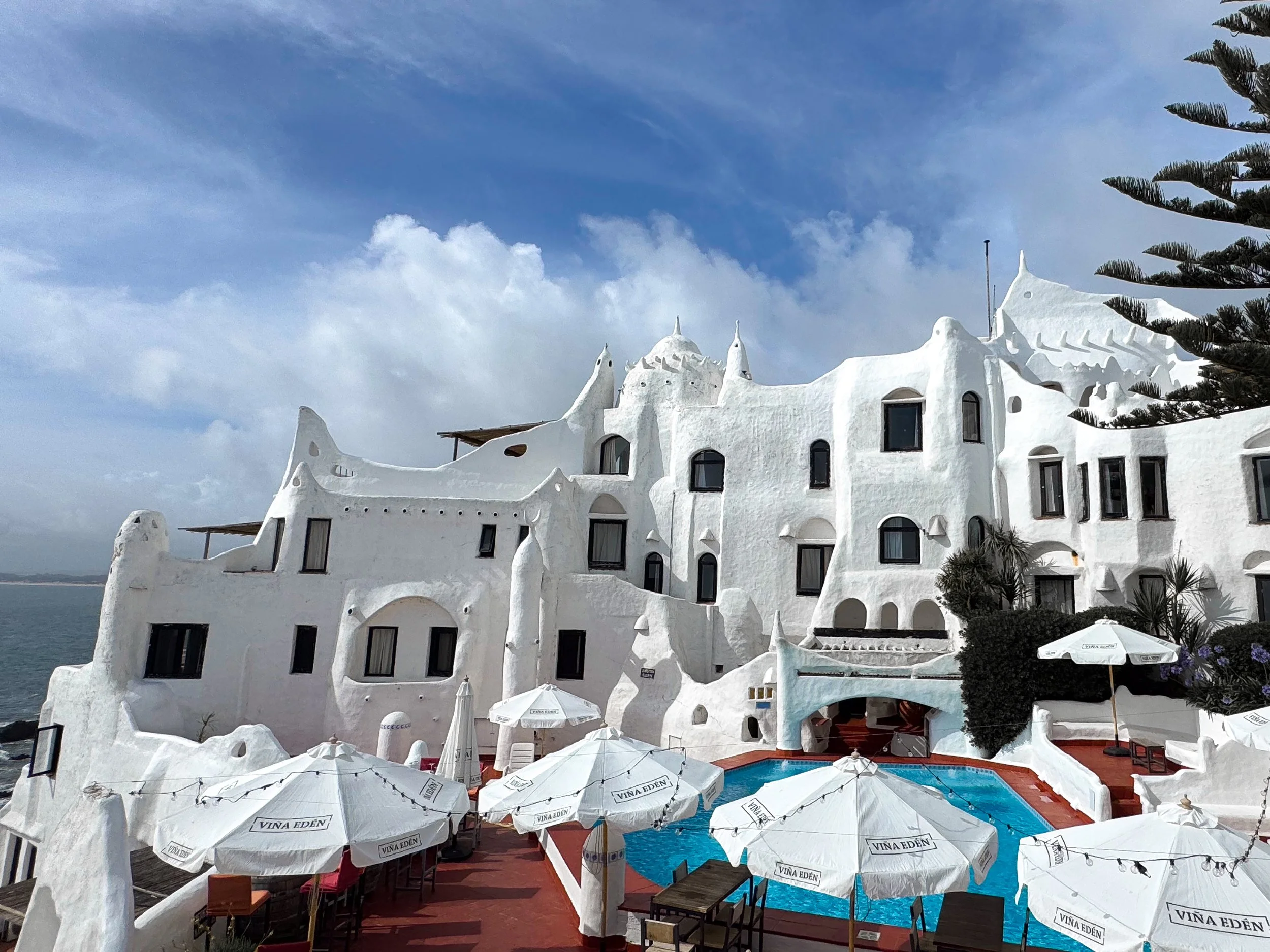
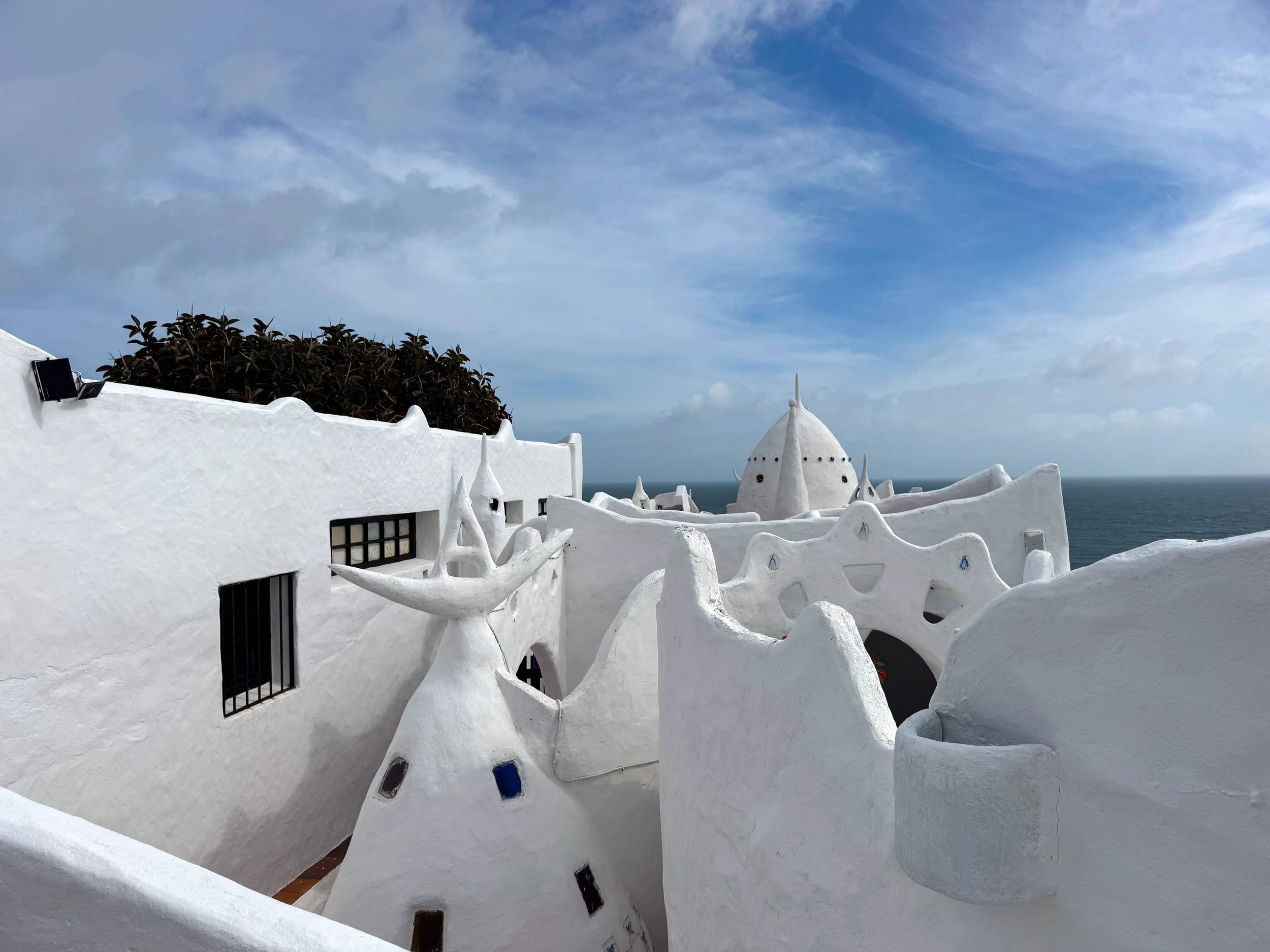
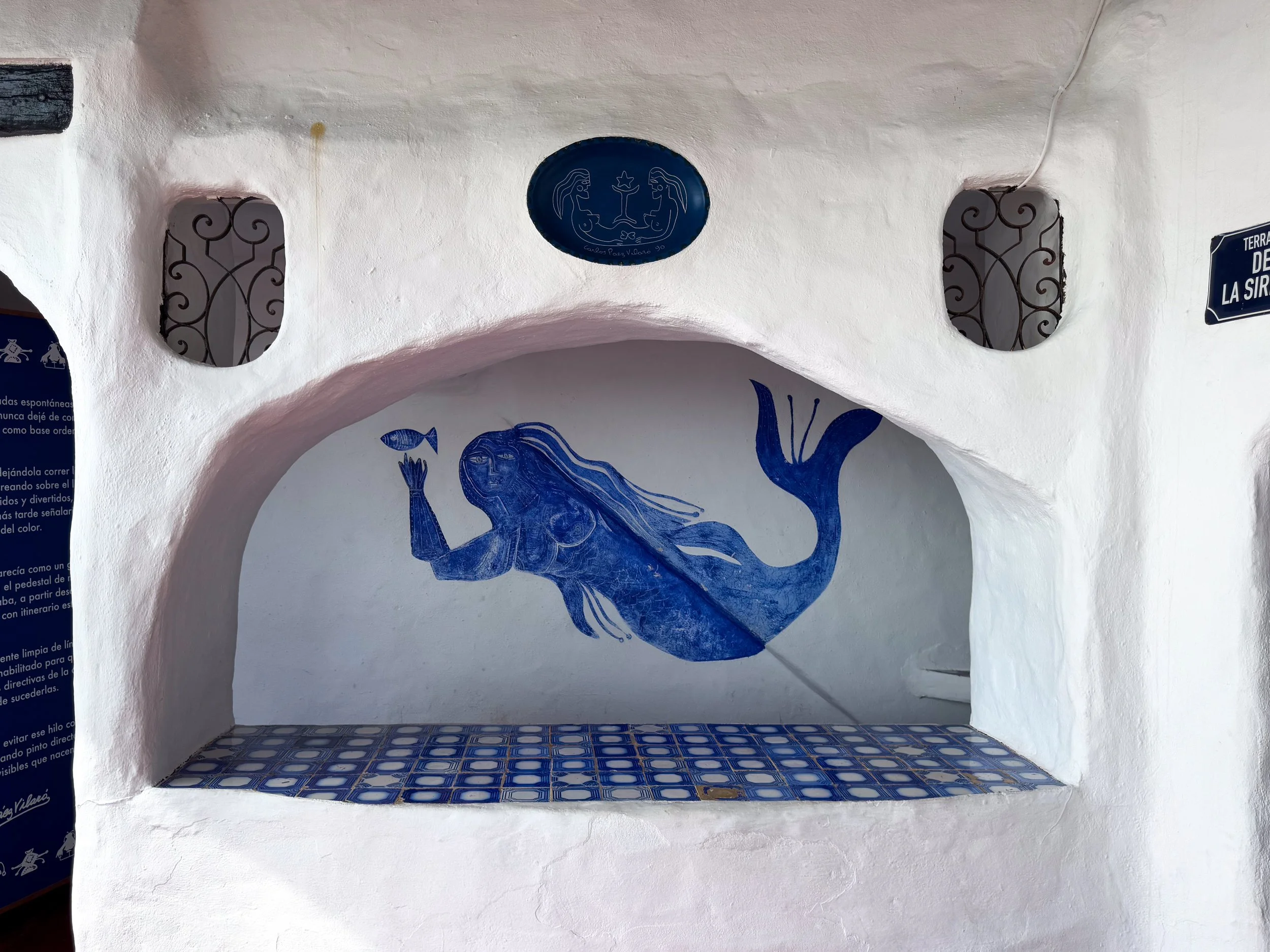
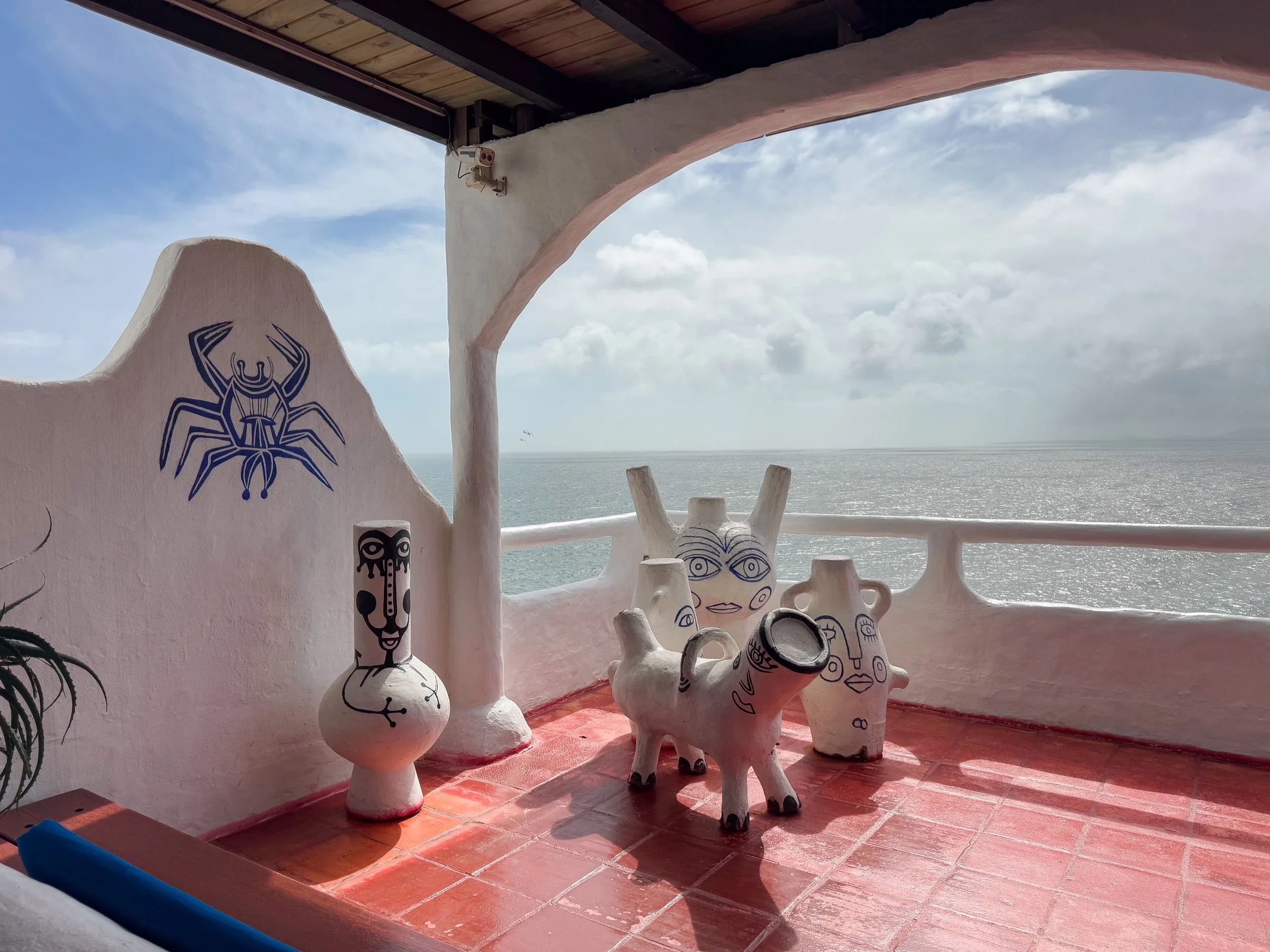
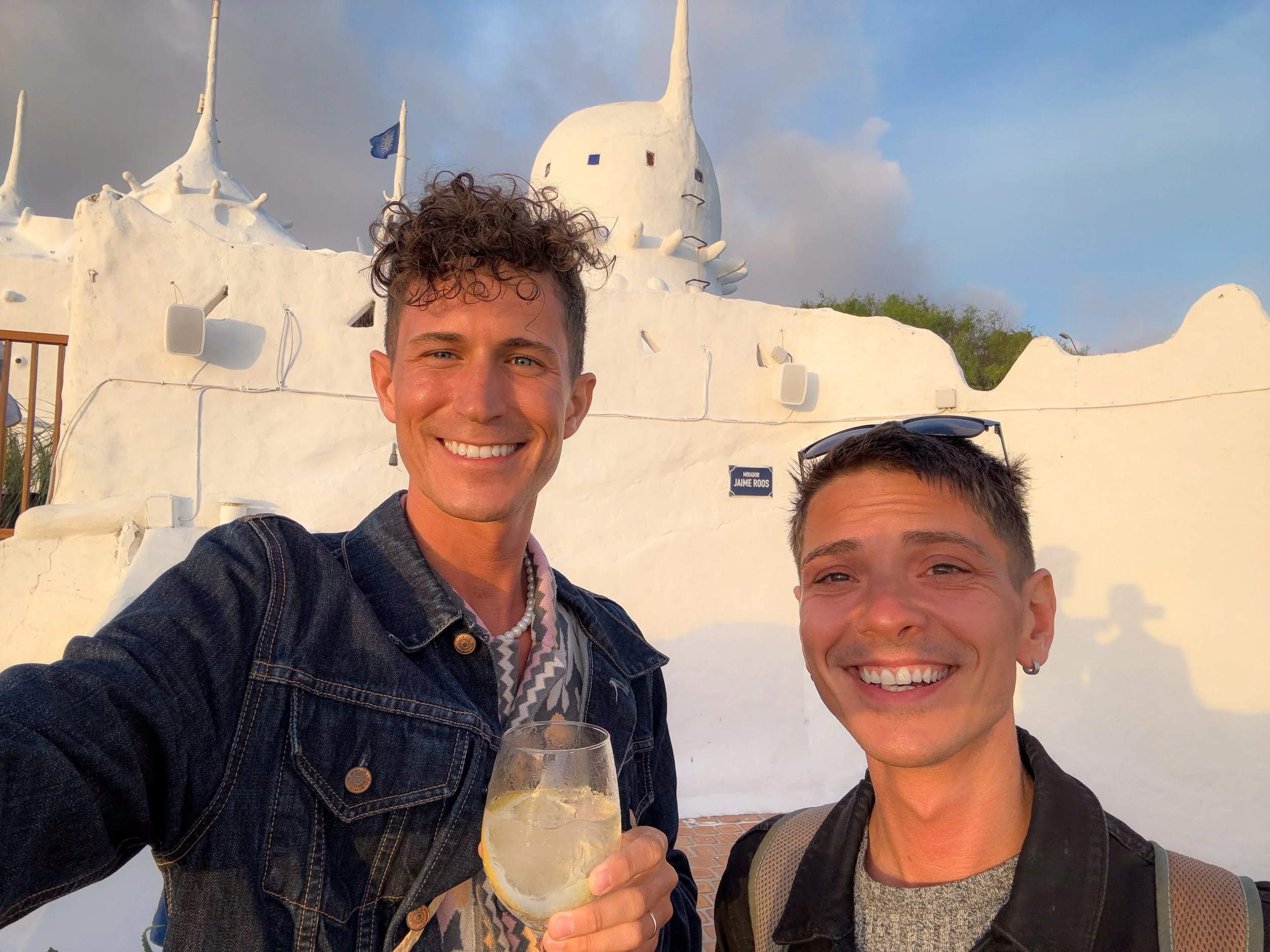
Museo Casapueblo
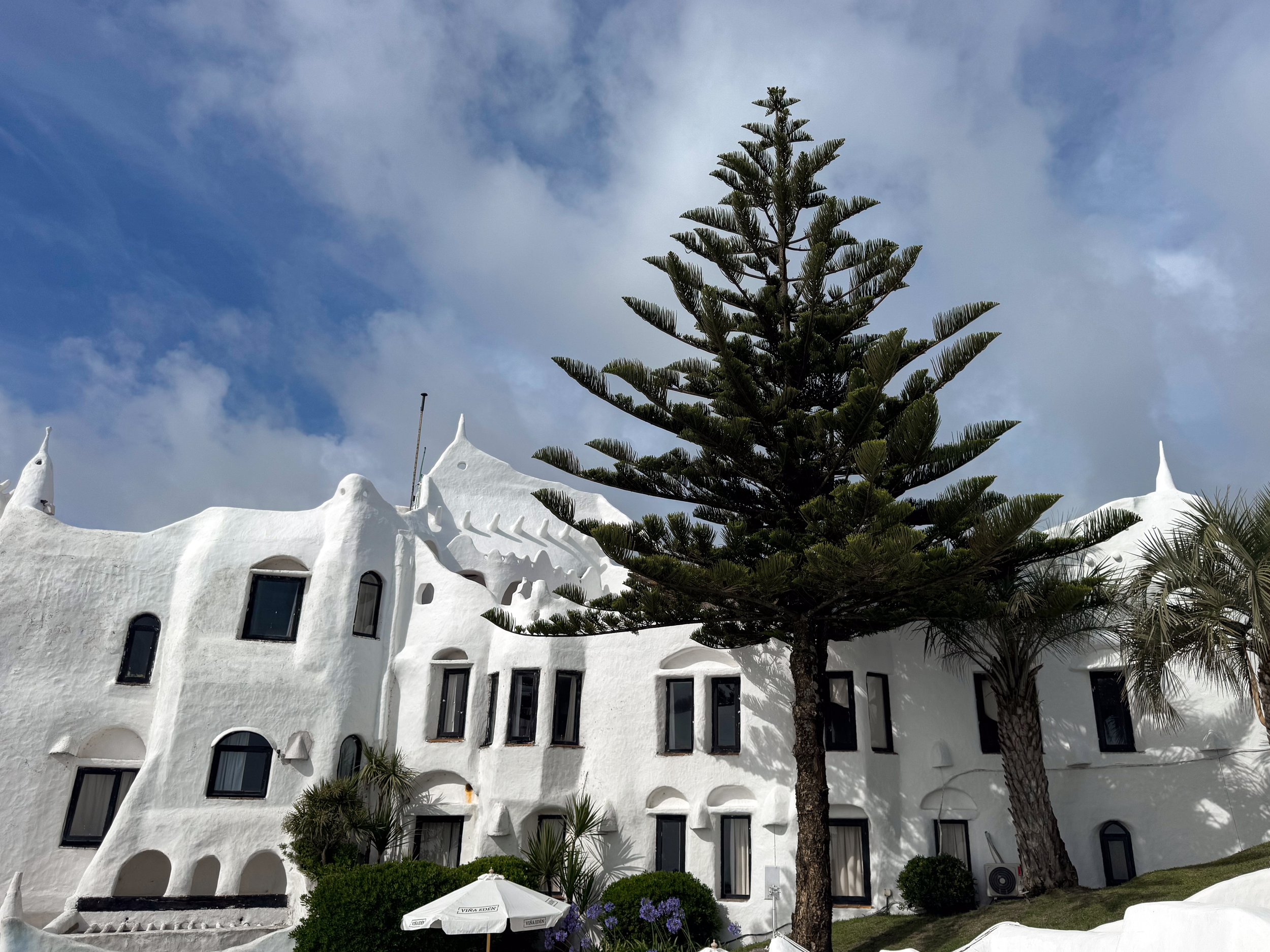
A terraced organic complex built into the coastal hillside with white painted buildings formed by curved walls, conical spires, winding staircases, terracotta terraces and blue tiled accents. It was designed and built by one of Uruguay’s most beloved artists, Carlos Páez Vilaró, throughout his lifetime. The property served as his studio, home and a living sculpture. It’s now converted into a museum, restaurant and hotel with galleries of his work and a theater with a film about his life.
The Ceremony of the Sun. As the sun sets below the Rio de la Plata, a recording of Carlos Páez Vilaró’s poem “Ceremonia del Sol” is played over Casapueblo. It’s a beautiful ode to the sun and life. We came here our last night in Uruguay, a fitting end to our time in this beautiful country. Arrive an hour early and book tickets online in advance.

Playa Chihuahua. Suns out buns out! A lengthly nude beach with yellow sand, some grassy dunes, a coastal river and a beach shack selling drinks and light bites. After laying out, we stopped by for caipirinhas and some shade. The beach is very lgbtq+ friendly with a progress flag flying along side Uruguay’s flag. It’s located a 10s minutes from Museo Casapueblo.
Uruguayan Cuisine
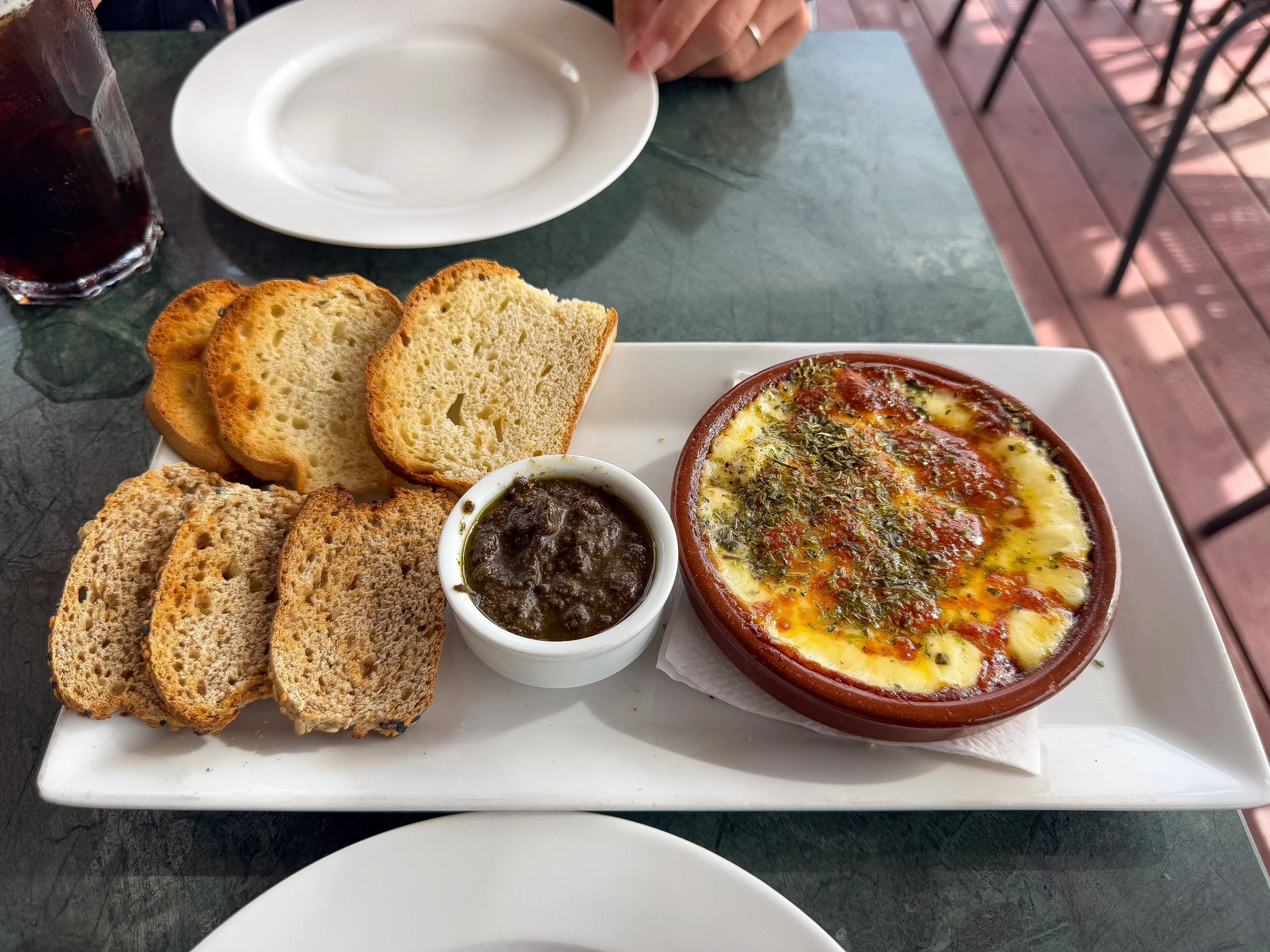
Provoleta. Grilled and melted Argentinean provolone cheese seasoned with oregano and olive oil It’s often served with bread for dipping.
Uruguayan Style Pizza. Uruguayan style pizza is focused on the bread with a thin crust and pillowy dough. Sauce and cheese are treated like any other topping and not guaranteed. It’s frequently sold by the half meter at pizzerias across the city.
Medialunas. Tiny half moon shaped pastries similar to croissants made with a sweet dough and sugar glaze.
Picada. An Uruguayan version of charcuterie with a range of items to “pick at” like cheeses, spreads, pickled veggies, breads, meats and empanadas.
Tortas Fritos. A sweet snack made from rolled dough, deep fried and covered in dulce de leche or cinnamon sugar. It’s typically sold at street carts in plazas and parks.
Yerba Mate. This herbal tea is immensely popular across Uruguay. People carry around gourd shaped mugs filled with tea leaves and a thermos with hot water to continuously steep their mate throughout the day. Its drank through a metal straw with a spoon shaped filter at its end.
Tannat. The national wine of Uruguay produced at vineyards across the country. It’s a tasty wine defined by its tannic forward mouth feel and rich palette of flavors.
Fernet and Coke. A bitter herbal liquor mixed with Coke. It’s a common cocktail across Uruguay.
Where to Stay
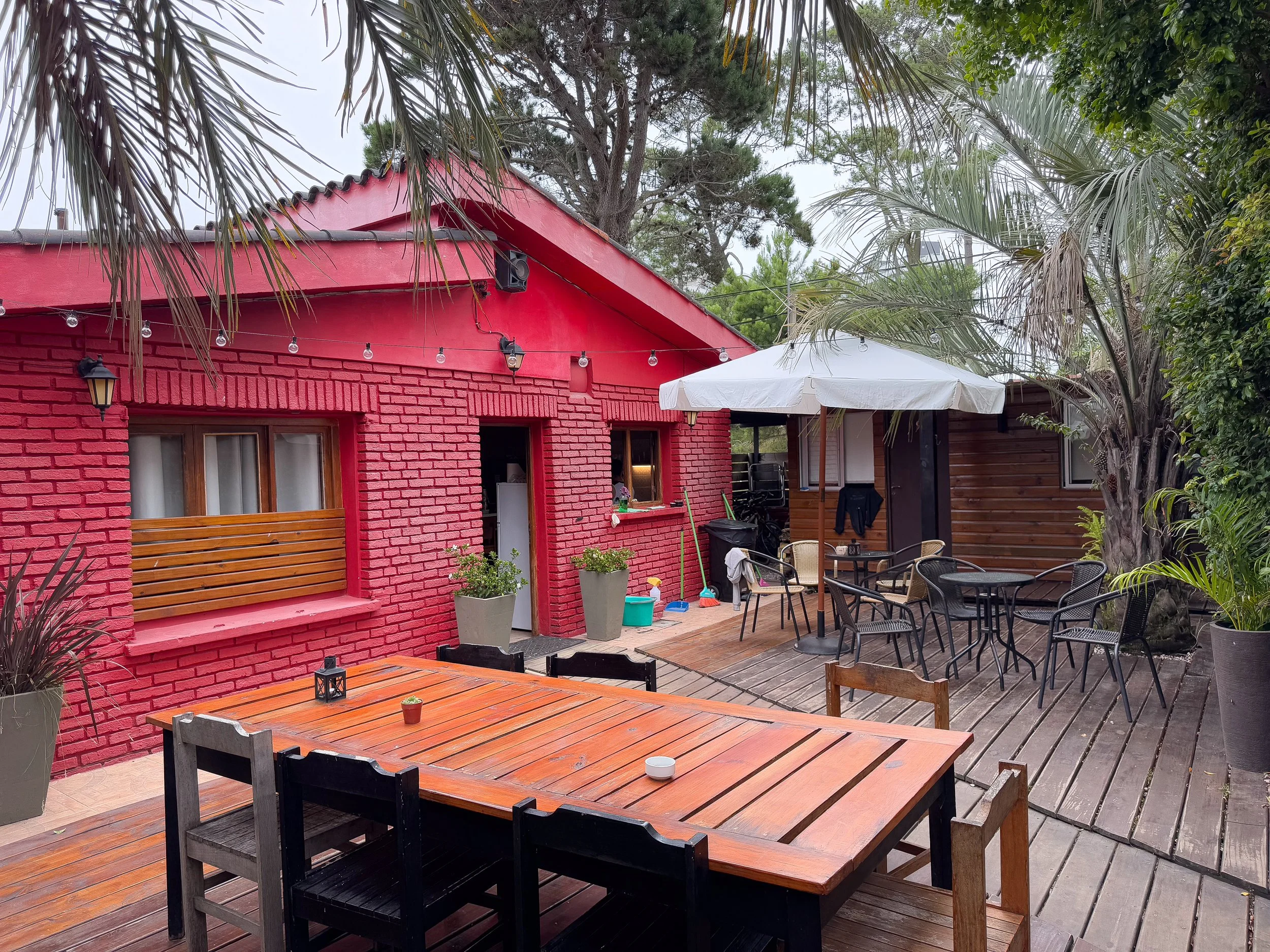
Rocamar Boutique Hostel. A hostel near Playa Brava with dorms and private rooms. There is a communal patio with seating areas, a pool table and bar. It’s popular with young Uruguayans and Argentineans working seasonal jobs in the tourism and service industries.
Location Specifics
Covers. Many restaurants and bars have “hidden covers” or cubiertos ranging in cost for dining in.
Tipping. 10% tips are customary.
Cash vs Card. Card is accepted at most businesses. There is often a 10-25% discount at restaurants for using credit card.
For Next Time…
Having spent just over a week in Uruguay, we were able to enjoy time in three of the countries coastal cities. When we return we plan to visit more of the smaller towns and tour vineyards.
Punta del Este. Though we spent a long weekend in this beautiful beach town in mid December, most businesses were still closed for the season and the weather was cool & rainy. We would love to return to experience its full charm under the summer sun.
Punta del Diablo. A fishing village and beach town near the Brazilian boarder with sand dunes, dirt roads and tiny coastal houses.
Carmelo. A small town along the Uruguay River with many vineyards specializing in national grape, Tannat.