Buenos Aires Travel Guide: Neighborhoods, Food & Nightlife
Buenos Aires, Argentina
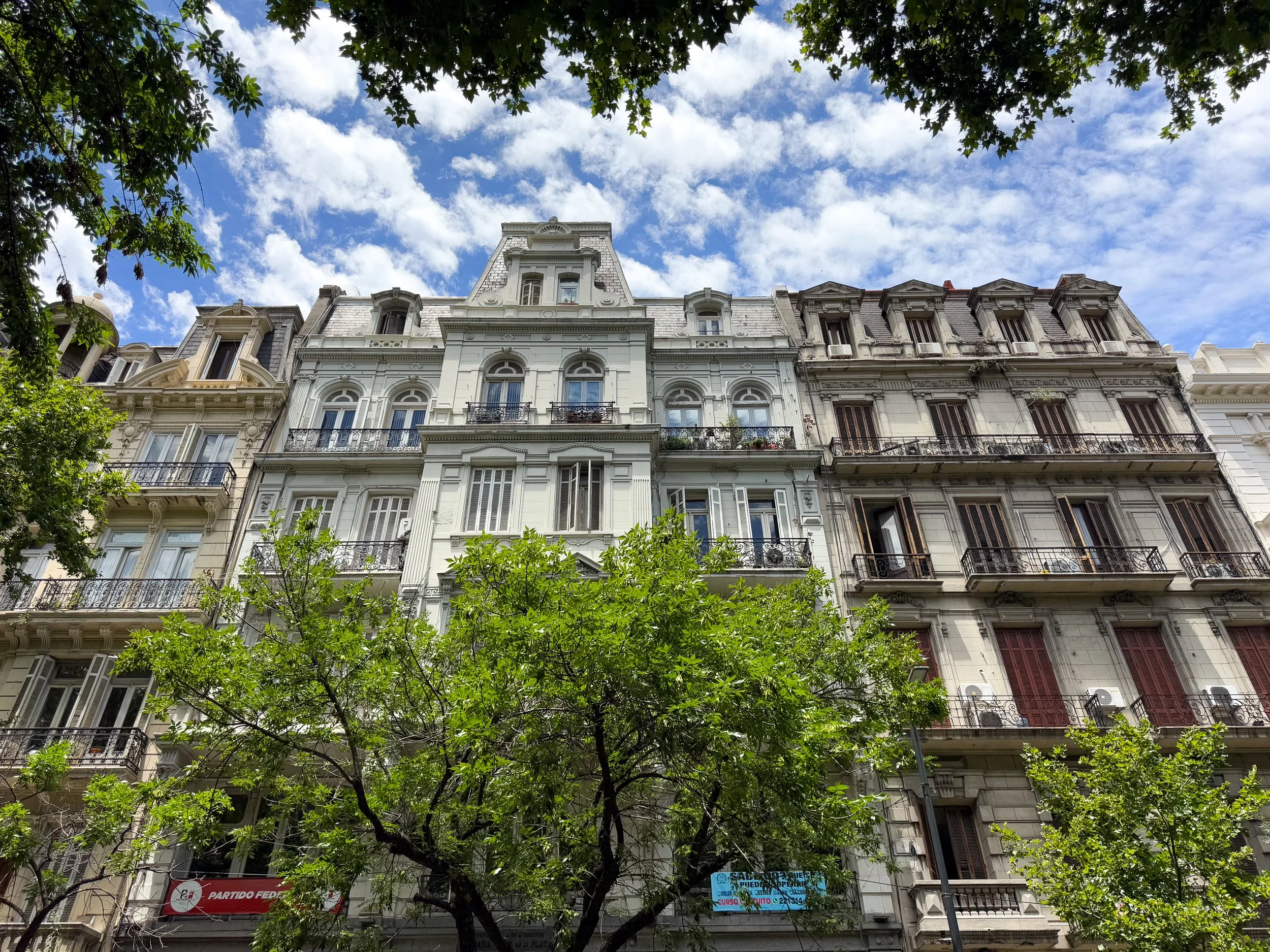
Buenos Aires is a vibrant metropolis renowned for its cuisine, culture, architecture and history. It’s home to lively markets, world class cocktail bars, impressive art museums, glamorous buildings and verdant parks. It’s defined by its distinct neighborhoods, each with their own character and charm. We spent a week exploring the city and discovering its hidden gems.
San Telmo
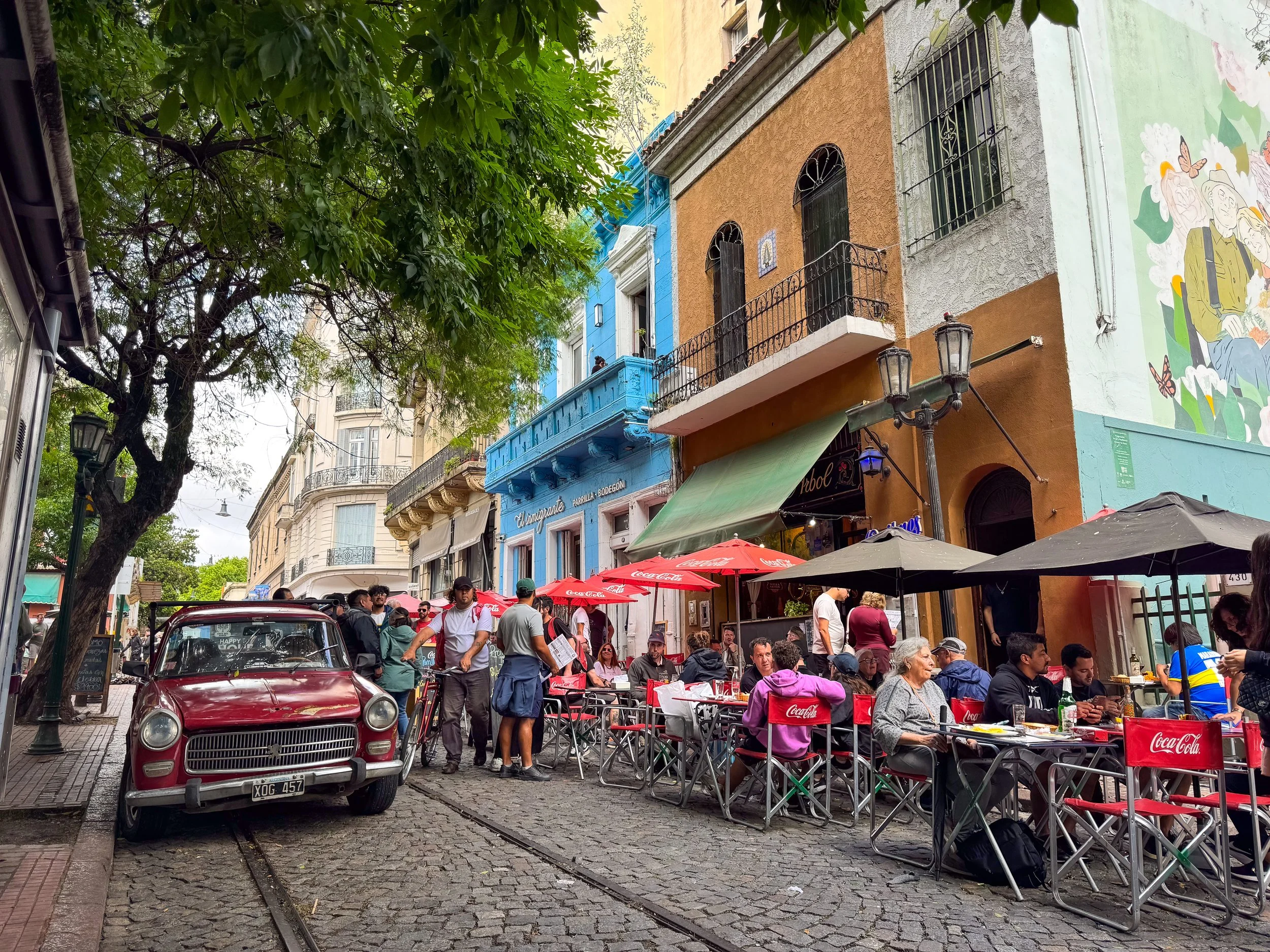
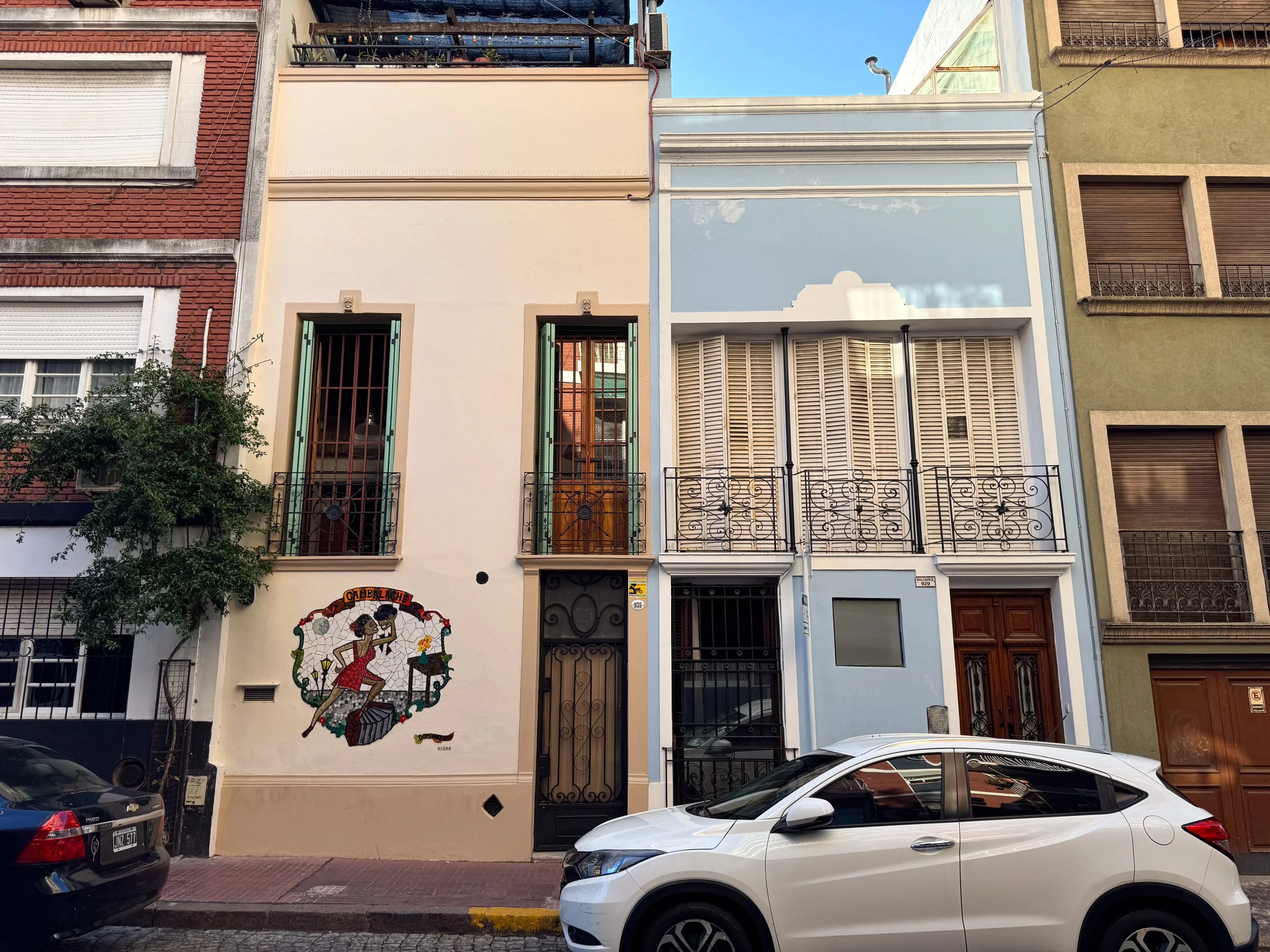
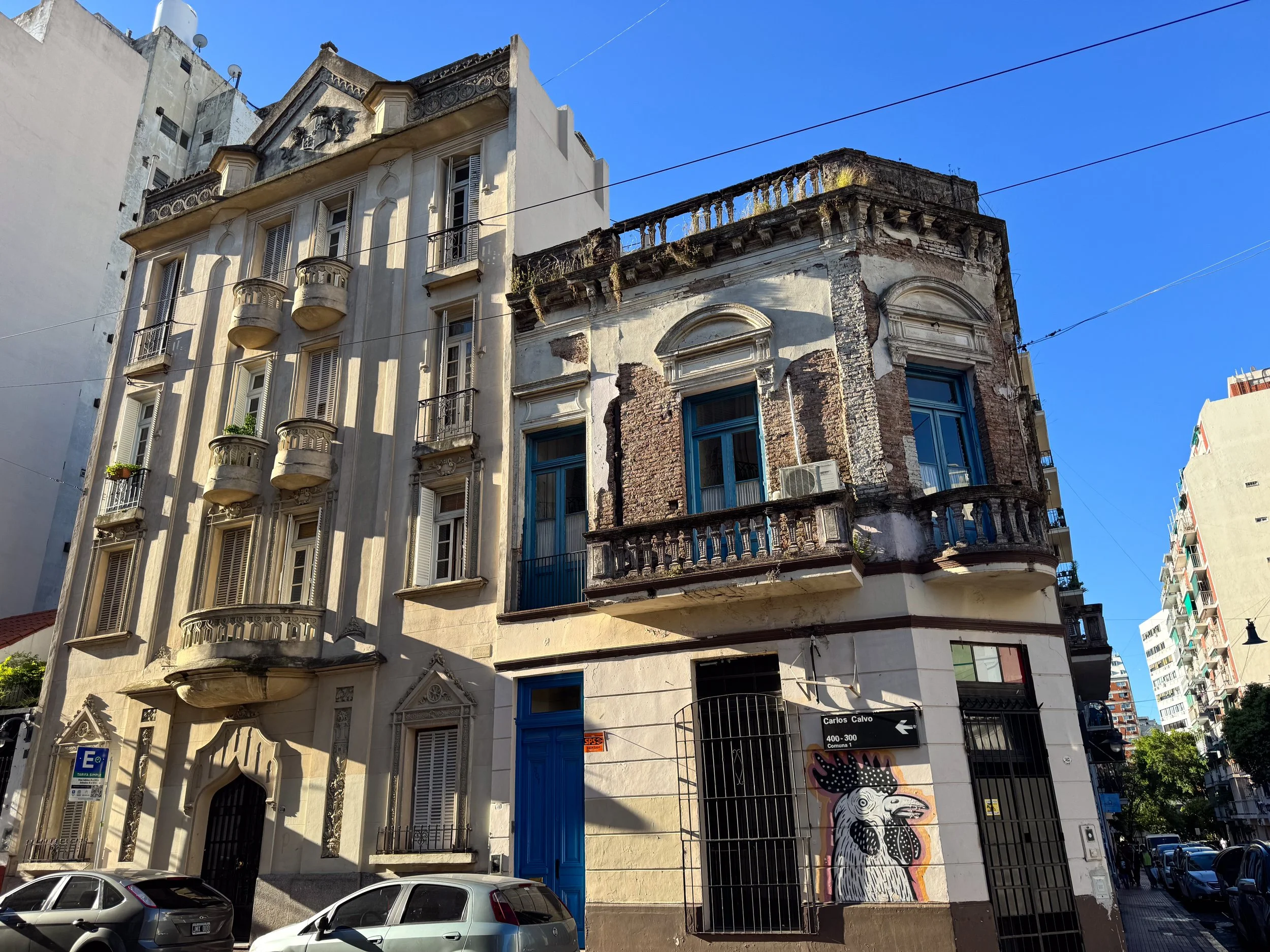
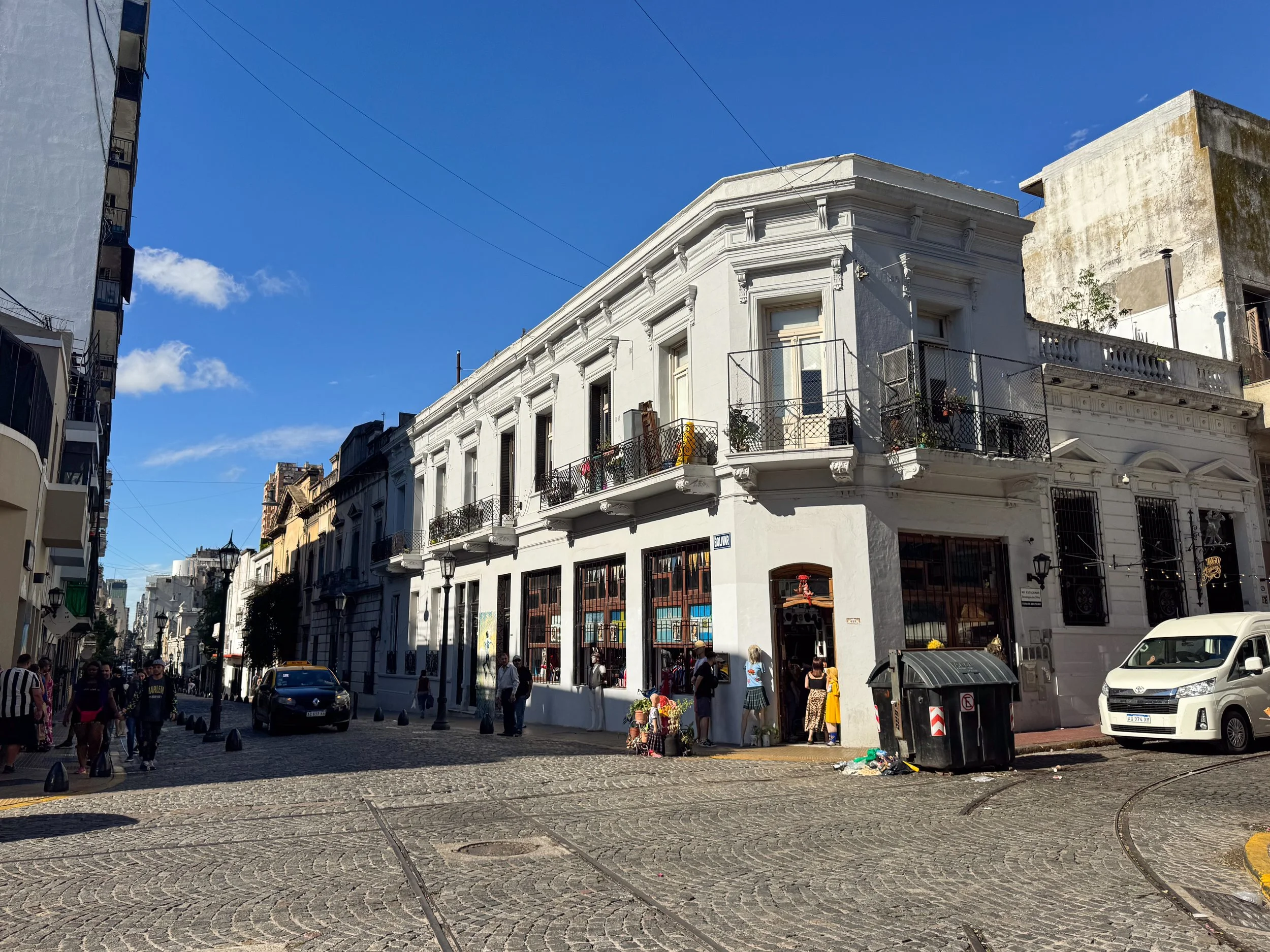
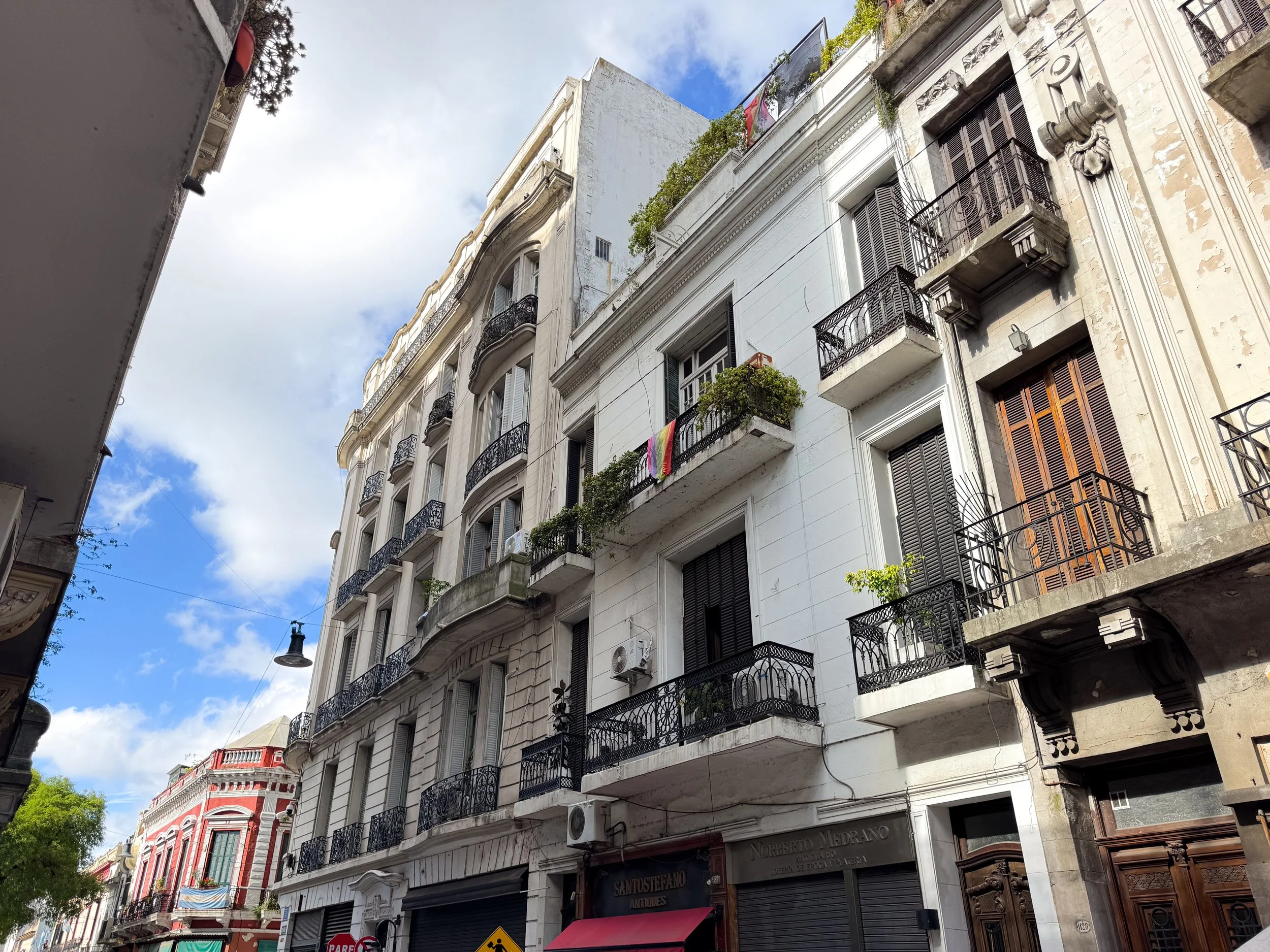
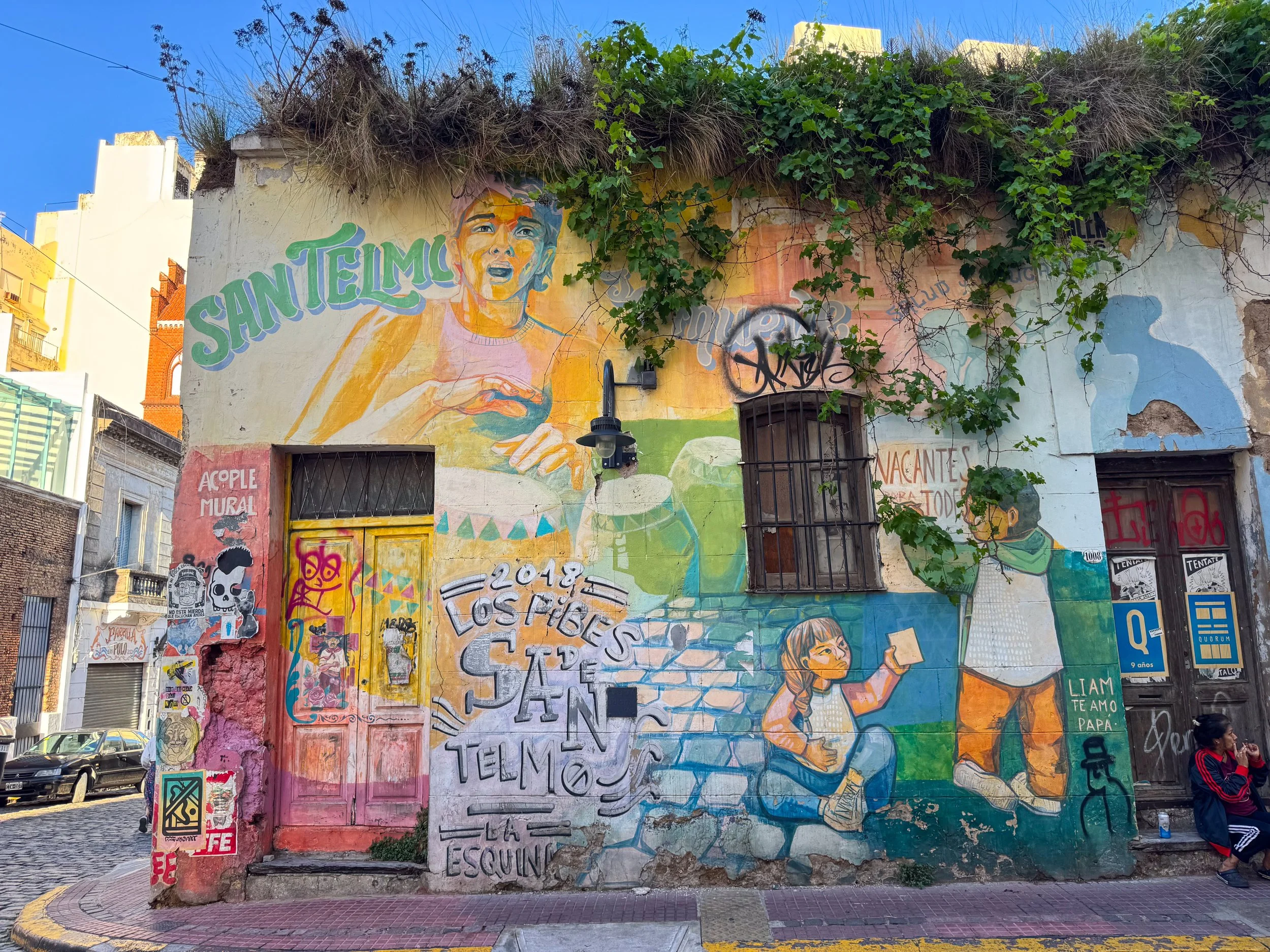
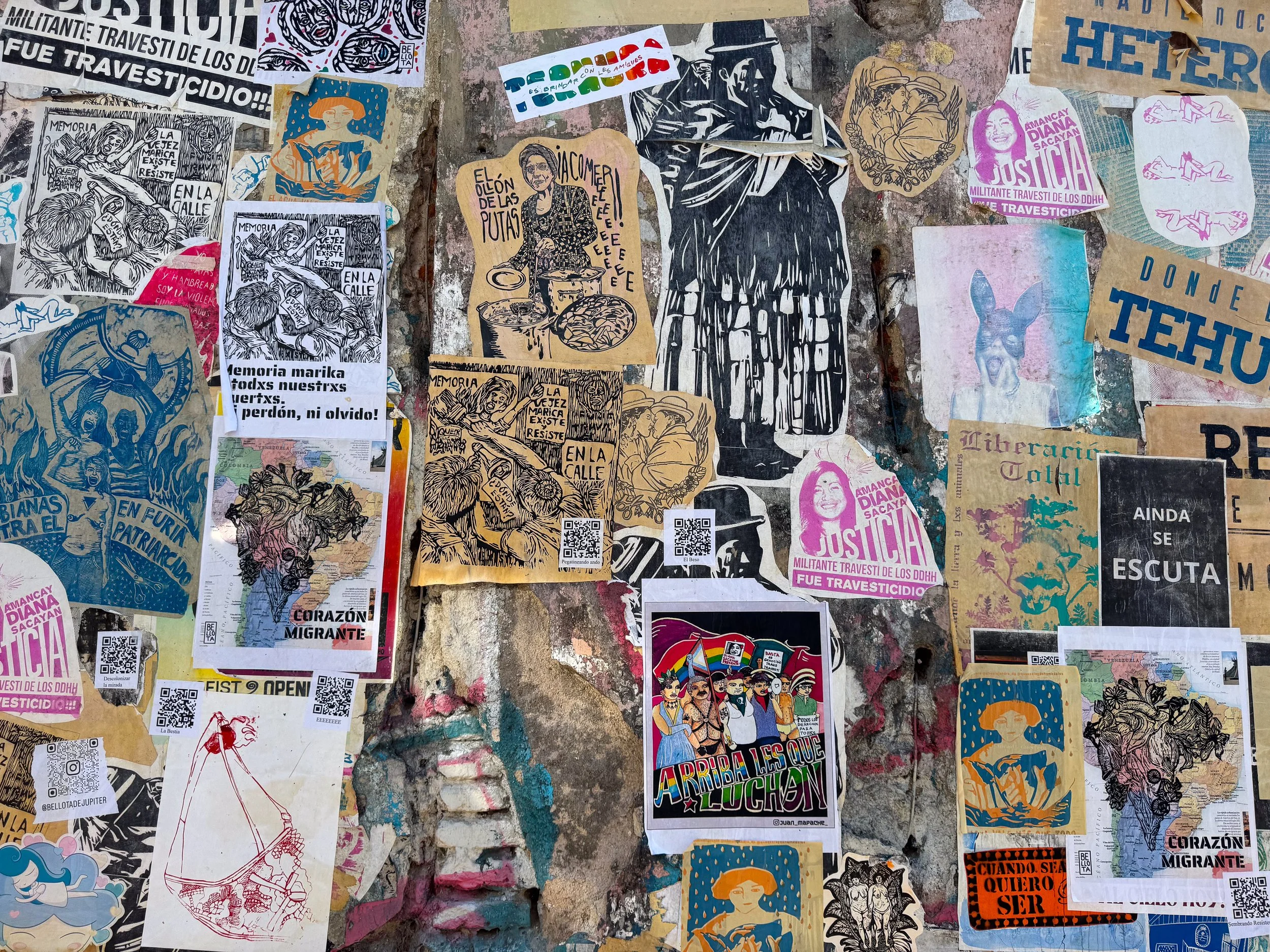
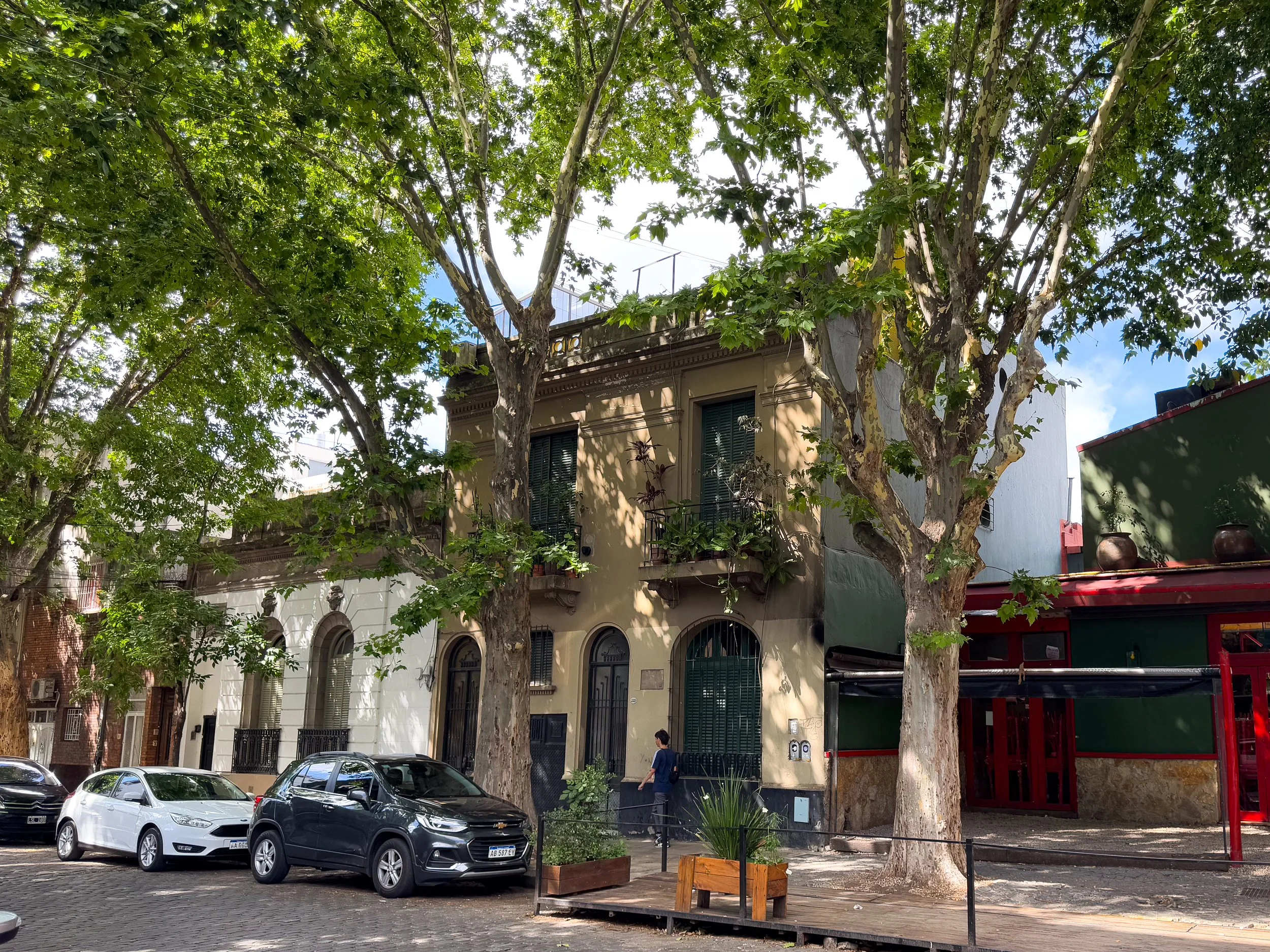
San Telmo is a historic and bohemian neighborhood with cobblestone streets, colonial buildings, colorful murals and paper graffiti. It’s popular for its flea markets, antique stores and vintage shops selling an assortment of objects, jewelry, clothes, home goods and furniture. Sunday is the most lively day when thousands flock to the neighborhood’s streets, markets and plazas for weekend celebrations, happy hours, shopping and Tango performances.
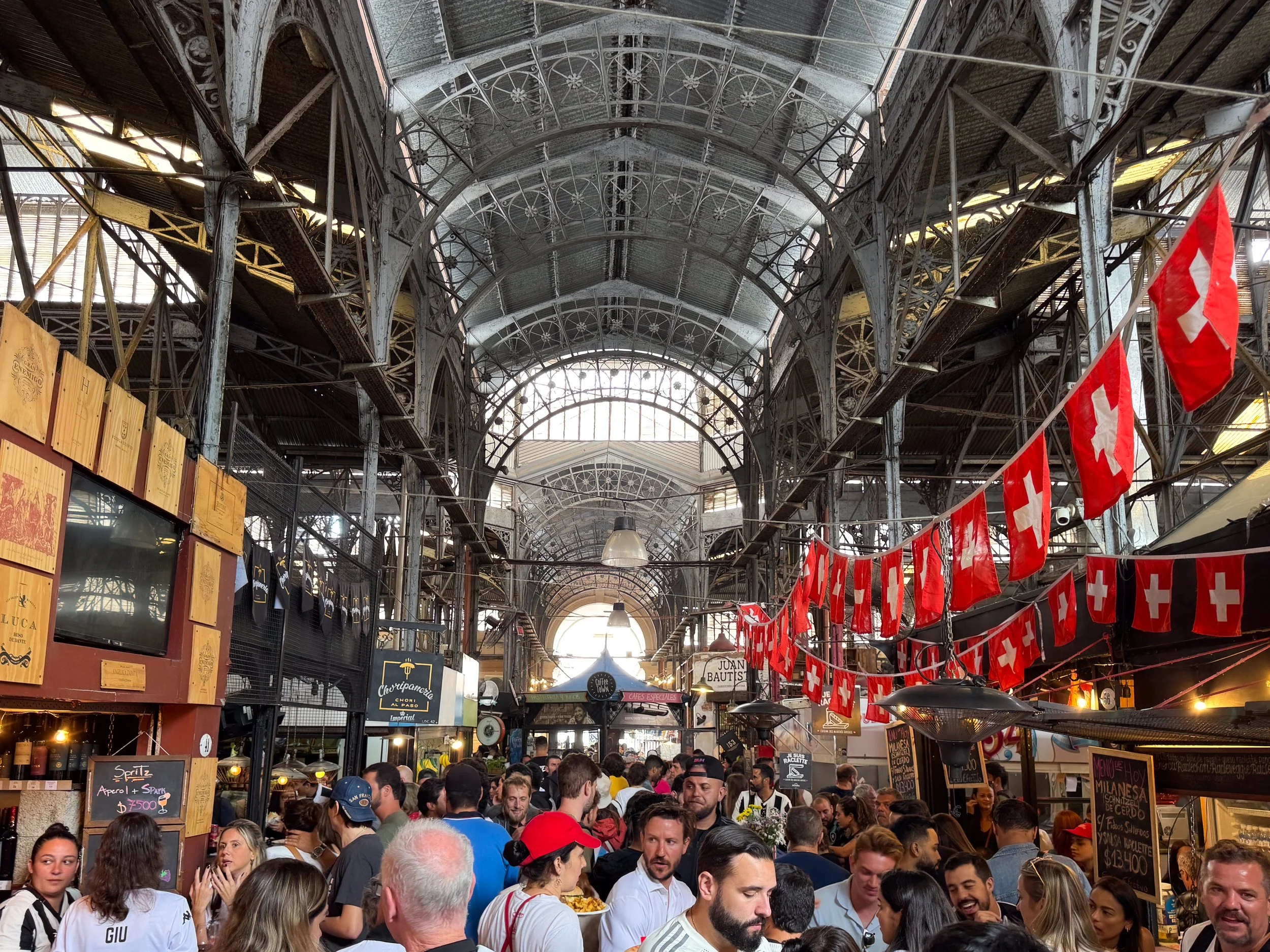
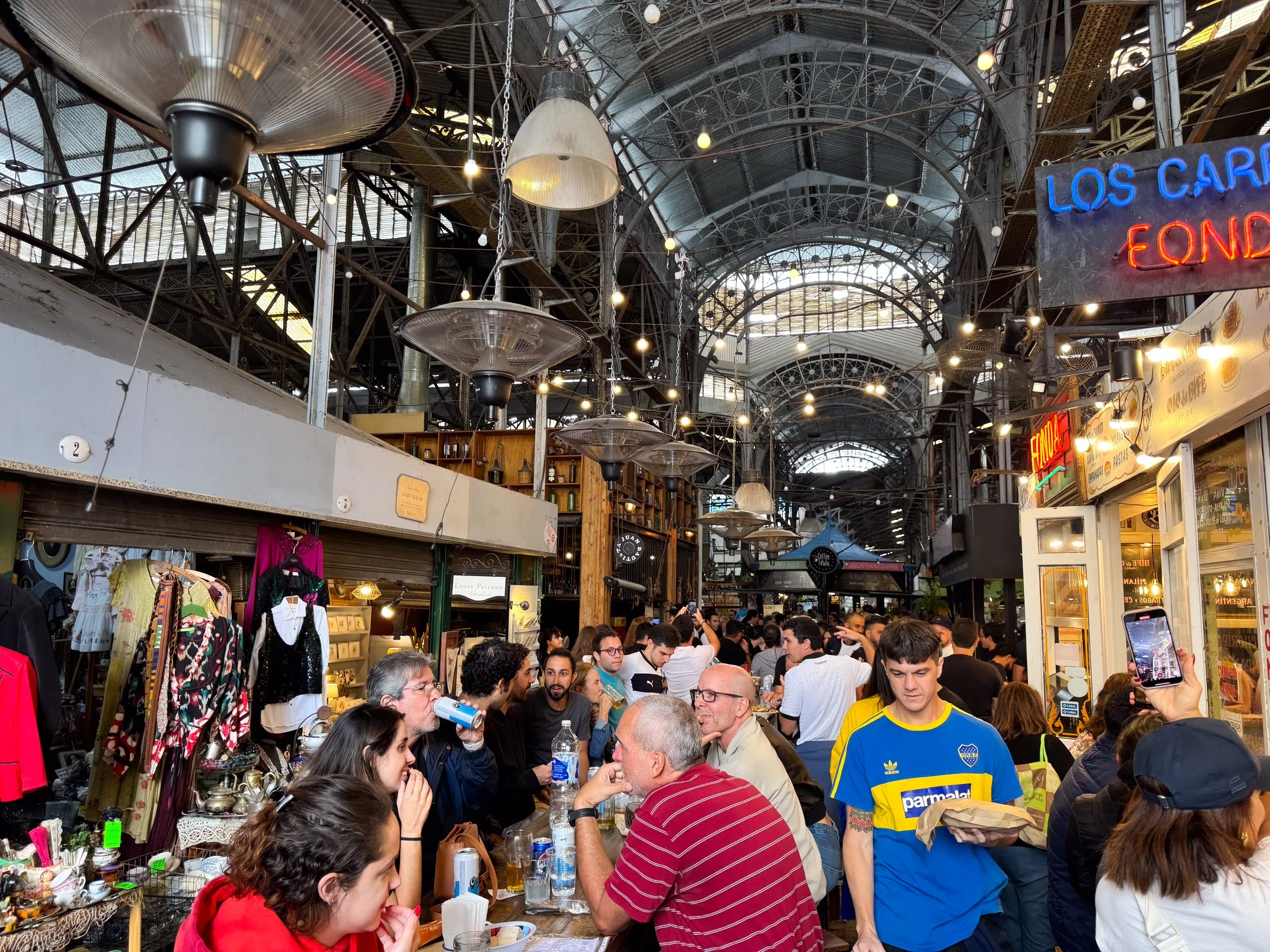
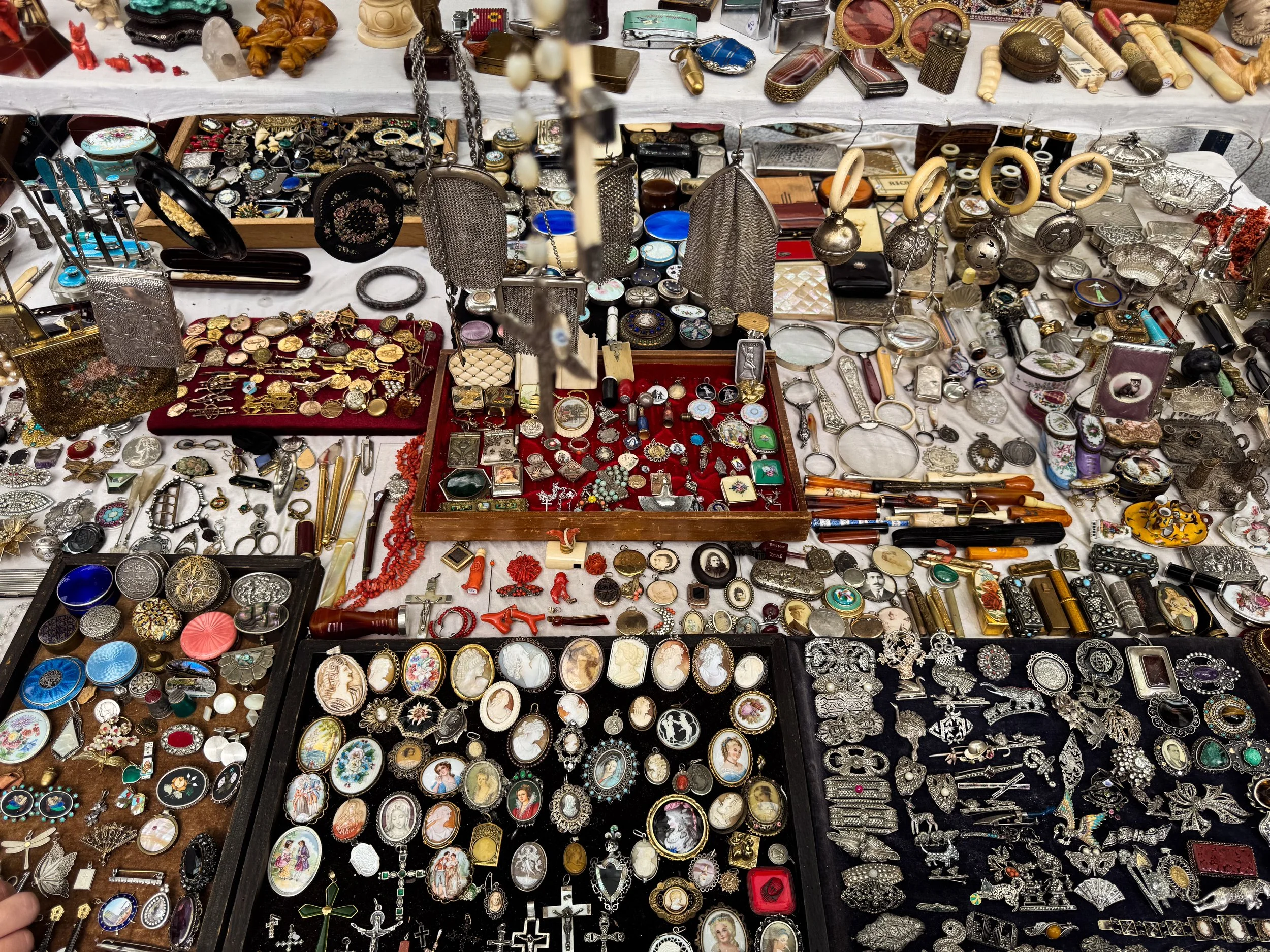
San Telmo Market. A historic market with an eclectic range of vendors and visitors. The liveliest day of the week, Sunday, provides a sensory experience with savory smells wafting from restaurant stalls serving empanadas, fugazza (Argentine pizza) and grilled meats. Between the chaos of rowdy futbol fans, farm stands sell fresh produce and provisions shops sell cheeses, meats, yerba matte, dulce de leche, spices, Malbec wine and olives. Towards the fringes, aisles of flea market booths draw your eye, packed with antiques, vintage clothes, home decor, leather goods and handmade items.
Wine Window. A wine bar serving Argentinian wines. Order at the bar, ring the bell and wait for the tiny window to pop open with your glass of wine.
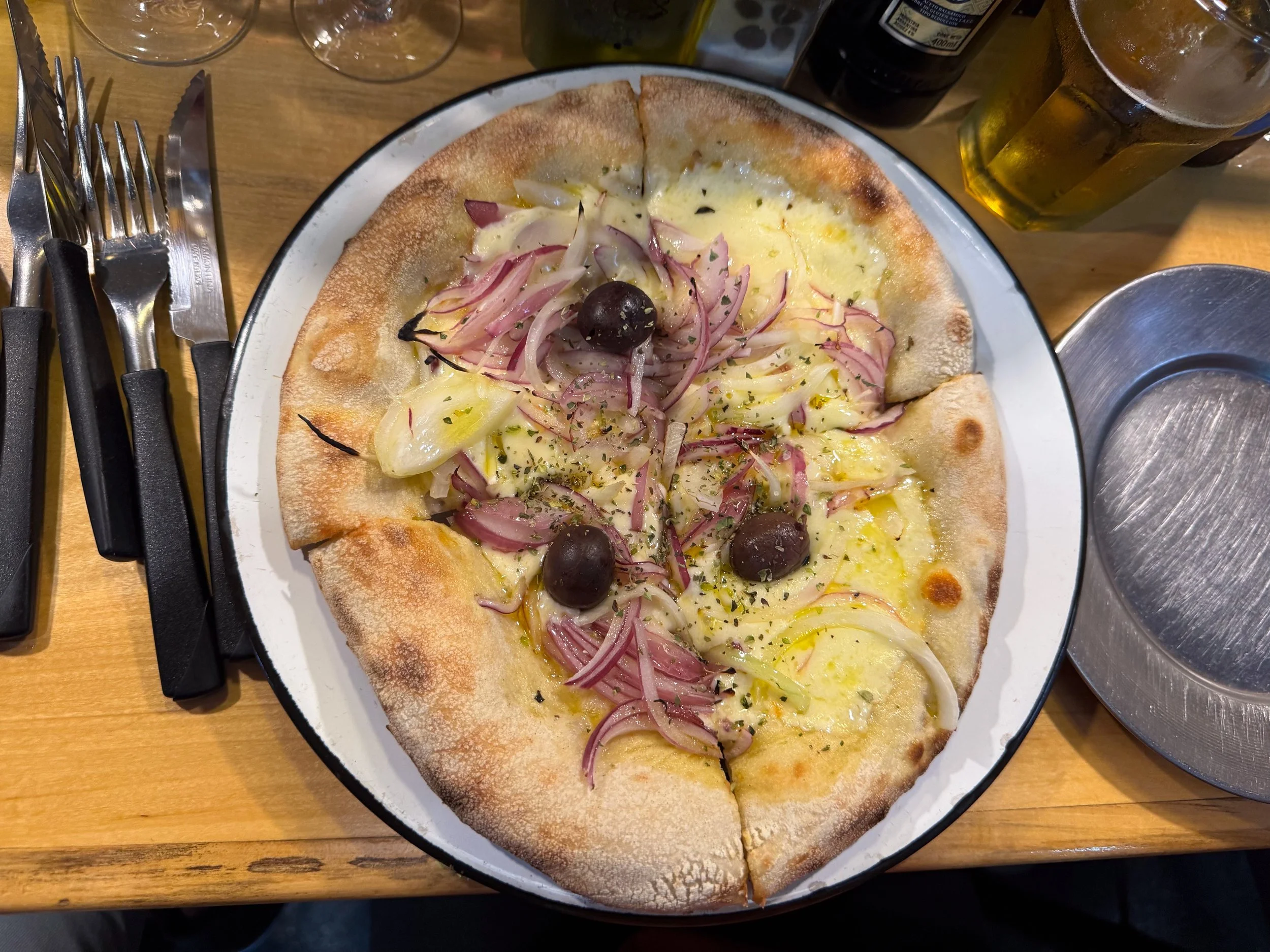
Regina Vermutheria. A popular restaurant with fugatza (Argentine pizza) and grilled meats cooked in coal ovens. We came here for their classic fugazza, topped with mozzarella, red onion and olives then garnished with oregano, olive oil and salt.
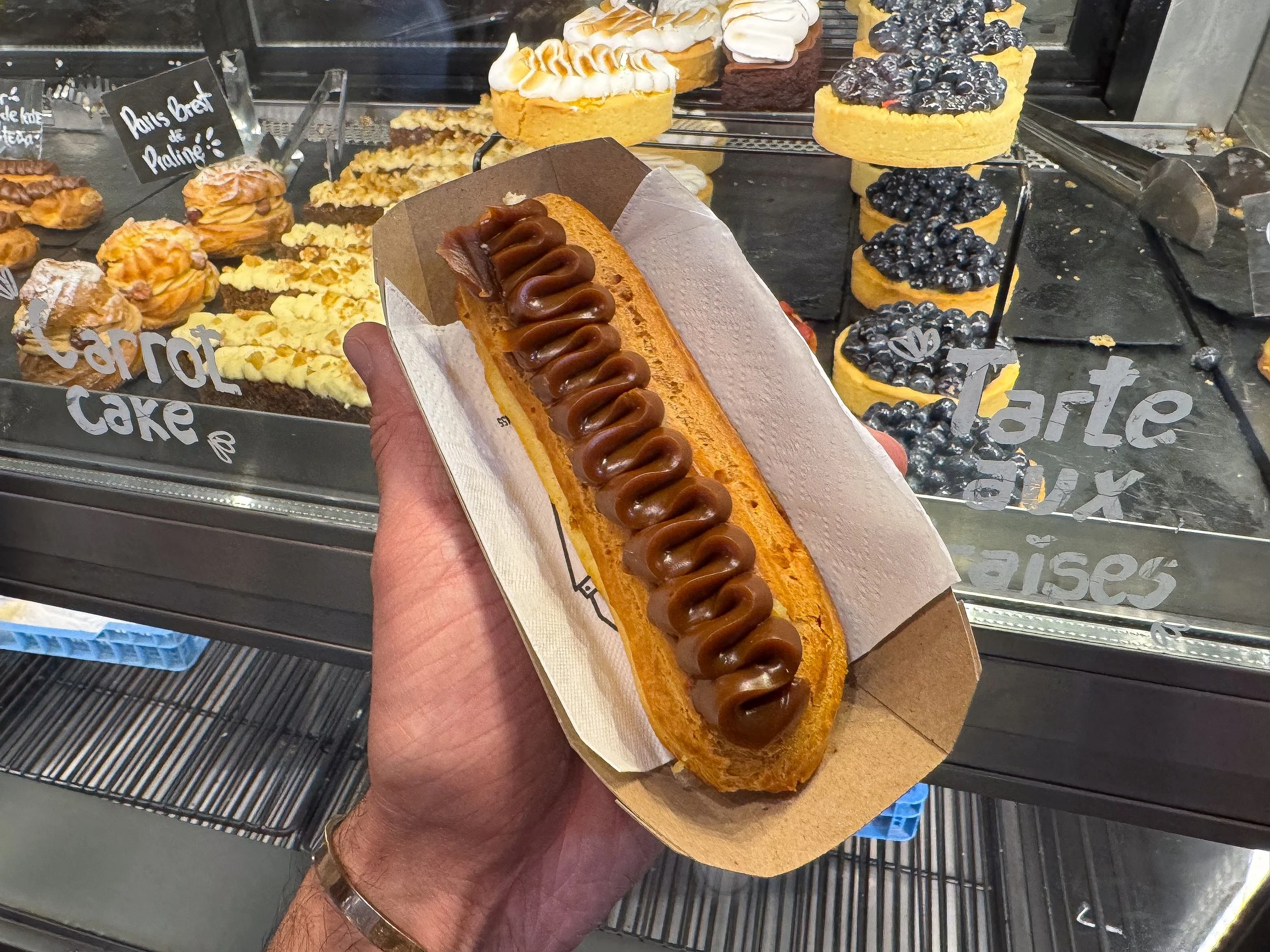
Merci. A bakery with breads and pastries mixing Argentinean and French flavors. The dulce de leche eclair caught our attention and did not disappoint!
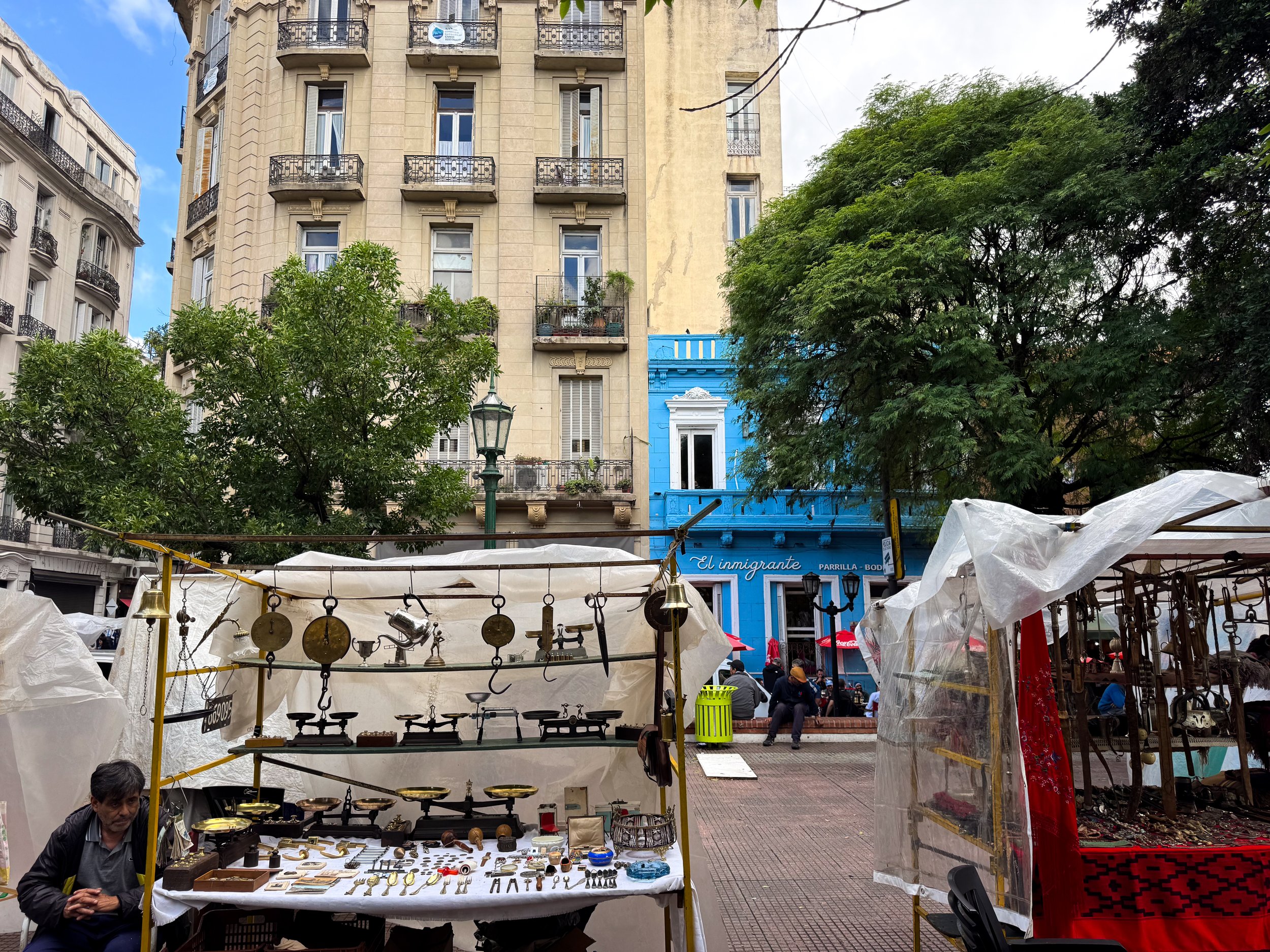
Plaza Dorrego. A small but lively plaza in San Telmo popular for its Sunday flea market, Tango performances, local restaurants and bars serving inexpensive beers.
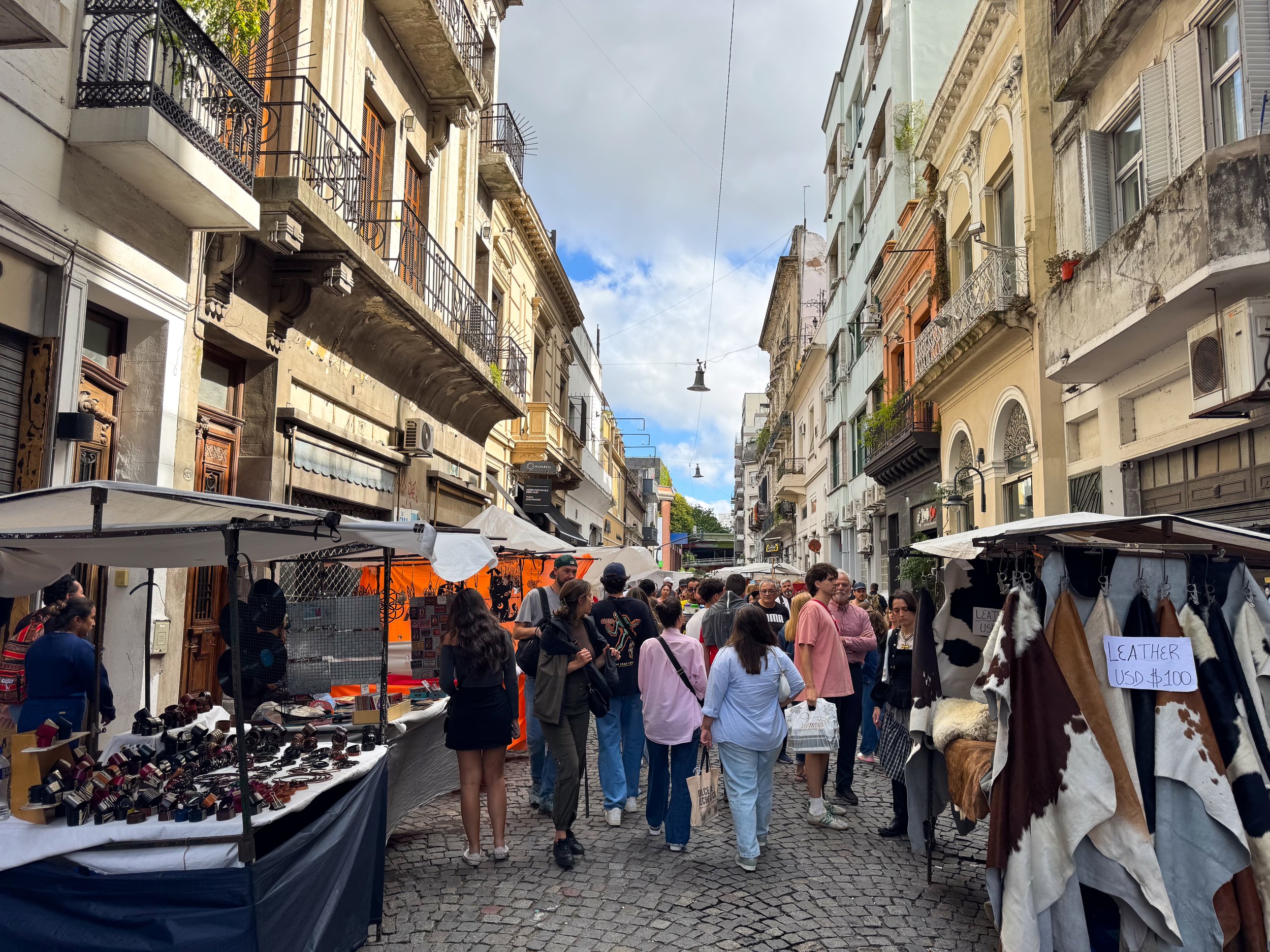
Feria de San Telmo. A Sunday flea market in Plaza Dorrego with tents of vendors selling antique silver tableware, vintage clothing and accessories like pins, jewelry, purses, glasses and hats. Vendors sprawl into the nearby street selling handmade items like leather goods, knives, jewelry in front of shops selling all forms of dulce de leche and Argentinian futbol jerseys.
Palermo
Palermo is a vast neighborhood comprised of three sub neighborhoods: Palermo Hollywood, Palermo Soho and Palermo Chico. Together, they provide an endless range of cafes and coffee shops, local and international restaurants, hidden cocktail bars and late night pubs, lush city parks and cultural museums. It’s one of the most popular neighborhoods for locals, expats and travelers to live and visit.
Palermo Hollywood
Hollywood has a quiet and calm atmosphere which makes it the perfect location to stay. It’s densely residential but in close proximity to all the amenities of city life. Everything is less than 20 minutes away including local restaurants, cute cafes, late night bars, bakeries, public transit, city parks, mini markets, barber shops, convenience stores, hardware stores, etc.
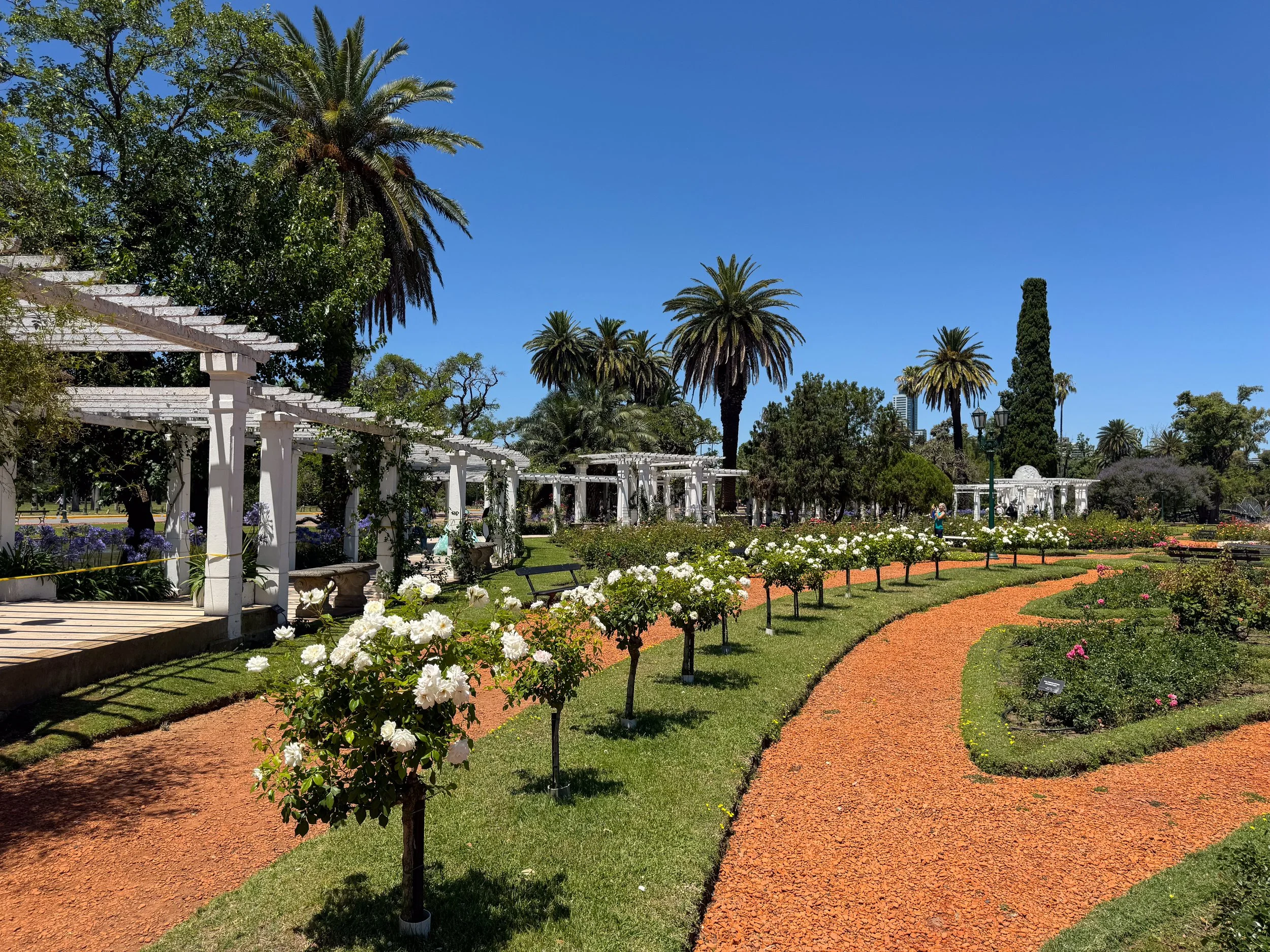
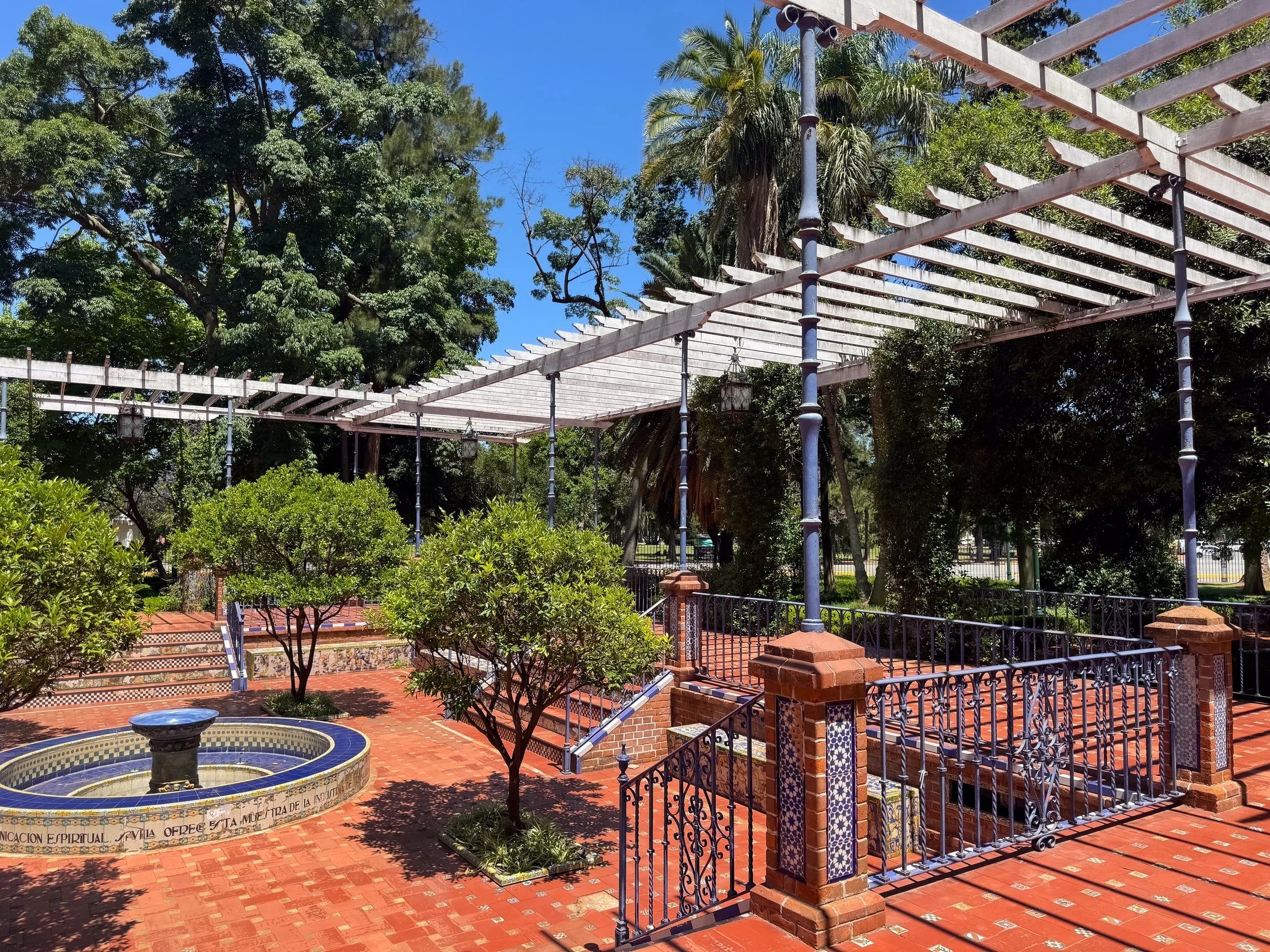
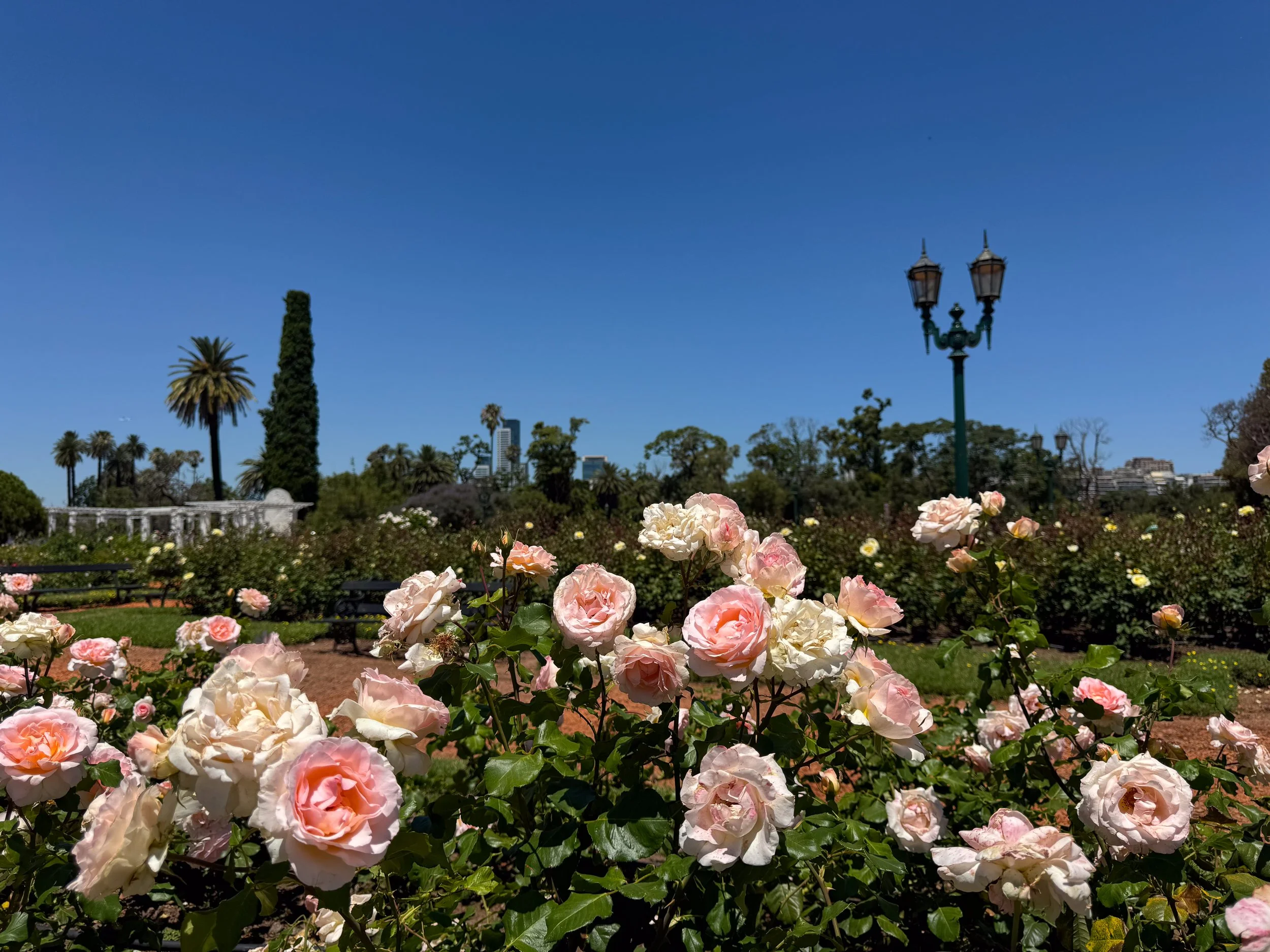
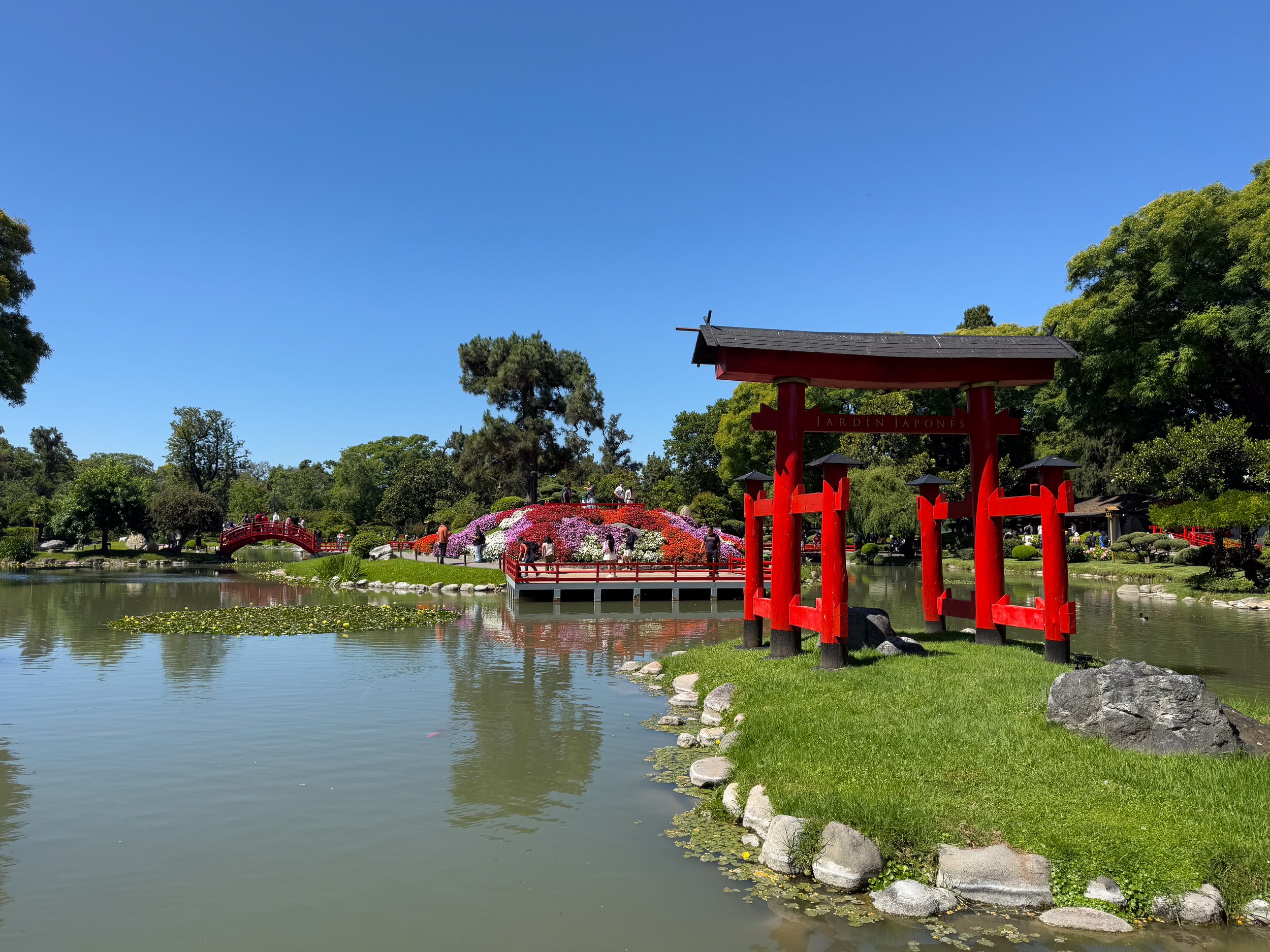
Tres de Febrero Park. A massive park with a rose garden, Japanese garden, botanical garden, planetarium, recreational ball courts & fields, a golf course, a horserace track, cafes, restaurants, bars and beer gardens.
Paseo del Rosedal. A romantic and flowering rose garden with colorful flowers, fountains, pergolas and a lake with paddle boat rentals.
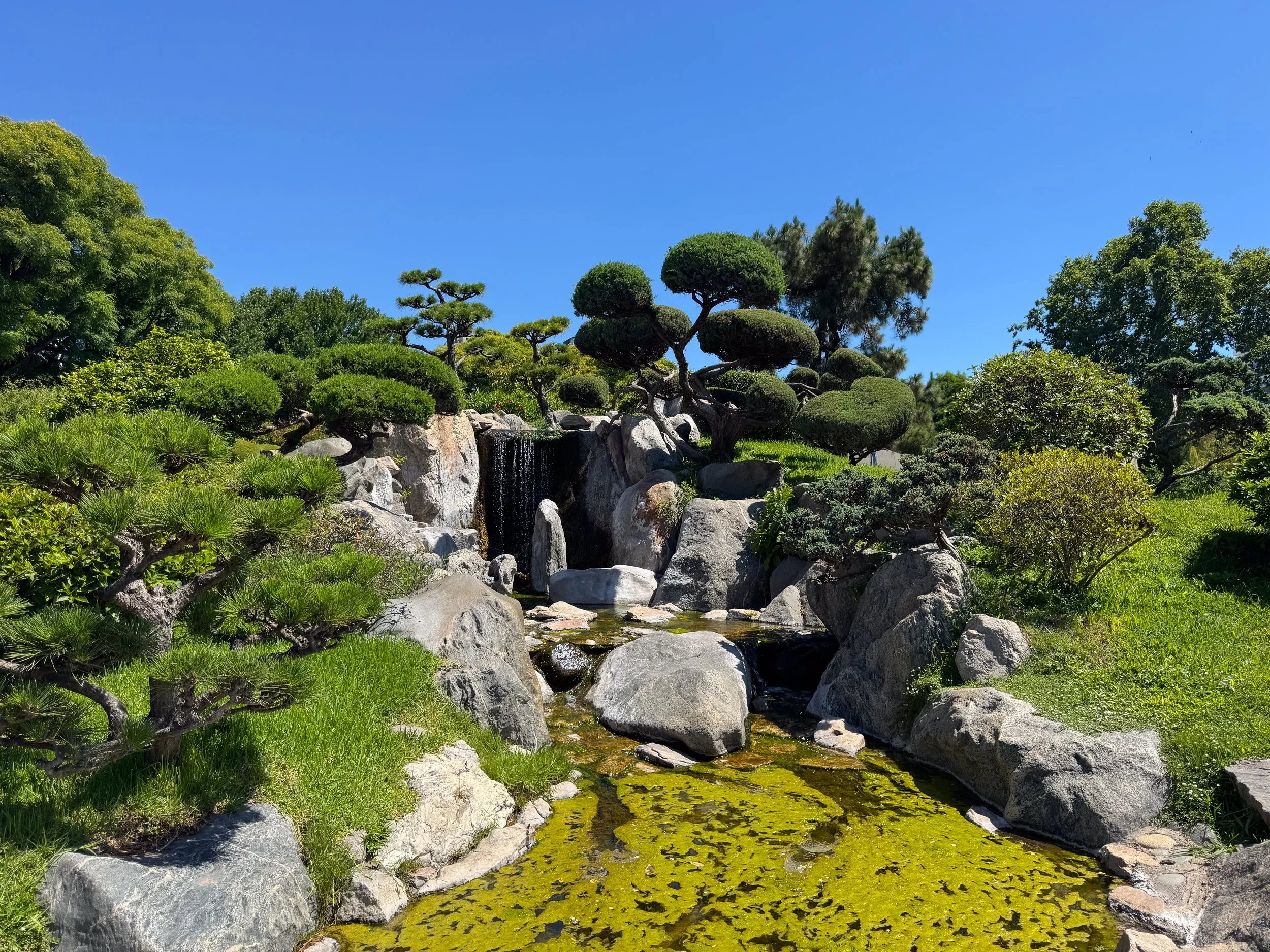
Japanese Garden. A traditional Japanese style garden with a large koi pond, pagodas, well manicured trees, red torii gates, arched red bridges and a tea house serving Japanese meals. The garden offers a peaceful and zen retreat in the middle of the city. While here, buy a beckoning cat ribbon, write a note, wish or prayer on it, then tie it to the Shinto shrine.
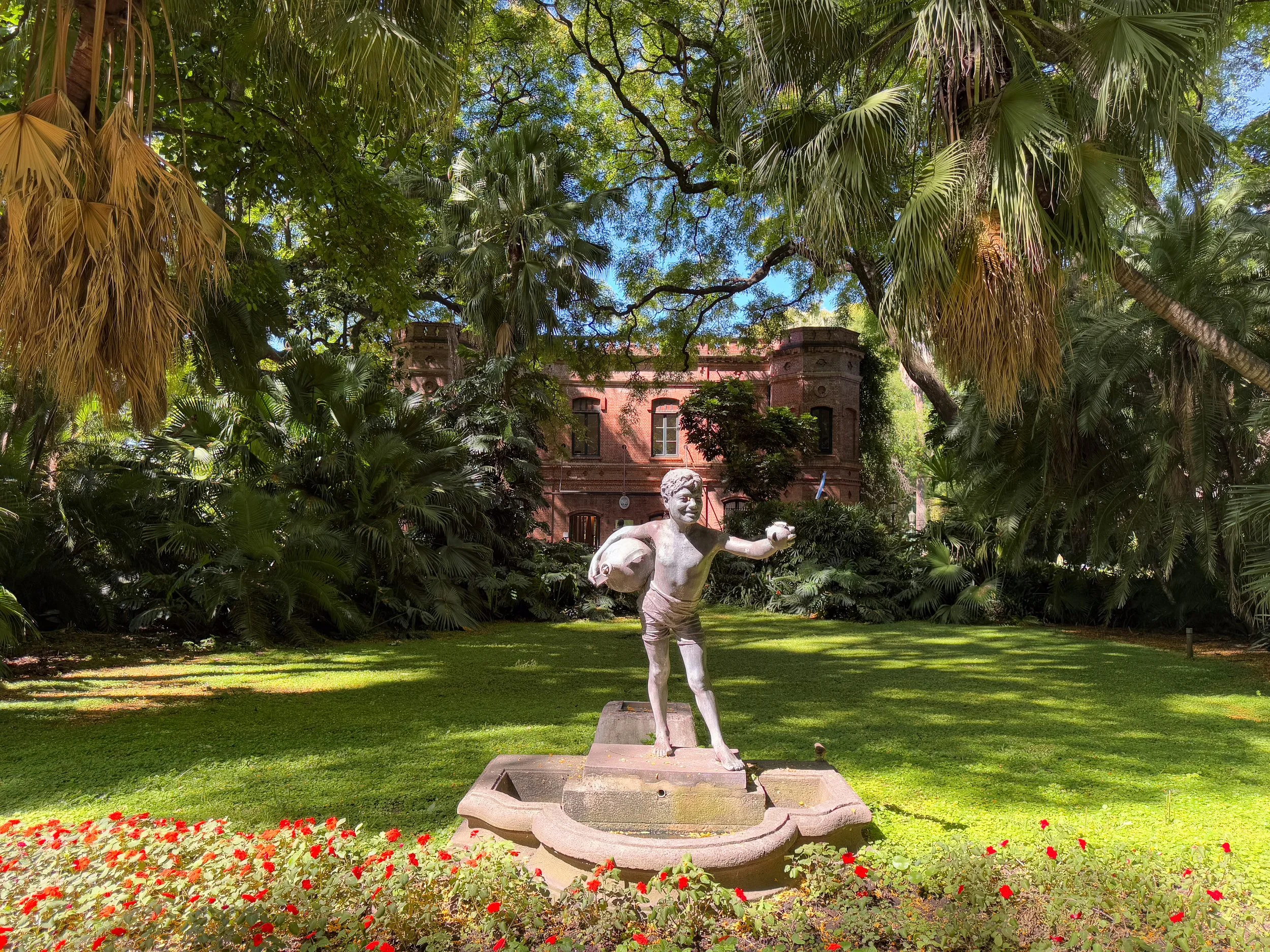
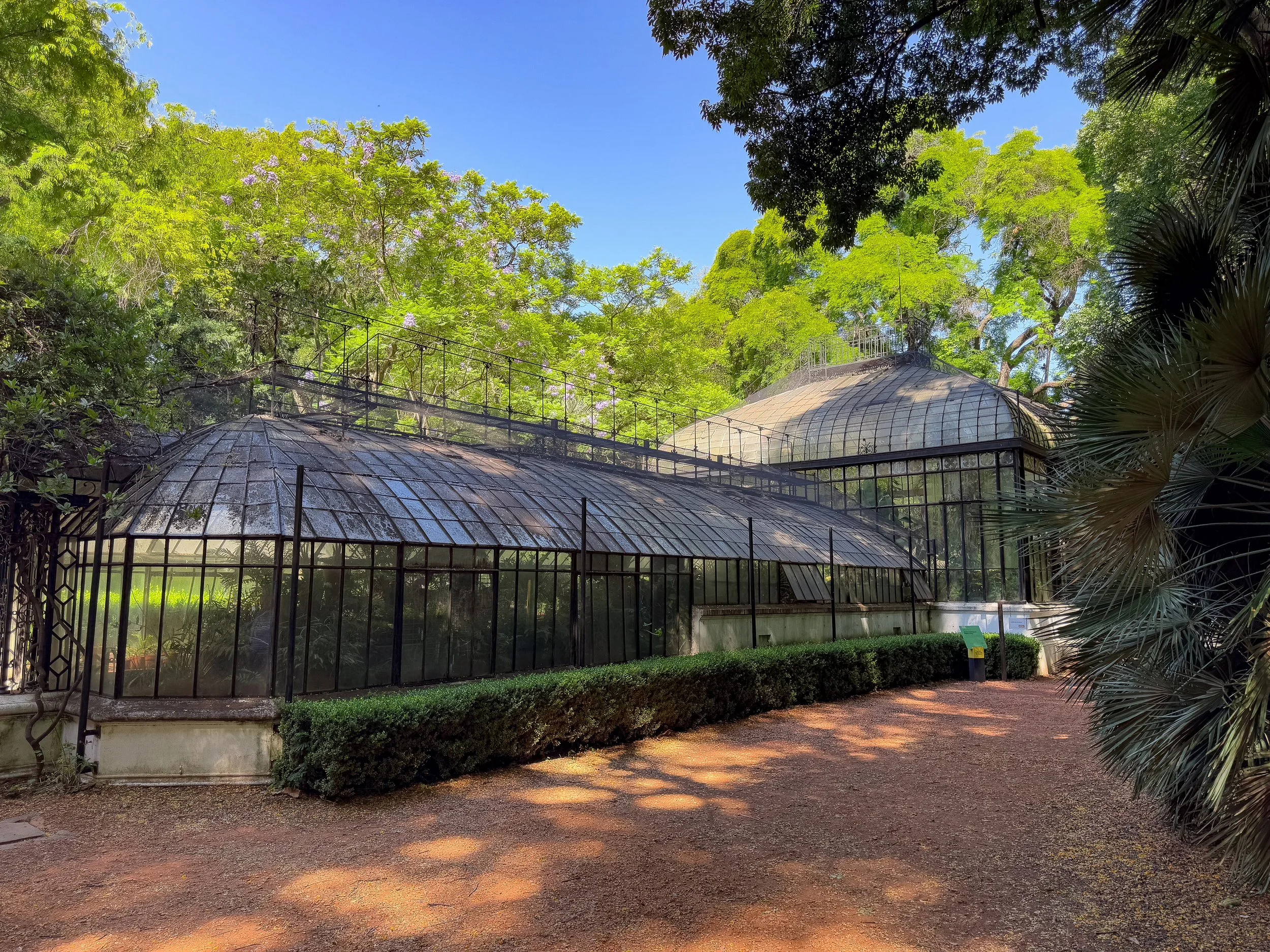
Carlos Thays Botanical Garden. A large botanical garden with a variety of native and exotic trees, plants, flowers and cacti. The park offers a tranquil escape from the city with walking paths, flower covered trellises, historic greenhouses, bronze sculptures and marble fountains.
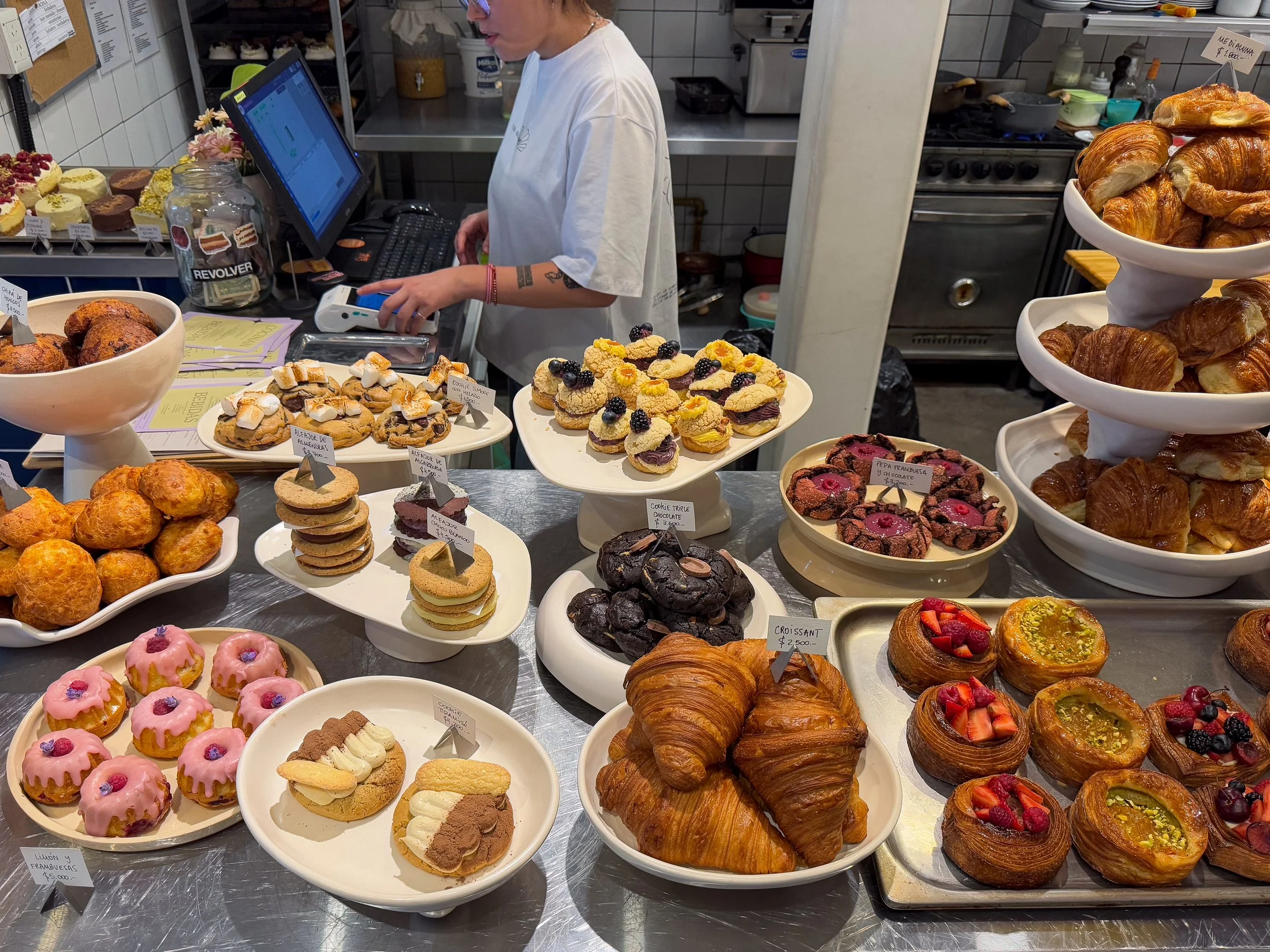
Cafes & Argentine Patisserie. There is a café culture across Palermo Hollywood with coffee shops, bakeries and café around every corner. We stopped by a few during our walks through the neighborhood.
Caversaschi & Co. A café with egg dishes and artisanal baked goods including some of the best medialunas we had in Argentina. They were large, flaky and covered in a thin sugar glaze.
V+Frapu. A vegan café with empanadas, pastries and coffees. We stopped in for a mid afternoon pick me up and light bite.
El Secreto. A café with pastries, cakes, sandwiches, coffees and cookies. We stopped in for a late night dessert.
Palermo Soho
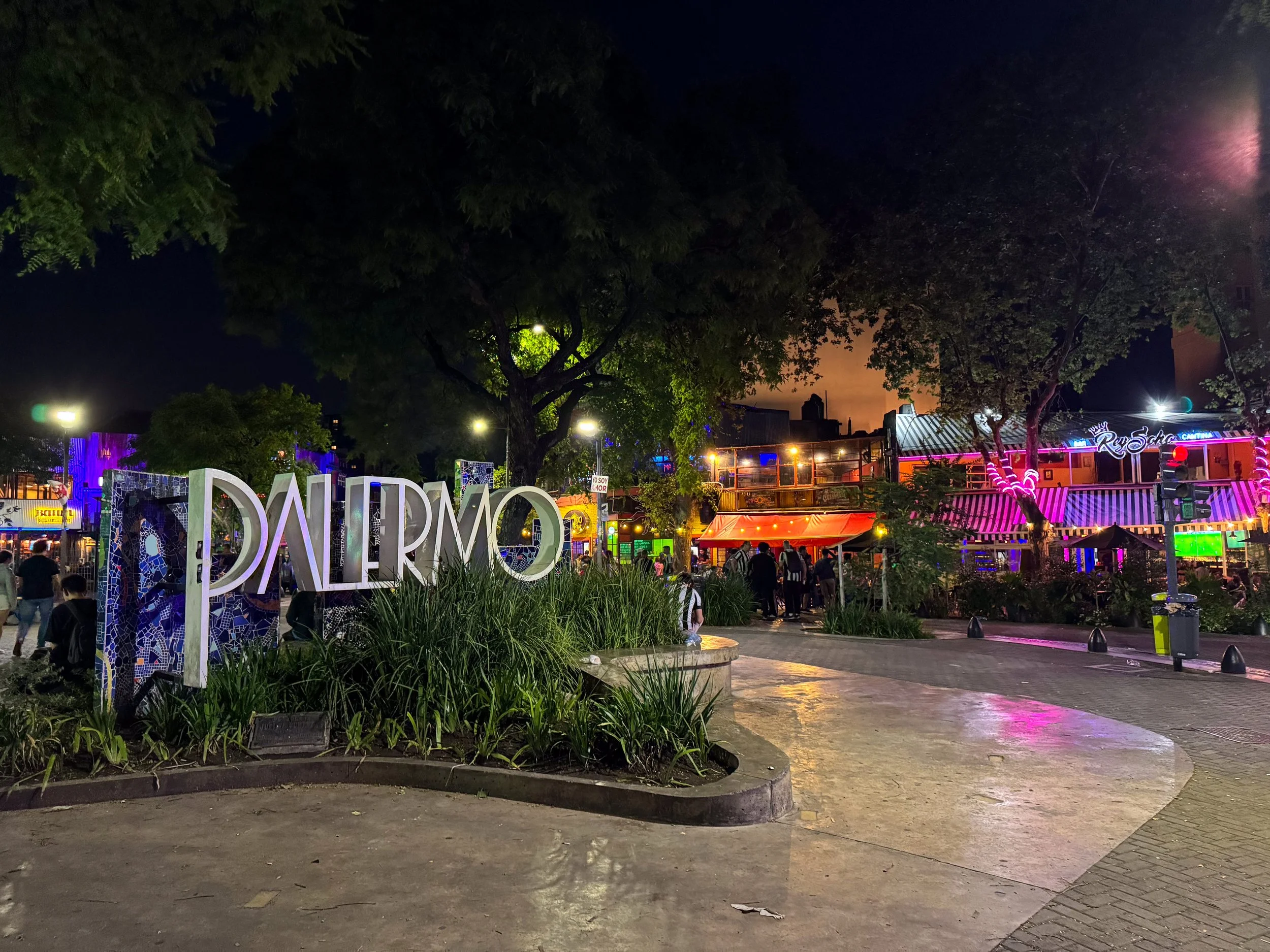
Soho, as its name implies, is the trendy area to be and the best spot for nightlife. There is no shortage of high end restaurants, local haunts, world class cocktail bars, lively pubs, coffee shops and afternoon brunch spots.
Plaza Serrano. A lively plaza surrounded by bars and restaurants, popular for its nightlife and music, especially on Sundays. Arriving near midnight, we joined hundreds of energetic locals sharing bottles of wine and pints of beer together at outdoor tables.
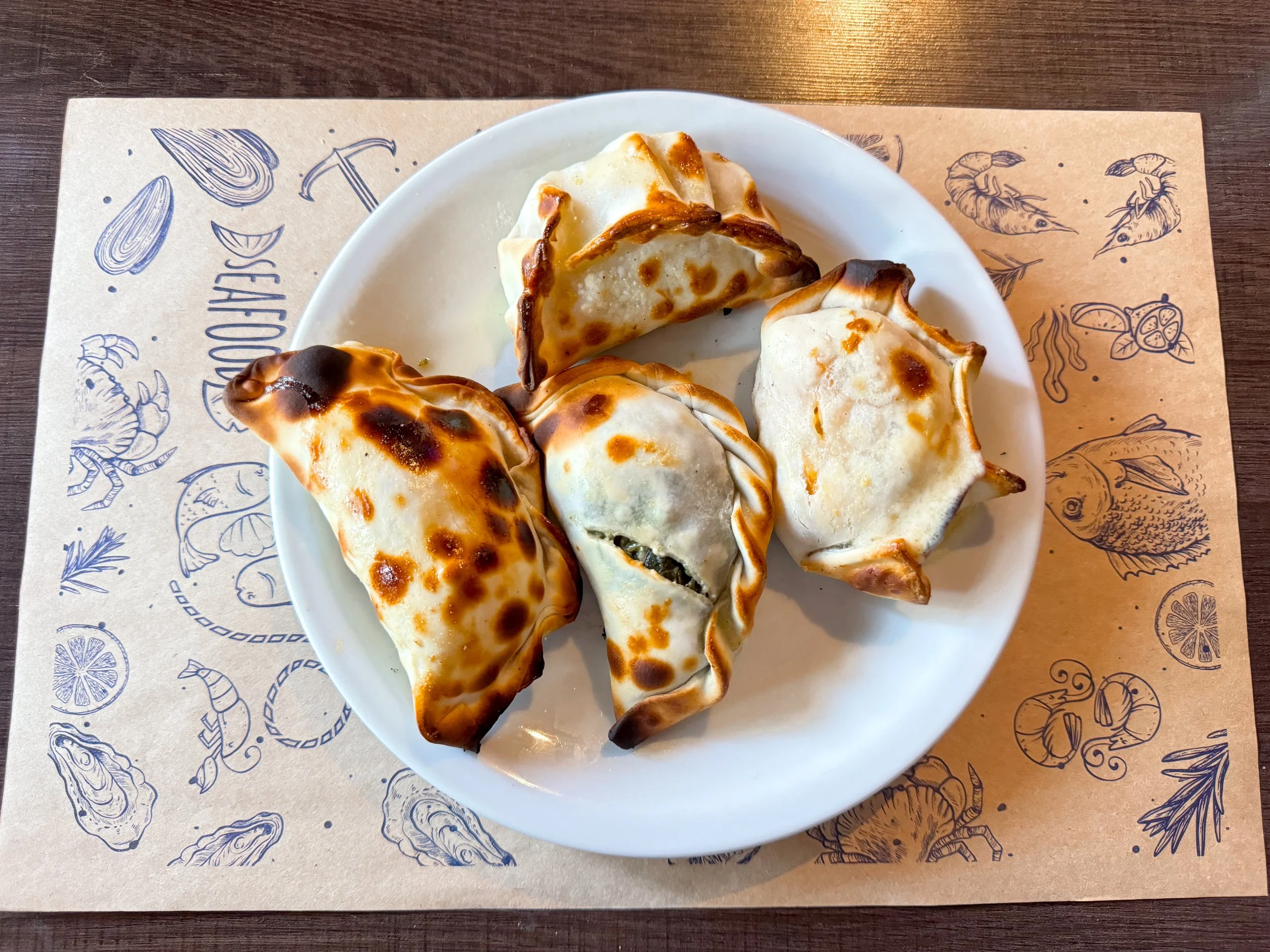
Pekin Bar de Pizzas. The smell of baked pizzas and window display of Argentine style empanadas lured us in and keeps loyal locals coming back. Walking home from Plaza Serrano, we stopped in for an assortment of late night veggie empanadas like caprese, spinach with béchamel and cheese with onions.
Baum. One of the many bars and cervecerías in Plaza Serrano with house brewed beers. We ordered a couple pints to end our Sunday night.
Palermo Cocktail Bars
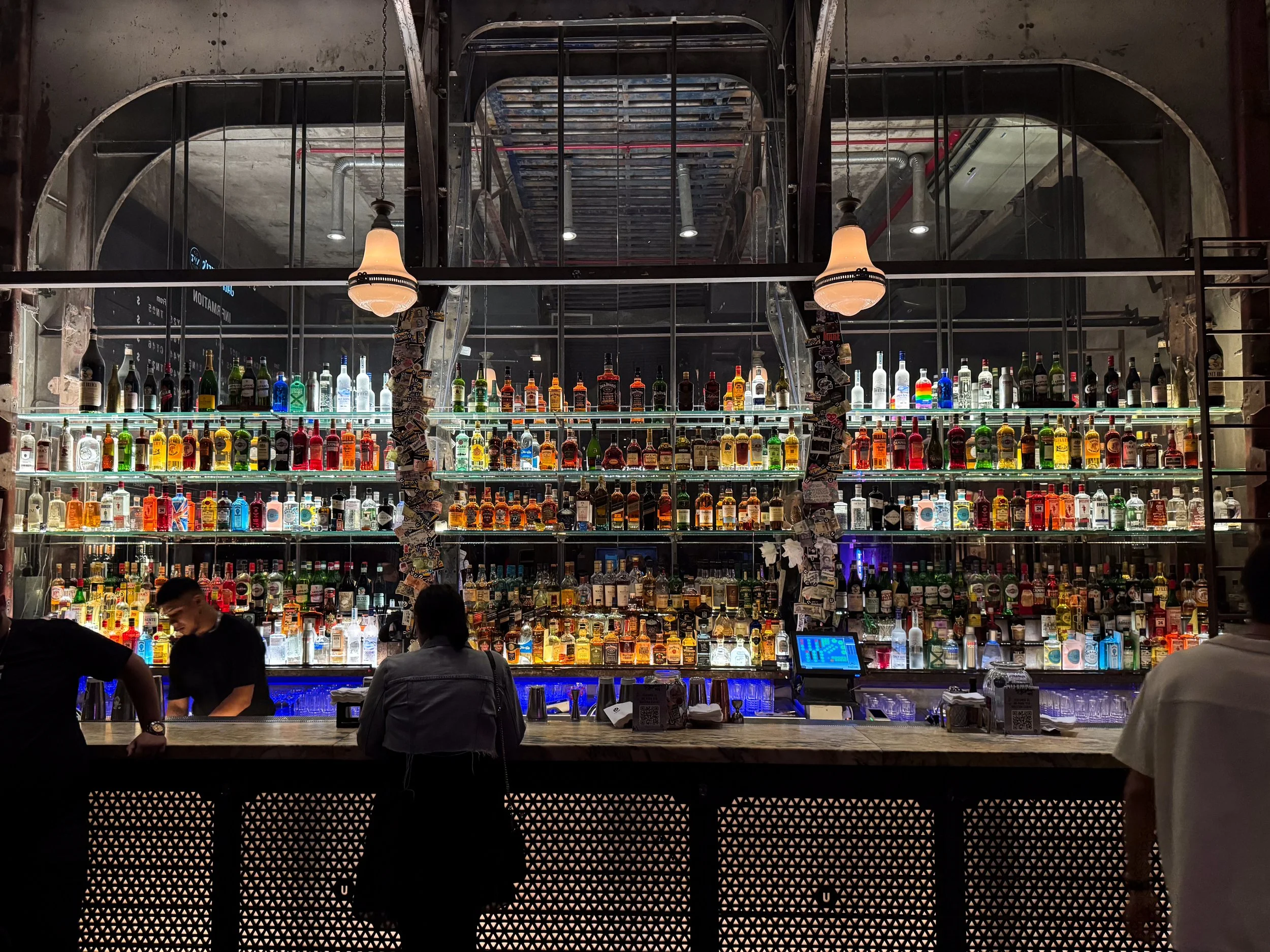
Buenos Aires has an endless number of world class cocktail bars, particularly in Palermo Soho. Throughout the week, we tasted unique concoctions and some classic cocktails with a twist at numerous bars.
Uptown. An underground speakeasy styled like a New York City subway station. We immediately felt transported back to NYC when entering the bar. As we descended the stairs into the “station,” we heard MTA announcements and walked through a corridor with train maps, Broadway ads, tiled walls and graffiti. Passing through turnstiles, we boarded a train car converted into a waiting area. The opposite doors opened into an industrial feeling space with nods to New York. Once inside, head to the bar and order a classic Manhattan, Gin Martini or specialty cocktail like “A Drink at Tiffany’s” or “Lost in Manhattan.”
Boticario. An apothecary themed cocktail bar with herbal concoctions and prohibition era libations. Sit at the dimly lit wooden bar lined with bottles of spirits, antique decor and fine glassware. Order a cocktail on the menu from one of the uniformed and tattooed bartenders or ask them to concoct something to treat your ailments. Try the Sazerac or Penicillin.
Oh’no! Lulu. An unassuming tiki bar in a converted warehouse only identifiable by a neon sign of a dancing hula girl out front. Once inside, the atmosphere is as much about the decor as it is the cocktails. The tropical feeling space is styled with wicker furniture, bamboo walls, suspended basket pendants, a tiki god fireplace, a pirate flag, torches and vintage decor all blanketed in a warm red glow. The cocktails arrive in a variety of mugs including house designs like Poseidon, a shark head and a shrunken skull. Try the flaming Zombie, Shark!, Tikigroni and The Floor is Lava.
La Uat Bar. A clubby and beachy speakeasy with Miami vice vibes, retro decor, pink and blue lights, a giant disco ball, a second floor club and cocktails that lean herbal & fruity. The entrance is hidden beyond a beaded palm tree curtain behind the kitchen of a street side walk up restaurant. Once inside, try the Rosa Rosa or Marxxxtini Highball.
Brukbar. An inventive cocktail bar popular with locals open late into the evening. Try the Maldito Mango, a passion fruit and tequila fishbowl with a “pour it yourself” bottle of habanero hibiscus syrup. Or Penny’s Punch, a tart and balanced cocktail in a mug of Pennywise the Clown’s head.
Tres Monos. A late night cocktail bar with funky vibes and equally as unique drinks. Bartenders shake and stir tropical, fruity and herbal forward cocktails with their house made gin and a range of spirits. The bar has a fun and unpretentious atmosphere while maintaining its rating as one of the top 50 cocktail bars in the world.
Rey de Copas. An eclectic and artsy cocktail bar with decor, music and flavorful drinks themed after world wonders and international locations. Once inside, find a nook that speaks to you and relax with a cocktail in hand. Try the Giza, a vodka based drink made with honey, citrus and mint. Or Chichén Itzá, a tequila and mezcal based cocktail made with jalapeño and hibiscus.
Doppelgänger. A martini bar with gin and herbal cocktails. Mixologists make drinks based on what type of spirits and flavors you like. Our bartender made us a black pepper vodka martini and a white Negroni with pisco. (FYI. It’s located on the other side of town, nowhere near Palermo.)
Places to Eat in Palermo
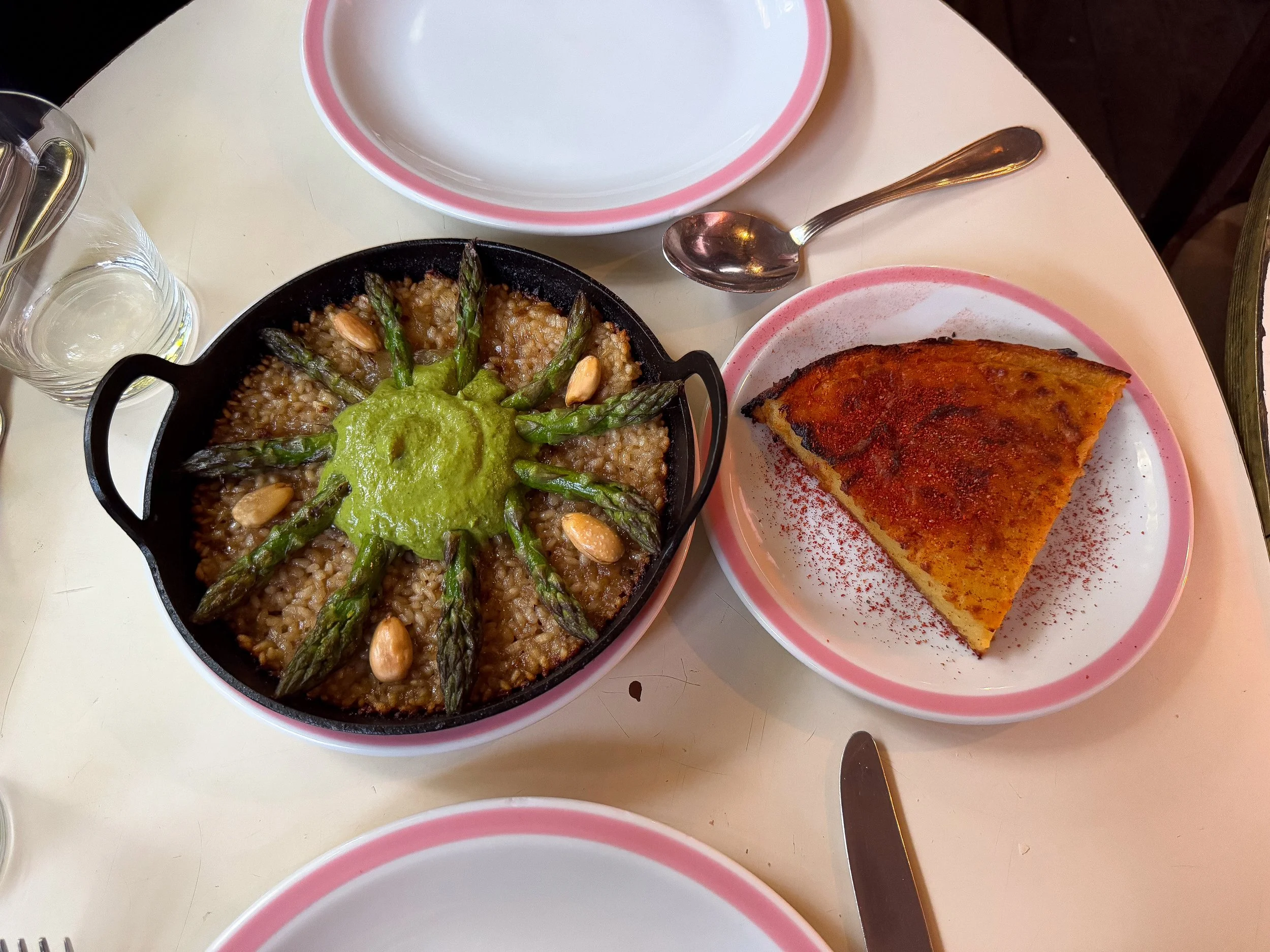
El Preferido de Palermo. A higher end restaurant with a range of homestyle Argentinean and international dishes cooked over coal. We made a reservation ahead of time for dinner, dining in their outdoor patio and sharing a few tapas. First, a smoky spread of baba ganoush with sourdough rolls. Second, faina (chickpea flatbread) with provolone. Third, baked rice topped with asparagus prepared in a cast iron dish. It was similar to a vegetarian paella with a crispy socarrat.
Moshu Treehouse. Let them eat cake! A coffee shop known for their artisanal cakes and scones. We stopped in for brunch, ordering slices of the carrot cake and lemon blueberry cake. Hungry for more than cake, we split an order of creamed eggs with cured trout.
Palermo Chico
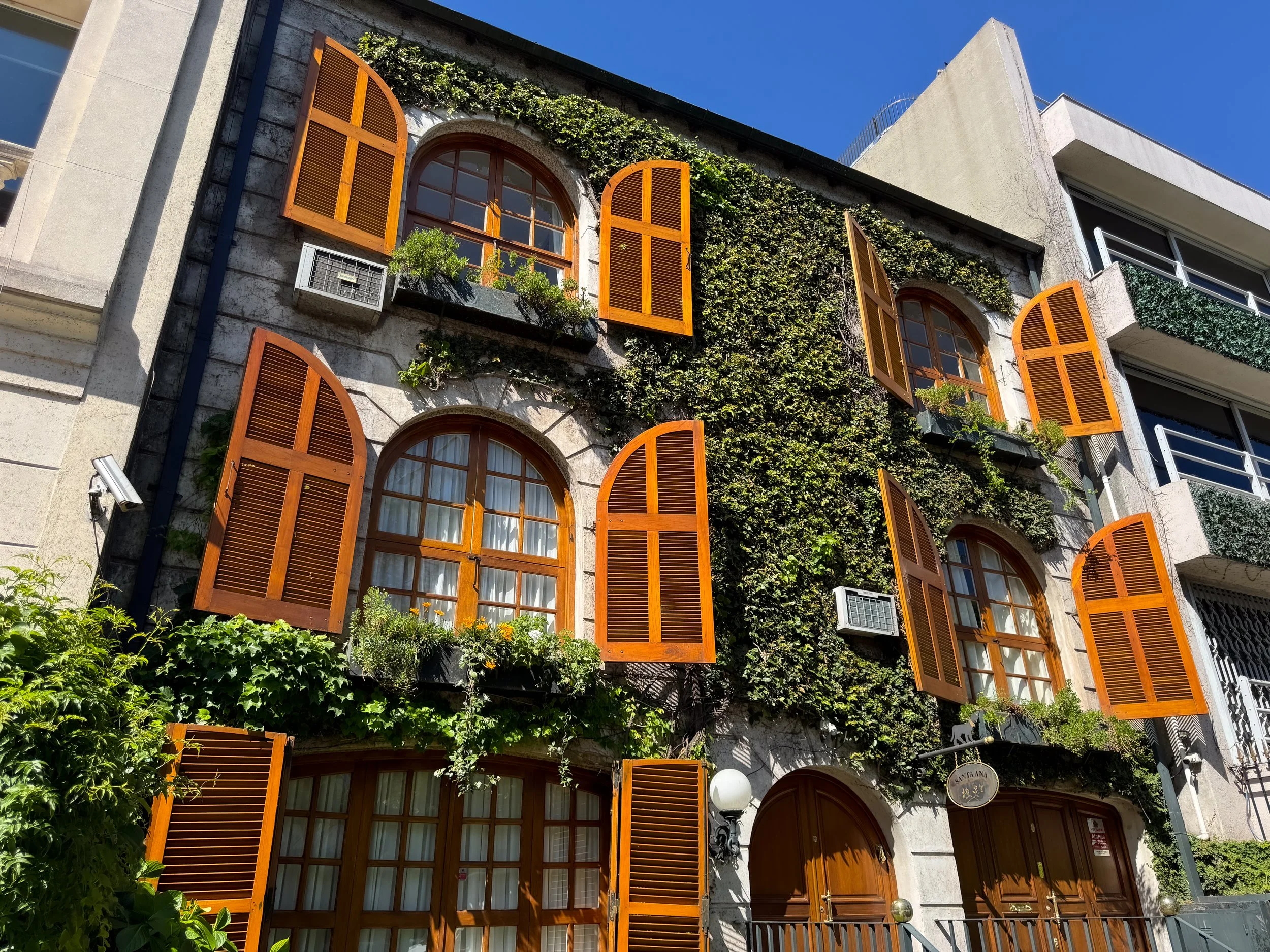
Chico is a smaller and ritzy area of Palermo with ornate mansions, embassies, museums and city parks. It’s slightly more removed but perfect for exploring its cultural sights and beautiful streets.
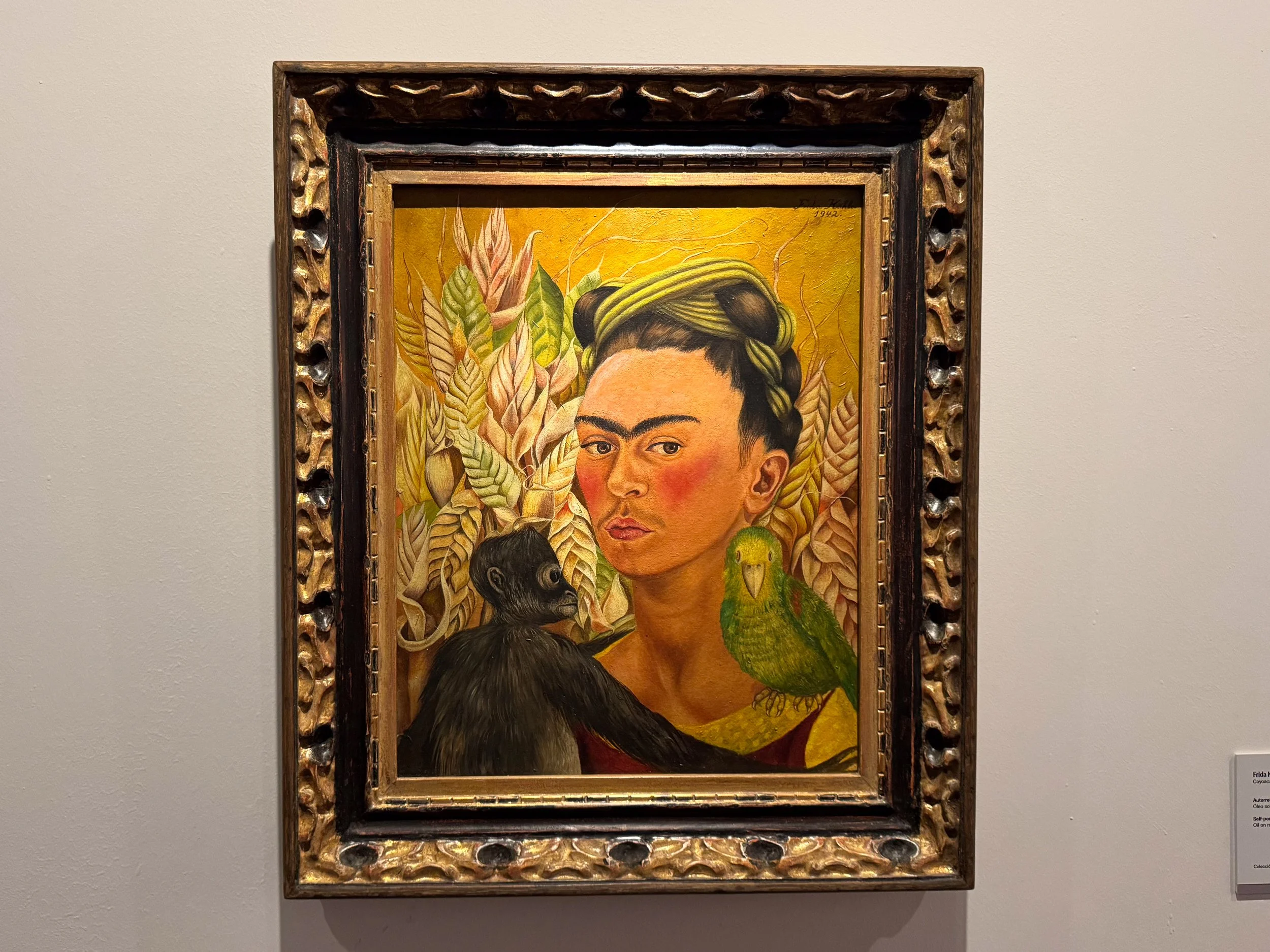
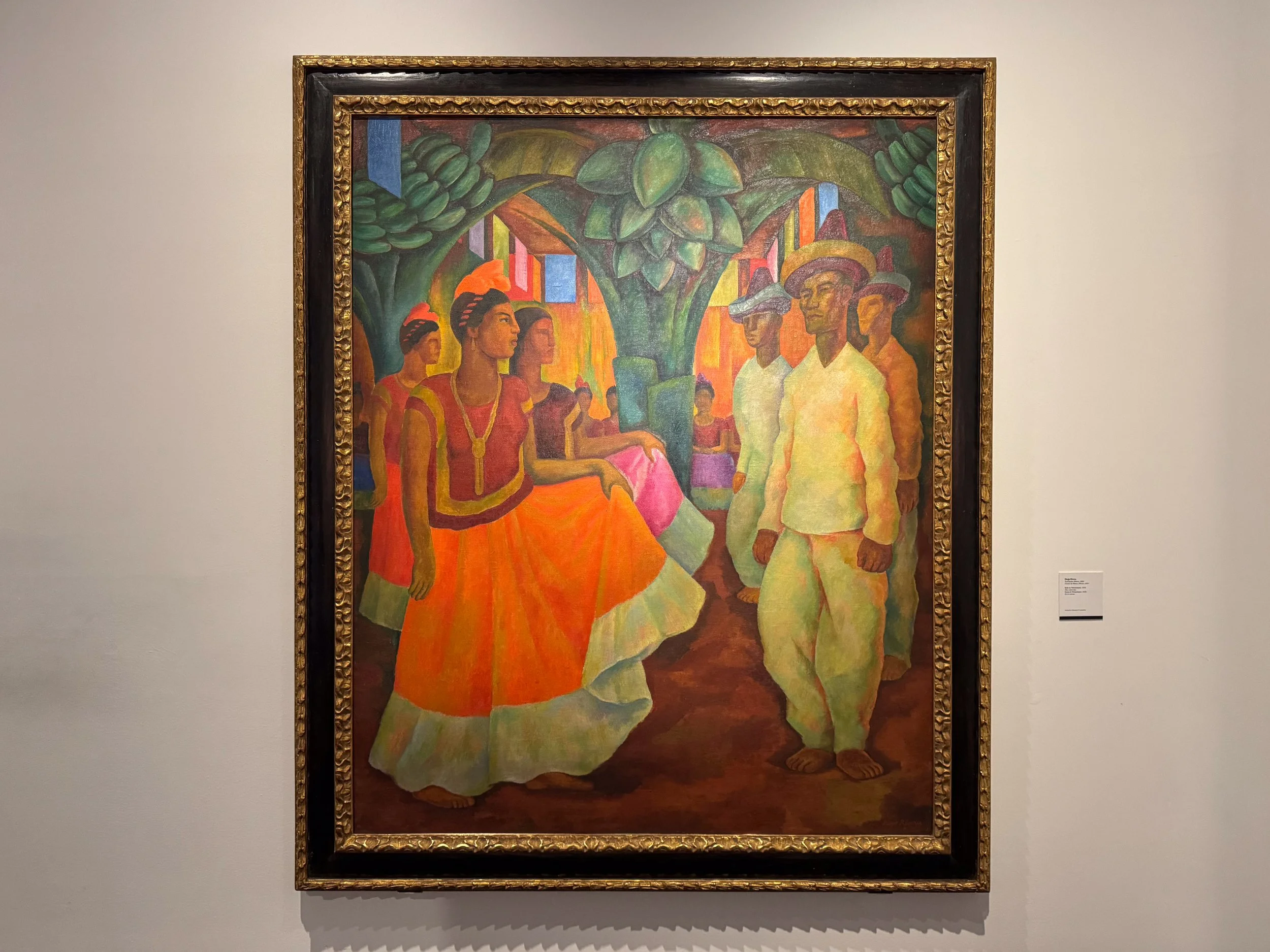
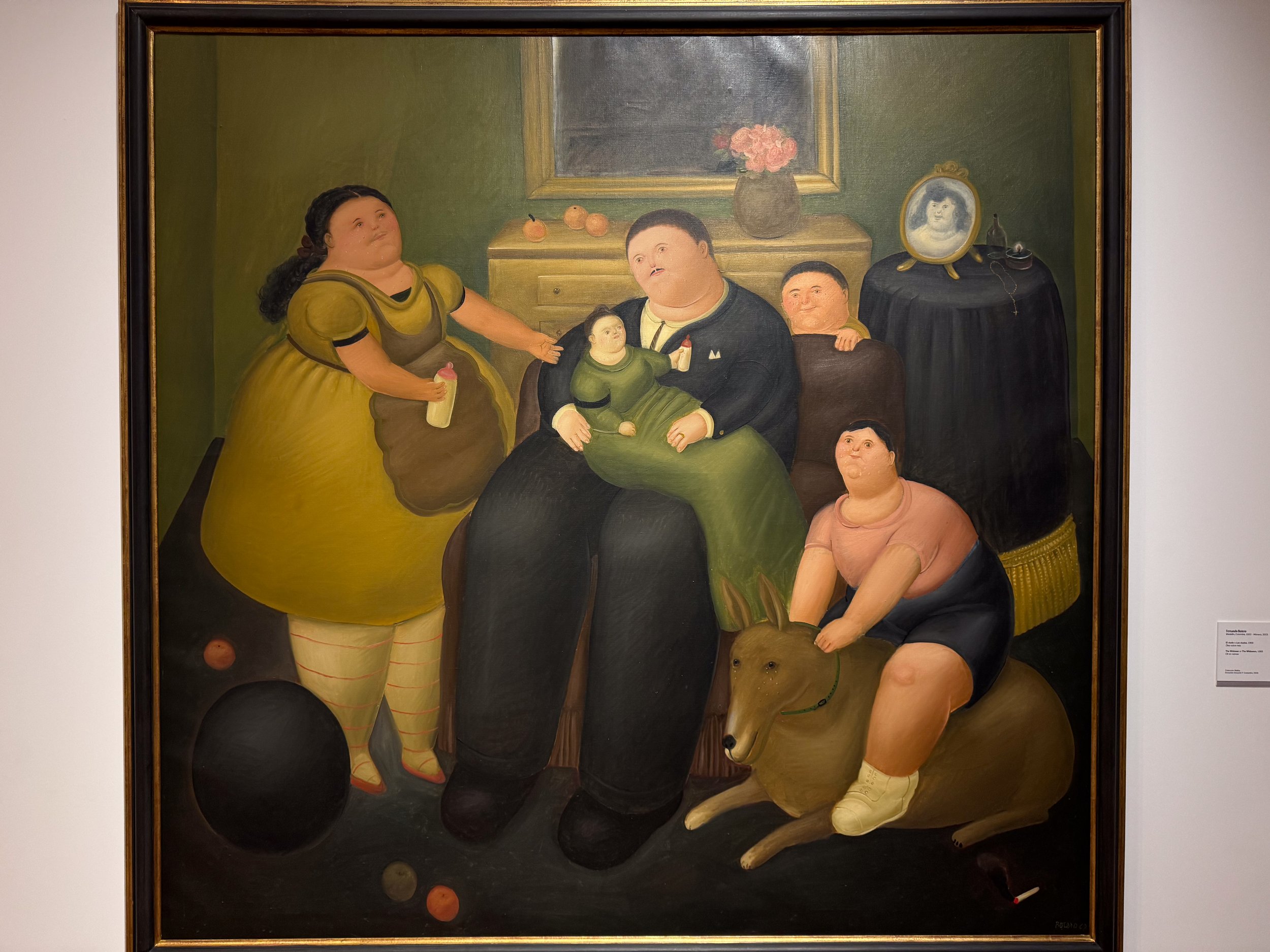
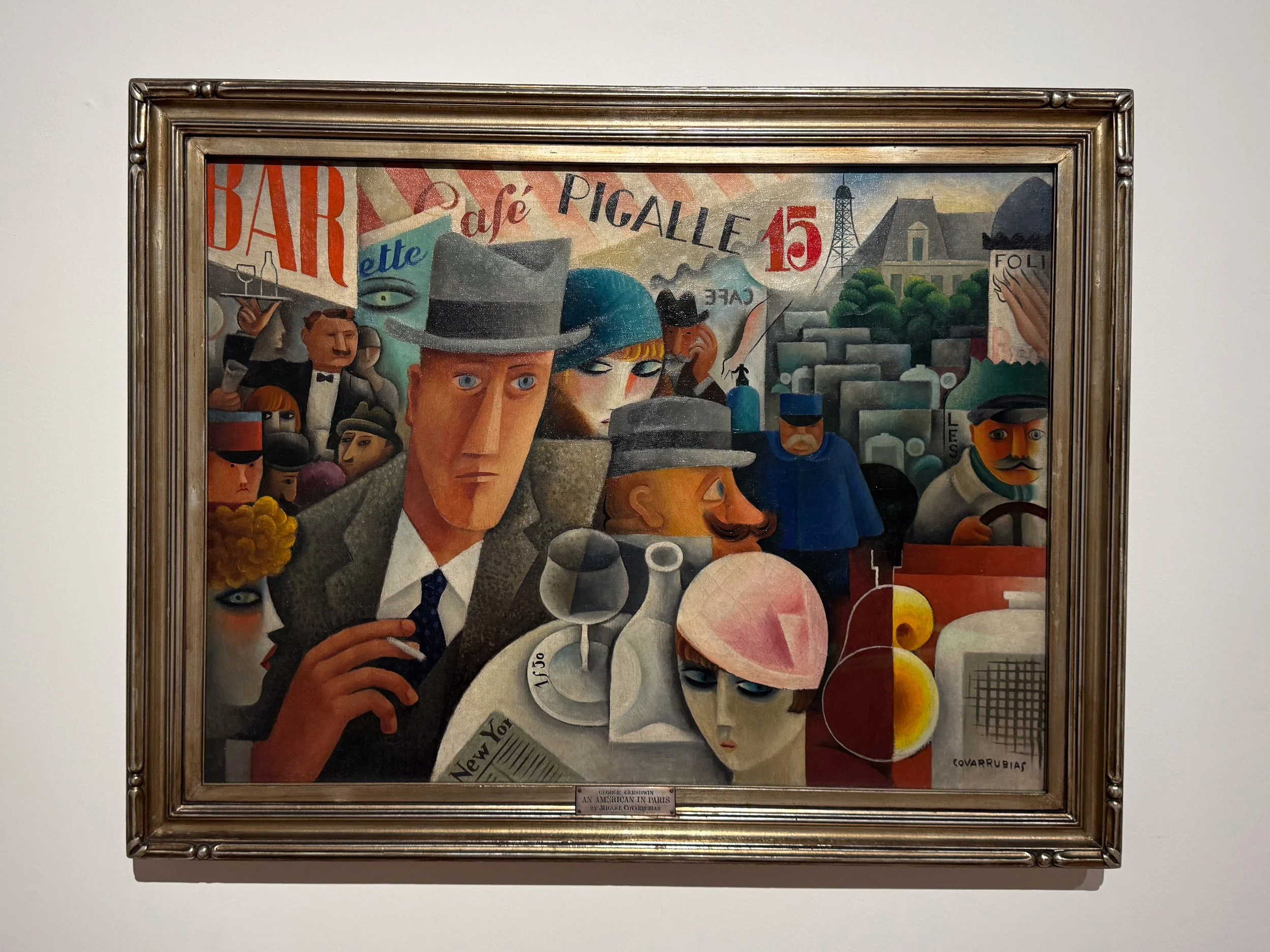
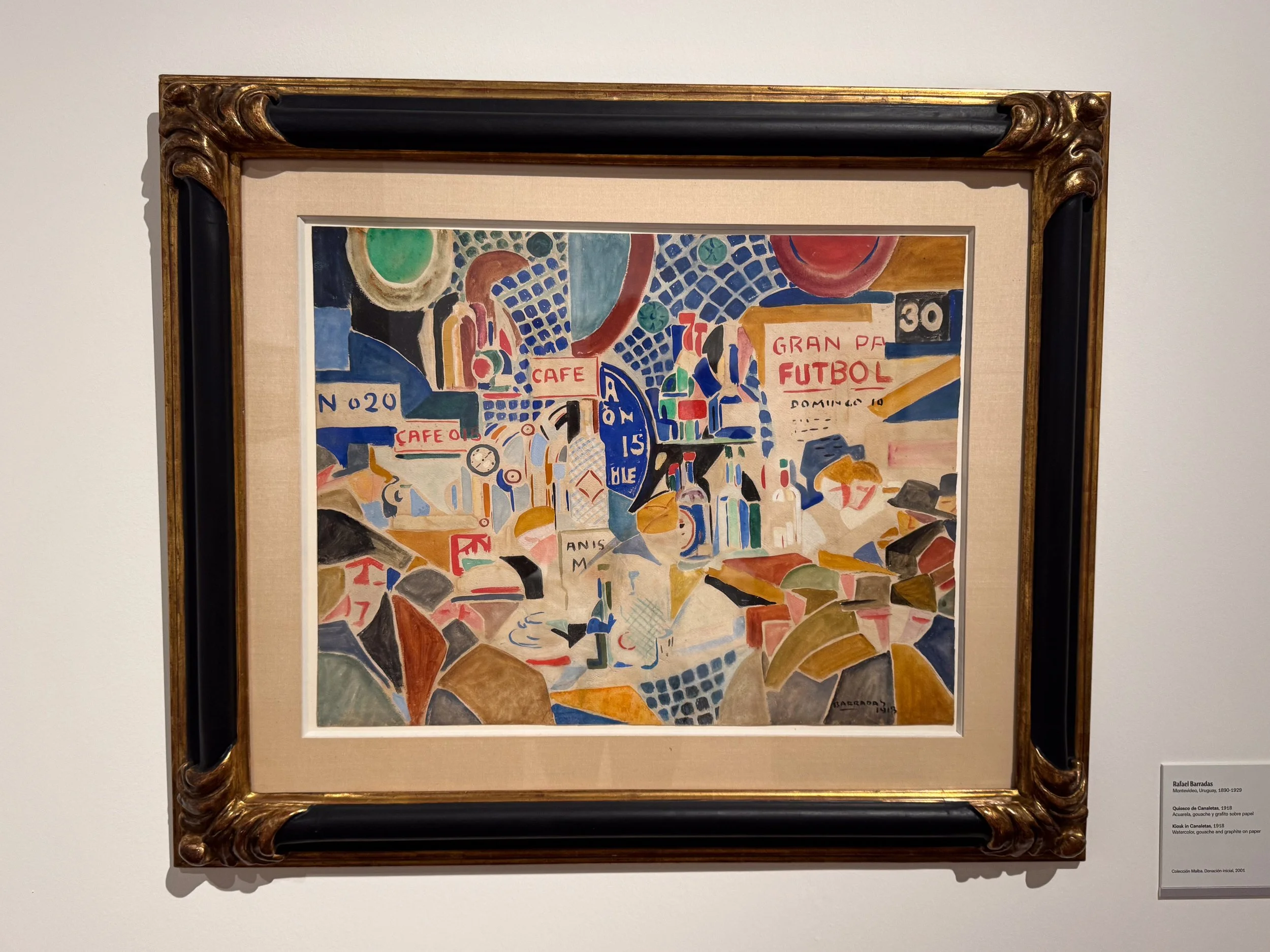
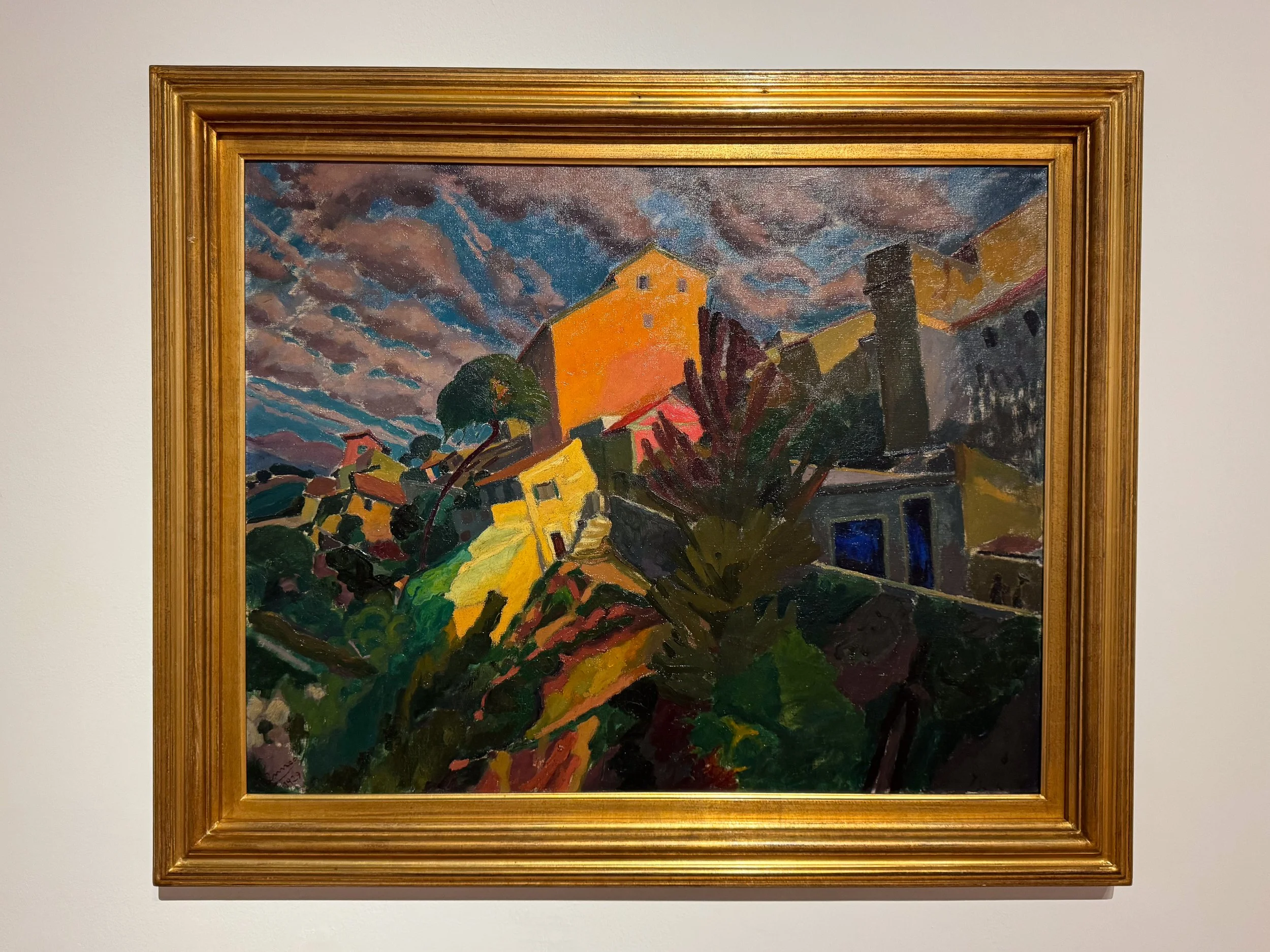
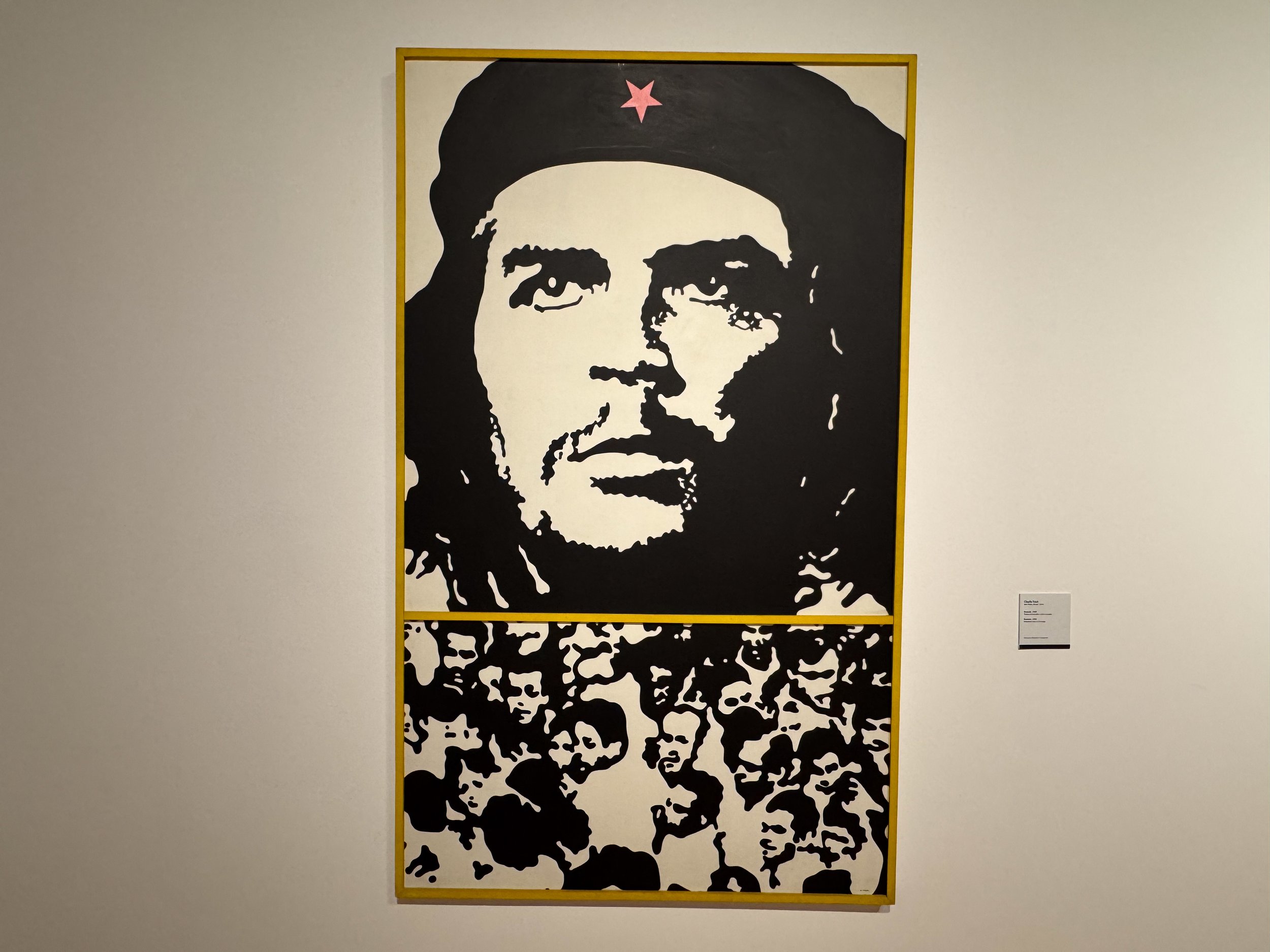
Palermo Art Museums
Museo Nacional de Bellas Artes. Argentina’s national art museum with pieces by Argentine artists depicting the country's battles for independence, its indigenous peoples, working class and city life. Galleries include sculpture, tapestries, artifacts and European works dating back to the Renaissance and by artists like Degas, Van Gogh, Renoir, Cézanne, Toulouse-Lautrec, Gauguin, Manet, Monet and Picasso. Entry is free or by donation.
Museo de Arte Latinoamericano de Buenos Aires (MALBA). An art museum housing contemporary Argentinian art and pieces by Latin American artists including Fernando Botero, Diego Rivera and Frida Kahlo.
El Centro
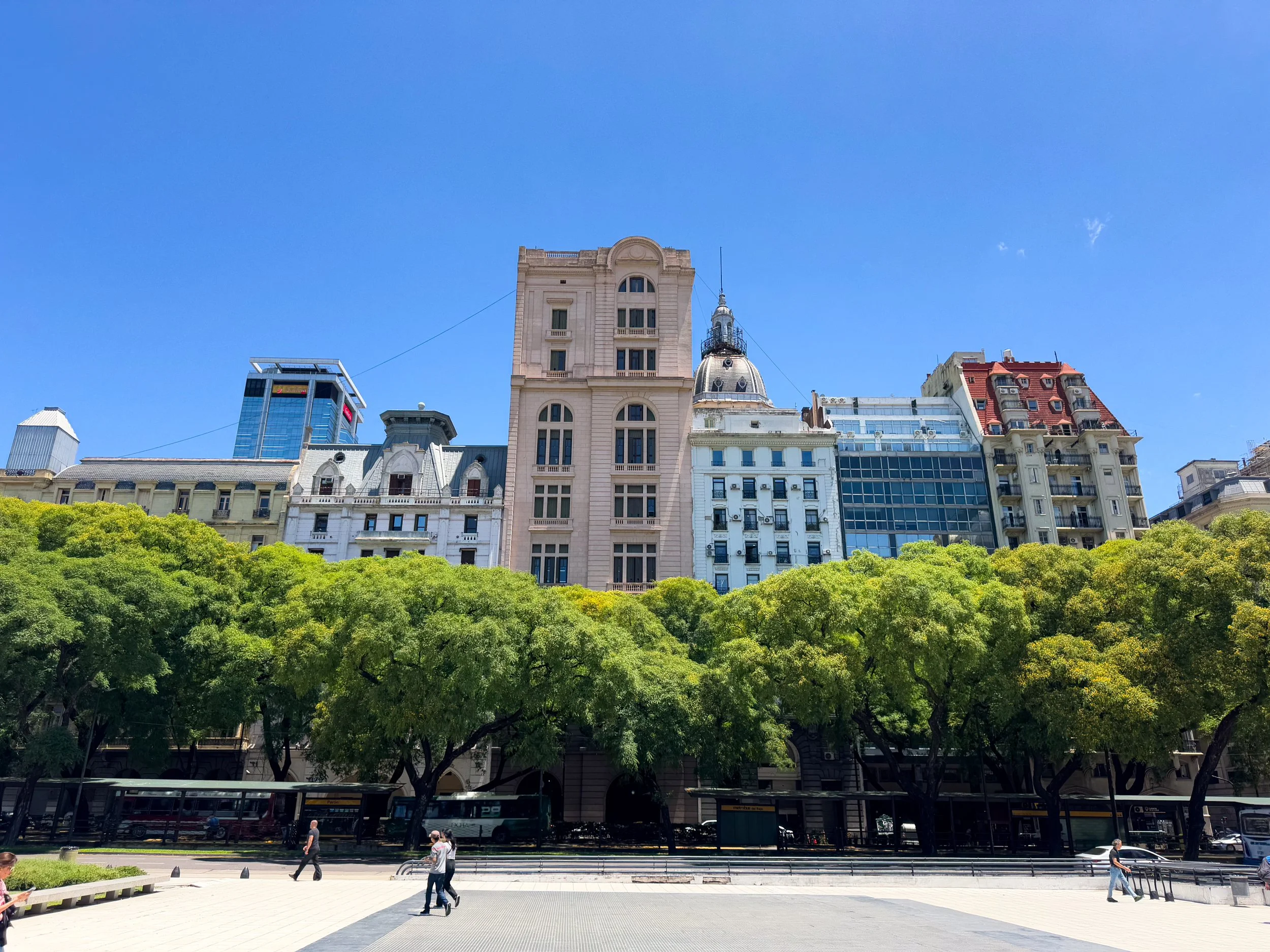
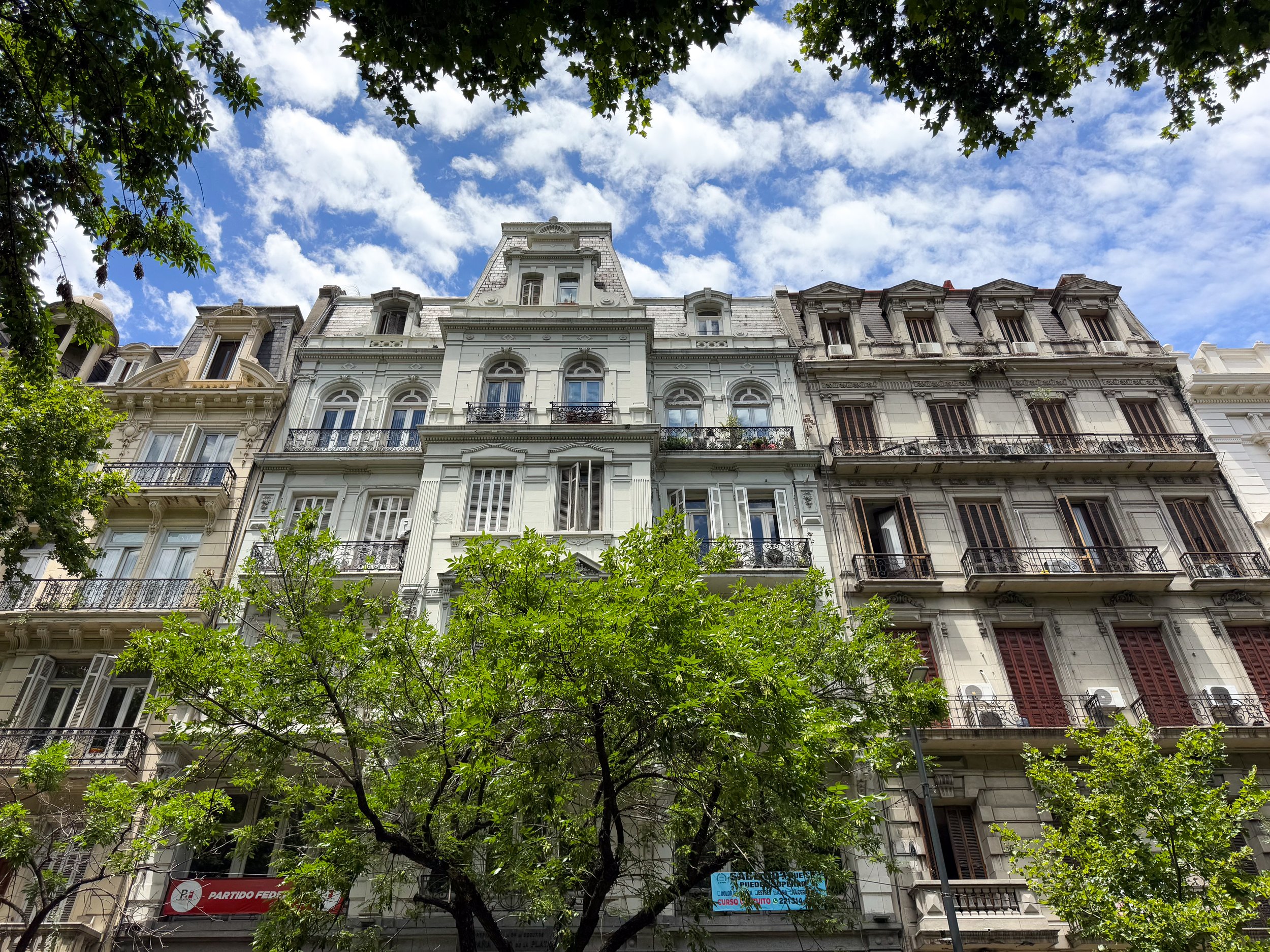
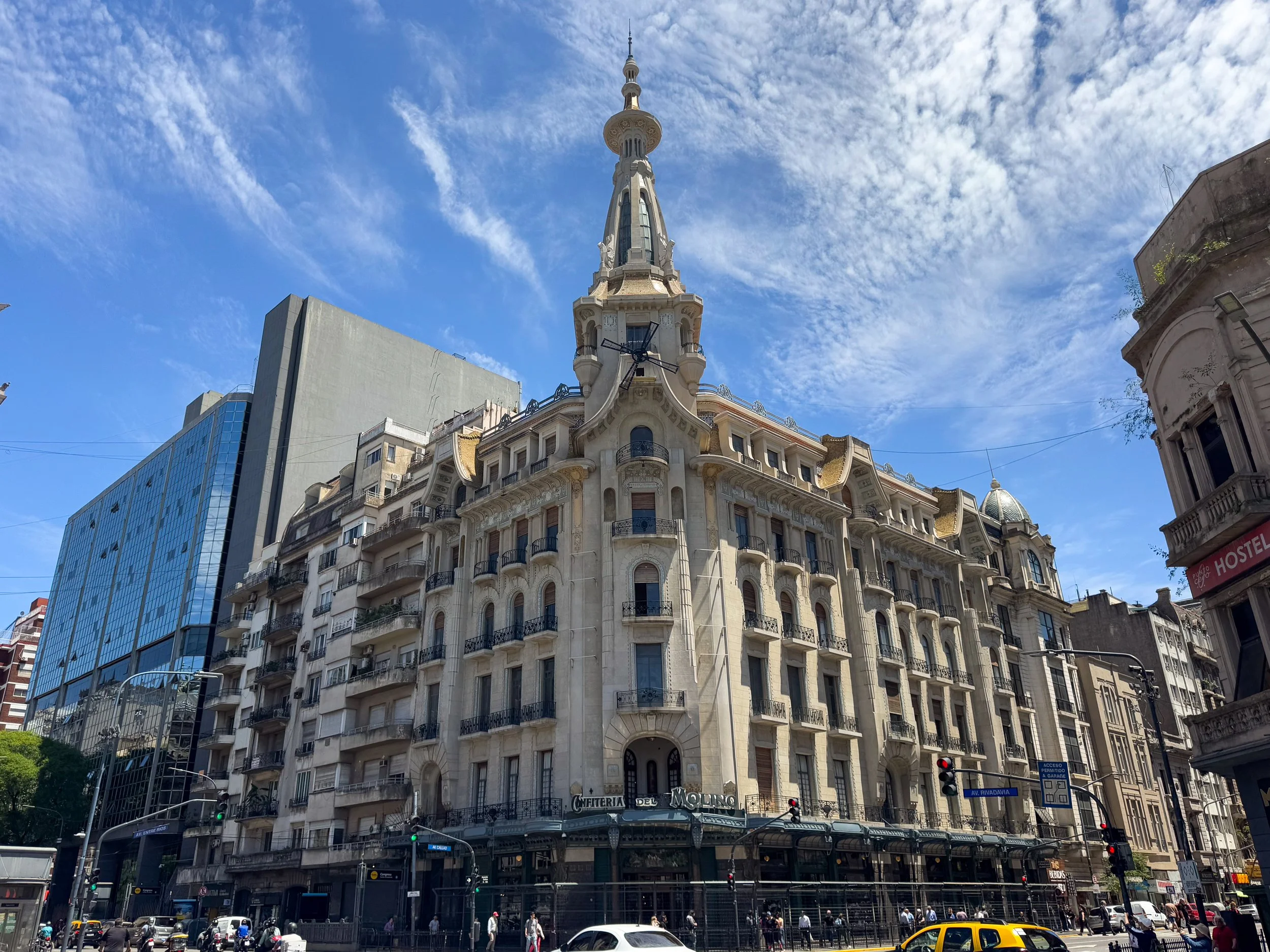
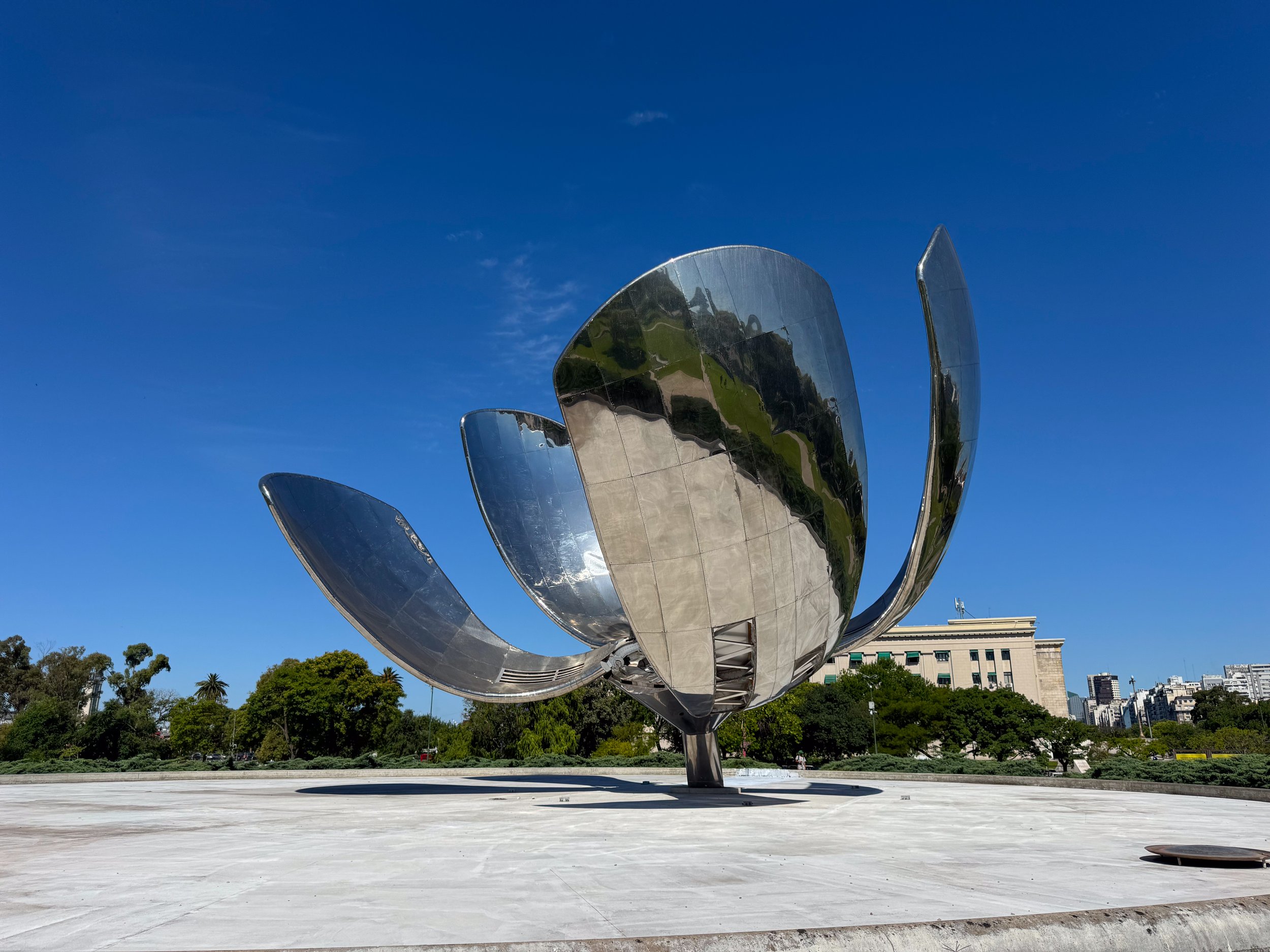
The central neighborhood is home to some of Buenos Aires’ most iconic buildings, historic sights and landmarks.
Plaza de Mayo. The city’s main plaza surrounded by government buildings, most notably, the presidential palace.
La Casa Rosada. The Argentine presidential palace, home and offices named after its rose tinted stone exterior.
Avenida de Mayo. A grand avenue lined with historic buildings, cafes and hotels.
Corrientes Avenue. A street with Broadway style theaters and chain clothing stores. The parallel streets are lined with beautiful architecture, popular afternoon cafes, happy hour bars and local lunch spots.
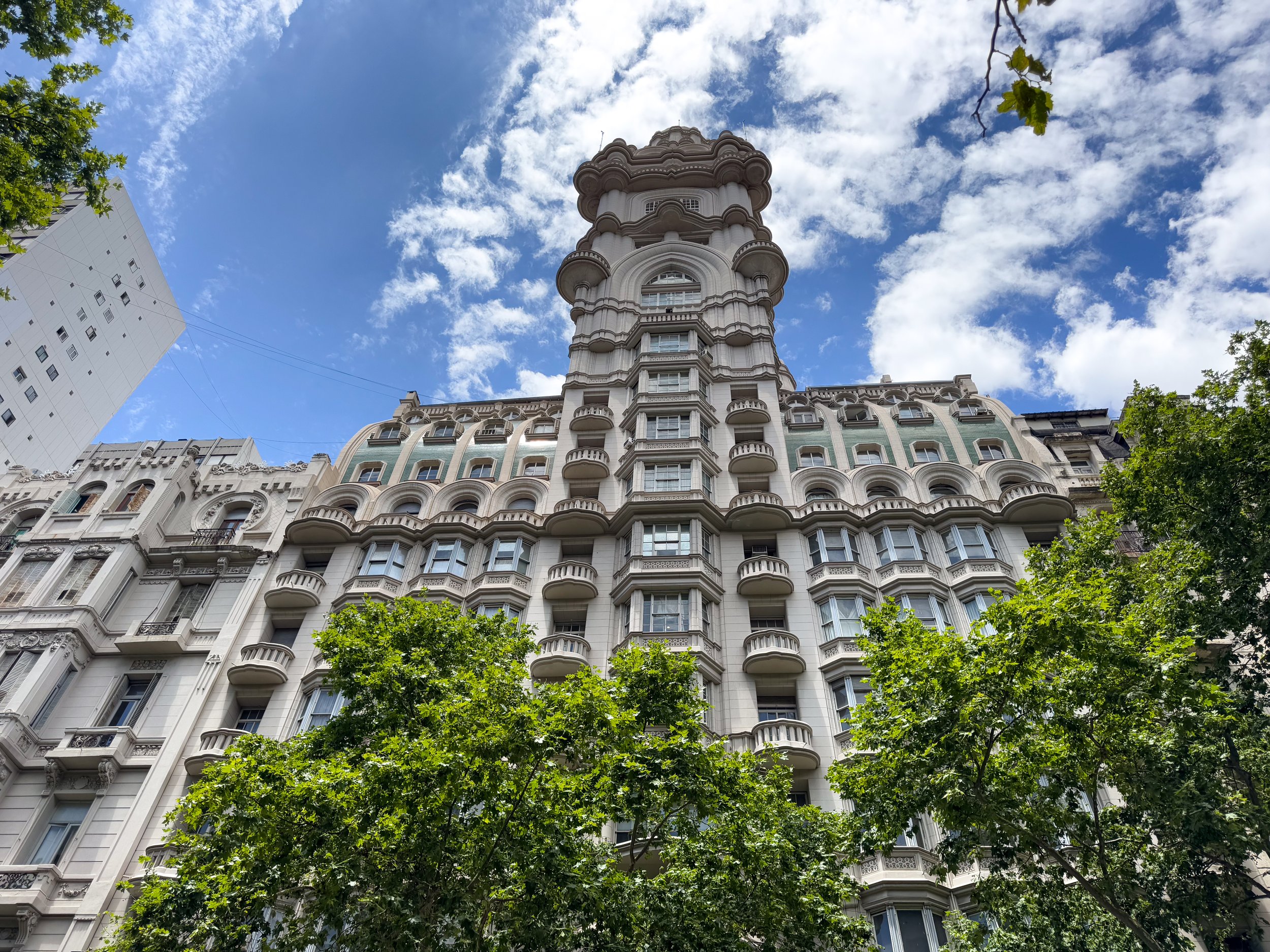
Palacio Barolo. A famed office building designed in the theme of Dante’s Divine Comedy with tours and a panoramic rooftop bar.
Obelisco. A white stone obelisk commemorating the city’s founding.
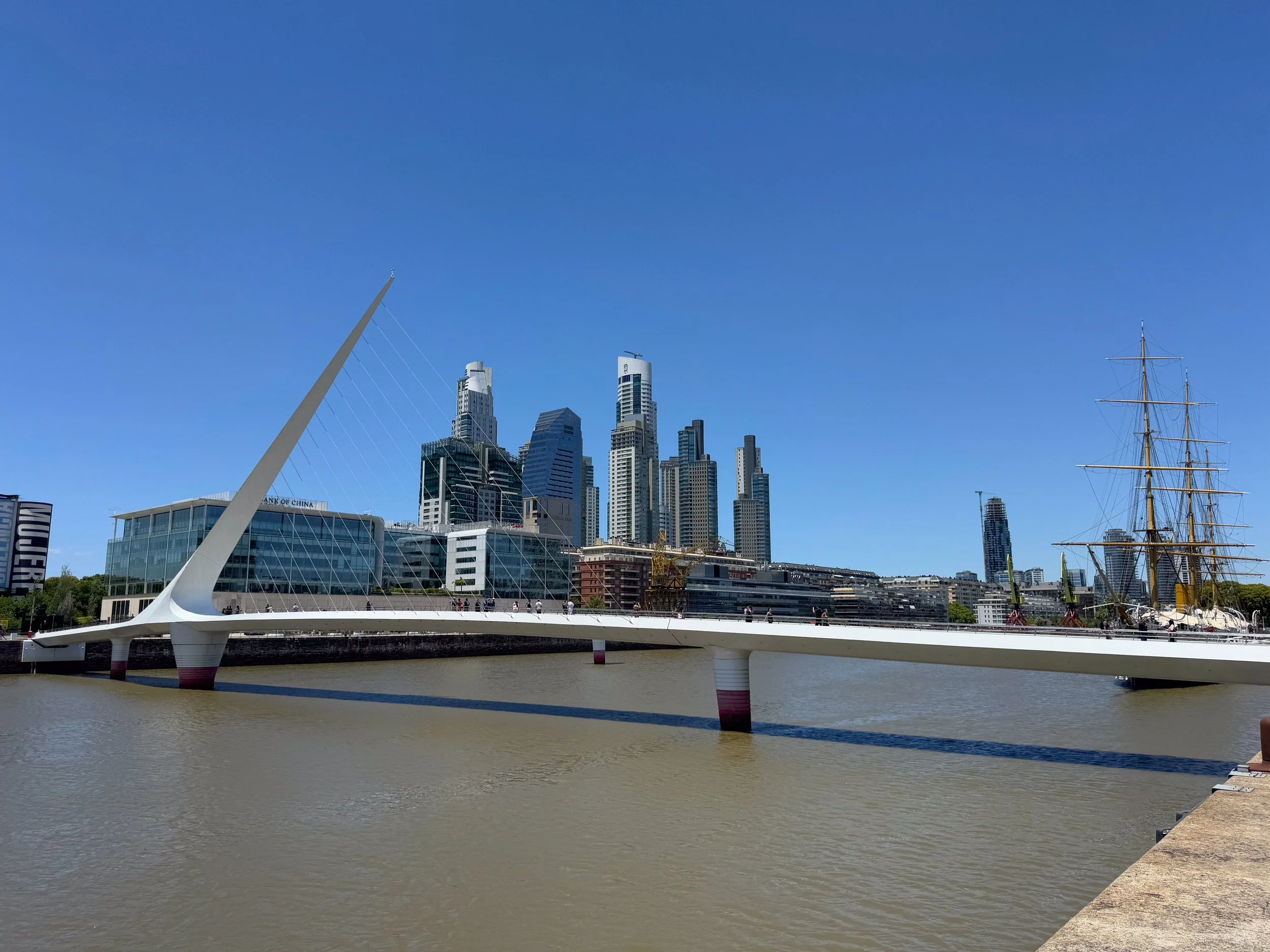
Puente de la Mujer. A sleek pedestrian swing bridge with a sail-like cantilevered suspension designed by Calatrava in honor of Argentine women.
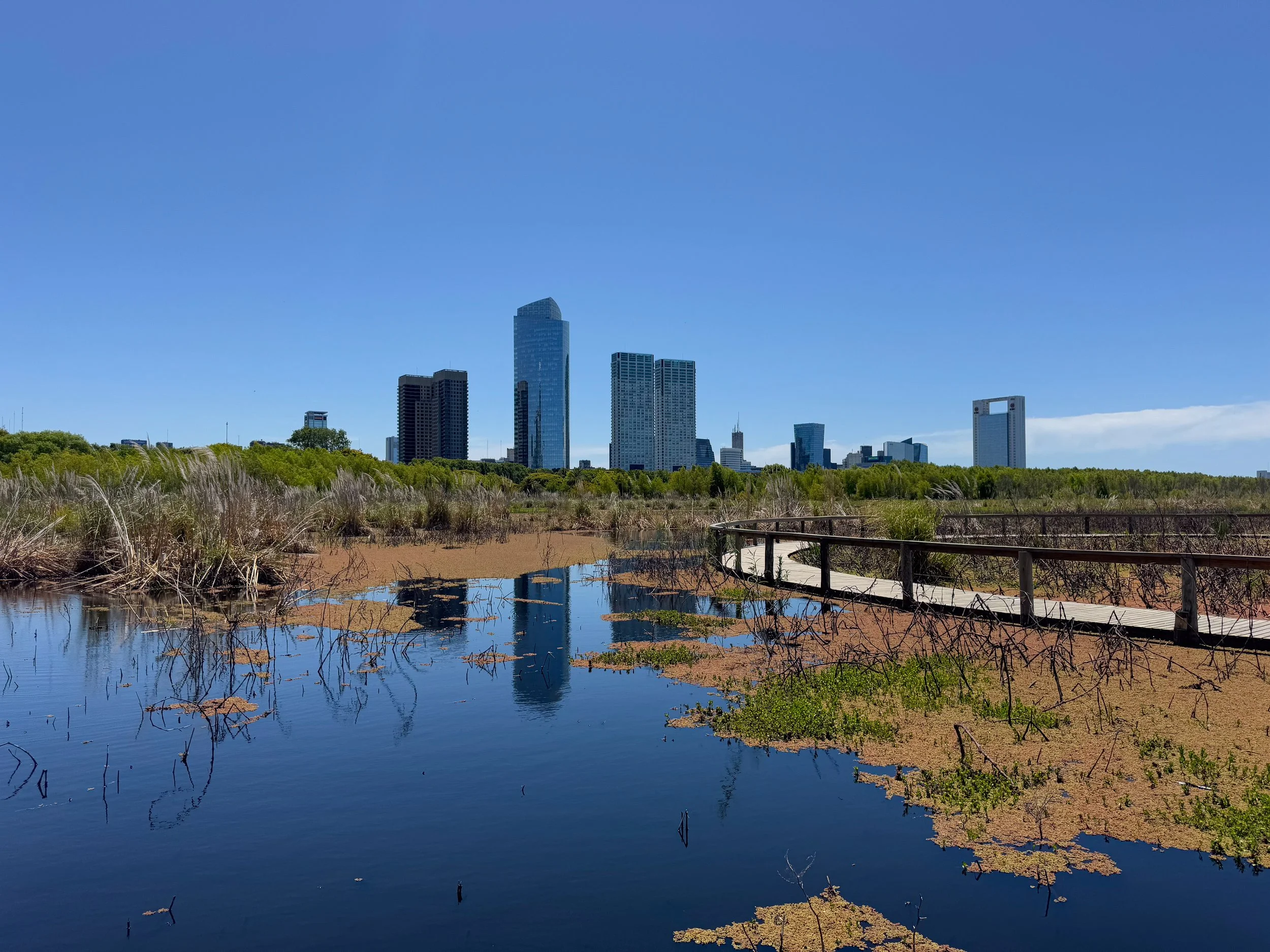
Buenos Aires Ecological Reserve. The city’s largest park with walking paths, bike trails and boardwalks through wetlands, lagoons and forests. The middle of the reserve features a circular boardwalk over a lagoon with views looking back towards the modern city skyline. Between the moss and sea grass, we spotted turtles, ducks and dragonflies. Further into the reserve is a picnic area with views of the Rio de la Plata. It’s free to enter and easy to spend several hours exploring on foot or by bike.
La Boca
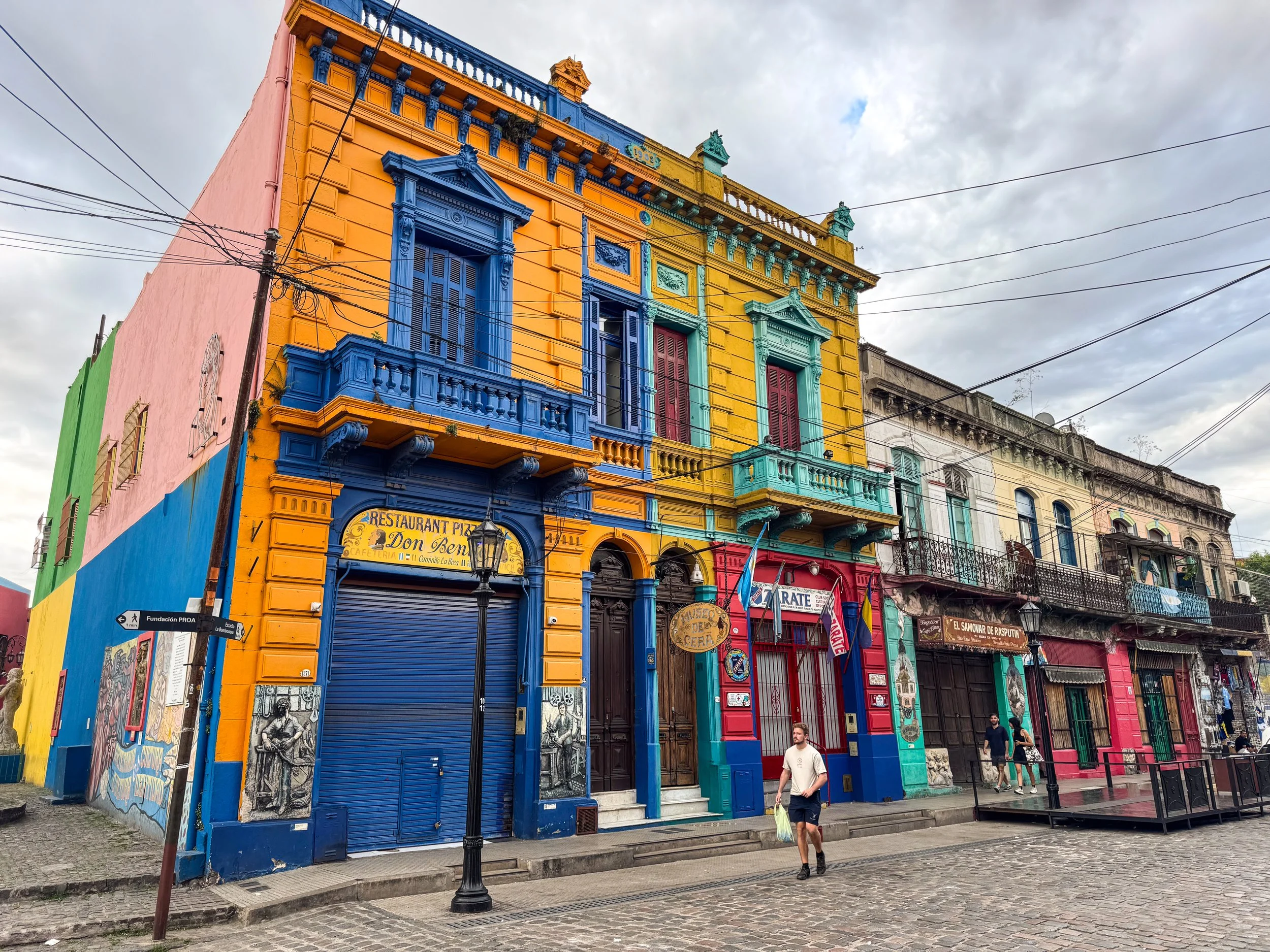
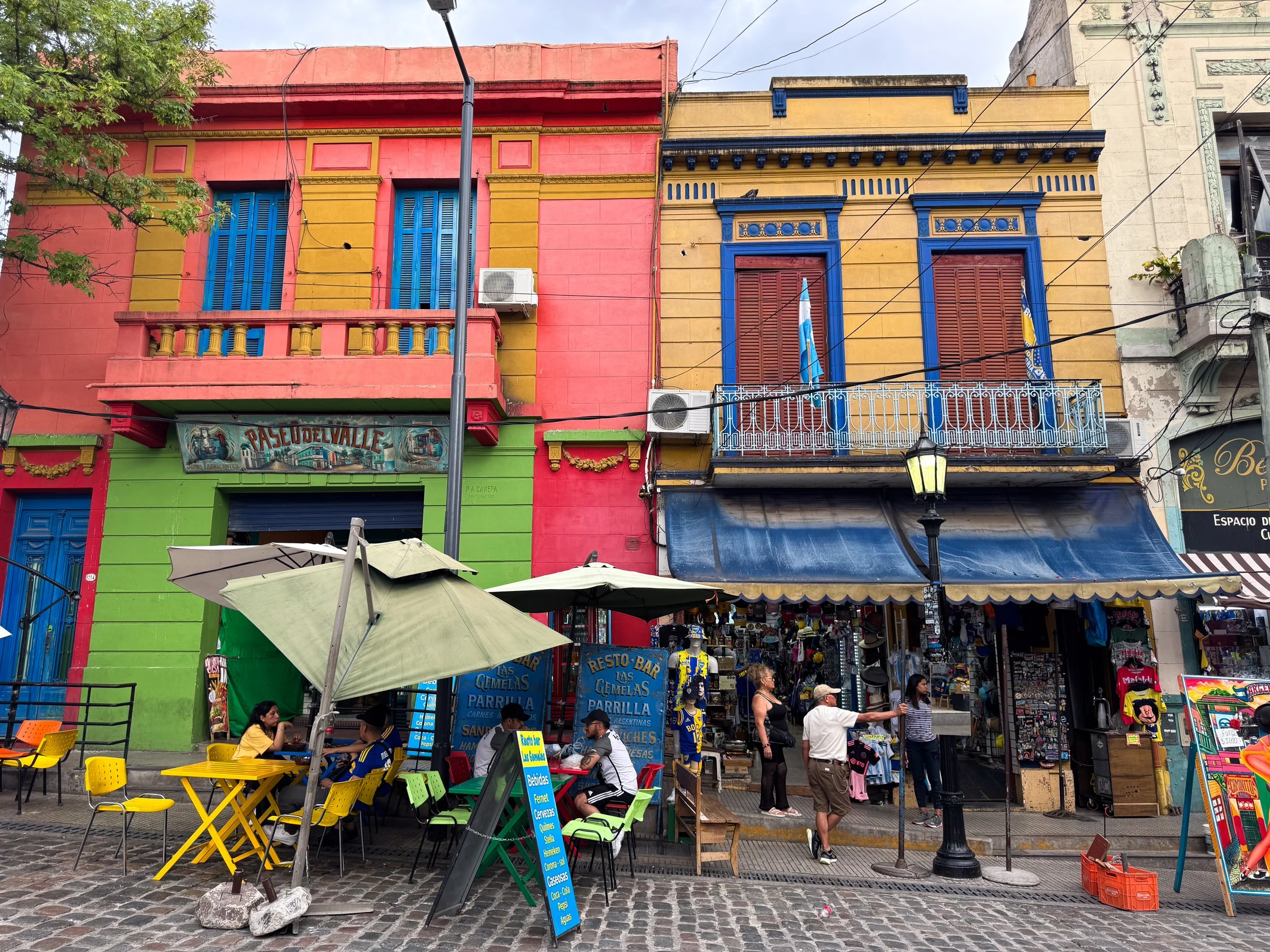
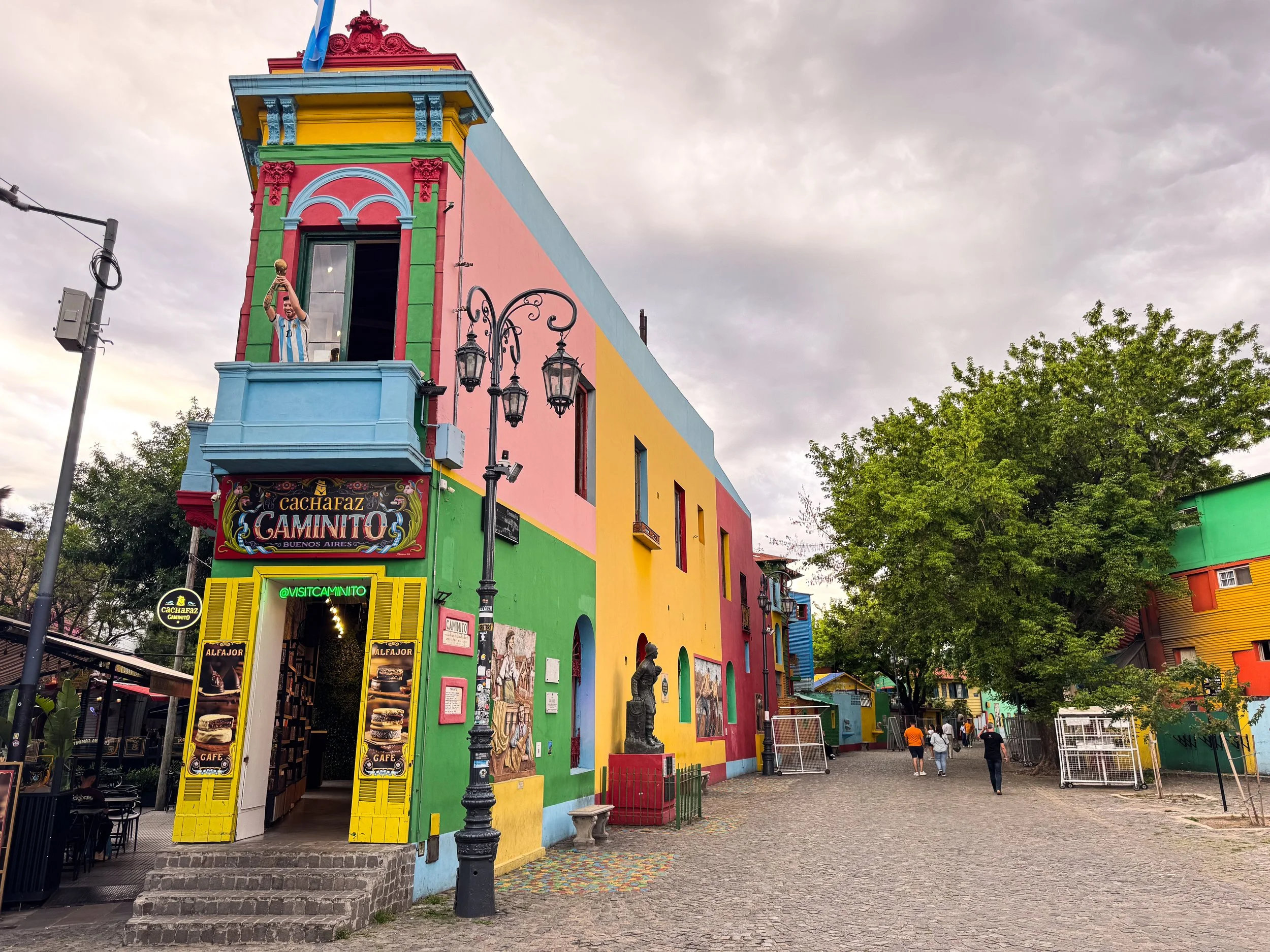
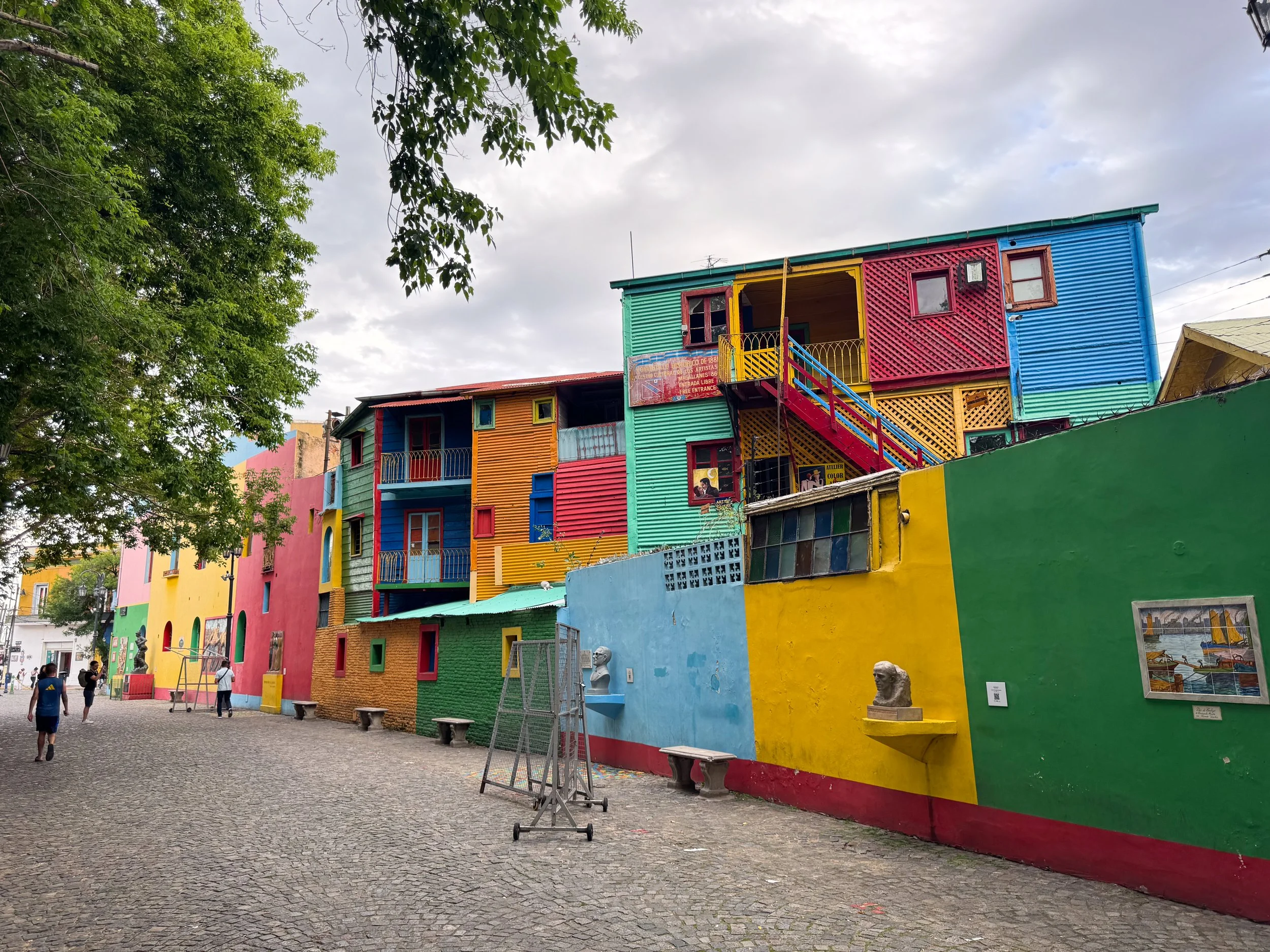
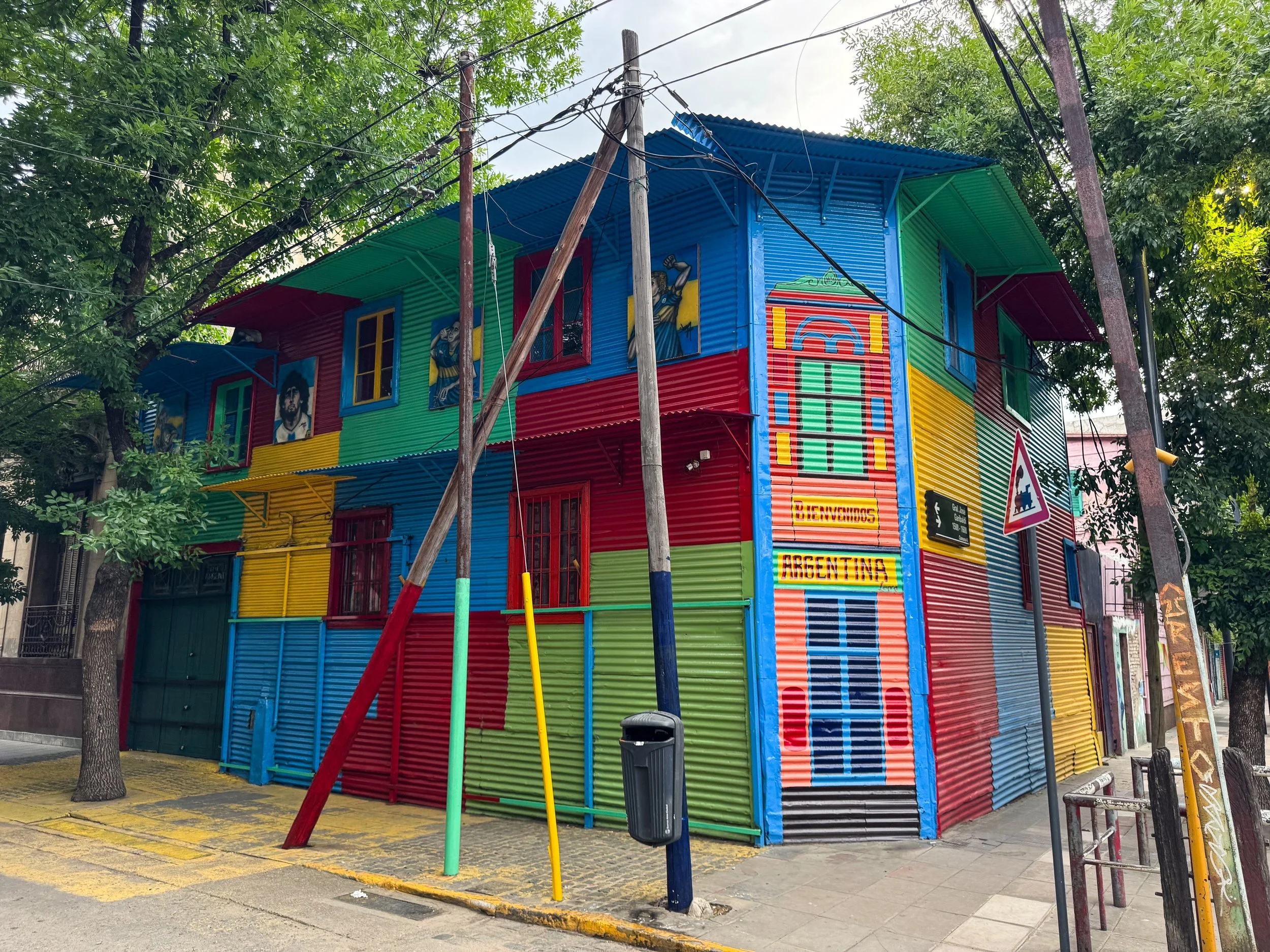
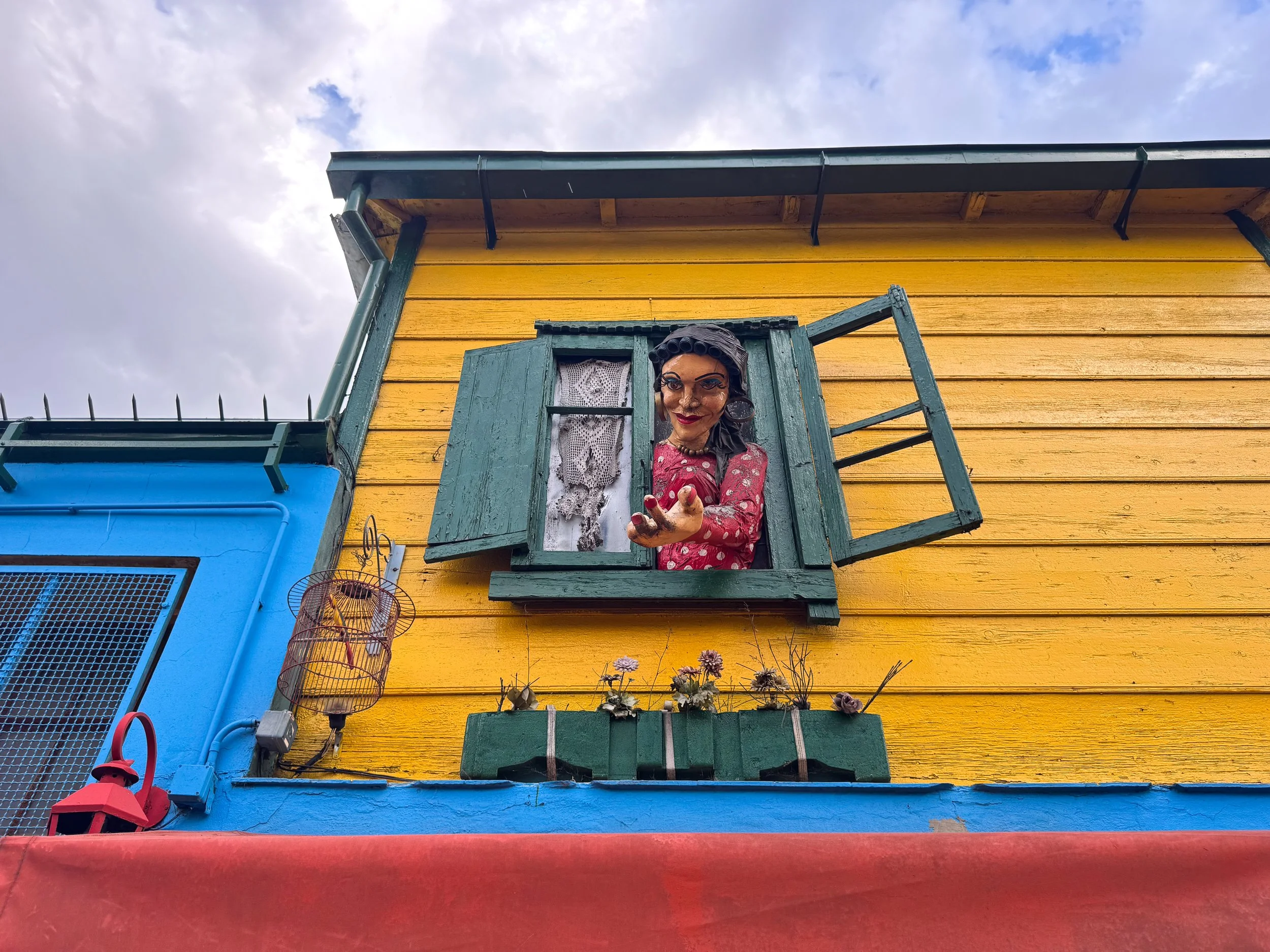
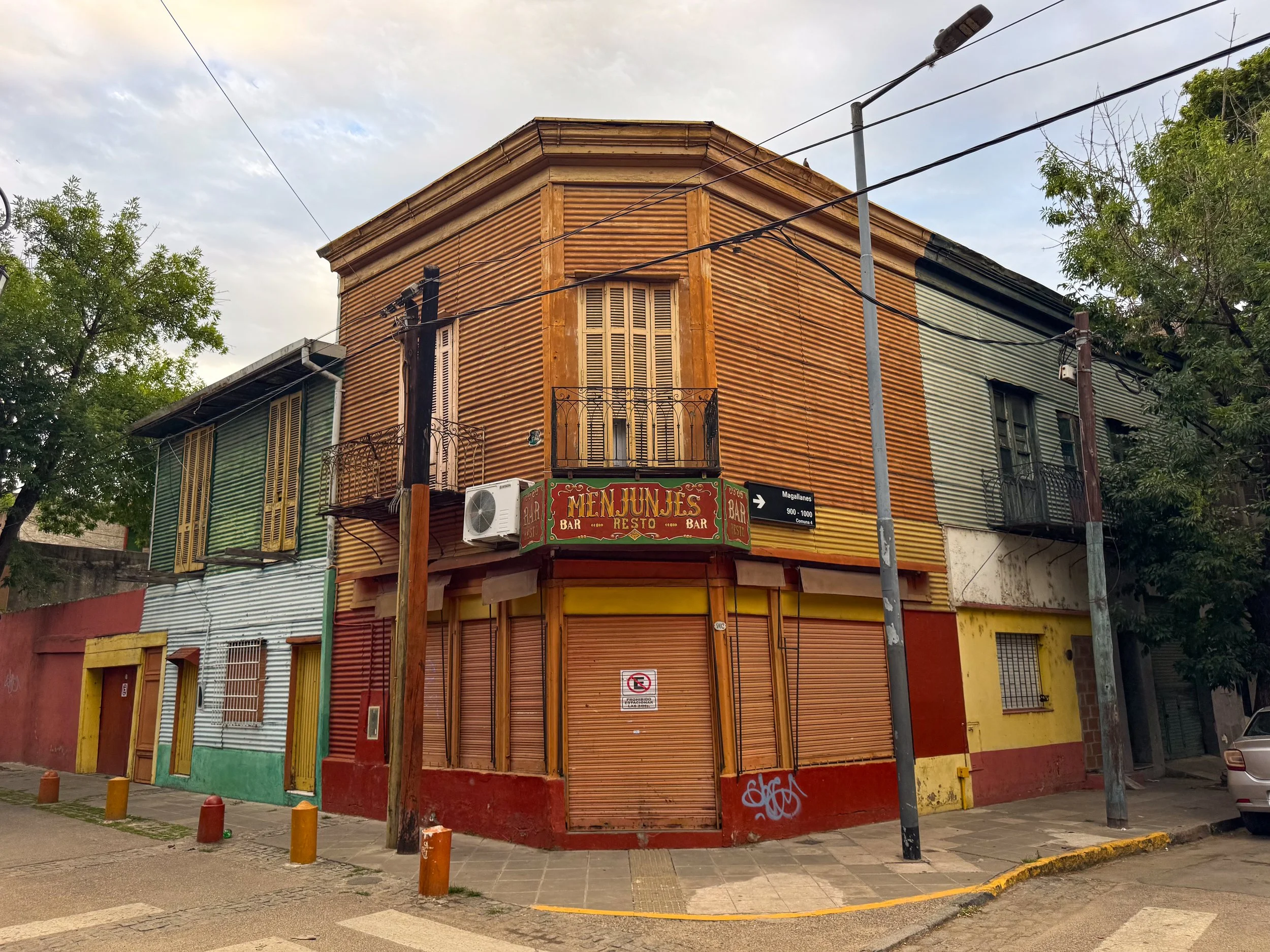
La Boca is a vibrant neighborhood with waterfront warehouses, a large futbol stadium, colorfully painted buildings, graffitied streets, large murals and caricature-like statues of famous Argentinians including Tango dancers, futbol players and even the pope. The most lively area of the neighborhood is Caminito, home to sports bars, tango clubs and tourist shops. We explored the area in the late afternoon and early evening. Most places only began to open up around 8pm.
Tigre
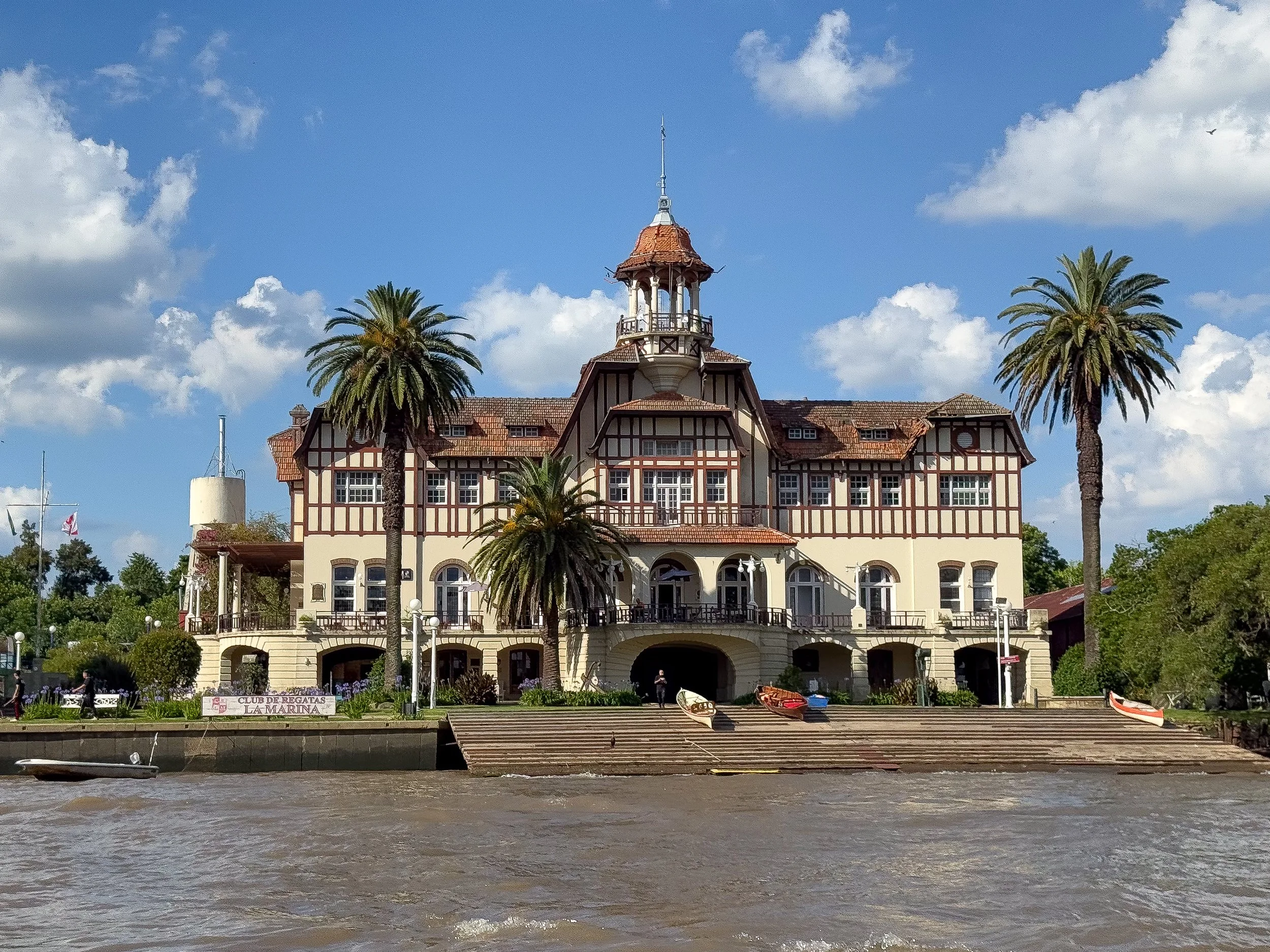
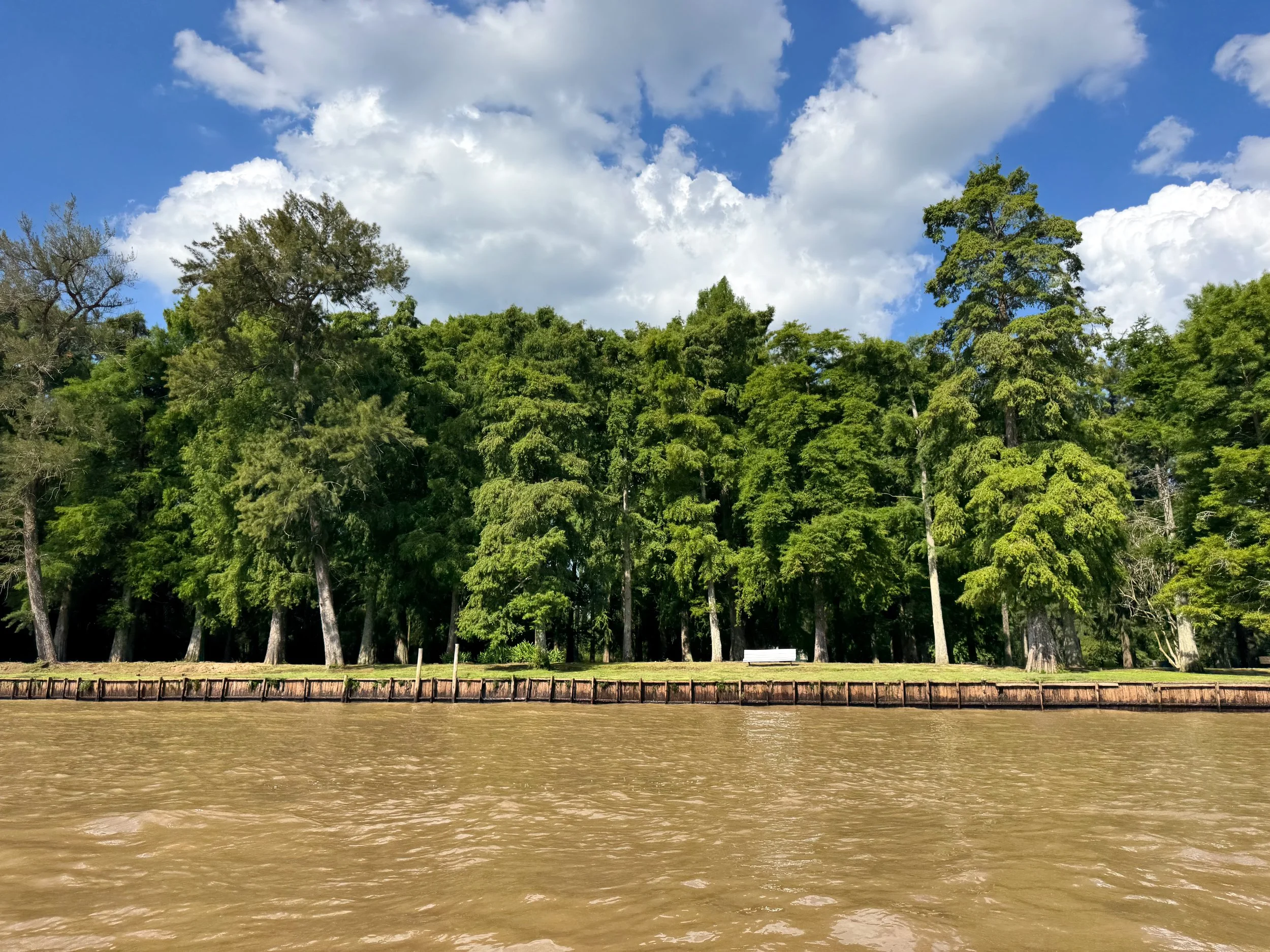
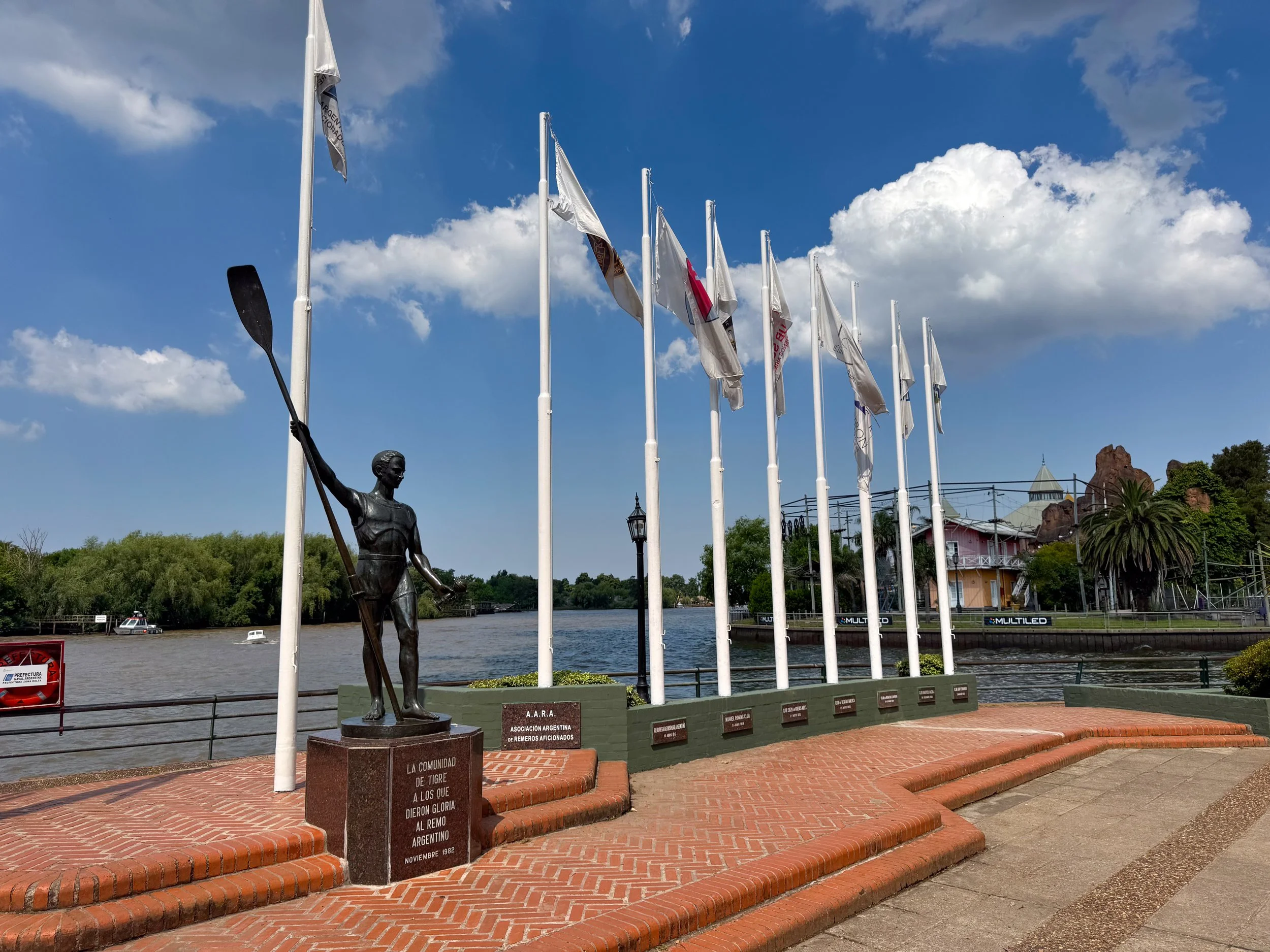
Tigre is a historic suburb of Buenos Aires with homes built along canals and wetlands in the Tigre River Delta. We took a day trip here to explore its lush waterways, islands and architecture.
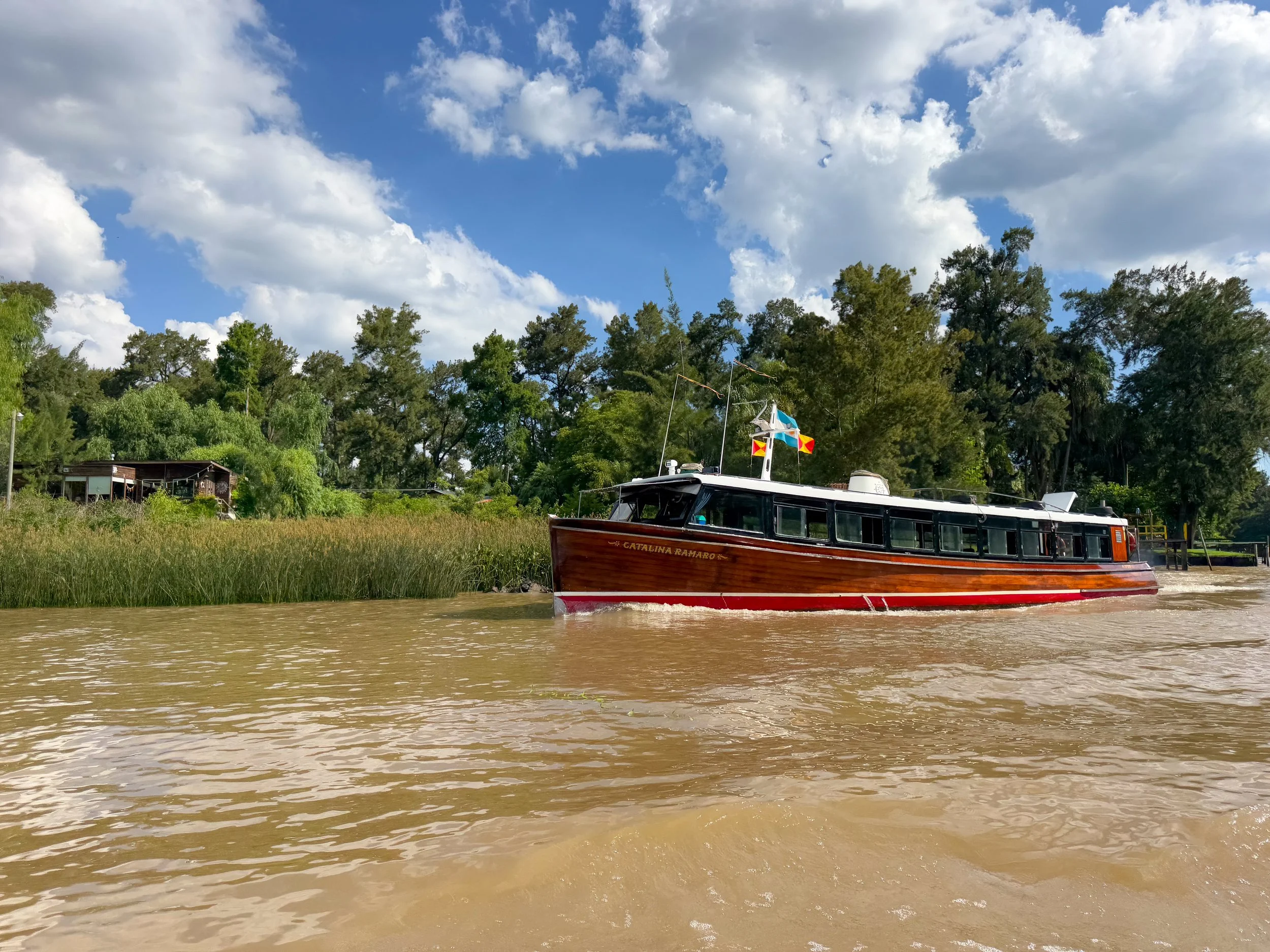
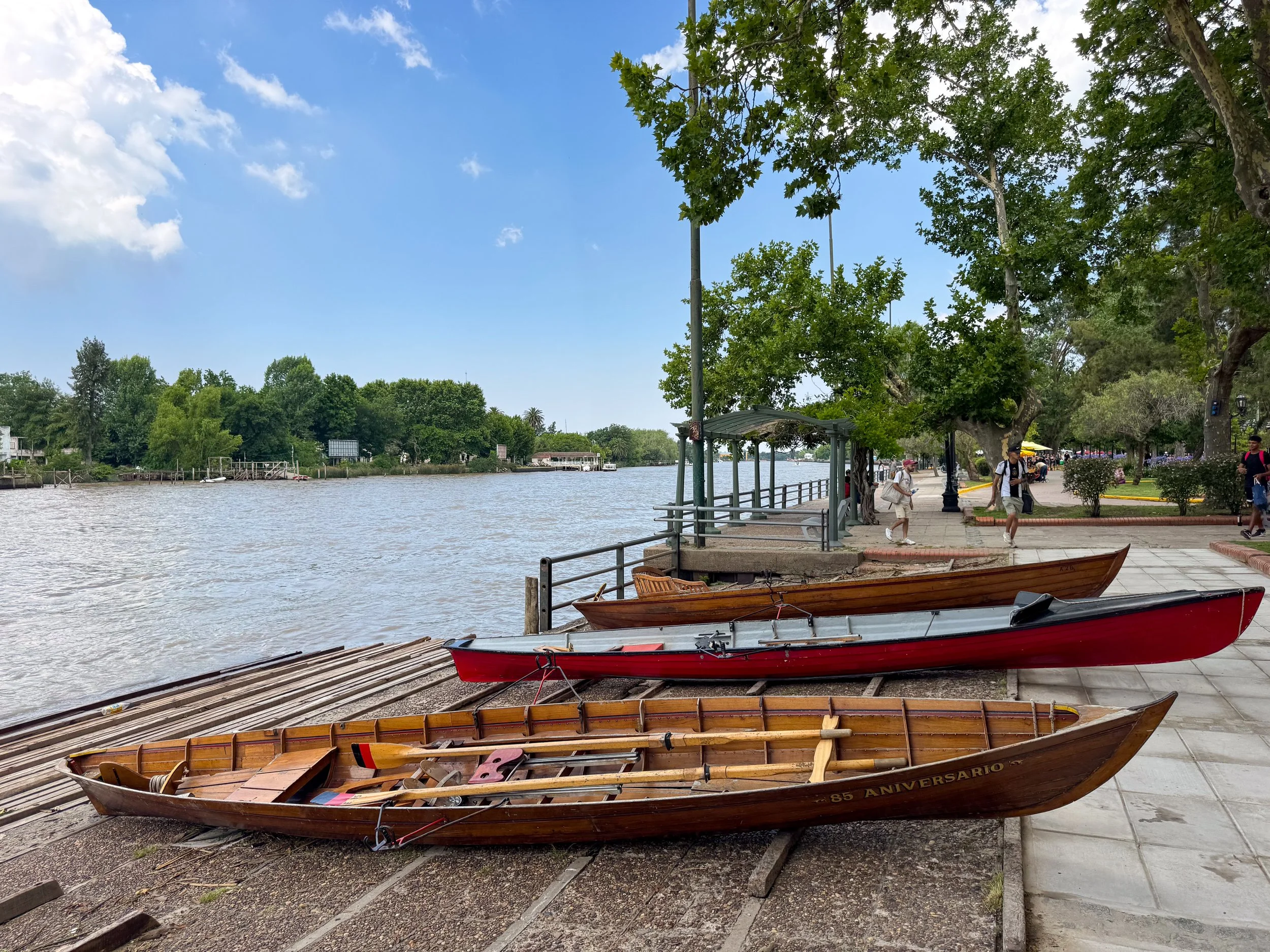
Paseo Victoria. A tree lined pedestrian street along the river with restaurants, boat launches, canoe rentals and historic buildings. We walked along the promenade watching wooden boats pass up and down the canal.
Puertos de Frutos. A vast market with booths of vendors selling wooden furniture, wicker baskets, handmade knives, yerba mate mugs and souvenirs.
Getting Here. Take the MITRE train, a commuter rail line that extends further than the Subte. Stations often only accept cash for tickets.
Tigre Canal Tour
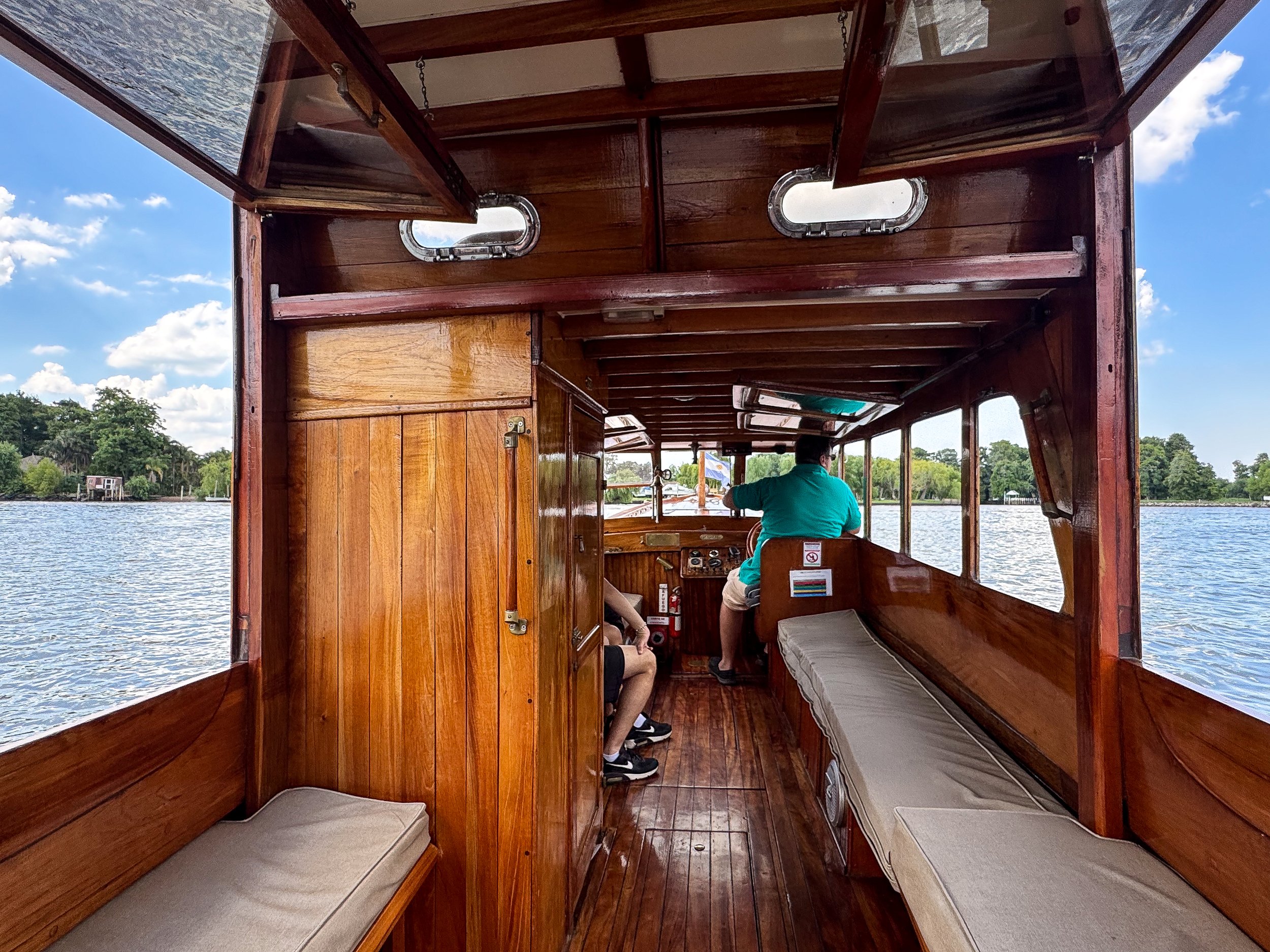
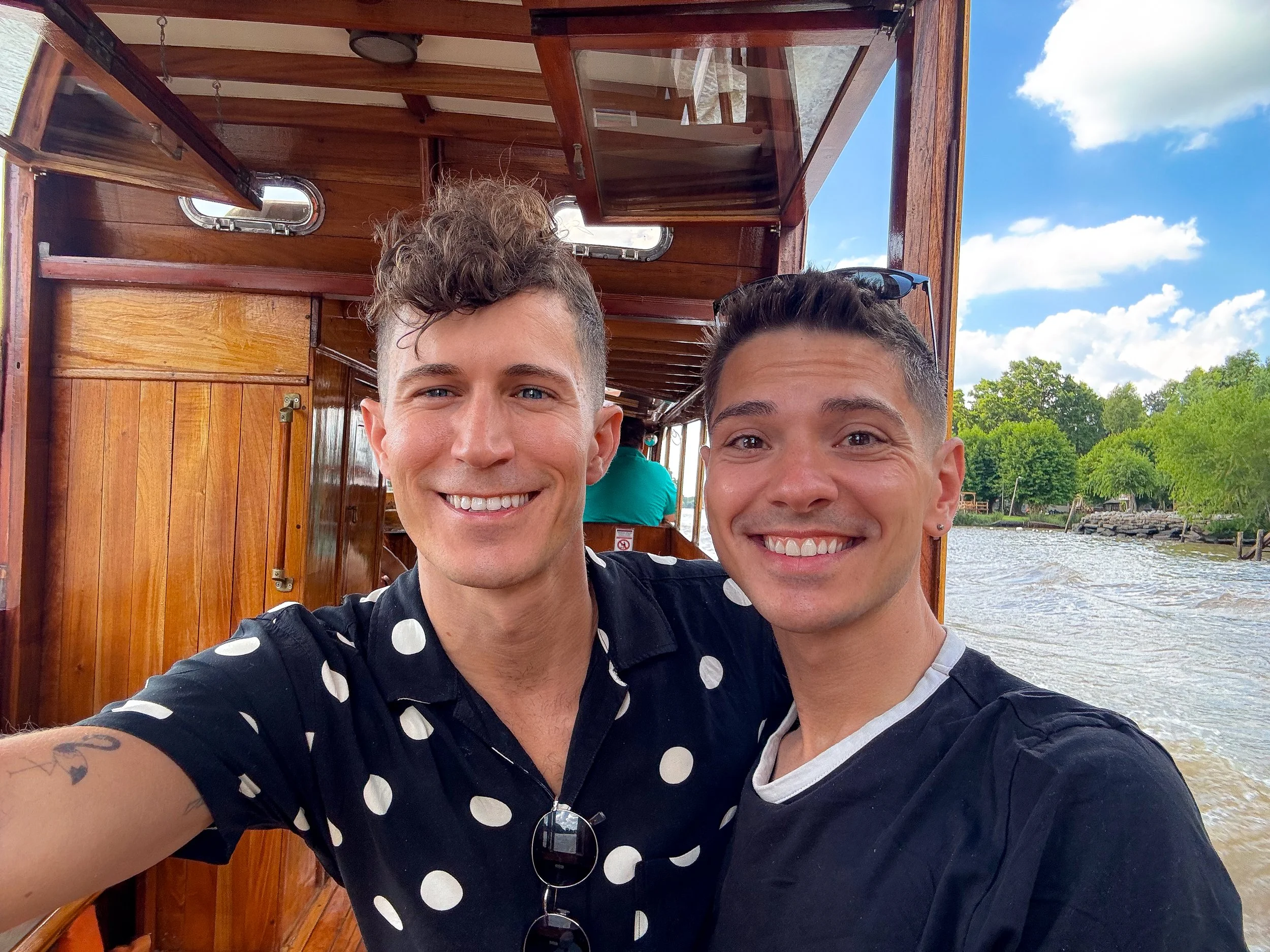
The best way to explore Tigre and its canals is by boat! There are many tour operators near the Rio Tigre and piers. We shopped around for a small boat tour that would bring us further into the river delta than the larger catamarans.
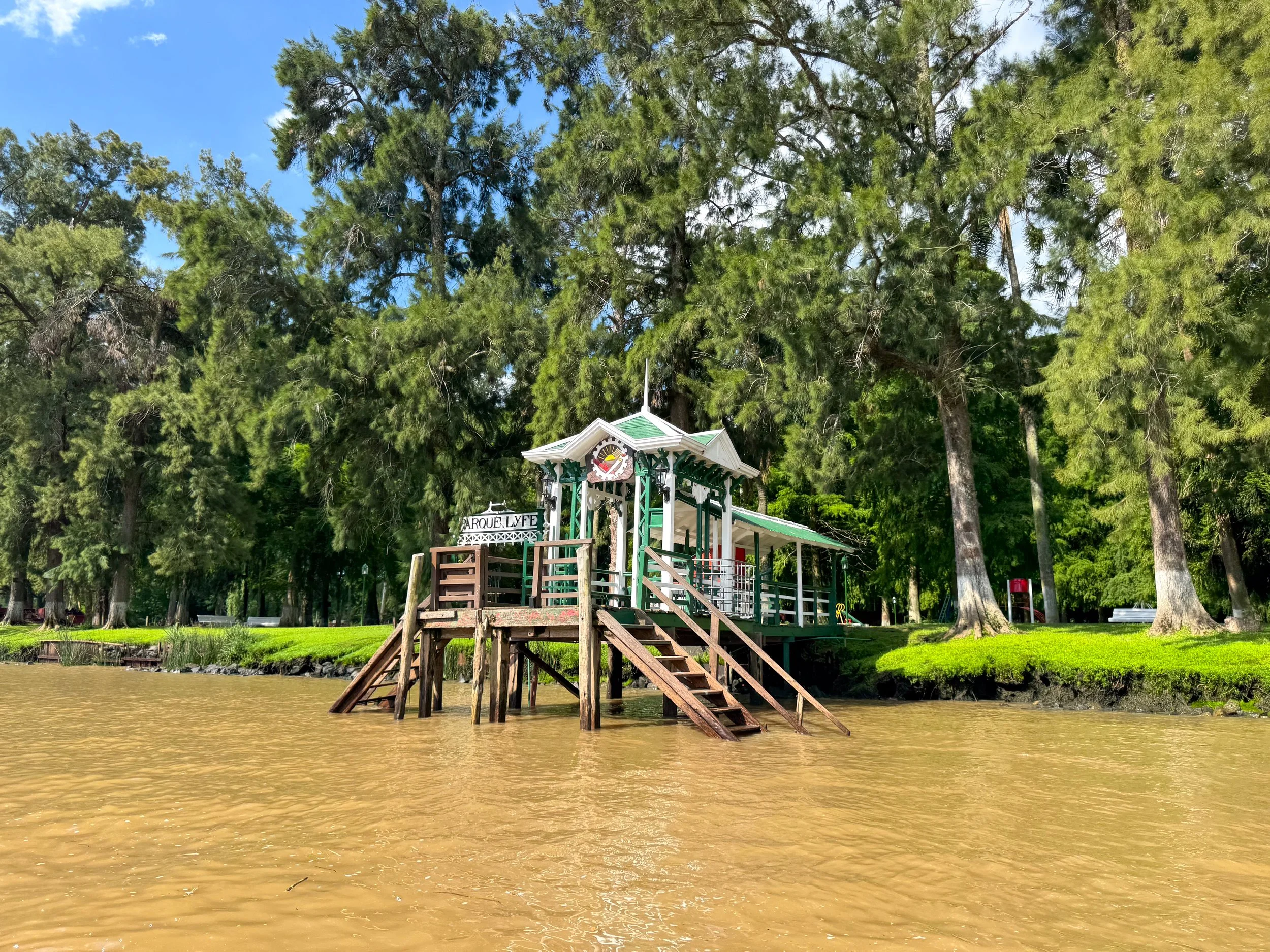
We rode on a tiny traditional wooden boat to tour the grand canal and narrow passageways. Along the grand canal, we passed a ship yard, ornate art museum and amusement park. Venturing further into the islands and narrower channels, we boated past small hotels and resorts, summer cottages, modern homes, wooden casitas and a former president’s home, preserved inside of a glass box.
The tour was narrated in both English and Spanish. En route, we learned about the community, its history and the landscape of the waterways. The tour lasted an hour and cost around $35 USD per person.
Argentine Cuisine
Empanadas. One of Argentina’s most popular snacks. The savory packets of dough are stylized with crimped sides and stuffed with fillings including meats, veggies or seafood.
Milanesa. A popular dish made of breaded and fried meat or vegetables like eggplant.
Fugazza. Argentinean style pizza made with a thin crust and fluffy dough topped with any number of toppings. Traditional places bake it in a coal or wood fired oven.
Provoleta. Grilled and melted Argentinean provolone cheese seasoned with oregano and olive oil. It’s often served with bread for dipping.
Rabas. Rings of Argentinian style fried calamari. It’s a common restaurant appetizer and snack at bars.
Picadas. Argentinian style charcuterie. A plate of “pickings” often includes cheese, pickled veggies and meat.
Medialunas. Tiny half moon shaped pastries similar to croissants made with a sweet dough and sugar glaze.
Alfajores. Two sugar cookies with a generous layer of dulce de leche sandwiched in between and coated in coconut shavings or covered in chocolate.
Malbec. A full bodied red wine and the national wine of Argentina, primarily grown in the Mendoza region.
Fernet and Coke. A bitter herbal liquor mixed with Coke. It’s a common cocktail across Argentina.
Quilmes. Argentina’s national beer. The lager is inexpensive and widely available at bars and restaurants across Buenos Aires.
Yerba Mate. This herbal tea is immensely popular across Argentina. People carry around gourd shaped mugs filled with tea leaves and a thermos with hot water to continuously steep their mate throughout the day. Its drunk through a metal straw with a spoon shaped filter at its end.
Where to Stay
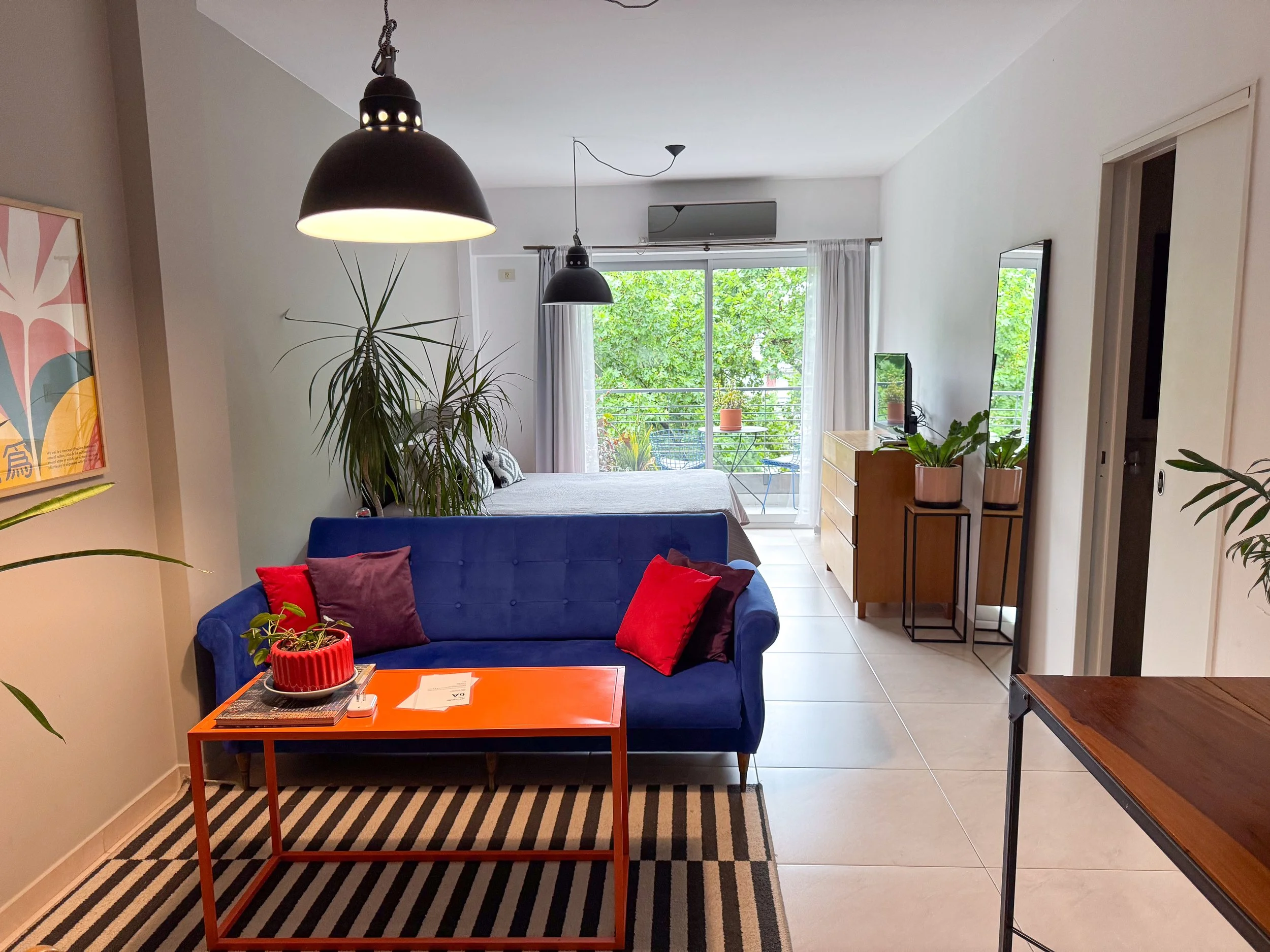
We stayed at an Airbnb in the middle of Palermo Hollywood. For many of the reasons we love this neighborhood, it was the perfect spot to stay. The studio included a kitchen and balcony.
Getting Around
Subte (Public Transit). A transit system of buses and subways with routes all across Buenos Aires. It’s the easiest and cheapest way to navigate the city. We paid by tapping our credit card at the kiosks with fares costing around $0.75 per ride.
Ubers. Ubers are available across Buenos Aires. They’re great for distances outside the reaches of the Subte.
On Foot. Though each neighborhood is vast, they’re easily walkable for those used to living in cities. Most places are reachable on foot or from the metro station within 20 minutes.
Airports. There are two main airports in Buenos Aires. Ezeiza International Airport is located 45 minutes by car from the city center and typically welcomes international arrivals. Jorge Newbery International Airport is located in the city center, 15 minutes by car from Palermo and typically welcomes domestic travelers.
Location Specifics
Siestas. Siestas or afternoon breaks are a thing in Buenos Aires. Many businesses close between 12-3pm.
Dinner Hour. Dinner service typically starts after 8pm, lasting until midnight.
Currency. Exchanging USD for pesos provides a better rate than using ATMs. Currency exchanges will not accept tattered, torn or marked bills.
Restaurant Reservations. Reservations are needed at most restaurants to guarantee a table.
Cash vs. Card. Credit card is widely accepted however, debit card is preferred. Prices can cost up to 10% more than with cash. It’s good to carry both Argentine pesos and USD.
Tipping. 10% tips are common.
Costs. Like many major cities, Buenos Aires is very expensive, especially when it comes to dining out.
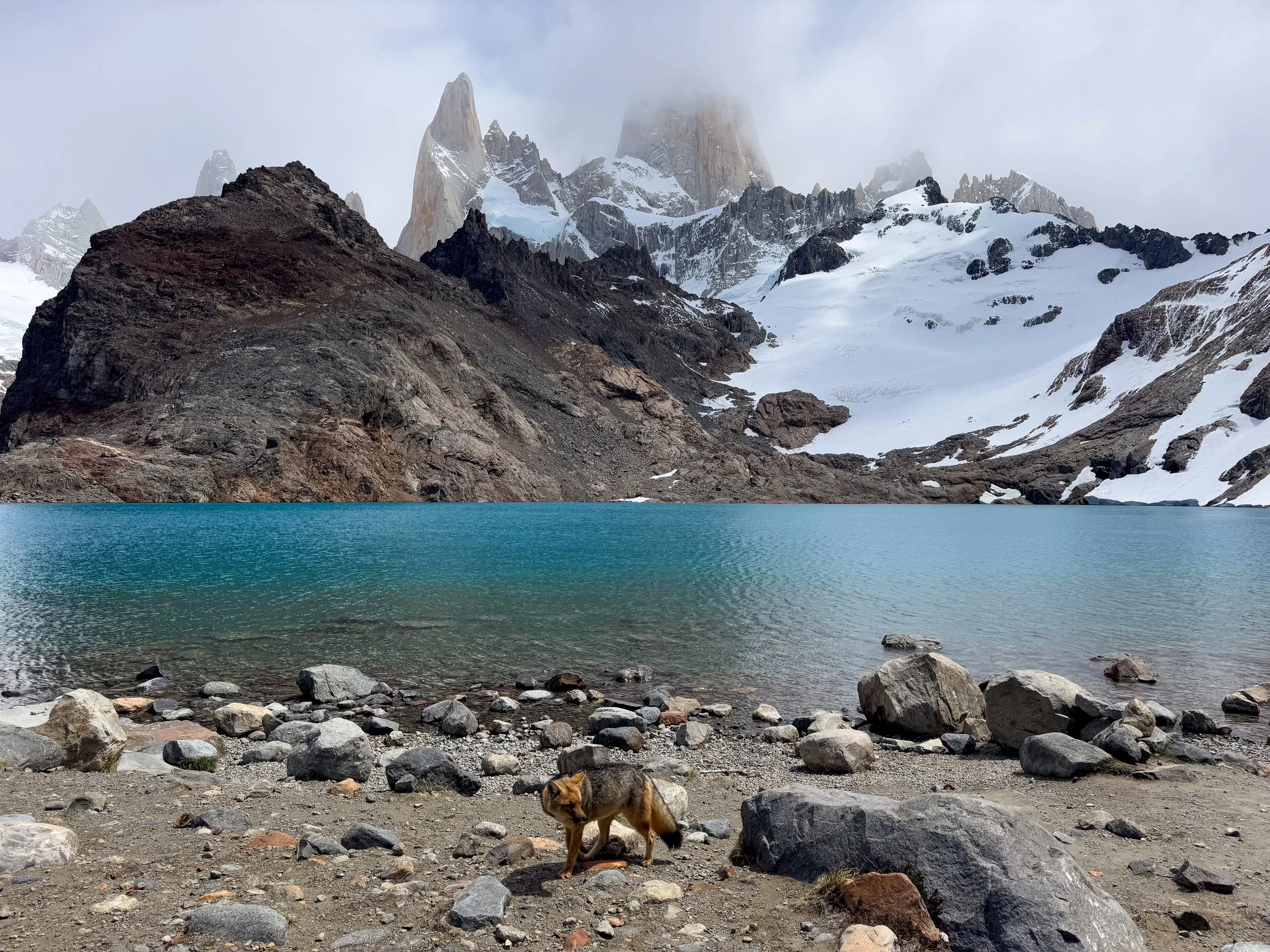
Elsewhere in Argentina
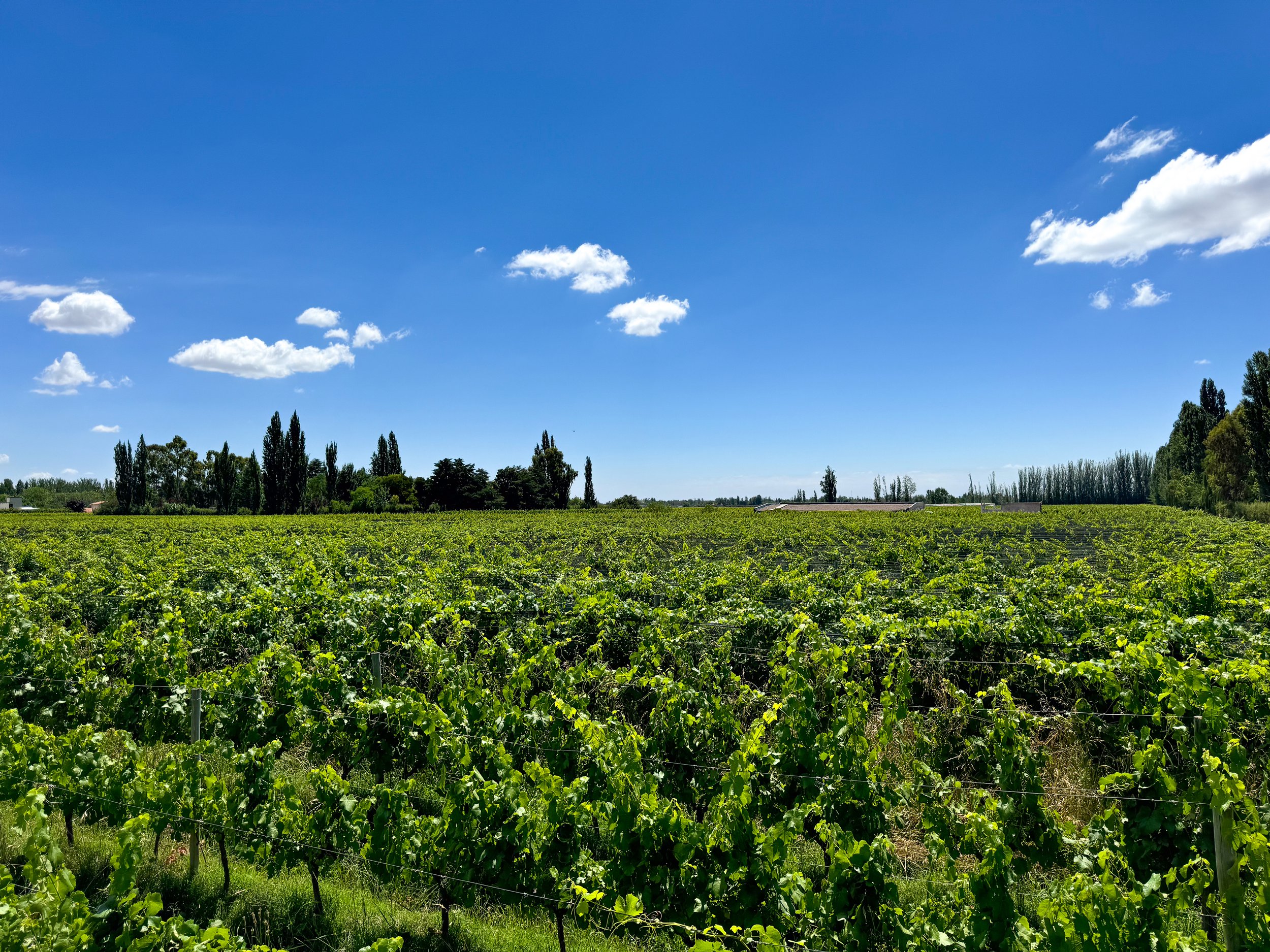
From Buenos Aires' vibrant neighborhoods and tango halls to Mendoza's vineyards and Patagonia's glaciers, continue exploring Argentina's diverse landscapes and culture through these travel guides:
Mendoza Argentina Travel Guide: Wineries, Wine Tours & Cuisine. Cycle through Mendoza's vineyards and wineries where celebrated Malbecs, Argentine cuisine and Andean landscapes define Argentina's premier wine region.
Patagonia Argentina Travel Guide: Perito Moreno Glacier, El Calafate & Fitz Roy. Explore Patagonia's dramatic landscapes where glaciers, turquoise lakes, snow capped mountains and alpine towns define Argentina's remote southern frontier.
For Next Time…
Buenos Aires is one of those ever changing worldly cities that leaves you wanting to return! We can’t wait for our next trip here and will eagerly be tracking flights. Outside of Buenos Aires and the destinations we’ve already visited in Argentina, we’re excited to see some of the country’s other highlights.
Córdoba. A northern Argentine city famed for its colonial architecture, scenic mountain range landscapes and Argentine cuisine.
Argentinian Andes and Atacama. Having visited the Chilean and Bolivian Andes and Atacama, we’d like to travel to the Argentinian region home to more desert lagoons, volcanoes, salt flats and waterfalls.
Ushuaia and Antarctica. At the bottom tip of South America is the world’s southernmost city, Ushuaia. We plan to visit and take a ship across the tortuous Drake’s Passage to the white continent, Antarctica.
Iguazú Falls. A canyon with South America’s largest waterfall. We visited the Brazilian side on one of our first trips to South America and have been waiting to return to see the Argentinian side.