Luang Prabang Travel Guide: Temples, Markets & Lao Culture
Luang Prabang, Laos
Luang Prabang is the cultural center and former royal capital of present day Laos. Situated along the banks of the Mekong River, the historic town features a former royal palace, Buddhist wats and monasteries, traditional wooden houses and elegant French colonial architecture. As the sun rises, saffron robed monks process through the streets to receive alms. Locals and travelers shop at morning and night markets for street food, handicrafts and locally farmed goods. Along the riverfront, charming cafés and palmed shaded restaurants create a relaxed atmosphere while long boats ferry sightseers on sunset cruises. Turquoise hued waterfalls and dramatic caves adorned with hundreds of Buddha statues await in the country's lush interior. Visiting for a week, we lived on a private houseboat while exploring this remarkable city.
The Historic Center
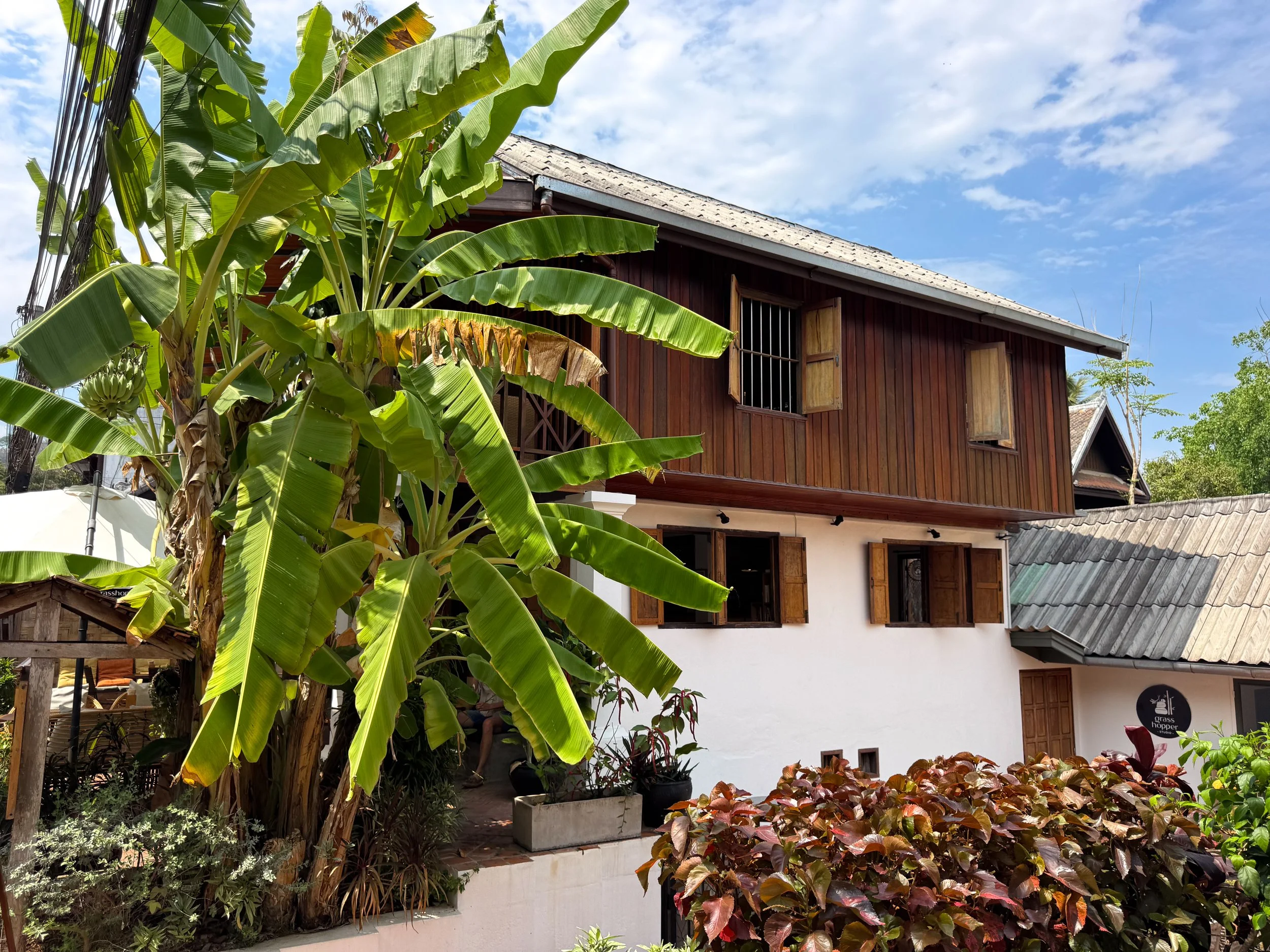
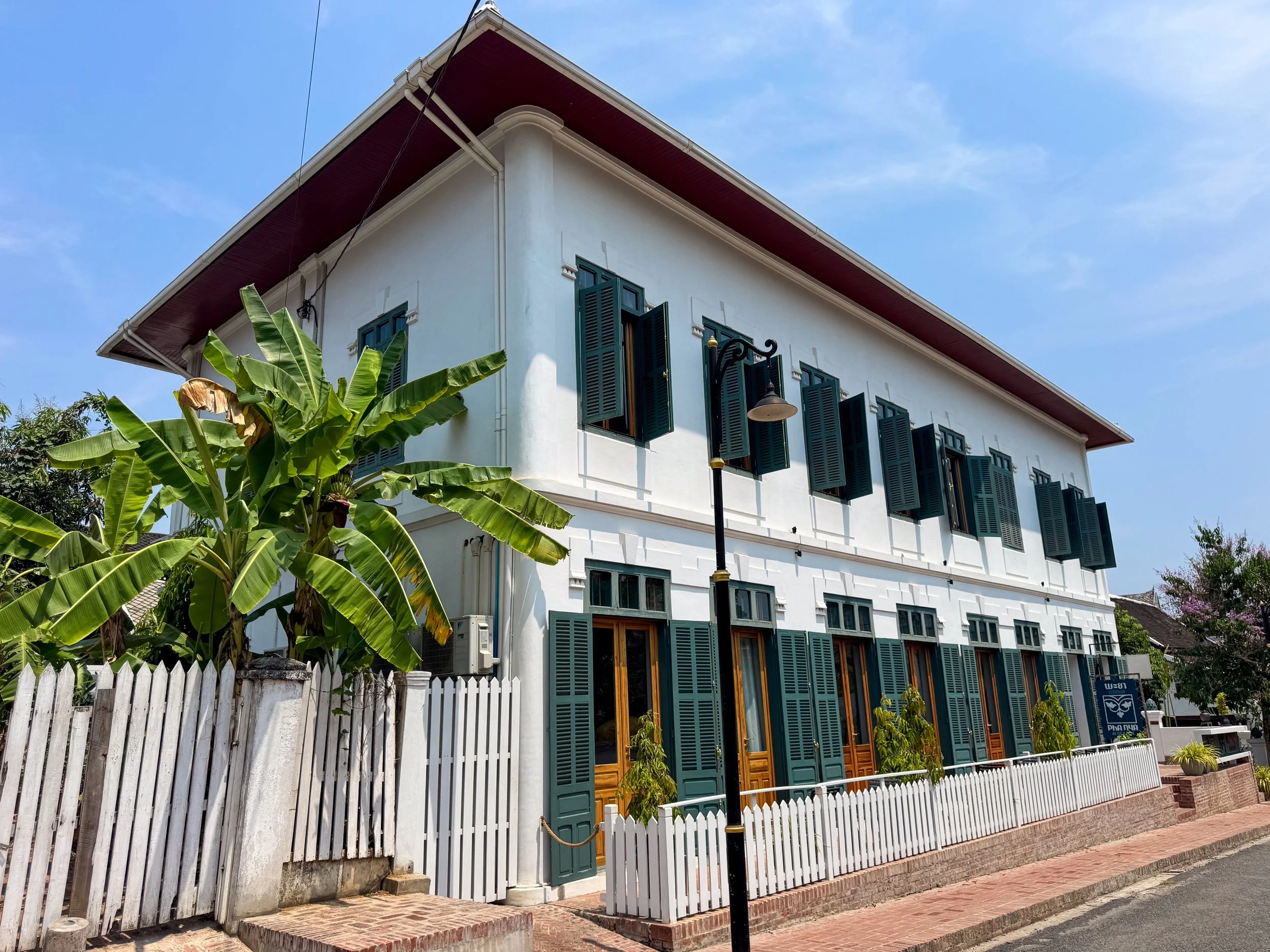
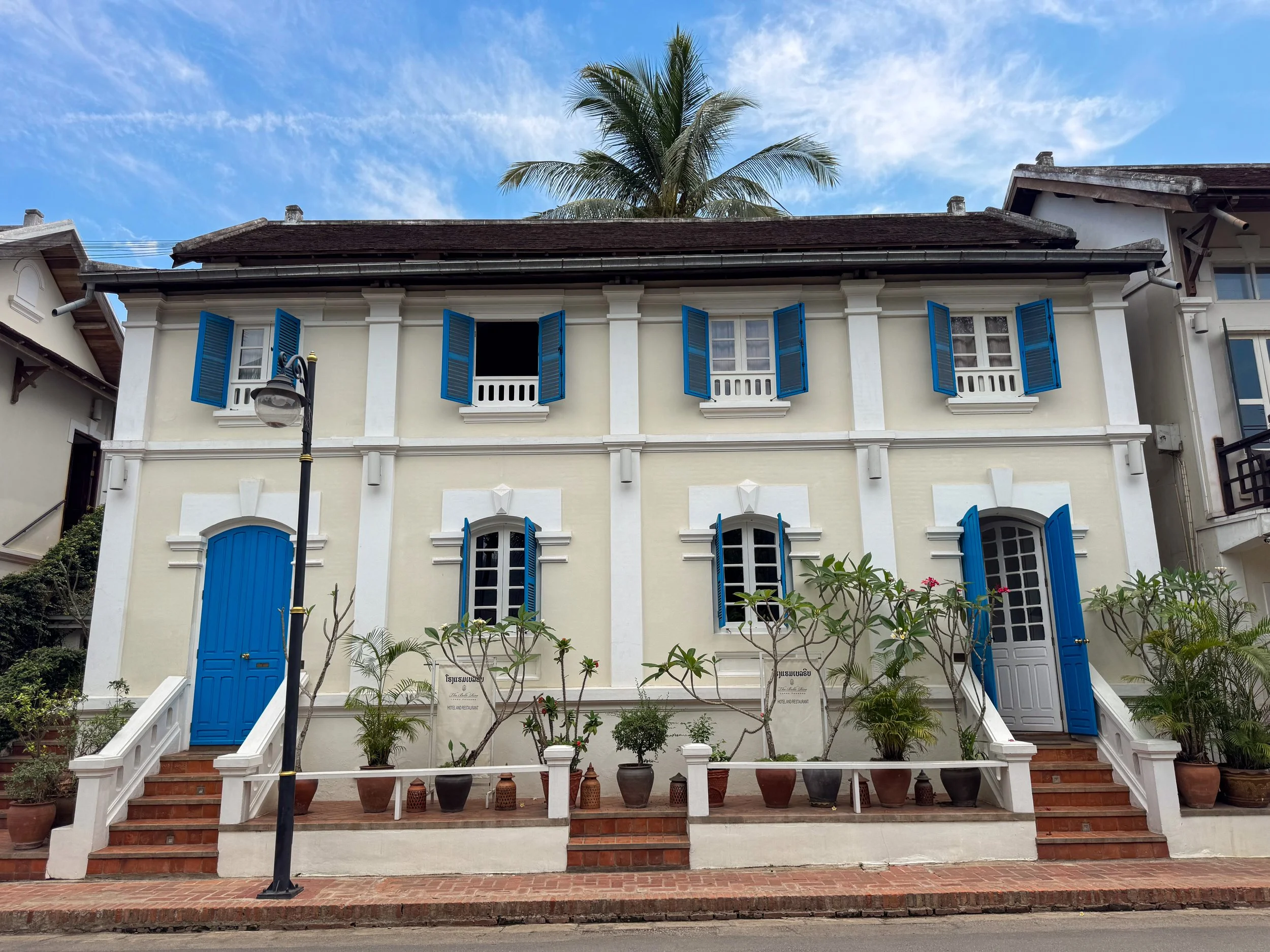
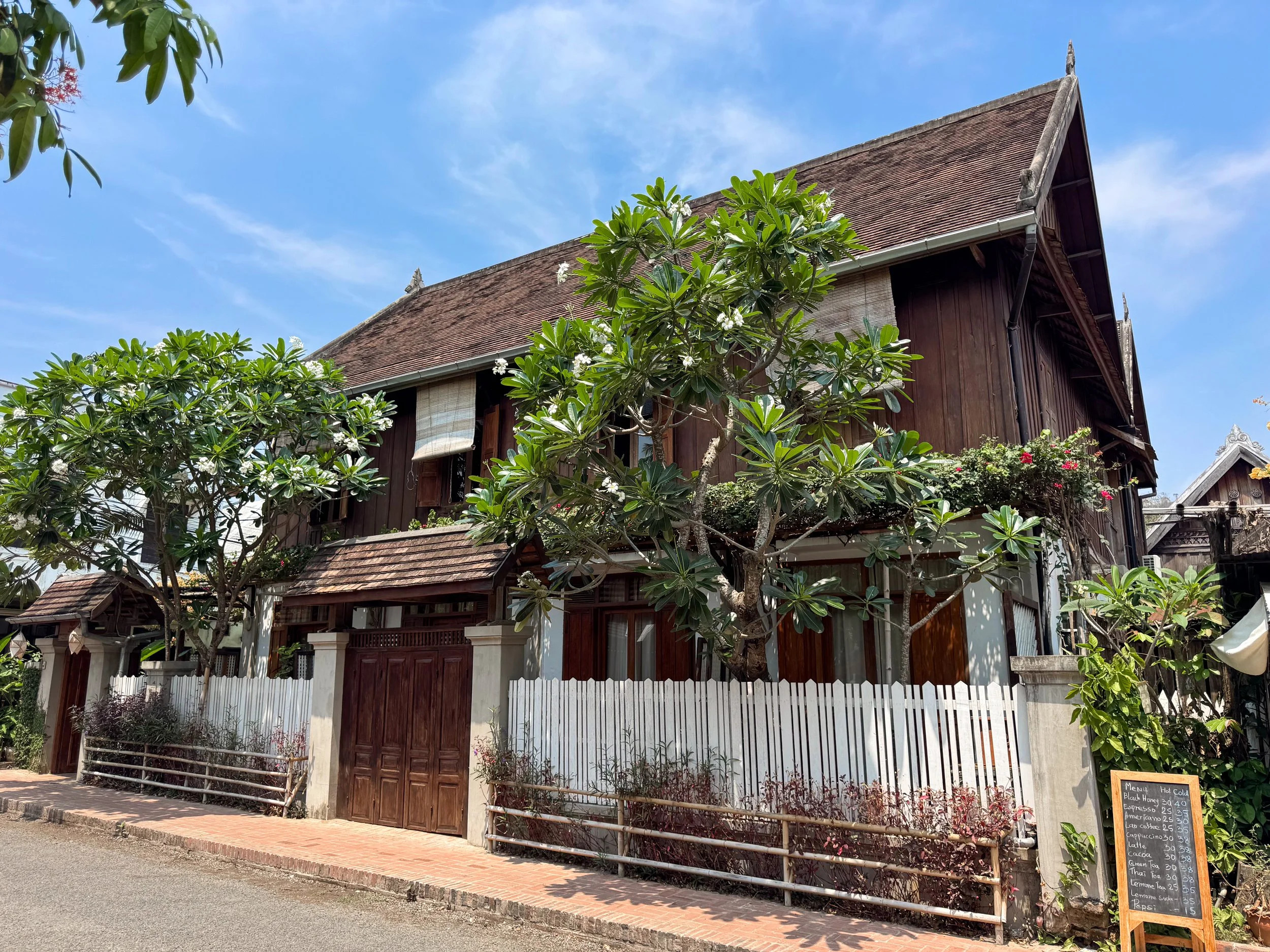
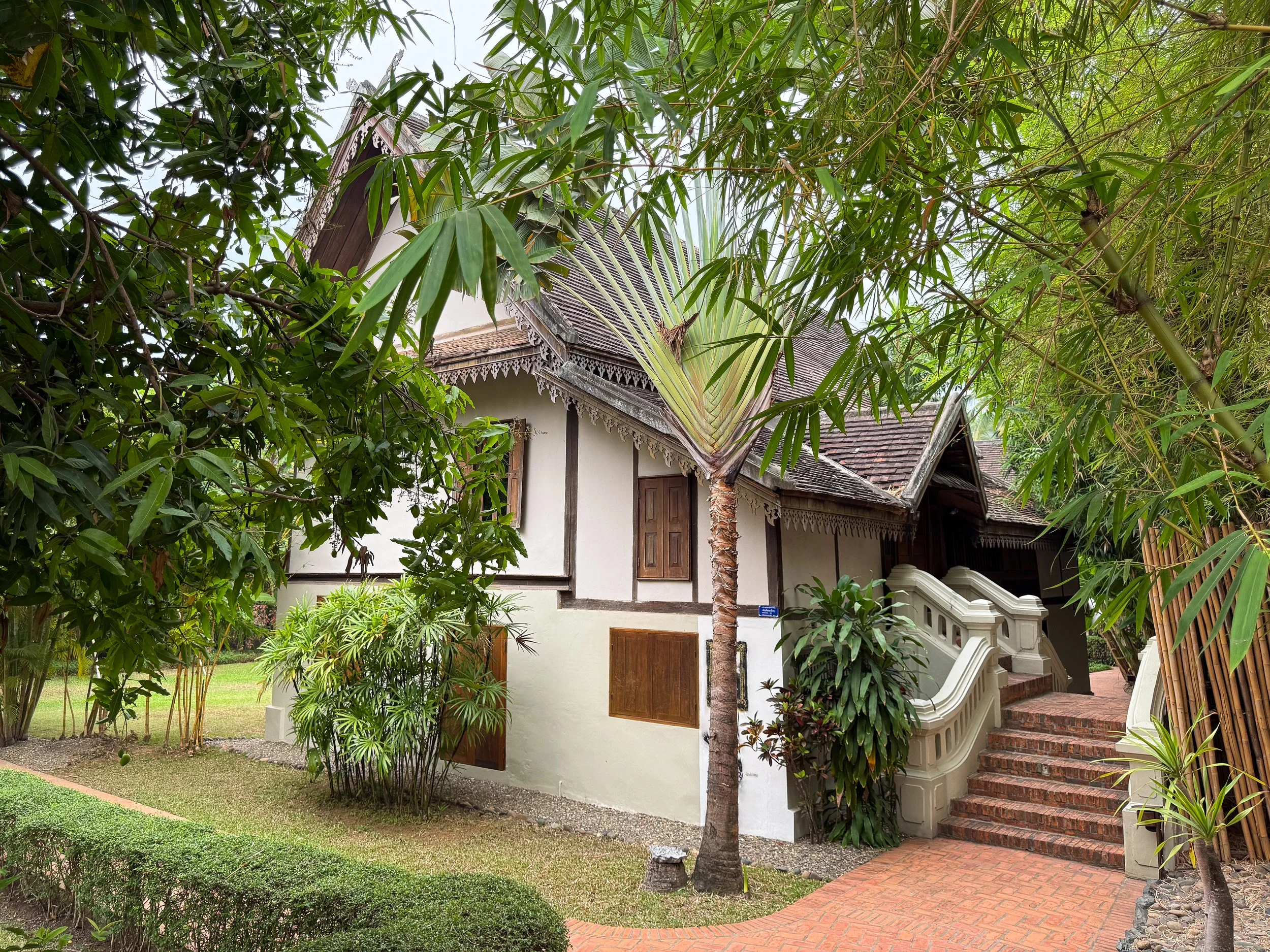
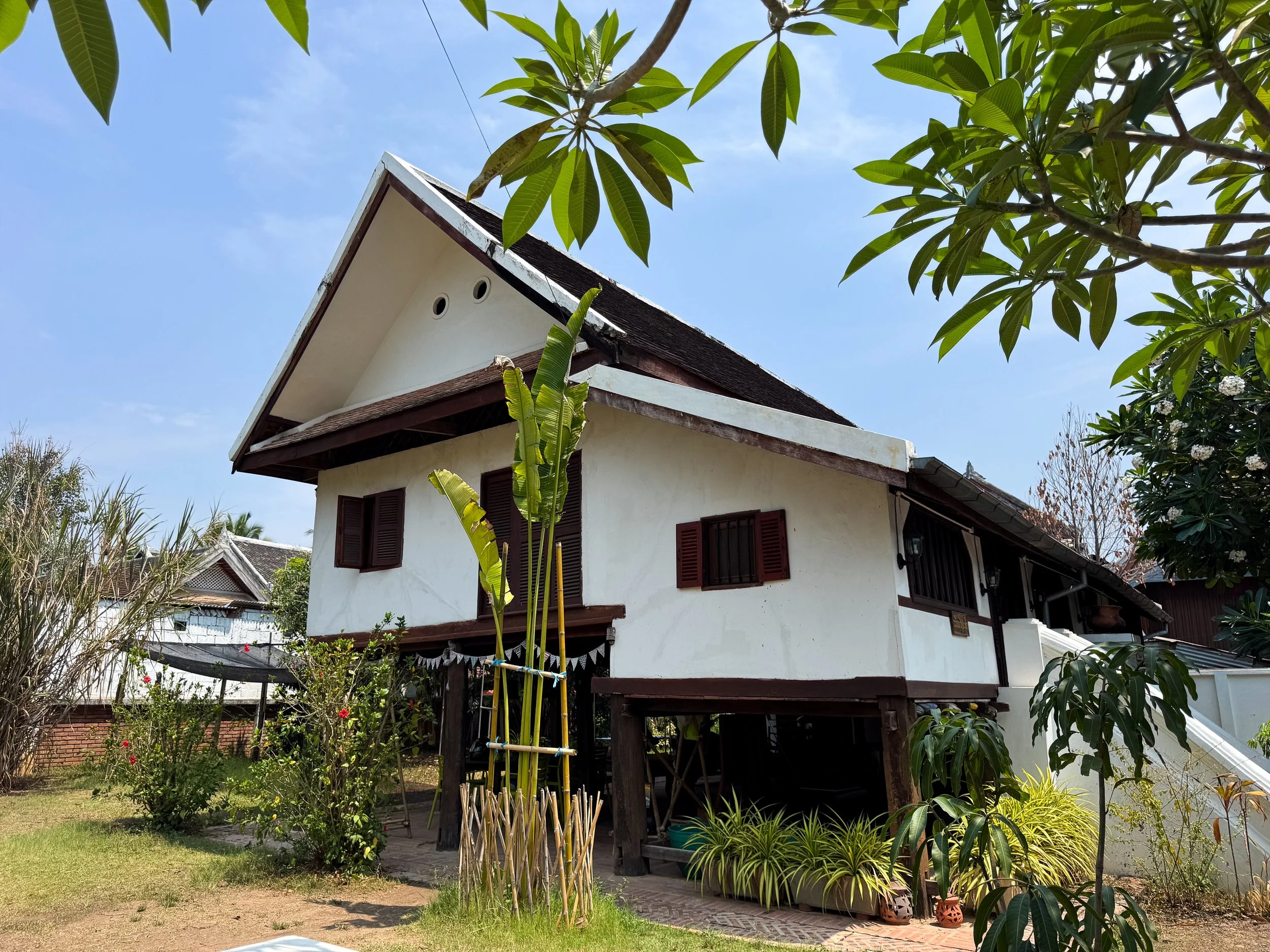
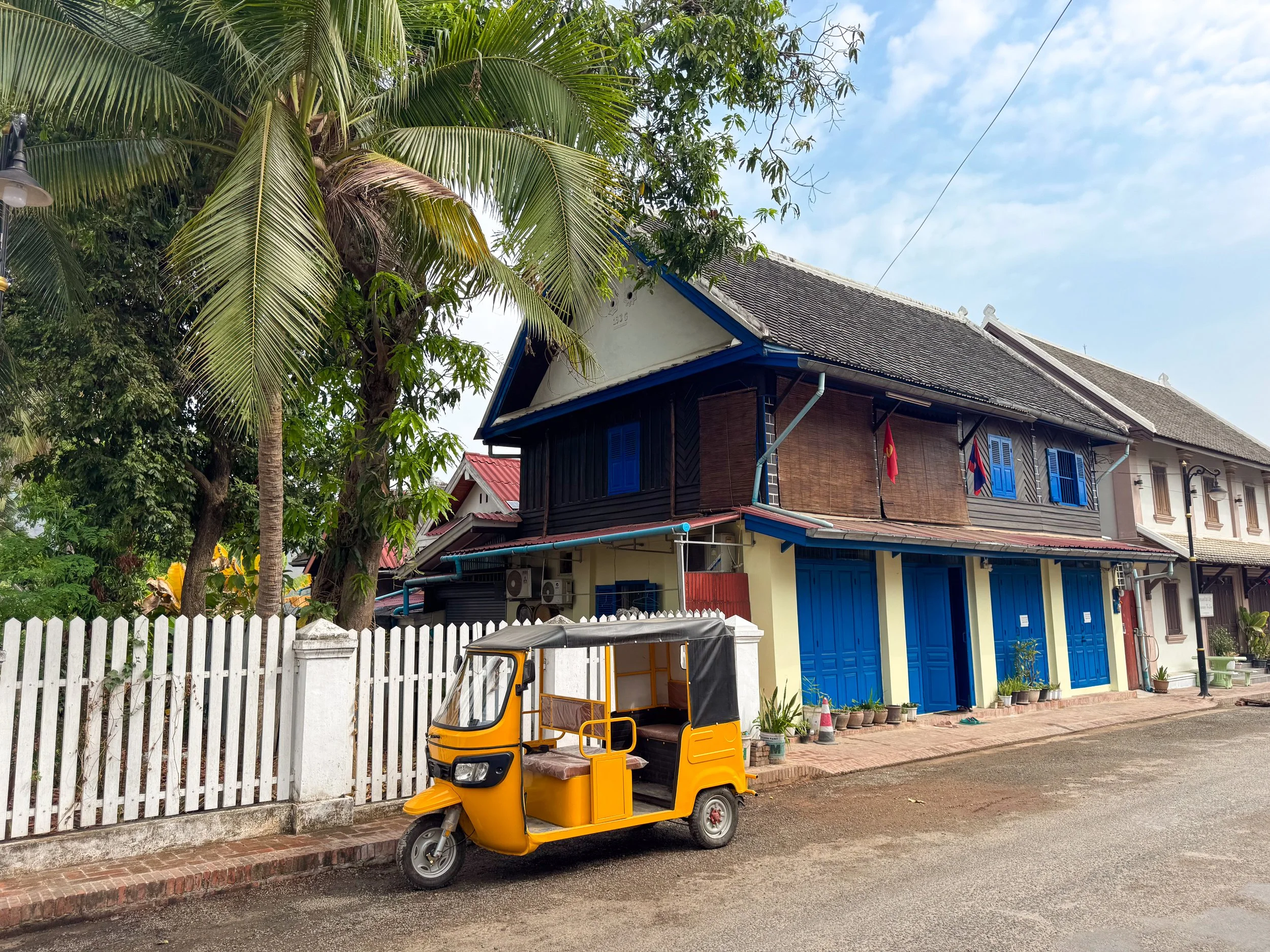
The historic center is built upon a narrow peninsula between the Mekong and Nam Khan Rivers. Brick laid sidewalks and old architecture make for beautiful walks through the city. Traditional dark wooden houses and French colonial style buildings are designed with pitched clay tiled roofs, teak wooden facades, neutral colored walls and painted shutters. Paper lanterns are suspended from awnings, the Lao and communist flags wave in the breeze while tuk tuks zip by. It’s common to see monks walking the streets in their characteristic saffron robes. Buddhist wats and a former royal palace comprise some of the UNESCO city’s most beautiful sights.
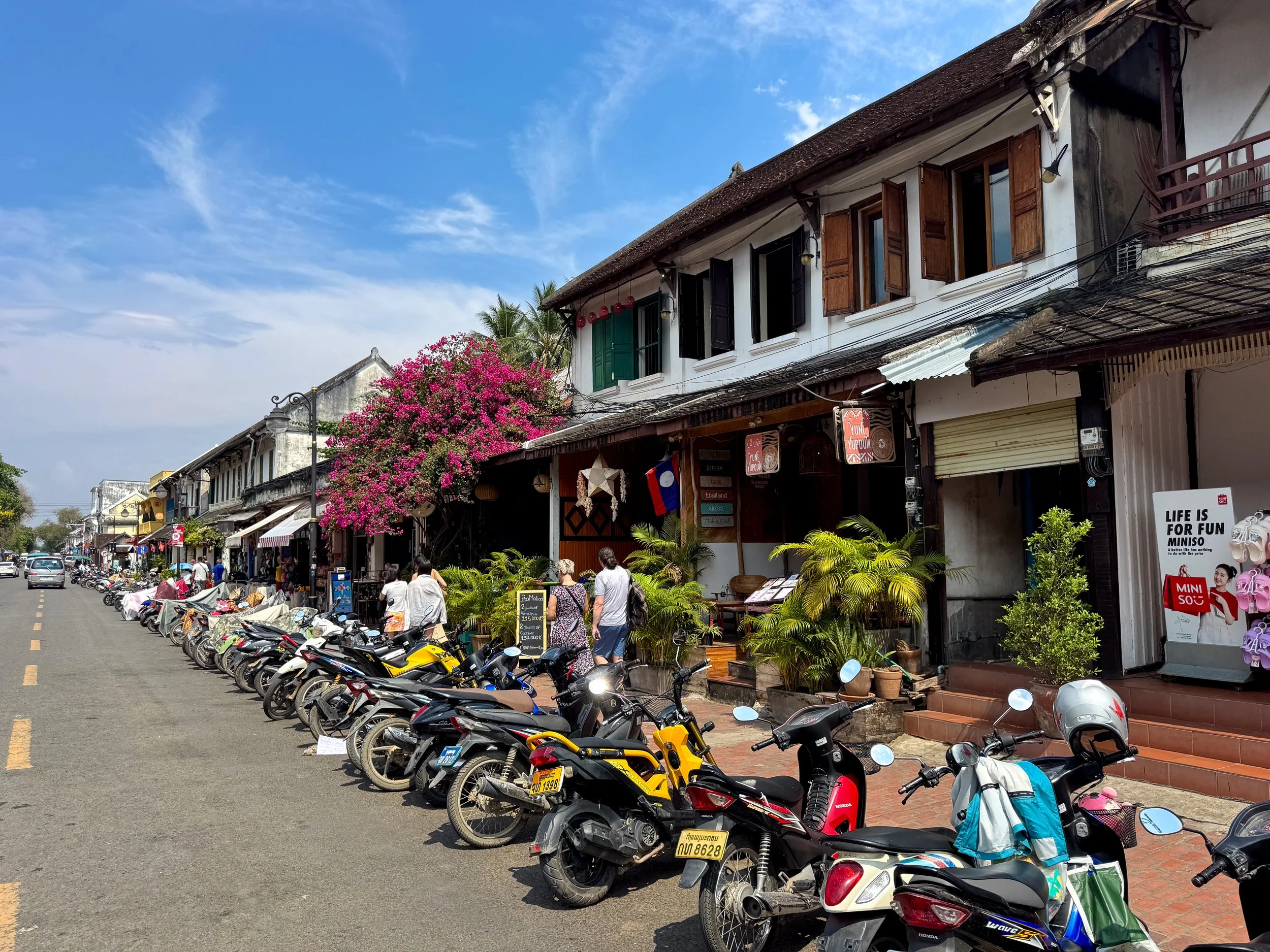
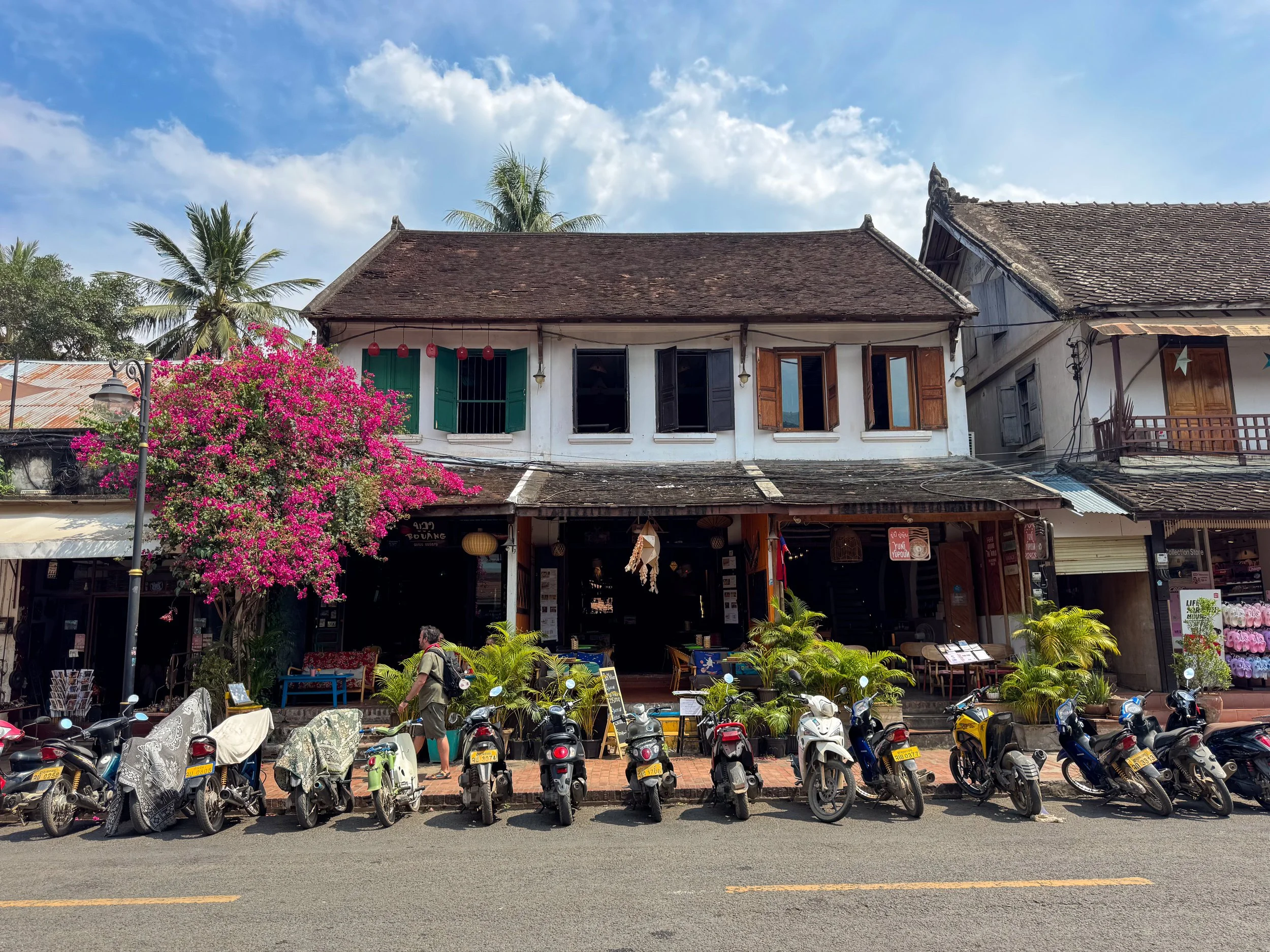
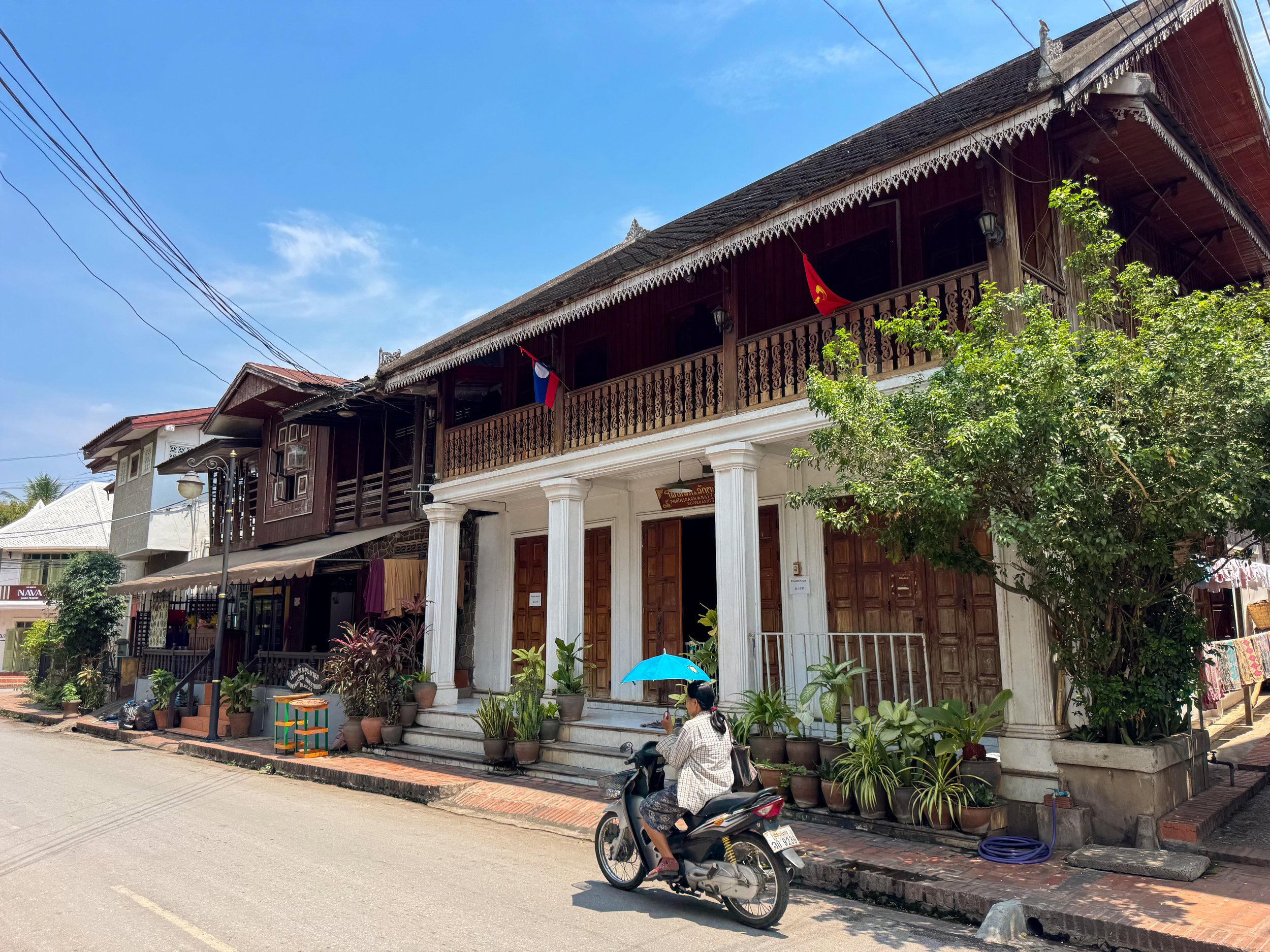
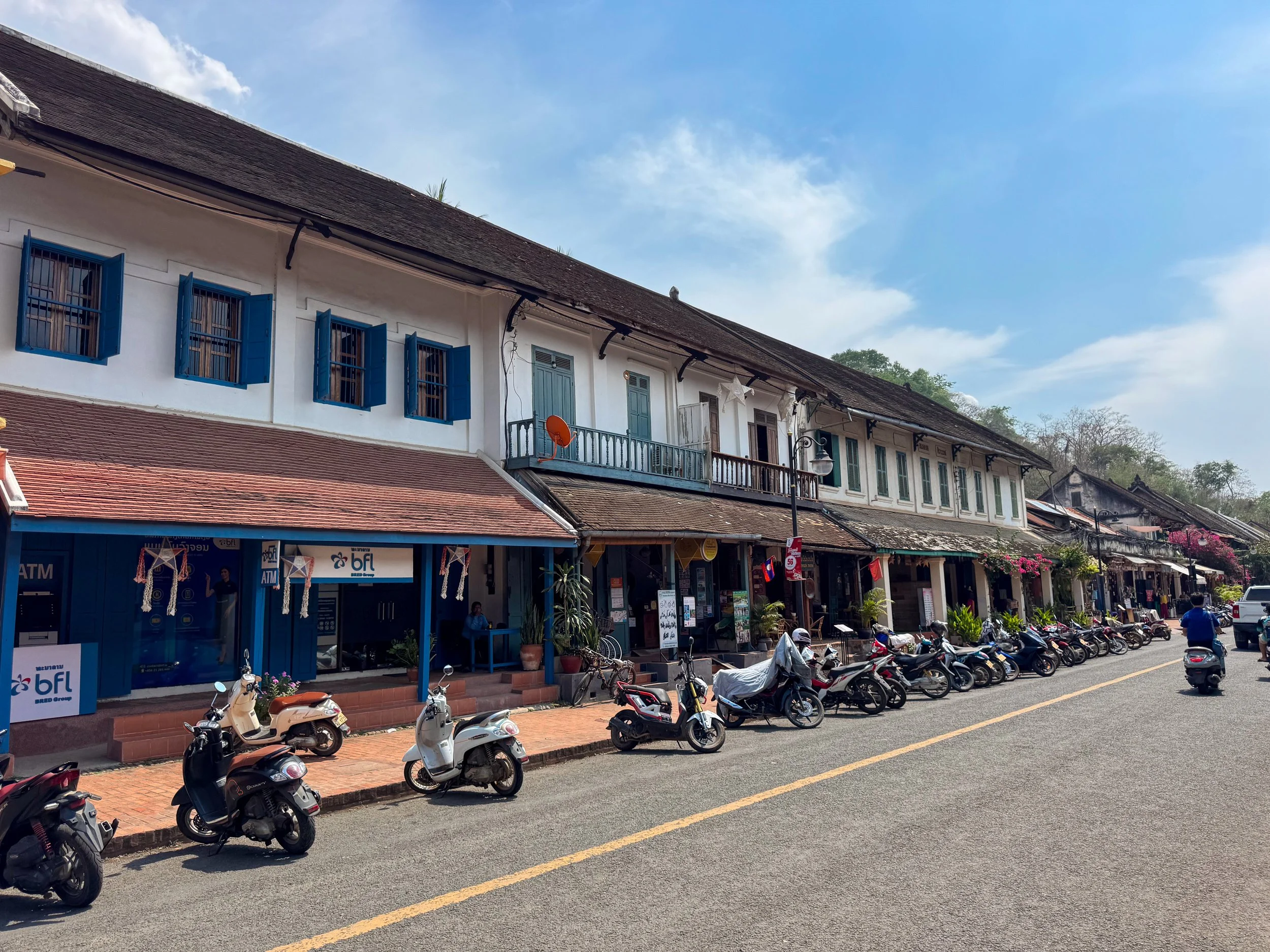
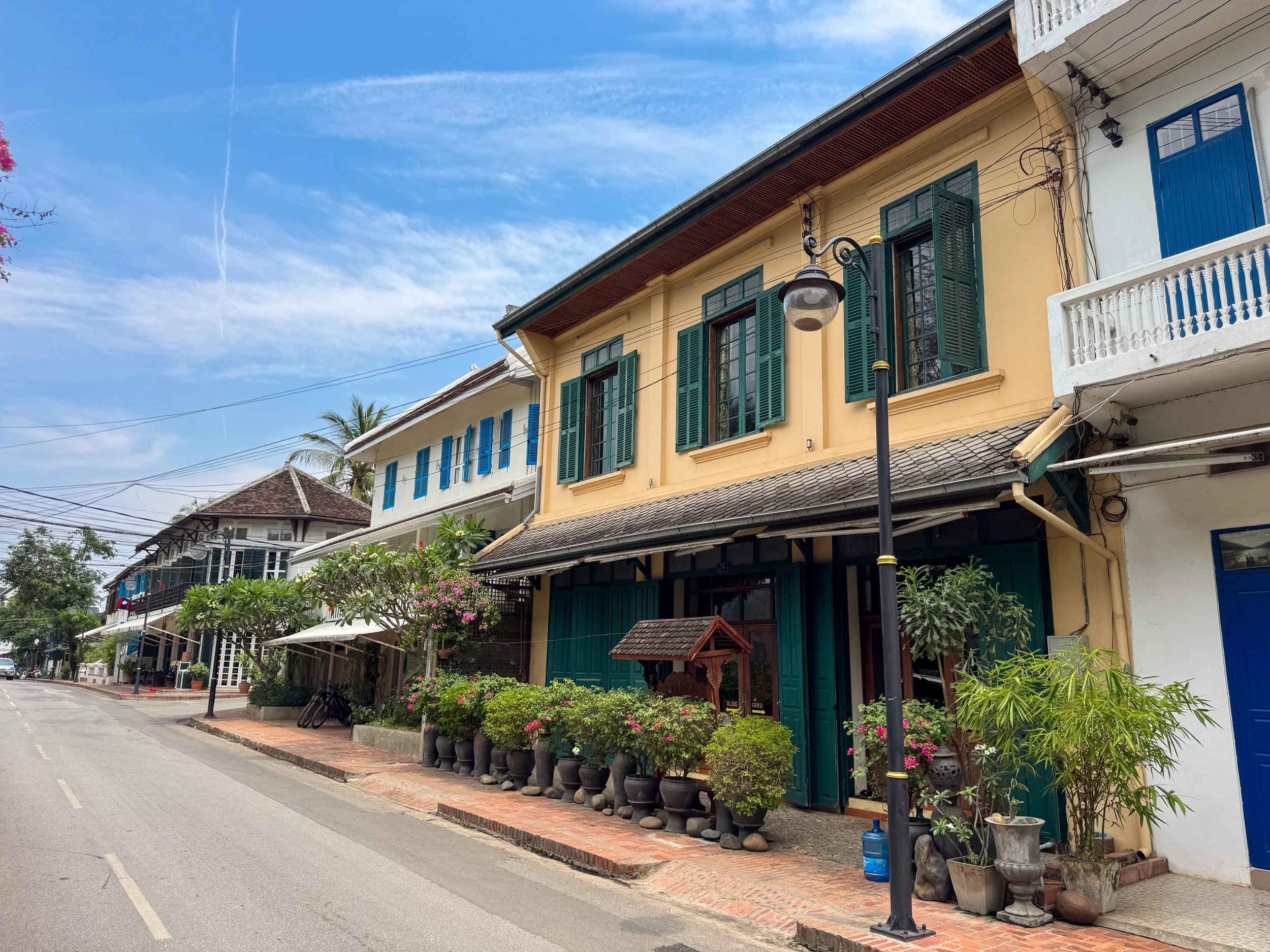
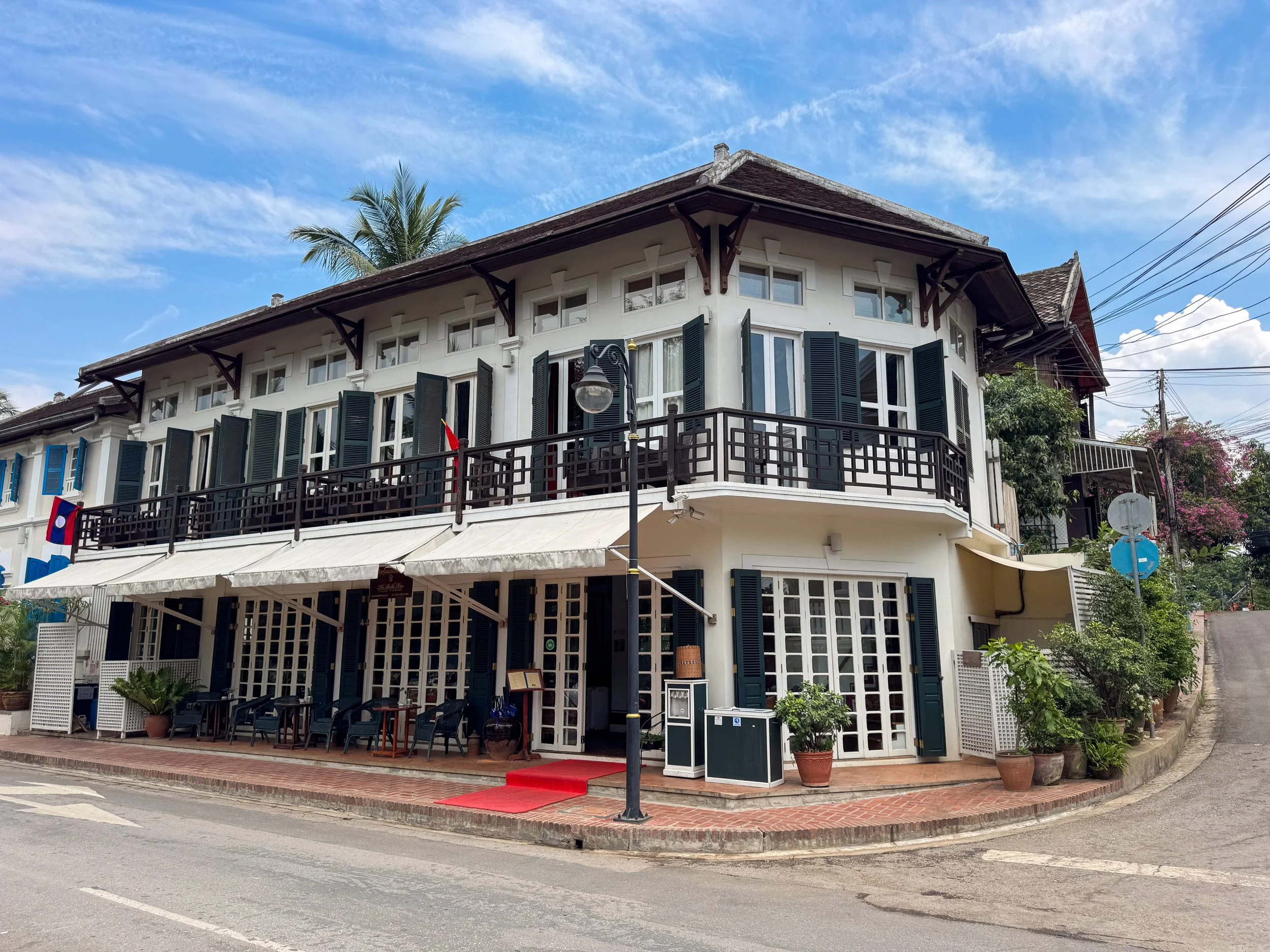
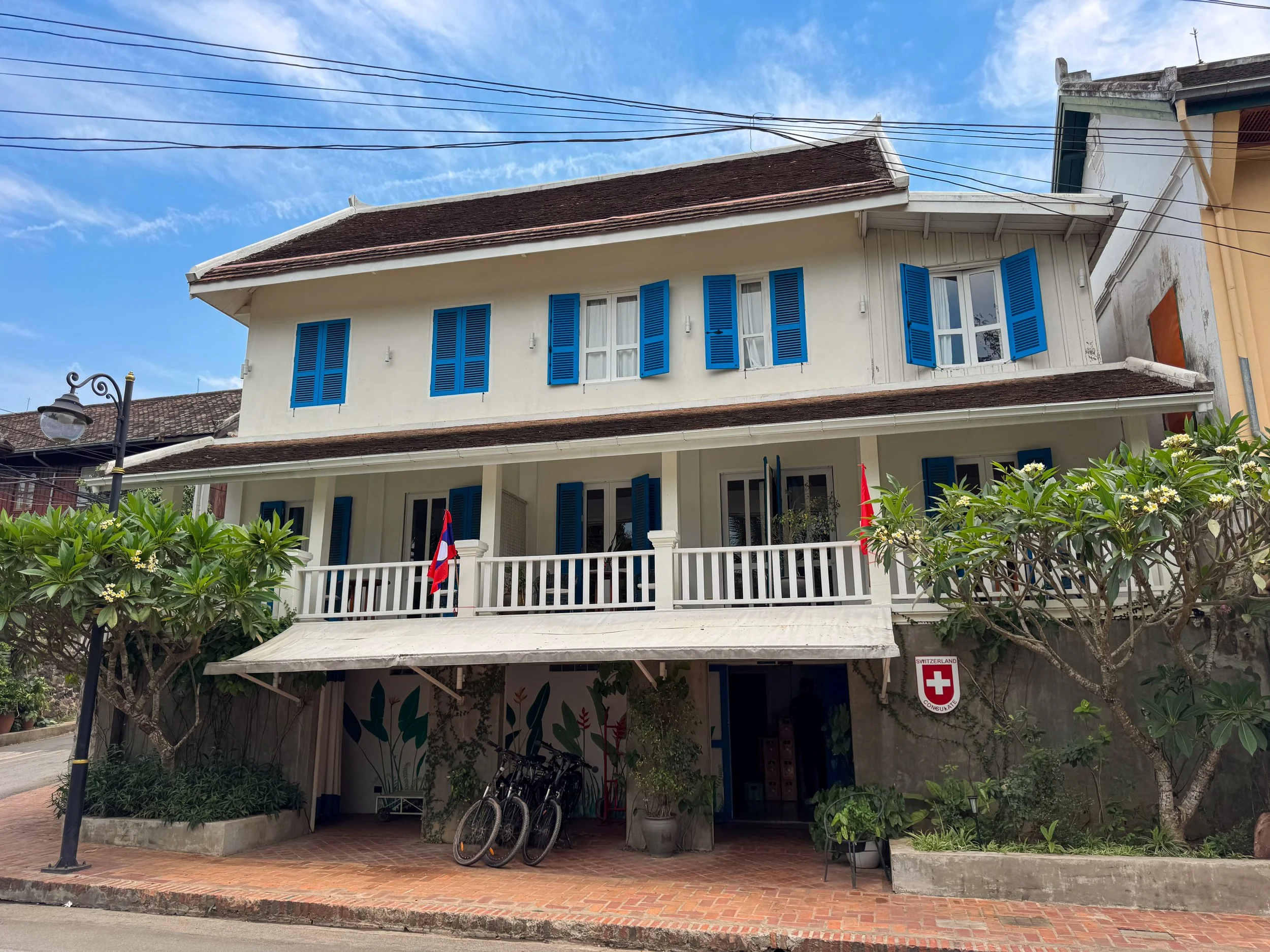
The Main Street. The Historic Center’s main street has a north and a south section, each with different road names and their own vibes.
Sakkaline Road. The northern end of the main street has a calm atmosphere with iconic wats, lush with flowering trees, small guesthouses and an array of cute cafés. It ends at a small park with views of where the green waters of the Nam Khan River and brown waters of the Mekong meet.
Sisavangvong Road. The southern end of the main street has a more bustling feeling with boutiques and shops, porch side patios, Buddhist wats, the former royal palace and a daily night market. It continues further into the city.
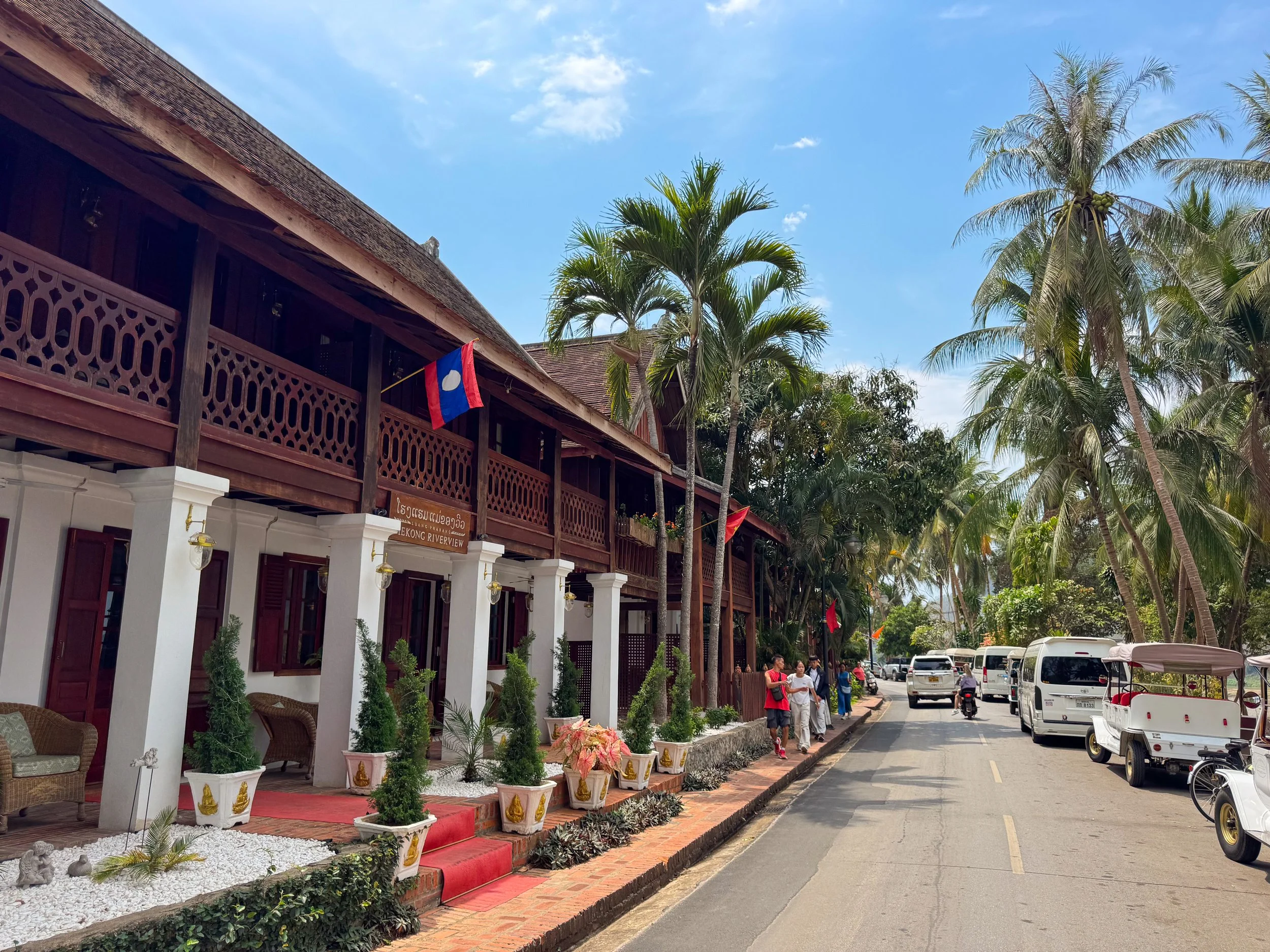
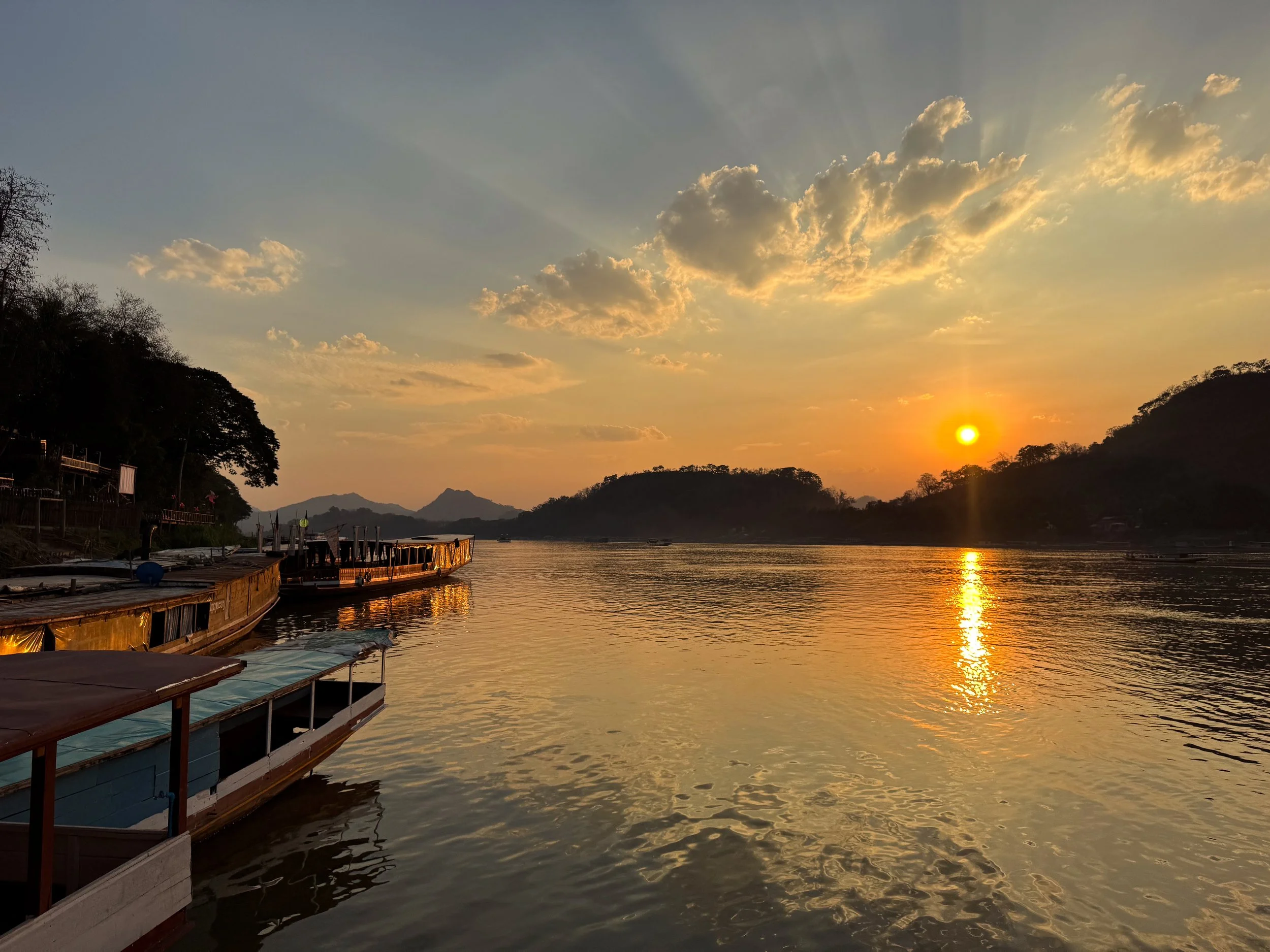
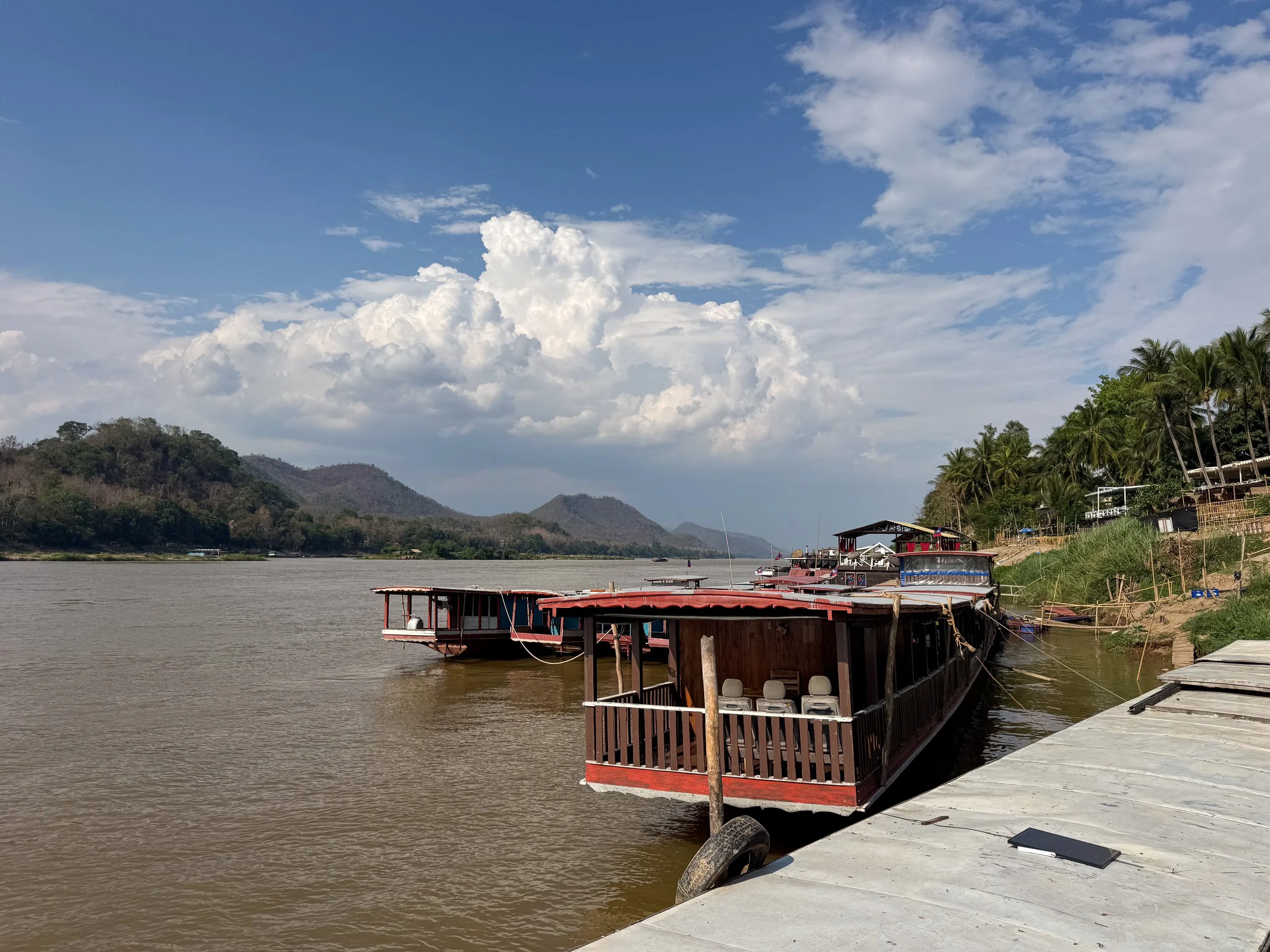
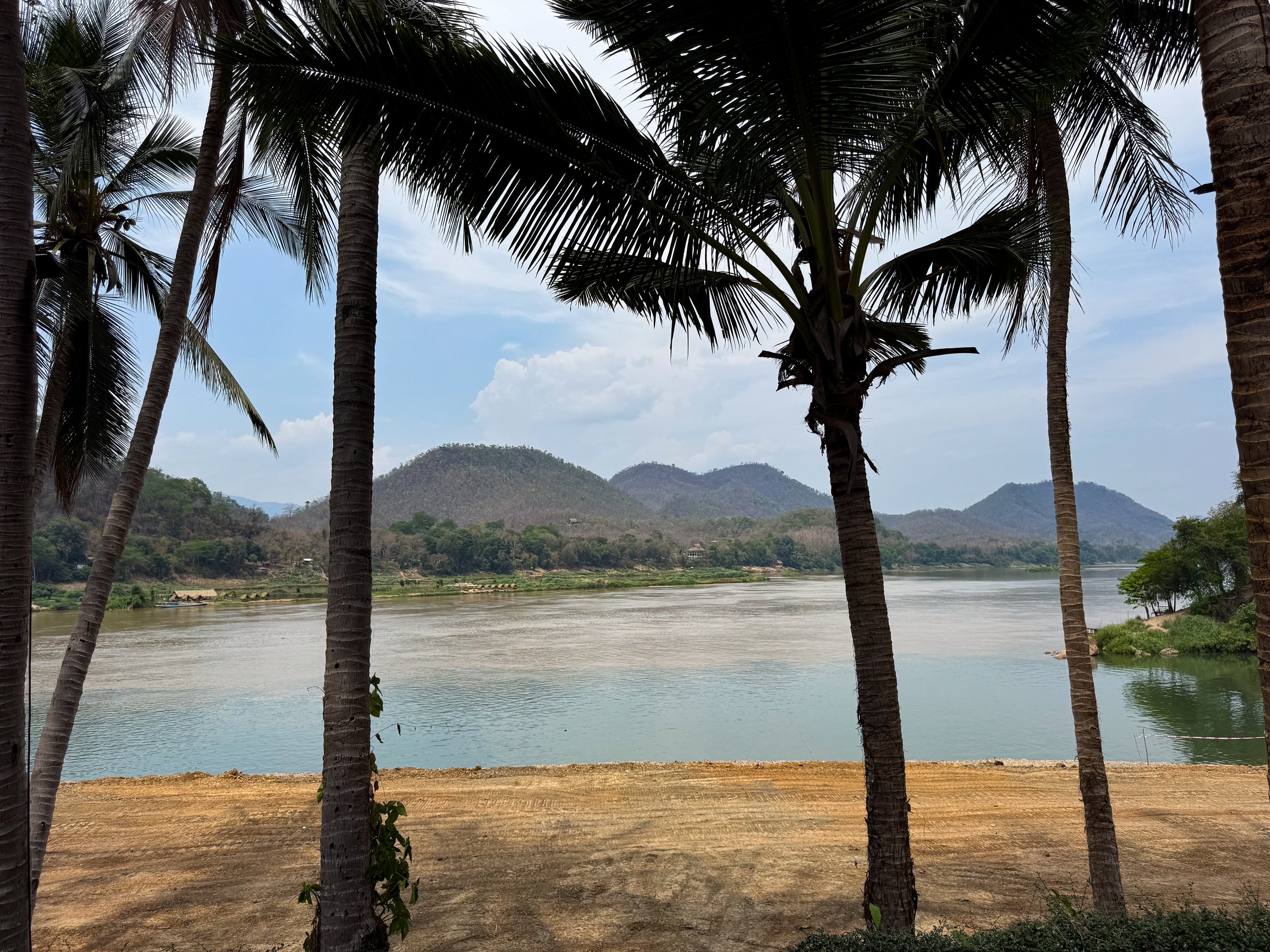
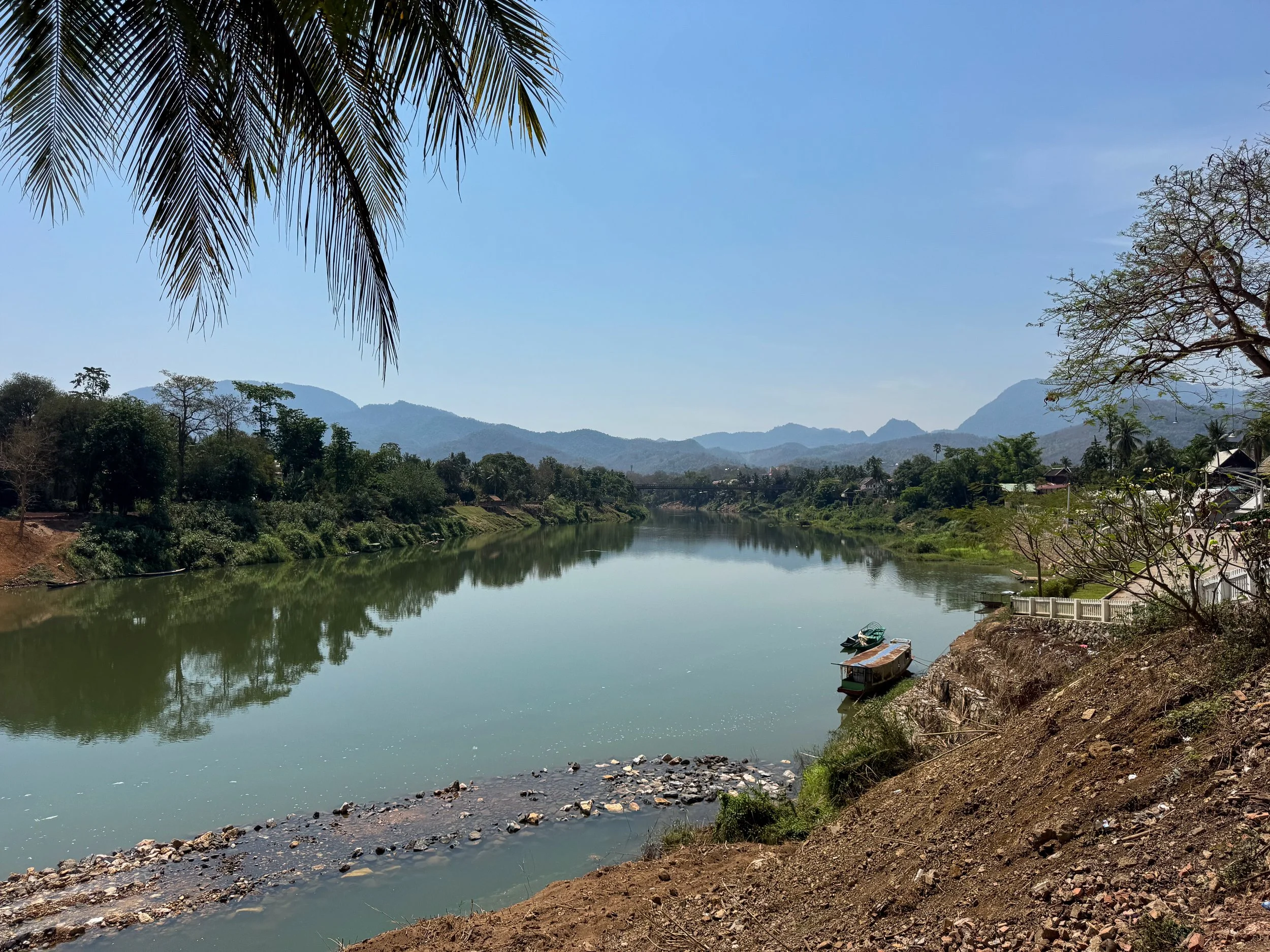
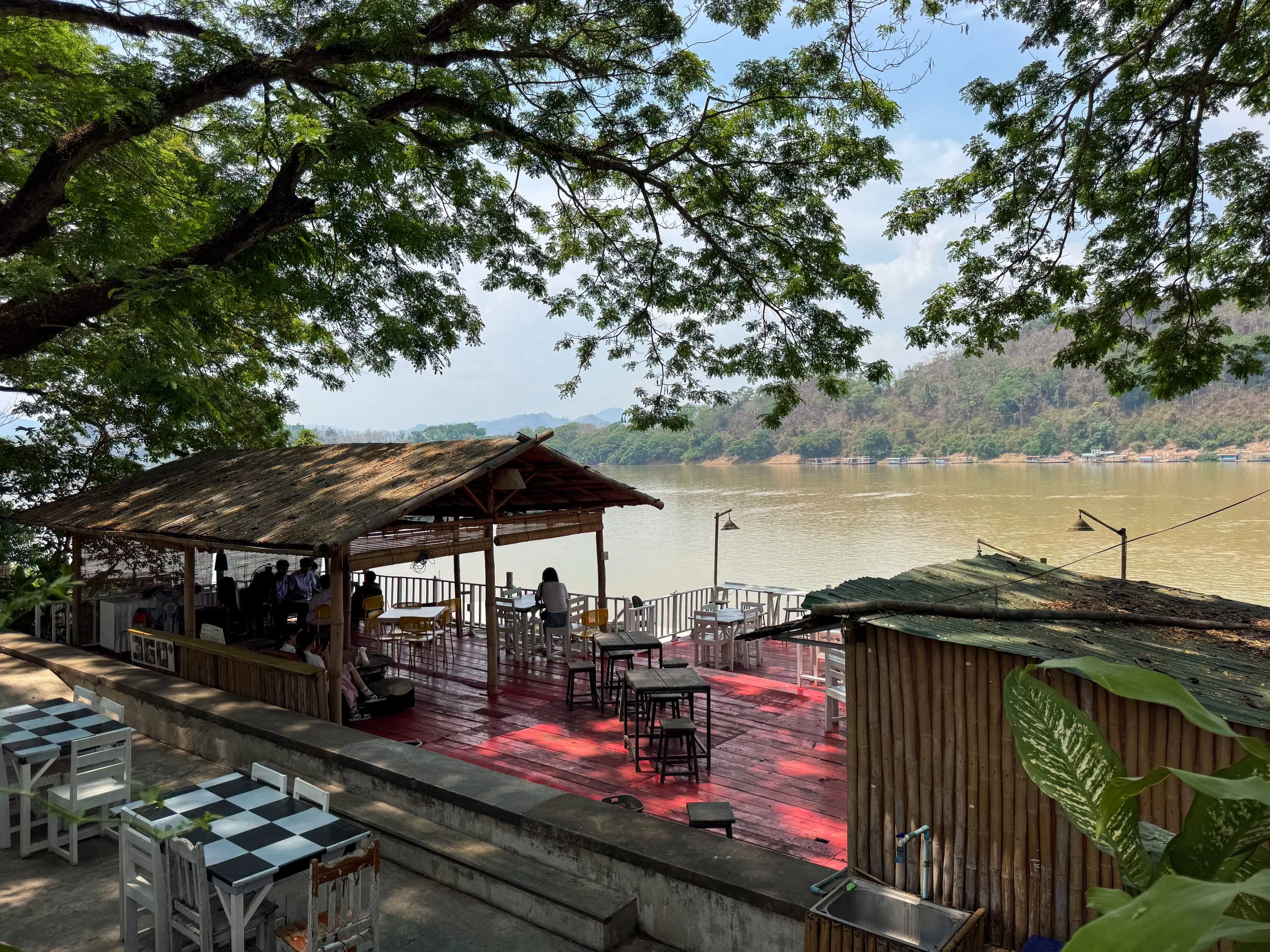
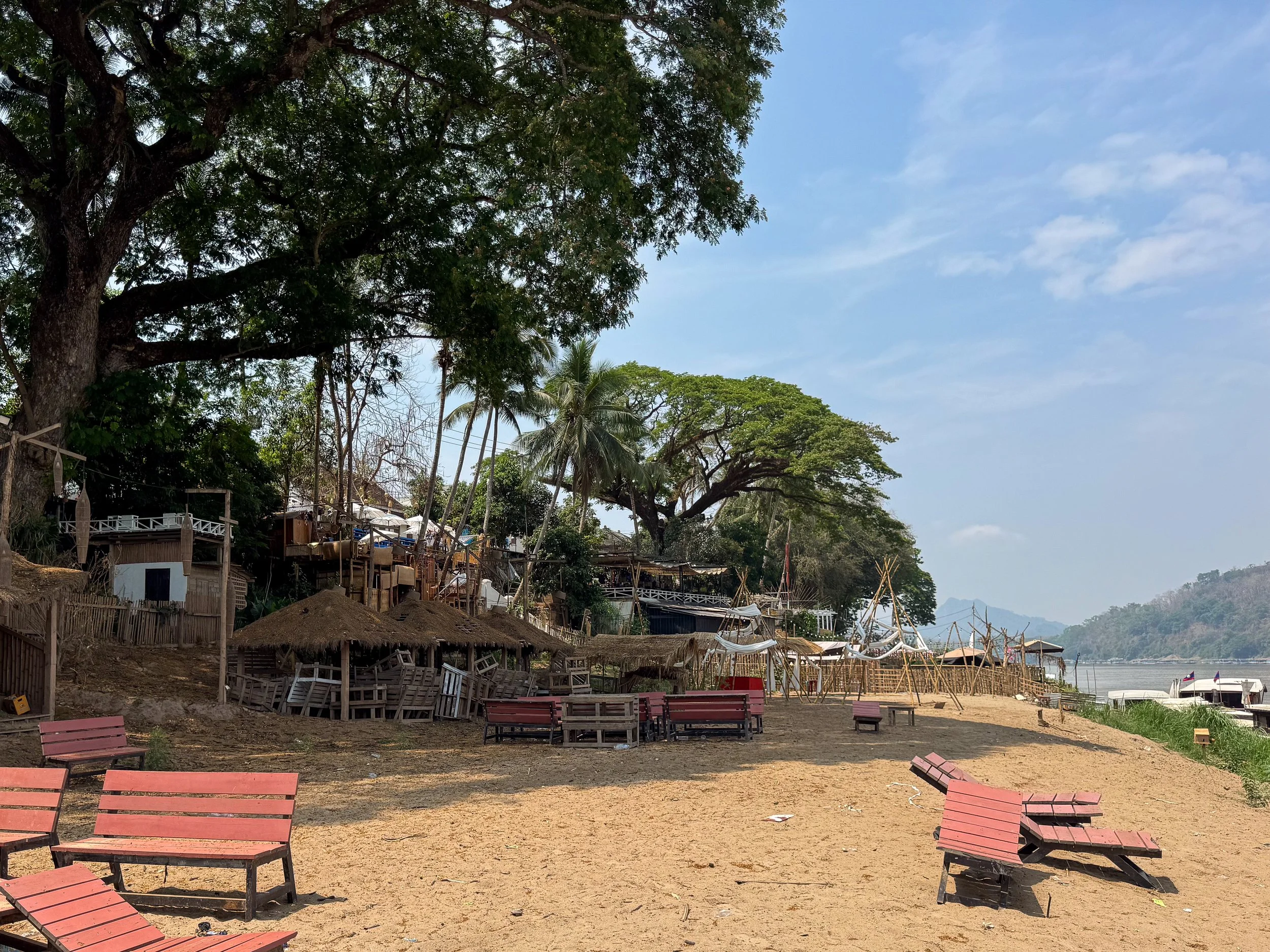
The Riverfront. The riverfront promenade is lined with palm trees, fragrant plumerias, cafés and restaurants. Their bamboo furniture, thatched awnings and twinkle lights create a rustic and jungleous atmosphere. Tour operators offer sunset river cruises down the Mekong on traditional long boats as the current flows past.
The Mekong River. One of the largest rivers in South East Asia, winding through multiple countries and countless communities. From Luang Prabang, we boated upstream along the rugged countryside, past mountainous landscapes and small riverside villages. We saw people fishing from narrow canoes and spotted the occasional herd of goats and water buffalo.
Cultural Activities
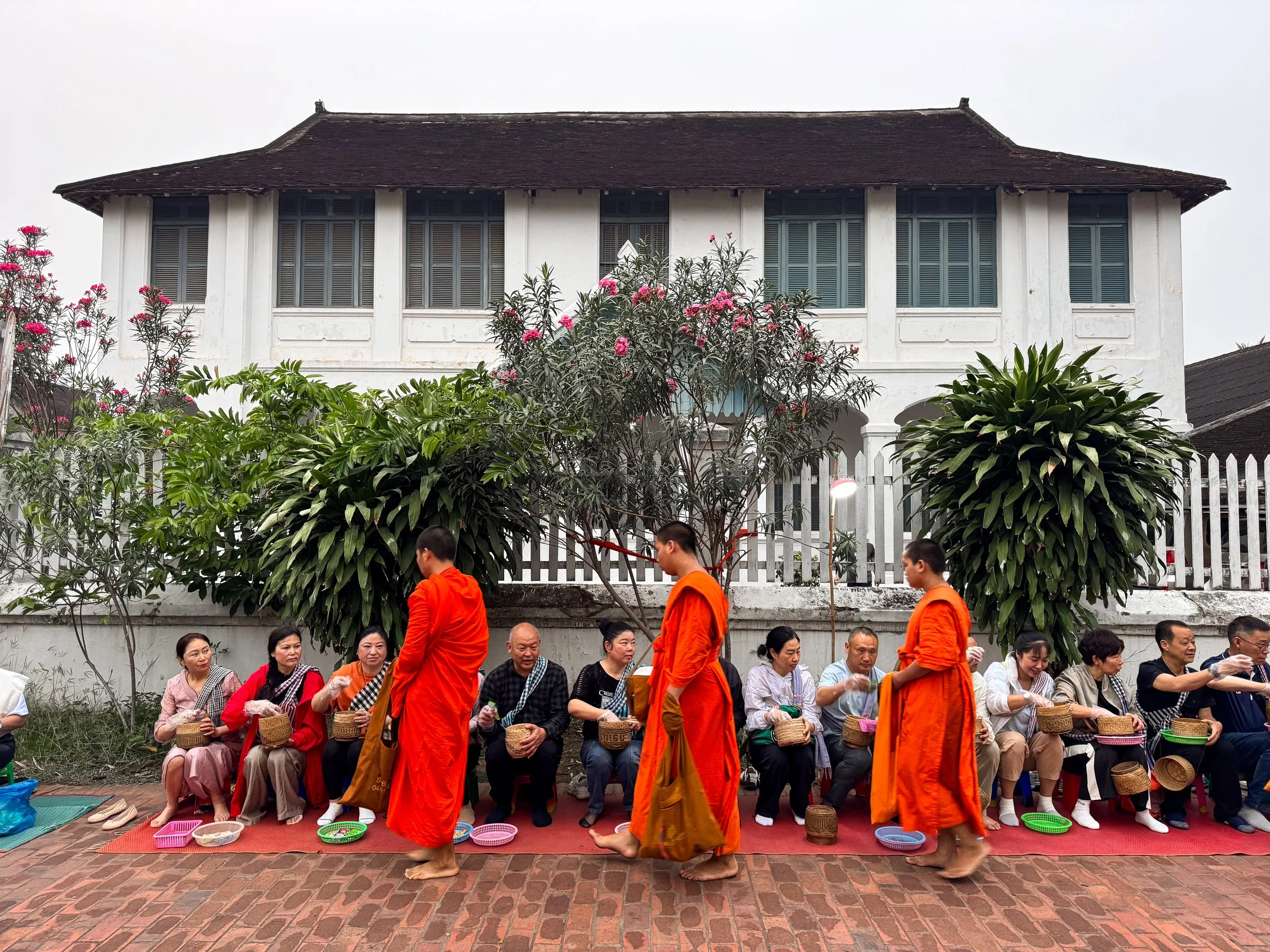
The Almsgiving Ceremony. Each morning, Buddhist monks and monk novices from the town’s many wats process through the streets of the historic center accepting alms from people as they pass by. The alms serve as food and a blessing for the monks. Almsgivers often place snacks or scoop small handfuls of sticky rice into their baskets from street side chairs. Vendors sell containers of sticky rice and plates of snacks for 20,000 - 60,000 Kip. The ceremony starts at 5am and wraps up around 6:30am.
Pro Tip. Arrive by 5:30am. The best places to give alms are in front of wats or along Sakkaline Road.
Good to Know. Be respectful of the monks, especially when taking photos. Do not interrupt their procession or touch them.
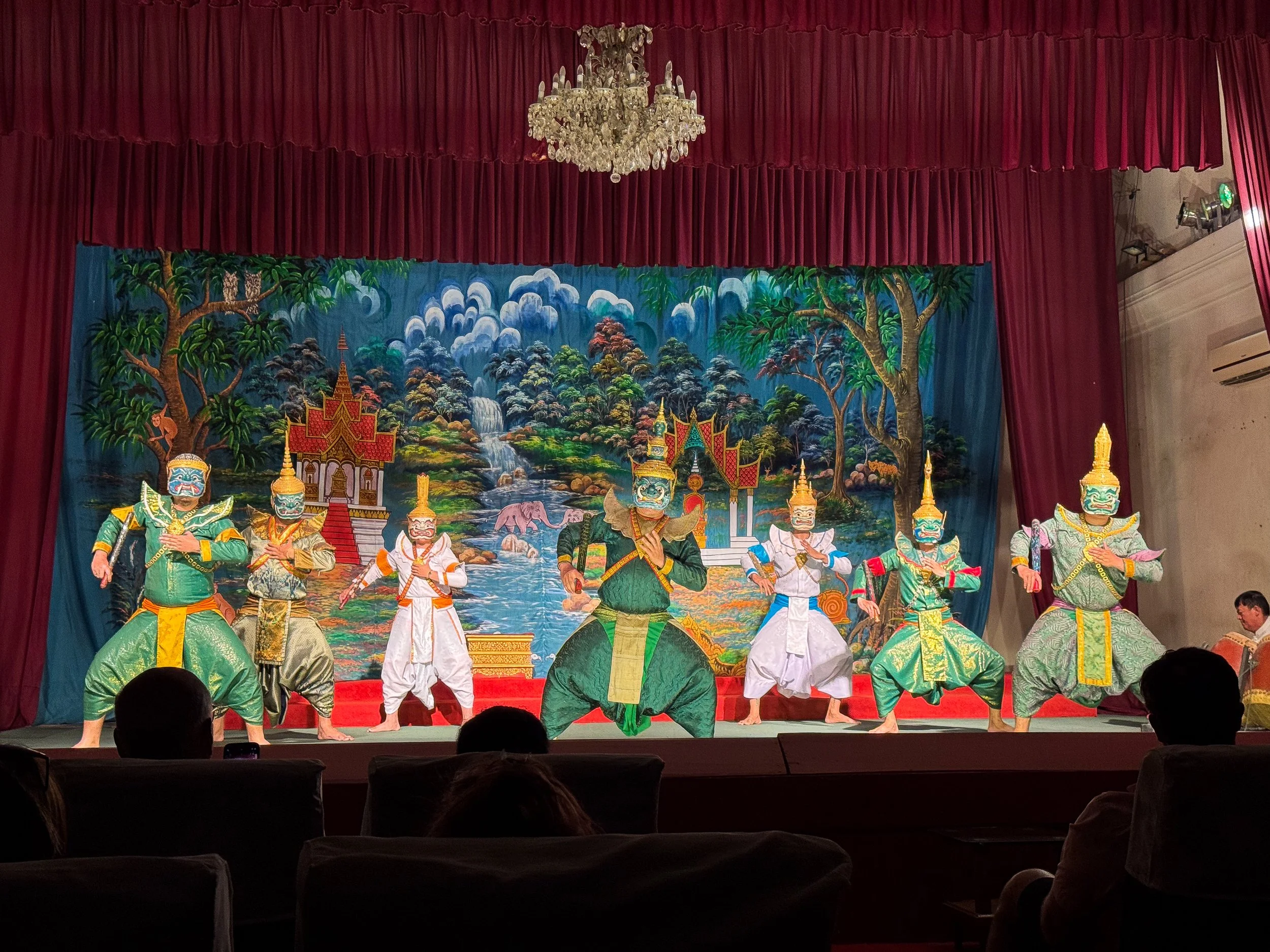
The Royal Ballet. A traditional ballet performance with over two dozen dancers dressed in elaborate silk costumes, painted face masks and golden pointed crowns. Musicians play classical Lao instruments including wooden xylophones, brass gongs and drums. We saw the final chapter of the Thotsakan, a Hindu and Buddhist legend, telling the story of how the king of demons is defeated in battle. The dancers moved gracefully, in rhythmic motions and moved suddenly for dramatic effect. The performance lasted an hour and was truly a cultural and visual treat. The theater offers one show per night multiple times per week in the Ramayana Hall at the National Museum.
Pro Tip. Arrive a day before the performance to get first pick of the seats.
See the Sights
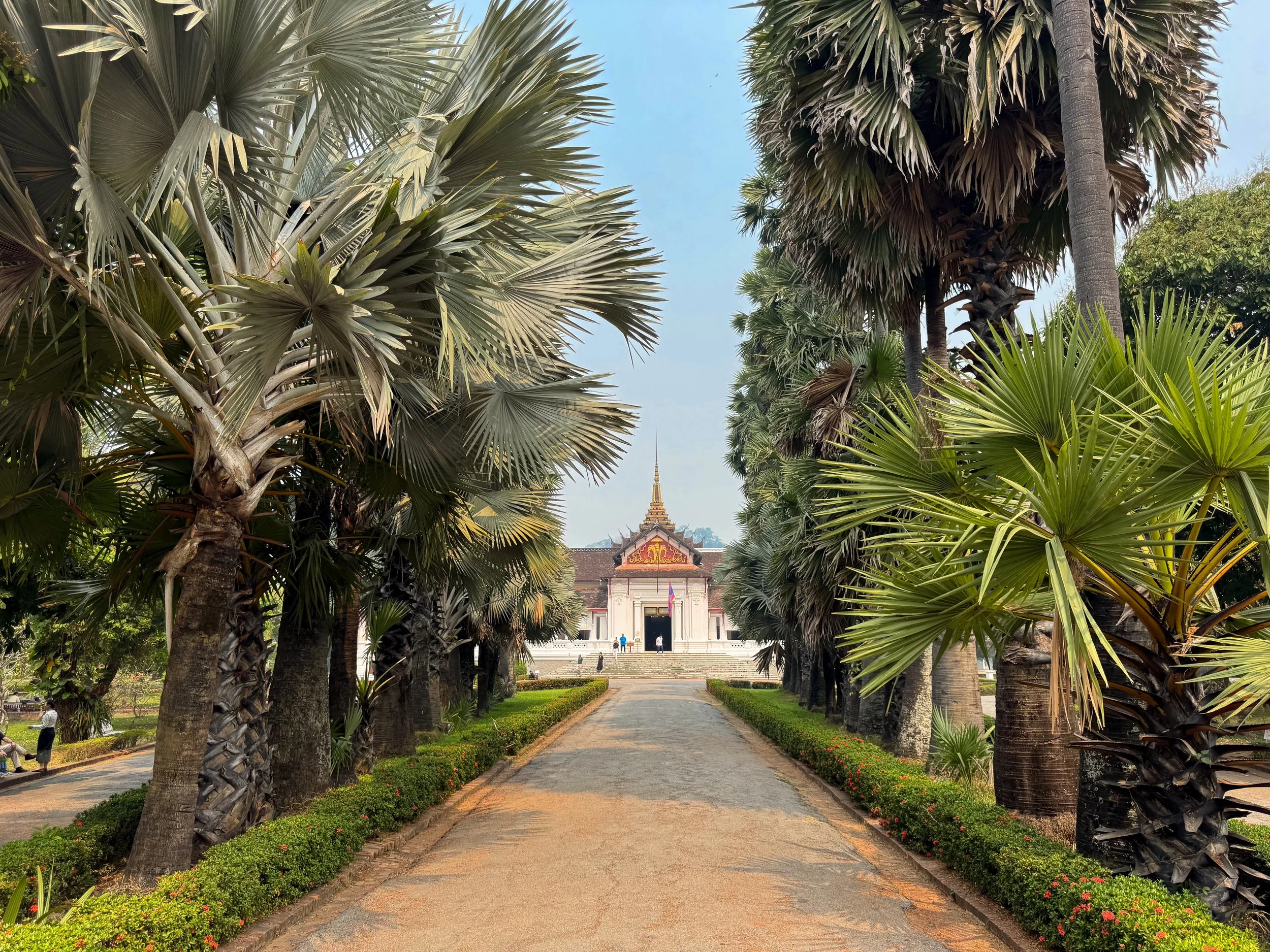
Luang Prabang National Museum. The museum and grounds feature the royal residence of Laos’ former monarchy. A palm lined driveway leads to its entrance and reception decorated with colorful paintings of the countryside. The elaborate throne room is decorated in colorful glass mosaics depicting stories of Lao history and the Prabang Buddha. On display are Buddhist and royal relics including thrones, crowns, swords, howdahs, amulets, clothing and statuettes. The remainder of the home is more simplistic with tall ceilings, wide corridors along the perimeter and spacious bedrooms.
Good to Know. It’s strictly forbidden to take photos or wear shoes inside the building. The museum and grounds close from 11:30am-1:30pm.
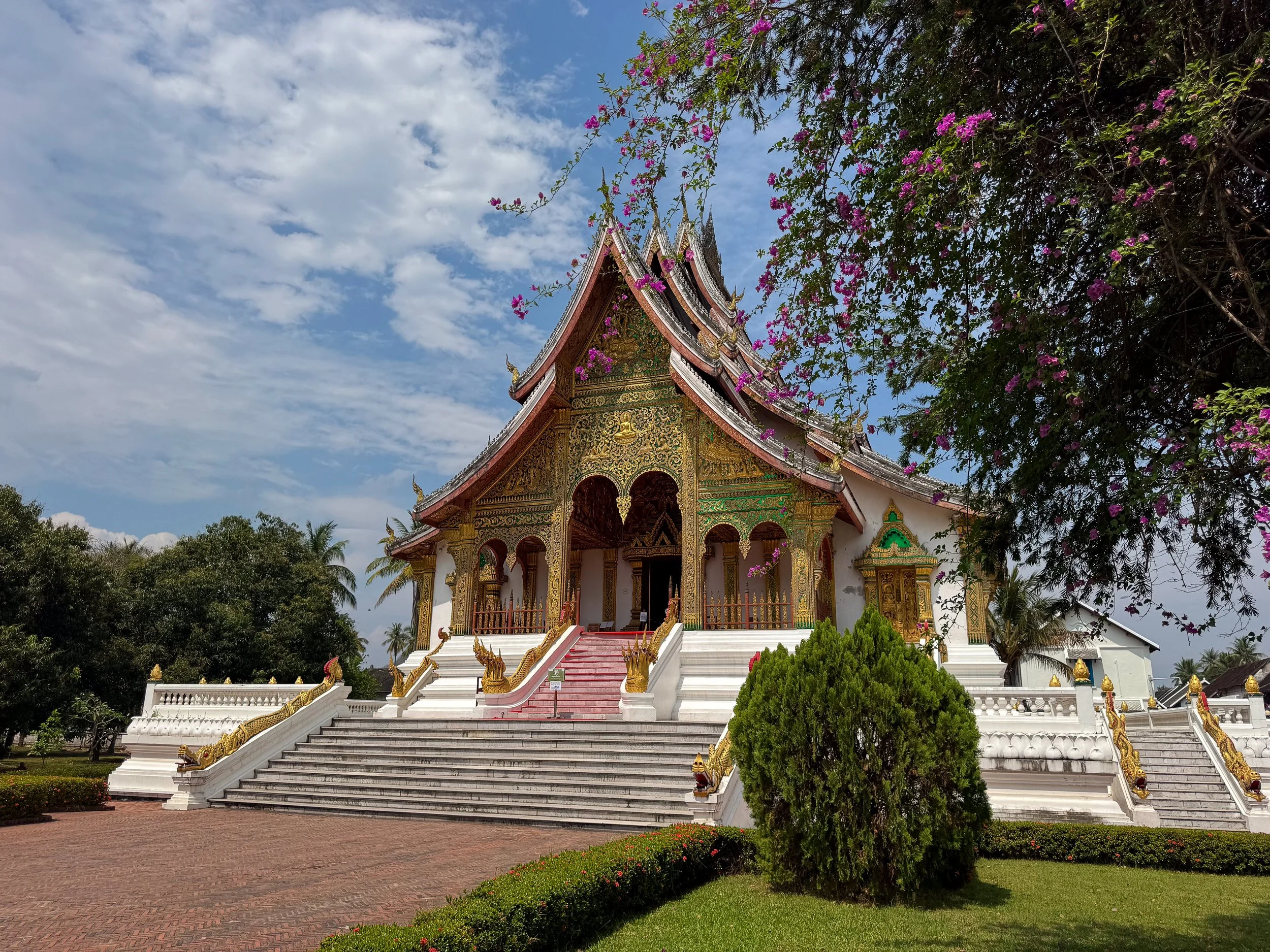
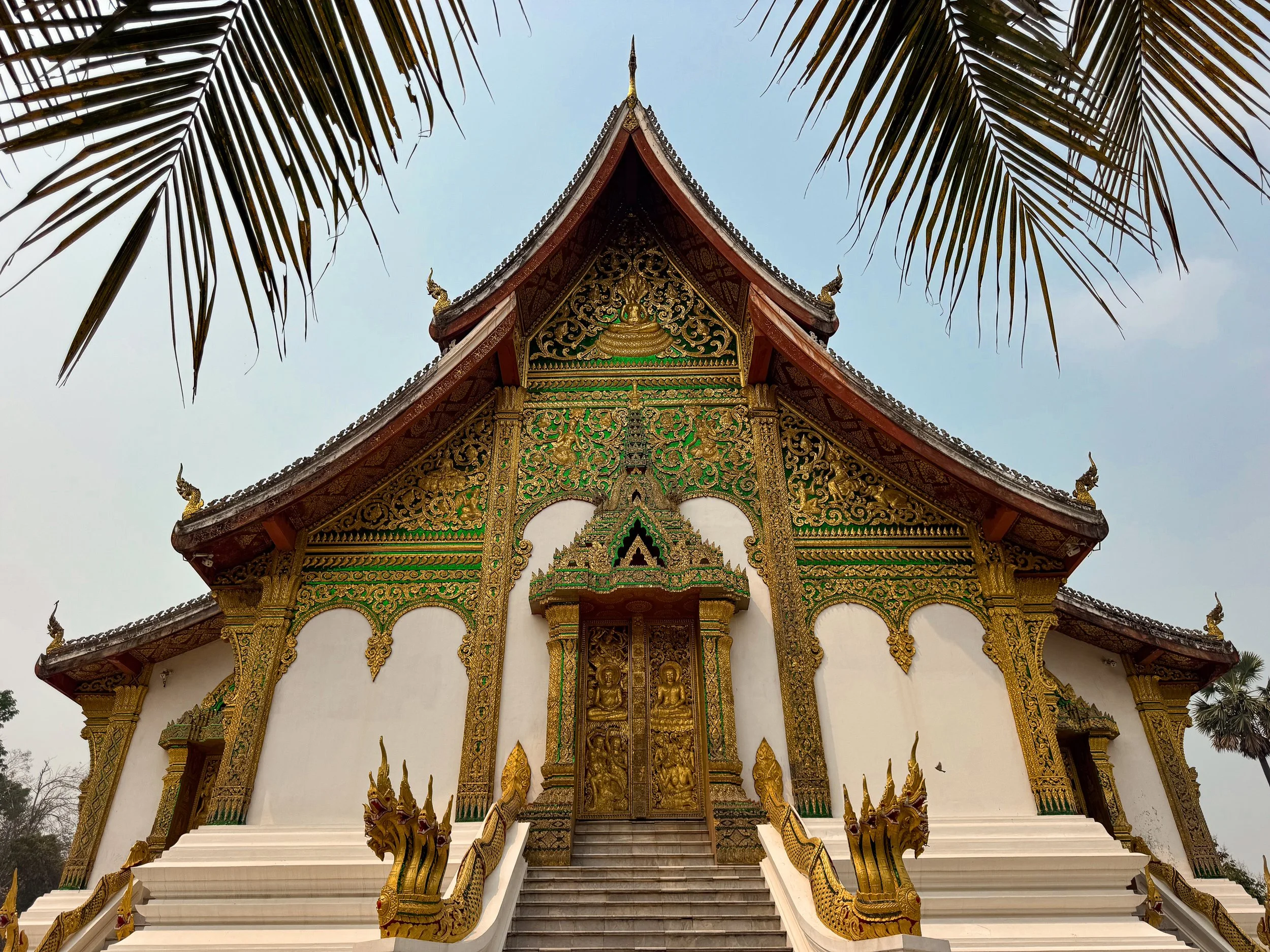
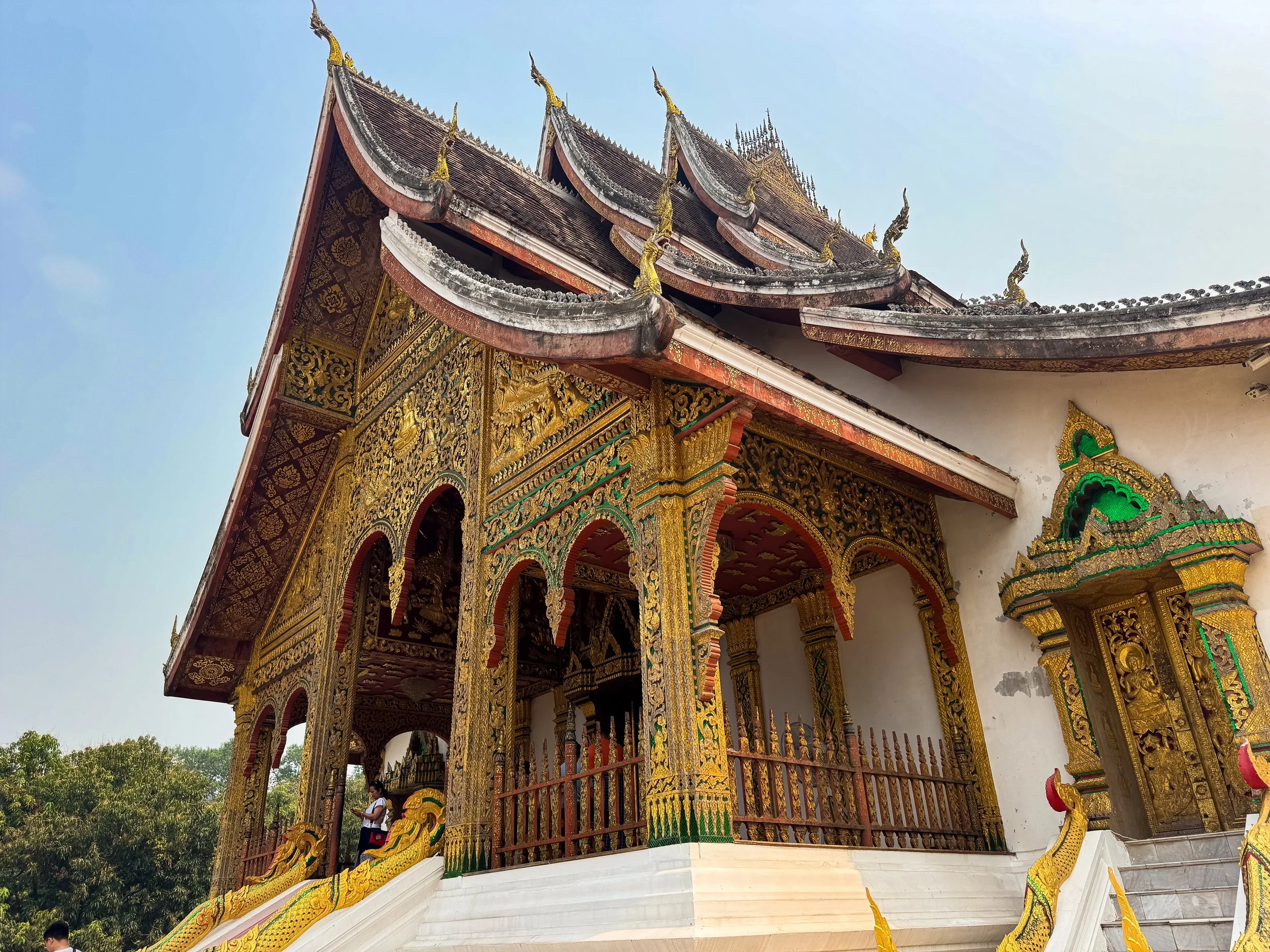
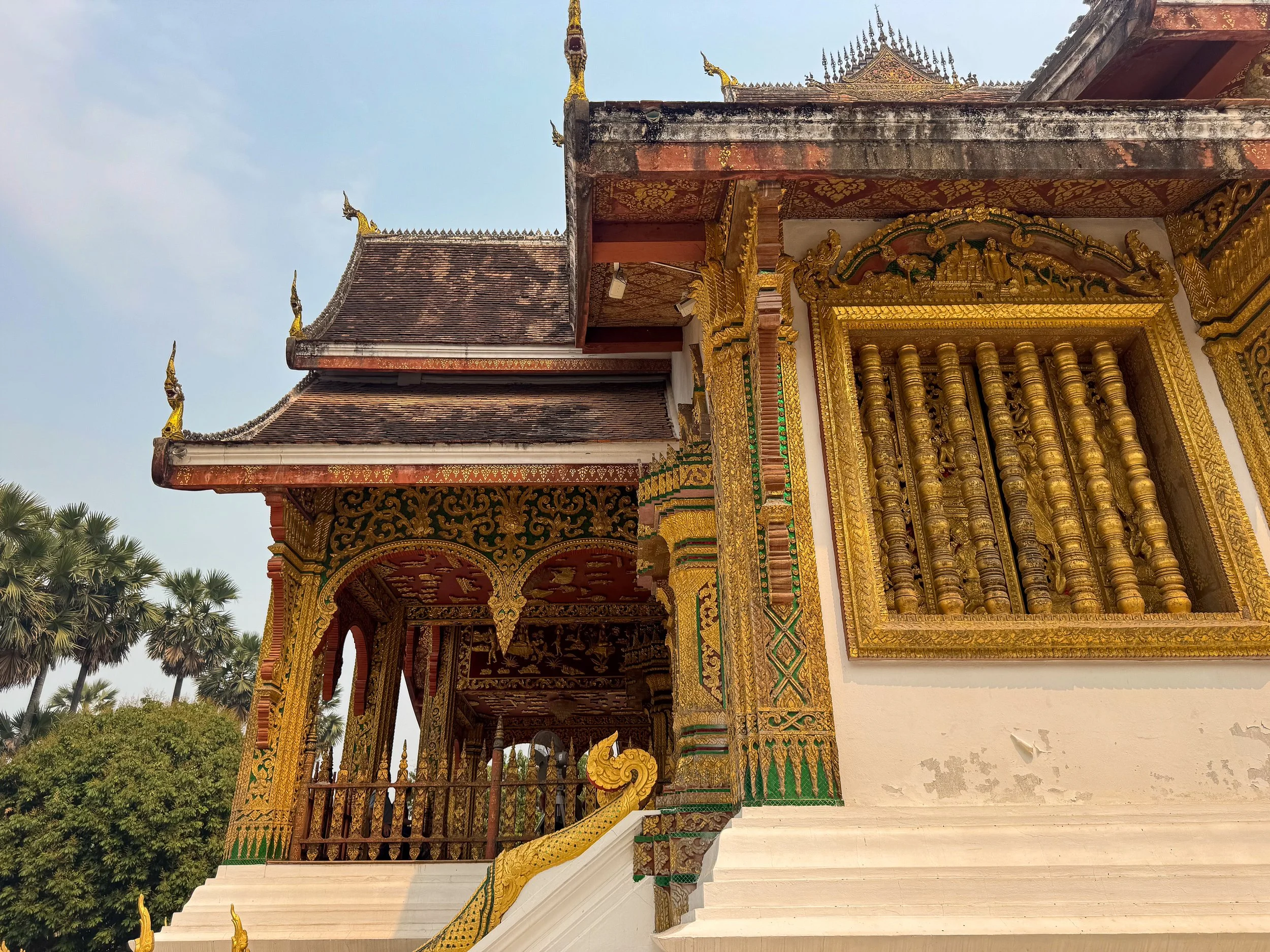
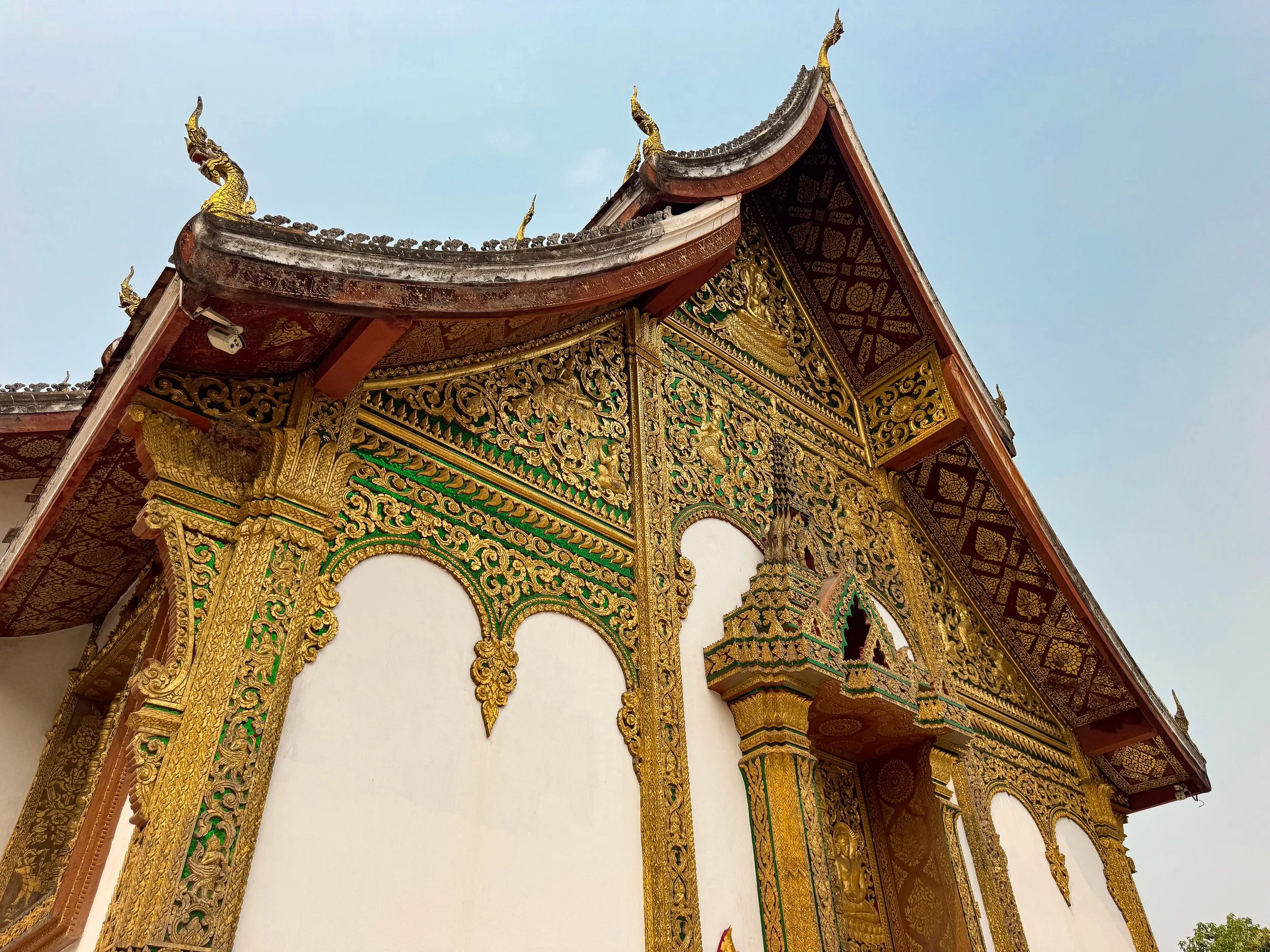
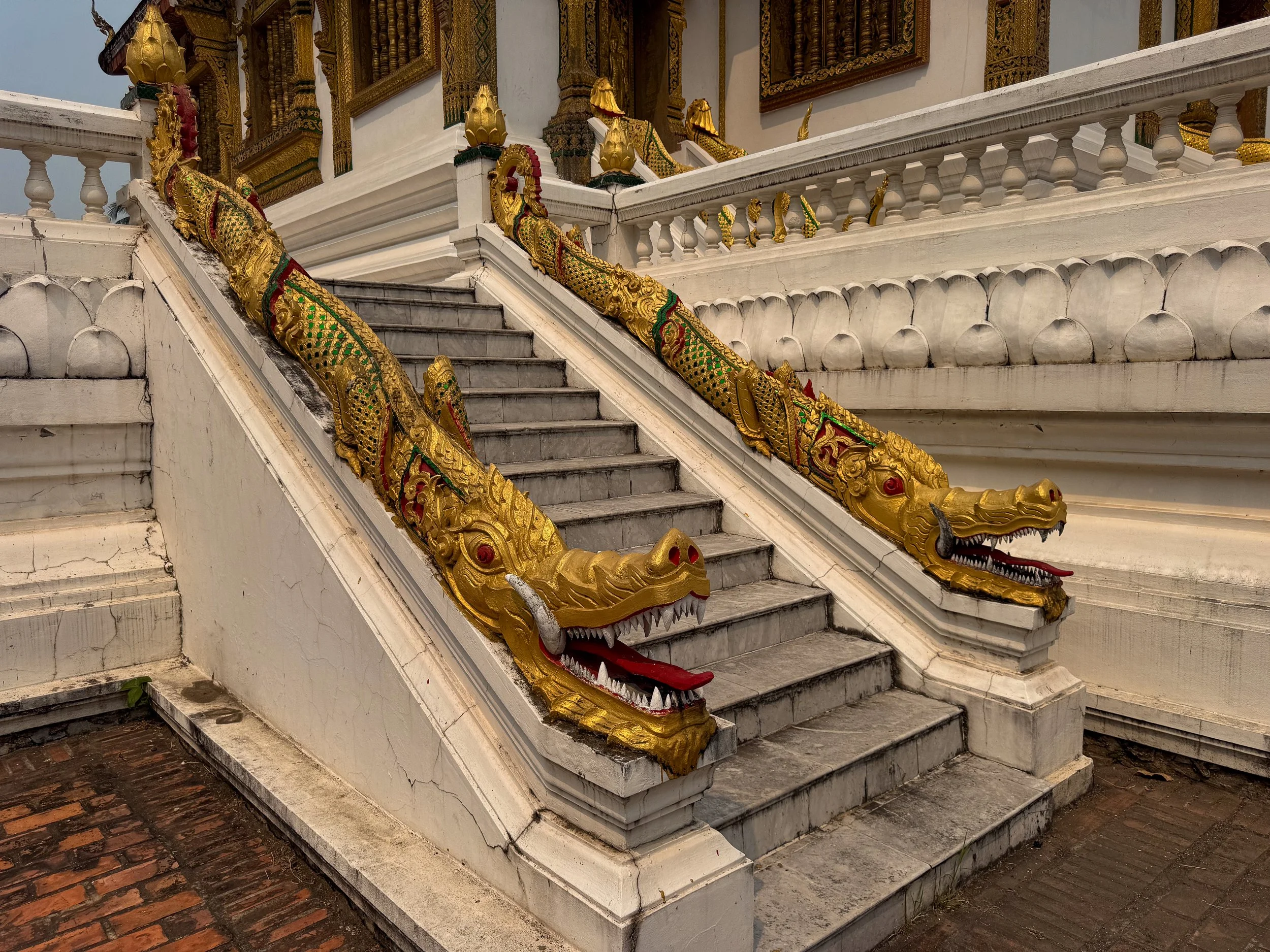
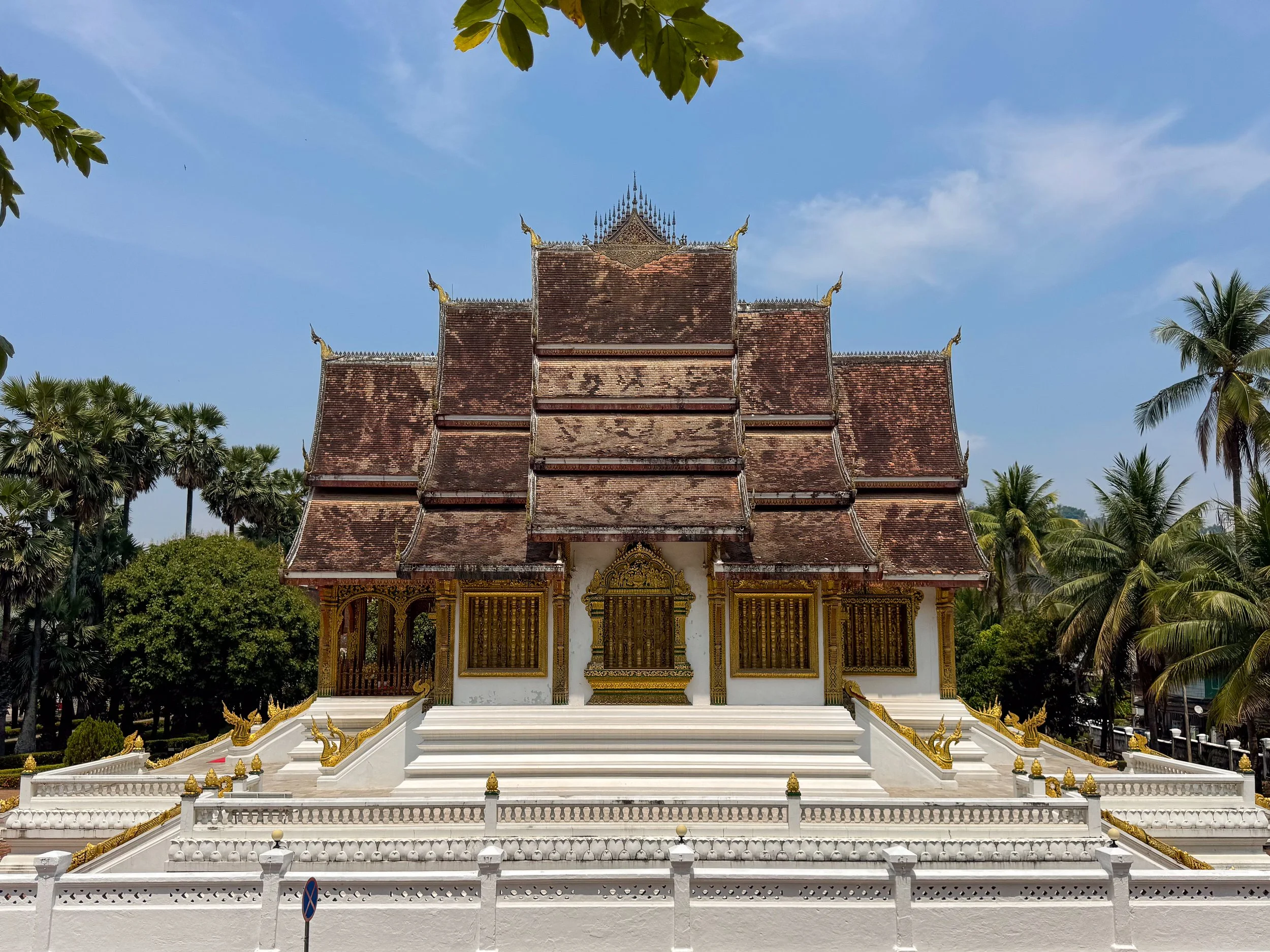
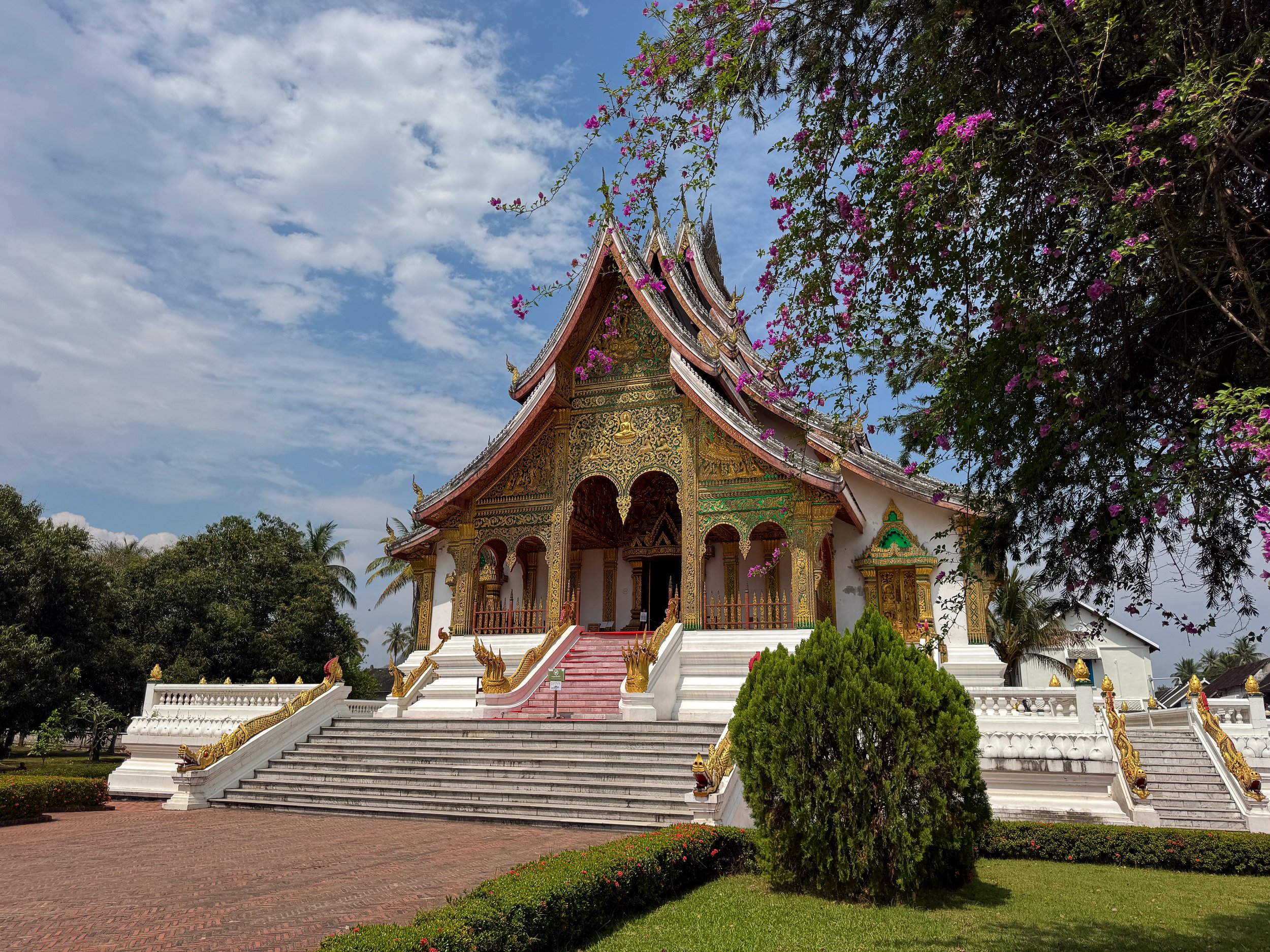
Prabang Buddha Image Pavilion. An ornately designed pagoda with gilded embellishments, emerald glass mosaics and dragon staircases. It houses the Prabang Buddha, a golden statue of the Buddha dating back to the first century. It’s one of the most important historical sights so much so that the city was named Luang Prabang after it. It’s located on the grounds of the Luang Prabang National Museum.
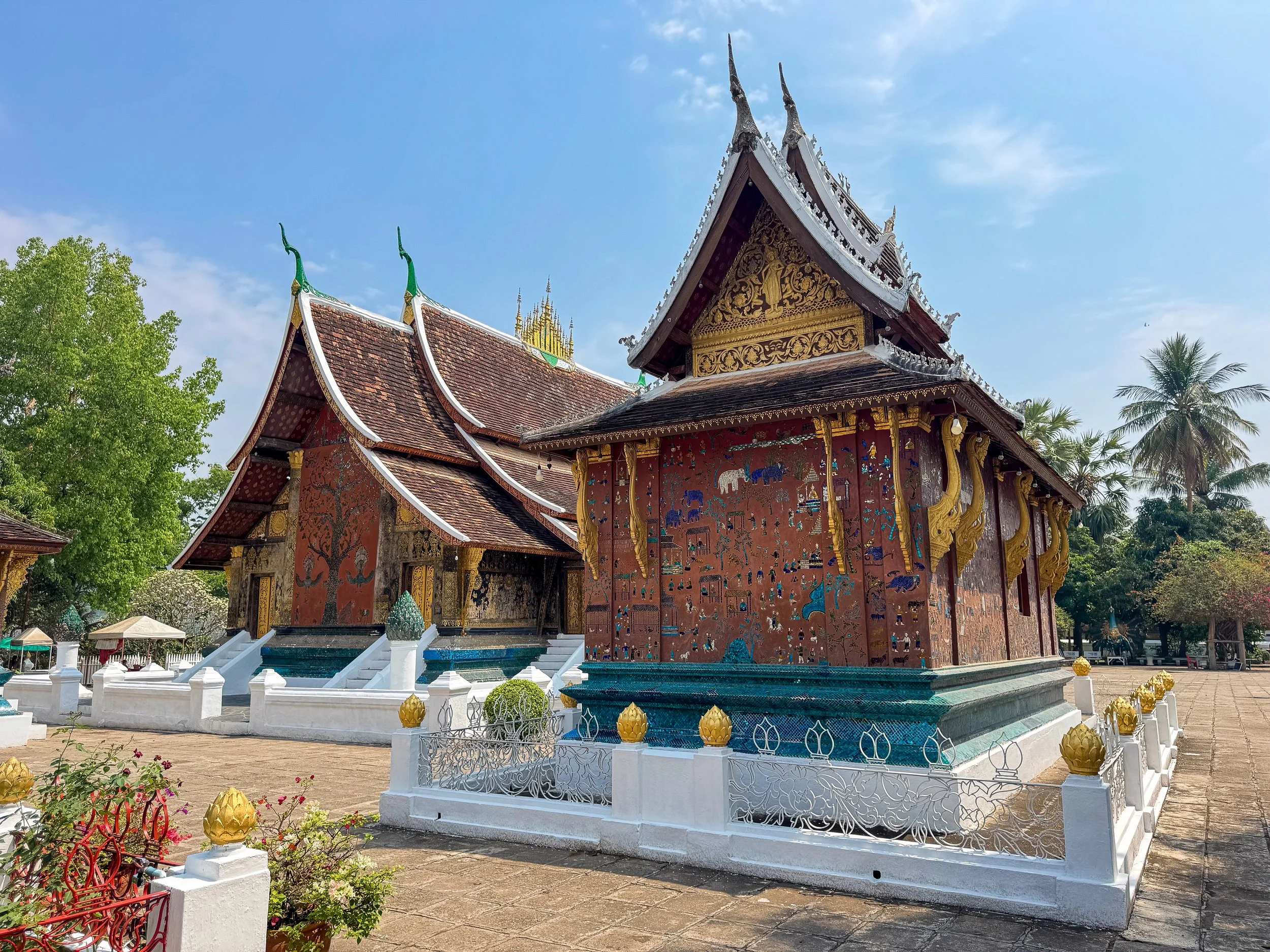
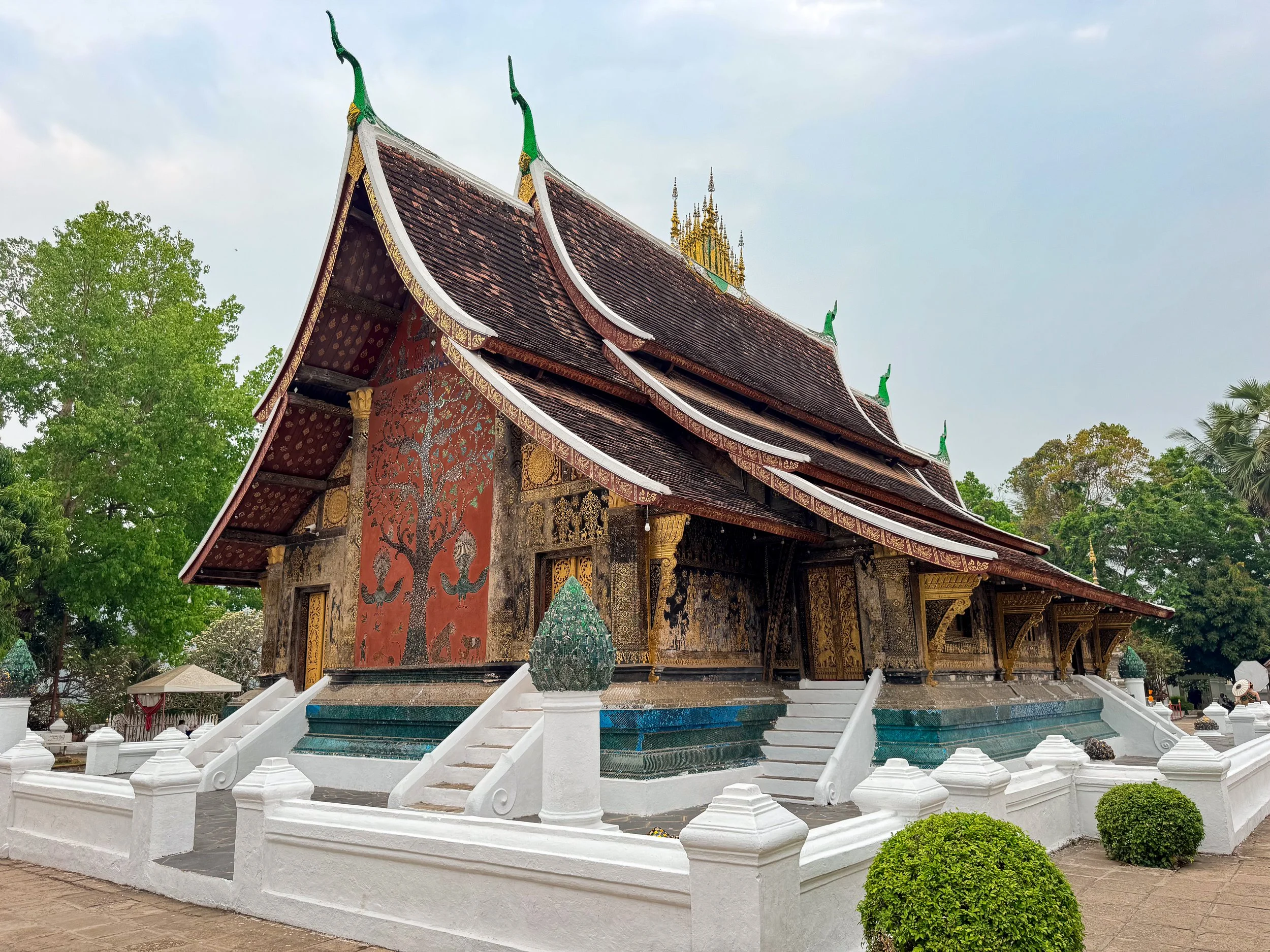
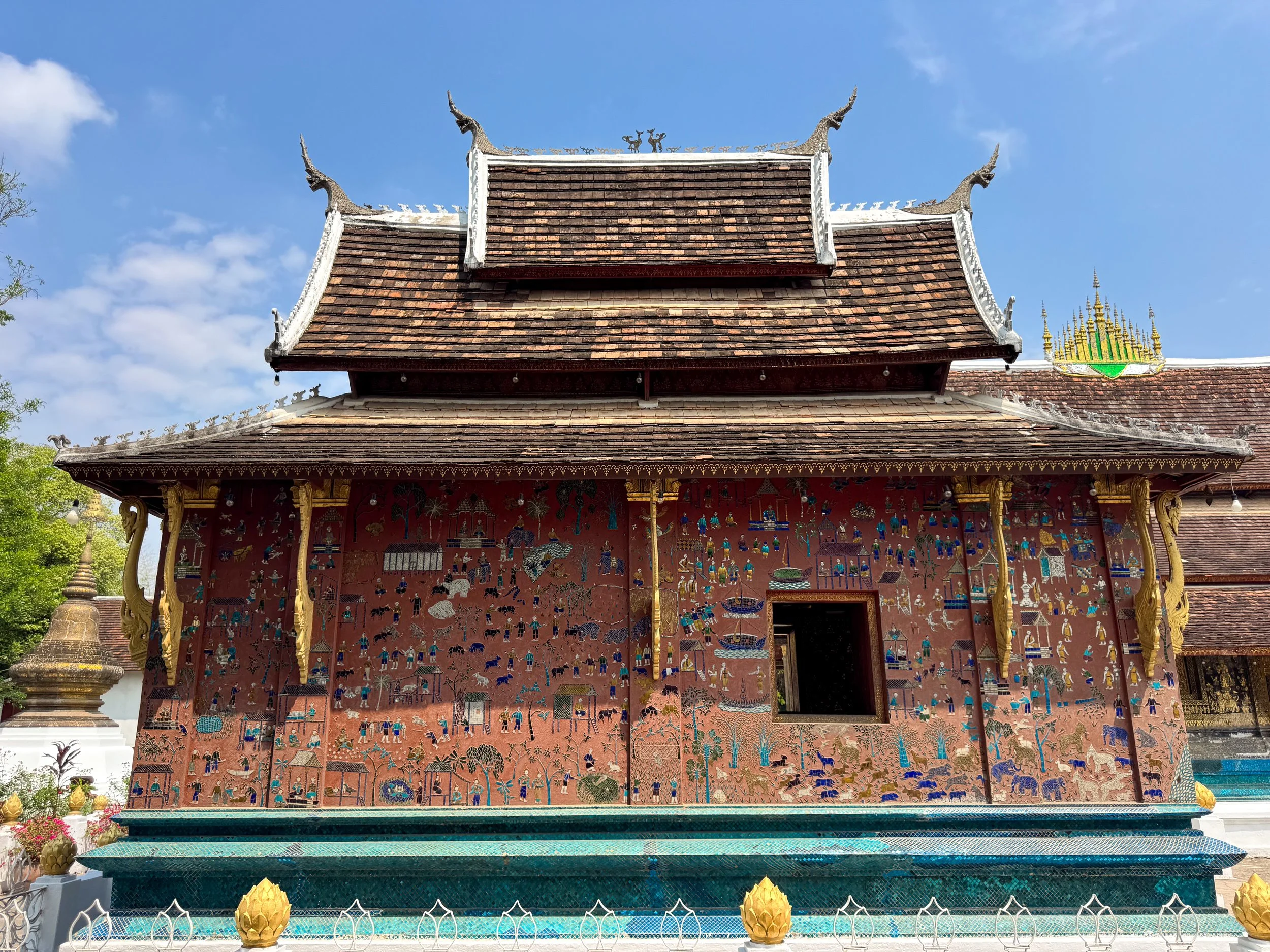
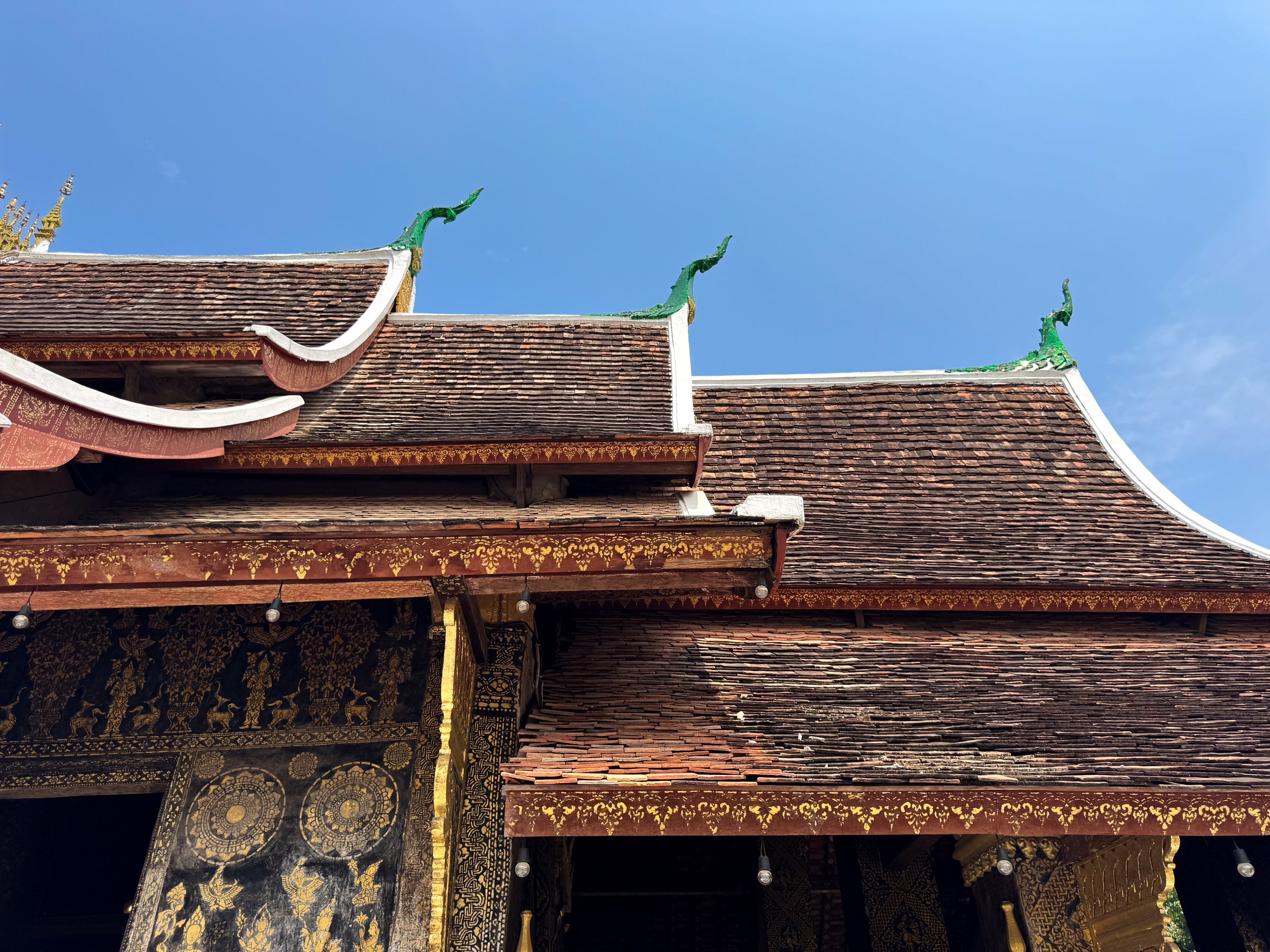
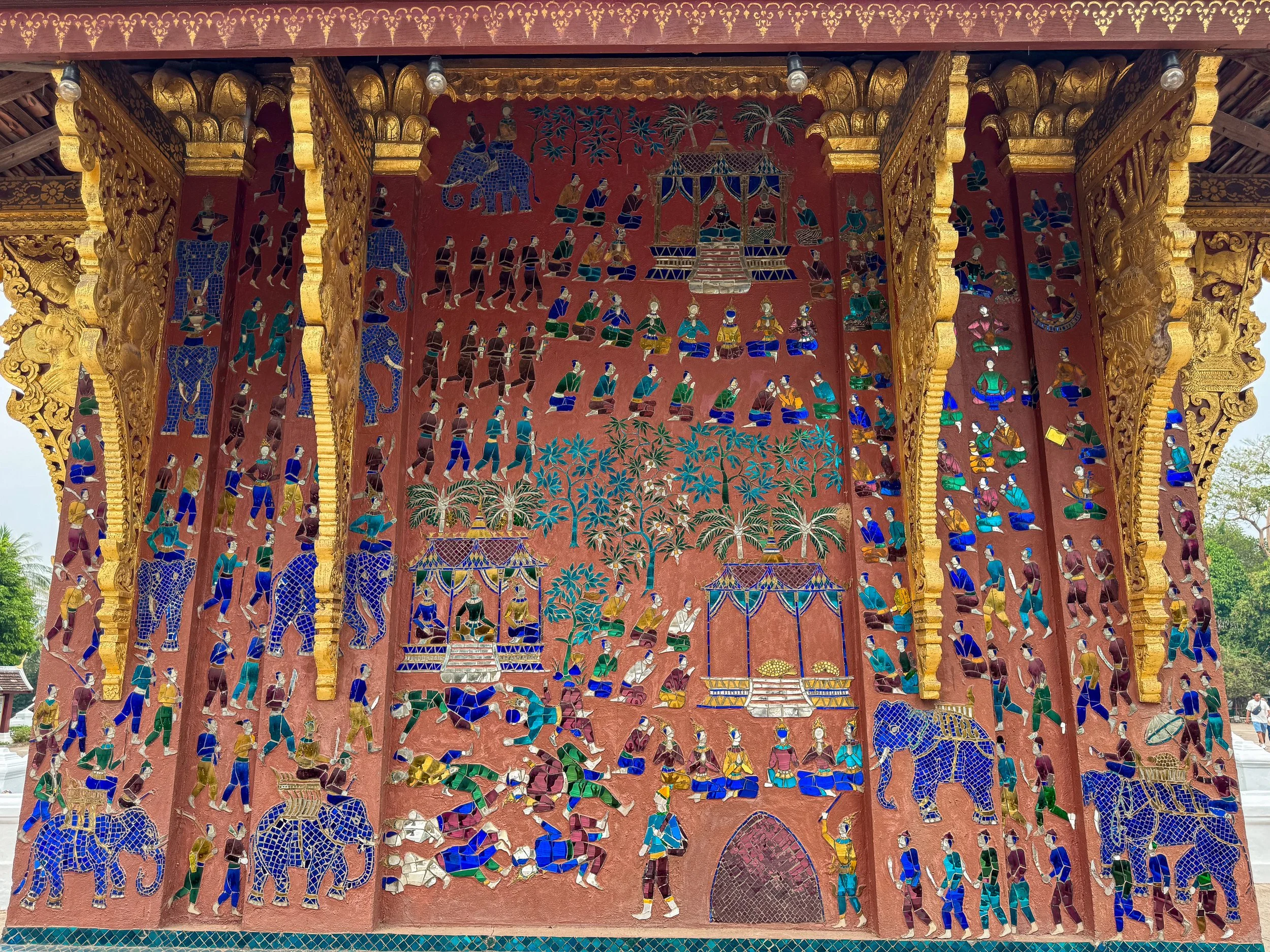
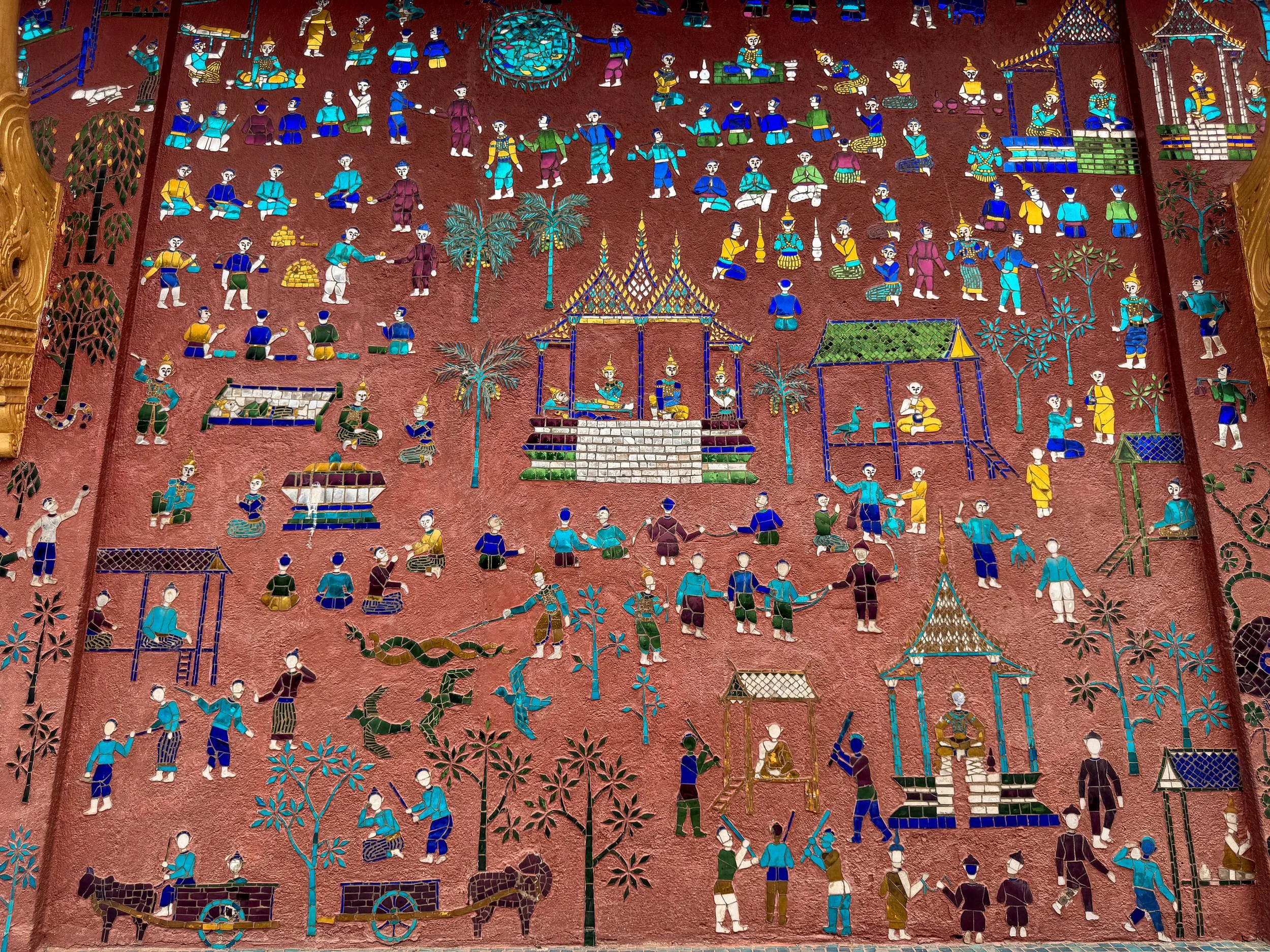
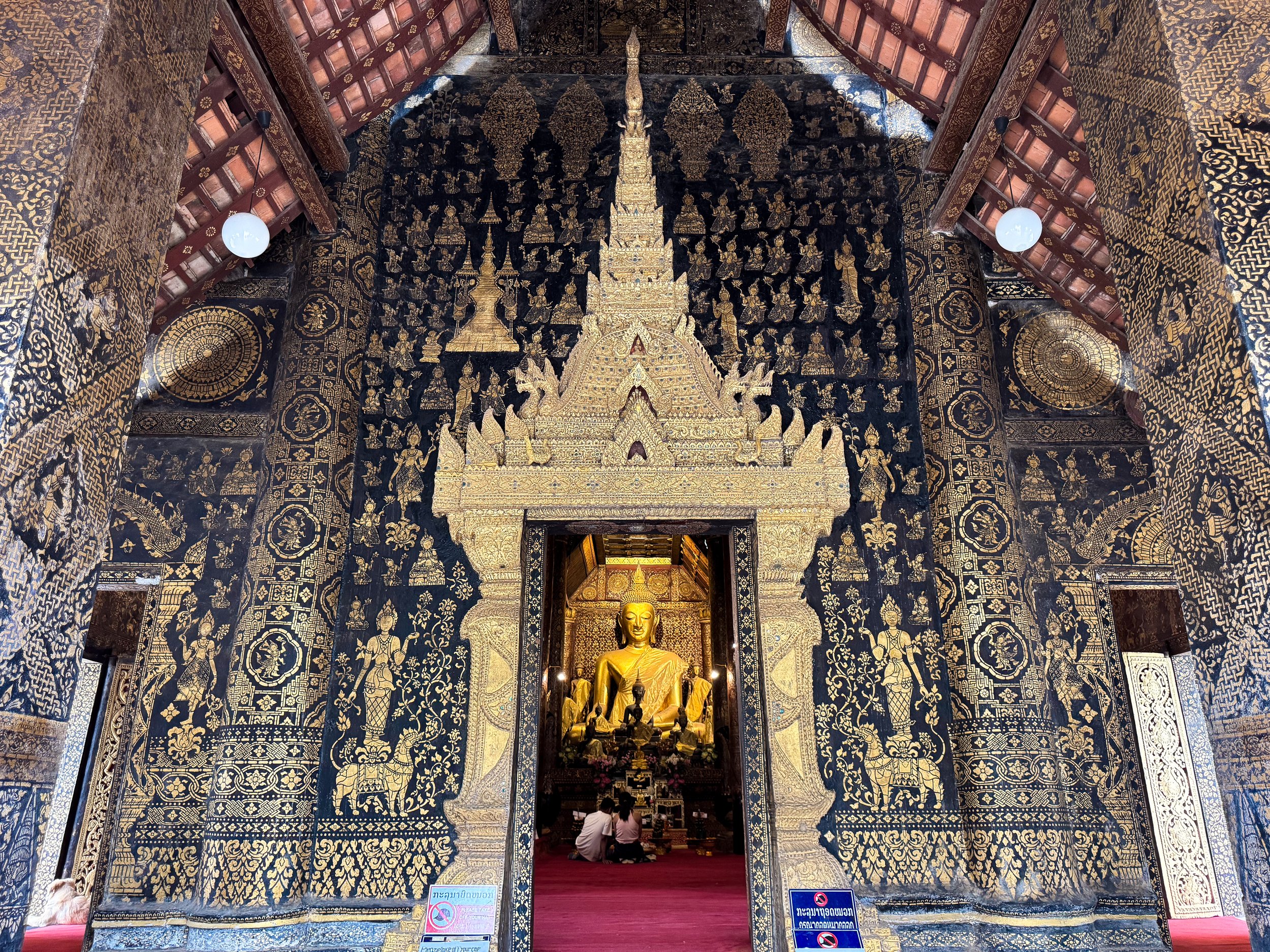
Wat Xiengthong. The largest Buddhist wat in the historic district with several chapels, stupas, drum tower, royal carriage house, ceremonial boats, dormitories and a wood shop. The wat is a school and home for many young monk novices.
Carriage House. A red painted building stylized with golden patterns and reliefs. It houses a gilded wooden carriage with large funerary urns and is adorned with the Naga, a seven headed serpent deity. Surrounding it are numerous statues of the Buddha.
Sim. A grand and historic Buddhist chapel in the central courtyard. It has a white plaster and blue glass mosaic tiled base with heads of elephants. Its black facade is painted in gold leaf patterns and images of the Buddha. It has a multitiered clay tiled roof with bright green mosaic cornices. Inside its red toned hall is a large golden Buddha statue with many smaller ones encompassing it. The chapel is surrounded by smaller shrines and stupas adorned with colorful glass mosaics that tell stories of farming, conquests and the Buddha’s teaching on the facades.
Drum Tower. A tower with several suspended drums used by monks at times throughout the day to denote time. Visit at 4pm to hear them echo across the wat.
Boat Shelter. A pavilion housing ceremonial boats and converted into a wood shop. Monks craft replacement pieces to repair and maintain the wat and its many structures using traditional and decorative techniques while preserving ancient practices.
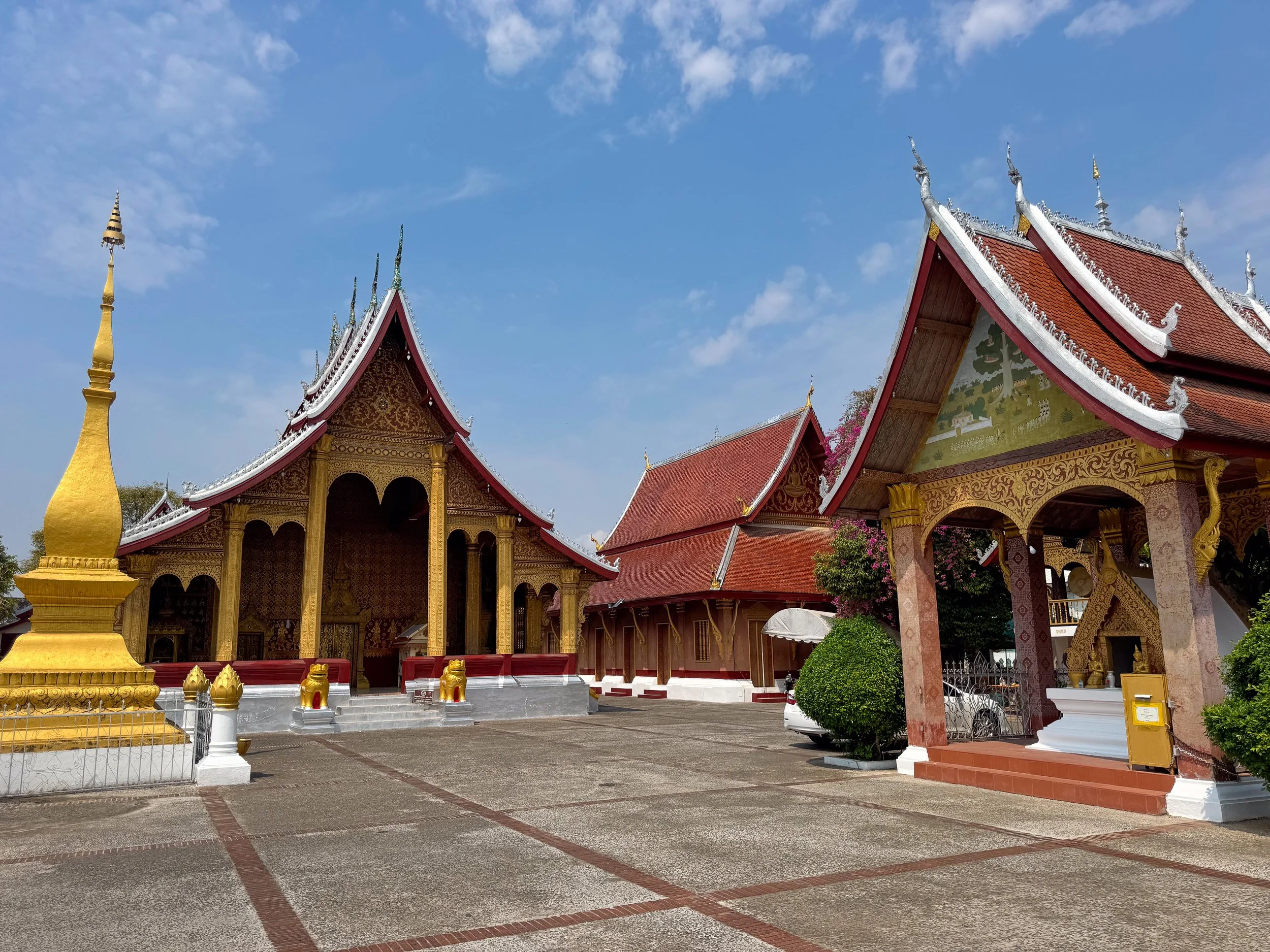
Wat Sensoukharam. A Buddhist temple complex with several pagoda style halls, monk residences, ceremonial boats, a golden stupa, drum tower and wood shop. The main halls feature multitiered and stepped roofs decorated with colorful glass mosaic cornices. These red and gold painted facades display elaborate designs, patterns and images of the Buddha.
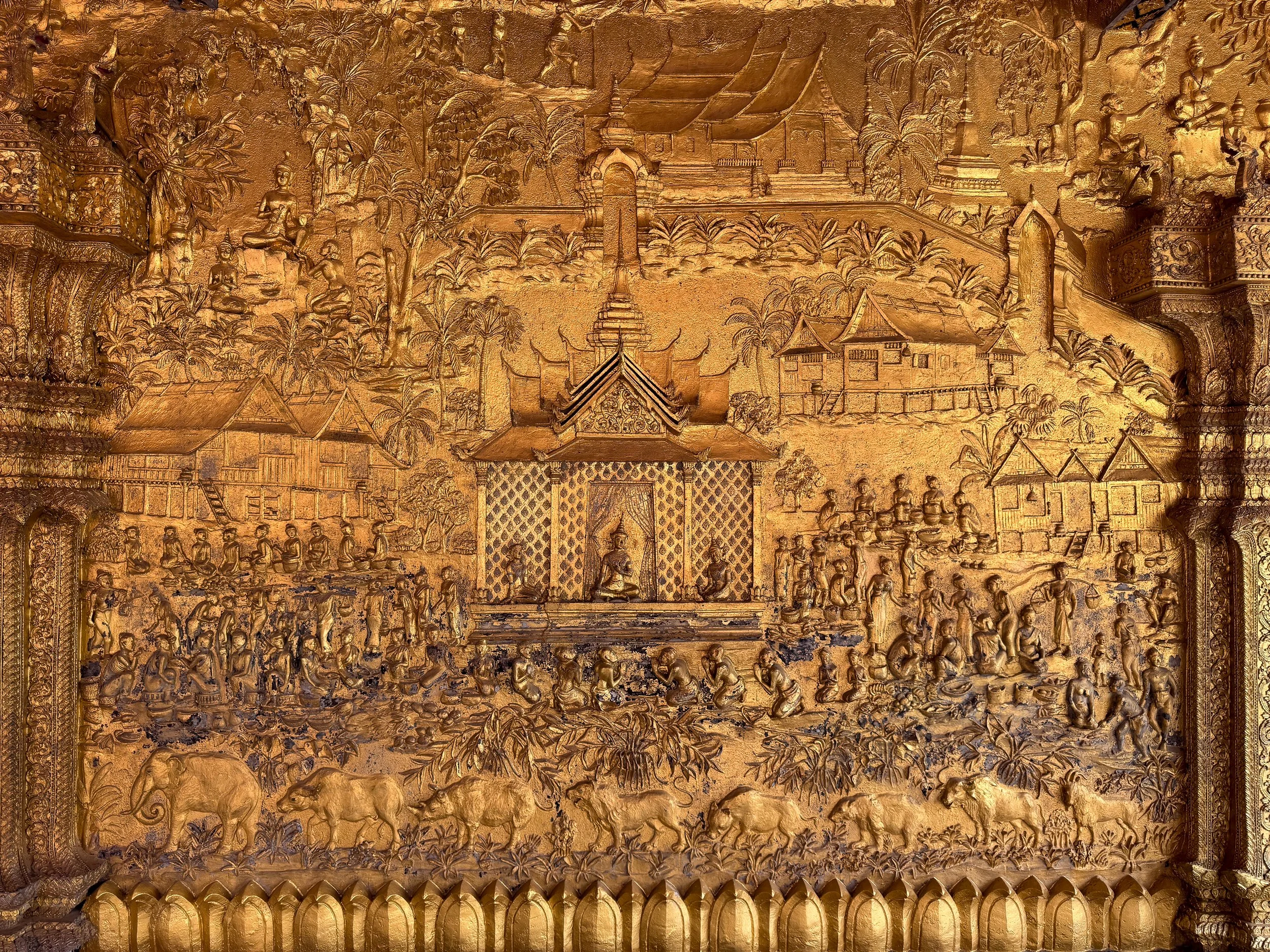
Wat Mai Monastery. A Buddhist wat and monastery home to studying monks. At its center is a red painted pagoda style temple covered inside and out with golden ornamentation and detailing. The most notable is a gilded wall at the entrance depicting a visual story of the Buddha. Inside is a shrine with a large golden Buddha statue surrounded by dozens of smaller Buddha statues.
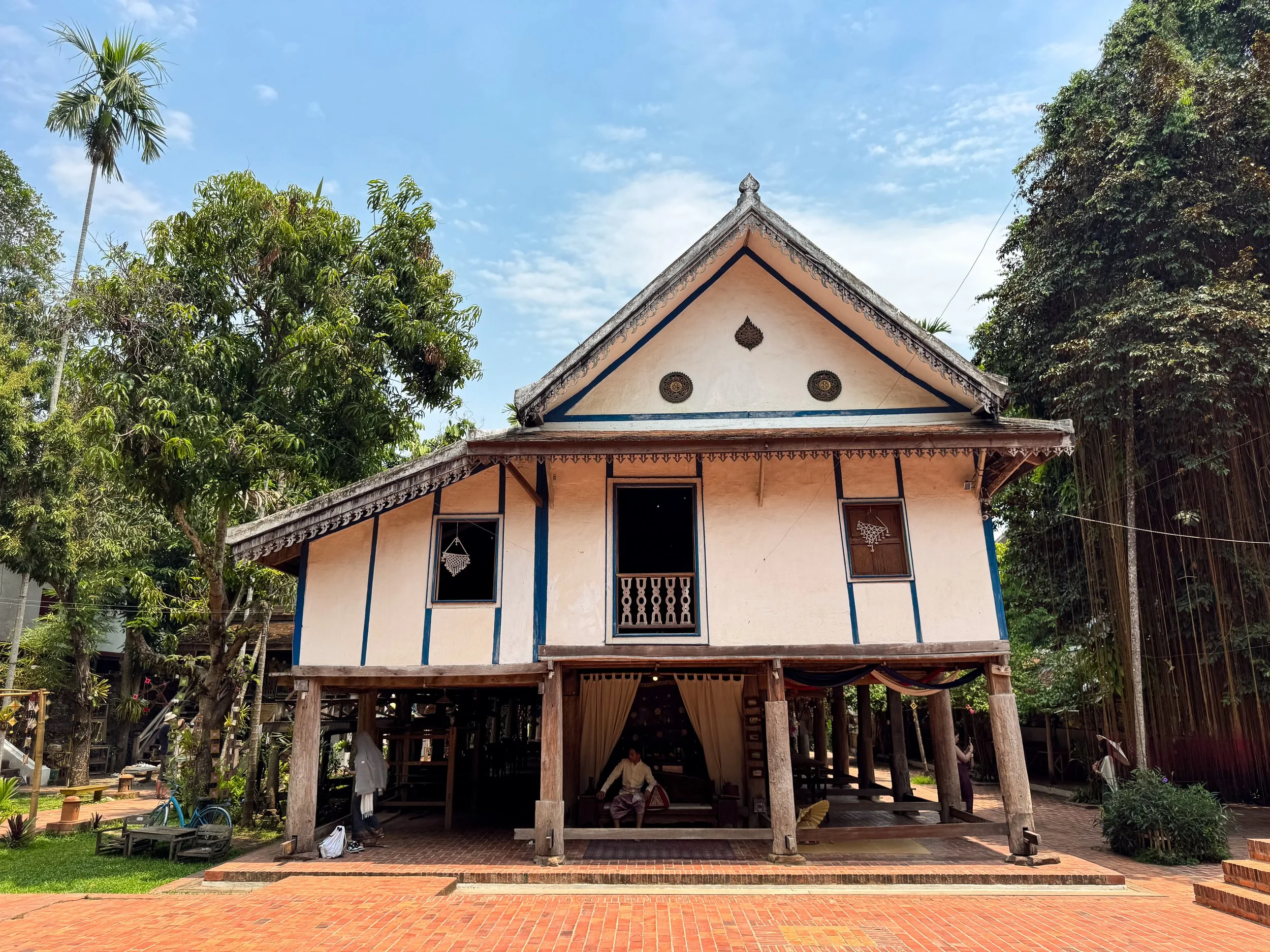
Luang Prabang Heritage House. A cultural center and museum dedicated to preserving the history, traditions and customs of Luang Prabang. Inside the rooms of a historic wooden stilt house are displays with classical musical instruments, cooking equipment, textiles, clothing and ceremonial home goods. Cooking and craft classes like bamboo weaving and mulberry paper making are regularly offered. Locals come here to rent traditional clothes for photoshoots around the property. An adjoined café offers local dishes and herbal teas. We drank iced bael fruit and pandan leaf teas on cushions under the stilt house. The museum is located on a brick alleyway surrounded by Buddhist wats and other historic homes.
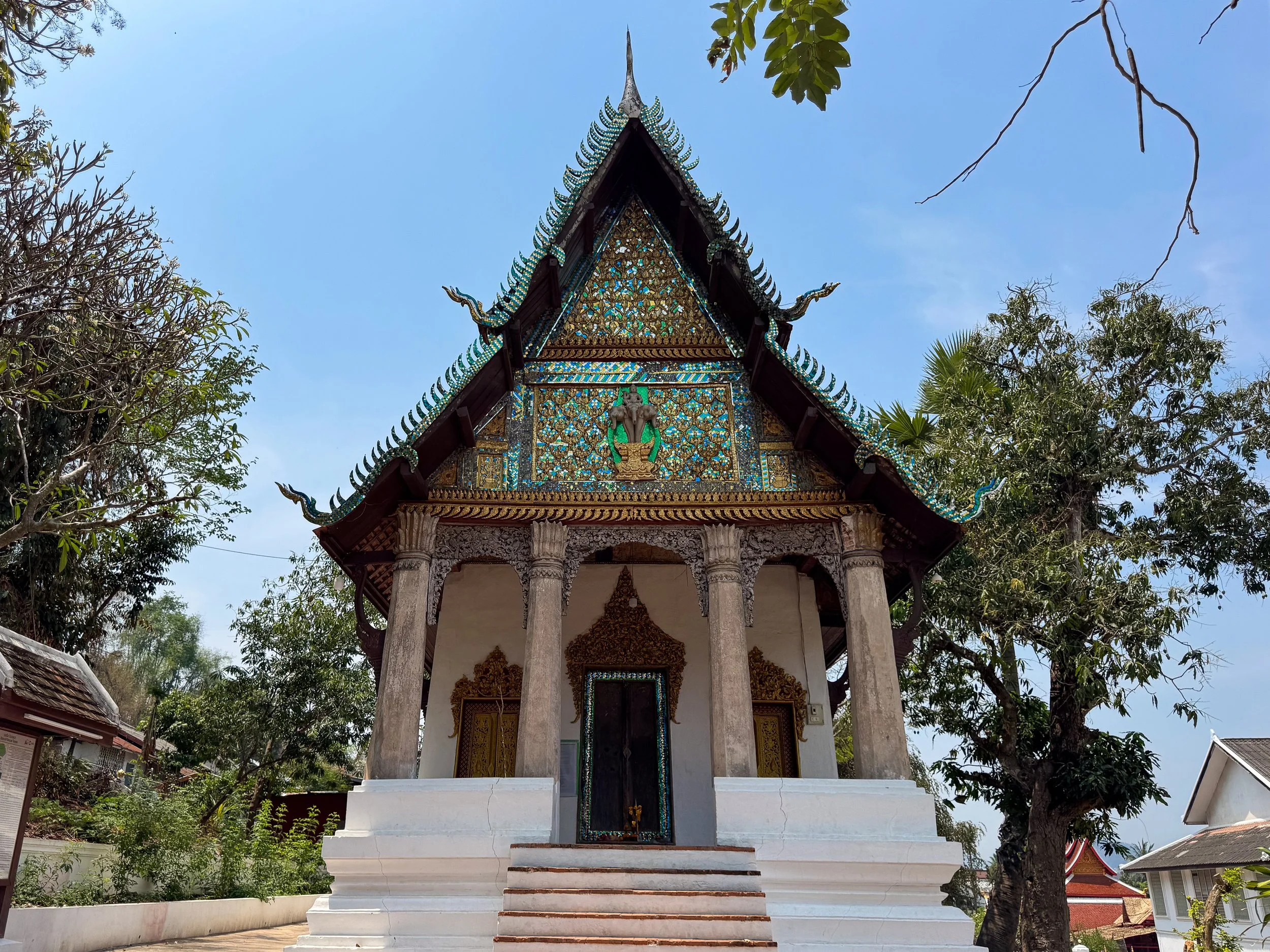
Wat Pa Hauk. A small temple at the base of Phousi Hill across from the National Museum. It features a mix of architectural elements including wooden columns, ornately carved moldings, a detailed facade and roof inlaid with gold, silver, blue and green glass mosaic tiles.
Phousi Hill. A sacred mountain in the middle of the city with a golden stupa at its summit. Dragon stairs and walkways lead across its slopes past Buddhist statues, shrines and a monastery. On a clear day, the summit offers panoramic views of the city, its pitched clay tiled roofs, leafy palm trees, the Mekong River and distant mountains. It’s a popular place to watch the sunset.
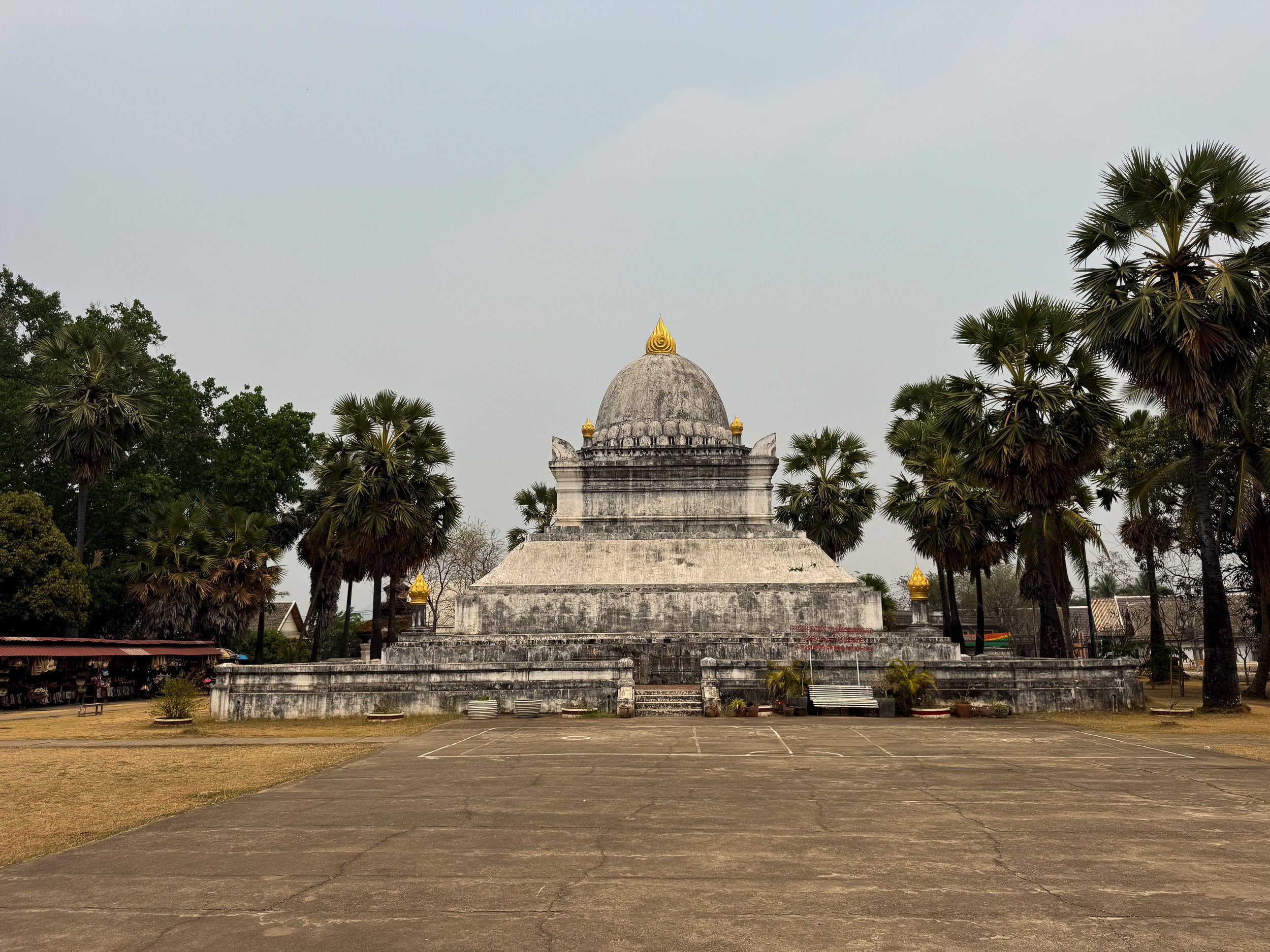
Wat Visounnarath. A Buddhist temple complex dating back over 500 years with temple halls, stupas and wooden structures home to studying monks and sacred texts. One of the most notable sights is The Watermelon Stupa. A reconstructed large white stupa with a square platform, golden lotuses at all four corners and a dome on top that resembles a watermelon. When it collapsed, it revealed statues of the Buddha that are on display in the throne hall of the National Museum.
Explore Nature
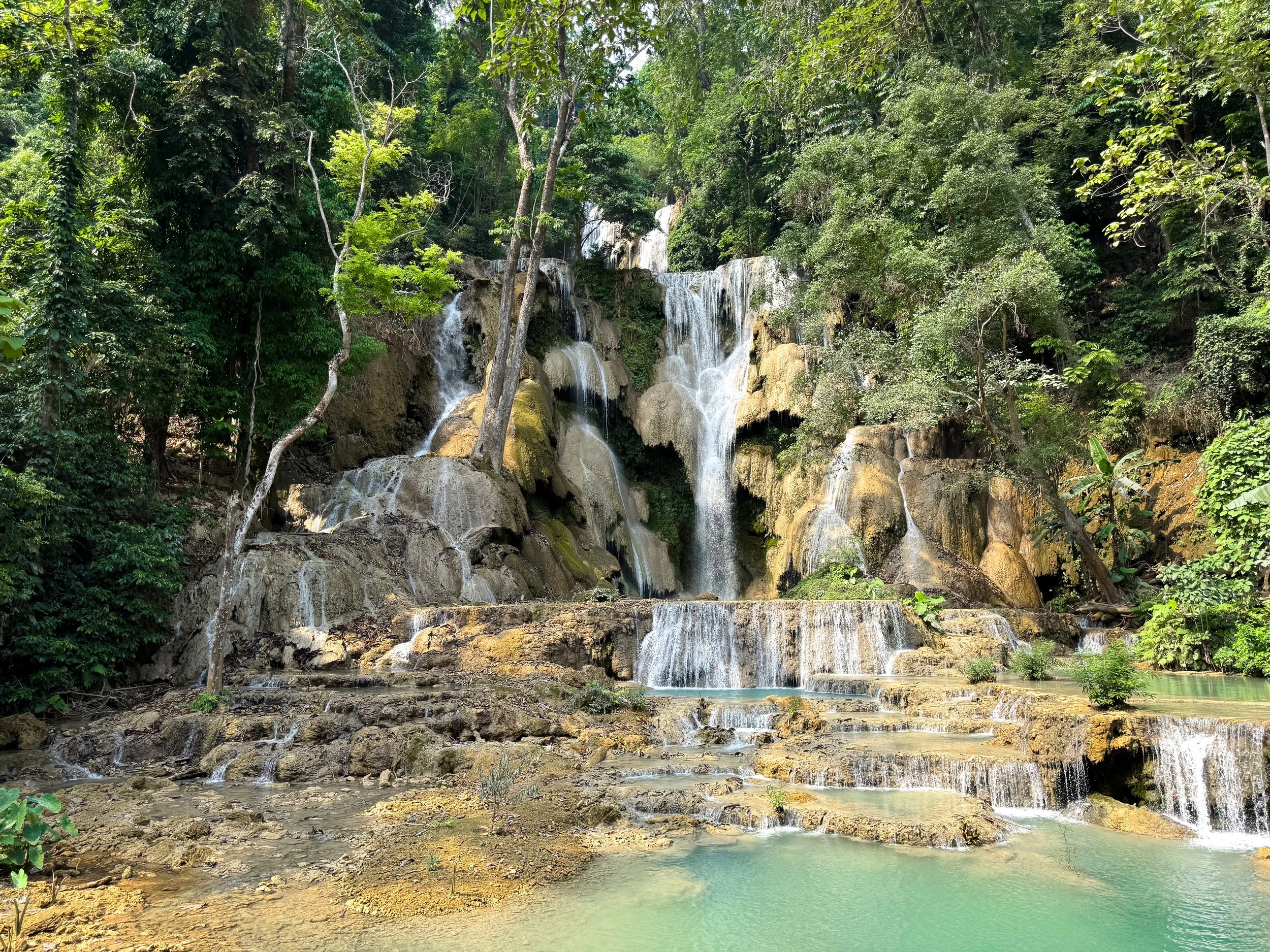
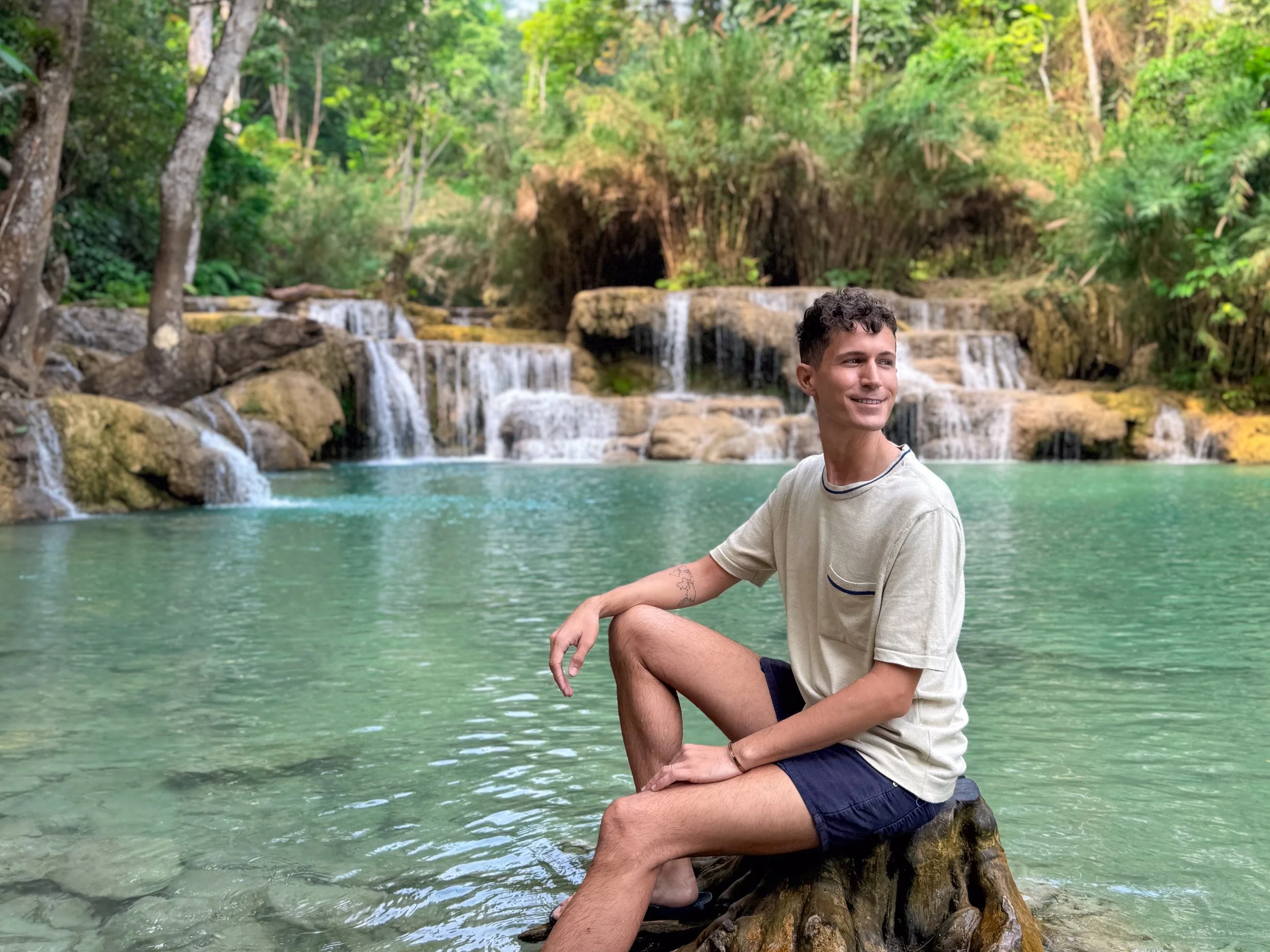
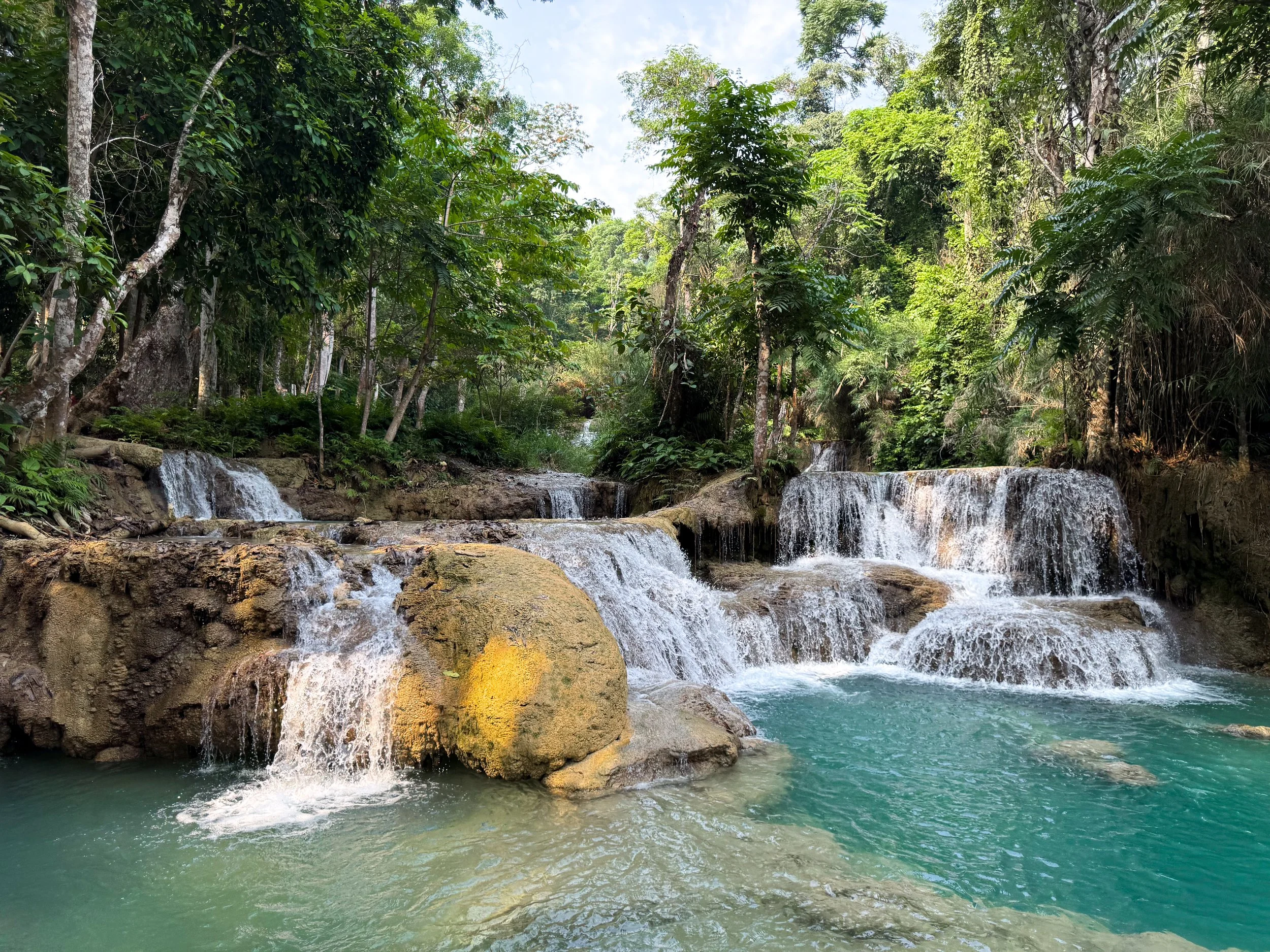
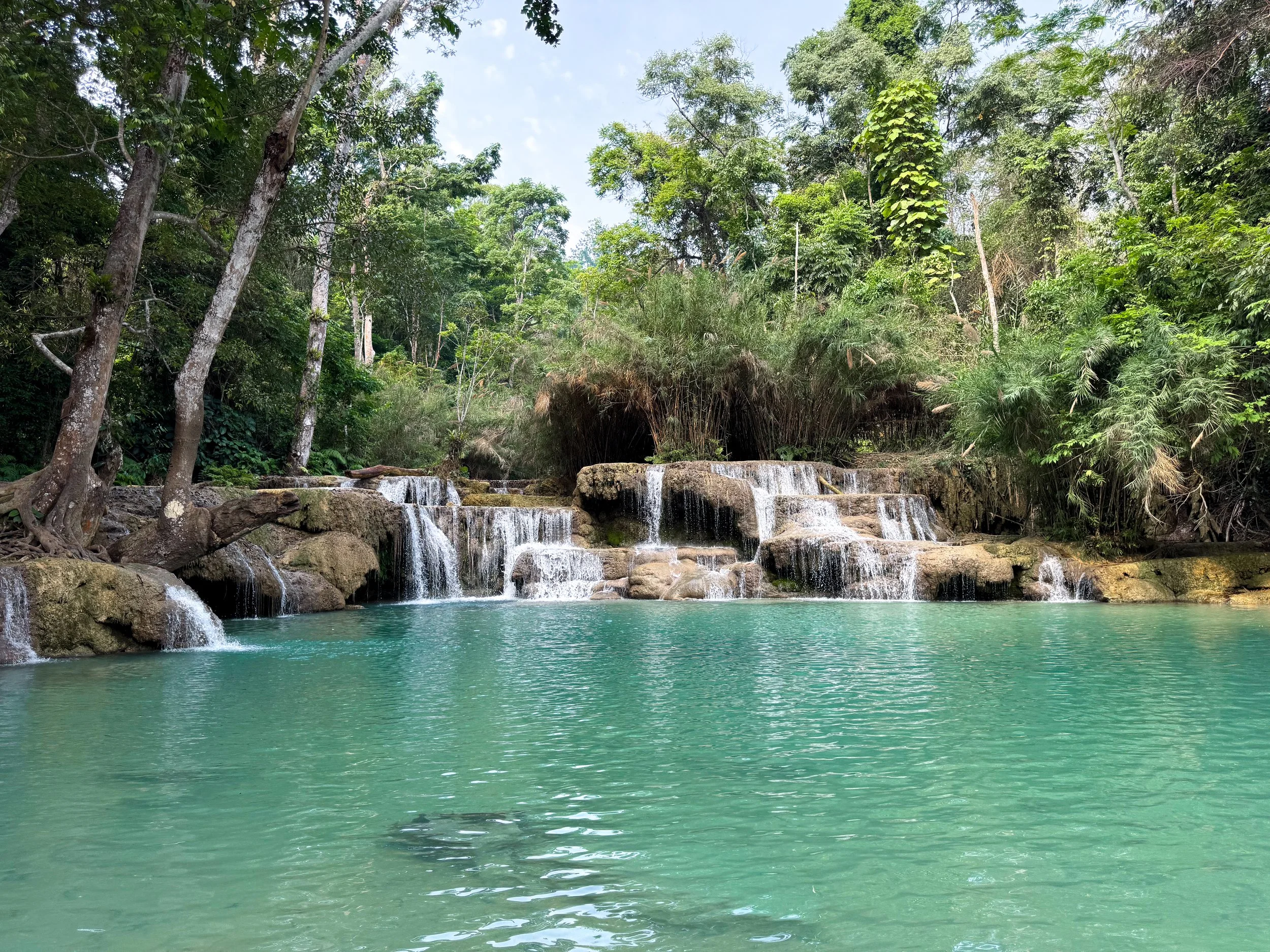
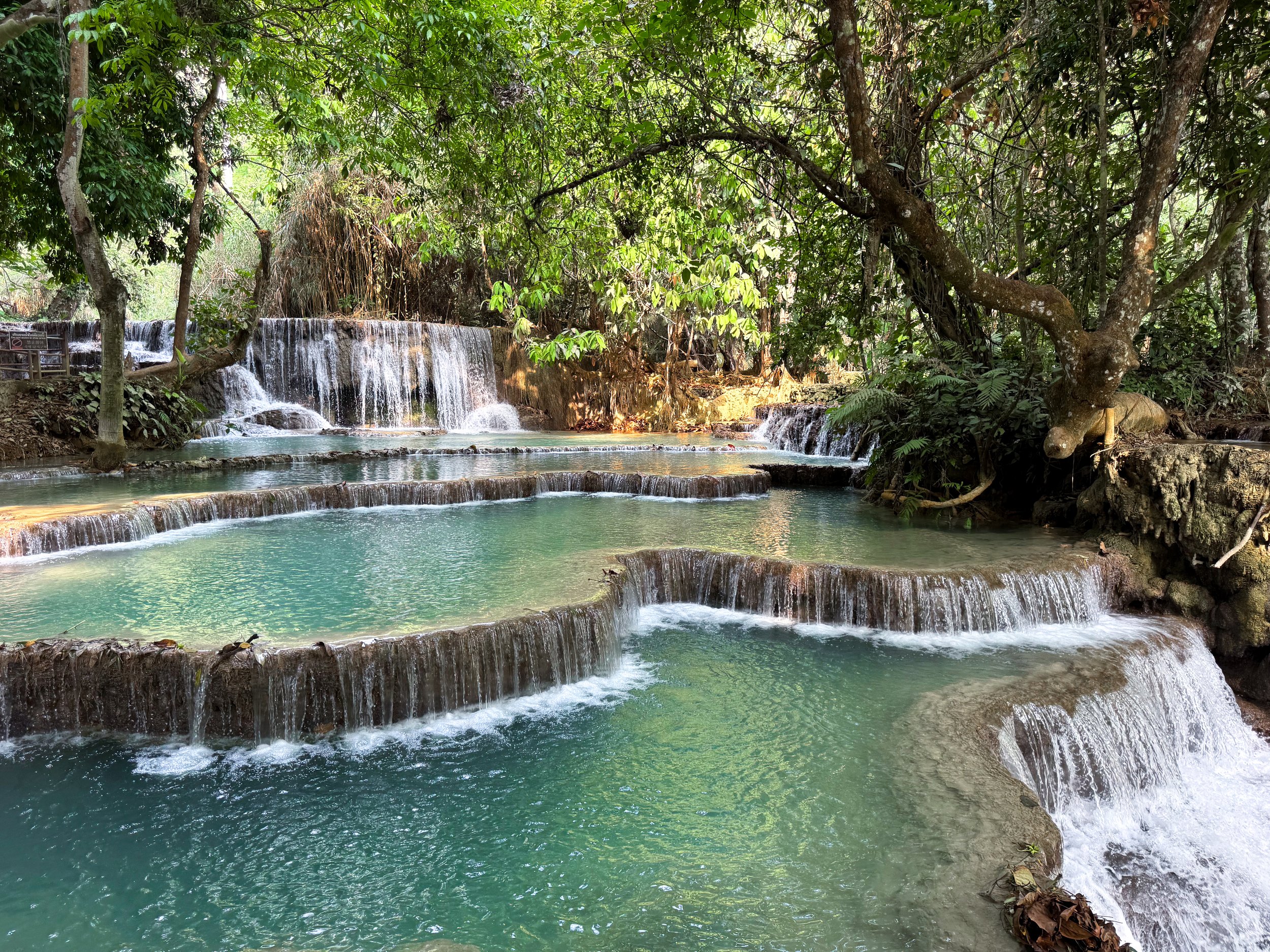
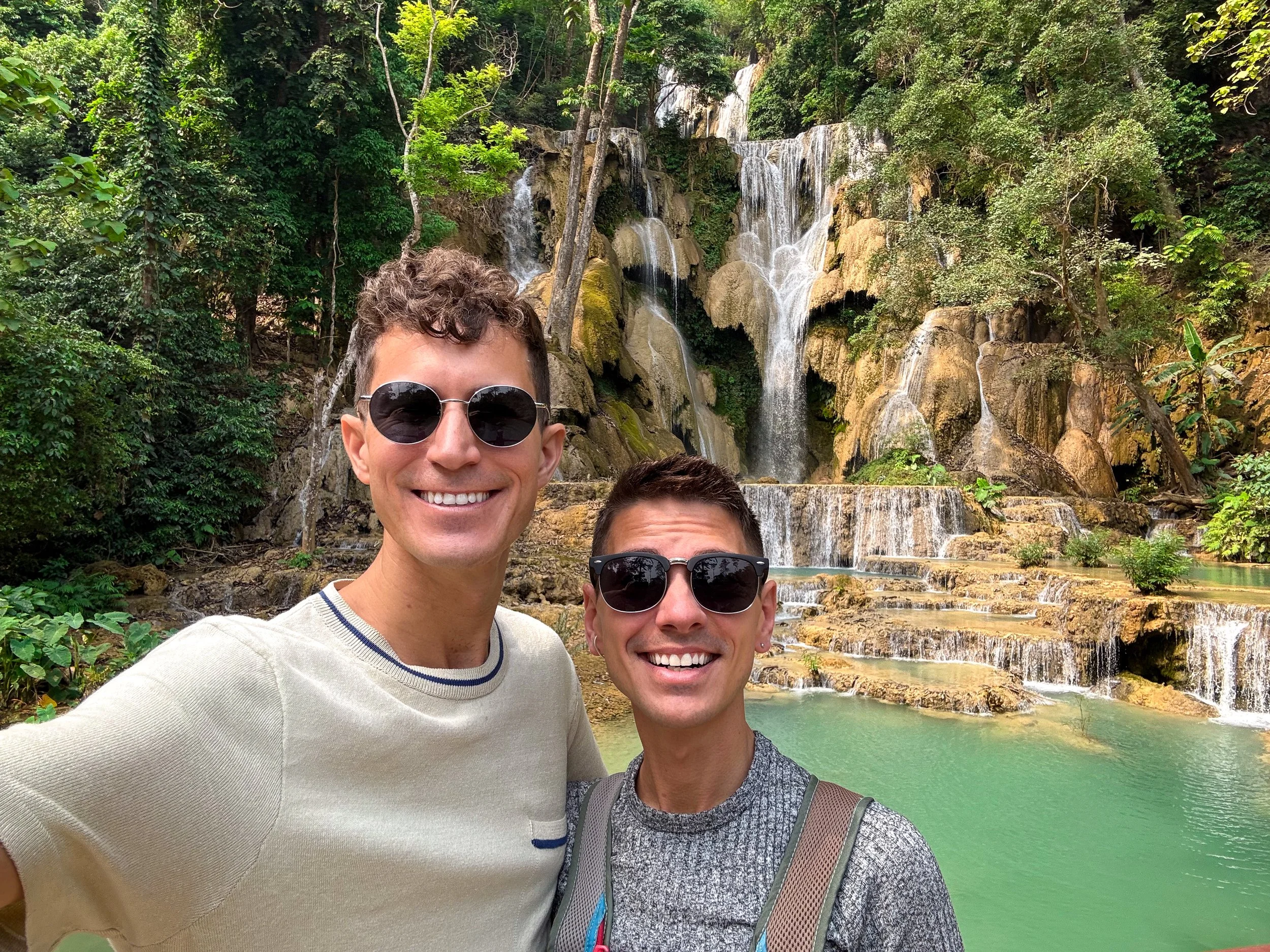
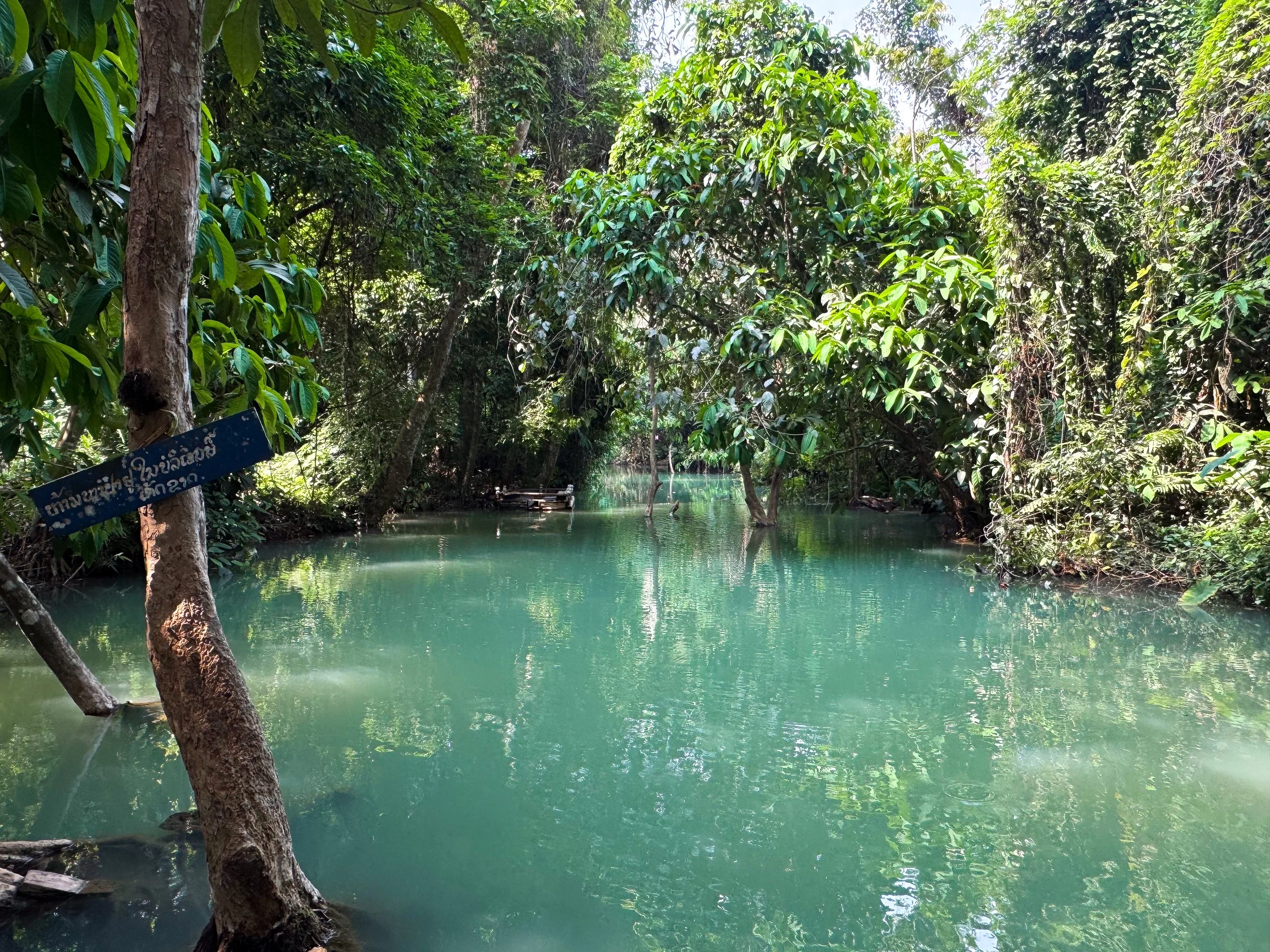
Kuang Si Waterfall. A picturesque waterfall spilling down a jungleous cliff covered with calcified nodules into a series of cascading terraces. Aquamarine hued water overflows from the terraces into natural pools, offering refreshing places to swim. A 500+ step staircase leads from the base of the waterfall to a countryside lookout with treehouse style observation decks, a zip line course and nature trail. The trail leads to a milky blue stream fed by a cold spring at the top of the waterfall. It continues 3km deeper into the jungle to a cave and back to the base of the falls.
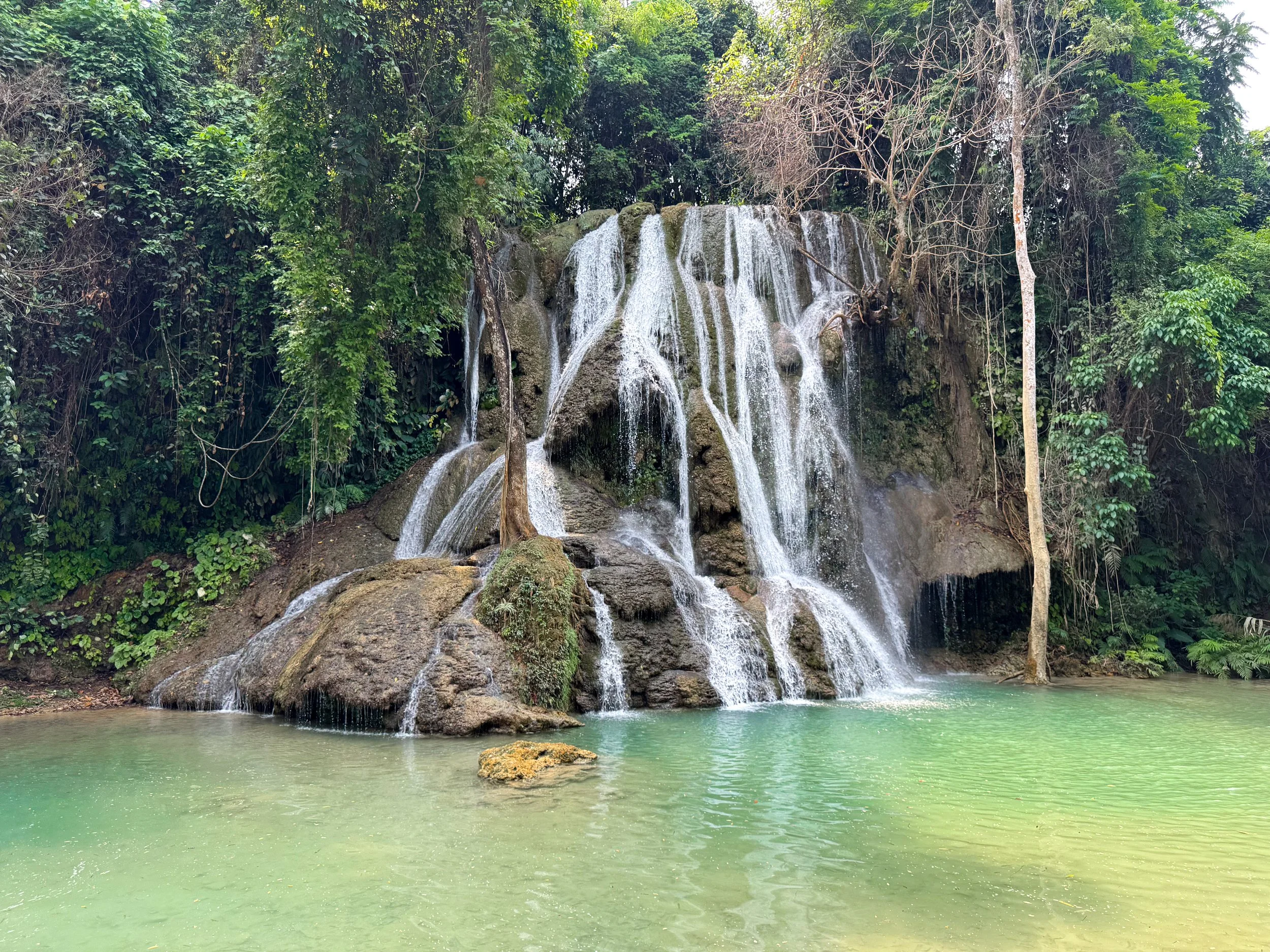
Khoun Moung Keo Waterfall. A small waterfall with a natural swimming pool at its base filled with cool aquamarine water. There is a tranquil restaurant with views of the falls, lounges and an outdoor dining area. It’s located less than five minutes on foot from the Kuang Si Waterfall welcome center.
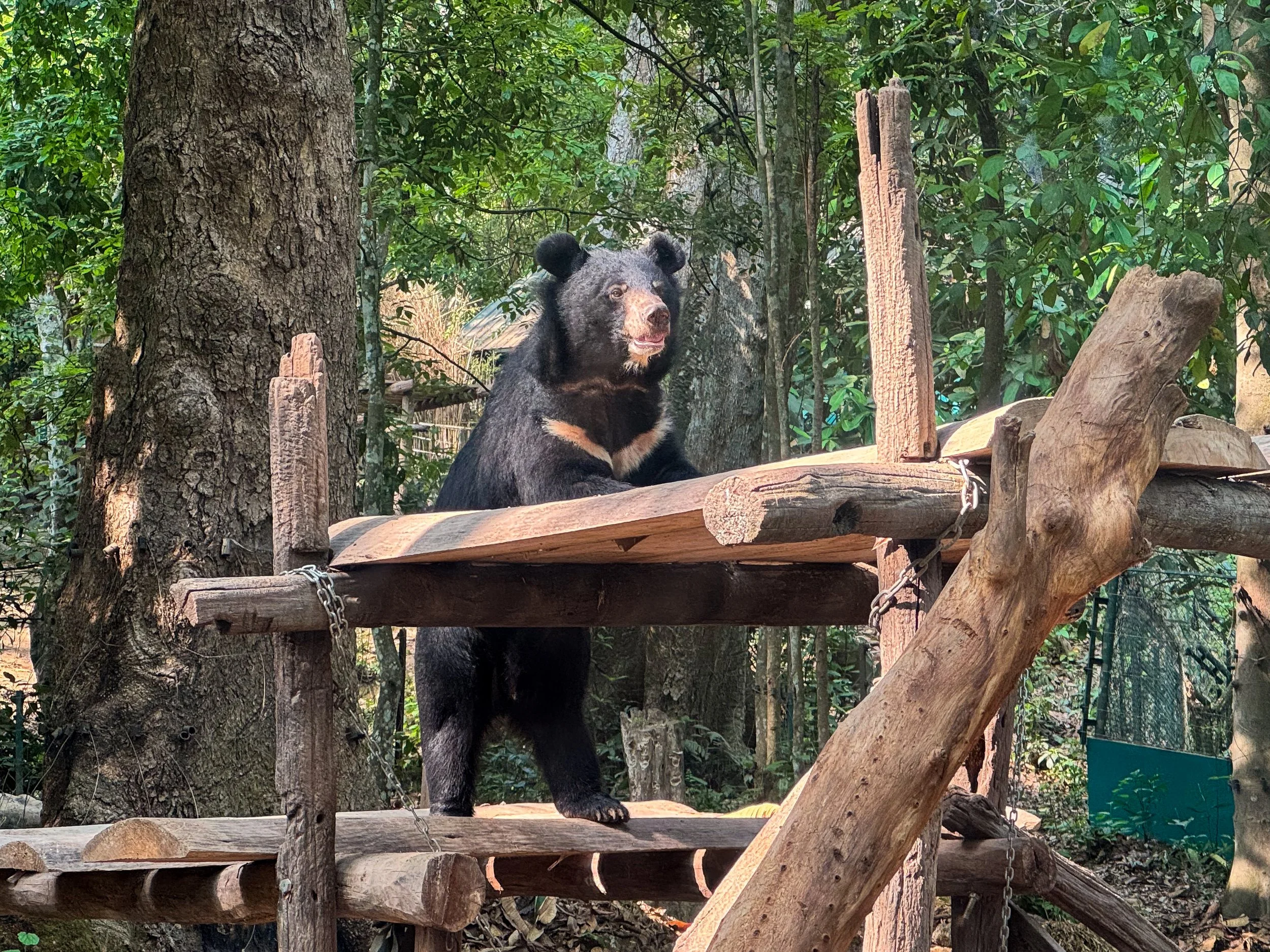
Tat Kuang Si Bear Rescue Center. A sanctuary for Asiatic Black Bears located between the Kuang Si Waterfall and its visitor center. A nature trail leads through dense primary forest to open air enclosures with the jet black bears. We watched the fluffy and cute animals walking around, sleeping in hammocks and chewing on vegetables.
Getting Here. Kuang Si Waterfall is located about 45min from Luang Prabang by Tuk Tuk. We hired a driver to bring us there and back and to wait 3 hours while we explored. We negotiated the cost to 500K Kip.
Good to Know. Arrive by 9am to beat the rush of tourists and larger groups.
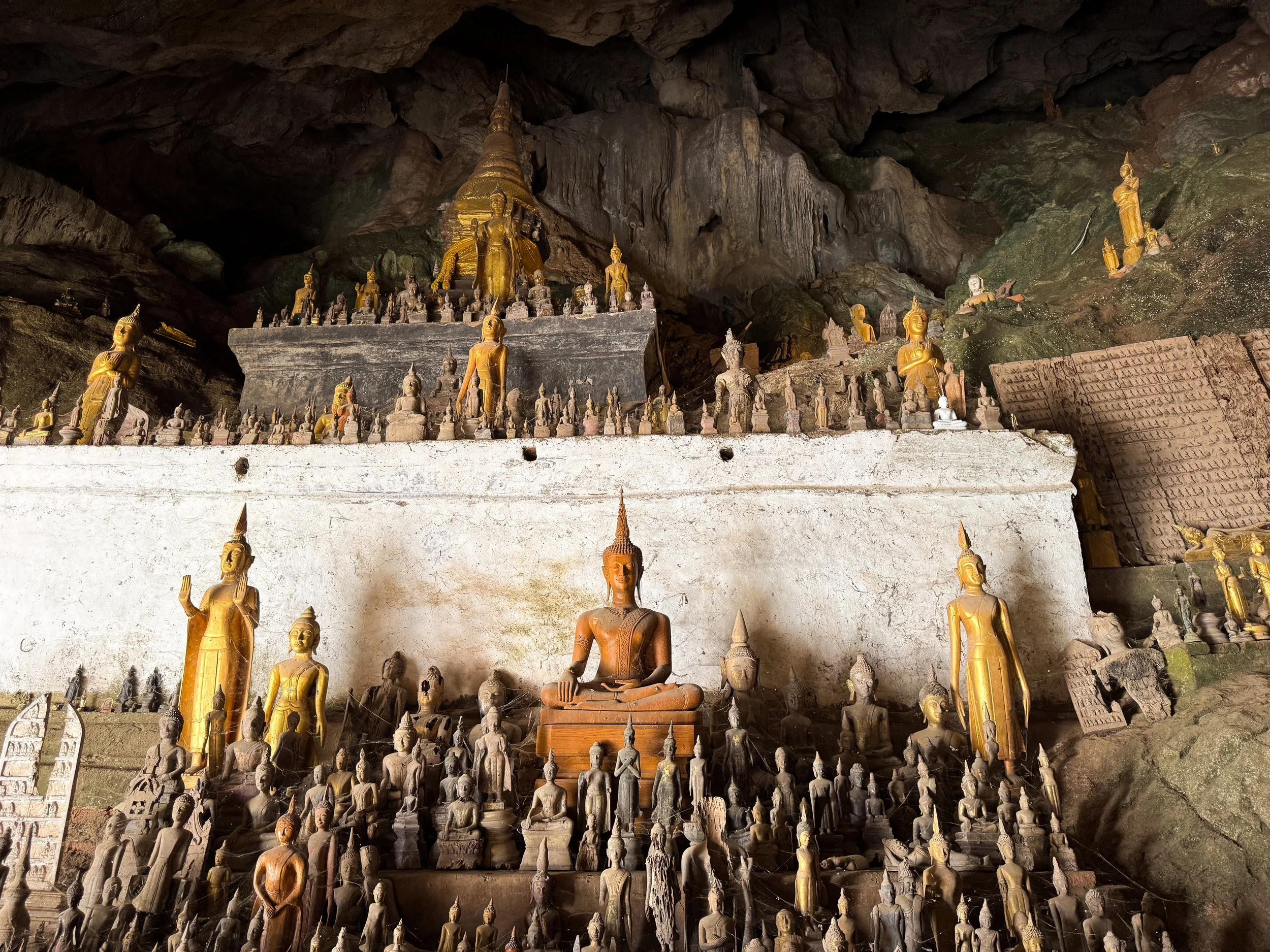
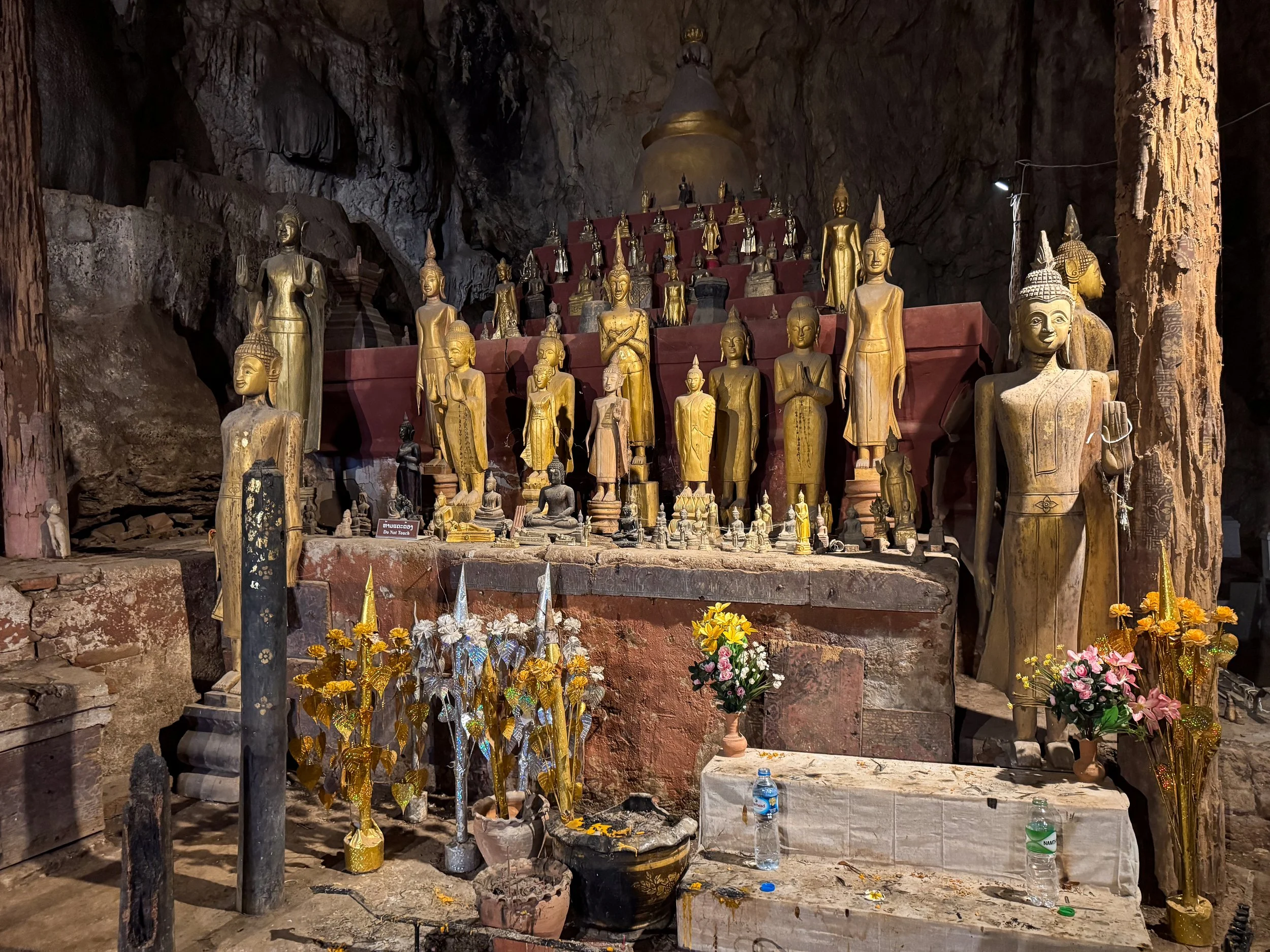
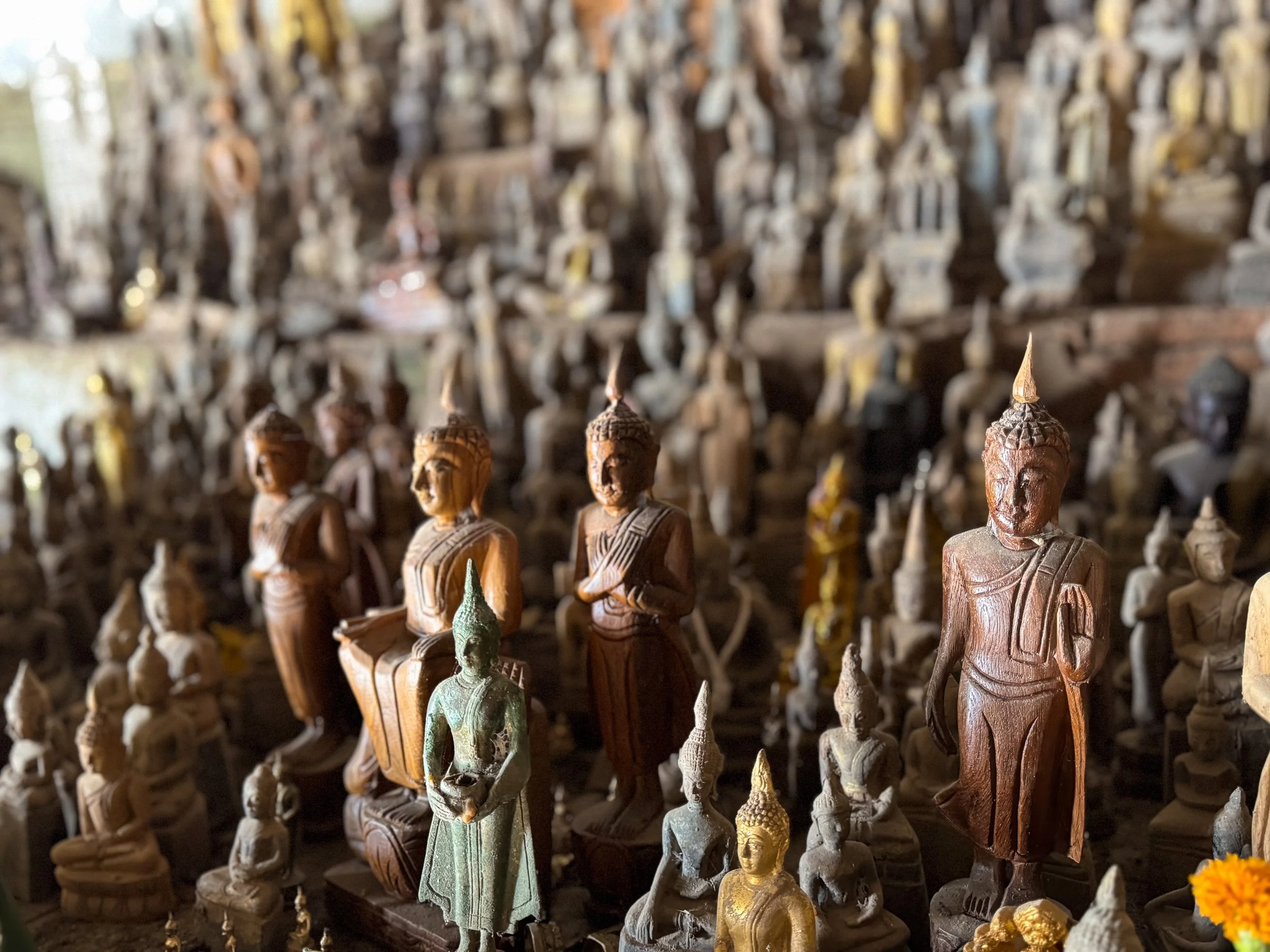
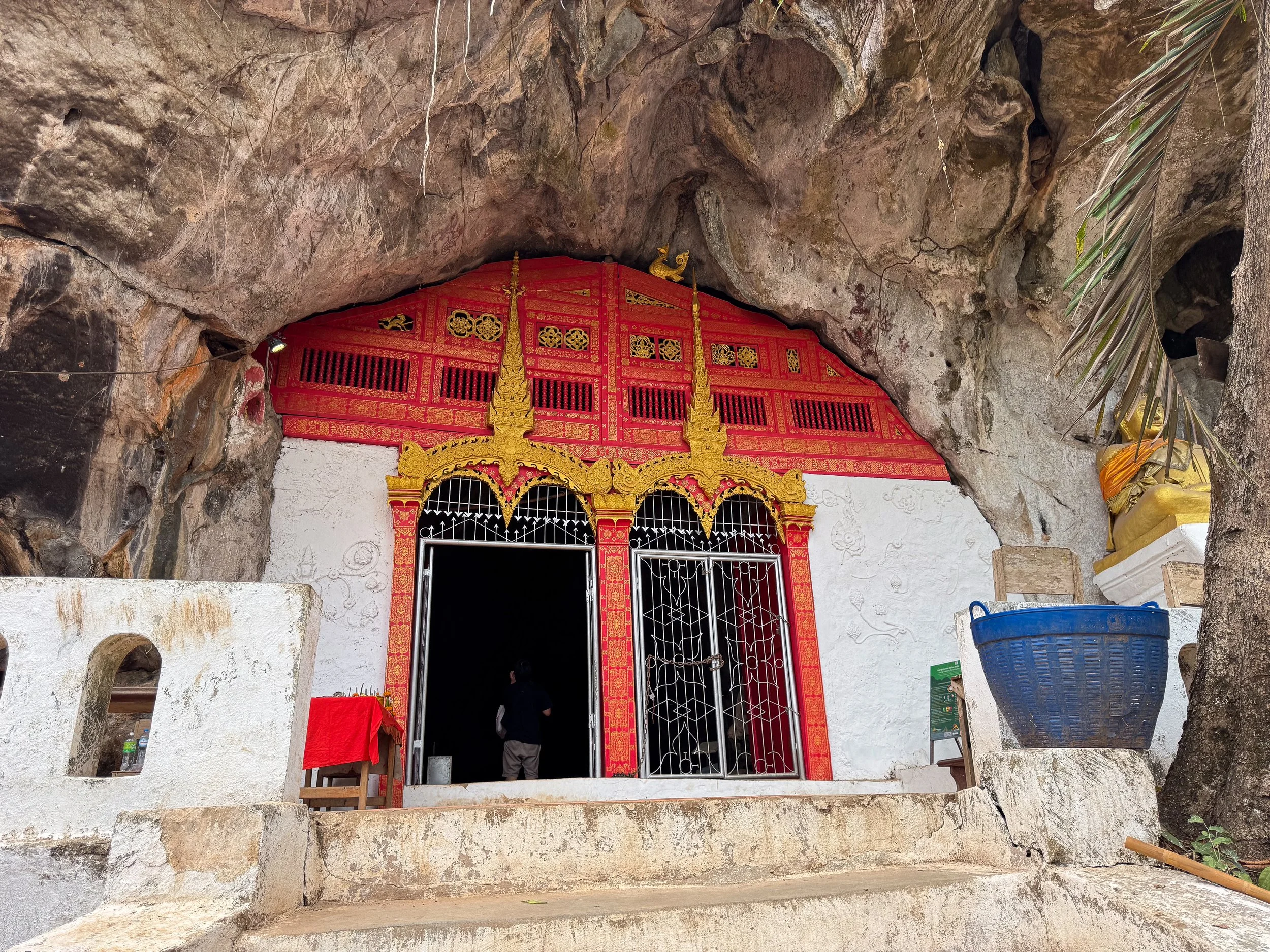
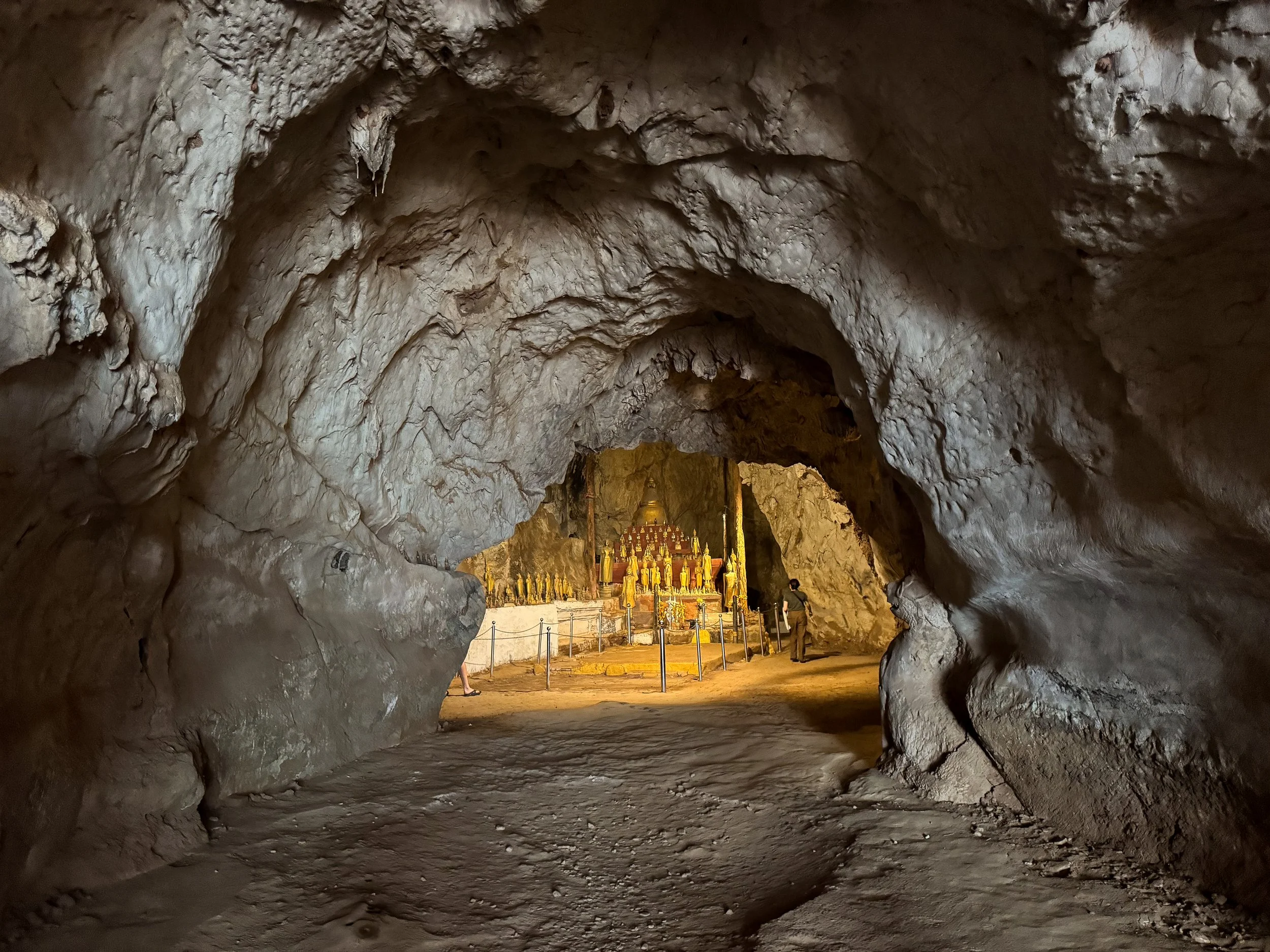
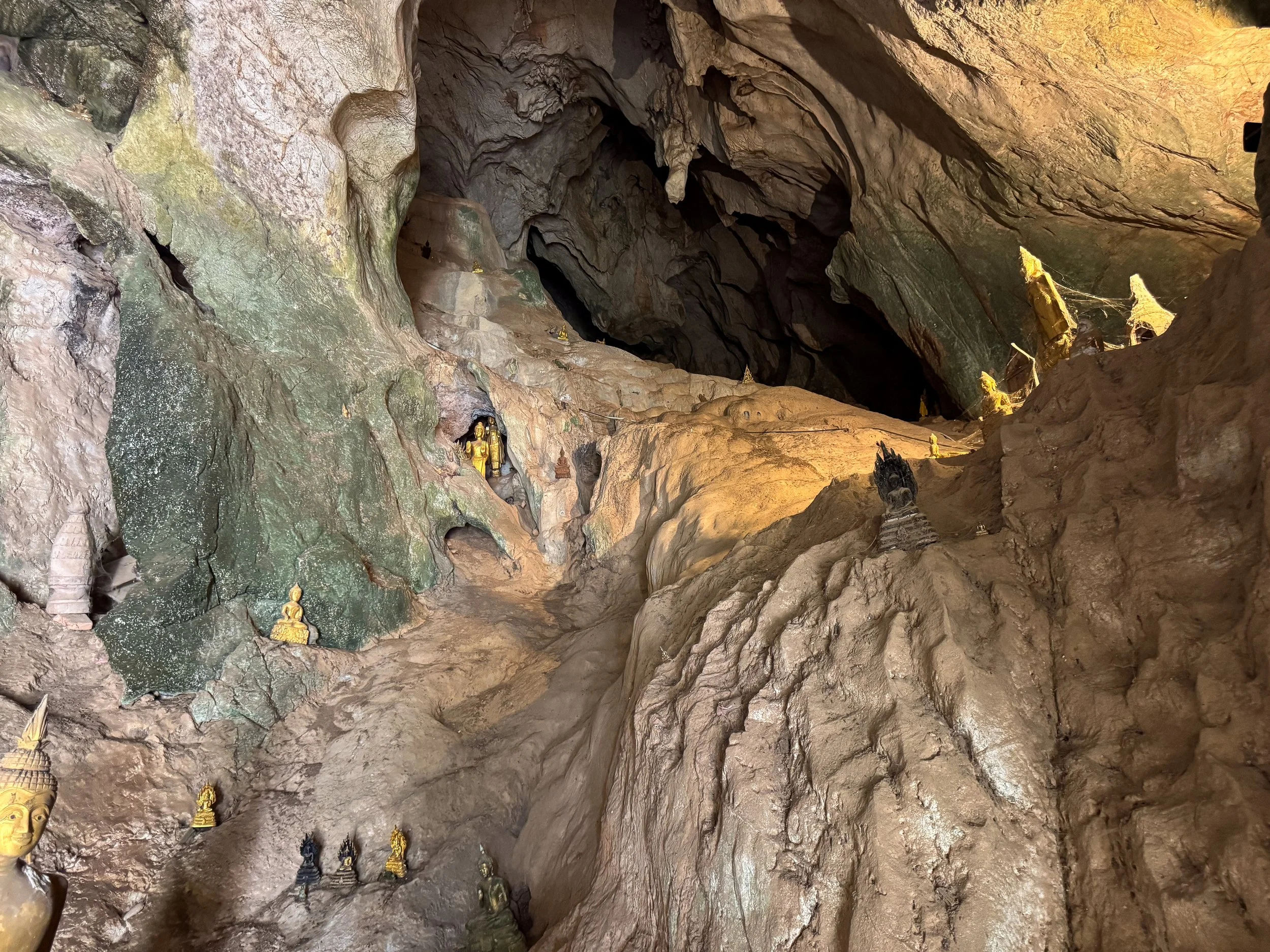
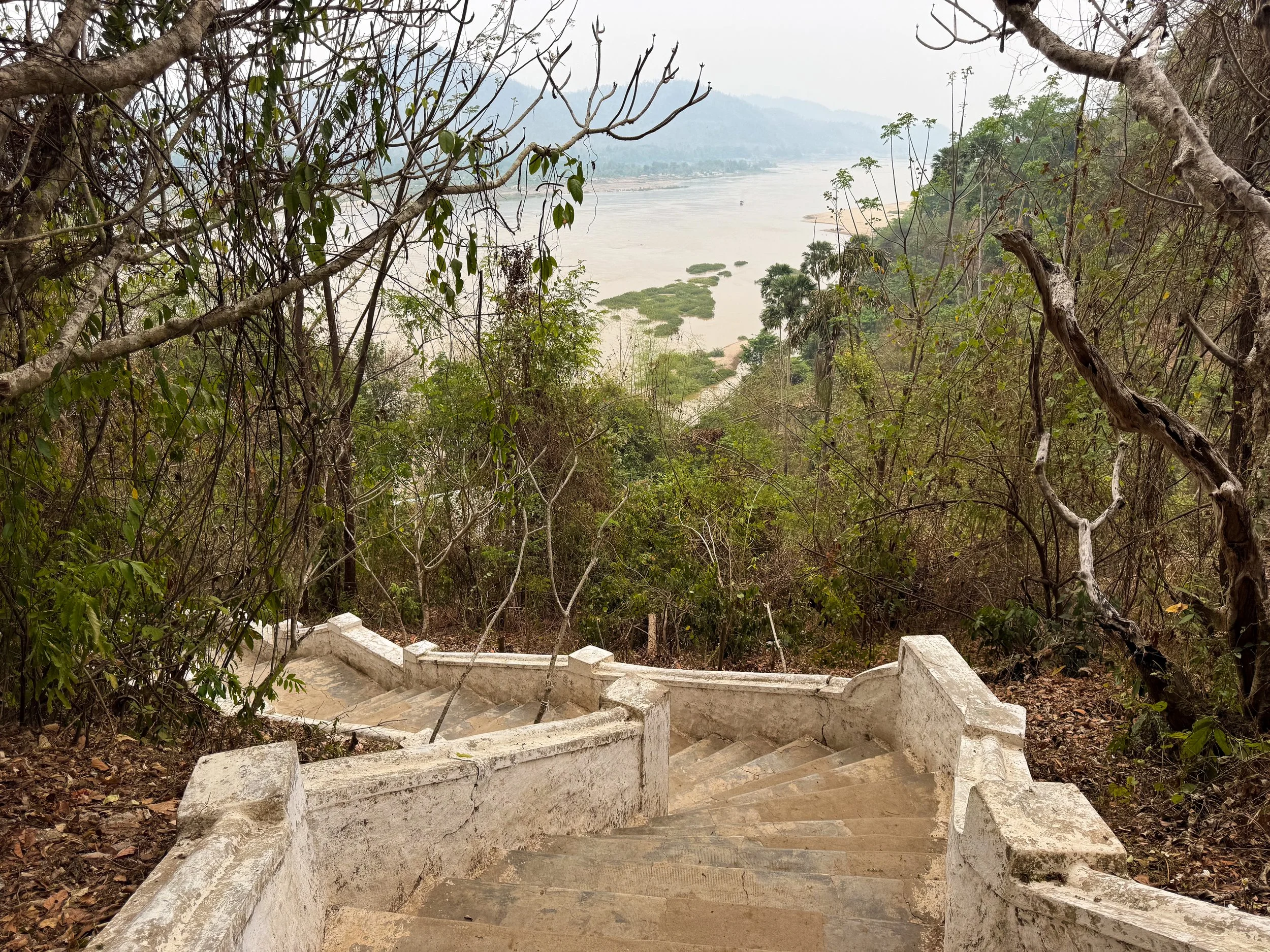
Pak Ou Caves. A cave temple located two hours up the Mekong River from Luang Prabang. It’s believed to be one of the homes of the Buddha. Above a steep staircase is an upper cave and a lower cave, each housing thousands of wooden and metal statues of the Buddha. The upper cave is guarded by a large red wooden door with a Buddhist altar and golden cave paintings of the Buddha. The lower cave and its rock formations are adorned in a vast number of Buddha statues, some dating back hundreds of years.
Getting Here. The public ferry offers a scenic route up the Mekong River en route to Pak Ou Caves. It departs from Watnong Boat Station. The ferry begins operating between 8-9am. Round trip tickets include a stop at The Whisky Village and 40 minutes at the caves. It costs $150K Kip per person.
Shop the Markets
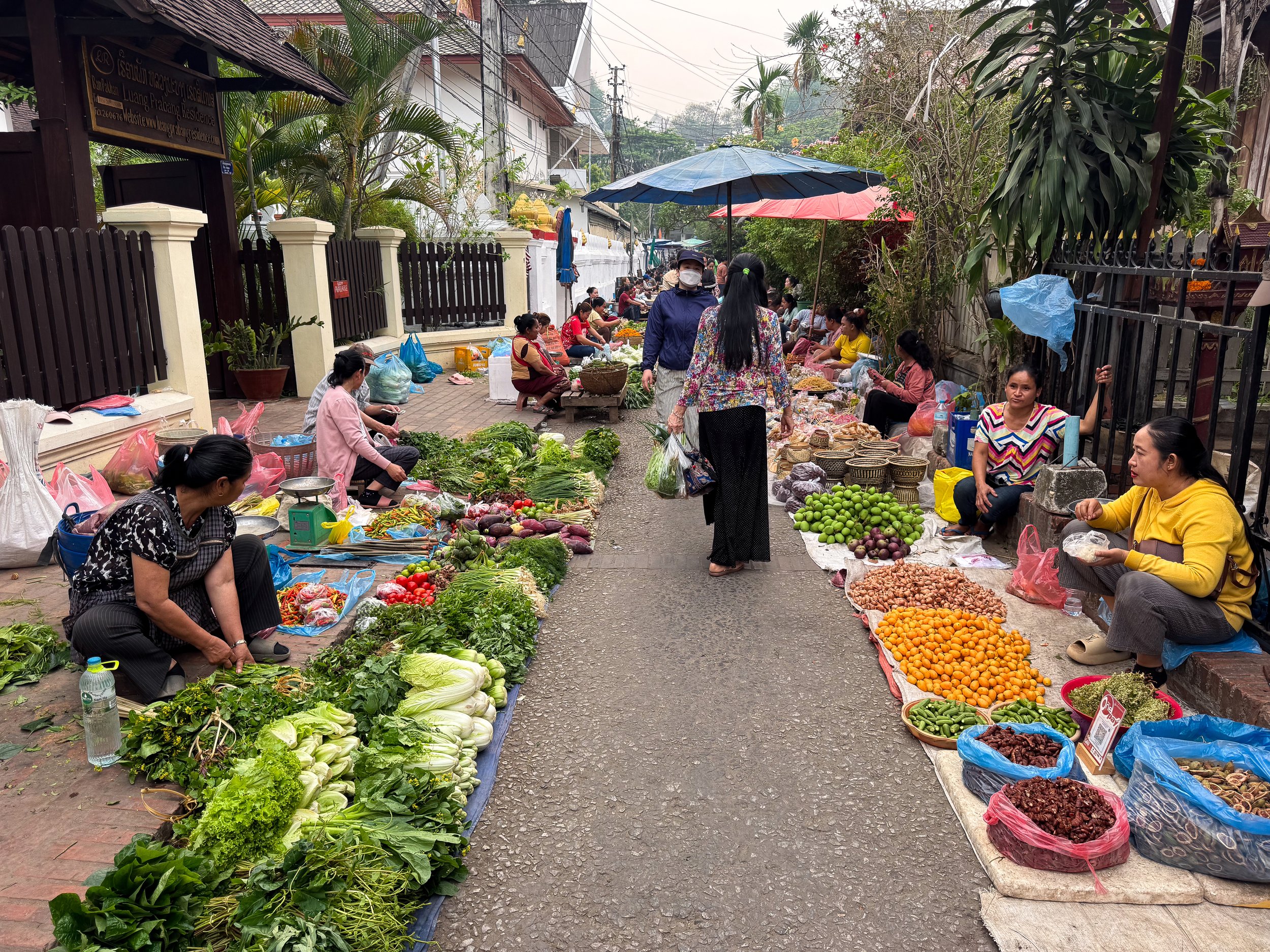
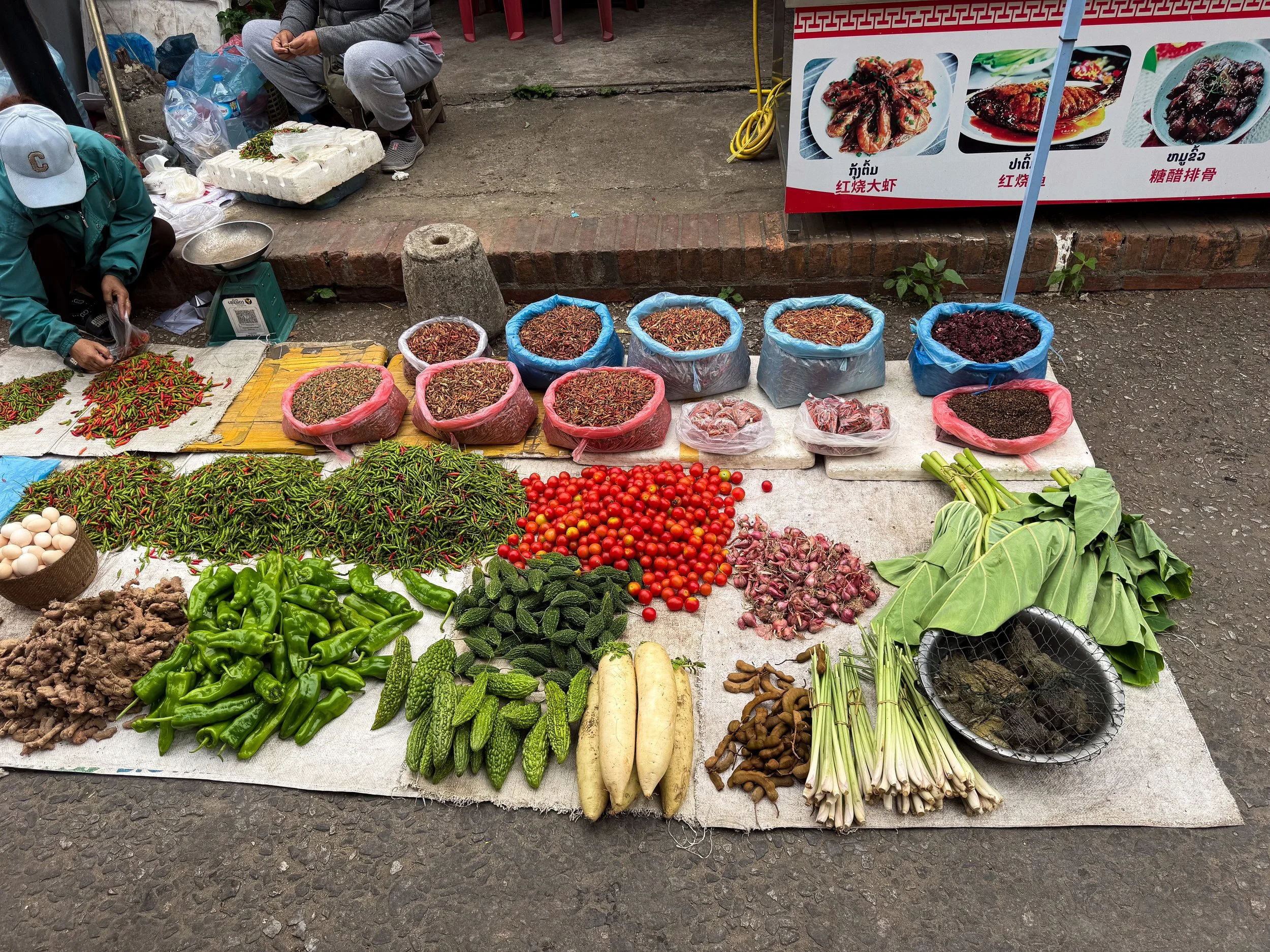
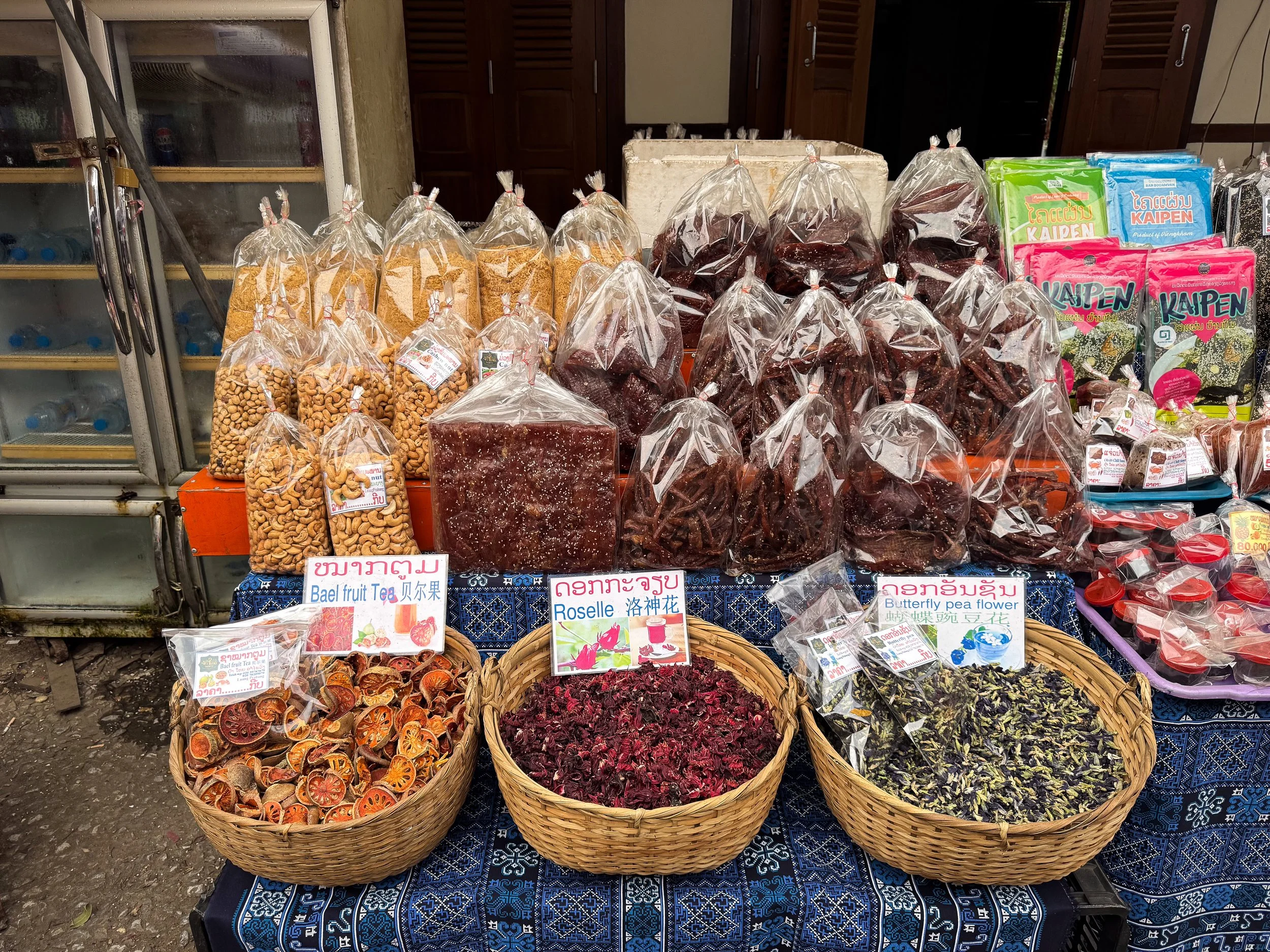
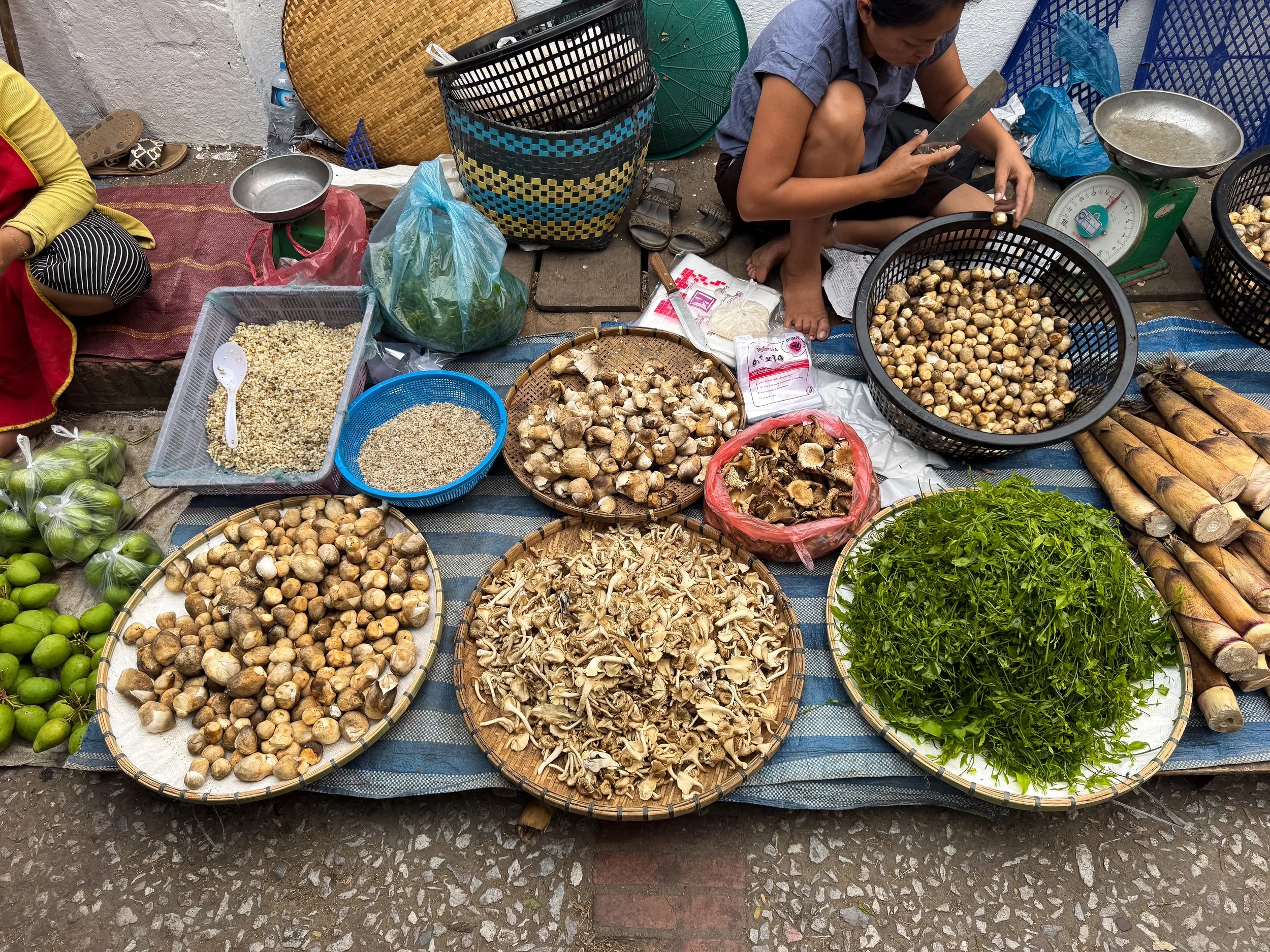
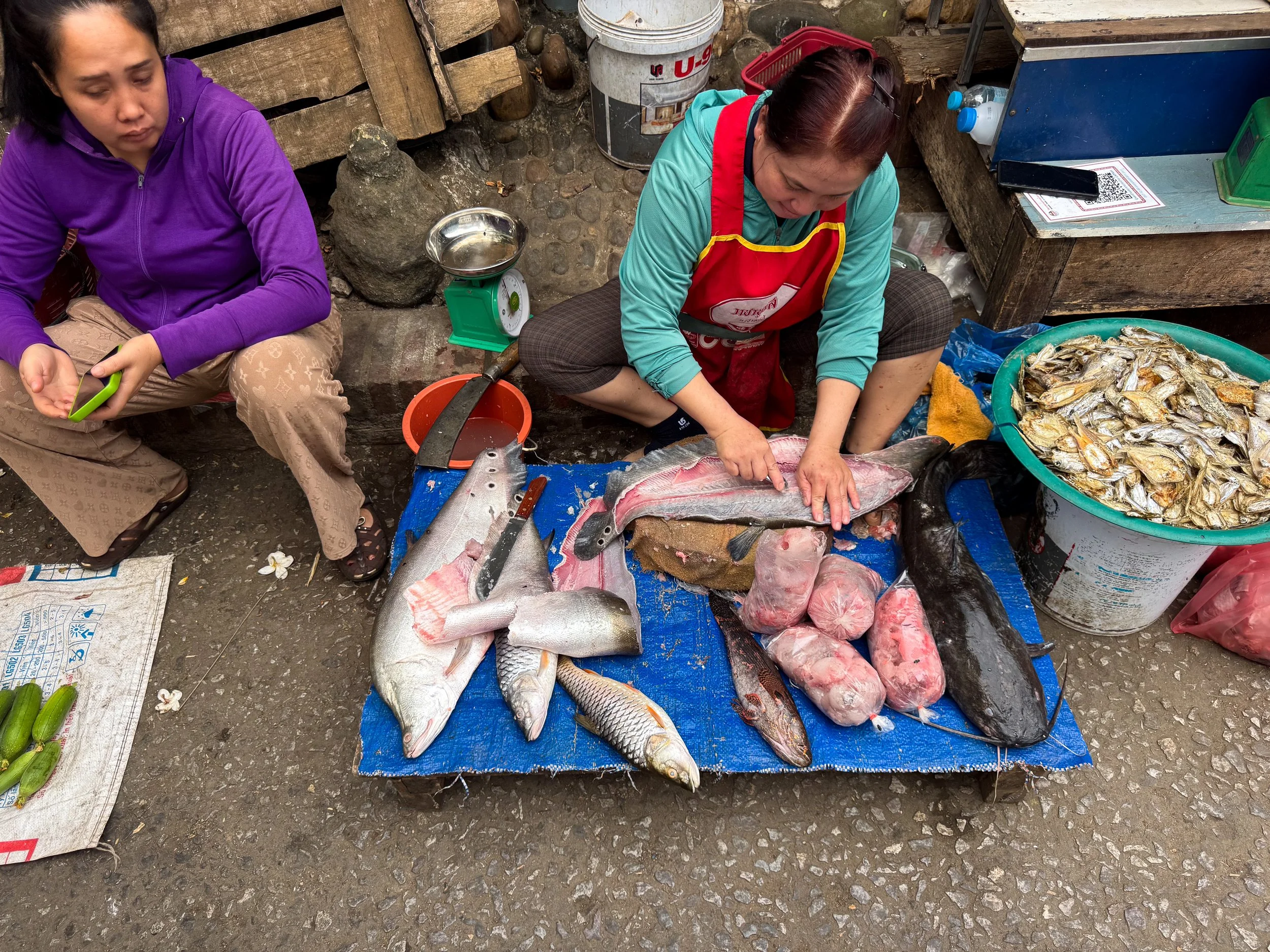
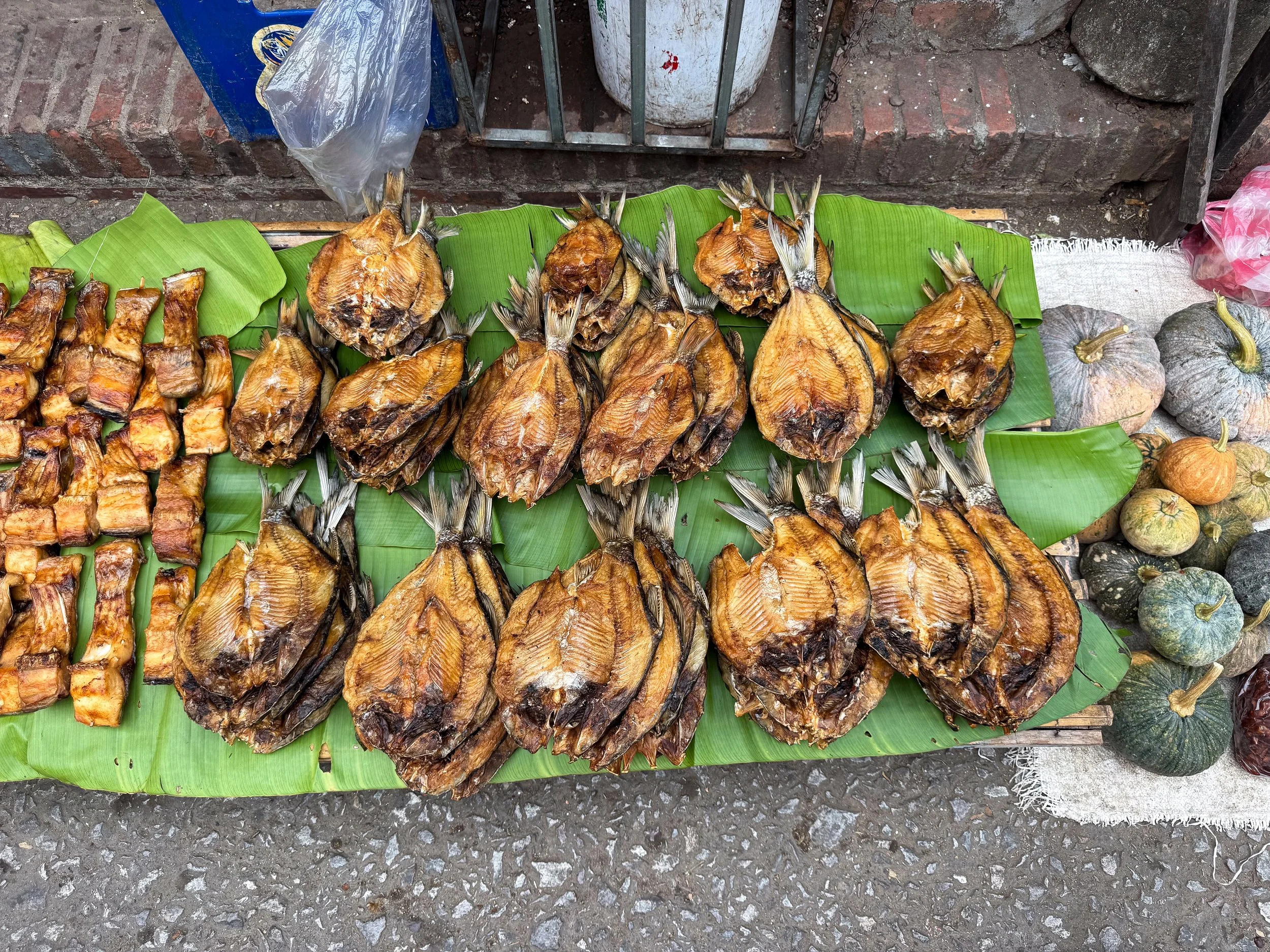
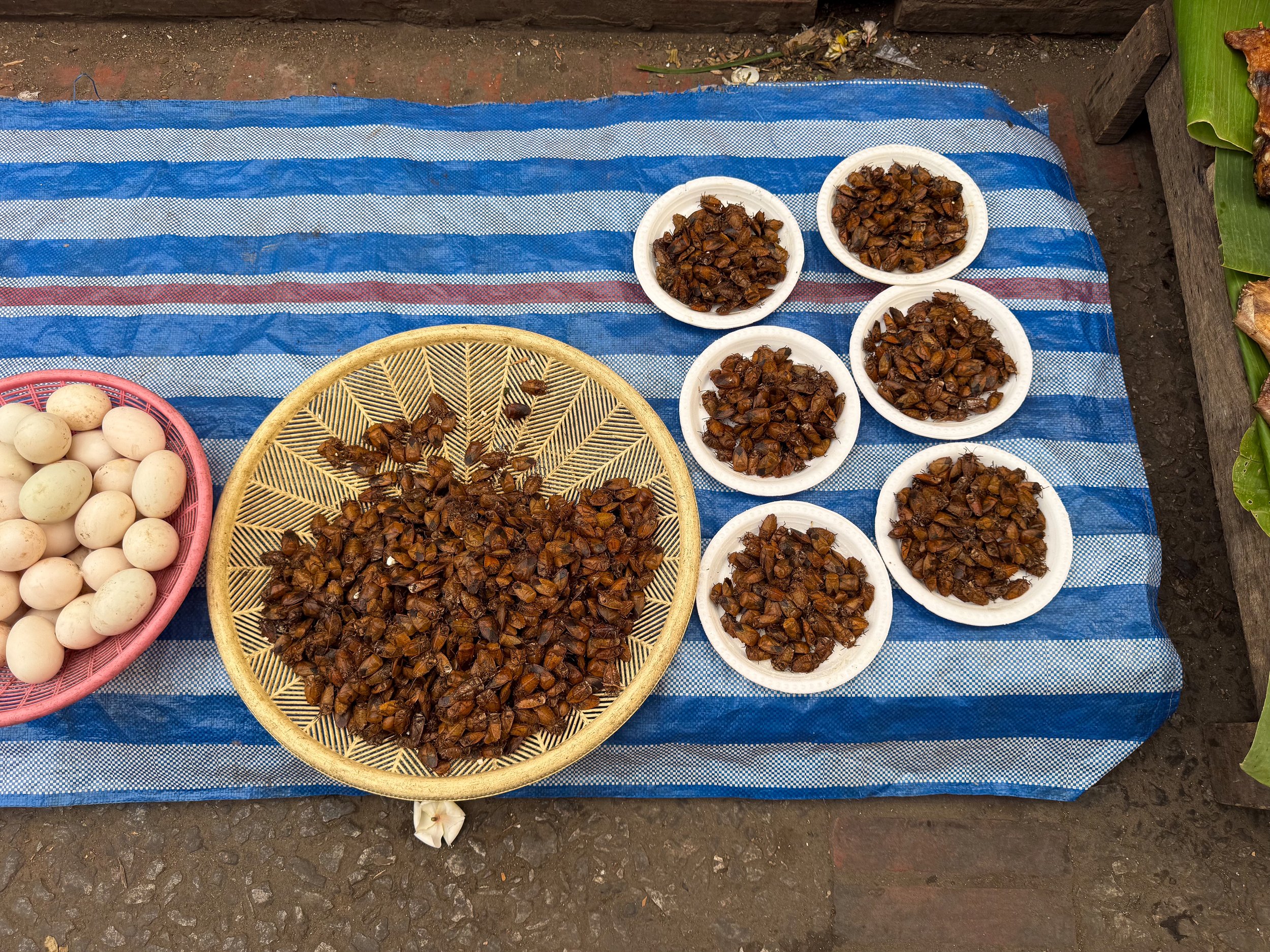
Luang Prabang Morning Market. A daily morning farmers market branching across several narrow alleyways in the historic center. Vendors display their goods on banana leaves and tarps including vegetables, fruits, herbs, spices, teas, eggs, meats and fish. We even spotted more exotic items like live frogs, roasted beetles and water buffalo skin. We shopped here for groceries, planning to cook several local dishes. Some items on our grocery list were kaffir lime leaves, mint, galangal, watercress, chili paste, banana blossoms and leaves, rice, mango, rose apple, dragon fruit, tamarind, guava and avocado. We sipped on fresh orange and sugar cane juice while shopping around.
Pro Tip. Arrive by 7:30am to get the best picks.
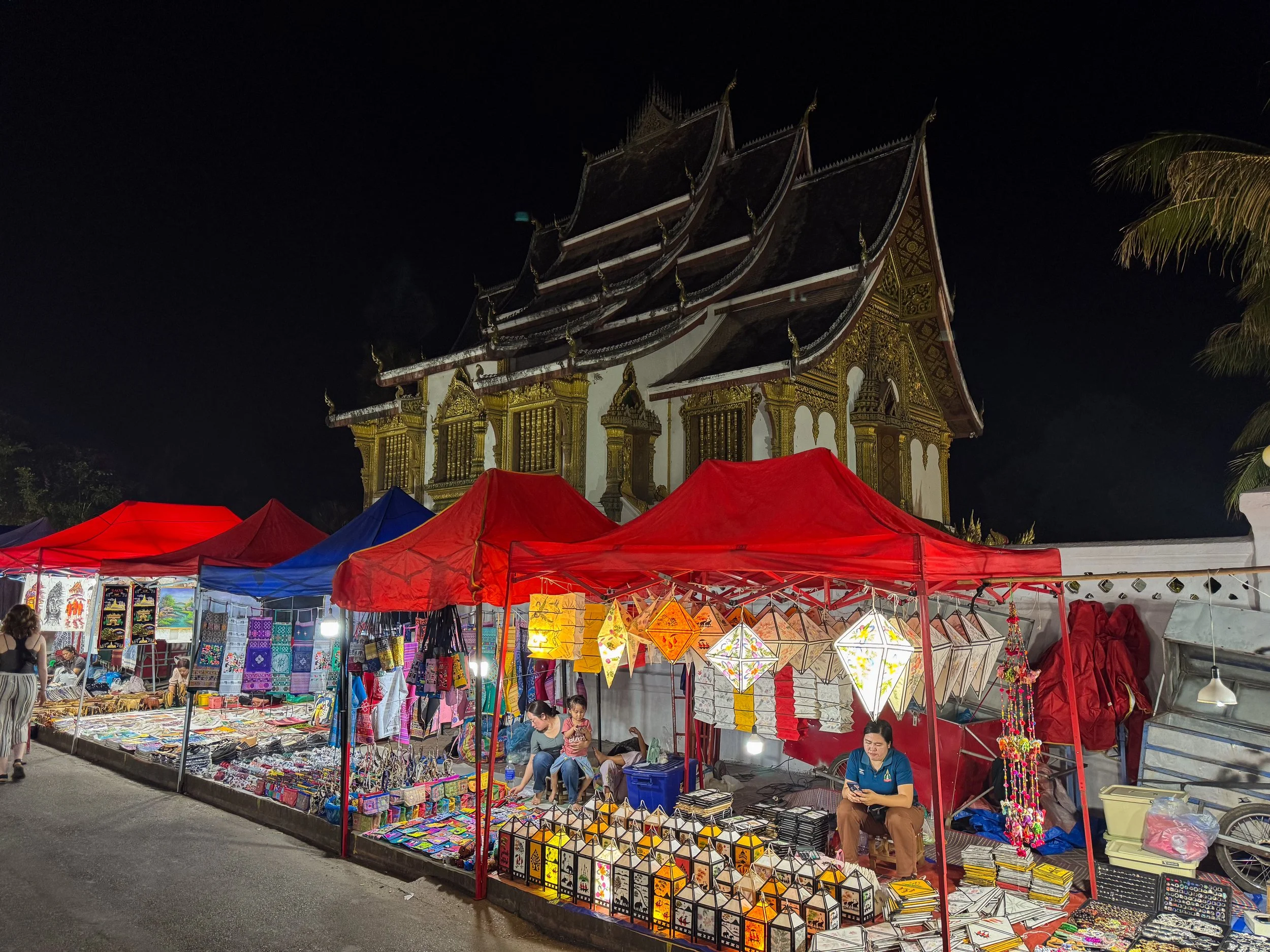
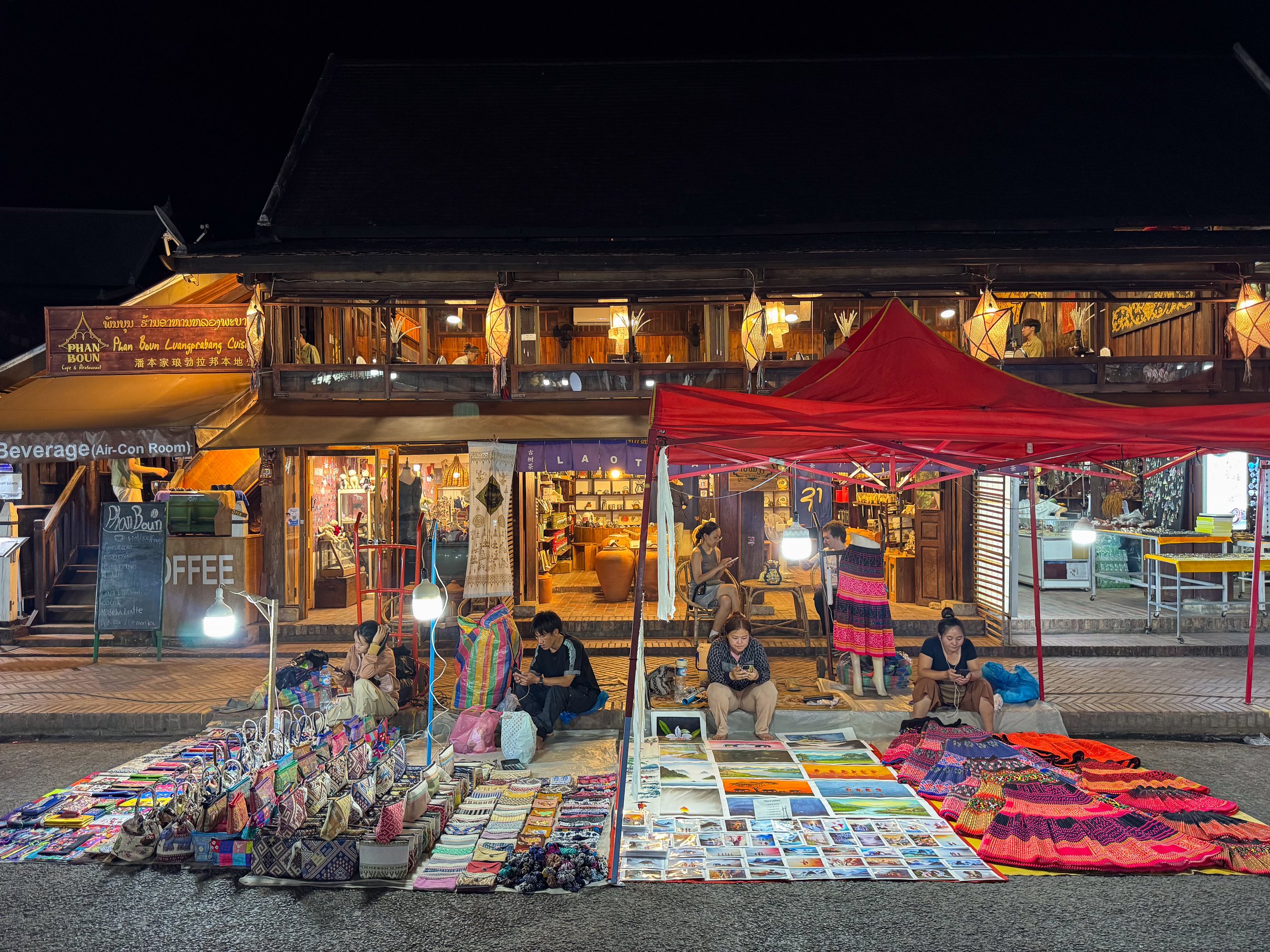
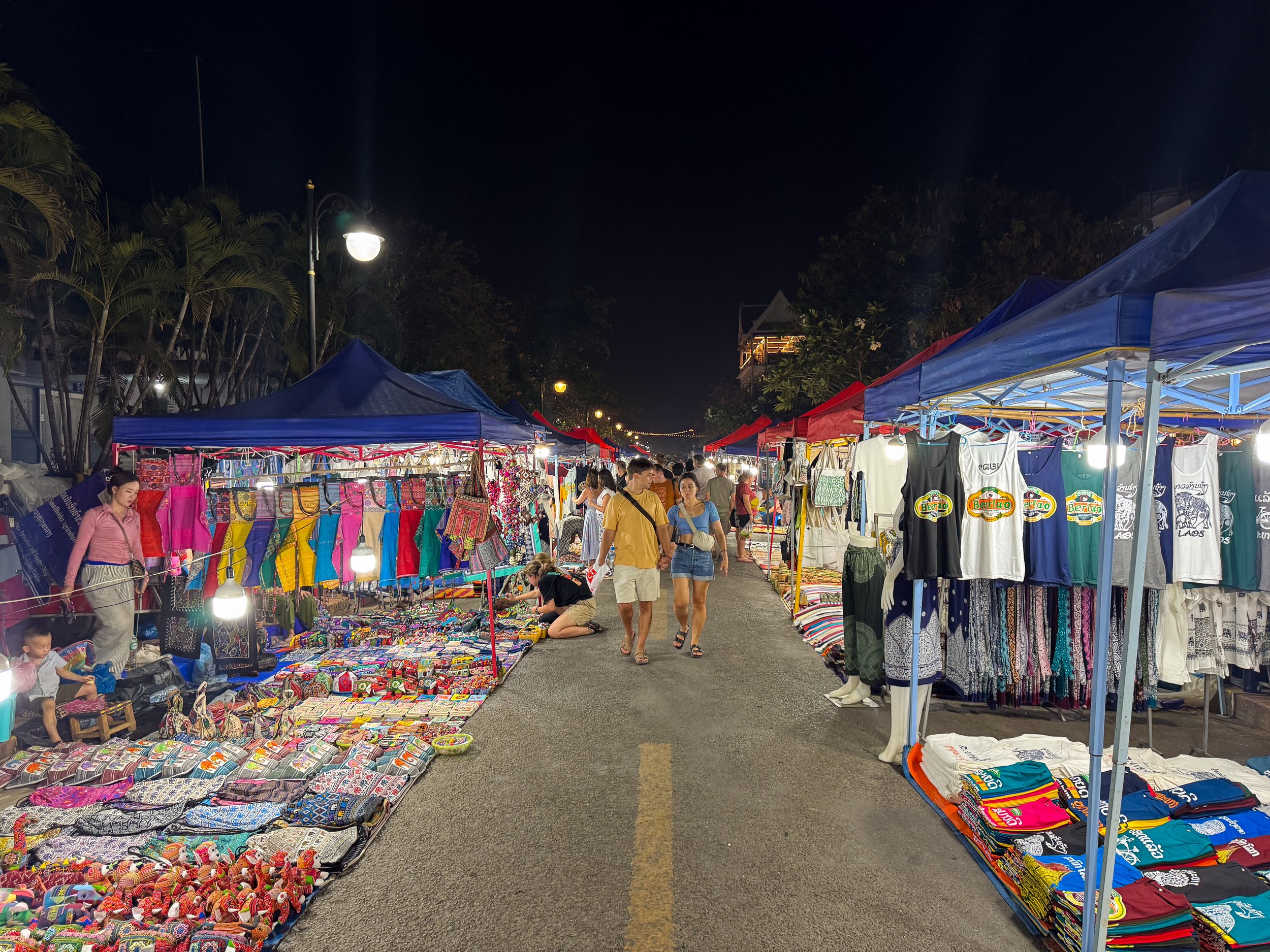
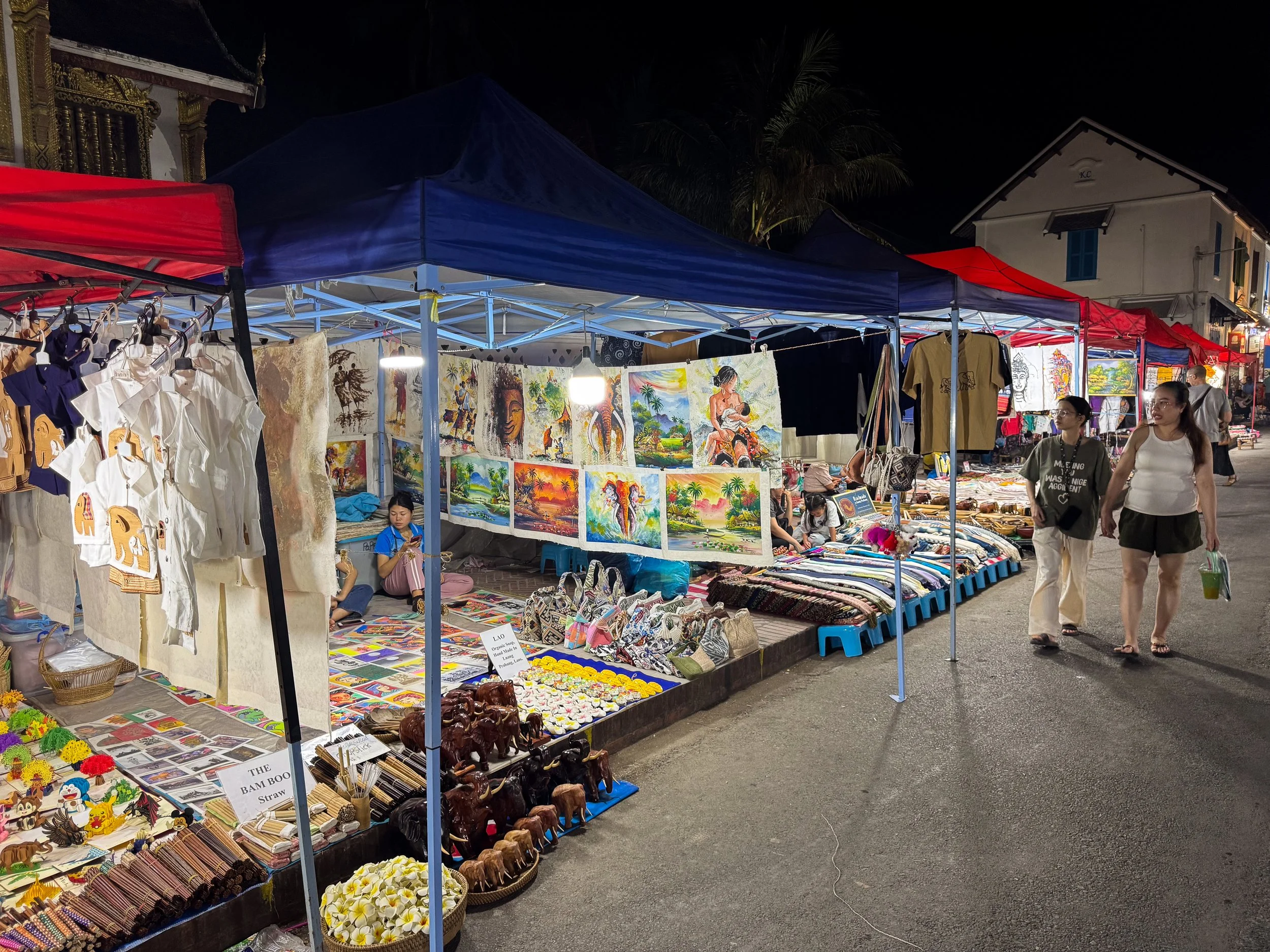
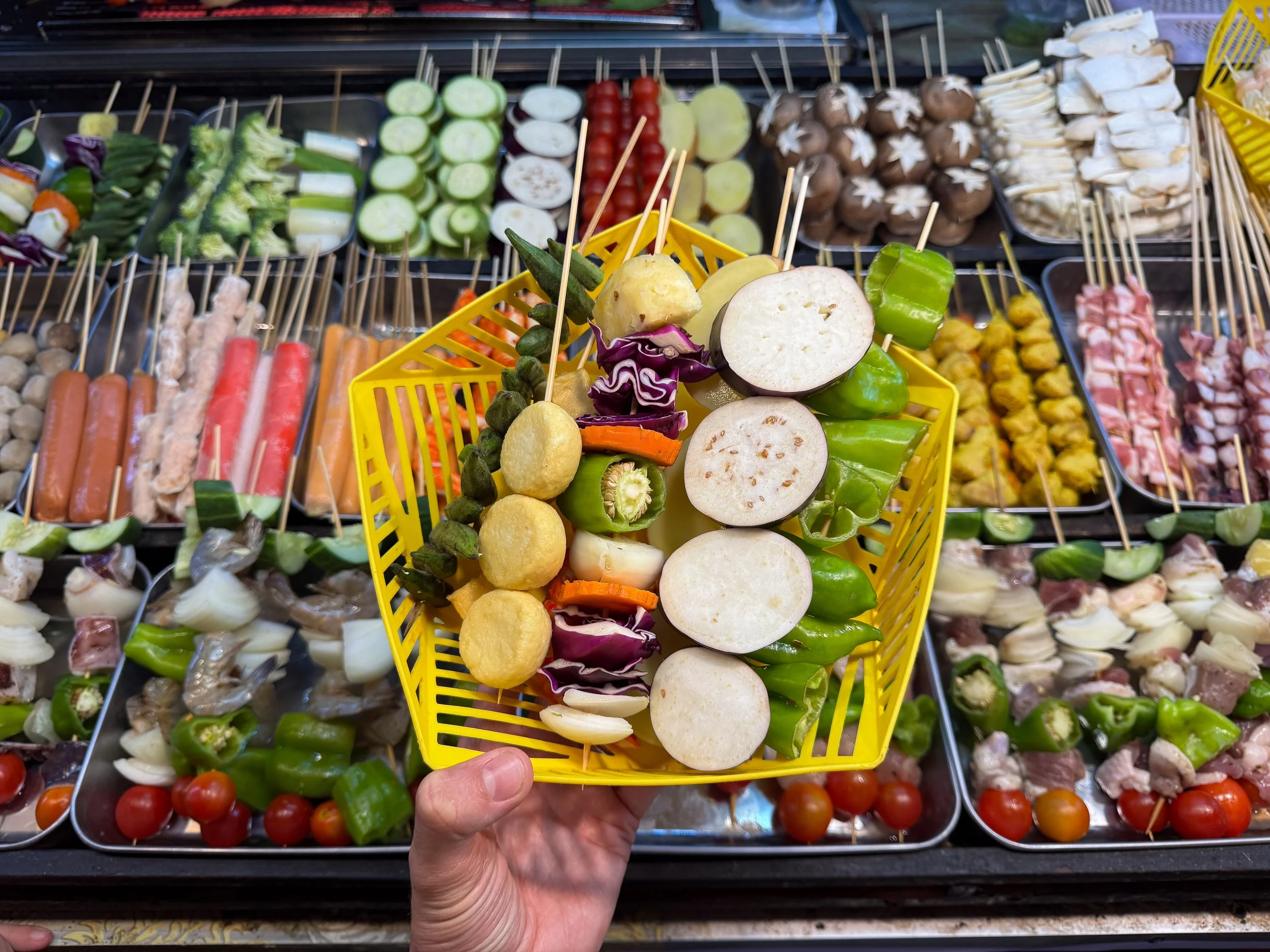
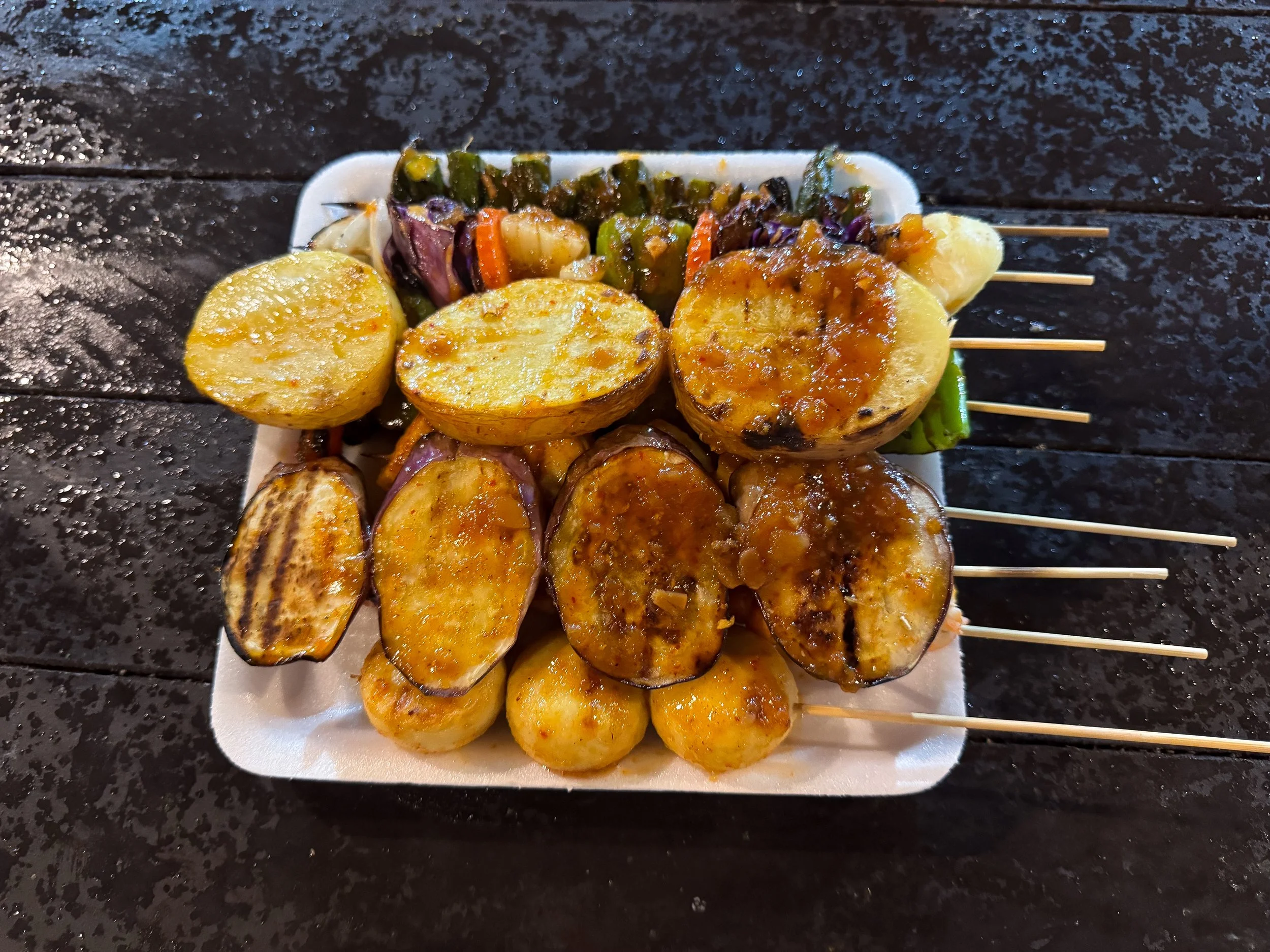
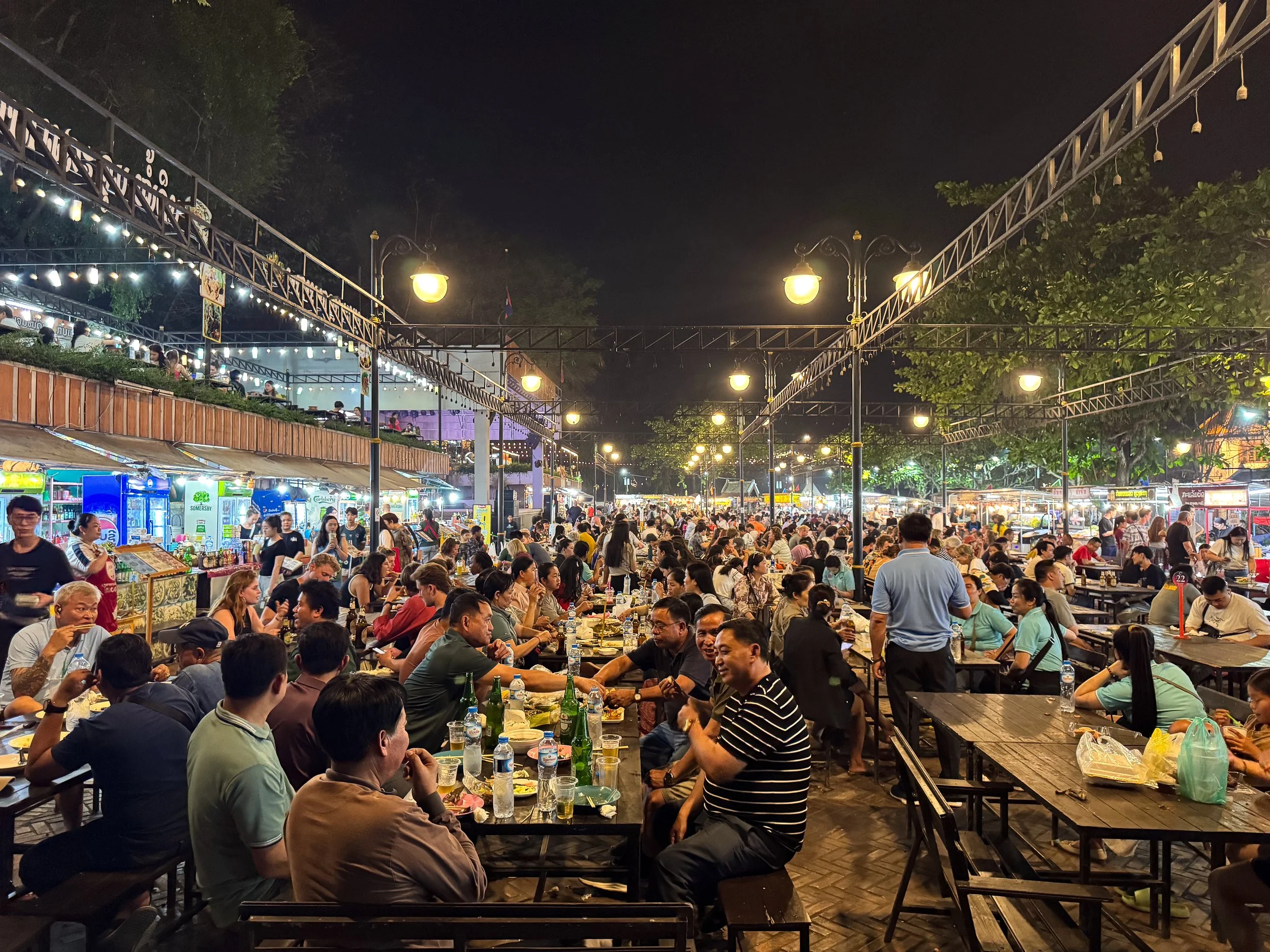
Luang Prabang Night Market. A daily night market in the historic district along Sisavangvong Road with a section for food and thing vendors. Merchants line both sides of the road selling bohemian style clothing and accessories covered in elephant print, geometric paper lanterns inlaid with leaves and flower petals, paintings depicting the historic district, woven baskets, wooden statuettes, brass jewelry, painted coconut bowls and plumeria hair clips. Street food carts surround a courtyard lined with picnic tables selling Lao style sausages, Chinese dim sum, Korean tteokbokki, Japanese pancakes, Taiwanese boba tea, grilled skewers with veggies, seafood and meat, baked goods and pastries, local beers and spirits. The food carts continue down an adjacent alleyway.
Places to Eat & Drink
For a small town, Luang Prabang has no shortage of restaurants, cafés and bars with Laotian cuisine, local flavors and tranquil ambiance.
Café Toui. A restaurant specializing in Lao cuisine. The menu consists of national and local dishes as well as vegetarian versions of typically meat forward ones. All plates are meant to be shared. We split the Khai Phaen, Yam Salad and Mok Pa alongside a liter of Beer Lao.
Alounsavth Bakery Café & Restaurant. A riverside restaurant with inexpensive meals and drinks. It’s open early for breakfast and well past the sunset for dinner. Their menu includes a range of traditional Lao dishes and flavors. It’s a popular spot amongst locals, expats and other travelers.
Le Banneton. An adorable French style bakery with Lao flavors in its bakes and beverages. We shared a plate of pastries including a coconut and apricot danish, a flaky and buttery croissant and a pear and chocolate turnover. They also sell traditional baguettes and full breakfast entrees.
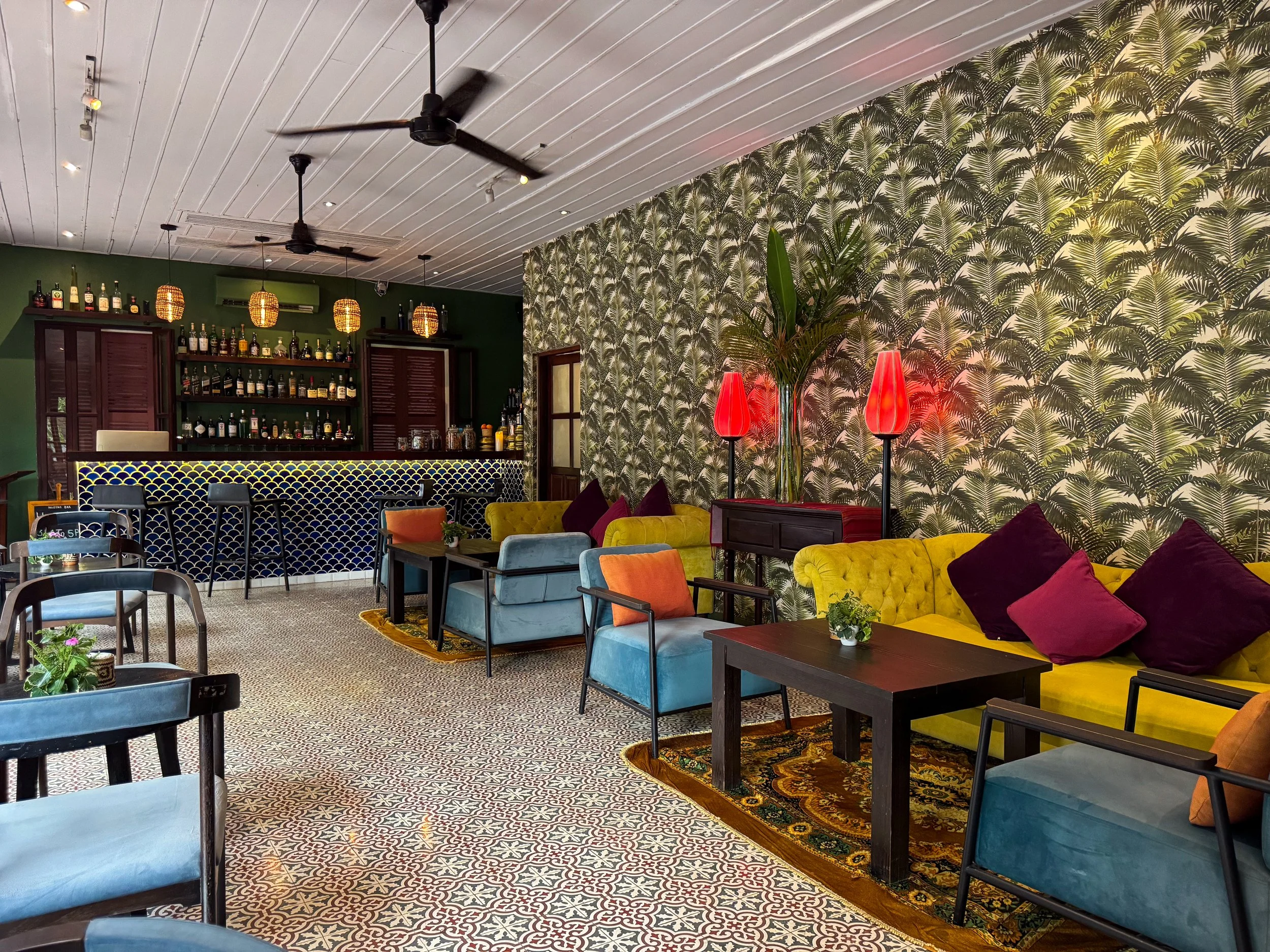
3 Nagas. A locally commended cocktail bar in a historic home. Try their namesake, 3 Nagas made with local ingredients like mango juice and honey or the Nam Khan made with rum and kaffir lime syrup. Visit during happy hour for their buy 1 get 1 special.
Obama Coconut. A riverfront café inspired by Obama’s visit to Luang Prabang in 2016 when he was photographed sipping on a coconut. We stopped in for coconuts overlooking the Mekong.
Soodsoi Mini Bar. A street side bar cart at the end of the alleyway night market with a range of local spirits like Lao Lao whisky, Laodi rum and Lao gin. The bartender mixes affordable and classic cocktails.
Aon Noy Bakery. A bakery cart at both the morning and night markets with a range of baked goods like coconut and almond croissants, banana bread, guava danishes, baguettes and brownies.
Leisure Thibe. An ice cream shop with local flavors like pandan, coconut, taro, durian and matcha as well as Western flavors like chocolate, vanilla and strawberry.
Laotian Cuisine
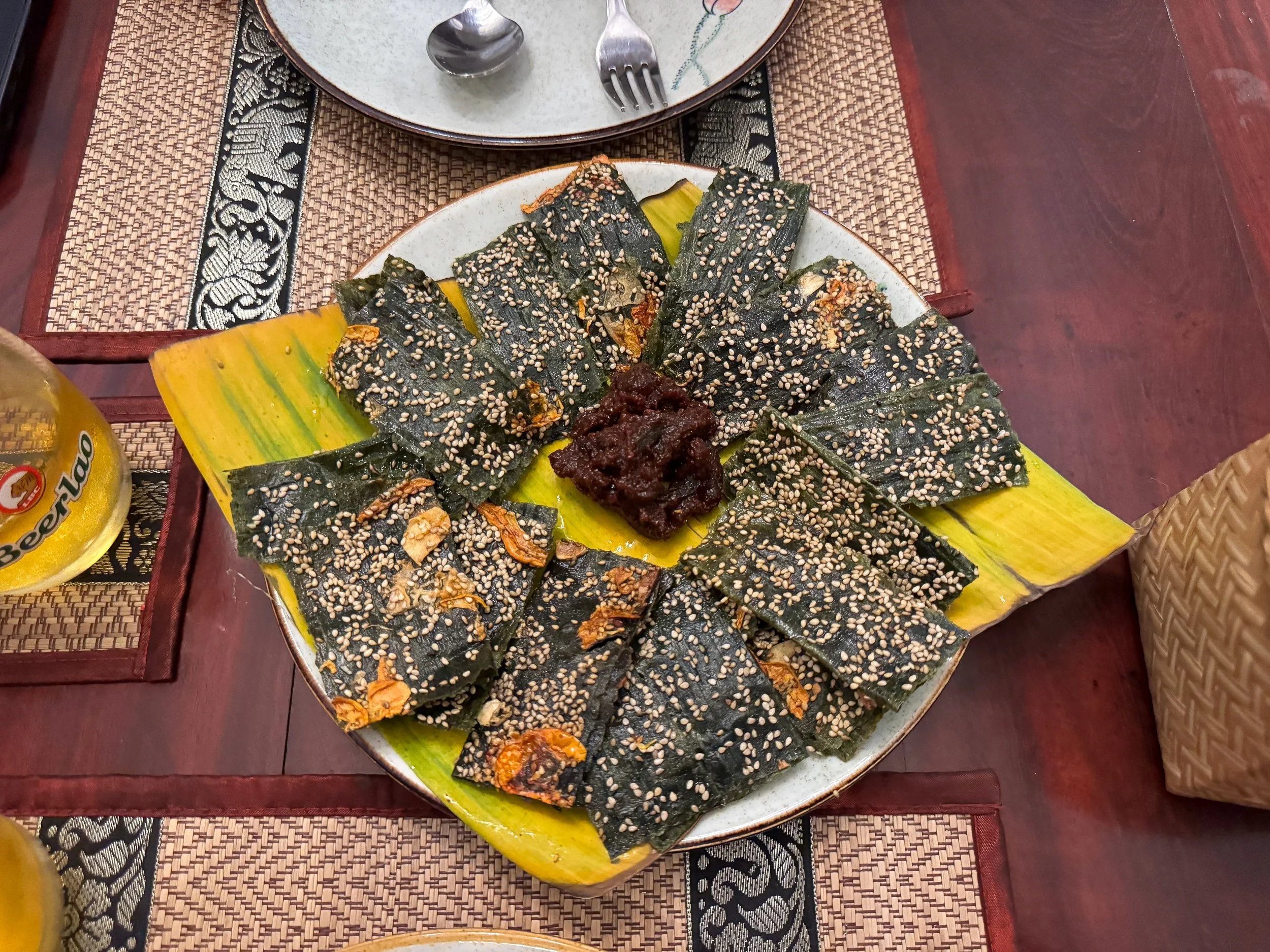
Khai Phaen. A popular snack made from crispy river weed covered in toasted sesame seeds and served with a spicy chili paste.
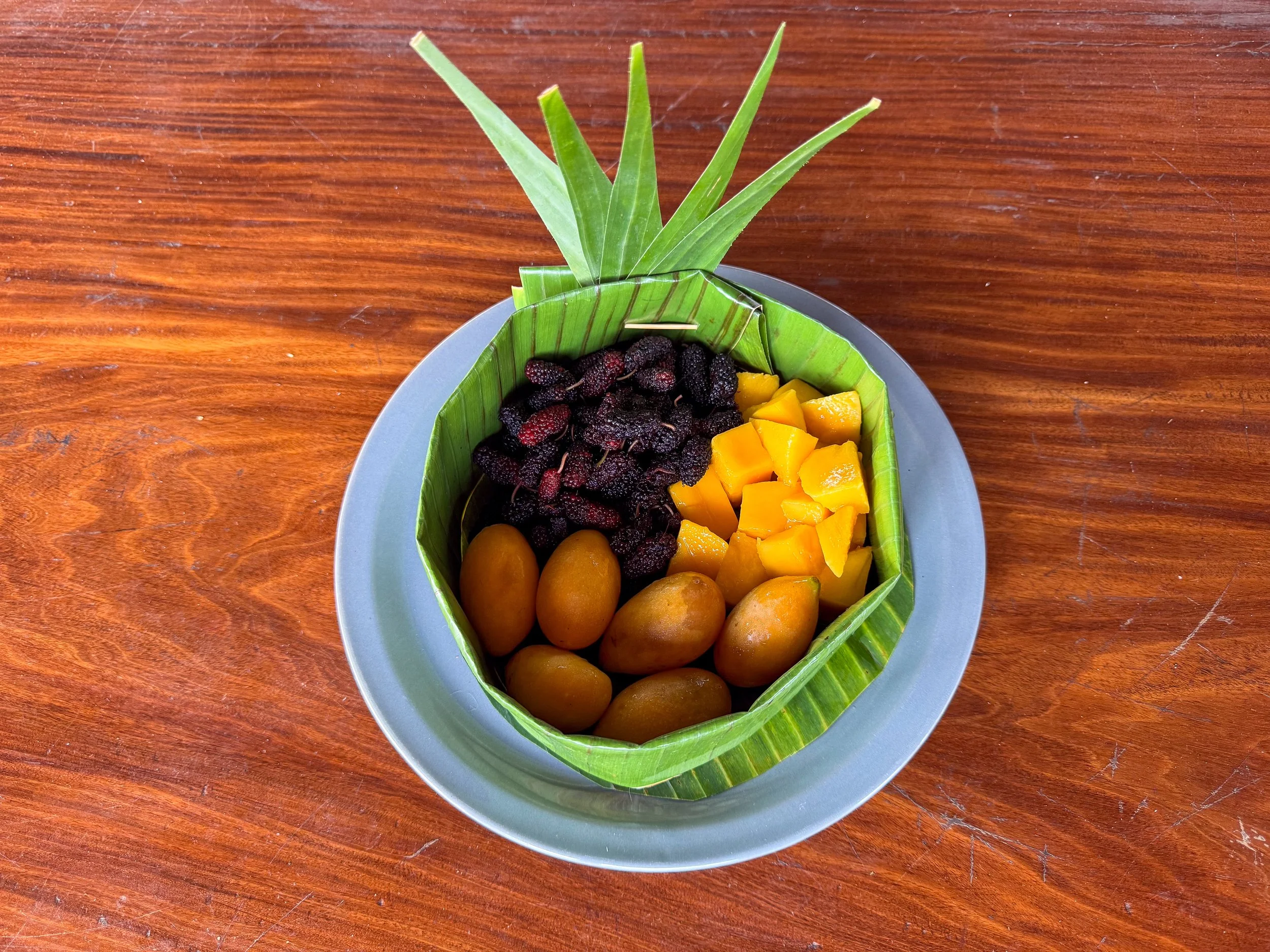
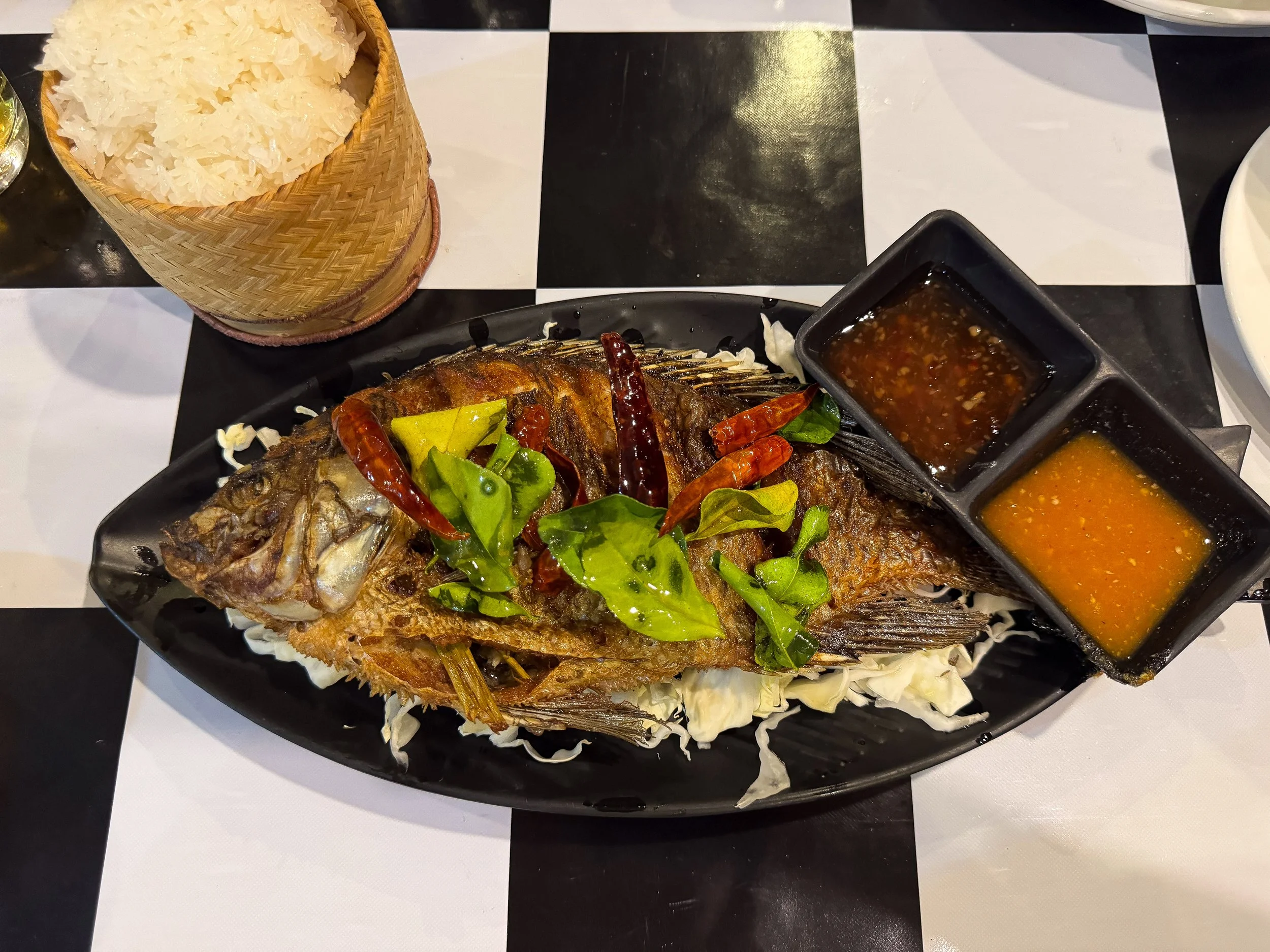
Sticky Rice. A sticky variety of steamed rice. It’s eaten daily by most people in Laos. There are two common types. White sticky rice is often served with sliced mango. Black sticky rice is often served with freshly grated coconut.
Yam Salad. A typical Lao salad made from lettuce, water grass, mixed herbs, boiled egg and a tangy sauce.
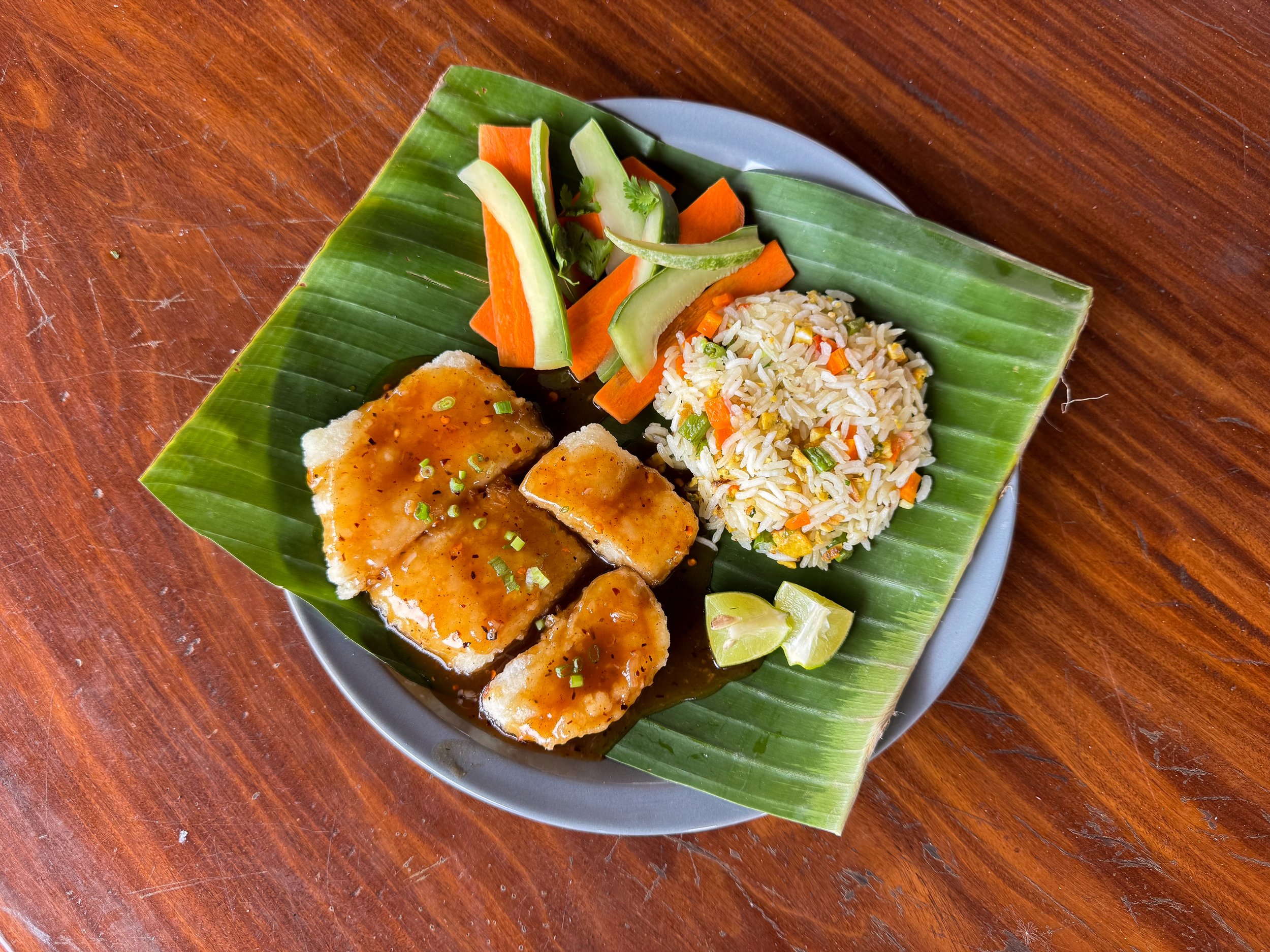
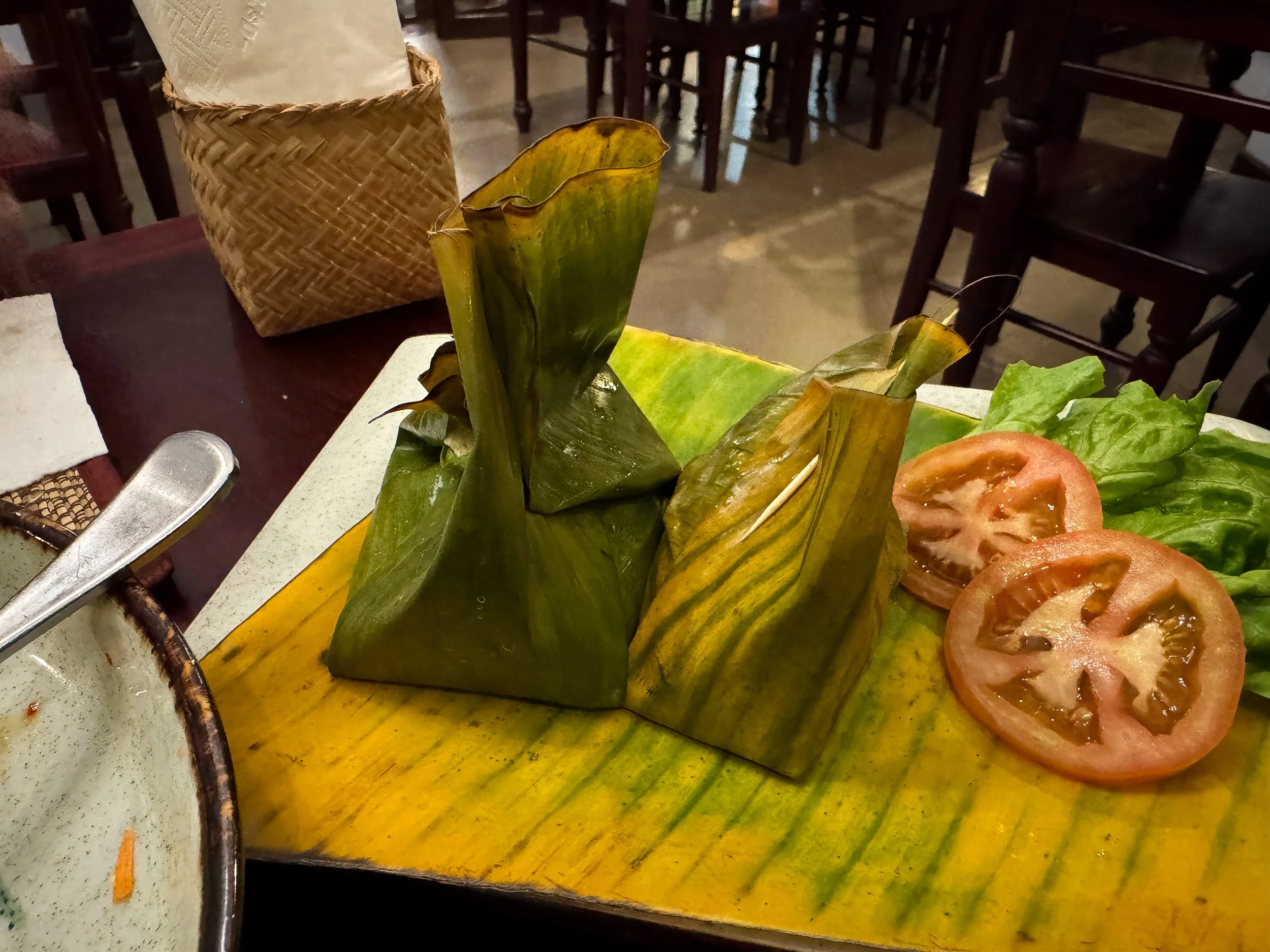
Mok Pa. A delectable dish made with fish from the Mekong River steamed inside a packet of banana leaves with herbs and coconut custard.
Sour Fish Soup. Fish soup cooked with Mekong River fish and a tasty broth made with tamarind, lemon grass, galangal, kaffir lime leaves and chile peppers.
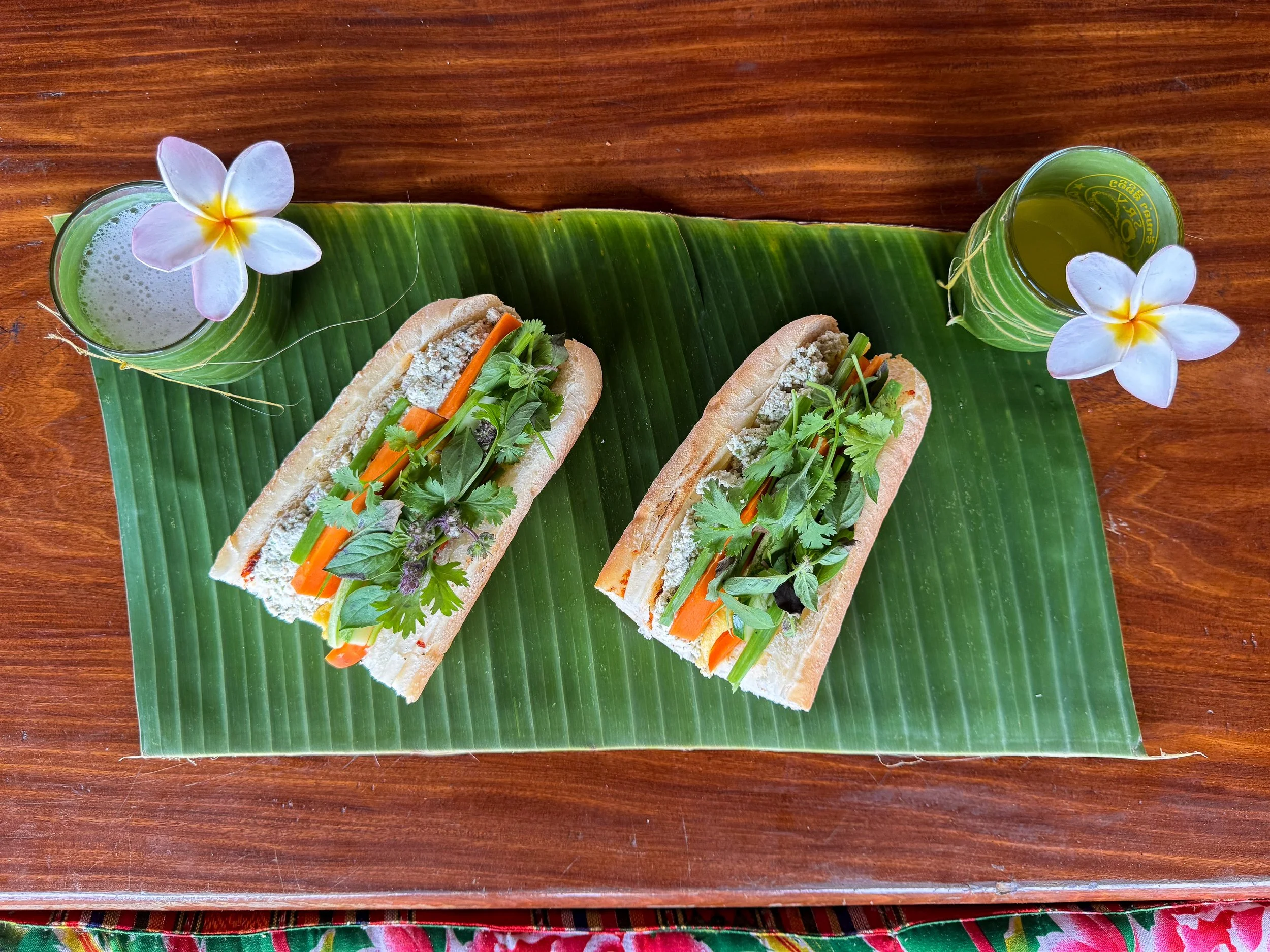
Khao Jee Pâté. A French inspired sandwich similar to a Vietnamese Banh Mi. It’s made on a baguette with a base of liver pâté, blanched carrots and cucumber, a mix of local herbs including lemon grass, kaffir lime leaves, Thai basil and galangal.
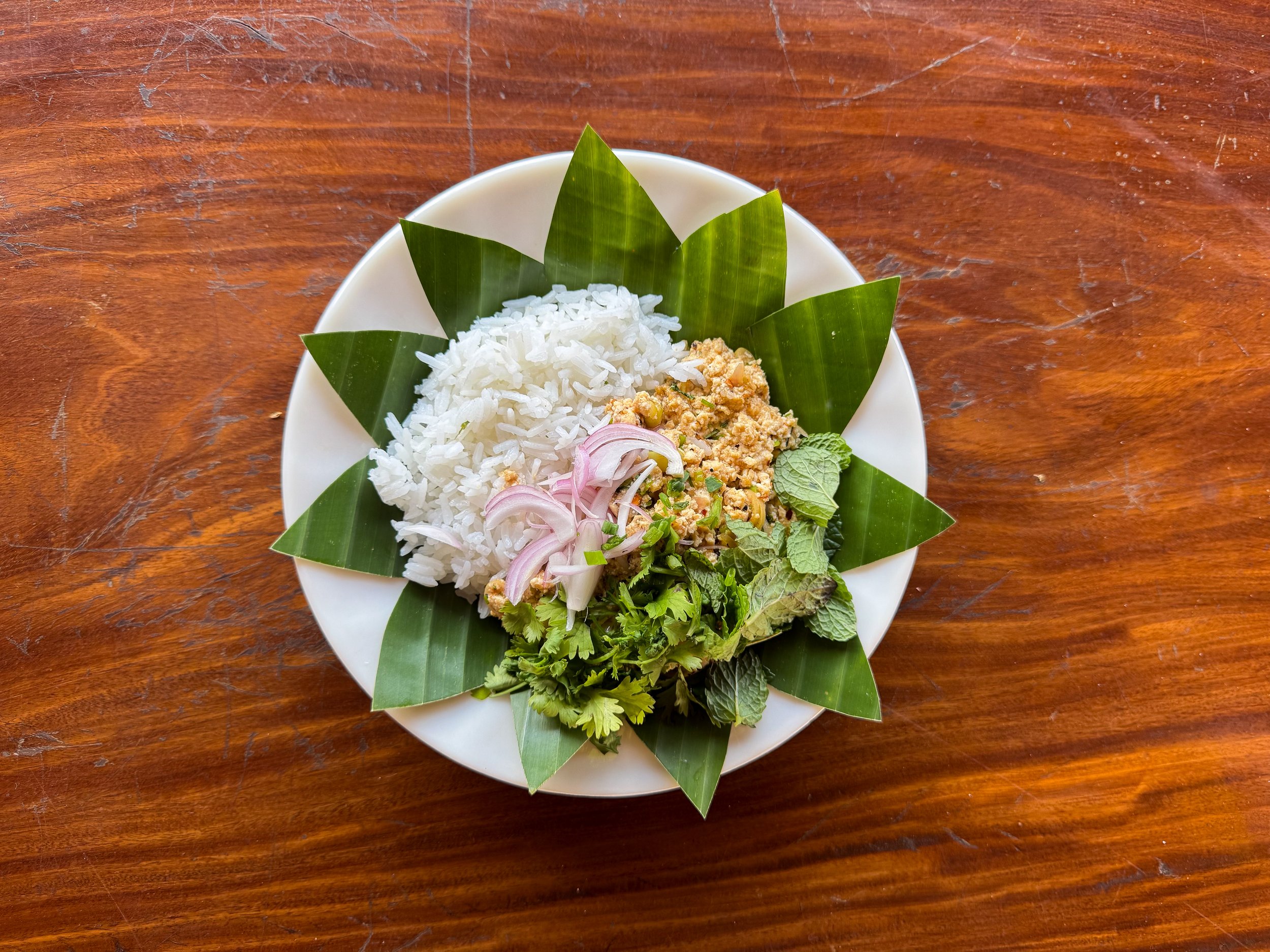
Tofu Larb. Spicy tofu cooked with roasted and ground rice mixed with lemon grass, mint, cilantro, garlic chives, chili and lime.
Cheun Yaw. Lao style spring rolls with a thin and crispy fried exterior. They’re less flaky than classic Chinese spring rolls but no less tasty. Each roll is stuffed with veggies, meat or seafood and served with a sweet and sour peanut sauce.
Lao Omelette. A golden fried egg omelette filled with a range of herbs like cilantro, dill, chives, lemongrass, basil and galangal.
Coconut Pancakes. Gelatinous rice mixed with shaved coconut, formed into patties and grilled.
Banana Leaves. While not eaten, many dishes are cooked inside of banana leaves or served on top of them.
Buttery Pea Flower Tea. A tiny blue flower used to make a floral tea. It’s also used for coloring white sticky rice.
Jeow Bong Paste. A sweet and spicy paste made from dried chili peppers, galangal, garlic and fish sauce. It often has pieces of water buffalo skin.
Lao Lao Whisky. A clear but potent whisky aged in clay jugs. It’s popular across Laos.
Beer Lao. The national beer of Laos. The lager comes in a variety of types named after colors as well as a light IPA.
Where to Stay
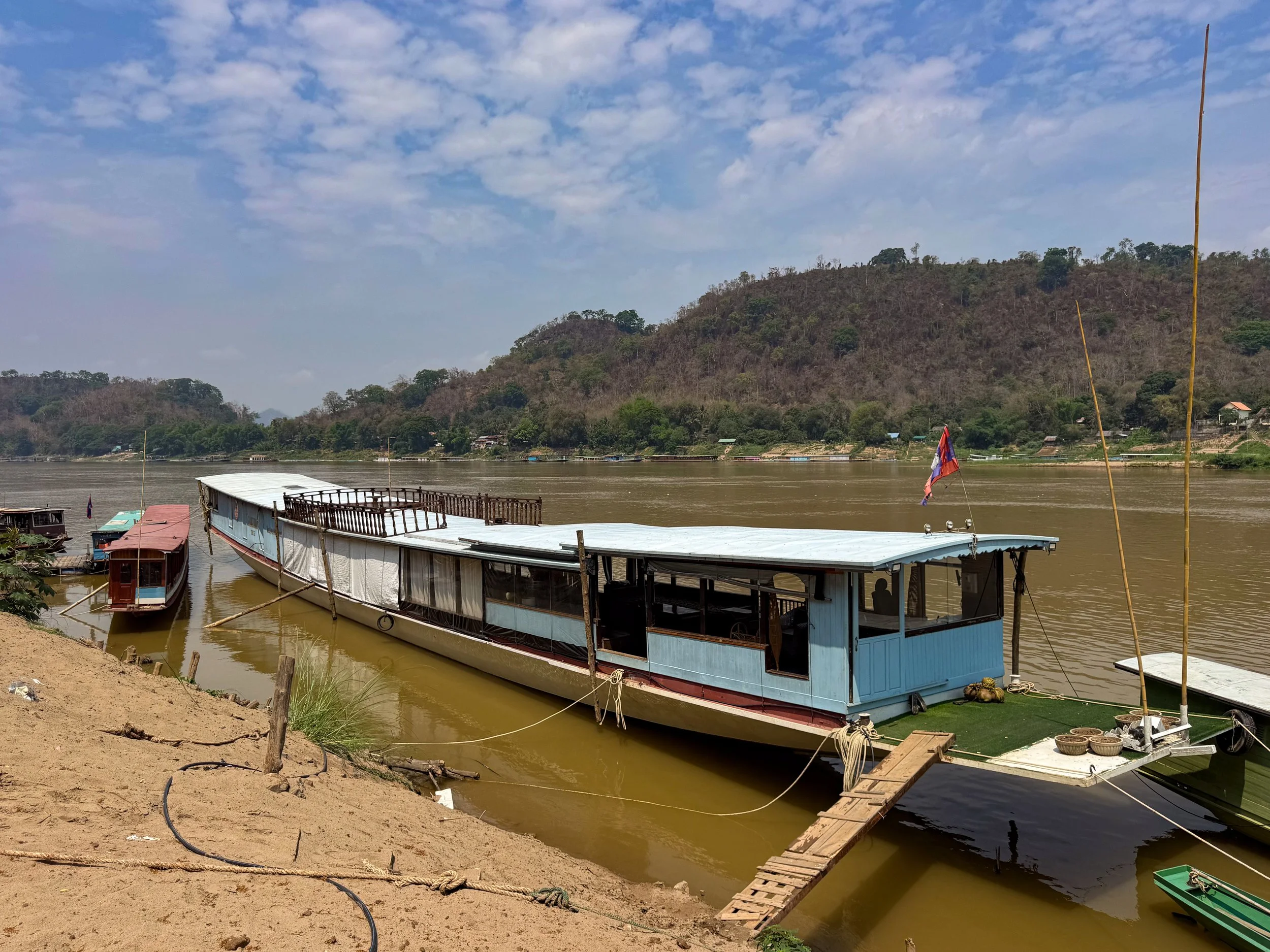
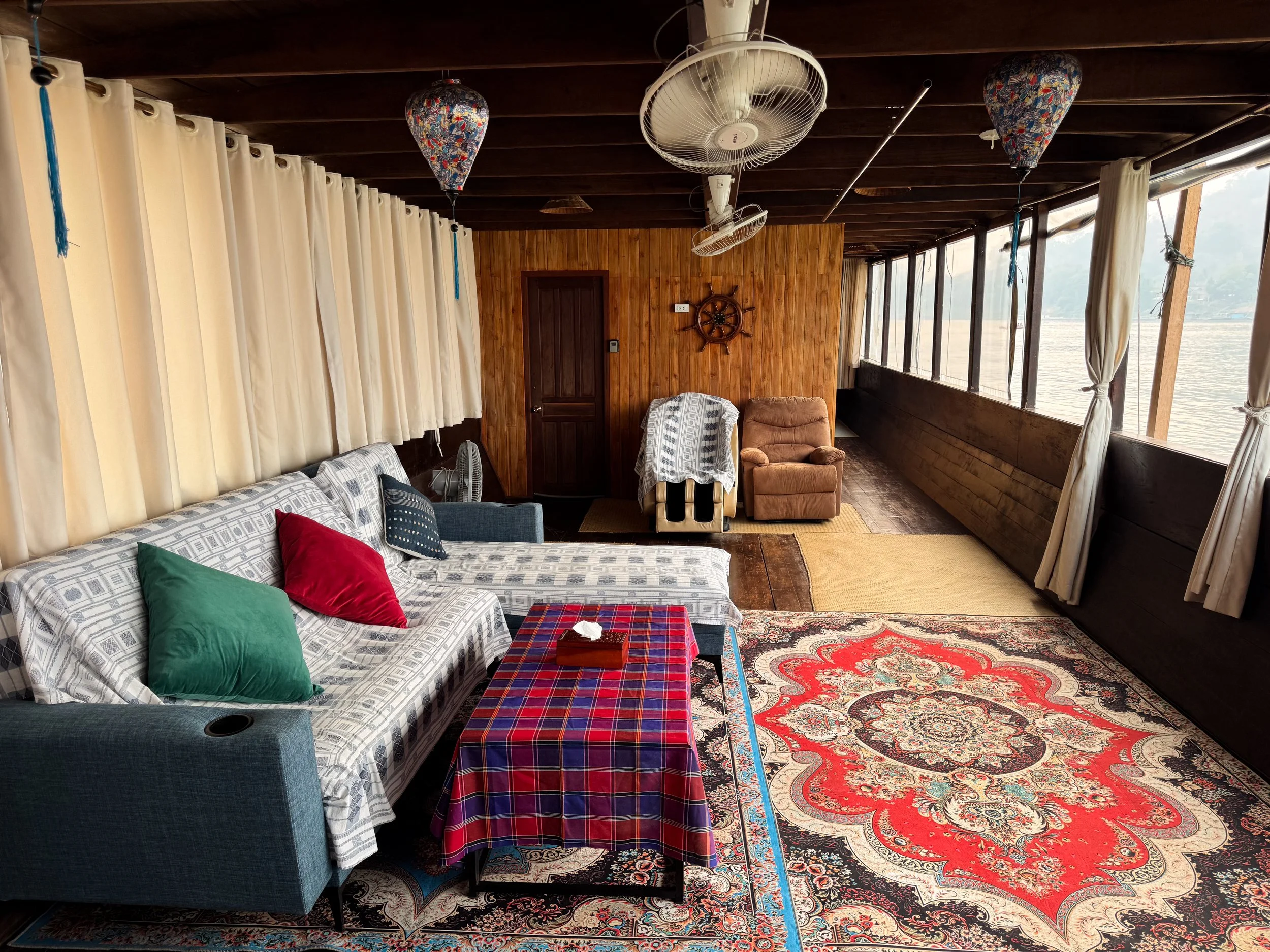
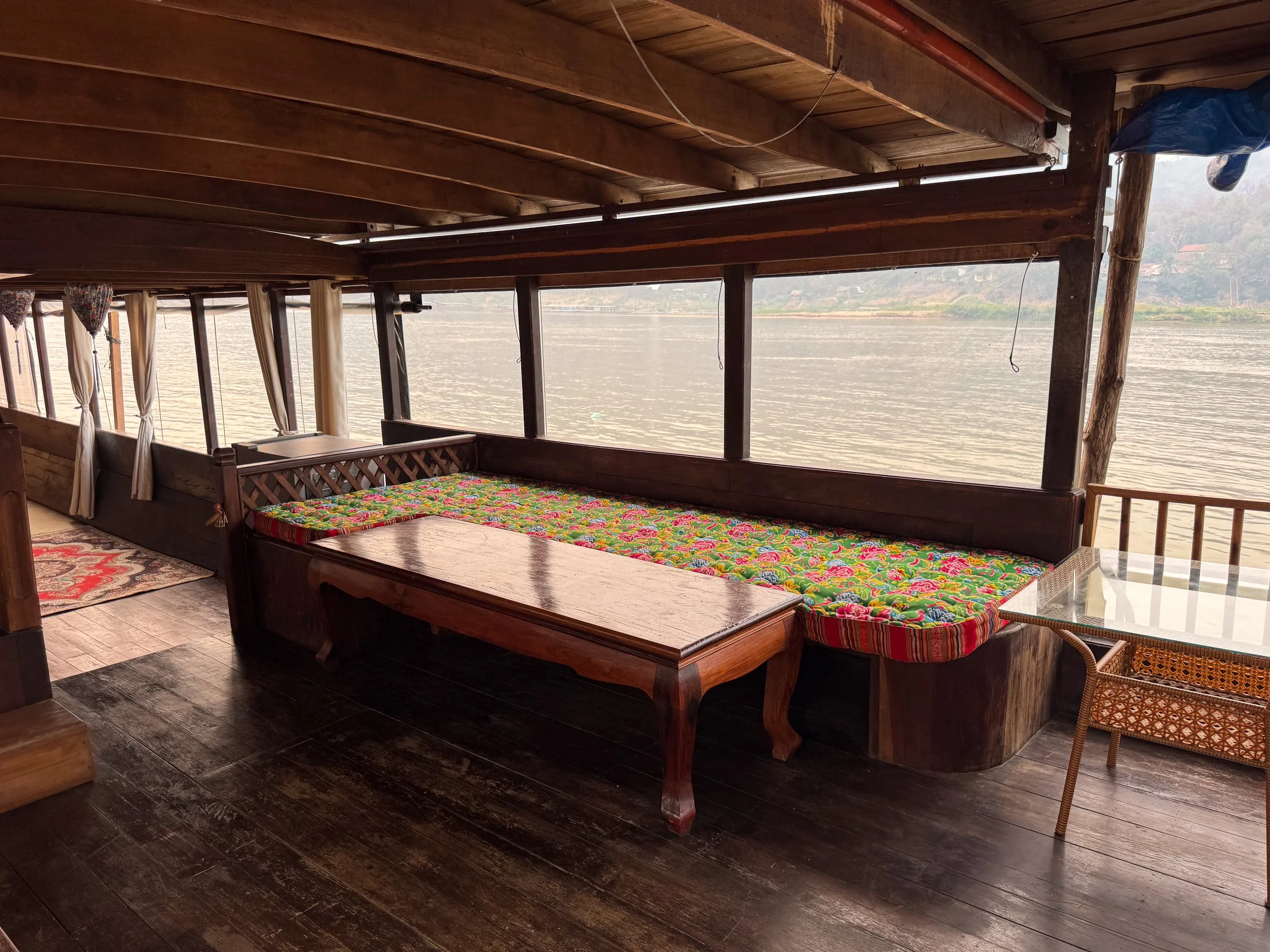
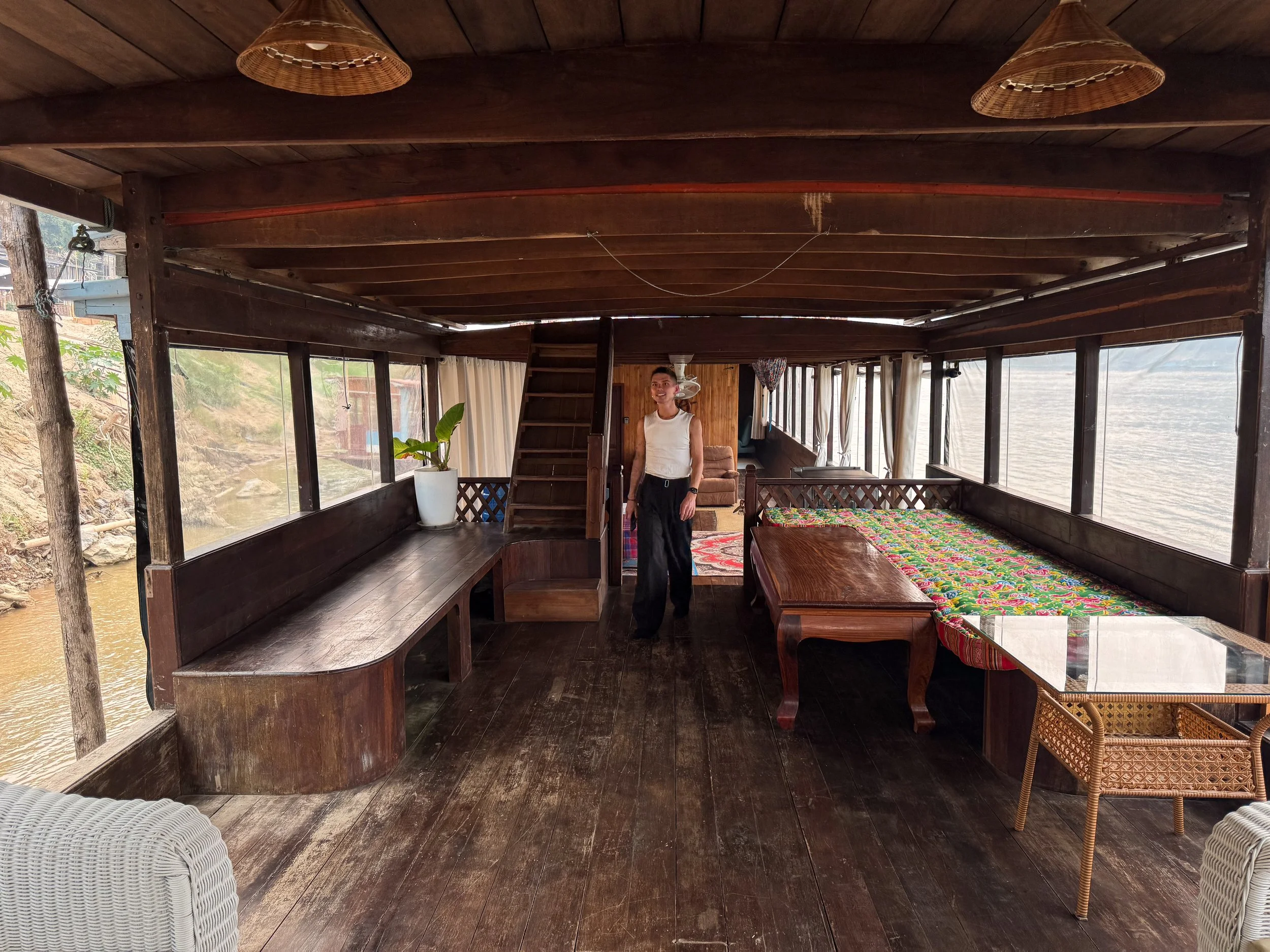
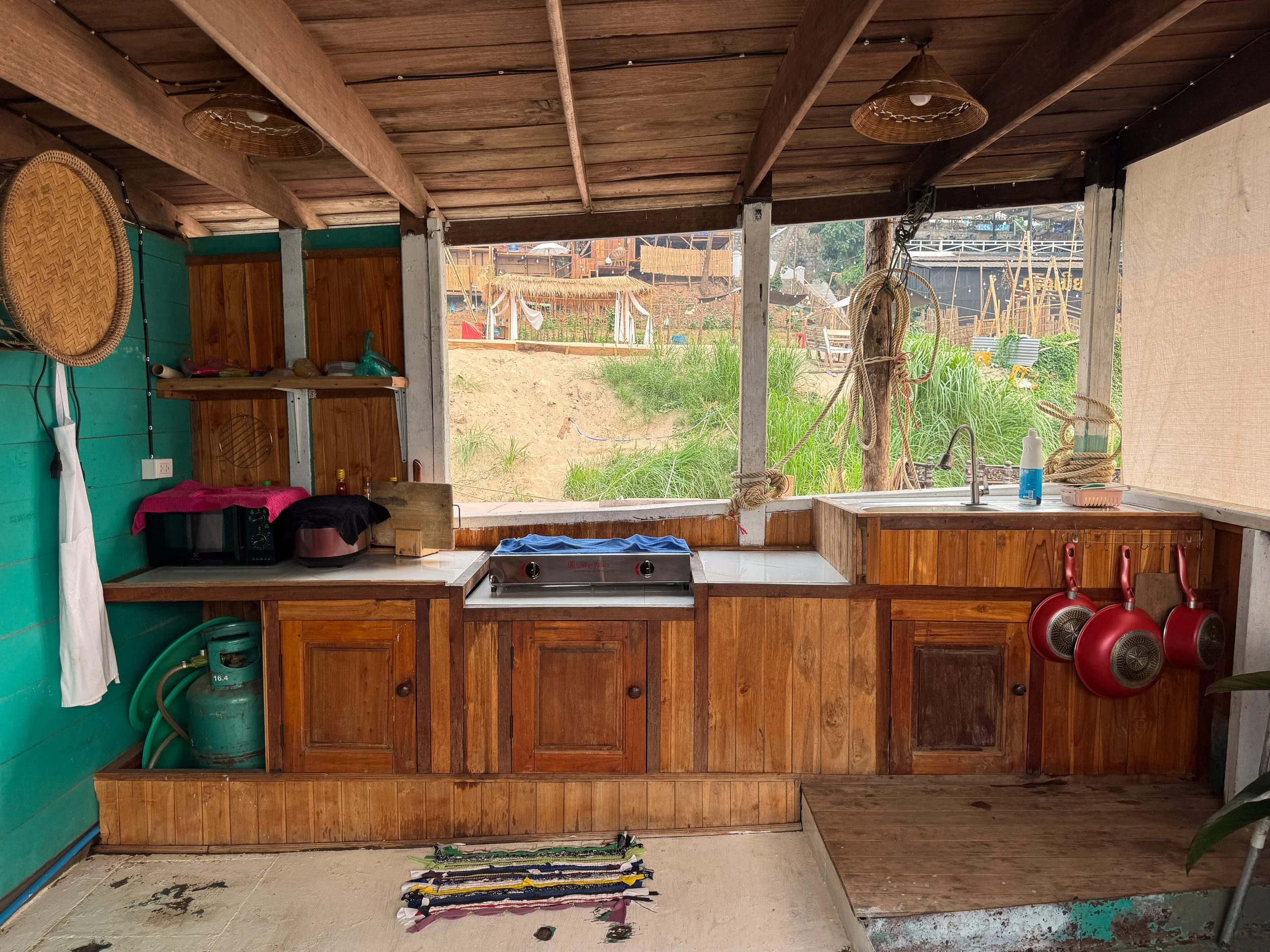
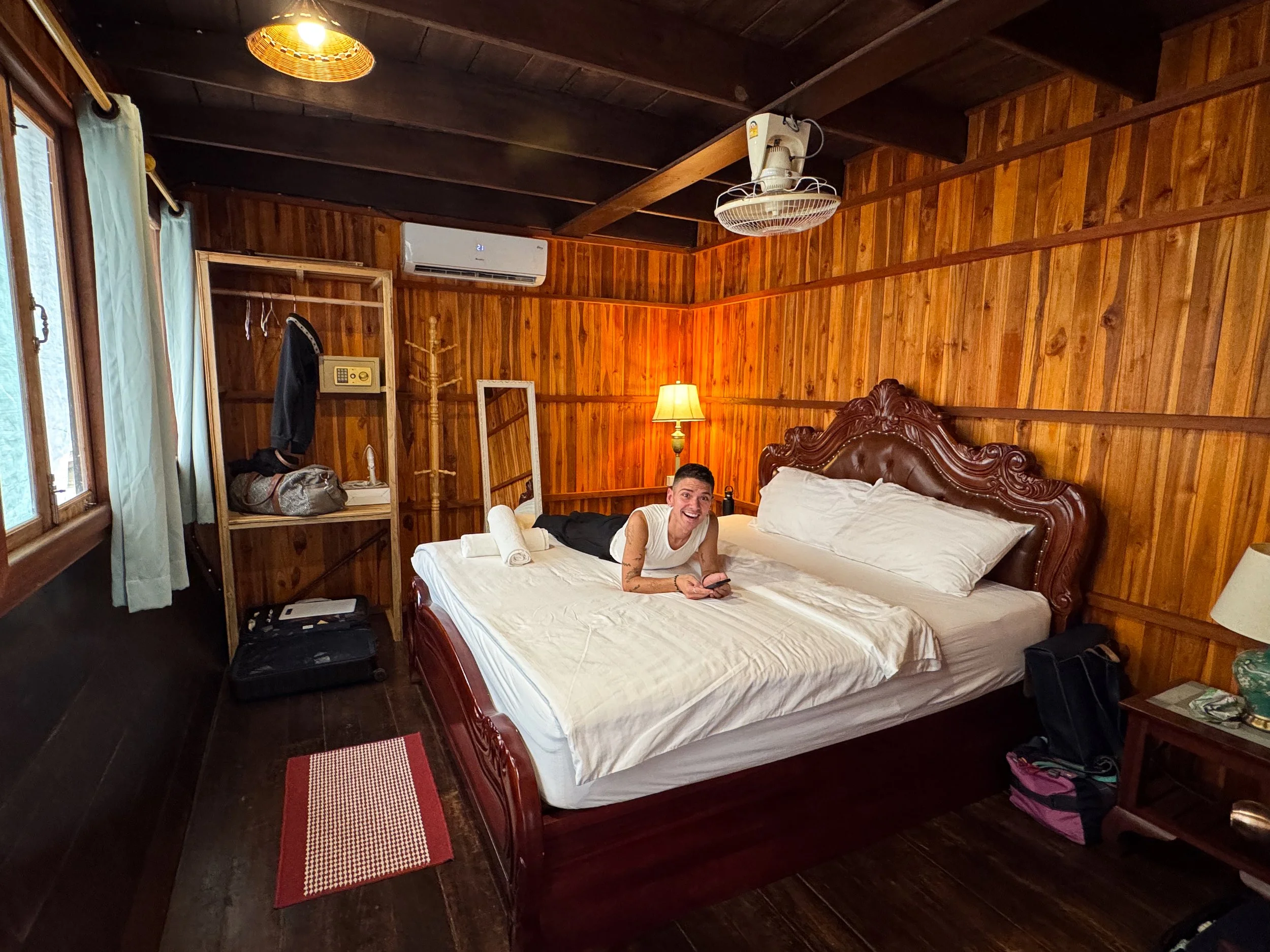
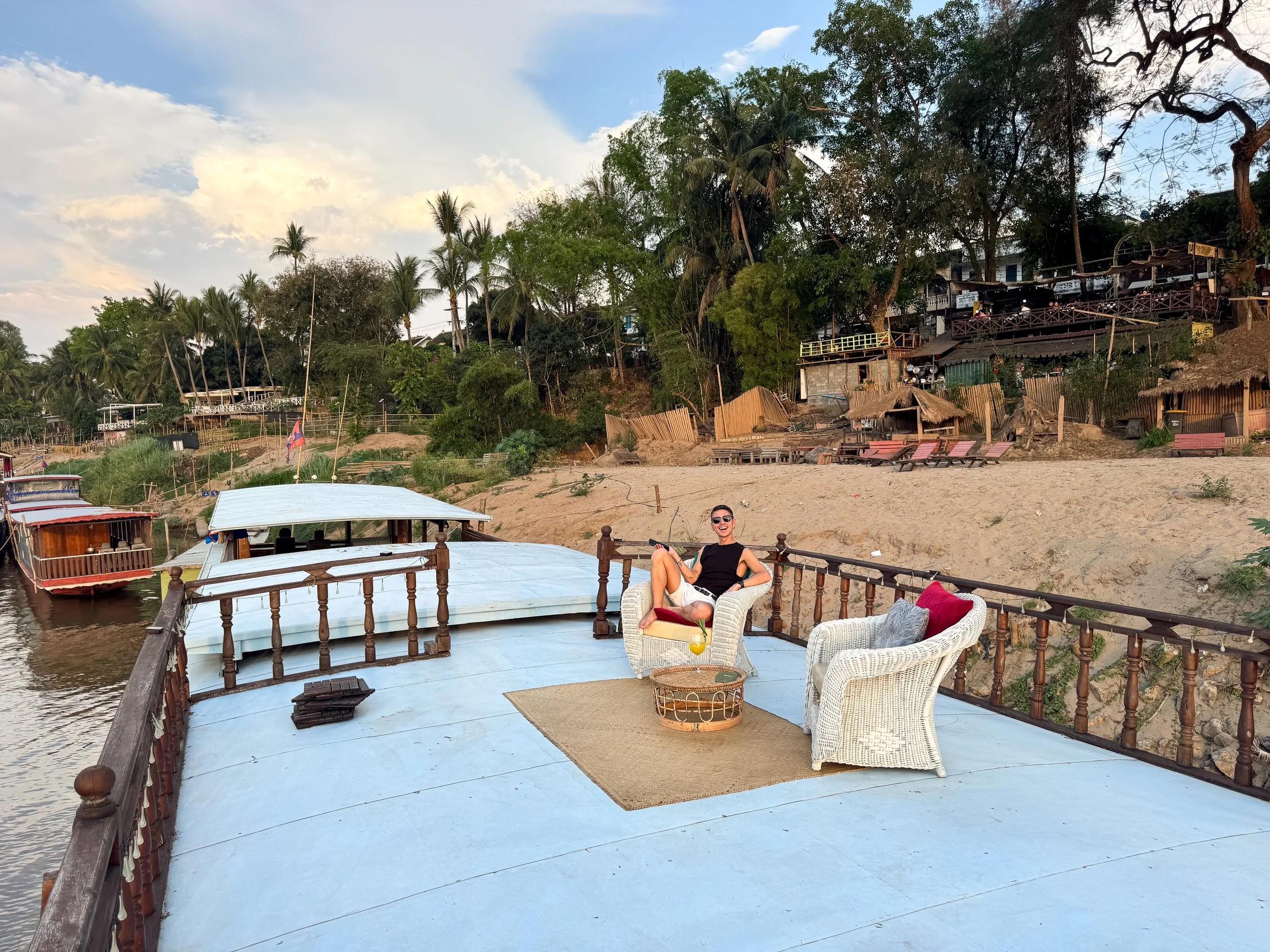
Seangsouly Houseboat. We stayed on a private houseboat docked along the banks of Mekong River in the French colonial old town. The boat is massive, measuring over 100ft long. We relaxed on the rooftop deck, cooked in the outdoor kitchen, dining on traditional furniture and watched the sunset almost nightly. It was an adventurous home and relaxing oasis. We booked our stay on Airbnb.
Location Specifics
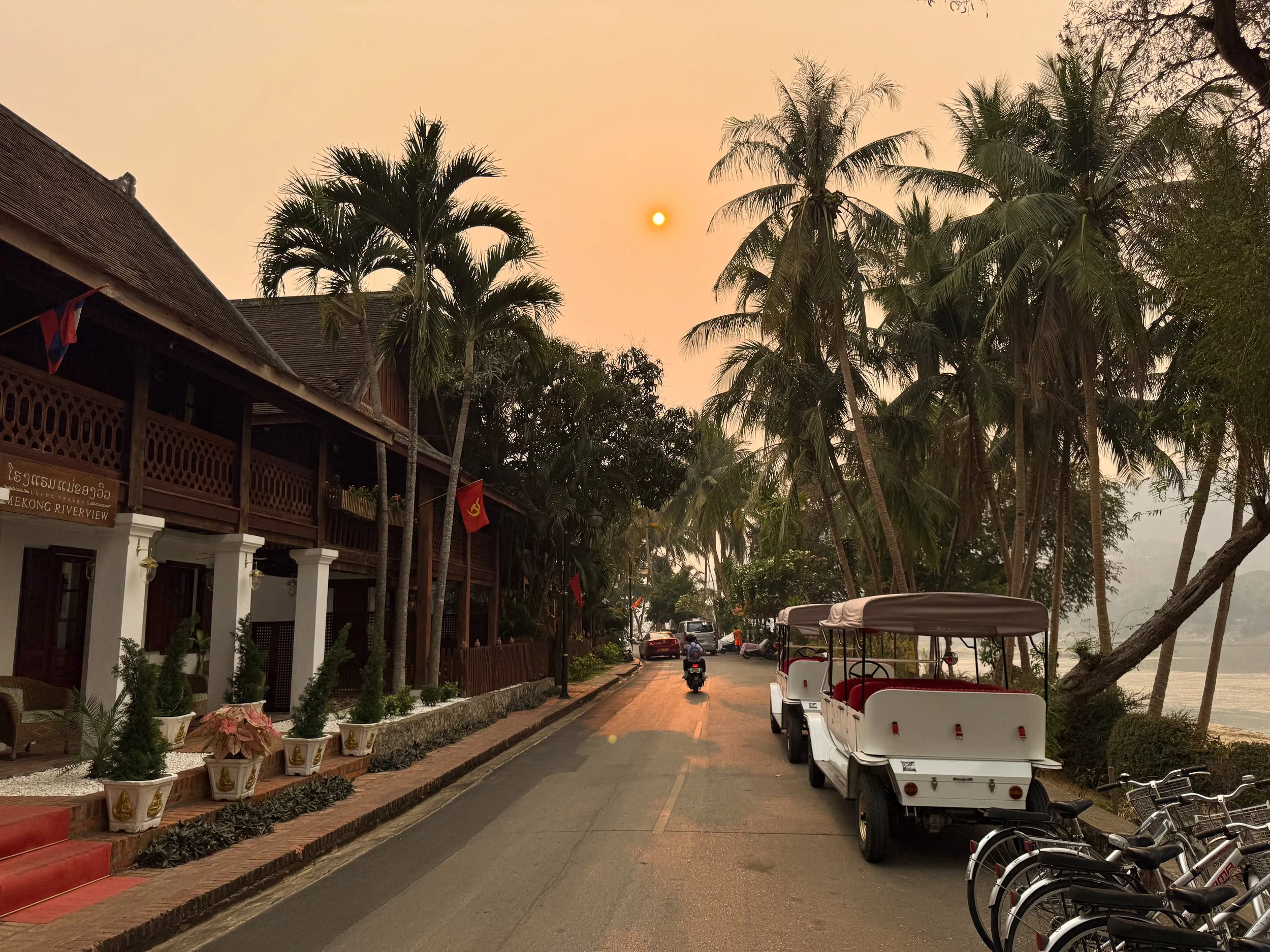
Fire & Smoke Weather. From March through April, northern Laos endures high heat and dry weather. A mixture of forest fires and slash and burn farming inundates the region in a thick haze of smoke, often reaching very unhealthy and hazardous levels. We continually tracked the air quality on IQ Air, minimizing our exposure when possible.
Mosquitoes. Mosquitoes and malaria are prevalent along the Mekong River and throughout Laos. We took anti malaria pills during our trip and used insect repellent.
Dress Modestly. Wearing pants and cover shoulders when visiting wats, sacred places and cultural sights. It’s forbidden to wear shoes or hats inside.
Monk Photography. Be respectful when taking photos of monks. Keep your distance and do not interrupt their activities.
Language. People in Laos speak Lao. Many local people also know basic English and appreciate practicing with visitors.
Tickets. Most sights charge a small entrance fee, usually between 30,000 - 60,000 Kip, equivalent to $2-3 USD.
Cash vs. Card. Cash is the only accepted for of payment. No businesses, cultural sights or vendors accept credit or debit cards.
Currency. The Lao Kip is the only currency accepted. It is illegal to pay for goods, services, etc. in foreign currency. There are banks to exchange currency and ATMs to withdraw cash throughout the city.
Getting Around
Airport Taxi. A taxi stand just past immigration and customs offers shared rides from the airport to the Old City for 100,000 Kip for 1-2 people. The ride takes less than 15 minutes.
On Foot. The Old Town and city are relatively small and easily walkable.
By Ferry. There is a public ferry operating daily from 8am to 6:30pm offering trips down the Mekong River to different villages and sights. Round trip tickets cost 150,000 Kip per person regardless of distance.
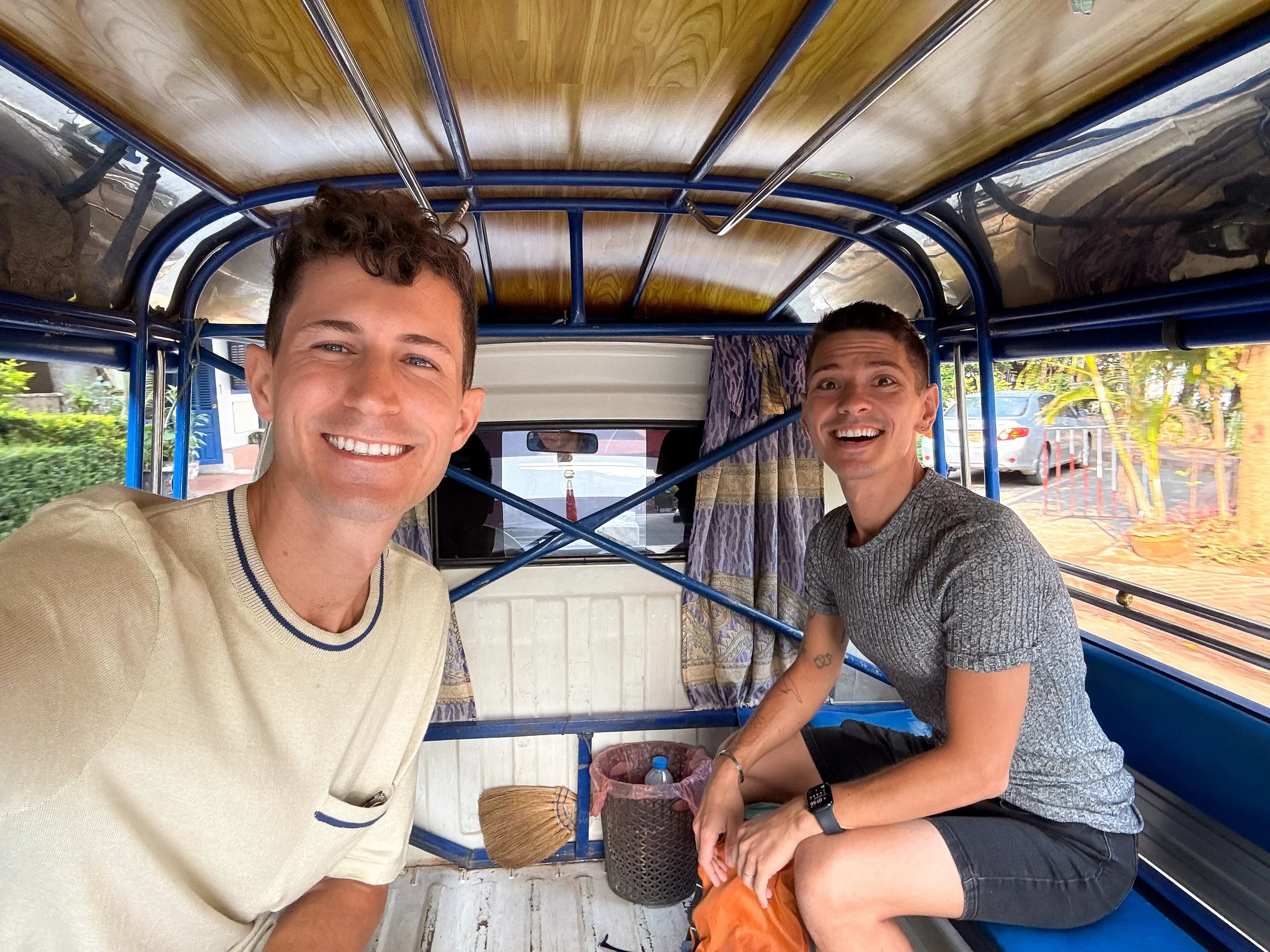
Tuk Tuk. Three wheeled hybrids between a motorcycle and car are readily available across the city. Drivers will bring passengers around the city for 50,000 Kip and to further away distances for 500,000 Kip.
For Next Time…
We thoroughly enjoyed our time in Luang Prabang and can’t wait to return to Laos to visit other areas of the country.
Vientiane. The capital city of Laos. It’s home to impressive Buddhist temples, French colonial architecture, palm lined boulevards and countless cafés.
Vang Vieng. A small town along the Mekong River with scenic views of the countryside and rice paddies. It’s popular for its river cruises, tubing excursions and hot air balloon flights.
Three Whales Rock. A rock formation in the Thai jungle that resembles a pod of three whales. It’s accessible from Vientiane along the Mekong River.
Plain of Jars. An archeological site comprised of thousands of large stone jars scattered across multiple fields and sites. They date back to 500 BCE during the Iron Age.