

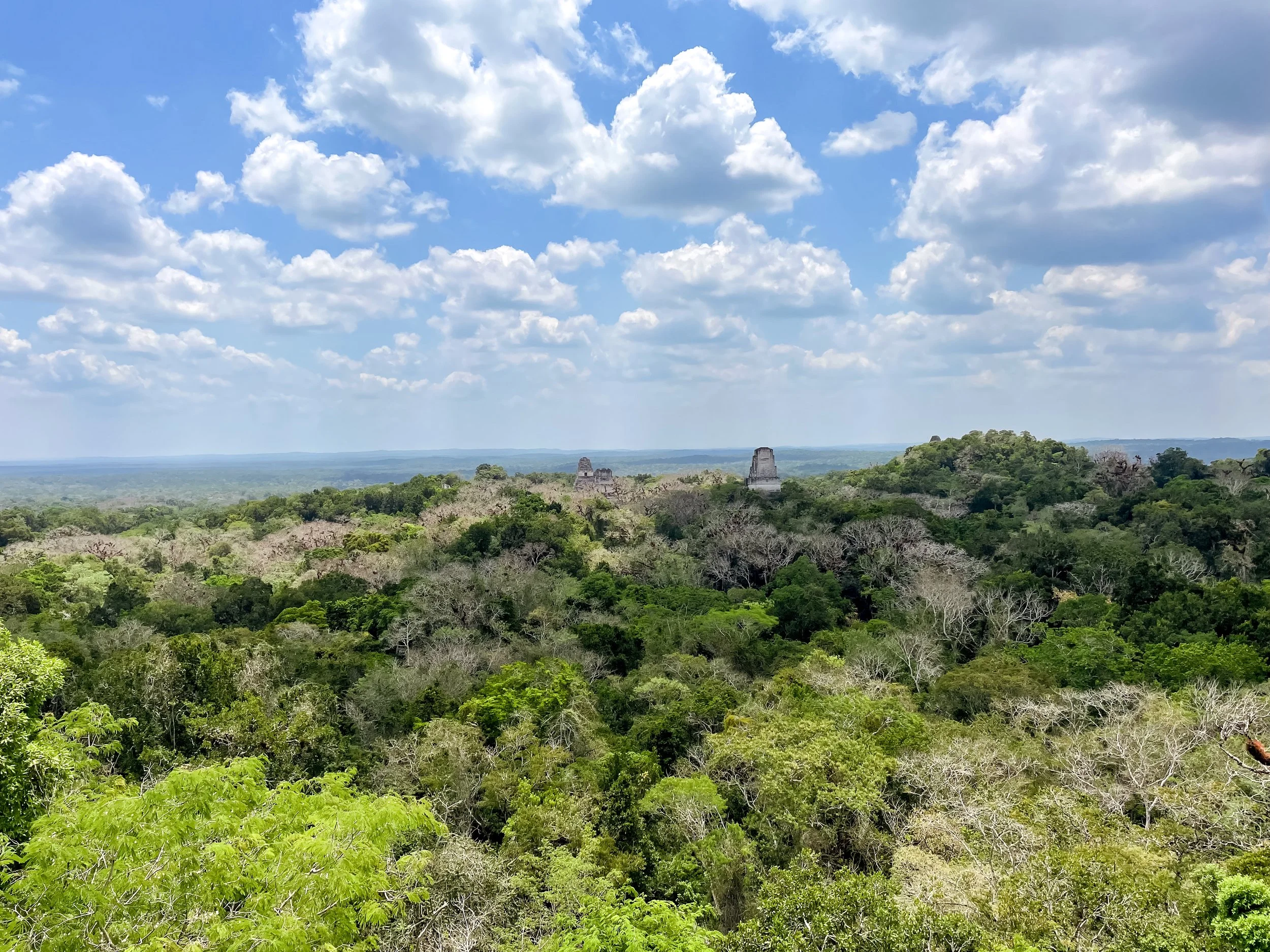
Maya Ruins Travel Guide: Jungles, Temples & Ancient Cities
Journey through ancient Maya cities, temples and archaeological wonders across Belize and Guatemala while exploring dramatic jungle landscapes.
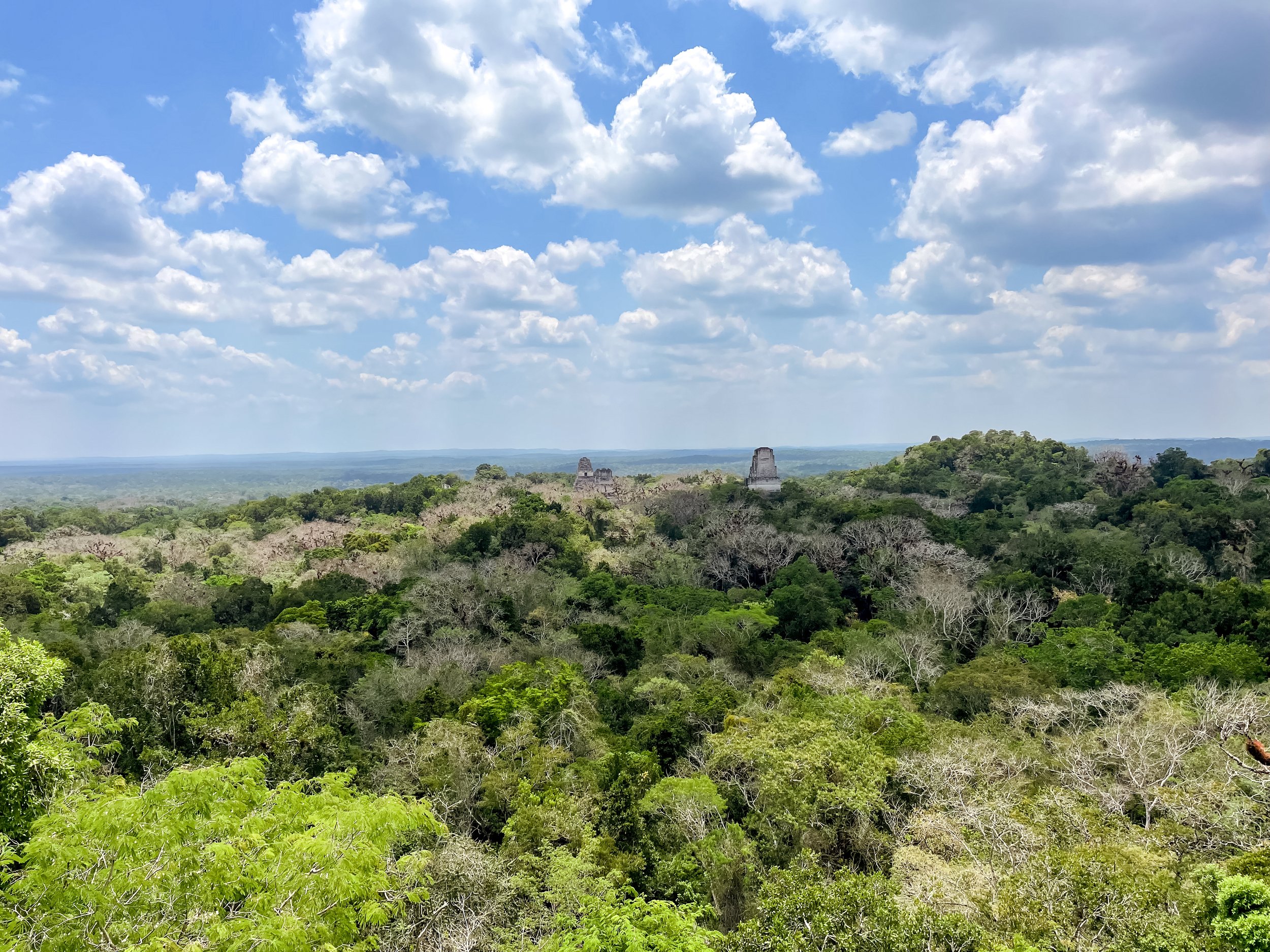
Exploring the Maya Jungle
Deep within the lush jungles of Belize and Guatemala are some of the Mayan civilization’s most sacred sights. Ancient acropolises reside at the center of lost cities while overgrown ruins and towering pyramids rise from the dense jungle canopy. Sacred caves and their vast chambers entomb sacrificial remains and historic artifacts. Remote towns offer places to taste local cuisine, meet other travelers and reenergize in nature.
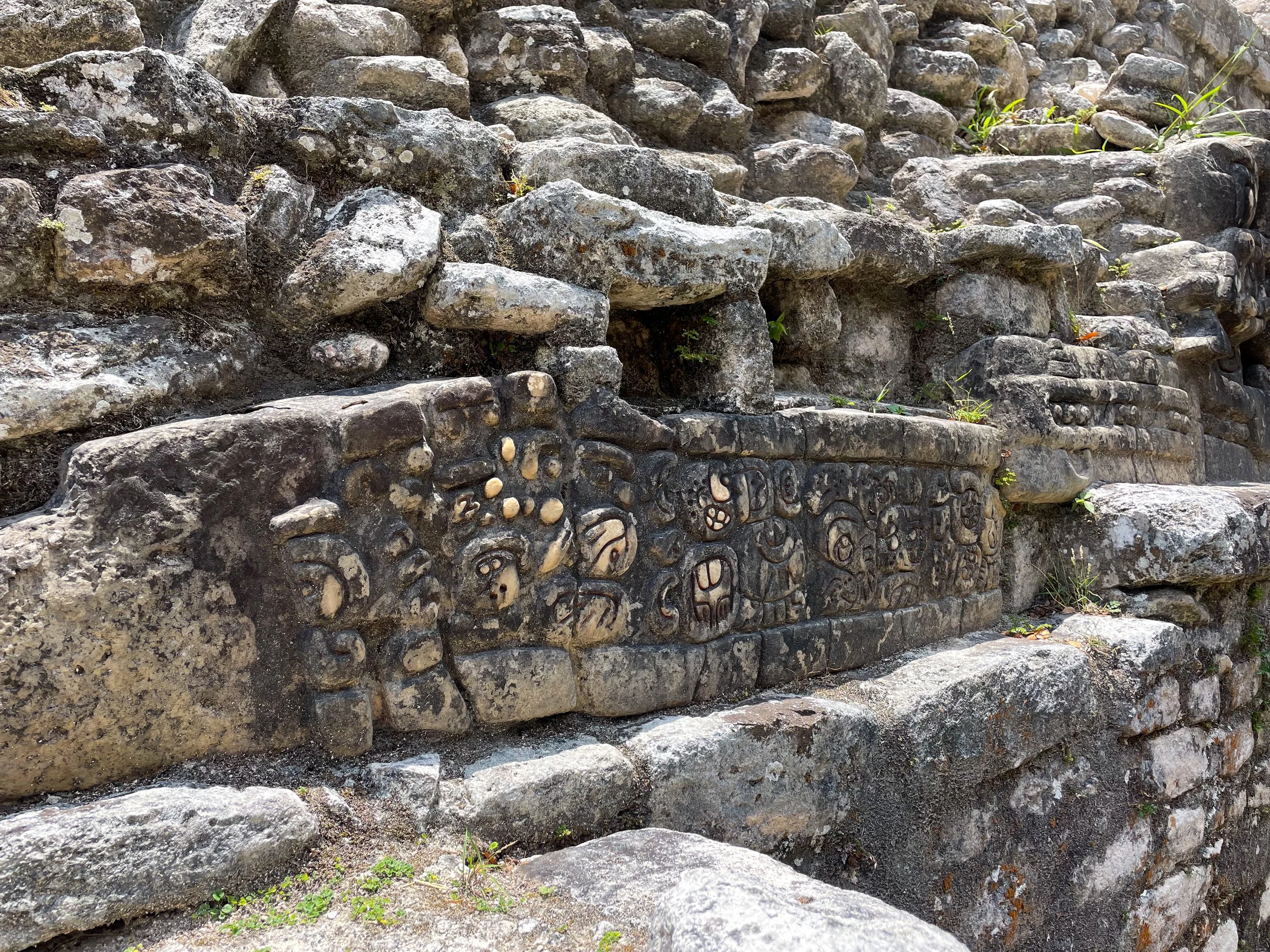
Caracol Mayan Ruins
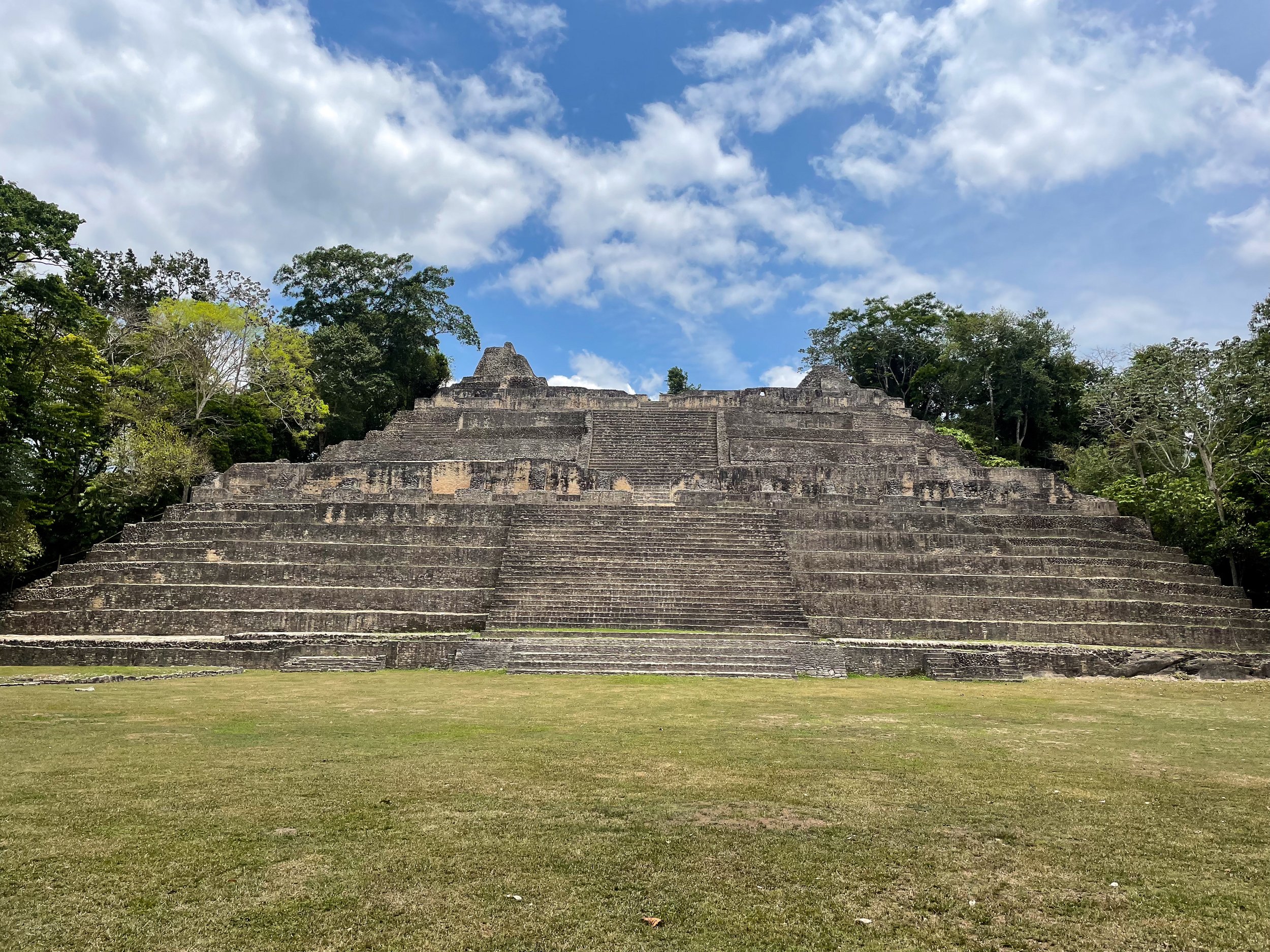
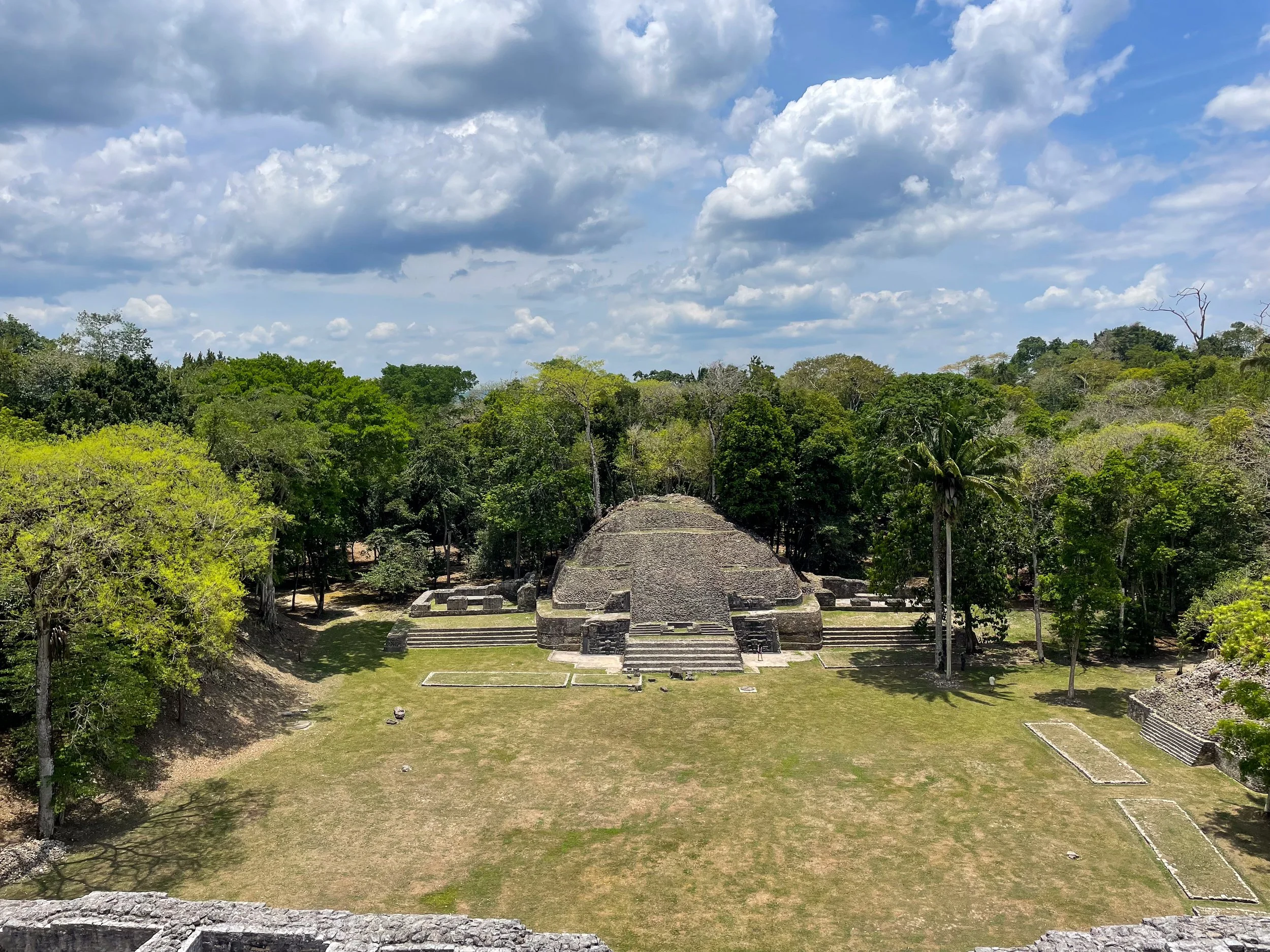
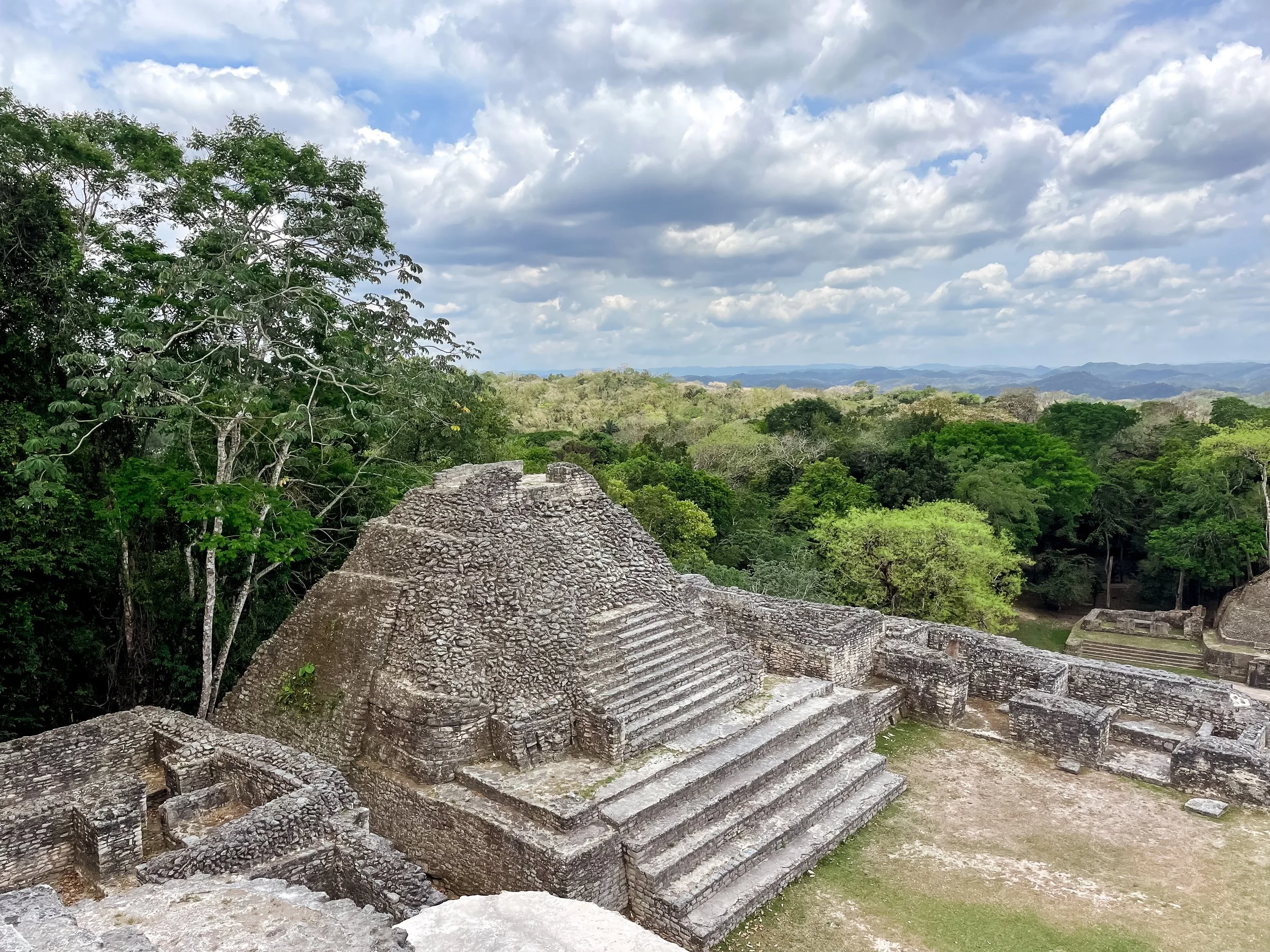
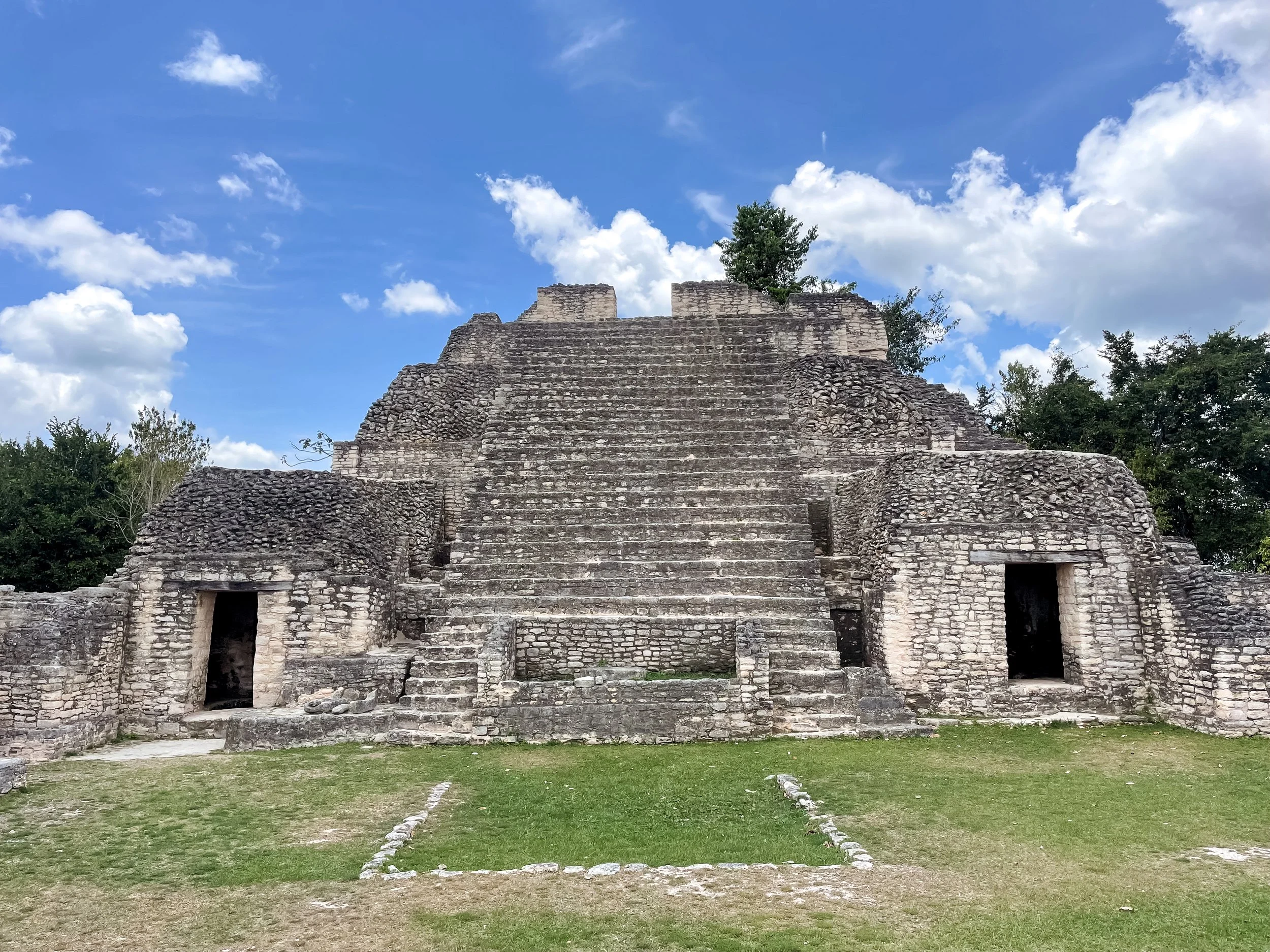
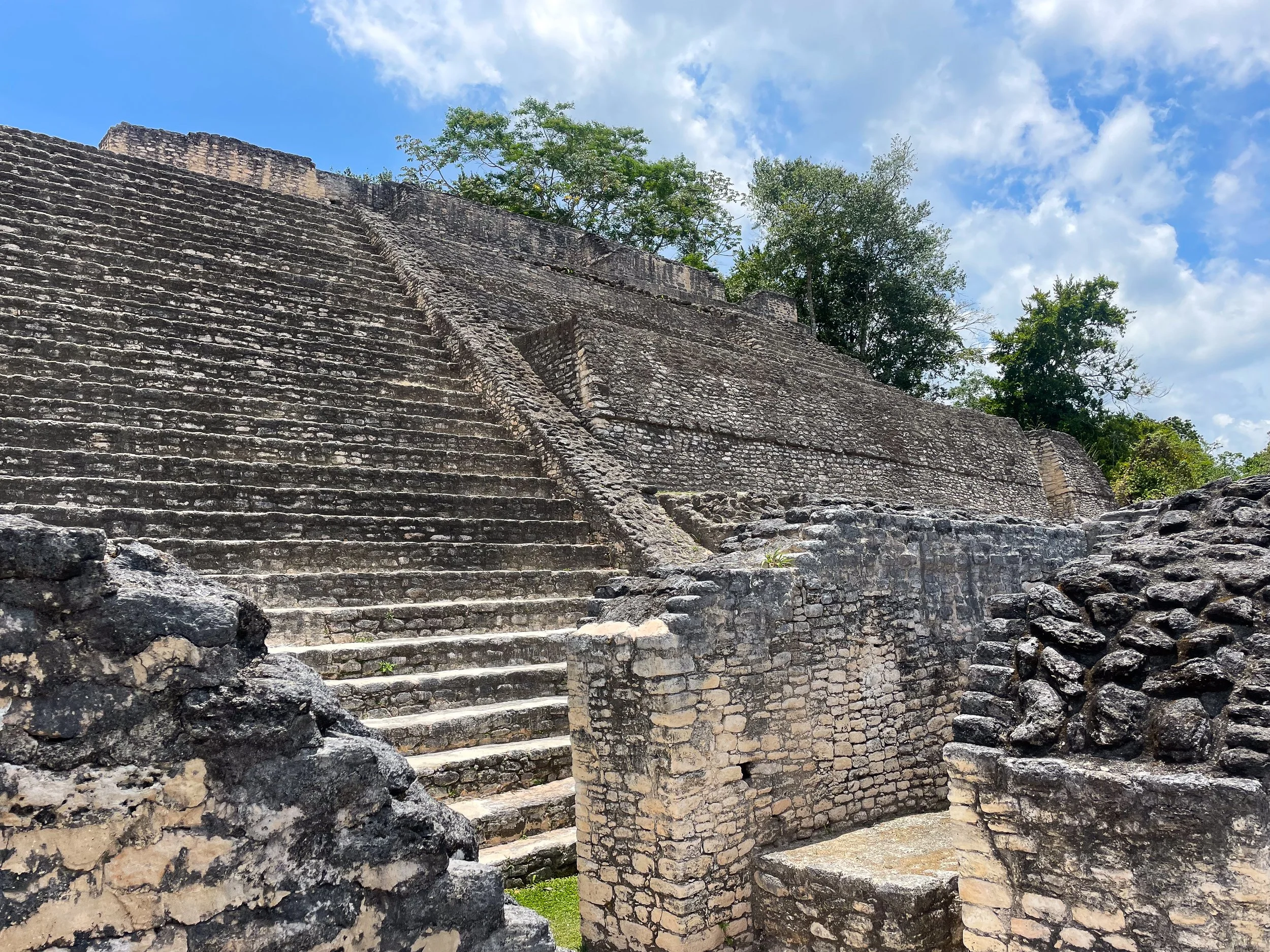
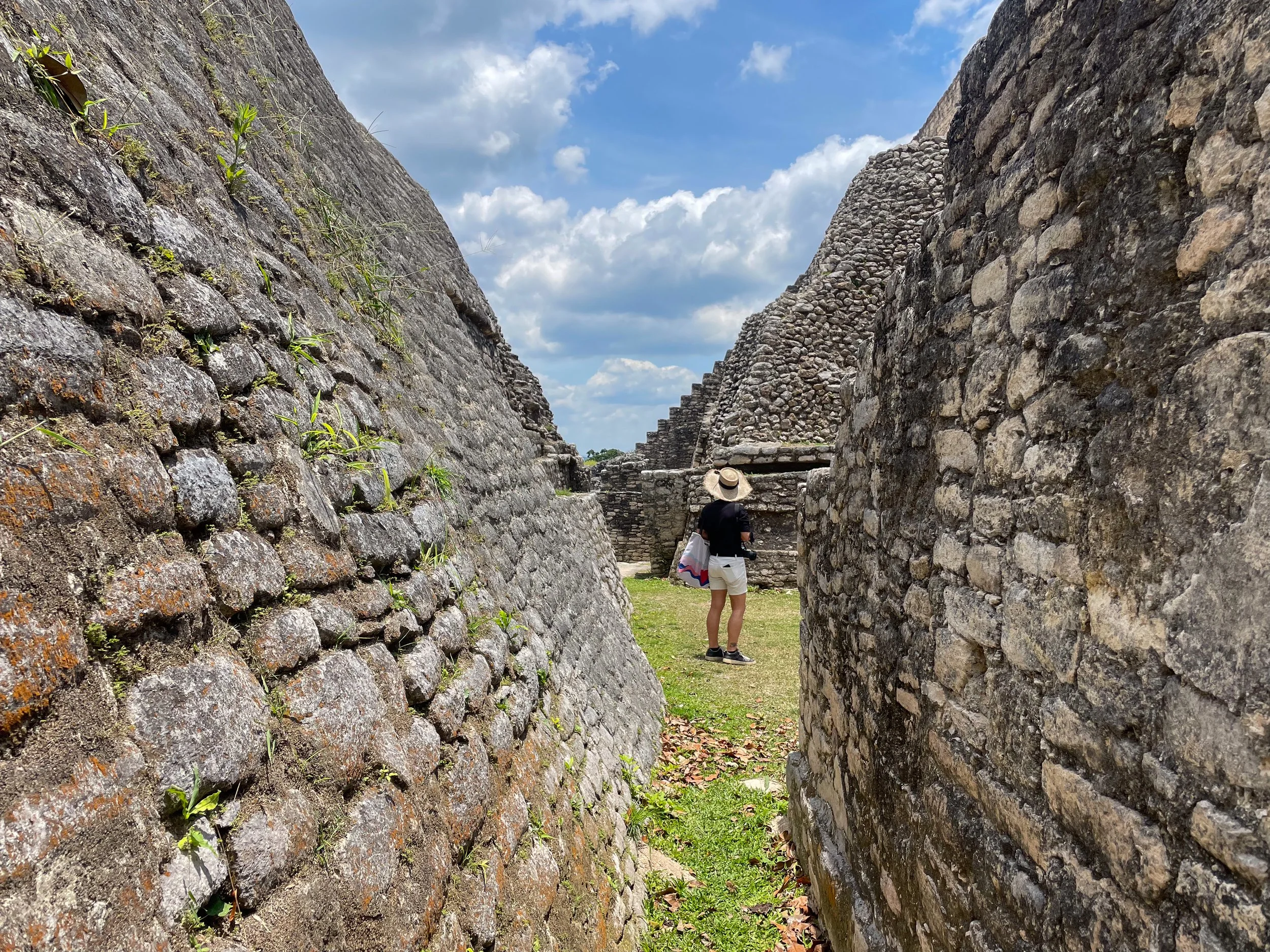
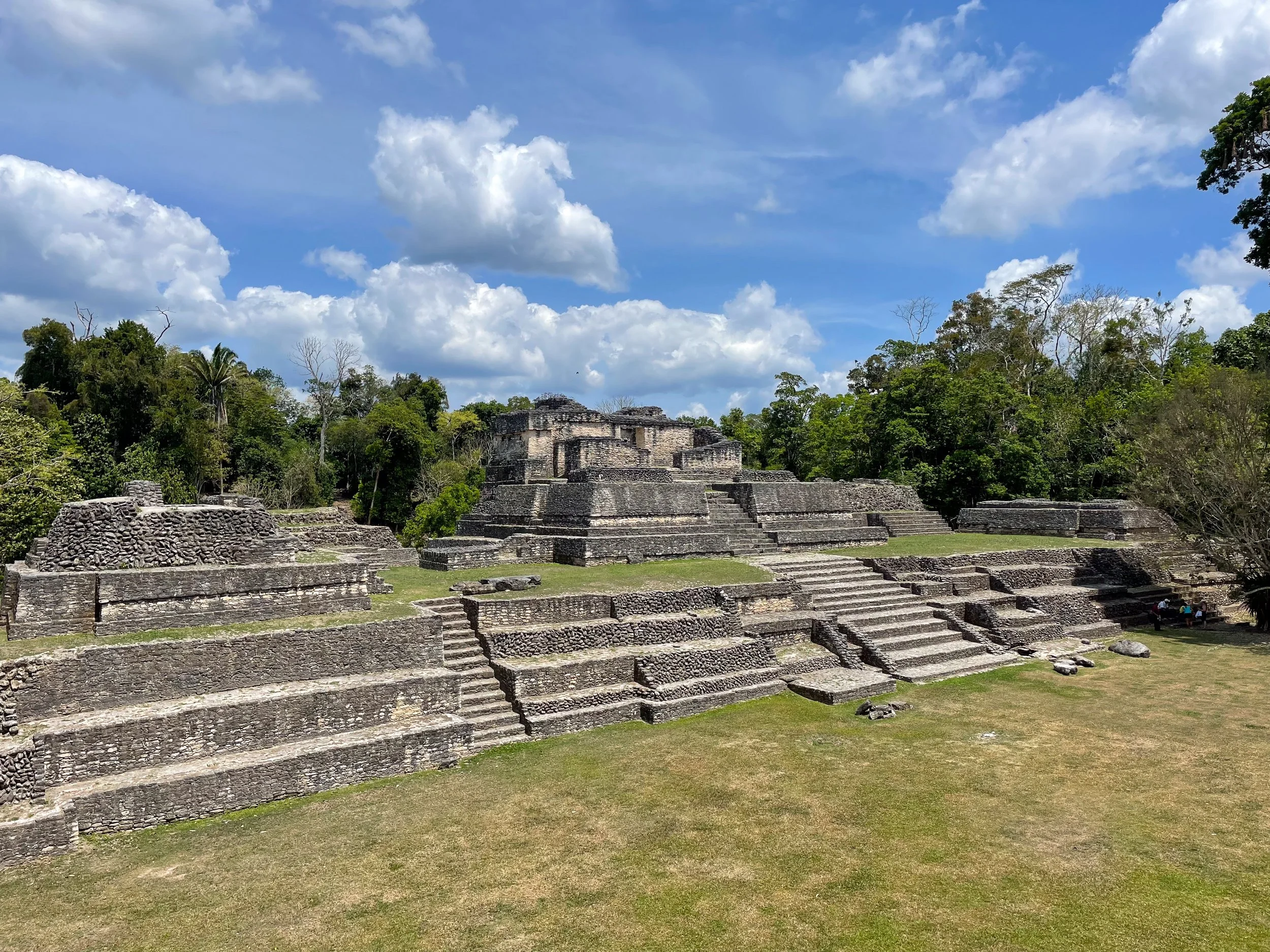
Caracol is an ancient Mayan city within the Belizean jungle. Its ruins and acropolises are comprised of pyramids, ball courts, astronomic observatories, royal tombs, reservoirs and hieroglyphs.
The Sky Palace. A three tiered pyramid named Caana, which translates to “Sky Palace.” It has remained the tallest built structure in Belize for over 3,000 years! We climbed steep stone steps to its upper level, explored its rooms, crawled into a royal tomb and looked across Belize and into Guatemala from above the jungle canopy.
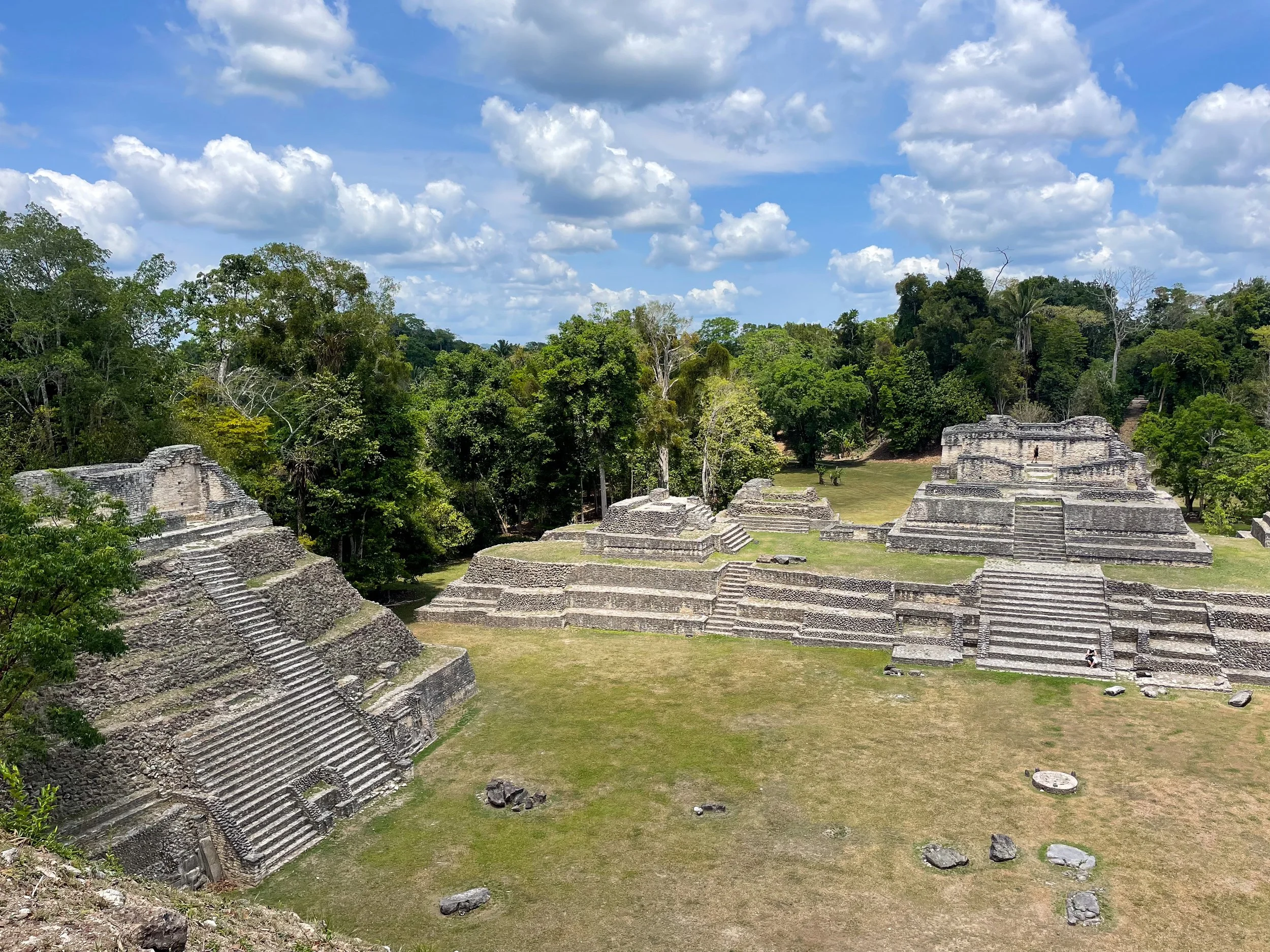
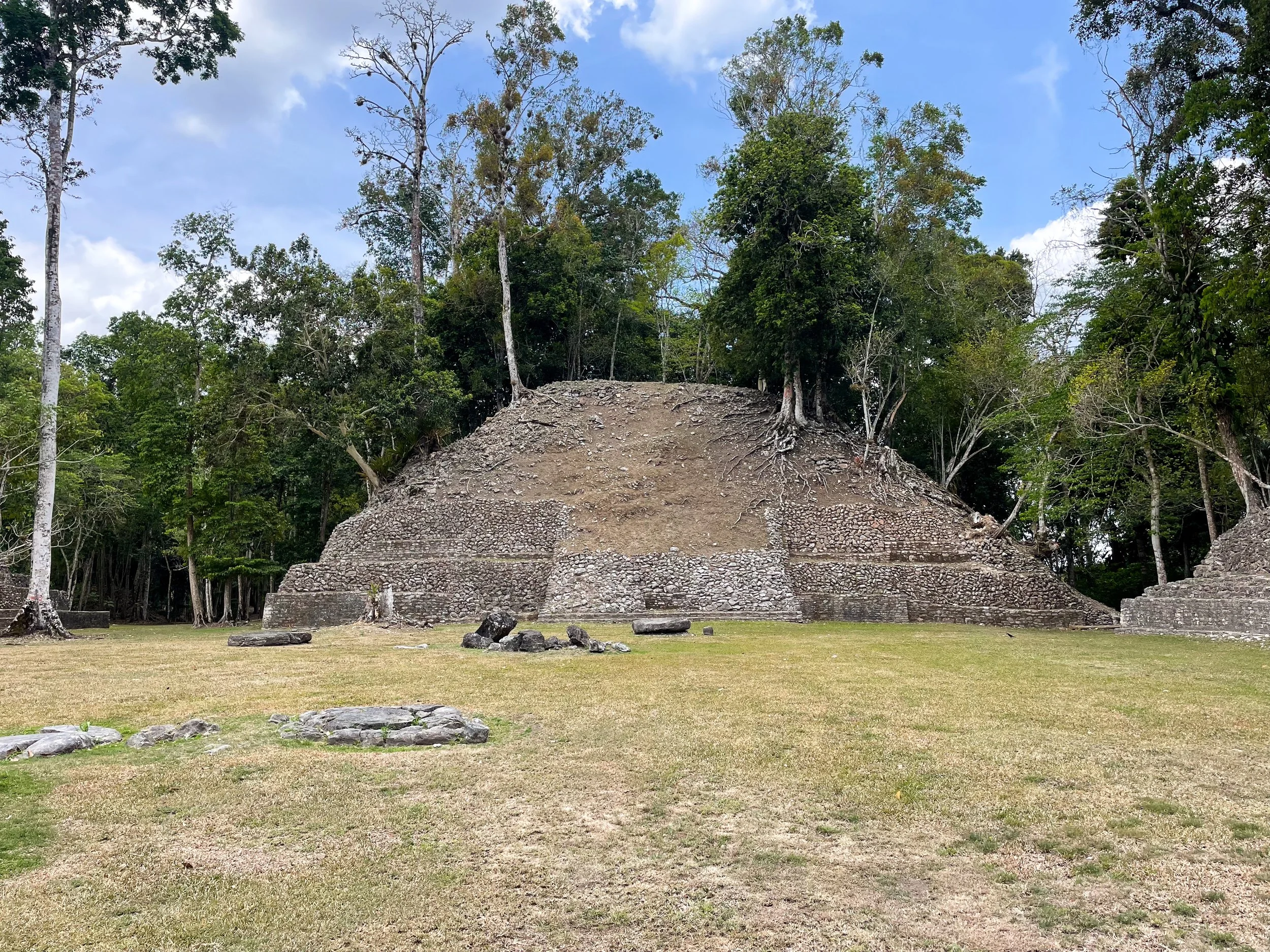
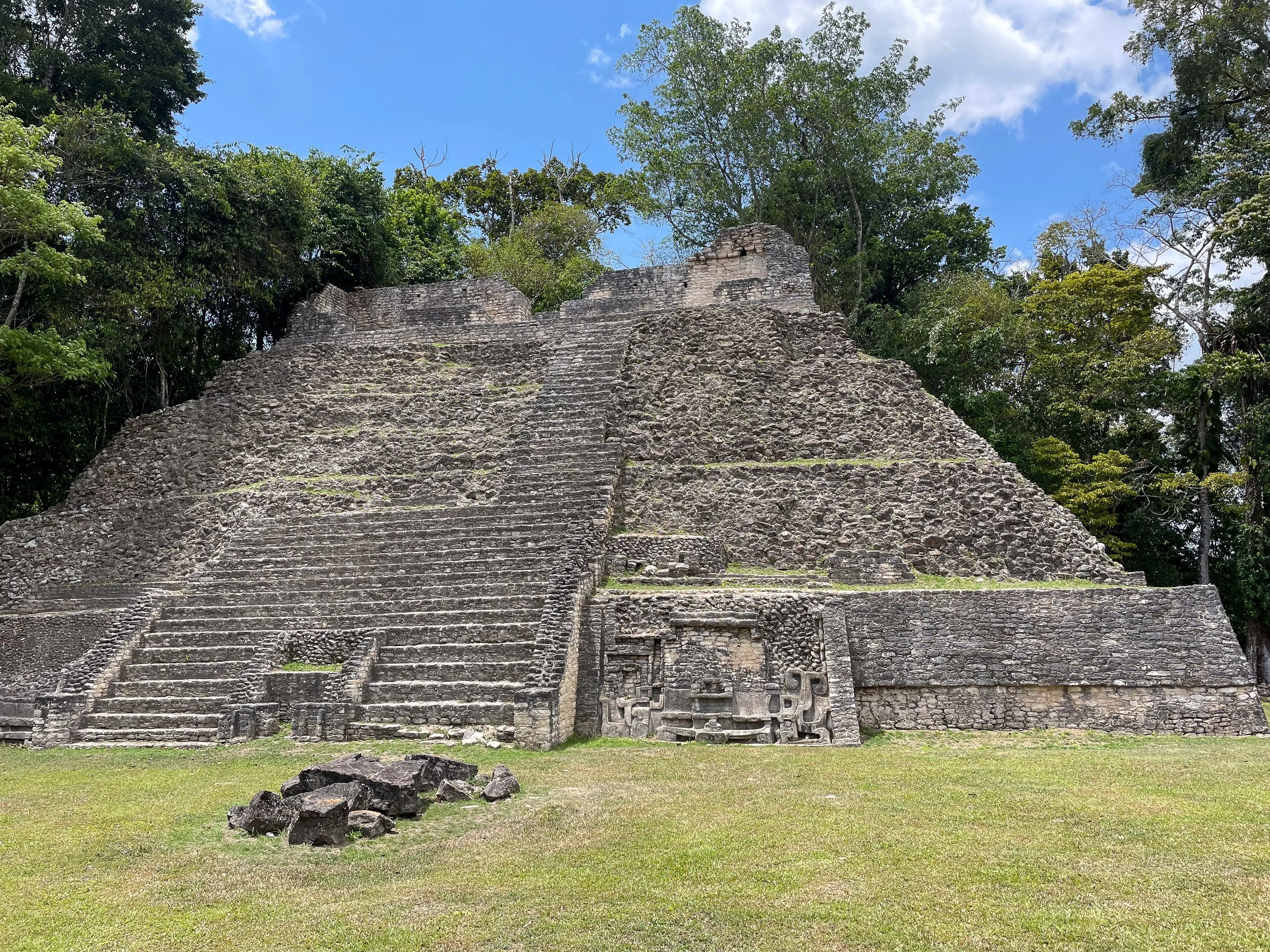
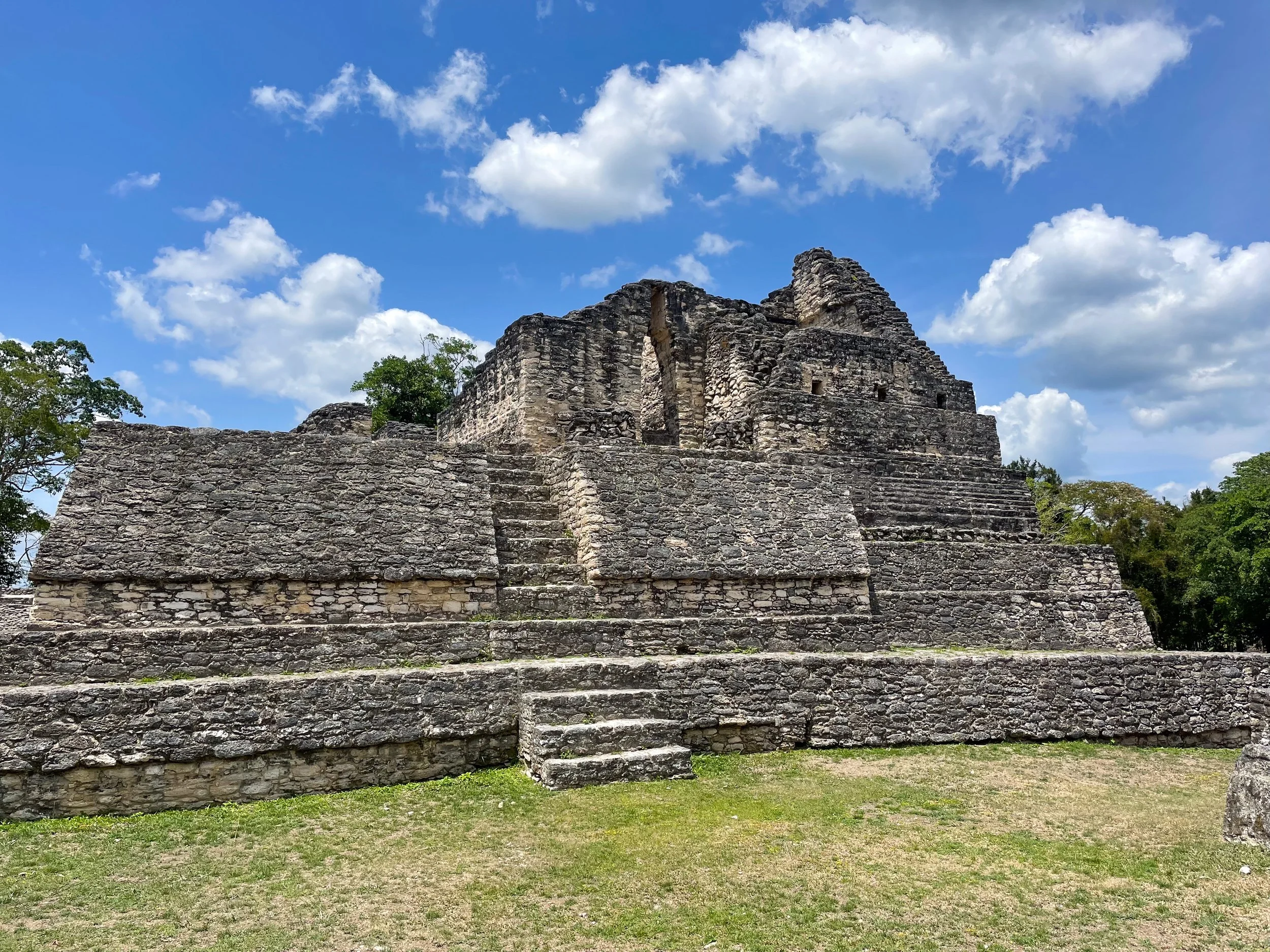
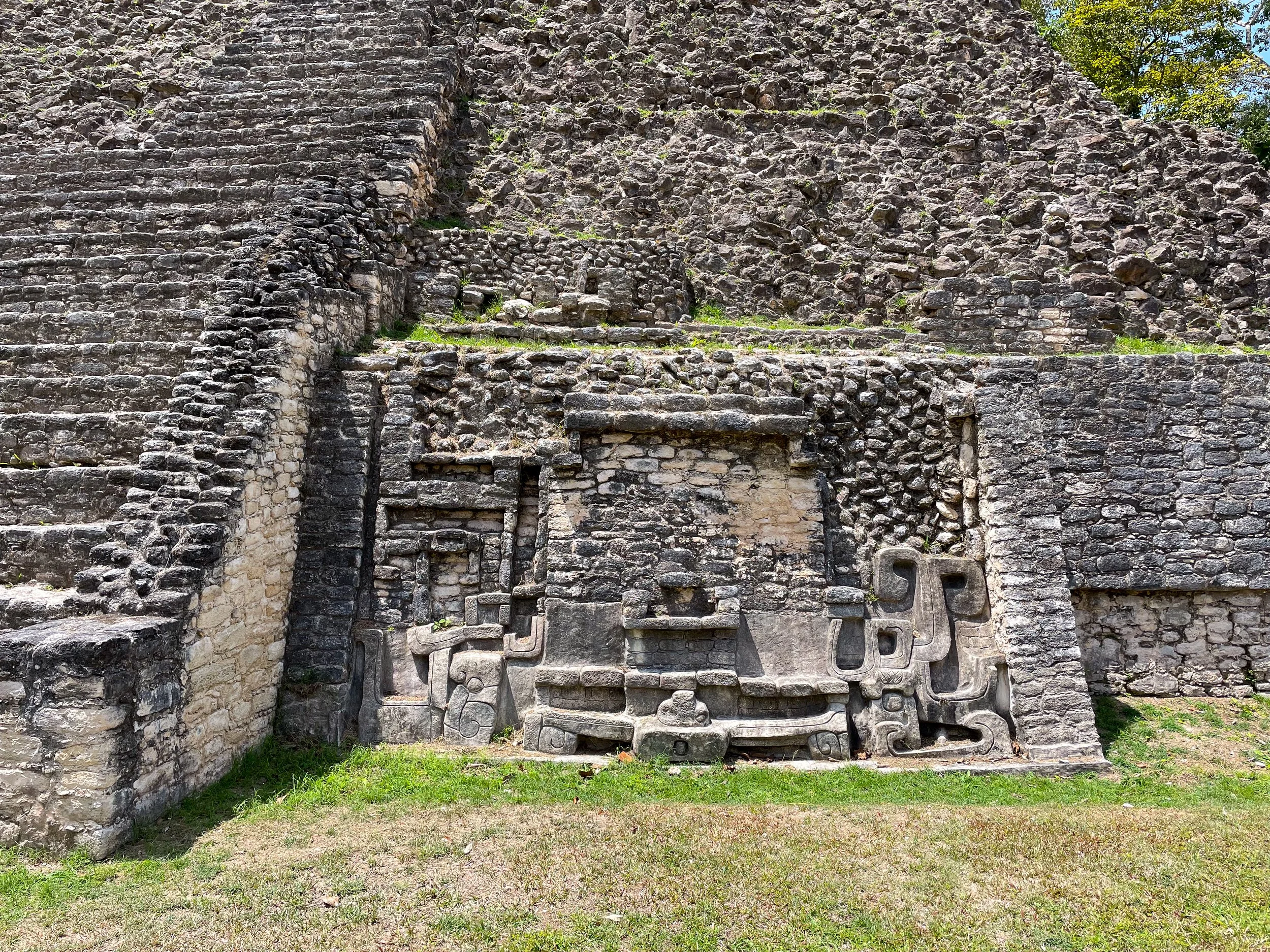
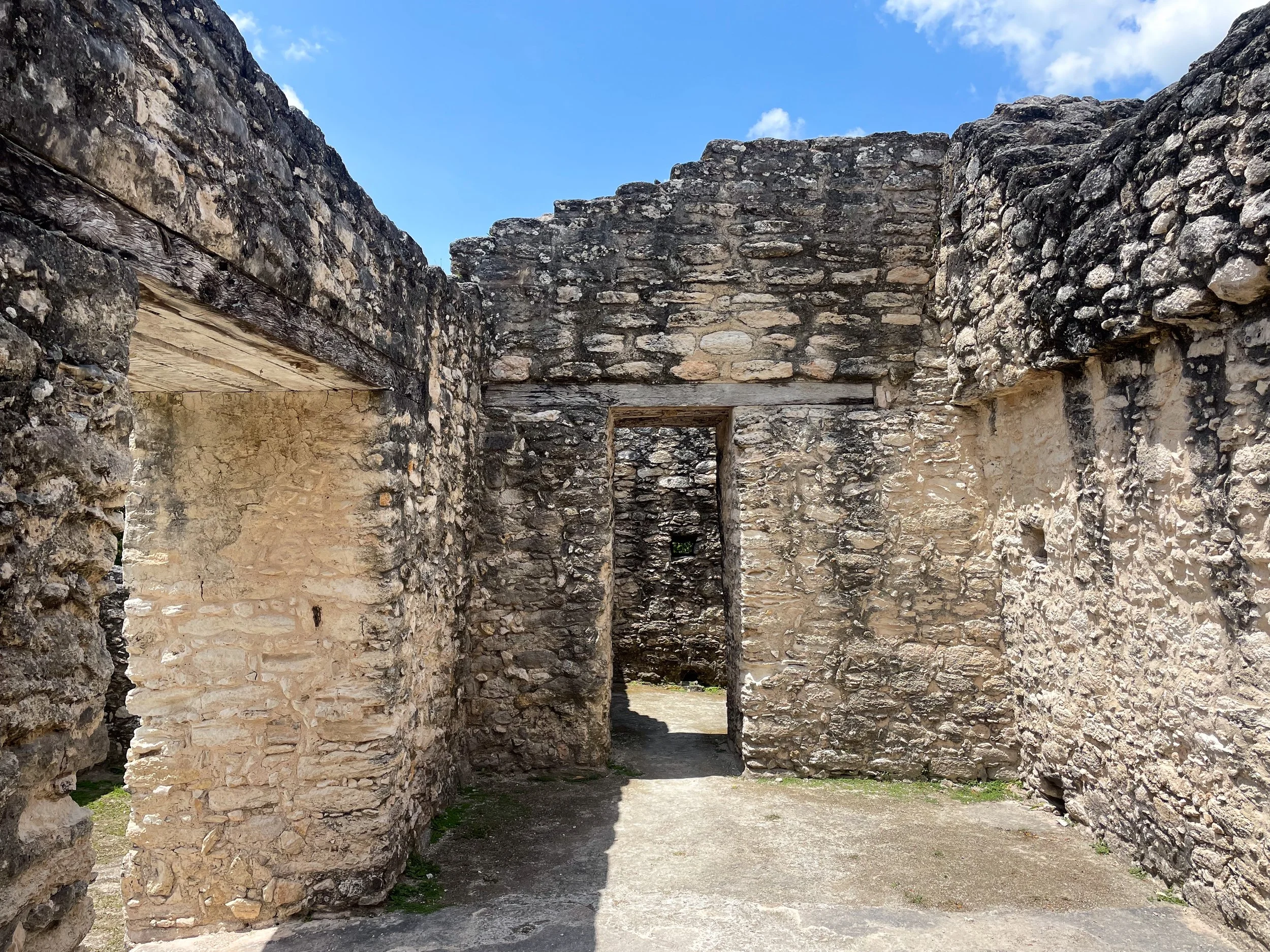
Astronomical Acropolis. Astronomy was one of the cornerstones of the Mayan civilization. They built structures to track the solstices, study the stars and connect to their gods. The astronomical acropolis at Caracol is one of the most significant to be discovered. It’s flanked by temples, pyramids and a ball court.
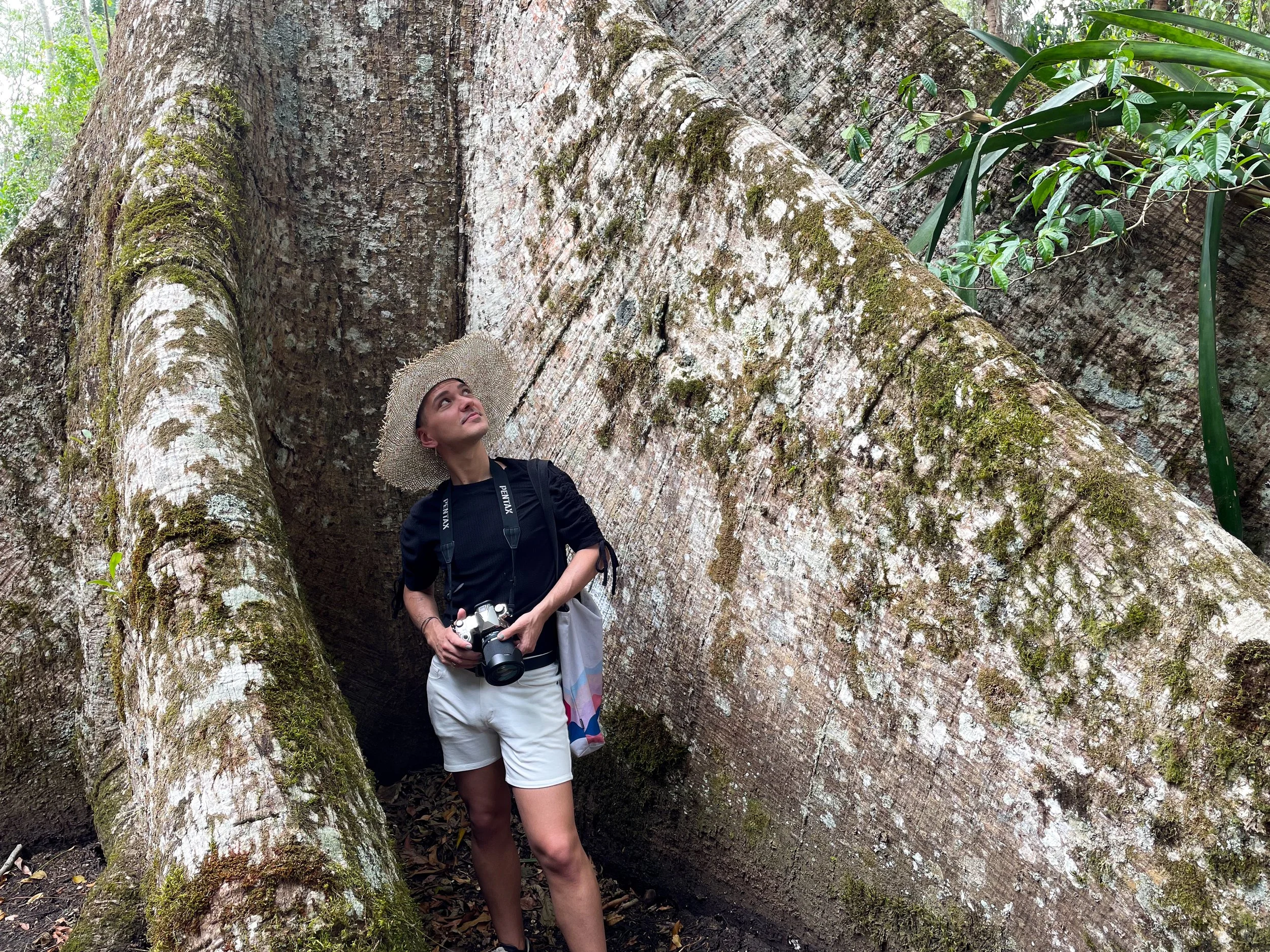
Wildlife Spotting. The remoteness of the archeological park emphasizes the ancient and abandoned nature of the site. As we explored, we heard the billowing grunts of howler monkeys and spotted the reclusive Quetzal, Guatemala’s national bird.
Caracol Tour. We visited Caracol on a small group tour from San Ignacio, traveling about two hours along back roads through dense jungle to reach the ruins. The tour included a local lunch of rice and beans, fried plantains, spiced & stewed tofu and rum punch. We booked with Maya Walk Tours through Viator.
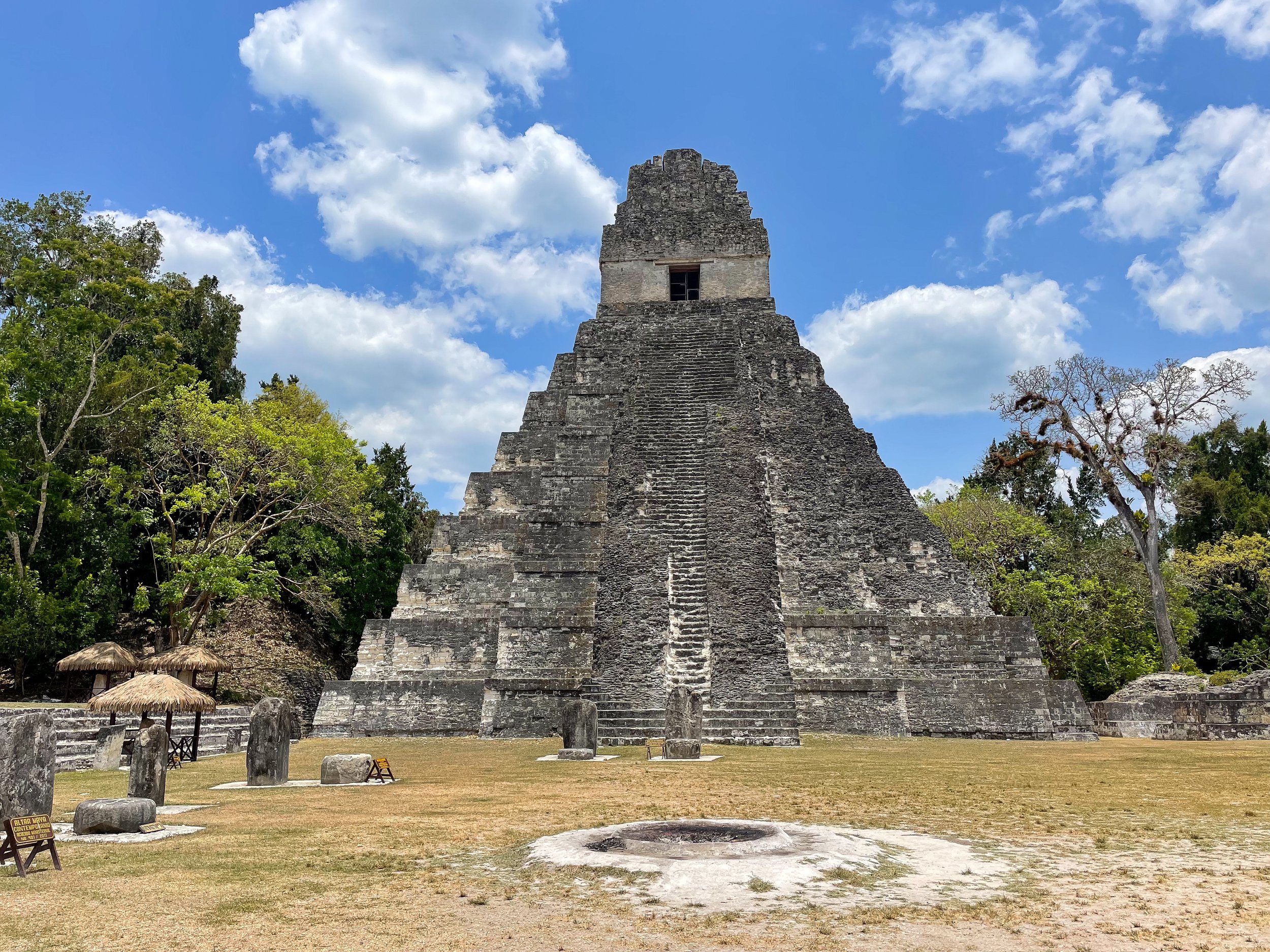
Tikal National Park
Once the epicenter of the Mayan civilization, Tikal is the largest Mayan city ever constructed. Formerly home to 150,000 people and more than 2,000 structures, it’s now dramatically reclaimed by nature. Its ruins reveal the achievements, ceremonies and eventual collapse of the ancient Maya. Nature trails link towering temples, buried mounds and ongoing excavations while wildlife such as toucans, parrots, spider monkeys, and foxes roam the surrounding forest. We explored the ancient wonder on a cross border day trip from Belize to Guatemala.
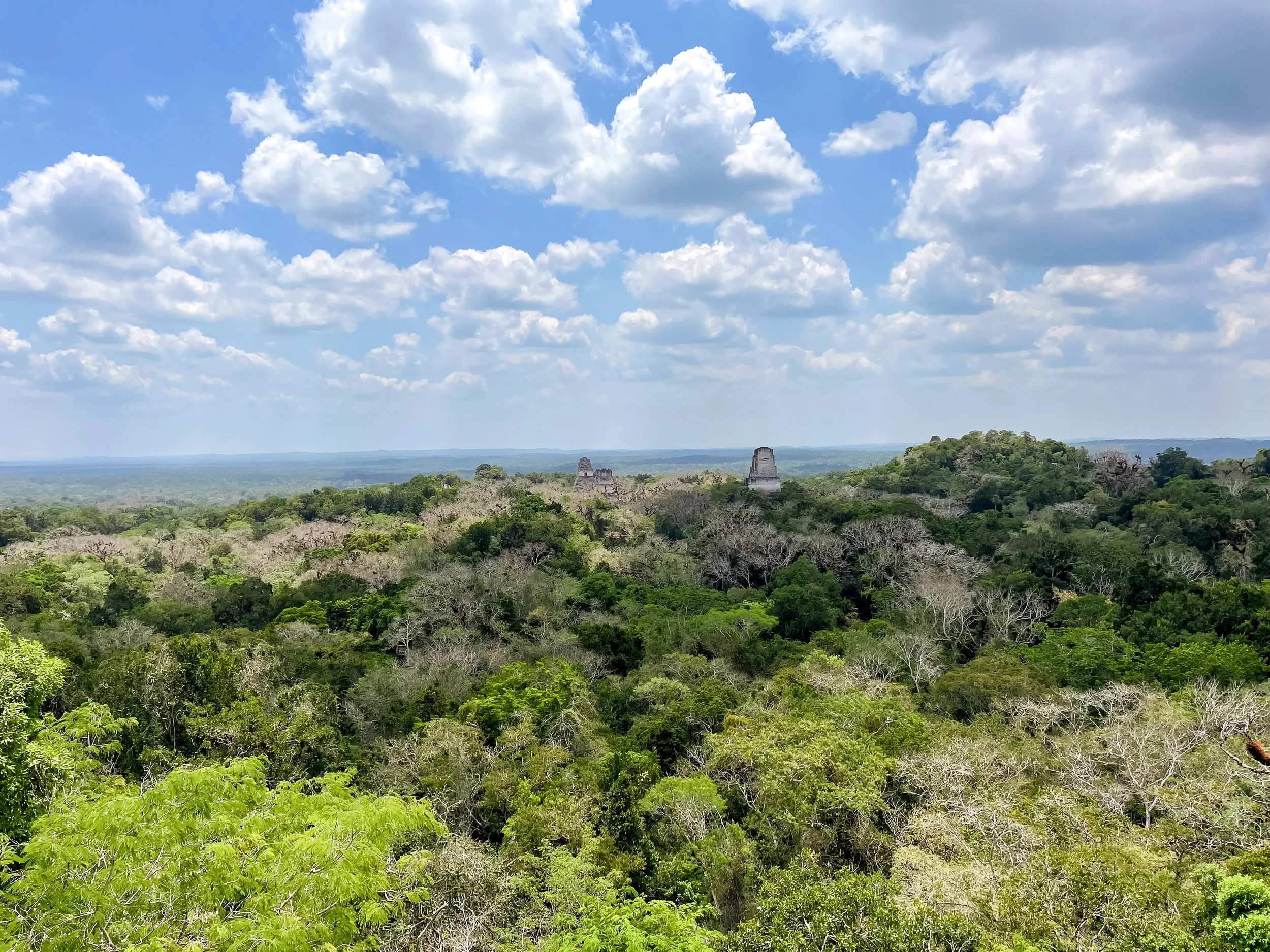
Temple of the Double Headed Serpent. A ceremonial temple and the largest at Tikal. Its crumbling ruins rise 70 meters from the jungle canopy. Stairs lead to its upper levels with views of the expansive jungle canopy and distant temples protruding from it. We imagined what the city must have looked like from this vantage point during its peak.
Fun Fact. The view from this temple is made famous by a scene in Star Wars when the Millennium Falcon landed on the rebel moon base of Yavin 4.
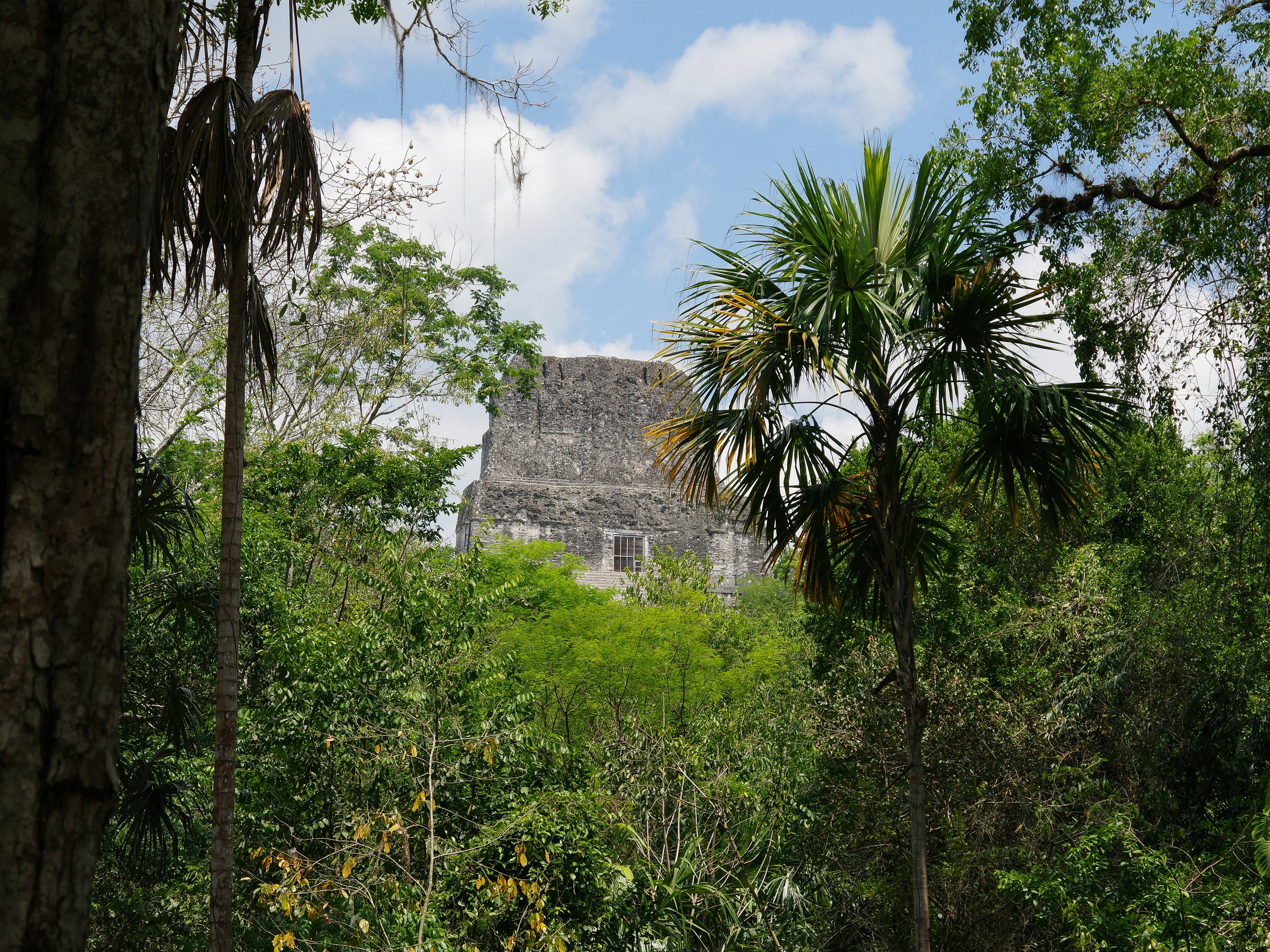
Temple of the Jaguar Priest. One of the tallest temples at Tikal. Its upper levels rise from the jungle canopy while its base is overgrown with vegetation. The temple is not accessible but can be viewed through the trees below and from Temple IV.
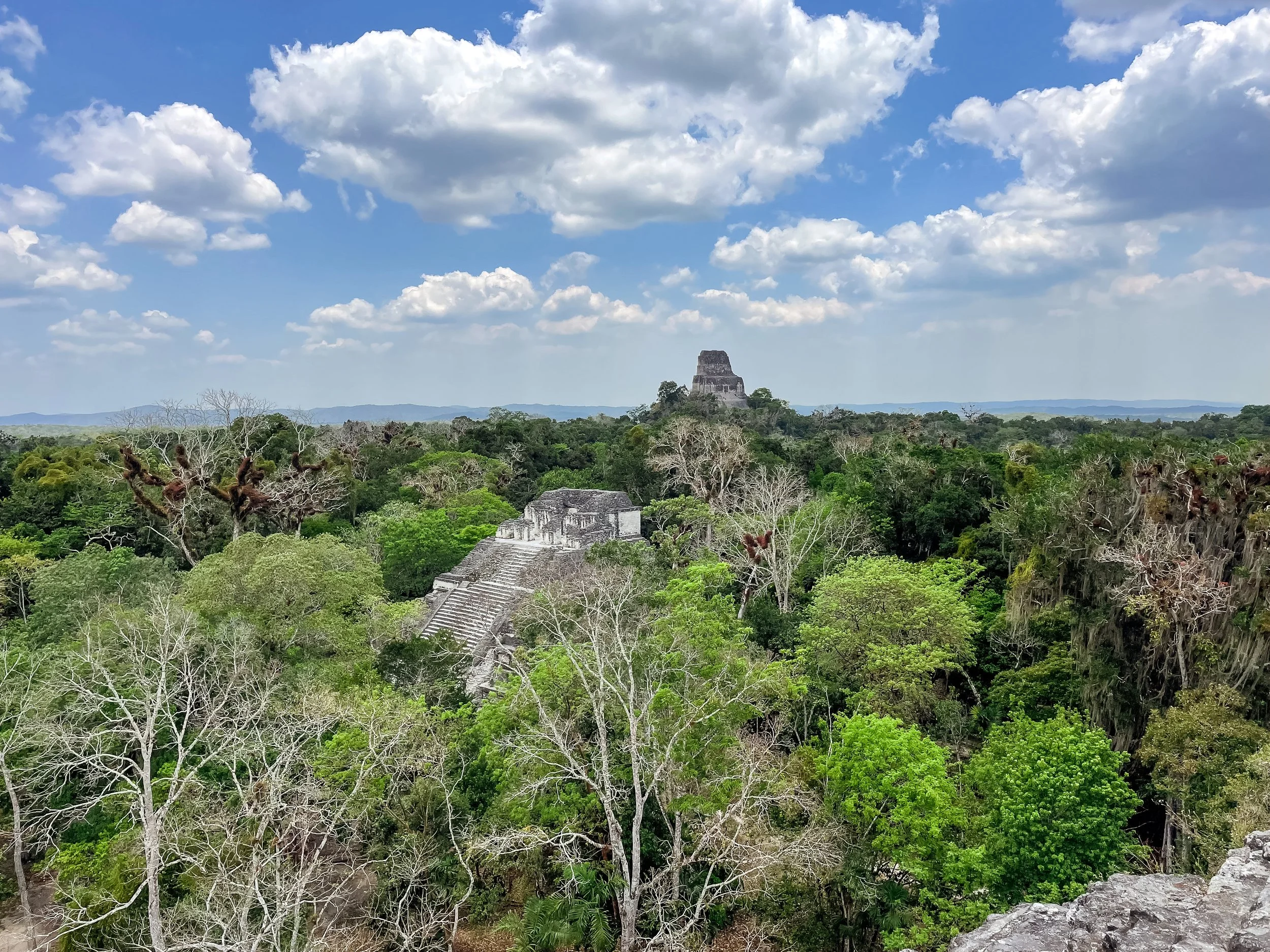
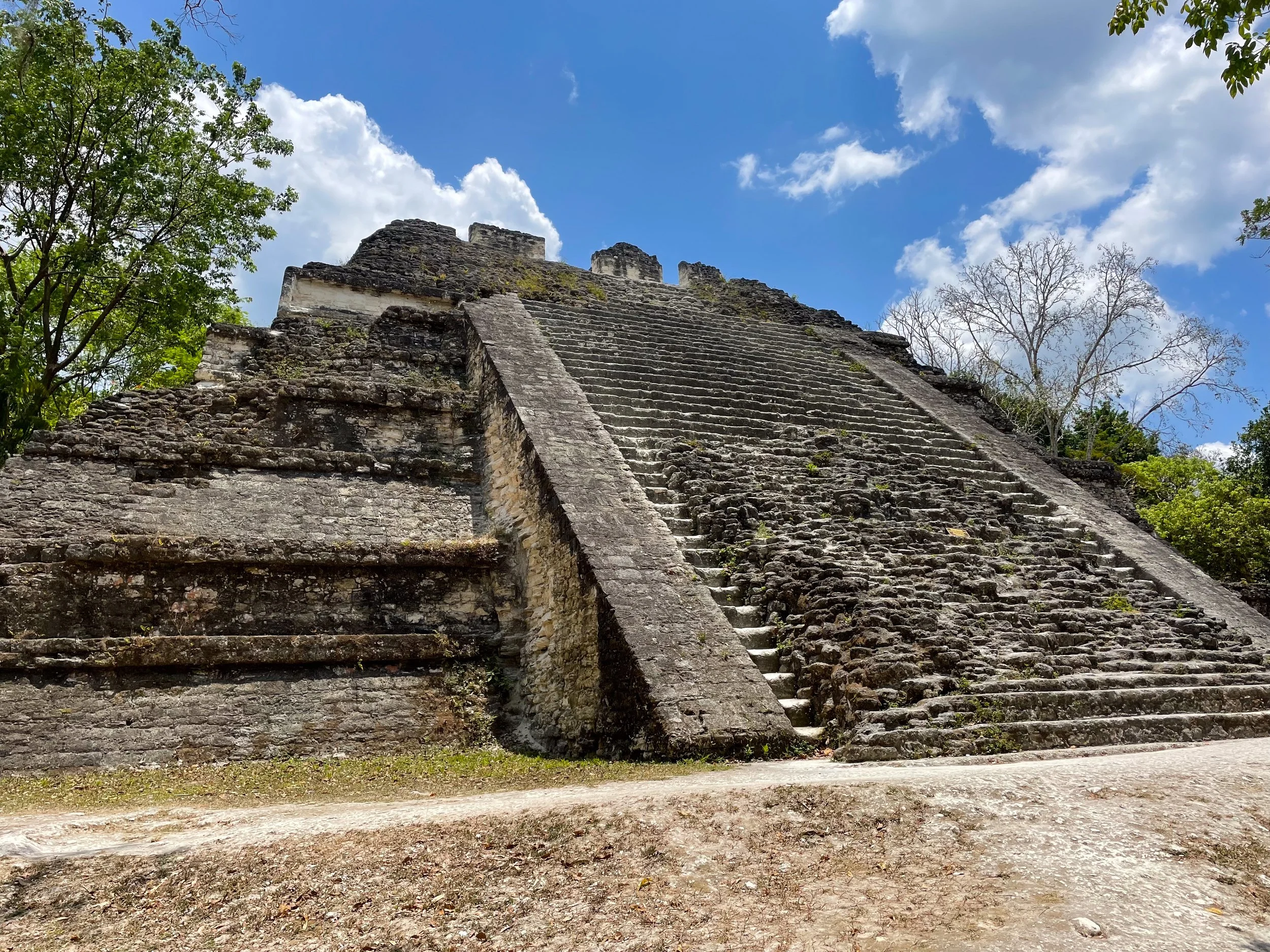
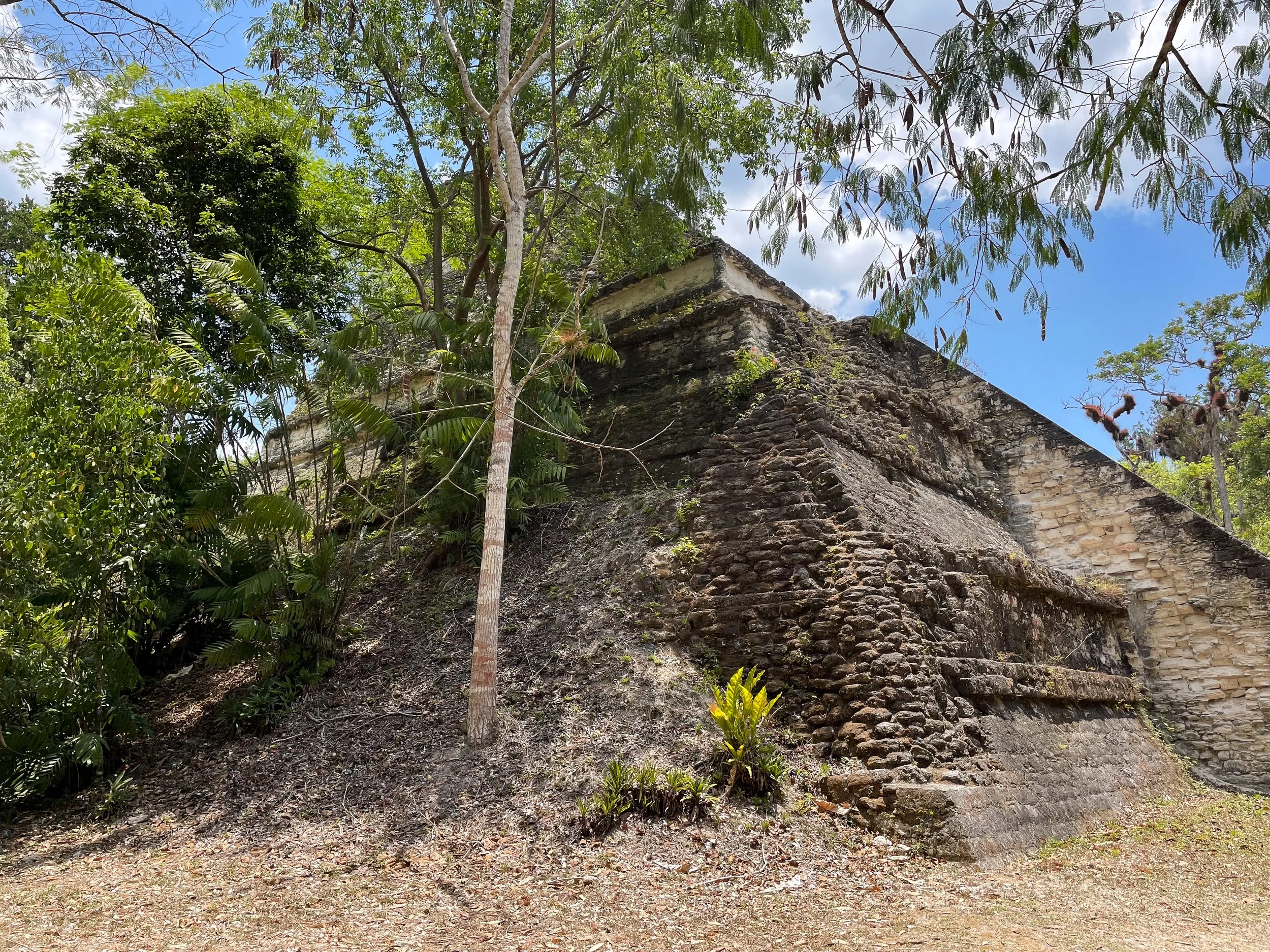
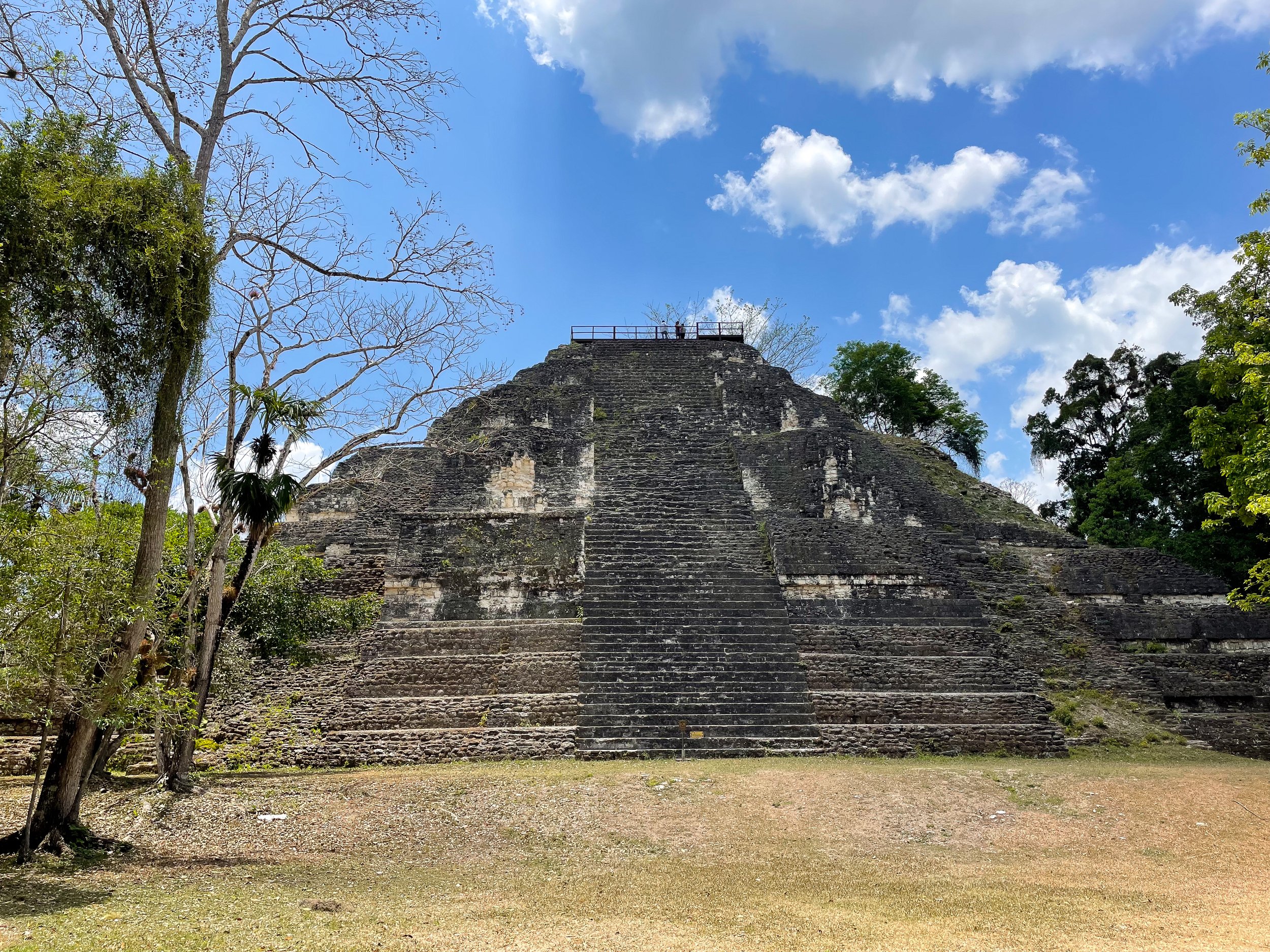
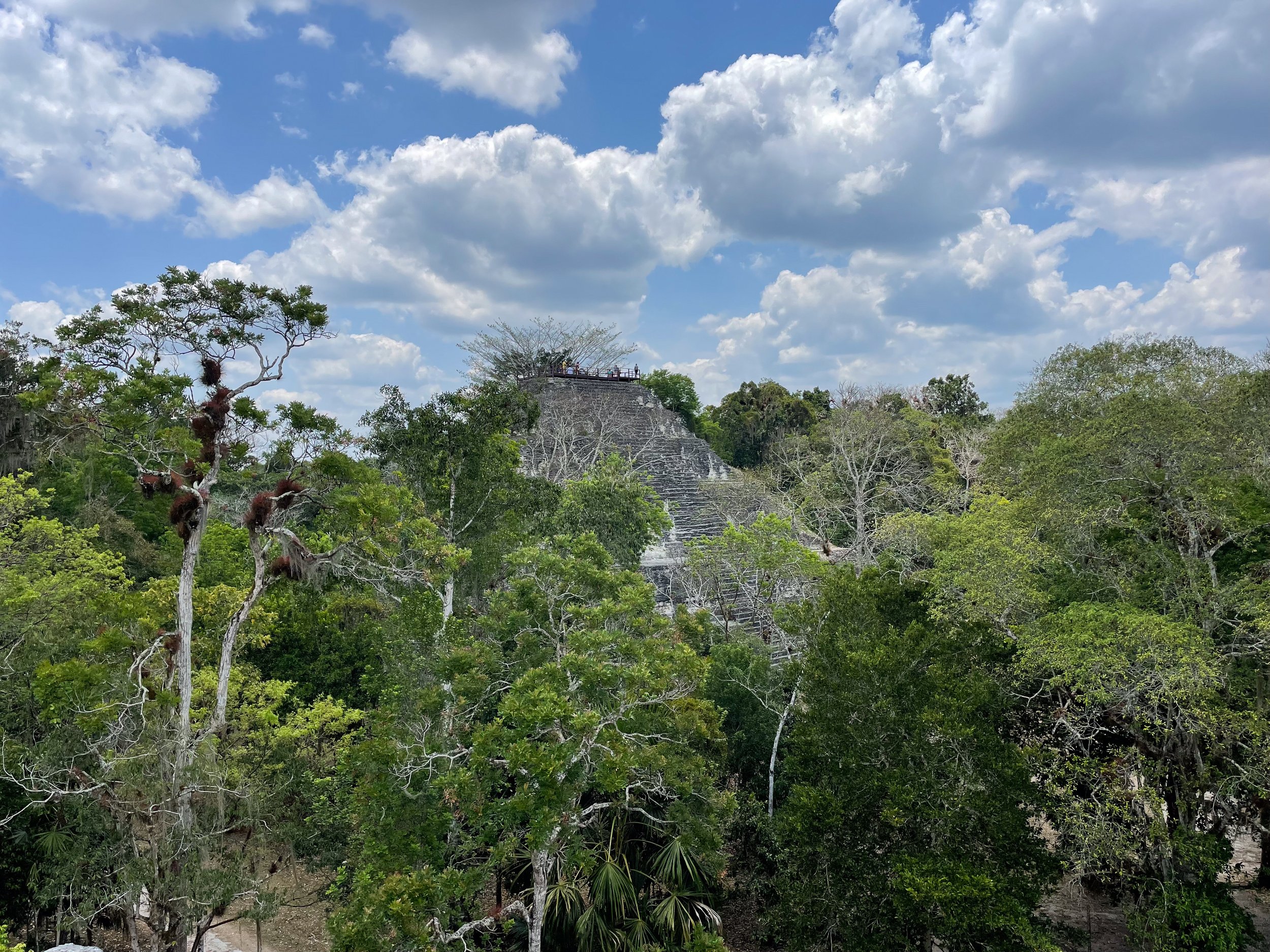
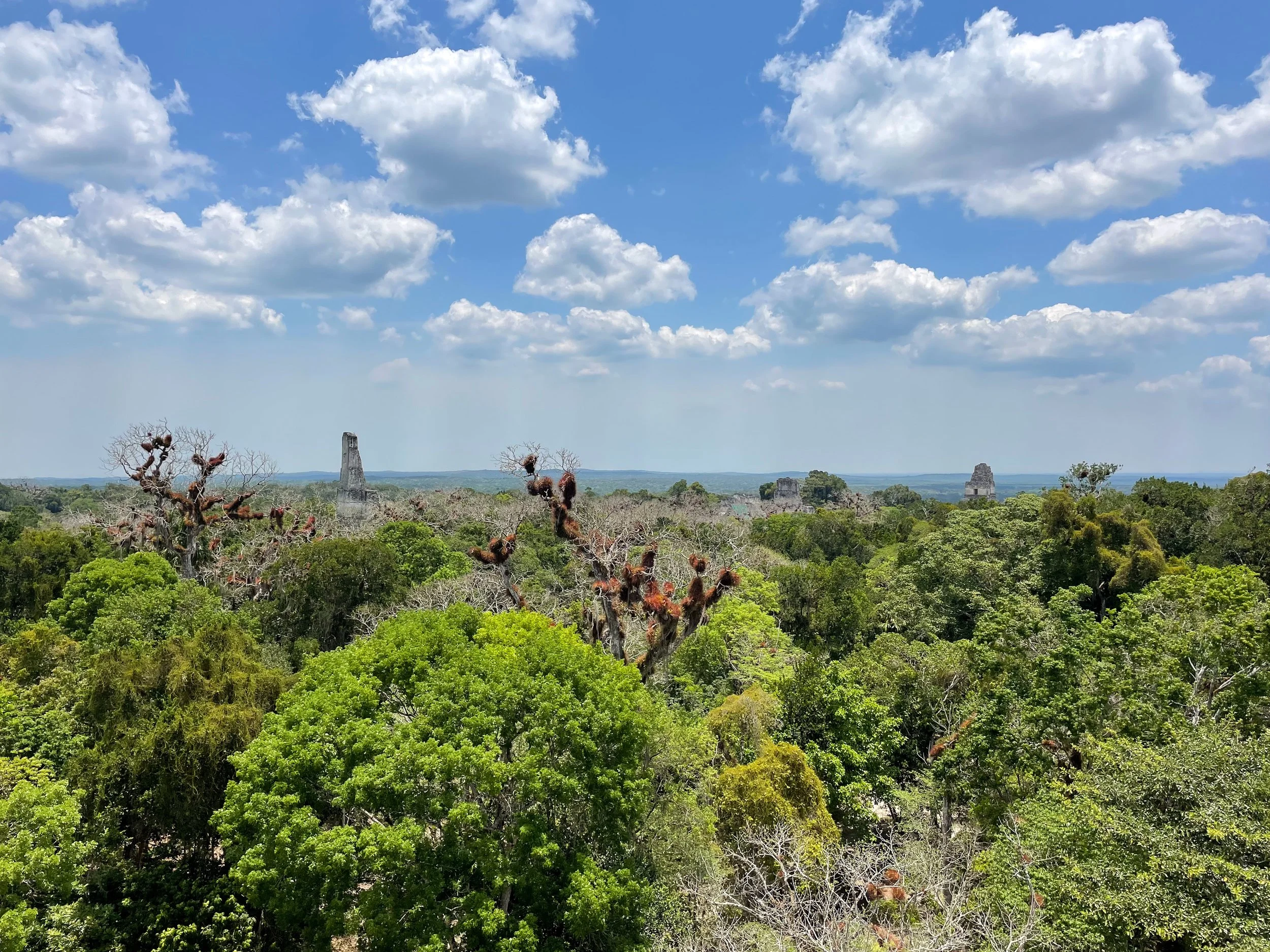
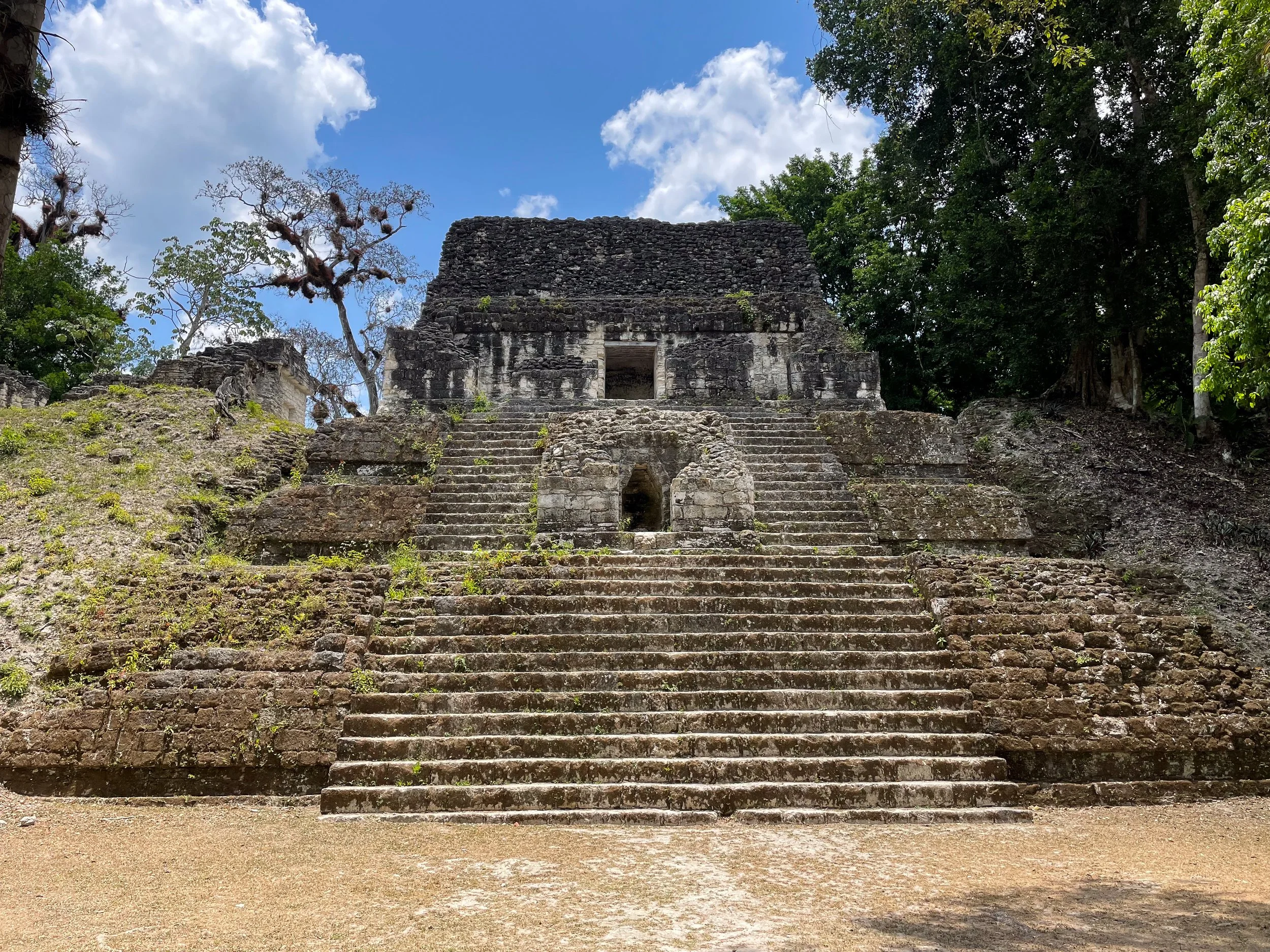
The Lost World Complex. A large ceremonial complex with multiple temples, pyramids and an astronomical acropolis. Its largest pyramid has an observation deck overlooking several nearby temples and pyramids across Tikal.
The Talud Tablero Temple. A temple within The Lost World complex featuring architectural influences from the Teotihuacan civilization. Climbable steps lead up its wide base and sloped levels to an exposed room at its top.
Plaza of Seven Temples. A linear astronomical acropolis with seven pyramids and temples designed to track the solstices and study the stars. Many of the structures remain overgrown and only partially exposed.
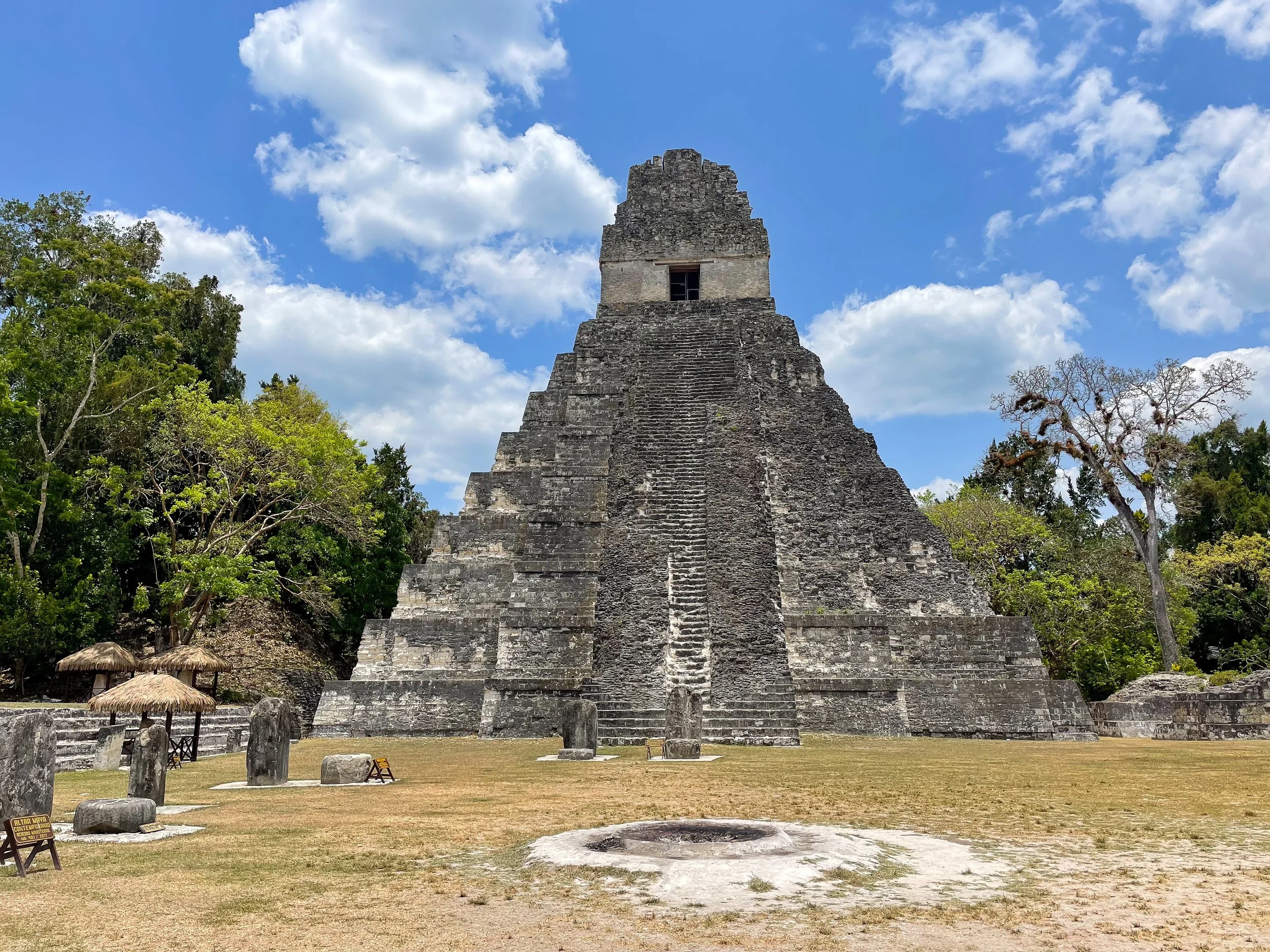
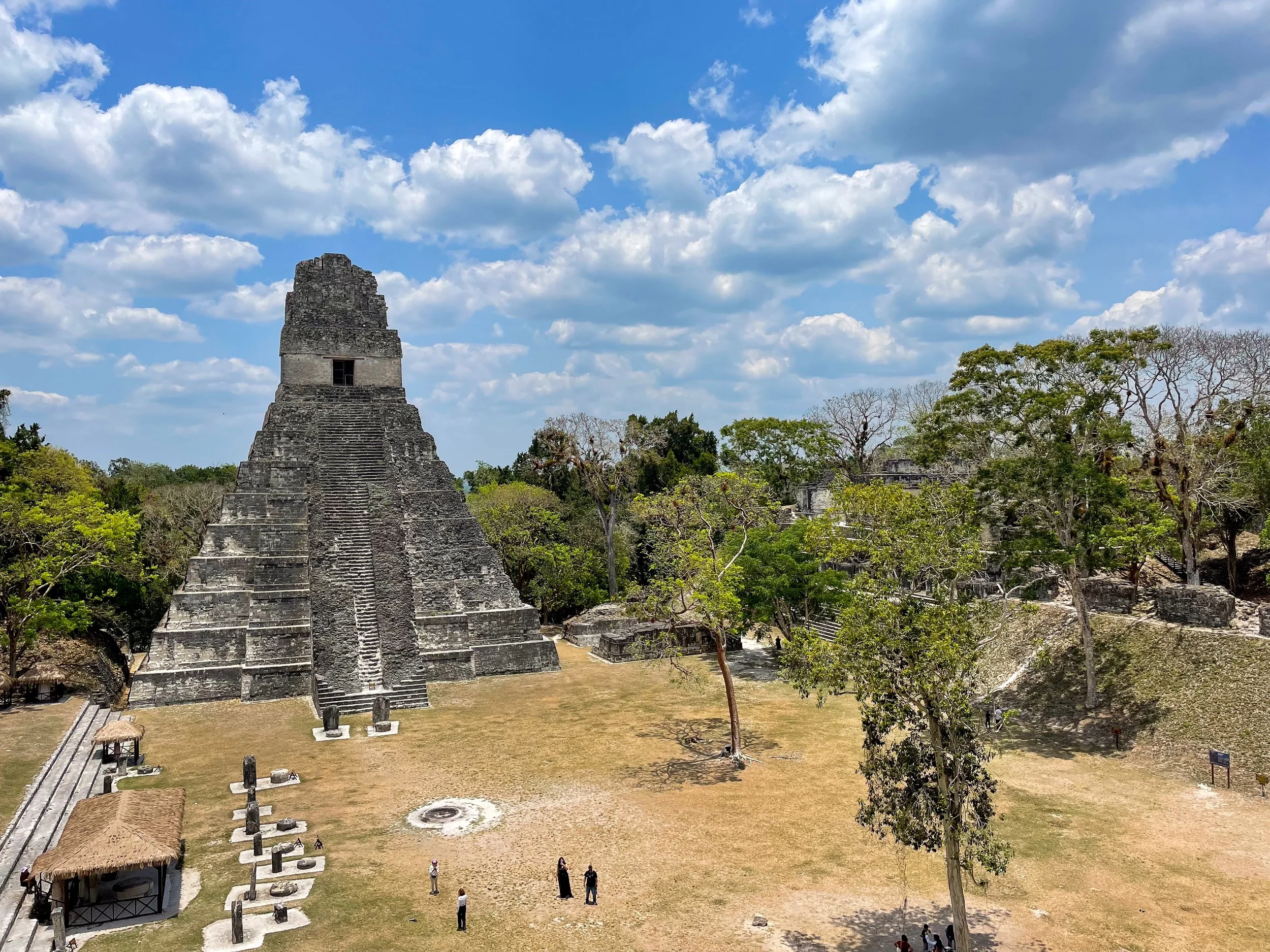
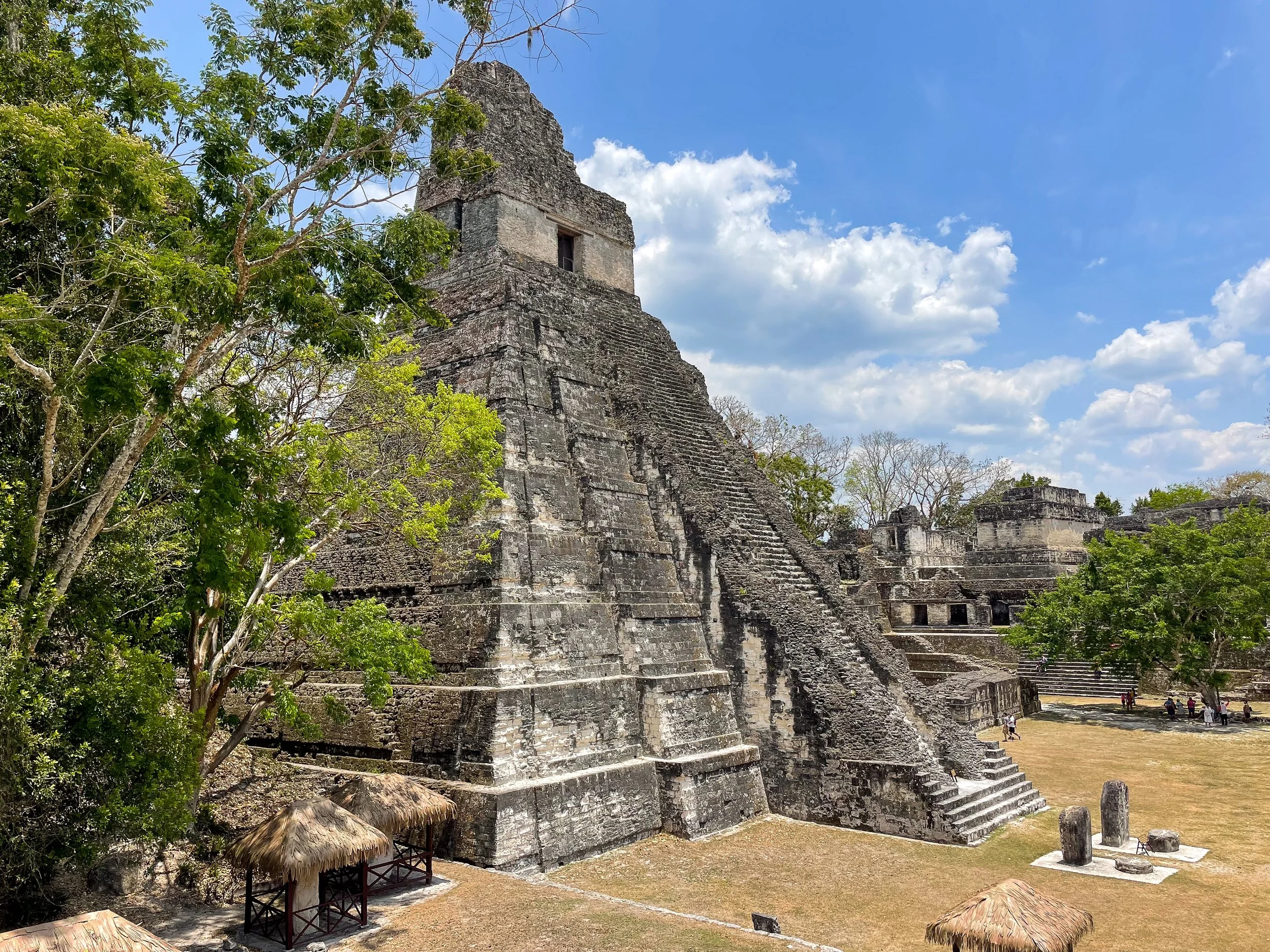
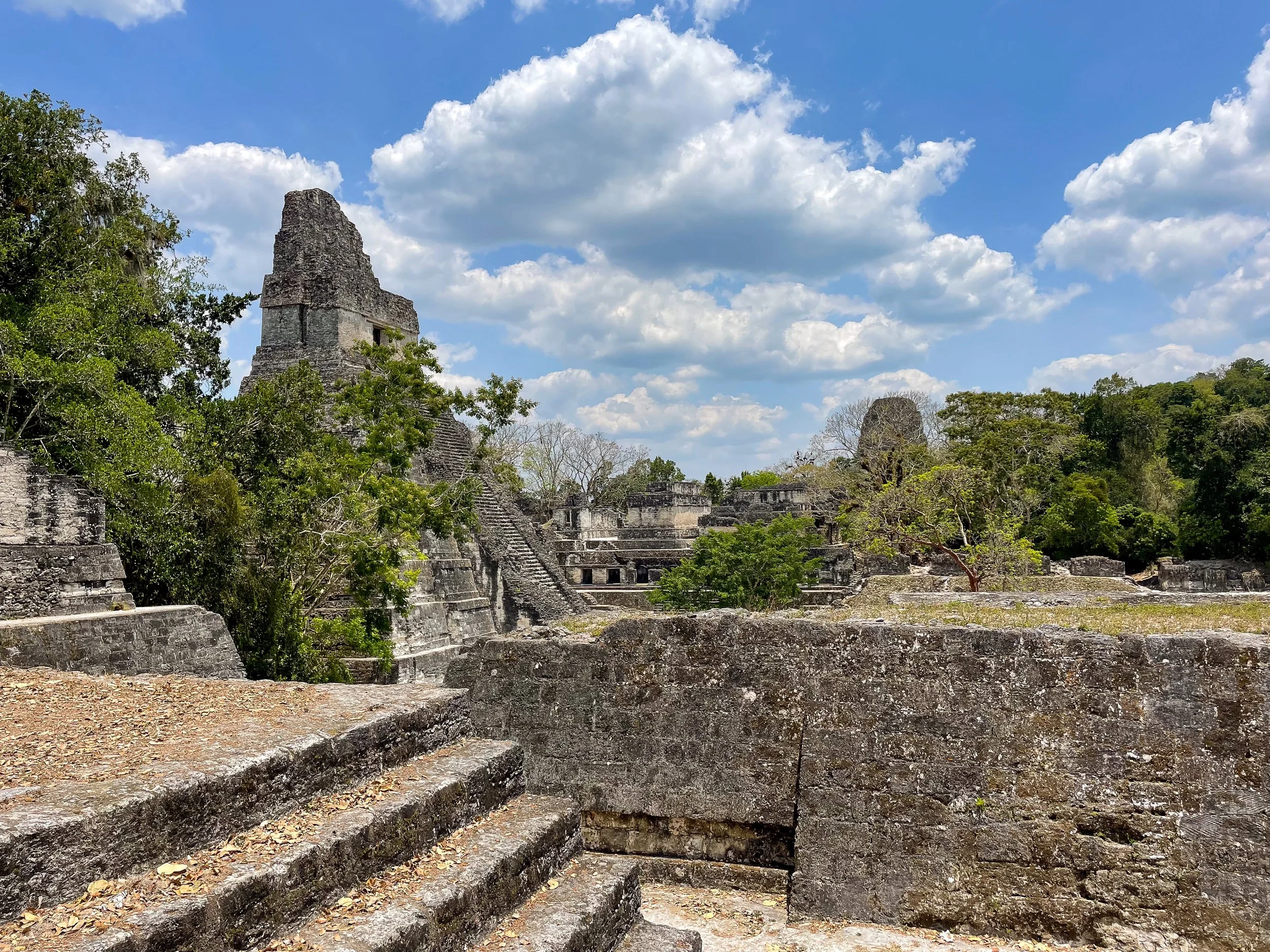
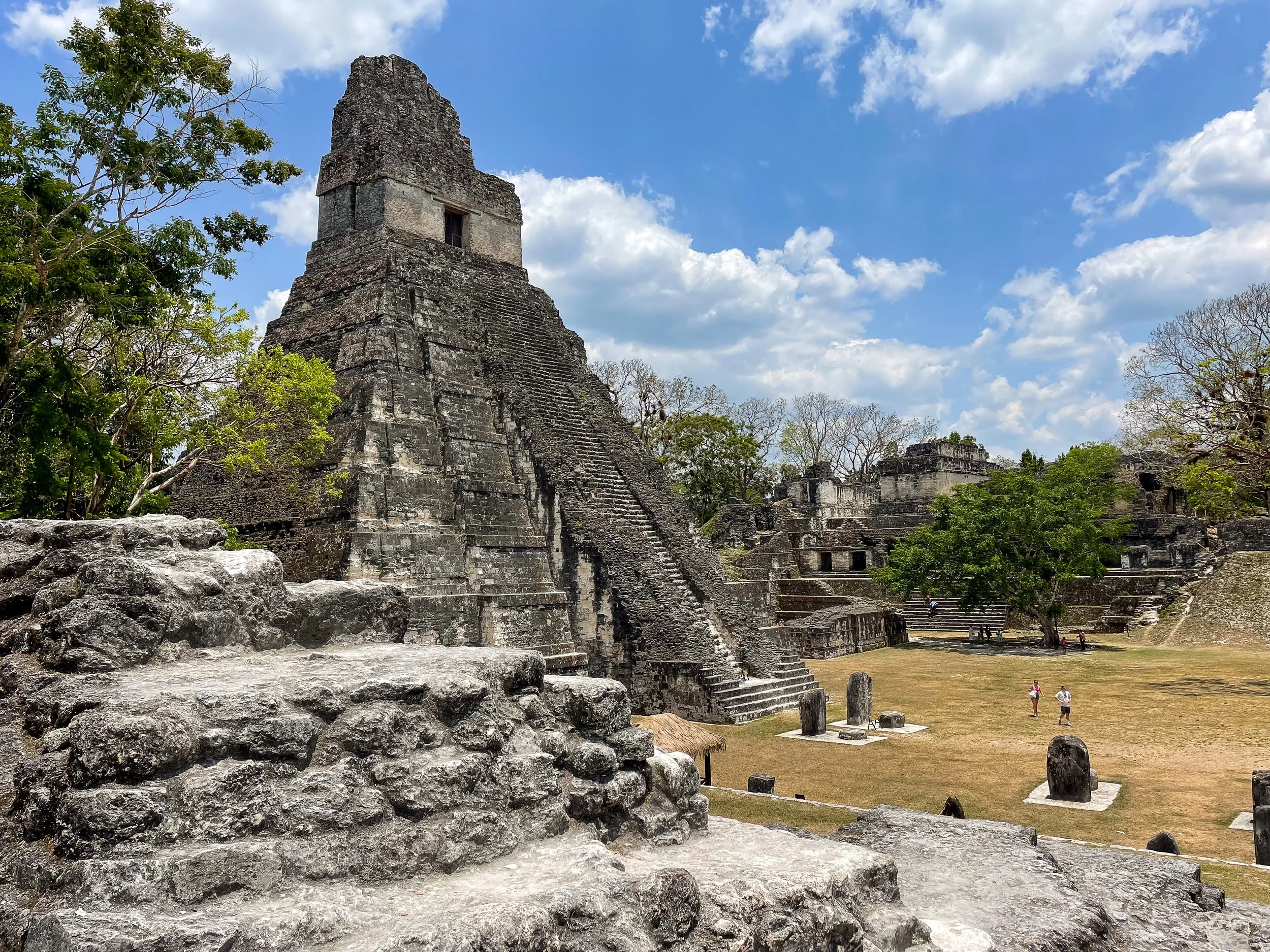
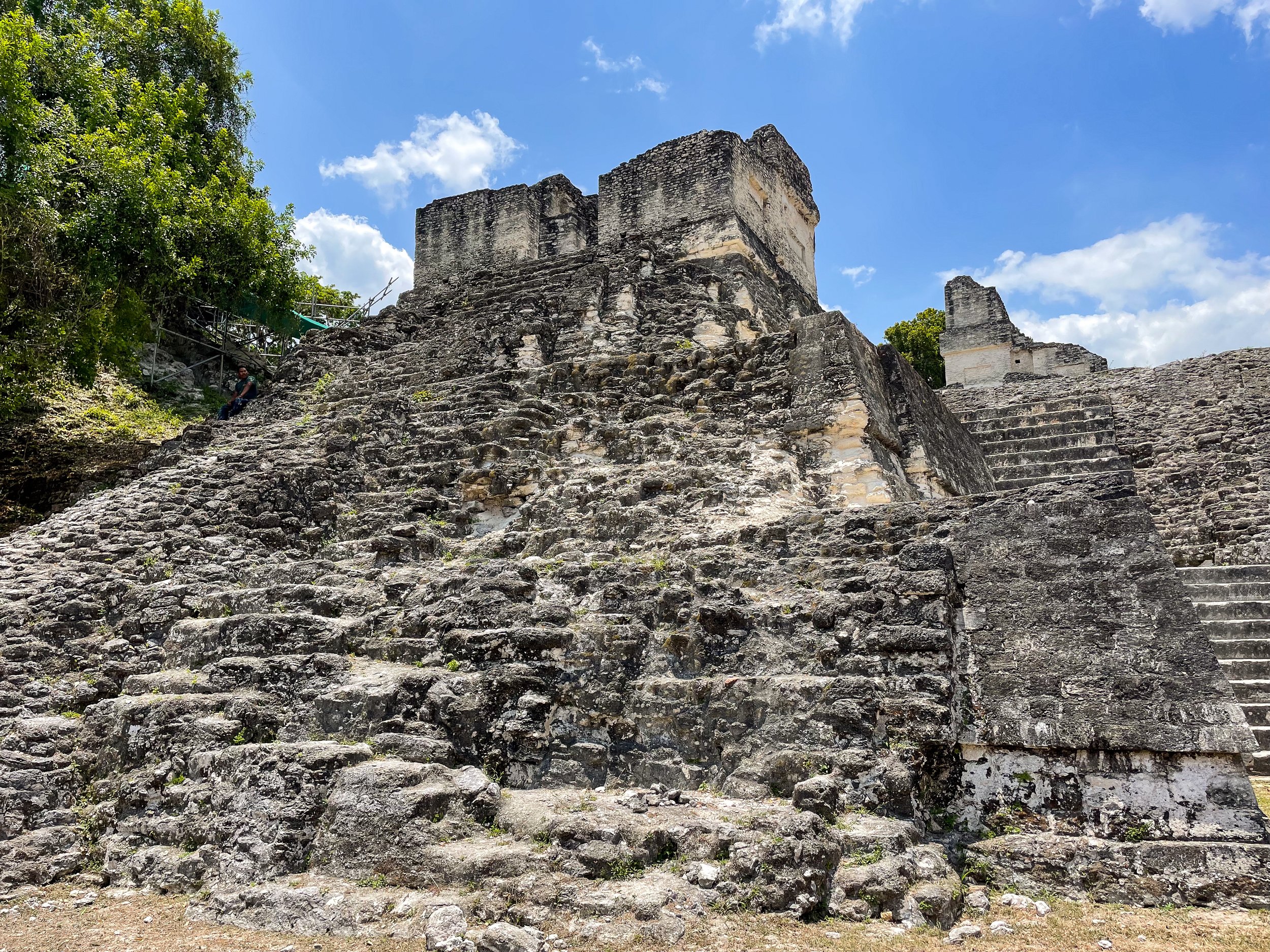
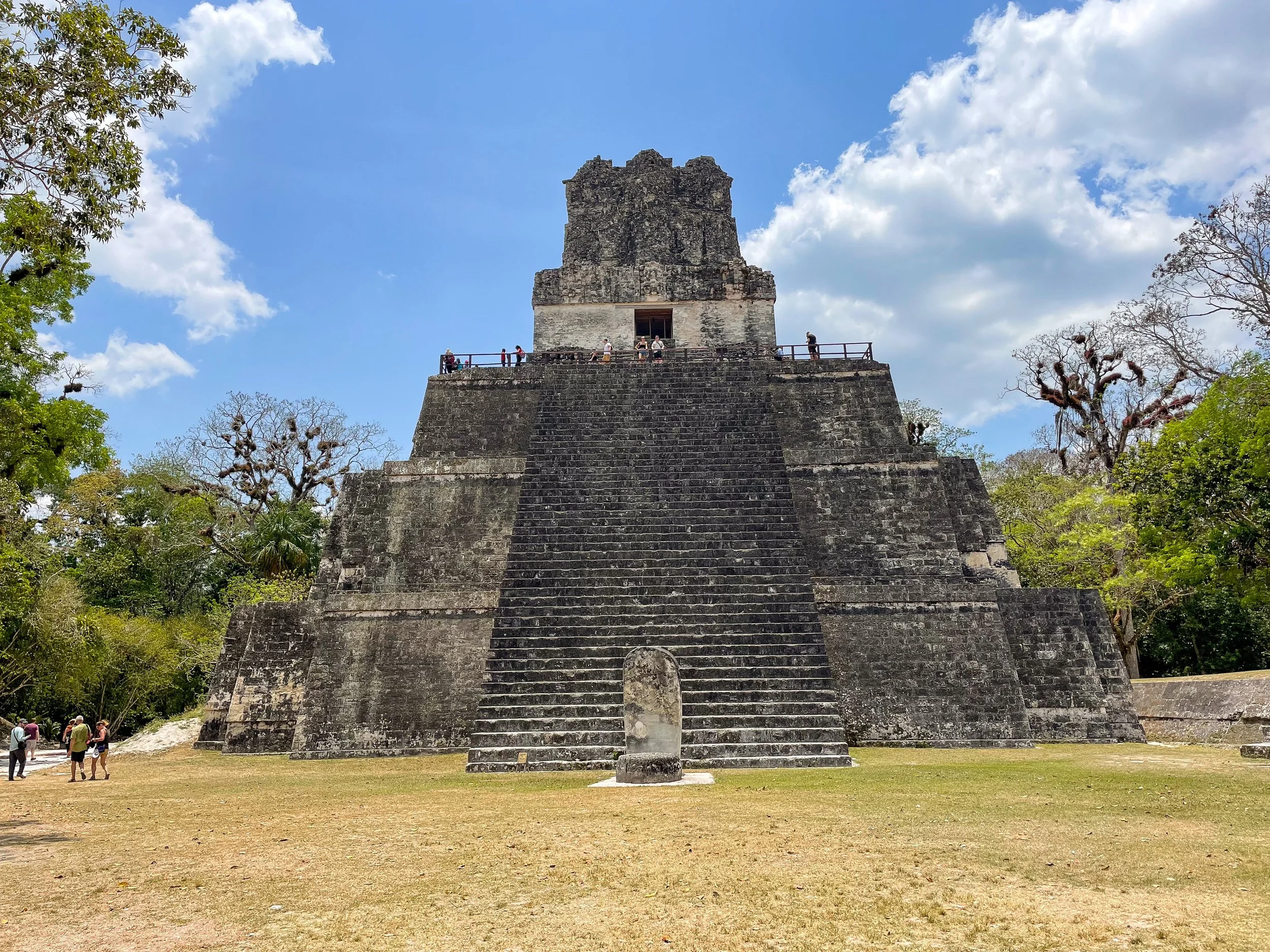
The North Acropolis. The most well preserved and recognizable acropolis at Tikal. Its central plaza is framed by multiple pyramids, residential structures and a ball court. Once home to Mayan royals and the burial site of past rulers, it features tombs and stelae. The complex is largely free to explore, including the opportunity to climb two of its pyramids for sweeping views of neighboring structures and close-up looks at their detailed carvings and hieroglyphs.
Temple of the Great Jaguar. The most picturesque pyramid at Tikal residing at the center of the North Acropolis. Its ten level stepped sides lead to a throne room at its top. Though non-accessible, the temple can be viewed from the plaza and Temple II.
The Temple of Masks. A large stepped pyramid with a shrine at its upper level featuring eroded carvings of two masks. It offers the best views of the North Acropolis and the Temple of the Great Jaguar.
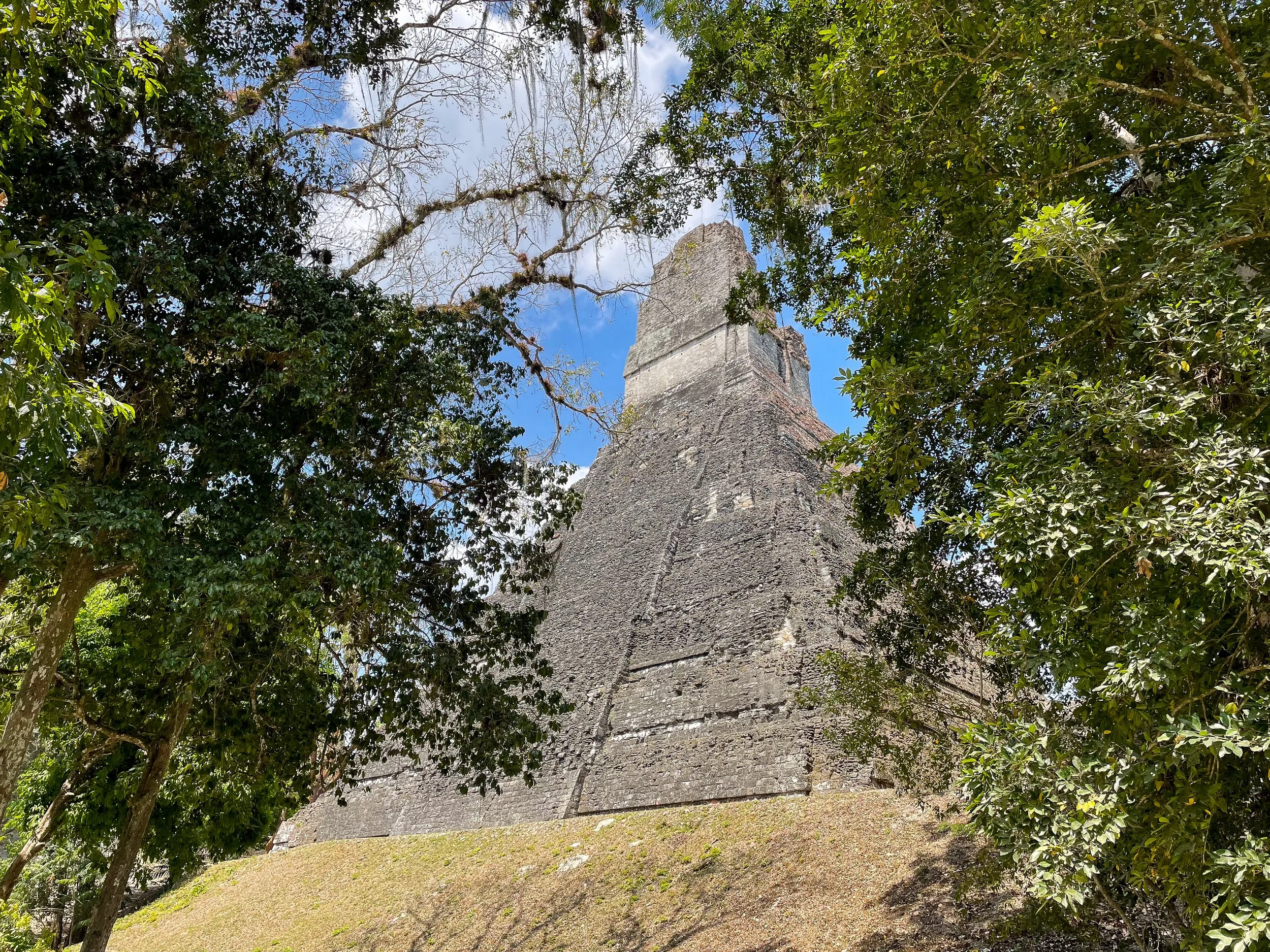
Getting Here. We visited Tikal with Belize Family Excursions on a day trip from San Ignacio. Our tour included transportation across the border of Belize and Guatemala, free time to explore the ruins and lunch at a local restaurant in Guatemala.
Actun Tunichil Muknal Cave
Actun Tunichil Muknal (ATM) is one of the most sacred places to the ancient Mayans, considered the entrance to the underworld. The sprawling cave system features an underground river and breathtaking rock formations. The chambers of the cave contain sacrificial human remains and Mayan pottery. The cave is well protected, with only a limited number of visitors permitted to enter per day.
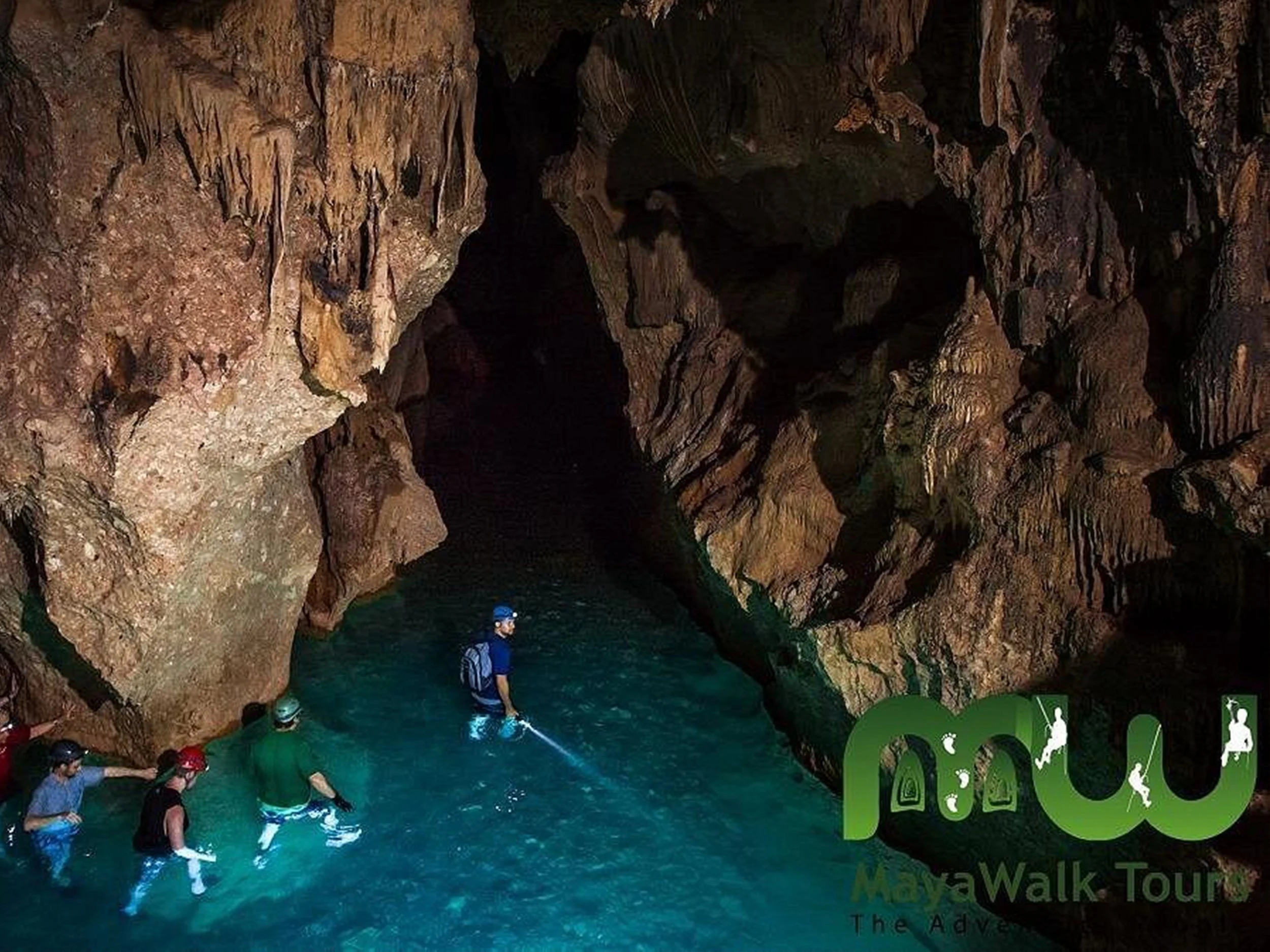
The Entrance of the Underworld
A hike through the jungle and across three shallow rivers leads to the entrance of the cave. A striking blue river flows from the darkness of its mouth. We swam inside with headlamps lighting the way. We squeezed through tight crevices and water filled passages before entering wider chambers and climbing over rocks as the river moved around us. Along the way, we admired clusters of stalactites and stalagmites used as musical instruments, like a xylophone, by the ancient Maya when tapped on. We scrambled up to a cliff to access the cave’s vast second half.
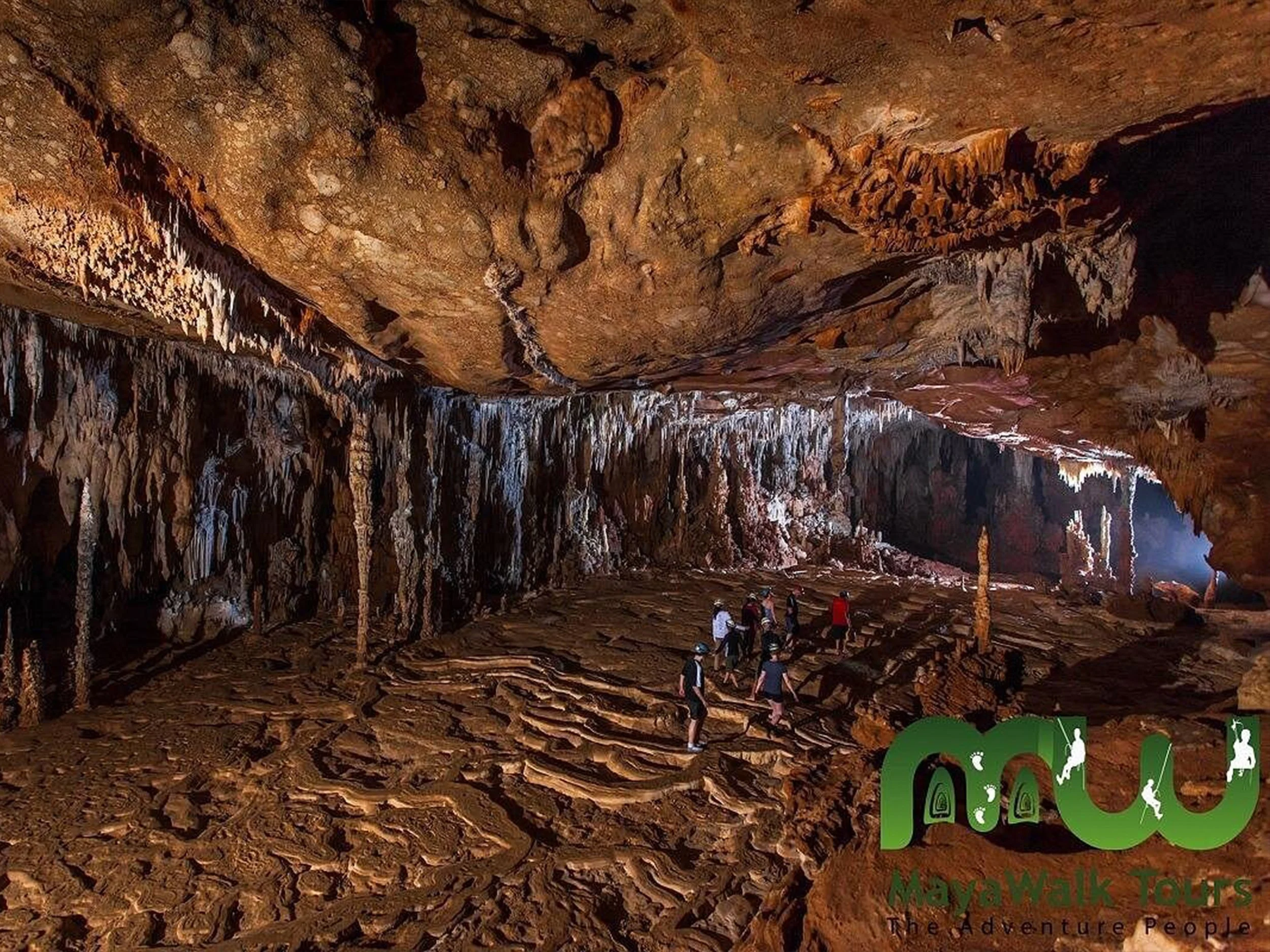
Ceremonial Chambers
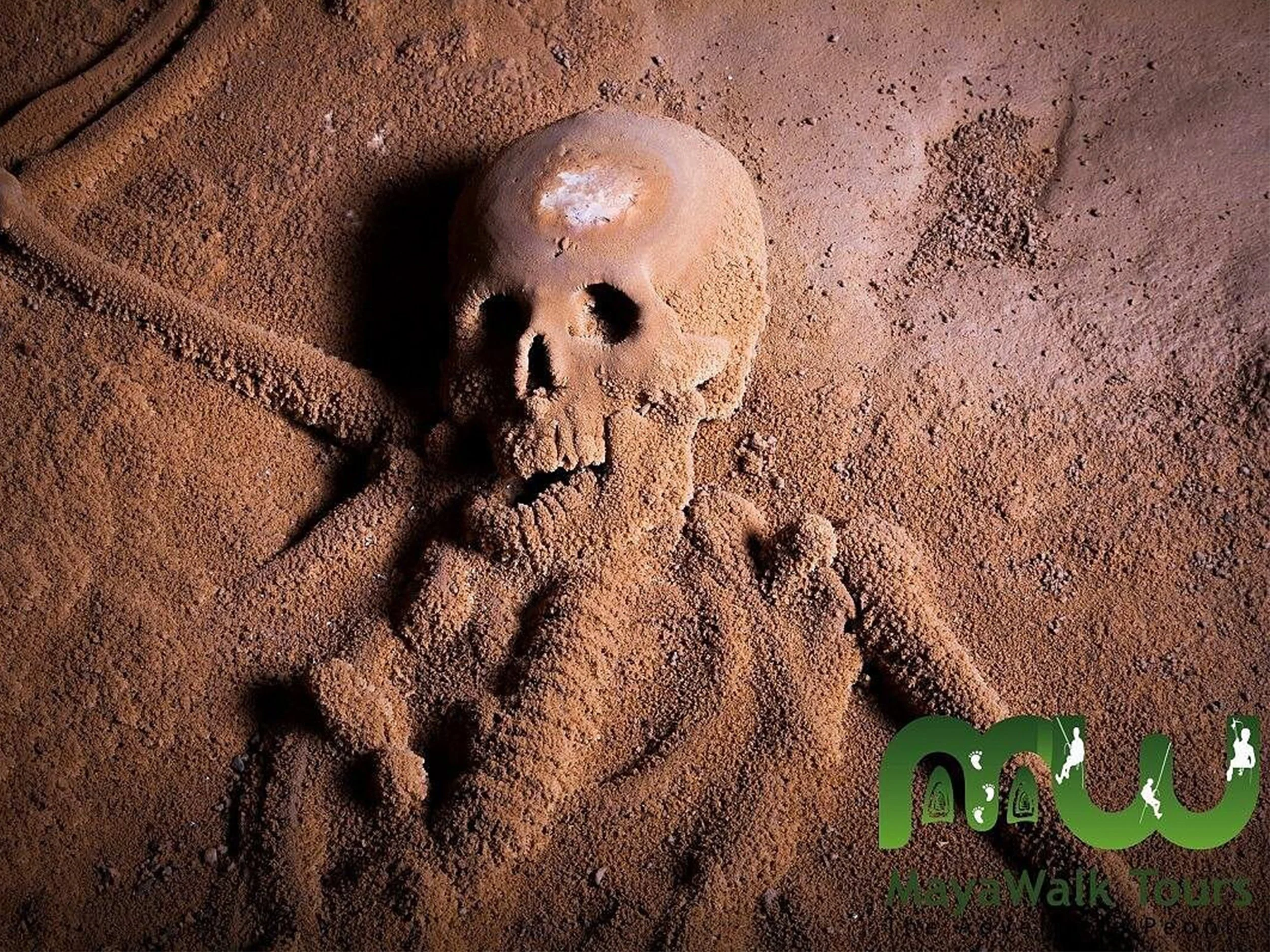
At this point, we removed our shoes and continued in our socks out of reverence of what awaited. We stepped into a massive cathedral like chamber with columns of rock, sparkling stalactites and mineral pools. Countless pieces of 1,000 year old pottery lay all around us, many of which remained mostly intact. Carved stalagmites cast shadows said to depict stories of Mayan gods. As we moved deeper, we encountered skeletal remains of sacrificial victims, including skulls and the bones of infants, culminating in the haunting sight of two calcified and exceptionally well preserved skeletons at the chamber’s furthest reach.
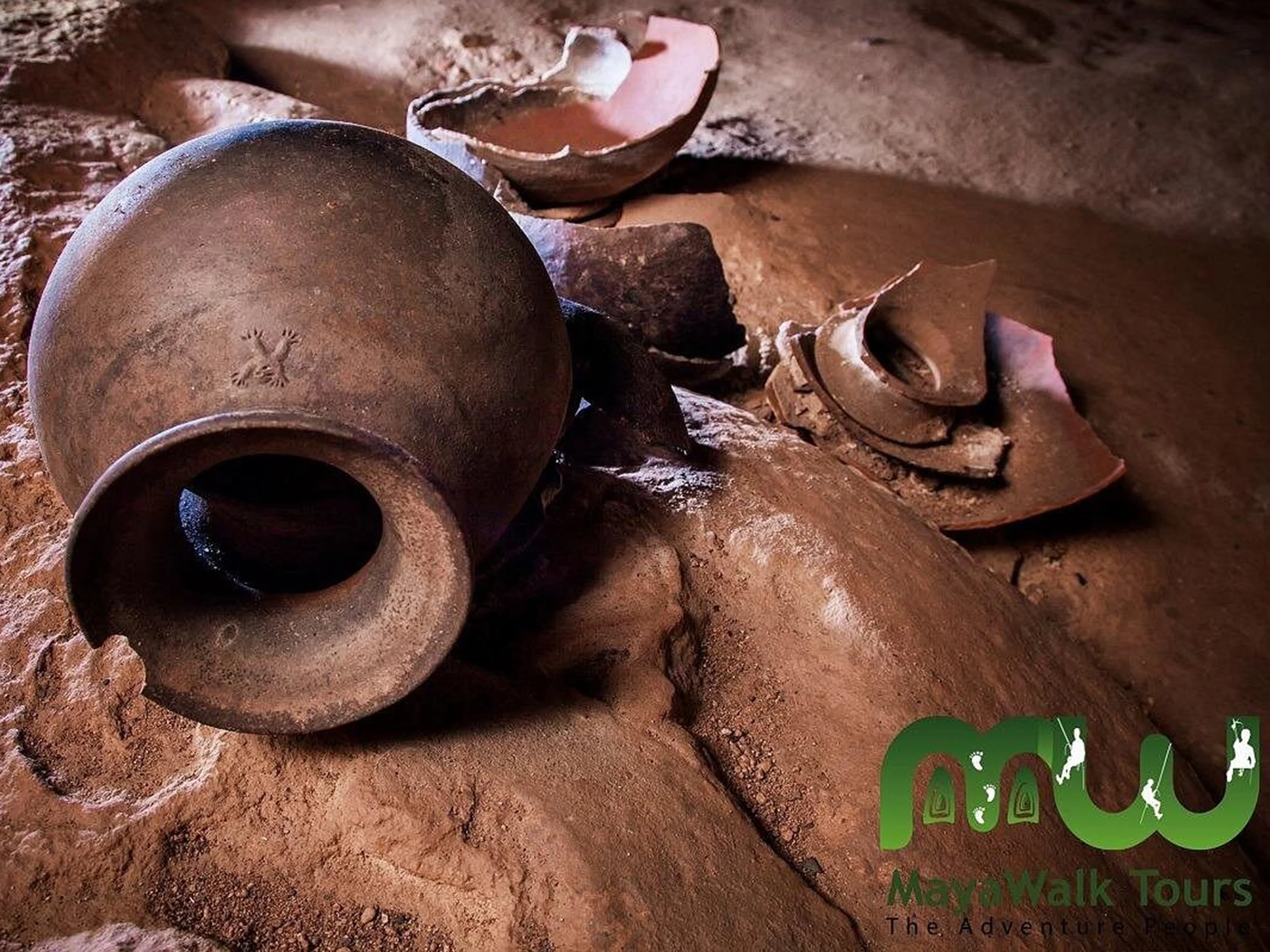
Mayan History
The ancient Mayans visited Actun Tunichil Muknal to make sacrifices in hopes the gods would provide water and end an extensive drought. When the rituals failed, the Mayans abandoned many parts of Belize and Guatemala leaving behind the ruins of their ancient cities.
Tips for Visiting Actun Tunichil Muknal:
Less than 200 people are allowed in per day. We booked ahead of time with Maya Walk Tours on Viator.
Phones, cameras, food and water bottles are prohibited. Photos provided are courtesy of Maya Walk Tours.
The trailhead to ATM is located over an hour from San Ignacio by car.
Like our tour of Caracol, it included a similar lunch.
You will get wet! Bring an extra pair of clothes and shoes to change into.
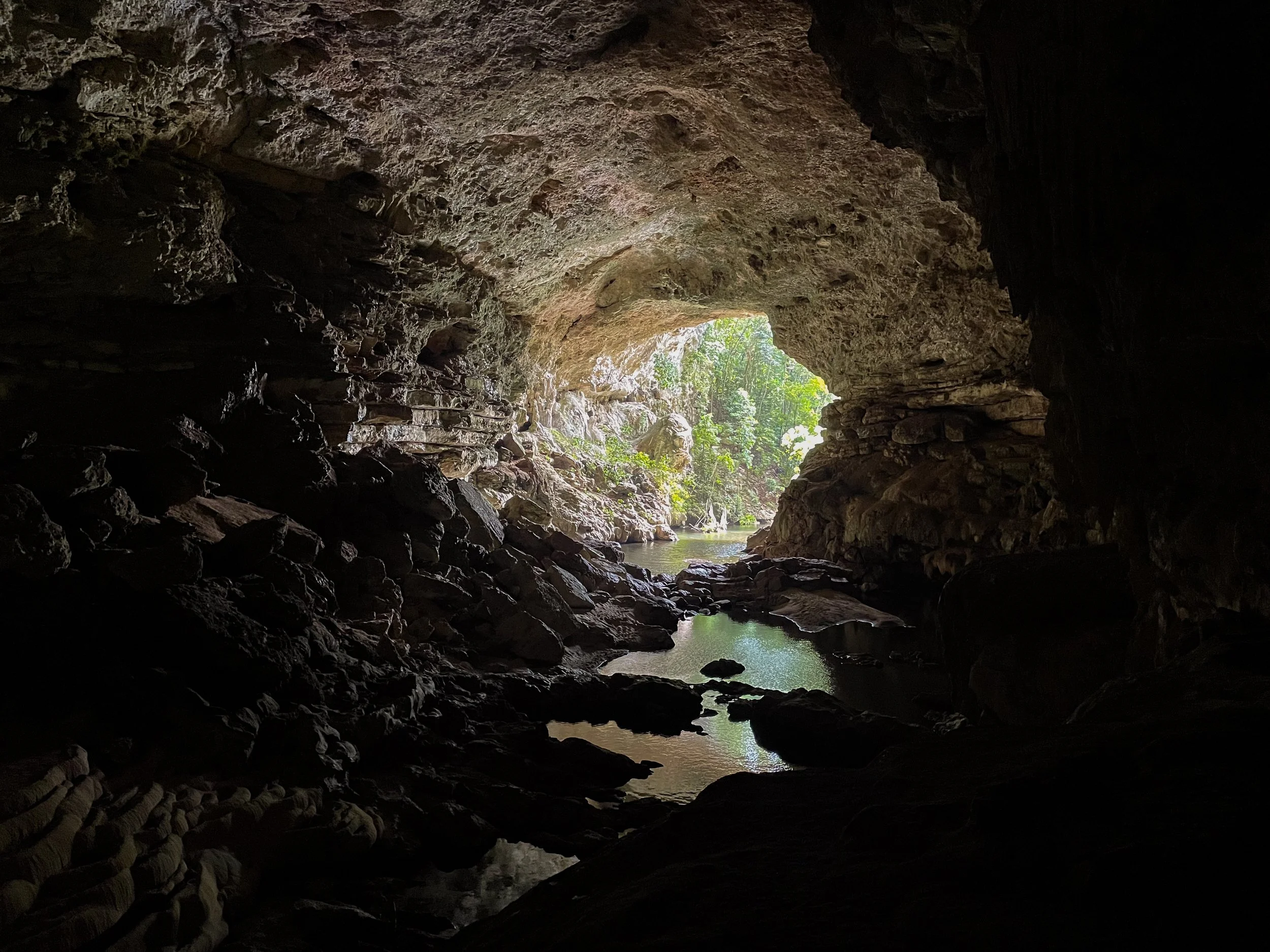
Rio Frio Cave
A sacred cave with a massive entrance, chamber and series of rock formations, including one resembling the profile of a monkey. The ancient Maya believed the god of rain, Chacc, resided here, often appearing as a cloud of mist exiting the cave in the early morning. Visits are usually included on excursions to Caracol.
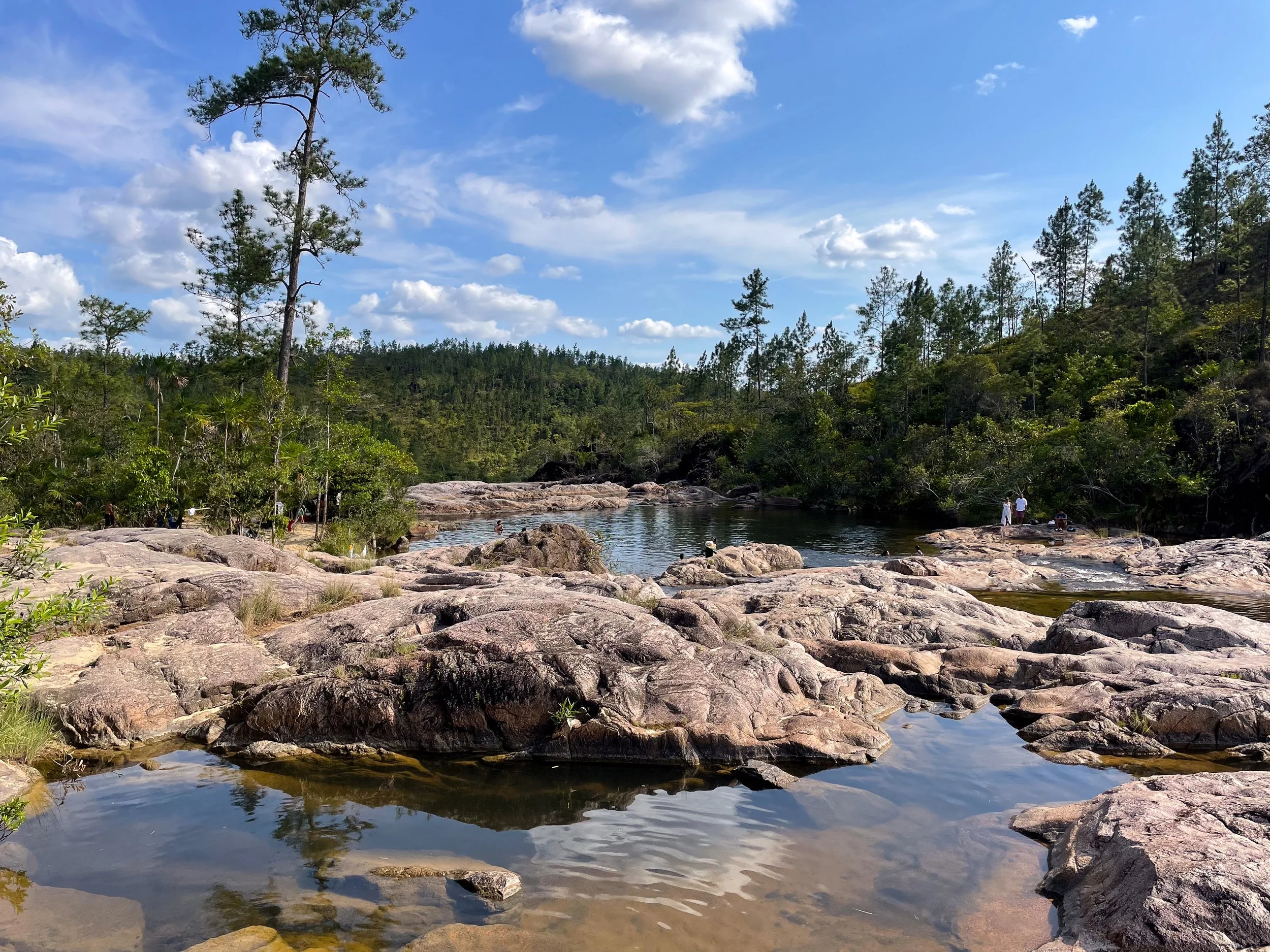
Rio on Pools
Relaxing in Belize’s mountain rivers is a popular local pastime. The Rio on Pools are natural river pools formed in the bedrock of the Rio Frio. Contrary to the name, the pools are not cold but quite tepid. They are surrounded by a pine forest known as the pine ridge mountain.
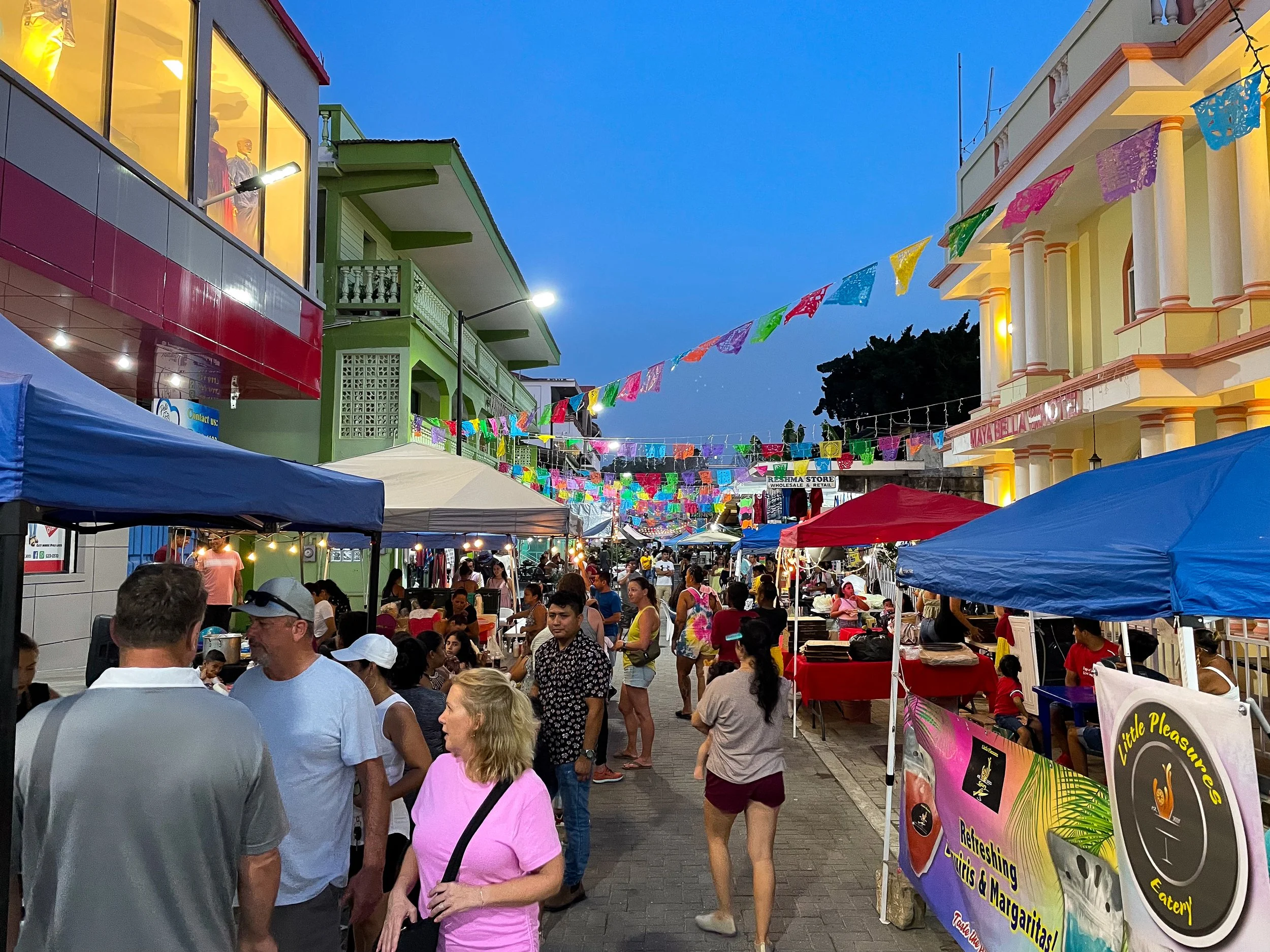
Western Belize
Even in more remote areas of Western Belize are small towns and cities with thriving local culture, markets, restaurants and festivals.
Cayo District. A jungleous region of Belize on the west side of the country bordering Guatemala. It is home to lush terrain, underground rivers and most notably, Mayan ruins and temples.
San Ignacio. The main city in the Cayo District with local and backpacker vibes. It’s a hub for eco activities and excursions on both sides of the Belize and Guatemalan borders.
Burns Avenue. A pedestrian street in the center of San Ignacio with hostels, shops, restaurants, bars and tour operators. We visited in early May during the Cinco de Mayo Festival. The street was decorated with colorful banderas and came to life at night with music, fireworks and vendors selling street food. We ate pupusas, tortas, and sambusas while sipping on margaritas and the local beer, Belikin.
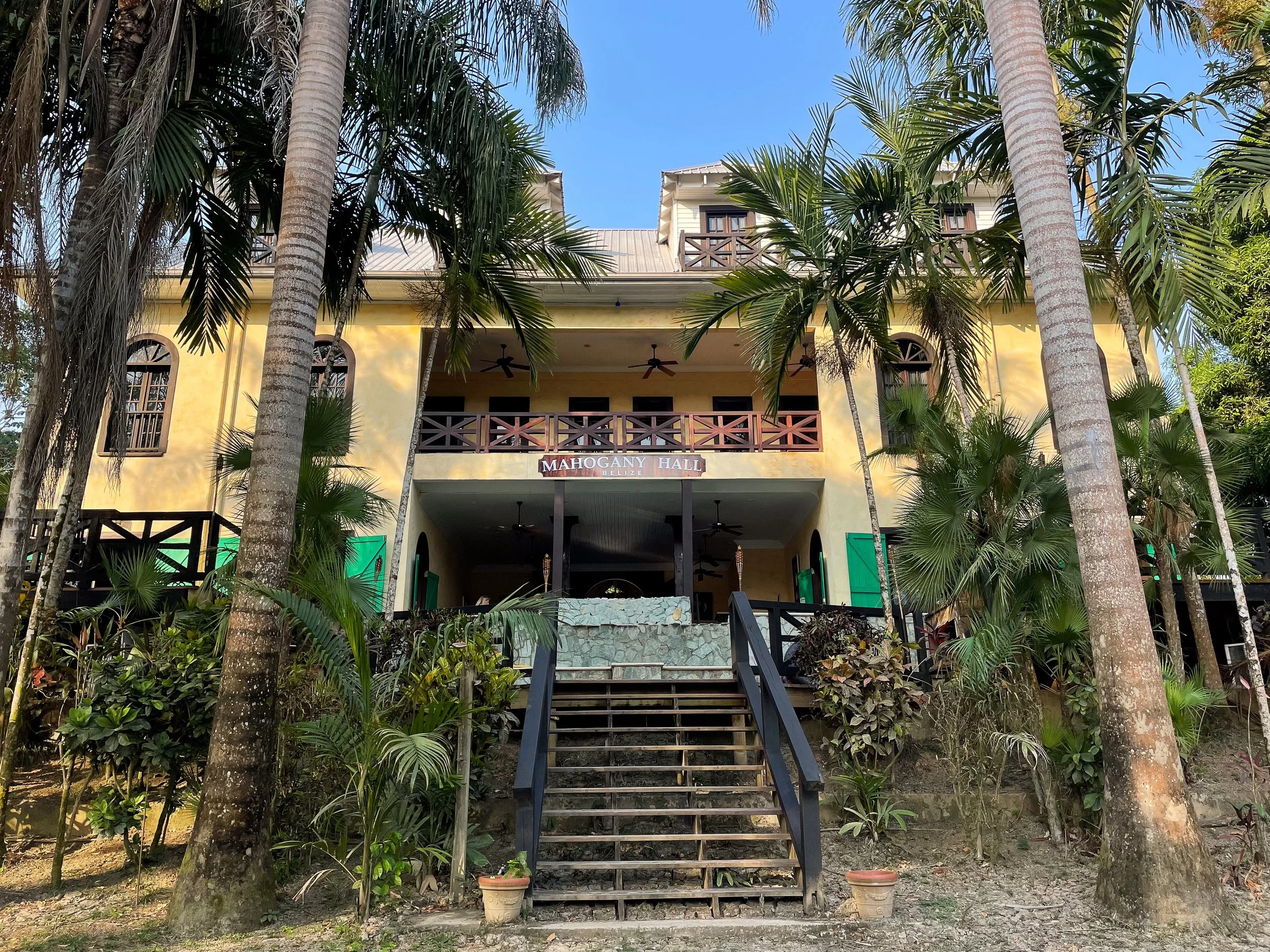
Bullet Tree Falls. A remote town 5km from San Ignacio in the middle of the jungle only accessible by dirt road. We stayed here at the Mahogany Hall.
Places to Eat & Drink
Lola’s Restaurant and Bar. An outdoor patio perched on the hill overlooking San Ignacio. The menu was heavily seafood based. We ordered the herbed fish, blackened fish, conch and octopus ceviche as well as a few cocktails.
Ko Ox Han Nah. A popular restaurant for Belizean cuisine made from local ingredients, mostly sourced from the San Ignacio Market. We ordered the whole fried red snapper and garlic rum shrimp with sides of coconut rice.
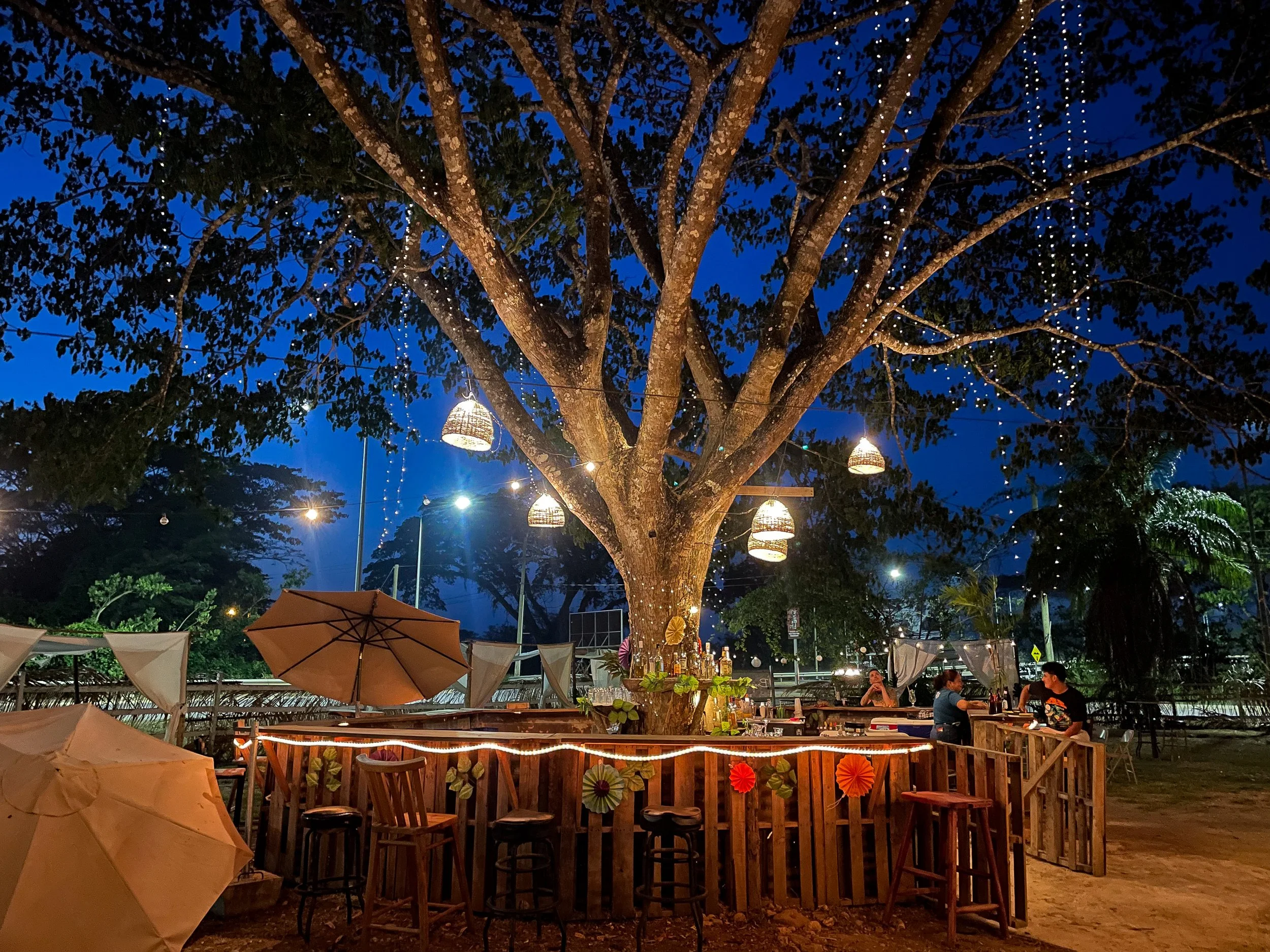
Booze and Branches. An open air bar circling a large tree with twinkle lights and linen draped pergolas made from branches. They offered classic cocktails like margaritas, mojitos, sangria and rum-ritas.
Guava Limb. A locally recommended restaurant on Burns Ave with a fusion of foods from Belize and South East Asia as well as brick oven pizza. We spent hours here chatting with a new friend, Jacob, who we met during our excursion to Actun Tunichil Muknal.
Coffee de los Mayas. A coffee shop with a walk-up counter located on Burns Ave.
San Ignacio Market. A daily farmers market held near the center of town from 6am to 5pm. Local vendors set up stands selling vegetables, fruits, honey, souvenirs and street food. Come here for breakfast at Magaly’s Fast Food, sorrel (hibiscus juice) and horchata (sweetened rice milk).
Belizean Cuisine
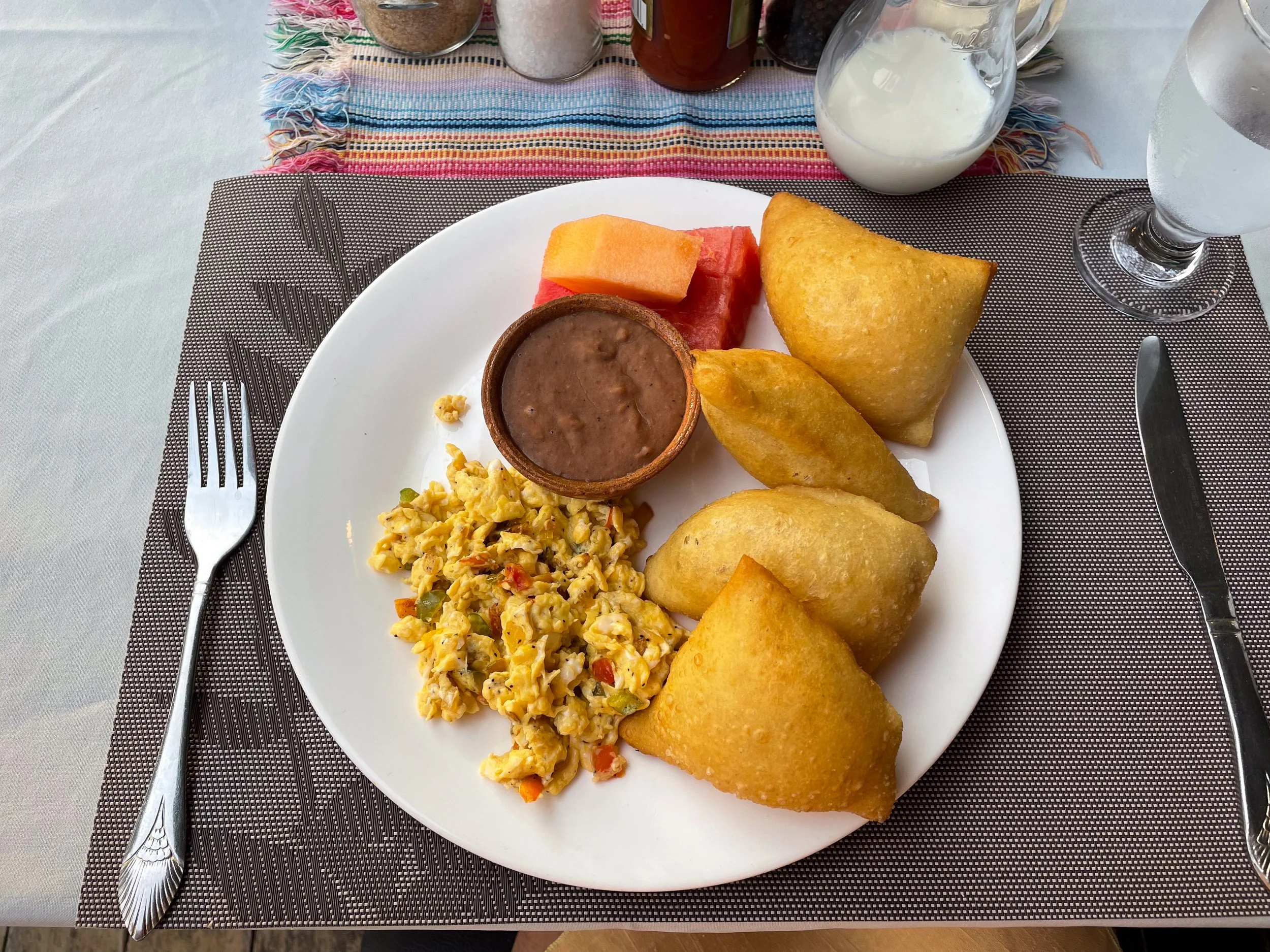
Fry Jacks. Deep-fried pieces of dough served with refried beans and tropical fruit.
Salbutes. Deep fried corn tortillas topped with veggies or meat.
Pupusas. A white corn arepa stuffed with various fillings or toppings. We had the bean and cheese pupusas.
Escabeche. Chicken and onion stewed in a curry sauce. We were offered a vegetarian version made with tofu during lunches on our excursions.
Sorrel. Hibiscus juice.
Marie Sharps. A popular habanero hot sauce seen on nearly every dining table throughout Belize.
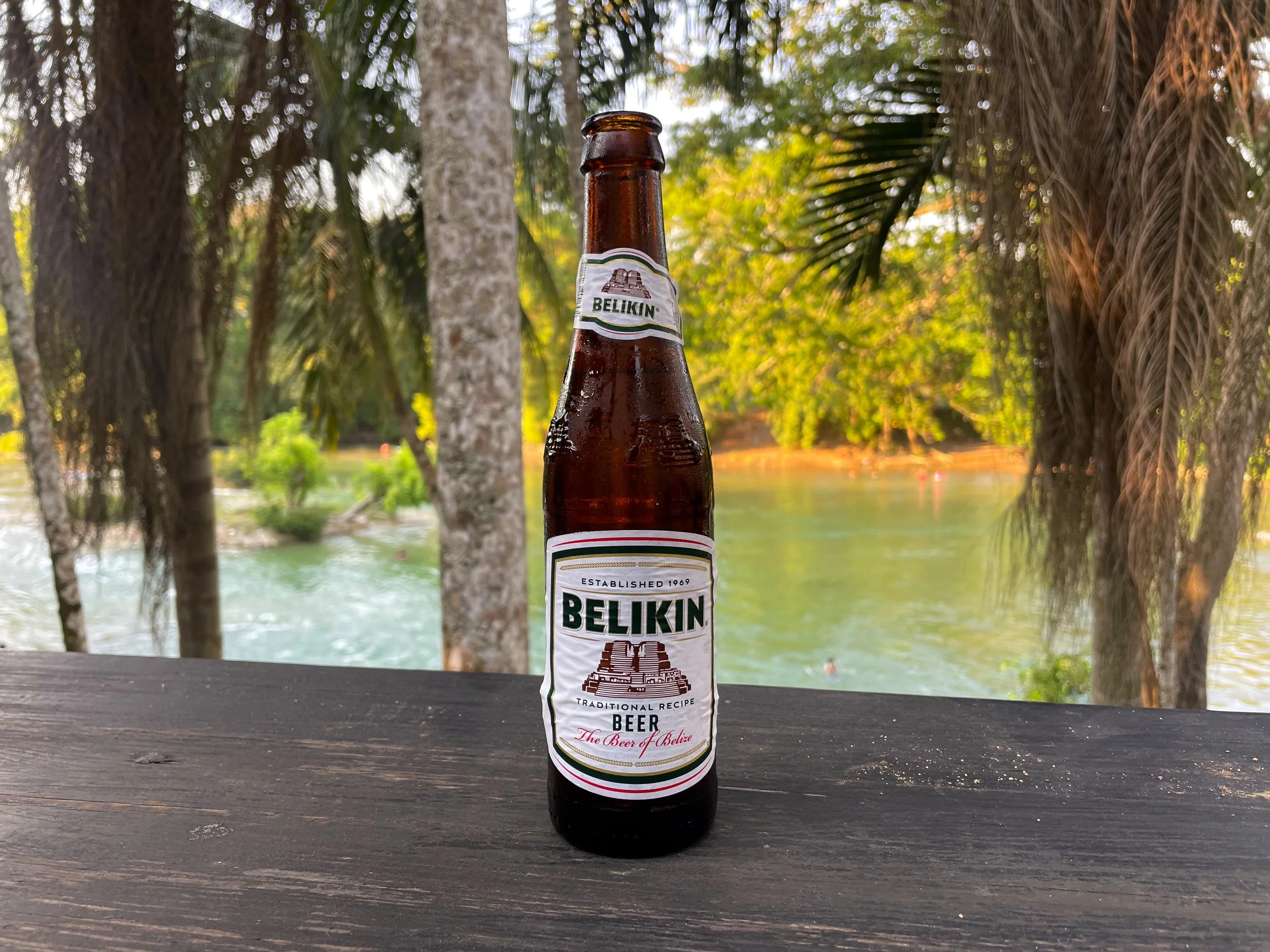
Belikin. Belize’s national beer with a Mayan temple on its label.
Where to Stay
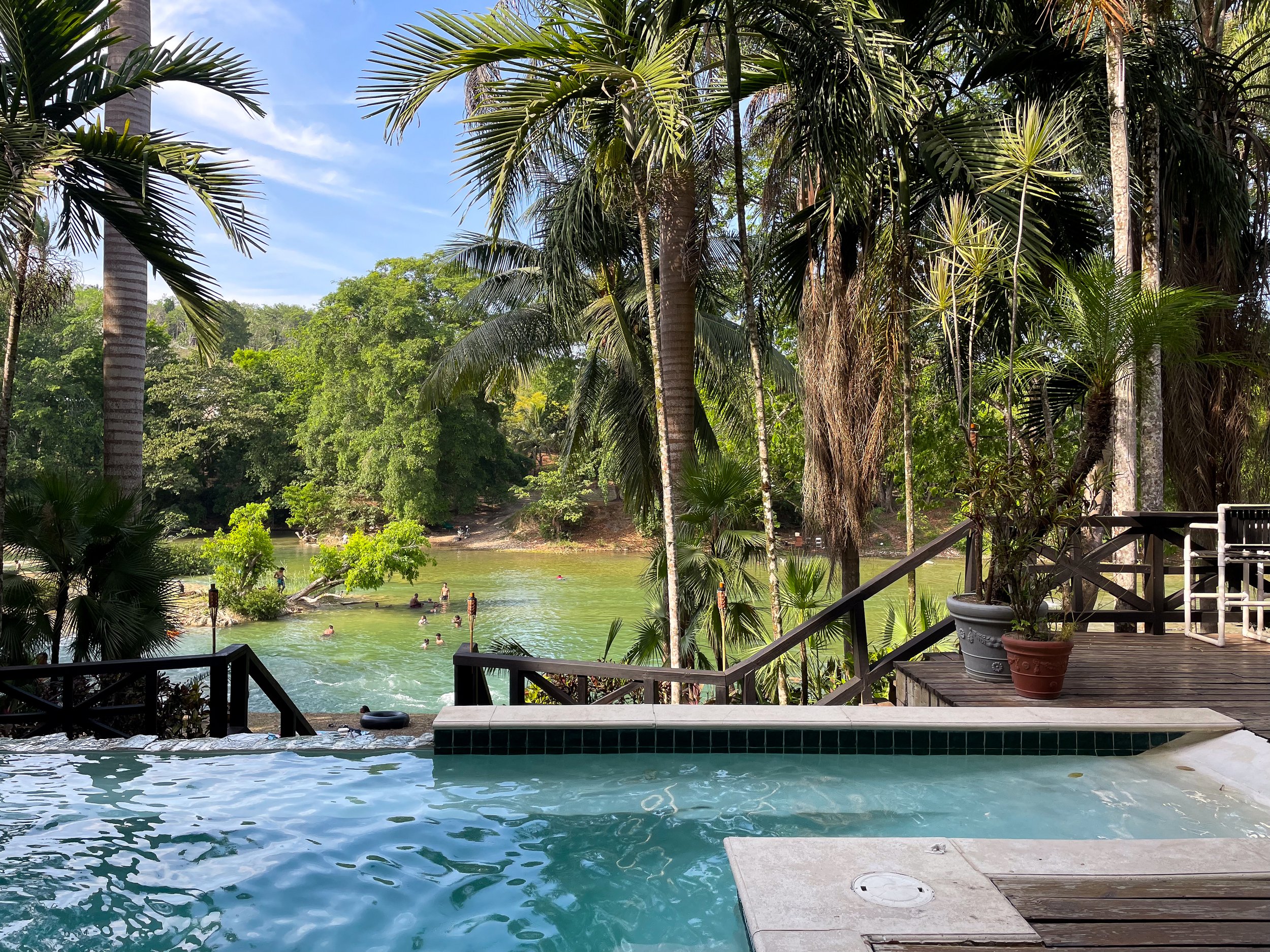
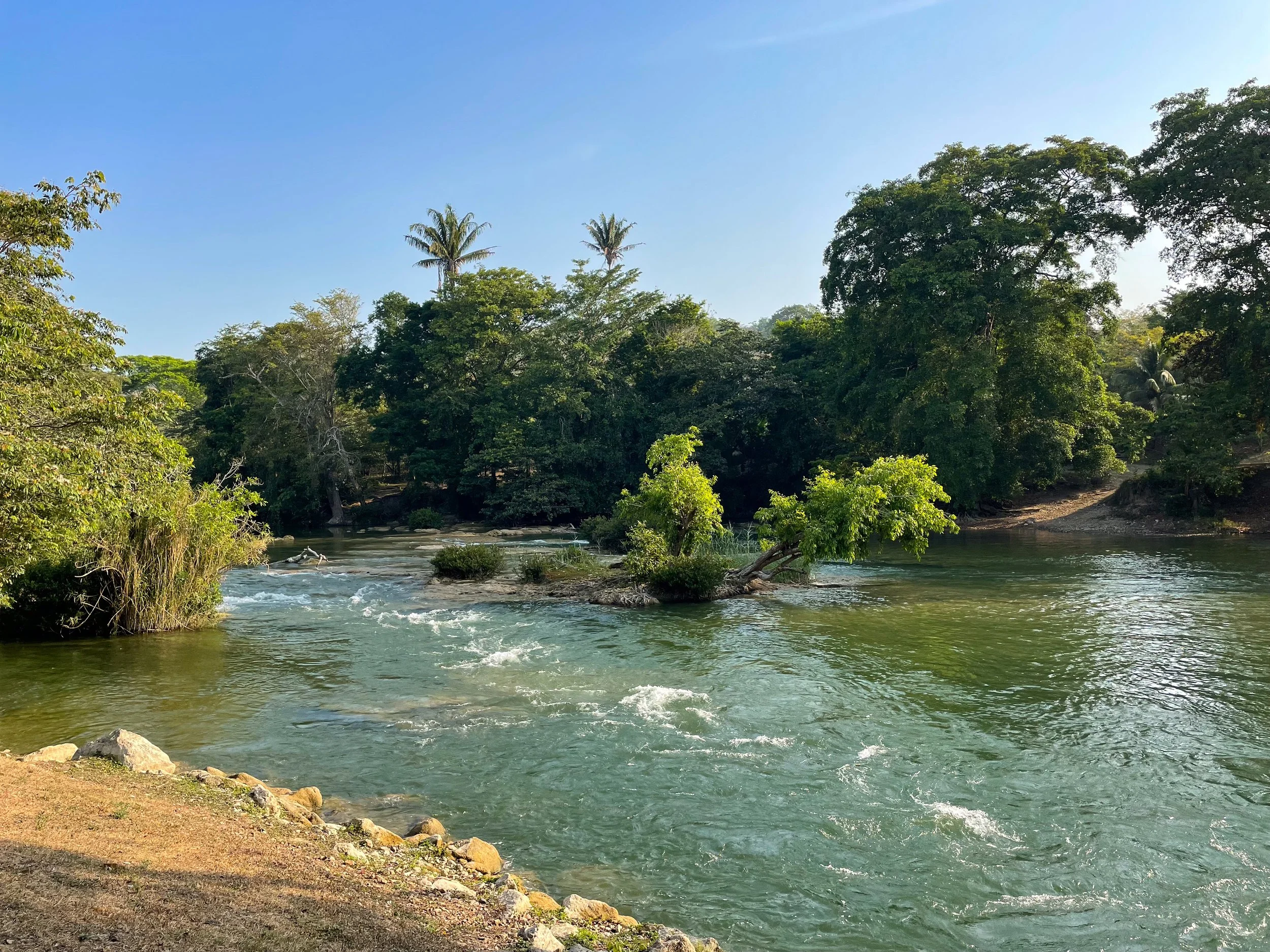
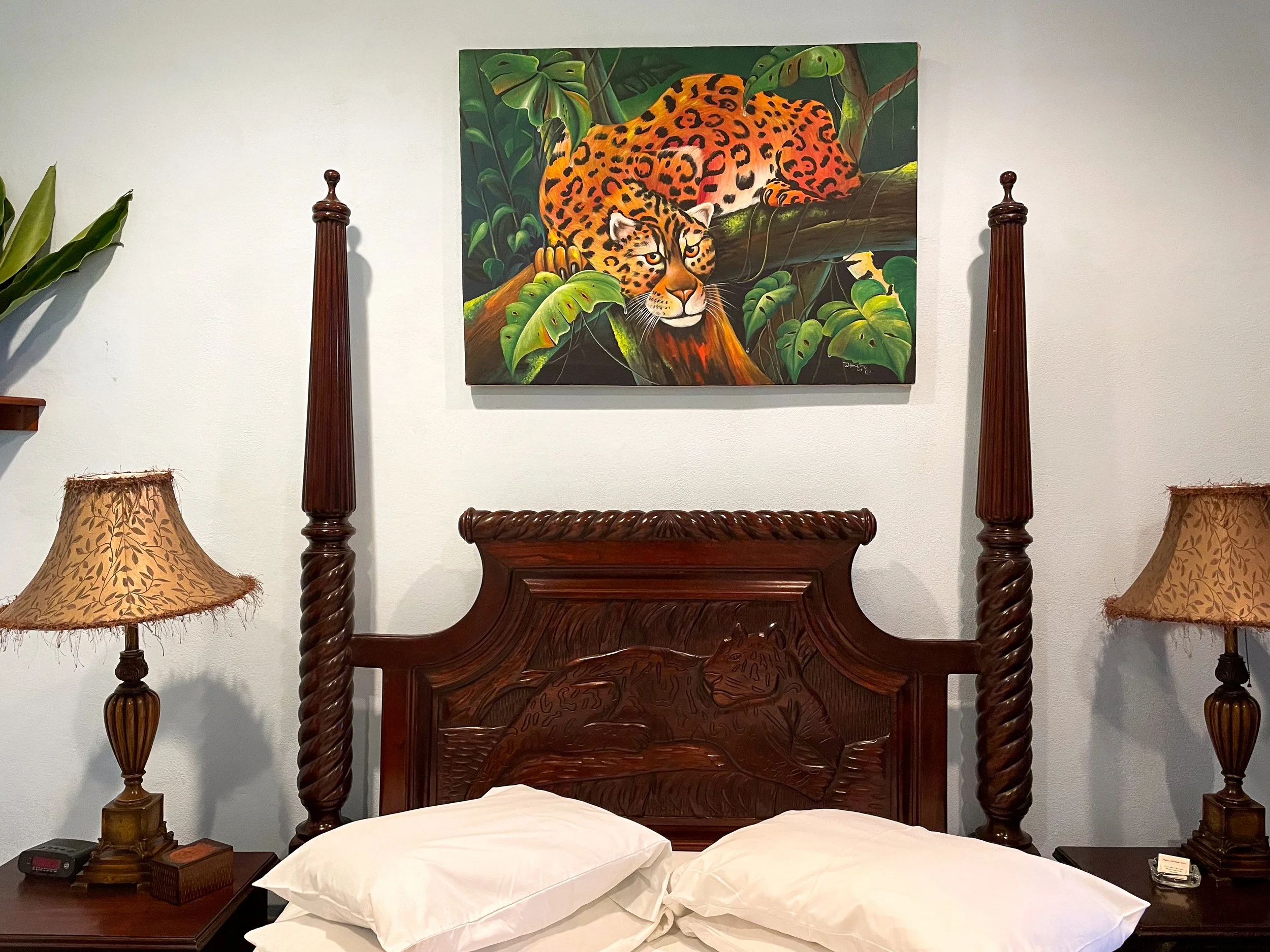
We stayed at Mahogany Hall, an eco hotel along the banks of the Mopan River in the town of Bullet Tree Falls. It was a peaceful location in the middle of the tropical jungle. Our room was accented with mahogany furniture with carvings of jaguars, toucans and tropical plants. The hotel has a restaurant, bar and infinity pool. We enjoyed breakfast here most mornings and a Belikin by the pool during the evenings.
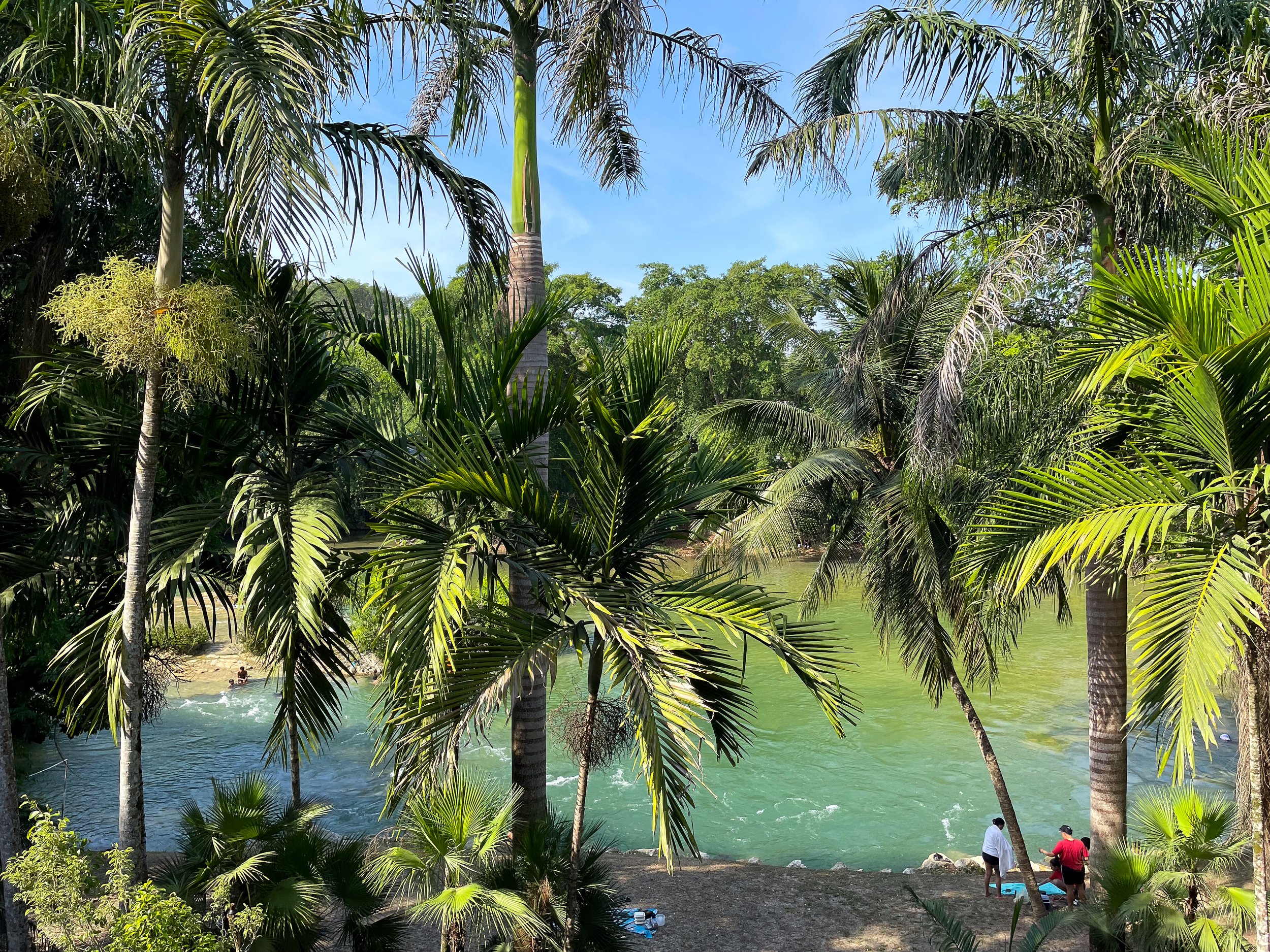
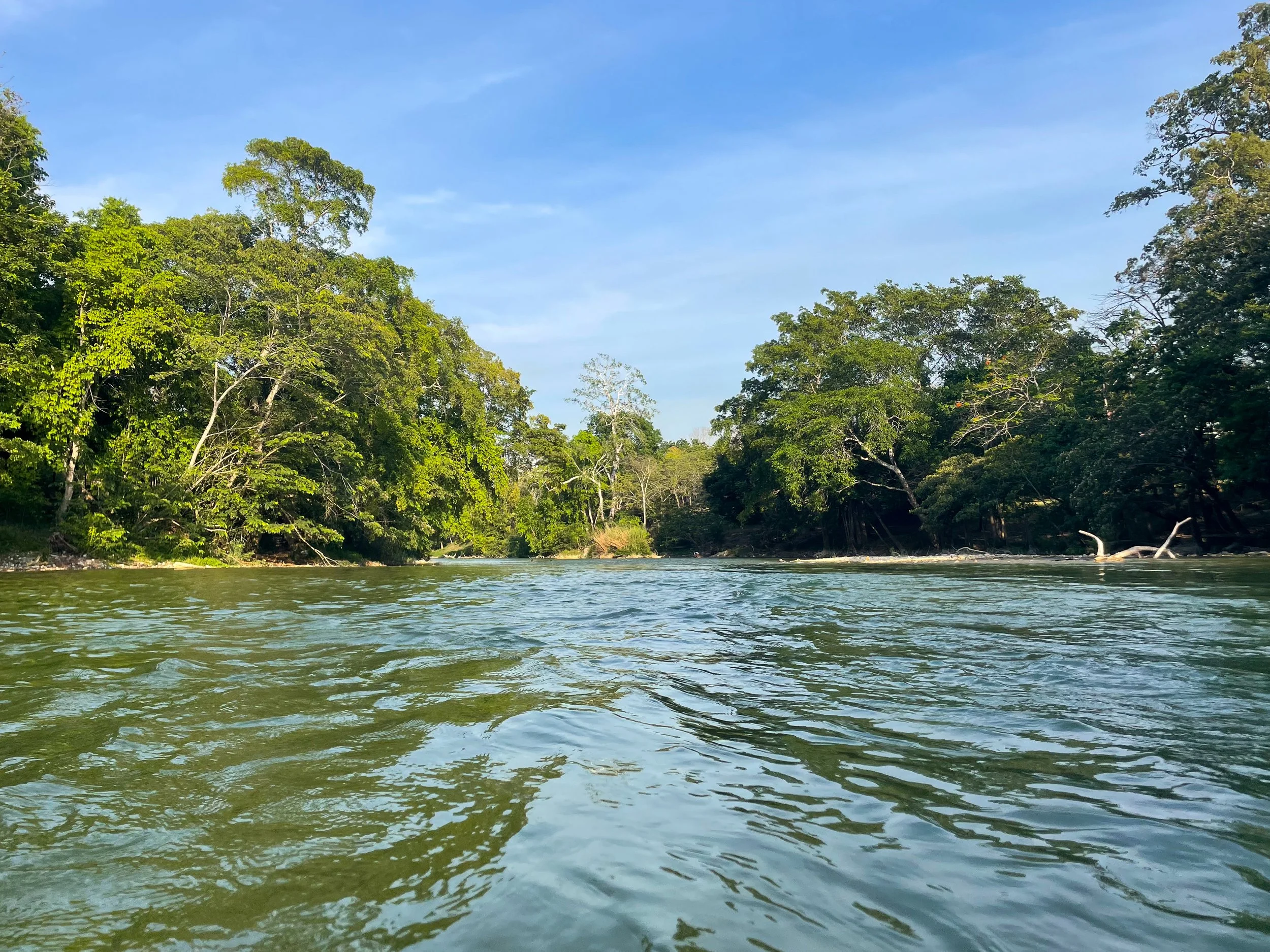
The Mopan River. While here, we joined locals and waded in the Mopan River to cool off from the afternoon heat. We lounged on the shallow river bed as the current gently passed by and tropical birds chased each other overhead.
Getting Around
Airport Shuttle. We shuttled to and from the airport and our hotel in Bullet Tree Falls with Belize Family Adventure through Viator. Transportation took less than two hours and was a good way to see the countryside.
Excursions. All of our excursions included transportation. We were either picked up from our hotel or at the operator’s office before being shuttled to our destination.
By Taxi. In San Ignacio, taxis were easy to find and would more than often find us. They’re identifiable by their green license plates with white letters. We took the number of one taxi driver, Apellio, who quickly became our driver while in town. Taxis cost $20-25 Belize Dollars ($10-$12.50 USD) between Bullet Tree Falls and San Ignacio.
On Foot. San Ignacio is a relatively small town and can be easily walked on foot.
Location Specifics
Currency. The Belizean Dollar and US Dollar are used interchangeably across the island. At the time, the exchange rate was 1 USD to 2 BZD, making conversions and transactions easy.
Cash vs Card. Carry cash for taxis, snacks and tips.
Language. English is the most commonly spoken language in Belize. Spanish is most commonly spoken in Guatemala.
Drinking Water. Tap water is not safe for consumption due to risk of contamination. Only drink filtered or bottled water.
Elsewhere in Belize & Guatemala
From colonial architecture to lakeside villages beneath towering volcanoes and Caribbean coral reefs, discover more of Guatemala's and Belize’s rich history and landscapes.
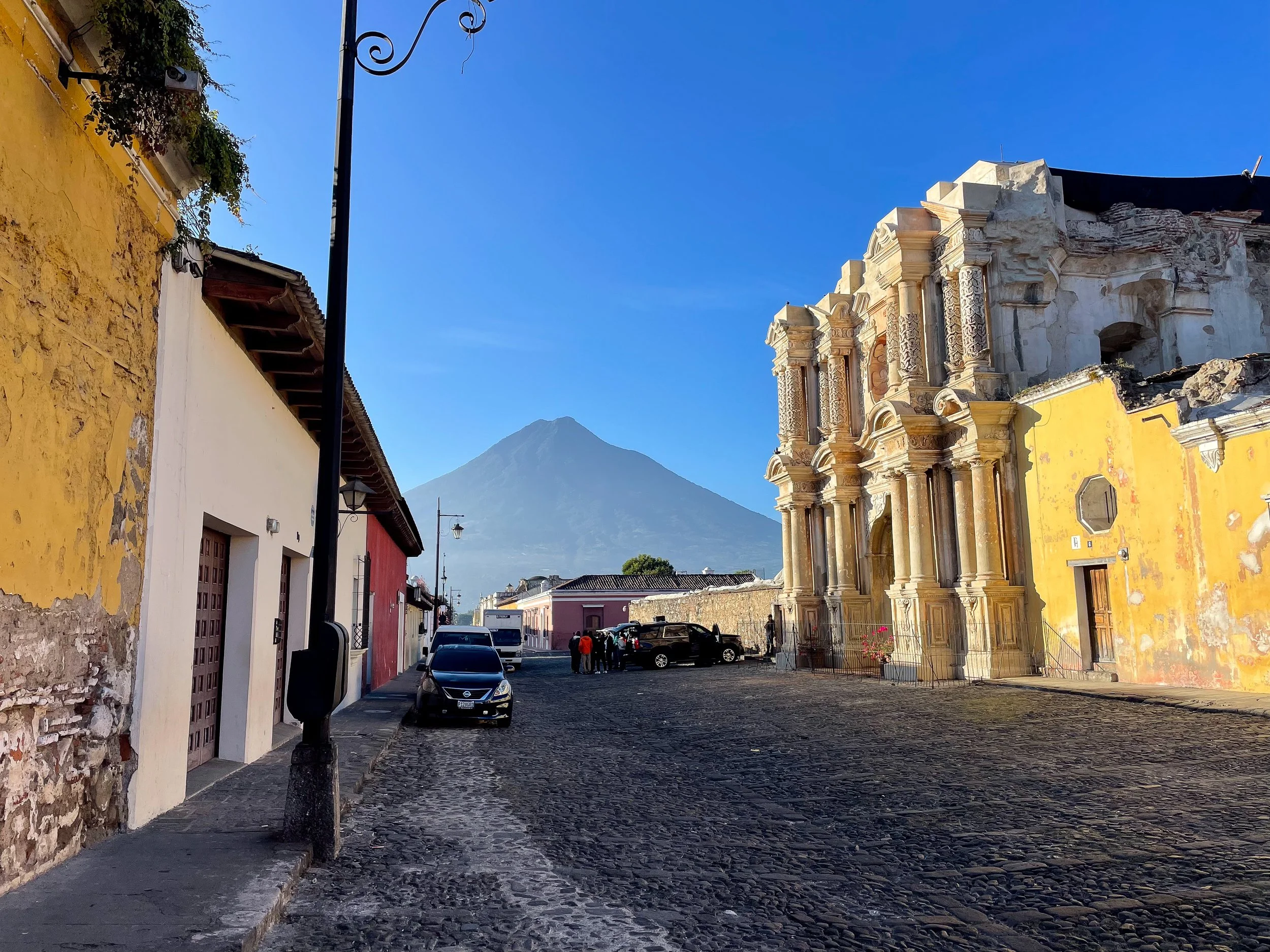
Antigua Guatemala Travel Guide: Acatenango, Colonial Charm & Local Cuisine. Explore Antigua Guatemala's cobblestone streets, colonial architecture and local cuisine beneath towering volcanoes, including the iconic hike to Acatenango and Fuego.
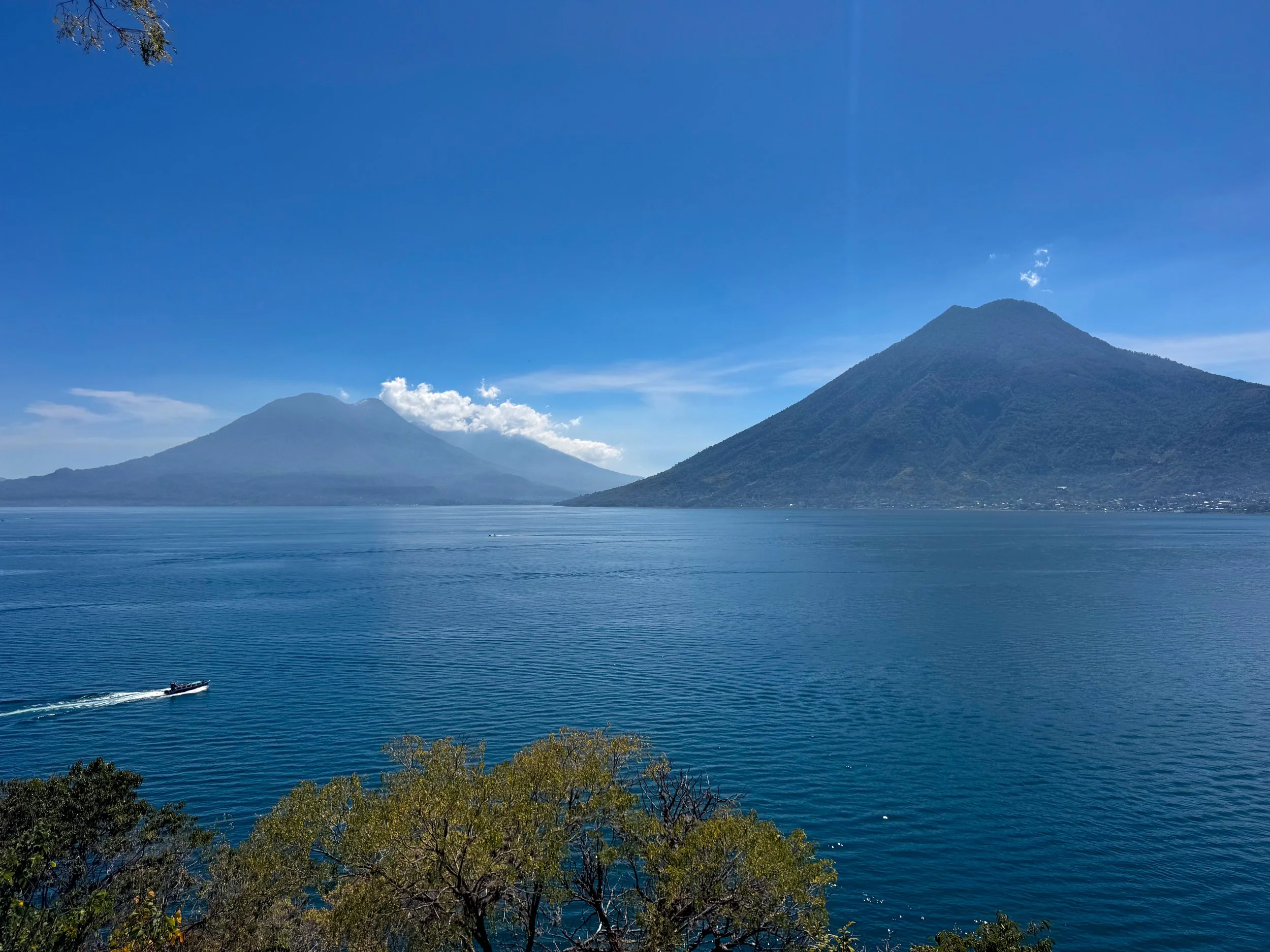
Lake Atitlán Travel Guide: Villages, Volcanoes & Mayan Culture. Navigate between Lake Atitlán's lakeside villages where volcanic landscapes and living Mayan culture shape one of Guatemala's most remarkable destinations.
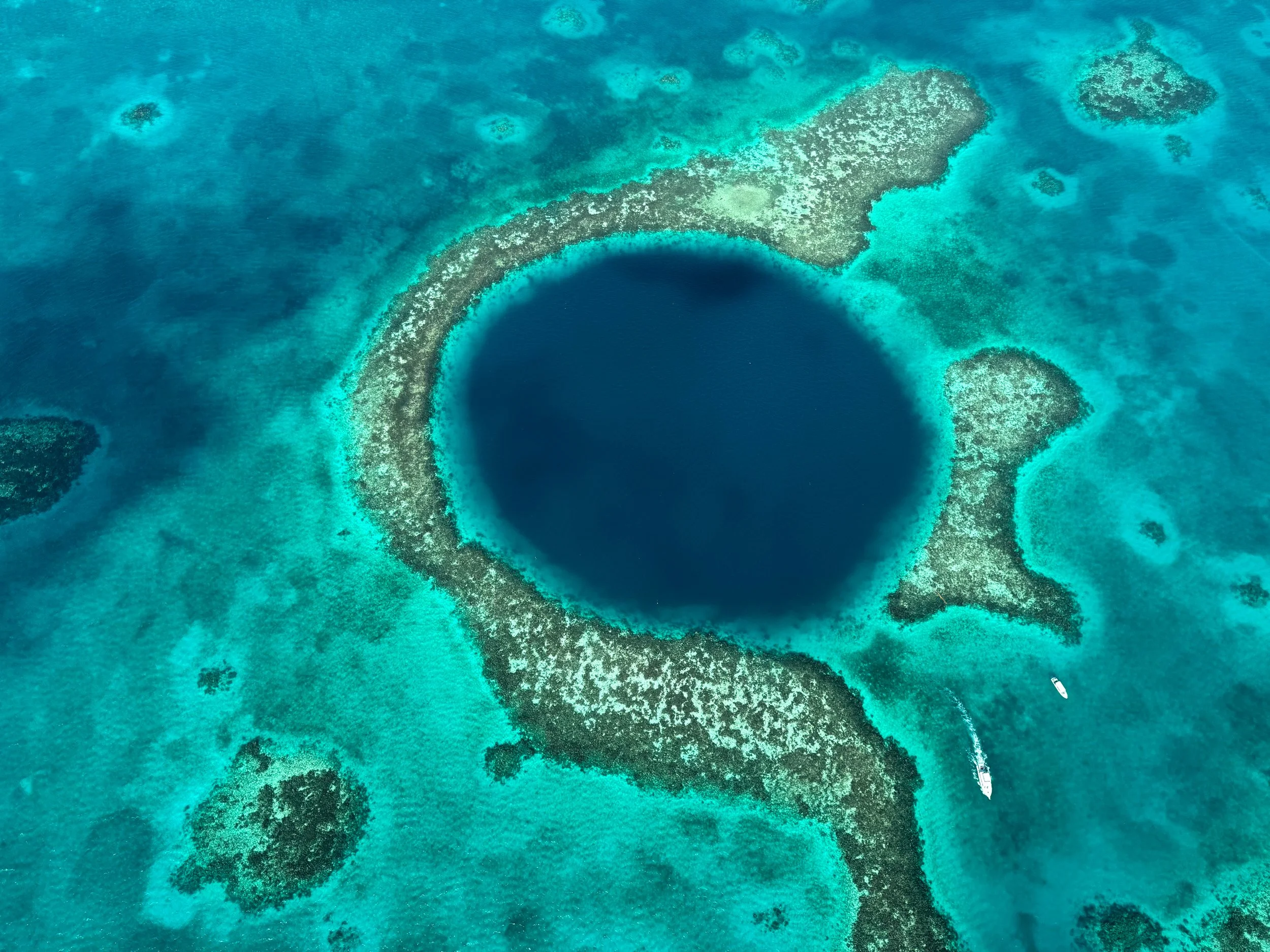
Caye Caulker Travel Guide: Snorkeling, Belize Barrier Reef & Island Life. Dive into Caye Caulker's turquoise waters for world class snorkeling in the Belize Barrier Reef while embracing the island's tropical spirit and Go Slow motto.
For Next Time…
We fell in love with the jungle, Mayan ruins and culture of Belize and Guatemala. We will certainly be back one day and have plans to visit more locations across both countries.
Altun Ha. A Mayan acropolis with pyramids, temples, ball courts and platforms on the mainland north of Belize City.
Tikal Sunrise Hike. An early morning hike in Tikal to watch the sunrise from the top of the famed pyramids. We saw photos of the colorful sunrise, layers of morning mist and dramatic ruins peek from jungleous canopy below.
Flores, Guatemala. A picturesque island city on Lago Petén Itzá known for its colorful architecture and proximity to Mayan ruins.
Caye Caulker Travel Guide: Snorkeling, Belize Barrier Reef & Island Life
Dive into Caye Caulker's turquoise waters for world class snorkeling in the Belize Barrier Reef while embracing the island's tropical spirit and Go Slow motto.
Caye Caulker, Belize
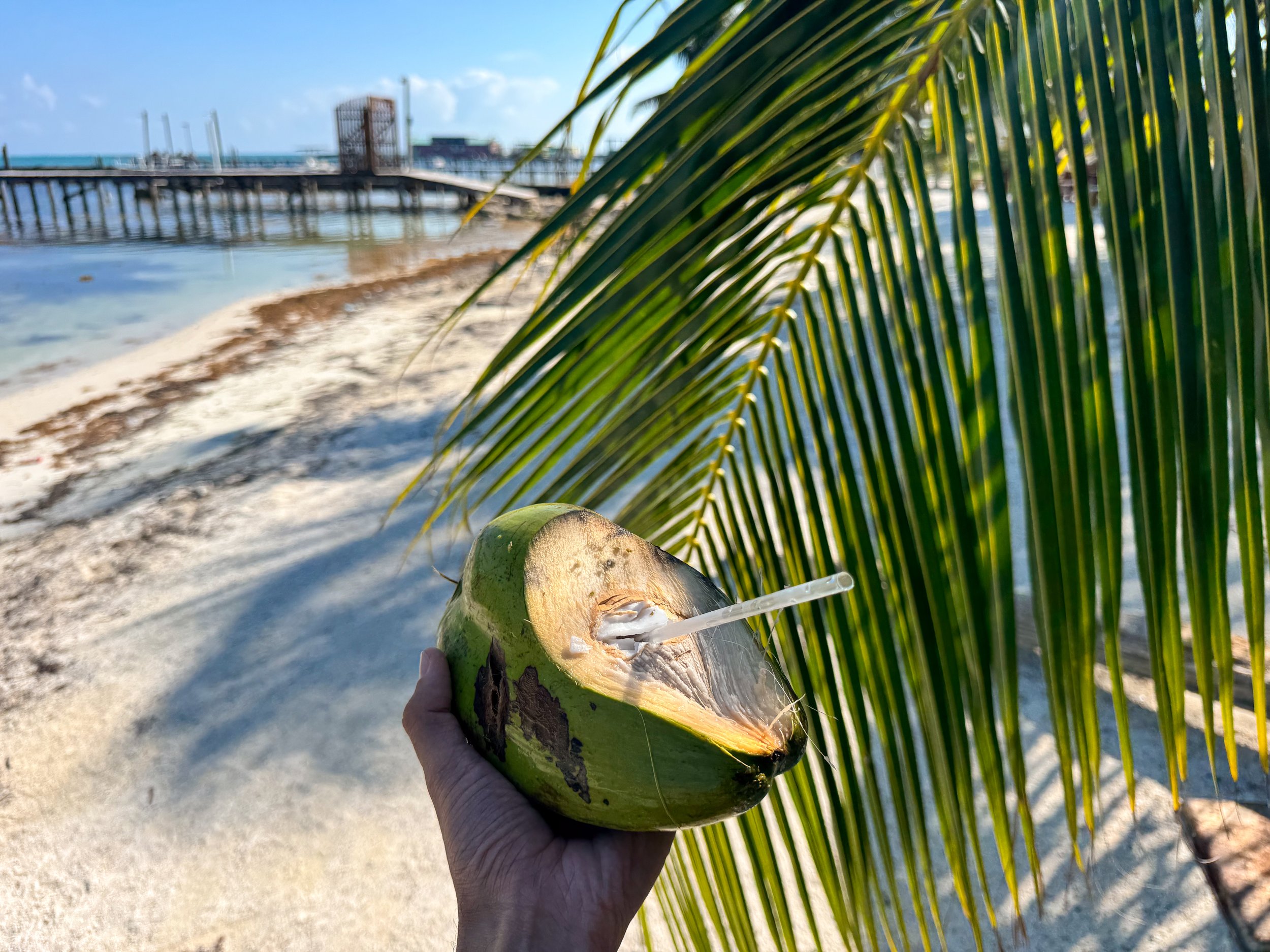
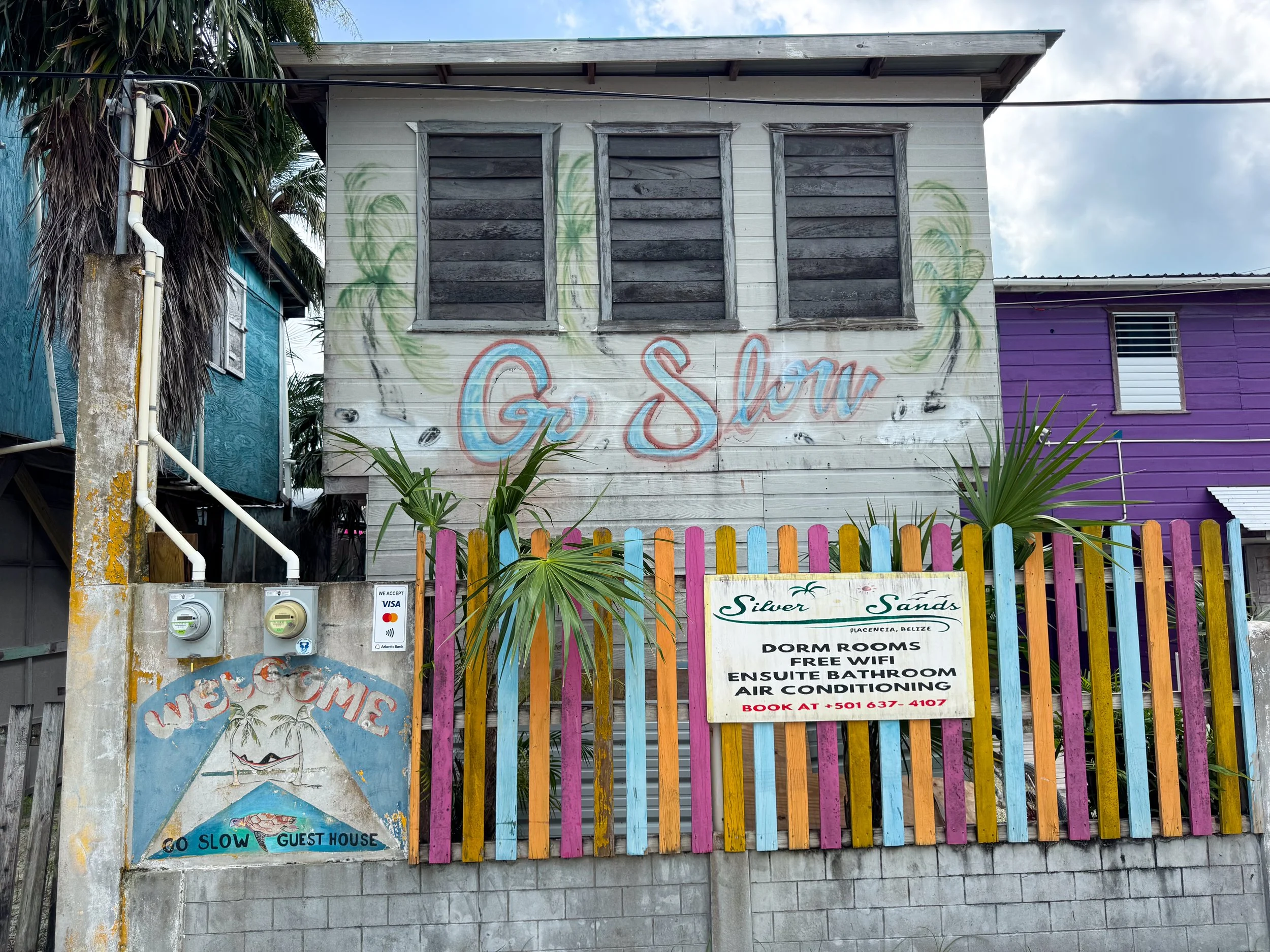
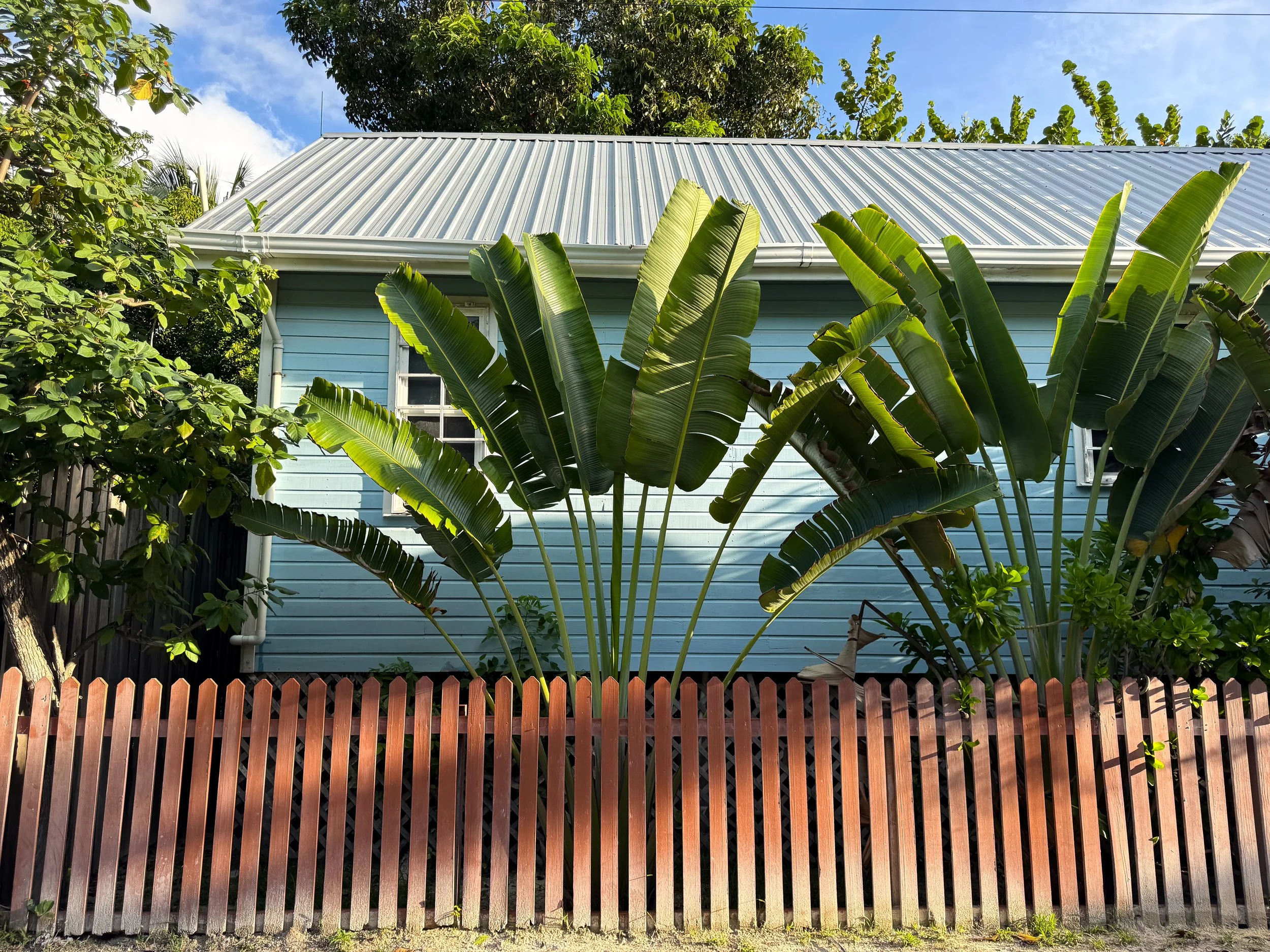
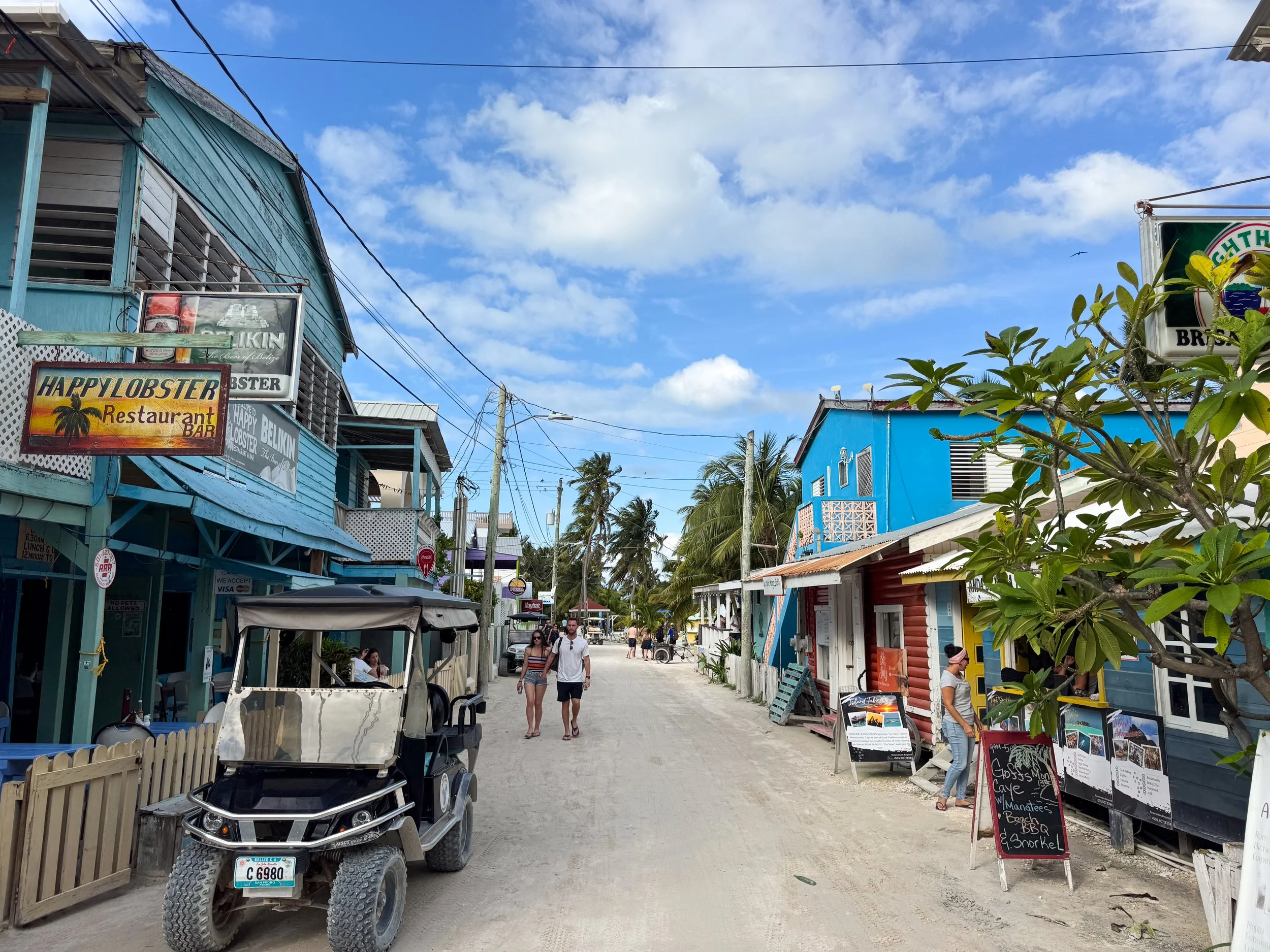
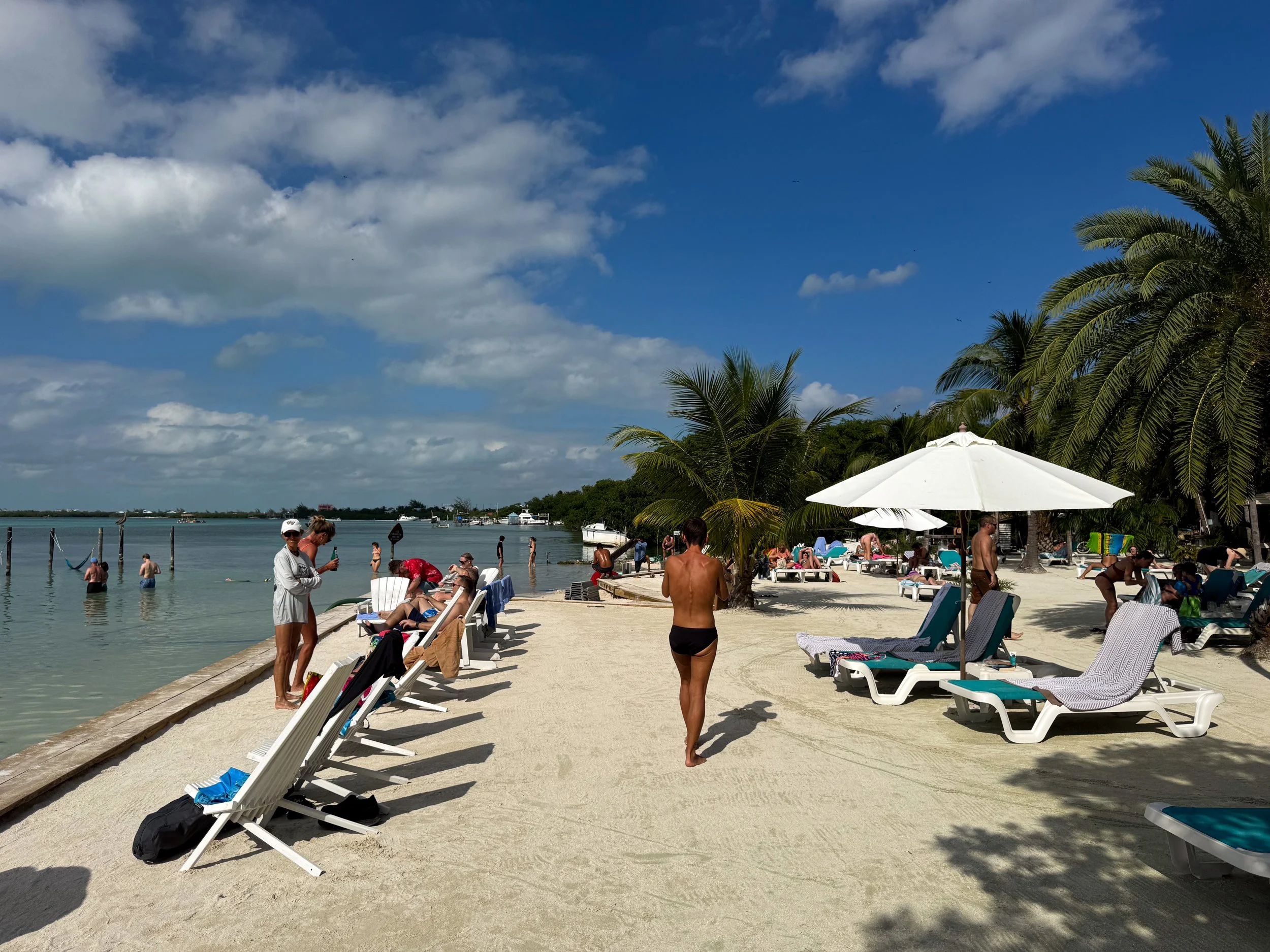
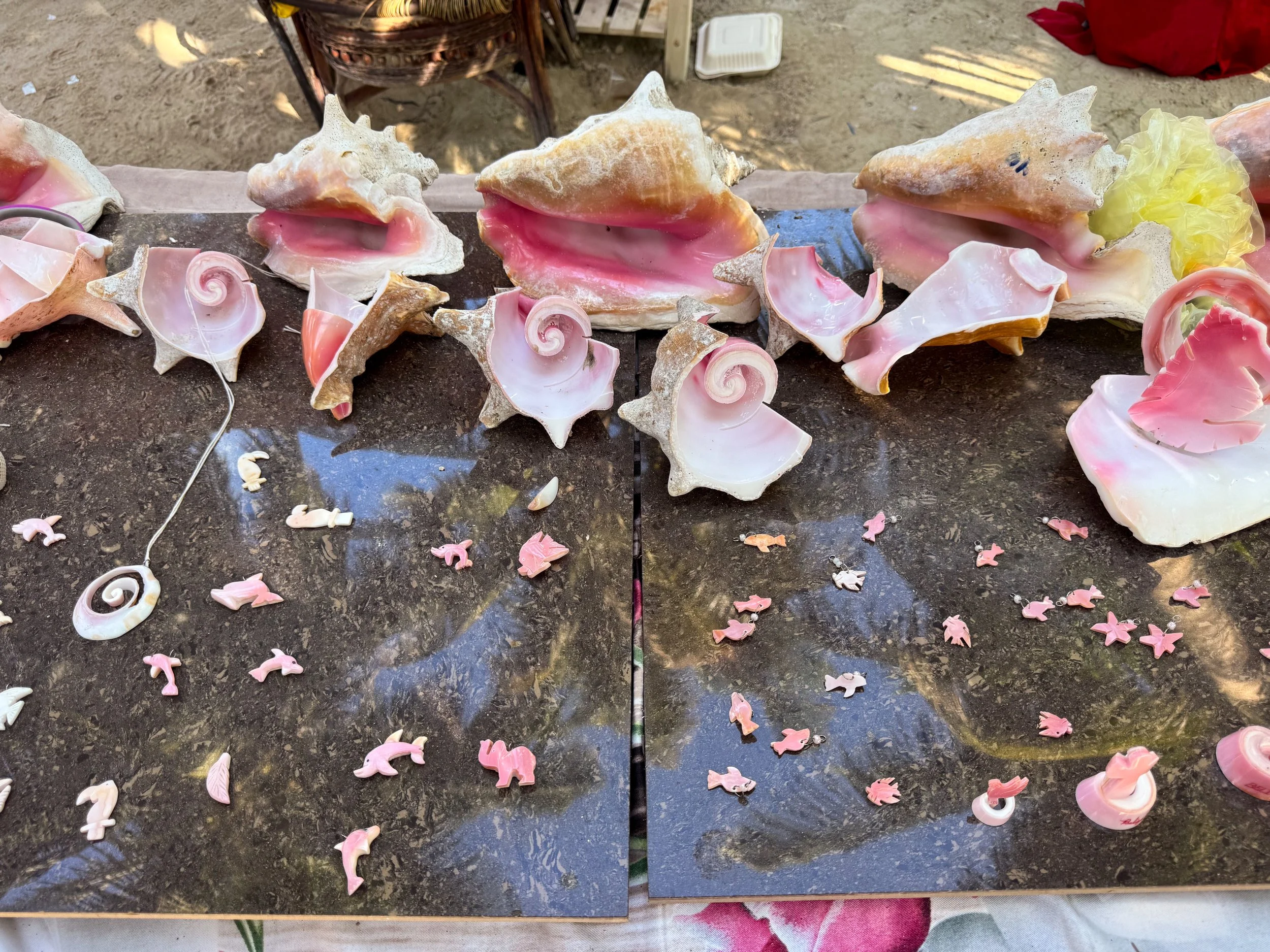
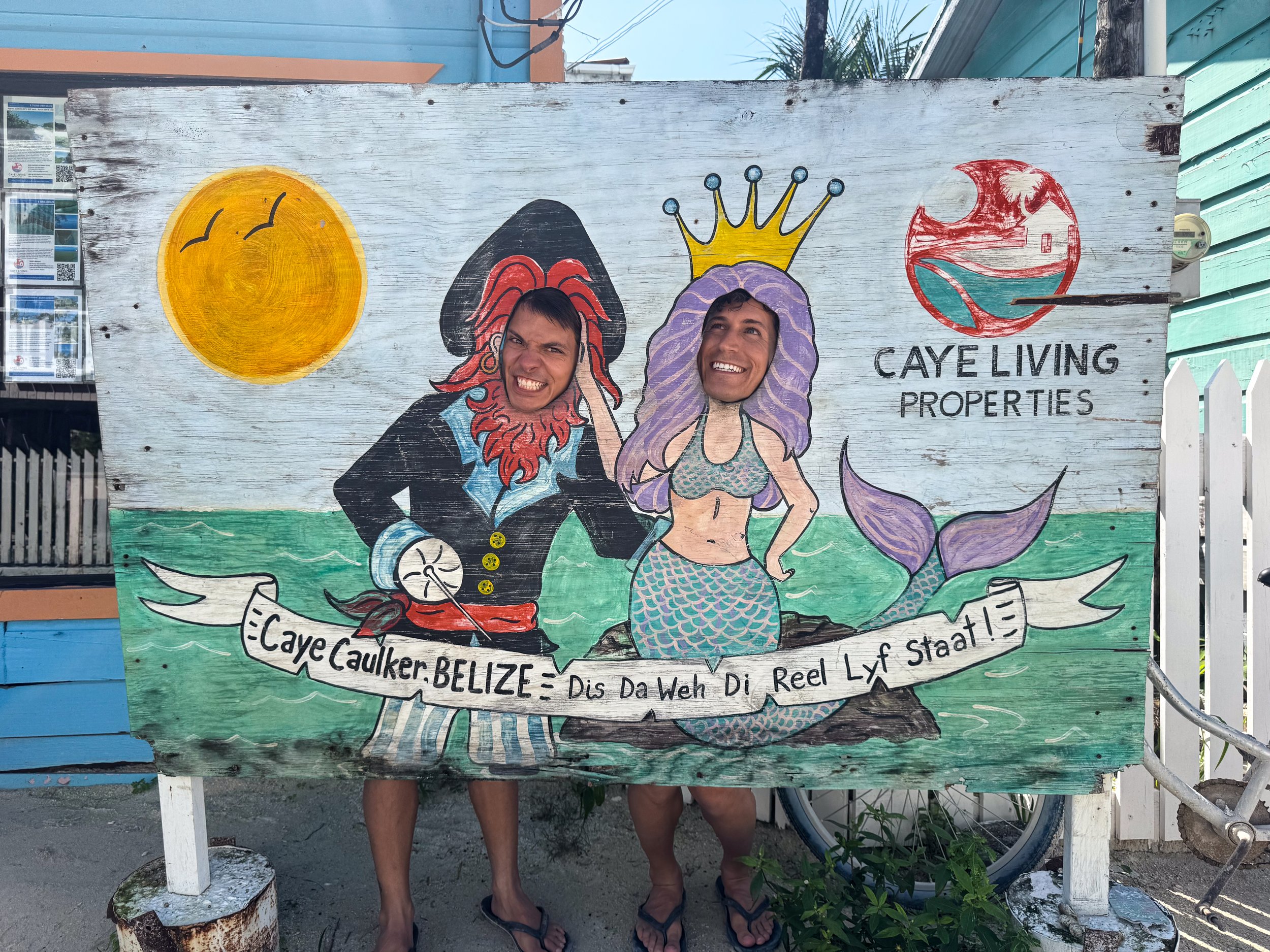
Caye Caulker, Belize is a small Caribbean island with a tropical atmosphere and laid back way of life. The slow and sleepy vibes are emphasized by the island's motto “Go Slow.” Its sand covered streets, named after marine life, are lined with colorful wooden buildings, many of which are elevated on stilts. Conch shells decorate yards as palm trees sway above and pelicans flock overhead. Reggae beats play from beachfront bars, tours depart for the Belize Barrier Reef and locals sell handmade shell jewelry. The island is touristy but not overly developed, allowing it to retain its character.
The Belize Barrier Reef
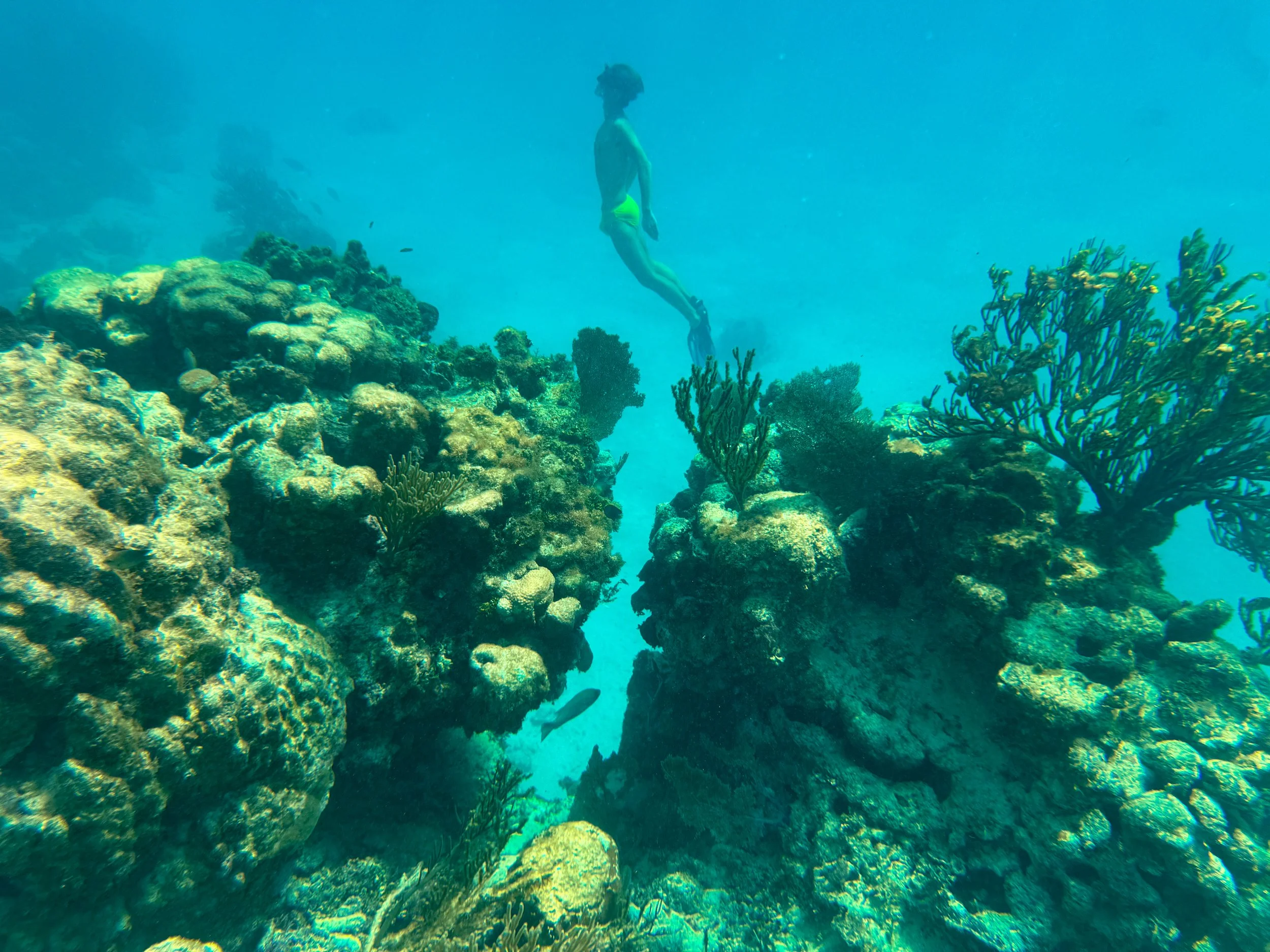
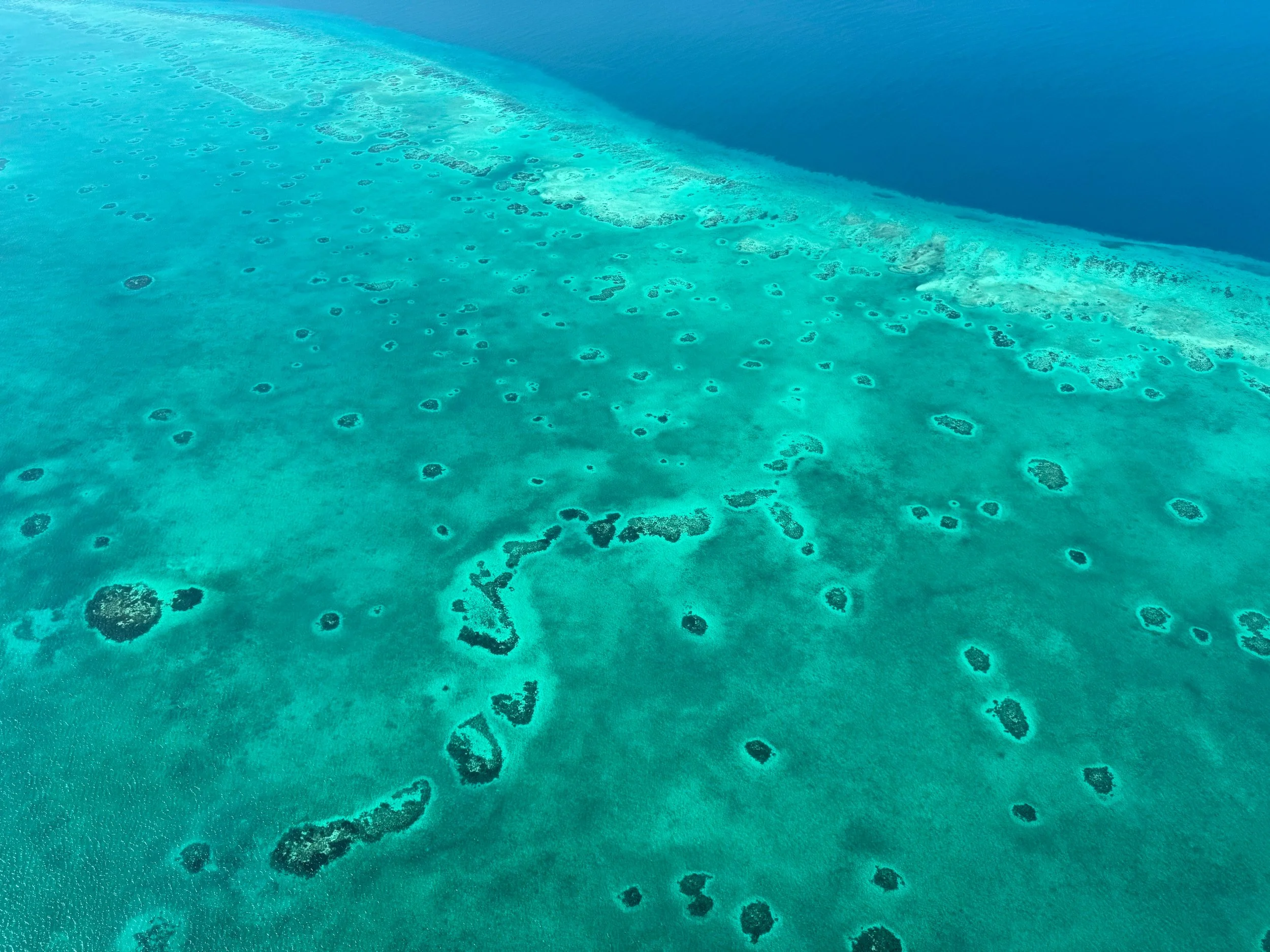
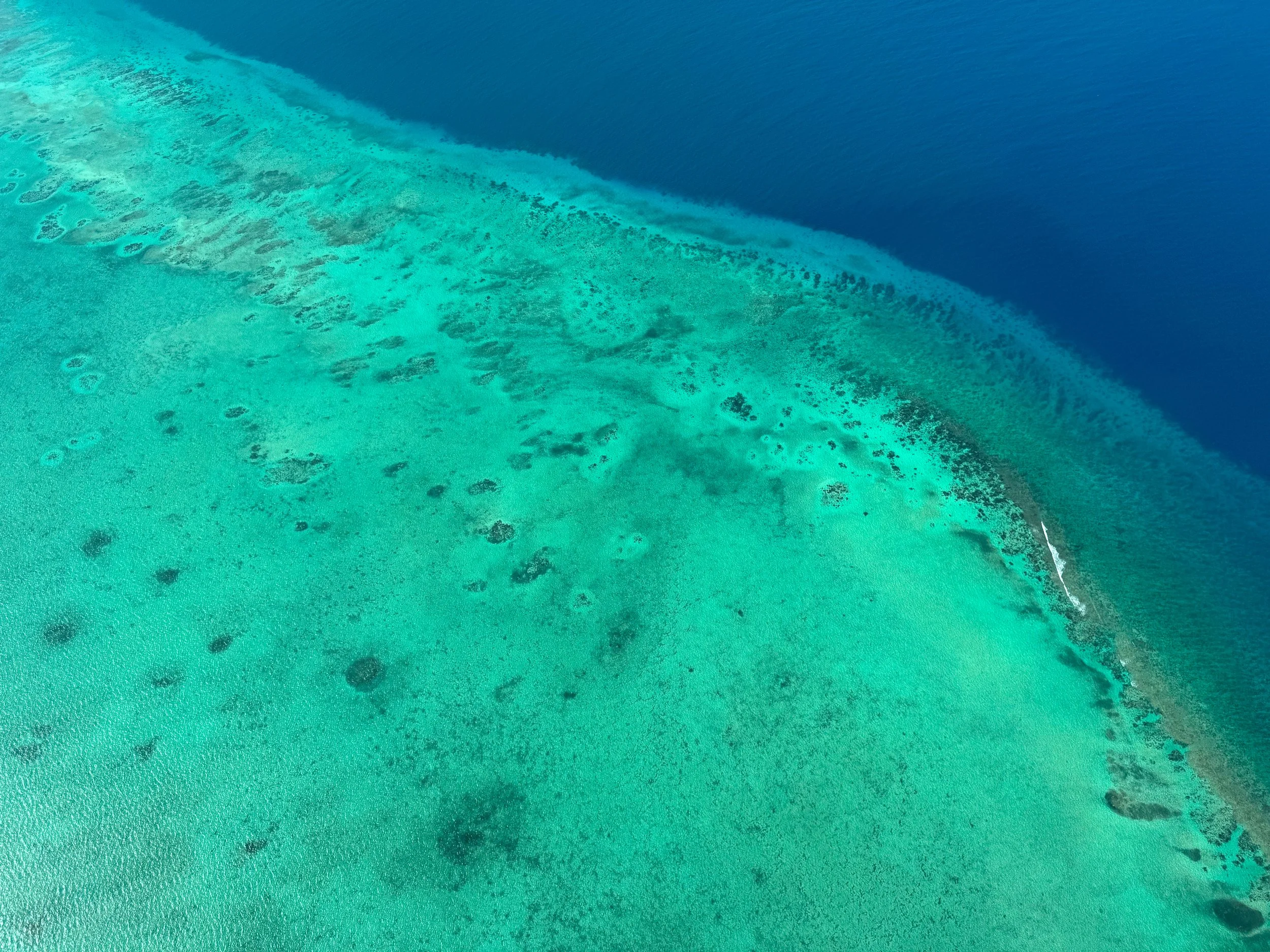
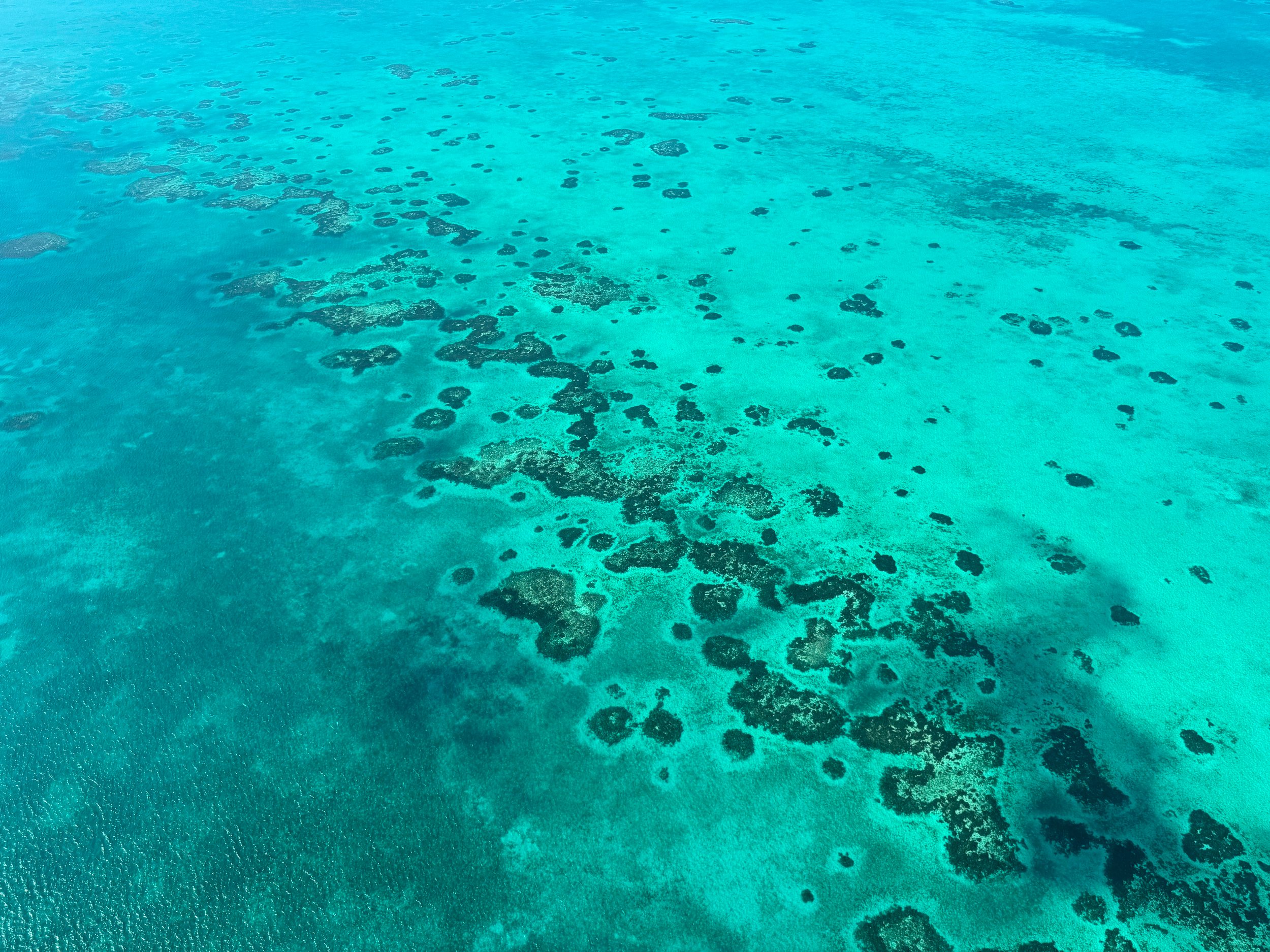
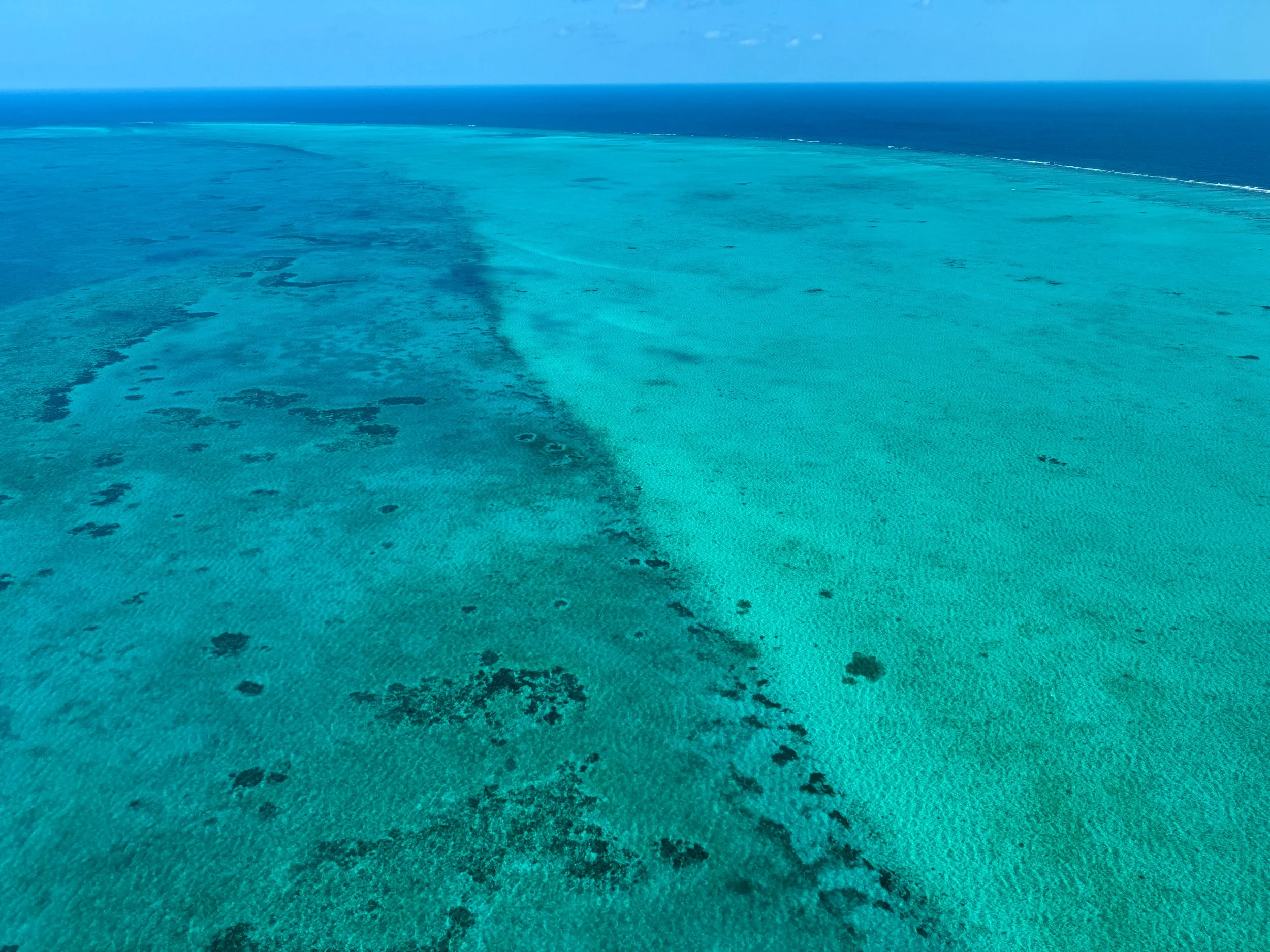
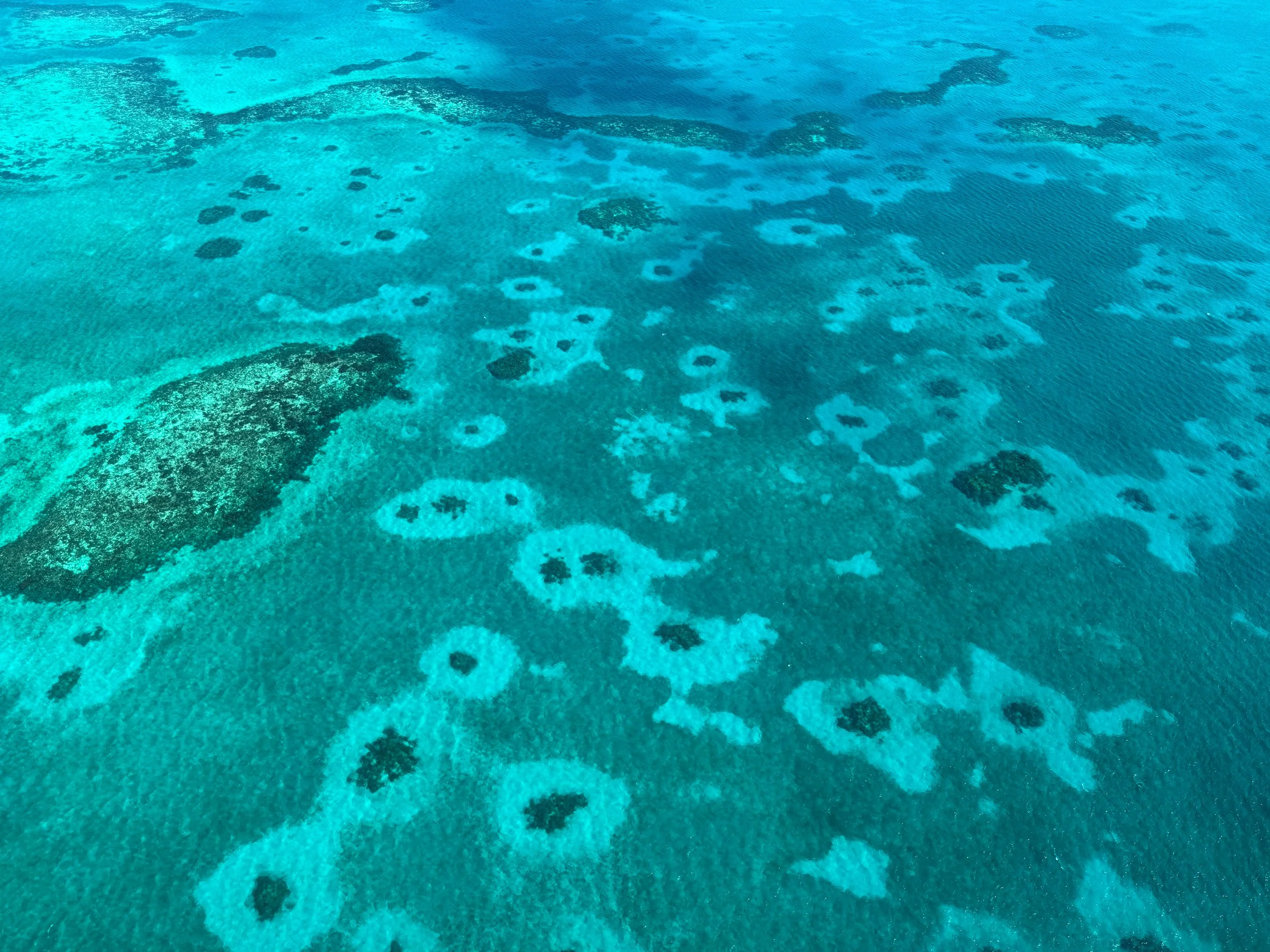
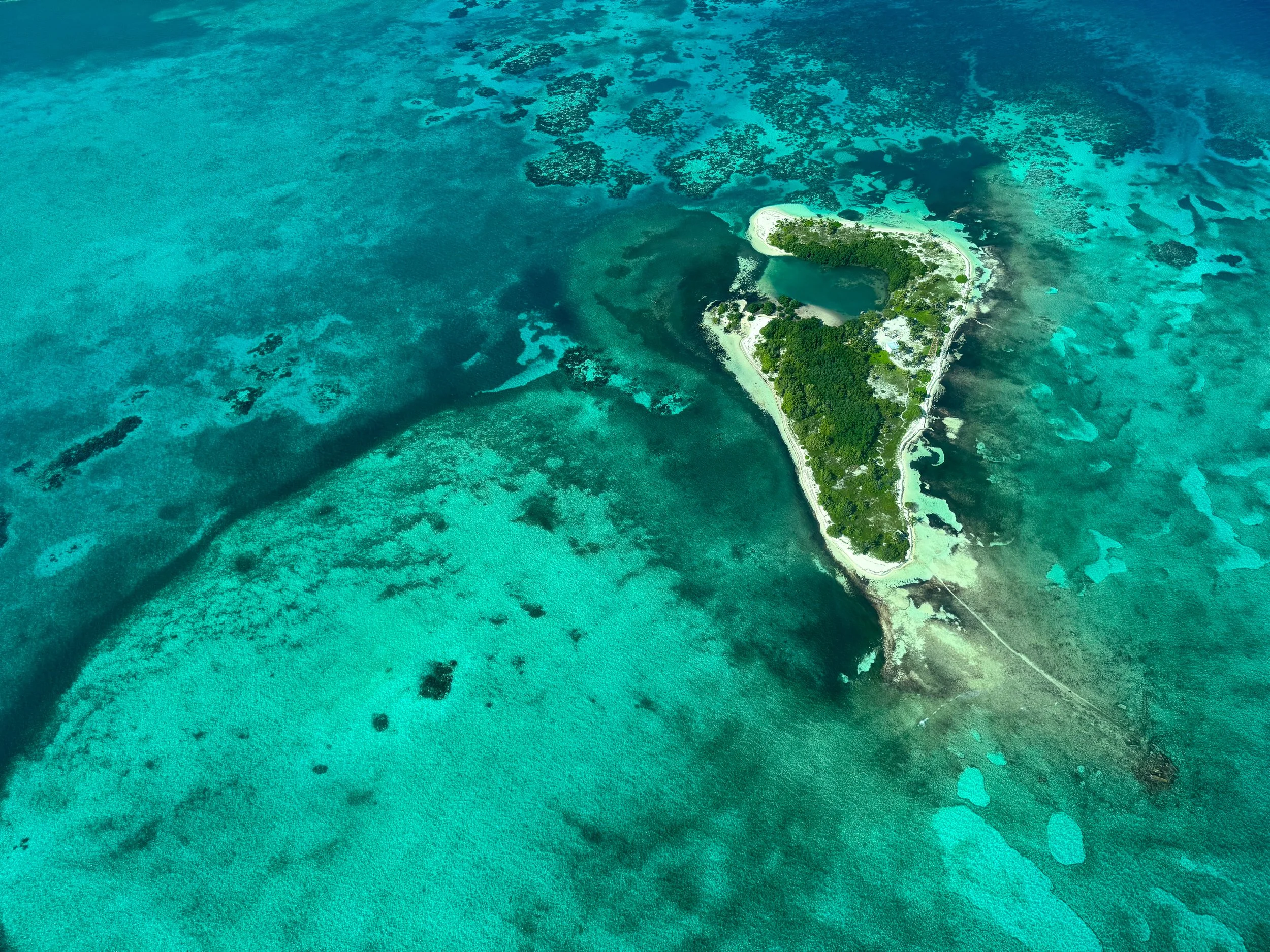
The Belize Barrier Reef is the second largest coral reef in the world, stretching hundreds of miles along the Caribbean shores of Belize. The reef’s multi-hued blue waters are home to vast coral formations, low lying atolls, mangrove islands and tidal sand bars. The reef is teeming with all manner of marine life, making it a popular spot for snorkelers like us as well as divers, fishers and sailors. We were able to experience the reef from above and below, flying over parts of its expanse to The Blue Hole and snorkeling in the Hol Chan Marine Reserve.
Seven Spot Snorkeling Tour
We booked a snorkel tour stopping at seven points around Caye Caulker and The Great Belize Barrier Reef, including Shark Ray Alley and the Hol Chan Marine Reserve.
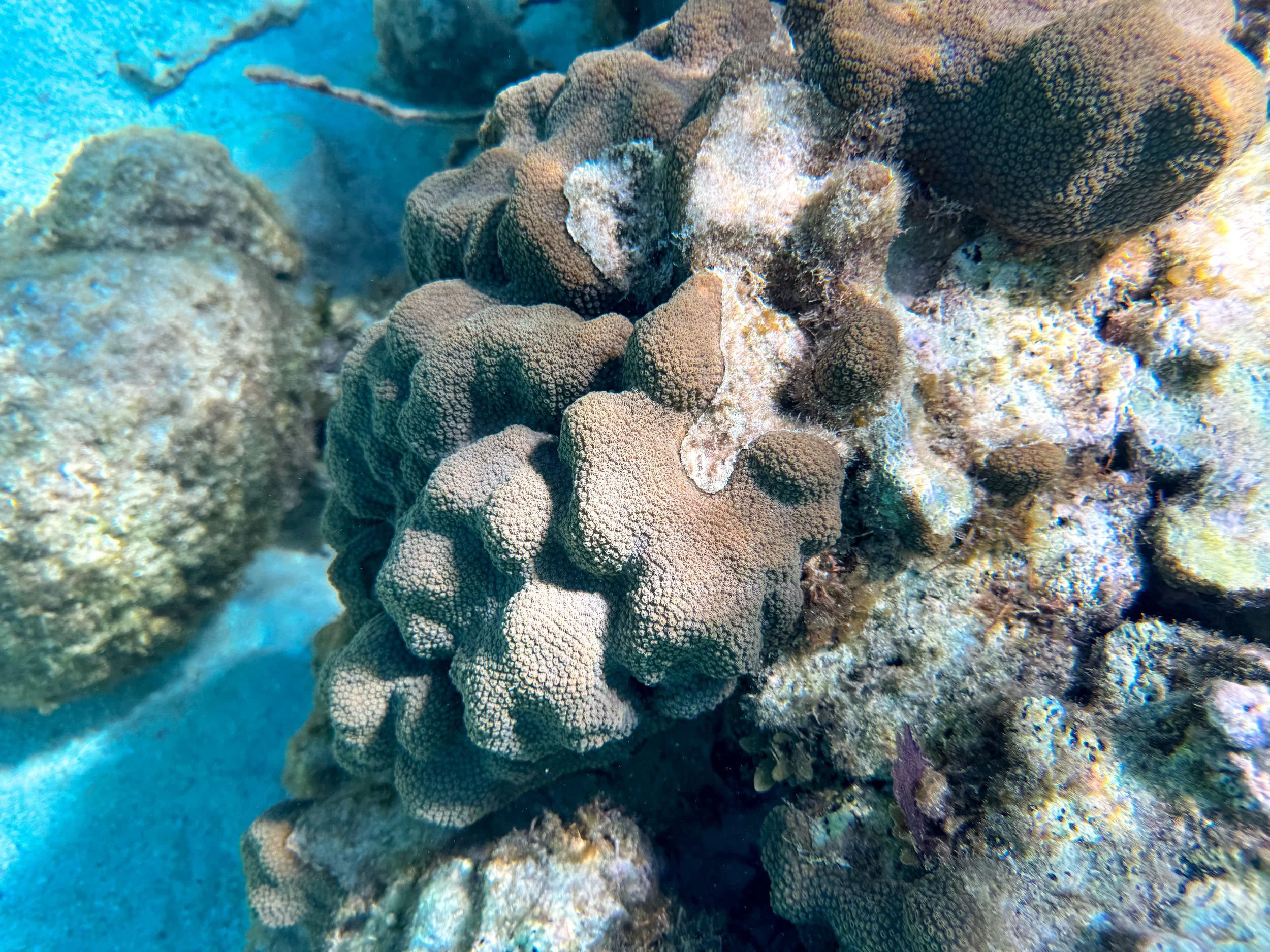
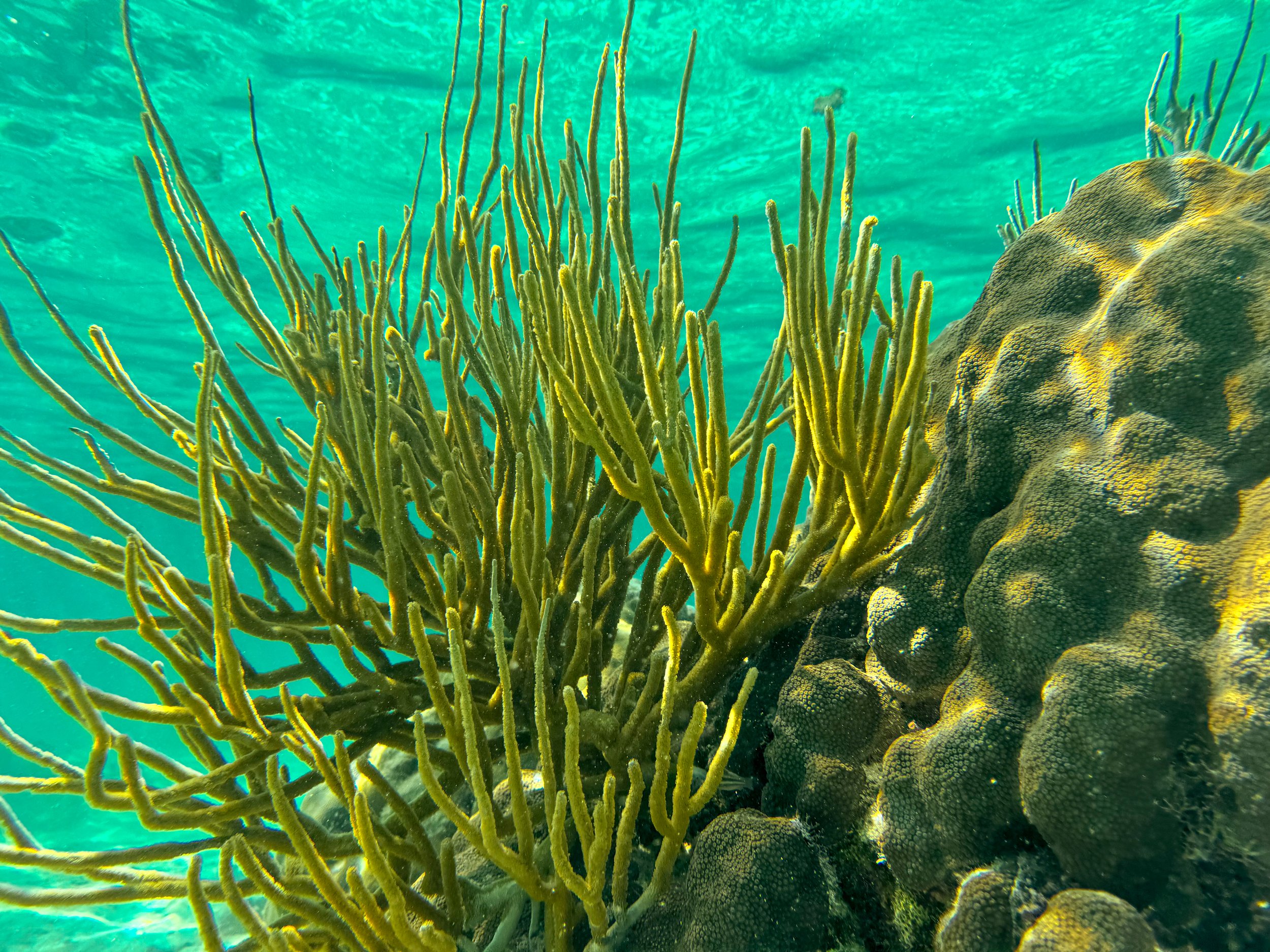
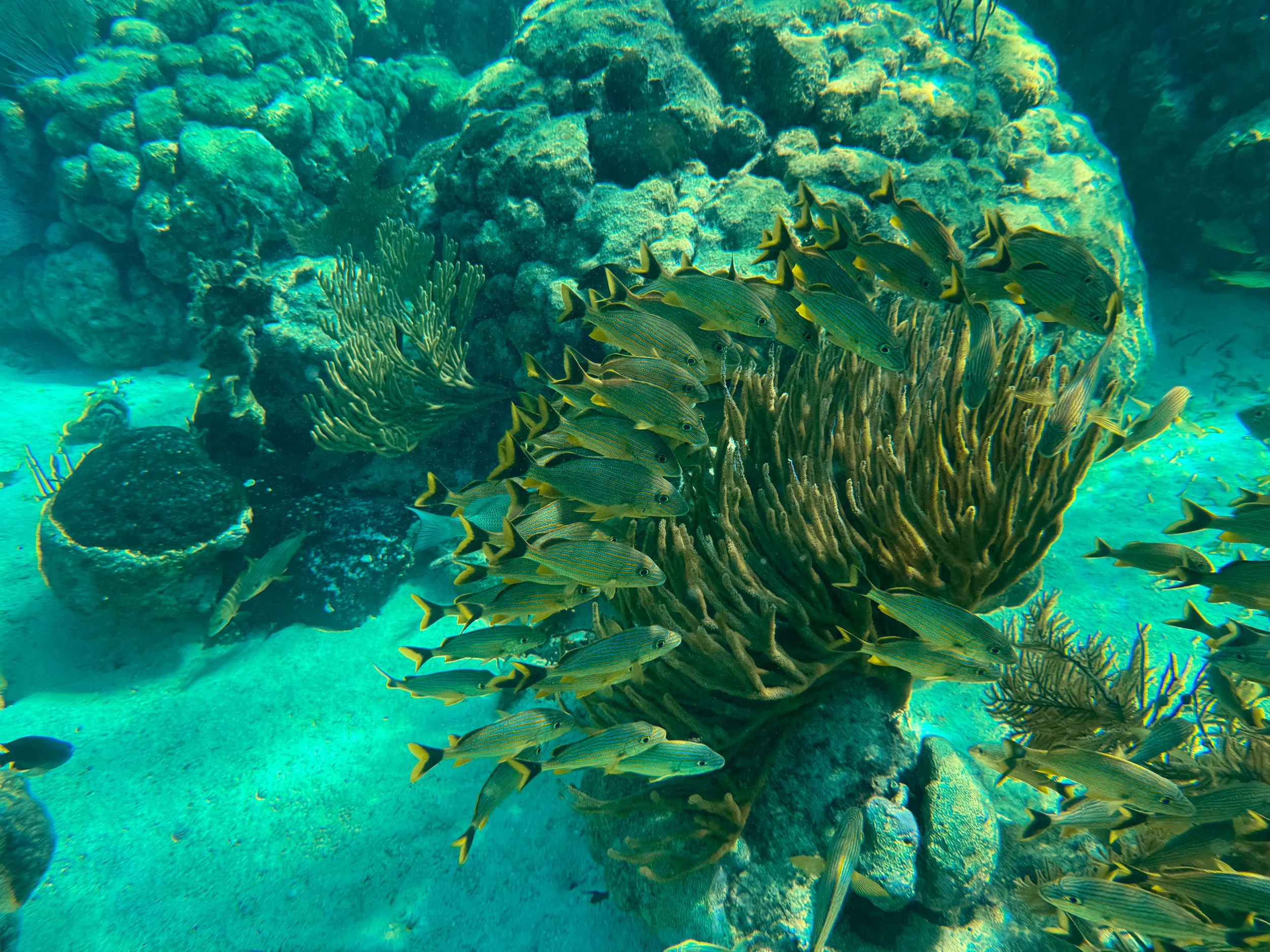
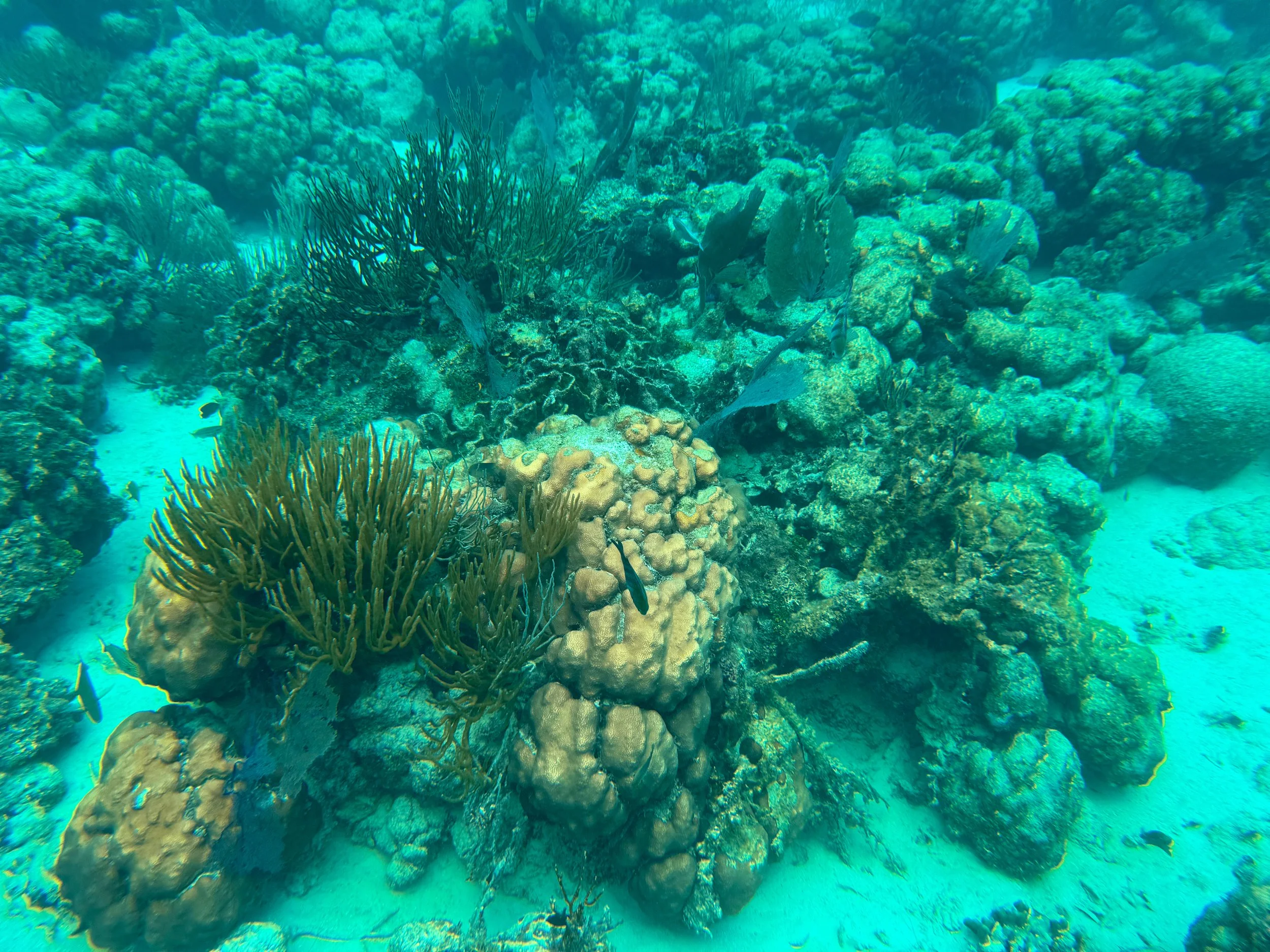
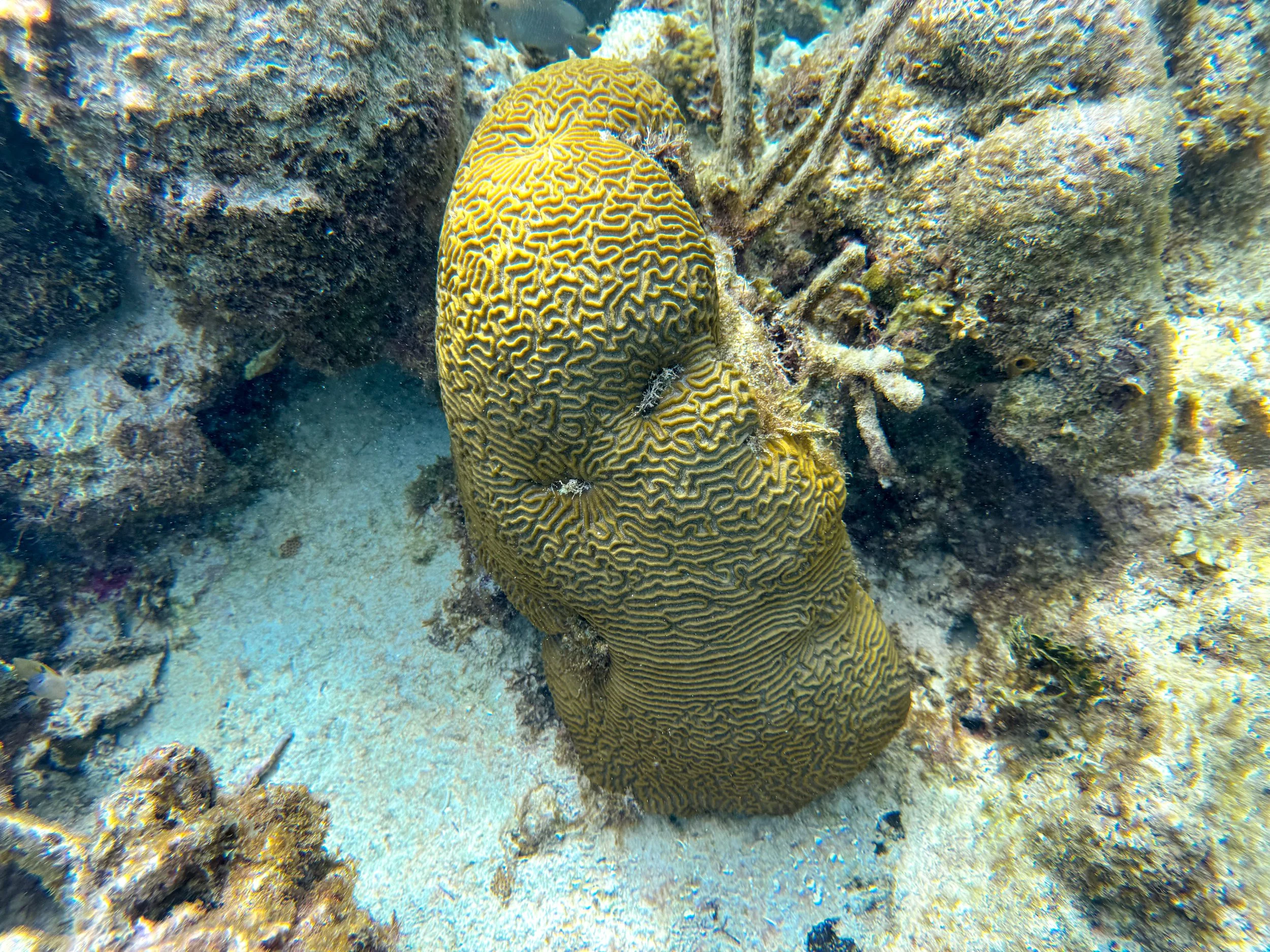
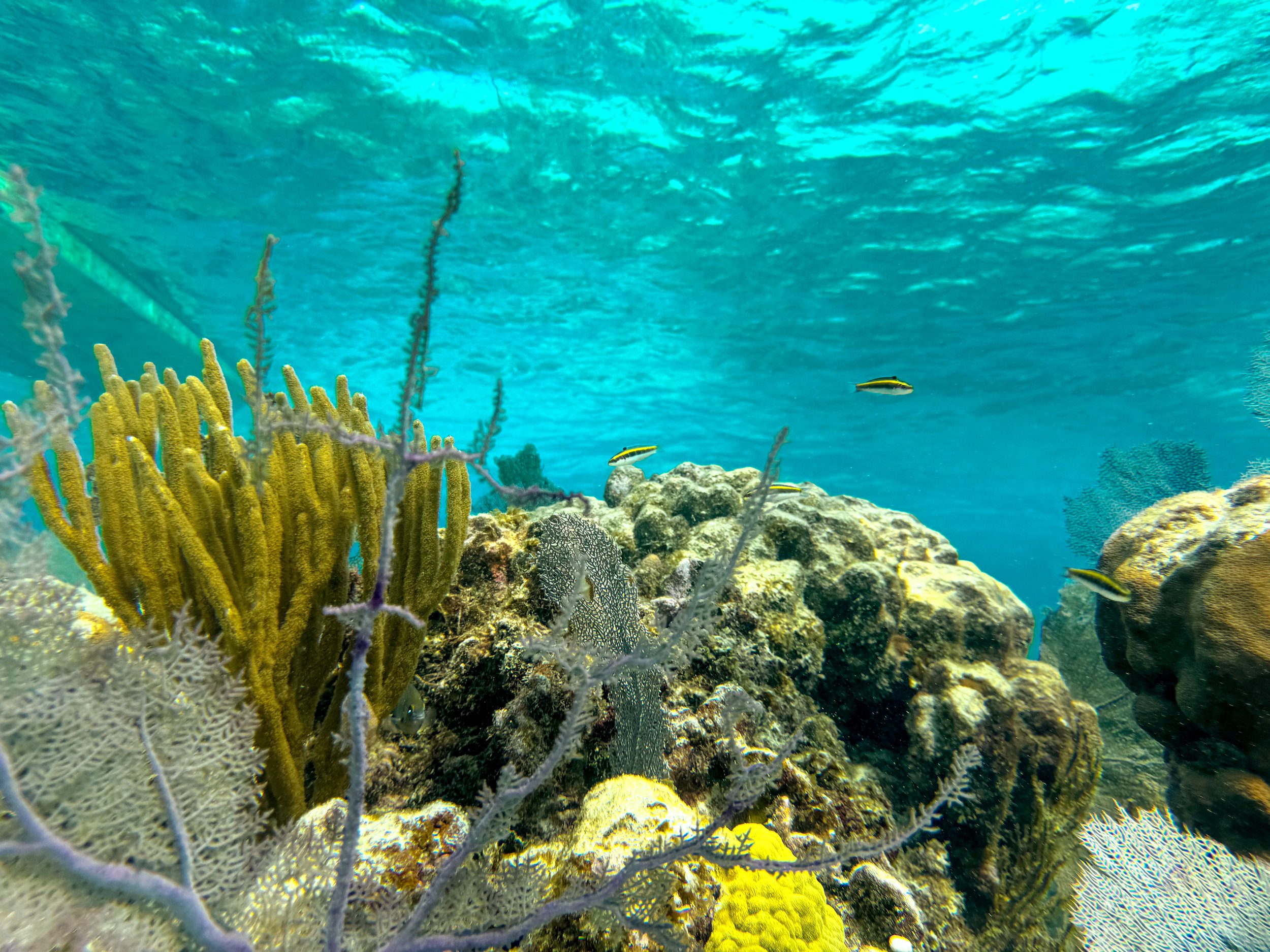
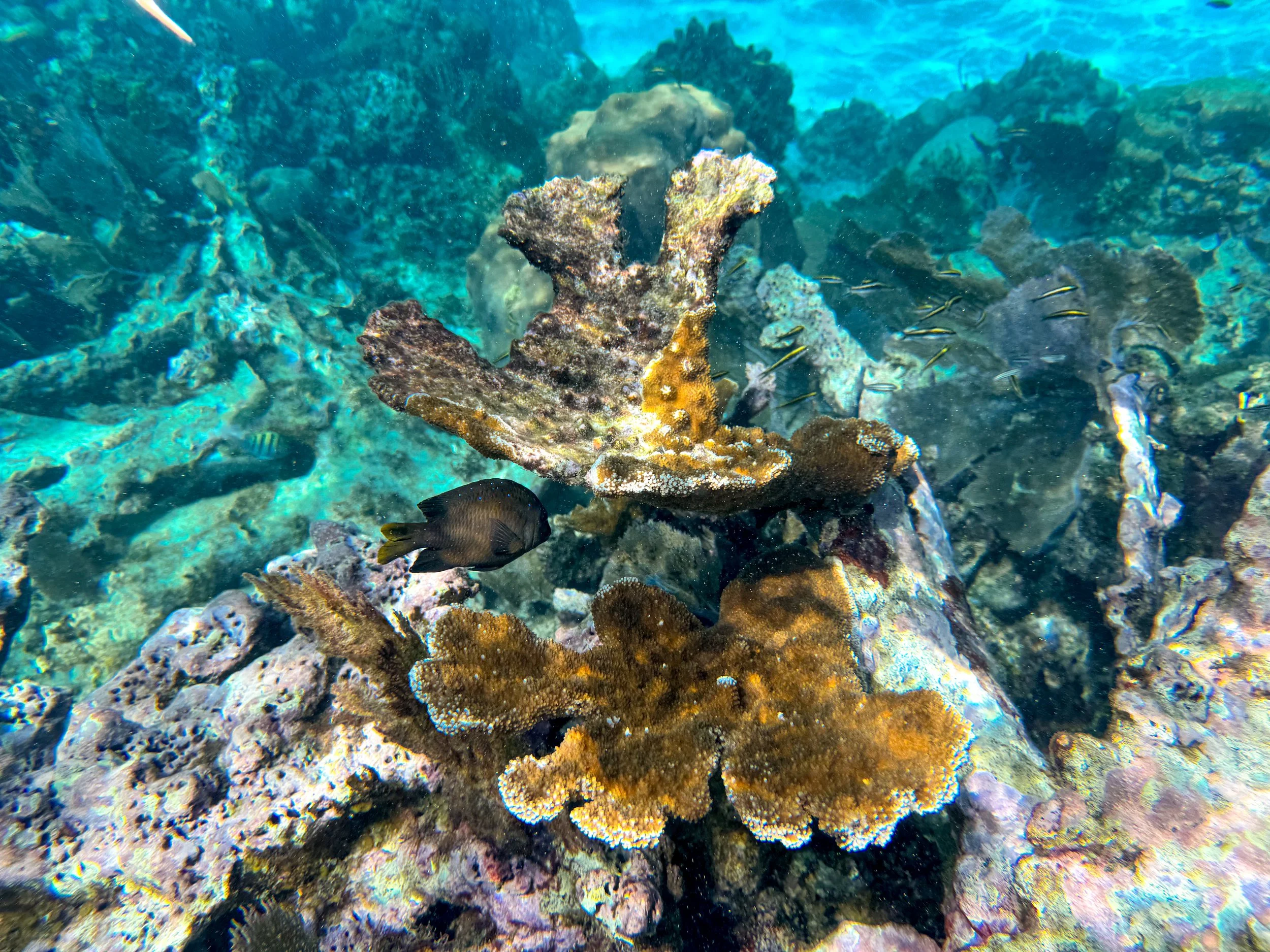
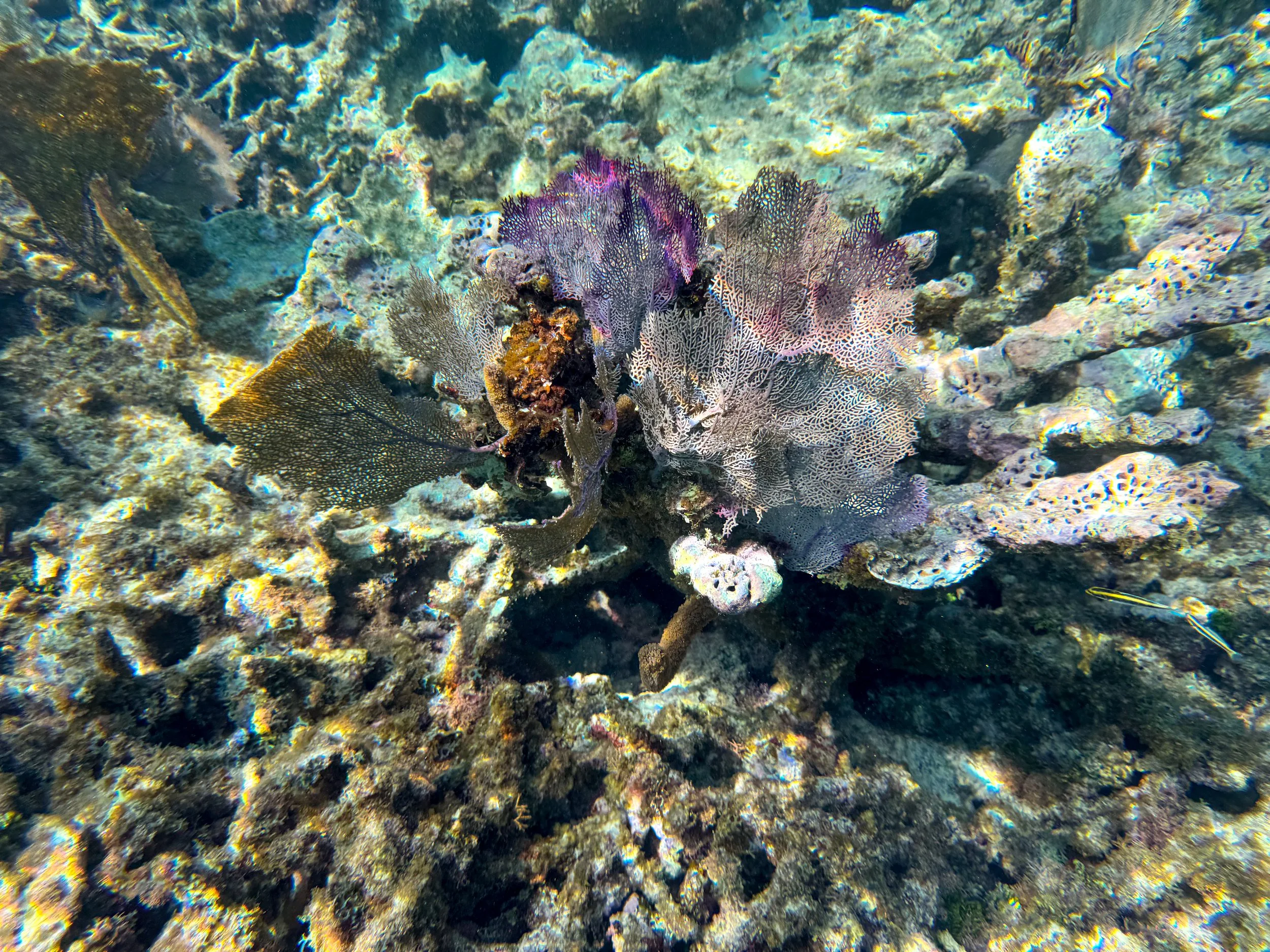
The Coral Gardens. A healthy reef home to a variety of colorful coral formations. Corals sway in the gentle currents as schools of tropical fish swim past.
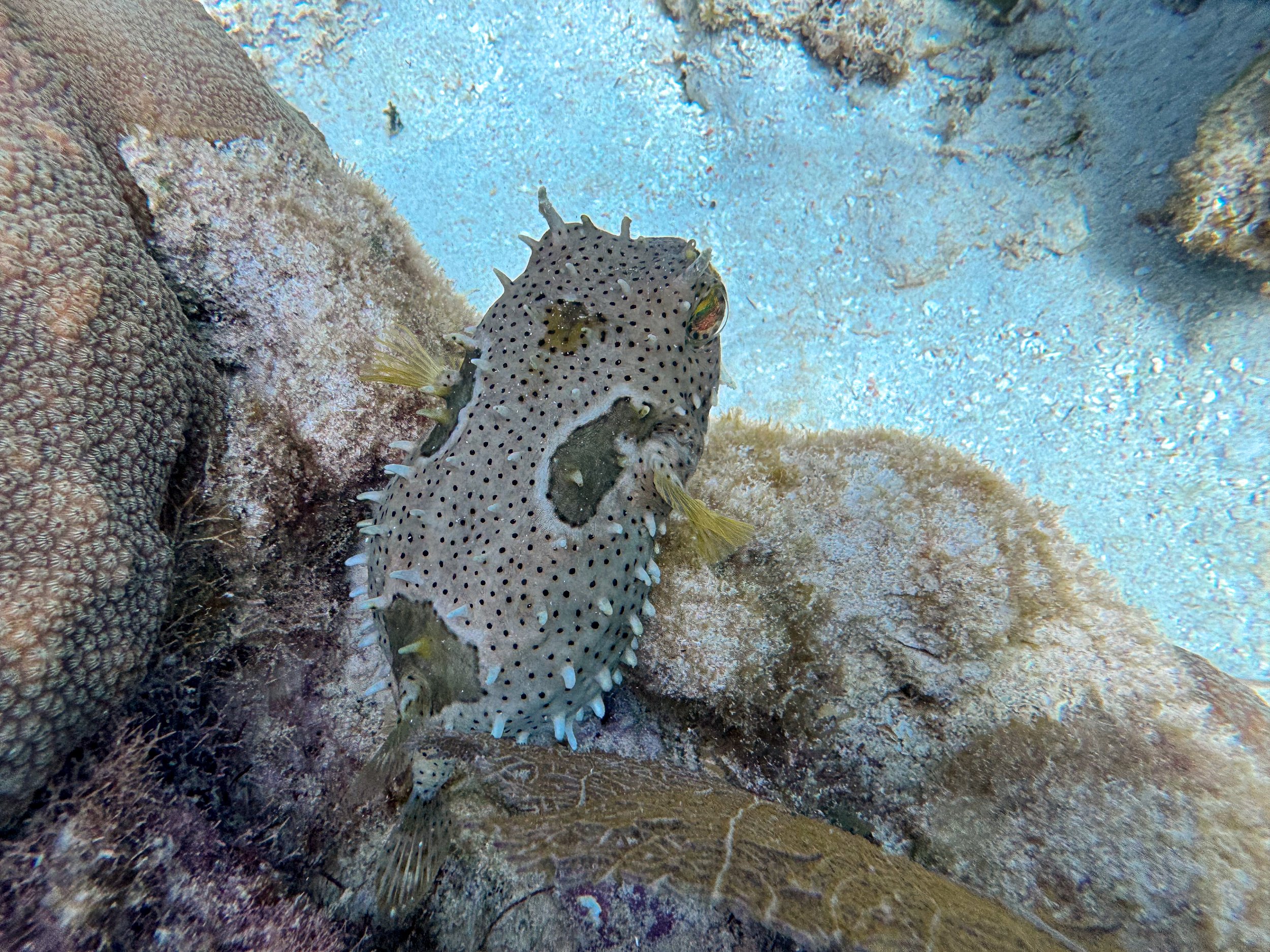
Hol Chan Marine Reserve. A protected marine reserve with a vast array of biodiversity and sea life. Our guide led us through an underwater “snorkel trail” to spot some of the reserve’s best sights. Between the giant coral formations, he pointed out countless species of marine life including a moray eel, barracudas, parrotfish, angelfish, blue striped grunts, horse eye jacks, sea fans, giant anemones, conches, Christmas tree worms, sea urchins, sand dollars and a puffed up pufferfish with the scariest green eyes.
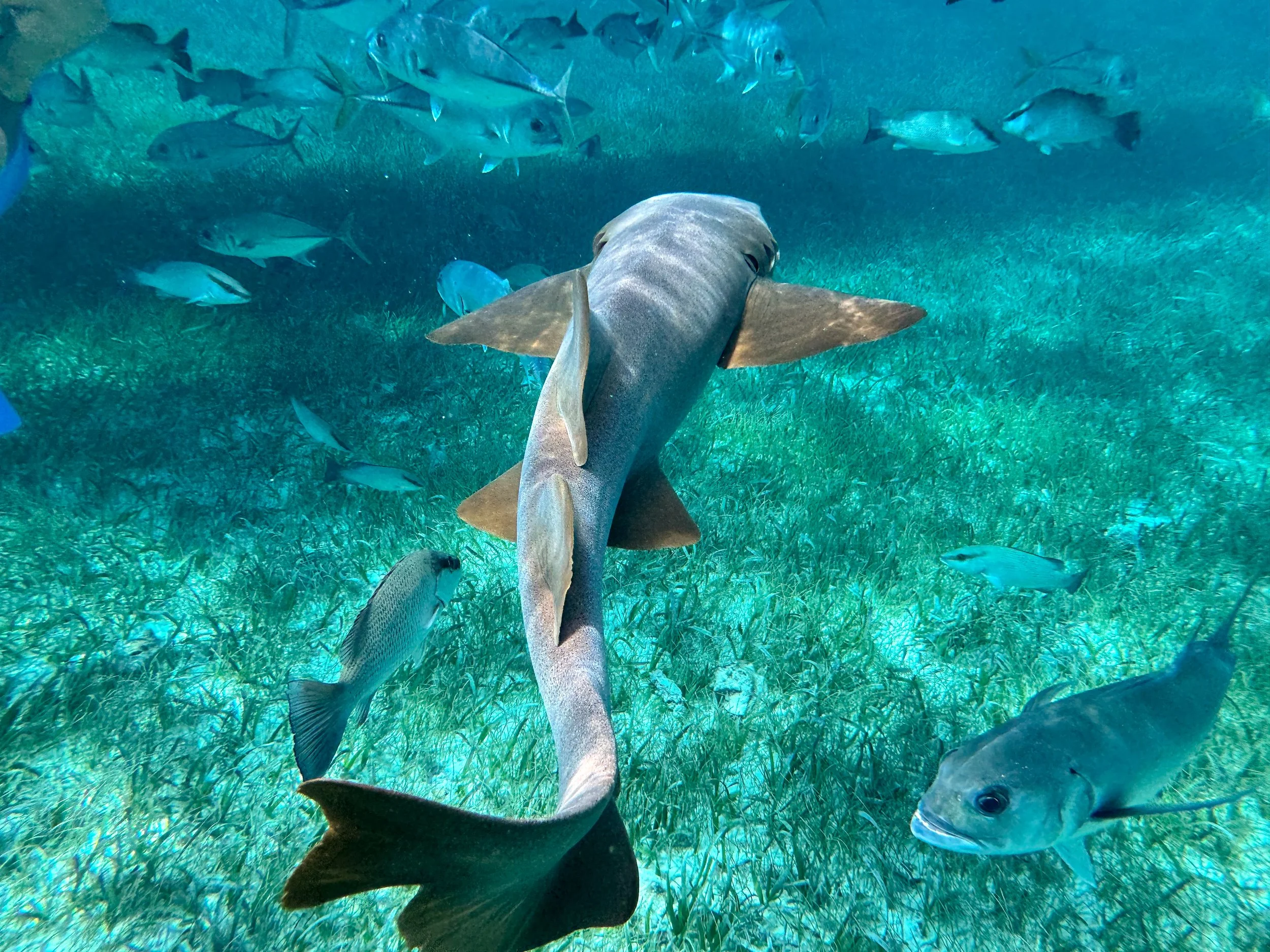
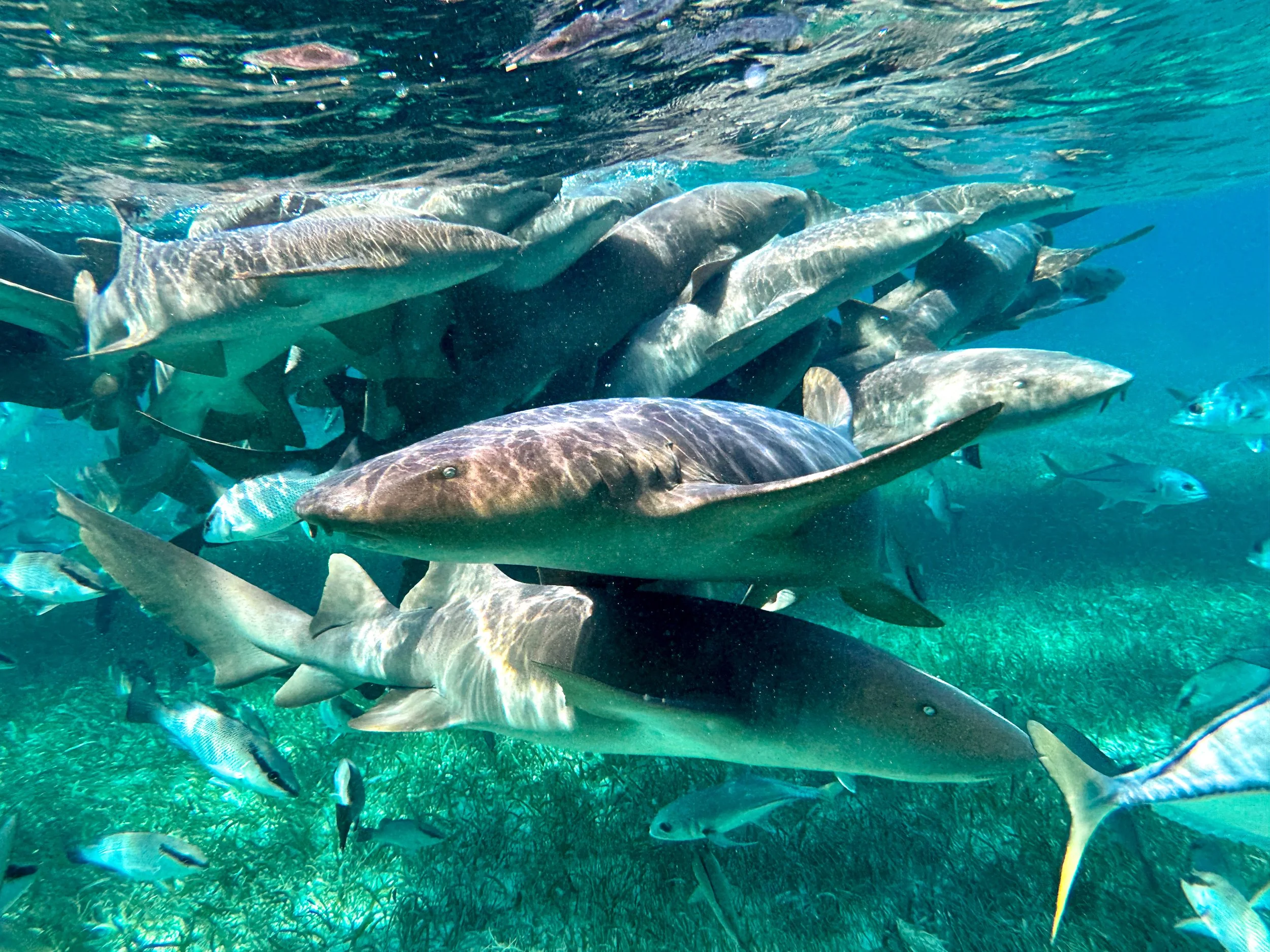
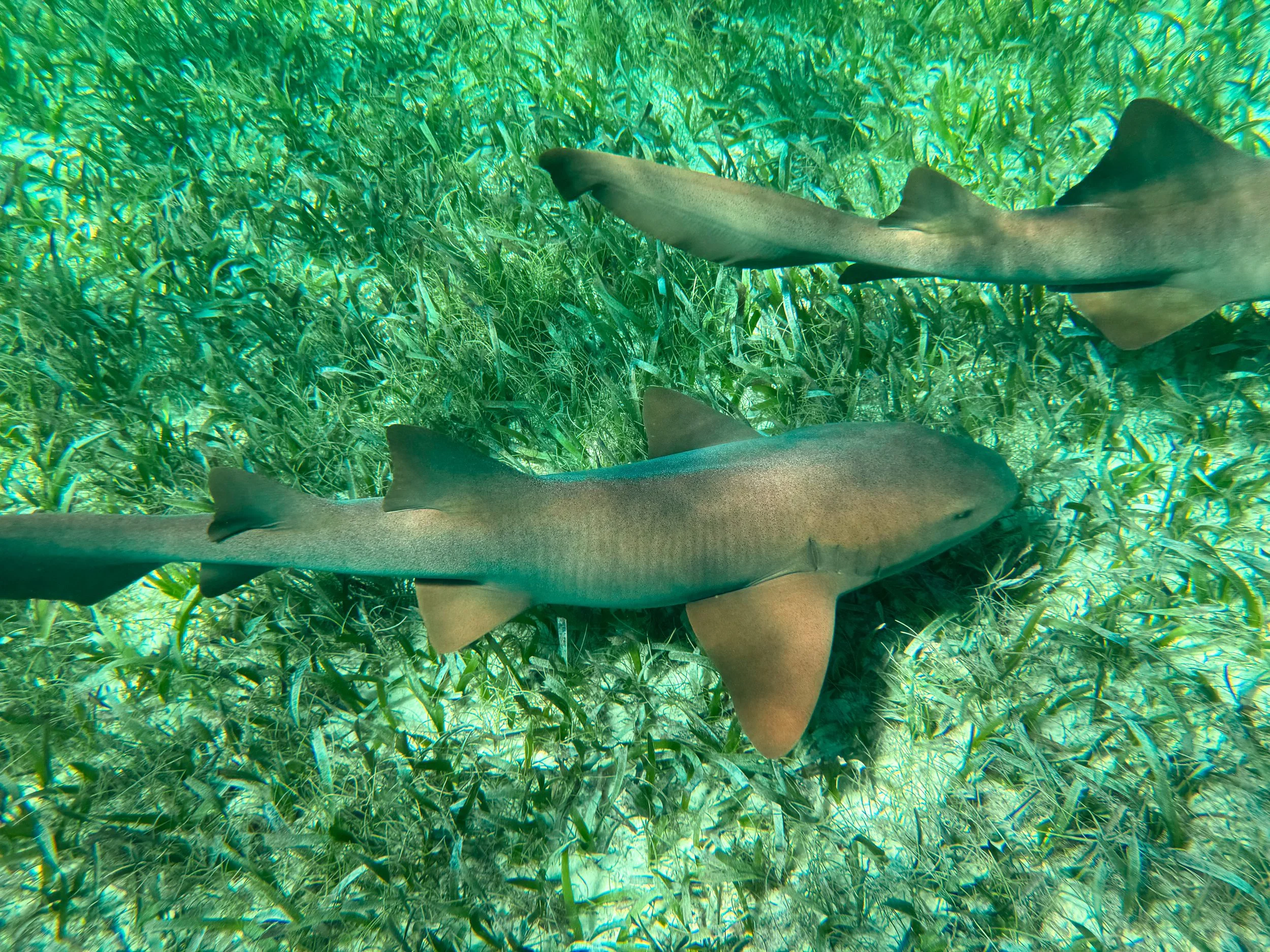
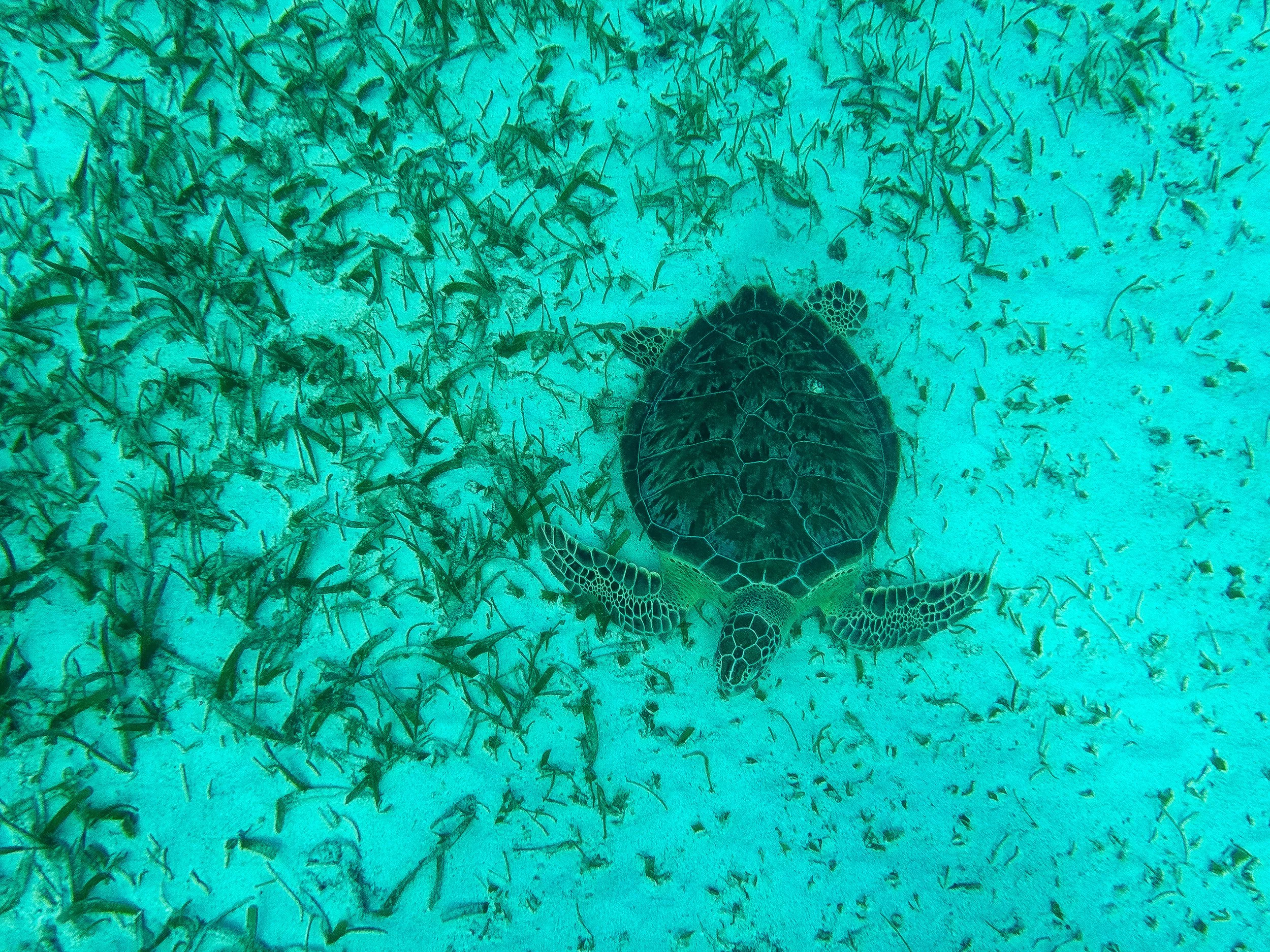
Shark Ray Alley. A grassy sandbar and feeding area with dozens of nurse sharks. We snorkeled and swam alongside them as they circled the boat and came within feet of us. Green sea turtles grazed in the open field of seagrass while small fish swam around pockets of corals.
The Sunken Barge. An underwater wreck now overgrown with lively corals and schools of colorful, striped and tropical reef fish. We snorkeled above the wreck and watched as fish swam in and out of holes in the ship.
On our return to Caye Caulker, we stopped at Manatee Point, Tarpon Cove and Stingray Beach to spot manatees, tarpon, stingrays and seahorses. The full day tour included fresh fruit, lunch, rum punch and snorkel equipment. We booked with Salt Life Eco Tours on Get Your Guide.
The Great Blue Hole Fly Over Tour
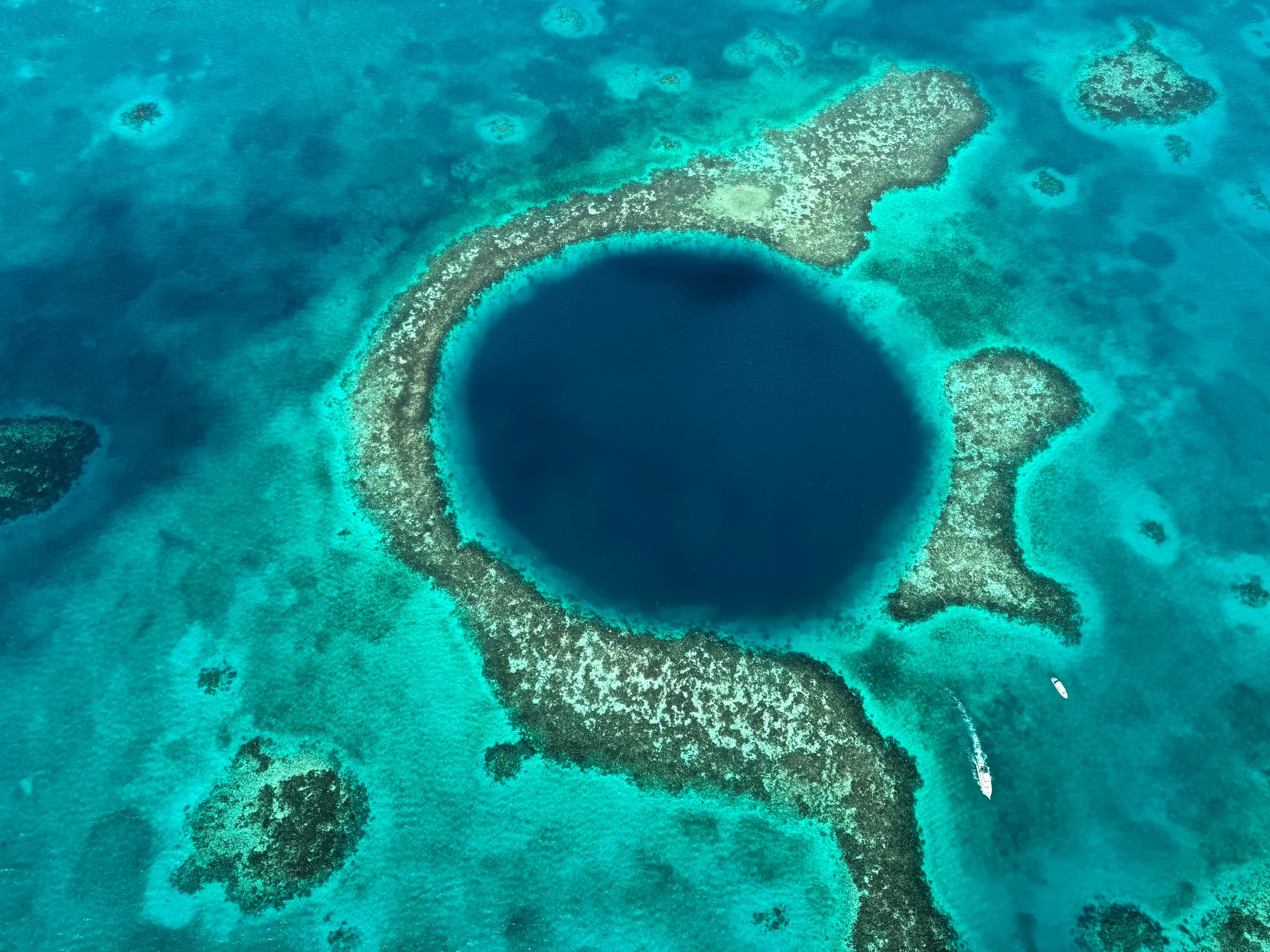
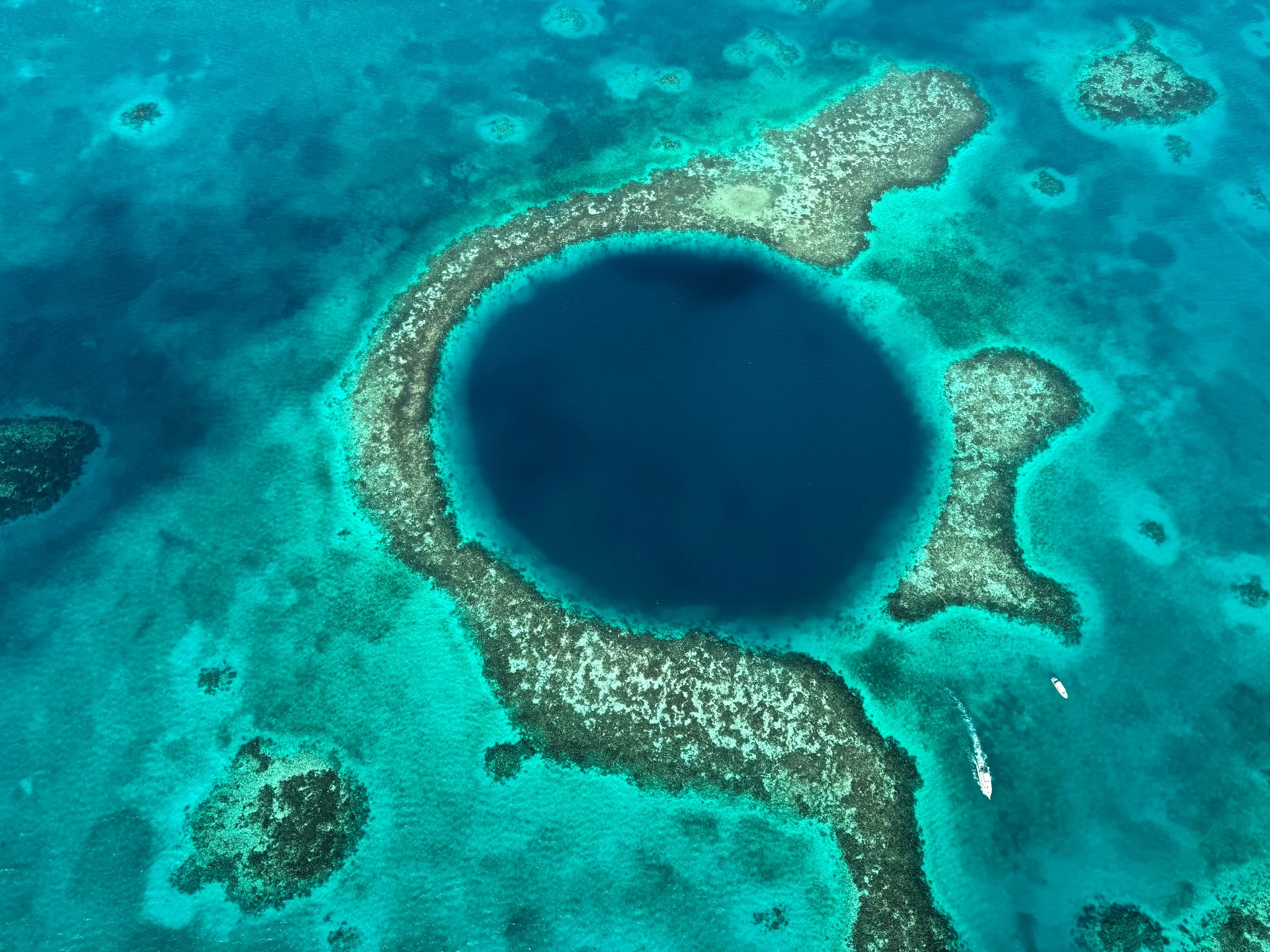
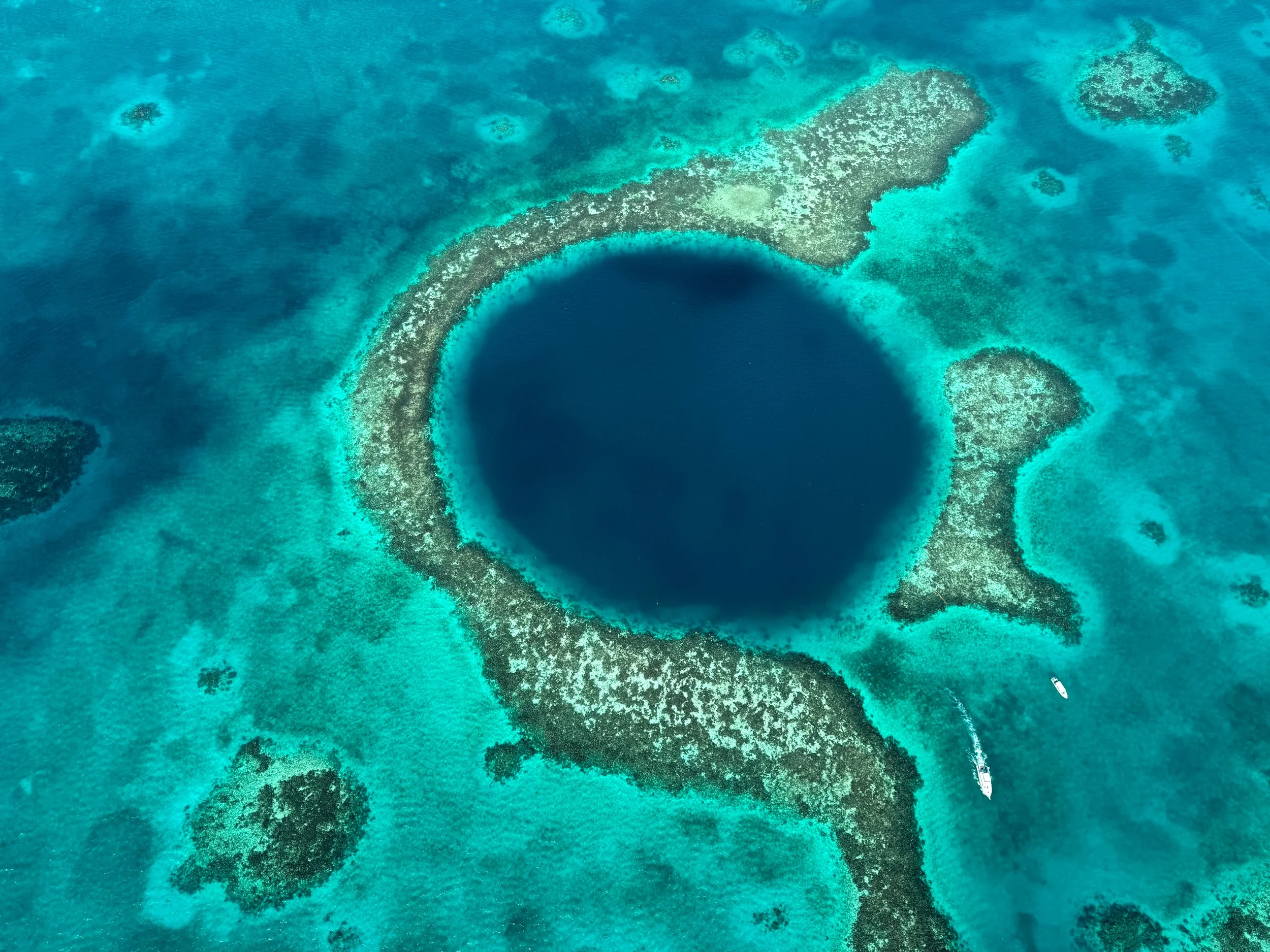
The Great Blue Hole is a perfectly round geological formation famed for its deep blue color contrasted by lighter blues of the surrounding shallows. It was created by an underwater sinkhole that collapsed and filled with seawater, giving it its color. We flew over it as if in a trance, circling from different altitudes on both sides of the airplane. En route, we flew over cayes, small islands, atolls, coral reefs and drop offs that created an intense spectrum of blue hues ranging from aquamarine to bright blue, turquoise, deep blue and navy. Looking out the windows, we were mesmerized by the blue beauty of the Caribbean and Belize Barrier Reef. The flight lasted about an hour. Though expensive, it is a sight worth seeing! We booked directly with Maya Island Air.
Things to Do
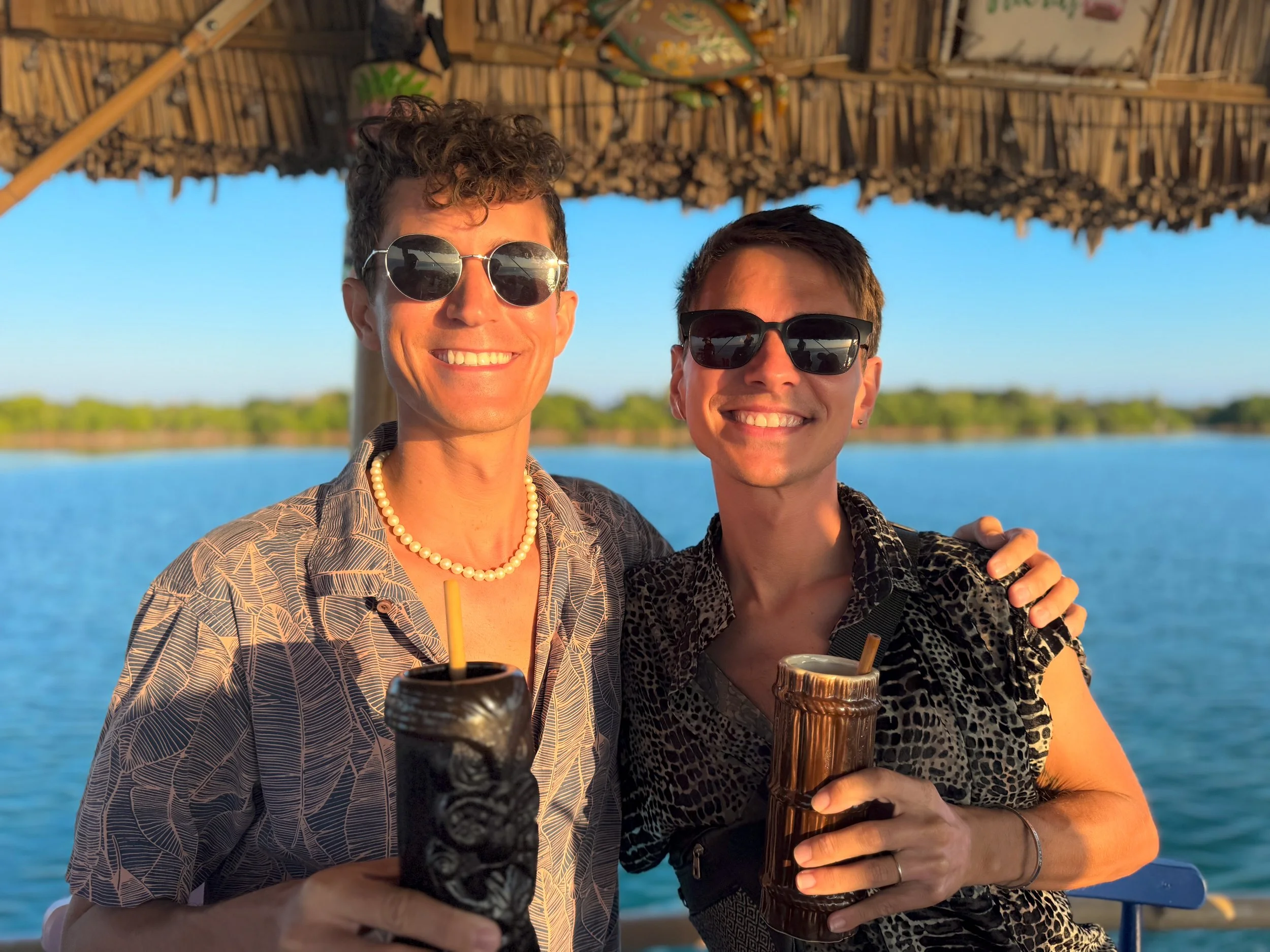
Sunset Tiki Bar Cruise. In love with all things tiki, we joined several others aboard the “Pontiki,” a pontoon boat converted into a floating tiki bar with a palm thatched roof and side skirt, bamboo railing, kitschy tiki decor, one of a kind tiki mugs and bamboo straws. Most importantly, the cruise included the booziest rum punch made with Belizean rums. For nearly two hours, our captain boated us around the Caye, refilling our tiki mugs and bringing us to the perfect spot for a Caribbean sunset. We booked with Nina’s Pontiki Cruises on Viator.
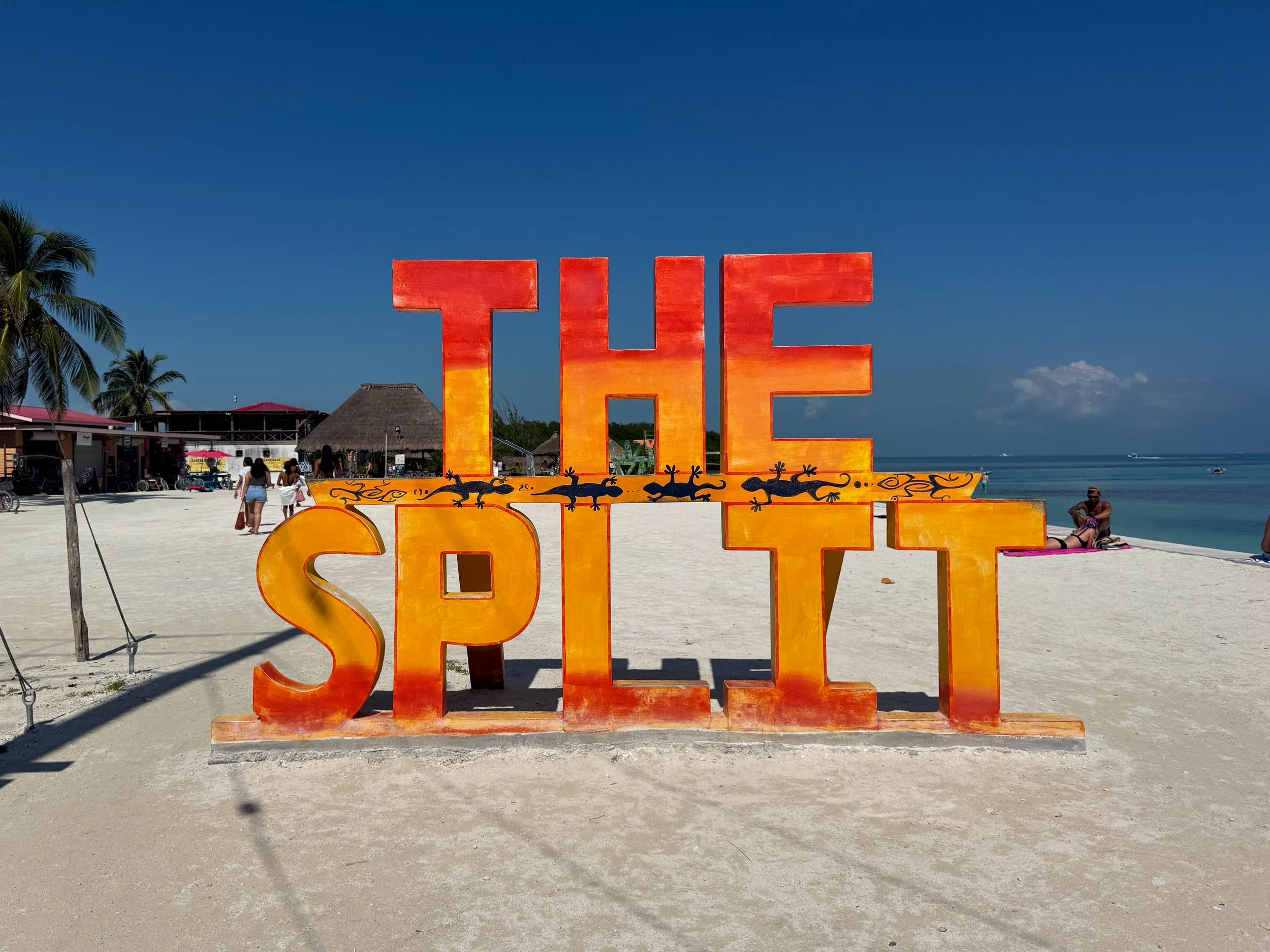
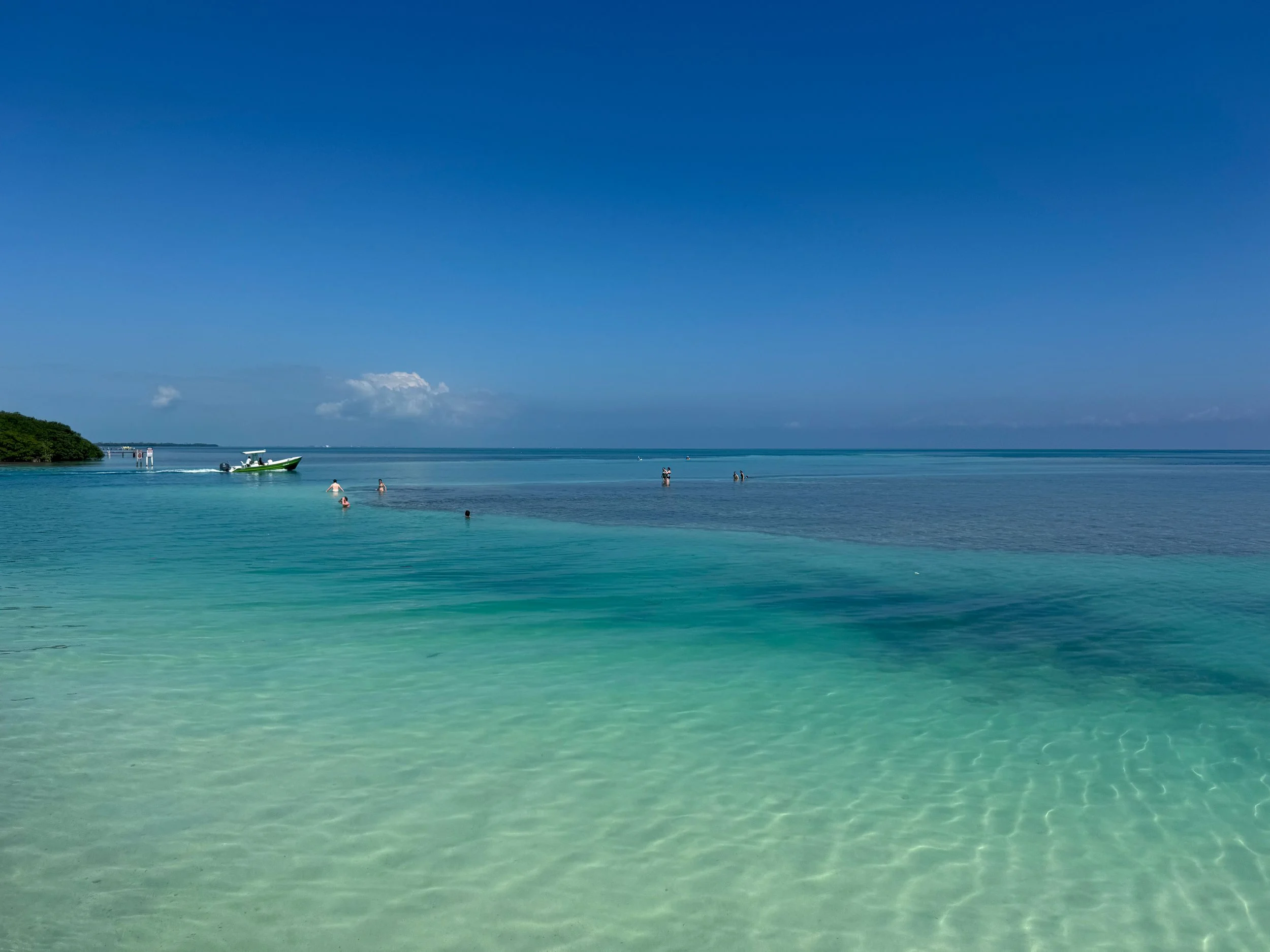
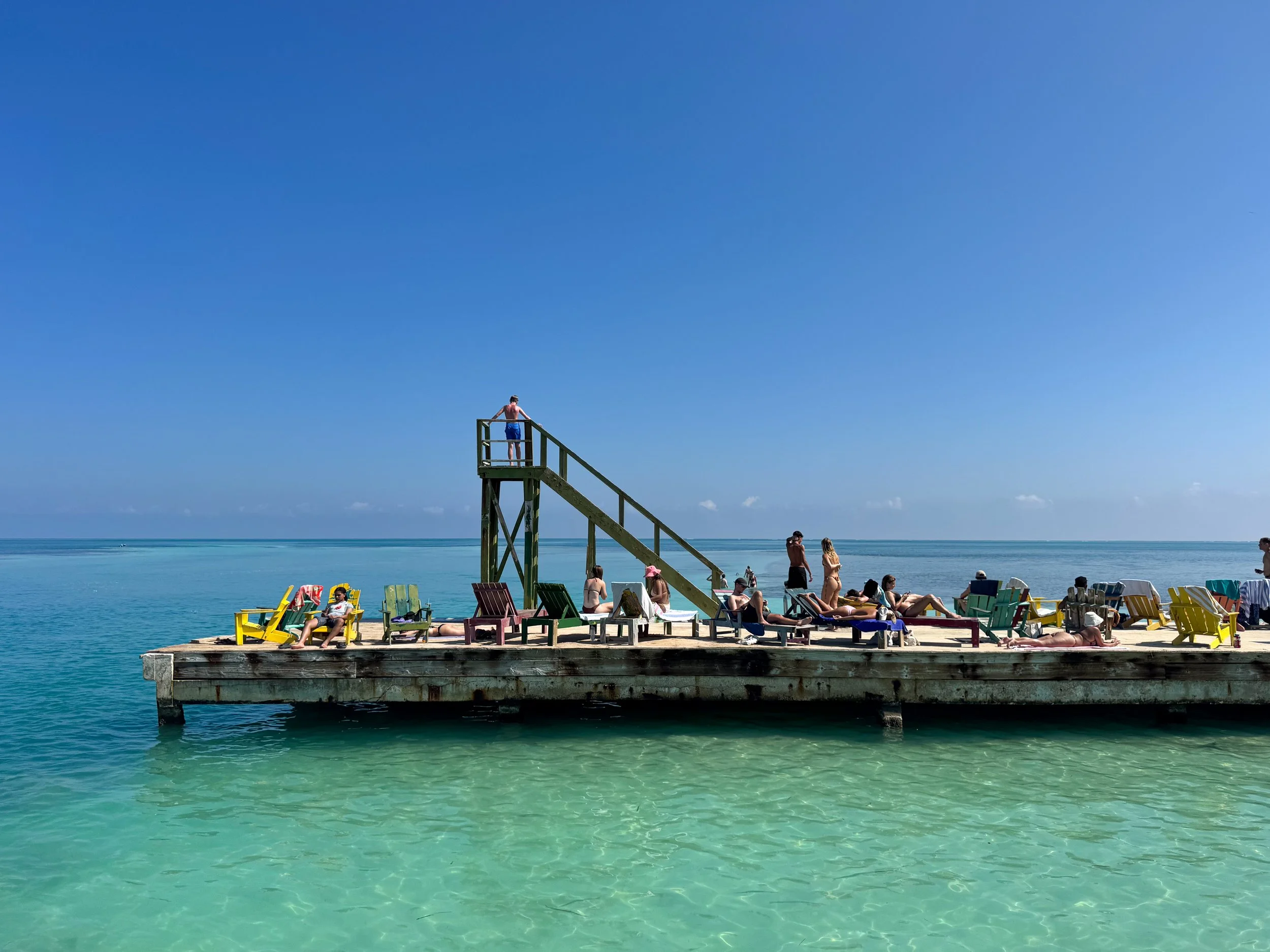
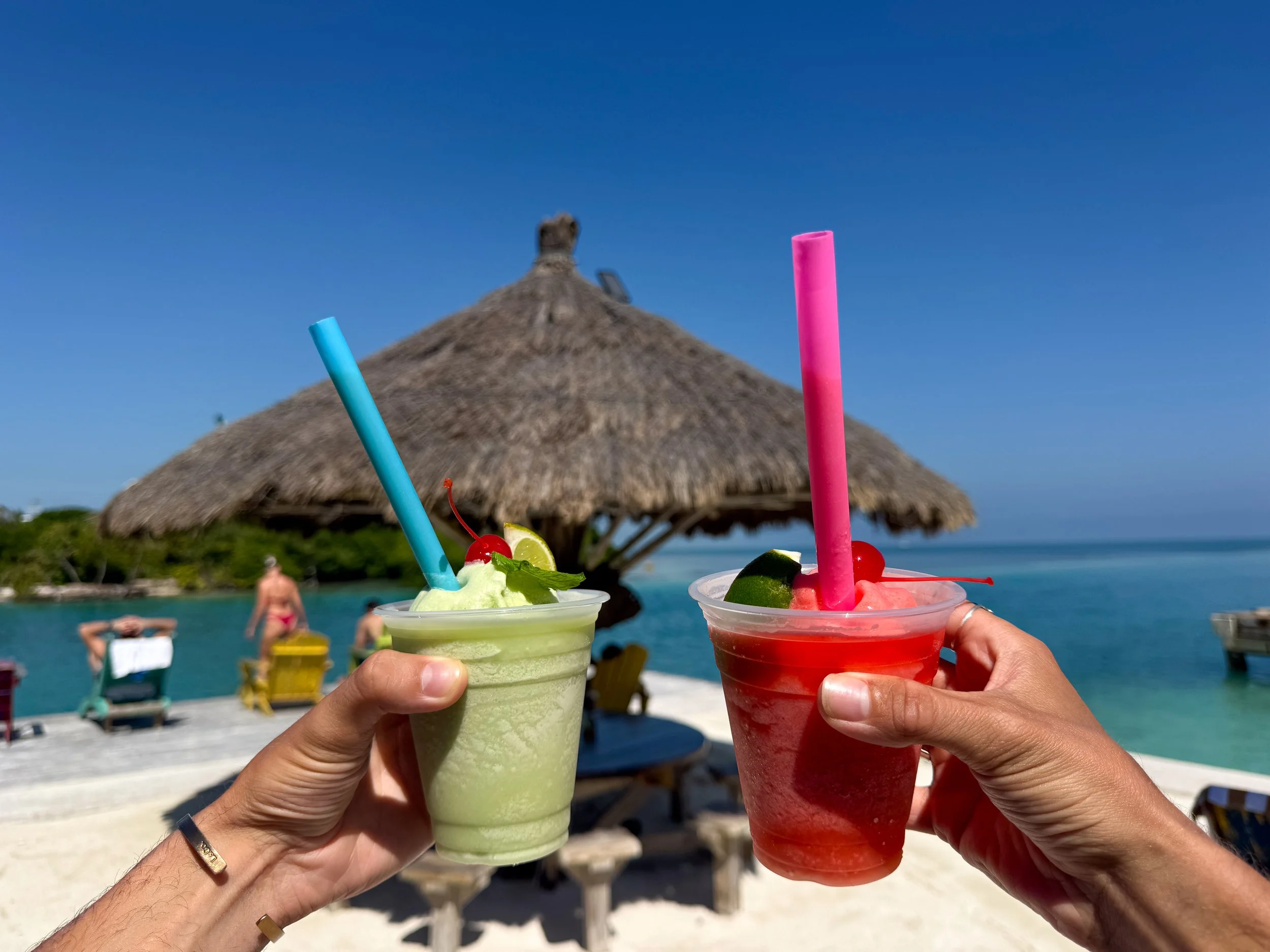
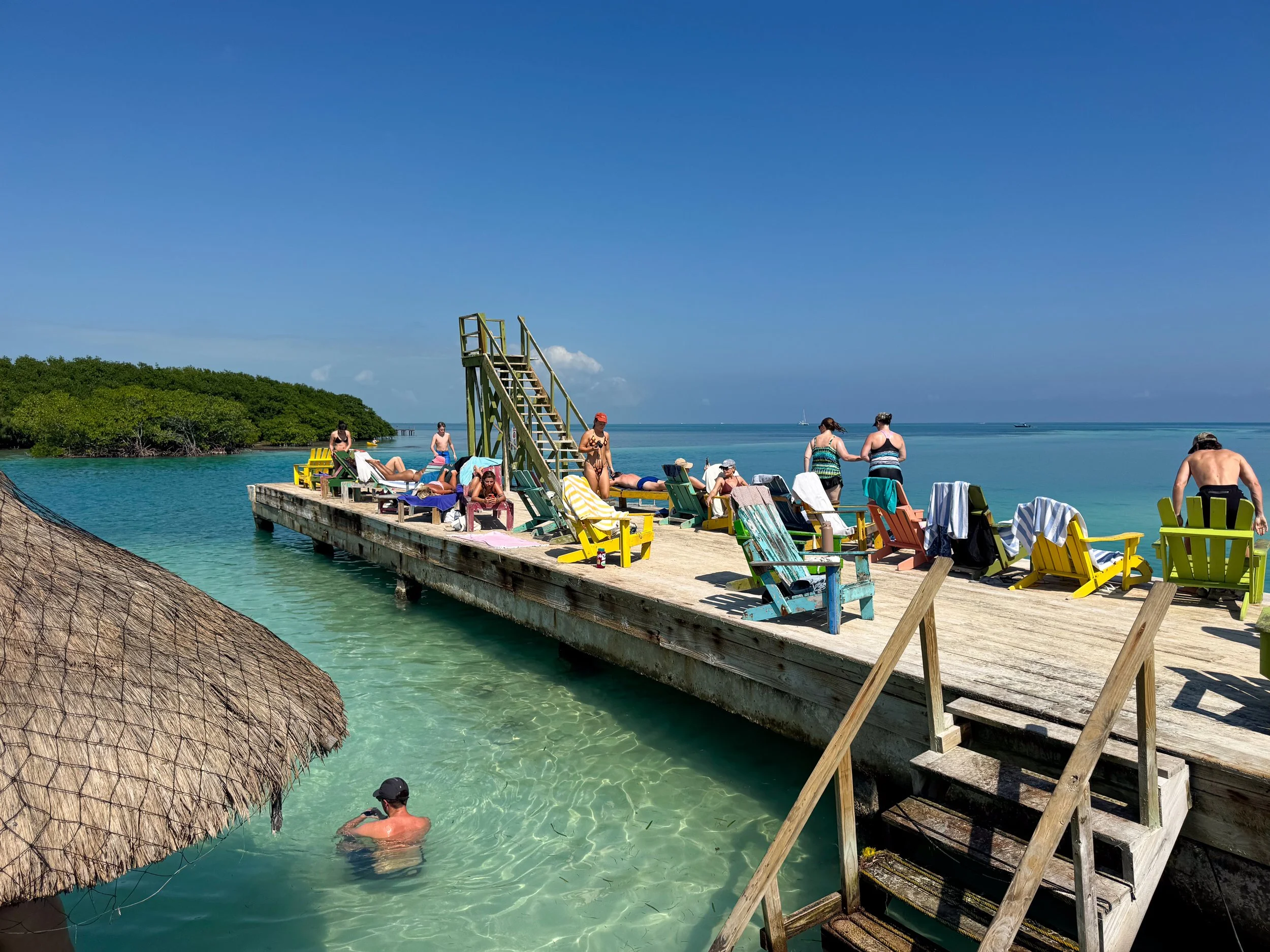
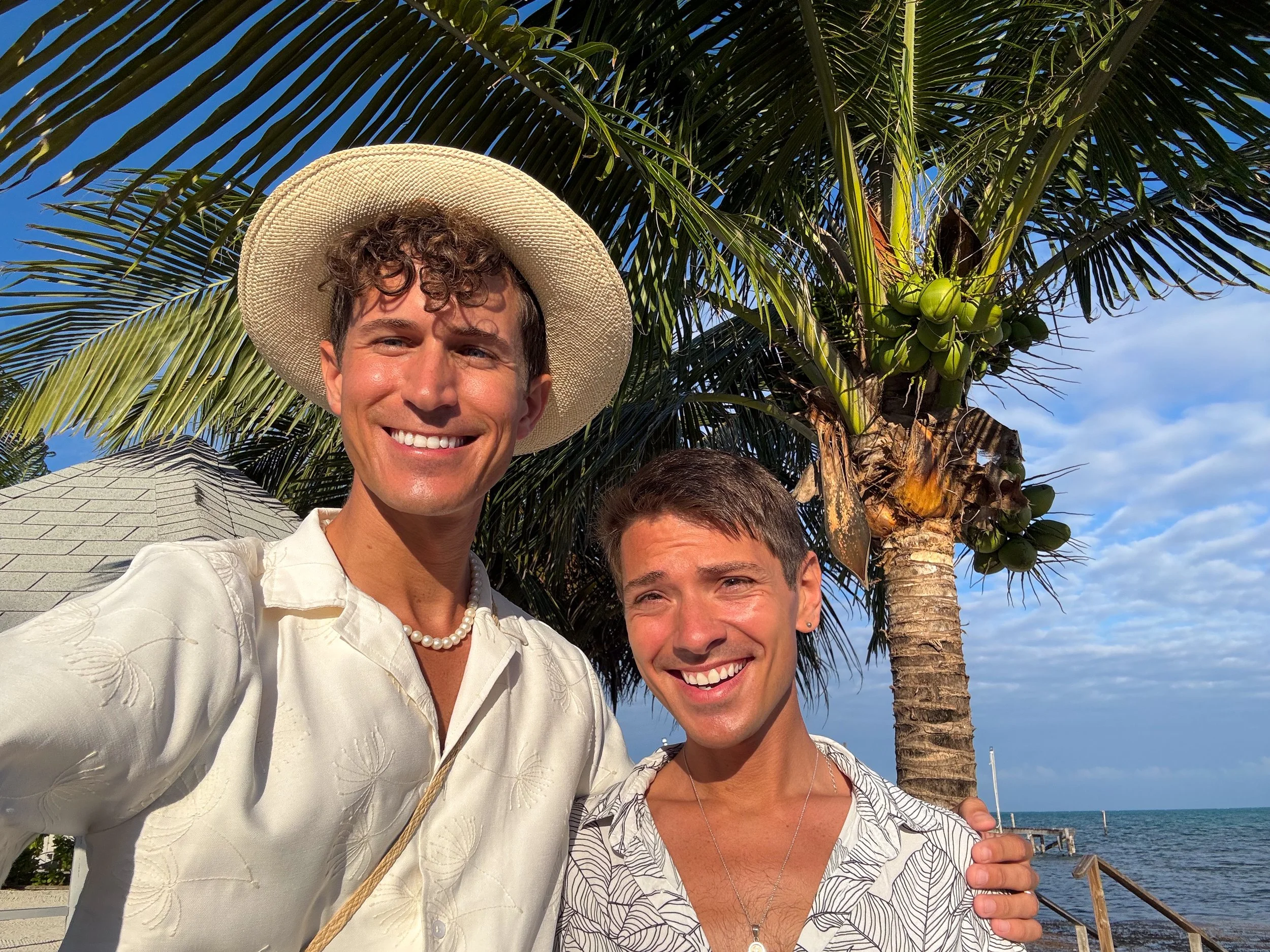
Visit The Split. The Split is a narrow channel separating the north and south sides of Caye Caulker. It is the informal center of the island and a common departure point for tours. Visit The Lazy Lizard, a beach club with an outdoor restaurant, expansive bar and music venue. Their pier is lined with colorful wooden lounges, tables shaded by thatched umbrellas and a ladder with a diving platform.
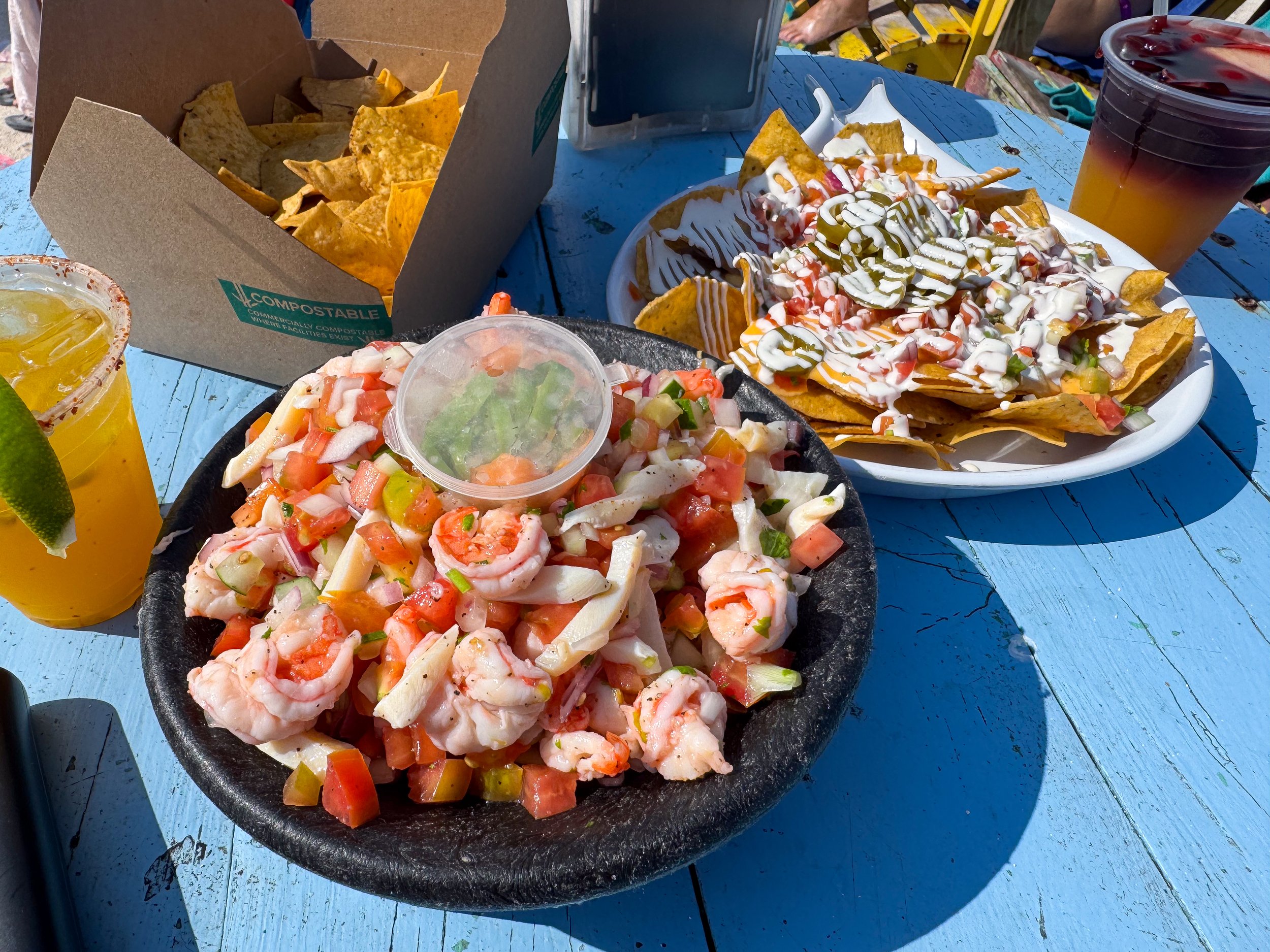
We spent an afternoon lounging along the pier with tropical cocktails and lunch. Try the frozen coconut mojito and spicy margarita. After working on our tan, we swam around and snorkeled in the aquamarine waters, spotting stingrays, conch and starfish. At night, we returned for their Full Moon Party where we danced in the sand and howled at the full moon as live DJs spun House and Reggae music.
Feed or High Five a Tarpon. Tarpon are giant ”bone fish” that grow up to several feet in length. On the west side of the caye is a small boardwalk where they swim around waiting to be fed. For $5 BZD, buy some bait, hold it above the water and wait for one of the giant fish to quickly jump out and snatch it from your hand. Alternatively, hold your hand just above the water and wait for one of the tarpon to “high five” your hand. It’s a common stop on snorkel tours.
Spot Stingrays & Seahorses at Stingray Beach. A small beach at the Iguana Reef Inn with palm shaded lounges, a thatched bar and a habitat for stingrays and seahorses. We stopped in for rum cocktails and took our pick of the many lounges set up along the shore before relaxing in the overwater swings and hammocks. While here, we spotted yellow and brown seahorses slinking alongside the pier and giant stingrays fluttering through the shallows near shore. It’s a common stop on most snorkel tours.
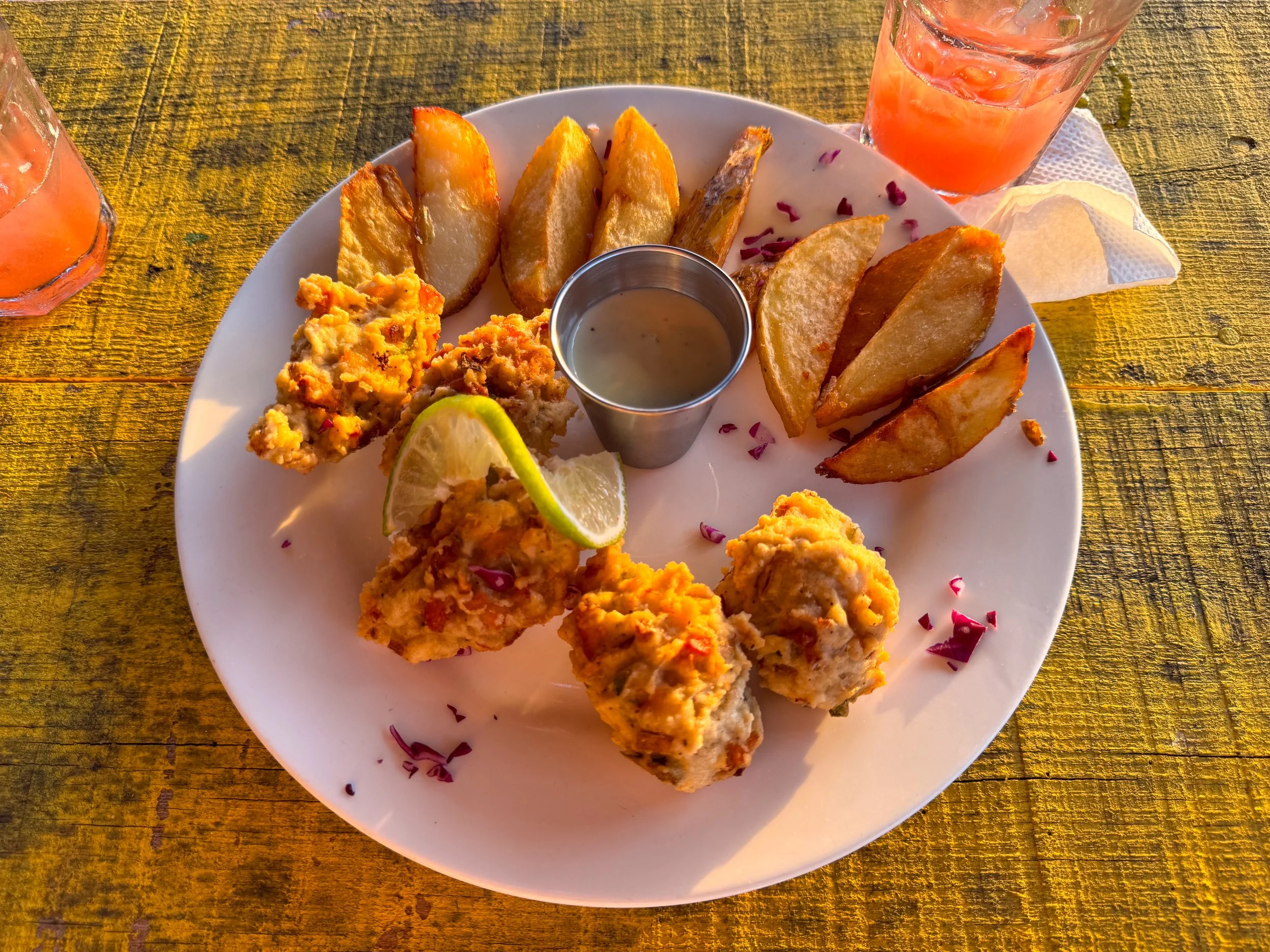
Belizean Cuisine
Belizean cuisine on Caye Caulker is influenced by Caribbean and West Indies flavors. Restaurants barbecue the day’s fresh catch on street side grills while beach shacks serve savory fried foods. Many meals are flavored with jerk seasonings, coconut, curry and spicy hot sauces. Dishes to try are jerk and coconut shrimp, whole fried and grilled red snapper, grilled Caribbean lobster, conch fritters, conch and shrimp ceviche, coconut rice and curried seafood.
Fry Jacks. Deep-fried pieces of dough typically stuffed with refried beans served at breakfast.
Pupusas. A corn masa arepa stuffed with various fillings like black bean and cheese, topped with a pickled cabbage and carrot slaw.
Johnny Cakes. Sweet coconut and vanilla biscuits.
Marie Sharps. The national hot sauce made with habanero and carrot. It’s available everywhere.
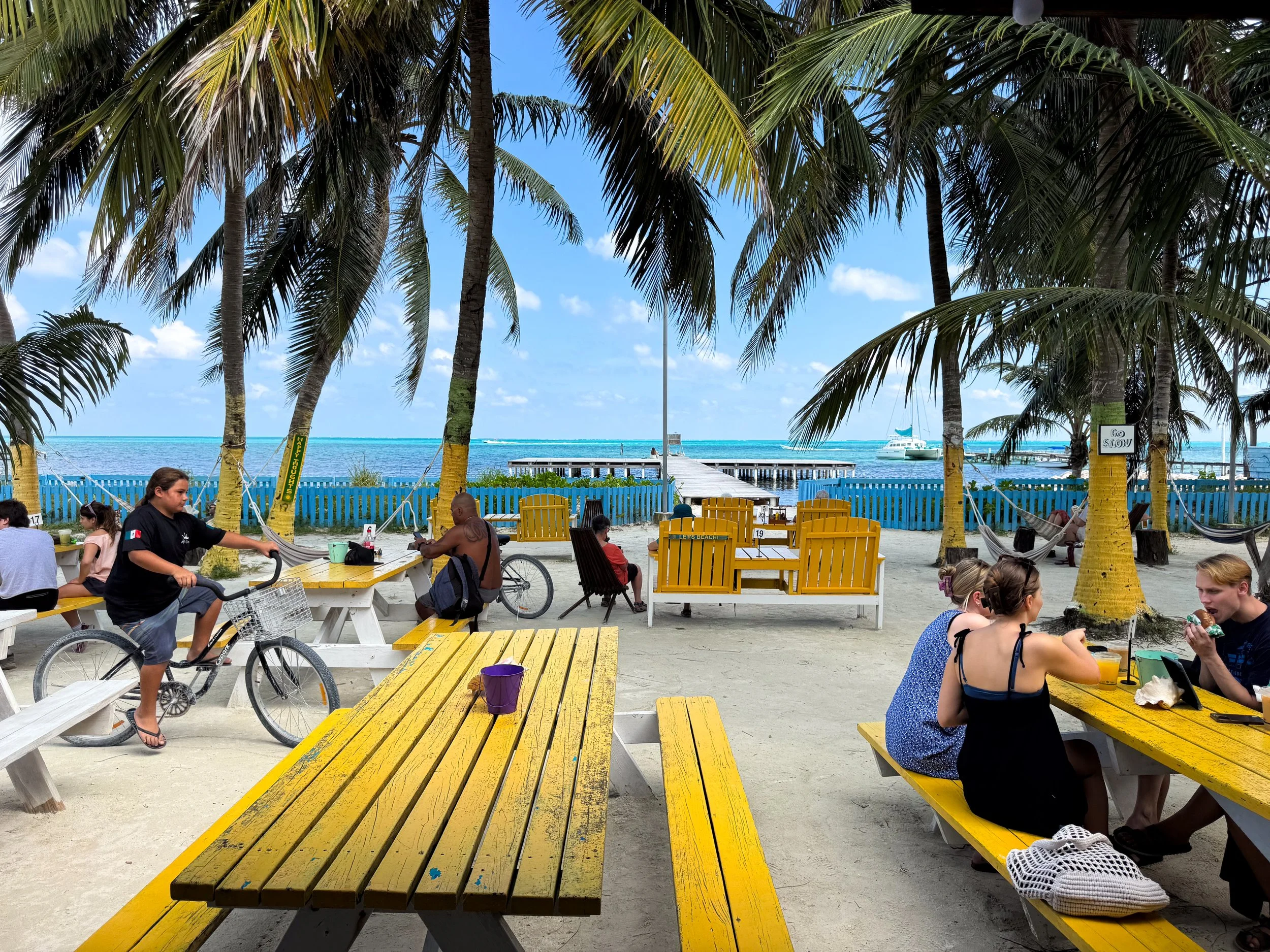
Places to Eat & Drink
For a tiny island, there is no shortage of places to eat and drink! We visited several spots during our week on the Caye for local cuisine and island bites.
Ice n’ Beans. A coffee shop and cafe with breakfast sandwiches, fresh baked banana bread, rum balls and mini donuts. We quickly became regulars here during our week on the Caye, sitting at the yellow picnic tables under the palm trees with seaside views of the Caribbean.
Errolyn's House Of Fryjacks. A popular breakfast spot to try Belizean Fryjacks. Order any combination stuffed with refried beans, eggs, bacon, chicken, ham and cheese. Don’t forget to top it with house made green salsa!
Pelican Sunset Bar. The spot to watch the sunset, enjoy rum cocktails and feast on Caribbean seafood! We saw the sun set as leopard rays fluttered through the water, sipped on happy hour rum punches and ordered the island’s best conch fritters, whole fried red snapper and grilled lobster. Arrive an hour before the sunset to claim a table or sit along the dock with your feet dangling in the water.
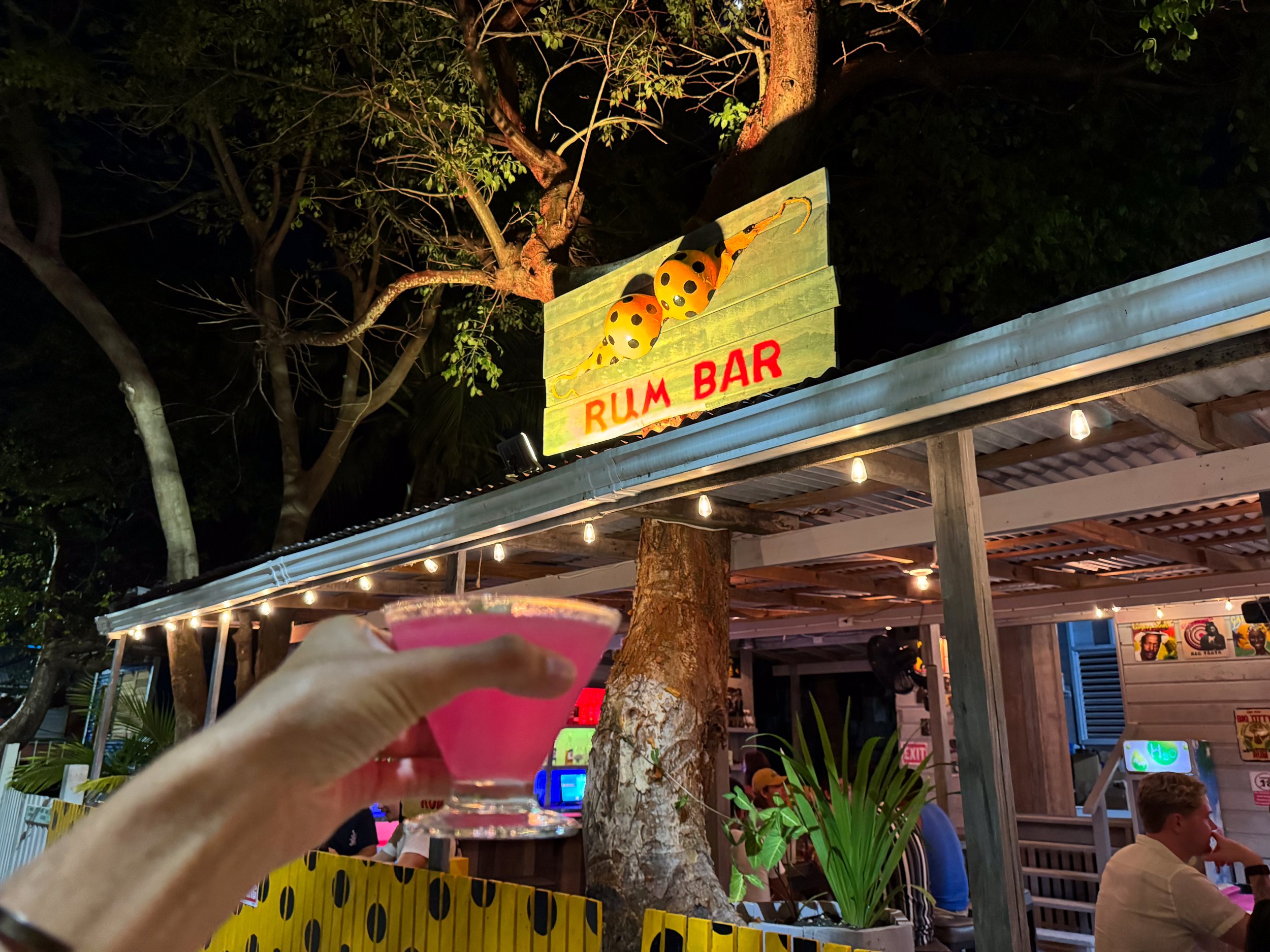
Big Titty Rum Bar. A rum bar with a variety of house made and infused rums. With friends, we ordered a spread of daiquiris from classic, habanero, tamarind and grapefruit coconut. We came back near nightly for a final drink or shot of rum.
Las Palapas. A higher end restaurant with surf and turf dishes and a full wine menu. It has a beachy and romantic vibe with a sand floor, wooden furniture and warmly lit chandeliers all under a thatched roof. We ordered the curry seafood and snapper filet. We came here for our friend’s engagement dinner and we were not disappointed by quality of the food nor the service.
Reina's. We were lured in on our first night in town by a street side barbecue with fresh lobsters, red snapper and shrimp sizzling on its grates. We sat on rickety wooden furniture inside the beach style shack with sand below our feet while sipping on a Belikin as our food grilled. The restaurant is first come first serve but is worth the wait. Arrive just after opening to get first pick of the day’s fresh catch.
Roy’s Blue Water Grill. One of the many seafood bar and grills on the Caye. We came here for dinner in hopes of tasting their well reviewed lionfish. Though they were sold out, we enjoyed fried cod fritters, snapper filets and coconut curry veggies.
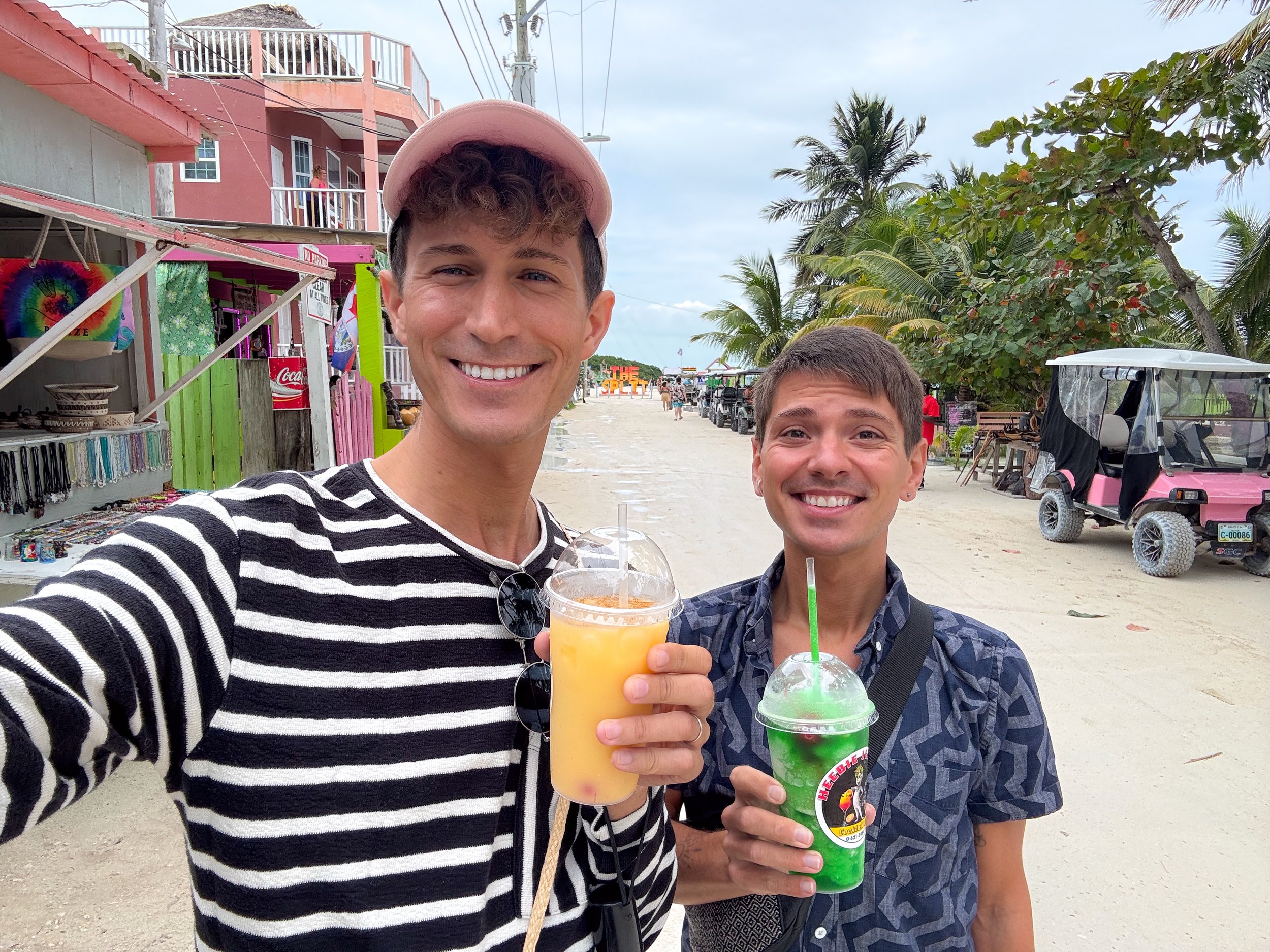
Hebbie Jeebies. A street side bar with a menu of tropical rum cocktails like the rum runner, painkiller, mojito, piña colada or island favorite, Lizard Juice, made with Caribbean rum, pineapple juice and neon green Curaçao. Cocktails are served frozen or on the rocks. For an extra cost, they can be served in a coconut or pineapple!
Nicco’s Ice Cream. An ice cream parlor with Belizean flavors like coconut, chocolate, tequila rose and sweet corn.
Belize Chocolate Company. A chocolate shop with Belizean chocolates including artisan truffles, brownies, cookies, chocolate bars, hot chocolate and cocoa nib tea.
Caye Caulker Bakery. A bakery famed across the Caye for their cinnamon rolls. We stopped in on our last day for two of the spiraled and glazed cinnamon pastries.
Belizean Rums & Beers
Belizean rums and beers are popular across the country and often very affordable compared to anything imported. The most popular Belizean rum is Caribbean Rum. It’s available in clear, amber and coconut flavored varieties, all perfect for mixing in cocktails. The two most popular Belizean beers are Belikin and Land Shark.
Belikin. Belize’s national beer, bearing the country’s most famed Mayan ruin, Caracol, embossed on its bottle. Its flavor is light but very bready.
Land Shark. A very easy drinking light beer with a slightly citric flavor.
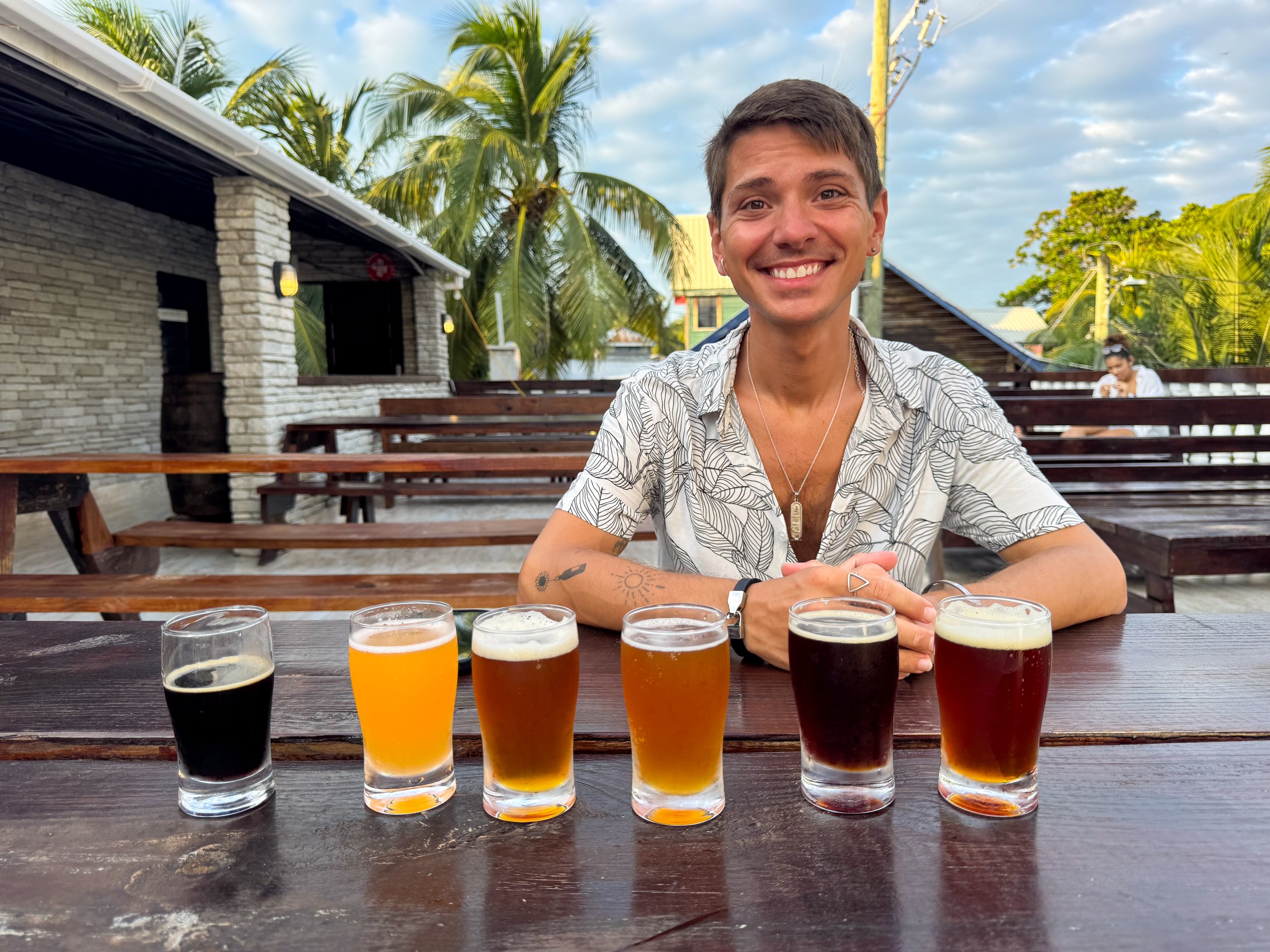
Caribbean Fusion Brewing Company. The island’s only brewery with brews influenced by the flavors of the island. We visited their second floor taproom and ordered a flight:
Tropical Seltzer. The house spiked seltzer made in a variety of tropical flavors like lime, fruit punch and pineapple.
Pale Ale. A classic beer with a rye forward flavor.
Belgian Ale 1. An ale with a slightly sour flavor close in flavor to a hefeweizen.
Belgian Ale 2. An ale with a darker color and molasses flavor.
IPA. An IPA with a very lightly hopped flavor and sweet finish.
Stout. A coconut flavored stout made with coconut water.
Where to Stay
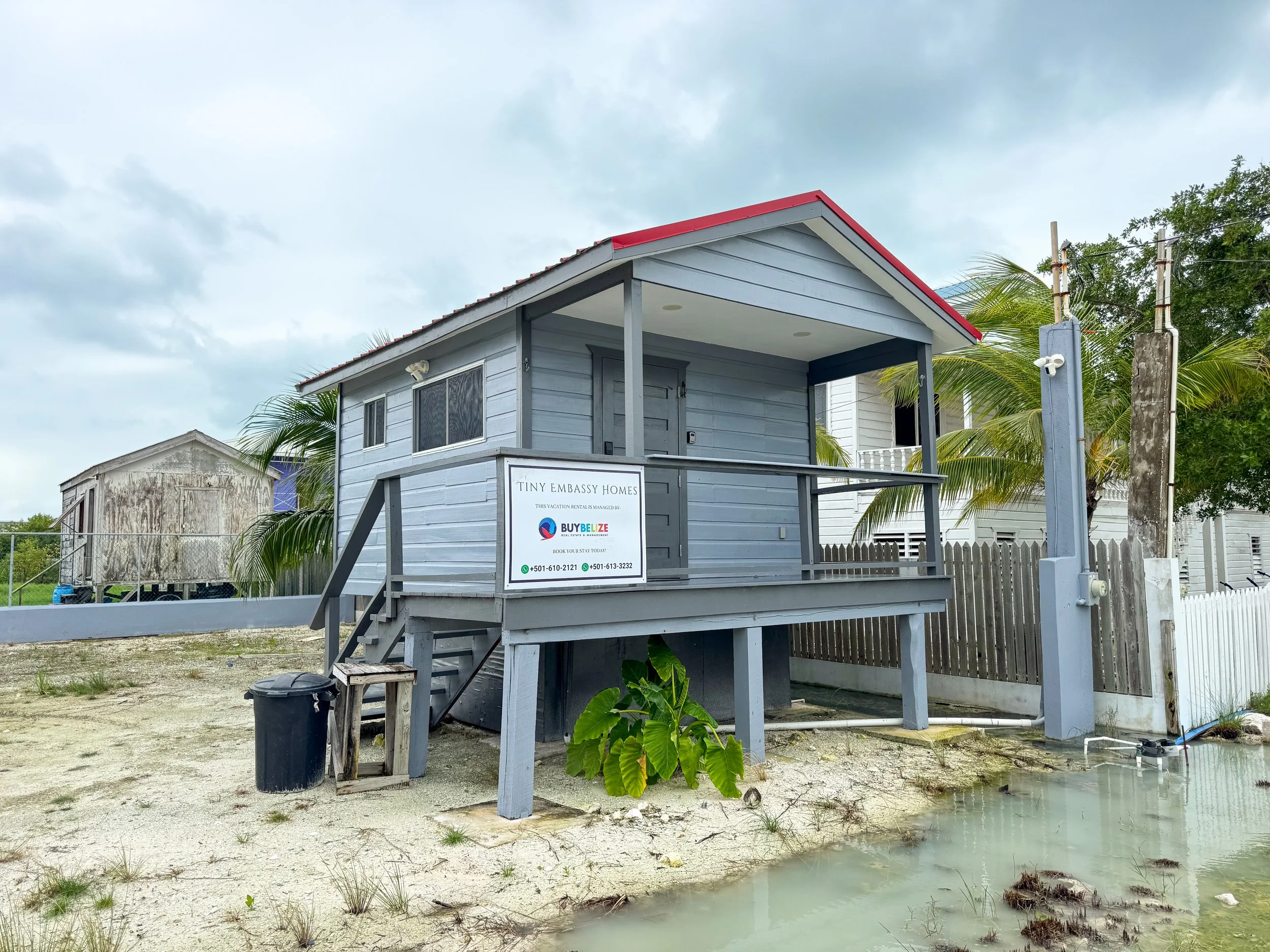
Rik's Getaway Cabin. We stayed at the most perfectly appointed tiny house on the south side of Caye Caulker in a very local area of the island. Perched on stilts, the tiny house included a full kitchen, queen sized bed, spacious bathroom with washer & dryer, board games, a tv and an outdoor deck with a ledge for dining. Book on Airbnb.
The Treetops Hotel. A boutique hotel with spacious apartment style rooms equipped with full kitchens. The property has its own private beach, a rooftop patio, outdoor pool and free bike rentals. We visited our friends staying here to cook together, lounge on the beach and sip on rooftop cocktails.
Getting Here
The only way to reach Caye Caulker is by ferry or airplane. Ferries and flights operate between Caye Caulker, San Pedro, Belize City and Chetumal, Mexico.
San Pedro Belize Express. Ferries depart daily at frequent times between 6am and 5pm. We booked tickets online arriving in Caye Caulker from Chetumal, Mexico with a stop in San Pedro for customs. We departed from Caye Caulker, arriving in Belize City where the ferry operator shuttled us to the international airport.
Pro Tip. Don’t worry about missing your scheduled ferry time. As long as tickets remain unused, they’re valid for up to three months at any time slot.
Maya Island Air & Tropic Air. The two main airlines with a fleet of puddle jumpers operating flights between Belize City, Caye Caulker, San Pedro and The Blue Hole. Flights are often fast and scenic but expensive.
Getting Around
There are very few cars on the island. Golf carts and bikes are the main form of transportation on the island; however, it’s also easily walkable.
On Foot. It takes 30 minutes on foot to travel between the caye’s furthest points, the airport and “The Split.” Wear flip flops or sandals to walk through large puddles and pools of water after rain.
By Bike. Bikes are an easy way to get around the island. Most hotels offer free bikes, though there are some rentals in town for around $10 USD per day.
By Taxi (Golf Cart). It takes 10 minutes by golf cart to travel between the island’s furthest points, the airport and “The Split.” Taxis only cost a few USD and are commonly available.
Location Specifics
Currency. The Belizean Dollar and US Dollar are used interchangeably across the island. At the time, the exchange rate was 1 USD to 2 BZD, making conversions and transactions easy.
Cash vs Card. About half of the island is cash only, especially at smaller restaurants, bars and cafes.
Language. English is the most commonly spoken language. Spanish and Creole are frequently spoken between locals.
Drinking Water. Tap water is not safe for consumption due to risk of contamination. Only drink filtered or bottled water.
Happy Hours. Most bars have happy hour from 4-7pm, perfect timing after returning from a tour.
Dinner Hours. Most restaurants and kitchens close between 9-10pm nightly.
Toilets. Like most places in Central America, the plumbing is not the greatest. Used toilet paper is not flushed but put in a bin next to the toilet.
Reef Safe Sunblock. Only use reef safe sunblock on the island or in the water to avoid harming the corals and marine life.
Safety. Caye Caulker is extremely safe! The locals are some of the friendliest and most down to earth people we have ever met.
Drugs. Locals commonly offer and sell drugs on the streets. They’re not pushy about it. Simply tell them no thank you if not interested.
Elsewhere in Belize
From snorkeling the Belize Barrier Reef to exploring ancient Maya cities hidden beneath the jungle canopy, discover another side of Belize beyond island life.
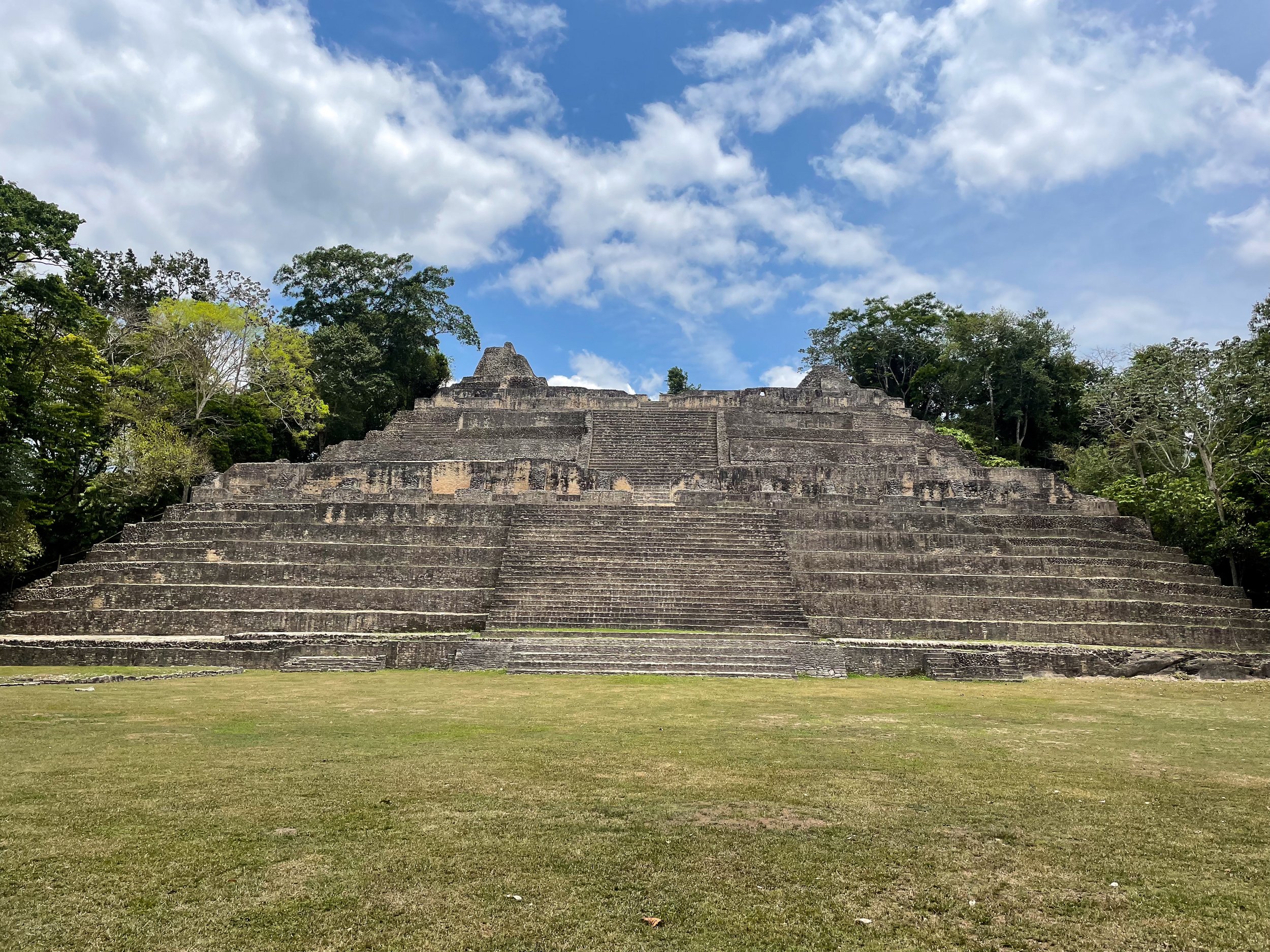
Maya Ruins Travel Guide: Jungles, Temples & Ancient Cities. Journey through ancient Maya cities, temples and archaeological wonders across Belize and Guatemala while exploring dramatic jungle landscapes.
For Next Time…
This was our second trip to Belize and we’re already dreaming of returning to this beautiful country to experience more of its culture, nature and history! When we return, we plan to visit some of the coastal cities and Mayan ruins.
Hopkins. A seaside village home to the Garifuna, the indigenous and Afro-Caribbean people of Belize with a rich culture.
Placencia Peninsula. A fishing village and beach town with white sand beaches.
Altun Ha. A Mayan acropolis with pyramids, temples, ball courts and platforms on the mainland north of Belize City.
Lamanai. The ruins of a Mayan temple only accessible by boating deep into the jungle.