Antigua Guatemala Travel Guide: Acatenango, Colonial Charm & Local Cuisine
Antigua, Guatemala
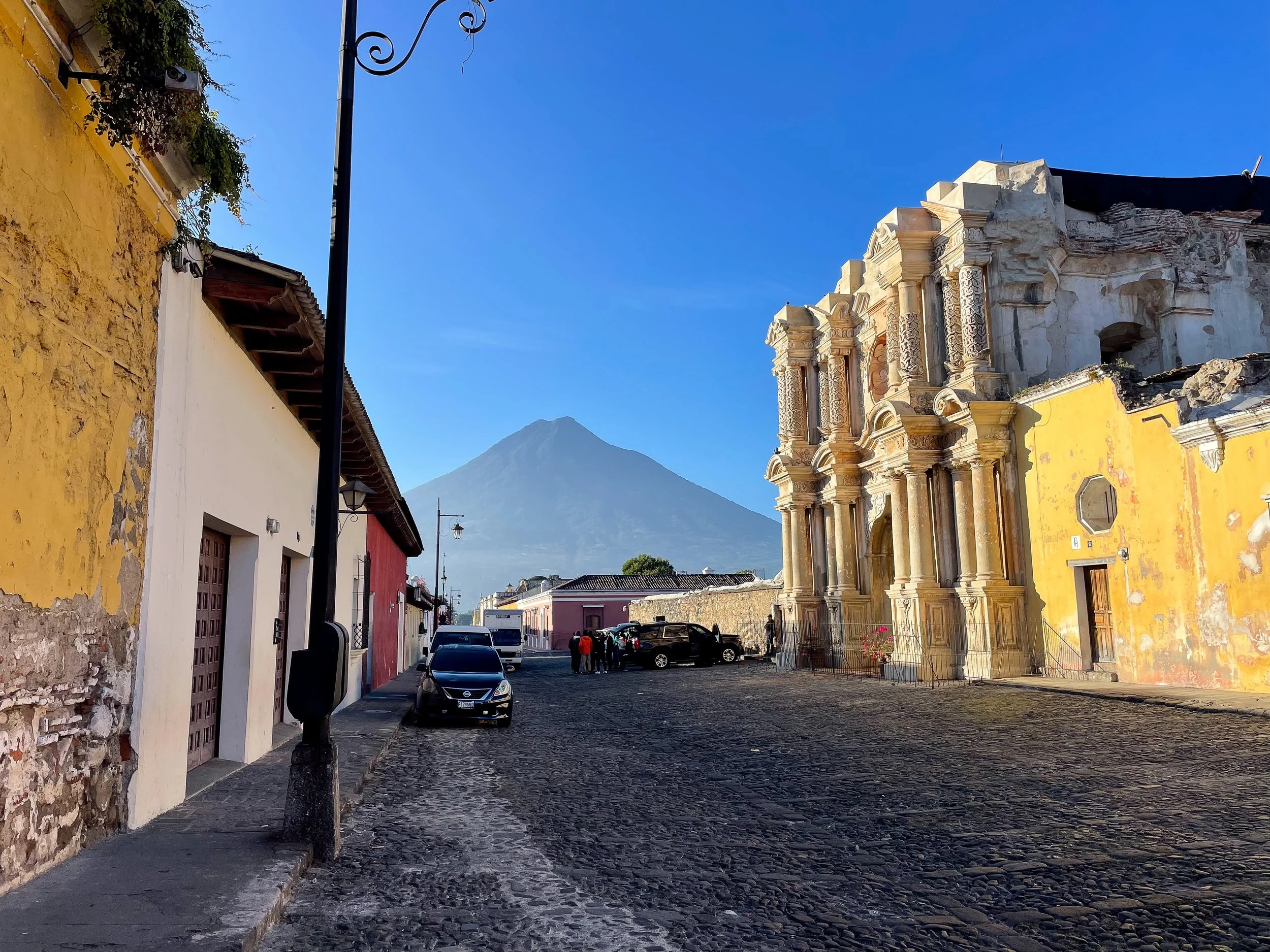
Antigua is a picturesque and historic city with colonial era streets, a lively cultural scene and views of imposing volcanoes. The city’s charm invites travelers to admire its Spanish colonial architecture and explore the remains of crumbling ruins. The bustling food scene and cafe culture make Antigua a wonderful place to taste traditional Guatemalan dishes and coffee. Vendors at artisan markets sell handmade crafts, colorful textiles and vibrant ceramics. Backpackers stay at local hostels and study at Spanish language schools. Overnight hikes lead to the summit of nearby volcanoes including the explosive Volcán de Fuego.
A Colonial Gem
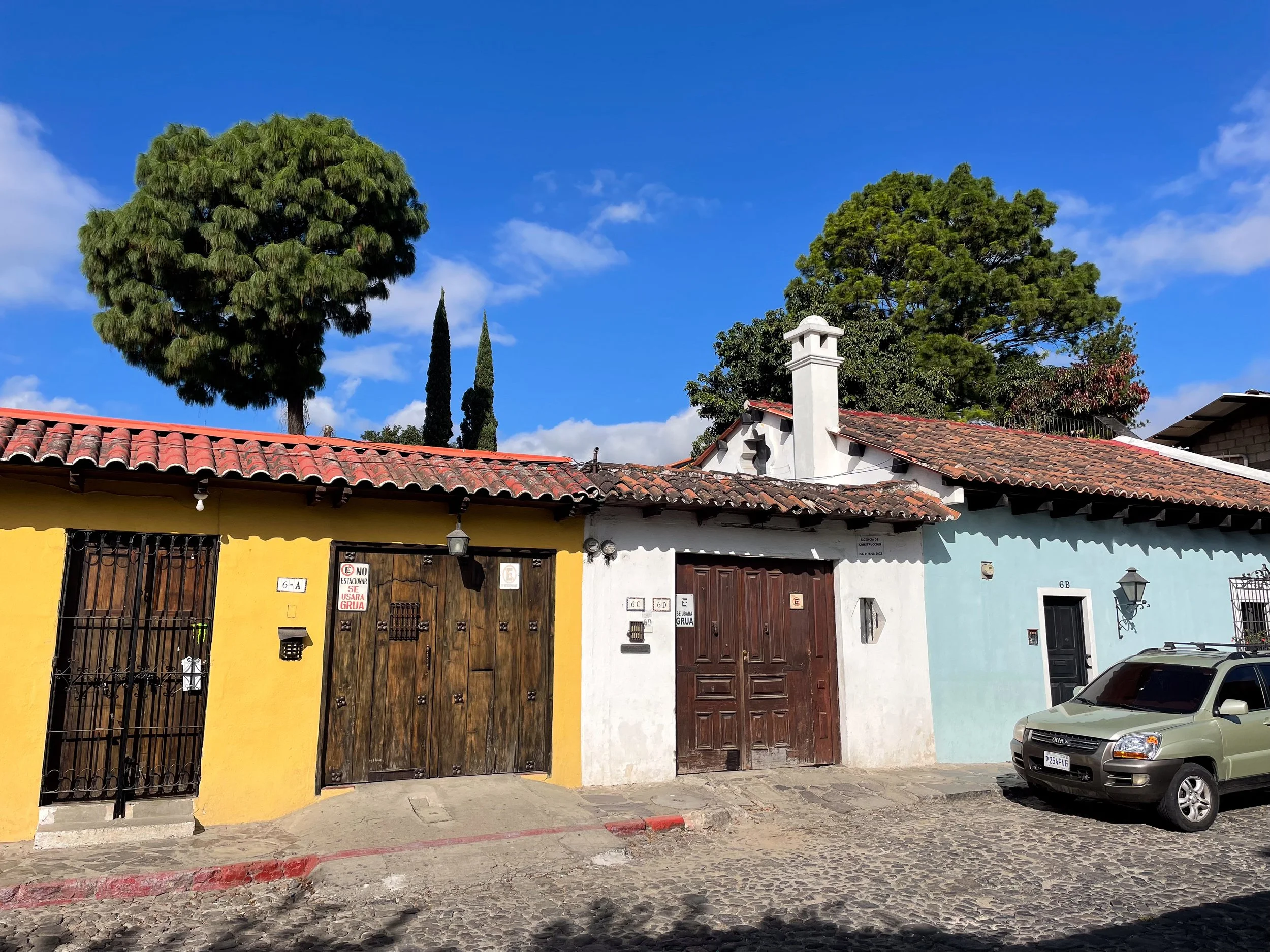
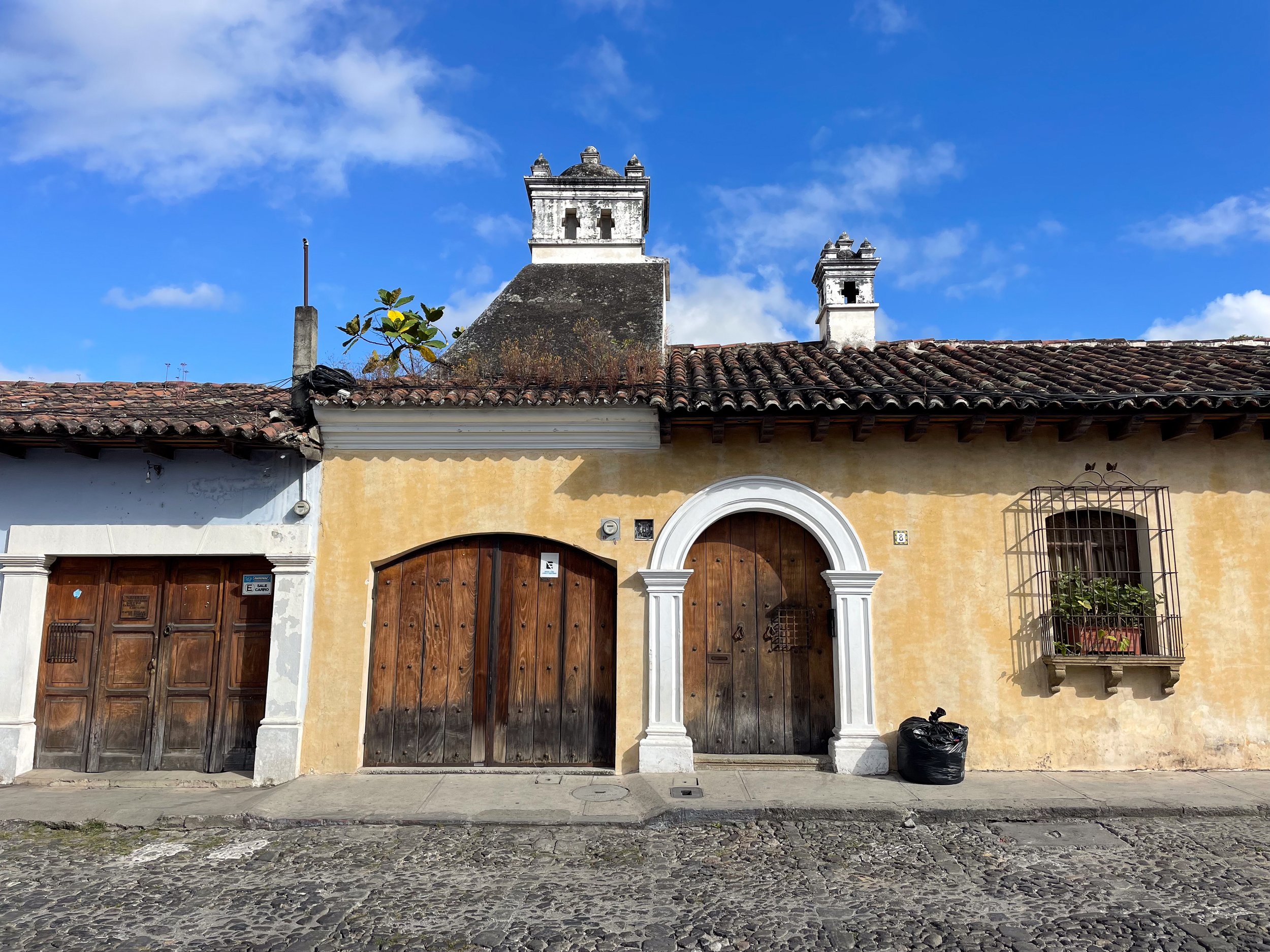
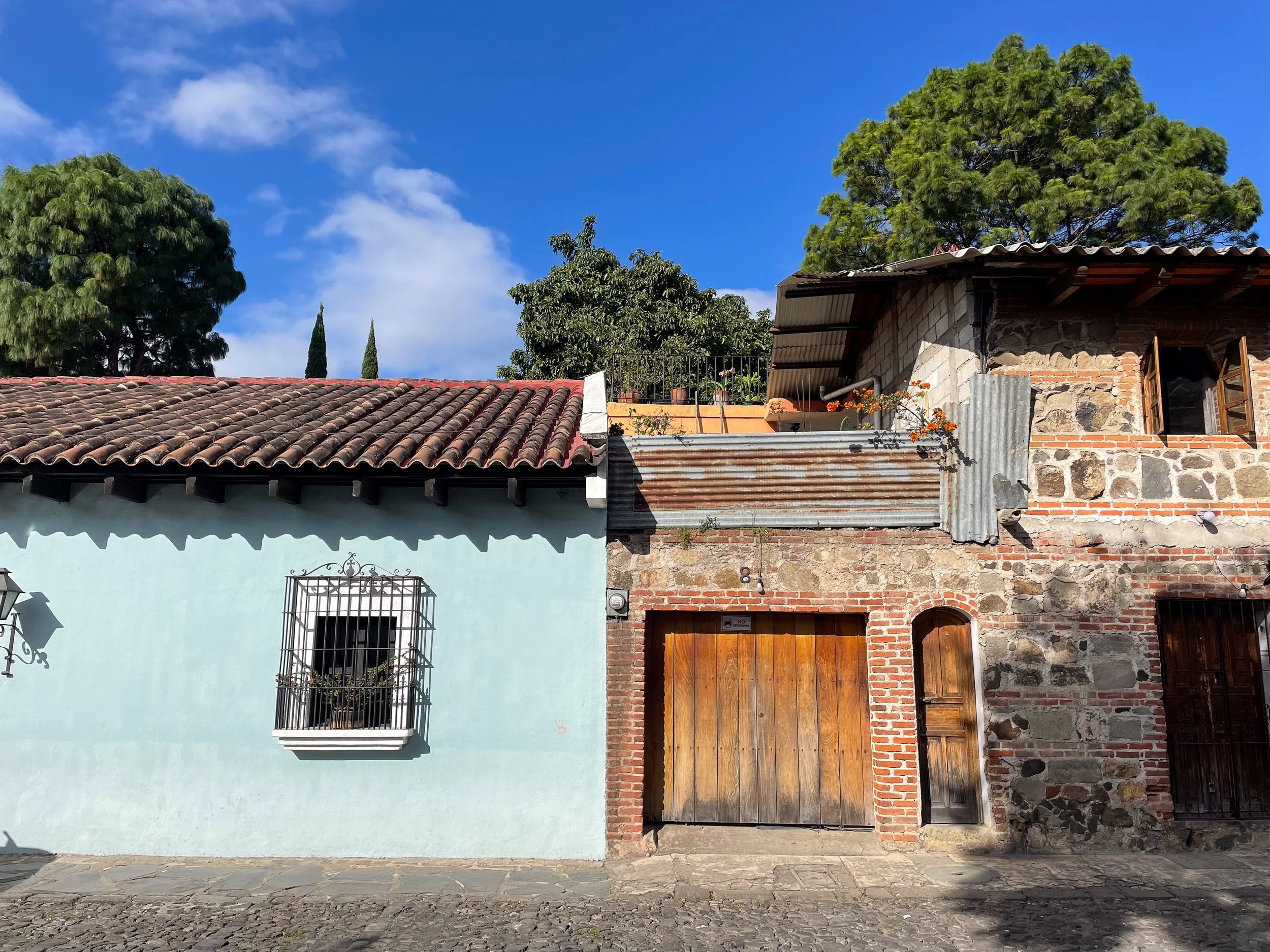
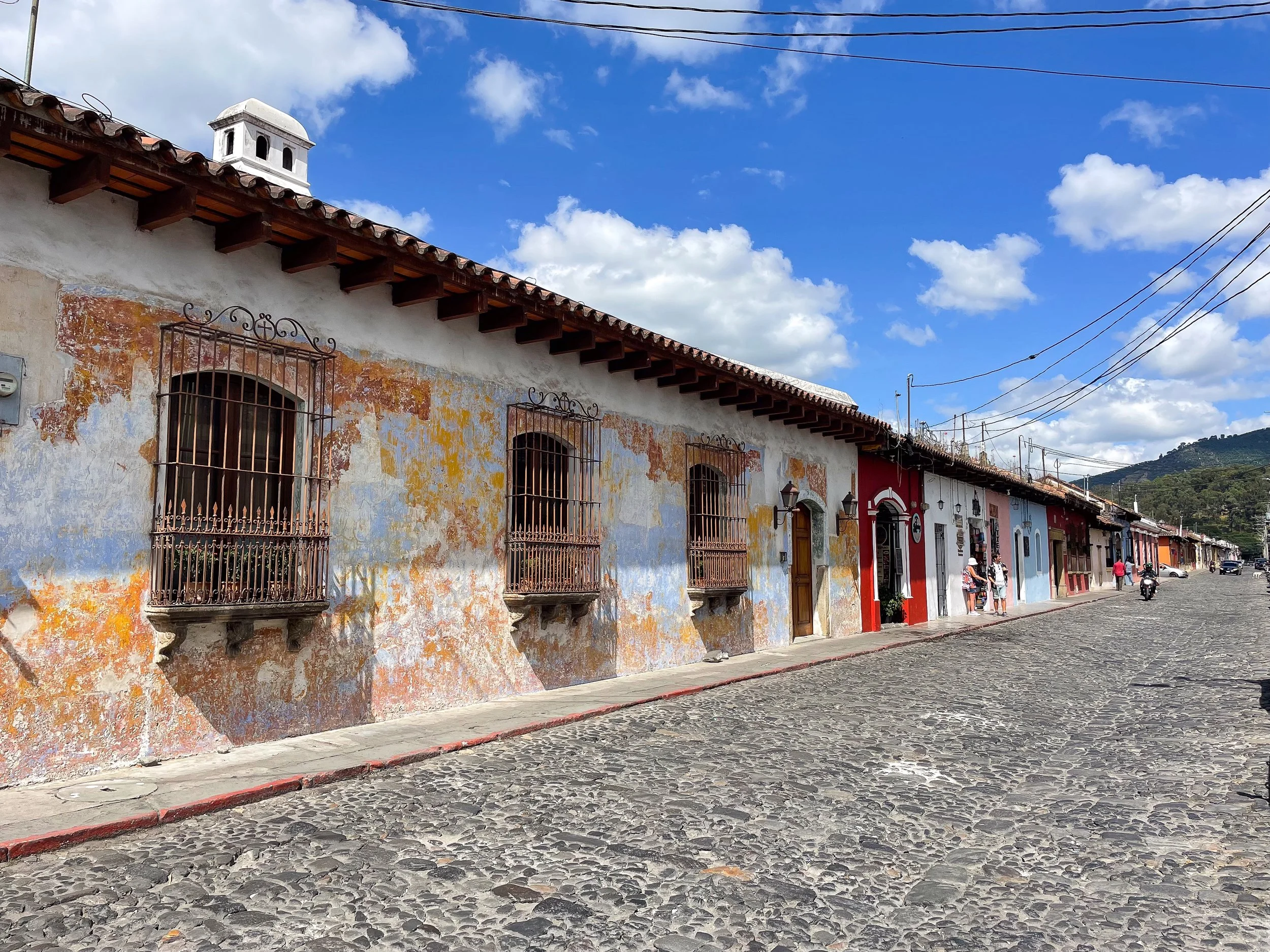
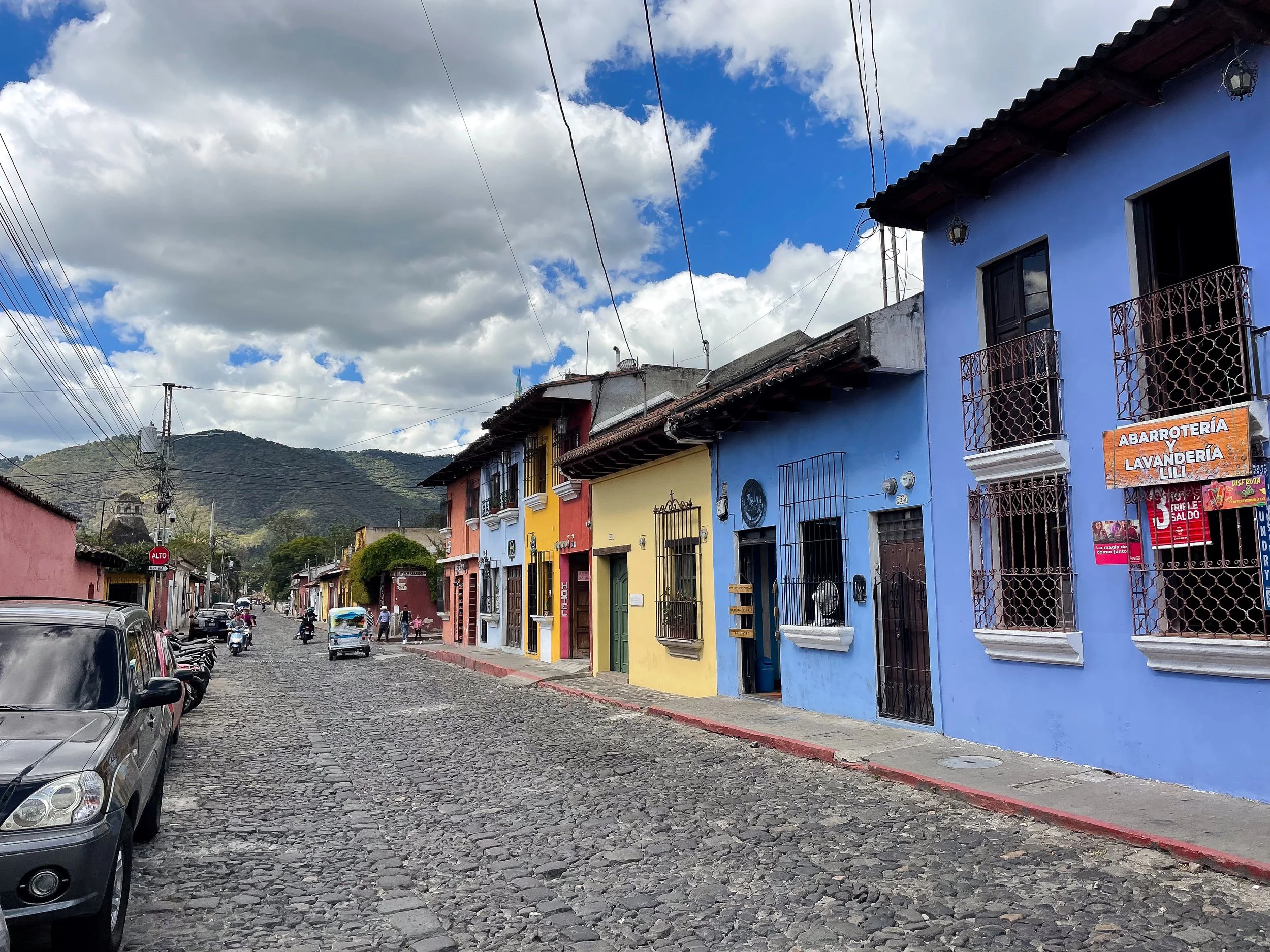
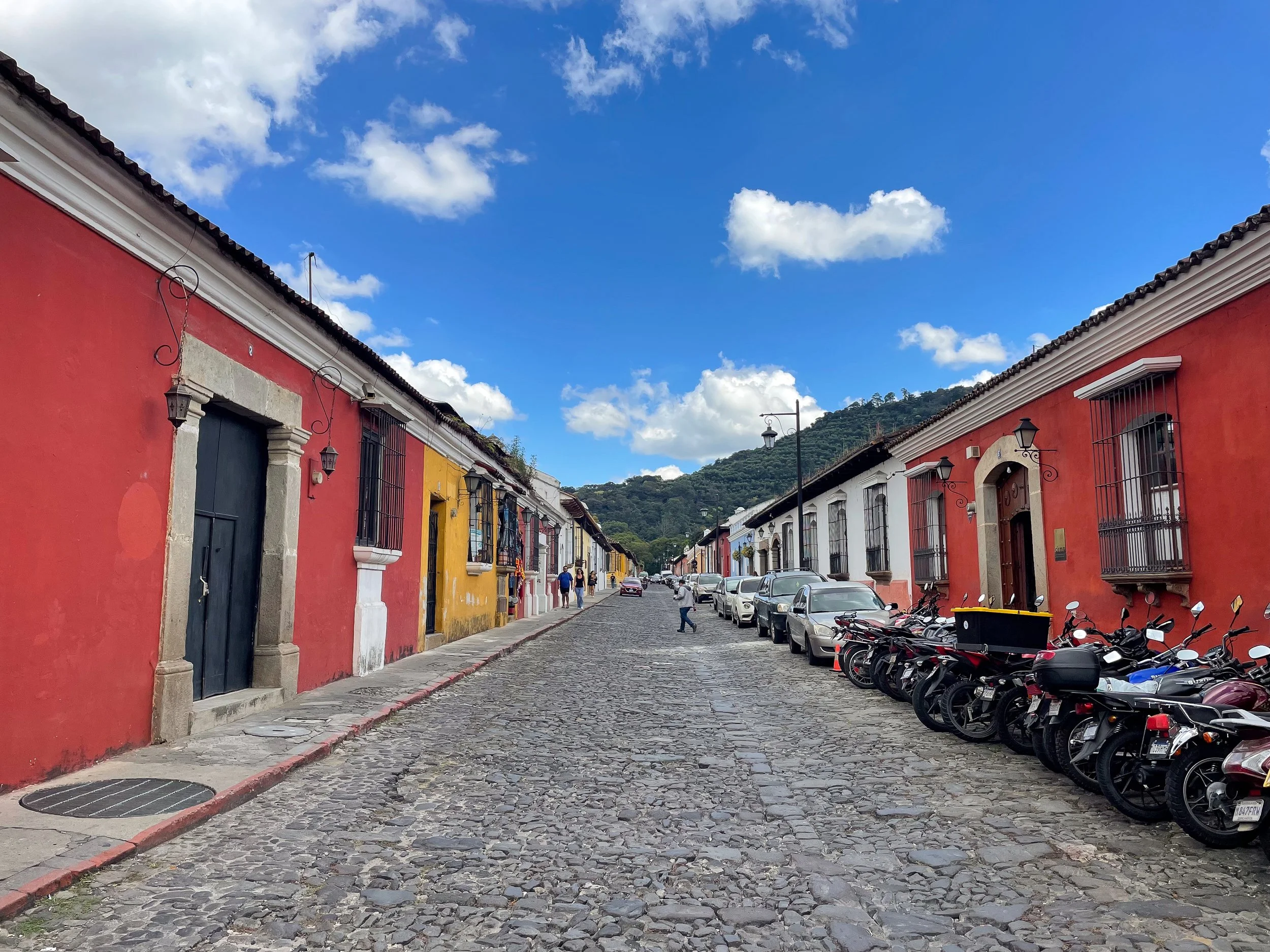
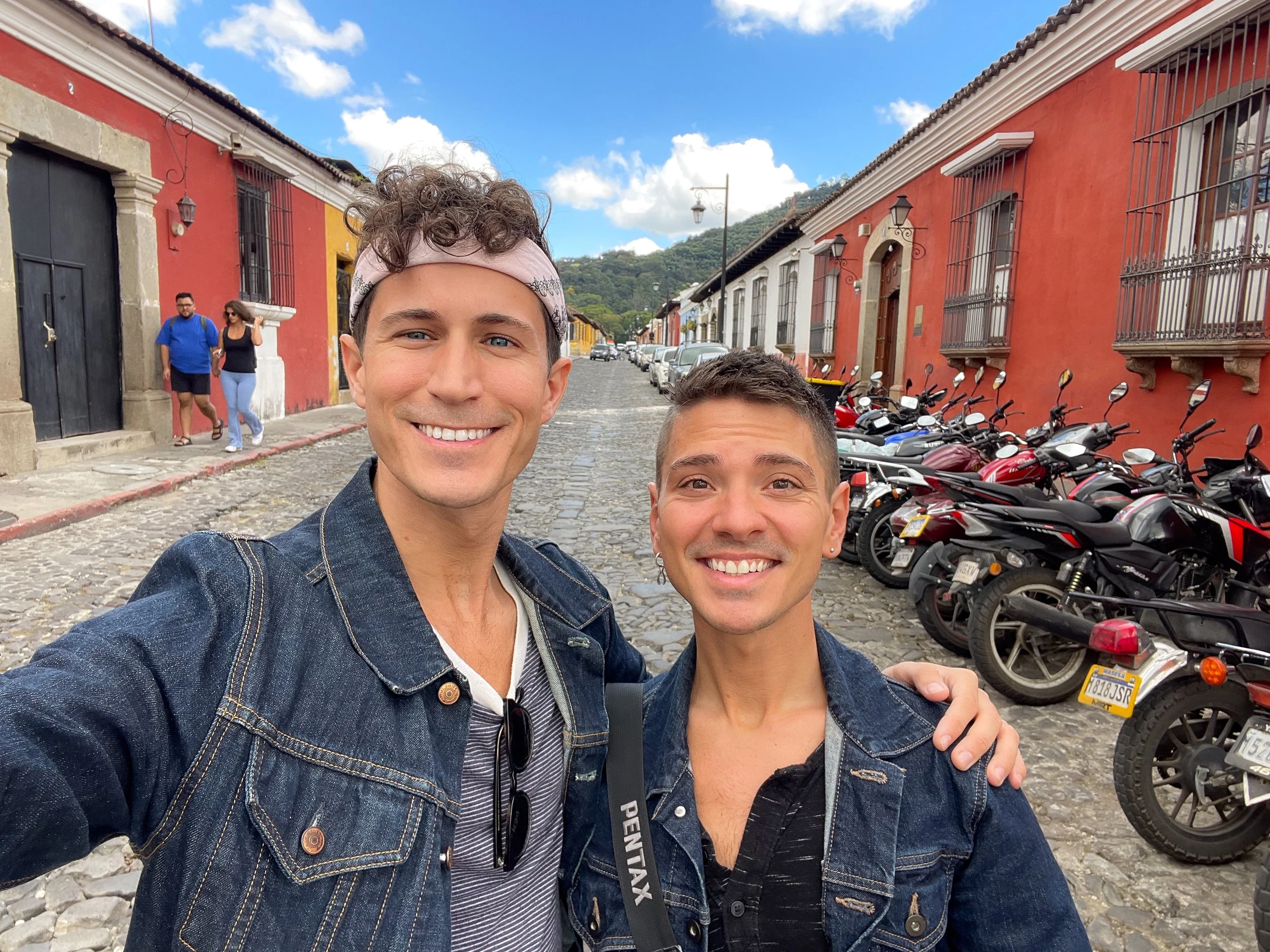
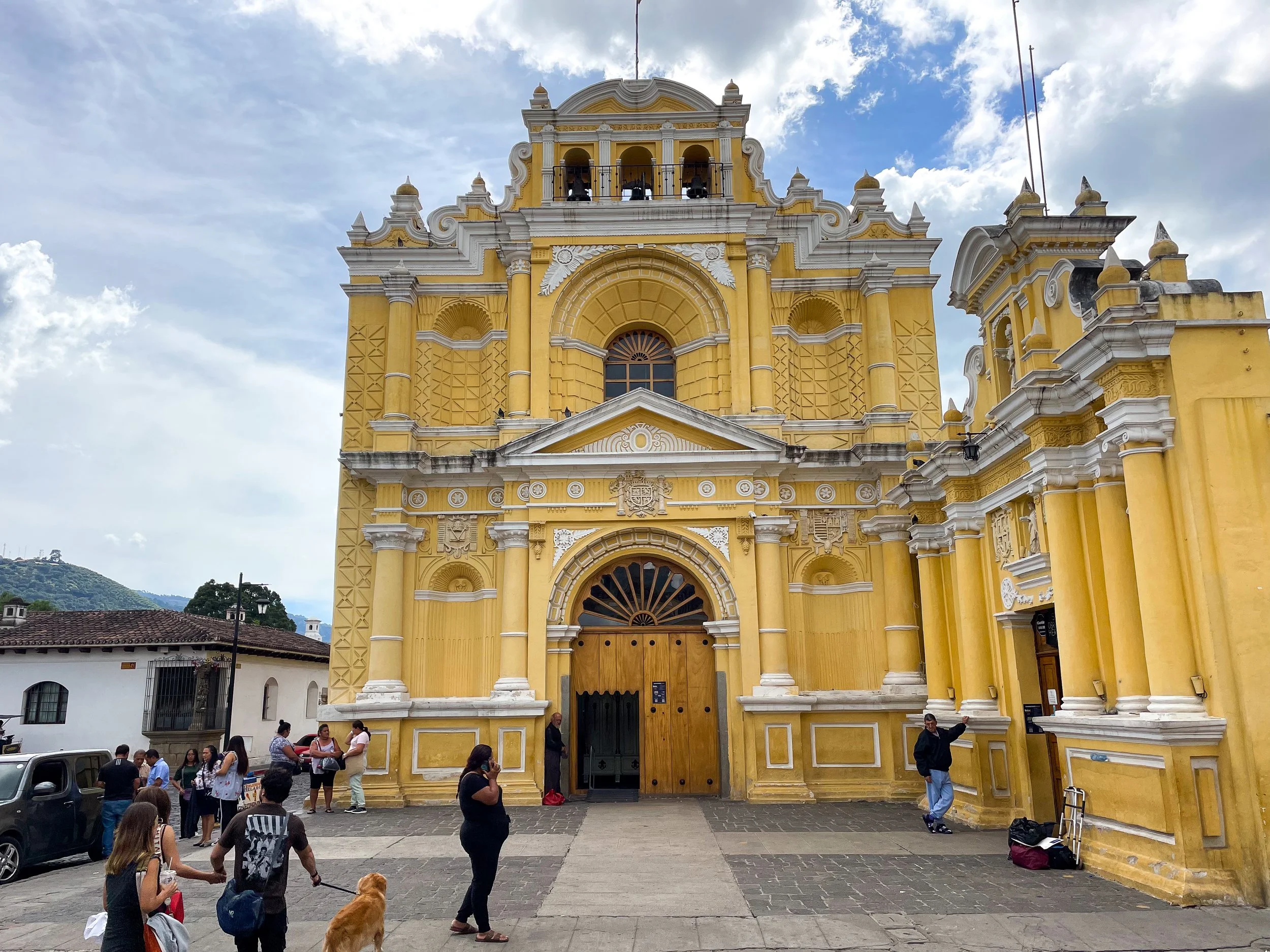
Dating back nearly 500 years, Antigua is the Spanish colonial gem of Guatemala. Landmark sights, museums, ornate cathedrals and crumbling ruins built of stone, brick and plaster line Antigua’s grid of cobblestone streets. Warmly painted facades ranging in tones of red, ochre, yellow and cream alternate from building to building. Carved wooden doors often lead to lush shaded courtyards occupied by restaurants and cafes. Popular terraces boast views overlooking the clay tiled roofs, cathedral spires and imposing volcanoes.
Colonial Sights
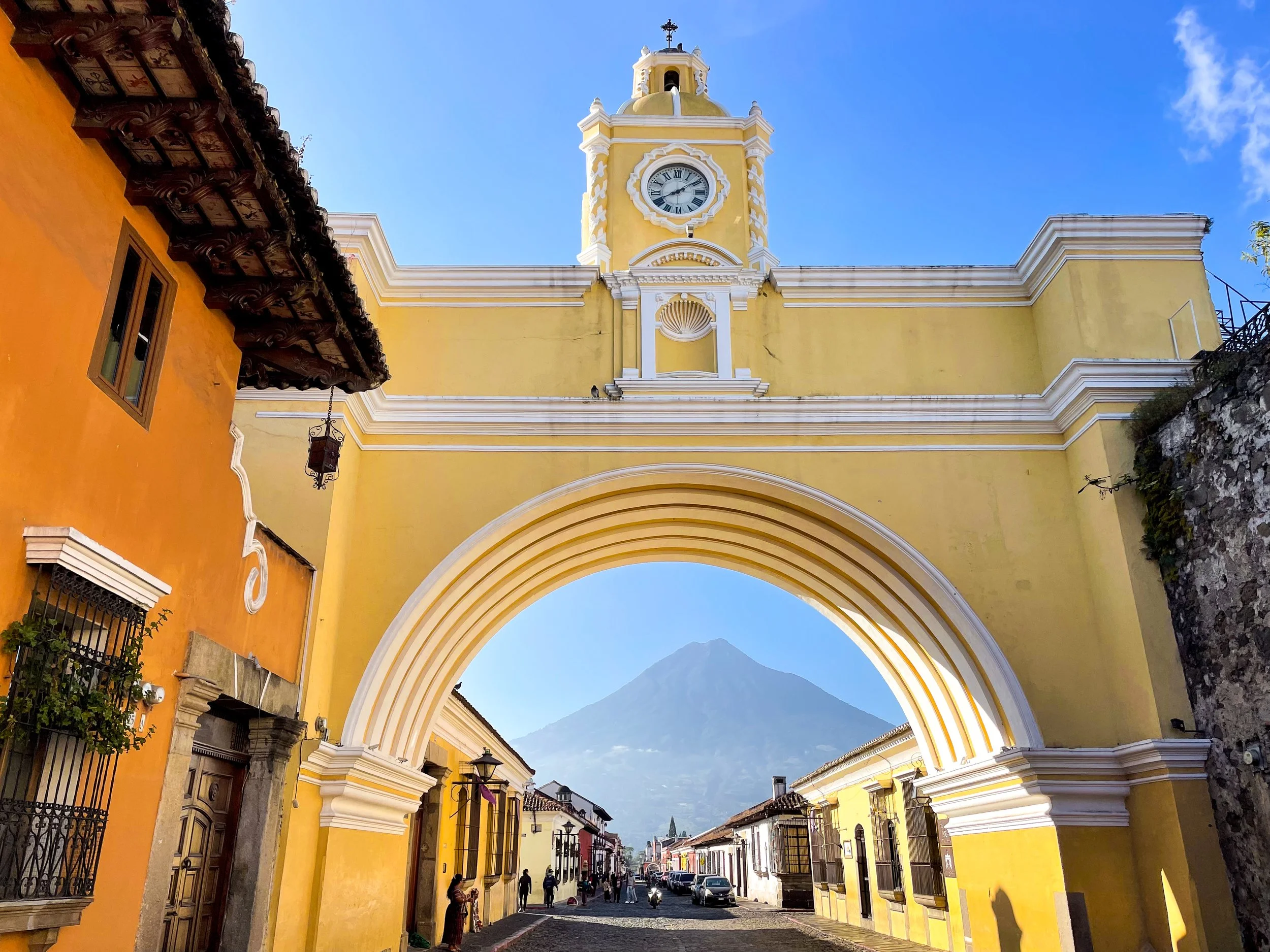
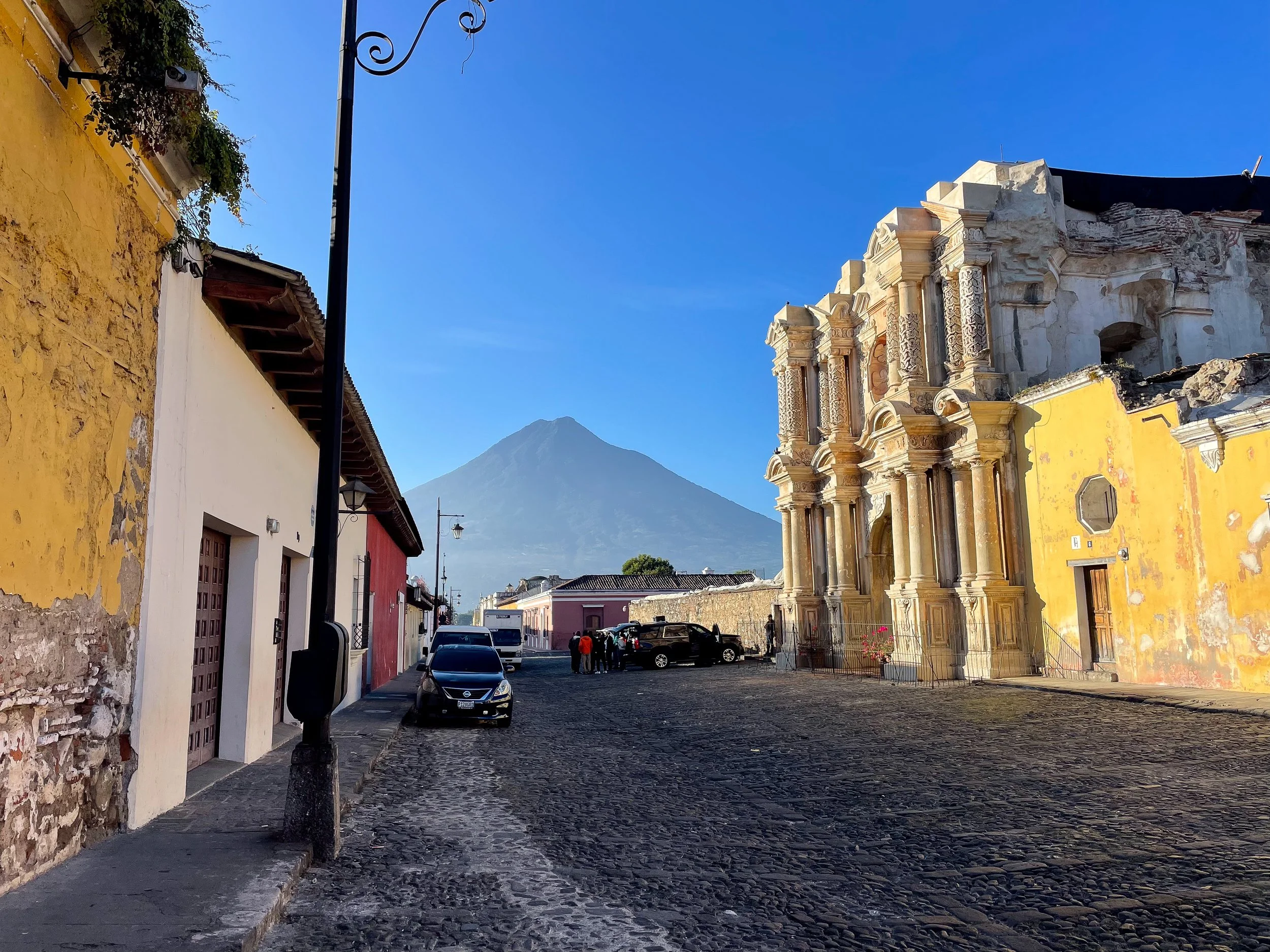
Santa Catalina Arch. A famous yellow arch and clock tower stretching over the cobblestone street and framing Volcán de Agua. Come just after sunrise for the best view without groups of people.
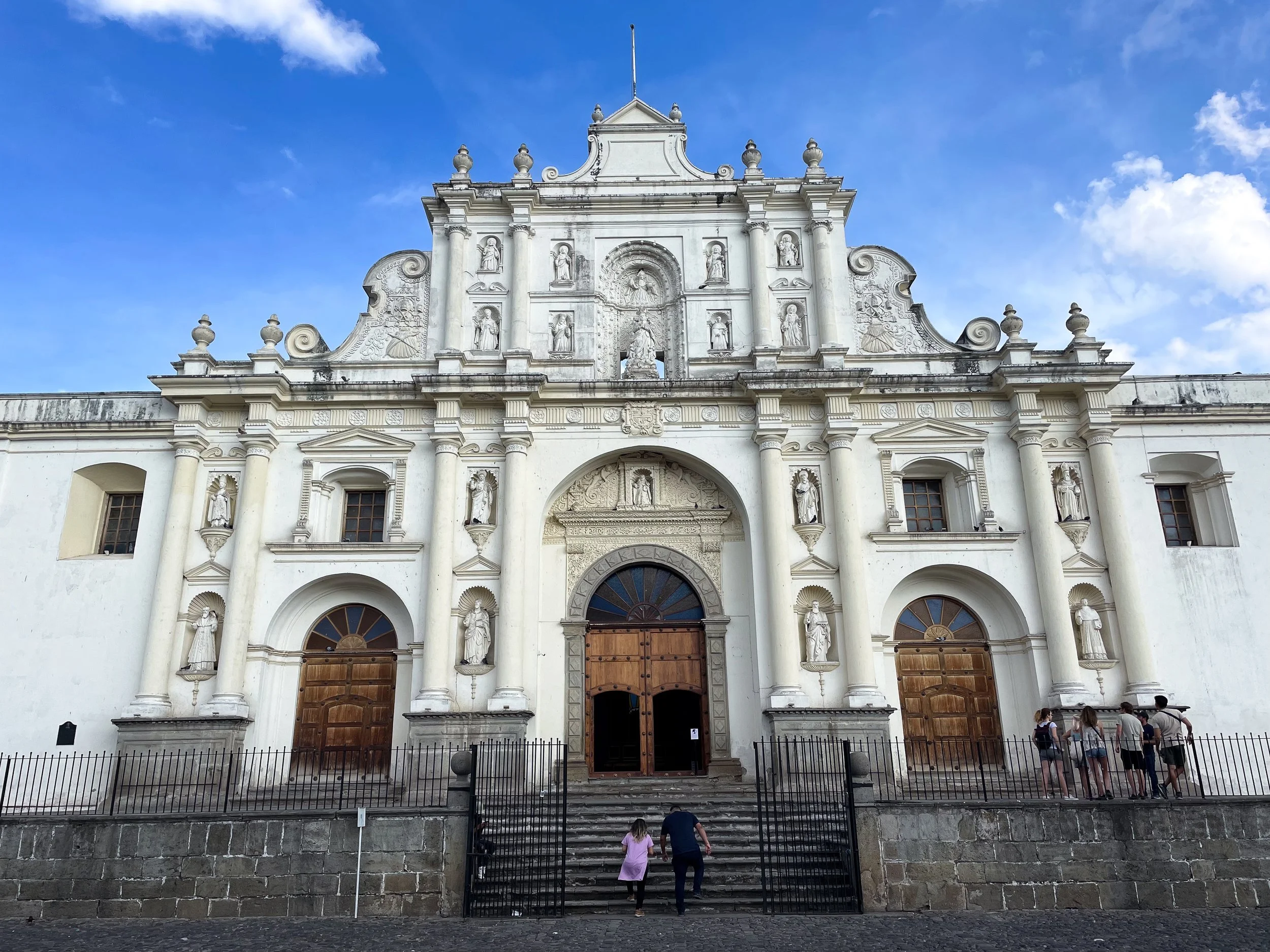
Catedral de San José. A cathedral built into the ruins of Catedral de Santiago. Its grand white facade with intricate plaster work, niches containing statues and large wooden doors spans the eastern width of Parque Central.
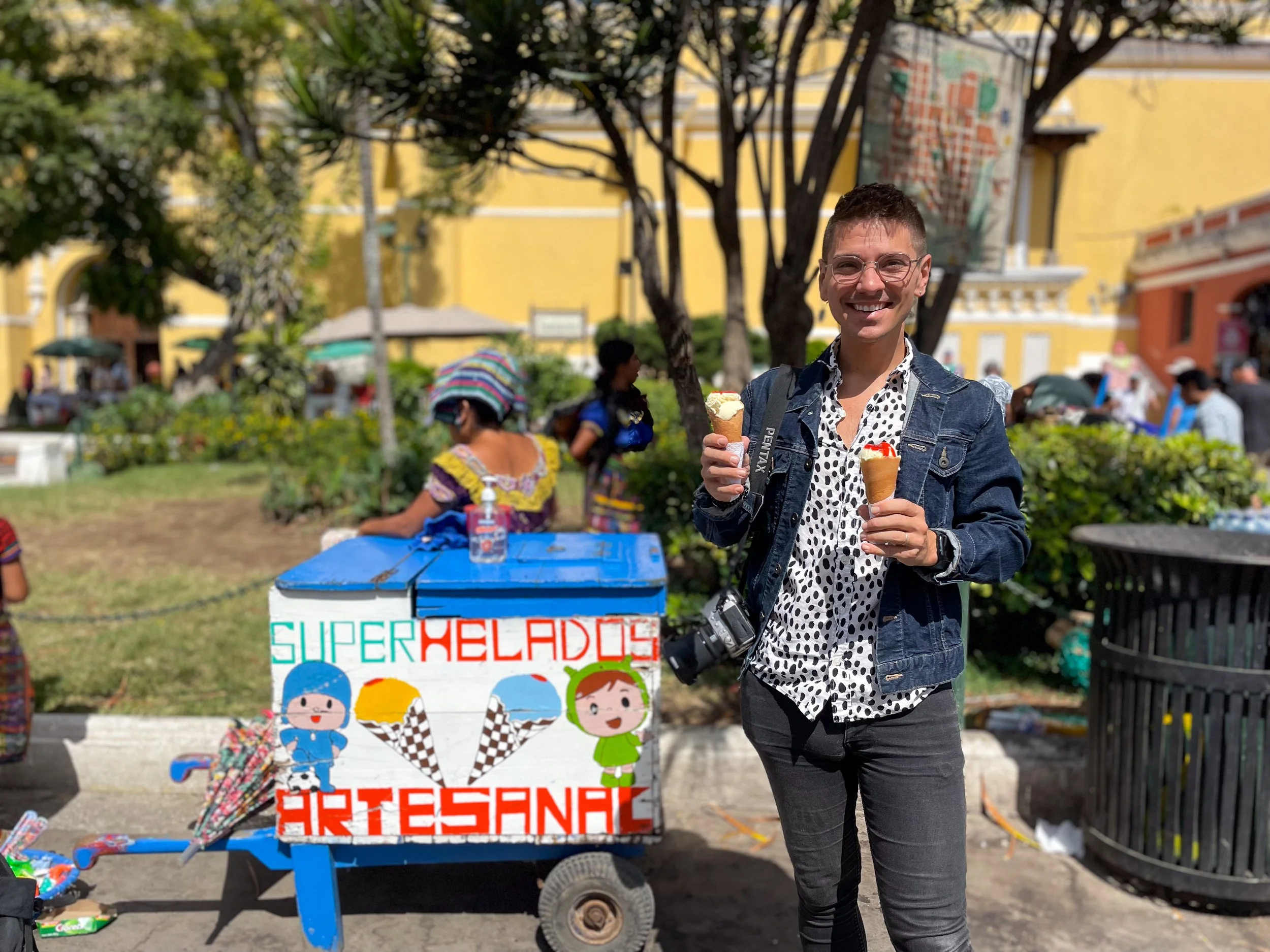
Parque Central. A park and plaza at the center of Antigua with benches, trees, gardens and a mermaid fountain with water spraying from her breasts. Locals come to relax with their families, vendors sell ice cream cones, guides offer walking tours and shoeshiners polish boots. It’s surrounded by restaurants, cafes, shops and colonial landmarks.
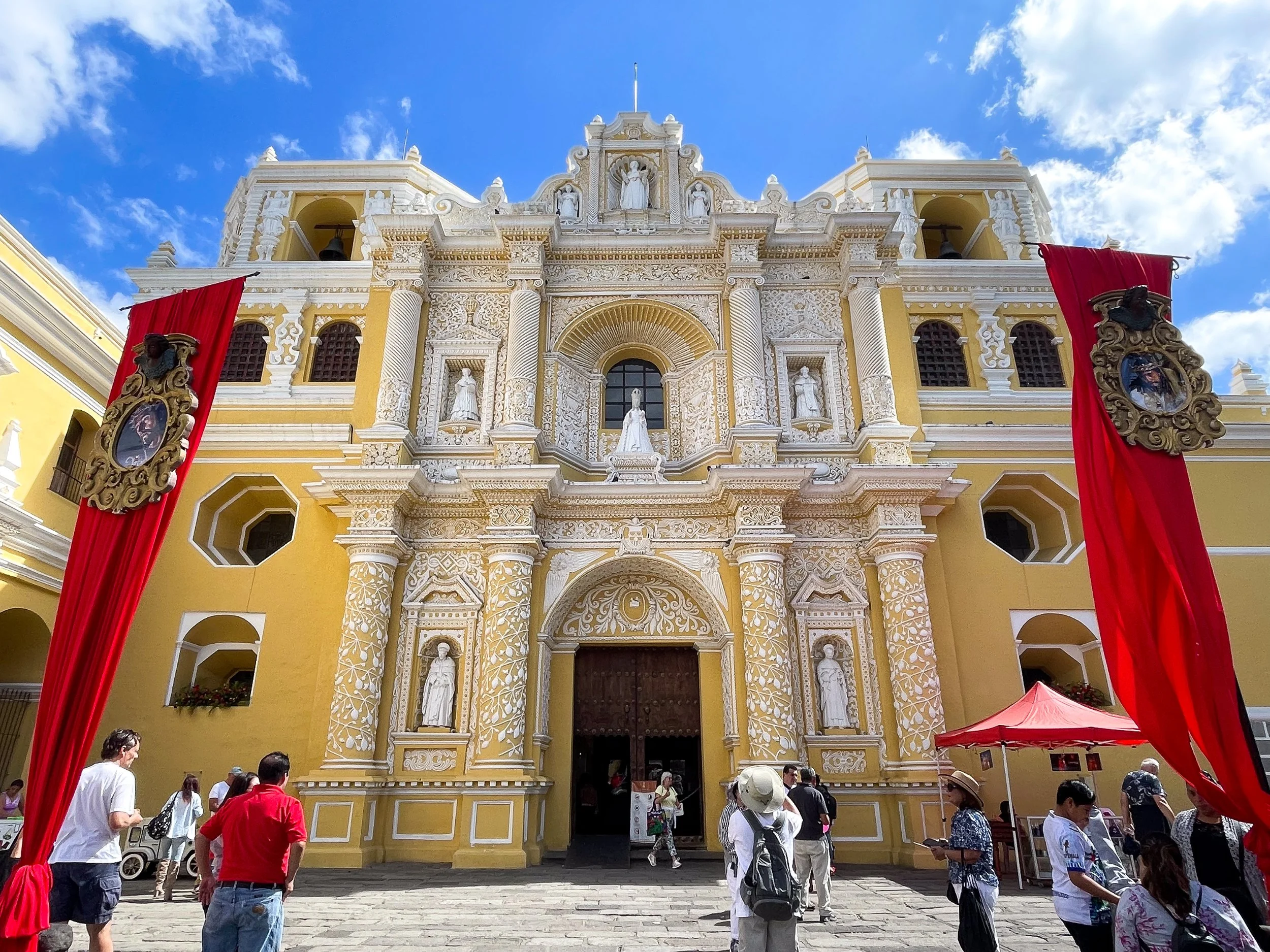
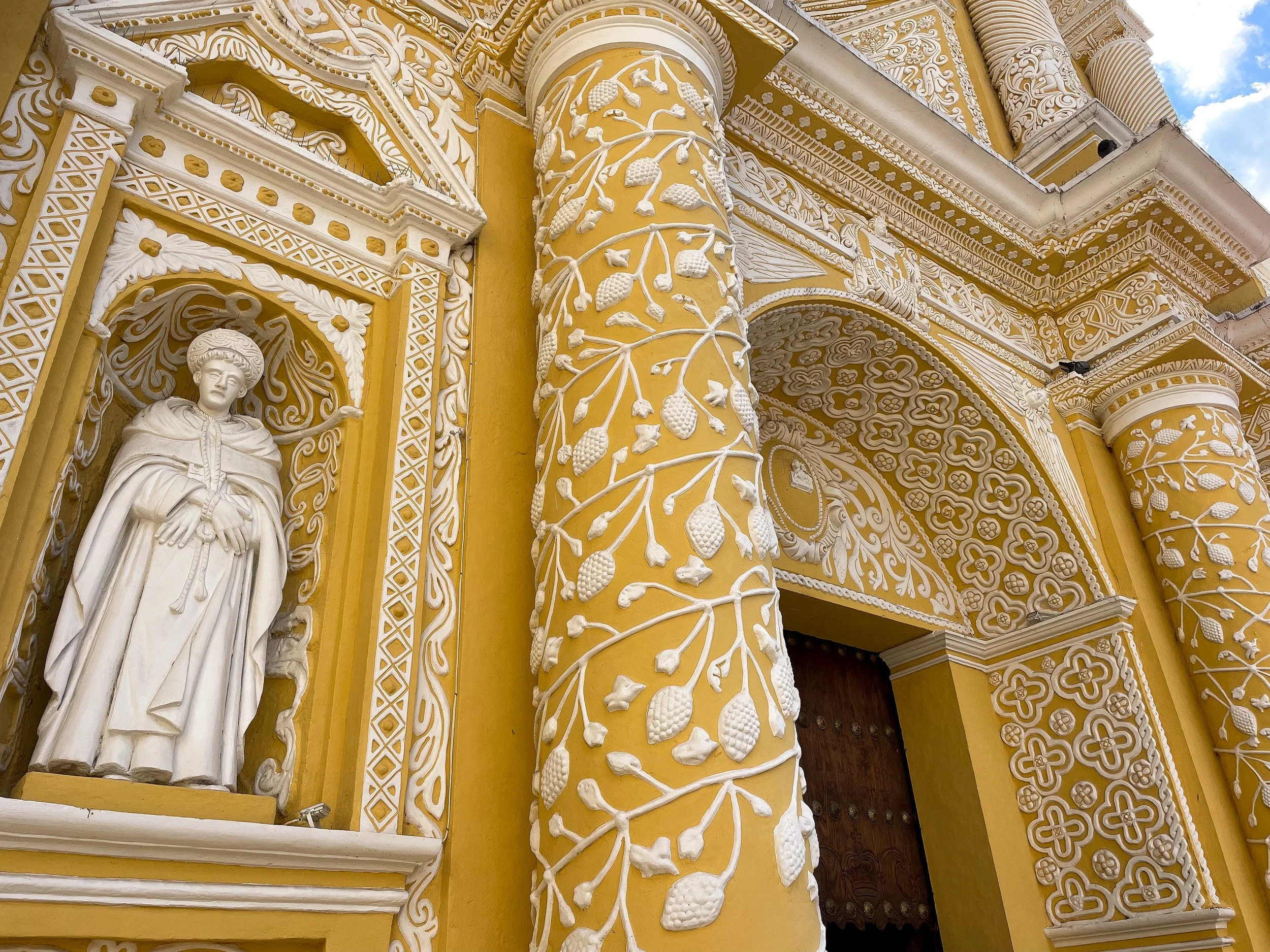
La Iglesia de Merced. A baroque style church with a yellow facade decorated in finely detailed white stucco ornamentation of grape vines and bunches. La Merced remains one of the few undamaged churches to survive from the centuries of earthquakes.
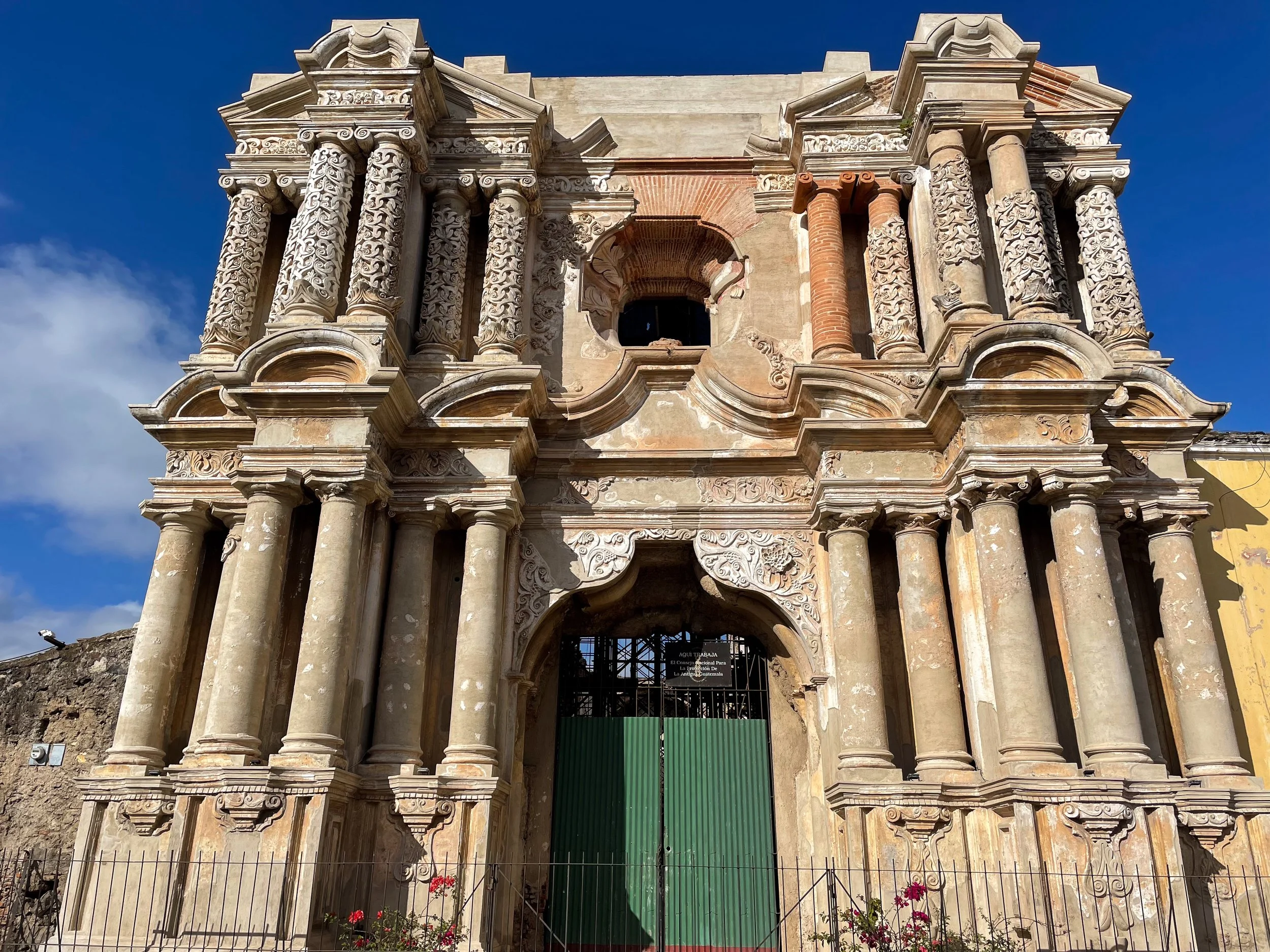
Iglesia del Carmen. The crumbling ruins of a church held together by supports and scaffolding. It’s inaccessible but can be admired from out front of its baroque facade.
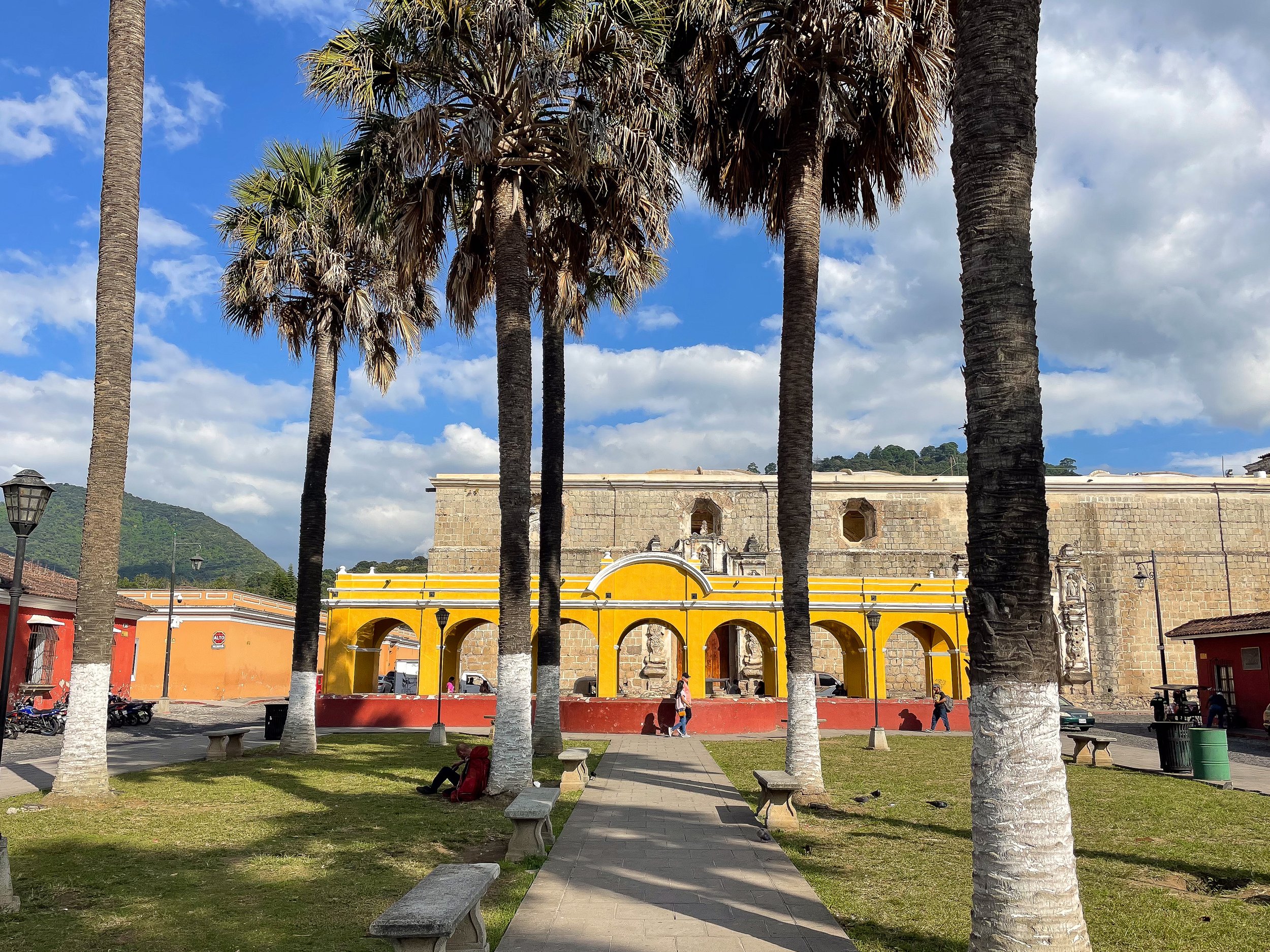
Tanque la Unión. A yellow arched pavilion and former colonial laundry well turned into a public fountain and park.
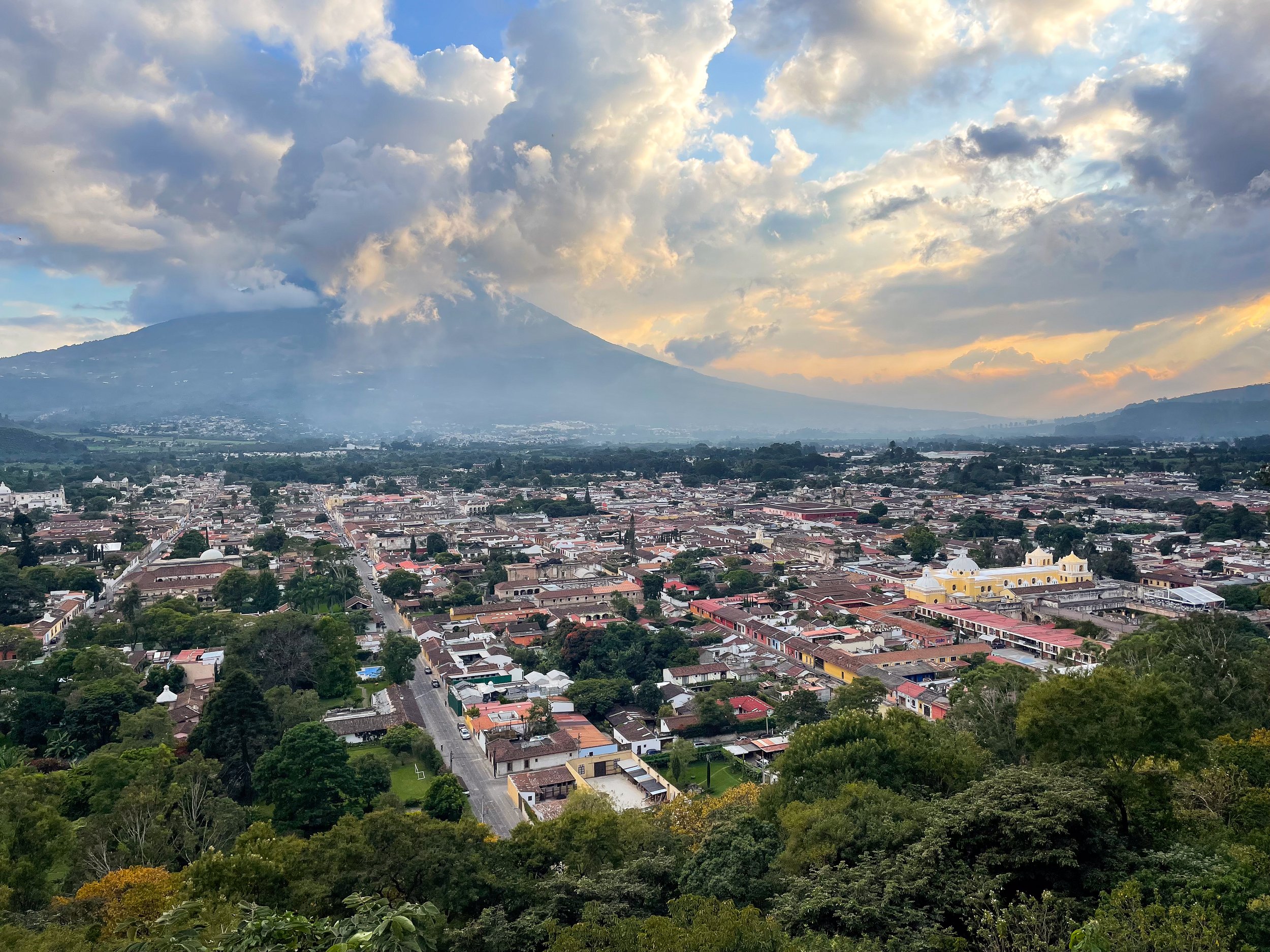
Cerro de la Cruz. A hilltop hike to a viewpoint overlooking Antigua, the volcanoes, mountains and valley. It’s popular at sunset or the early morning. The hike takes 10-15 minutes from the entrance guarded by police.
Crumbling Ruins
Antigua is an architectural and archeological playground with ruins of colonial buildings and churches destroyed during centuries of earthquakes.
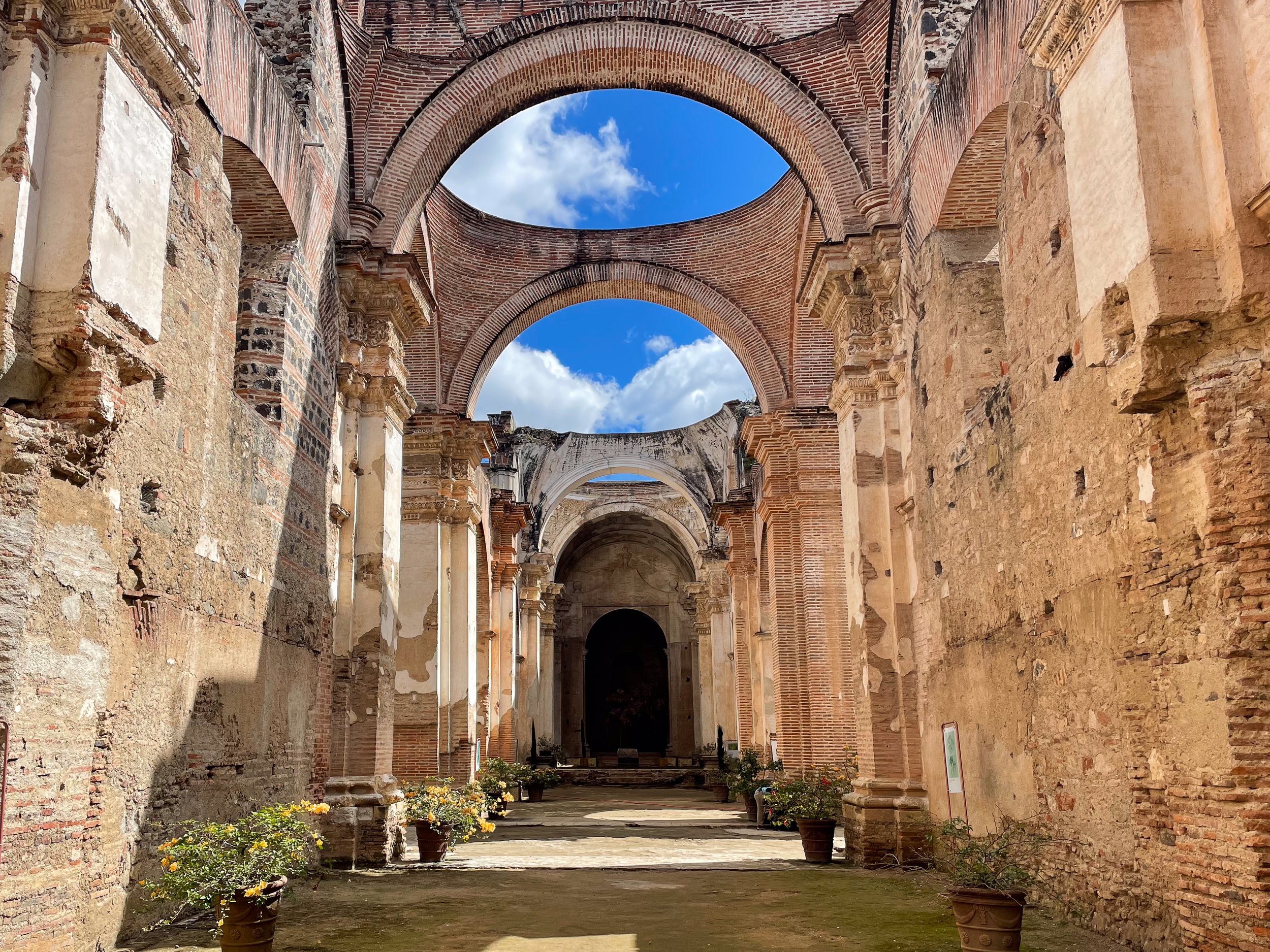
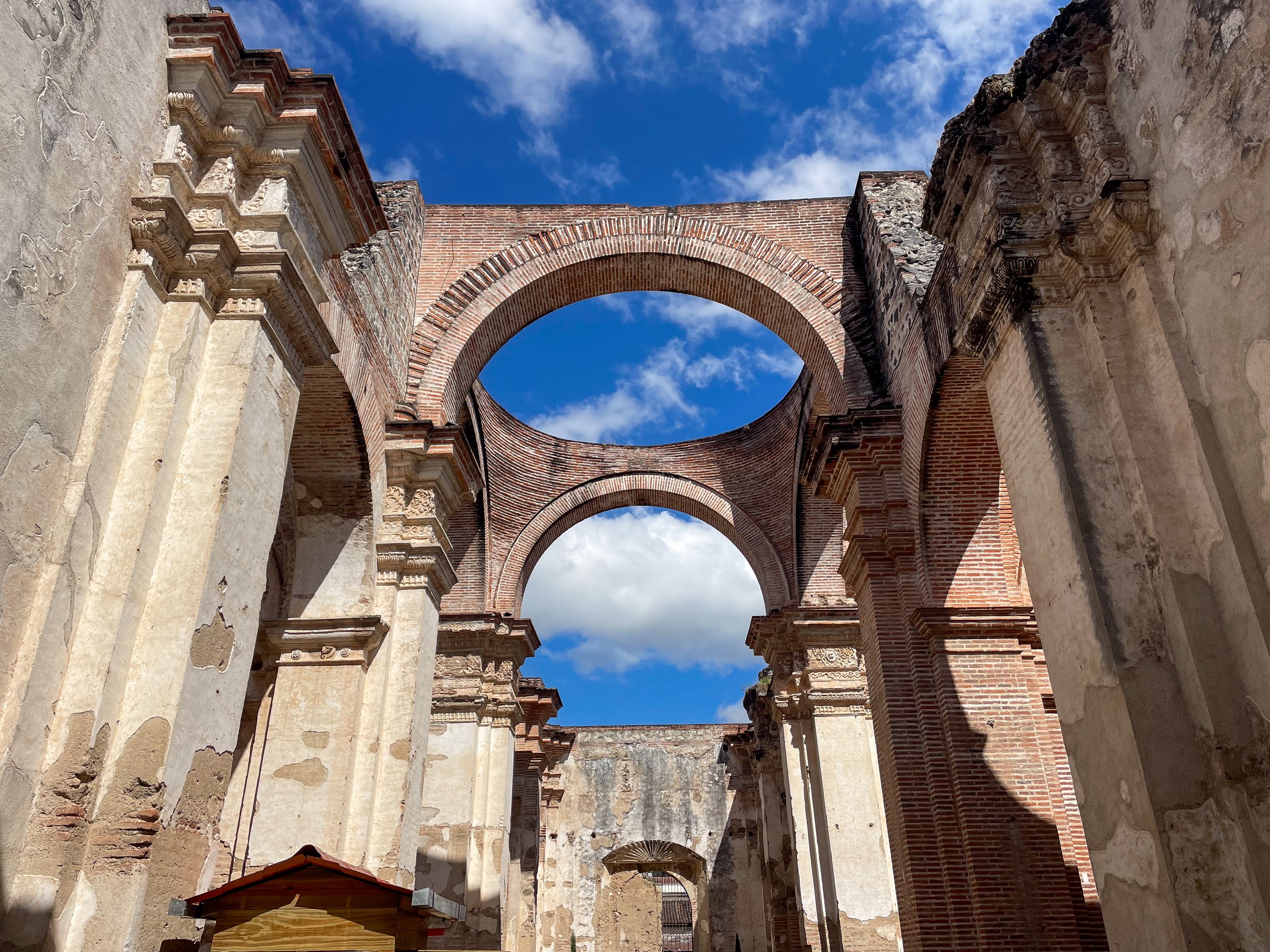
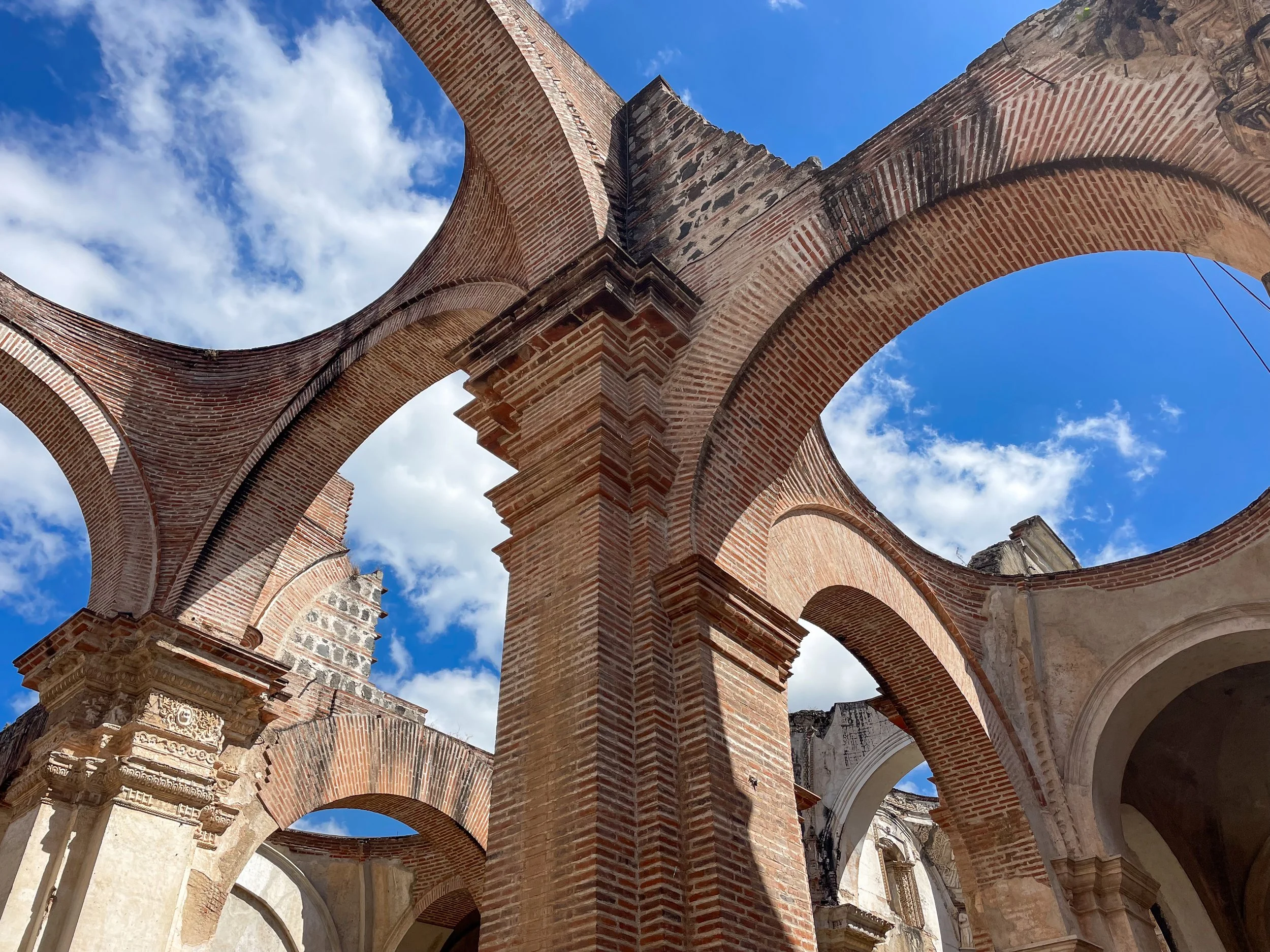
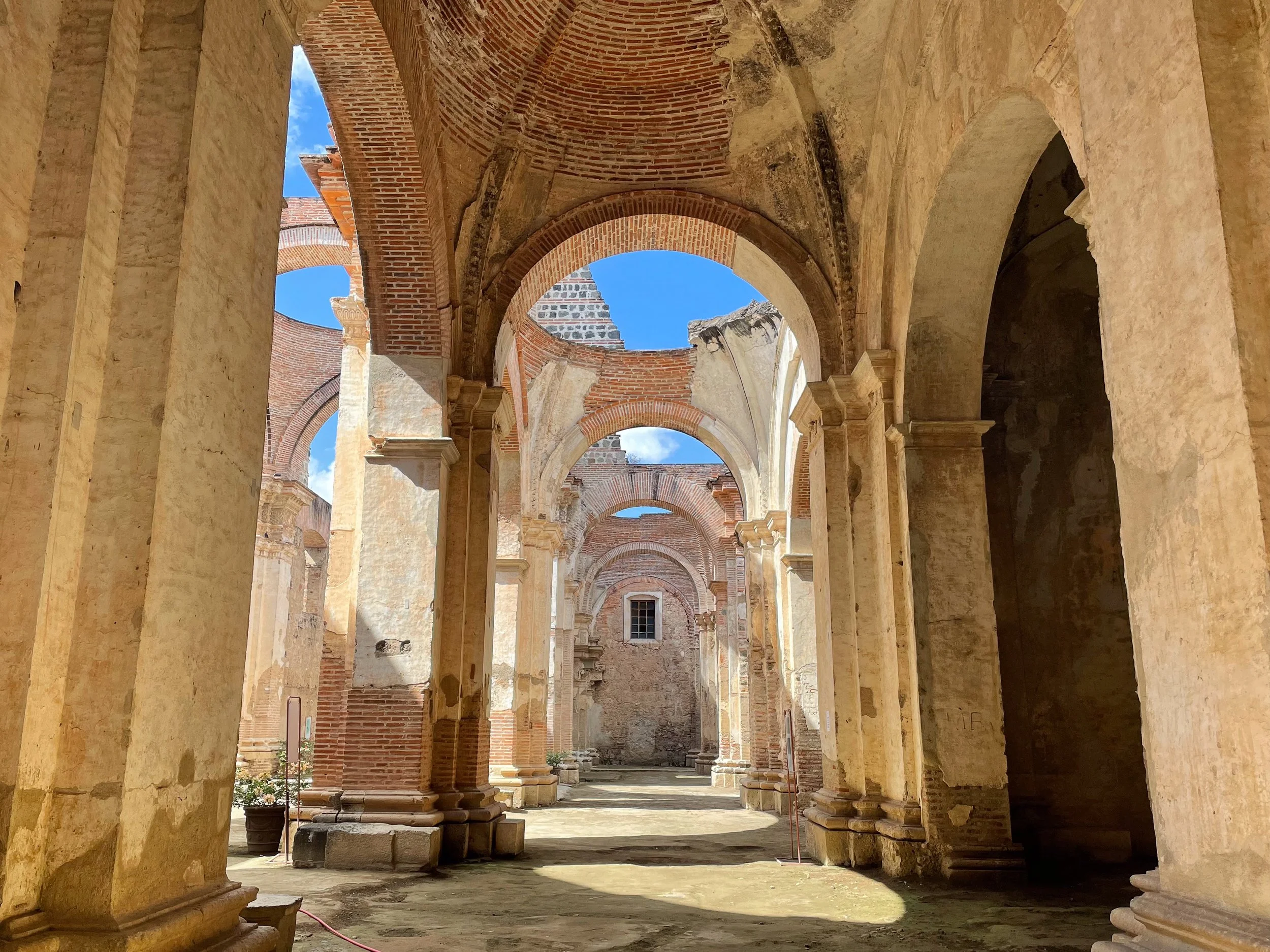
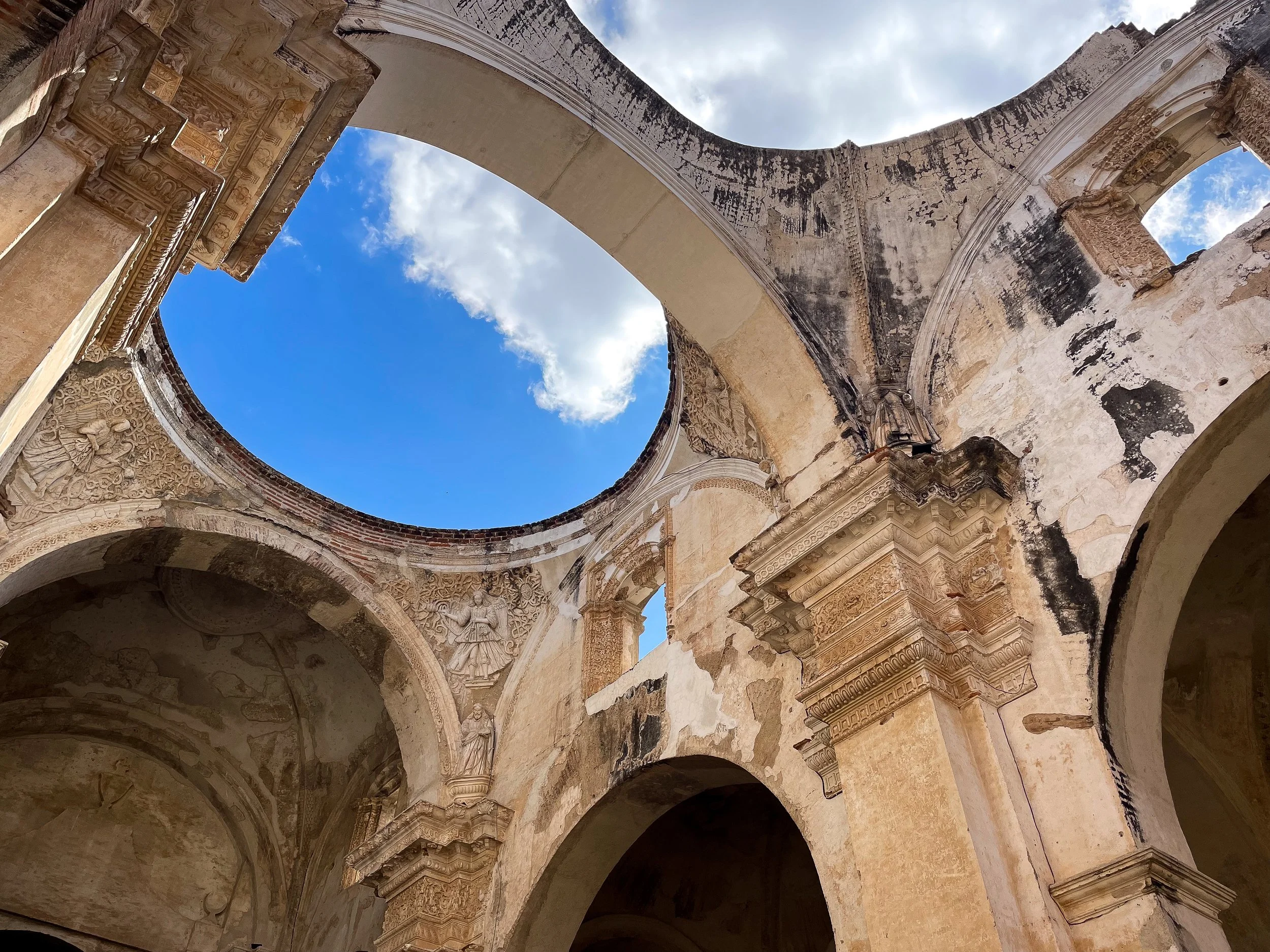
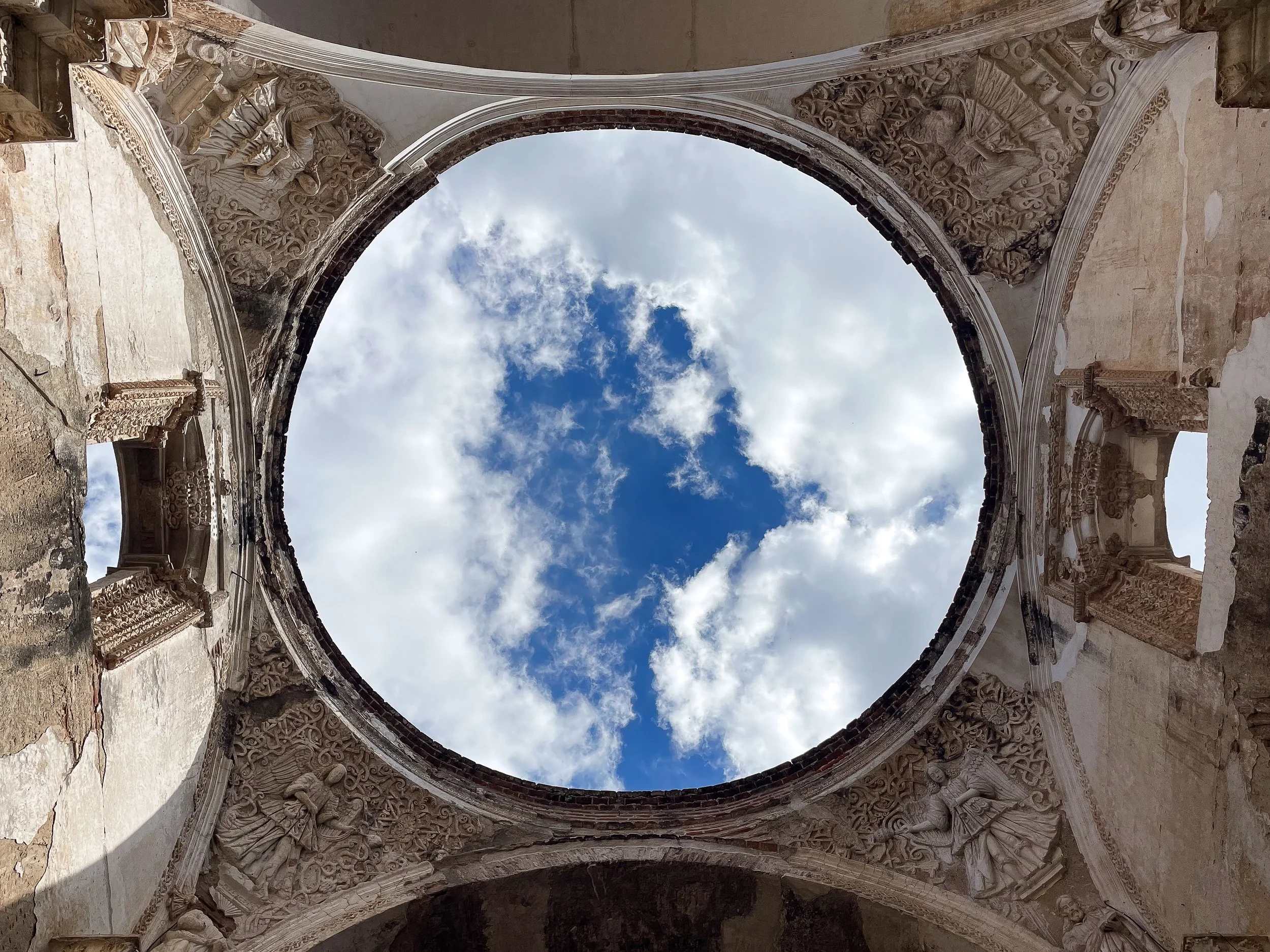
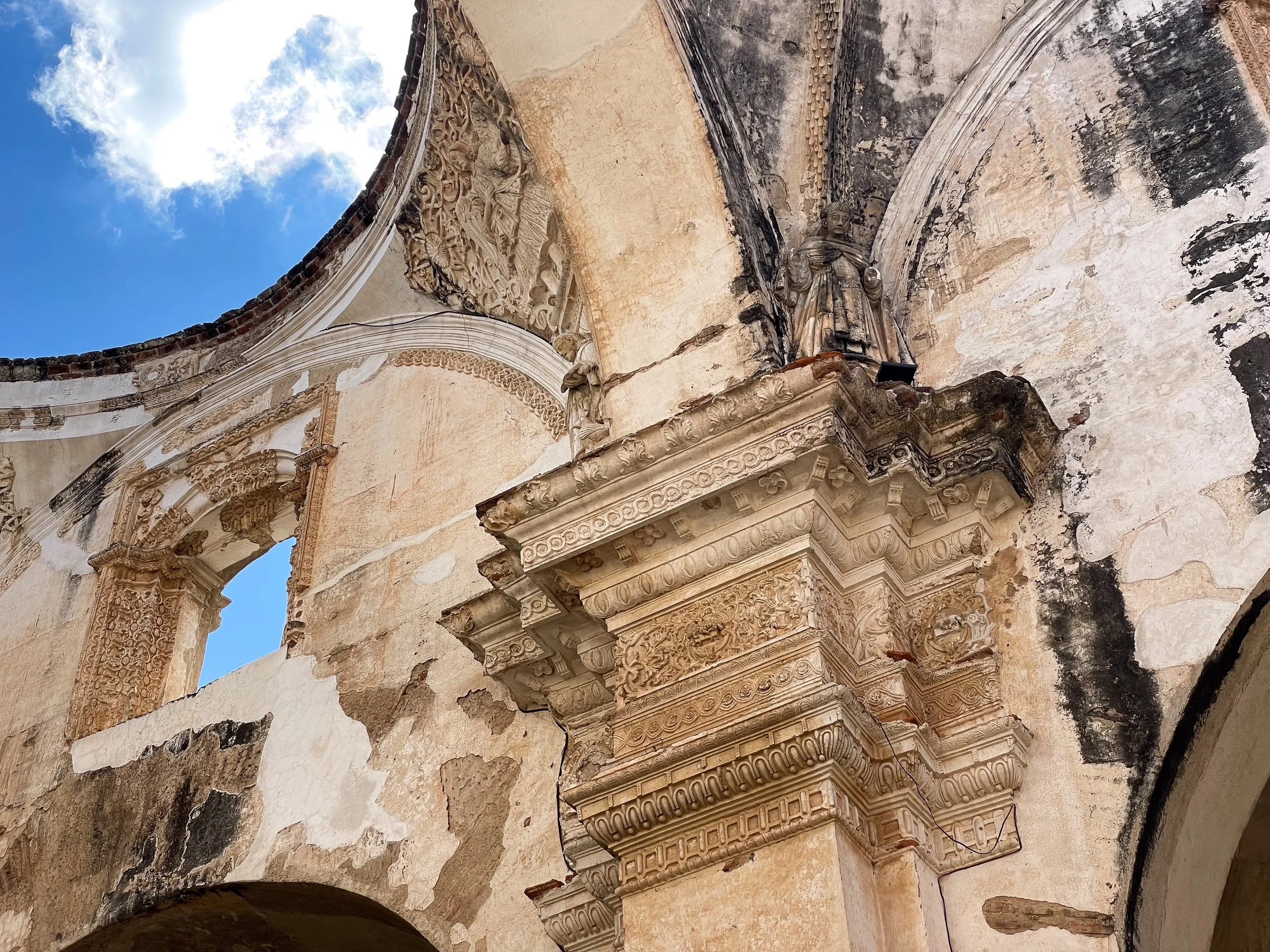
Catedral de Santiago. The ruins of a massive cathedral characterized by its collapsed domed ceiling revealing the sky above. Many arches of the domed ceiling remain, held up by towering brick and stone columns, some of which are still embellished in delicate plaster moldings and flourishes.
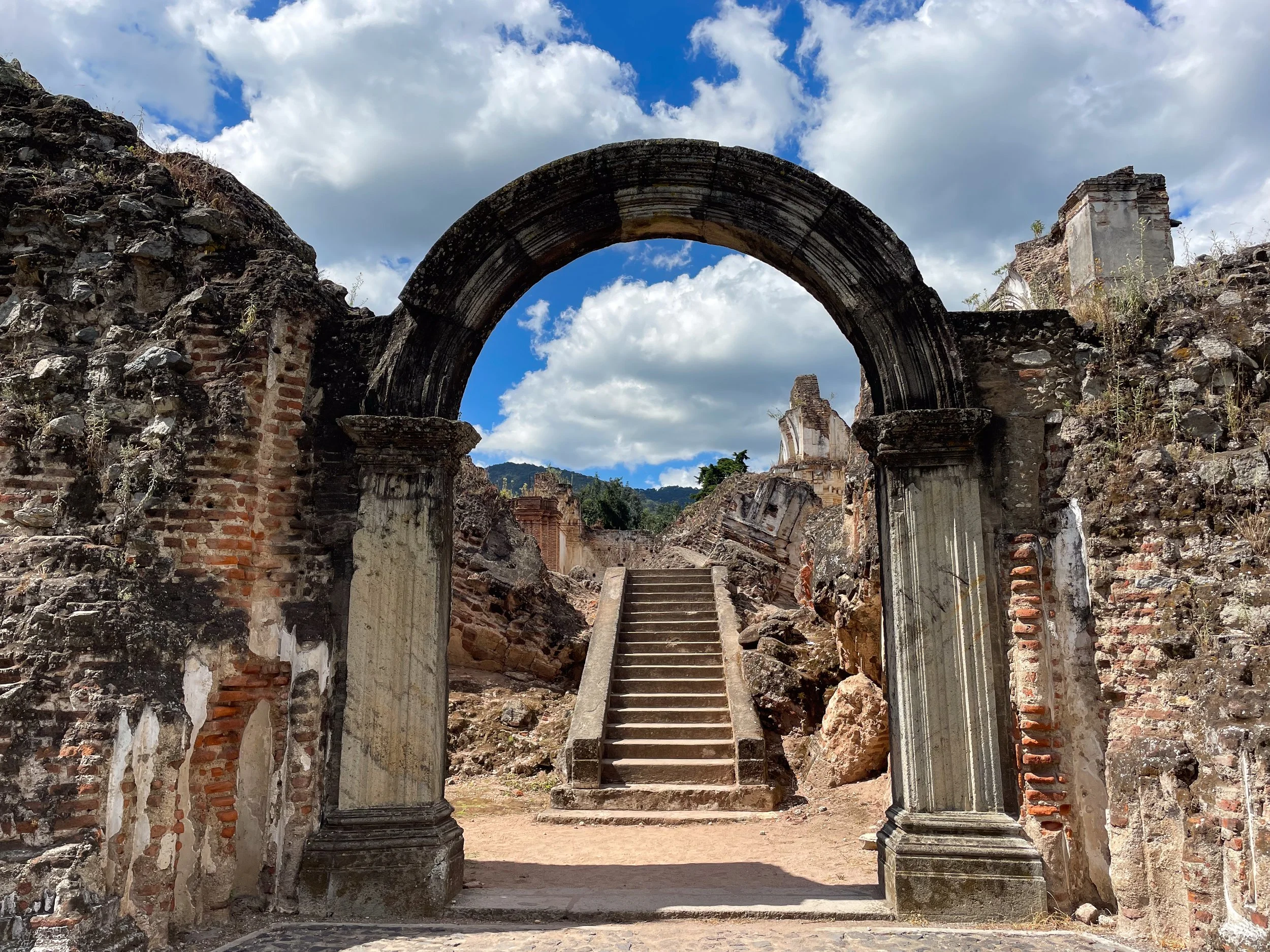
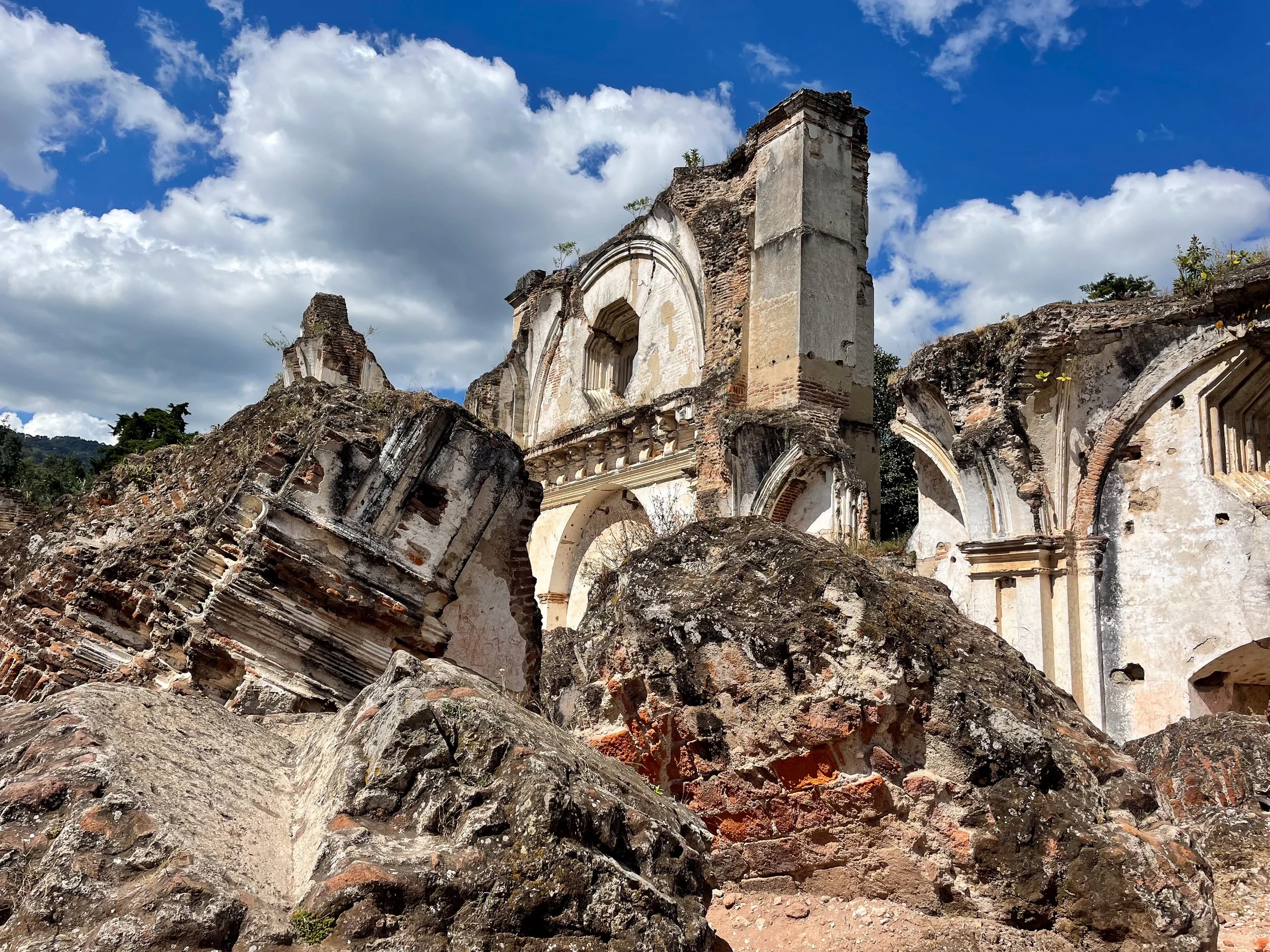
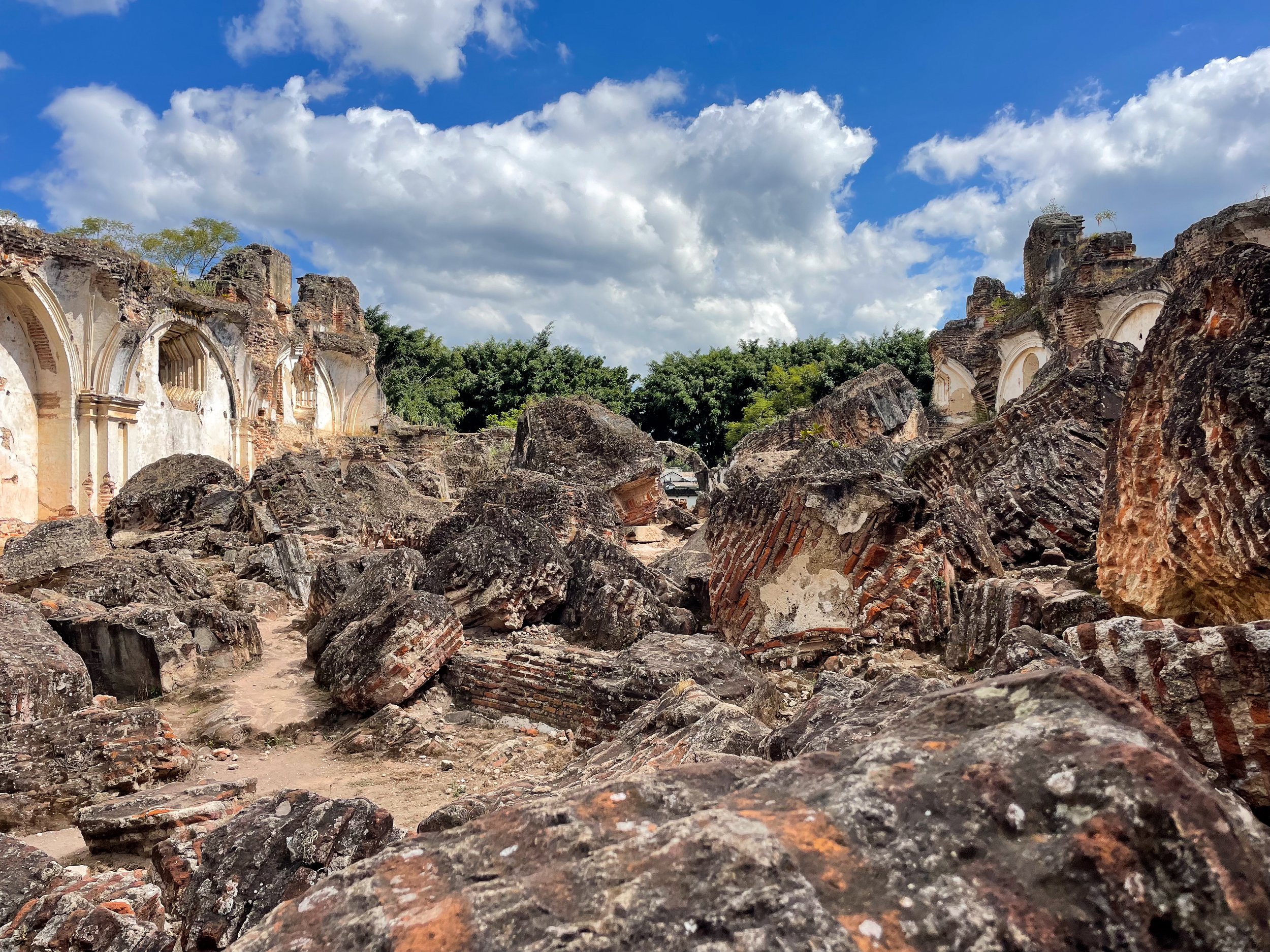
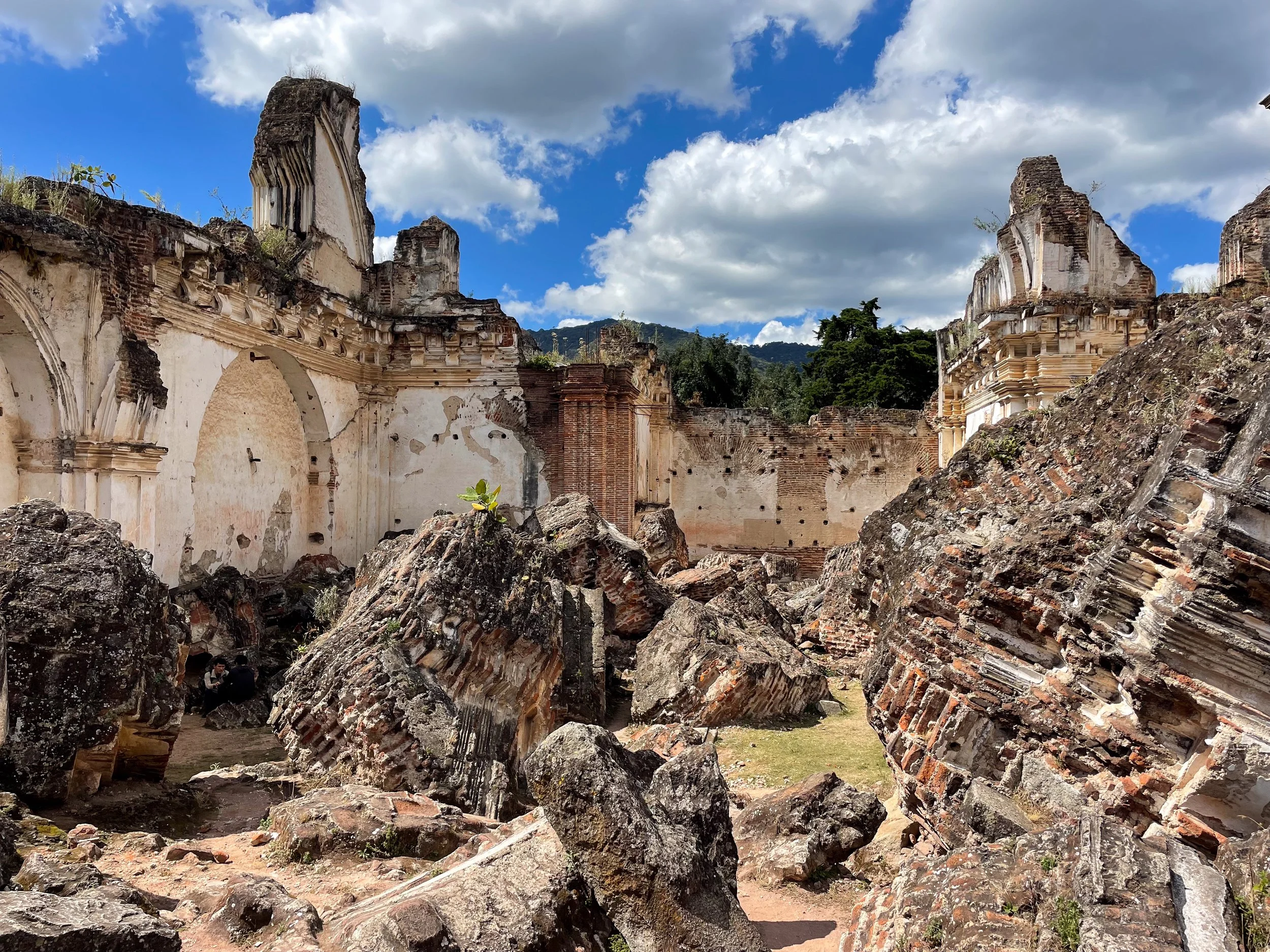
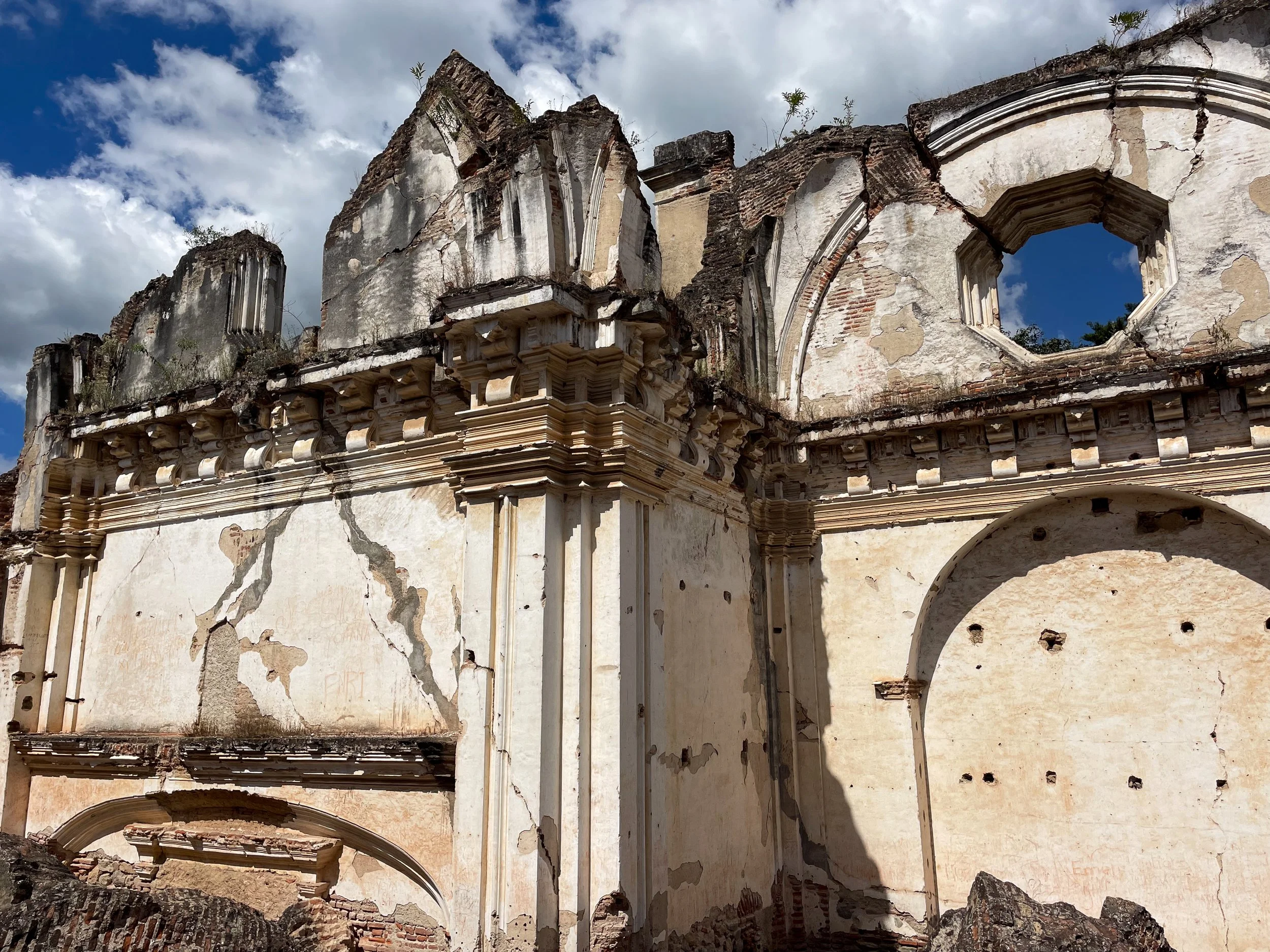
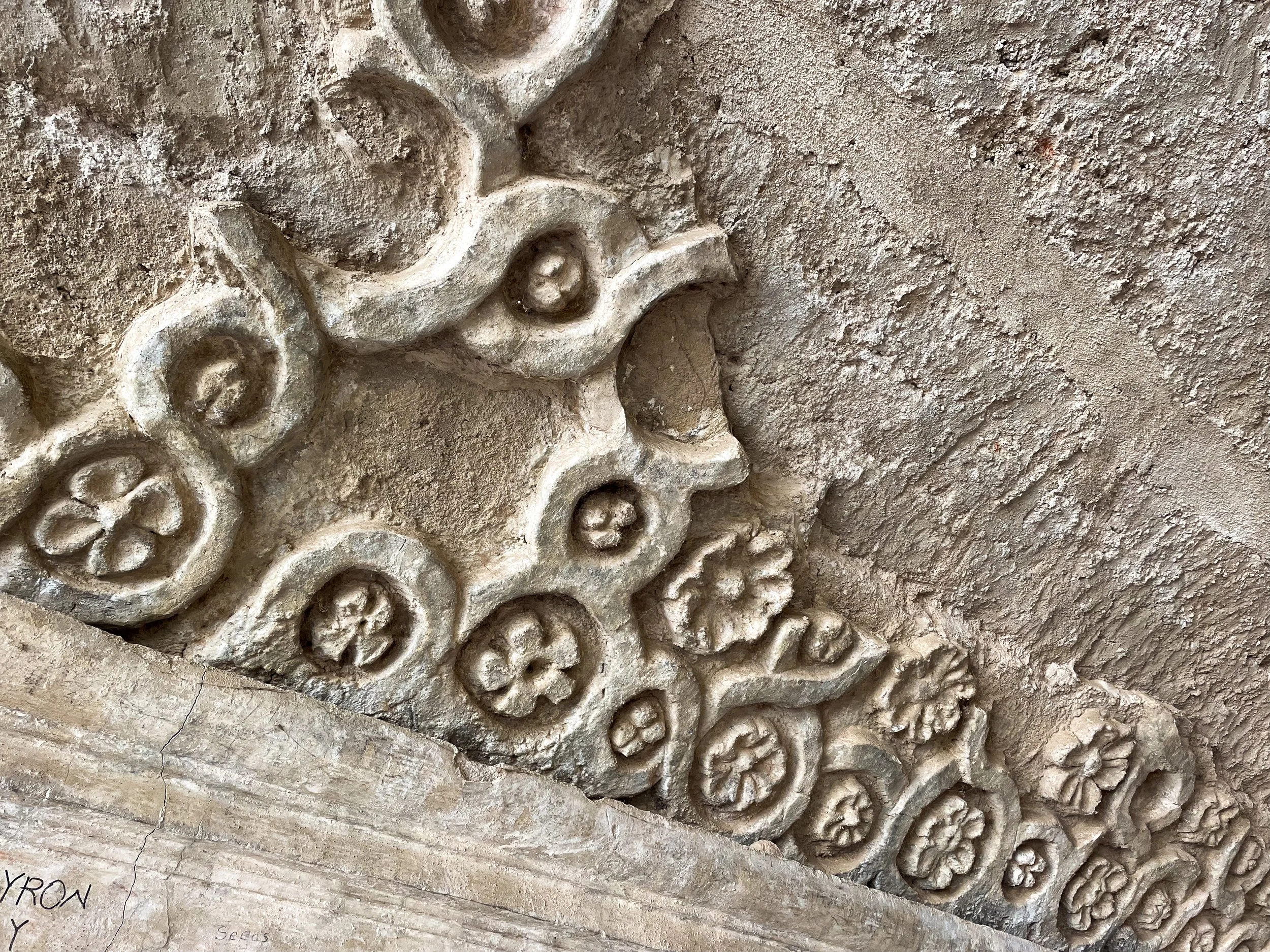
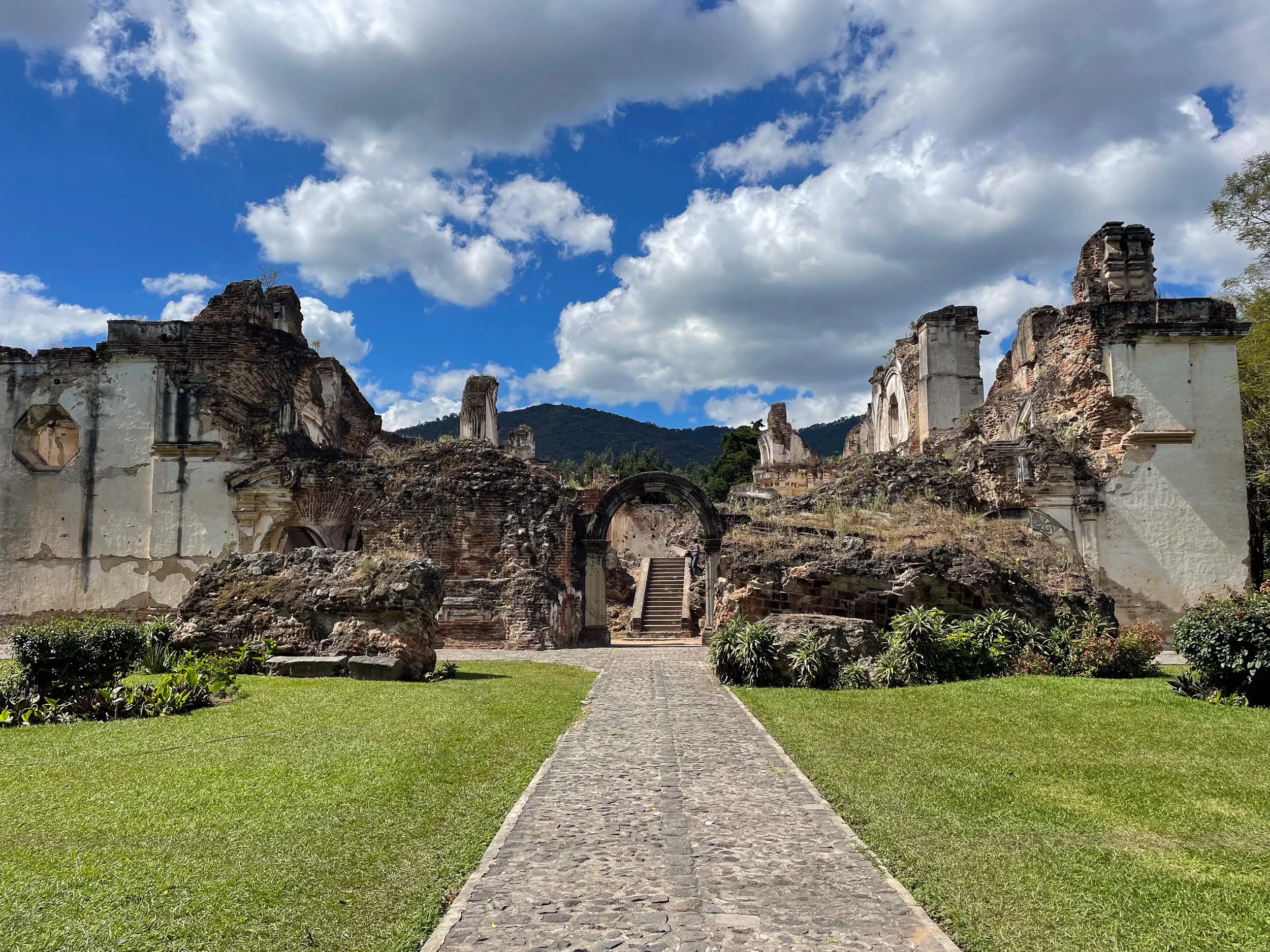
Iglesia La Recolección. Destroyed beyond repair, a lone arch and set of stairs lead to this former church where only the walls remain standing. Within its sanctuary are toppled columns, massive pieces of brick masonry and plaster debris. The ruins can be explored and even climbed on, making for a photogenic picture. The remaining grounds encompass two courtyards with the ruins of a convent.
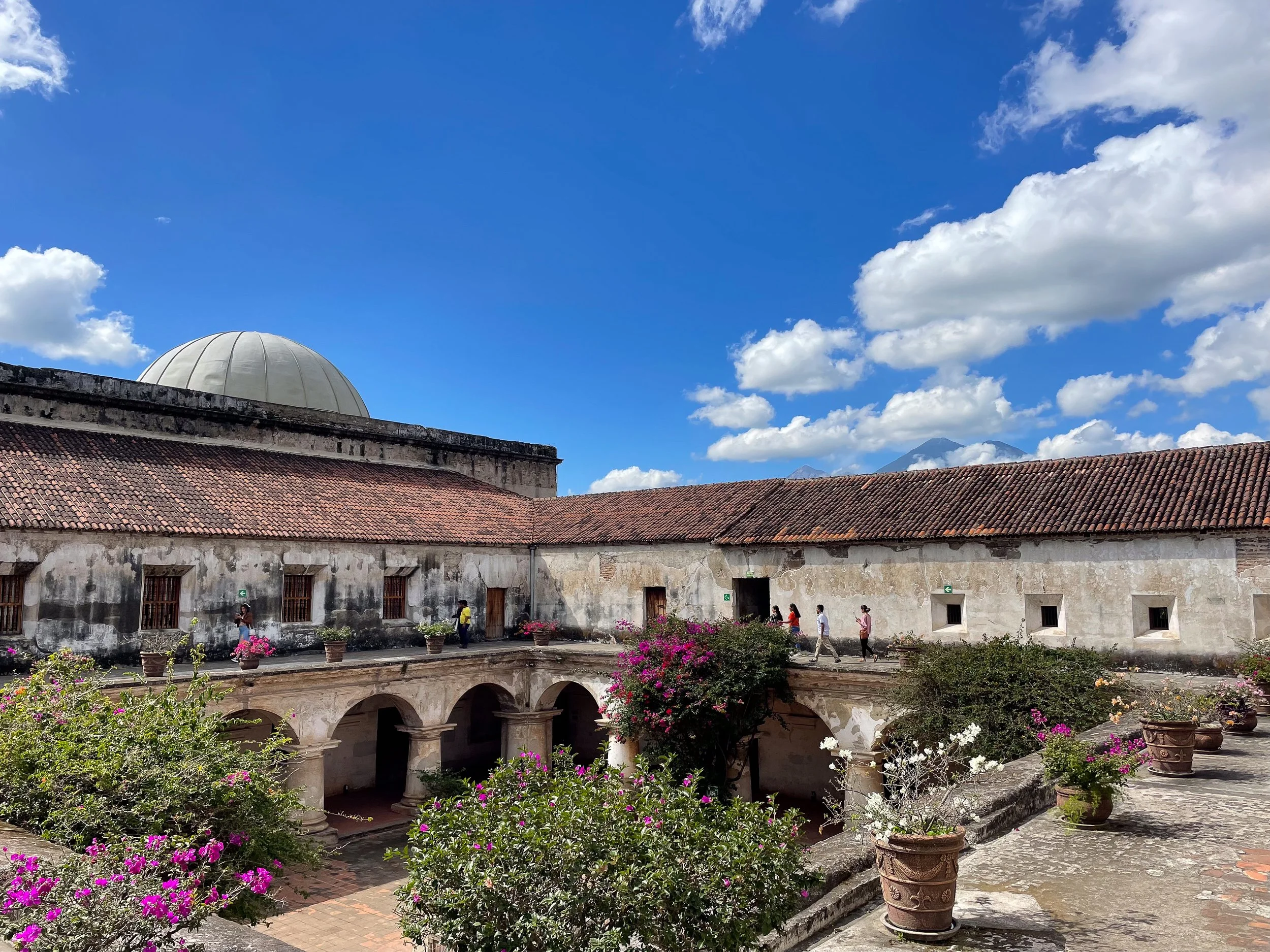
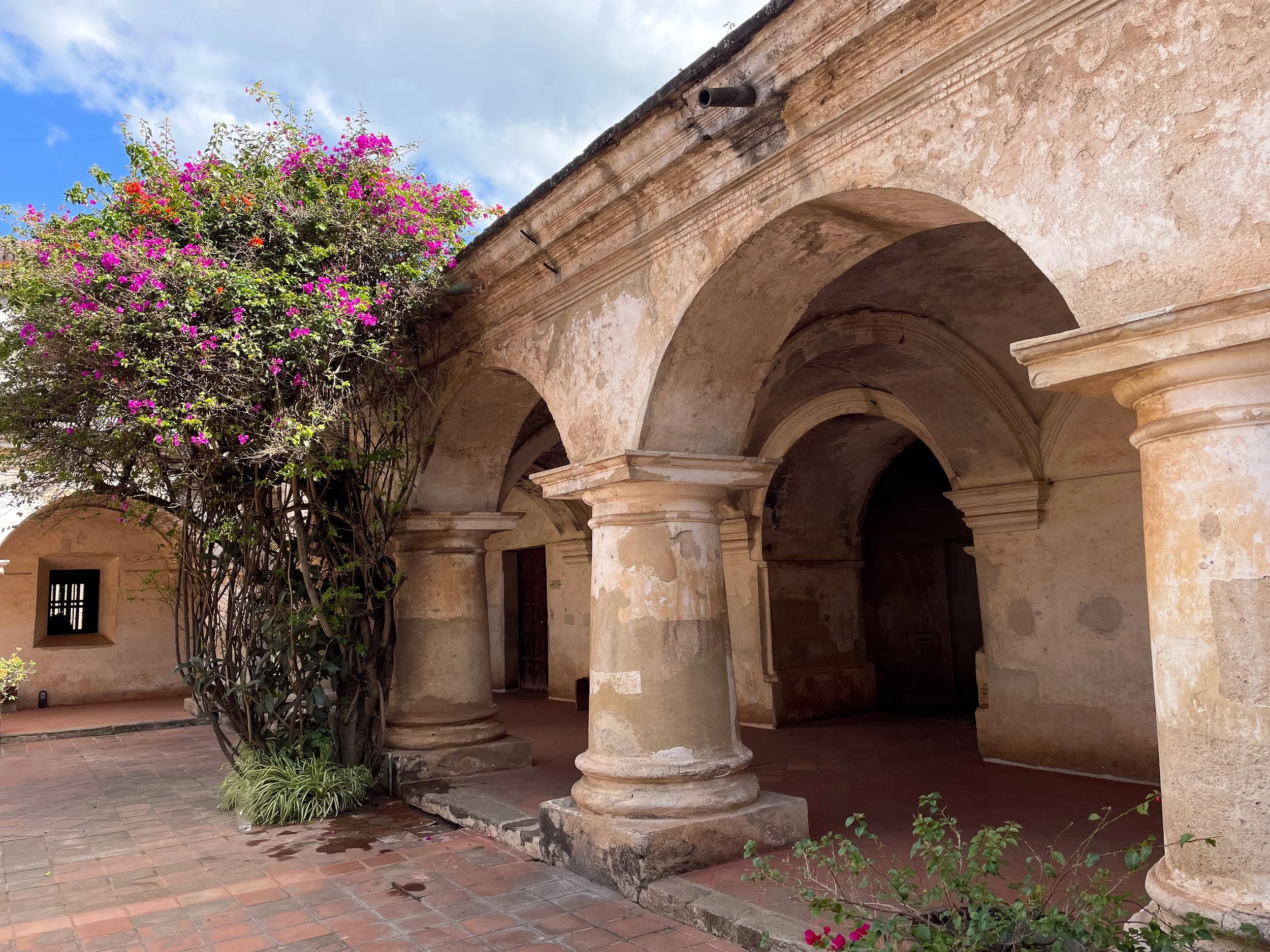
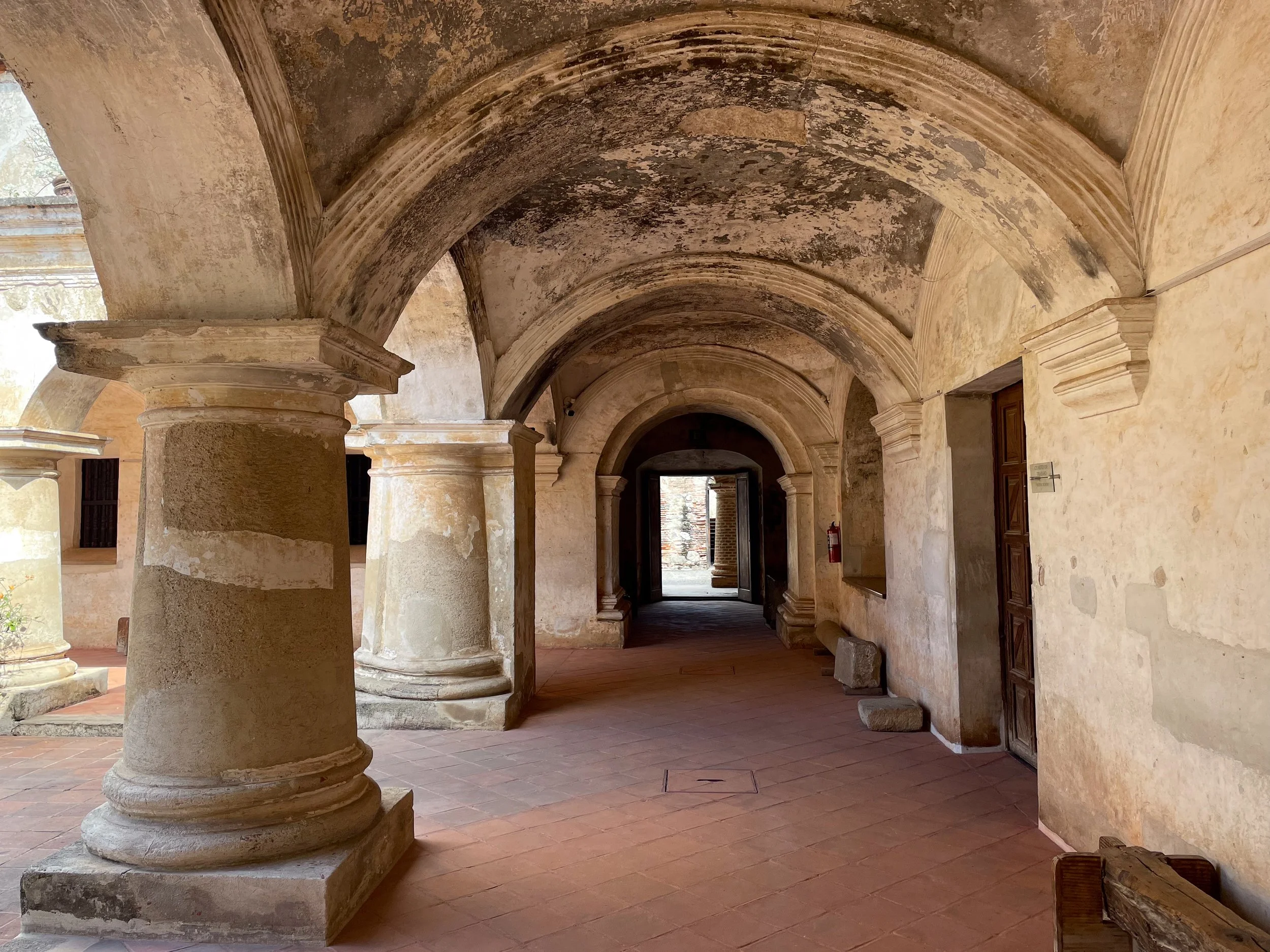
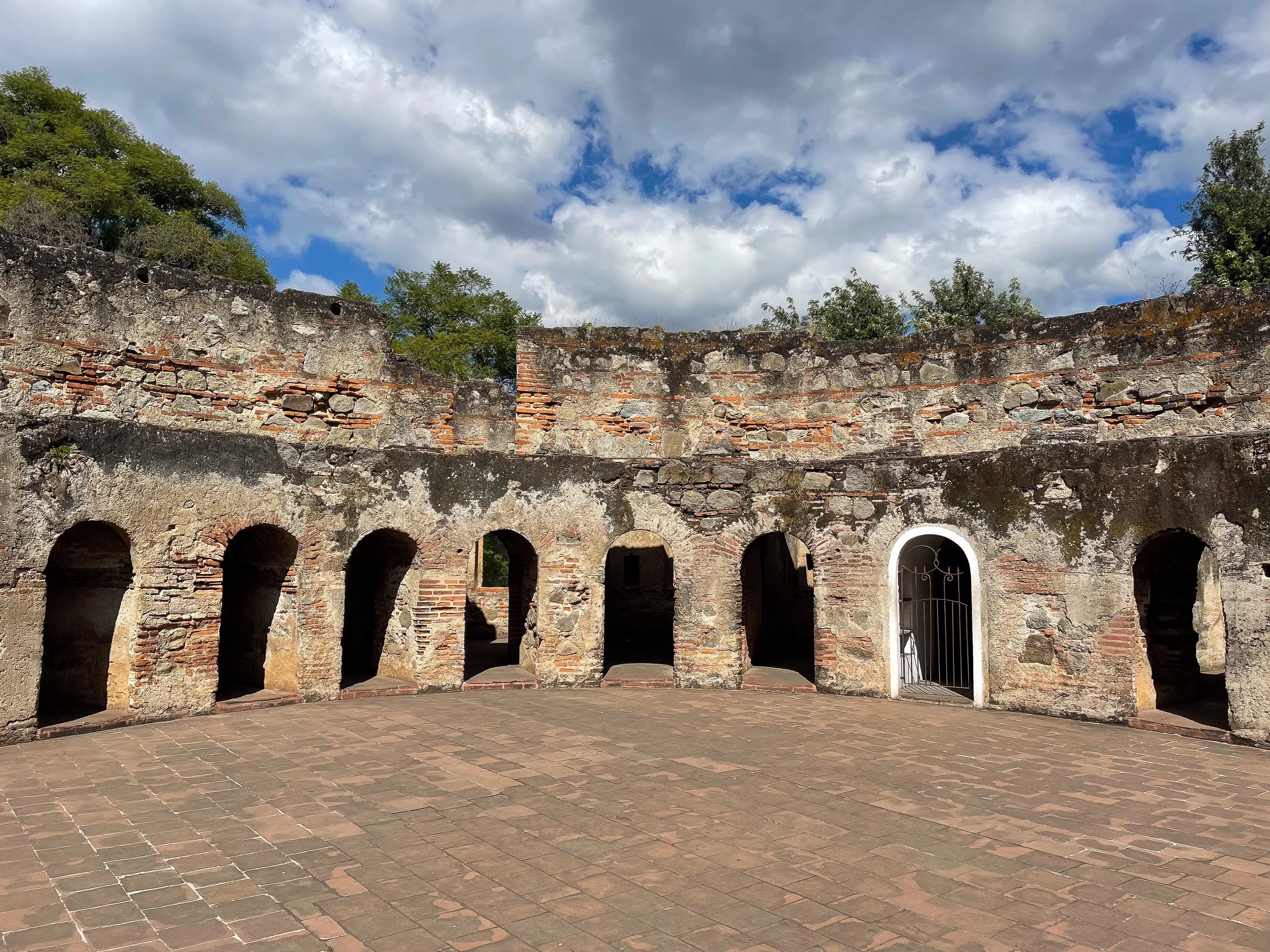
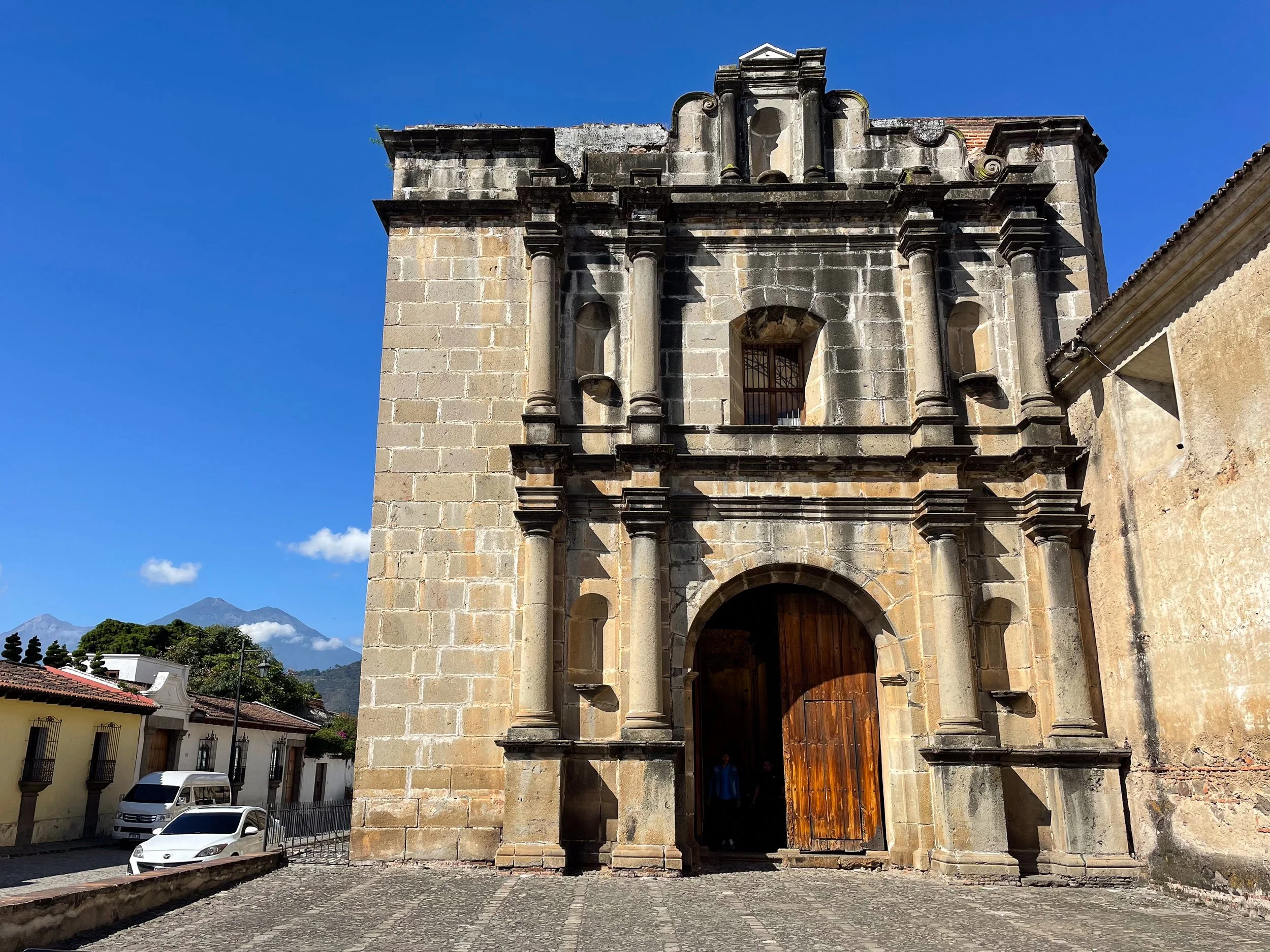
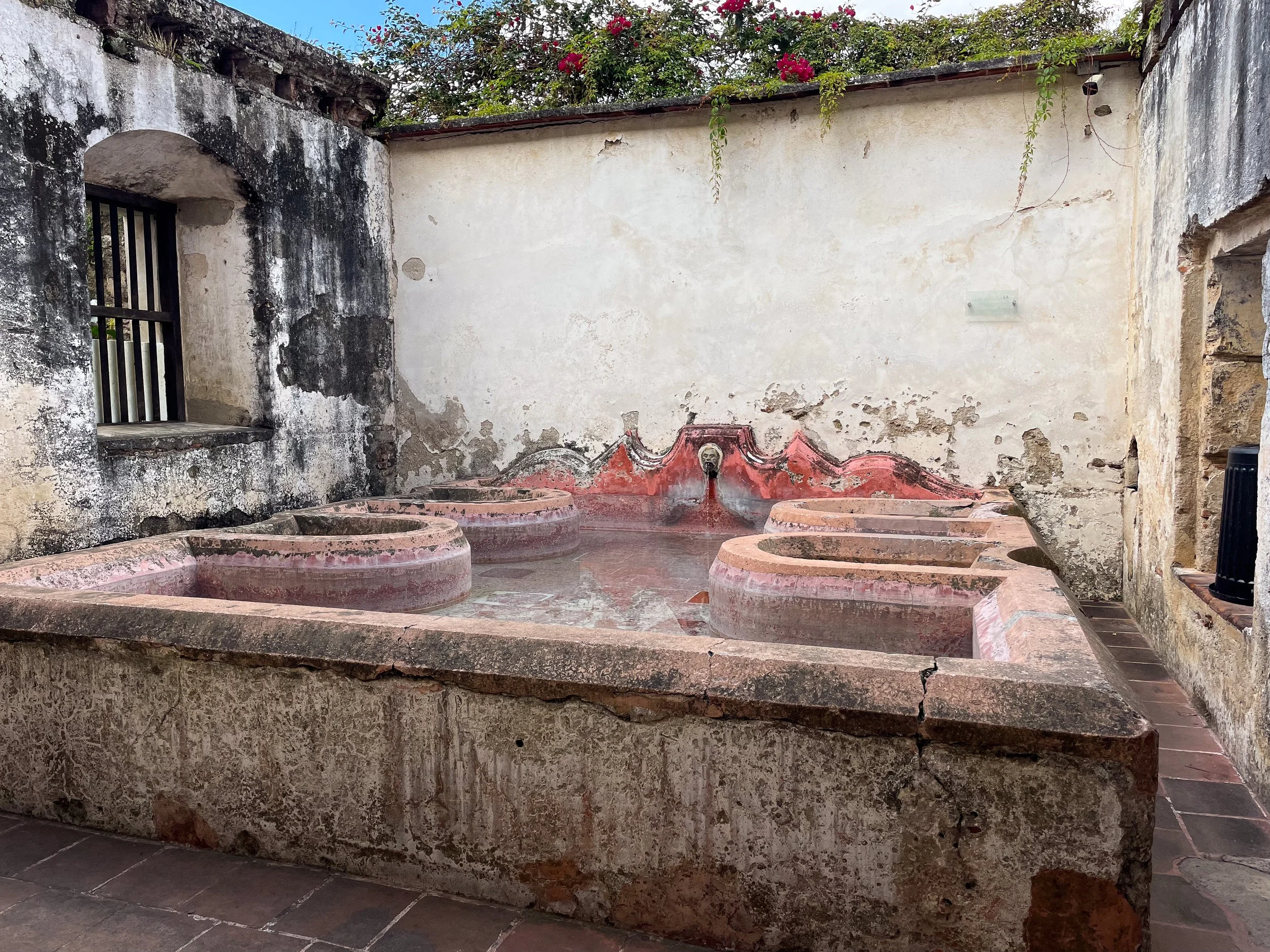
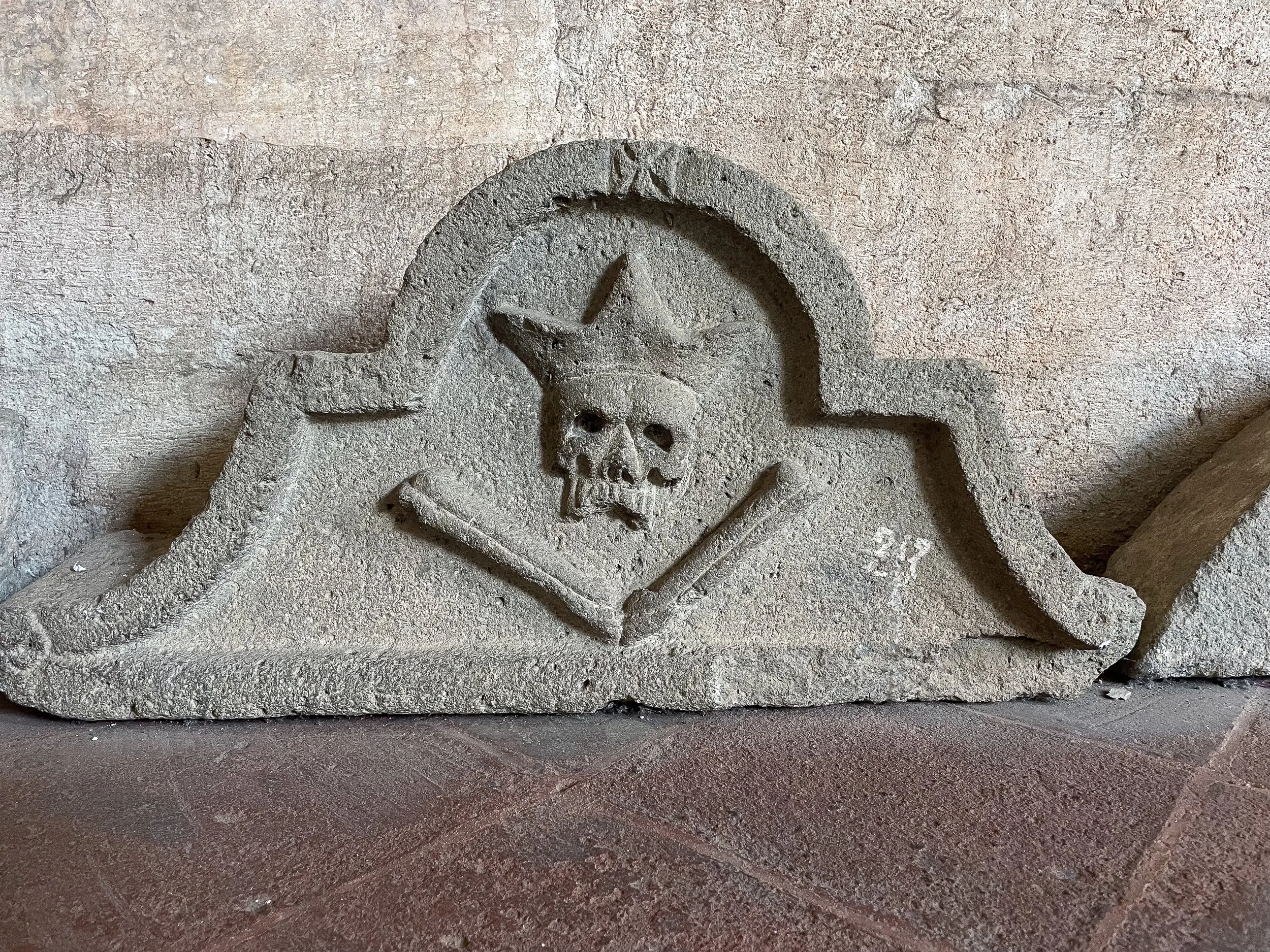
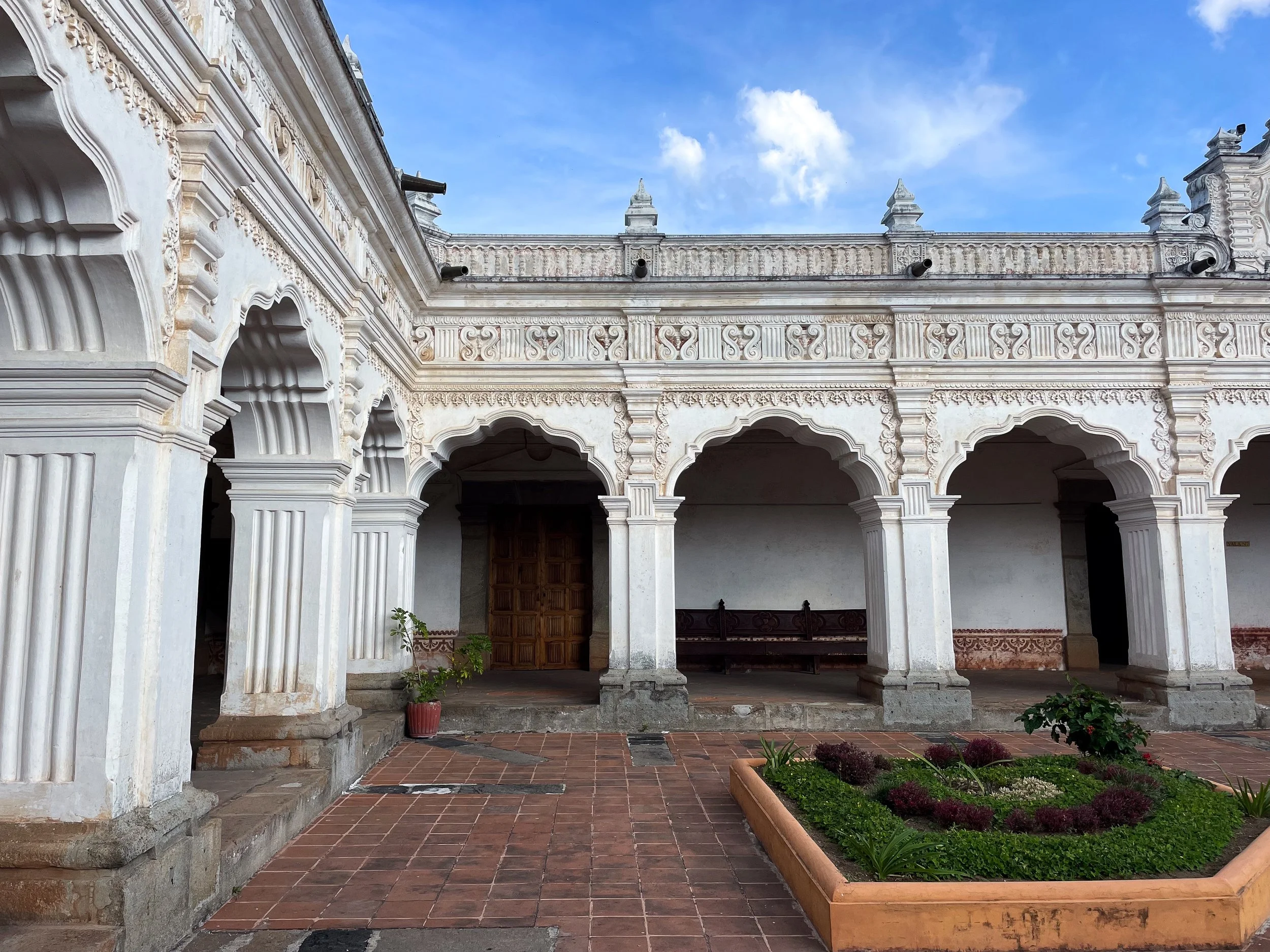
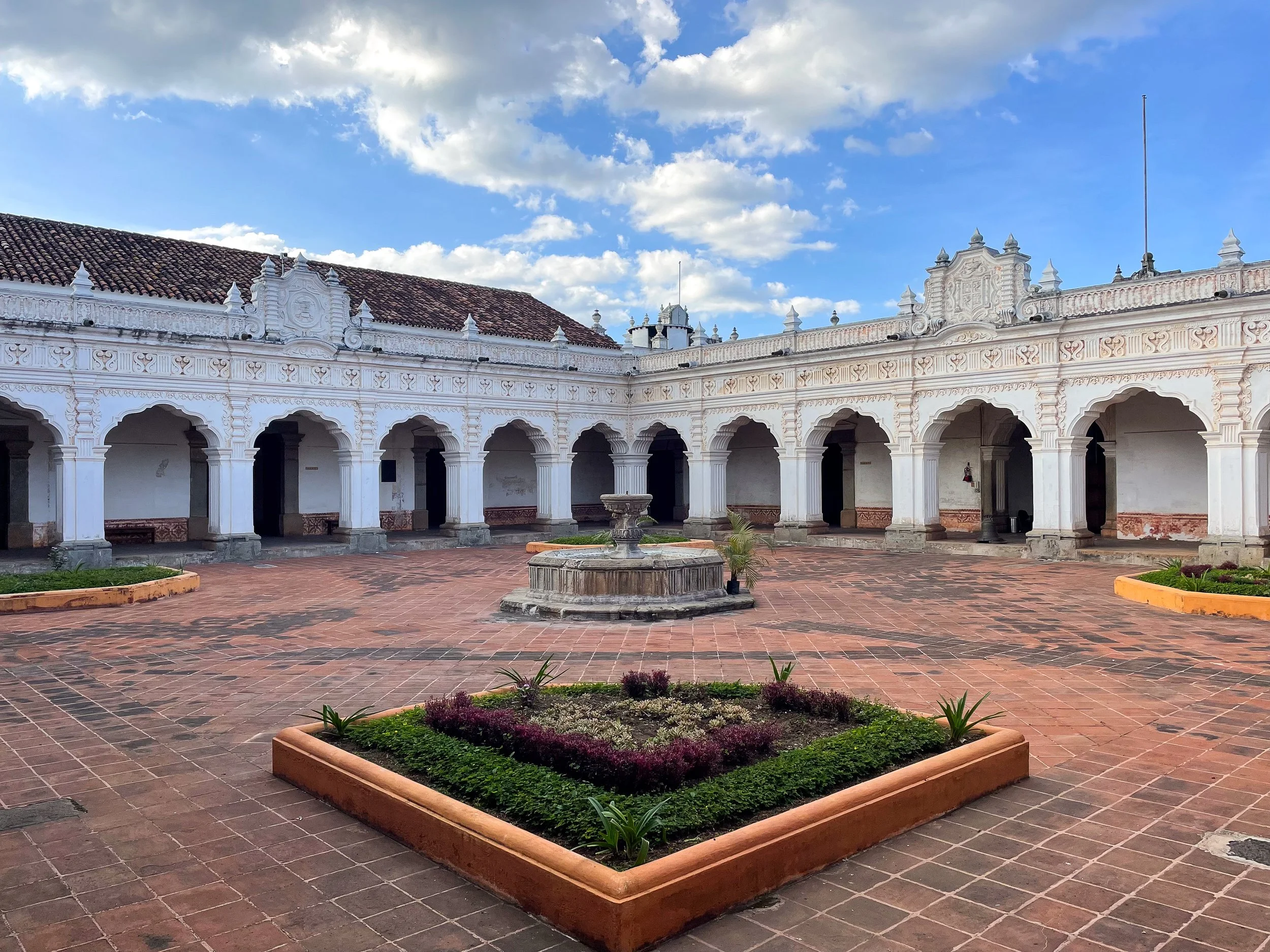
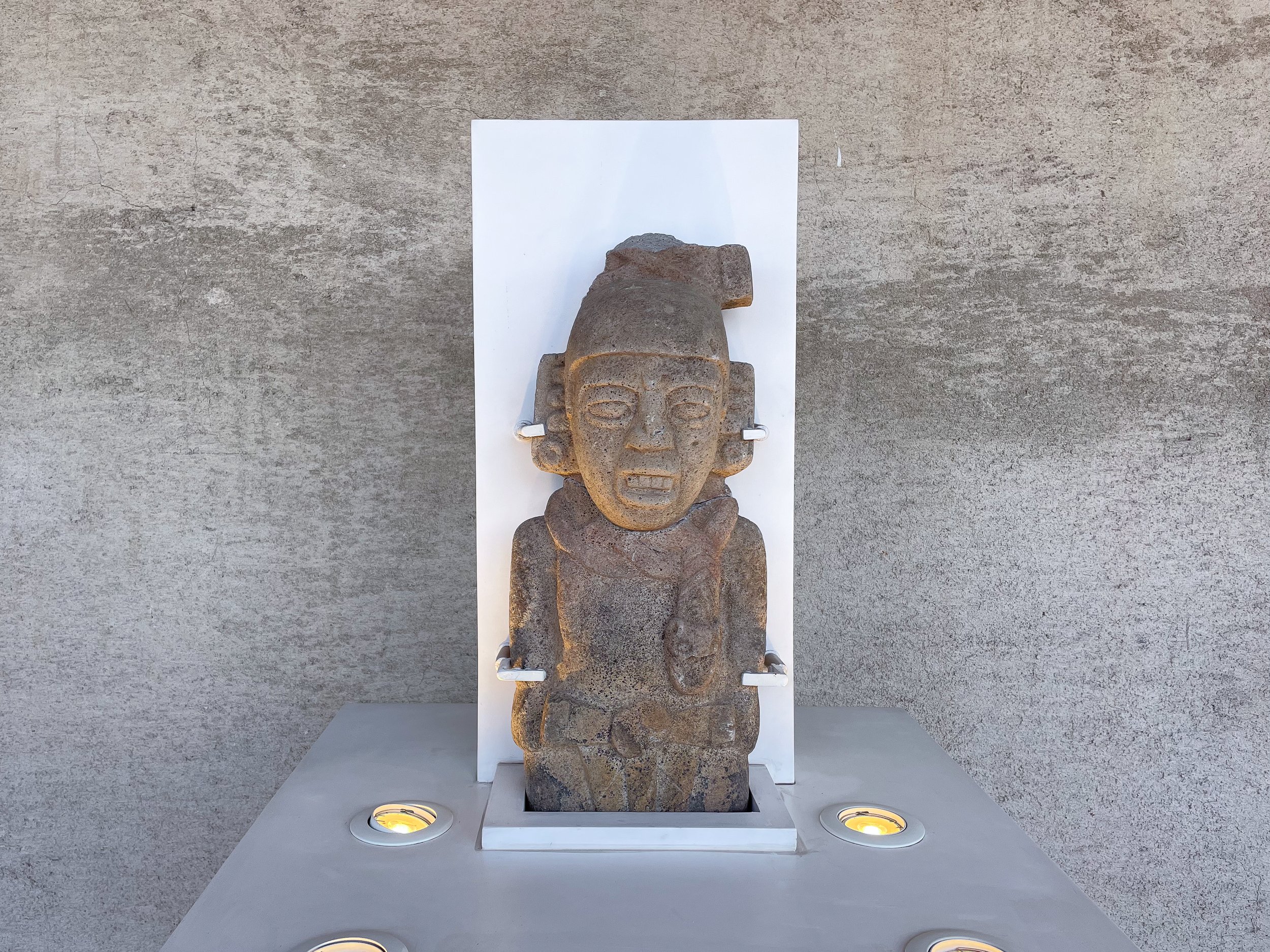
Convento de San Capuchinas. A former convent turned into an art museum. The grounds contain an interior courtyard, the ruins of a church, a butterfly garden and a circular building of nuns' cells complete with creepy nun mannequins. Exhibits display a collection of religious artwork, pre-colonial artifacts, broken statues and stone masonry.
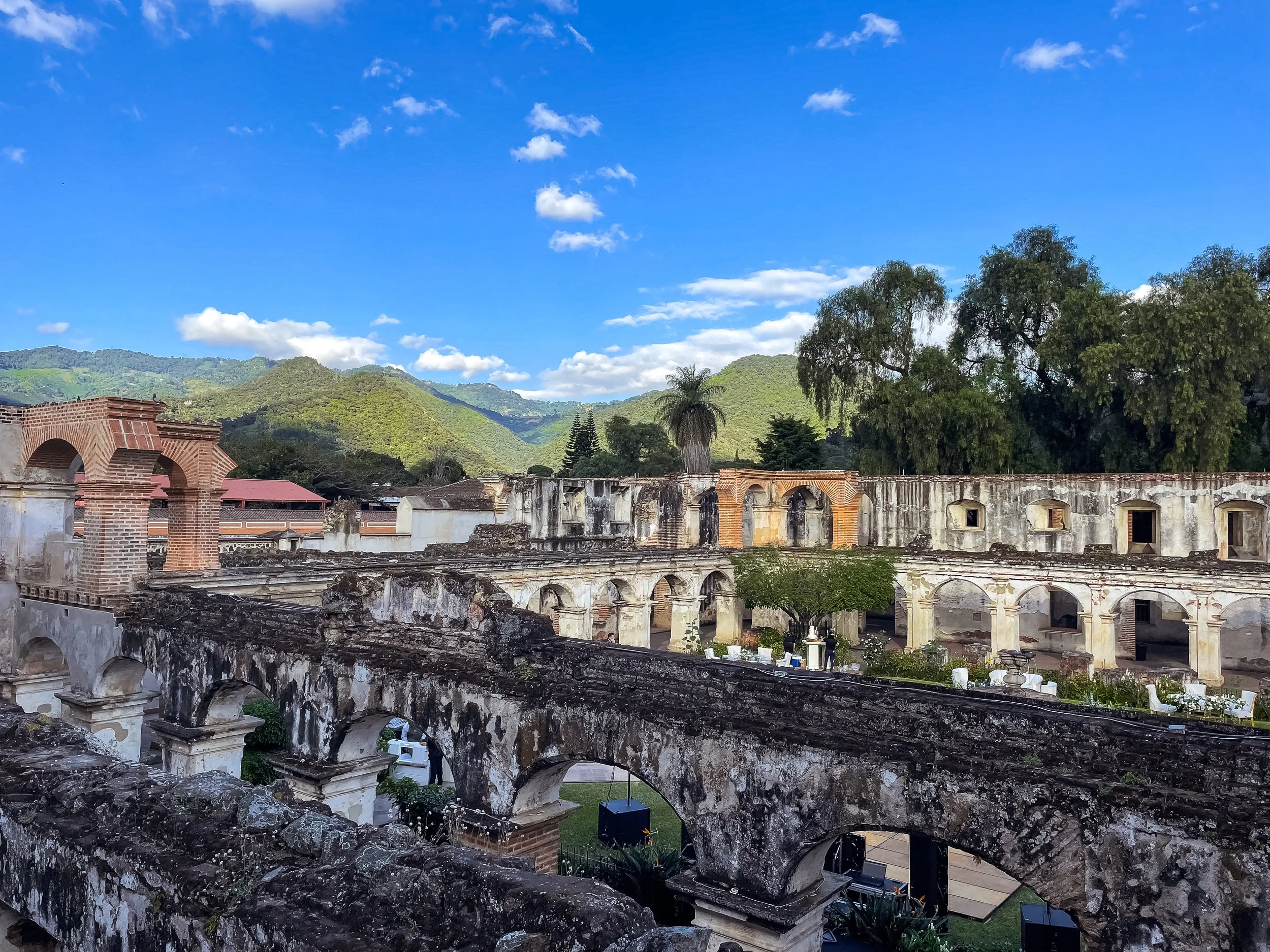
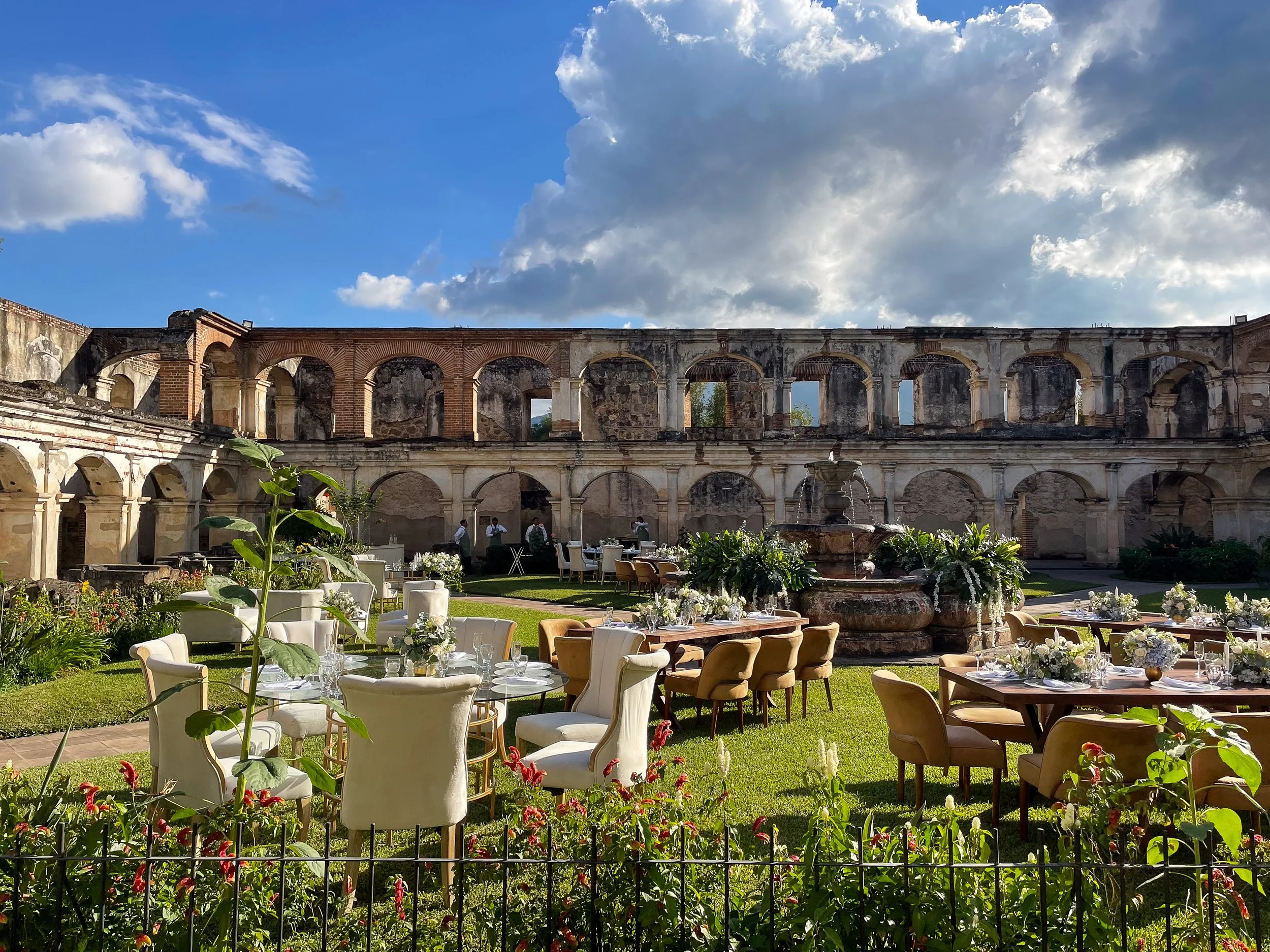
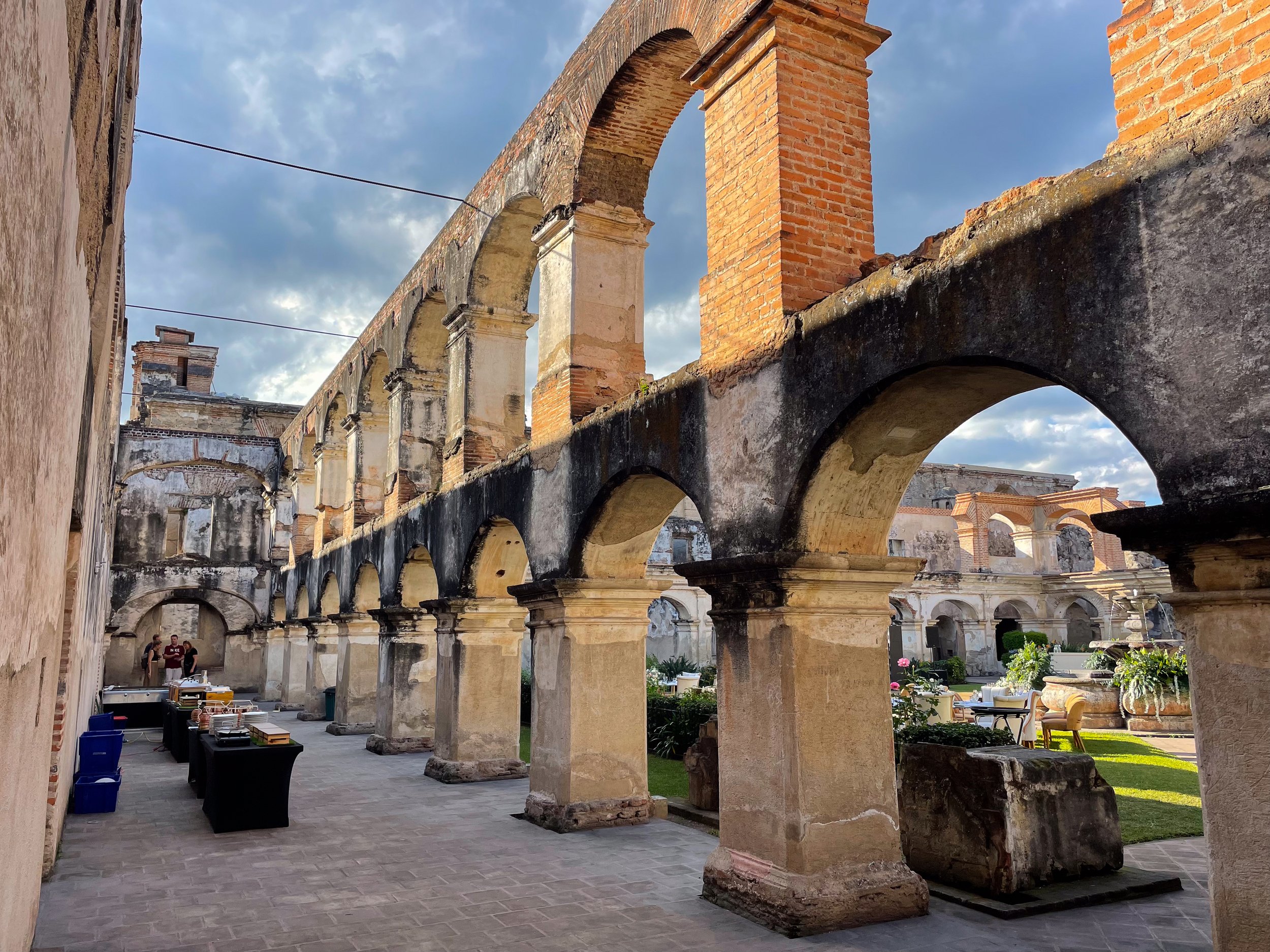
Convento Santa Clara. The ruins of a church and convent with an ornate stone facade and crumbling cloisters surrounding a lush garden courtyard. The beautiful setting doubles as an event space for dreamy weddings.
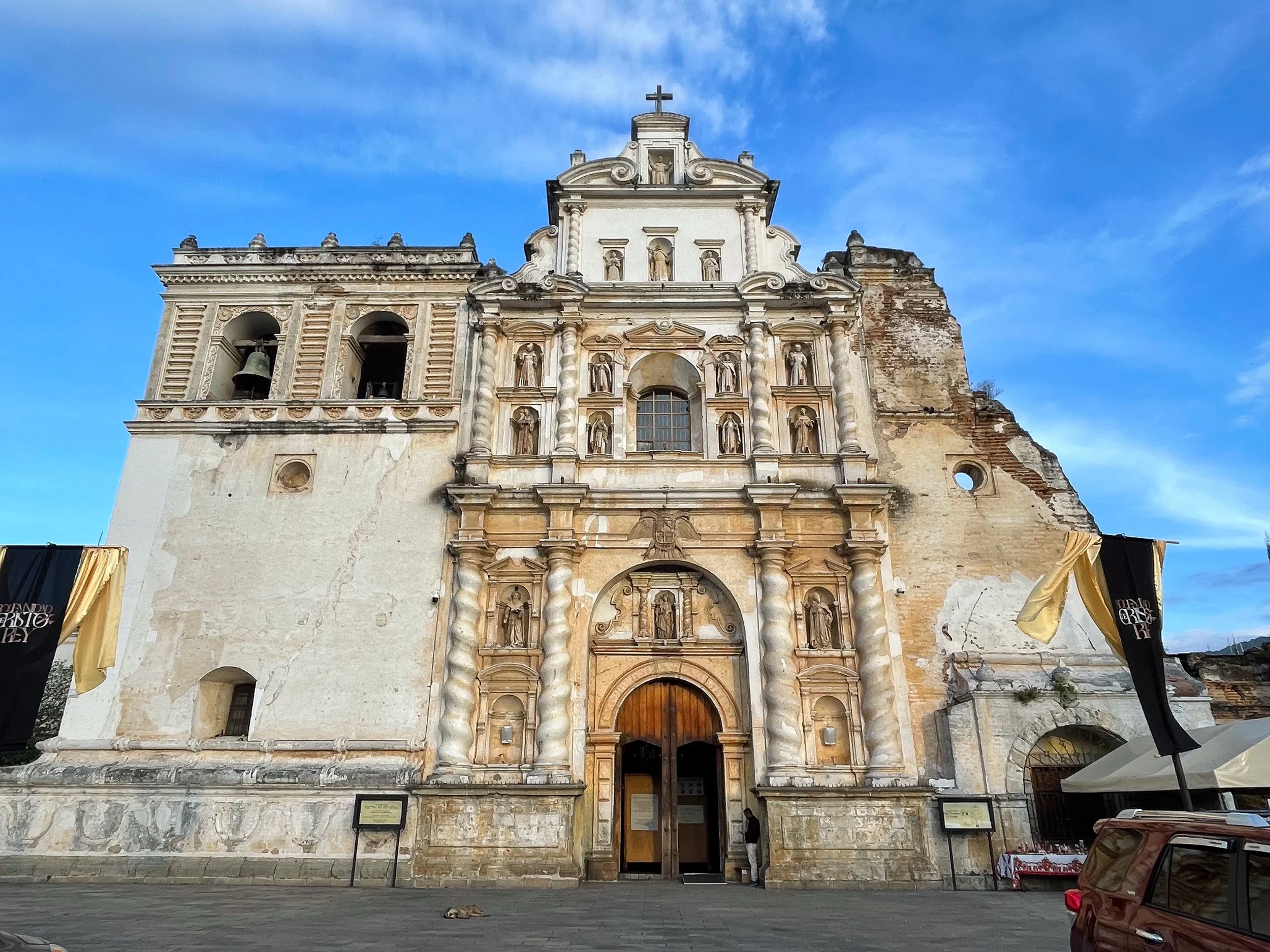
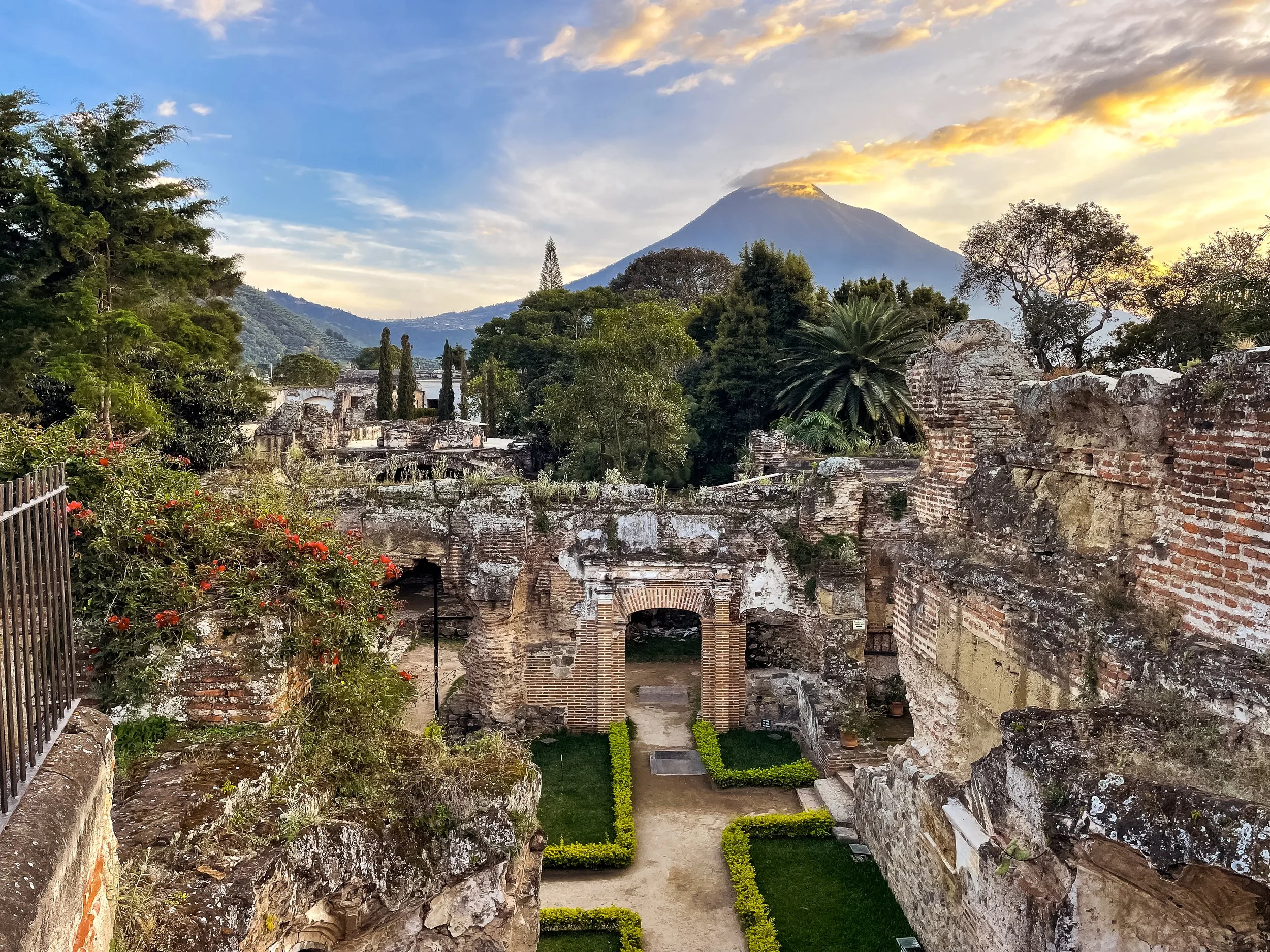
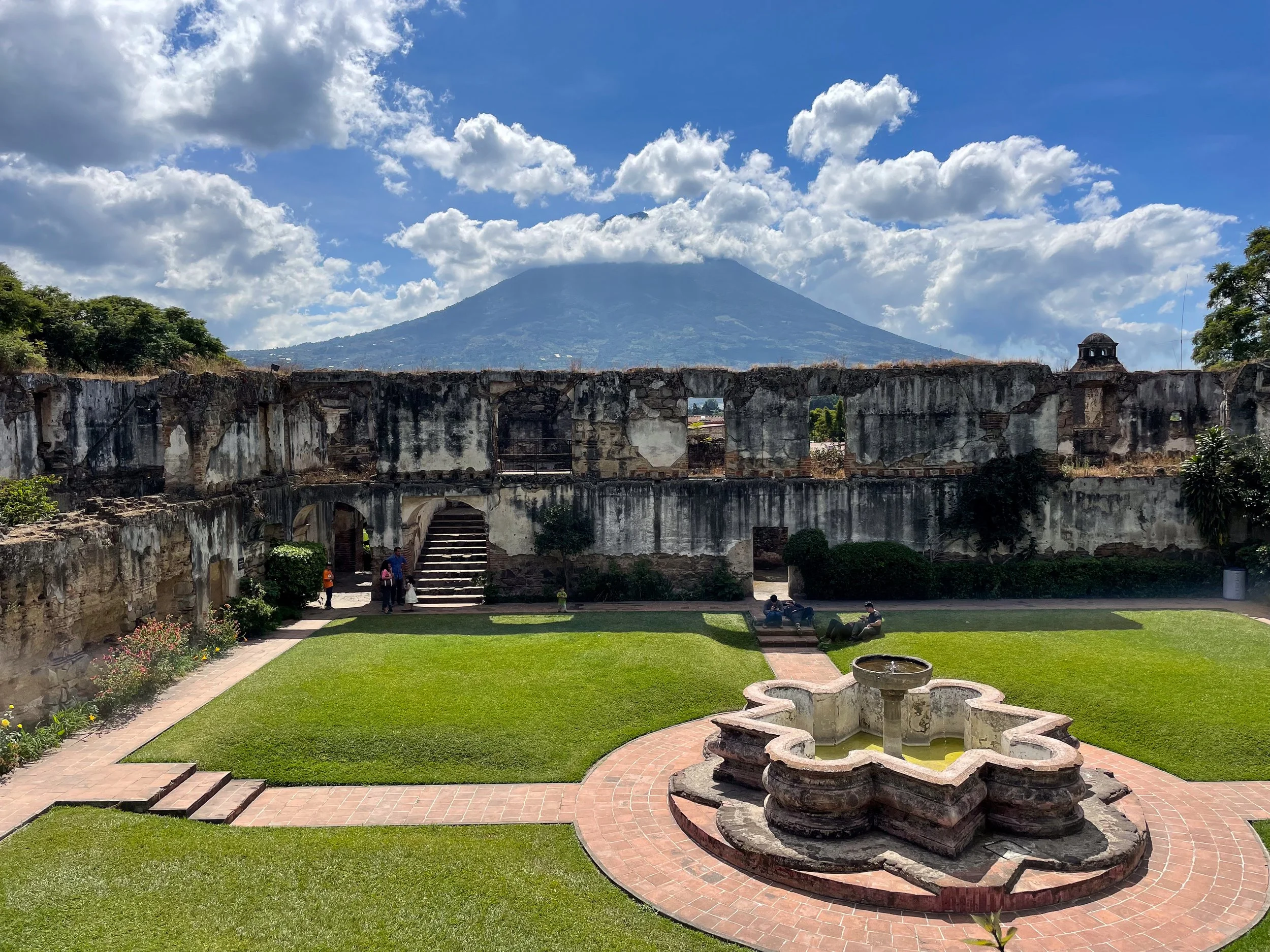
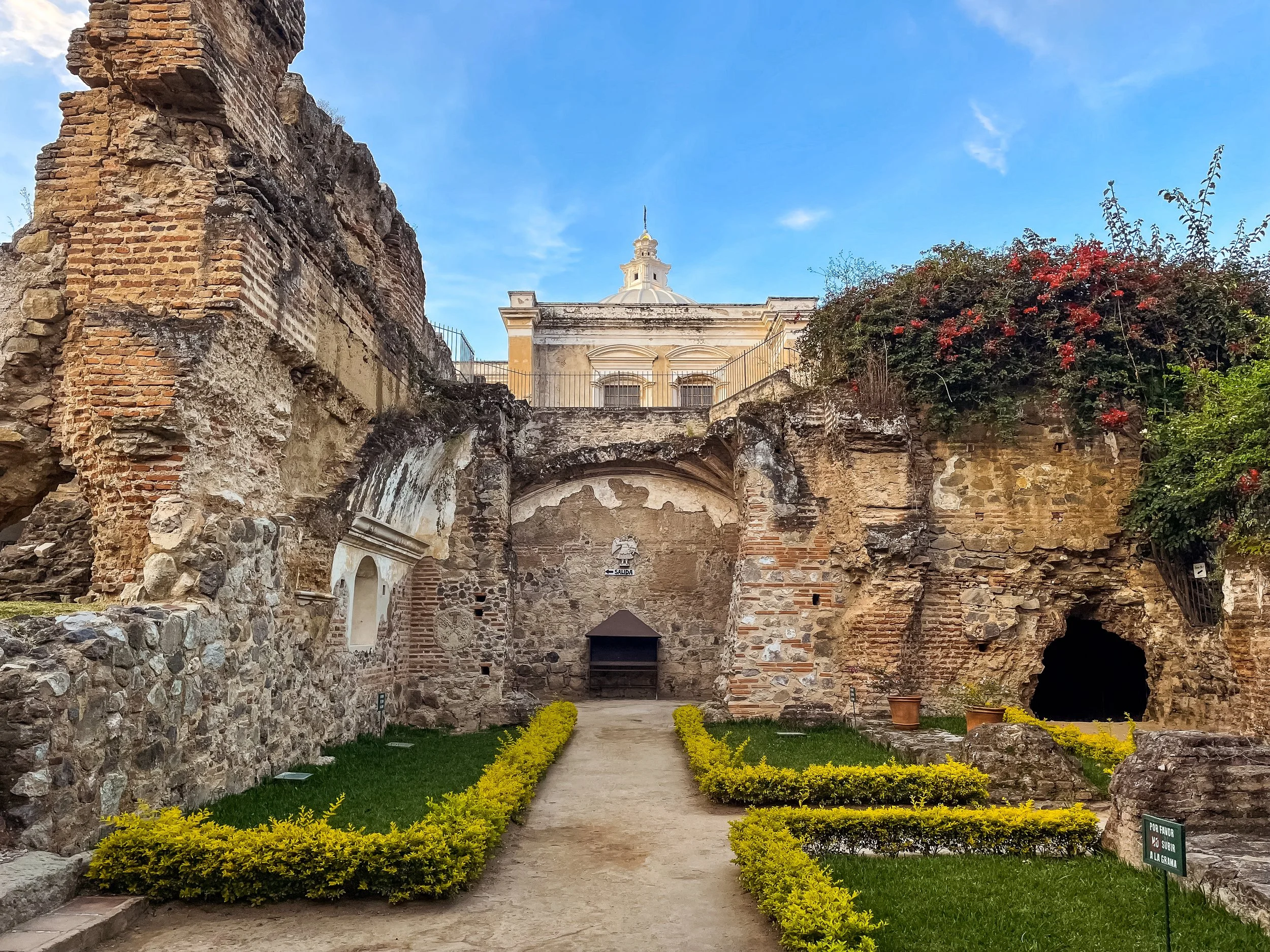
Iglesia de San Francisco. A restored church with a partially collapsed facade and grounds with the crumbling ruins of a former monastery used by the friars. Within the grounds are lush gardens home to nesting green parrots and walkways leading to a second floor with views of the volcanoes.
Iglesia San Jerónimo. The ruins of a former church. All that remains is a grassy courtyard with a restored fountain and some accessible cloisters.
Visit the Museums
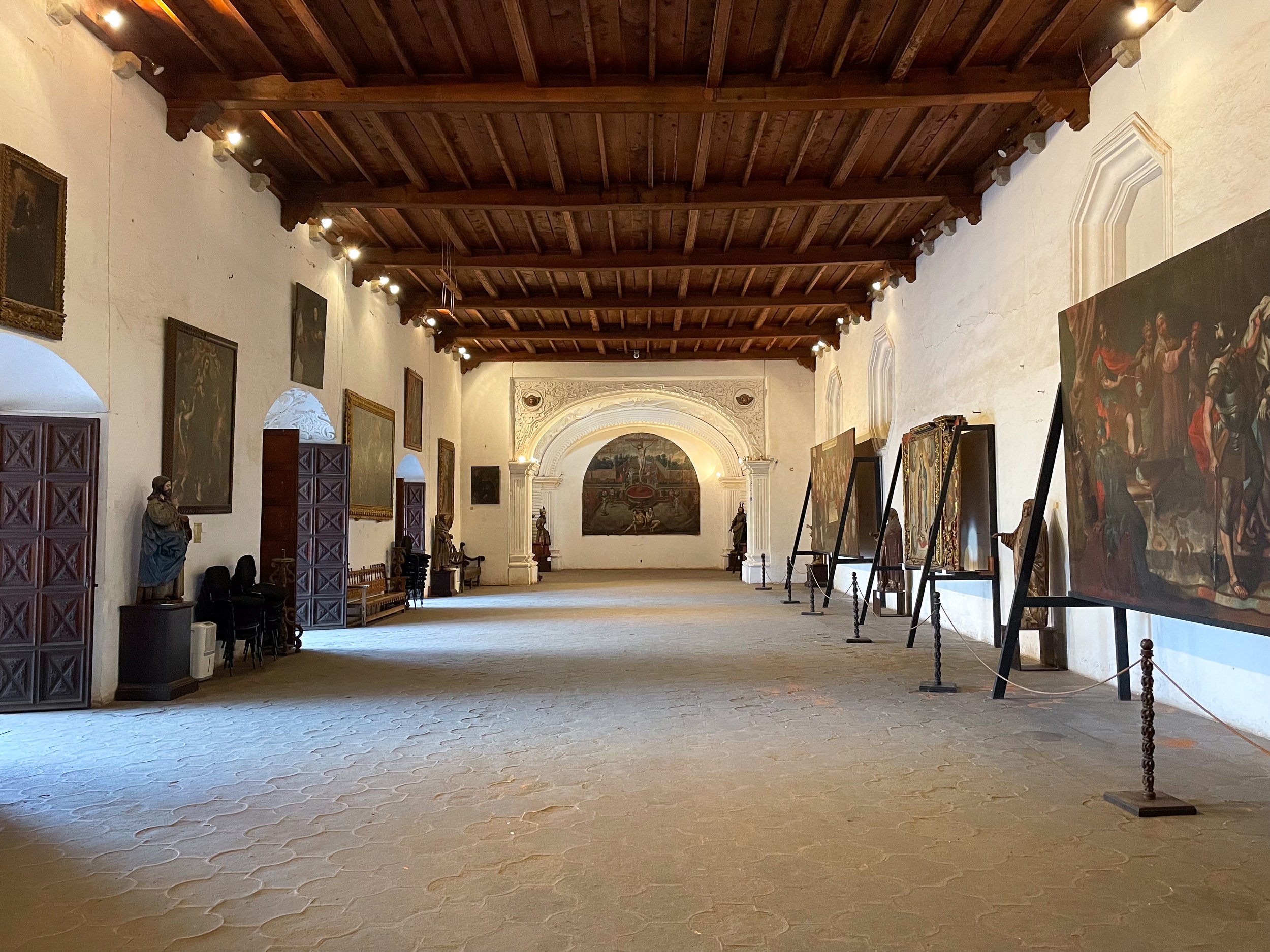
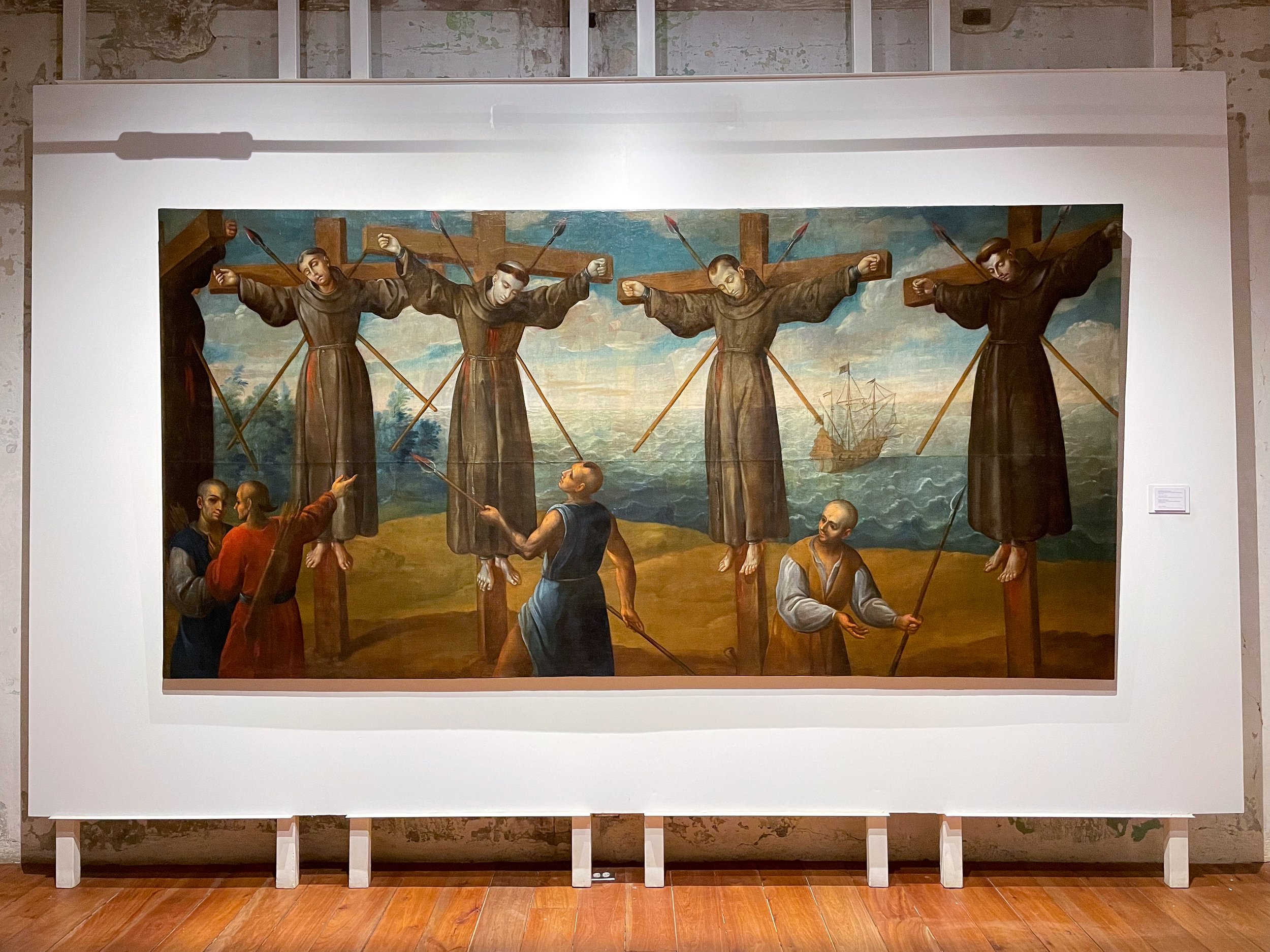
Museo de Arte Colonial. A colonial art museum with galleries of religious paintings and artifacts. The museum is one of the few buildings not destroyed during the 1773 earthquake and featured on the 100 Quetzal bill.
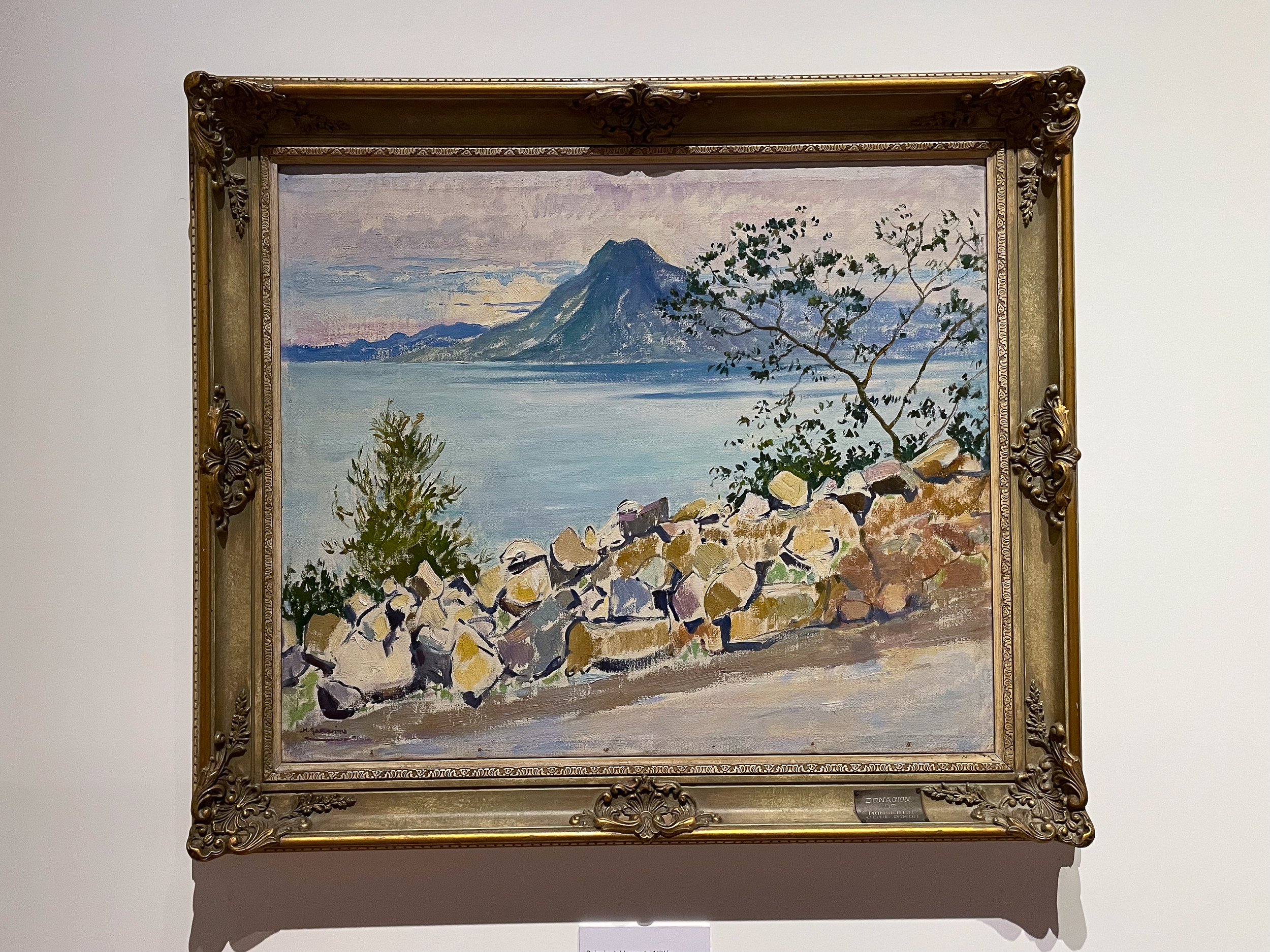
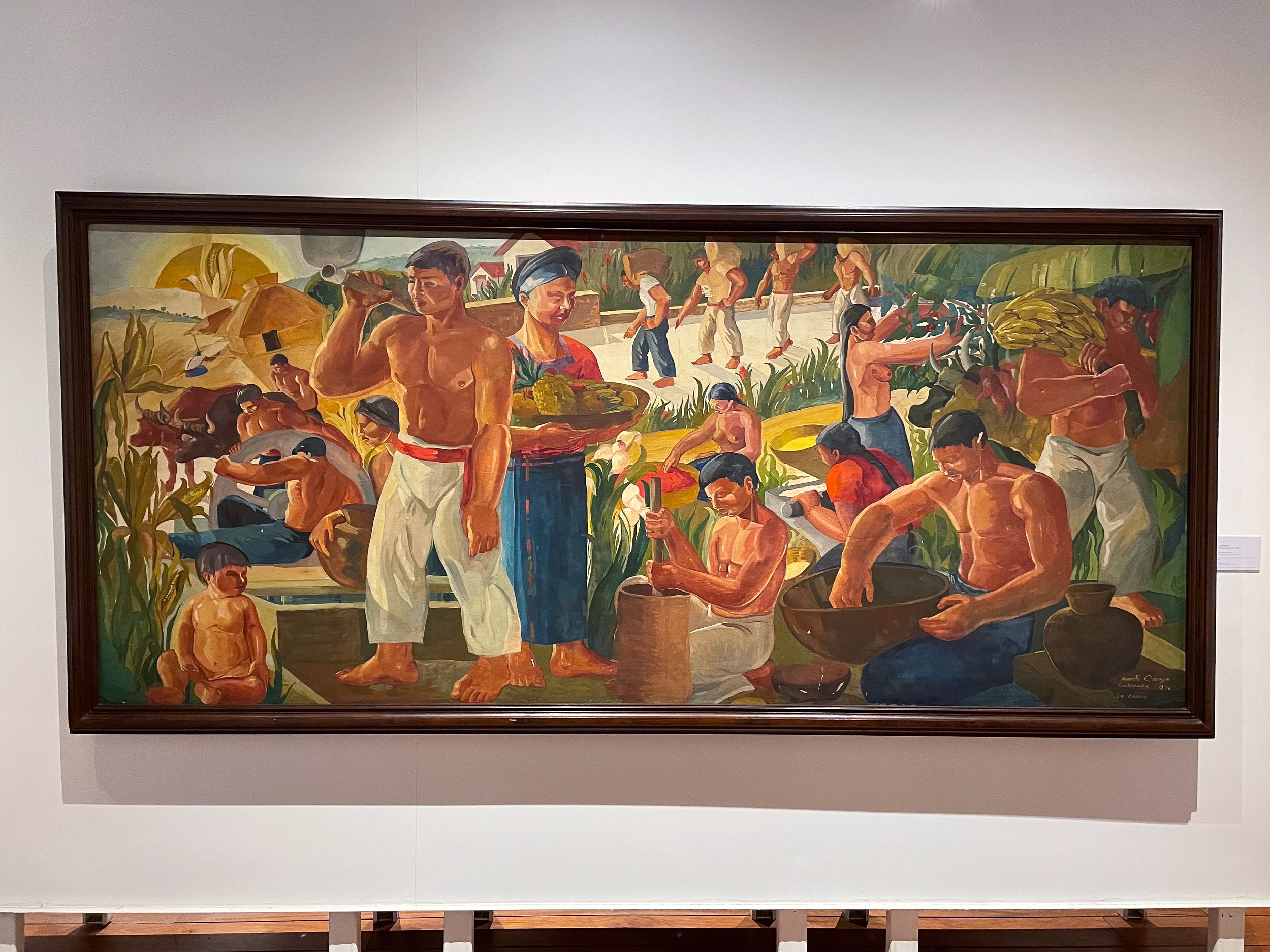
Museo Nacional de Arte de Guatemala (MUNAG). A Guatemalan art museum adjacent to the Parque Central. It includes paintings of the country’s landscapes, Mayan people, Guatemala’s declaration of independence, iron cannons, religious artwork and pre-Colombian artifacts.
Shop the Artisan & Local Markets
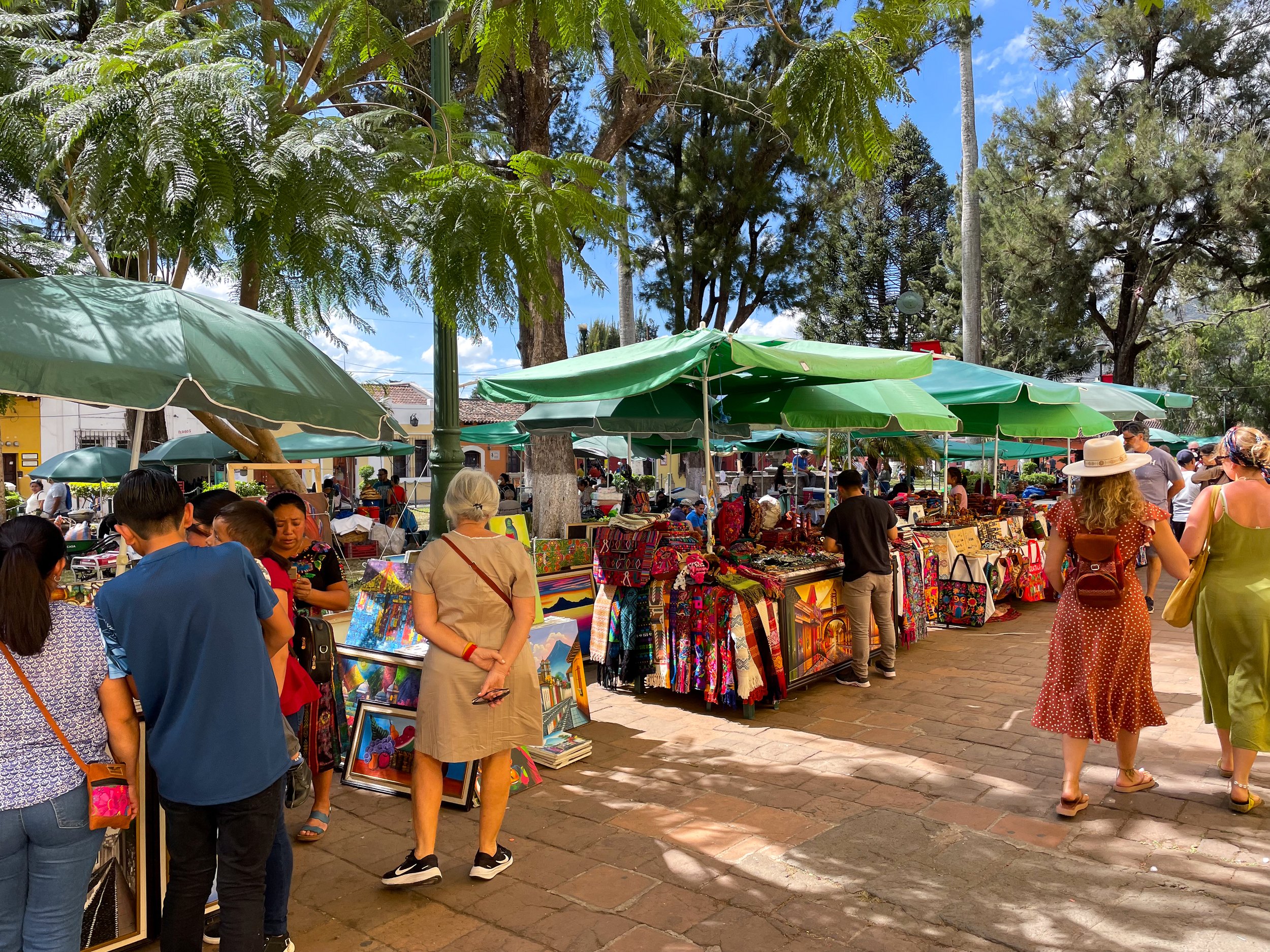
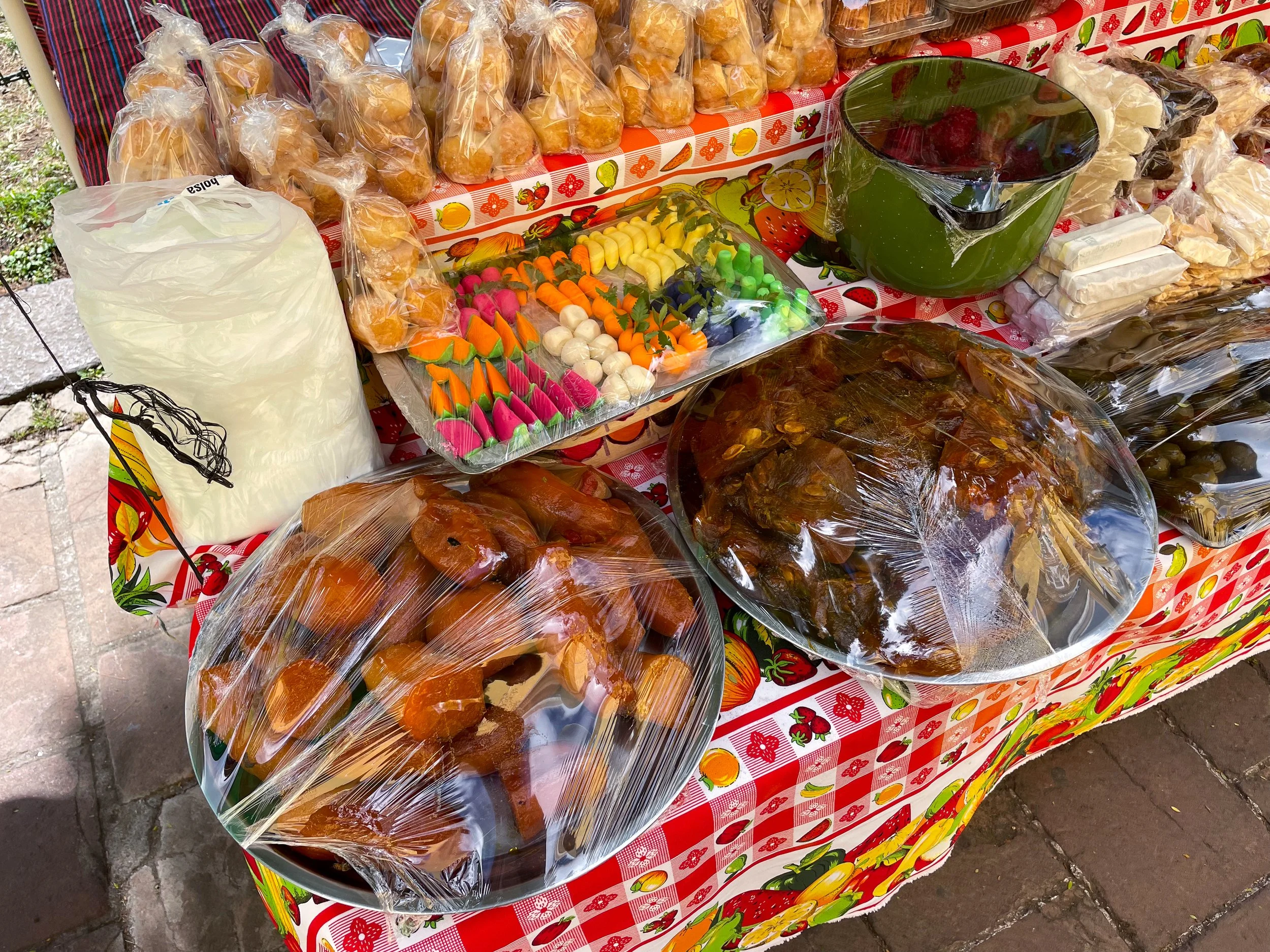
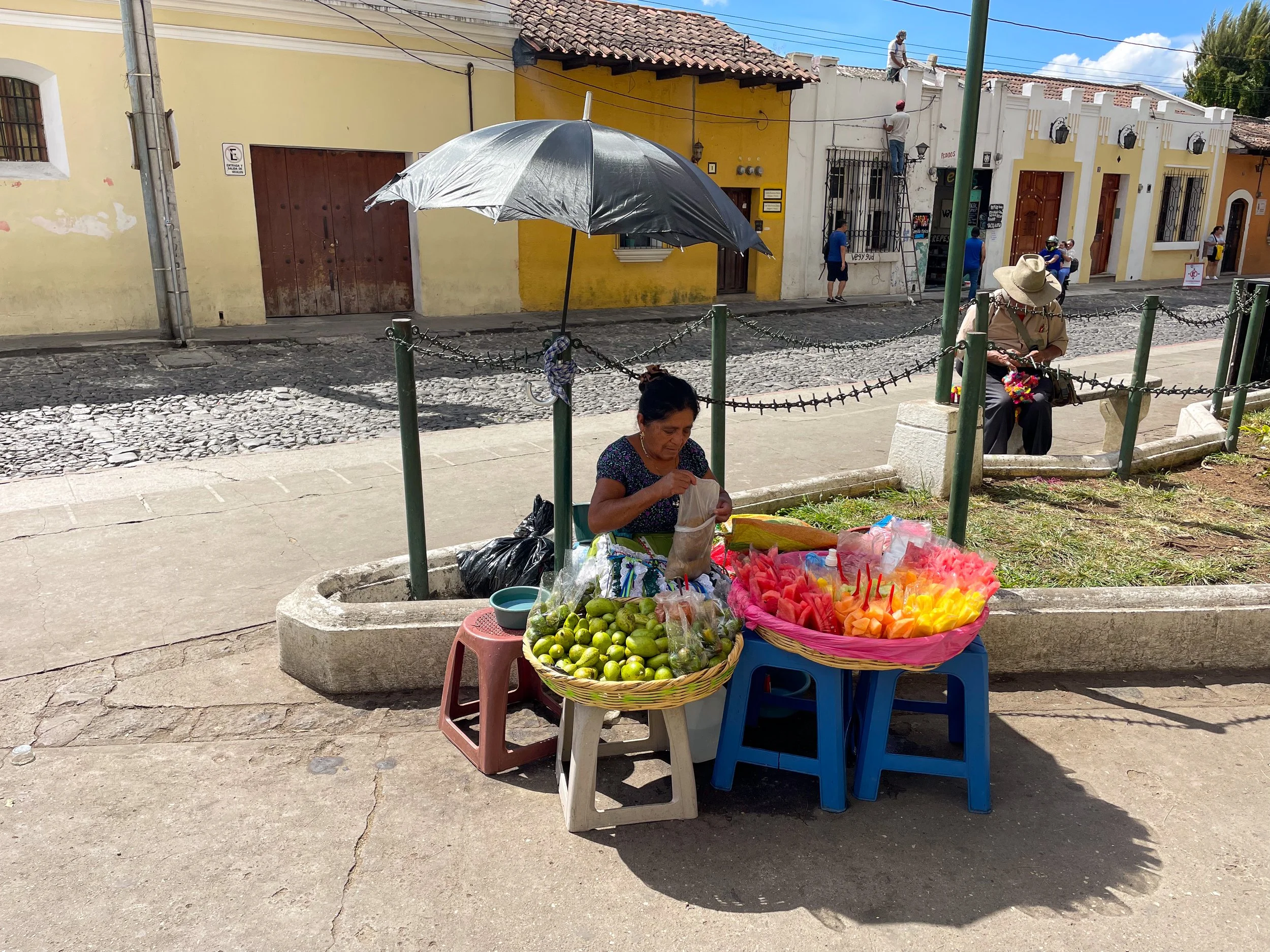
Parque la Merced. Located outside of La Iglesia de Merced, this park is brimming with food and craft vendors. It’s one of the best places in the city to find every kind of Guatemalan street food or sweet imaginable. A fountain with fish reliefs relocated from Iglesia de San Francisco is located here.
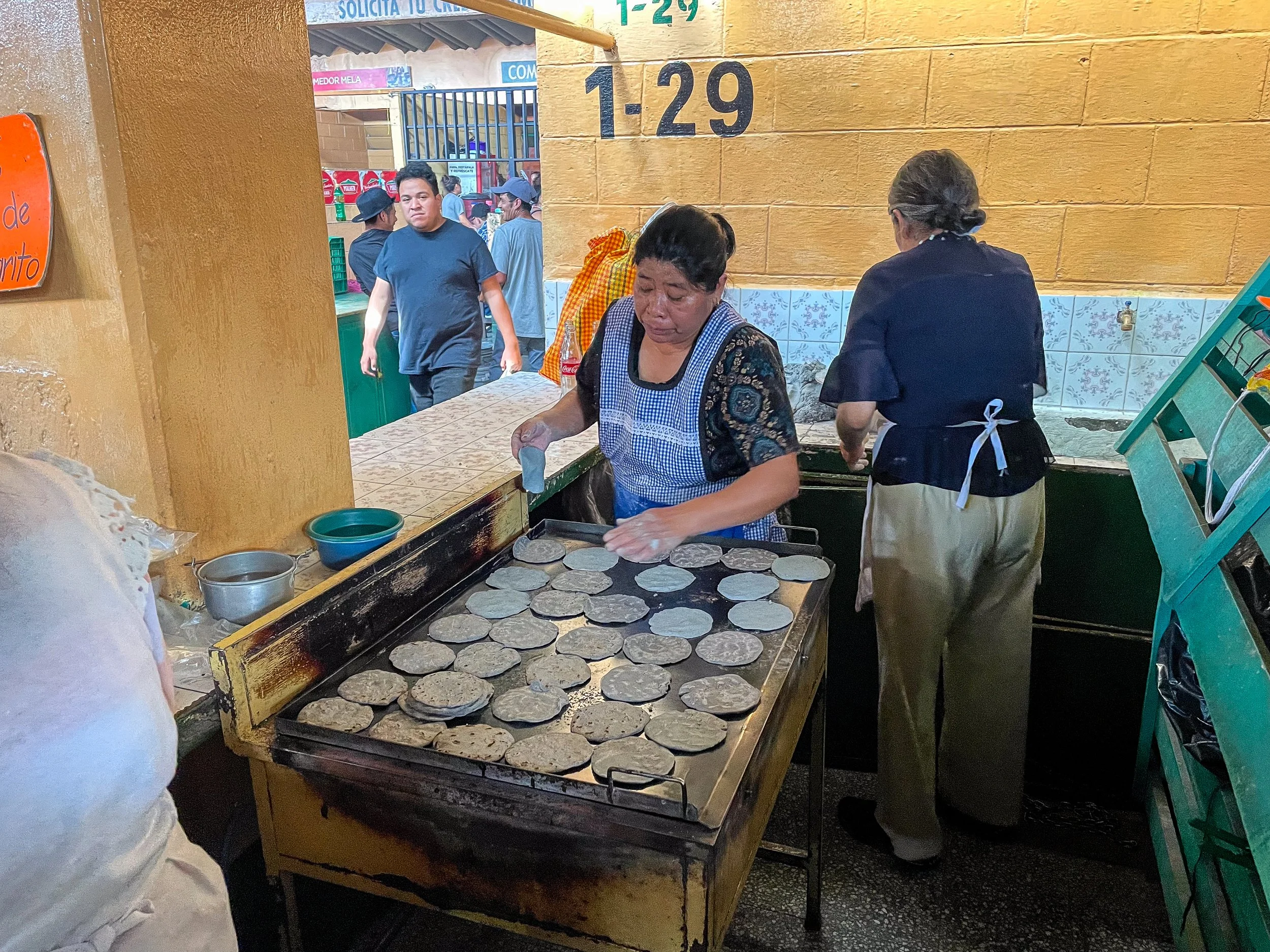
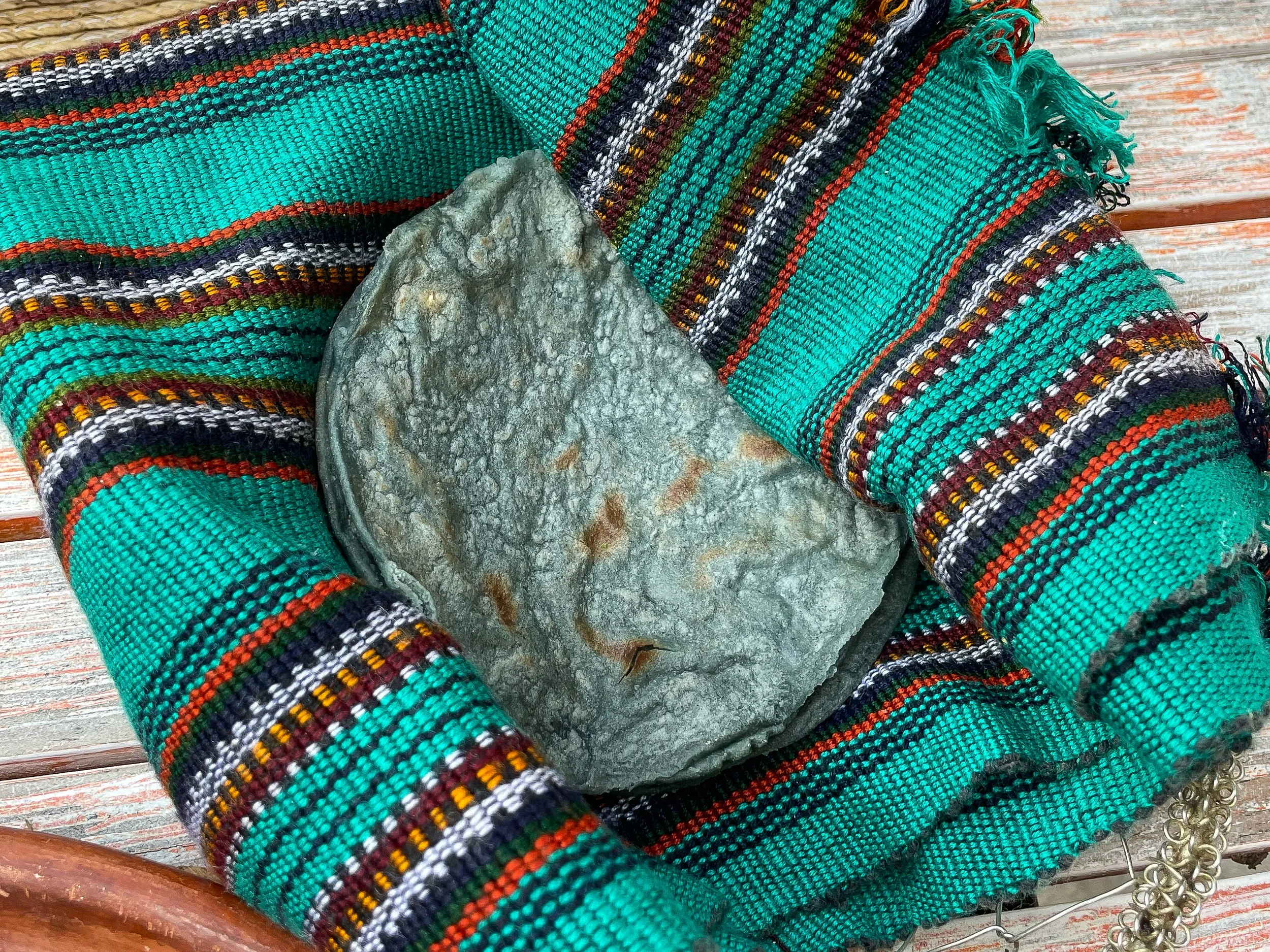
Mercado Central. A large market with a maze of aisles and booths under a patchwork tin roof. Locals come here for everyday necessities including produce, meats, flowers, shoes, clothes, electronics, appliances, toys, etc. There are restaurant stalls in a food court style pavilion. We brought home fresh purple corn tortillas from here.
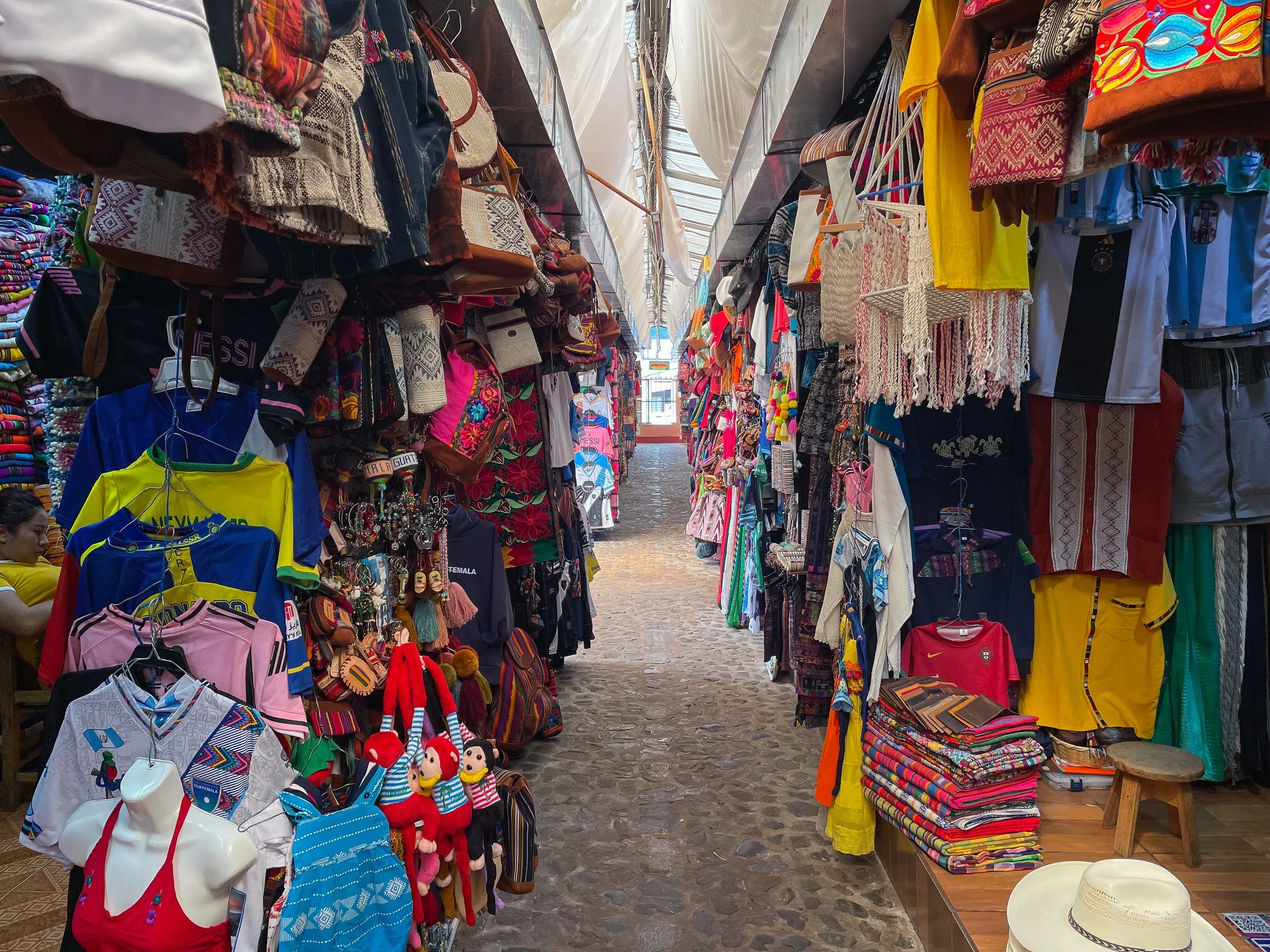
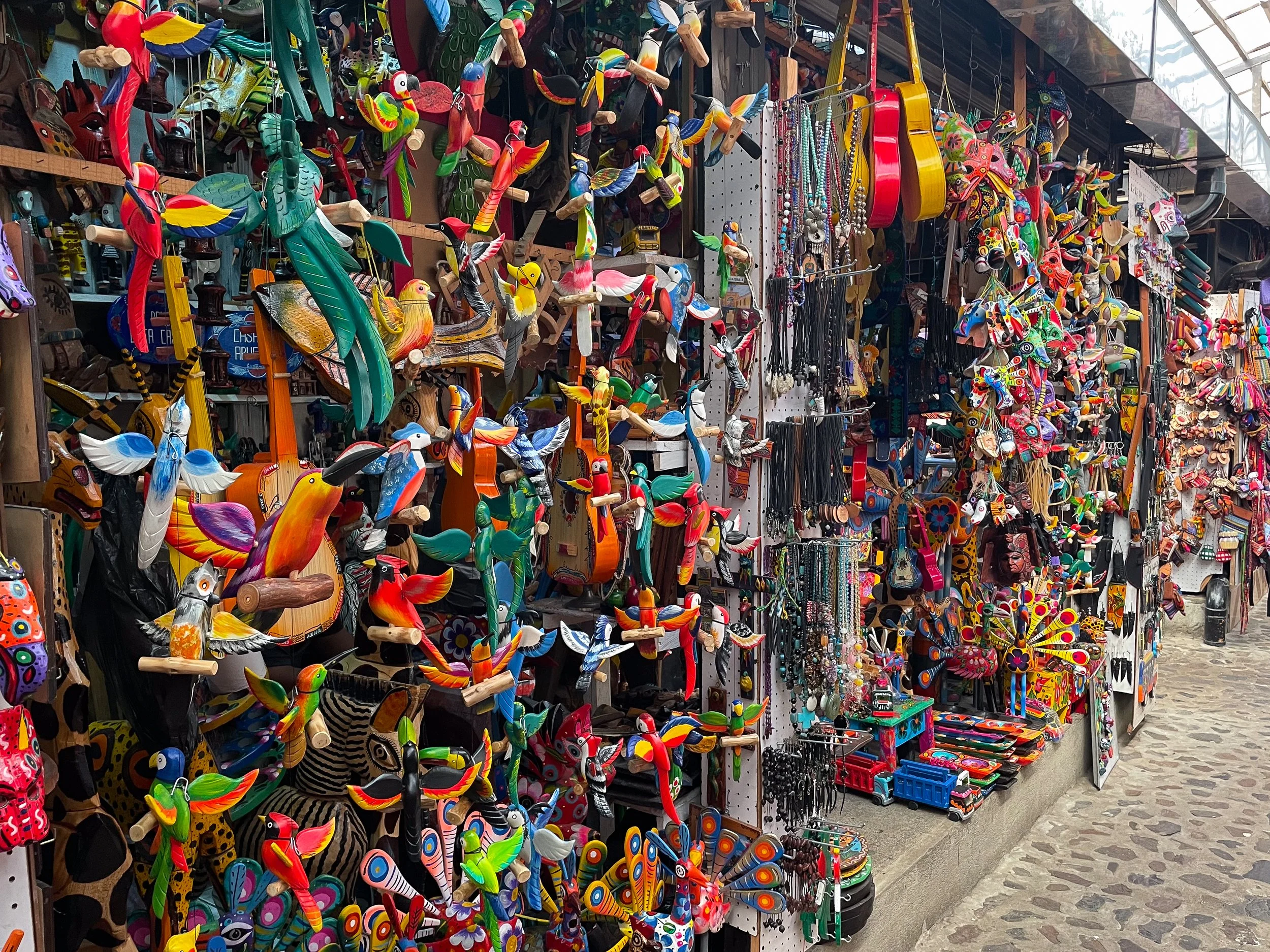
Mercado de Artesanias. A beautiful handicrafts market with vendors selling colorful textiles, painted ceramics, wooden objects, jade jewelry and souvenirs. Come here to haggle and buy something locally made. We bought mugs, a tortilla blanket and an ornament.
Mercado de Artesanias El Carmen. A handicrafts market with aisles of vendors selling locally made items and souvenirs. It’s located next to the ruins of Iglesia El Carmen.
Volcanic Landscapes
Antigua is flanked by dormant and active volcanoes providing a breathtaking landscape that creates a postcard style backdrop to the city’s colonial era streets.
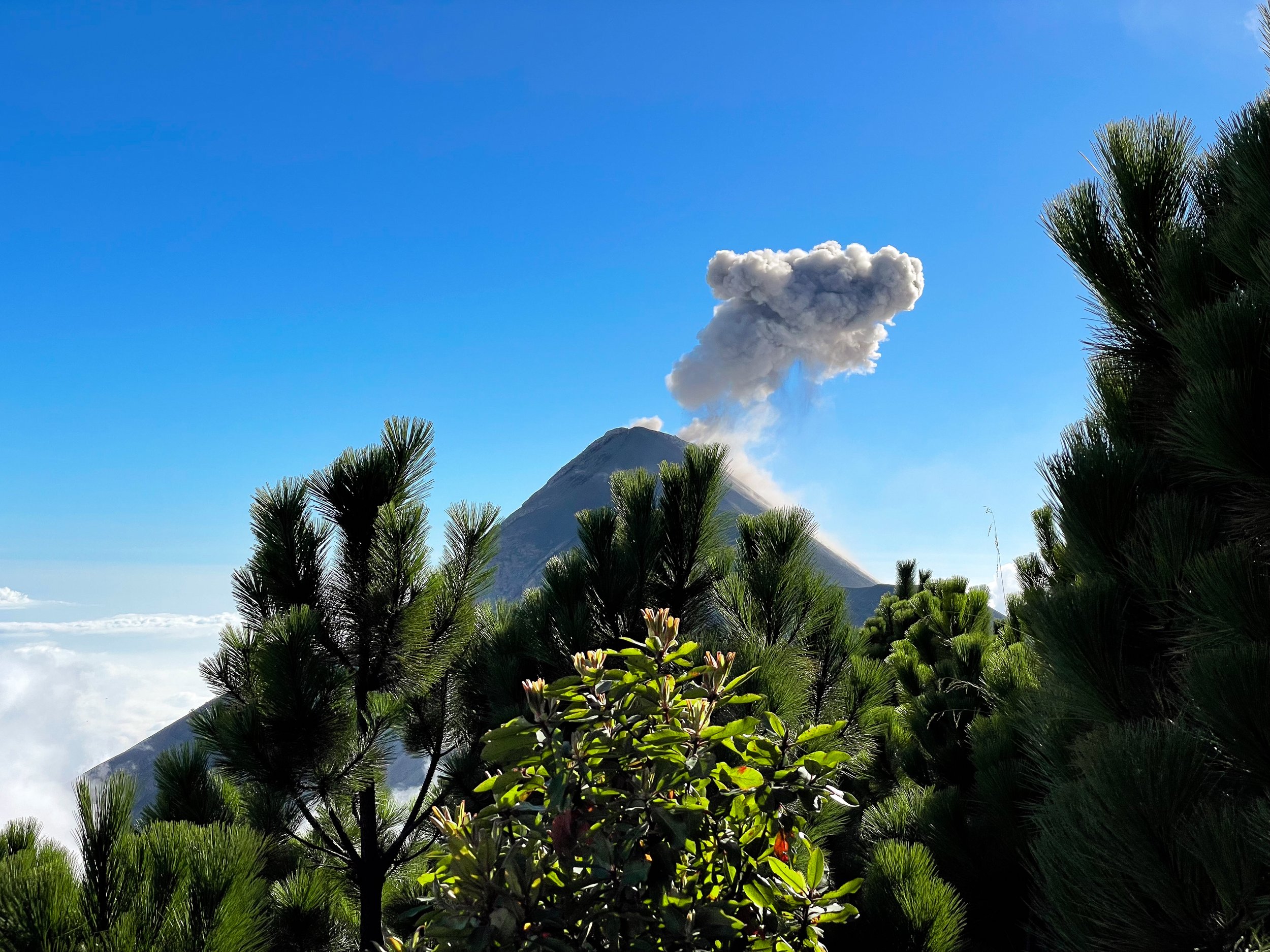
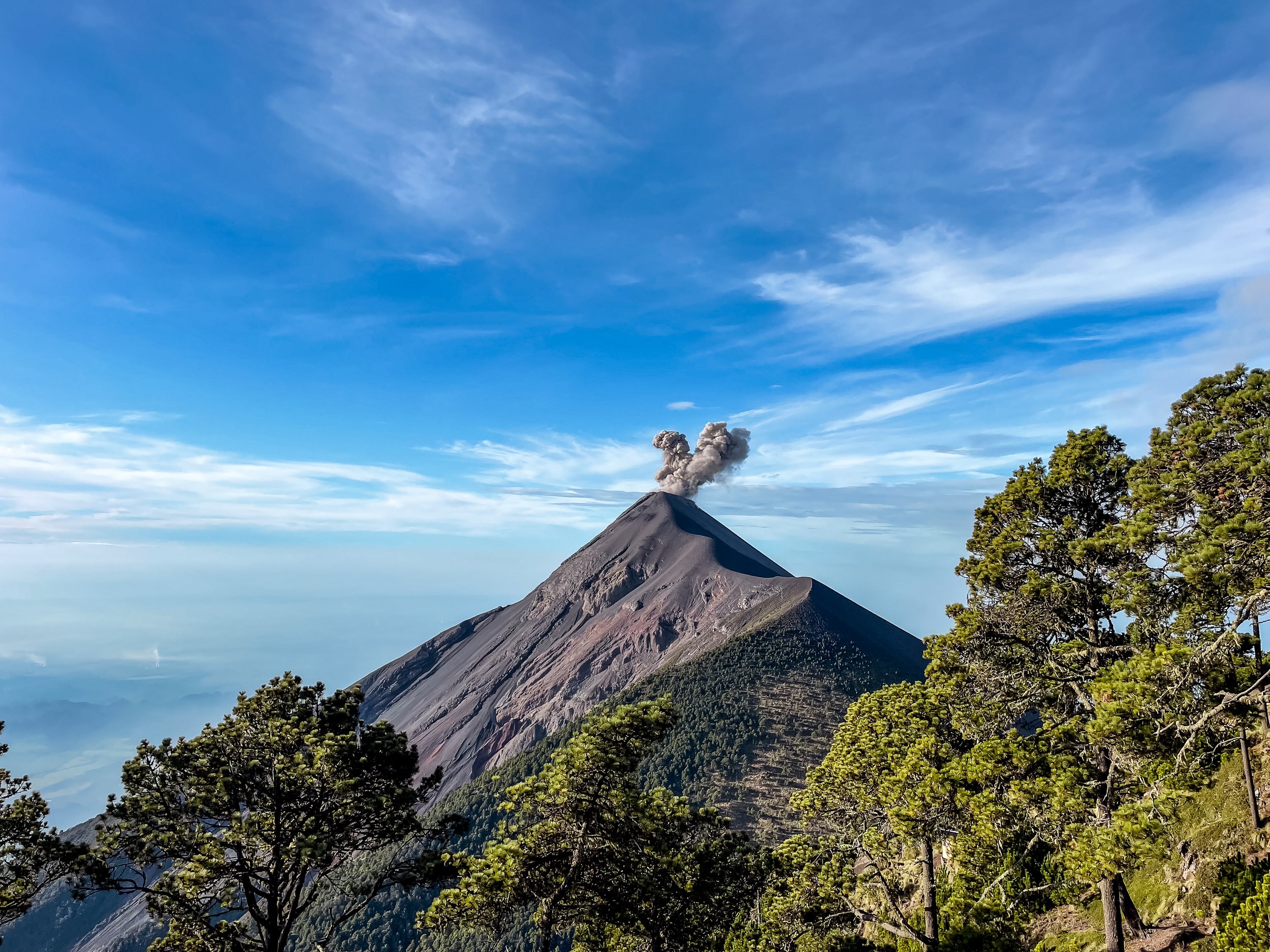
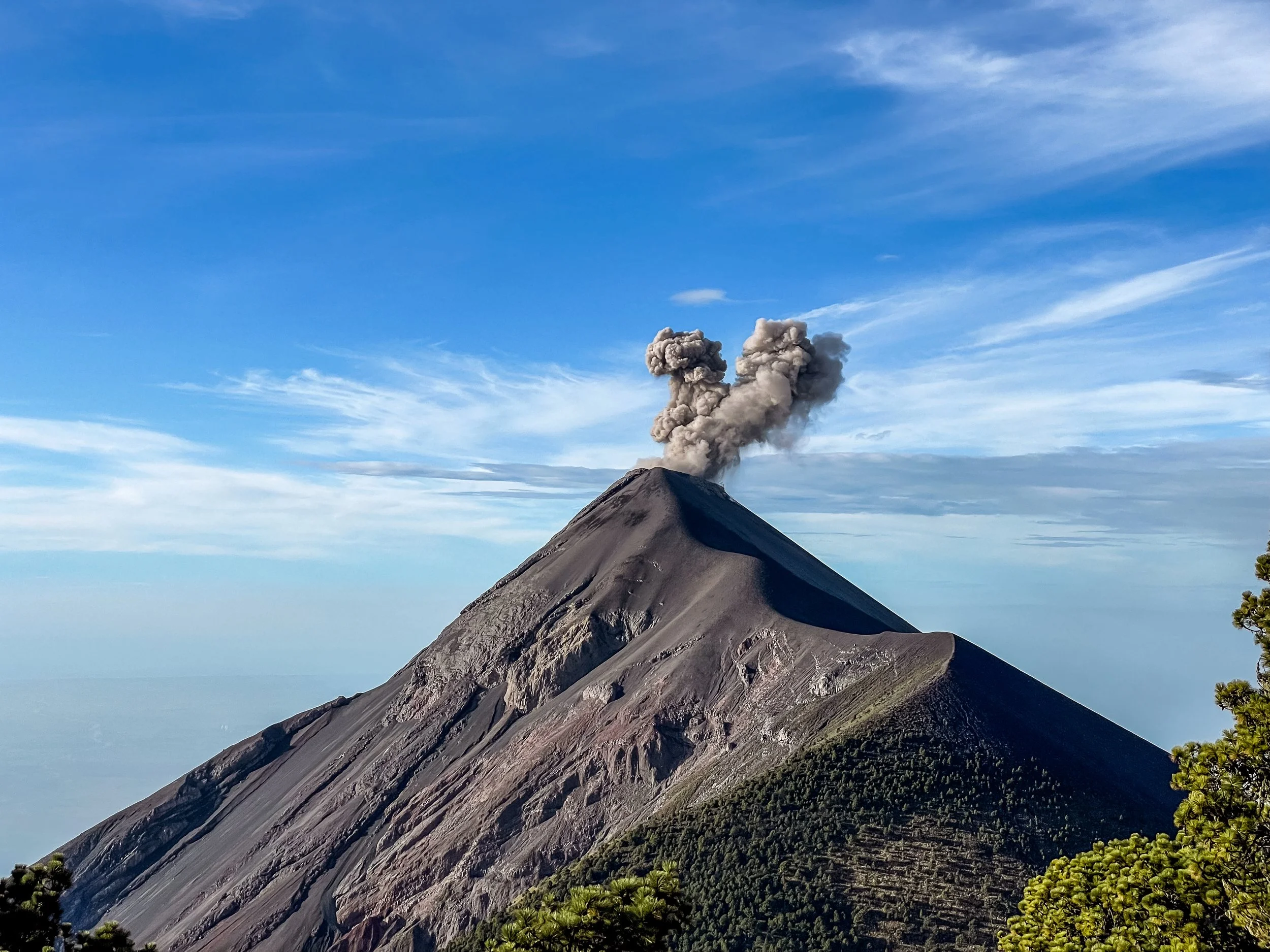
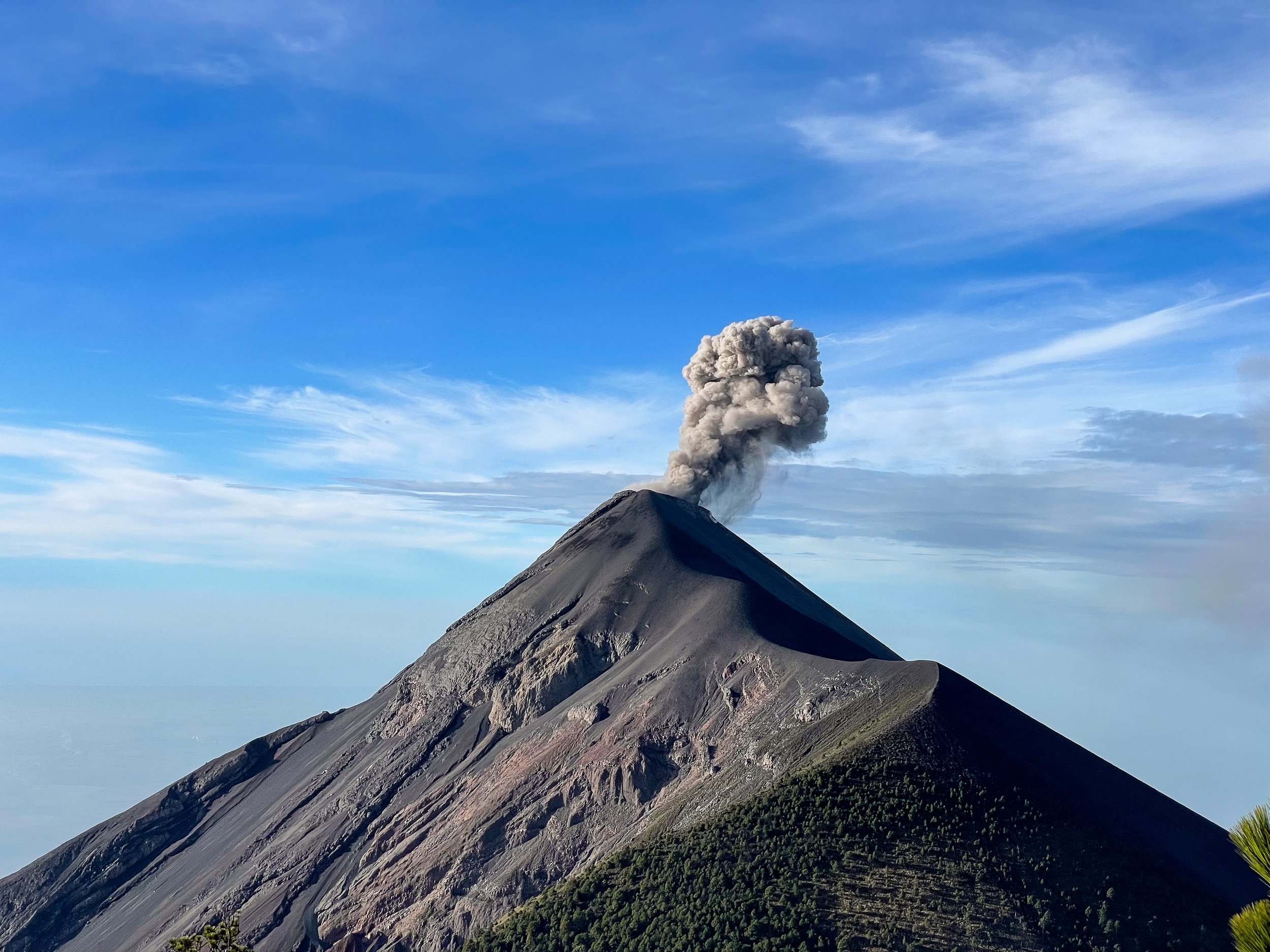
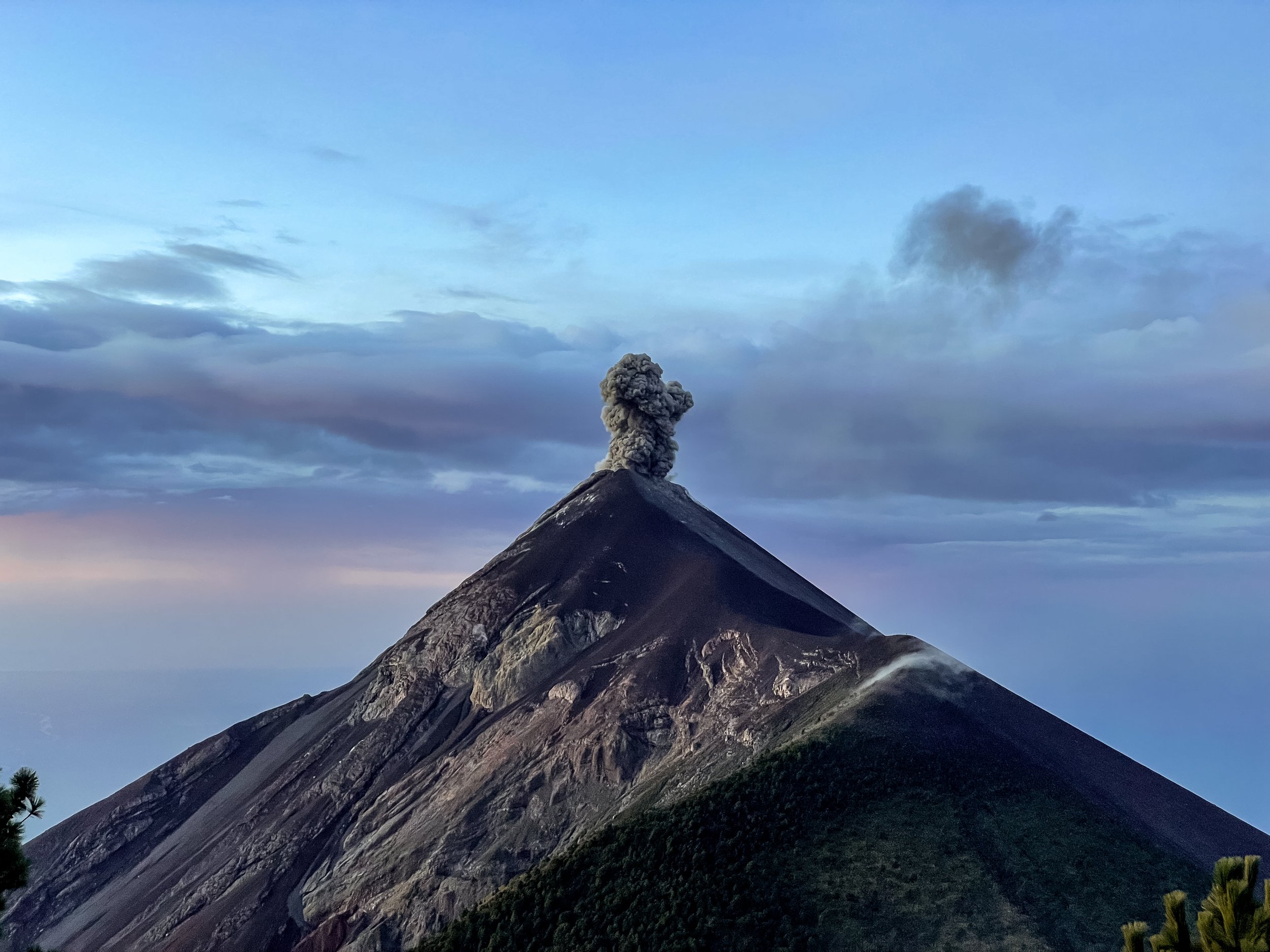
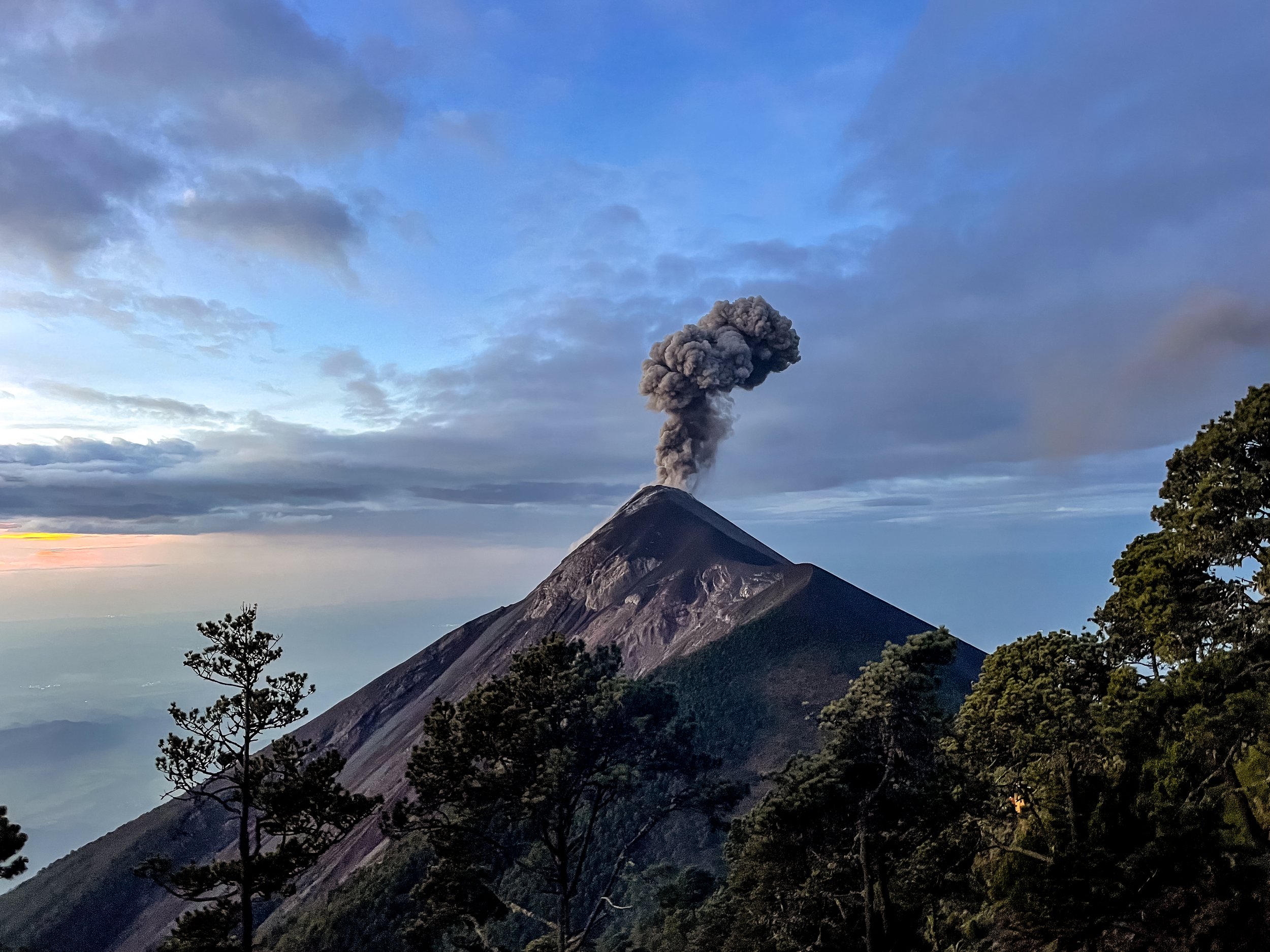
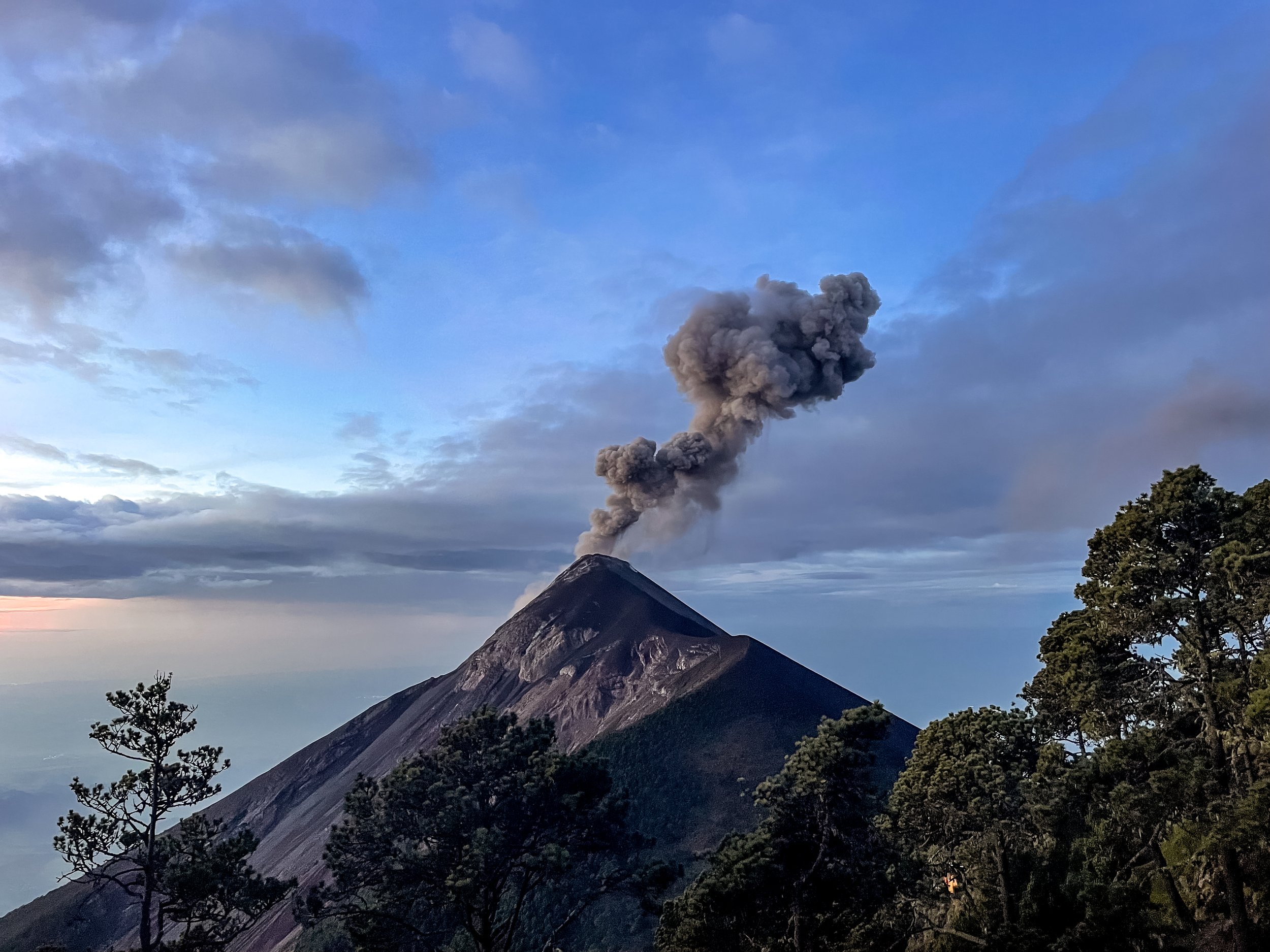
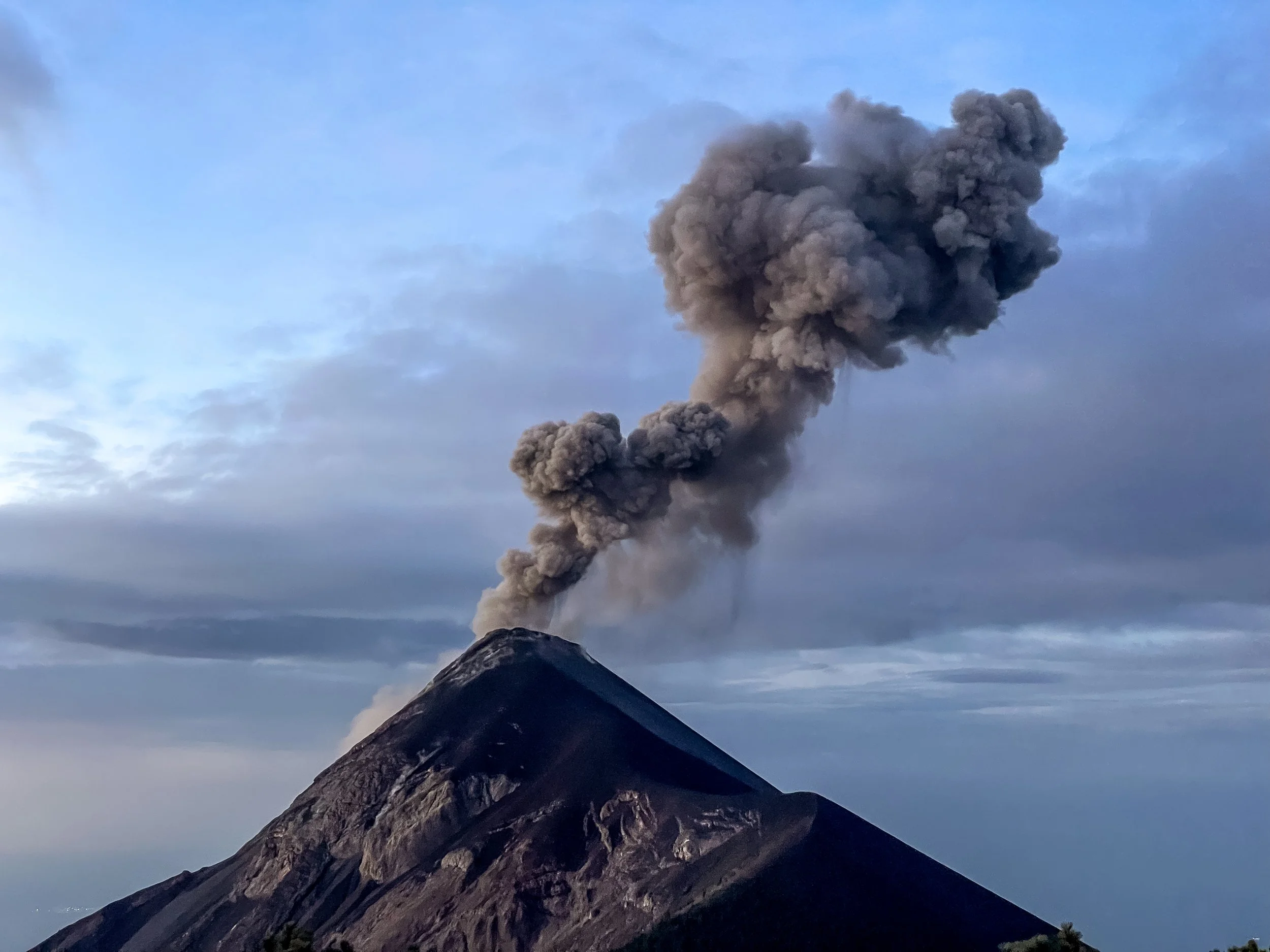
Volcán de Fuego. Known as “The Volcano of Fire,” Fuego has been continuously erupting since 2002 with bursts of lava and clouds of ash spewing from its summit every 15 to 30 minutes. Views of its eruptions can be regularly seen from Antigua both day and night.
Volcán Acatenango. The twin volcano to Fuego and tallest of the 3 surrounding Antigua. Many backpackers hike and camp overnight on its slopes to witness Fuego’s eruptions up close.
Volcán de Agua. A dormant cone shaped volcano to the south of Antigua. The best views of its summit are during the early morning before clouds settle in.
Overnight on Acatenango
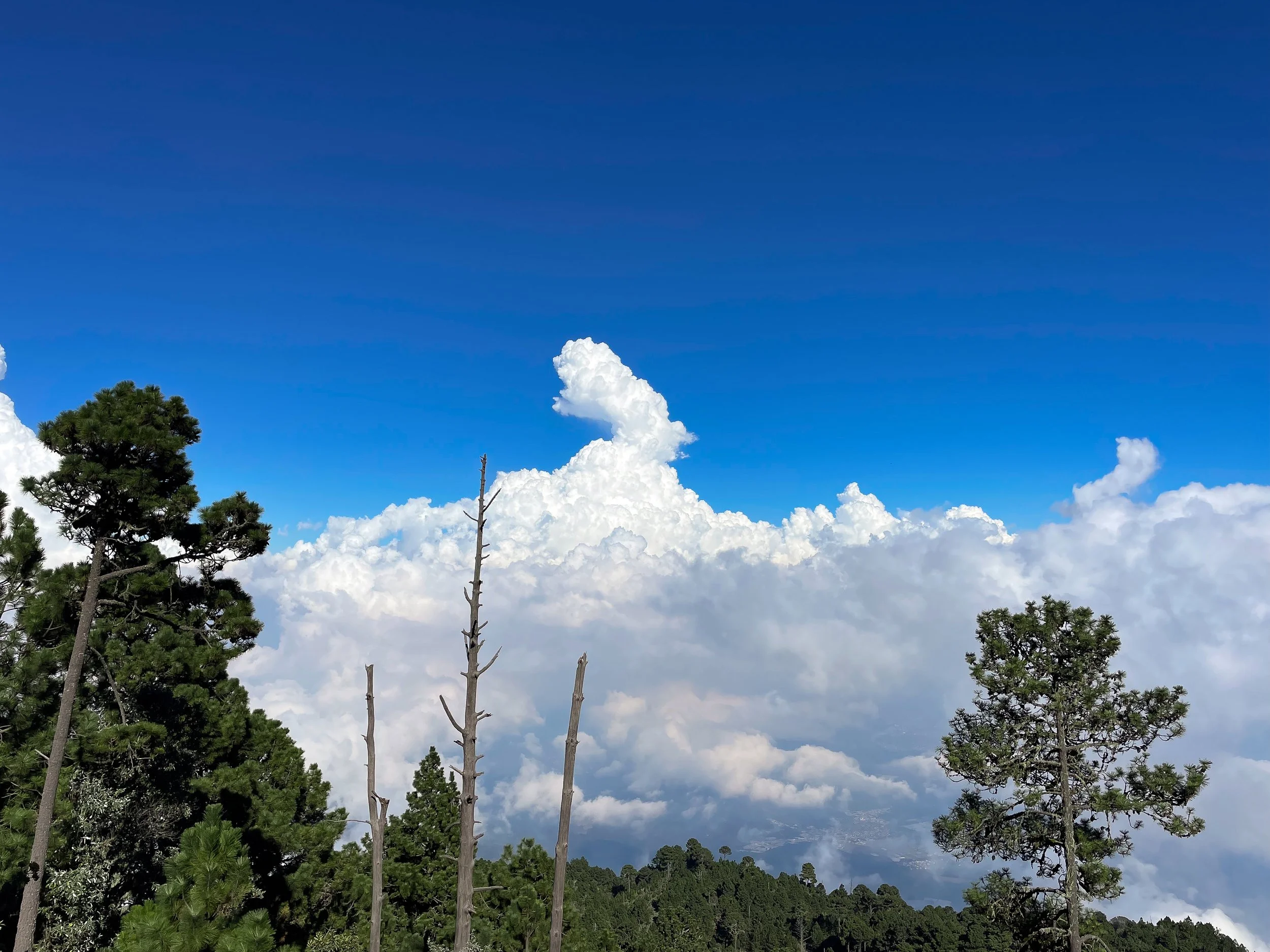
Volcán de Acatenango should be on every backpacker’s wish list! We joined a guided group to hike its slopes, camp overnight, witness unclose eruptions of Volcán de Fuego and watch a beautiful sunrise. It was one of the most physically exhausting things we’ve done but equally rewarding.
Hike to Basecamp
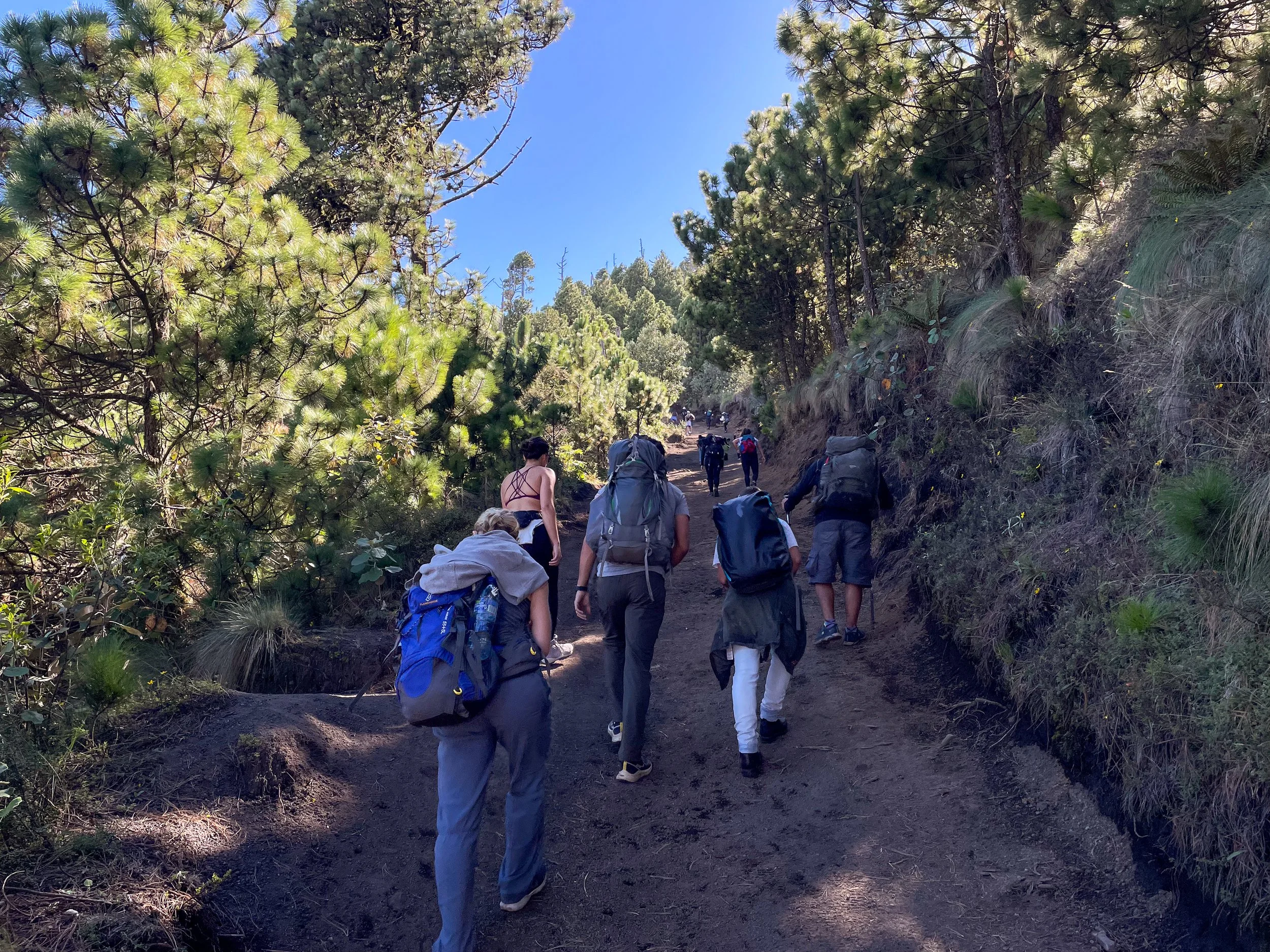
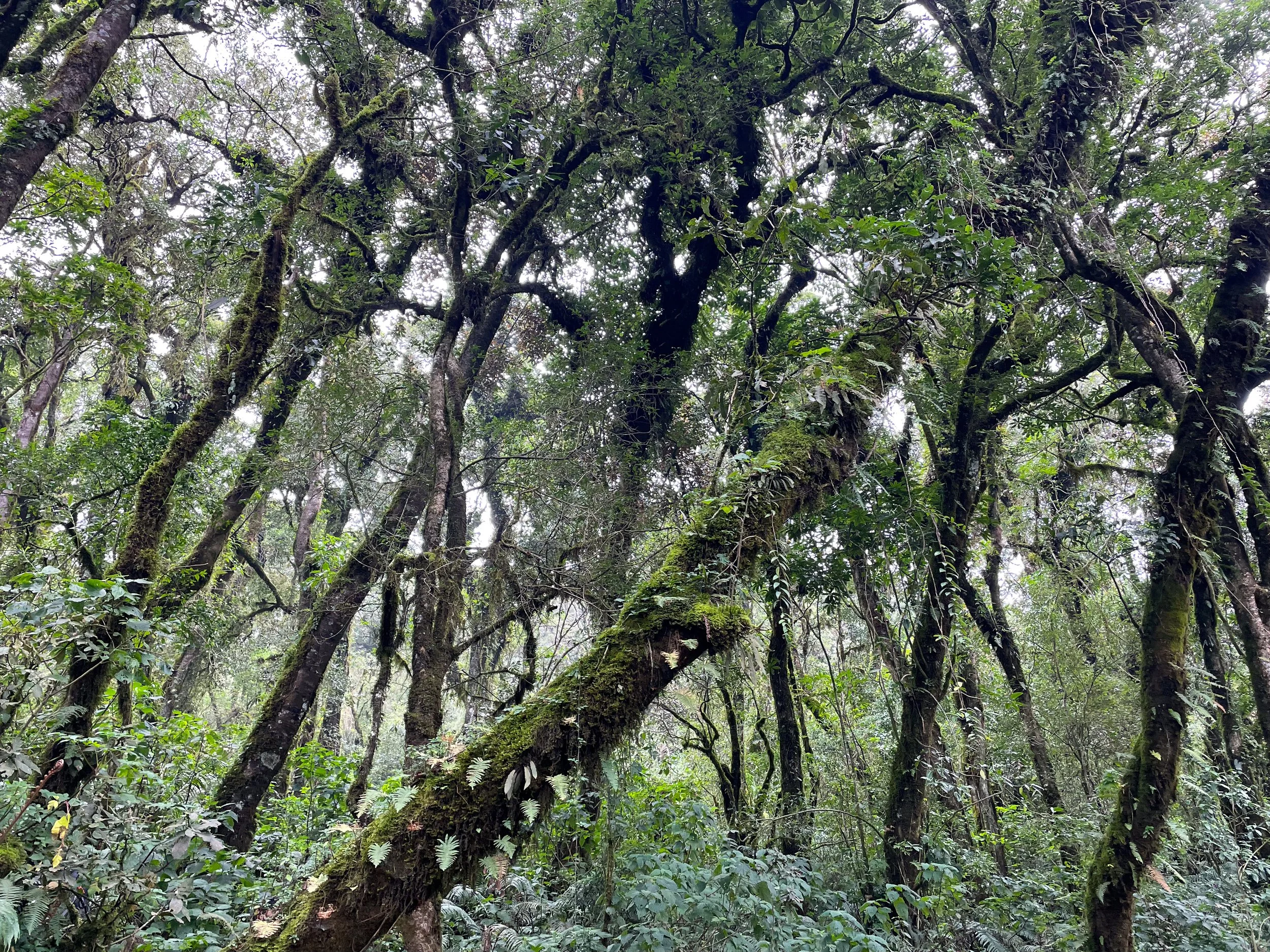
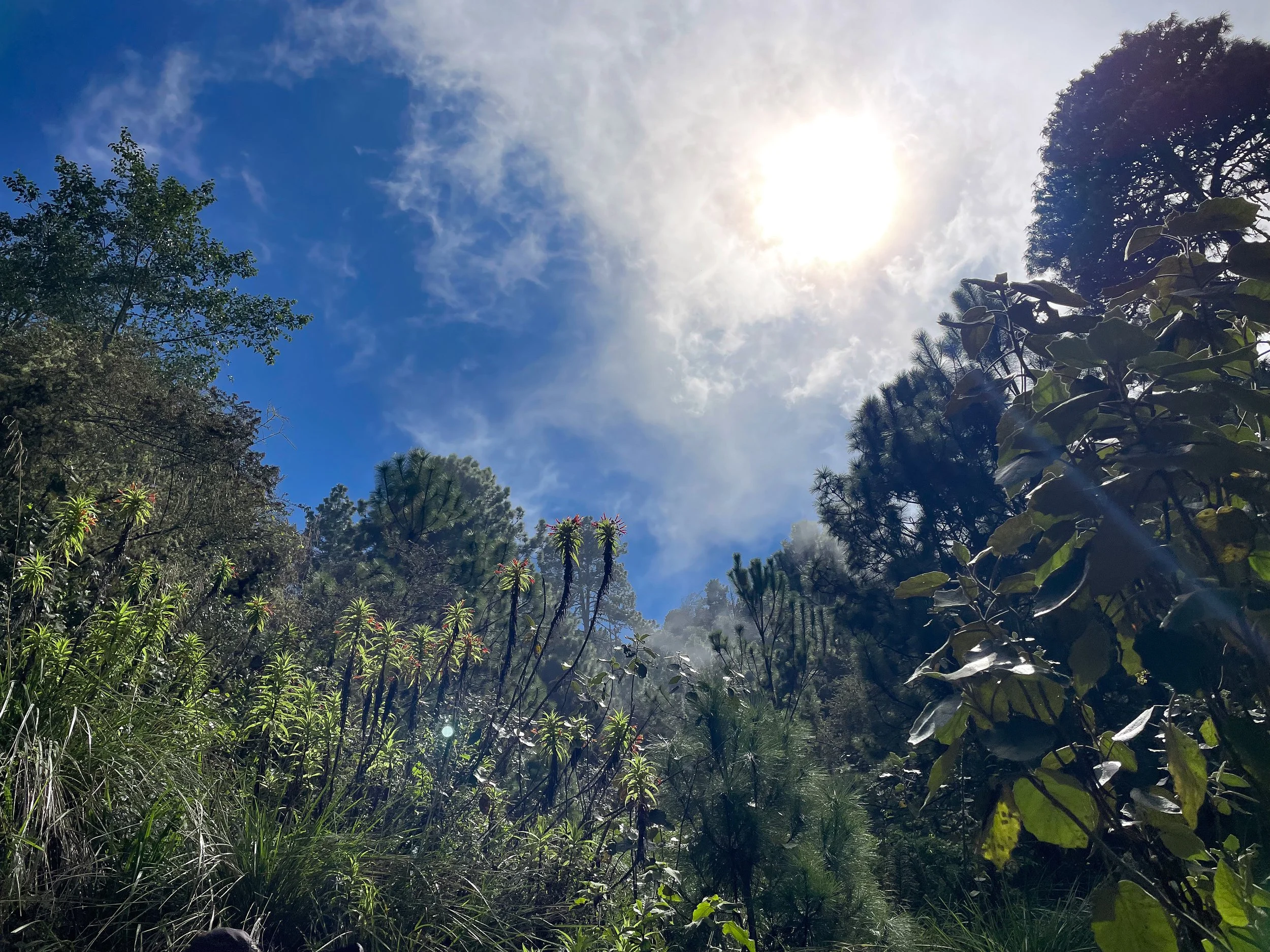
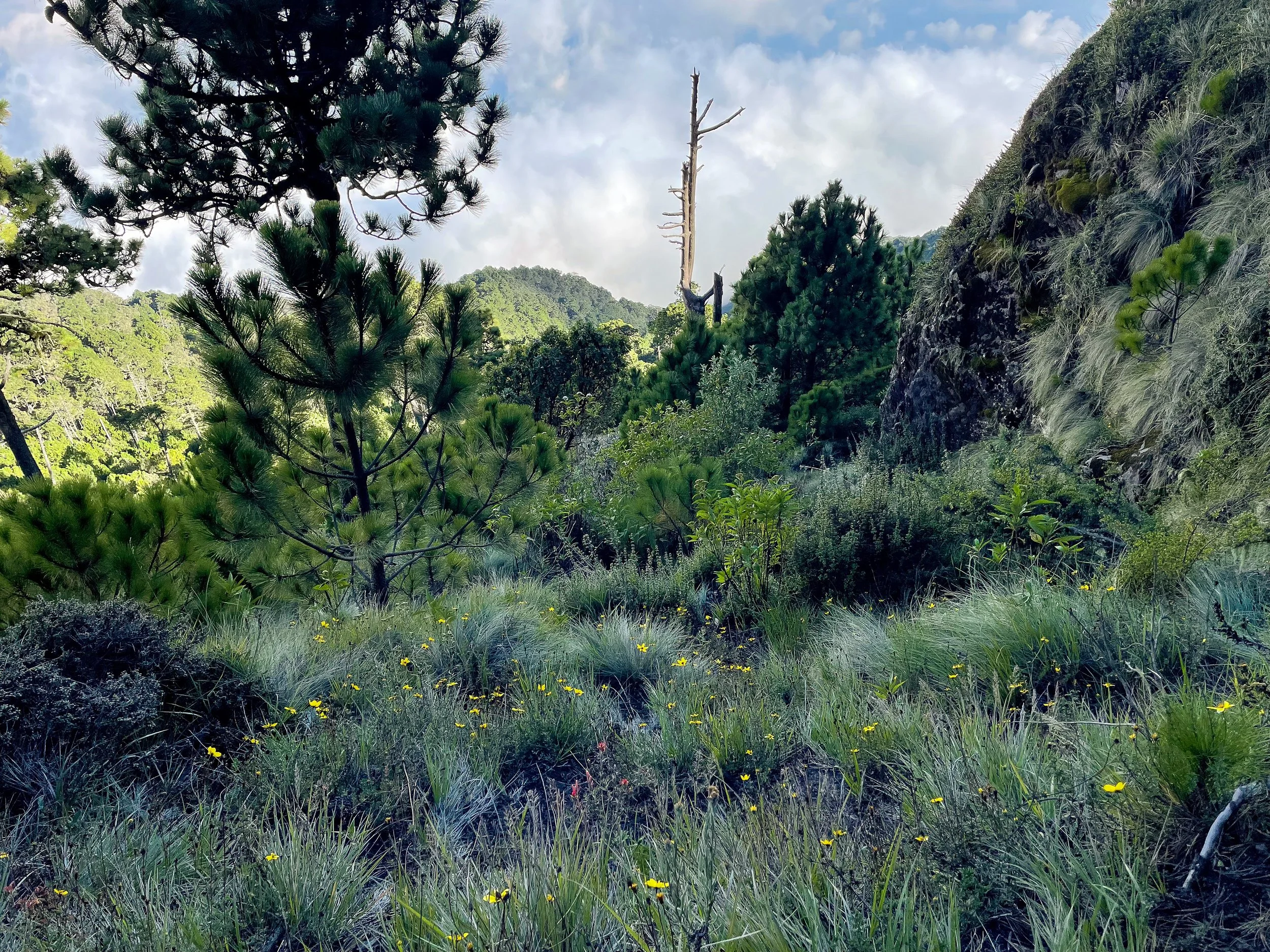
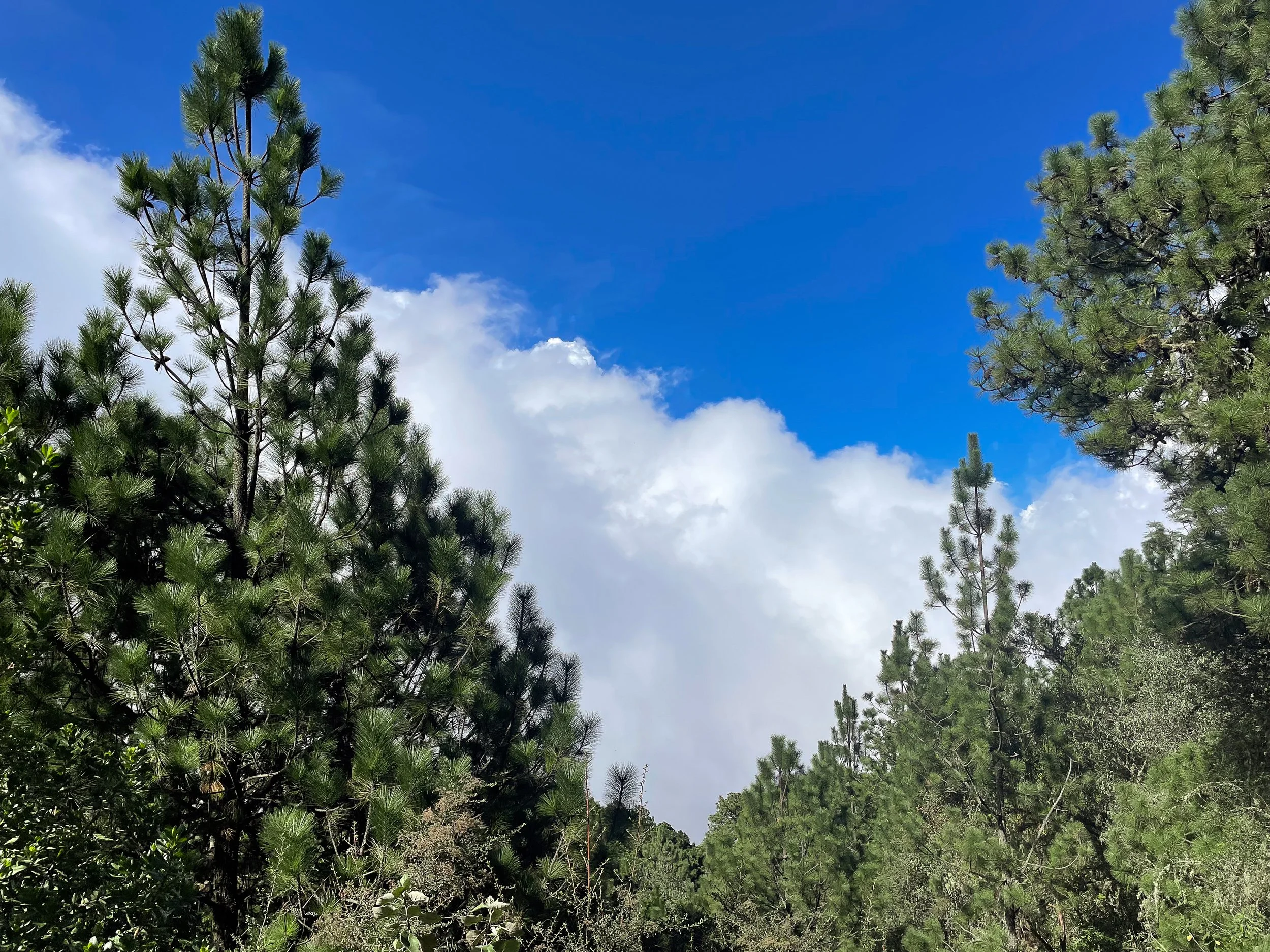
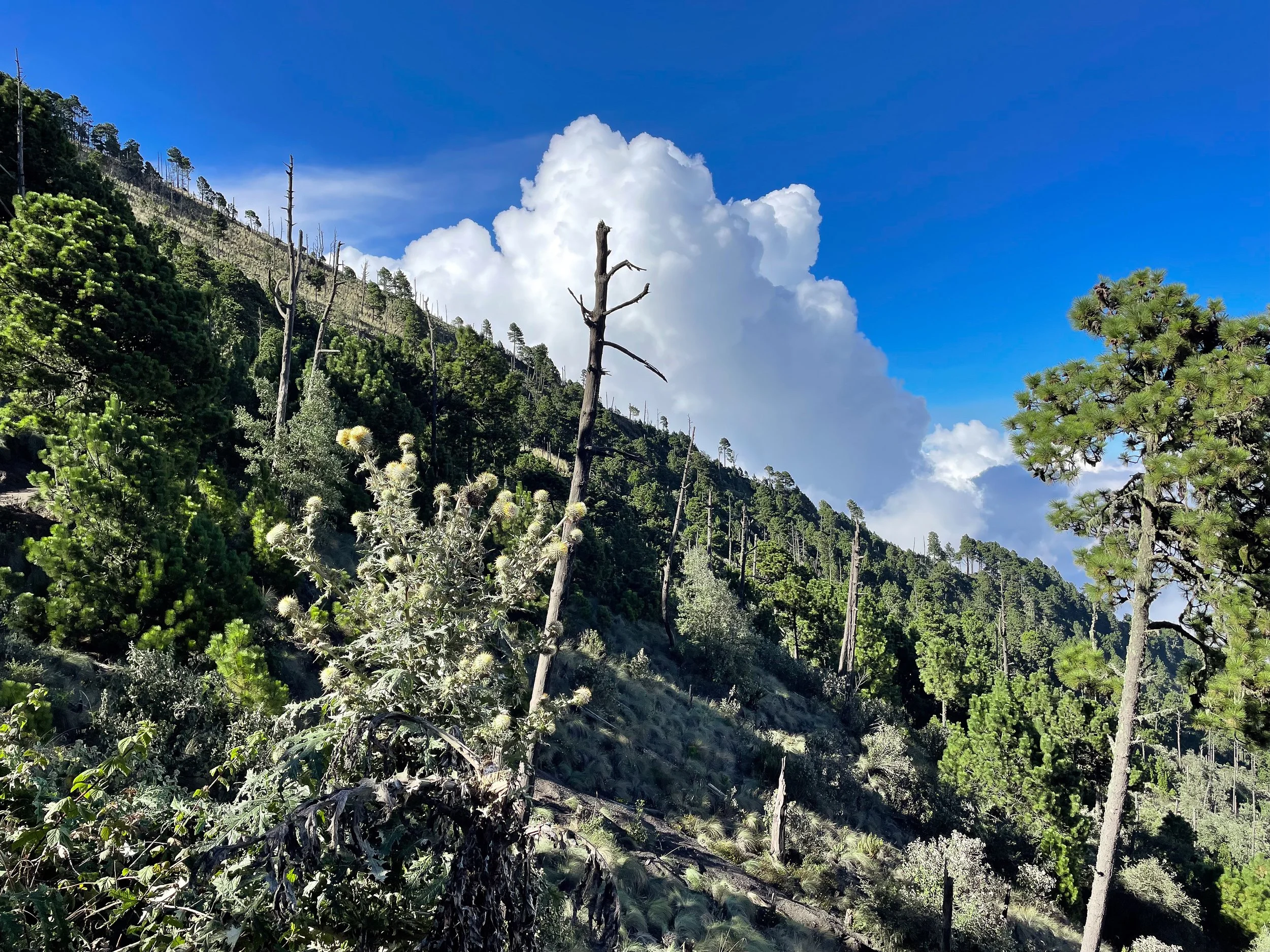
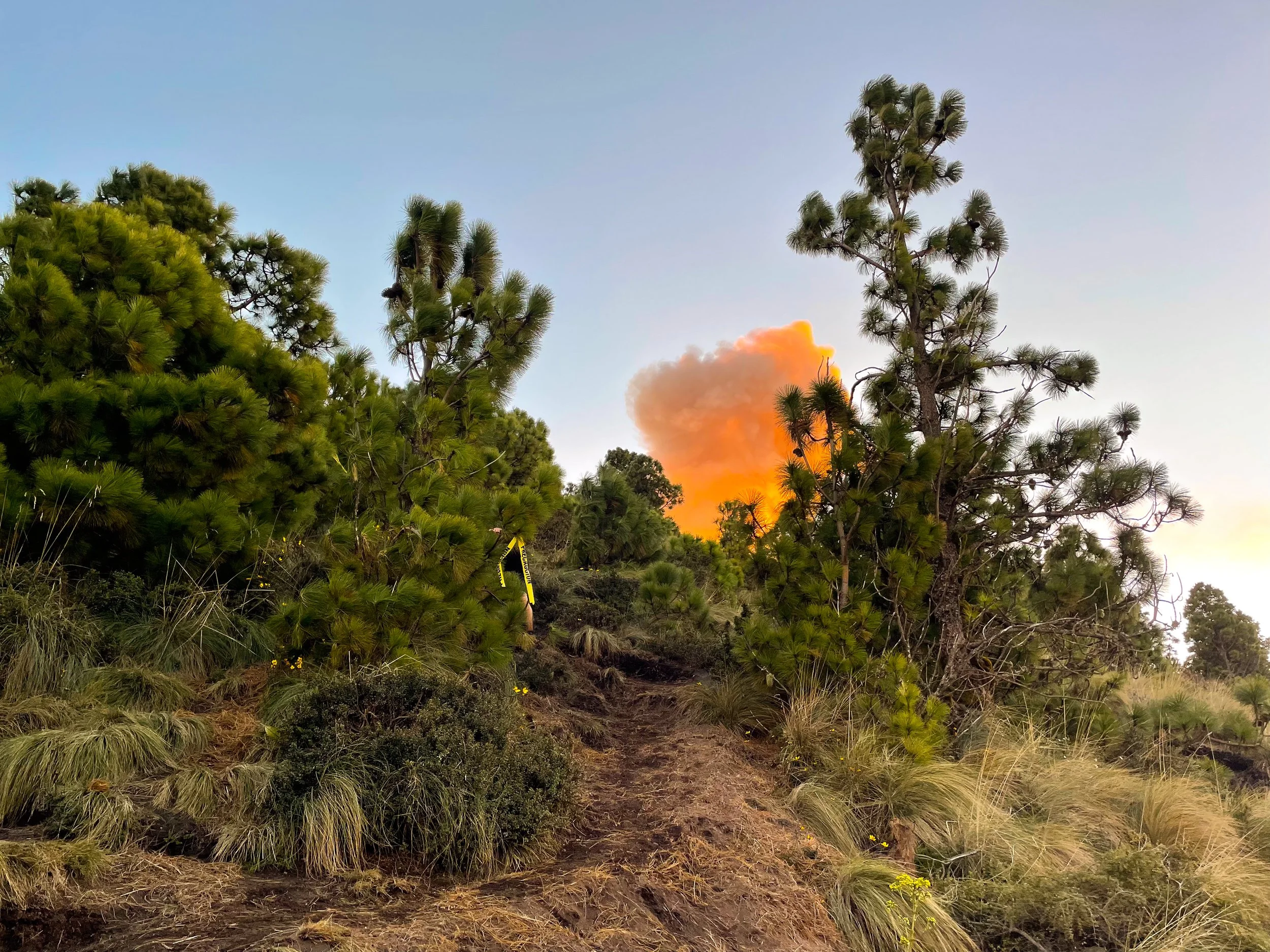
The hike to basecamp started at Aldea la Soledad, a small village an hour outside Antigua. It marks the trailhead of La Ruta de Acatenango. It brought us through different terrains and micro climates. We began our ascent on a trail through farmland and steep dirt stairs. Climbing in altitude, we reached the cloud forest, a wooded area with tall moss covered trees, ferns, slippery trails and constant fog. The fog began to lift the further we hiked, completely clearing by the time we reached the pine forest. This forested area is covered in pine trees, tall grasses and colorful wildflowers. The hike took 5 hours to reach basecamp.
Acatenango Basecamp
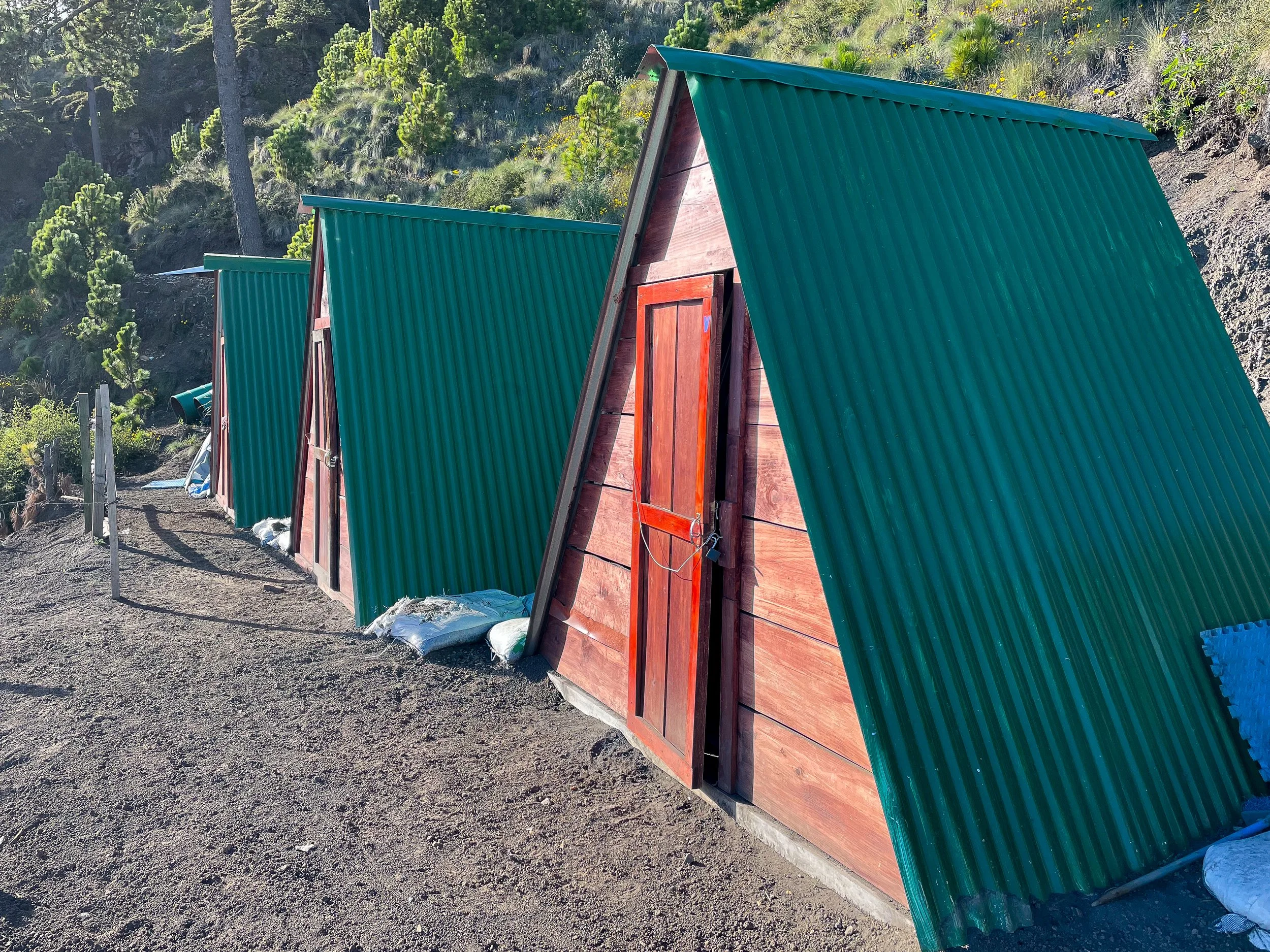
Basecamp was our home for the night and starting point for our hike to the crest of Fuego and the summit of Acatenango. We “slept” in a small A frame style shack, cuddled up to keep warm. The guides kept a small fire lit for warmth and to prepare camp meals.
The Volcano of Fire
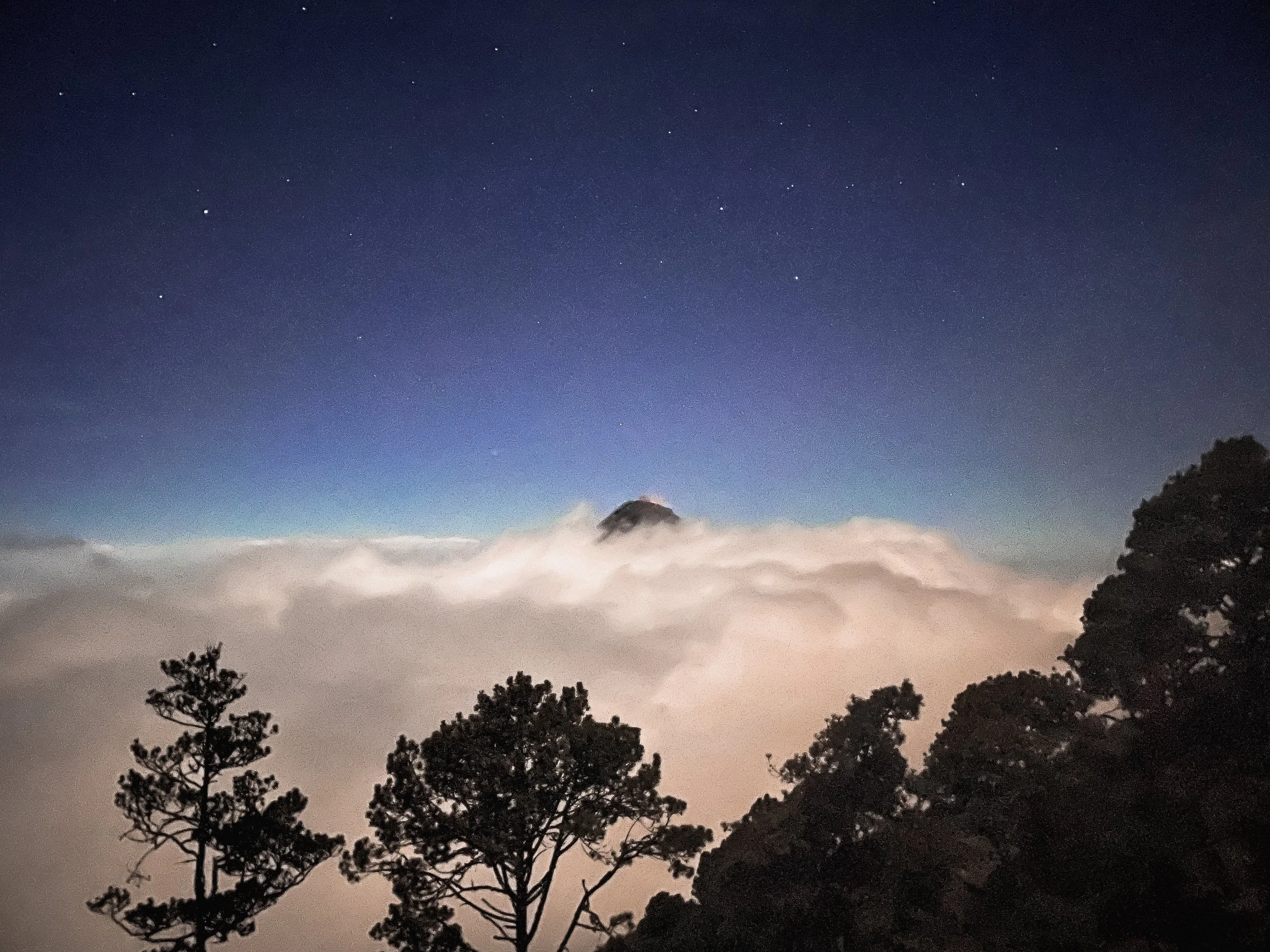
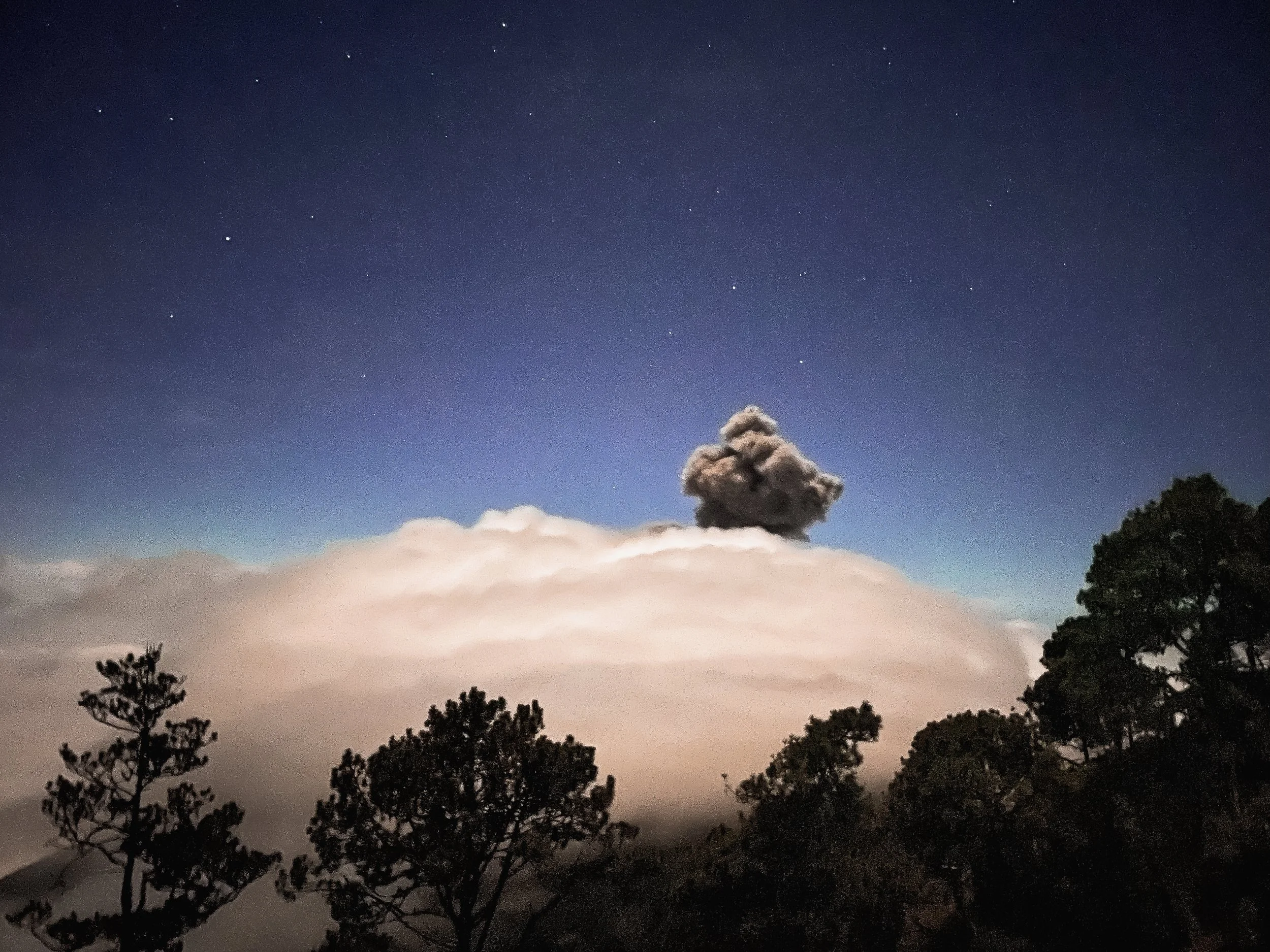
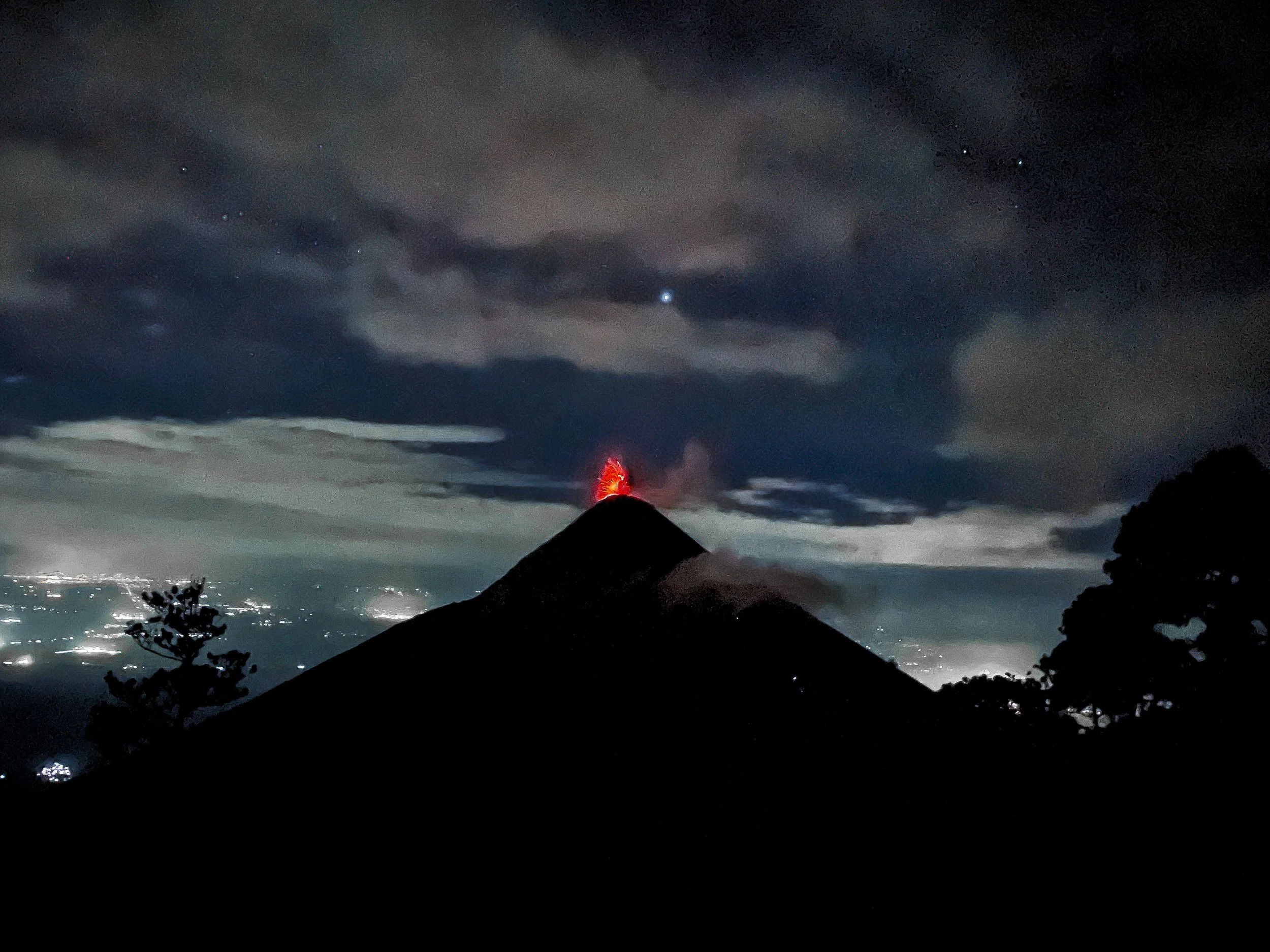
The campsite offered direct views of Volcán de Fuego and its frequent eruptions. During the day, the volcano billowed grey clouds of ash into the blue sky. At night, the red glow of lava rocketed through the air followed by a deep boom and crackling as it spilled down its slopes. Shockwaves from larger eruptions could even be felt in our chests!
Hike To the Crest of Fuego
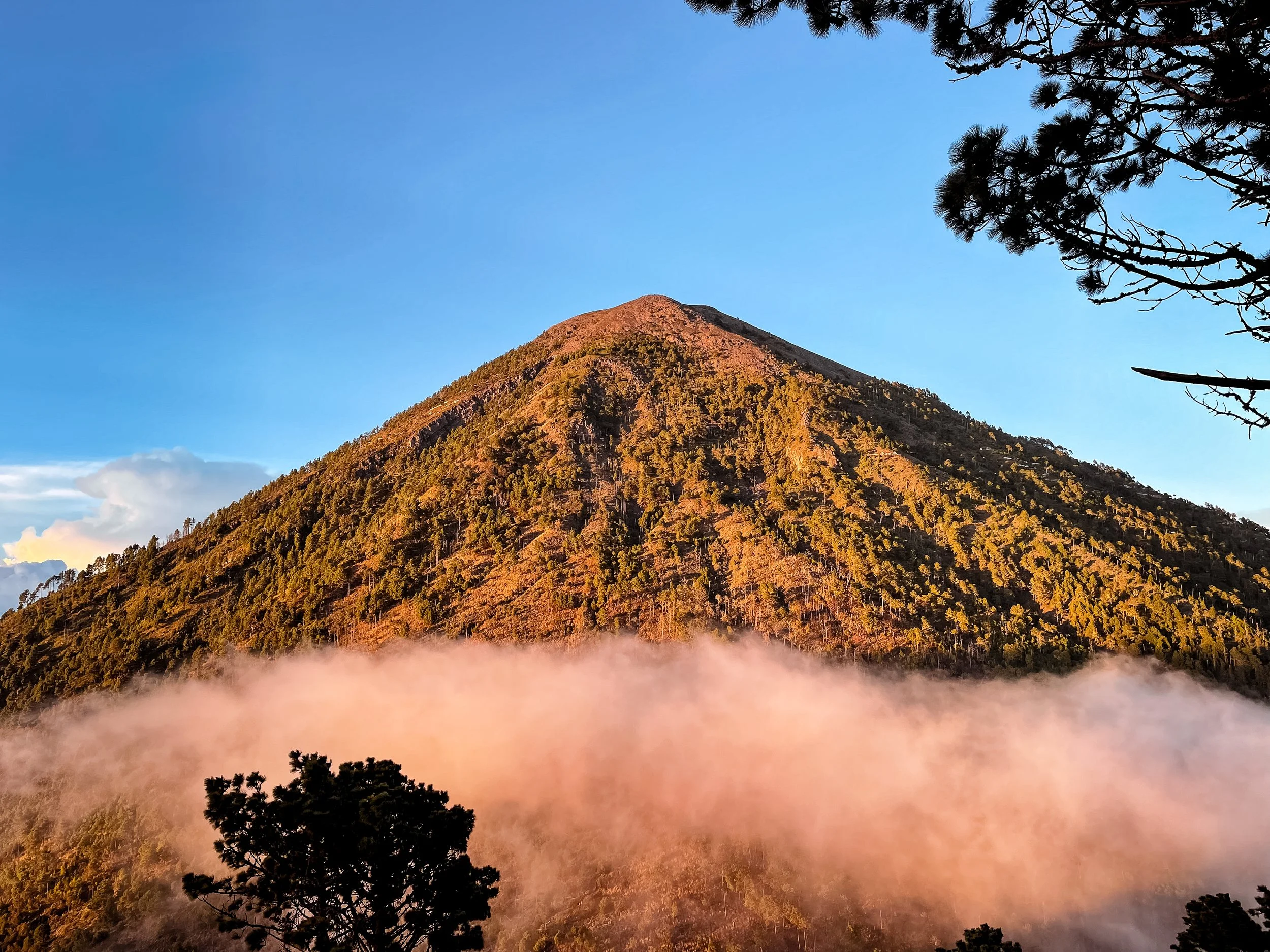
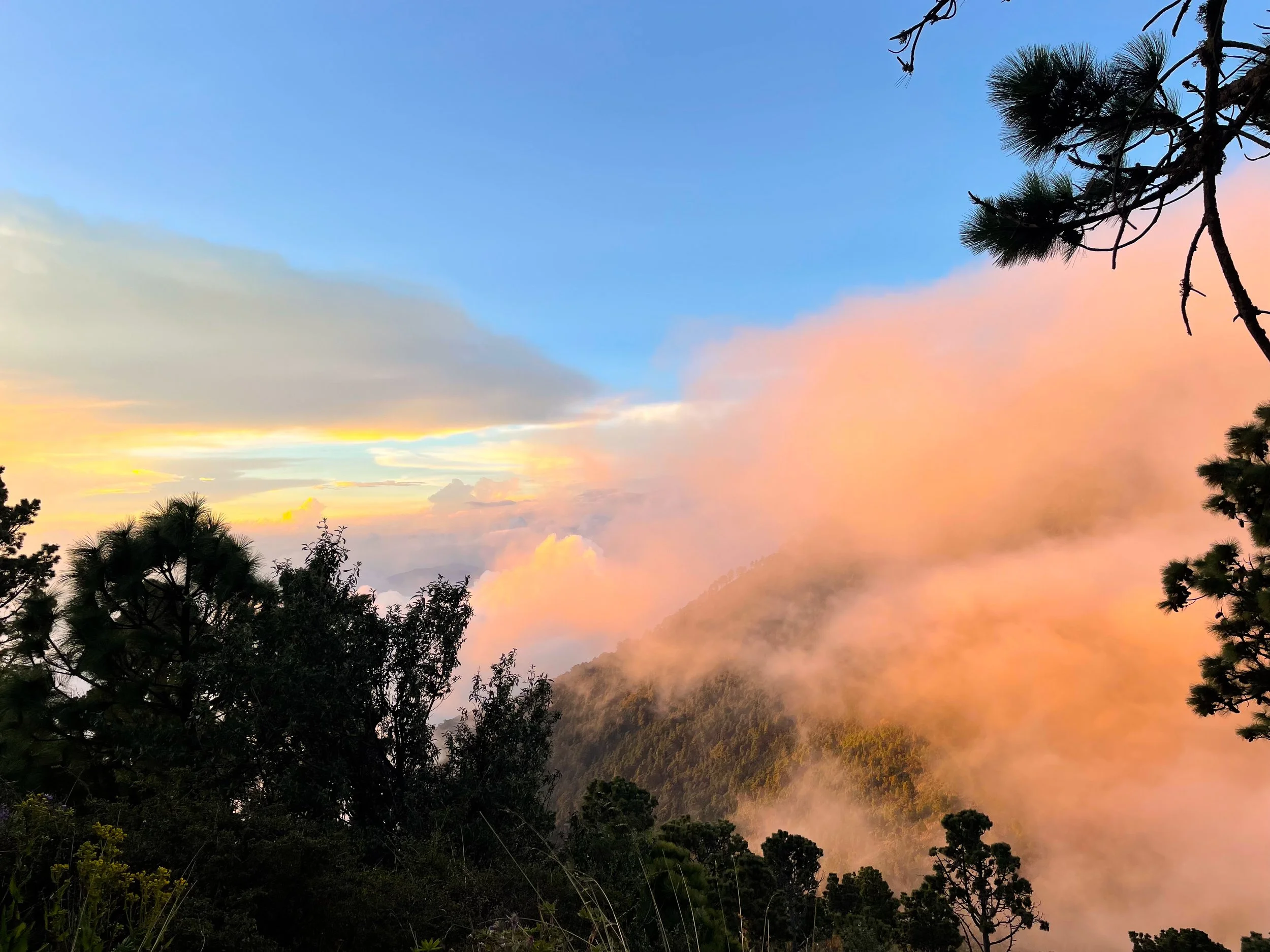
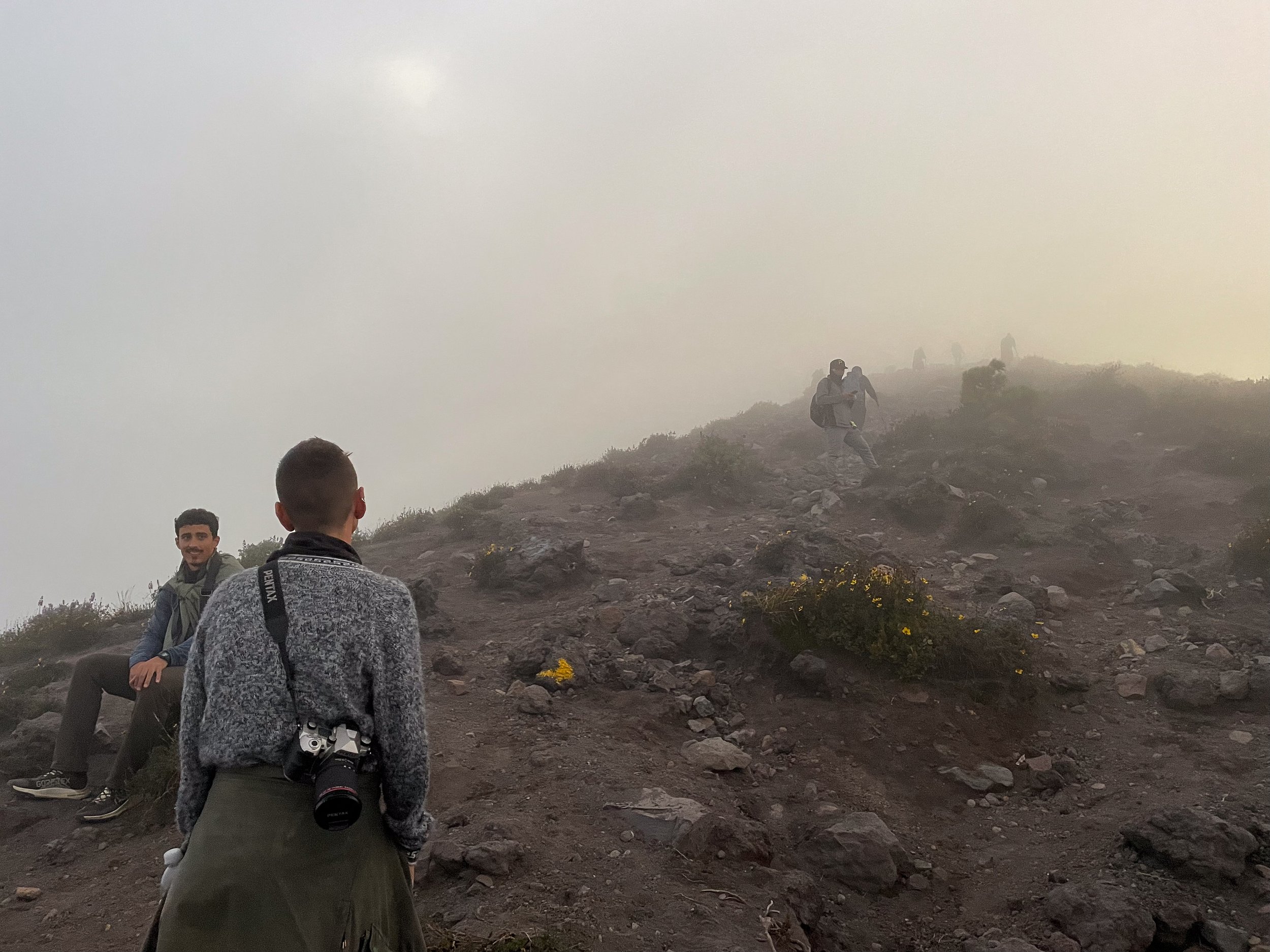
The hike to the barren and black crest of Fuego began from basecamp, passing through pine forest to the saddle between both volcanoes. Beyond that point, the ascent grew steep and unstable, with loose gravel and exposed roots. Clouds began to settle as the sun set, blocking views of the summit. After waiting in cold, wet and windy conditions without a clearing, we returned to basecamp, stopping for brief rests in order to glimpse eruptions of ash, lava and embers pierce the clouds.
Summit Sunrise
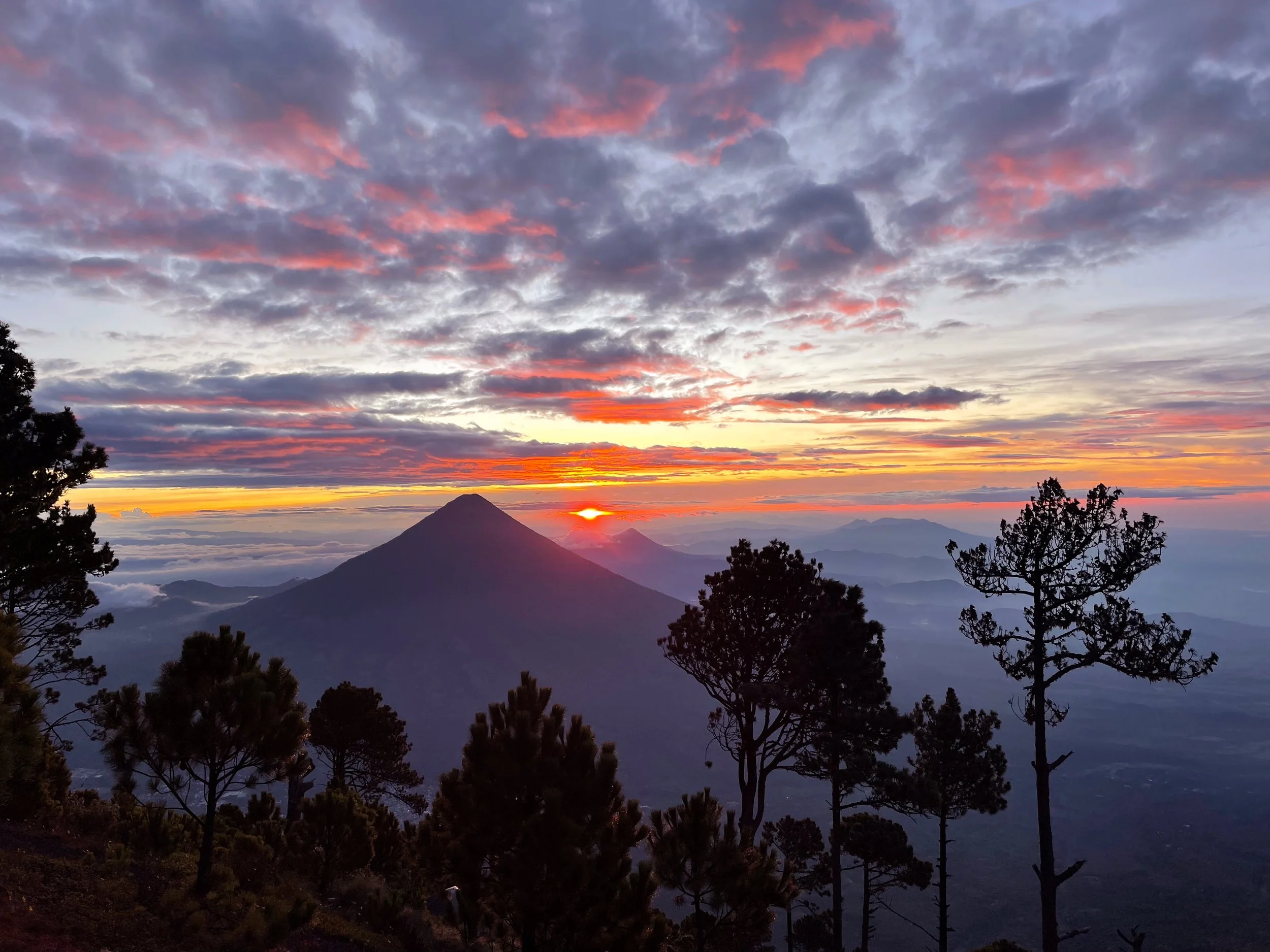
The hike to the summit of Acatenango began at 4am. The sun rose quickly afterwards, illuminating the cloud dappled sky and volcanic landscape in brilliant colors of purple, red and orange. Soon after, we began our descent and return to Antigua.
Things to Keep in Mind
Hire A Guide. Guides are not required to hike Acatenango but are helpful when navigating the route. We joined a guided group through a local operator on Viator.
Porters. There are options to hire a porter to carry your equipment and gear.
Vendors. There are vendors along the trail before the pine forest selling snacks and beverages.
Cash. Bring plenty of cash for the additional hikes, snacks, beverages and tips
Gear to Pack. Bring your own gear or rent equipment from your guide.
A 30 to 40 liter backpack
Hiking shoes/boots
Warm clothes and layers (thermals, sweaters, scarves, gloves, hats, puffer, waterproof outer layer)
2-3 liters of water
Trail snacks
Sleeping bag and pillow
Headlamp or flash light
Sunblock
Toilet paper
Hand sanitizer
Sunglasses
A power bank
Volcanic Farmland
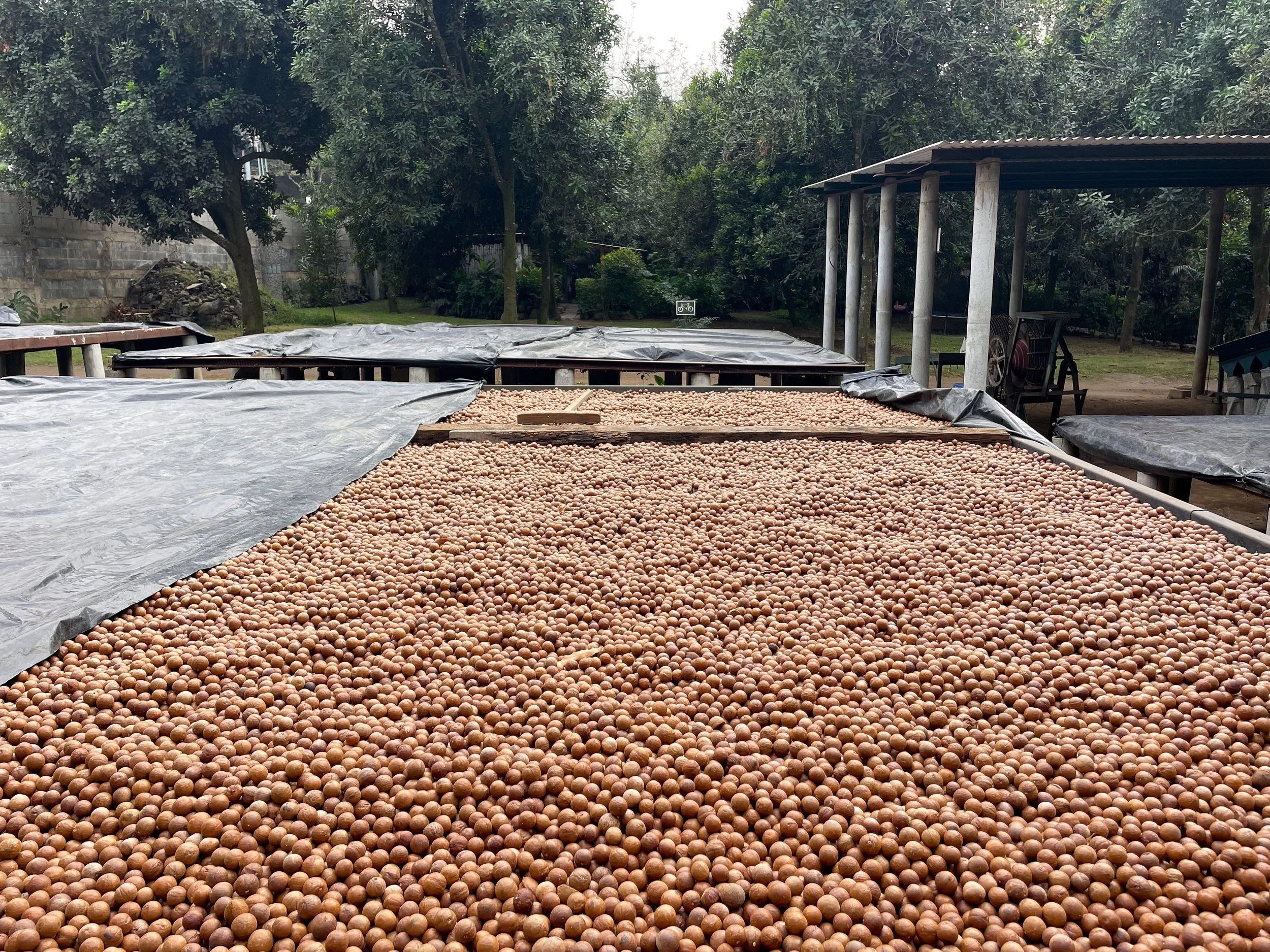
Antigua’s fertile volcanic valleys make it ideal for growing a range of crops including coffee, cacao and macadamia nut. We visited Valhalla Farm, a sustainable and organic macadamia nut farm with free tours, tastings, a restaurant and spa. We came here for a full body macadamia nut oil massage after our overnight hike to Volcán de Fuego. It was so relaxing and therapeutic! The farm tour included a walk around the grounds to see the macadamia nut trees, learn how they’re harvested and processed. Afterwards, we sampled macadamia nut products like roasted nuts, chocolates, baked goods and oils.
Cafe Culture
Antigua has a bustling cafe culture with many small cafes, coffee shops and breakfast spots brewing Guatemalan grown and roasted coffee beans.
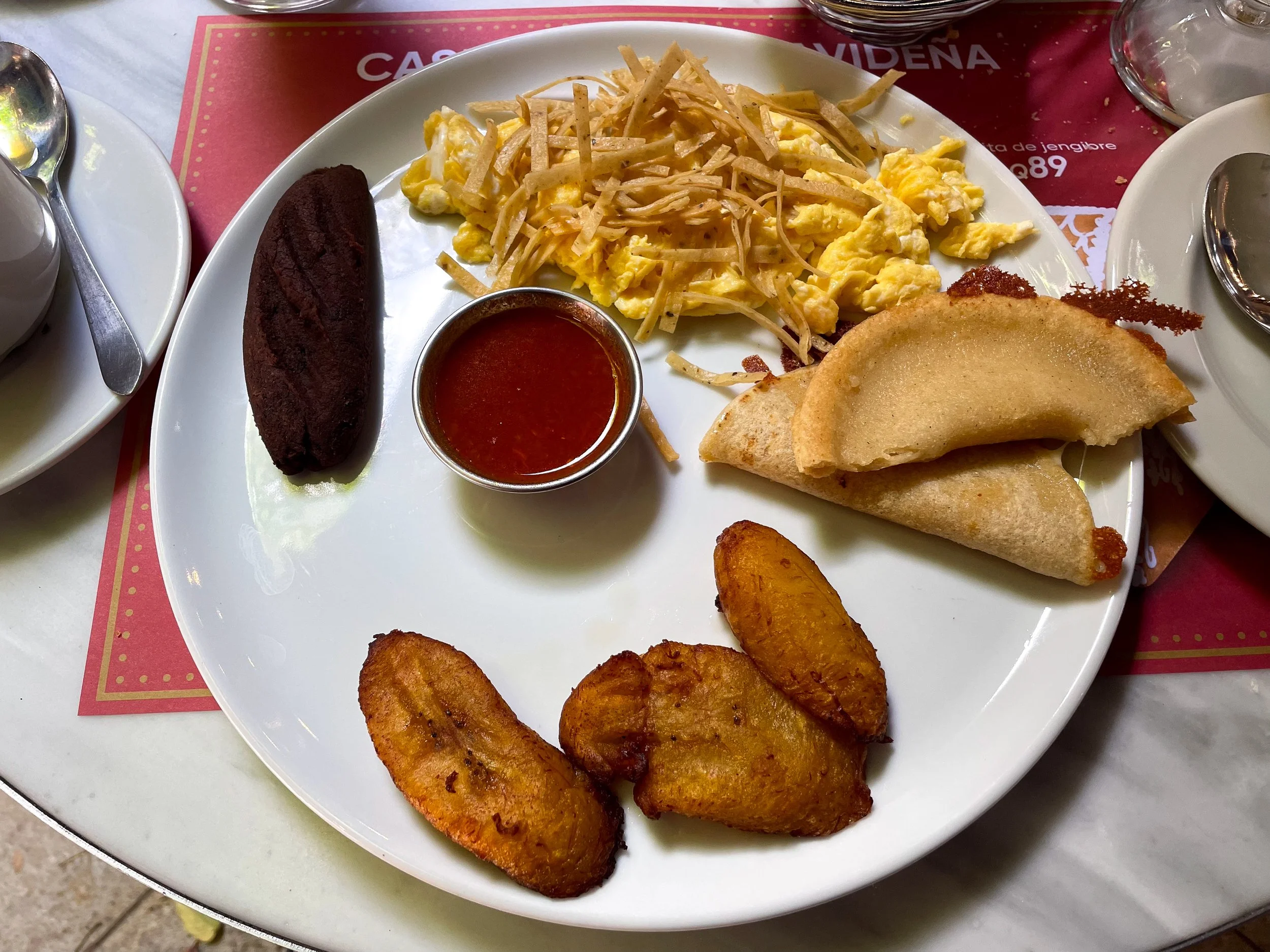
Bakery San Martin. A cafe and bakery with fresh breads, cookies, and carafes of French pressed Guatemalan coffee. Come for the “Desayuno Antigüeño,” which includes scrambled eggs with onion and tomato, breads, fried sweet plantains, refried beans and tortilla with cheese.
El Gran Cafe. A small coffee shop for Guatemalan coffee and light pastries. We brought home two bags of whole beans.
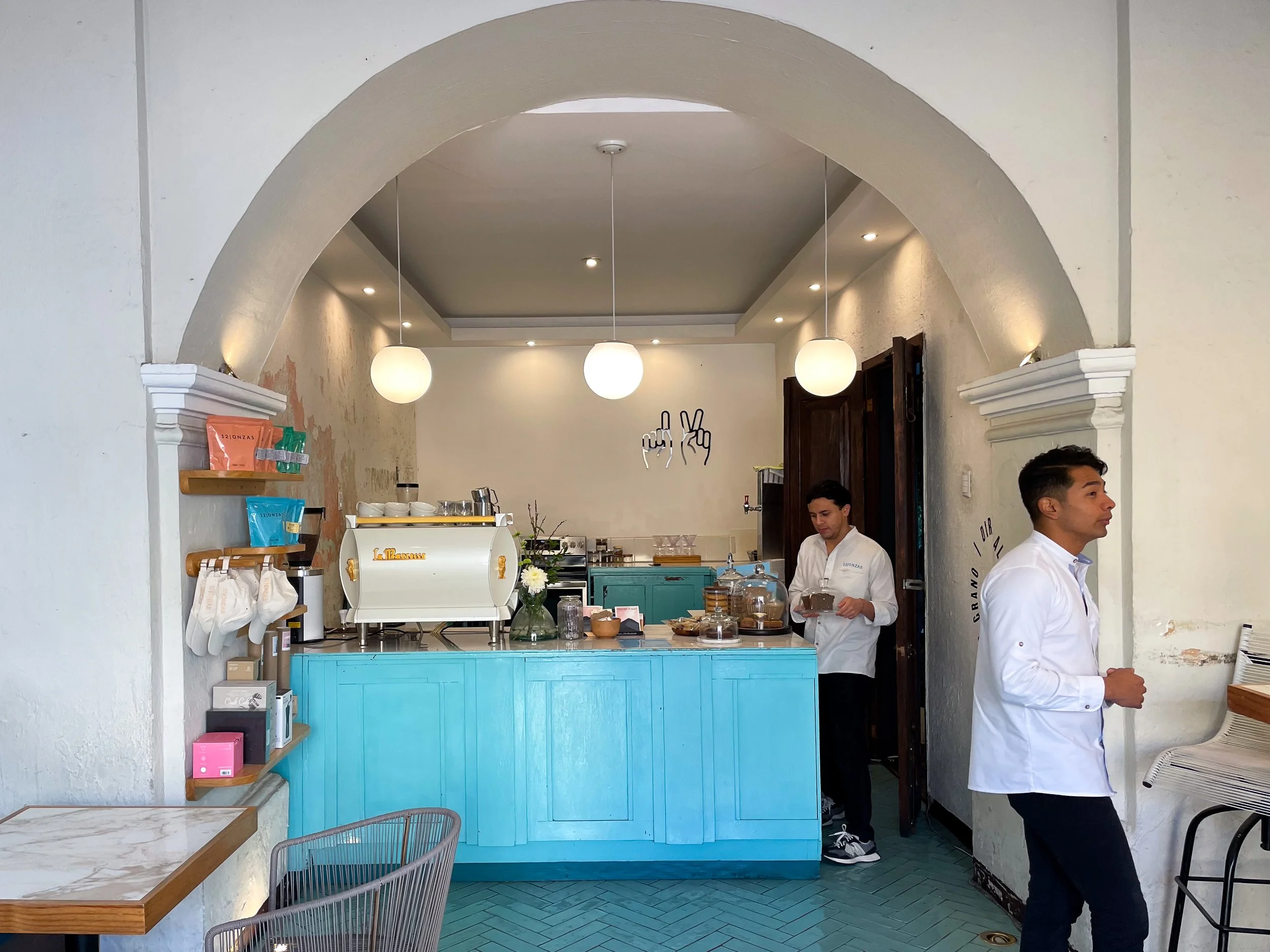
12 Onzas. A cafe for Guatemalan pour over coffee, light pastries and classic breakfast dishes.
Places to Eat
We quickly learned that Antigua has a thriving food scene with restaurants serving traditional and contemporary Guatemalan dishes, authentic street food and vegan or vegetarian options. Most restaurants in Antigua have a garden courtyard, rooftop or terrace and interior dining room.
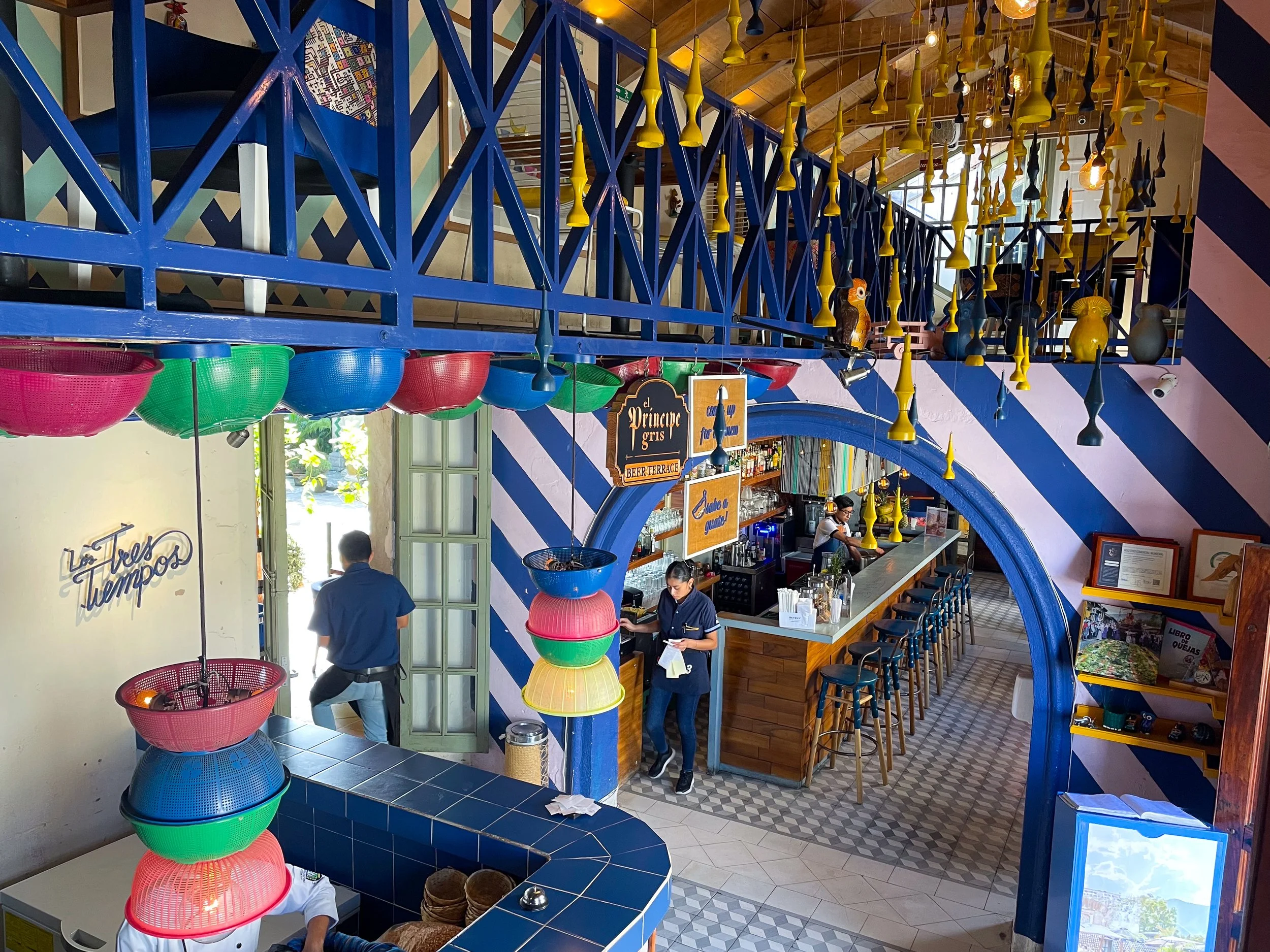
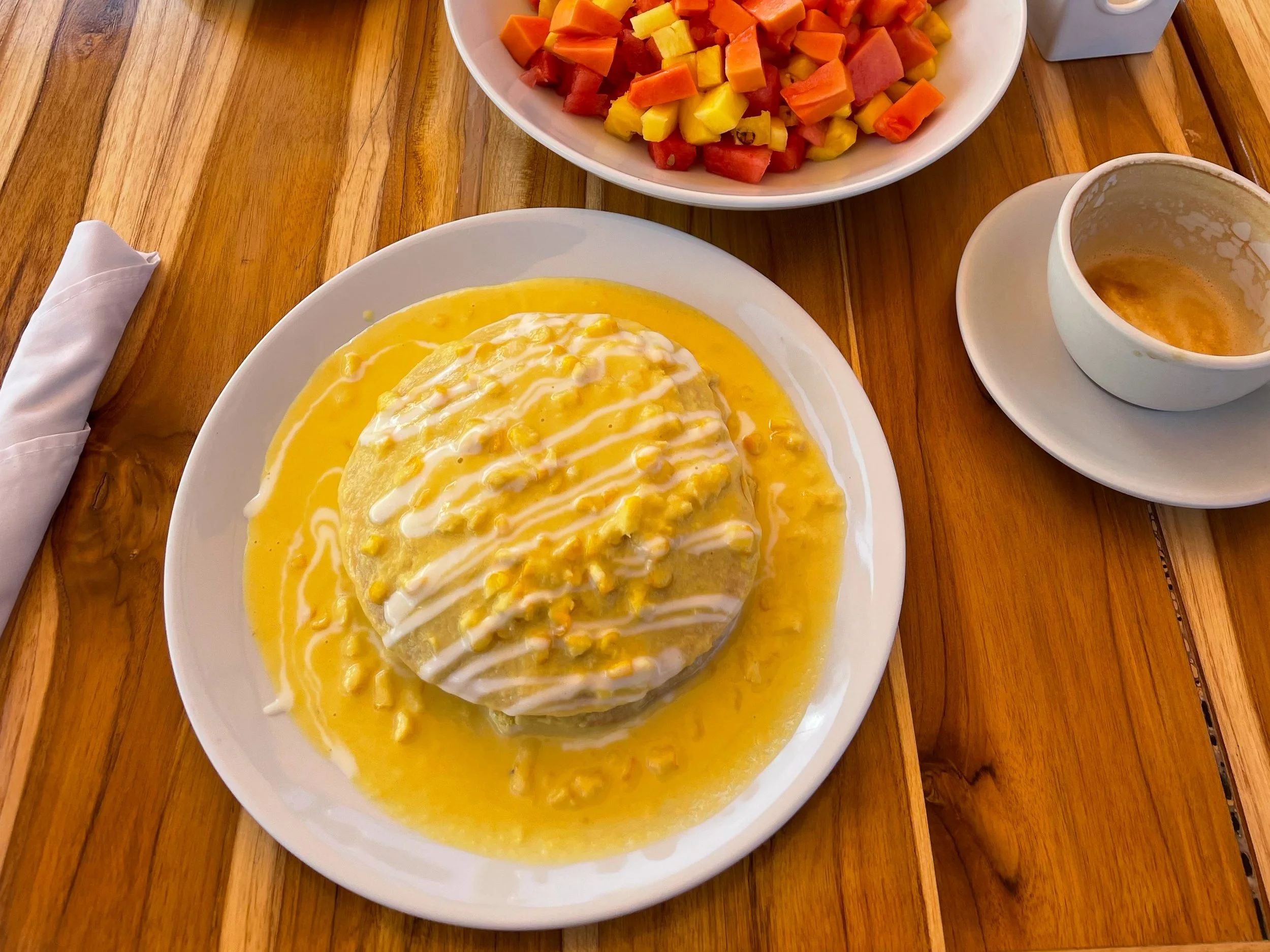
Los Tres Tiempos. A colorfully decorated restaurant with a lush outdoor terrace and menu including traditional brunch dishes. Try the sweet corn pancakes covered in a creamed corn sauce, the chilaquiles with white & blue corn chips and red & green sauce or the fruit platter with pineapple, papaya and watermelon.
27 Adentro. A restaurant with a modern take on Guatemalan and Latin dishes. It has a garden courtyard and rooftop with views of Volcán de Fuego. We saw a large eruption with lava from here. There are many vegetarian options including pepián, sopa de maíz, tostone cups and sangria.
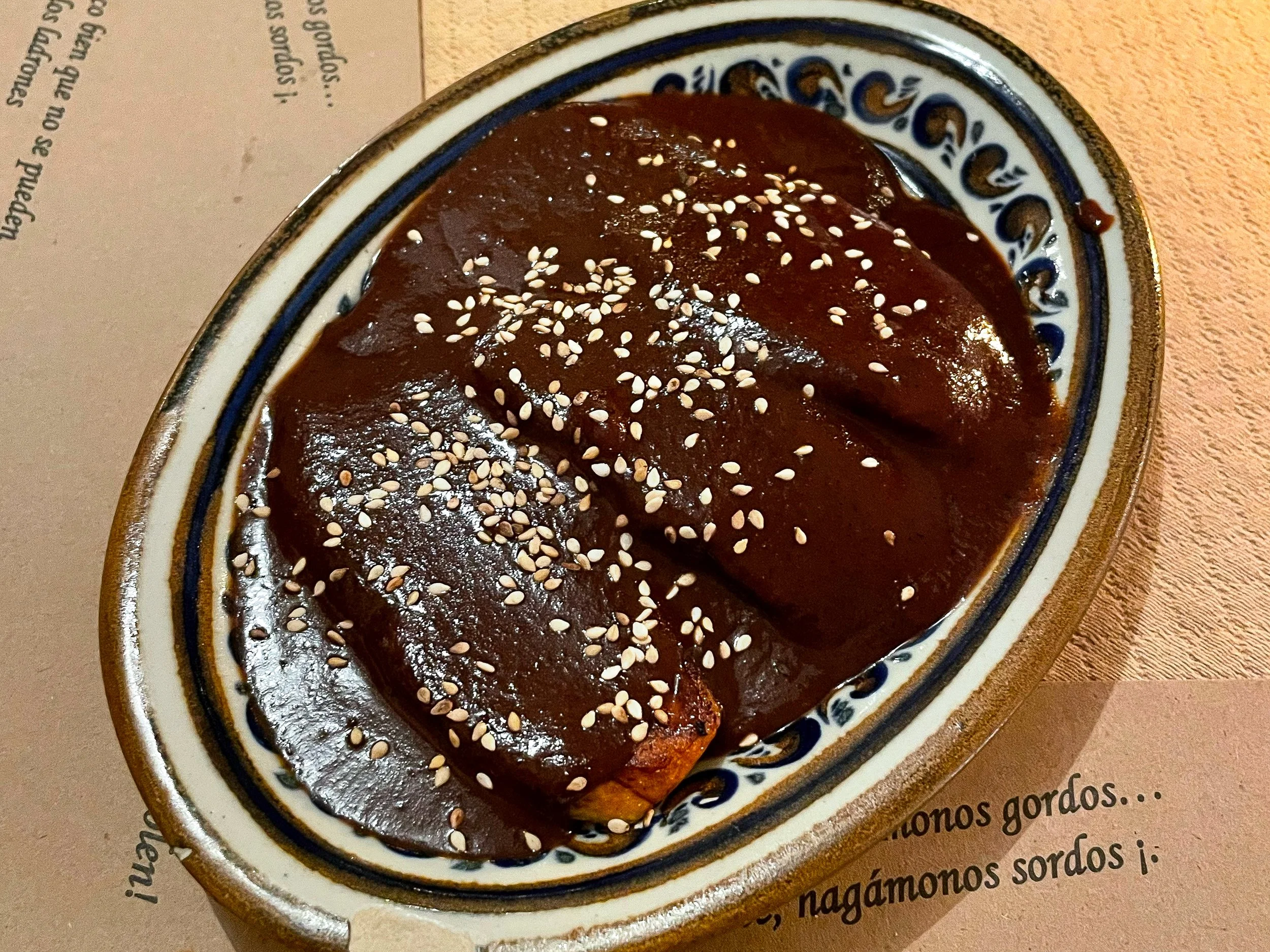
La Fonda Calle Real. Around lunch time, the smell of pan fired masa wafting from the store front comal invites passersby in. The romantic interior has an open air courtyard with a canopy of flowering vines. The menu consists of traditional Guatemalan dishes. We tried the vegetarian pepián, chile relleno and plantains con mole.
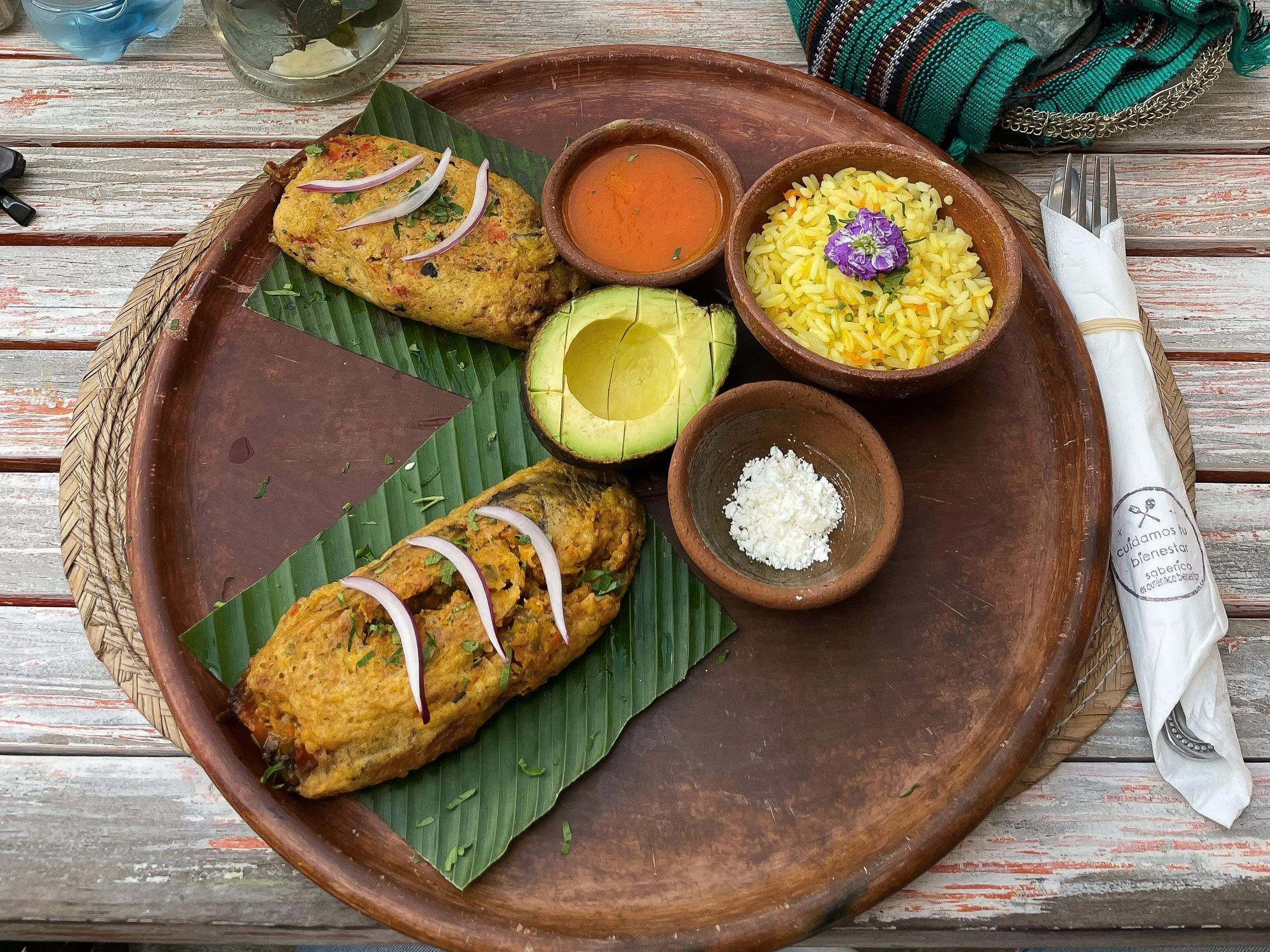
Saberico. A vegetarian friendly garden restaurant with a sprawling outdoor patio and menu of contemporary Guatemalan dishes. We ordered the beet & cabbage tostadas, chile relleno and kombucha cocktails.
Antojito Salvadoreño. An unofficial restaurant specializing in pupusas. Call ahead to order and wait outside of the Condominio Arcadas for pick up. We ordered cheese and bean pupusas with a canoa de platano.
Frida’s. A Mexican style restaurant themed after Frida Kahlo with portraits of the artist pictured throughout. The menu specializes in tacos and margaritas. We tried the veggie tacos, crispy broccoli in poblano mole and seitan al pastor tacos with pineapple. For drinks, try the spicy mezcal margarita and hibiscus mezcal margarita.
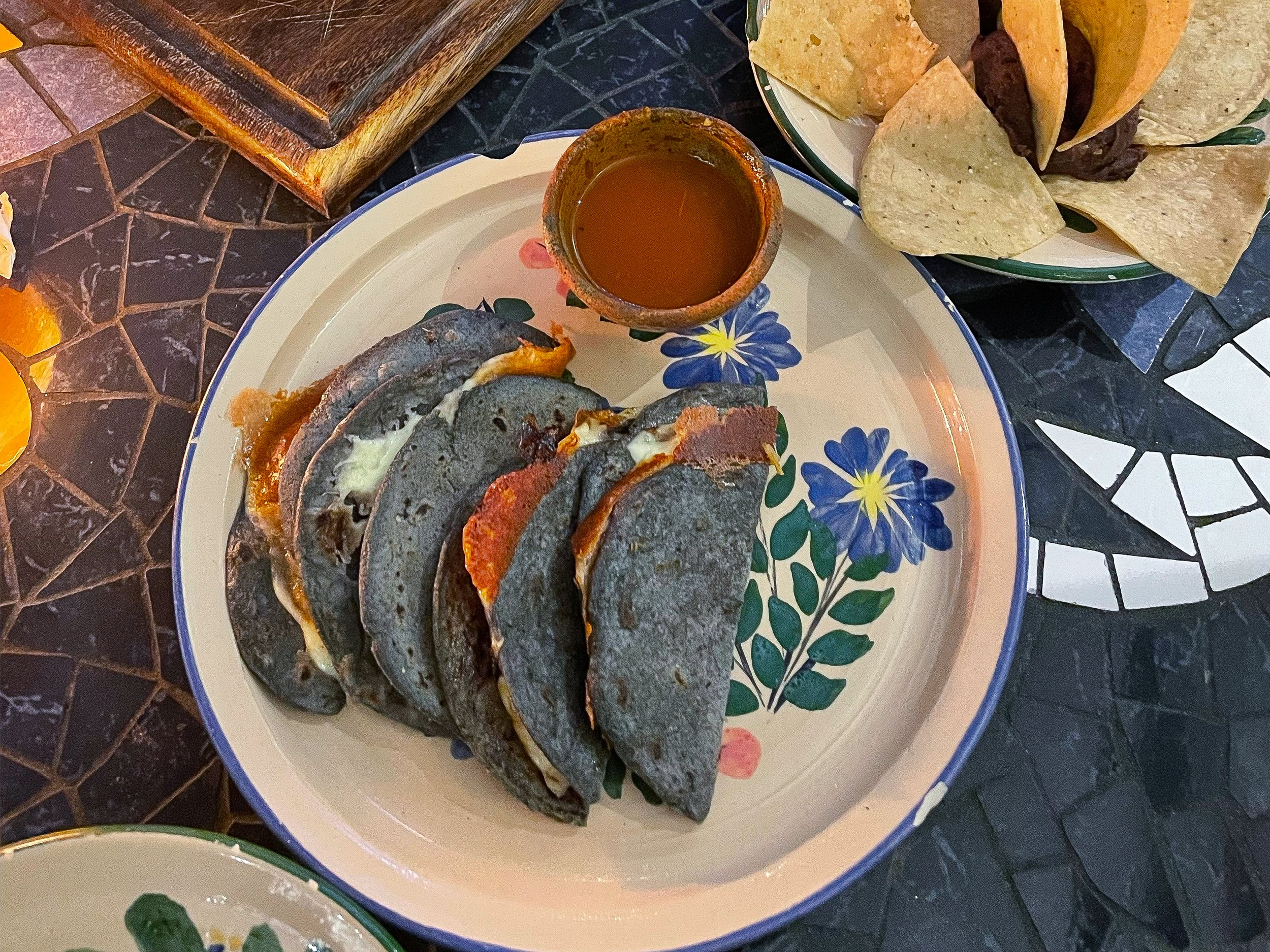
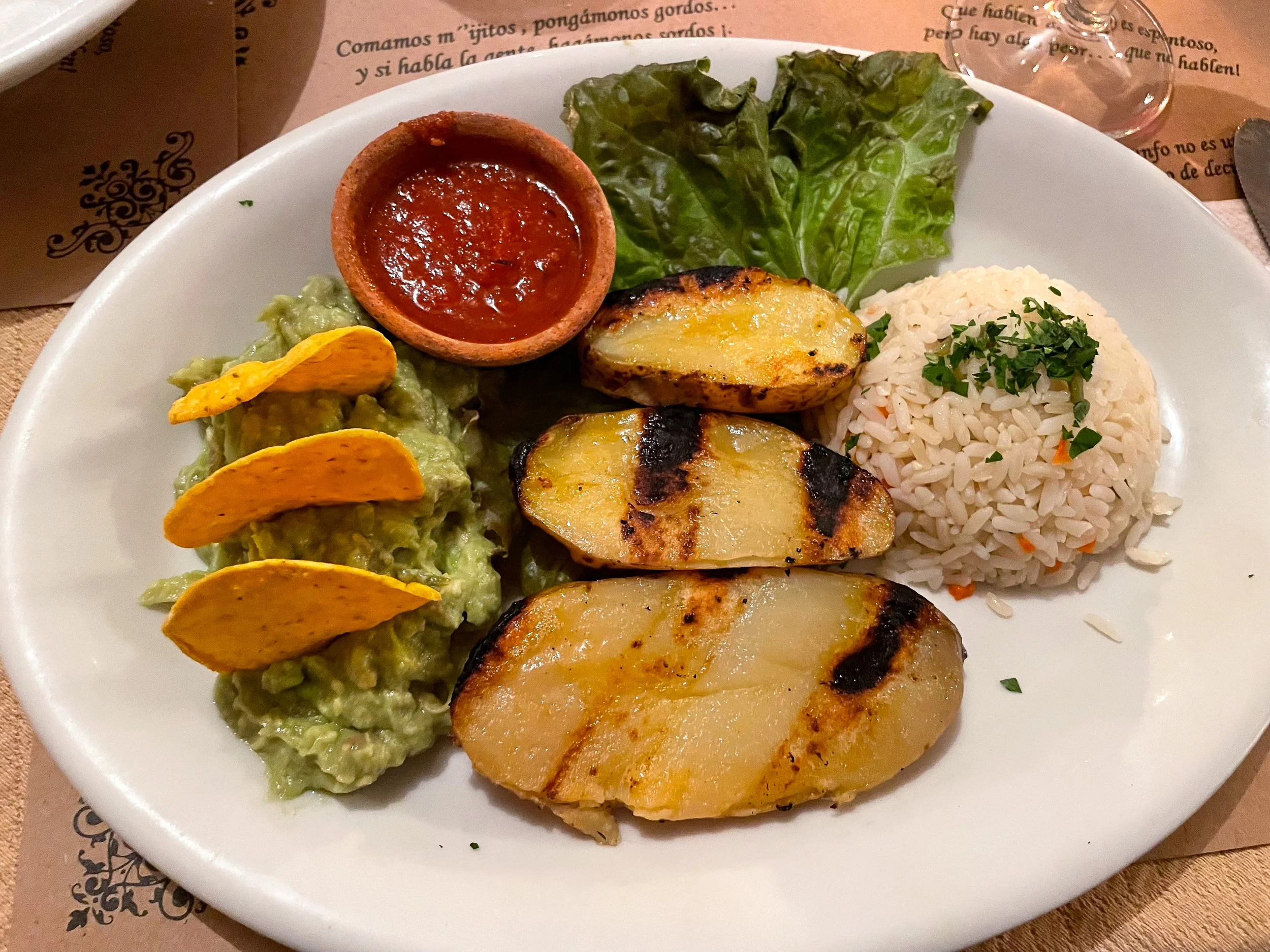
El Adobe. The eye-catching entry with a display of colorfully painted Guatemalan wooden masks invites passersby in for a look at the menu. The restaurant serves traditional Guatemalan and Mayan inspired dishes. We ordered the blue corn tortillas with cheese and salsa, fried black beans and a whole fried fish called Mojarra.
Places to Drink
Together with a brewery, speakeasy, dive and rooftop bar, there is no shortage of places to find a drink in Antigua.
Antigua Brewing Company. A brewery with local beers and city views from their terrace. We sampled a flight of beers. Two favorites are the Fuego IPA, a very hoppy brew, and the Canchona Blonde Ale, a refreshing and slightly nutty ale.
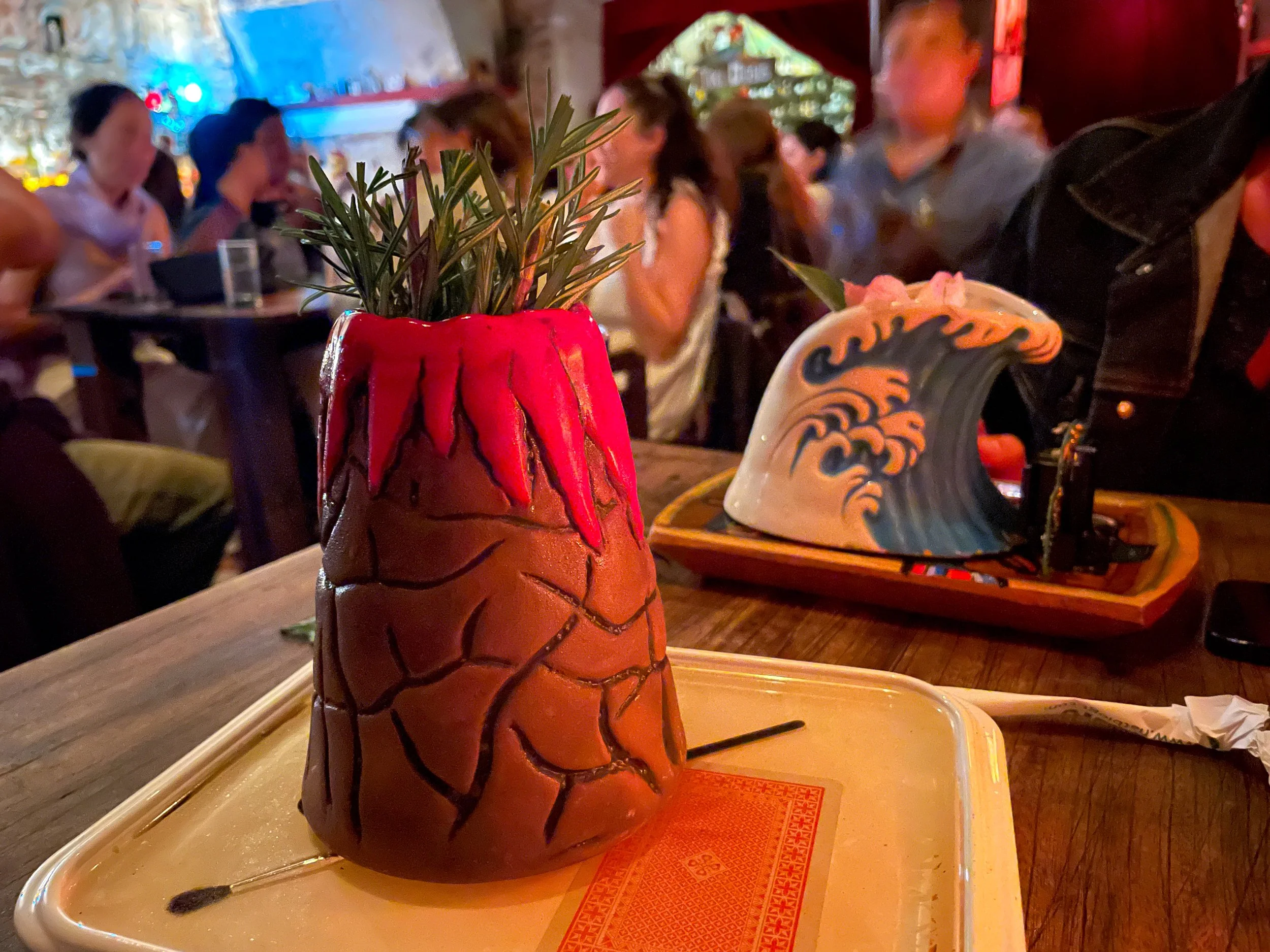
Ulew. A dimly lit speakeasy with a stone and brick interior located behind a phone booth in the Antigua Brewing Company. Mixologists make drinks based on your flavor preference. We ordered spicy but balanced tiki style drinks that came out in a volcano and wave mug.
Cafe No Se. A dive bar for beer and mezcal. The menu is handwritten on cardboard, candles dripping in wax light the interior and the walls are covered in signatures and stickers. We drank and played chess at a table in the corner.
Adra Hostel. Come to their energetic courtyard and rooftop for local beers, cocktails and live DJ.
Guatemalan Cuisine
There are so many authentic dishes to try when visiting Antigua. Some of our favorites include traditional ingredients like corn masa and plantain.
Pupusas. A griddle fried masa patty filled with beans and cheese or meat.
Chile Relleno. A stuffed poblano pepper that’s been breaded and deep fried. It's common to be stuffed with cheese or rice, beans and vegetables.
Pepián. A spiced stew made with a base or green or red tomatoes. It can be vegetable or meat based.
Sopa de Maíz. A creamy corn soup.
Tostones. Twice fried and smashed green plantains, often served with a salsa.
Purple Corn Masa. Purple corn used to make any corn based dish like tortillas or pupusas.
Platano con Mole. A sweet plantain that’s been fried and covered in a savory sweet mole sauce.
Canoa de Platano. A whole sweet plantain that’s been deep fried, cut open like a canoe and filled with a sweet cream sauce.
Mojarra. A popular Central American fish. It’s commonly served whole fried with lime.
Gallo. A lager and the beer of choice across Guatemala, recognizable by its label picturing a rooster.
Nispero. Popular at fruit stands and in dishes at restaurants. Small orange fruits with a citrus peachy flavor, a thin skin and pit. Try them fresh, jammed, canned or in a sauce.
Where to Stay
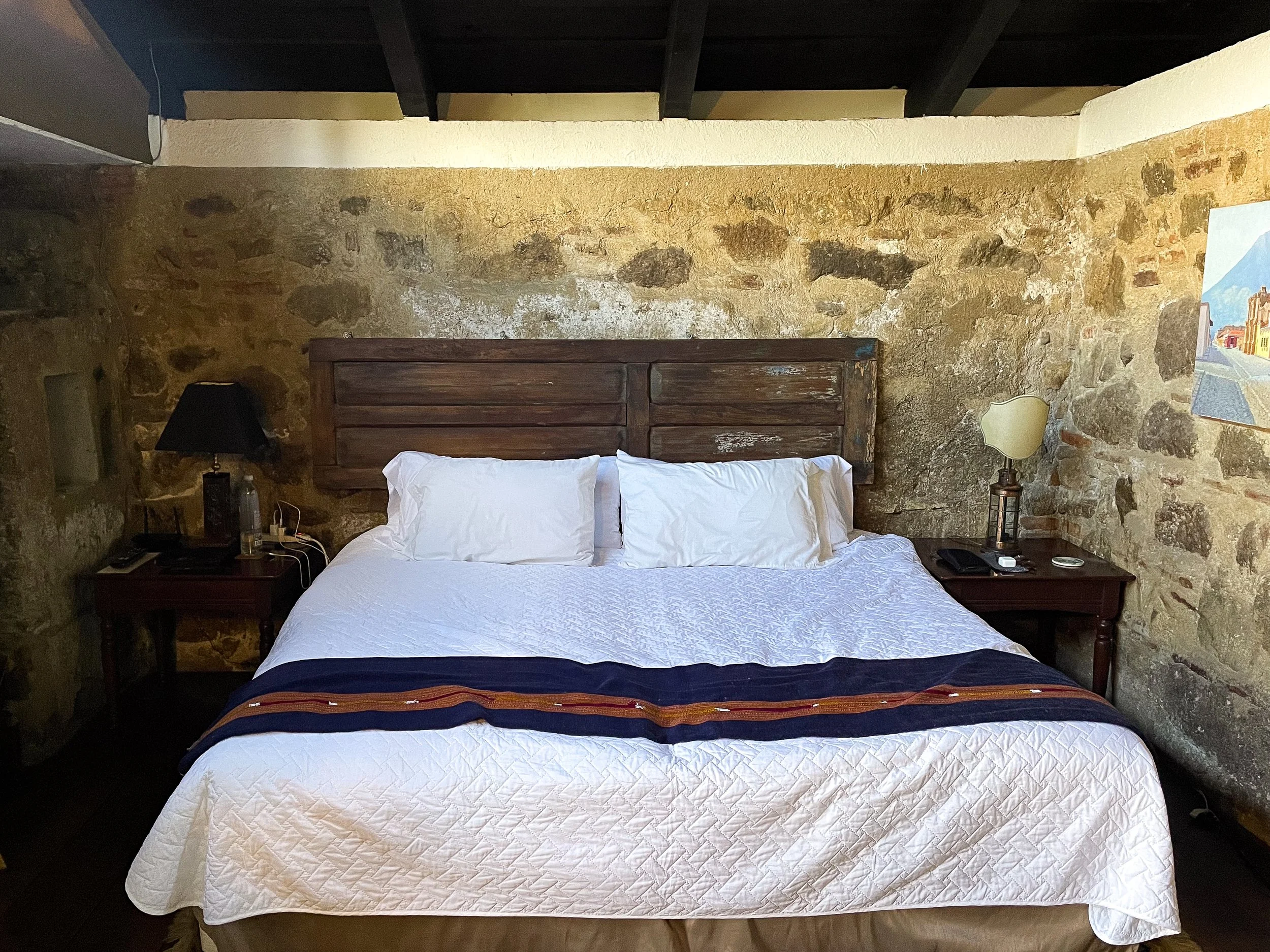
Antigua is a large backpacker destination with apartment rentals and hostels throughout the city. We stayed in a centrally located Airbnb at the El Solar Apartments. The apartment was a renovated ruin with exposed brick, stone walls, wooden beams and artwork of the city.
Getting Around
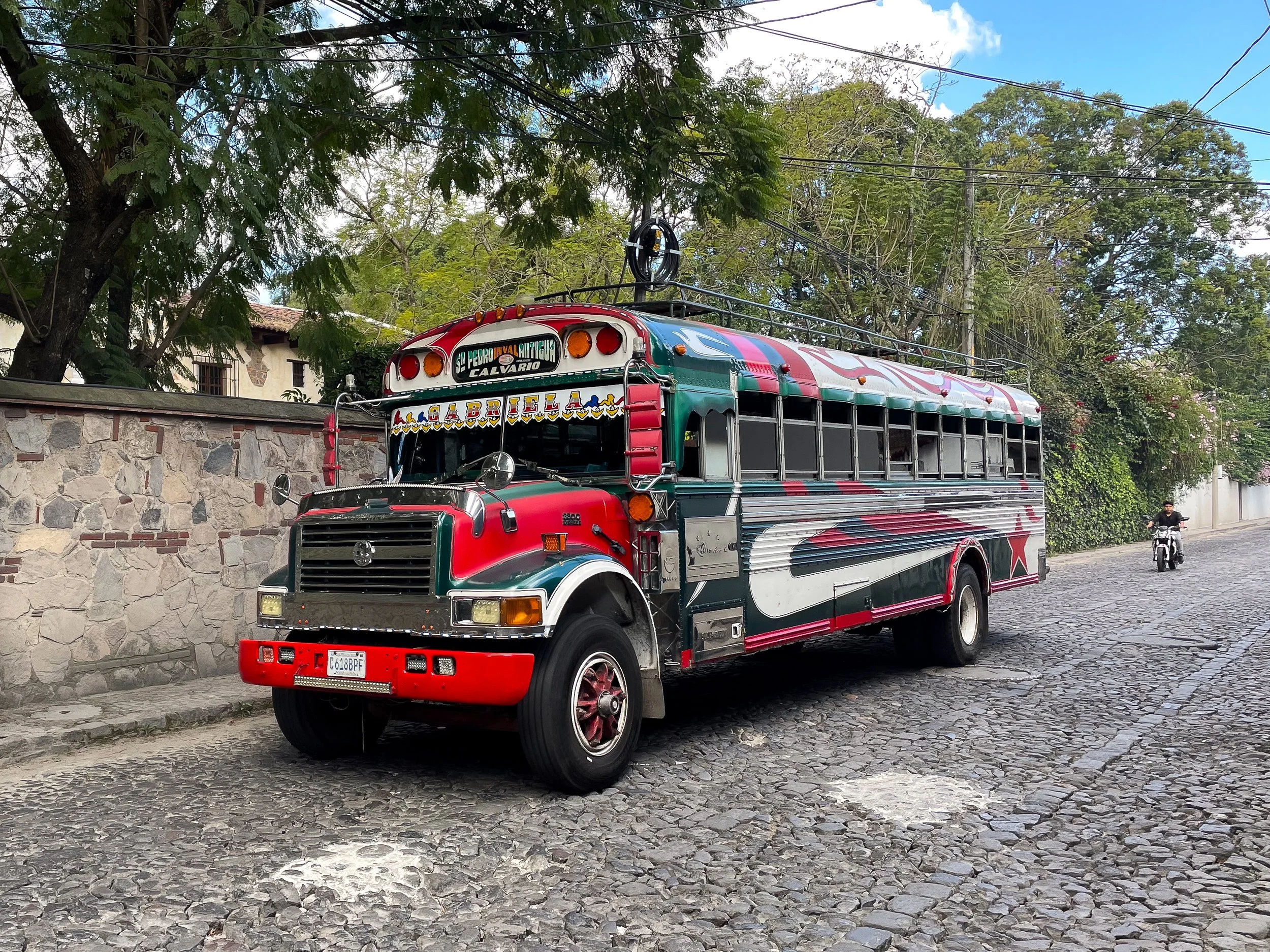
Guatemala City to Antigua. Book a transfer between Guatemala City and Antigua with a reputable local agency like Due South Travels. They safely shuttled us between the airport and our stay in Antigua during late night hours.
On Foot. Antigua is a very walkable city. Exploring it on foot is the best way to see the colonial sights, crumbing ruins and volcanic views.
By Taxi. Yellow cabs and Ubers are readily available in Antigua. They’re an affordable way of reaching nearby locations. Always confirm the price and destination before getting into the taxi.
Location Specifics
Drinking Water. Tap water is not drinkable. Only drink bottled or filtered water.
Cash vs Card. Many businesses are cash only. Carry USD to exchange or the local Quetzal.
Safety. We found the Antigua to be very safe. The locals tend to be welcoming and friendly.
Language. Spanish is widely spoken, many people speak English and some speak Mayan.
UV Protection. Wear sunblock. The higher altitude makes the sun’s UV stronger.
Elsewhere in Guatemala
From volcanic lakes to ancient Maya cities, continue exploring Guatemala's diverse landscapes and cultural heritage.
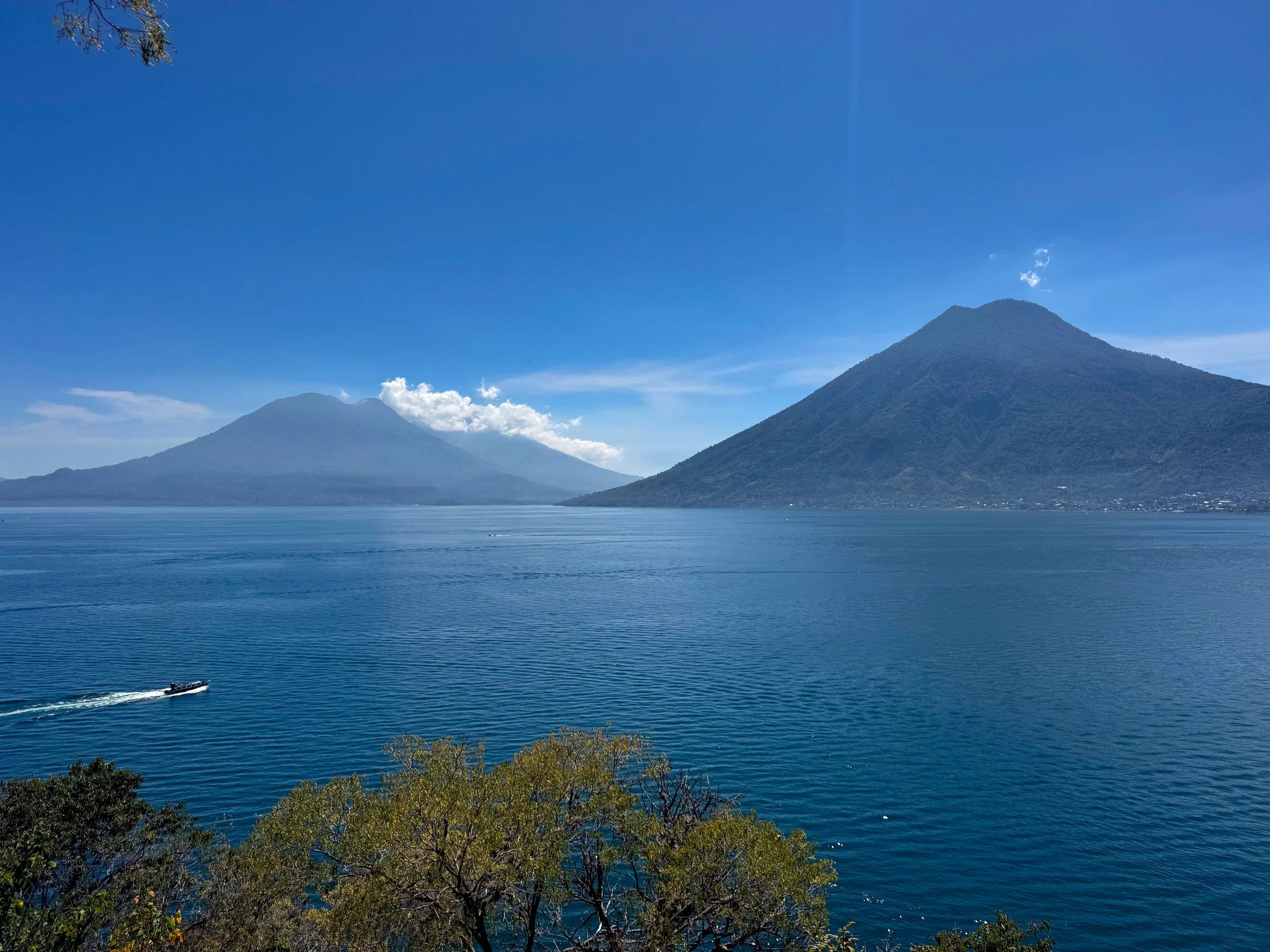
Lake Atitlán Travel Guide: Villages, Volcanoes & Mayan Culture. Navigate between Lake Atitlán's lakeside villages where volcanic landscapes and living Mayan culture shape one of Guatemala's most remarkable destinations.
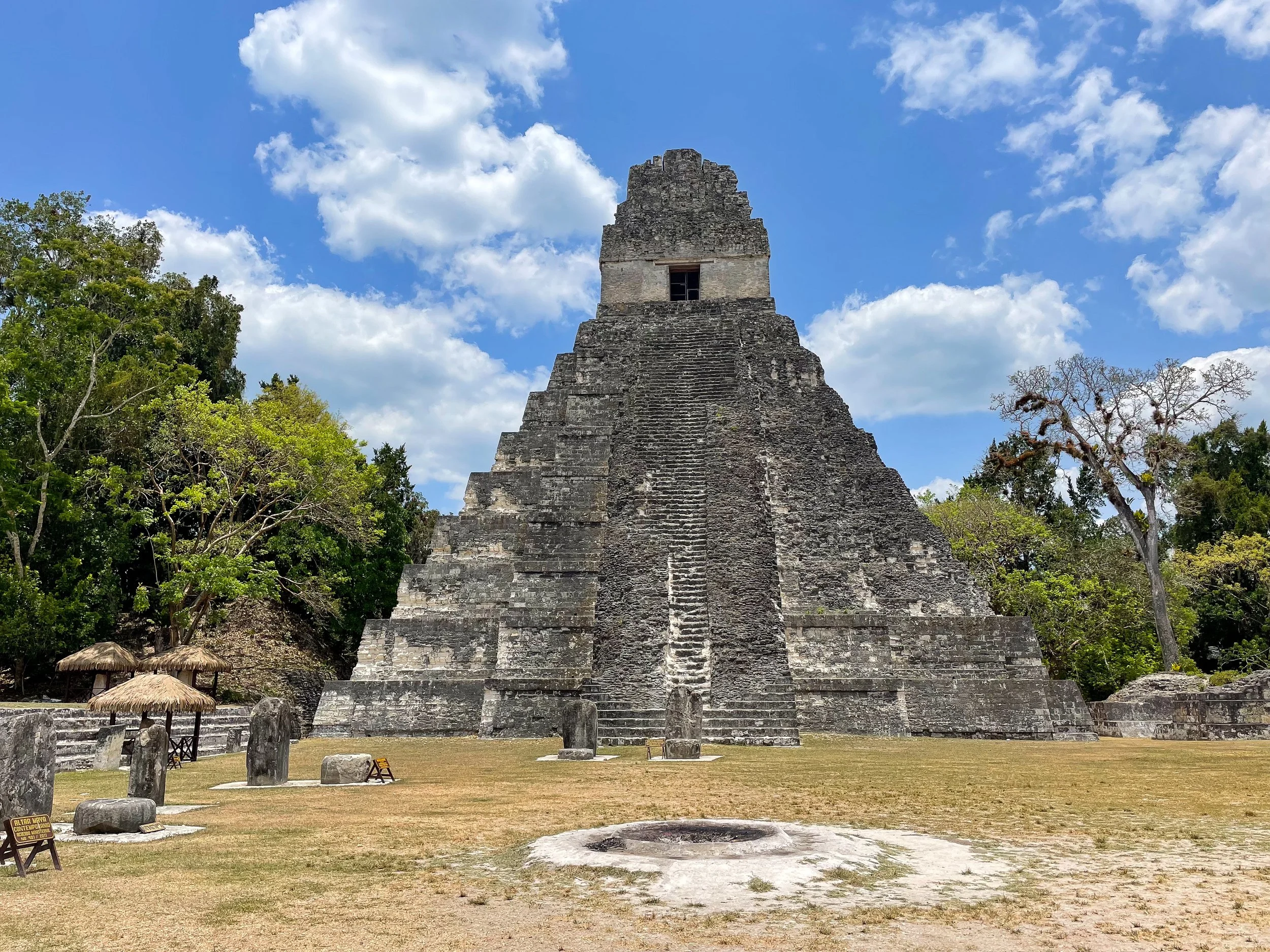
Maya Ruins Travel Guide: Jungles, Temples & Ancient Cities. Journey through ancient Maya cities, temples and archaeological wonders across Belize and Guatemala while exploring dramatic jungle landscapes.
For Next Time…
Flores, Guatemala. A picturesque island city on Lago Petén Itzá known for its colorful architecture and proximity to Mayan ruins.
Monterrico. A beach town along Guatemala’s Pacific Coast known for its black sand beaches and annual sea turtle migrations.
El Paredón. A sleepy surf town along Guatemala’s Pacific Coast with black sand beaches and great year round surf conditions.