

Tromsø Norway Travel Guide: Northern Lights, Arctic Fjords & Sámi Culture
Explore Tromsø's snowy streets and historic waterfront where Nordic cuisine and Sámi culture meet dramatic fjords, dancing auroras and Arctic adventures.
Tromsø, Norway
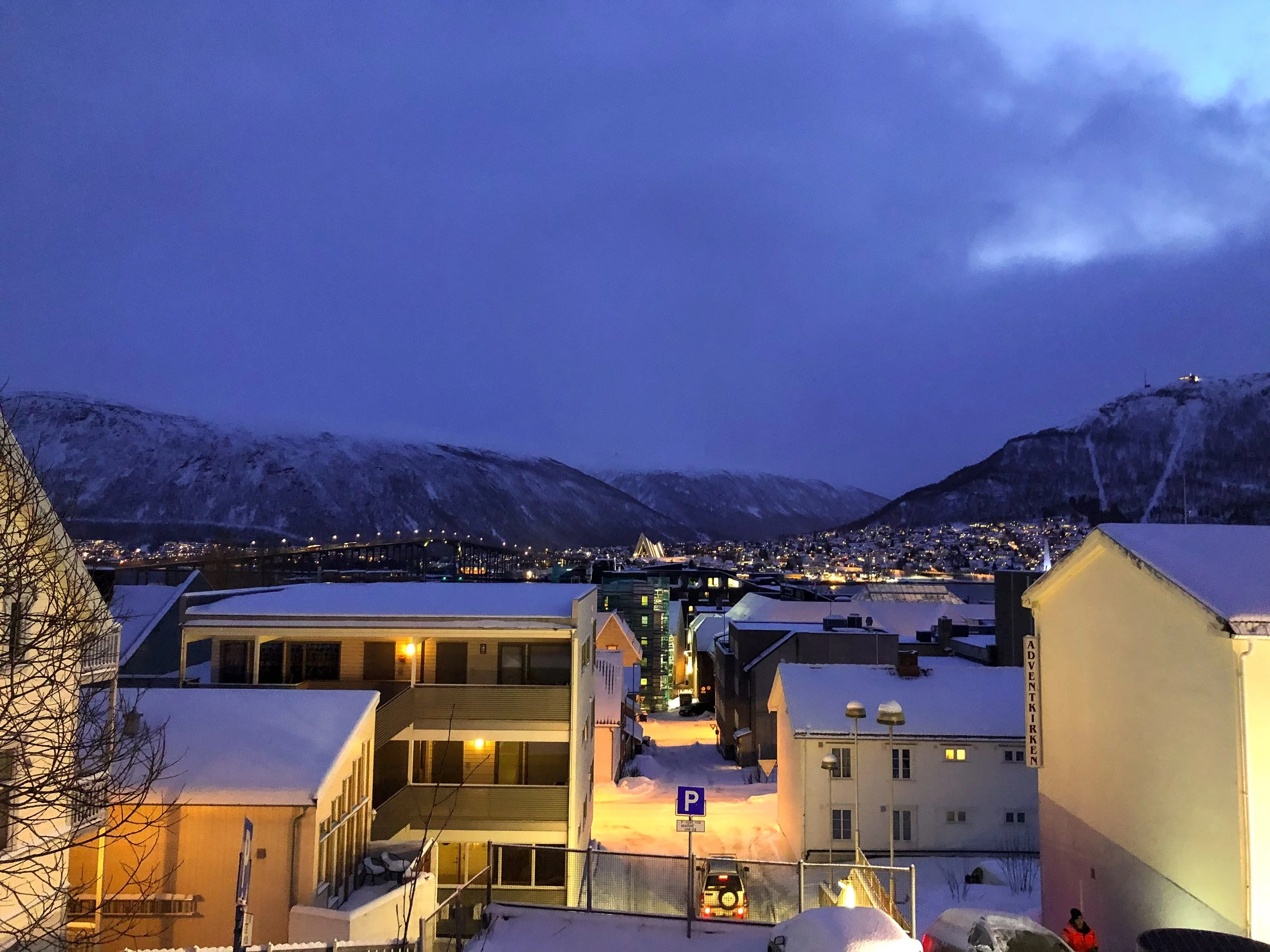
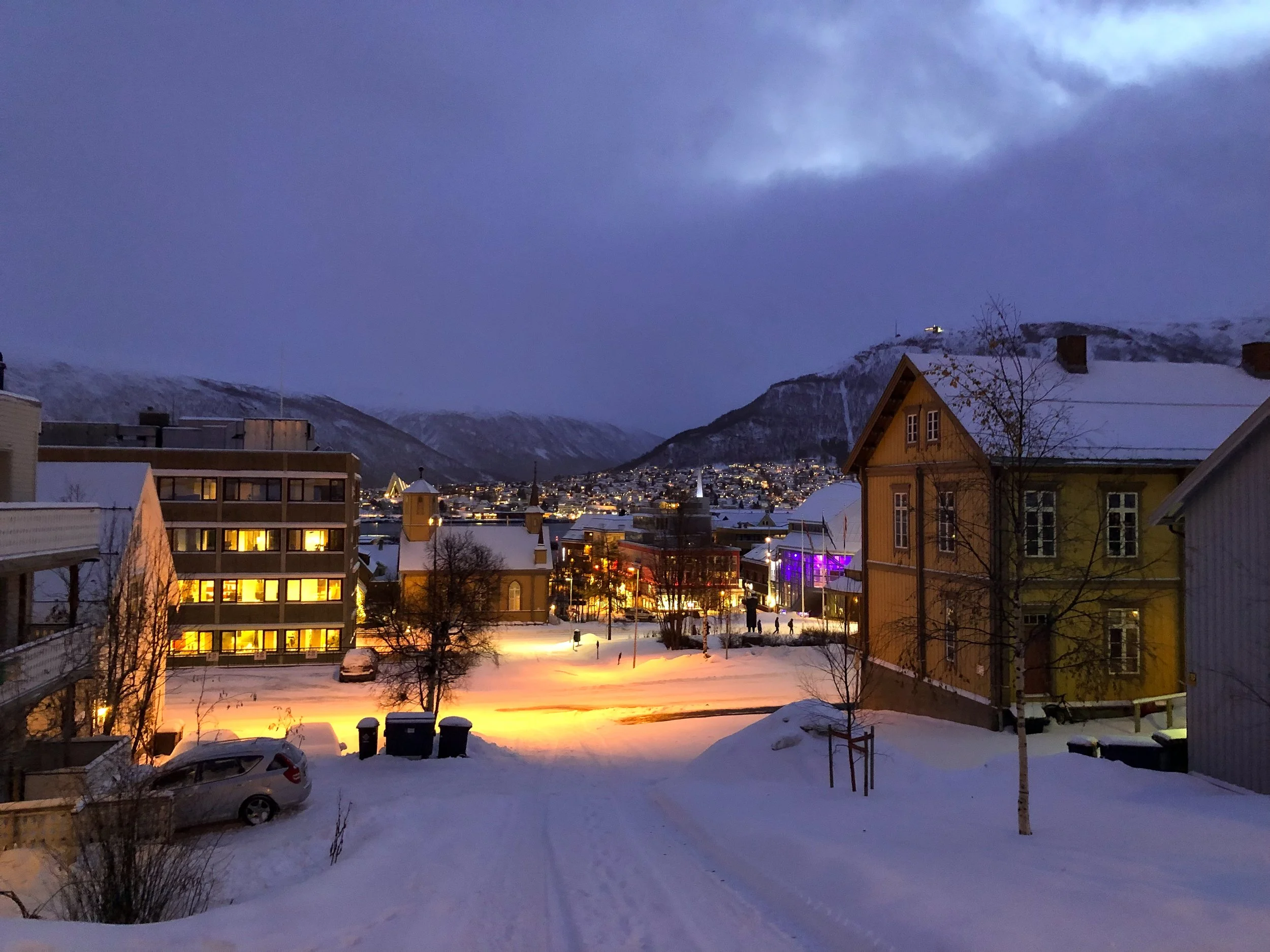
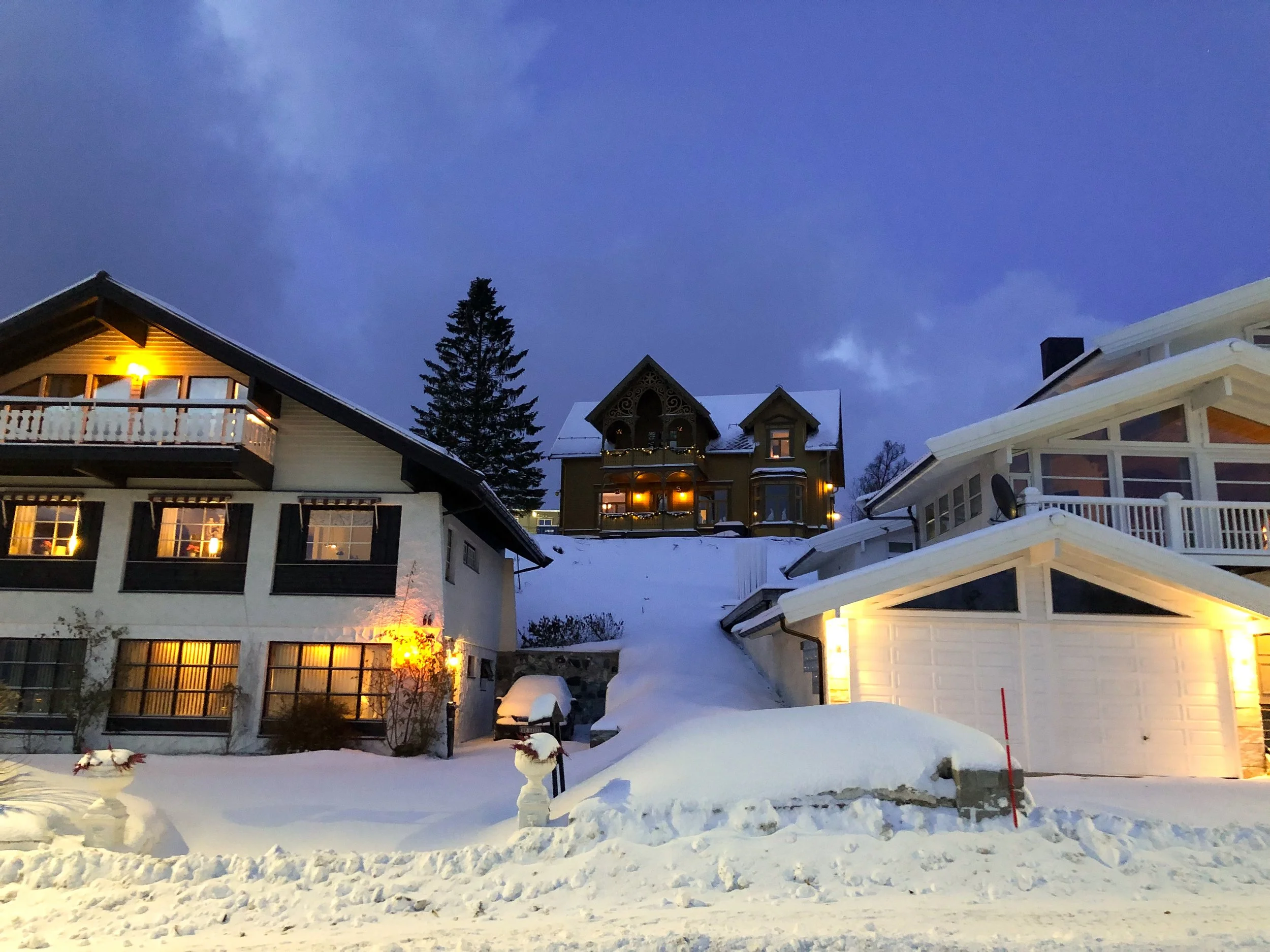
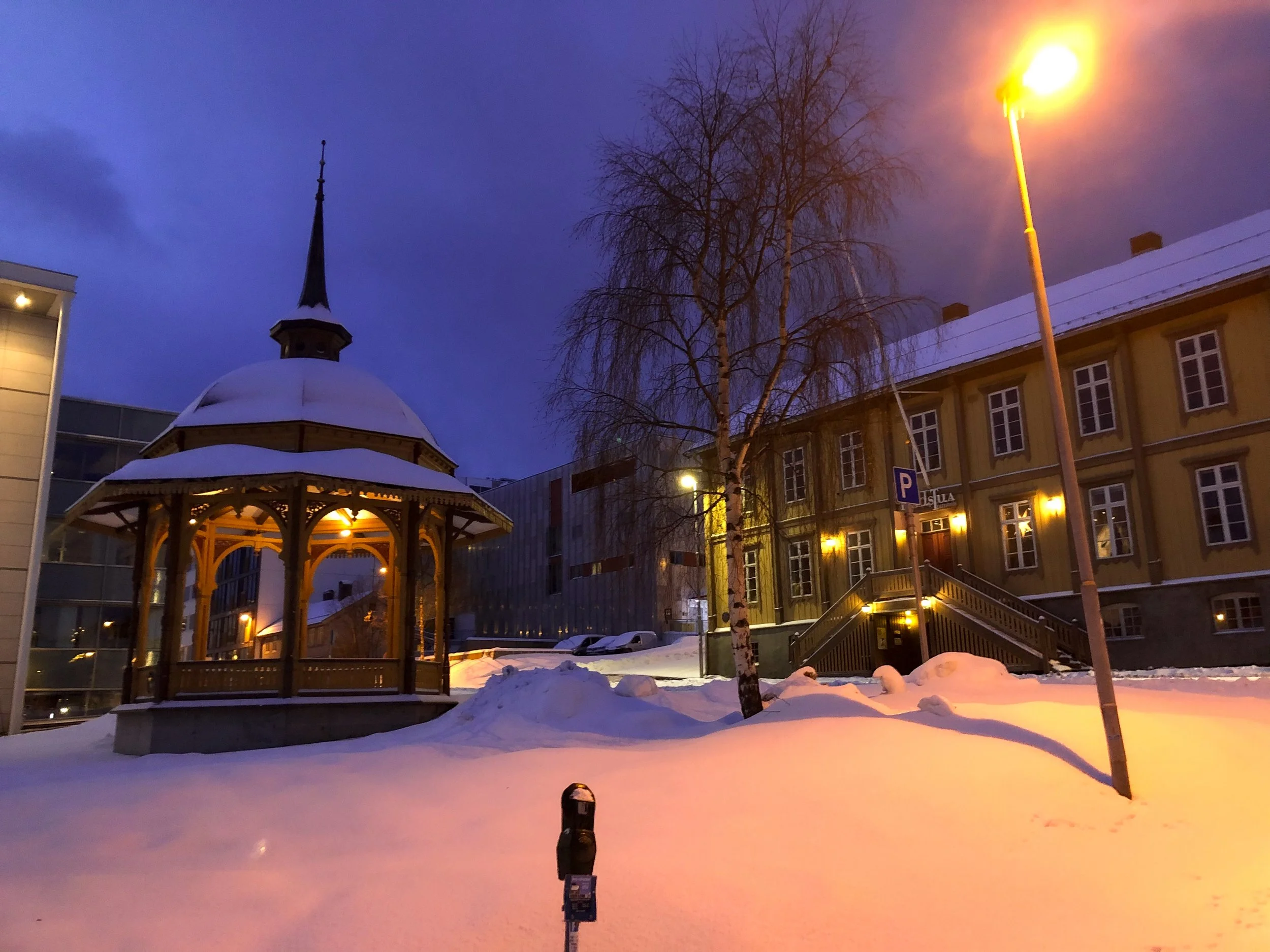
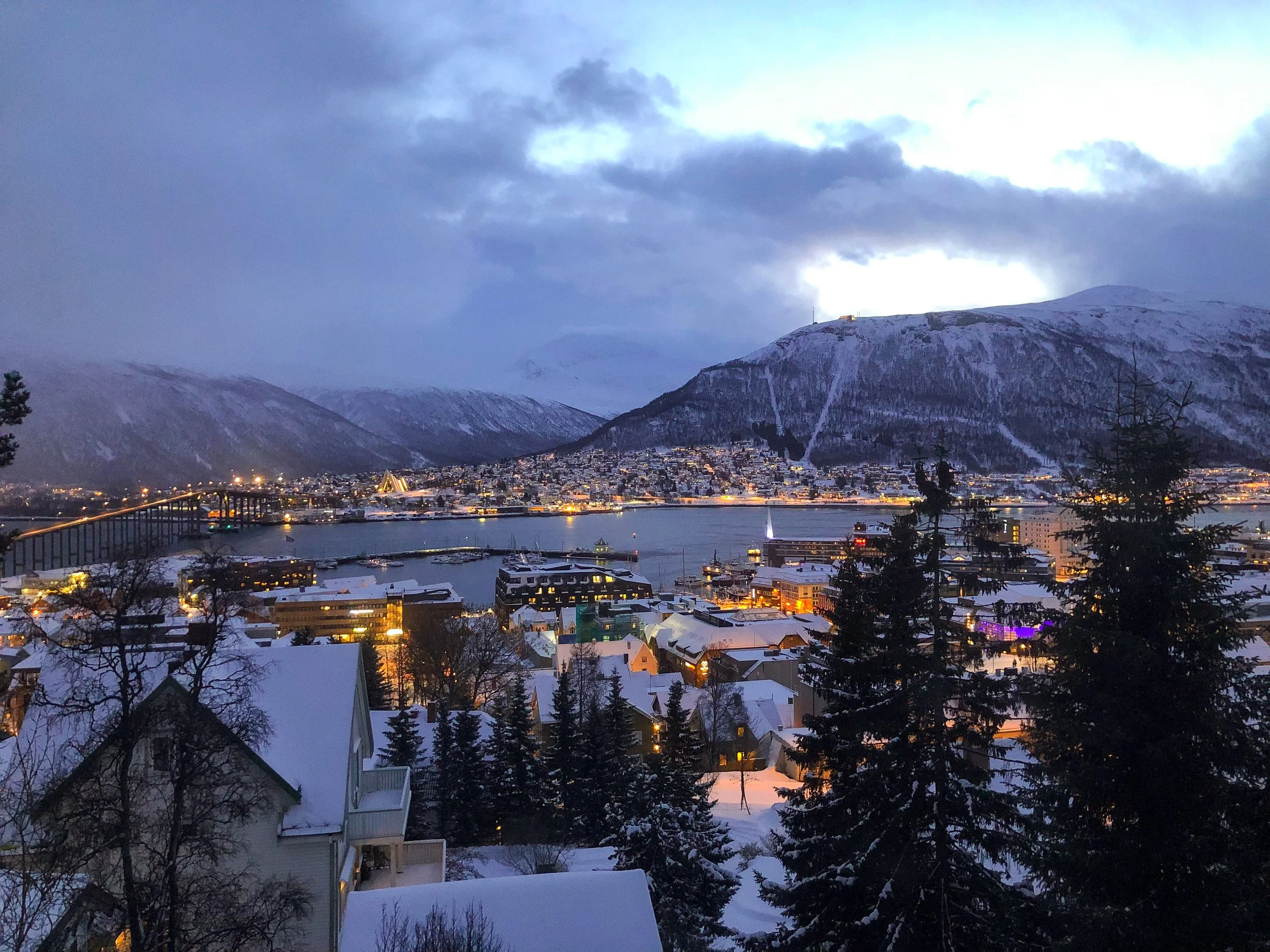
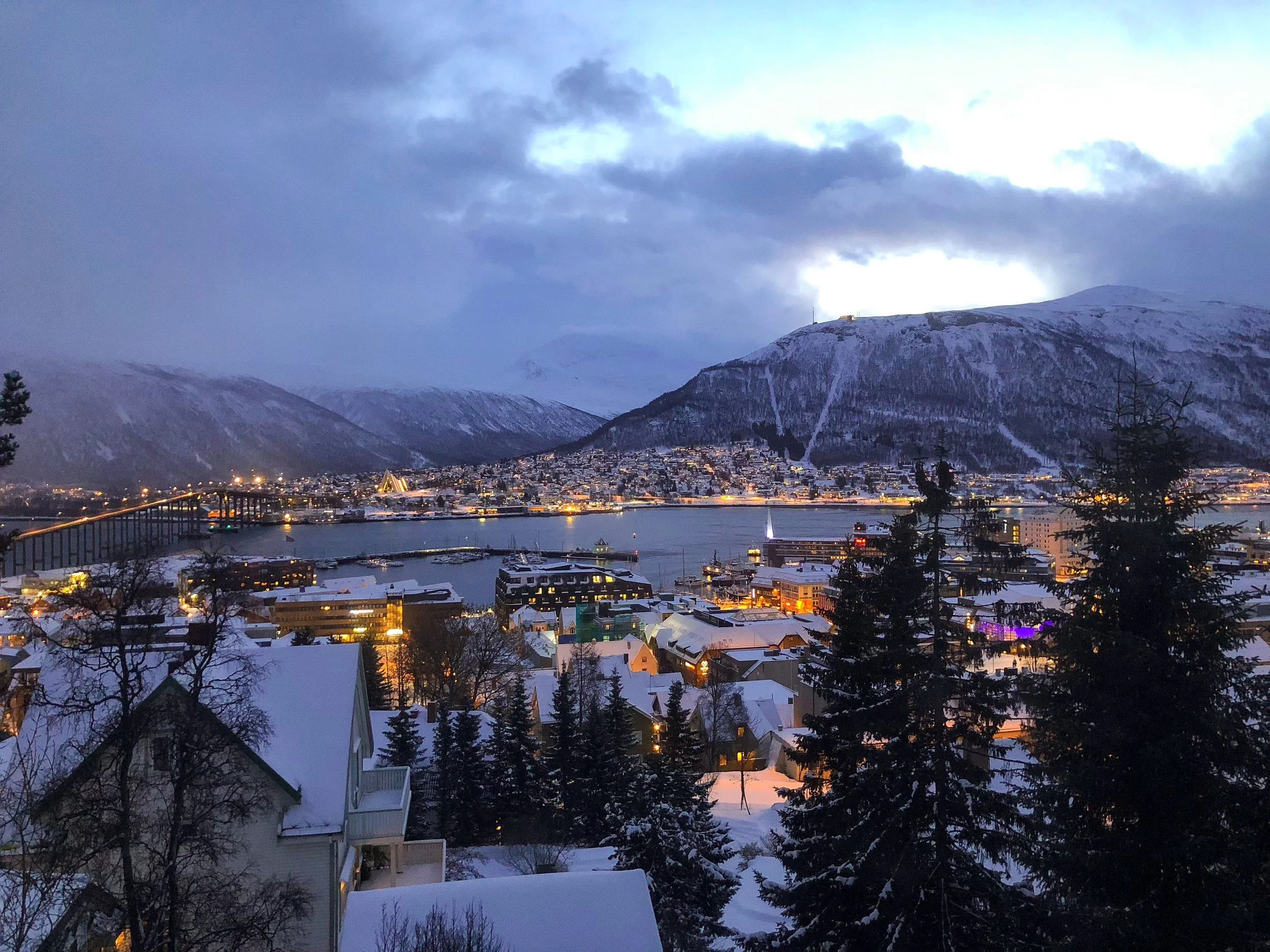
Tromsø is a breathtaking city in Northern Norway, located about 200 miles north of the Arctic Circle. Wintertime in Tromsø is like living in a snow globe. The city and surrounding nature are truly a winter wonderland that felt warm and vibrant even during the darkest and coldest time of the year. It’s a place to witness the Northern Lights, snowshoe up mountains overlooking the fjords, feed reindeer and learn about the indigenous Sámi culture.


The Gateway to the Arctic
Tromsø is considered to be the gateway to the Arctic. Its proximity to the Norwegian Sea and temperate climate for its position so far north have made it an ideal spot for Arctic explorers and expeditions throughout history. Its location under the Aurora Oval makes it a prime place to view the Northern Lights.
Polar Night & Midnight Sun
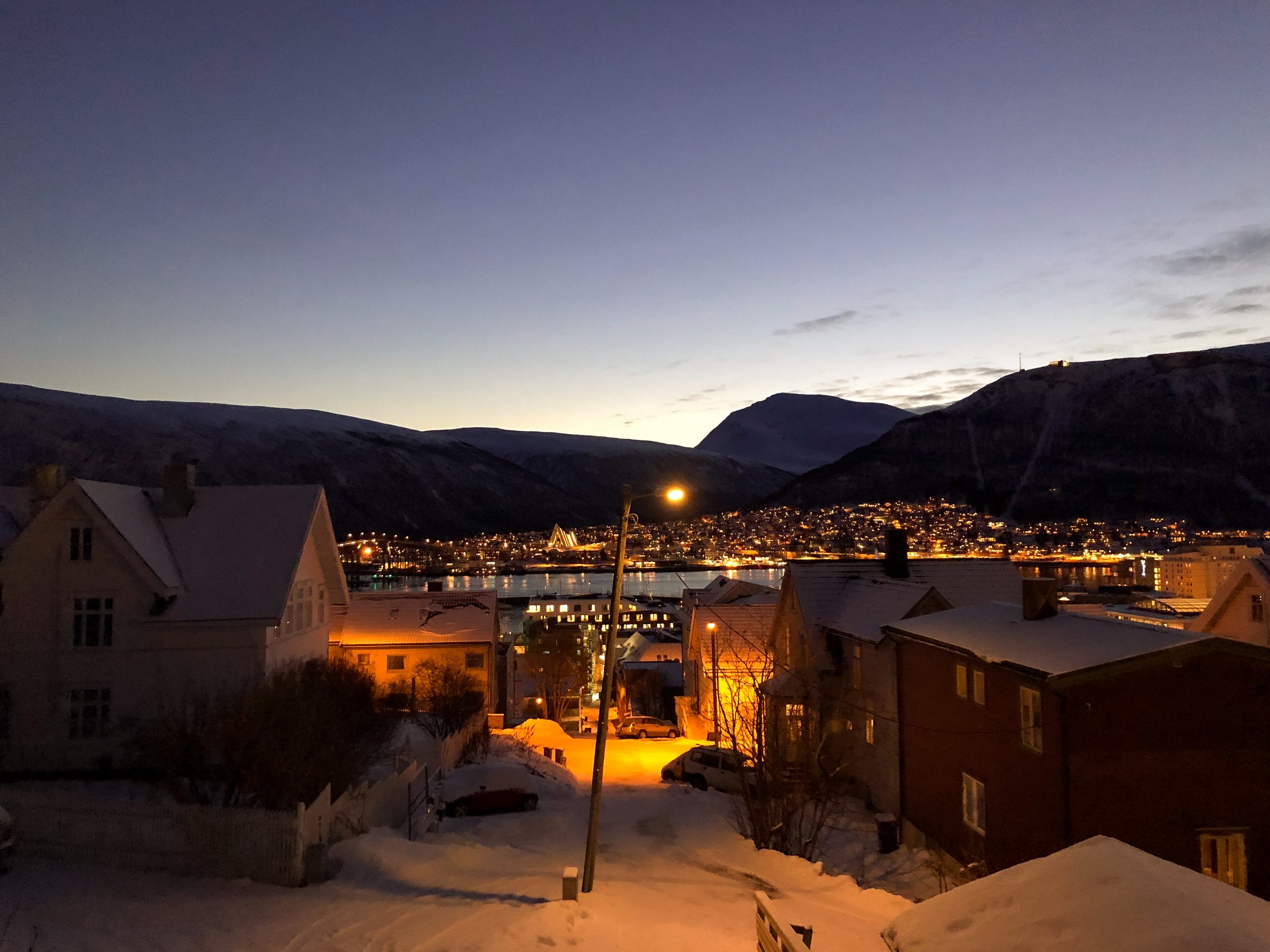
For two months, from late November through late January, the sun does not rise above the horizon. During this time of the the year, known as Polar Night, nearly all hours of the day are dark. For a few short hours during the morning, the sky brightens up enough to feel like an extended dawn. The addition of snow makes the landscape feel even brighter as it reflects more natural light.
The opposite is true from late May through late July. During this time of the year, known as the Midnight Sun, the sun never sets below the horizon. It stays bright for all hours of the day, however when the sun reaches closest to the horizon, the sky lights up with beautiful colors seen during sunset and sunrise.

The Northern Lights
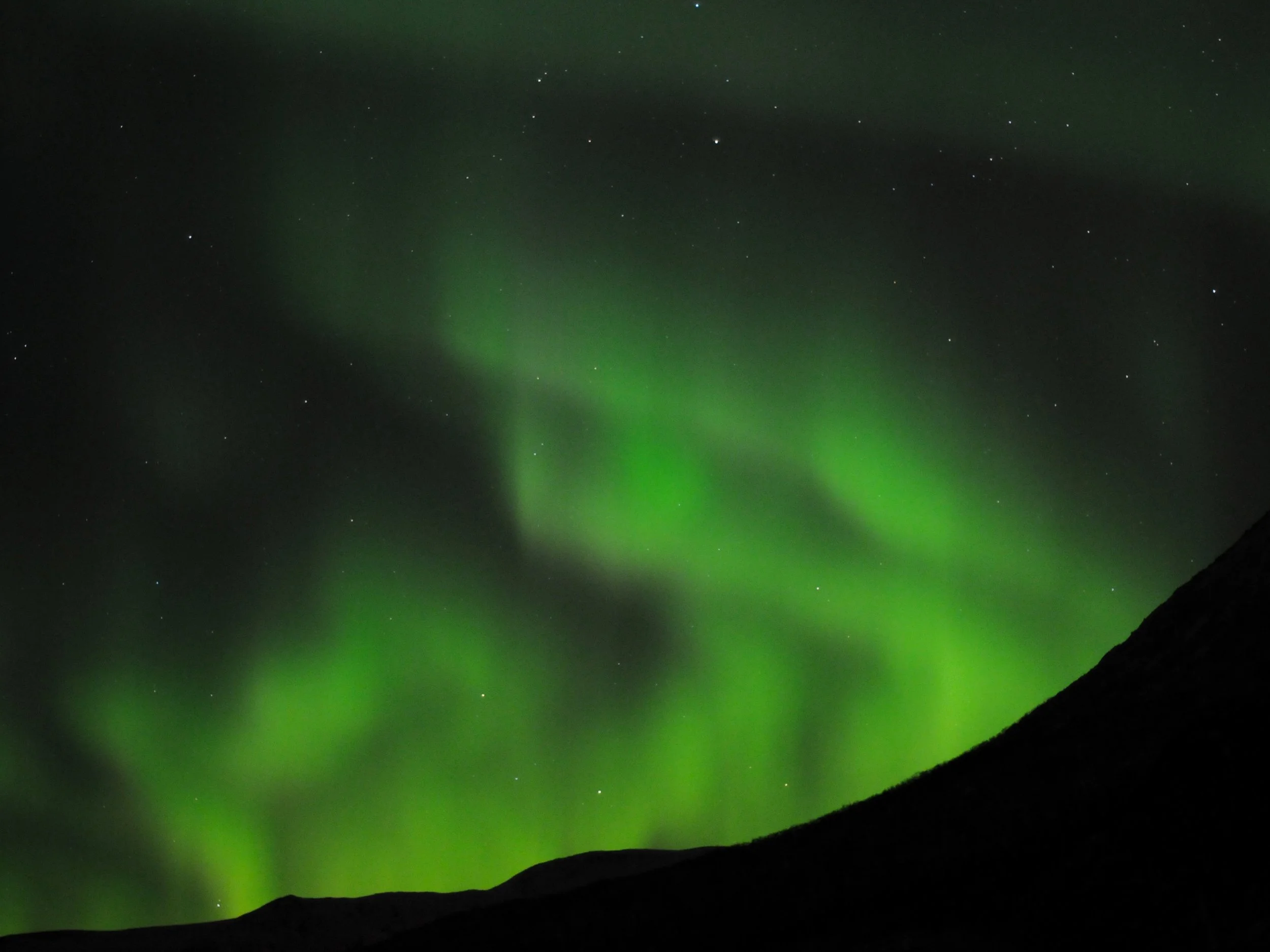
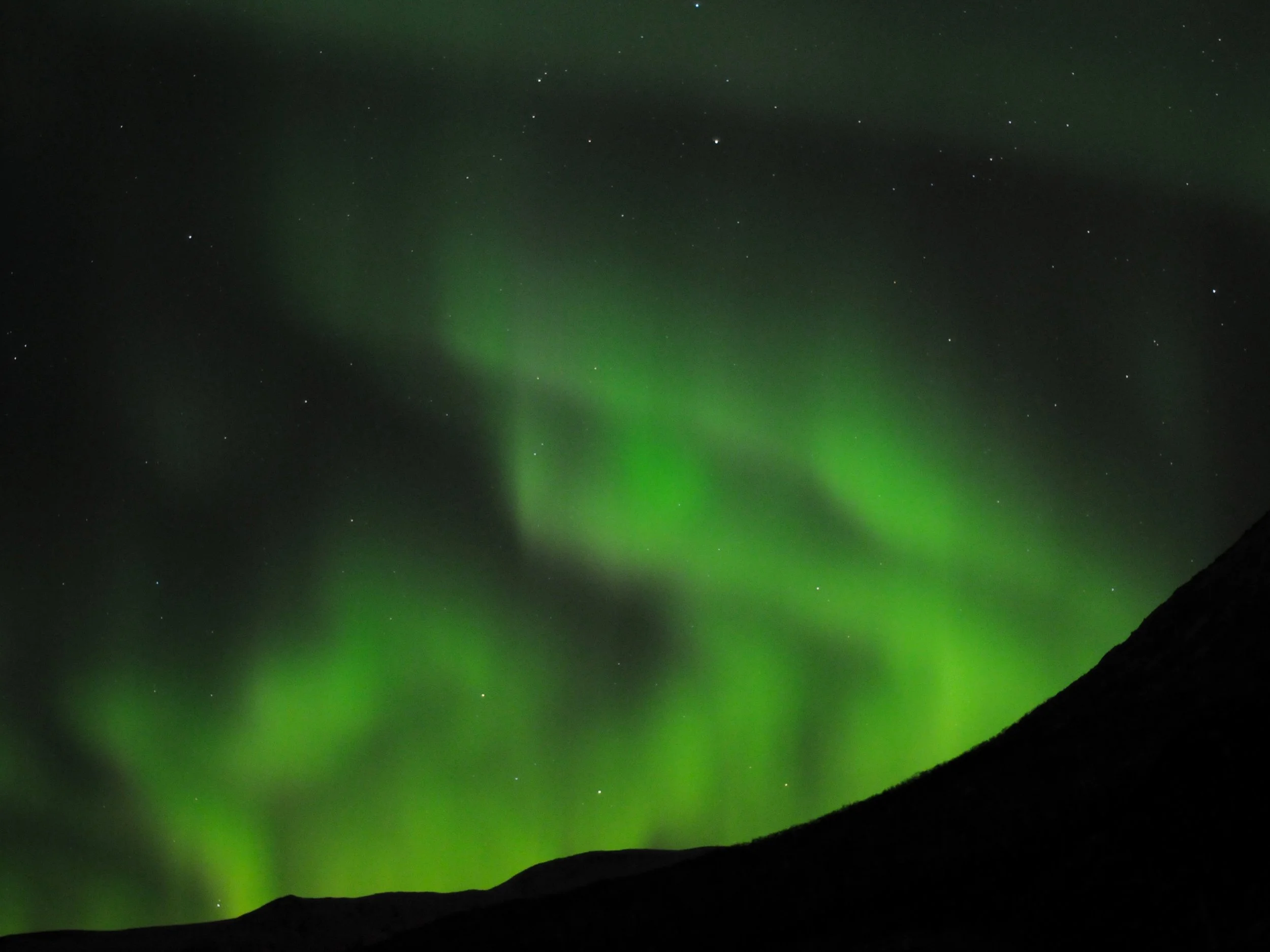
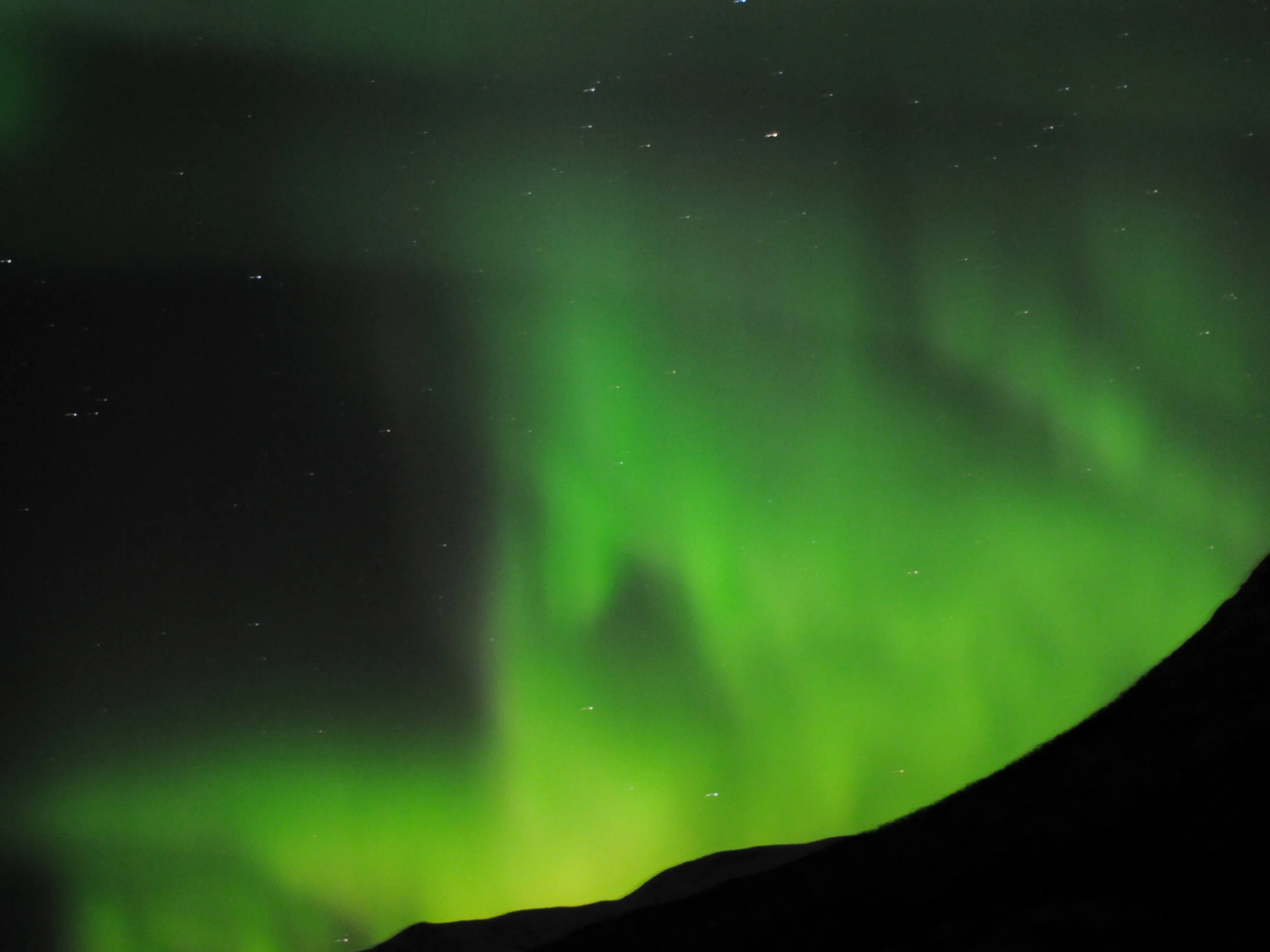
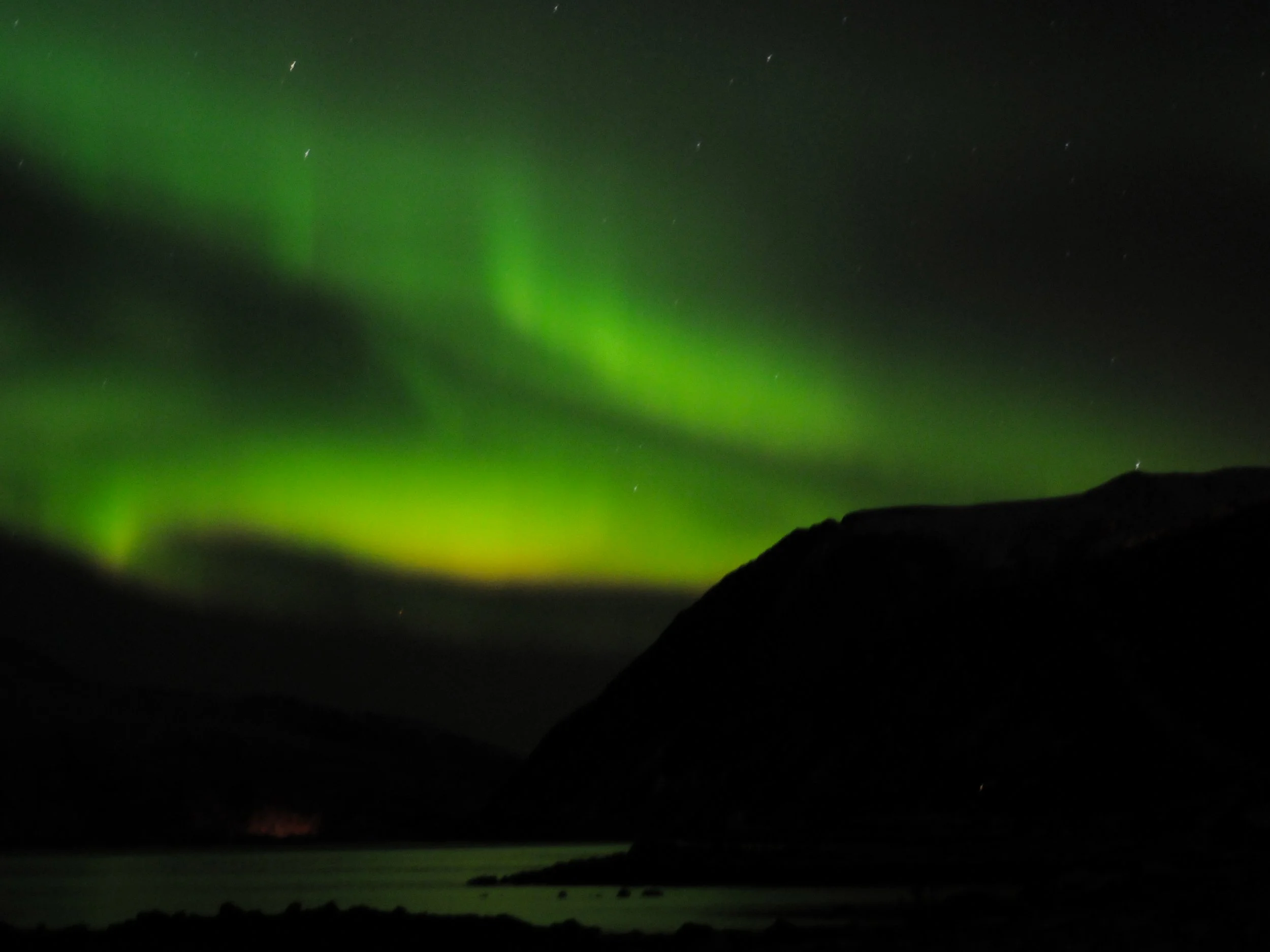
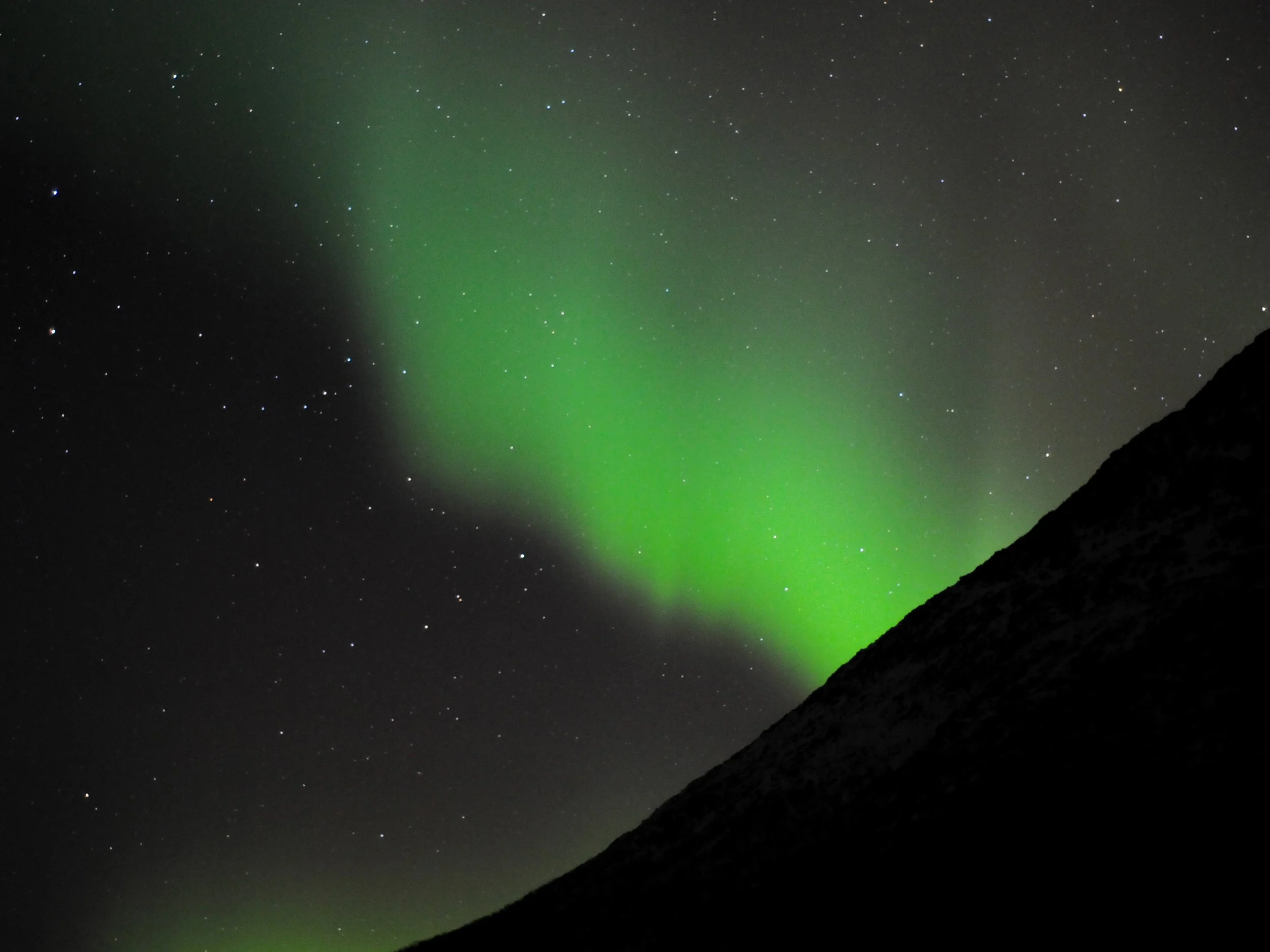
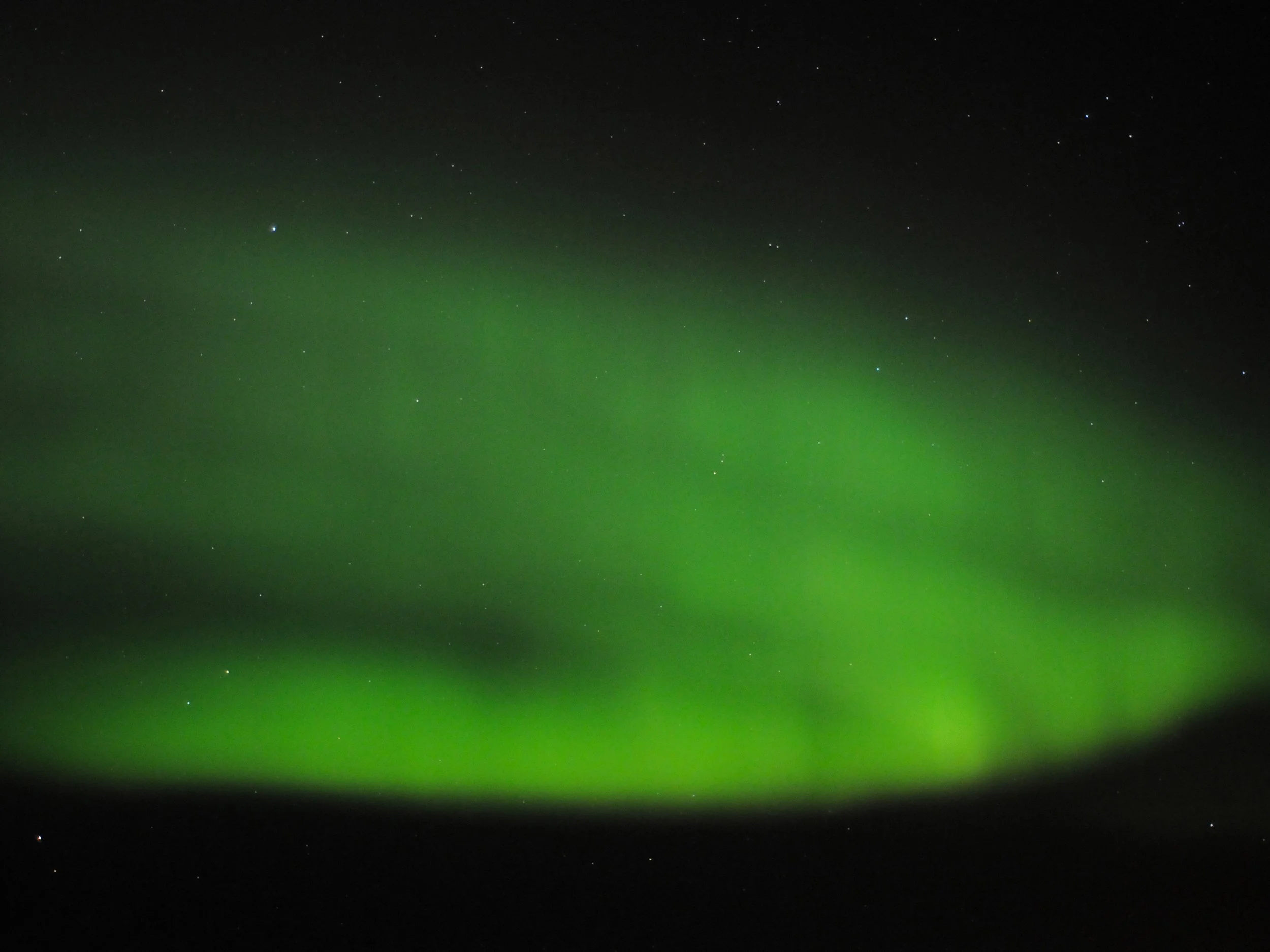
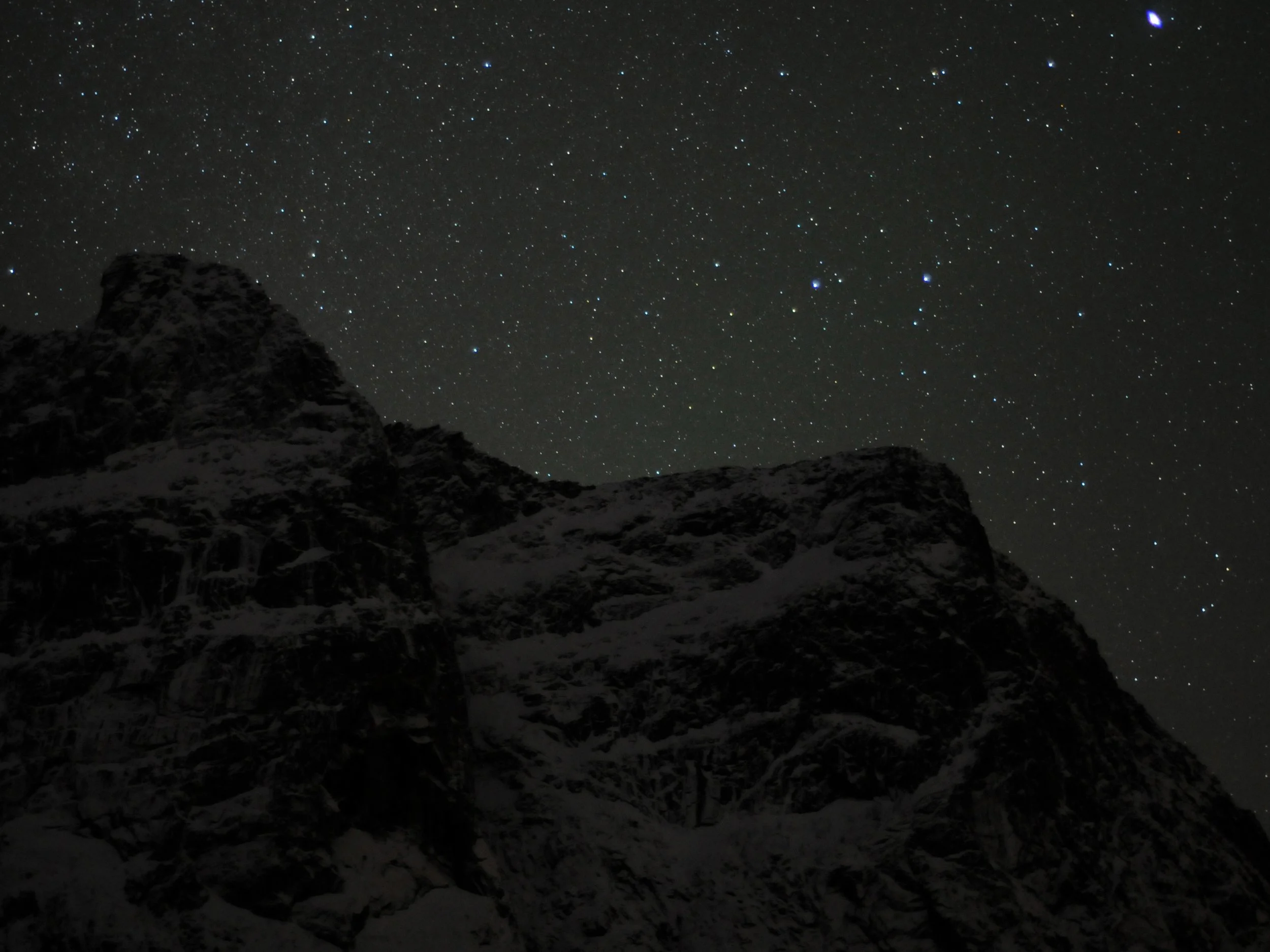
One of the most popular things to do in Tromsø is watch for the Northern Lights. The city sits directly beneath the Aurora Oval, the ovular path near Earth’s northern magnetic pole where the Northern Lights appear. If the conditions are right, the Aurora can be seen dancing and swaying above Tromsø during nighttime. The best time of the year to see the Aurora in Tromsø is from October through March. We visited from late November through early December.
Chasing the Aurora
Though the Aurora can be seen above the city, the best way to see it is by traveling outside of Tromsø to escape from the light pollution. We managed to see the lights above the city one night during our stay but truly got to experience them during a Northern Lights Safari. Local guides will take visitors outside the city to nearby fjords or as far away as Finland and Sweden to give you the best chance possible of seeing the lights. There are dozens of experienced guides and tour companies offering safaris to chase the Aurora. We booked a small group tour with Enjoy the Arctic.
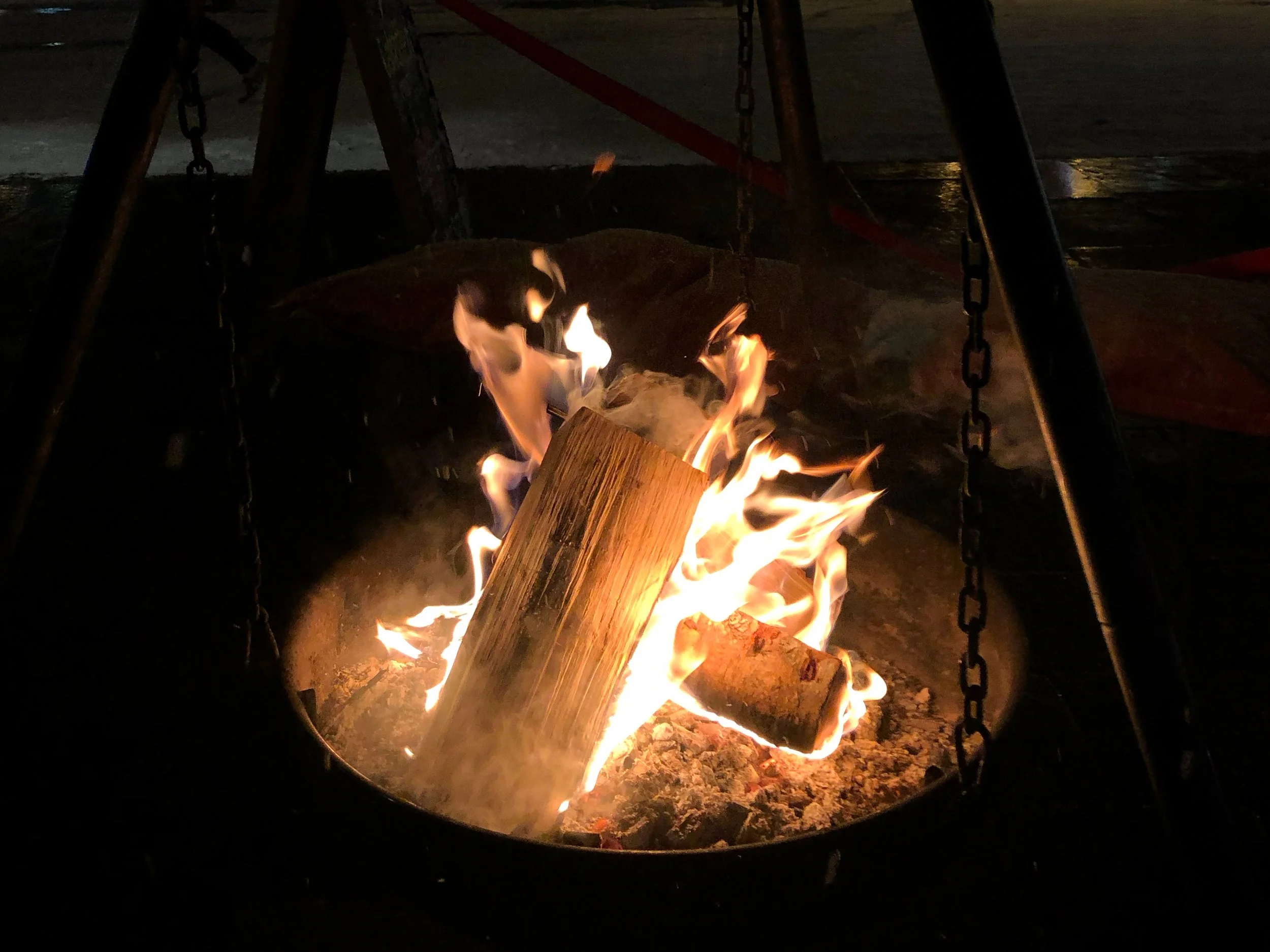
We drove an hour outside of the city to Grøtfjorden where we were able to watch the Aurora dance across the sky nearly the whole evening. We even spotted a few meteors. Our guide helped us take photos, built a fire to keep us warm and provided us with warm drinks and veggie dogs to eat.
Aurora Spotting Tips
It needs to be dark and your eyes have to adjust to the dark. Keep flashlights pointed down or use red lights.
It needs to be a clear evening, preferably no clouds or haze
Spotting the Aurora isn’t always certain. Even if it’s a dark sky and clear night, there might not be the right solar activity for them to appear. Plan on having a couple nights available to watch for the lights in case your first attempt doesn’t work out.
The human eye has a difficult time taking in enough light at night to recognize the Aurora’s true colors like cameras do. With your naked eye, it will appear mostly pale green or dark purple with the occasional flair of neon. Regardless of the intensity, the Aurora is truly a sight to be seen.
With the right settings, any DSLR camera will be able to photograph the Aurora. Our DSLR settings were:
Camera (Nikon D300S)
50mm Lens
Aperture (F1.8)
ISO (1250)
Shutter Speed (2.5)
Whether using a camera or a phone to photograph the northern lights, always use a tripod. Your hands will be too shaky to take a clear image.
Night mode and 10 second exposures on most smartphones will also capture the Aurora.
Dress in warm layers! It is going to be very cold and windy.



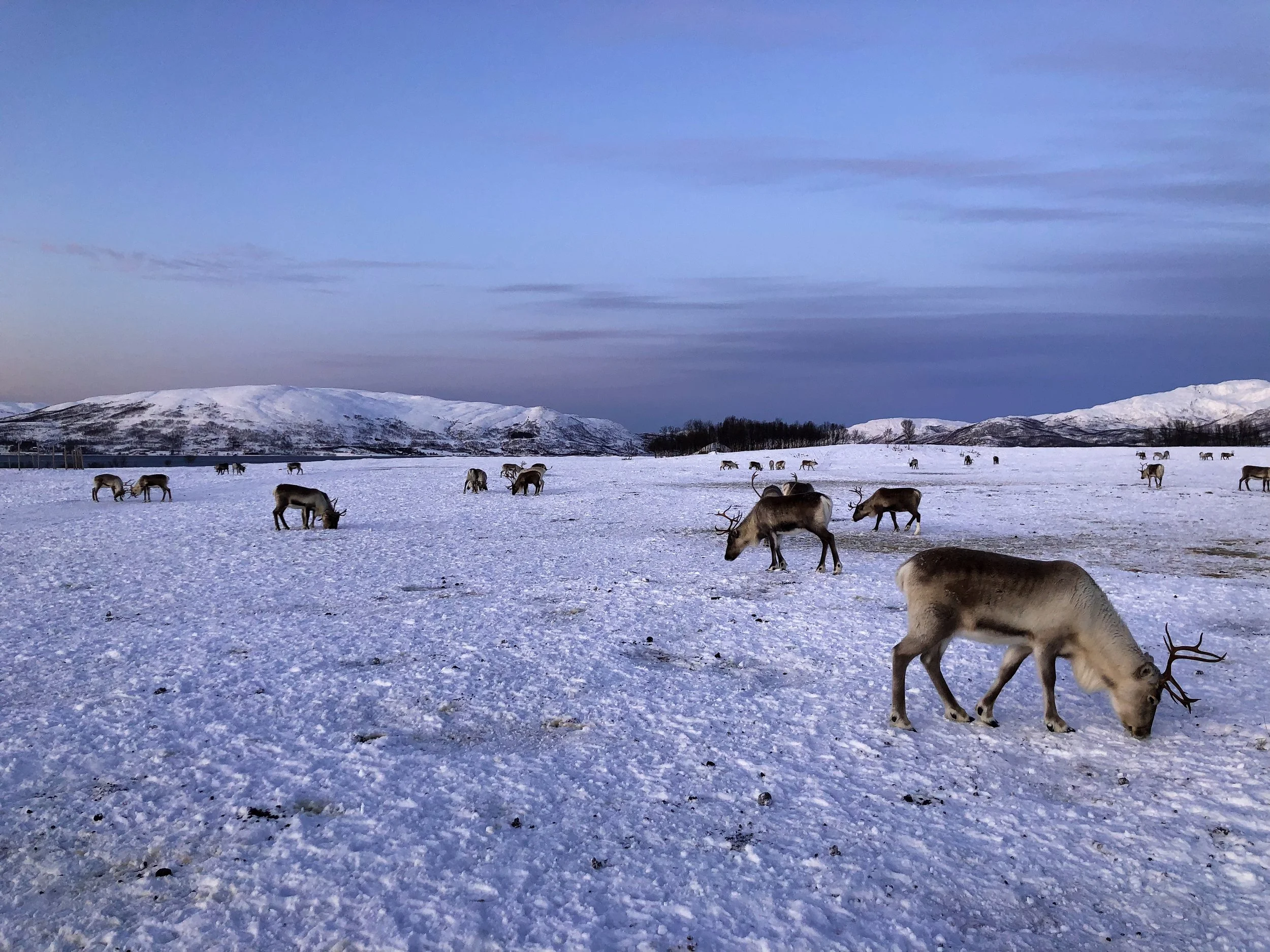

Sámi Culture & Reindeer
The Sámi People are a semi-nomadic nation spread throughout Scandinavia with a tradition based in reindeer herding. For thousands of years, they have established a livelihood using the reindeer for meat, fur and transportation. While in Tromsø, we booked an experience with Tromsø Arctic Reindeer, operated by a family of Sámi people to promote their culture, share their stories and offer close experiences with their herd of reindeer.
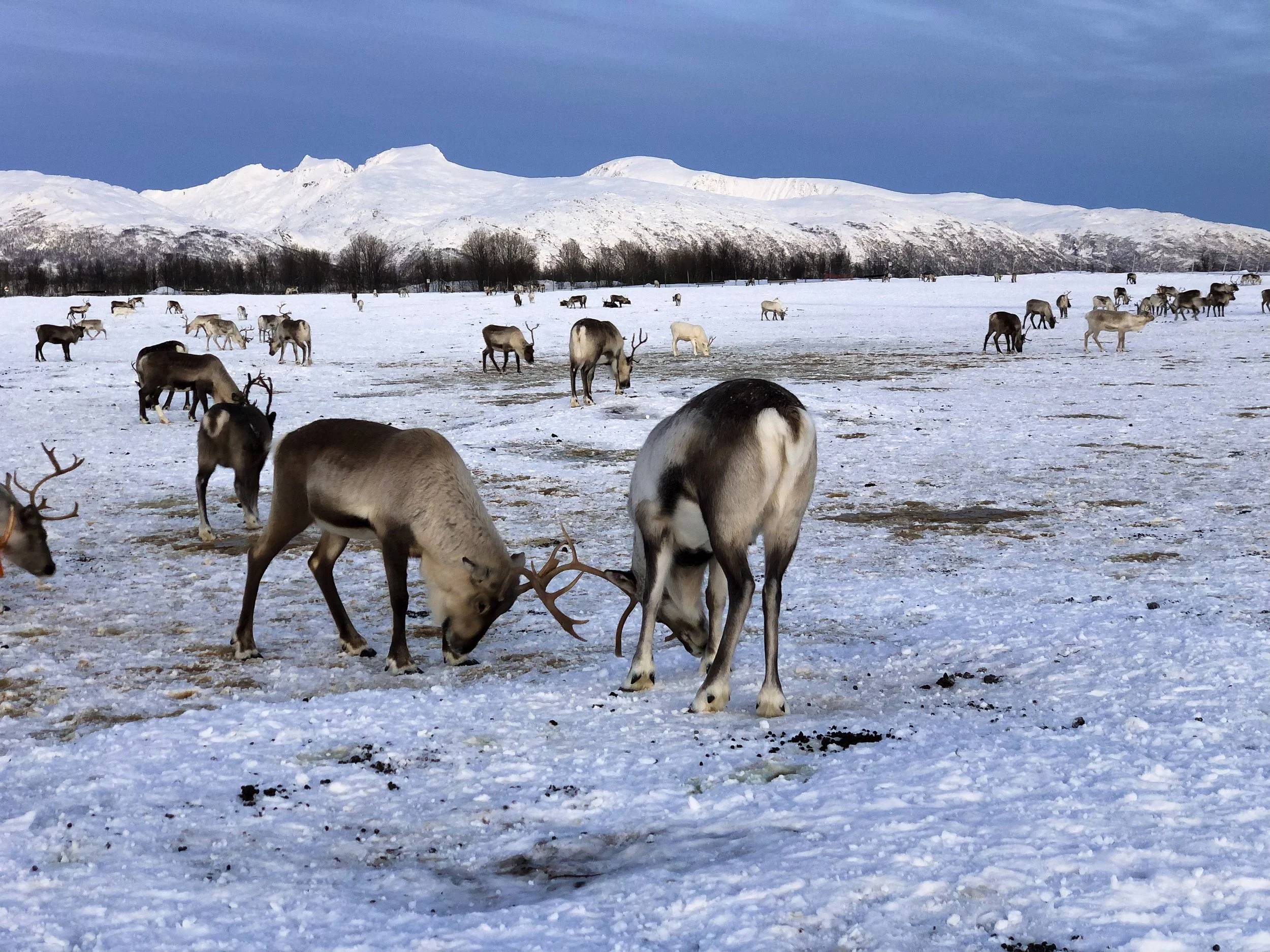
Reindeer Games
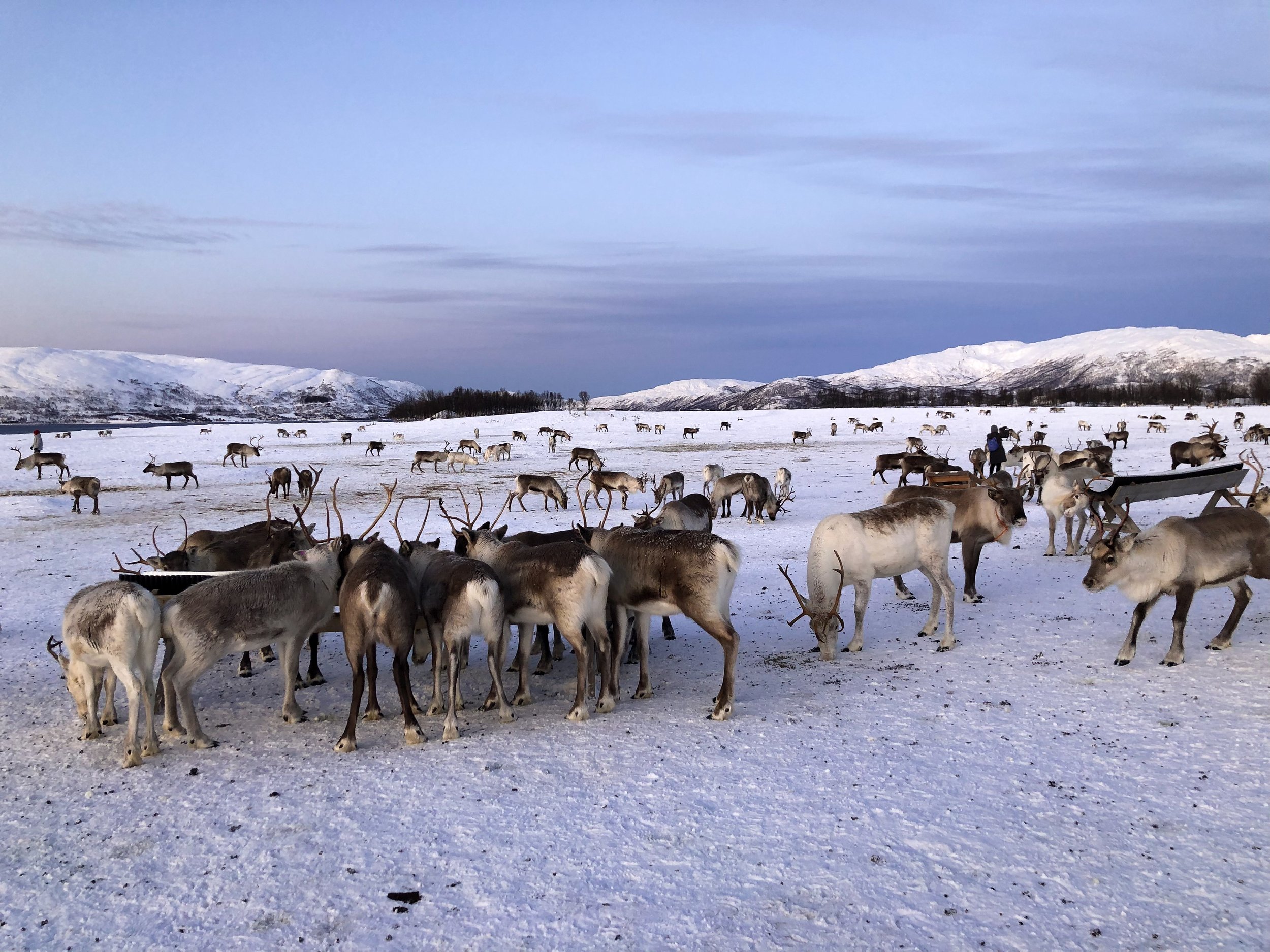
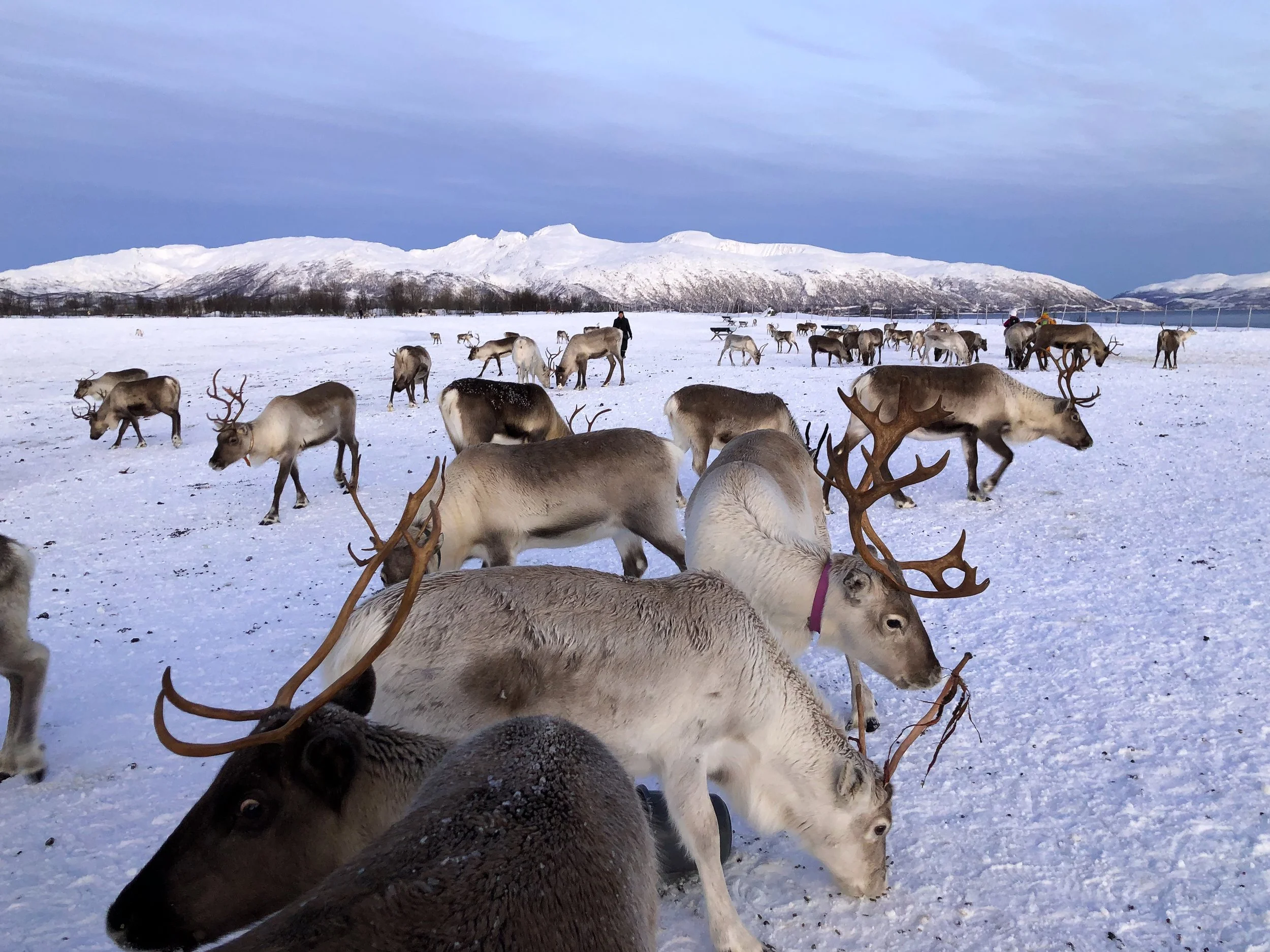
The Sami family welcomed us to their camp and introduced us to their herd of reindeer. Hundreds of the animals roamed the icy field as snow covered peaks stood in the distance. We watched as they played reindeer games, chasing each other around and sparring, like a scene from a Nordic fairy tale.


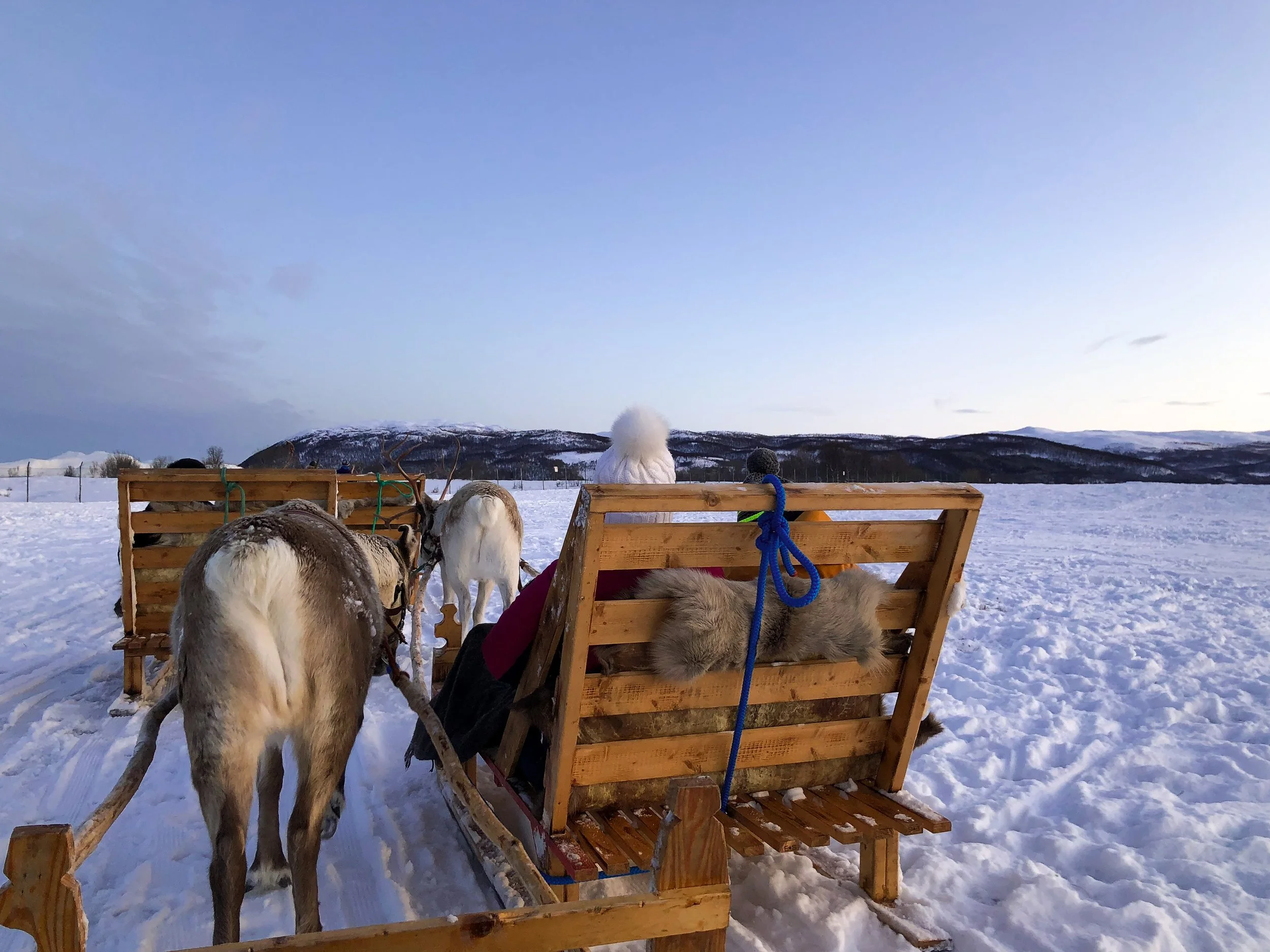
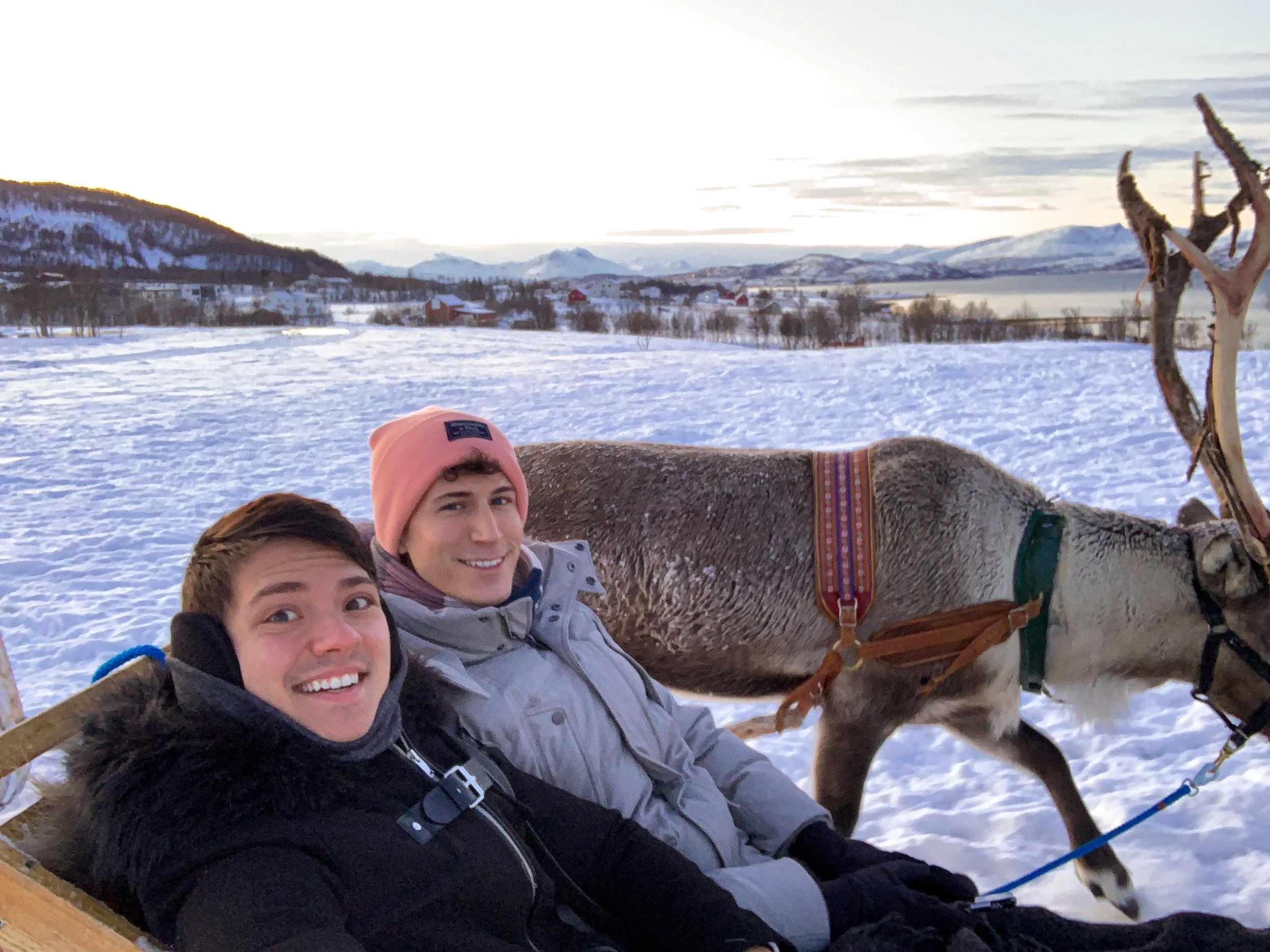


Reindeer Sledding & Feeding
Guided by two reindeer and Sámi handlers, we were gently pulled on a sleigh ride across the wintery pasture and landscape. We thanked the reindeer with buckets of food (no, not the glitter and oats you toss outside for Santa’s reindeer) but hearty pellets of grain. They typically graze on the grass beneath the snow but once the snow is too packed down for them to break through they feed on pellets or relocate to a new field. The reindeer, still wild animals, were very excited for the food. They were gentle, however at times one would nudge you for attention then bury their face into the bucket. It was amazing getting to be so up close and personal with these animals.
Sámi Hospitality & Story Time
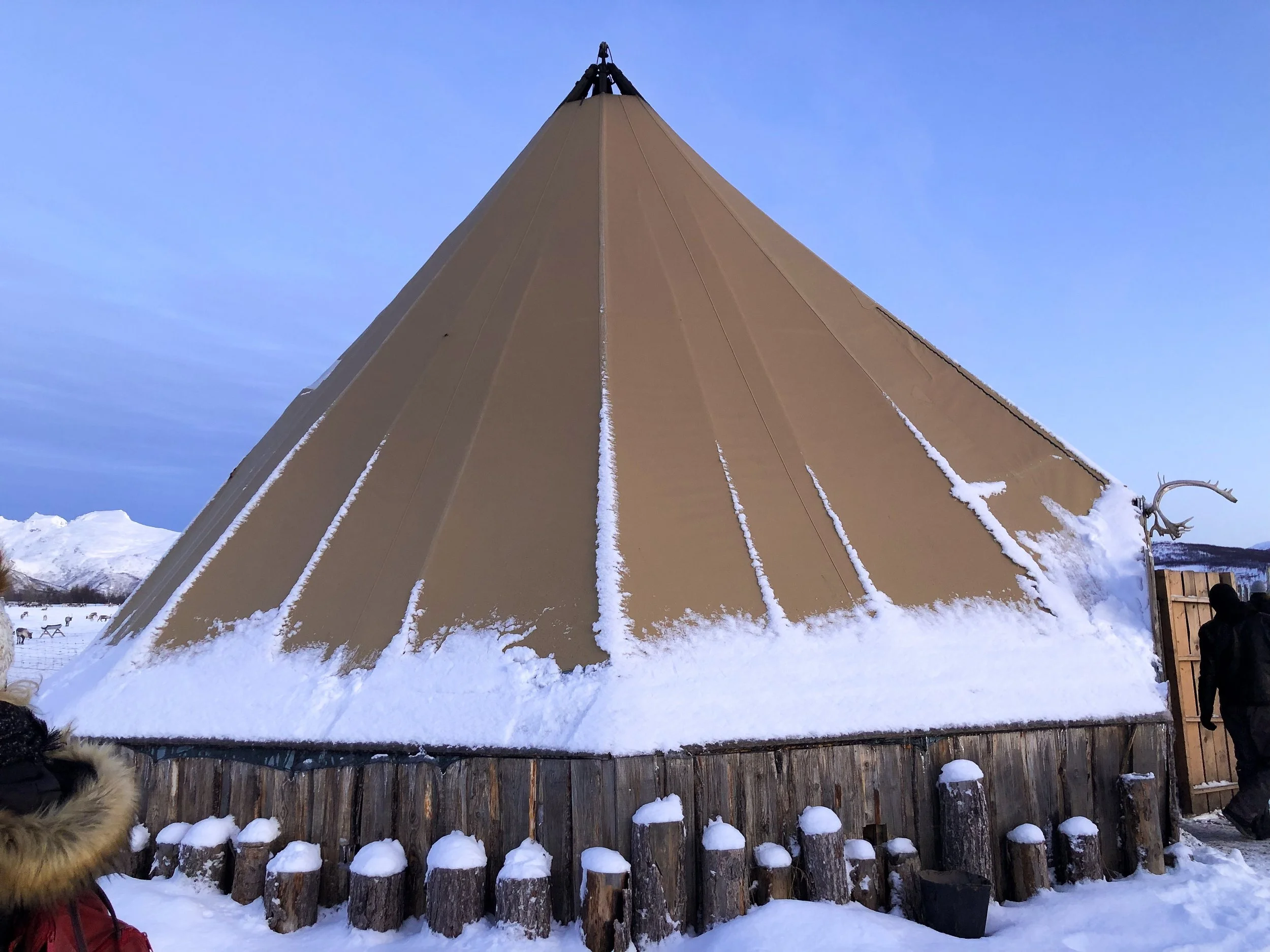
Inside the Sámi tents, the family’s matriarch greeted us with hot coffee, cookies and reindeer stew. We ate a vegetarian version and warmed up around a wood burning stove. After our meal, we moved to a different tent, called a lavvu, used for communal gatherings and ceremonies. We sat around a log fire listening to the camp leader and multiple reindeer herders talk about their life and the Sámi Culture. They explained the purpose of the traditional clothing and items they carry, many of which were handmade from reindeer. They sang songs, called a joik, which is a traditional form of music sung to someone or something of importance in their lives. The eldest herder told us how he sings for the reindeer and to scare away predators. It was truly a one of a kind experience getting to hear stories from the Sámi people and feed their herd.
Snowshoeing & Fjord Hike
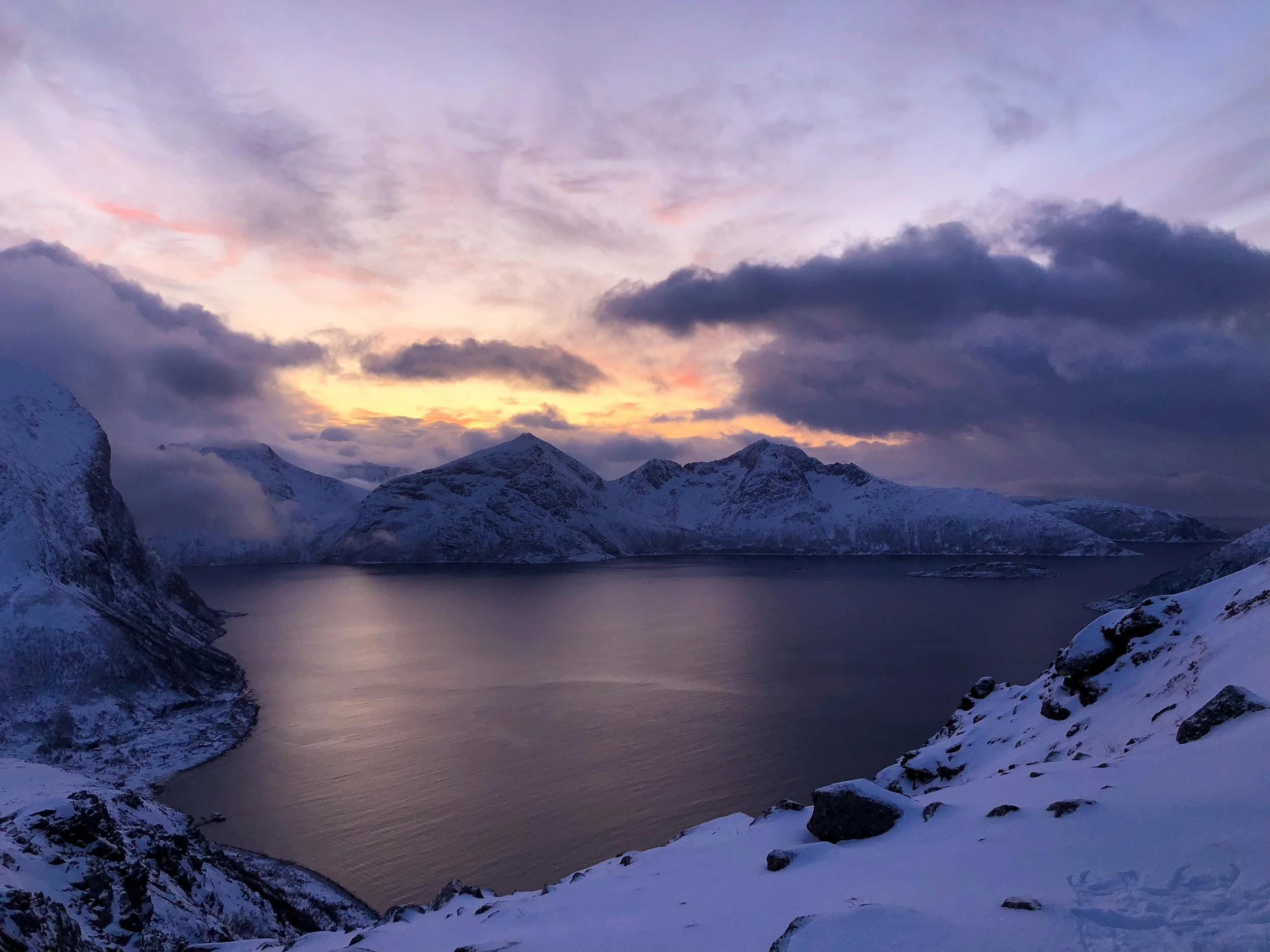
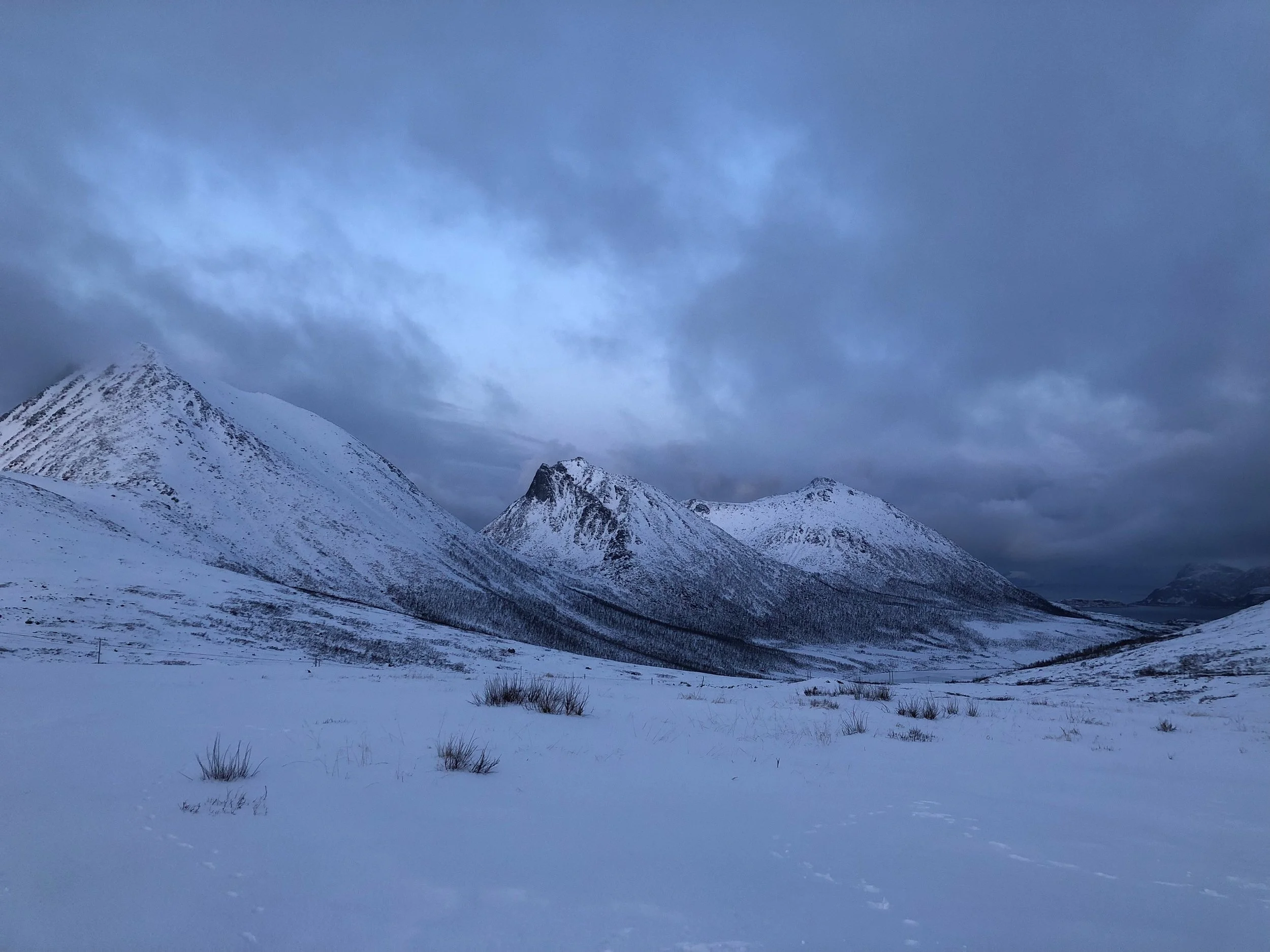
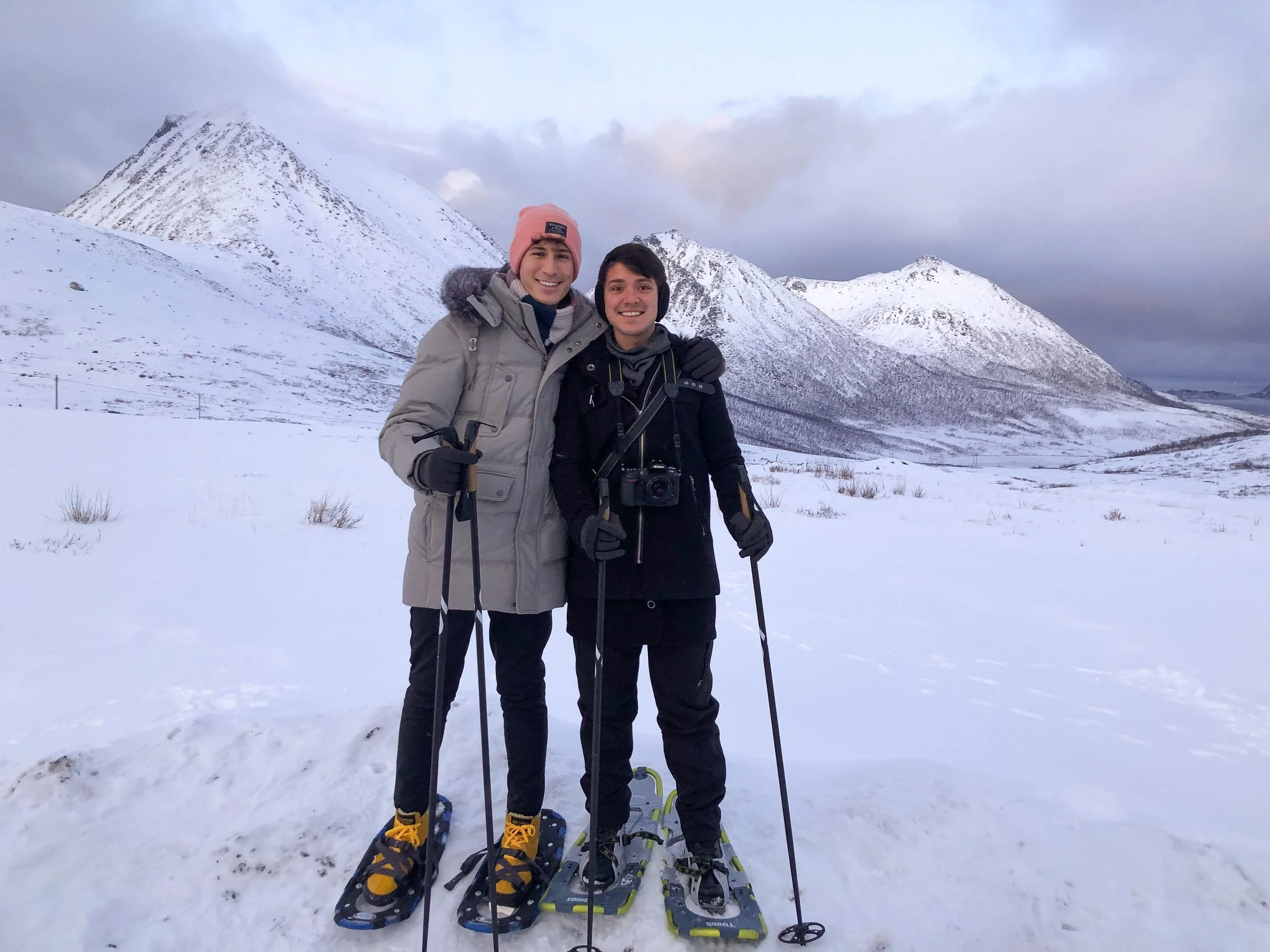
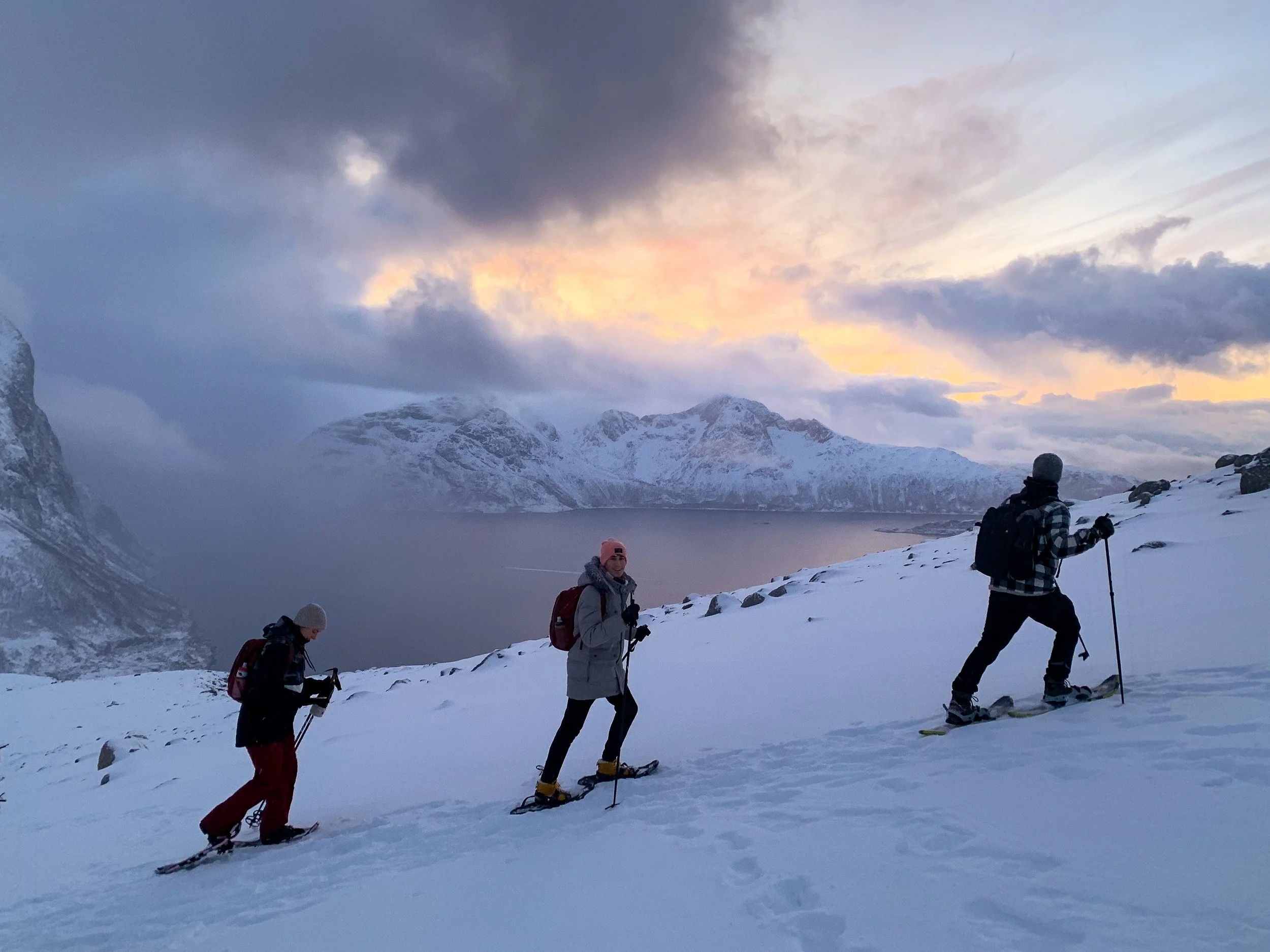
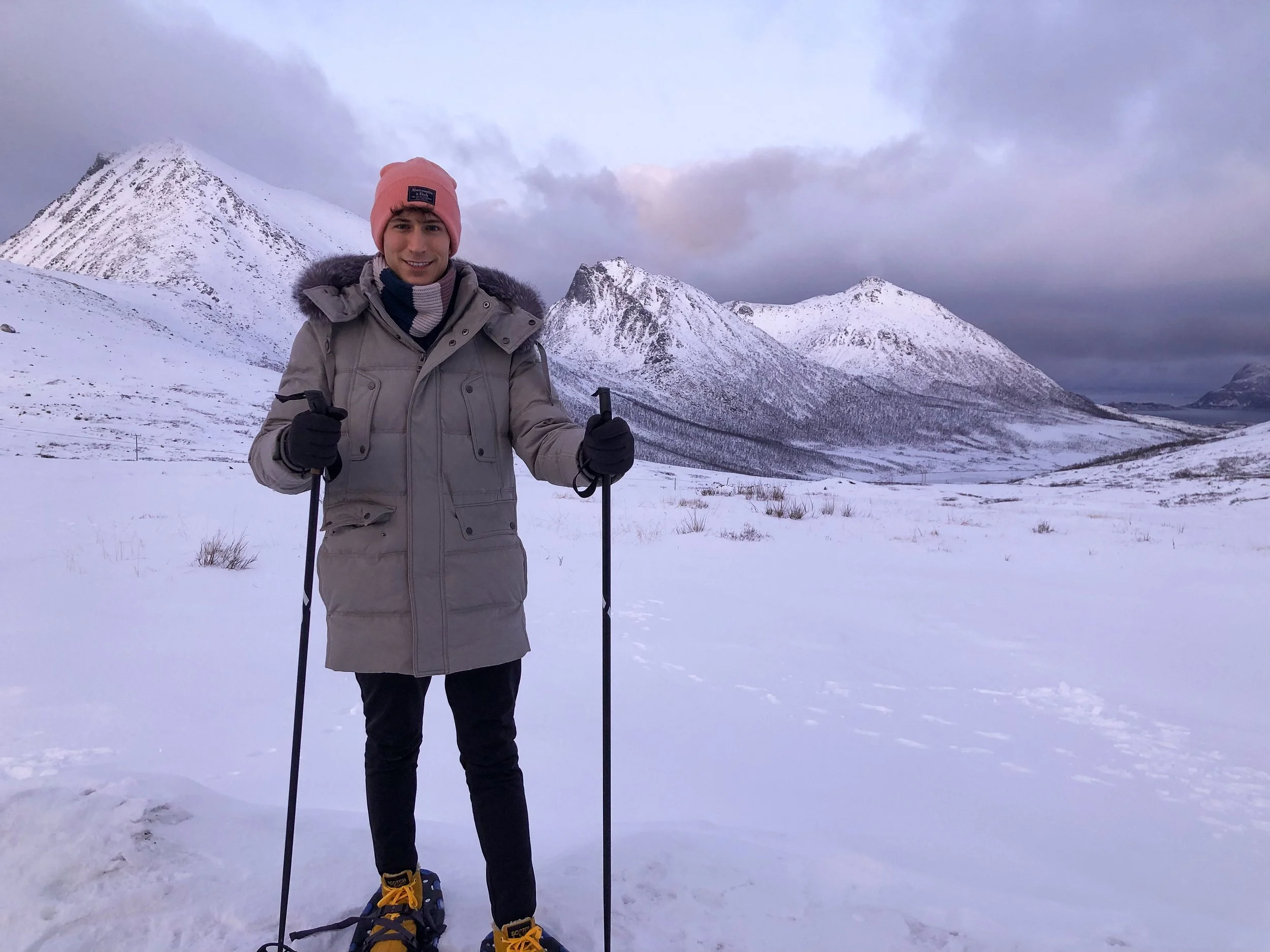
Tromsø is surrounded by snow covered mountain peaks, dramatic fjords and the idyllic landscapes of Northern Norway. We booked a guided snowshoeing excursion to experience the wintery landscape with Northern Horizon. They provided us with transportation, gear and a meal during our trip.



Ascending the Mountainside
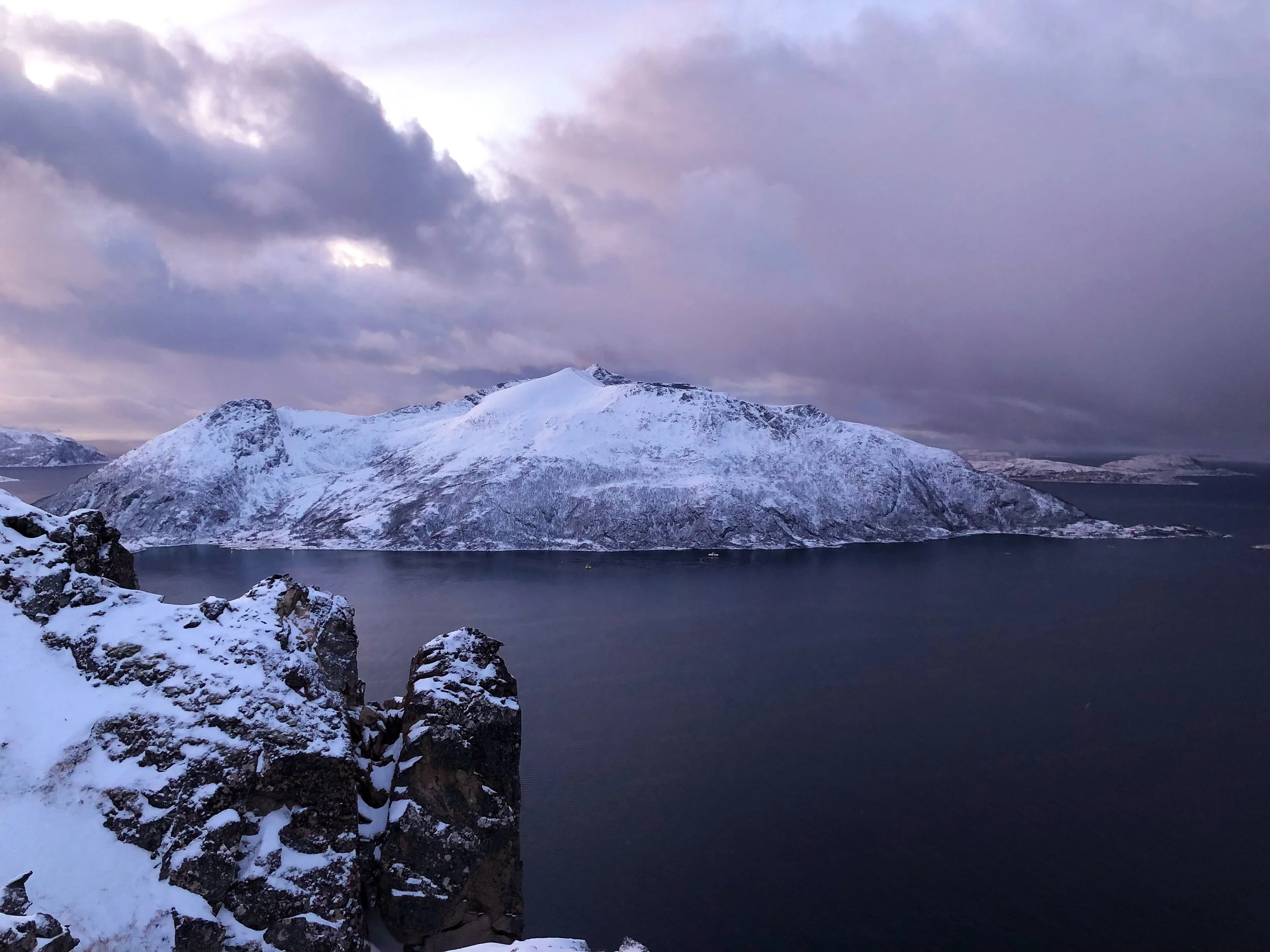
We began our ascent in the small town of Tromvik, situated along the Norwegian Sea, an hour away from Tromsø. We spent about 2 hours snowshoeing the side of the mountain during the brightest hours of the morning before reaching one of its peaks. From the peak, we could look directly across the fjord at a salmon farm and straight out towards the Norwegian Sea.

Prepare for the Weather
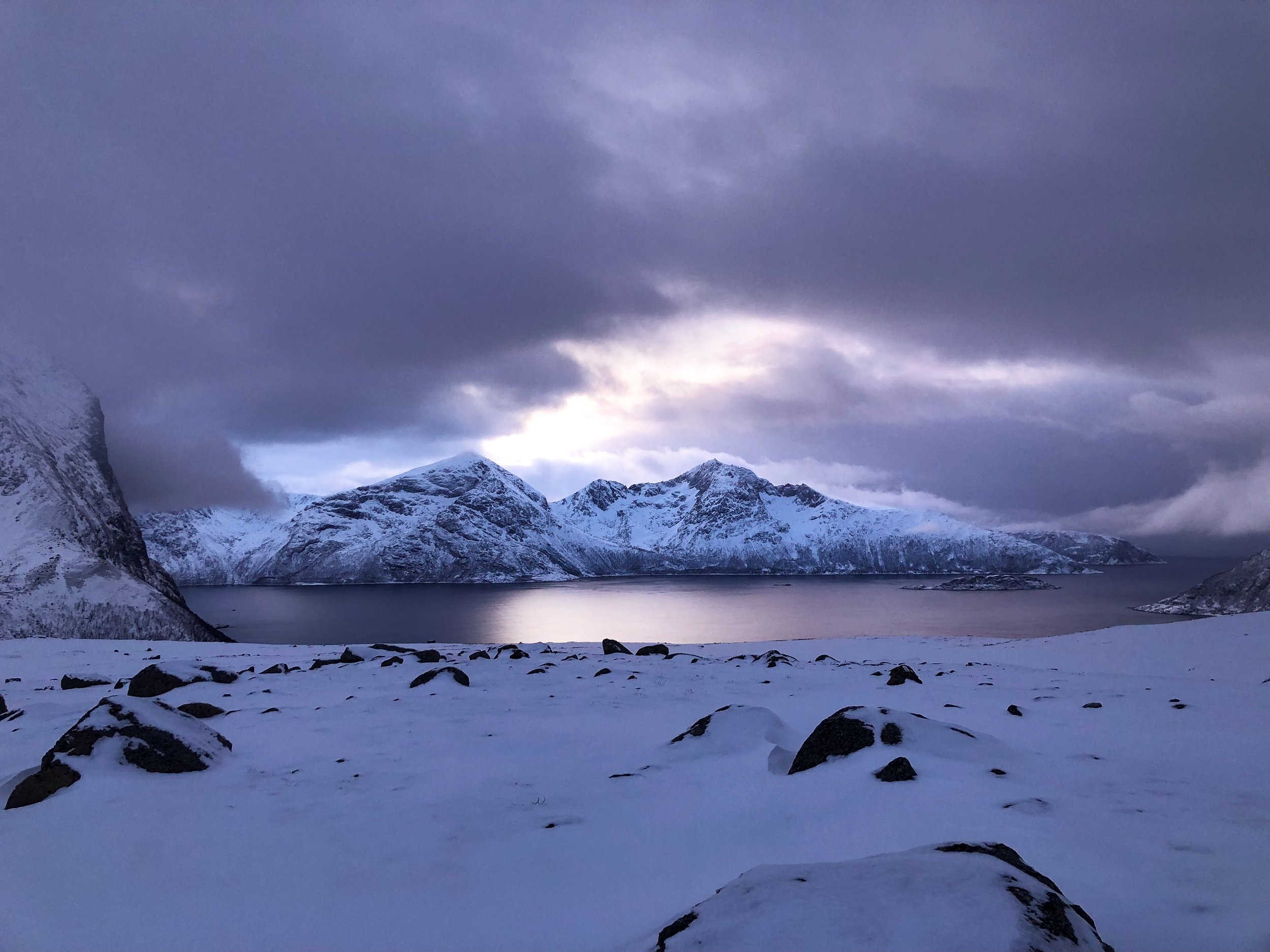
The hike wasn’t too difficult but it definitely helped having an experienced guide leading the way, watching out for icy crevices and rapidly changing weather. At times the temperature would drop several degrees or a blizzard would roll in. This was especially true, the higher we climbed in elevation. The descent down the mountainside took about 30 minutes. By the time we reached the car, it was nearly dark again.
A Scenic Drive & Tasty Rest Stop
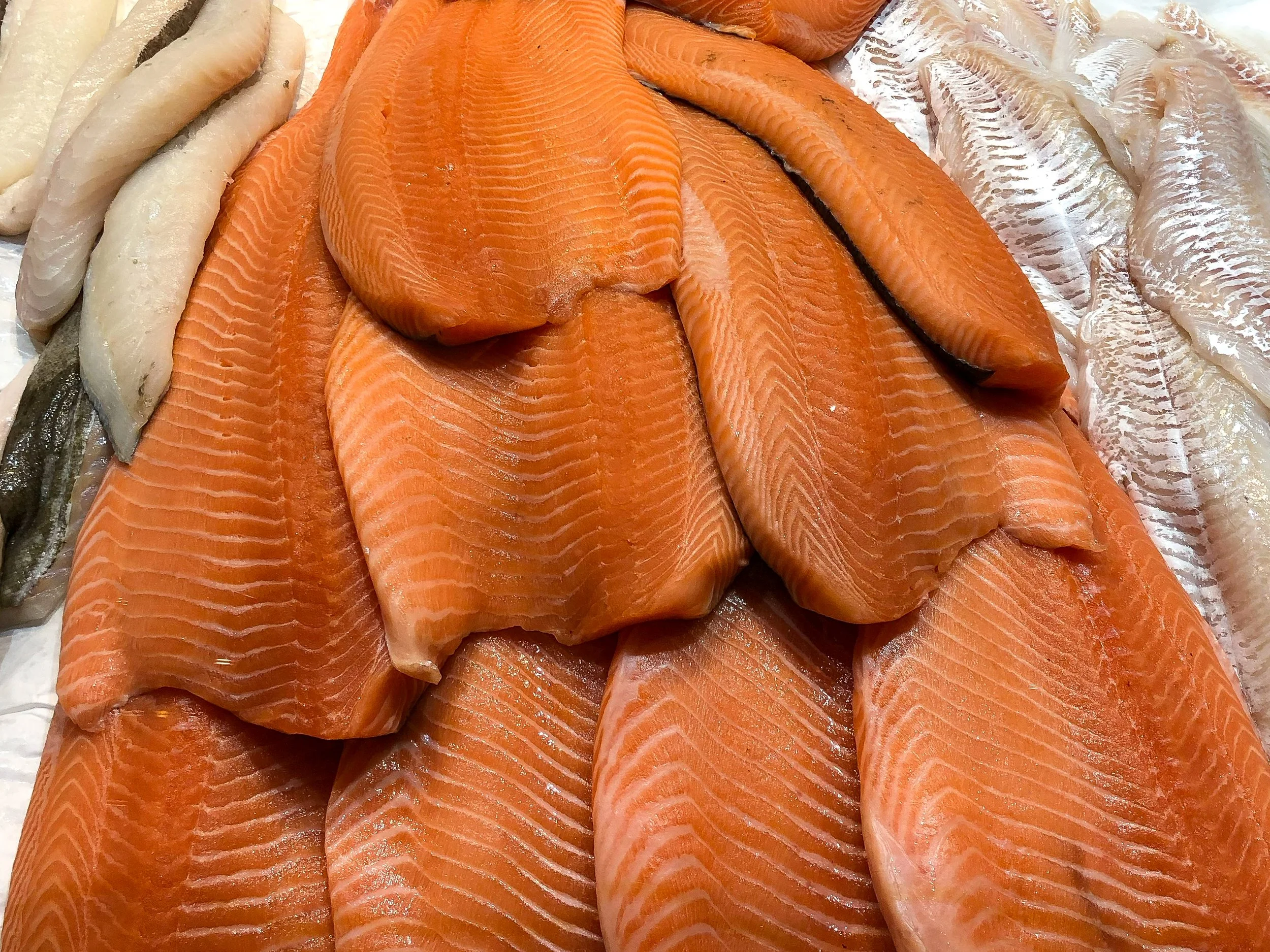
The scenic drive between Tromsø and Tromvik passed through Grøtfjorden, the same fjord we watched the Northern Lights from. We stopped in the small town of Kvaløysletta to visit Eide Handel AS, a grocery store with a deli counter displaying all types of Norwegian Salmon. They offered dozens of samples, which we tried, before buying a packaged smoked filet to bring home.




See the Sights
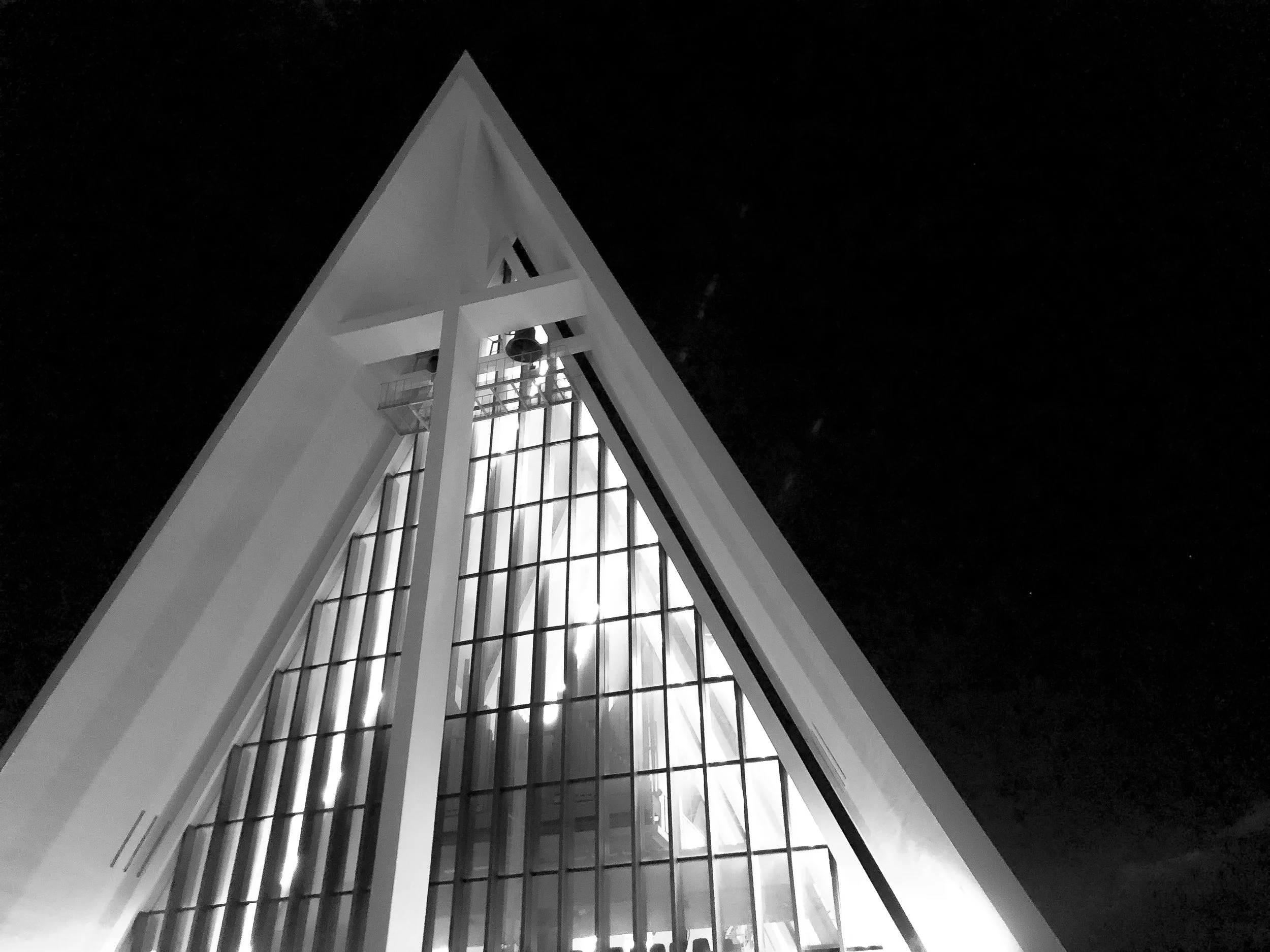
The Arctic Cathedral. Tromsø’s most recognized site is an Arctic architectural beauty. The modern cathedral, built in 1965, is inspired by the serene arctic landscape surrounding it. The 11 triangles that form its shape are reminiscent of snowy mountain peaks. The pews inside are made from local pine and cushioned in reindeer leather.
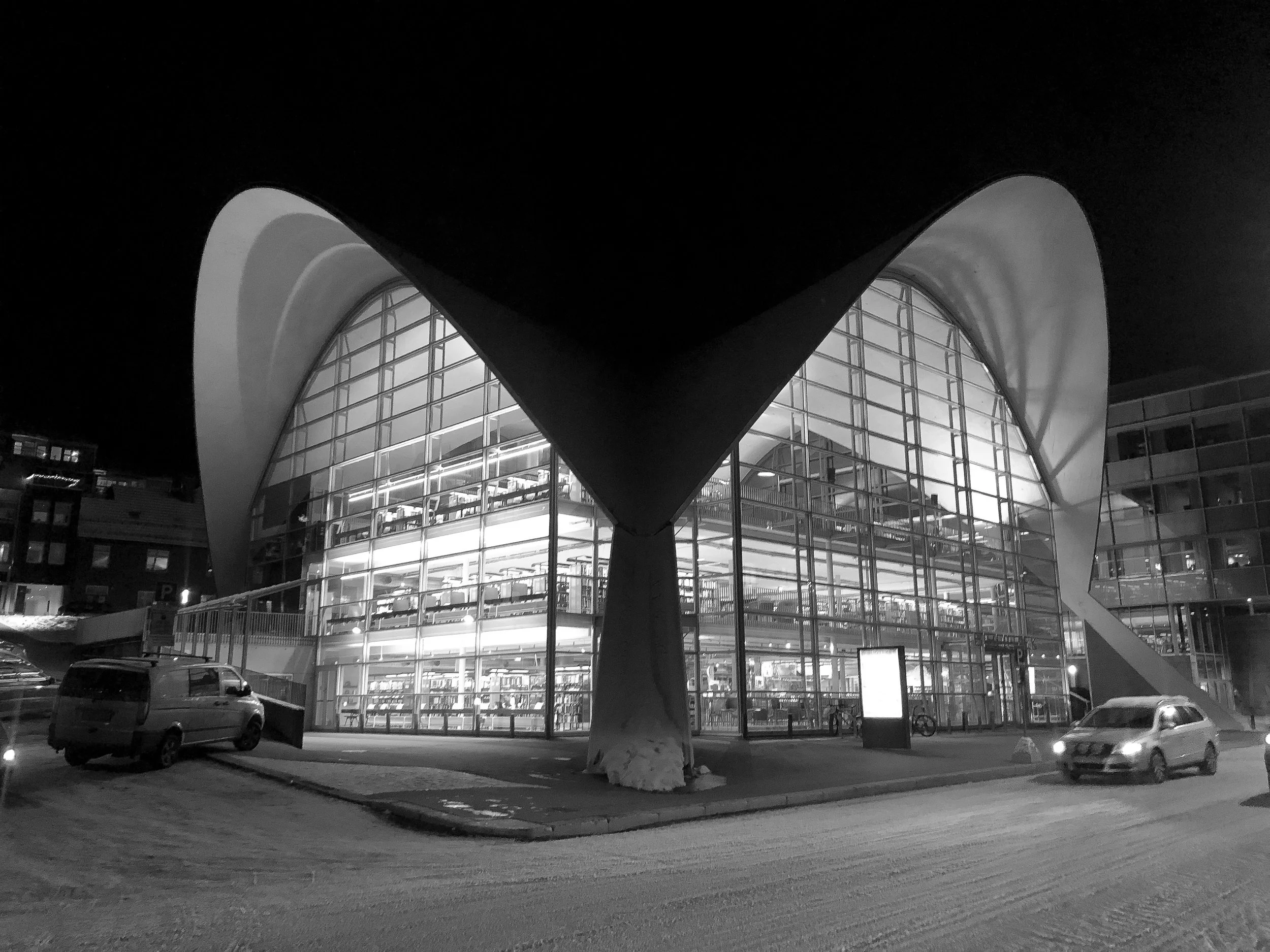
Tromsø Bibliotek. A contemporary library at the center of Tromsø with four arched and glass sides. The interior has a warm glow and aisles of books that look out over the city.
Polaria. A polar aquarium designed to evoke the fractured ice floes seen throughout the Arctic waterways. Each shard of the building is stacked up against one another forming a giant slanted mass.
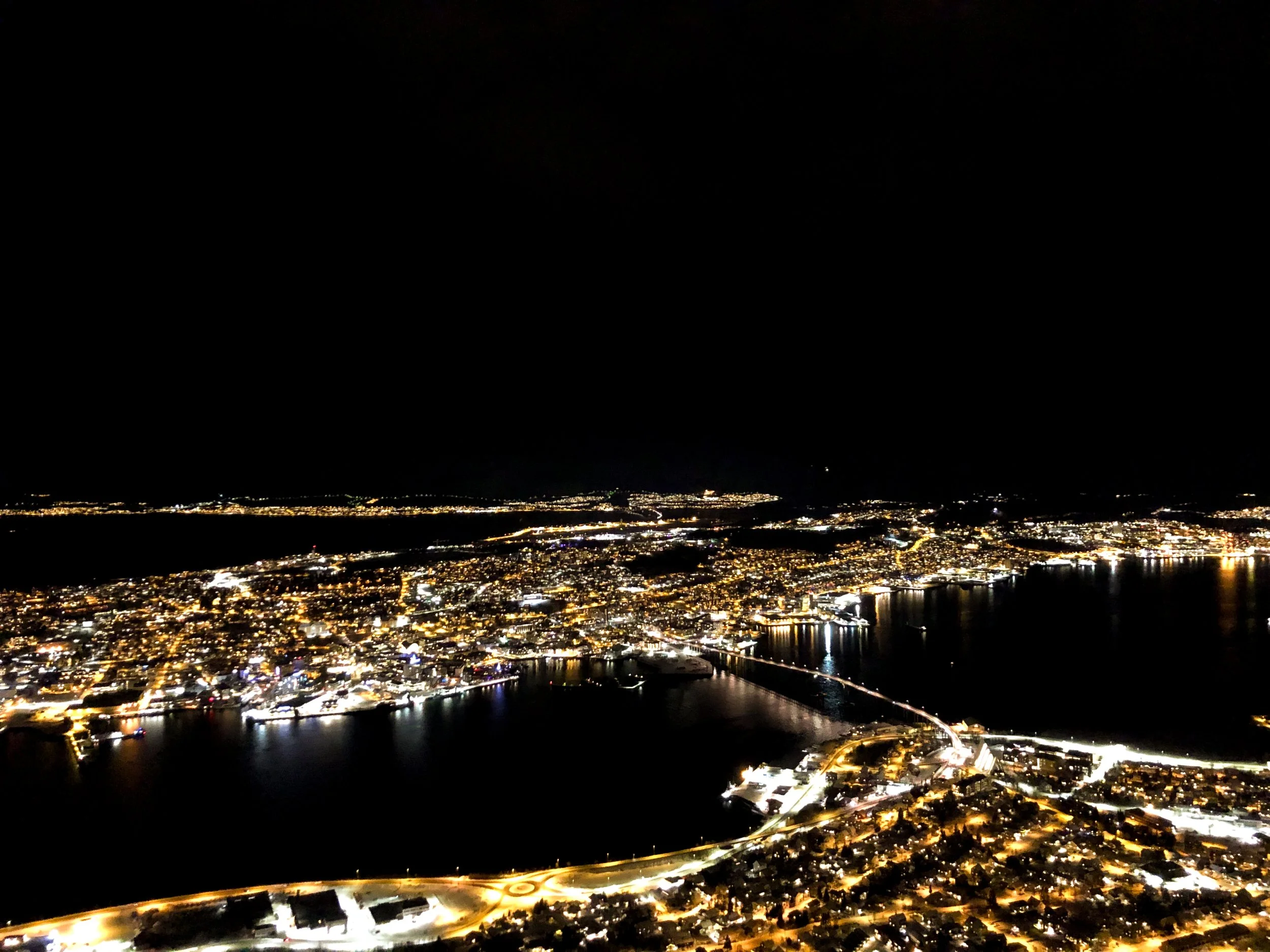
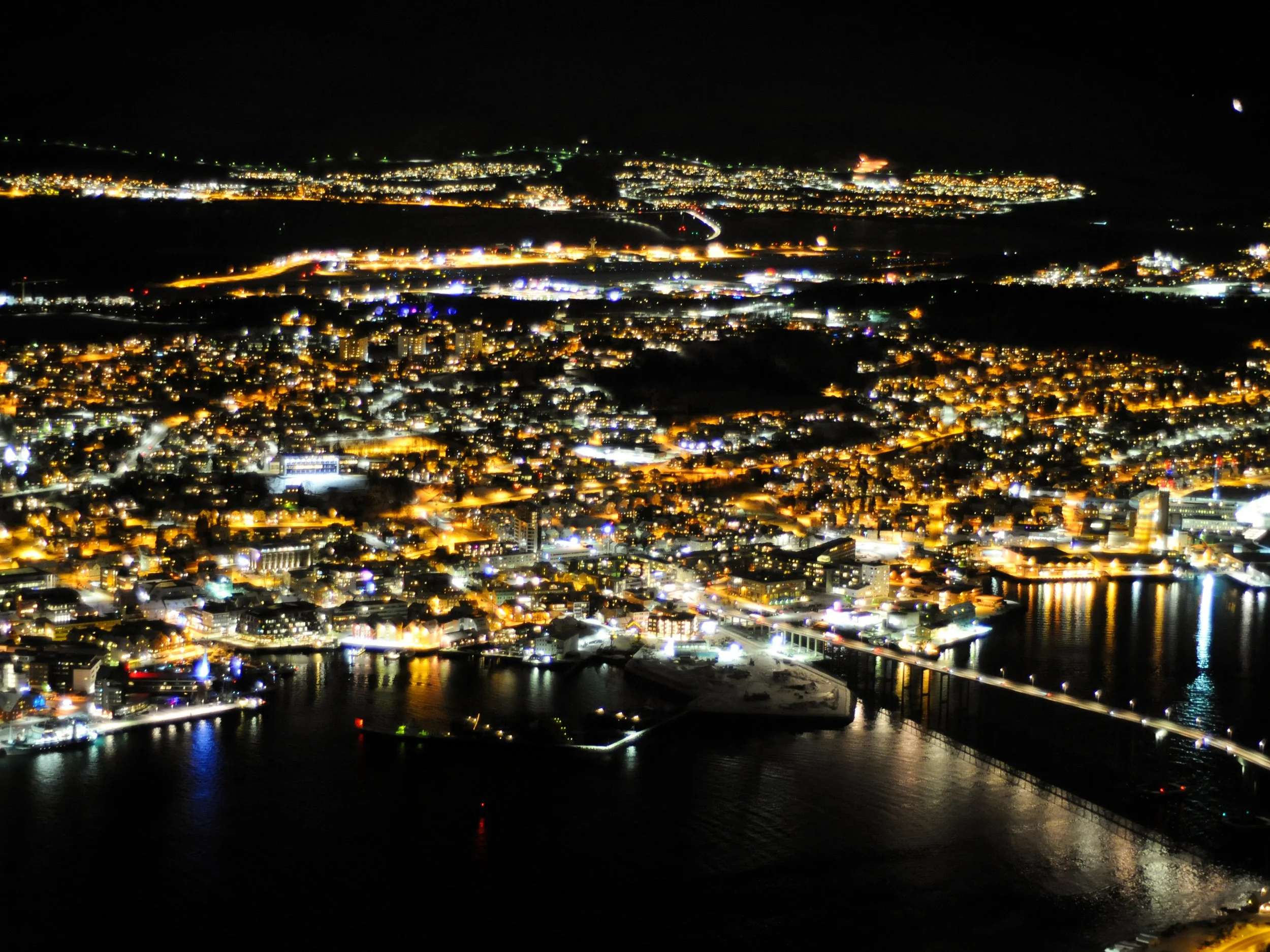
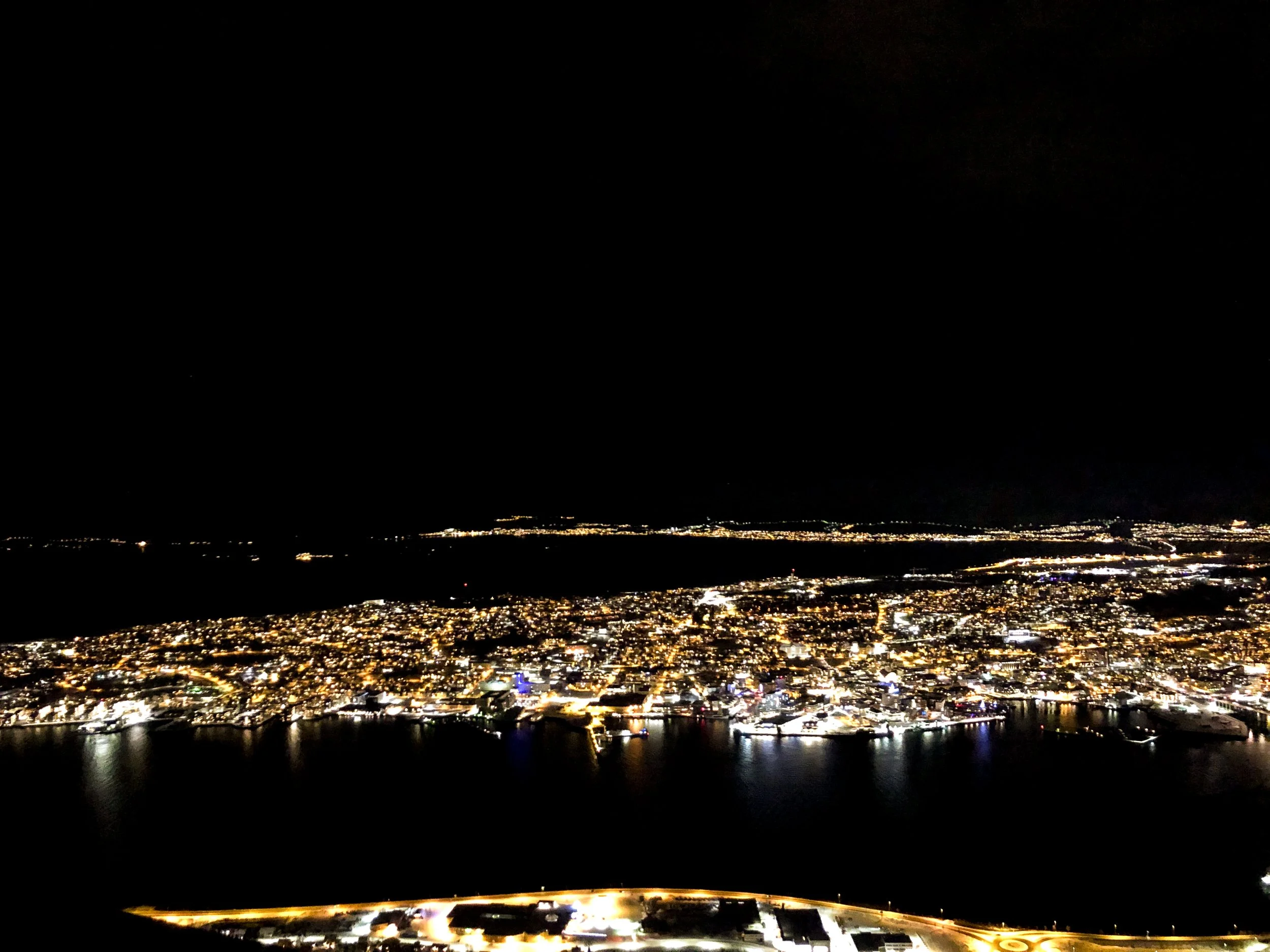

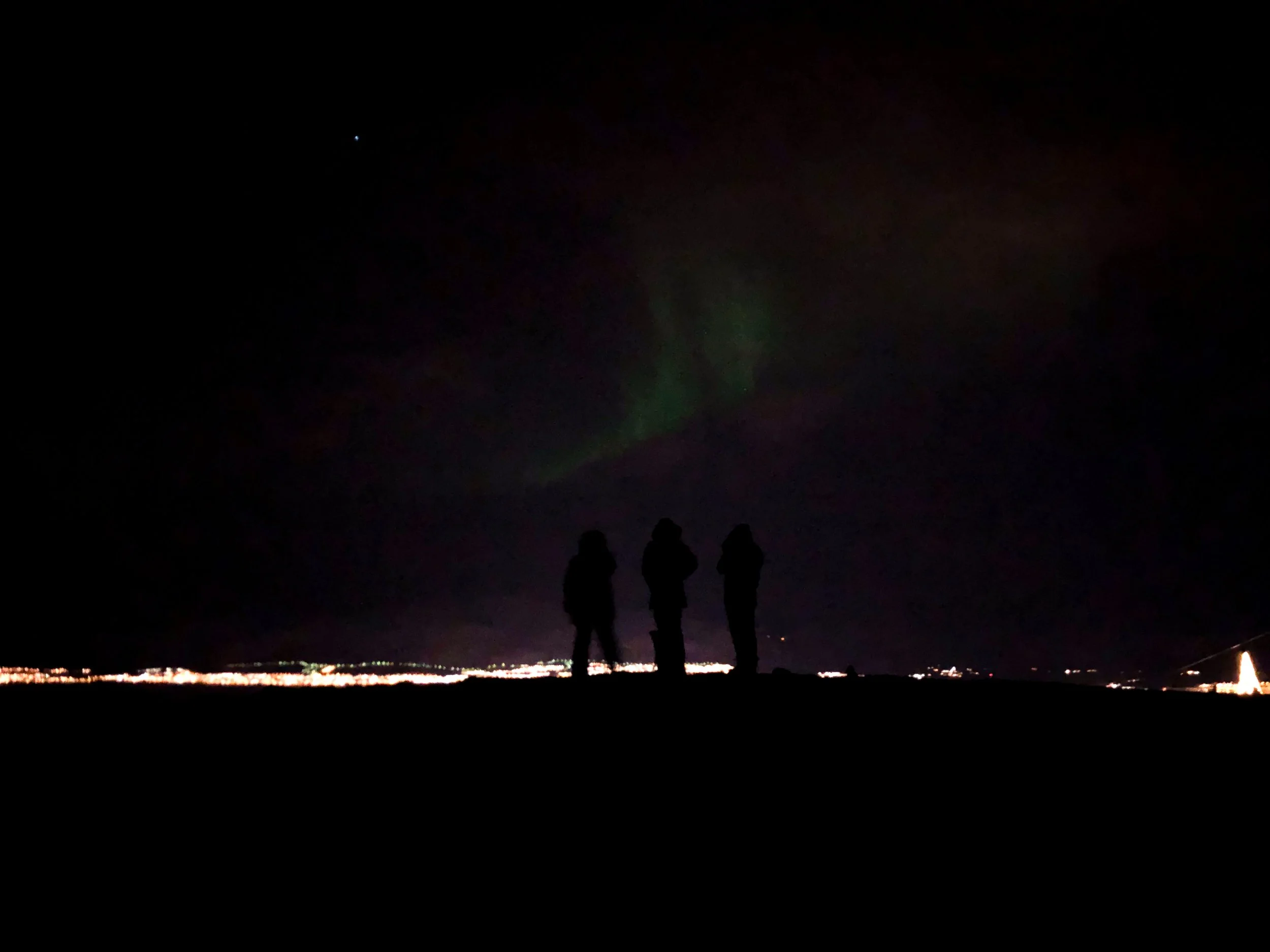

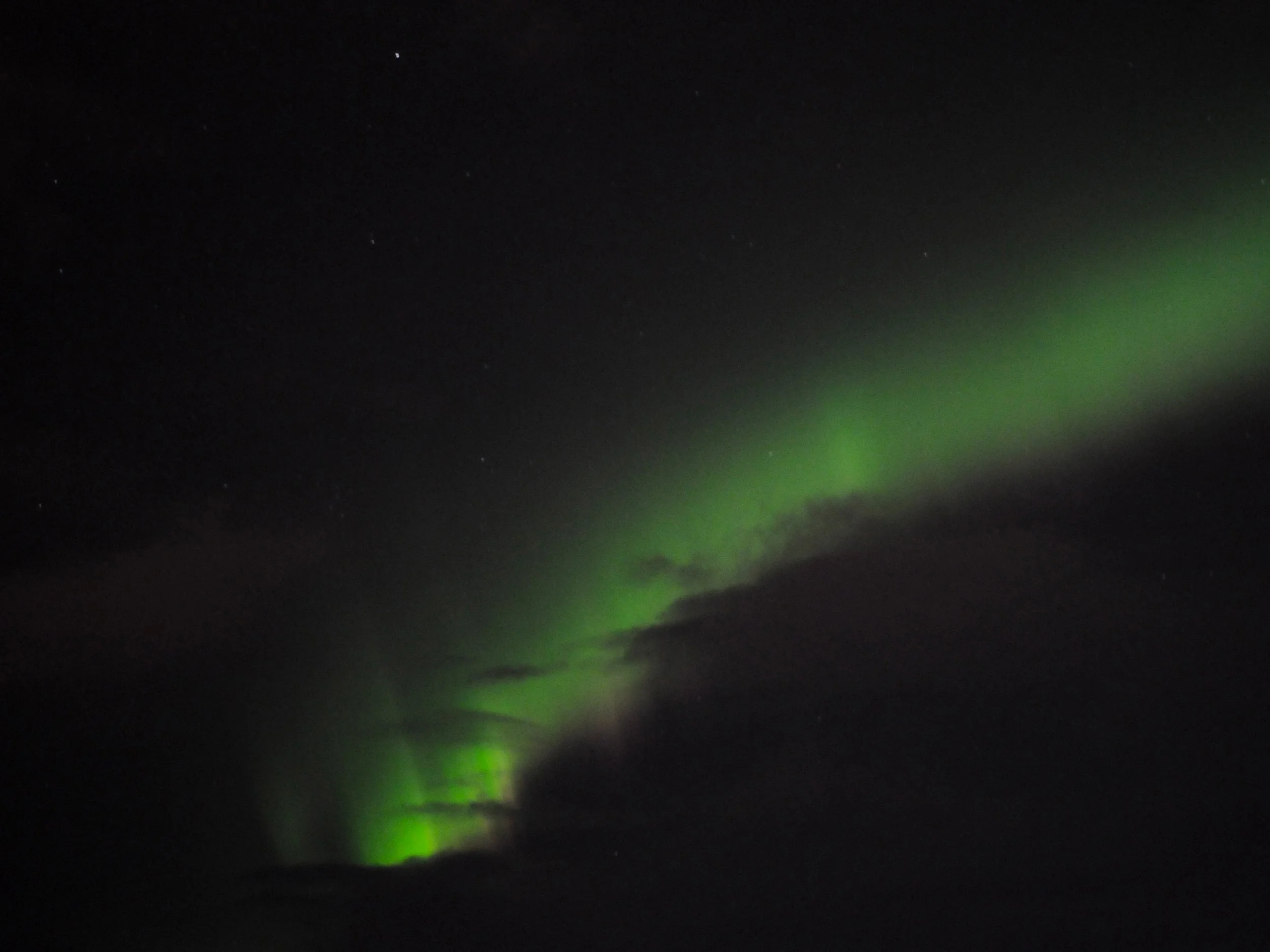
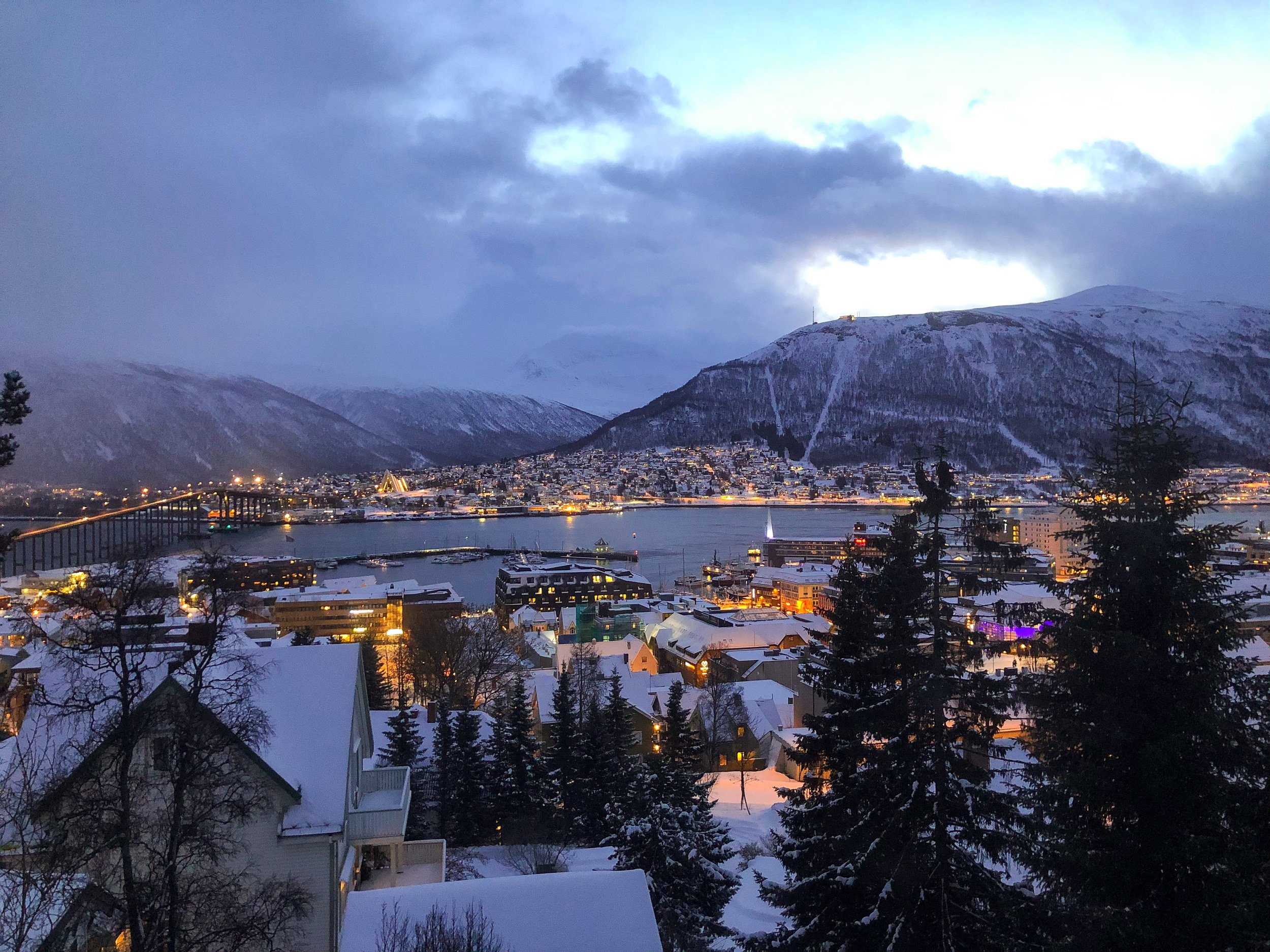
Fjellheisen (Tromsø Cable Car). Atop the mountain across from the island of Tromsøya is an incredible lookout that offers views of the entire city and beyond. This is where we saw the Aurora on our first night. The view is accessible via a cable car or a series of 1,300 mountainside stairs. We took the cable car, however if you opt for the stairs and it’s snowy, make sure to wear spikes on your boots to prevent slipping and falling.

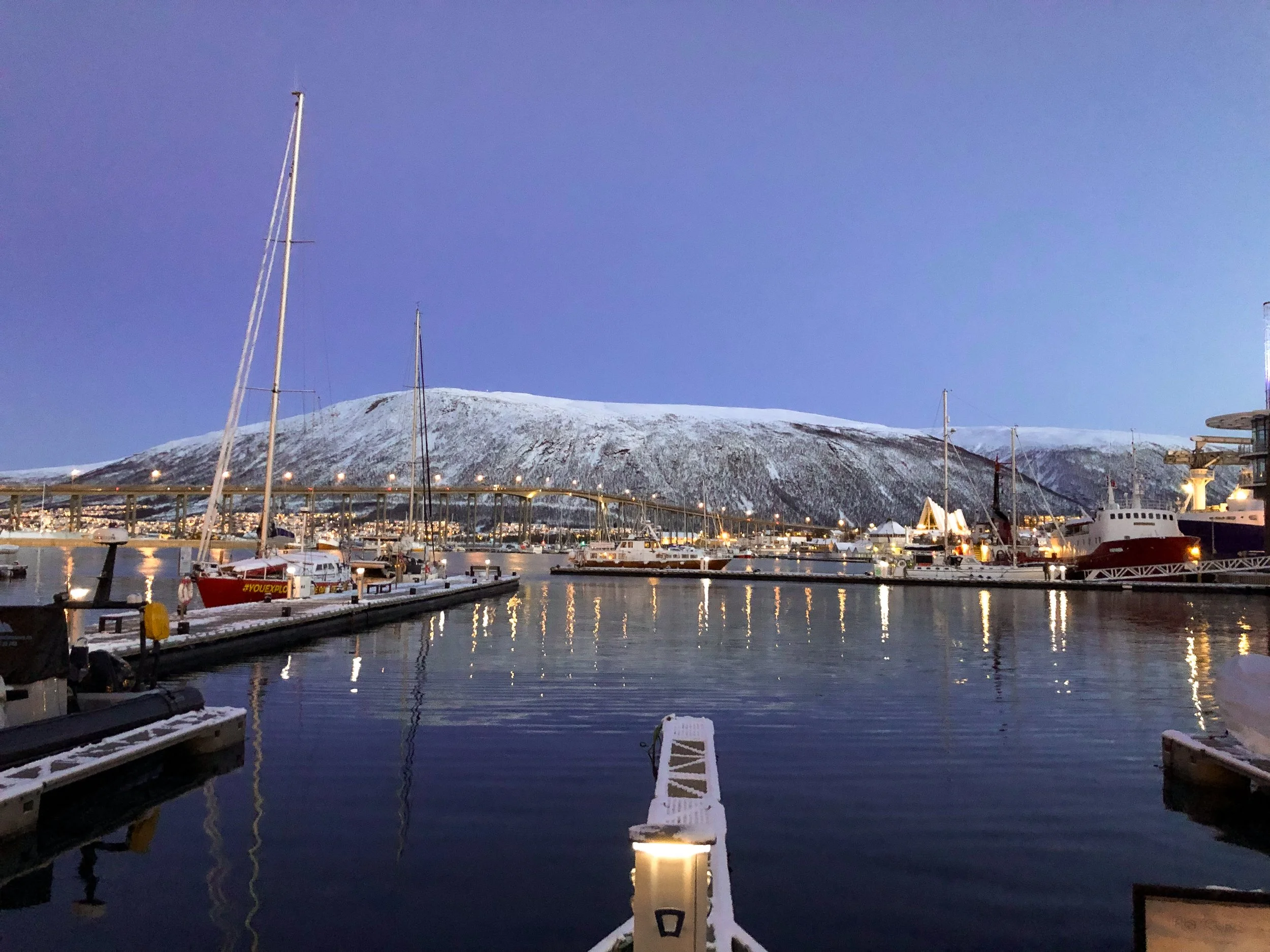
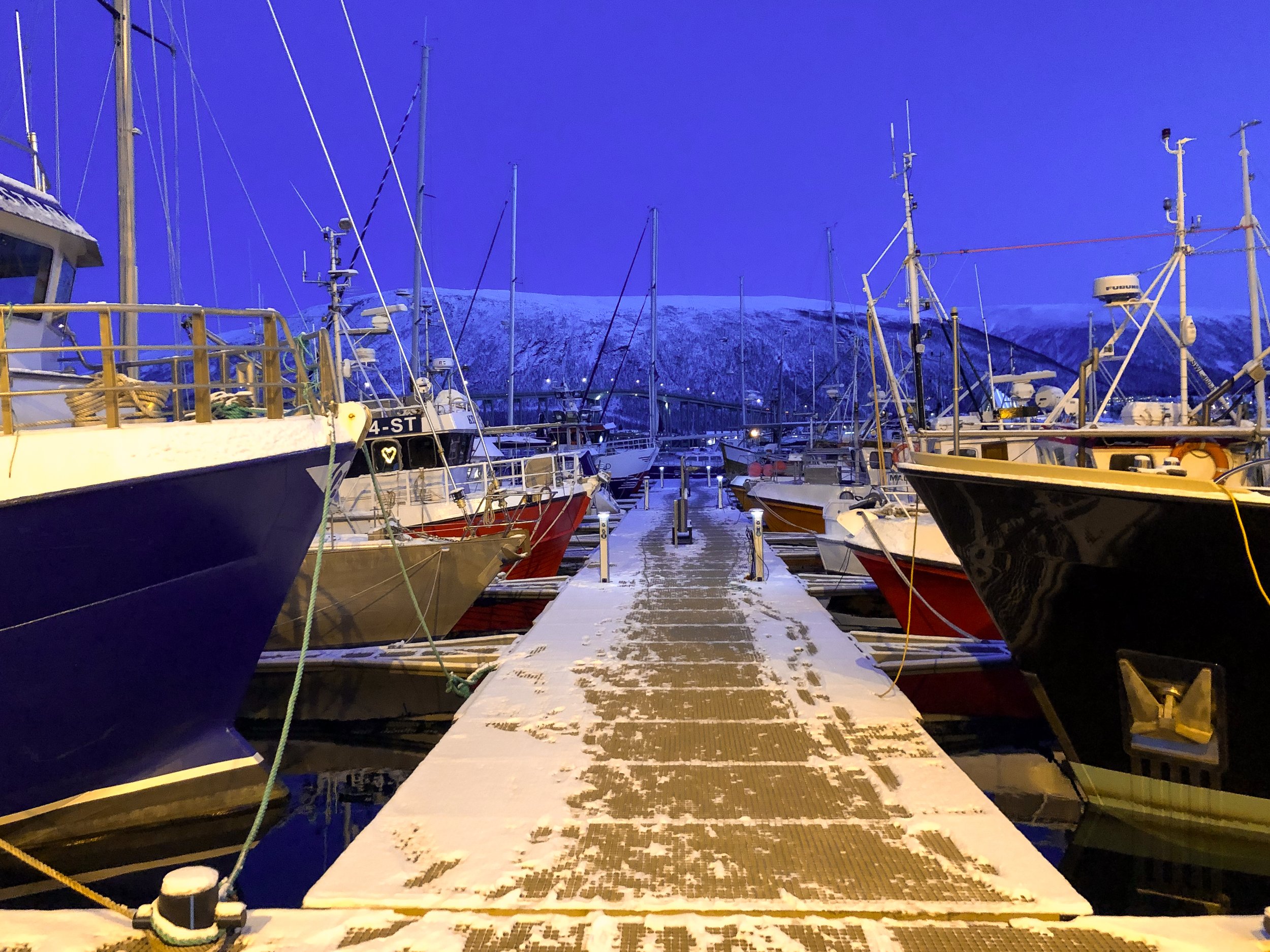


Waterfront Wharf. The city center and its harbor are surrounded by many contemporary buildings, tour ships and views of the landscape.
Tromsøbura. A 1km bridge connecting the island of Tromsøya, where most of Tromsø is located, to the adjacent island. The bridge has a pedestrian path which can be walked across in 15 minutes.
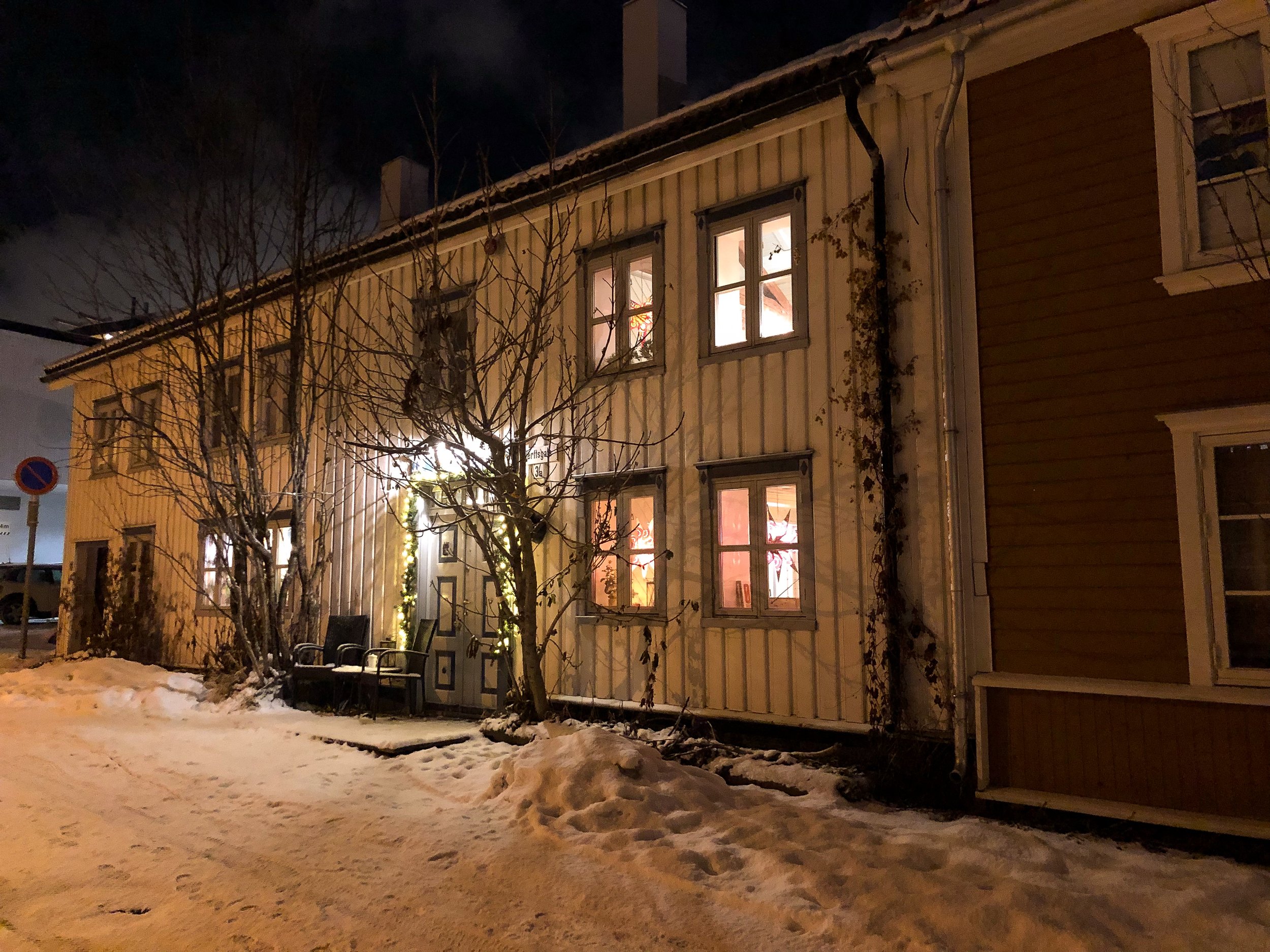
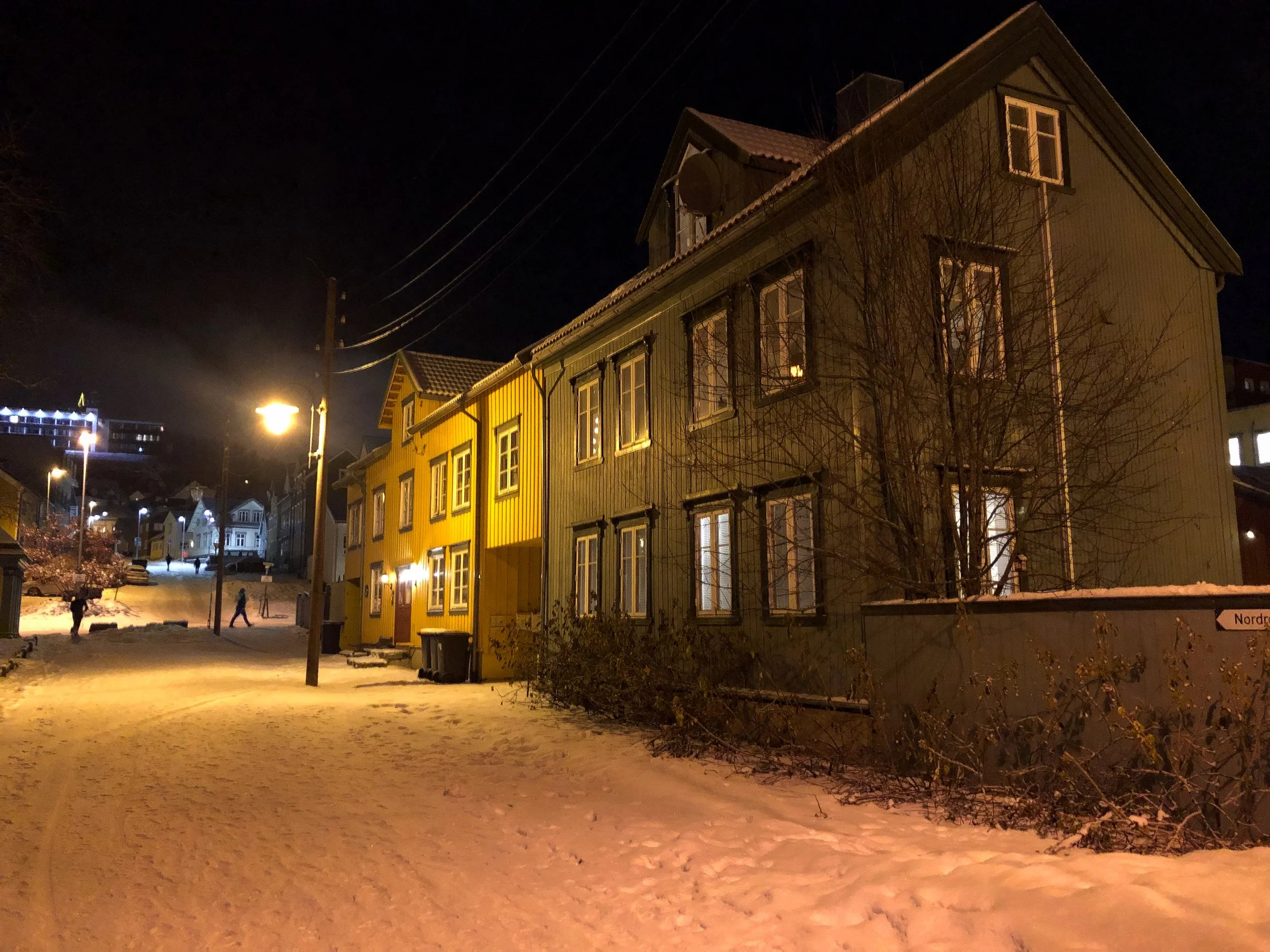
Skansen. A historic neighborhood located near Tromsøbura on Tromsøya with old painted wooden buildings from the 1850s. It’s a beautiful area to walk around both day and night.

Storgata. The downtown main street flanked by numerous restaurants, hotels, bars, cafes and shops. It’s a popular place to explore on foot with heated sidewalks.
Lake Prestvannet. Fairly central on the island, the lake is surrounded by a number of hiking and cross country skiing trails. It’s reachable on foot from town by anyone that enjoys walking and hiking.
The Science Center of Northern Norway. A planetarium with footage of the Aurora captured during a two year period. If we hadn’t seen the Northern Lights, this would have been the best alternative.
Places to Eat & Drink
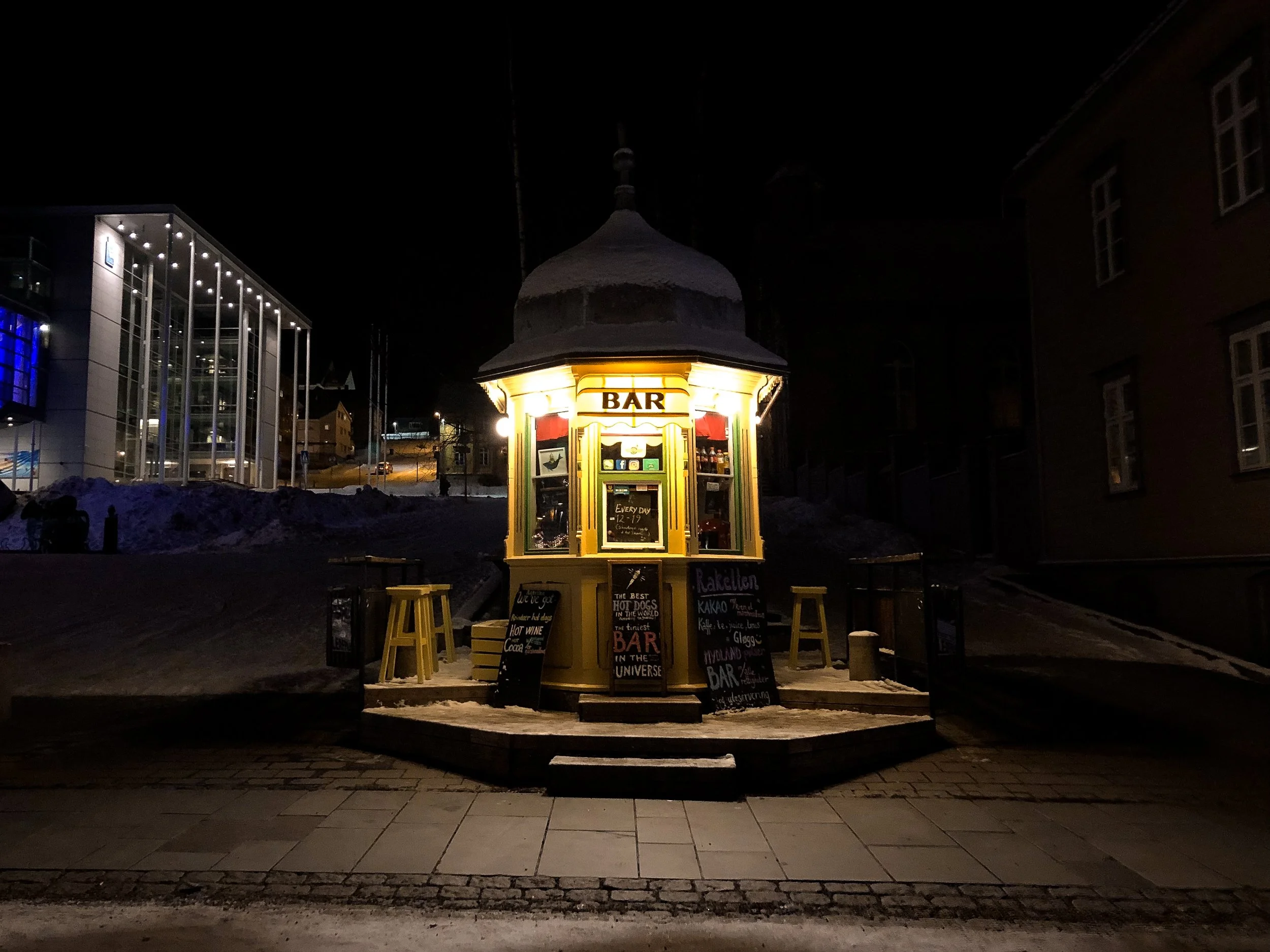
Raketten. A historic outdoor kiosk offering hot chocolate, mulled wine, reindeer and veggie sausage. Next to the kiosk is a patio with seating and a warm log fire.
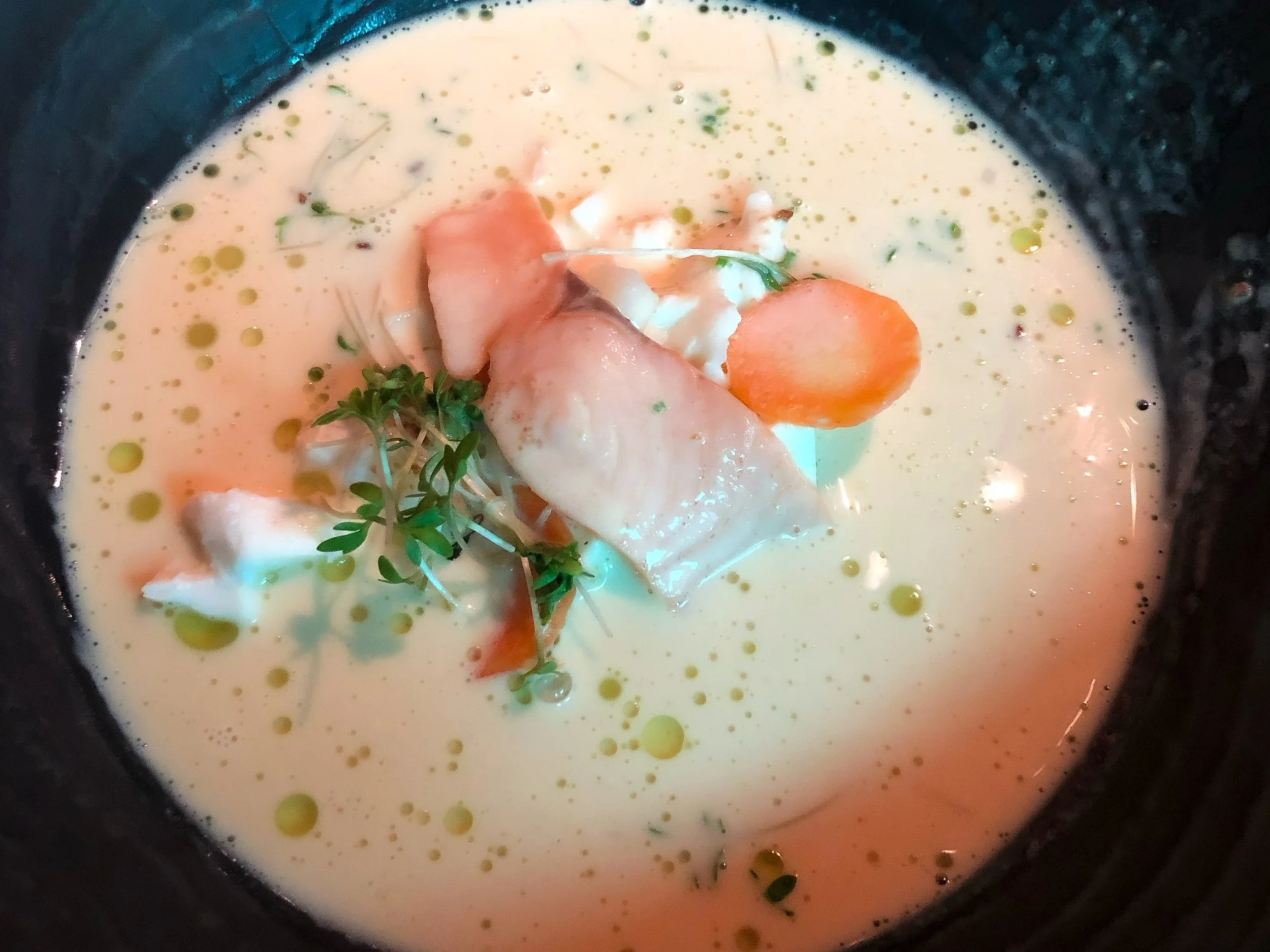
Fiskekompaniet. A higher end restaurant specializing in Norwegian seafood. Warm up with a creamy fish soup prepared table side. The bowl is served with a delicate pile of smoked salmon and white fish then enrobed in a creamy broth, poured from a kettle. For mains, order the crusted filet of cod with a side of potatoes and dill or Norwegian staple, Lutefisk.
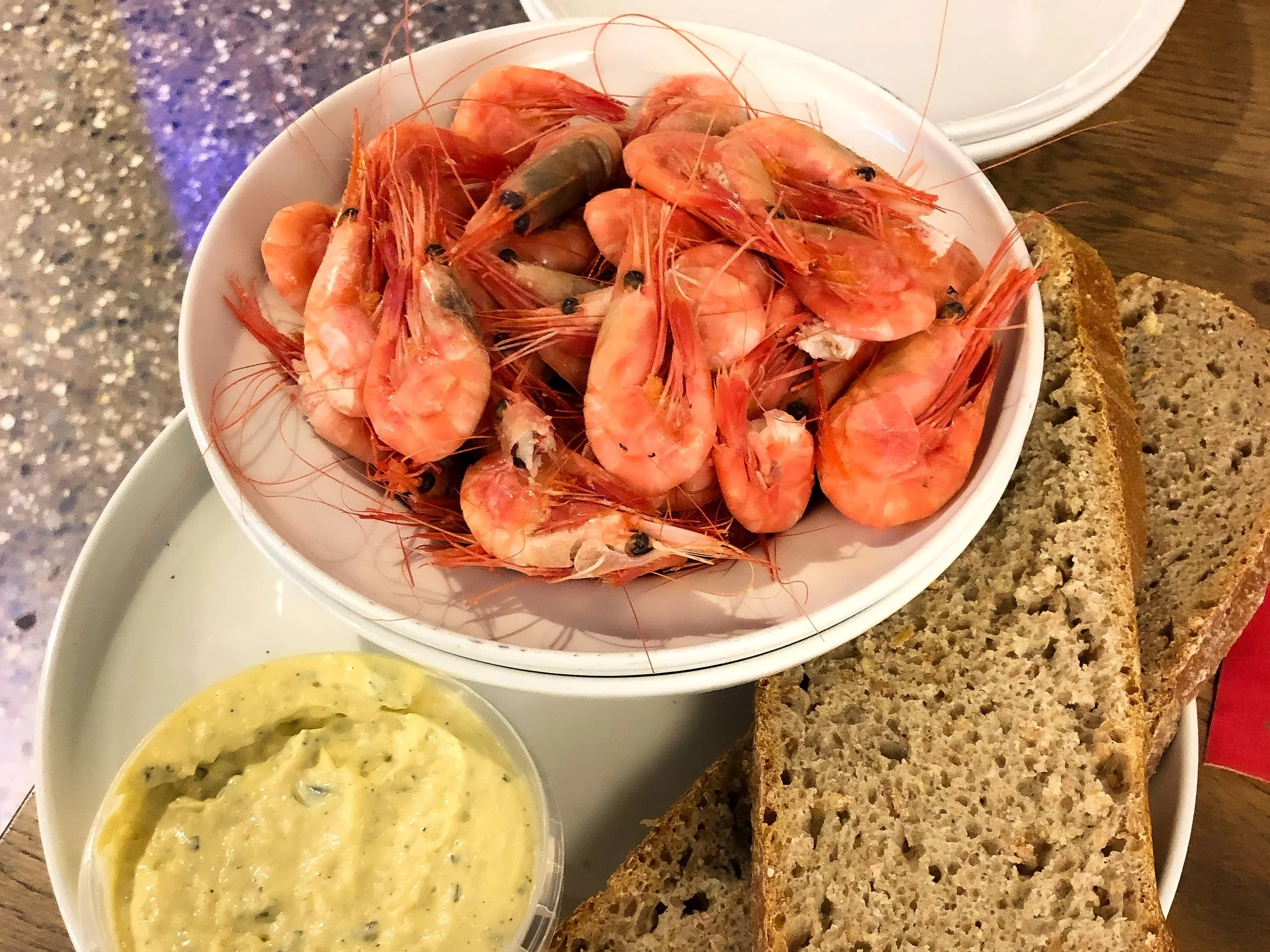
Dragoy. Located in a food hall along the waterfront wharf, this deli counter sells and serves fresh seafood. We shared cold water prawns with artisan mayonnaise on a large slice of sourdough bread. They’re also known for their fish and chips.
Olhallen. This is the city’s oldest pub and brewery with a selection of nearly 50 different craft beers and ciders.
Bardus Bistro. Located inside an old yellow wooden house, this charming restaurant offers a small menu of traditional Norwegian dishes like smoked cod, reindeer stew and root vegetable salad.
Bardus Bar. Located next door to Bardus Bistro, this bar offers the best cocktails in town. It’s a great spot to stop before or after dinner next door.
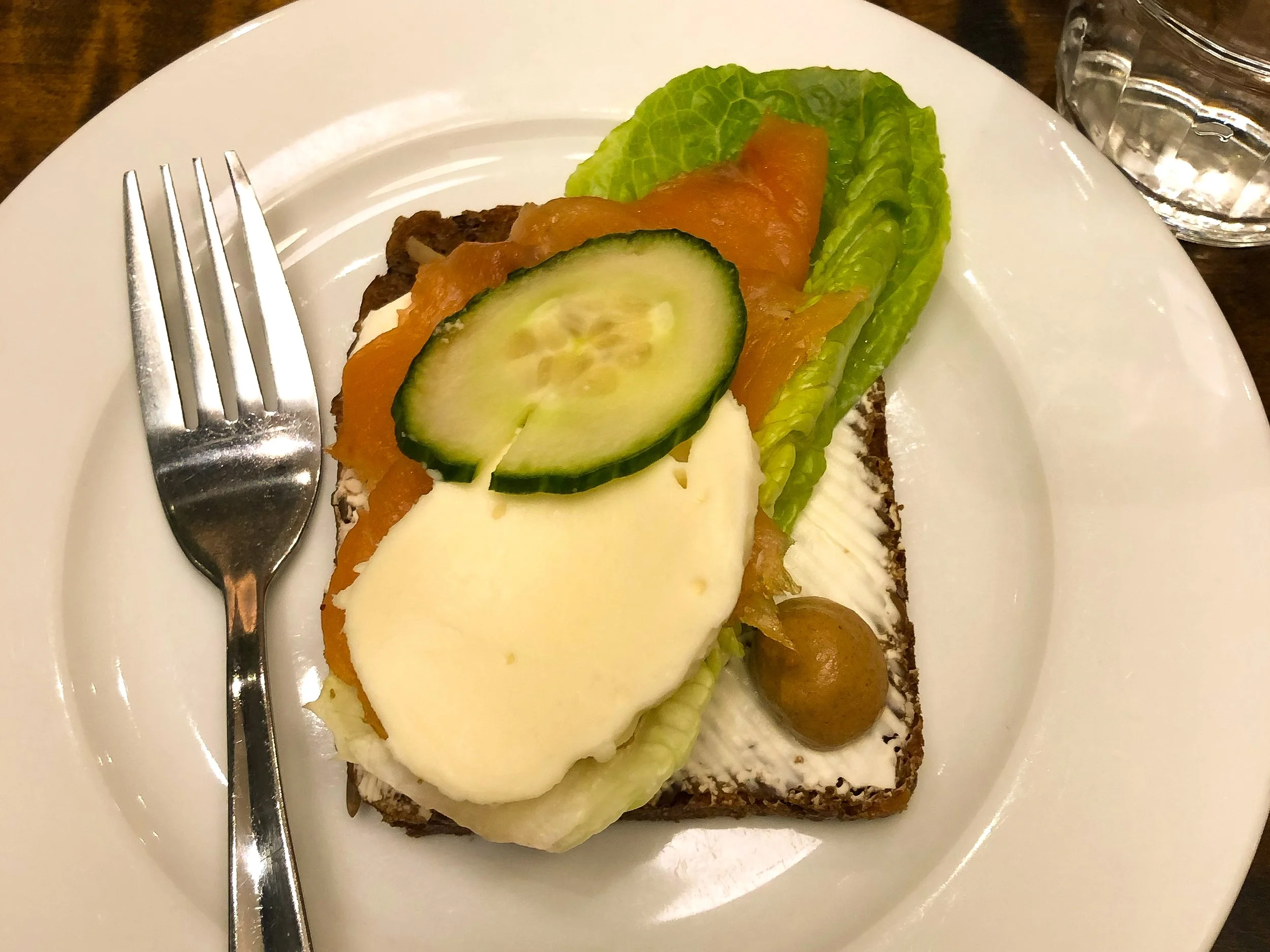
Smørtorget. A café offering pastries and open face sandwiches. It’s a great spot to have breakfast before setting out on an excursion.

Nordic Cuisine
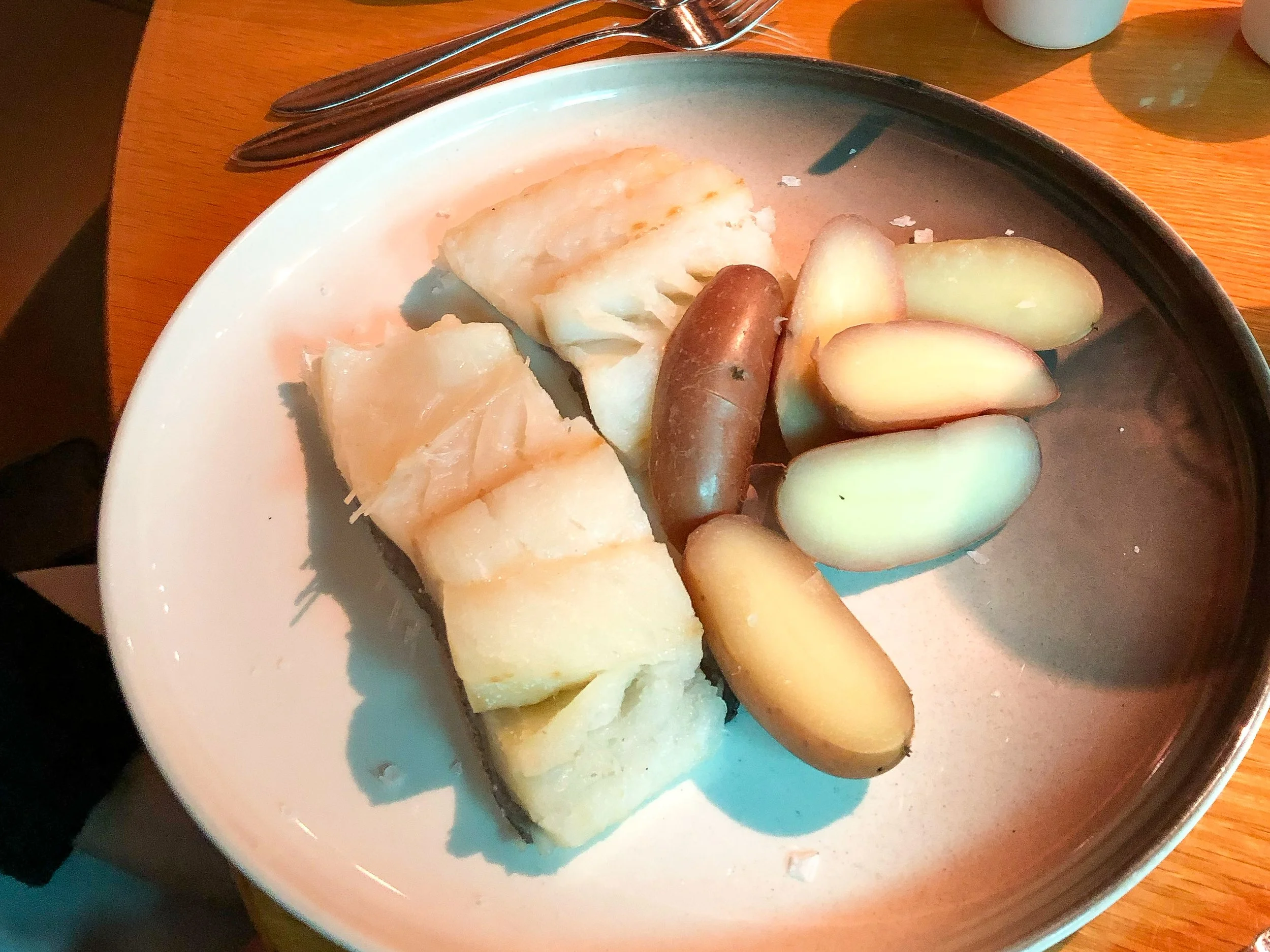
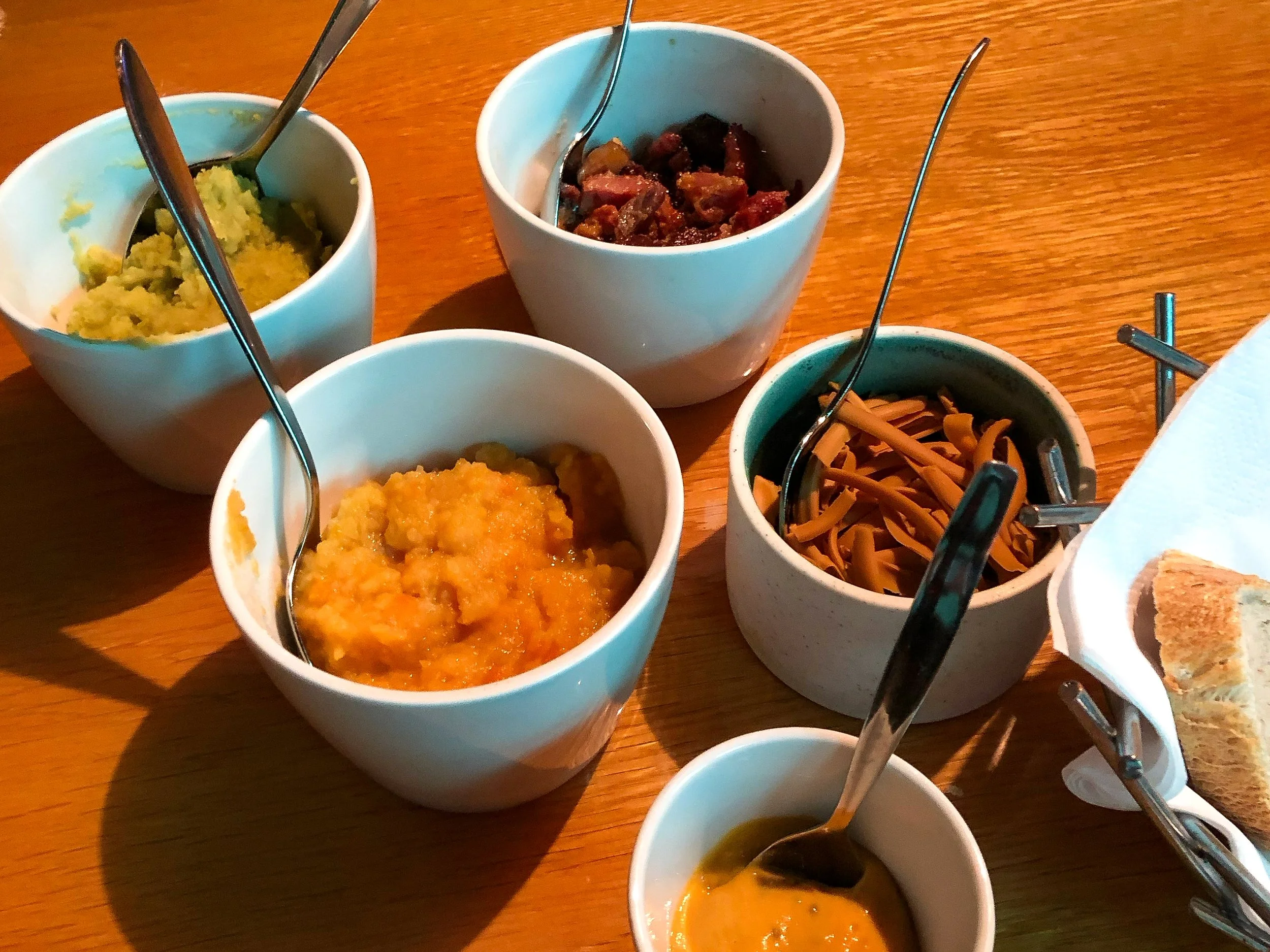
Lutefisk. Air dried white fish that undergoes several days of processing involving soaking in water and lye to rehydrate the fish. As the fish rehydrates, it loses a portion of its protein becoming slightly gelatinous. The fish is then cooked and served with potatoes and multiple condiments and sides including peas, pickled veggies, brown cheese, melted butter and mustard.
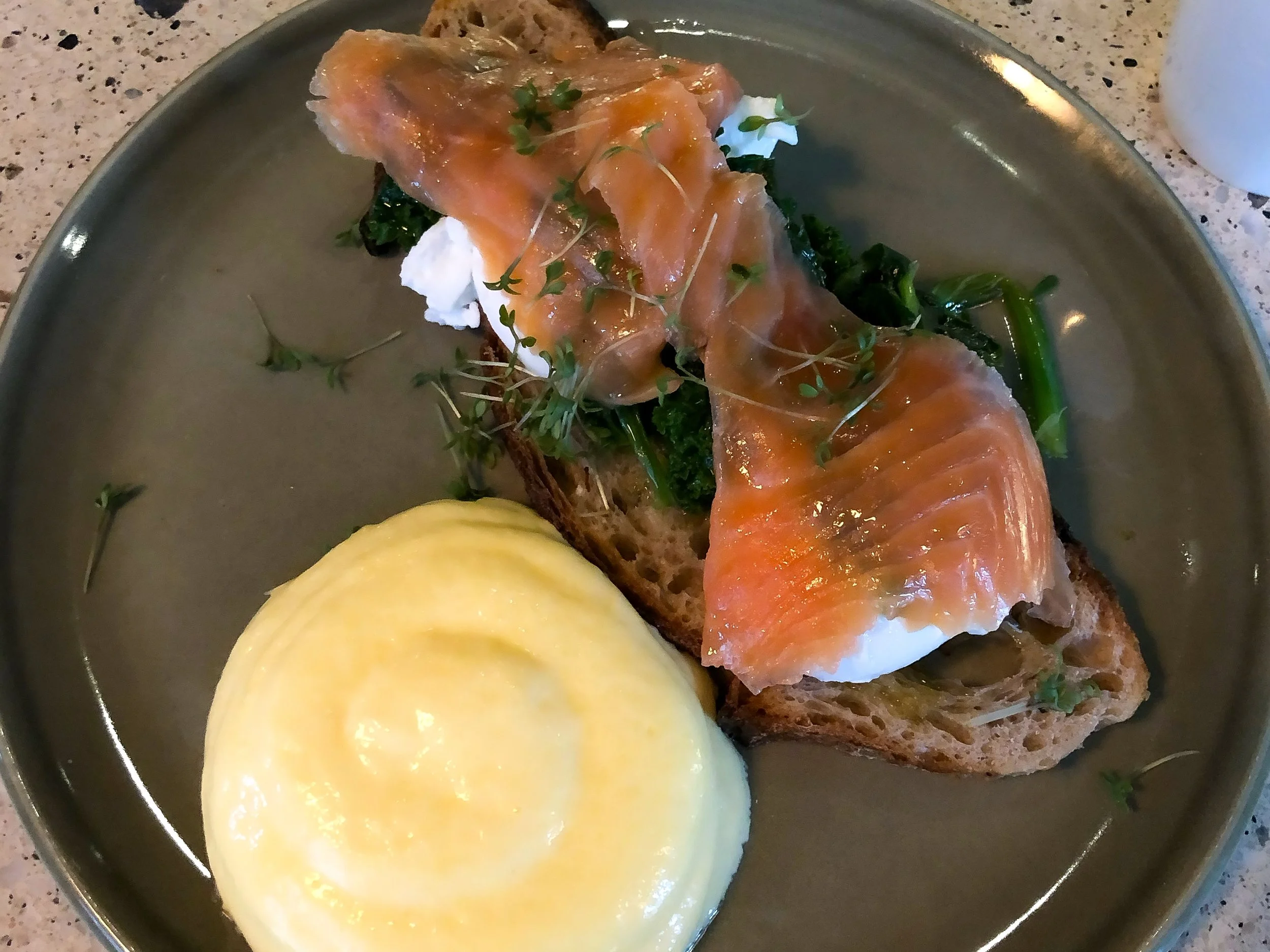
Norwegian Salmon. Caught or farmed in the fjords of Norway, salmon is prepared and served in many ways. The most common style is smoked though it is also often fried, boiled or served raw.
Pickled Veggies. Almost every meal we enjoyed was topped with pickled veggies. Carrot, fennel, beet, cucumber and onion were quite common. They added extra flavor and color to each dish.
Lefse. Traditional Norwegian flatbread made with potatoes, flour, butter, and milk.
Buns. A pastry that ranges from sweet rolls, to swirls or knots. Try them with cinnamon and cardamom.
Mulled Wine. Hot spiced wine was very popular. The Norwegian way of making it is by adding a spoonfull of chopped nuts and raisins before serving.
Getting Around
Getting to Tromsø. To fly into Tromsø, you’ll likely need to transfer in Oslo. Booking directly through Norwegian Airlines is usually the most convenient and affordable option. Tromsø is about a 2 hour flight from Oslo.
To/From Tromsø Airport. Use Flybussen, the airport express bus. It routinely travels in a loop from the airport to multiple hotels in central Tromsø. It costs roughly $20 for a round trip ticket.
Getting Around Tromsø. The city and surrounding area is walkable, though a bit hilly and icy during the winter. The main street, Storgata, has heated sidewalks that keep snow and ice from freezing. Outside of this, it’s best to be cautious while walking on the snow and ice. We had a few slips ourselves but were layered in enough clothing to keep us from bruising. We noticed that many people wore spikes on their boots for extra traction. Just remember to take them off before entering indoors. One of the cutest things we saw was mothers pushing their children in strollers with sleds instead of wheels.
By Taxi. Taxis can be pricy but are convenient when trying to get around outside the Main Street. The two main taxi companies are Tromsø Taxi and Din Taxi. Taxis are also available through Uber. This is a general breakdown of cost:
Around Town: $10 - $15 (From downtown to the cable car)
Across Town: $15 - $35 (From the airport to downtown)
Outside of Town: $35 - $60 (From Tromsø to a nearby town)
Getting Outside of Town. Renting a car is the best option to get between Tromsø and anywhere else outside the city. Nearly all excursions will include transportation.
What to Wear
If you’re visiting in the wintertime like we did, you need to dress warm! It is the Arctic after all. You’ll need a base layer, mid layer and outer layer. Tuck your base and mid layers into each other to better hold in heat and prevent wind from getting under your clothes. In addition to layers, we also used thermal toe and hand warmers while we were snowshoeing and watching for the Northern Lights.
Base Layer
Thermal underwear
Thermal long sleeve shirt
Wool socks
Glove liners
Mid Layer
Jeans or pants
A cute Norwegian sweater (you can buy one in town)
A lightweight quilted jacket (down or down alternative)
More socks (you’ll need to double up)
Outer Layer
Snow pants (mainly for extended periods outdoors)
Winter coat (you’ll want something that will break the wind and keep you warm)
Heavy gloves
A warm scarf and hat
Boots (bring strap on spikes or cleats)
Where to Stay
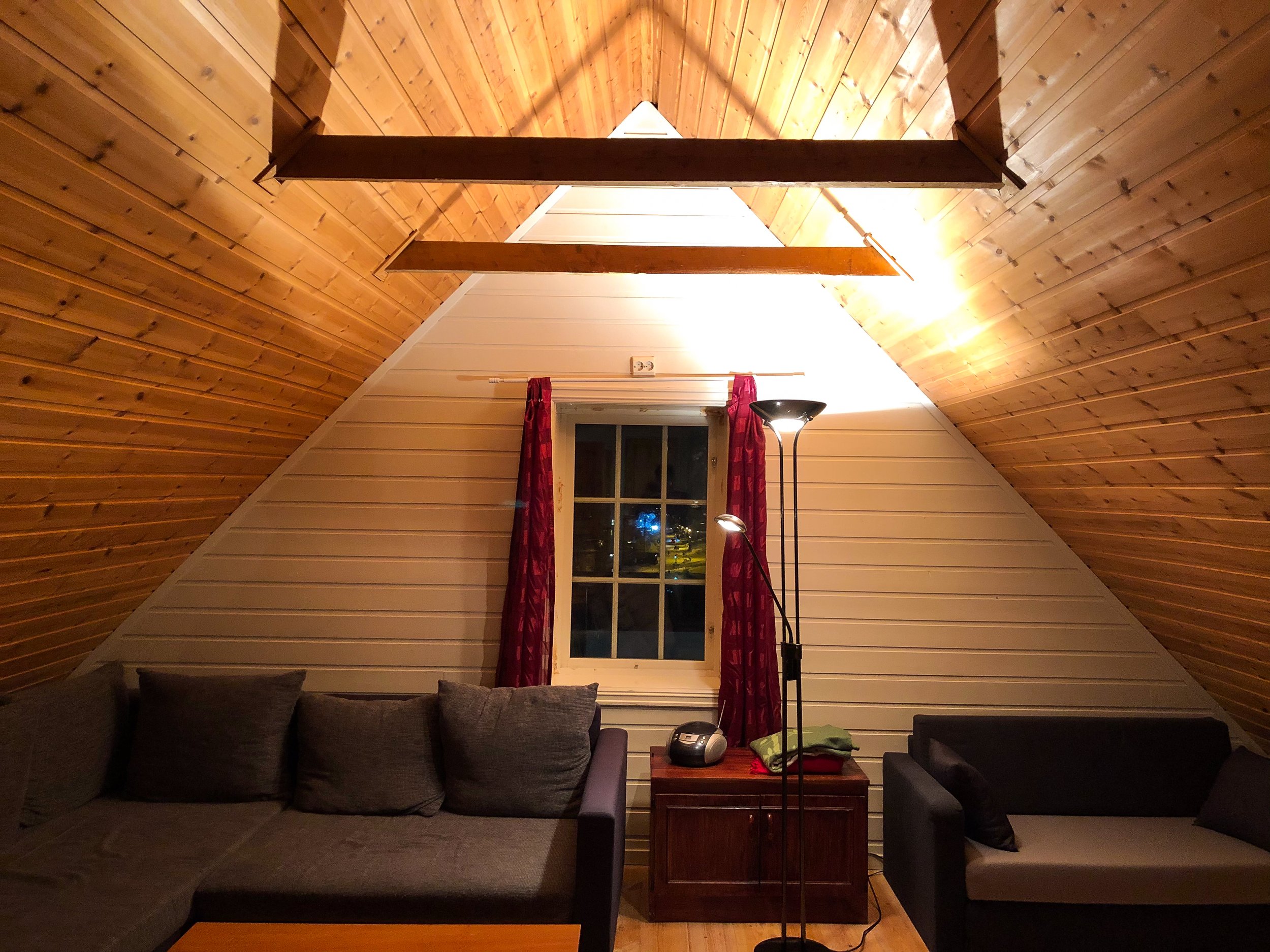
Villa 1924 Loft. An attic apartment in an A frame style space with Nordic pine wall panels, heated floors and tiny windows with views of Tromsø. It’s a cozy space to stay, minutes away from the city center on foot. Book on Airbnb.
Elsewhere in Nordic Europe
From Tromsø’s Arctic fjords and Northern Lights to Lapland’s snowy wilderness, Copenhagen’s canals and Iceland’s waterfalls and glaciers, continue your Nordic journey through these travel guides:
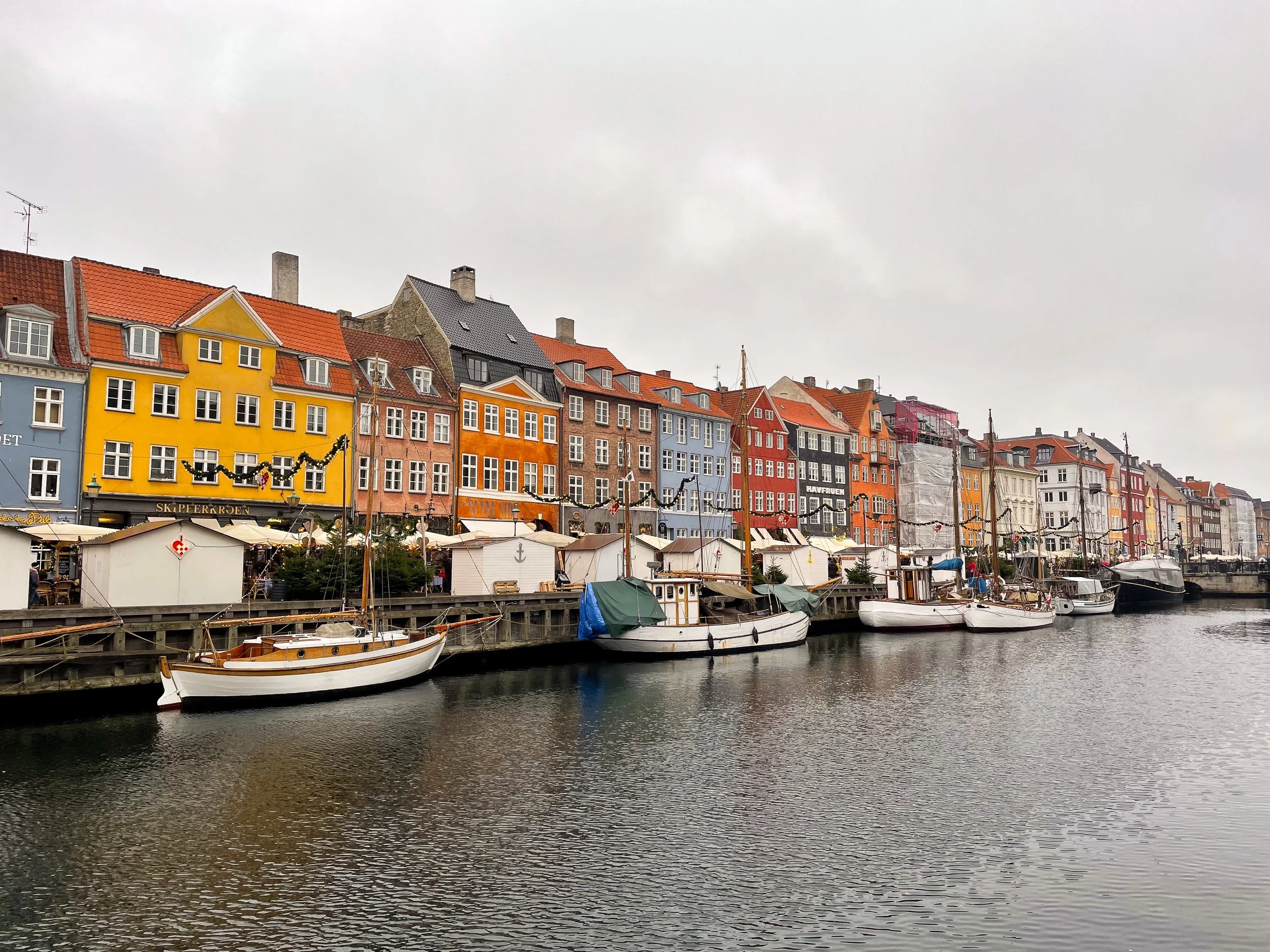
Copenhagen Travel Guide: Nyhavn, Christmas Markets & Scandinavian Cuisine. Wander along Copenhagen's colorful canals where wooden ships, historic castles and Danish culture meet Scandinavian cuisine and festive Christmas markets.
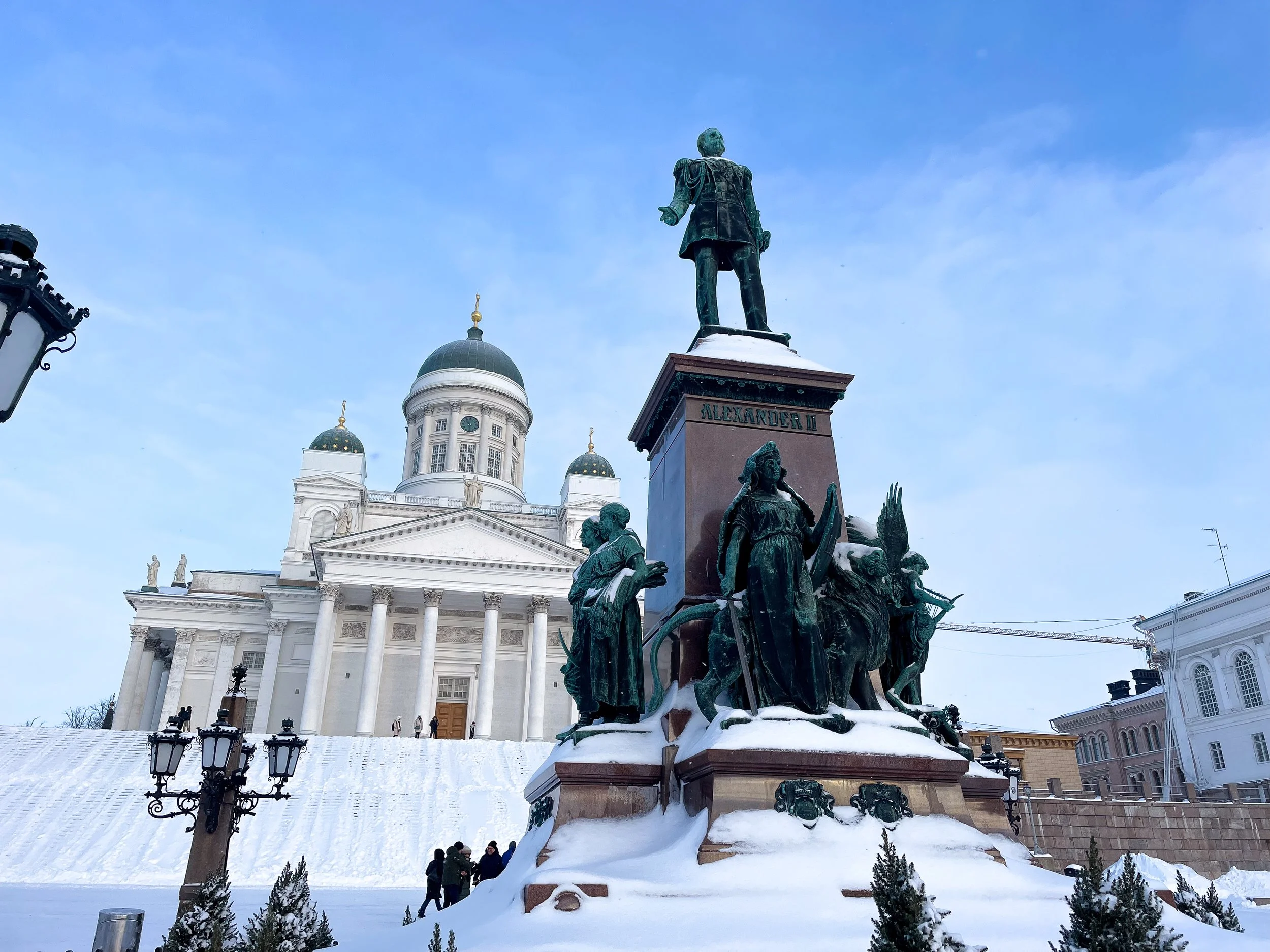
One Day in Helsinki: Finnish Sauna & Waterfront Sights. Experience a winter day exploring Helsinki's frozen waterfront where local food markets, historic architecture and steaming saunas bring Finnish culture to life.
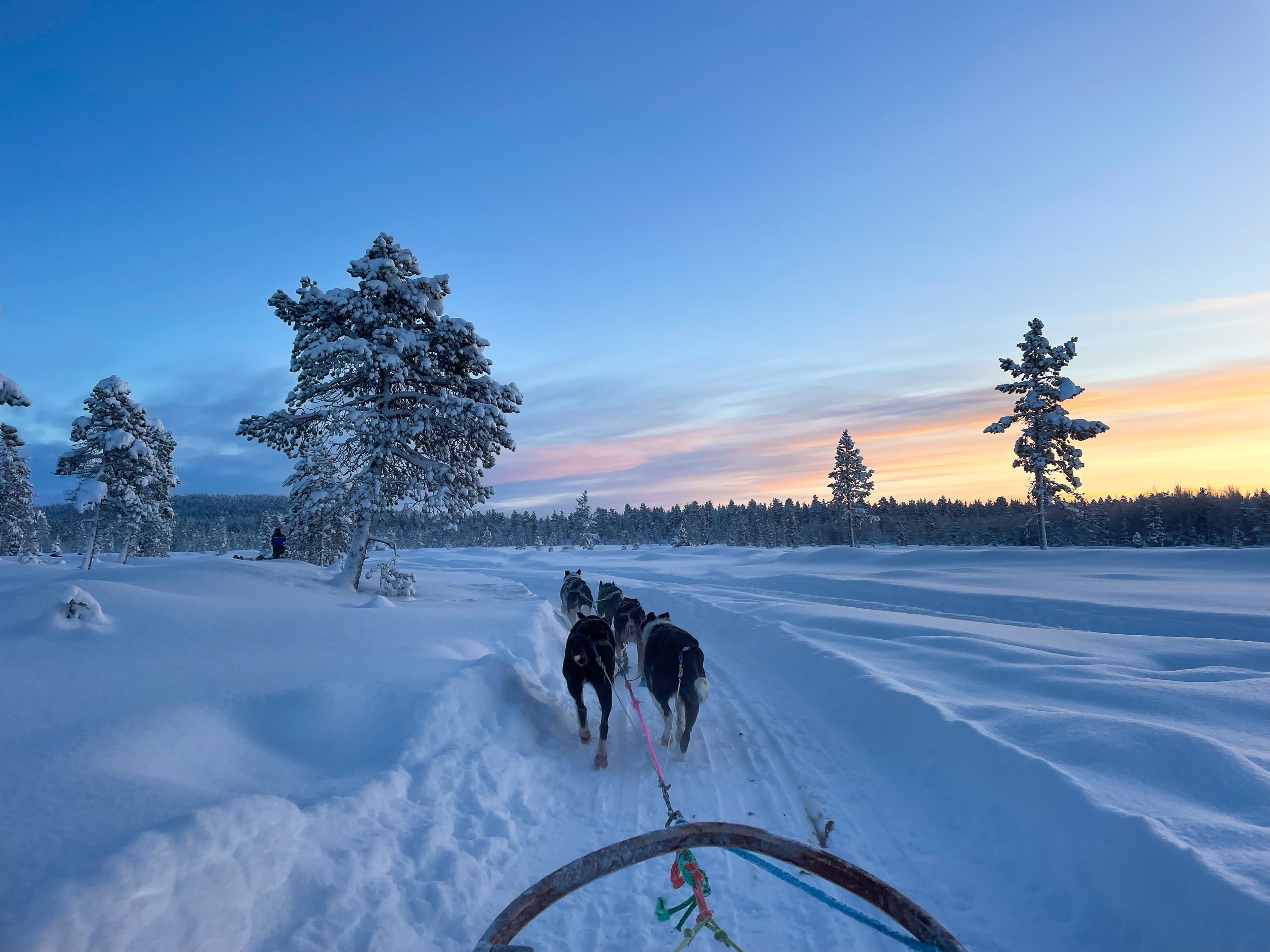
Lapland Finland Travel Guide: Northern Lights, Sámi Culture & Arctic Adventures. Journey through Lapland's Arctic wilderness and snowy landscapes to experience Sámi traditions, husky mushing, Finnish cuisine and vivid auroras during the polar night.
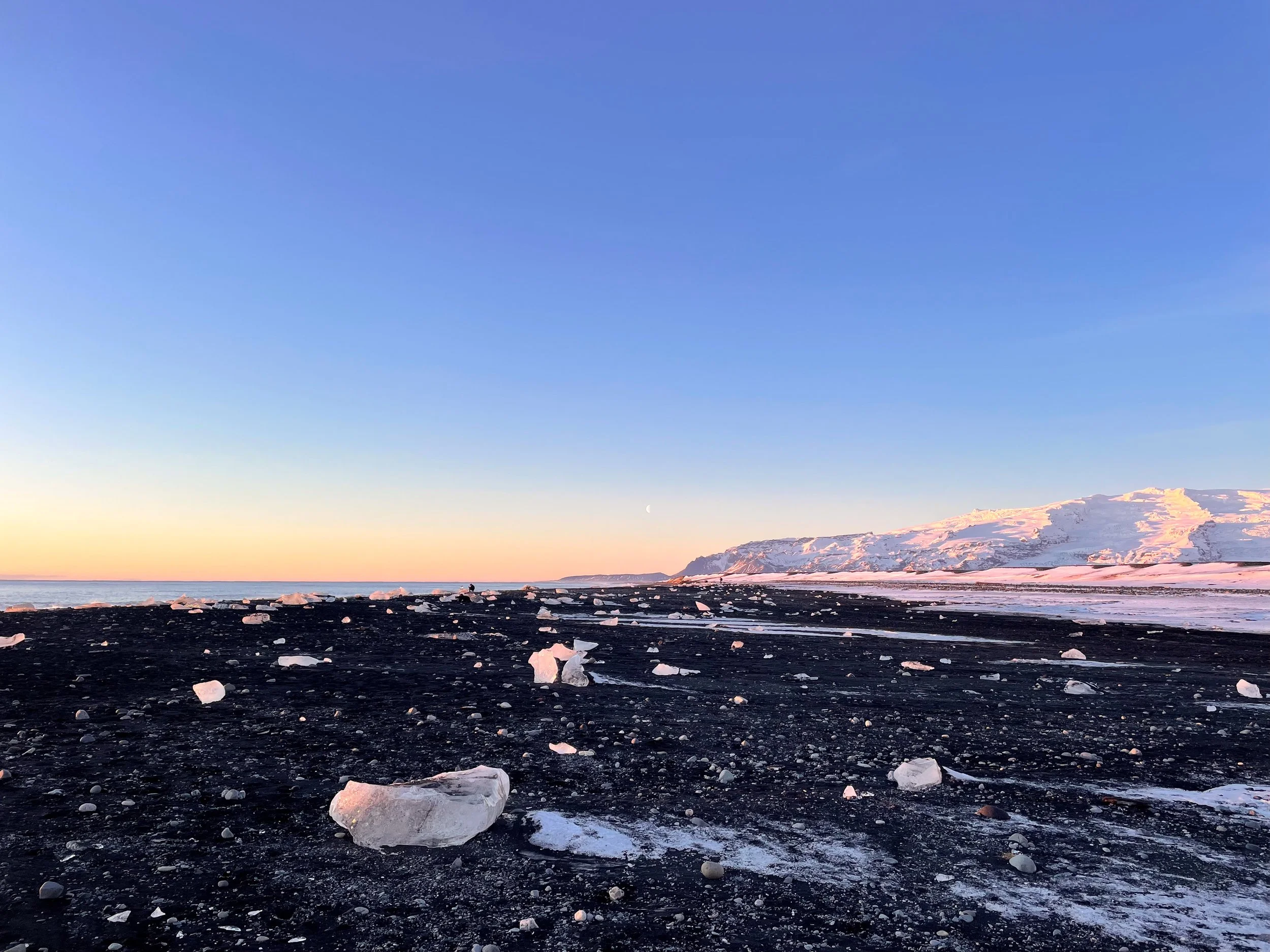
Iceland Road Trip Guide: Waterfalls, Glaciers & Black Sand Beaches. Road trip through Iceland's otherworldly landscapes where volcanoes, glaciers, waterfalls and black sand beaches create one of Earth's most dramatic journeys.
For Next Time…
Tromsø is an enchanting city that we one day hope to return to whether during the polar night of winter or midnight sun of summer! We plan to experience the city’s famed floating spas, husky excursions and whale spotting tours in the fjords.
Vulkana Spa Boat. A boat with a saltwater hot tub, sauna, steam bath and fireplace lounge. The crew provides dinner and facilitates cold water plunges in the harbor.
Husky Excursions. Multiple companies offer different types of husky excursions including husky mushing, dog sledding and cuddling with cute puppies. Experiences vary from short 30 minute trips, to hour long excursions and overnight stays watching for the Northern Lights.
Whale Spotting & Fjord Tours. Orcas and Humpbacks are frequently seen in the winter months from November to February while hunting for herring. There is a number of tour companies offering boat trips through the fjords and sometimes into the Norwegian Sea.
Amsterdam Travel Guide: Canals, Museums & Autumn Colors
Stroll along Amsterdam's picturesque canals through historic neighborhoods to renowned museums and lively markets as golden leaves fall across cobblestone streets.
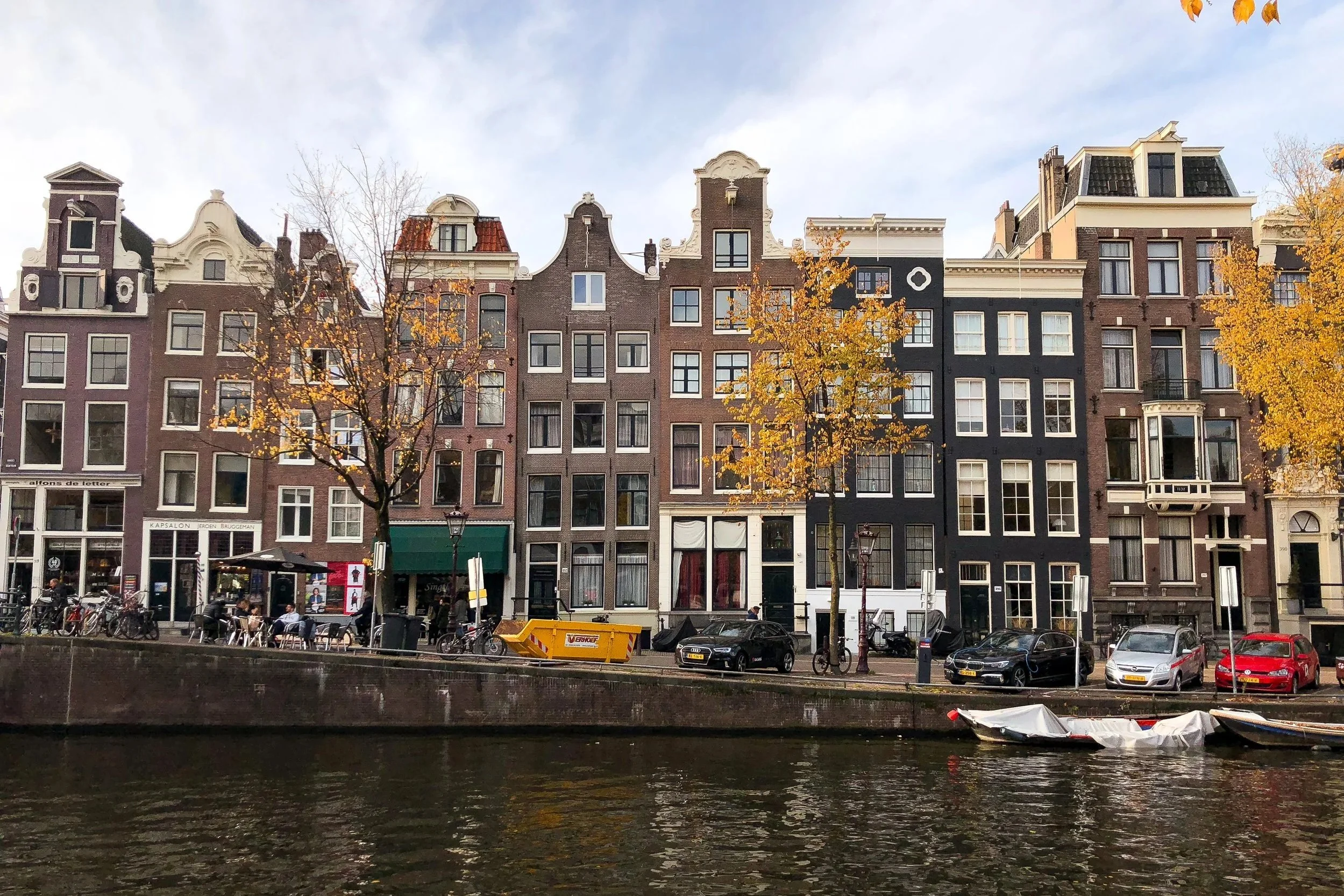
Autumn in Amsterdam
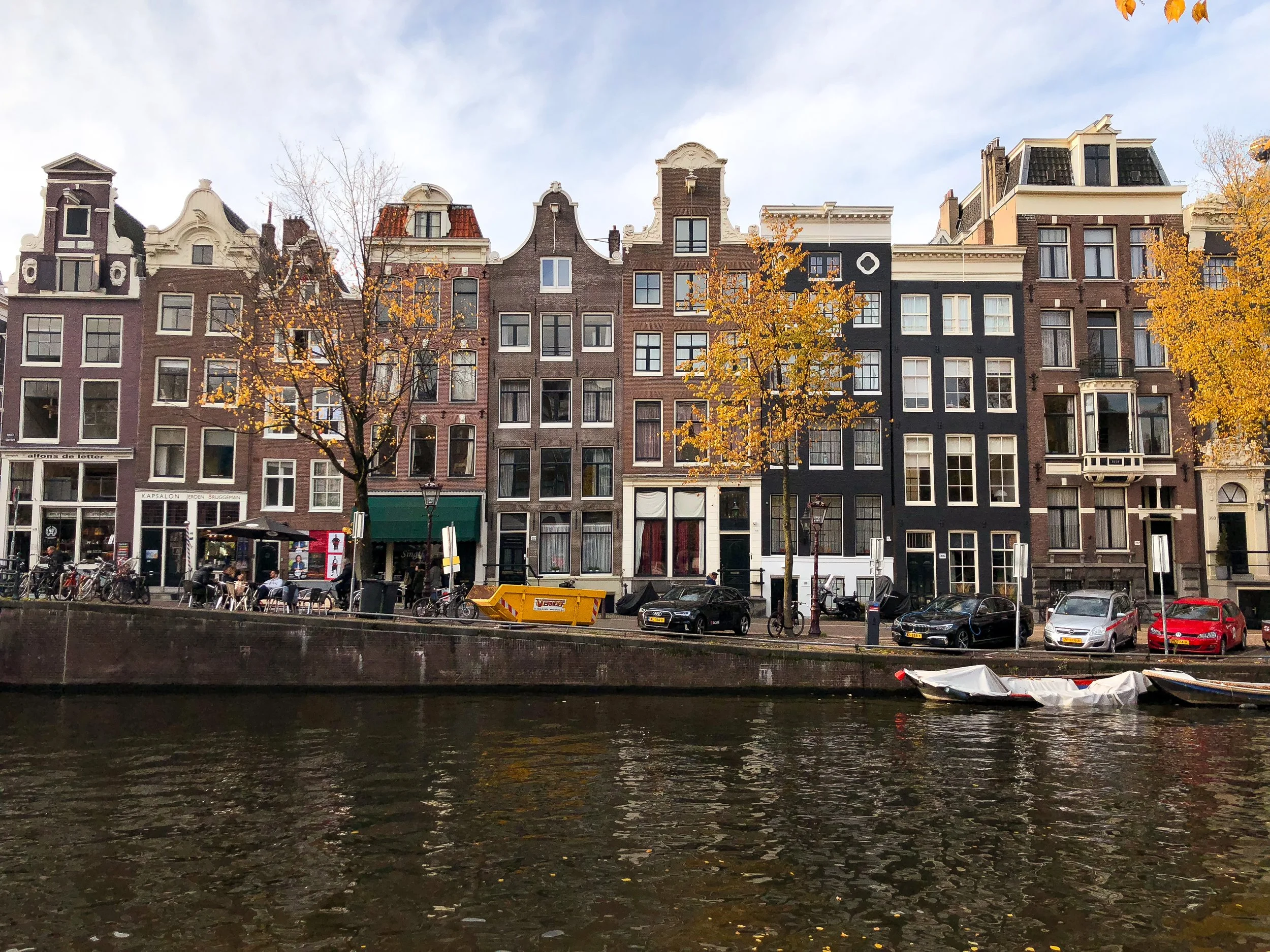
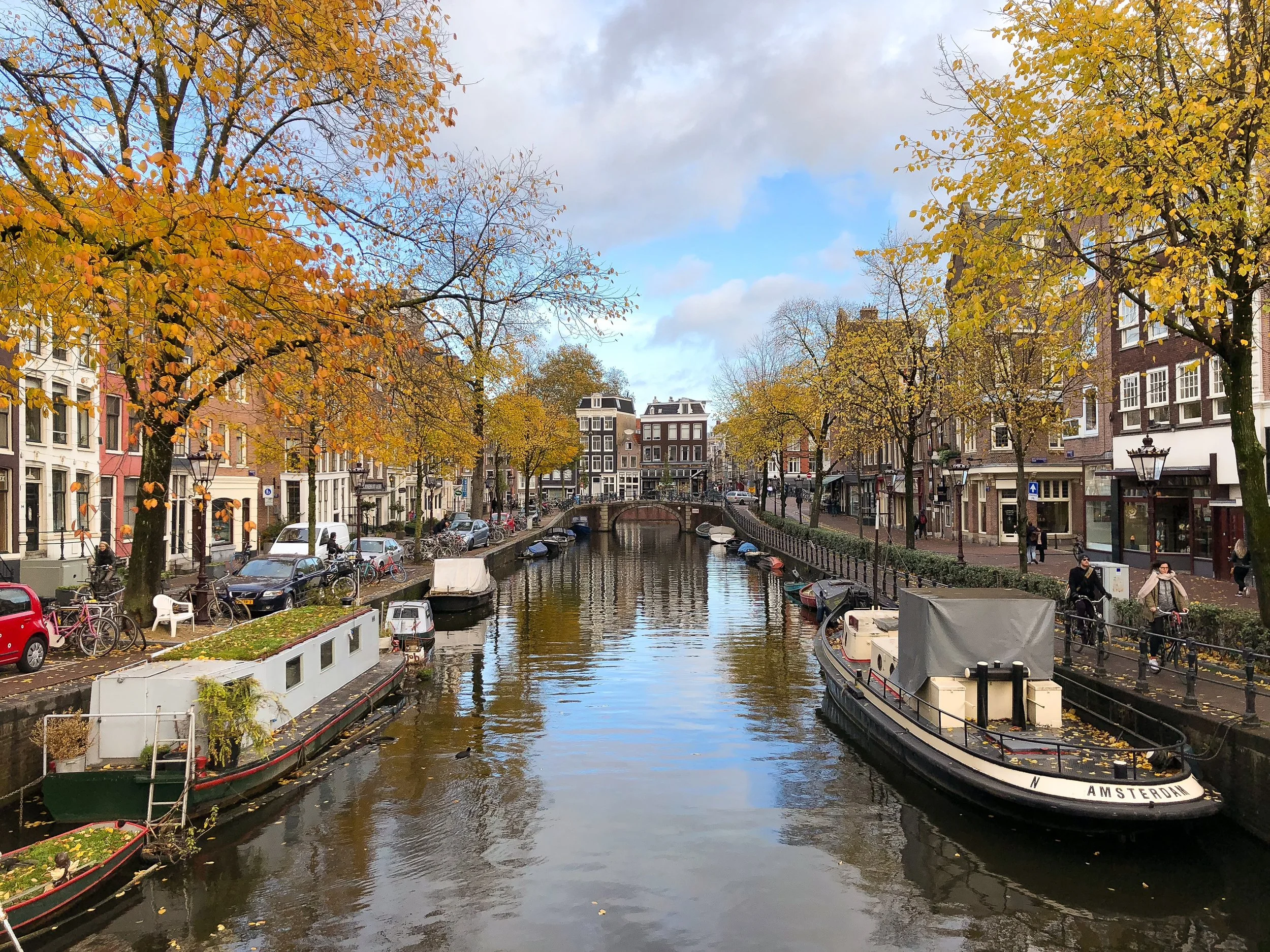
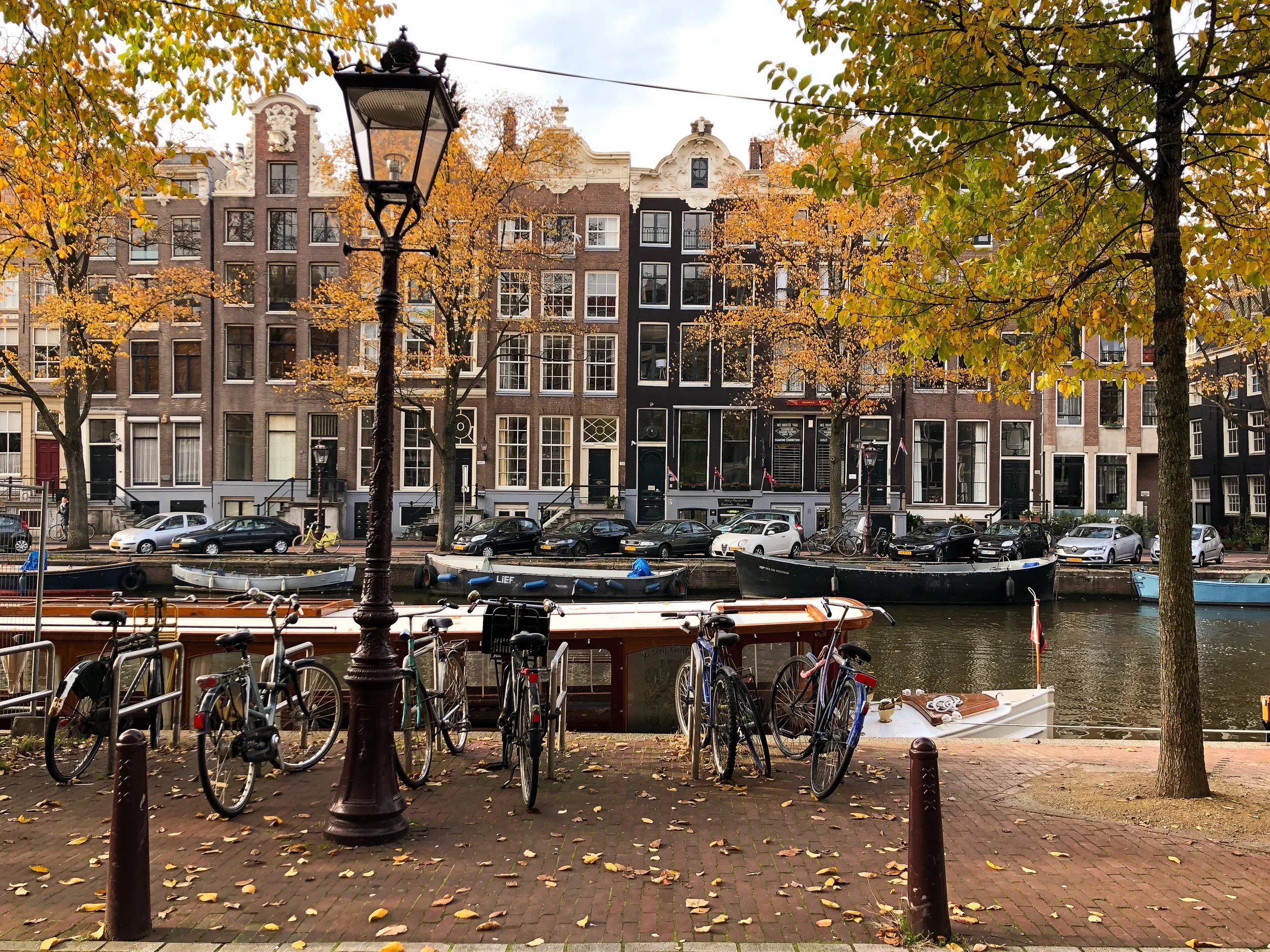
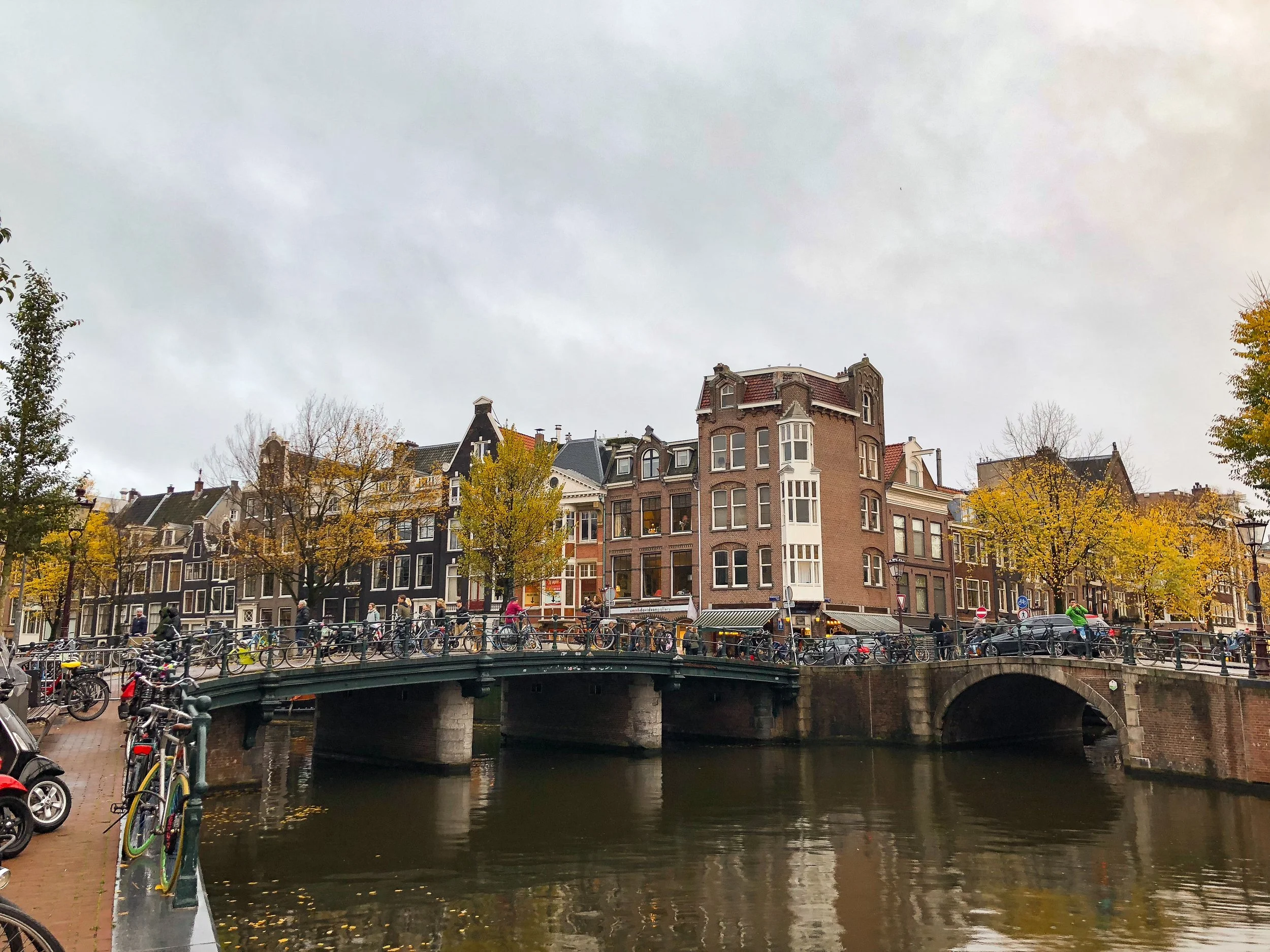
Autumn in Amsterdam is a magical time of year. The days are cool and the nights long. Golden leaves fall onto cobblestone streets while the amber glow of street lamps illuminates historic buildings lining the rings of canals. The crisp air and ability to dress in layers made it a cozy time to visit.




See the City
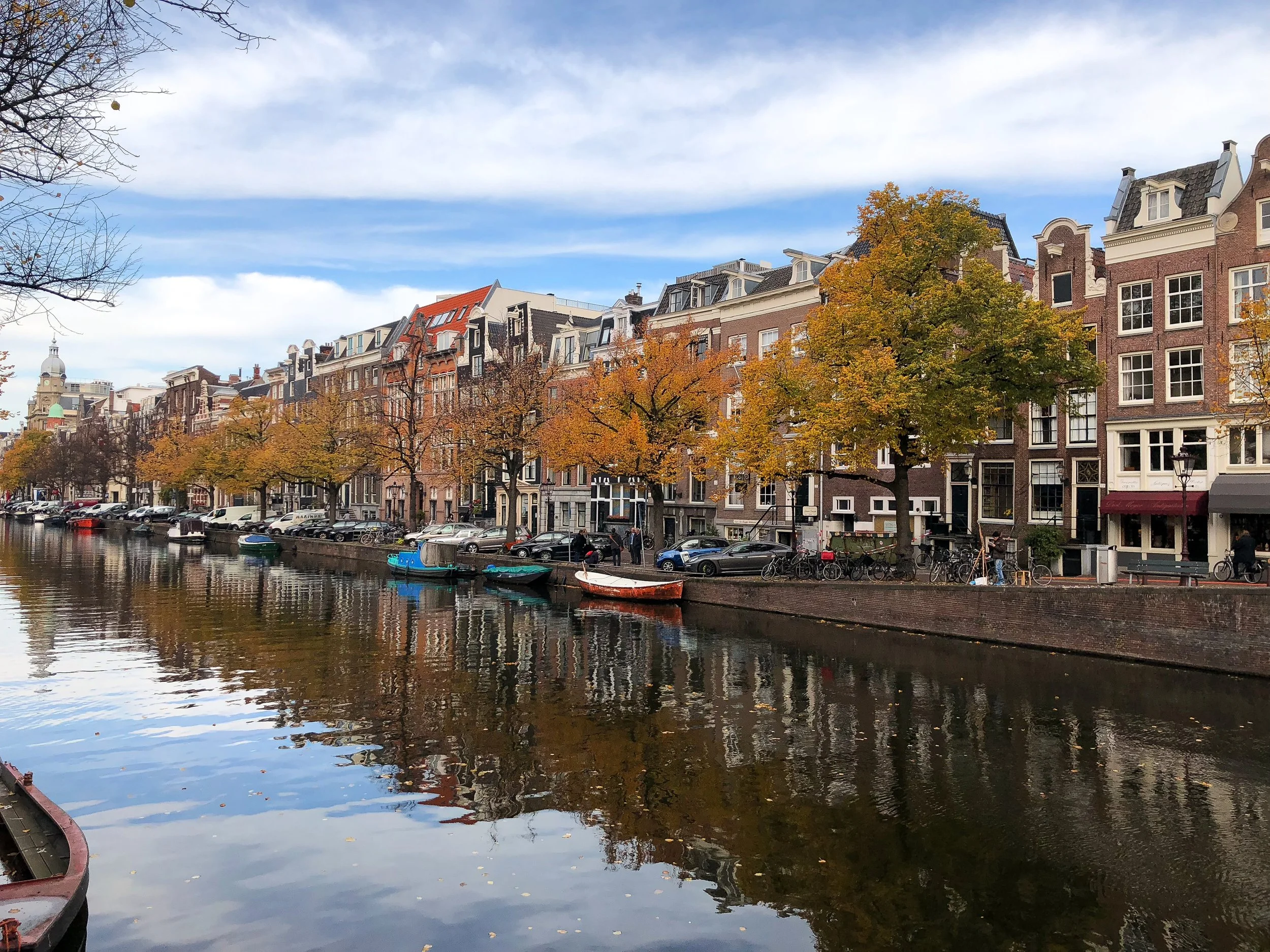
Whether on foot, by bike or boat, Amsterdam is a city that’s meant to be explored! Thin brick buildings, elegant row houses and house boats line the city’s famed canals. Creative restaurants and atmospheric cafes offer European dining experiences. Displays at vintage stores and design shops entice passersby to window shop. Food and flea markets encompass public squares and plazas. Paintings by Dutch Masters, Van Gogh, Rembrandt and Vermeer are displayed in galleries of world class museums.
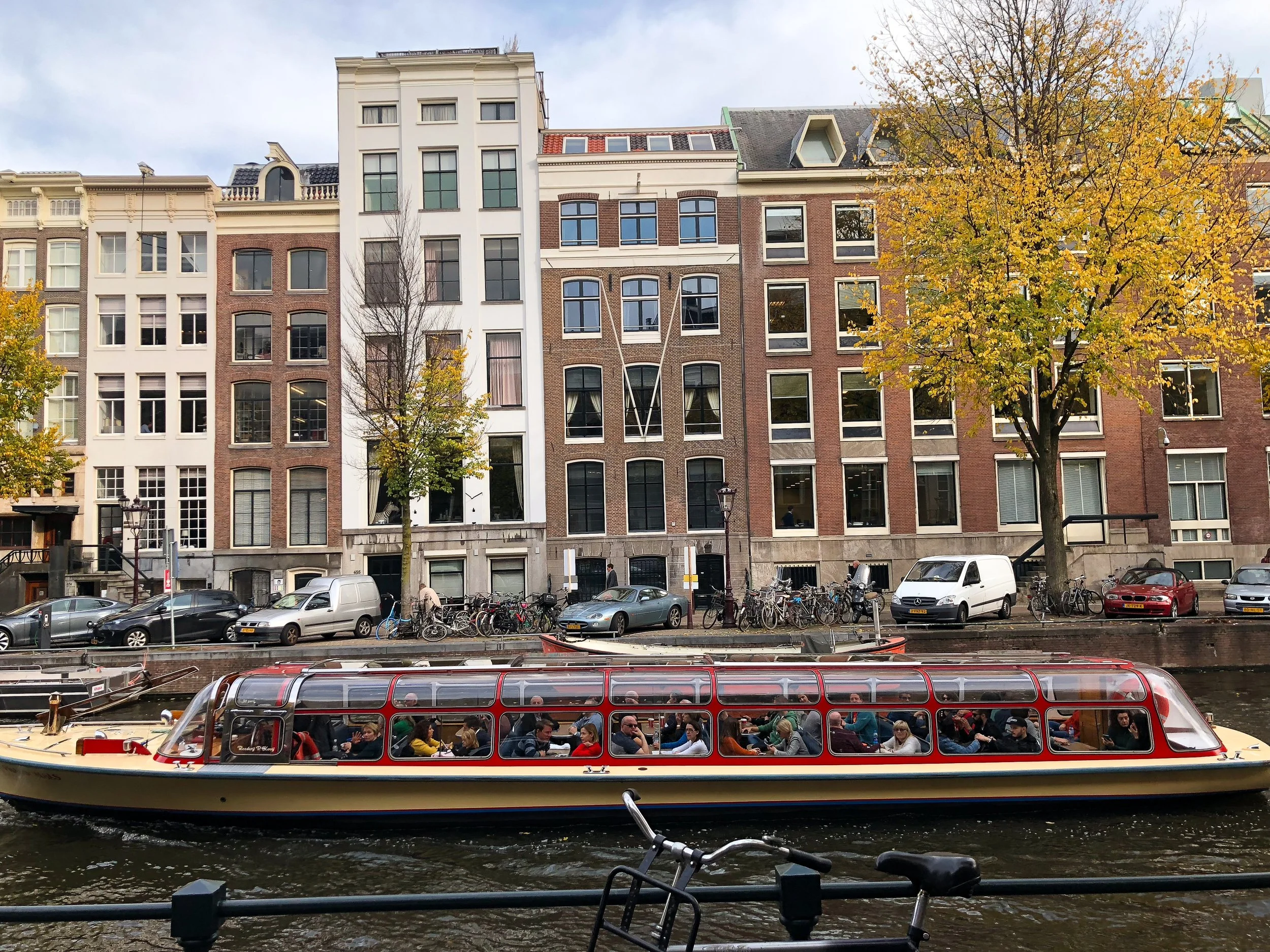
Cruise the Canals
Amsterdam is best seen by cruising its charming canals! Boats depart from various docks across the city, each offering leisurely sightseeing and dining experiences. From within the covered boat, we looked out at the beautifully illuminated buildings, into countless house boats and admired how effortlessly the captain seemed to navigate through the narrow passageways and low bridges. Our tour included a spread of Dutch cheeses paired with European wines. Book with Stromma.
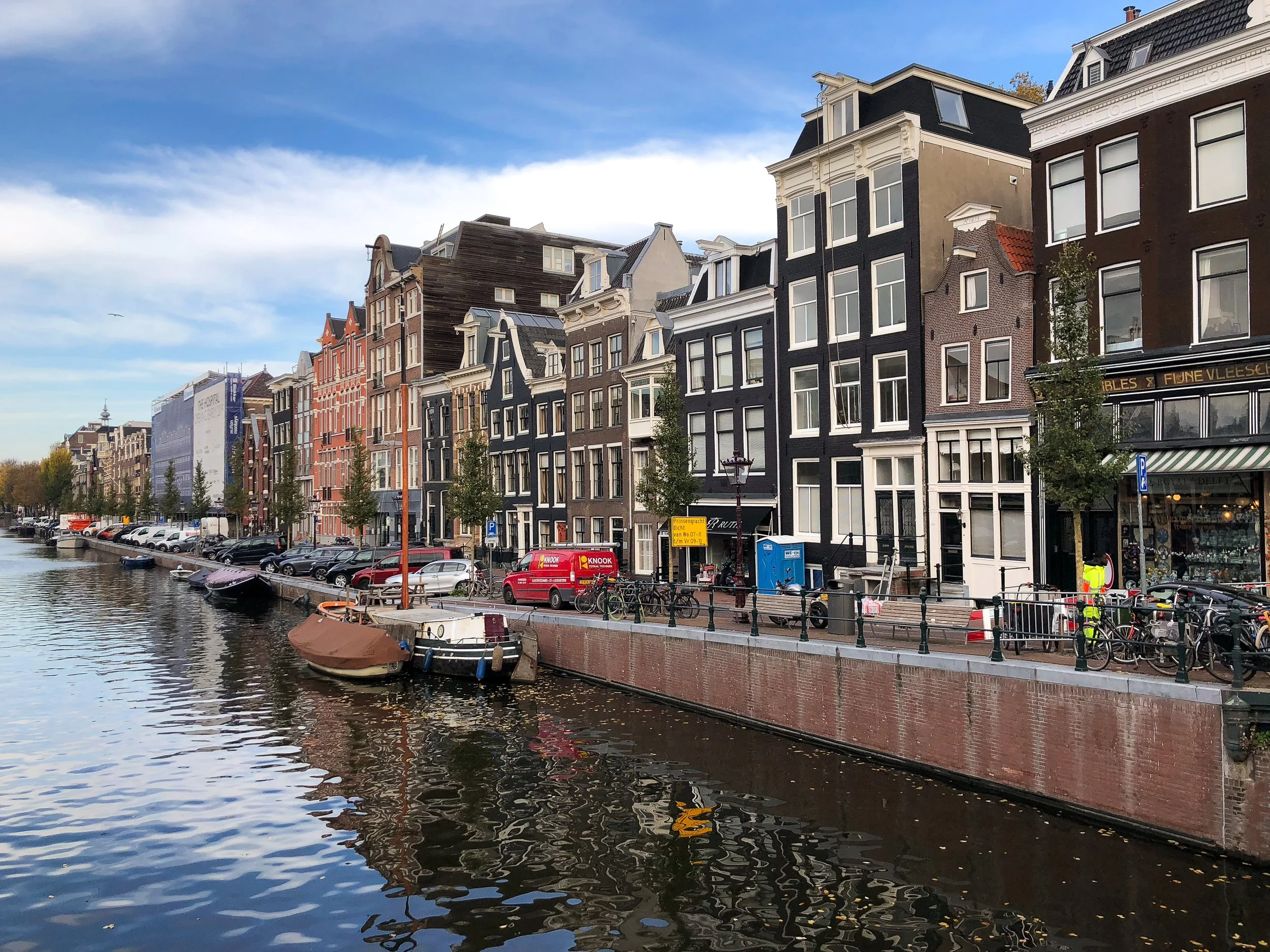
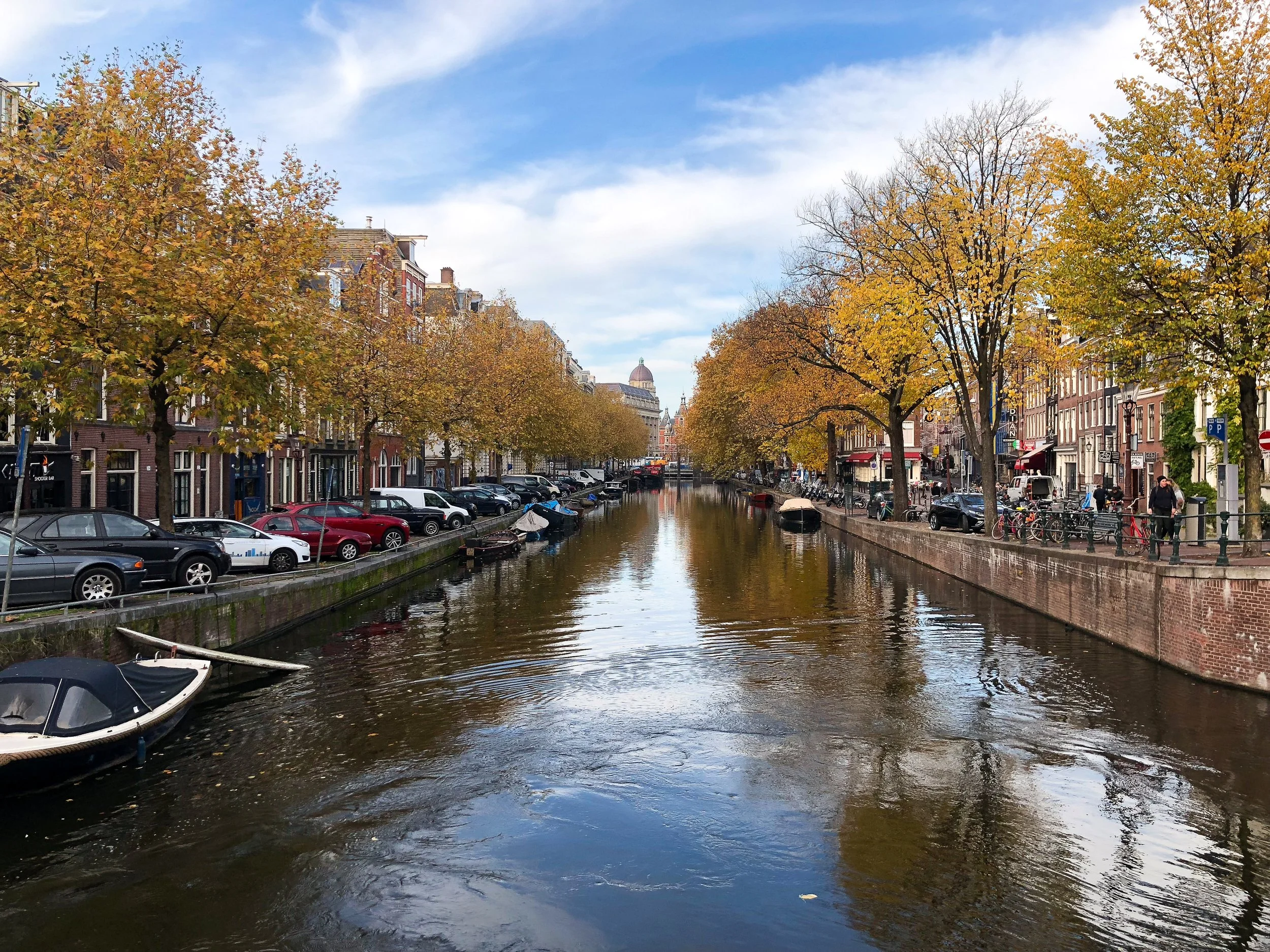


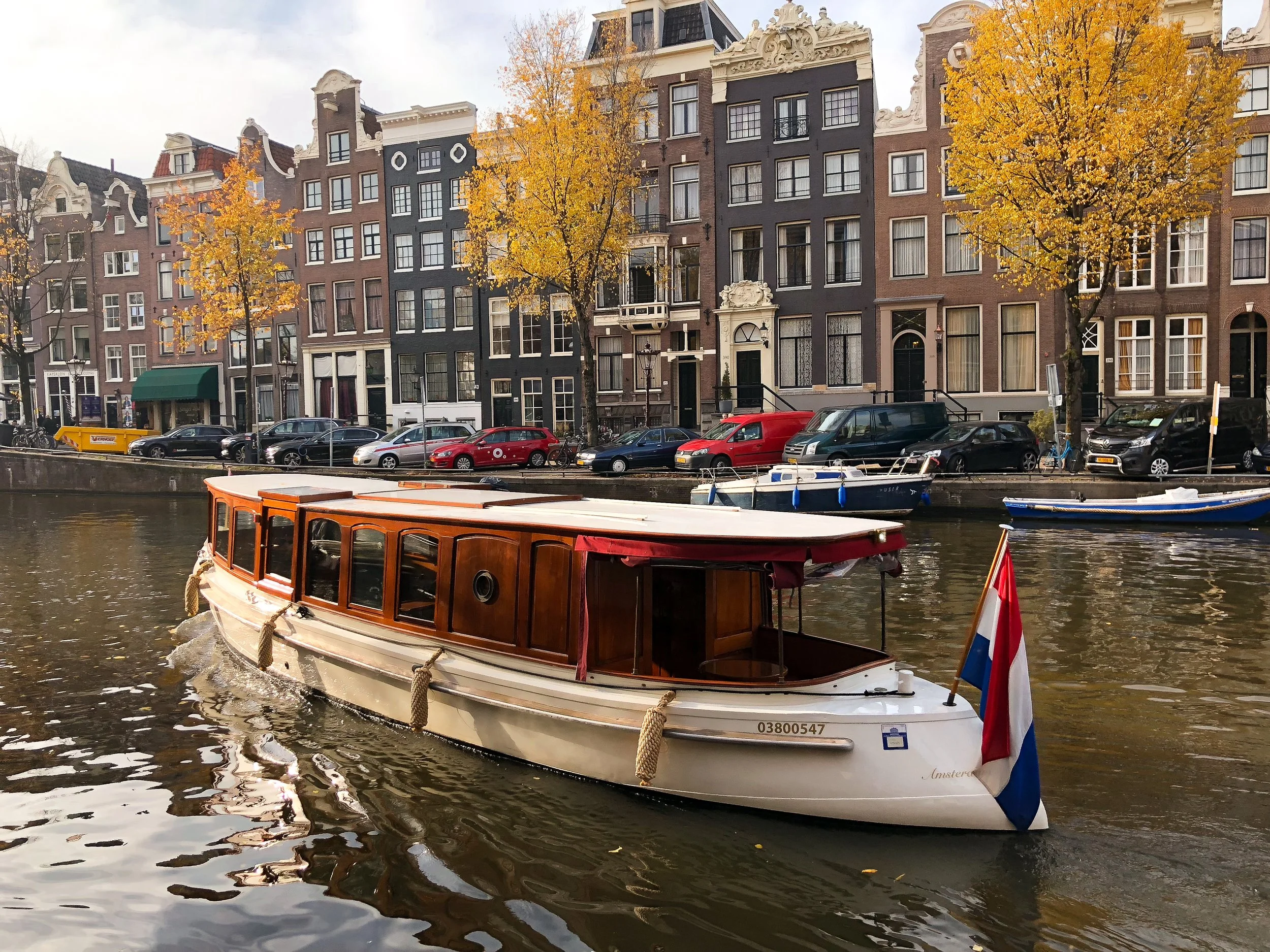
Visit the Neighborhoods
The Canal Belt. The canals define Amsterdam branching out in semi-circles from the city’s center. The inner 4 rings are designated as a UNESCO World Heritage Site. Spend time exploring them, admiring the architecture and their house boats.
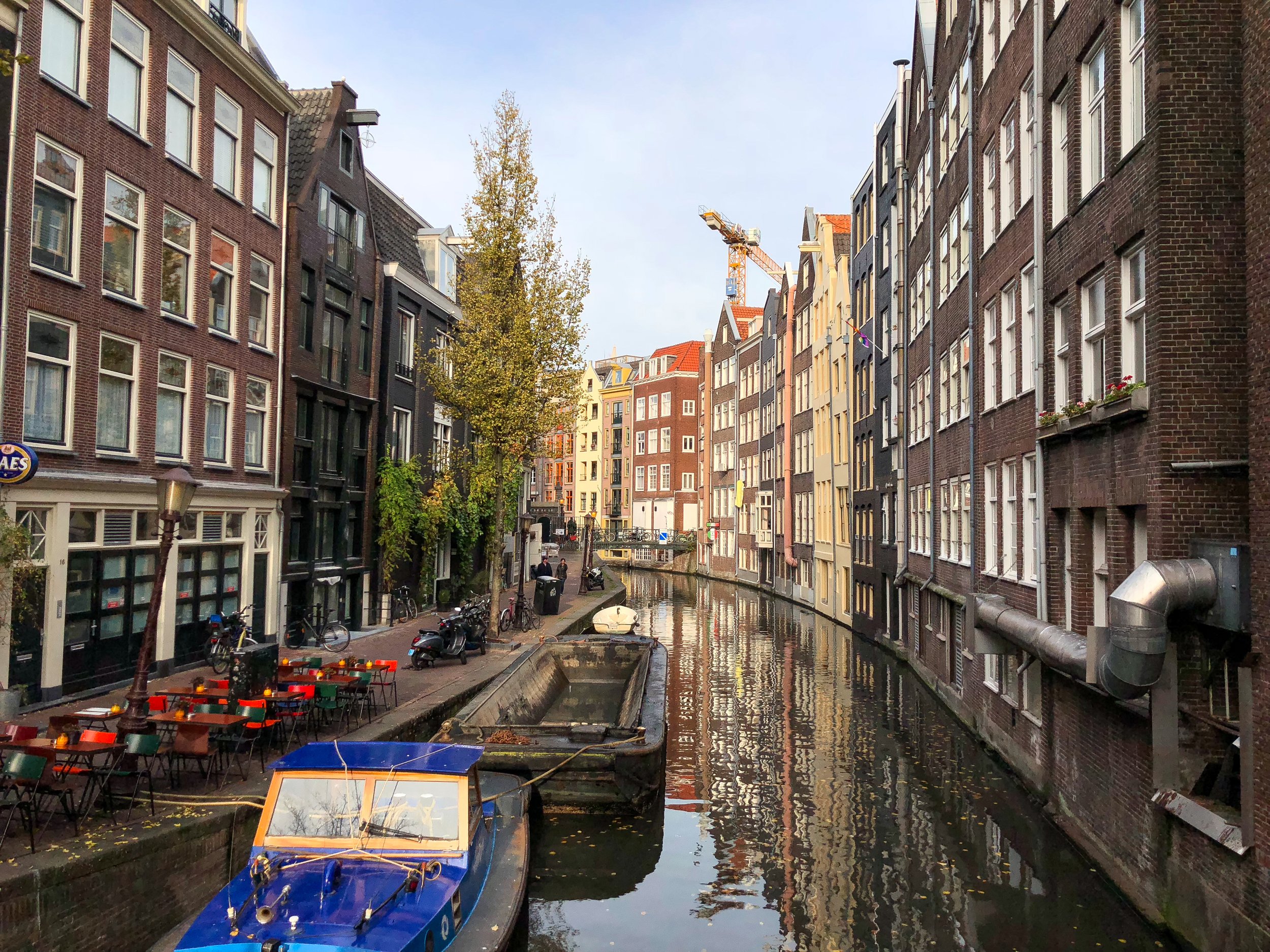



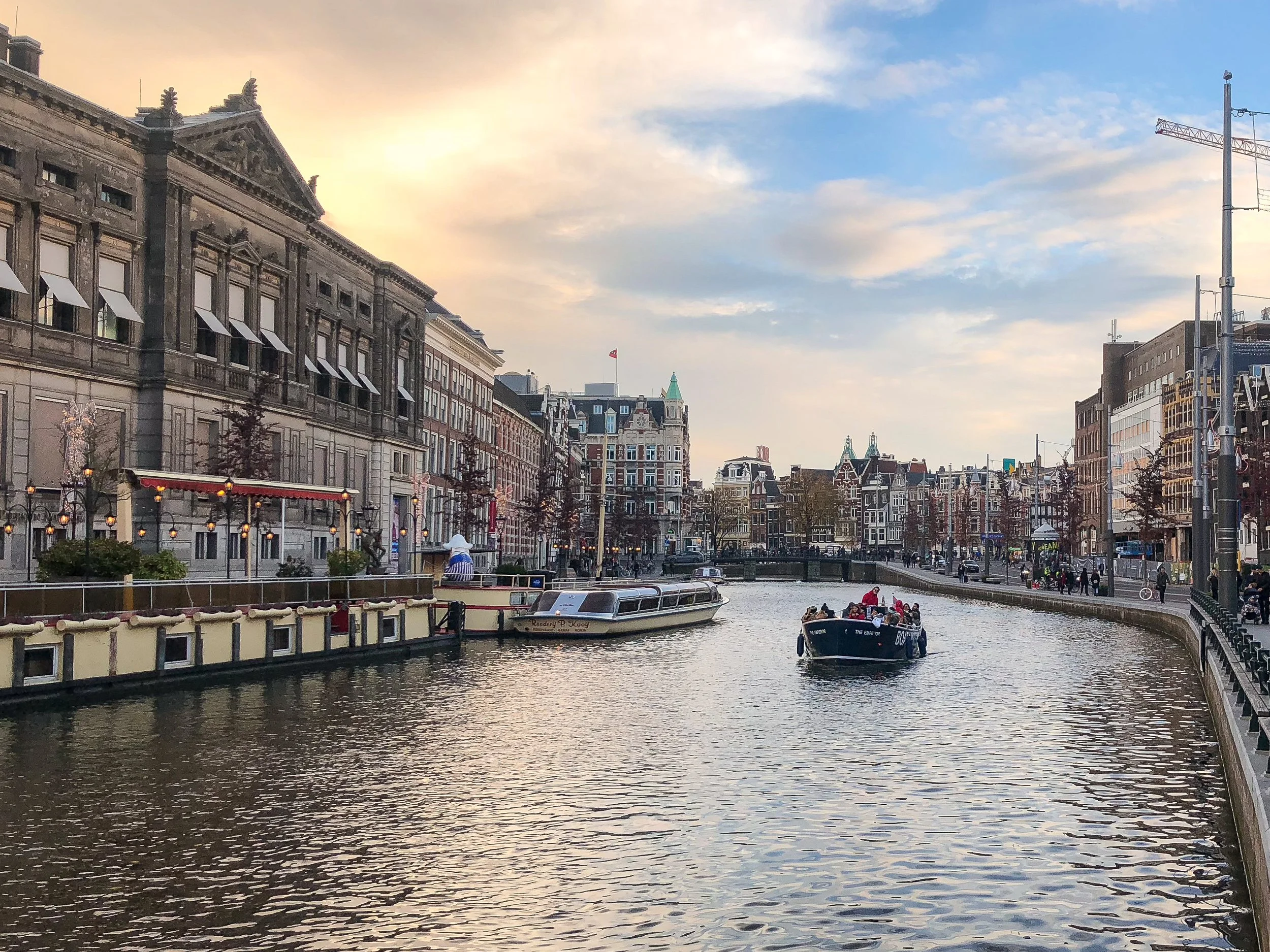
Binnenstad. The central neighborhood of Amsterdam at the inner heart of The Canal Belt. It’s defined by its slanted row houses, historic monuments and bustling walking streets. It surrounds the De Wallen, the city’s red light district.
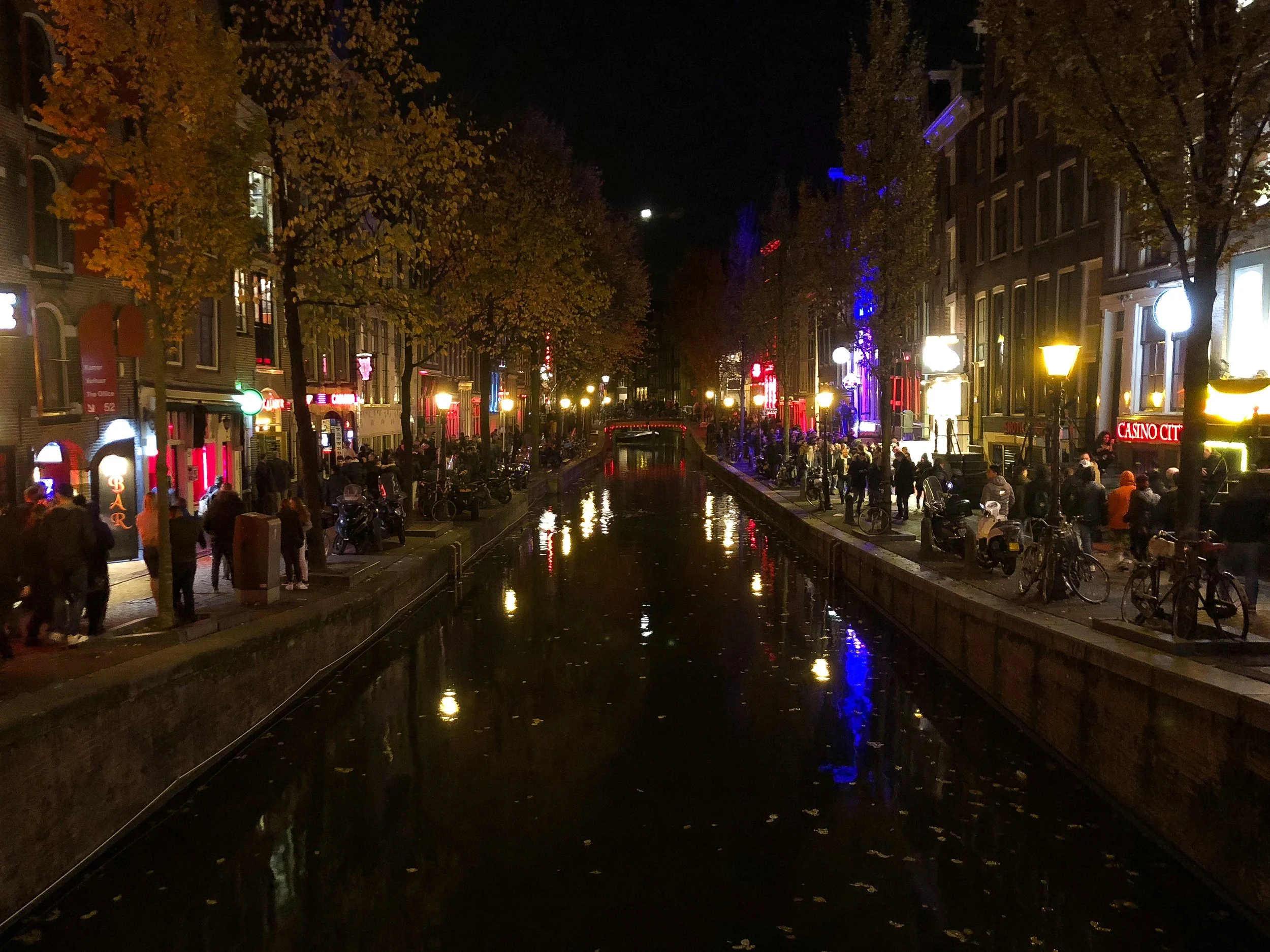
De Wallen (Red Light District). One of the oldest and well known, if not infamous, neighborhoods in Amsterdam. It’s famous for its historic architecture, narrow streets, sex-workers, nightly peep shows and coffee shops. Even if you’re not interested in the scene, it’s an exciting neighborhood to walk through by day or night.

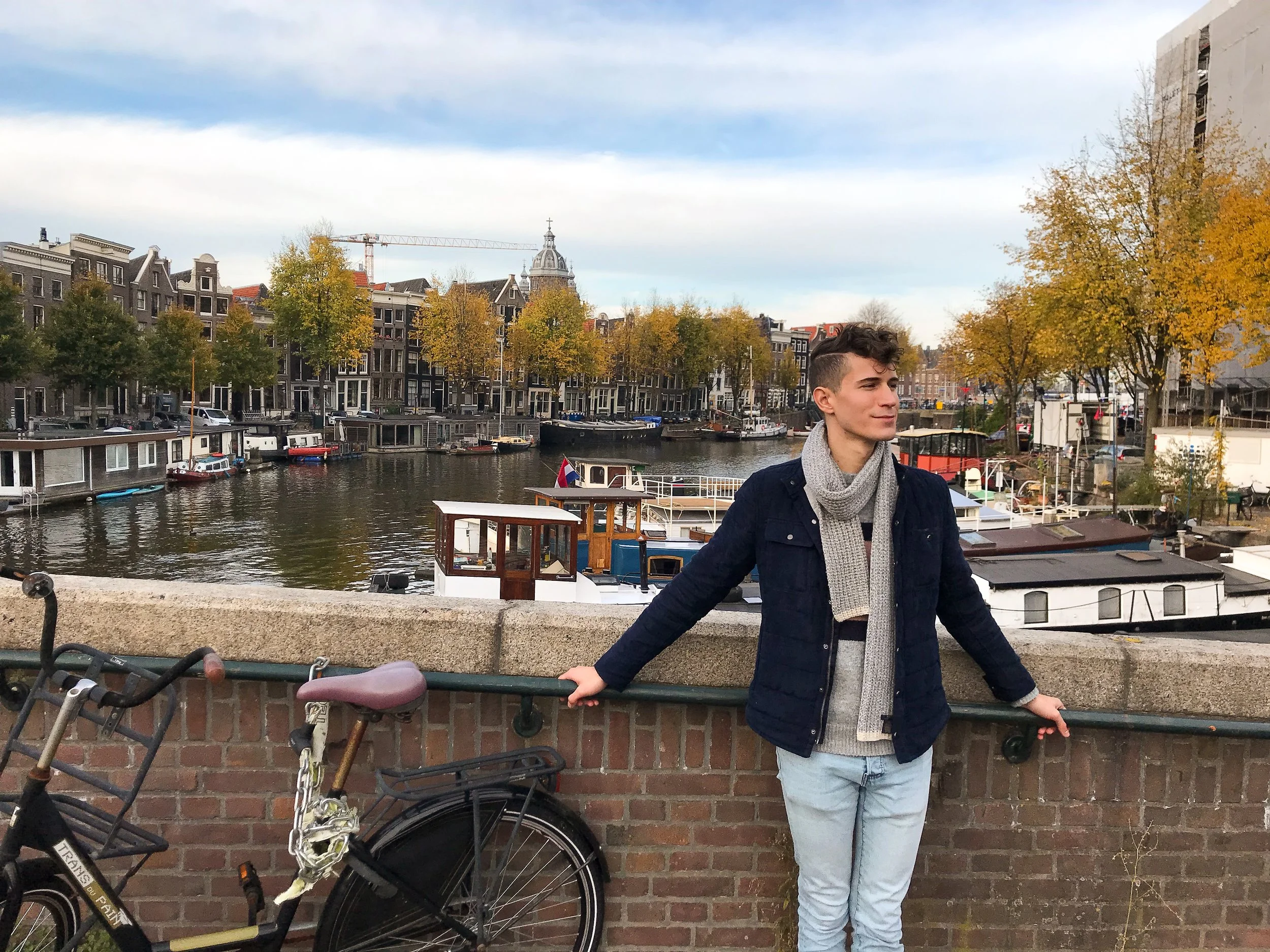

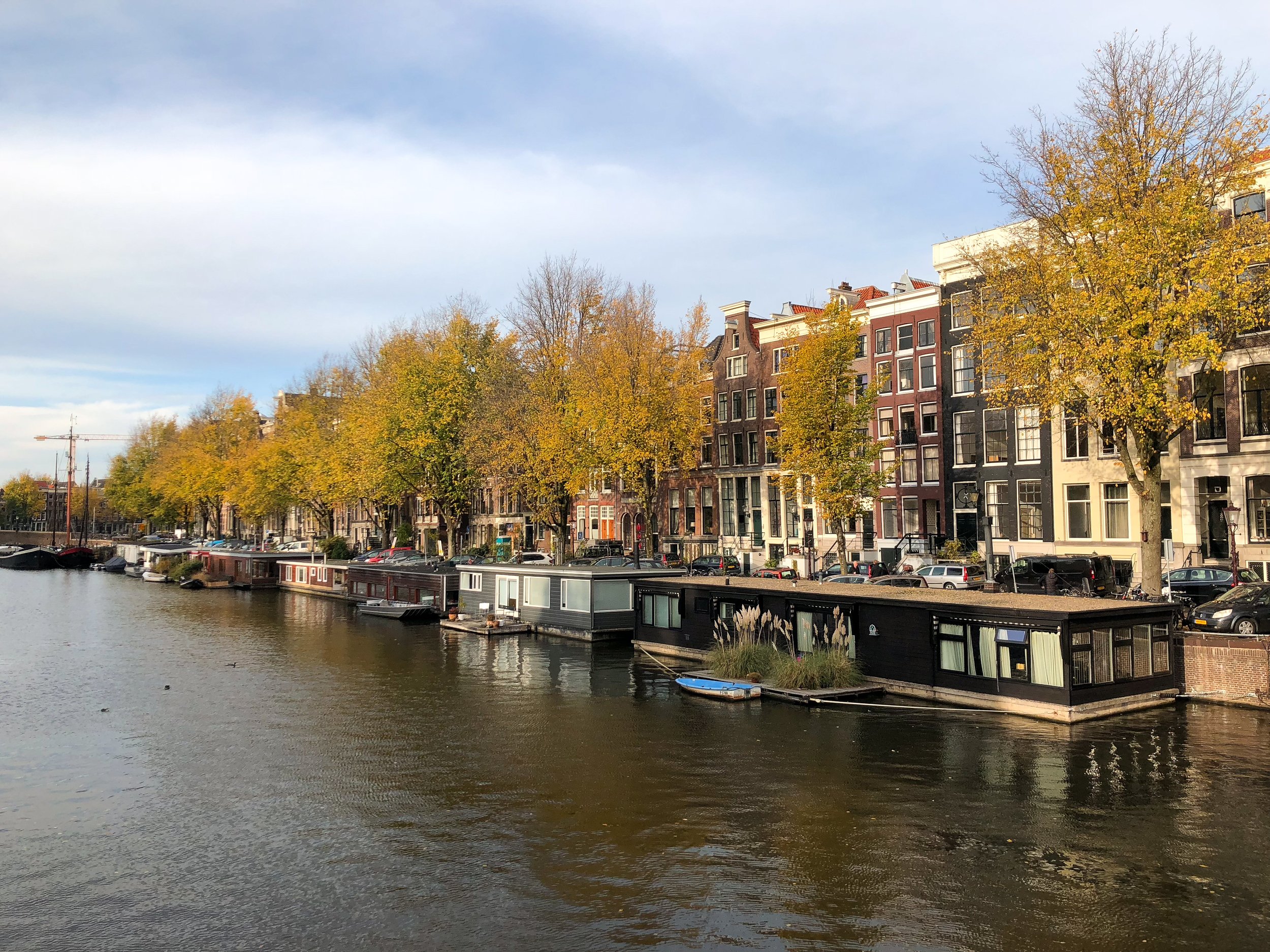
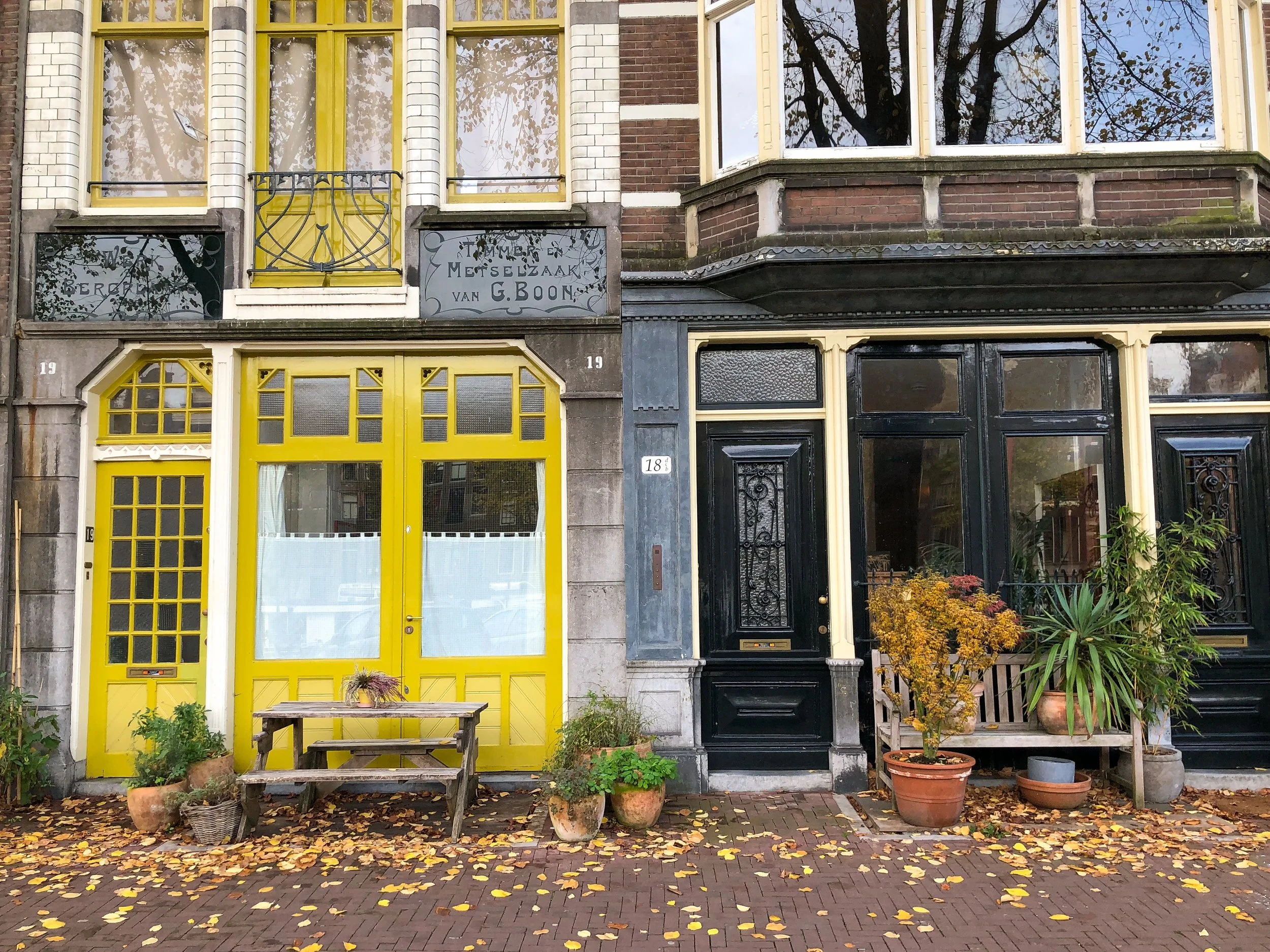
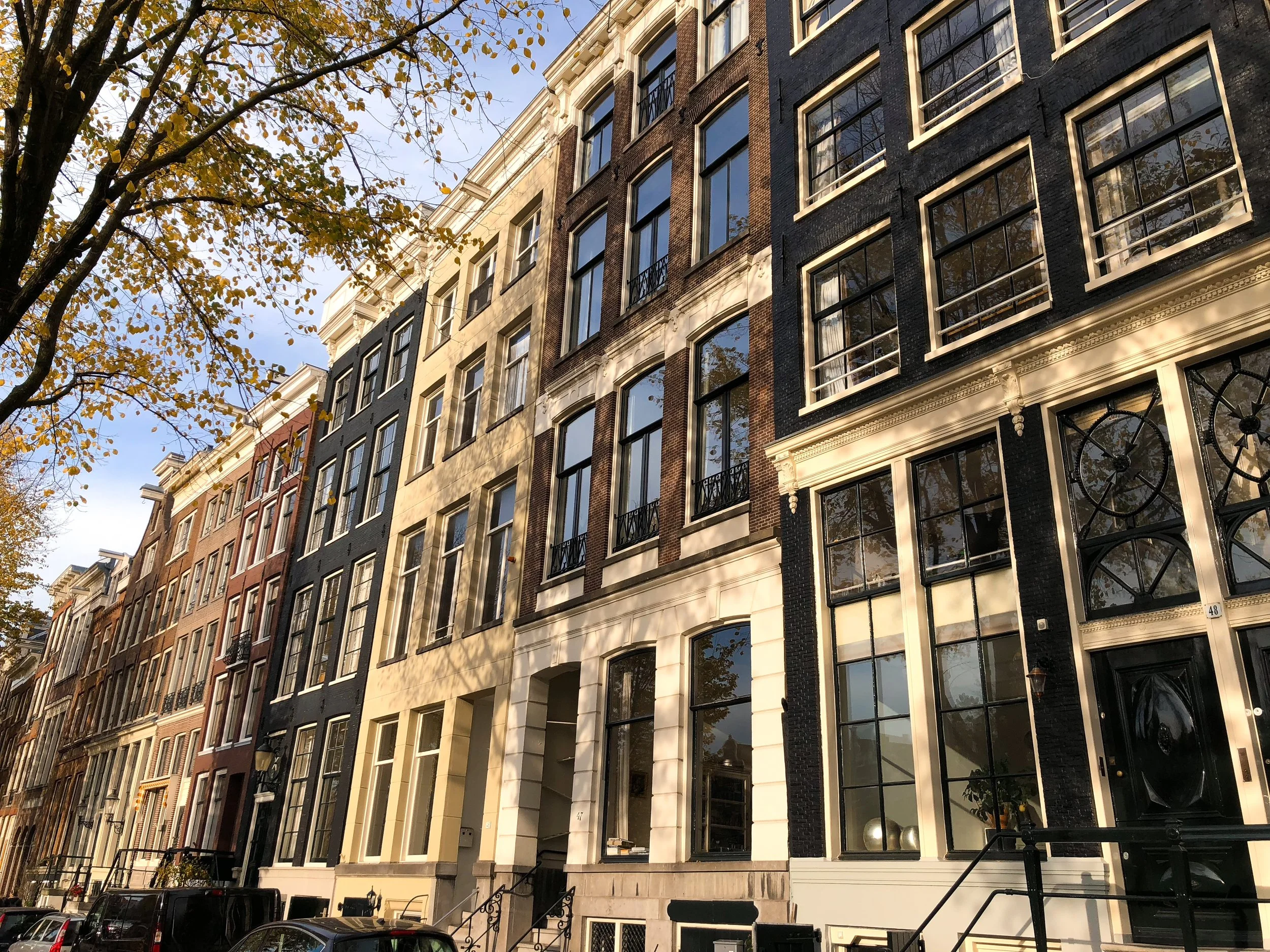

De Pijp. A vibrant neighborhood with a more local atmosphere than the central parts of the city. It’s home to The Heineken Brewery and one of the city’s largest markets, Albert Cuyp Market. We loved coming here for its quantity of cafes, making an effort to “cafe crawl” across the neighborhood and sip on different brews in the autumn air.
Oud West. This expansive neighborhood is a great place to visit for its many restaurants, bars, markets, vintage and interior design shops. It’s nearby the city’s largest park, Vondelpark, and home to Ten Katemarkt Market and the De Hallen Food Hall.
Amsterdam Noord. A former industrial neighborhood that’s become home to a large artist community. Many former warehouses have been transformed into waterfront bars, flea markets and art studios. It’s accessible via a ferry near Central Station.
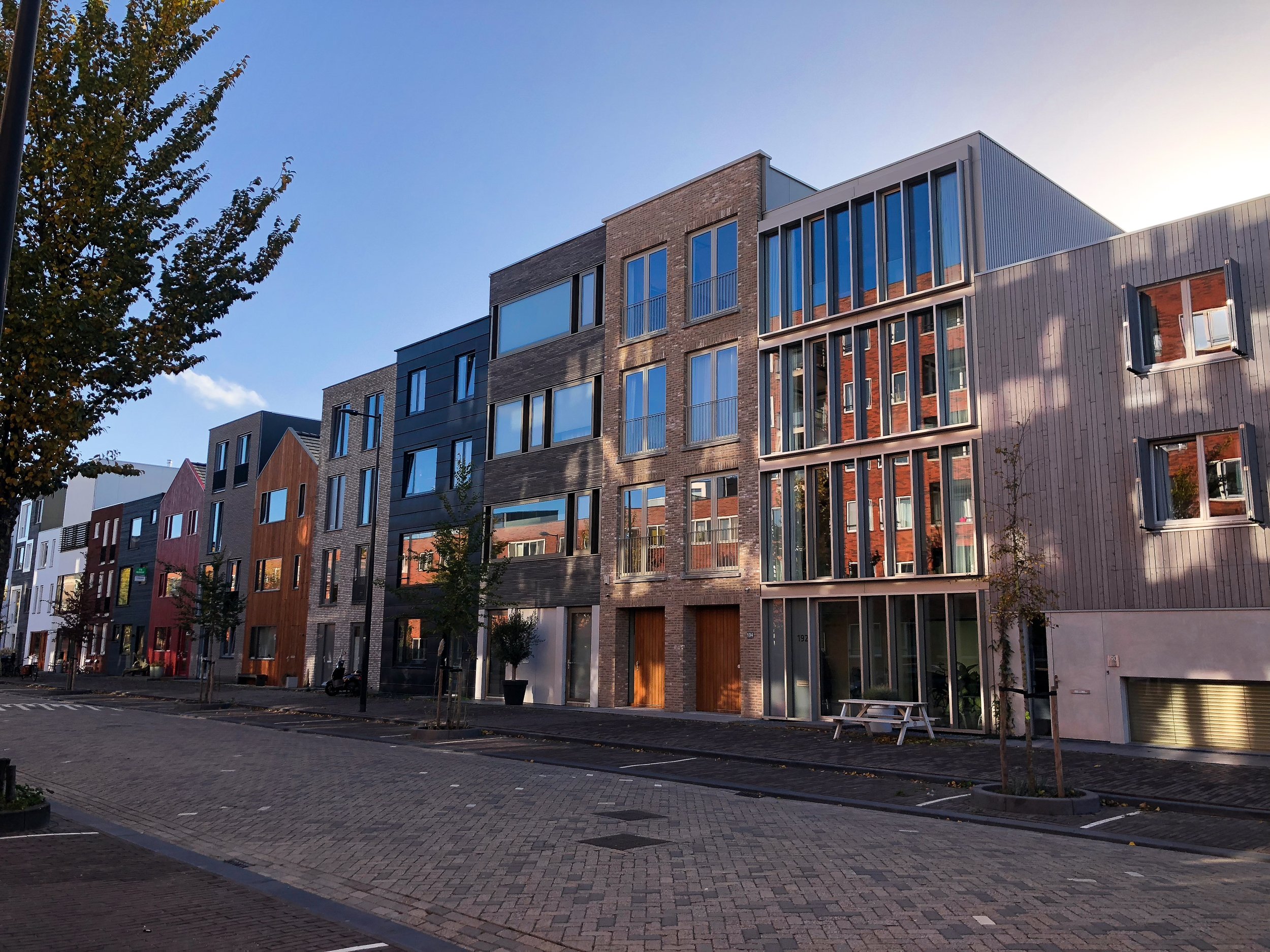
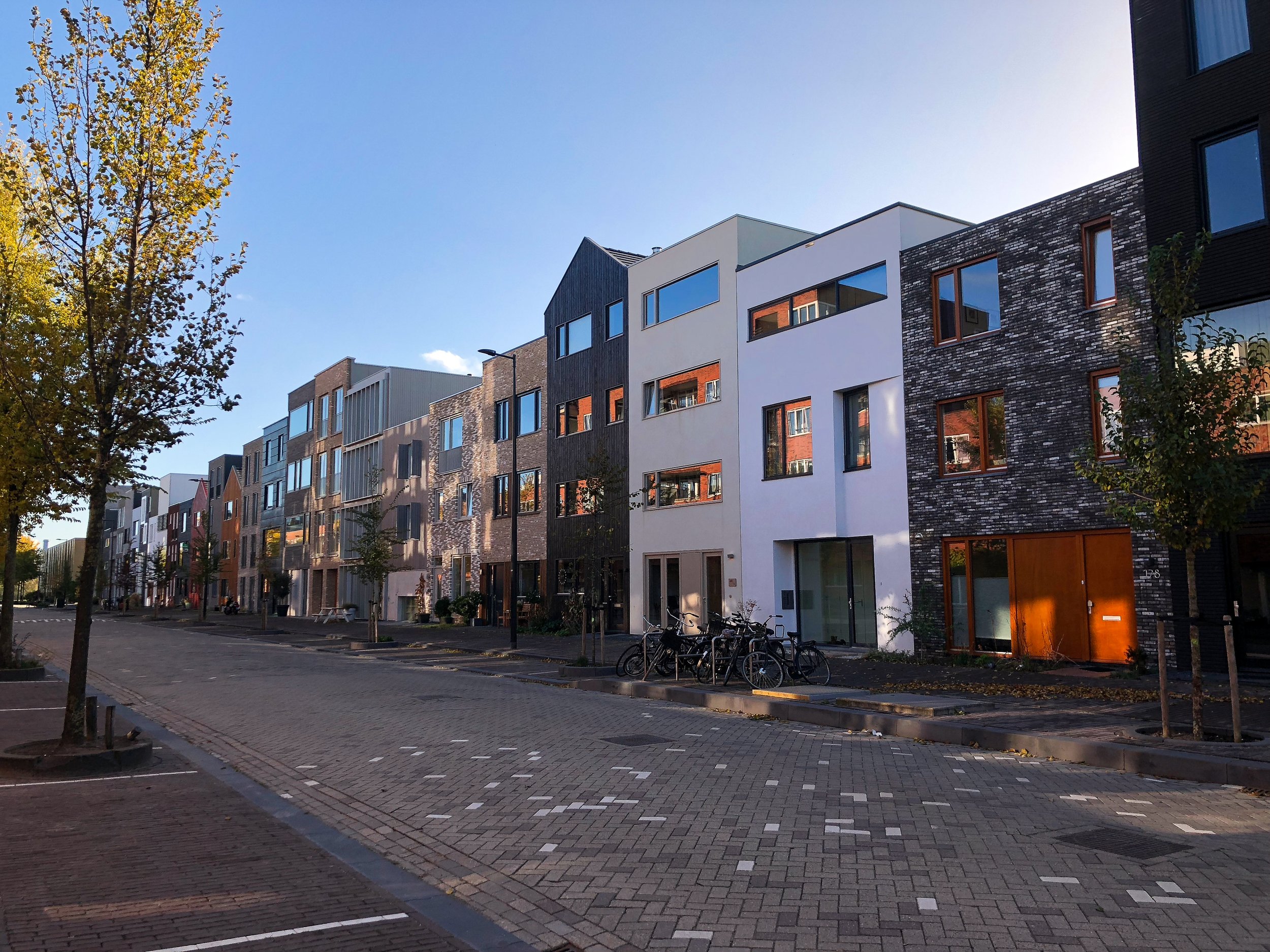

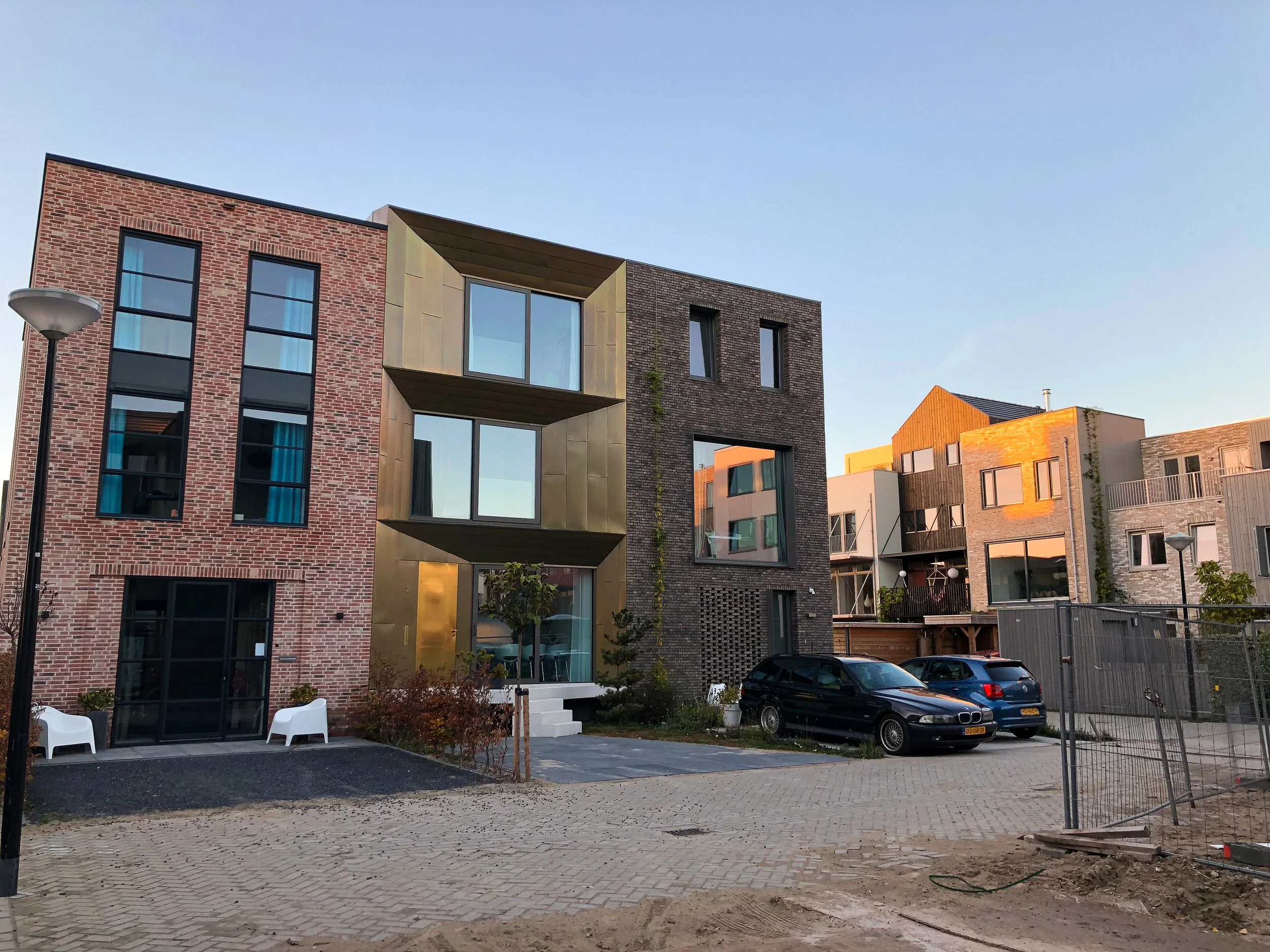

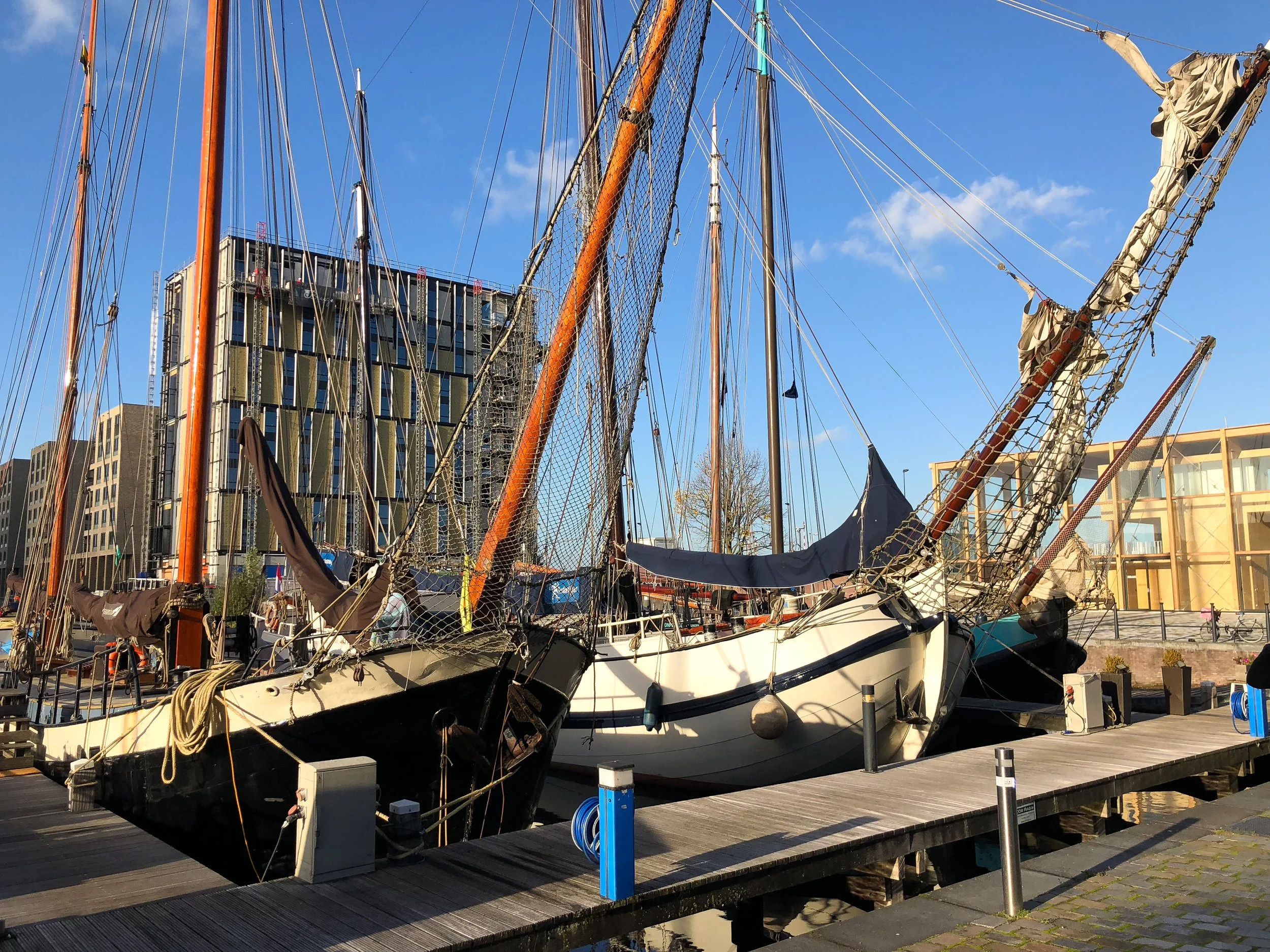
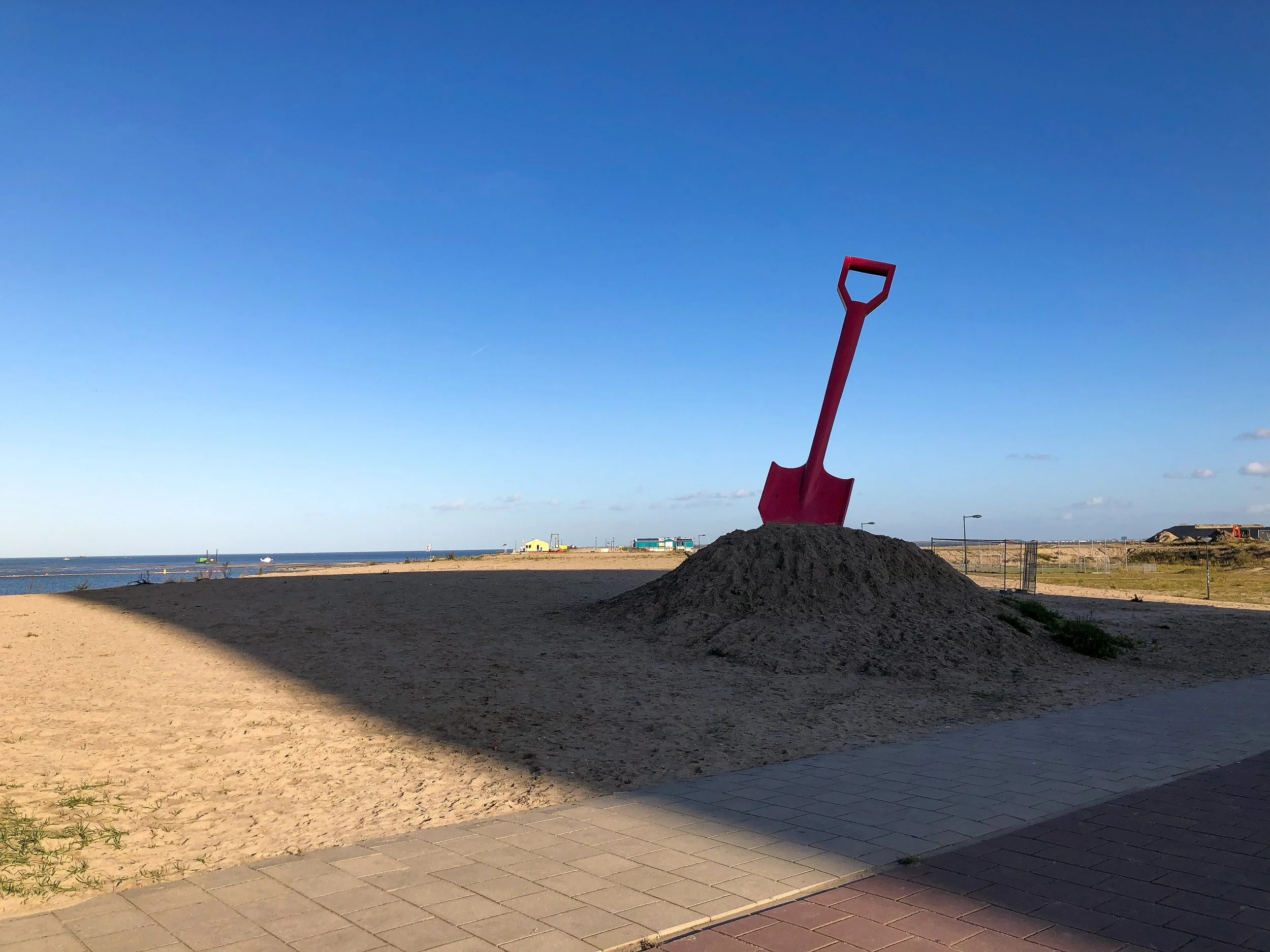
IJburg. A neighborhood built on an artificial island with boat lined canals and marinas, ultra modern row houses, tree lined sidewalks and cobblestone plazas. It’s contemporary contrast and historic similarities with the city’s oldest neighborhoods make it a unique place to visit. We stayed here in a modern cabin at an architect’s property. Book here on Airbnb.
See the Museums & Sights
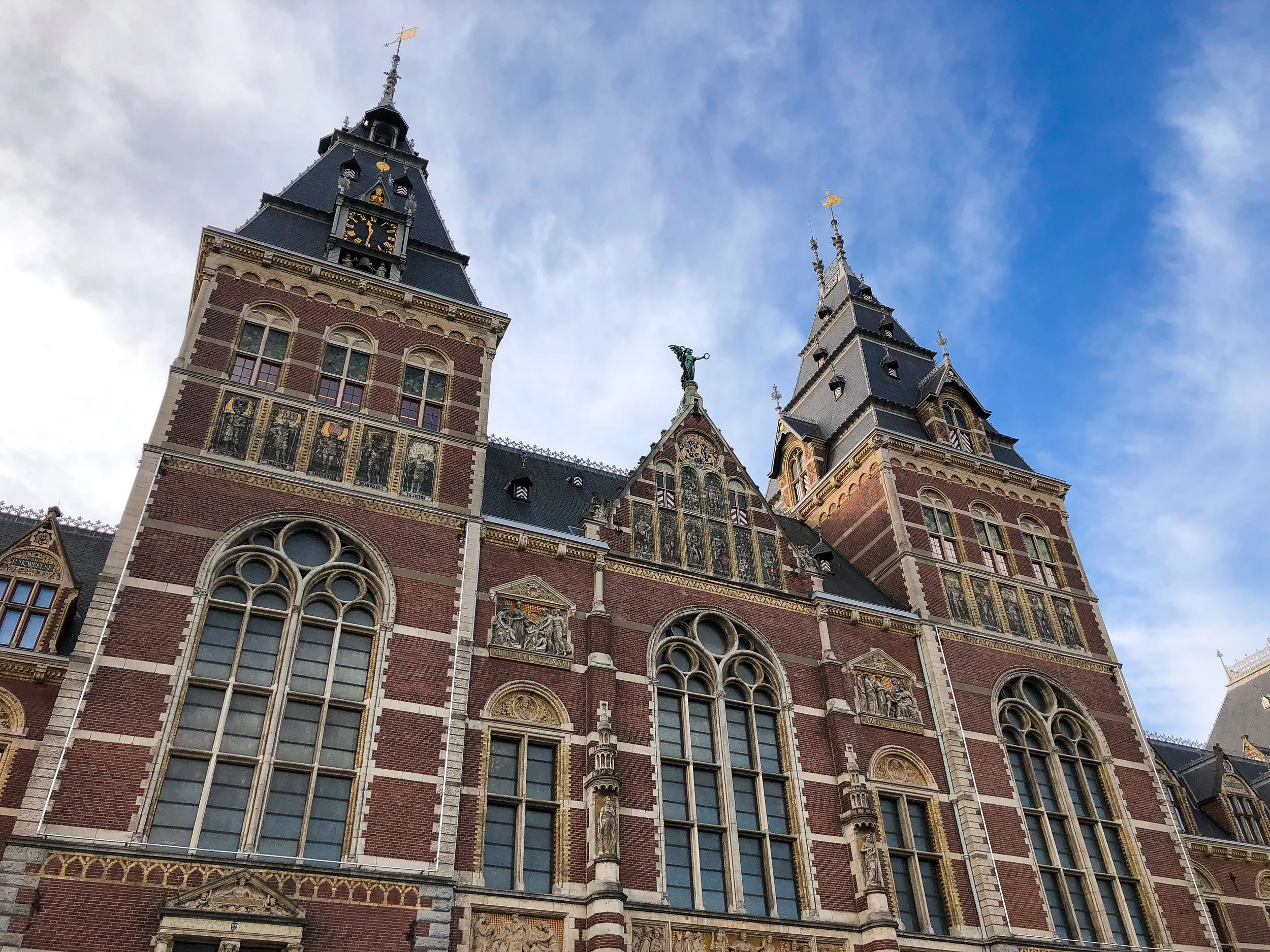
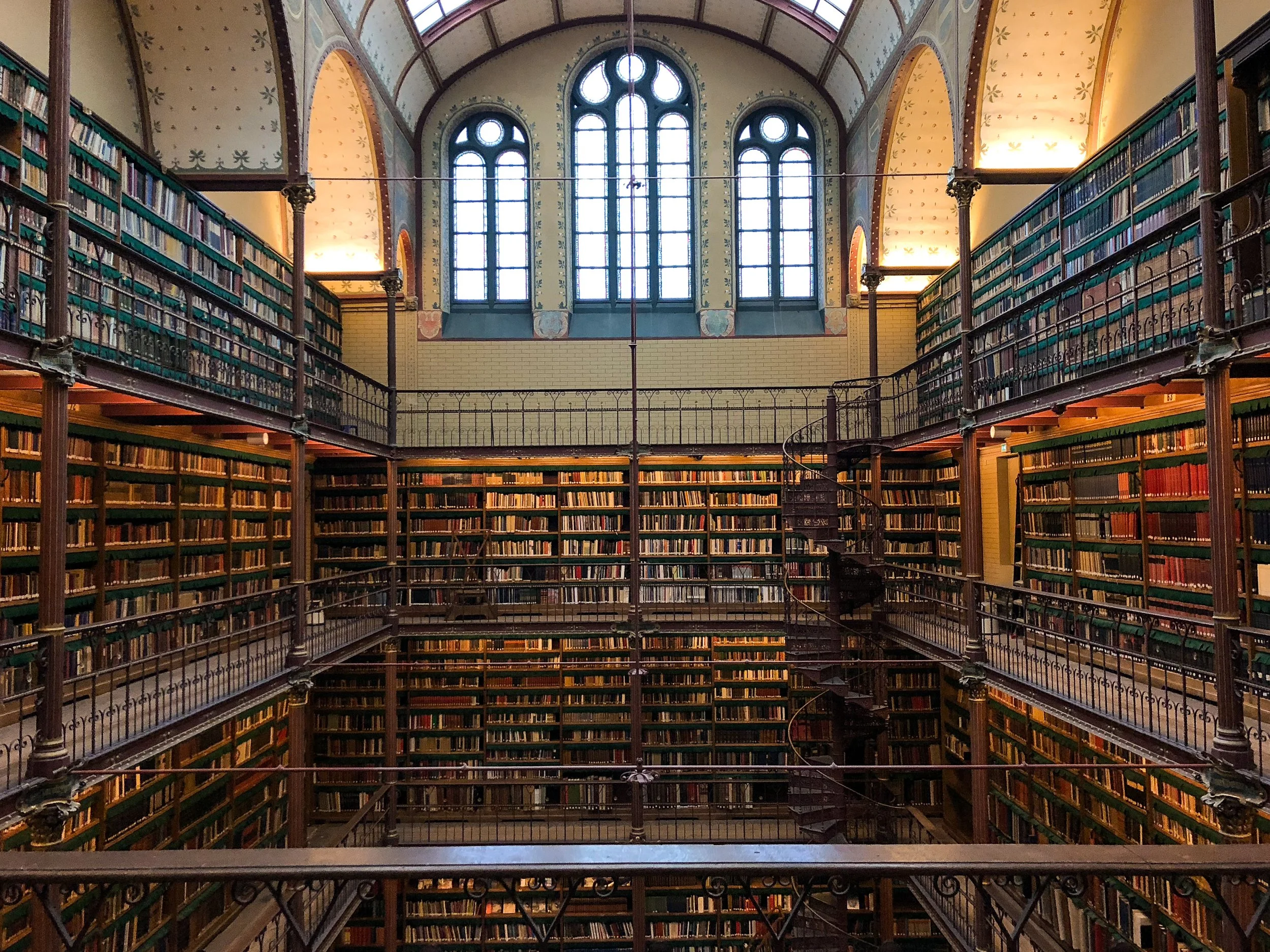
Rijksmuseum. Holland’s National Art Museum housing Dutch works created throughout the past several centuries. The most famous pieces to see are Vermeer’s The Milkmaid and Rembrandt’s The Night Watch. The museum is also home to the Cuypers Library, a picturesque art history and research library.
Van Gogh Museum. A museum dedicated to Van Gogh, featuring hundreds of pieces created by him that depict the story of his life from when he began painting until his death. If you appreciate Van Gogh’s work, this museum is truly worth visiting. Some notable pieces include a variety of his self portraits, The Potato Eaters, Sunflowers and The Wheat Field with Crows.
Museumplein. A public square surrounded by multiple museums including the Rijksmuseum and Van Gogh Museum. Come here to climb and sit on the I Amsterdam Sign.
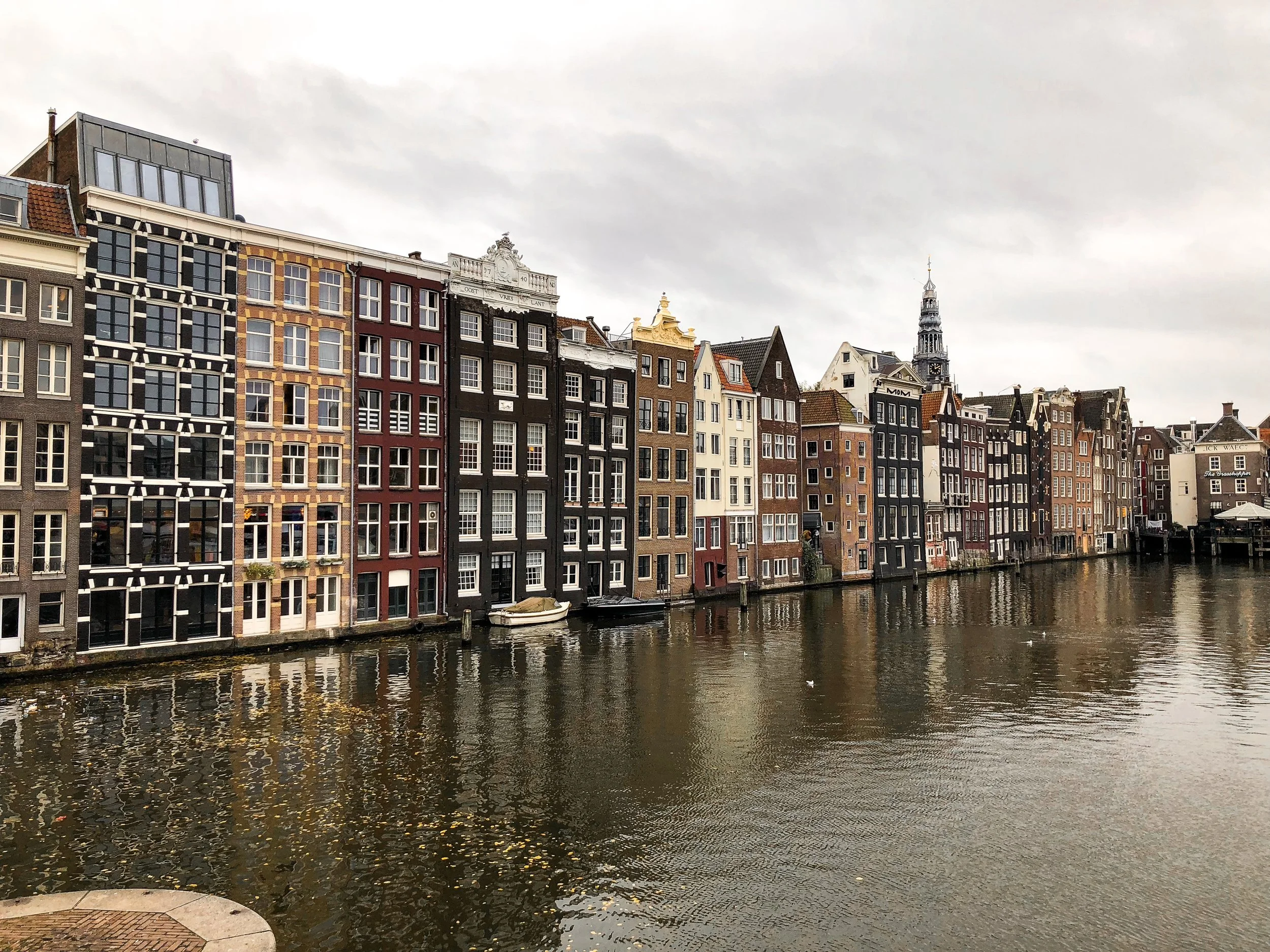
Canal Houses. The narrow, ornate and sometimes slanted canal houses can be seen throughout Amsterdam.
Dancing Houses. A series of strikingly slanted canal houses along the Amstel River.
The Golden Bend. A bend along the Herengracht Canal with the oldest and most stately canal houses.
Twins. Look for twins, two identical houses built side by side.
Vondelpark. The city’s largest park and green space. It’s a calm area for picnicking, bicycling and escaping the energy along the canals and streets.
Begijnhof. A small grassy oasis surrounded by beautiful brick row houses.
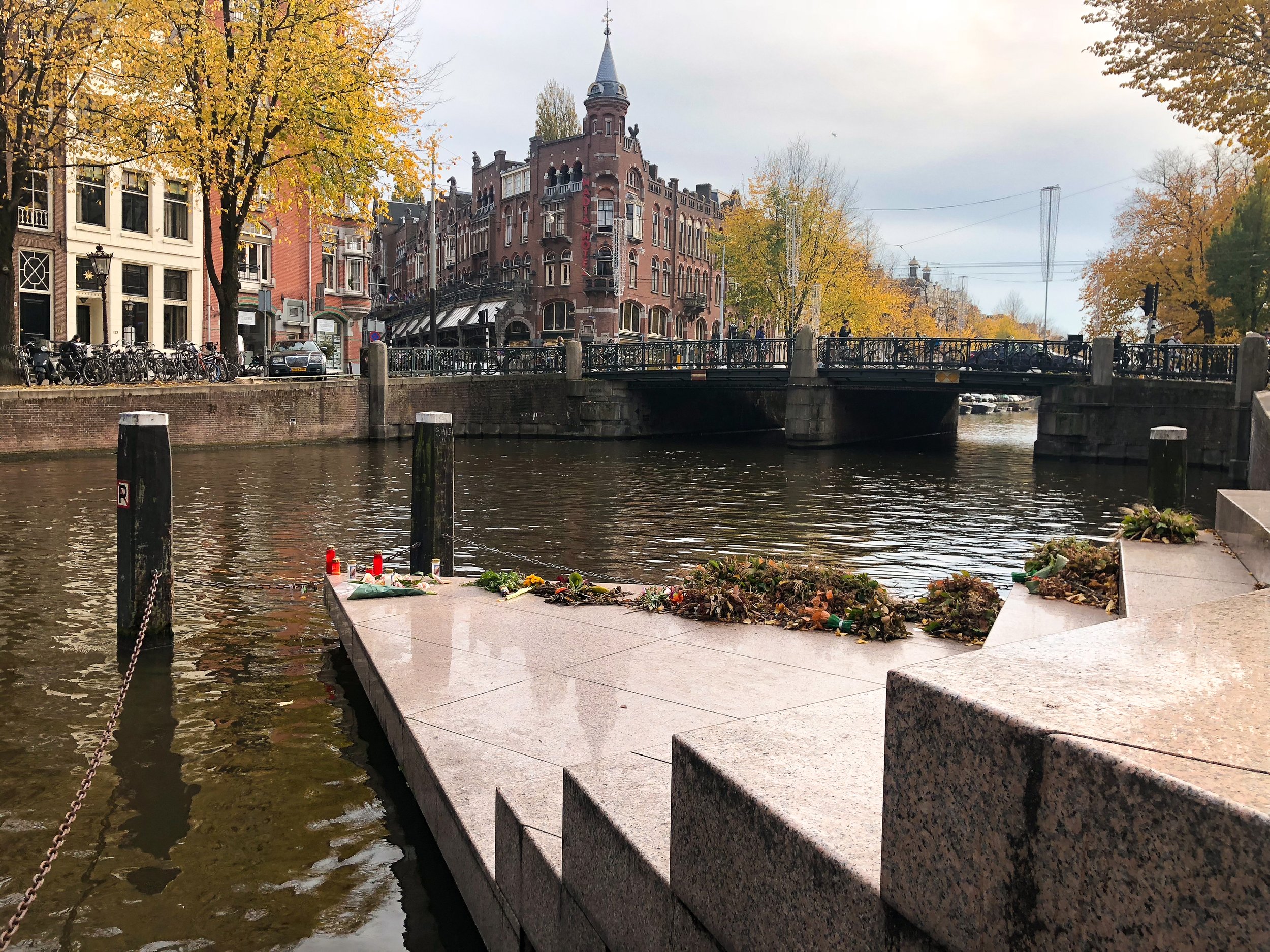
Homomonument. A series of three triangular monuments built into a canal lined square to honor the LGBTQ+ people persecuted during the Holocaust. Next to it is the Pink Point, a resourceful gay tourist info center.
Anne Frank House. The home where Anne Frank and her family hid from nazi persecution during WWII. We missed our opportunity to visit not knowing that tickets book up a week in advance. Reserve online here.
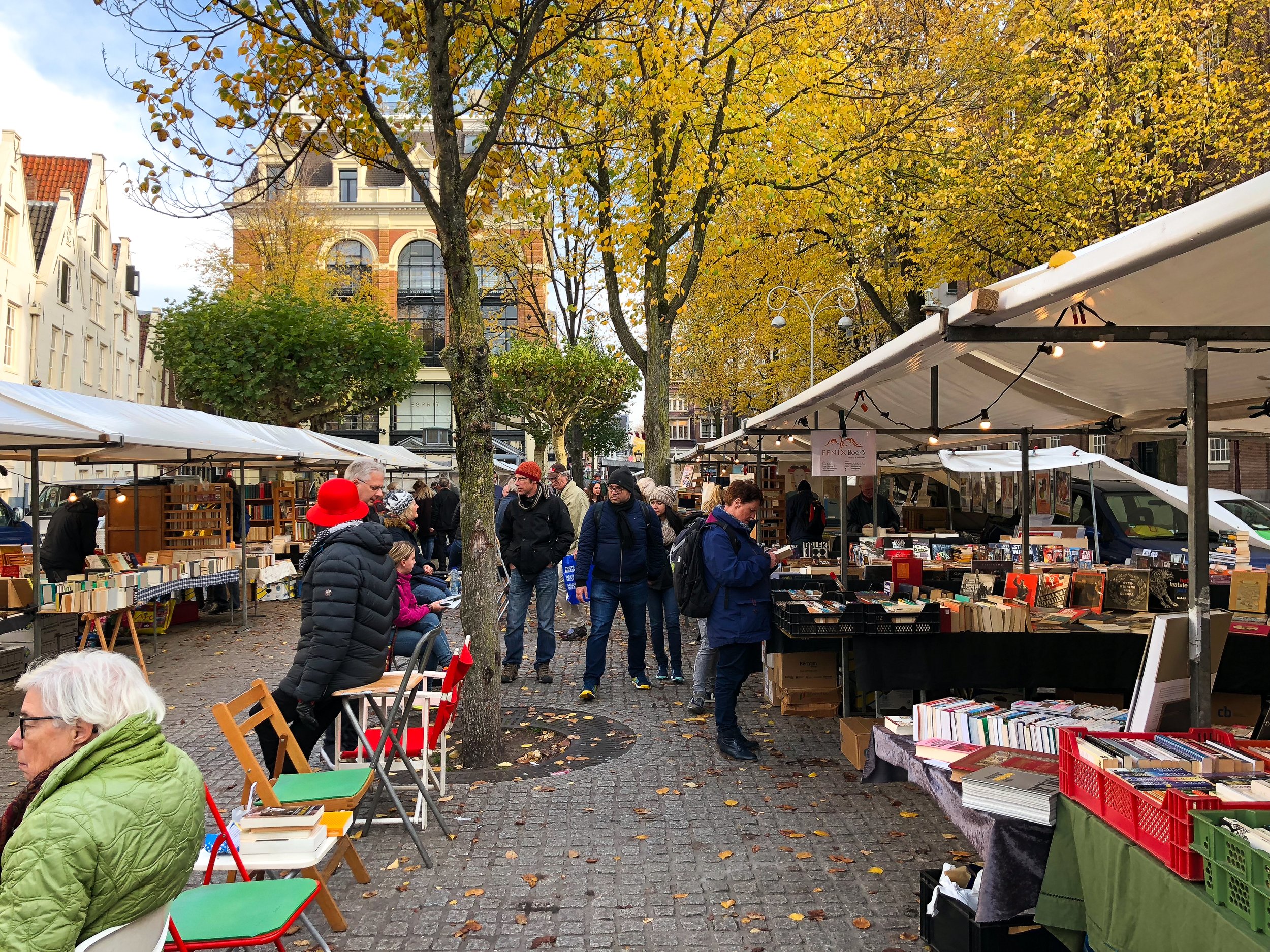
Visit the Markets & Shopping Streets
There are many opportunities to shop and visit markets in Amsterdam. The city is filled with small business and shops tucked into the first floors of the canal houses. Almost every neighborhood hosts its own market, whether it be mostly produce, clothes, antiques or a combination of them all.
Waterlooplein Market. A 300 booth flea market with vintage goods, records, cameras, antiques and bohemian clothes. Several food carts serve Dutch favorites like stroopwafels, poffertjes, coffee and frites.
Ten Katemarkt. An outdoor weekend market selling produce, cheeses, spices, breads, mushrooms, seafood, meats and street food located next to De Hallen, a large indoor food hall with a variety of Dutch and international cuisines, several bars offering local beers and artisan gin and tonics.
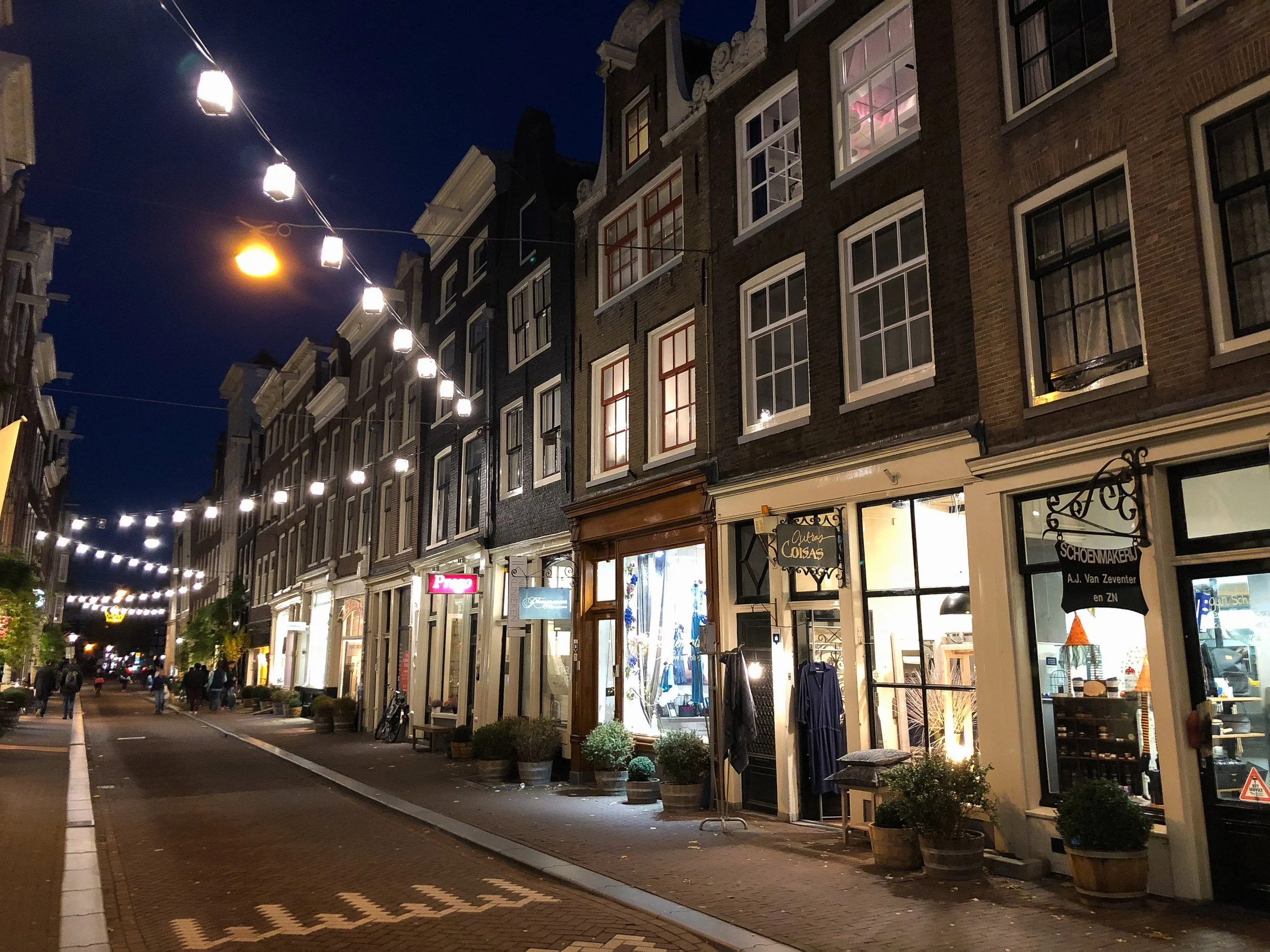
De 9 Straatjes. This district within the Canal Belt is known for its picturesque streets lined with boutiques, design shops, concept stores and clothing retailers. We spent hours one afternoon walking from shop to shop, mostly looking, at all the pretty things in search of something affordable to bring home.
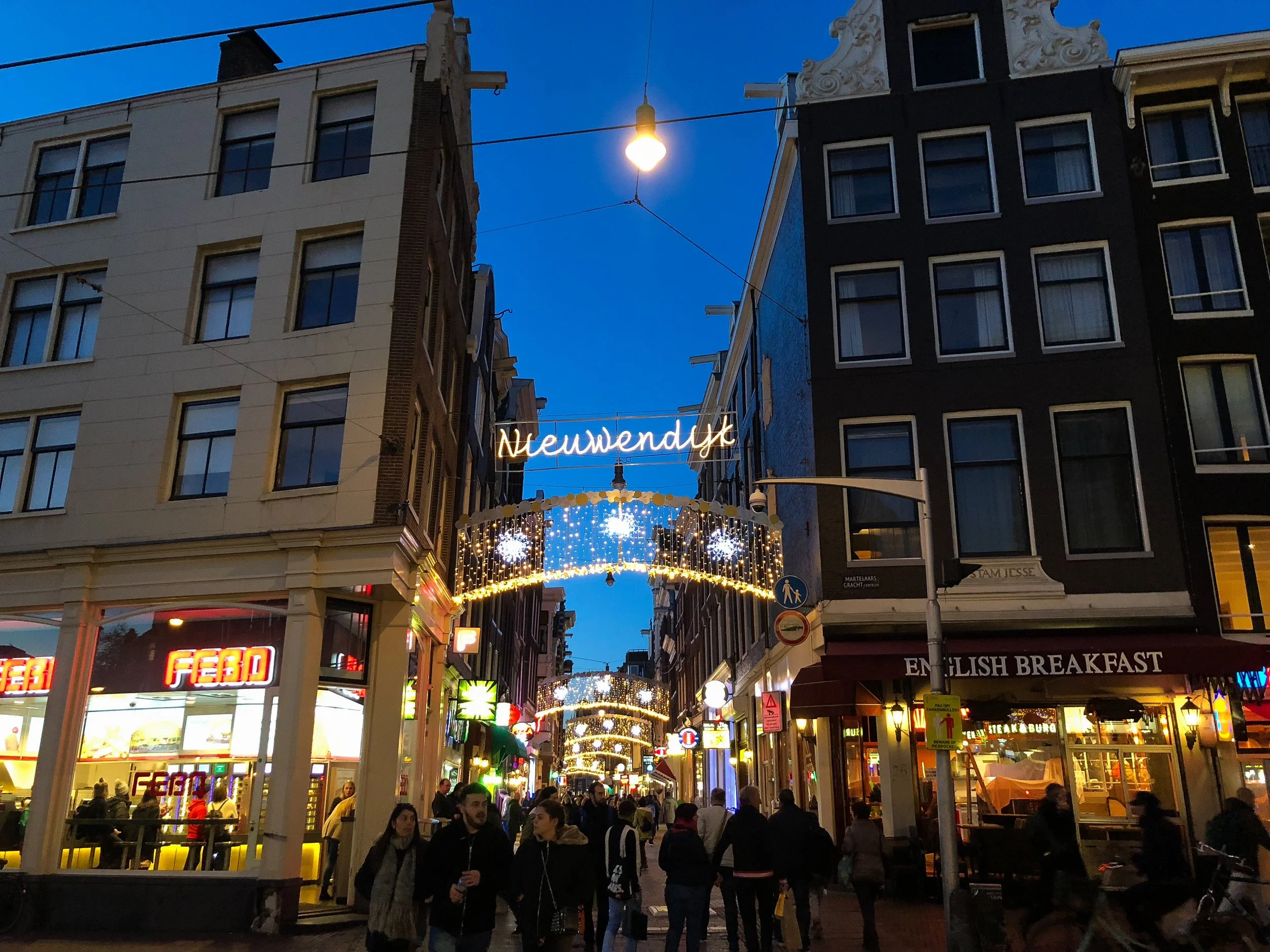
Nieuwendijk. A lengthy pedestrian street flanked by brick row houses home to hundreds of shops and restaurants including fromageries with displays of Dutch Gouda and “coffee shops” selling cannabis products.
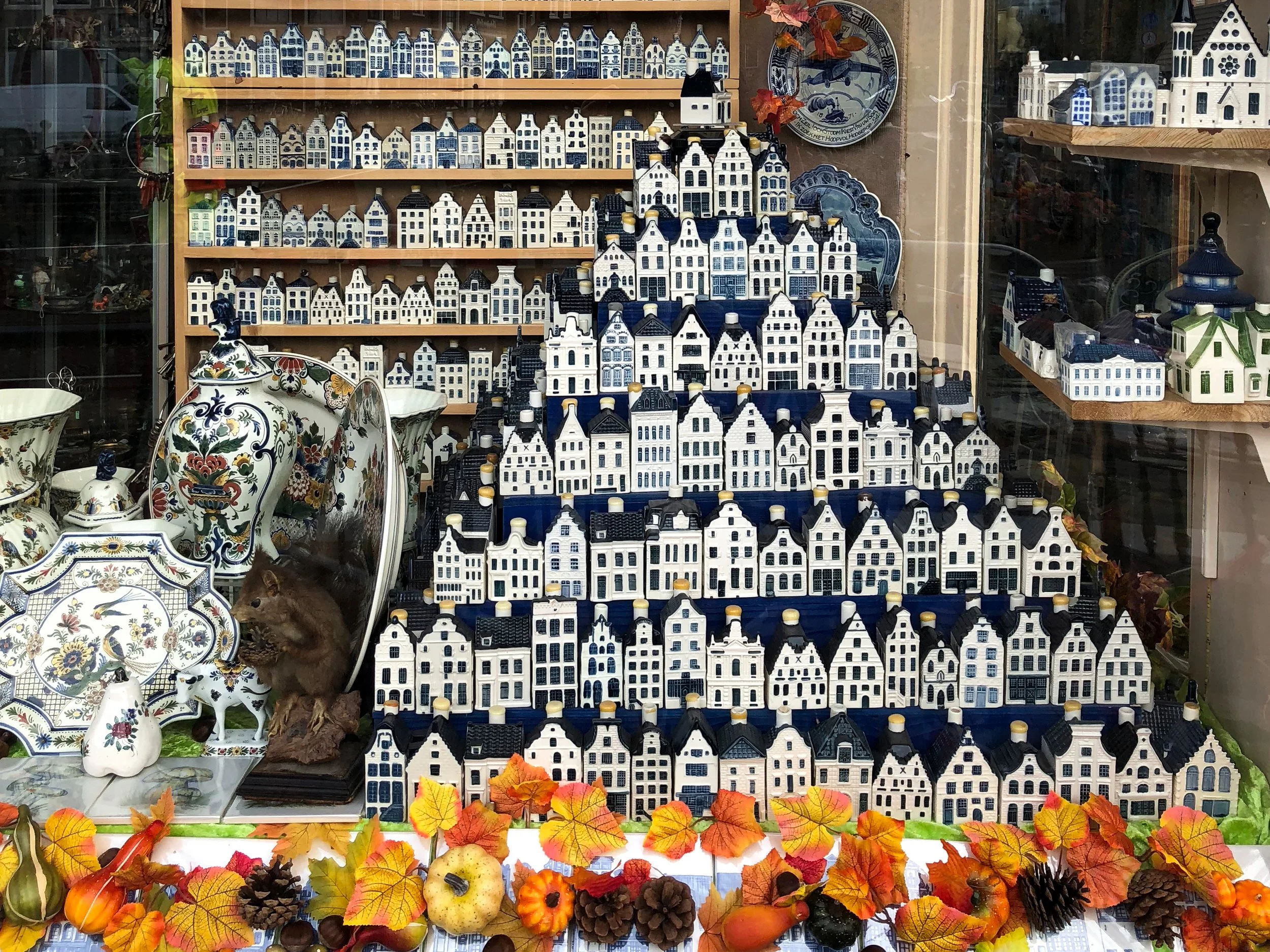
Nieuwe Spiegelstraat. A two block section, flanked between the Prinsengracht and Keizersgracht Canals lined with antique shops and galleries. Come here to buy a set of blue and white painted porcelain salt and pepper shakers shaped like the city’s row houses.
Places to Eat & Drink
There are endless options when it comes to dining in Amsterdam. Whether along a canal, in a historic building, near a windmill or simply on the sidewalk. We never had a bad meal anywhere we dined. One thing we quickly learned is that you need a reservation for dinner at most restaurants at least 24 hours in advance, especially on weekends!
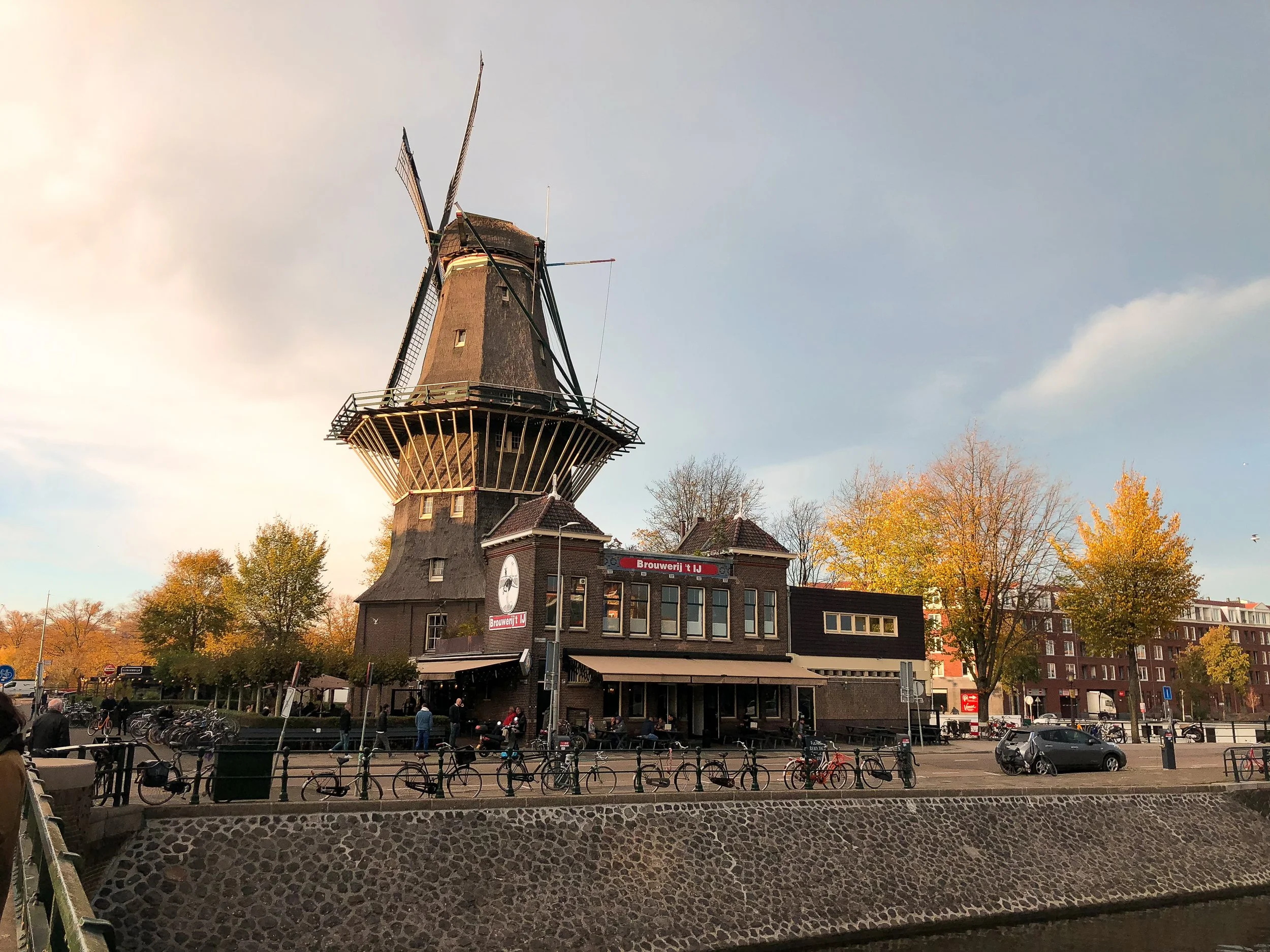
IJ Brewery. A brewery and beer garden located next to a 16th century windmill.
Bakers and Roasters. A brunch spot with all types of eggs inspired by different cultures, fruit dishes, vegetarian meals and strong coffee. We went for the banana nut French toast and eggs royal.
Brasserie Van Speyk. A romantic brick walled restaurant with glittering chandeliers, Dutch classics and North Sea seafood. Come here for the French style dover sole paired with champagne.
Balthazar’s Keuken. A tiny homestyle restaurant with a daily three course menu. Make a reservation!
Pulitzer's Bar. A dark and moody reading room-like lounge offering high end cocktails and small bites.
Café ‘t Mandje. A very eclectic and welcoming gay bar that’s been around since 1927.
Venus & Adonis. A cozy restaurant and cocktail bar specializing in craft gin & tonics.

Café & Bakery Crawl
Before visiting Amsterdam, we read somewhere that the Dutch consume more coffee per person than any other country in the world. As avid coffee drinkers ourselves, we decided to visit a number of cafes while in town.
Van Wonderen Stroopwafels. A bakery specializing in artisan stroopwafels decorated with toppings like coconut, marshmallows, chocolate, nuts and sprinkles.
Scandinavian Embassy. A popular café with slow brewed and drip coffees. Order one of their cinnamon knots.
Trakteren. A small café specializing in lattes and cappuccinos with cute foam artwork of animals.
Lot Sixty One. A canal side café with house roasted coffee and tasty baked sweets.
Koffieschenkerij. A café located on the grounds of the Oude Kerk, Amsterdam’s oldest building. Sip on a coffee at their outdoor patio with views of the cathedral.
Back to Black. A corner café with a bohemian feel, bold coffees and an array of sweets.

Dutch Cuisine
Gouda. One of the most well known Dutch cheeses. Fromageries around the city liberally hand out free samples of the cheese made with different flavors and ages.
Stroopwafels. Thin waffle crisps with caramel layered in-between. Use them to cover your hot coffee until the inside gets gooey.
Deep Dish Dutch Apple Pie. A classic dessert but even more special when baked deep dish. Visit Wenkel 43 or keep an eye out for other cafés serving it.
Pickled Herring. Raw herring served with pickles and onions. It can be found at street carts around the city, one of which is Haring & Co.
Frites & Mayo. Another common street food, also known as French Fries. They’re served in a paper cone with mayonnaise. Visit Wil Graanstra Friteshuis or watch out for them at other street carts. Order them twice fried!
Bitterballen & Kroketten. Two types of deep fried croquettes, made with a savory sauce and meat or mashed potatoes. The first is often shaped into a ball while the second is shaped like a cylinder.
Poffertjes (Dutch pancakes). Fluffy, tiny, yeasted and buckwheat pancakes covered in powdered sugar or jam.
Gin and Tonic. Almost every bar offers their own take on this classic cocktail by infusing the drinks and offering creative mixes.

Getting Around
Getting around Amsterdam is one of the most enjoyable ways to explore and experience the city! There are countless options from bicycling, taking a canal tour, riding the tram or simply walking.
By Bike. Bikes are used as the preferred method of transit by locals. Multiple companies offer bike tours and rent bikes to tourists for single and multi days including: Ajax Bike, Yellow Bike and Mac Bike. Daily rentals cost around €20 depending on the type of bike. Some rentals require a security deposit or minimal insurance fee in case of damage or theft.
On Foot. Amsterdam’s neighborhoods are easily walkable by those who enjoy getting around on foot.
On Public Transit. The trams, busses and metro are the most reliable and economical option to get across the city. There are multiple passes that work
GVB Transit Card. A single or multi-day pass that offers unlimited transit on trams, buses and metro lines.
Amsterdam Card. Unlimited transit on trams, buses and metro lines including access to the museums and a canal cruise. Costs vary by pass type, ranging from 1 to 5 days.
Single ride tickets can be purchased on any form of public transit.
Taxis and Ubers. The most expensive to get around the city. Luckily they’re almost unnecessary other than getting to/from the airport. They typically cost €50 one way.
Location Specifics
Language. Dutch is the official language however English is widely spoken.
Card vs. Cash. Most businesses accept credit and debit cards, including street food stands. Carry small denominations of Euros for markets, public transit and tips.
Watch for Cyclists. Be cautious while riding bikes and watch out for cyclists when crossing streets.
Photography. Be respectful and don’t take photos of sex-workers in the RLD.
Reservations. Make reservations at restaurants at least 24 hours in advance.
Tipping. Like many places in Europe, tipping more than 10% is not required.
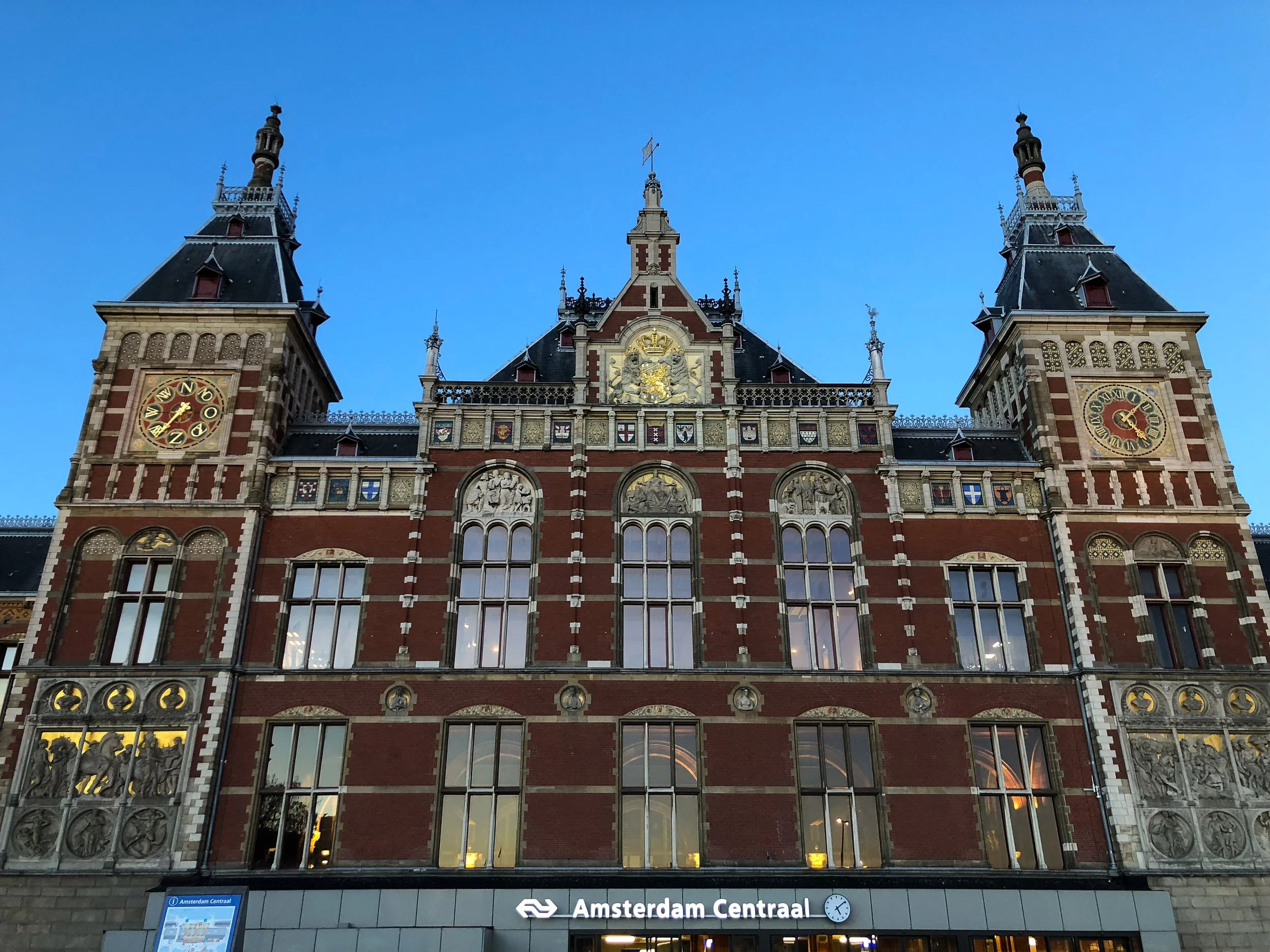
Tourist Traps. Avoid tourist traps near Dam Square and Central. Explore the inner canal rings and branch out further into the outer neighborhoods.
For Next Time…
Amsterdam is a mesmerizing city that we one day hope to return to! Some ideas we have for next time include:
Moco Museum. A modern art museum featuring a large collection of physical, interactive and digital works by artists including Warhol, Haring, Banksy, Basquiat and Kusama.
The Heineken Experience. A tour of the Heineken Brewery where you’re able to cap your own bottle of beer.
Take a Day Trip. With more time, we would visit the Dutch countryside and neighboring cities of Utrecht, Rotterdam and The Hague.
Hotel Inntel Zaandam. A unique hotel made to look like a stack of green and blue painted country cottages.
Zaandam Windmills. An open air museum with several preserved windmills dating back to the 1850s.
Amsterdam Pride. An LGBTQ+ pride parade with floats and boats sailing down the Prinsengracht Canal.
Canal Ice Skating. Return during wintertime when the Keizersgracht Canal freezes over and becomes a seasonal ice rink.
Tallinn Travel Guide: Medieval Old Town, Winter Charm & Estonian Cuisine
Step into Tallinn's walled old town where medieval towers, historic cathedrals, local artisans, Baltic culture and snowy streets create a fairytale winter setting.
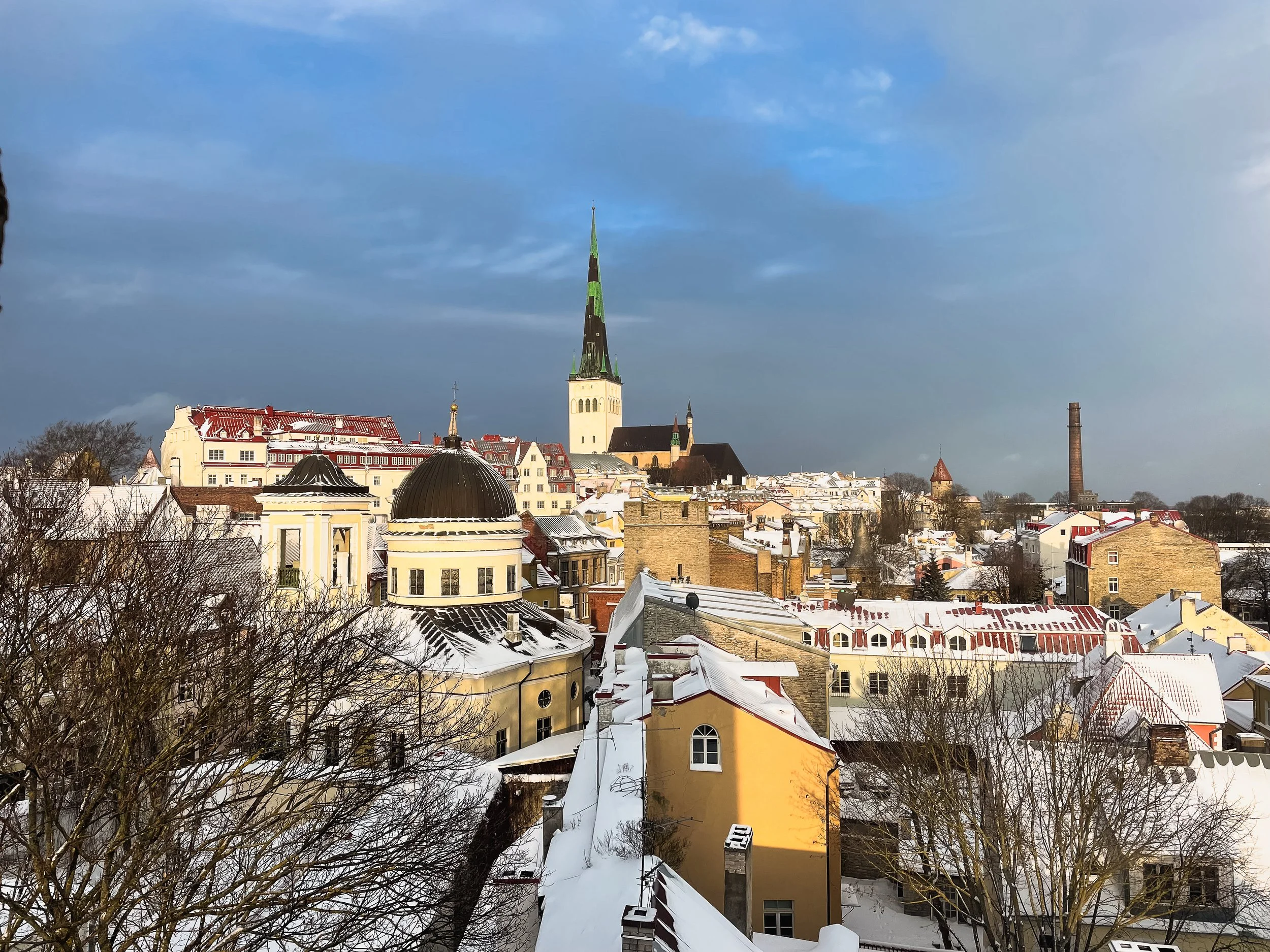
Tallinn, A Medieval Capital
Tallinn is a medieval city and the modern day capital of Estonia abundant in cultural sights, historic architecture, Baltic restaurants, cocktail bars and local artisans.
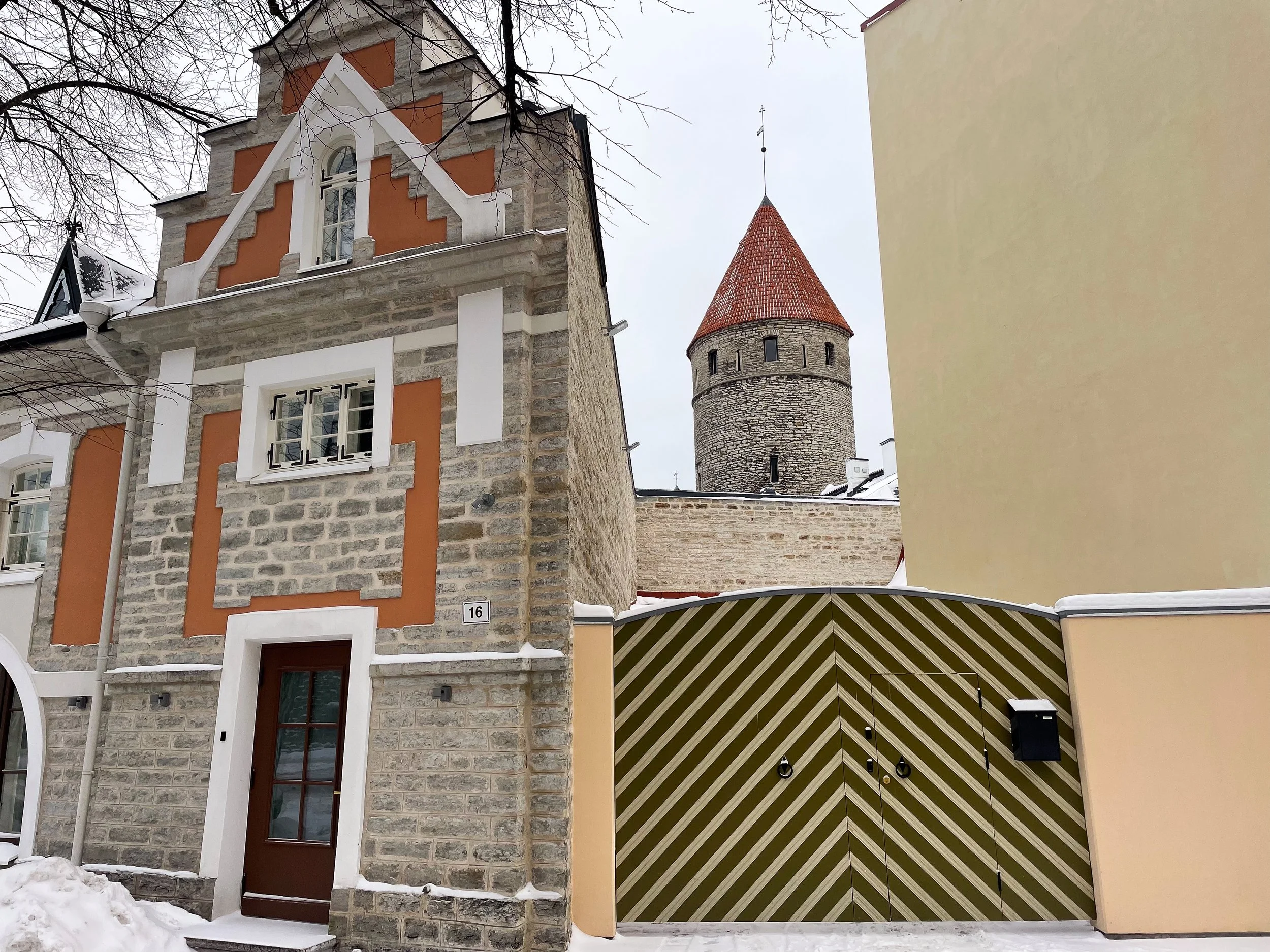
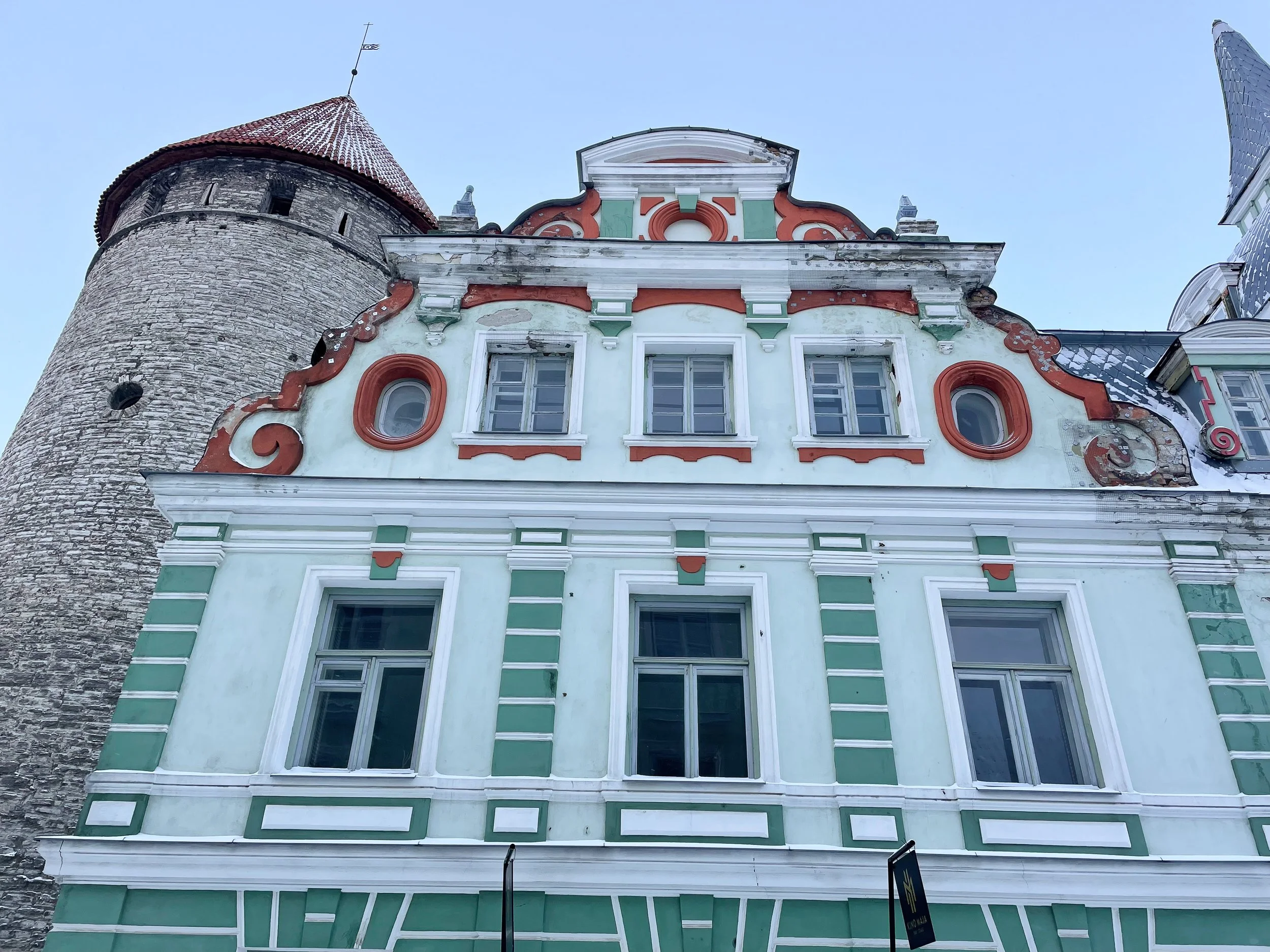
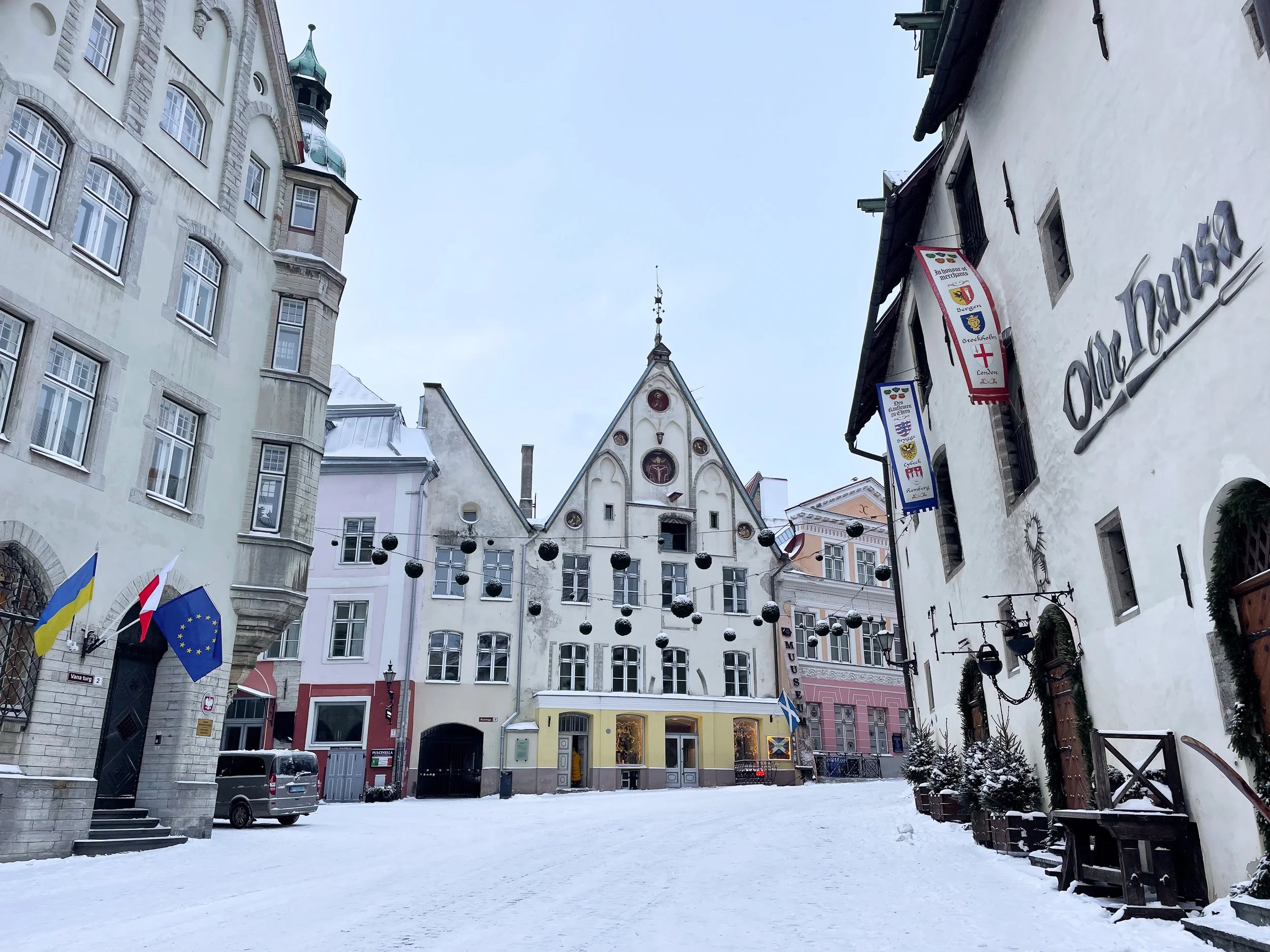
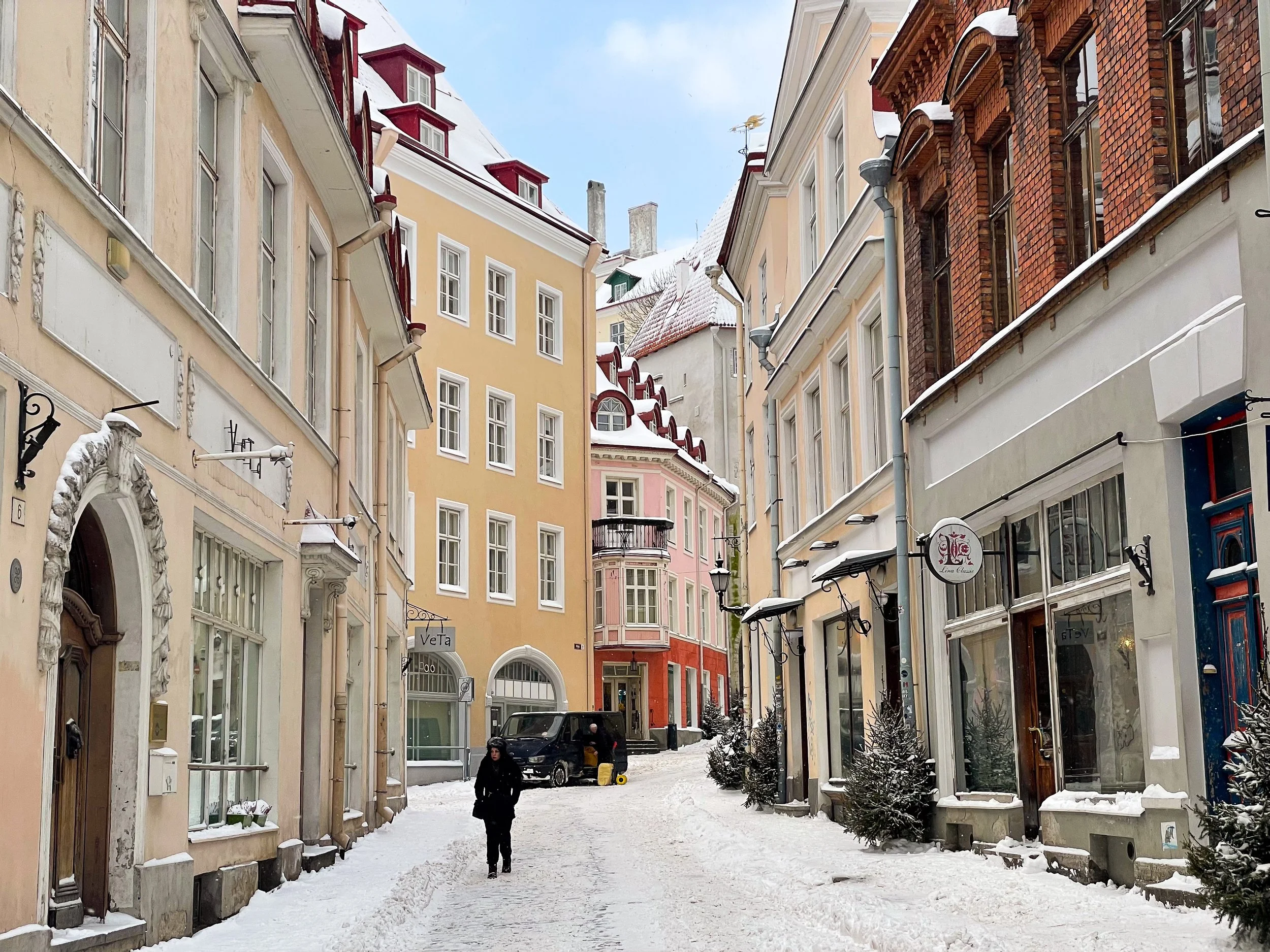
The Old Town of Vanalinn
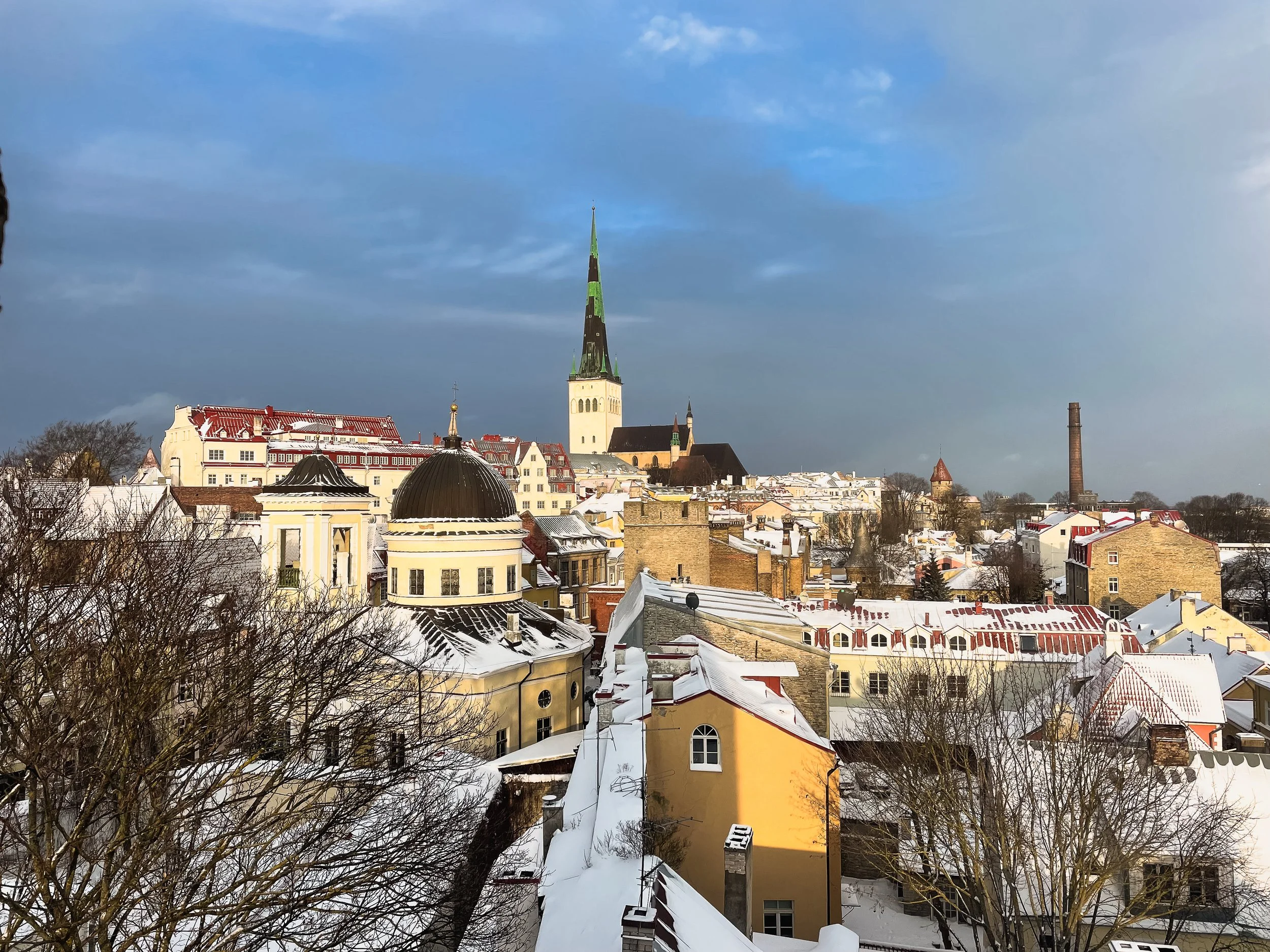
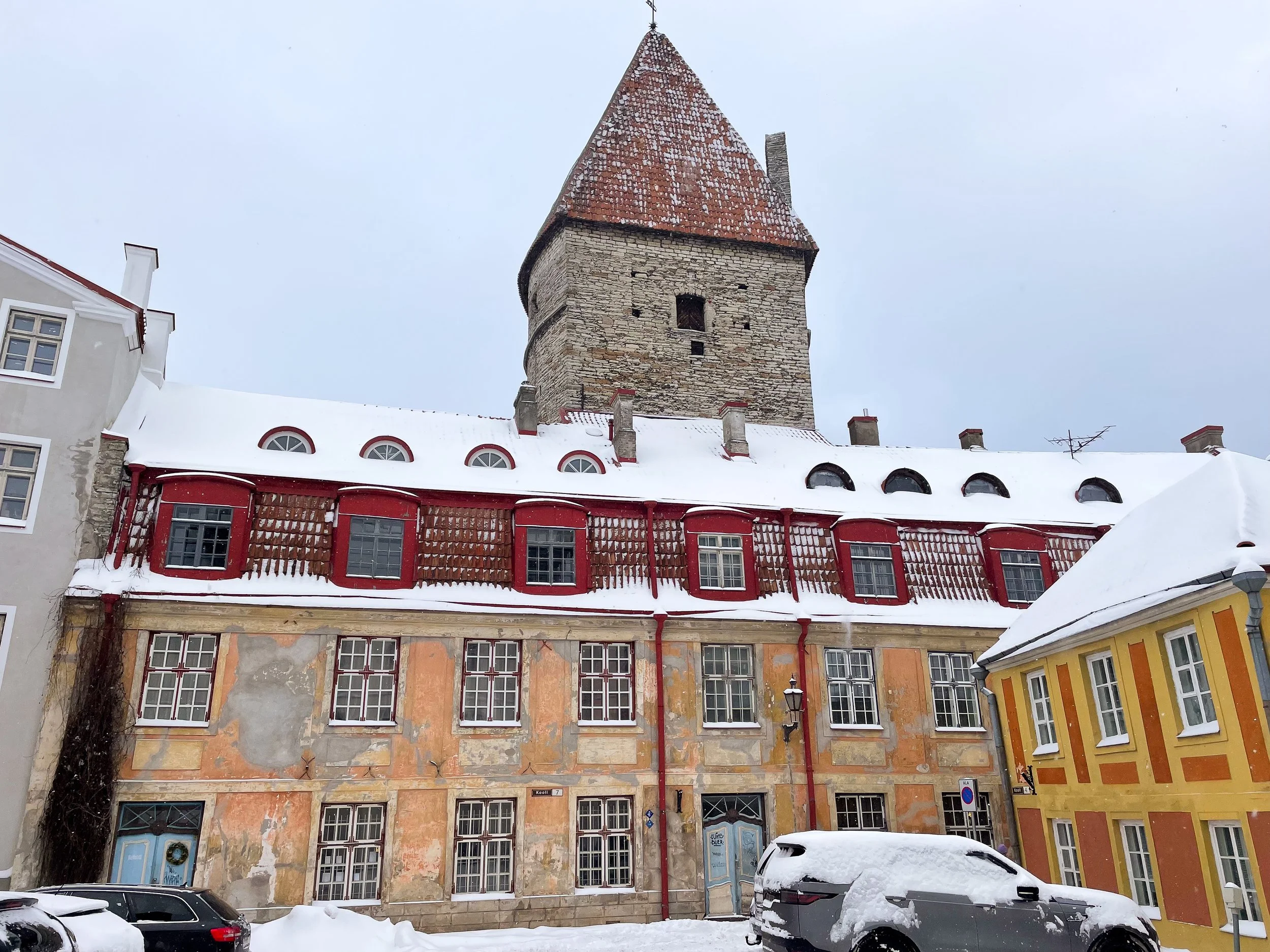
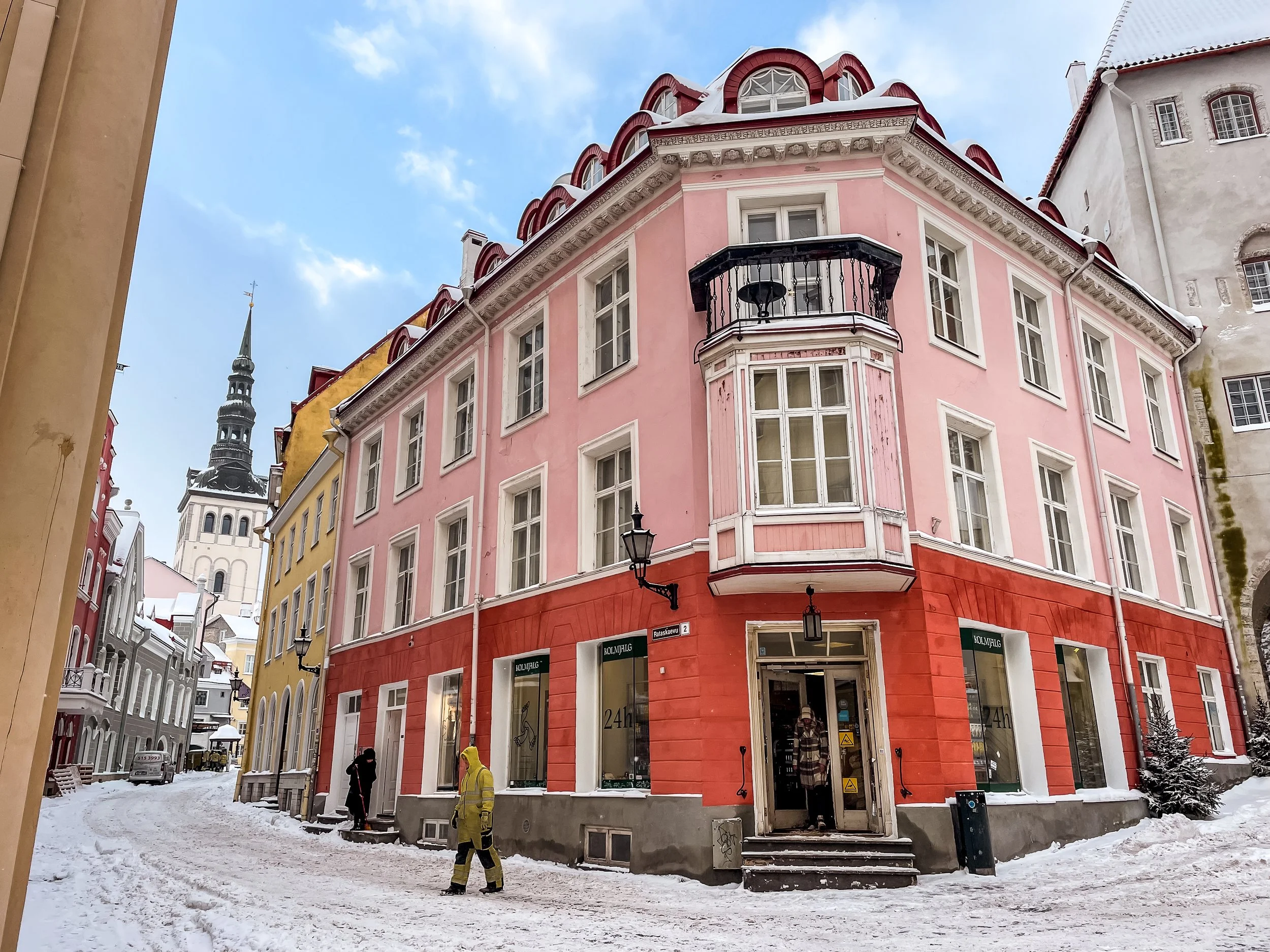
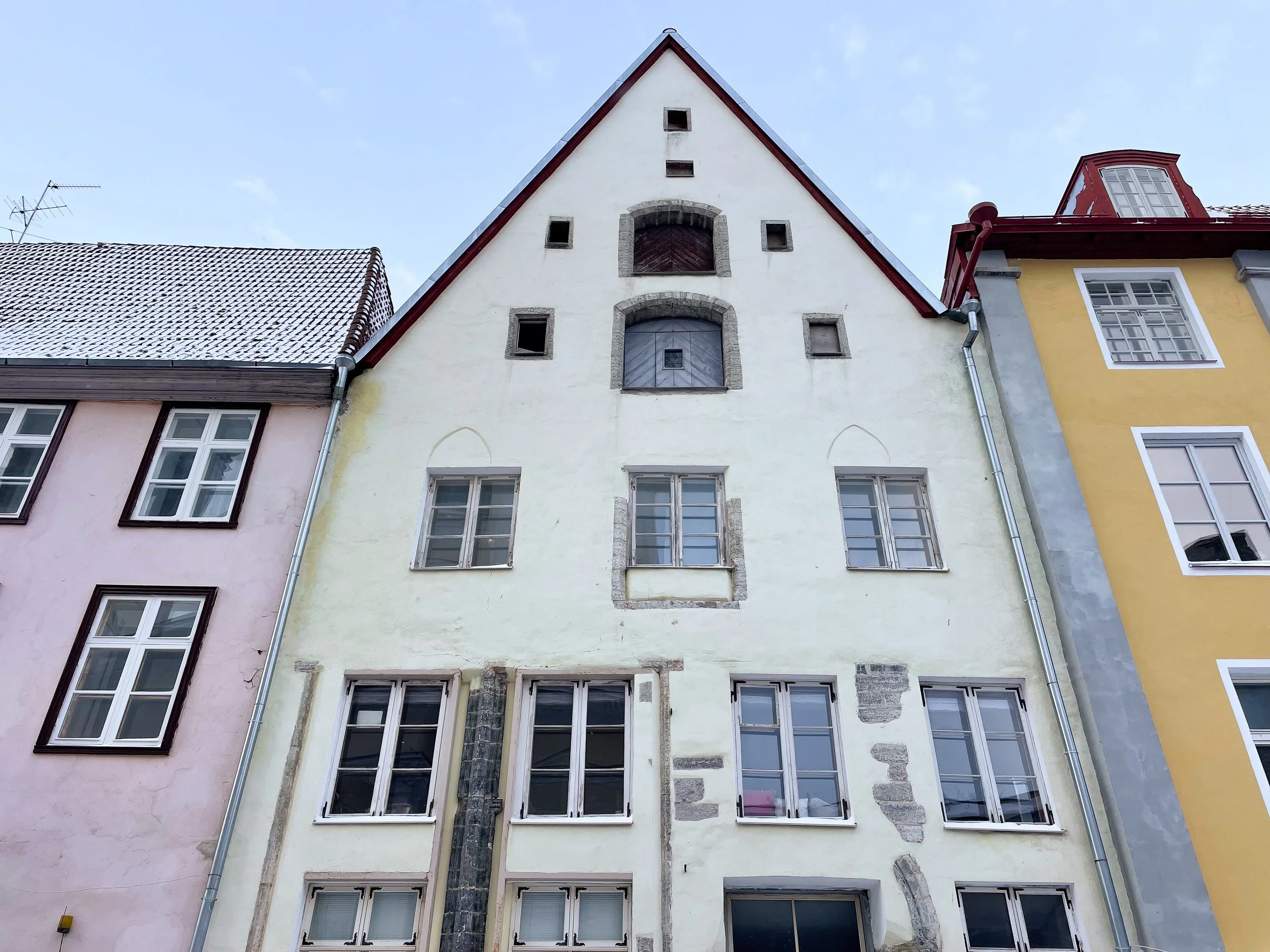
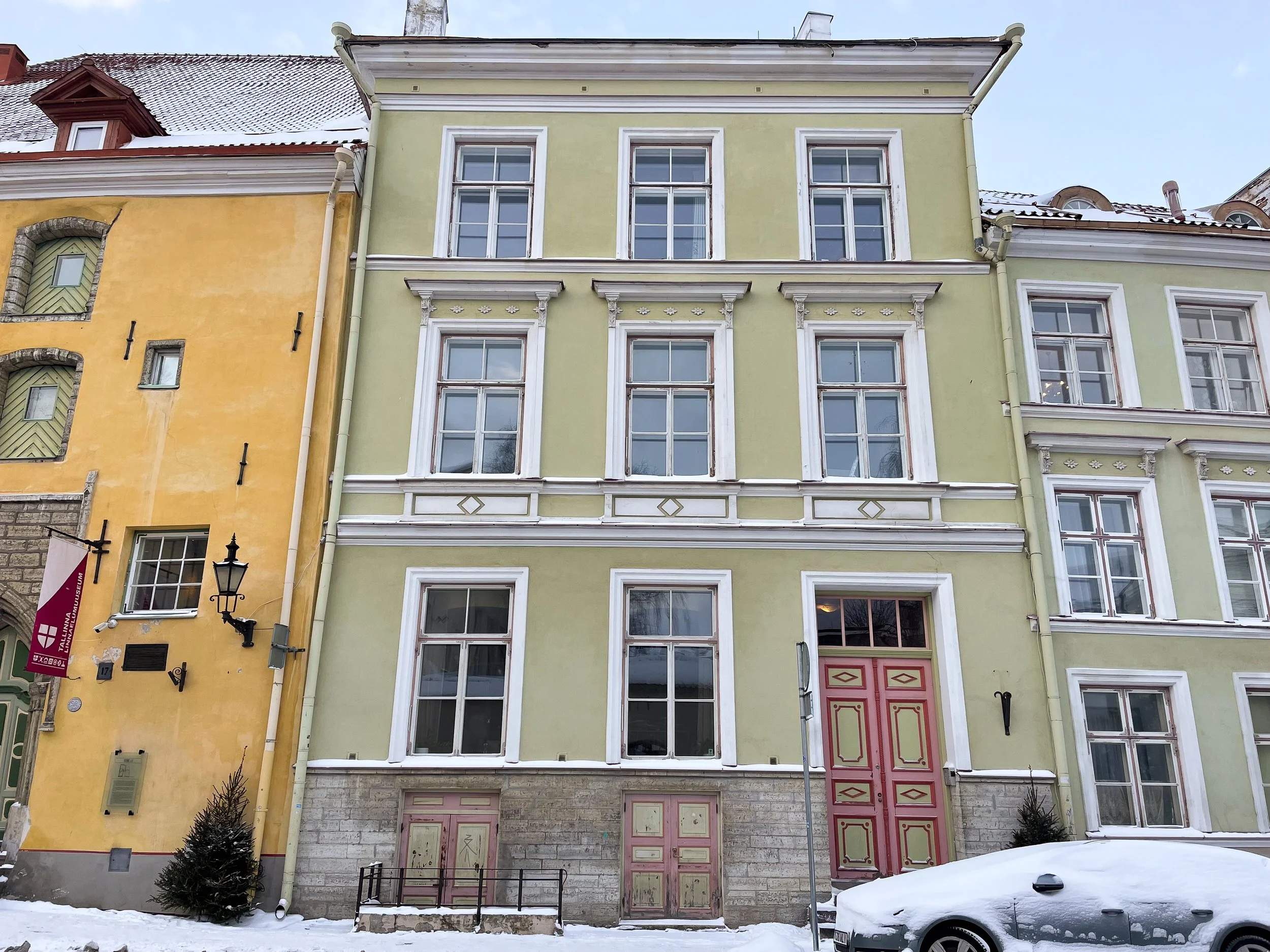
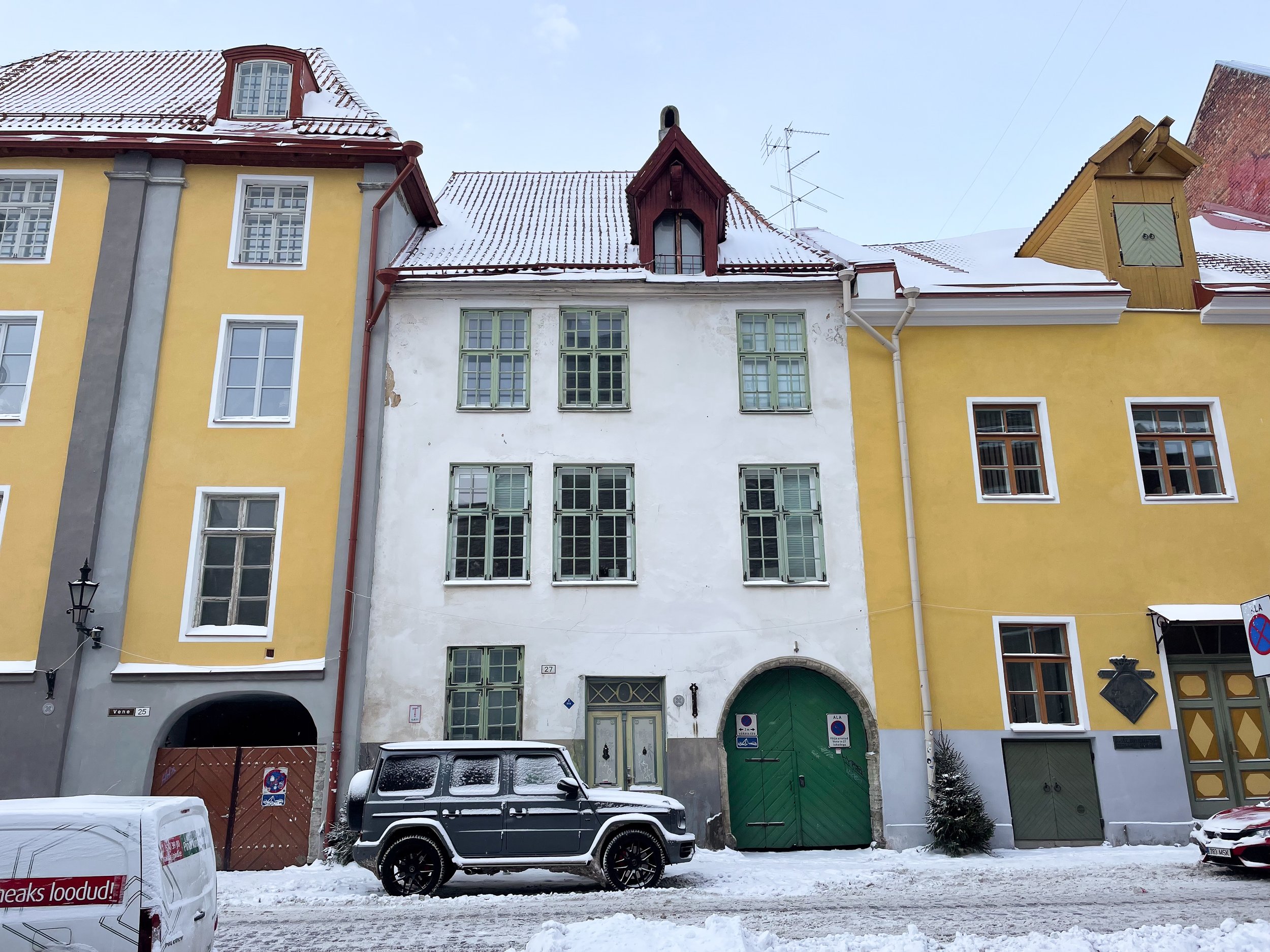
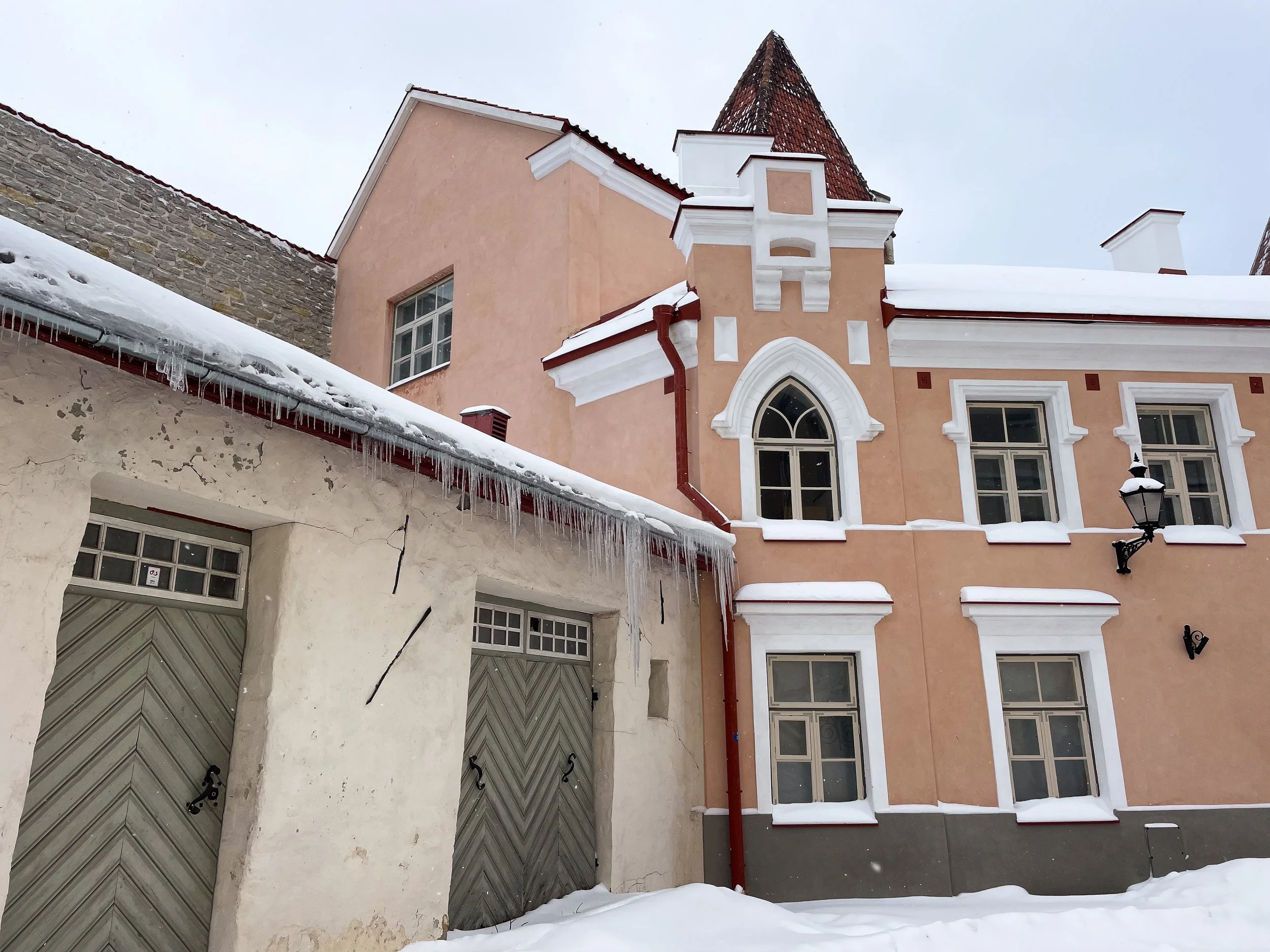
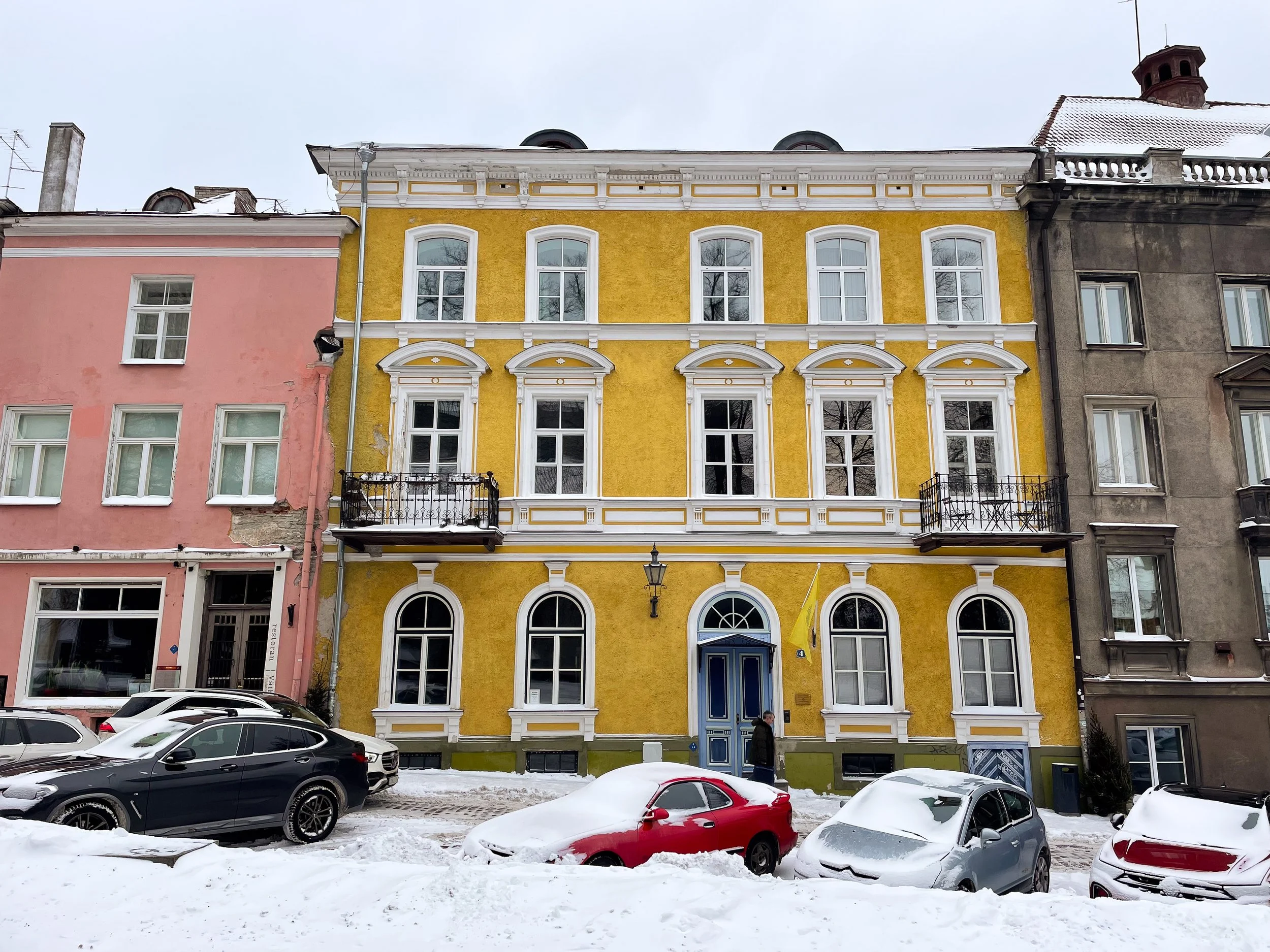
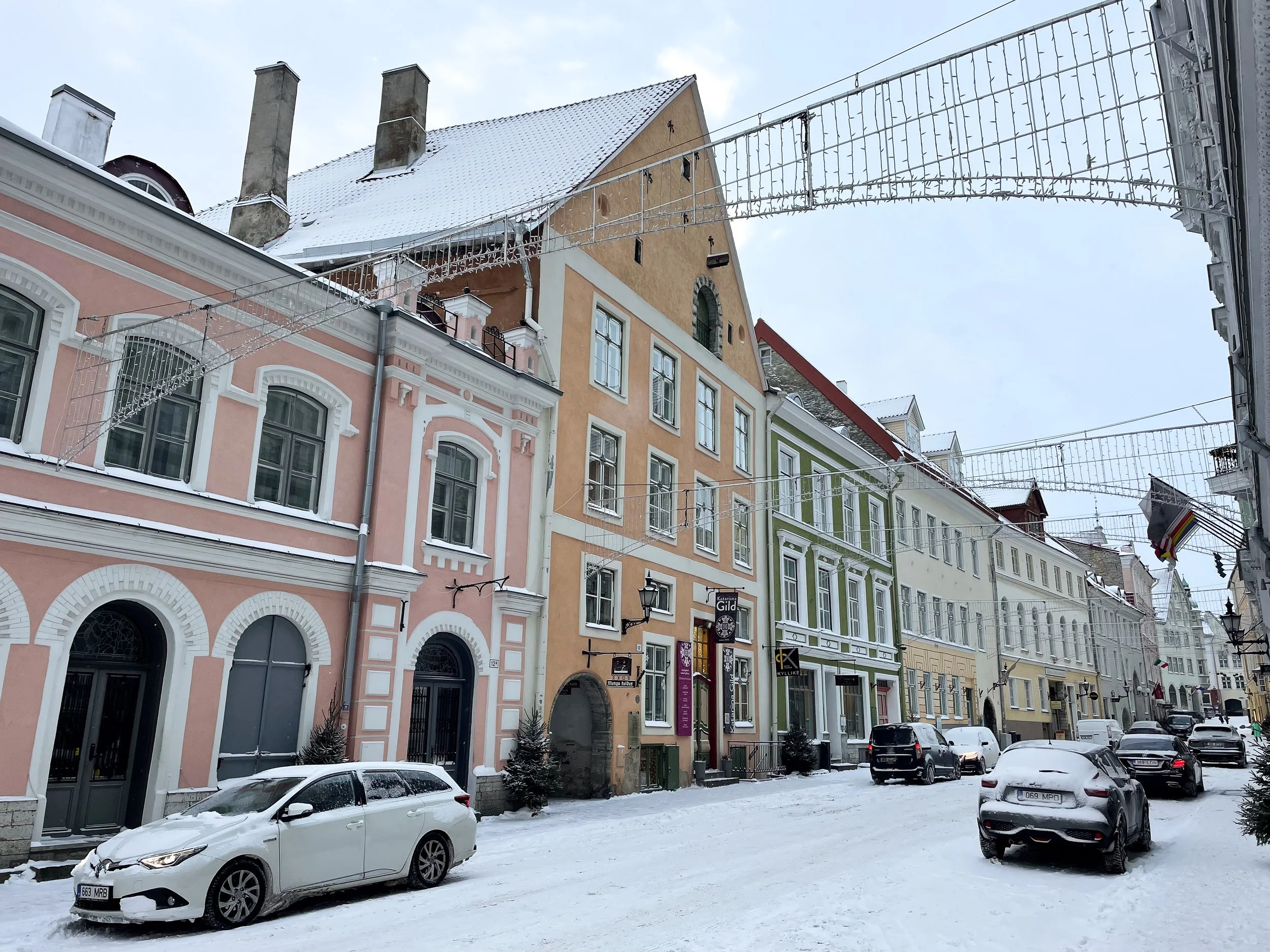
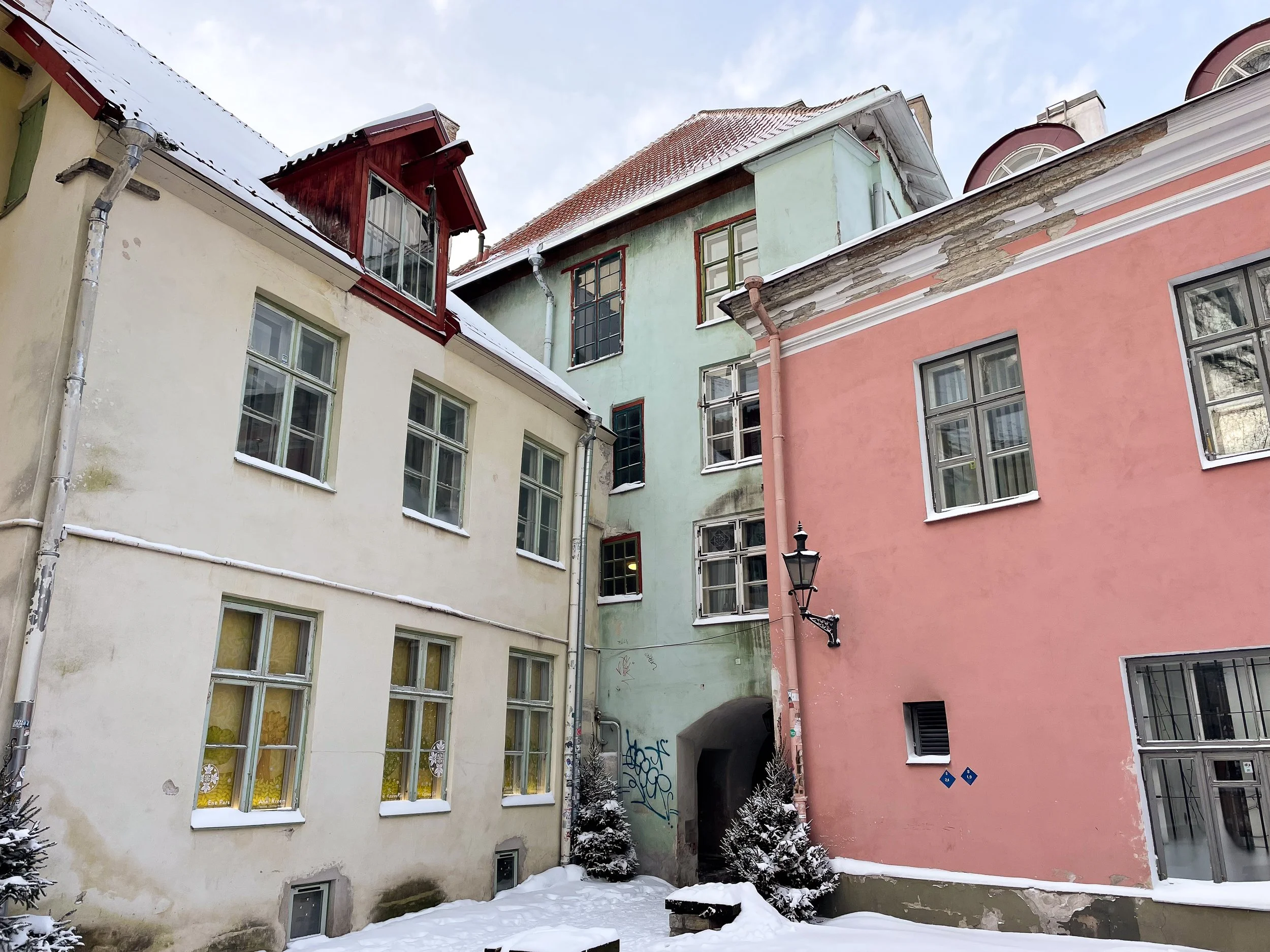
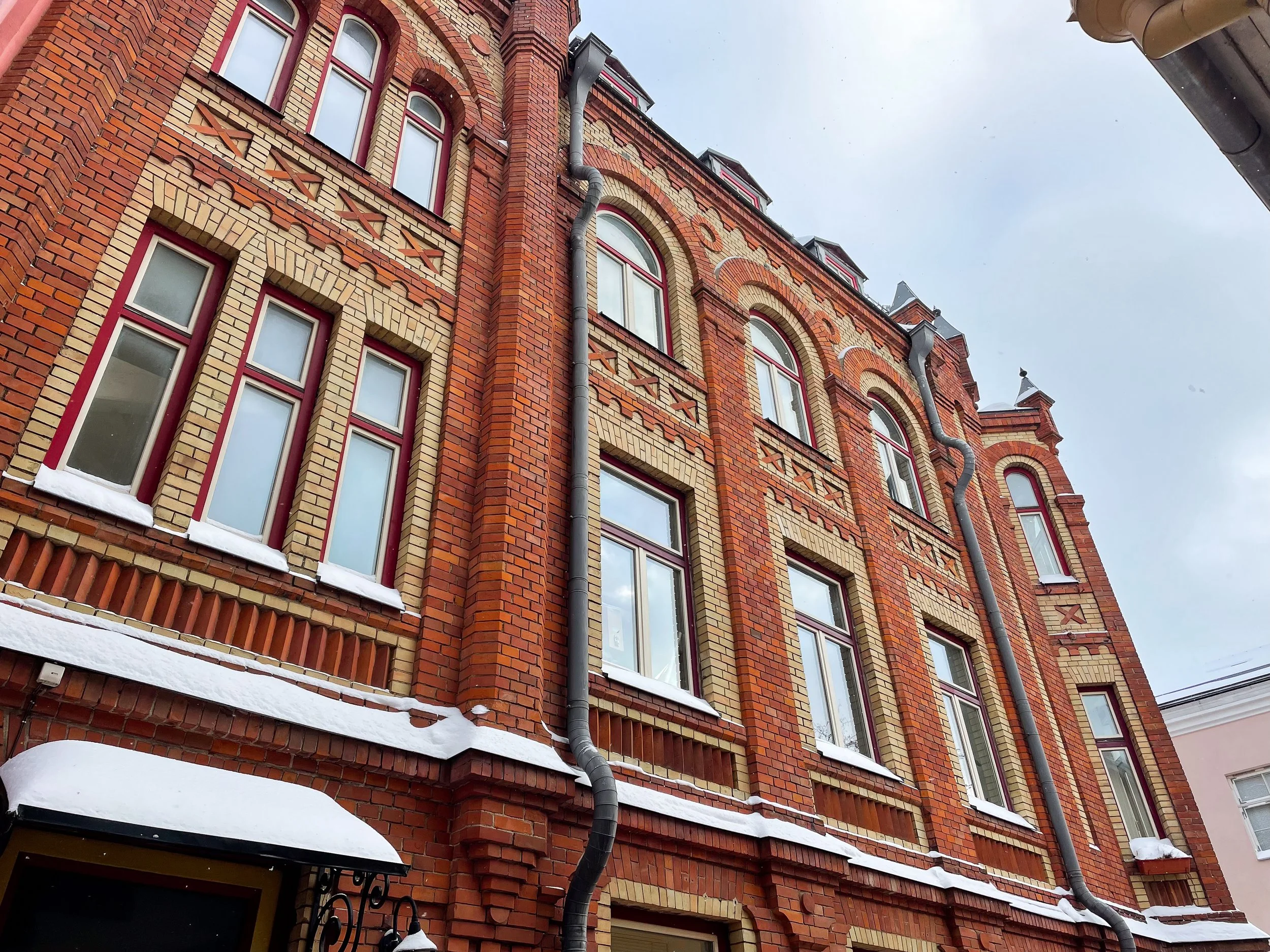
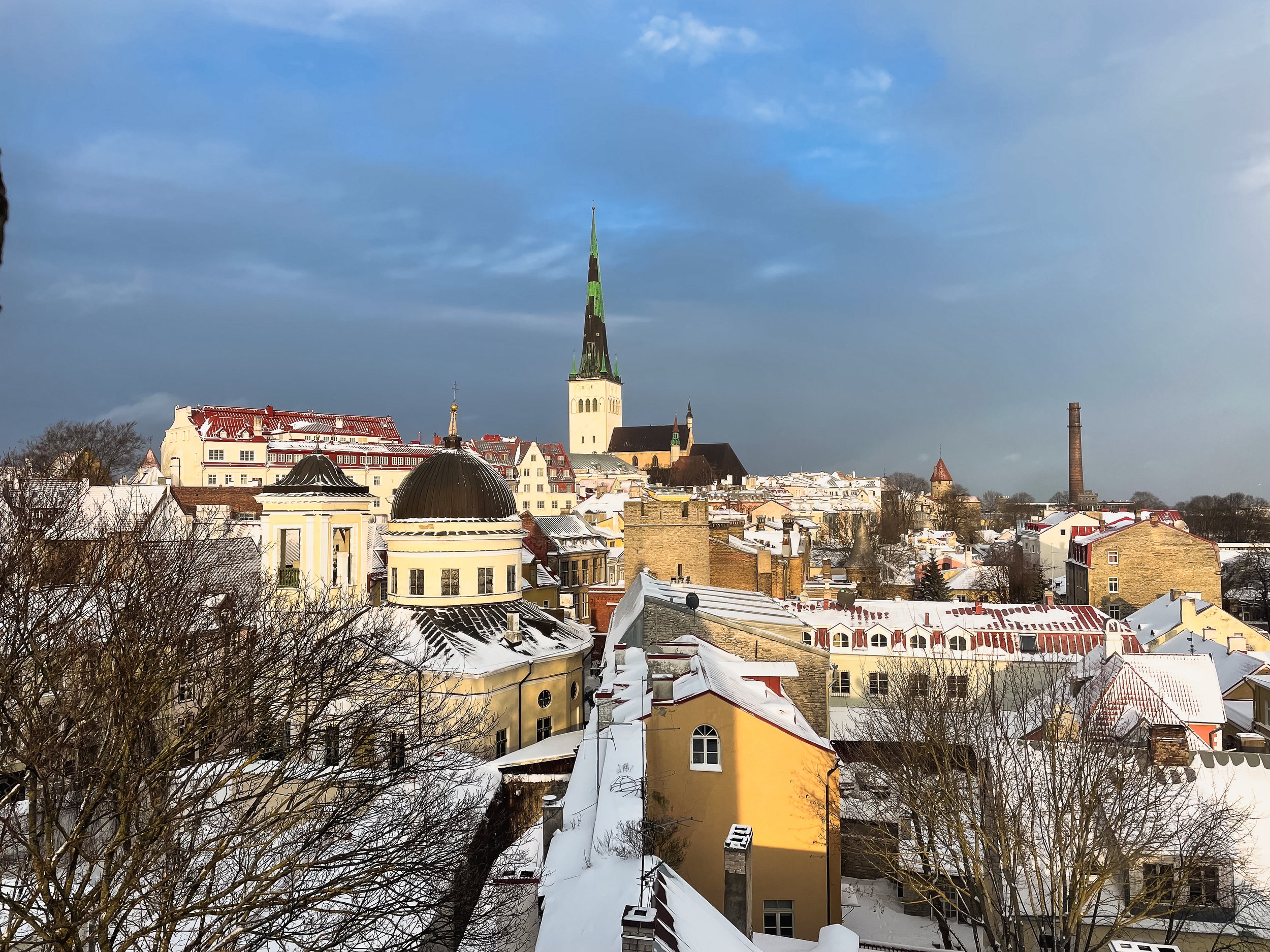
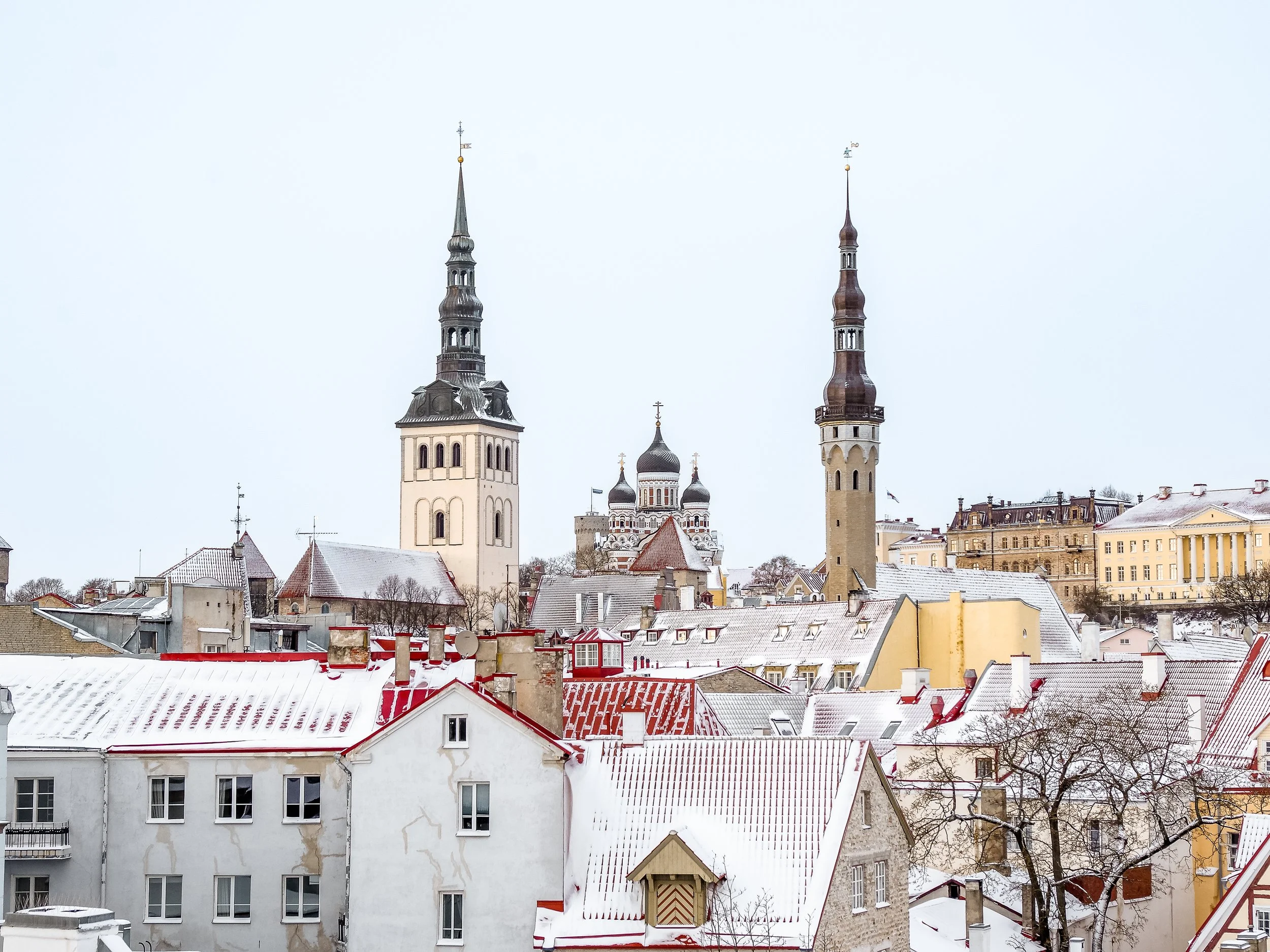
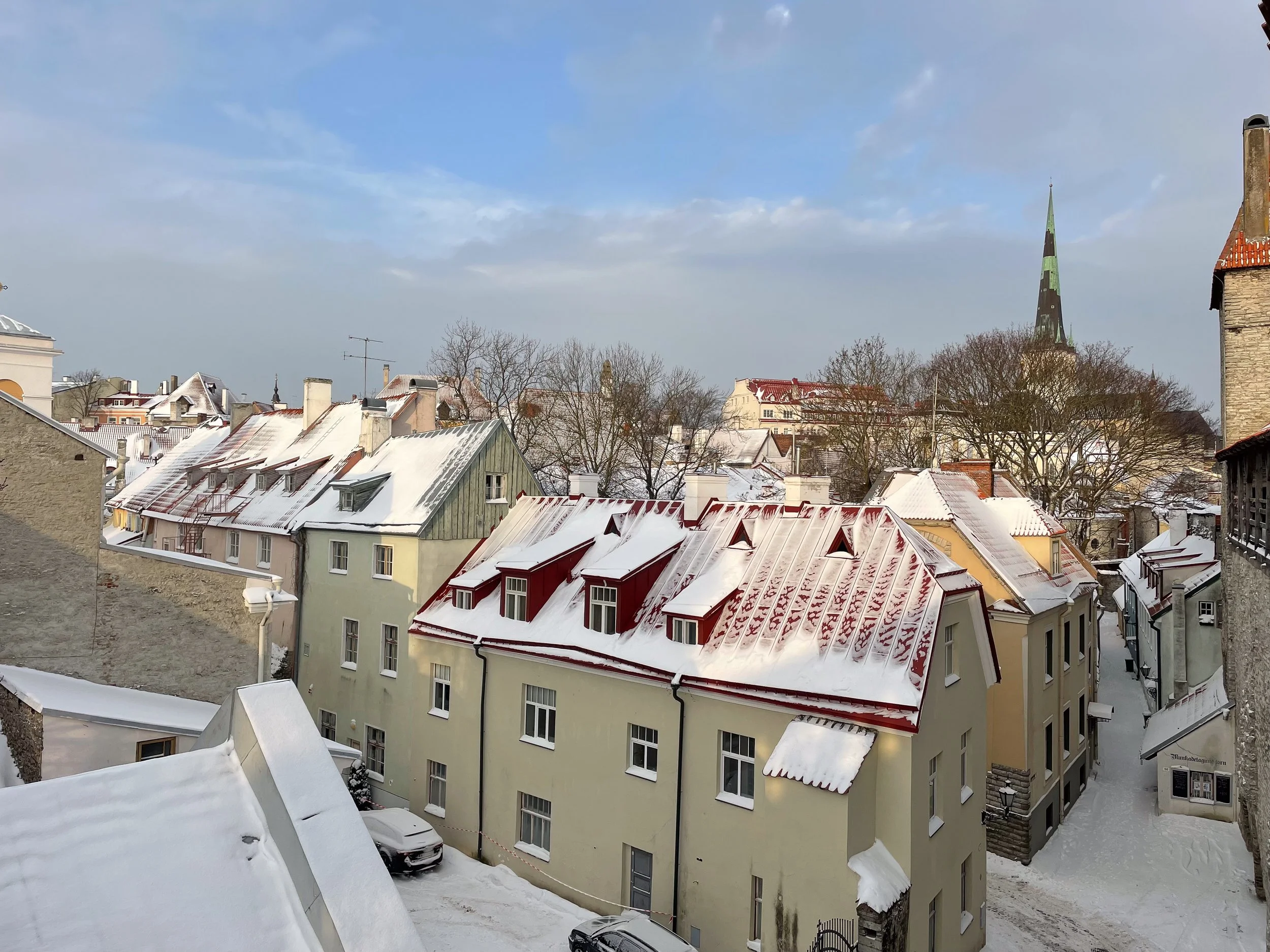
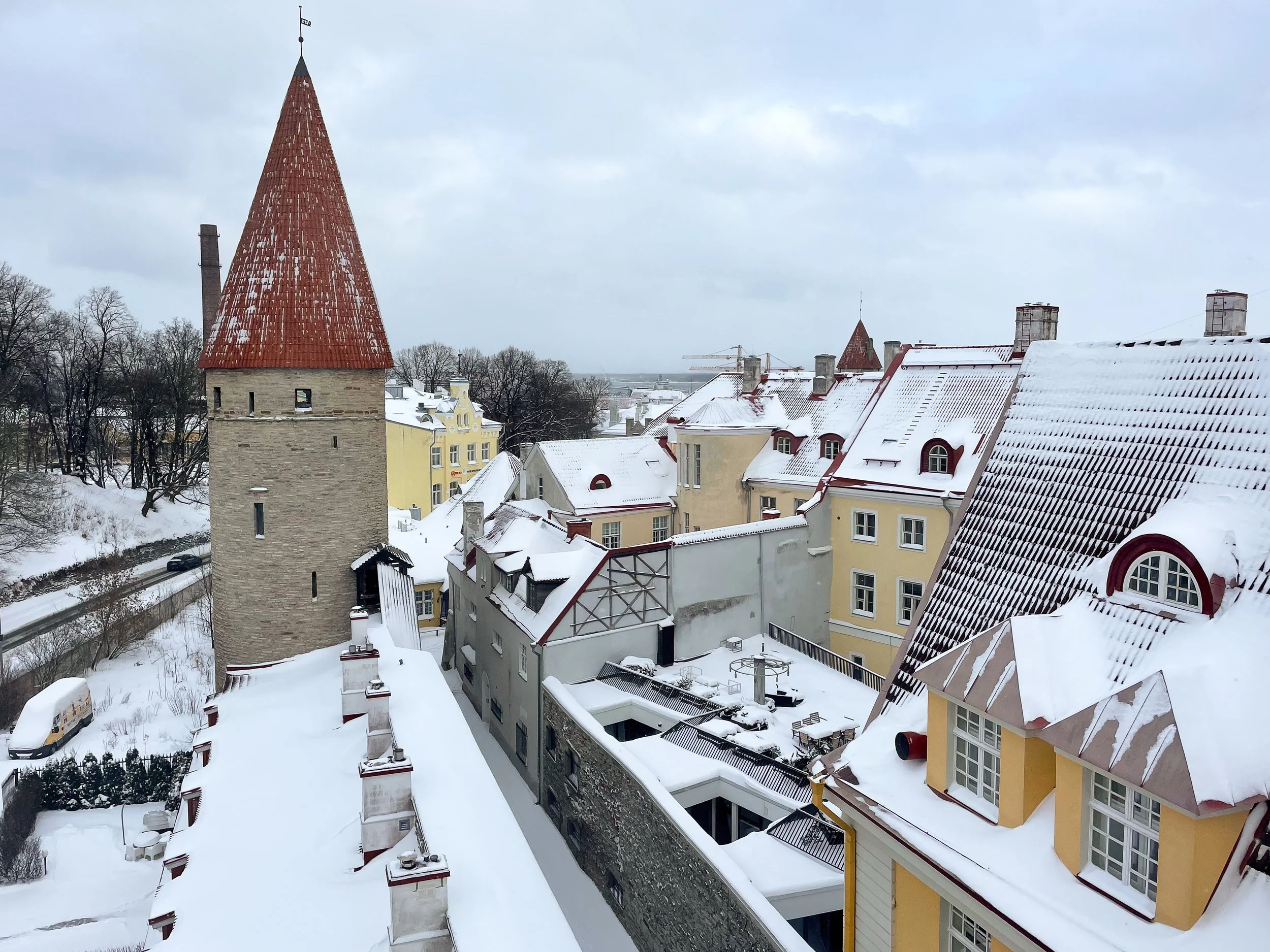
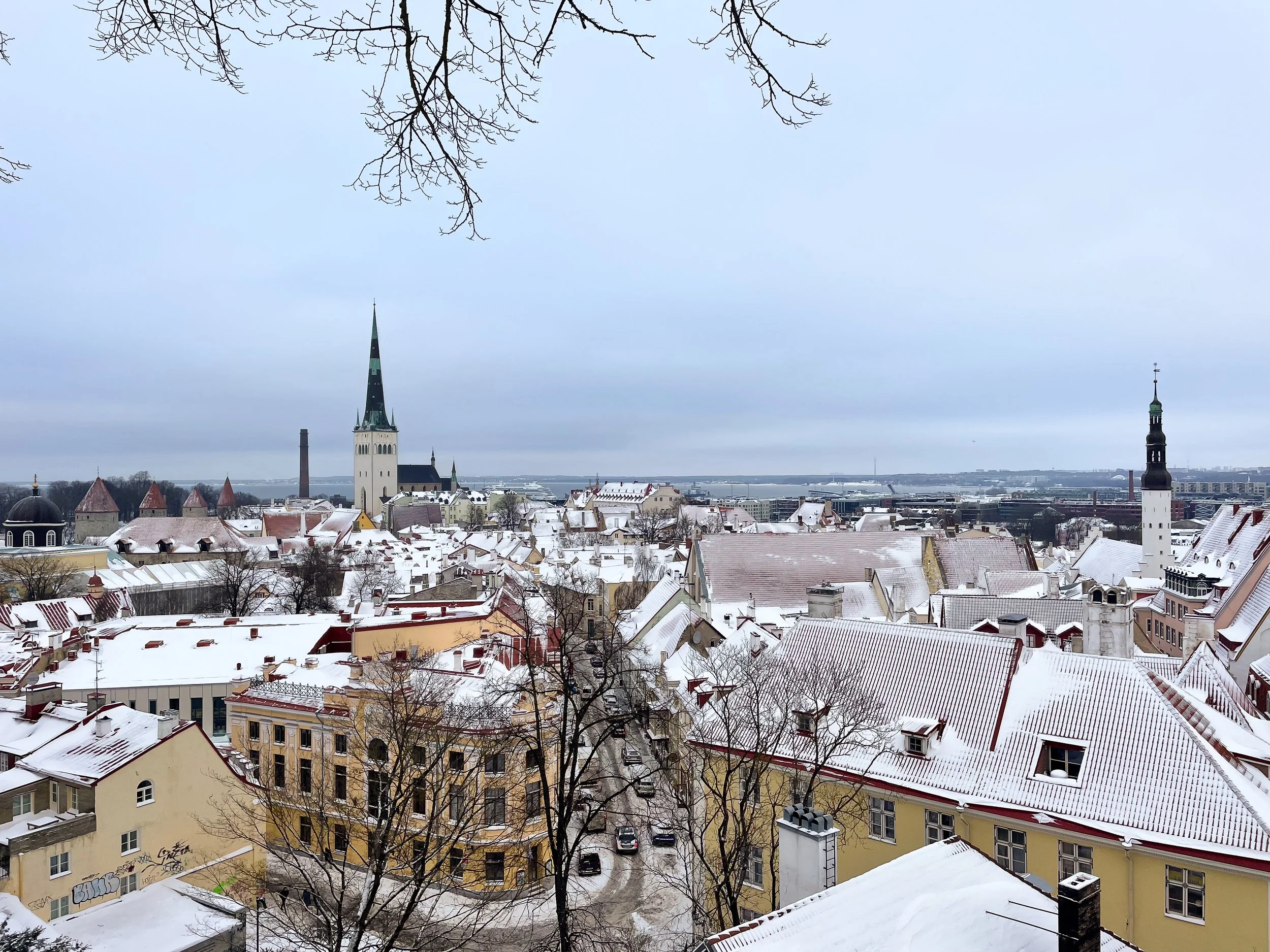
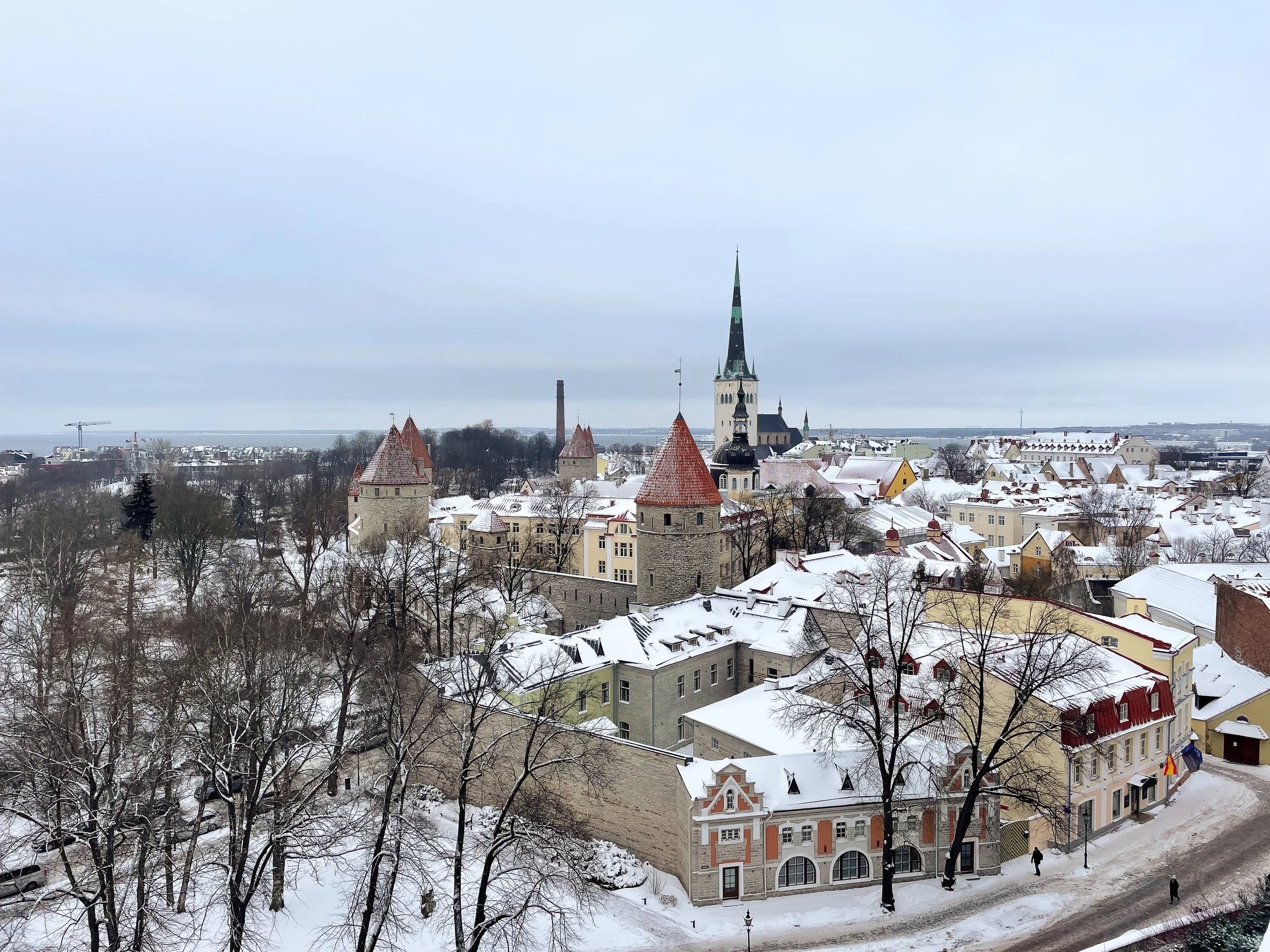
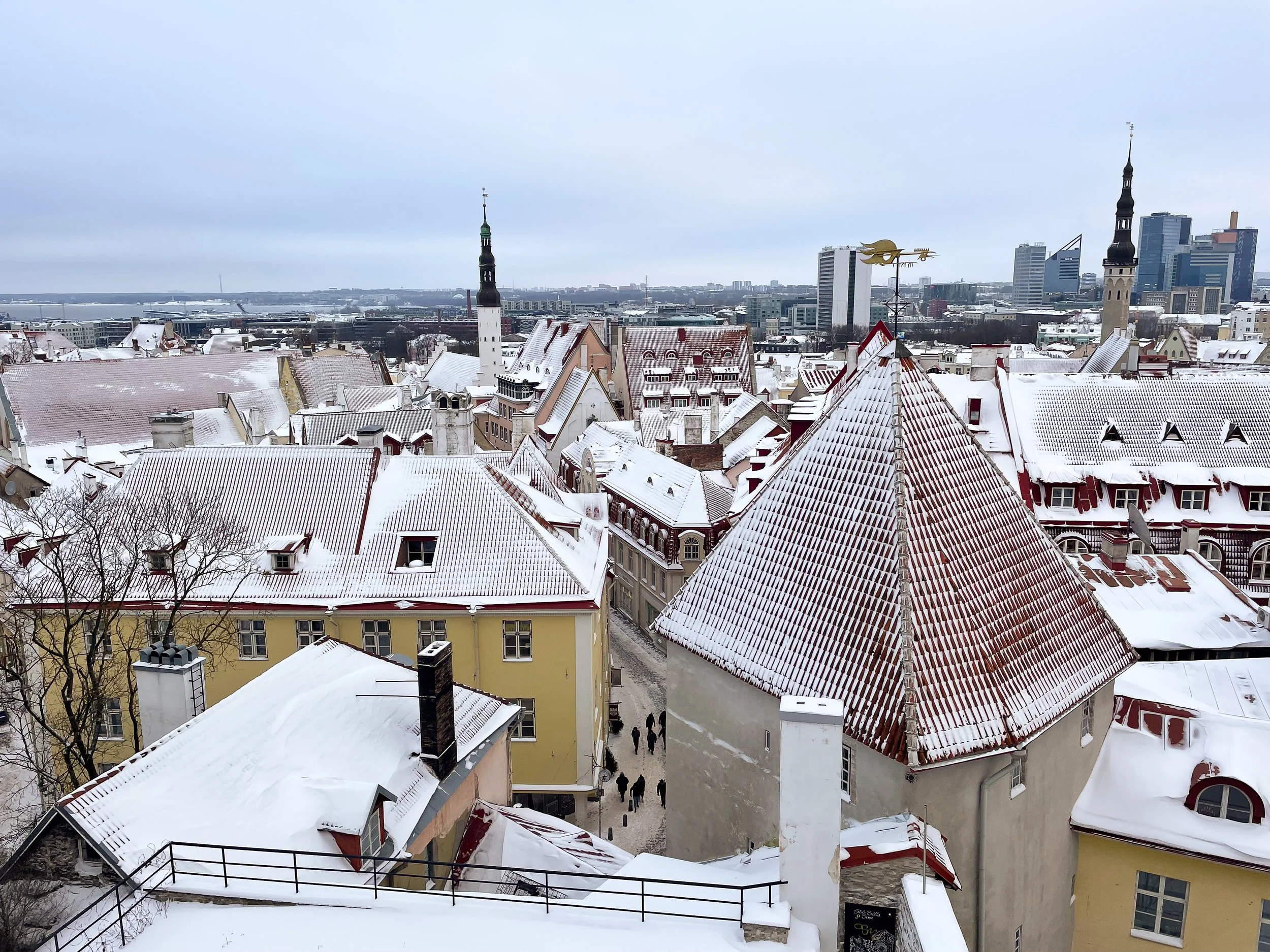
Surrounded by a stone wall with defensive towers and a former moat, The Old Town of Vanalinn boasts some of the most impressive medieval architecture in Europe. Within its historic walls reside former guilds, ornate buildings, towering spires and narrow passageways. By day, we climbed stone defensive towers, tried on knightly armor and learned about Estonia’s past and recent history. At night, we indulged in Estonian cuisine, discovered hidden bars and slept in a former merchant house.
Blanketed in Snow
In mid-January, the city of Tallinn was blanketed in snow. It’s a cold and cozy time when locals sport fur hats, parents pull children on sleds, vendors sell hot mulled wine and twinkle lights decorate the streets. It felt a lot like being in a snow globe; a feeling we fully embraced by having a snowball fight in the town square, ice skating at night and catching snowflakes on our tongues.
Climb the Medieval Towers
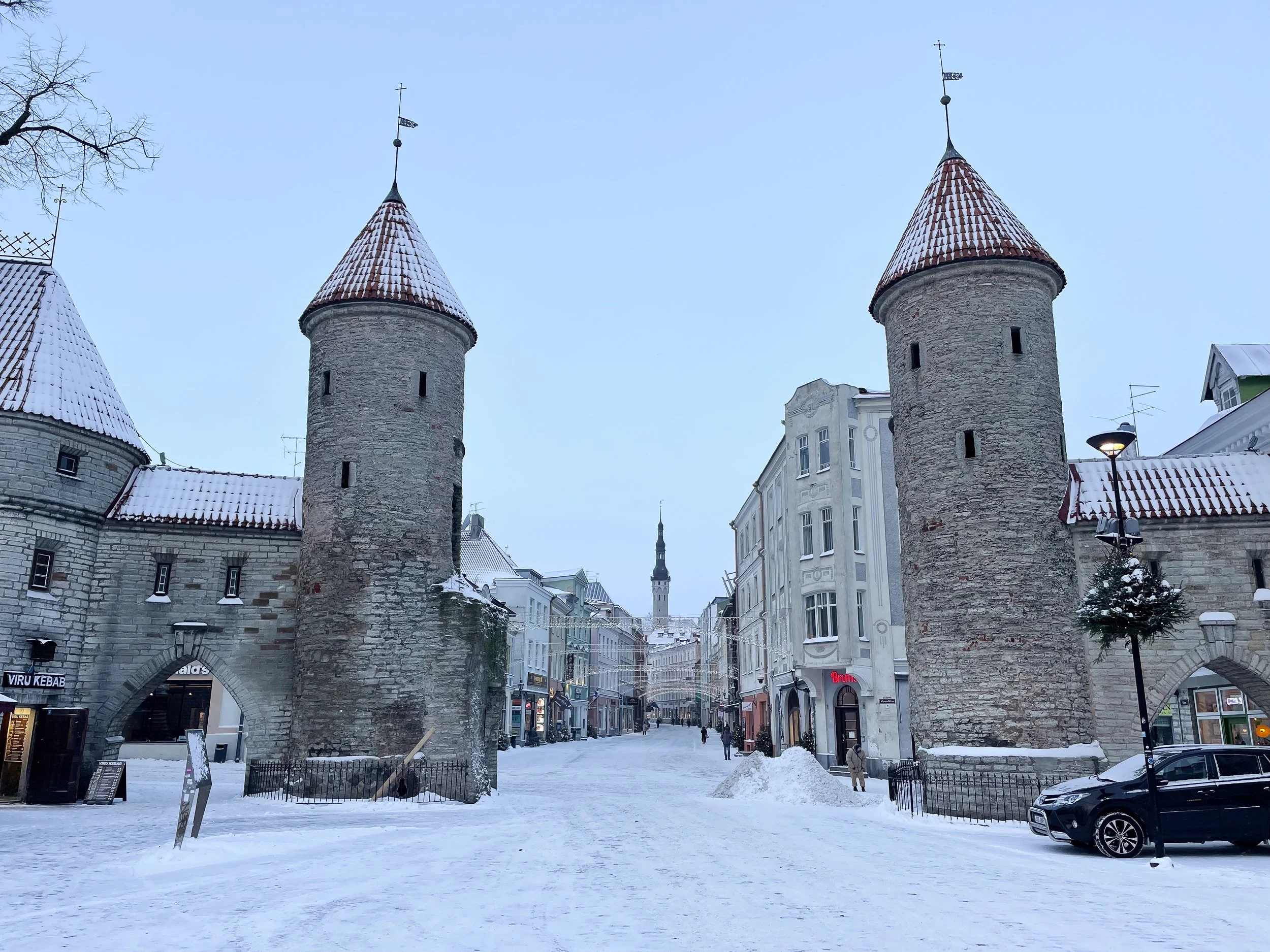
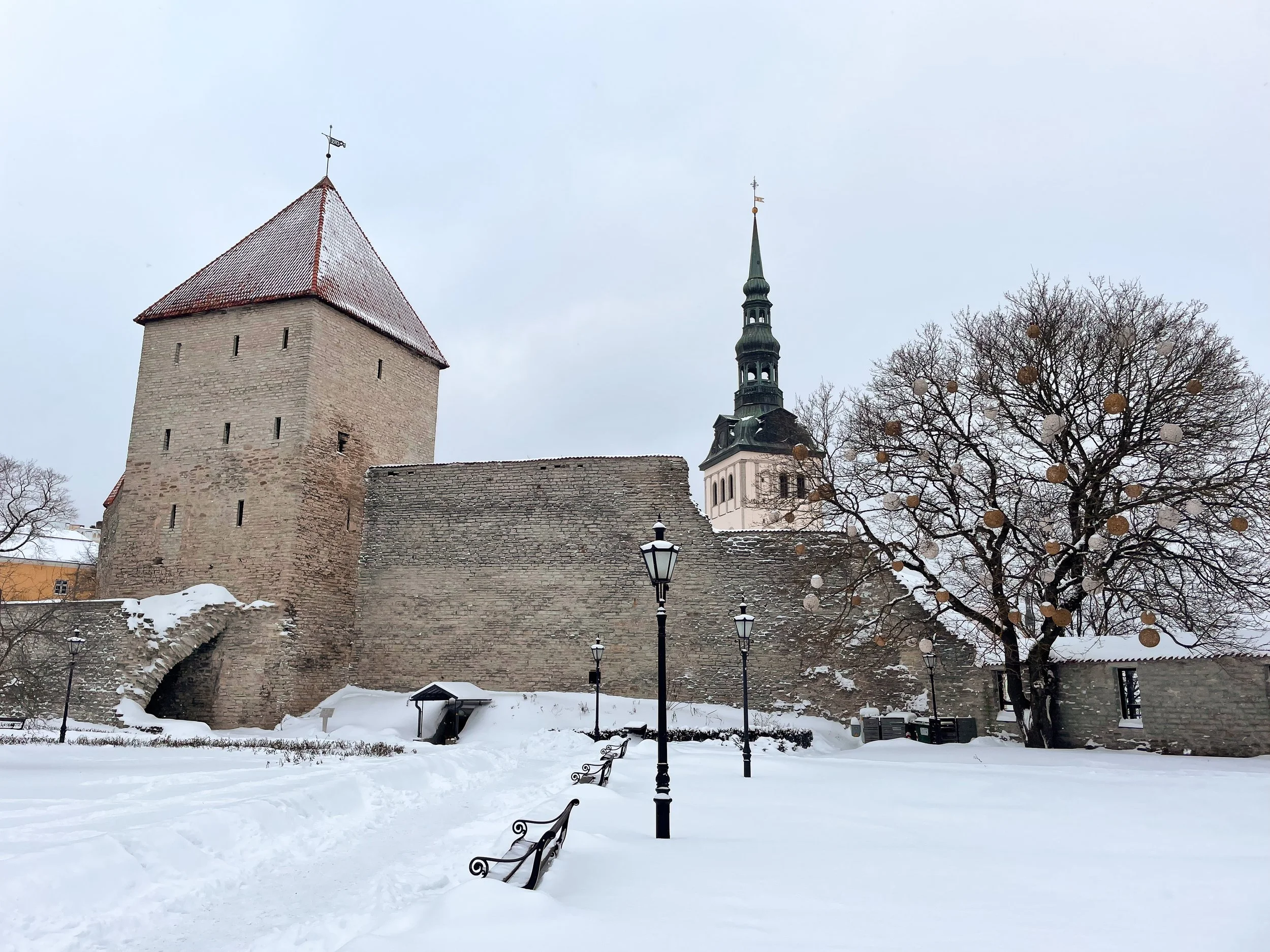
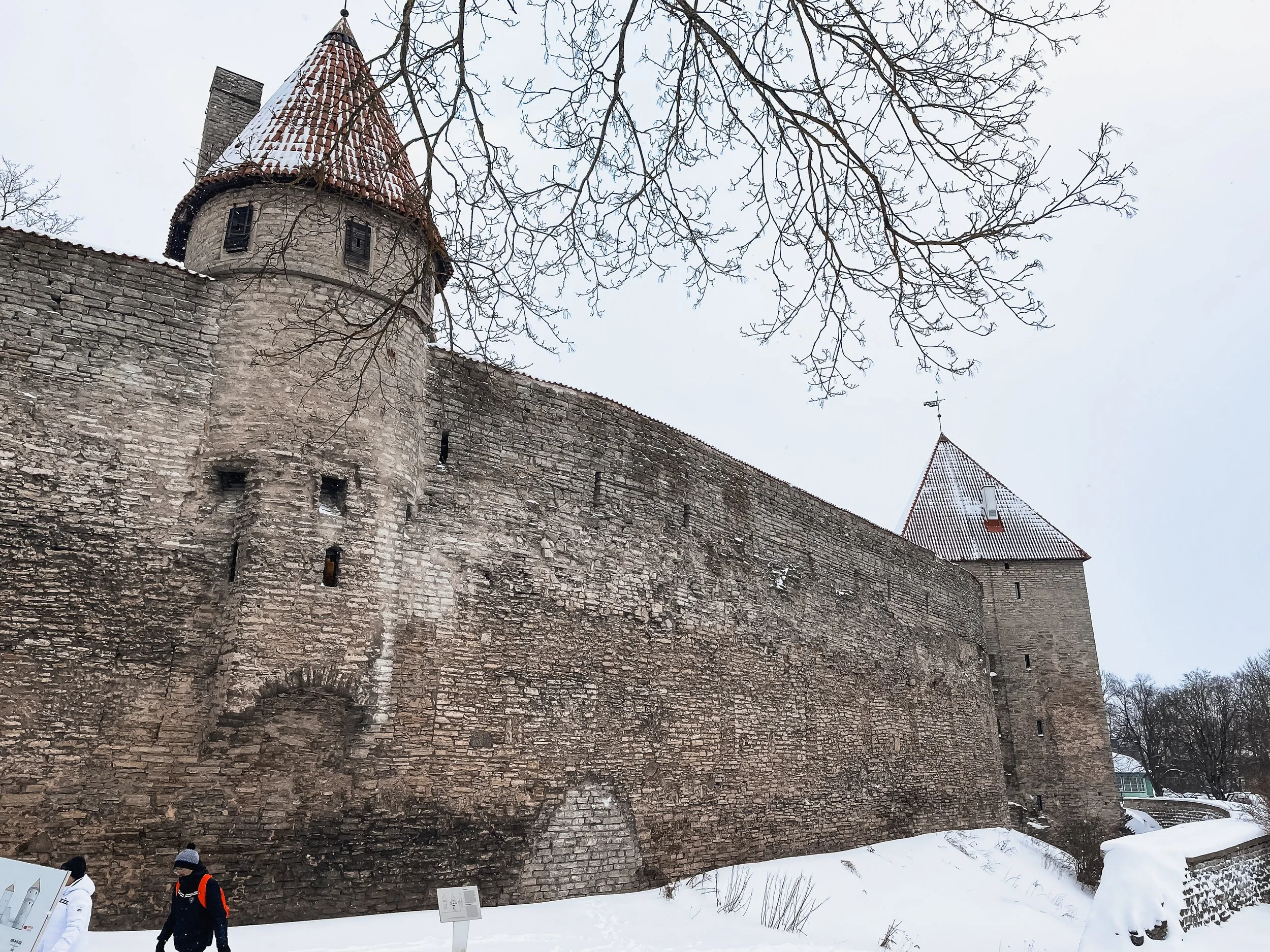
Walking along the city wall, we visited several medieval towers, admiring some from the outside and ascending to the lookouts of others.
Viru Gate. A pair of stone defensive towers at one entrance to the walled city.
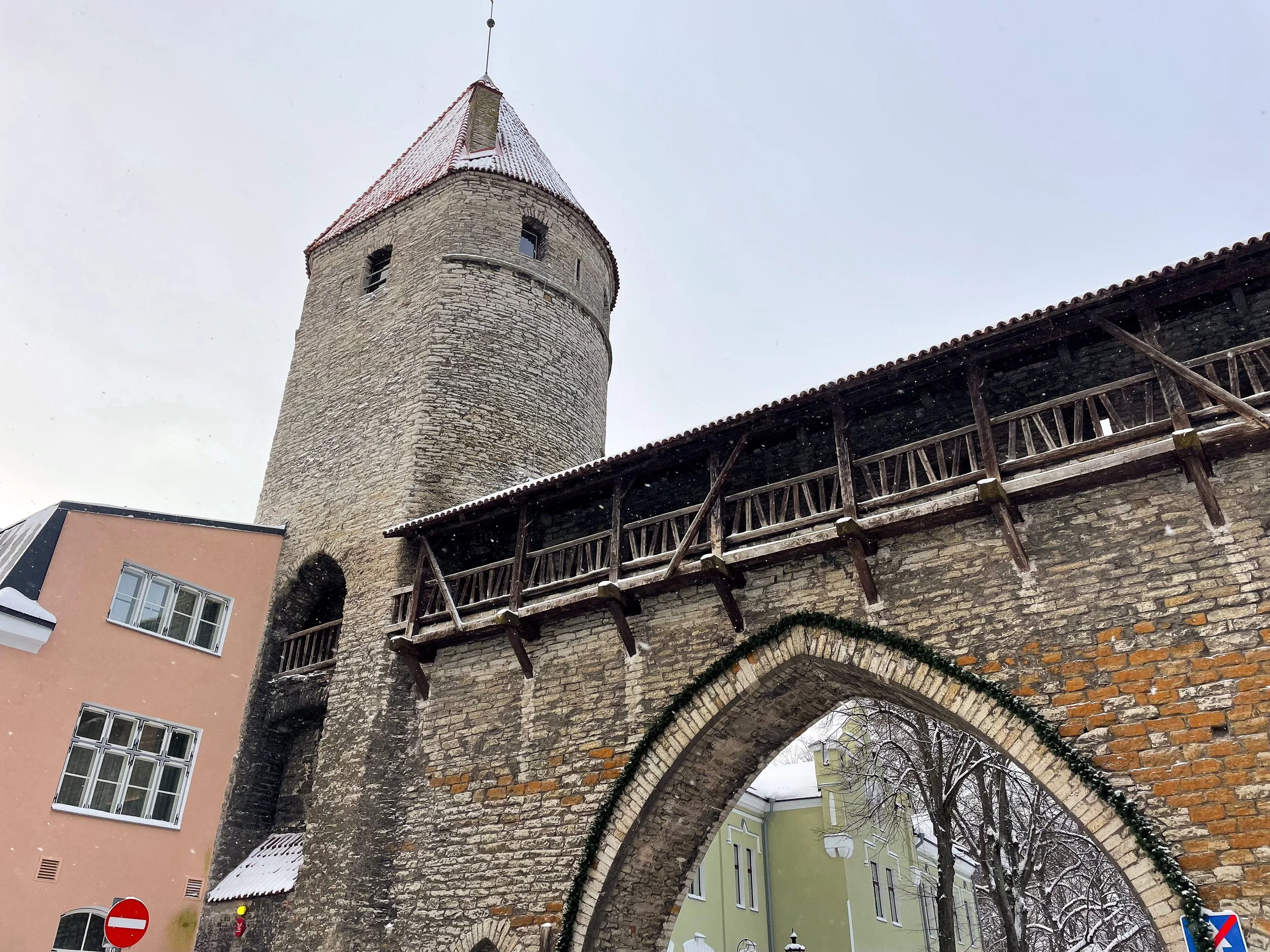
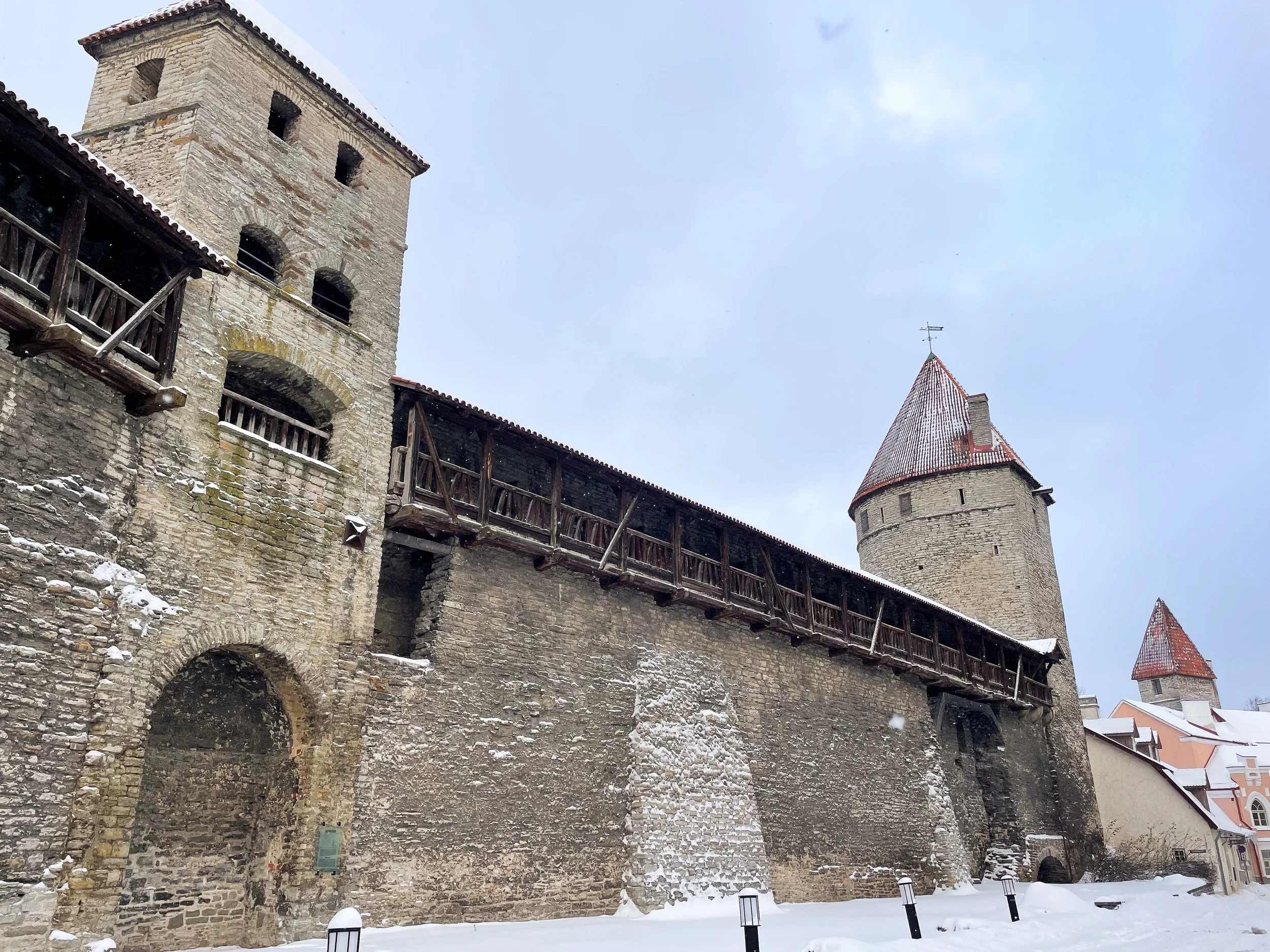
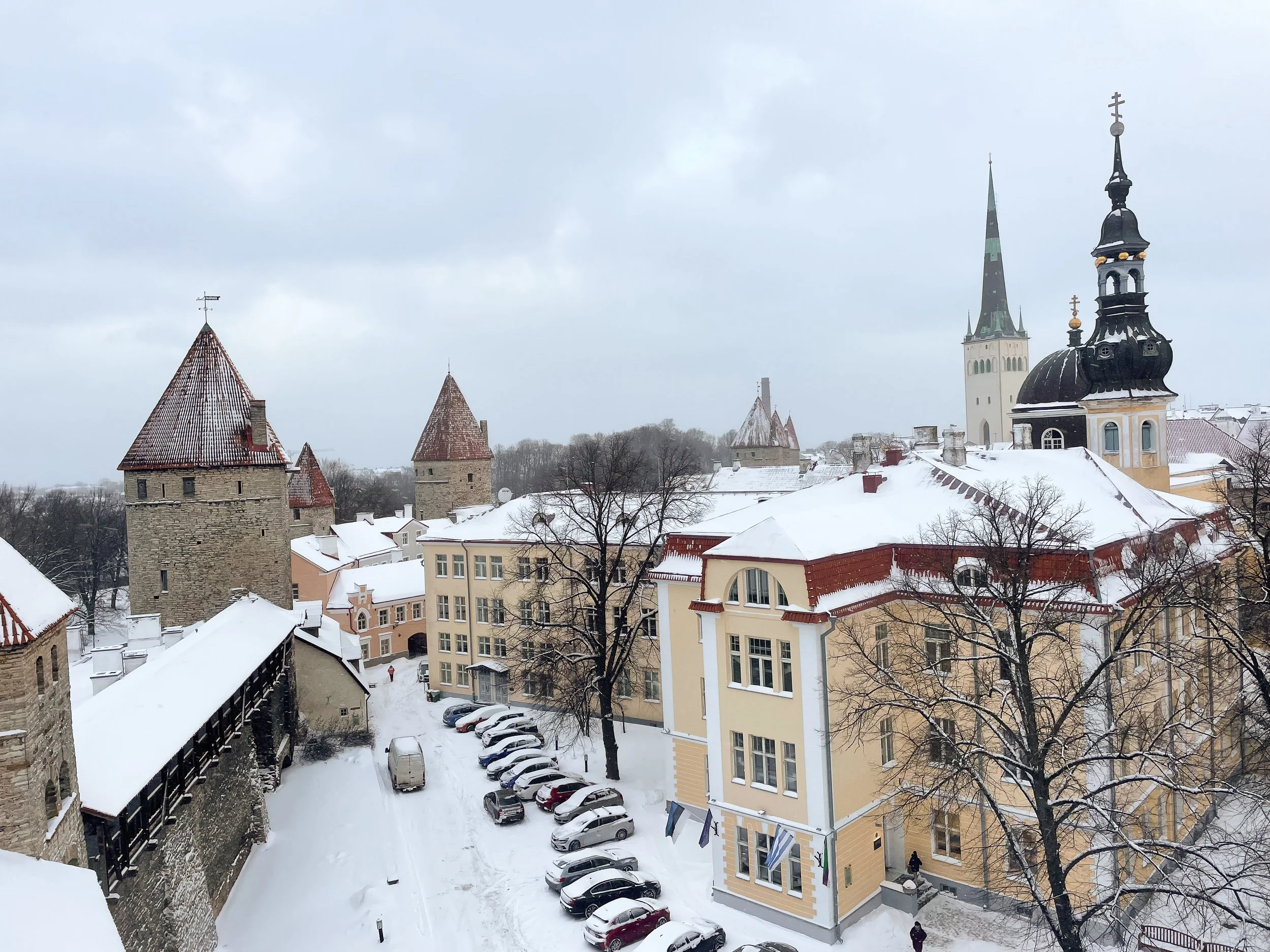
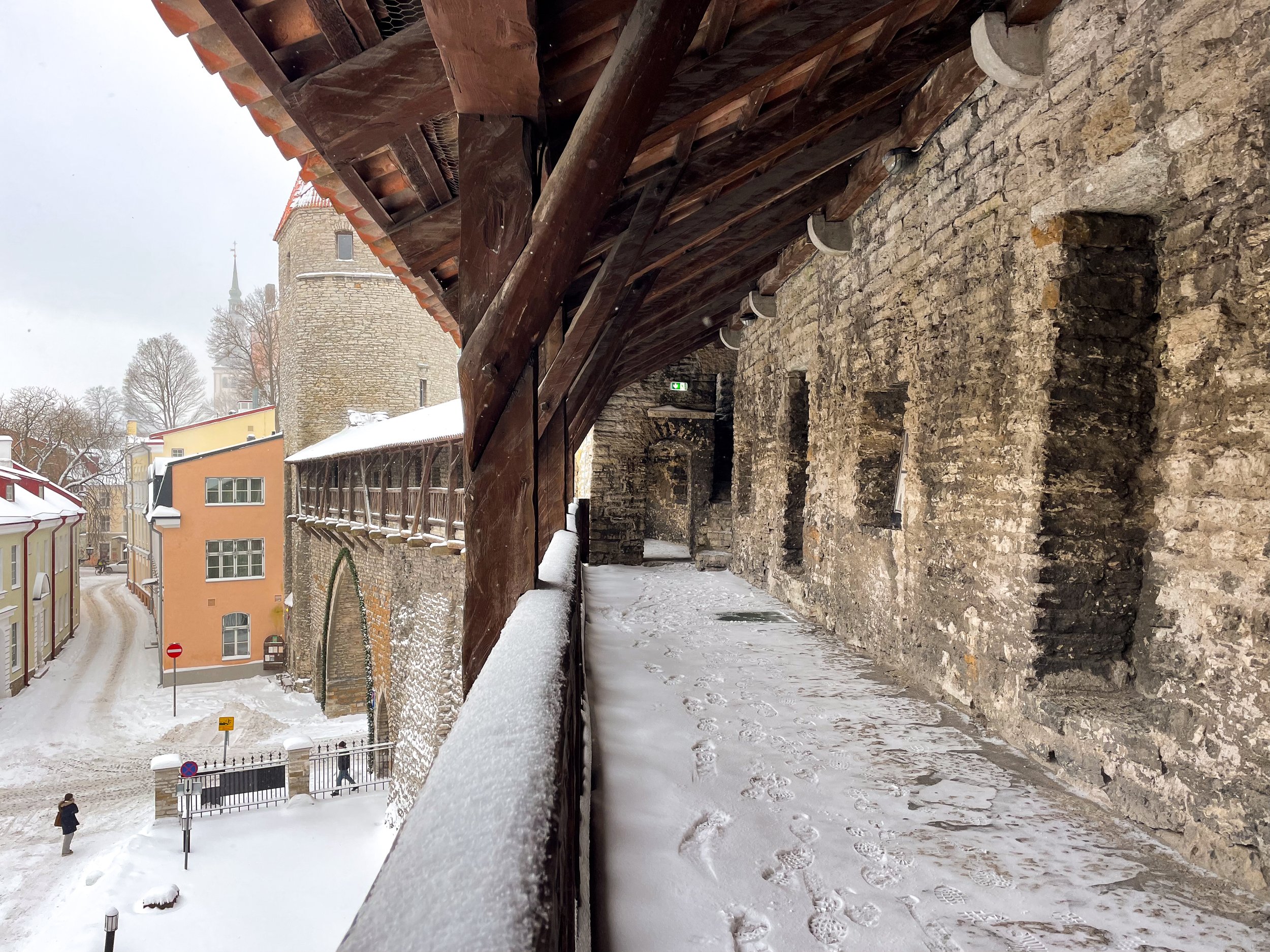
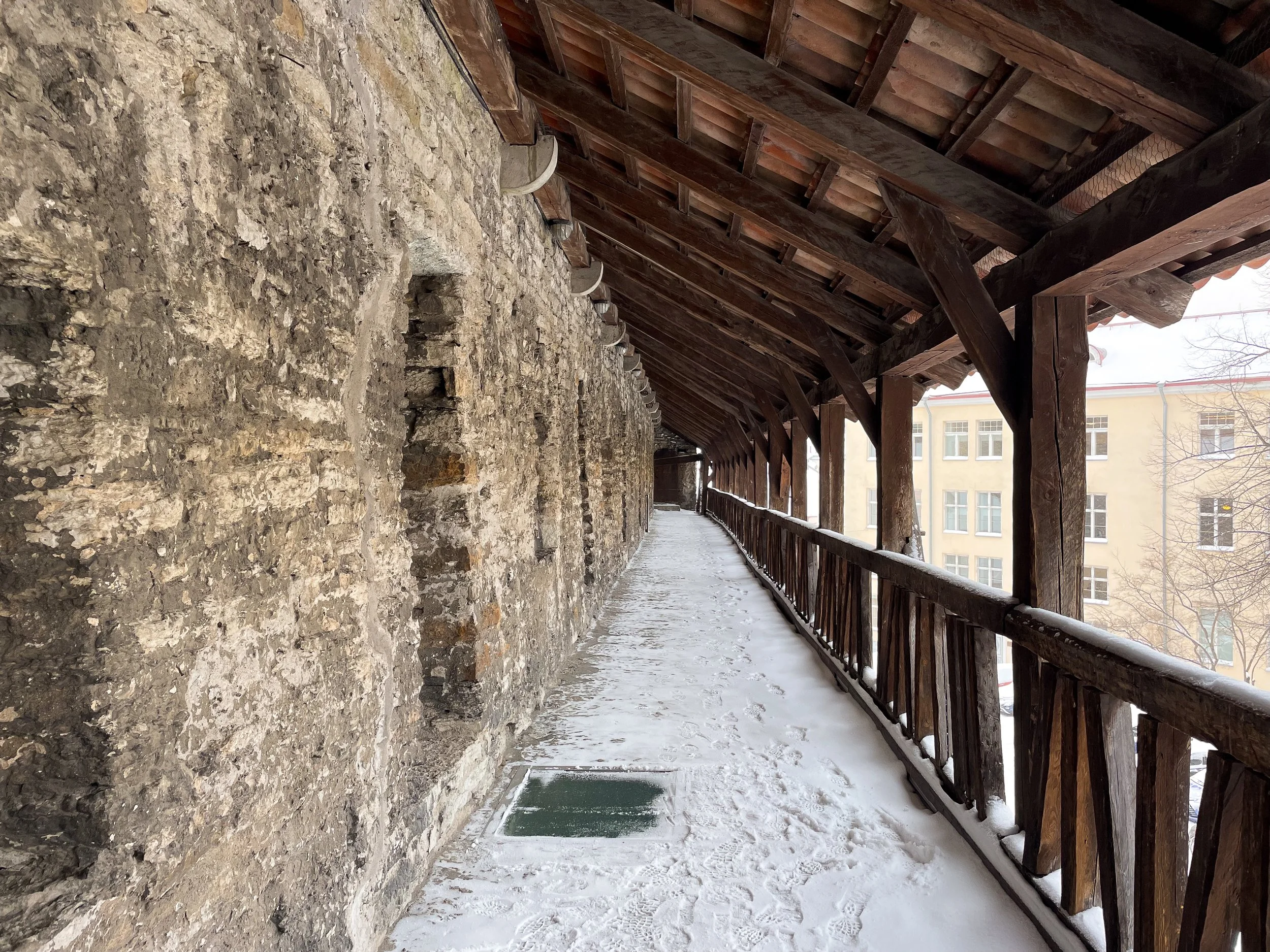
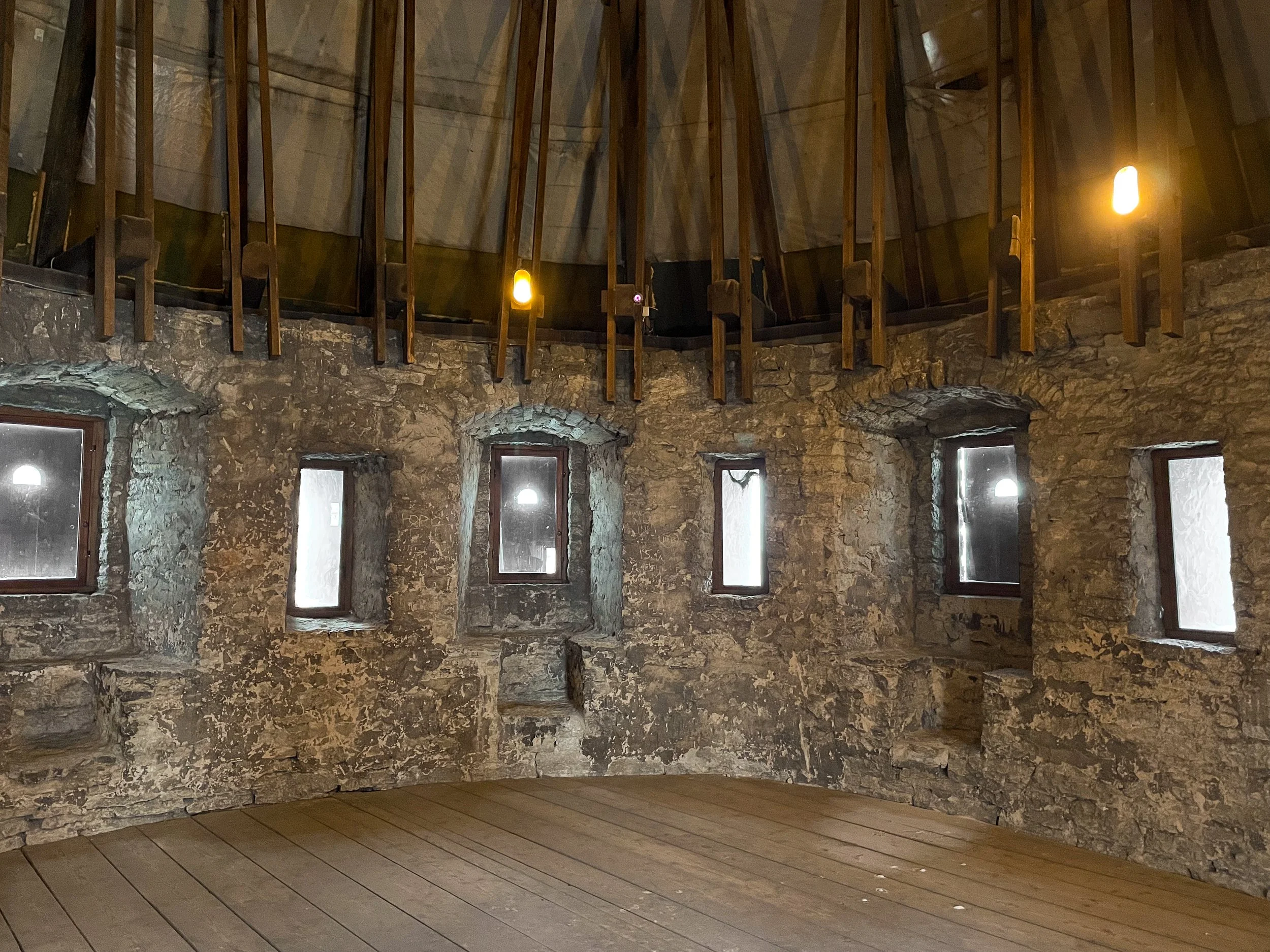
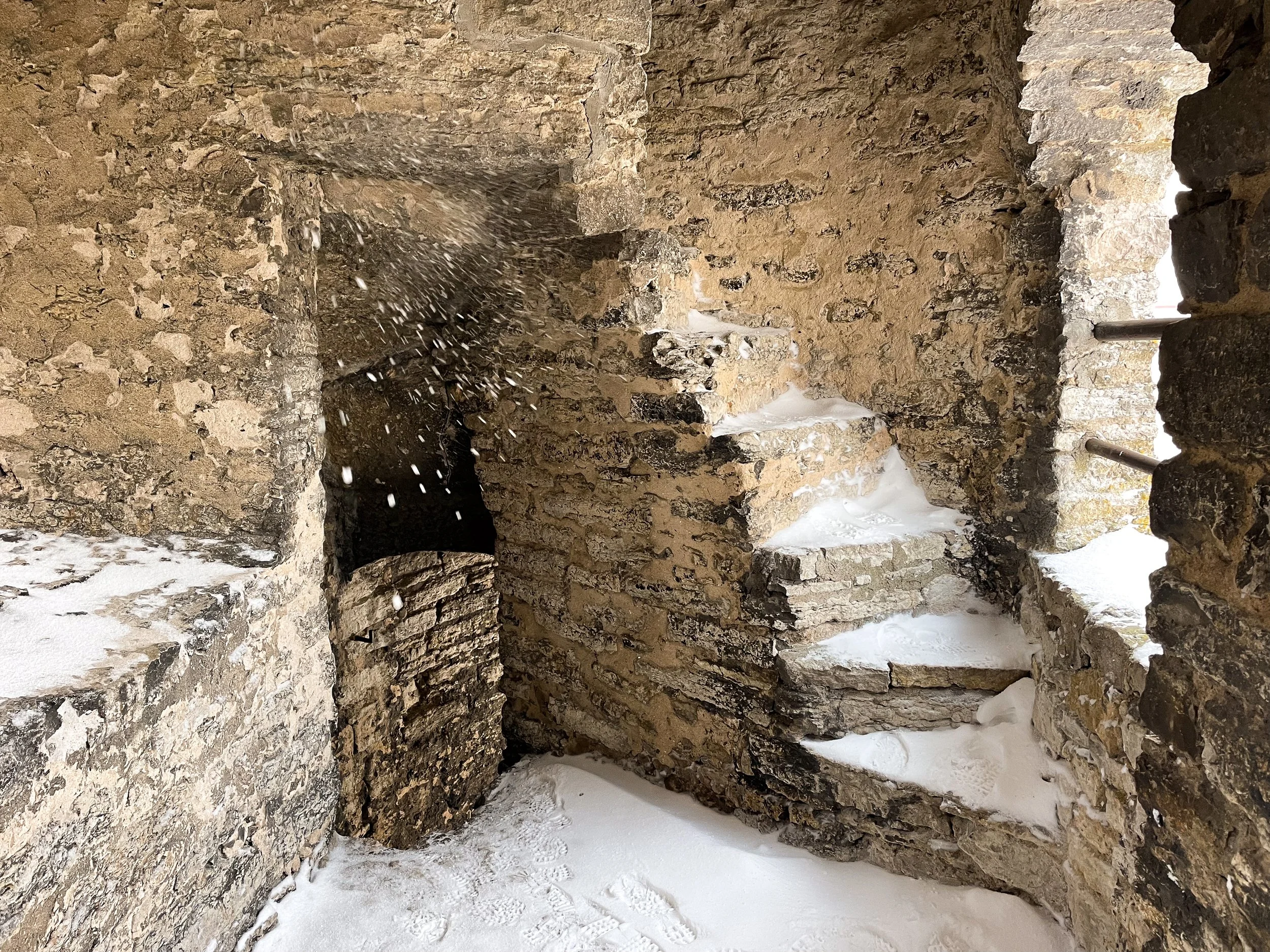
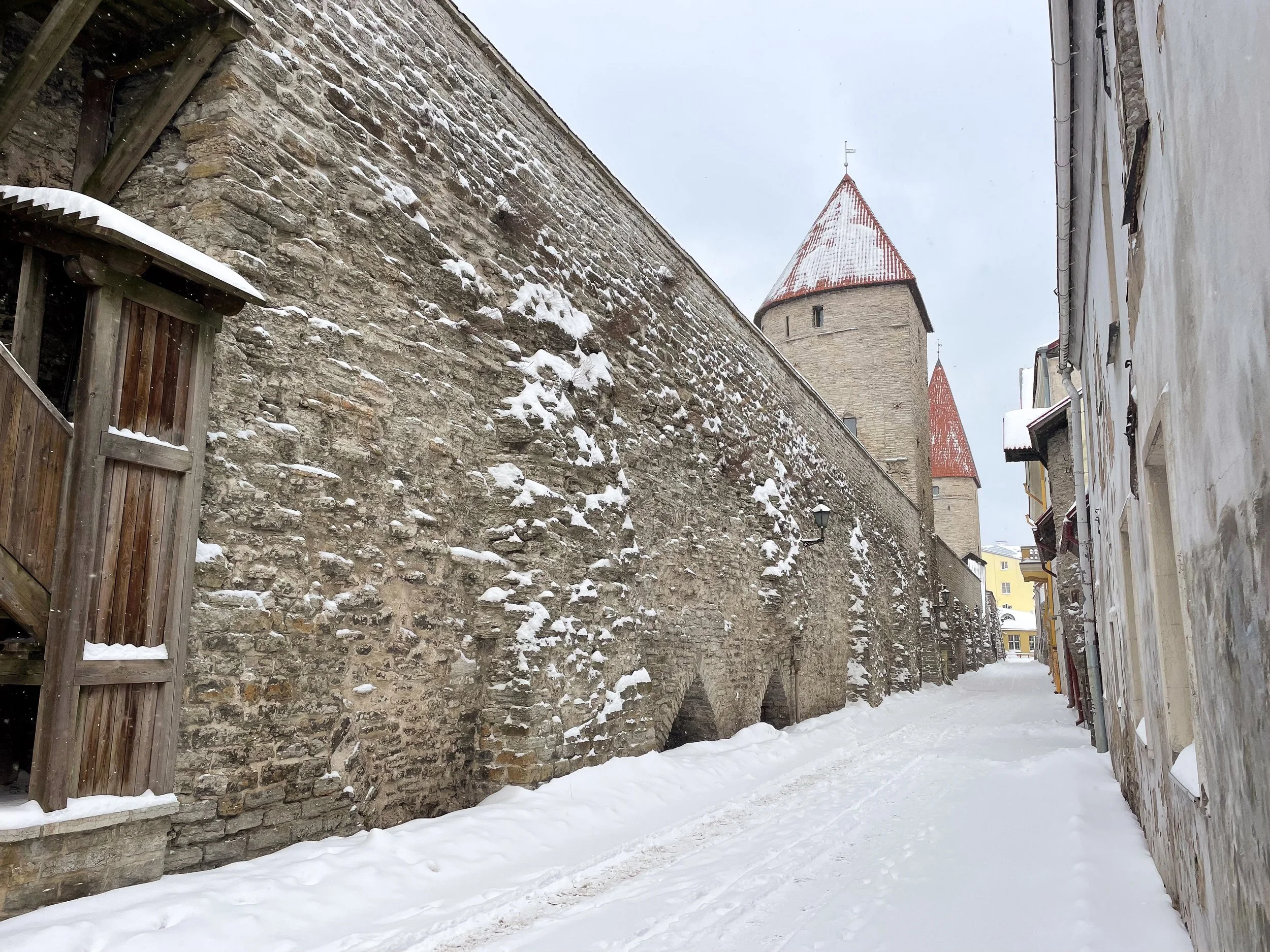
Sauna, Nun’s & Golden Leg Towers. The oldest section of the city wall with 3 towers connected by a stone and wood defensive wall. Each tower has stone spiral staircases that lead to different levels, each with windows overlooking the city.
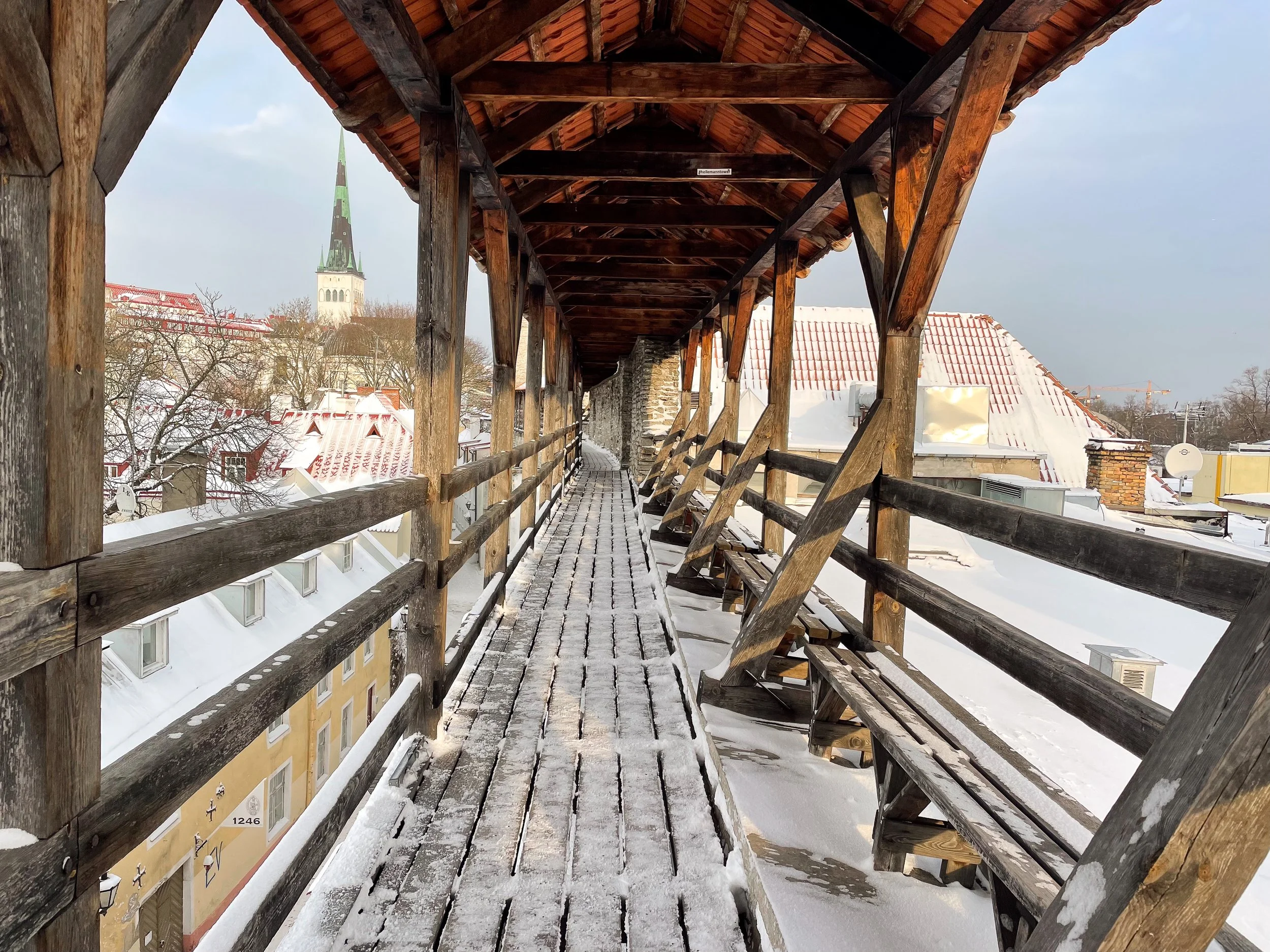
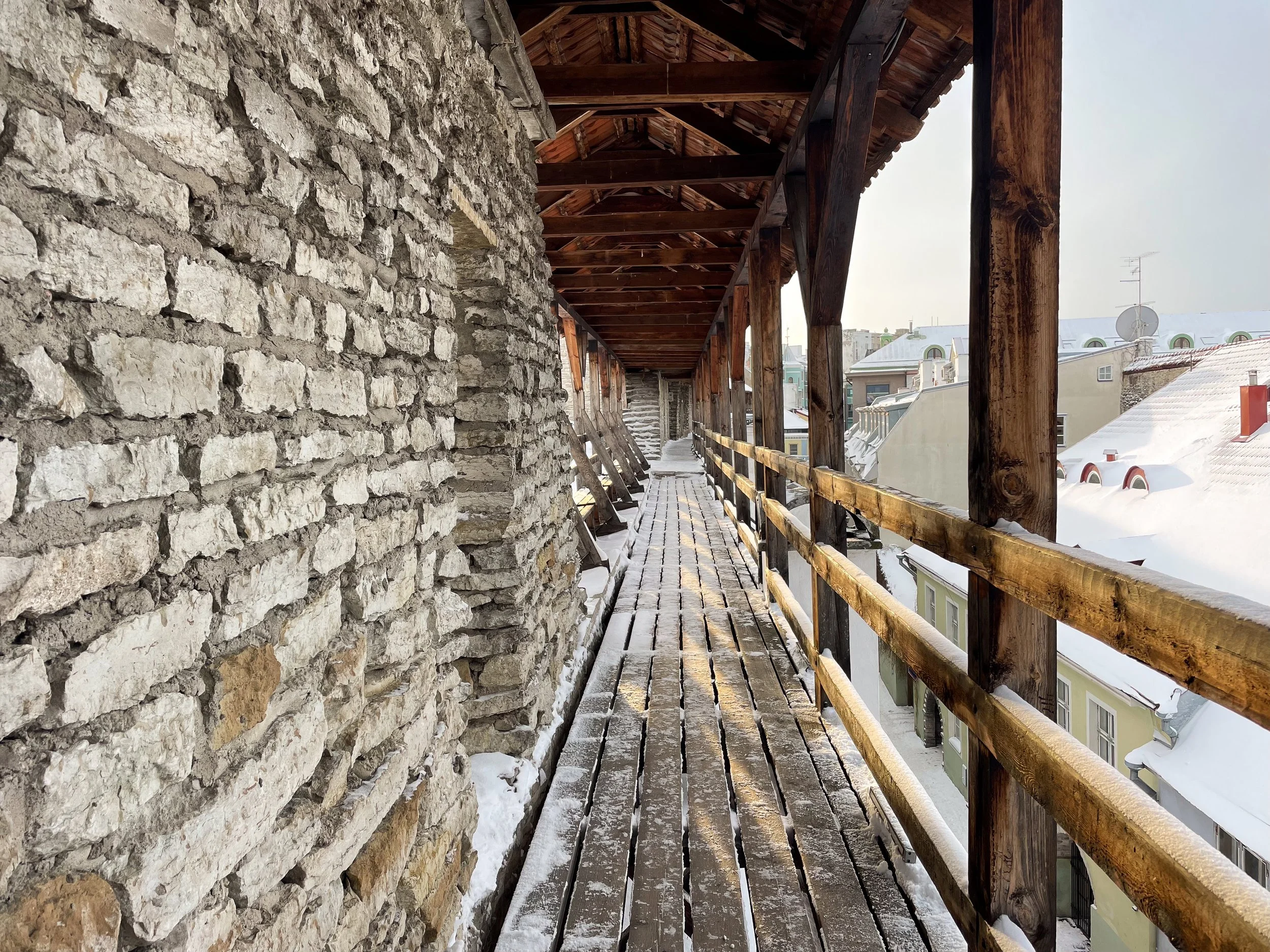
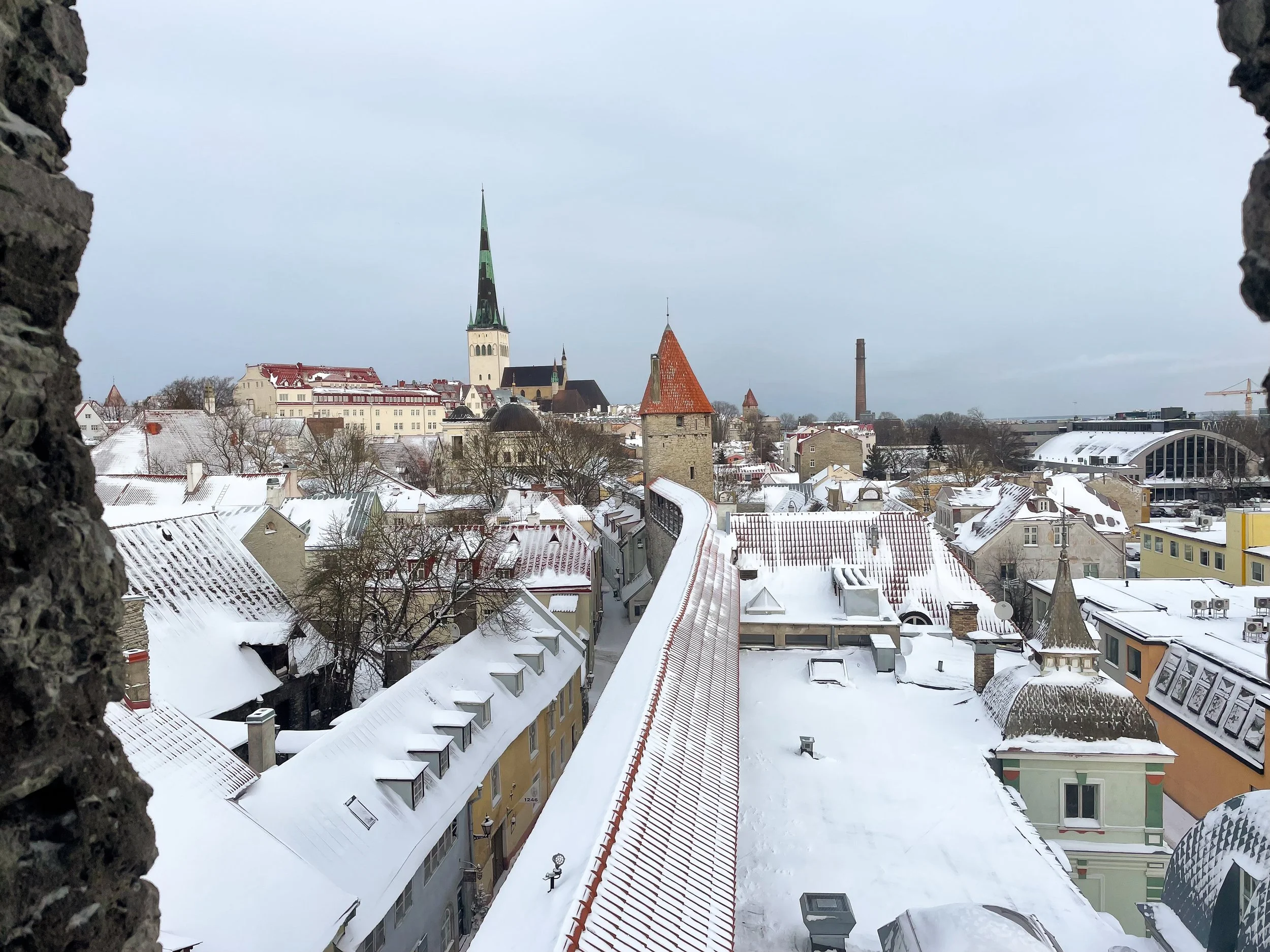
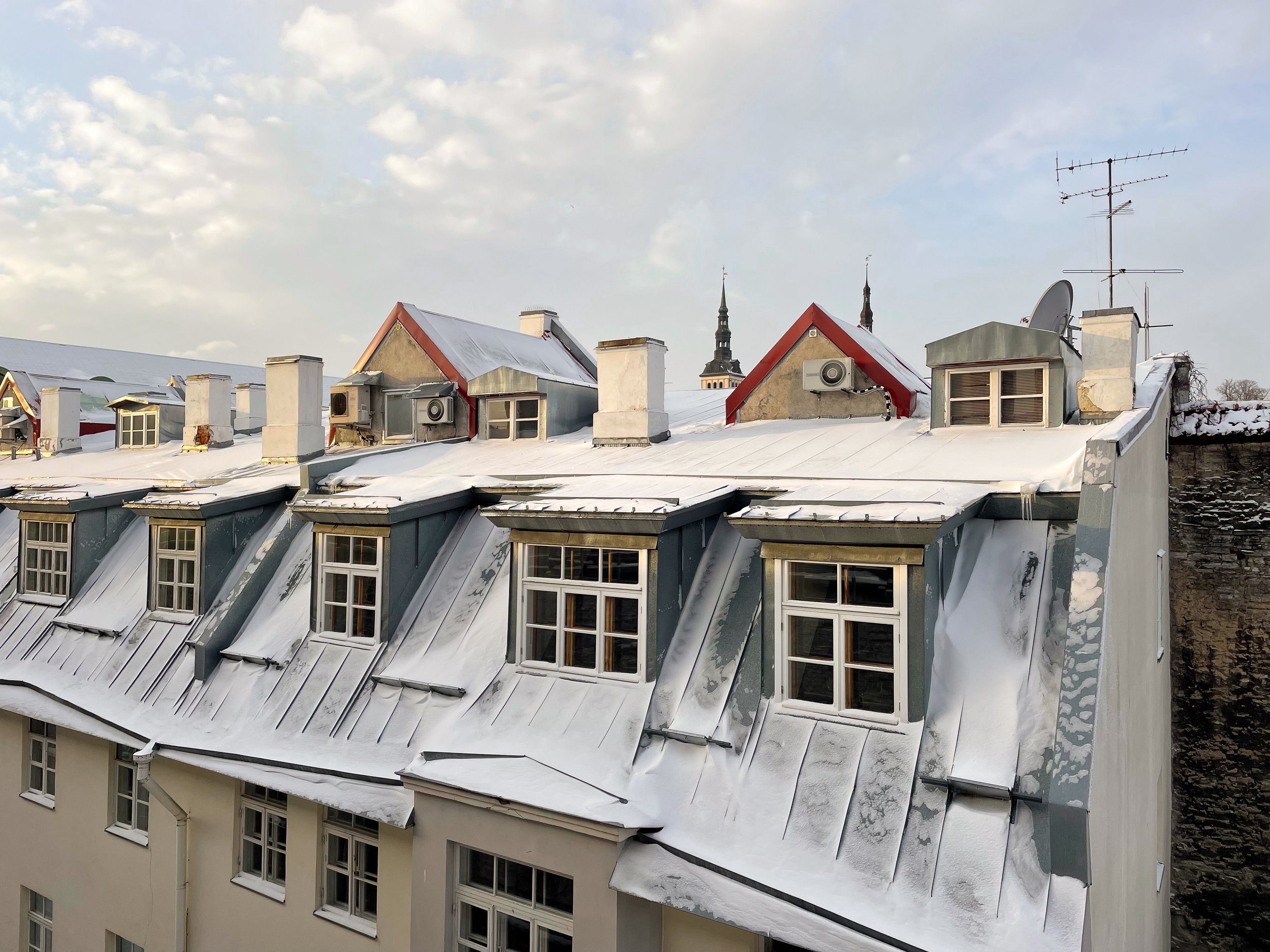
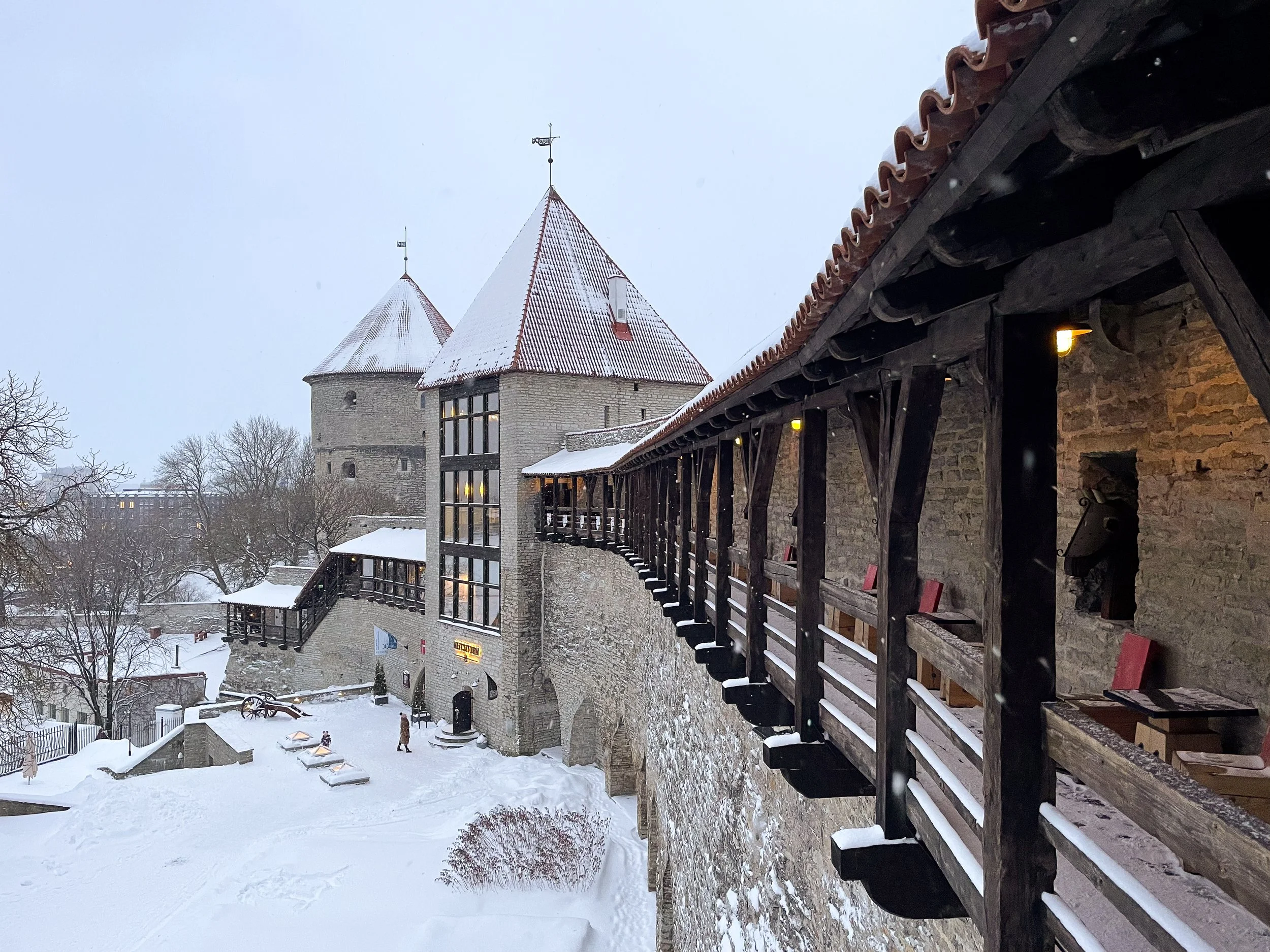
Hellemann Tower & Wall. A 3 floor artillery tower with a clay tile roof. A spiral staircase leads to a 200 meter long defensive wall and platform with city views.
Monks Tower. A tower accessible from the Hellemann Tower & Wall. It has a gallery of historic city photos and a café on its ground floor.
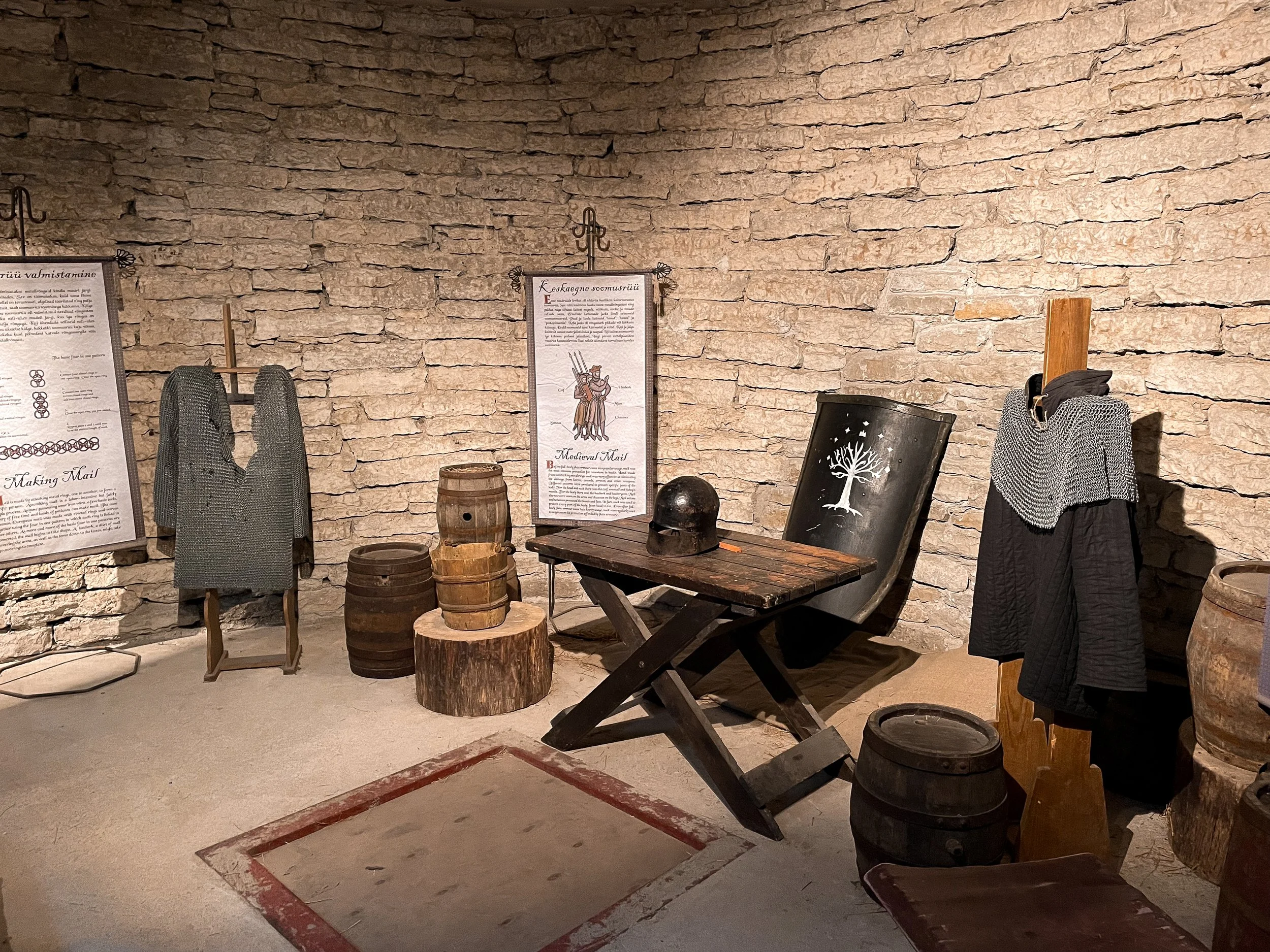
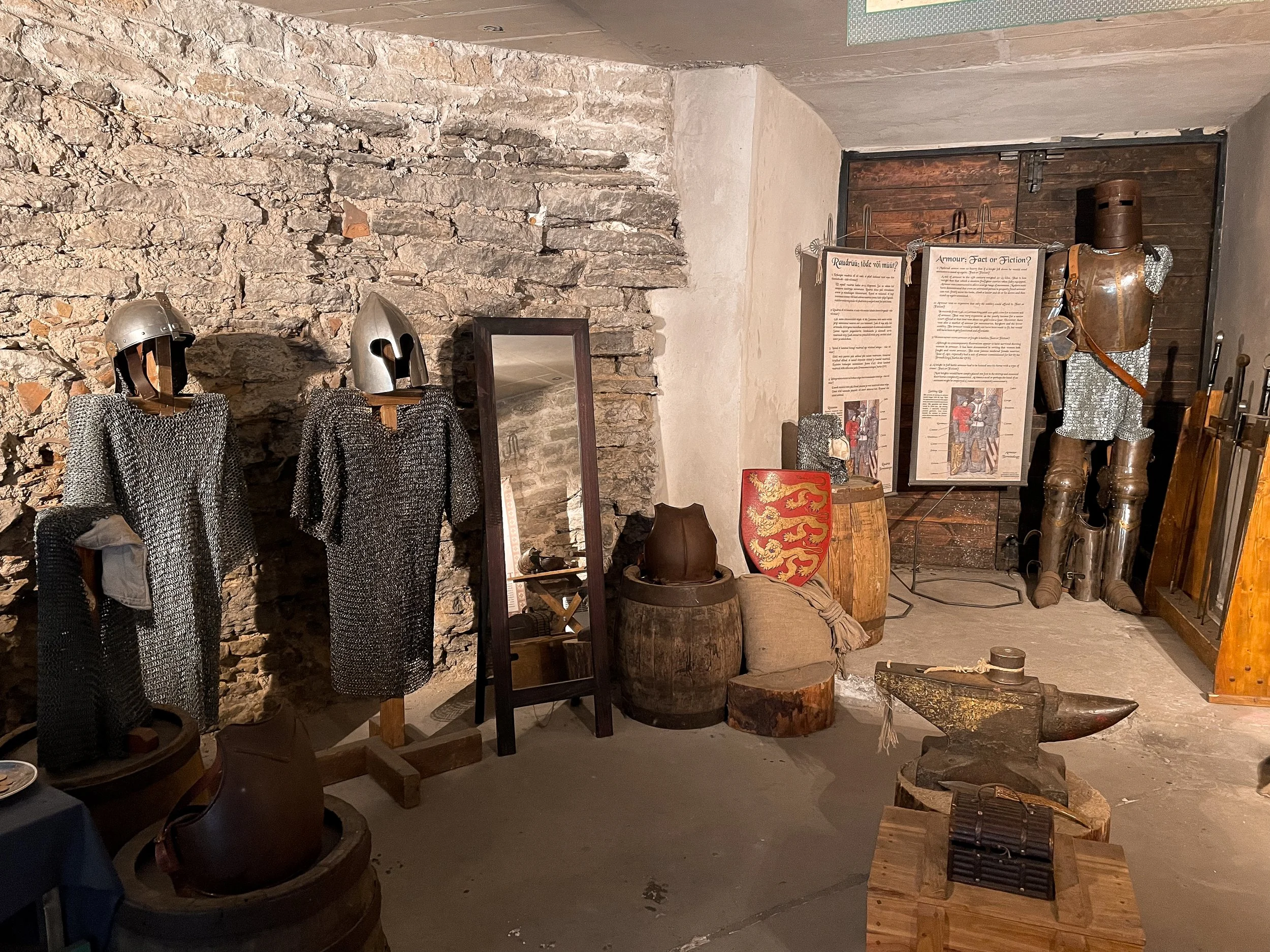
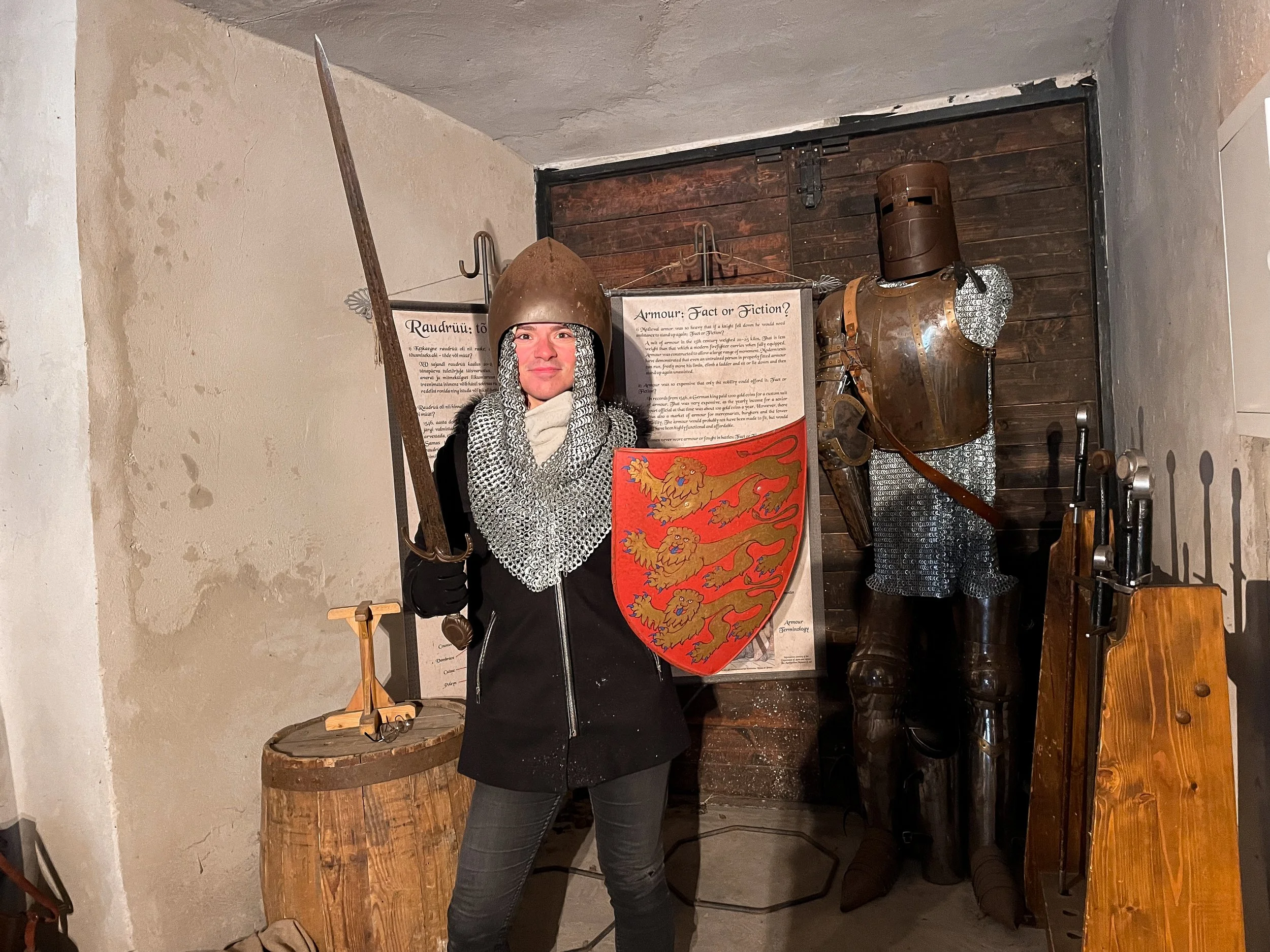
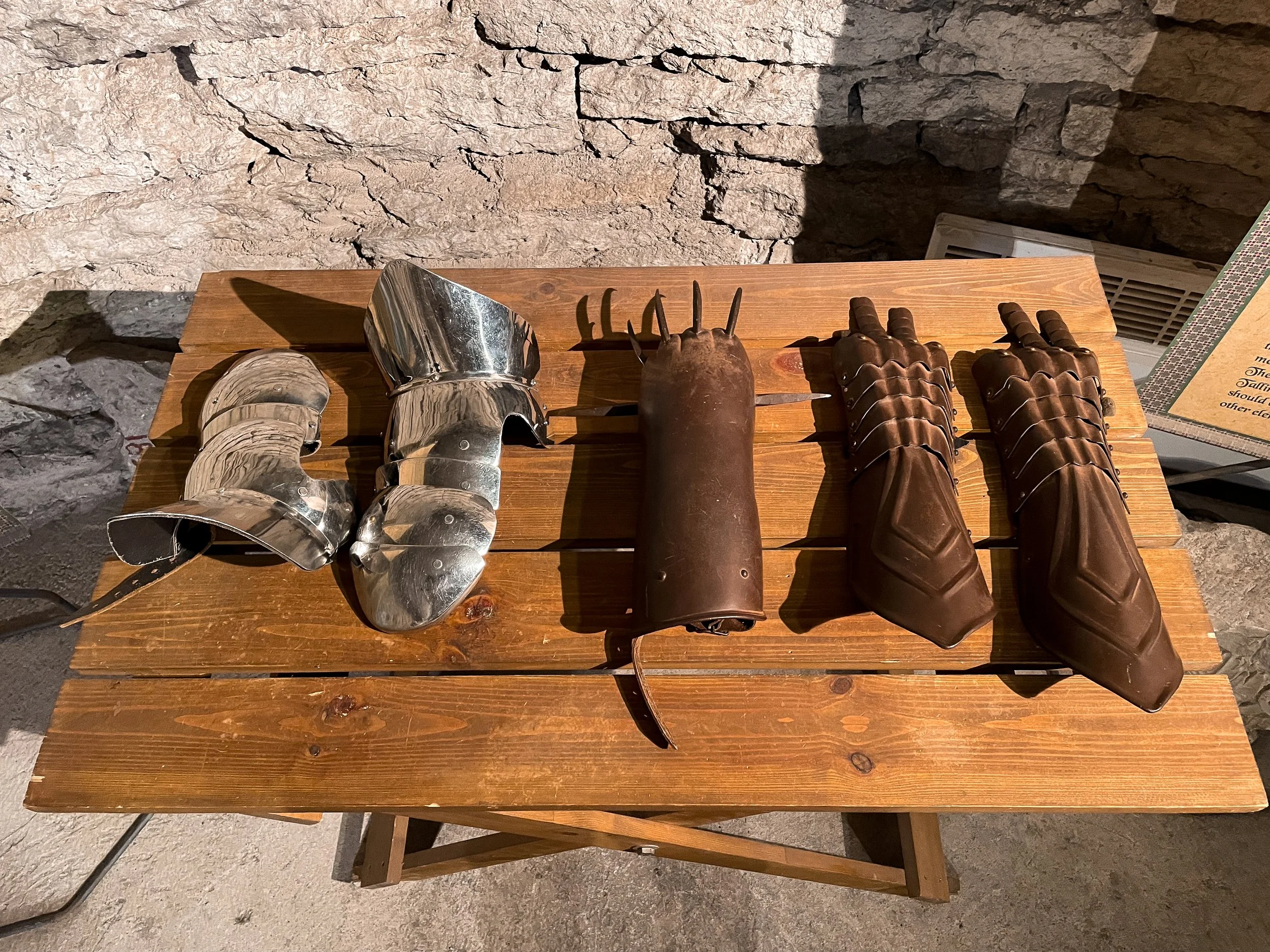
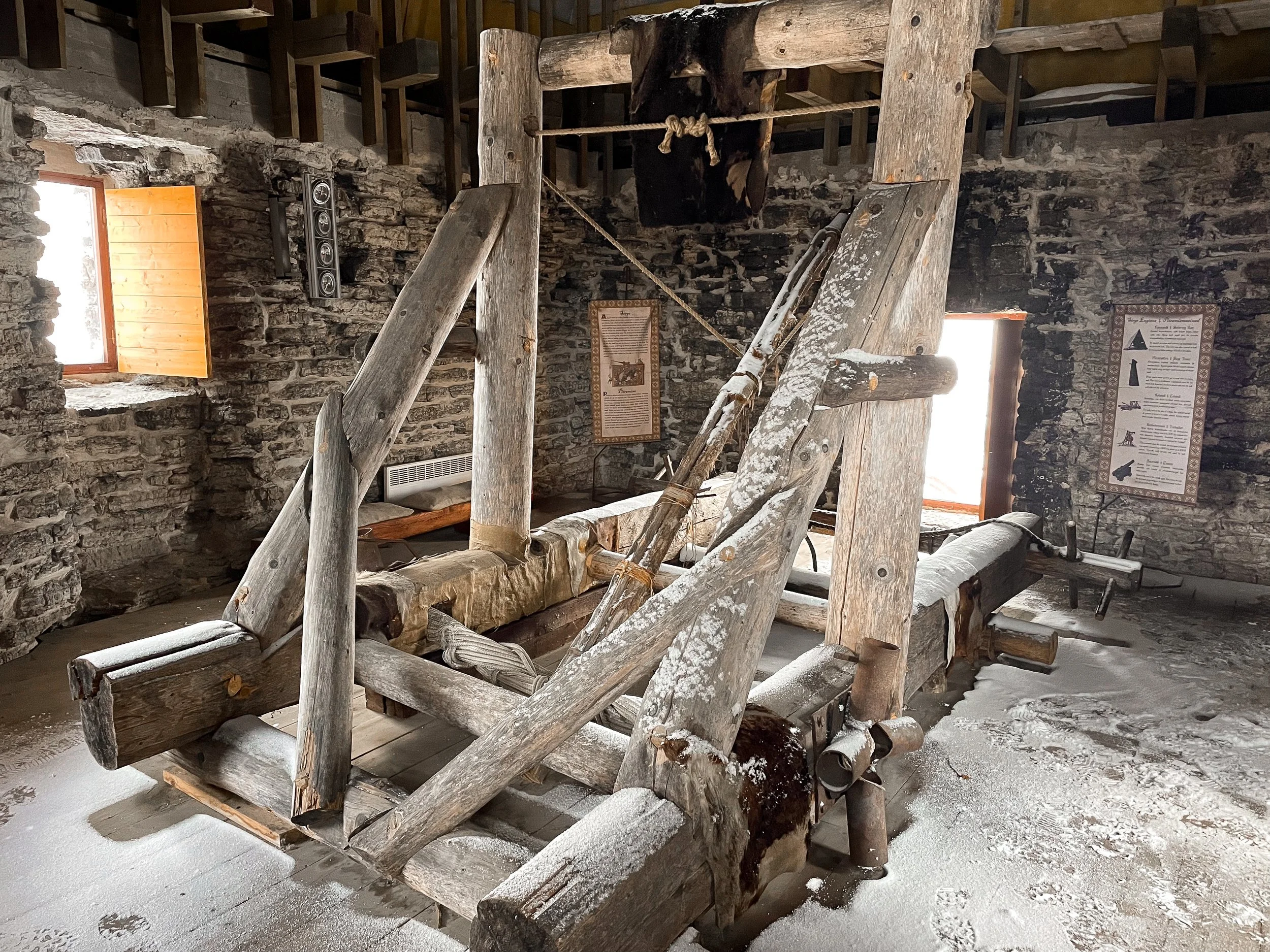
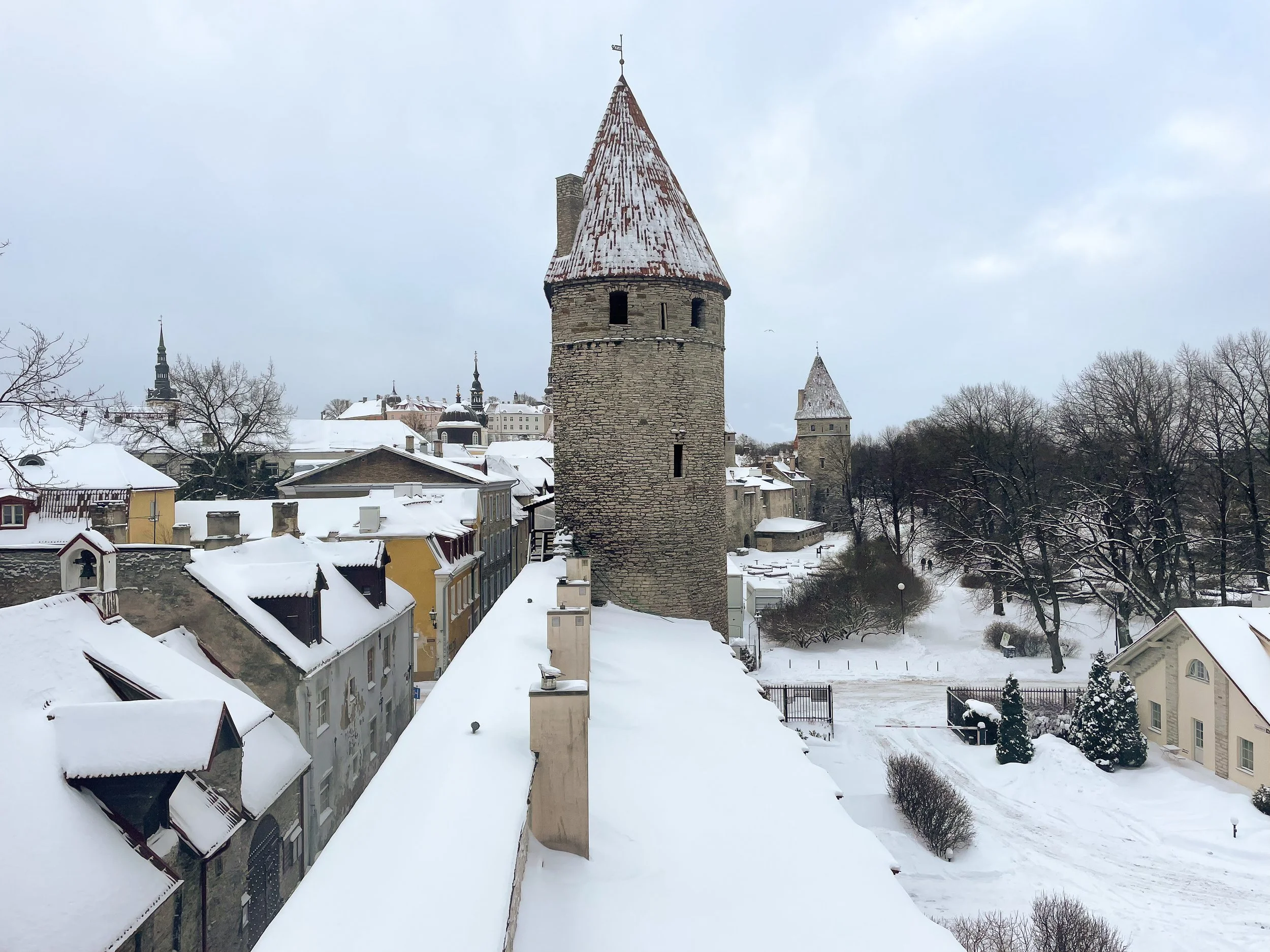
Epping Tower. A 6 floor defensive tower and medieval museum. Each floor has an exhibit with weapons like swords, crossbows and a catapult. Come to try on armor, chain mail and helmets.
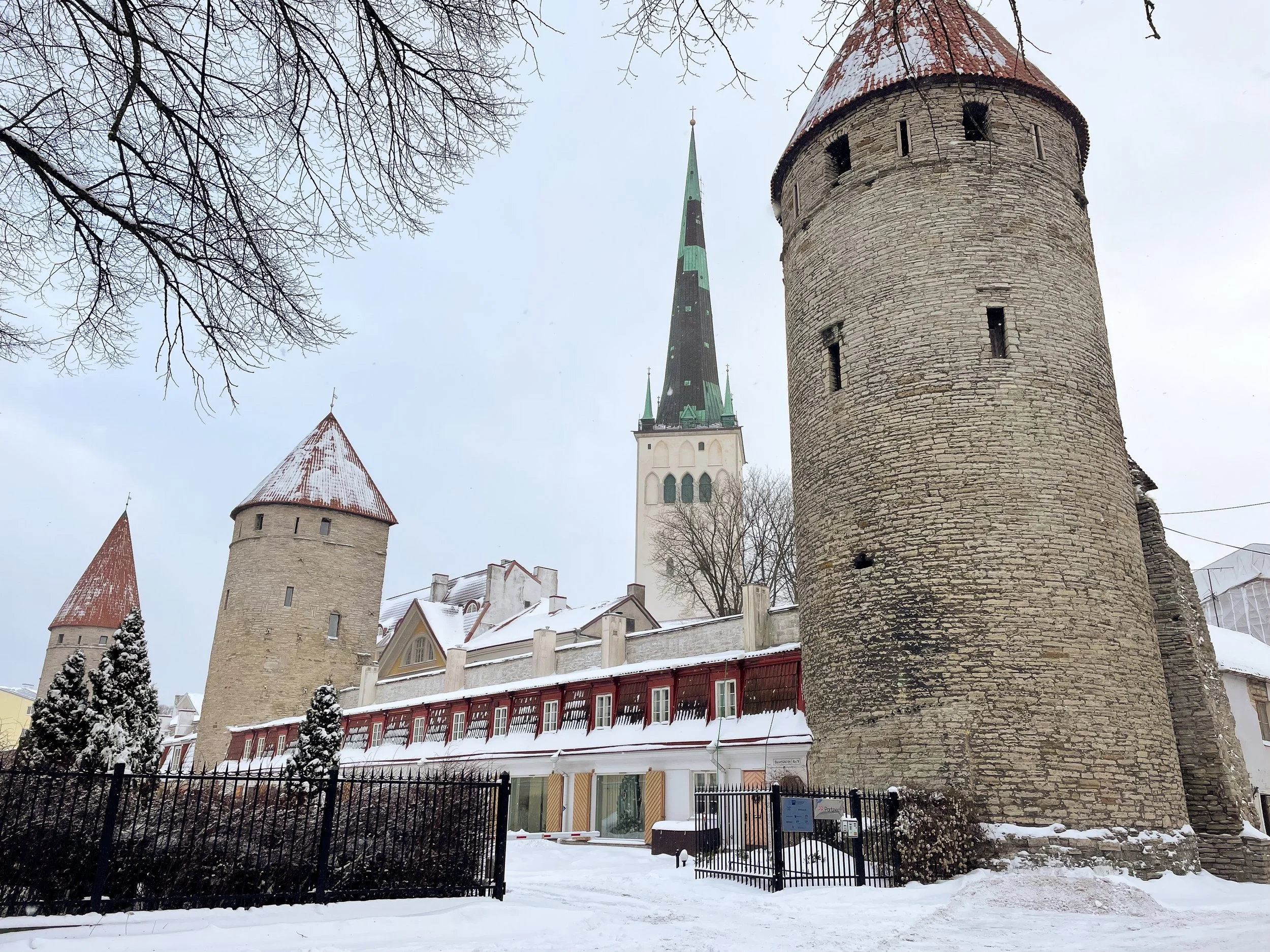
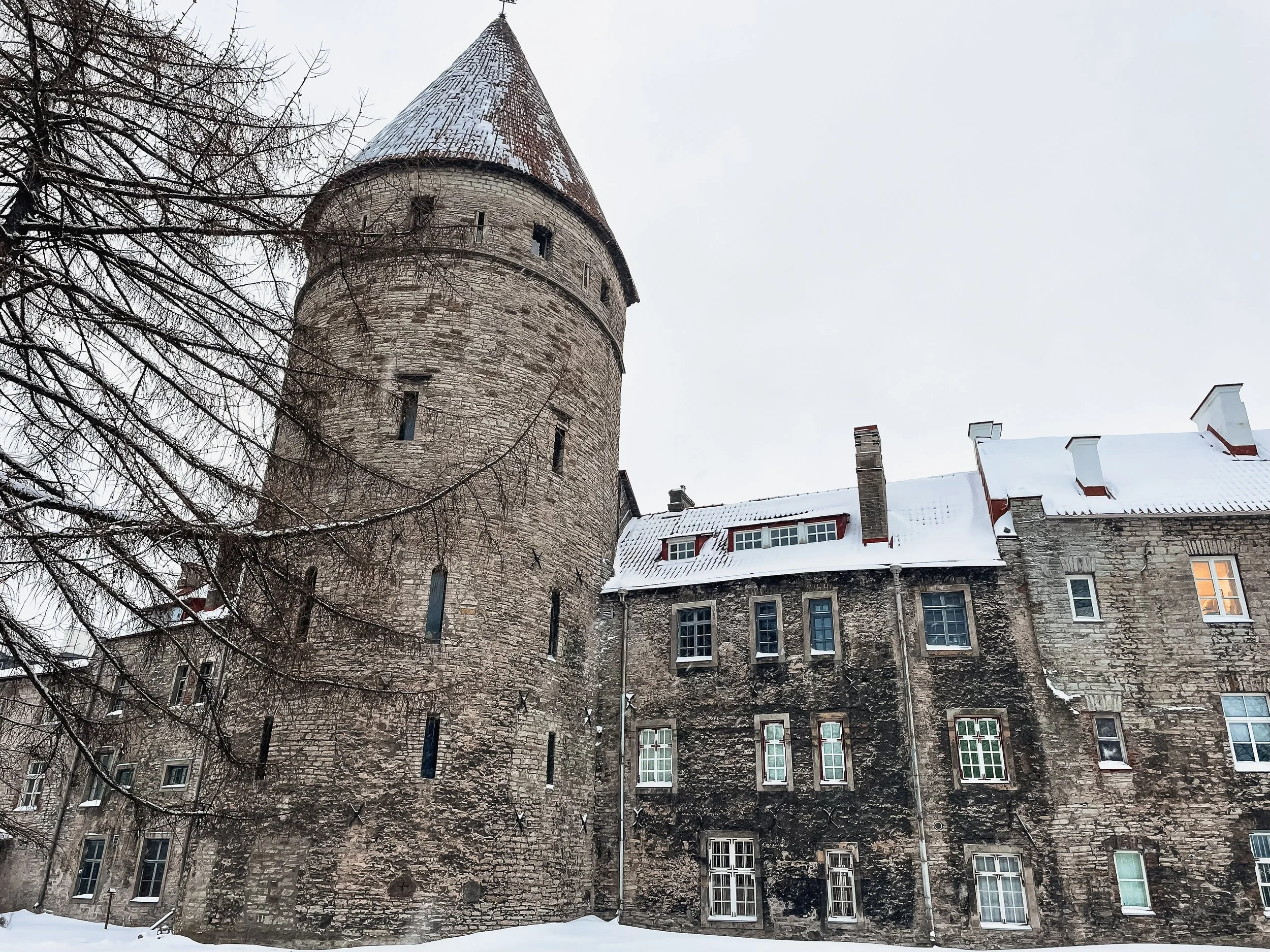
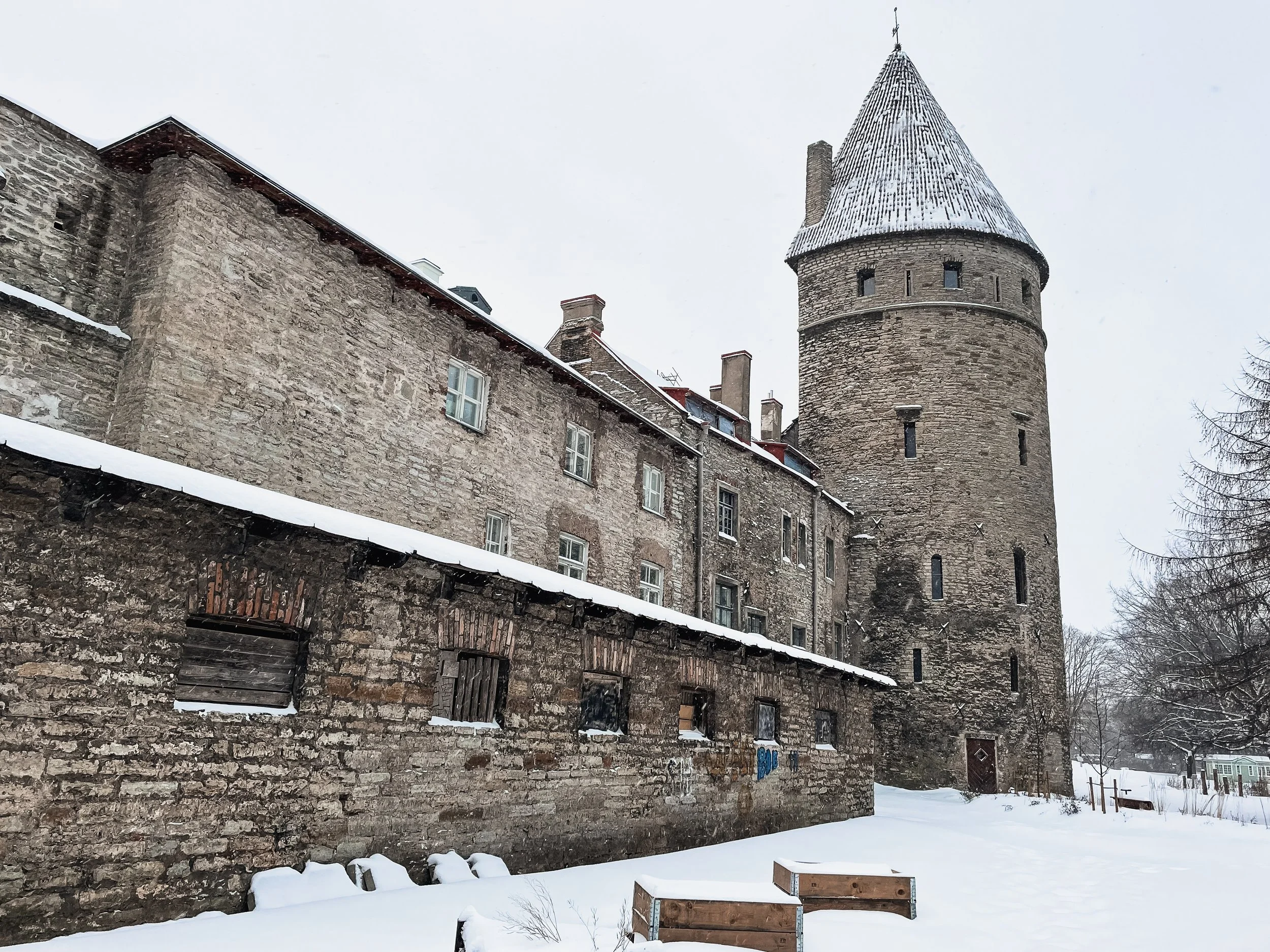
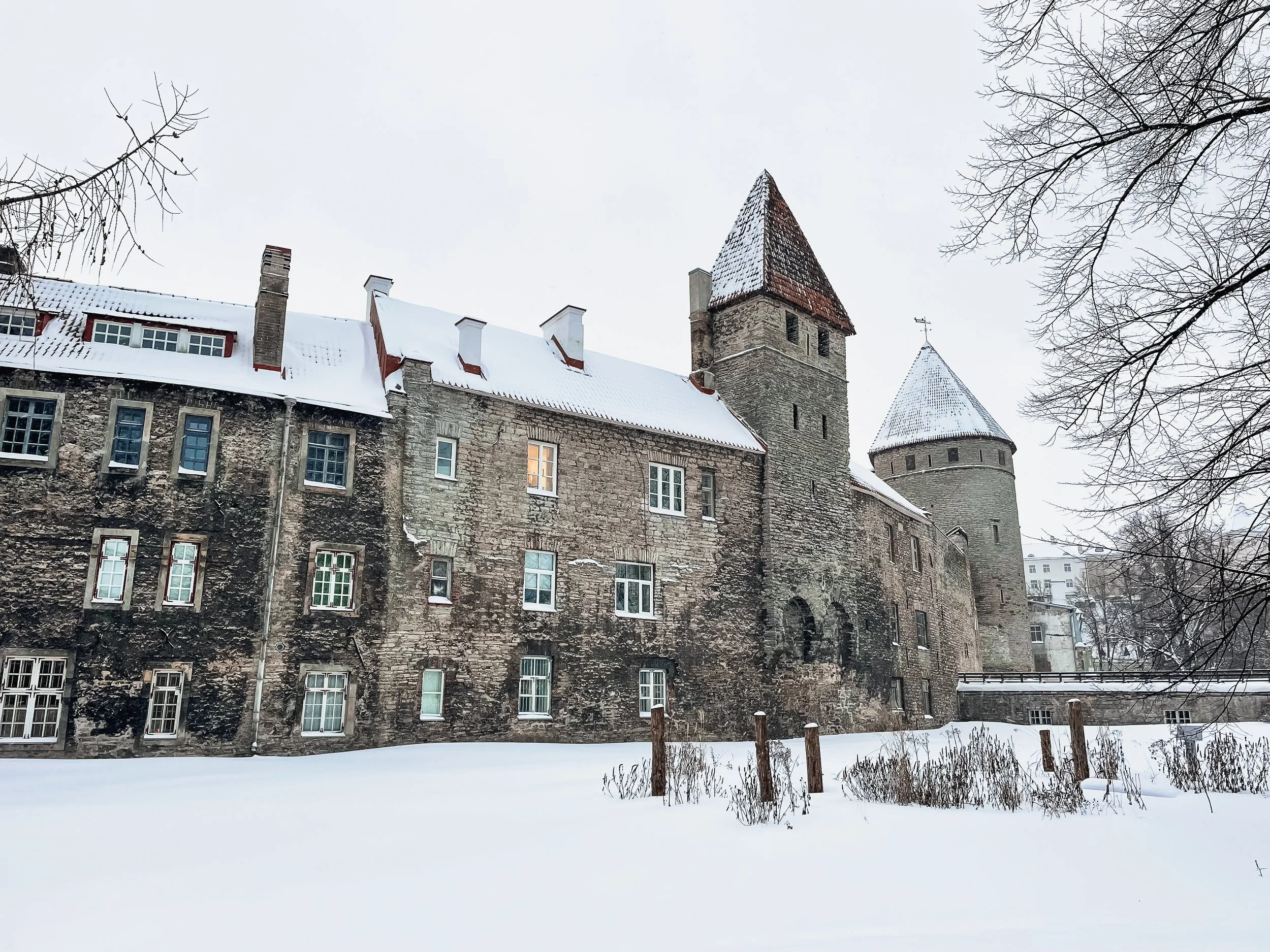
The Towers Square. A plaza and garden outside the old town’s wall with views of several defensive towers.
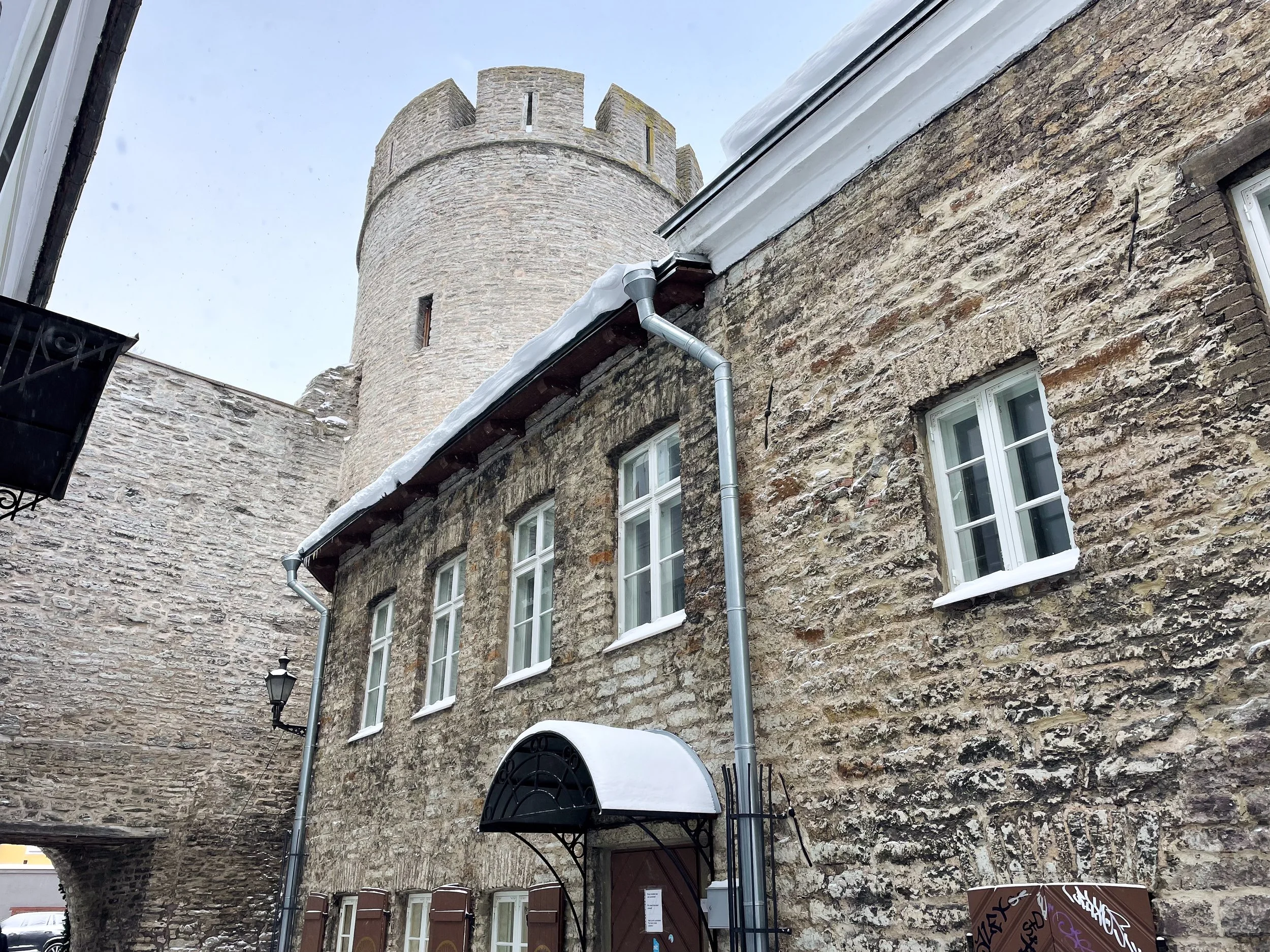
Bremen Tower. A 4 floor defensive and prison tower. It’s inaccessible but there is a passageway below it into and out of the walled city.
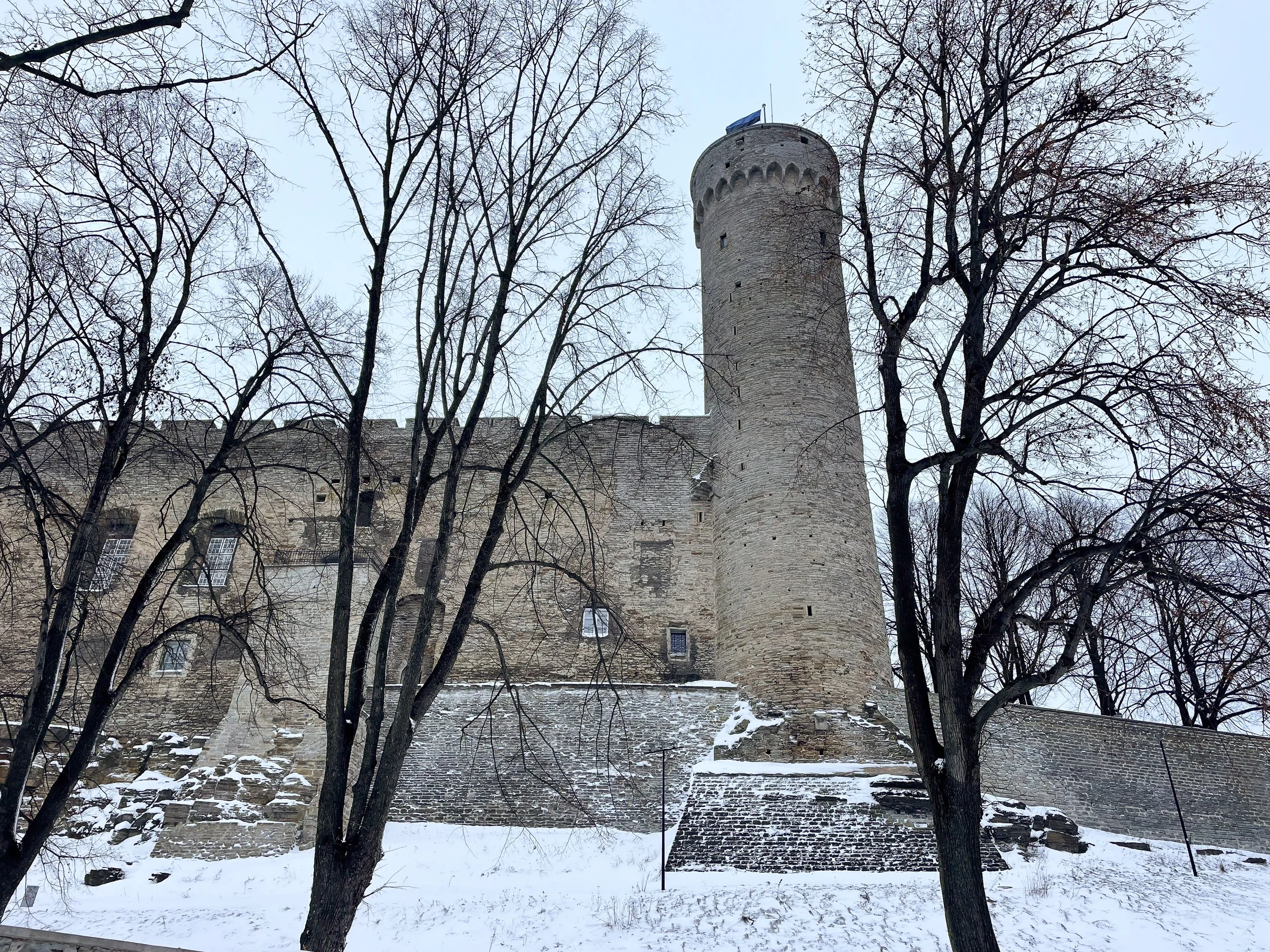
Tall Hermann. A 45 meter tall defensive tower at Toompea Castle.
See the Sights of Vanalinn
Many of the sights within Vanalinn are in close proximity to each other, making it easy to explore the city.
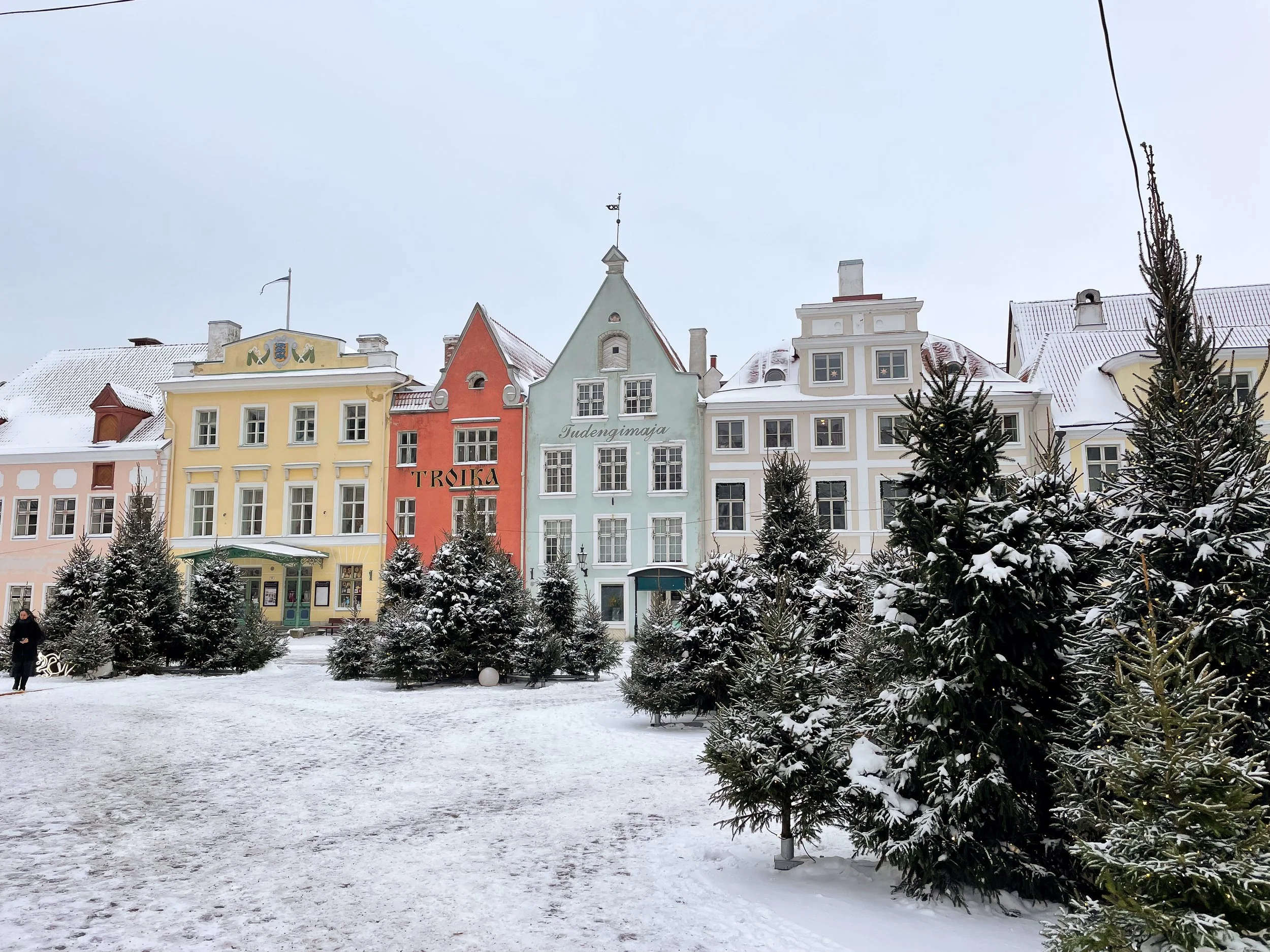
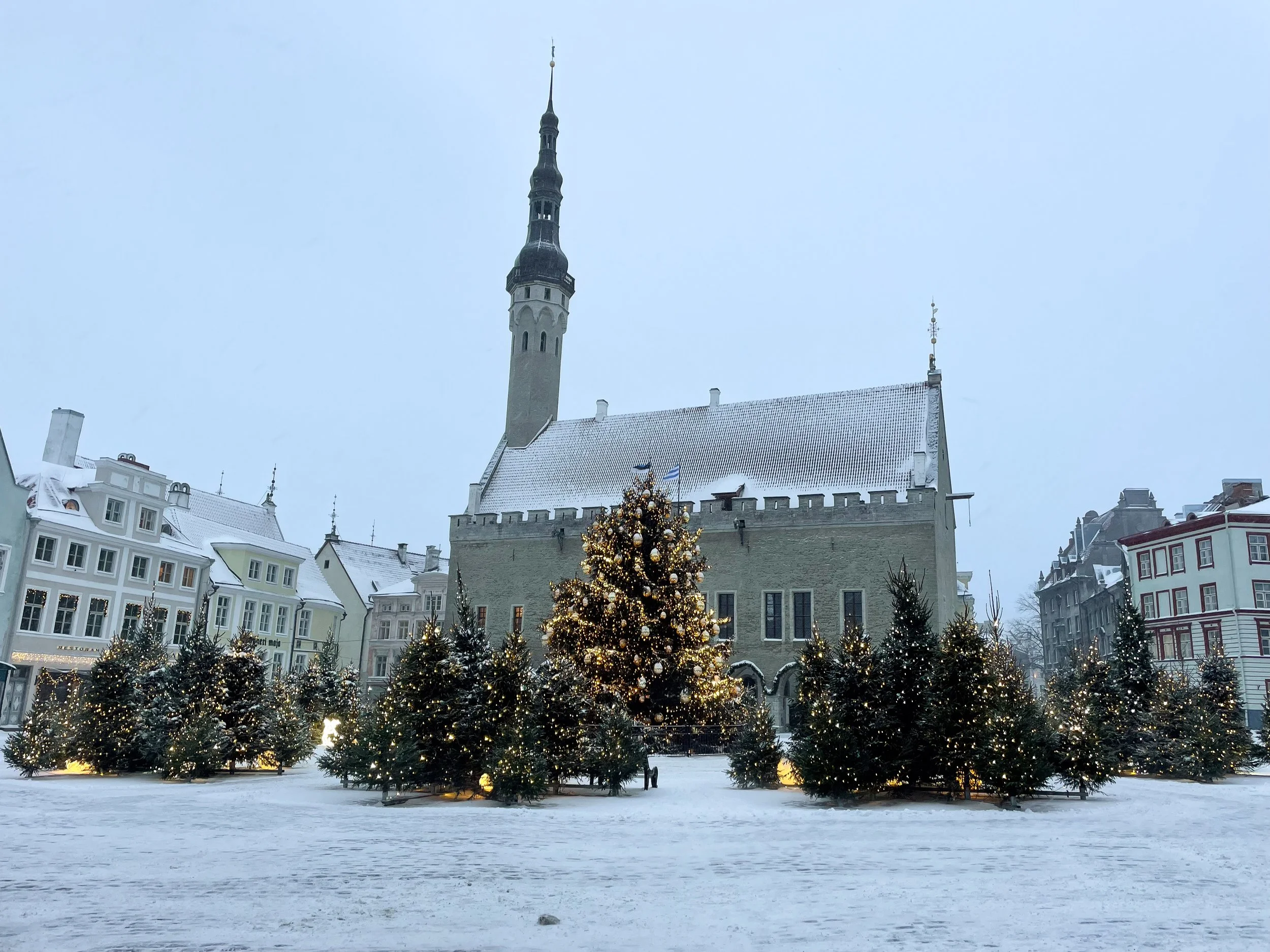
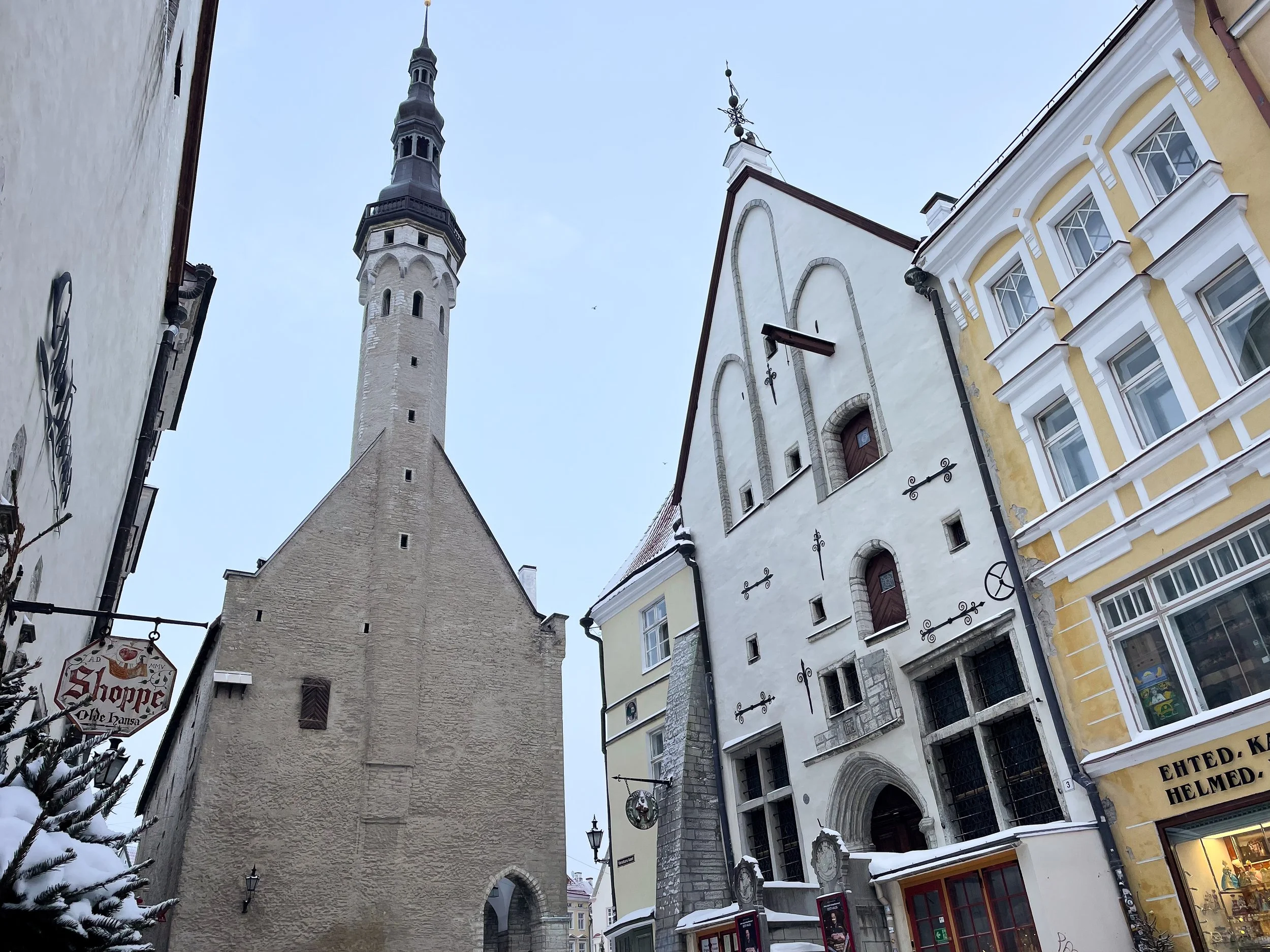
Tallinn Town Hall Square. A plaza at the medieval center of Tallinn surrounded by historic architecture, most notably the town hall recognizable by its towering spire.
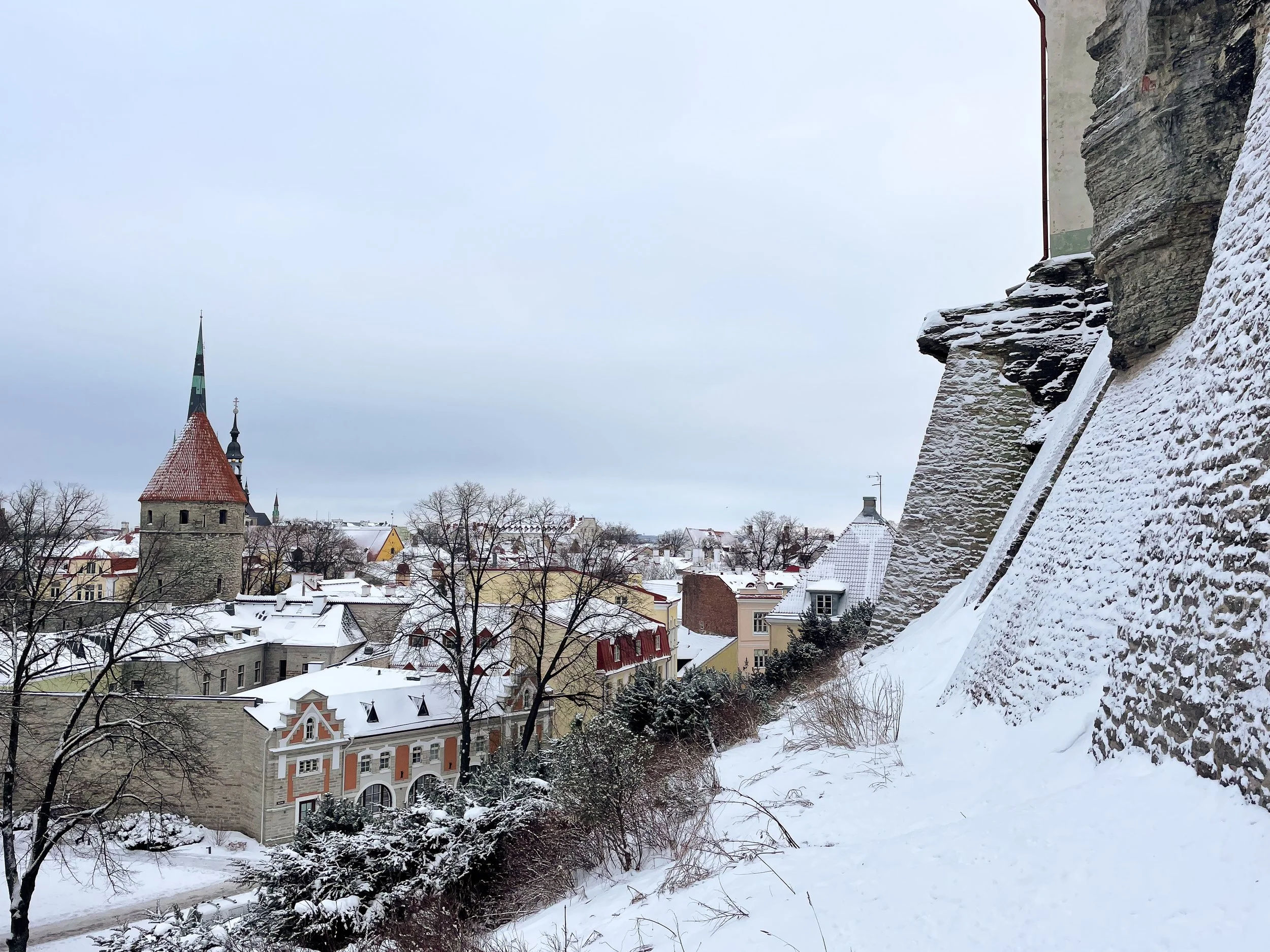
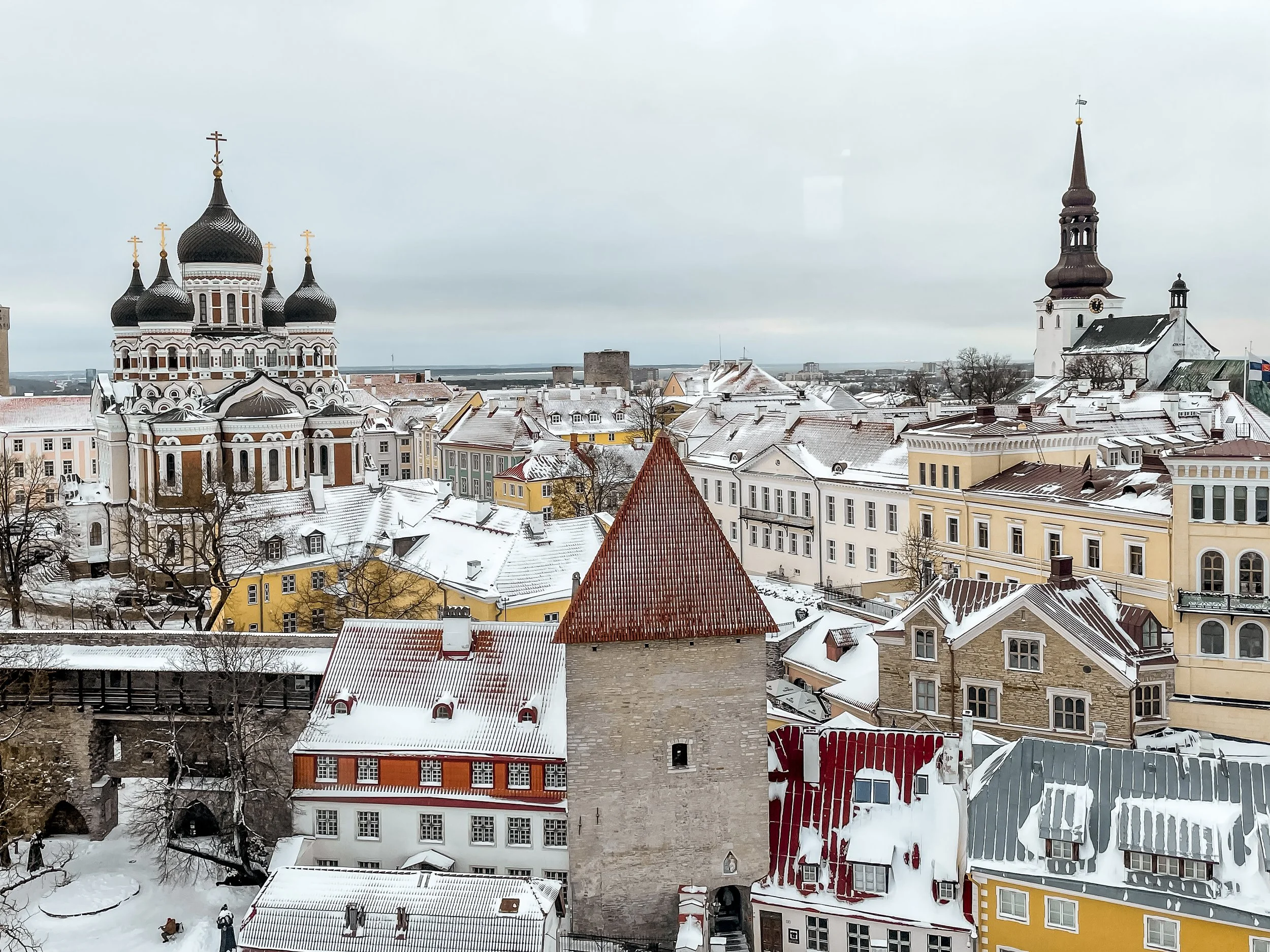
Toompea Hill. The tallest natural area of Tallinn’s old town with historic sights and city views.
Patkuli & Kohtuotsa. Two lookouts on Toompea Hill with the best views of Vanalinn, greater Tallinn and the ports.
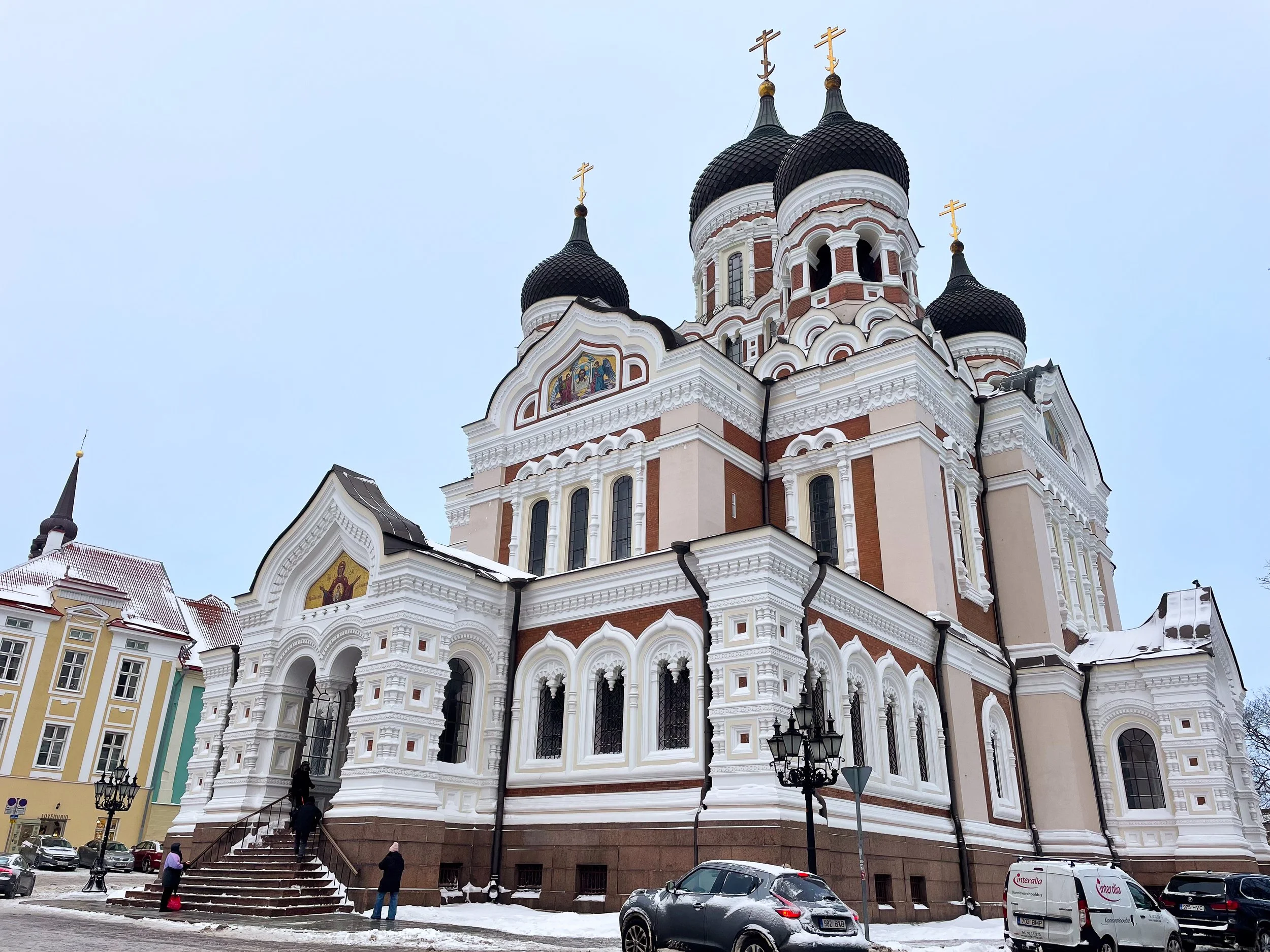
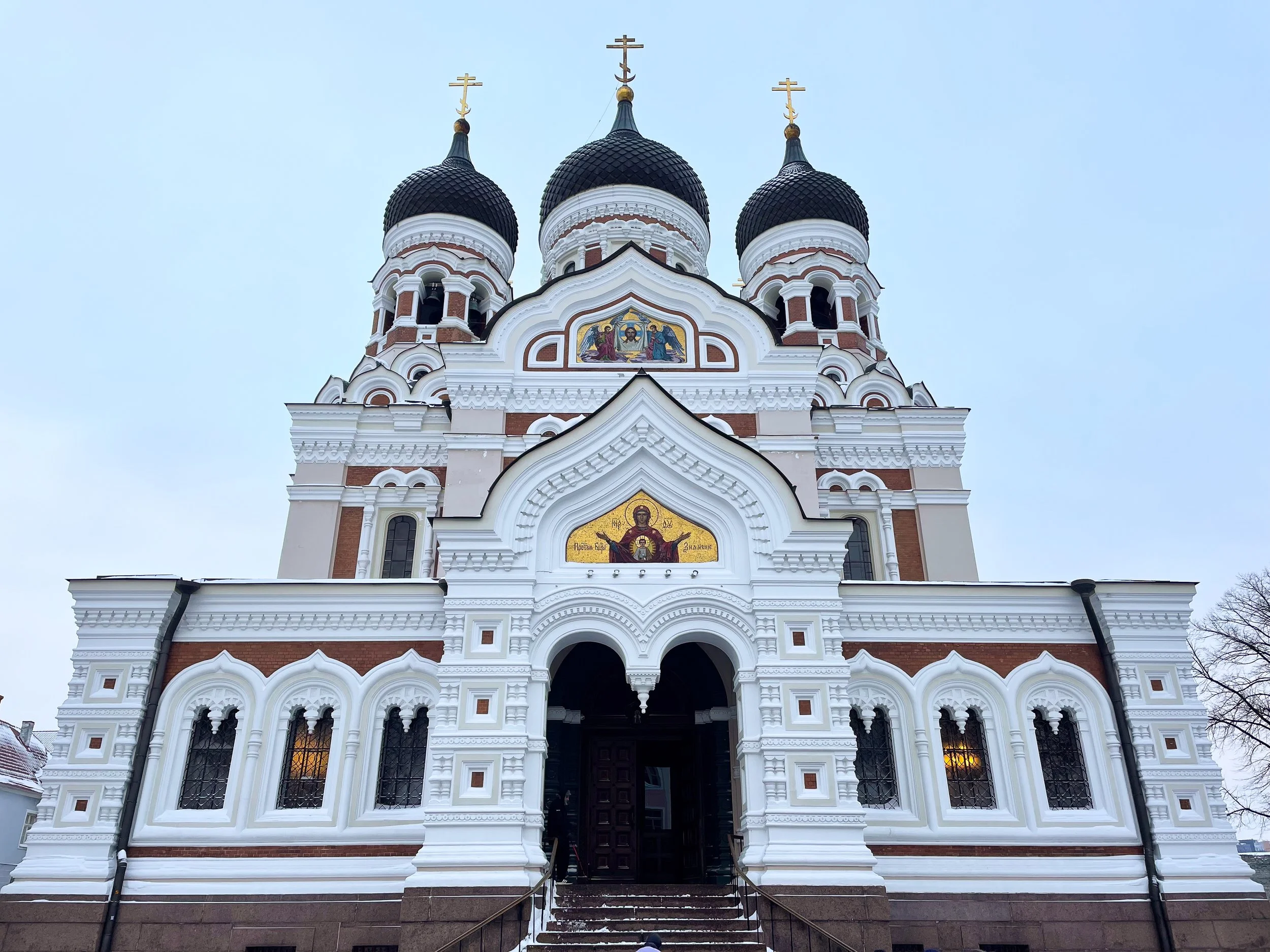
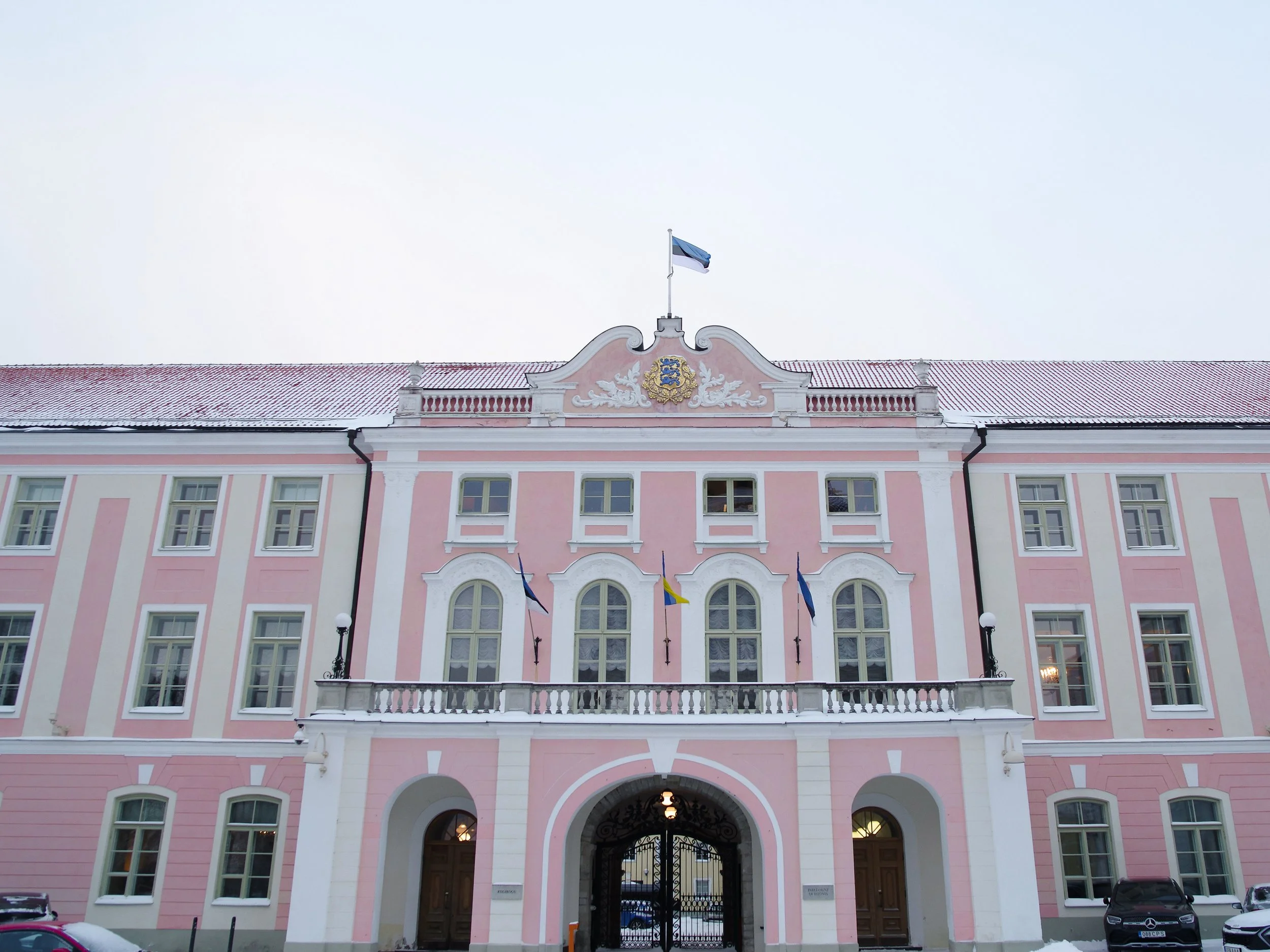
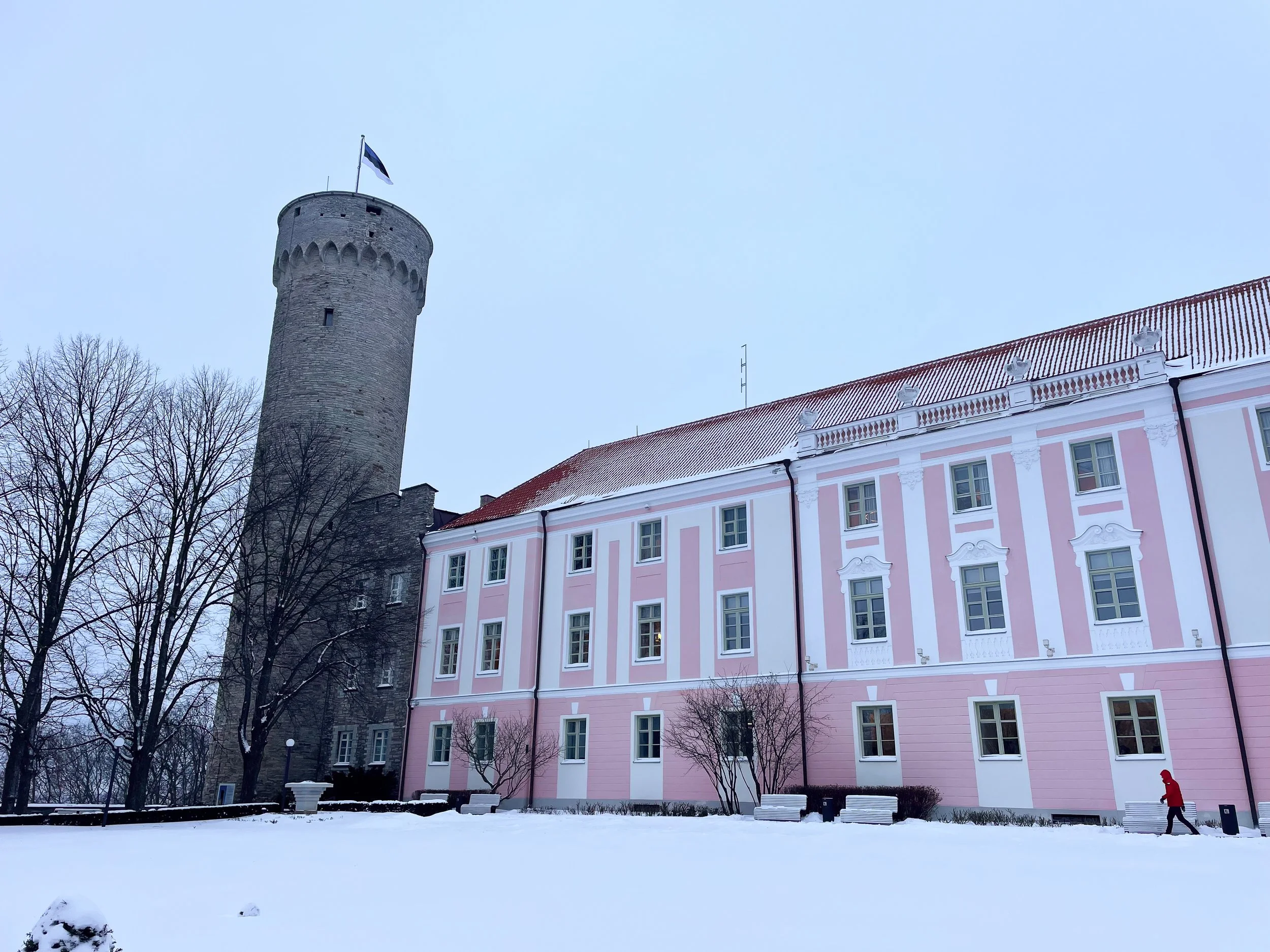
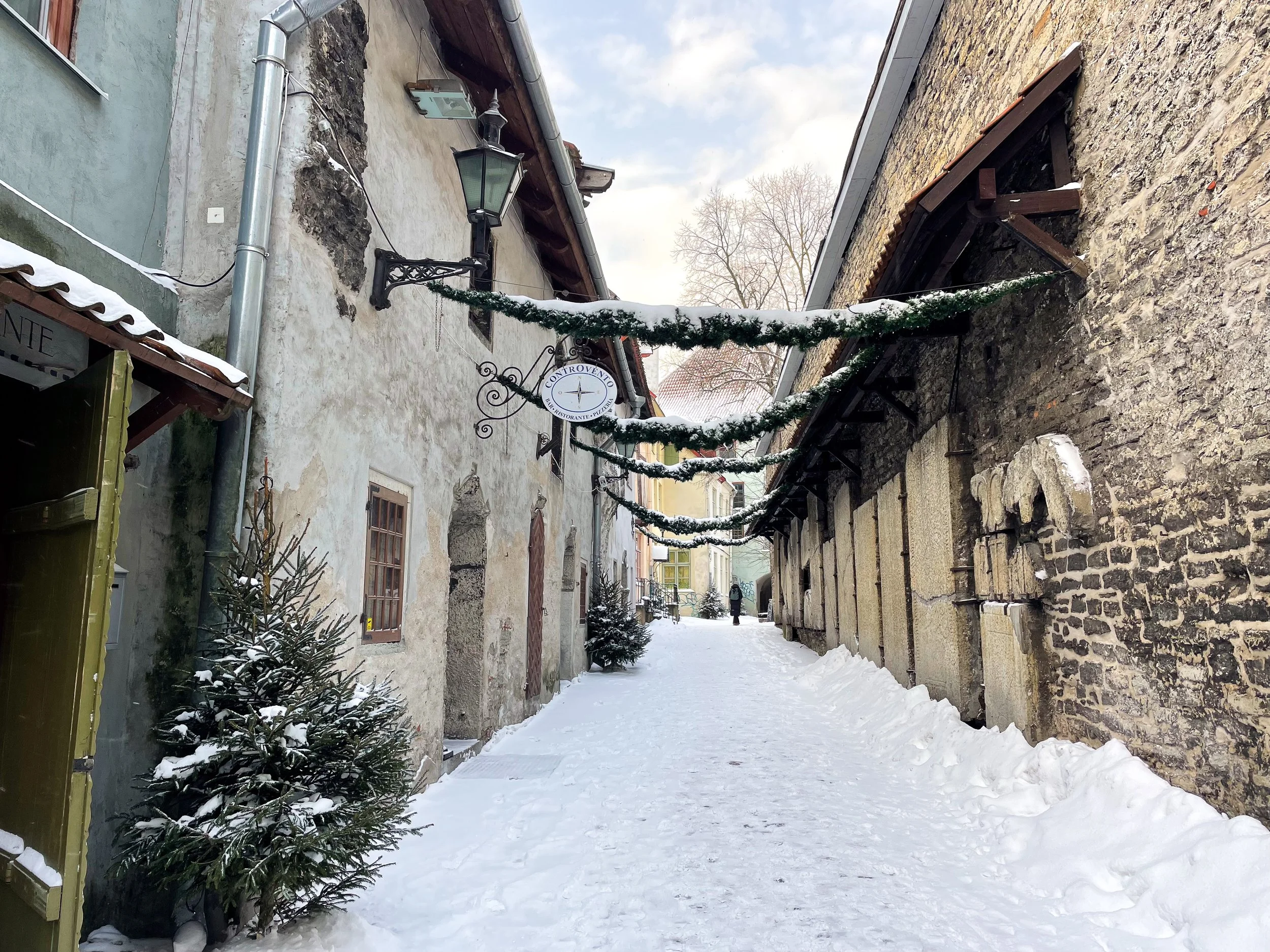
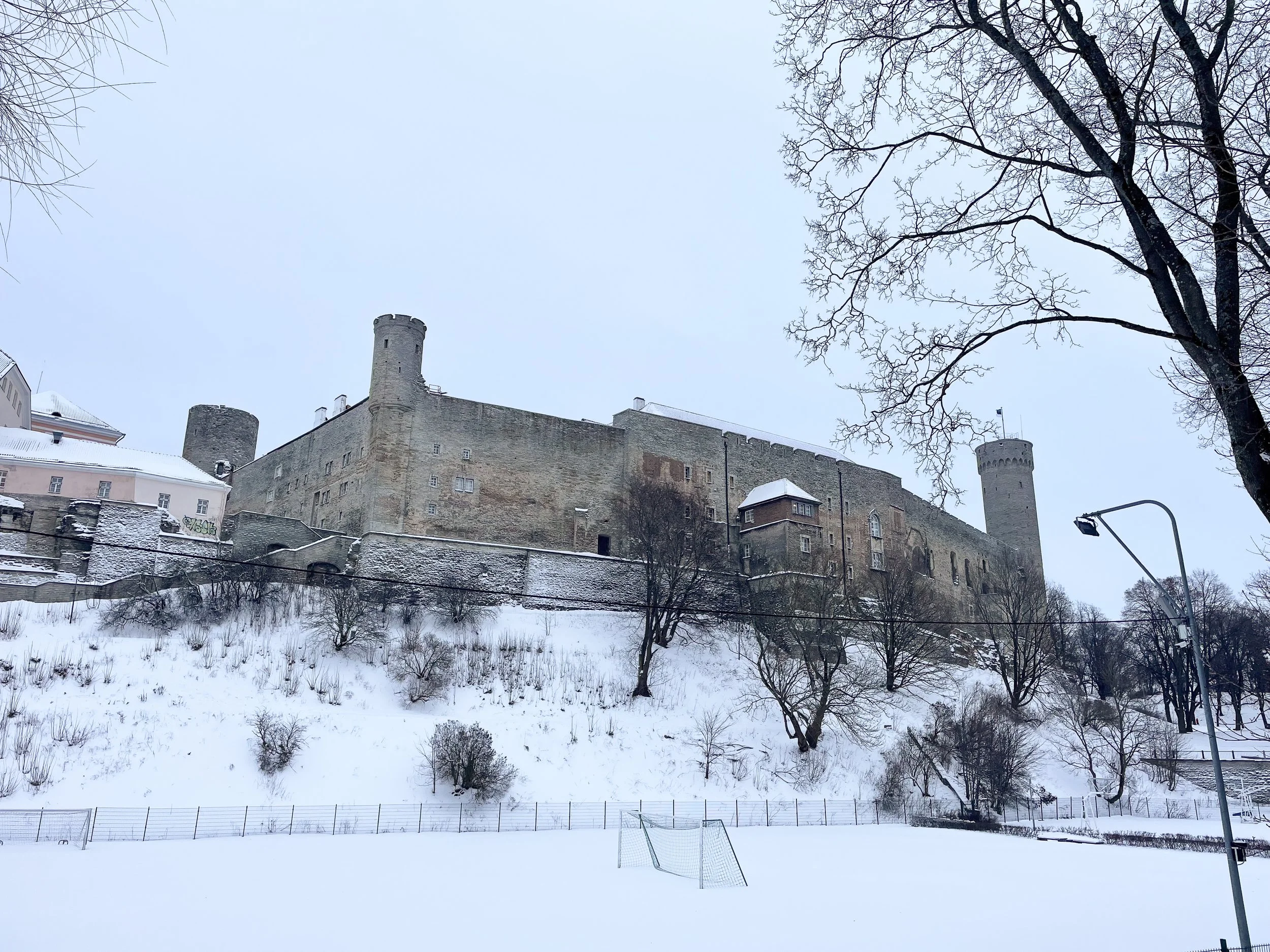
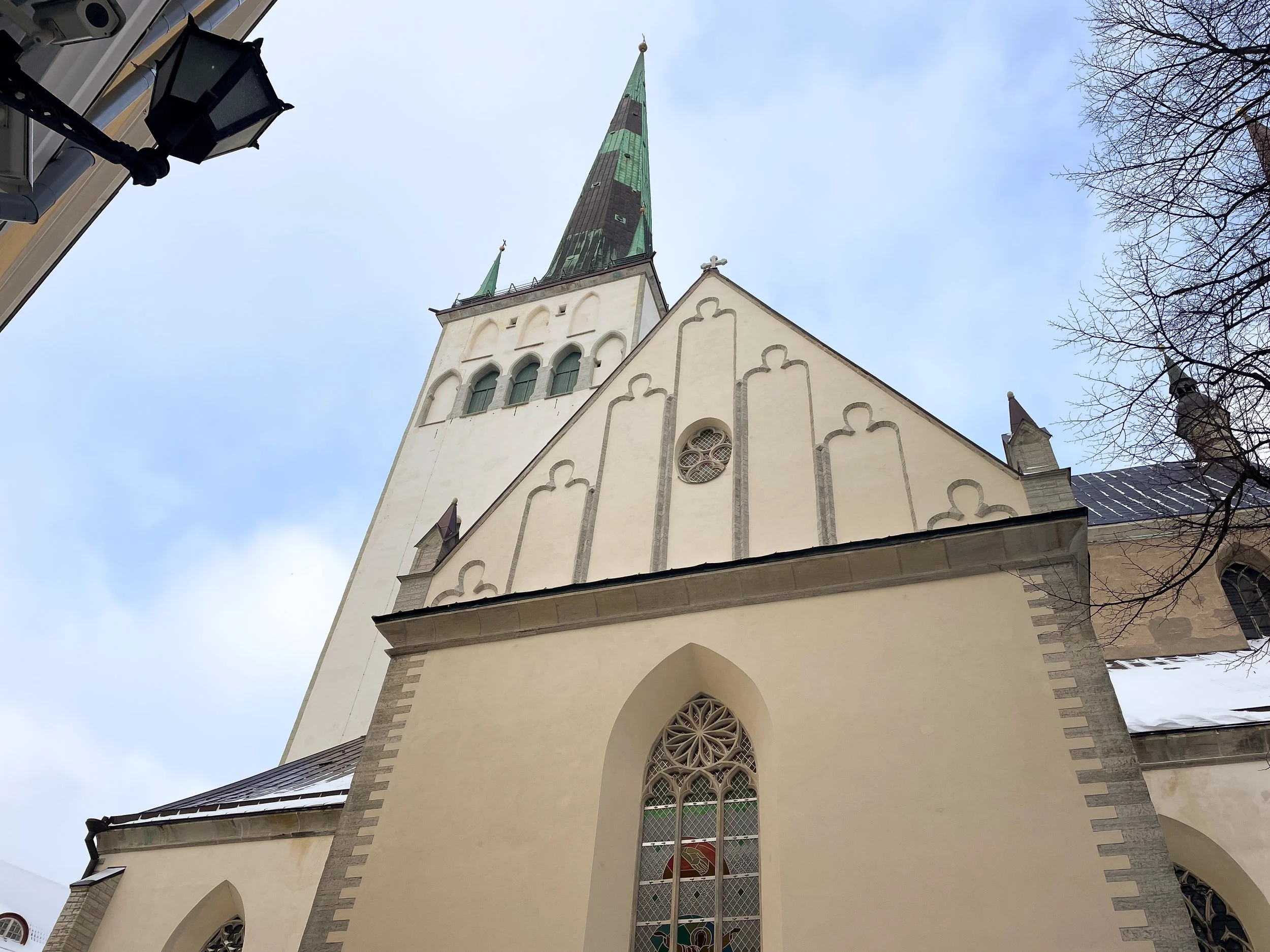
Alexander Nevsky Cathedral. An intricately decorated Russian Orthodox cathedral on Toompea Hill with red brick, plaster ornamentation, onion domes and bell towers.
Toompea Castle. A medieval stone castle on Toompea Hill with a pink and white neo-classical facade. It houses Estonia’s Parliament.
St Olaf’s Church. The tallest medieval building in the old town with a 124 meter steeple. During the summer months, it’s accessible with an observation deck at its base.
Catherine's Alley. A medieval alley with tiled arches and a gallery of merchant tombstones dating back to the 12th century displayed on the wall.
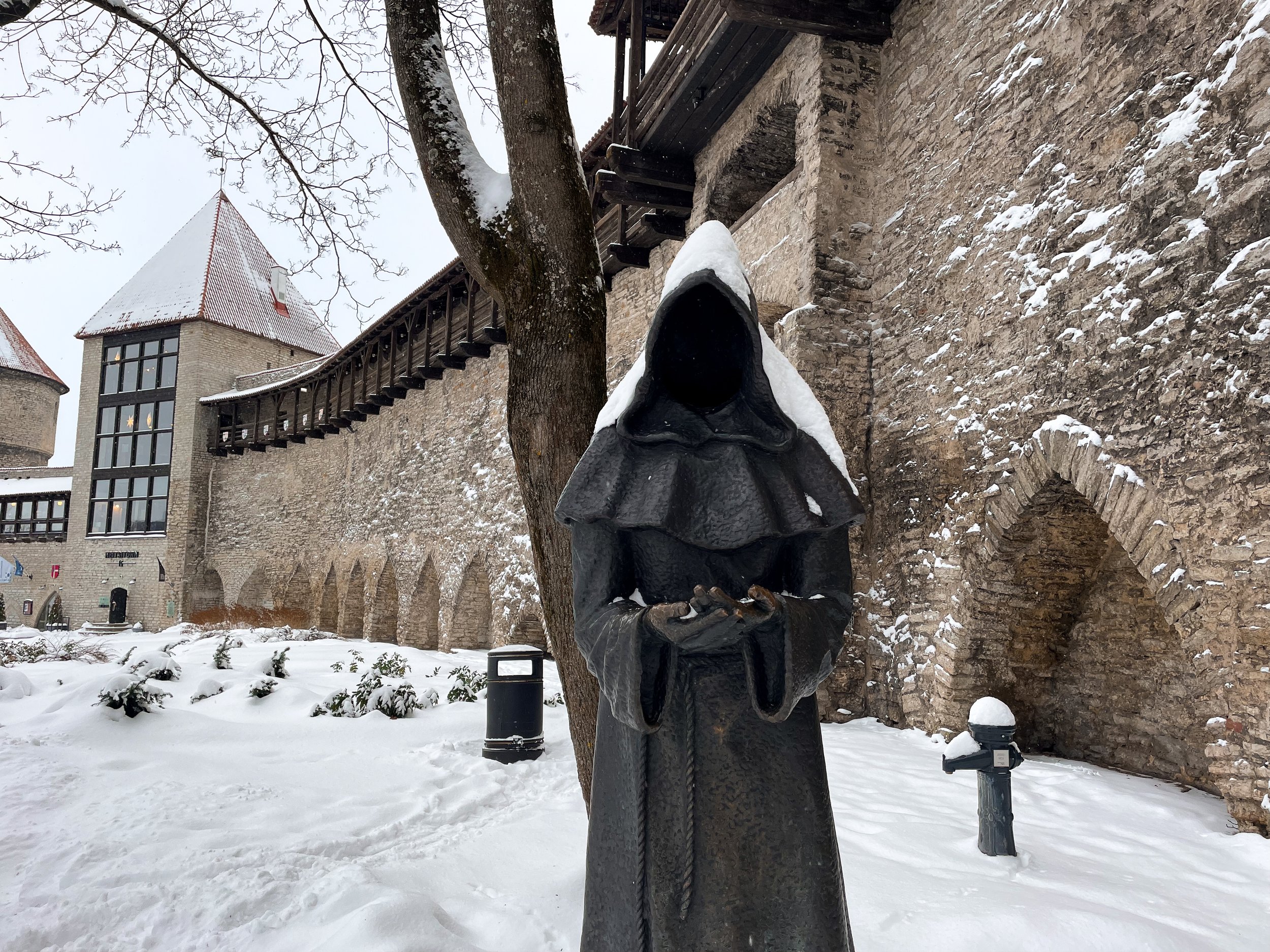
Danish King’s Garden. A garden and plaza with a view of Vanalinn. It’s popular for bronze statues of 3 ominous and haunted looking monks.
Old Town Ice Rink. An outdoor ice rink open during the winter months with skate rentals and a café.
Visit the Museums
Tallinn is home to so much history and many museums. We made time to visit them and learn about the city’s history, medieval past and merchant guilds.
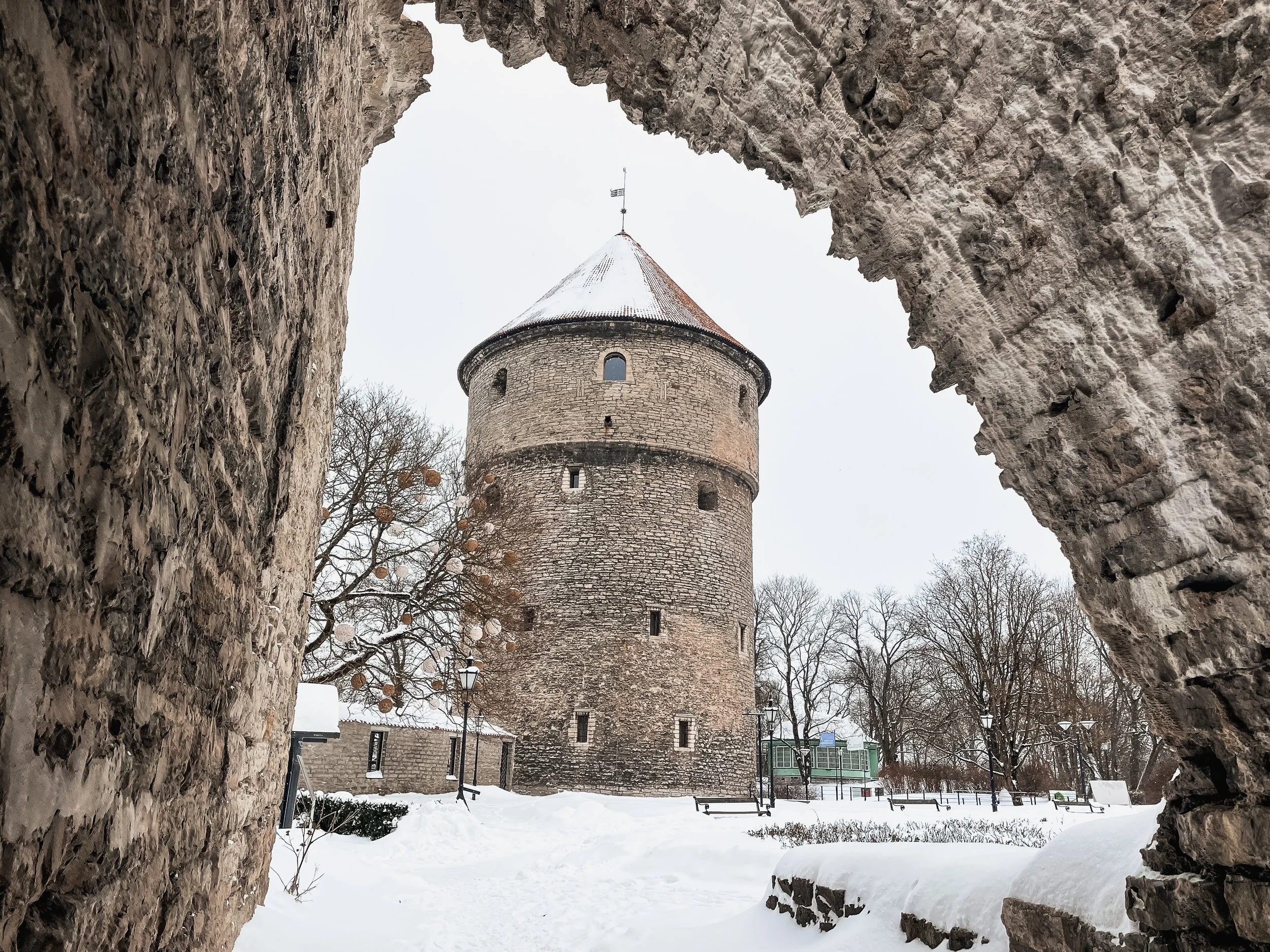
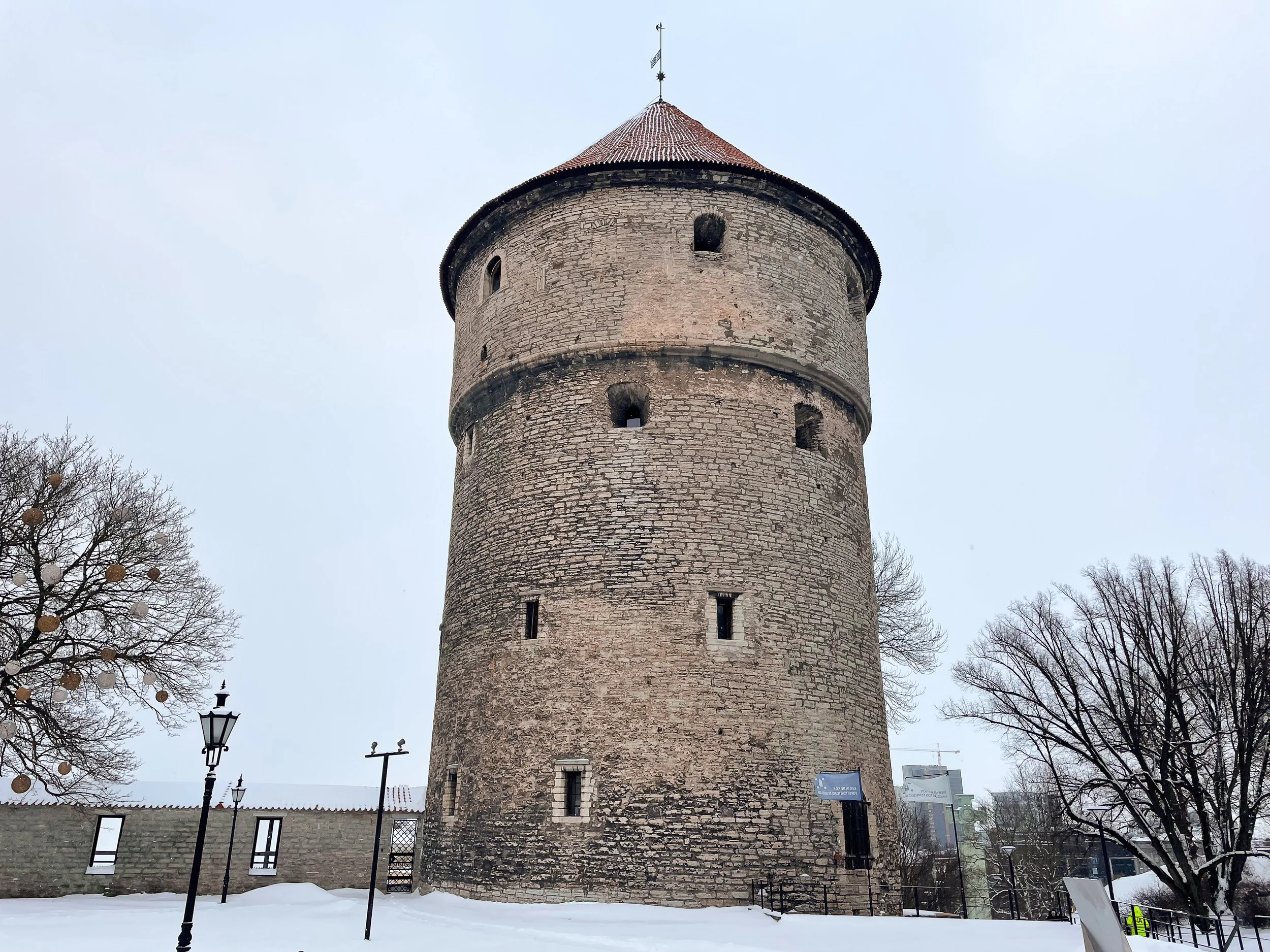
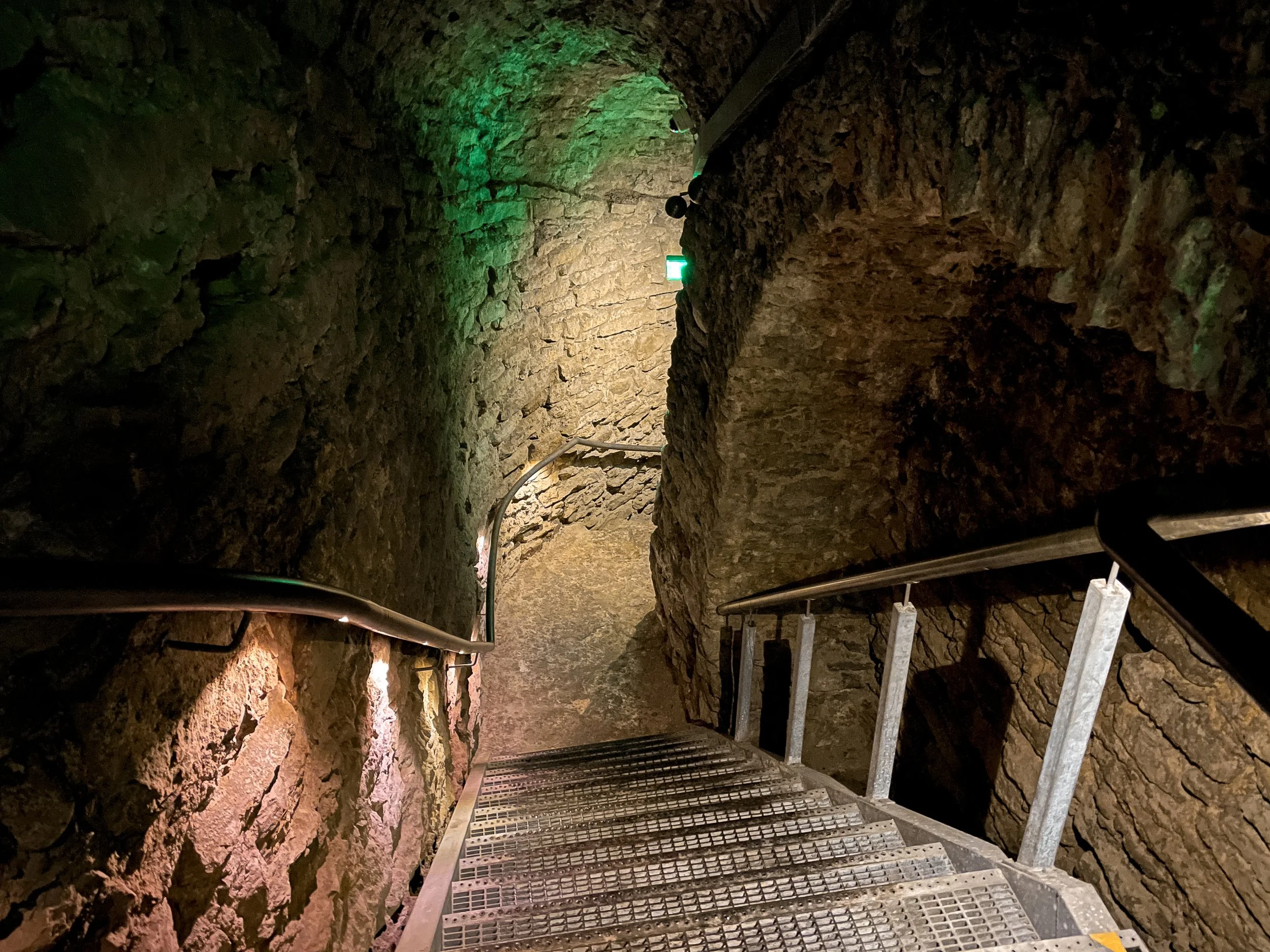
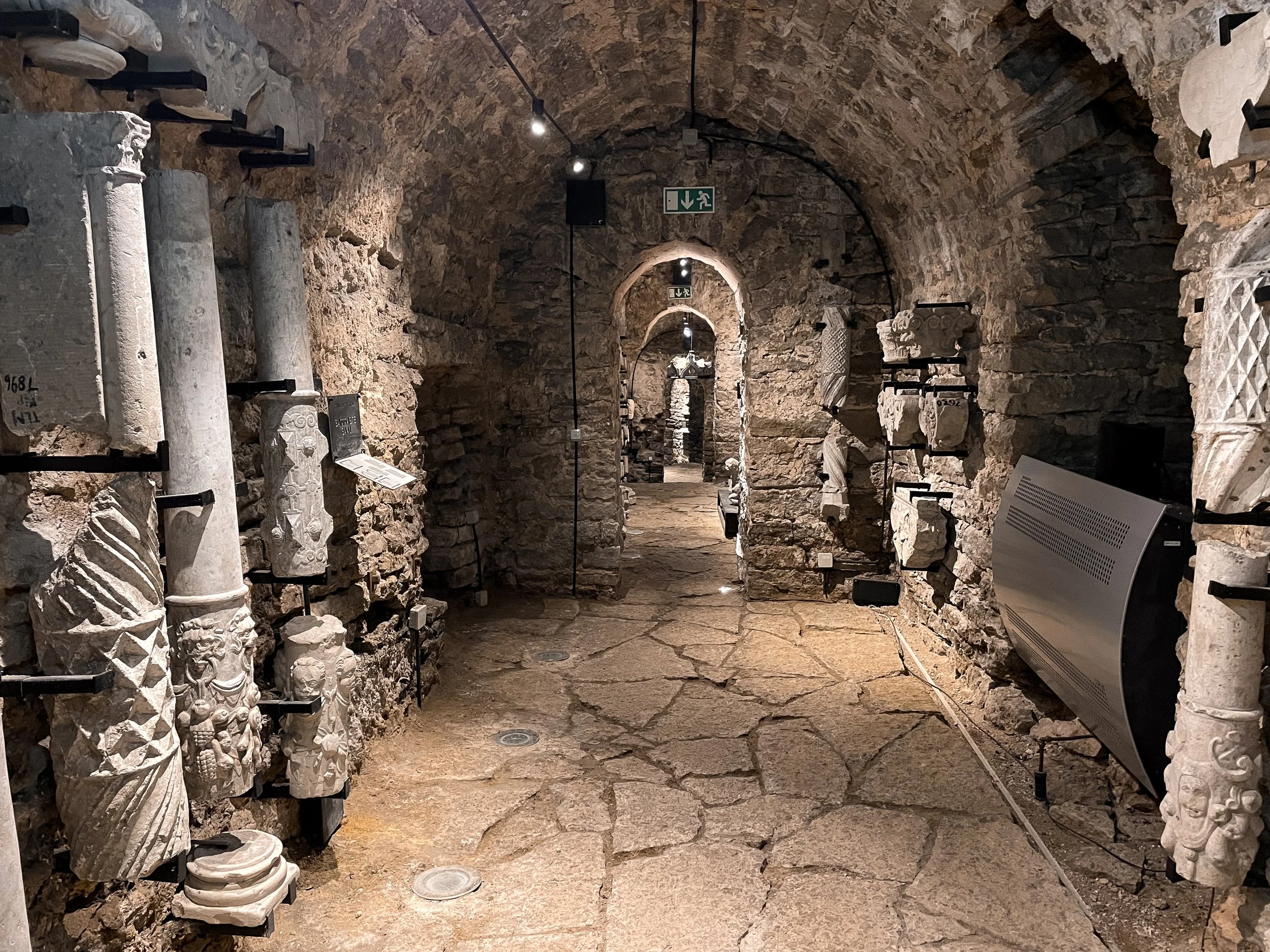
Kiek in de Kök Fortification Museum. A museum with tunnels, exhibits and multiple stone towers connected by a defensive wall with views overlooking Vanalinn. The tunnels contain artifacts and exhibits explaining their importance throughout history from medieval times through Soviet and German occupation and independence. The towers have exhibits dedicated to their previous uses, from defending the city, to art studios and cafés.
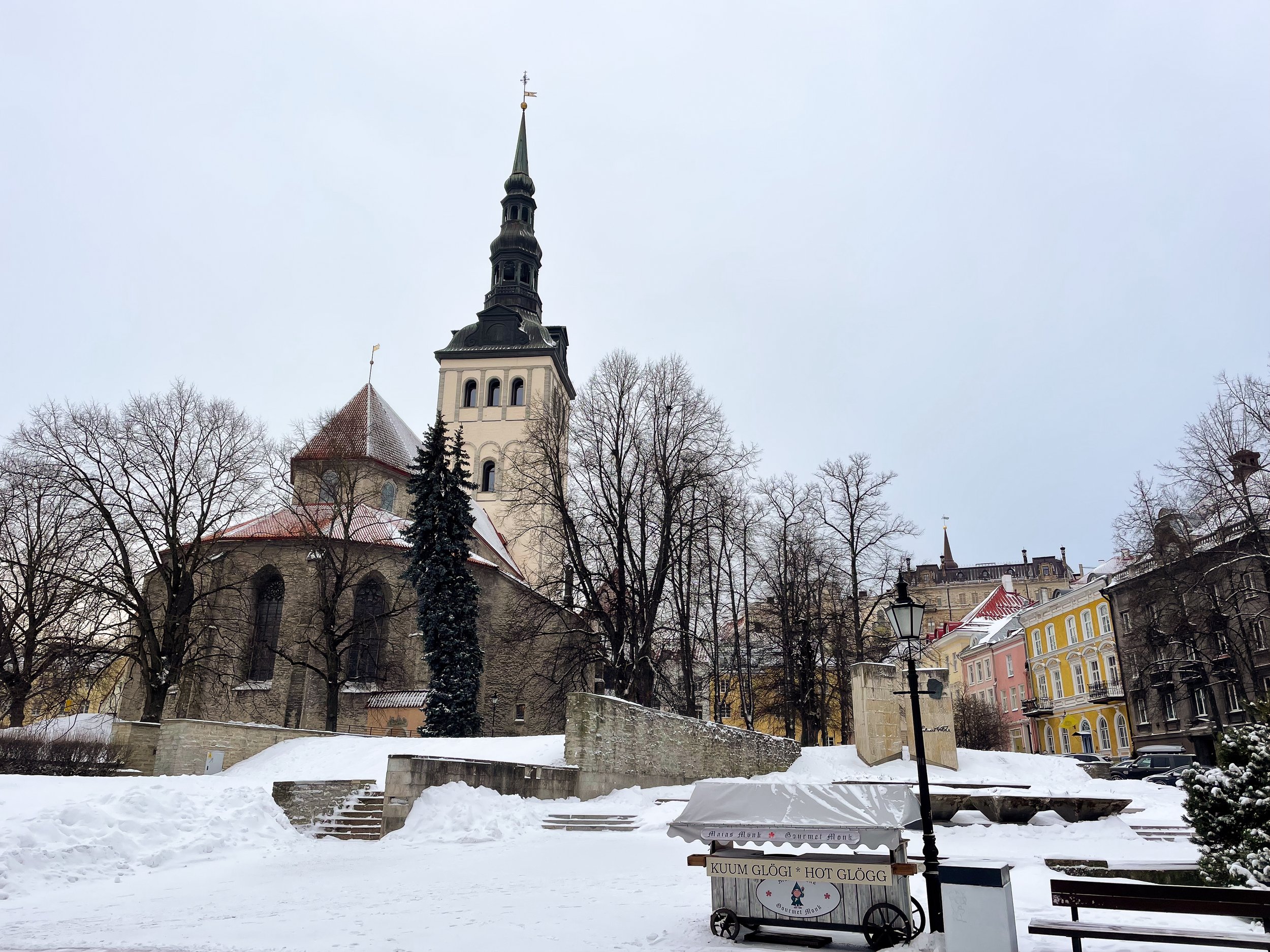



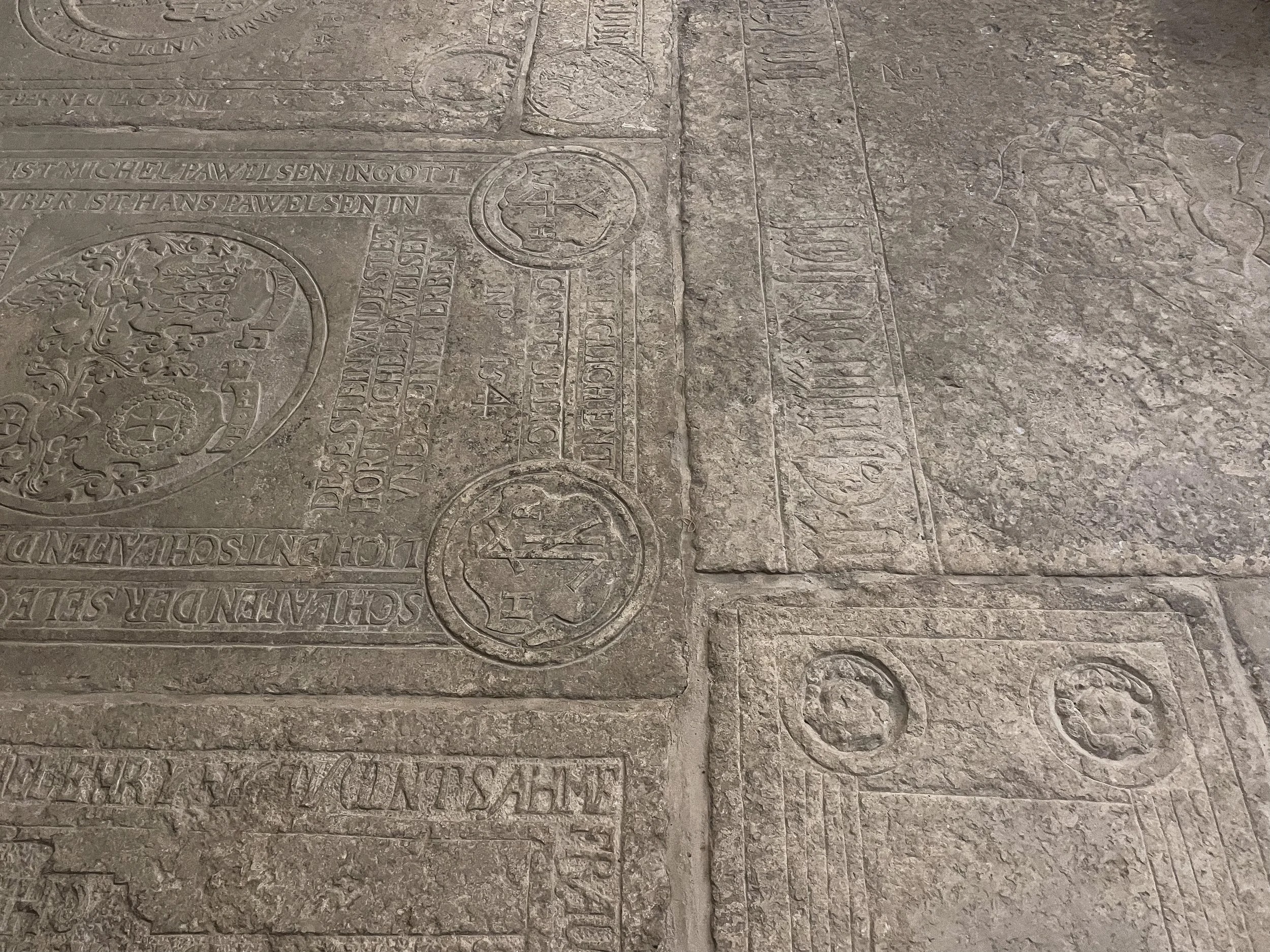
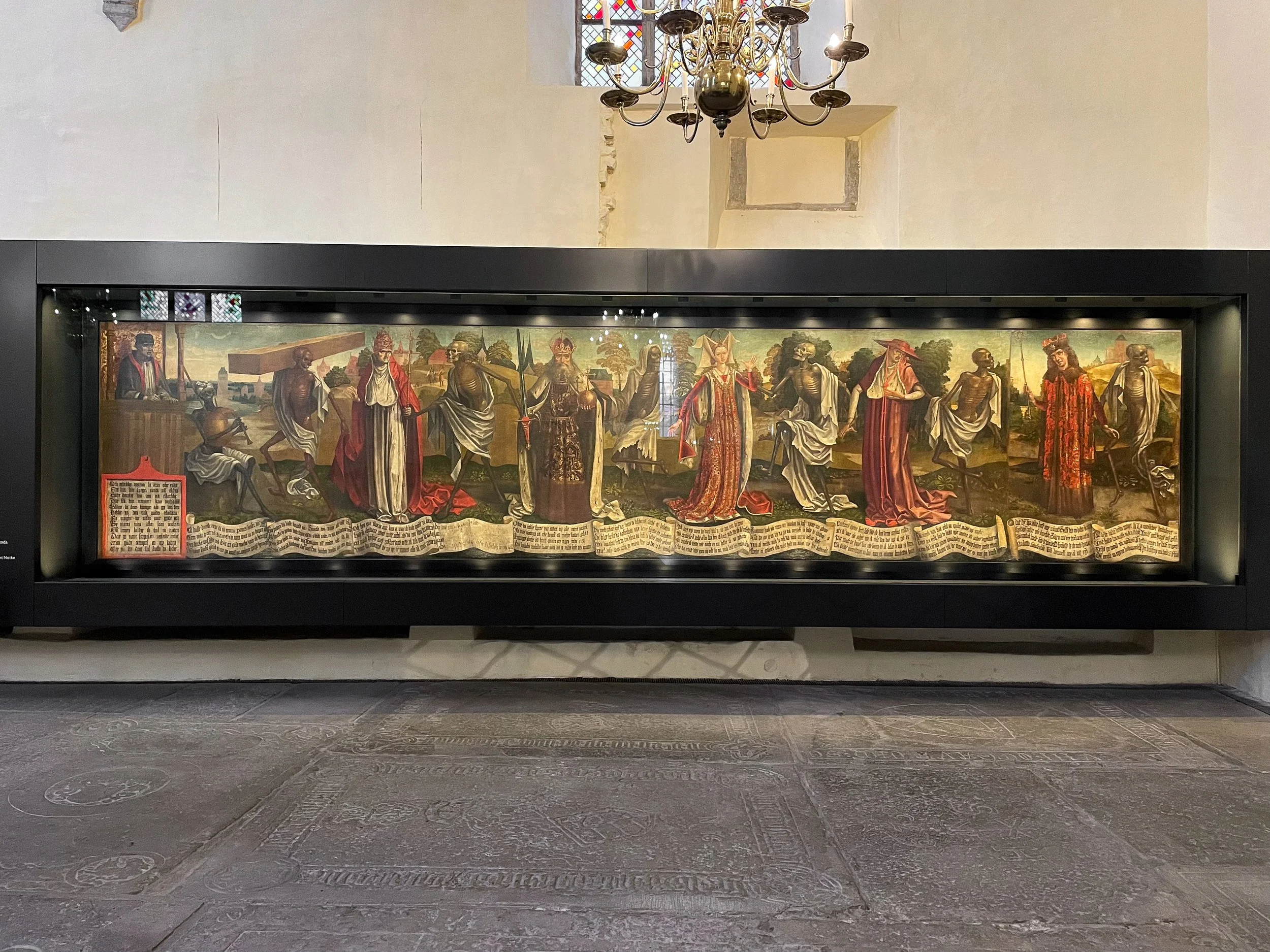
St. Nicholas' Church and Niguliste Museum. A church and museum with medieval and religious artifacts like bronze bells, tomb stones, coats of arms, silver collections and the only surviving painting depicting “The Dance of Death”. The restored spire accessible by spiral staircase and glass elevators leads to an observation deck with views of Tallinn.
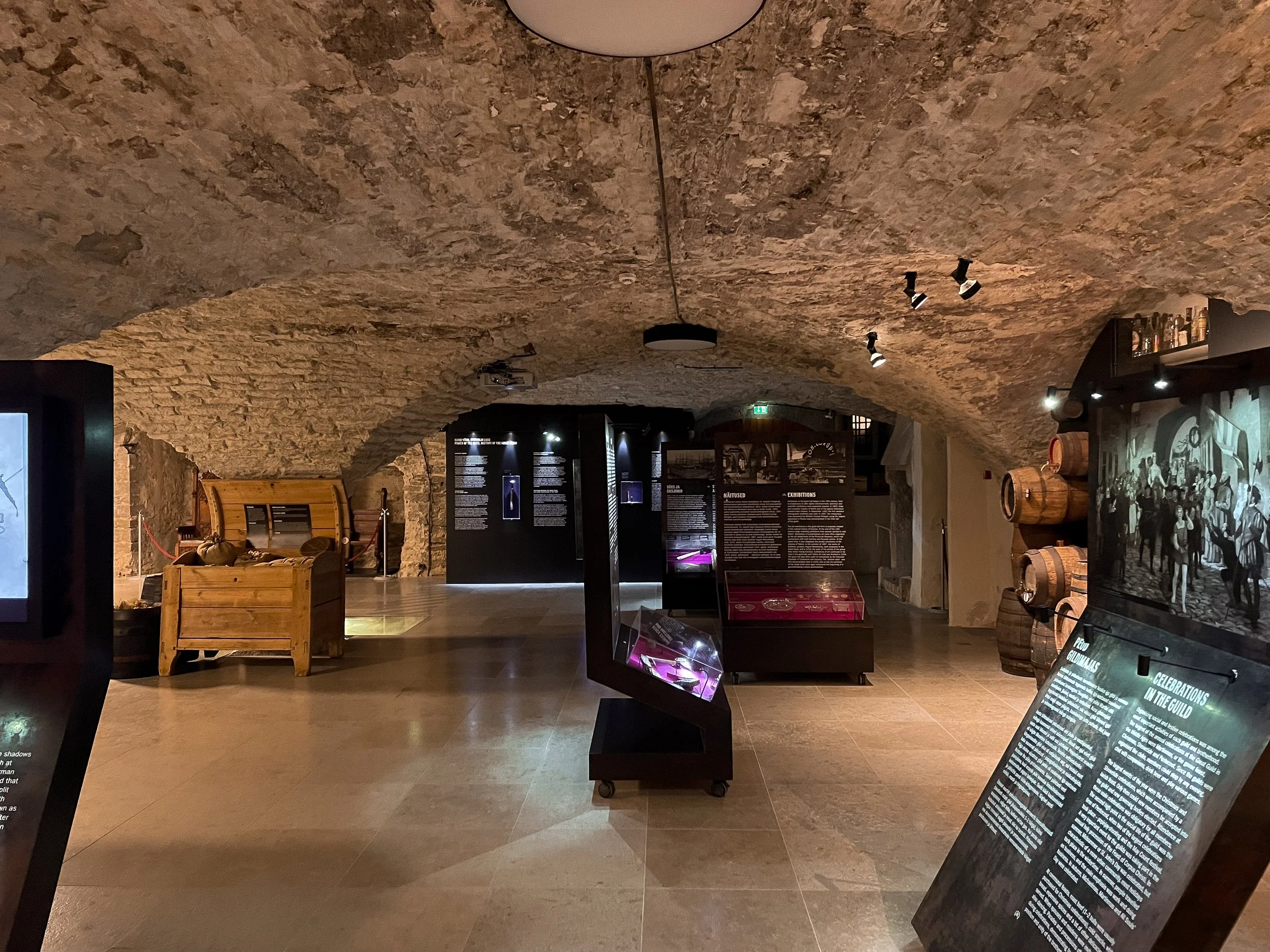
Estonian History Museum (Great Guild Hall). A history museum located in a medieval hall with tall vaulted ceilings and a stone arched basement. Exhibits portray the history of Estonia, its merchants and guilds, fortifications, religious reformation, former occupation and independence. The museum houses Estonian artifacts including paintings, swords, guns, cannons, armor, chests, barrels, ceramics, silver dishes and coins.
Places to Shop
From food markets to medieval shops, Tallinn’s merchant past is equally as present today. We visited a few spots and even brought home some souvenirs.
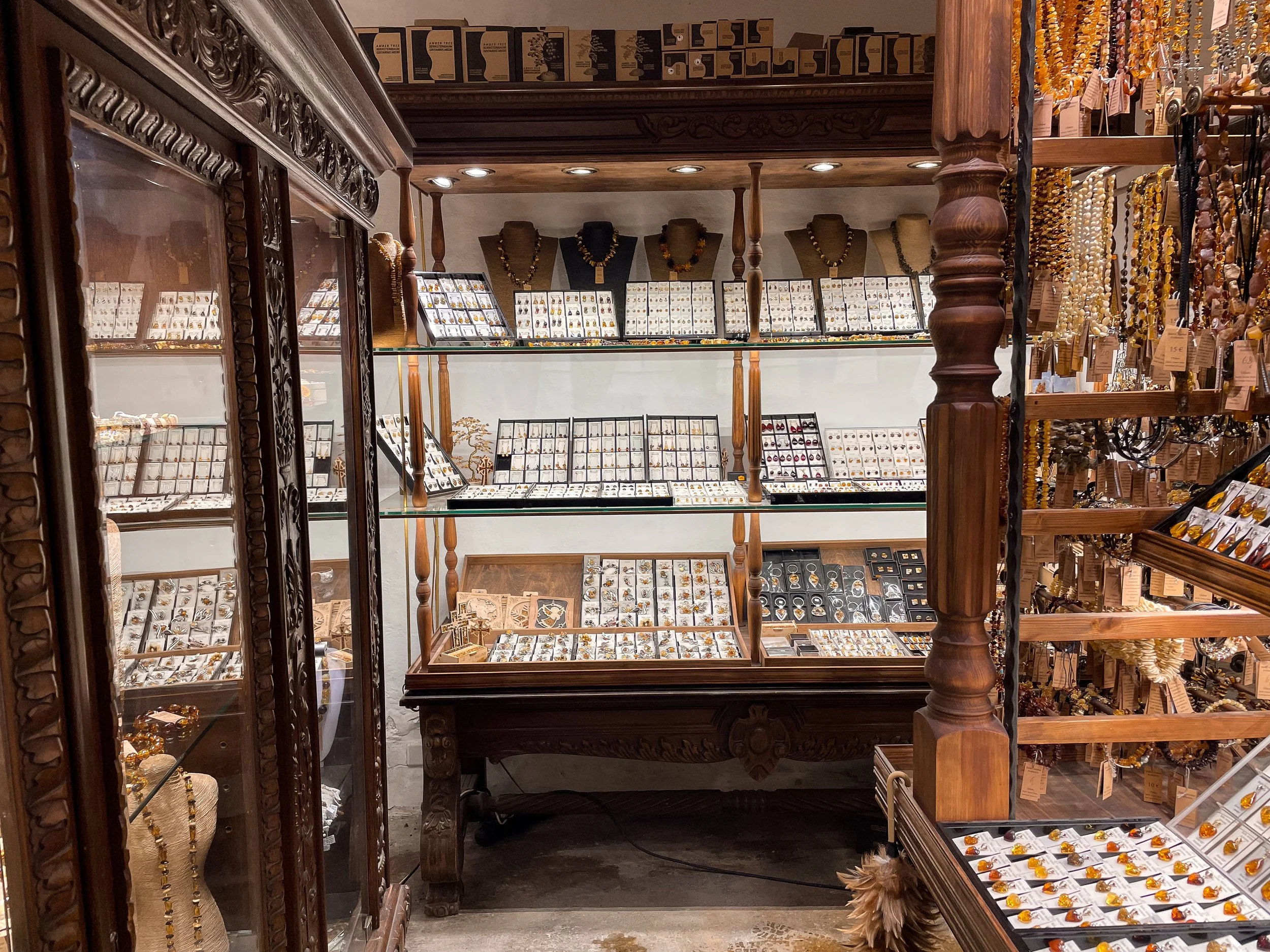
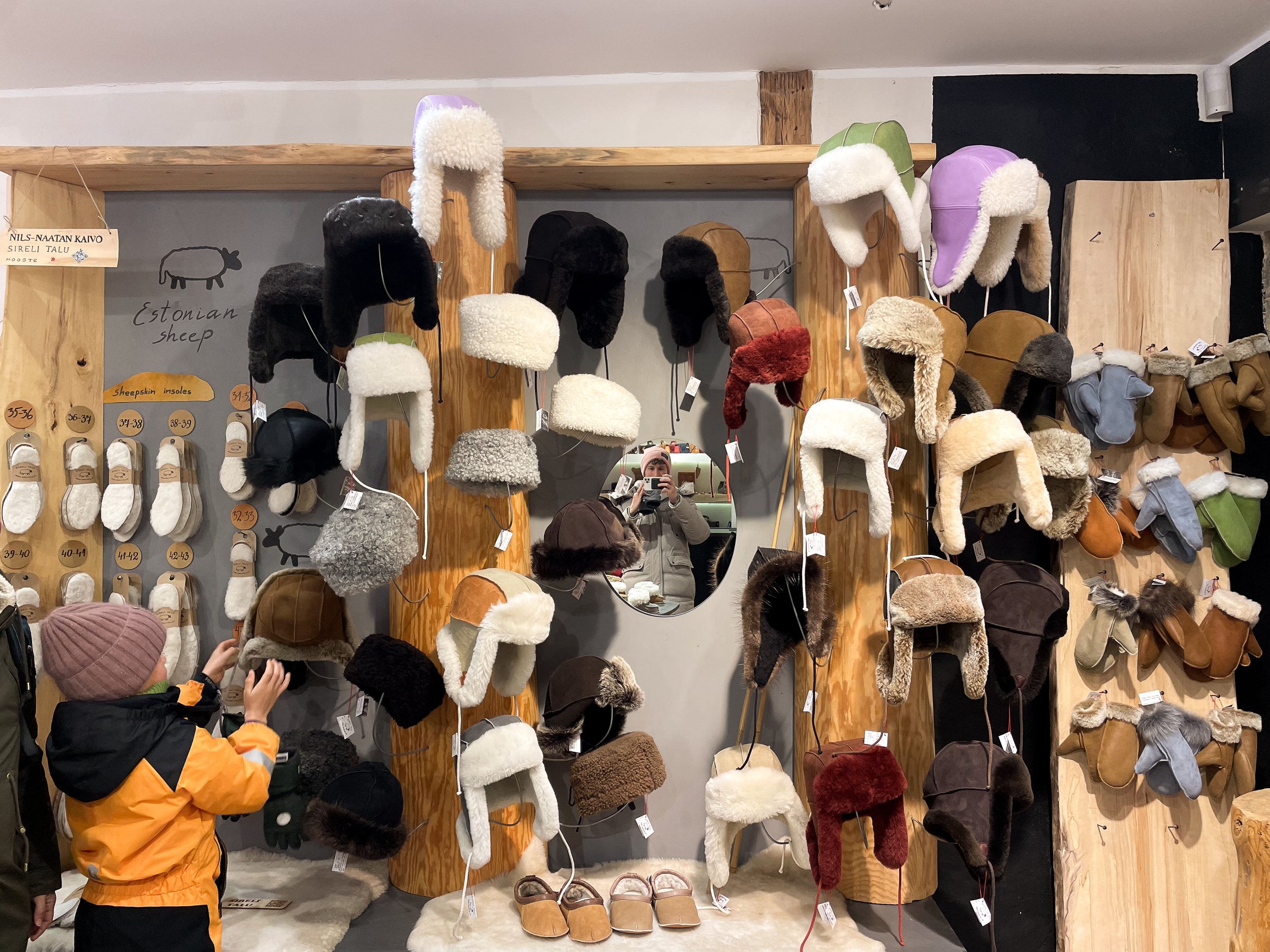
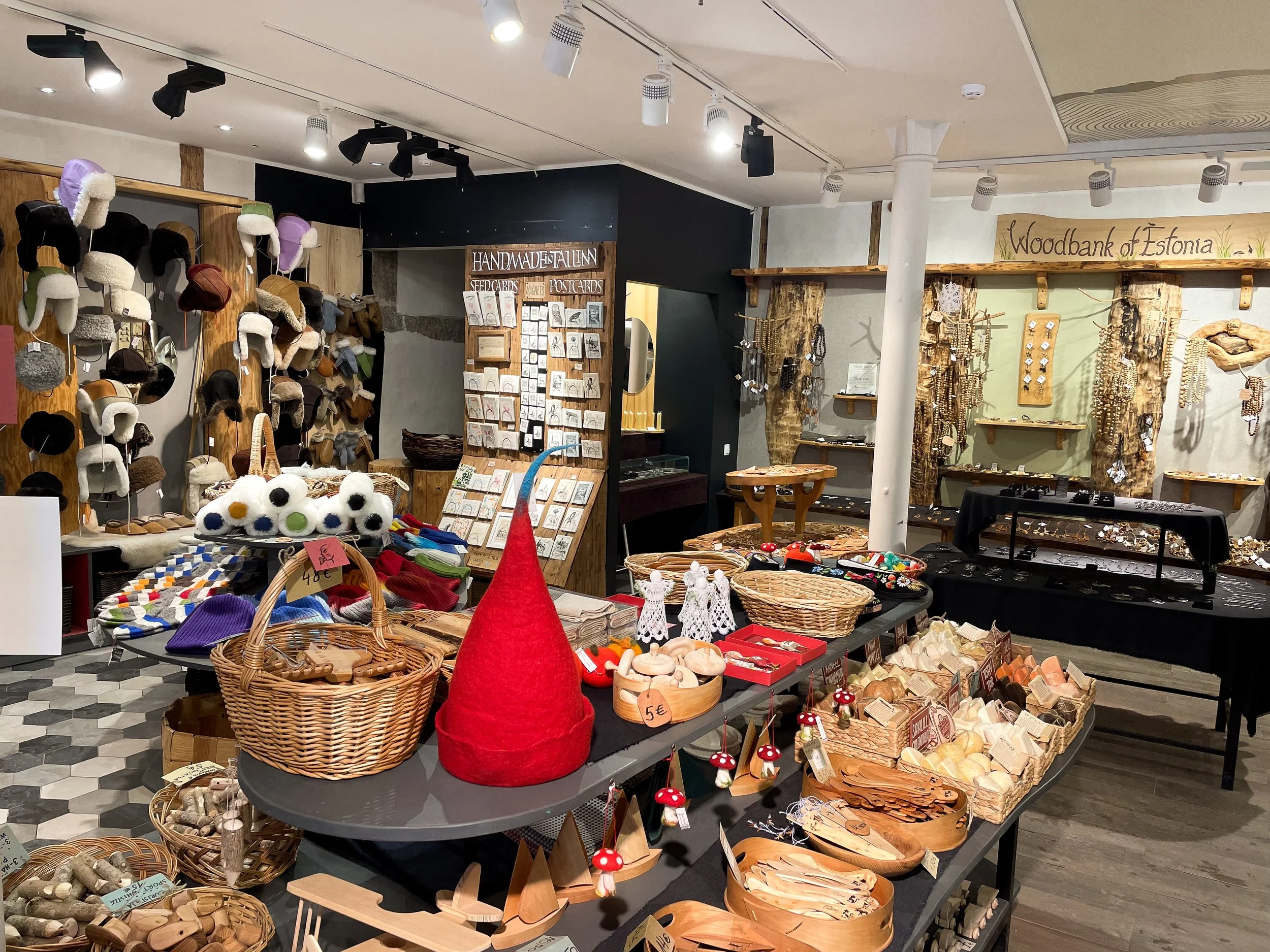
Easti Esindus Tallinnas Estonian House. An Estonian handicrafts shop with items made by local artists including fur hats, wool clothing, felted accessories, amber jewelry, ceramics, soaps, iron work, wooden toys and cooking utensils.
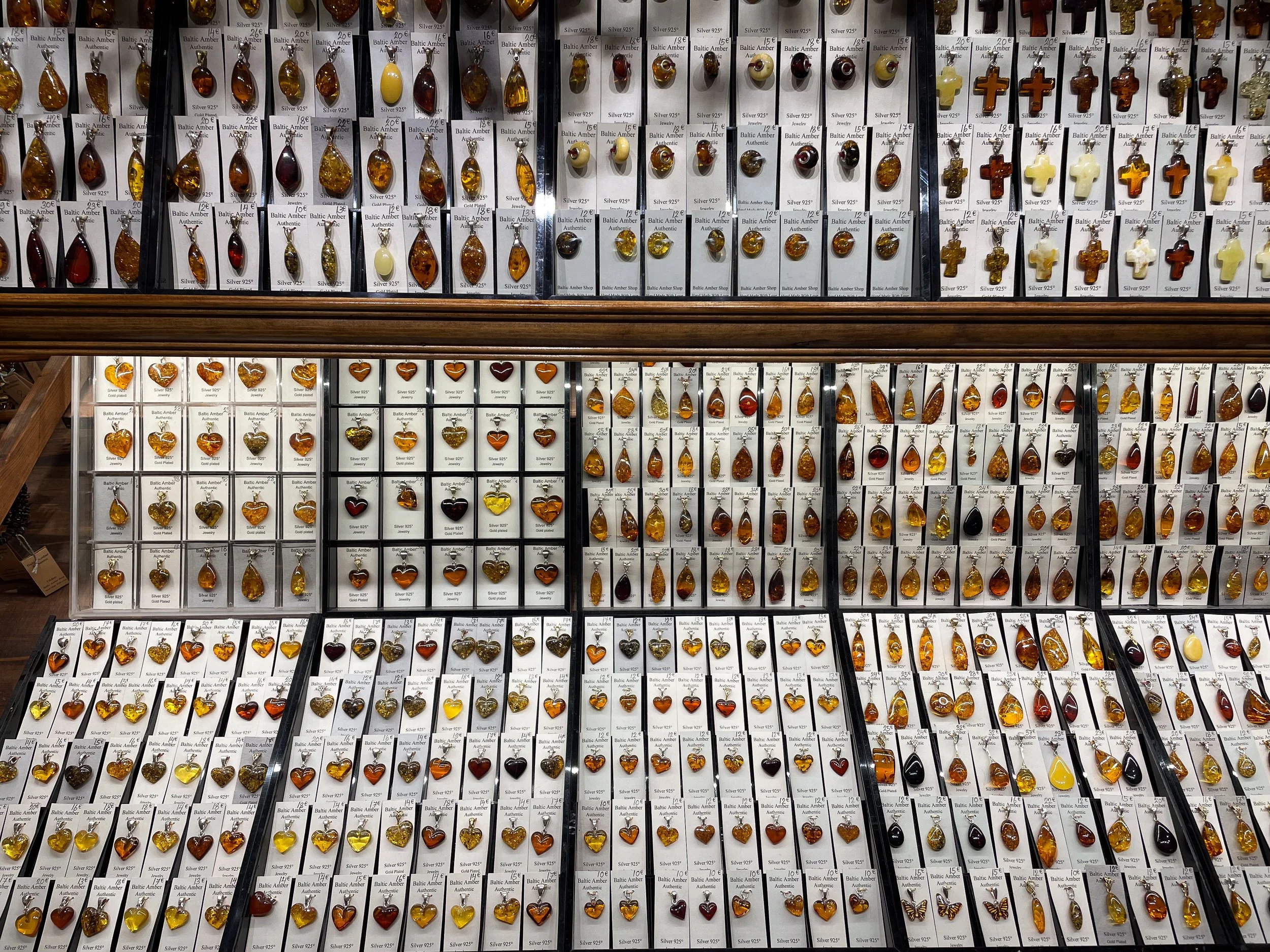
Baltic Amber. Fossilized tree sap ranging in color from light yellow to deep brown. It’s a popular commodity sold at souvenir and jewelry shops throughout the city. We purchased a carved bird figurine and pair of earrings.
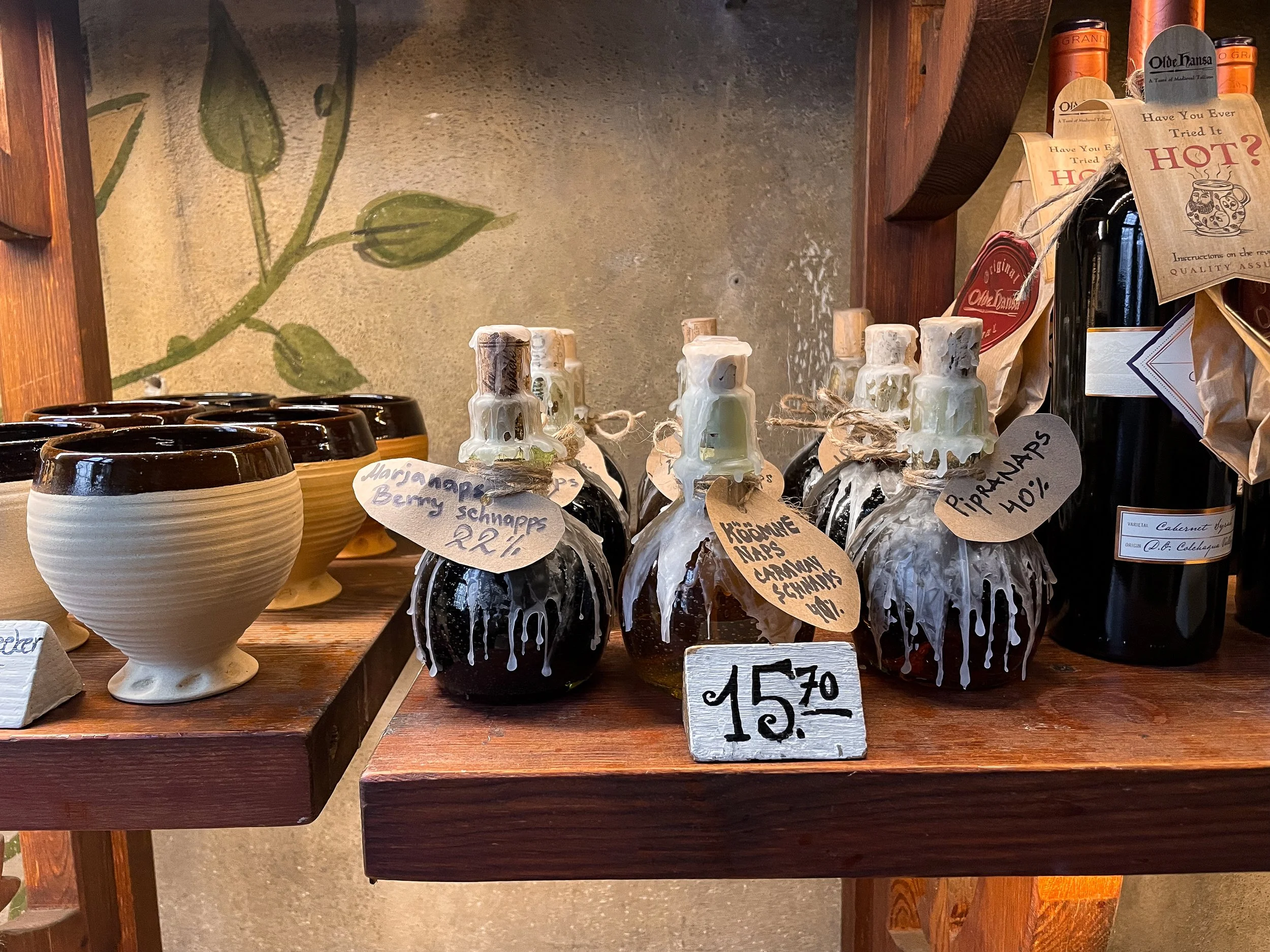
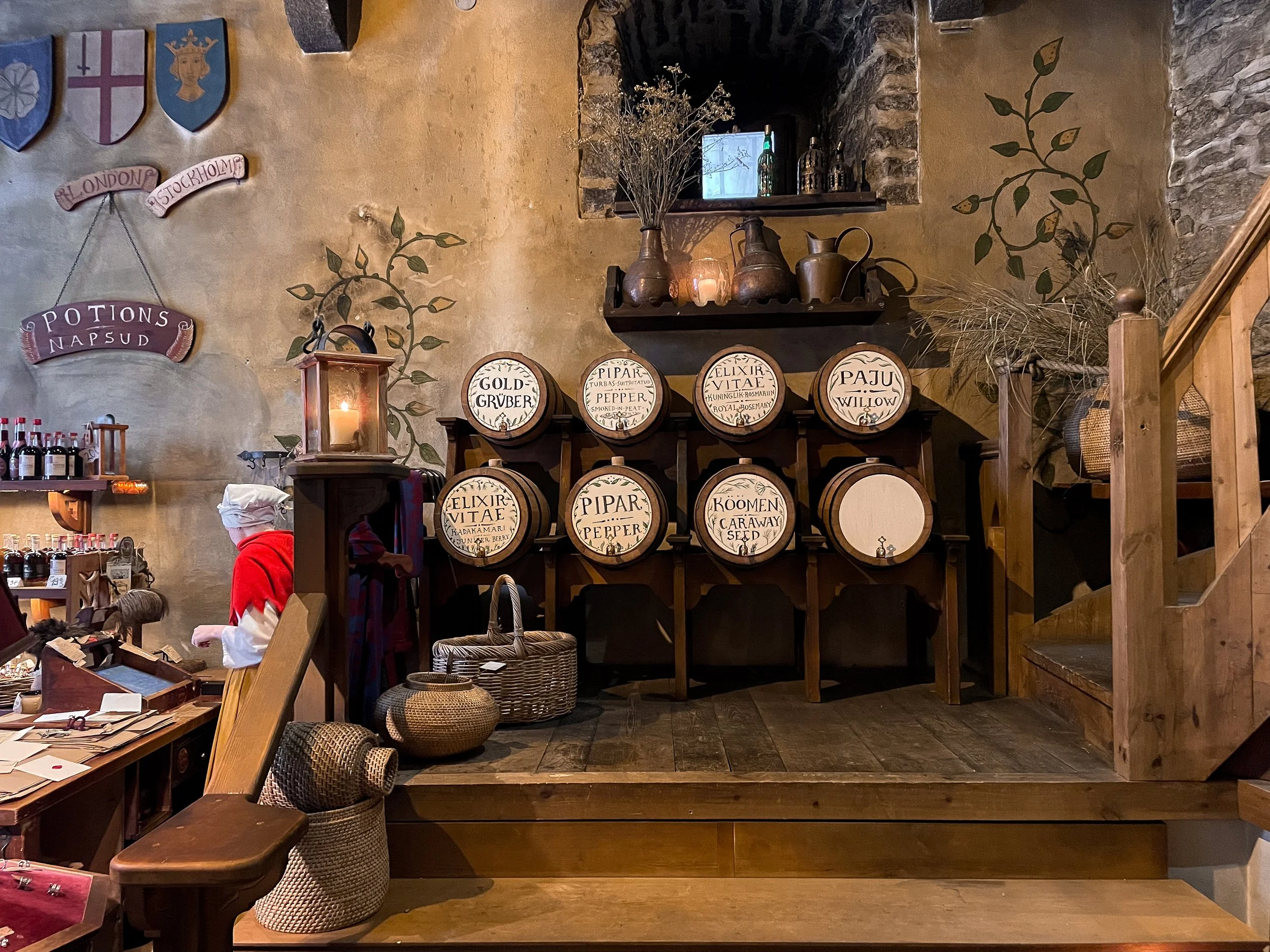
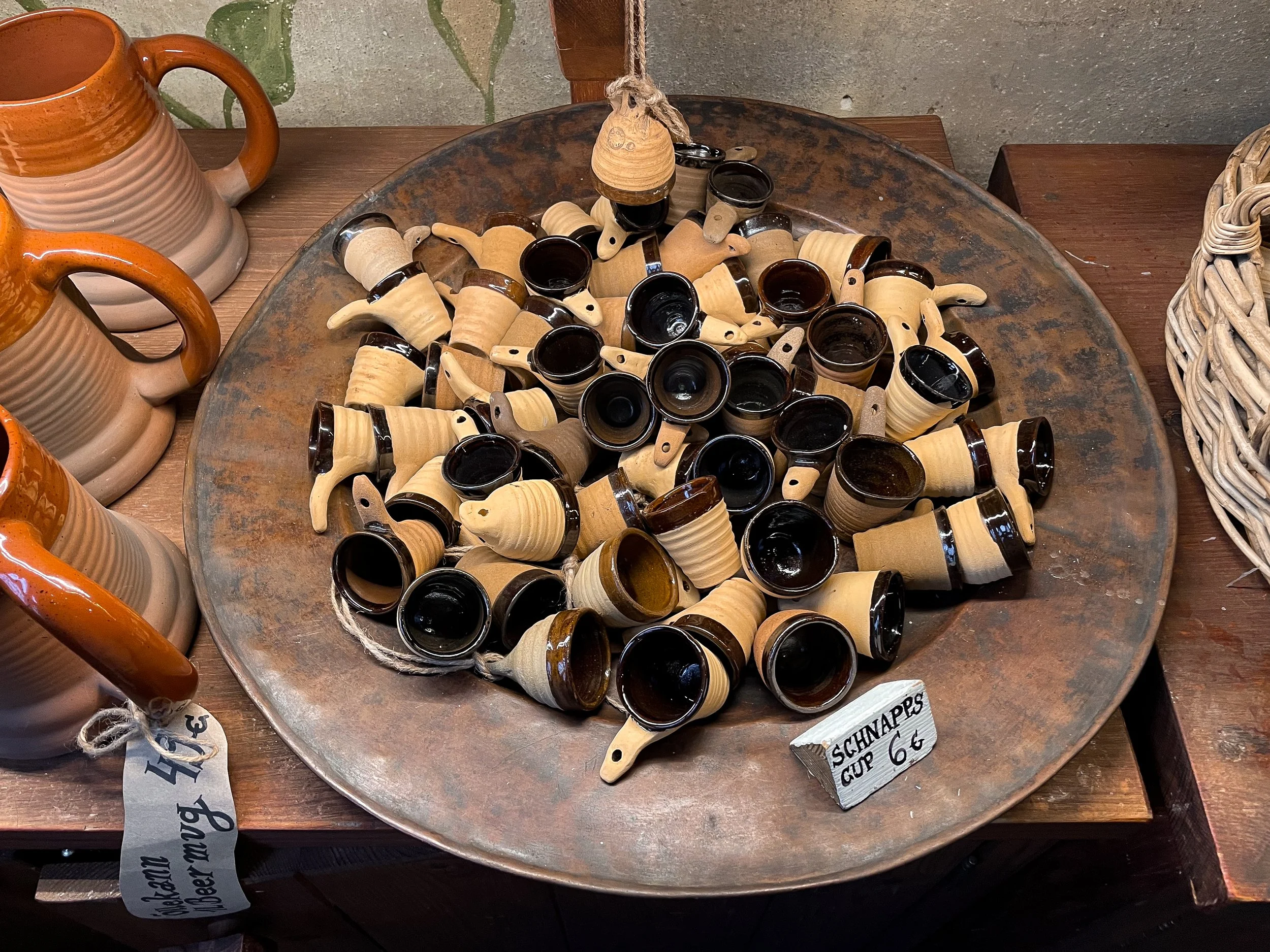
Olde Hansa Shoppe. A medieval shop connected to the Olde Hansa Restaurant selling items like hand blown glassware, hand-spun pottery, forged iron jewelry, herbal schnapps, roasted nuts, tar soaps, beeswax candles, warm spices and small swords.
Estonian Cuisine
Estonian food is very hearty, commonly pickled, smoked or prepared in soups. Dishes frequently include ingredients like beet, potato, onion, cabbage, mushroom, dill, buckwheat, sour cream, game meat and Baltic seafood.
Places to Eat & Drink
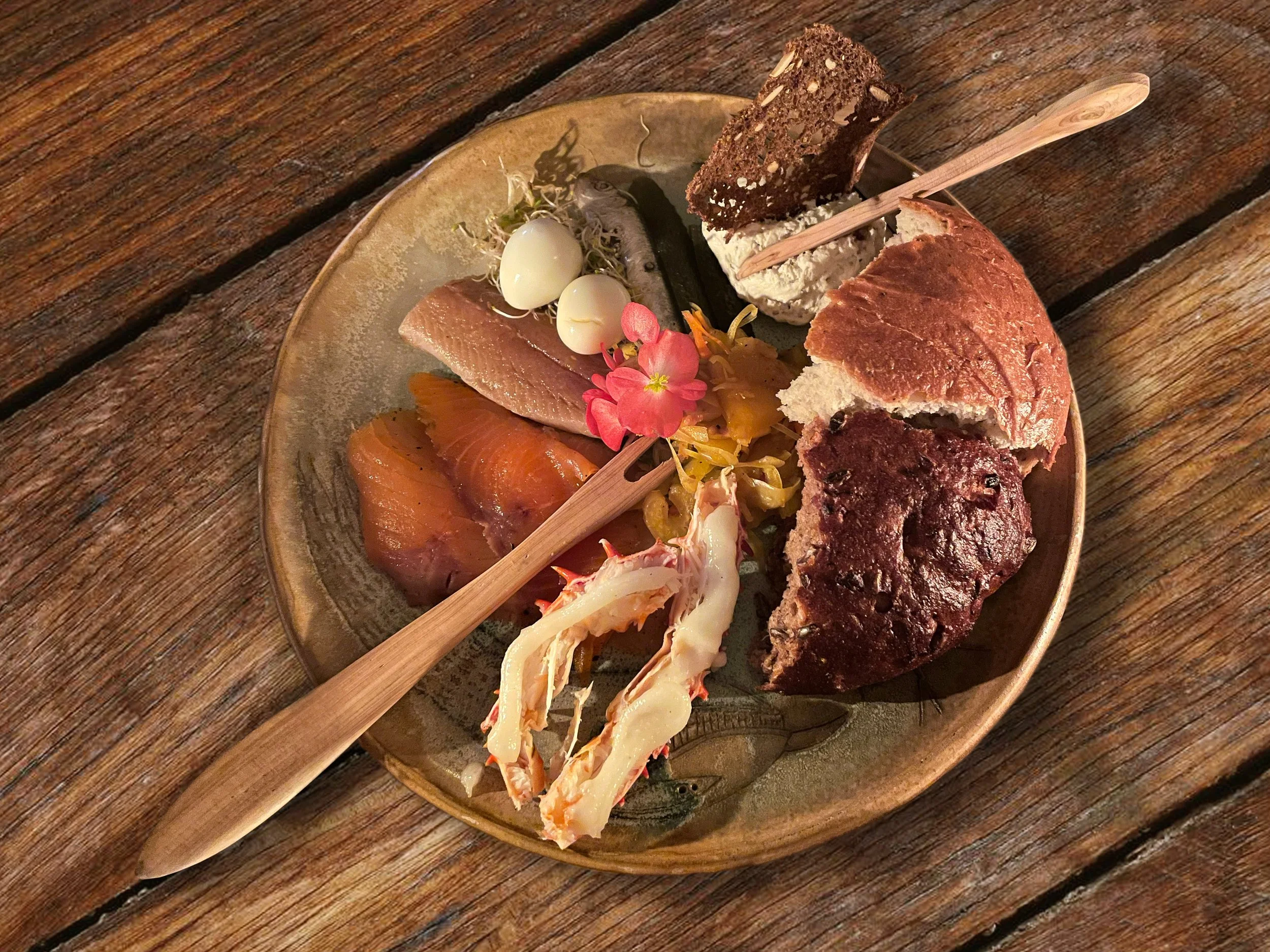
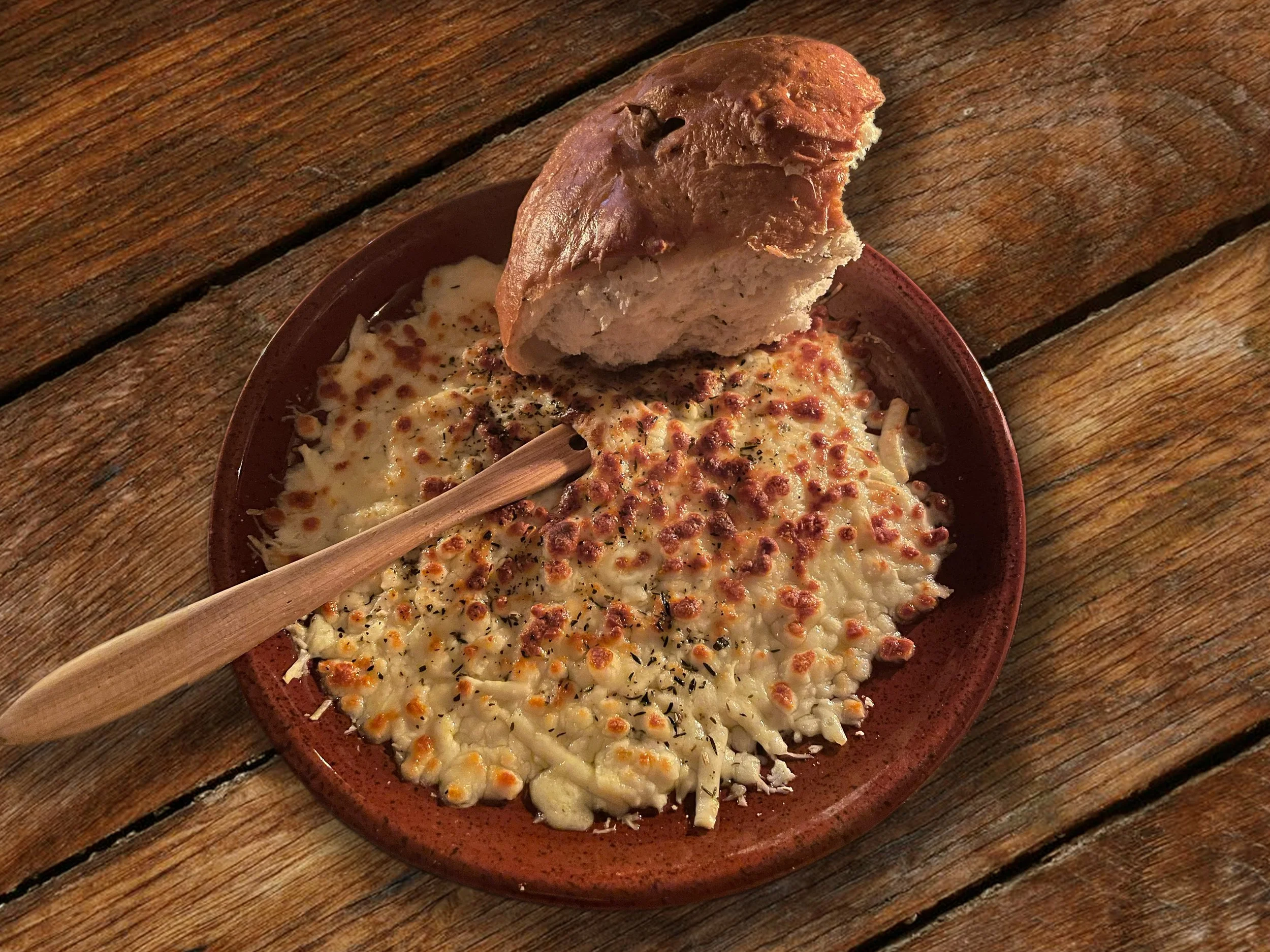
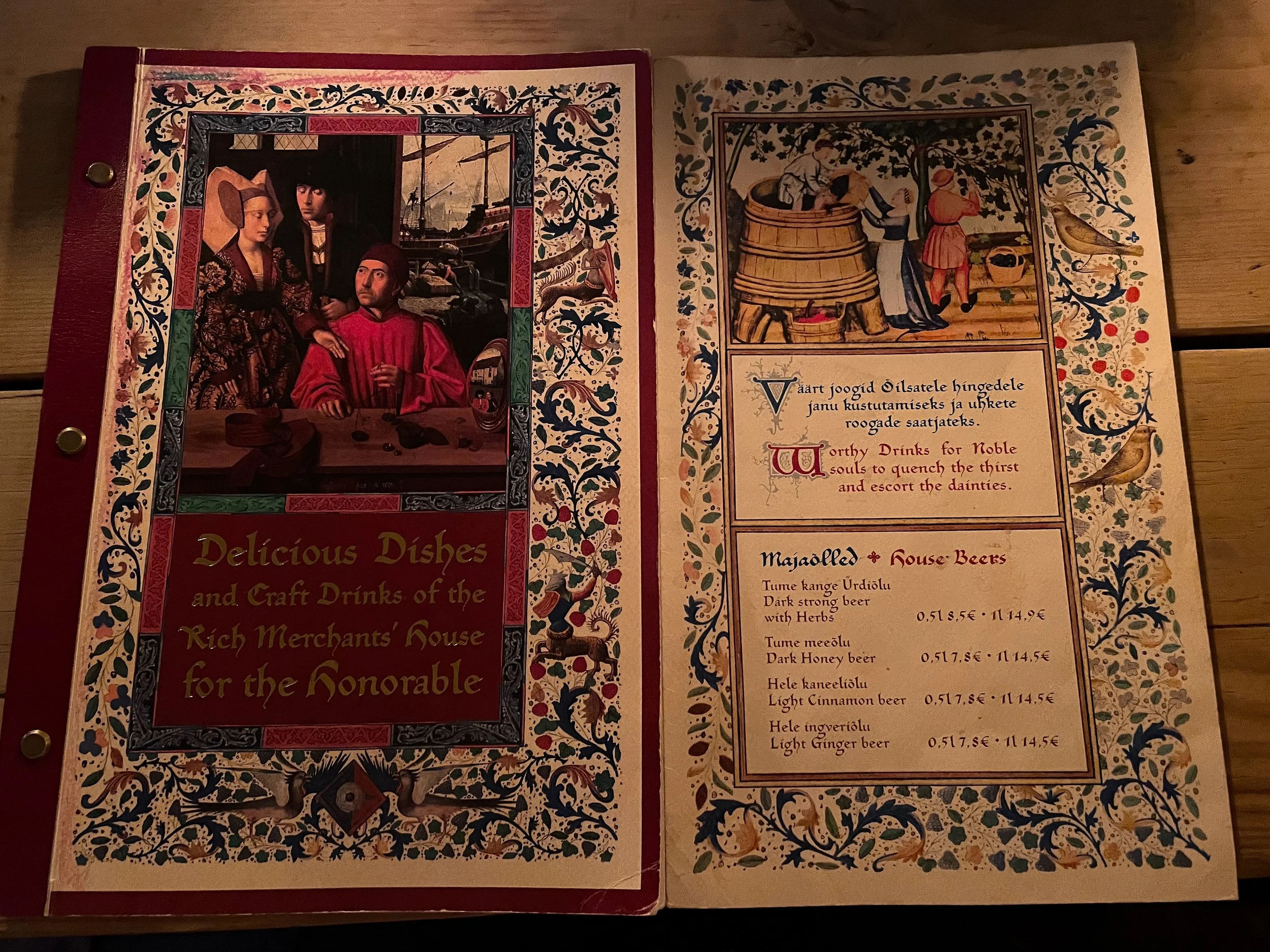
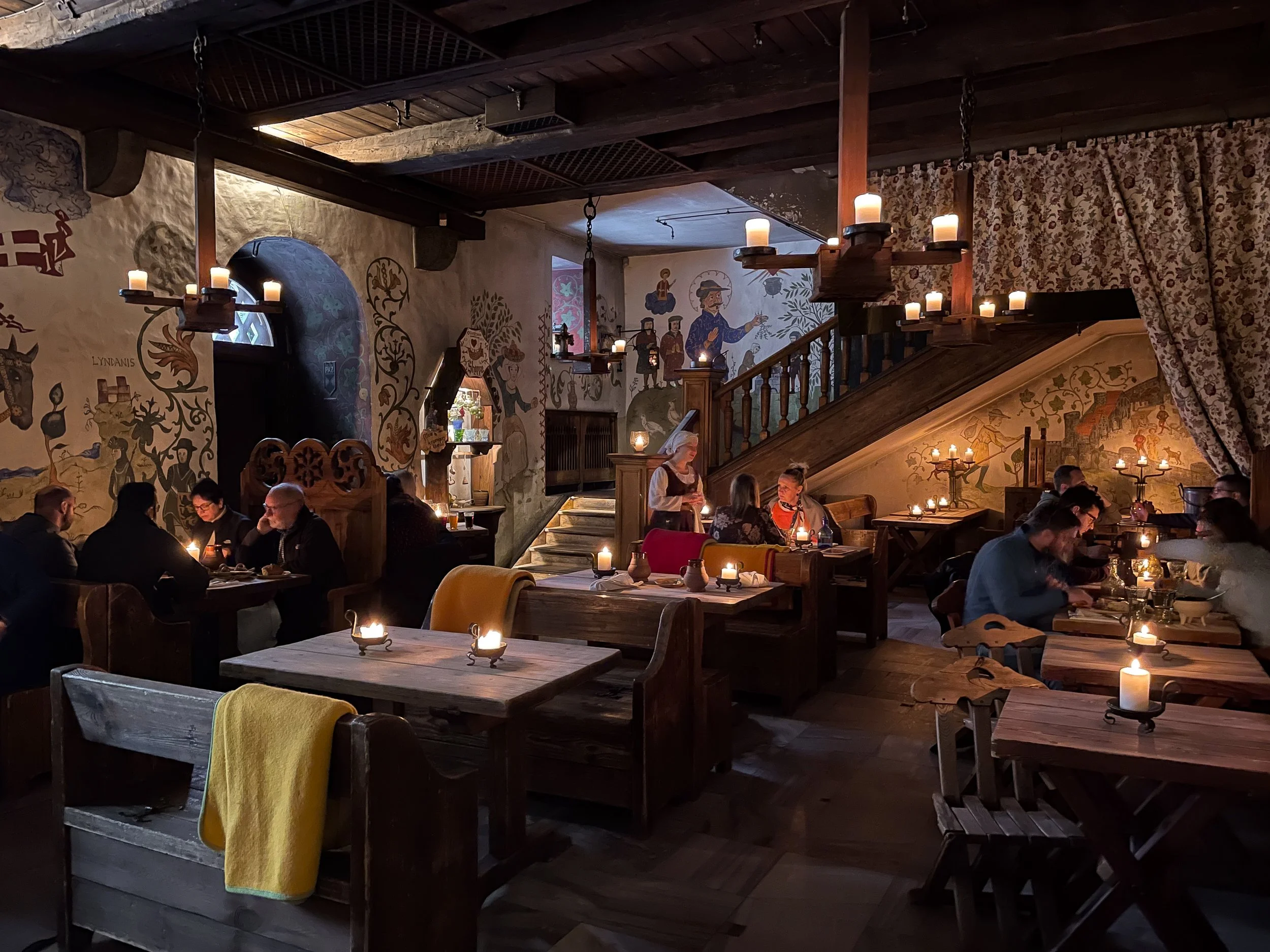
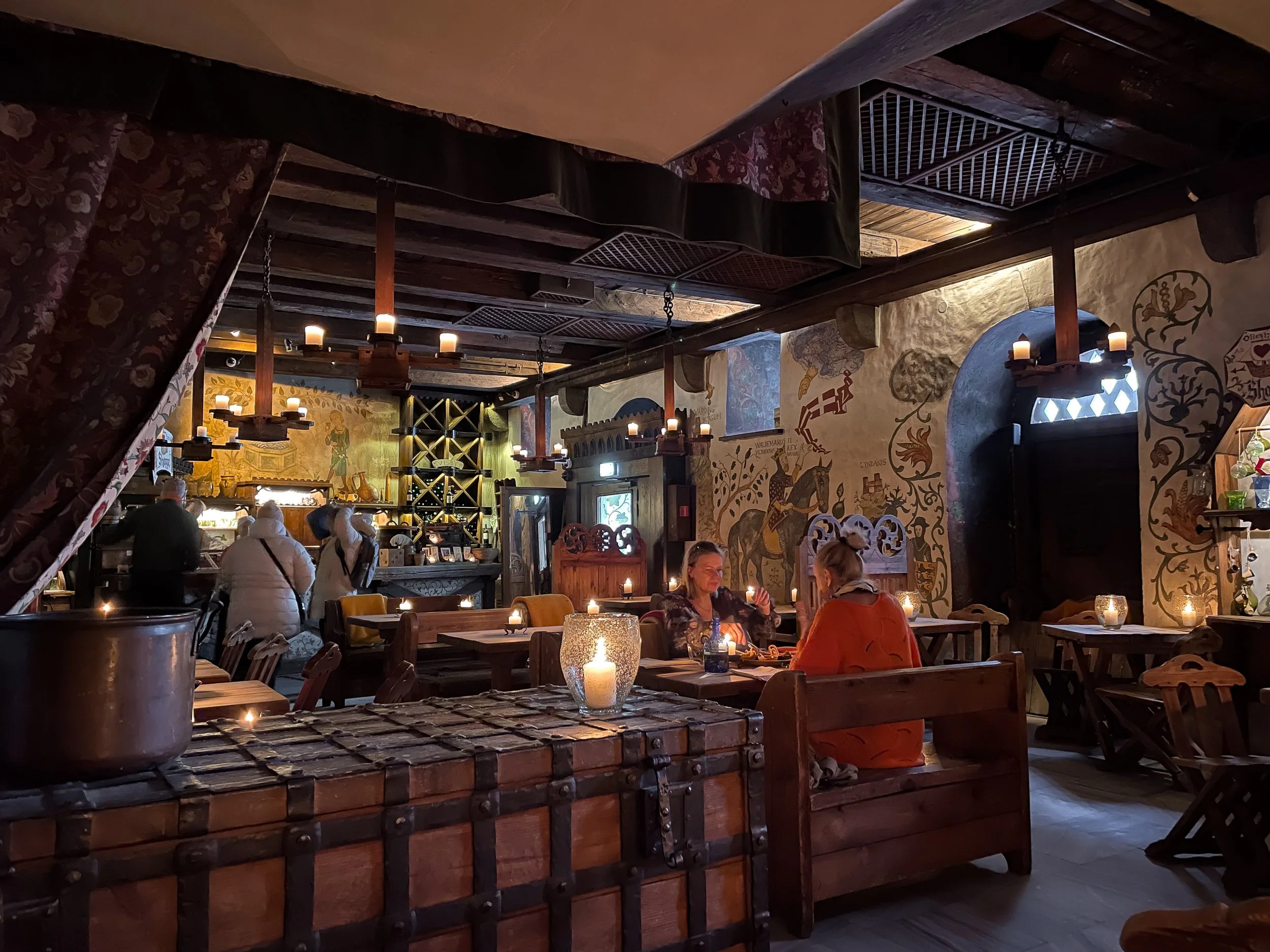
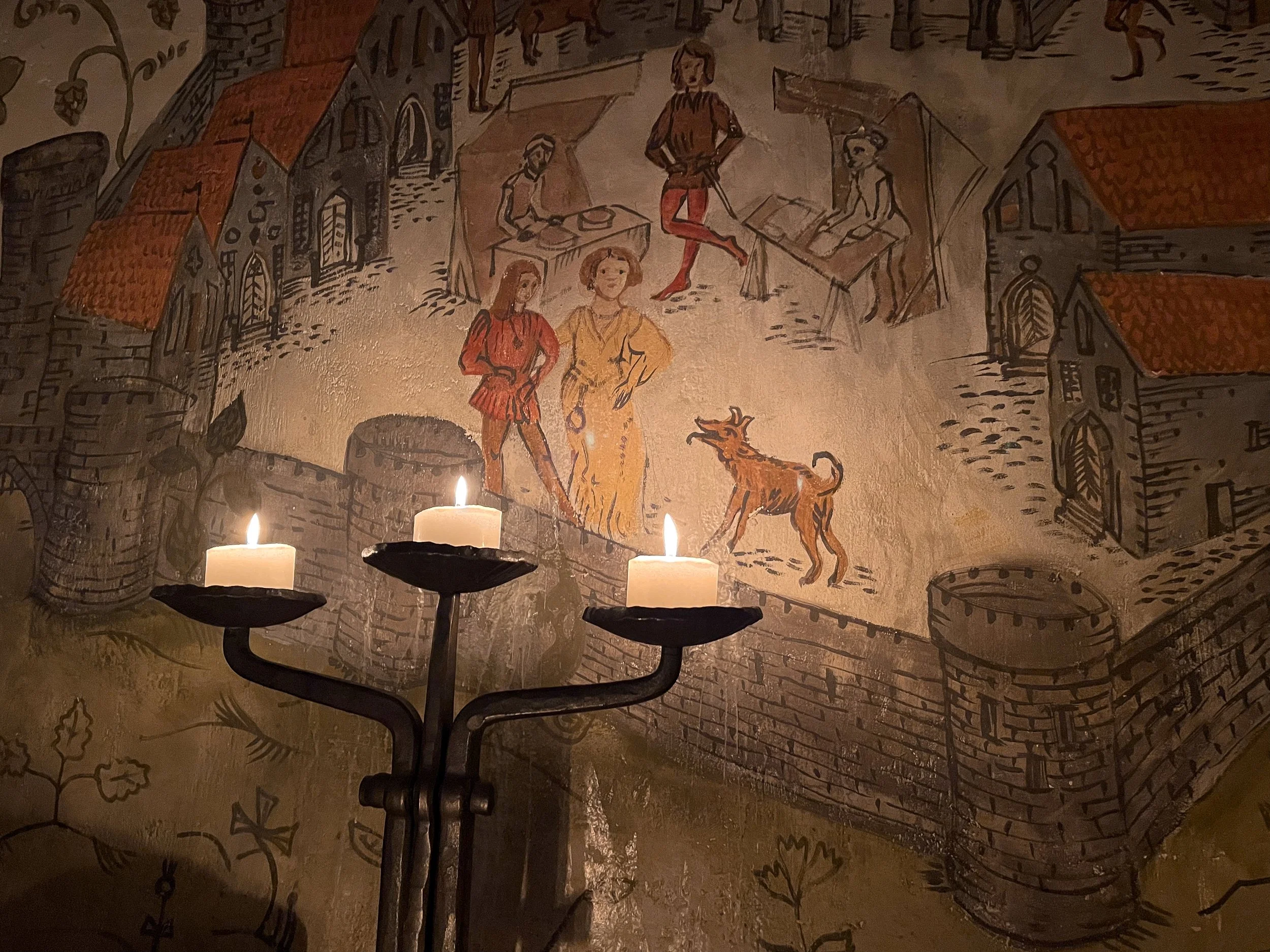
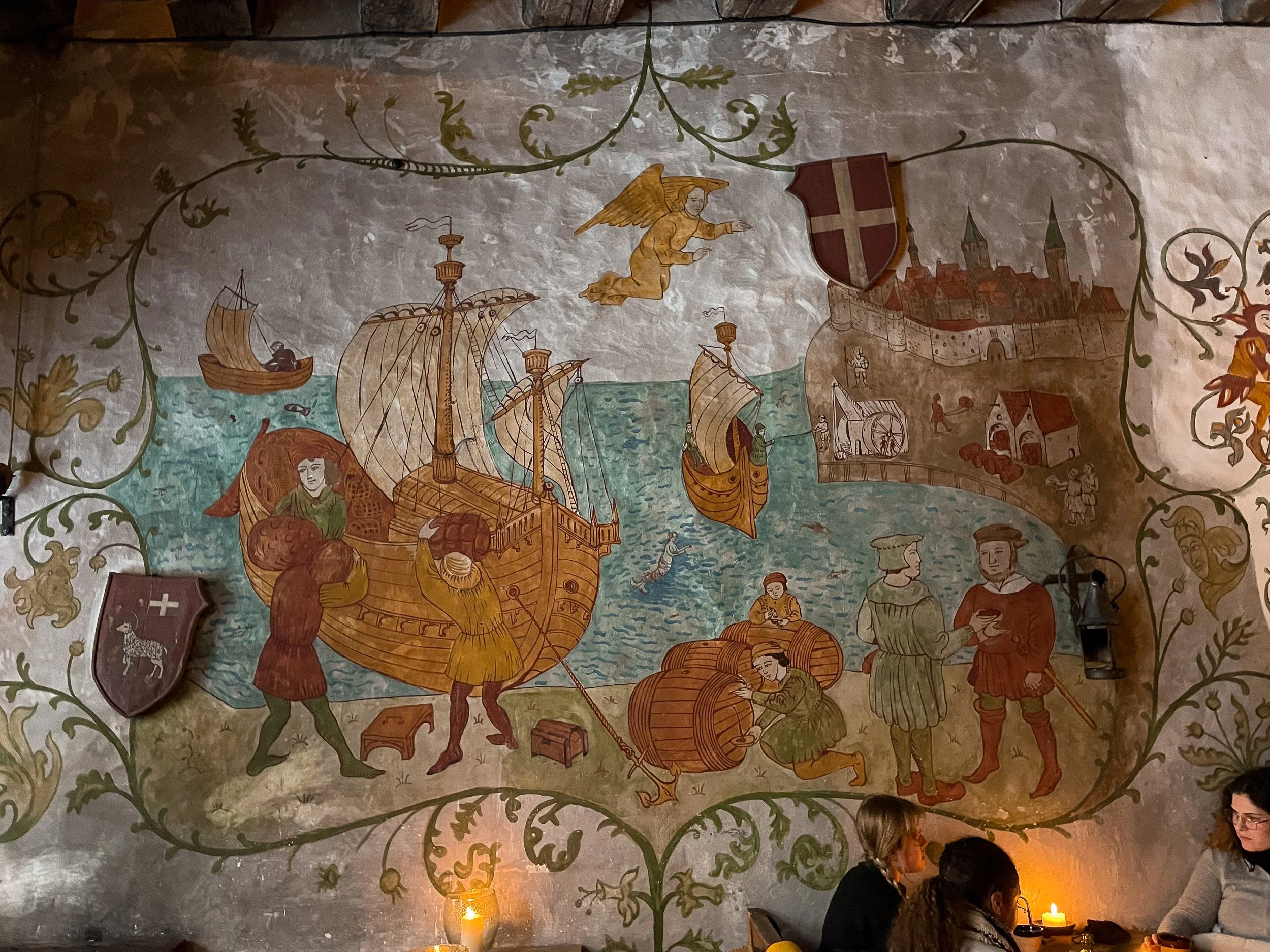
Olde Hansa. Set within a 14th century merchant house, this restaurant offers a medieval atmosphere with its candlelit interior, carved furnishings, illustrated decor, piper music and costumed staff. Its extensive menu features hearty dishes and tasting courses with smoked game, exotic meats, cured fish, braised vegetables and herbed breads, complemented by spiced wines, flavored beers and infused schnapps. Order the forest mushroom soup, oven baked juniper cheese and the Neptune fish platter along with a goblet of herbal or cinnamon beer and caraway schnapps. The food and ambiance struck the perfect balance of theme and authenticity without being gimmicky. Most importantly, everything tasted delicious!
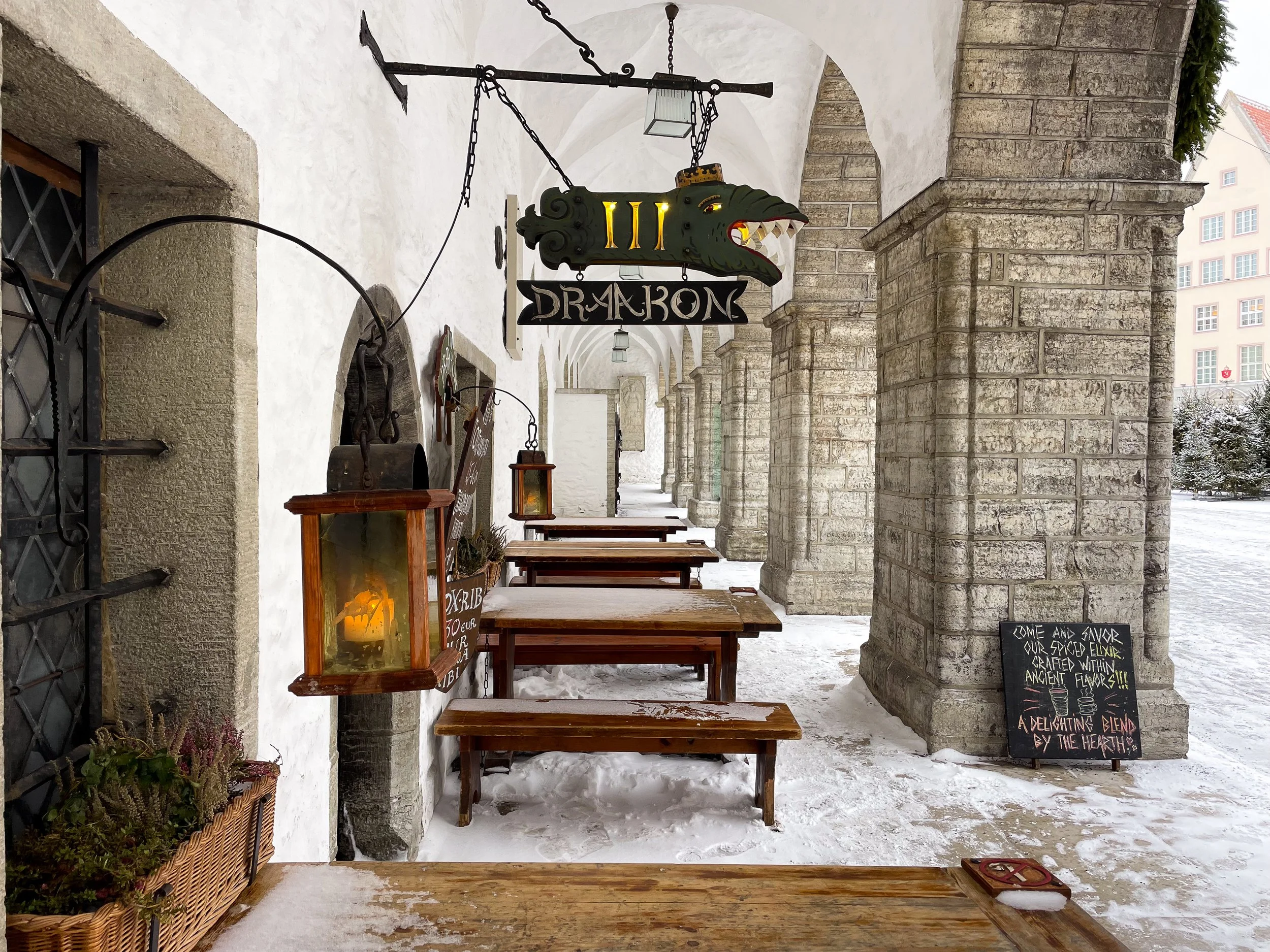
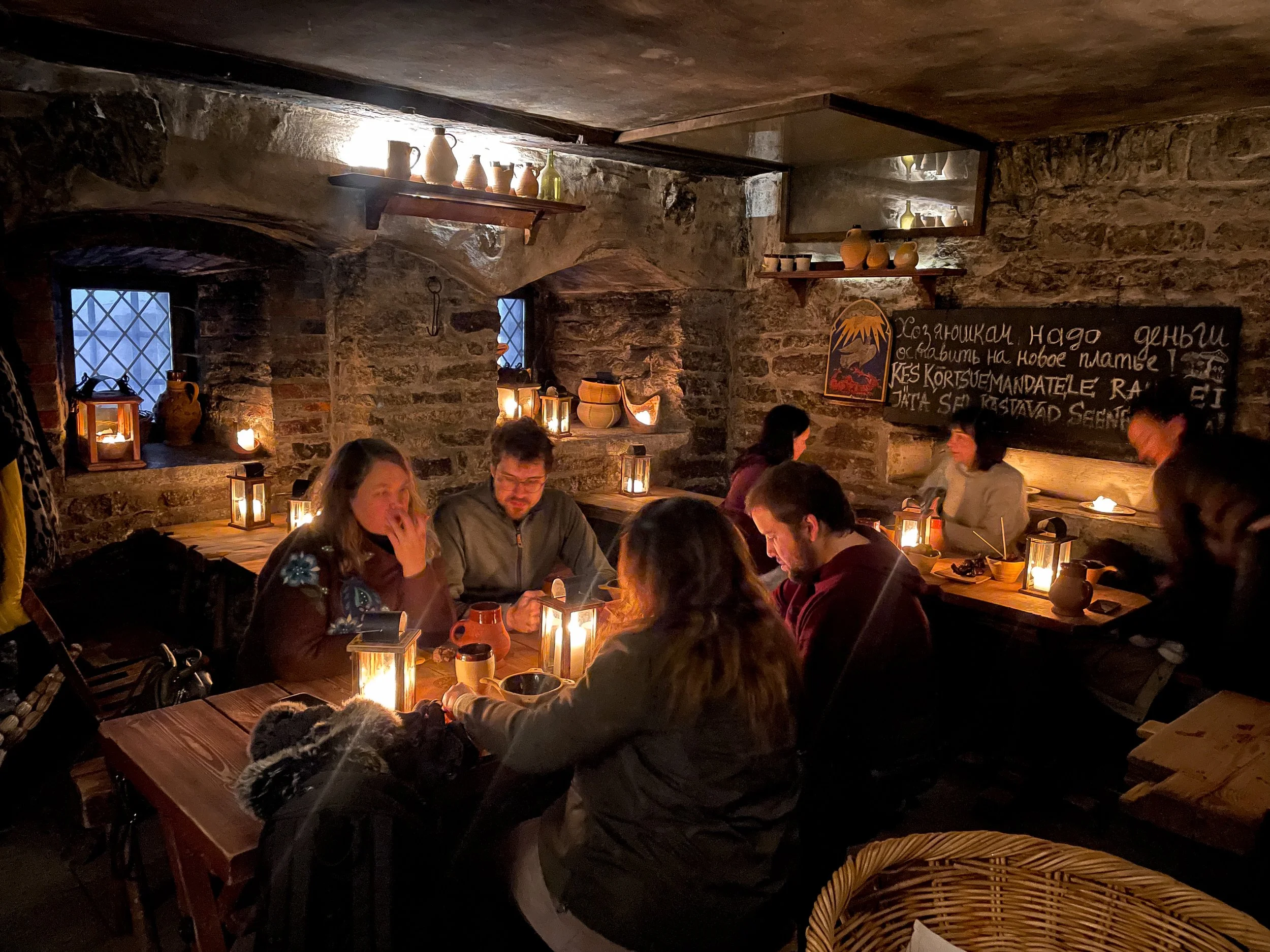
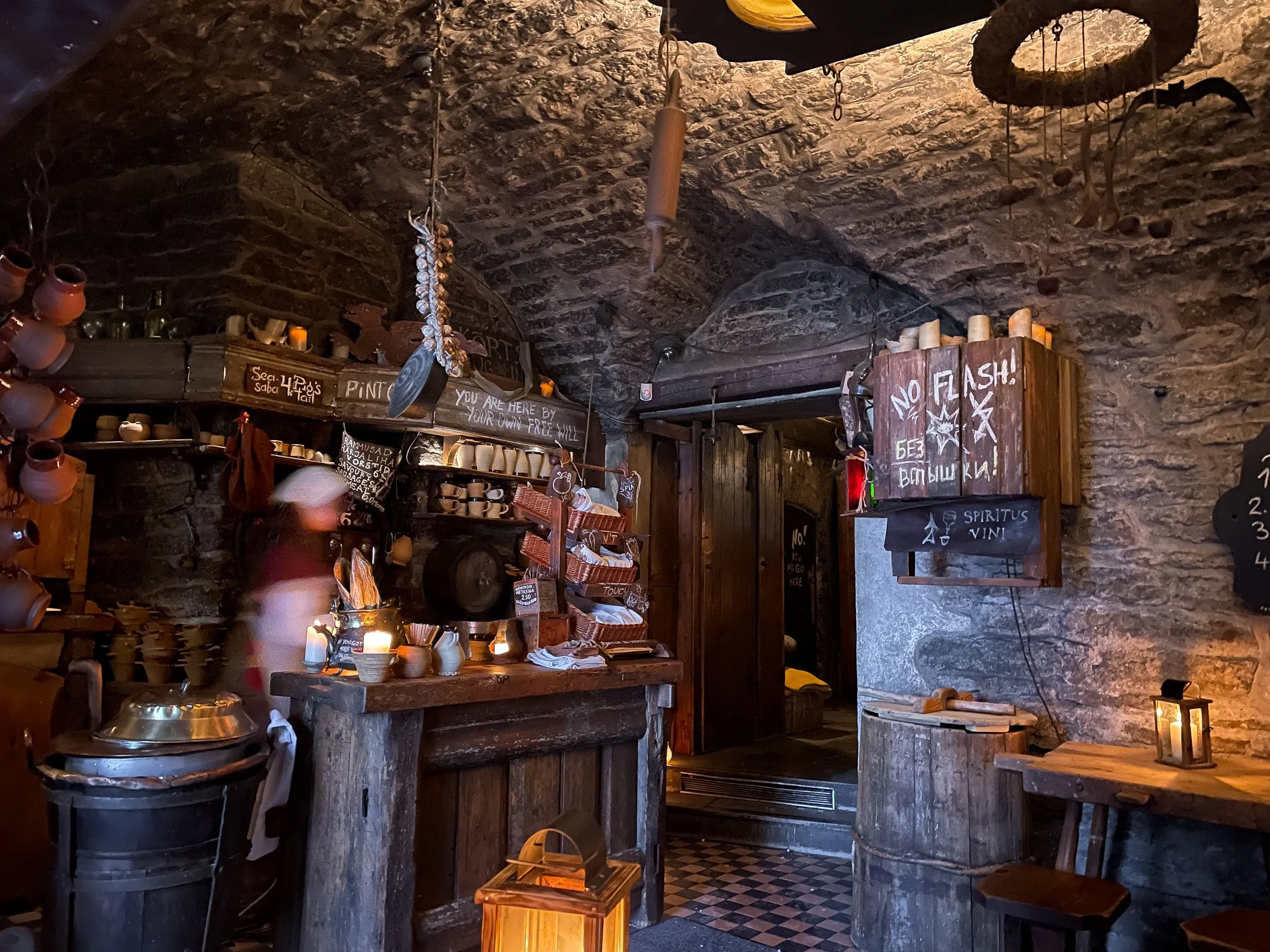
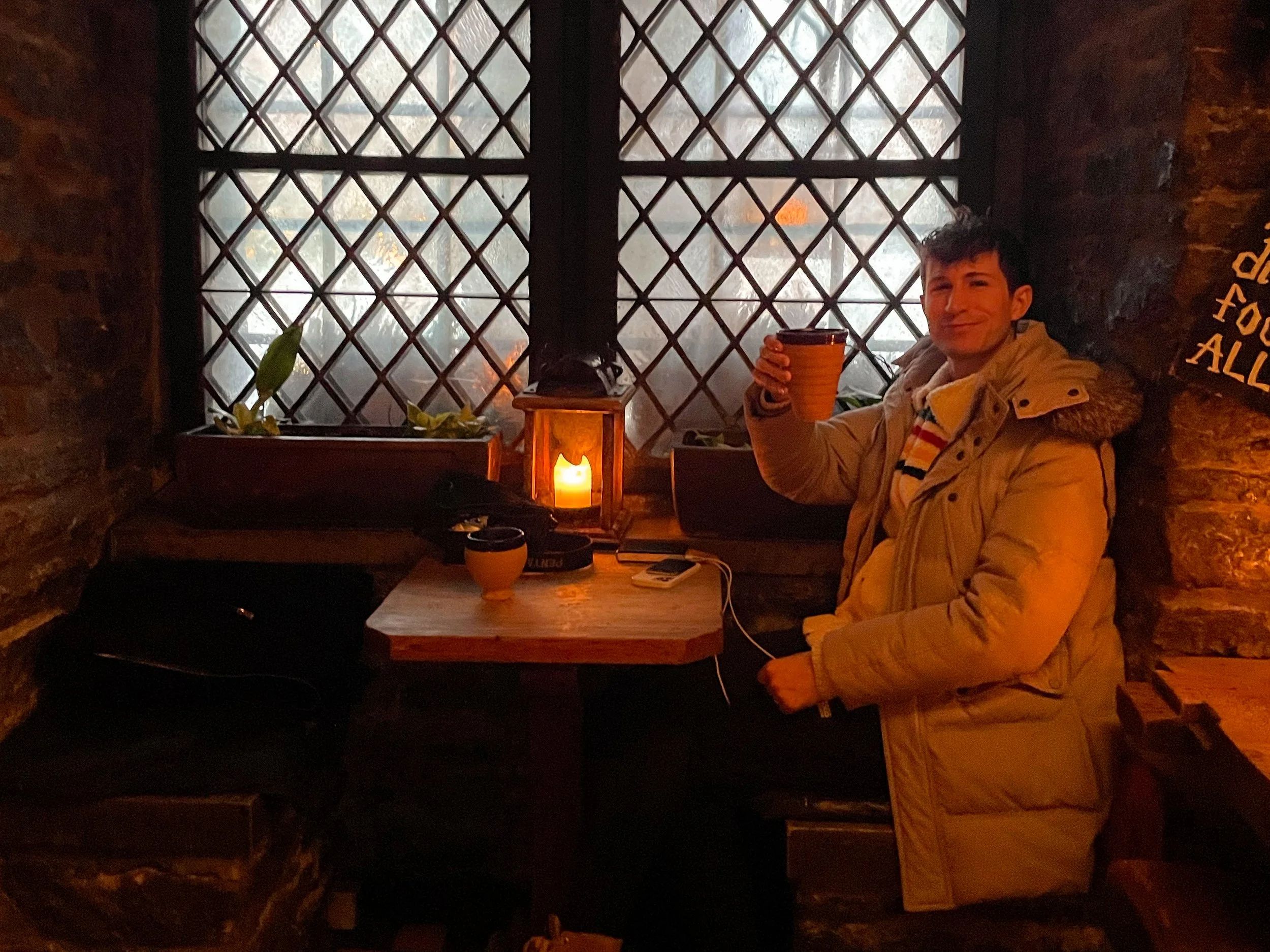
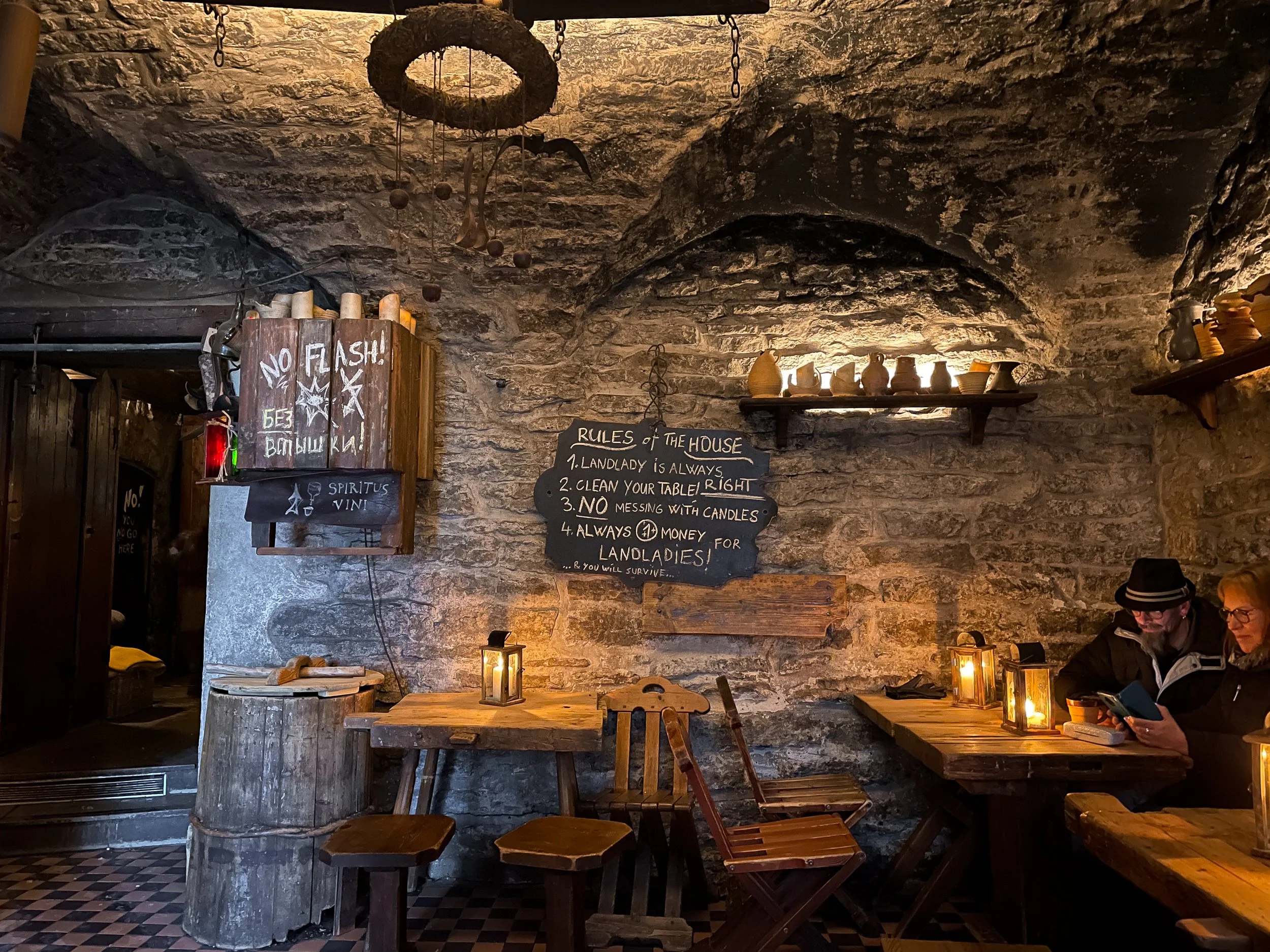
Draakon. A medieval pub in a dark candle lit stone interior with a dragon sign above the door. Come here for Glögg (hot spiced wine) and Estonian beer.
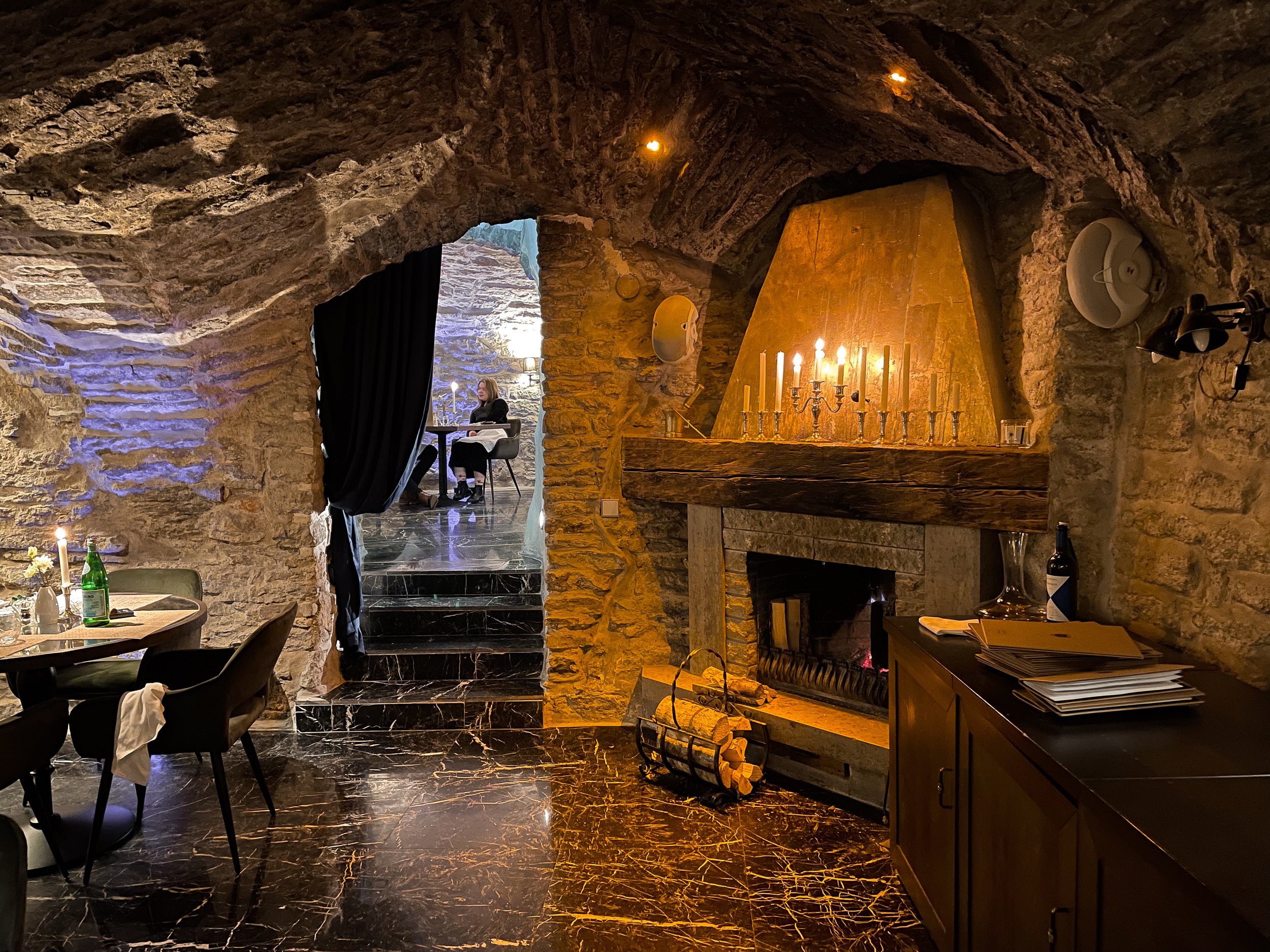
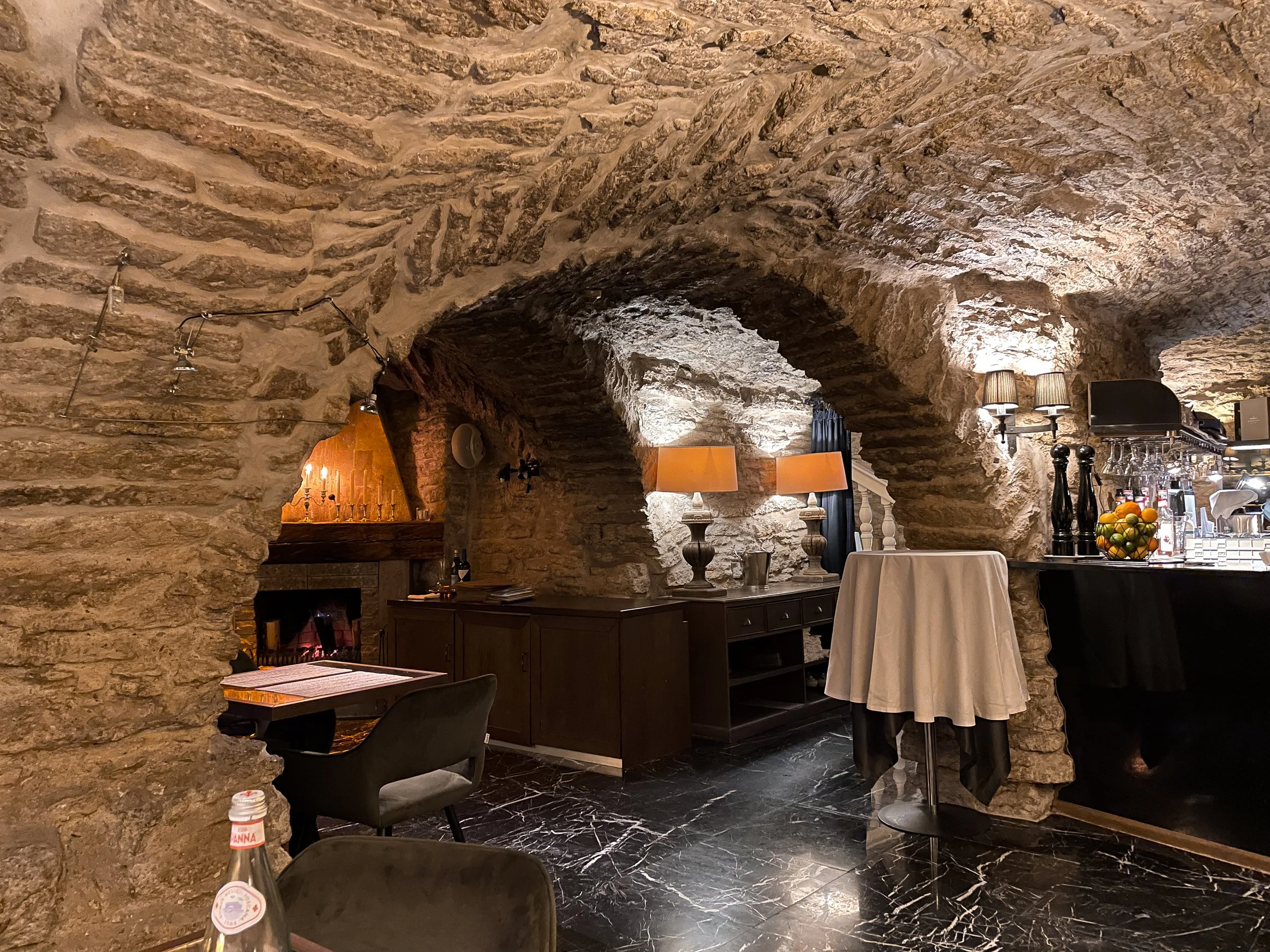
Restaurant Stenhus. A high-end Estonian restaurant located in the hotel basement of a former merchant house. The interior is defined by its stone walls, vaulted stone ceiling, black marble floor and brick fireplace. The menu delicately layers Baltic flavors paired with wine. Try the black bread with beet butter, the smoked eel smørrebrød, eggplant steak with buckwheat cream, halibut with leek and braised pearl onions and fermented plum with sour milk ice cream.
Restaurant Odessa. Come for Ukrainian and Eastern European classics like the vareniki (dumplings), cabbage rolls and borscht (beet soup). Try the horseradish vodka and sprat sandwich, Odessa style vareniki stuffed with flounder and parsley and cabbage rolls filled with vegetable, mushroom and rice.
Restaurant Cru. A contemporary Estonian restaurant. Try the beet tartare with goat cheese snow, seeded pumpkin risotto and marbled fish made from salmon, white fish and trout garnished with roe, fresh veggies and pickled root vegetables.
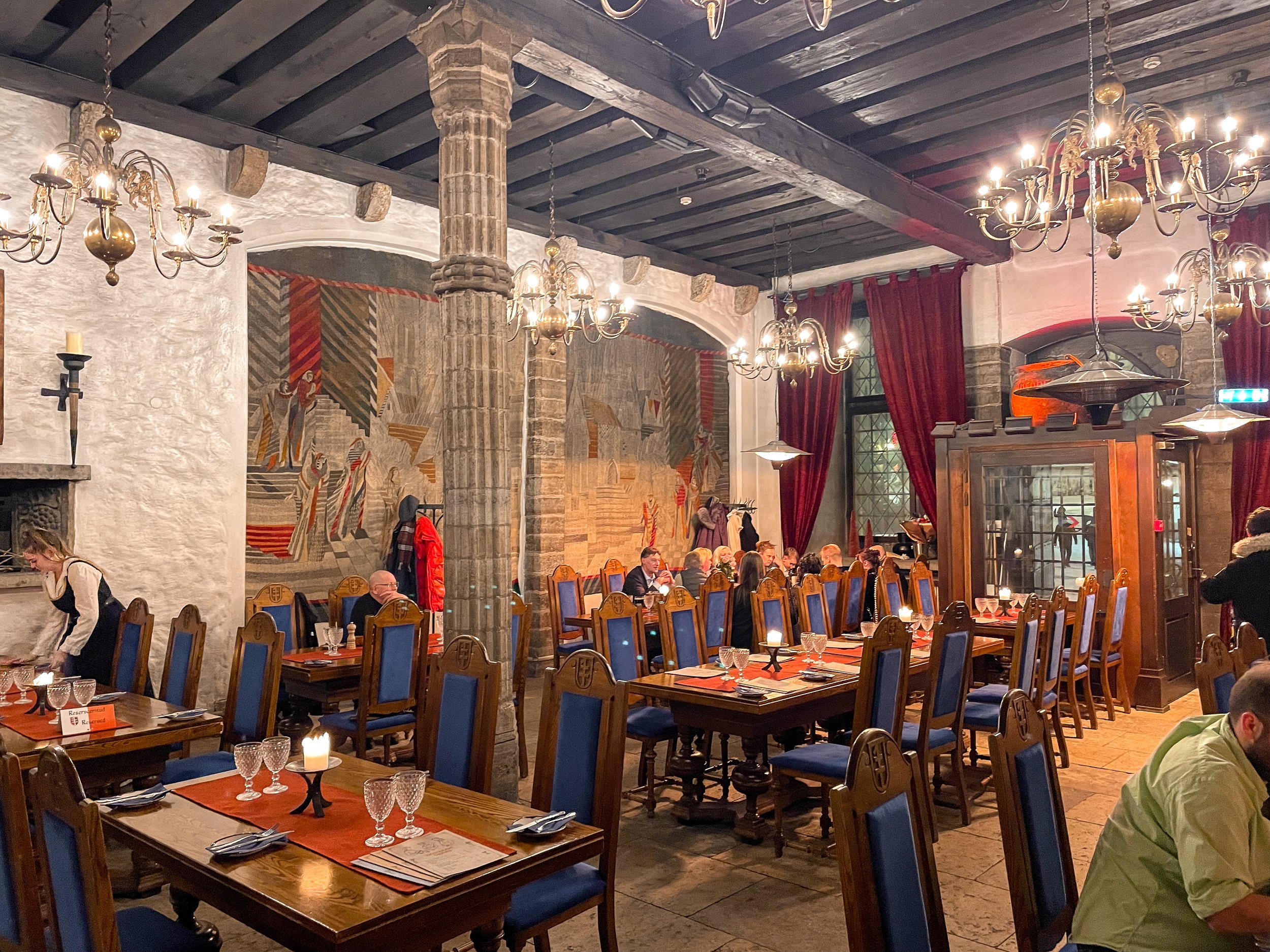
Peppersack. A medieval restaurant with plastered stone walls, candlelit tables, wooden furniture, velvet upholstery and costumed waiters. Come for a goblet of herbed beer and vegan sorrel soup made with sorrel leaves, potato, onion, carrot and dill. Add a hard boiled egg and sour cream to it for extra flavor.
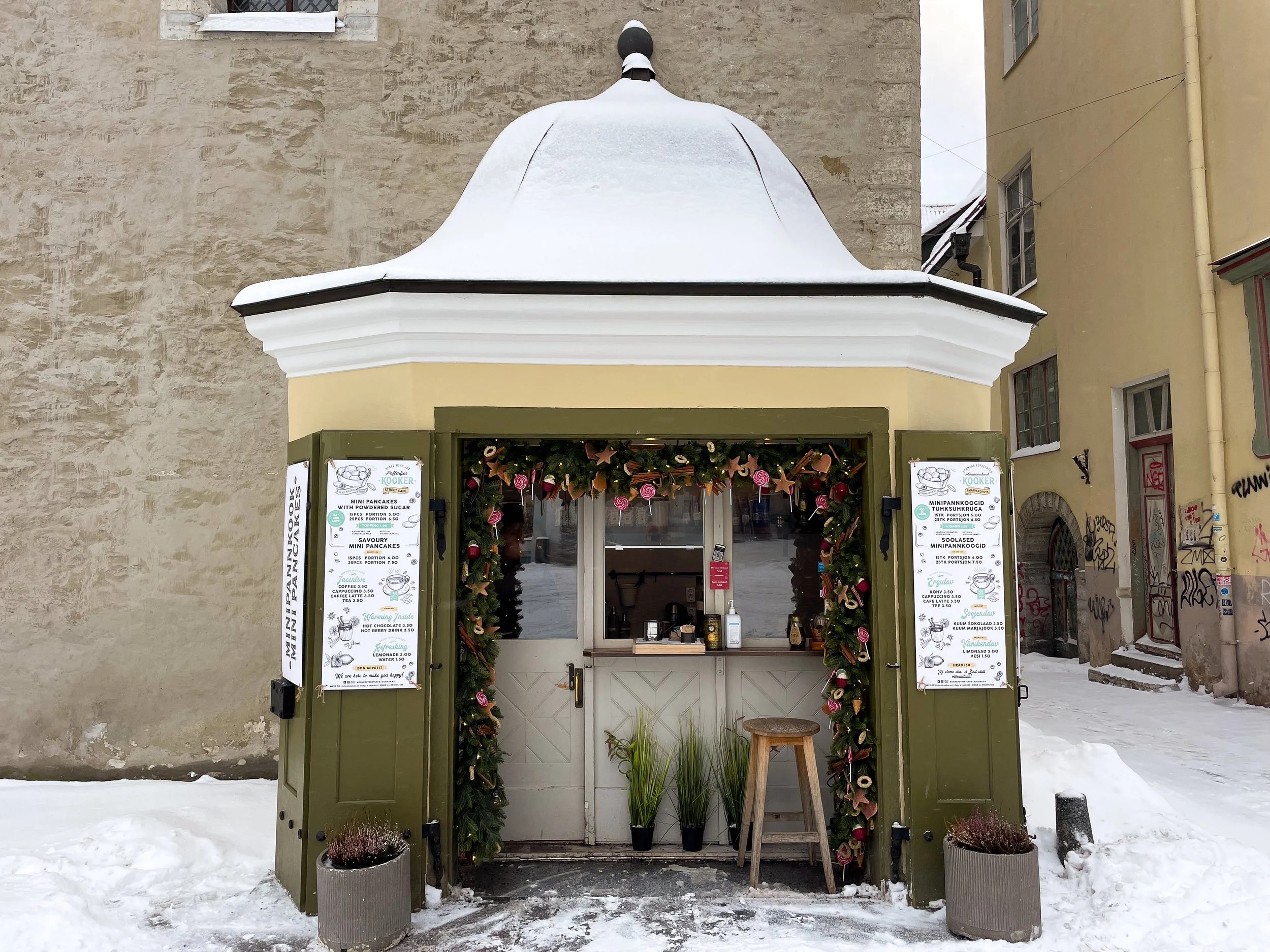
Kooker Raekoja Plats. A small street side counter serving mini grilled pancakes and hot beverages in edible cups. Try them topped with raspberry jam and sweetened condensed milk.
Saiakanig Kohvik. A café with sweet and savory breakfast pastries and pies filled with cabbage and sweet cheese.
The Babylon Bar. A second floor speakeasy hidden behind a bookshelf. Come here for their spirit forward cocktails, art deco atmosphere and Estonian cheese plate.
Sigmund Freud Bar. A cocktail bar with drinks themed after different moods and emotions. Cocktails are served in funky glasses with inventive garnishes. Sit at the bar or lounge on a therapist sofa.
The Cork Bar. A small bar in a brick and stone walled interior. It’s popular among expats and the younger crowd. Try the Estonian Coffee made with Vana Tallinn, a rum-like liquor made in Tallinn.
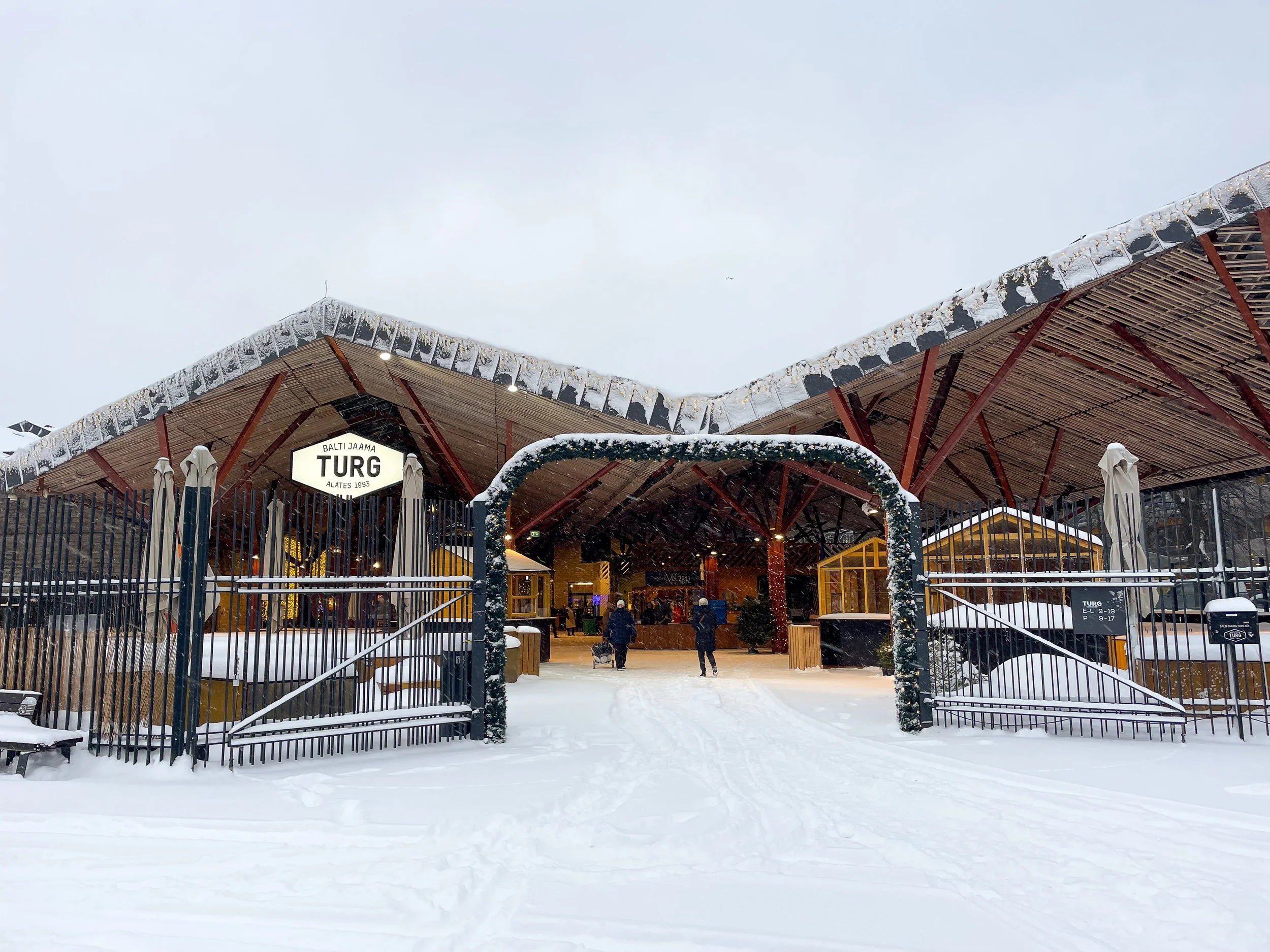
Balti Jaam Market. A three floor indoor and outdoor market with vendors selling produce, seafood, meats, grains, breads, pastries, cheese, chocolates, preserves, oils, flowers, soaps, etc. There is a range of international food vendors and restaurants. We came here for breakfast, sampling Estonian pastries.
Kringle. A twisted round of sweet dough with lemon and poppy seed.
Kaneelikuklid. A cinnamon and cardamom roll.
Where to Stay
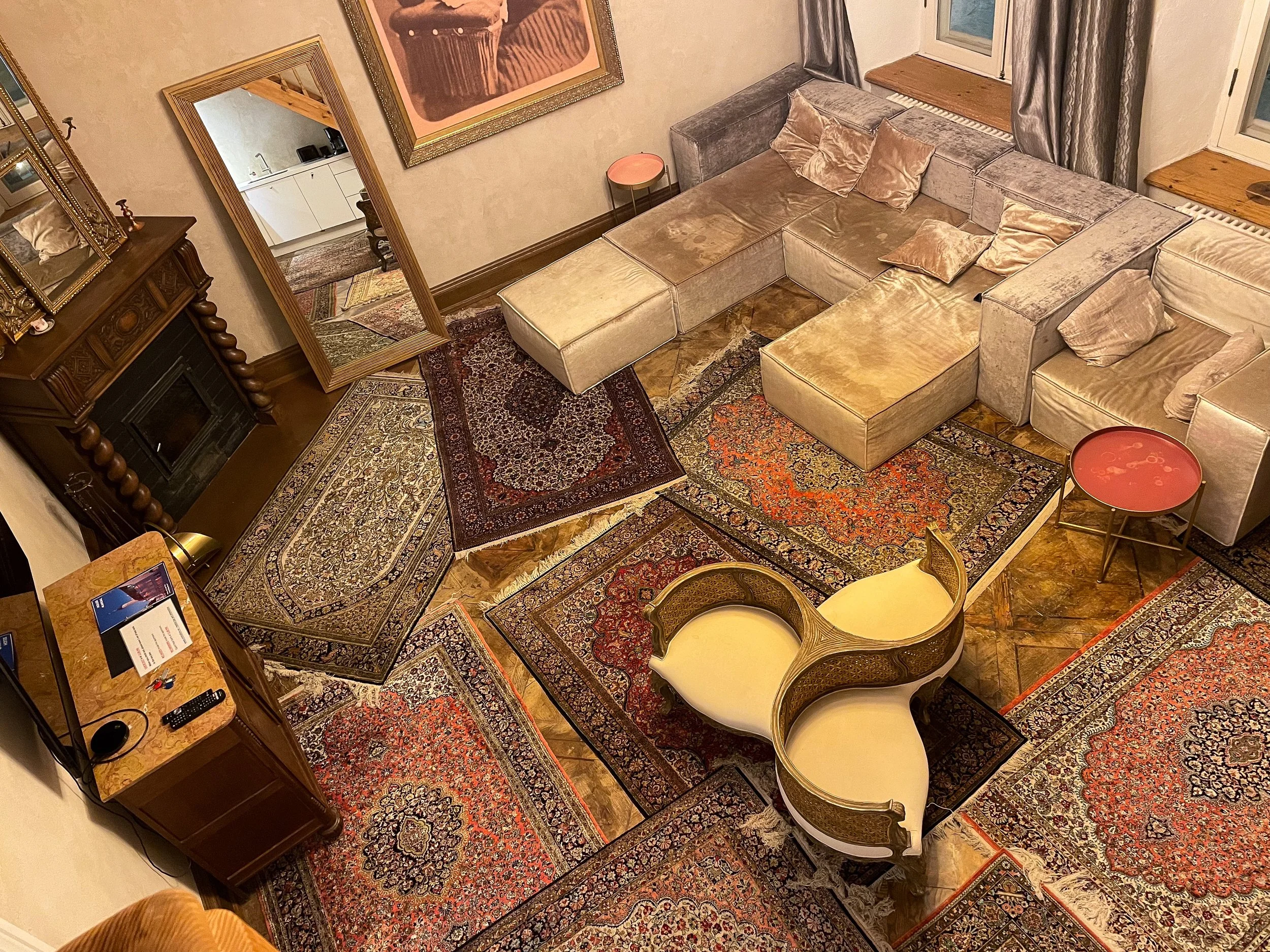
Merchant House. There are numerous unique stays in Vanalinn including former merchant houses, renovated defensive towers and inns. We stayed in a possibly haunted merchant house available on Airbnb with a working fireplace, tall ceilings and intricate wood floor overlaid with antique rugs.
Getting Here
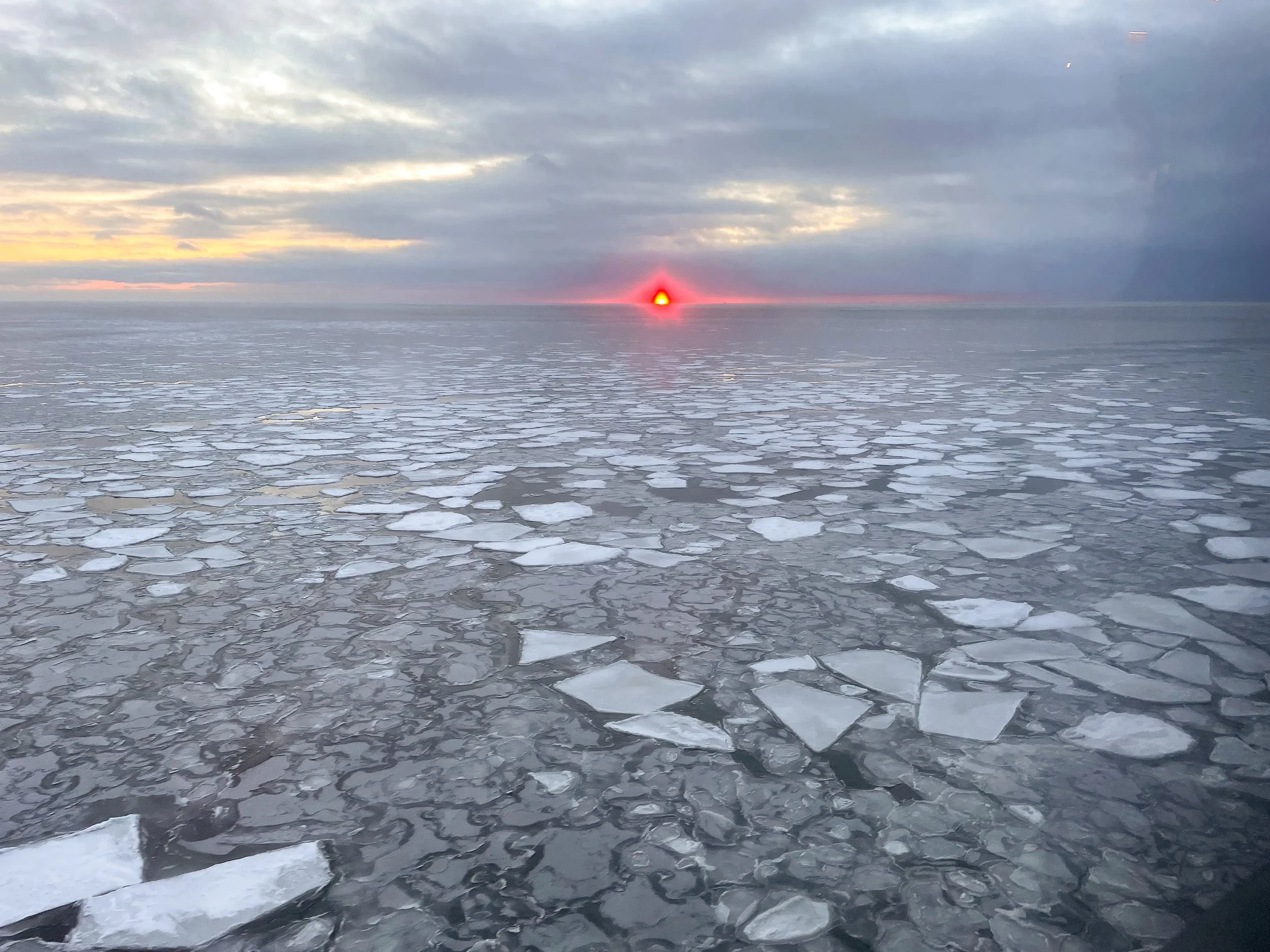
By Ferry from Helsinki. We arrived in Tallinn by ferry from Helsinki on the Tallink Line. The ferry was similar to a cruise ship with large seating areas, sleeping cabins, restaurants, bars, shops, a theater and casino games. The ship voyaged 3 hours across the icy and slushy waters of the Gulf of Finland.
For Next Time…
Three full days in Tallinn were just enough to explore the medieval city of Vanalinn. When we return, we plan to explore more of Estonia and the neighboring Baltic countries.
Kalamaja. A waterfront neighborhood outside of Vanalinn with maritime museums, food halls and saunas.
Kadriorg Park & Palace. A vast city park built for former Russian Tsar, Peter the Great. It’s home to museums, gardens and nature trails.
Riga. A coastal city on the Baltic Sea and capital of Latvia. The city’s cobblestone streets are lined with historic buildings, domed cathedrals and markets.
Vilnius Old Town. A medieval and baroque style old town in Vilnius, the capital city of Lithuania.
One Day in Helsinki: Finnish Sauna & Waterfront Sights
Experience a winter day exploring Helsinki's frozen waterfront where local food markets, historic architecture and steaming saunas bring Finnish culture to life.
Helsinki, Finland
Helsinki, the capital city of Finland, is known for its architecture, design, Scandinavian cuisine and Baltic saunas. We explored the city for one day while in transit from Finland to Estonia.
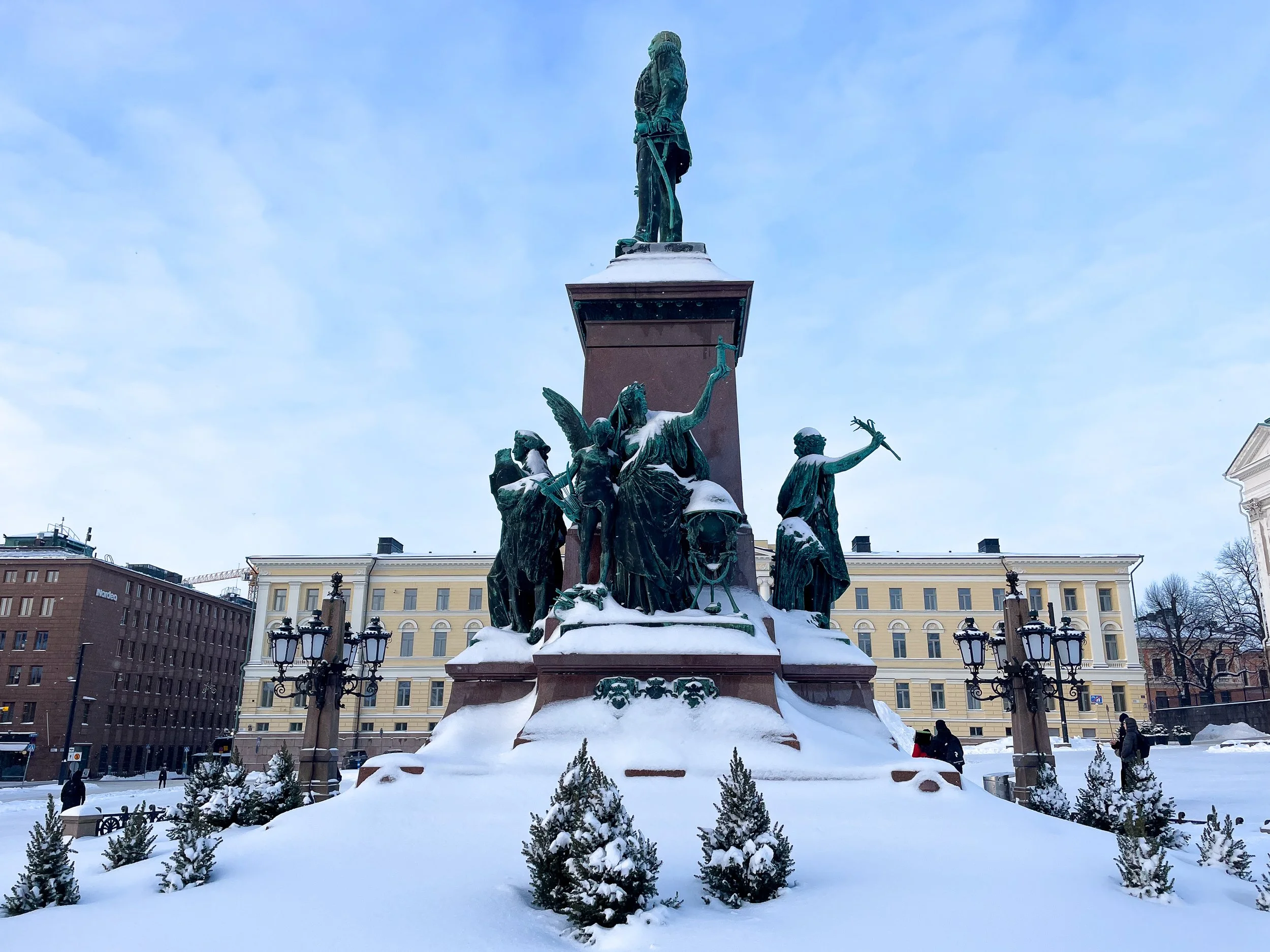
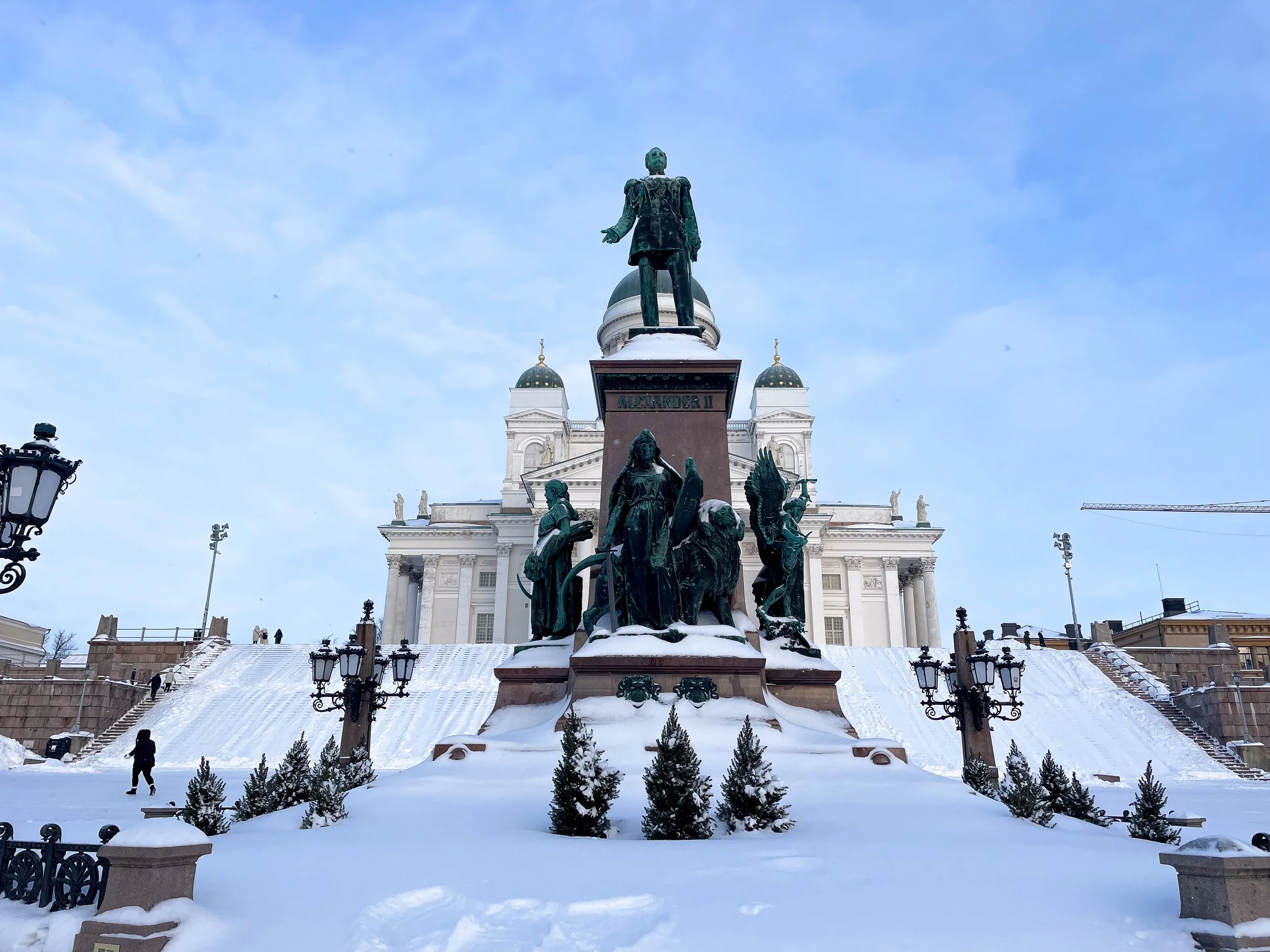
See the Sights
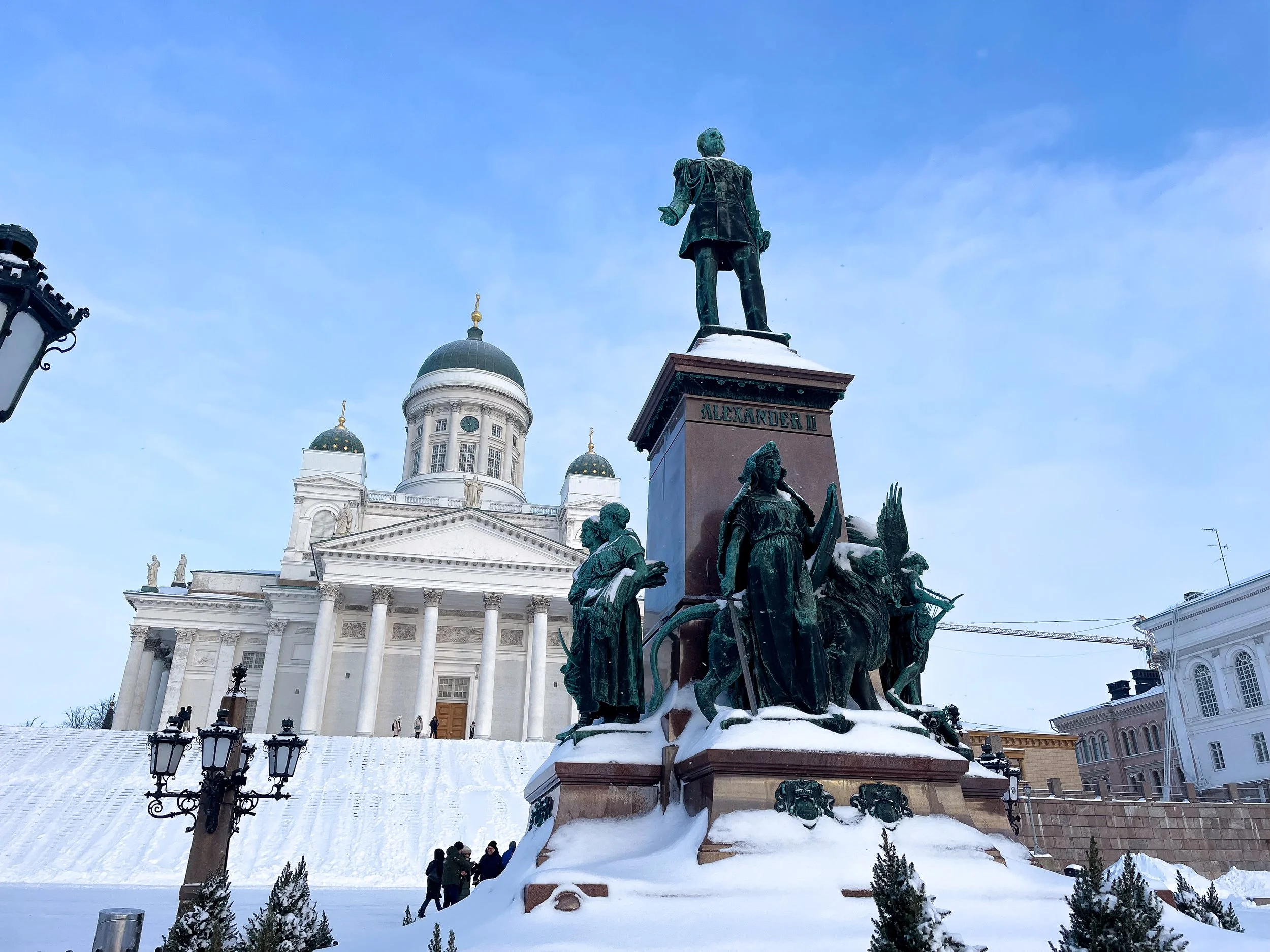
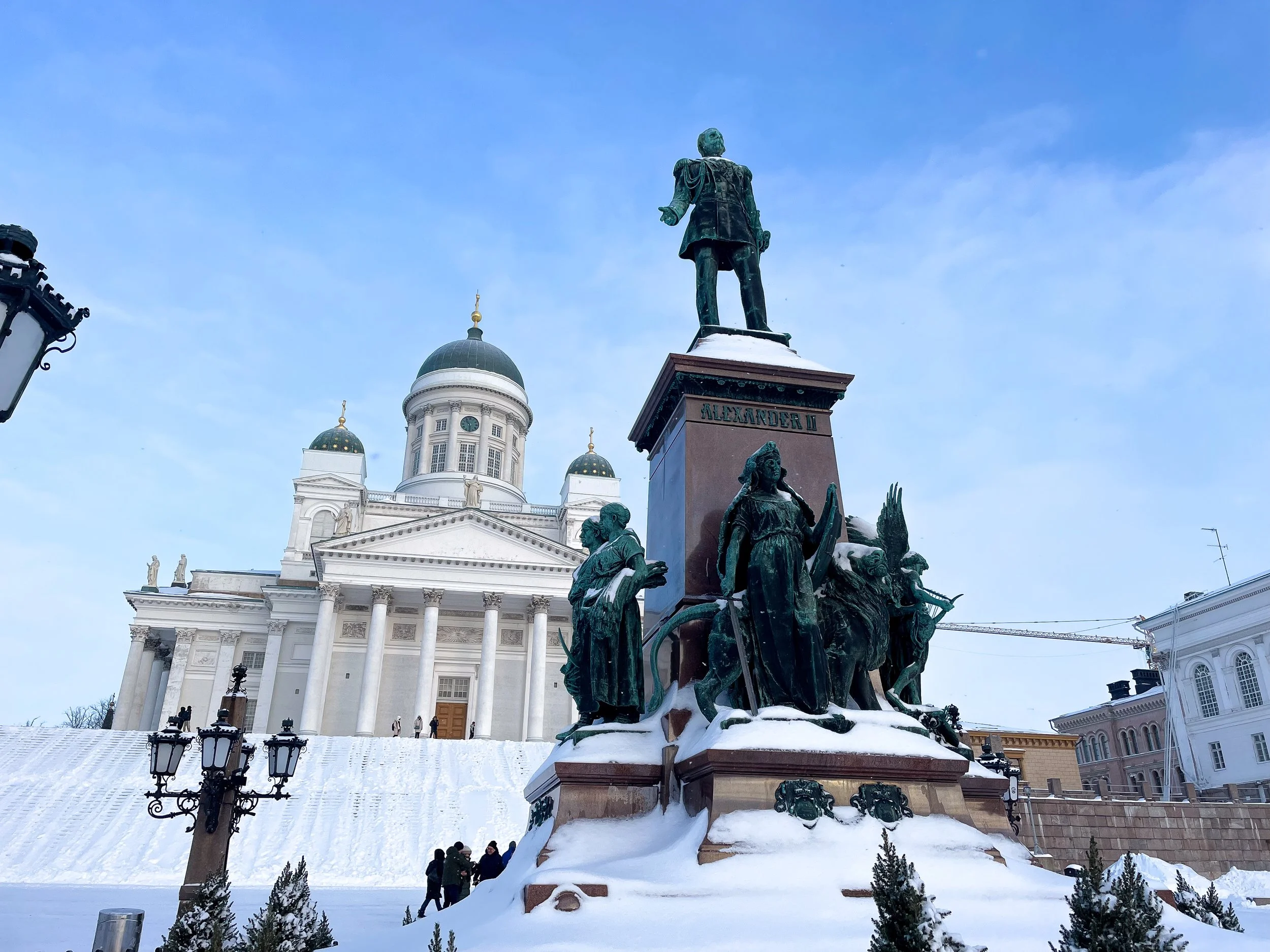
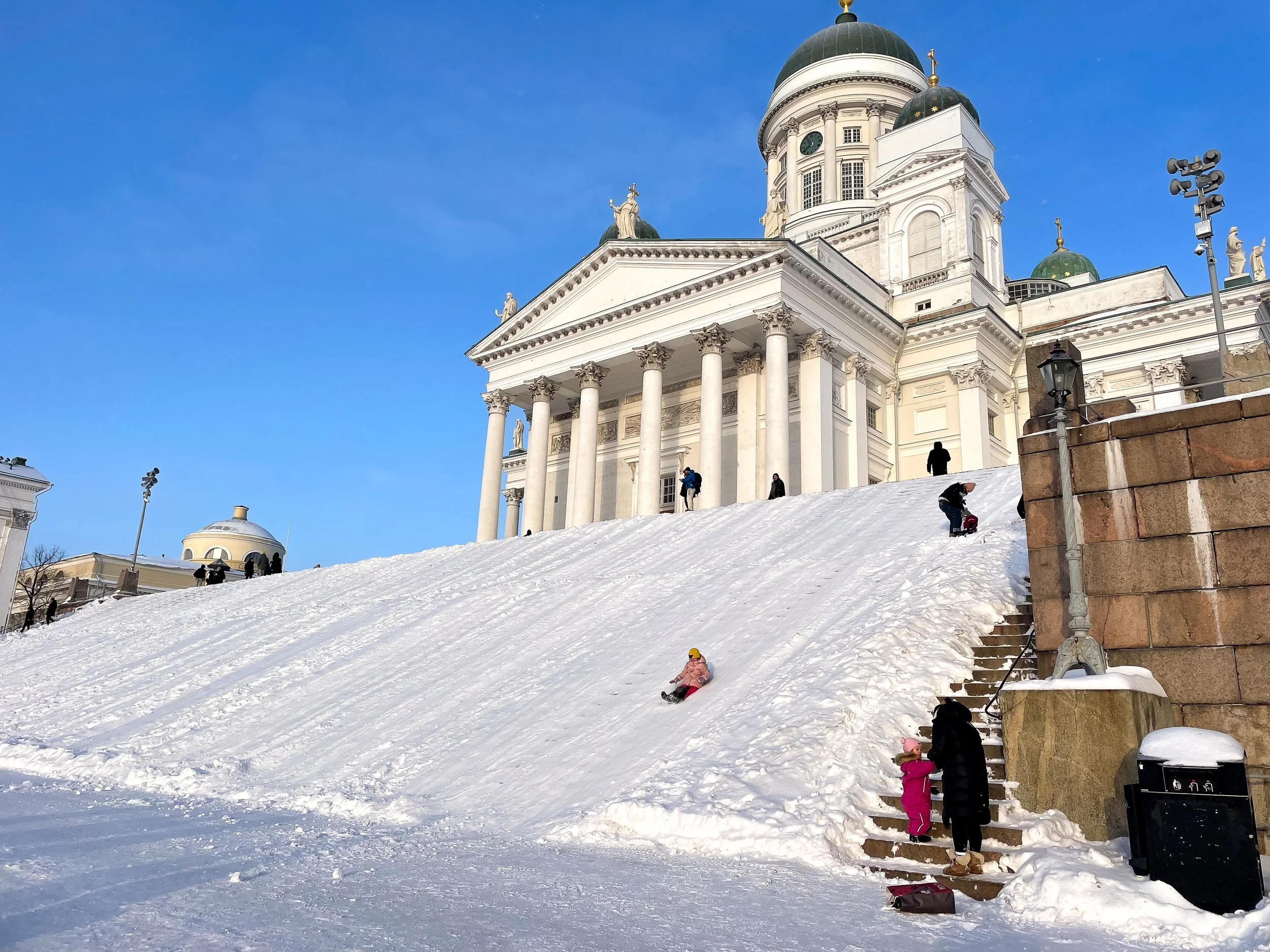
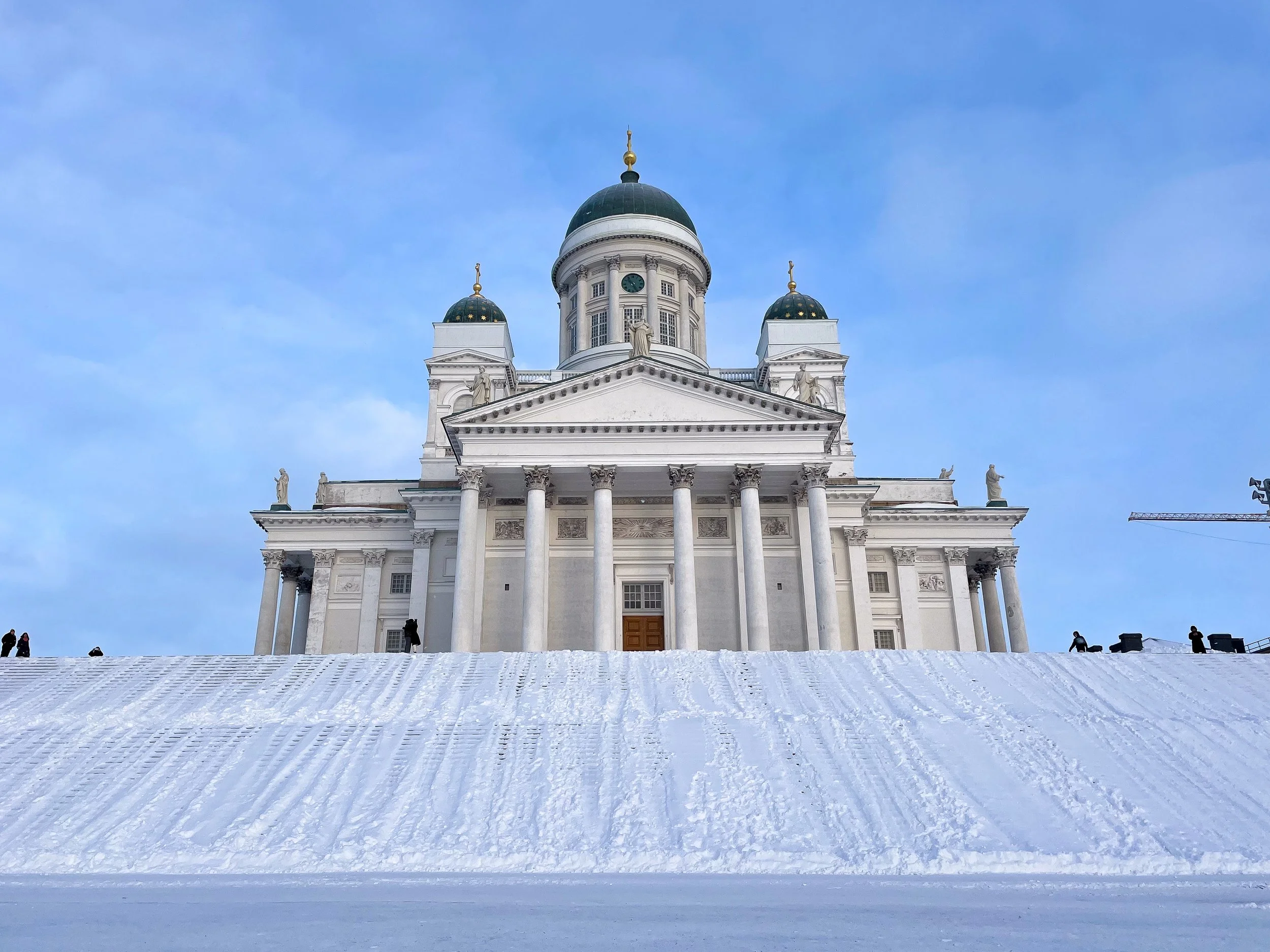
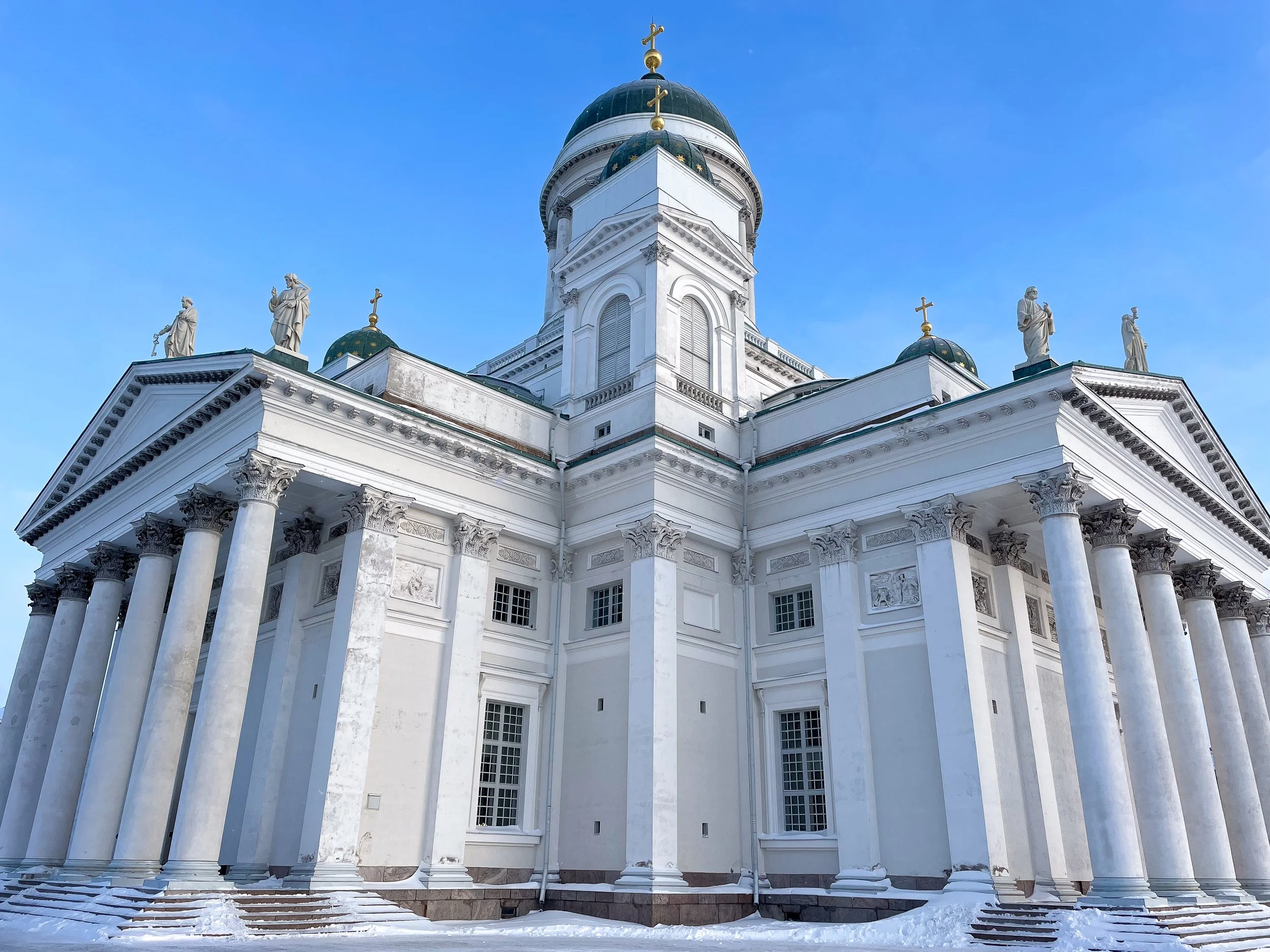
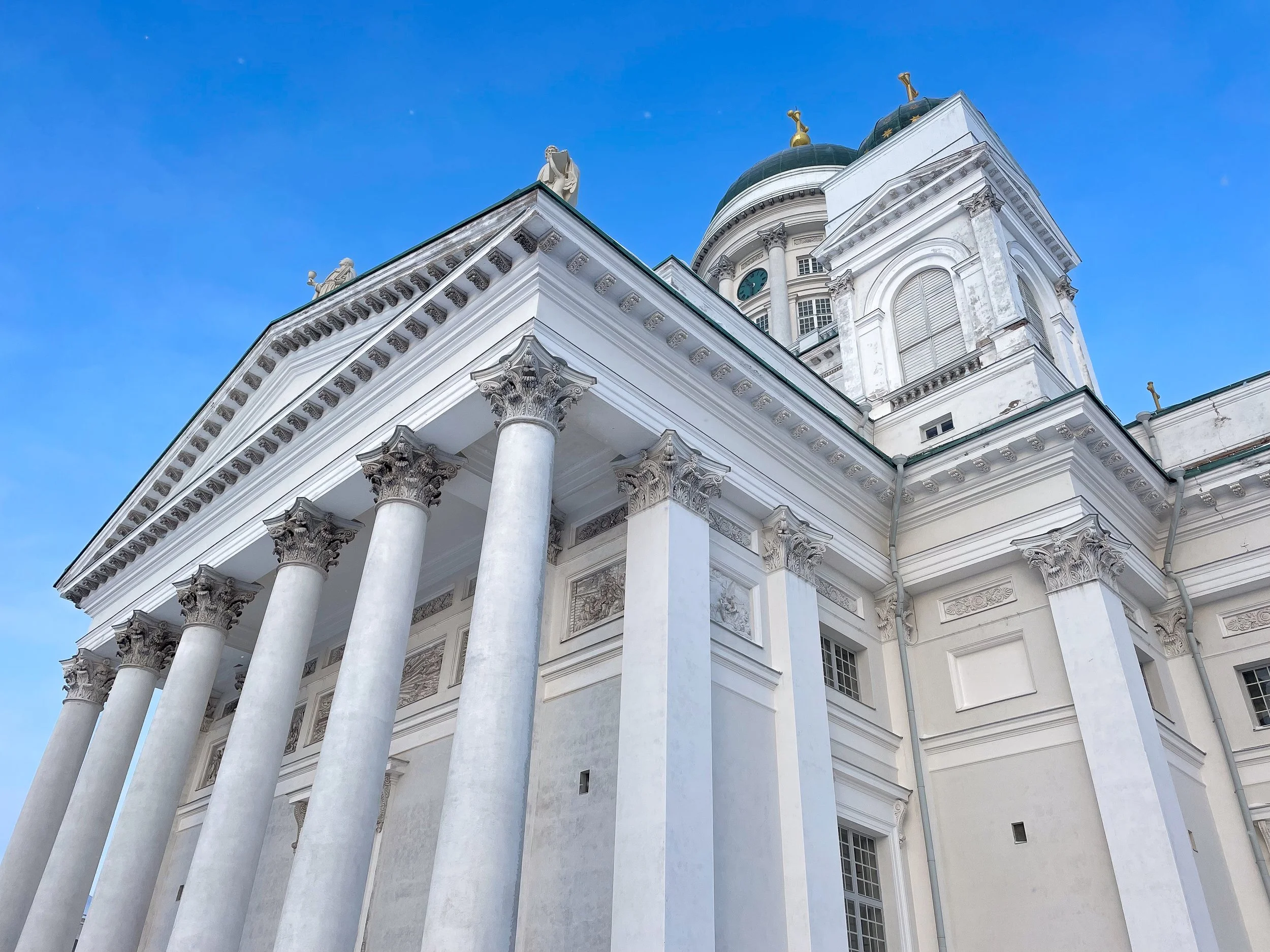
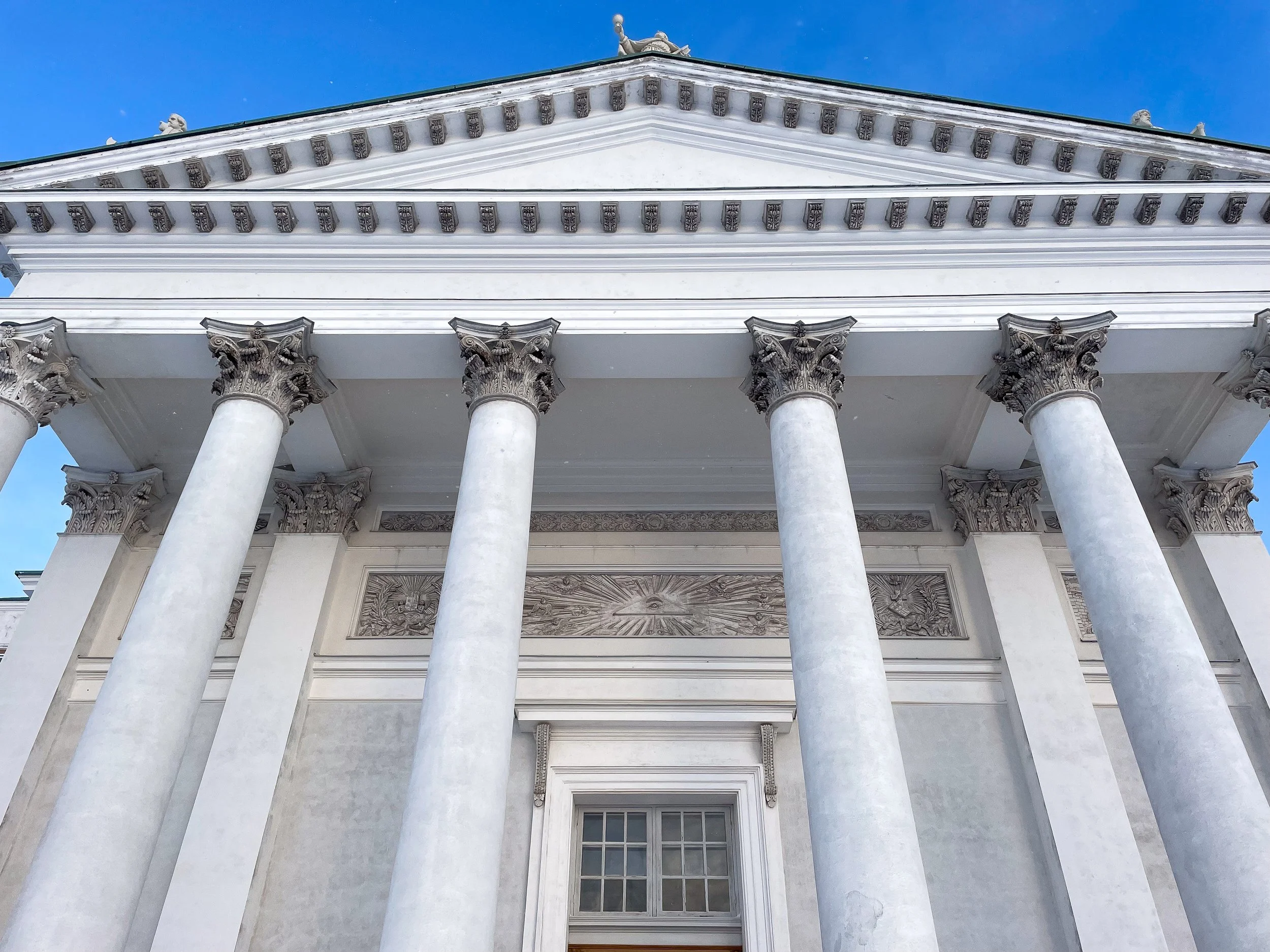
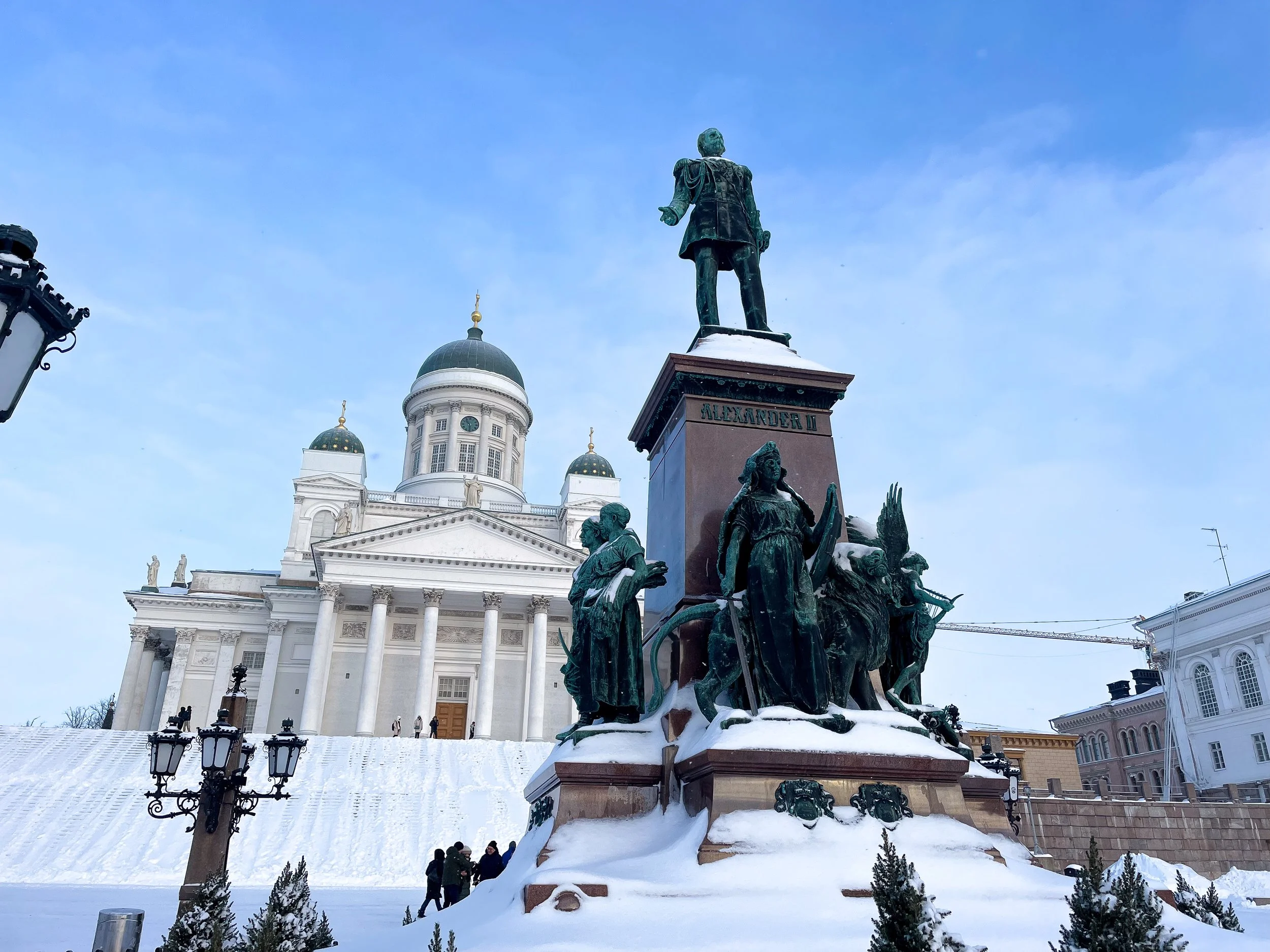
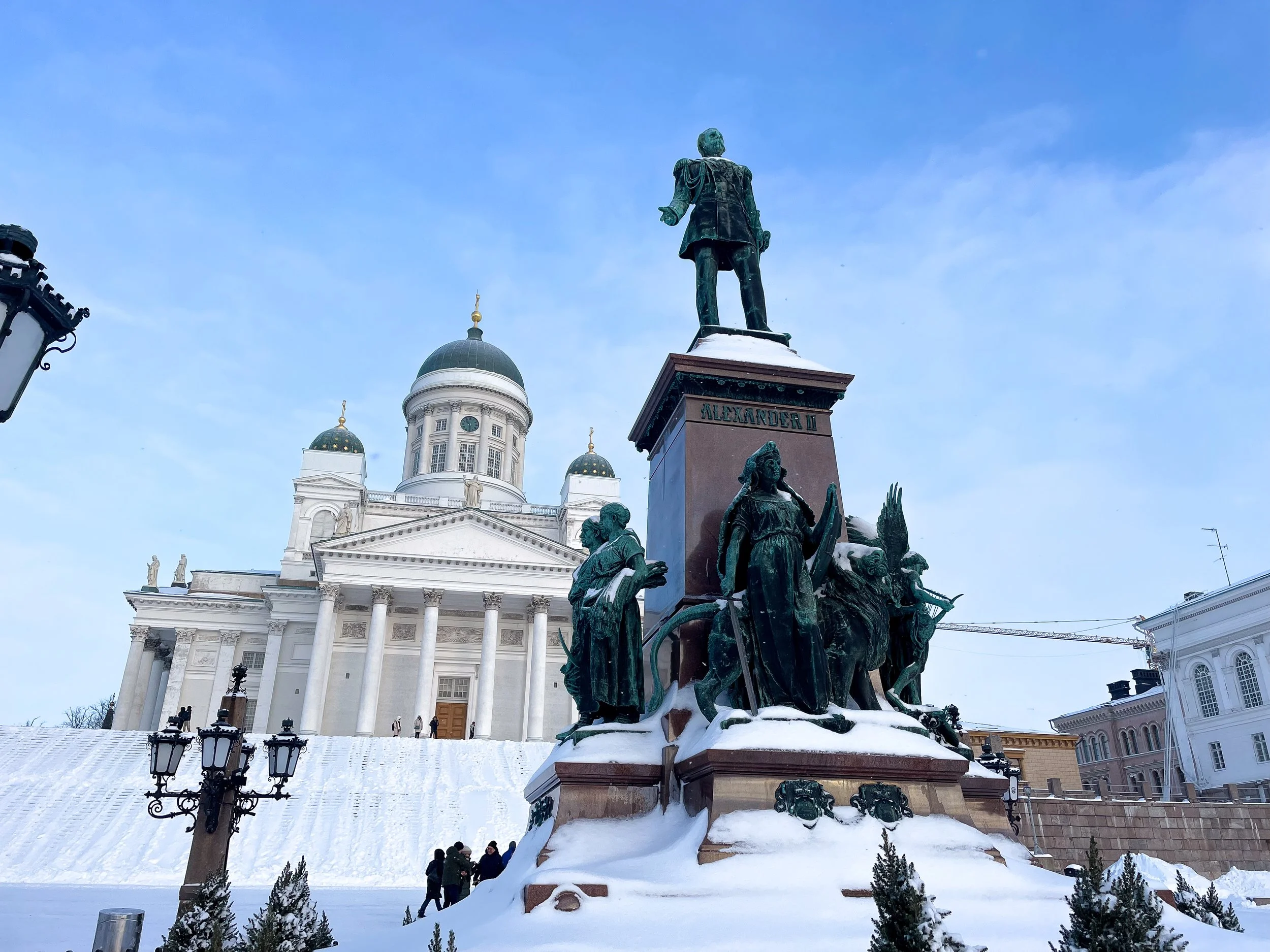
Helsinki Cathedral. A white neo-classical cathedral with 5 green copper domes located in Senate Square. During wintertime, the steps are covered in snow and become a sledding hill for children.
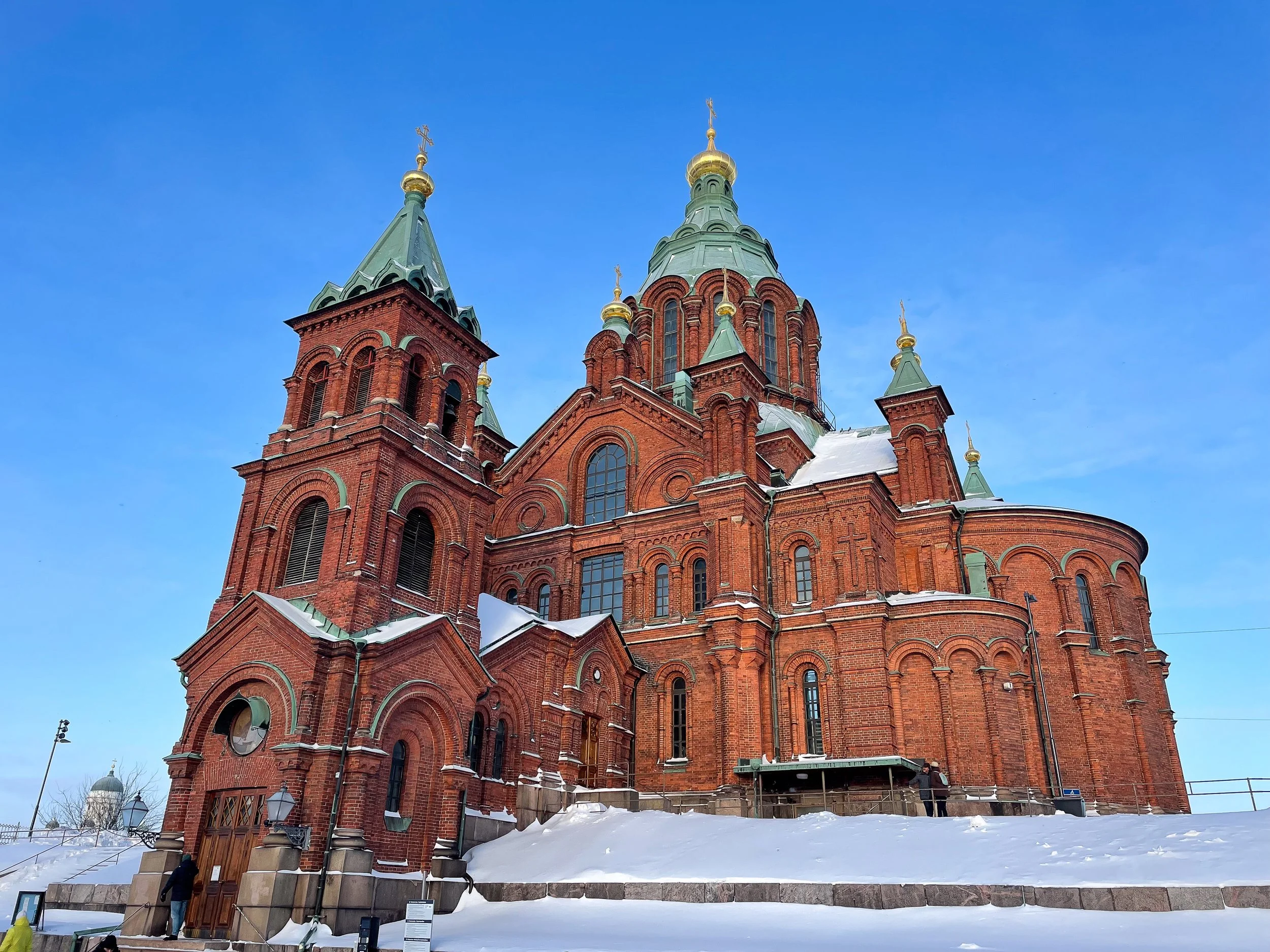
Uspenski Cathedral. A red brick Orthodox cathedral with copper steeples and golden onion domes. Its lavish interior is decorated in finely painted patterned and gold leafed imagery of Christian symbols.
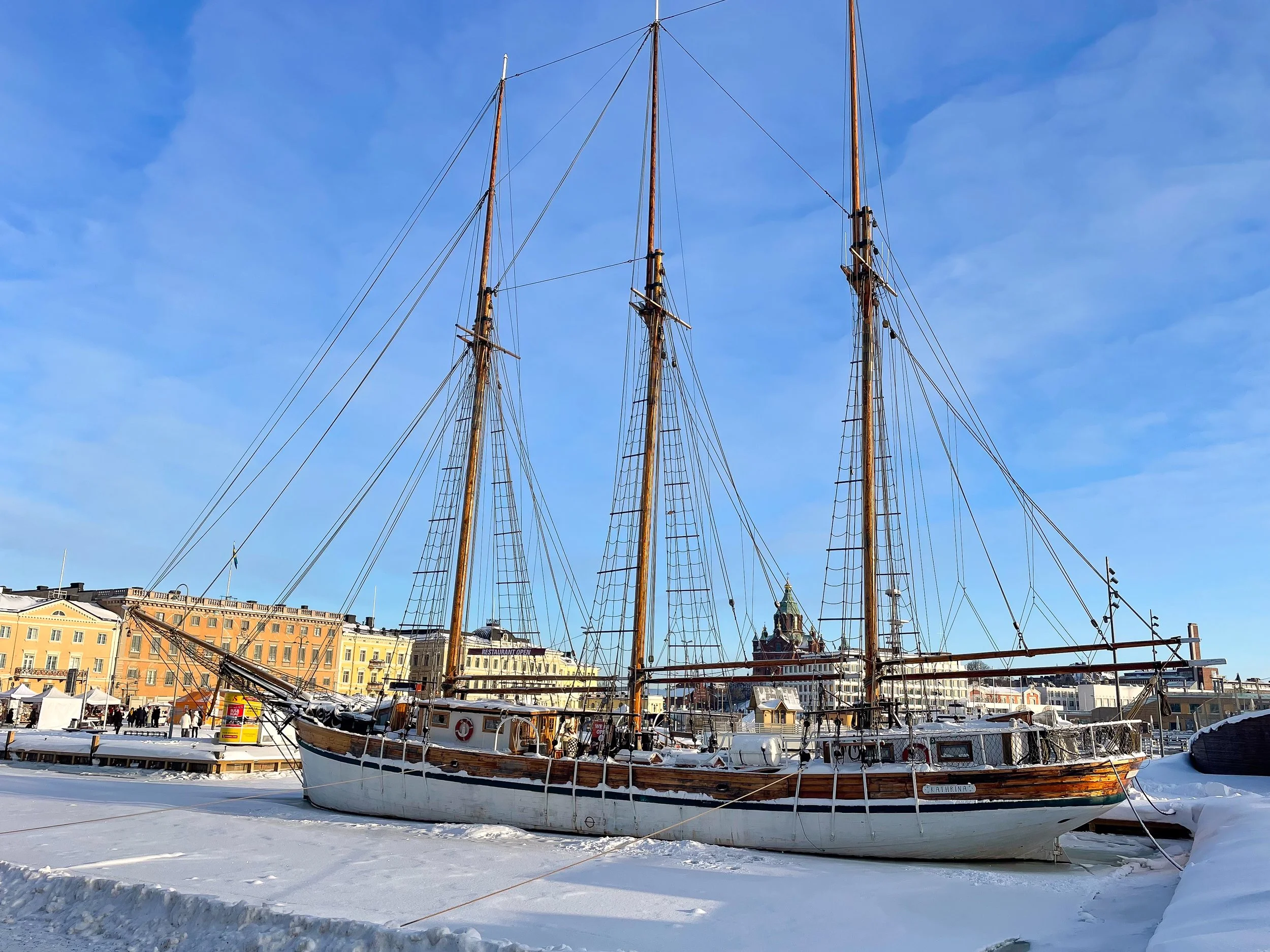
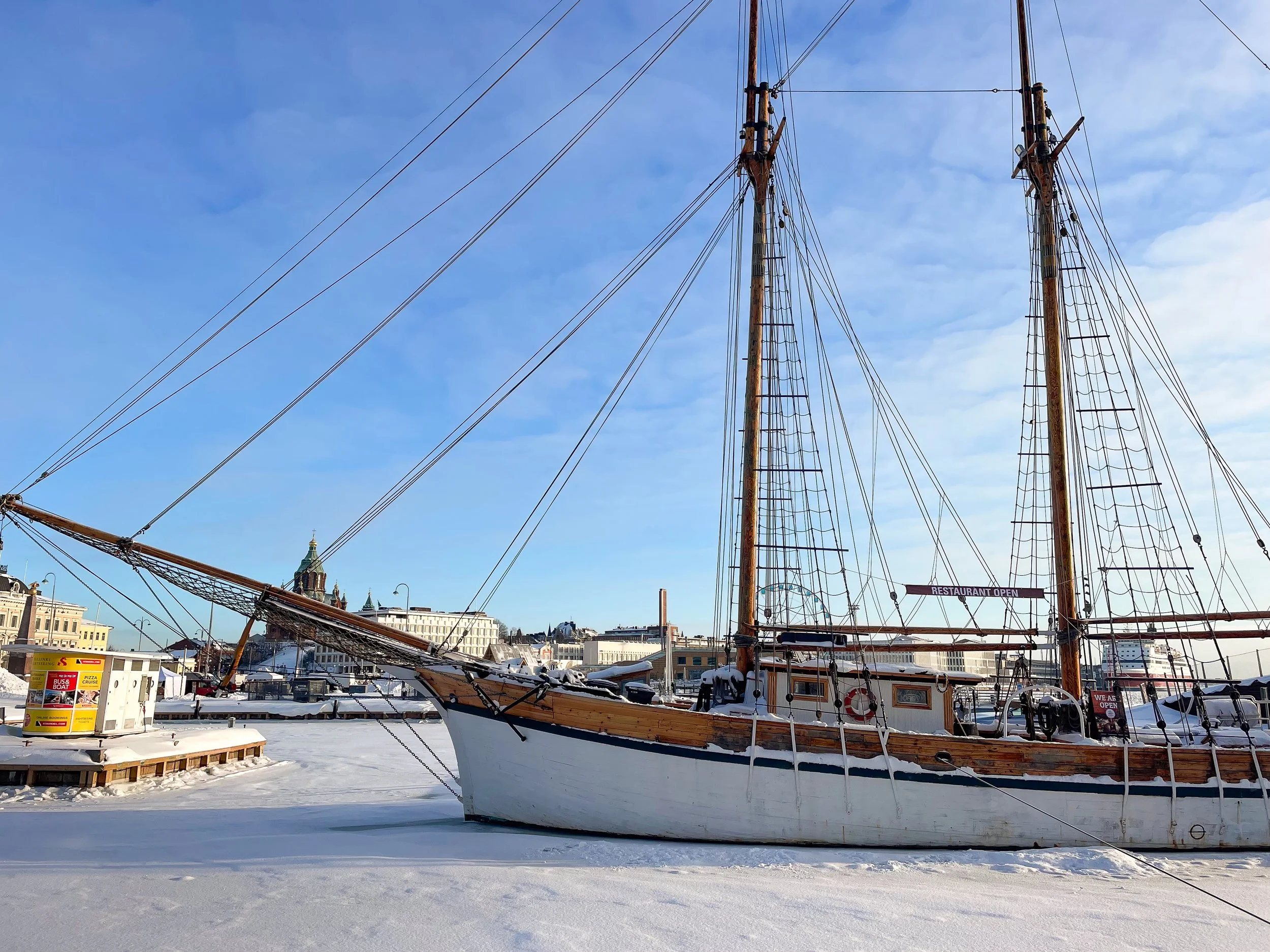
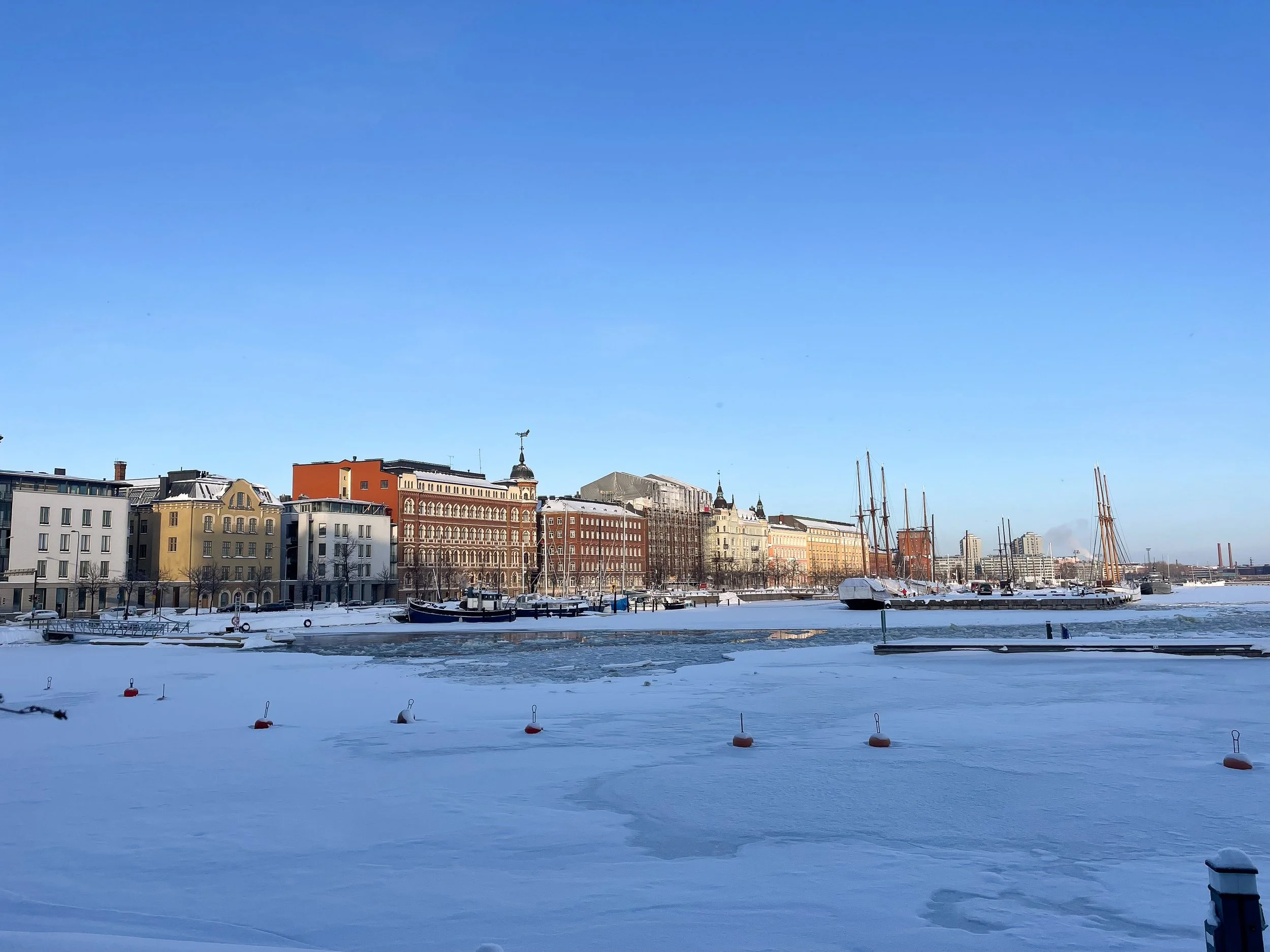
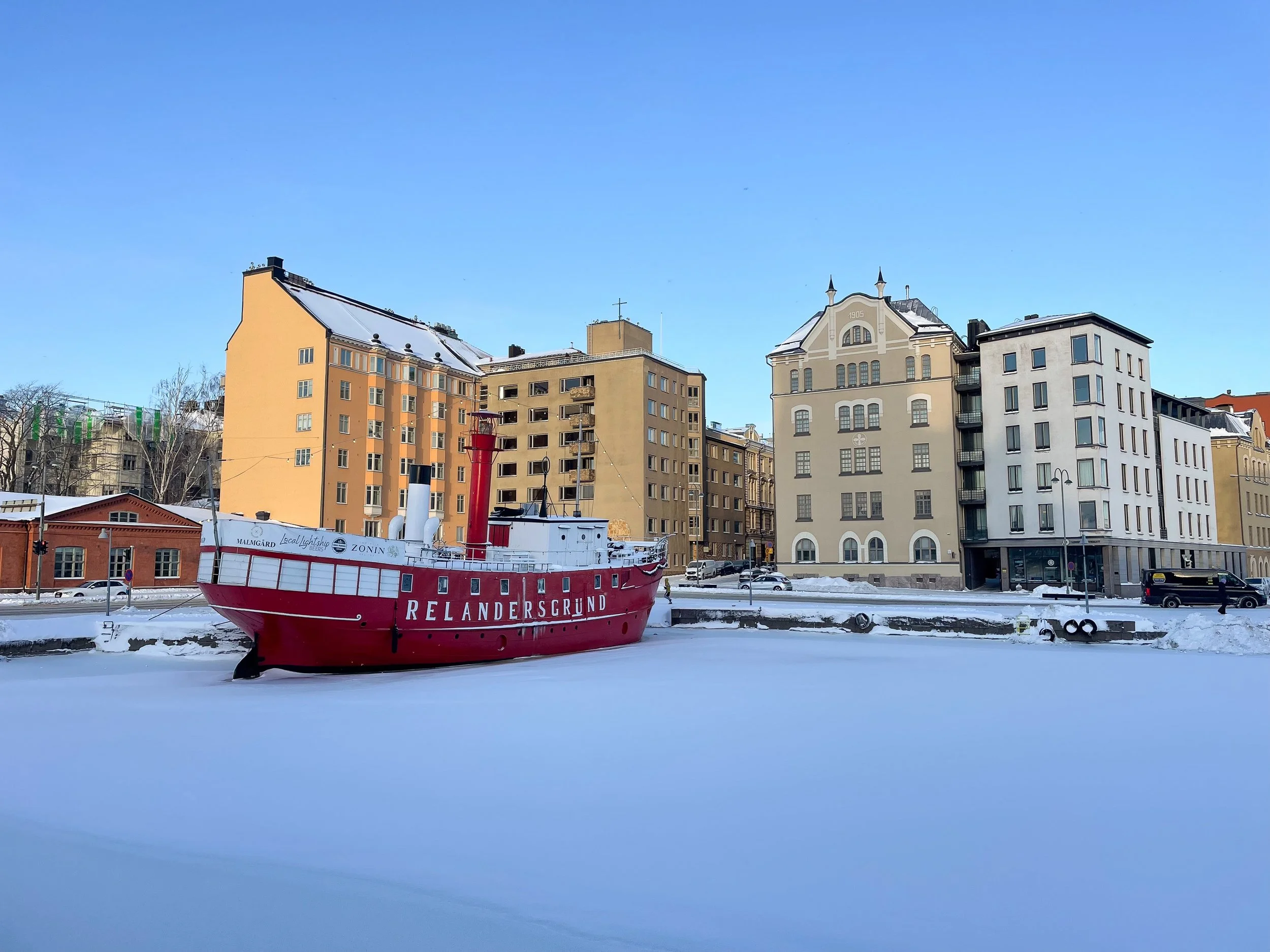
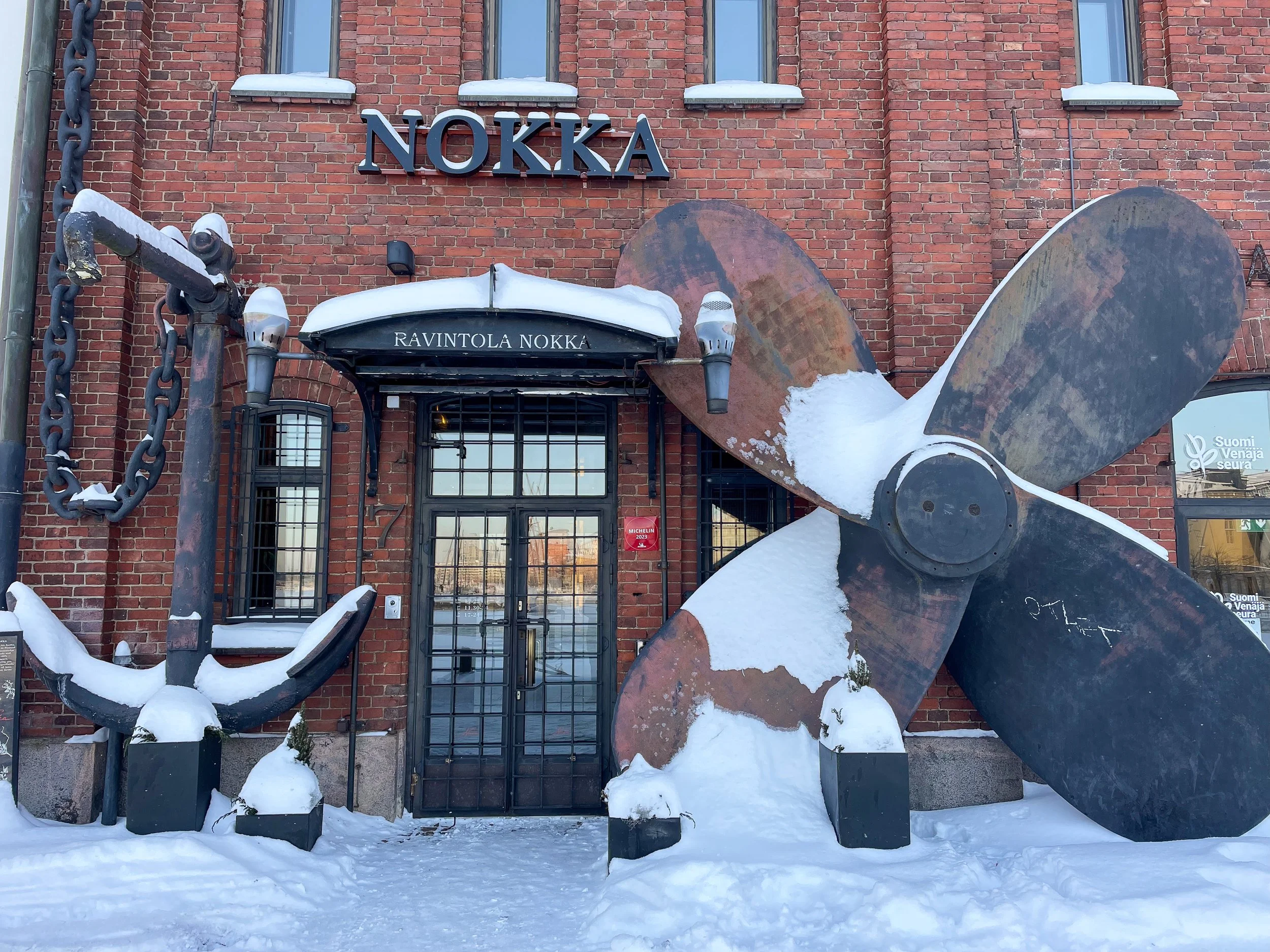
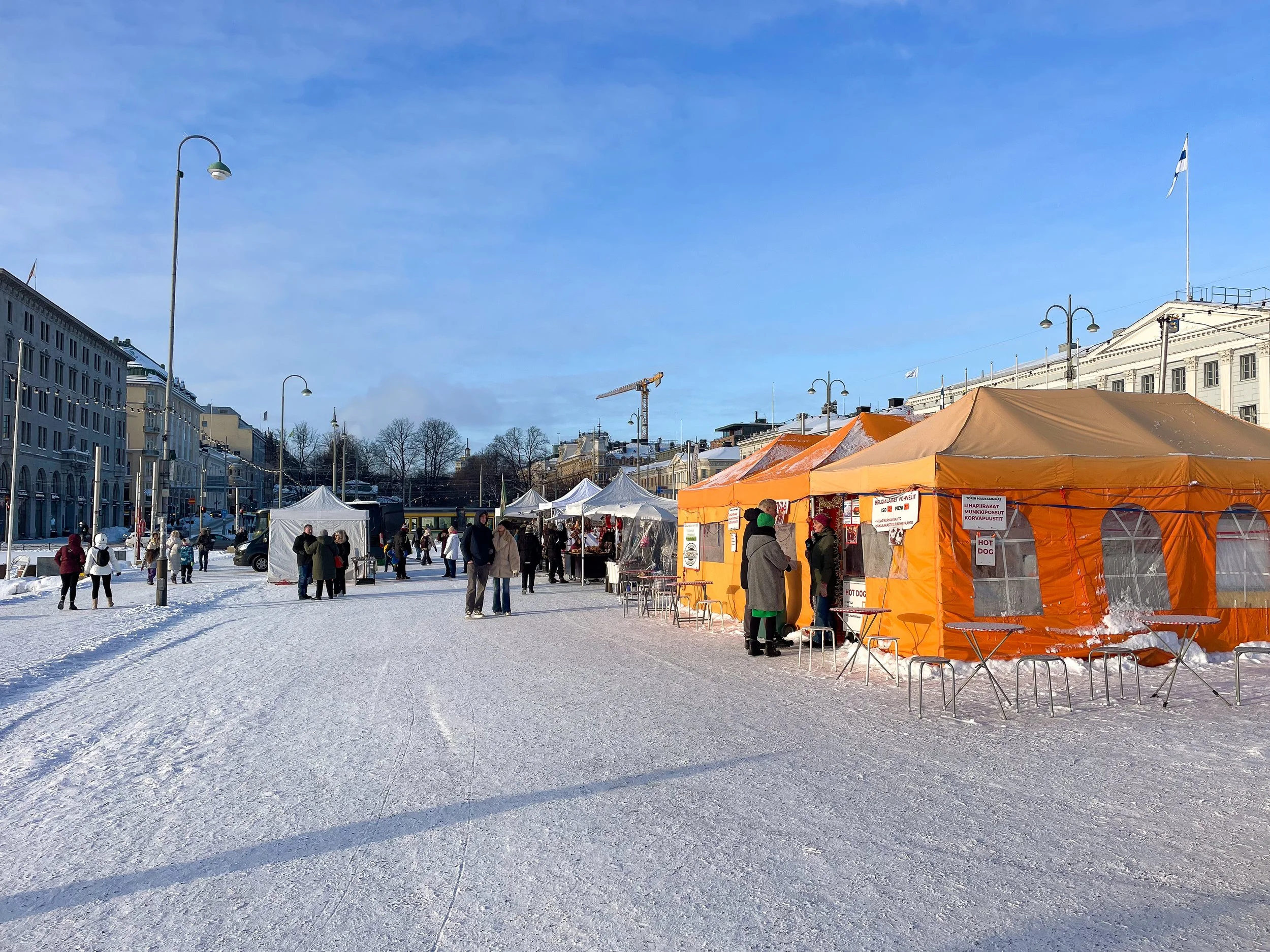
Helsinki Harbor. The city’s historic harbor is docked with wooden ships and icebreakers. It’s home to seaside saunas, food markets and government buildings including the presidential palace and city hall.
Market Square. A market with vendors selling Finnish foods, Sami handicrafts and souvenirs on the Helsinki Harbor across from City Hall. We tried the Lohikeitto (salmon soup) and Glögi (mulled wine).
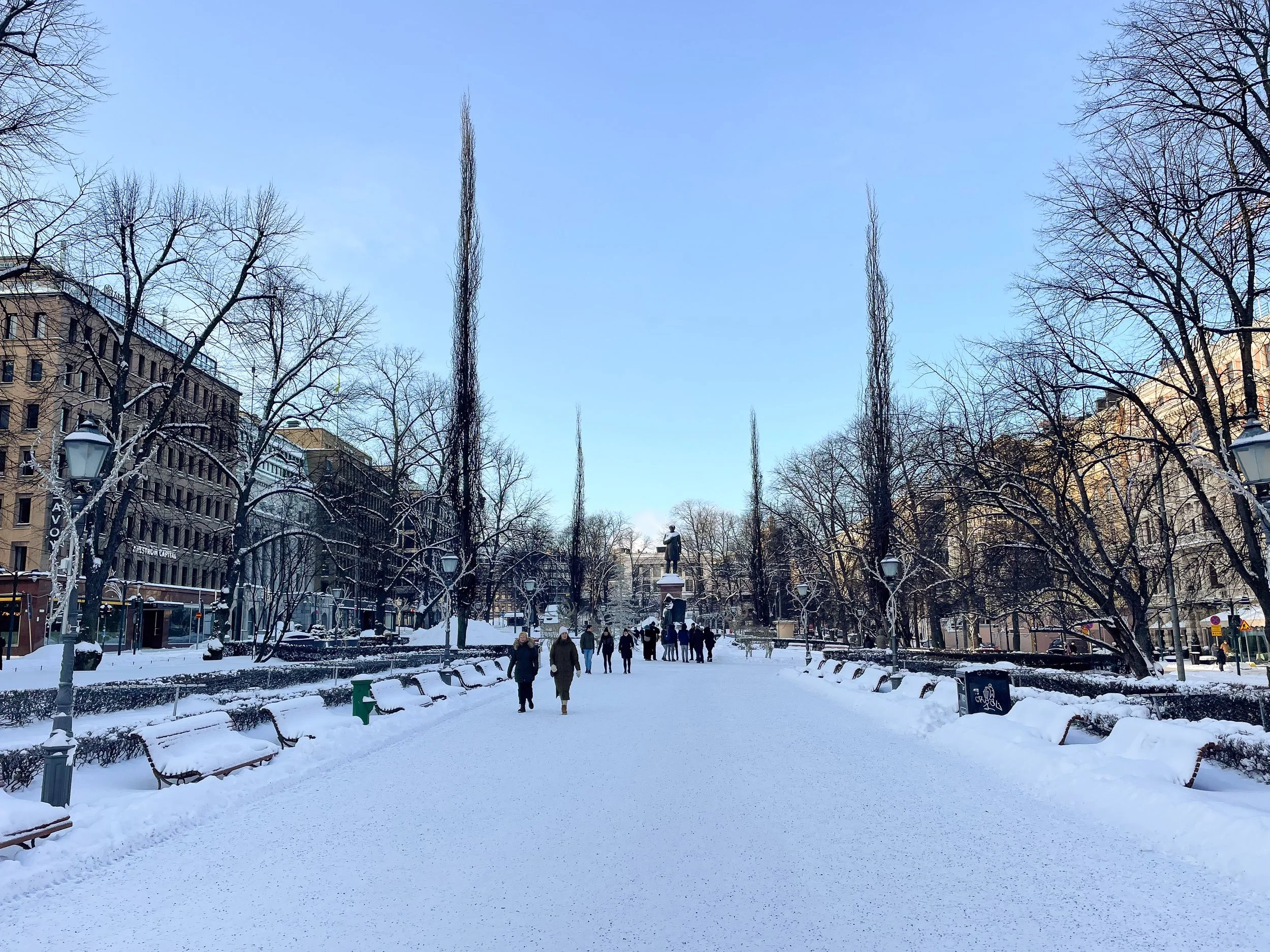
Esplanadi Park. A large city park leading from Market Square into the center of downtown Helsinki. It’s lined with walkways, trees, benches and bronze statues.
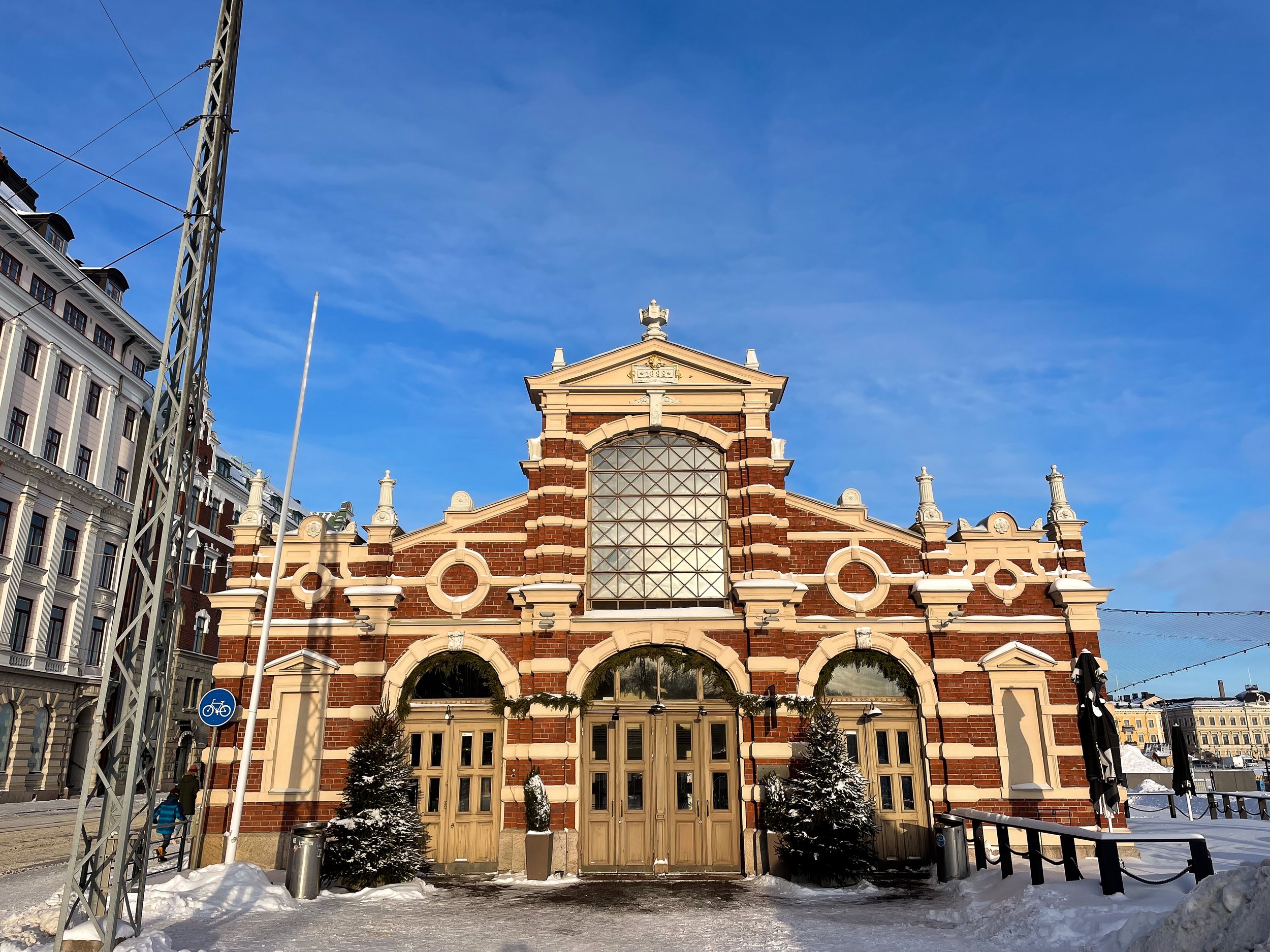
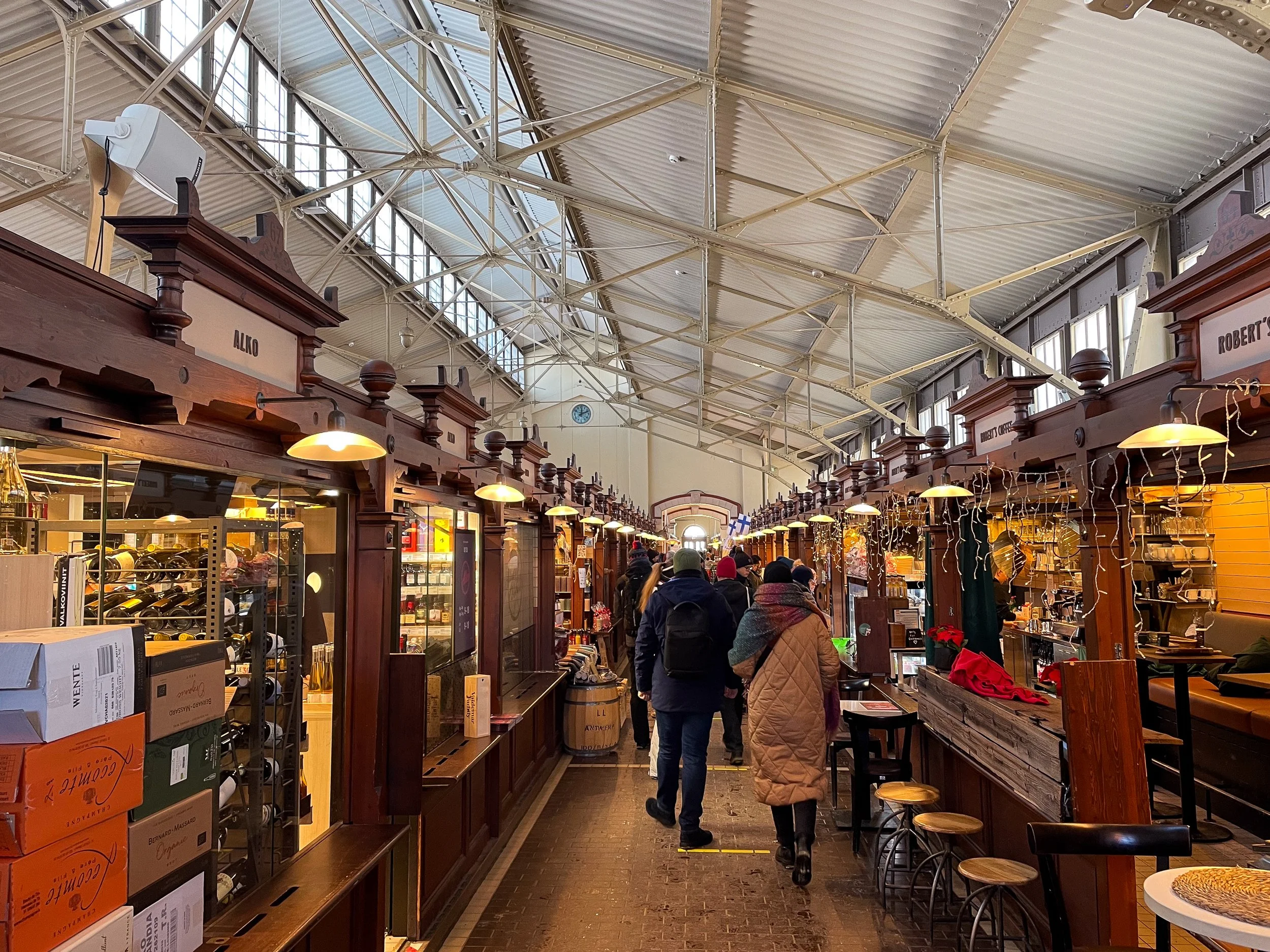
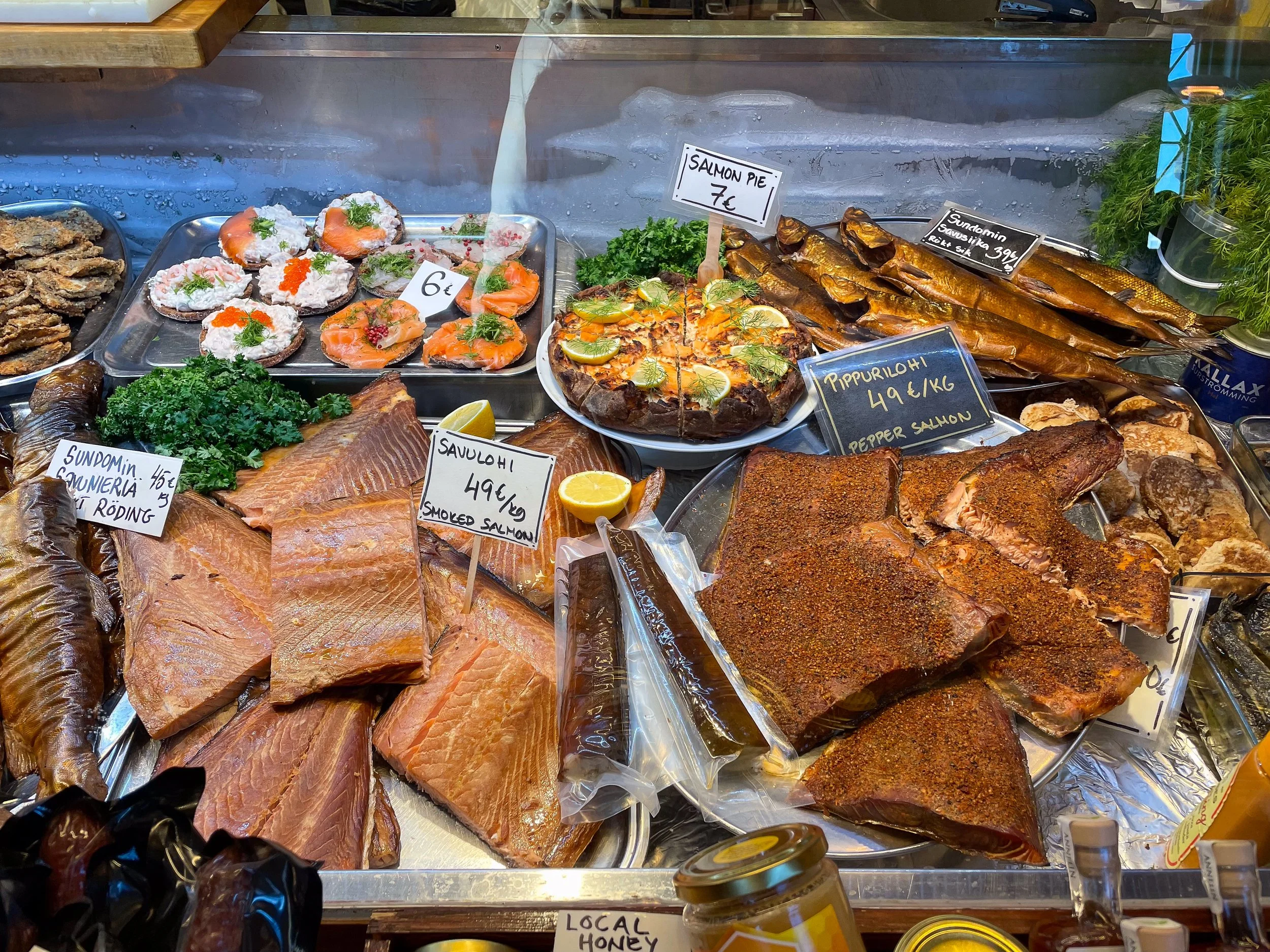
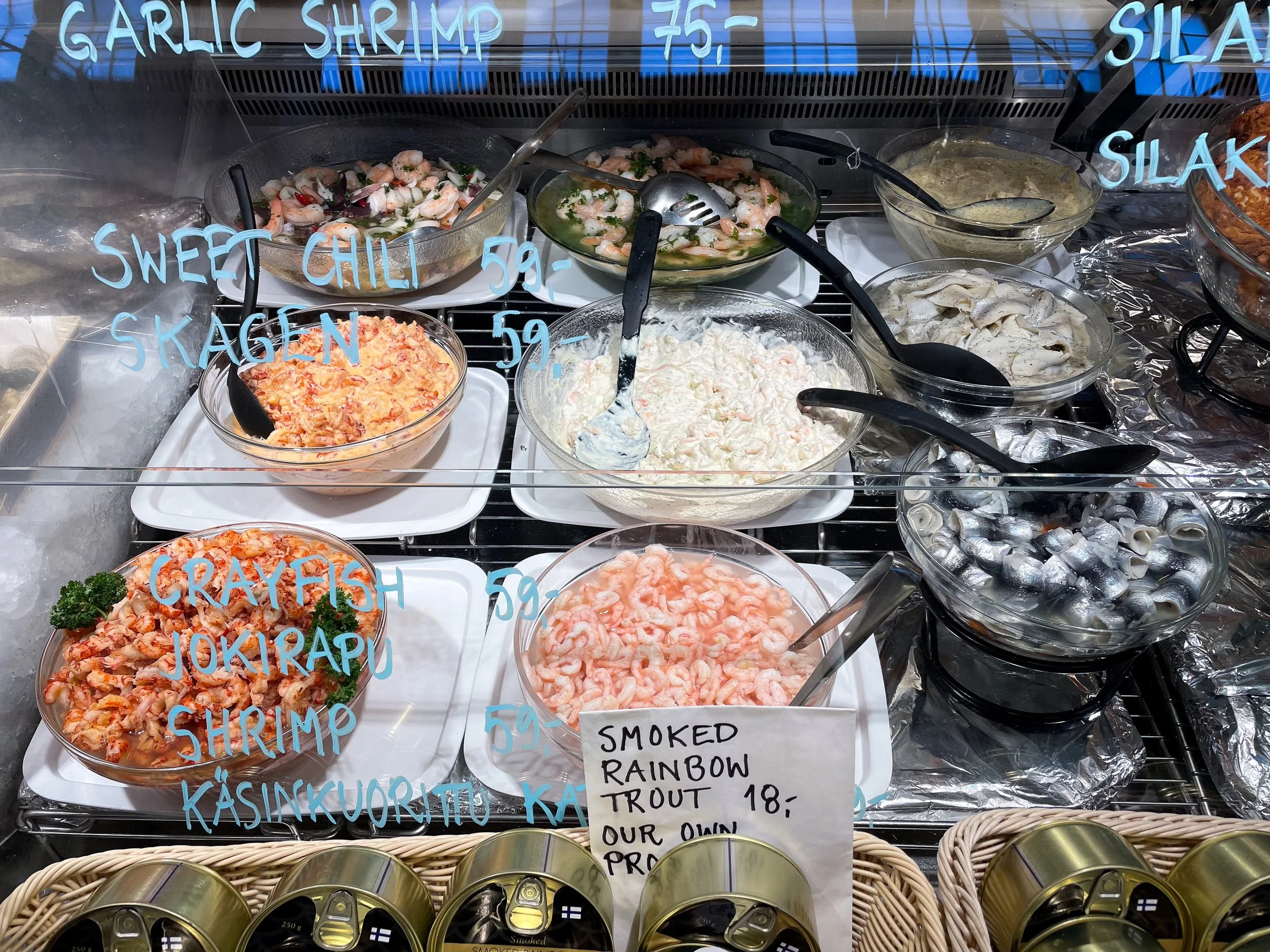
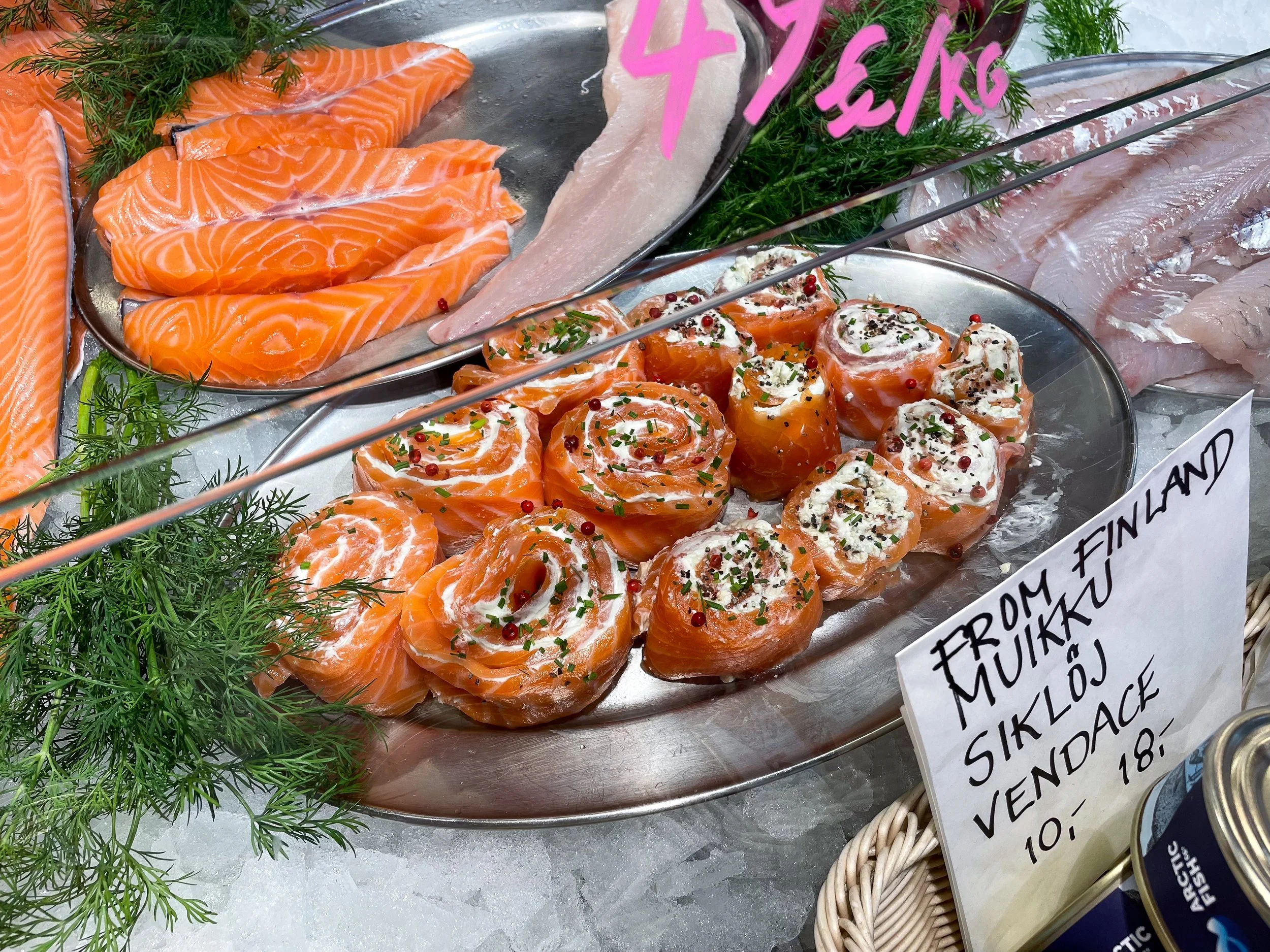
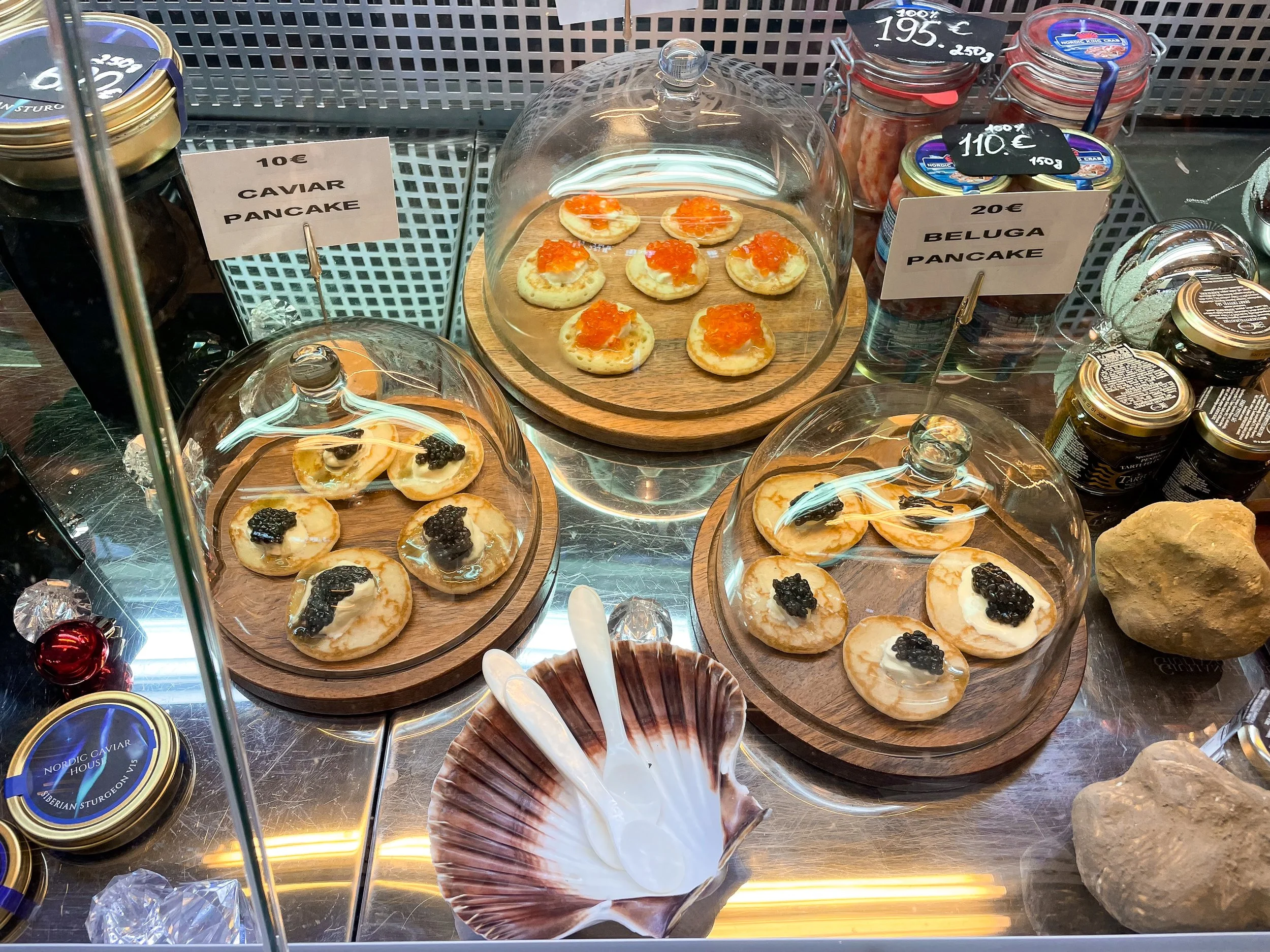
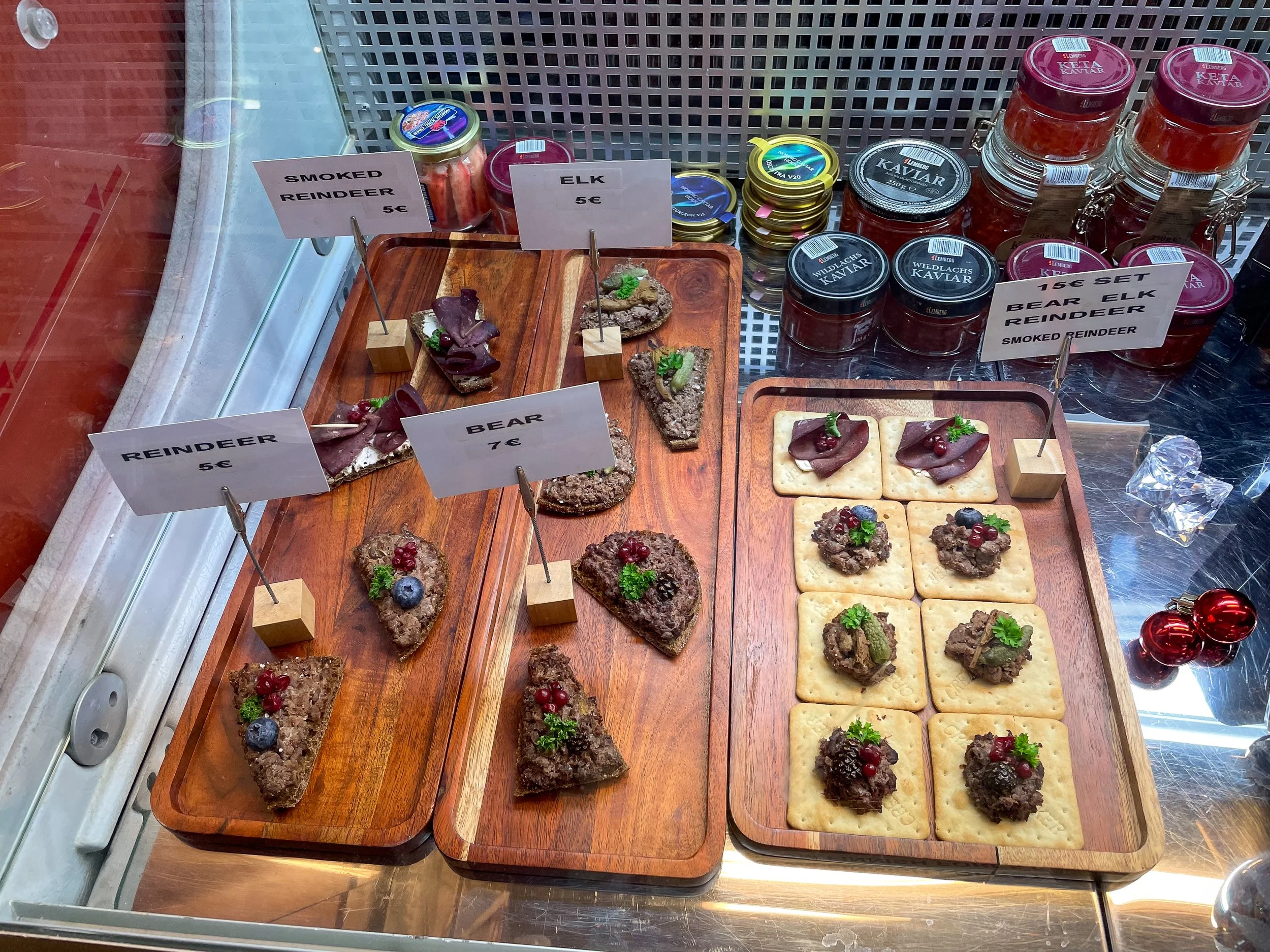
Old Market Hall. Helsinki’s oldest food market focused on Finnish cuisine with vendors selling and serving traditional dishes, pastries, seafood, meats and beer. Butchers sell sausage, smoked, canned and fresh meats like reindeer, elk, and bear. Seafood vendors serve salmon soup, smoked fish, pickled herring, cold water prawns and caviar. Cafés offer lingonberry pastries, Runeberg tortes and Korvapuustit. We came here for lunch and enjoyed a Finnish feast. We tasted a blini with beluga caviar, deep fried sprats, pickled herring in mustard sauce on rye toast, skagen and a Runeberg torte.
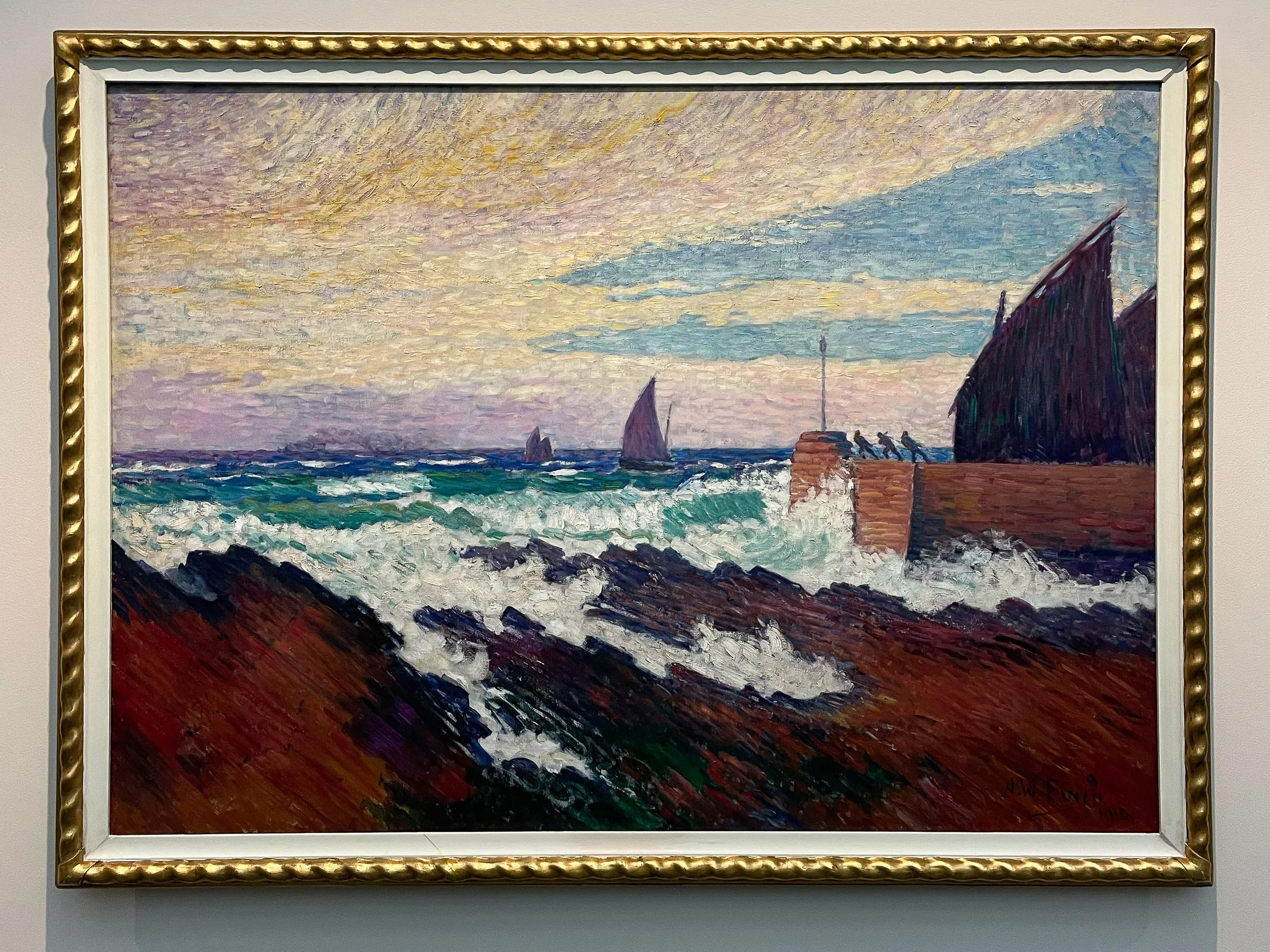
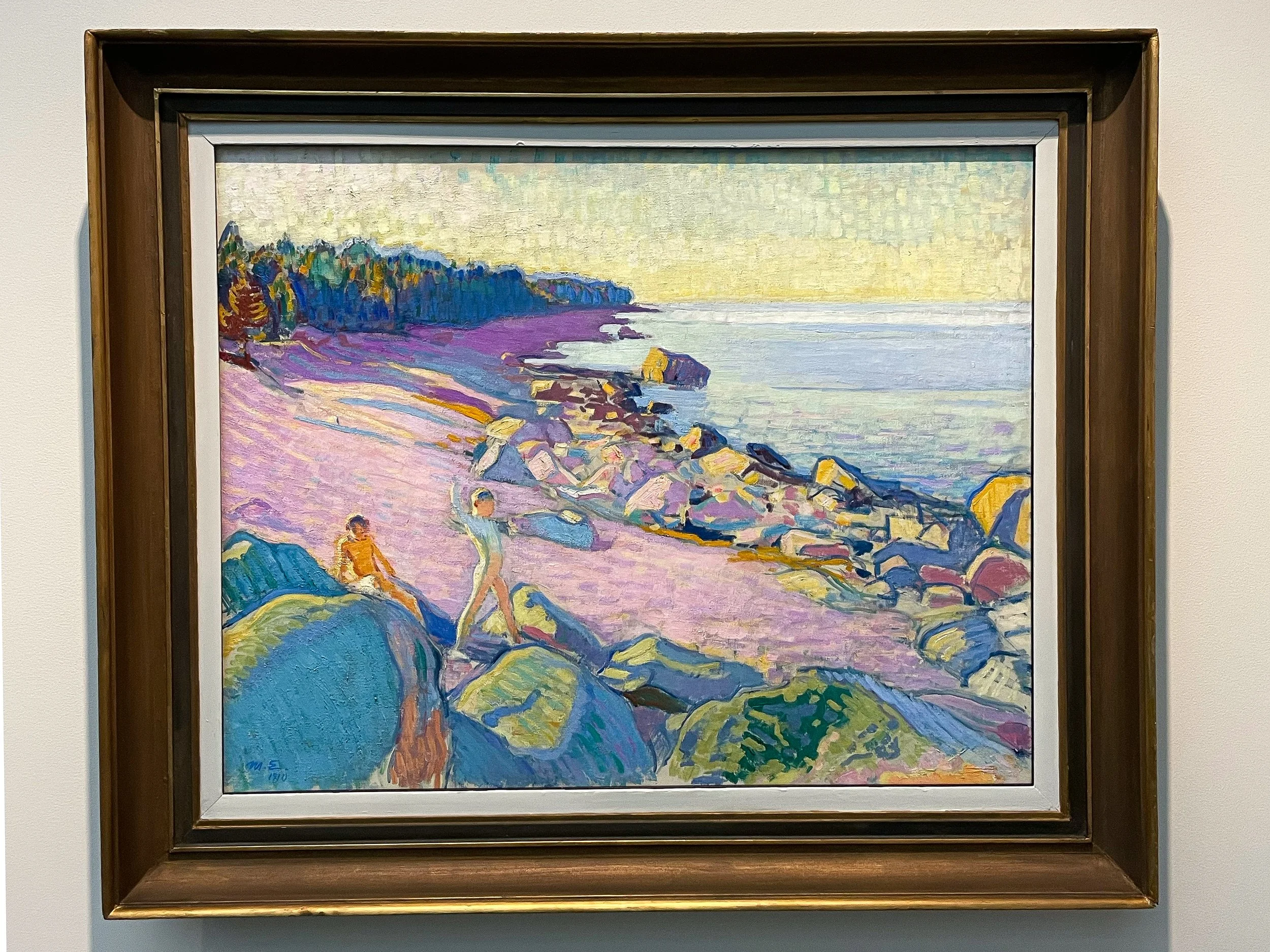
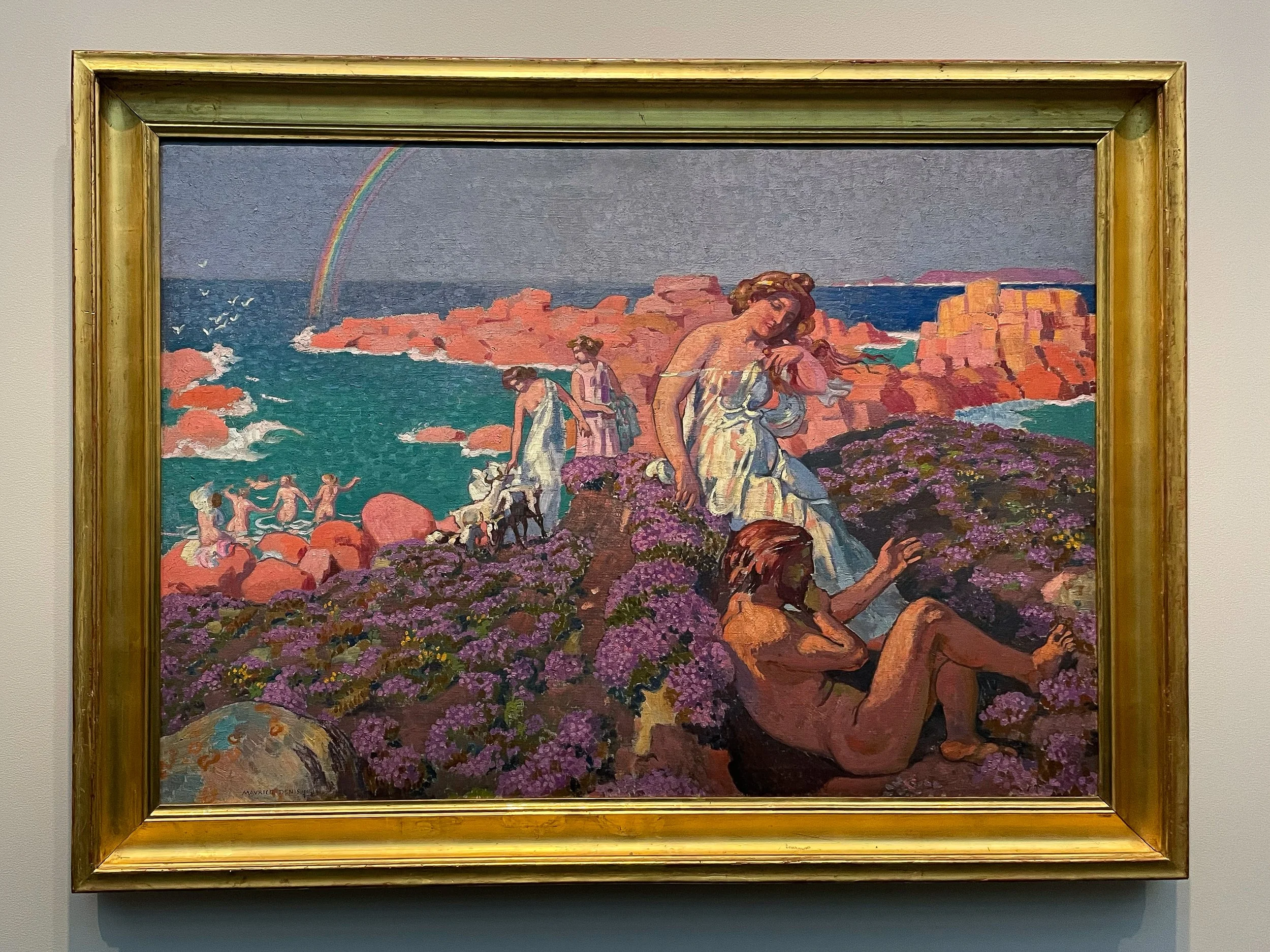
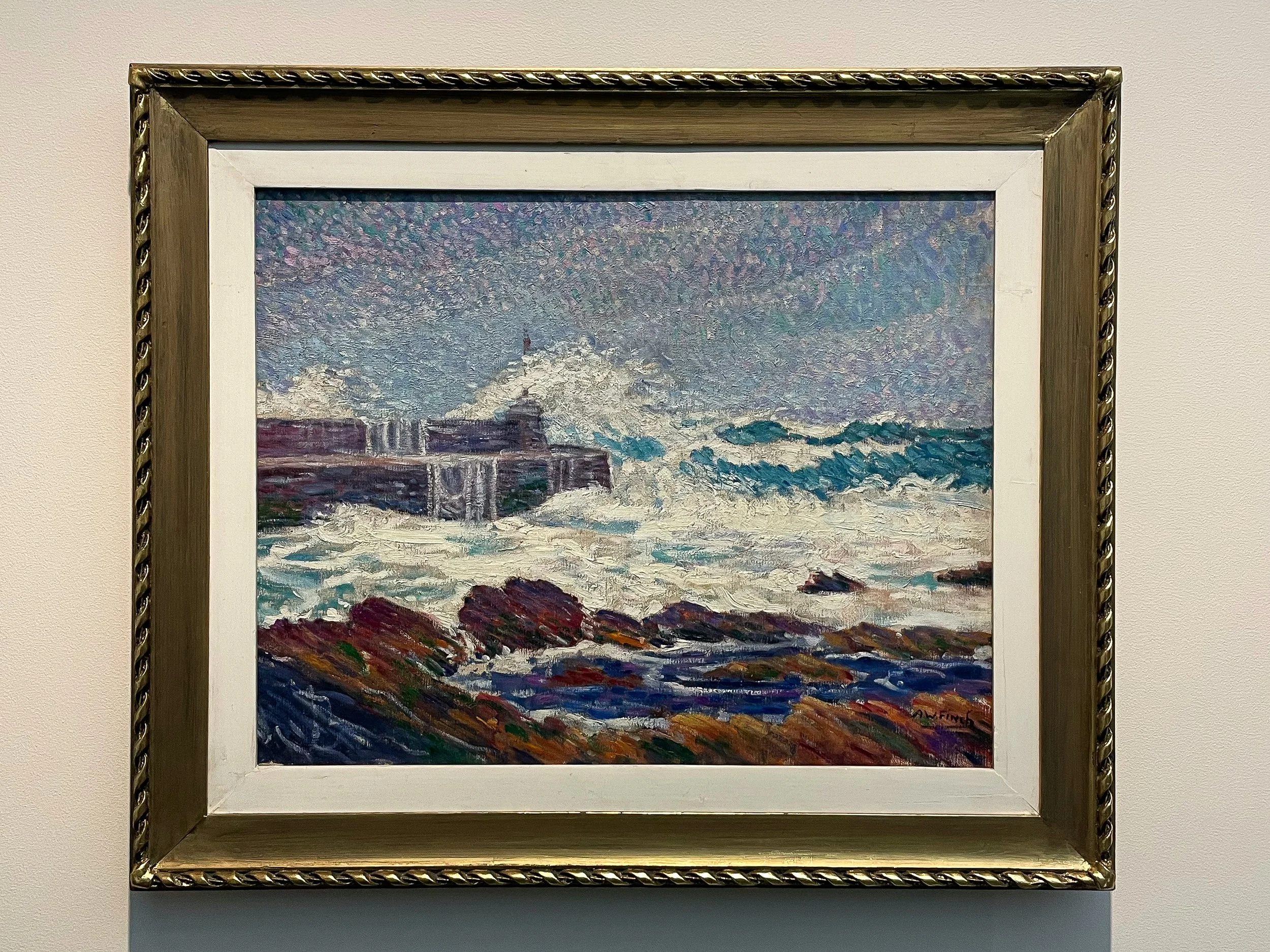
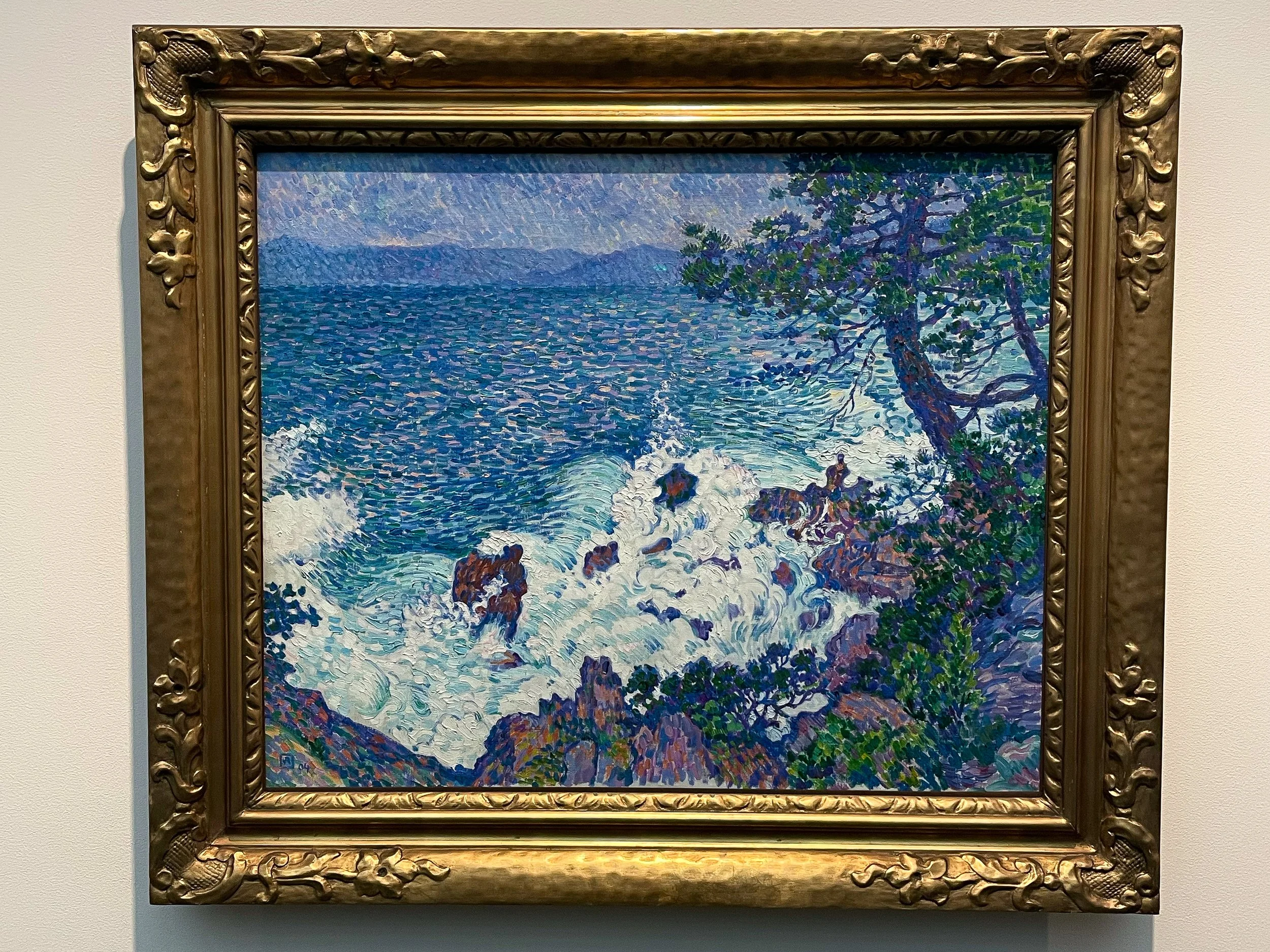
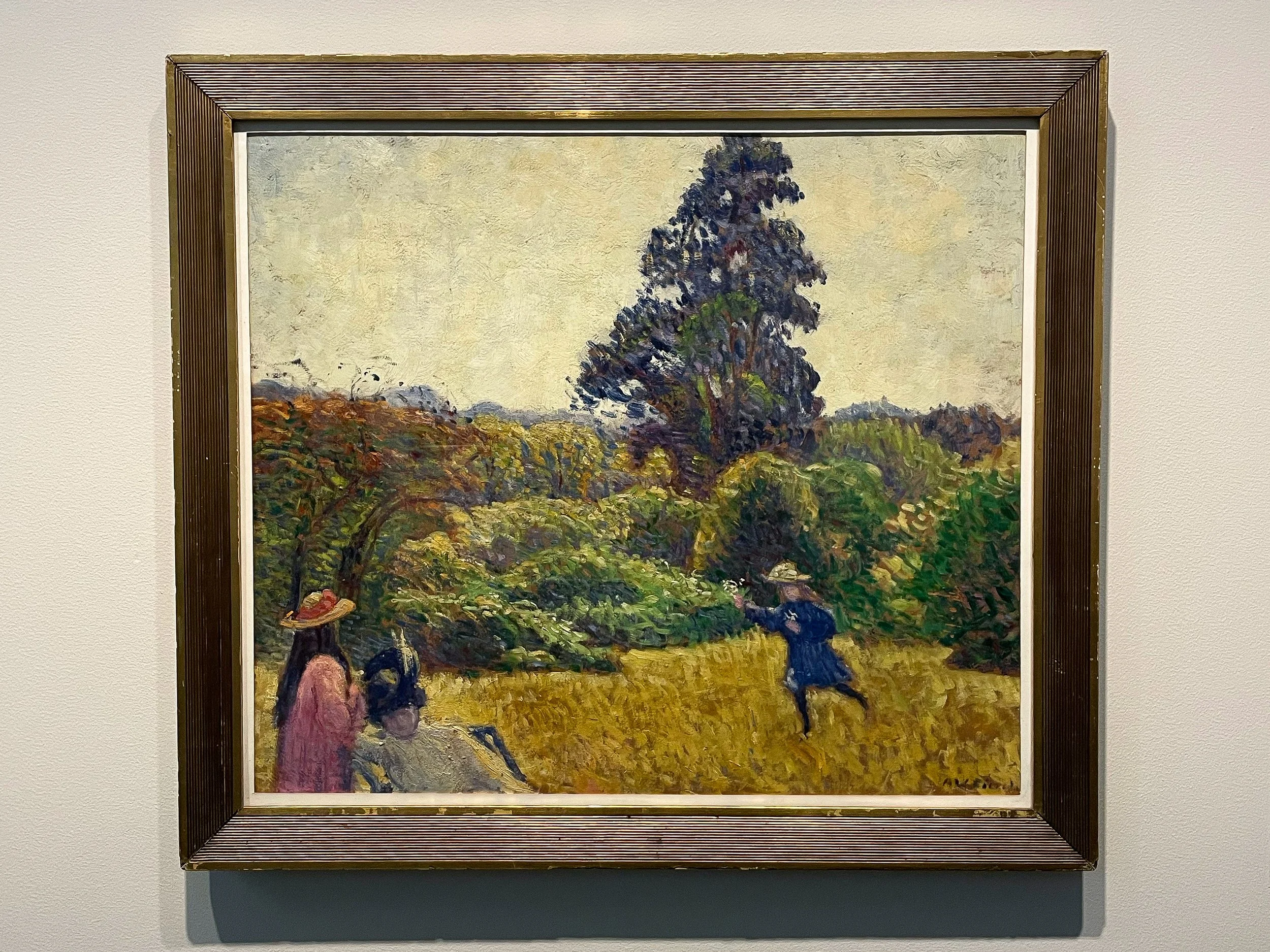
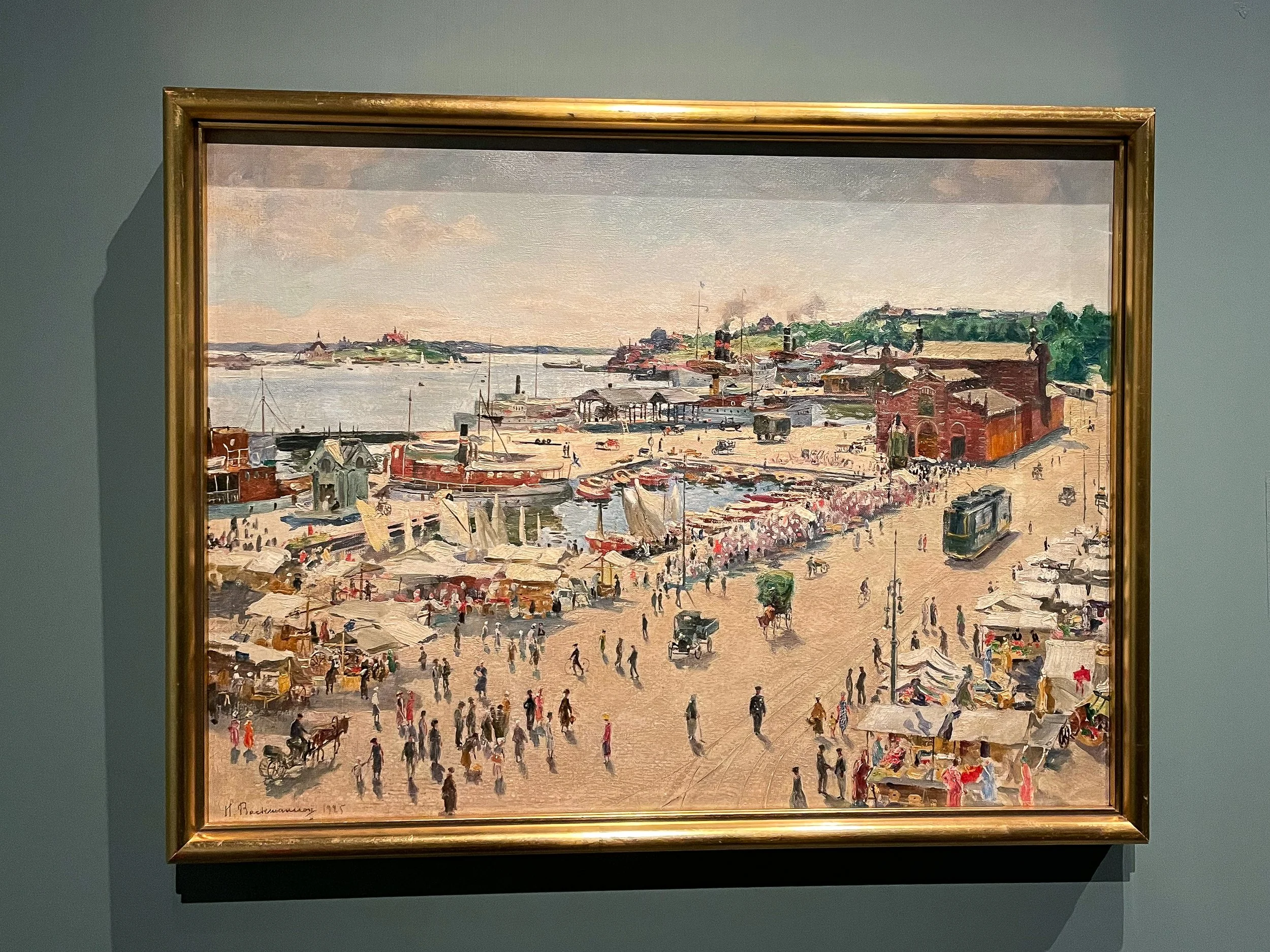
Ateneum. Finland’s largest art museum with a collection of Finnish and European artwork. We visited during an Impressionist exhibit featuring works by Finnish impressionists Ellen Thesleff, Tyko Sallinen, Magnus Enckell and other European artists like Monet, Pissarro and Finch.
Finnish Saunas
Saunas are a popular aspect of Finnish culture dating back hundreds of years. They’re built into homes, hotels and public pools.
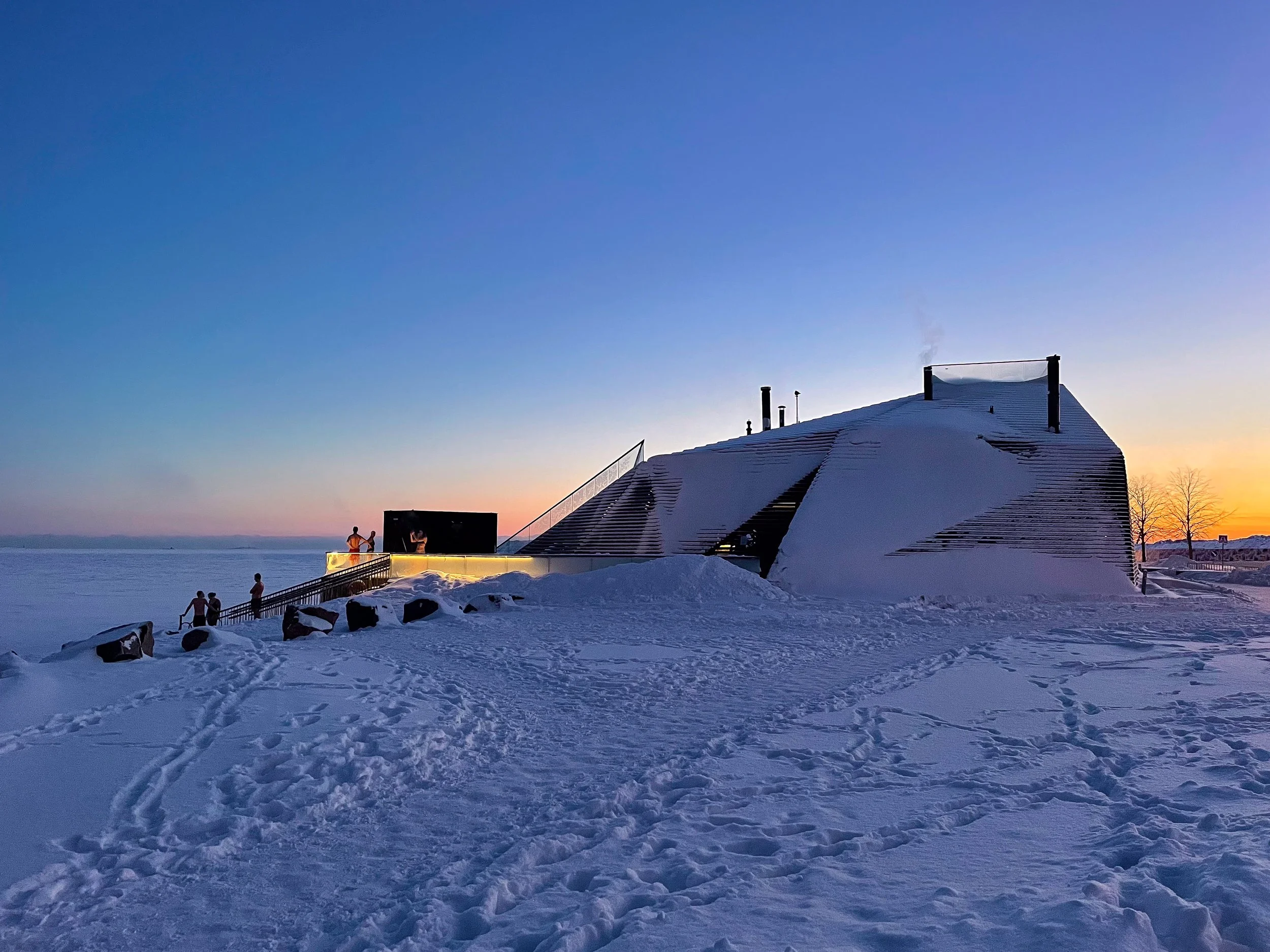
Löyly Sauna. A geometric wooden sauna overlooking the Gulf of Finland with 4 steam rooms including 1 traditional wood burning one and 3 electric ones. Outside is a large deck and cold plunge area in the frozen harbor. Inside is a fireplace lounge, restaurant and bar. We tried all 4 saunas, they were hot, steamy and scented with wood. The wood burning one was our favorite with a pleasant smell of smoke. In between steamings, we relaxed by the fireplace with a beer and plunged into the icy harbor during freezing temperatures. Book a reservation in advance and bring flip flops and a swimsuit. Lockers and towels are included.
Places to Eat & Drink
Restaurant Nolla. A contemporary Finnish restaurant with dishes made from seasonal and locally sourced ingredients. We tried the grilled burbot (a subarctic freshwater fish), fried mushrooms, braised cabbage and celeriac confit with caramelized pearl onions.
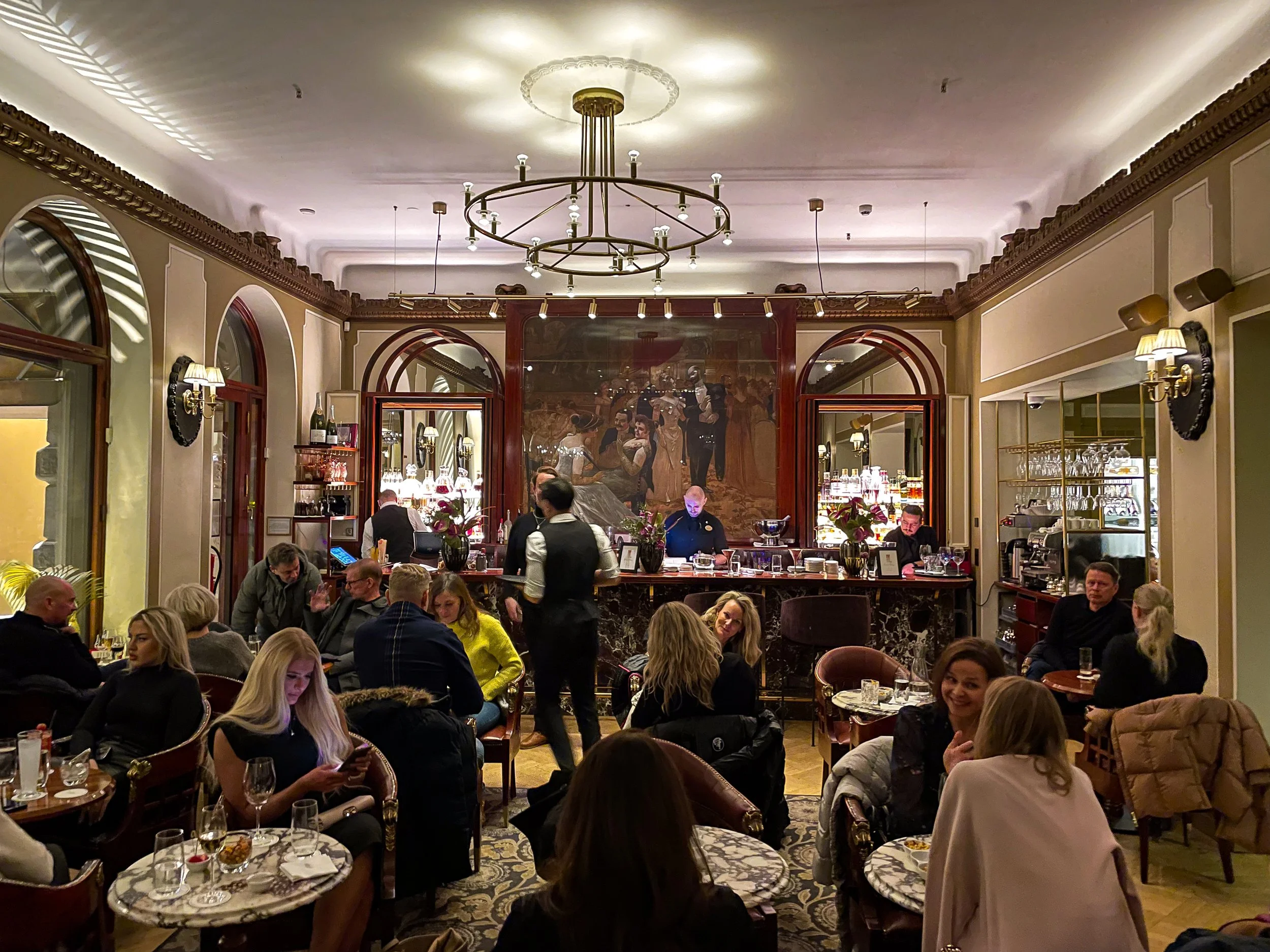
Hotel Kamp Bar. A luxury hotel lobby bar in a warmly lit and historic setting dating back to 1887. Come here for classic cocktails.
Café Eliel. A well designed Finnish café and bar in the Central Station. We came here for breakfast on our way to the airport. Try the salmon and dill lihapiirakka.
Where to Stay
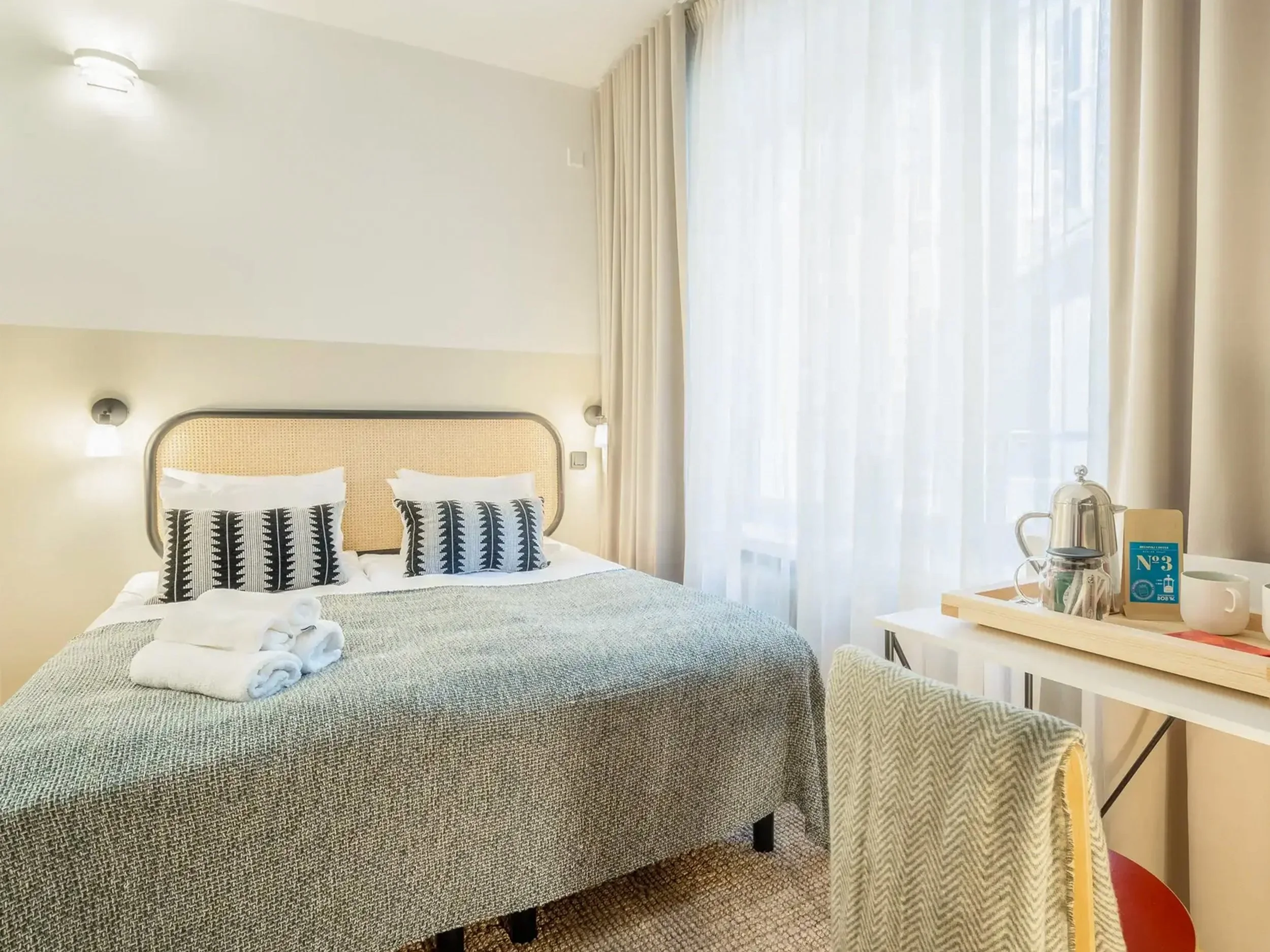
For our one night in Helsinki, we stayed at Bob W, a well designed and comfortable hostel in the city center with private rooms, a communal kitchen, public gym and luggage storage room.
Location Specifics
Language. Finnish, Swedish and English are the most commonly spoken languages.
Sami Culture. Show respect to the Sami people, culture and traditions.
Costs. Finland, like much of Scandinavia, is an expensive destination.
Cash vs. Card. Cash is rarely used across the country. Use credit or debit cards for most transactions.
Tipping. Tipping is not expected or required. Tip 10% for exceptional service.
Temperature. Helsinki gets very cold during the winter. The temperature dropped to -10C (14F) before windchill. Dress in warm layers and cover all exposed skin while outdoors for long periods of time.
Elsewhere in Nordic Europe
From Helsinki’s waterfront saunas and minimalist architecture to Copenhagen’s canals, Arctic Lapland and Iceland’s dramatic road trip routes, discover more of Nordic Europe through these travel guides:
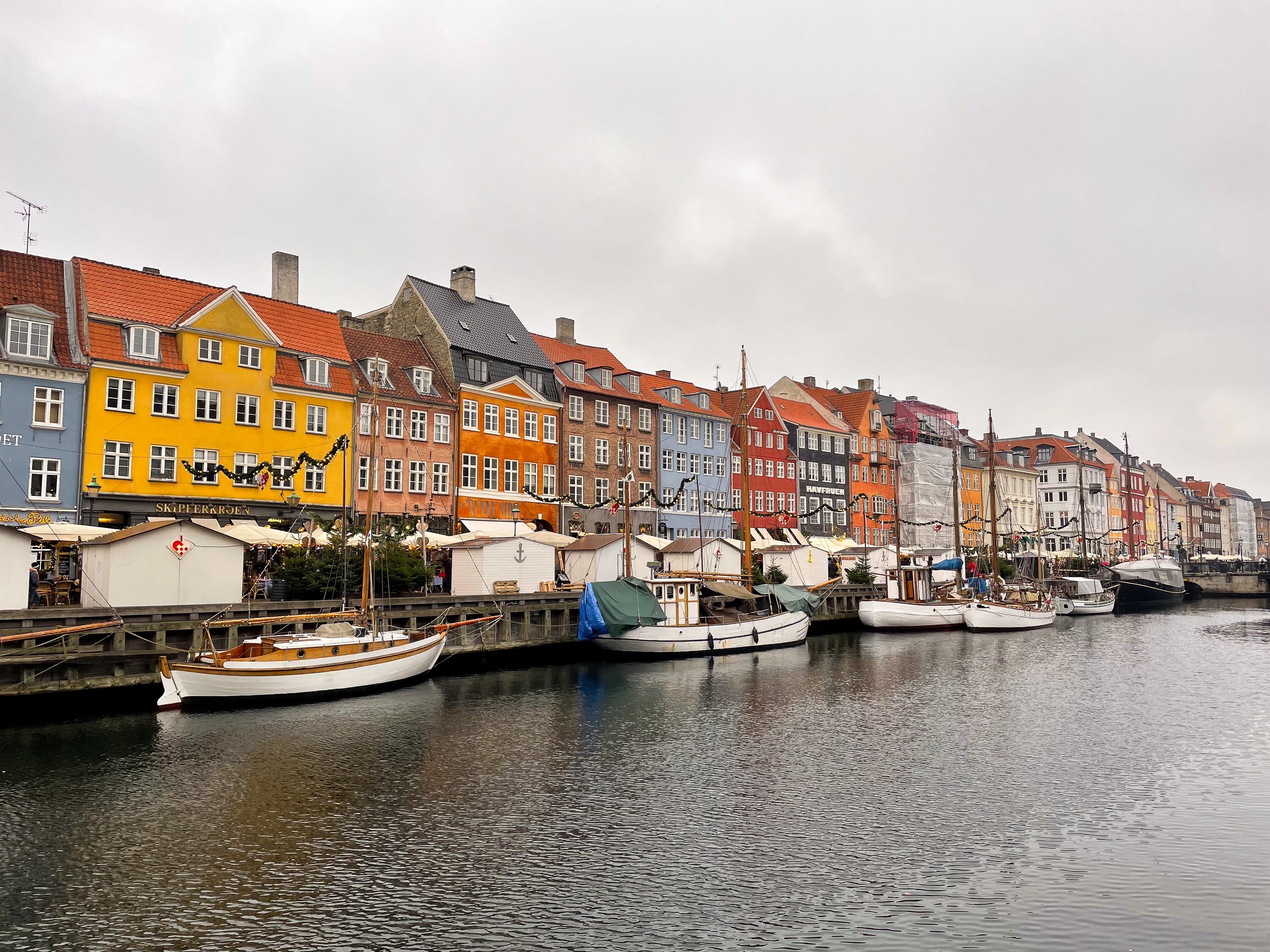
Copenhagen Travel Guide: Nyhavn, Christmas Markets & Scandinavian Cuisine. Wander along Copenhagen's colorful canals where wooden ships, historic castles and Danish culture meet Scandinavian cuisine and festive Christmas markets.
Lapland Finland Travel Guide: Northern Lights, Sámi Culture & Arctic Adventures. Journey through Lapland's Arctic wilderness and snowy landscapes to experience Sámi traditions, husky mushing, Finnish cuisine and vivid auroras during the polar night.
Tromsø Norway Travel Guide: Northern Lights, Arctic Fjords & Sámi Culture. Explore Tromsø's snowy streets and historic waterfront where Nordic cuisine and Sámi culture meet dramatic fjords, dancing auroras and Arctic adventures.
Iceland Road Trip Guide: Waterfalls, Glaciers & Black Sand Beaches. Road trip through Iceland's otherworldly landscapes where volcanoes, glaciers, waterfalls and black sand beaches create one of Earth's most dramatic journeys.
For Next Time…
24 hours only gave us a taste of Helsinki. We plan to return to this Scandinavian city for longer on our next trip! When we do, we have a few places we plan to experience.
Kallio and Harju. Two indie neighborhoods located in the northeast of Helsinki. They’re home to a mix of vintage shops, numerous Finnish cafés and a large food hall.
Suomenlinna Sea Fortress. An 18th century maritime fortress linked across 6 islands in the harbor of Helsinki. The islands are home to parks, museums, restored ships and a small number of cafés, restaurants and bars.
Seurasaari Open-Air Museum. An outdoor museum comprised of historic and restored Finnish buildings relocated from around the country.
Nuuksio National Park. A vast park just outside of Helsinki with access to primary forests and waterways. It’s a popular place to hike, canoe and camp, especially during the warmer months.
Porvoo. A picturesque and historic village with an old town comprised of painted wooden houses, cobblestone streets and a medieval cathedral. It’s located about an hour east of Helsinki.
Lapland Finland Travel Guide: Northern Lights, Sámi Culture & Arctic Adventures
Journey through Lapland's Arctic wilderness and snowy landscapes to experience Sámi traditions, husky mushing, Finnish cuisine and vivid auroras during the polar night.
Lapland & The Arctic Circle
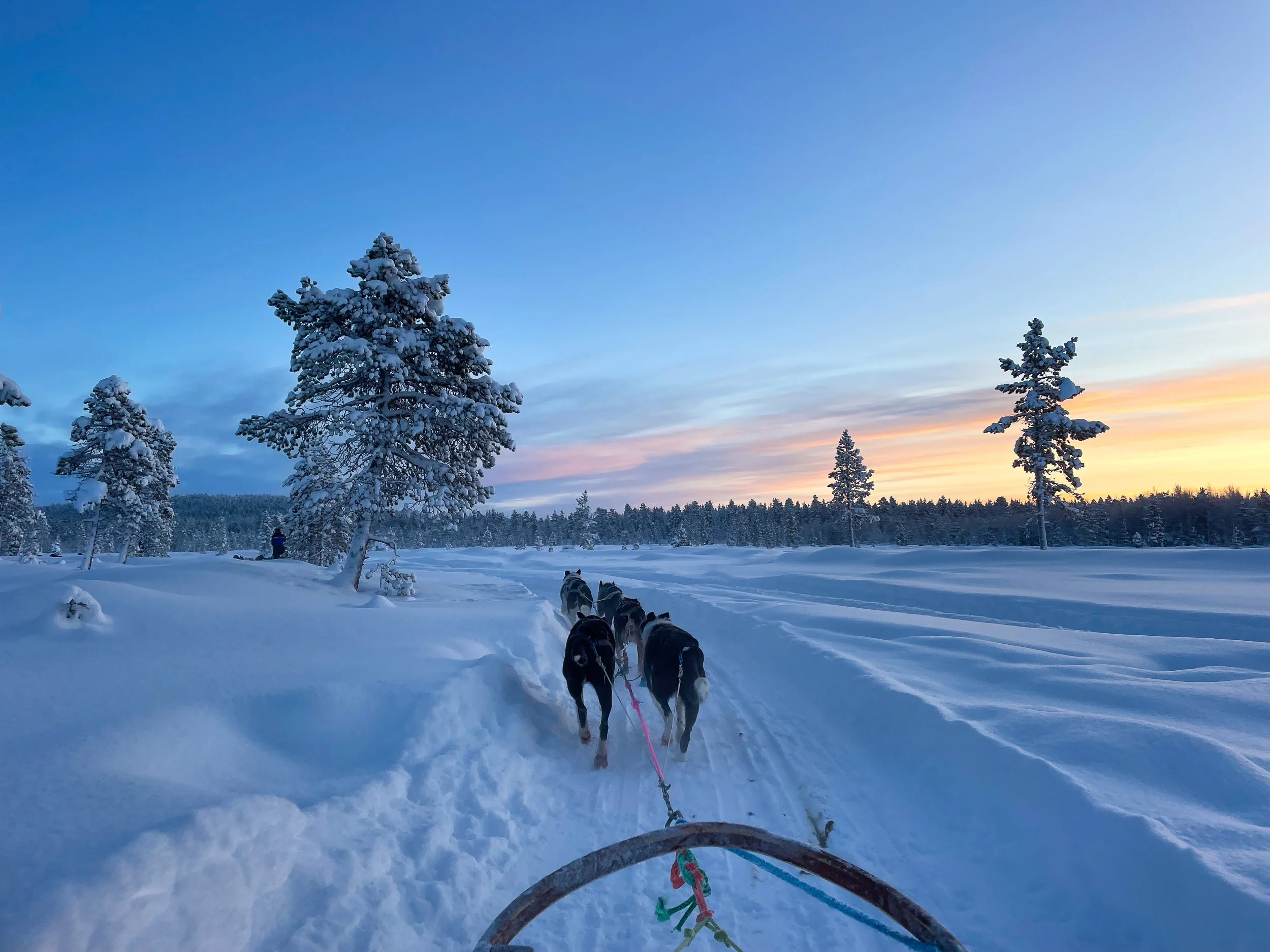
Lapland is the northernmost region of Finland located within the Arctic Circle and Boreal Forest. It’s defined by its frozen landscapes, snow covered forests and the northern lights. It’s a hub for winter sports, steamy saunas, Lappish cuisine and Sámi culture. We visited in mid January, towards the end of Polar Night, a time when daylight is limited to a few hours and the sun never rises above the horizon.
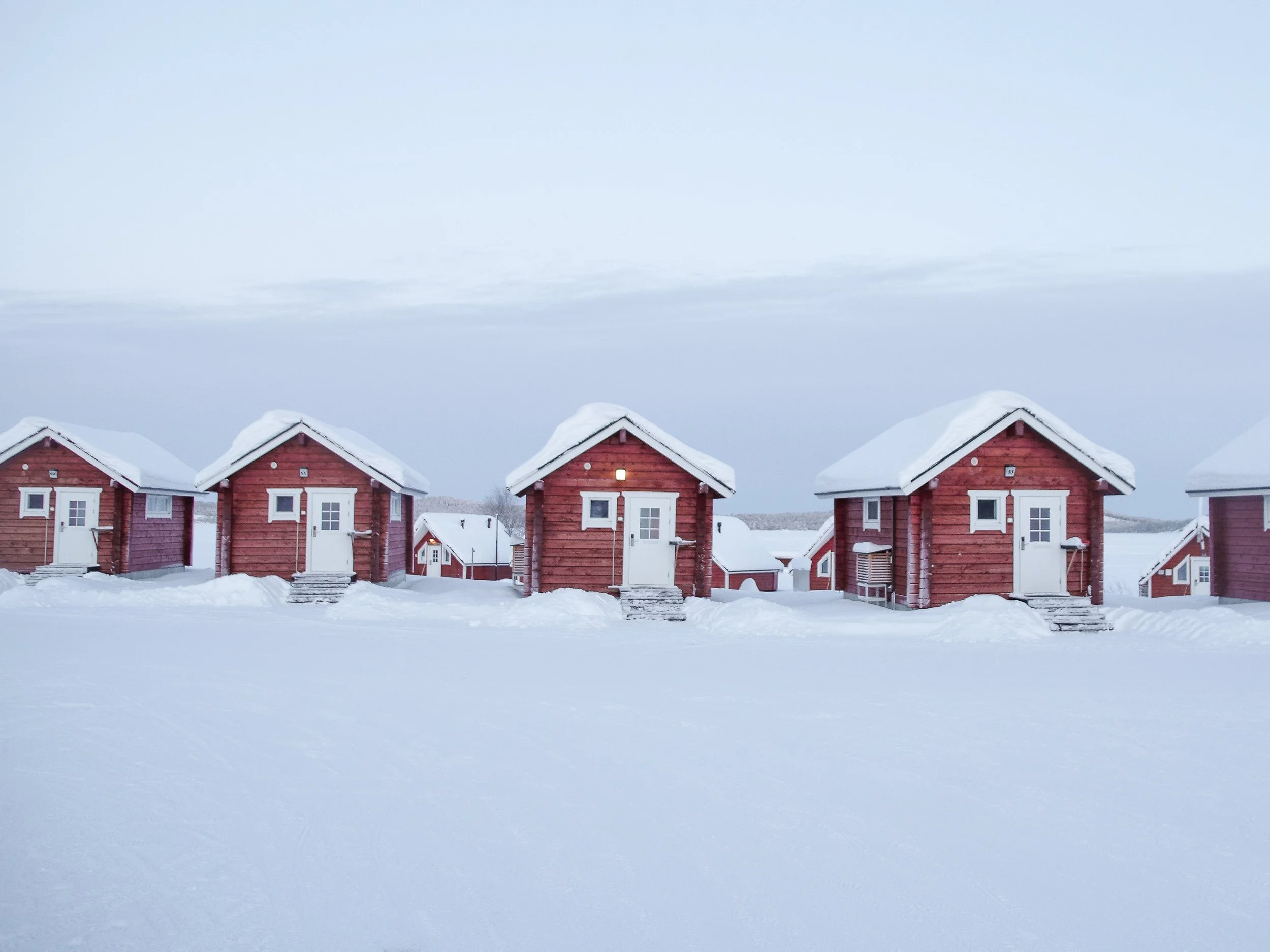
Inari, Lapland
Inari is a small village on the remote shores of Lake Inari in Lapland. It’s a hub for winter activities like dog sledding, snowmobiling and cross country skiing. Several hotels, restaurants and tour operators are based in the town. Inari is a culturally important place to the indigenous Sámi people, home to their parliament, museums and sacred sites.
Holiday Village Inari. A hotel on Lake Inari with red painted cabins, pine paneled interiors and a sauna. The cozy cabins overlook Lake Inari and the night sky. It’s the perfect place to spot the Aurora on a clear winter evening.
See the Sights
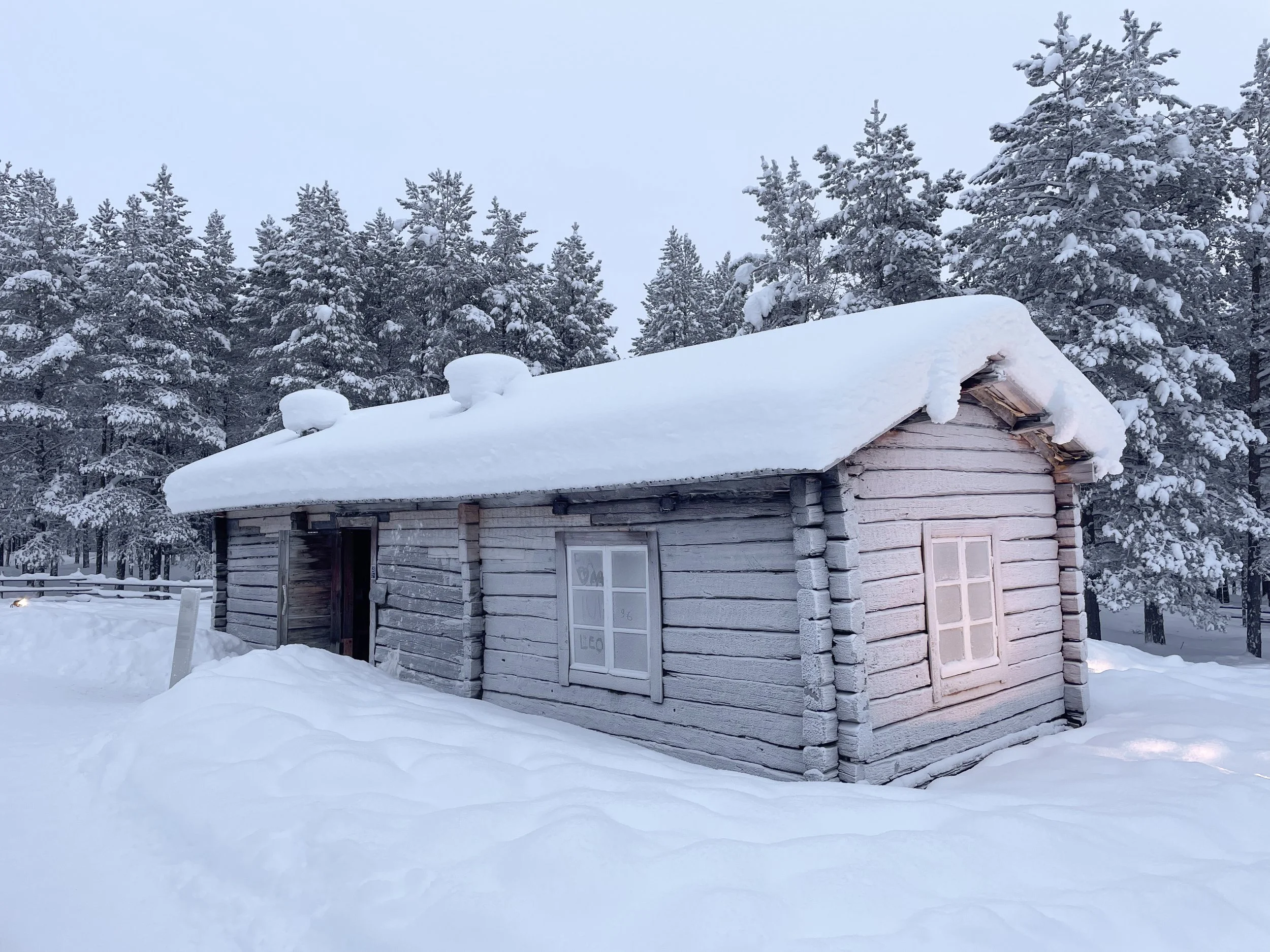
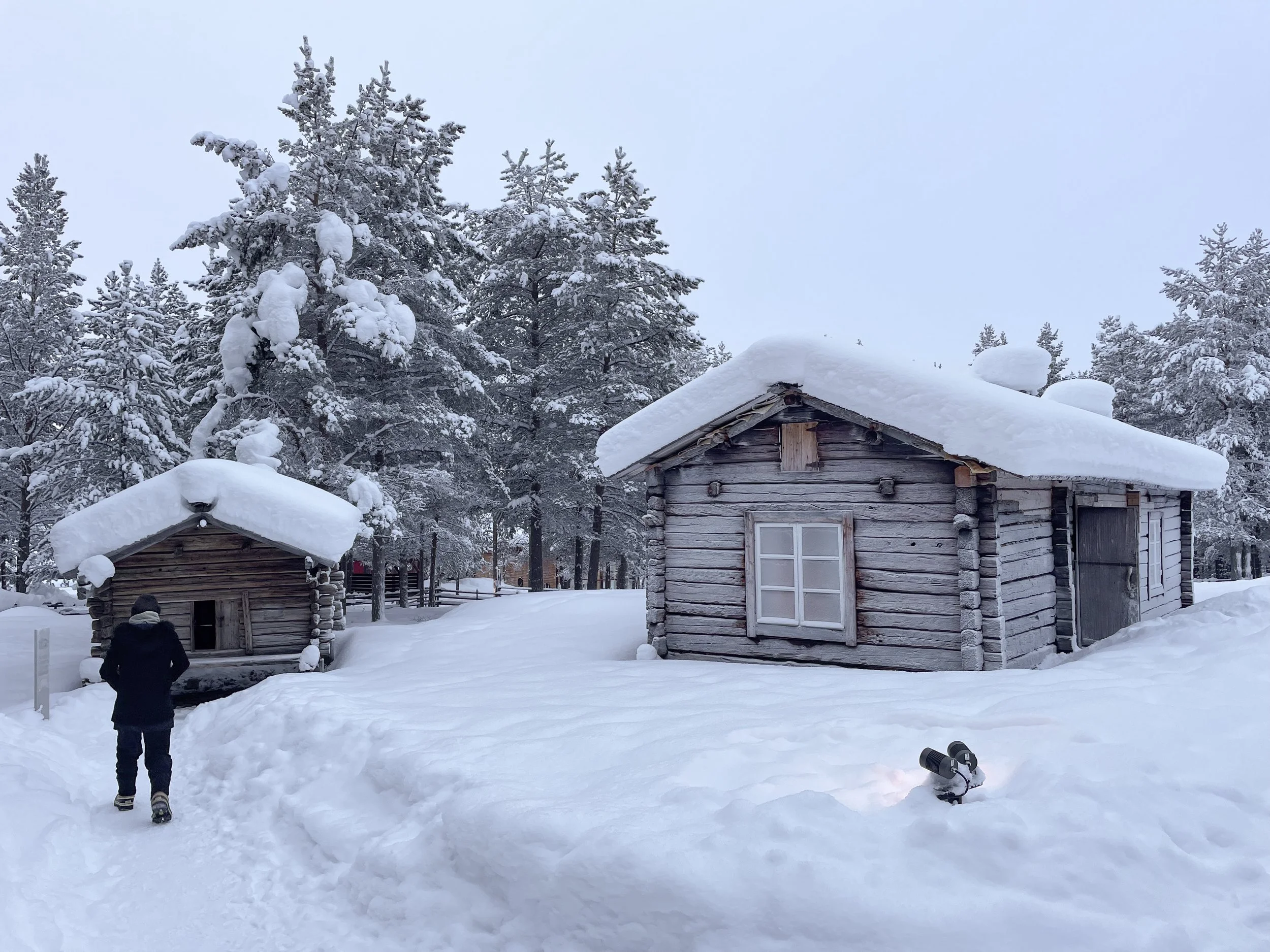
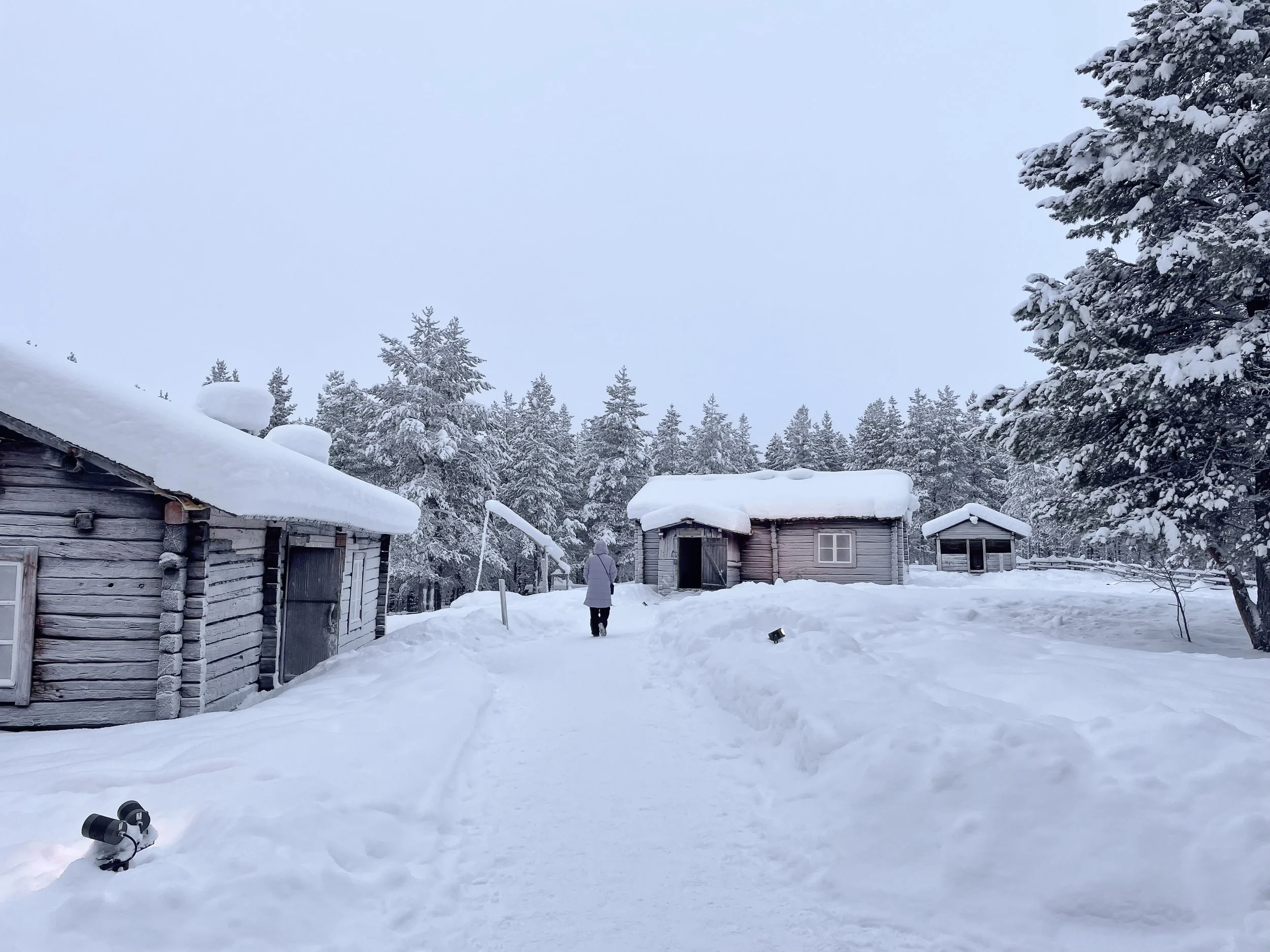
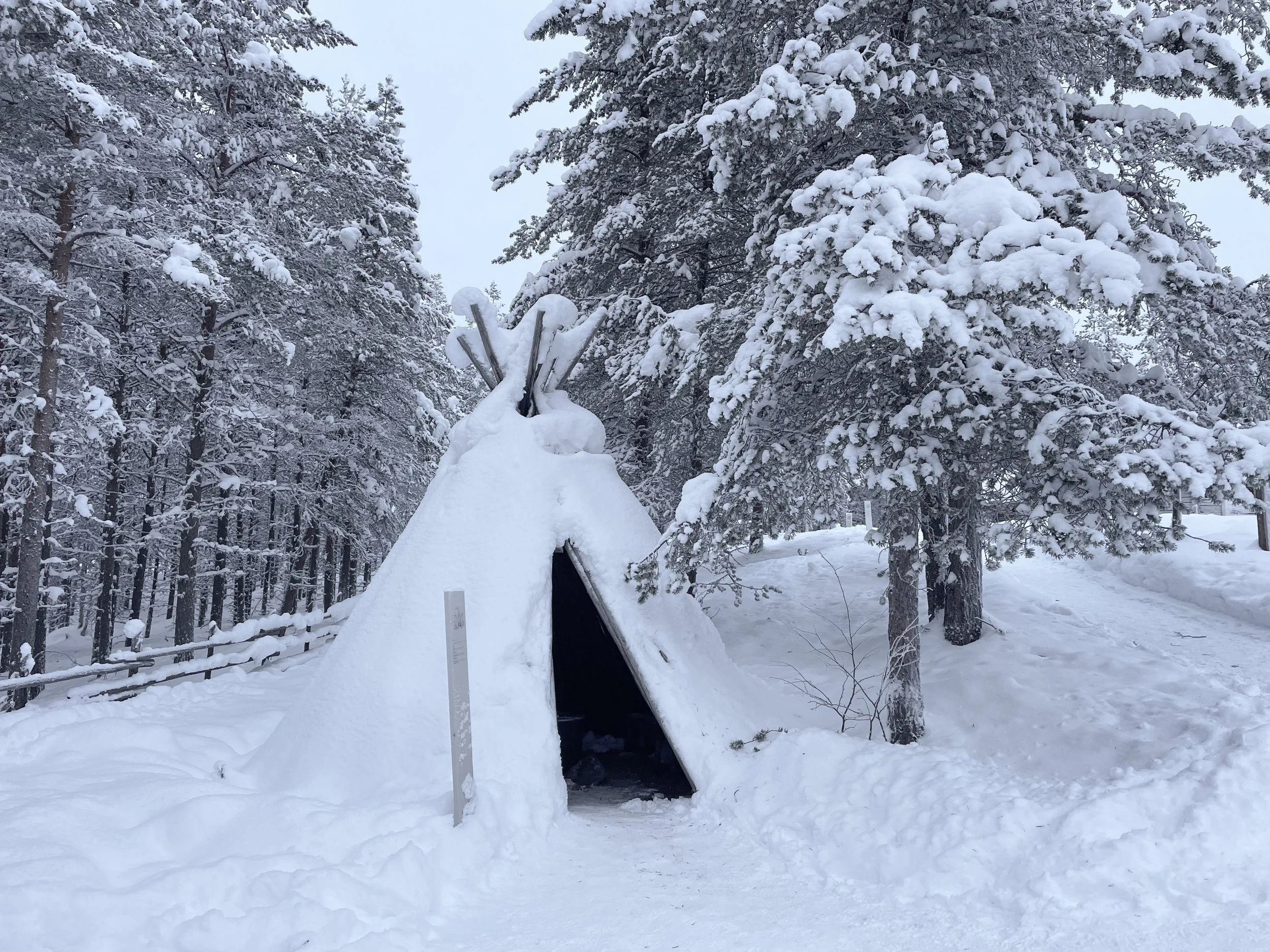
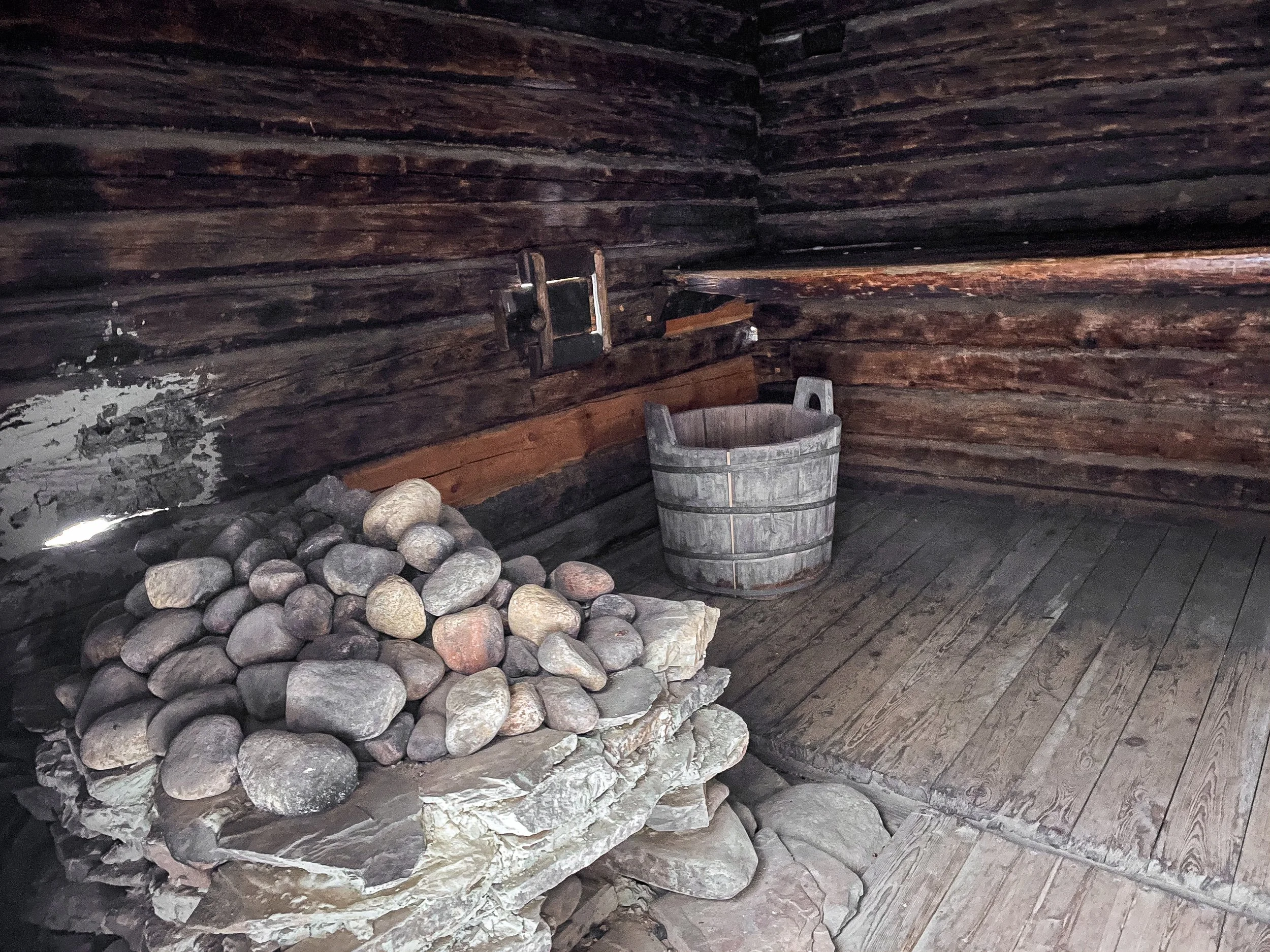
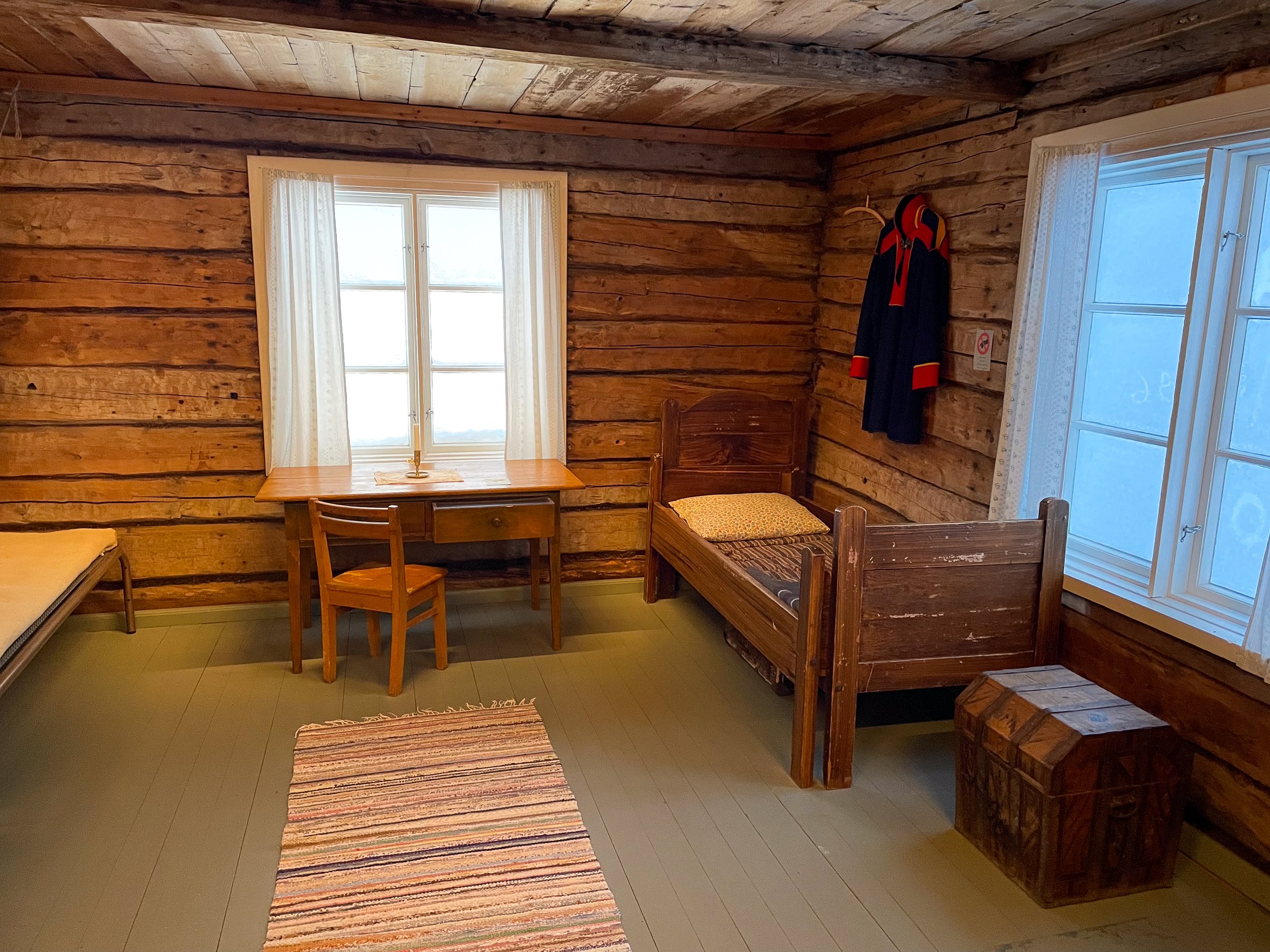
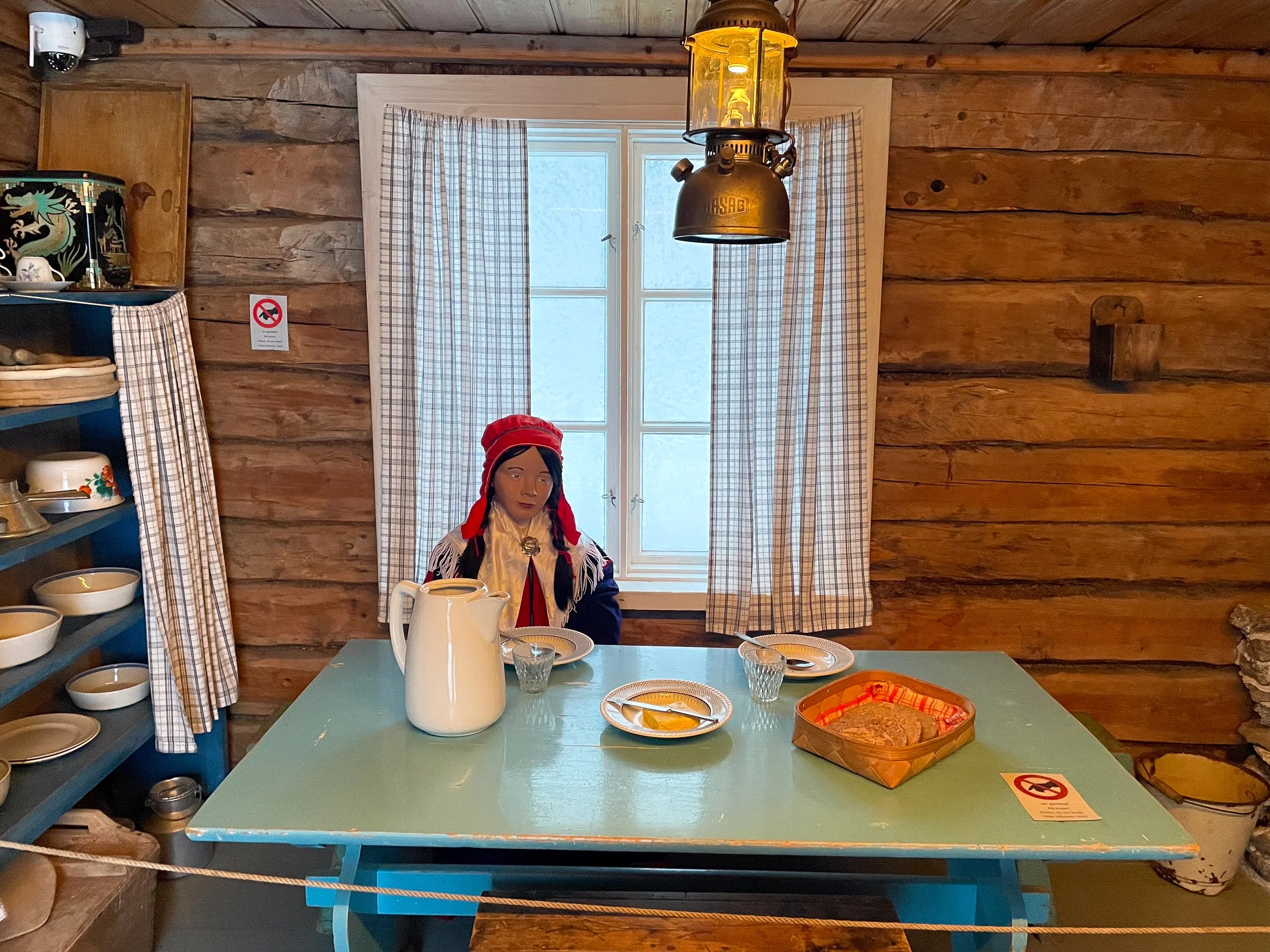
Siida. A museum dedicated to the Sámi people and nature of Lapland. Exhibits document the Arctic seasons, animals and landscapes through the guise of the ice ages and climate change as well as include artifacts and historical context of the Sámi People. There is an open air museum within the forest behind the museum with wooden homes, saunas, and storage buildings.
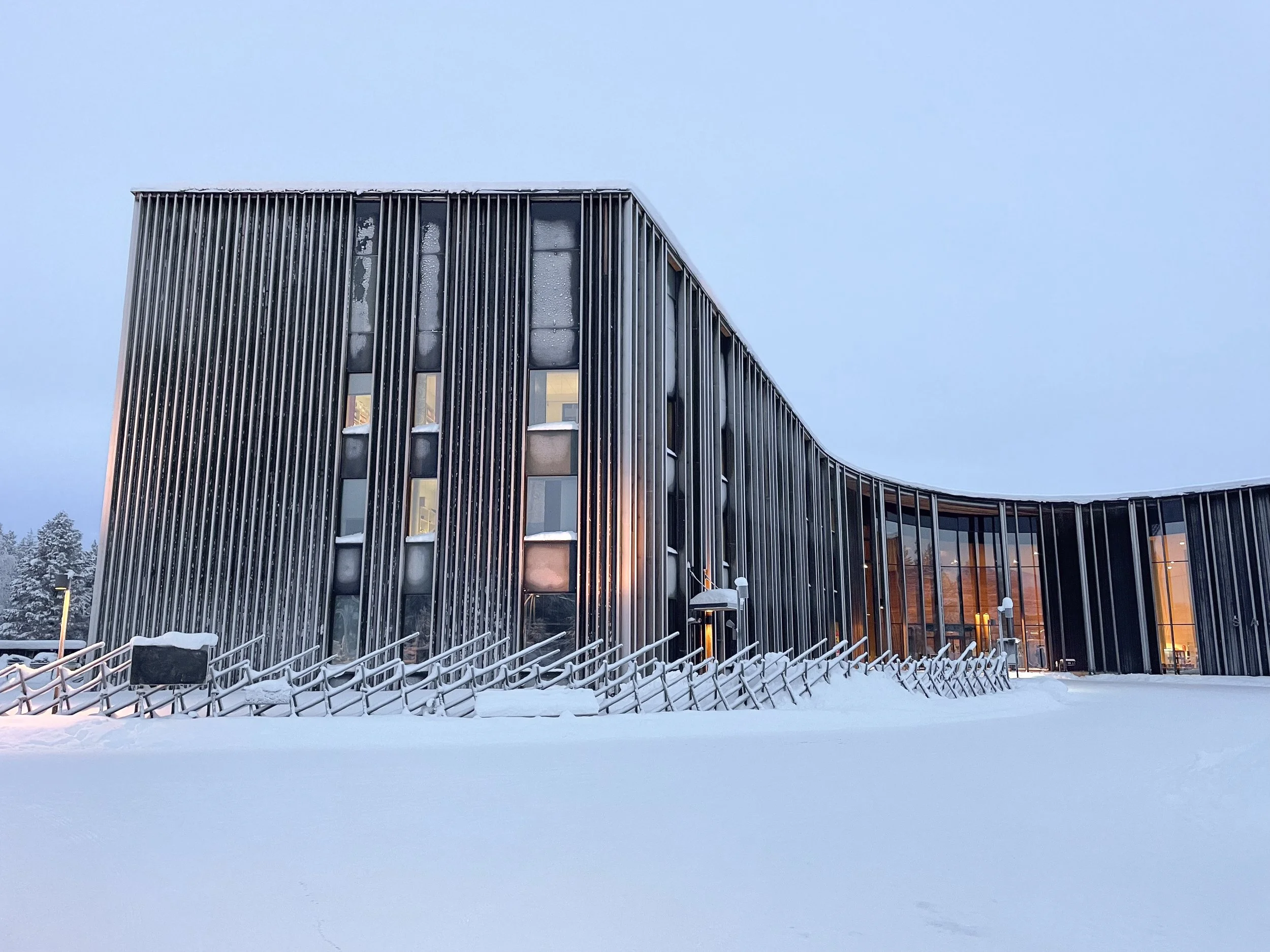
Sajos. A contemporary wooden building home to the Sámi Parliament and Council. It acts as a cultural center with Sami artifacts, library, auditorium, materials shop and a café.
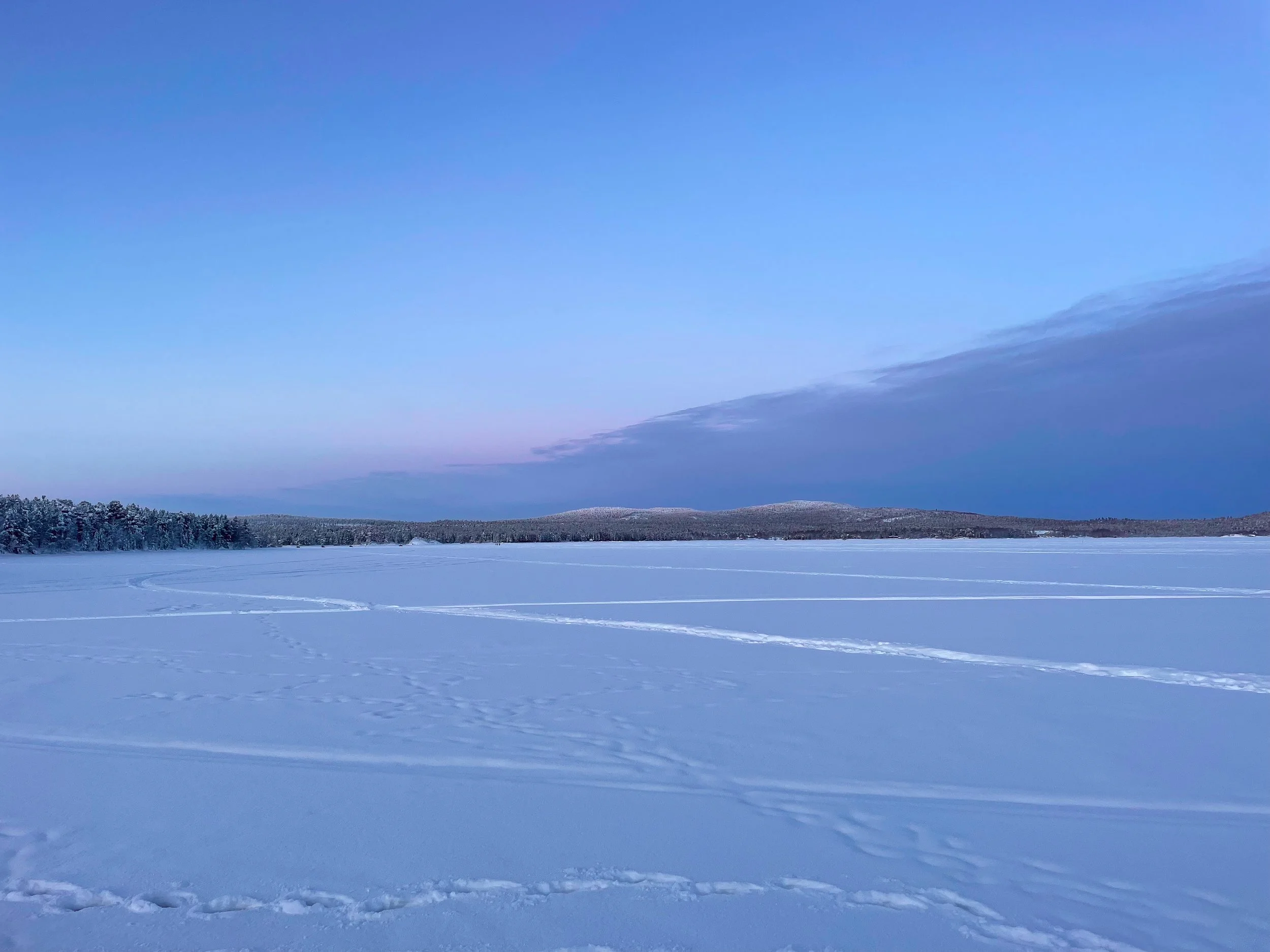
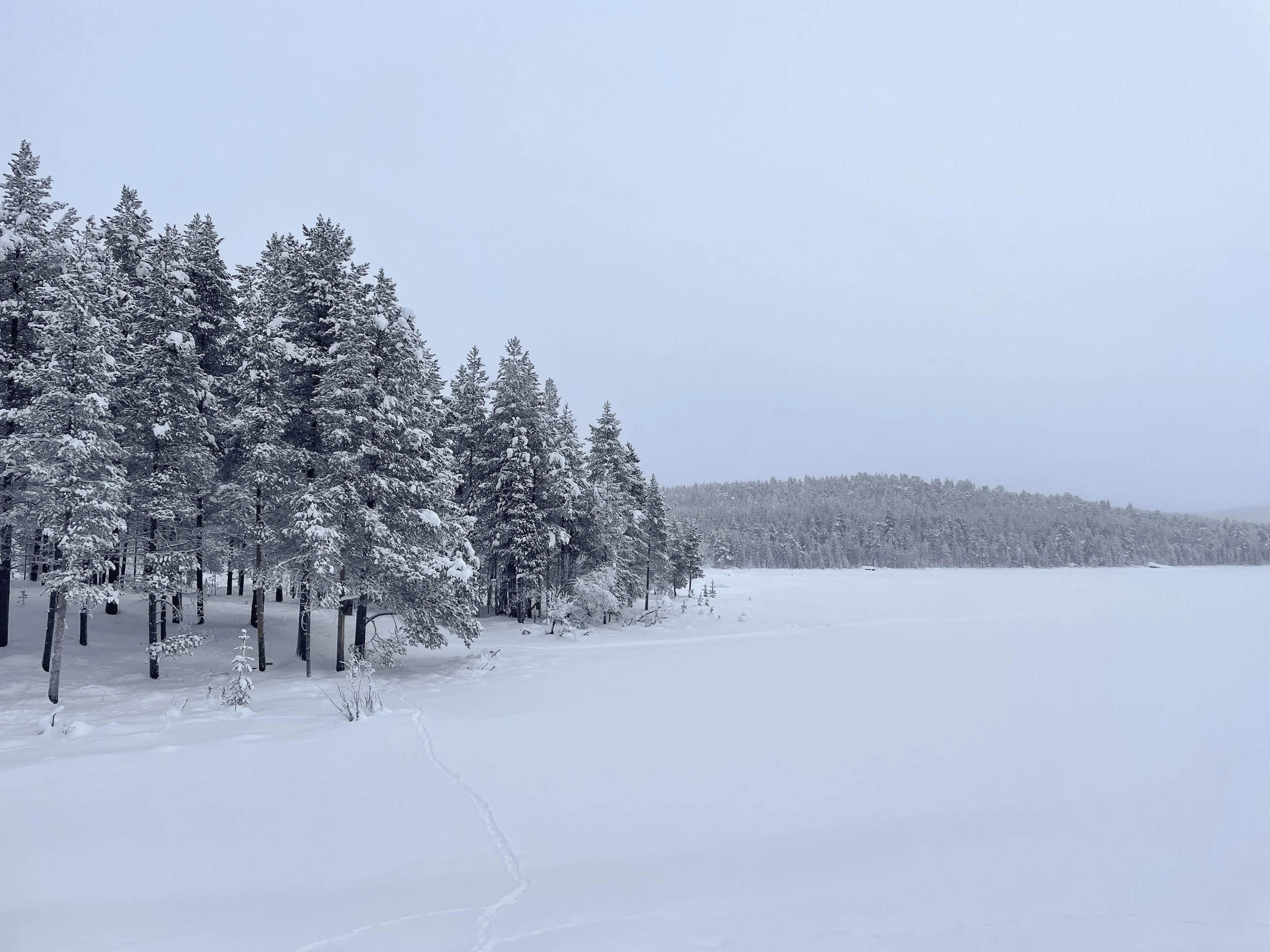
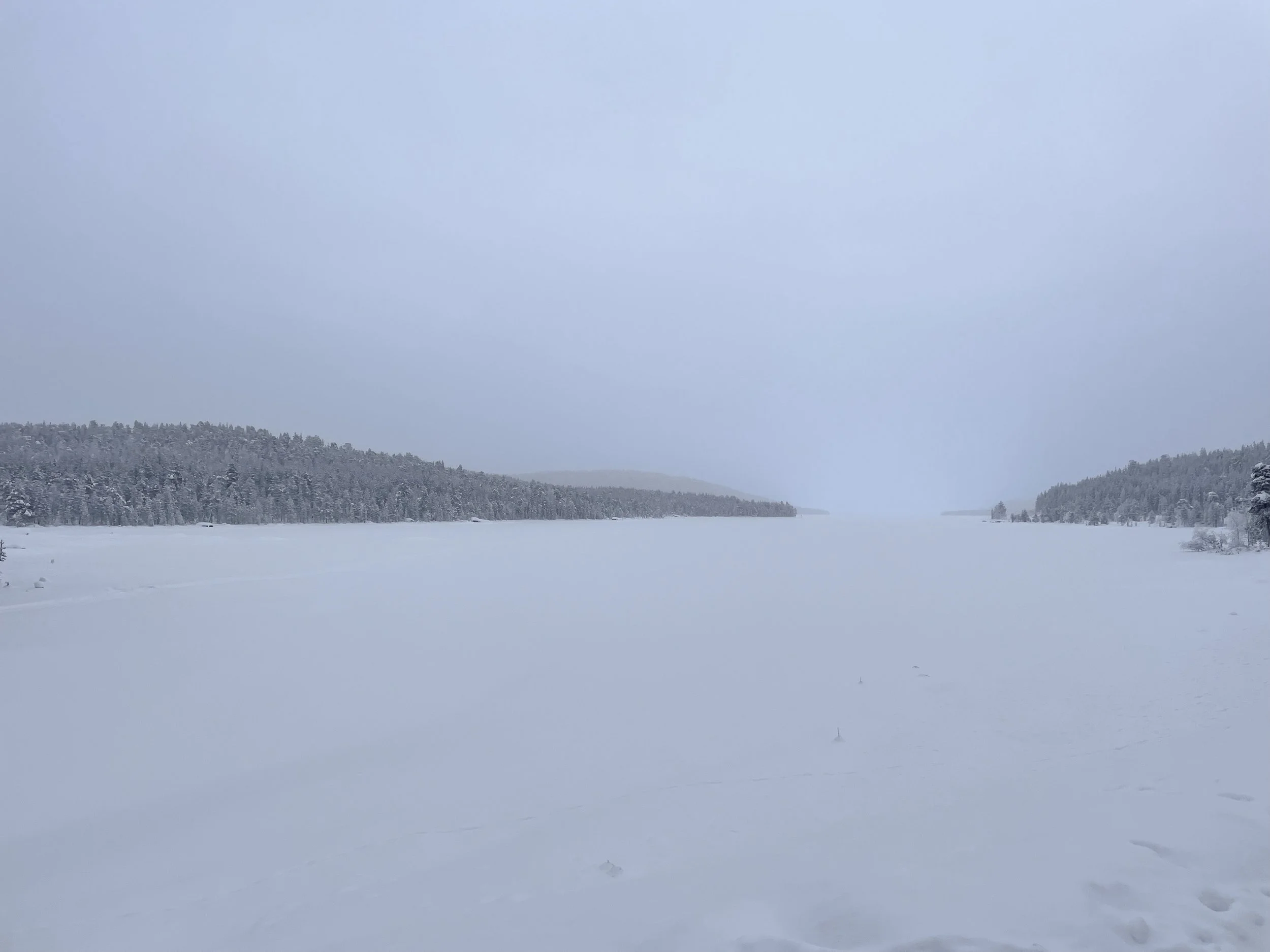
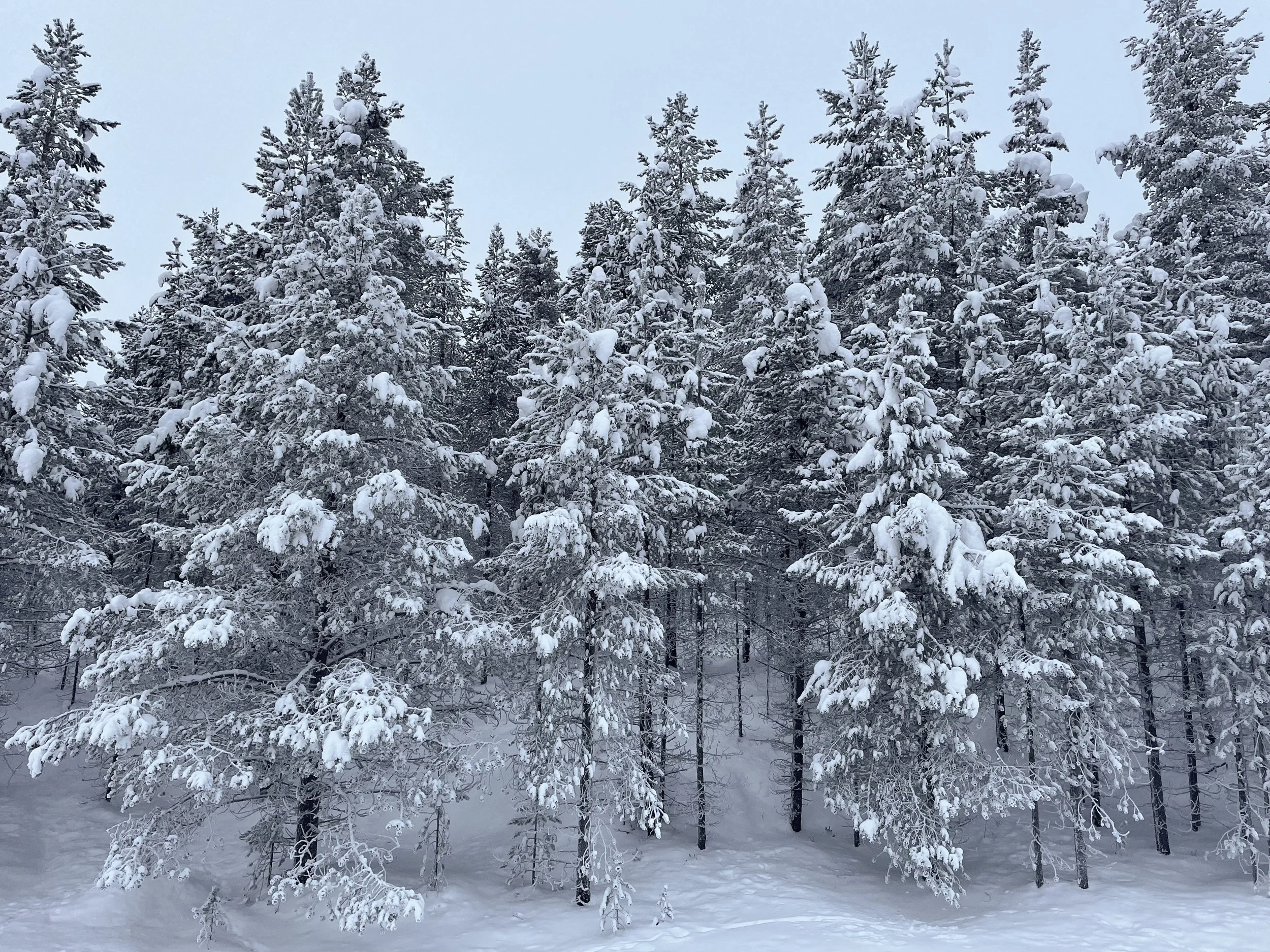
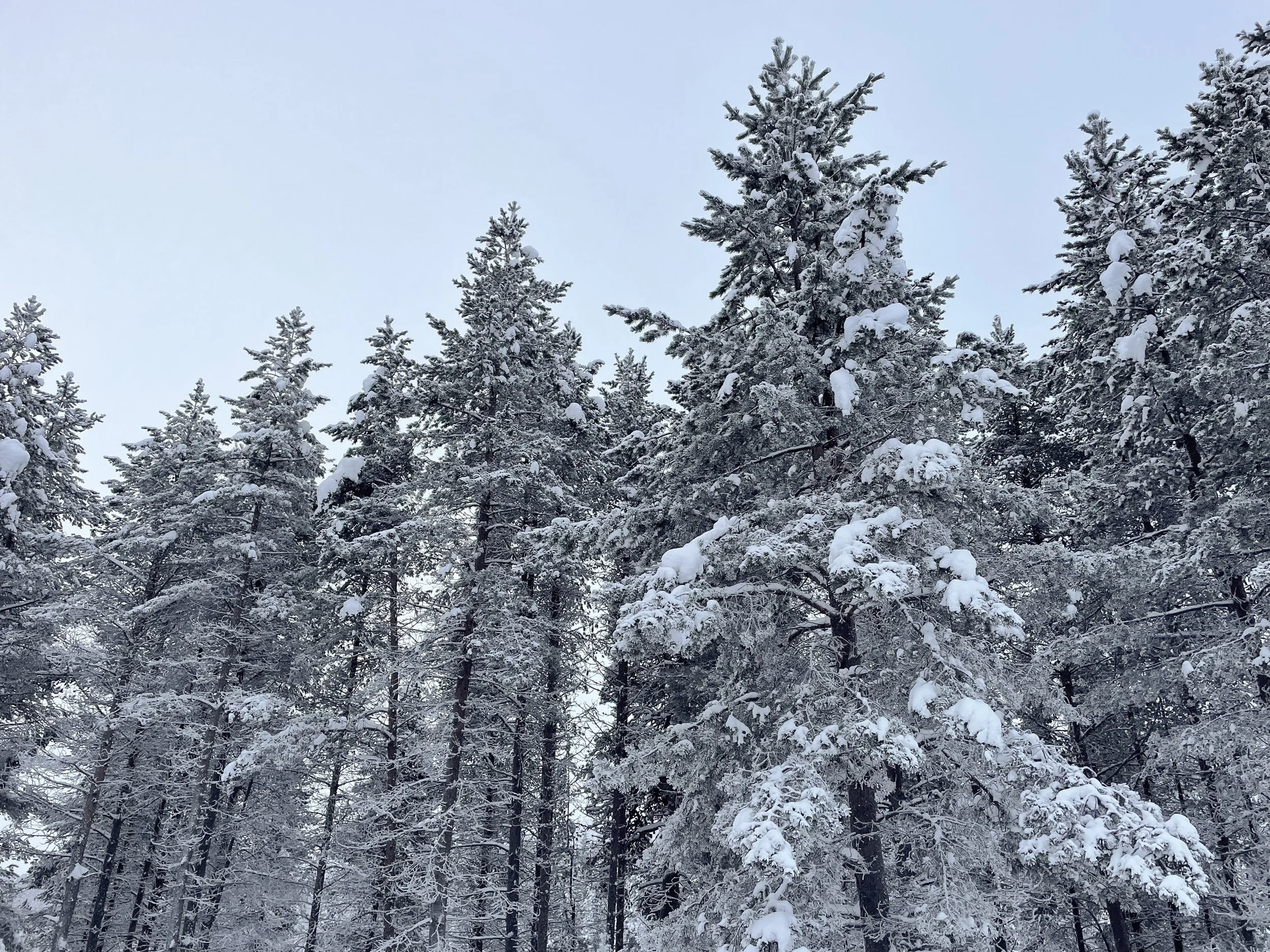
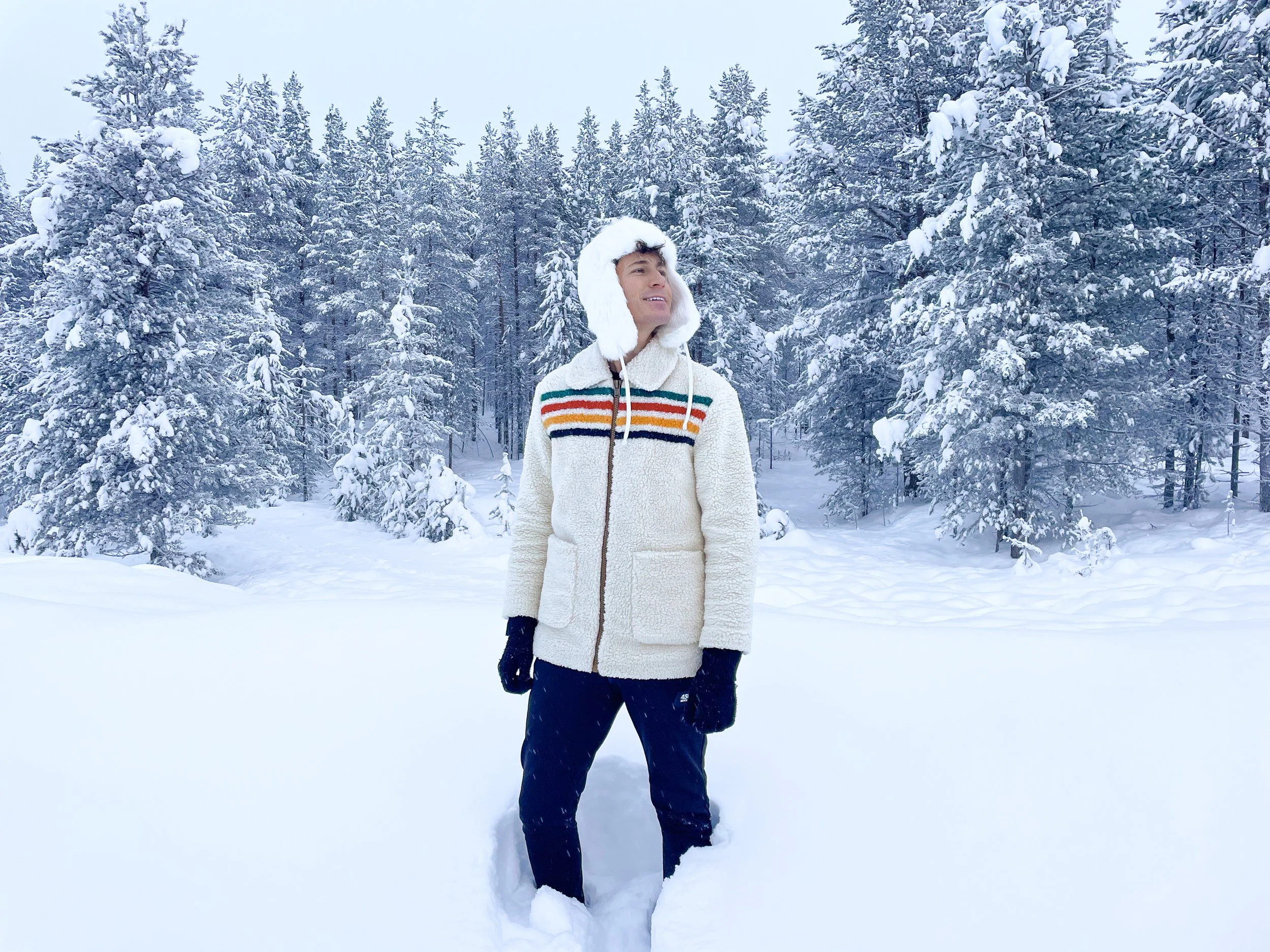

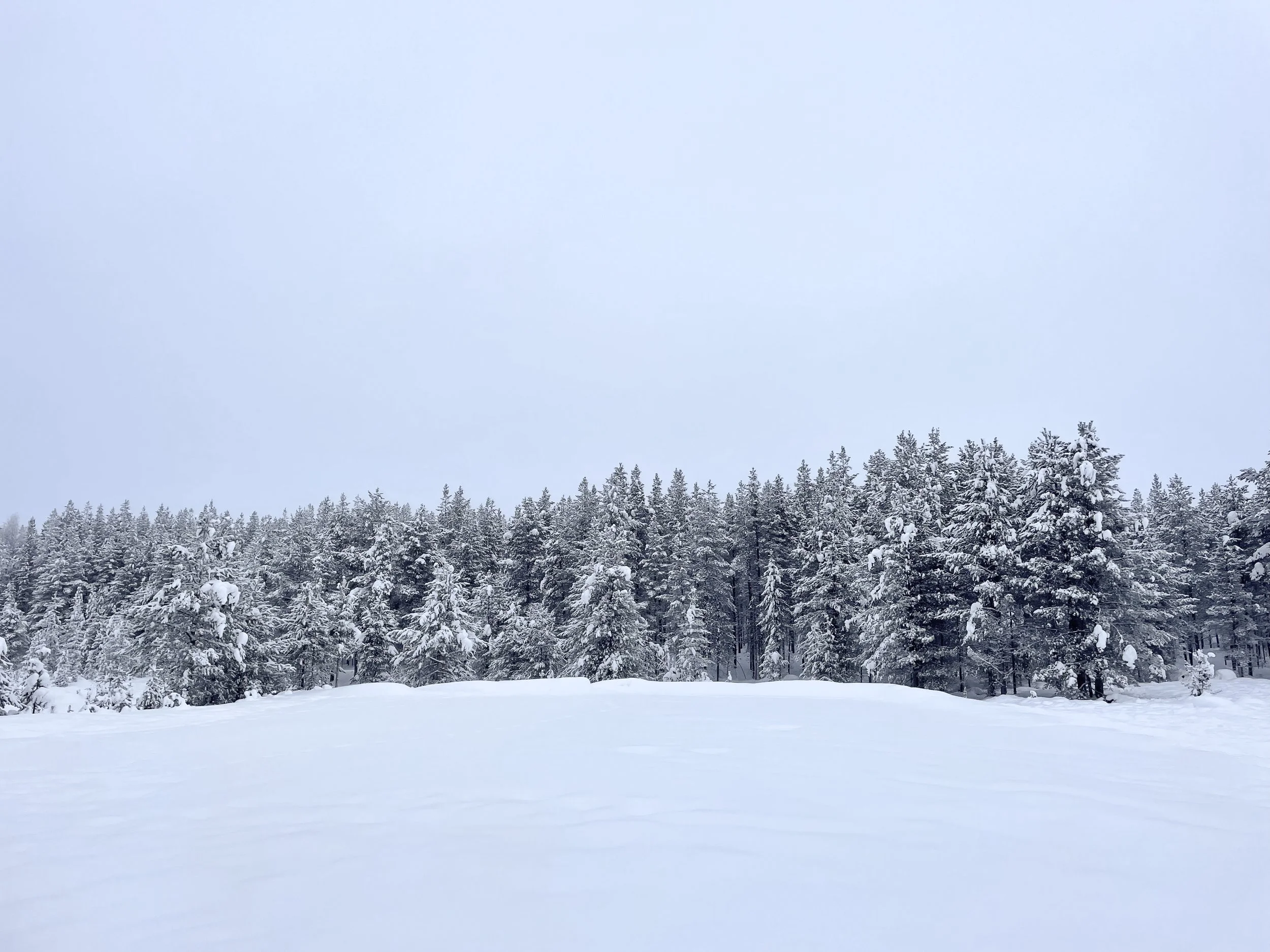
Lake Inari. A large freshwater lake with thousands of tiny islands. It’s referred to as the Sámi Sea for its importance to the Sami People. It acts as a fishing resource for trout, salmon, Arctic char, white fish and perch. Many winter activities take place on the ice including ice fishing, snowmobiling and Aurora spotting.
Boreal Forest. A vast pine and birch forest covering most of the Arctic. In Finland, it’s home to wildlife like reindeer, arctic rabbits and snow foxes.
Juutua River. The river flowing from Lake Inari through Inari. There’s a short trail along its southern bank behind Sajos. Watch for arctic hares running through the snow.
Visit Inari Tours
We booked multiple winter activities with Visit Inari Tours, including snowmobiling, husky mushing and cross country skiing. They also arrange ice fishing, reindeer feeding, snow shoeing and Aurora safaris. All winter tours include gear like boots, balaclavas, mittens, helmets and thermal overalls.
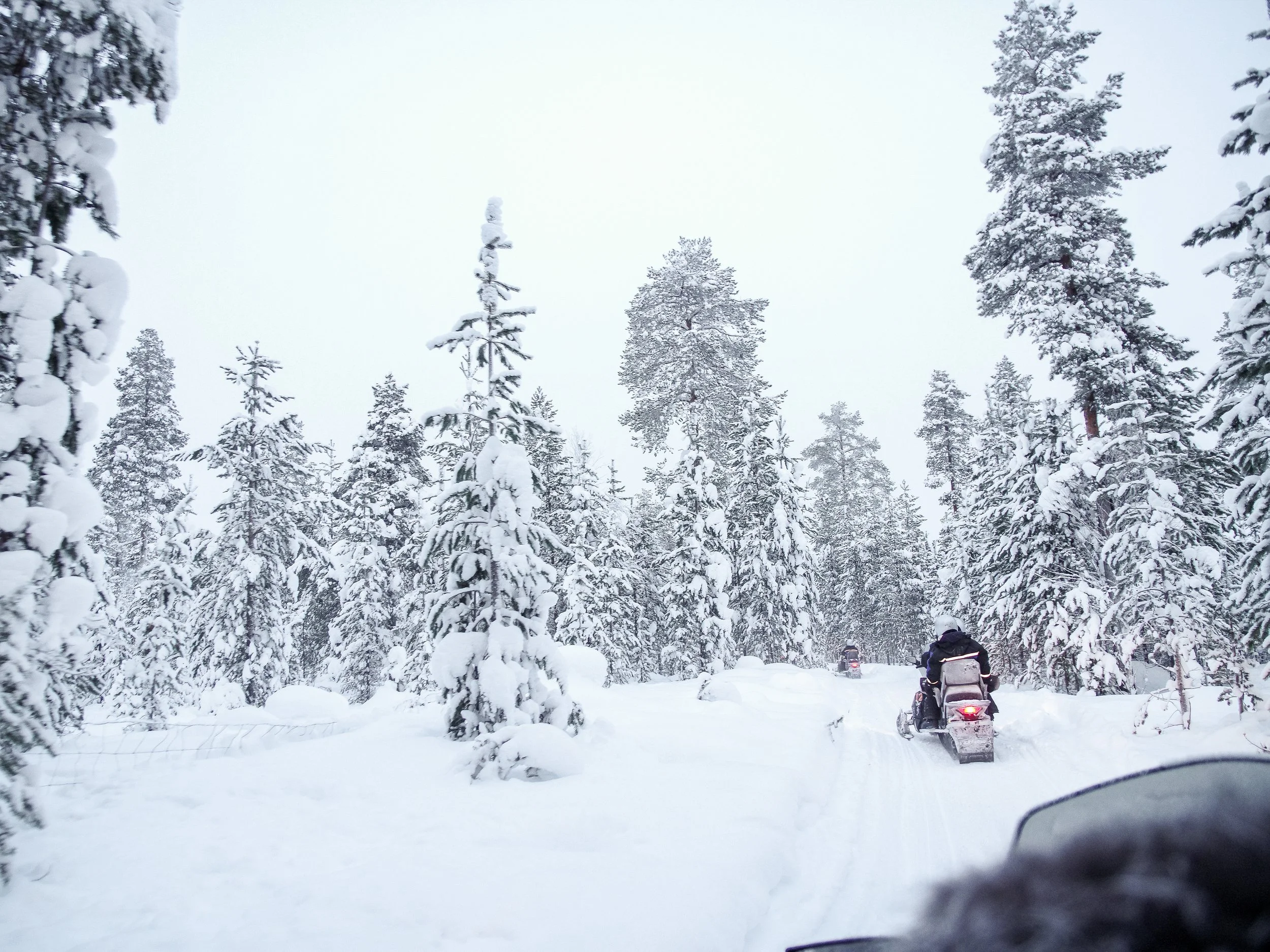
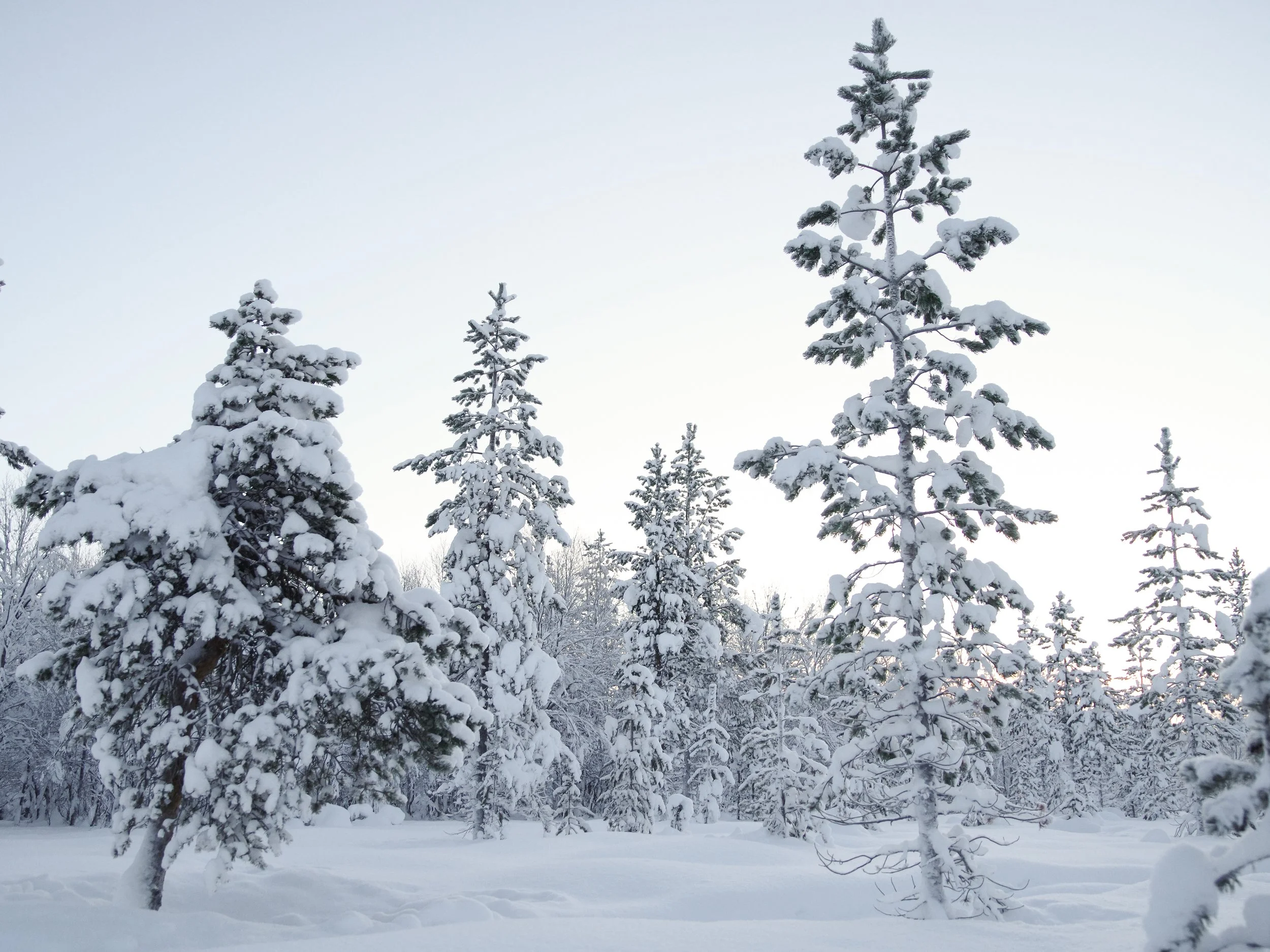
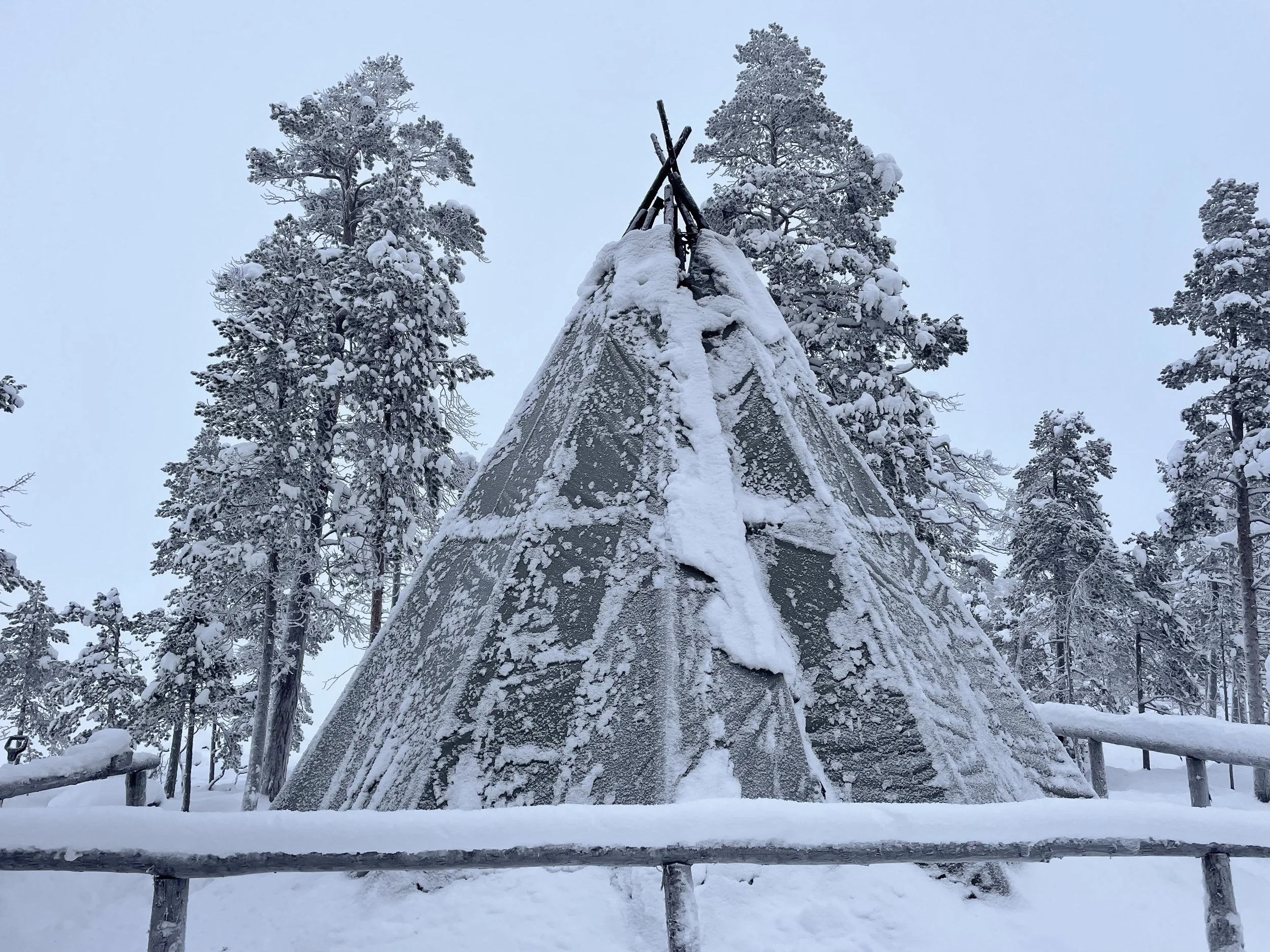
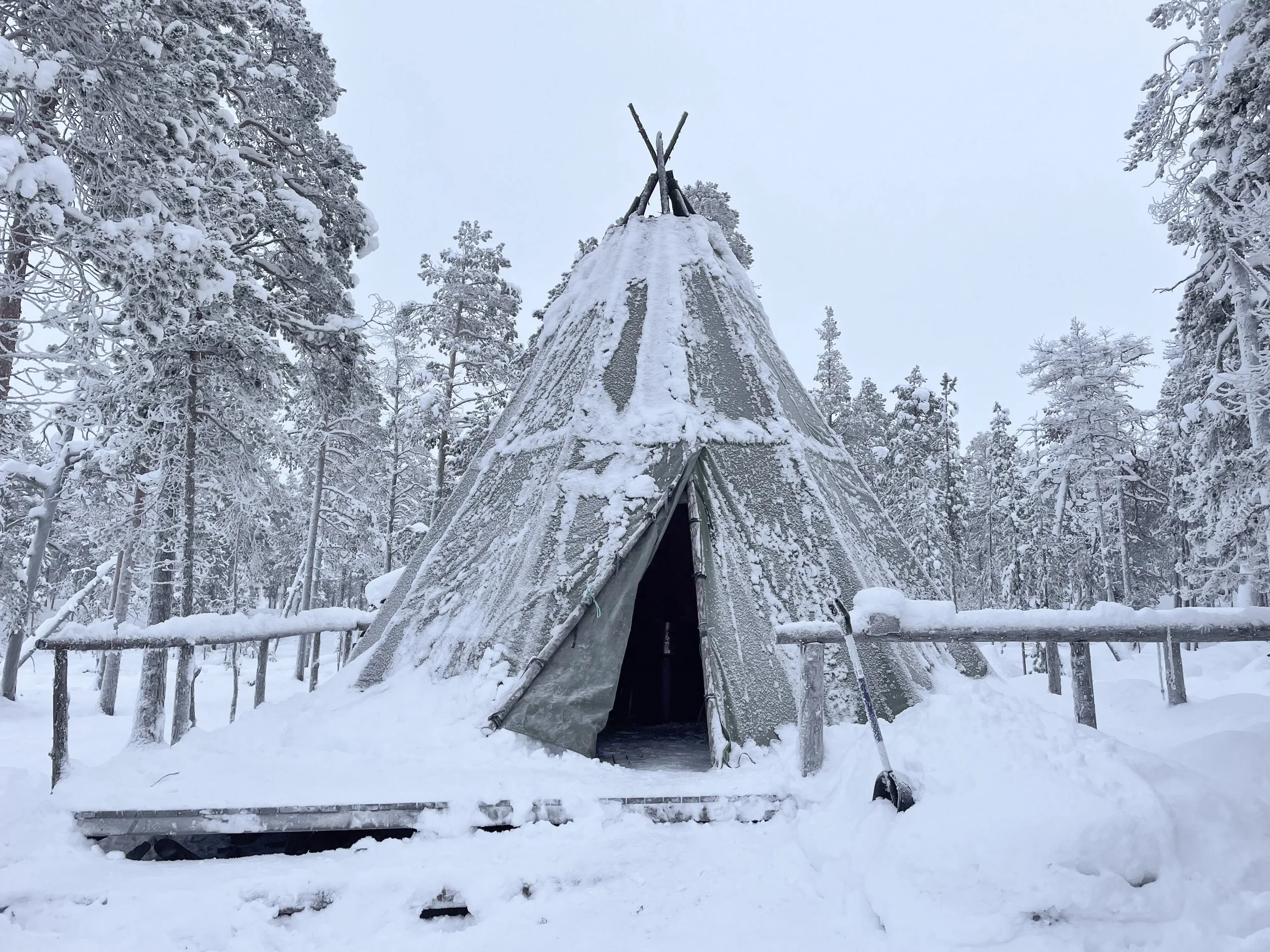
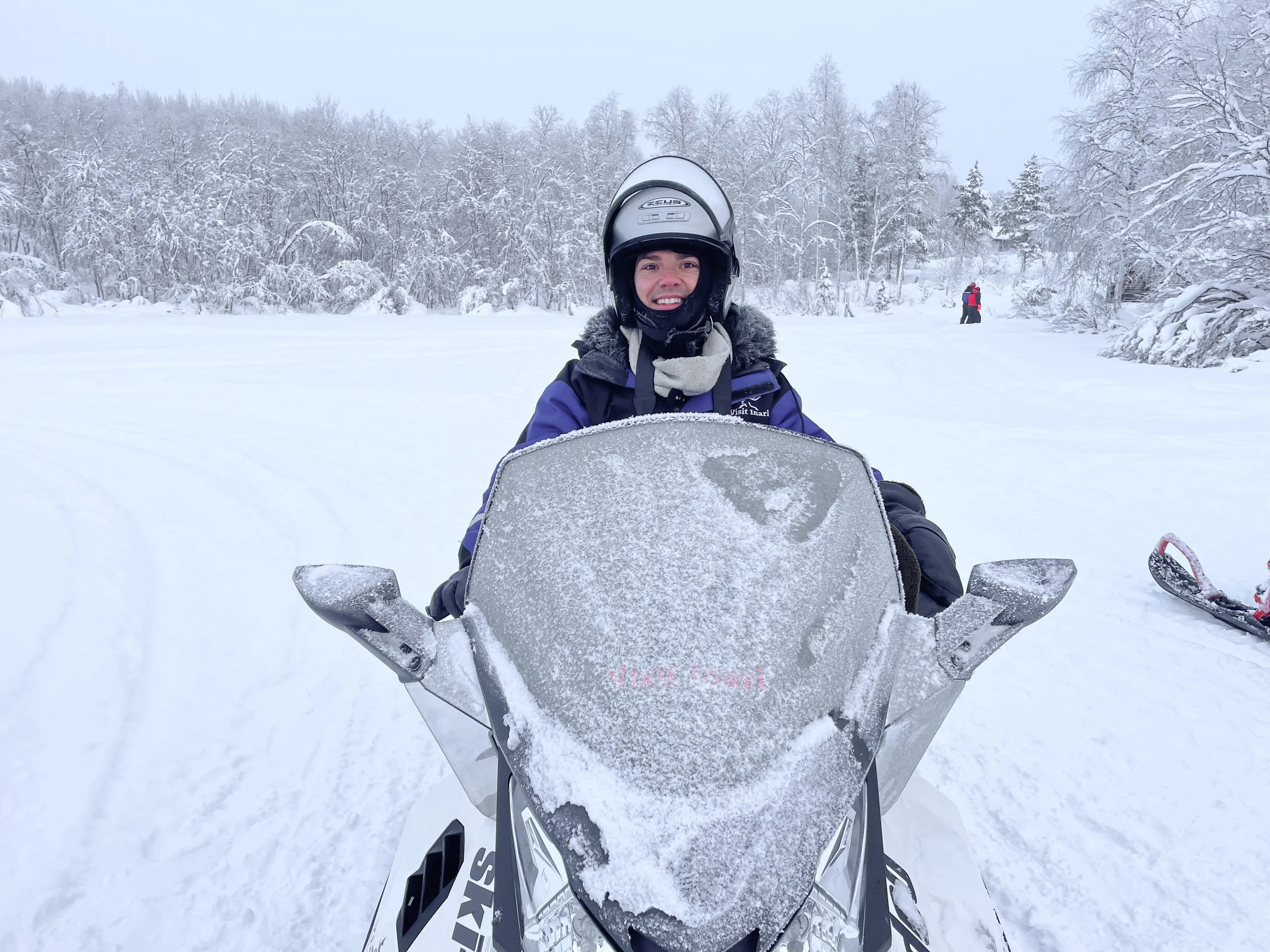
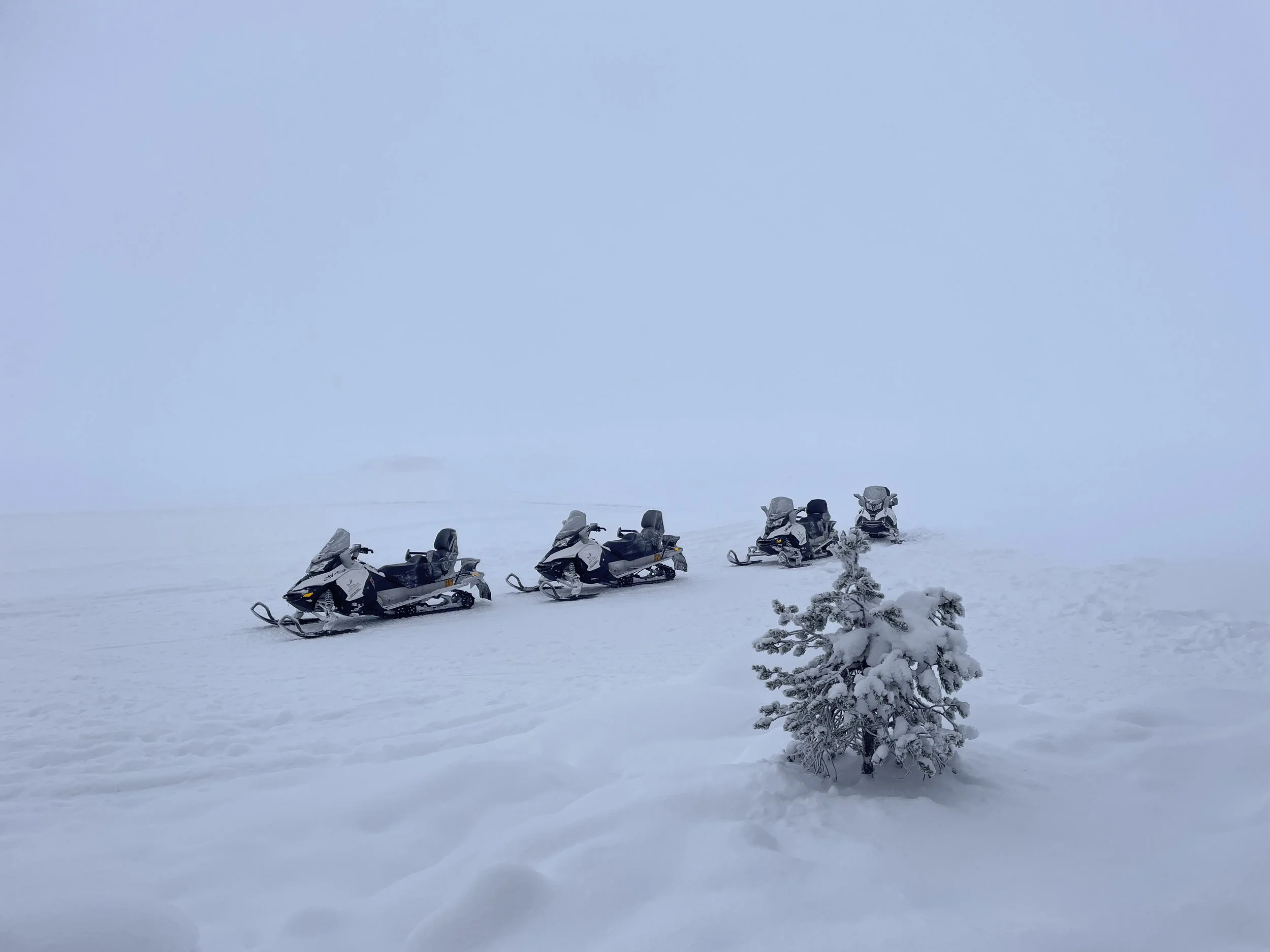
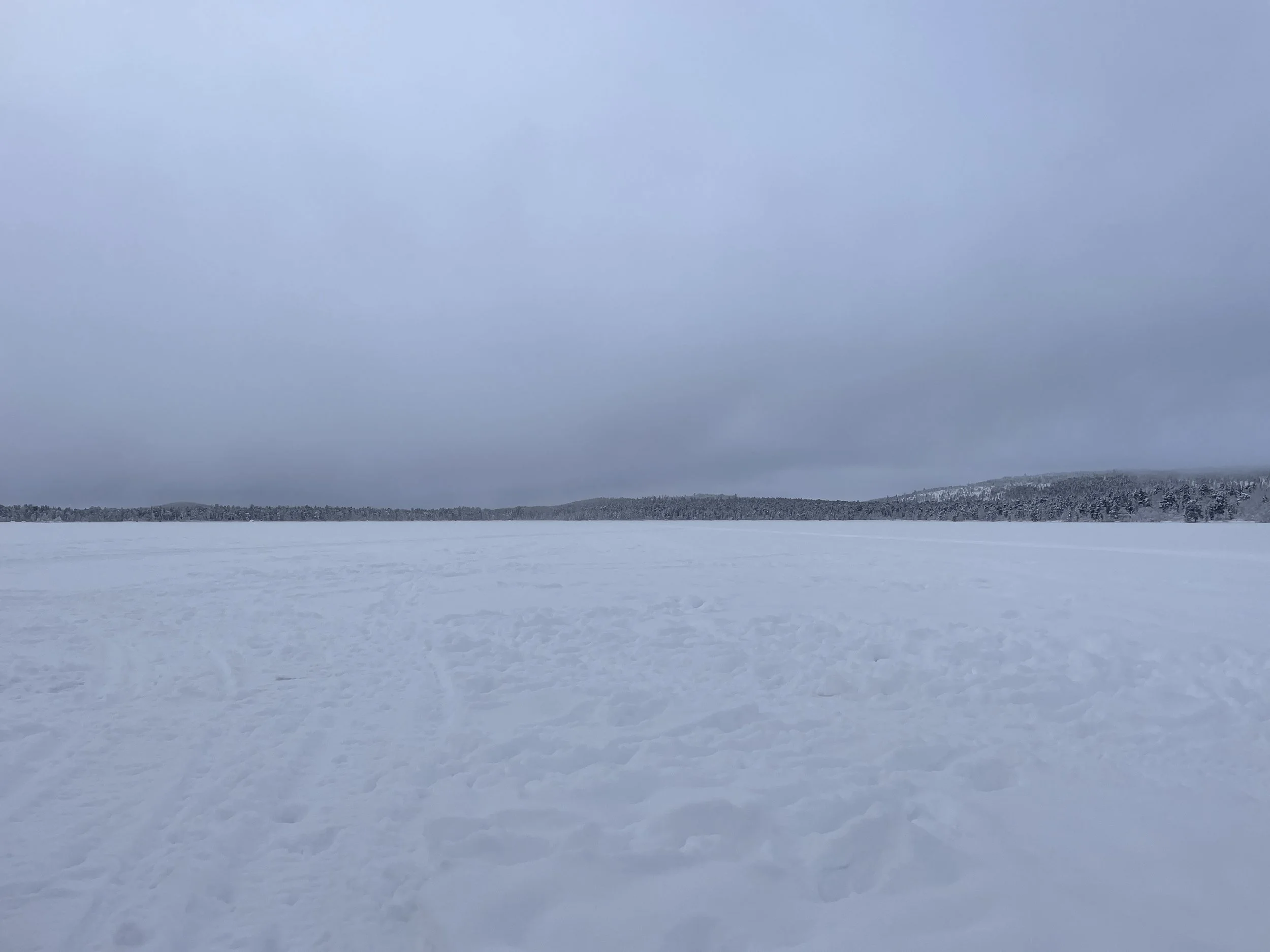
Sámi Snowmobile Safari
Suited up in a polar onesie, we mounted our snowmobile and sped off onto the frozen Lake Inari. Our guide led us between islands where we spotted groups of reindeer crossing the icy lake. We rode through wilderness trails and past pine trees drooping under the weight of fresh snow. Along the 34km route, we made stops to visit the Wilderness Church and sacred Sámi islands including Ukko and Vanha Hautuumaasaari. After a few hours, we stopped at a small island with a Sámi style conical hut. Within it, we ate a warm lunch of vegetable soup, rye bread and hot cider around a cozy fire.
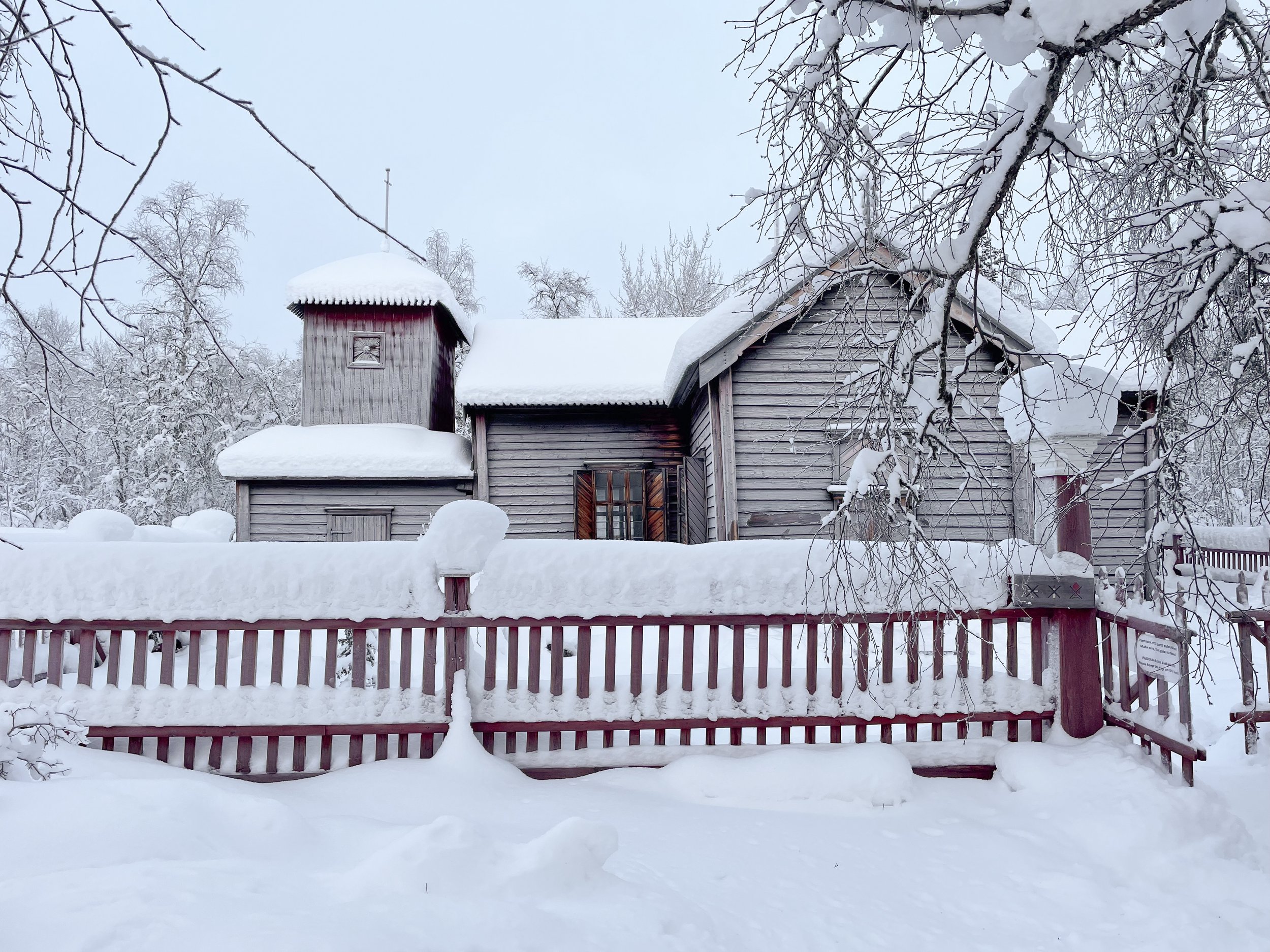
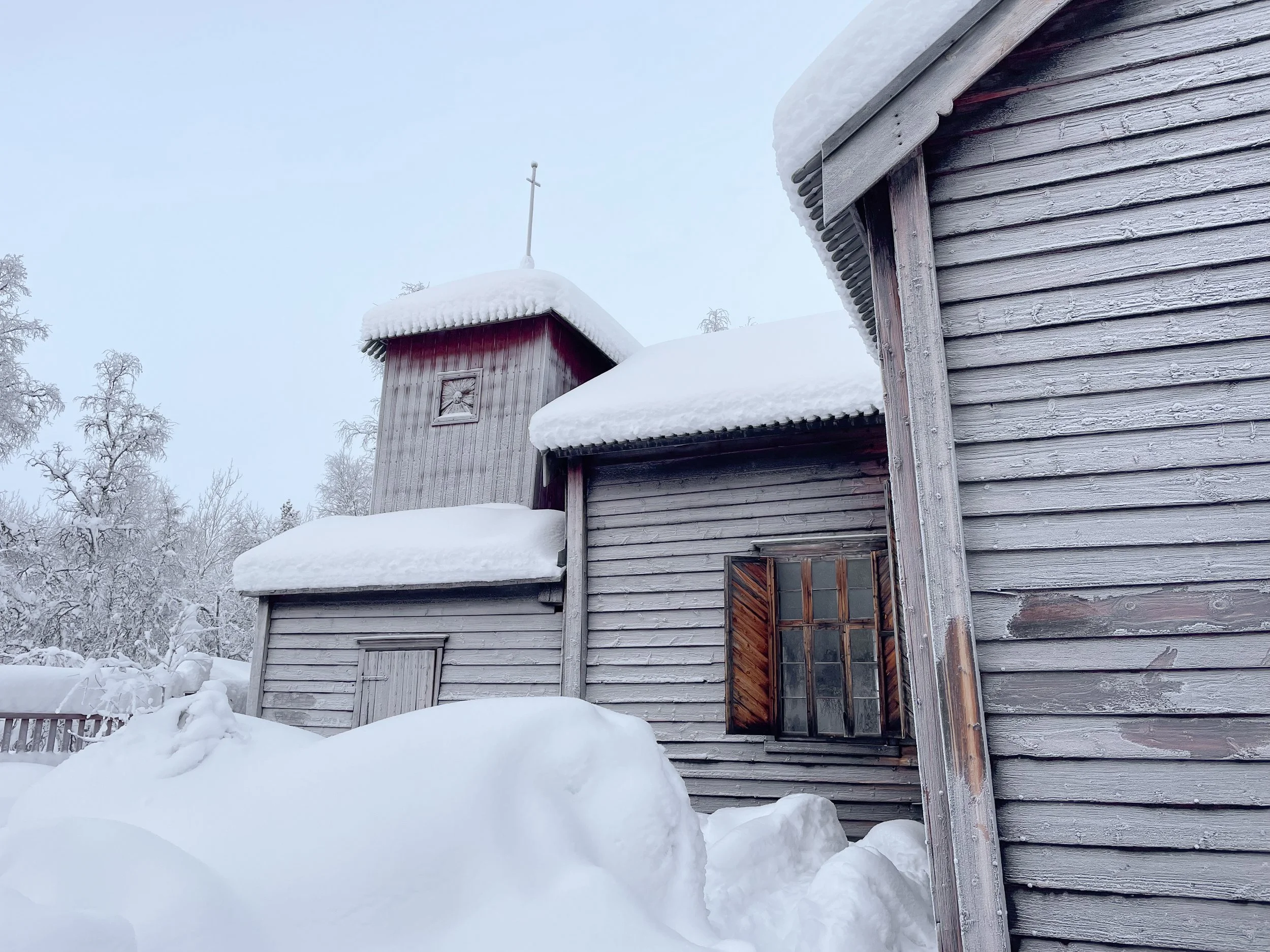
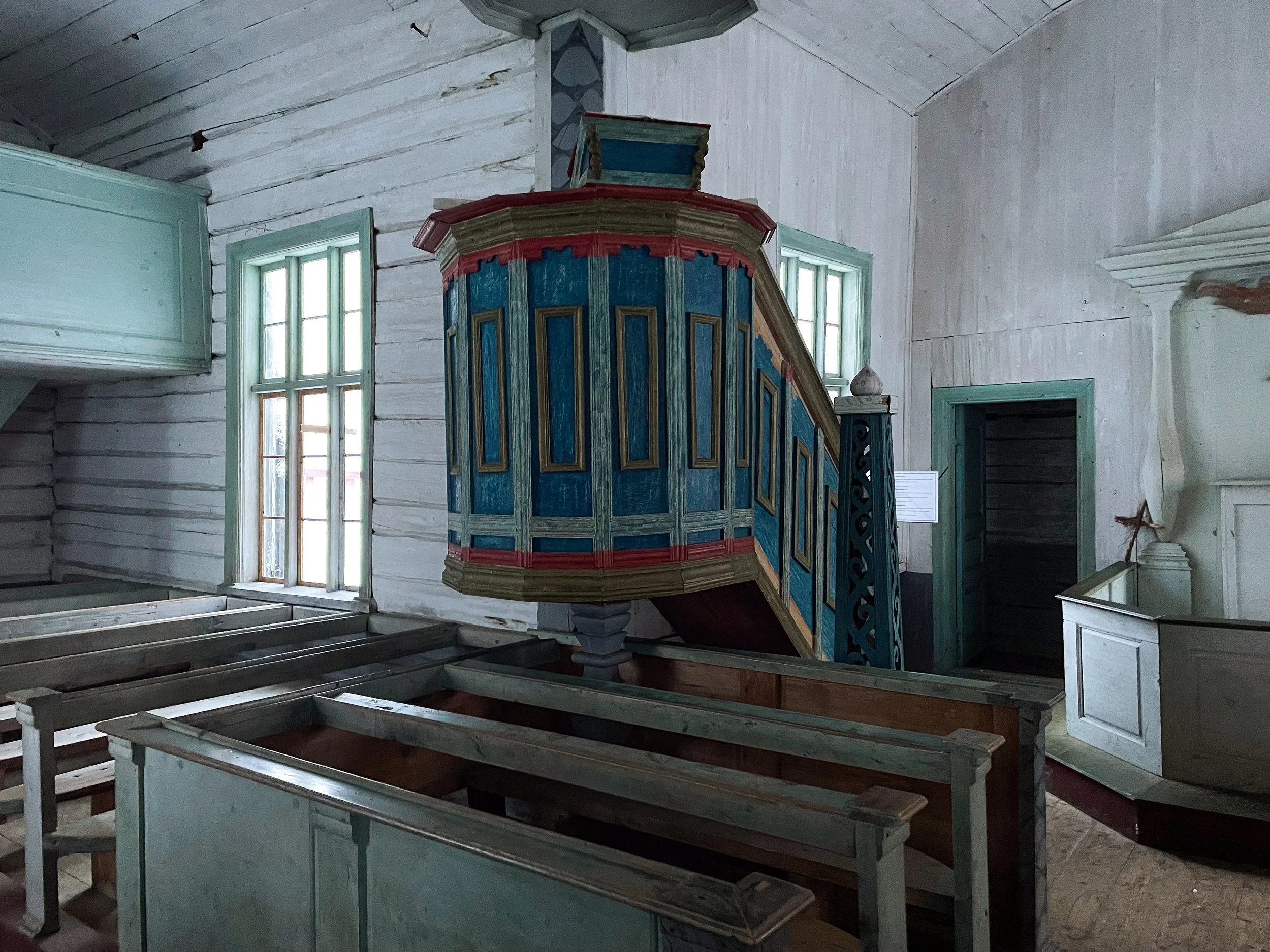
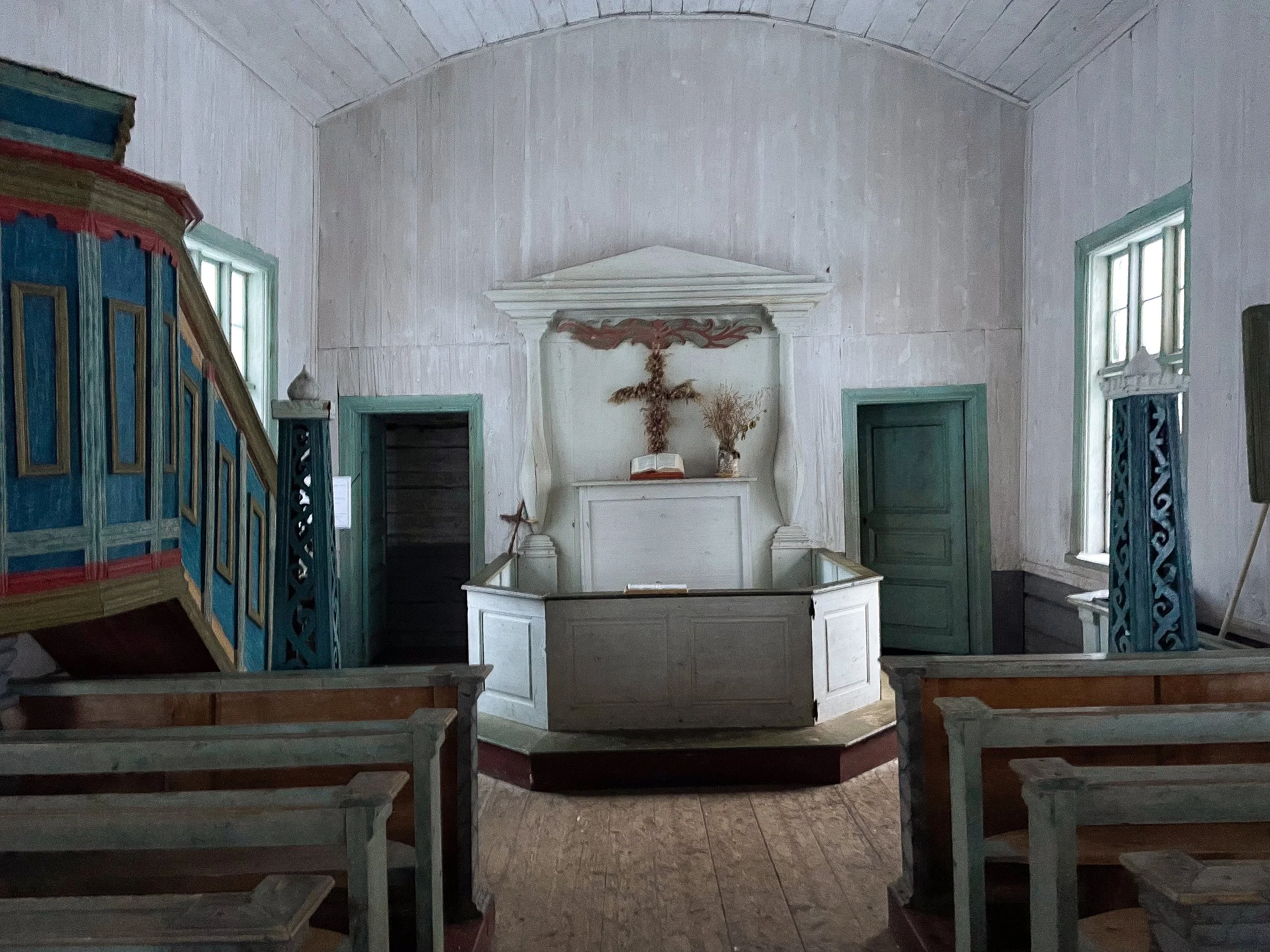
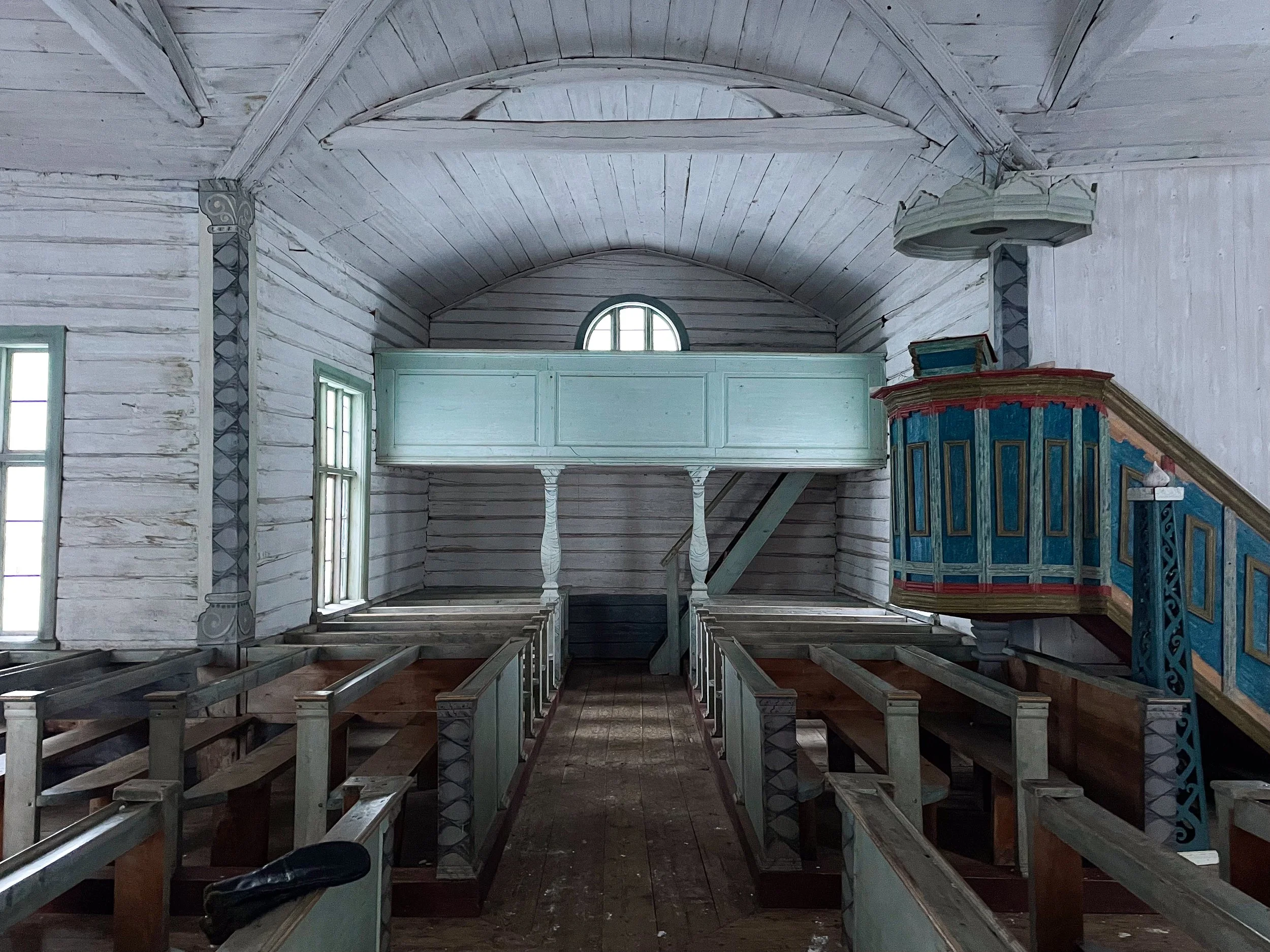
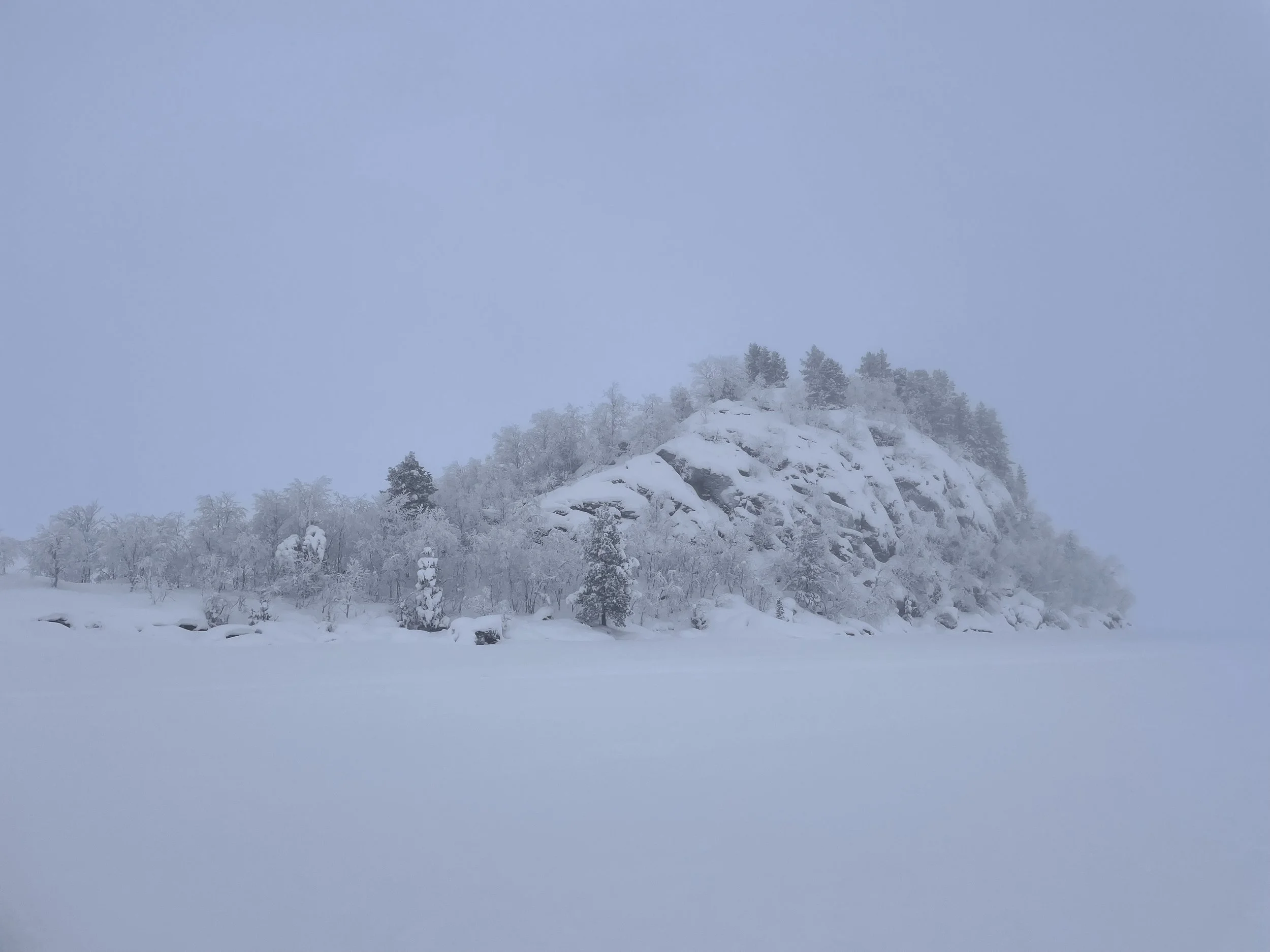
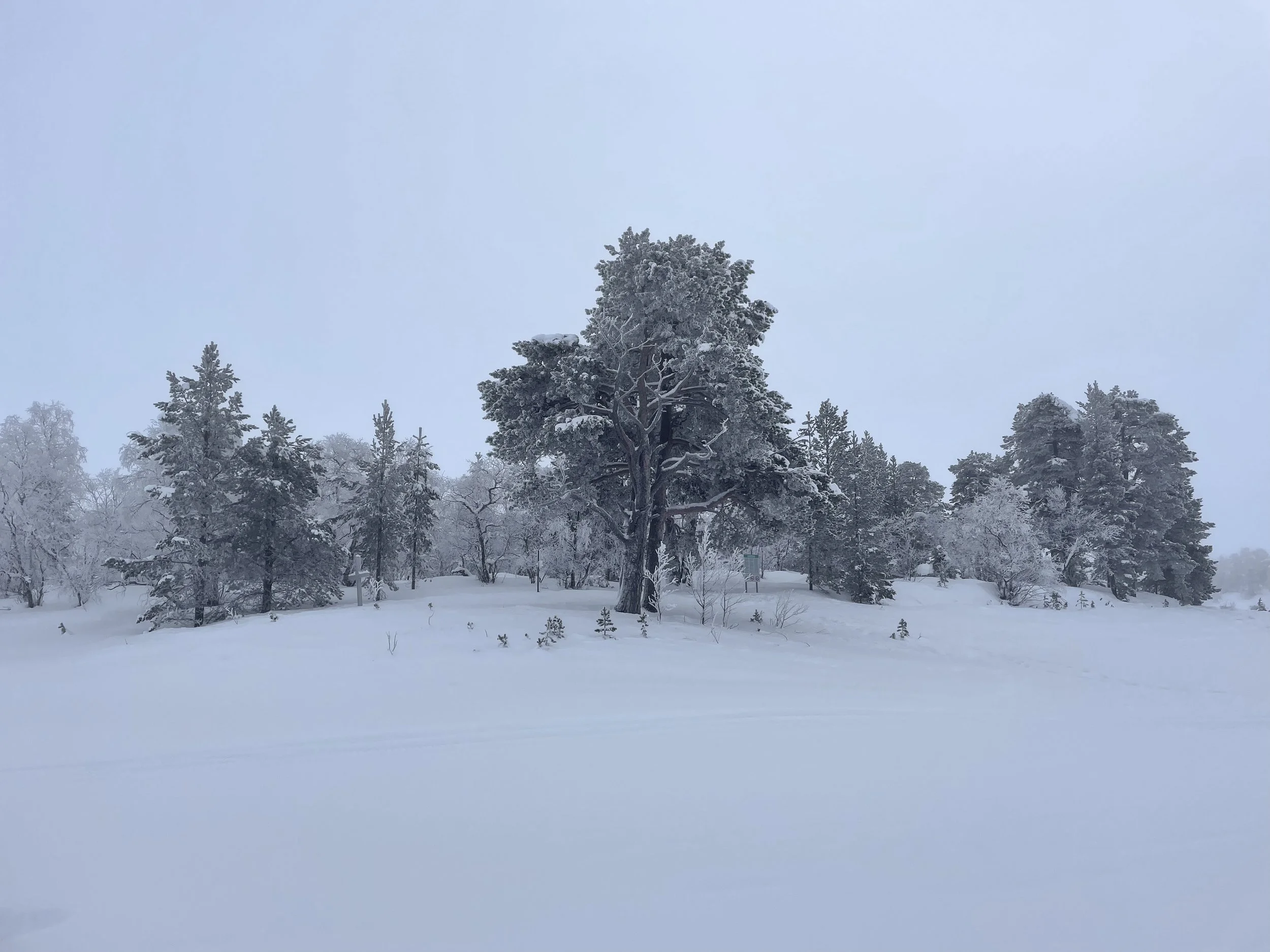
Wilderness Church. A remote wooden church in the forest along the shore of Lake Inari. It’s the oldest building in Northern Finland, dating back to 1760.
Ukko Island. An island on Lake Inari with a tall rocky point sacred to the Sámi People. Offerings are made here to Ukko, the “God of Thunder.”
Vanha Hautuumaasaari. A sacred island on Lake Inari and burial ground for the Sámi People.
Husky Mushing
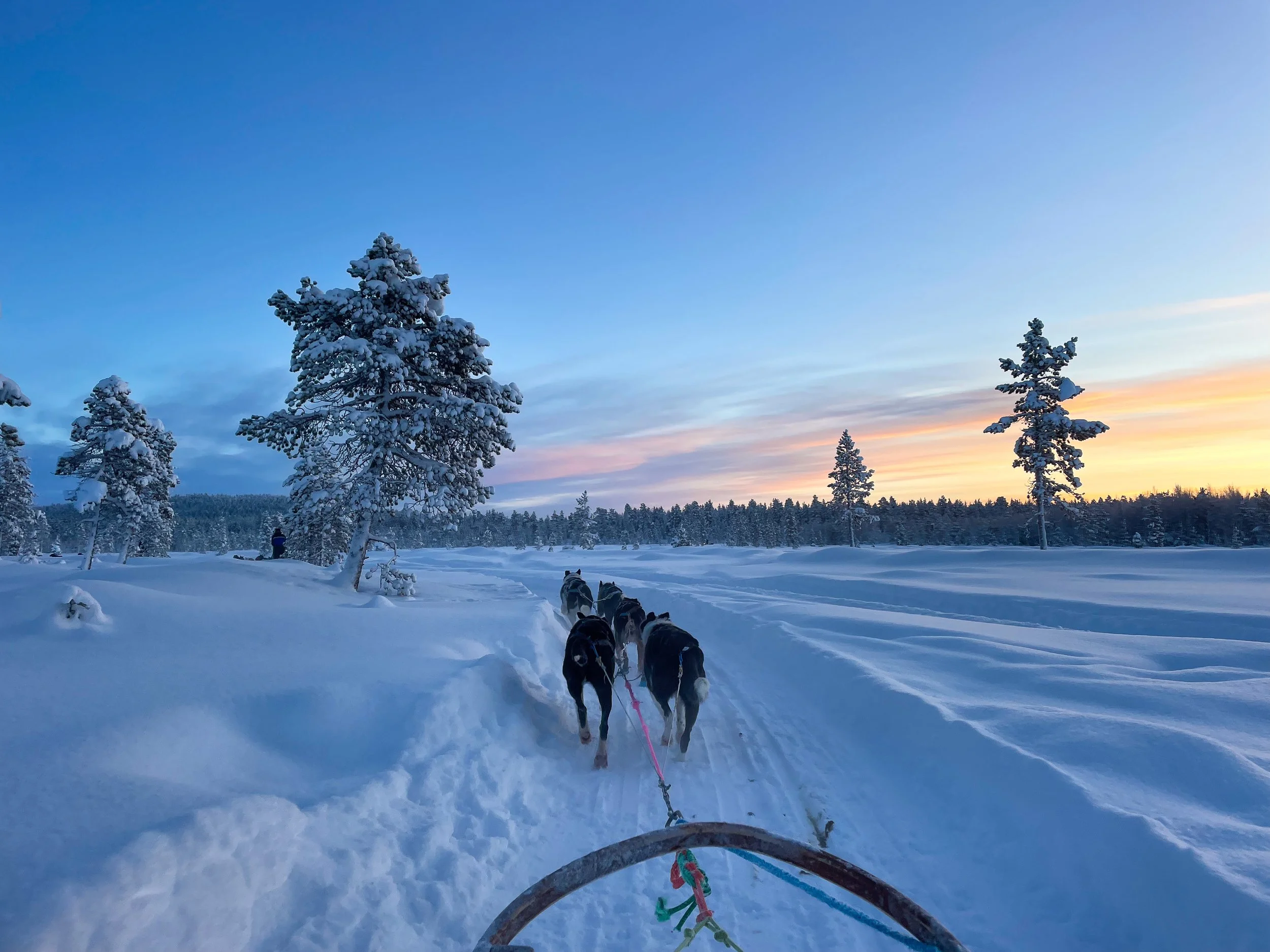
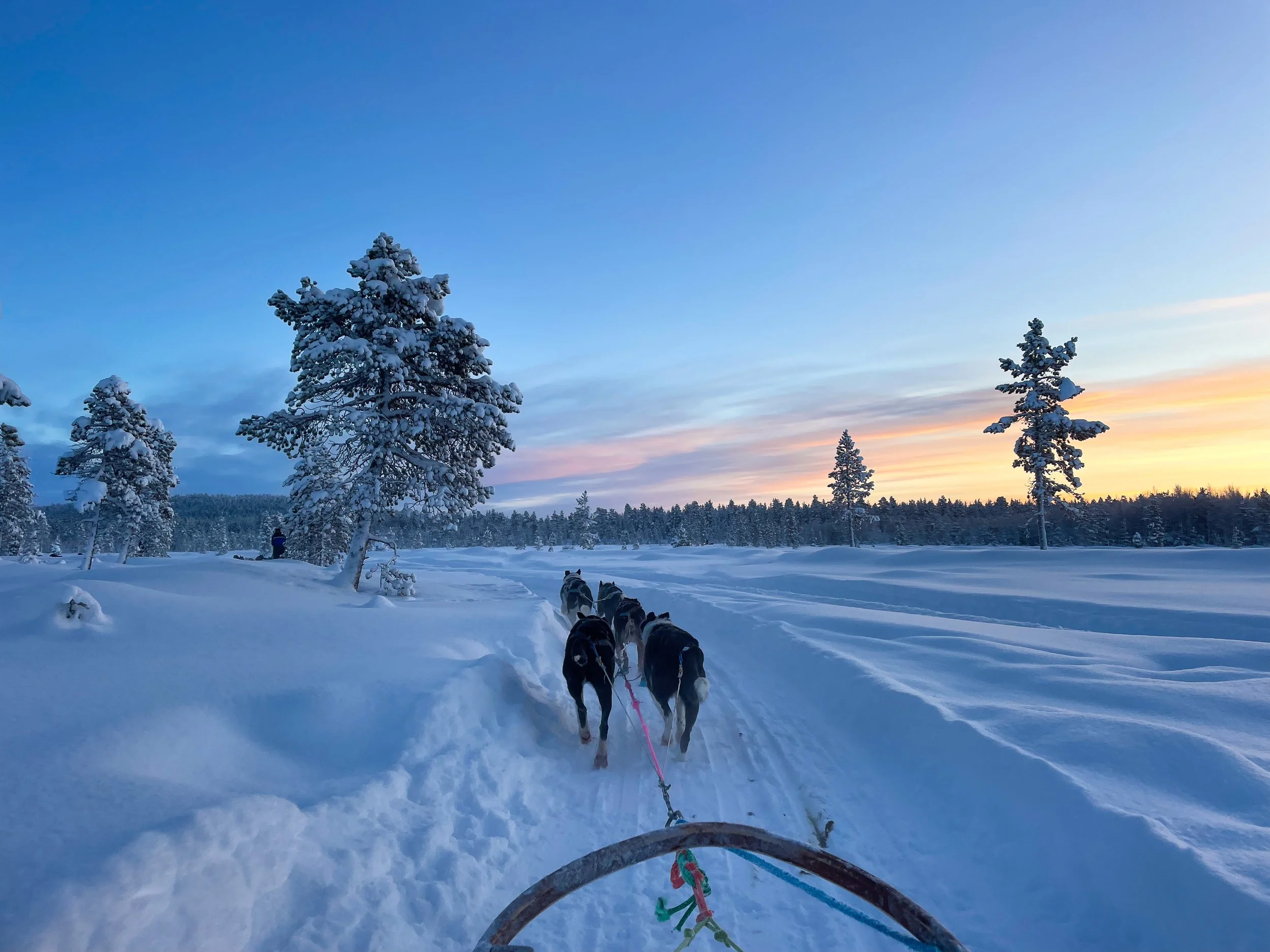
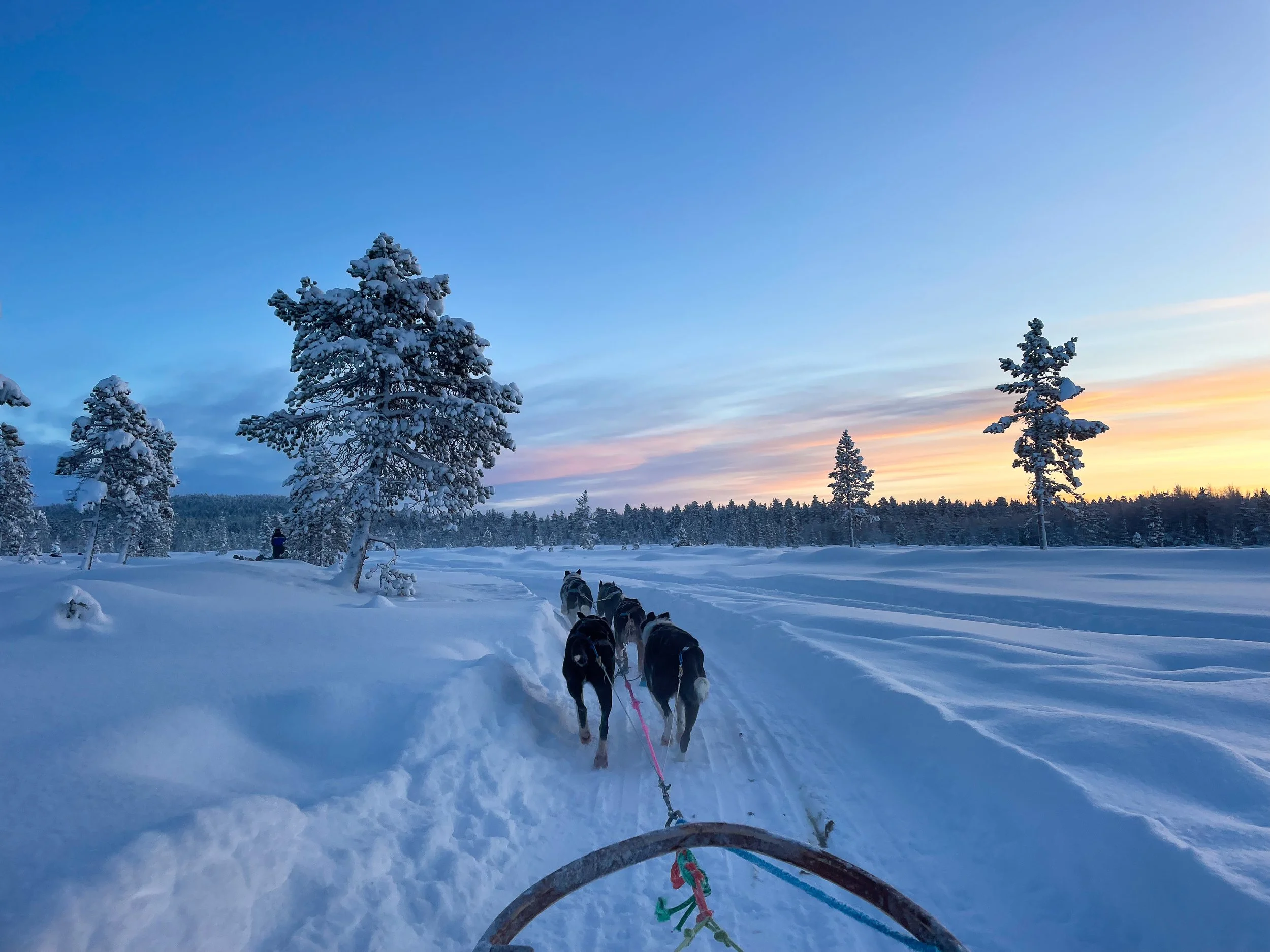
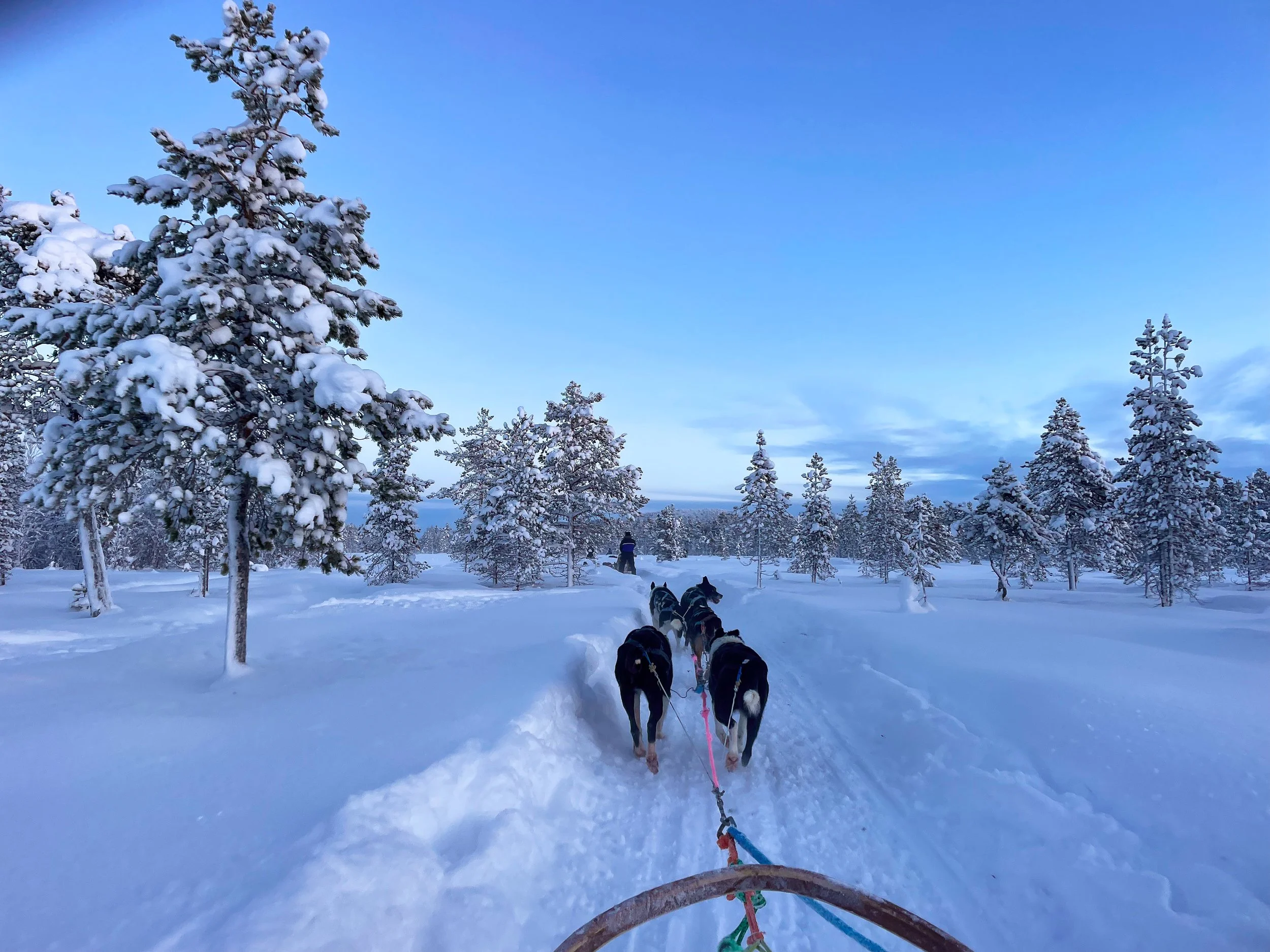
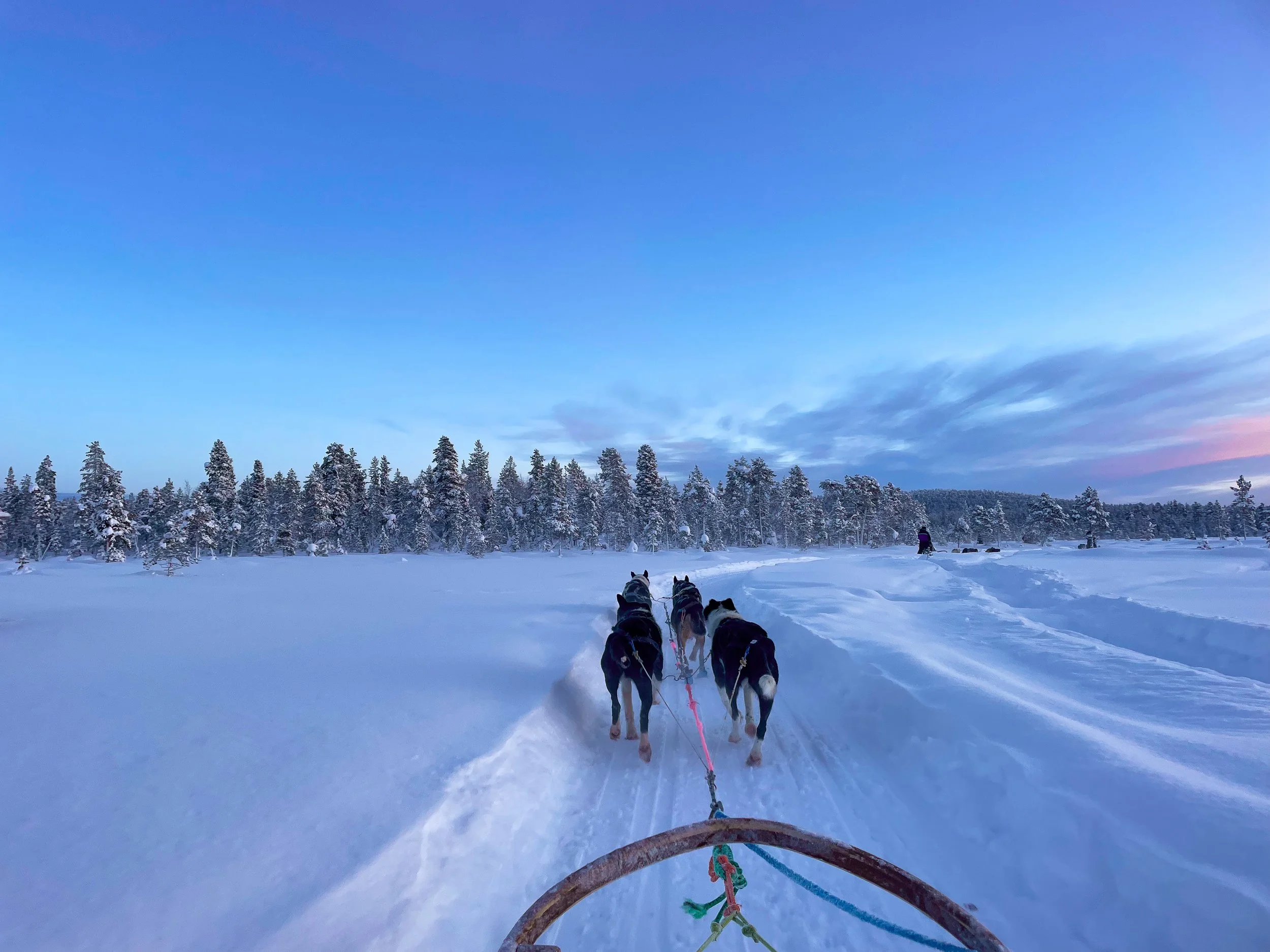
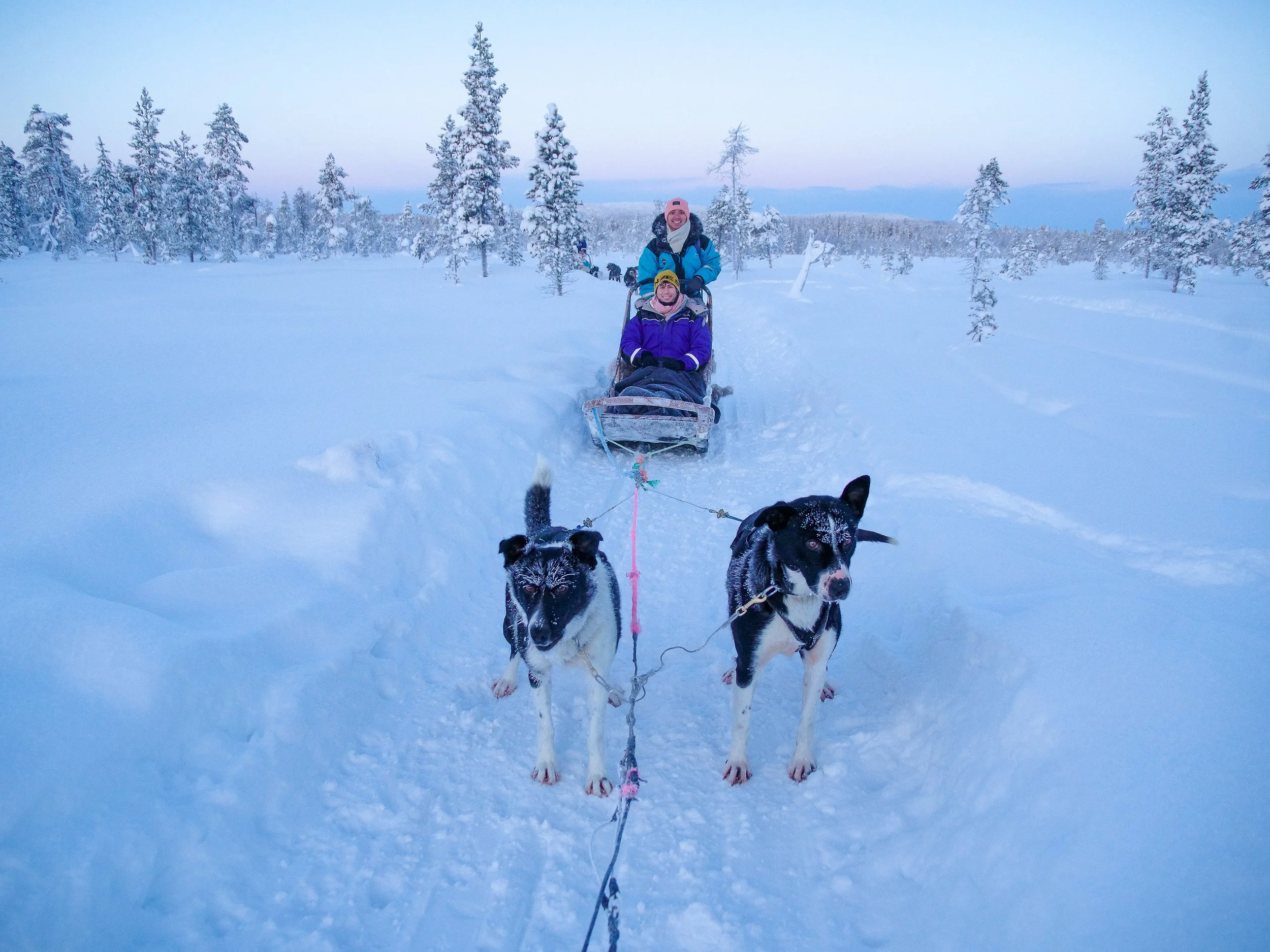
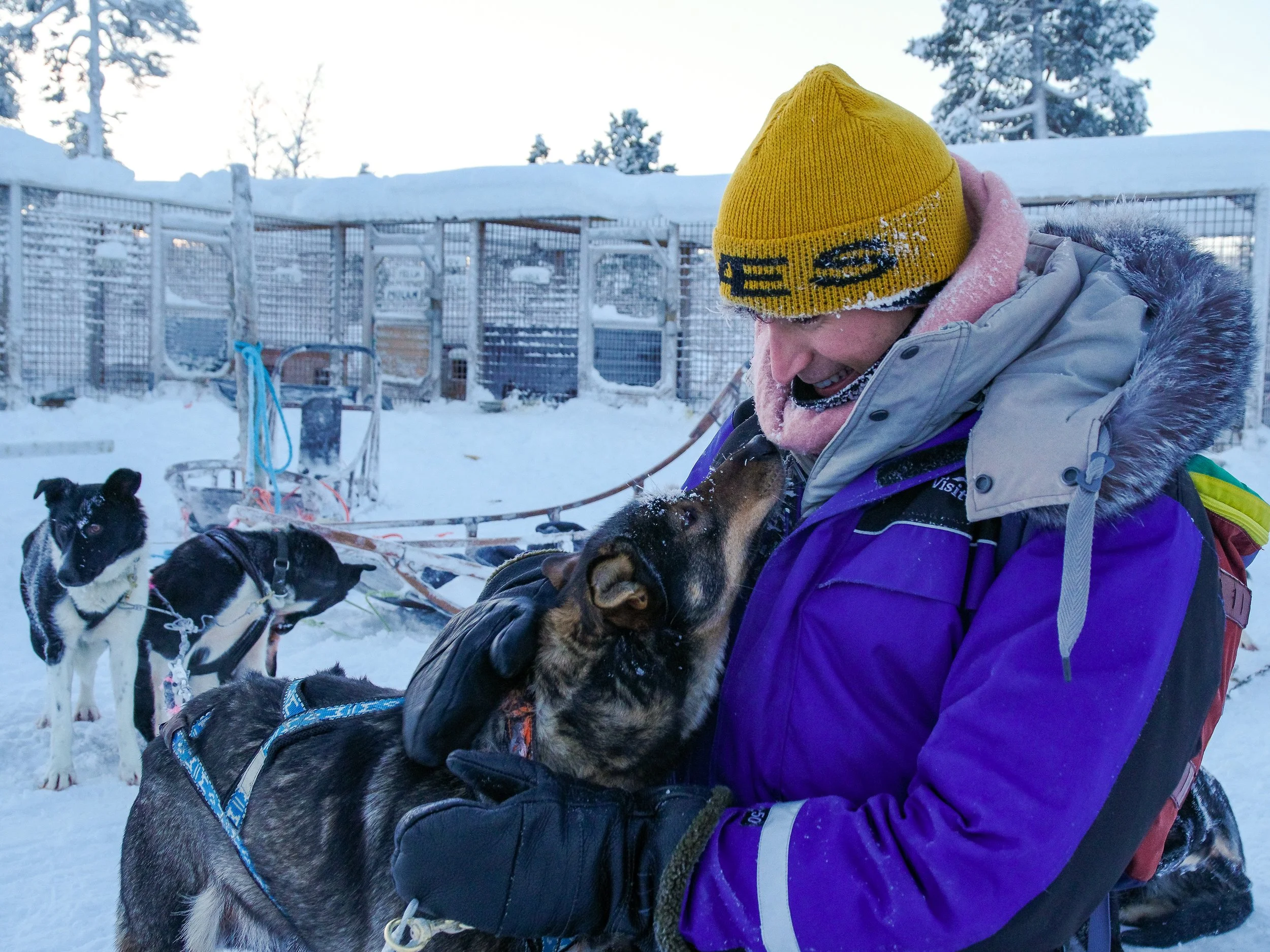
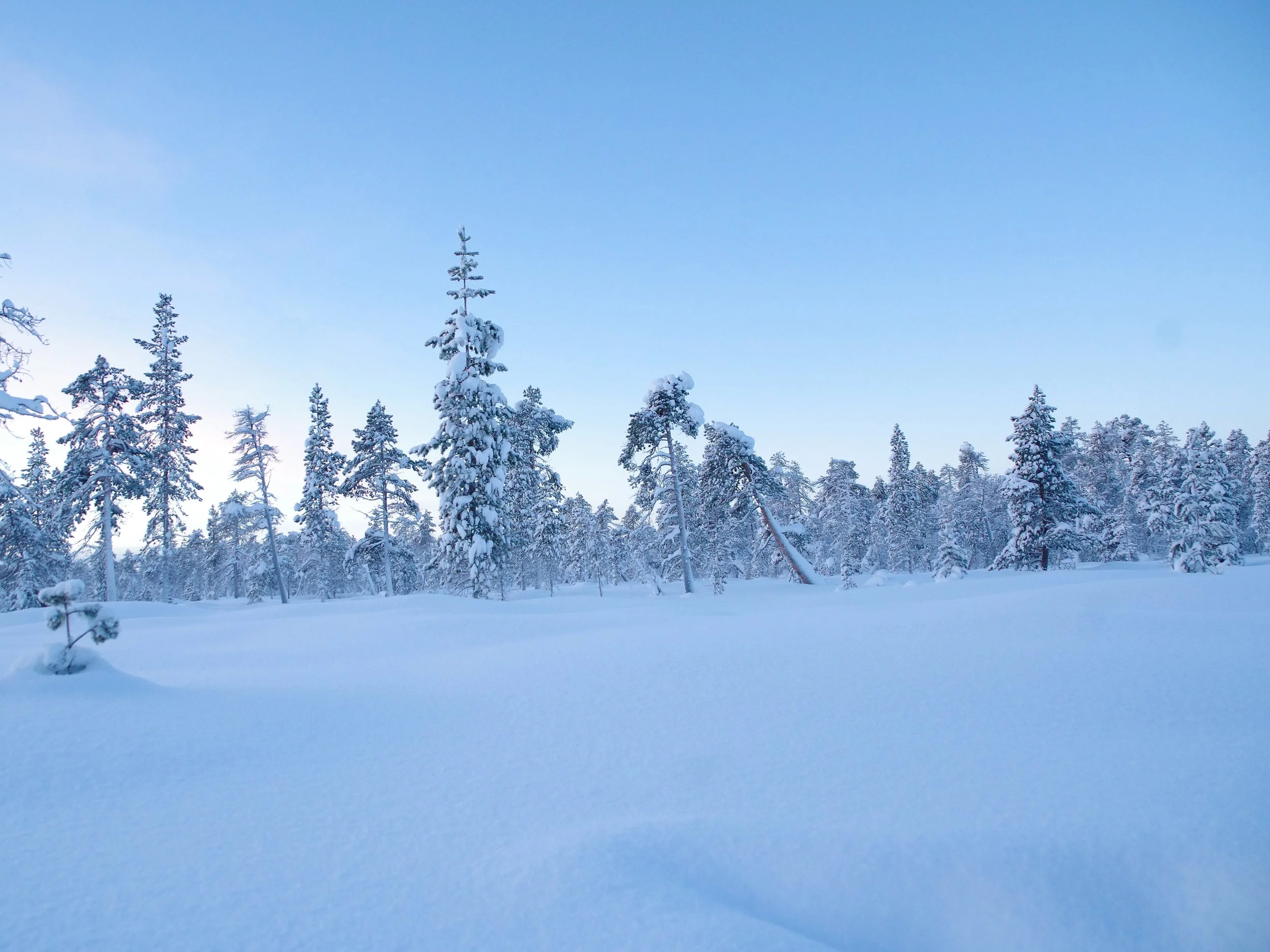
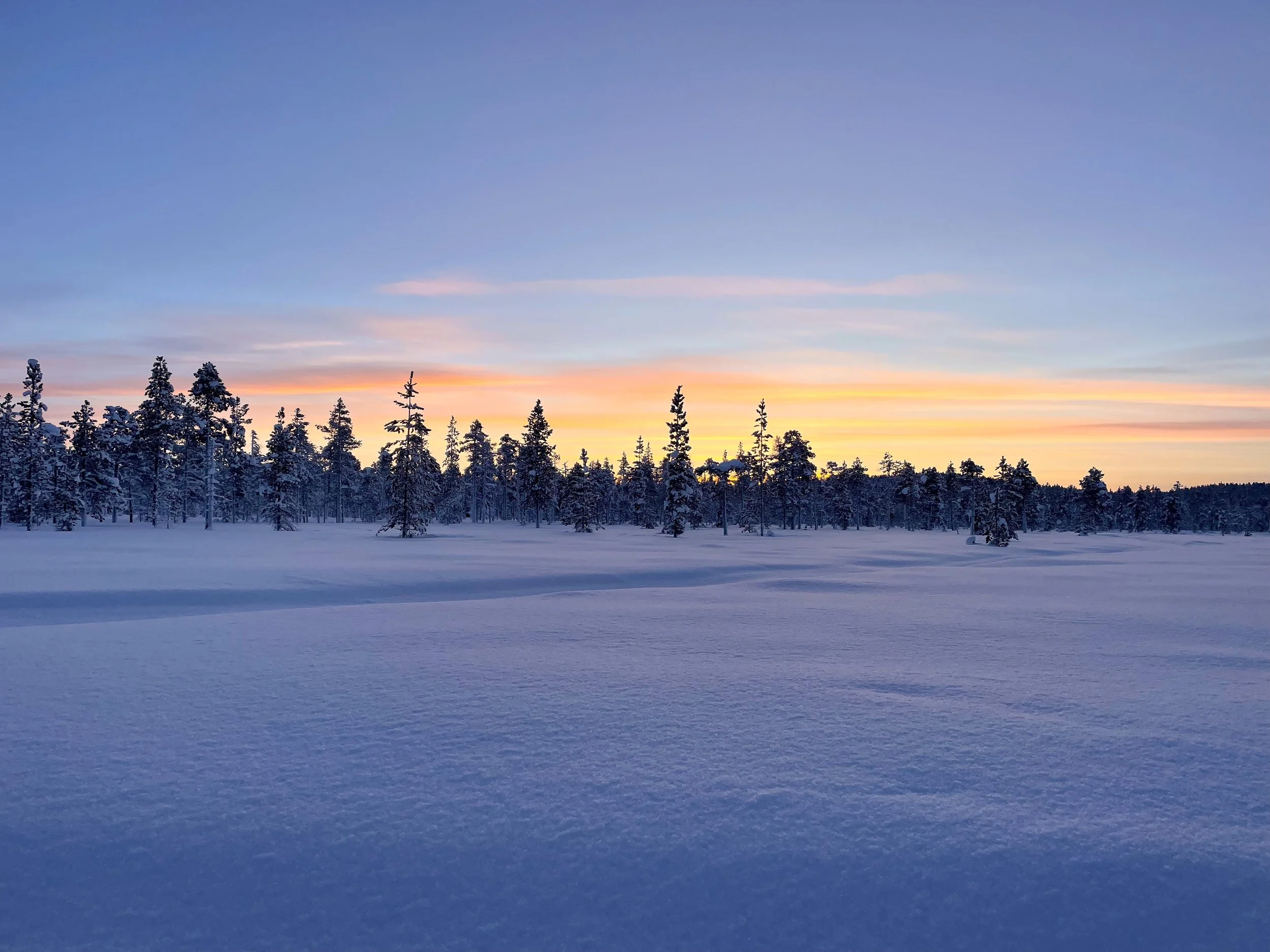
Ever since our first trip to the Arctic, we’ve dreamt of going husky mushing. Lapland was the perfect place to make that dream come true. After suiting up in a polar onesie and listening to a brief lesson, we were paired with a sled of Siberian and Alaskan huskies. The pack of dogs were excited to run; howling, barking and jumping around before bolting off in unison with us behind them. We mushed our way through the Lappish countryside, past snow covered trees and fields of white along the twisting 10km trail. As we sledded across the frozen landscape, ice formed on our eyelashes and hair in the subzero temperature. Halfway through, we traded places, each getting a chance to drive. At the end, we got to cuddle and pet the huskies, before warming up by the fire.
Cross Country Skiing
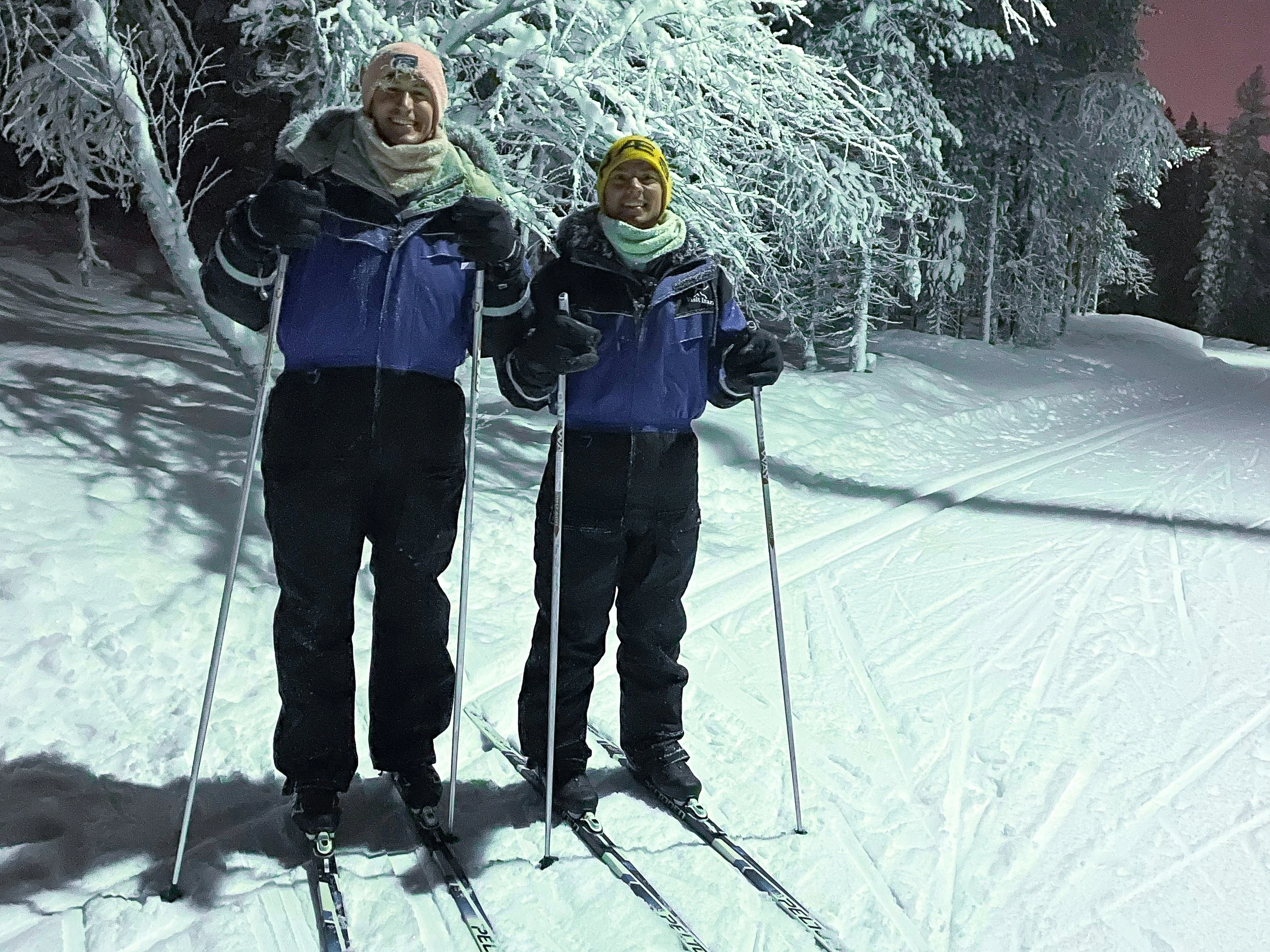
Cross country skiing is a Finnish pastime and national sport. We booked a 2 hour lesson and learned the basics on a groomed track in an arena. Following the tracks, we skied uphill into the wooded trails and continued to improve our form. After a couple of kilometers, we returned downhill, intermittently picking up speed and gliding along the tracks with ease.
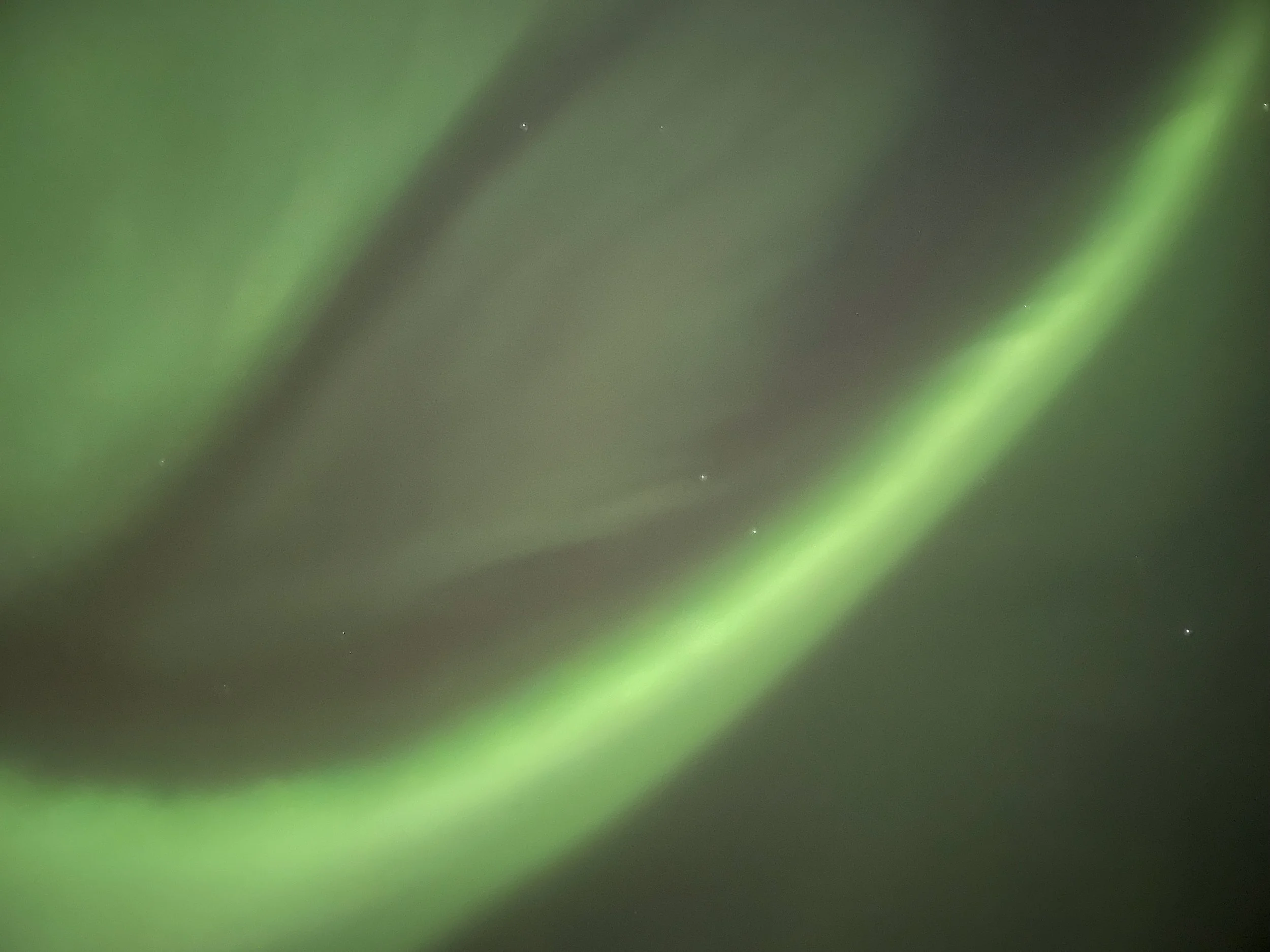
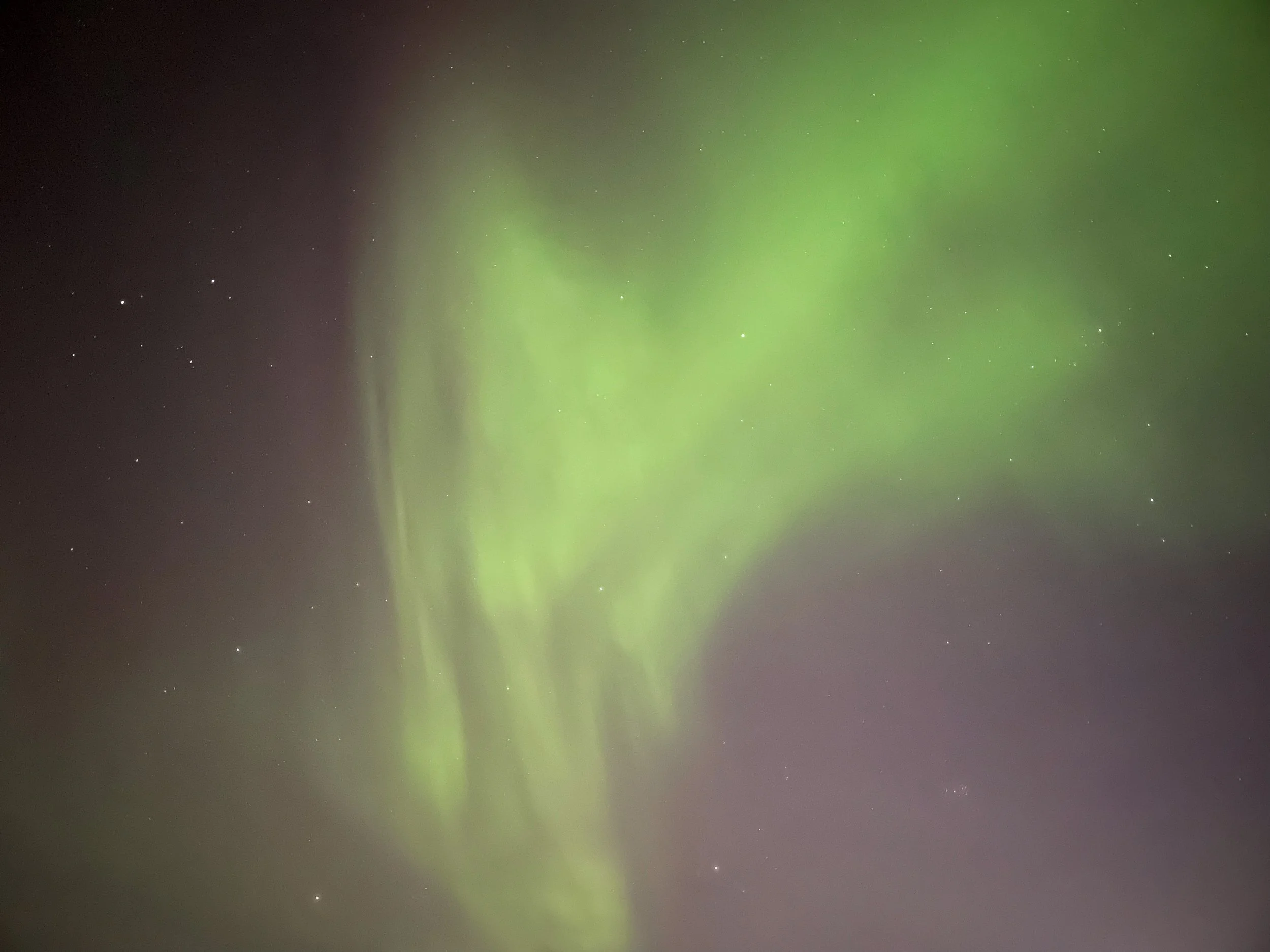
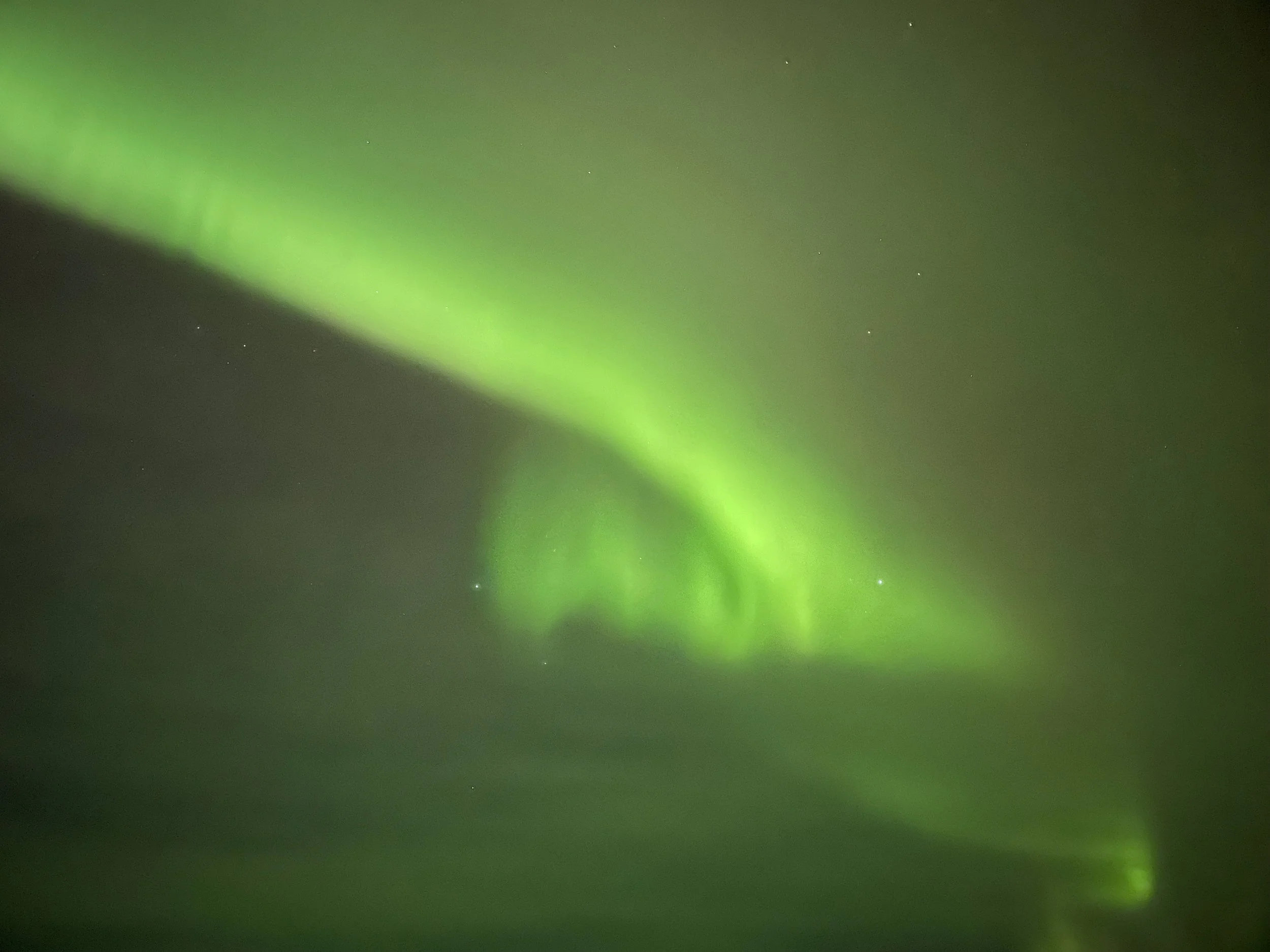
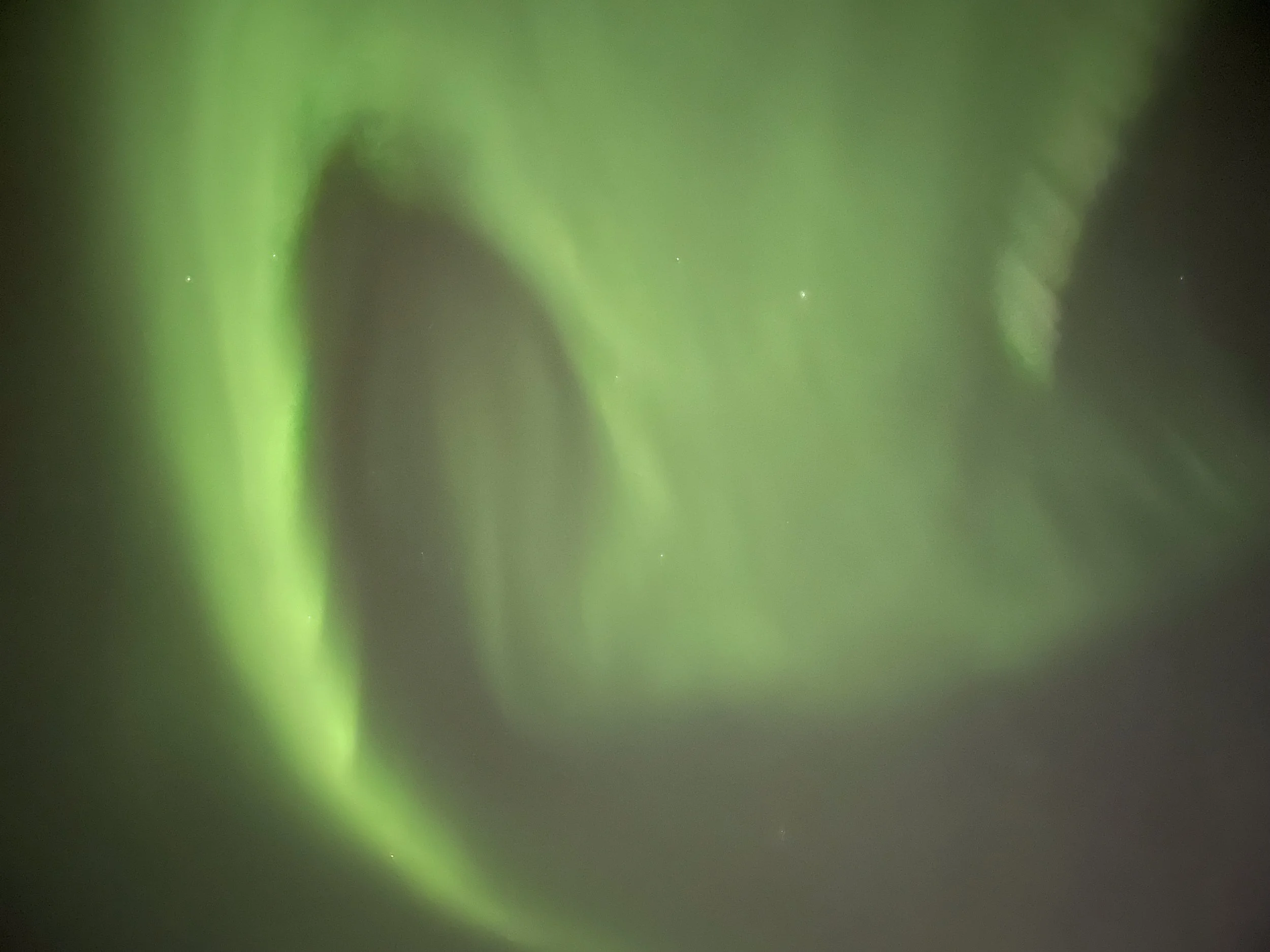
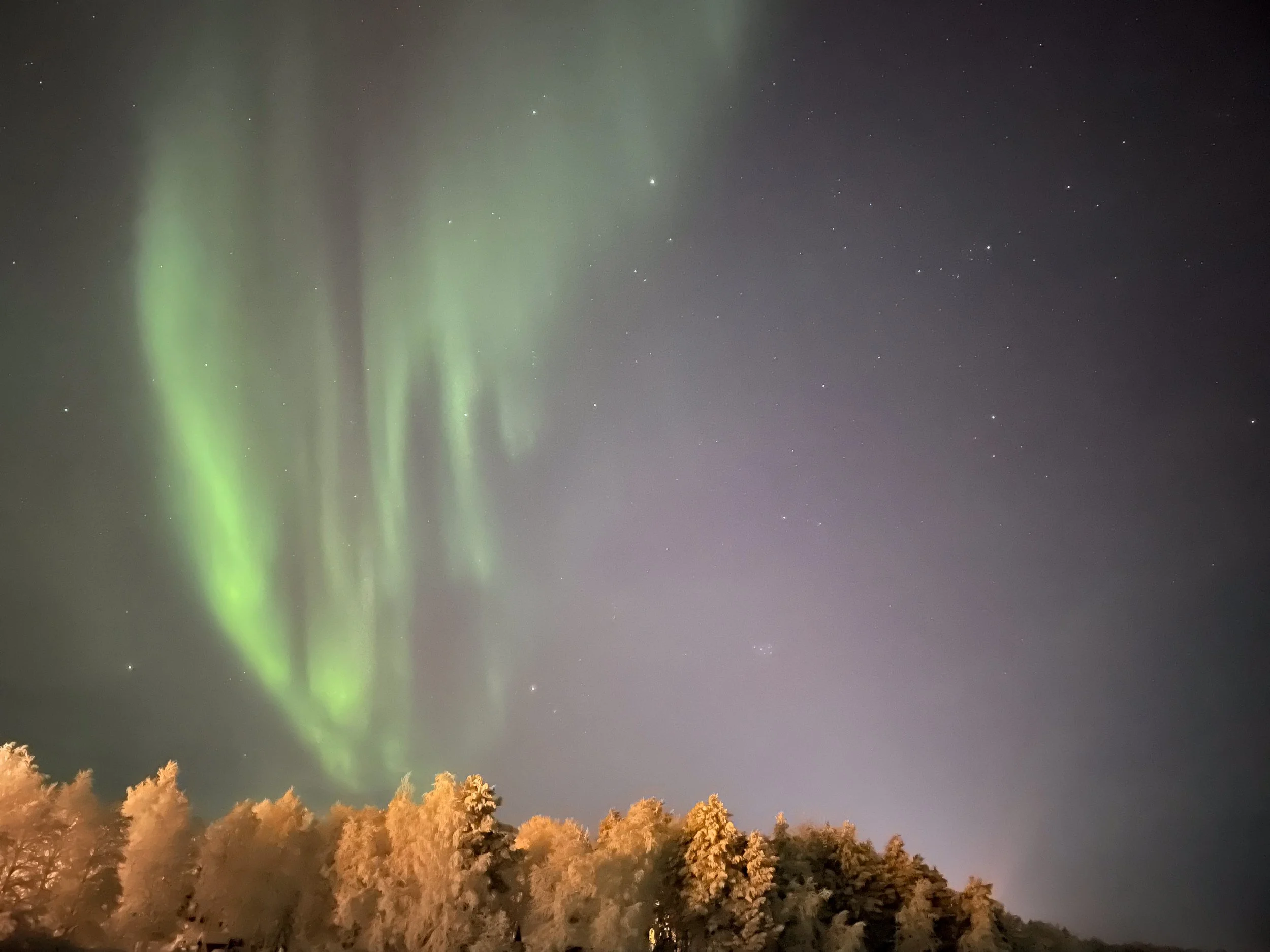
The Northern Lights
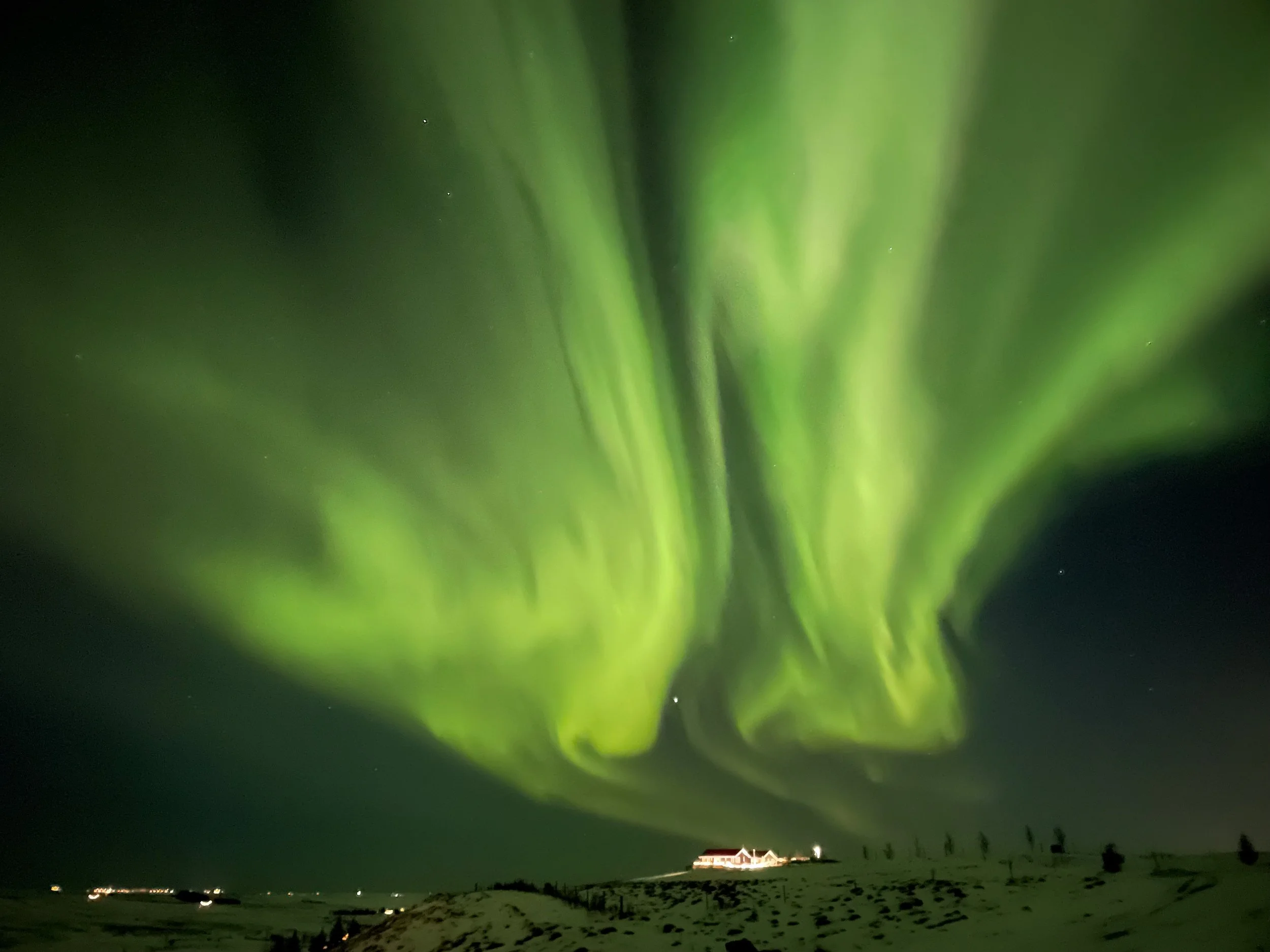
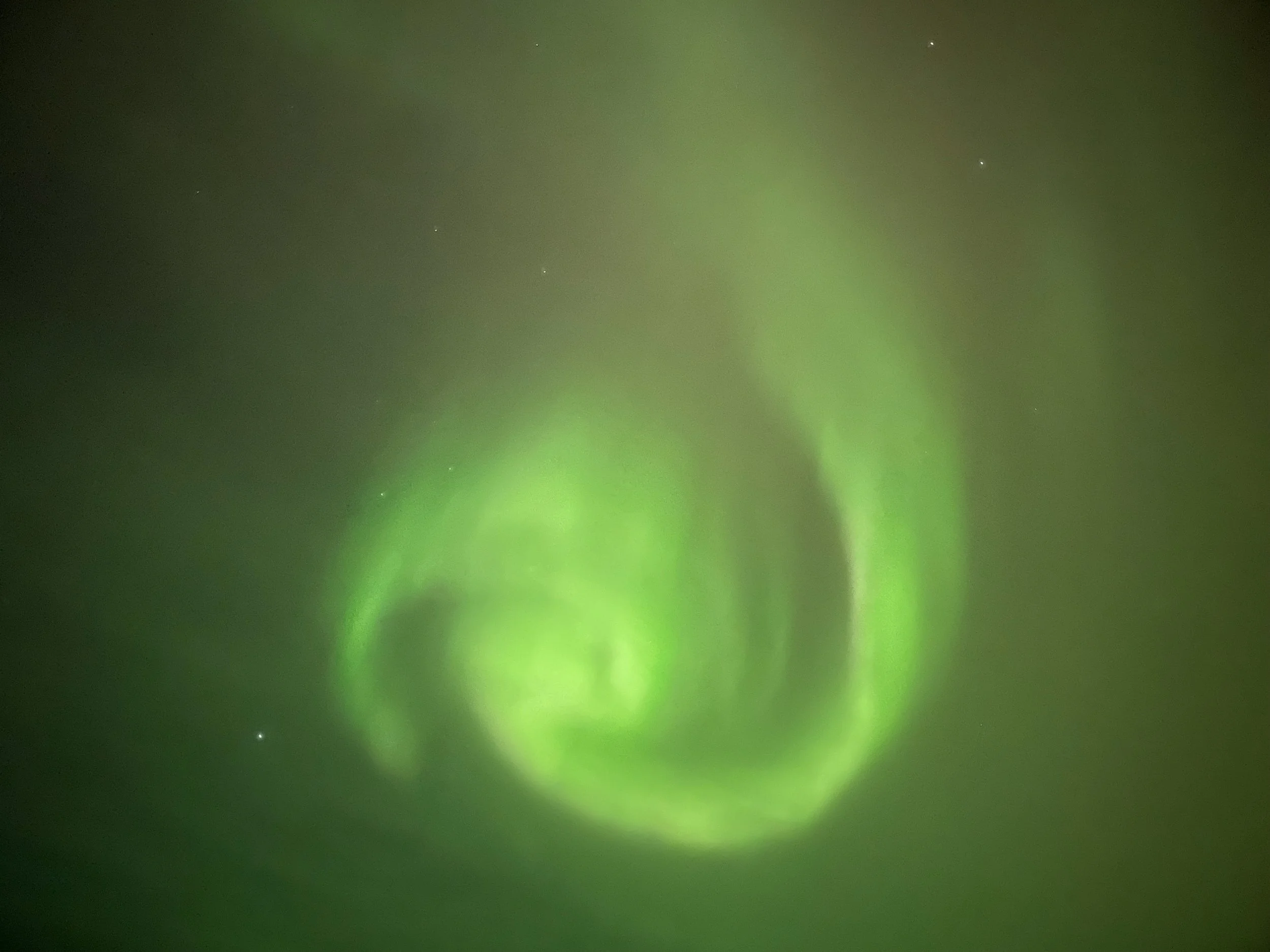
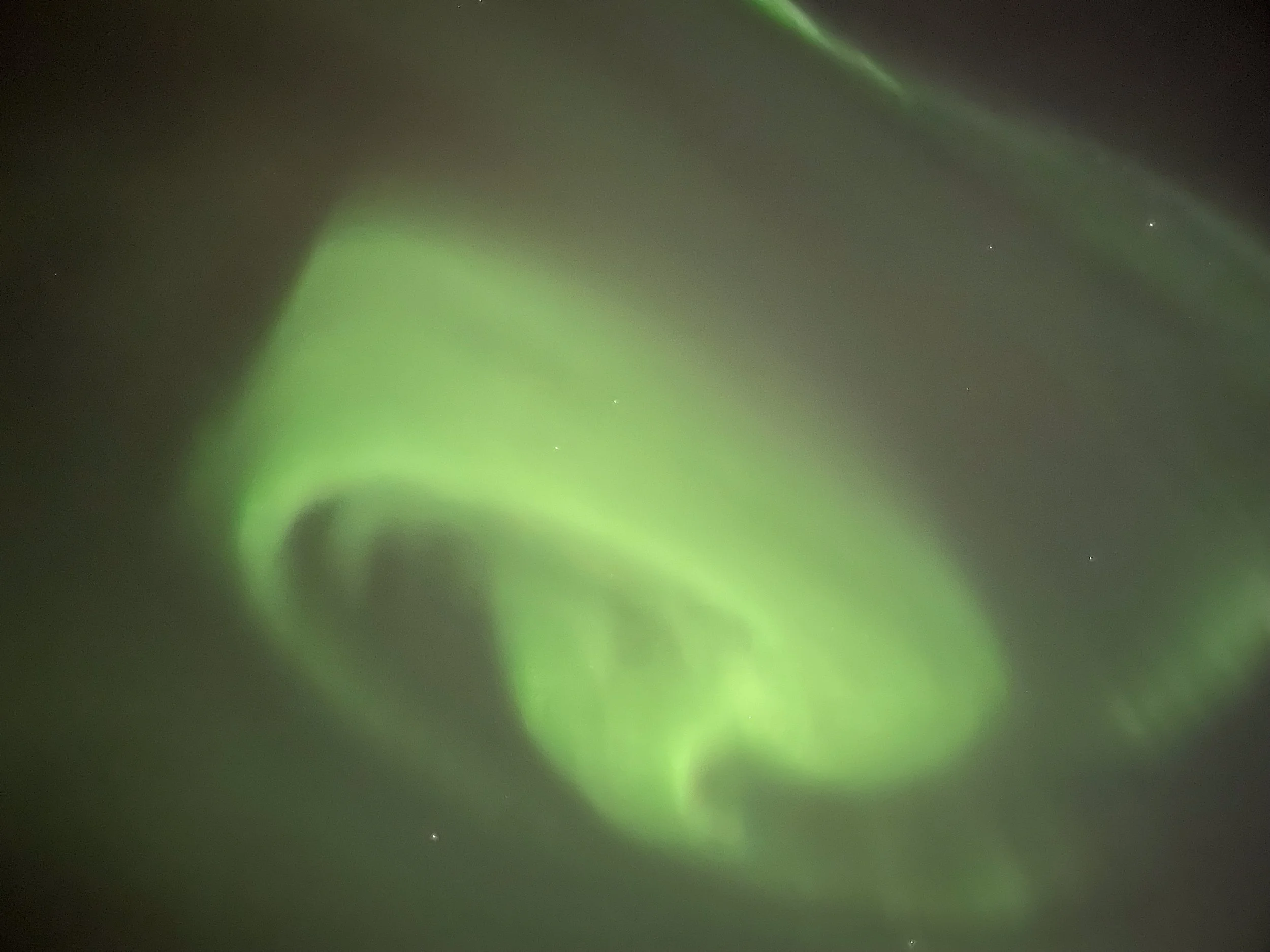
On night three, still overcoming jet lag, we woke up at 3am and spotted the Aurora putting on a show above our cabin. We layered up, went outside and walked towards Lake Inari, distancing ourselves from the hotel lights. It took half an hour for our eyes to adjust to the darkness. We stared upwards as ribbons of green stretched across the starry night sky, swirling and waving in brilliant formations. The Aurora would vary in strength, fading away then reappearing as fast moving bands that danced and shimmered overhead.
Pro Tips. It’s easier to observe the Aurora in total darkness, away from bright lights and cities. The Aurora is always fainter and less vibrant in person than in photos.
Places to Eat
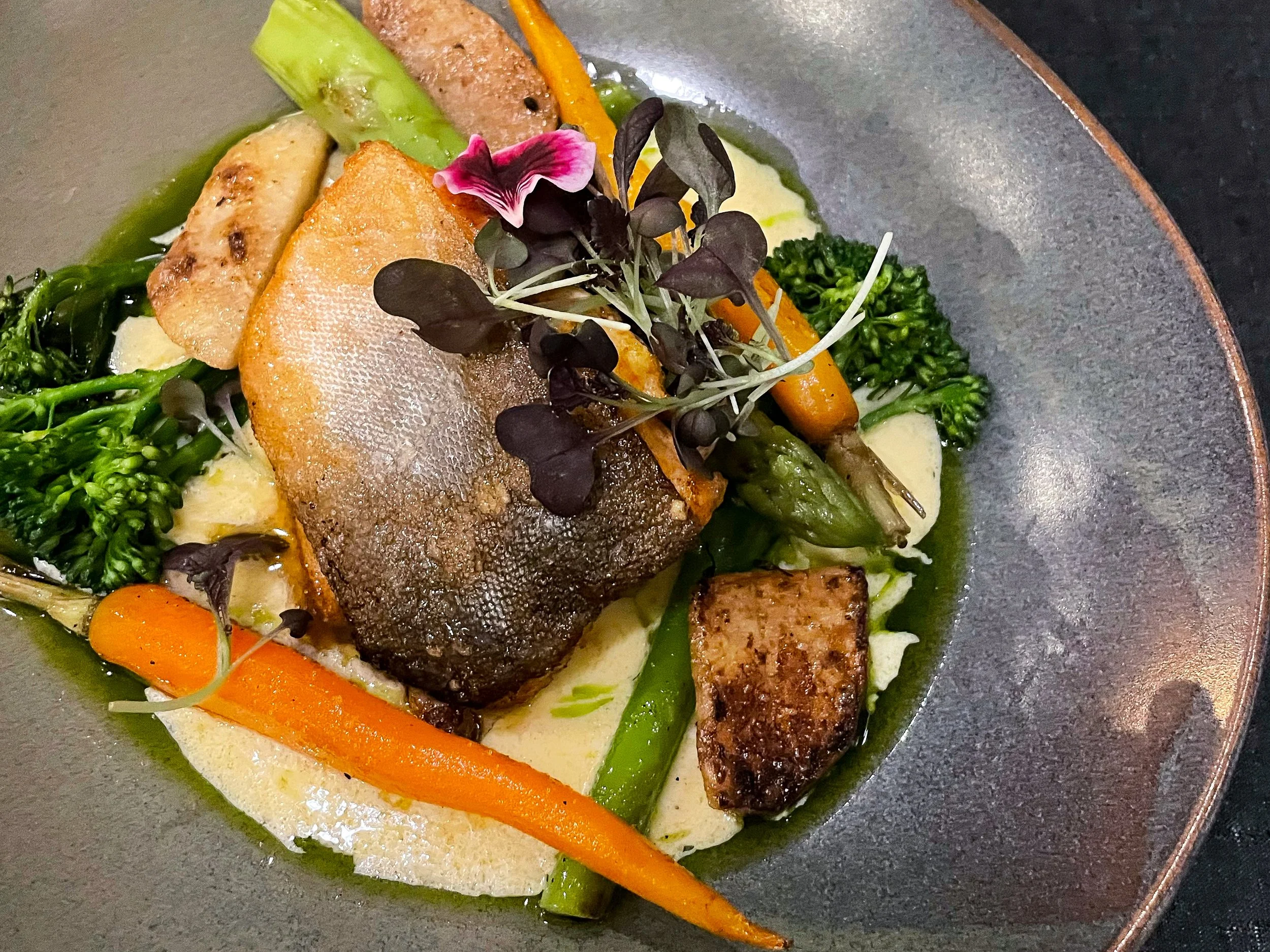
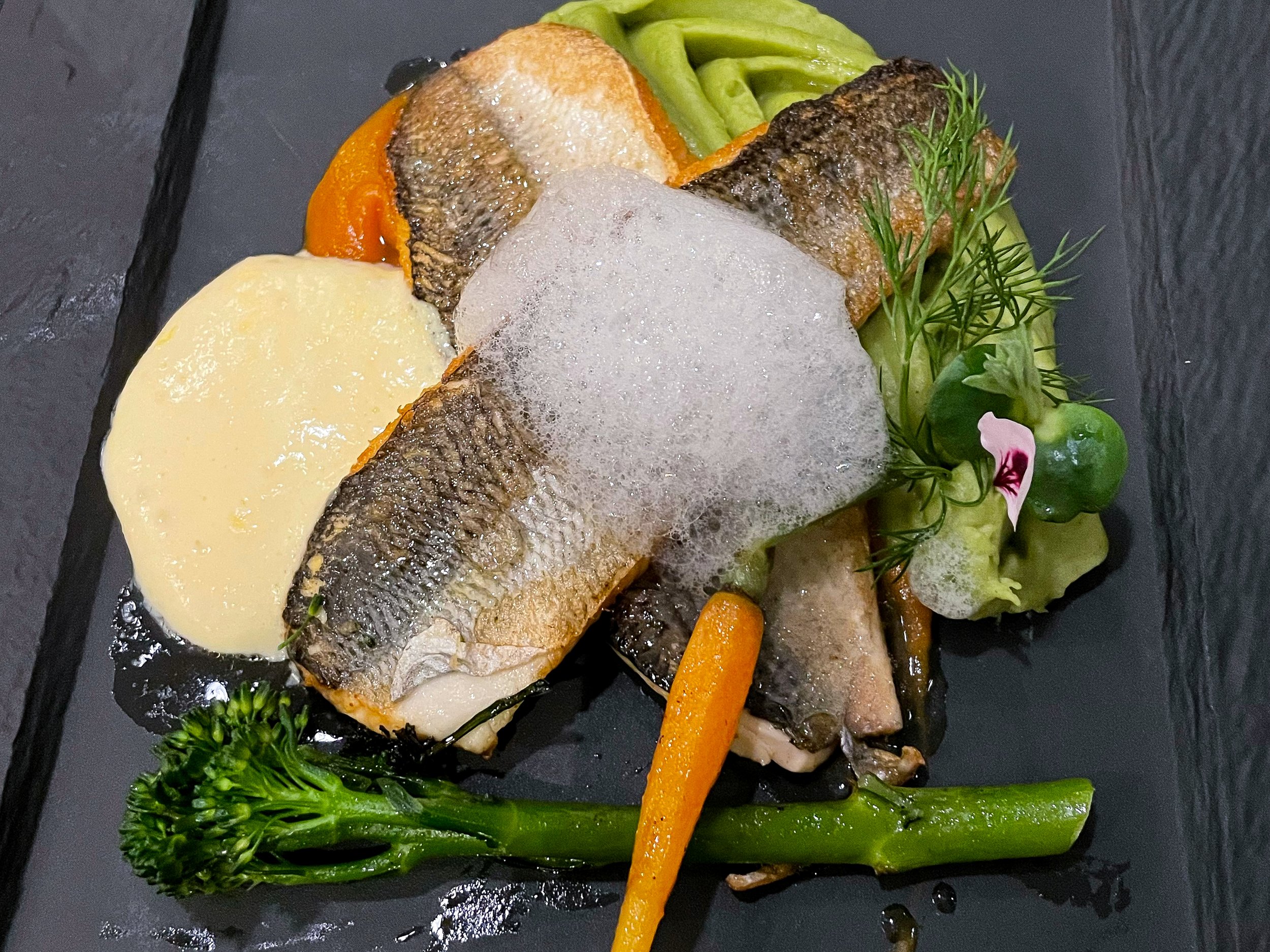
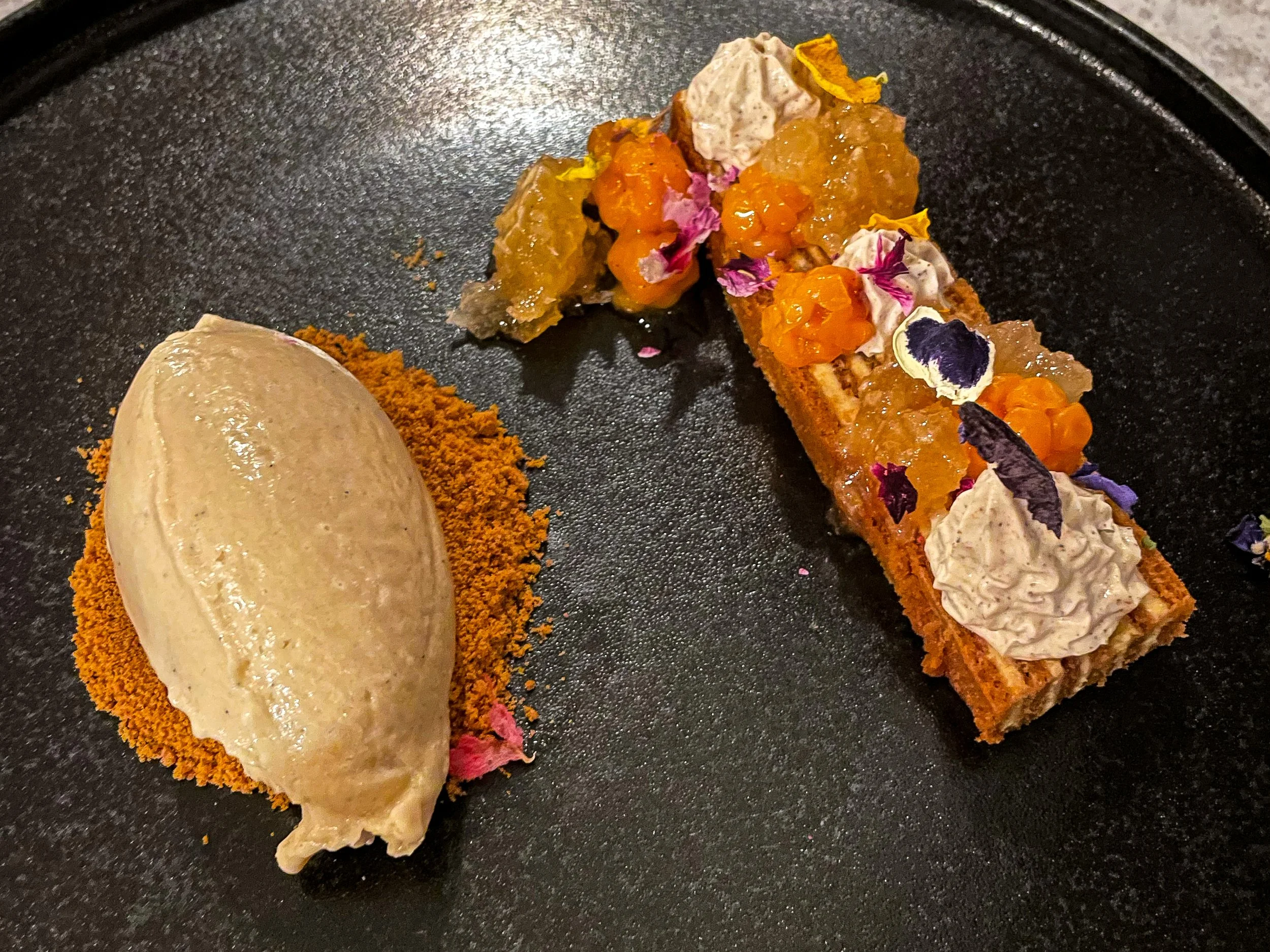
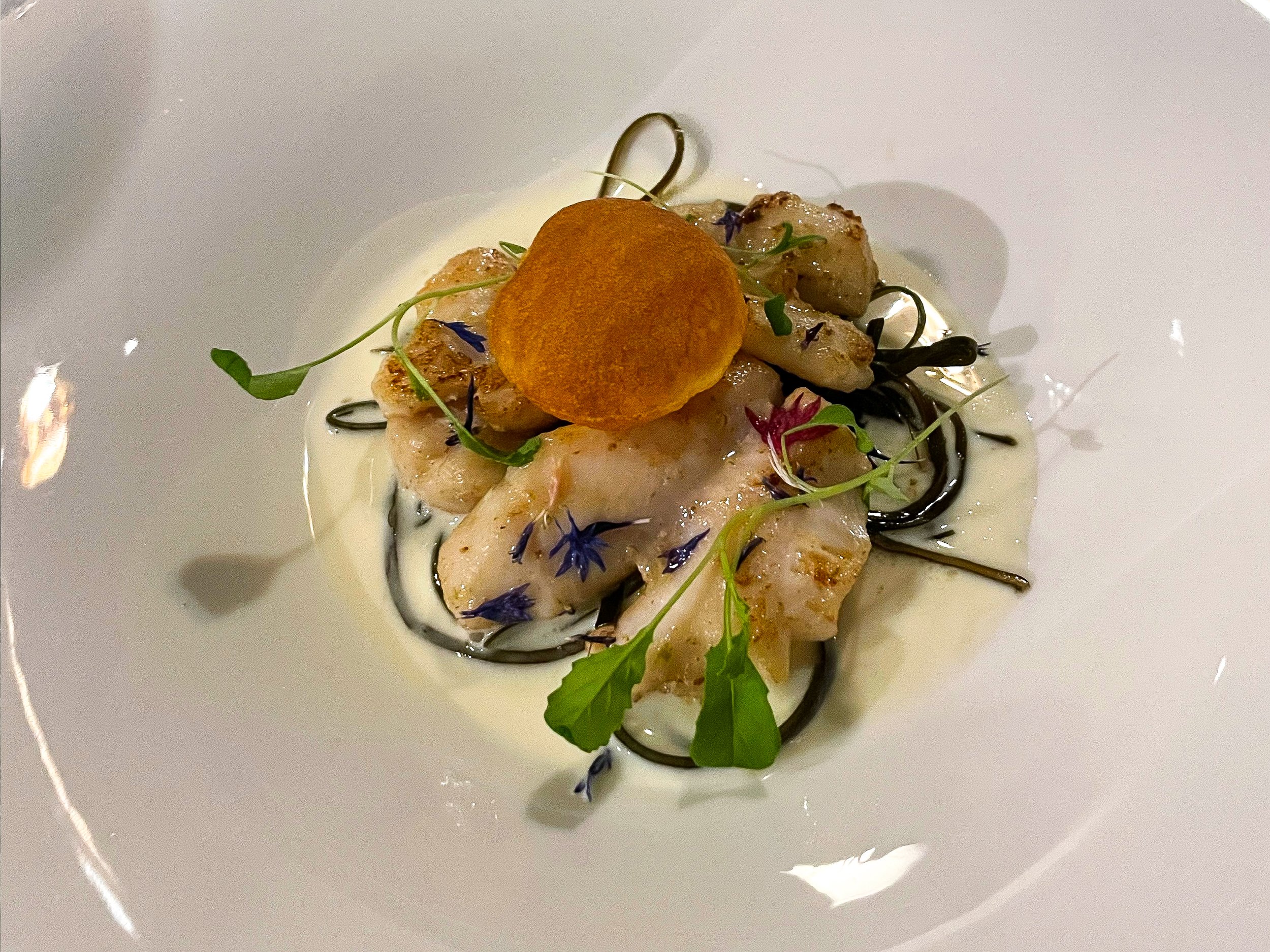
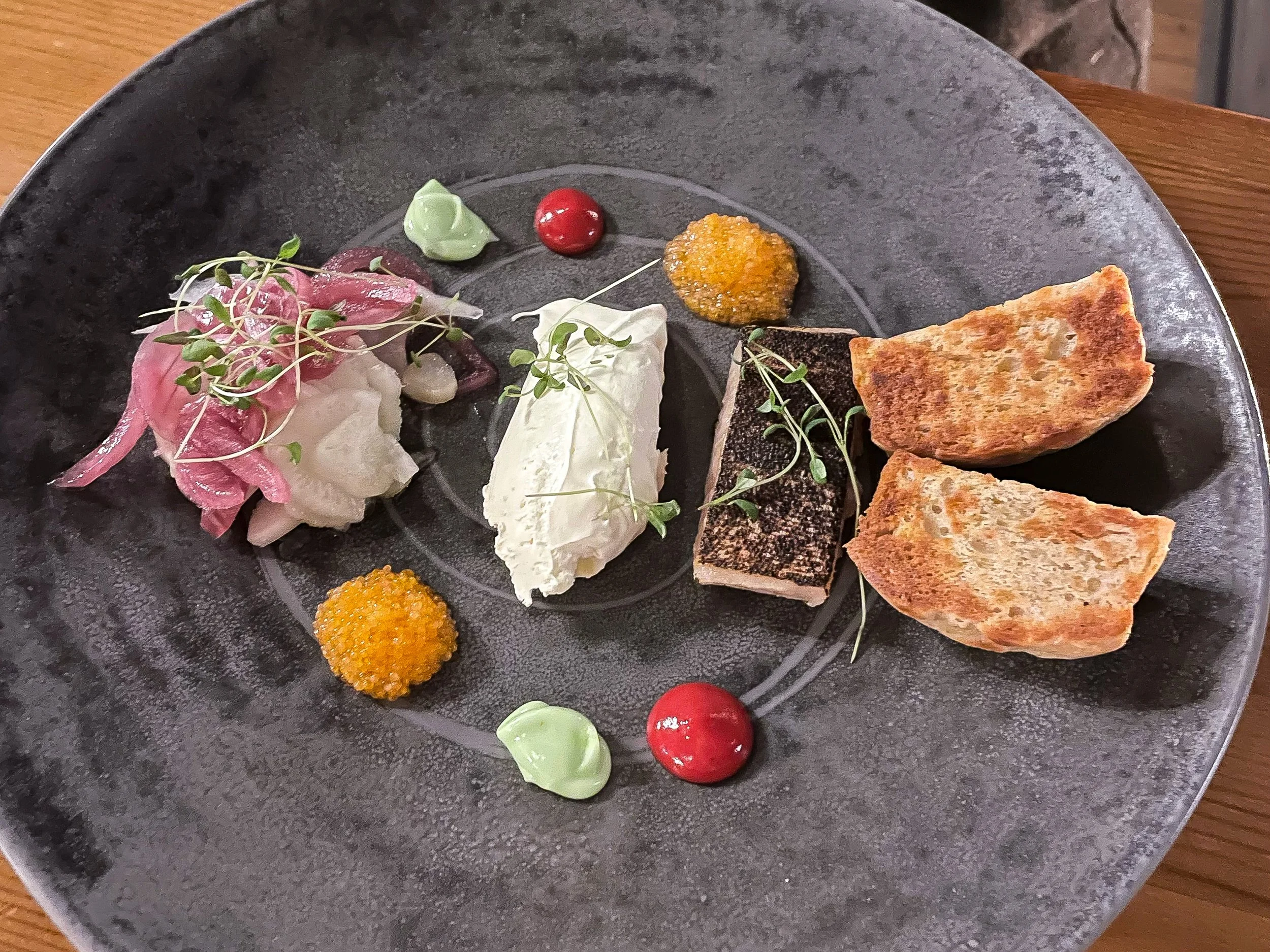
Restaurant Aanaar. A fine dining restaurant at the Hotel Juutua. The contemporary menu is made with locally sourced ingredients true to Sámi and Finnish cuisine. The dining room has a warmly lit interior overlooking the Juutuanjoki River. Order a mix of dishes like the roasted parsley roots, smoked beets, pickled white fish, fried cod tongue, charred cod cheek and cloudberry honey cake. The table next to us ordered smoked reindeer heart.
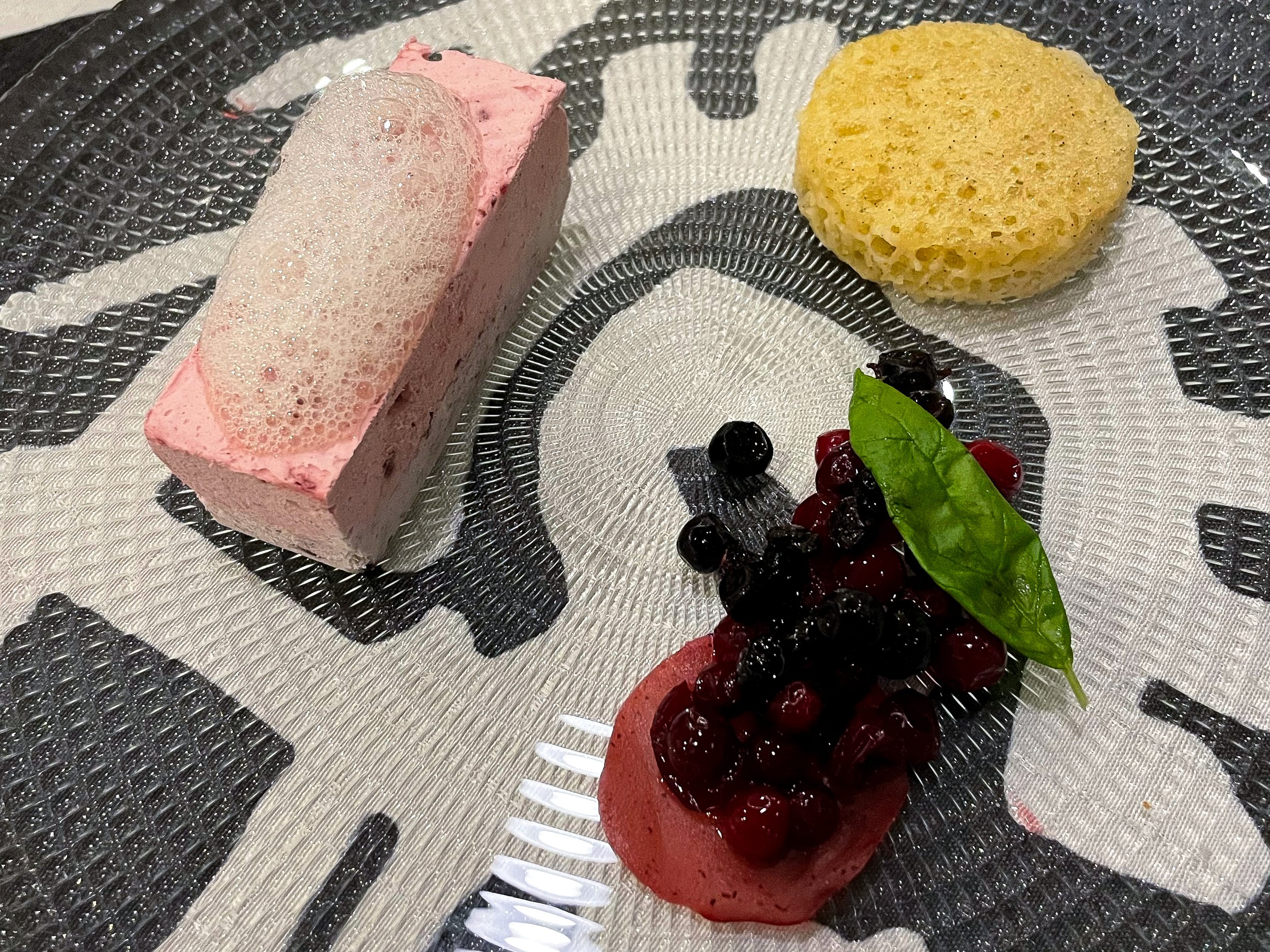
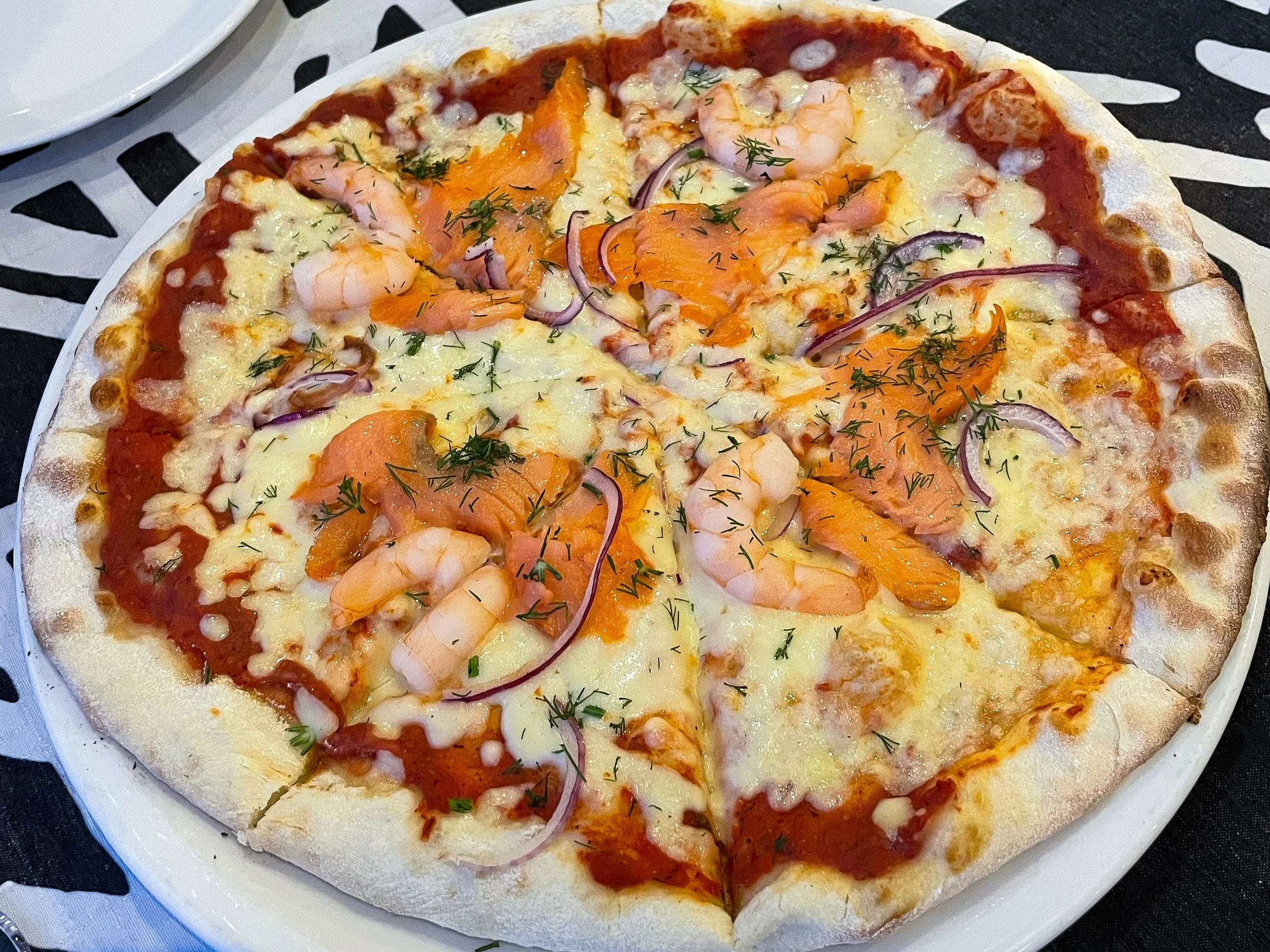
Restaurant Aurora. A contemporary restaurant at the Visit Inari Hotel with Lappish dishes. The dining room overlooks Lake Inari and is decorated in Sámi art. For dinner, try the Lake Inari white fish with dill potato purée, bourbon glazed Arctic char, lingonberry and blueberry parfait. For lunch, the Arctic pizza with cured salmon, shrimp and dill toppings.
Restaurant Ukko. A restaurant at the Inari Wilderness Hotel with views of Lake Inari. The dining room is decorated with timber beams, wooden furniture and reindeer antler chandeliers. For dinner, try the celeriac soup with pickled apples, cloudberry cocktail, cured Arctic char and gratinated lake perch.
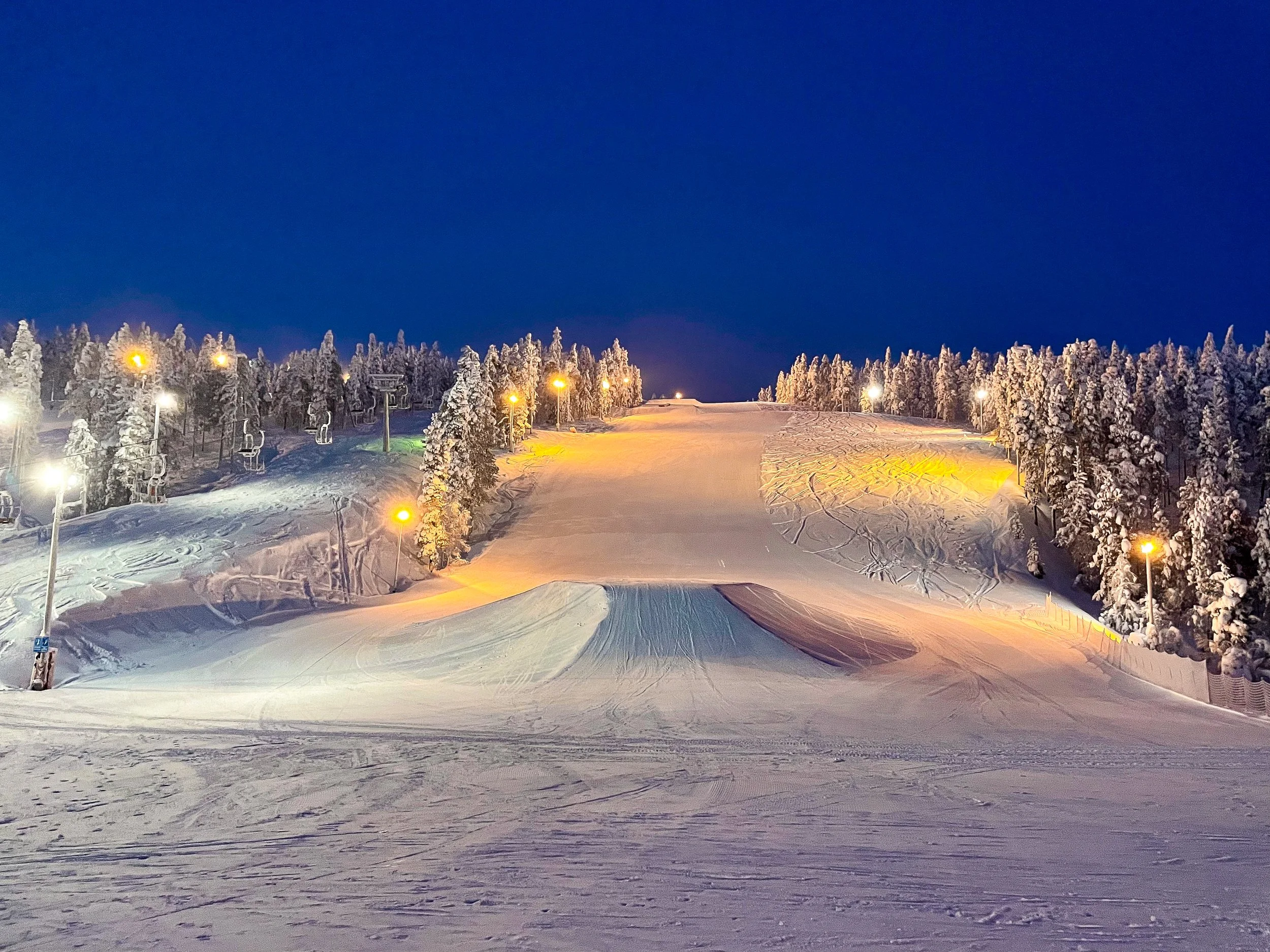
Saariselkä, Lapland
Saariselkä is a winter resort village blanketed in snow, its slopes and back country trails traversed by skiers, snowboarders and tobogganers. The town is located 1 hour southeast of Inari, making it the perfect place to enjoy nearby winter activities.
Saariselkä Ski & Sport Resort. The most northern winter resort in Europe with two fells (Finnish mountains) and slopes for skiing, snowboarding & tobogganing. It’s known for its 1,200 meter Toboggan Run, the longest in Finland.
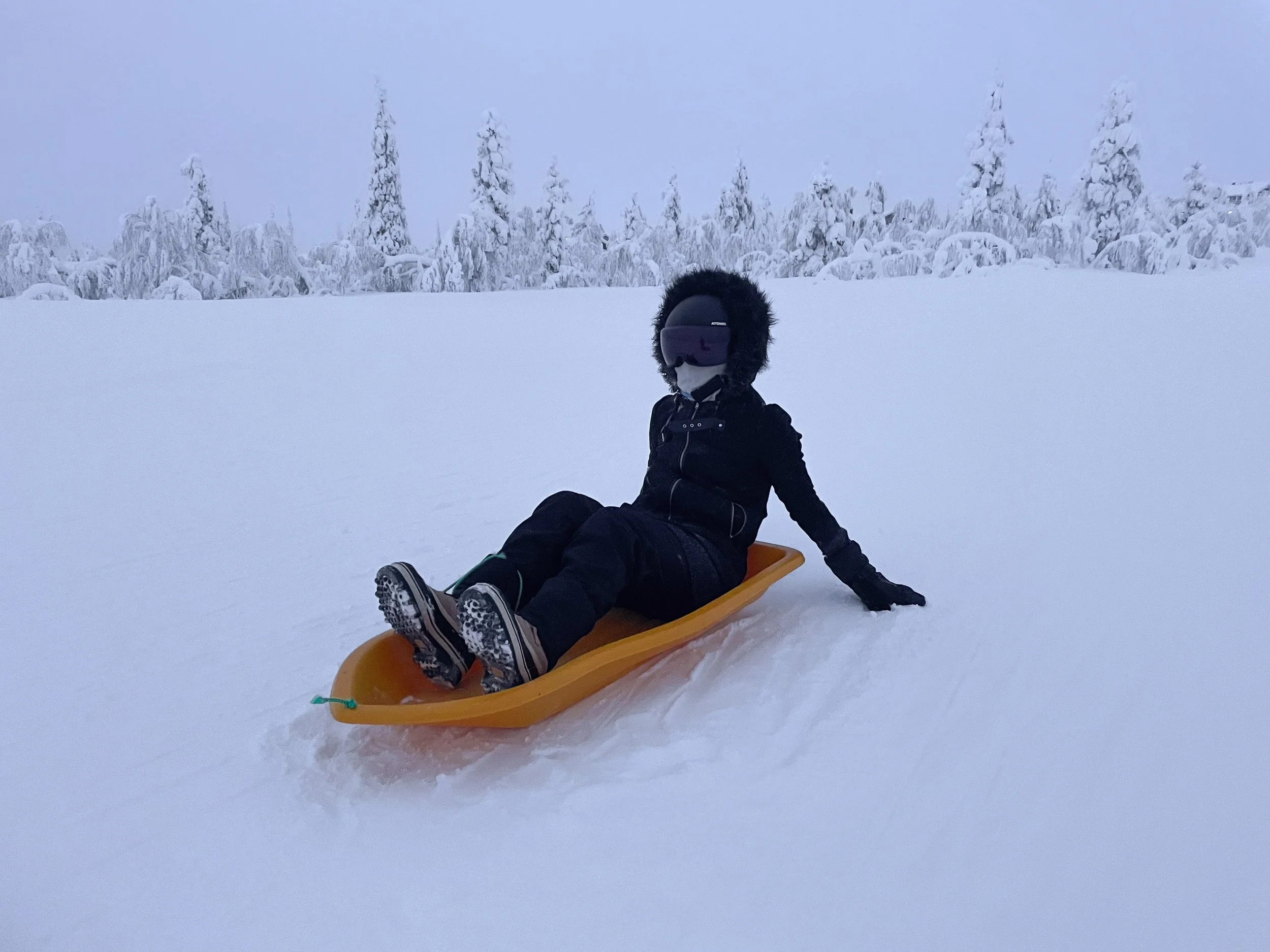
Toboggan Run. We visited Saariselkä specifically for the toboggan run. After taking a lift to the top of the fell, we reached the run. We sat in our sleds and pushed off, quickly picking up speed as we sledded straight downhill. Halfway down, the run flattened out before becoming steeper with twists and turns. It was exhilarating as we picked up speed, controlling direction of the sled by hand and slowing down by foot. Once reaching the bottom, we ran back to the lift with sled in hand ready to ride again.
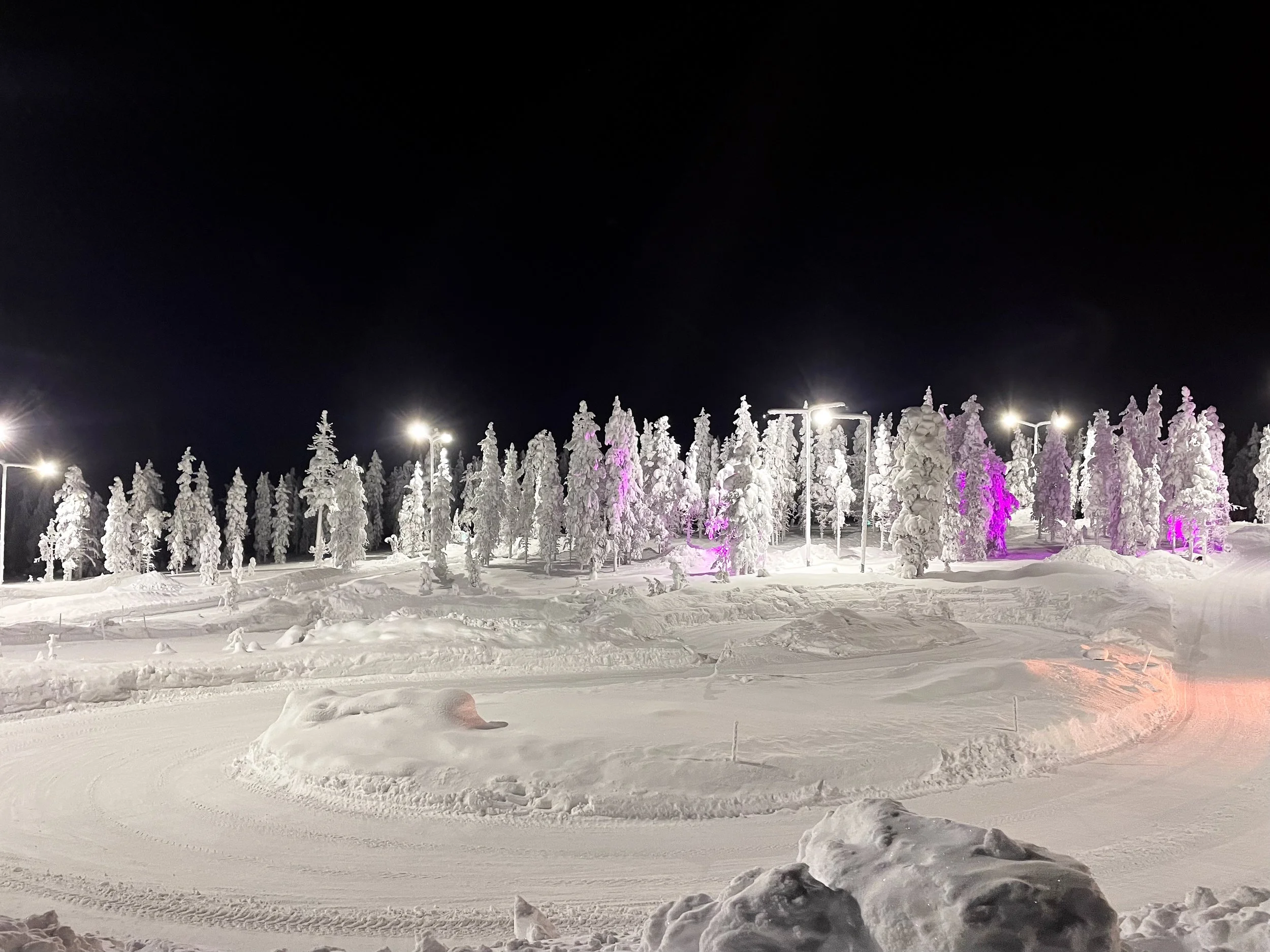
Frozen Ring Ice Karting. Exactly as it sounds, go-karting on an outdoor snow and ice track. Late in the day and with the track to ourselves, we raced each other, drifting around corners and spinning into snowbanks. In just over 15 minutes, we were able to complete 8 laps before sliding across the finish line. It cost €65 each. Though expensive, it was a one of a kind experience and well worth it. Book here!
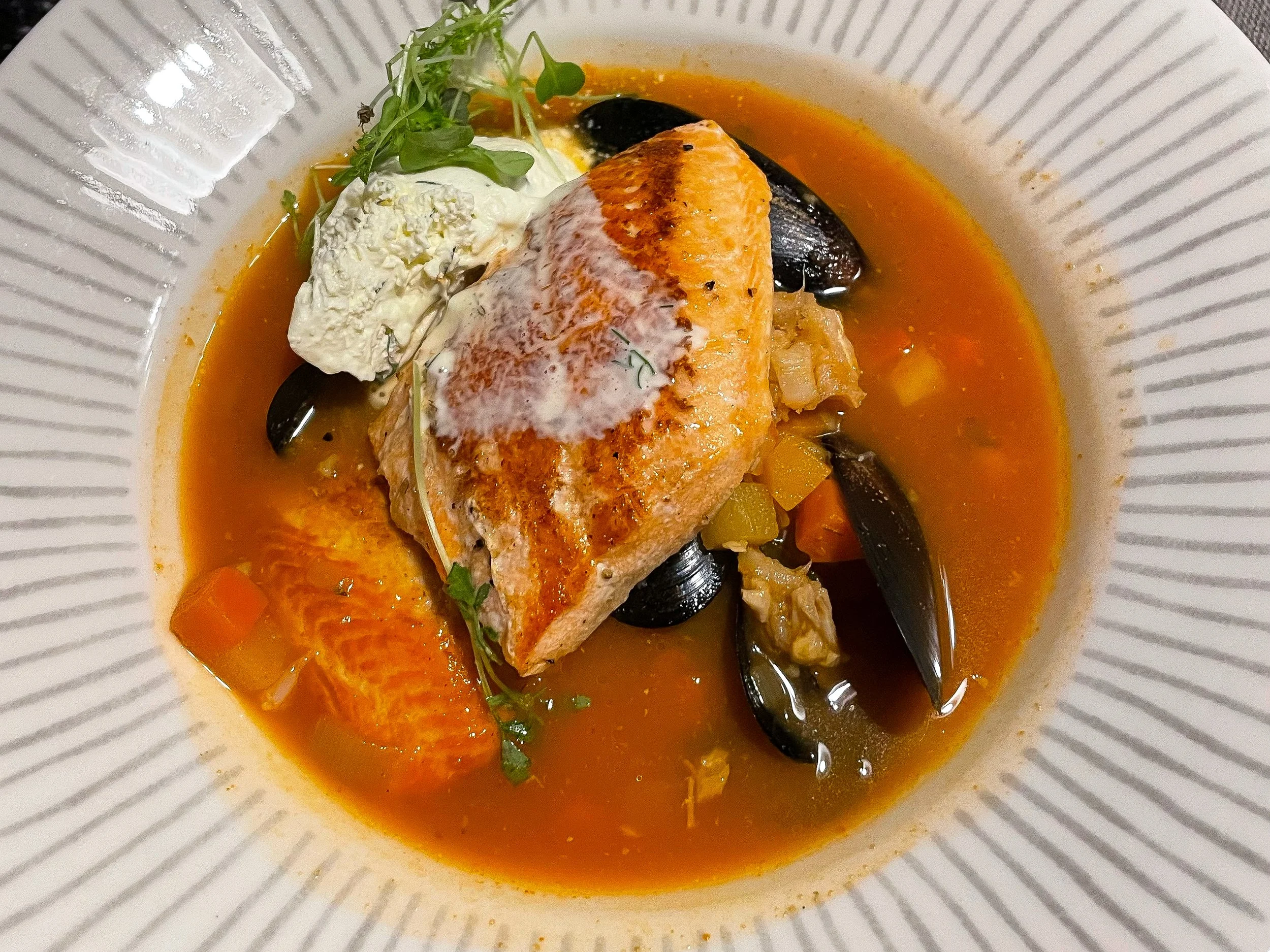
Restaurant Pirkon Pirtti. Come for the arctic bouillabaisse made from shrimp, arctic char, cod, mussels, sour cream and dill. We also tried the Arctic seafood platter with roasted Arctic char, pan fried Inari white fish and smoked salmon. For dessert, the cloudberry parfait with “Aurora sauce.” It has a wooden interior with a stone fireplace.
Pub Panimo. A pub with a selection of Finnish and foreign beers in a cozy beer hall with wooden tables, a stone fireplace and musician stage.
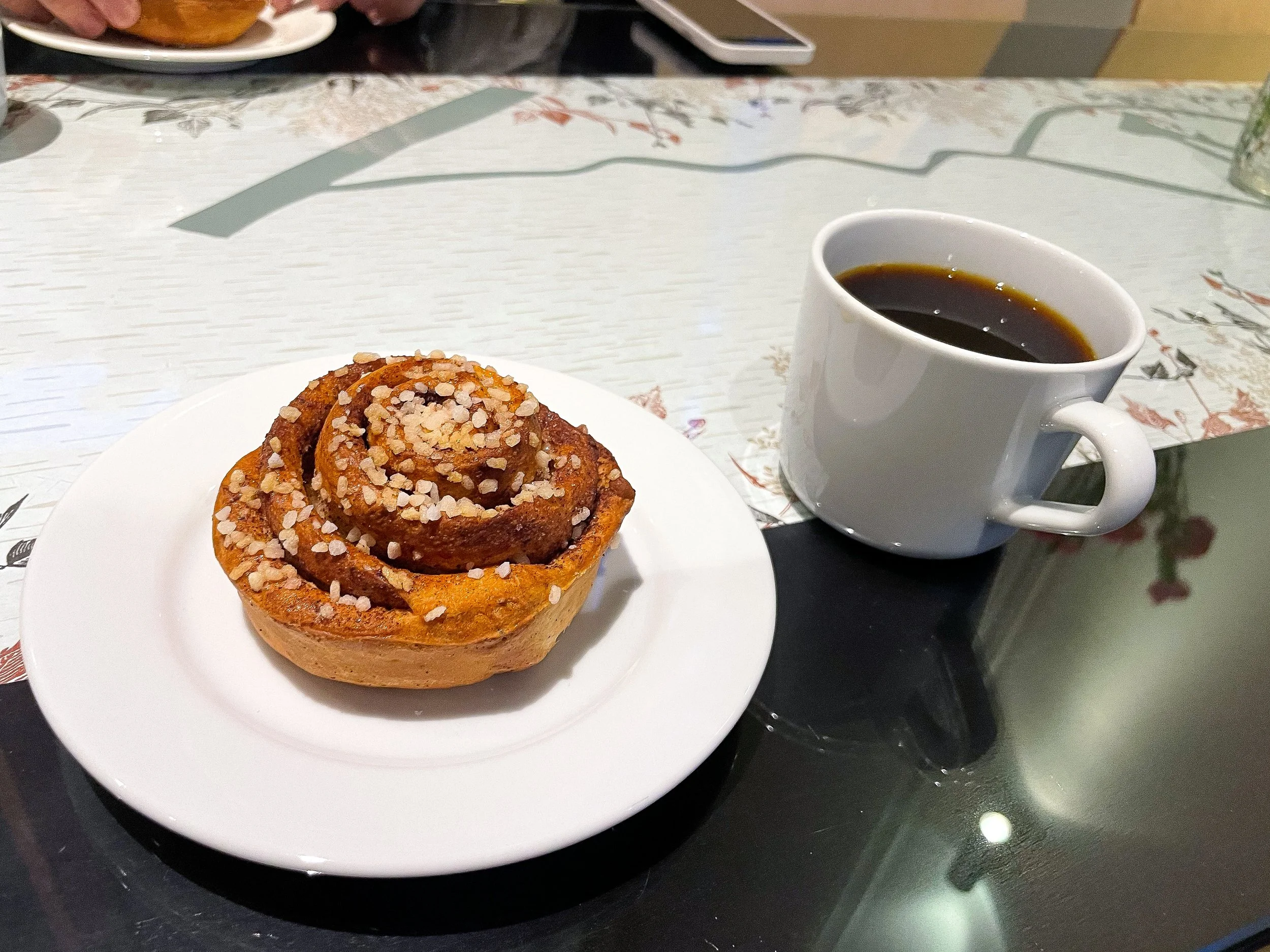
Lappish Cuisine
Cuisine in Lapland is heavily based off of local, wild and foraged ingredients. Food is one of the best ways to experience Lapland.
Root Vegetables. Celeriac, parsley root, beets, potatoes and carrots are commonly used in Lappish cuisine, often served roasted, pickled, puréed or in soups.
Berries. Popular throughout Lapland. Berries are often foraged. Try them fresh or jammed.
Cloudberries. Orange berries of clustered round nodules that resemble clouds. Their taste is entirely unique but has notes of peach and nectarine.
Lingonberries. Little red berries that have a sweet and tart taste, similar to a cross between cranberry and pomegranate.
Blueberries. Smaller and sweeter than US blueberries.
Wild Mushrooms. Foraged and prepared in various dishes, sauces or pickled. Trumpet Chanterelle is one of the most common.
Freshwater Fish. Whitefish, salmon, arctic char and perch are commonly caught in Lake Inari. They’re often served grilled, smoked or pickled and served with dill.
Reindeer. Though we didn’t try it, reindeer is regularly served in various forms at restaurants and sold at markets across the country.
Skagen. Cold water prawn salad. It consists of prawn mixed with mayo, sour cream or mustard and garnished with dill and fish roe often served on rye bread.
Lihapiirakka. A traditional Finnish pie typically made with savory ingredients like meat, rice, onion and herbs wrapped in puffy pie dough.
Rye Bread. Flat round discs of rye bread. They’re common at breakfast with butter and cheese or as a base for open faced sandwiches.
Korvapuustit. A pastry made from sweet dough rolled with cinnamon and cardamom.
Karelian Pie. An open-faced, oval-shaped rye crust pie with crimped edges, filled with porridge. Try it with jam or yogurt.
Runeberg Torte. A small cylindrical almond and rum cake with a raspberry jam and icing ring topping. It’s named after a Finnish writer and often served in January.
Beers. Lagers and pale ales are very popular in Lapland.
Lapin Kulta, A light beer made in Lapland also called Lapin Gold.
Saana, A Lapland brewed pale ale.
Karhu, A lager with a bear logo.
Karjala, A slightly hoppy lager.
Glögi. Spiced hot wine.
Location Specifics
Language. Finnish, Swedish and English are the most commonly spoken languages.
Sámi Culture. Show respect to the Sámi people, culture and traditions.
Costs. Finland, like much of Scandinavia, is an expensive destination.
Cash vs. Card. Cash is rarely used across the country. Use credit or debit cards for most transactions.
Tipping. Tipping is not expected or required. Tip 10% for exceptional service.
Temperature. Lapland gets very cold during the winter. The temperature dropped to -28C (-18F) before windchill one night. Dress in several warm layers, cover all exposed skin, and use hand and toe warmers.
Driving. Driving is easy during the winter. The roads are regularly plowed. All rental cars are equipped with snow tires. Rent a car at the Ivalo airport from Green Motion.
Elsewhere in Nordic Europe
From Lapland’s Northern Lights and Arctic wilderness to Tromsø’s fjords, Copenhagen’s urban design culture and Iceland’s volcanic landscapes, explore more of Nordic Europe through these travel guides:
Copenhagen Travel Guide: Nyhavn, Christmas Markets & Scandinavian Cuisine. Wander along Copenhagen's colorful canals where wooden ships, historic castles and Danish culture meet Scandinavian cuisine and festive Christmas markets.
One Day in Helsinki: Finnish Sauna & Waterfront Sights. Experience a winter day exploring Helsinki's frozen waterfront where local food markets, historic architecture and steaming saunas bring Finnish culture to life.
Tromsø Norway Travel Guide: Northern Lights, Arctic Fjords & Sámi Culture. Explore Tromsø's snowy streets and historic waterfront where Nordic cuisine and Sámi culture meet dramatic fjords, dancing auroras and Arctic adventures.
Iceland Road Trip Guide: Waterfalls, Glaciers & Black Sand Beaches. Road trip through Iceland's otherworldly landscapes where volcanoes, glaciers, waterfalls and black sand beaches create one of Earth's most dramatic journeys.
For Next Time…
We’ve developed a love of Scandinavia and hope to return to Finland one day! When we do, we plan to visit the village of Rovaniemi during Christmas and return to Lapland during the late summer when the berries bloom and the sun doesn’t set.
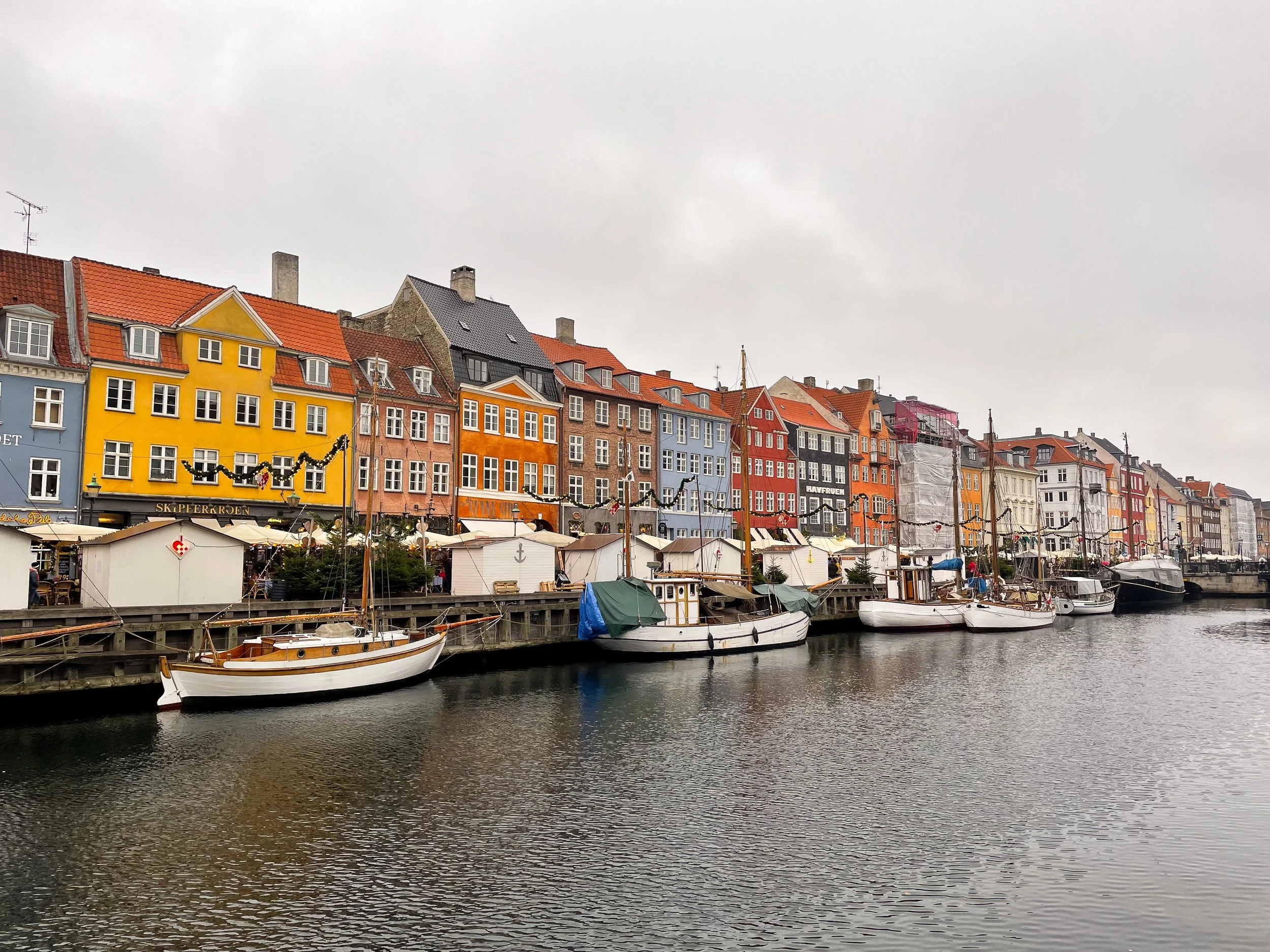
Copenhagen Travel Guide: Nyhavn, Christmas Markets & Scandinavian Cuisine
Wander along Copenhagen's colorful canals where wooden ships, historic castles and Danish culture meet Scandinavian cuisine and festive Christmas markets.
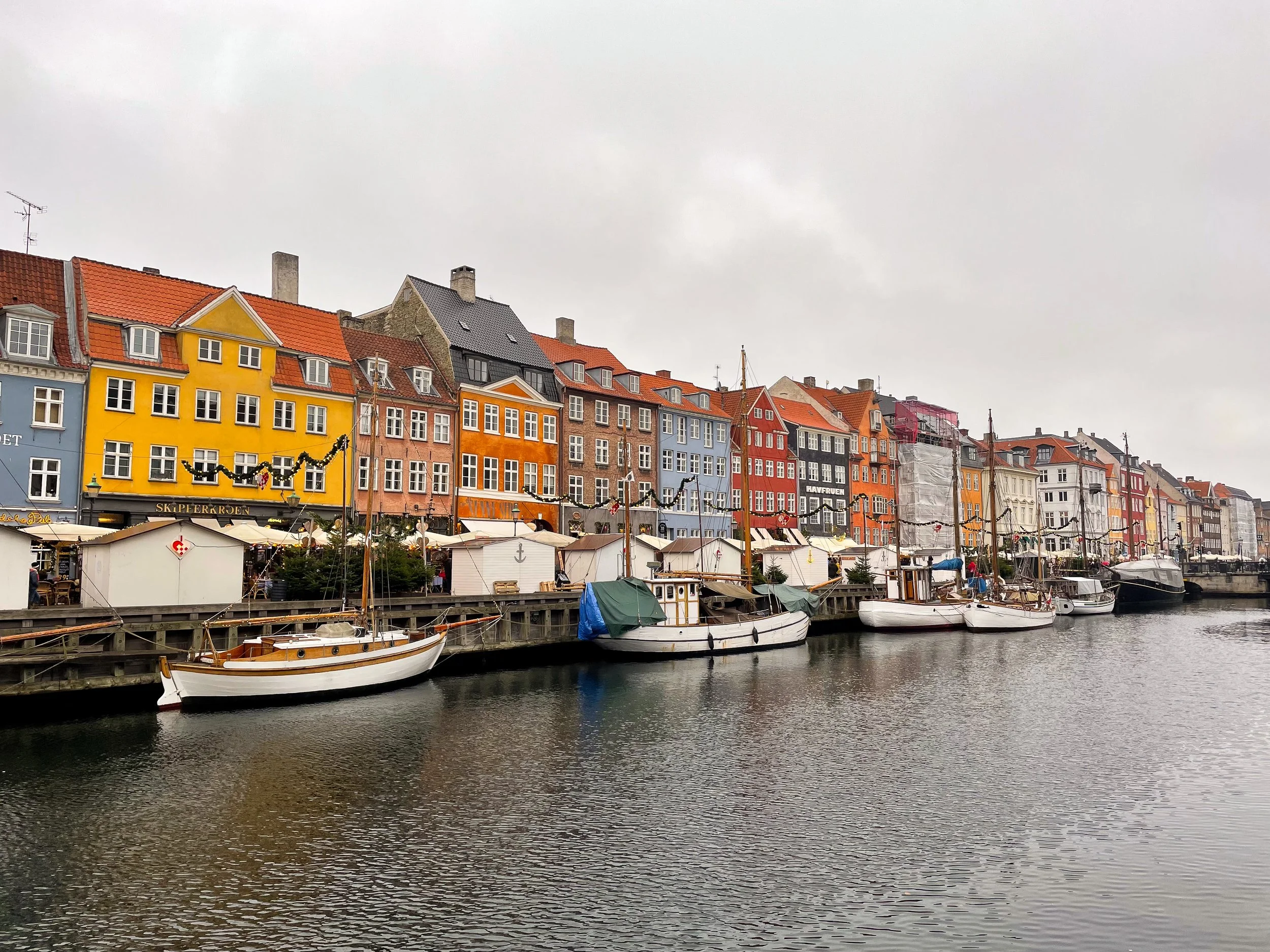
Copenhagen, A Scandinavian City
Copenhagen is consistently ranked as one of the happiest places in the world. The Scandinavian city is home to boat lined canals, cobblestone streets and colorful buildings, centuries old castles and seat of the Danish monarchy. It’s a hub for design, contemporary European cuisine and seasonal Christmas markets. The city tells a rich history through its many museums, historic architecture and canals.
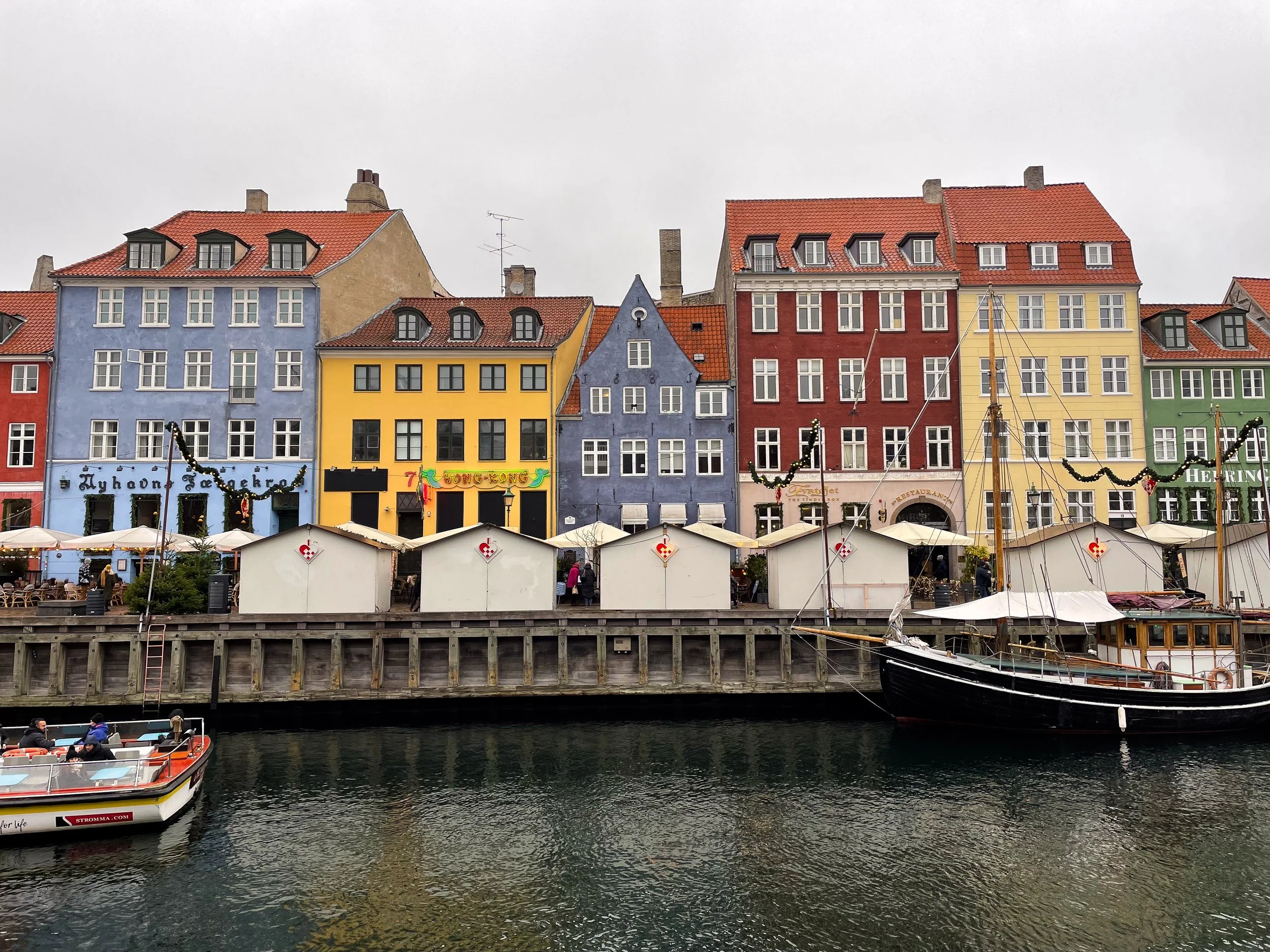
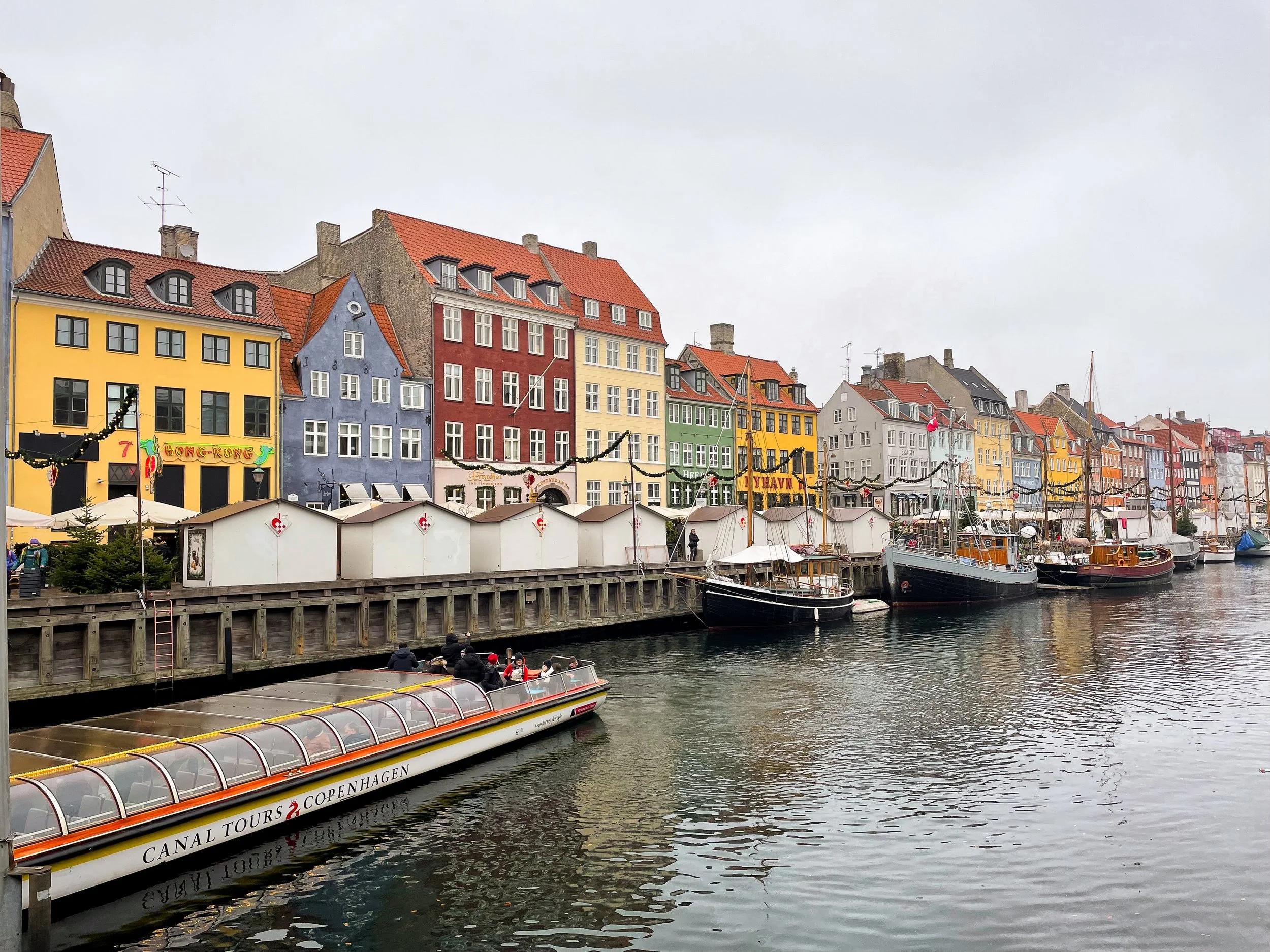
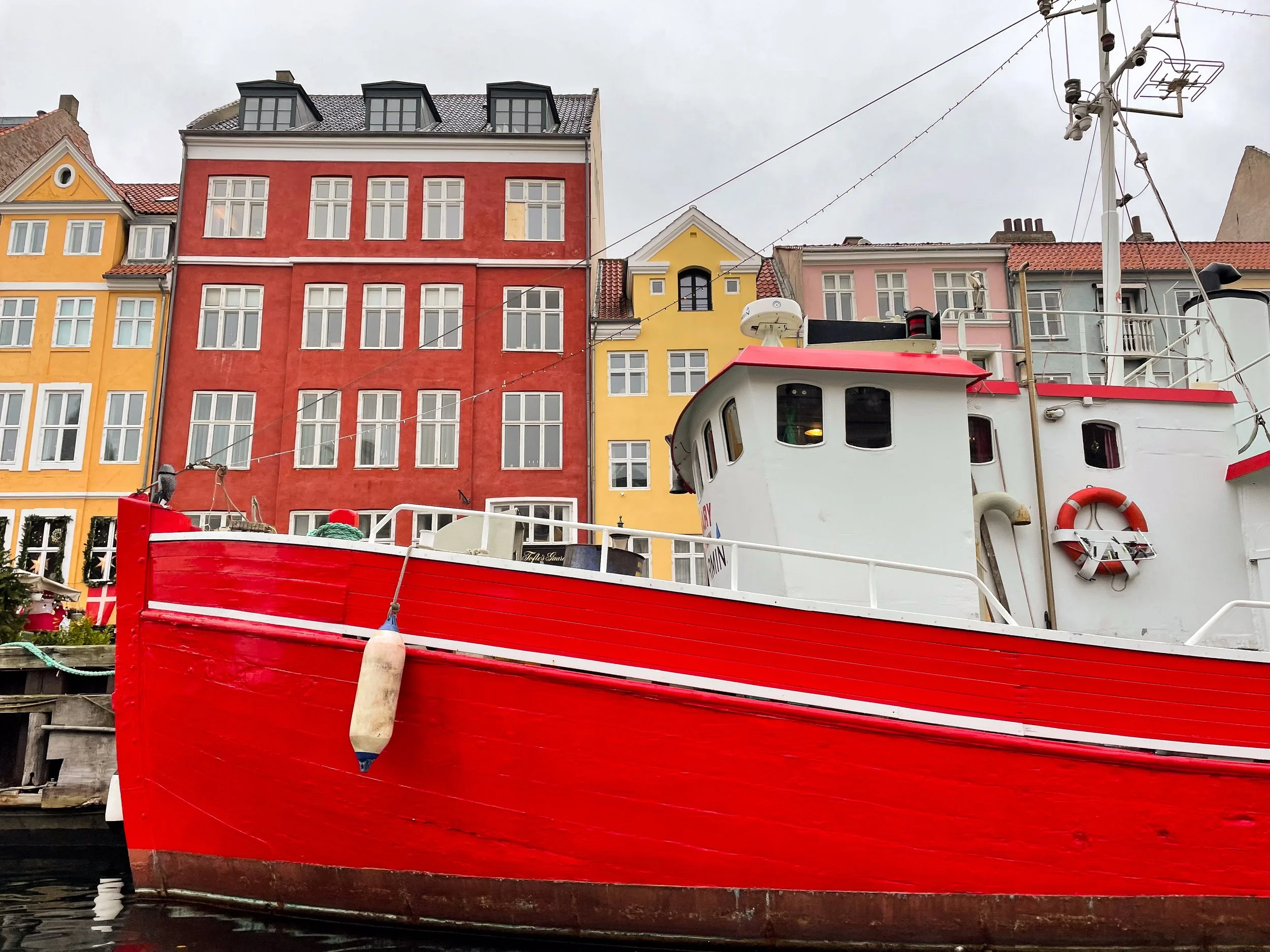
Copenhagen’s Canals & Neighborhoods
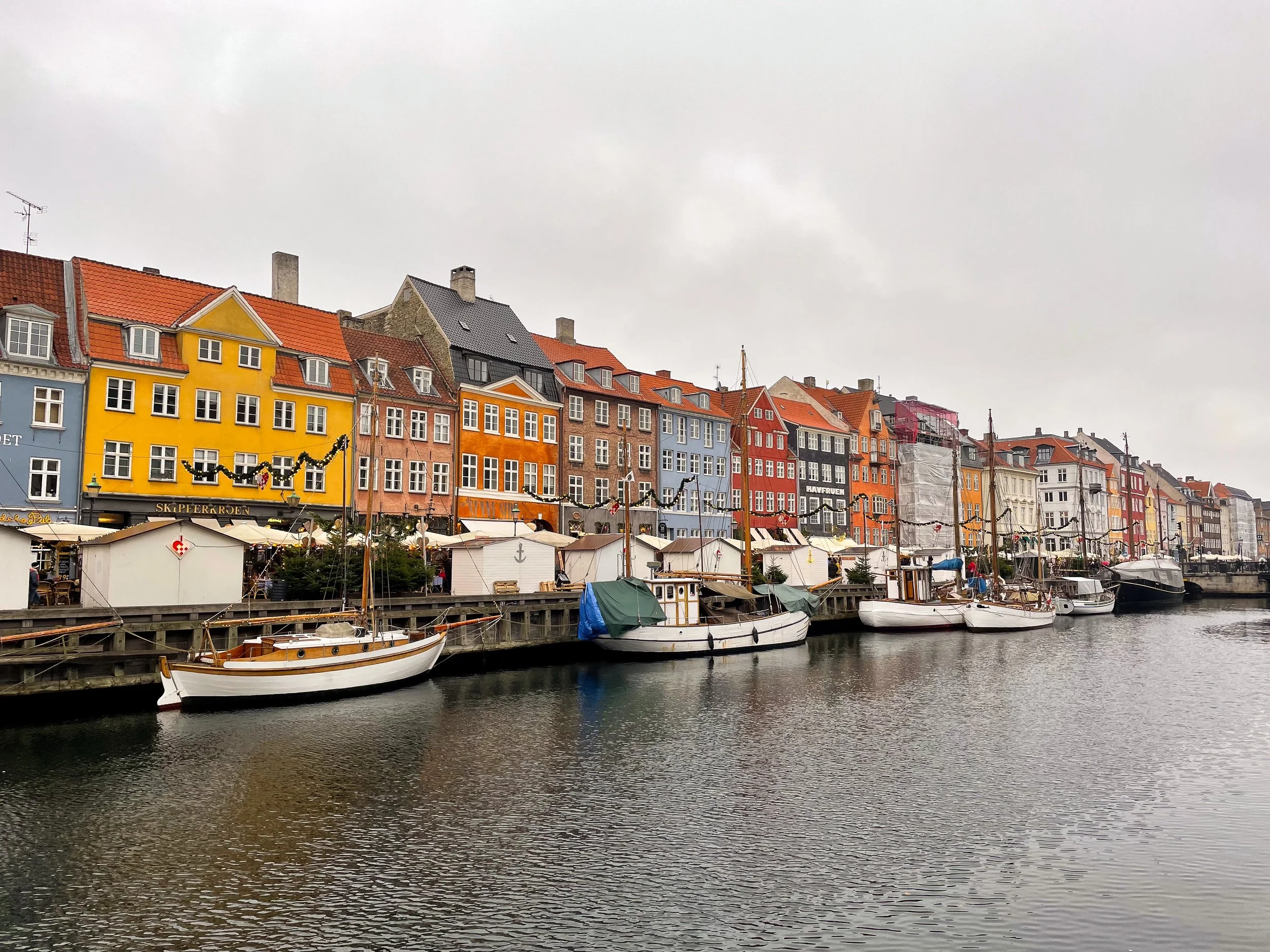
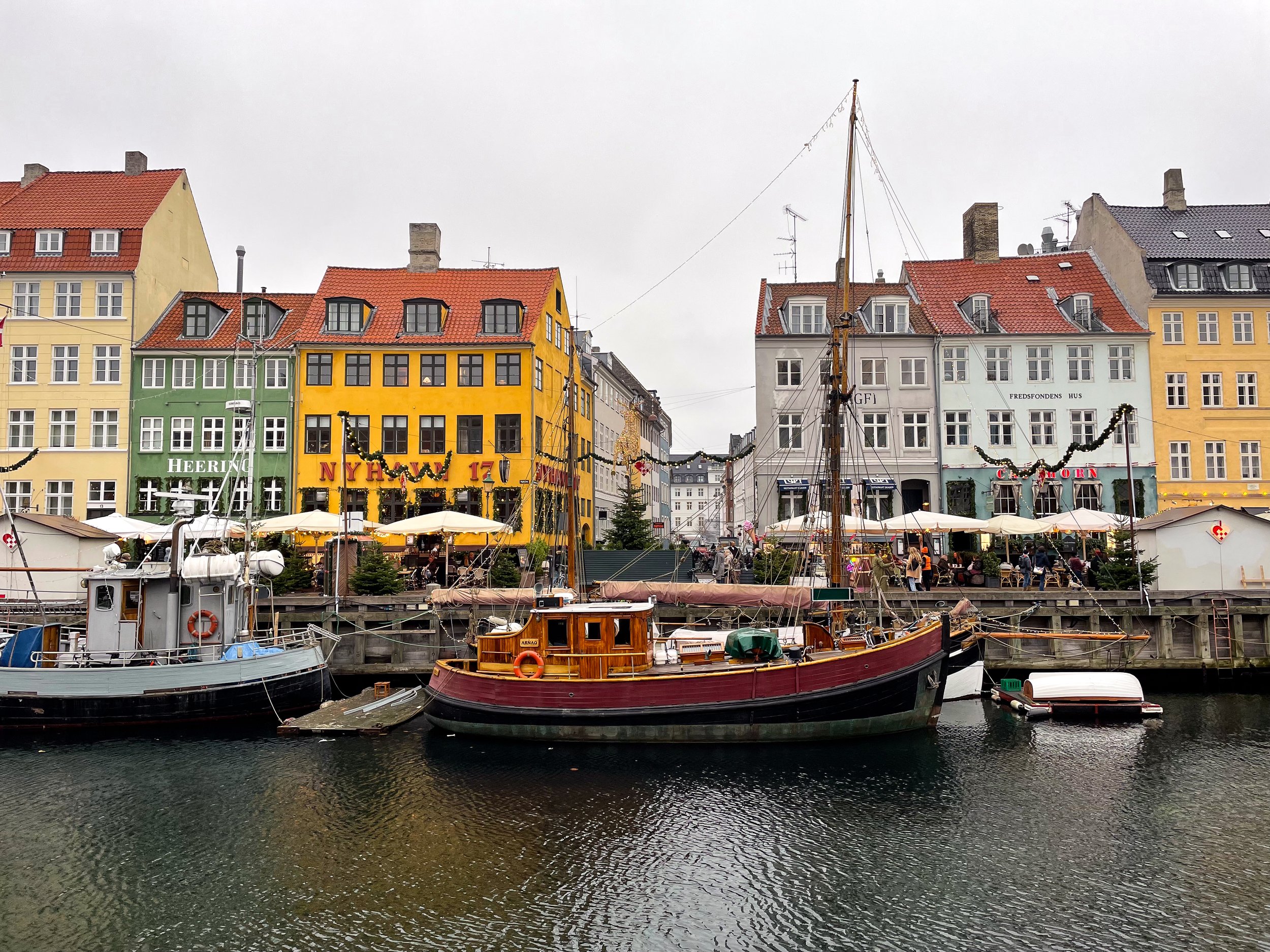
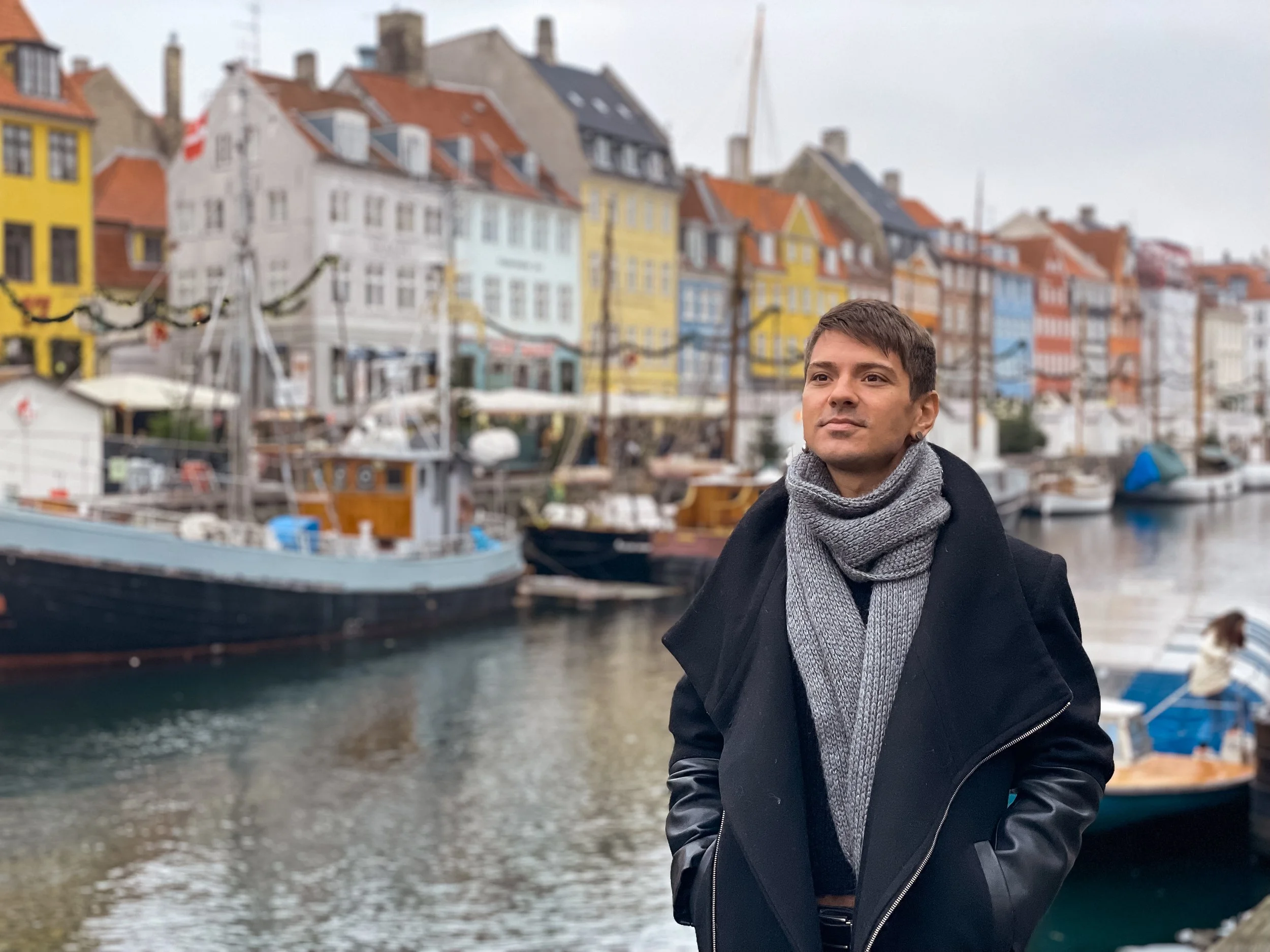
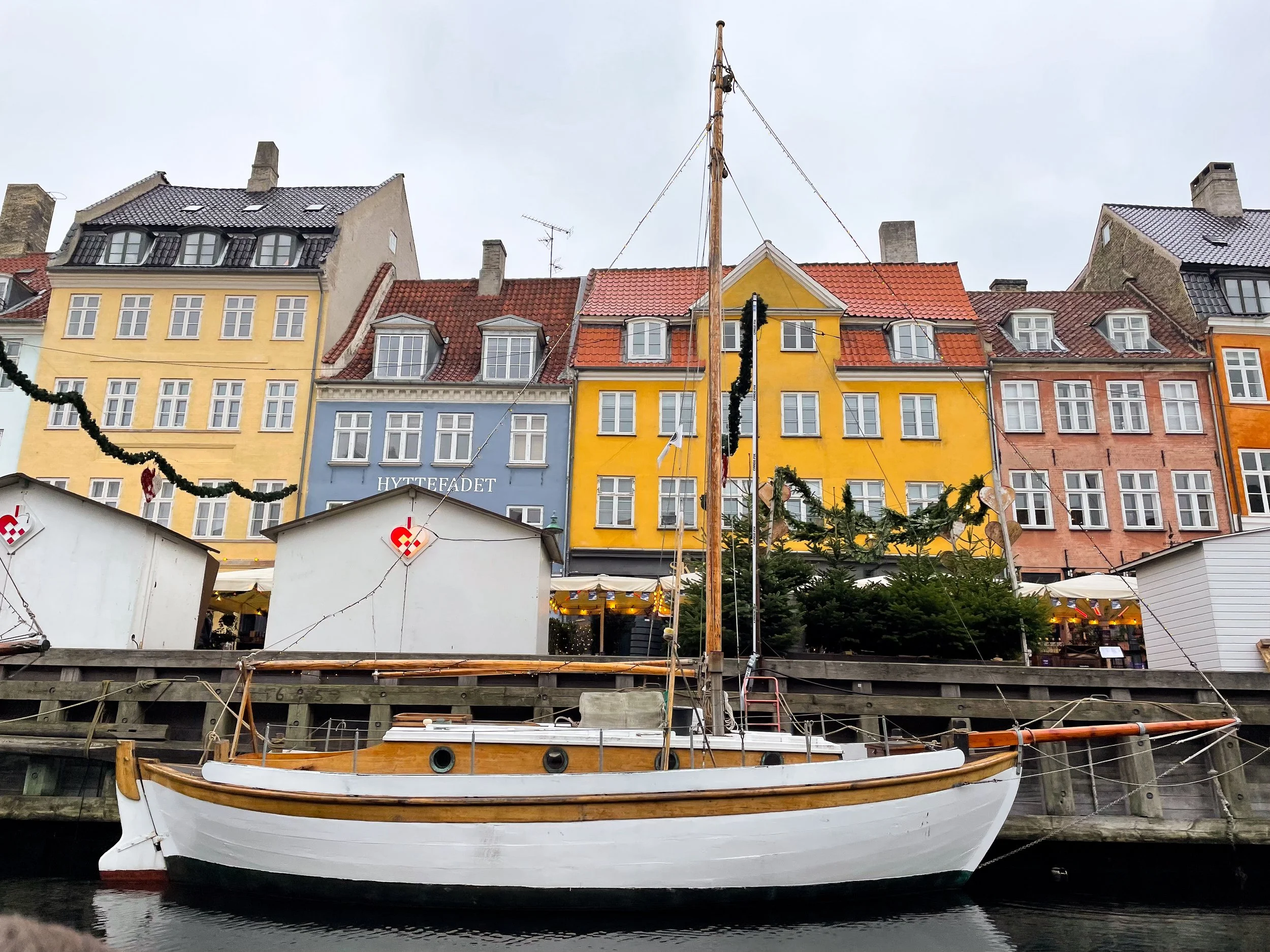
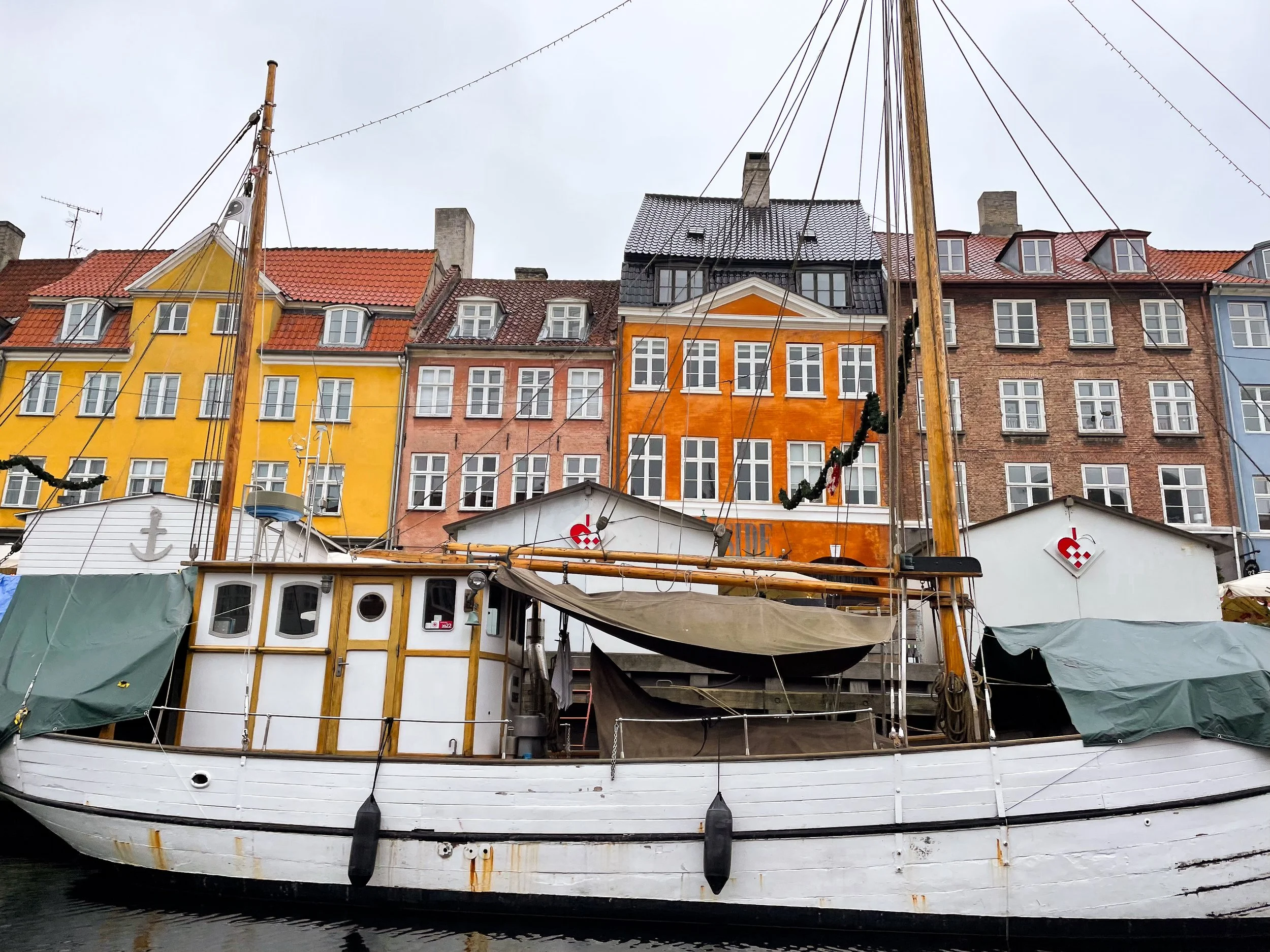
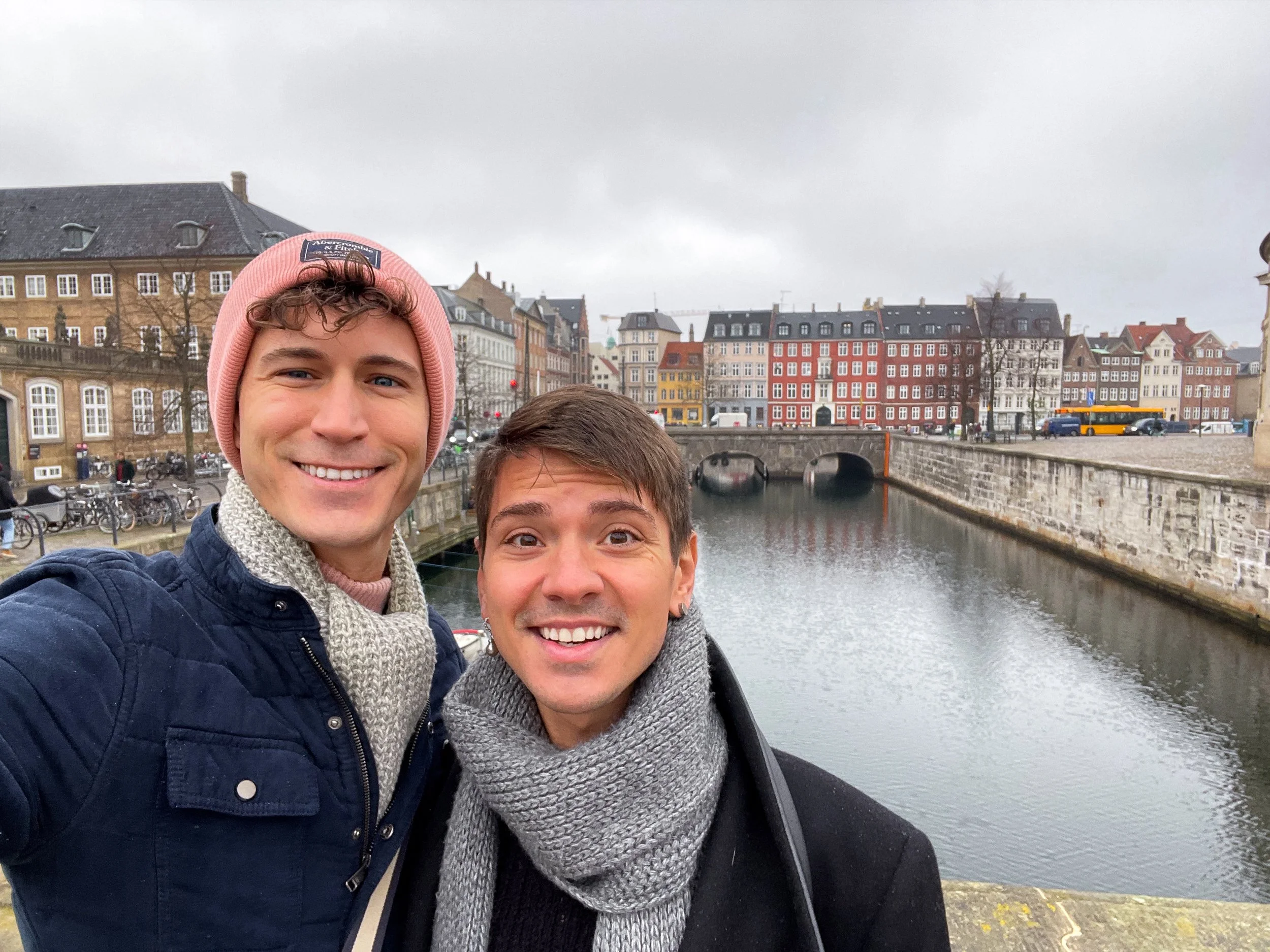
The Nyhavn Canal. A picturesque 17th century canal with historic colorful buildings, old wooden ships, cafes, bars and restaurants, some of which are located on the old wooden ships. Strømma Canal Tours depart from here every hour, leading past many bridges and sights along Copenhagen’s Grand Canal, The Christianshavns Canal and Frederiksholms Canals.
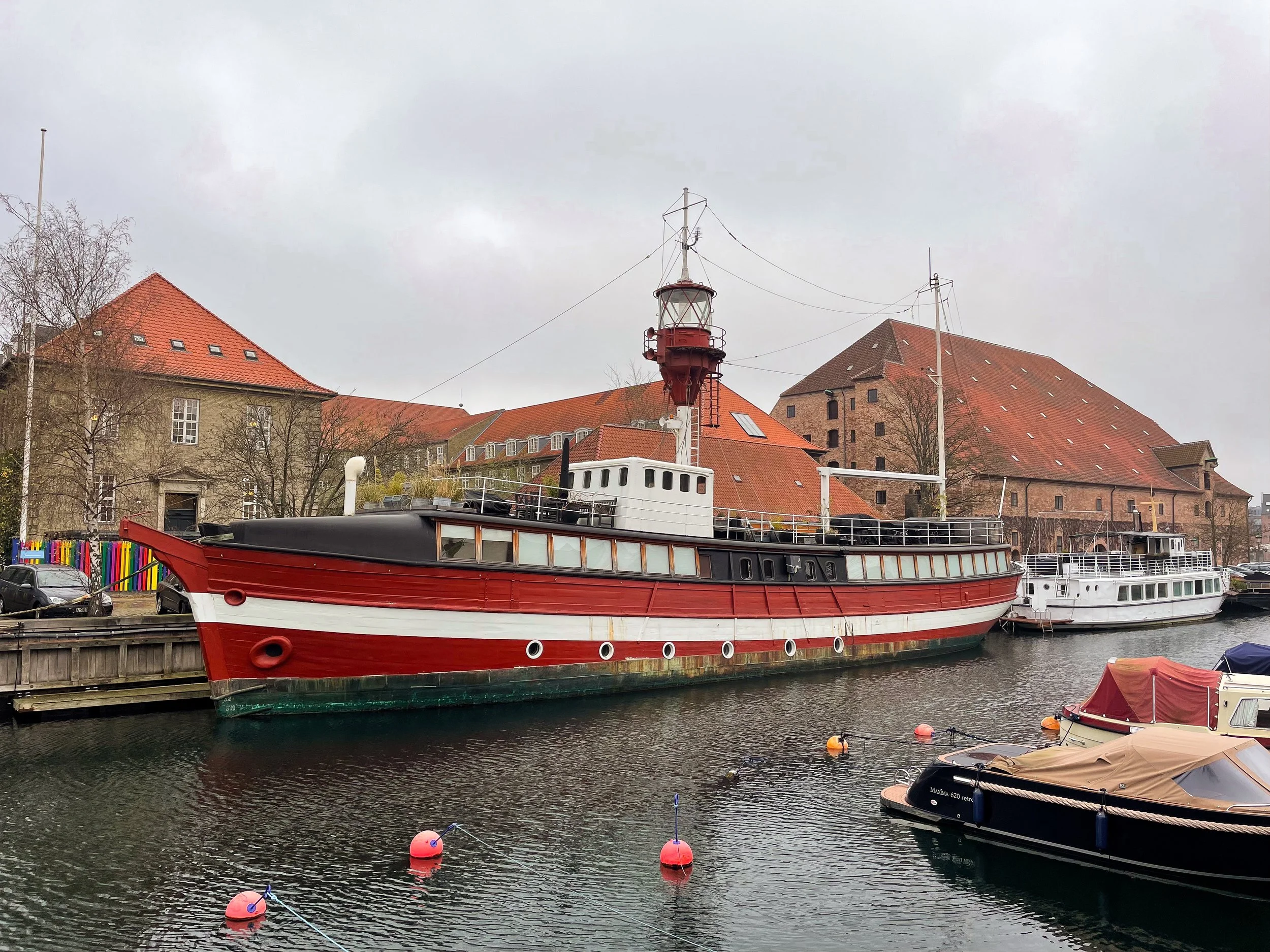
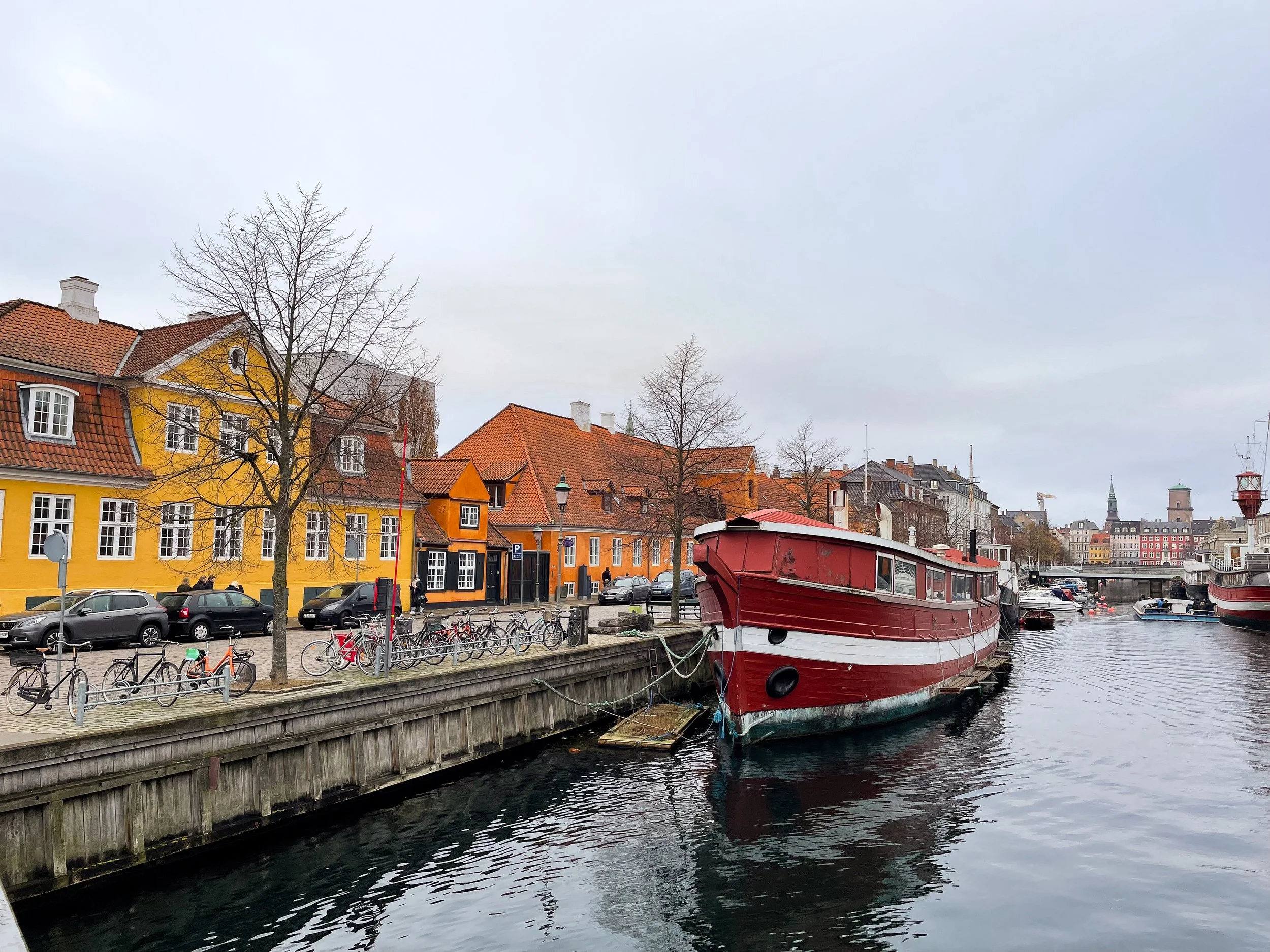
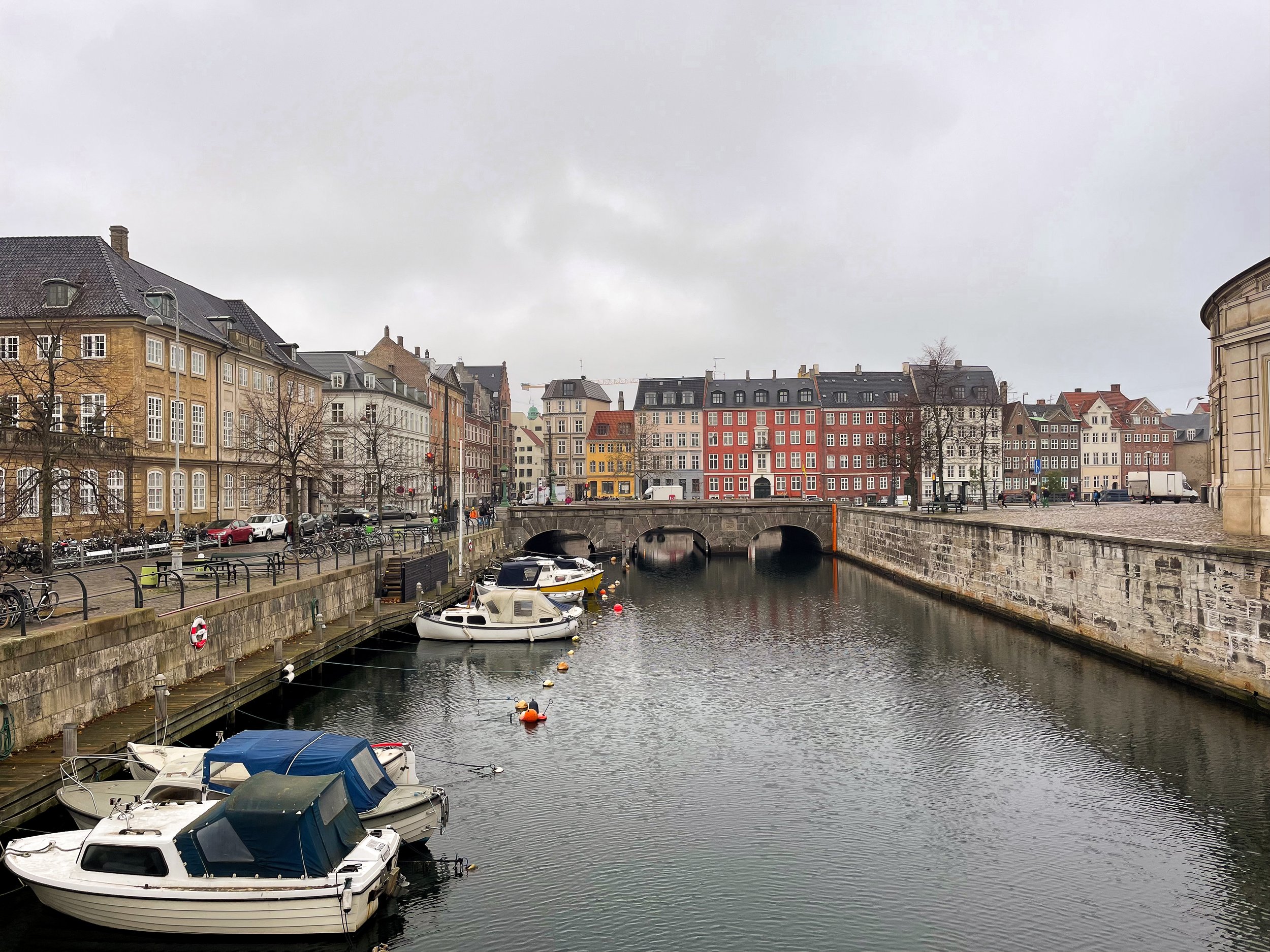
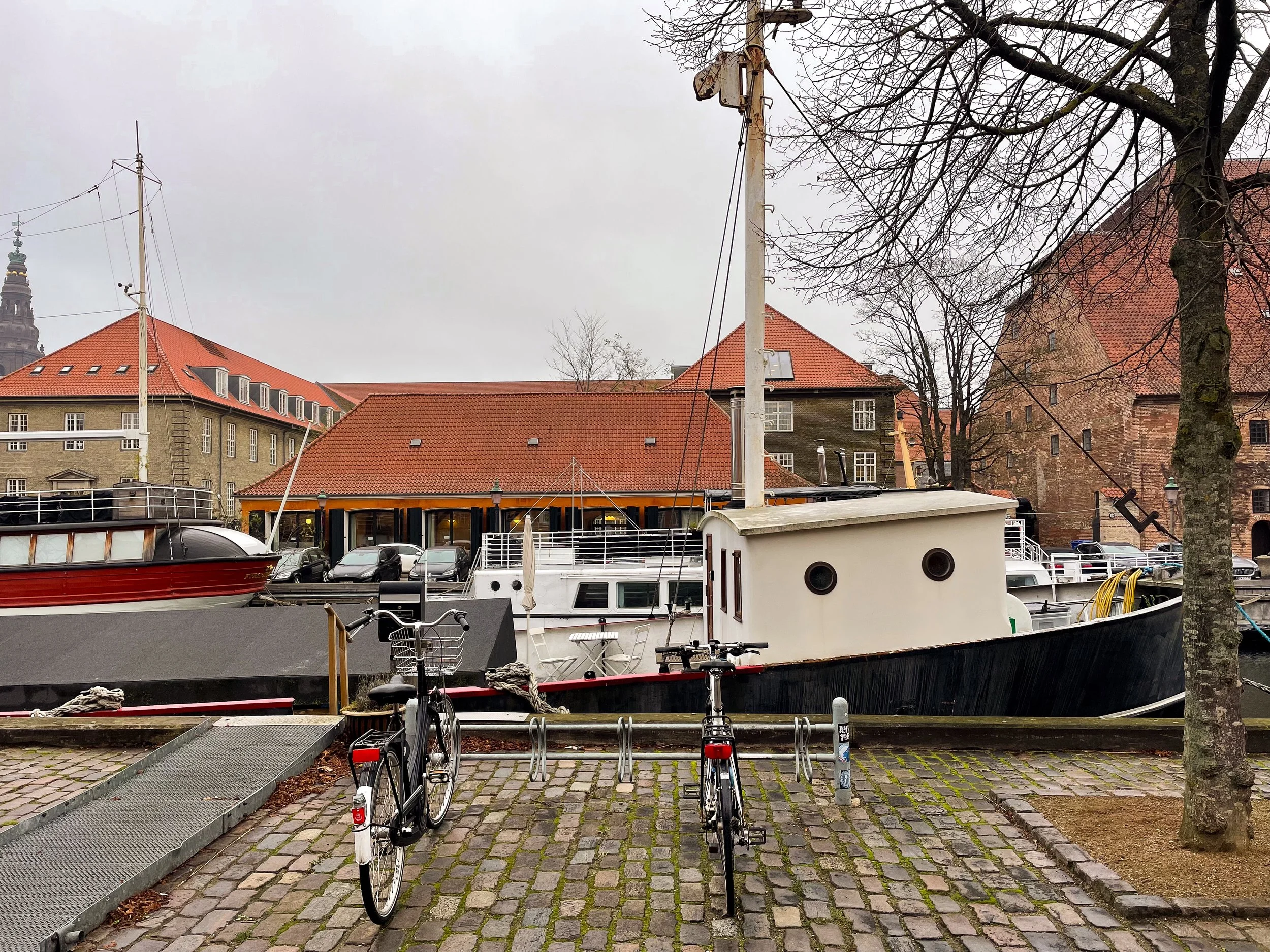
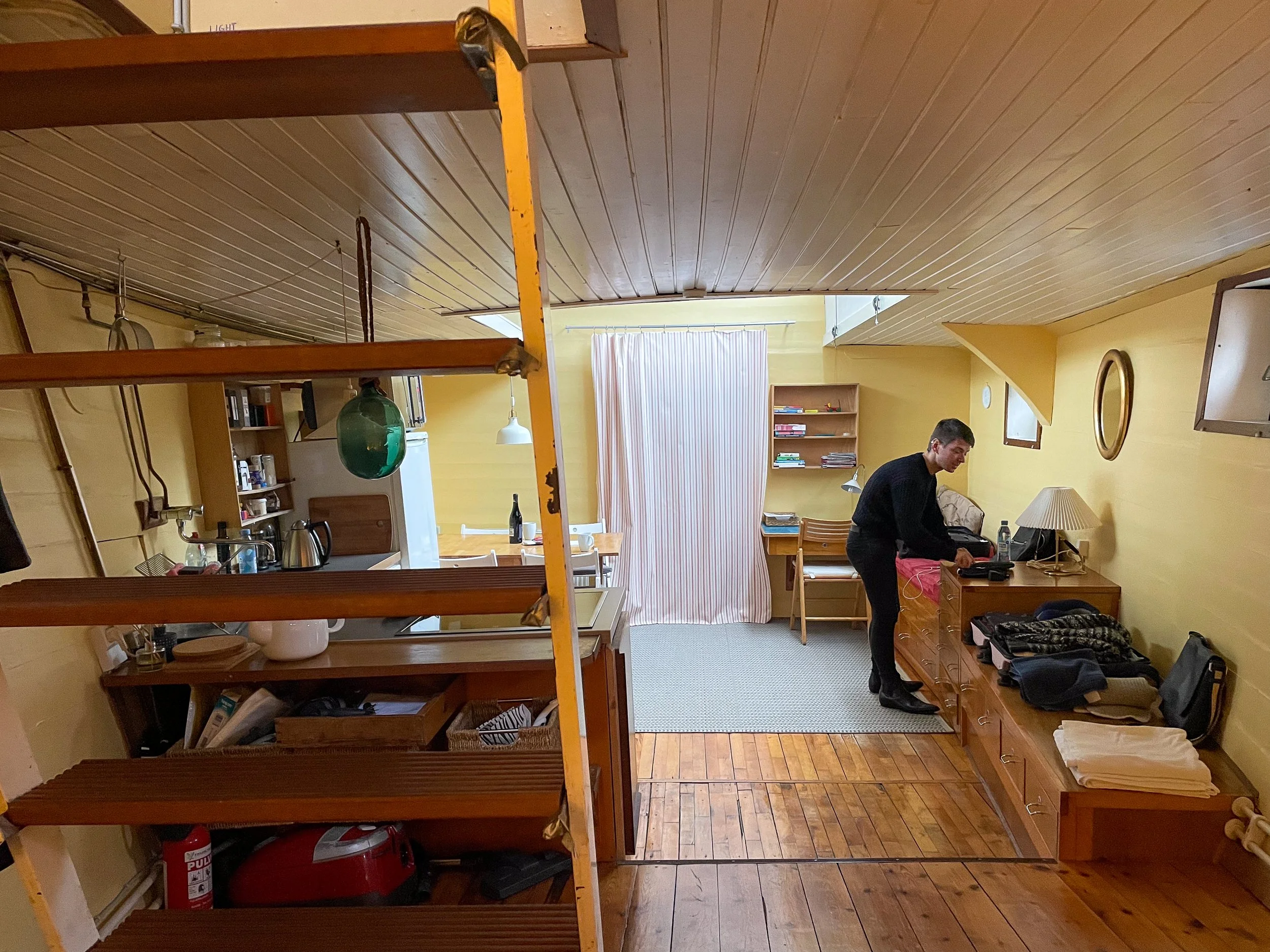
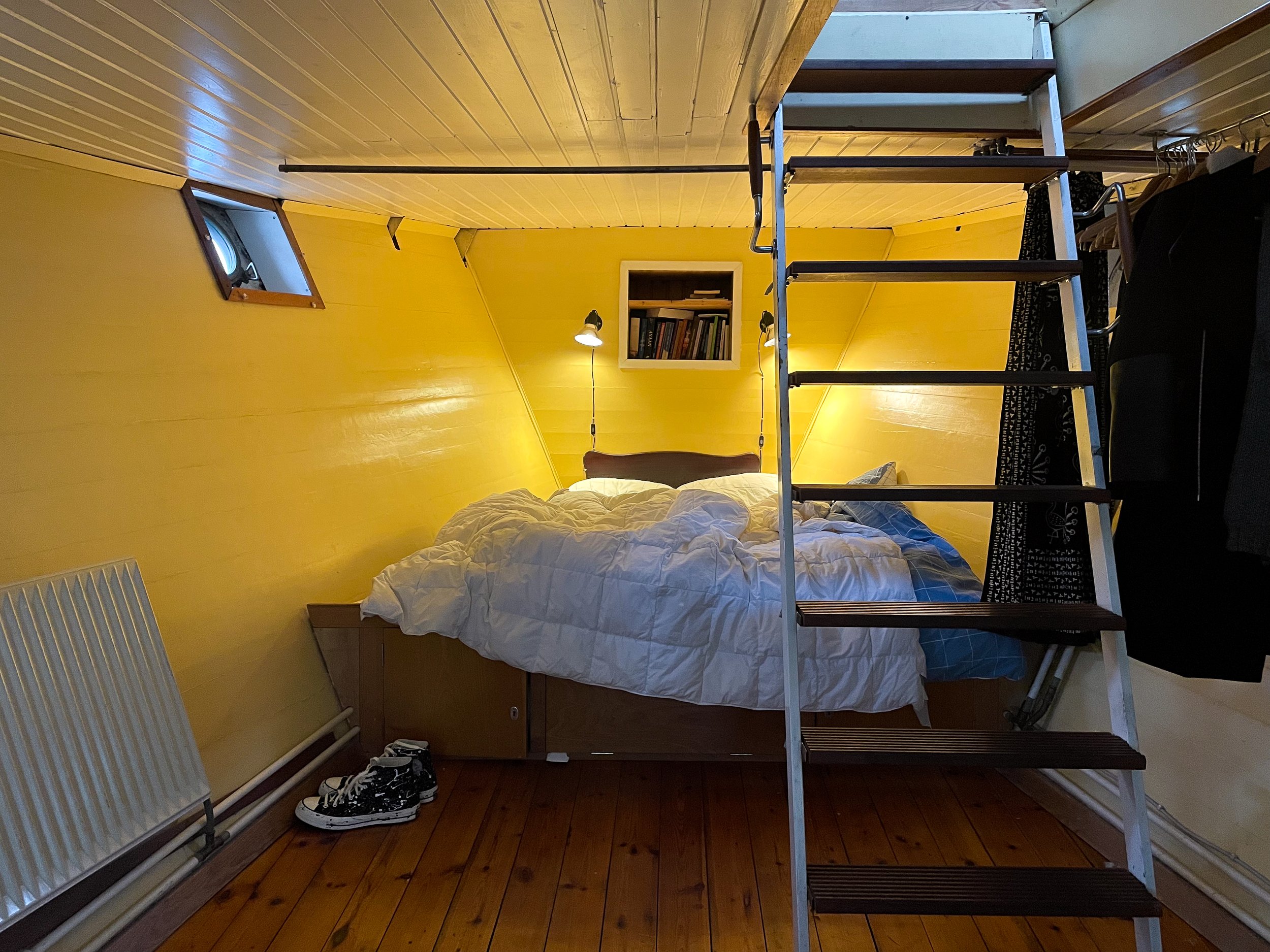
The Frederiksholms Canal. A canal lined with all types of vessels including fishing boats, floating restaurants, a lighthouse ship and multitudes of house boats. We spent our stay in Copenhagen, docked along the canal in a cozy wooden ship. The cabin included a bed at the bow of the boat, open kitchen and living area with portholes overlooking the water. Book on Airbnb.
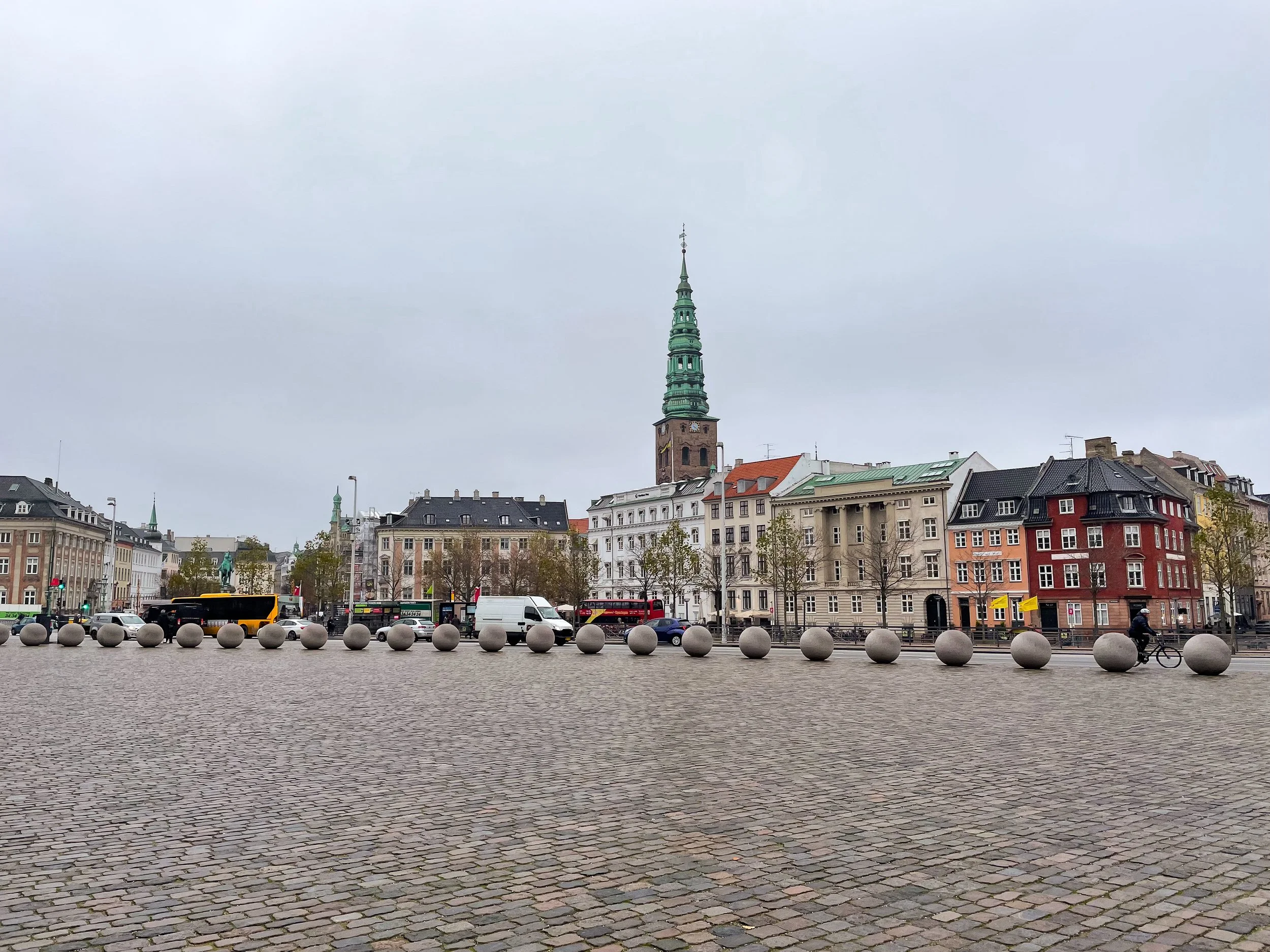
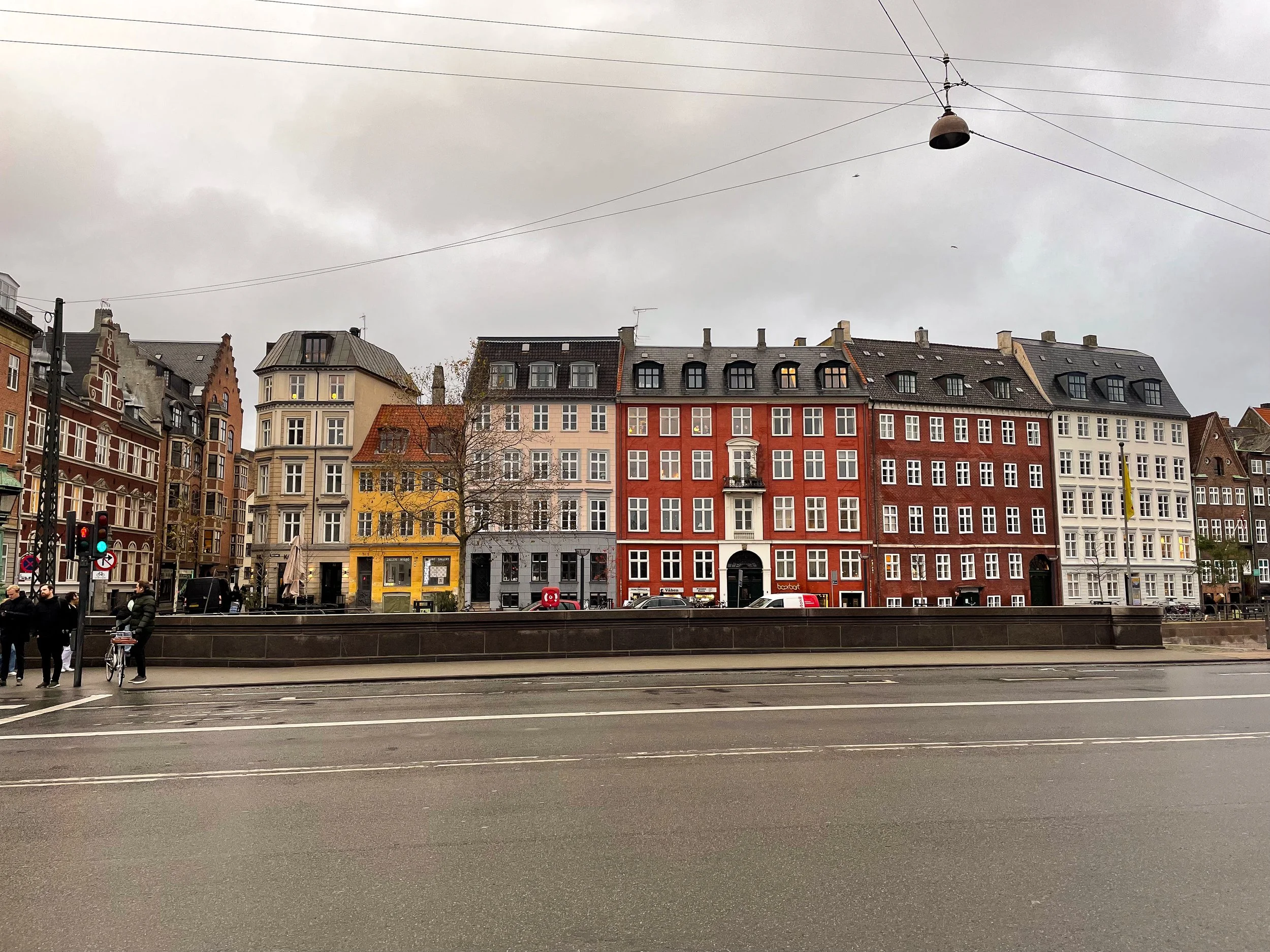
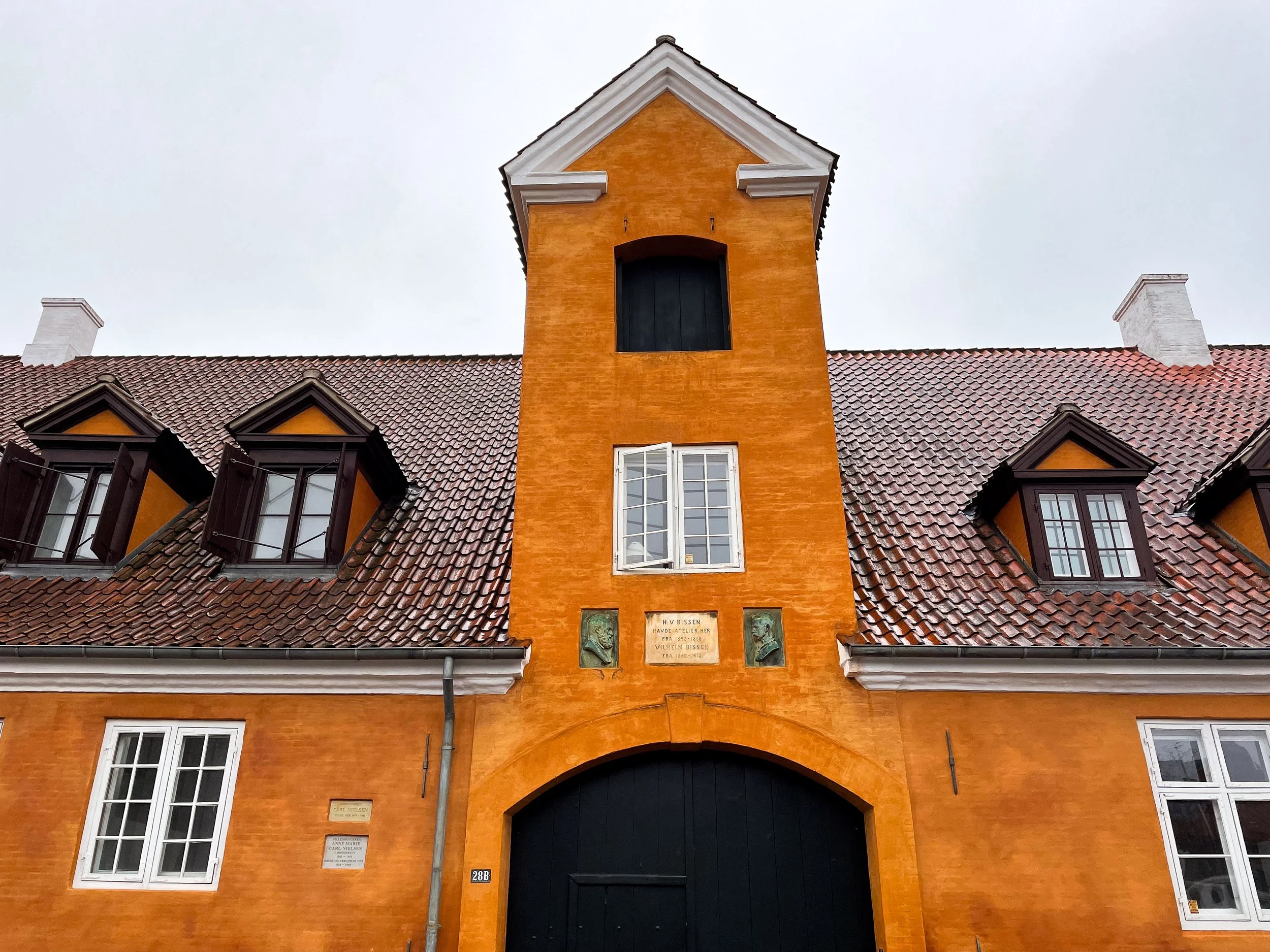
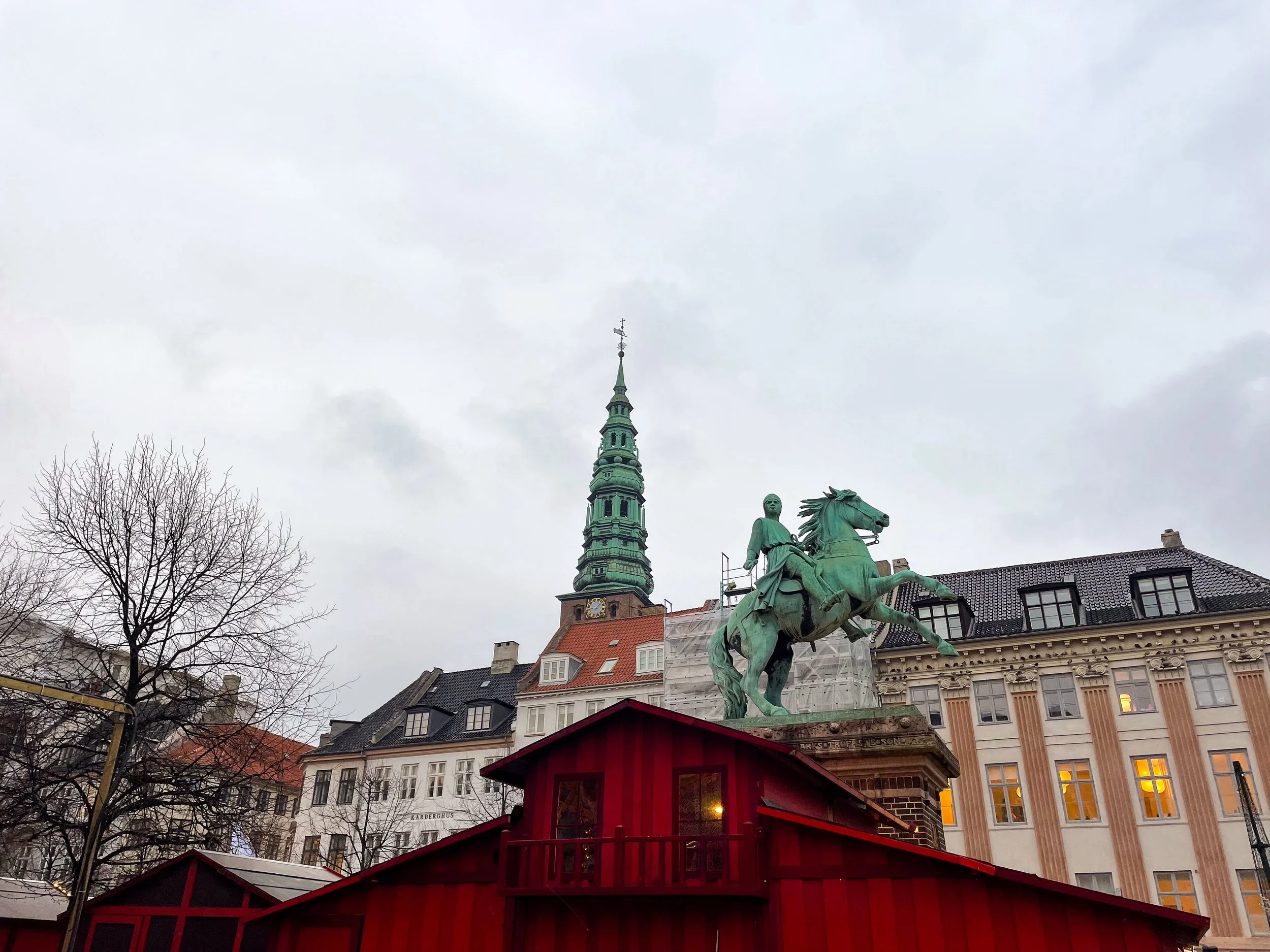
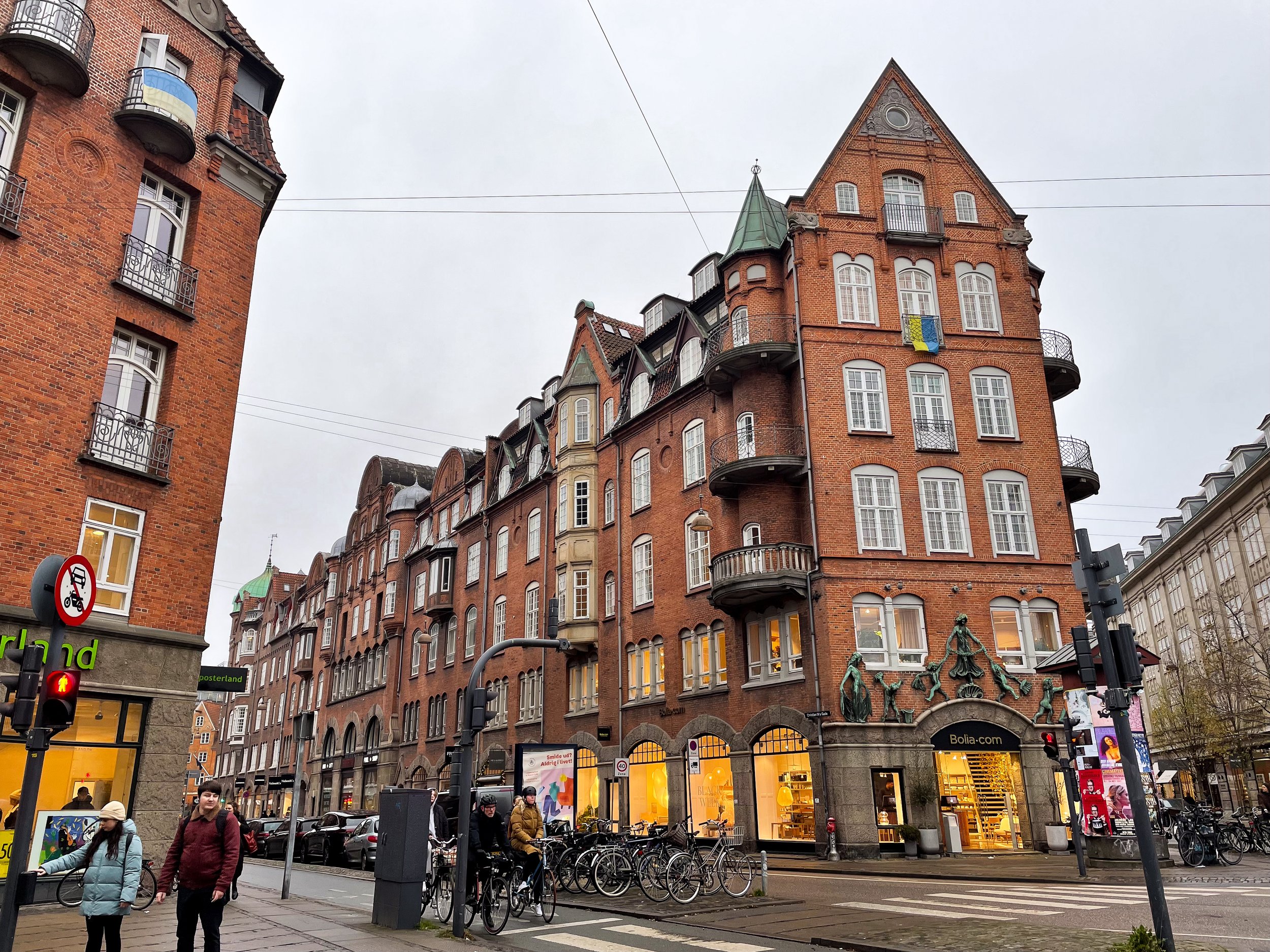
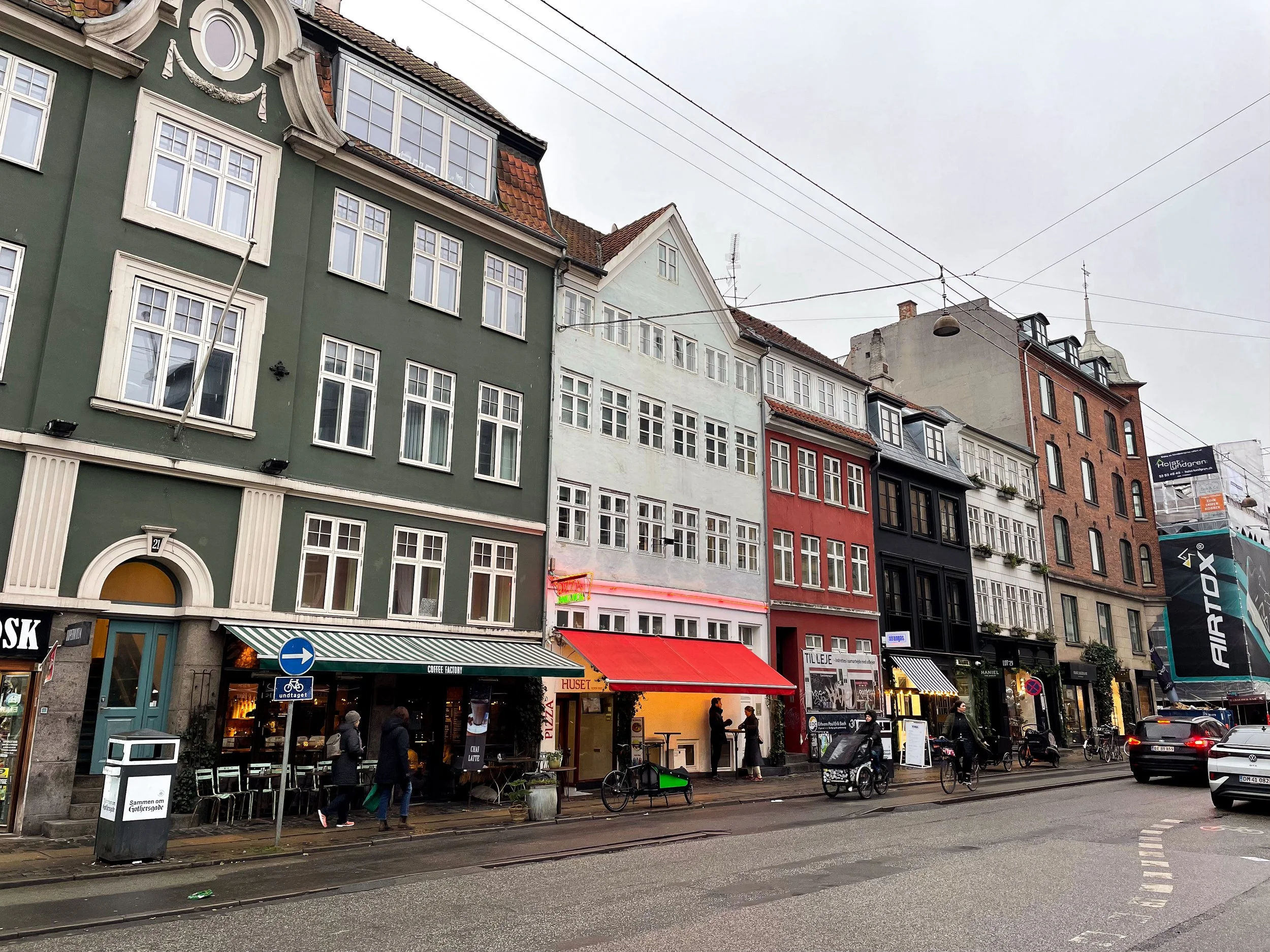
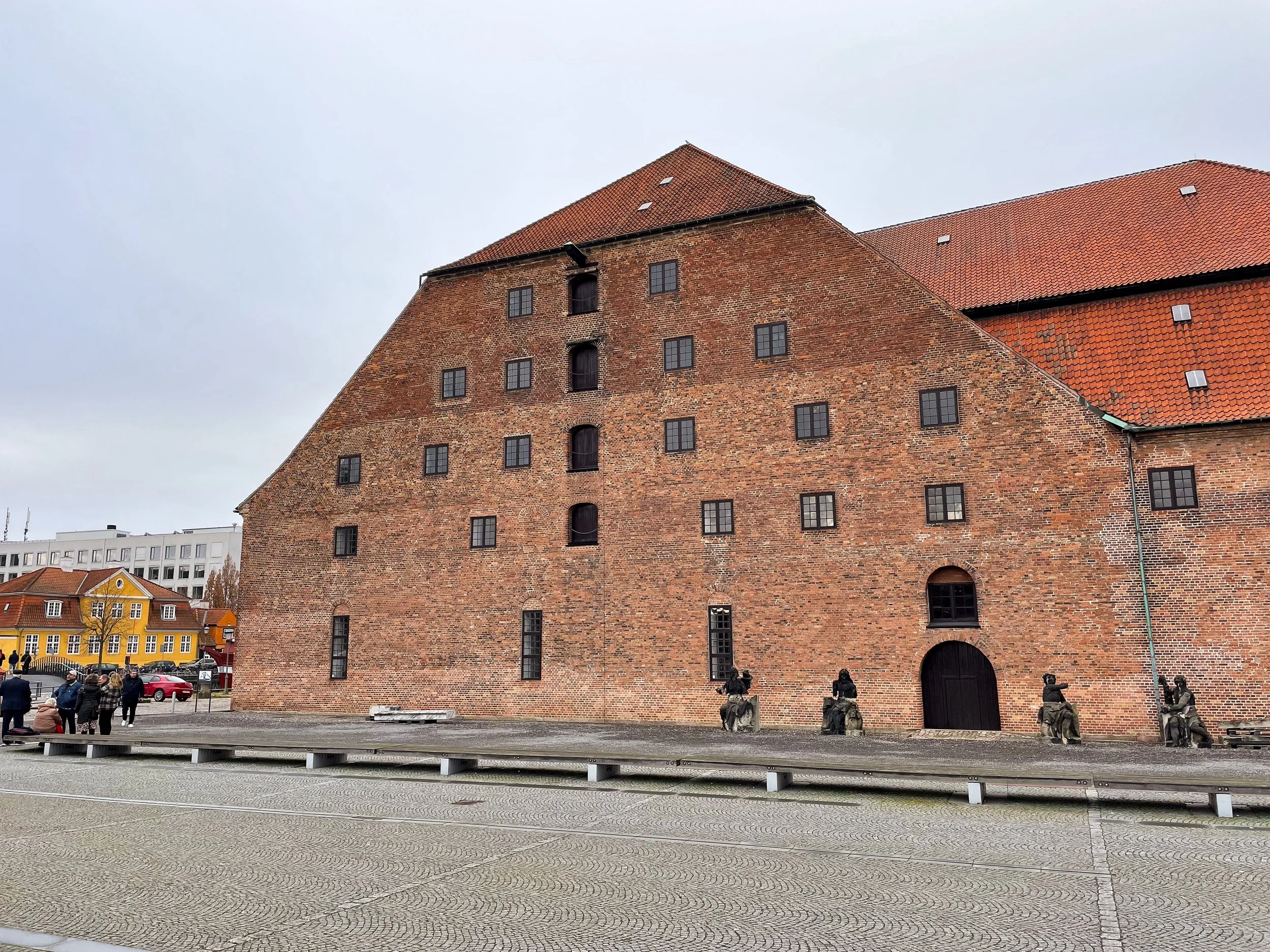
Indre By. A large neighborhood at Copenhagen’s city center with canals and roads lined with historic buildings, national monuments, plazas and shopping streets.
Slotsholmen. An island neighborhood surrounded by the Frederiksholms Canal. The island was once the seat of the Danish monarchy and is the present home of parliament, the prime minister’s office, multiple museums, public squares and stately buildings.
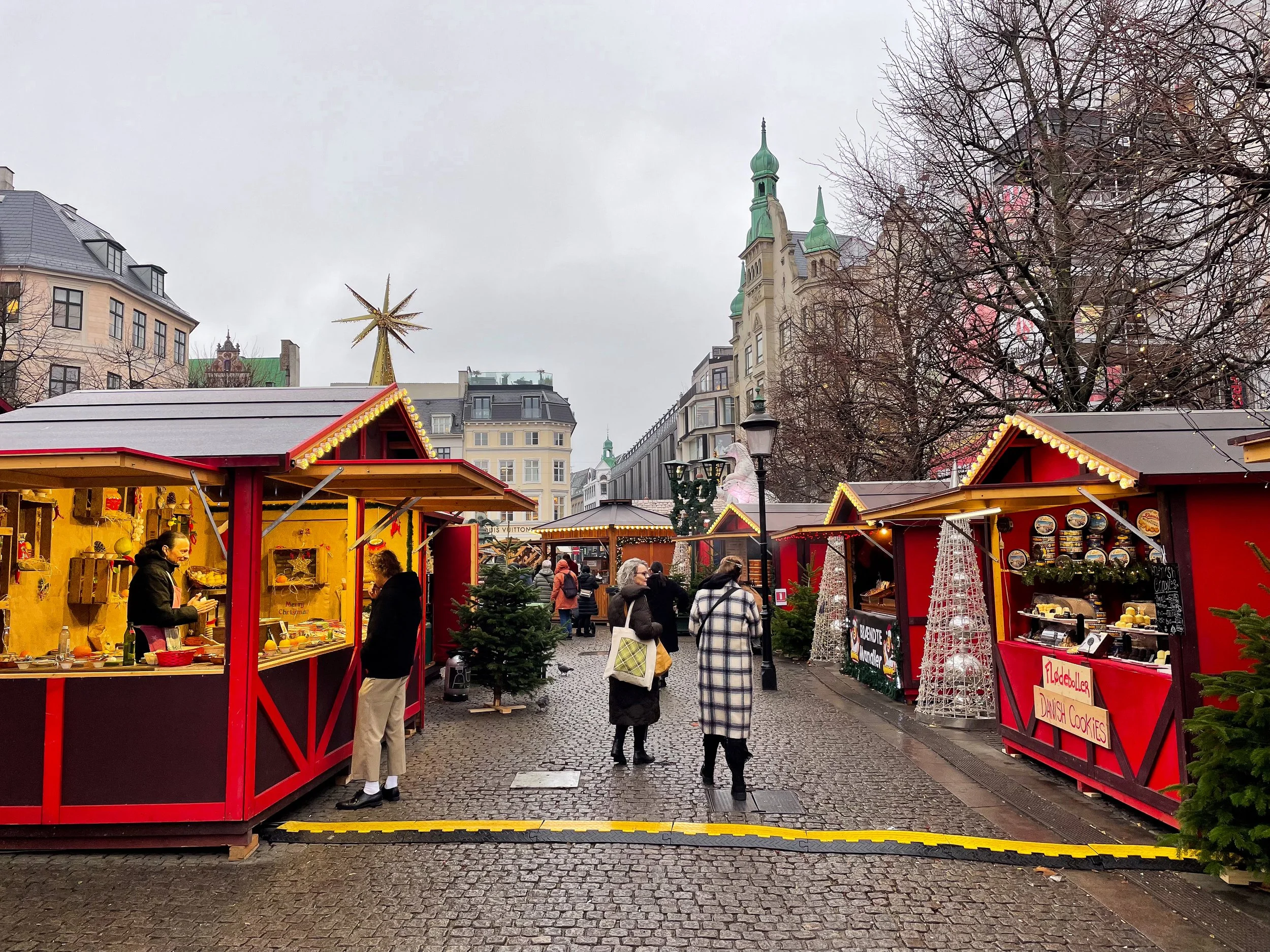
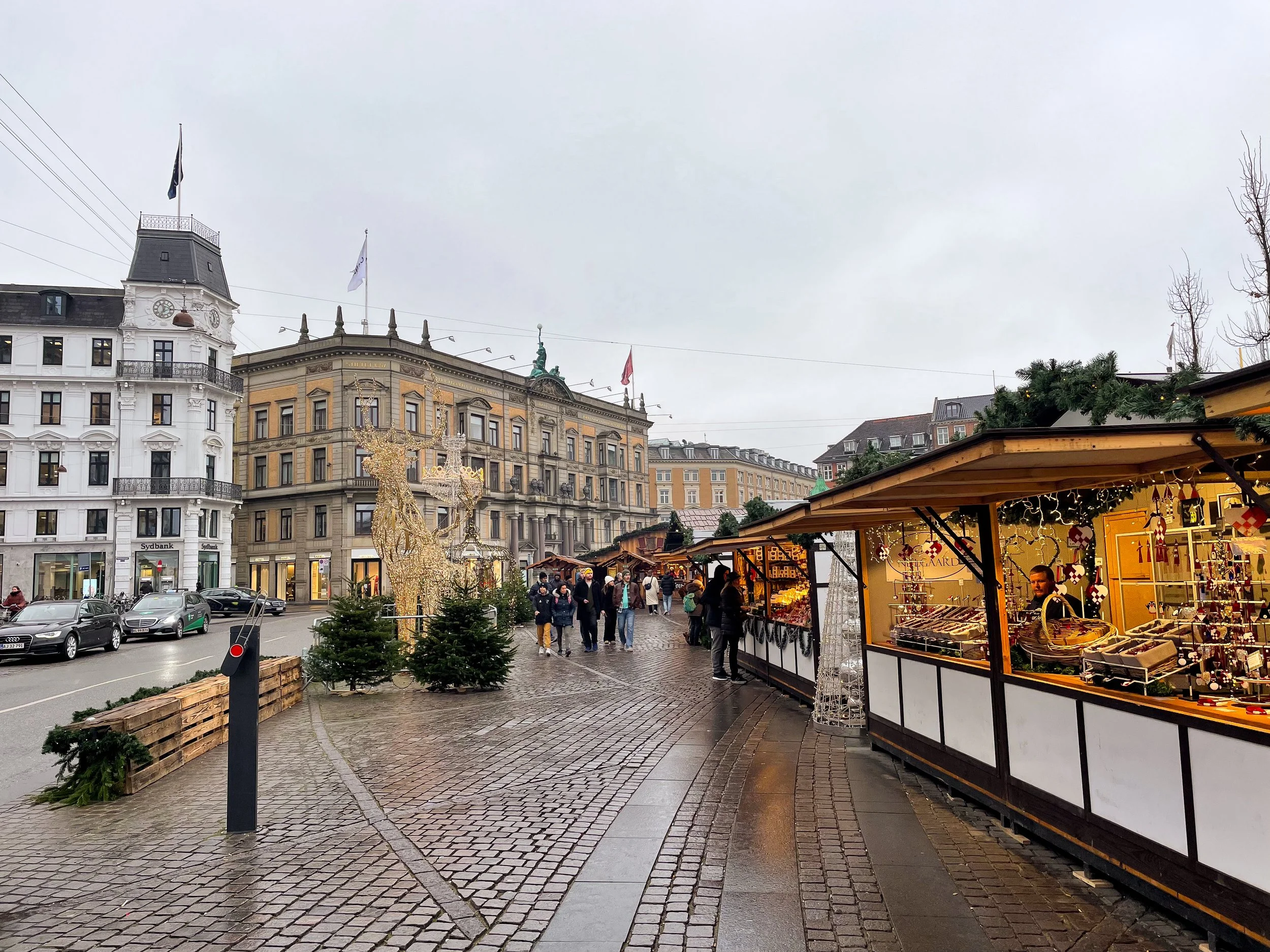
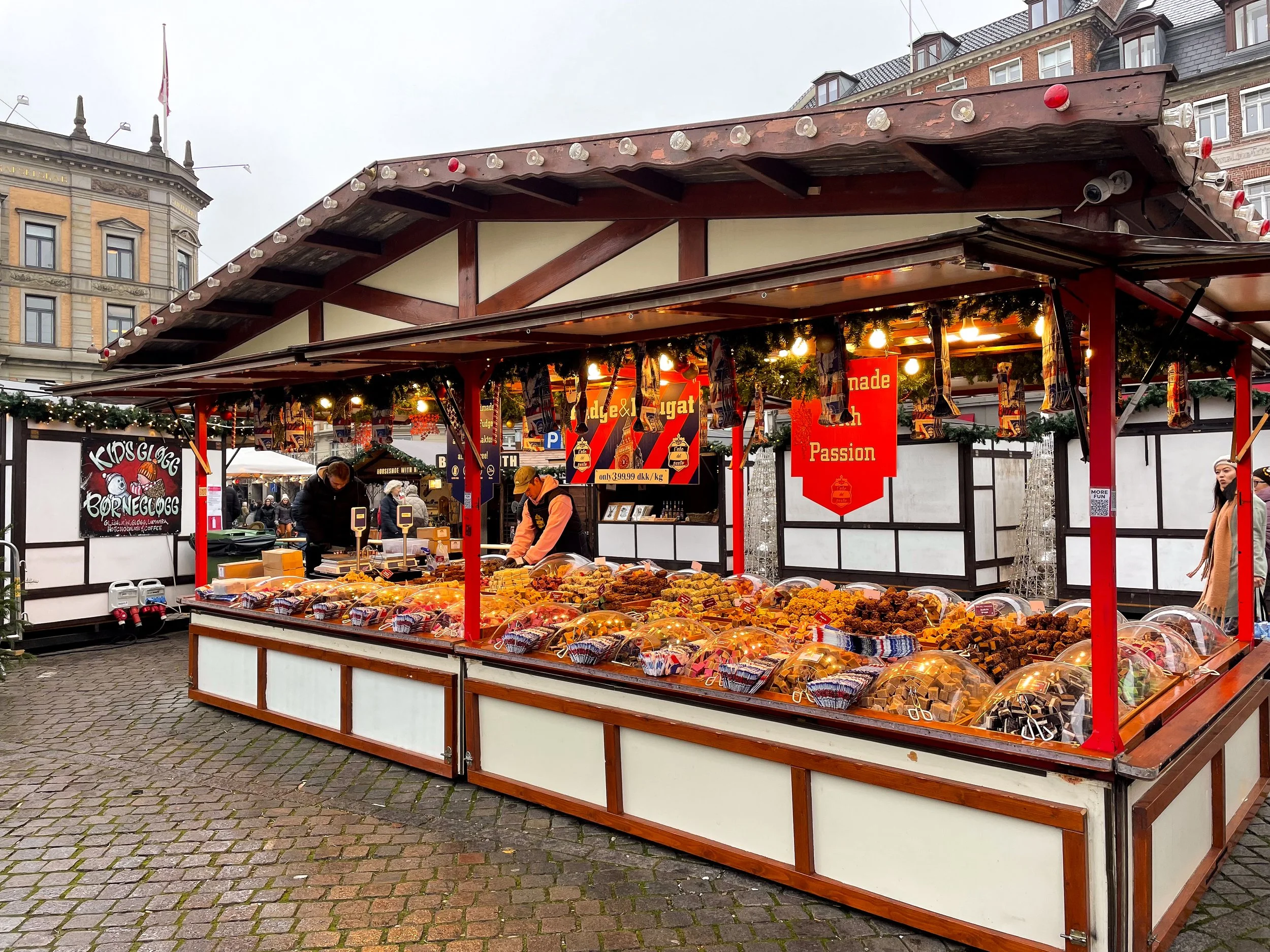
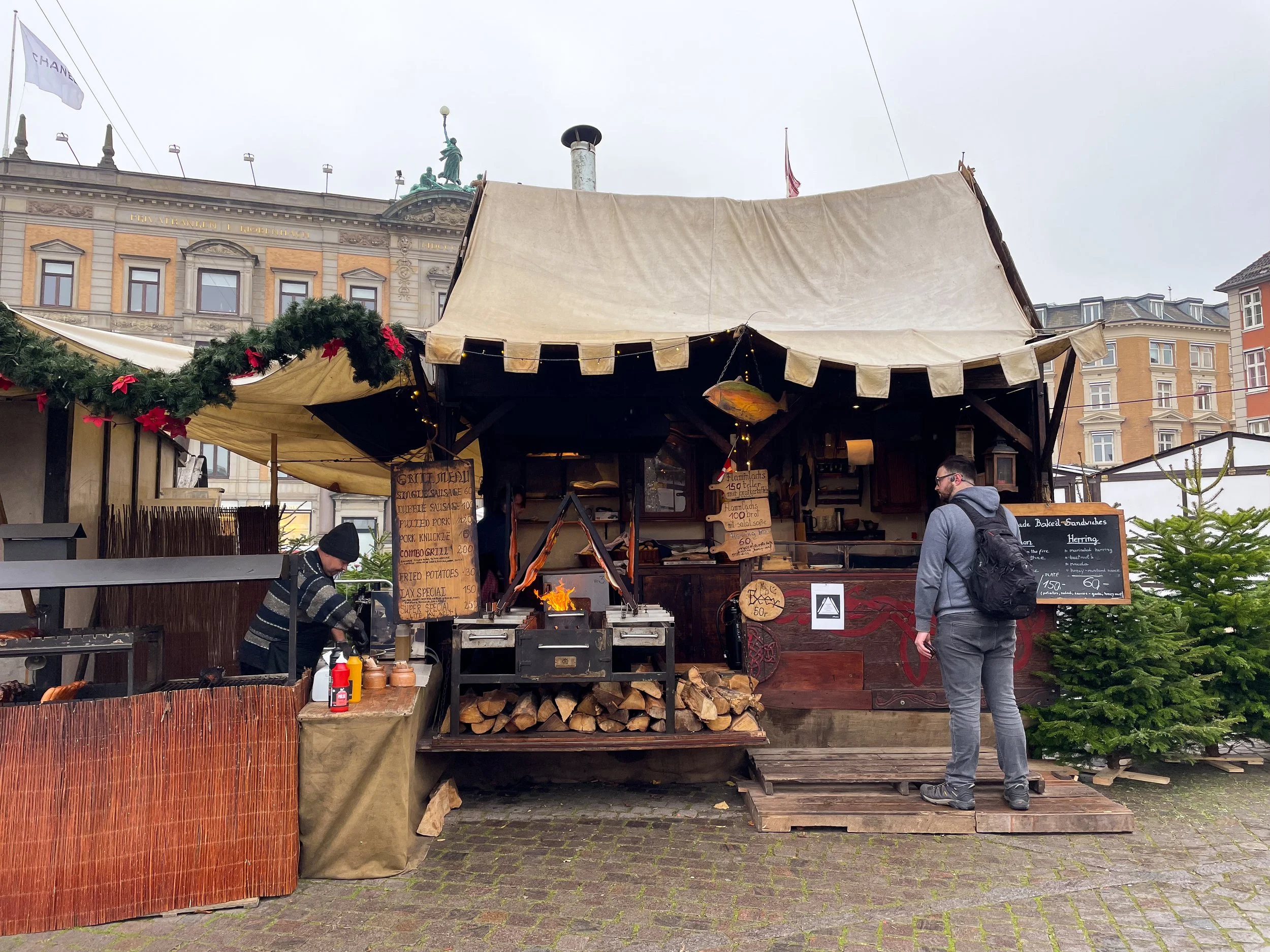
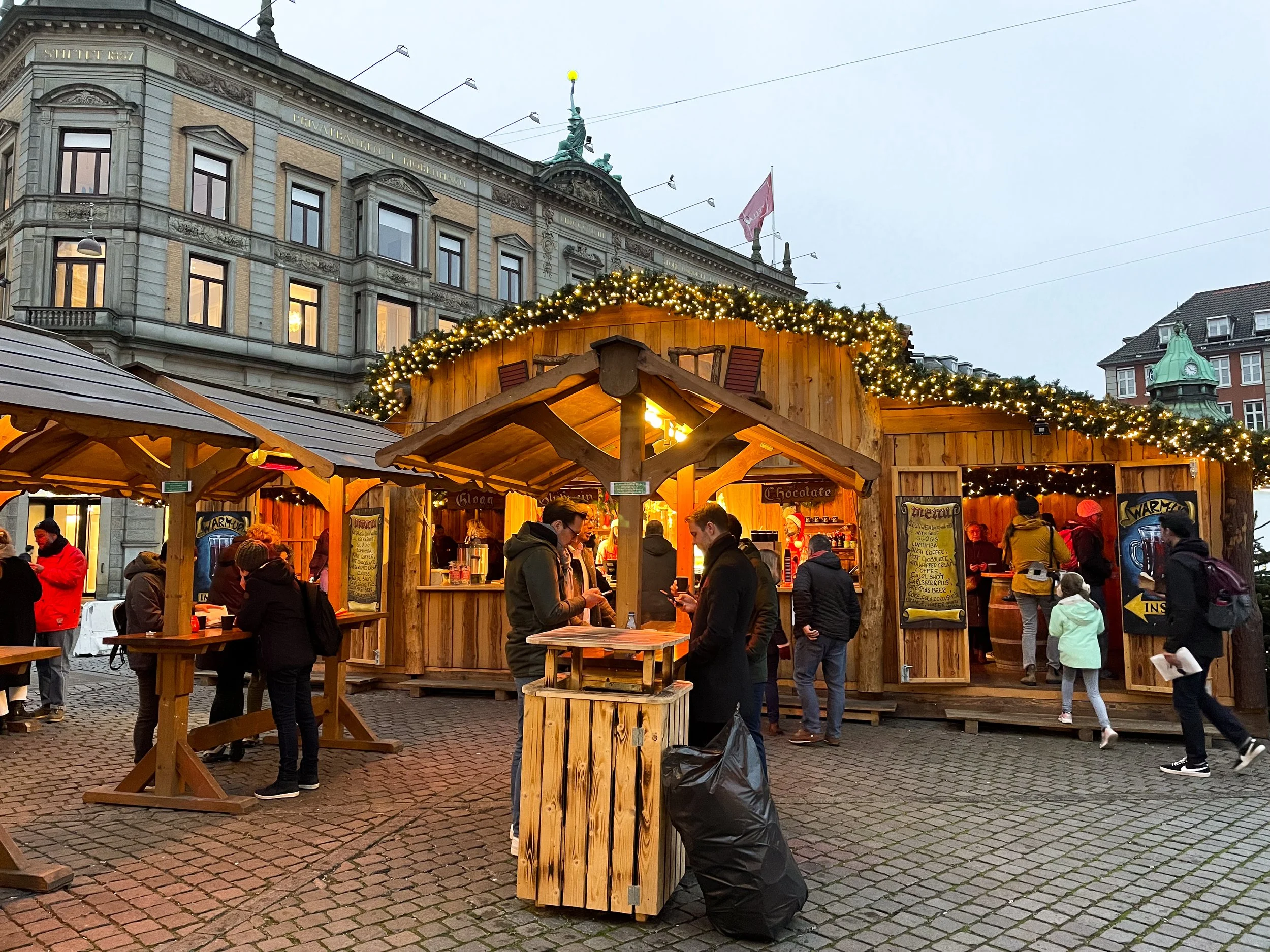
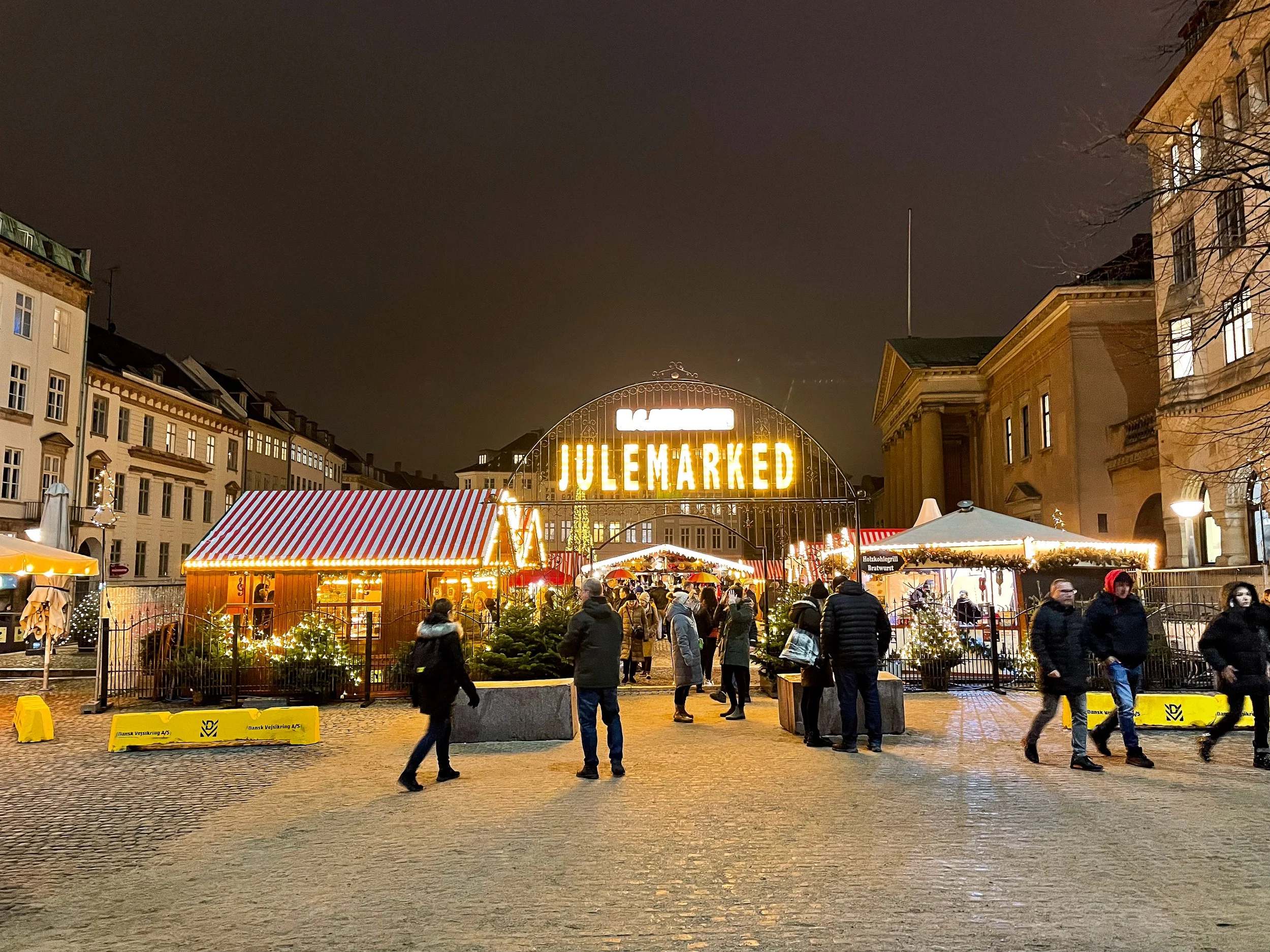
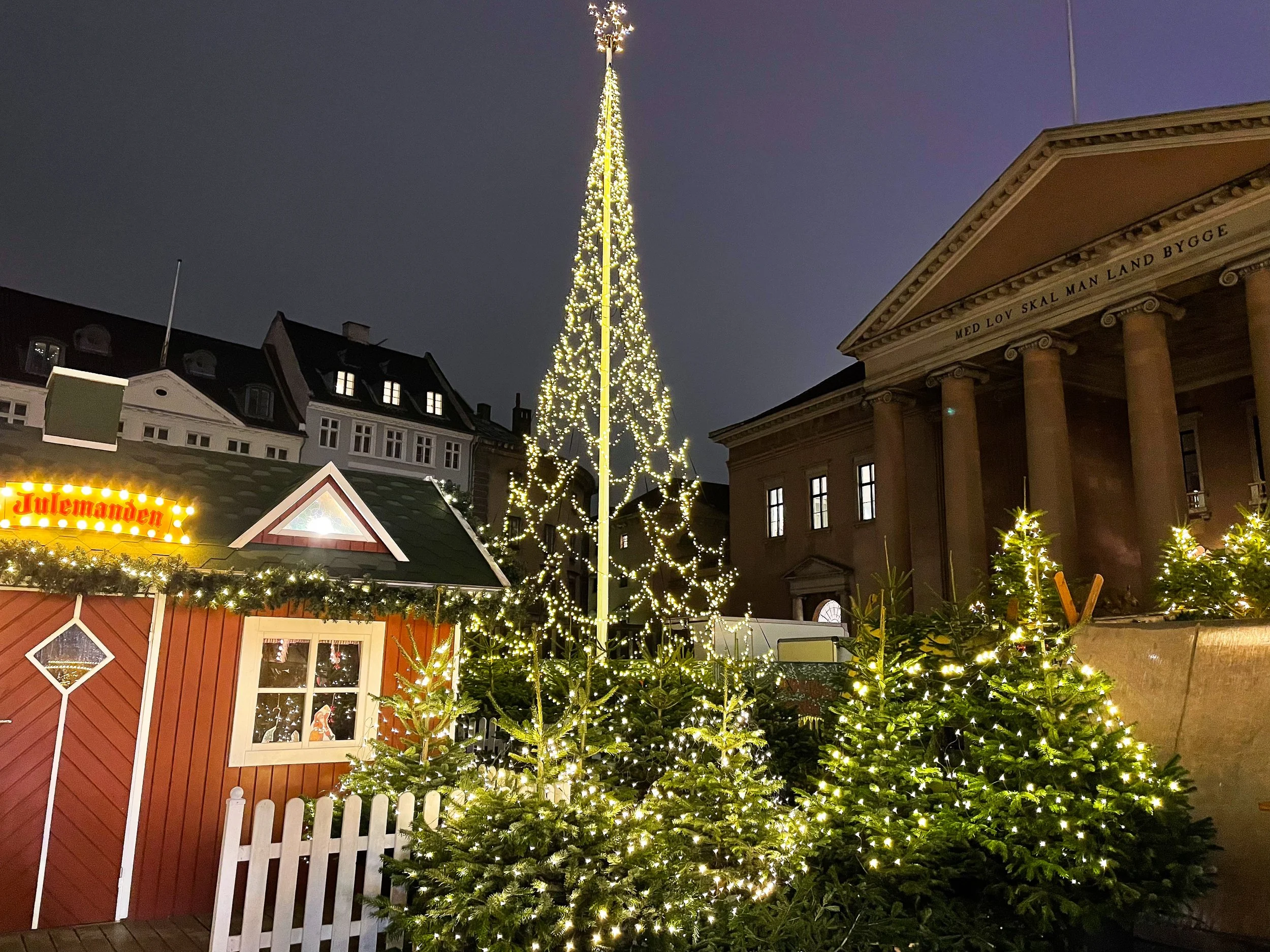
Christmas in Copenhagen
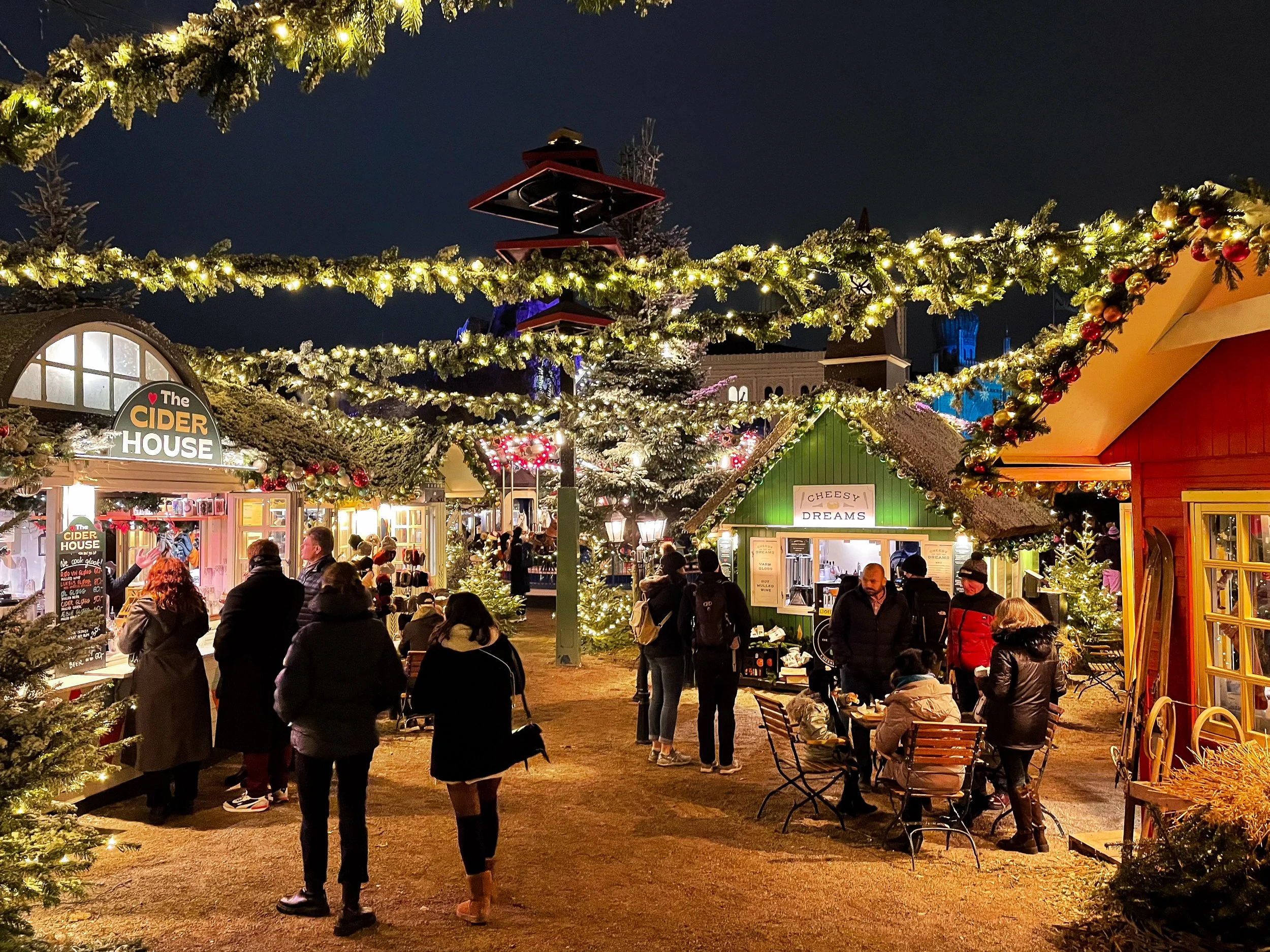
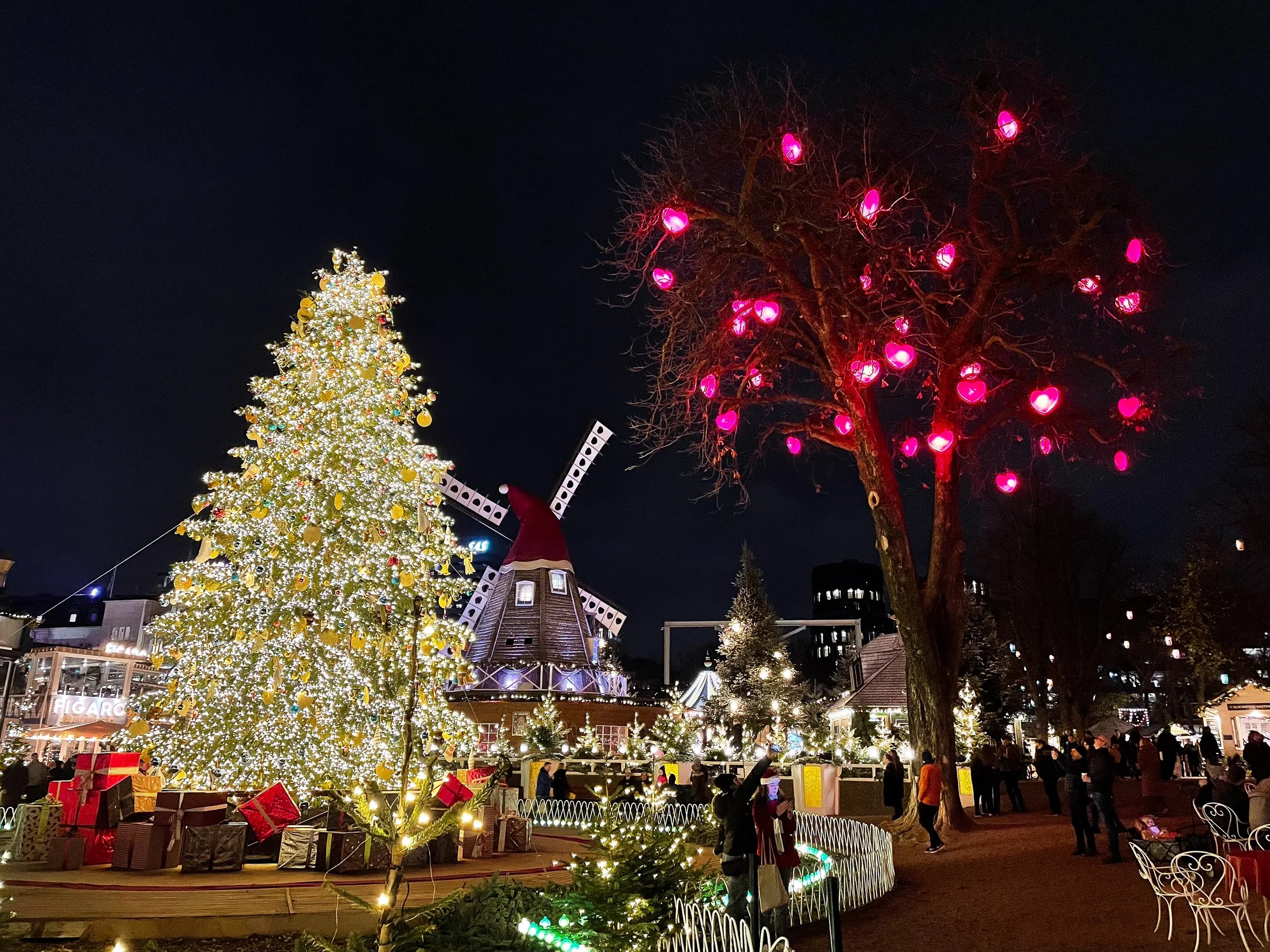
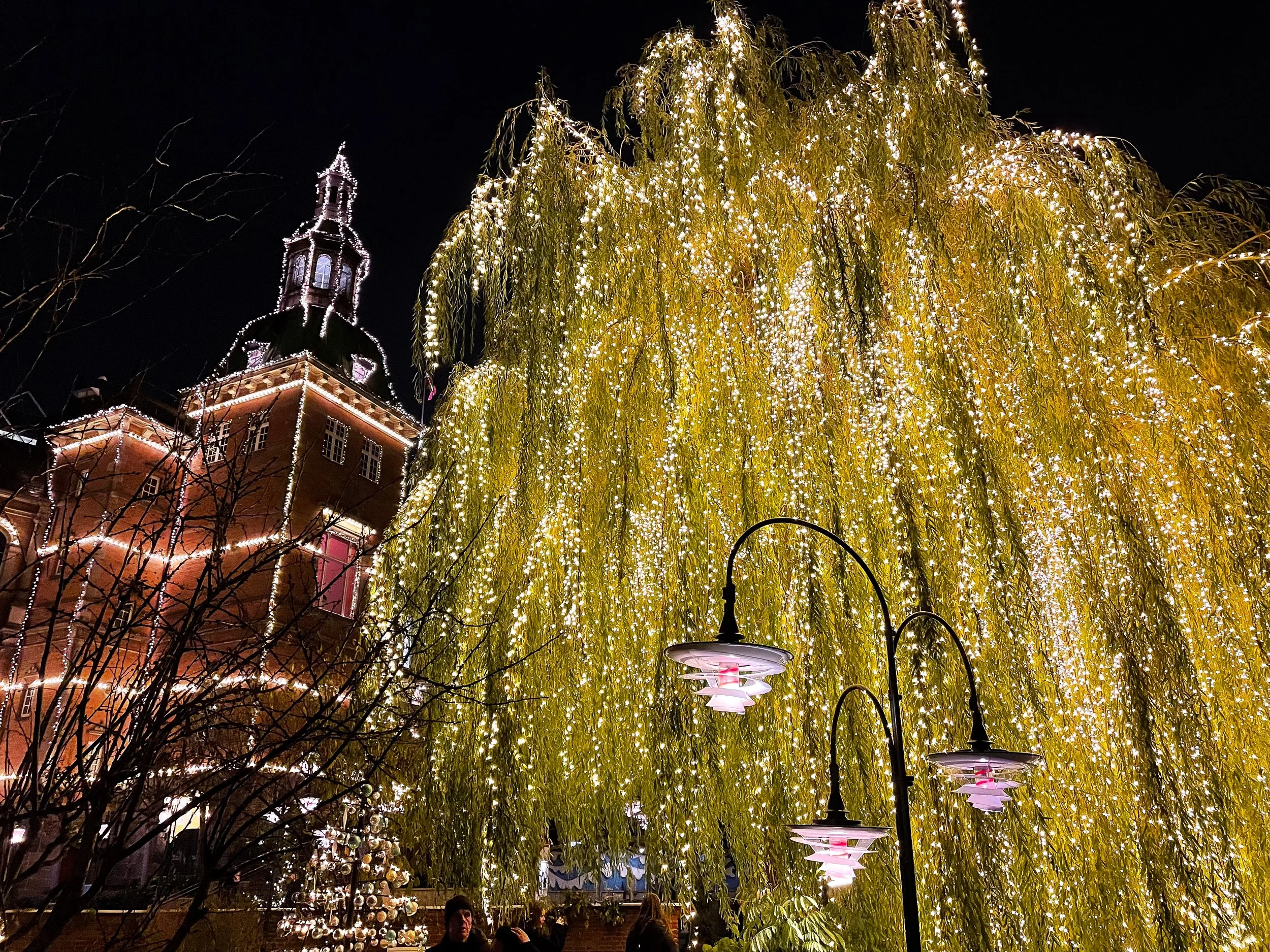
Copenhagen’s Christmas festivities are in full swing by late November! The city is illuminated in twinkle lights, pine trees stand tall in public plazas, buildings are decorated with garland and Christmas markets lure people in with their holiday cheer.
Christmas Markets
The city center is home to at least three Christmas Markets. Each one is very similar in style with decorated wooden stalls selling gifts and traditional Christmas market food and beverages.
Julemarked Kongens Nytorv. The largest Christmas market lining the perimeter of King’s New Square and stretching towards the beginning of the Nyhavn Canal.
Julemarked Højbro Plads. The second largest Christmas market located in High Bridge Square between the Frederiksholms Canal and Strøget.
Julemarked HC Andersen. The smallest Christmas market located in Nytorv Square.
Christmas Market Food
Some of the classic Christmas Market food and beverages are:
Gløgg. Hot wine mulled with spices, raisins and toasted almonds.
Lumumba. Hot chocolate with rum or amaretto and marshmallow or whipped cream on top.
Æbleskiver. Fried fluffy balls of dough with jam and powdered sugar.
Brændte Mandler. Roasted candied almonds. Their irresistible scent fills the air.
Pølser. Long thin sausages cooked over a bed of coals, placed between two halves of a bun and garnished with sauces, onions and pickles.
Fish & Chips. Deep fried cod with French fries.
Roasted Chestnuts. Warm, buttery, soft and starchy nuts.
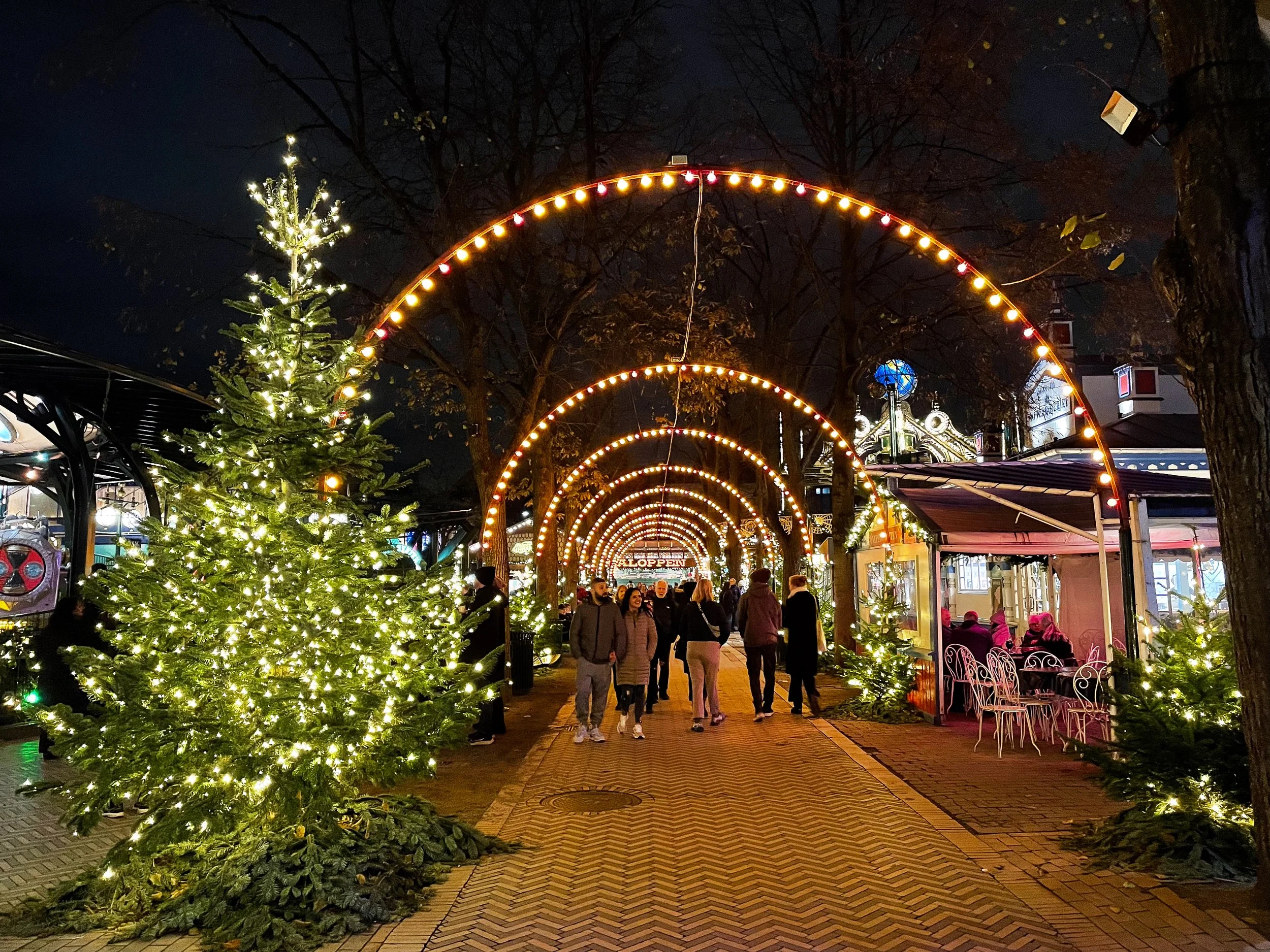
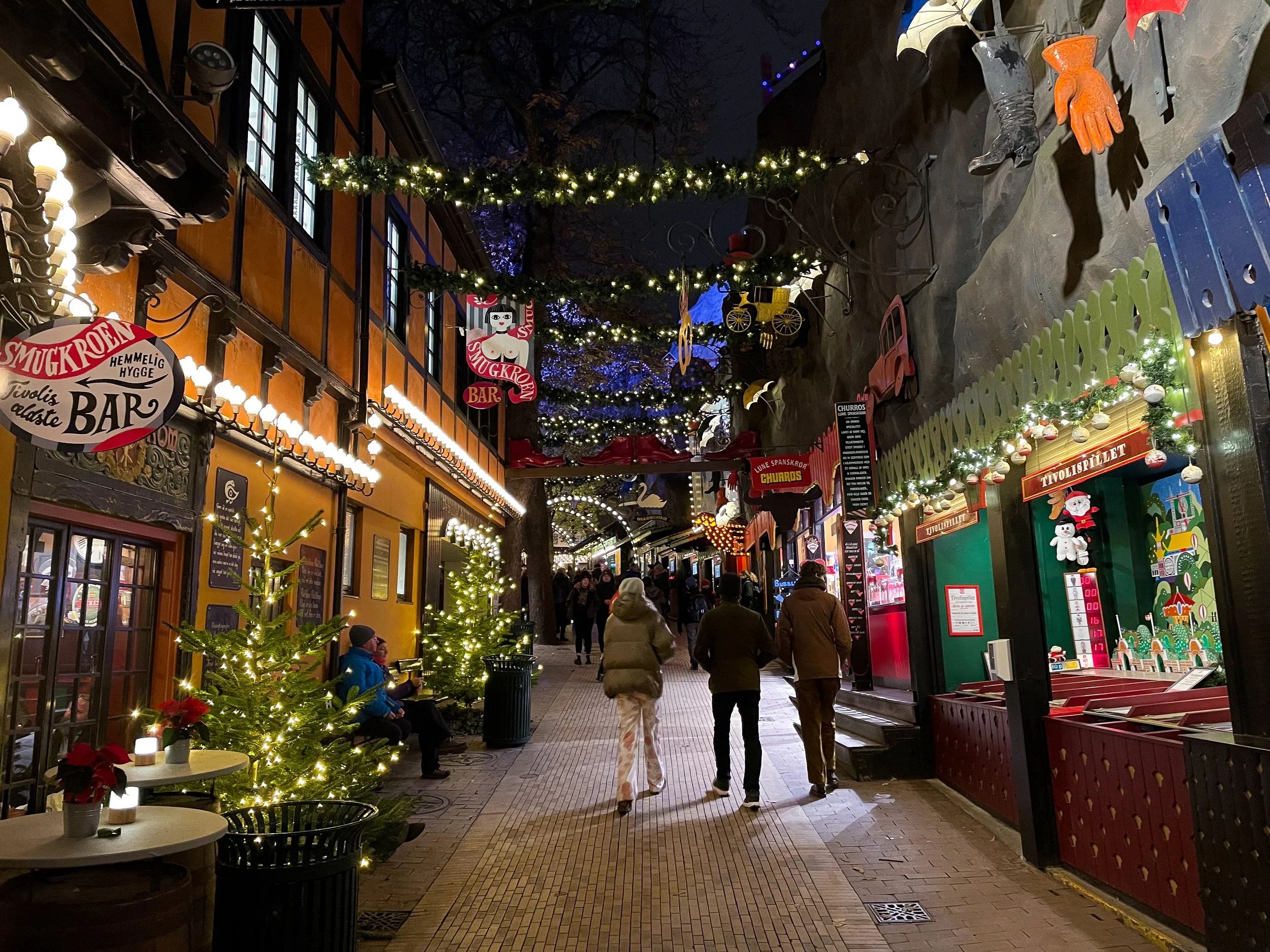
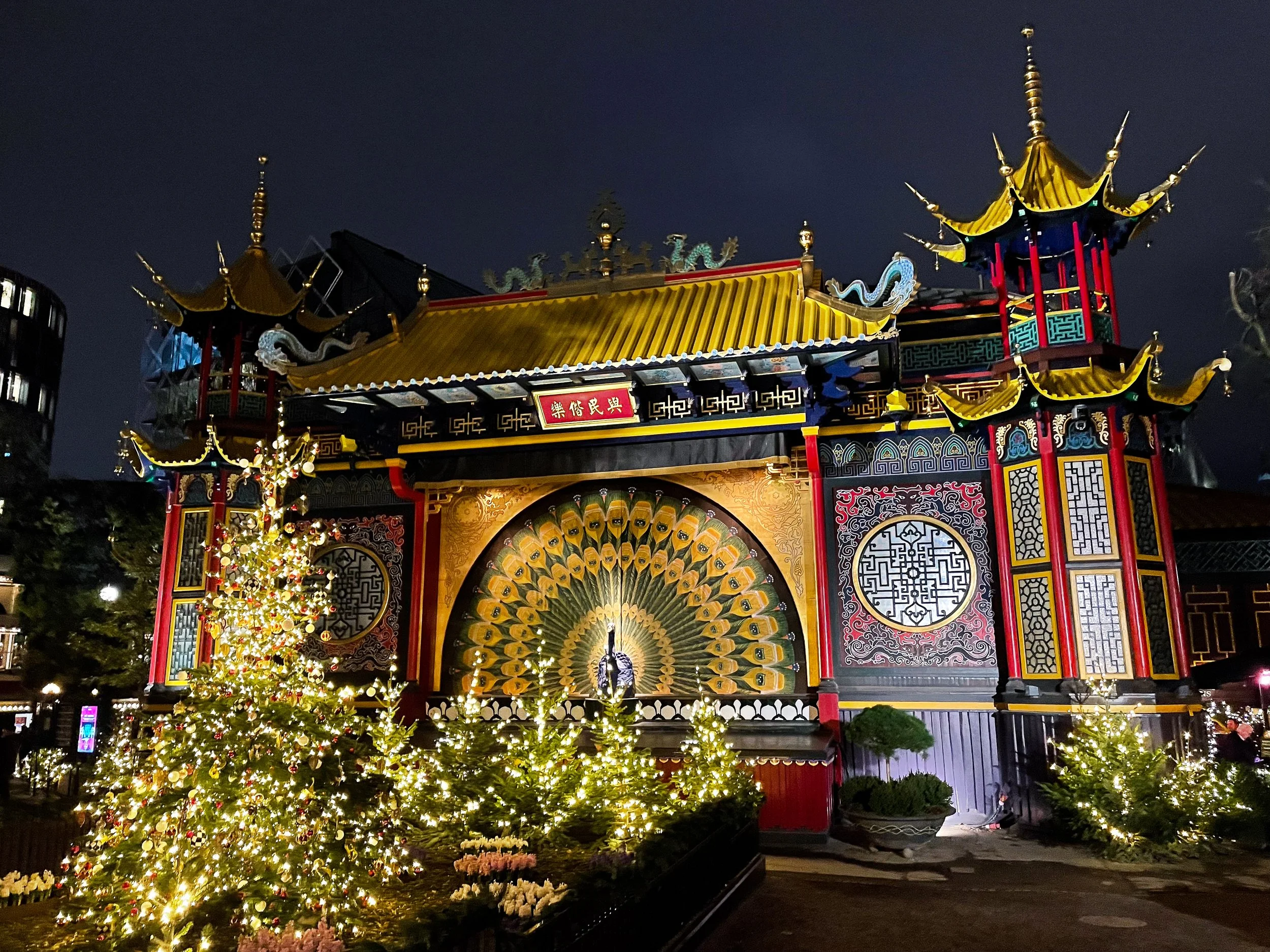
Visit Tivoli Gardens
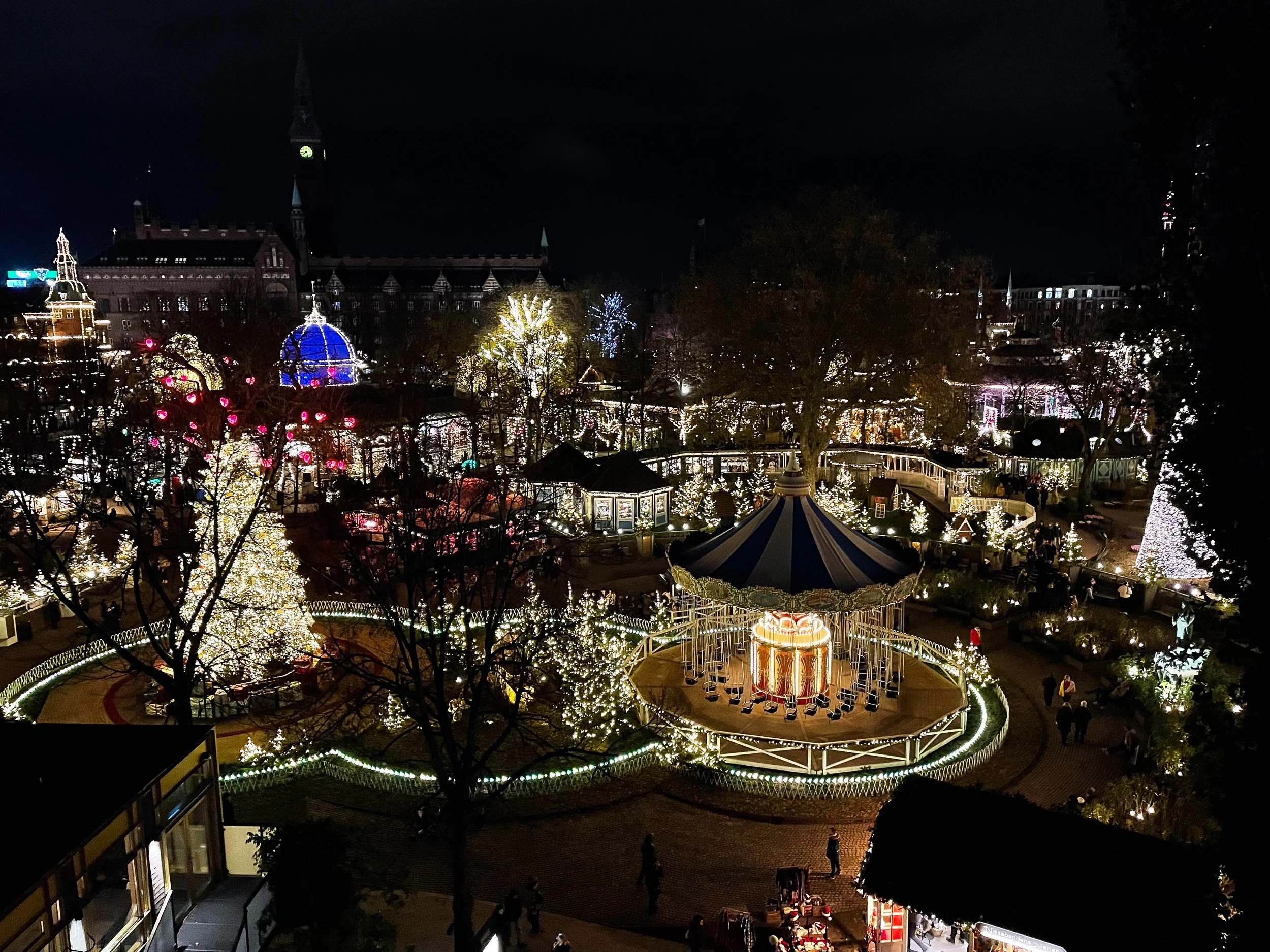
A romantic 19th century theme park with rides, restaurants and gardens. The park has classic rides like a ferris wheel and carousel, two small but nonetheless thrilling roller coasters and a wide range of other rides and games. There is no shortage of places to eat with sit down style restaurants, a food hall and stands along the park’s paths. Within the center of the park is a pond with walkways, paddle boats and a pirate ship. The park is said to have inspired Disney World with sections themed to look and feel like China, Morocco and India. Each section is decorated in architectural elements and monuments representative of each culture. Being here during the holidays, the park was transformed into a Christmas wonderland with decorated trees, twinkle lights, Christmas music and all the elements of any good Christmas market.
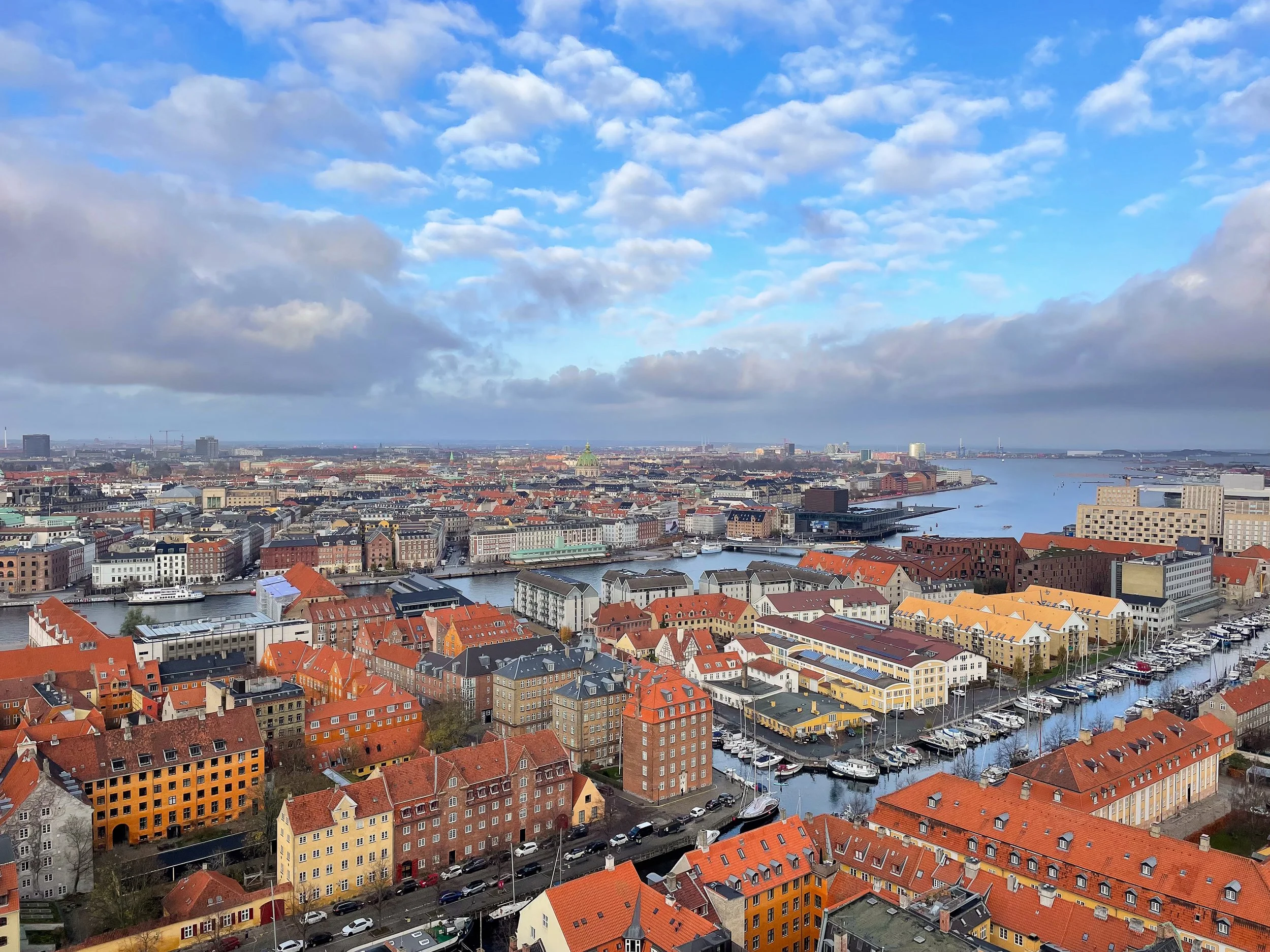
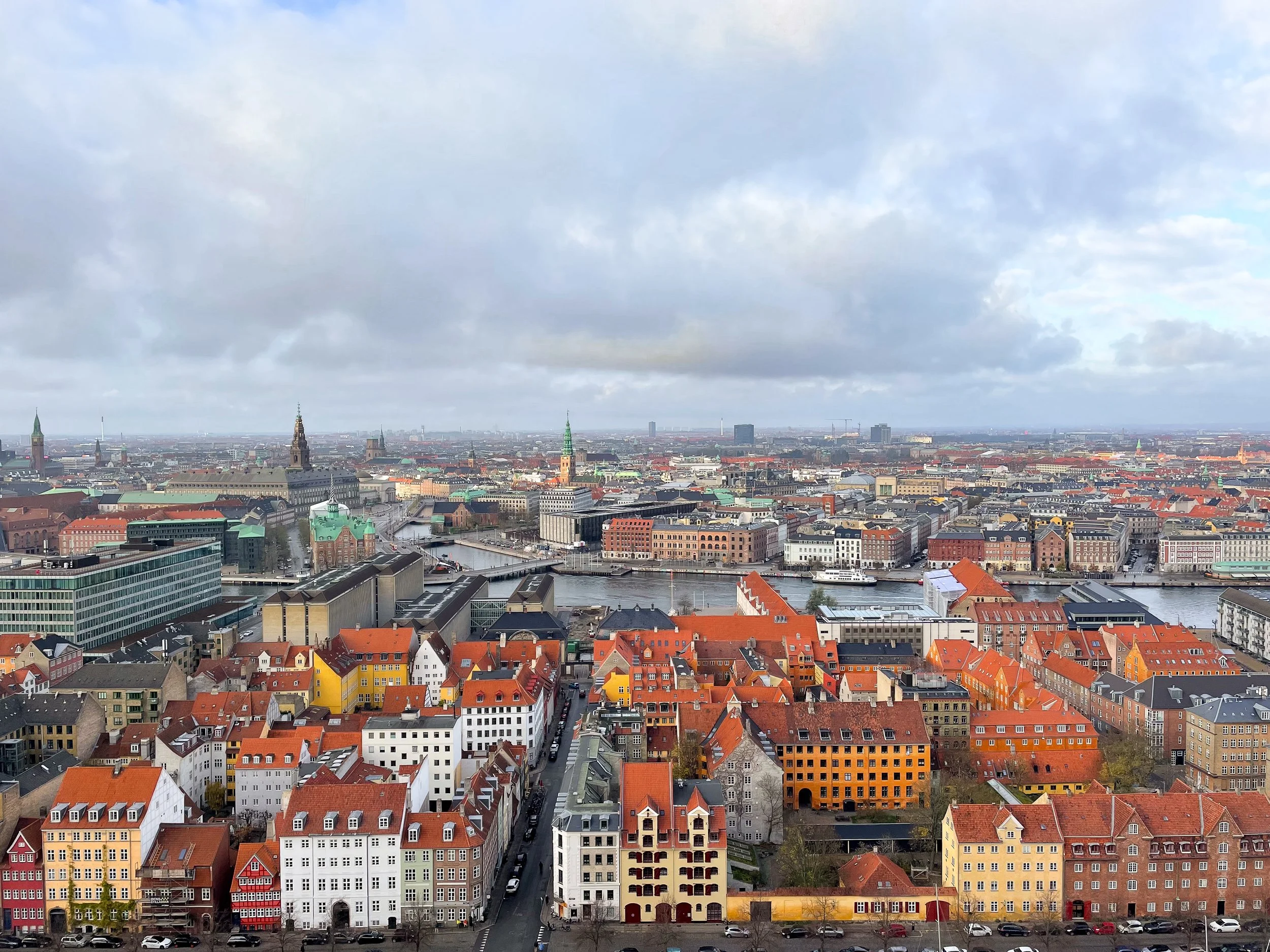
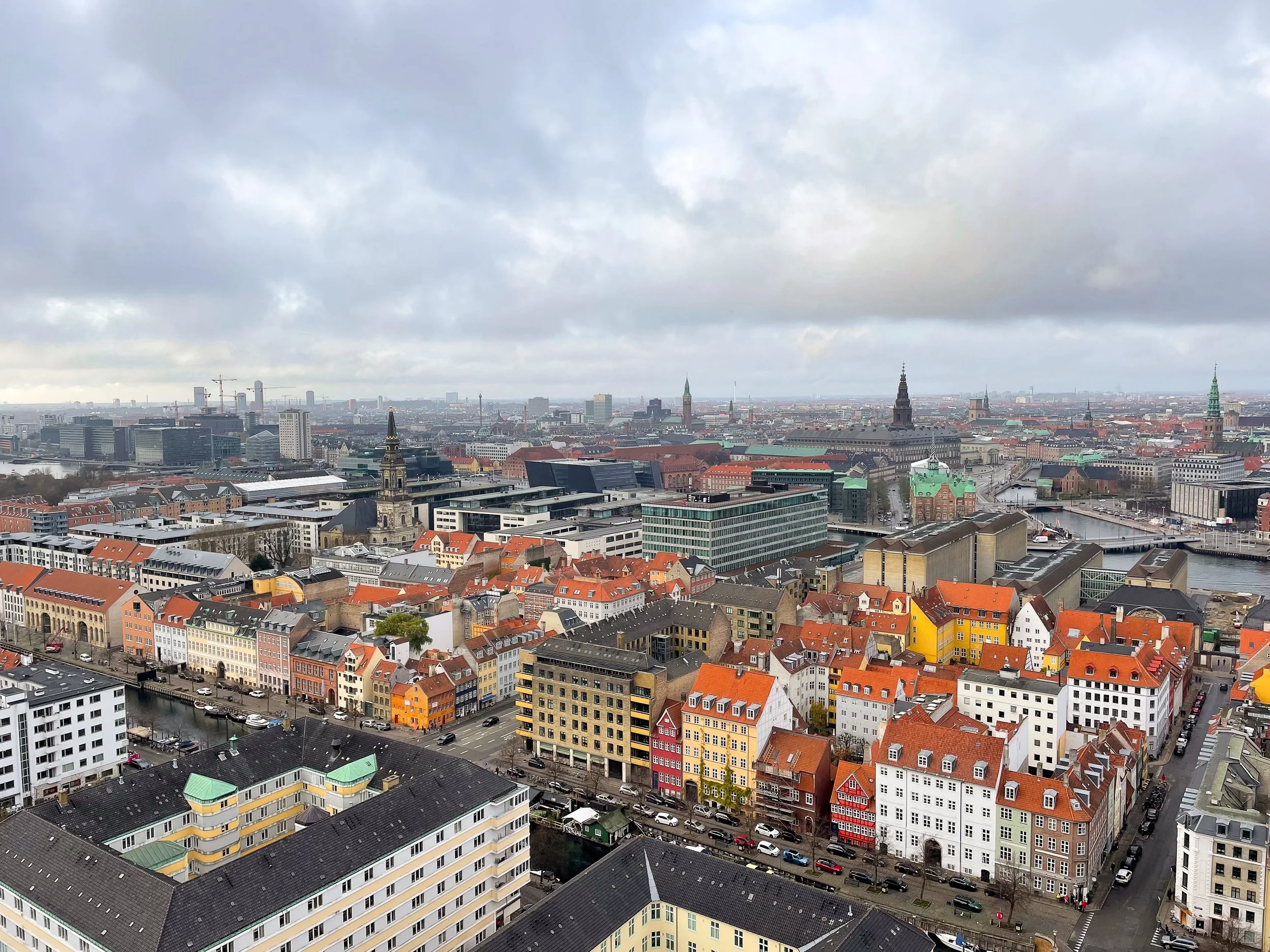
See the Sights
Copenhagen is a beautiful city lined with canals, cobblestone squares, historic buildings, castles, towers, palaces and churches. We toured several sights as we explored the city.
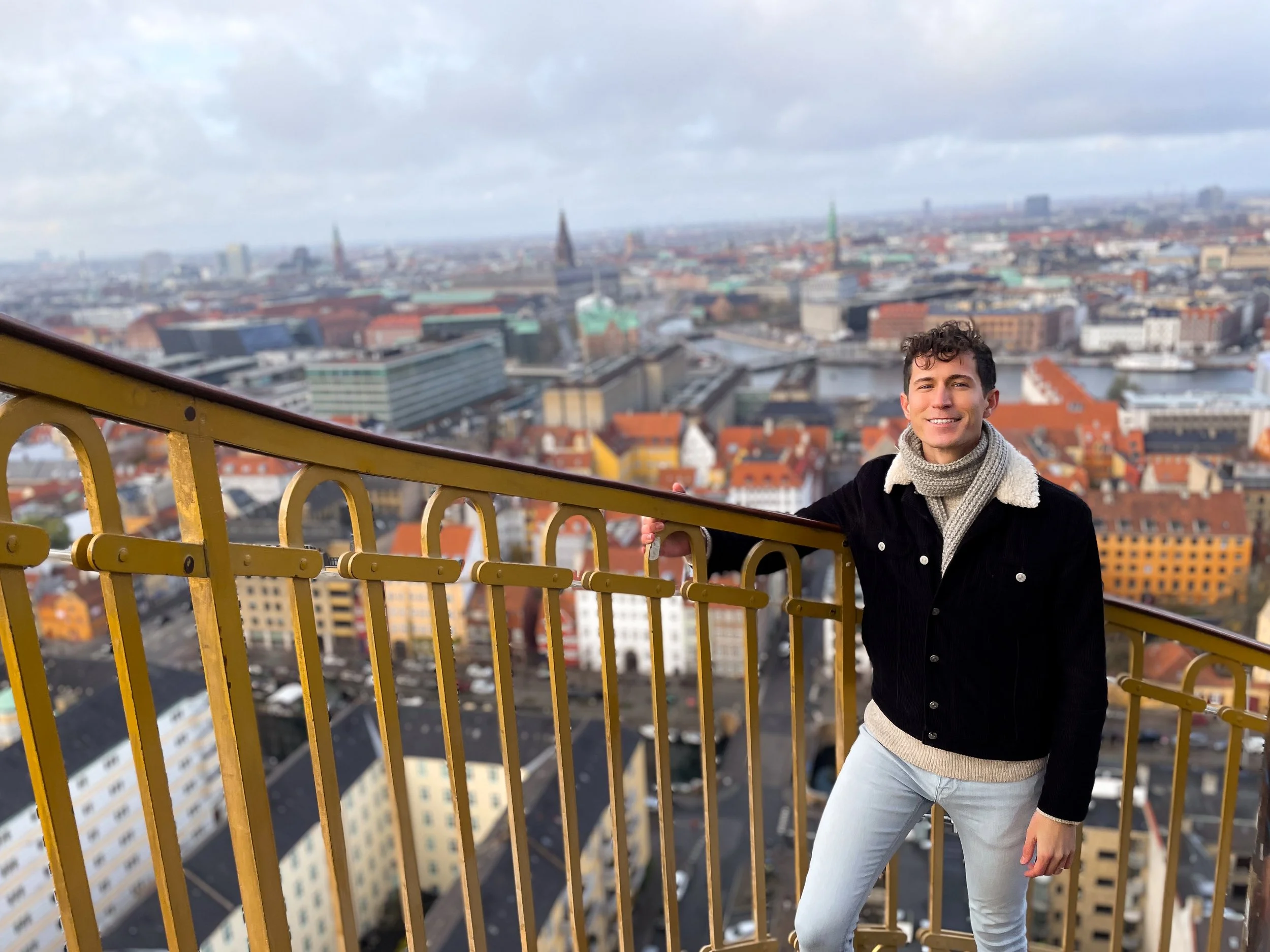
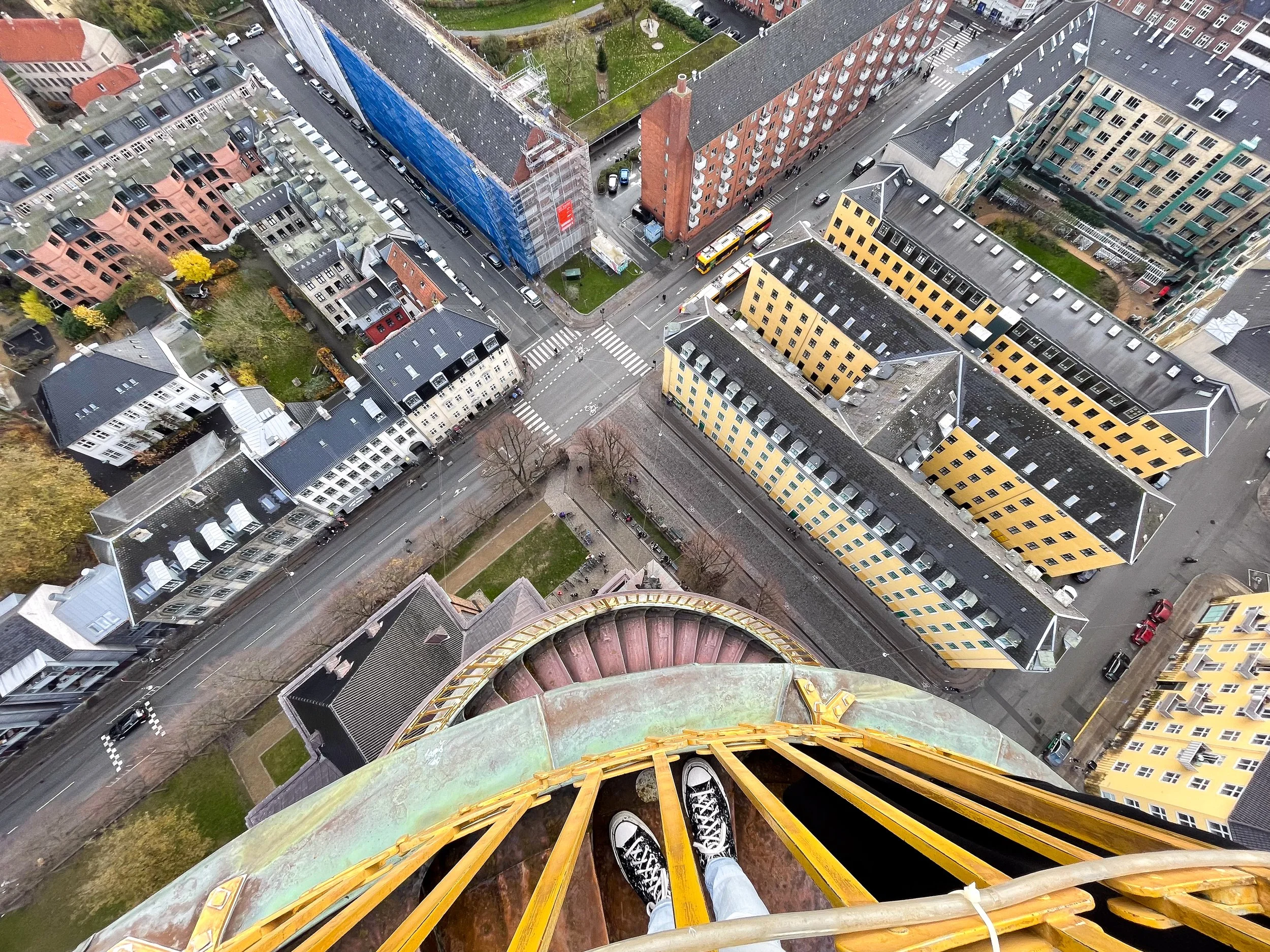
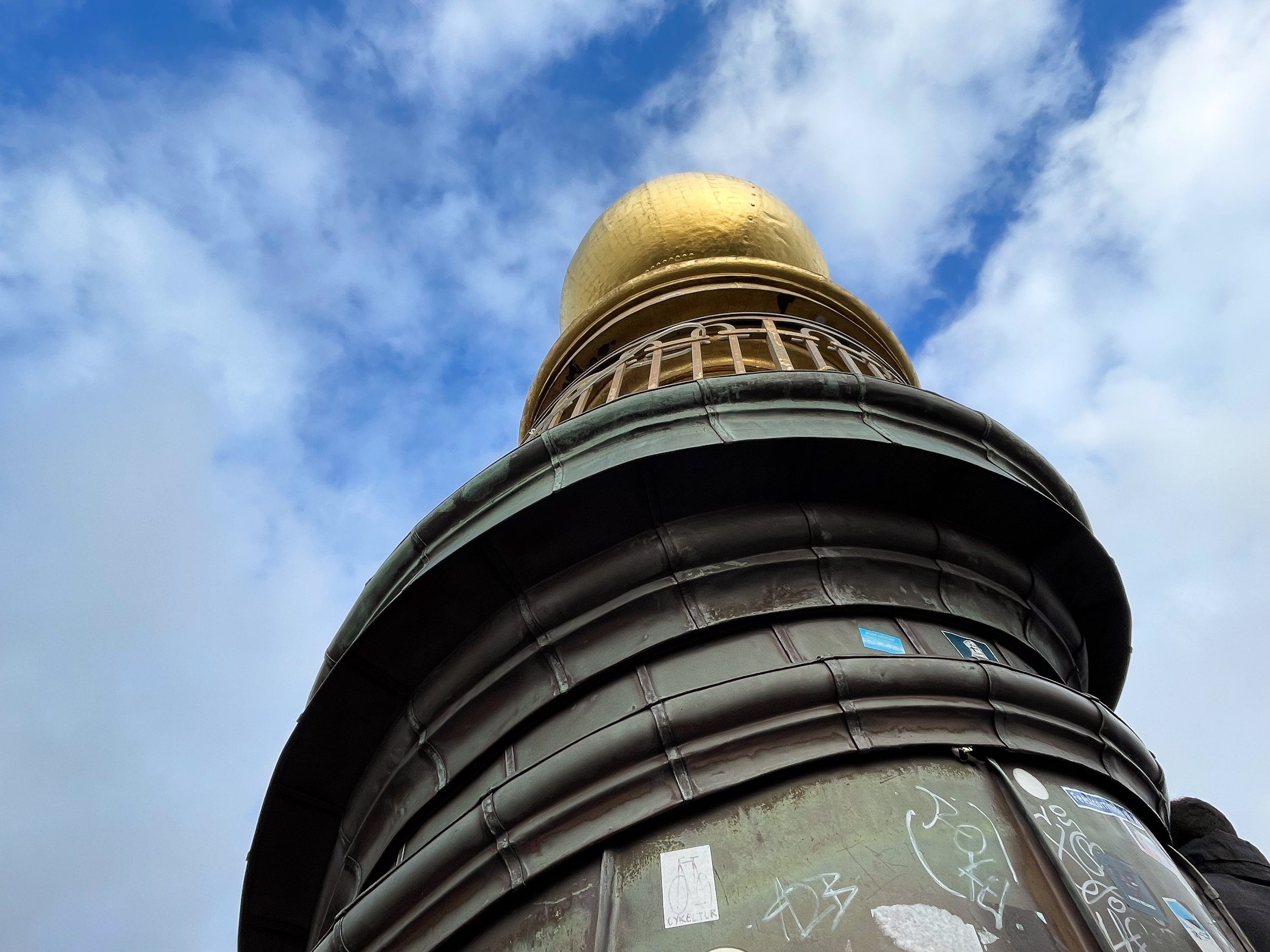
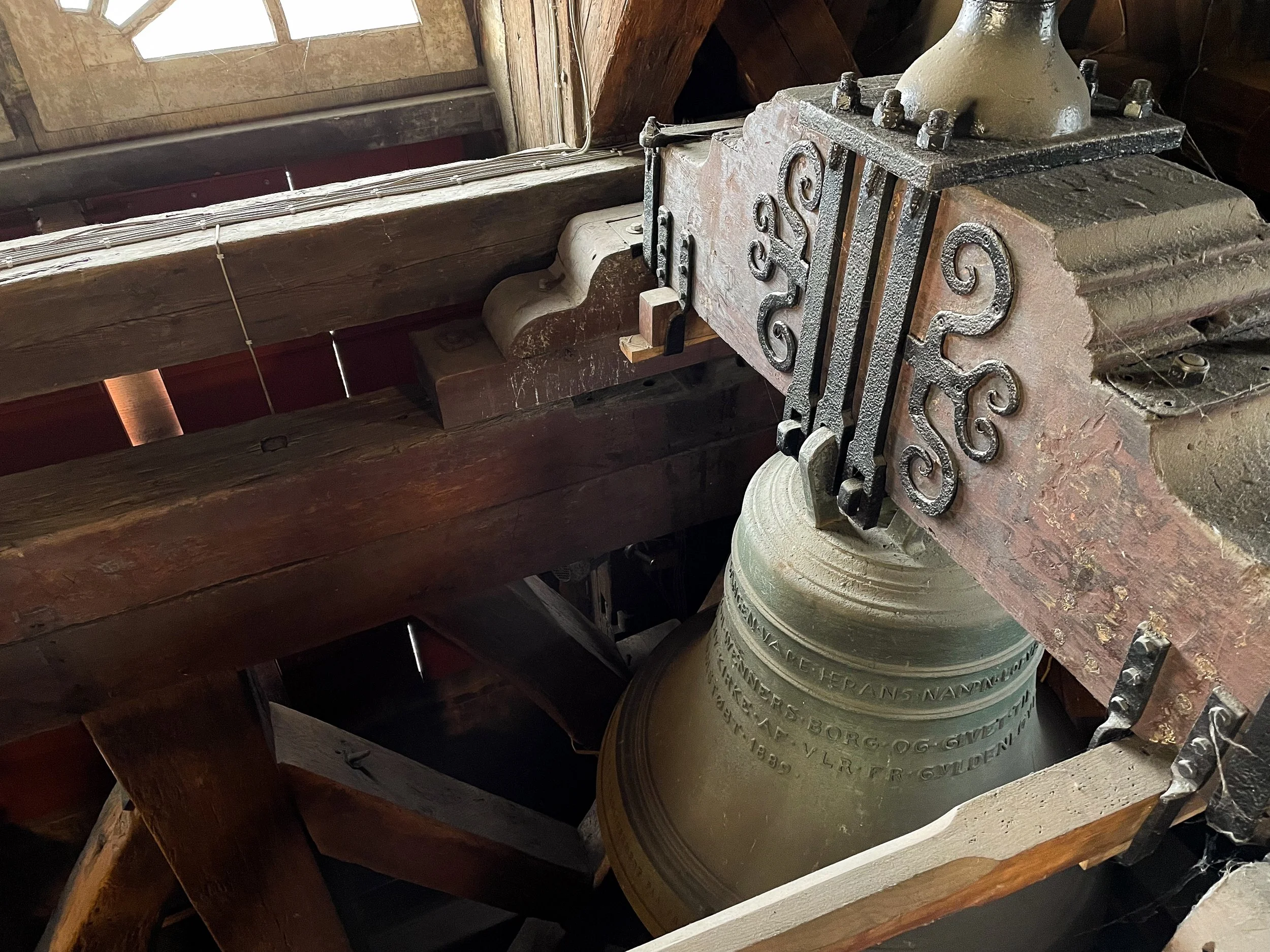
Church of Our Savior Spire. A 17th century church with a tall spiral spire and lookout. The interior and lower portion of the spire zigzags upwards through stairs and narrow passageways within the tower passing church bells and broken statues. The upper portion is located outside of the spire and winds up its exterior via a spiral staircase with the most stunning 360 views of Copenhagen.
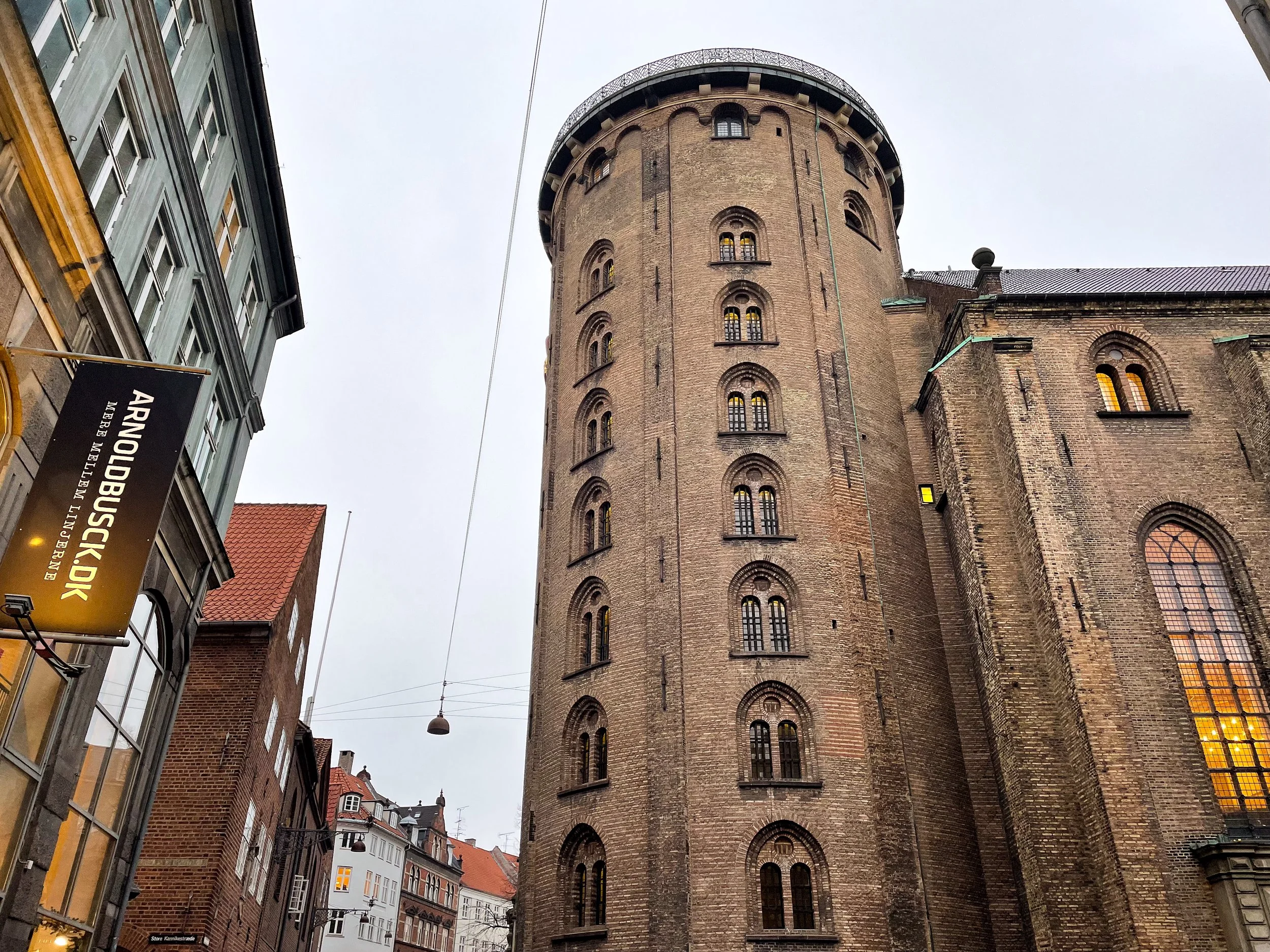
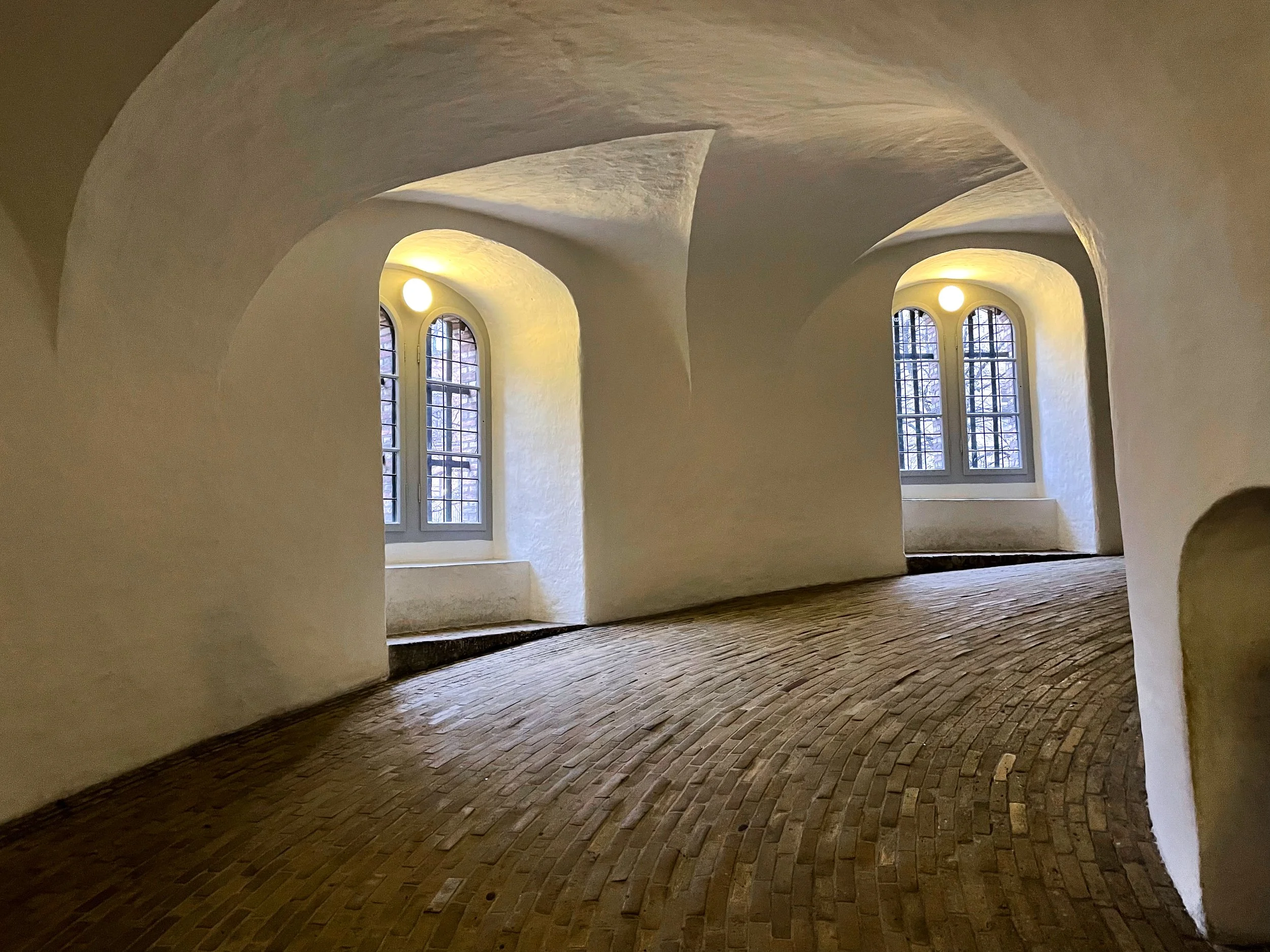
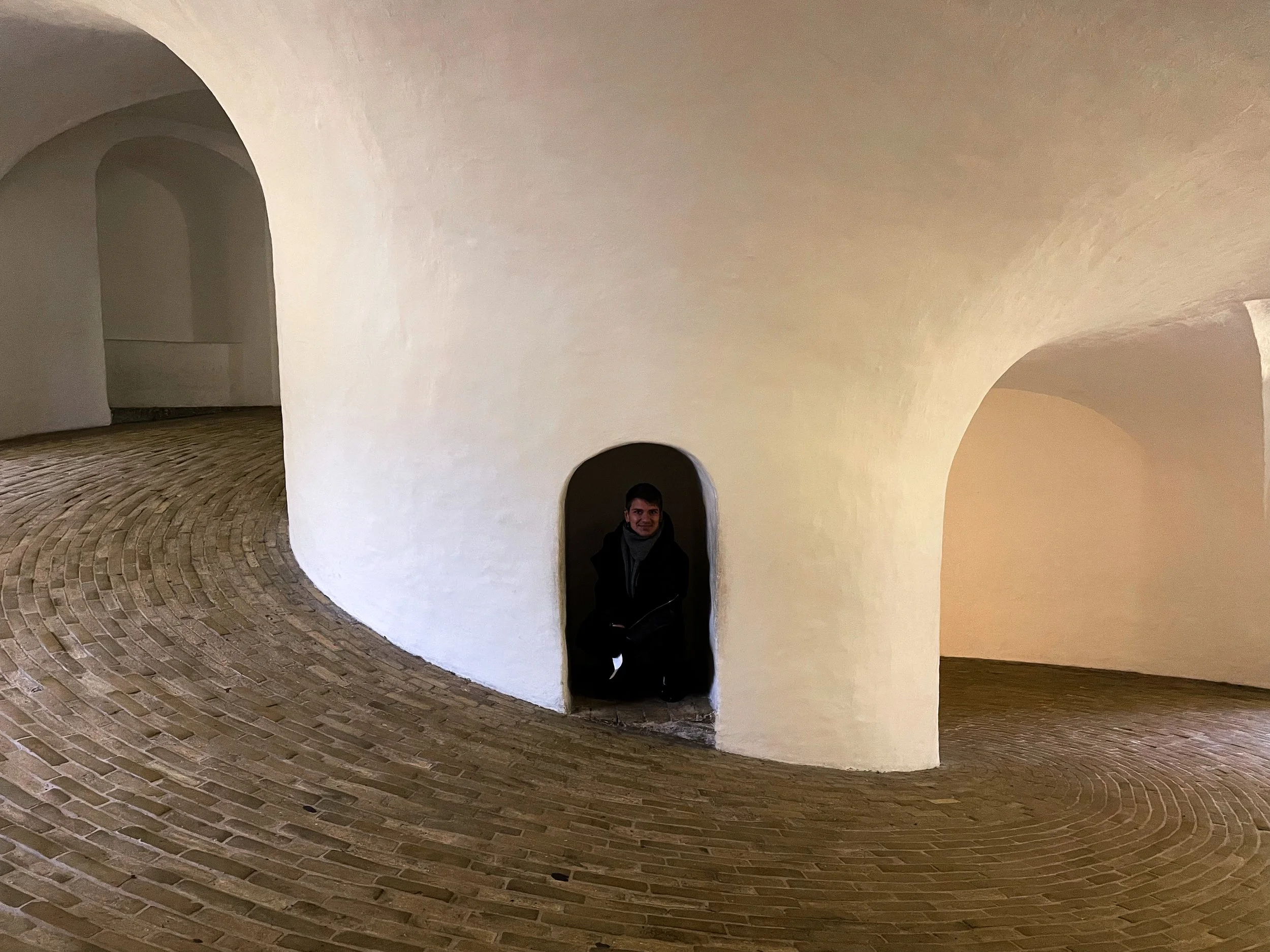
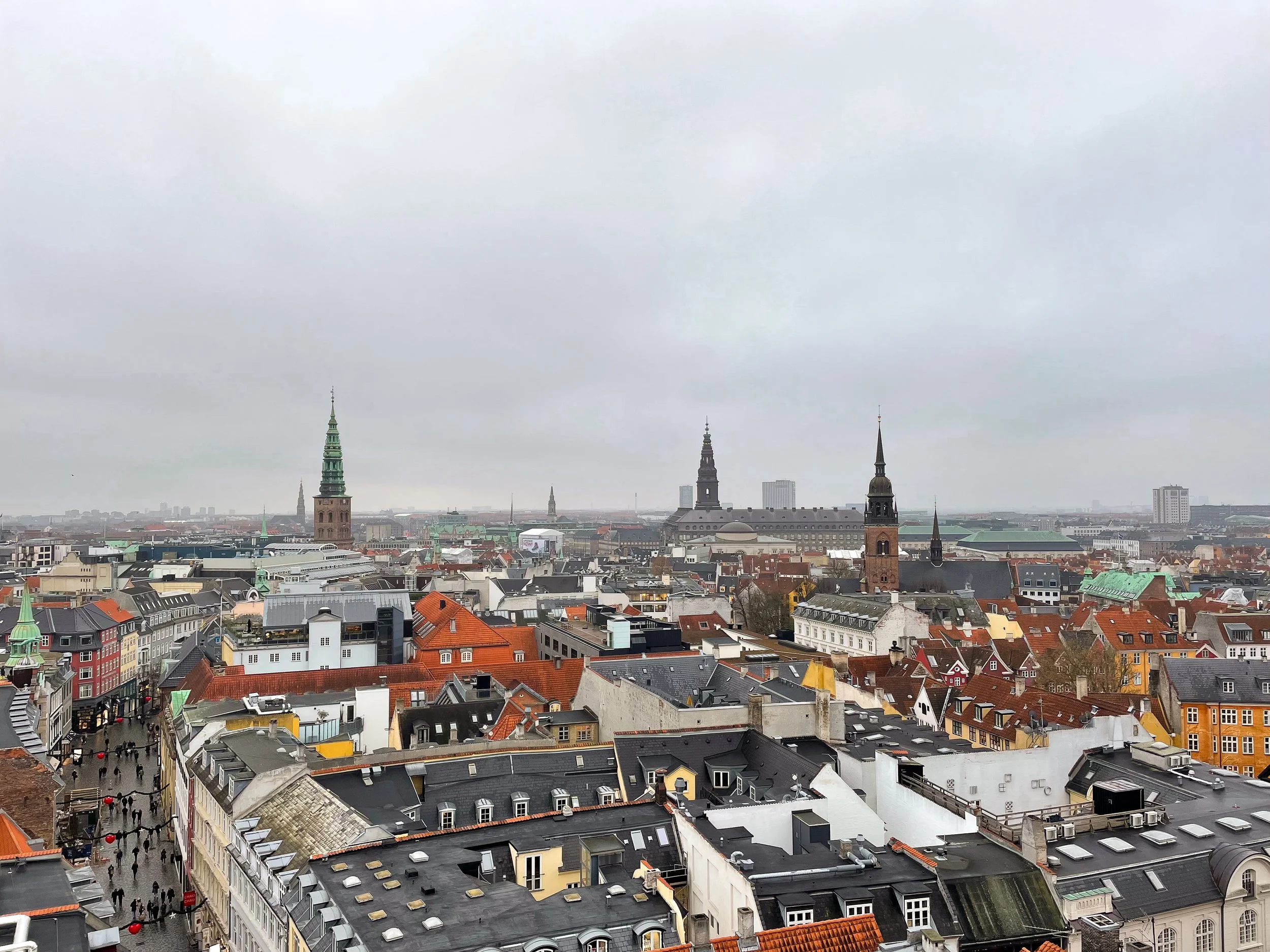
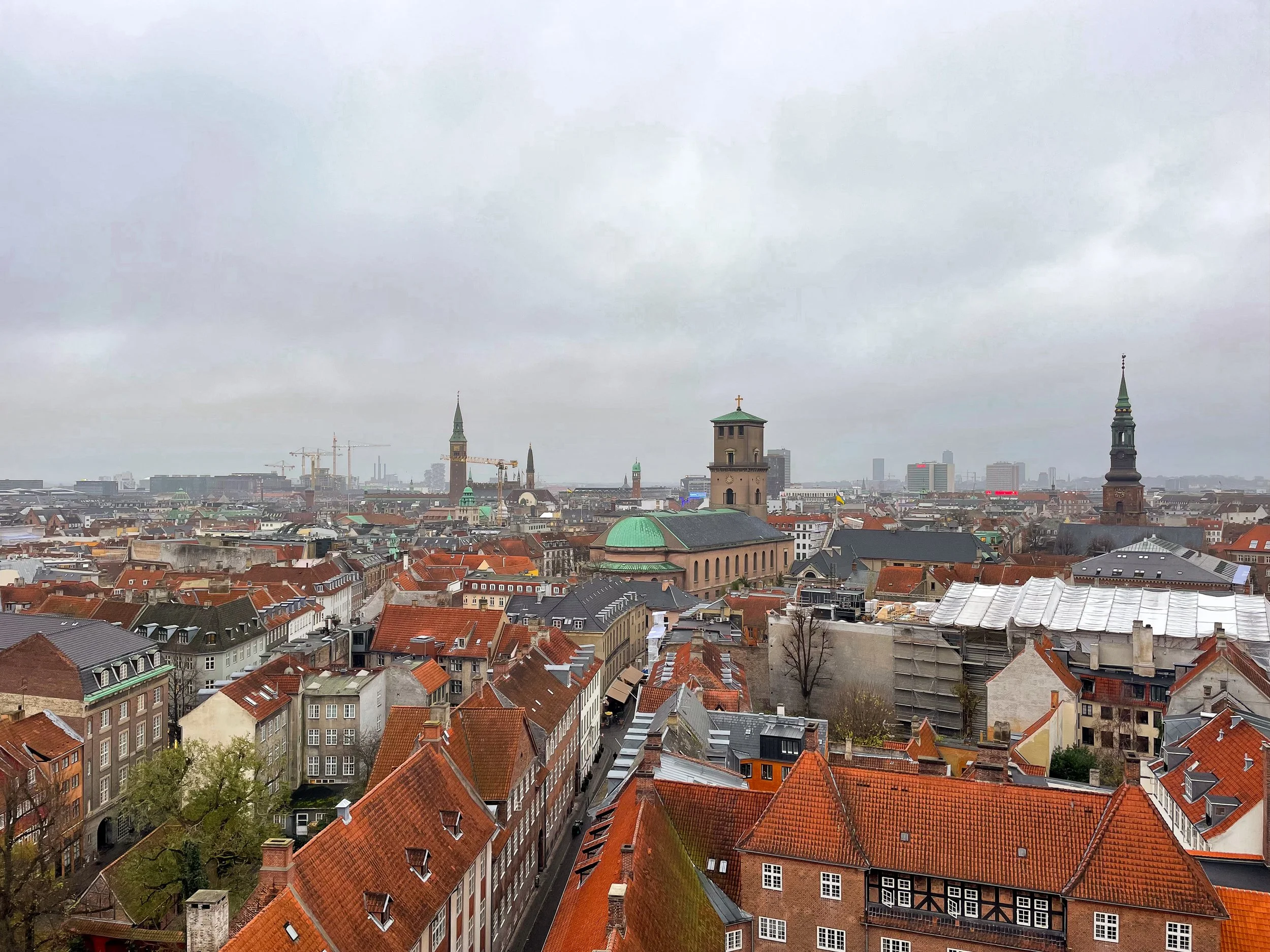
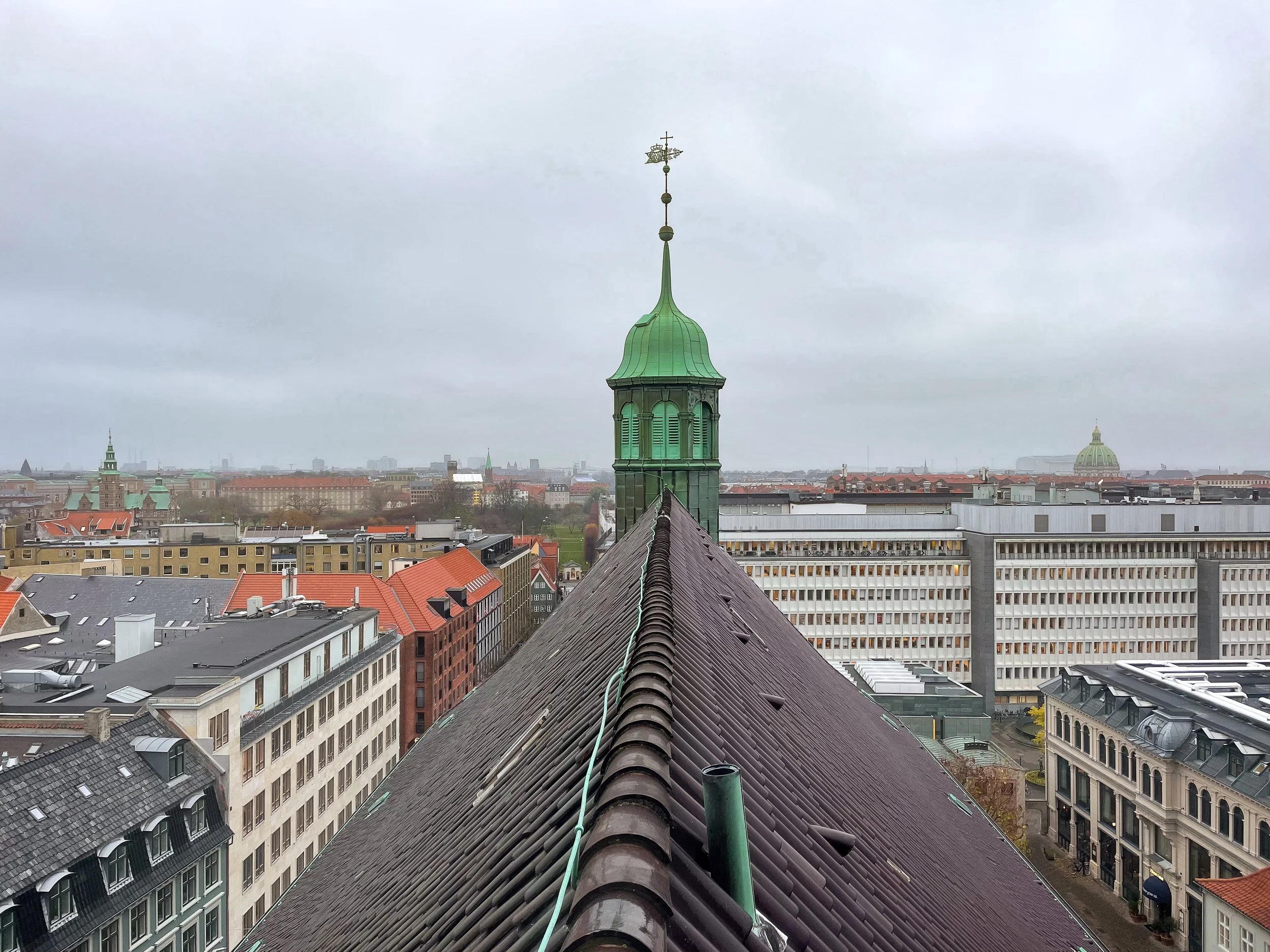
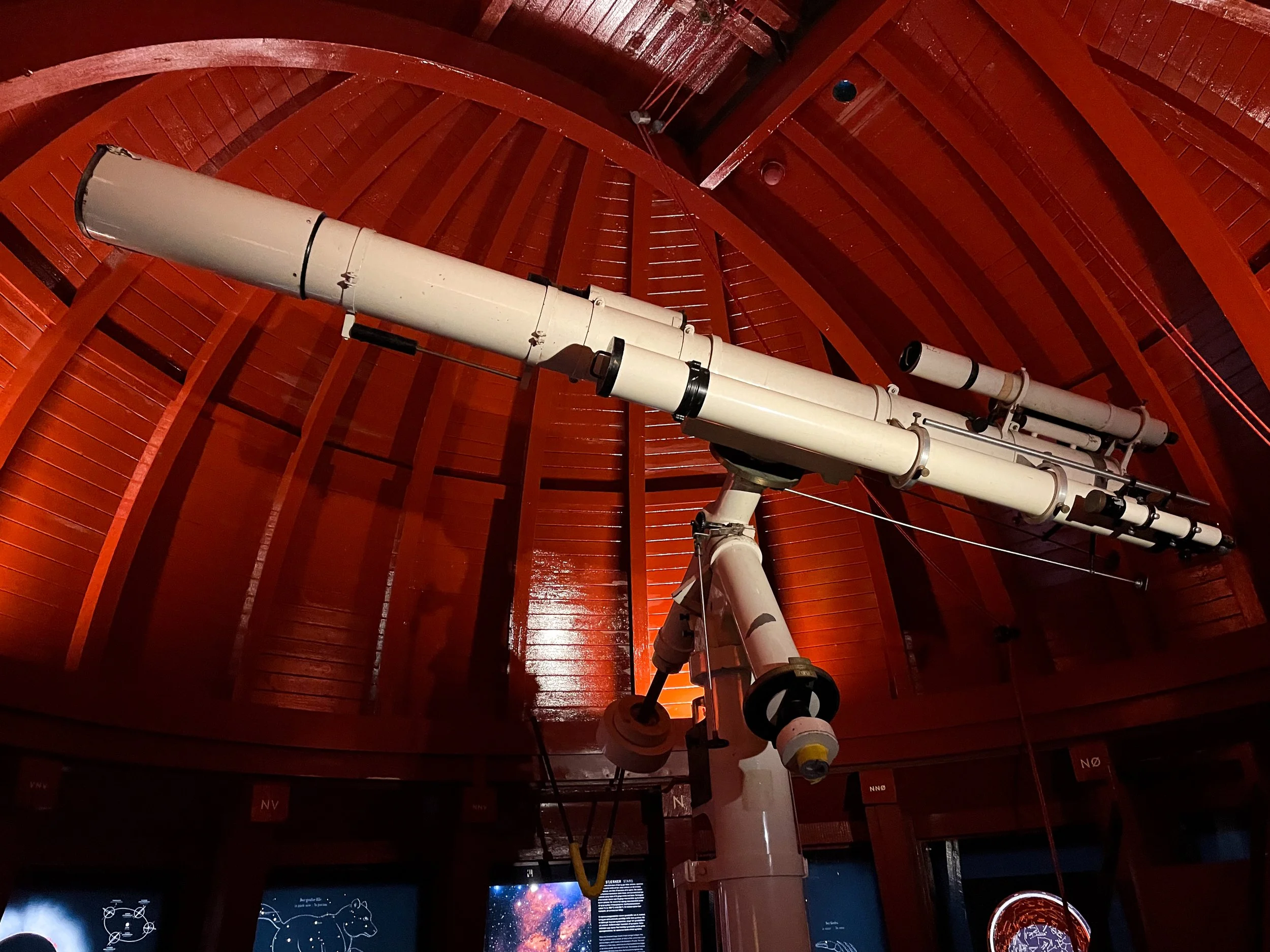
Rundetaarn (The Round Tower). A 16th century tower in the center of Copenhagen with rooftop views of the city. It was built for use as an observatory and still functions as one today. The wide spiral ramp leading to its top was designed so that horses and carriages could climb to the top.
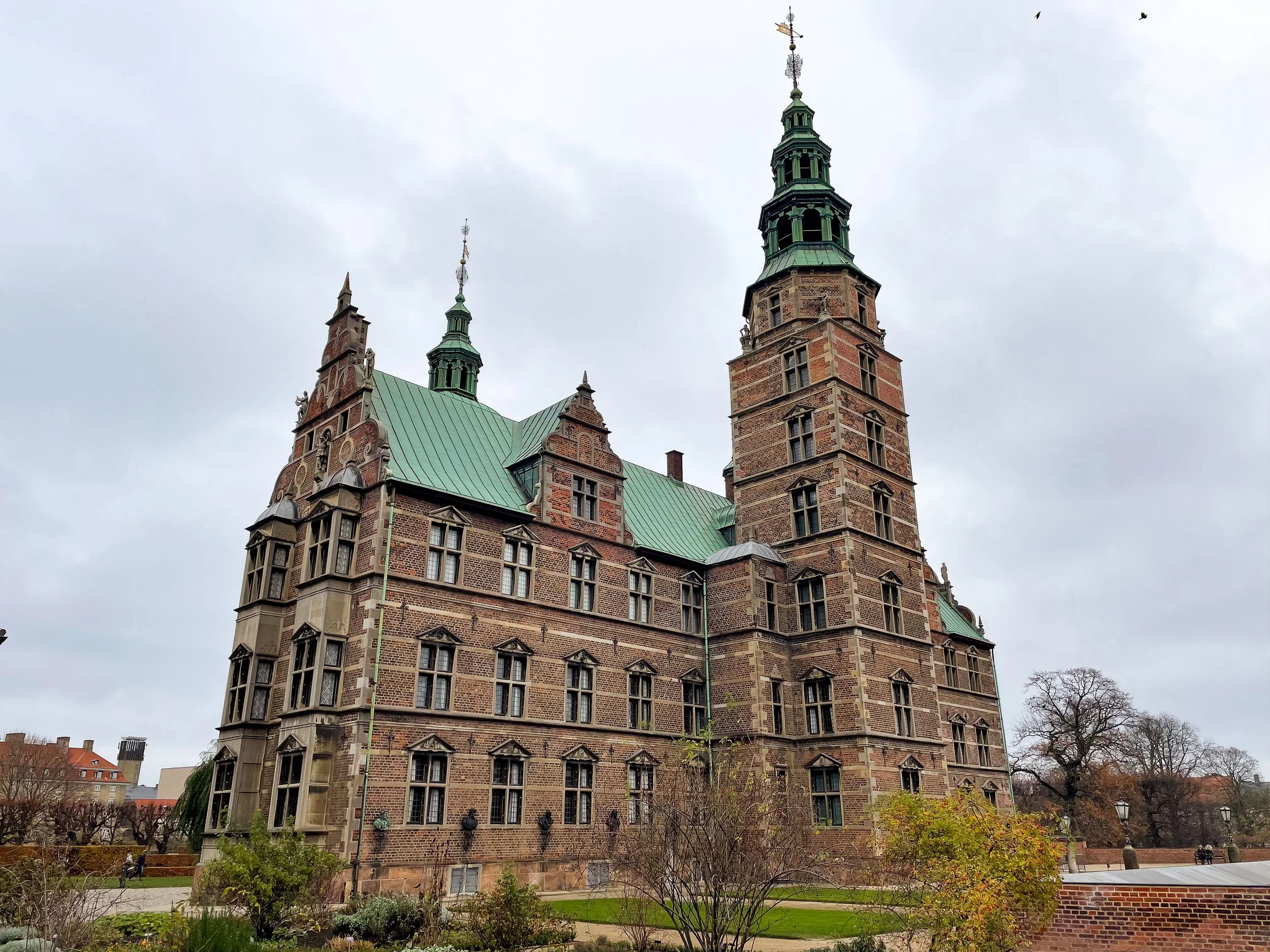
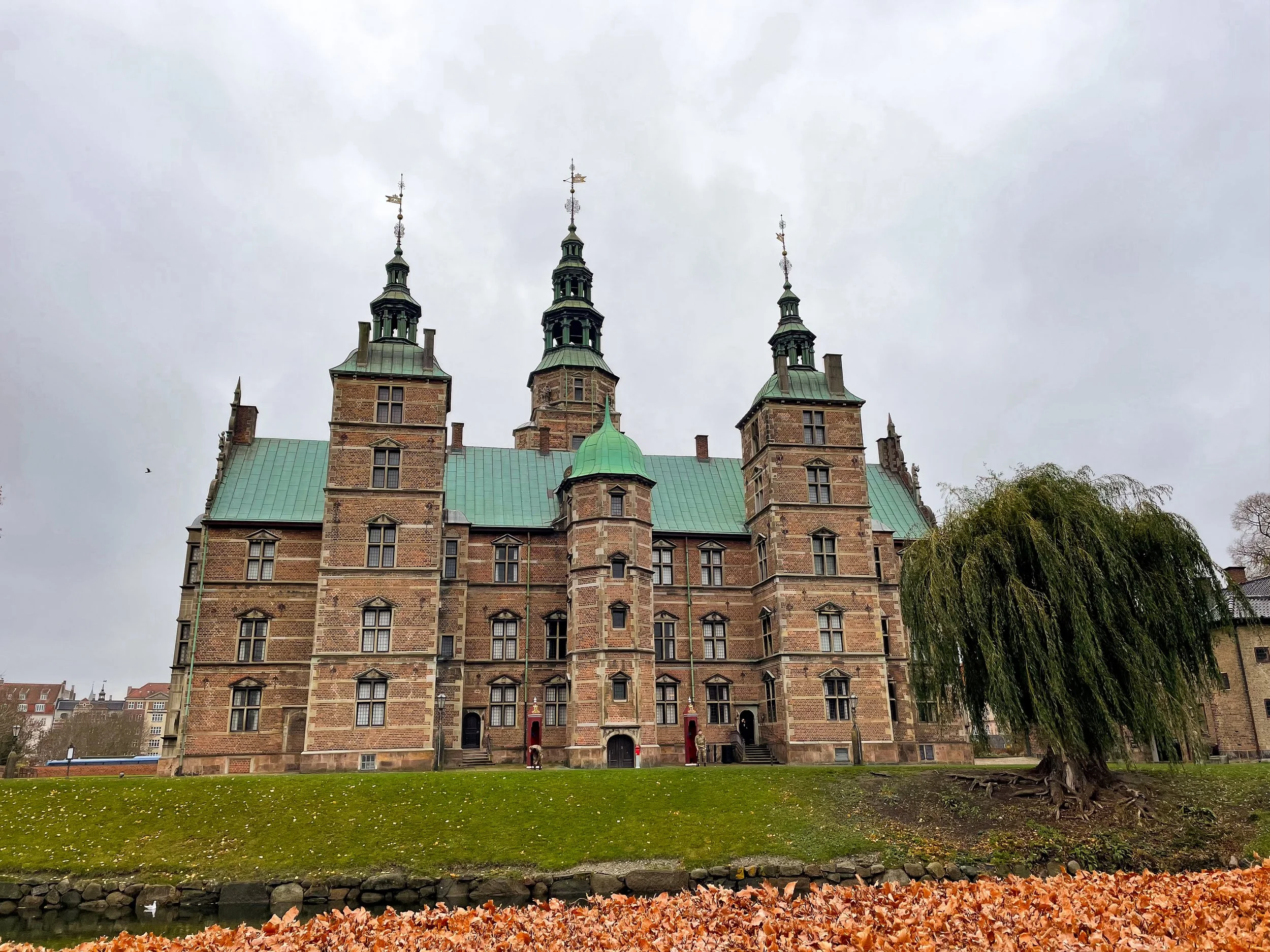
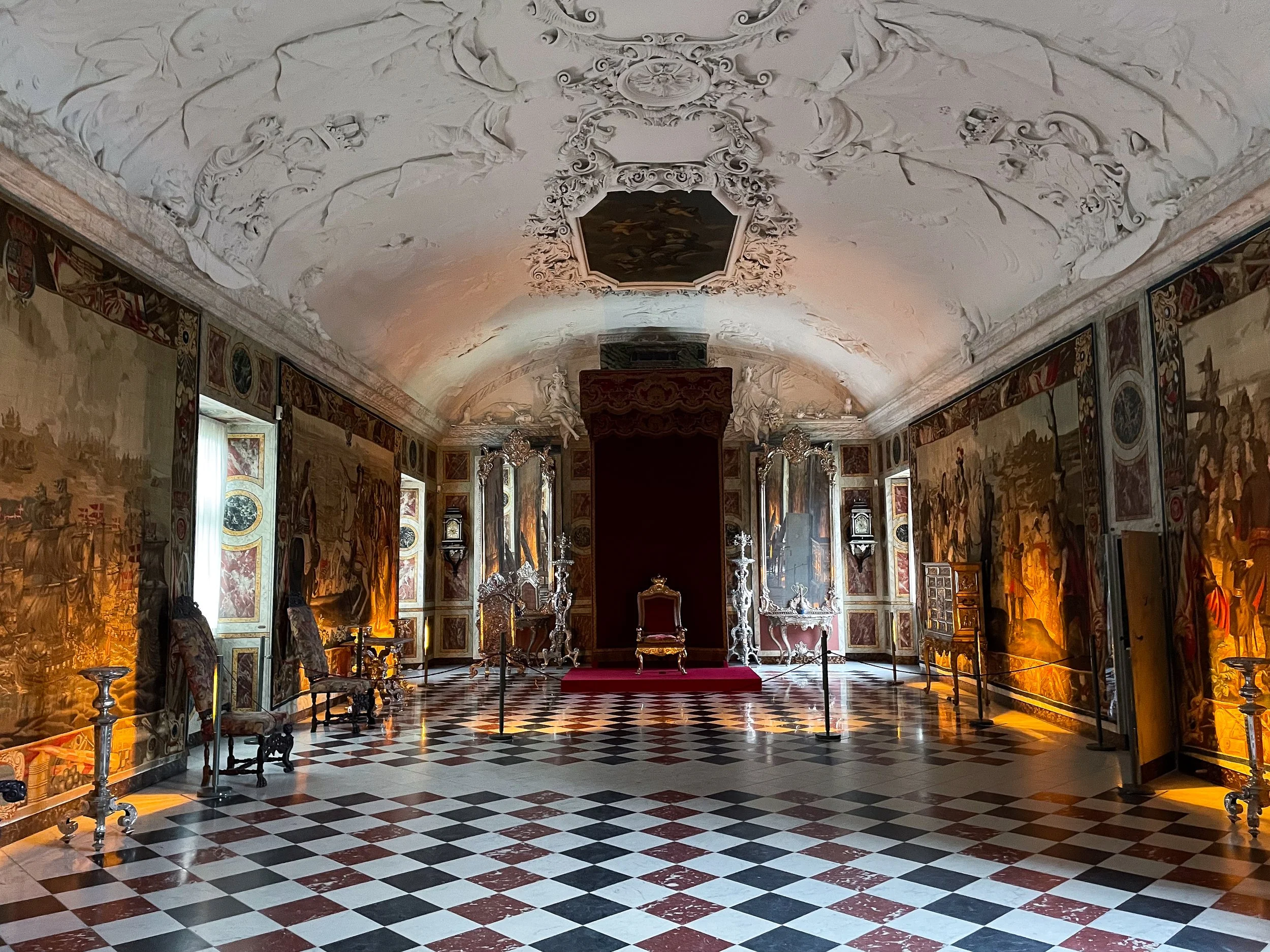
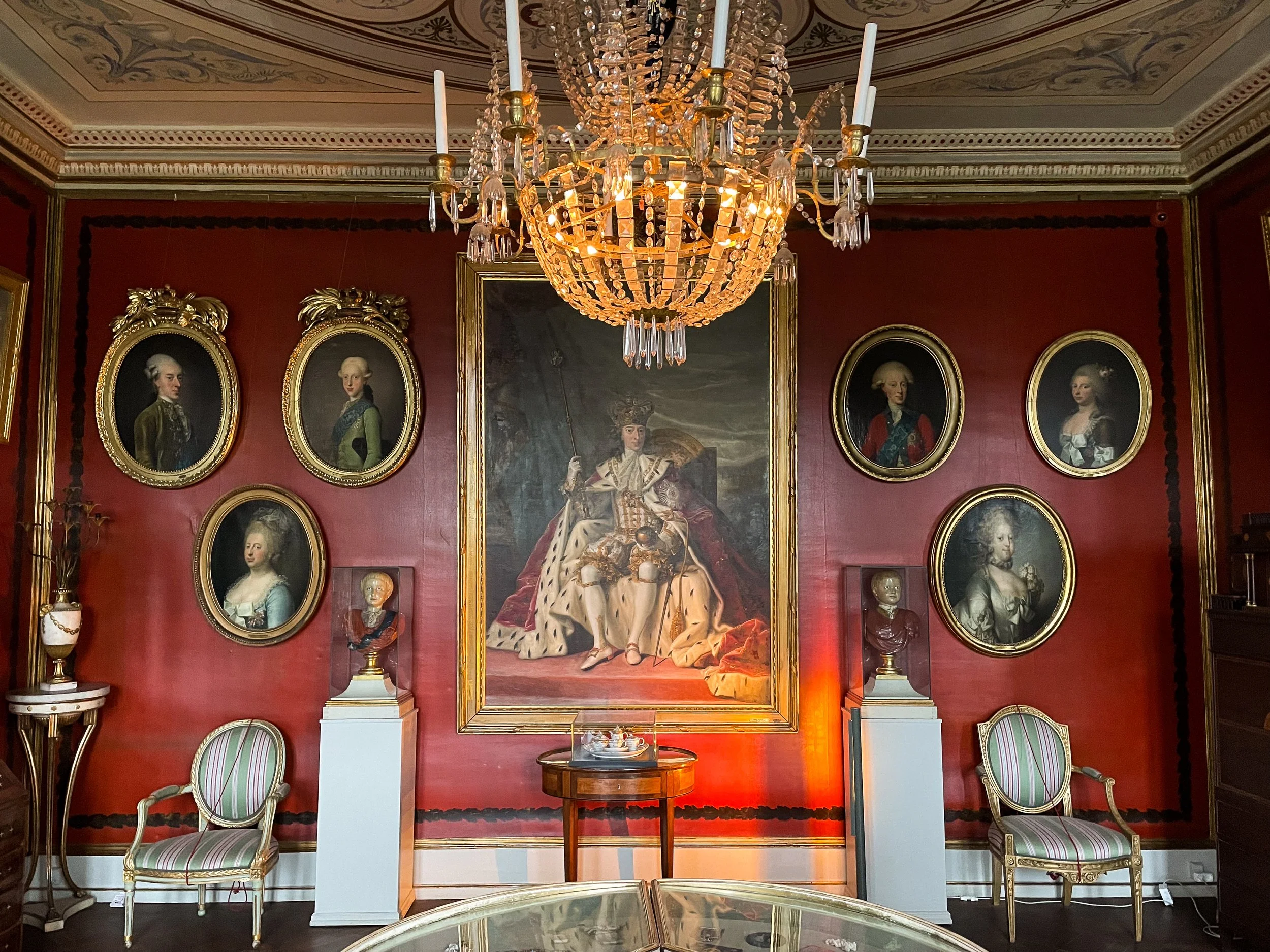
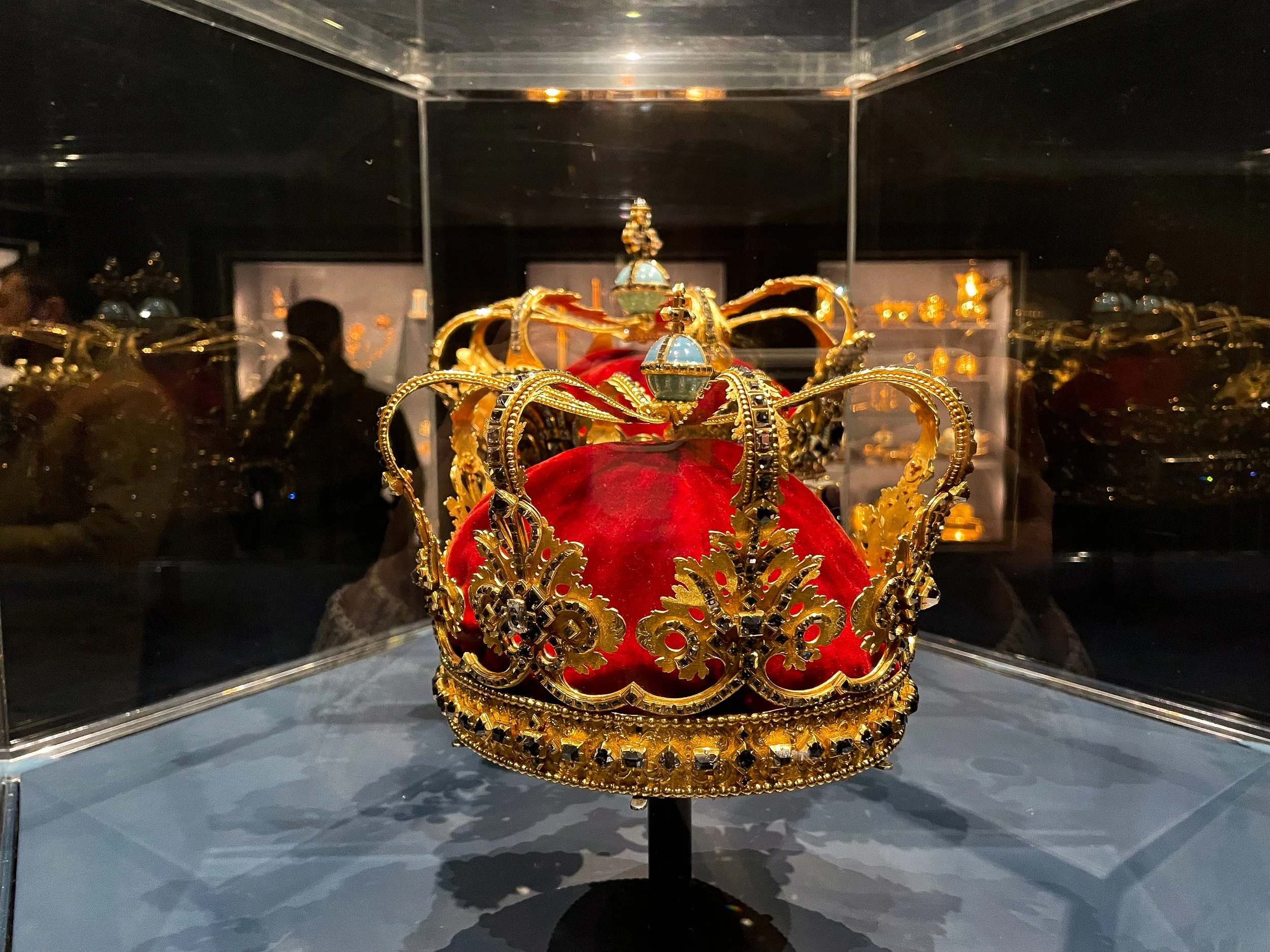
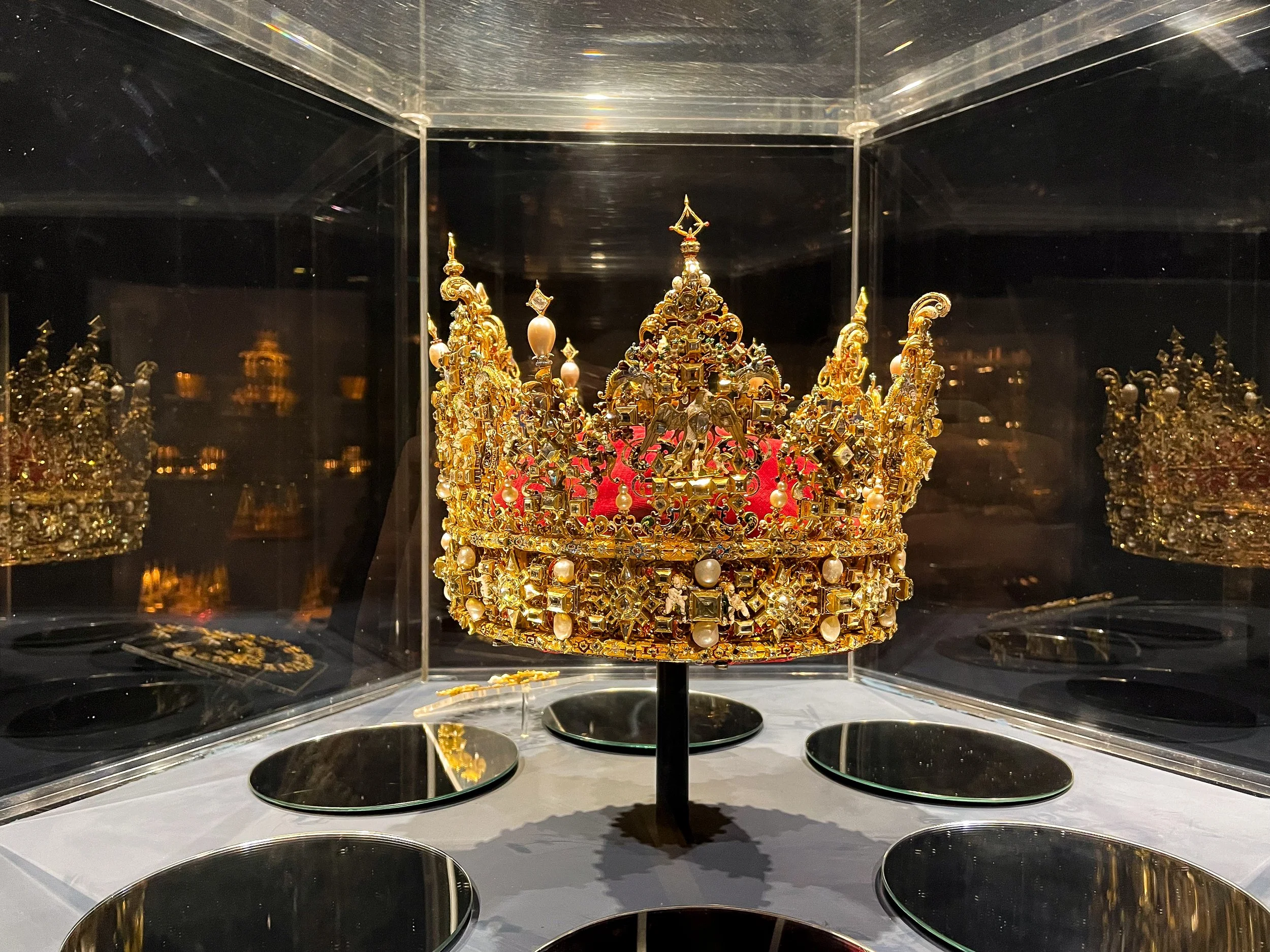
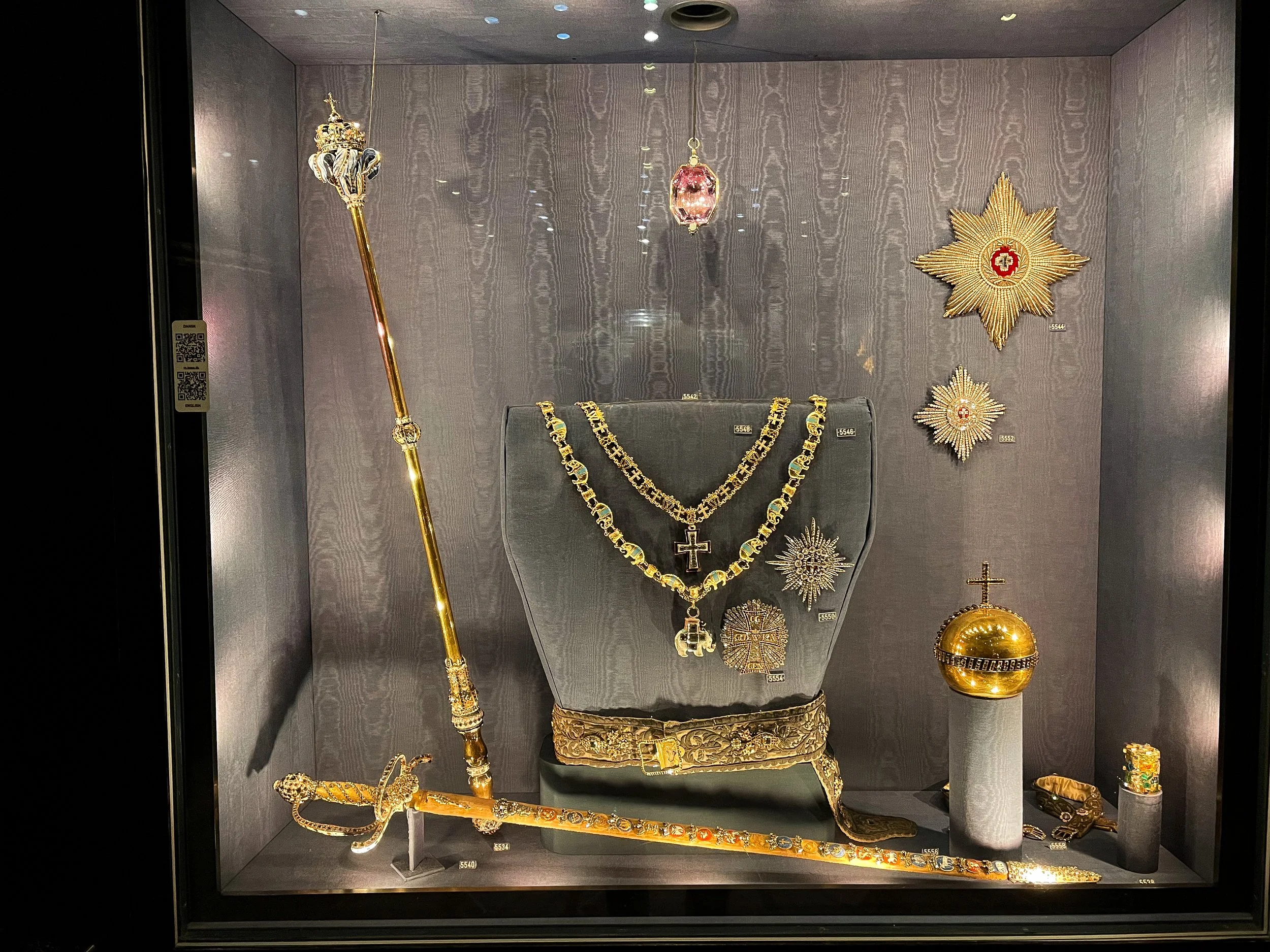
Rosenborg Castle. A 15th century castle previously home to Denmark’s monarchy. The castle is now a museum with preserved lavish rooms, hidden chambers, portraits of the monarchs, antique furniture, tapestries and artifacts. It’s home to the Crown Jewels watched over by royal guards. The Crown Jewels include multiple jewel encrusted gold crowns, elaborate sets of jewelry, the coronation scepter and a large pink diamond. The estate is surrounded by the King’s Garden with sculptures, paths and fountains.
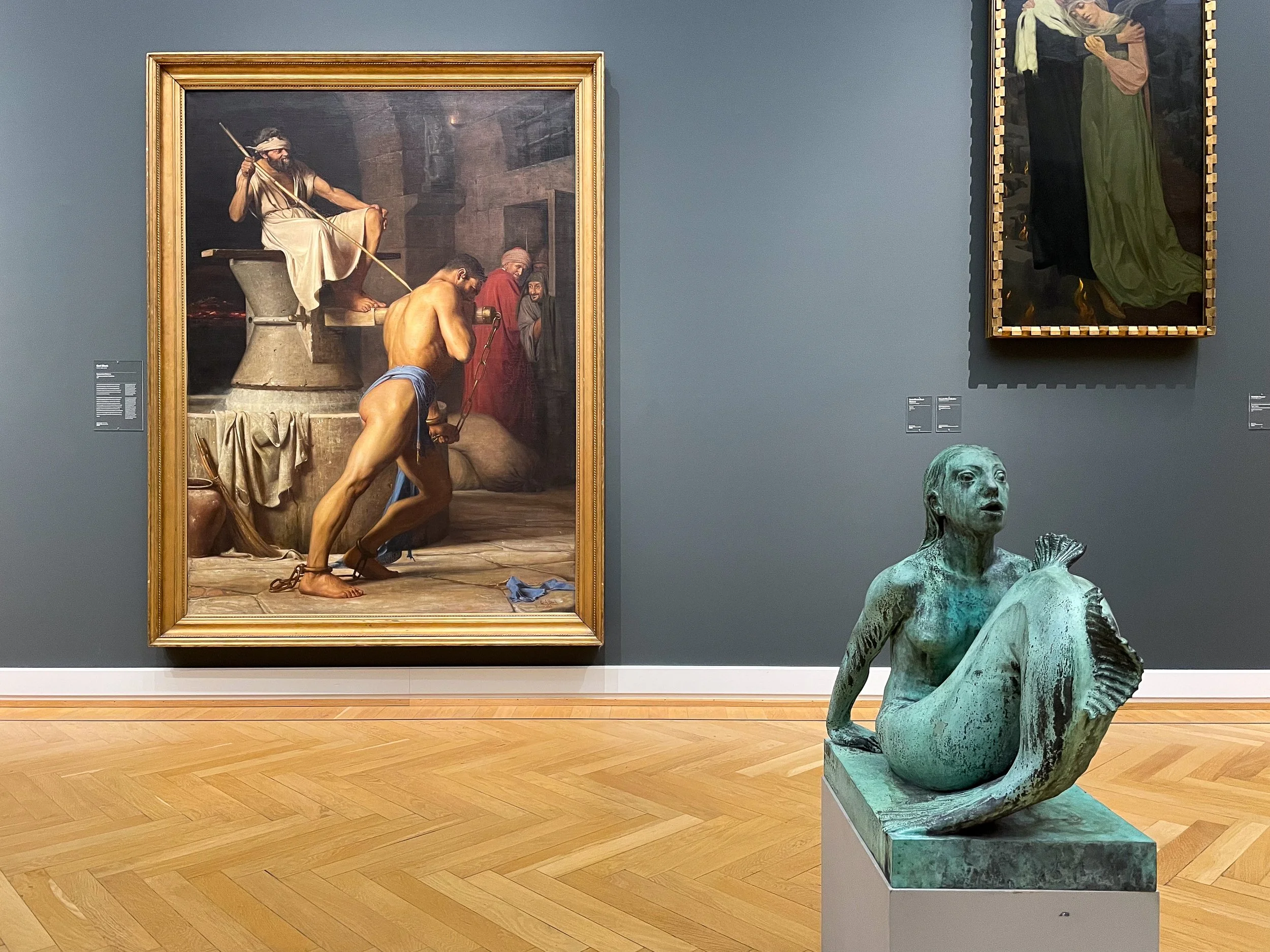
Kunst Museum. Denmark’s largest art museum with Danish and European art ranging from the 15th century to present day. We visited when Matisse’s “Red Room” was on display with several other pieces depicted in it for the first time since he painted the work.
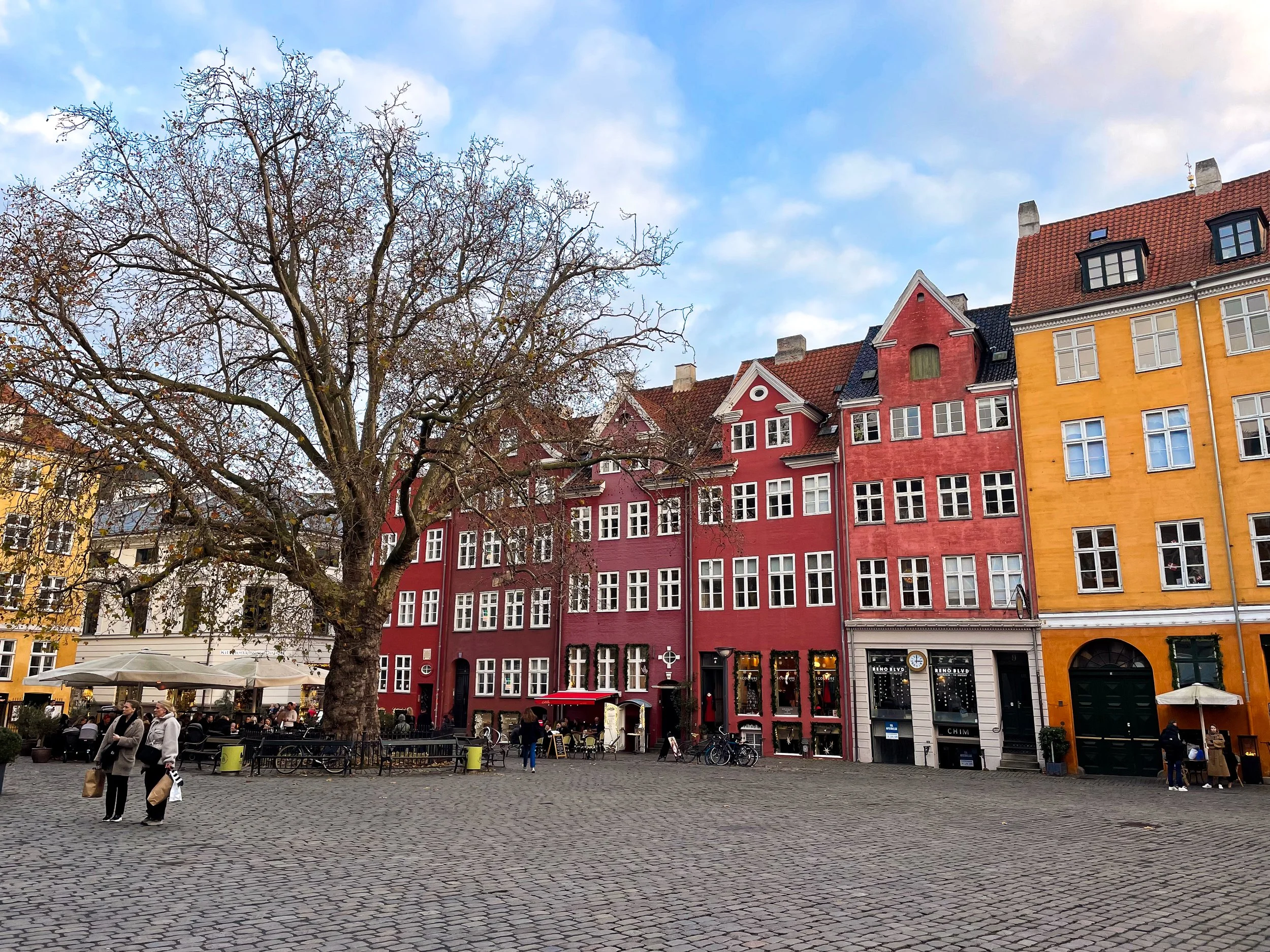
Gråbrødretorv Square. A cobblestone square with colorful historic buildings, restaurants that spill out into the square and cocktail bars including Strøm Bar and Peder Oxe’s Kaelder. It was one of our favorite places to visit and felt like a hidden gem in the city center.
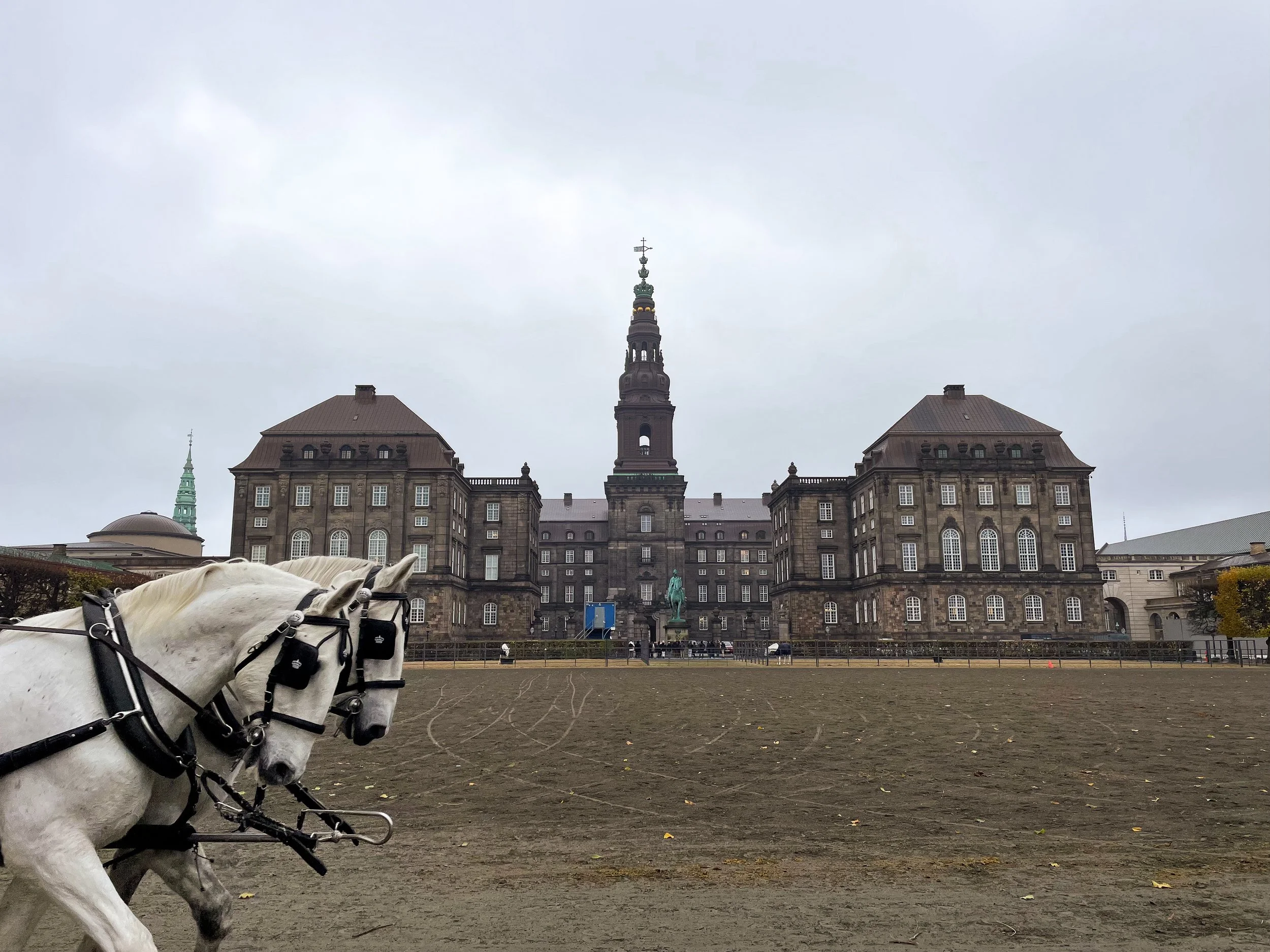
Christiansborg Palace. The seat of the Danish prime minister, supreme court and parliament. It has a tall tower with views of the city and equestrian lawn.
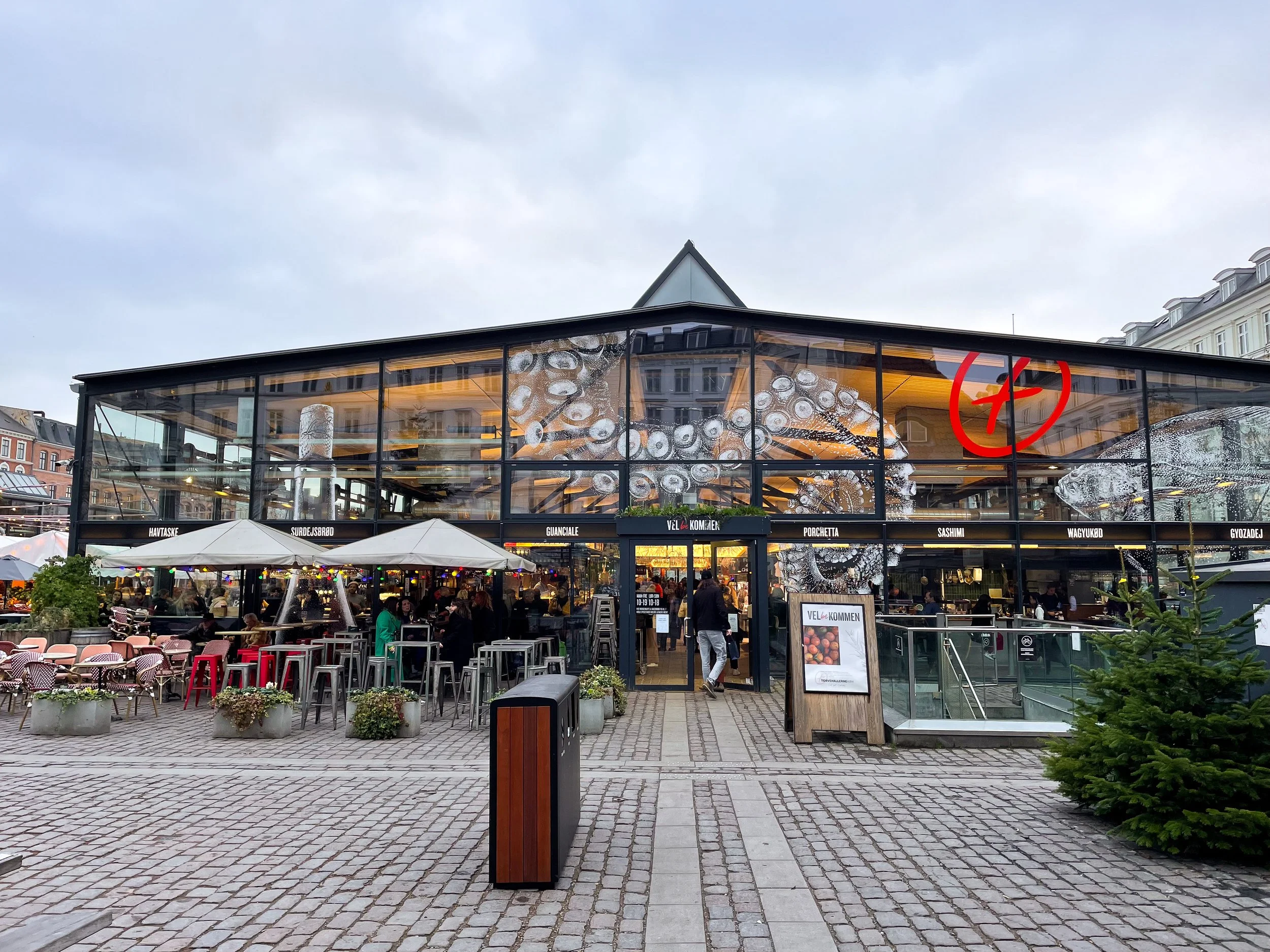
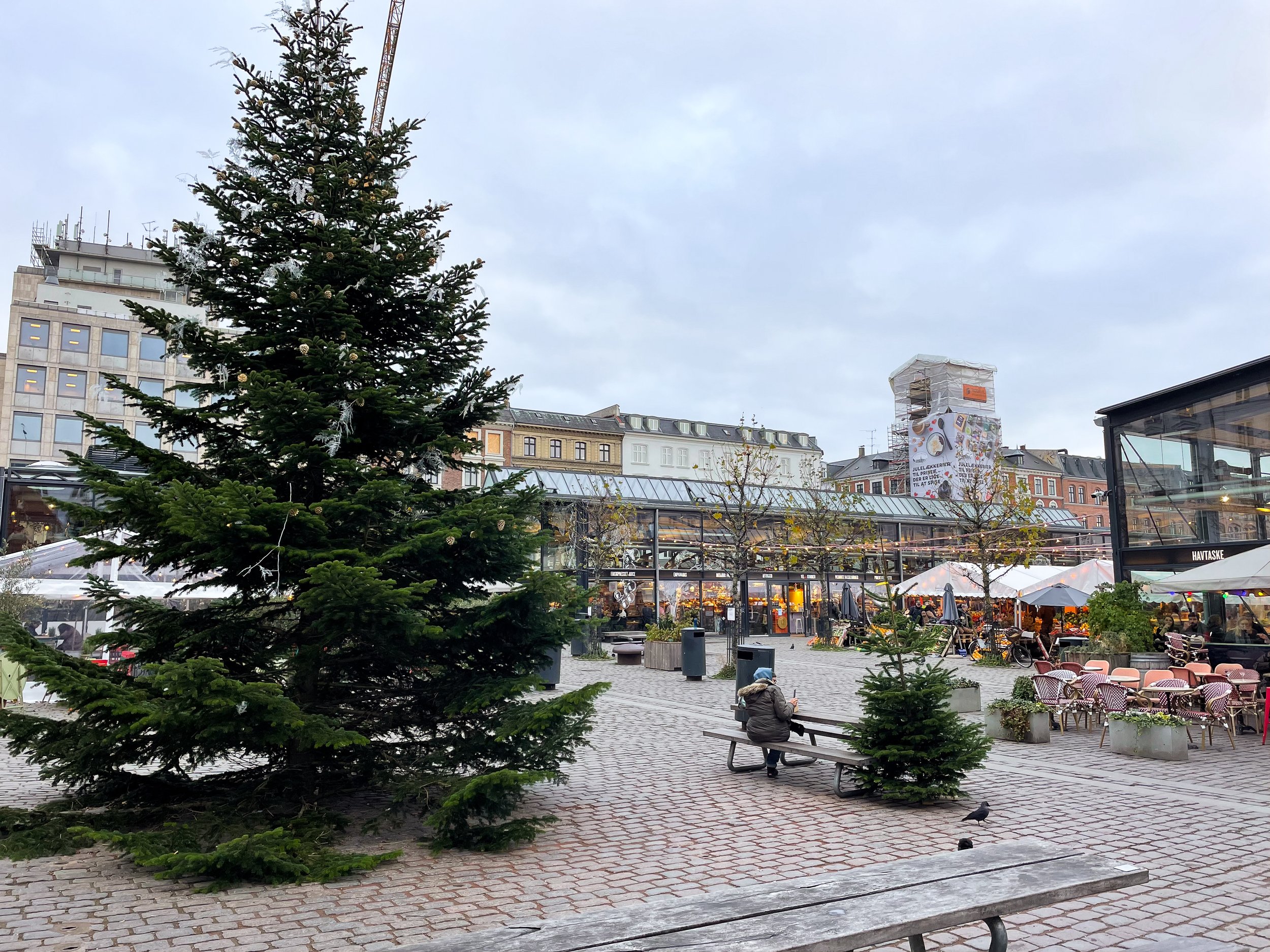
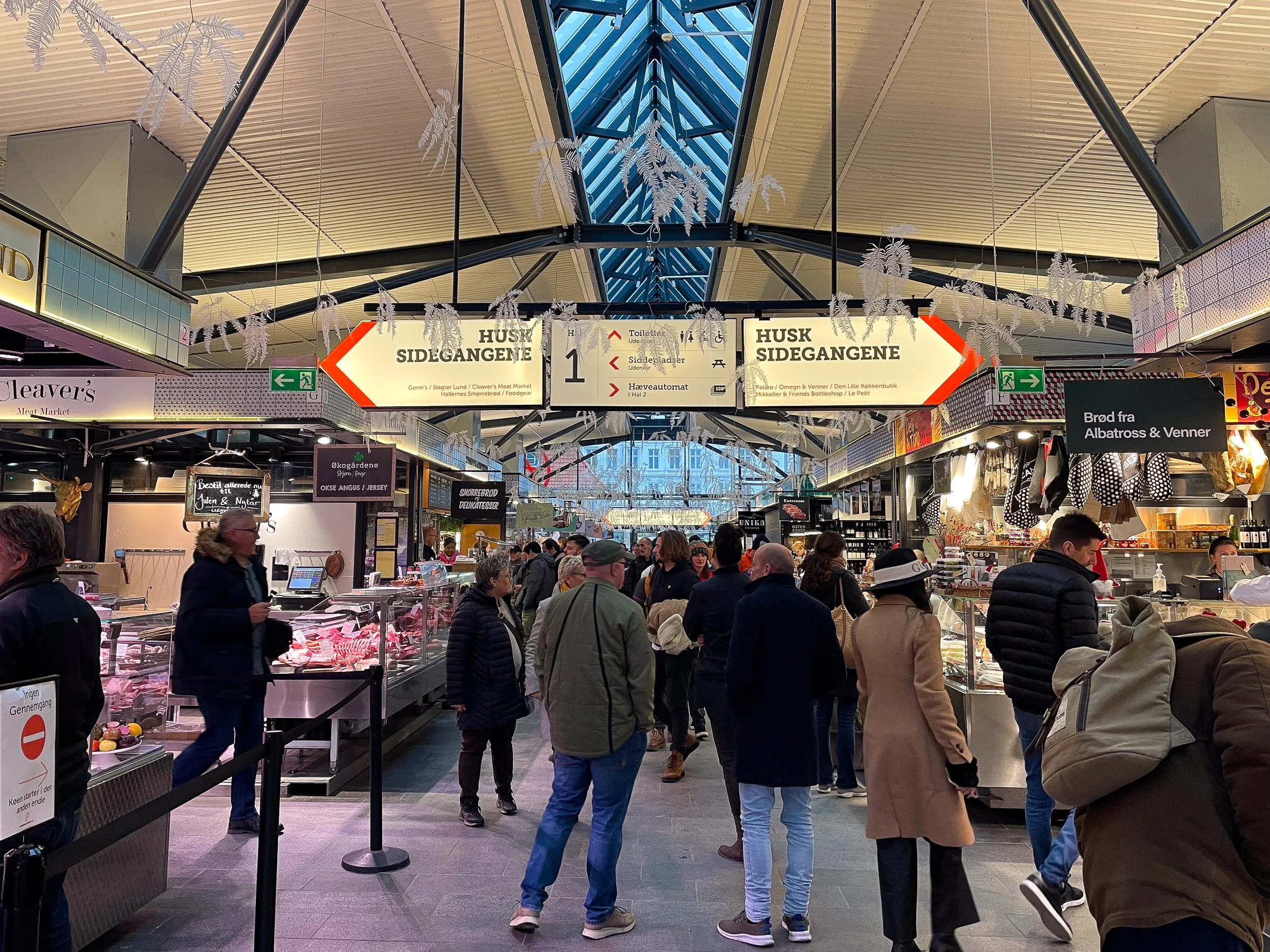
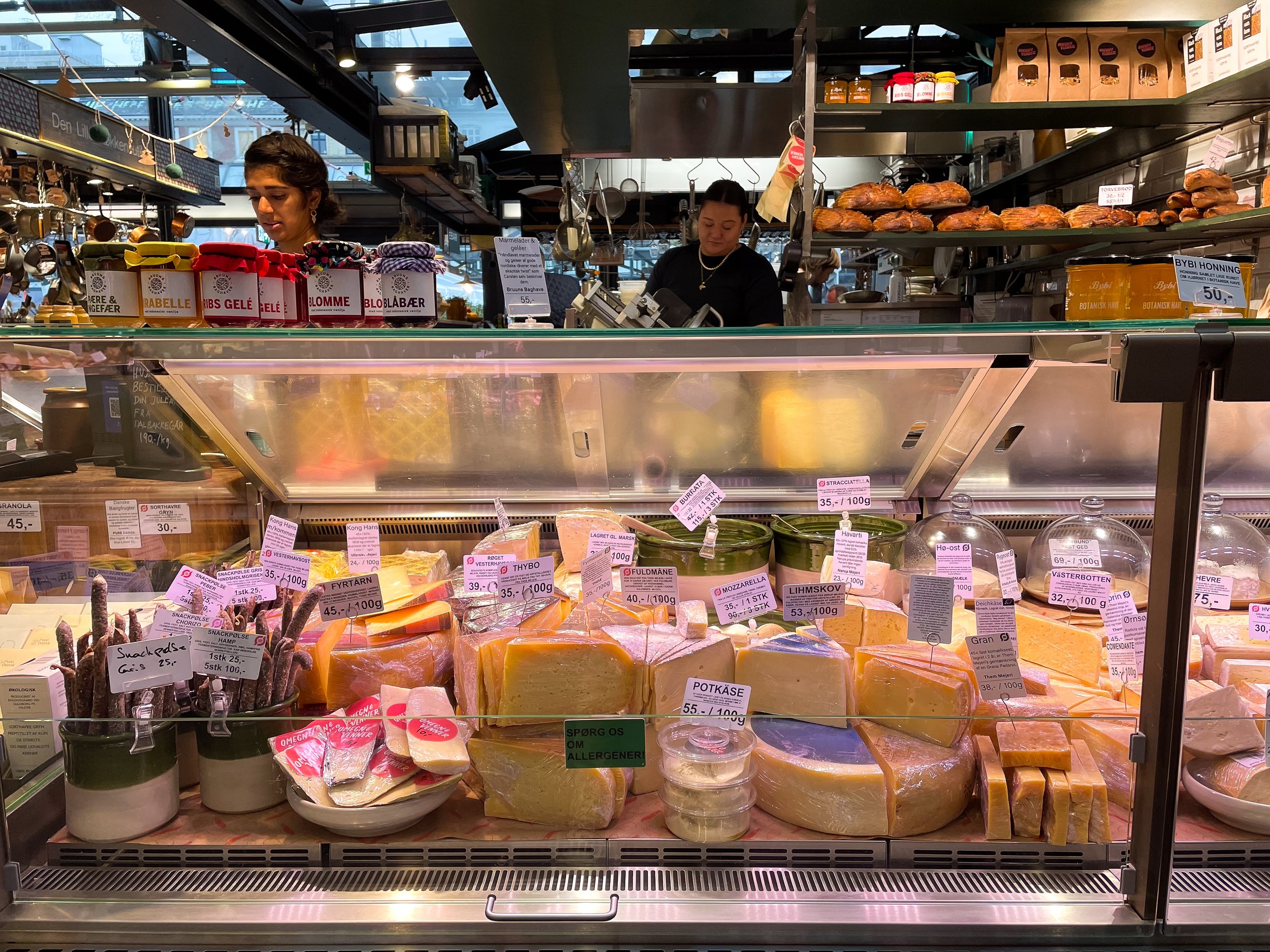
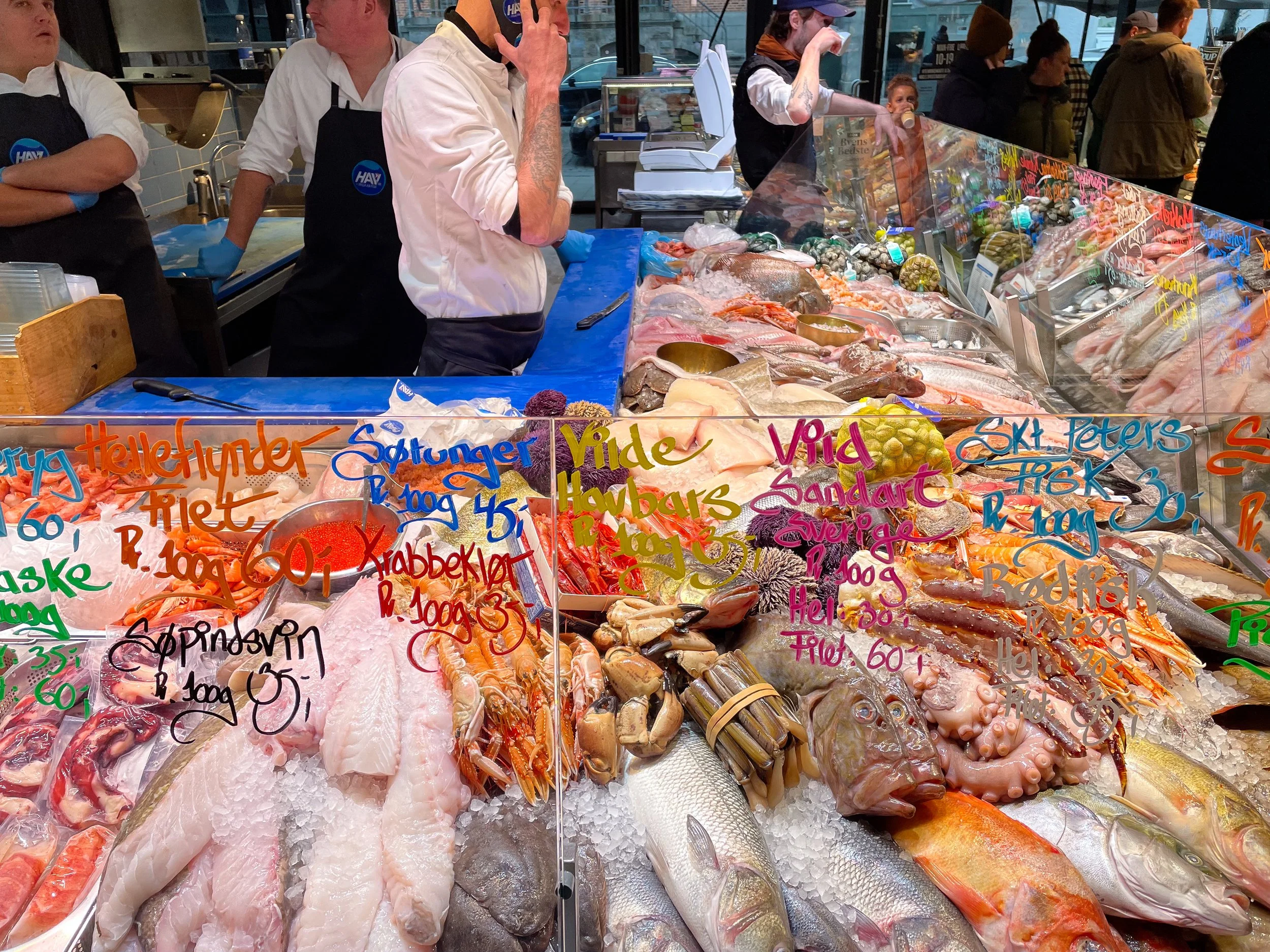
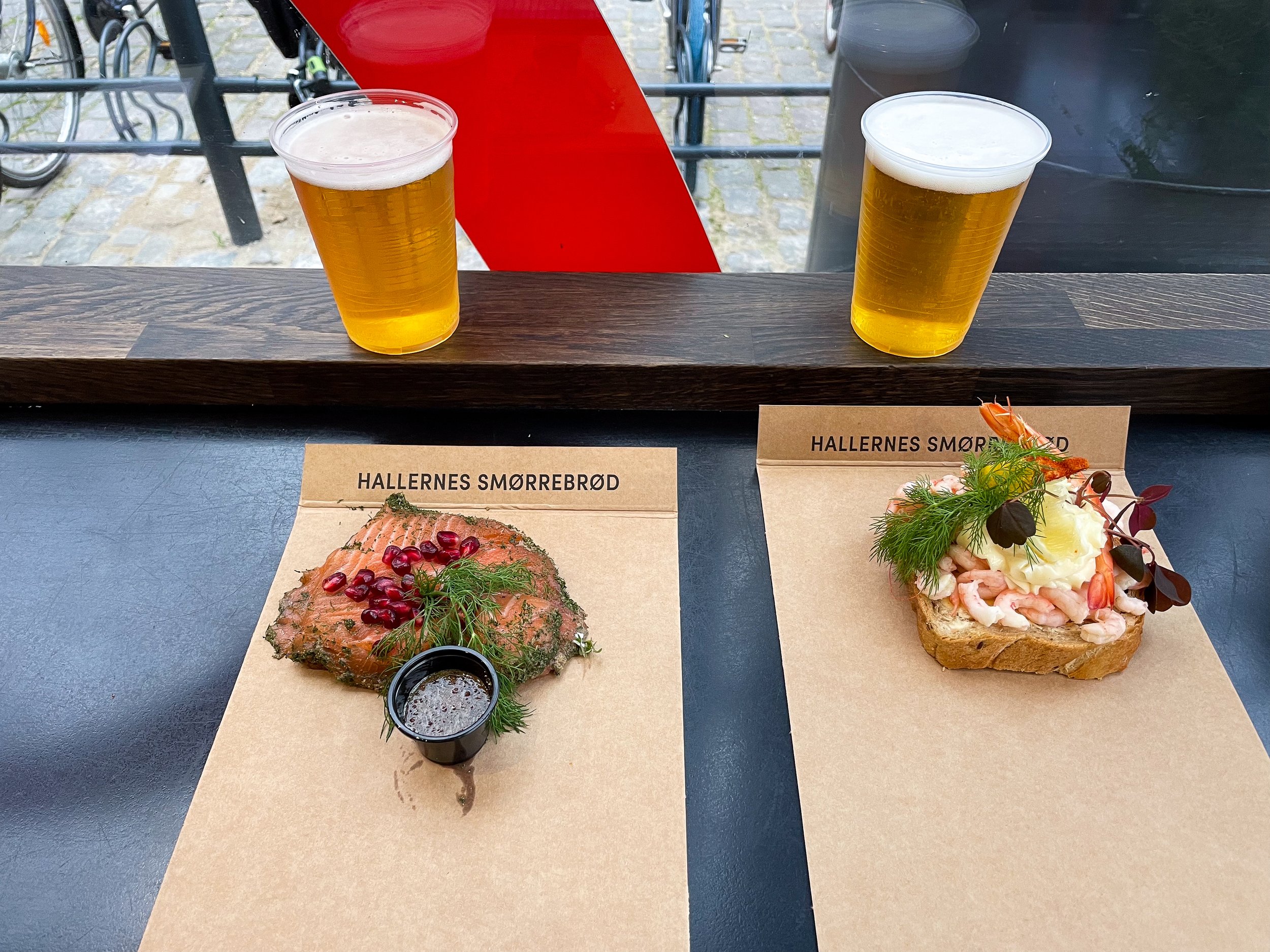
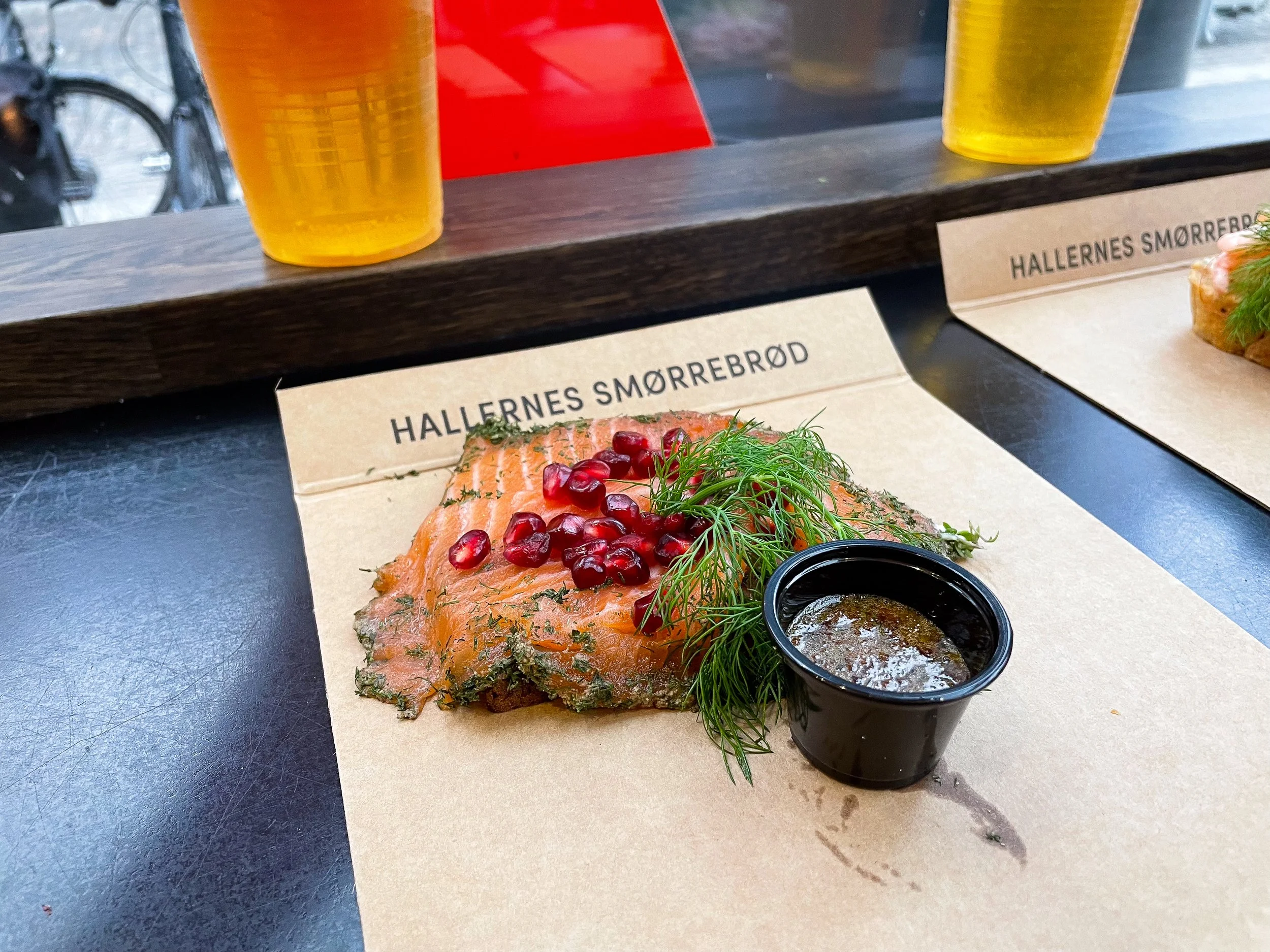
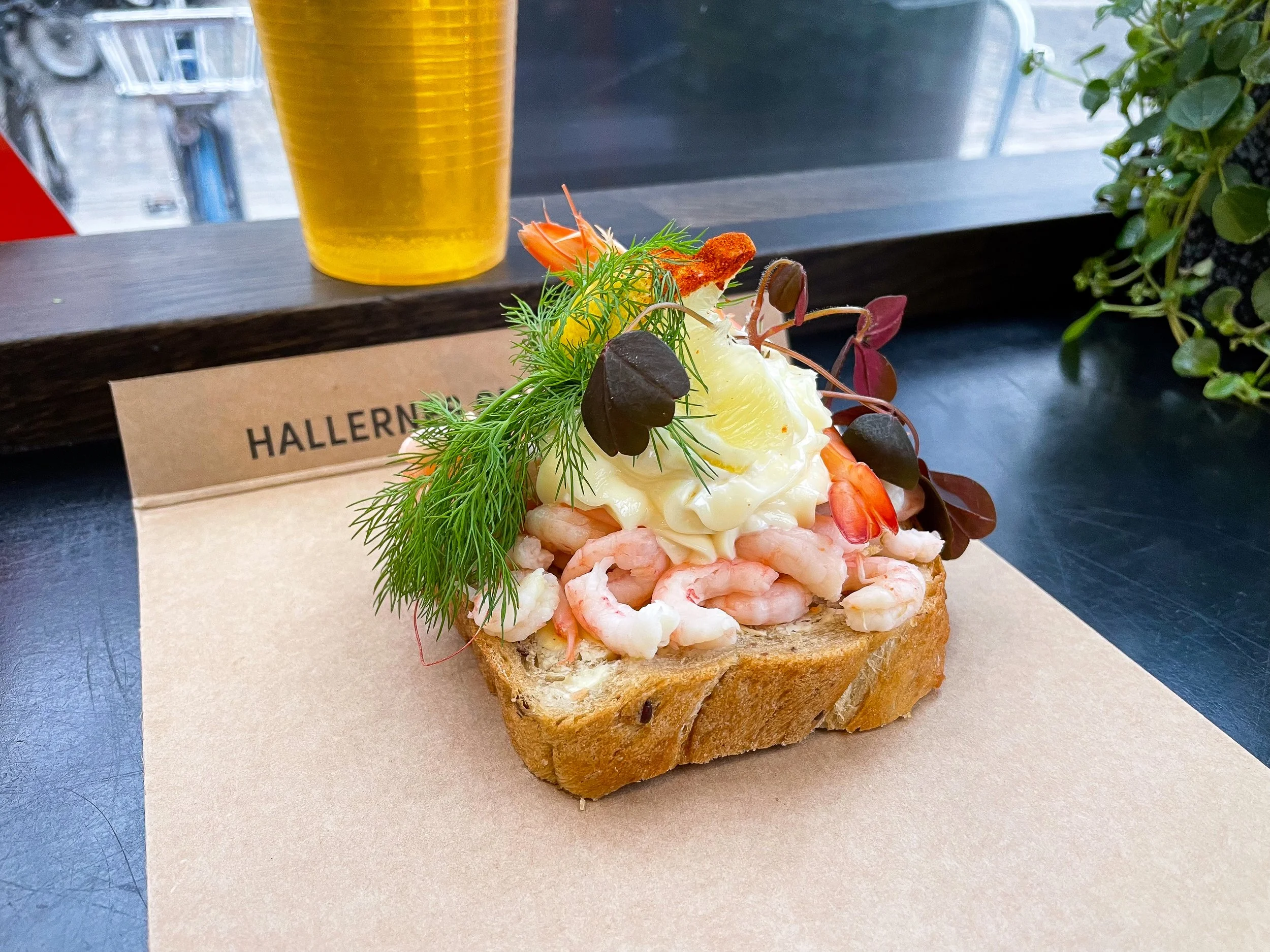
Torvehallerne. A food hall and market with over 60 restaurants and stalls selling baked goods, seafood, meats, cheese, wine, snaps, spices, produce and kitchenware. It’s a great place to try some of the traditional Danish dishes. Try Hallernes Smørrebrød for smørrebrød, Bageri for vienerbrød and Boutique Fisk for fiskfrikideler.
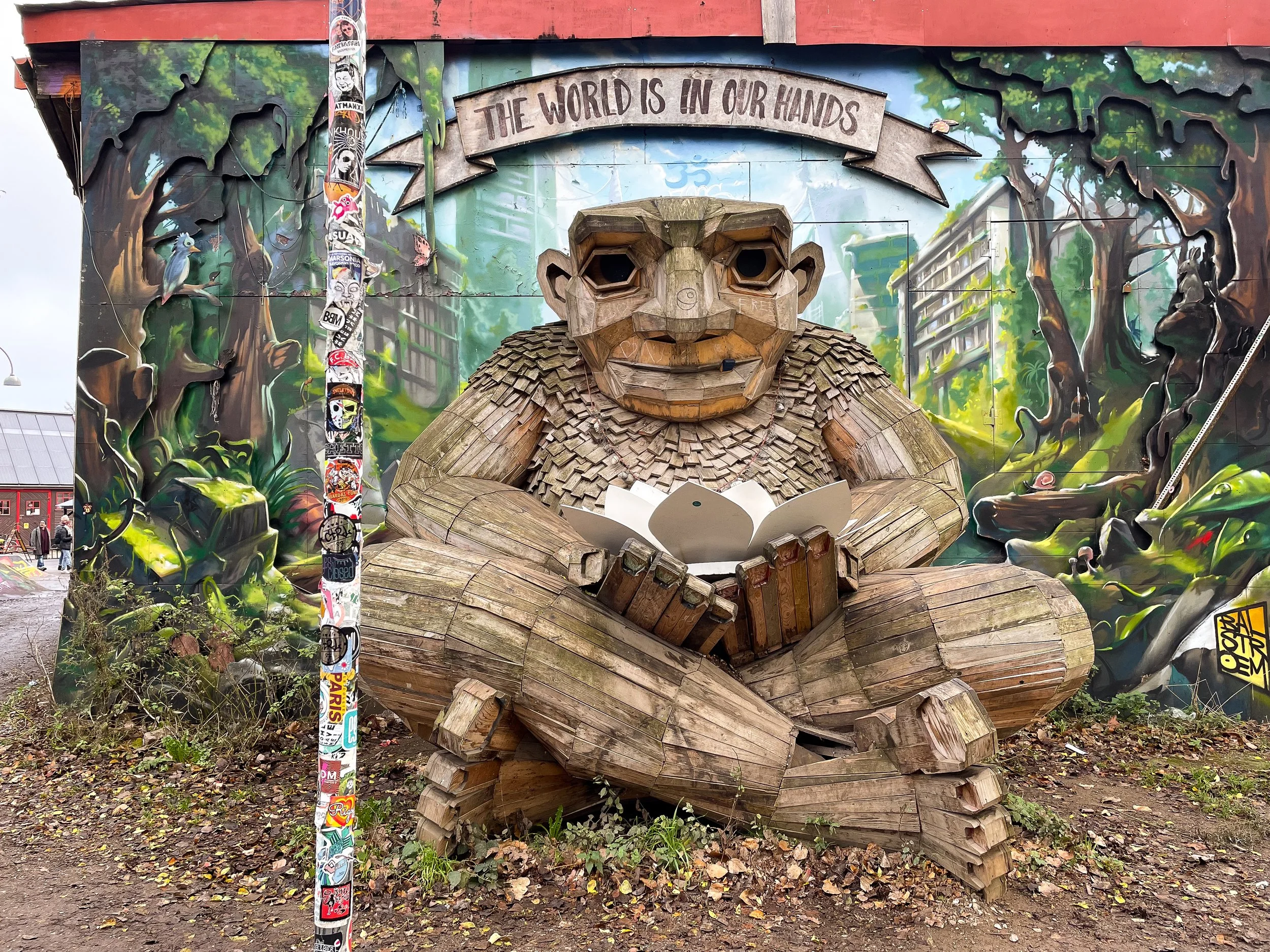
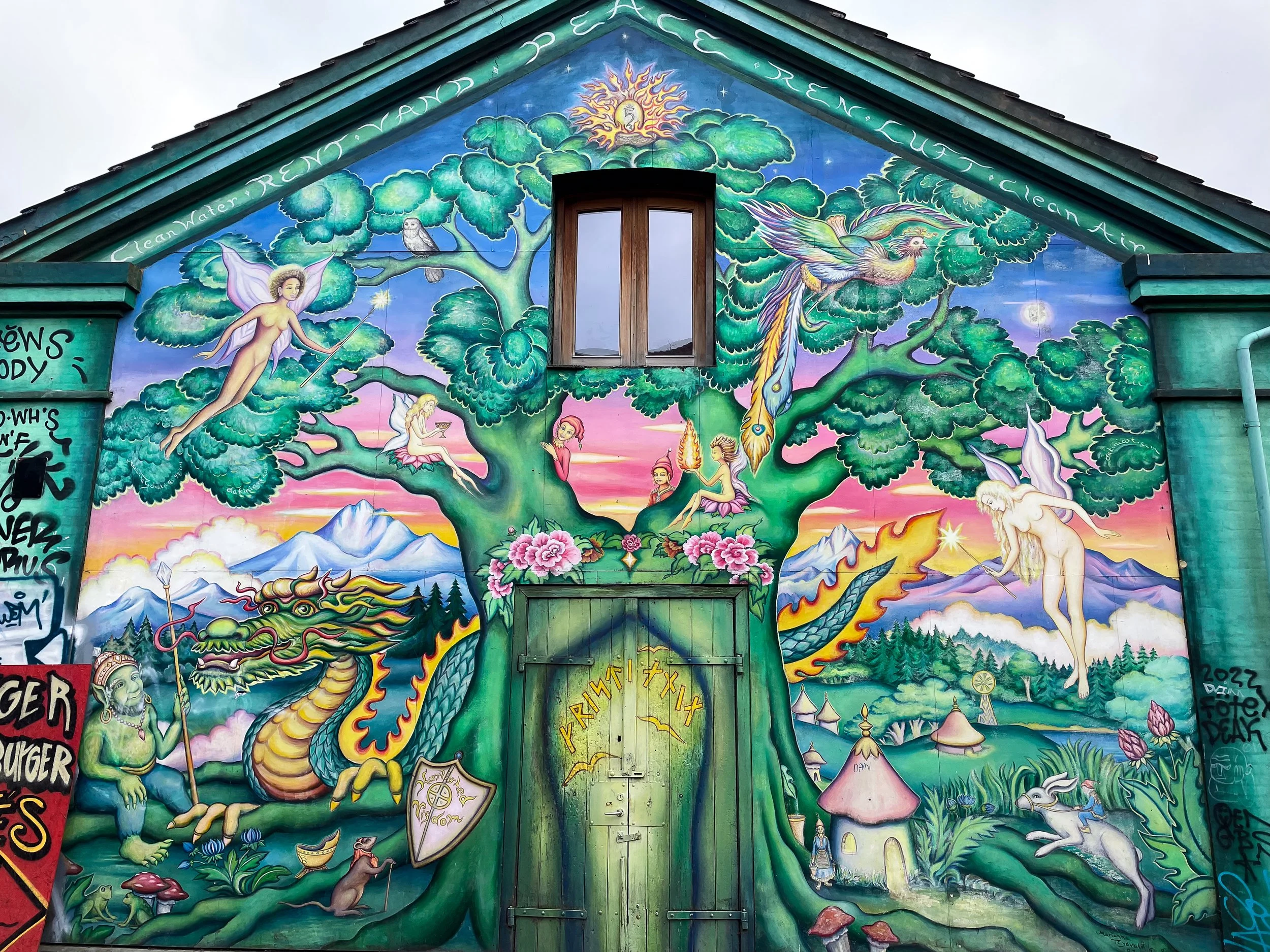
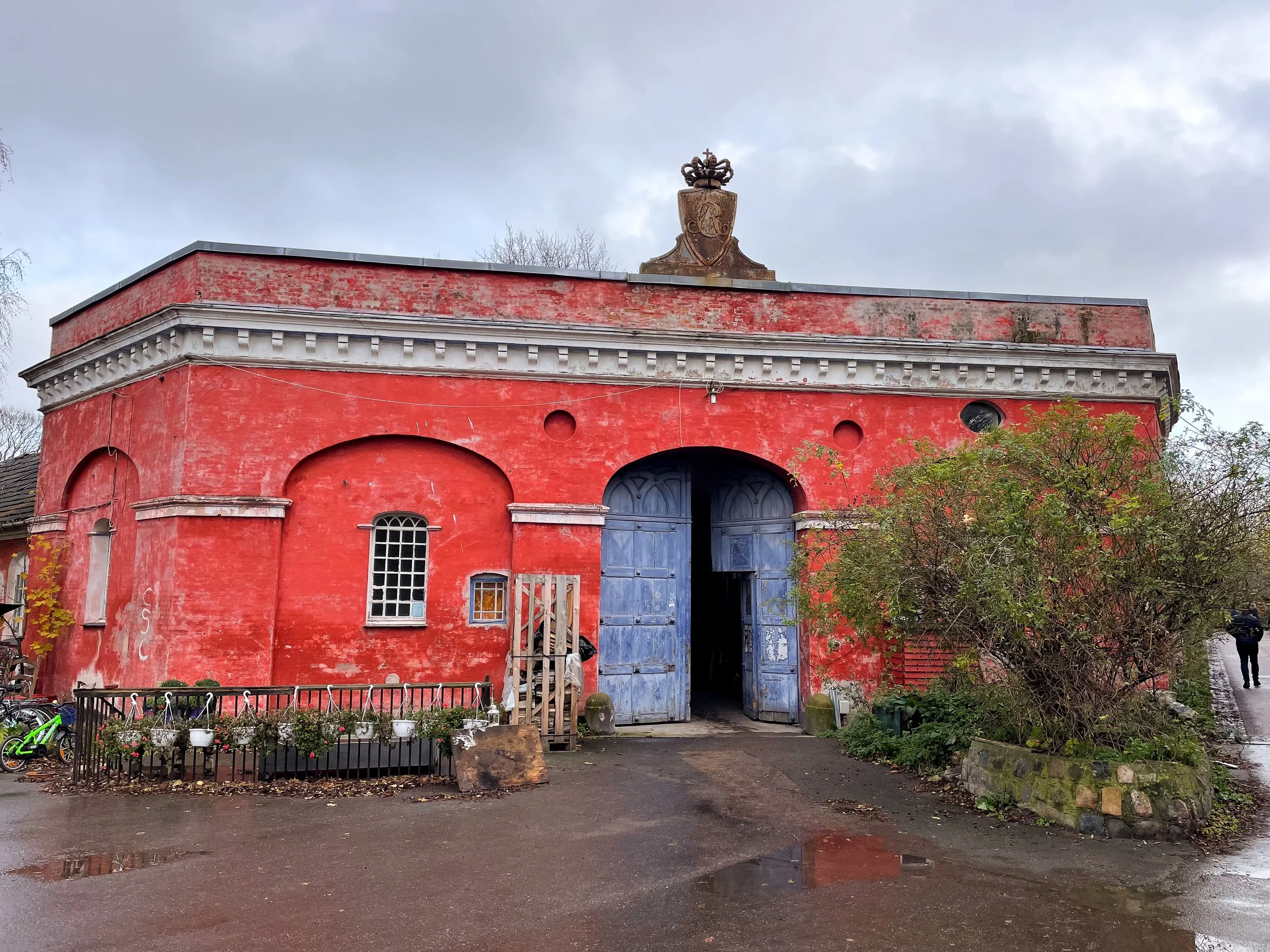
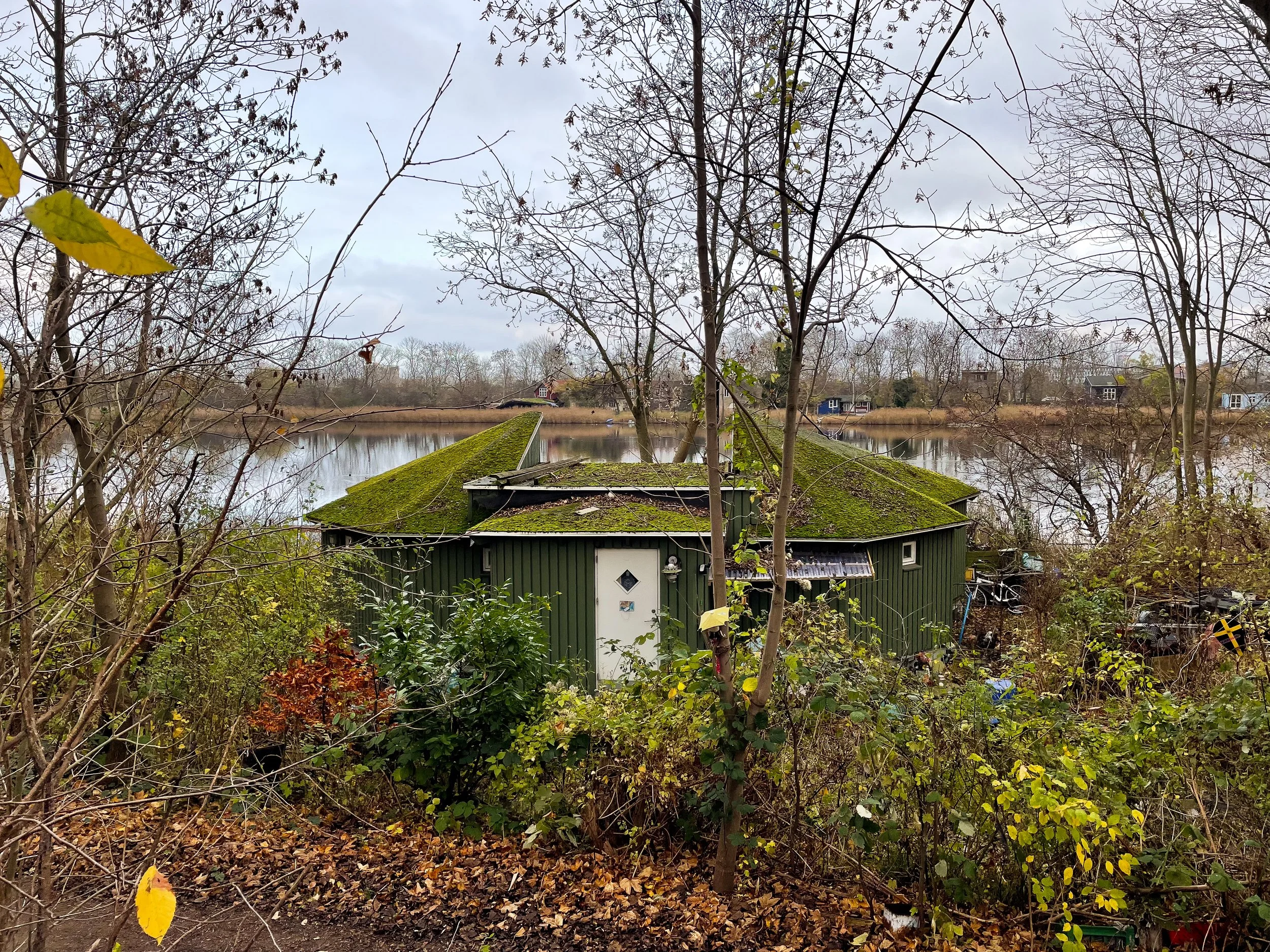
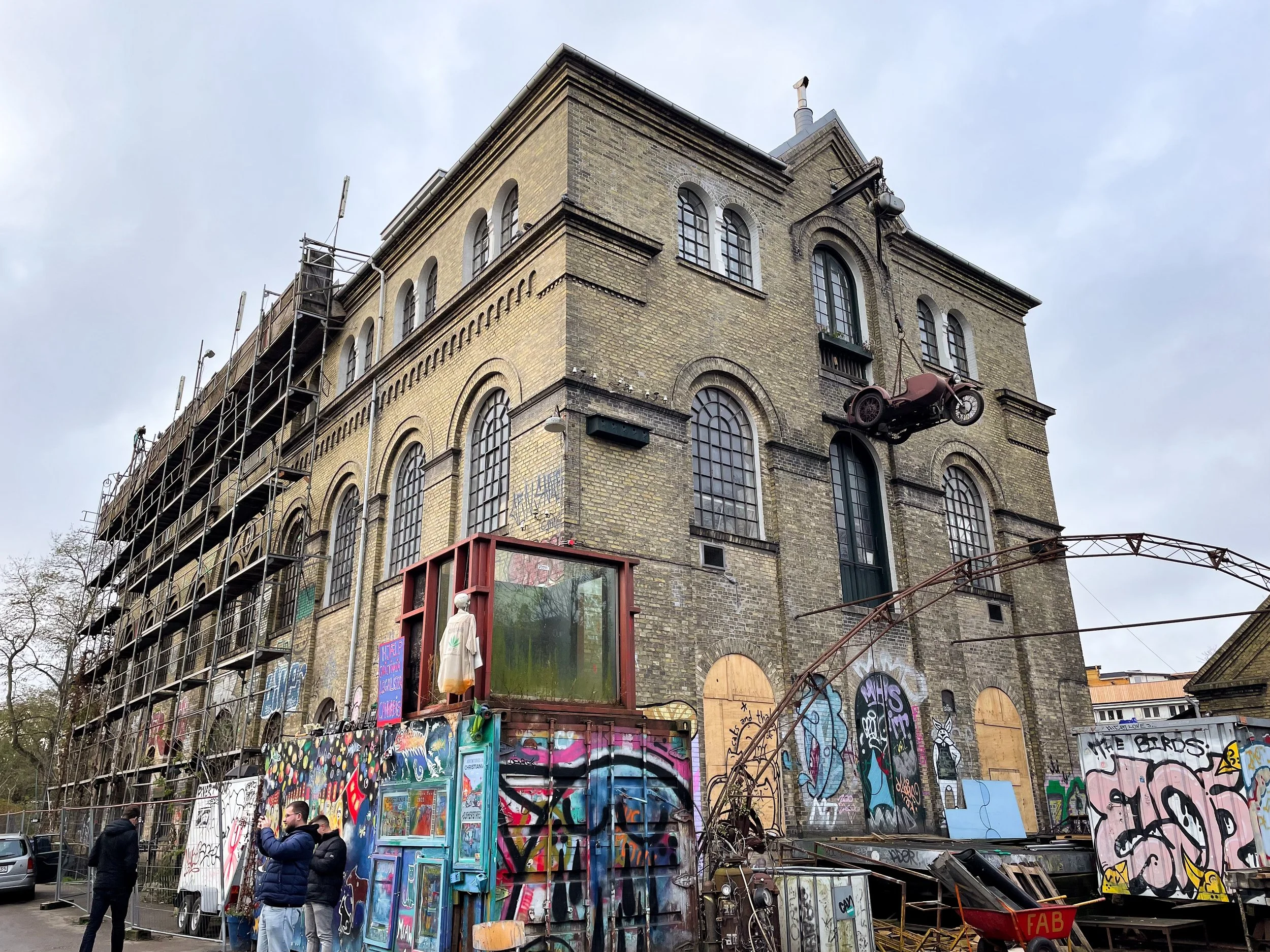
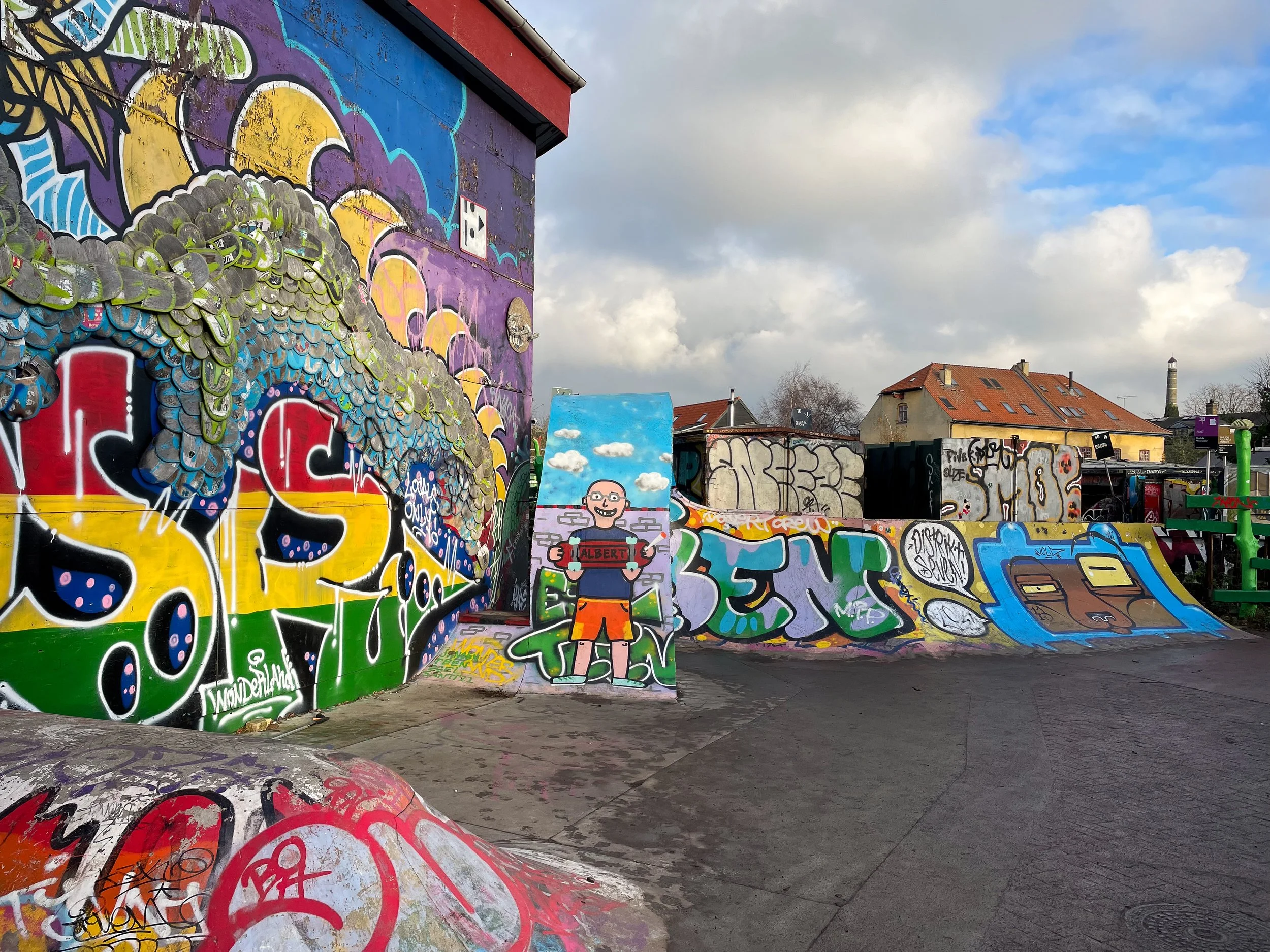
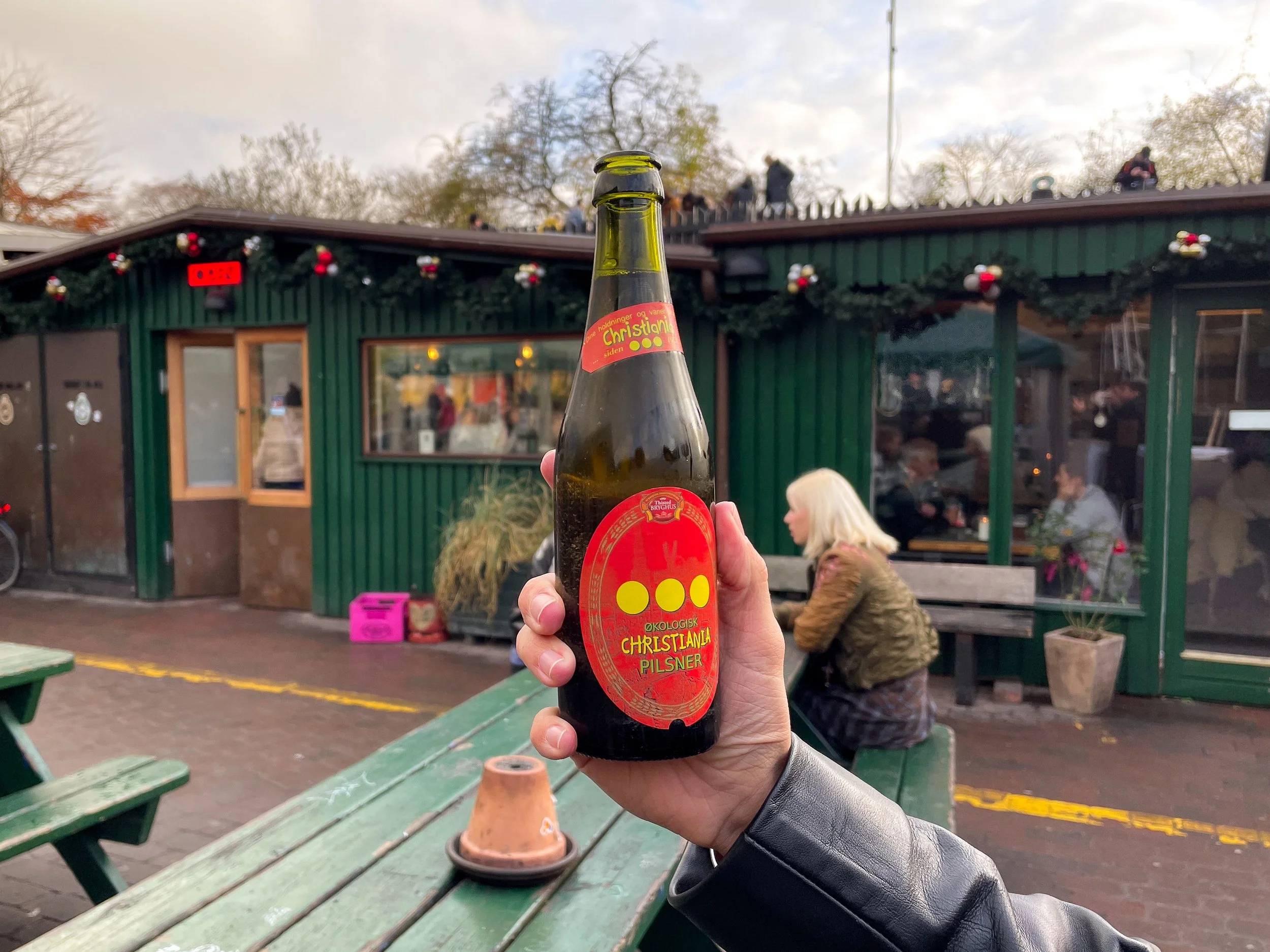
Free Town Christiania. An abandoned military base turned into a self governing community. Its former warehouses, bunkers and barracks that have been converted into homes, art studios, music venues, shops, restaurants and a brewery. Much of the neighborhood is decorated with street art and graffiti while buildings are retrofitted with larger windows, balconies and rooftop enclosures. The neighborhood is also a green space with lush nature and bike trails along the canal and where nature has begun to take over. Though it remains illegal, Free Town Christiania is the only place in Denmark where vendors openly sell cannabis and related products.
Good to Know. Avoid directly photographing anything “drug” related. Mind the “no photo” signs where posted.
Danish Cuisine
There are two types of Danish cuisine, traditional and contemporary. Traditional Danish cuisine is defined by a few main types of food like Smørrebrød, Fiskfrikideler and Vienerbrød. Contemporary Danish cuisine focuses on locally sourced, seasonal, foraged and pickled ingredients.
Smørrebrød. An open-face sandwich decoratively topped with colorful ingredients on a thin slice of heavily seeded bread. It’s often seafood based with cured salmon, cold water prawns, fried cod or pickled herring. It’s a common lunch meal and possibly Denmark’s most popular dish.
Snaps. A herbal, bitter and high proof alcoholic beverage often drunk as shots with Smørrebrød.
Fiskfrikideler. A deep fried ball of dough, onion and cod, sometimes mixed or garnished with dill.
Vienerbrød. Commonly referred to as the Danish, this is any style of flaky pastry with a custard or jam center. The most traditional of which has a light drizzle of chocolate on the top of it. Other common pastries include cinnamon rolls and cardamom croissants.
Buns. A hearty bread roll served with butter, jam and cheese. It’s a common breakfast.
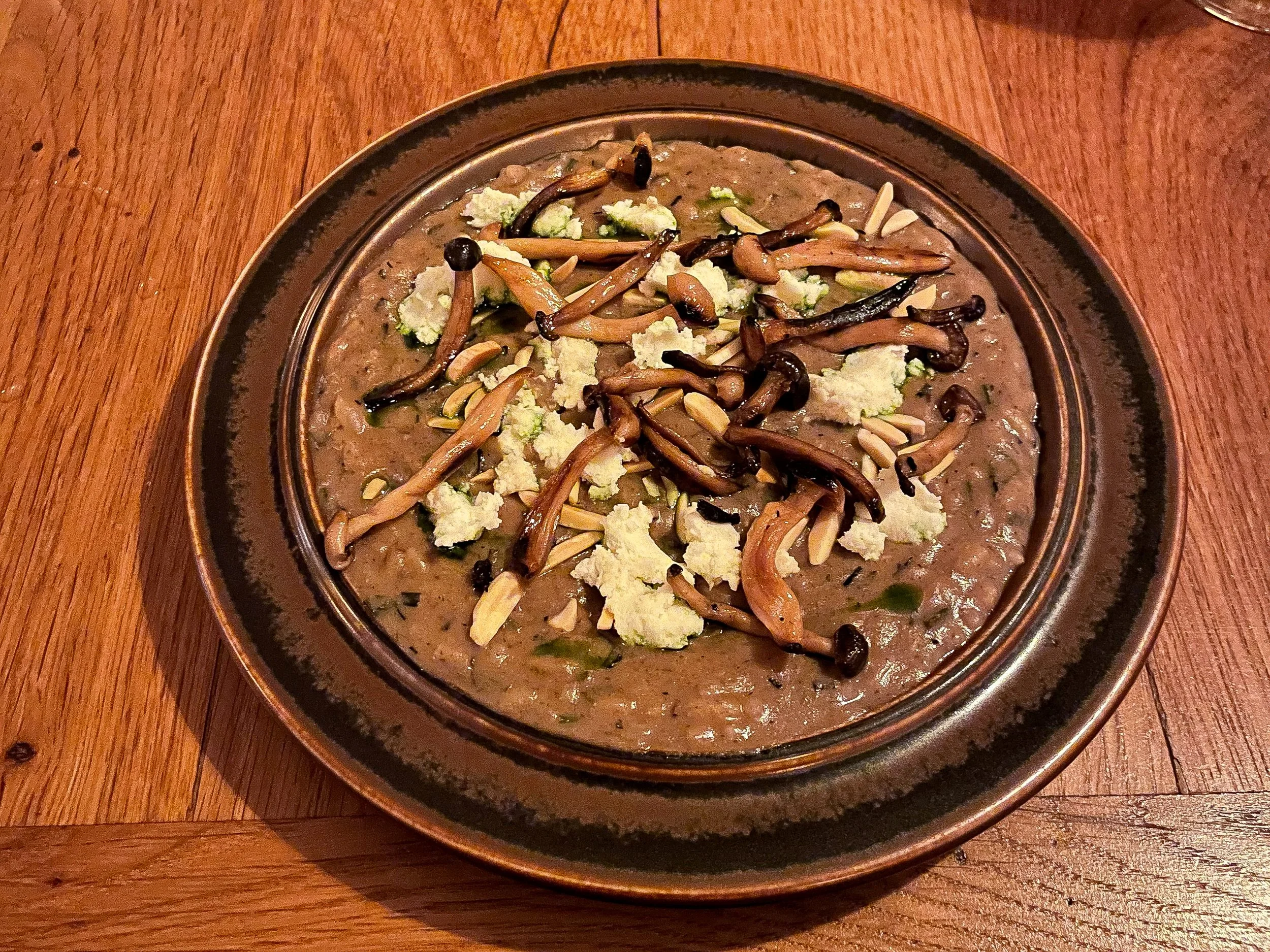
Places to Eat & Drink
We toured Copenhagen on foot and by taste! These were several of the restaurants, cafes, bars and food stands that we visited.
Restaurants
Bistro Lupa. A vegan restaurant specializing in contemporary Danish cuisine with a 5 course tasting menu and wine paring. The restaurant focuses on zero waste so everything is seasonal, locally sourced, foraged and pickled.
Oysters & Grill. A rustic seafood and wine bar with a 12 course tasting menu for 2. It came with a range of shellfish served different ways including raw oysters, fried oysters, scallop ceviche, grilled scallops on the shell, fried shrimp, pick and peel shrimp, moules marinière, fried calamari, veggie crudités, salad, French fries, bread and dessert.
Hanegal. A food cart serving pølser out front of the Round Tower. This one offers multiple types of sausage including a vegan sausage.
Nyhavn 17. A yellow building along the Nyhavn Canal with a dimly lit and wooden interior. The restaurant serves traditional Danish cuisine like smørrebrød. We had fried cod and pickled herring smørrebrød with snaps and gløgg.
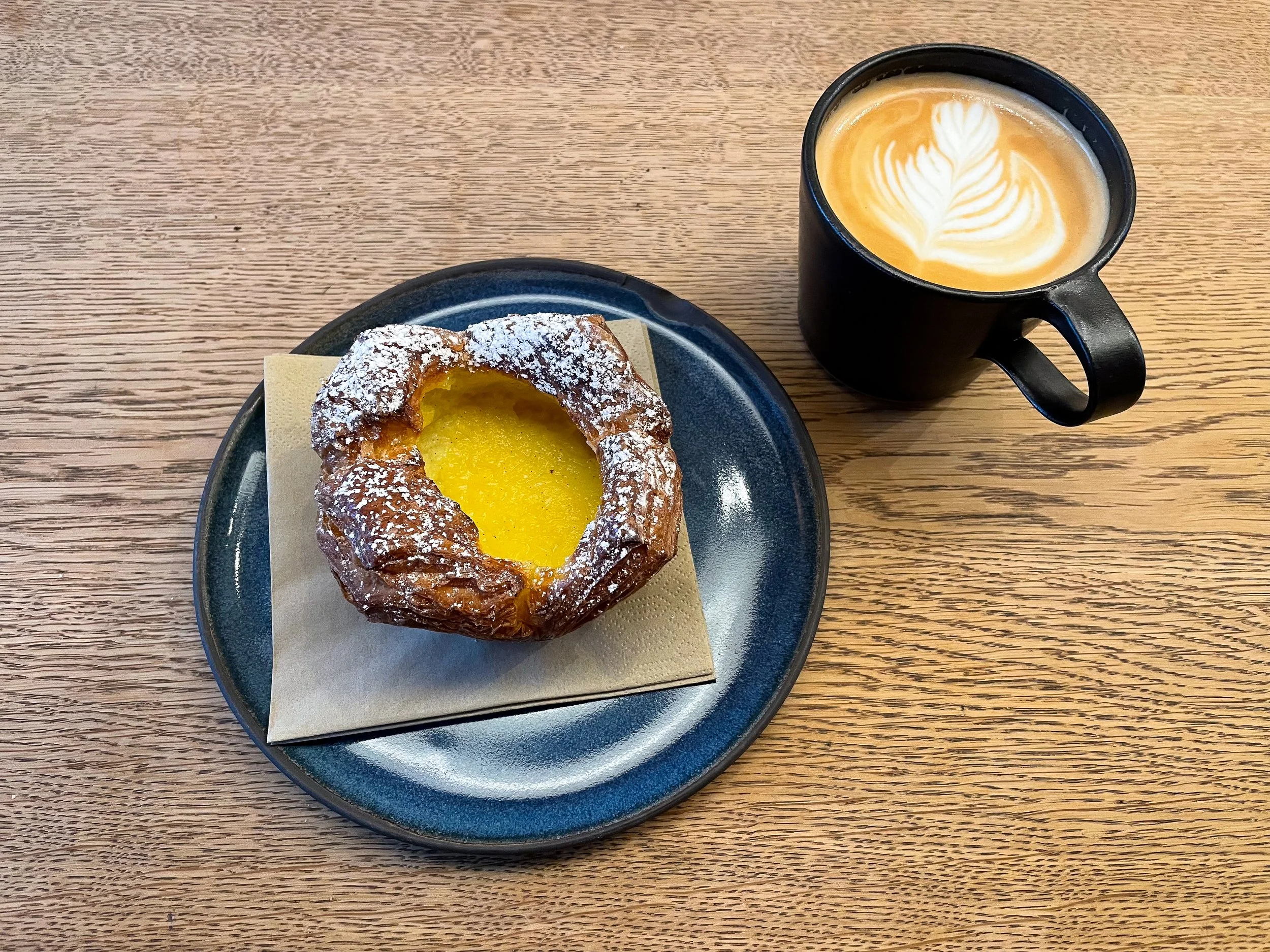
Coffee Shops & Cafes
From hidden cafes, to cute coffee shops and local chains, there is no shortage of places to find a pastry and morning coffee.
Hart Brød+Bar. A waterfront café with pastries, coffee, breads and wine. Try the spandauer pastries (traditional Danishes) and cardamom croissants.
GRØD. A chain restaurant specializing in stovetop porridge and overnight oats.
Lille Petra. A cafe hidden within a courtyard of a building servings Danish breakfast buns.
Original Coffee. A popular coffee shop chain located throughout the city.
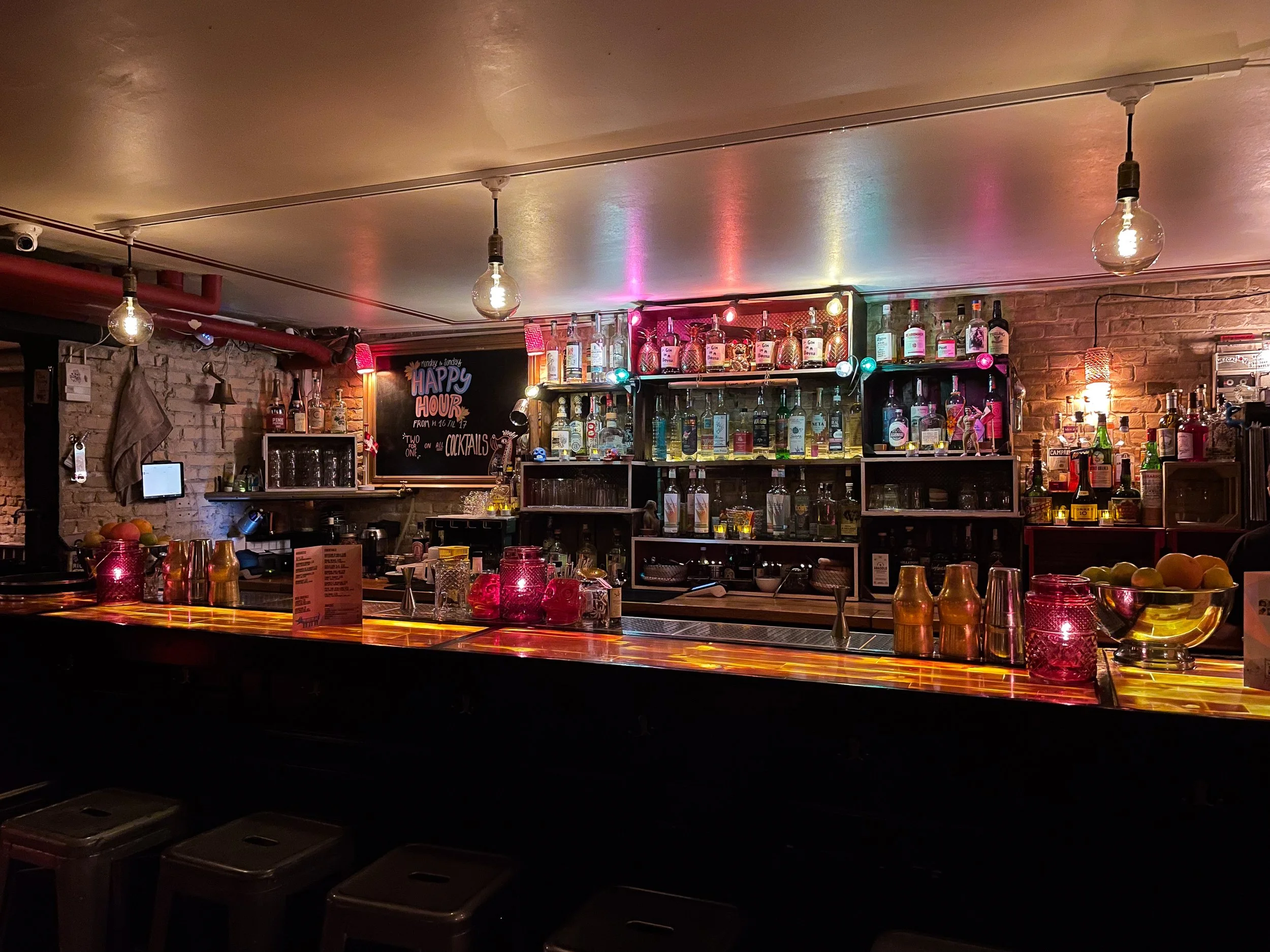
Bars & Pubs
Across the city are a range of cocktail bars, speakeasies, traditional pubs and breweries.
Strøm Bar. An Art Deco and tropically decorated cocktail bar with cozy seating and a small shuffleboard.
1105. A late night bar hidden in an alley and behind a velvet curtain serving speciality cocktails.
The Barking Dog. A tequila and mezcal focused cocktail bar in a cozy basement apartment style setting.
Pulp. A cocktail bar with a creative pop culture themed menu in a warm Danish designed interior.
Peder Oxe’s Kaelder. A cocktail bar and restaurant in a catacomb style tunnel and chambers of an old church.
Nyhavnskroen. Located on the Nyhavn Canal, this is a late night pub serving liters of beer and classic cocktails.
Nemo’s. Located in Christiania, this is a popular brunch spot in front of an outdoor music venue. Having recently eaten, we stopped in for a locally brewed beer.
Location Specifics
Hygge. The Danish concept of coziness and surrounding yourself with things that make life good, especially during the dark cold winters. This can be friendship, laughter, warmth, food or drinks. It’s pronounced hoo-gah.
Walking. Copenhagen is a very pedestrian friendly and walkable city. We spent most of our visit walking between neighborhoods and destinations. Be careful not to walk into a bike lane.
Reservations. Reservations are typically needed at restaurants and bars to guarantee a seat.
Cash vs. Card. Cash is rarely needed as most places, including food carts, accept credit cards.
Language. Danish is the national language, though English is widely spoken as a second language throughout Copenhagen.
Public Restrooms. There are public restrooms throughout the city, most commonly in squares and plazas.
Elsewhere in Nordic Europe
From Copenhagen’s canals, design districts and cuisine scene to Arctic fjords in Norway, Lapland’s Northern Lights and Iceland’s volcanic landscapes, continue exploring Nordic Europe through these travel guides:
One Day in Helsinki: Finnish Sauna & Waterfront Sights. Experience a winter day exploring Helsinki's frozen waterfront where local food markets, historic architecture and steaming saunas bring Finnish culture to life.
Lapland Finland Travel Guide: Northern Lights, Sámi Culture & Arctic Adventures. Journey through Lapland's Arctic wilderness and snowy landscapes to experience Sámi traditions, husky mushing, Finnish cuisine and vivid auroras during the polar night.
Tromsø Norway Travel Guide: Northern Lights, Arctic Fjords & Sámi Culture. Explore Tromsø's snowy streets and historic waterfront where Nordic cuisine and Sámi culture meet dramatic fjords, dancing auroras and Arctic adventures.
Iceland Road Trip Guide: Waterfalls, Glaciers & Black Sand Beaches. Road trip through Iceland's otherworldly landscapes where volcanoes, glaciers, waterfalls and black sand beaches create one of Earth's most dramatic journeys.
For Next Time…
Next time we’re in Copenhagen we plan to venture into the countryside and across the harbor to Sweden.
Visit Skovtårnet (The Forest Tower). A contemporary wooden structure in the middle of the Danish forest about an hour south of Copenhagen.
Frederiksborg Castle & Gardens. A Danish Royal castle and grounds on a lake in the countryside about 30 minutes north of Copenhagen.
Malmö. The Swedish city across the harbor from Copenhagen. It’s known for the Turning Torso, Scandinavia’s tallest skyscraper.
Iceland Road Trip Guide: Waterfalls, Glaciers & Black Sand Beaches
Road trip through Iceland's otherworldly landscapes where volcanoes, glaciers, waterfalls and black sand beaches create one of Earth's most dramatic journeys.
Icelandic Roadtrip
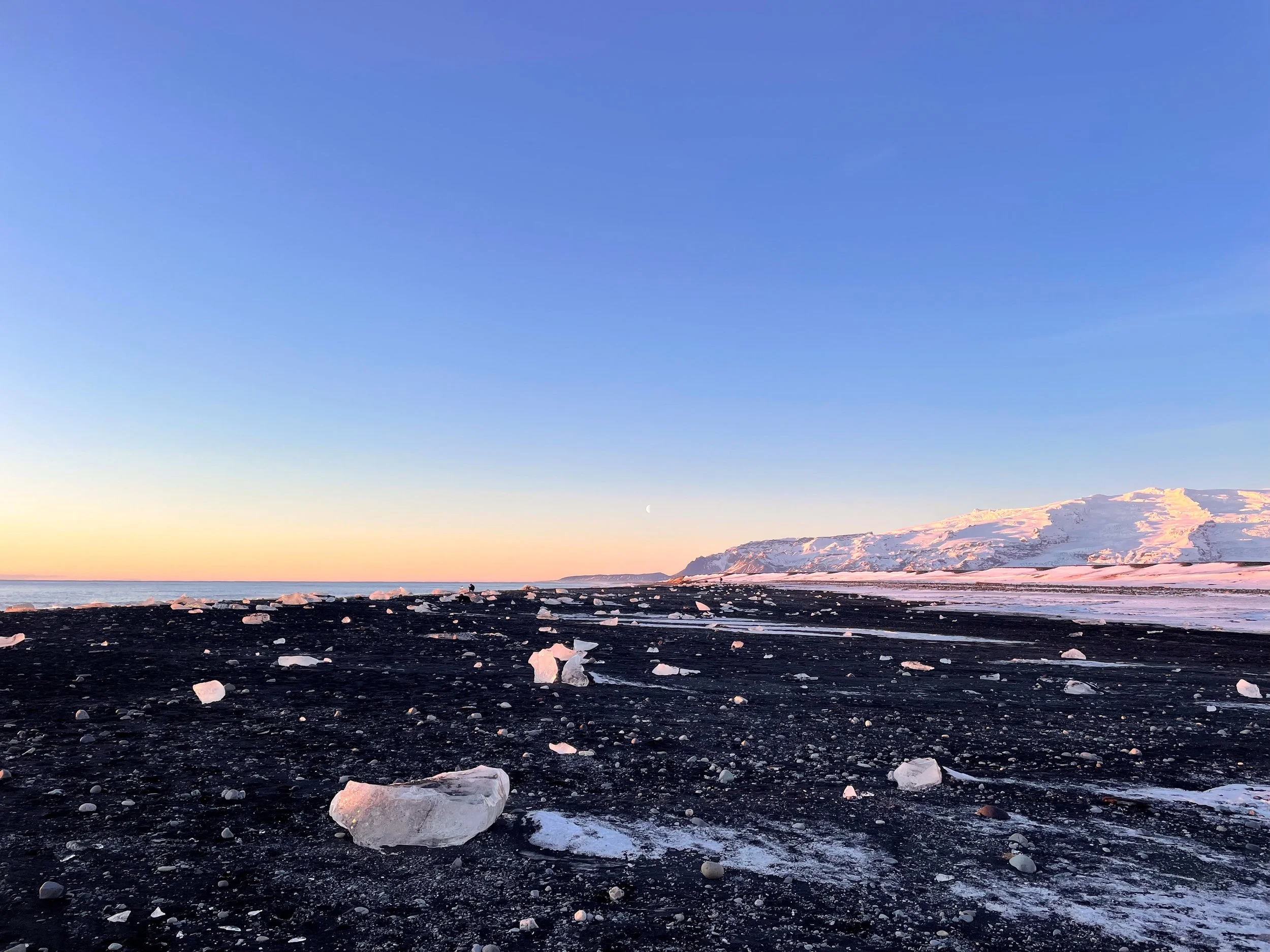
Iceland is a Nordic country in the North Atlantic famed for its other worldly landscapes, volcanoes, glaciers, waterfalls, black sand beaches and geysers. It’s a frequent place to spot the Northern Lights in the winter months, bathe in thermal springs and whale watch. We visited Iceland for 5 days in mid-January, road tripping around the Golden Circle, along the South Coast and making time to explore Reykjavik.
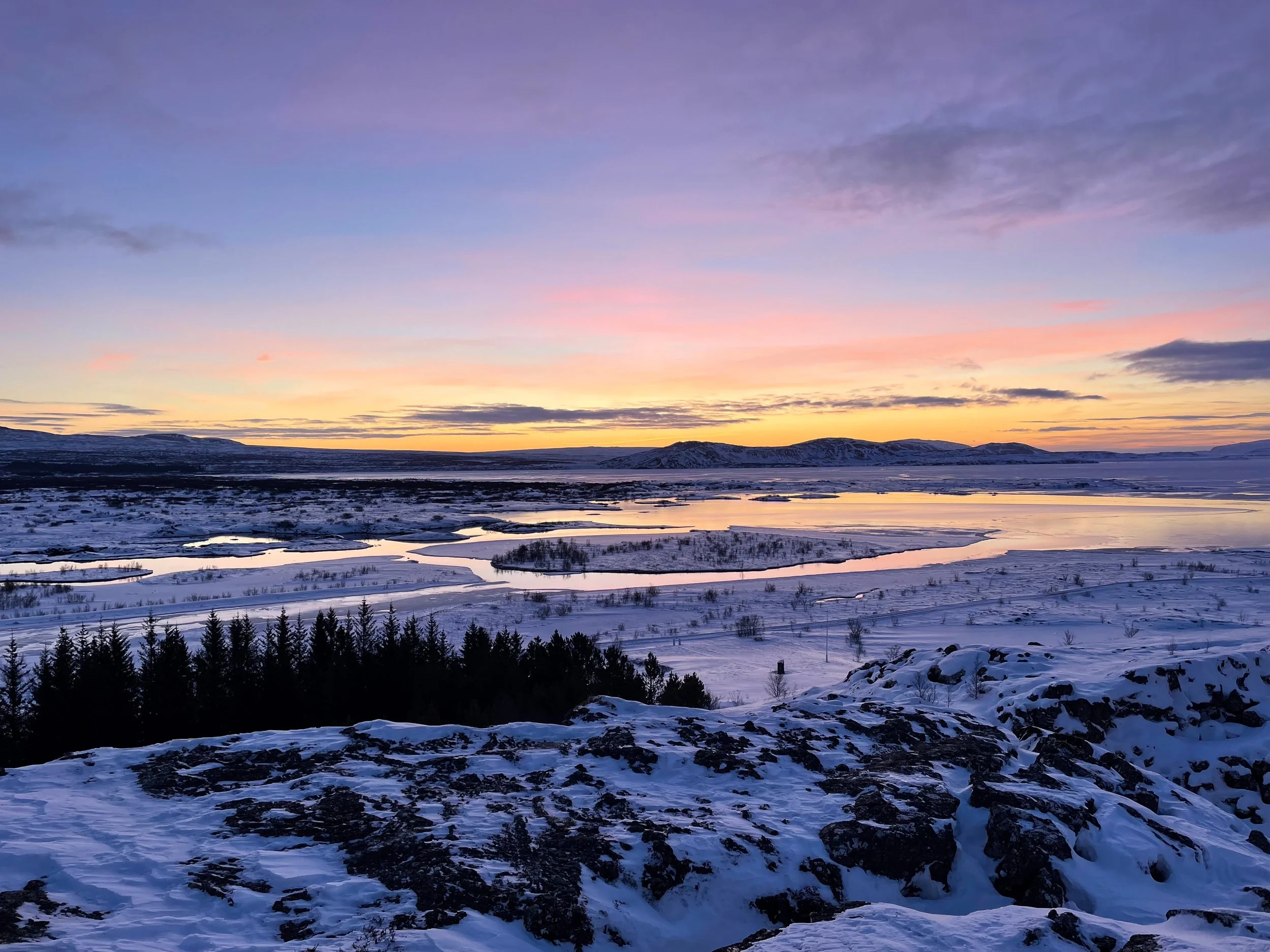
The Golden Circle
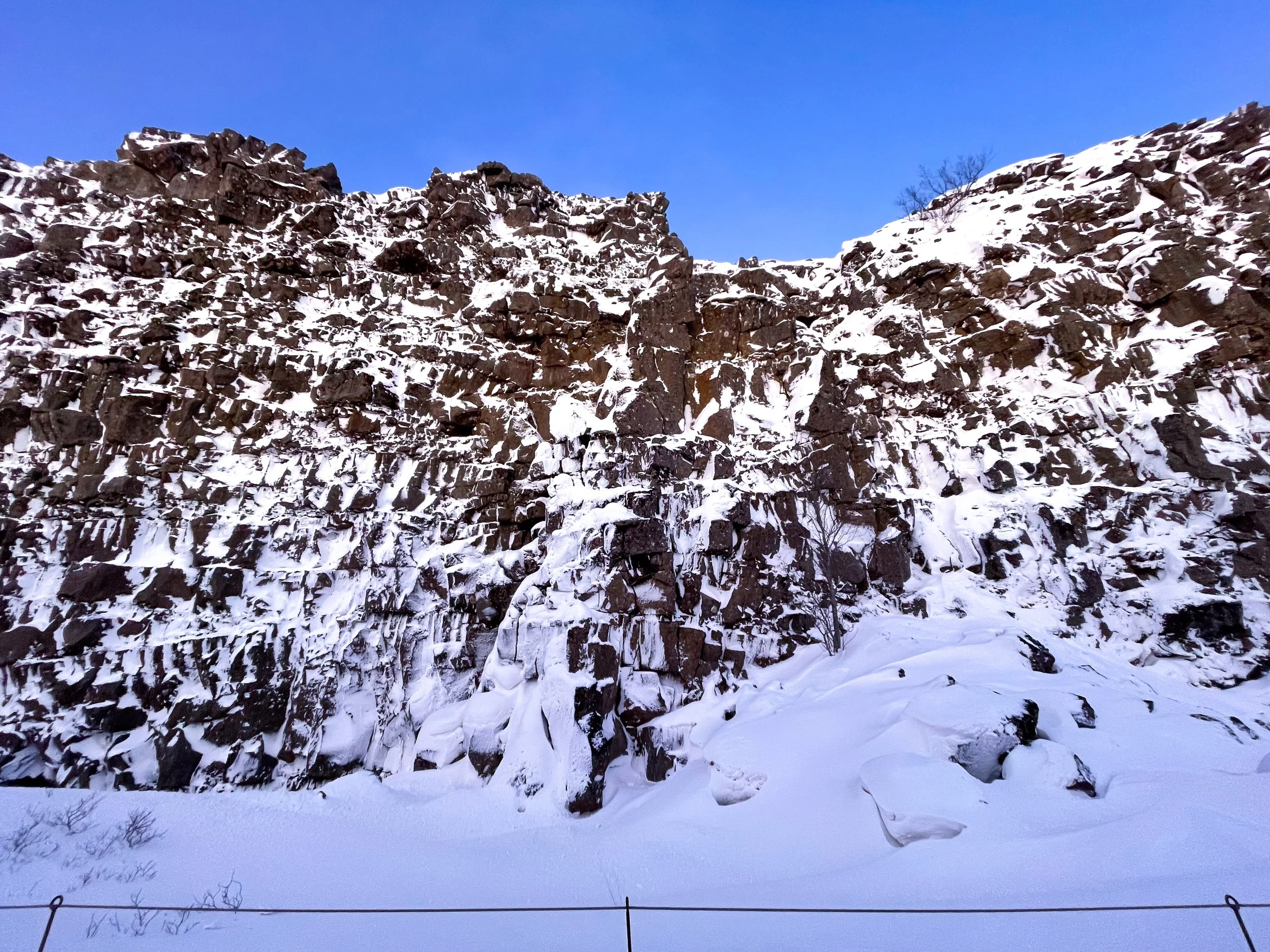
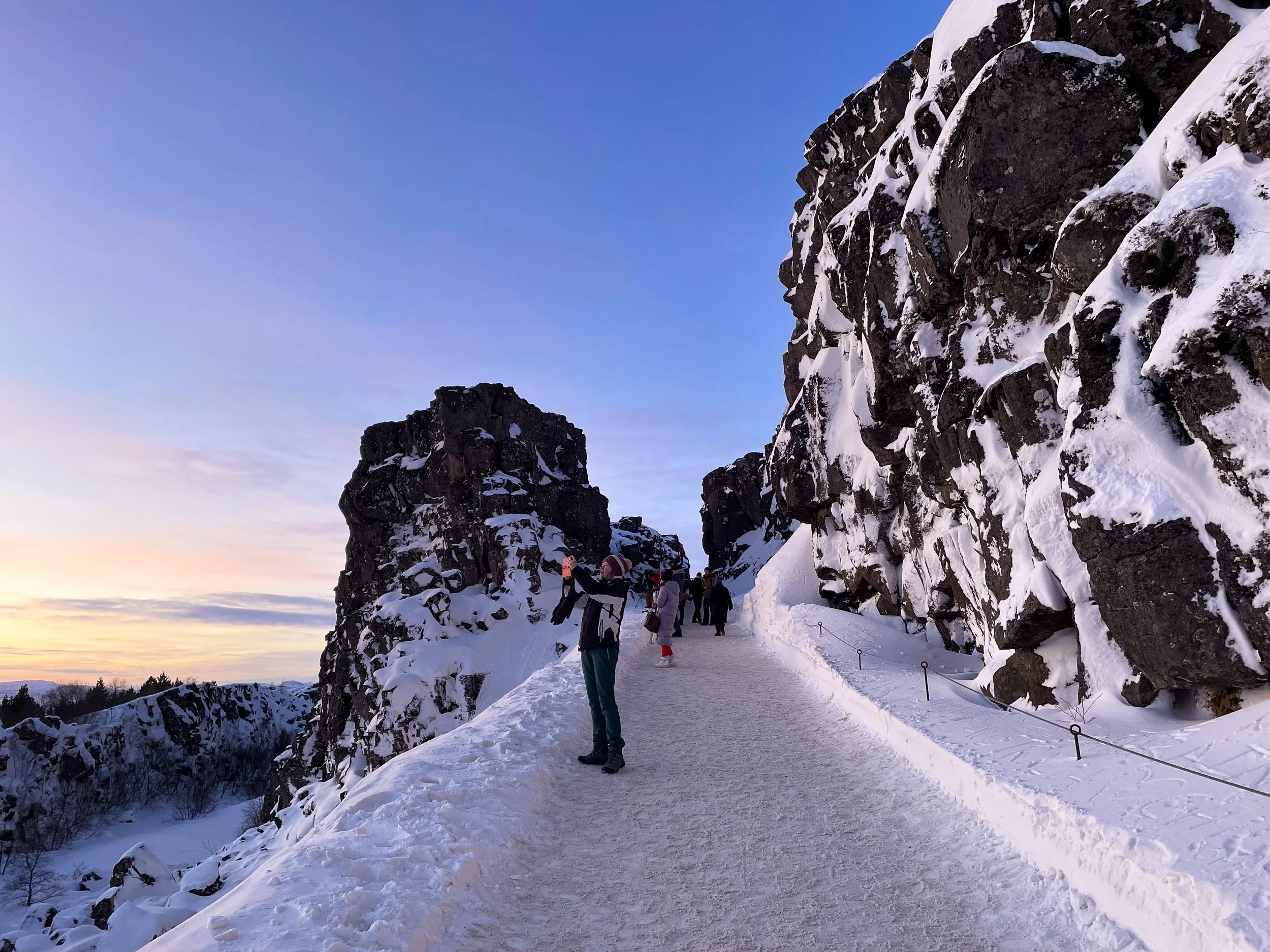
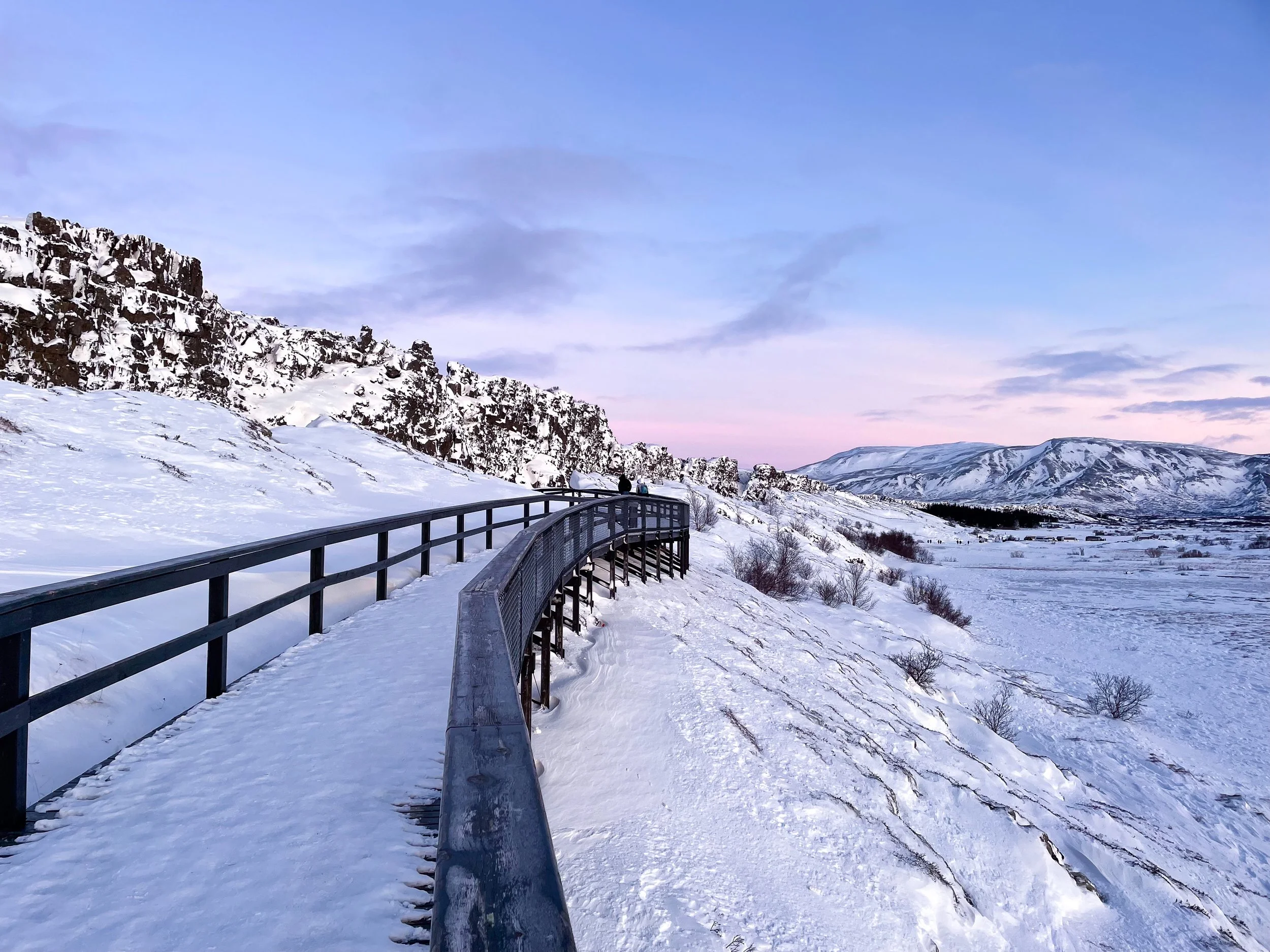
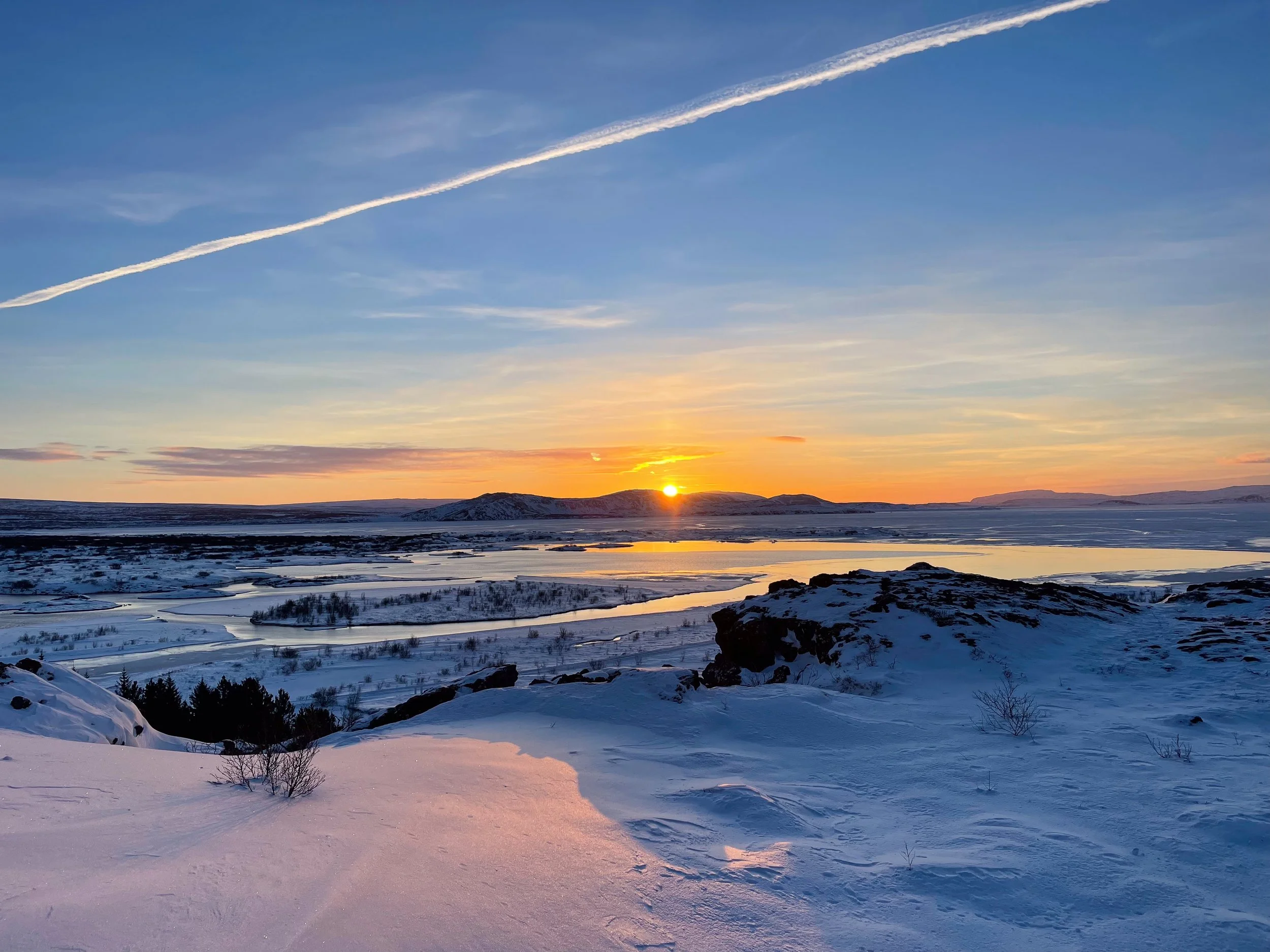
The Golden Circle is a scenic route with several natural sites including a fault line, geysers, waterfalls and volcanos. It’s easily reachable from Reykjavík and can be explored within a day.
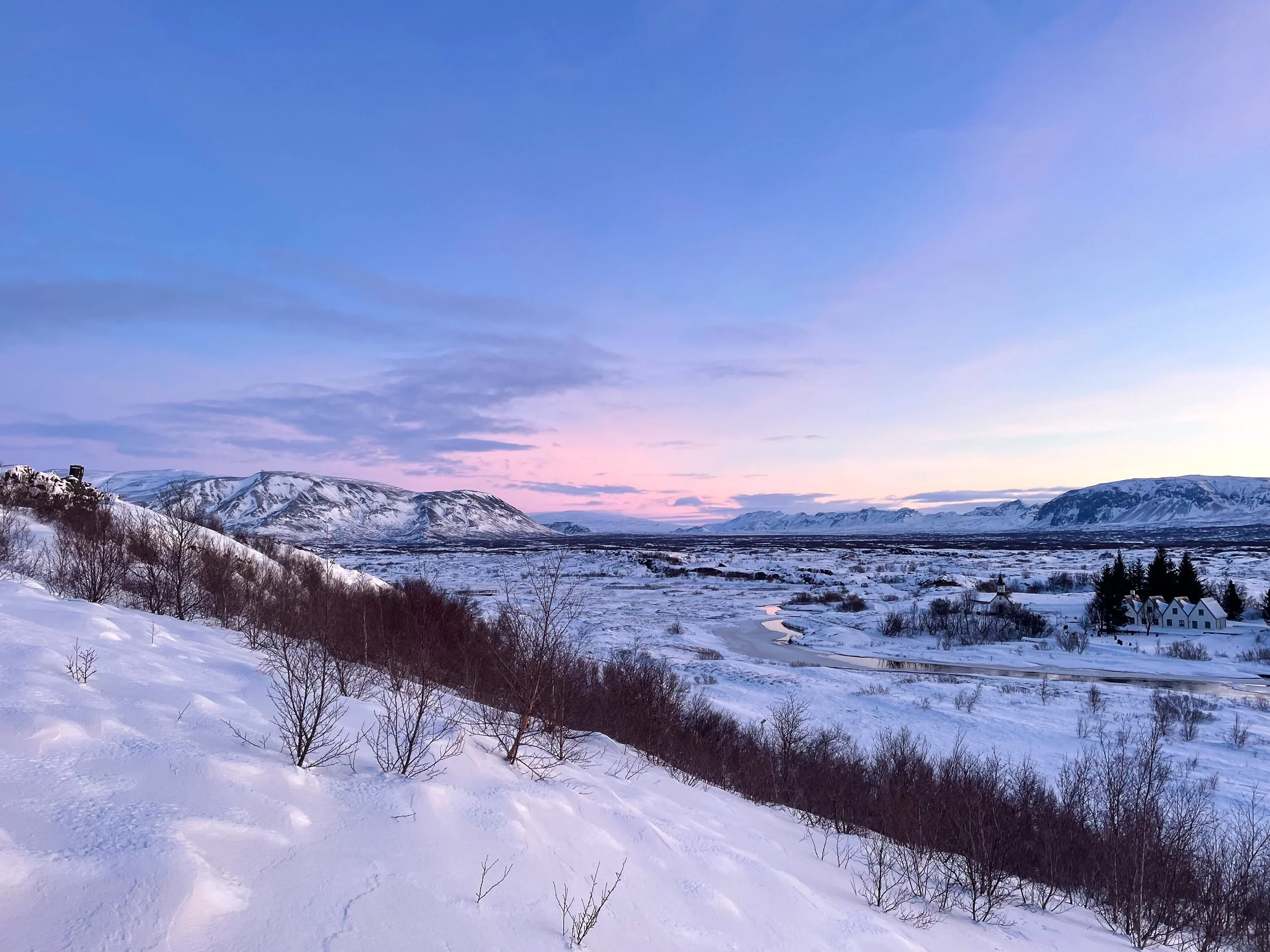
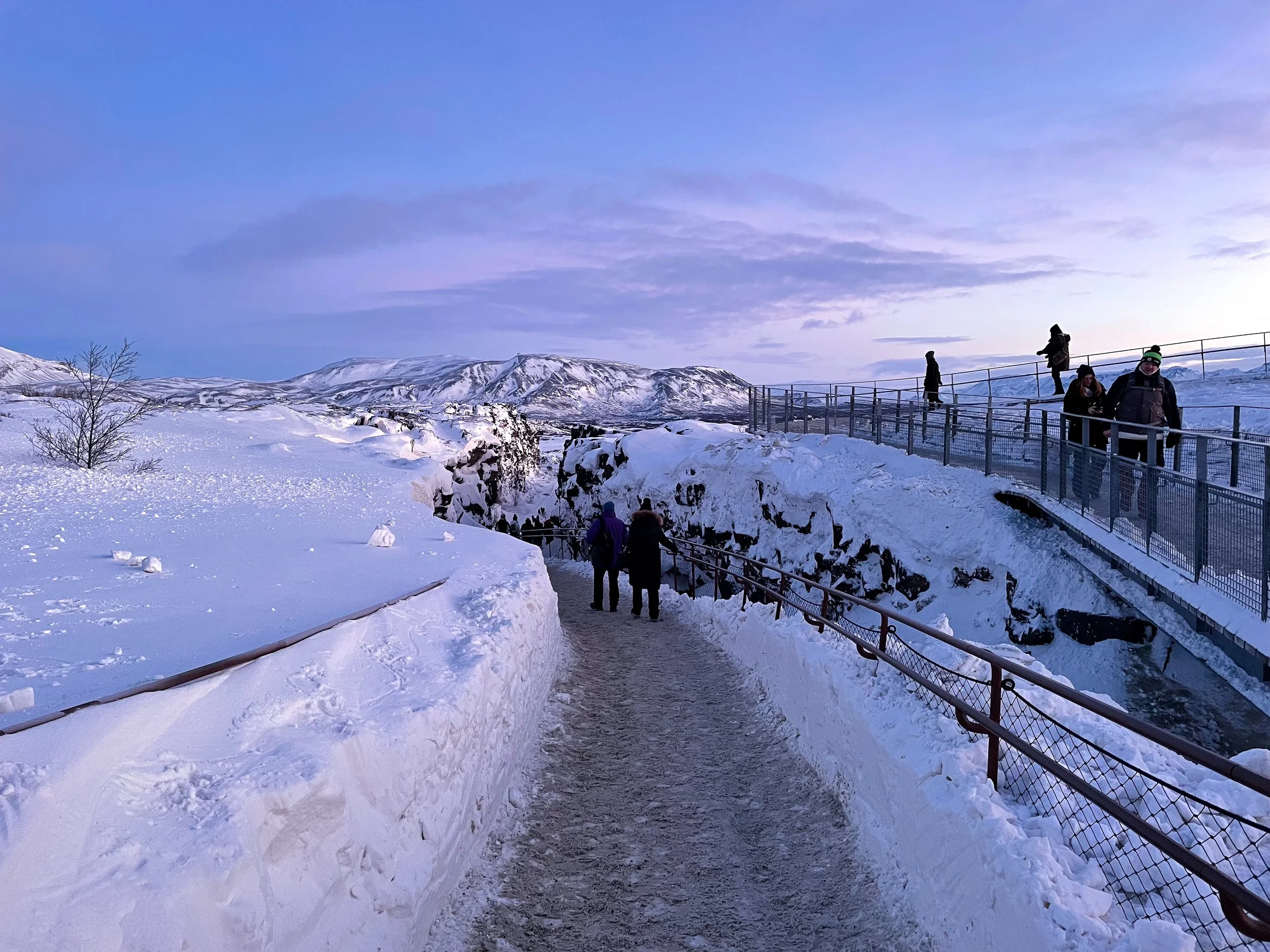
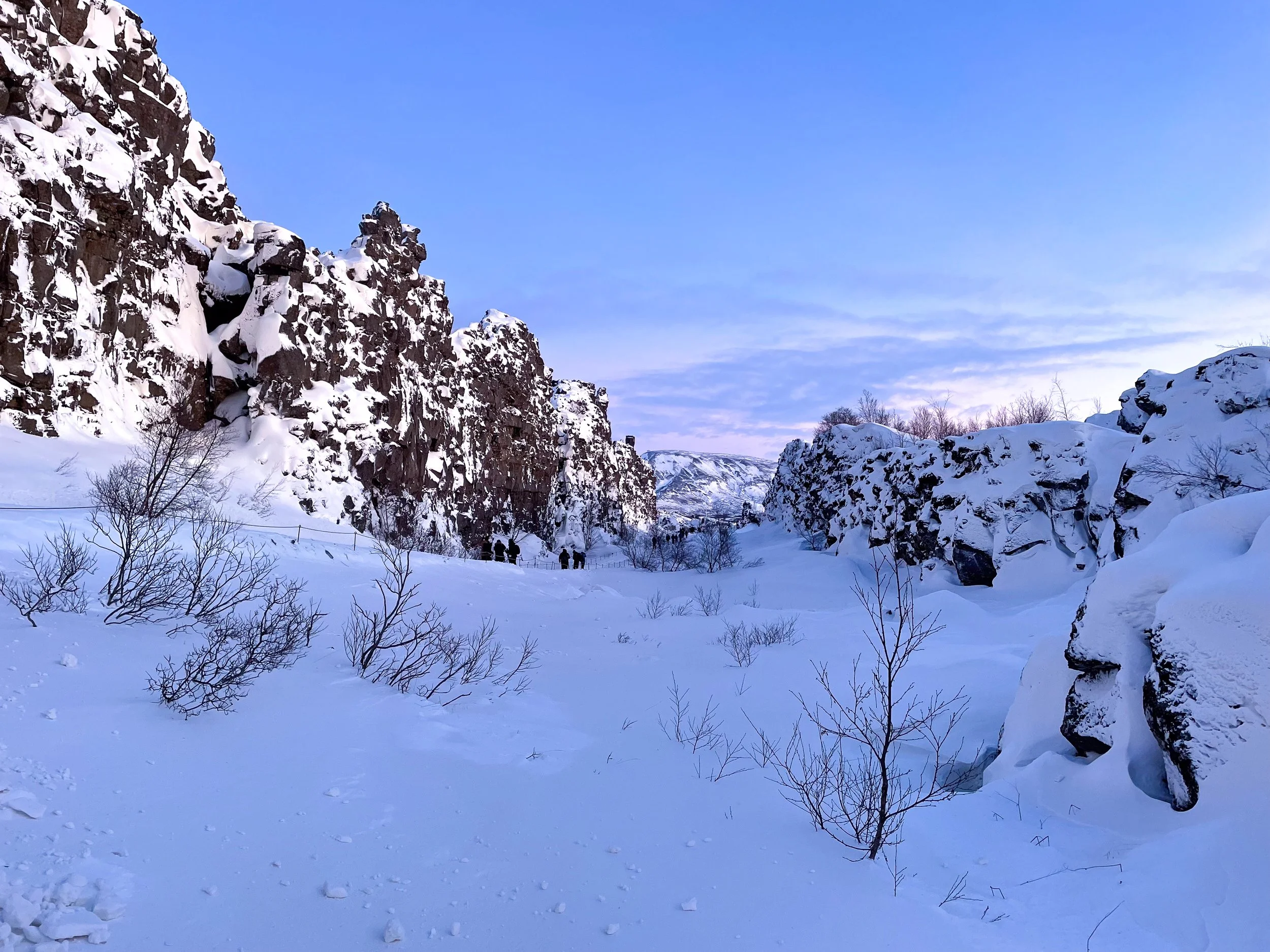
Almannagjá Fault Line
The Almannagjá Fault Line is the location where the North American and Eurasian plates are visibly pulling apart. We arrived just before sunrise. The sky was light pink and yellow in the early morning light, tones that were reflected by the white snow covered landscape. From a lookout, we admired the vast fissure that split the landscape in half, spanning for miles in both directions. After watching the sun rise, we followed a trail that descended into the fissure. On both sides of us were walls of jagged rocks dusted in fresh snow. The trail continued a few kilometers further.
Getting Here. The Almannagjá Fault Line is located about 45 minutes to 1 hour from Reykjavík by car.
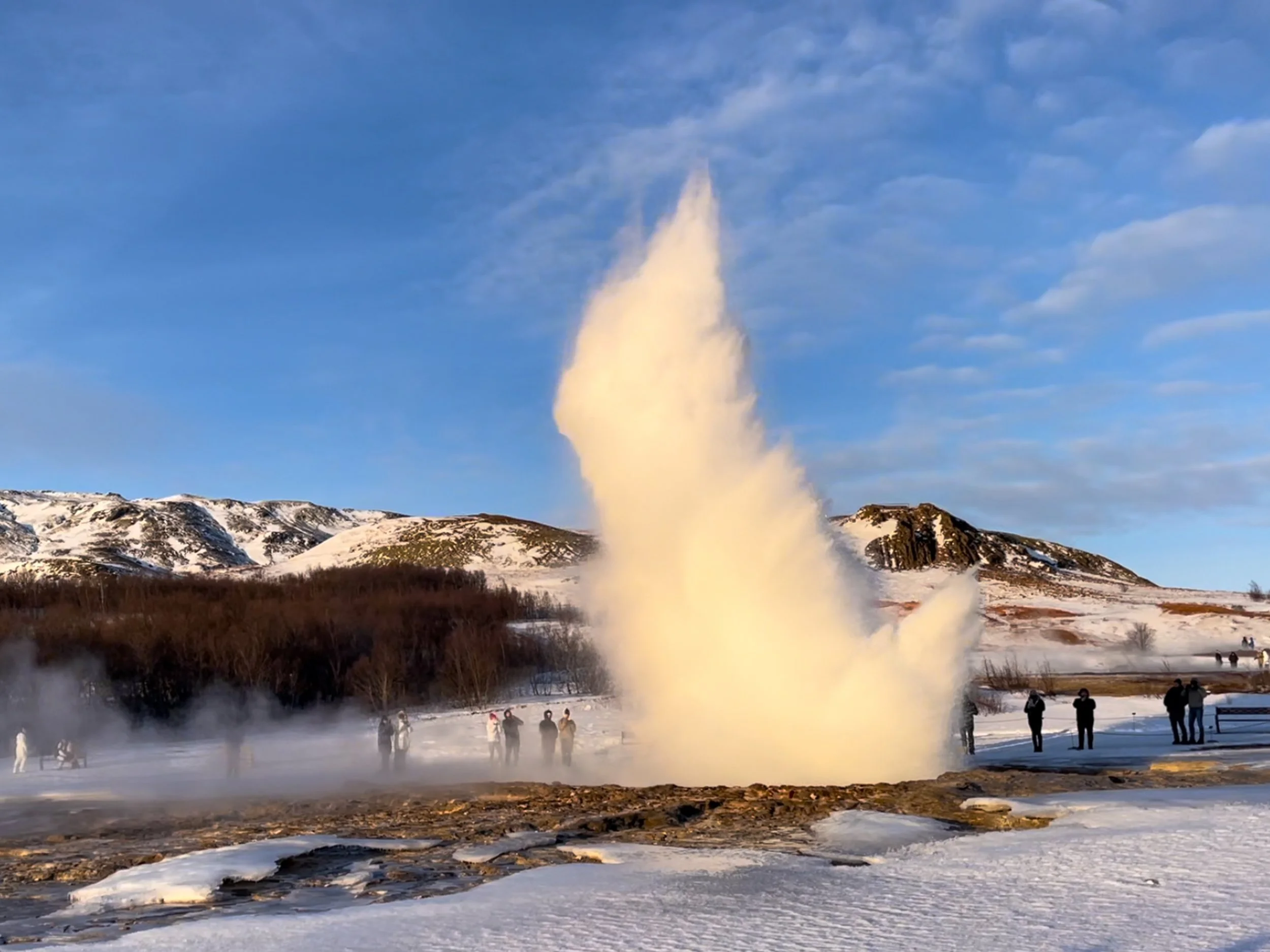
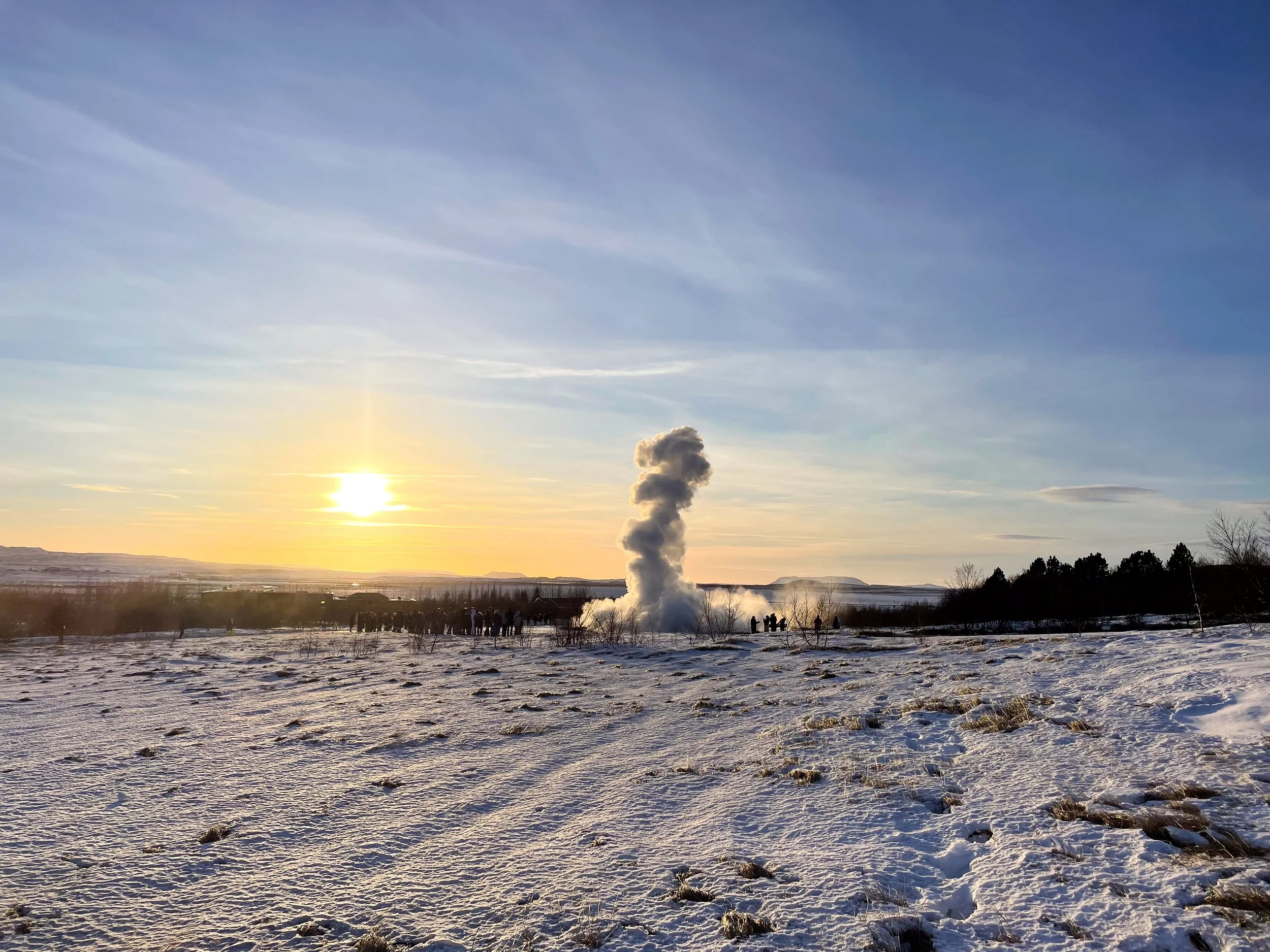
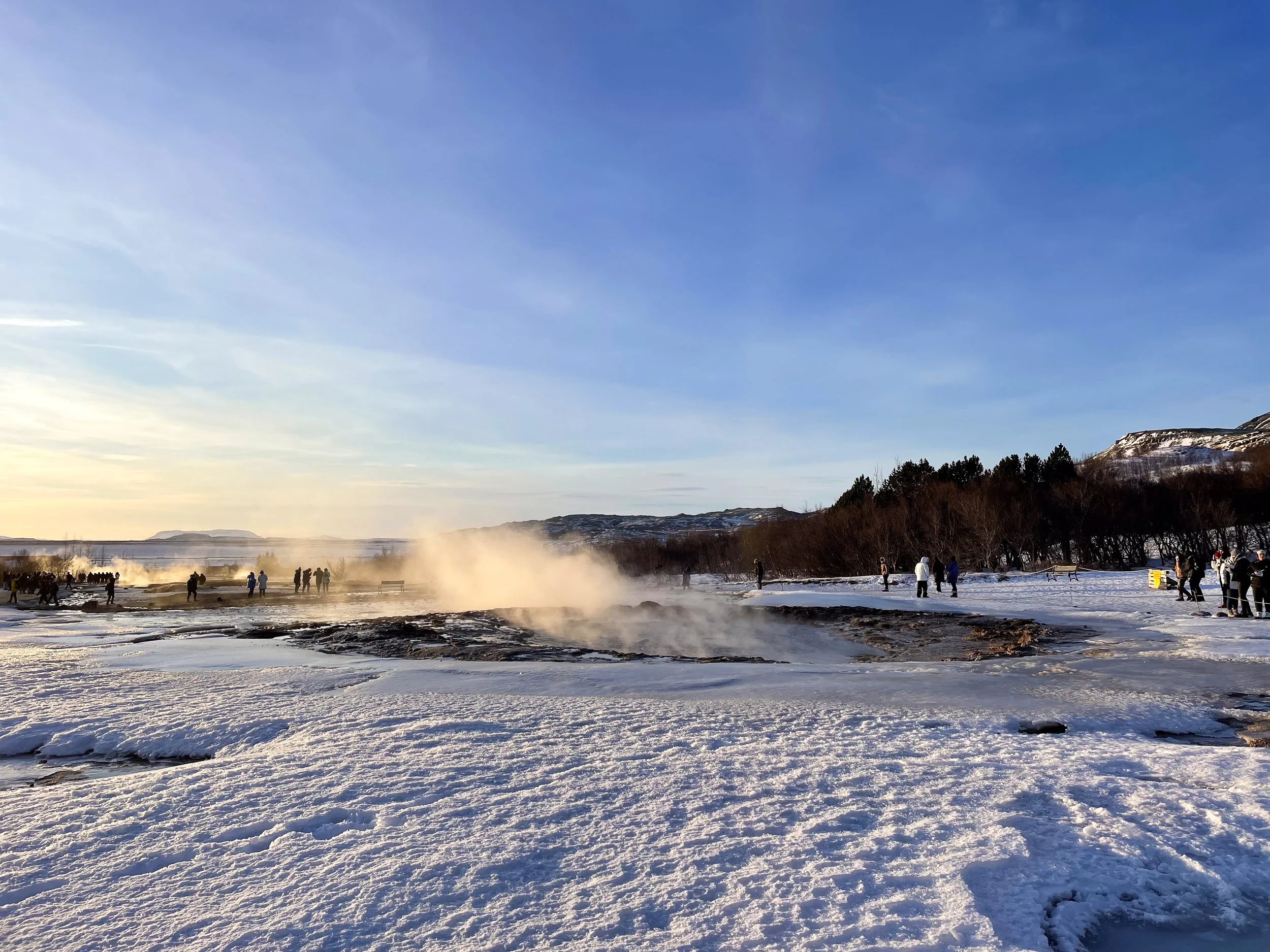
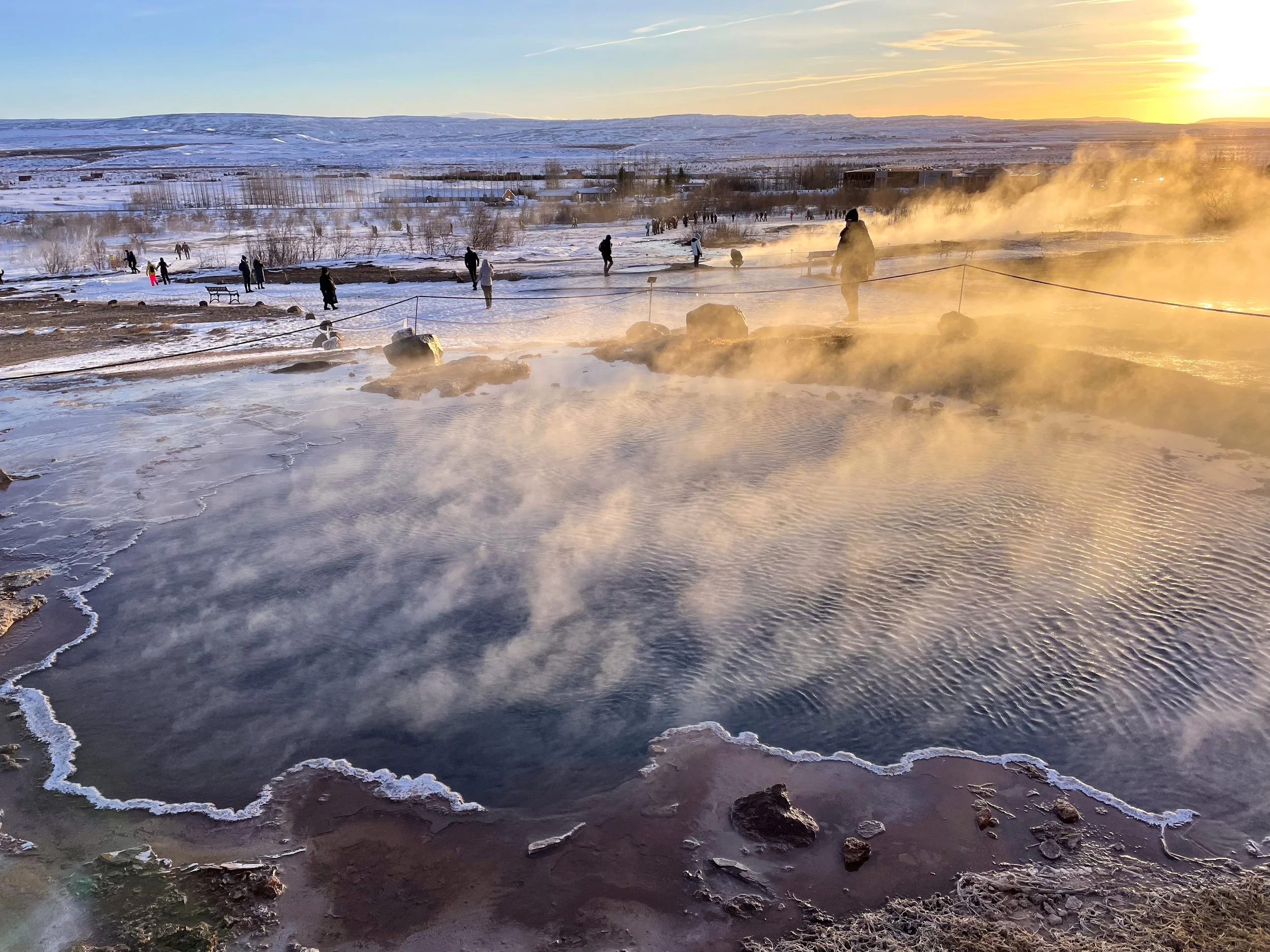
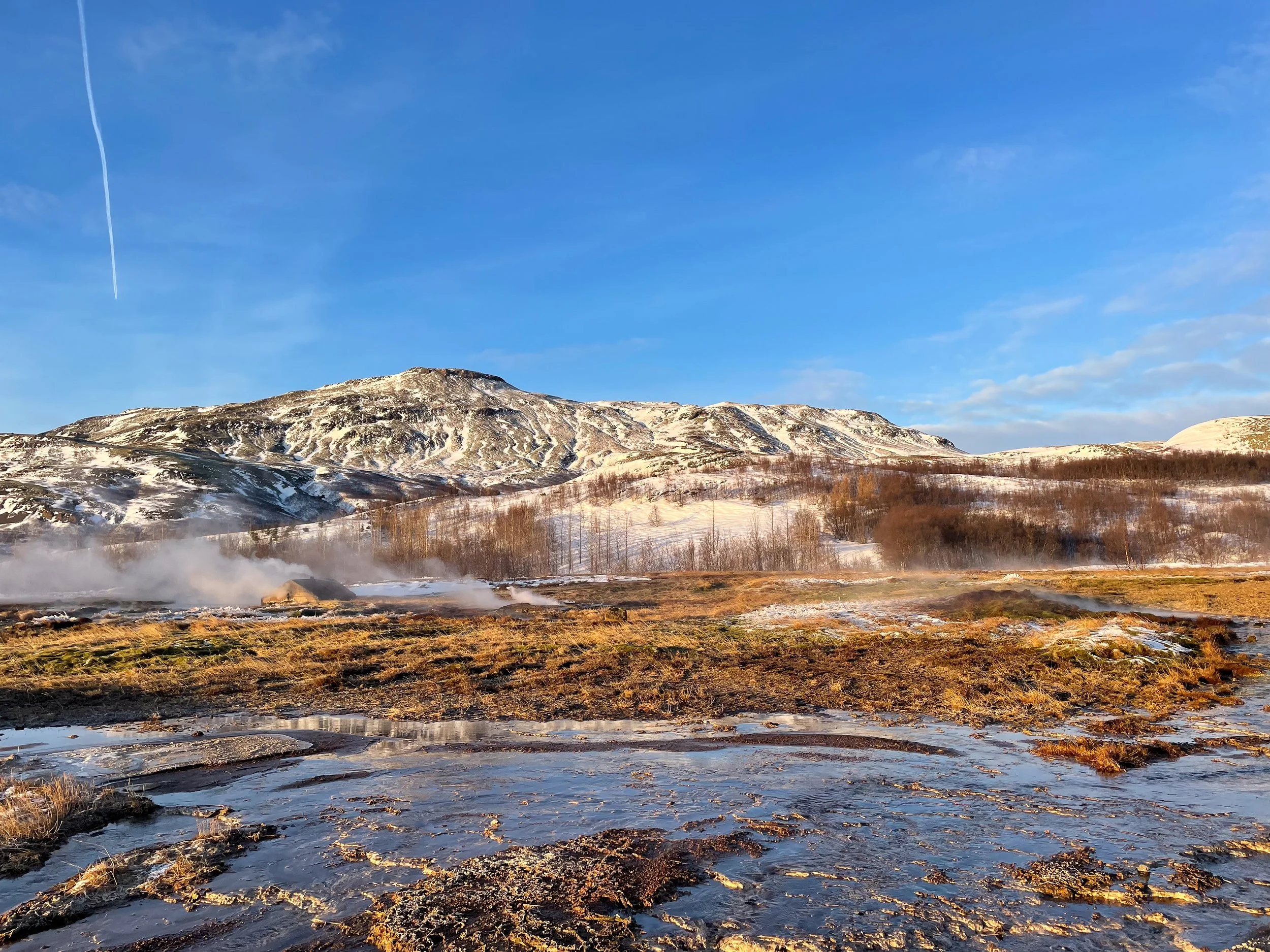
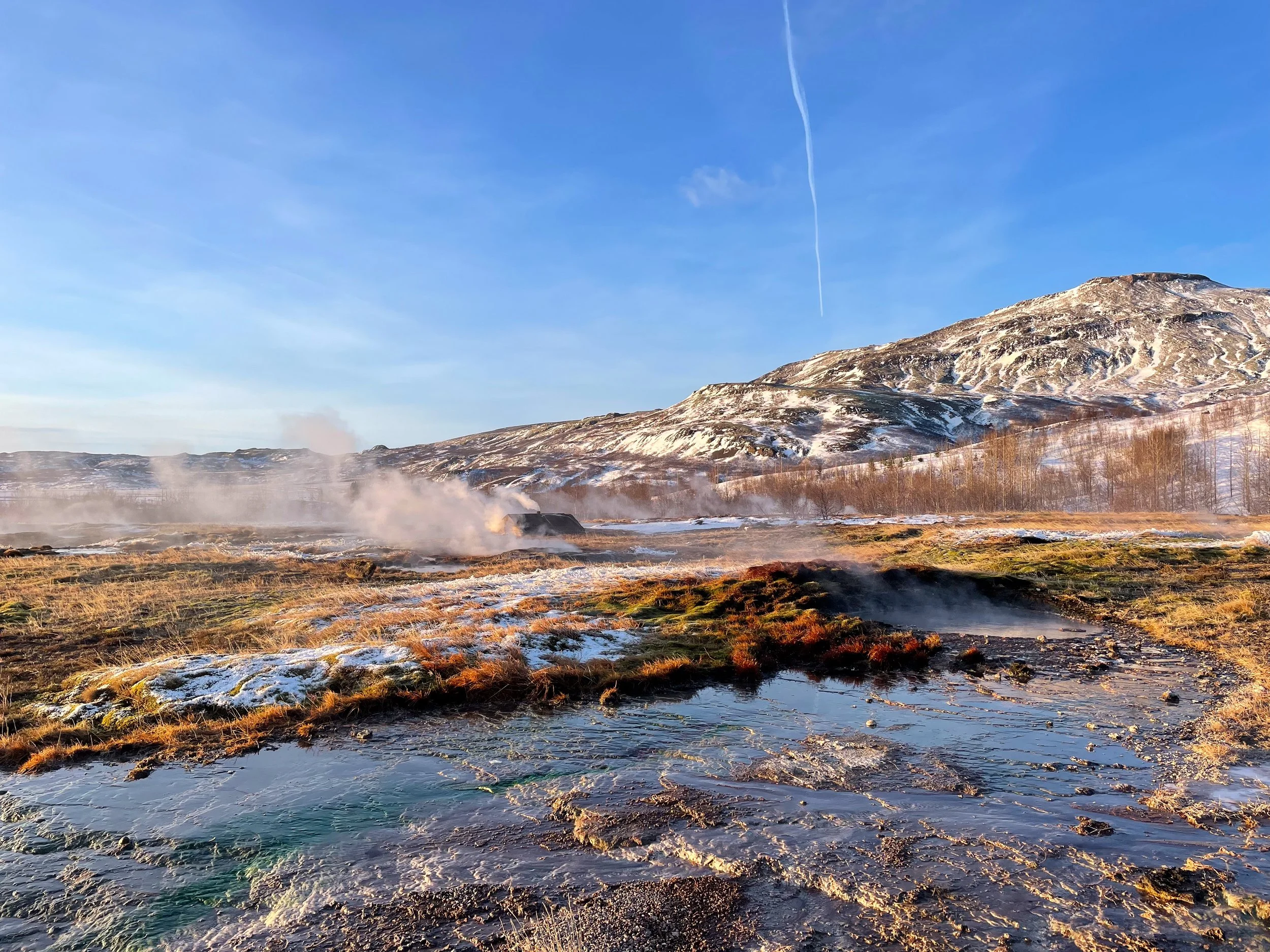
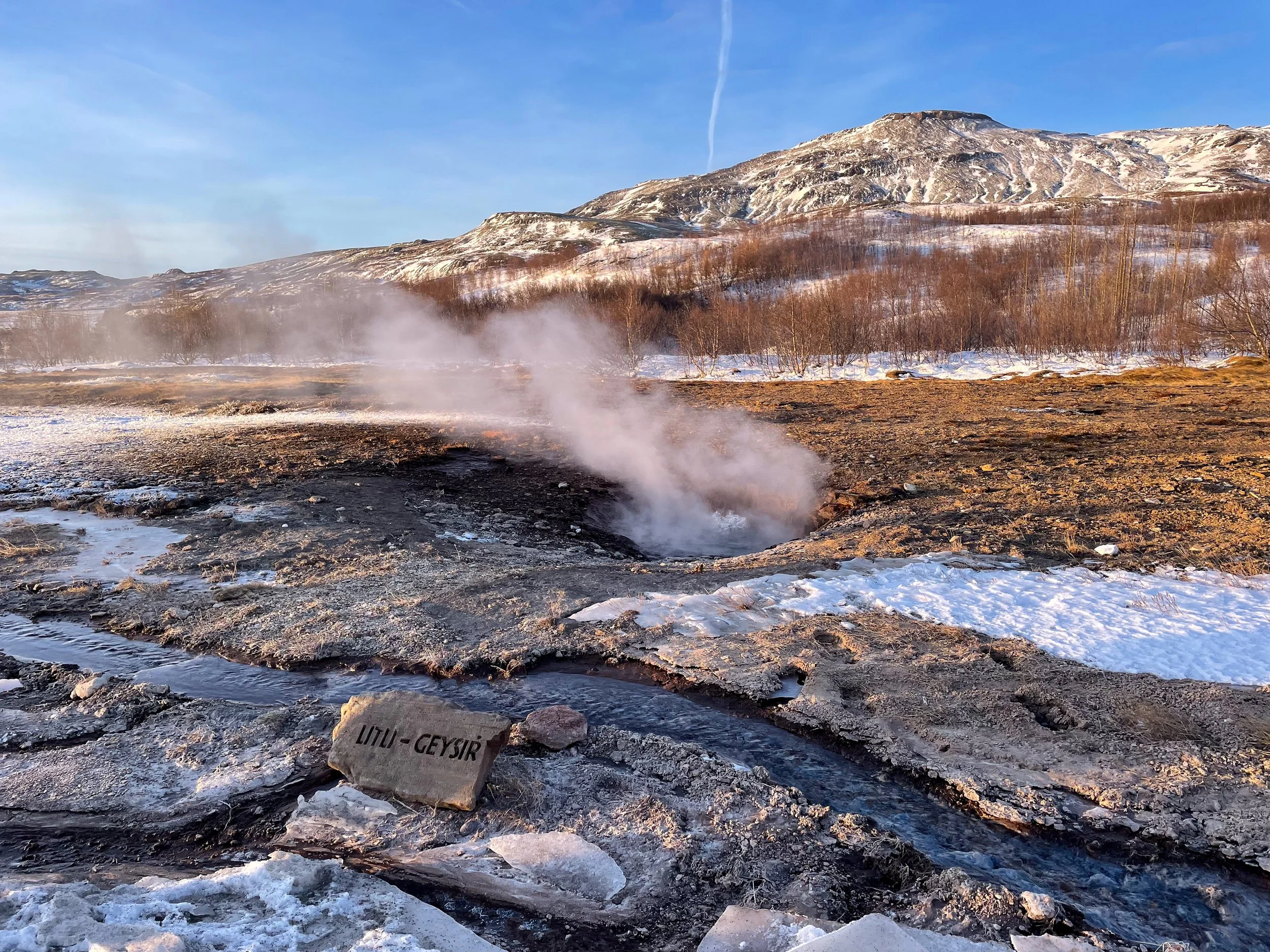
Strokkur Geyser
The Strokkur Geyser is an active geyser with impressive eruptions happing every 5-15 minutes. We arrived as a cloud from a recent eruption billowed across the road in front of us. The smell of sulphur filled the air as boiling water bubbled from craters dotting the landscape around us. Soon after reaching the geyser, it erupted in a whoosh, sending steam and water 30 meters high. We walked to several other geysers in the area as the Strokkur Geyser routinely erupted in the background.
Getting Here. The Strokkur Geyser is located about 1 hour from the Almannagjá Fault Line by car.
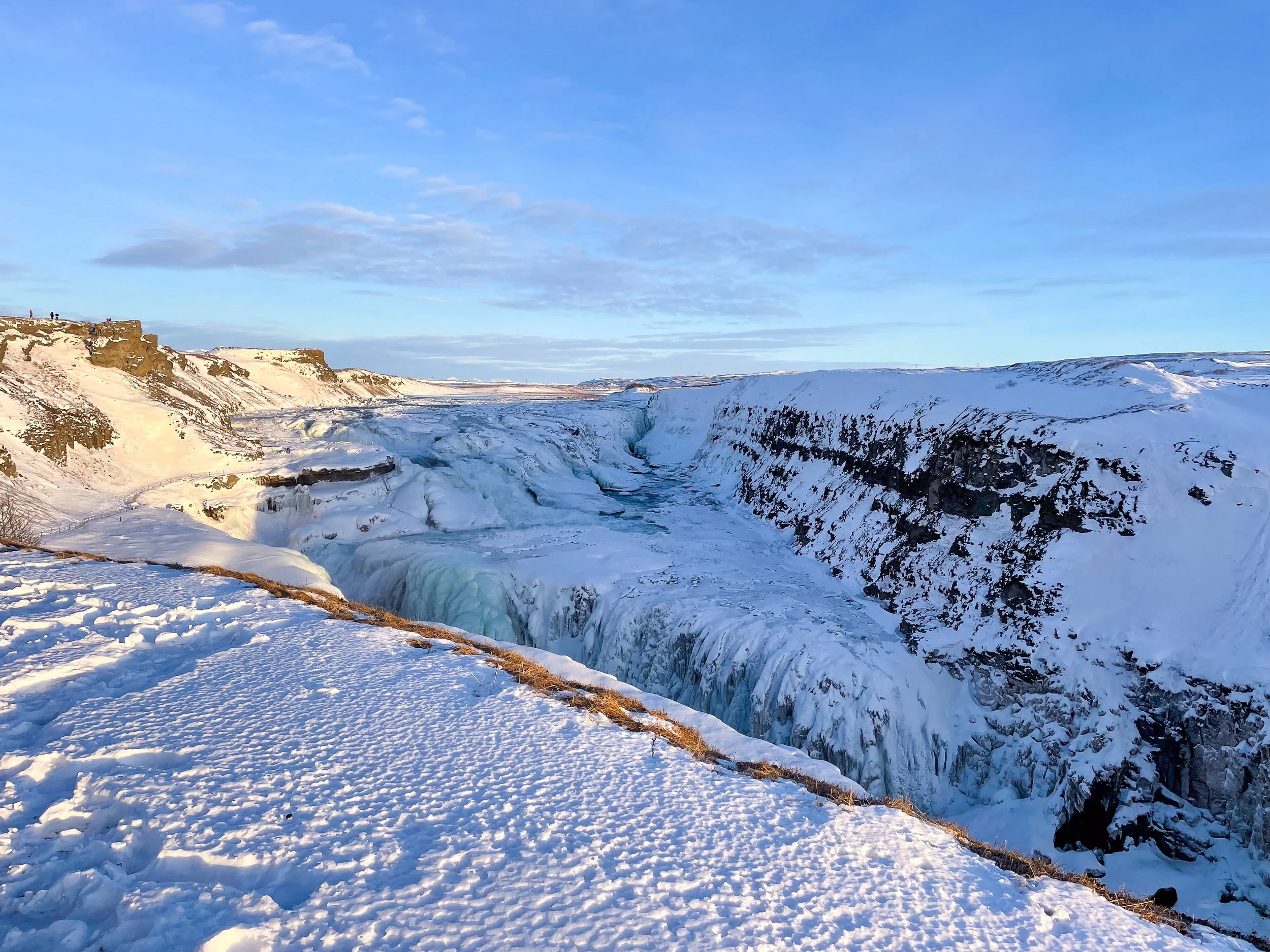
Gullfoss Waterfall
The Gullfoss Waterfall is a massive waterfall on the Hvita River. The river cascades down two diagonal cliffs over 100 feet into the canyon below. The waterfall and river were mostly frozen when we visited but none-the-less dramatic.
Getting Here. The Gullfoss Waterfall is located about 15 minutes from the Strokkur Geyser by car.
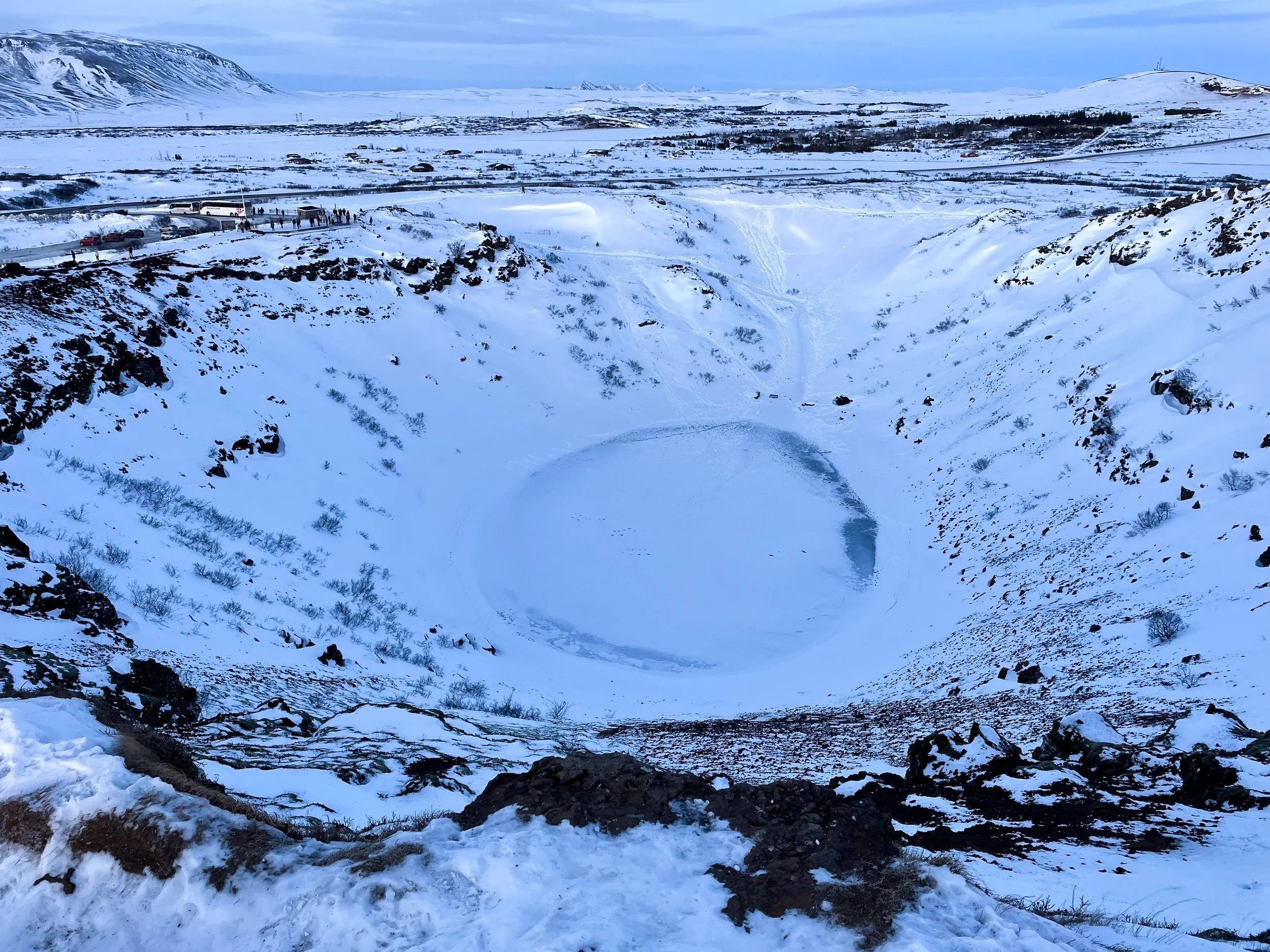
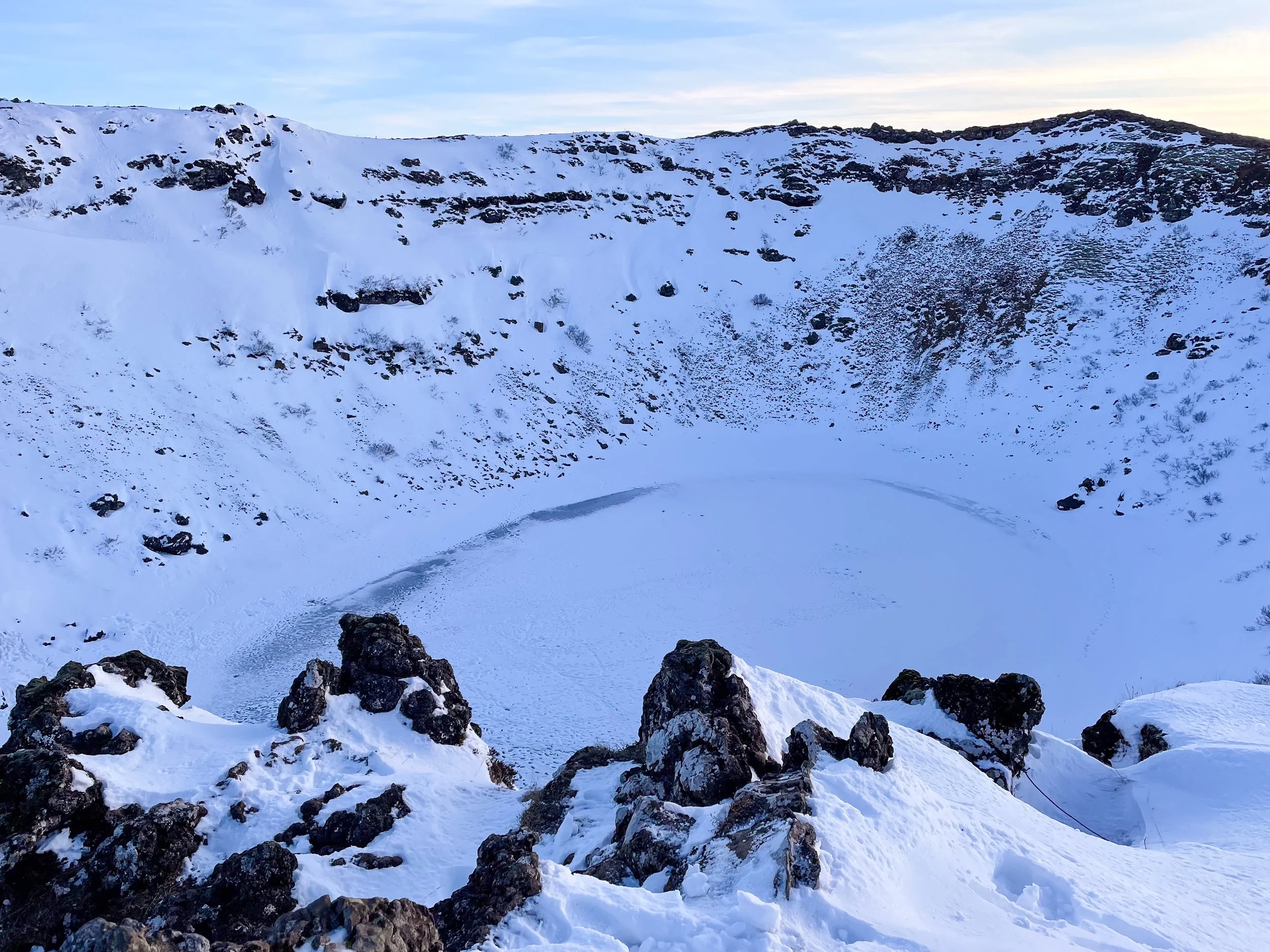
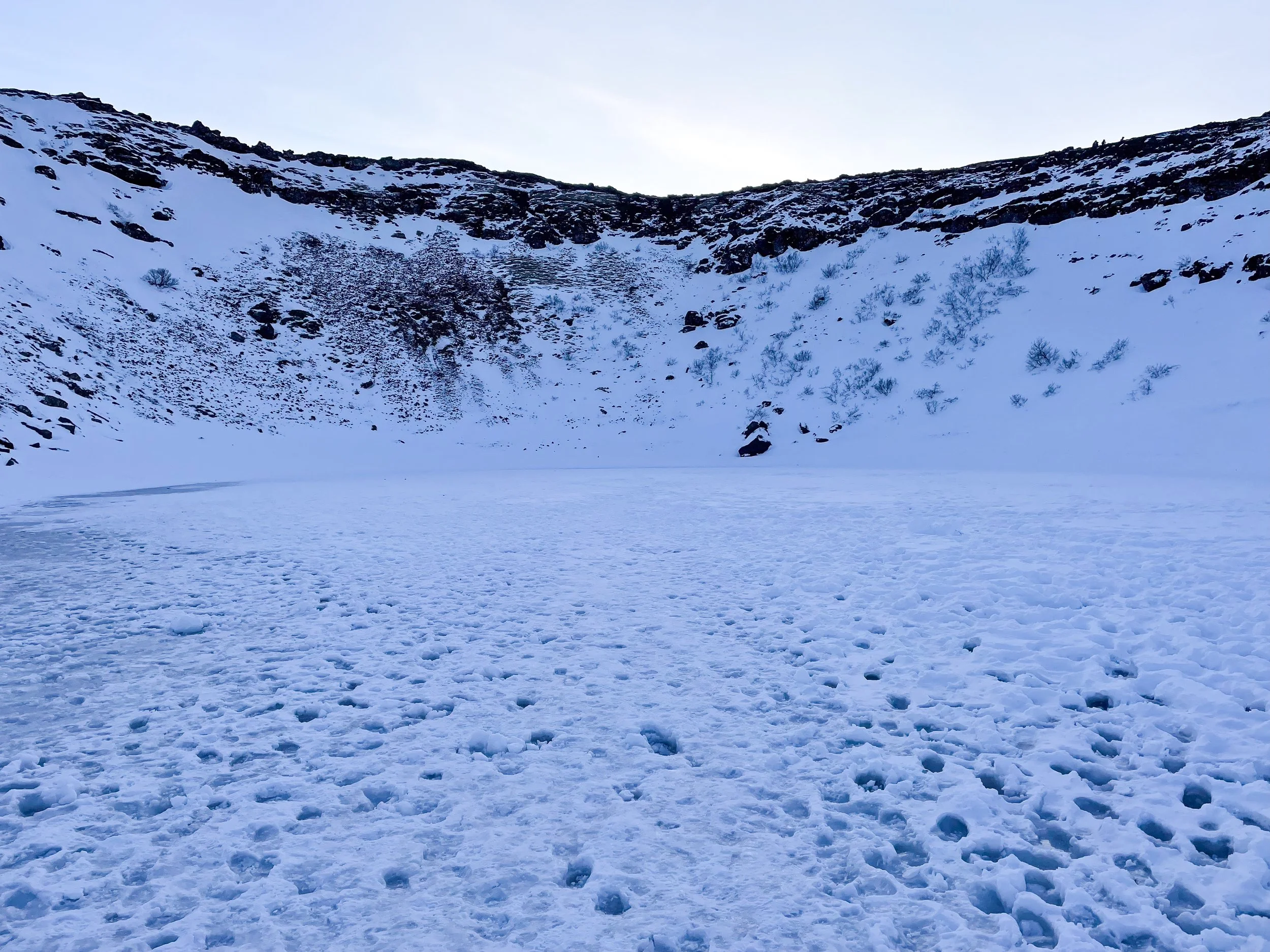
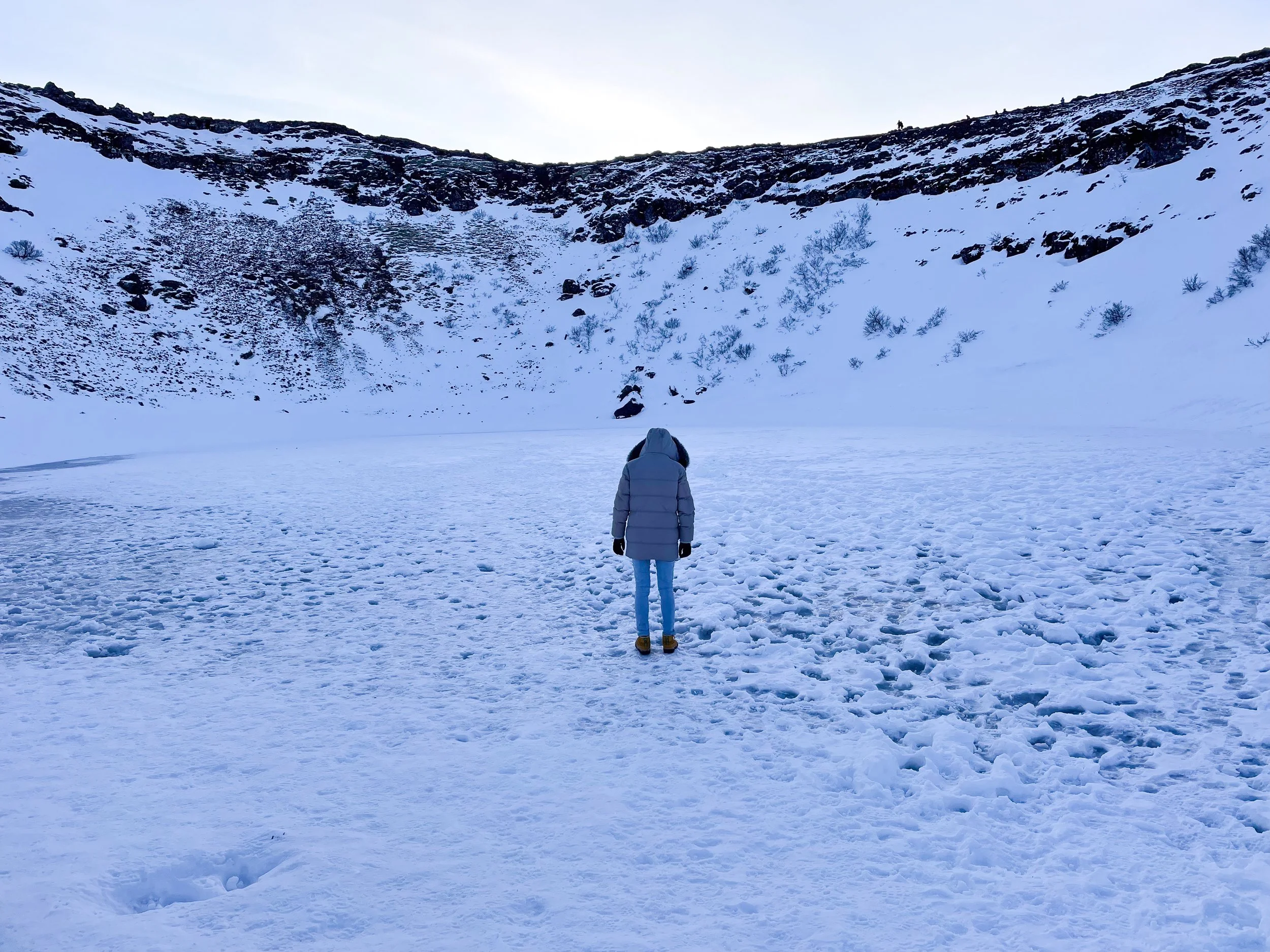
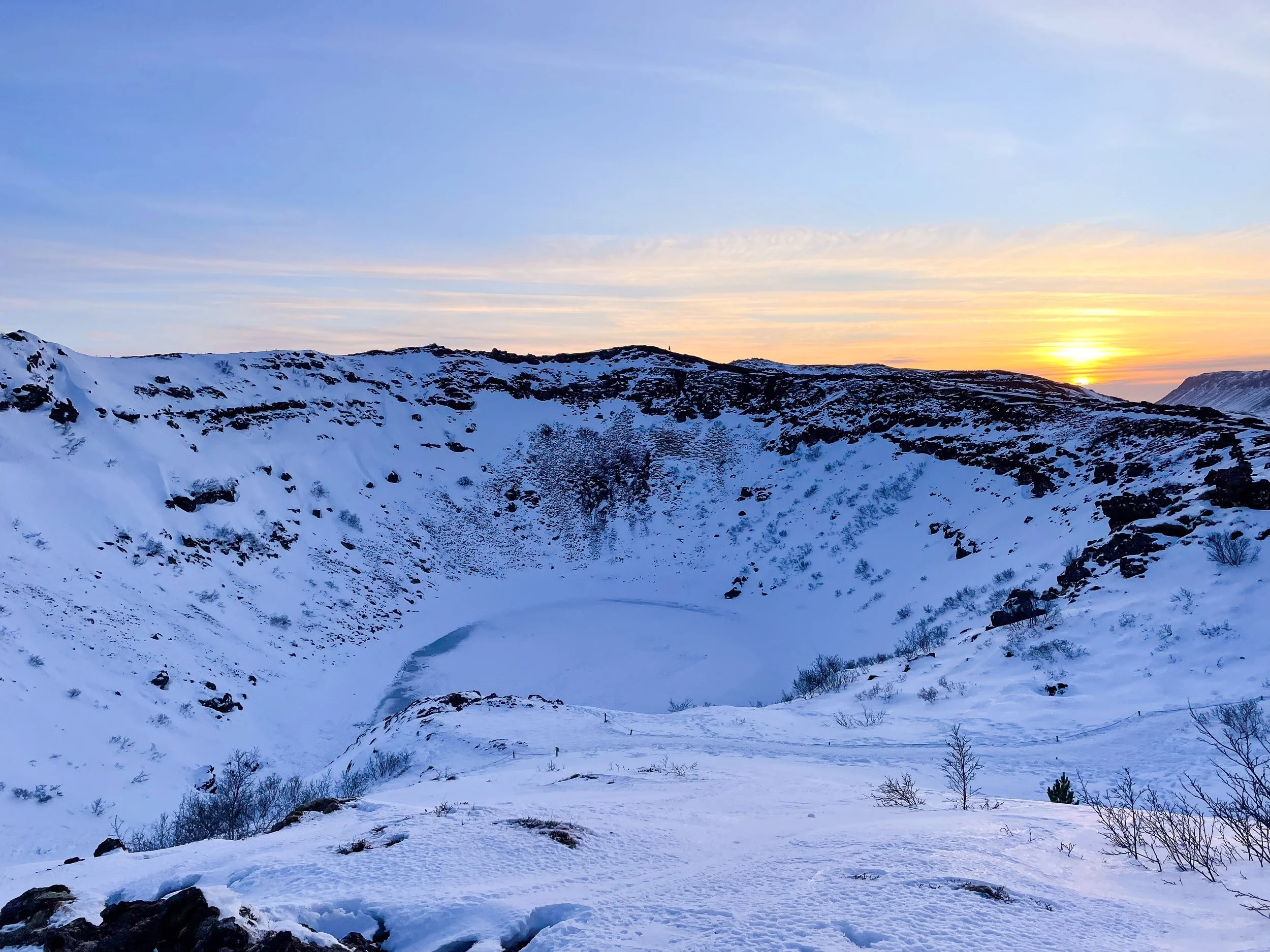
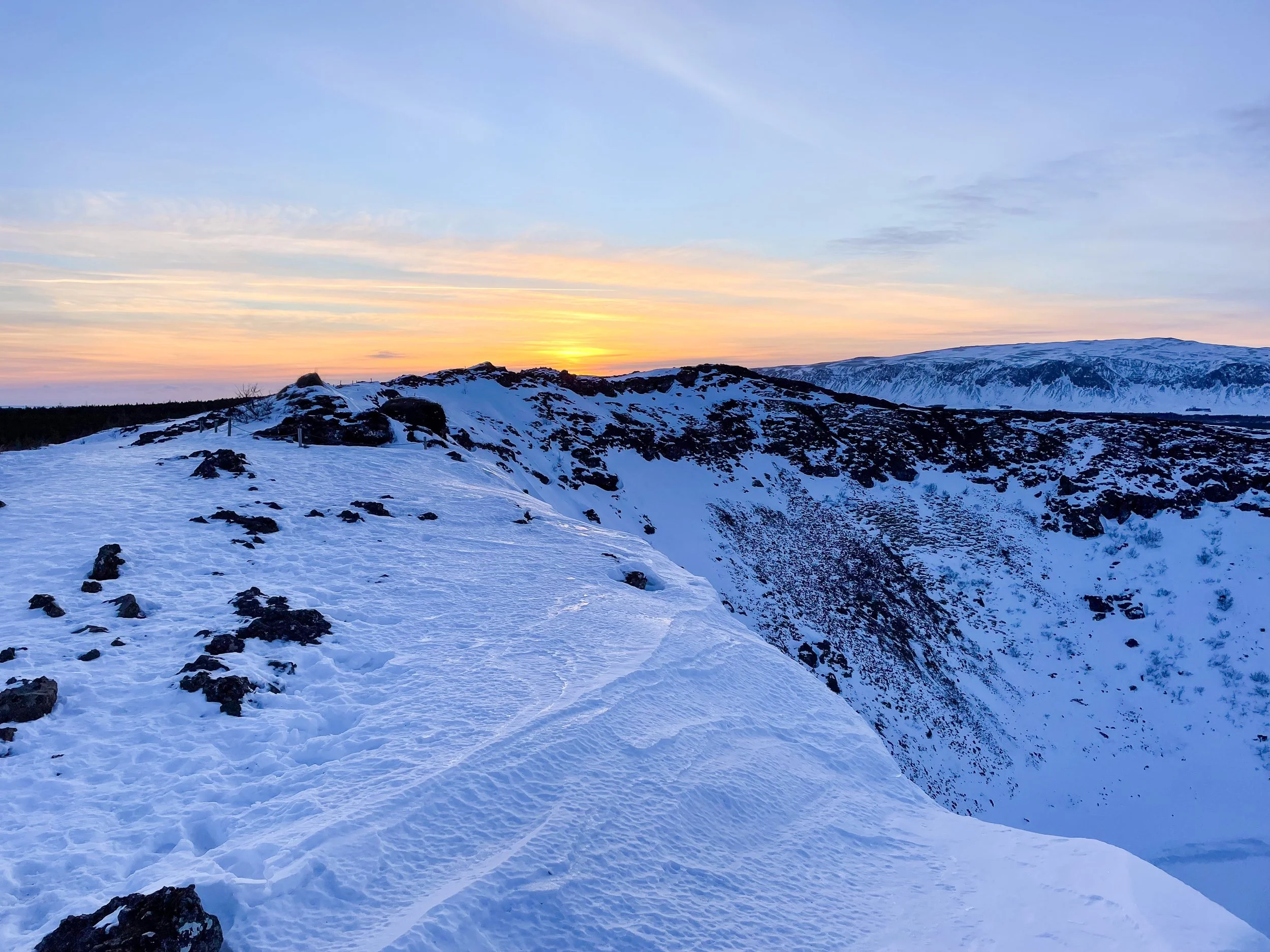
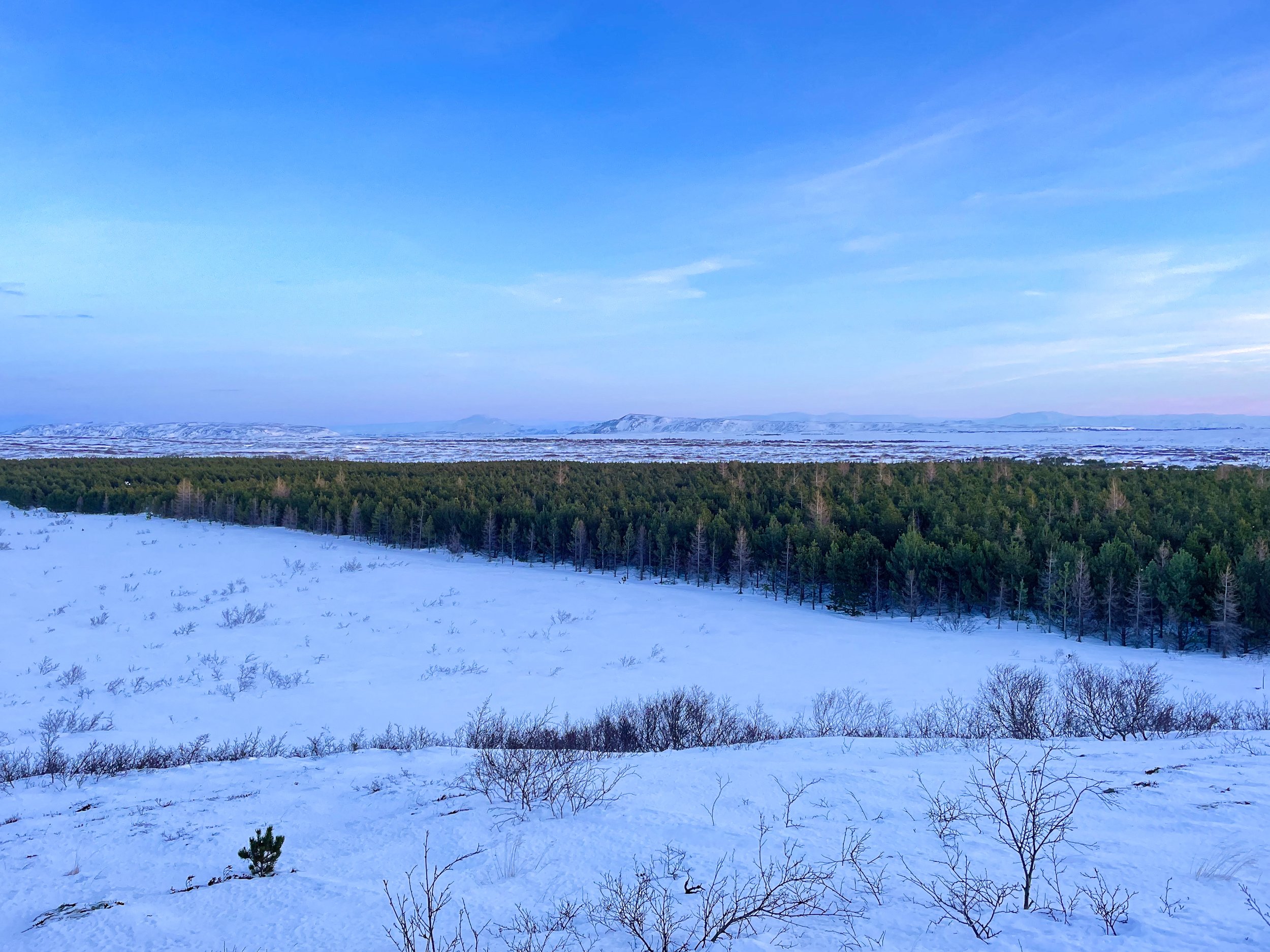
Kerið Crater Lake
The Kerið Crater Lake is a small lake located in the crater of an extinct volcano. The volcano is one of several forming a mini volcanic arc. While here, we hiked around the entire rim and descended into the crater. The lake was completely frozen over, allowing us to walk to its center. The steep snow covered pathways were extremely icy making it slightly dangerous but worth the hike.
Getting Here. The Kerið Crater Lake is located about 1 hour from the Gullfoss Waterfall by car.
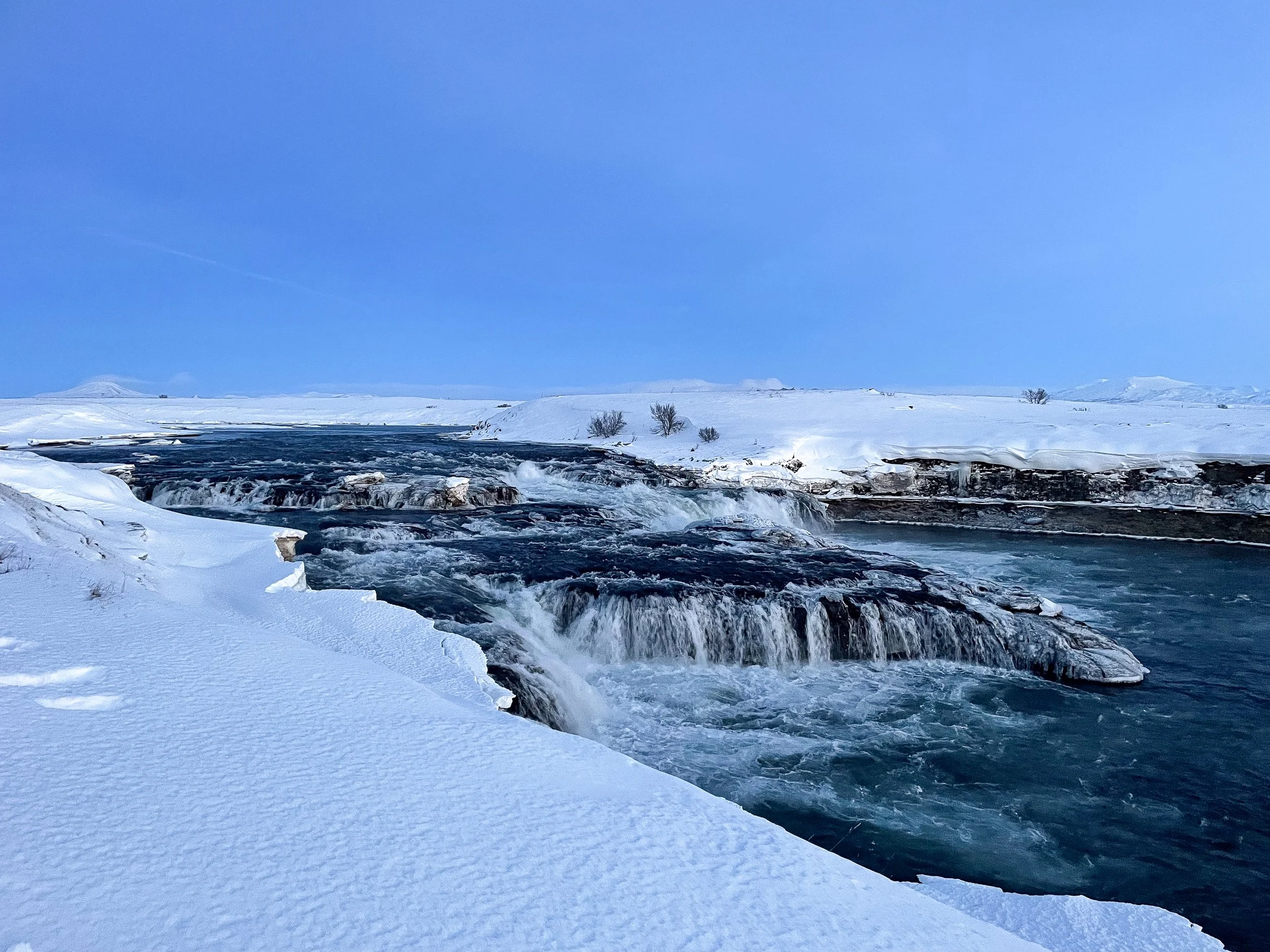
Ægissíðufoss Waterfall
Ægissíðufoss Waterfall is a small but beautiful cascading waterfall located on the Ytri-Rangá River in the town of Hella. The Hekla Volcano fumed in the distance upstream.
Getting Here. The Ægissíðufoss Waterfall is located about 15 minutes outside of the town of Hella by car.
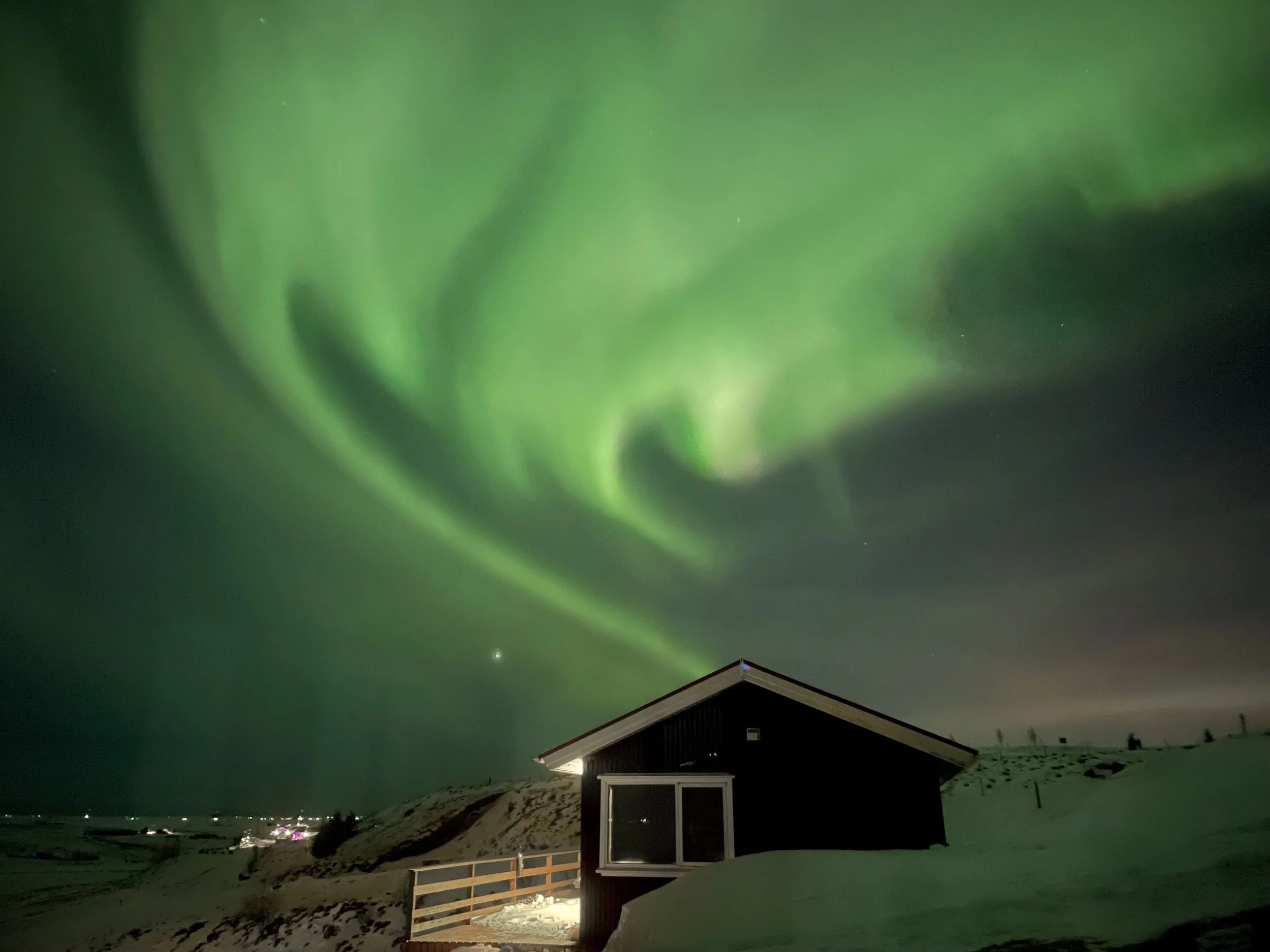
Our Cottage in Hella
After exploring the Golden Circle, we spent the remainder of our evening at a cottage in the town of Hella. The cottage was one of several perched on a hill overlooking a snow covered field. We made it our home base during our stay along Iceland’s southern coast. Book on Airbnb.
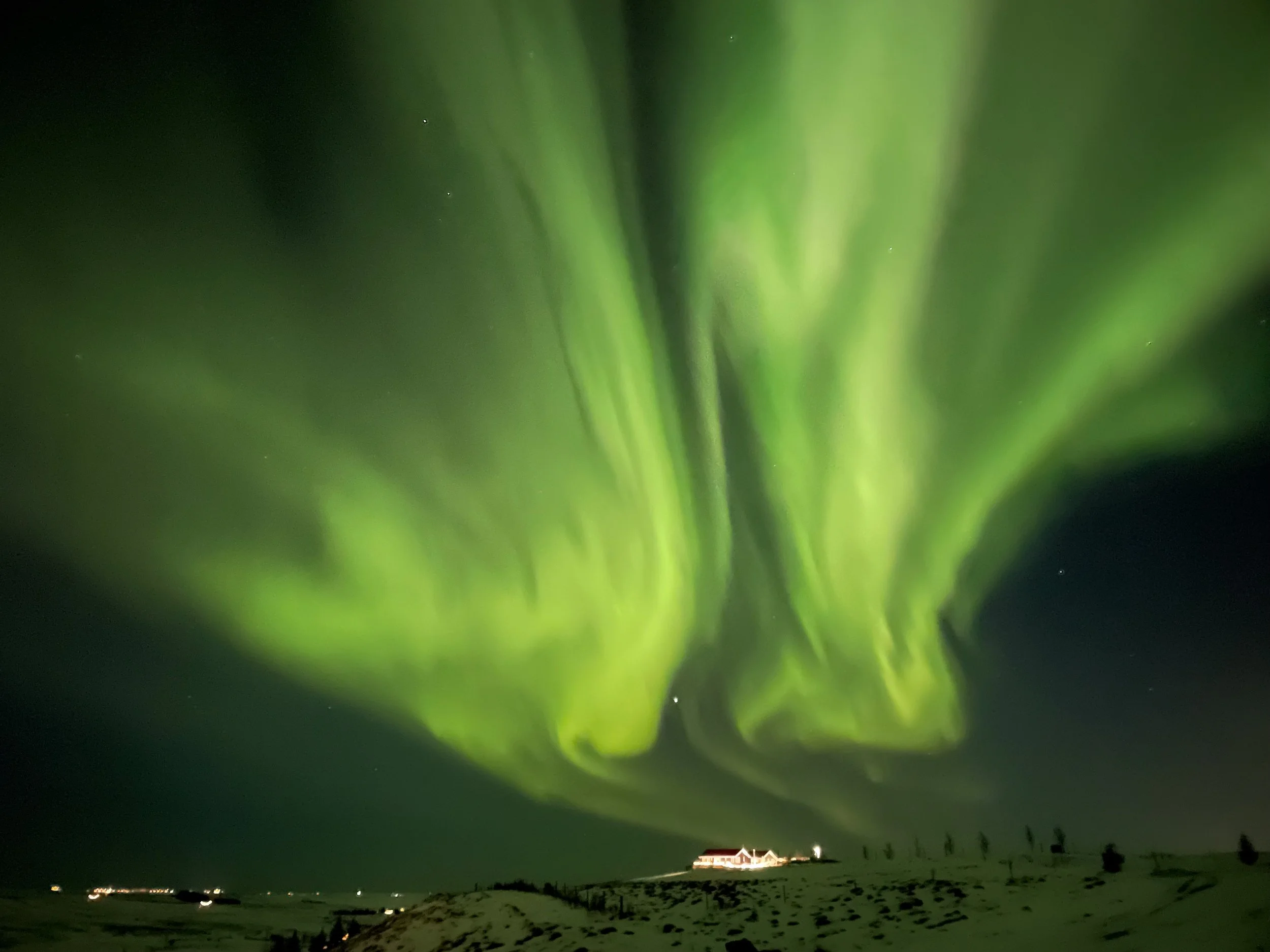
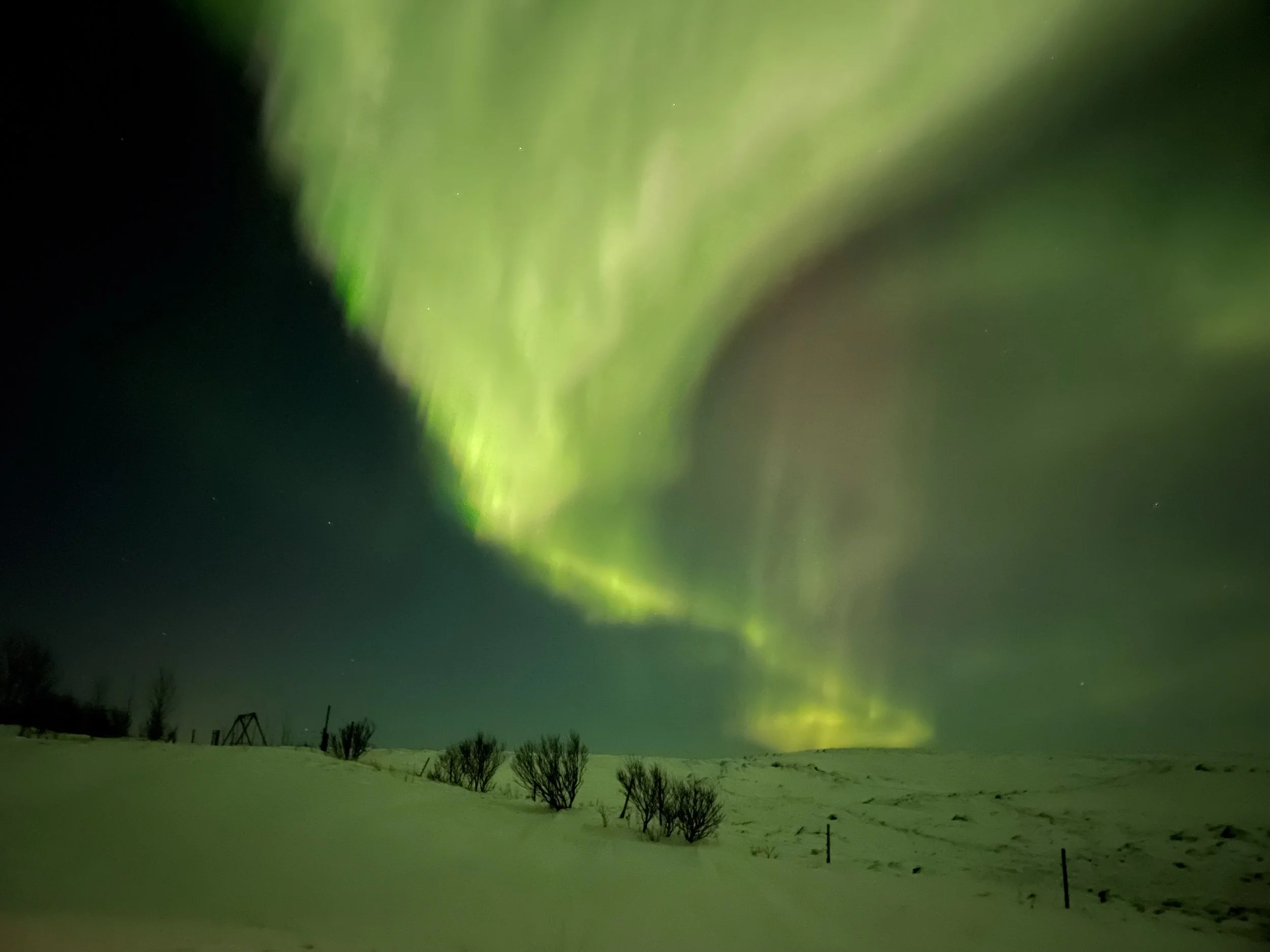
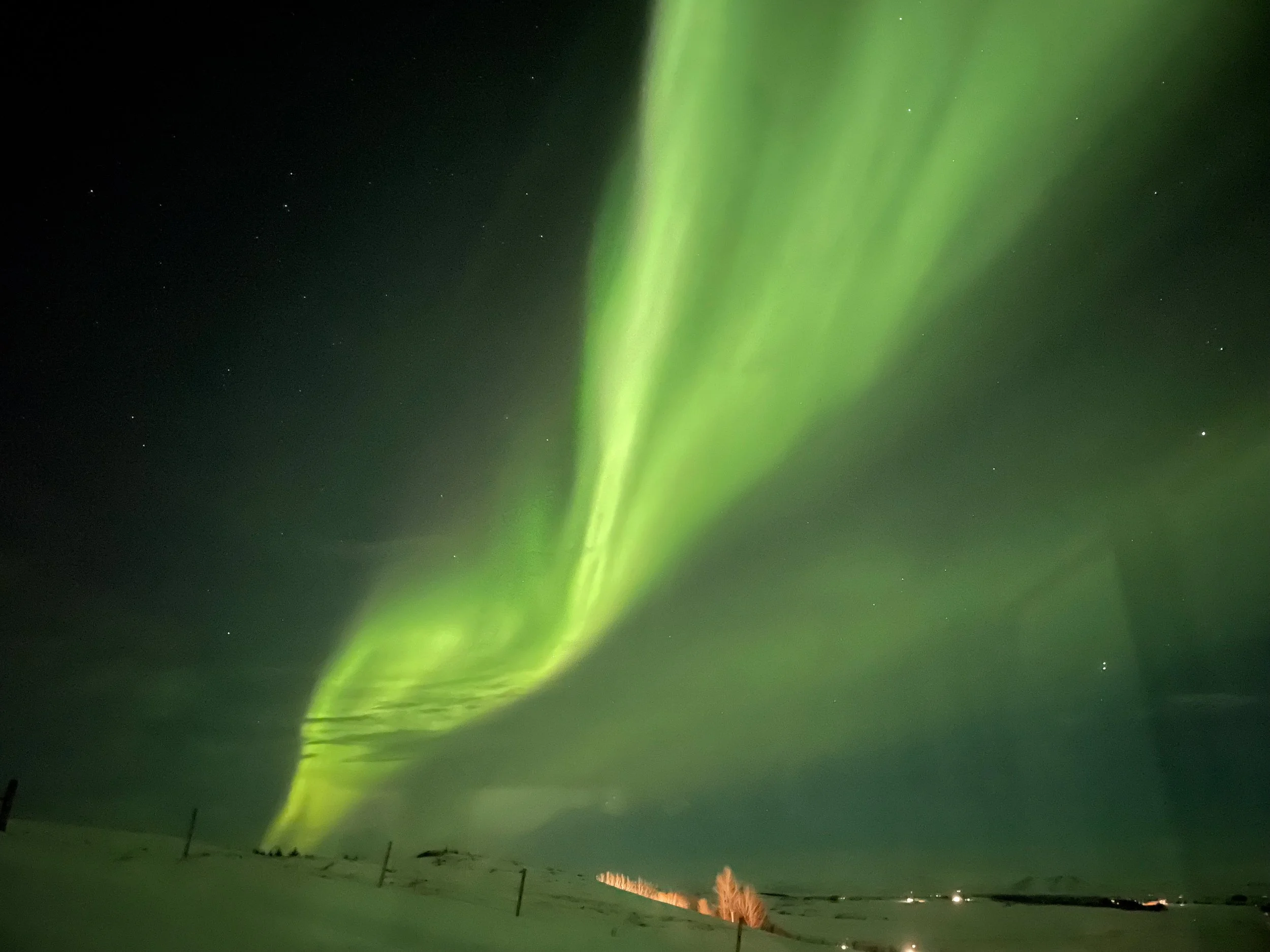
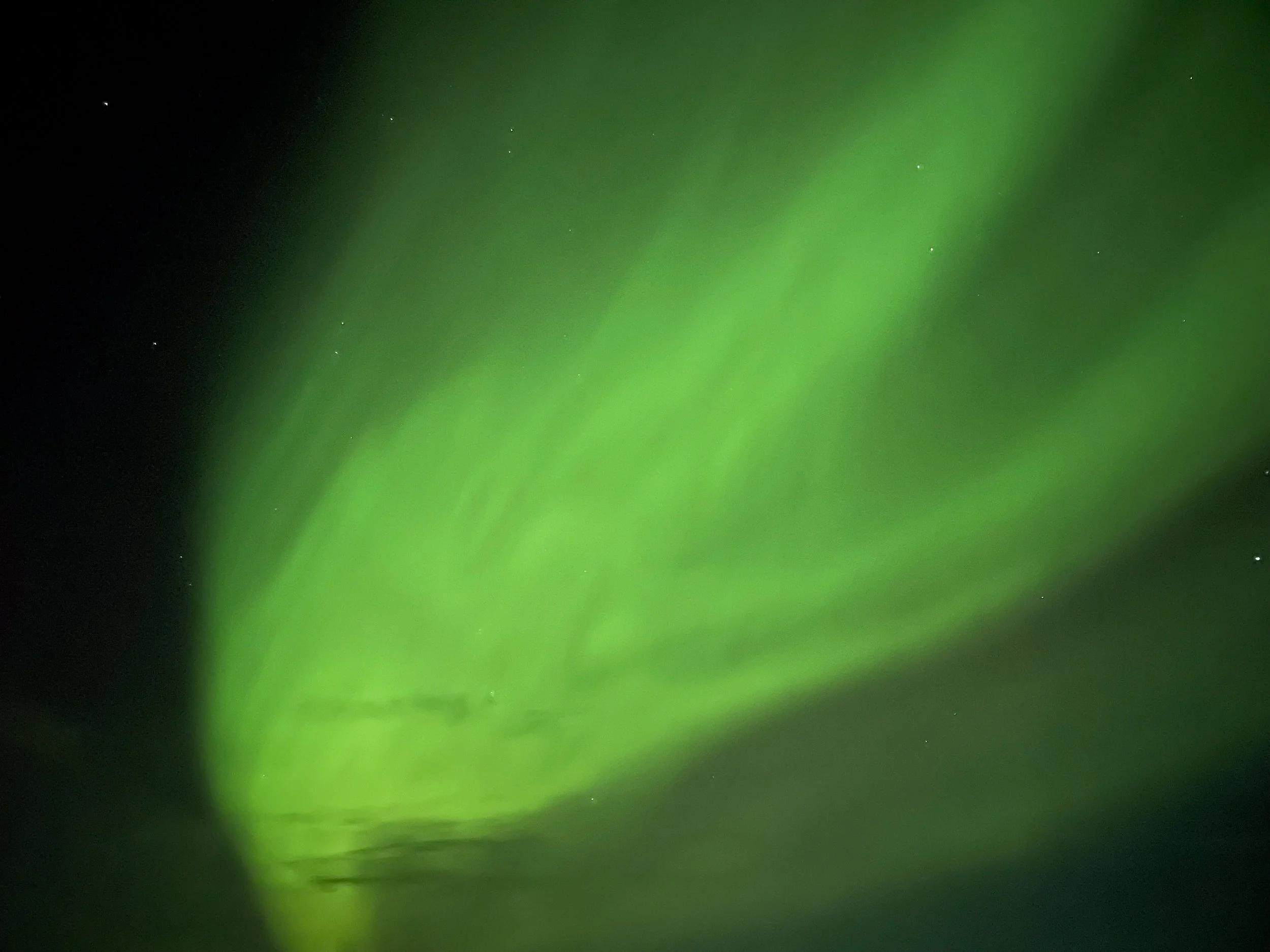
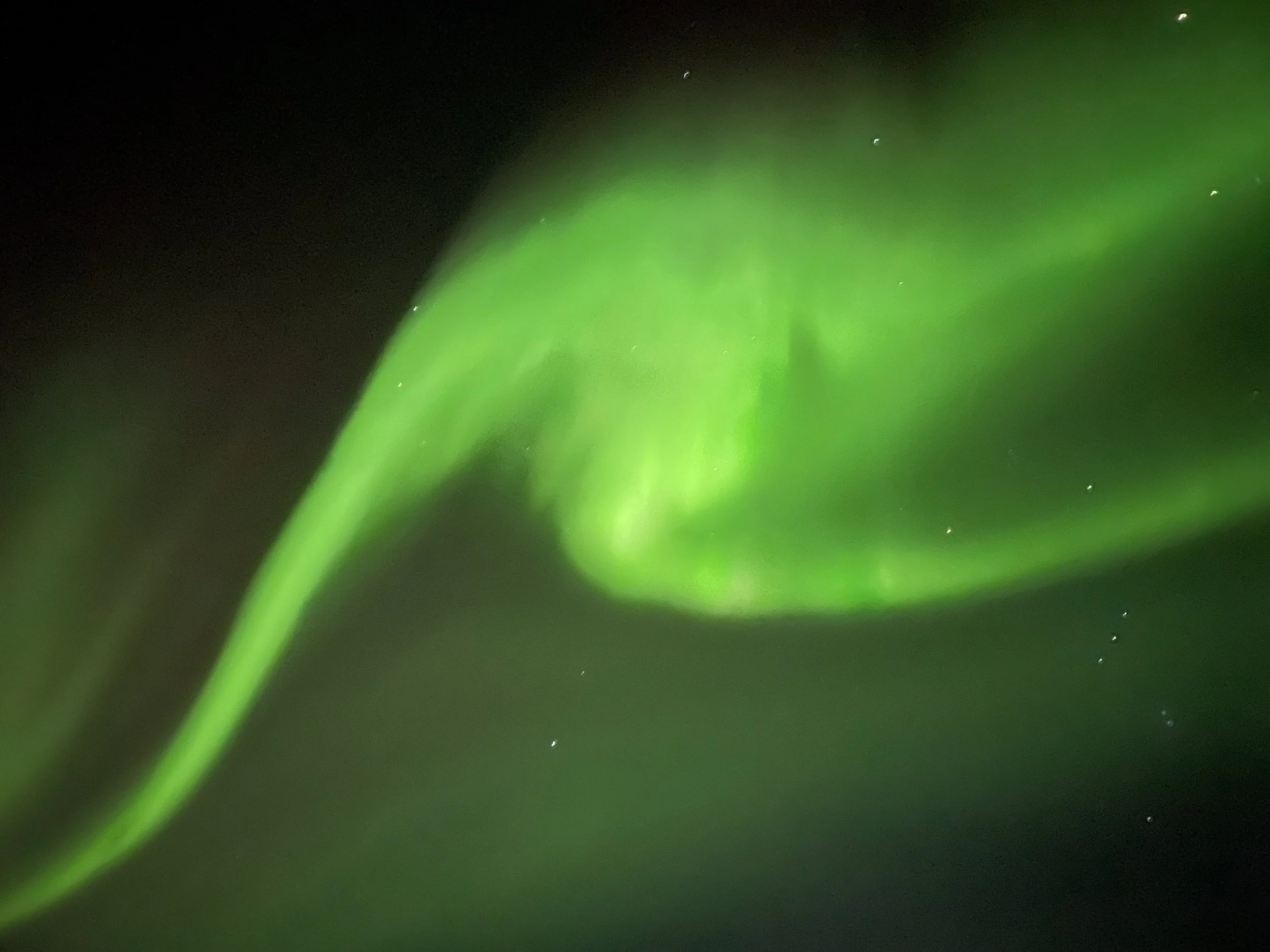
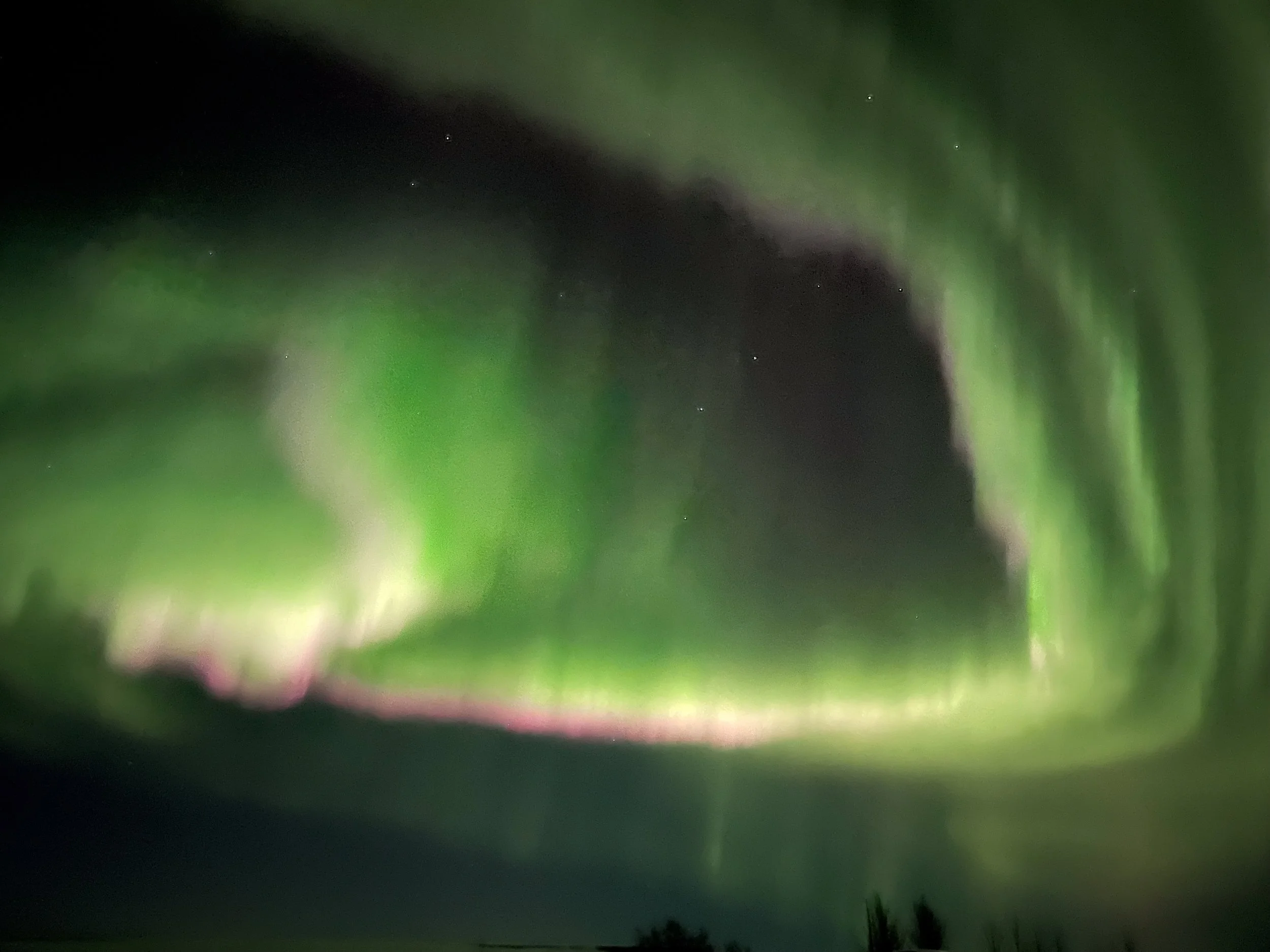
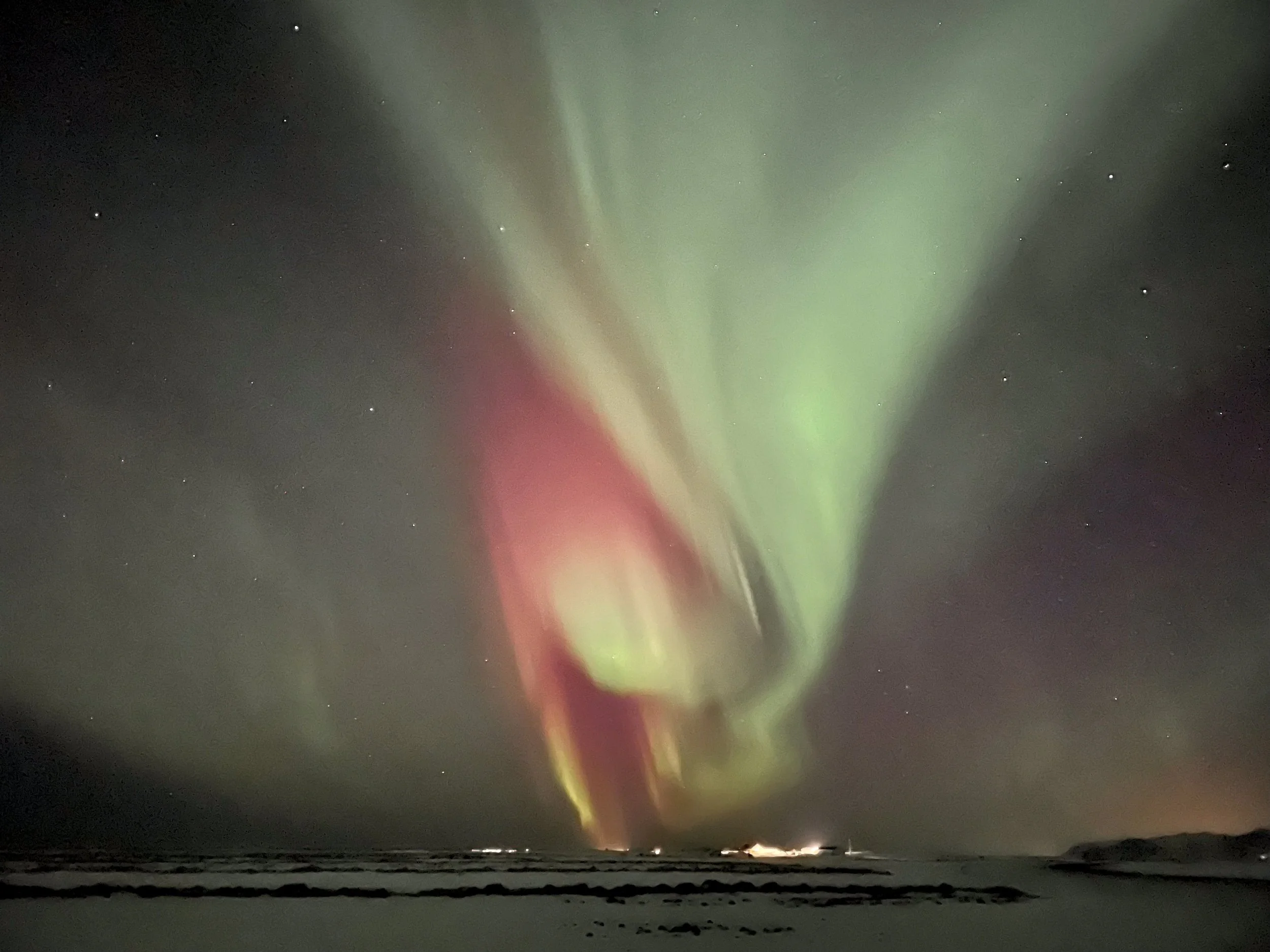
The Northern Lights
The Northern Lights danced in the sky above our cottage every morning and evening. The aurora ranged from faint ribbons of pale green to brilliant displays of neon green that swirled and stretched across the sky. There was even a rare combination of green and red bands. We monitored the aurora conditions using NOAA’s Space Weather Prediction Center.
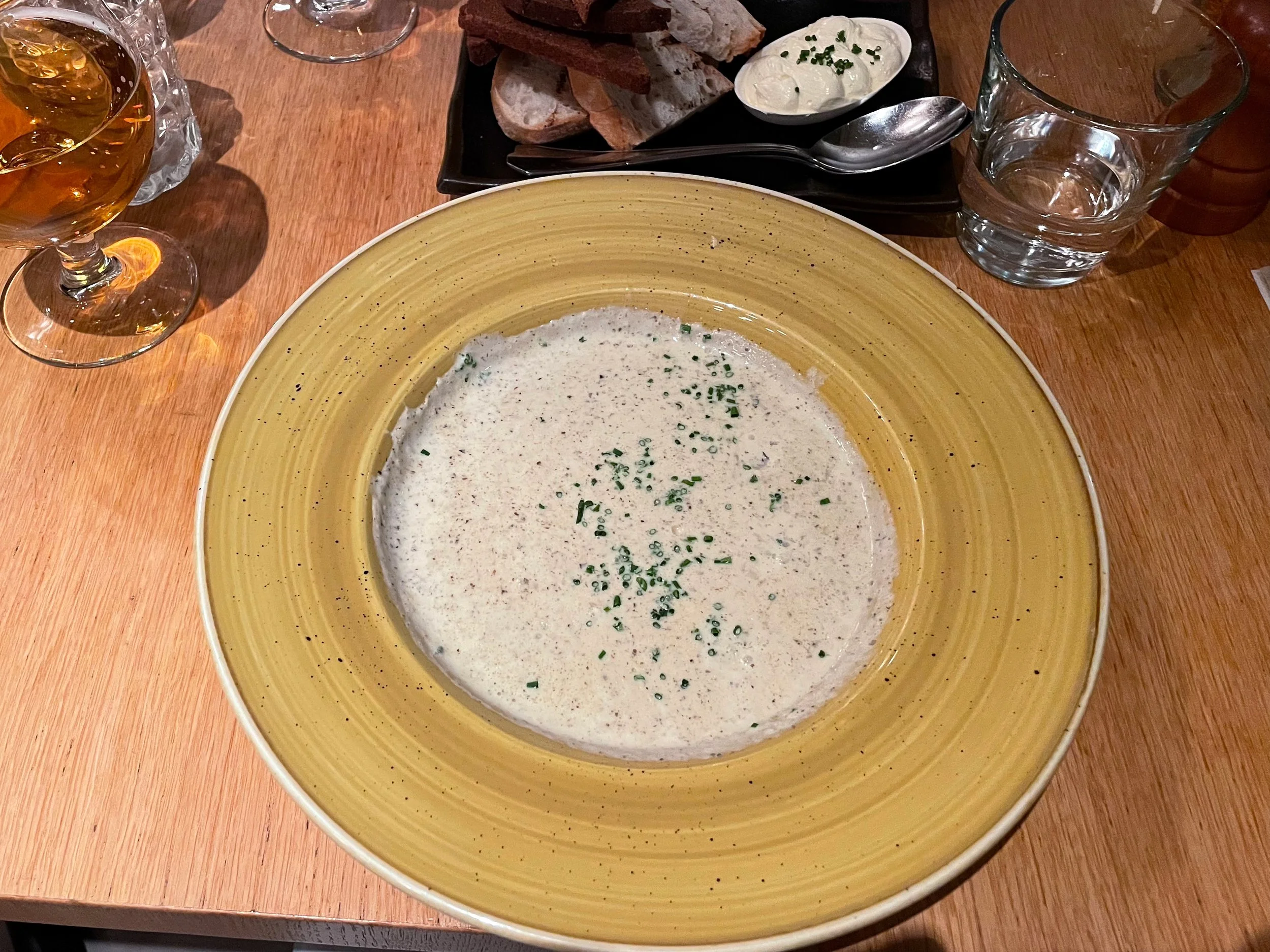
Dinner in Hella
Stracta Bistro. A Nordic restaurant serving Icelandic cuisine. Having spent all day outside, we warmed up with a bowl of Fiskisúpa, fish soup, and side of Rugbrauð, Icelandic rye bread.
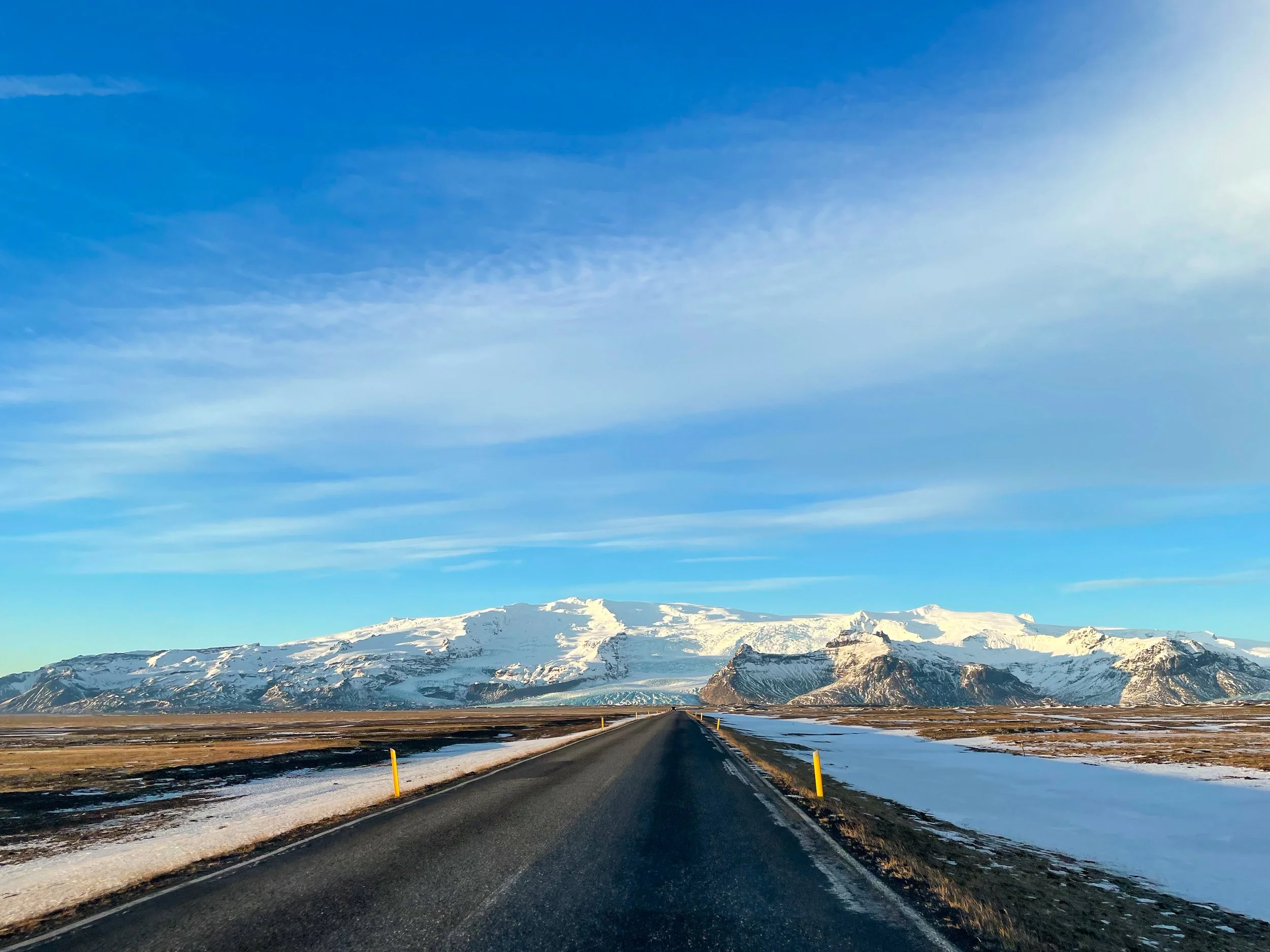
The South Coast (Part 1)
Iceland’s South Coast is a scenic destination home to glaciers, black sand beaches and waterfalls. We spent two days roadtripping along the South Coast from our cottage in Hella. On day one of the South Coast, we hiked across a frozen glacier, walked along a scenic black sand beach and watched an impressive waterfall.
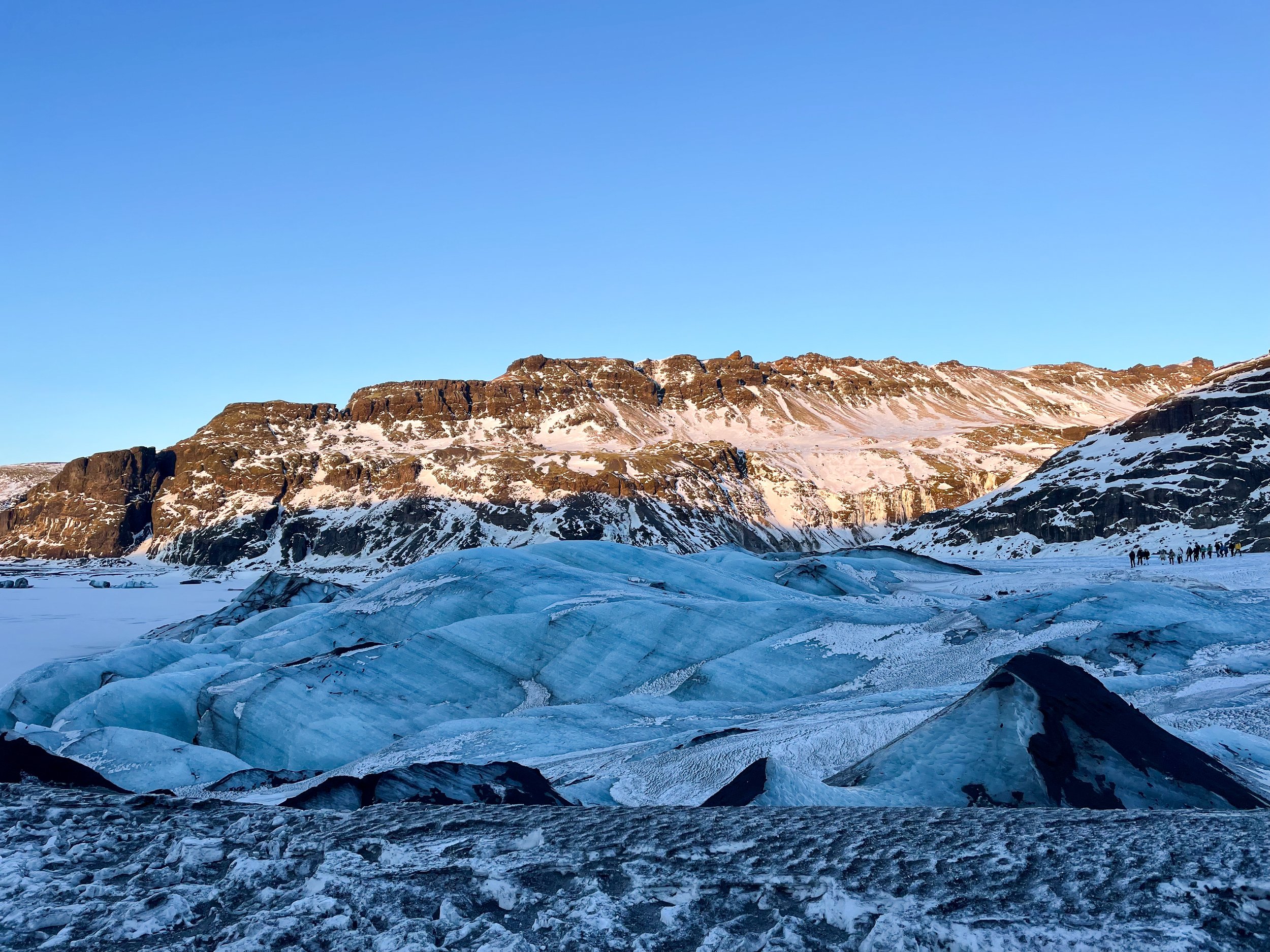
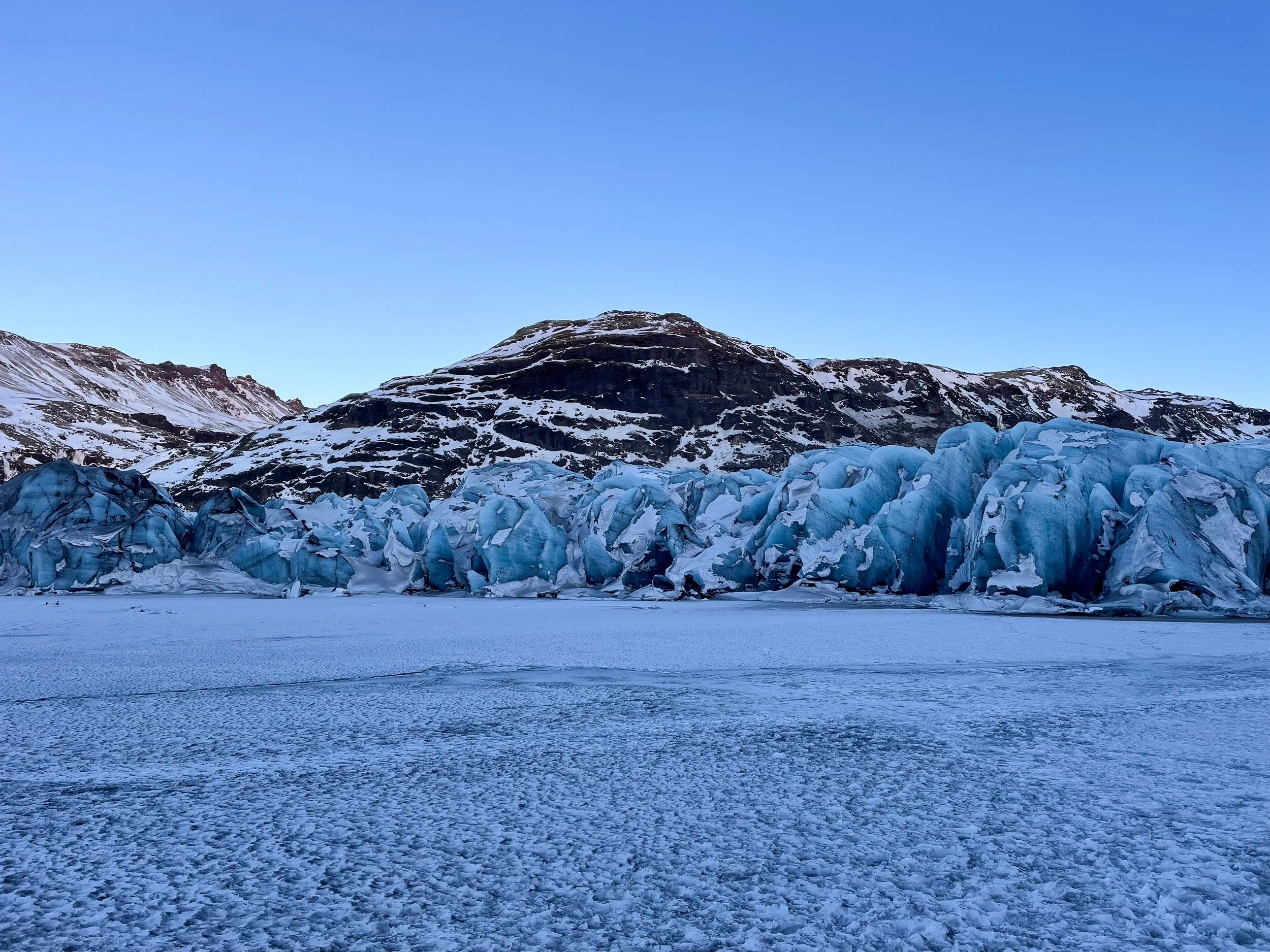
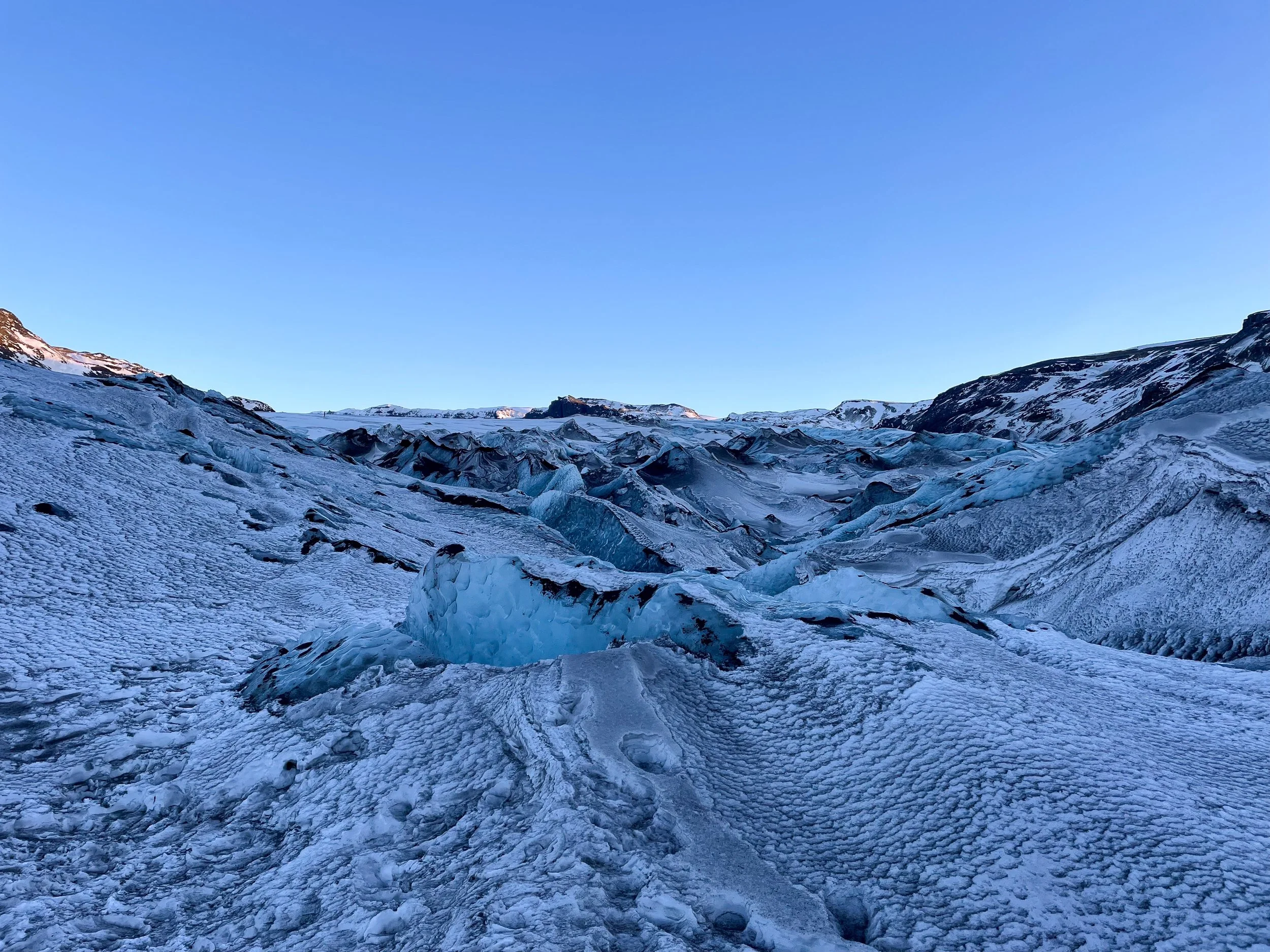
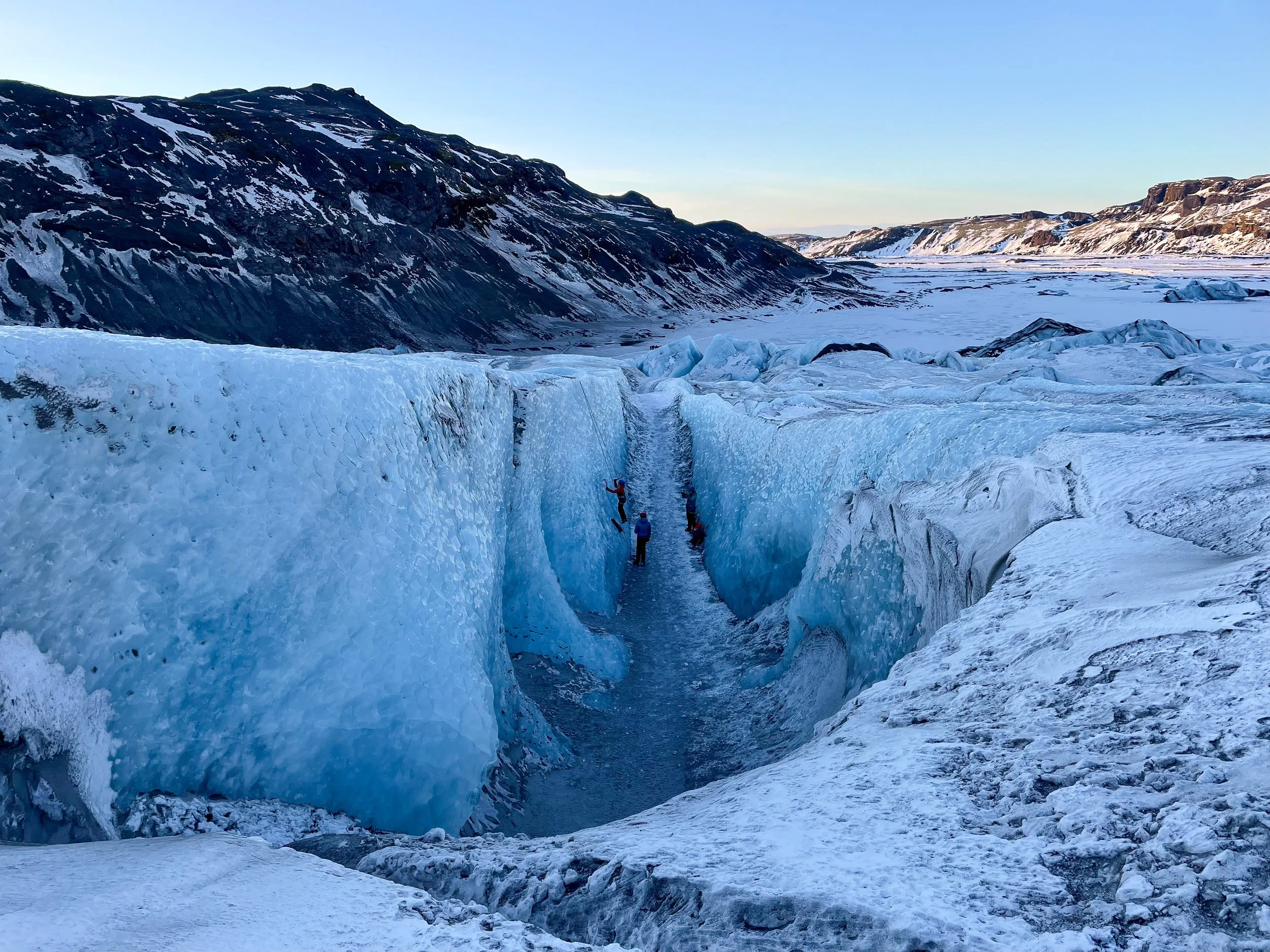
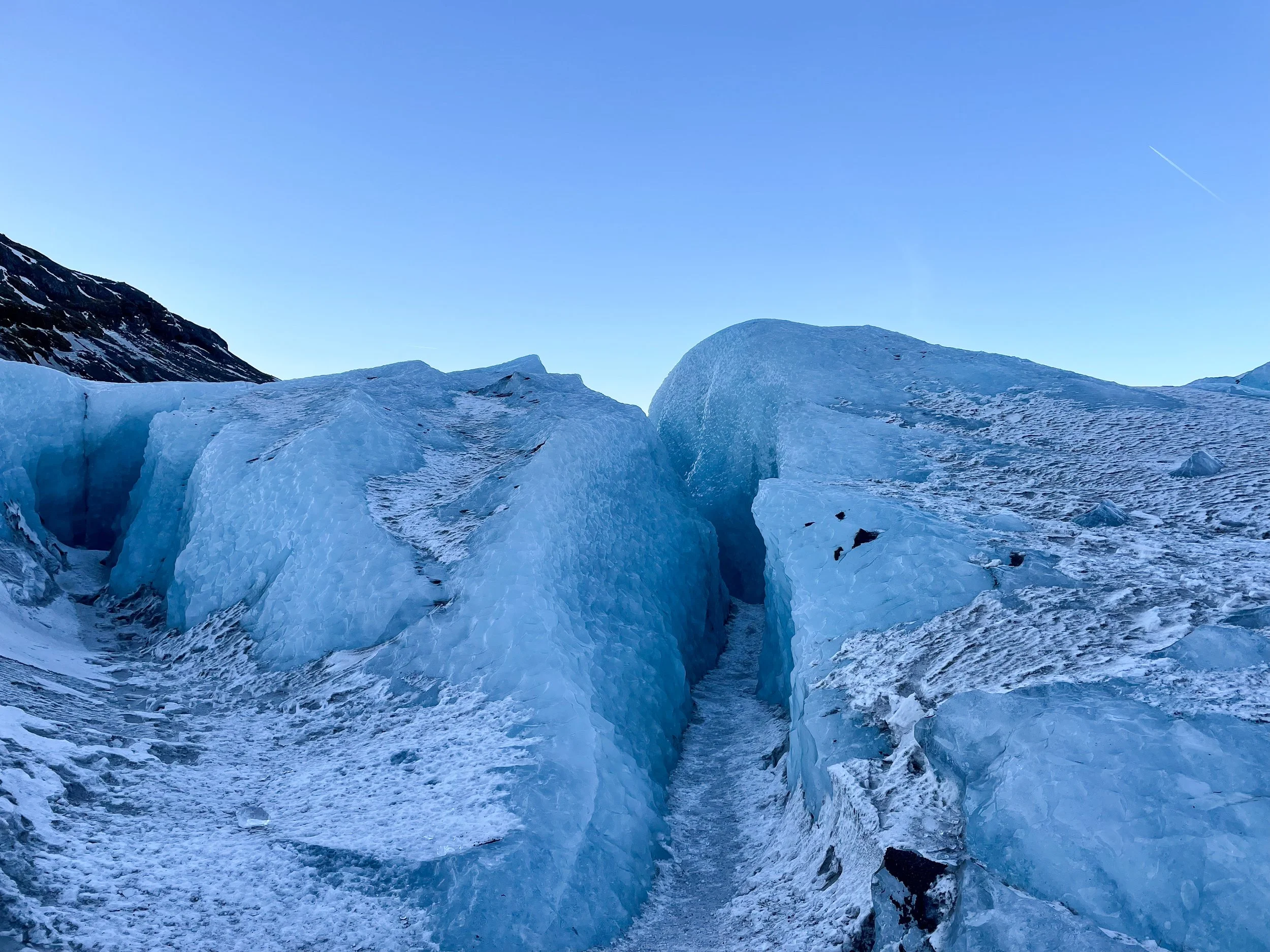
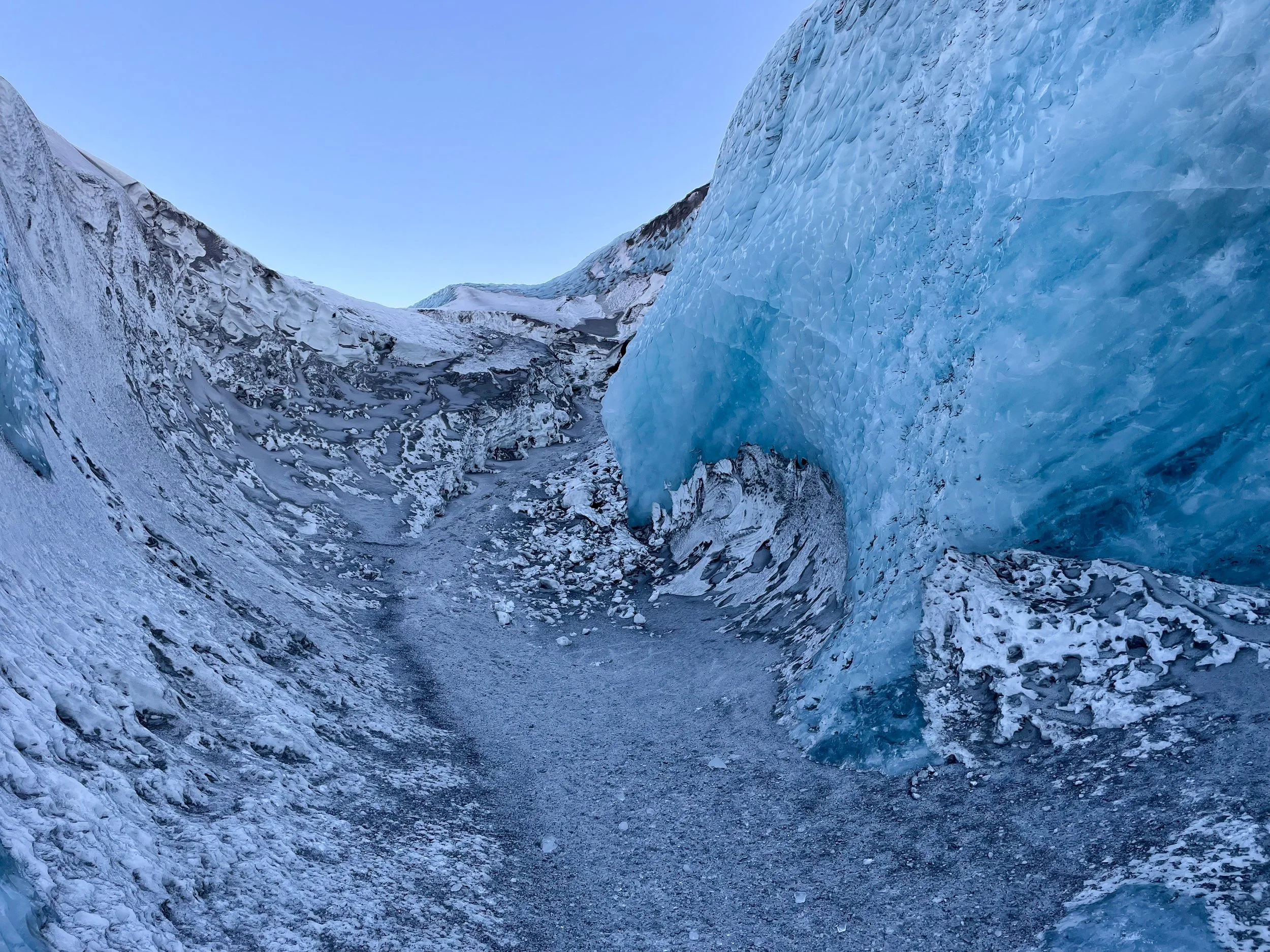
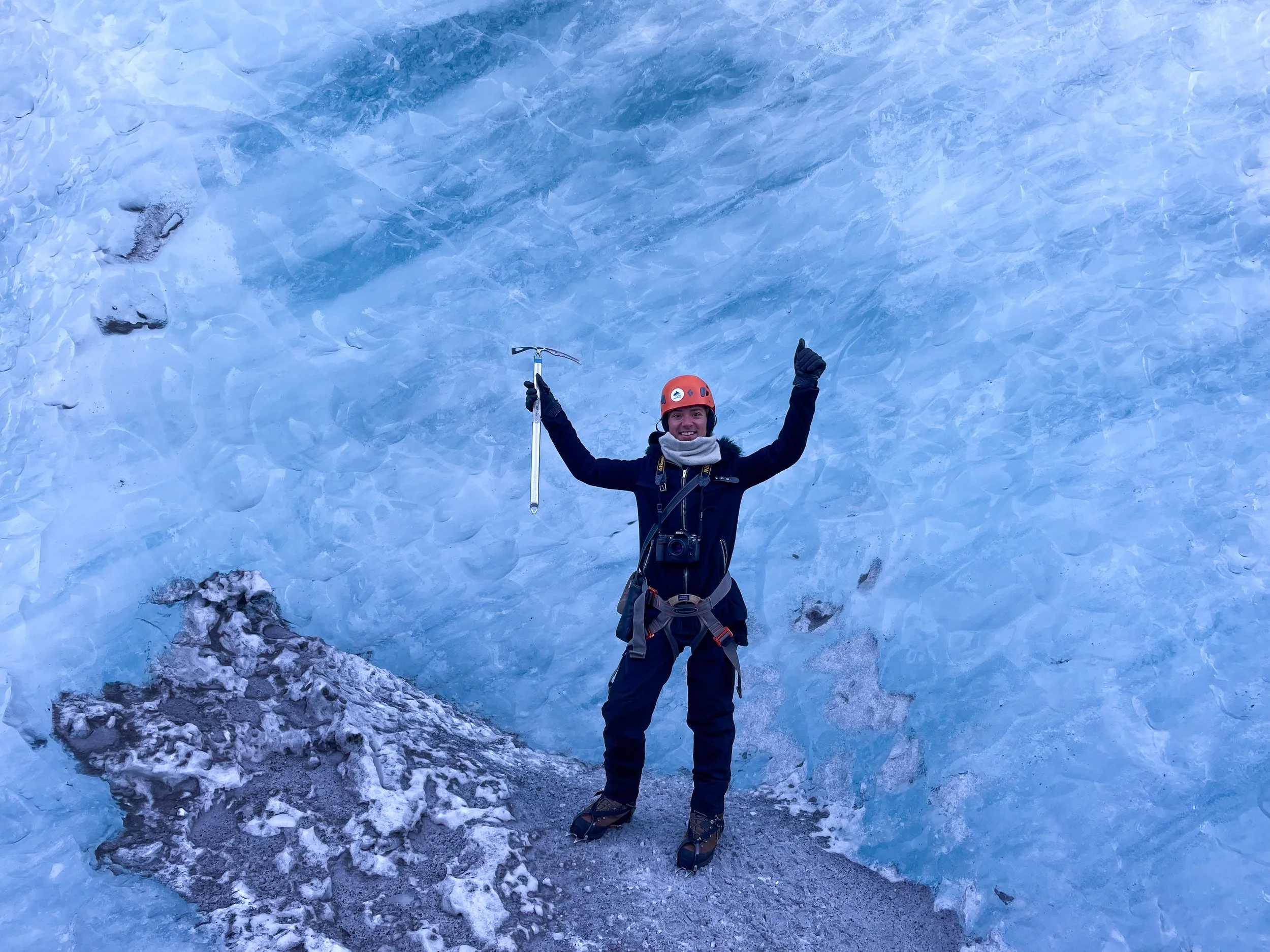
Sólheimajökull Glacier Tour
High on our list of to dos in Iceland was to visit a glacier. We booked an excursion with Arctic Adventures through Get Your Guide. We met our guide at 10am and geared up with ice cleats, helmets, a harness and an ice pick. Our guide took us and a small group on a hike along the lagoon to the front edge of the glacier. From there, we began our trek onto the ice. As we walked, it crunched below our cleats as we maneuvered through crevices and across its surface. The surface was rippled yet smoothed by water and wind. As we looked across the glacier, we admired the blue hues emanating from it and veins of black volcanic ash from previous eruptions.
Getting Here. The Sólheimajökull Glacier is located about 1 hour from the town of Hella by car.
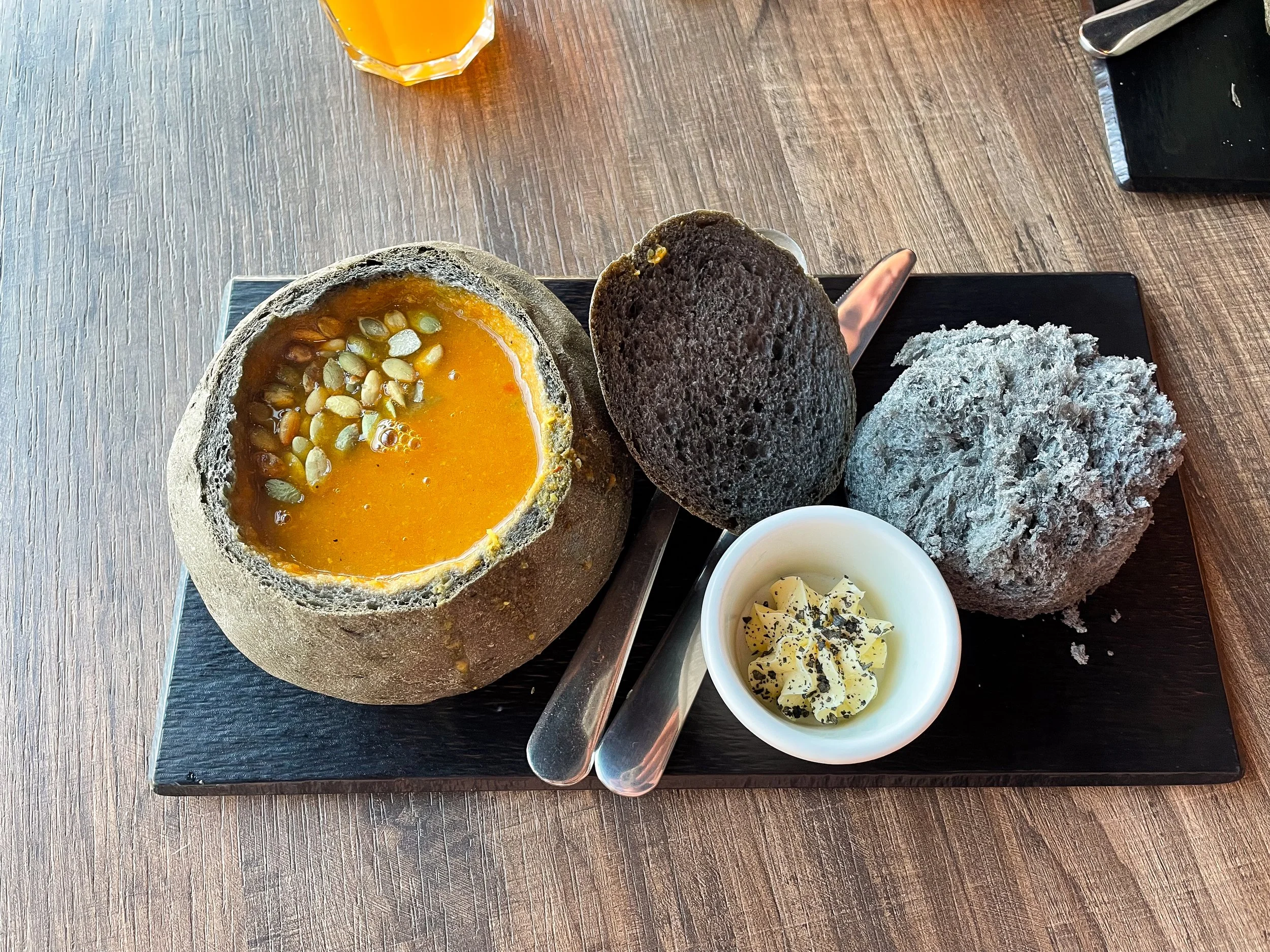
Lunch in Vik
After our glacier tour we drove to Vik, a remote coastal village on the southernmost point of Iceland with colorful wooden houses and a black sand beach. While here, we ate lunch at The Soup Company. We ordered their volcano bowl, a black bread bowl with “winter soup” made from carrots, onions, lentils, coconut cream and crushed pineapple. They offer free refills of any soup so we went back for seconds and tried the broccoli cheddar.
Getting Here. Vik is located about 30 minutes from The Sólheimajökull Glacier by car.
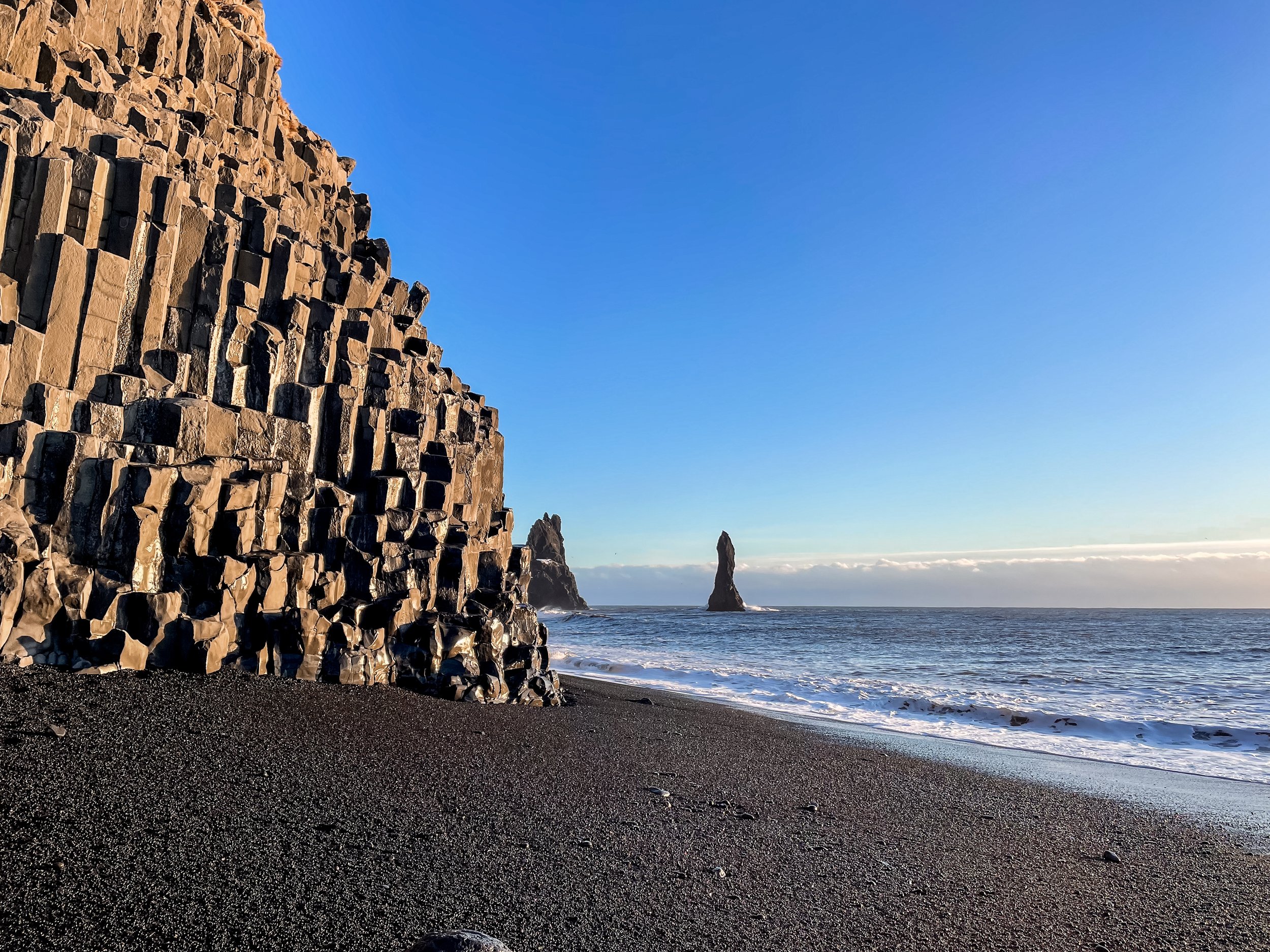
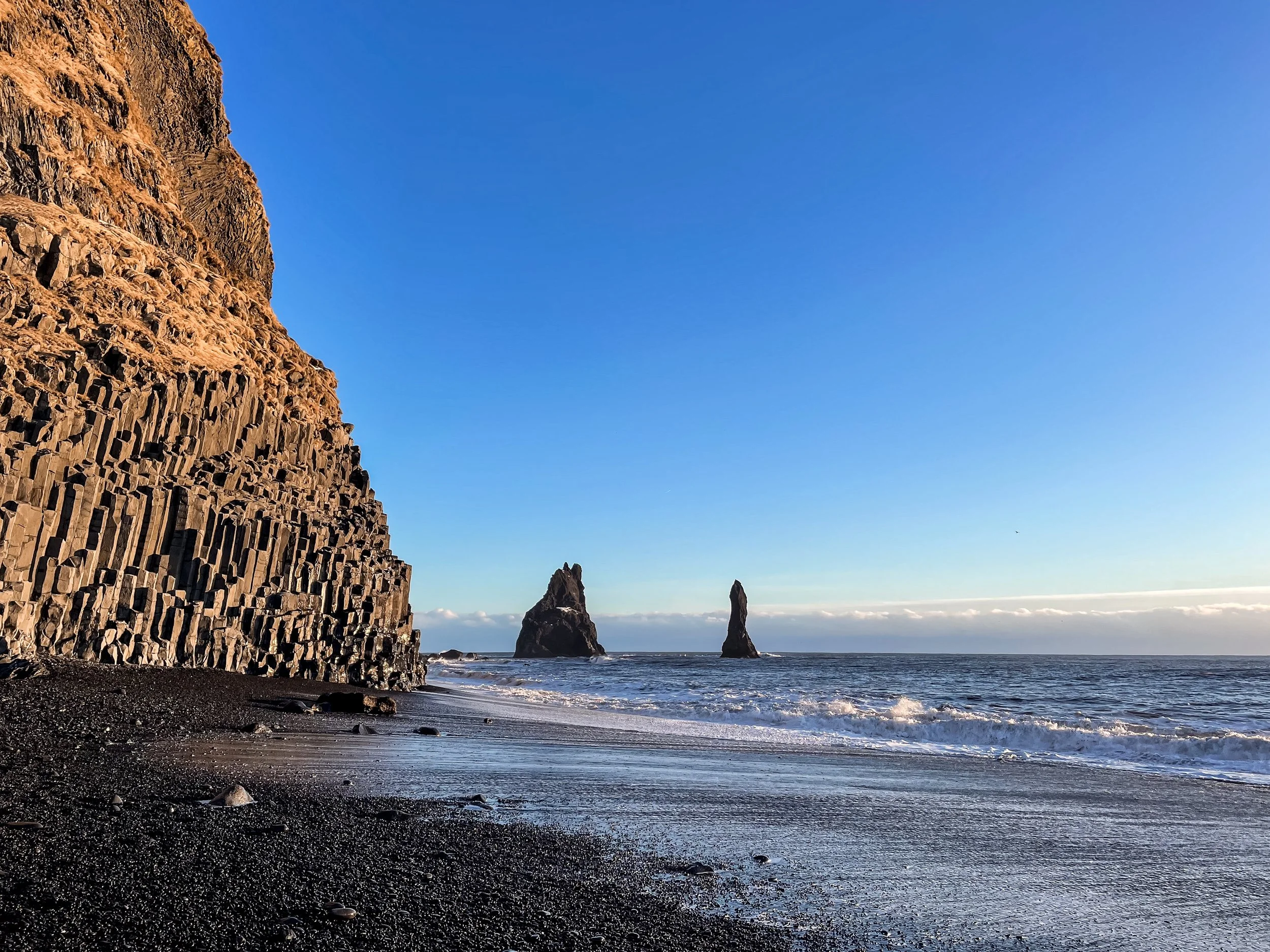
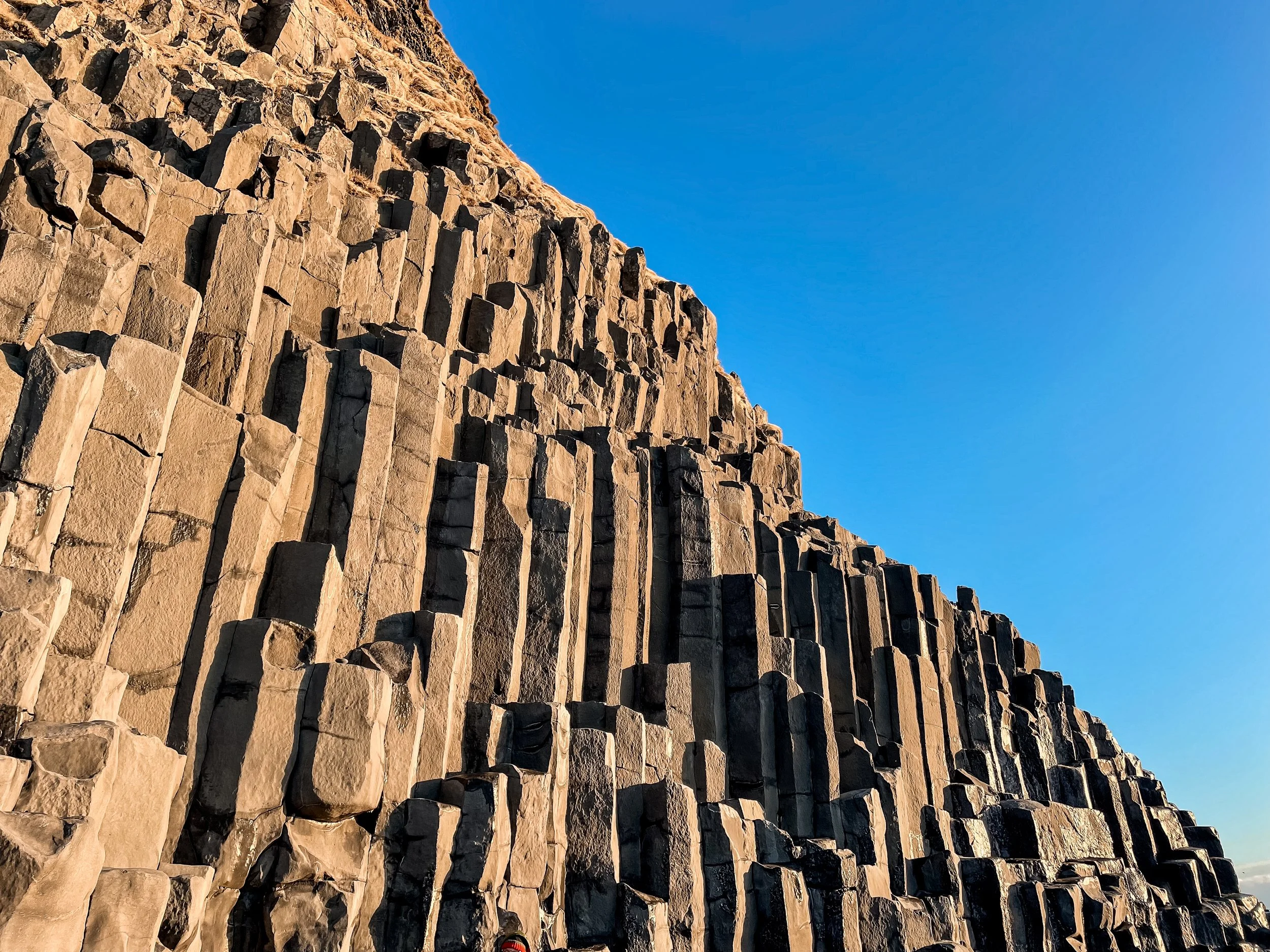
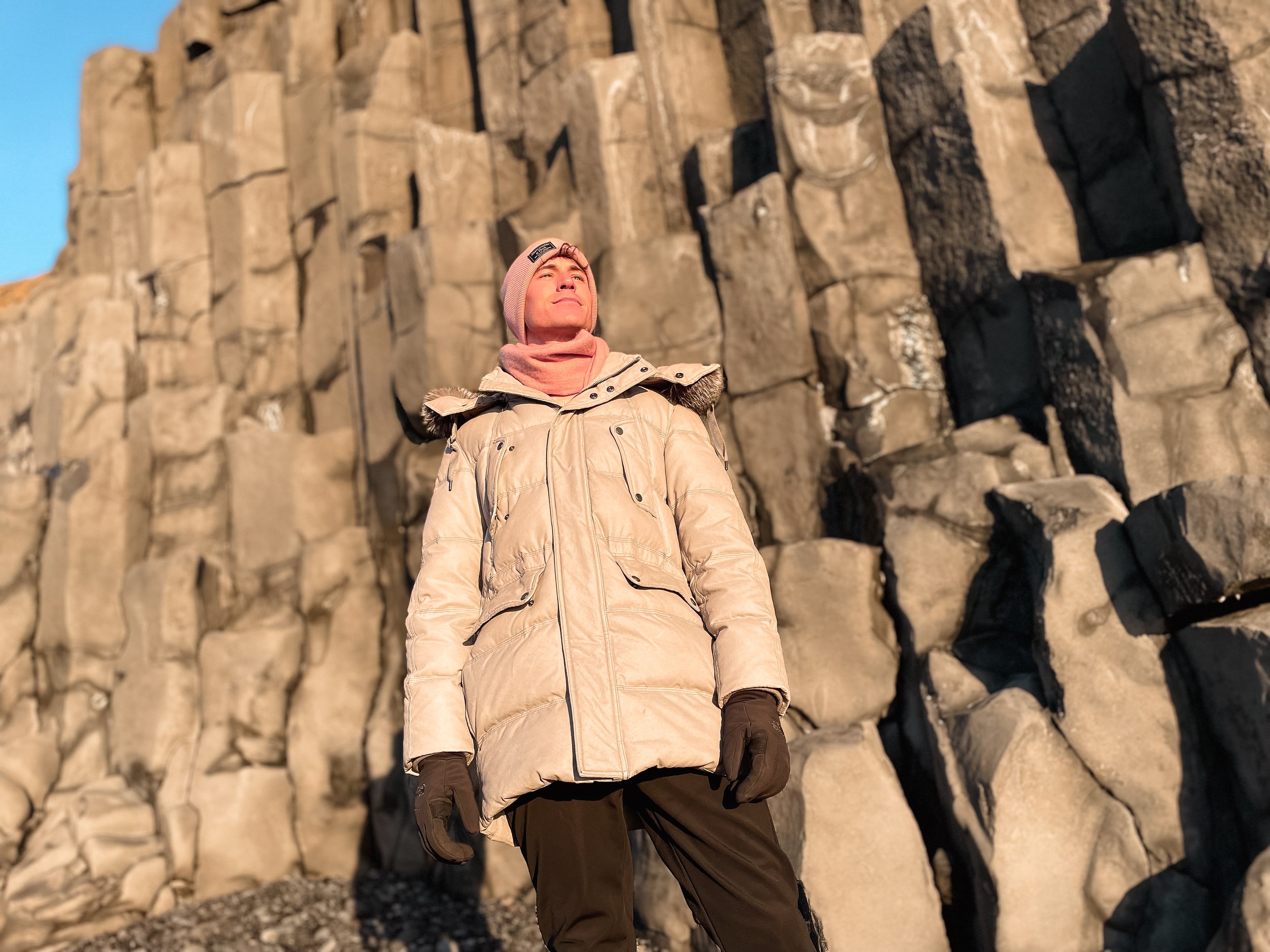
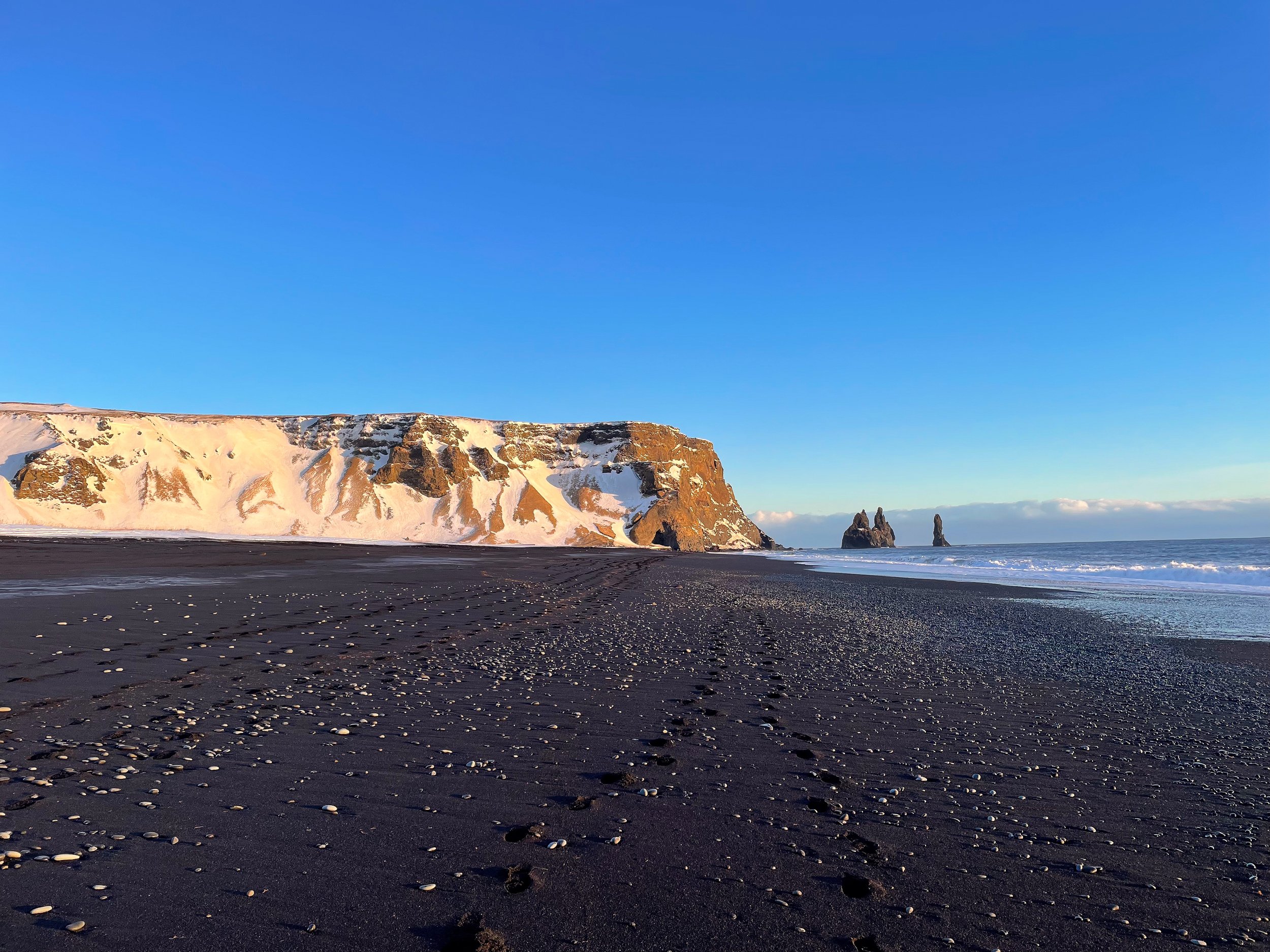
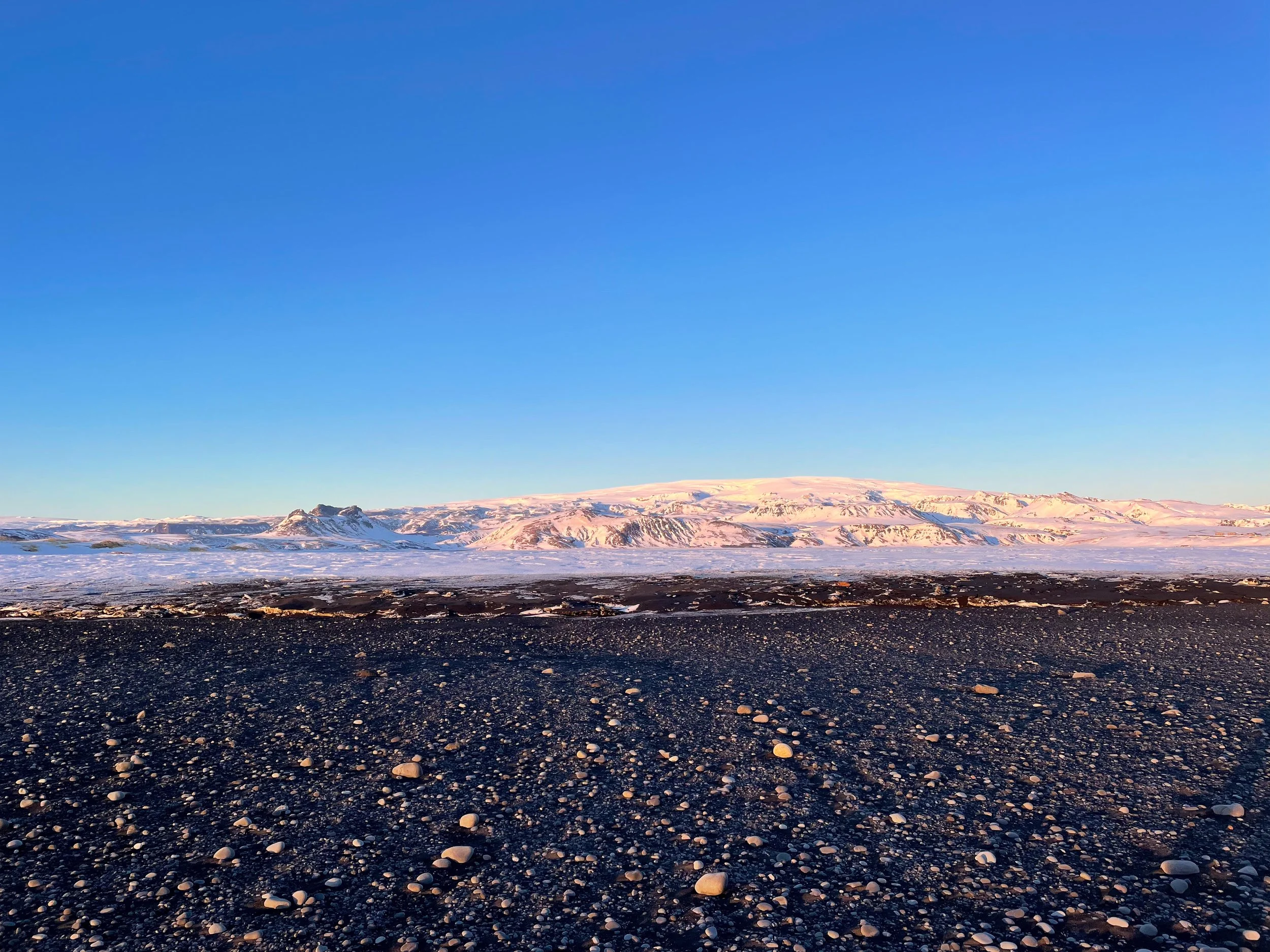
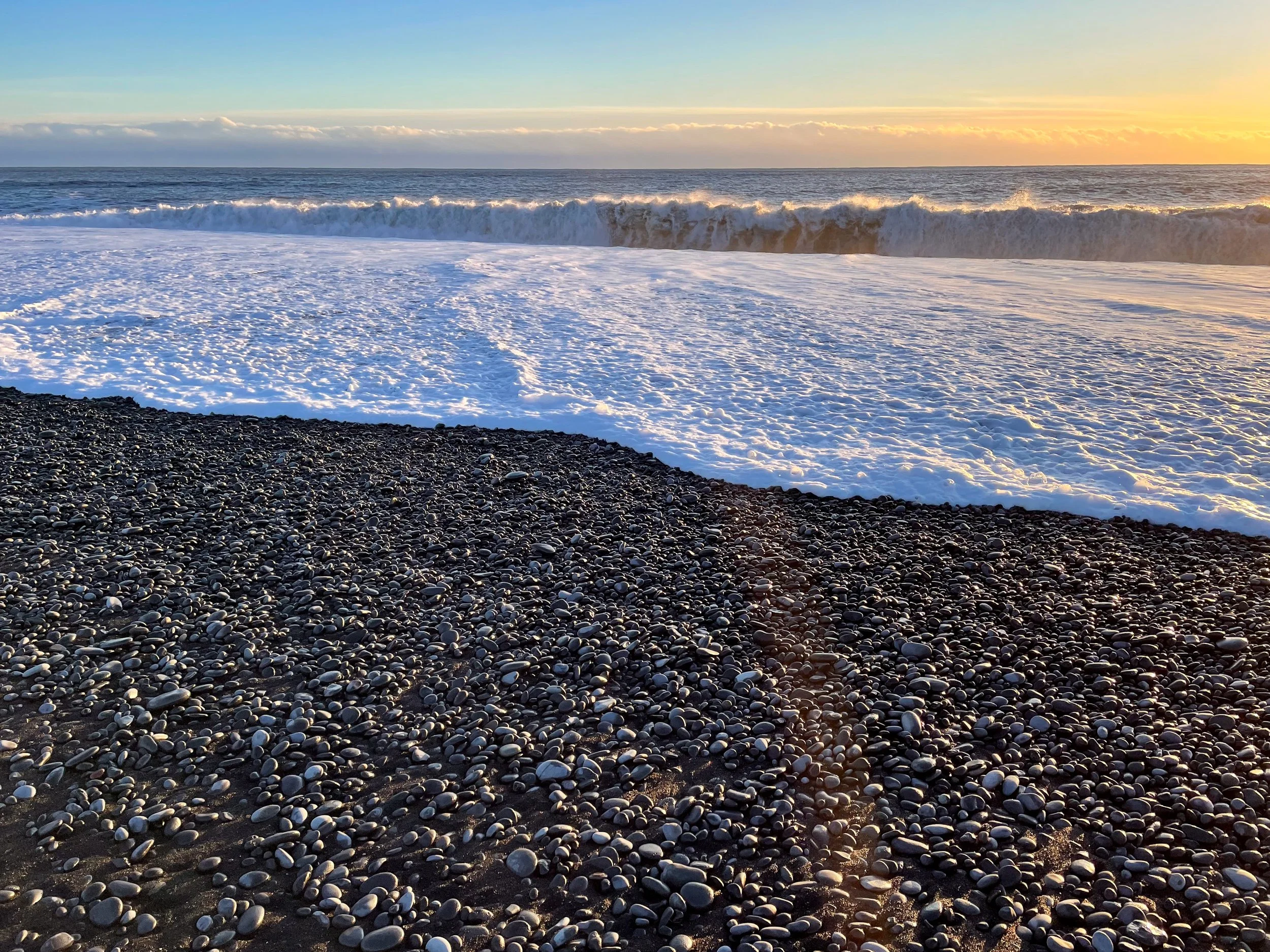
Reynisfjara Beach
On the other side of Vik is Reynisfjara Beach, a black sand beach with jagged rock formations sticking out of the water and hexagonal basalt columns along the cliffside. Loving the beach, even in winter, we walked nearly two miles down it as the sun was setting. The waves here are ferocious and unpredictable so we stayed far away from the shoreline, keeping our eyes on the water and following warnings.
Getting Here. Reynisfjara Beach is located about 15 minutes from Vik by car.
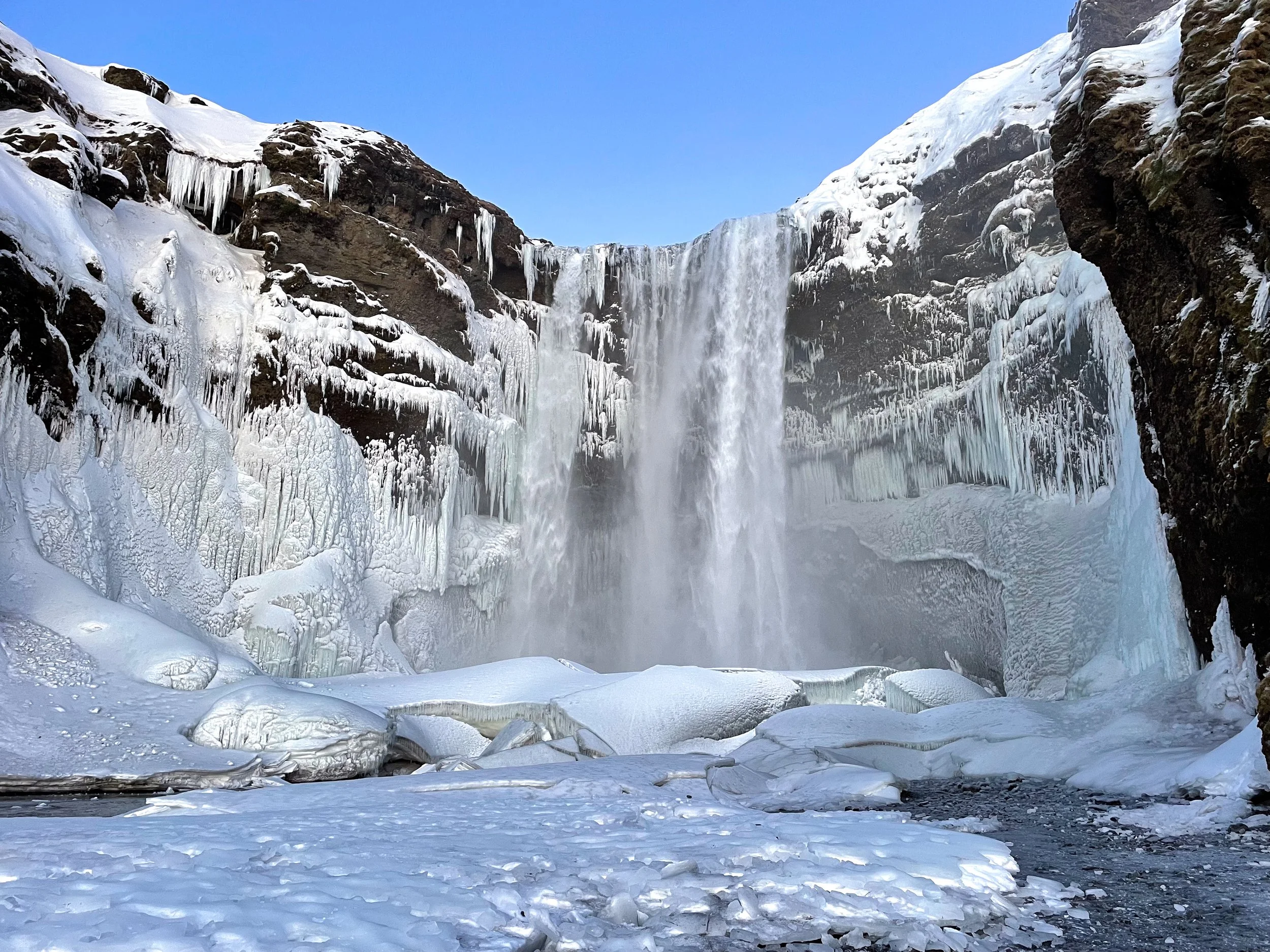
Skogafoss Waterfall
Skogafoss is a grand and picturesque waterfall, both impressive for its height and width. The water seemed to move in slow motion as it fell. It was equally as peaceful as powerful to watch. There is a trail and staircase to an overlook at the top of the falls. It also leads further upstream to several smaller waterfalls. It was closed when we visited due to snow and ice.
Getting Here. Skogafoss Waterfall is located about 30 minutes from Reynisfjara Beach by car.
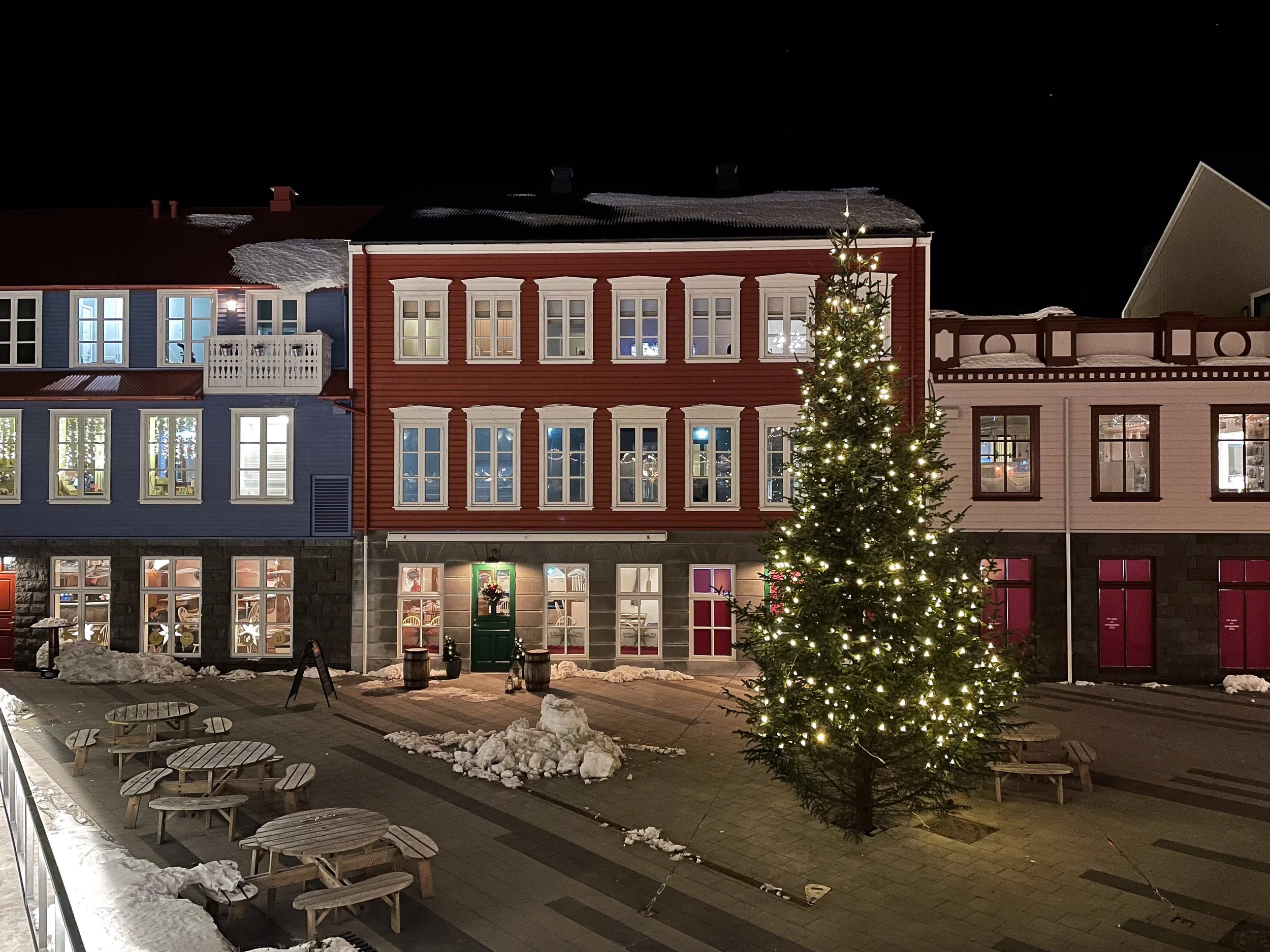
Dinner in Selfoss
After exploring glaciers, black sand beaches and waterfalls, we drove to the town of Selfoss for dinner. The town square is a historic center with traditional Icelandic architecture, colorful buildings and ornamental moldings. It had a festive atmosphere with piles of snow, a glittering Christmas tree and string lights still on display from the holidays.
Messinn. A restaurant specializing in contemporary adaptations of traditional Icelandic cuisine. We had the scallops served in a shell, cod cheeks sautéed in a miso glaze and plokkfiskur, a cod, potato and béchamel casserole. The interior looked like a vintage modern ship with wooden booths, porthole windows, a canvas ceiling made from sails and nautical decor.
Getting Here. Selfoss is located about 1 hour 15 minutes from Skogafoss Waterfall by car.
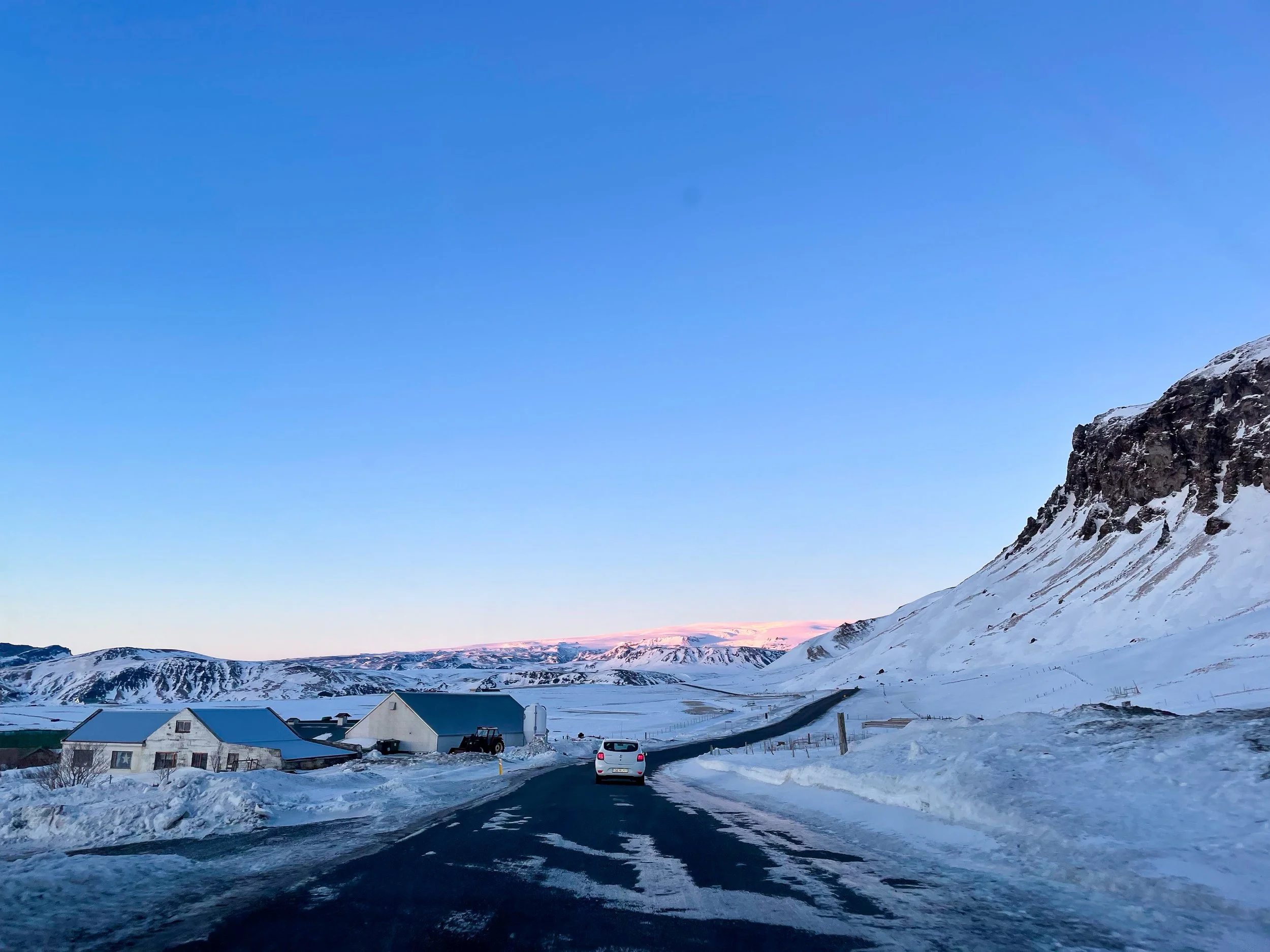
The South Coast (Part 2)
Iceland’s South Coast is a scenic destination home to glaciers, black sand beaches and waterfalls. We spent two days roadtripping along the South Coast from our cottage in Hella. On day two of the South Coast, we watched the sunrise from an ice covered black sand beach, hiked to a basalt column waterfall, went climbing on Iceland’s largest glacier and were continually dazzled by the Northern Lights.
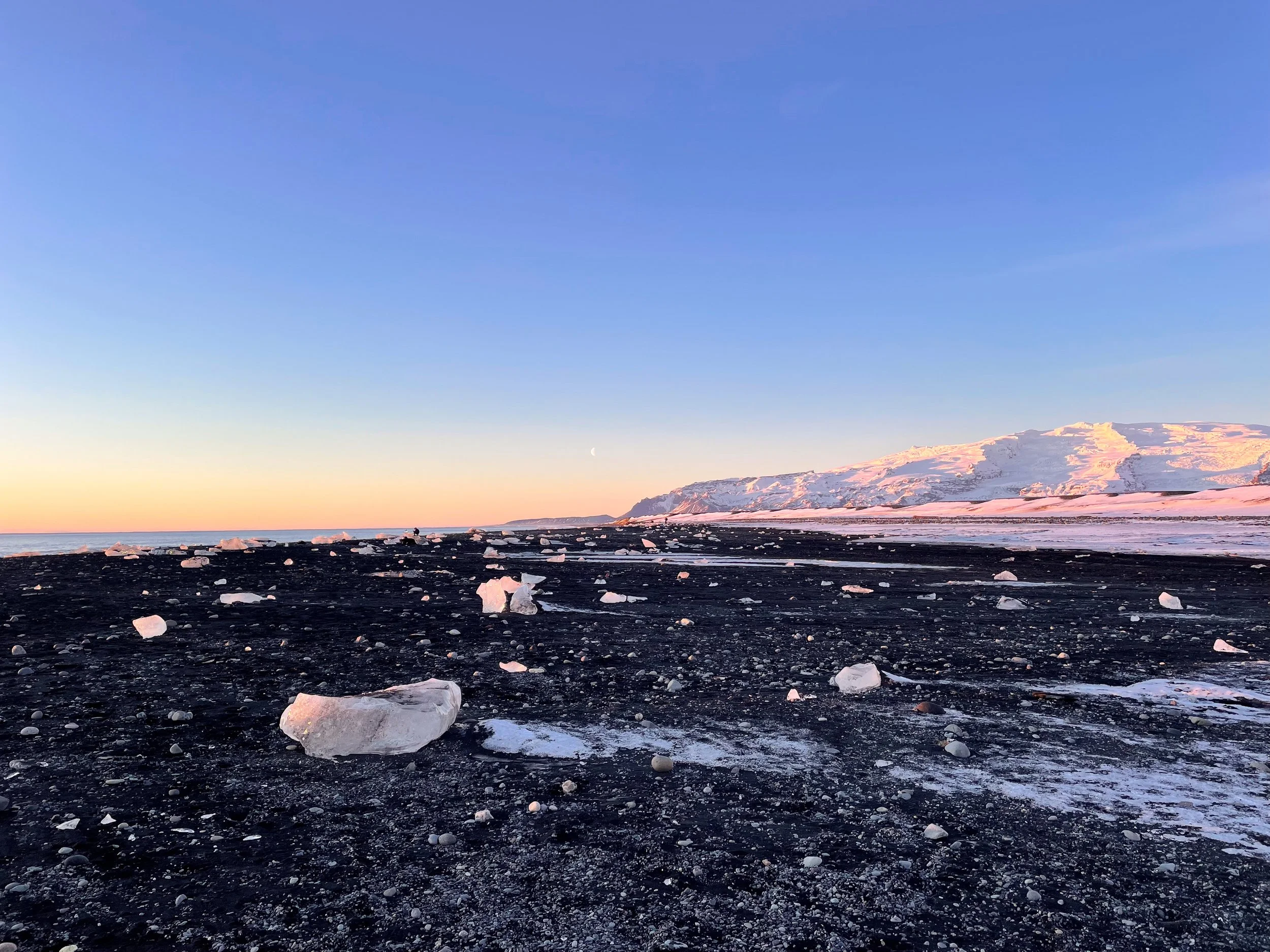
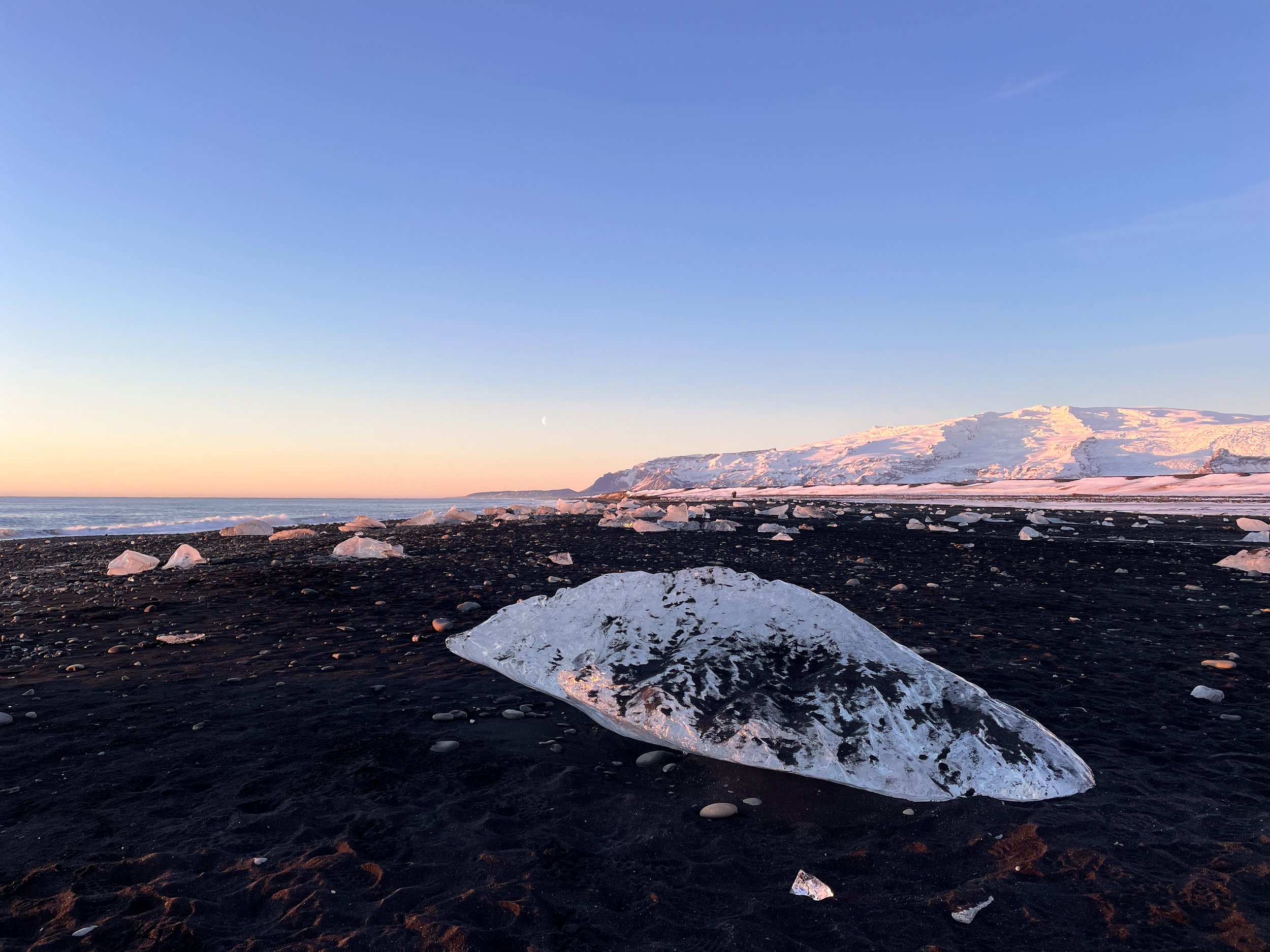
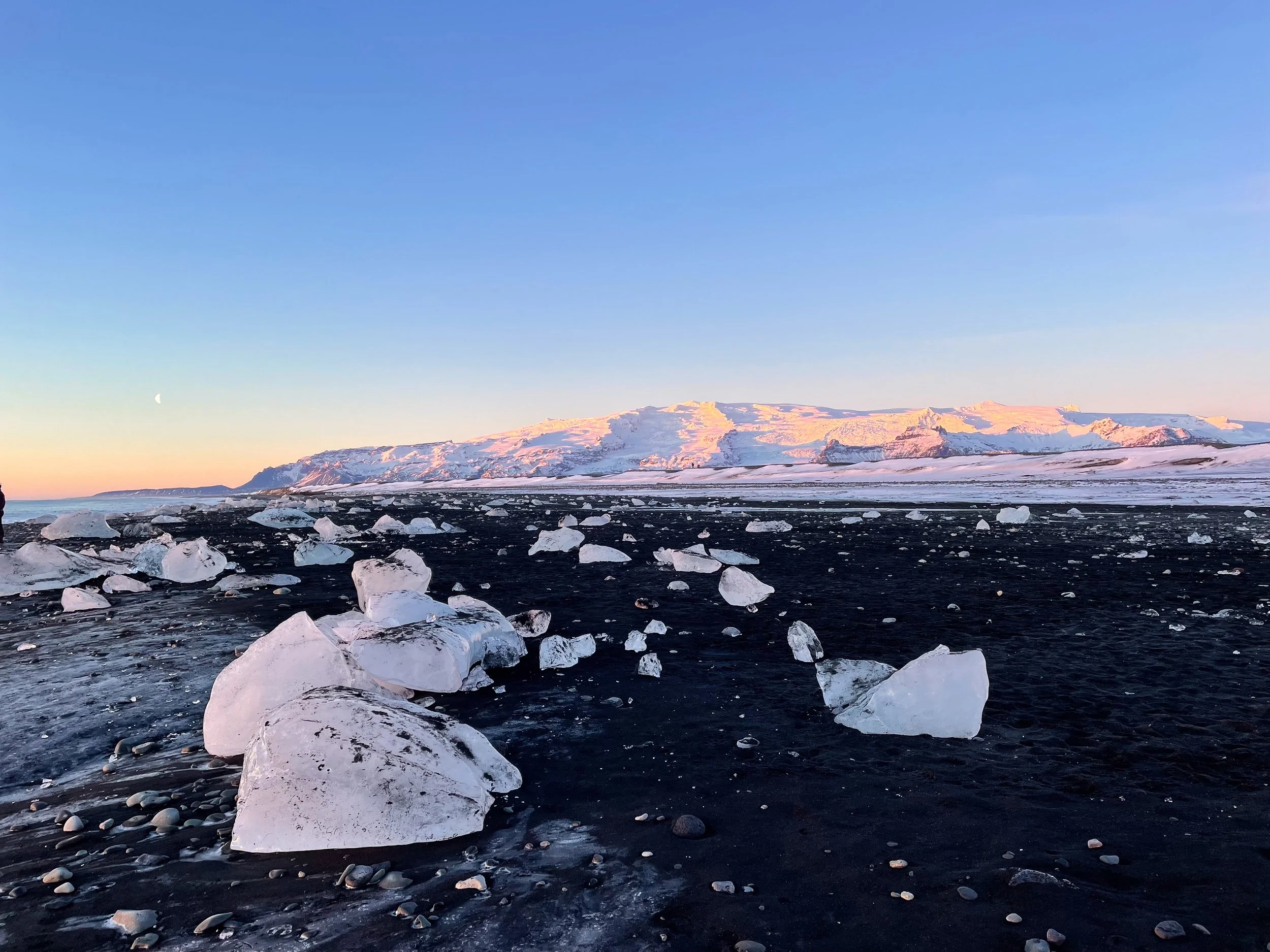
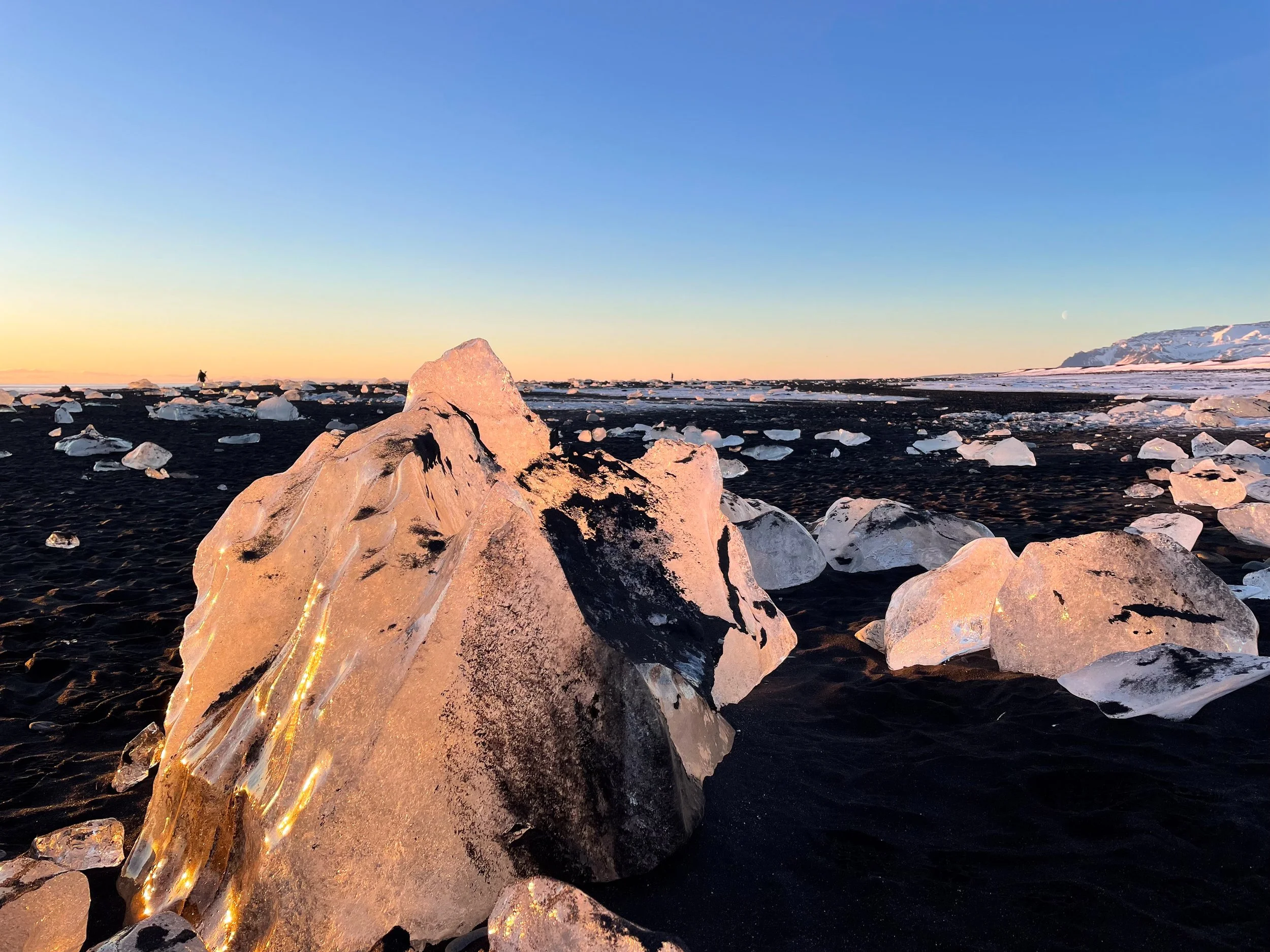
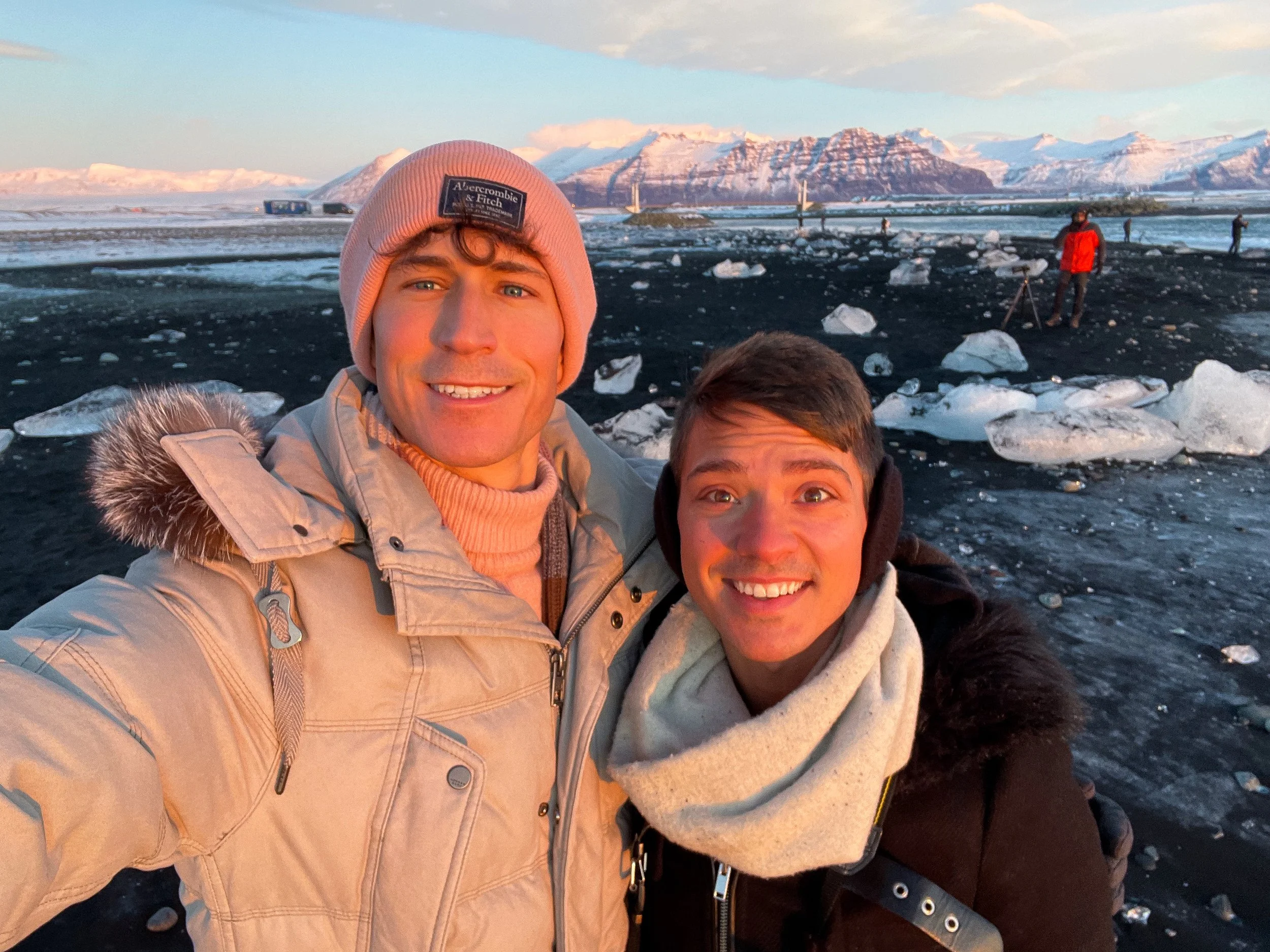
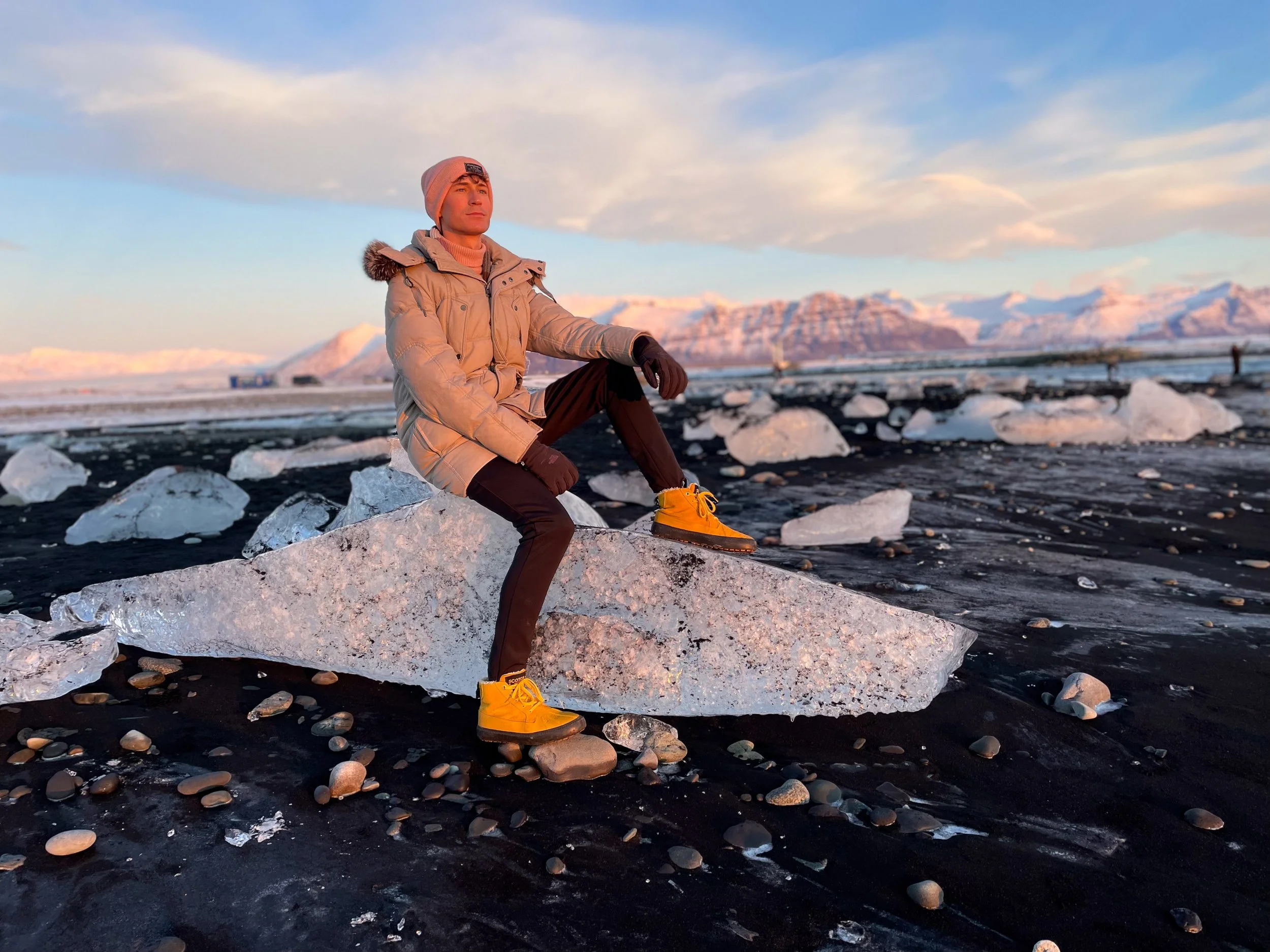
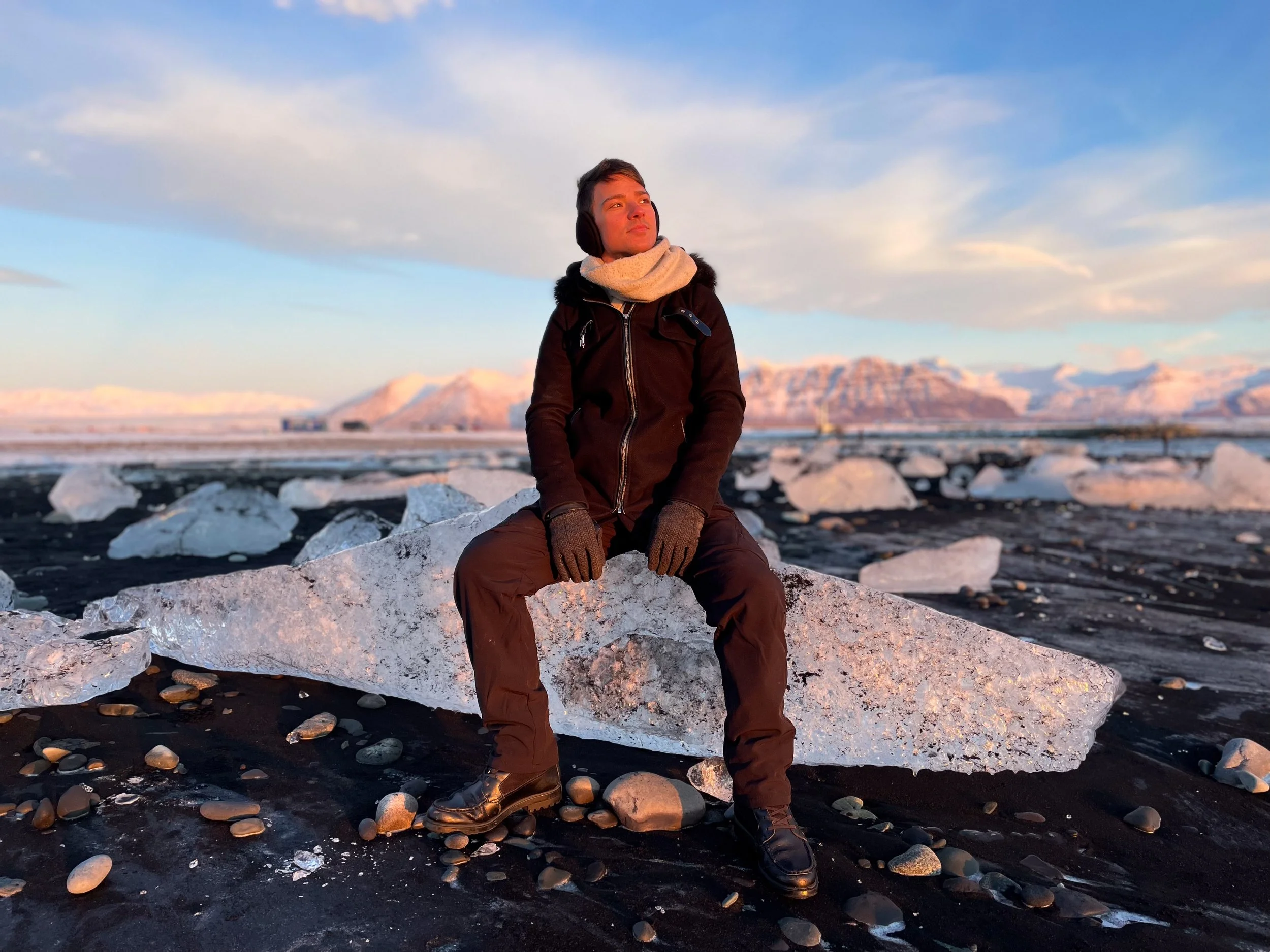
Diamond Beach
Diamond Beach is a black sand beach covered in jewel-like ice crystals. The glow of the sunrise cast a pink tone across the mountains and illuminated fragments of glacial ice that washed up on shore, resembling glittering diamonds set against the jet black sand. A vertical crescent moon rested low on the horizon while seals swam offshore and waves calmly splashed onto the beach. Photographers, dressed in winter gear, focused their lenses with the aim of capturing the scene while we gazed upon its pristine beauty.
Getting Here. Diamond Beach is located about 4 hours from the town of Hella by car.
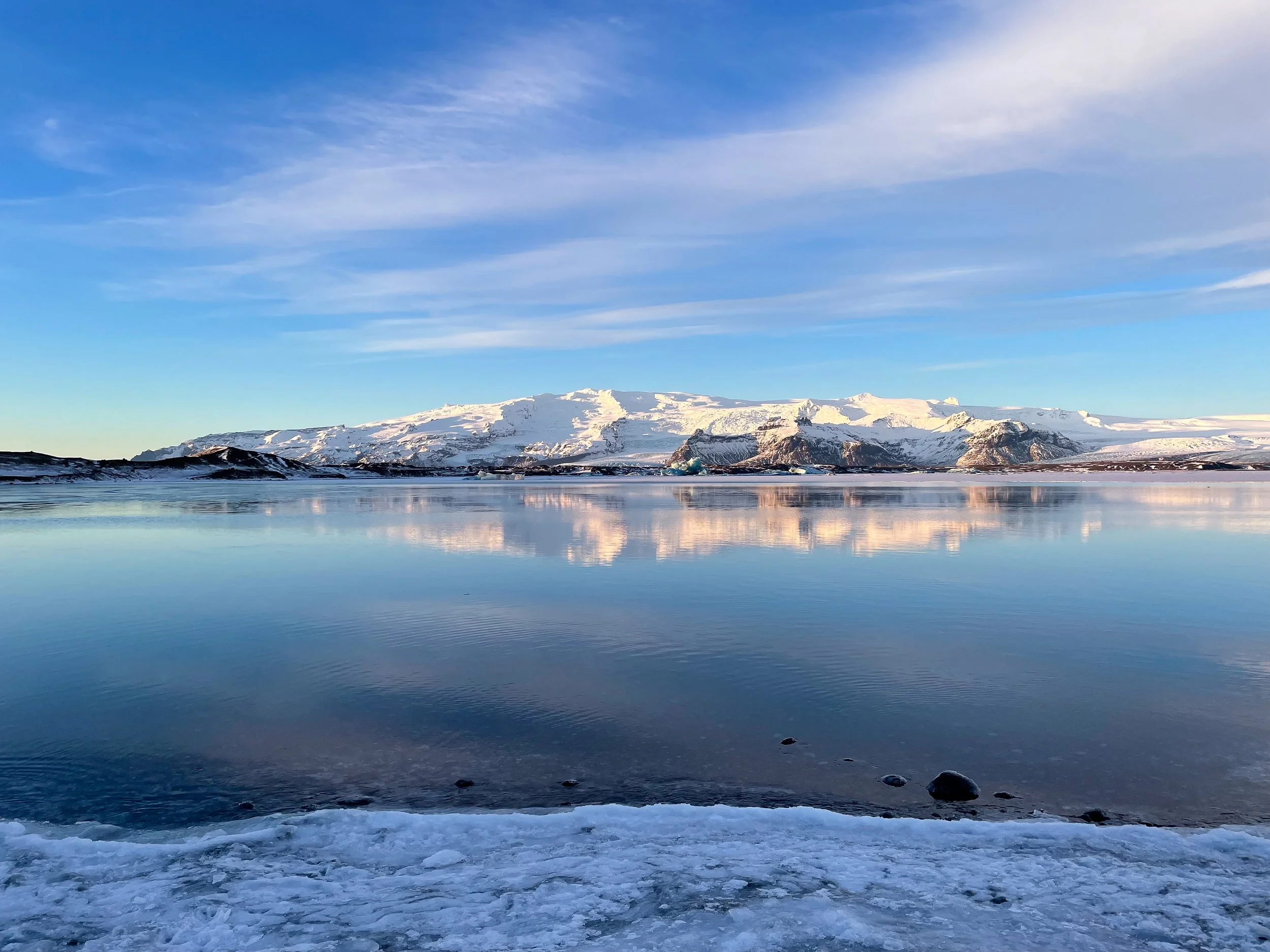
Jökulsárlón Glacier Lagoon
The Jökulsárlón Glacier Lagoon separates the Atlantic Ocean from the Jökulsárlón Glacier. Icebergs flow from it into the ocean, breaking apart and washing up on Diamond Beach. The lagoon’s surface looked like glass, only interrupted by the occasional seal coming up for air and taking a curious look around.
Good to Know. There are food trucks serving crepes, cold water prawns and fish & chips in the parking lot.
Getting Here. The Jökulsárlón Glacier Lagoon is located less than 5 minutes from Diamond Beach by car.
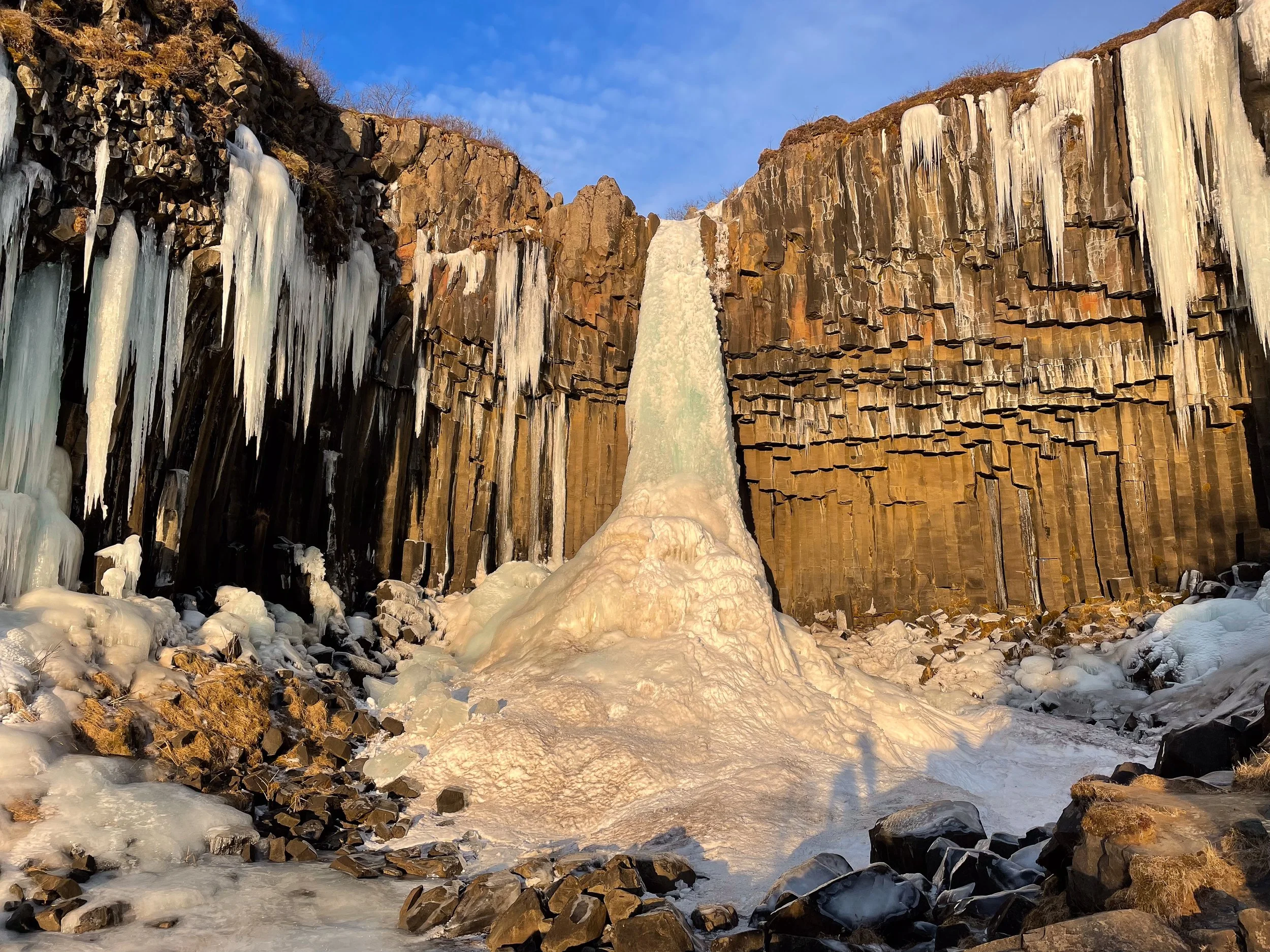
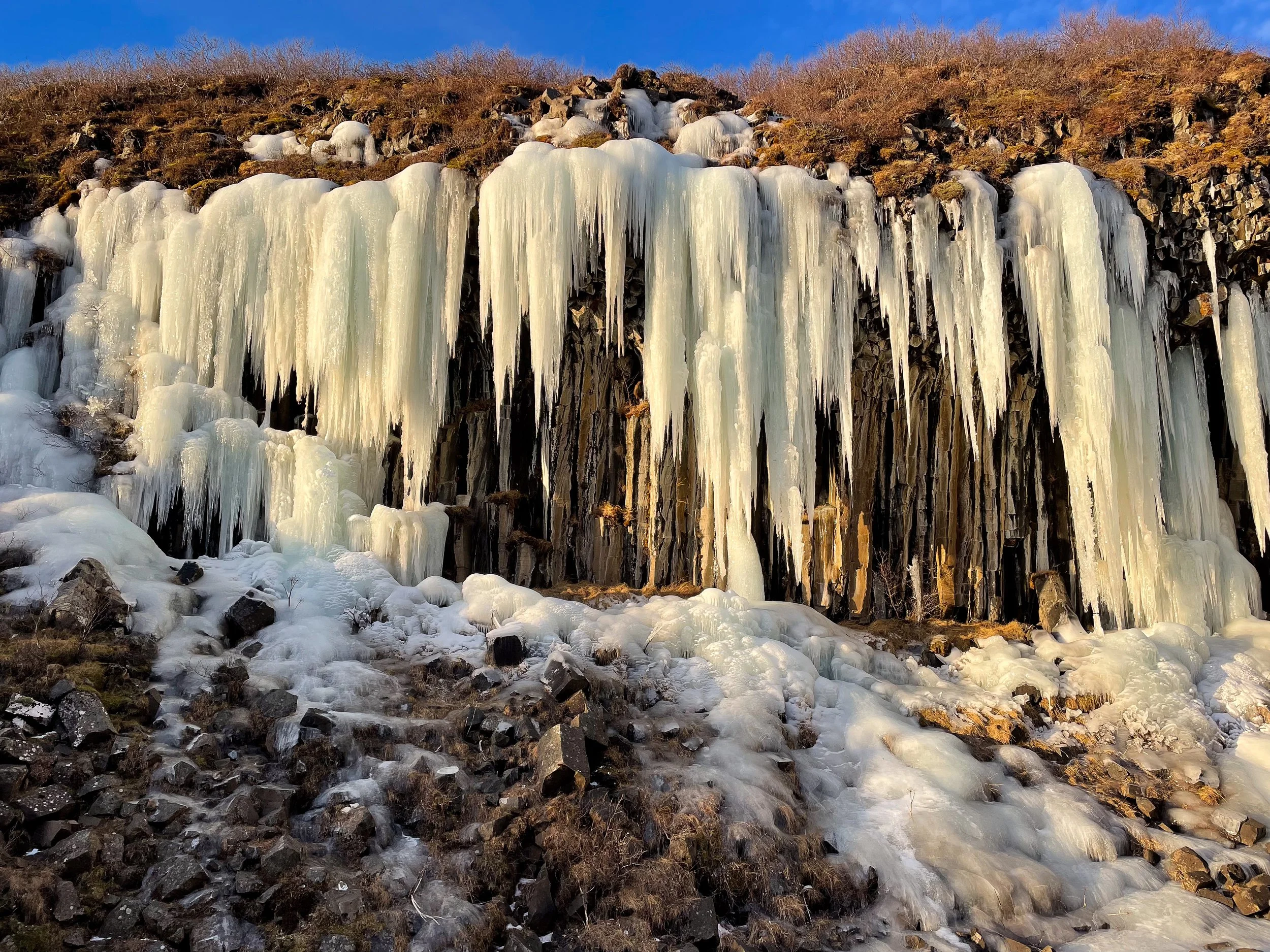
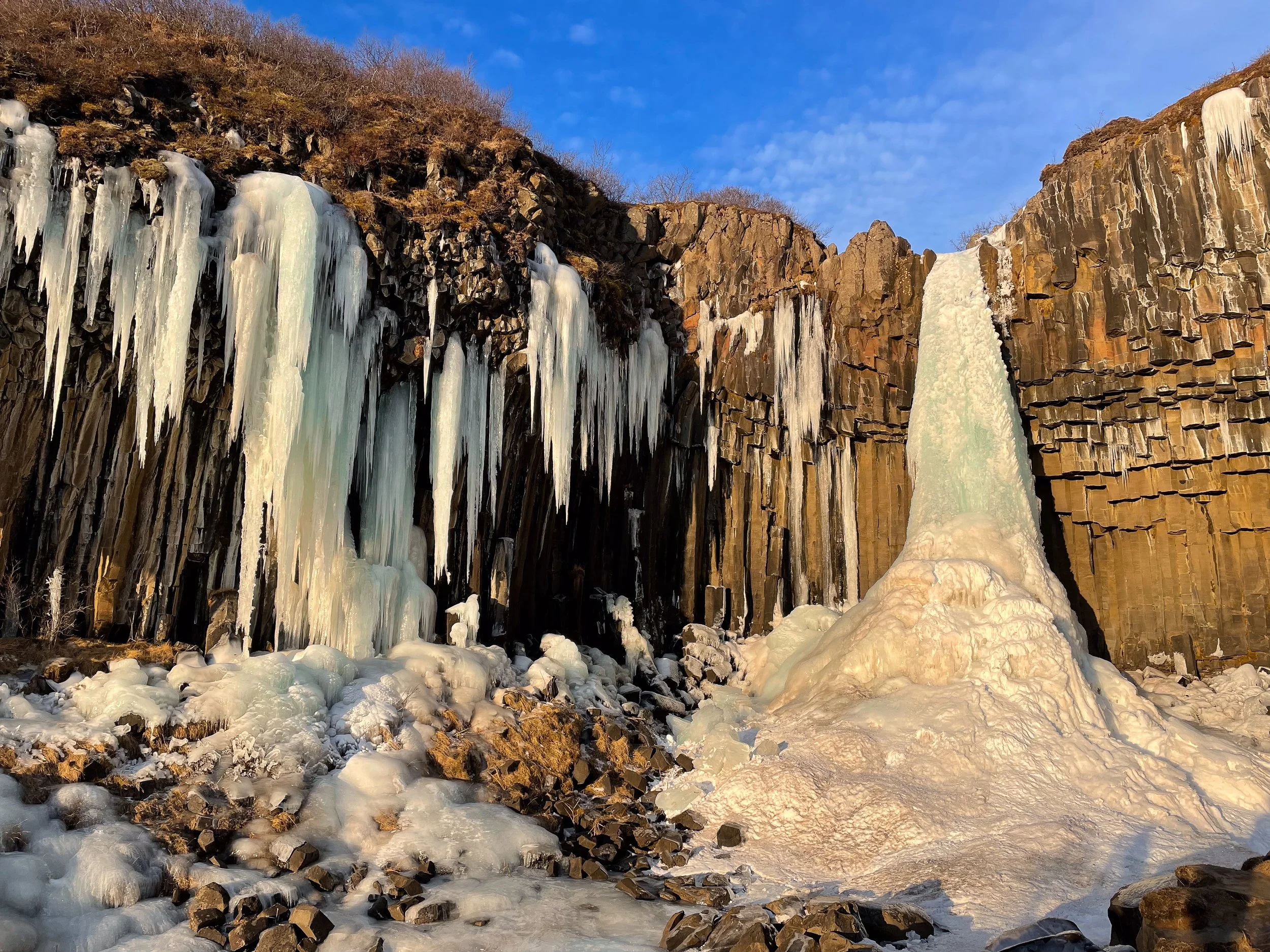
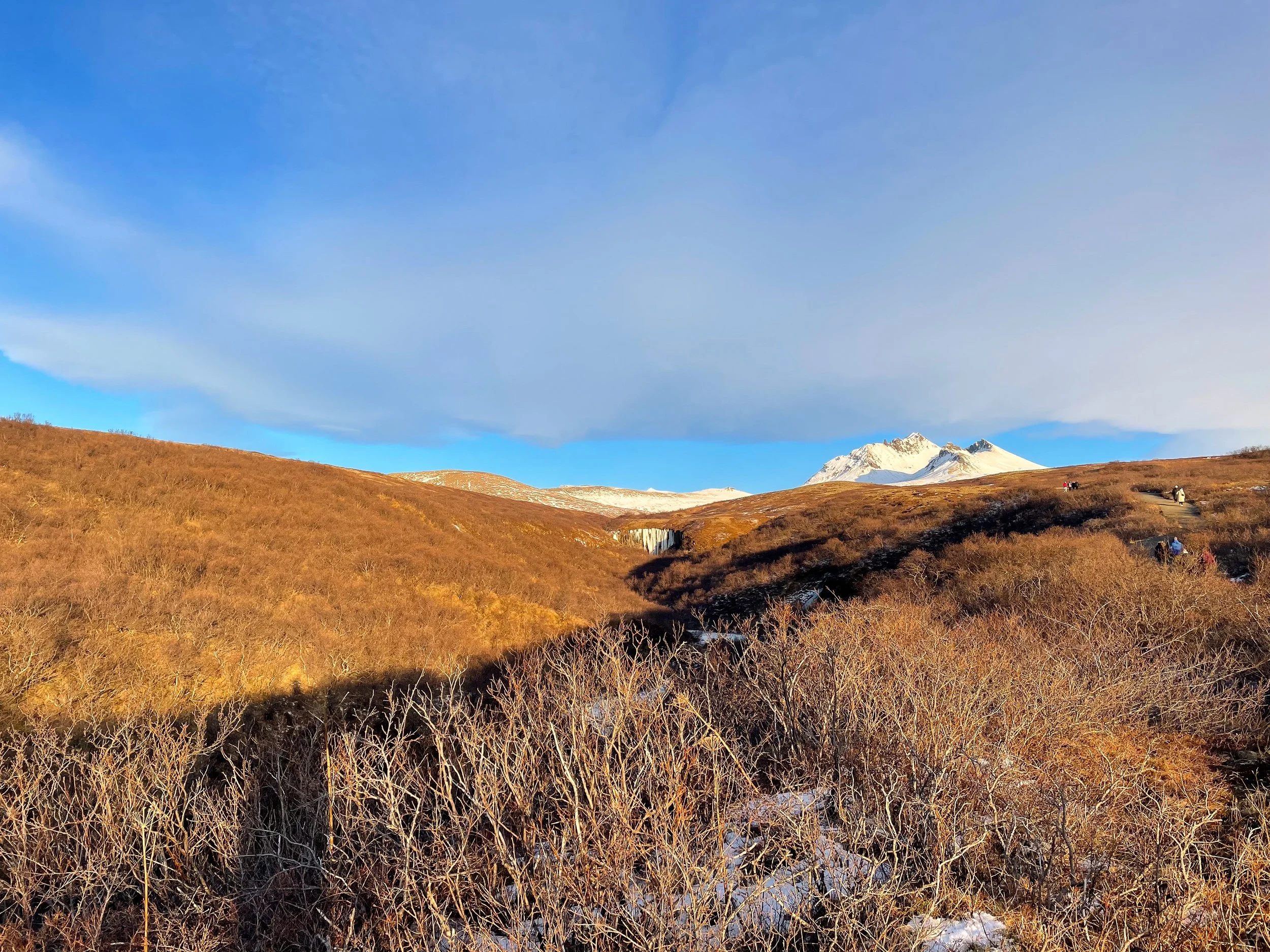
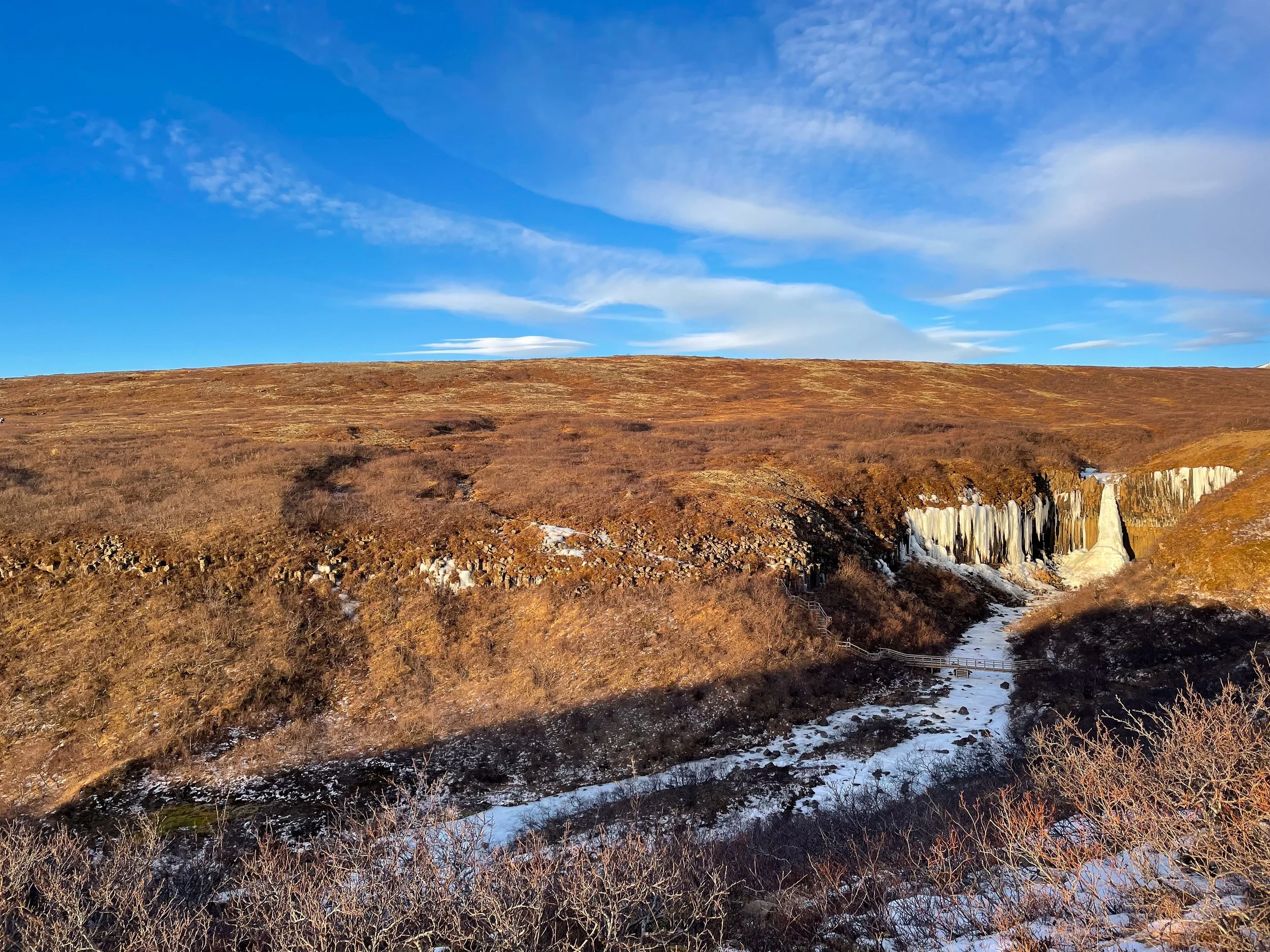
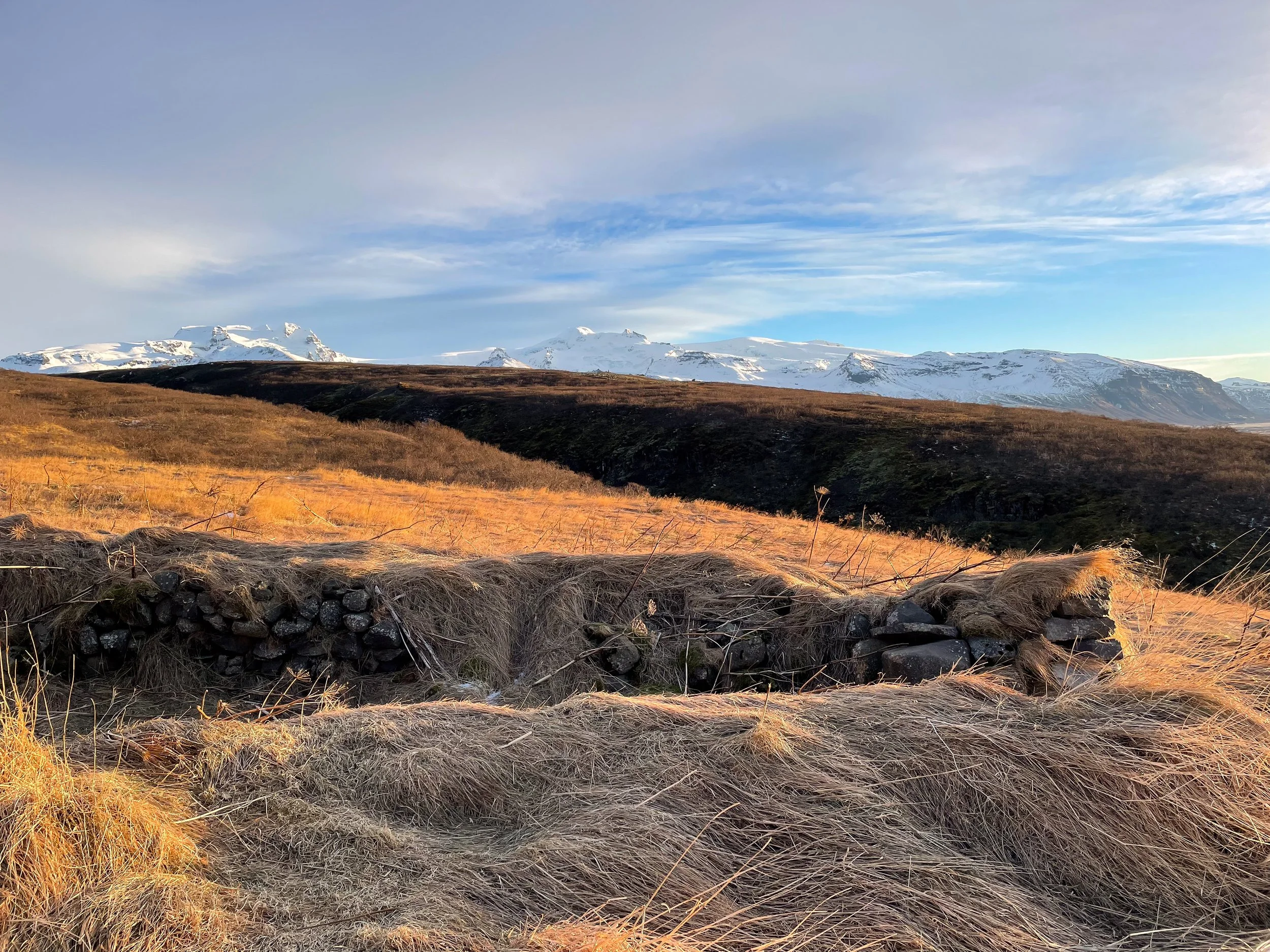
Svarrifoss Waterfall
The Svarrifoss Waterfall is a picturesque waterfall famous for its hexagonal basalt columns. During winter, the waterfall is frozen over with large icicles hanging from the hexagonal basalt columns flanking the waterfall. It’s accessible via the 2km Svarrifoss Trail starting at the Skaftafell Visitor Center. The trail, which has some steep sections, offers views of the coast and mountains. It passes some smaller waterfalls and ruins of stone dwellings.
Getting Here. The trailhead to the Svarrifoss Waterfall is located about 45 minutes from Diamond Beach.
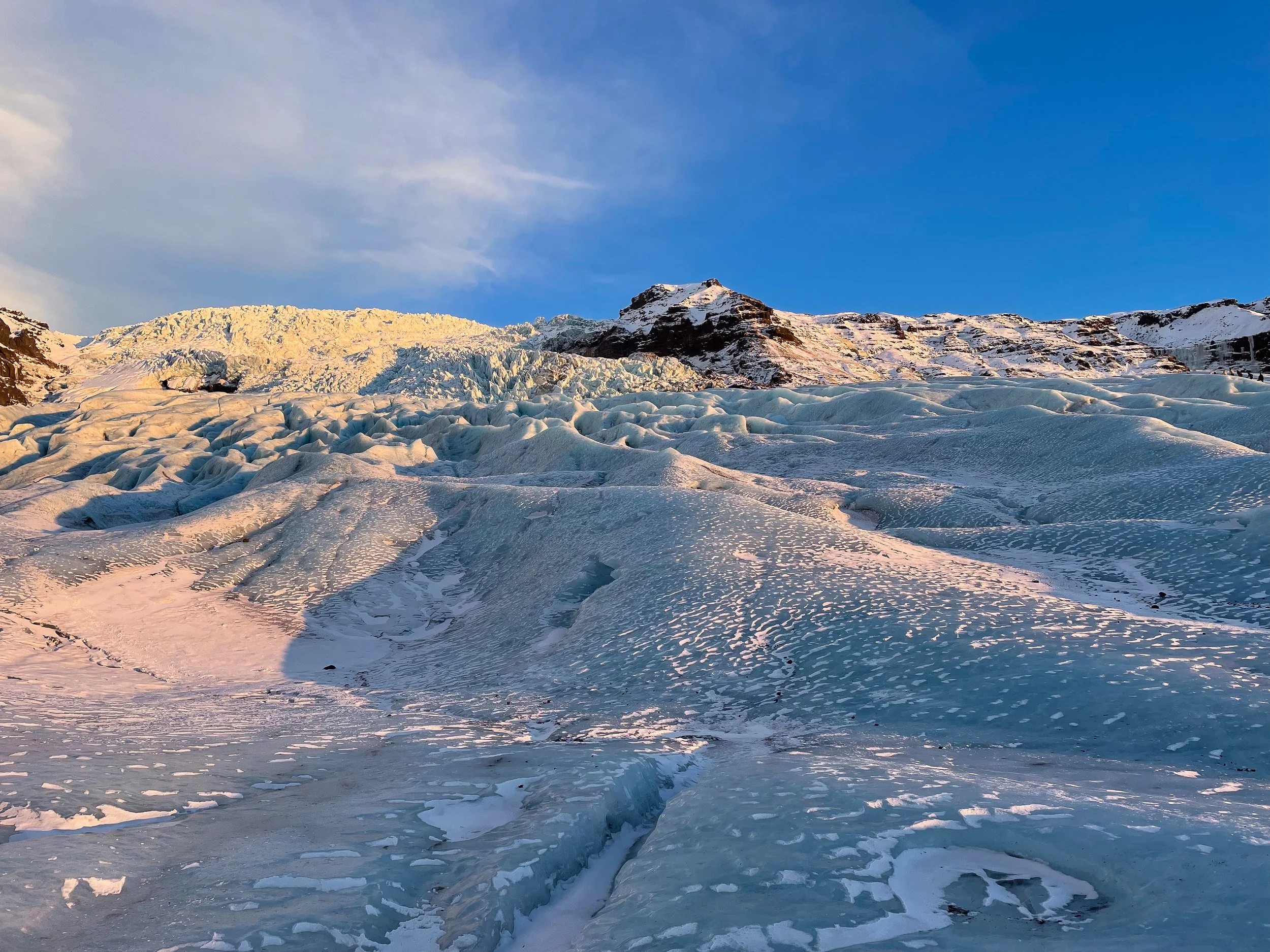
Falljökull Glacier
The Falljökull Glacier is a glacial tongue extending from Iceland’s largest glacier, Vatnajökull Glacier. We came here to hike, explore ice caves and watch the sunset with a guide from Troll Expeditions. After gearing up, we trekked across the frozen lagoon and ash covered ice until reaching a series of blue and white ice crevices.
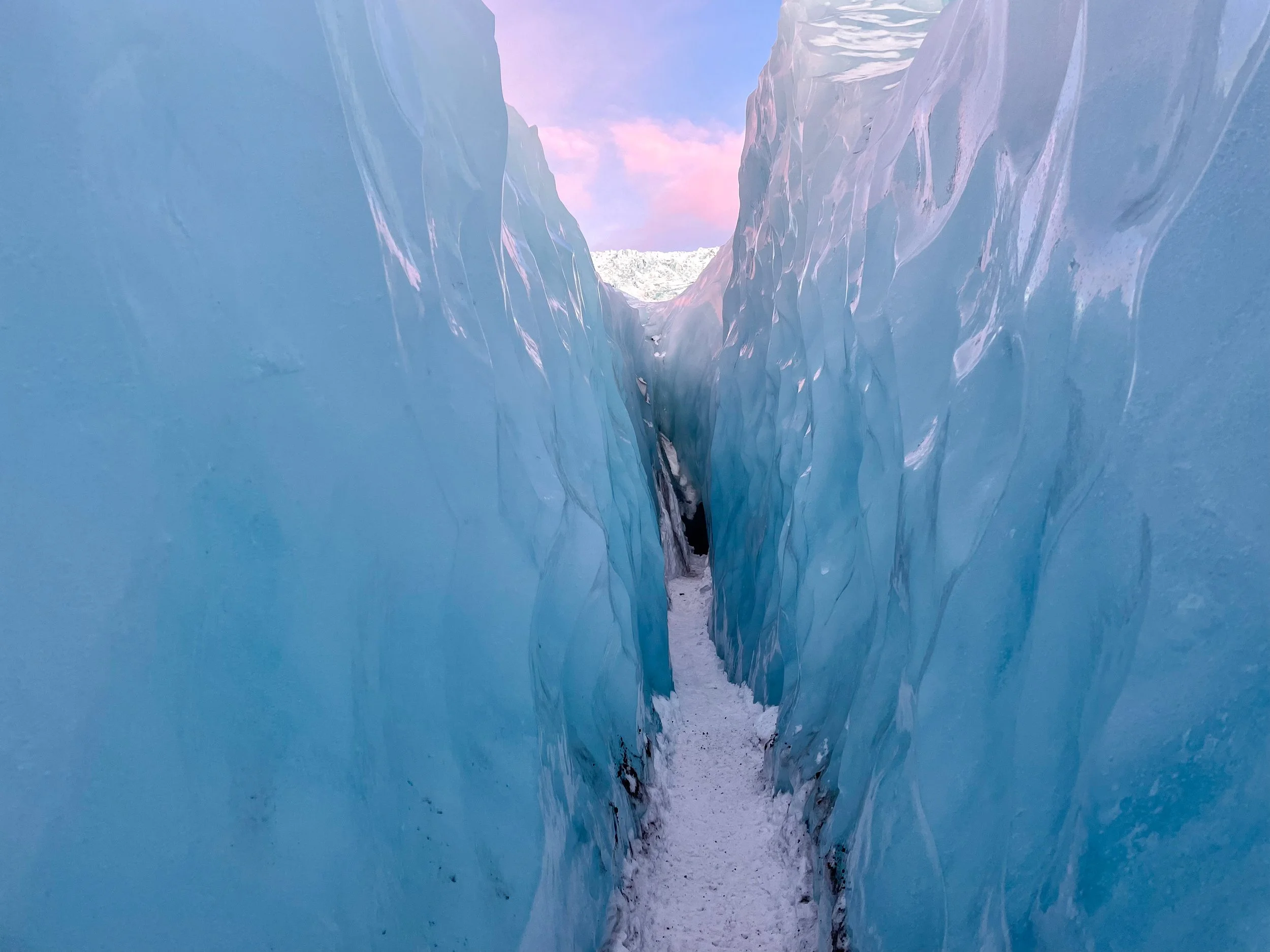
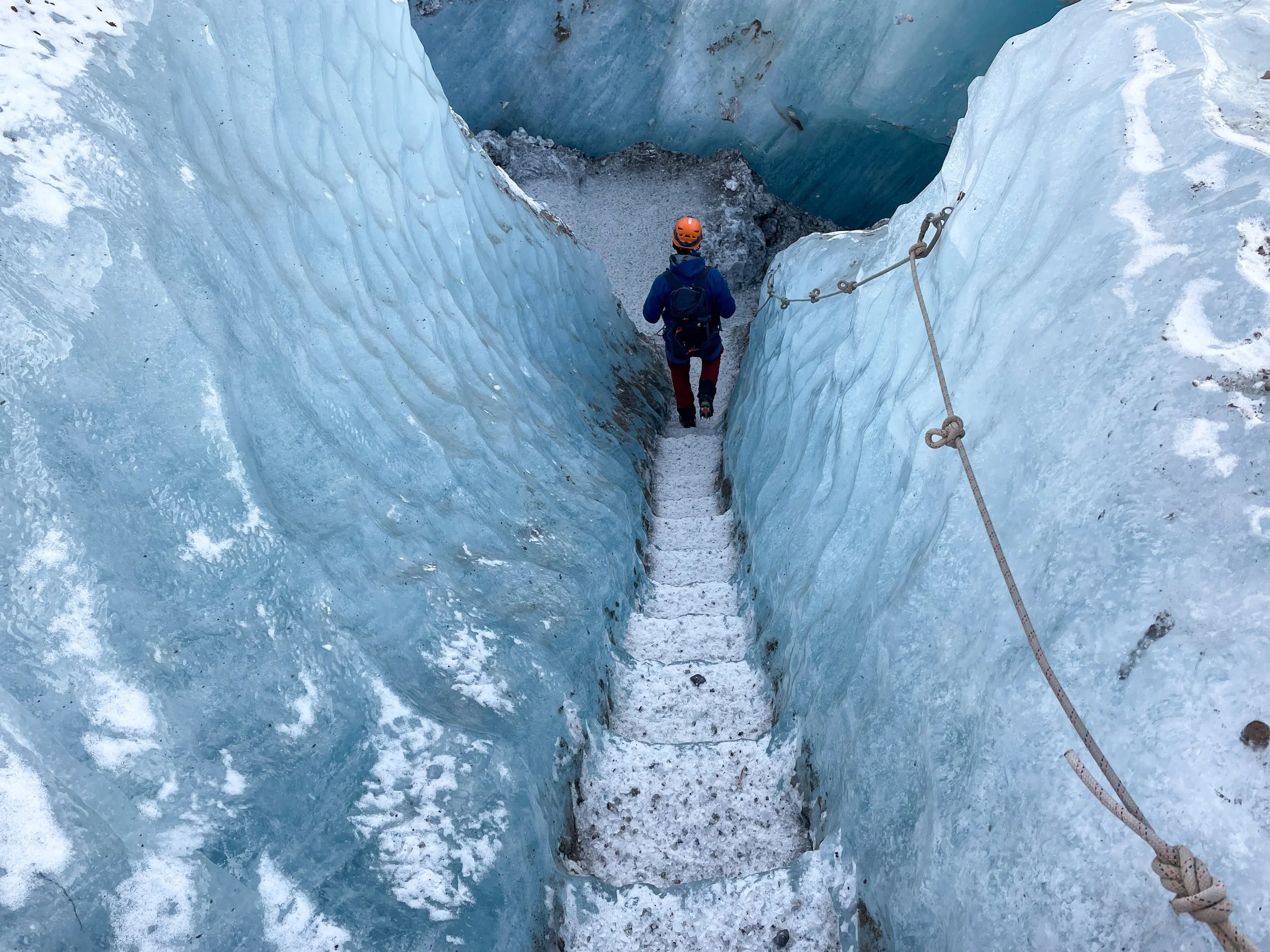
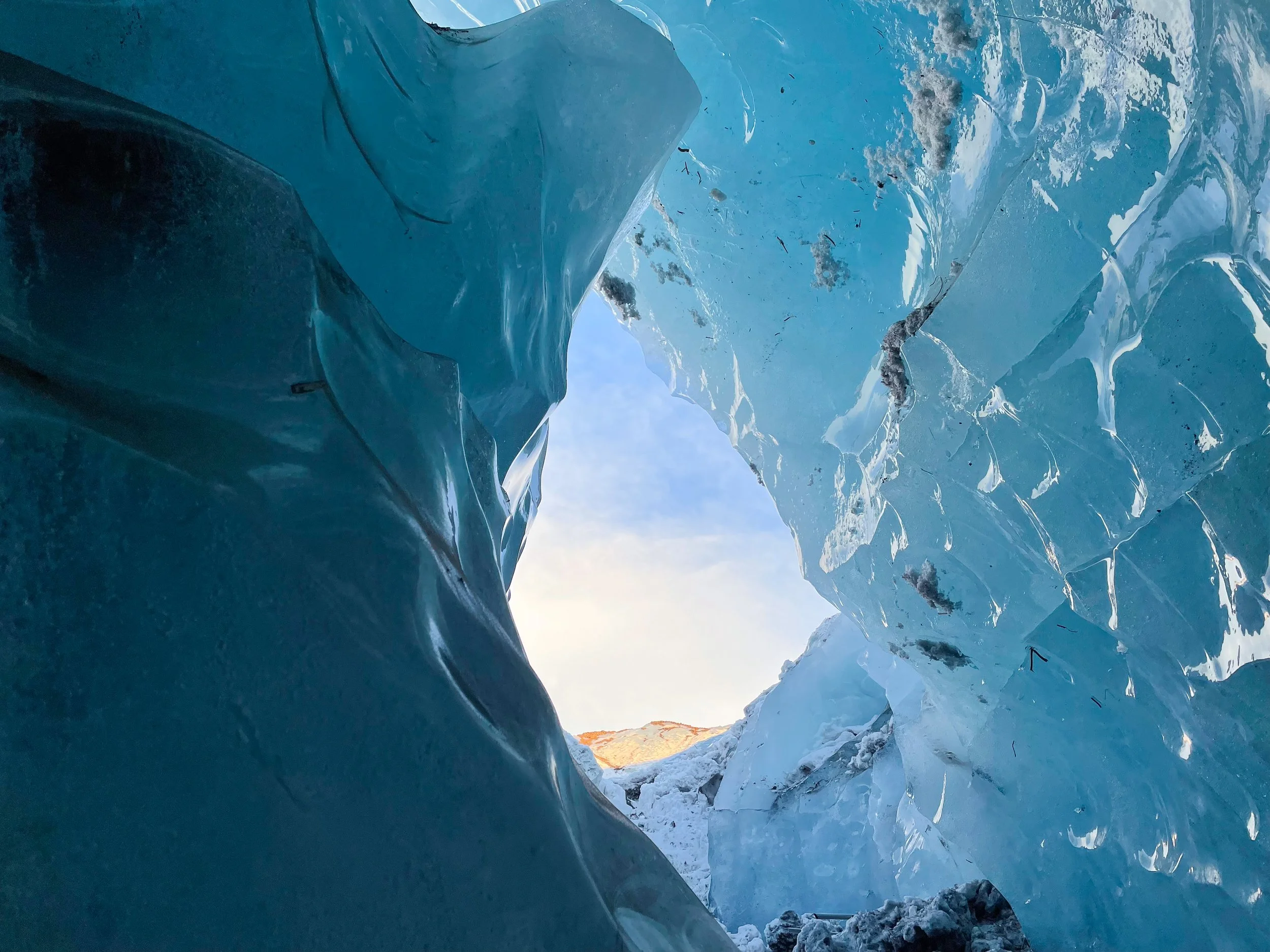
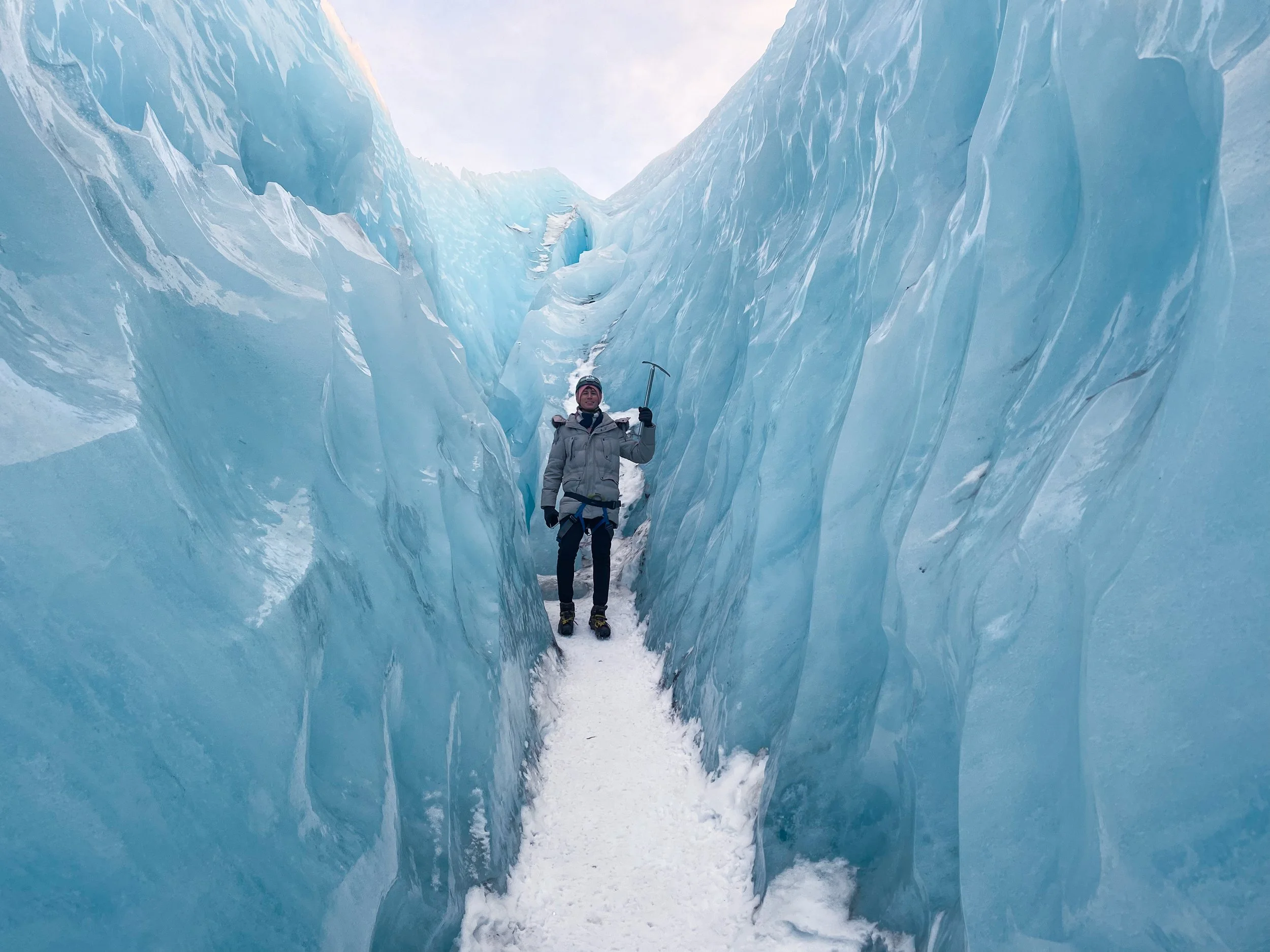
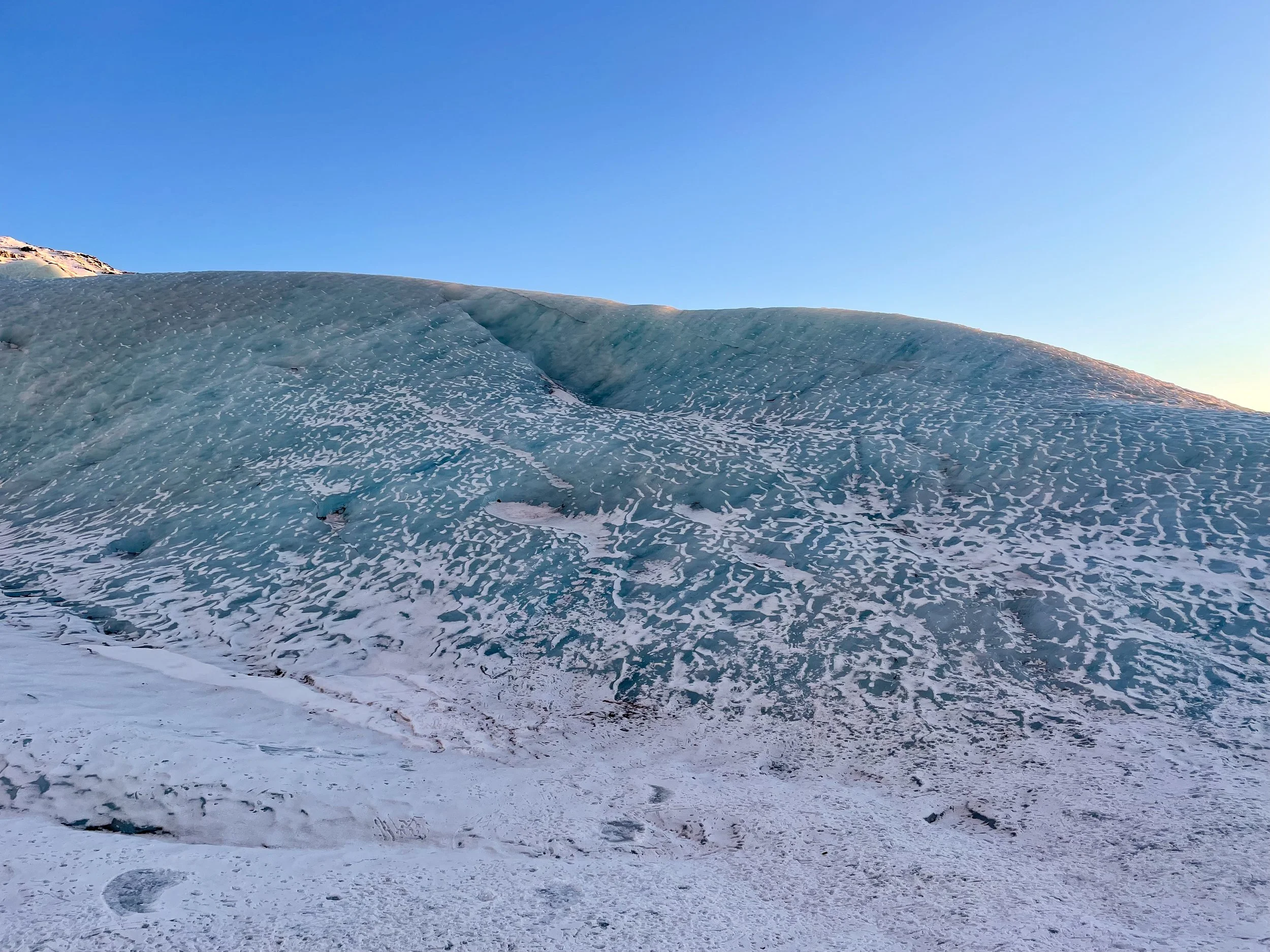
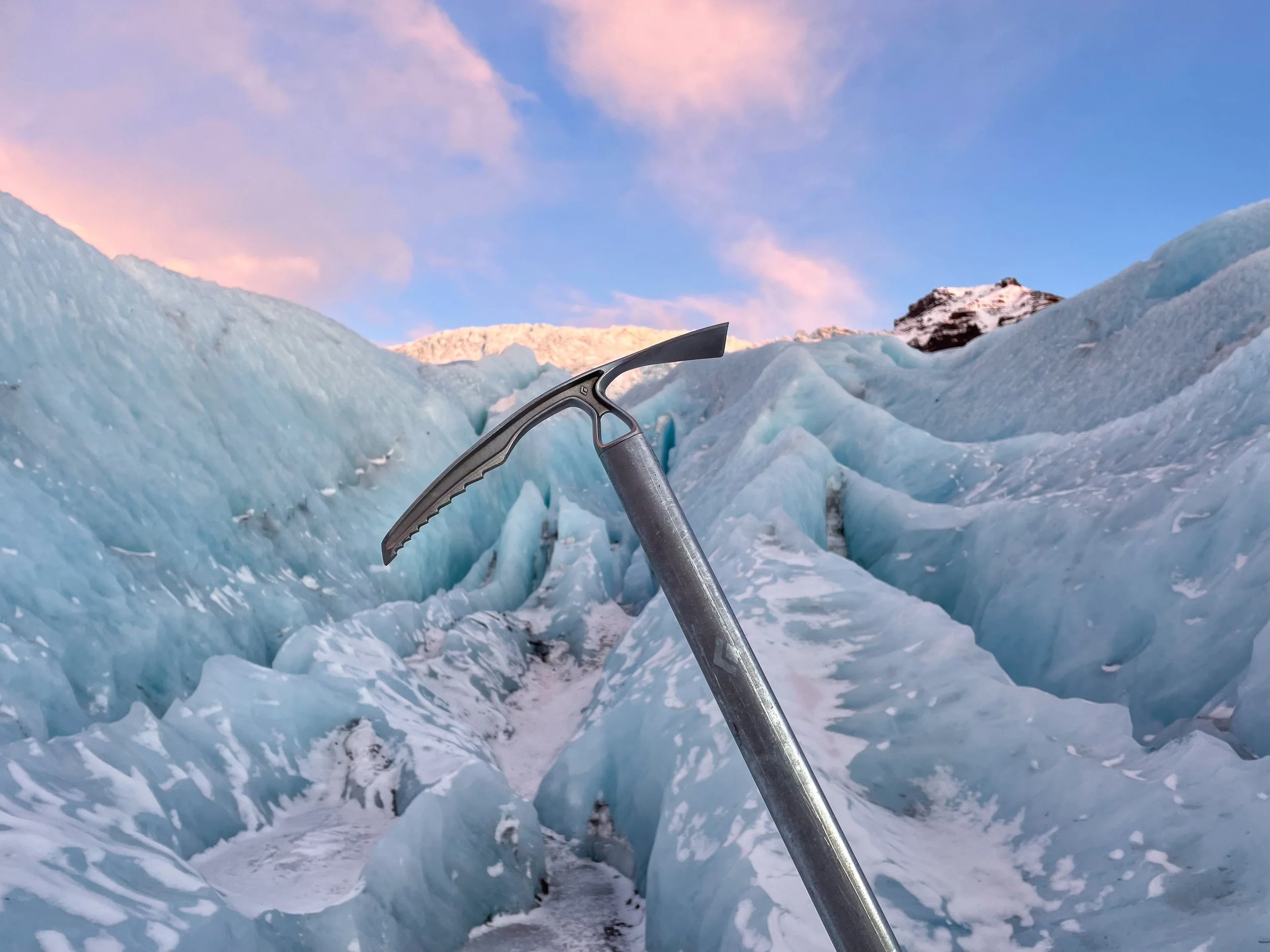
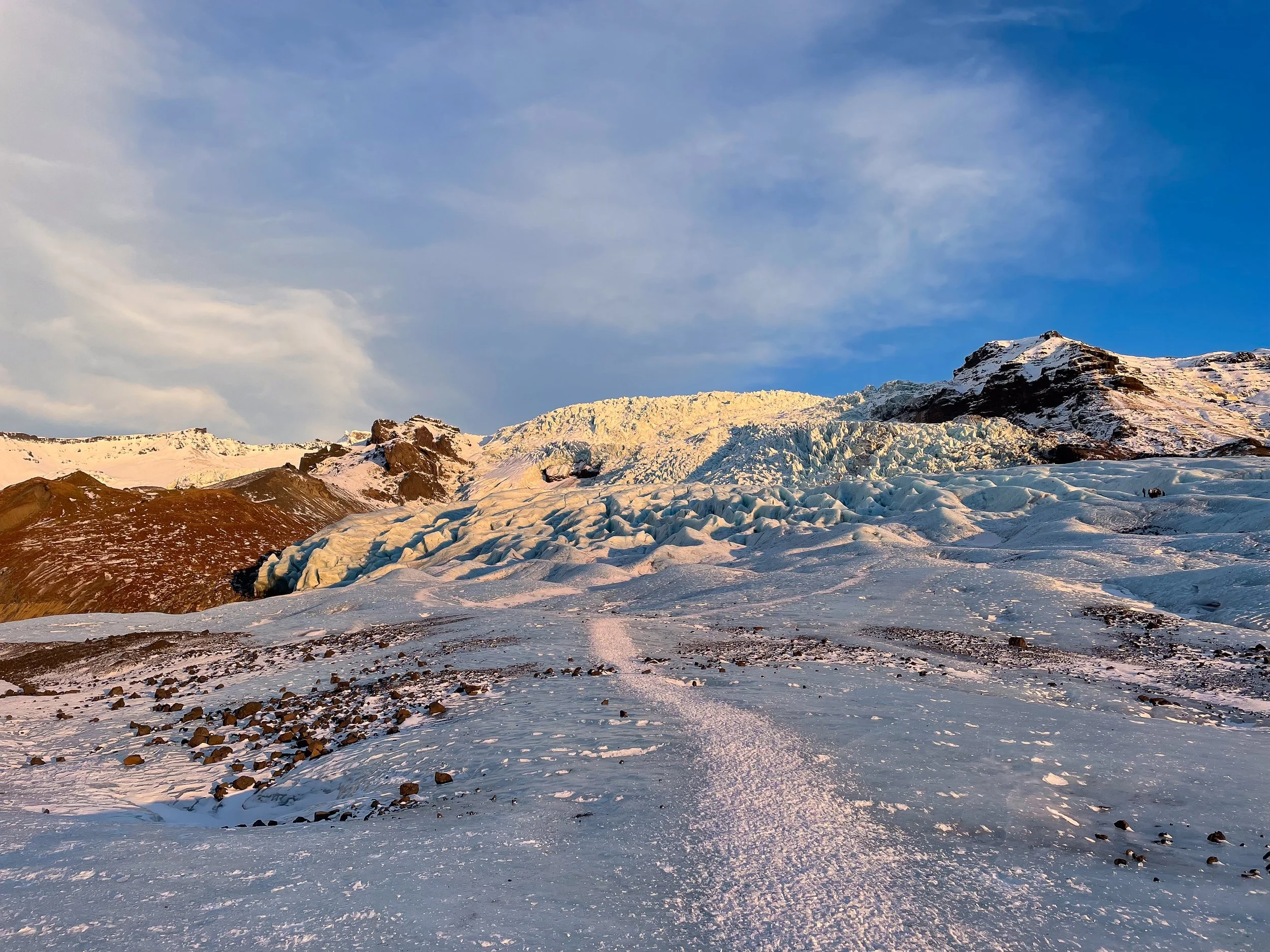
Ice Caves. A large crevice with a staircase carved into it led to the entrance of an ice cave. The cave was blue with curved walls, rippled surfaces and deep blue veins where the ice had been heavily compressed. The cave led to a narrow tunnel that burrowed deeper into the glacier, ending at a small chamber barely big enough for the two of us to squeeze into.
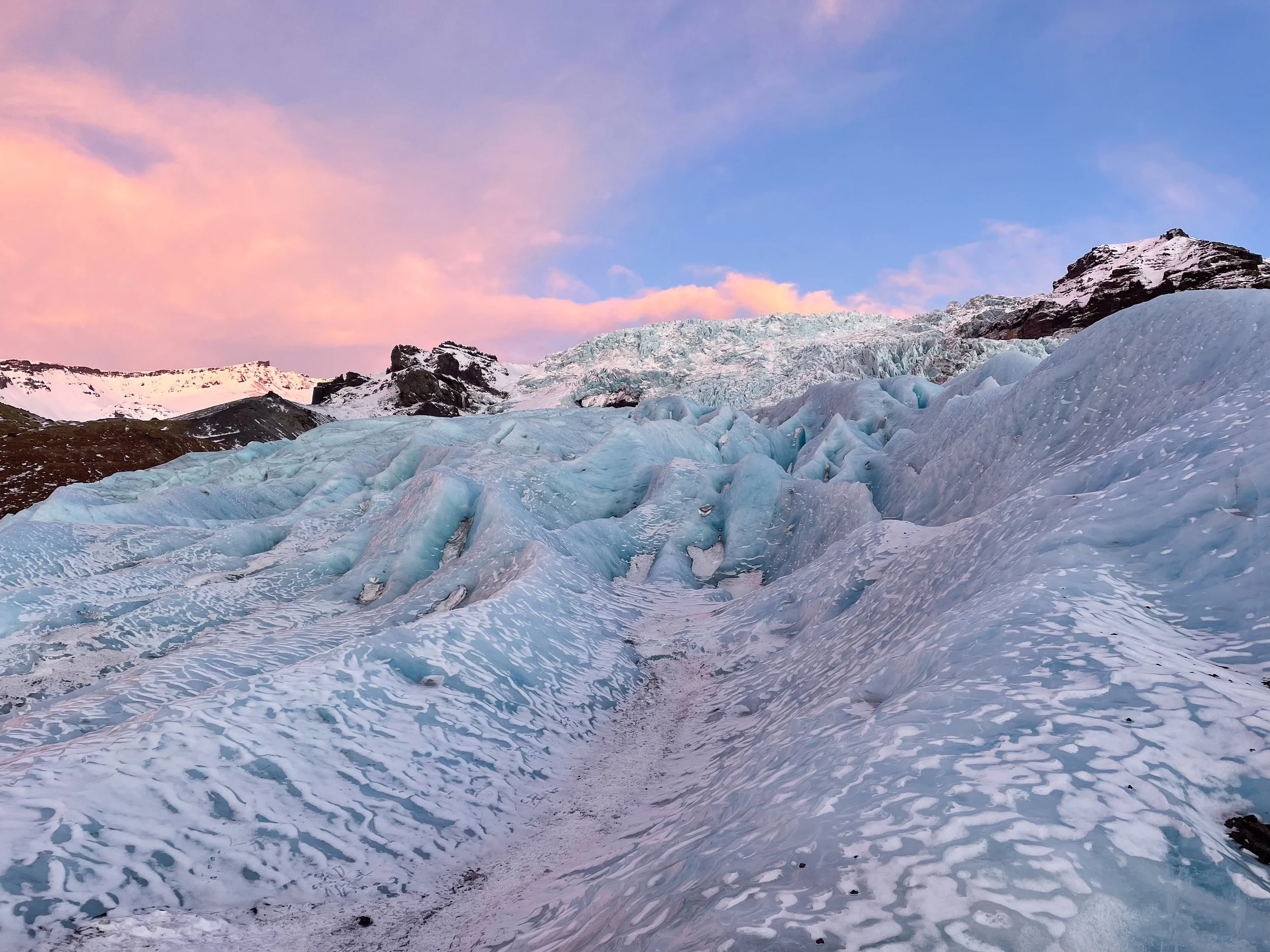
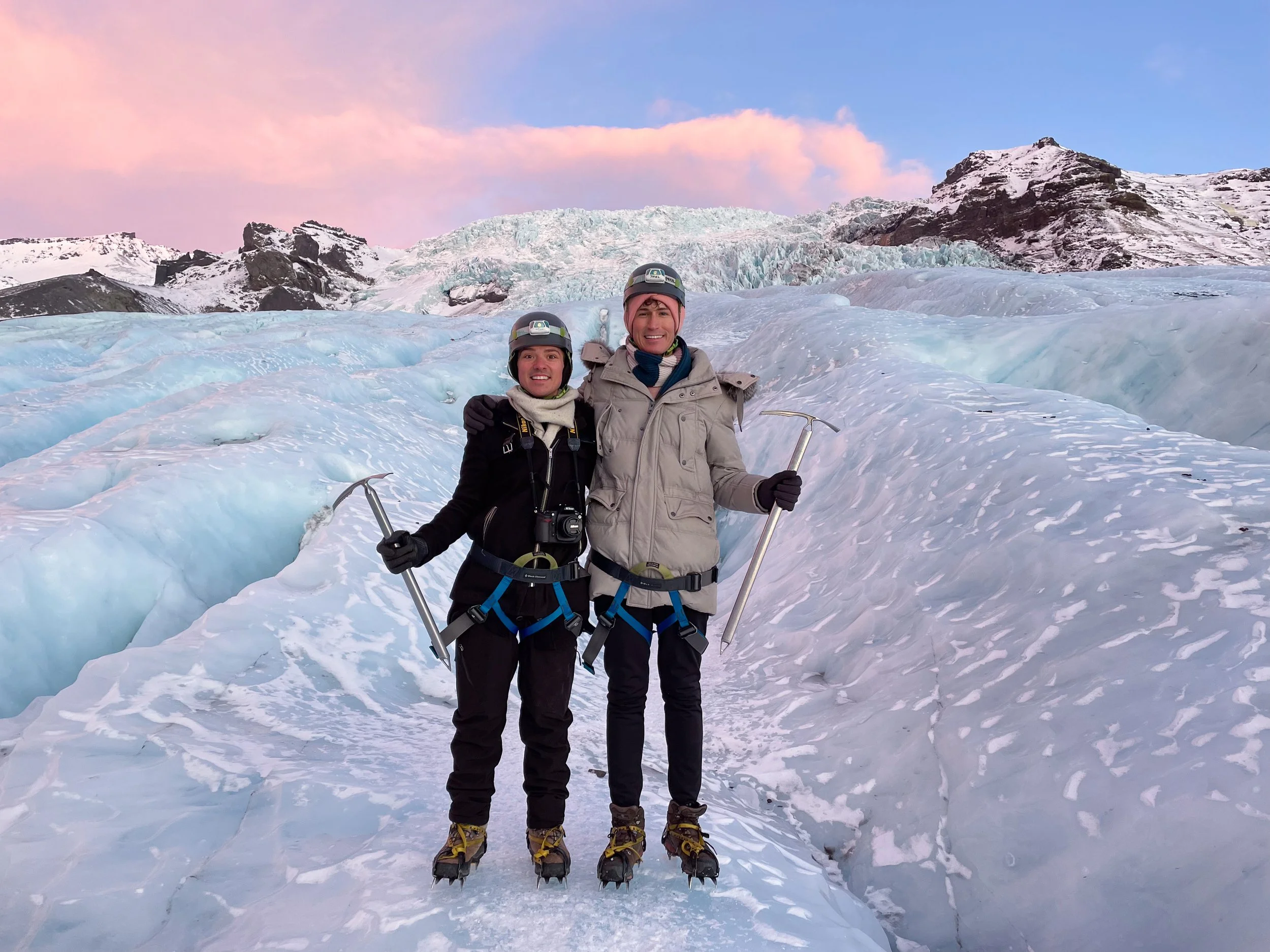
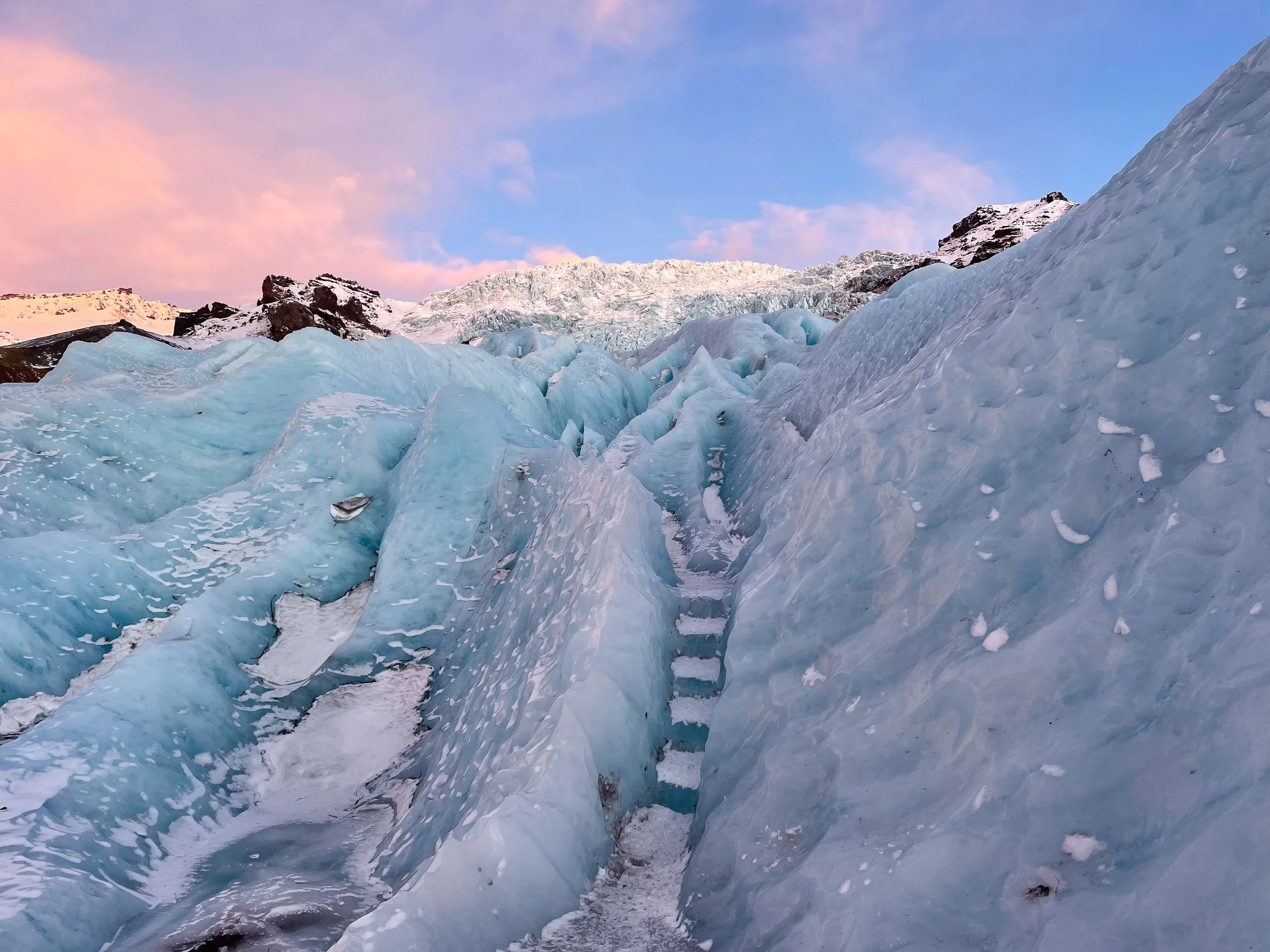
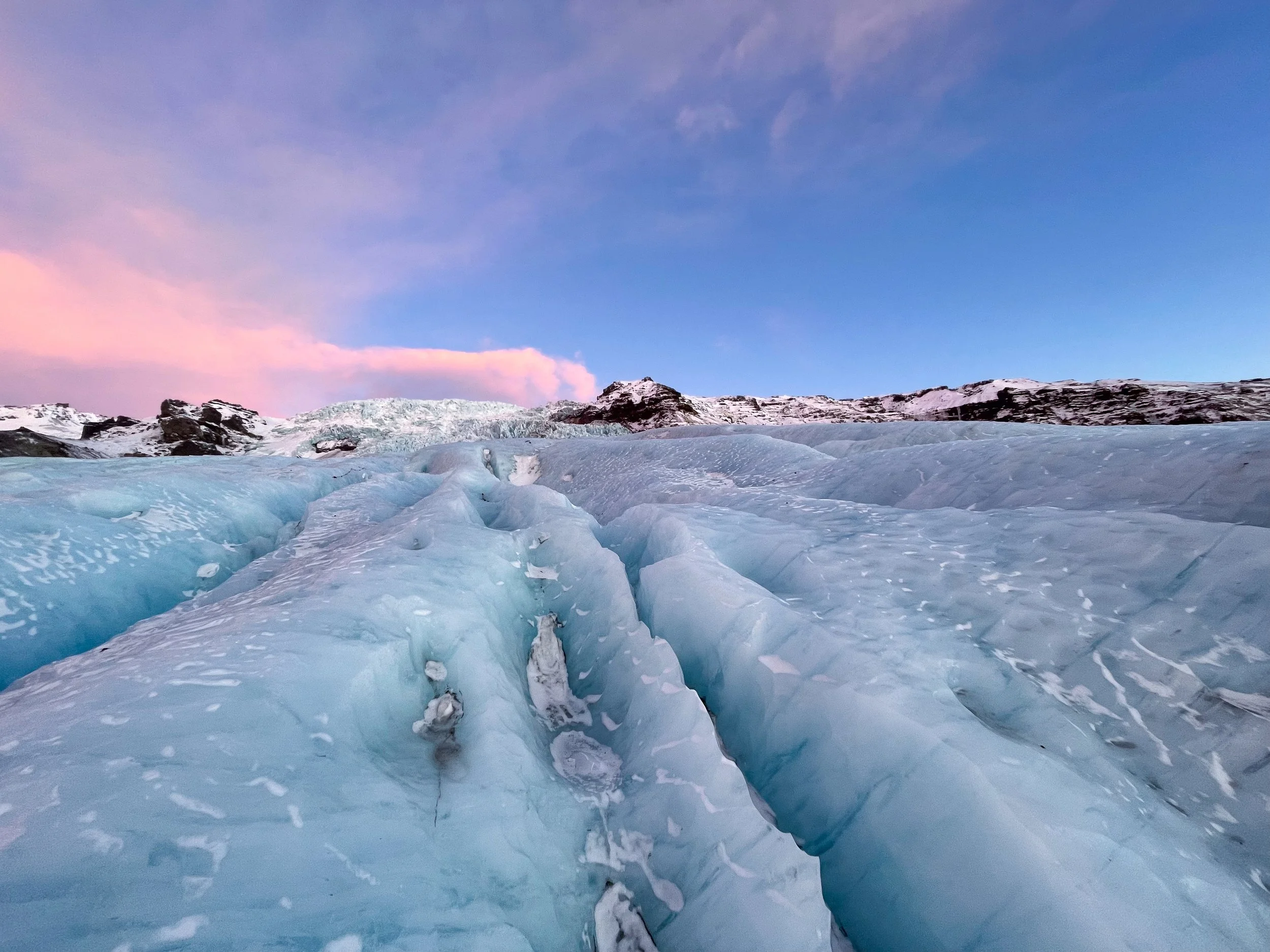
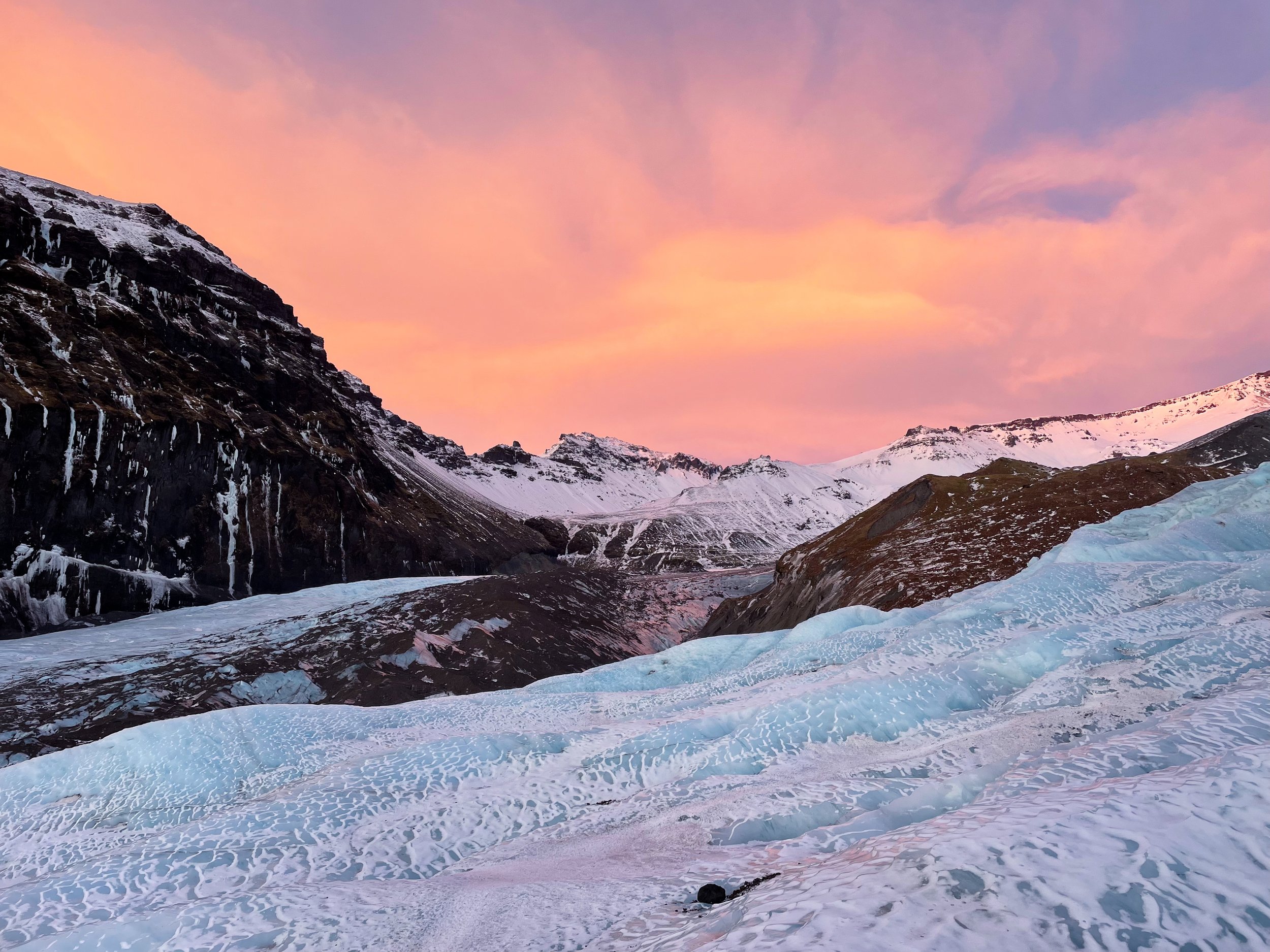
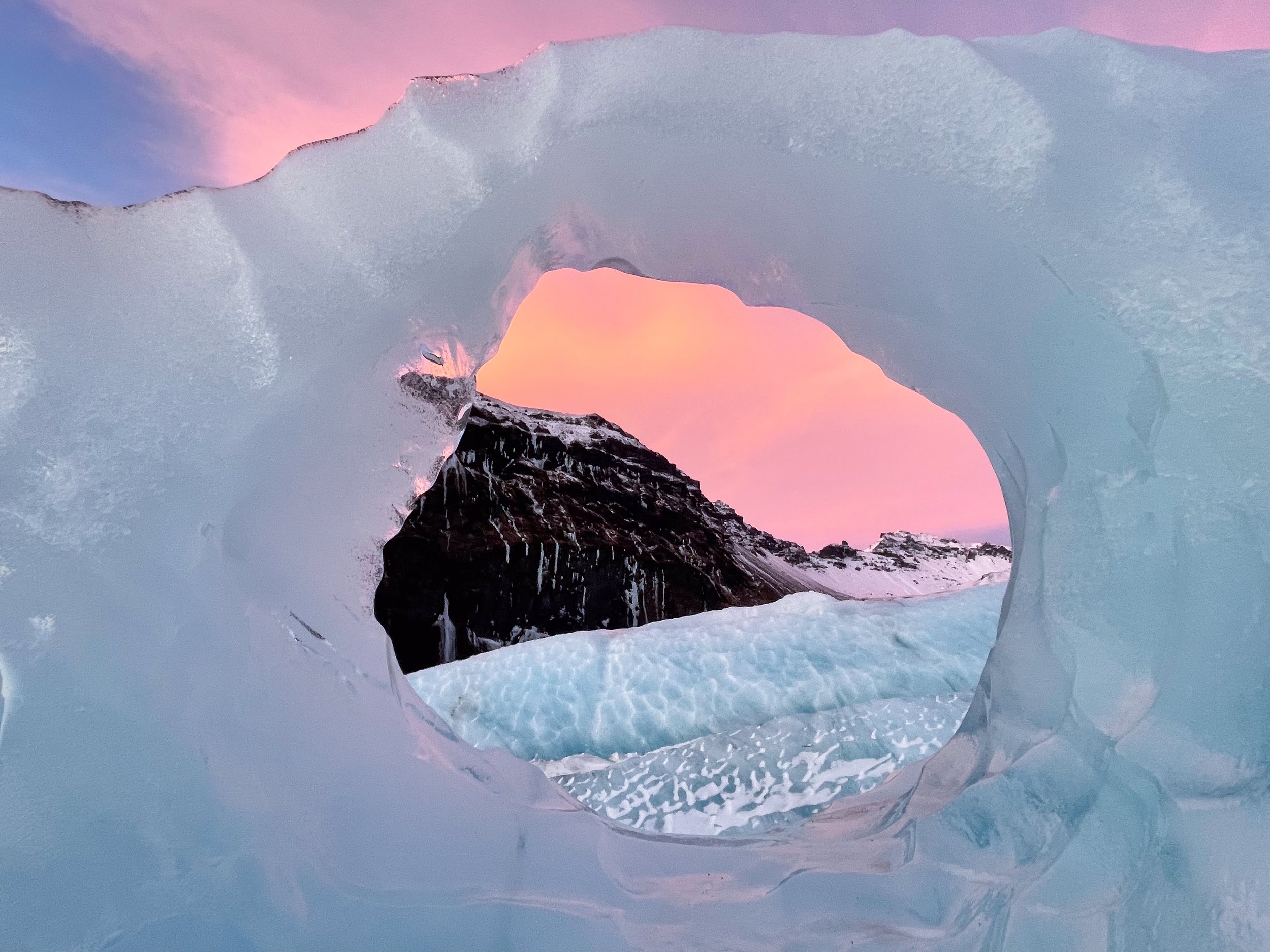
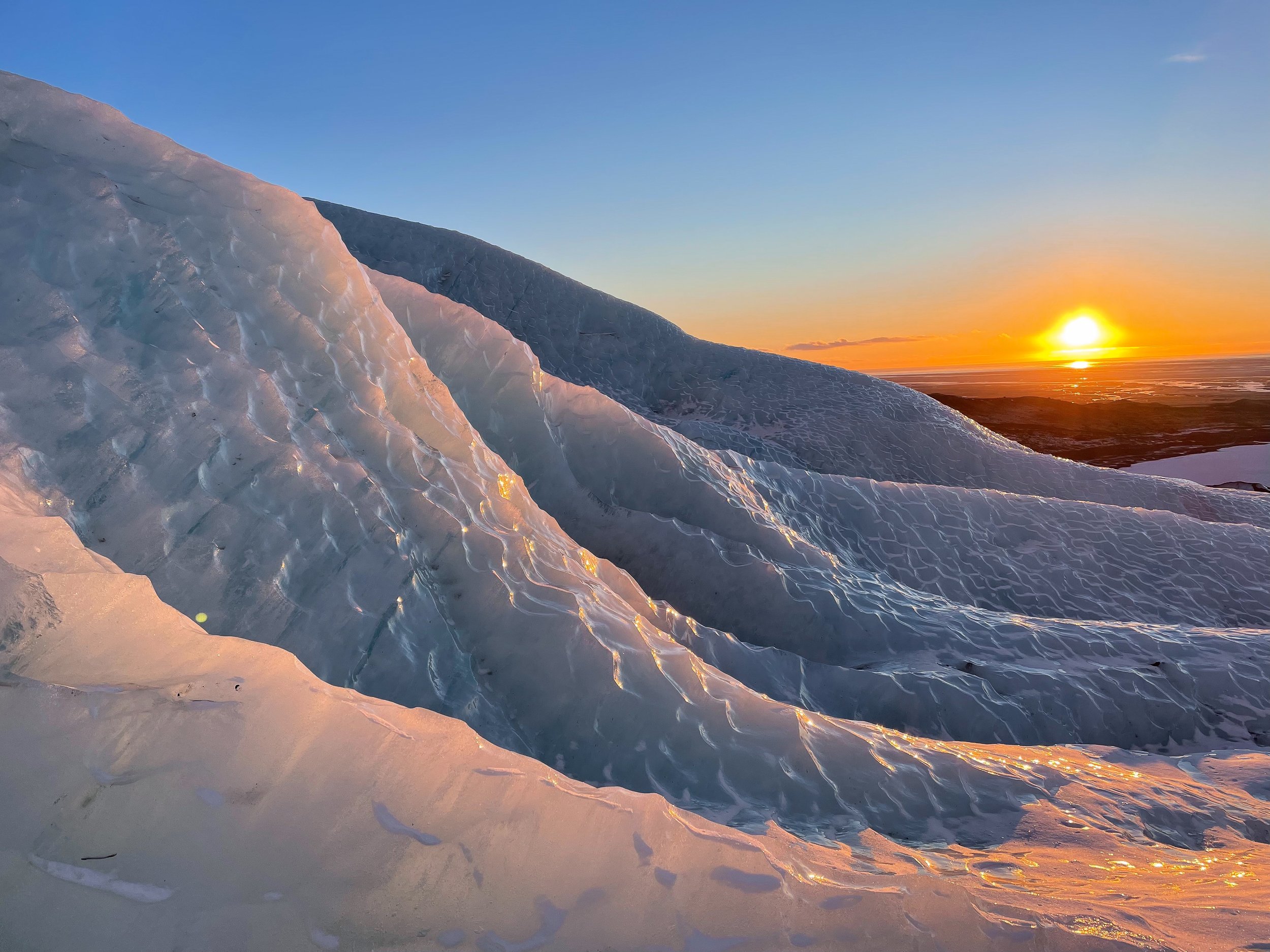
Glacial Sunset. We ascended further as the sun set, reaching a relatively smooth clearing with waves of ice that extended upwards towards jagged crevices and steep cliffs. Now high on the glacier, we stopped to listen to the silence, only interrupted by the occasional sharp crack of the ice. The color of the sky turned vibrant pink while the ice continually became bluer until it seemed to glow. Before reaching the ash covered base of the glacier, we came upon a window in the ice that framed the pink sky and mountain beyond.
Getting Here. The Falljökull Glacier is located about 20 minutes from the Skaftafell Visitor Center by car.
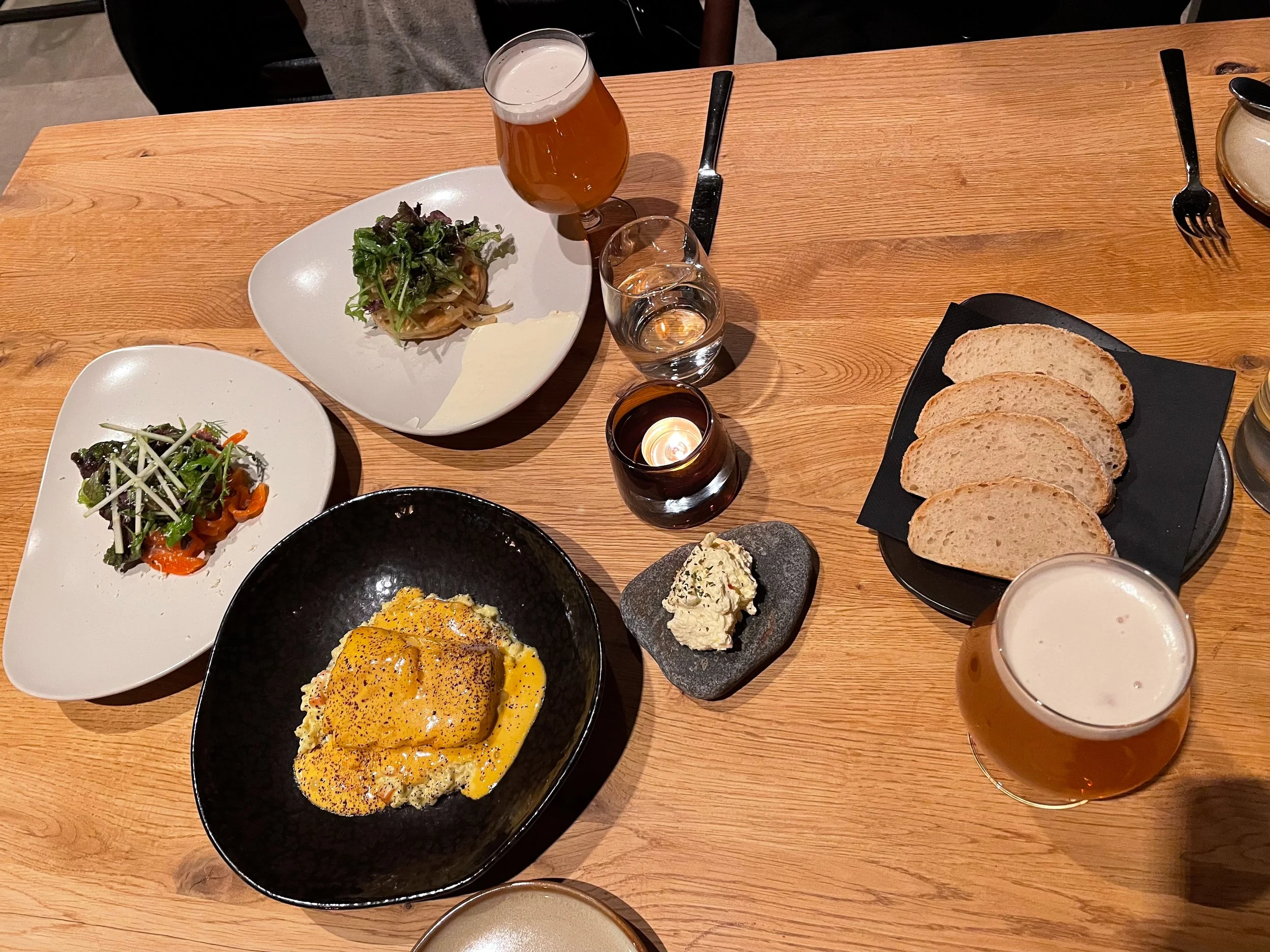
Dinner in Vik
On our return to Hella, we stopped in Vik for dinner at Drangar, a restaurant specializing in modern Icelandic cuisine located at the Kria Hotel. We were welcomed with bread and butter sprinkled with black salt served on a lava rock. We ordered two Gulls and a range of small plates to share: an onion tart, Arctic char tartare, curried cod on a bed of risotto and a poached plum with skyr (Icelandic yogurt).
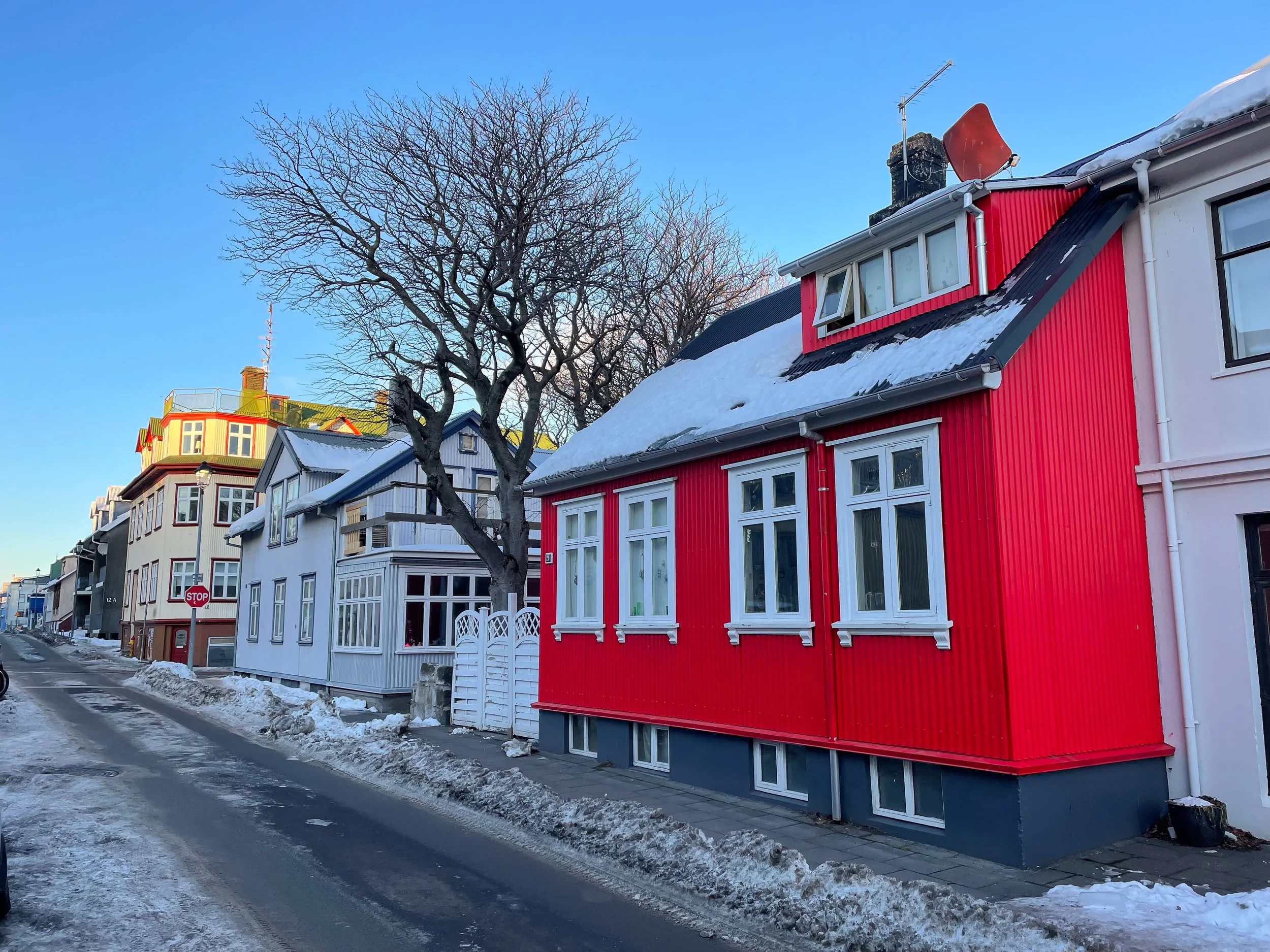
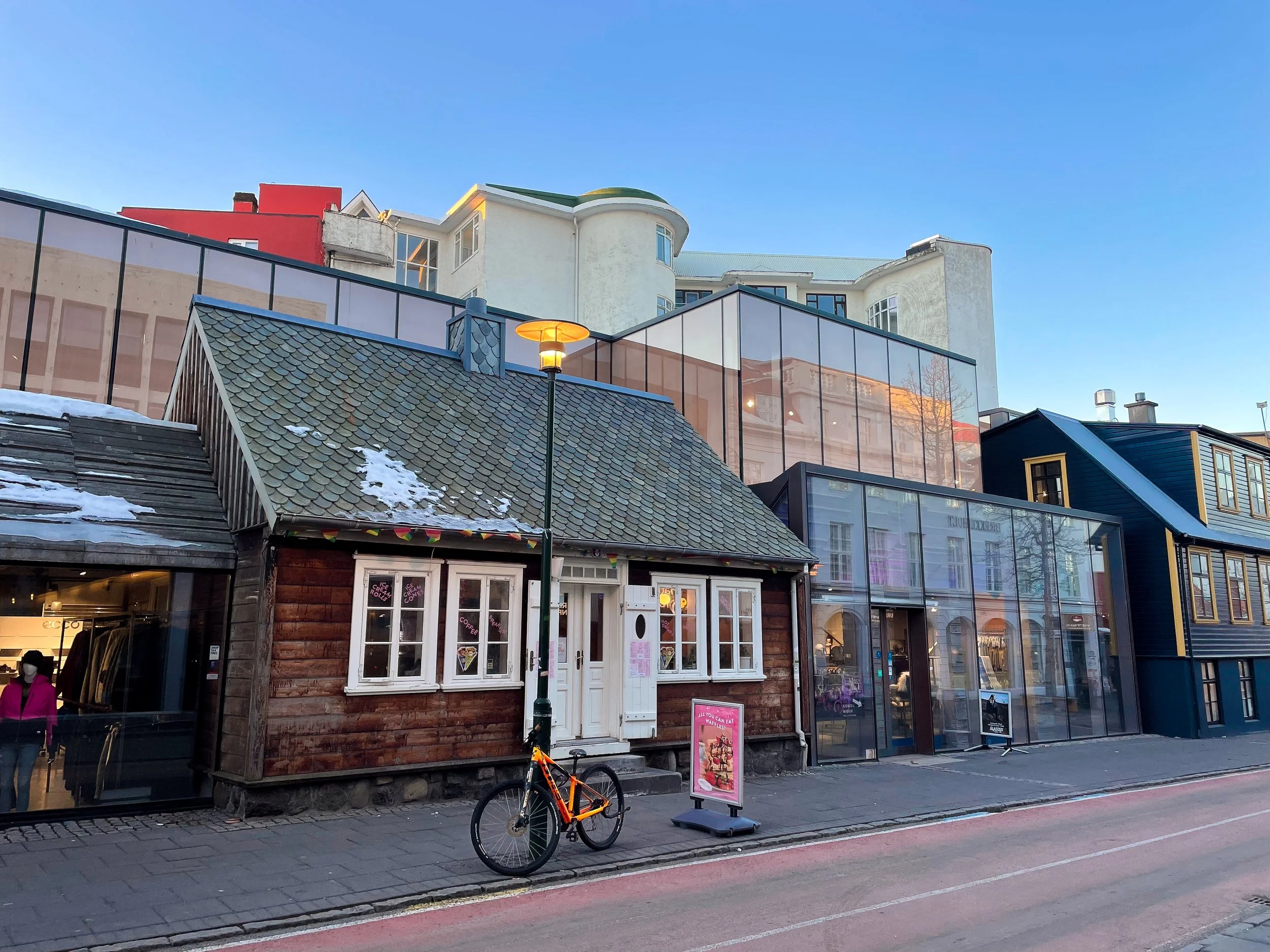
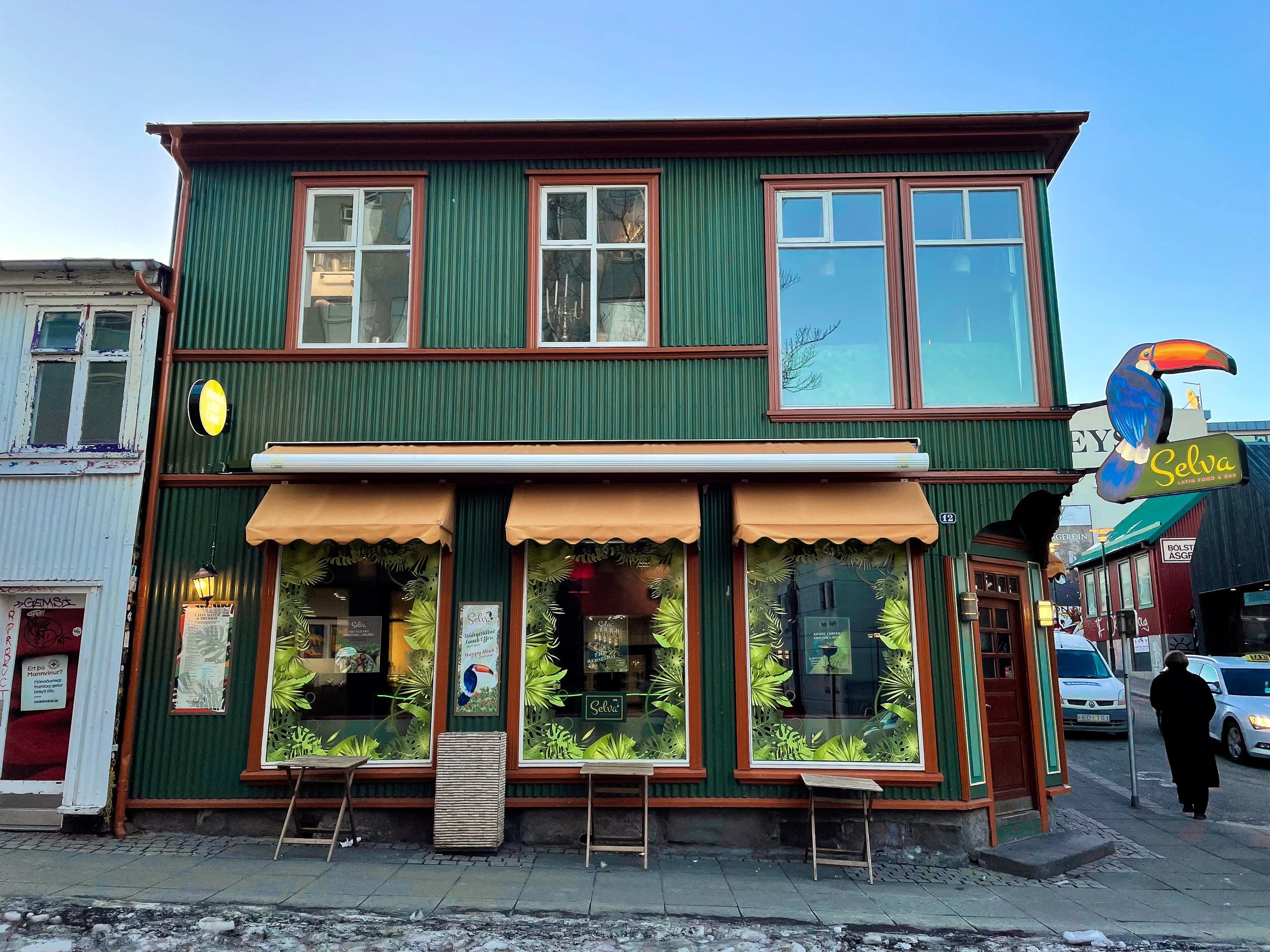
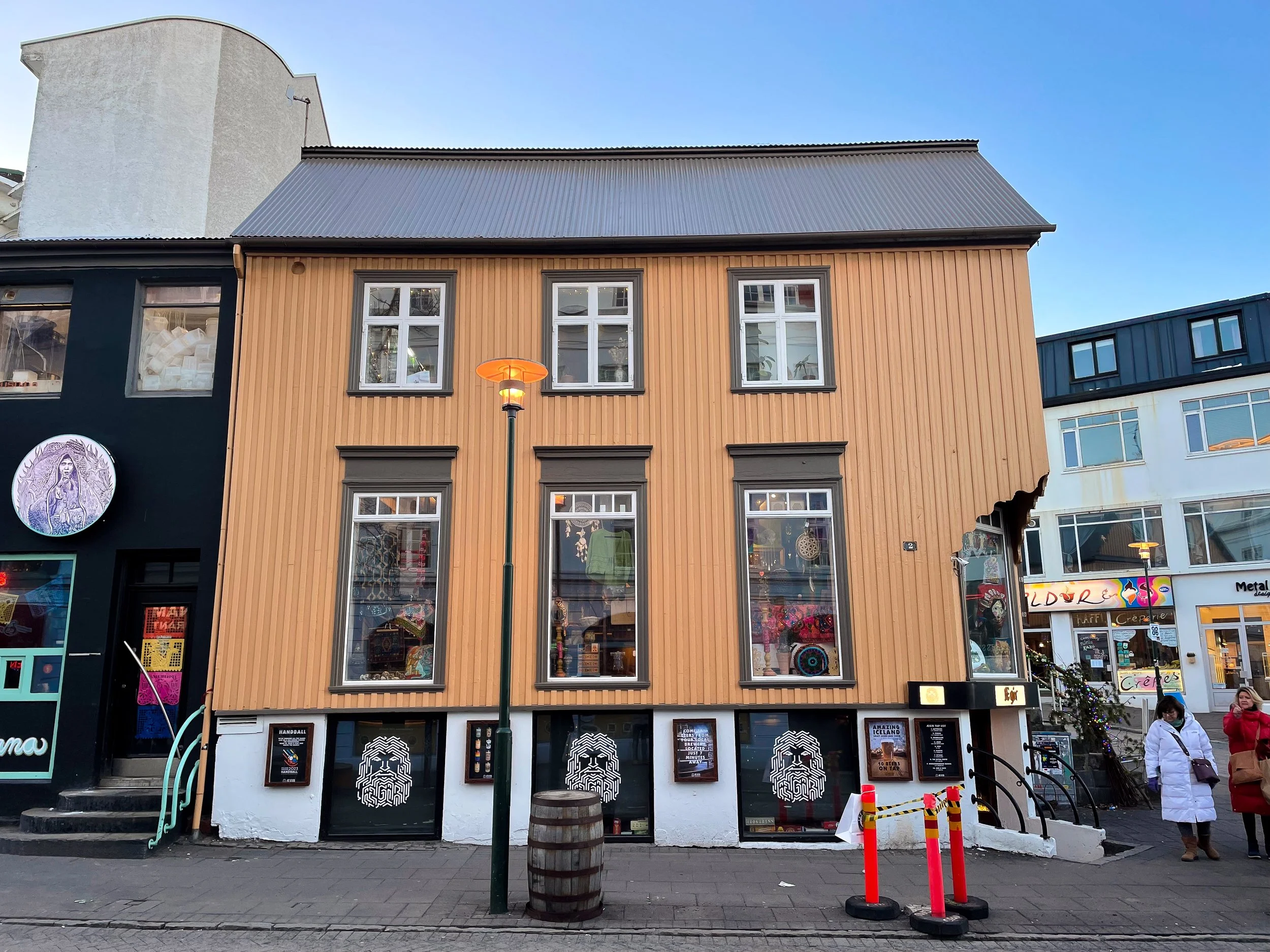
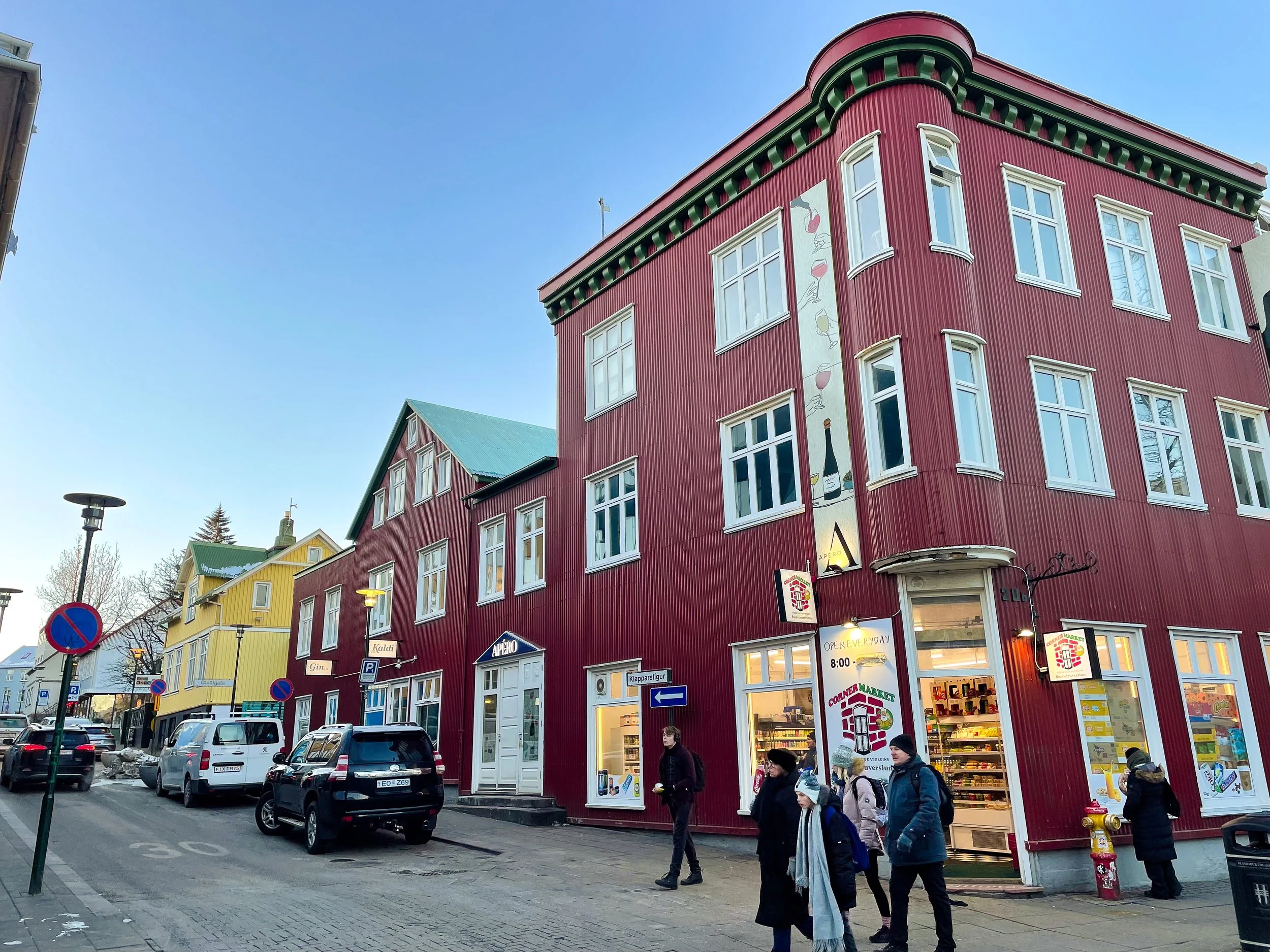
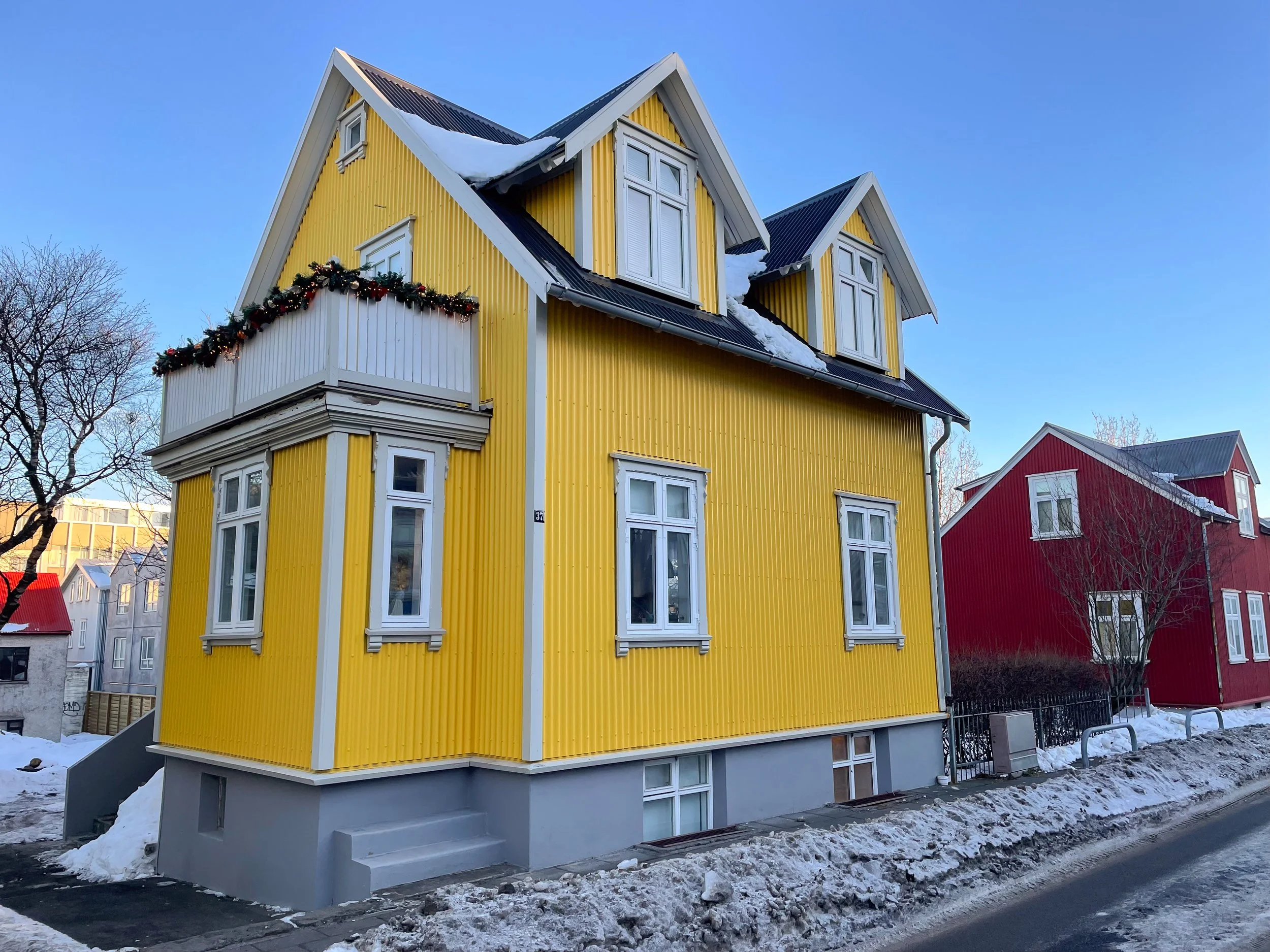
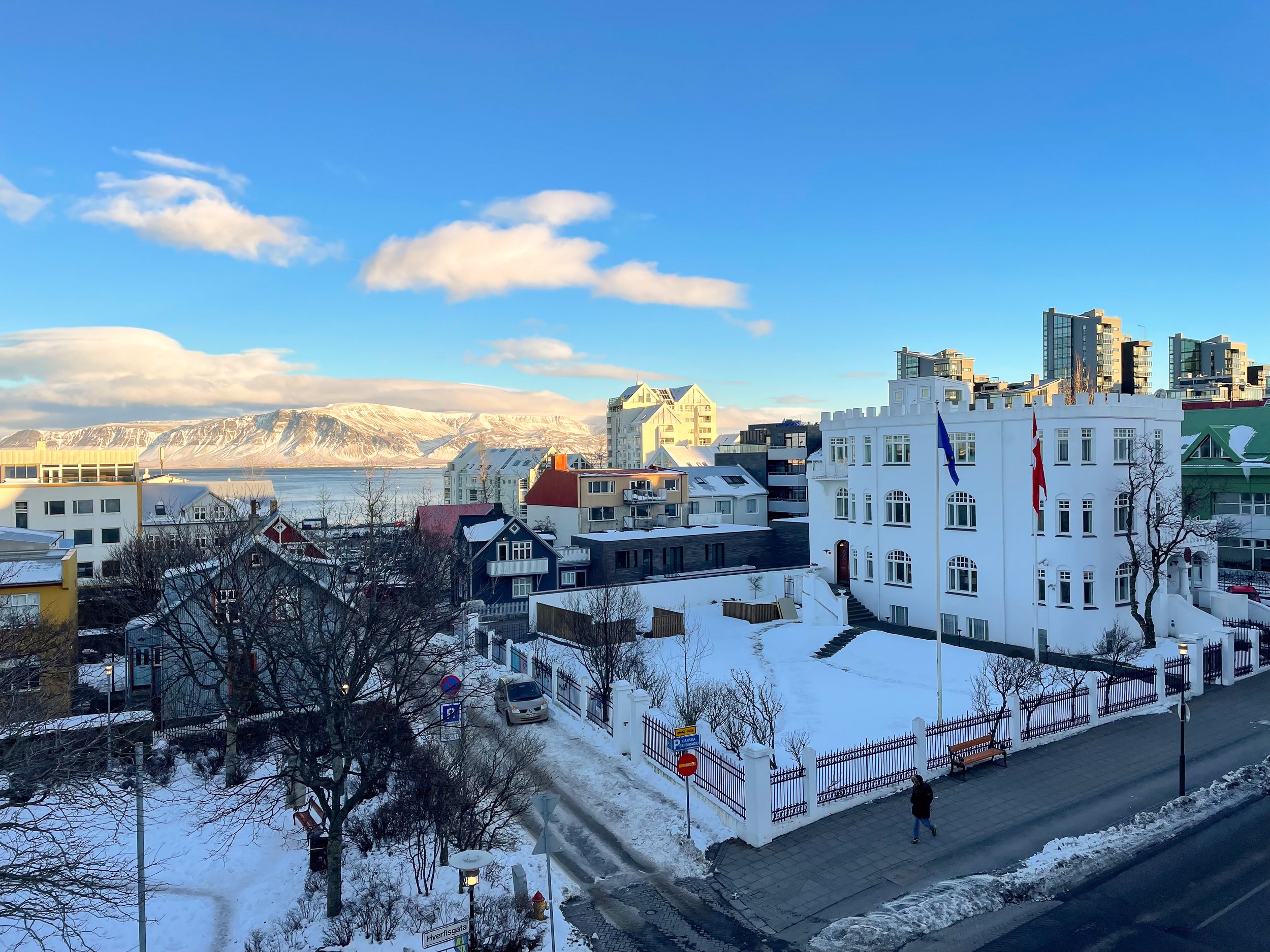
Reykjavík
Reykjavík is a scenic capital city of Iceland. Its walkable downtown streets are lined with colorful corrugated buildings, old wooden houses and monumental landmarks. Icelandic boutiques and restaurants invite travelers in to shop for locally made goods and taste the country’s cuisine. The city is an ideal starting or ending point for most adventures in Iceland.
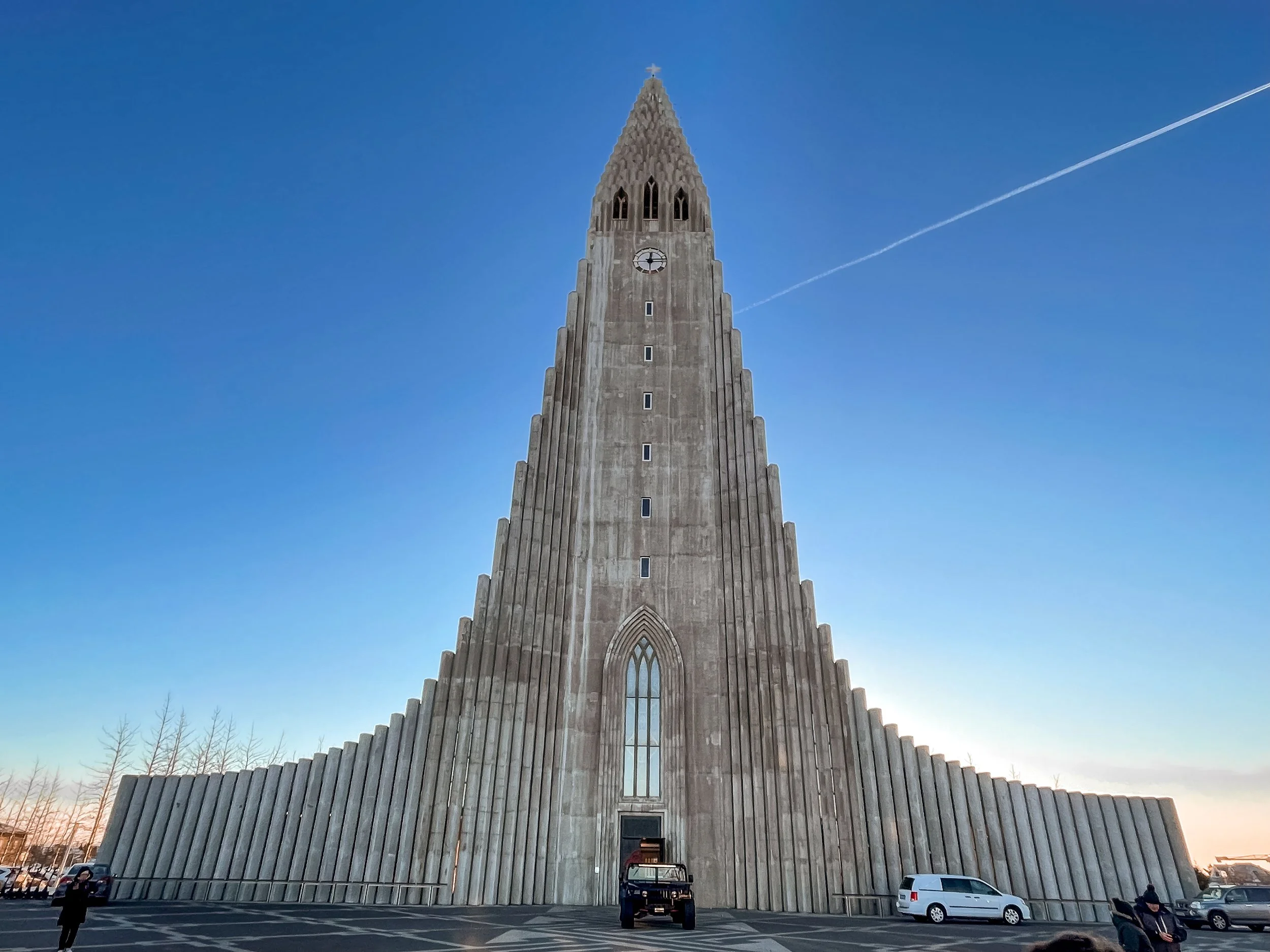
Hallgrímskirkja Cathedral
The Hallgrímskirkja Cathedral is a stepped concrete cathedral designed with inspiration from the Icelandic landscape. The shape is meant to resemble an erupting geyser with its facade made from hexagonal columns reminiscent of the basalt columns seen across the country. There is an elevator to the top of the spire which overlooks Reykjavík. It was closed when we visited due to a funeral.
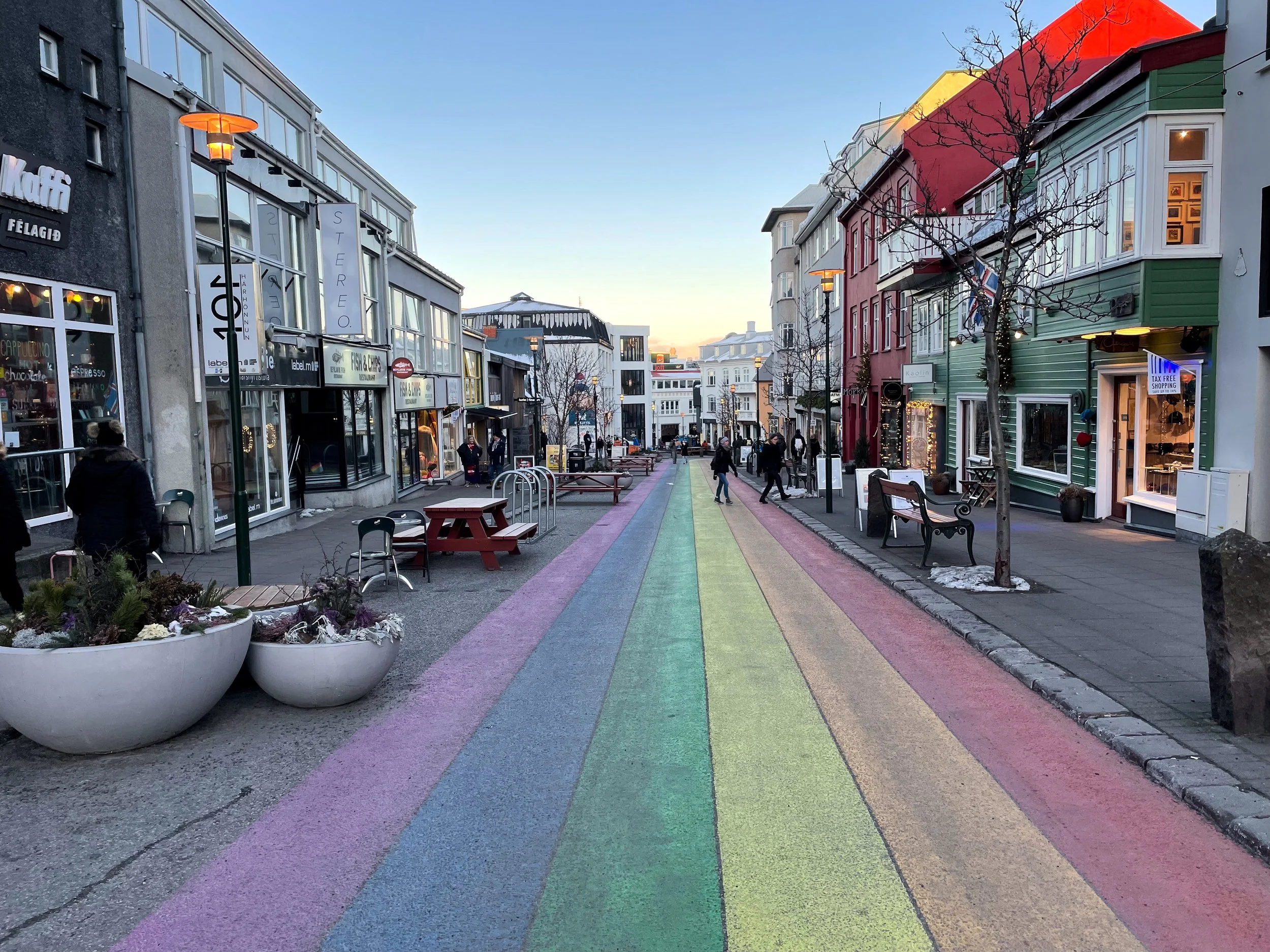
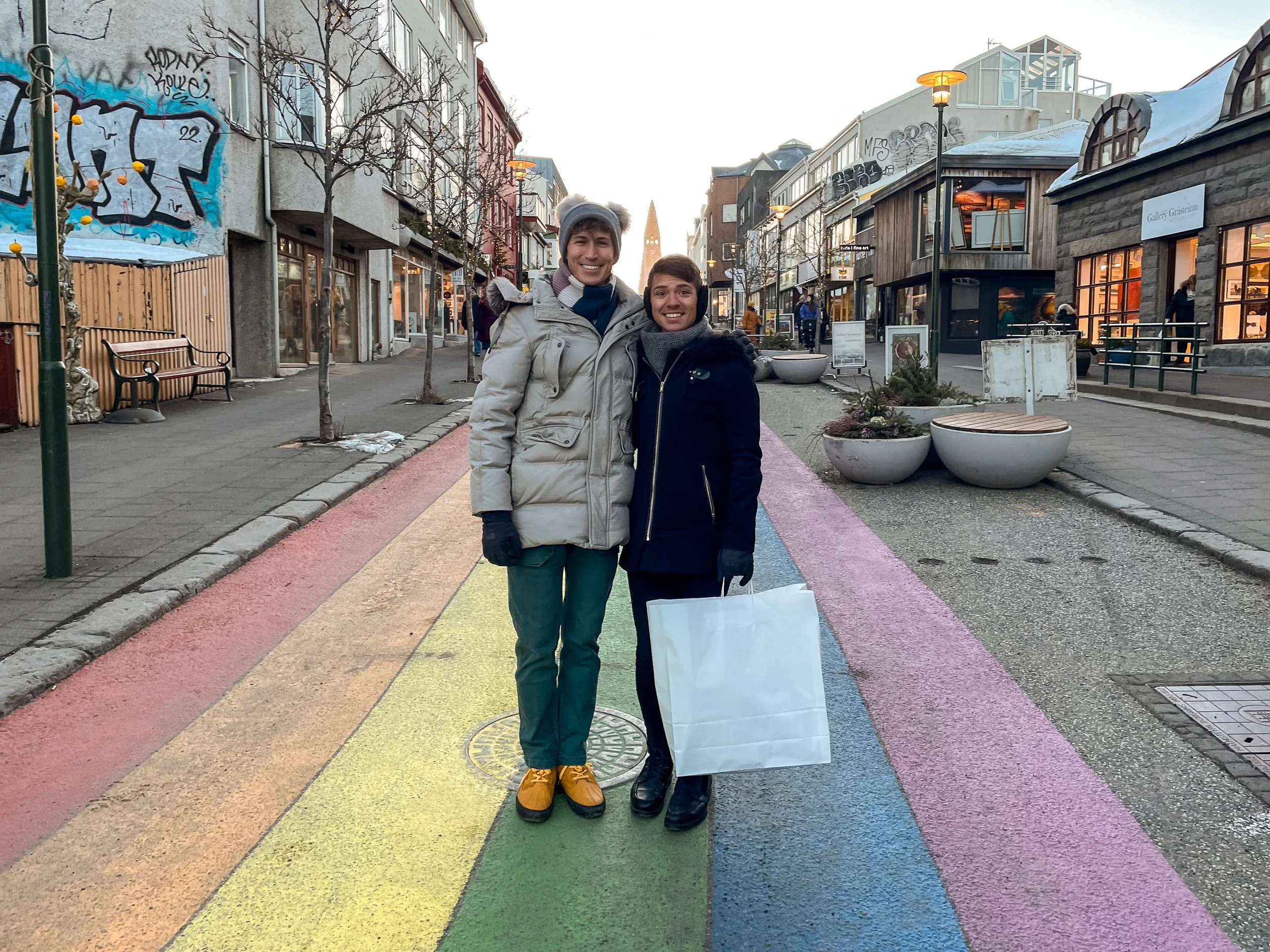
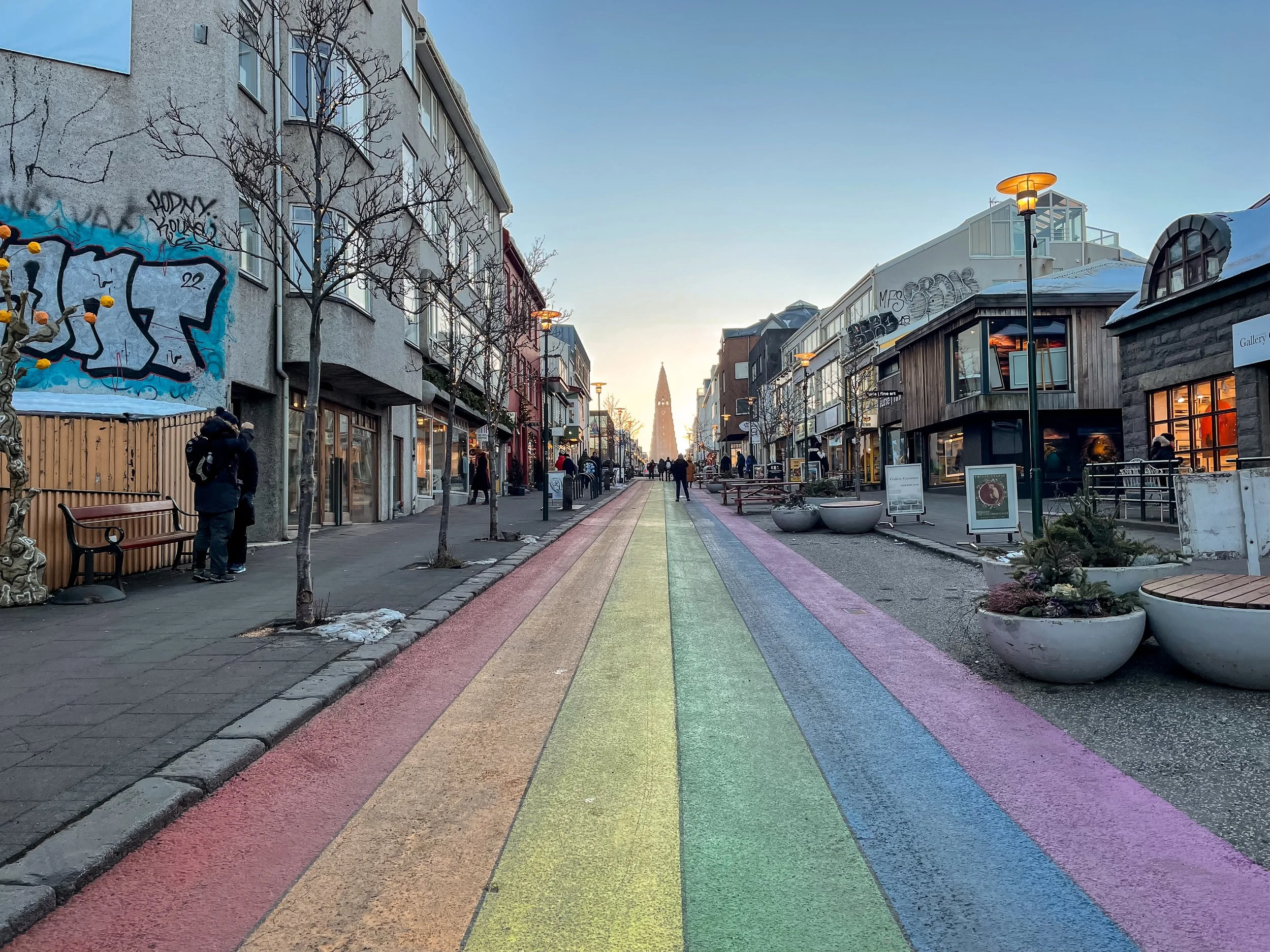
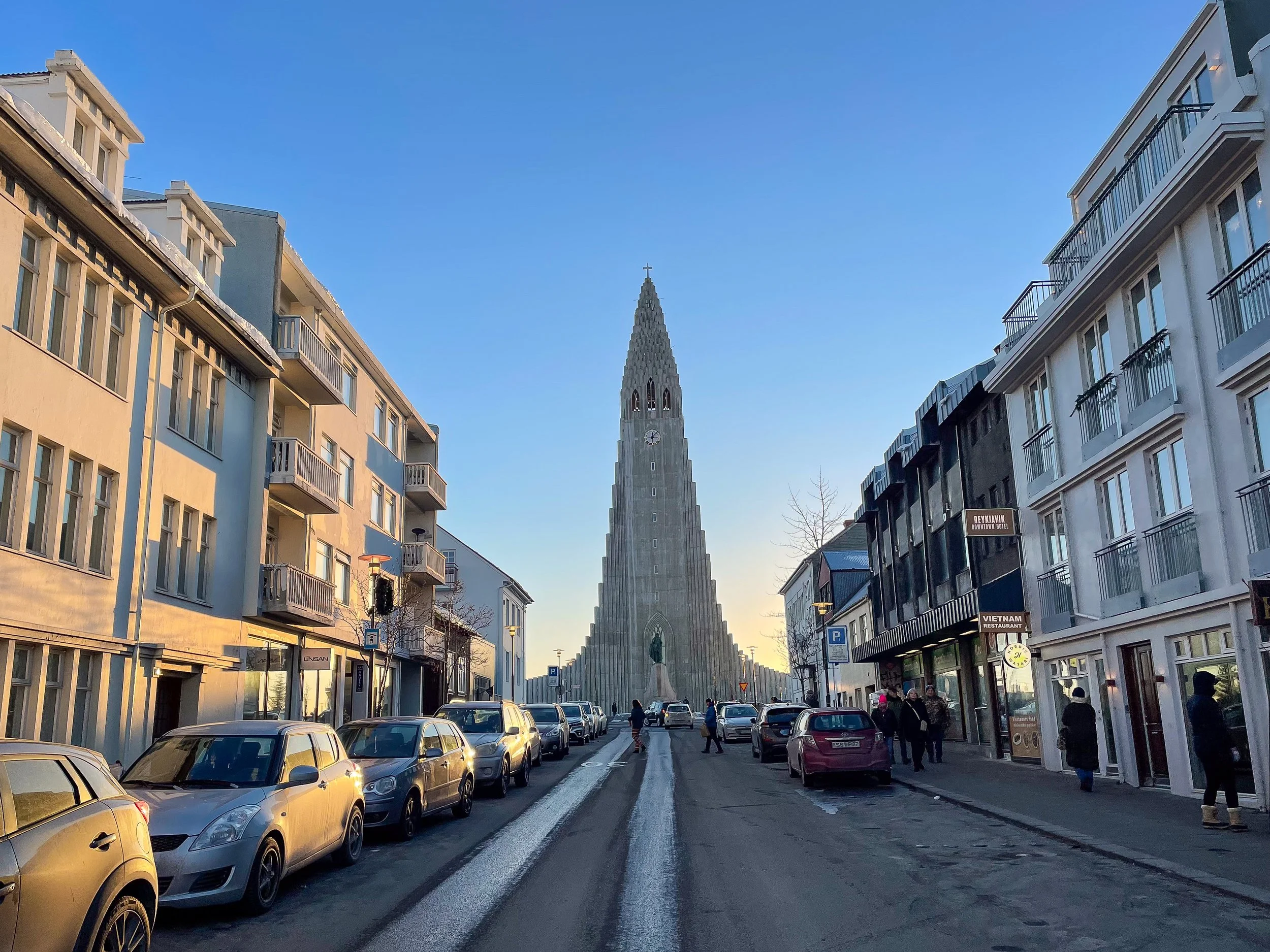
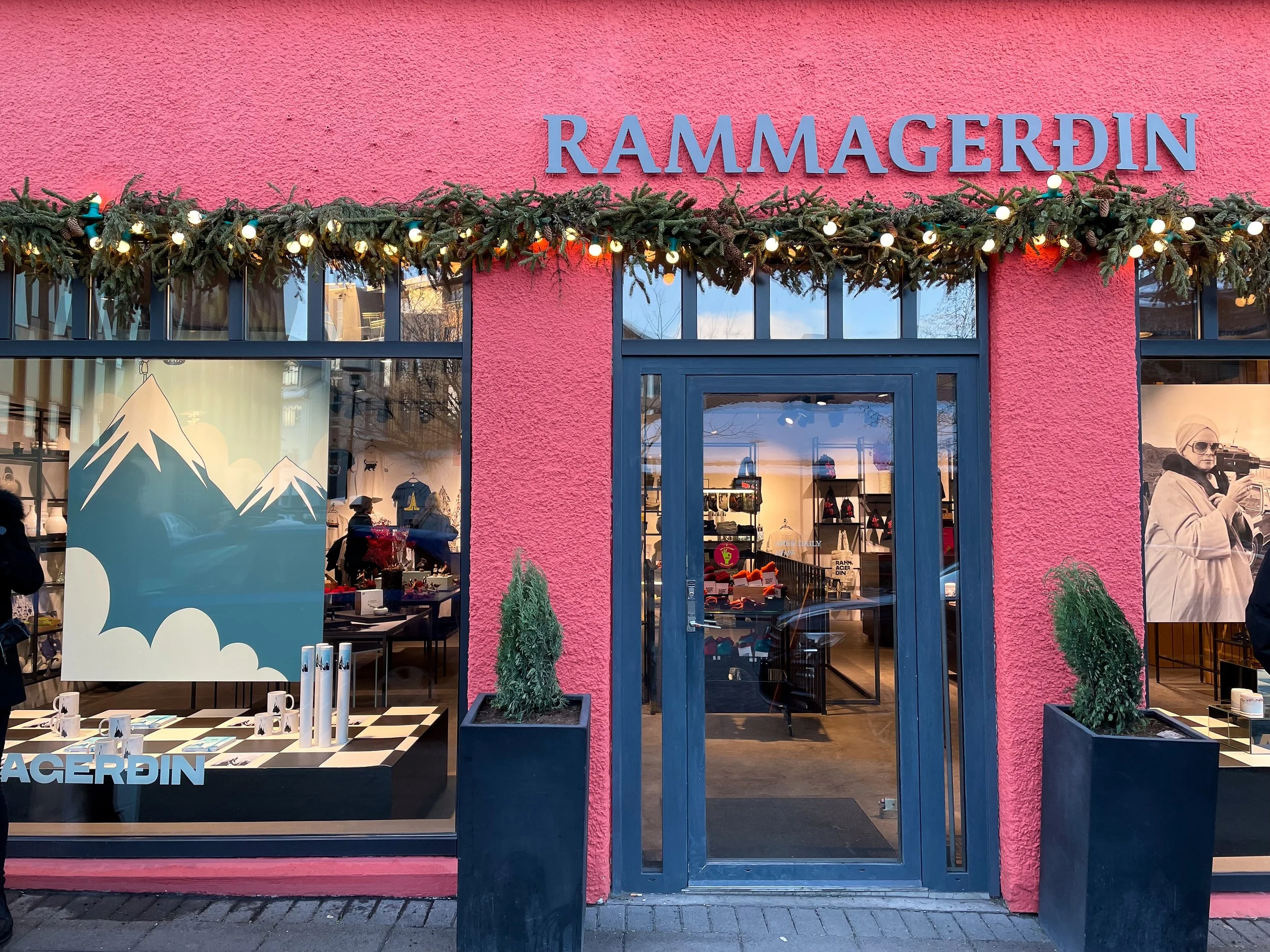
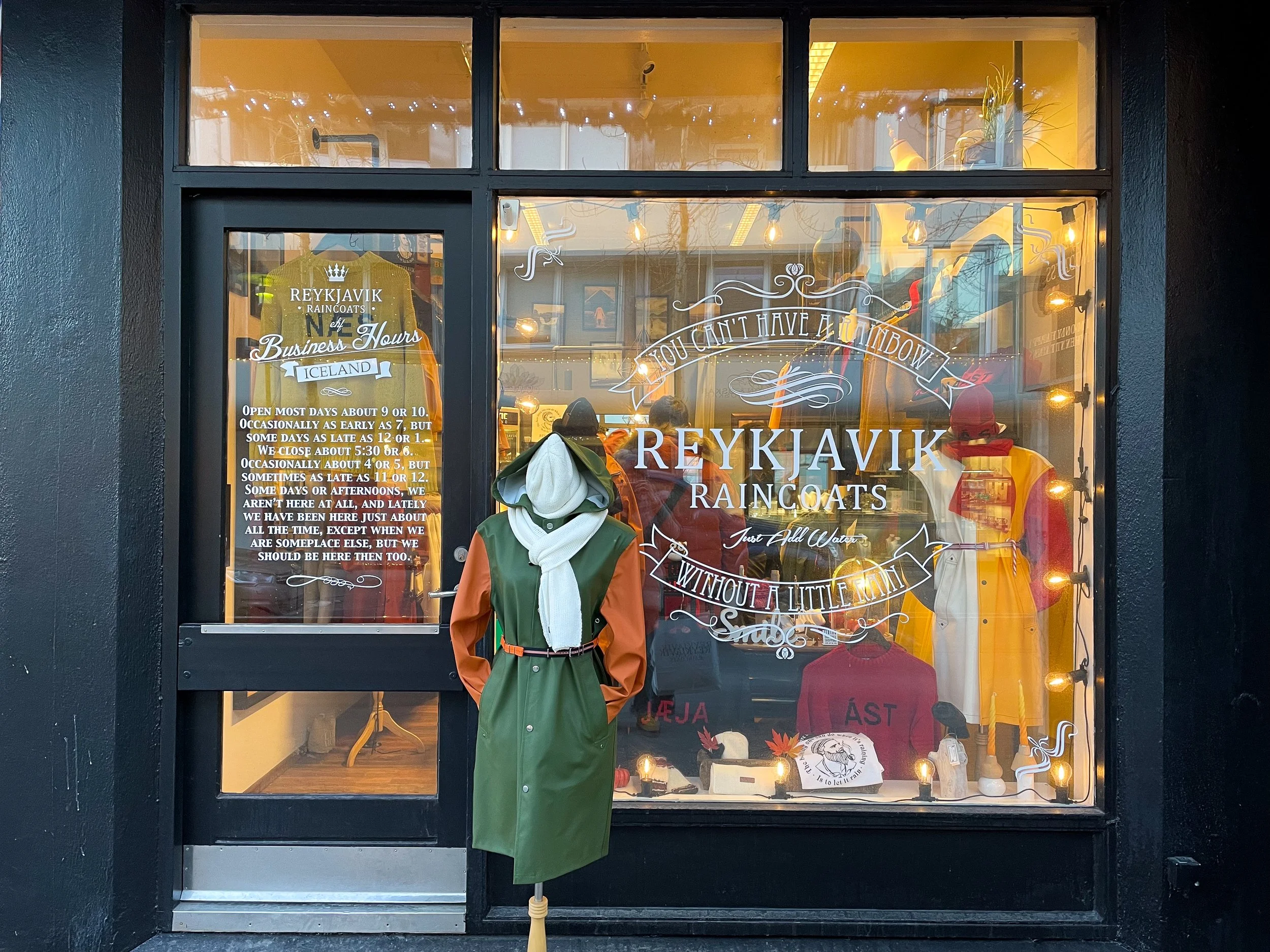
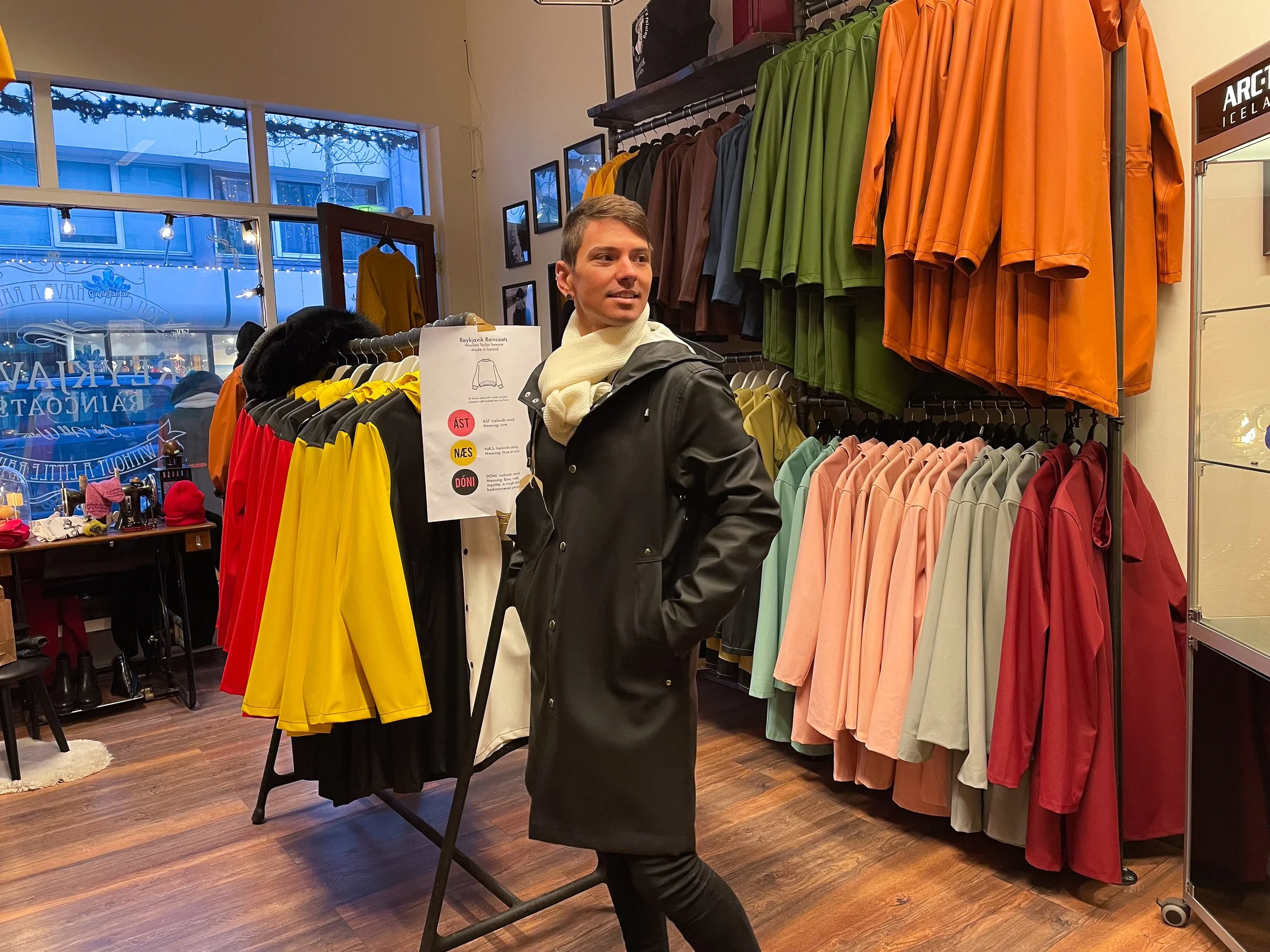
Streets & Boutiques
Rainbow Street. A downtown street painted in a rainbow with boutiques and views of Hallgrímskirkja Cathedral.
Laugavegur. A street with boutiques, vintage stores, design shops, restaurants, bakeries, cocktail bars and hotels.
Reykjavik Raincoat. A boutique specializing in modern raincoats sold in a range of colors. Their coats are made from the same material that Icelandic fishermen wear at sea. They also have wool accessories like hats, sweaters and scarves.
Rammagerðin. A boutique featuring local artists and handmade Icelandic products including taxidermy puffins, wool blankets, sweaters, yarn, leather gloves, furs, artwork and skincare items.
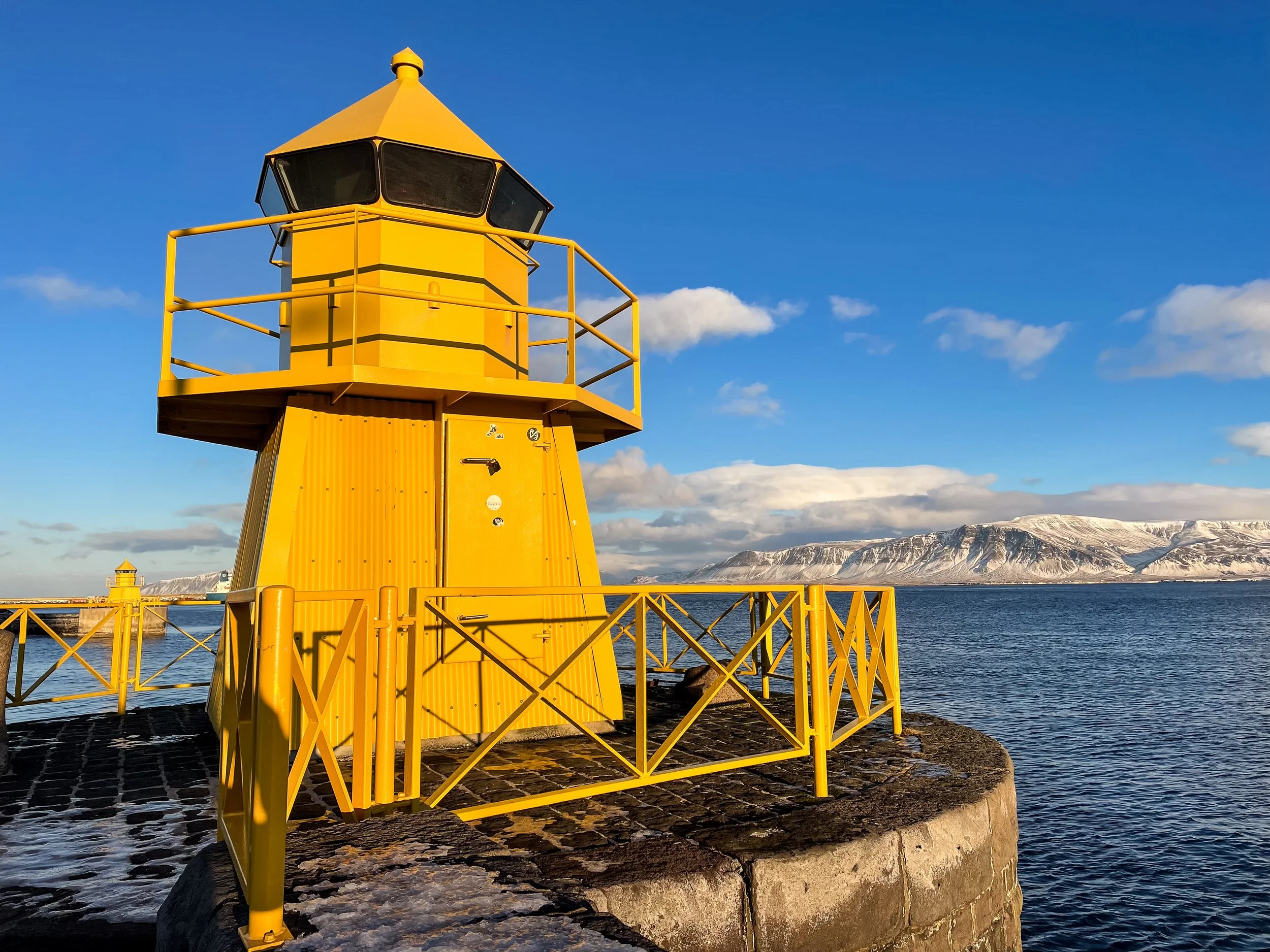
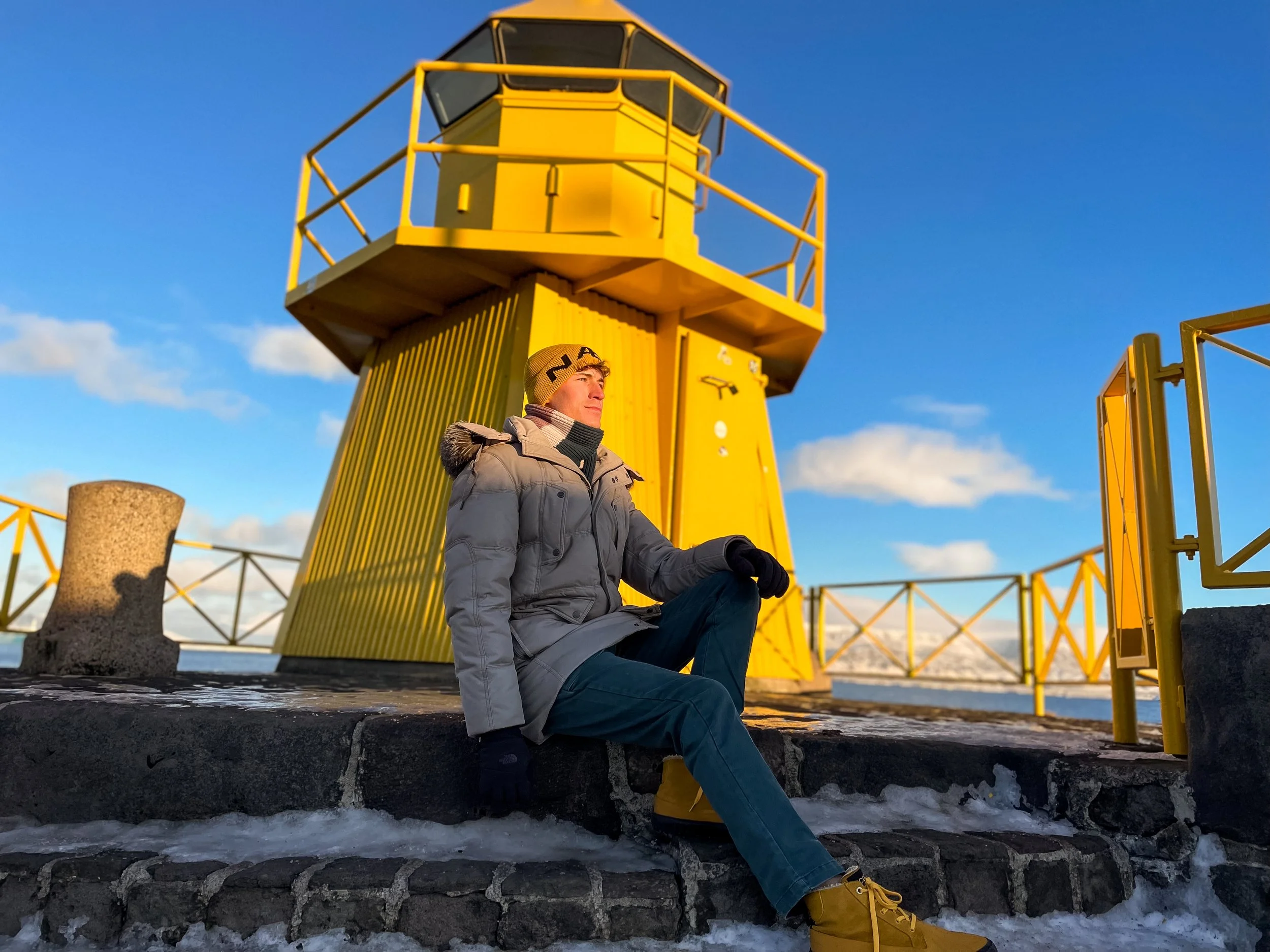
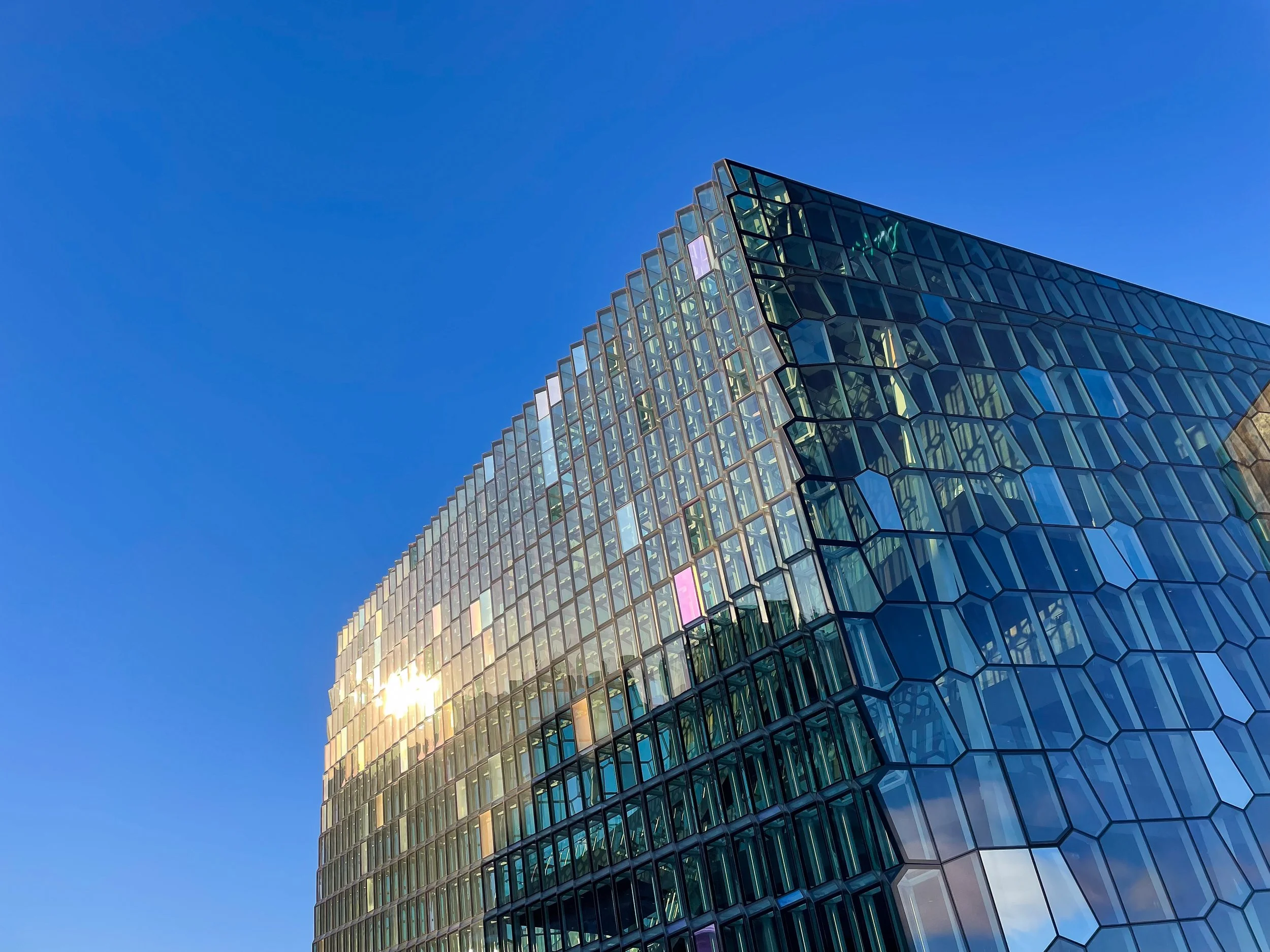
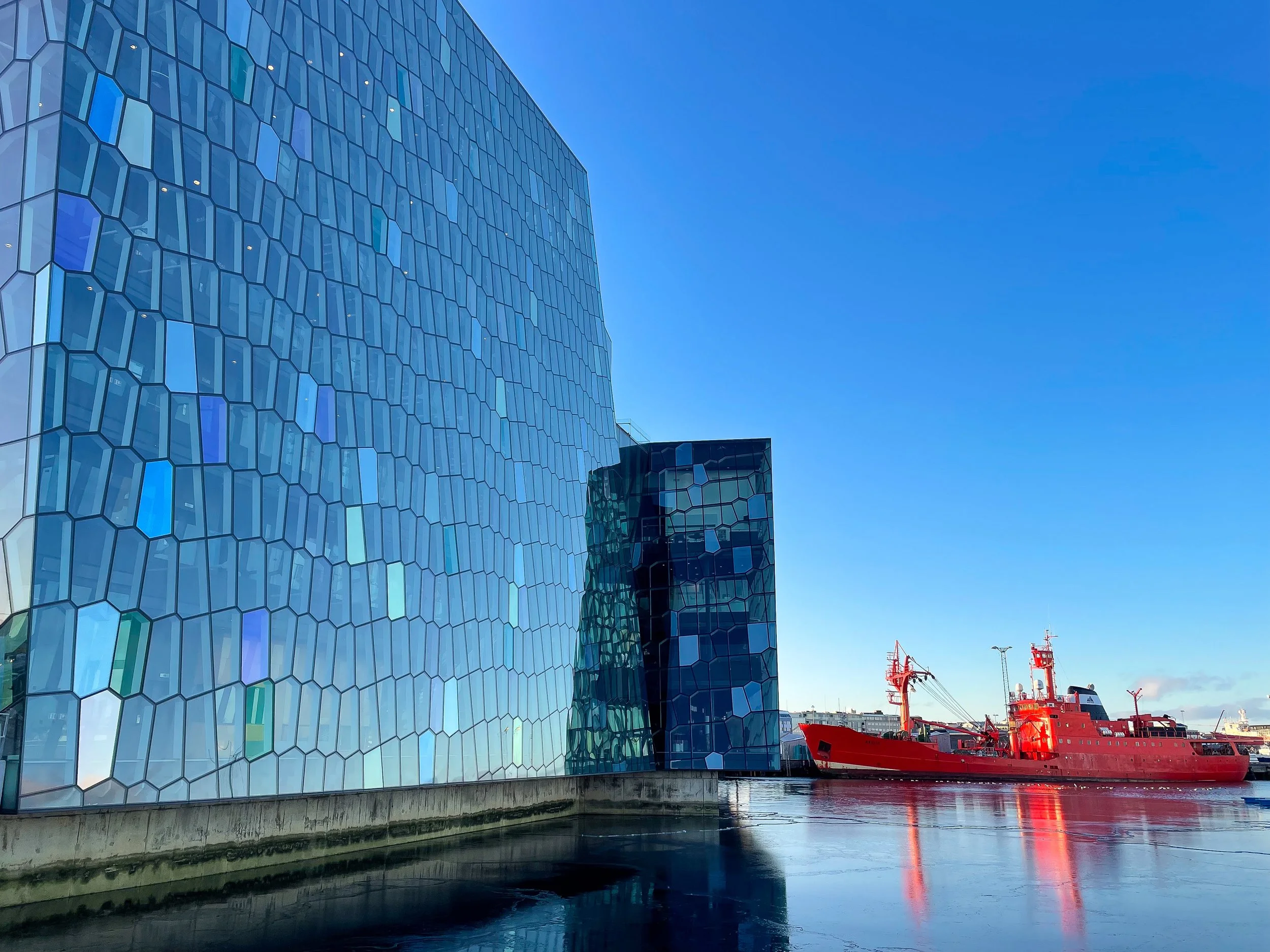
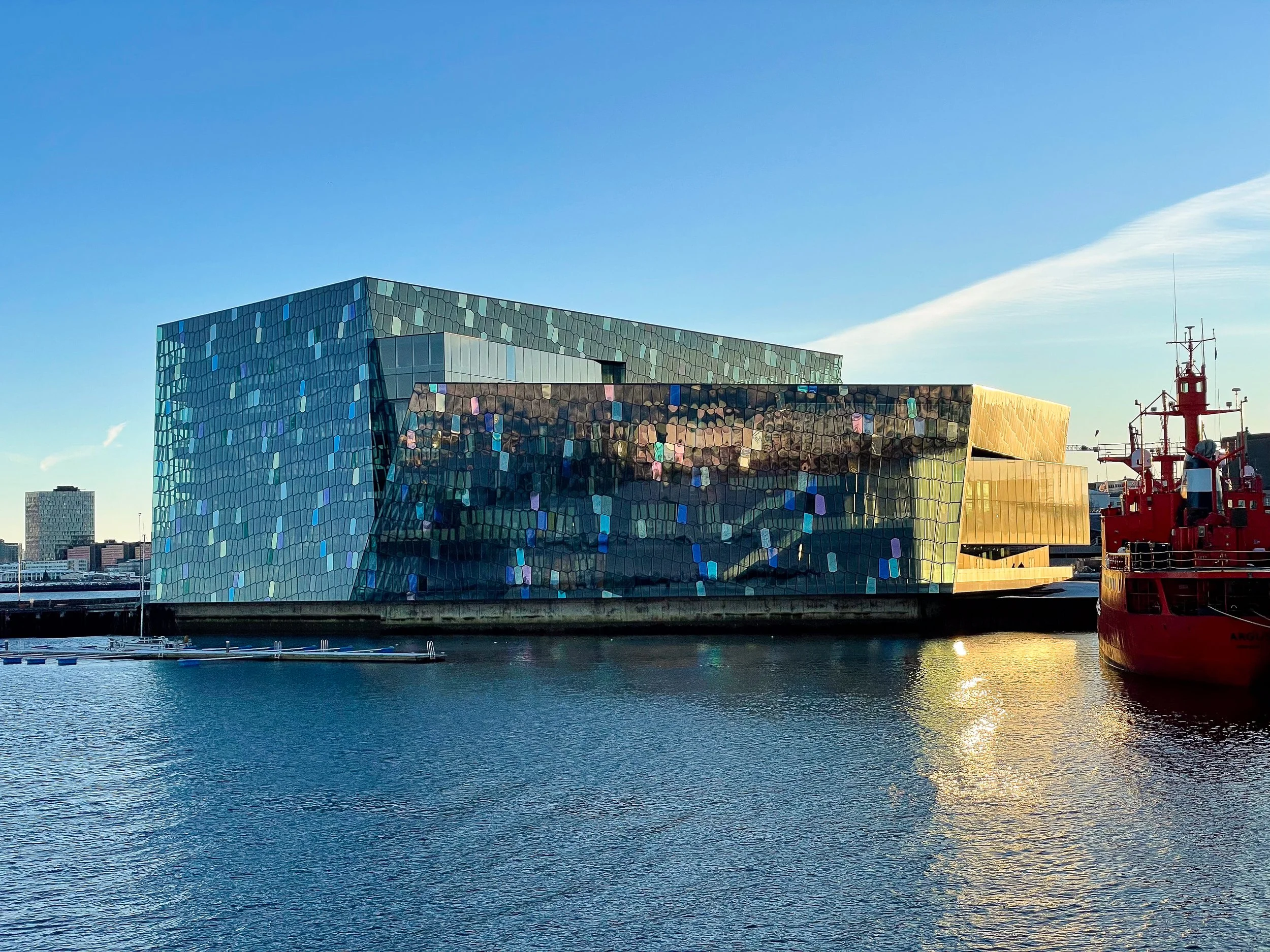
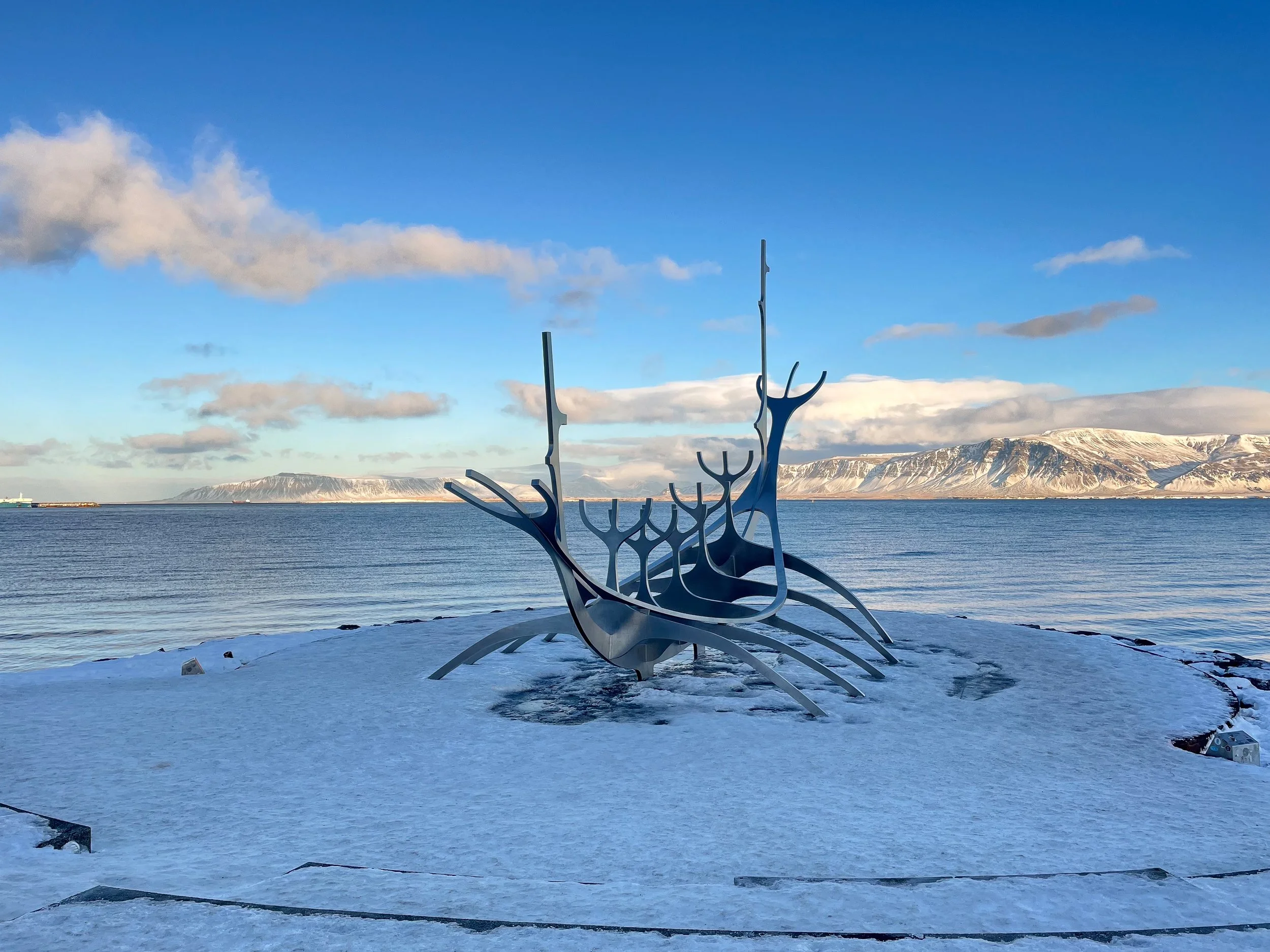
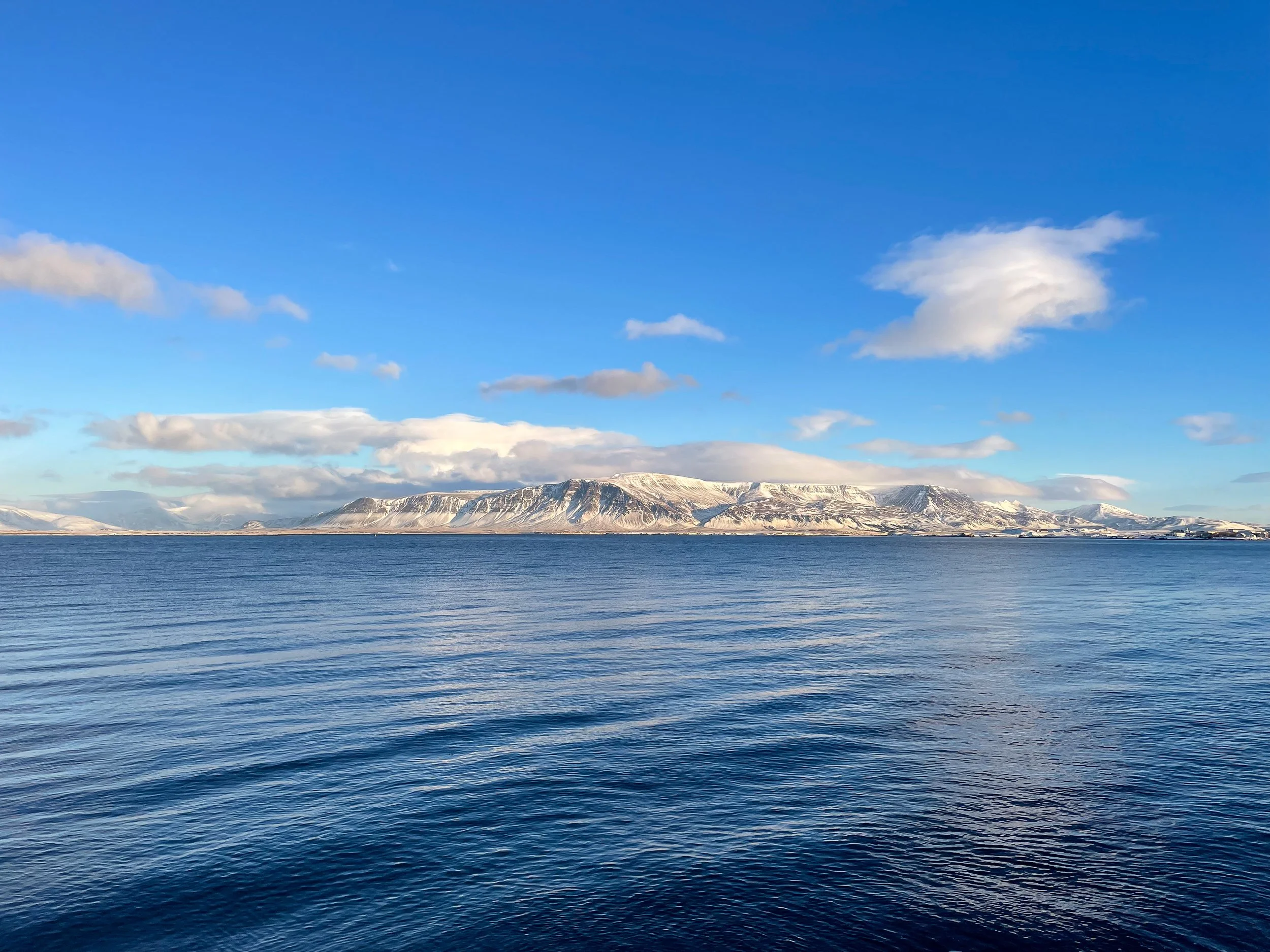
The Water Front
Reykjavík’s waterfront overlooks the bay and snow covered mountains across from it. It’s the site of multiple landmarks and starting point for whale watching tours.
The Sun Voyager Sculpture. A steel structure shaped like a Viking long boat, meant to inspire exploration.
Harpa Concert Hall. A geometric glass facade with a colorful kaleidoscopic effect. It’s inspired by the hexagonal basalt columns found across the island but also looks like the scales of a fish.
Höfði Lighthouse. An iconic bright yellow lighthouse at the entrance of the Reykjavík Harbor.
The Old Harbor. Originally a fishing port and now a seaside neighborhood with restaurants and companies offering whale watching tours. There is free parking here.
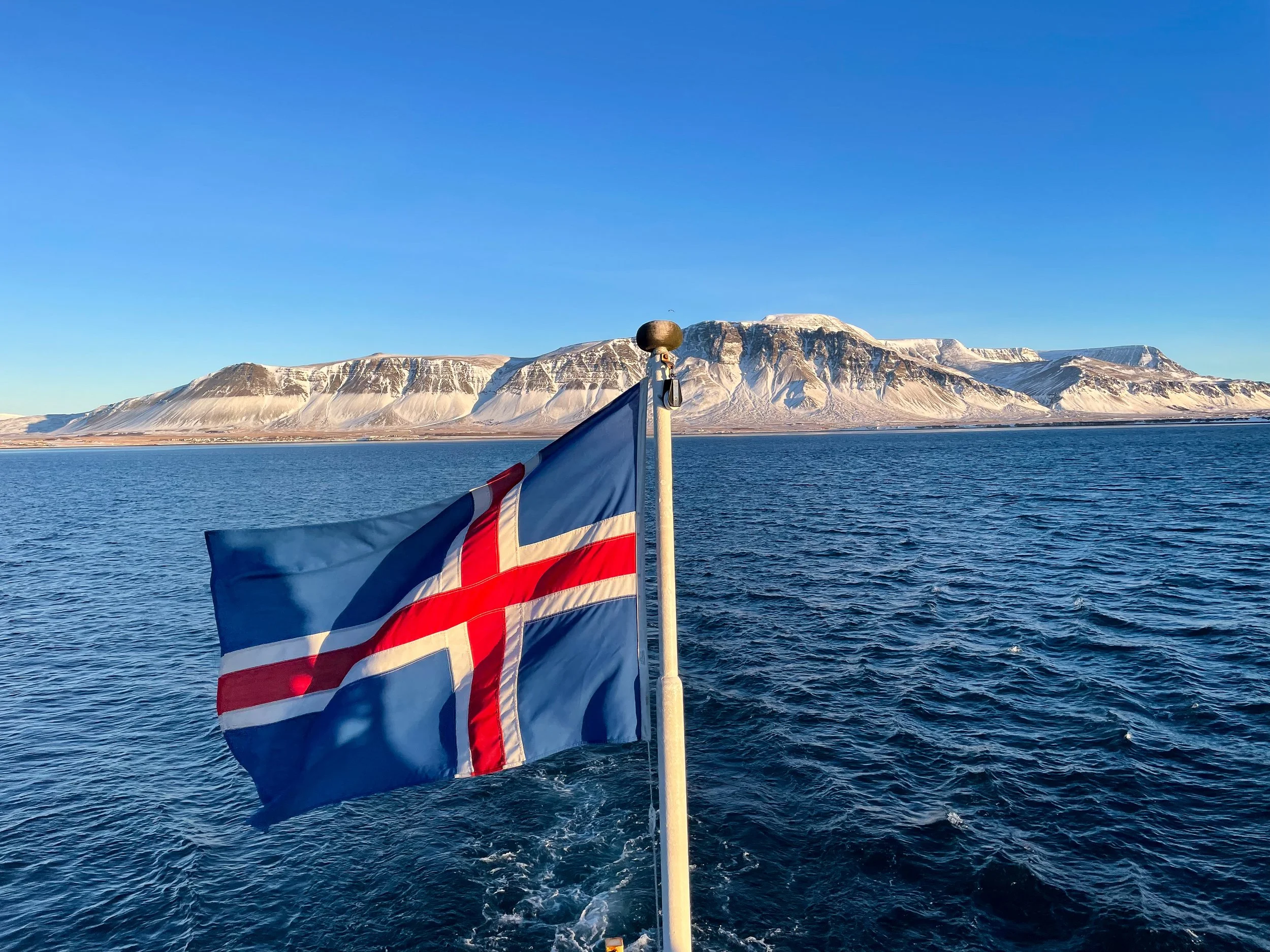
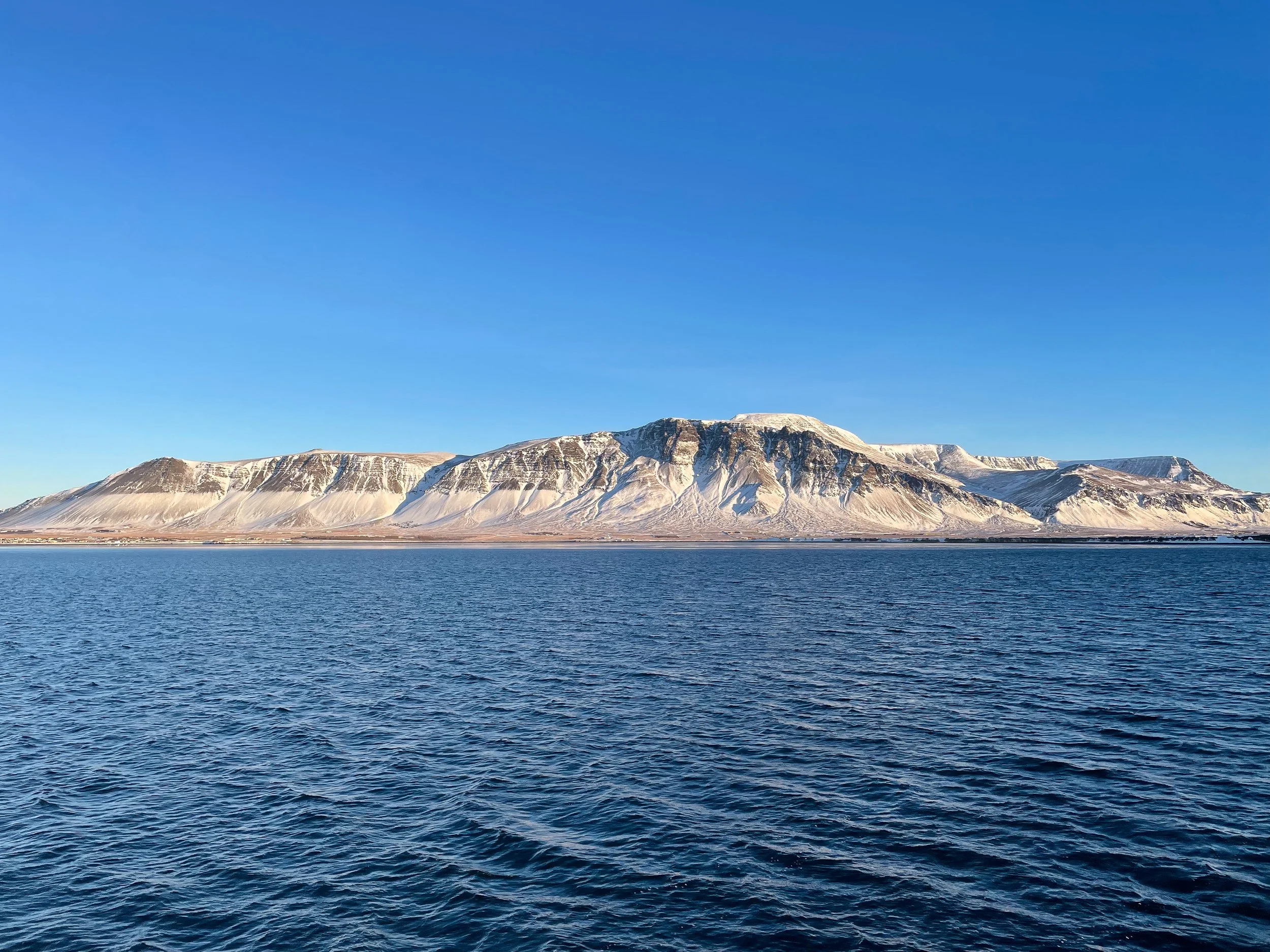
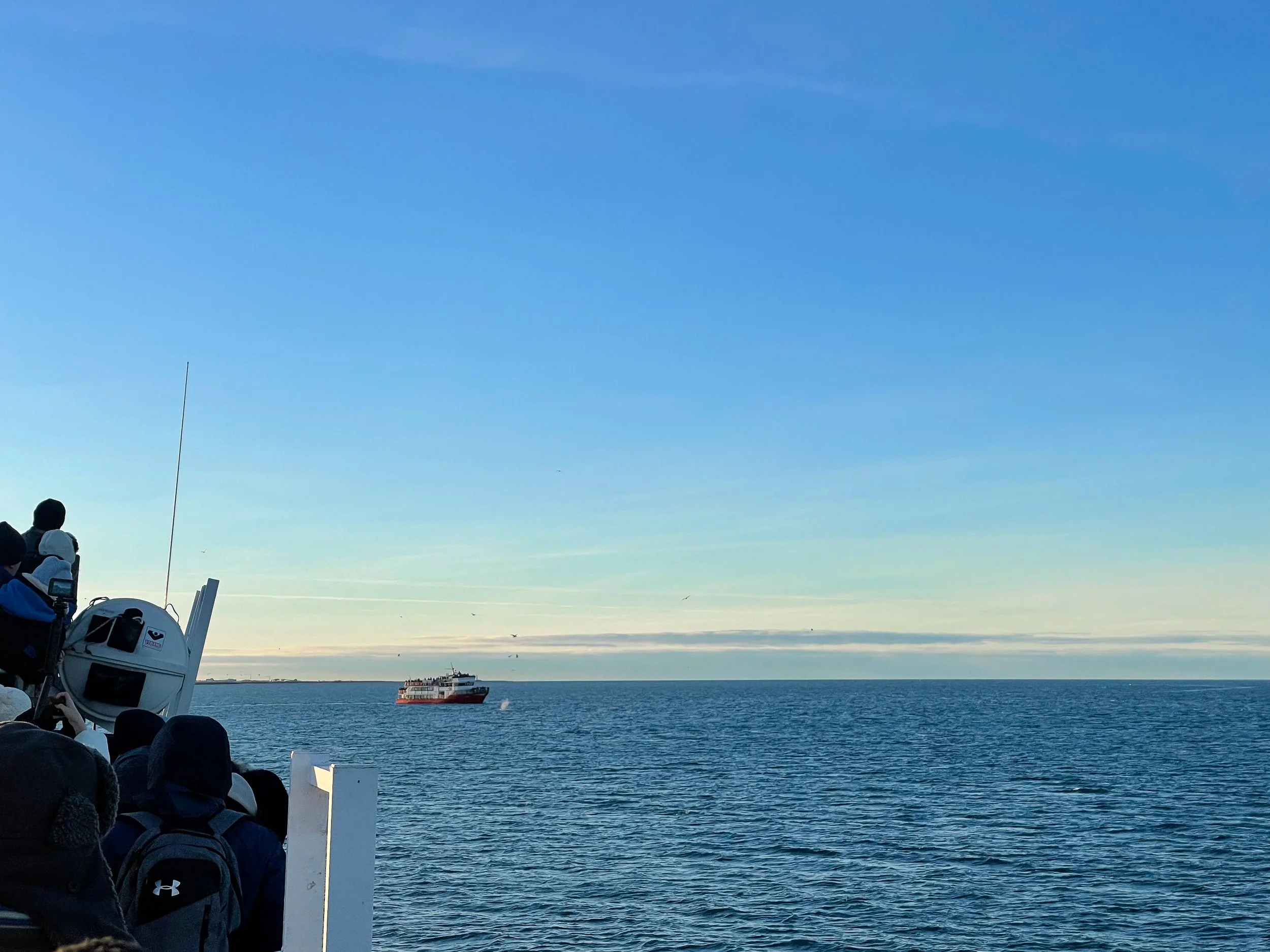
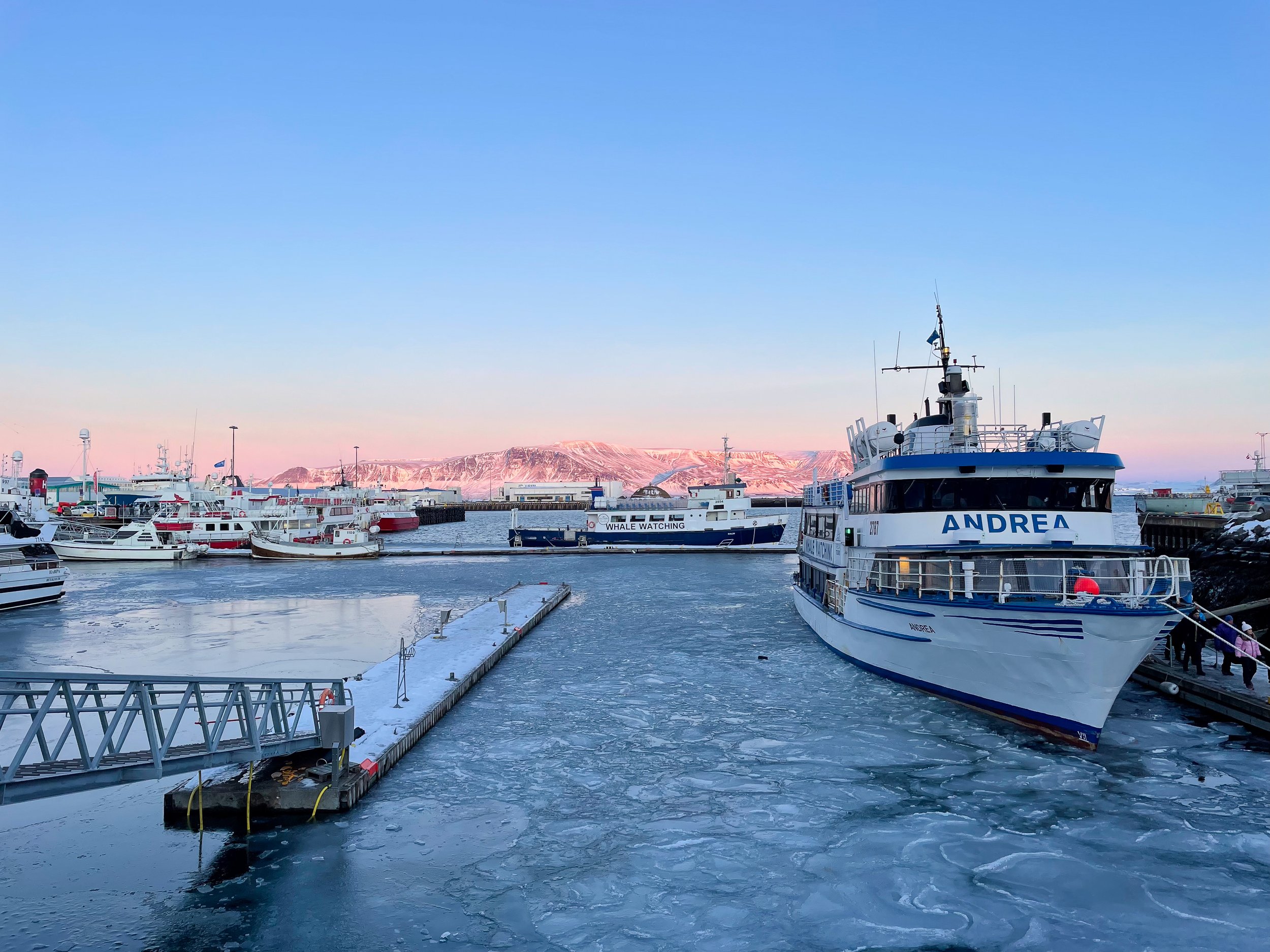
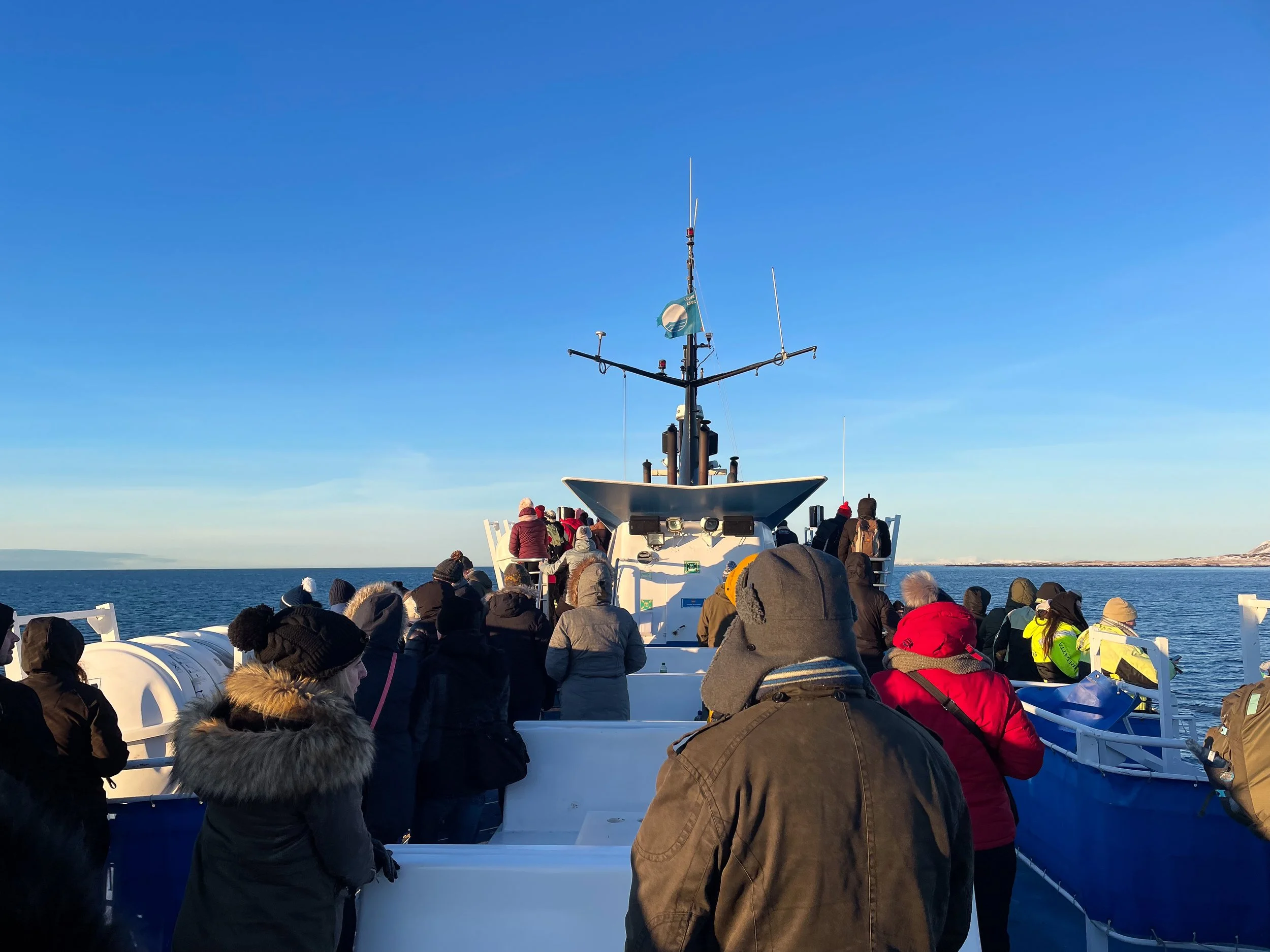
Whale Watching
Wildlife tours frequently leave from Reykjavík’s Old Harbor in search of spotting blue whales. As the ship set sail, we admired Reykjavík’s skyline behind us and the snow covered mountains across the bay ahead of us. Soon after entering the bay, the captain announced “thar she blows” to alert us he had spotted a whale! For nearly two hours, we sailed around the icy bay watching a blue whale breach the surface, thrash its tail, spray water from its blowhole and dive back below. While on deck, we kept an eye out for where it would re-appear, often spotting seals hunting for fish. From the interior cabin we enjoyed fresh made waffles while warming up with hot coffee. We booked with Special Tours Iceland.
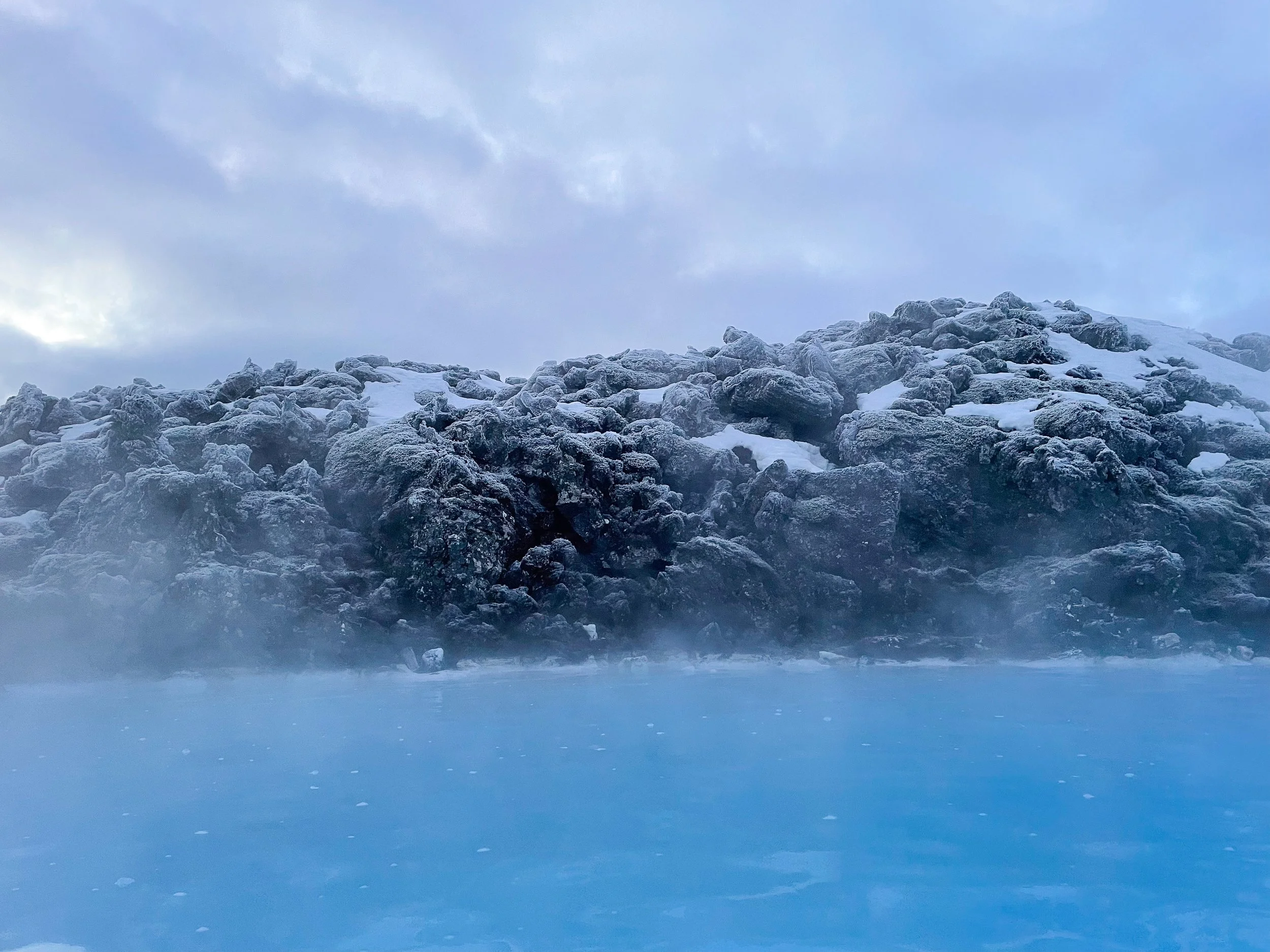
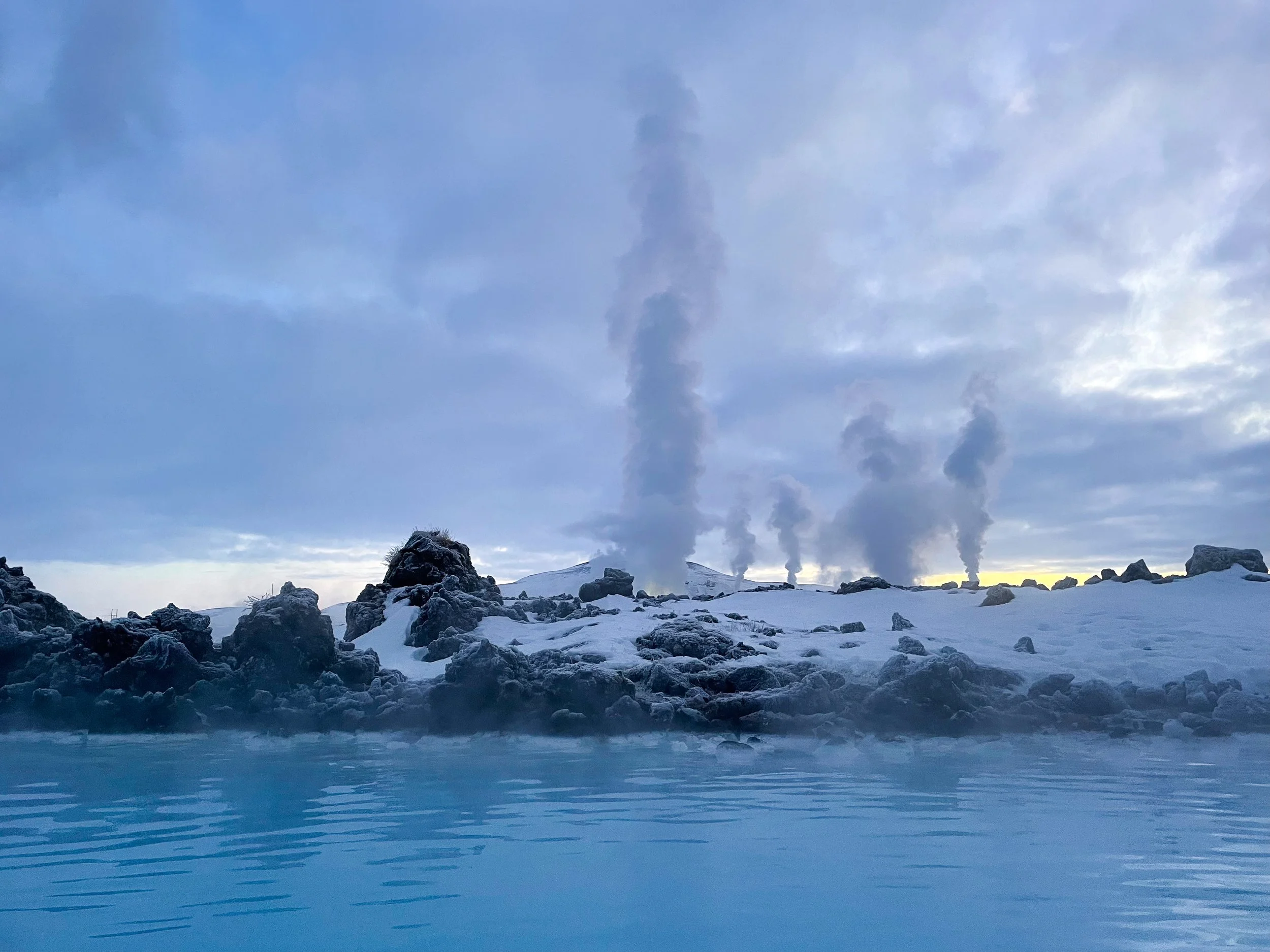
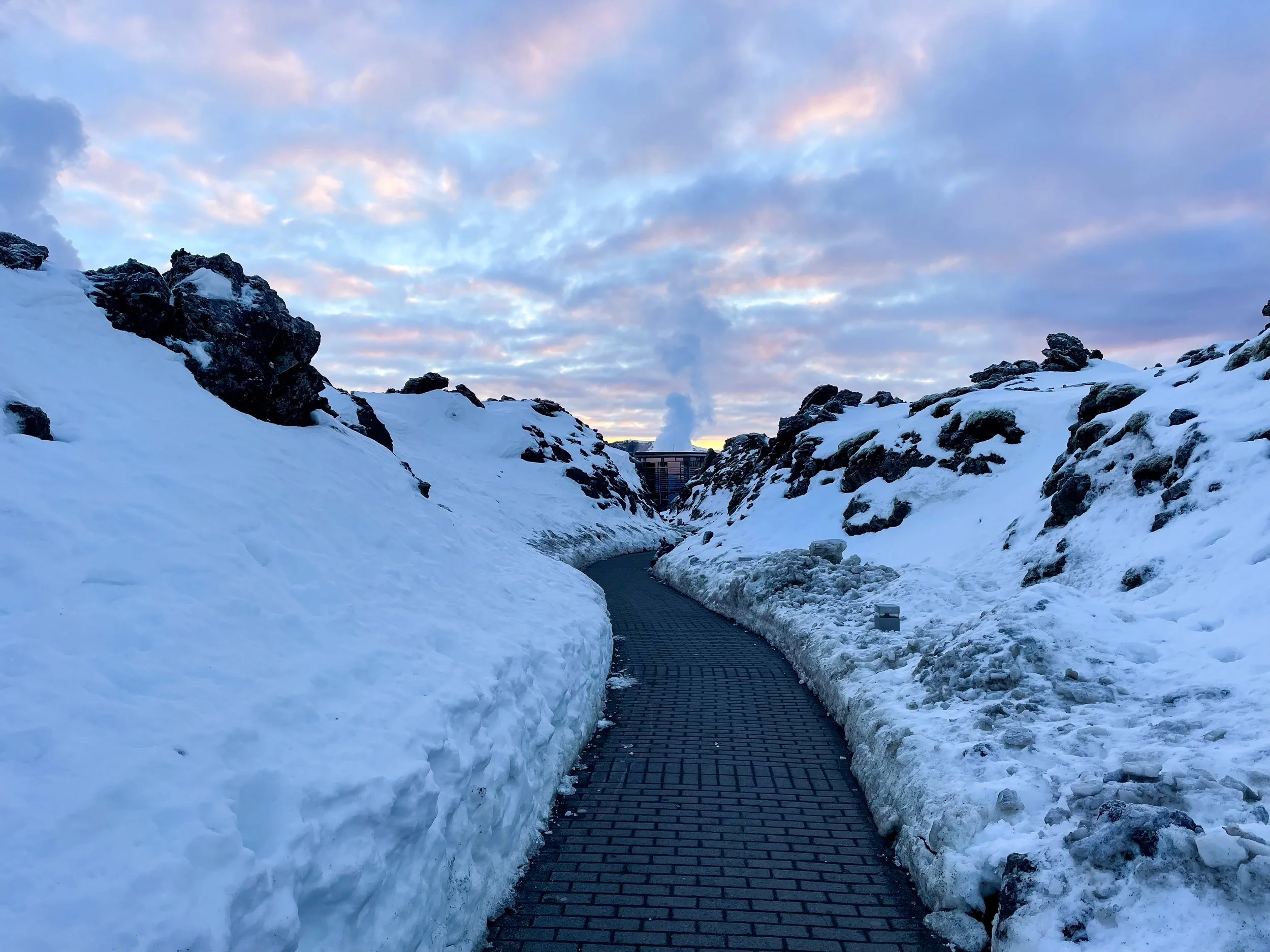
The Blue Lagoon
The Blue Lagoon is a geothermal spring famed for its milky turquoise water. Its pools meander between hardened lava formations as towers of steam and mist rise above its surface. The environment is one of natural contrast with black lava rocks dusted in white snow and warm water juxtaposed against the cold air. Stand under a hot waterfall while soaking in the thermal pools, enjoy a silica mud facial mask and drink fresh glacial water to hydrate. The lagoon is also a resort with a hotel, spa and multiple restaurants, including one built into an 800 year old lava cliff. Come here to relax immediately after flying into Reykjavík or before flying out. Book Tickets ahead of time.
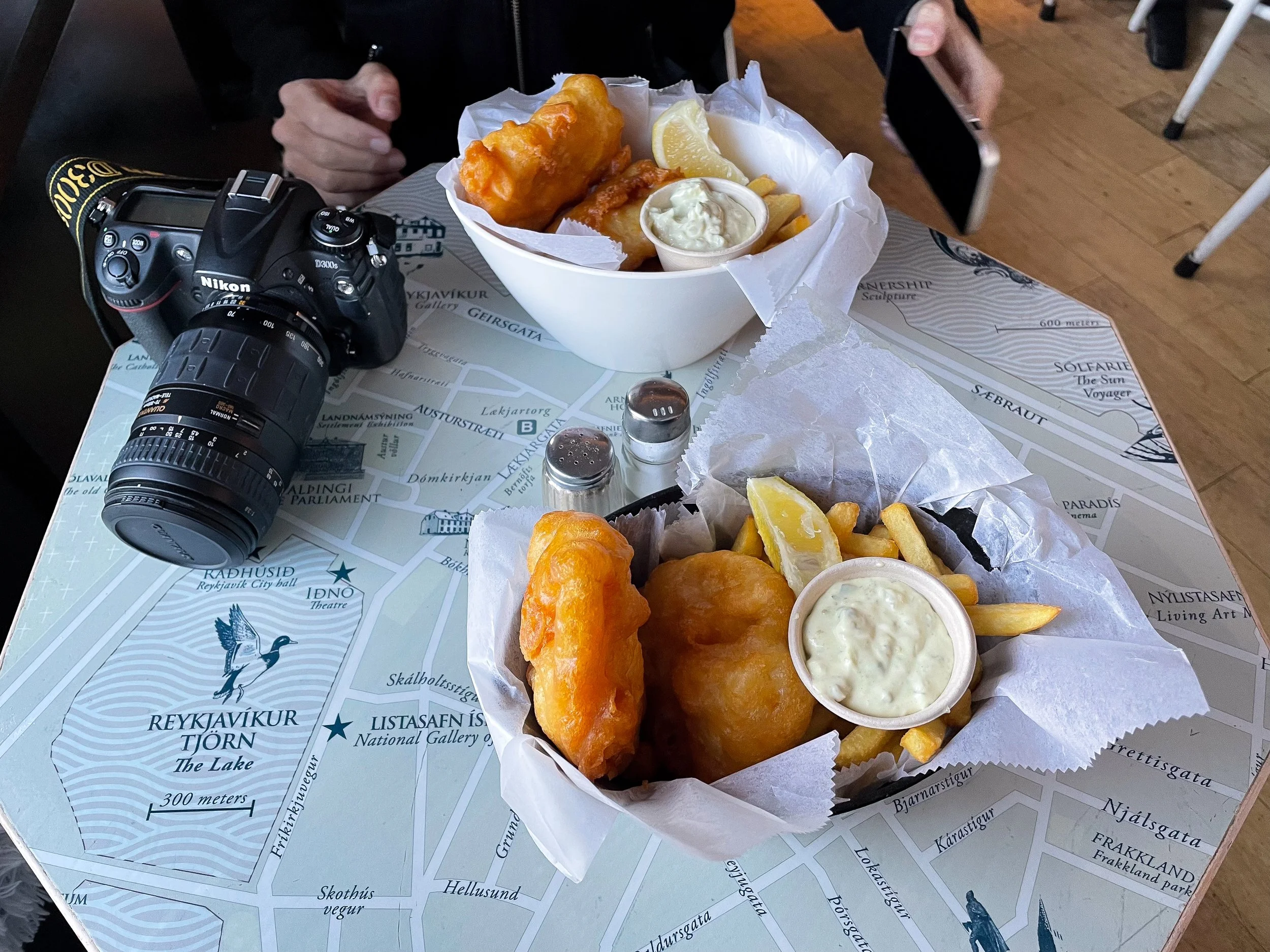
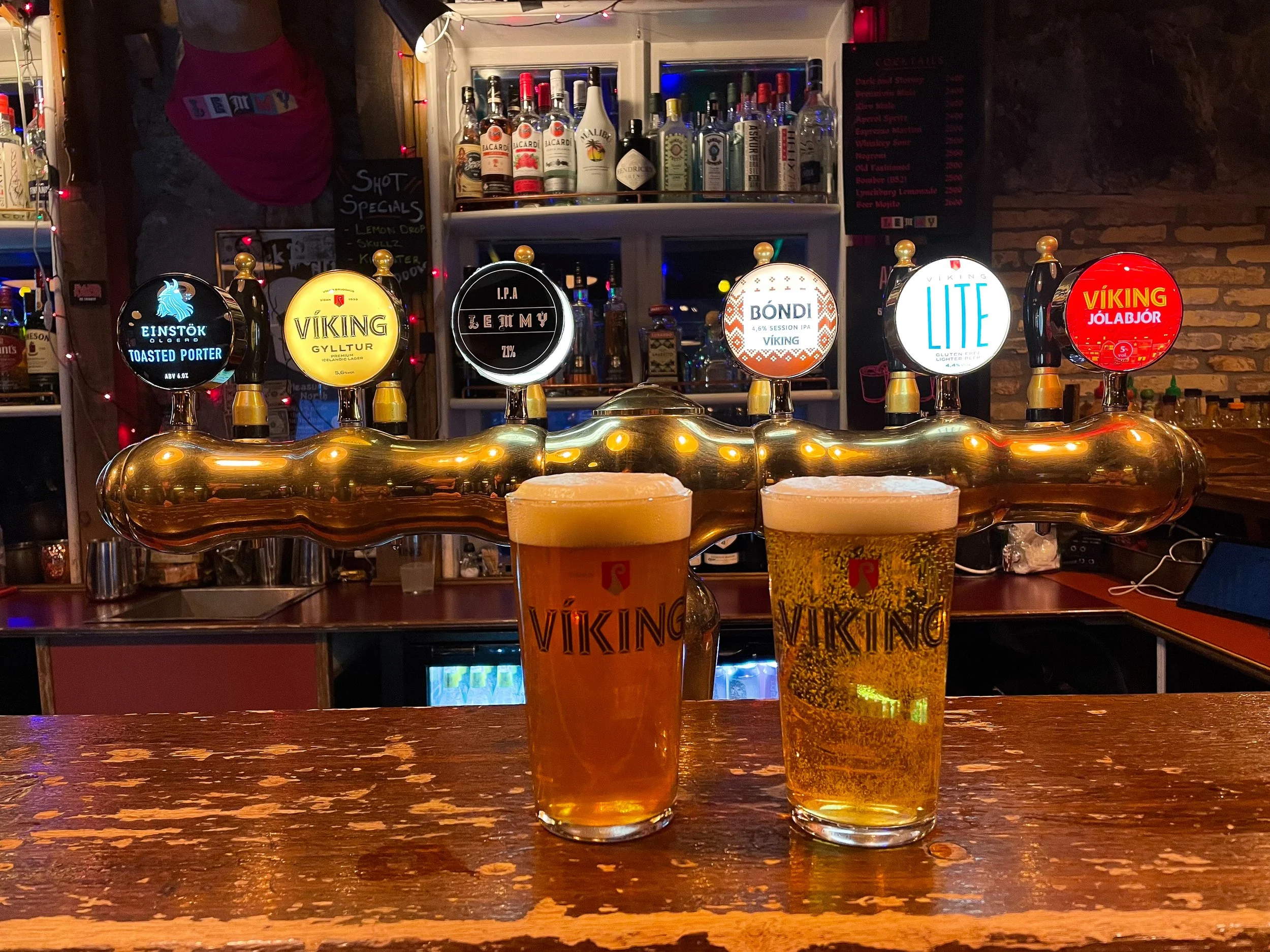
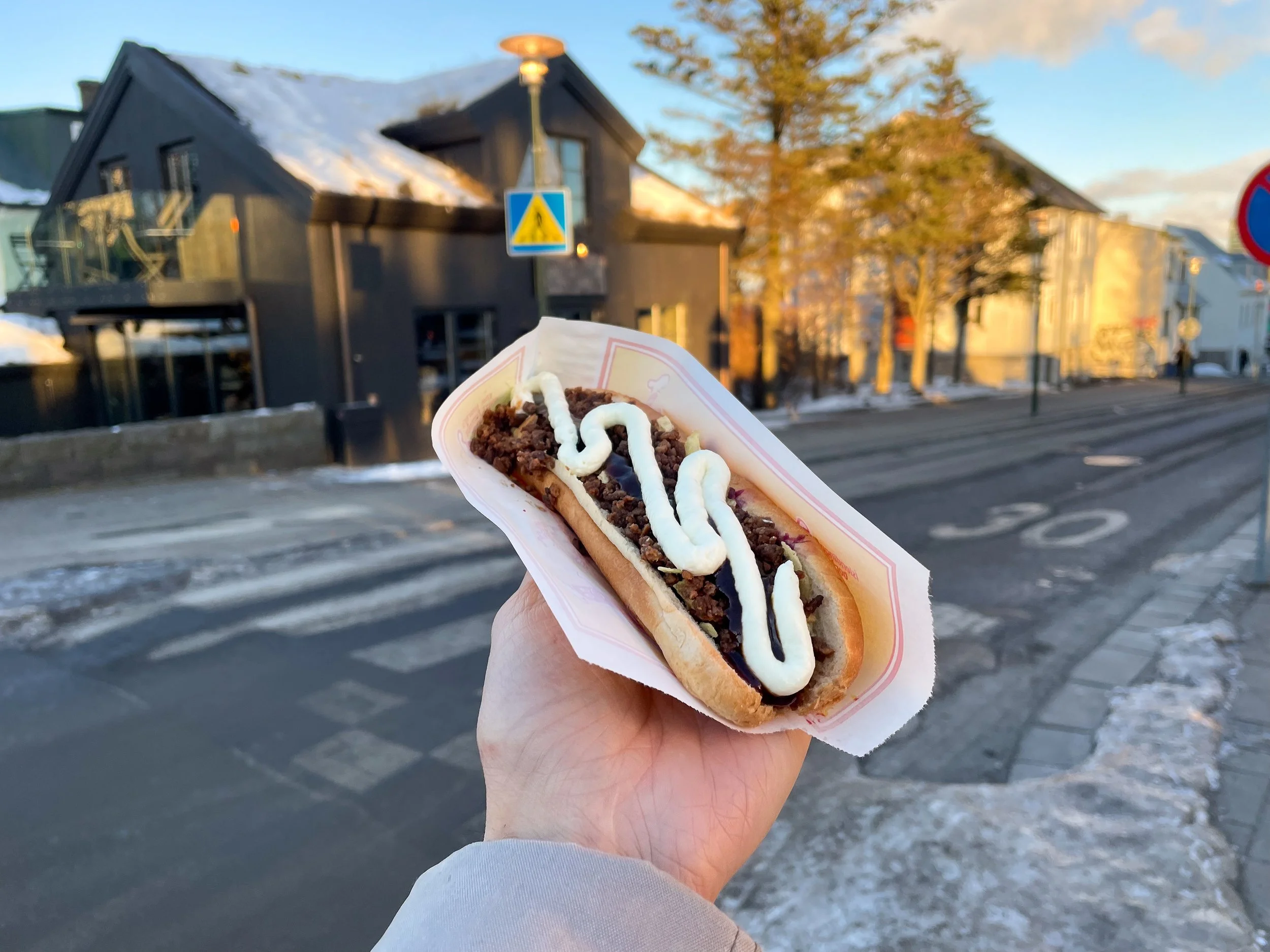
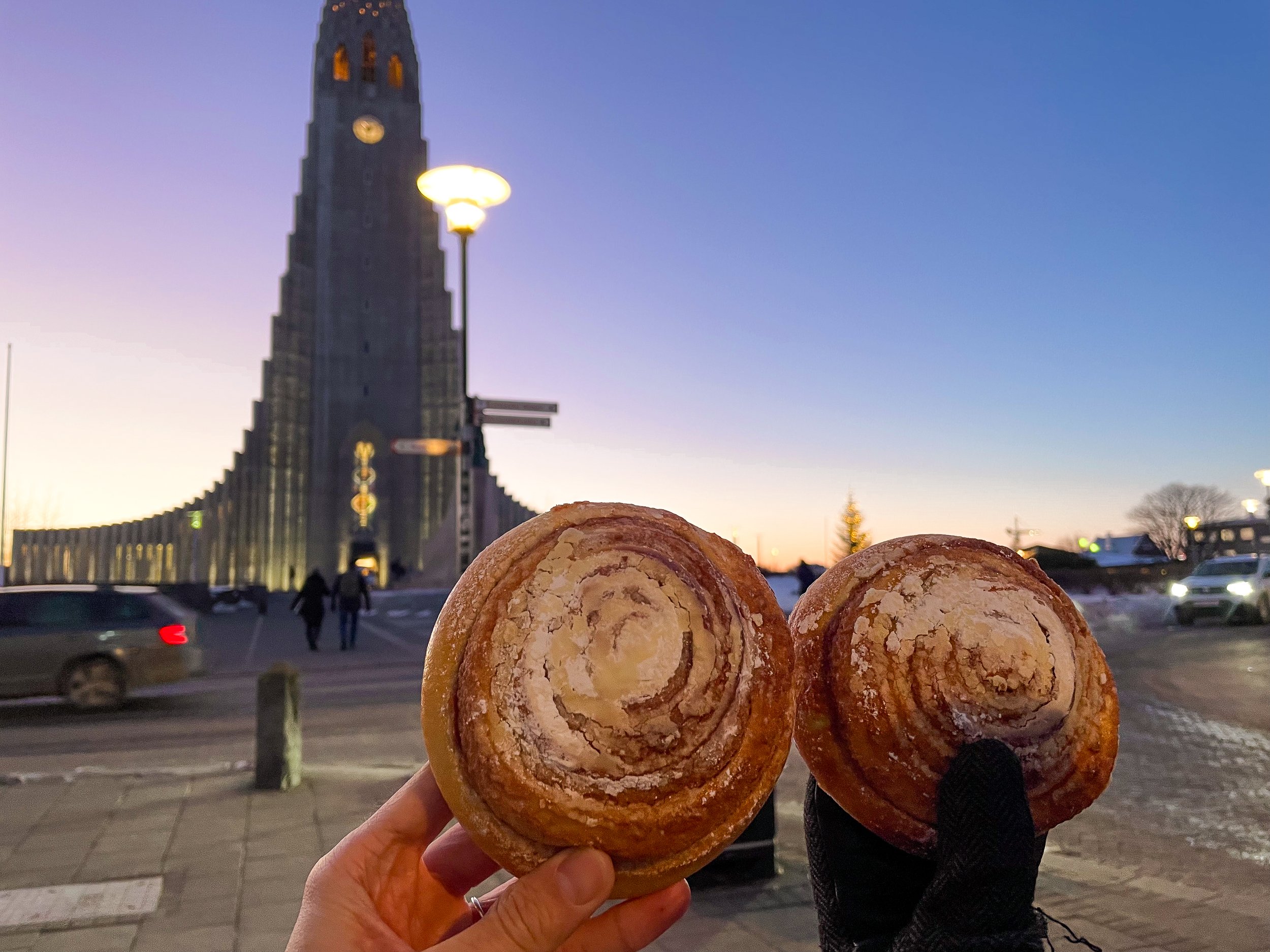
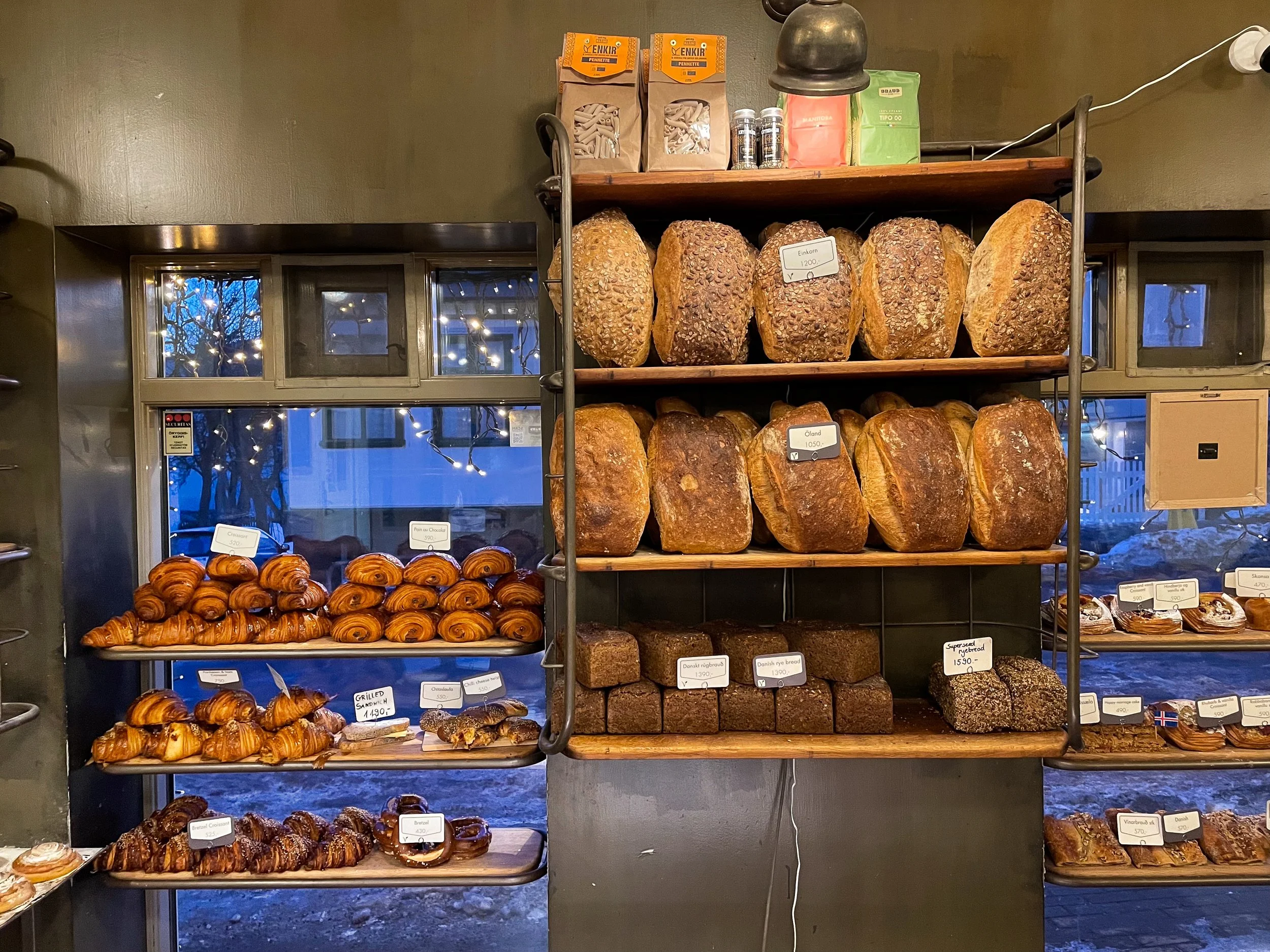
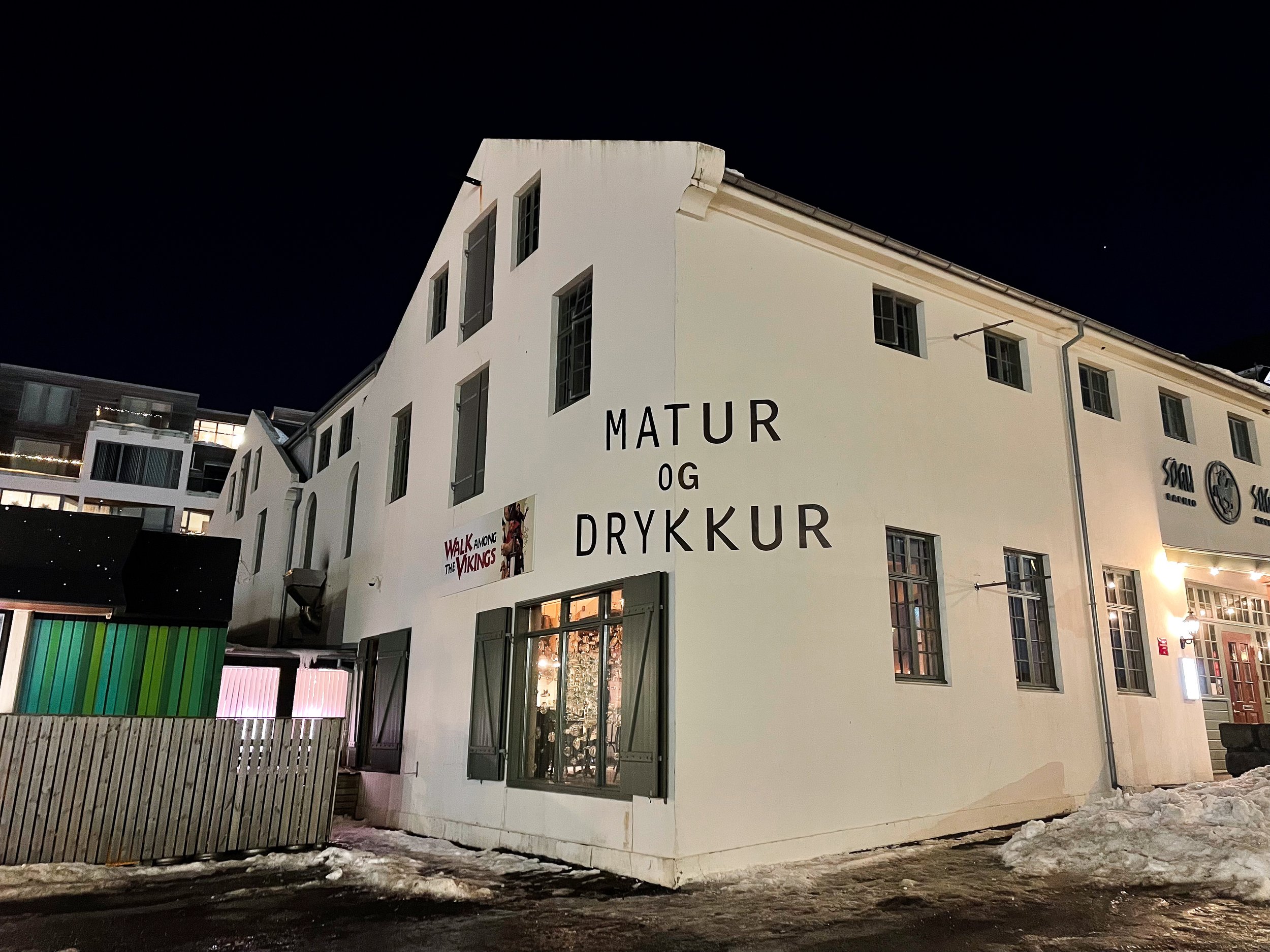
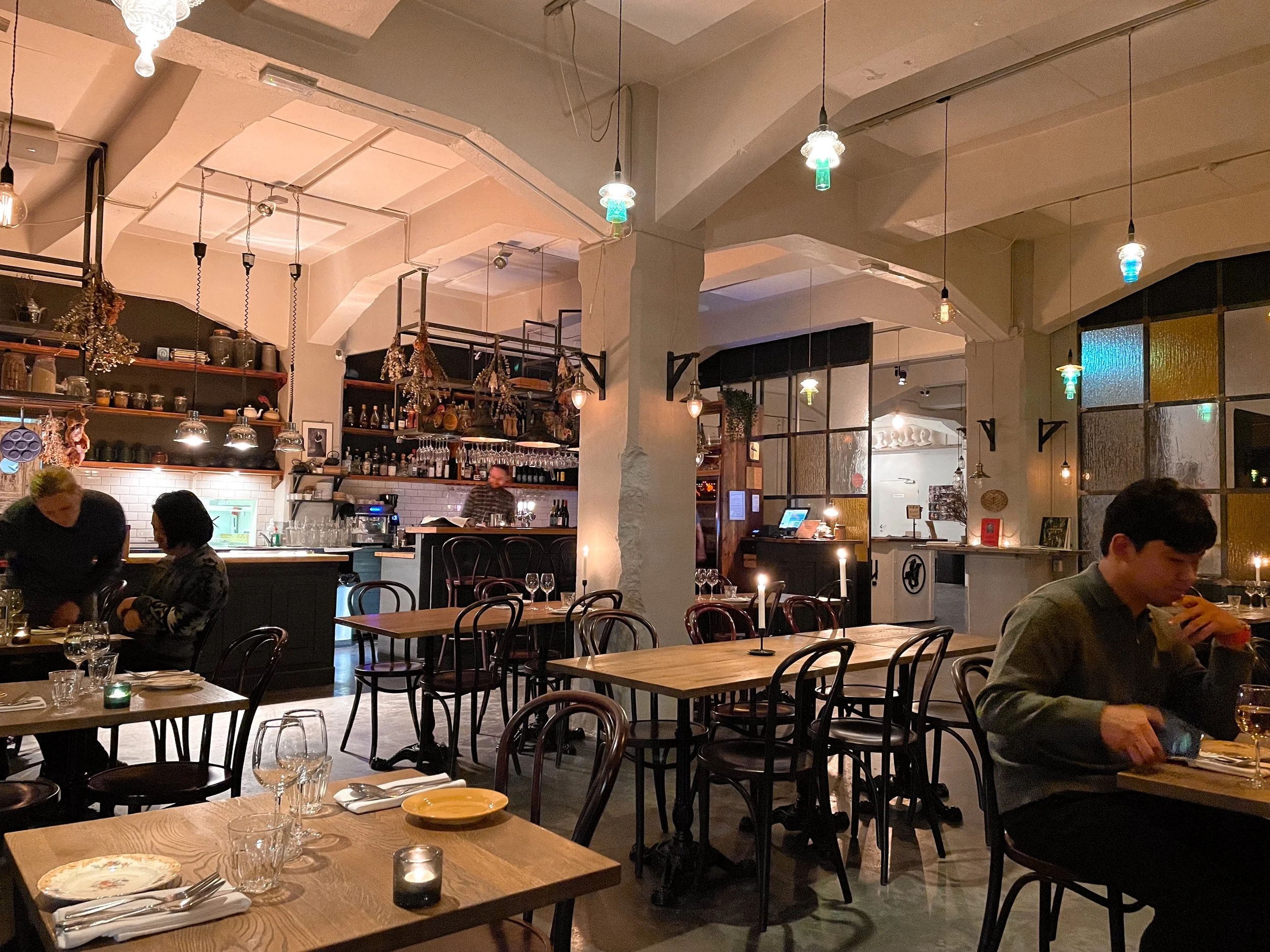
Places to Eat & Drink in Reykjavík
Reykjavík Fish. One of many restaurants offering the local favorite. We enjoyed large portions of crispy and tender fried cod paired with salted fries and Icelandic beer. The fisherman styled interior with whale paintings, nautical decor and lights shaded in dried cod skin added to the ambiance.
Matur og Drykkur. A Michelin starred restaurant serving seasonal tasting menus with Icelandic dishes and contemporary adaptations. The menu included:
Pickled beets with fennel straws
Smoked trout with cucumber
Cheese with sea truffle and crispy flatbread
Halibut soup with a creamy broth
Bacalao croquettes with chive oil and béchamel
Hazelnut encrusted cod with parsnip purée and smoked carrots
Rhubarb jam with skyr and ginger crumble
A coffee and spice cake topped with cream cheese icing and puffed barley
Braud & Co. A bakery and café specializing in Snúður (cinnamon rolls), Rugbrauð (Icelandic rye bread), sourdough bread and pastries.
Víkinga Pylsur. A food truck across from Hallgrímskirkja Cathedral with Icelandic sausages. We ordered a vegan version with purple cabbage, seitan crumble, fried onion and creamy mustard.
Lemmy. A small pub and microbrewery located inside of an old wooden house in the center of town. We sampled 4 beers on tap:
Einstök Toasted Porter. A nutty and rich flavor.
Víking. A classic light Pilsner available across Iceland.
Lemmy IPA. A house IPA infused with coffee.
Bóndi Session IPA. A semi hoppy IPA available across Iceland.
Tips for Planning an Icelandic Road Trip
Rent a Car. Driving is the easiest way to get around on our own schedule. Rent a 4x4 with an automatic transmission. We reserved a car before arriving in Iceland with Europcar at the Keflavik Airport.
Book a Home Base. Choose to stay somewhere central. We stayed at Hestheimar, a cottage in the town of Hella, halfway between Reykjavík and Vik, making in the ideal location to explore the Golden Circle and South Coast from.
Maximize Daylight. Plan to maximize daylight during the winter months. In mid-January, there is only about 5 hours of sunlight per day.
Prepare for the Weather. Prepare and dress for rain, sleet, snow, ice and high winds. Hand and toe warmers make all the difference while in the cold.
Monitor Road Conditions. Review the current Road Conditions before driving.
Avoid the Shoulder. Do not pull over into the snowy roadside. You will get stuck! Instead, park on the road with your emergency flashers on.
Drive the Speed Limit. Hidden cameras are positioned across the country. If speeding, they will catch you and result in expensive fines!
Rest Stops. Most sites have a nearby hotel, restaurant and restroom.
Gas Stations. Most towns have their own gas station. Be prepared for the extremely expensive prices.
Buy Snacks. Stock up on snacks and water for roadtrips.
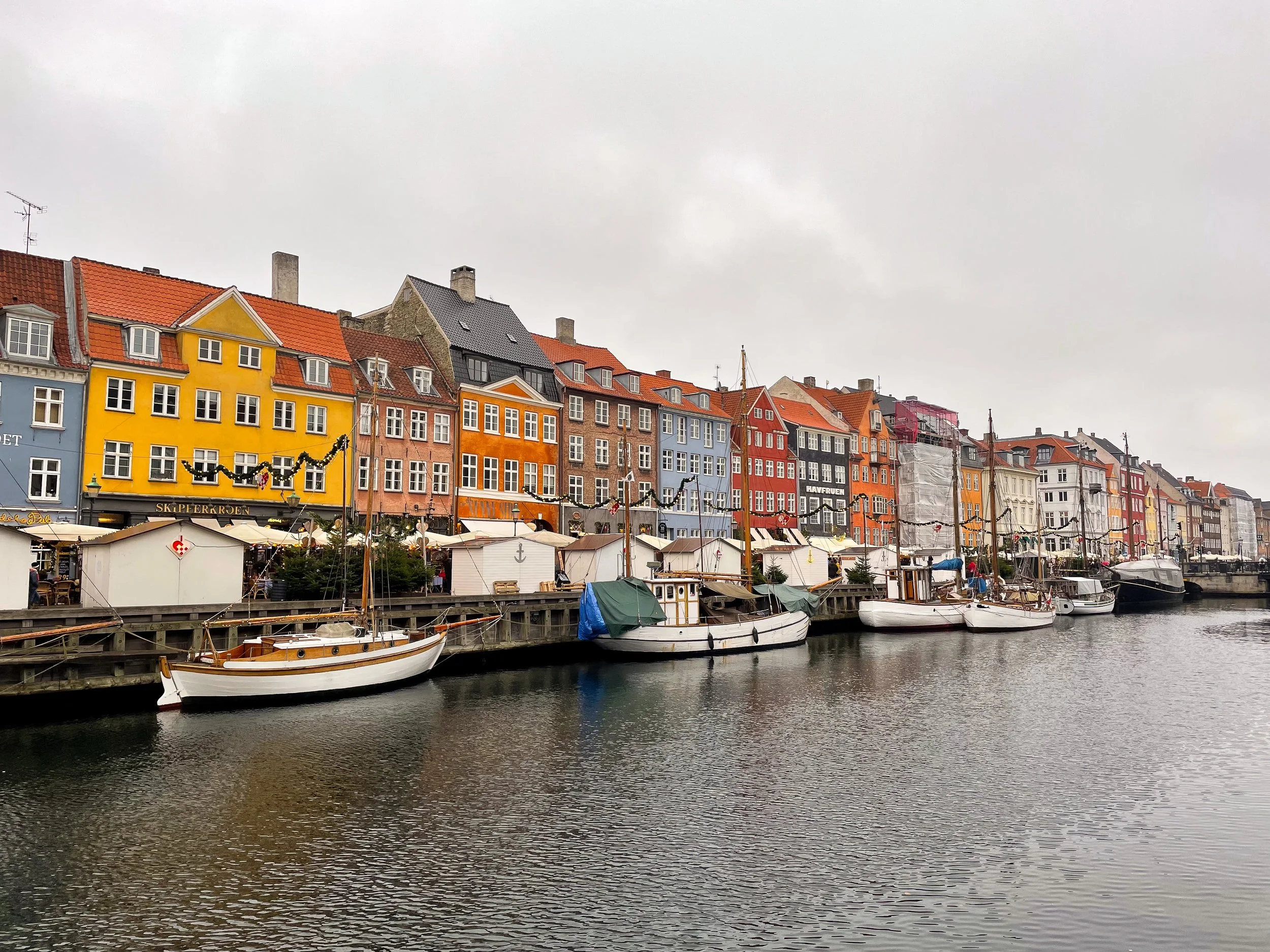
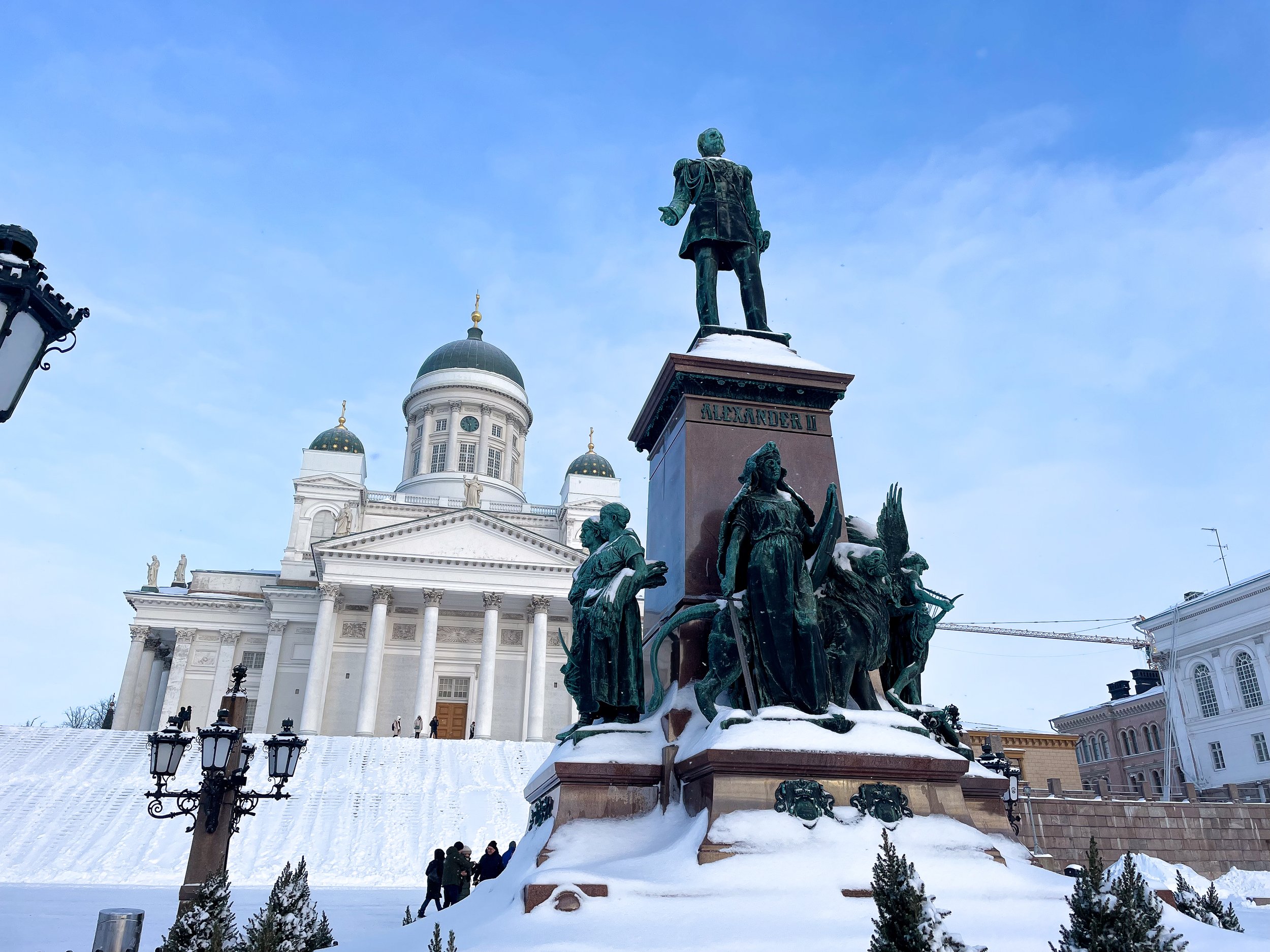
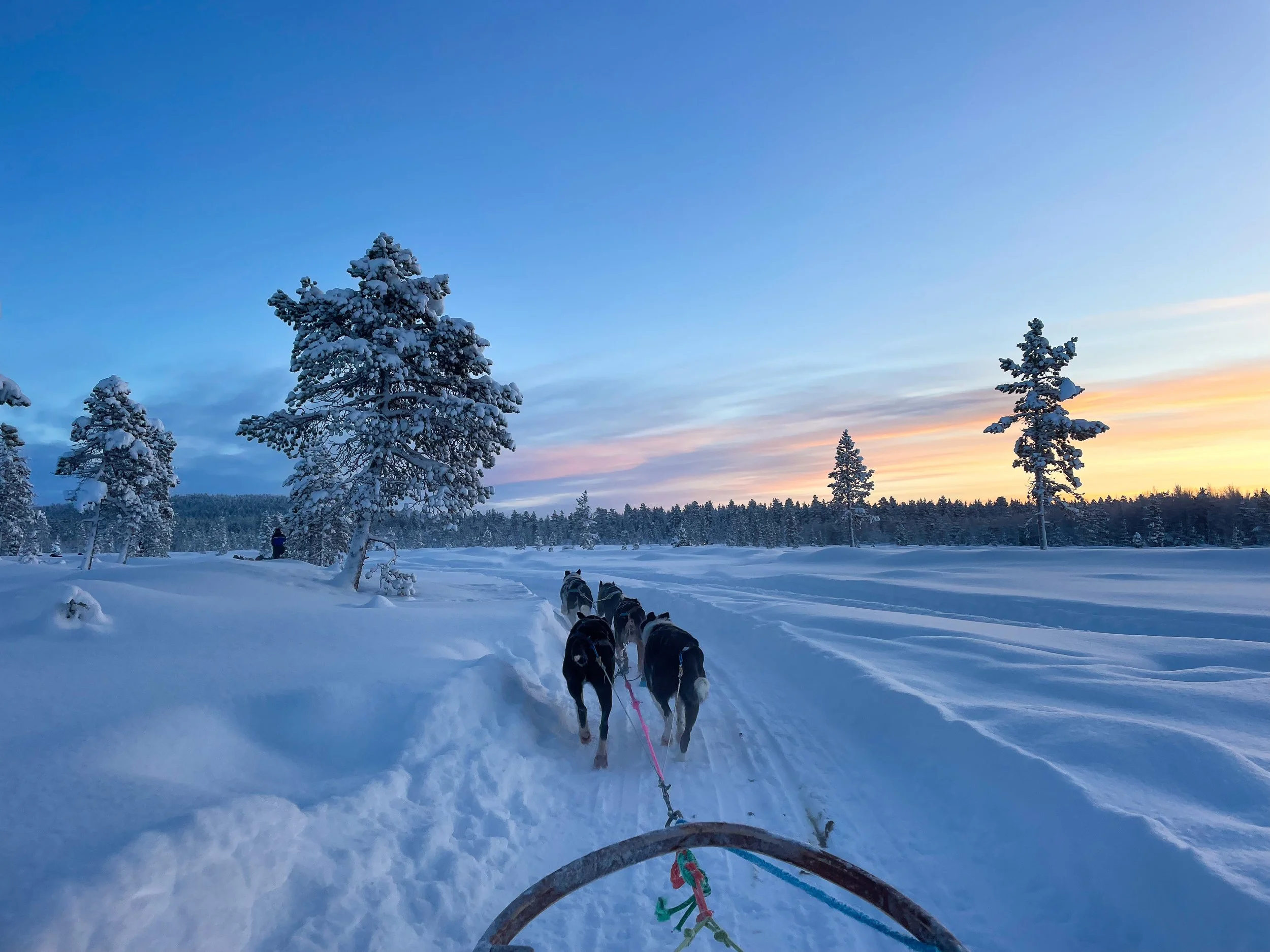
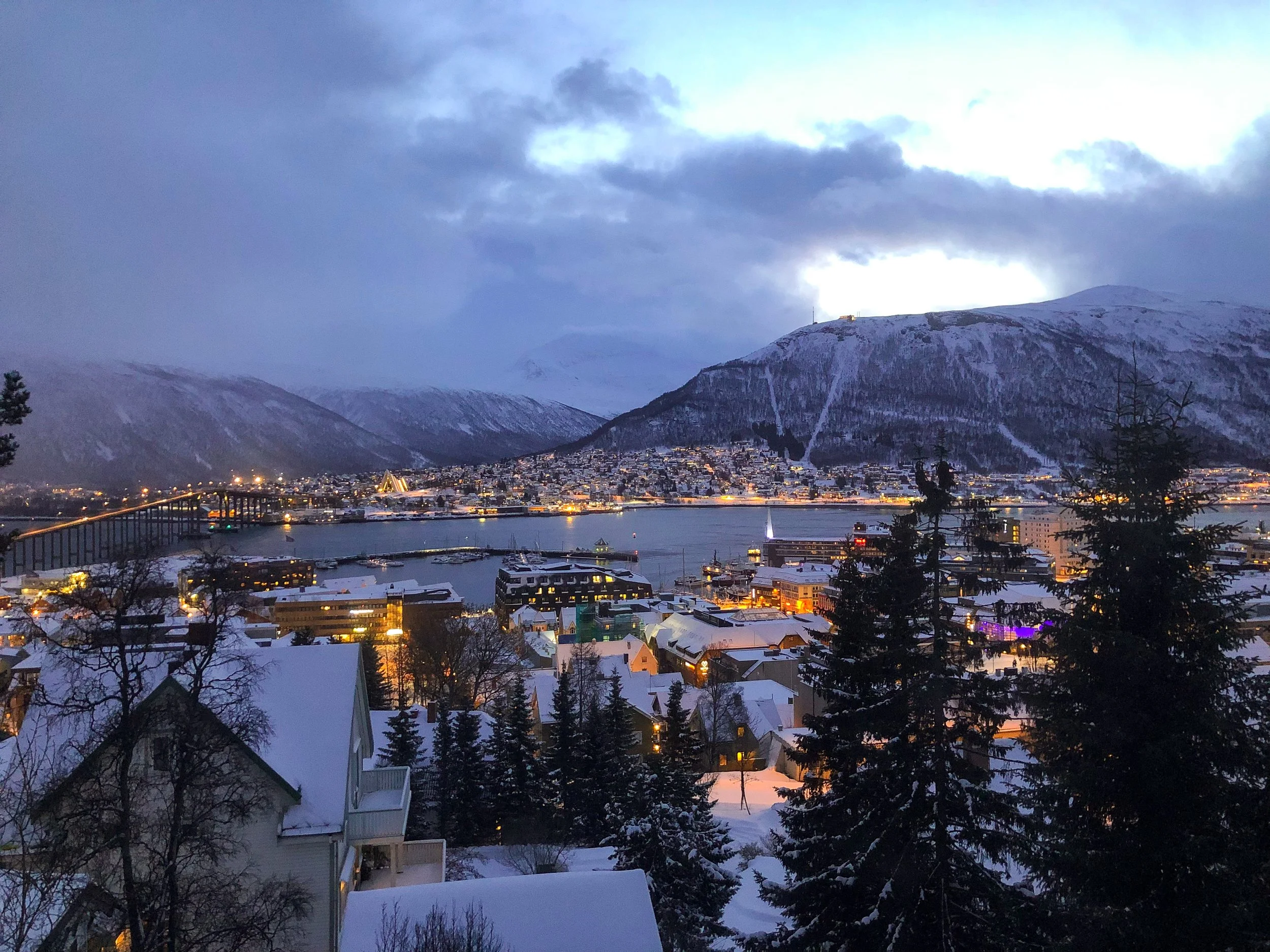
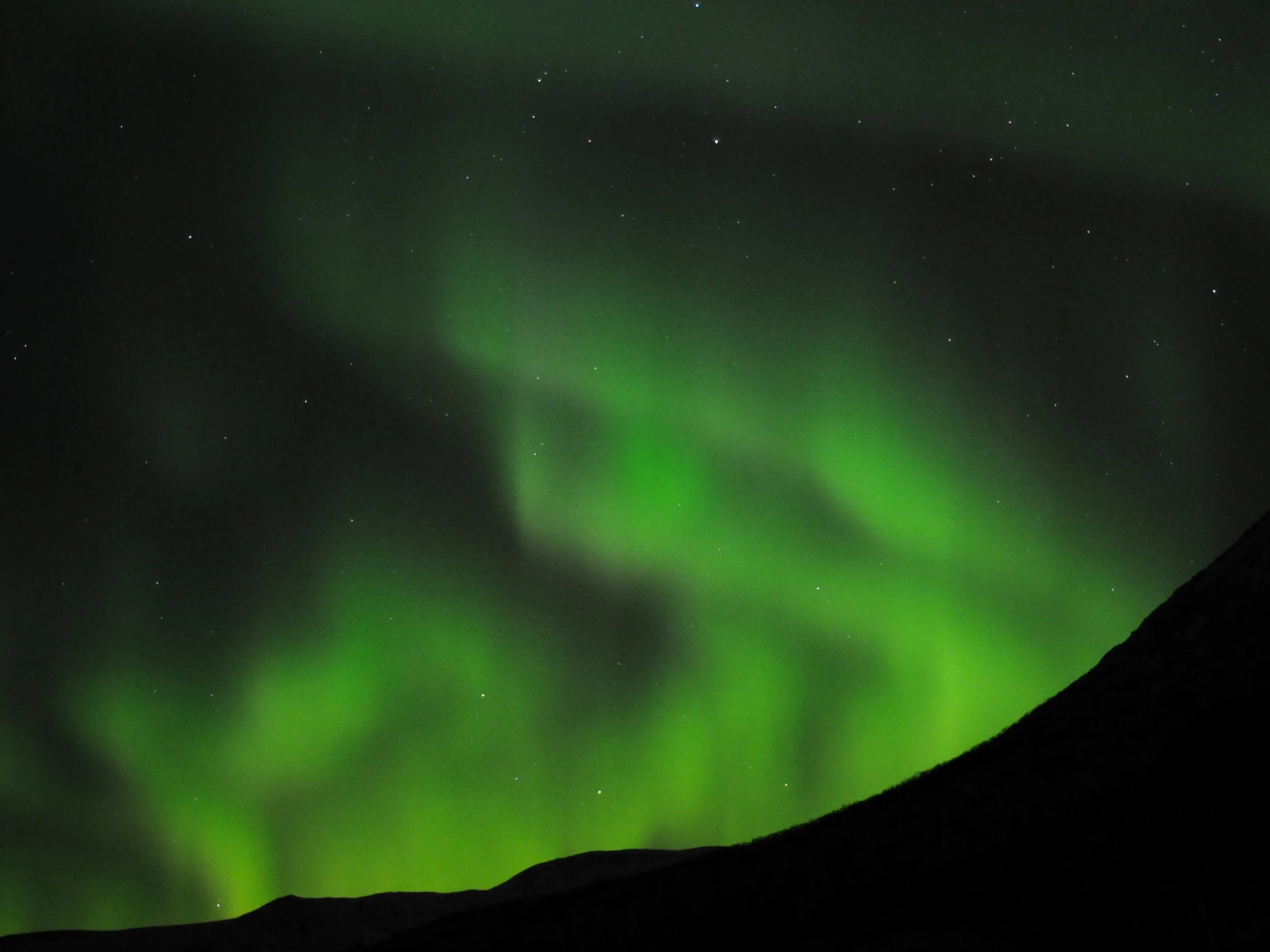
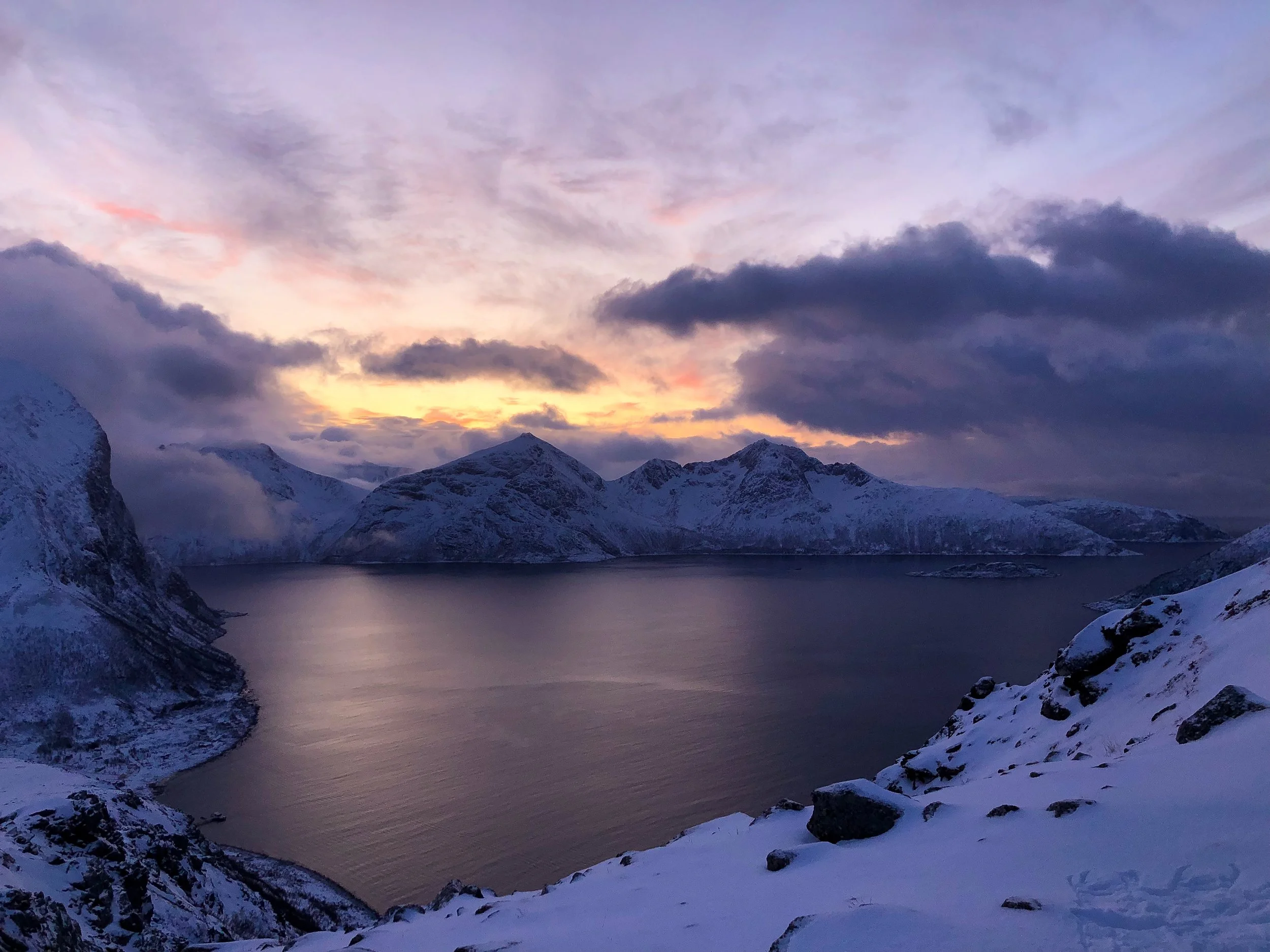
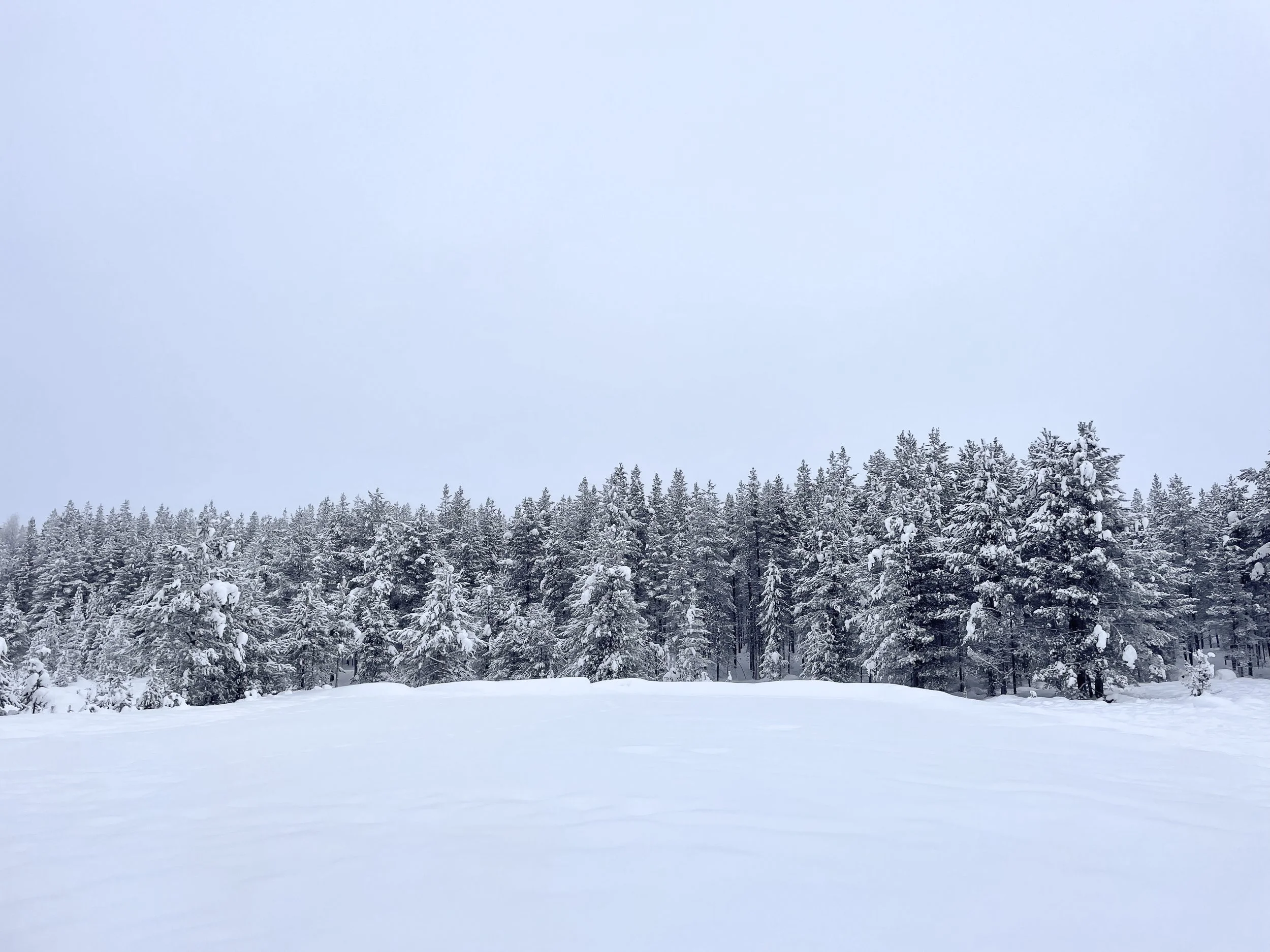
Elsewhere in Nordic Europe
From Iceland’s glaciers, waterfalls and black sand beaches to Arctic Lapland, Tromsø’s fjords and Copenhagen’s canals, discover more of Nordic Europe through these travel guides:
Copenhagen Travel Guide: Nyhavn, Christmas Markets & Scandinavian Cuisine. Wander along Copenhagen's colorful canals where wooden ships, historic castles and Danish culture meet Scandinavian cuisine and festive Christmas markets.
One Day in Helsinki: Finnish Sauna & Waterfront Sights. Experience a winter day exploring Helsinki's frozen waterfront where local food markets, historic architecture and steaming saunas bring Finnish culture to life.
Lapland Finland Travel Guide: Northern Lights, Sámi Culture & Arctic Adventures. Journey through Lapland's Arctic wilderness and snowy landscapes to experience Sámi traditions, husky mushing, Finnish cuisine and vivid auroras during the polar night.
Tromsø Norway Travel Guide: Northern Lights, Arctic Fjords & Sámi Culture. Explore Tromsø's snowy streets and historic waterfront where Nordic cuisine and Sámi culture meet dramatic fjords, dancing auroras and Arctic adventures.
For Next Time…
Iceland is a remarkable country to visit! We loved our time road tripping around the Golden Circle, along the South Coast and exploring Reykjavík. We plan to return to Iceland during the summer months:
See the green moss covering the landscape.
Explore the north side of the country.
Pet an Icelandic horse.
Visit and birdwatch on a puffin colony.
Experience the midnight sun.
Bathe in some of the lesser known thermal springs.
Marseille Travel Guide: Calanques, Vieux-Port & Mediterranean Culture
Explore Marseille's gritty streets and the historic Vieux-Port where Mediterranean culture, bustling markets and seaside charm meet rugged coastal landscapes.
Marseille, France’s Second City
Marseille, France’s Second City, has a certain “je ne sais quoi” to its beauty, grittiness and old world charm. The city streets are lined with historic buildings and graffitied alleys while its seaside is defined by Mediterranean blues, rugged cliffs and fishing boats.
Mediterranean Influences
Marseille is a historic port city located along the Mediterranean Coast. It was founded over 2,600 years ago and is one of the oldest surviving cities in Europe. Throughout the ages, it has been a hub for goods including seafood, olives and grapes as well as transportation and immigration. Today, many North African immigrants call the city home and have integrated their own cultures into the French city.
MuCEM (Museum of Civilizations of Europe and the Mediterranean). The MuCEM is Marseille’s historic and cultural museum. It explores the civilization and anthropology of the European and nomadic people in the Mediterranean and Marseille’s importance both historically and in the present day. The museum displays various artifacts, paintings, maps and contains permanent and temporary exhibits. The museum itself is a piece of art with a black filigreed concrete skin covering the building. The museum’s rooftop and cafe is a nice spot to relax in the shade provided by the unique shadows of the structure while overlooking the city’s historic port. Contrasting the museum is a pedestrian bridge connecting it to the medieval ruins of Fort St Jean.
Explore the Neighborhoods
Vieux Port. Easily the most recognizable feature of Marseille, this harbor in the city center is lined with hundreds of sailing and fishing boats. The surrounding buildings are home to many seafood restaurants serving the catch of the day and the iconic fish stew, bouillabaisse. Midway through the Vieux Port is a small ferry that connects both sides of the harbor departing every 15 minutes.
Le Panier. The historic quarter of Marseille with stepped sidewalks, narrow streets and lots of plants. It’s a quiet neighborhood a few blocks away from the Vieux Port with small shops, artist studios, graffiti and colorful murals. Walk down Rue du Panier, a photogenic street with numerous boutiques and shops.
Cours Julien. An artistic and grungy neighborhood recognizable by its graffitied buildings and iconic steps. Its streets are home to boutiques, vintage shops, cafes, bistros, bars and the Cours Julien Farmer’s Market.
Cours Julien Farmer’s Market. A small but bustling market is held every Wednesday morning in the plaza next to the Notre-Dame du Mont subway station. Locals purchase their weekly groceries as animated vendors shout from behind tables and musicians offer live performances. Vendors sell everything from meat, seafood, cheese, honey, jams, wine, fruits, produce, herbs, bread, flowers and soaps.
Good to Know. Bring cash for making purchases. Bread is sold by the loaf or by weight.
Have a Picnic
Fresh from the Cours Julien Farmer’s Market, we sat down on the lawn of the Jardins du Pharo for an afternoon picnic. We shared a half watermelon, bunch of grapes, custard tart, jammed cookie, stinky and herbal cheeses, bread and French wine.
See the Sights
Fort Saint Jean. A medieval fort located near the entrance of the Vieux Port across from the MuCEM. We explored its stone ruins, lush gardens and took in its views of the harbor.
Église Saint Laurent. A simple stone church built during the 12th century. It is a good example of other Mediterranean influences with its North African style bell tower and symmetrical Greek character.
Cathédrale La Major. A Byzantine style cathedral with a black and white striped stone facade, multiple domed bell towers, soaring arches and Christian symbols.
Basilique Notre-Dame de la Garde Viewpoint. A basilica located at the highest point in the city with panoramic views of Marseille and the coast. The cathedral and candle lit chapels below the sacristy are eerie but beautiful.
Palais & Jardins du Pharo. A Neoclassical palace built for Napoleon on a green hillside overlooking the Mediterranean and the Vieux Port. Come here to picnic on the lawn or in the sculpture garden.
Maison Empereur. A 200 year old kitchenware and hardware store. Walking in the footsteps of Julia Child, we easily spent an hour exploring the two floors of interconnected rooms and packed aisles of copper cookware, kitchen gadgets and tall wooden displays.
The Calanques National Park
The Calanques are home to coastal rock formations, small islands and white limestone cliffs set against the deep blue Mediterranean Sea. They make up a national park stretching from Marseille towards Cassis. It's a rugged place to hike, explore ruins and find a beach with turquoise water to relax at and swim in.
Calanque de Sugiton Trail. A coastal trail in The Calanques National Park leading to a hidden beach. The trail meanders along a series of limestone cliffs speckled with lush trees and green bushes, offering picturesque views of the Mediterranean Sea and dreamy wooden sailboats moored offshore.
Calanque de Sugiton Beach. A narrow bay with a pebbly beach nestled between two cliffs. Come here to lounge onshore, swim through the shades of deep blue and turquoise water and cliff jump from rocky islands into the bay.
Getting Here. The Calanques National Park is located about 40 minutes by car from the Vieux Port of Marseille. Drive and park at the Cité Universitaire Luminy. From here, forested roads and trails lead deeper into The Calanques National Park.
Good to Know. There is no specific route to reach Sugiton Beach. Use this Map Pin to locate the Sugiton Trail Head and this Map Pin to locate the Sugiton Beach. Follow the meandering trails in-between, planning to hike anywhere from 30 minutes to an hour.
Îles du Frioul. An archipelago off the coast of Marseille comprised of four islands and jagged rock formations.
Île Ratonneau. The most developed island with a small town and sail boat dotted marina. Hiking trails lead across its dry and arid terrain to abandoned military structures, panoramic viewpoints and beaches.
Fort de Ratonneau. The ruins of a hilltop military fortress with panoramic views of The Calanques, Mediterranean and Marseille.
Plage de Saint-Estève. A beautiful beach with a large turquoise cove and swimmable waters. It’s an ideal spot to cool off and relax after hiking across the island.
Château de If. A rocky island with a 16th century fort, later transformed into a prison. It’s said to have inspired Alexandre Dumas, The Count of Monte Cristo. We didn’t have time to visit the island but were able to admire it from the ferry and neighboring island.
Getting Here. Îles du Frioul and Château de If are both reachable by ferry from the Vieux Port in Marseille, making for the perfect day trip. Le Bateau offers daily transfers and tours. Tickets can be purchased from the pier near the MuCEM or online.
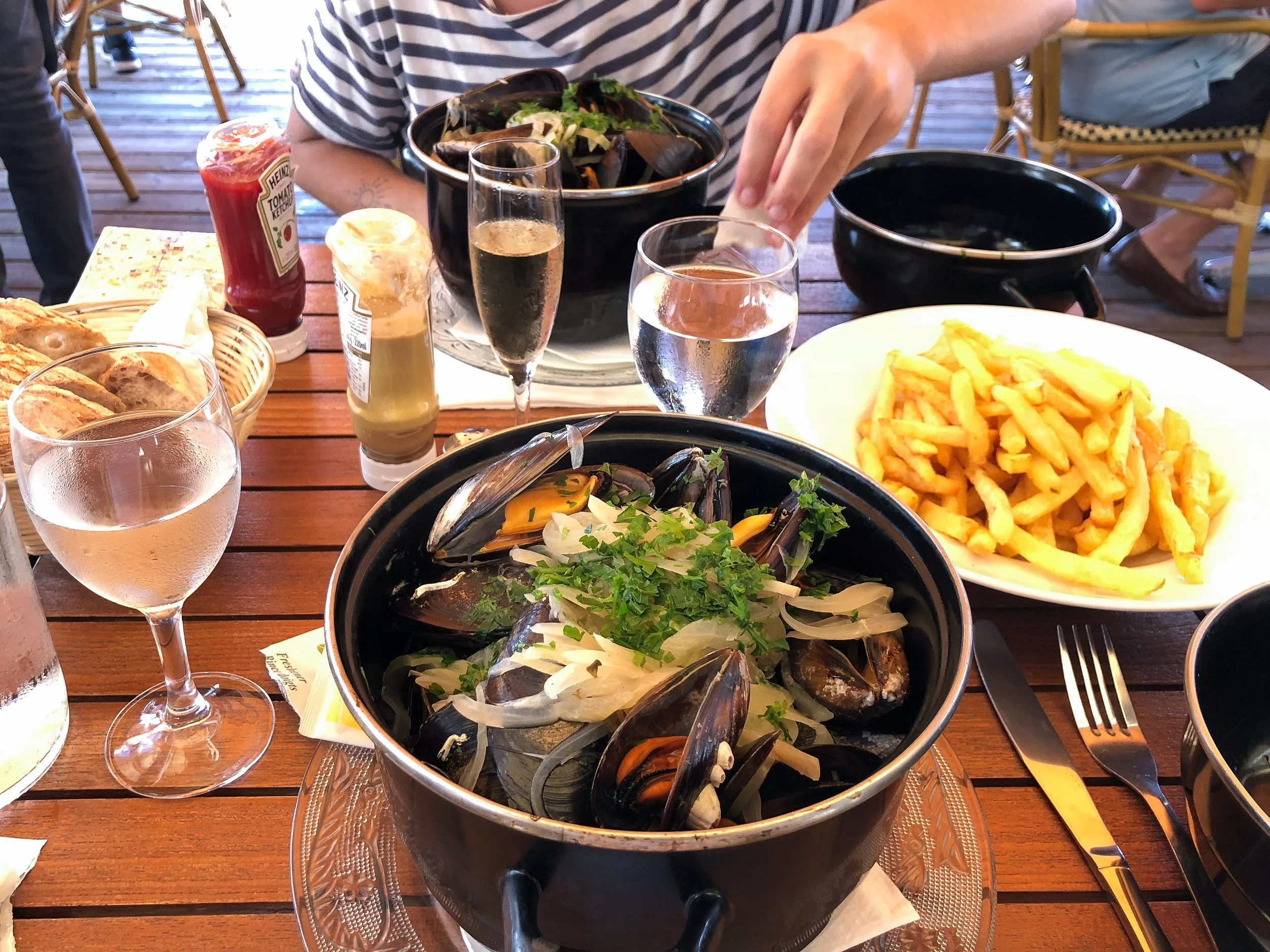
Cuisine à la Marseillaise
The cuisine in Marseille is influenced by Provençal and Mediterranean ingredients resulting in a unique palette of flavors. Being a port city, it is especially known for its seafood.
Bouillabaisse. A seafood stew typically made with the daily catch including a mixture of whole or filleted white fish, shellfish and shrimp. The seafood is prepared in a broth seasoned with saffron, tomato and other ingredients.
Moules Marinières. Steamed mussels cooked in a sauce made from white wine, butter, garlic, parsley and shallots. It’s typically served with frites, sliced baguette and house made mayonnaise.
Ratatouille. A Provençal vegetable dish is made from a stewed or roasted combination of eggplant, zucchini, yellow squash and tomato.
Tapenade. An olive, garlic, caper and anchovy spread. We often enjoyed it on a croissant or baguette.
Pizza. A popular flatbread made with Mediterranean toppings like olives, anchovies and tomato.
Apple Tarte Tatin. A classic French dessert with apples caramelized in butter and sugar on a layer of flaky pastry.
Crêpes Sucre. A sweet crêpe often folded and sprinkled in sugar with a side of orange marmalade.
Meringue. One of the classic French patisseries we saw all over the city! Egg whites whipped with sugar and baked into sweet delicate cookies.
Places to Eat & Drink
Au Doyen. A seafood restaurant where we ate our first meal in France, moules marinières with frites and rosé.
Le Miramar. One of the higher end restaurants along the Vieux Port specializing in Bouillabaisse. In true French style, it prides itself on its preparation, presentation and authenticity. Read more about their recipe here.
Les Arcenaulx. An elegant restaurant inside of the library styled dining room with stone walls, timber beams and a large wine selection.
La Crêpe au Carré. A crêperie offering sweet and savory crepes. Try the buttery and sugary Crepes Sucre.
Café des Arts. A casual bistro facing the Vieux Port. Stop in for a pint of French beer and a late afternoon bite.
Boulangerie Gambetta. A tiny bakery with sandwiches, pastries and bread. It’s a great place to buy a sandwich to takeaway en route to The Calanques.
Where to Stay
La Pension Edelweiss. A bed and breakfast near the city center. From the outside, it looks like any other stone building with slim balconies and iron railings adorned with tiny planters. Once within, the interior feels uniquely French with a grand wooden staircase, high ceilings and large rooms all decorated in antique objects, mid-century furnishing and artwork. Make reservations online.
Breakfast. Each morning, the hotelier covered the dining table with a delicious spread of baguettes, croissants, hard boiled eggs, meats, cheeses, preserves, butter, tapenade, fresh coffee and orange juice. It was the most pleasant way to start the day and chat with other guests.
Flowers. We bought a bouquet of freshly cut sunflowers and displayed them in the empty wine bottles on the fireplace mantle in our hotel room.
Location Specifics
Safety. Marseille can be a little dodgy at times due to drug trafficking. The city center and Vieux Port are generally safe. Be mindful of your surroundings, especially later in the evenings.
Airport Shuttle. There is a regularly scheduled shuttle between the airport and St Charles Station central in Marseille. Tickets can be purchased from the office at both locations.
Getting Around. While Marseille is a large city, the city center and surrounding neighborhoods are easily walkable.
Cash vs. Credit. Credit cards are widely accepted across Marseille though carrying a small amount of cash is important for small transactions.
Language. French is the primary language in Marseille. Few people speak English or any other languages. Download Google Translate to help with conversations and interactions.
French Wine. It’s no surprise that you’ll find good wine just about anywhere in France. Most grocery stores have a sommelier on staff that will recommend a bottle based on how you plan to drink it. Even better, a nice bottle typically costs just a few Euros.
Provençal Soaps. Marseille is famous for its Provençal soaps scented with local flowers, the most popular being lavender. They’re sold by the bottle in liquid form and in bars.
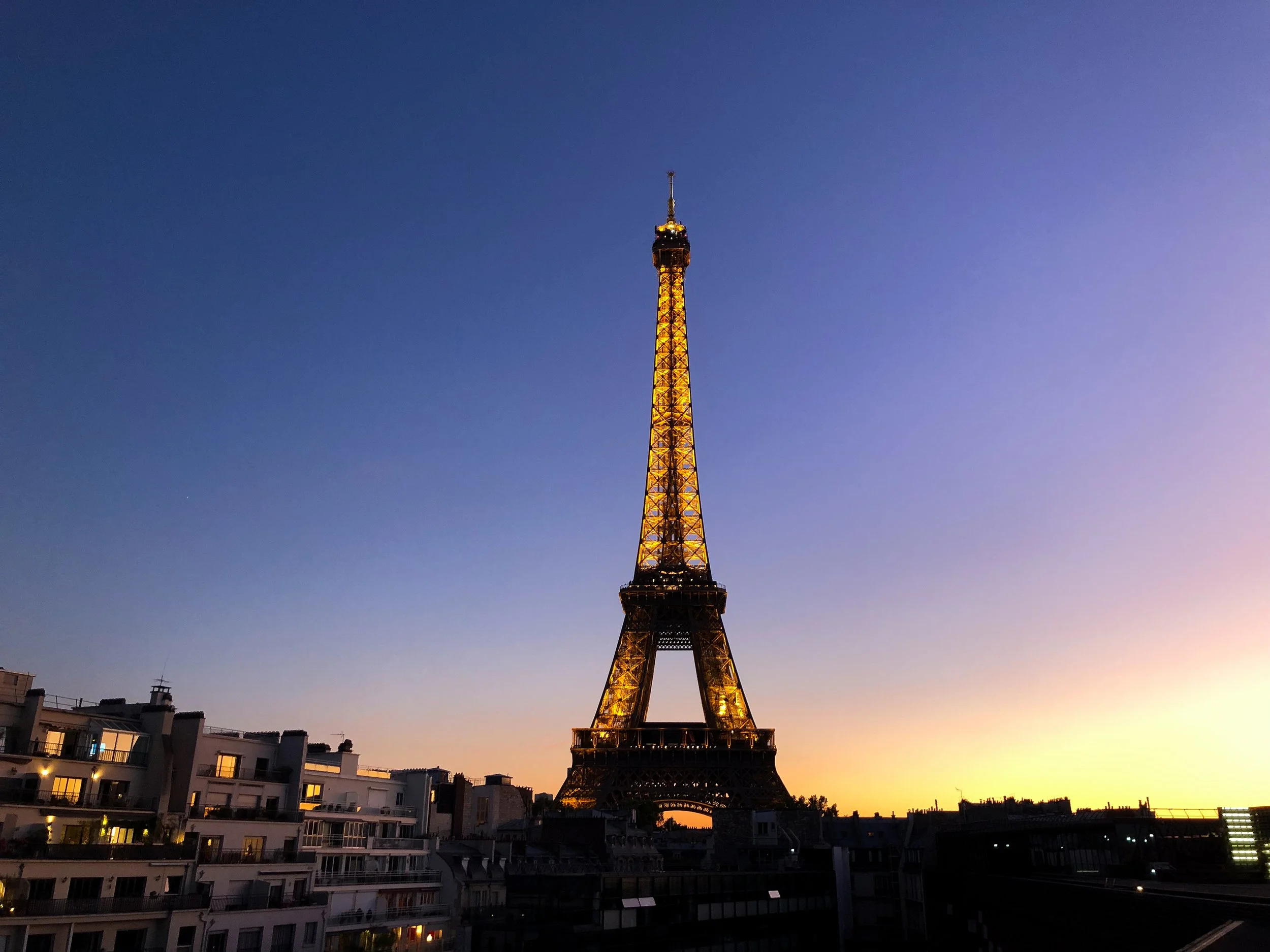
Elsewhere in France
From Marseille’s coastal cliffs and historic port to Paris’s museums, neighborhoods and romantic cityscapes, discover more of France beyond the Mediterranean.
Paris Travel Guide: Eiffel Tower, Montmartre & Romantic Experiences. Get lost wandering the historic streets of Paris, where charming cafés, timeless architecture and French culture turn every corner into a romantic discovery.
For Next Time…
We fell in love with this French city, even after only spending a few days here. When we return, we want to continue exploring Marseille and venture out into the region including the countryside of Provence to see the lavender fields of La Ferme aux Lavandes and the cities of Aix-en-Provence and Montpellier.
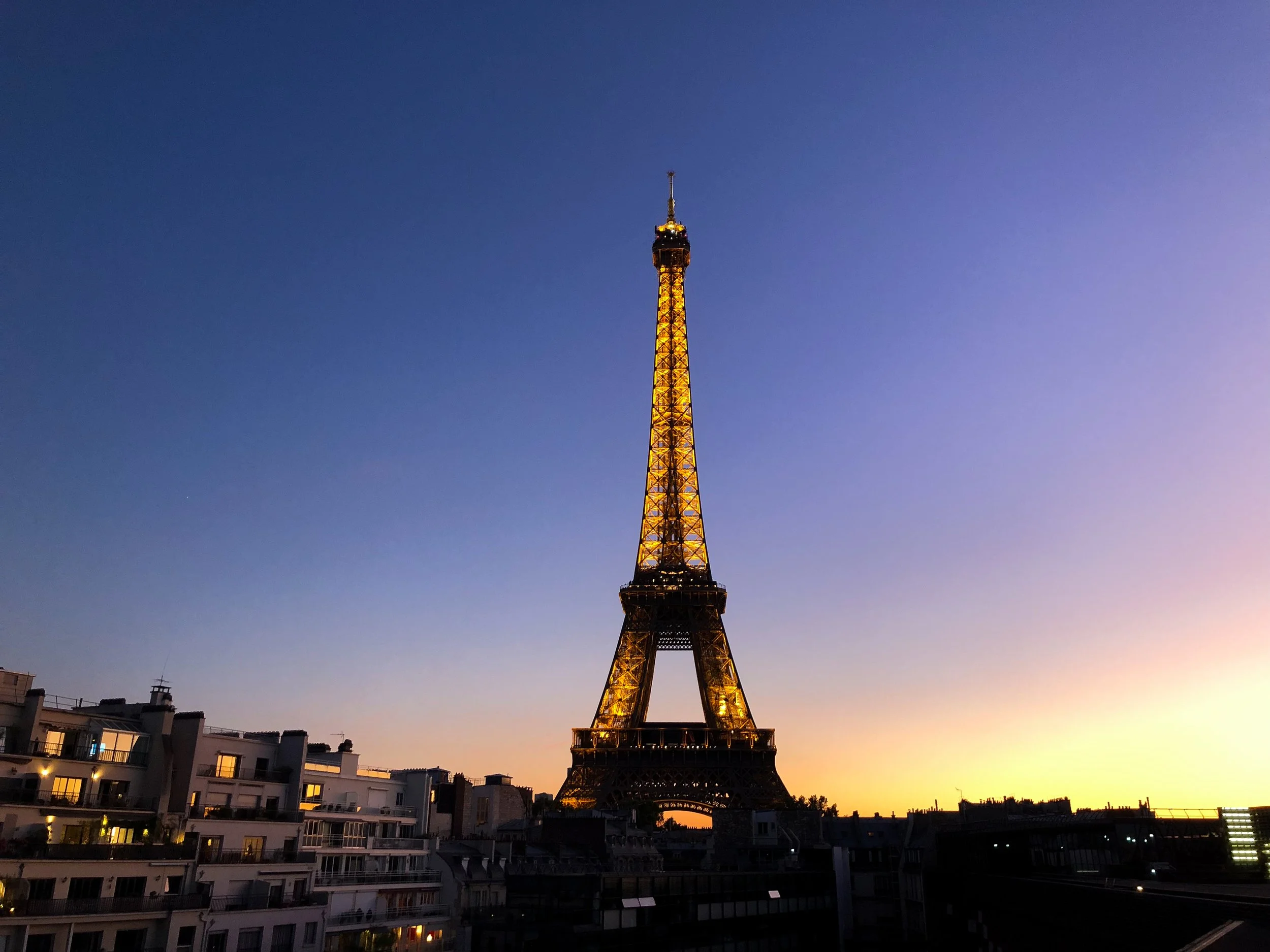
Paris Travel Guide: Eiffel Tower, Montmartre & Romantic Experiences
Get lost wandering the historic streets of Paris, where charming cafés, timeless architecture and French culture turn every corner into a romantic discovery.
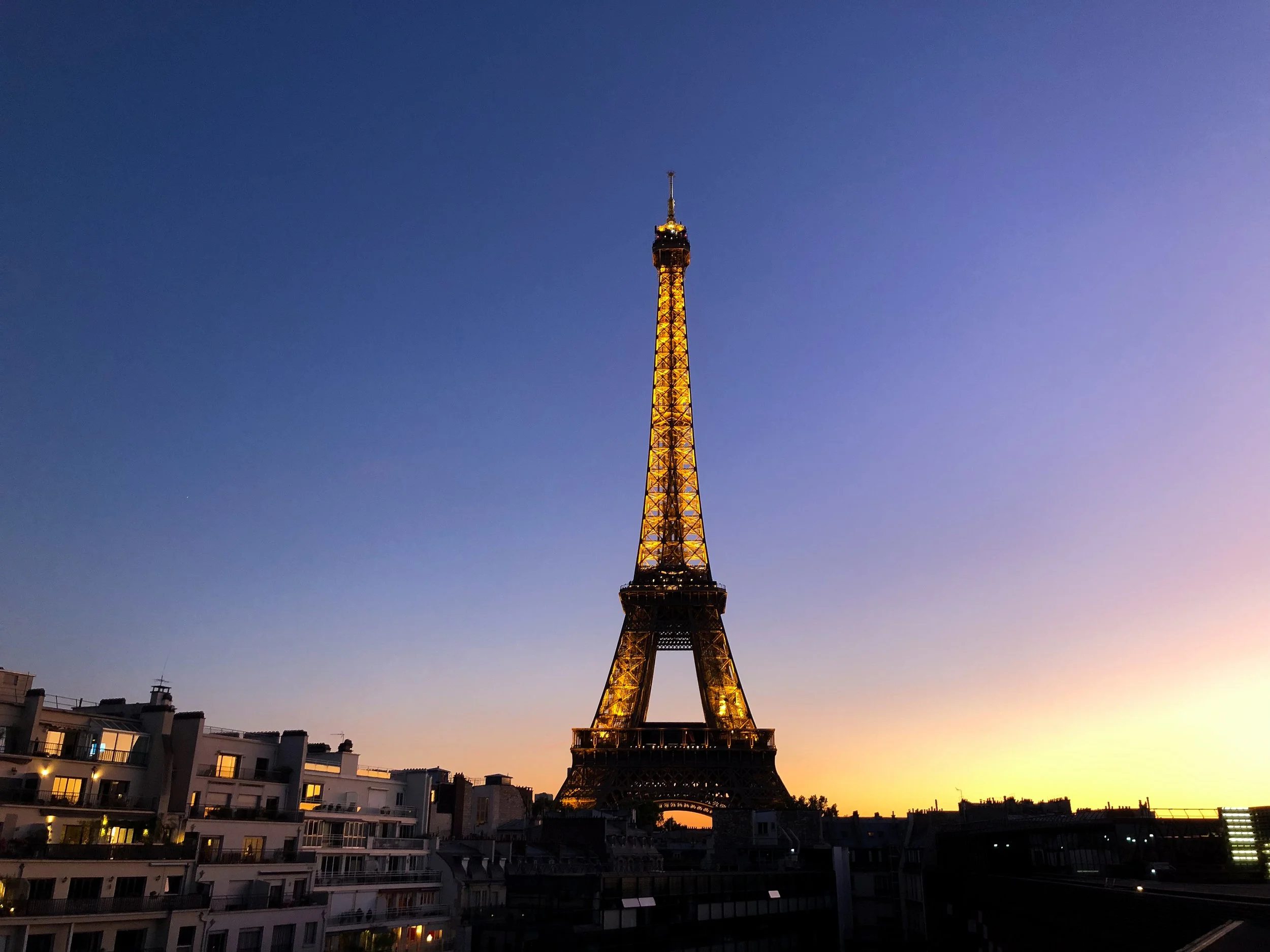
Paris, The City of Love
Paris, the City of Love, is an enchanting place! Cafes and bistros spill onto the sidewalks of cobblestone streets and grand avenues. The scent of fresh bread wafts from boulangeries as colorful patisseries fill shop windows. Lively markets are brimming with everything from local produce to antiques and books. Historic monuments and world renowned museums celebrate French culture, arts and history. The River Seine gracefully meanders between Arrondissements while the Eiffel Tower stands prominently above it all. Paris holds a special place in our hearts as the city where we got engaged on our first visit. One phrase we can’t say enough is "Je t'aime Paris.”
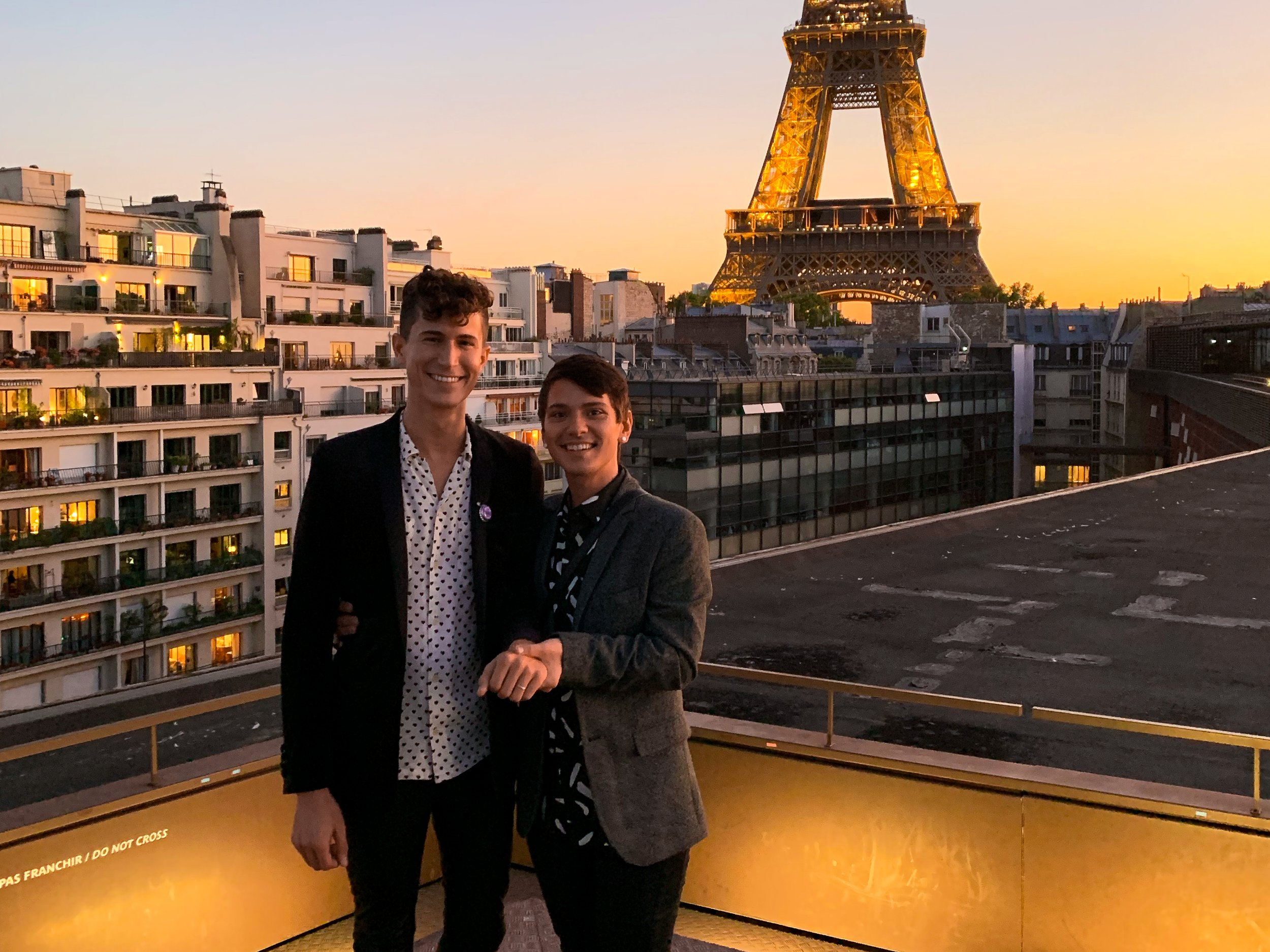
Our Engagement
On our first night in Paris, we dined at Les Ombres, overlooking the Eiffel Tower, beginning with wine on the terrace. As the sun set and a full moon rose, the tower suddenly began to sparkle, drawing us back outside where we stood alone, taking in the view. In that quiet, magical moment, Devin reflected on our life together before pulling out a small box containing a grape soda pin from Pixar’s Up and a delicate white gold ring and asked me to marry him. Through happy tears, I said yes as he slipped the ring onto my finger and pinned the badge to my lapel. We celebrated with champagne and dessert, then strolled to the Eiffel Tower, eventually ascending to the top where we admired Paris glowing around us. Toasting with sparkling rosé at the summit, newly engaged and overlooking the city, we felt like we were living a perfect and unforgettable fairy tale.
A Parisian Photoshoot
On a separate trip to Paris, we hired a photographer to capture our love for each other and the city. We met as the sun lifted above the horizon, posing for photos against the backdrop of the Eiffel Tower on cobblestone streets, the riverfront and its bridges. The golden sunrise, amber toned leaves and freshly repainted bronze structure made for a romantic autumn activity. Book a 1 Hour Couples Session with Sofiane on Airbnb.
Montmartre
Montmartre is a neighborhood that embodies Parisian charm. Its picturesque streets are paved in cobblestones, lined with historic buildings and ivy covered homes. Its lively bistros flow out onto the sidewalks while pastry shops lure in passersby for a sweet. As the day turns to night, its bars stay open late serving French wines and cocktails while the cabarets put on performances and shows. French artists including Van Gogh, Degas and Toulouse Lautrec once lived here while modern day artists continue to call it home.
Basilica of Sacré-Cœur. A Byzantine style basilica with a large white dome located on the hill in the center of Montmartre. It’s a symbol of the neighborhood and city. The prayer hall can be freely entered when open while the dome can be visited for a fee. A series of spiral staircases and outdoor walkways lead along the roof to the interior of the dome with panoramic views of Paris.
Rue Lepic. A winding cobblestone street on a steep incline with patisseries, chocolate shops, florists, fromageries, a seafood market, cafes, wine bars, many bistros and residences. Its most notable sight is the Moulin Radet, one of two historic windmills remaining in Montmartre.
Boulevard de Clichy. A tree lined boulevard with a pedestrian walkway at its center. Both sides of the boulevard are lined with bars, restaurants, sex shops and cabarets including the Moulin Rouge, the famous venue with a red windmill.
Place du Tertre. A bustling plaza known for its artists and bistros. It’s surrounded by restaurants that spill onto the sidewalk and into the center of the plaza. Artists sell Parisian themed art, brush colorful strokes across canvases and draw portraits of patient customers. Wafts of cigarette smoke, the smell of butter and music from accordion players fill the air.
Rue de Martyrs. A lengthy market street with hundreds of bistros, cafes, boutiques, boulangeries, fromageries, patisseries and markets selling meats, seafoods, fruits, vegetables, coffee and chocolates.
Staircases of Montmartre. Montmartre is known as the “neighborhood on the hill” and the highest natural point in Paris. Many tall staircases with unique vantage points cut through the neighborhood making it easy, though at times tiring, to get around on foot.
Rue de l’Abreuvoir. One of the most picturesque streets in Paris with ivy covered houses, colorful buildings and a view overlooking Sacré-Coeur.
Rue des Abbesses. A street lined with restaurants, coffee shops, boulangeries and boutiques ending at a plaza with a carousel and cathedral.
I Love You Wall. A blue tiled wall with “I love you” written in hundreds of languages.
Clos Montmartre. A small hillside vineyard and the last remaining one in Paris. It produces about 1,000 bottles of wine a year.
Fête de Vendanges (Wine Harvest Festival). The yearly wine harvest festival held every October in Montmartre around the steps leading up to the Basilica of Sacré-Cœur. The multi day festival features dozens of wine makers from regions all over France including Clos Montmartre. Order by the glass at different tents or do as locals do and buy a bottle to share. In addition to wine makers, there are food stalls, performers, a parade and fireworks. The festival is free to enter.
Arrondissements & Neighborhoods
Including Montmartre, Paris is broken up into 20 Arrondissements (Arr.) each starting in the center of the city and spiraling out like a snail shell. Different neighborhoods correspond to and overlap multiple Arrondissements.
Le Marais. Located in the 4th Arr. This is the oldest Parisian neighborhood and the center of the LGBTQ+ community. Known for its cobblestone streets, stately architecture, courtyards, cafes, cocktail bars and vintage shopping.
Latin Quarter. Located in the 5th Arr. A university neighborhood, this area of Paris is popular for its bars, cabarets and distance from large tourist attractions.
Saint Germain des Prés. Located in the 6th Arr. This neighborhood is home to many bookshops, galleries, cafes and design shops.
10th Arrondissement. A quiet neighborhood lining the Canal Saint Martin with plenty of restaurants to eat at and street art to spot. We stayed here in an Airbnb that was once a bakery operated by nuns.
2nd Arrondissement. Known for its arcades, boutiques, fine dining and cocktail bars. The neighborhood is worth wandering and getting lost in.
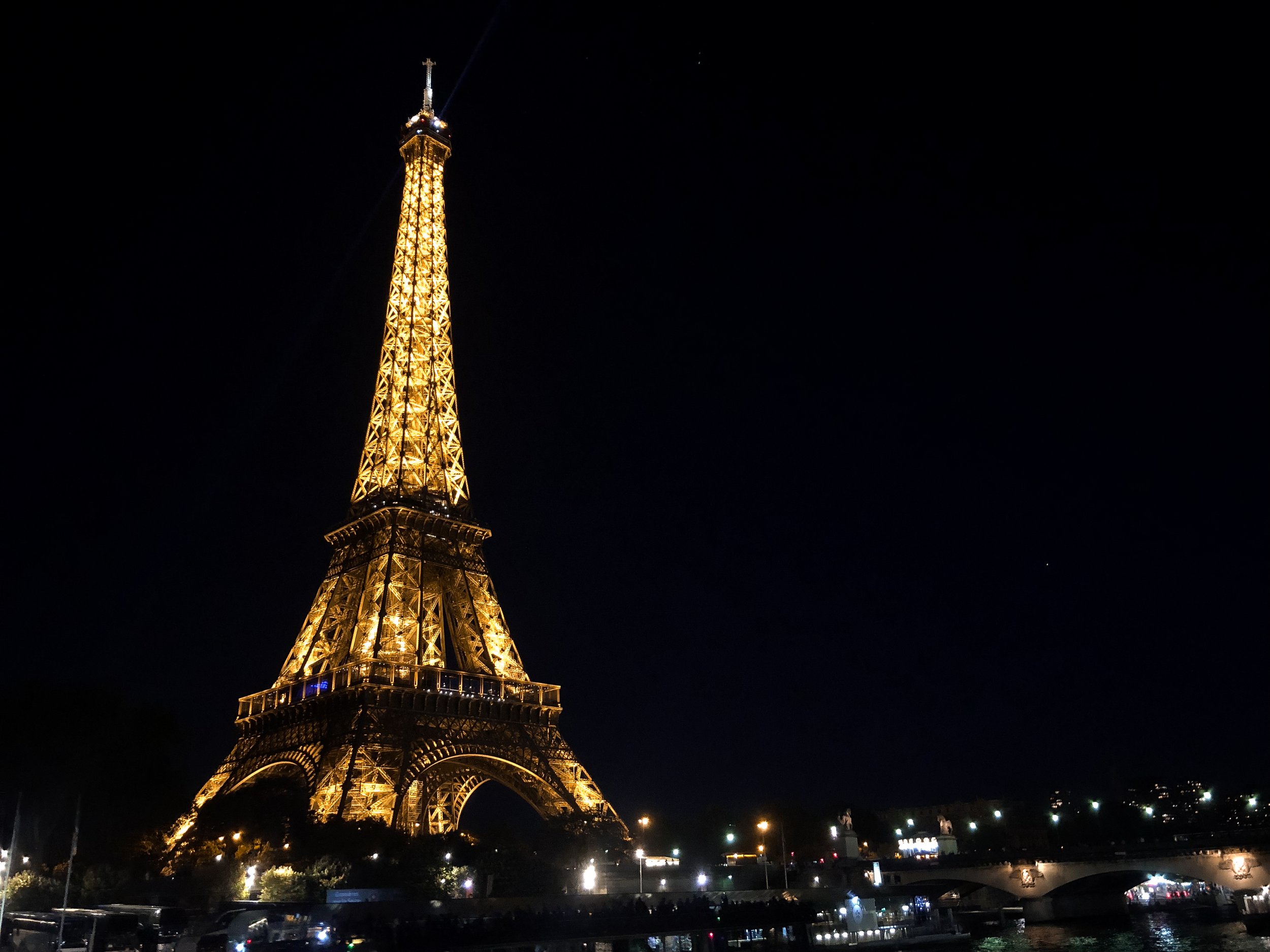
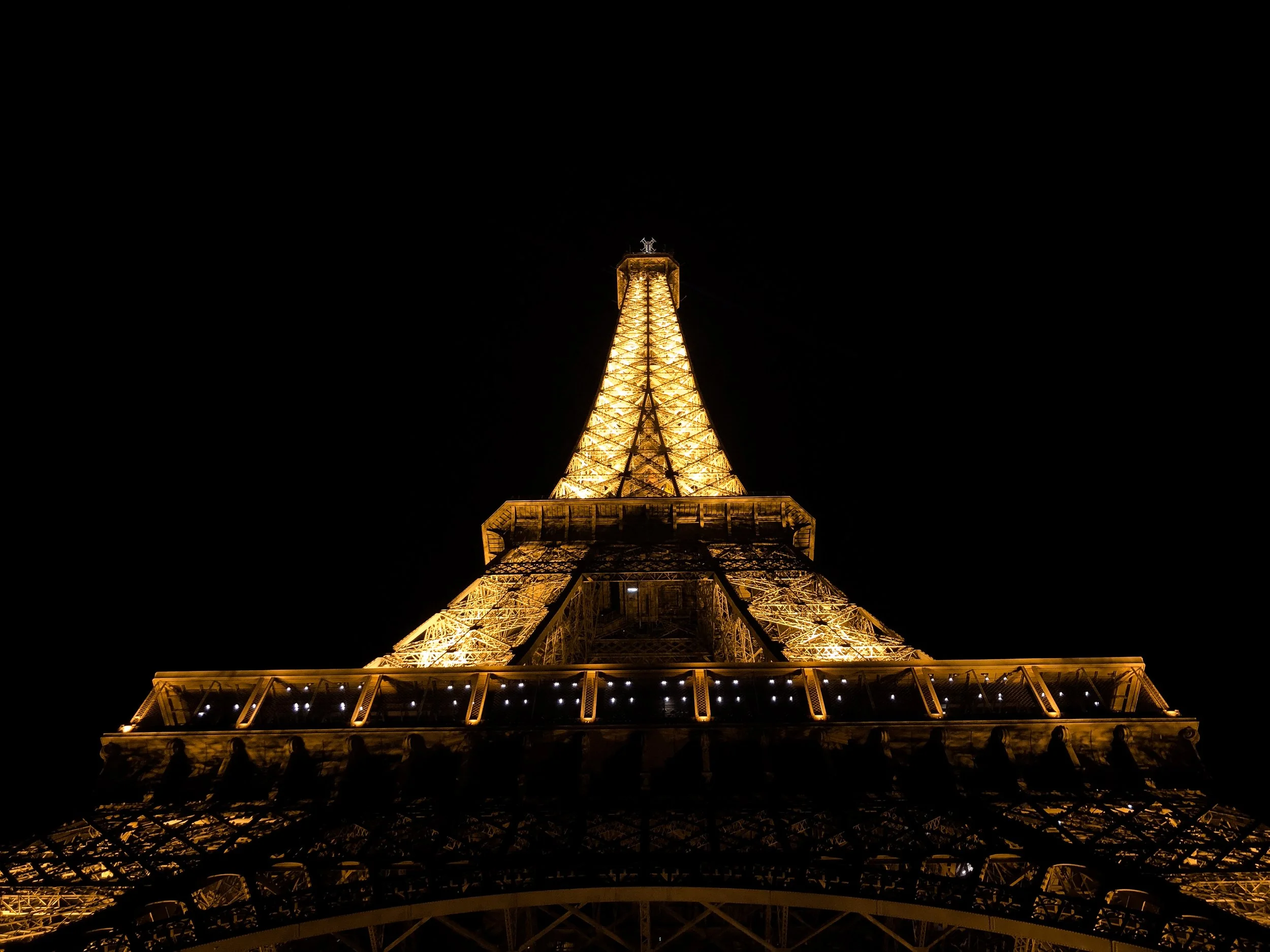
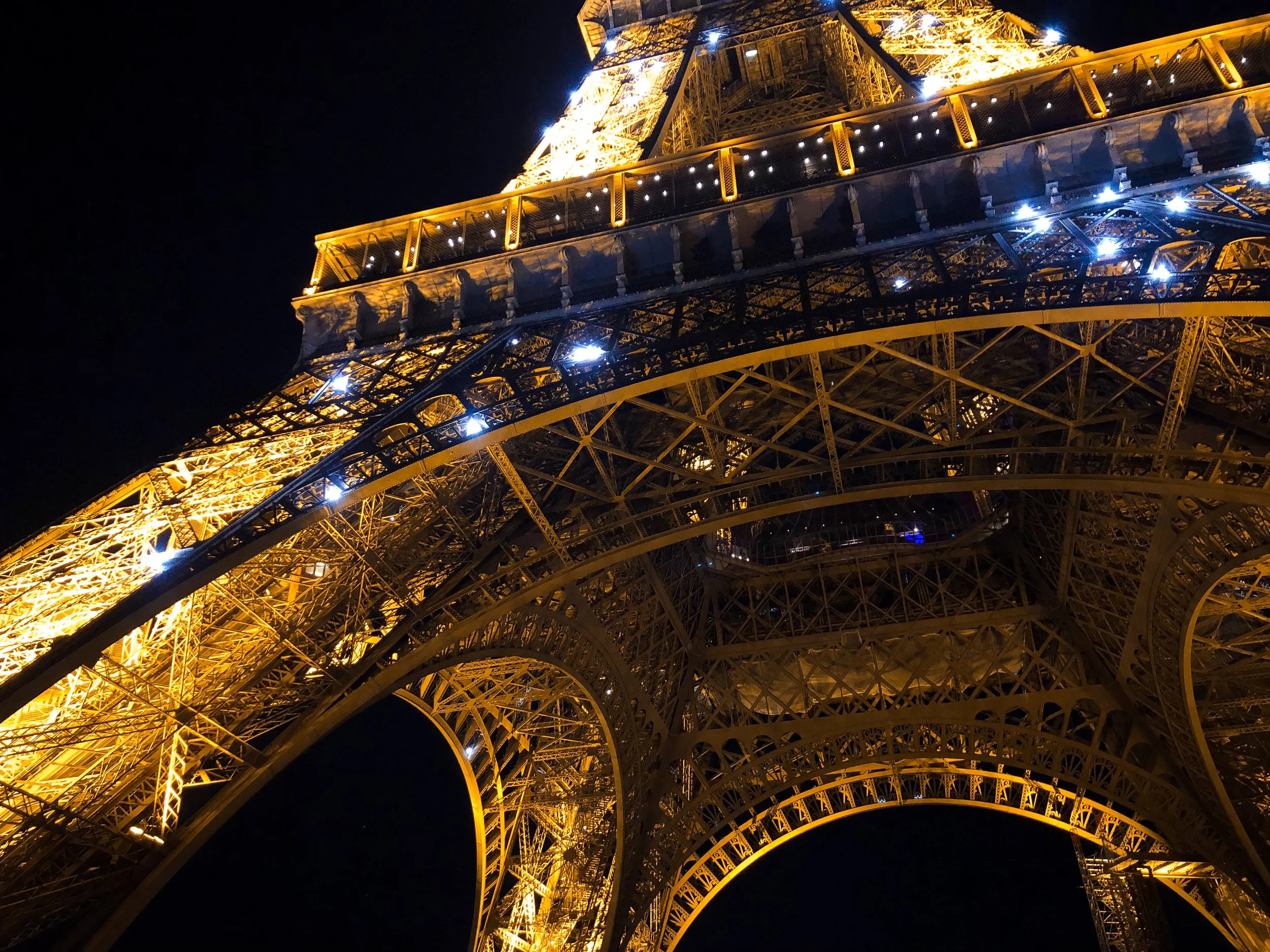
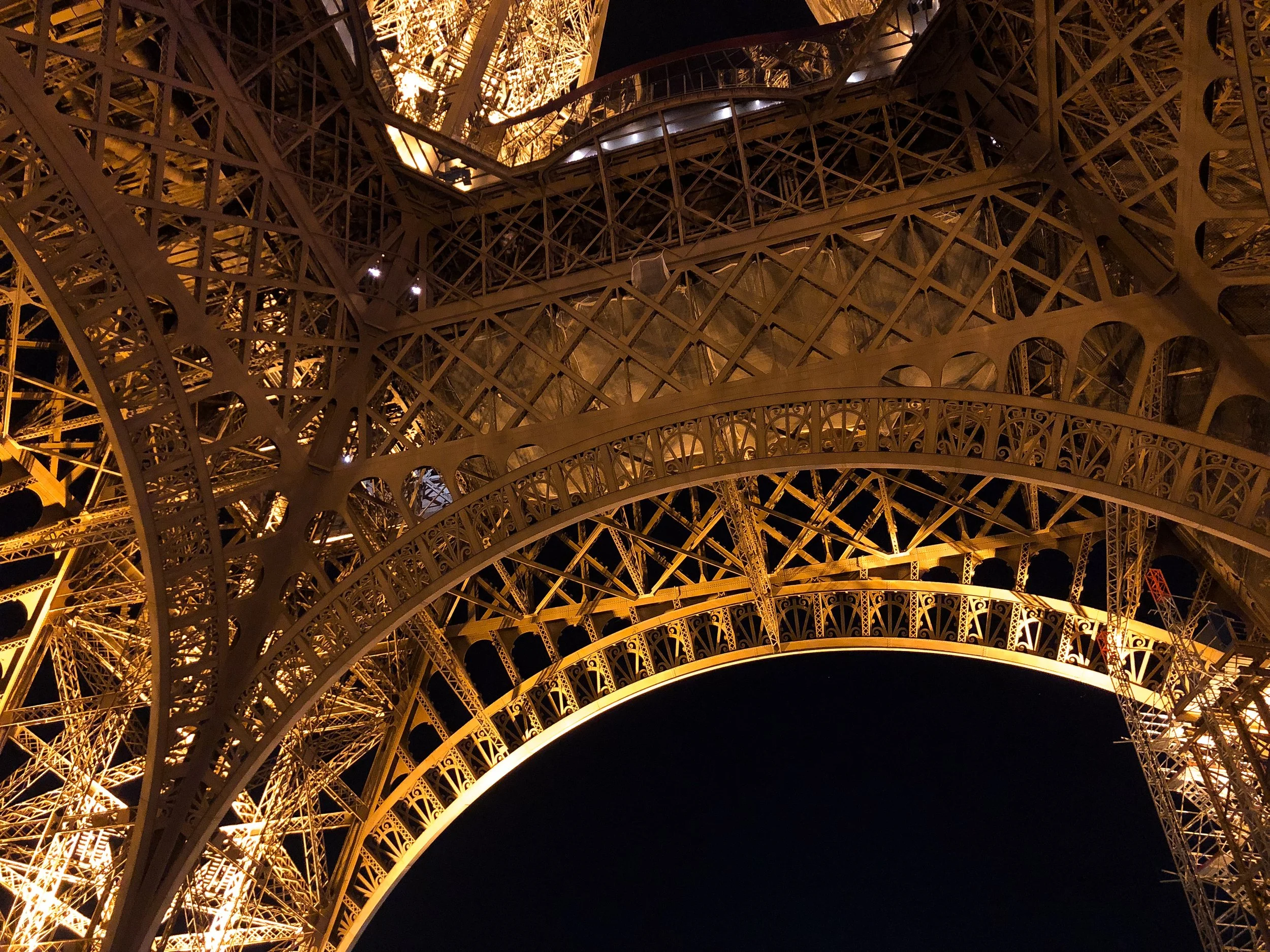
Visit the Sights
The Eiffel Tower. You can’t visit Paris without seeing the Eiffel Tower. It’s the symbol of the city and one of the most recognizable sights in the world. The tower has three levels. The first two are accessible by stair and elevator. Take the elevator up and the stairs down, making for a leisurely and twisting descent through one of the tower’s legs. Both floors have incredible views of the inner structure and iron lattices of the tower as well as a number of restaurants, shops and a Macaron Bar. The tiniest elevator leads to the third level at the top of the tower and highest point in Paris. The nighttime views are absolutely stunning! Every amber glowing light and illuminated landmark in Paris twinkles. The top floor is home to Gustave Eiffel’s Laboratory and a Champagne Bar serving flutes of sparkling rosé. Reserve tickets online for a specific time slot at least two weeks in advance.
Picnic in Champ de Mars. A large park in front of the Eiffel Tower and perfect spot for picnicking. Bring a blanket and assortment of provisions like French bread, cheeses, fruits and wine. Accordion players serenade couples while vendors sell roses, champagne and statuettes of the Eiffel Tower.
Pro Tip. Picnic during the daytime. Many rats scamper through the park at night, distracting from the romantic allure and atmosphere.
Sainte Chapelle. A highly ornamented gothic chapel dating back to the middle of the 13th century. It’s renowned for its massive purple hued stained glass windows, gold leafed arches, vaulted ceilings and stone facade. Book tickets online at least two weeks before visiting.
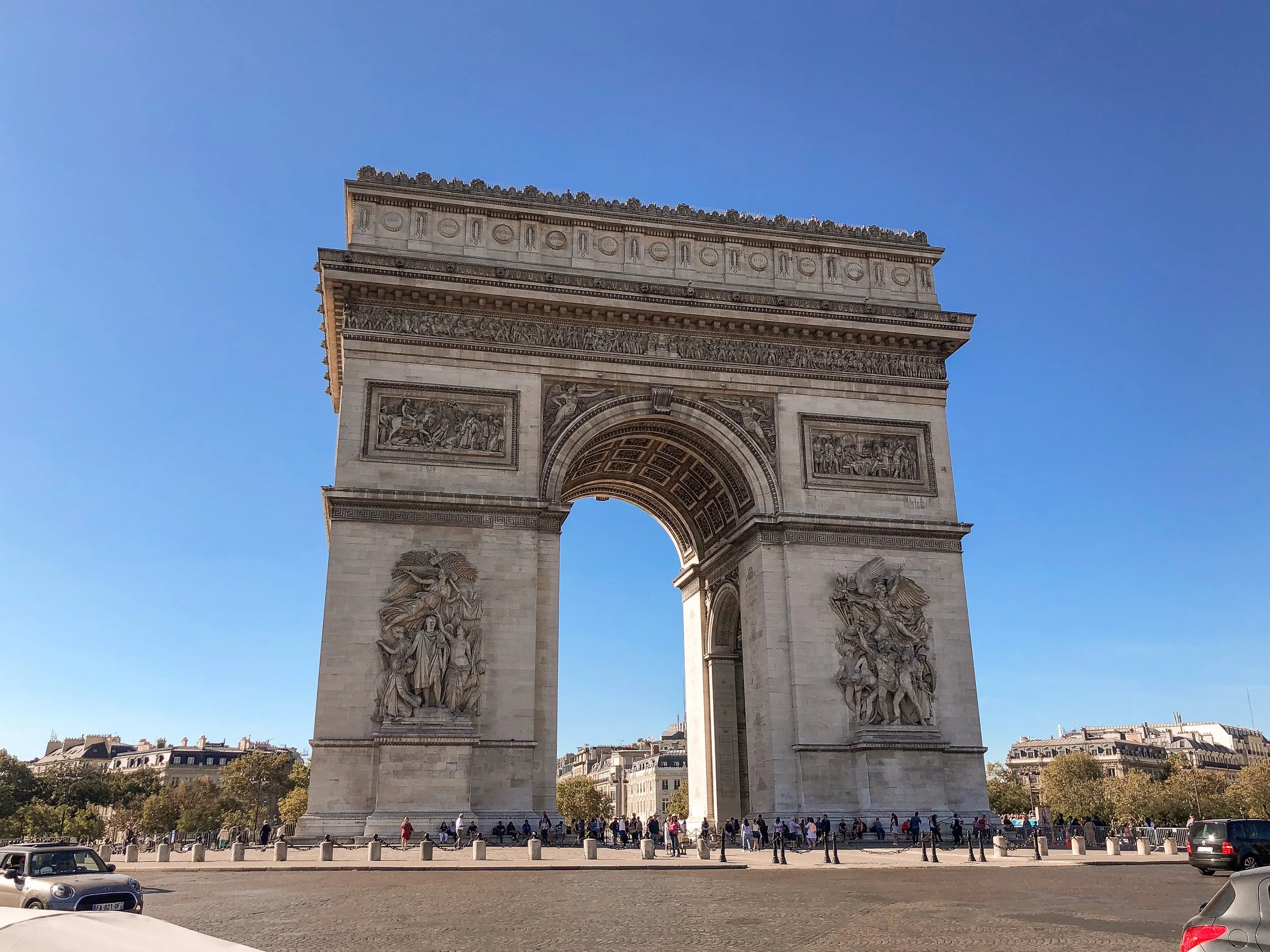
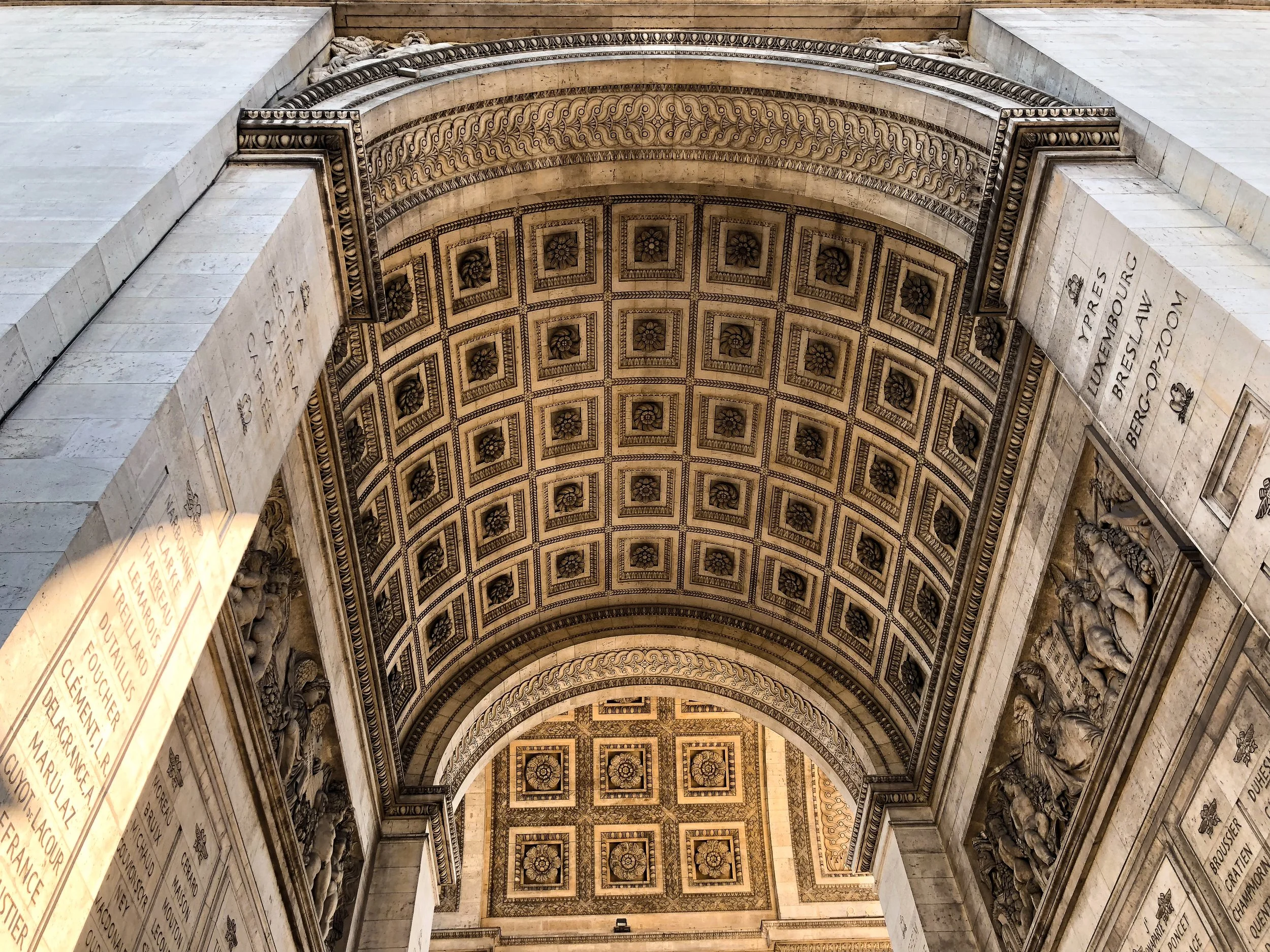
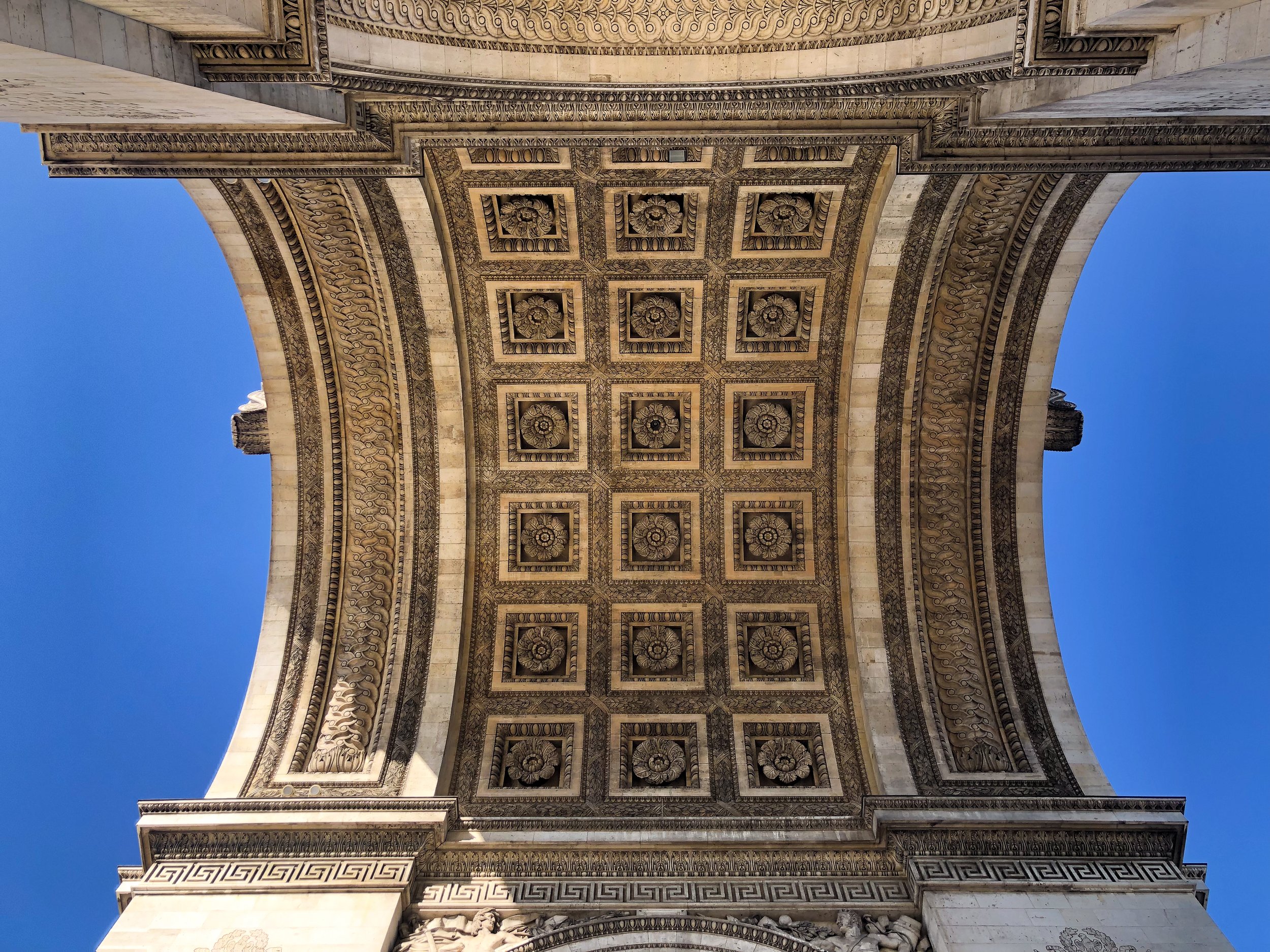
Arc de Triomphe. A magnificent arc and Napoleonic era war monument on the Champs-Élysées. It features four pillars, each marked by sculpted statues and reliefs of France’s military victories. A 284 step spiral staircase ascends to a museum and rooftop with panoramic views of Paris and the city’s spoke-like avenues.
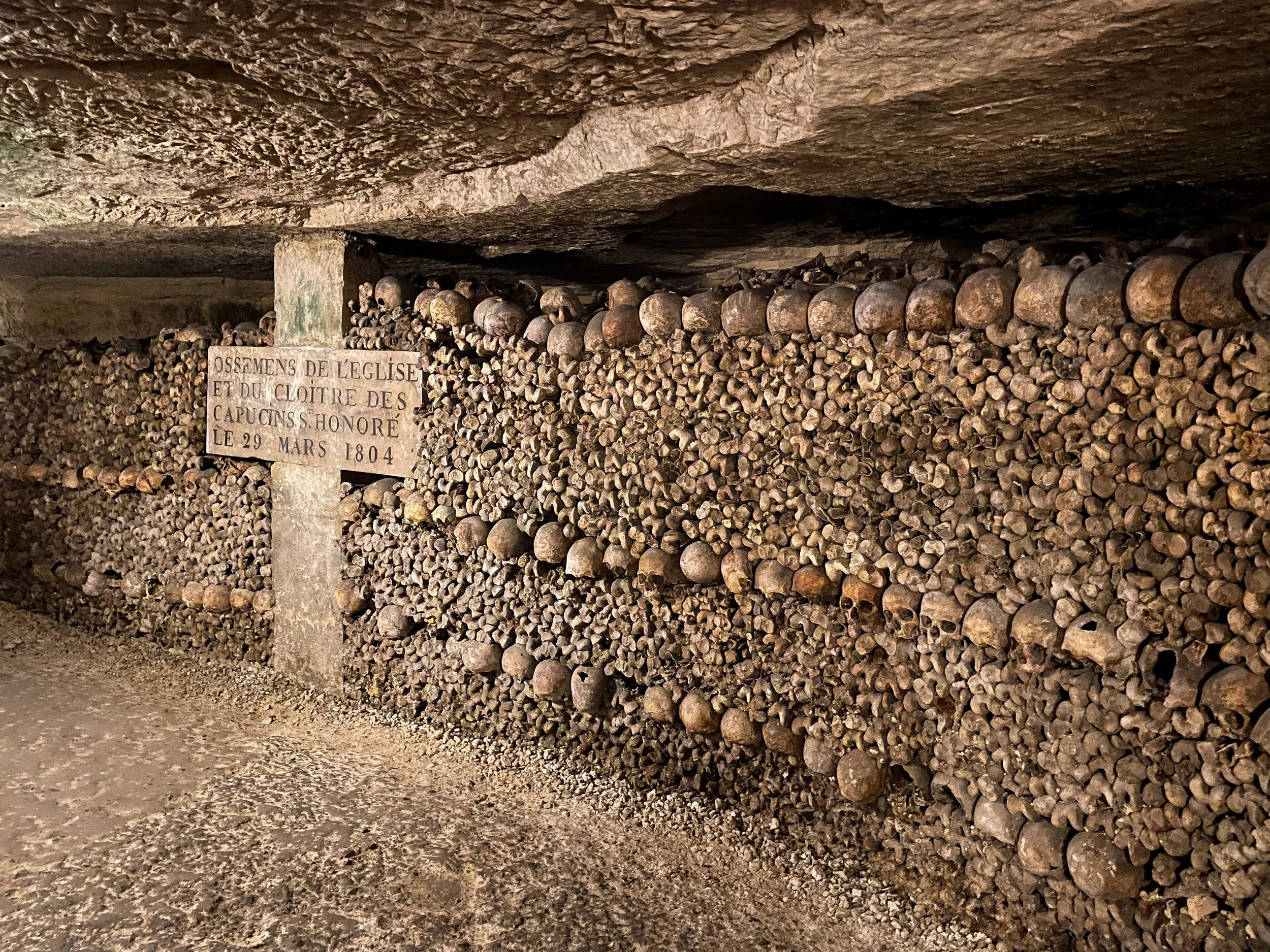
The Catacombs. A macabre labyrinth of subterranean tunnels are home to the skeletal remains of over 7 million people. It’s truly an underworld of the dead. Its dimly lit and damp passageways are lined with layers of stacked femurs and skulls holding back smaller bones. The skulls, some artfully arranged into patterns like hearts and crosses, seemed to watch us as we wandered through. The catacombs wind hundreds of kilometers below Paris with just more than 1 kilometer open to visitors. Book online at least one week out at the Official Ticket Office. An audio guide is included with the ticket.
See Some Art
With a rich culture surrounding art and artists, Paris is the best place in the world to learn about art history and see some of the world’s masterpieces.
Musée de l'Orangerie. An Impressionist art museum built specifically to display a large collection of Monet’s Water Lilies and other impressionist paintings.
The Louvre Pyramid. A glass pyramid residing in the plaza of The Louvre, the world’s most famous art museum. We plan to explore its vast galleries on a future trip to Paris.
Centre Pompidou. A contemporary art museum built “inside out” with all the building’s equipment, escalators and corridors exposed leaving more room for gallery space inside. The museum has since closed and is planned to reopen in 2030 after renovations.
Stravinsky Fountain. A landmark fountain across from the Centre Pompidou with a series of colorful sculptures spraying water into the pool below. The fountain itself is surrounded by a series of large murals.
Things To Do
Visit an Arcade. The arcades of Paris are covered passageways defined by their ornate glass ceilings, mosaic and stone tiled floors, antique storefronts and warmly illuminated boutiques and cafes.
Galerie Vivienne. One of Paris’s most iconic arcades, known for its elegant storefronts and mosaic tile floor. Enjoy a coffee at Le Valentin Vivienne while taking in the splendor of the arcade.
Les Passages Couverts. A series of hidden shopping arcades in the 2nd Arrondissement. They’re fun to discover and walk through.
Passages des Panoramas. Paris’ oldest arcade, dating back well over 200 years. It has a refined and aged character true to Parisian charm.
Shop for Books. Buy a book from one of these classic locations!
Les Bouquinistes. A series of outdoor booksellers with green cabinets and displays of French language books set up along the banks of the Seine.
Shakespeare and Company. One of the world’s most famous bookstores, often depicted in movies and shows. They’re extremely popular, don’t allow photos indoors and only sell English books.
Galerie Vivienne. The iconic gallery is home to multiple book stores selling antique French books.
Walk in Julia Child’s Footsteps. If you admire Julia Child as much as us, visit some of her old haunts:
Les Deux Magots. A historic brasserie where Julia Child and her husband, Paul Child, often ate. Come here for a leisurely brunch and range of French dishes.
E Dehillerin. A 200+ year old kitchen supply store where Julia Child used to shop for knives, copper dishes and various “batterie de cuisine.”
Rue Montorgueil. A vibrant market street where Julia Child would shop for produce and meats. Today it’s lined with food markets, boulangeries, fromageries, patisseries, old world bars, restaurants and cafes.
Shop at a Market. Walk through the stalls of an actual French market like Marché des Enfants Rouges, Paris’ oldest food market with an array of stalls and vendors selling prepared meals, fresh fruits, vegetables, cheeses, meats and seafood. There are a number of tiny shops surrounding the market selling rustic and vintage items.
See The Seine. A lengthy river meandering through the heart of Paris. Dozens of bridges connect the right and left banks of the city while cobblestone walkways and iconic landmarks line both sides. It’s a relaxing place to sit on a bench, picnic under a tree or dangle your legs over the river’s edge and watch the boats float by. Book a Champagne Cruise at sunset with Bateaux Mouche to experience the city in a different light. Cruises are often touristy and crowded but it didn’t distract from the charm of Paris.
Taste Everything!
To quote Julia Child, “people who love to eat are always the best people.” This couldn’t be truer than with the French.
Sit at a Sidewalk Café. Practically a French pastime, enjoy a meal at a sidewalk cafe overlooking the Parisian streets and plazas.
La Crémaillère. A restaurant in the Place du Tertre with traditional French dishes and wine. Come for the French onion soup, moules-frites and salmon with béarnaise sauce.
Breizh Café. A cafe with an extensive menu of sweet crepes and savory galettes. Try the crepe suzette!
Café Charlot. A small corner bistro with a sidewalk dining room. It’s a lovely spot to sit for breakfast or brunch and enjoy a lazy morning.
A Parisian Pastry Crawl. The French are well known for their love of pastries. We visited multiple boulangeries and patisseries across the city, tasting apple tarte tatin, pain au chocolat, madeleines, eclairs, brioche and macarons.
Les Petits Mitrons. A classic French pastry shop located on Rue Lepic in Montmartre with an elegant selection of fruit tarts, savory quiche and cookies.
Boulangerie Mimoune. A bakery with rustic French breads and delicate French pastries.
Boulangerie Les Deux Frères. A boulangerie on a corner of Montmartre with a large selection of breads, pastries and quiche.
Du Pain et des Idées. A famed bakery, known for their pistachio chocolate escargot pastries, named for the pastry’s shell shaped swirl.
Paul. A coffee shop chain with locations across Paris. Come here for coffees, pastries, sandwiches and breads.
Dine at the Bistros. Paris is one of the culinary capitals of the world home to tiny bistros, famed restaurants and local haunts.
Les Ombres. The restaurant we got engaged on our first trip to Paris! A fine dining restaurant serving contemporary French cuisine. Its dining room is enclosed in a fragmented glass structure inspired by the shadows of the Eiffel Tower while its rooftop terrace offers some of the city’s best views of the iconic landmark. Make reservations and come at sunset!
L’Escargot. Serving their namesake since 1832, this old world restaurant is known for their Burgundy snails served in the shell.
Café des Deux Moulins. A beloved French bistro in Montmartre with a warmly lit interior and lively terrace made famous by the movie Amelie. Come for omelettes and escargot at lunch.
Brasserie Floderer. A classic French restaurant known for its historic ambience, seafood dishes and extensive wine selection.
Déviant. A tiny kitchen serving elegant small plates paired with French wines. Dine at their standing bar inside or at the sidewalk bistro.
La Mascotte. A historic restaurant in Montmartre serving elevated seafood dishes like butter and lemon sole, turbot encrusted in seaweed and some of the city’s tastiest oysters paired with champagne.
Sip on French Spirits. While known for its wine, France produces some of the finest spirits including absinthe, chartreuse, cognac and cointreau.
Marlusse et Lapin. A small and funky cocktail bar with an apartment like feeling that spills out onto the street. Come for the flamed absinthe drip cocktail.
Le Syndicat. A speakeasy style cocktail bar previously rated at one of the top 50 bars in the world. Come here for their signature and classic cocktails made using French spirits.
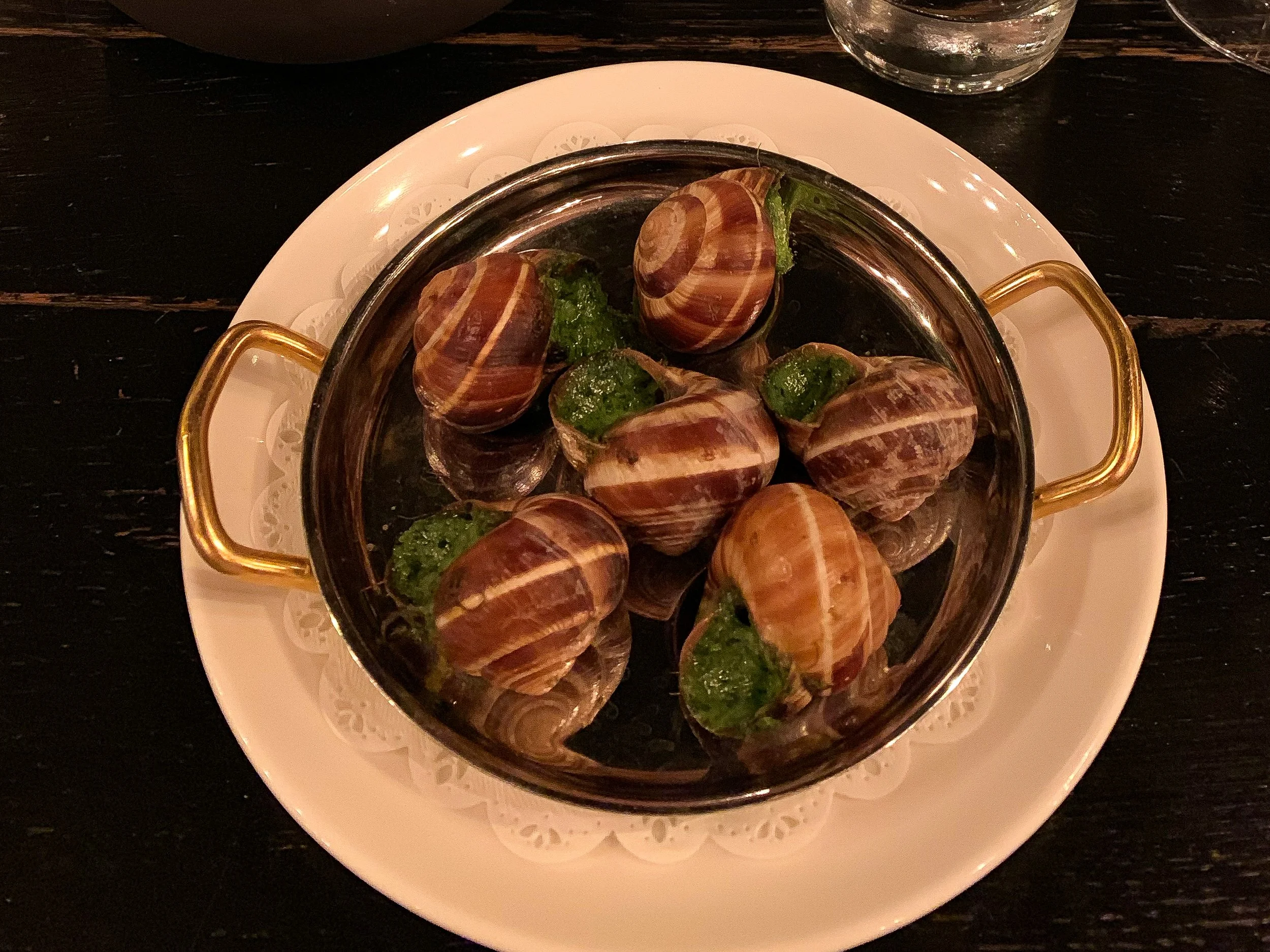
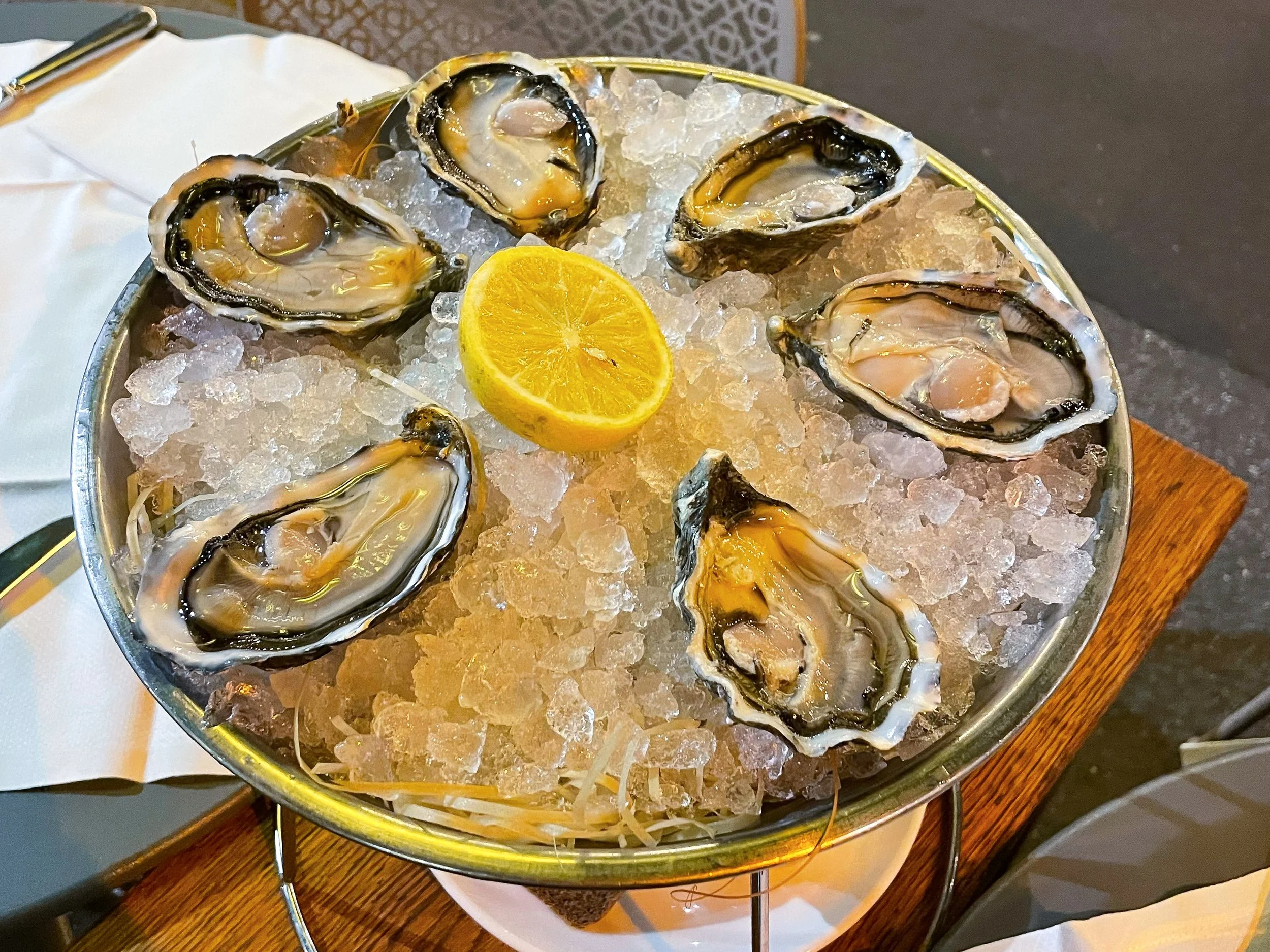
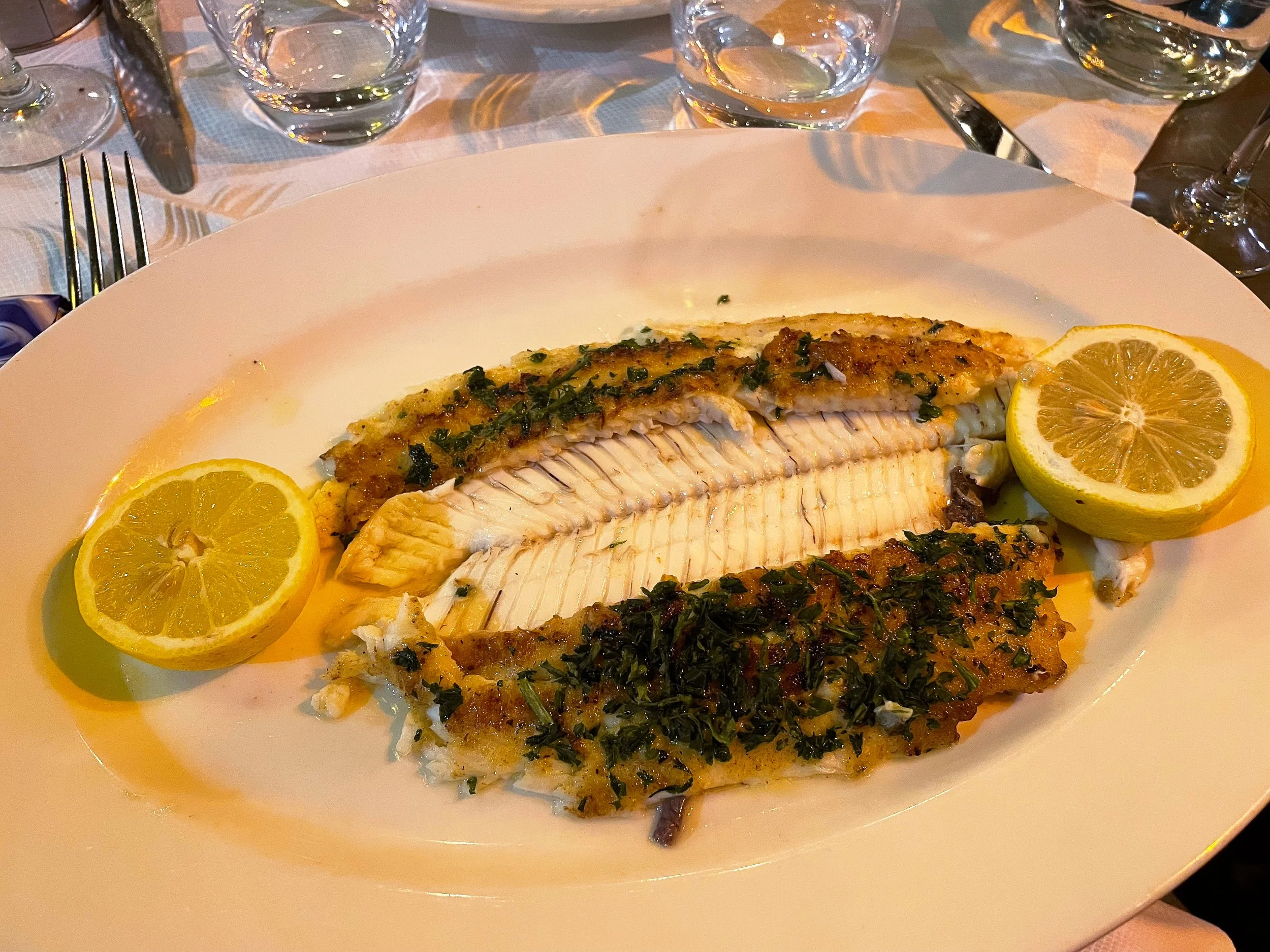
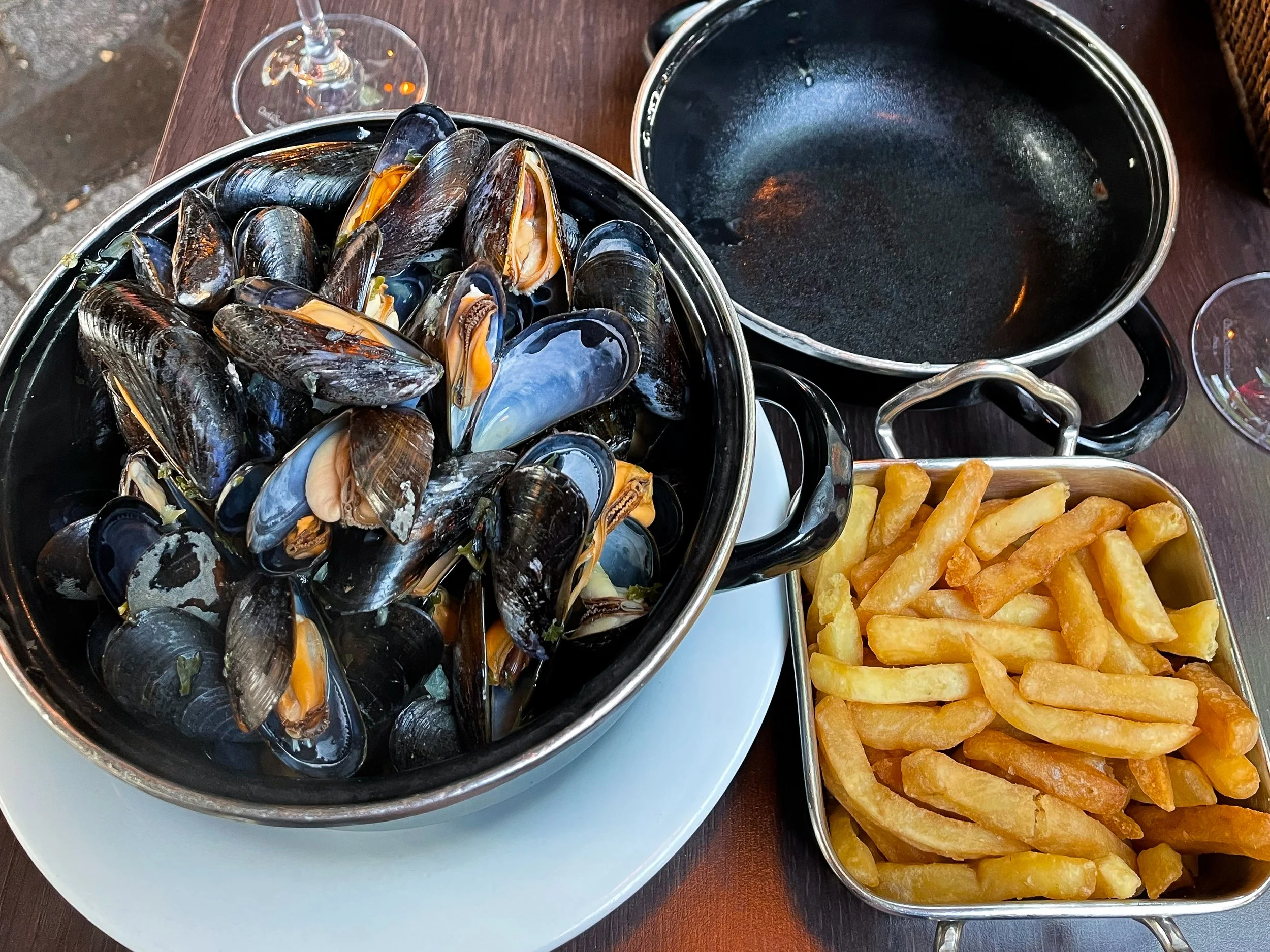
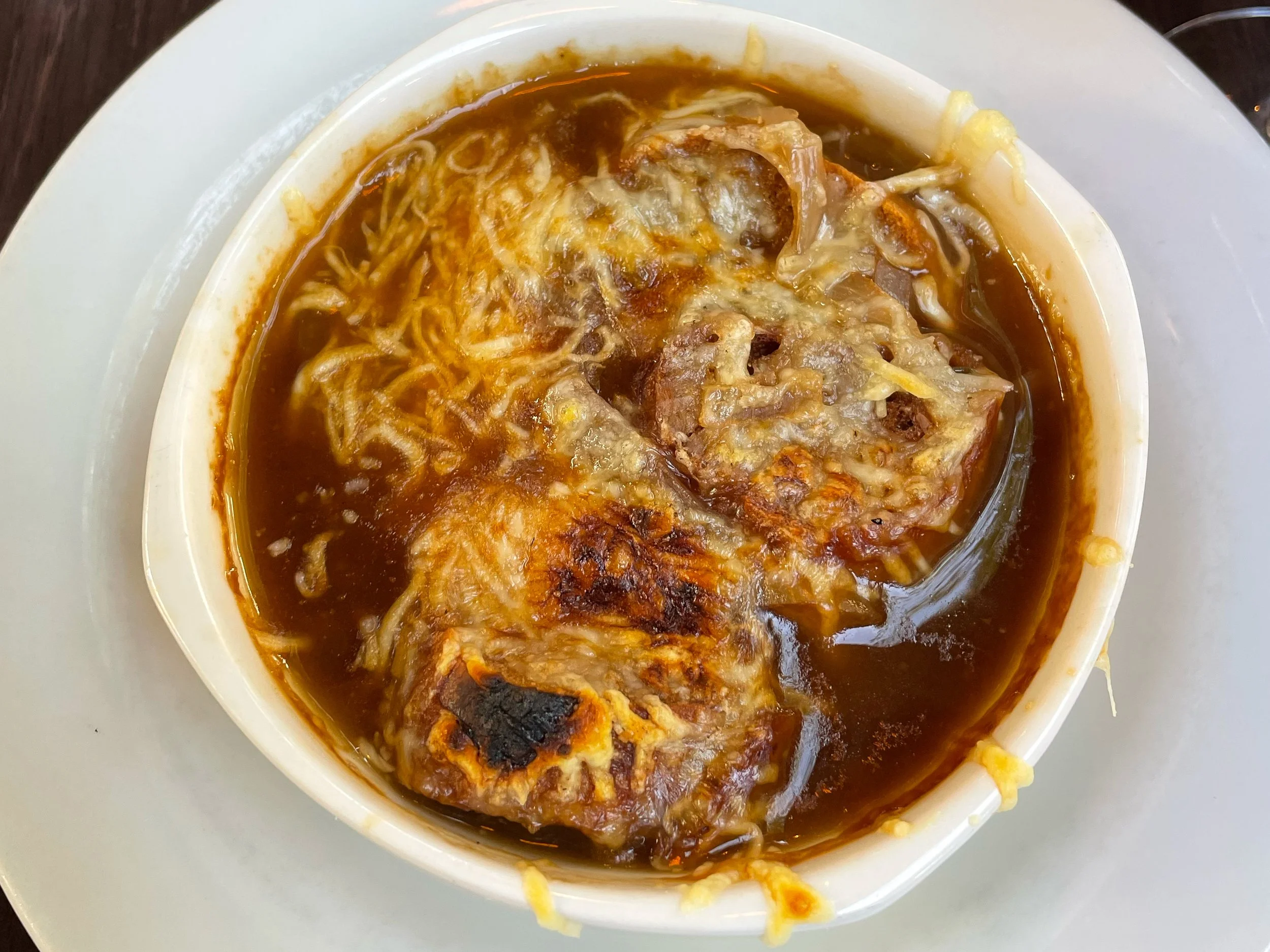
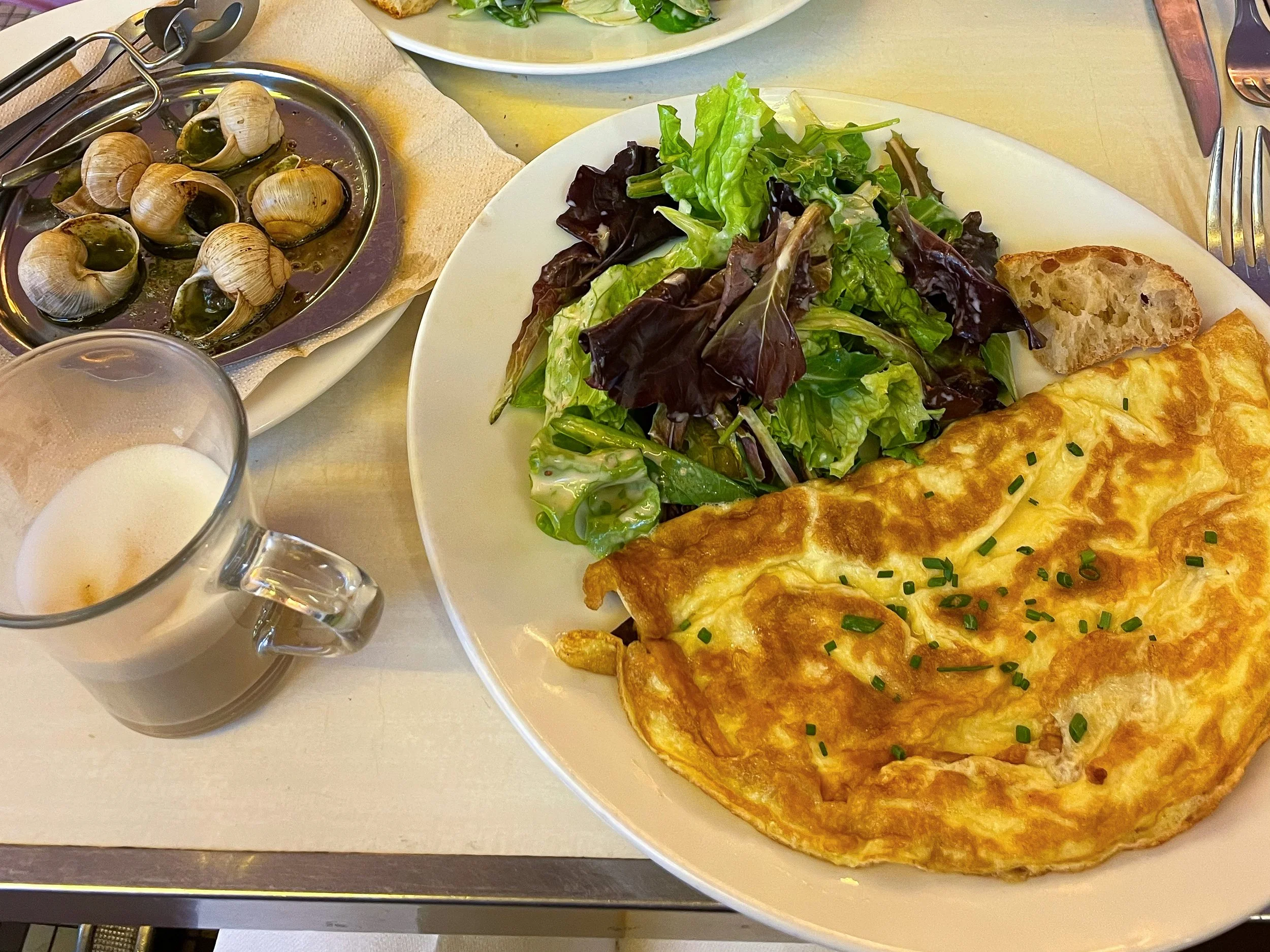
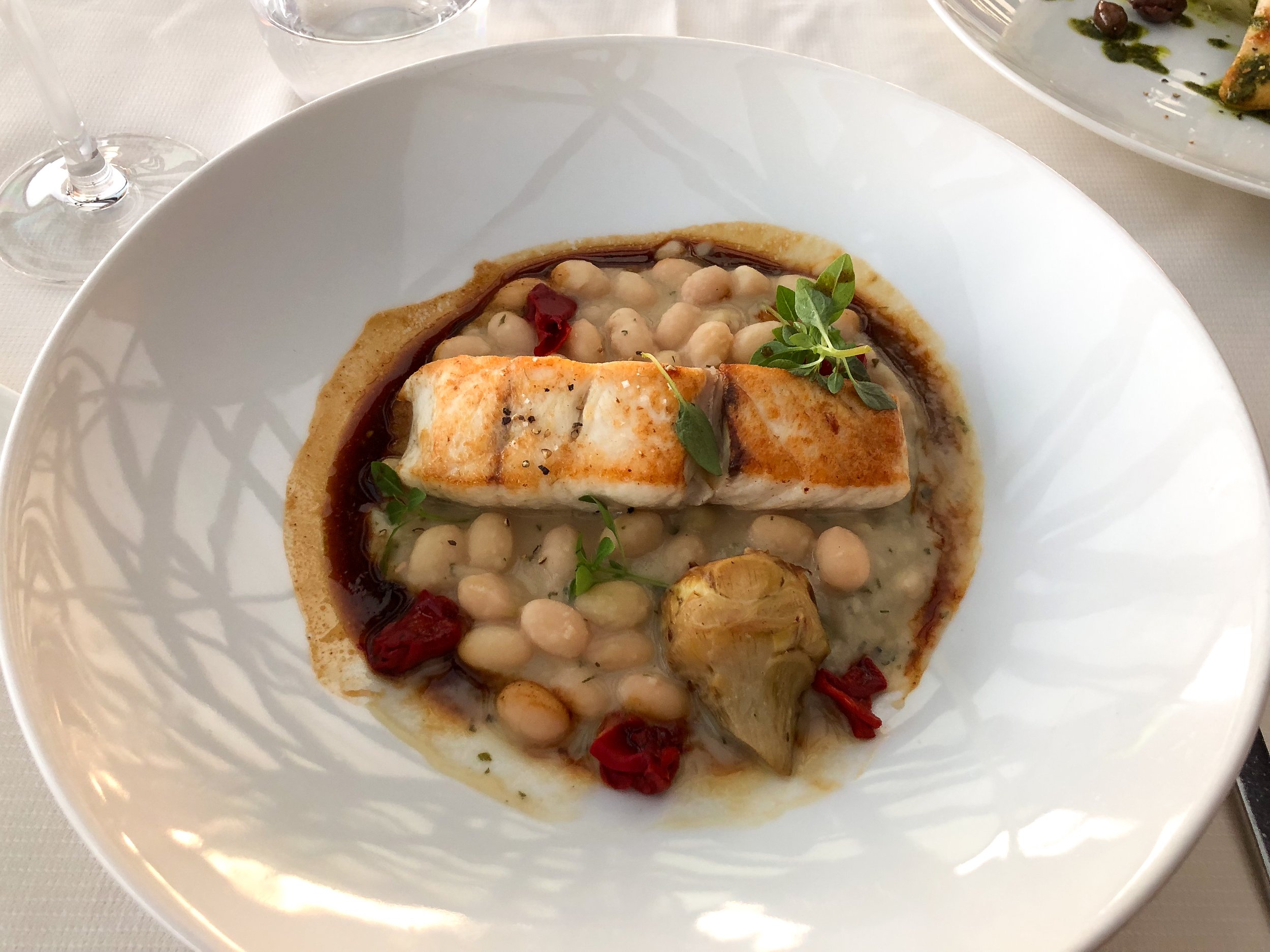
French Cuisine
Beef Bourguignon. A beef stew cooked with carrots, potatoes, mushrooms, bacon, garlic and pearl onions in a red wine sauce.
Coq au Vin. A cousin to Beef Bourguignon but made with chicken instead.
Cassoulet. A savory white bean stew cooked with sausage, onion and garlic.
Niçoise Salad. A salad originating from the coastal city of Nice. It’s a hearty salad made with a combination of tomatoes, hard boiled eggs, olives, tuna, anchovies, green beans, potatoes and red onions over a bed of lettuce.
Tartare. A classic French dish of minced raw meat, typically steak or tuna, mixed with herbs and presented in a puck shaped disk.
Ratatouille. A provincial style vegetable stew made using diced or sliced pieces of eggplant, zucchini and tomato then seasoned with herbs.
French Onion Soup. A beef broth soup made with caramelized onions, topped with croutons and broiled cheese.
Escargot. Snails cooked in a copious amount of butter, garlic and parsley or tarragon. They’re typically served in the shell or in a porcelain baking dish with toasted pieces of baguette. They’re a delicacy on many menus in Paris.
Omelette. A pan fried and folded envelope of eggs. French versions are custardy and lightly cooked until just formed together. It’s common to eat at lunchtime.
Quiche. A savory egg tart or pie baked with vegetables, herbs or meats.
Gratin Dauphinois. Thinly sliced potatoes baked in heavy cream.
Pomme Frites. Also known as French Fries. They’re a common side dish and typically served with mayonnaise.
Croissant. A crescent shaped pastry with layers of buttery and flaky crust. It comes in multiple versions including chocolate, raspberry and almond.
Baguette. A quintessentially French style of bread easily recognized by its long shape and 3 slice marks. It’s beloved for its crunchy crust and chewy crumb.
Tarte Tatin. A tart or pie with a rich layer of caramelized apples.
Crepes Suzette. A folded and flamed crepe cooked in an orange sauce and orange liqueur.
Crème Brûlée. A French vanilla custard with a flamed layer of hardened sugar on top.
Wine. France is world renowned for its wines including Bordeaux, Burgundy, Côte du Rhône, Beaujolais and Champagne. Buy a bottle at a local market or pair a glass with any meal while dining out.
Getting Around Paris
Métropolitain (The Metro). Beneath the streets of Paris is one of the world’s oldest metro systems, recognizable by its Art Nouveau entrances. In French fashion, the Metro was closed due to transit strikes both times we visited Paris.
On Foot. Paris is a lovely city to explore on foot and get lost in. Walk down the cobblestone streets, admire the historic architecture, wander along the Seine and stroll through lively plazas and parks.
Ride Shares. Uber is common across Paris and often the quickest way of getting across the city and to the airport. City rides typically cost between €15-€20 while airport rides cost around €50.
French Words & Phrases
While many Parisians speak English, they adore when foreigners try to speak French. Some of the most common words and phrases we used are:
Bonjour = Hello or Good morning
Au revoir = Goodbye
Bonsoir= Good evening
Merci = Thank you
Merci beaucoup = Thank you very much
S’il vous plaît = Please
De rien = You’re welcome
Excusez-moi = Excuse me
La carte, s’il vous plaît = The menu, please
L’addition s’il vous plaît = The check, please
Je voudrais… = I would like…
Je t'aime = I love you
Places to Stay
Montmartre Loft. An elegant apartment on the 6th floor of a Parisian style residential building with stunning views of Montmartre’s rooftops and the Basilica of Sacre-Coeur. Reserve on Airbnb.
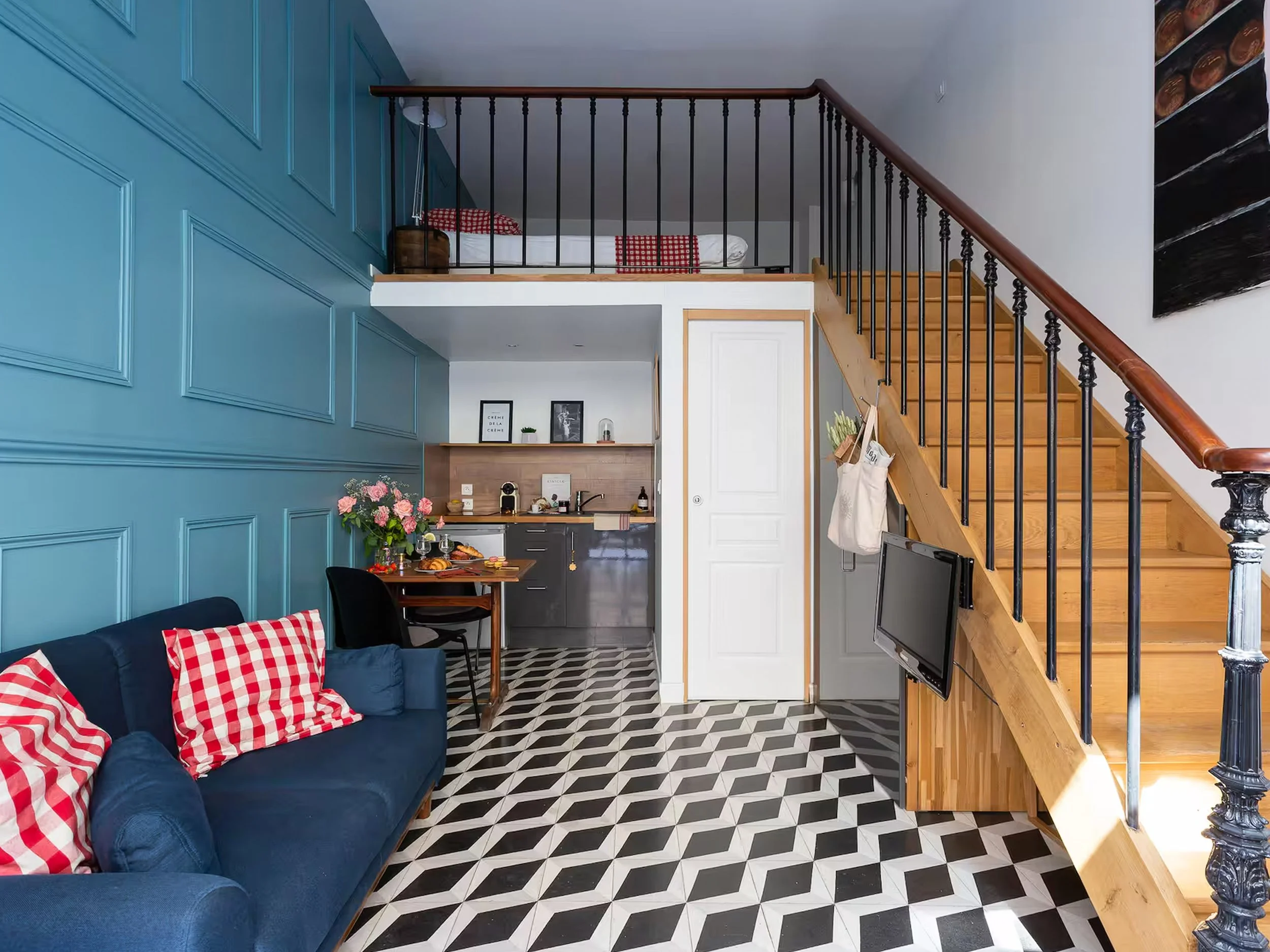
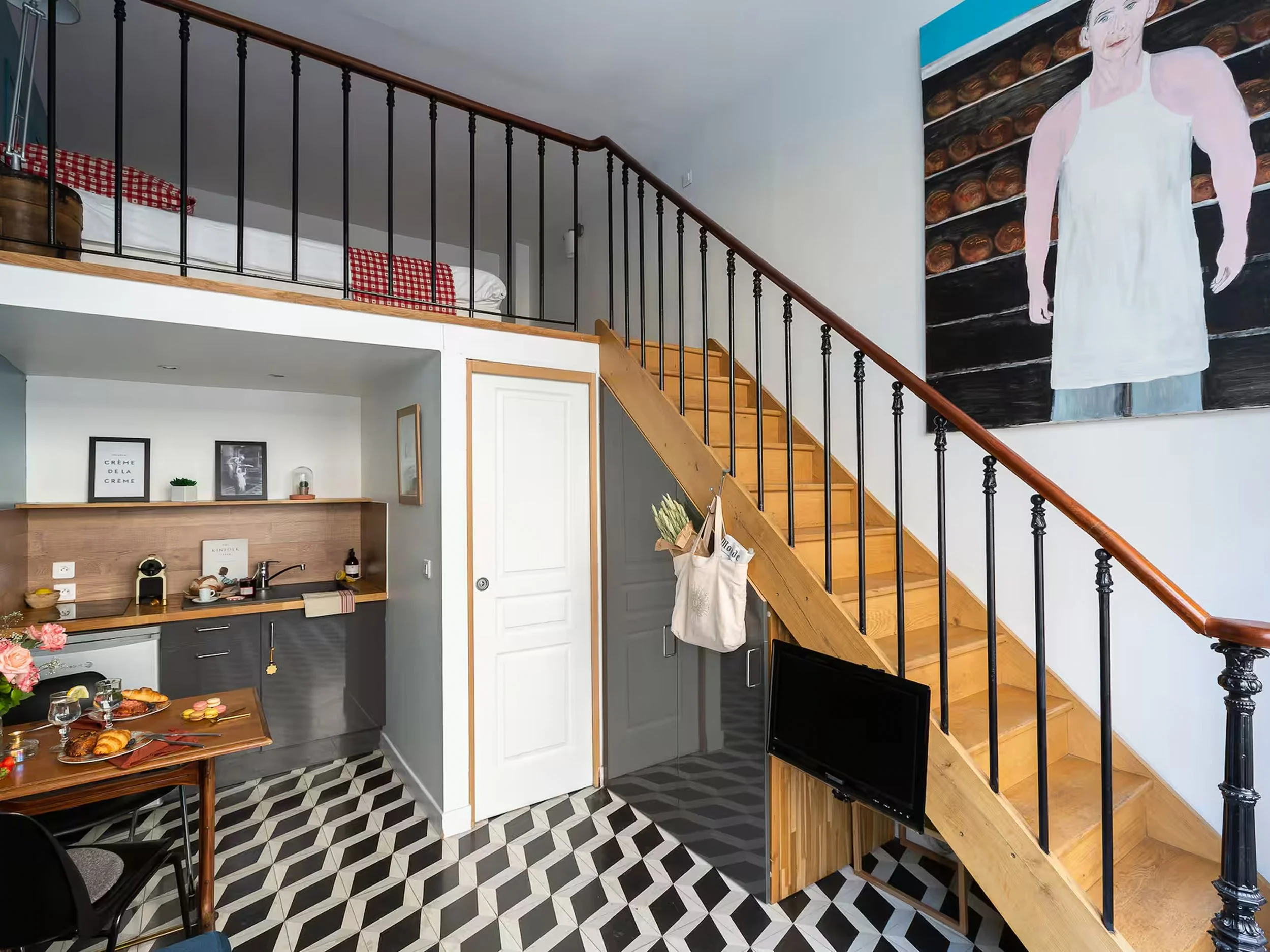
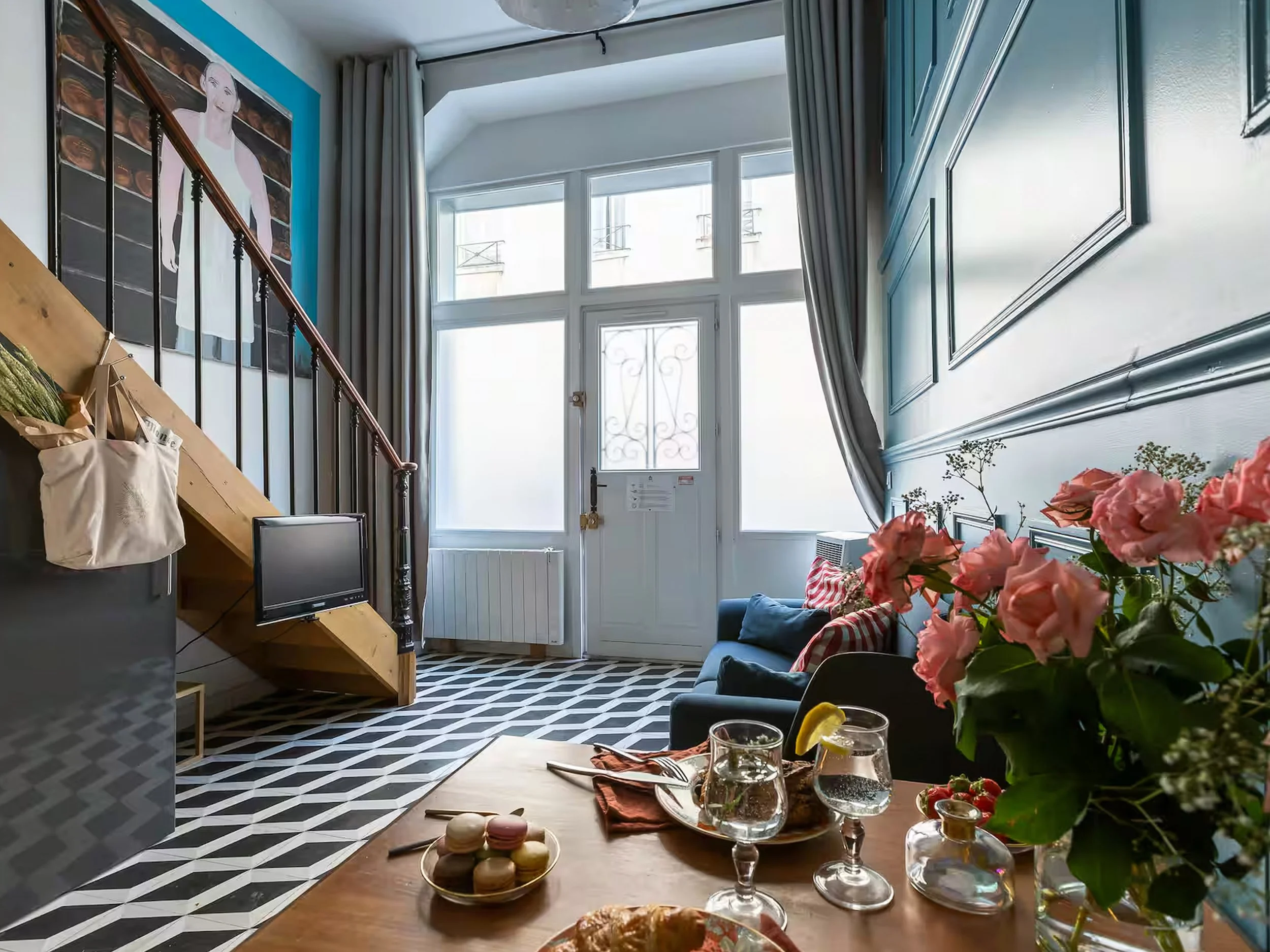
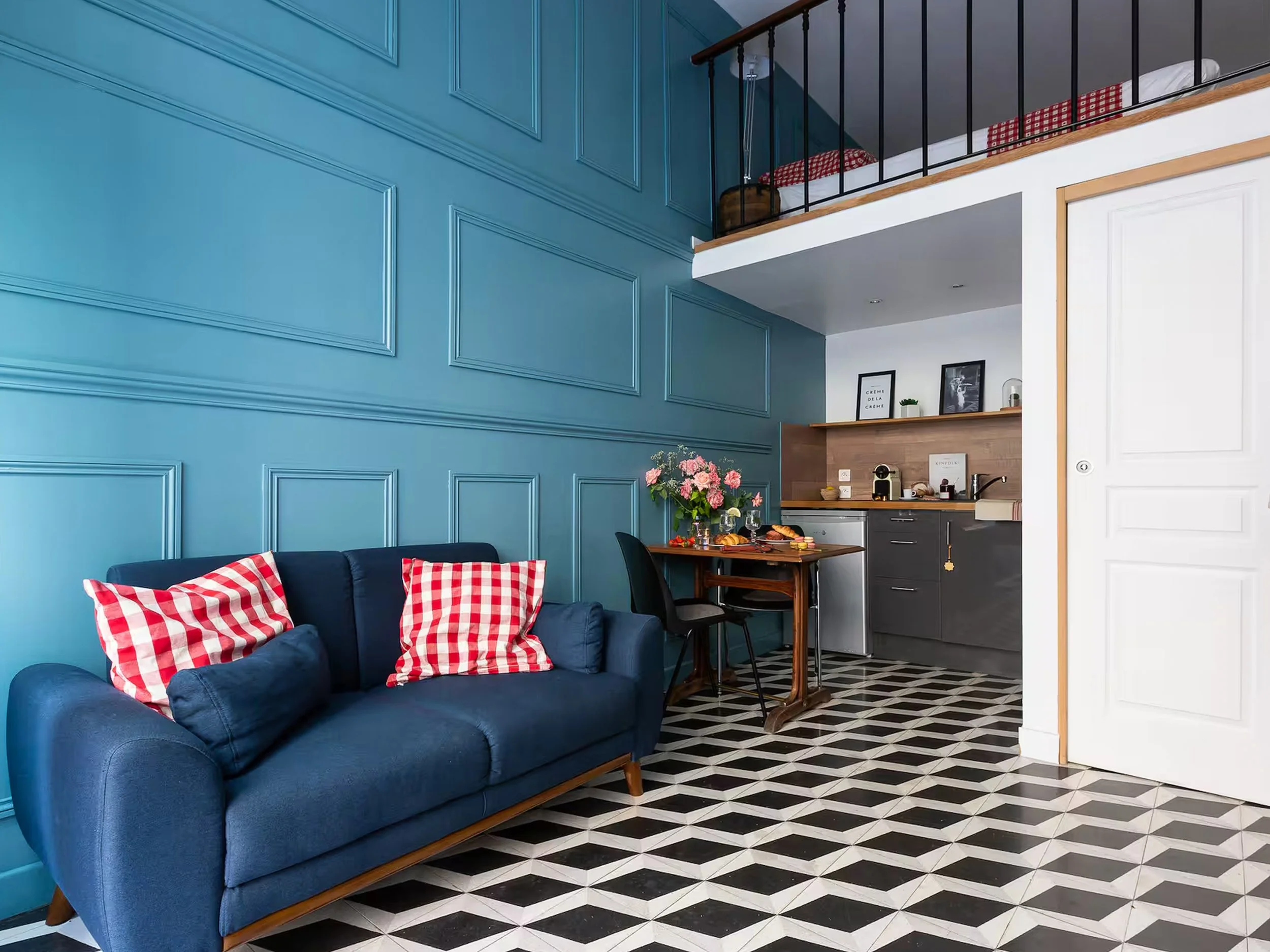
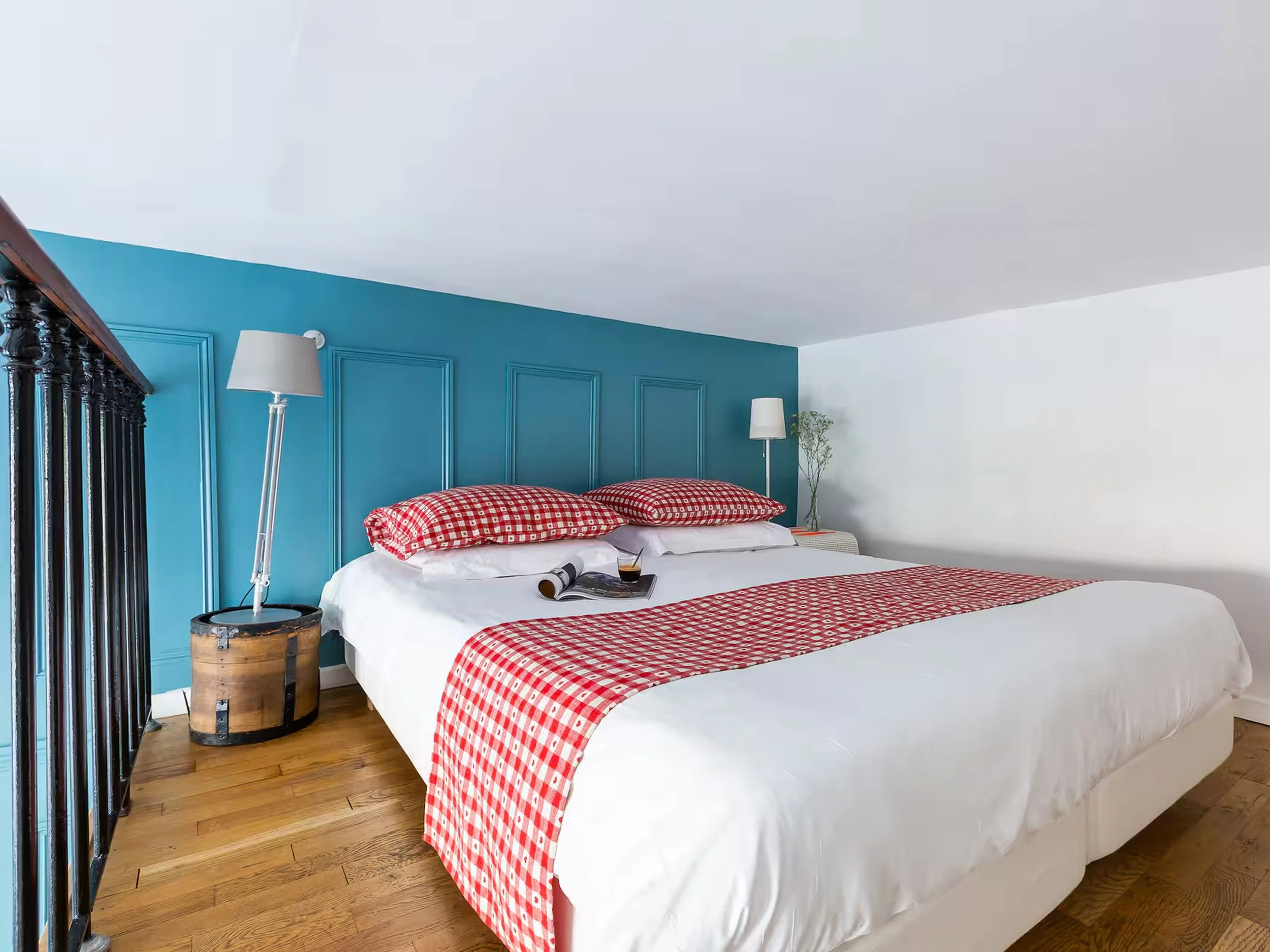
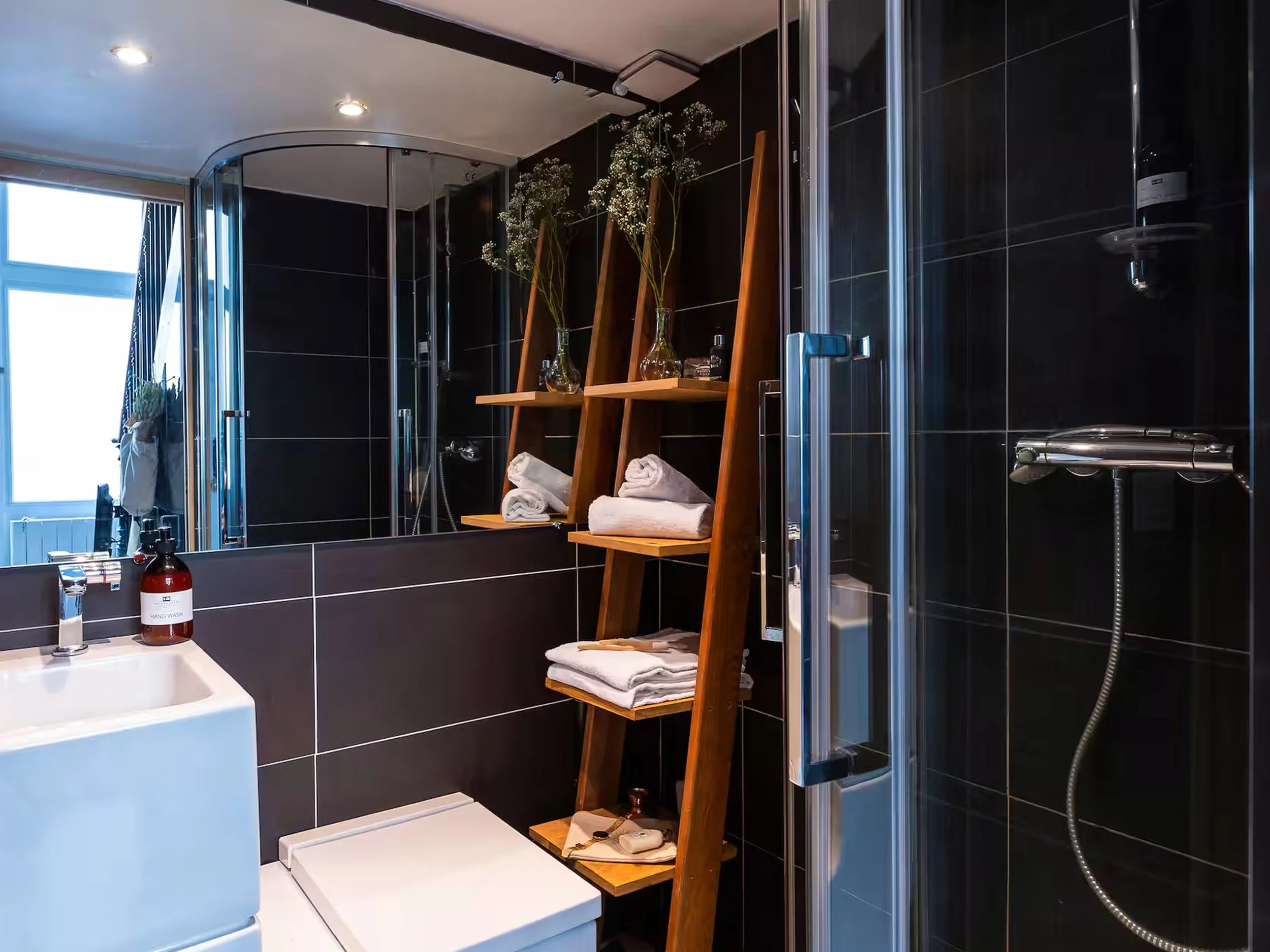
Old Bakery Loft. A lofted vacation rental in a converted bakery. The cozy space opens up to the streets of Paris. It’s central location is walking distance to sidewalk cafes, bistros, art museums and landmark sights. Reserve on Airbnb.
Elsewhere in France
From Paris’s romantic boulevards and iconic landmarks to Marseille’s rugged coastline and Mediterranean culture, continue exploring France’s diverse regions.
Marseille Travel Guide: Calanques, Vieux-Port & Mediterranean Culture. Explore Marseille's gritty streets and the historic Vieux-Port where Mediterranean culture, bustling markets and seaside charm meet rugged coastal landscapes.
Next Time in Paris…
Paris is always a good idea and we’re certain to return. Having been to Paris twice, we have yet to visit some of the most iconic sights including:
Notre Dame. The Gothic cathedral known for its rose windows, buttresses and gargoyles. We visited after the fire that nearly destroyed the landmark but were unable to enter its vast interior.
The Palace of Versailles. King Louis XIV’s famous palace and grounds.
St. Ouen Flea Market. Paris’ most famous flea market for over 150 years with 3000+ merchants selling vintage items, antiques, artwork, books, furniture, etc.
Parc des Buttes Chaumont. Picnic in the hilly and lush park and sip on rosé at Rosa Bonheur.
See More Art:
The Louvre. The world’s most well known art museum, particularly for its collection of Da Vinci paintings like The Mona Lisa. The museum deserves a half to full day to explore but specific pieces can be seen in less time.
Musée d'Orsay. An impressionist and art nouveau museum in a converted glass train station with works by Van Gogh, Monet, Renoir, Degas and Cézanne.
Musée Picasso. A museum dedicated to Picasso with the largest collection of the artist’s works in the world.
Cappadocia Travel Guide: Fairy Chimneys, Valley Hikes & Ancient Wonders
Explore Cappadocia's surreal landscapes where dramatic valleys, cave dwellings and underground cities create one of Turkey's most enchanting and adventurous destinations.
A Fairytale in Cappadocia
Cappadocia’s fairytale landscapes and ancient wonders make it a dreamy and adventurous destination. Romantic towns with cave hotels and rooftop terraces attract all types of travelers. Fairy chimneys and hot air balloons rise from picturesque valleys. Hiking trails meander across the landscape speckled with historic cave dwellings and underground cities. Turkish wines and cuisine are sipped on and savored at local restaurants. We spent a week leisurely exploring Cappadocia by car.
Cappadocia’s Romantic Towns
Göreme. A picturesque town built into the rock structures and fairy chimneys rising from the landscape. It’s home to cave hotels, rooftop cafés, Persian rug stores and souvenir shops. Colorful hot air balloons rise above the landscape in the early morning. Its carved stone structures are illuminated in a warmly lit glow by night.
Uchisar. One of Cappadocia’s most picturesque towns. Its fairytale landscapes are comprised of rock fortresses, cave dwellings and rugged valleys. Cobblestone streets lead between terraced stone buildings home to boutique hotels, Turkish restaurants, wine bars and souvenir shops. It’s a surprisingly quiet place to stay and far less touristy than nearby towns.
Nar. A quiet town in an off the beaten path location. It’s within driving distance from Cappadocia’s main sights and nearby towns of Uchisar and Göreme. It offers visitors affordable options for staying in traditionally expensive cave hotels.

Hot Air Balloons
Göreme Sunrise / Sunset Viewpoint. The ridge above Göreme offers panoramic views of the city and the surrounding valleys. It’s a popular spot to watch hot air balloons take flight at sunrise. Dozens of balloons rise from the valley and float above the landscape like a scene from a fairytale. Later in the day, the golden rays of the sunset radiate across the landscape. Twinkling lights illuminate the city and its fairy chimneys in a warm glow as night falls. Use this map pin to find the location.
Good to Know. There is a small cash fee to access the road leading to the viewpoints.
Hot Air Balloon Tours & Cancellations. Cappadocia is famed for its sunrise hot air balloon flights over its picturesque valleys. We booked a tour with Discovery Balloons about 6 months in advance. Unfortunately all balloon flights were canceled 3 days in a row due to high winds. We were refunded without the option of rescheduling and opted out of rebooking due to up-charges related to the increased demand from cancellations. For reference, prices increased from €259 to €400 per person.
The Ancient Cave Dwellings
Uchisar Castle. An ancient citadel comprised of cave dwellings, wineries, tunnels and tombs carved deep into the town’s tallest peak. Much of it has eroded and collapsed over the millennia yet it remains one of the most culturally significant sights in the region. Hike the trails leading around its foothills and visit the castle’s summit viewpoint.
Uchisar Castle Foothills. The slopes surrounding Uchisar Castle are lined with meandering trails that weave uphill into its abandoned cave dwellings and excavated fairy chimneys. Inside are cavernous rooms with stairwells, upper levels, dovecotes and red painted patterns. Windows offer views of the vast landscape and neighboring fairy chimneys, which feel more like ancient skyscrapers.
Uchisar Castle Viewpoint. A stairwell leads to the summit of the craggily castle with views of the surrounding towns, valleys and fairy chimneys. Buy tickets as early as 7:30am and visit before 9am to avoid the crowds.
Good to Know. Some of the most picturesque views of the castle are from the foothills during the mid afternoon. Many people stop for a roadside photo, however few venture onto the trails.
How to Visit. The trails are free to hike and by far the most adventurous way to experience the castle. Start hiking at the Uchisar Photo Spot and work your way around and upwards to the castle and its surrounding fairy chimneys.
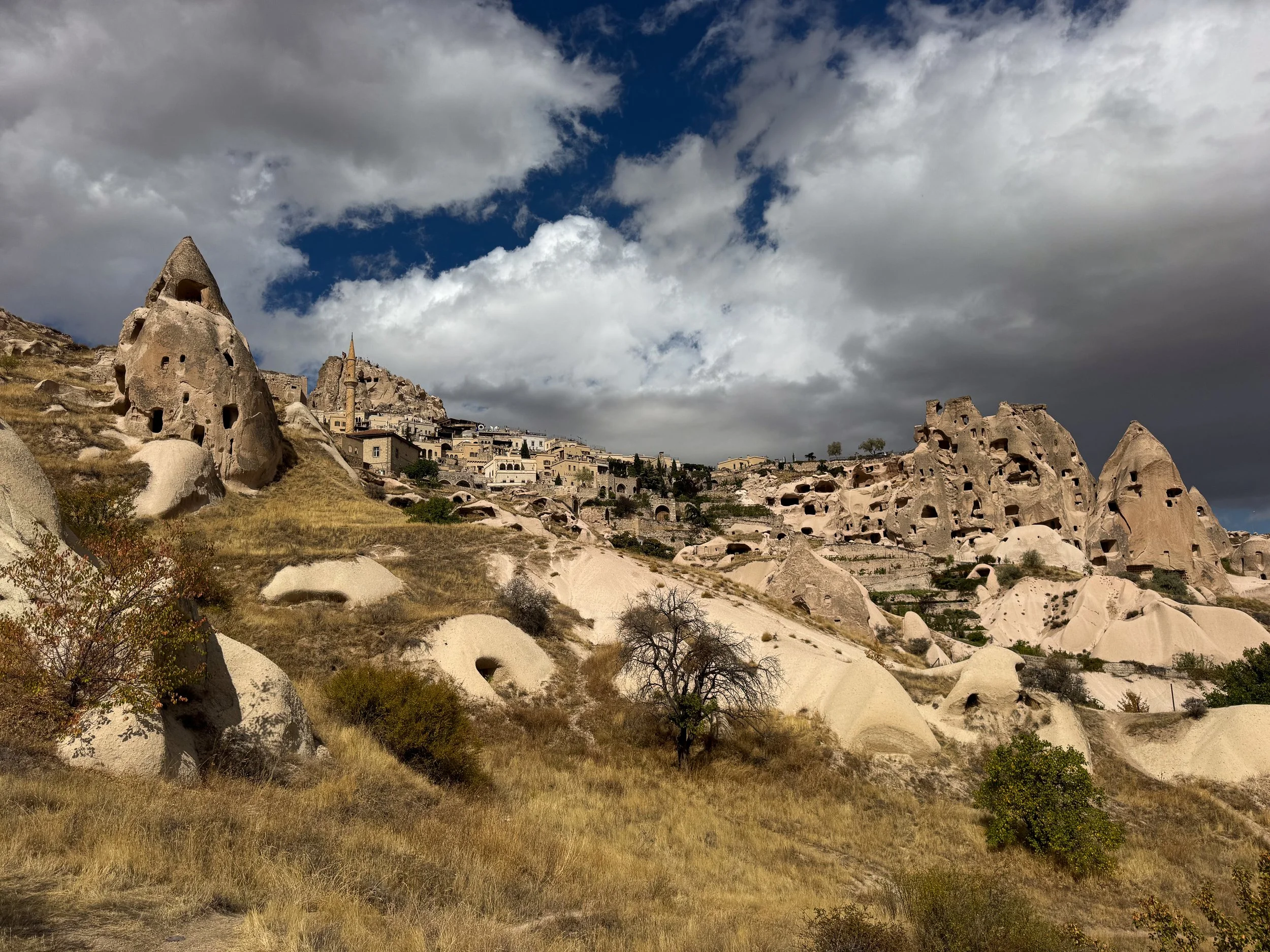
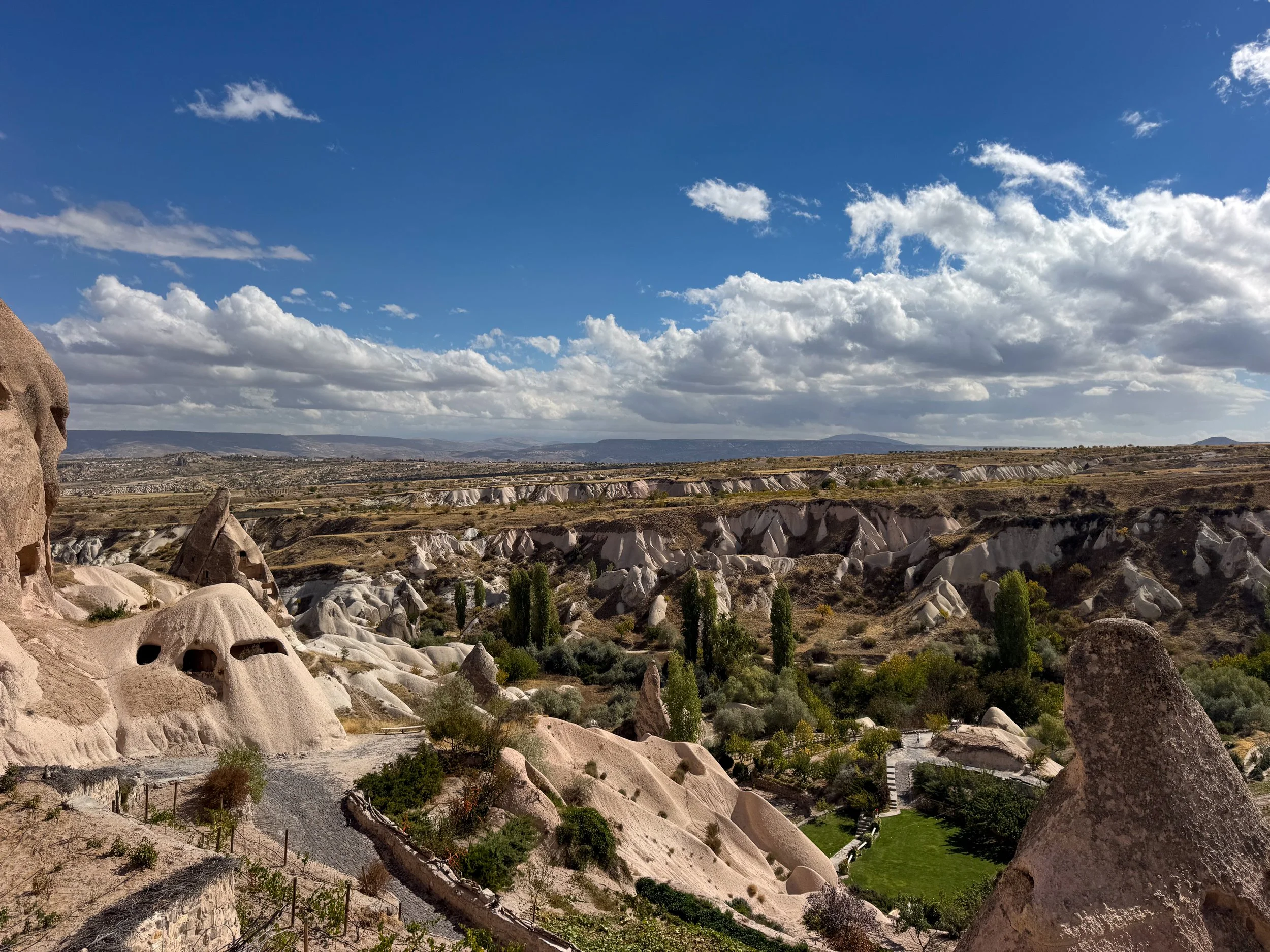
Tiraz Castle. A rock formation with a series of cave dwellings carved into its tuff structure. The castle is surrounded by terraced gardens, fairy chimneys and picturesque views of the Pigeon Valley.
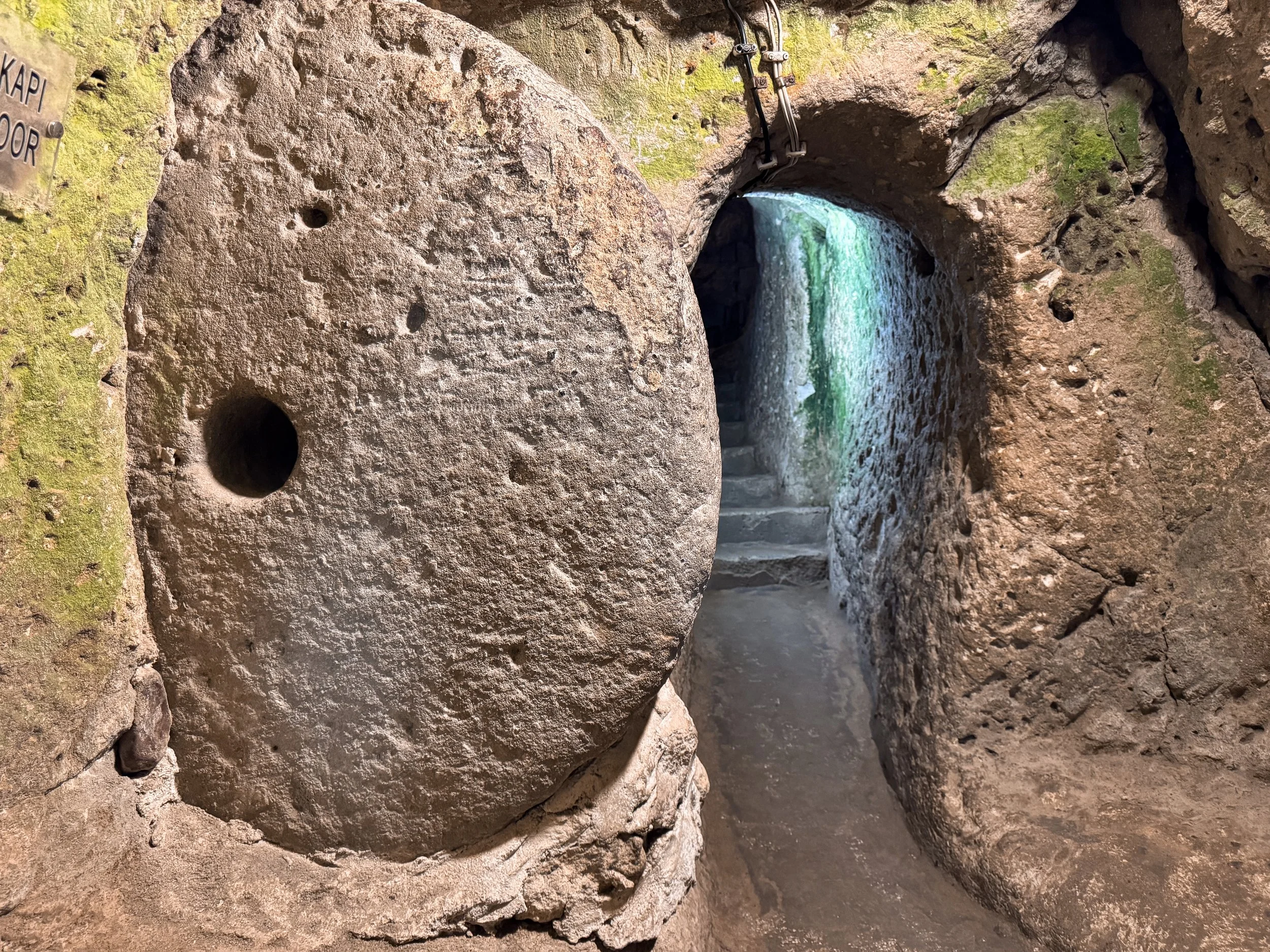
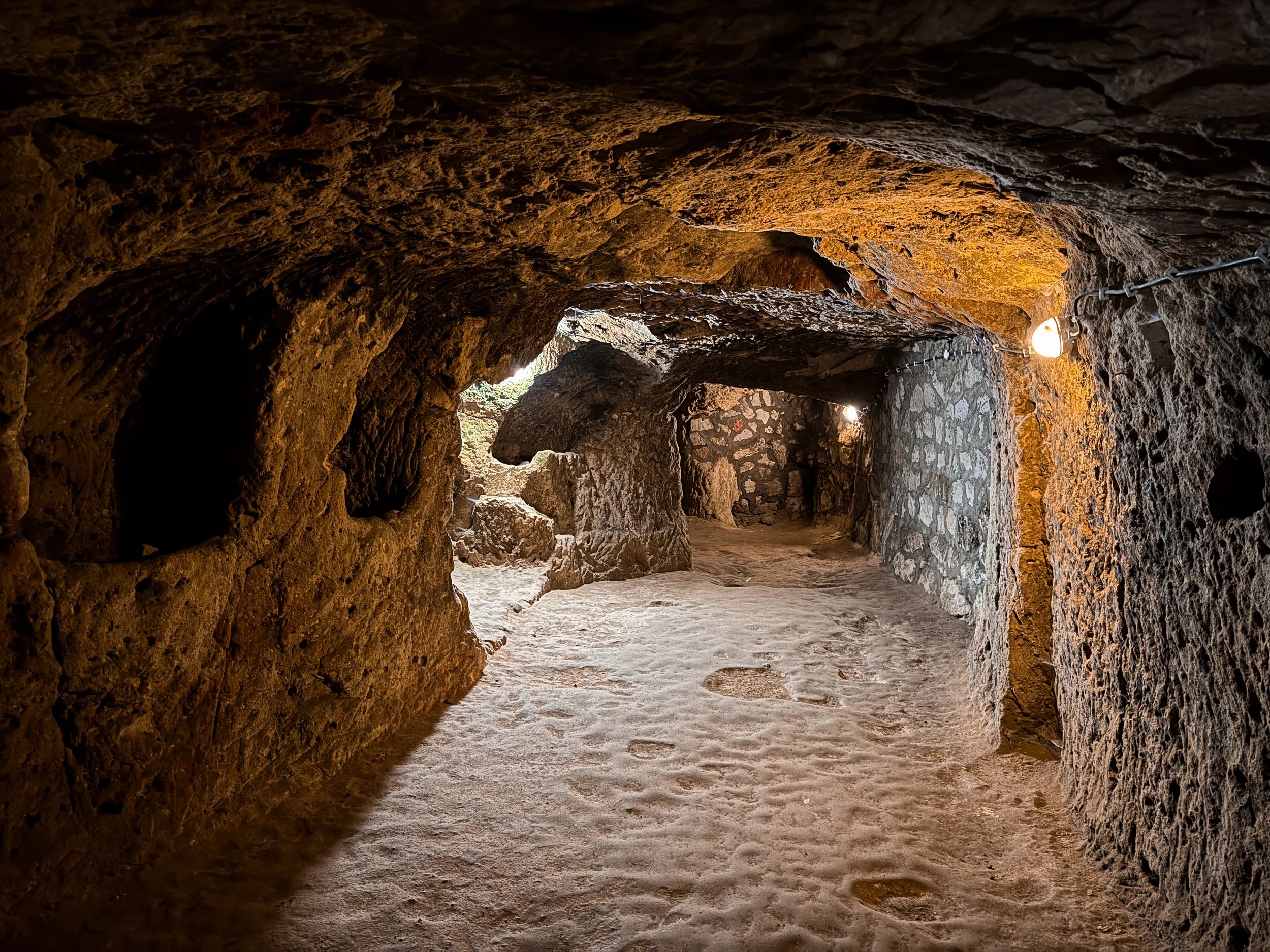
Derinkuyu Underground City. A vast underground city dating back to the 8th century BCE. Narrow stairwells and carved passageways lead to a maze of subterranean chambers and levels. Tunnels lead to chambers used as living quarters, churches, tombs, for food storage, wine making and housing livestock. A ventilation shaft tunnels vertically between the levels, supplying air deep underground. Stone wheels could be used to seal off passageways in times of invasion.
Good to Know. Several levels of the underground city can be explored while many levels and passages remain closed. It takes an hour to fully explore. Arrive by 9am to avoid the crowds.
Explore the Open Air Museums
Zelve Open Air Museum. An archeological and geological site comprised of ancient villages, cave dwellings and fairy chimneys. The valleys are connected by a circuit of trails that offer views of the ruins and opportunities to explore inside of them.
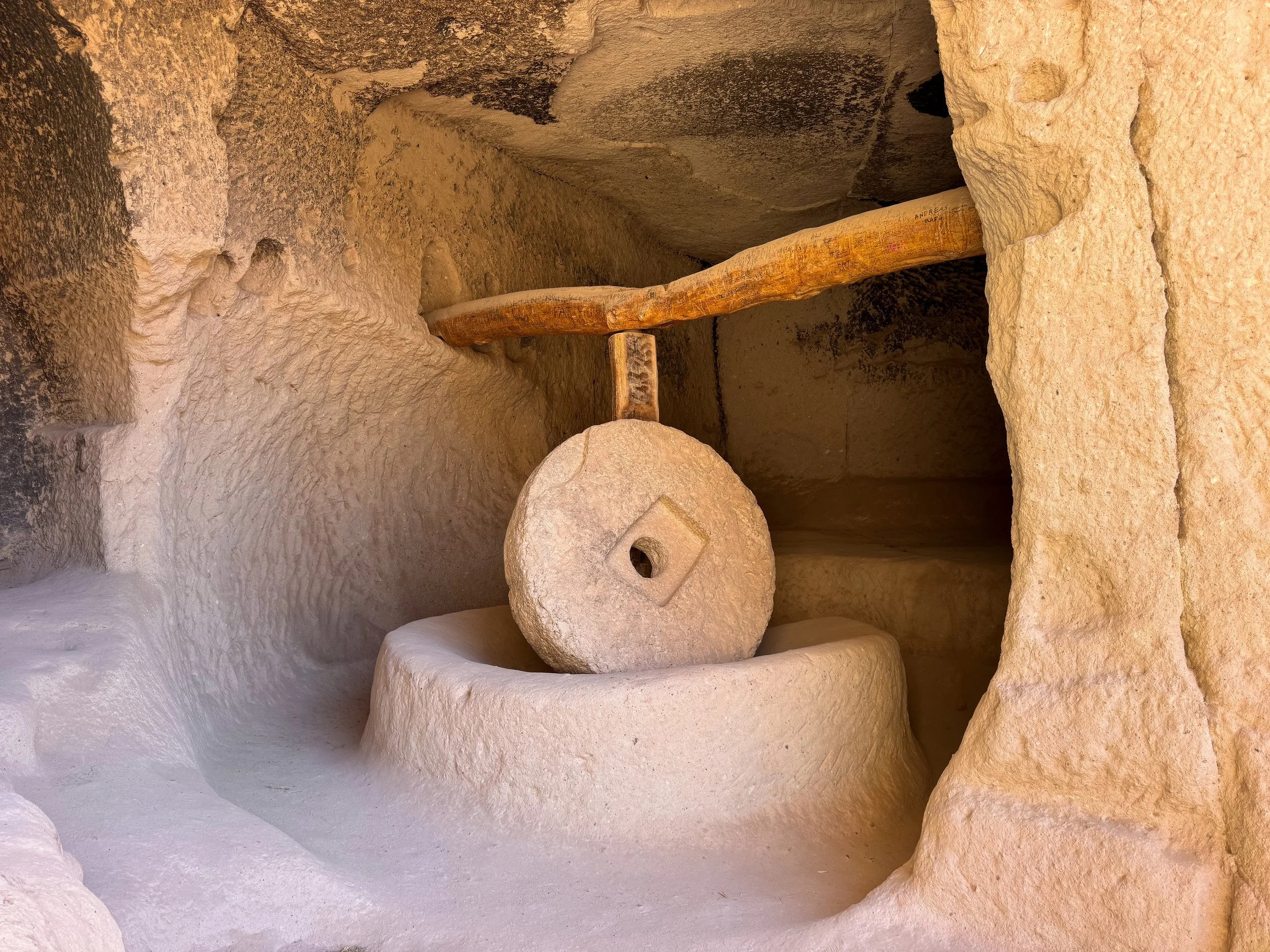
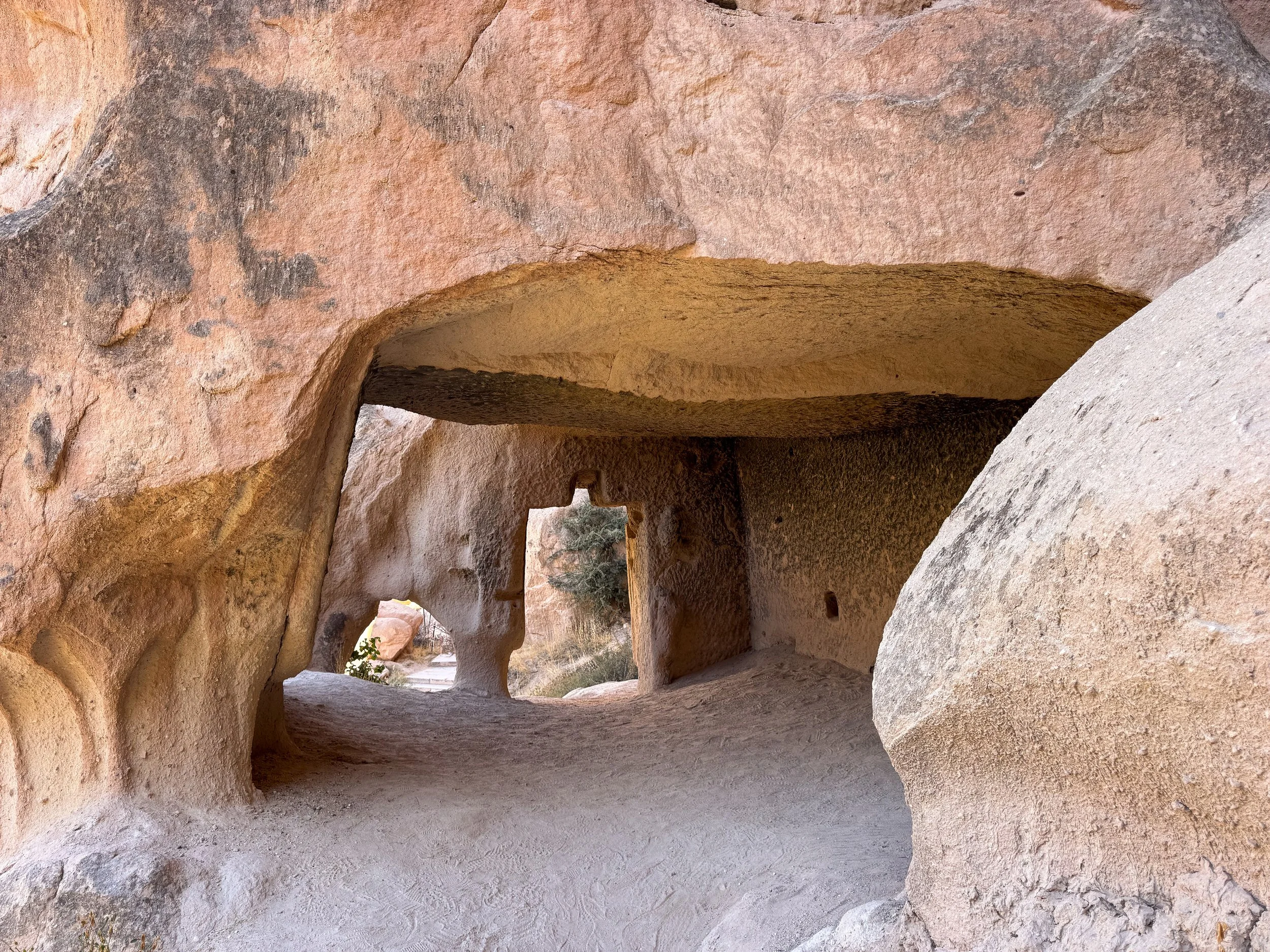
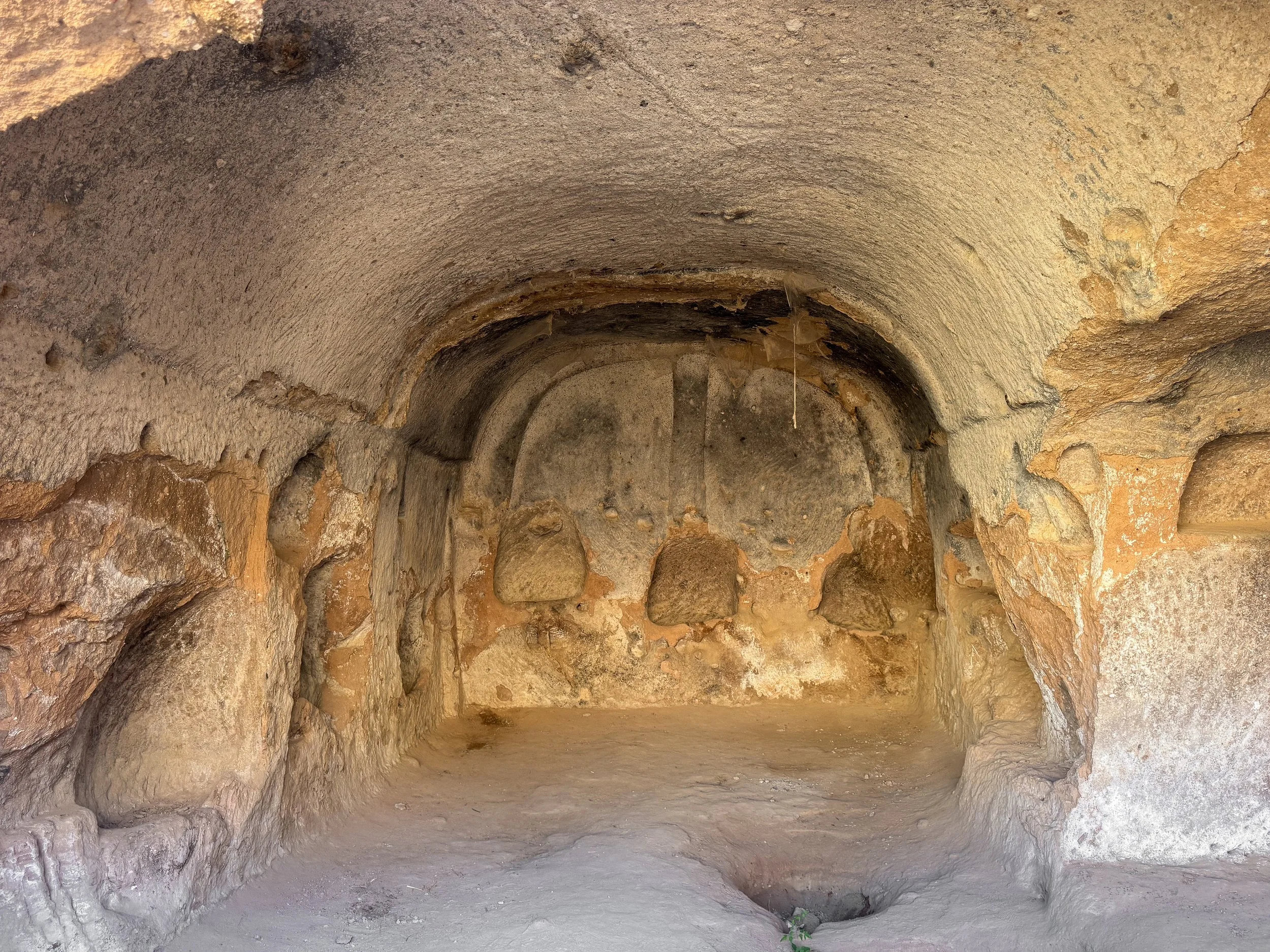
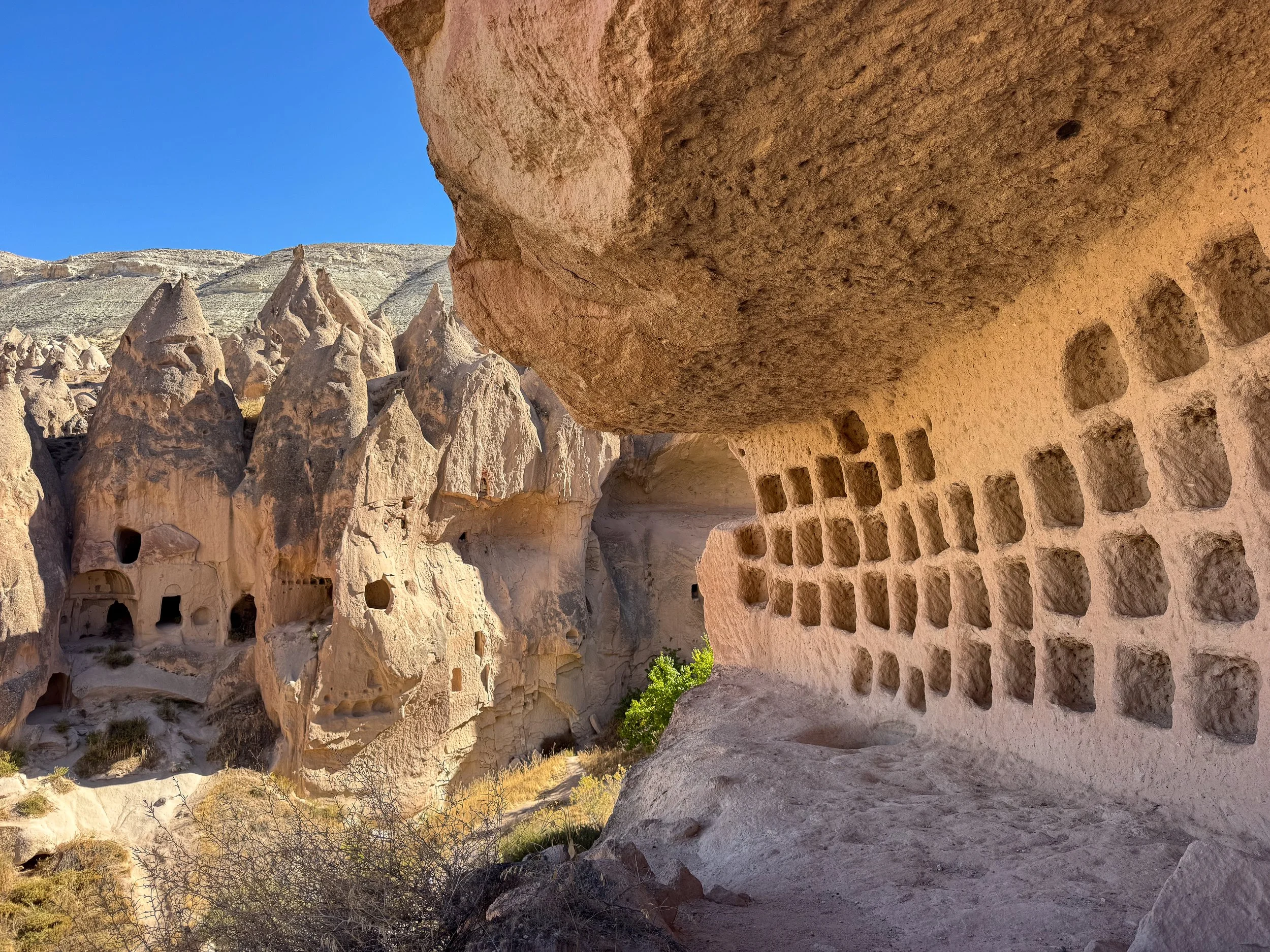
Zelve Valley 1. The first valley was once a robust community comprised of homes, wineries, grain mills and early churches. Many interiors feature scorched ceilings from ovens and cooking fires.
The Mill. An exposed dwelling with a large grinding wheel, likely pulled by an animal, used to grind grains into flour.
The Winery. A series of rooms with large basins used for crushing grapes and channels funneling juice to collection tanks.
Zelve Valley 2. The second valley was mostly residential with spacious cave dwellings, red painted designs and an early Christian church.
Cave Dwellings. Excavated homes include interconnected chambers and functional spaces like in-floor ovens, wine making vats, built in shelves and exterior windows.
Church of the Holy Cross. An early Christian church carved into the rock valley. The arched nave features stylized crosses, a central pulpit, a wine making chamber and in floor tombs.
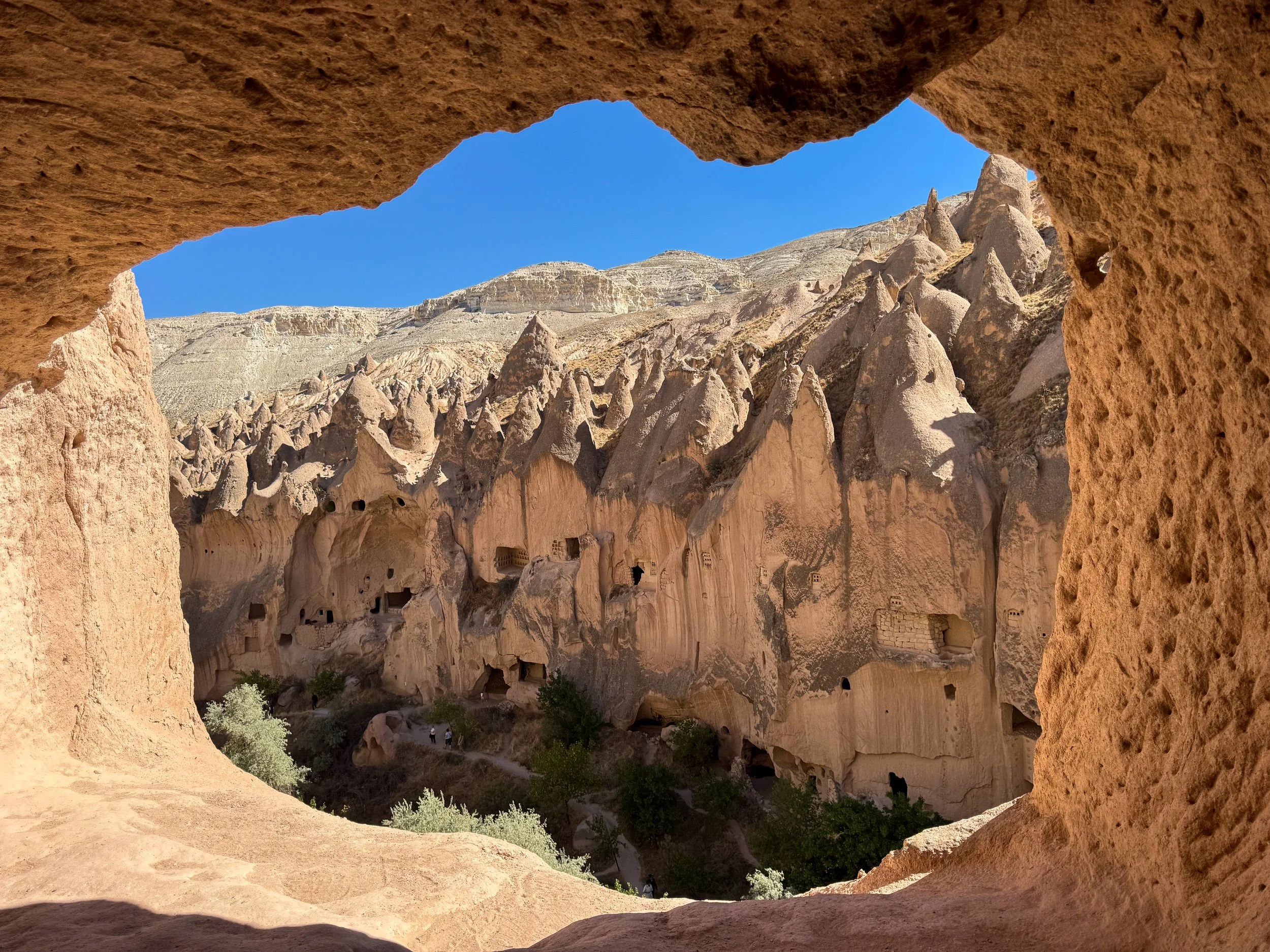
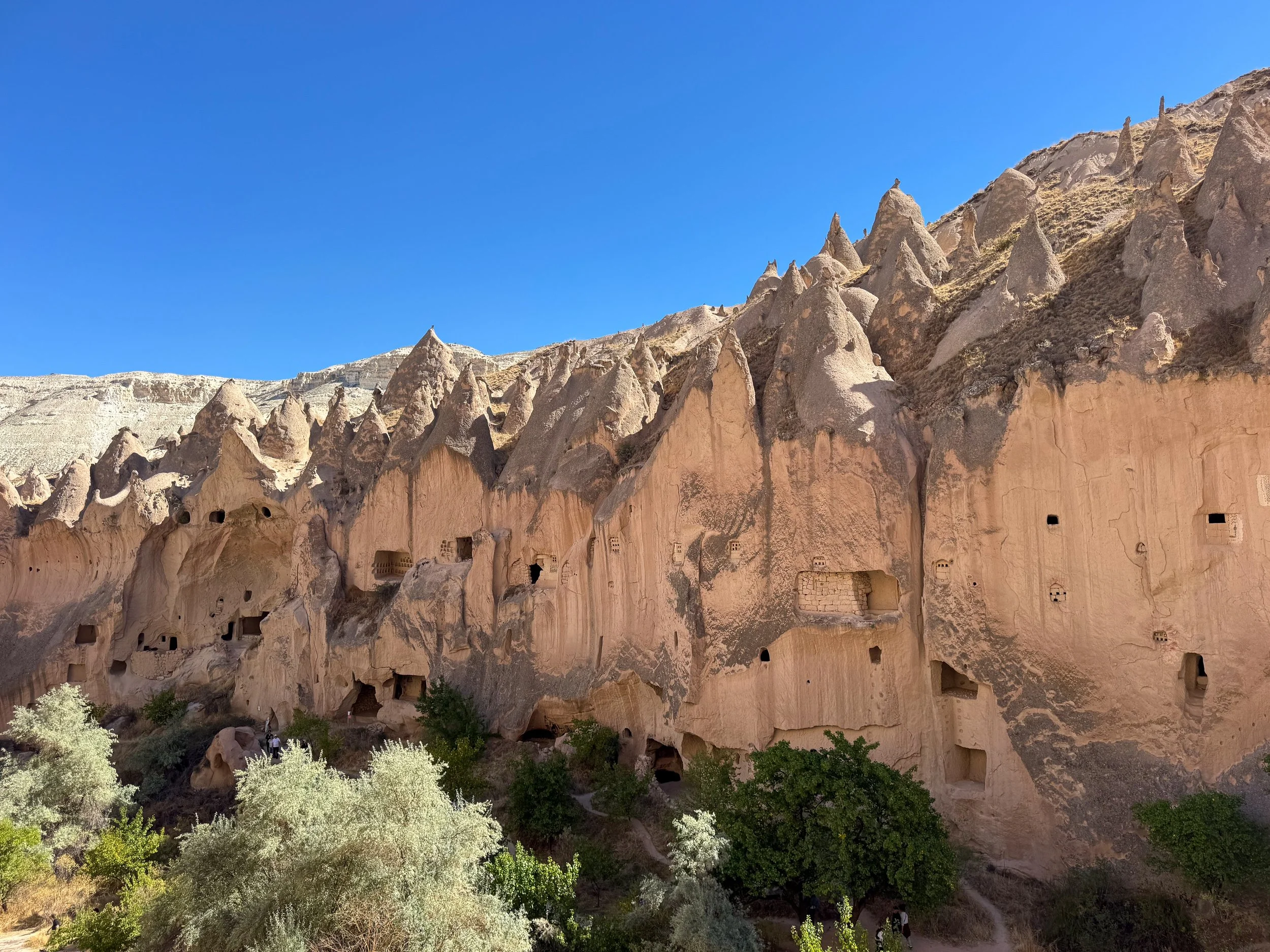
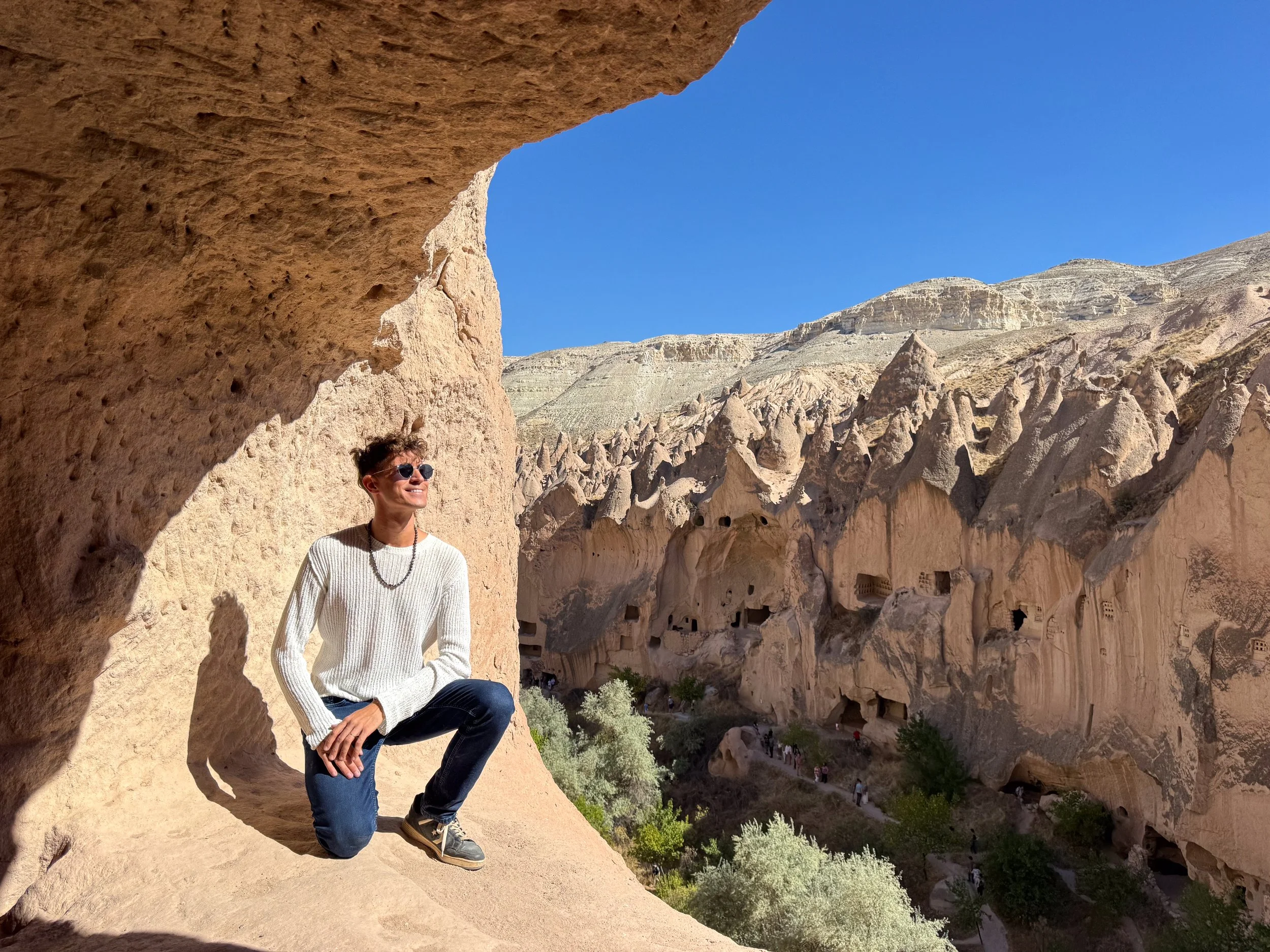
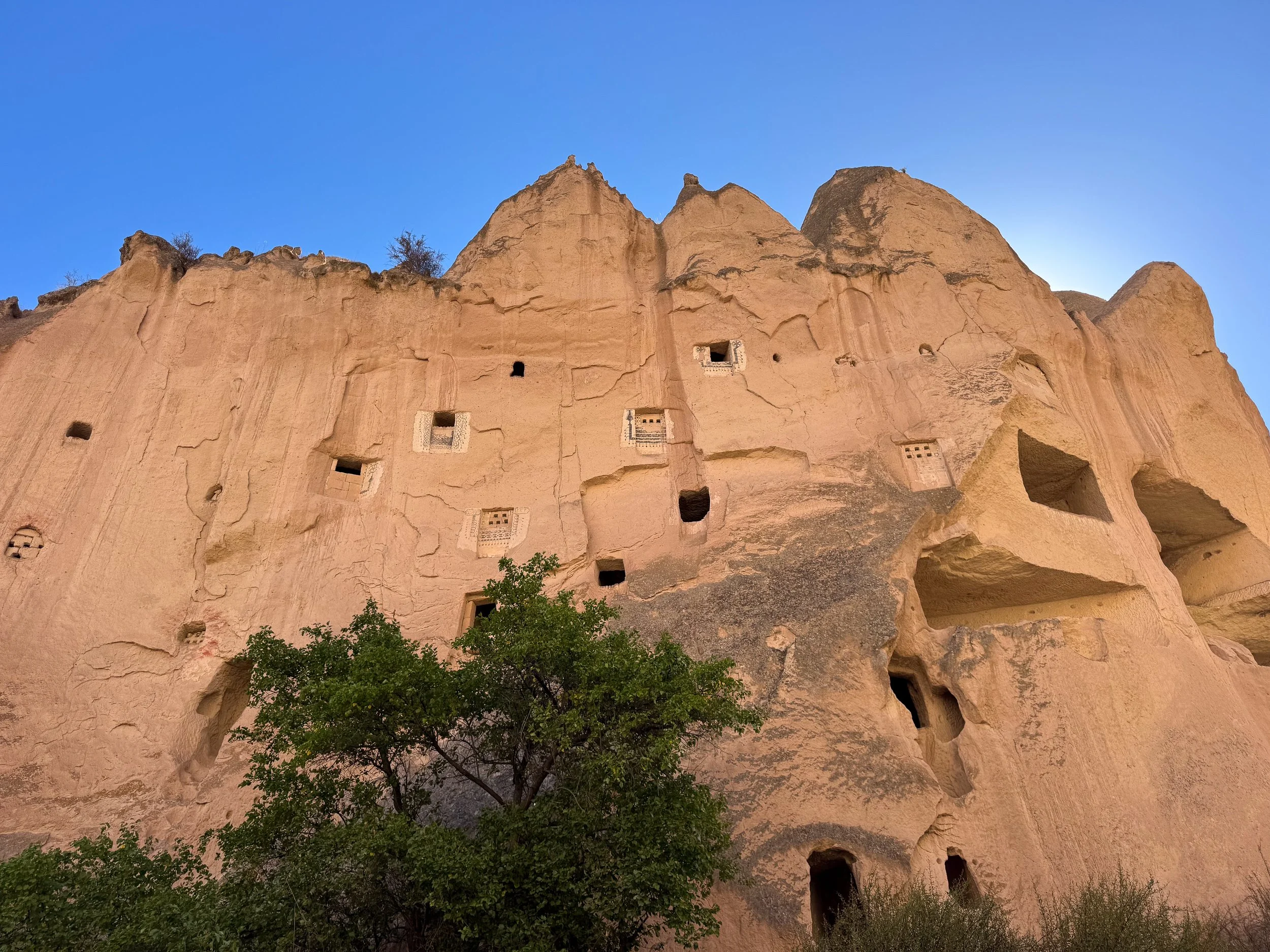
Zelve Valley 3. The third valley is the largest and most developed. It features a central square, mosque, stables and hundreds of dovecotes.
The Mosque. A carved and cut stone mosque topped with a four pillared minaret, characteristic of the early Ottoman period.
Dovecotes. Rock cut niches carved high into the cliffs made to house pigeons. They’re decorated with mystical patterns representing good fortune and prosperity.
Göreme Open Air Museum. A monastic valley with dozens of carved churches, refectories and tombs built into the rock. Vivid frescos of biblical scenes and red painted patterns adorn the walls and vaulted ceilings of multiple churches. Large stone tables mimic the Last Supper in refectories. Tombs line the floors of pitted crypts, some with skeletal remains.
Pro Tip. Most ruins date back to the 11th century, making the well preserved ones even more significant. Don’t miss the Apple Church, Sandel Church and St. Basil’s Church.
Good to Know. Photos are prohibited inside of most ruins. The best preserved church, The Dark Church, costs an additional €6 after you’ve already paid to enter the valley. The valley is easily accessible and gets very busy.
Hike Through The Valleys
Love Valley. A valley famed for its towering fairy chimneys resembling phallic shapes. Clusters of vertical stone columns are capped with pointed tips rising from the landscape. Love Valley Panoramic Lookout Point offers picturesque views of the valley while trails lead into it and around its unique rock formations. Use this map pin to find the viewpoint.
The Love Valley Foot Path leads from the Love Garden Cafe to the floor of the valley. Walk through the garden and down carved steps to reach the main trail. The trail meanders to the best clusters of fairy chimneys.
Pigeon Valley. A valley named after thousands of dovecotes carved into its stone walls and conical rock formations. Roadside lookouts offer views of the valley while trails meander between cave dwellings, fruiting groves and hidden caves.
The Dovecotes. Eroded houses built into the hillside reveal interior walls and carved niches once occupied by nesting pigeons. The interiors of some abandoned cave dwellings can be explored. Climb through openings into the cavernous chambers of multilevel houses.
Valley Groves. The center of the valley was once cultivated by its former inhabitants. Olive trees, grape vines and sage bushes still grow wild. Depending on the season, you can forage for grapes and dried raisins.
Hidden Caves. Natural caves carved by flowing water stretch beneath the landscape and cave dwellings. Get off the trail to explore their dark tunneling expanses.
Getting Here. Start hiking from the Pigeon Valley Parking Lot. Hike into the valley, stopping midway at the Tiraz Castle or continuing onto the town of Göreme.
Red Valley. A picturesque valley covered in hundreds of red hued fairy chimneys, layered cliffs and hiking trails. Pathways cut across its grassy plateaus and descend to the craggily rock formations and jagged pinnacles. Inside many are abandoned cave dwellings with multilevel chambers and remnants of patterned plaster.
Getting Here. Start at the Panoramic Viewpoint and descend into the valley on foot.
Good to Know. Many people come for the roadside view while the valley itself is little visited. It’s the perfect place to enjoy nature and escape the tourist crowds.
Pro Tip. Come here to camp! People frequently tent overnight inside the valley and its ancient stone dwellings.
Sword Valley. A picturesque valley with fragmented fairy chimneys, meandering trails and carved churches and tombs. Come here to hike and explore the ruins. Inside some are exposed tombs, painted patterns and Christian images made from ochre, saffron and white pigments.
Pro Tip. The valley is free to explore though sparsely visited. It’s accessible from the parking lot of the Göreme Open Air Museum.
Paşabağ Valley (Monk's Valley). A valley with walkways leading between tall fairy chimneys and ruins of centuries old cave dwellings. Explore their inner chambers then hike to the lookout point with views of the valley, its stone pillars and their conical tops.
Pro Tip. The ticket from the Zelve Open Air Museum included access to Paşabağ Valley.
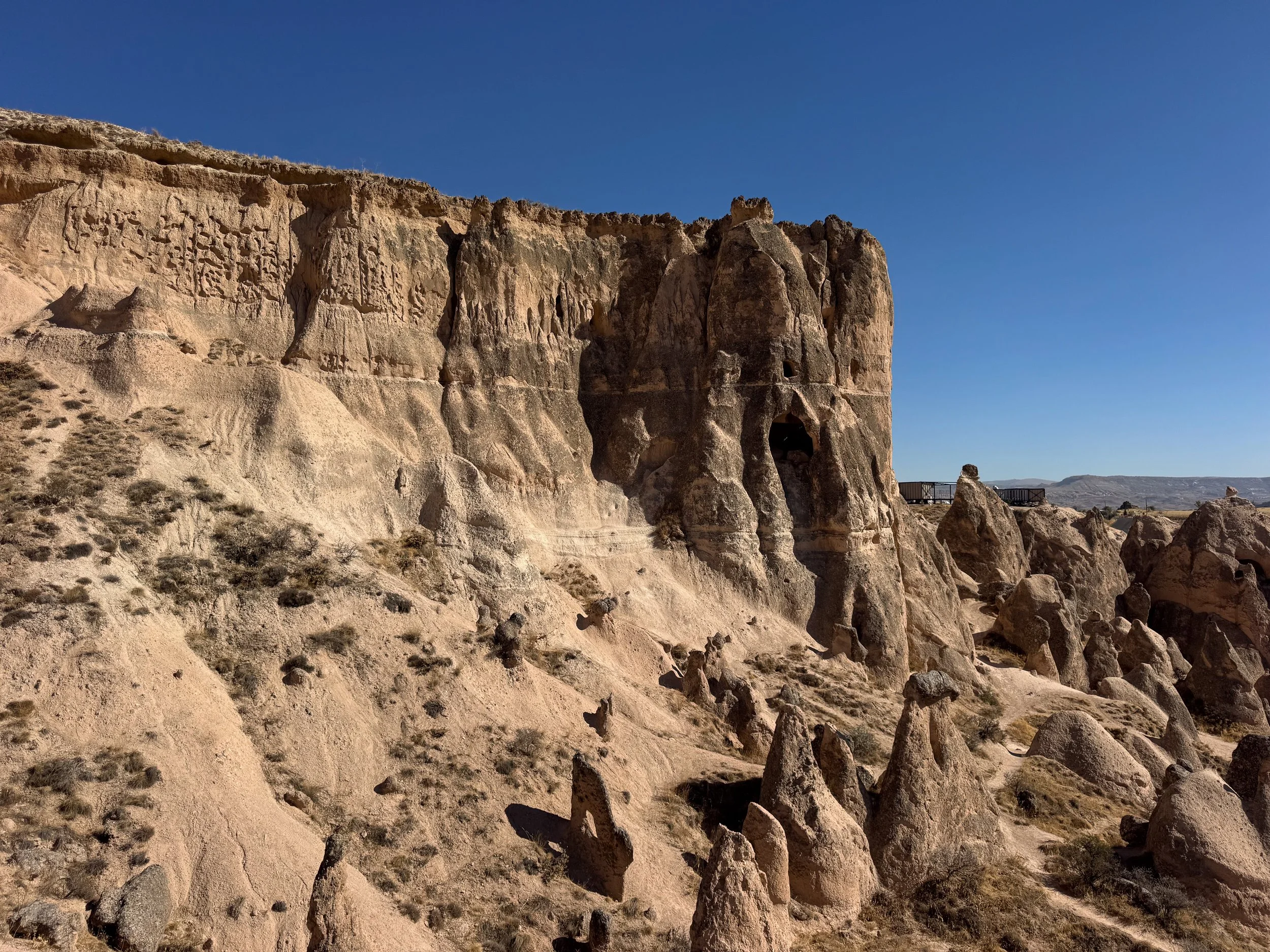
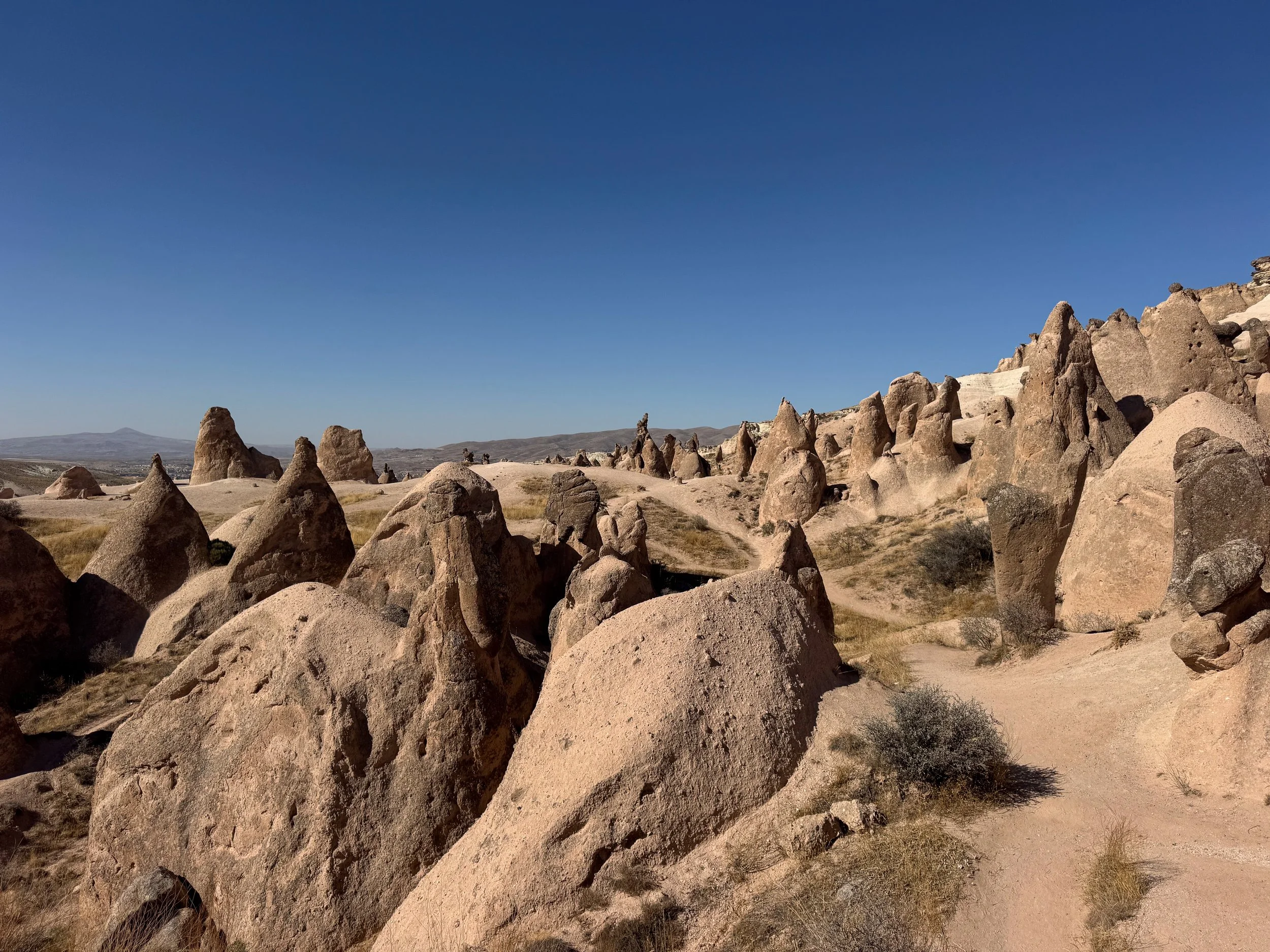
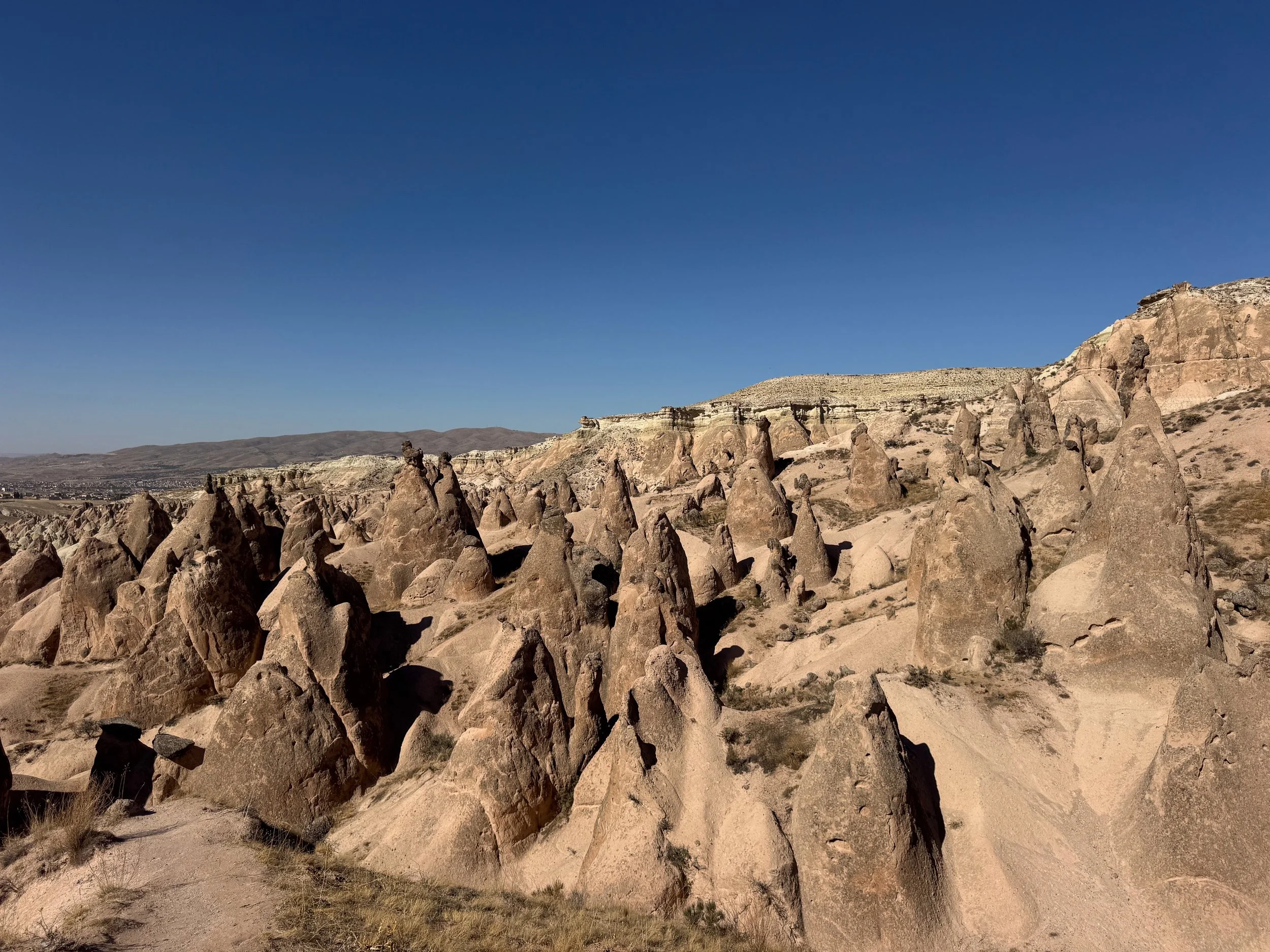
Devrent Vadisi (Imagination Valley). A valley comprised of rock formations that resemble silhouettes of animals. The most recognizable figure is that of a Bactrian camel. Trails lead from the roadside viewpoint past formations that resemble seals, lizards, falcons, dogs and other imaginative forms.
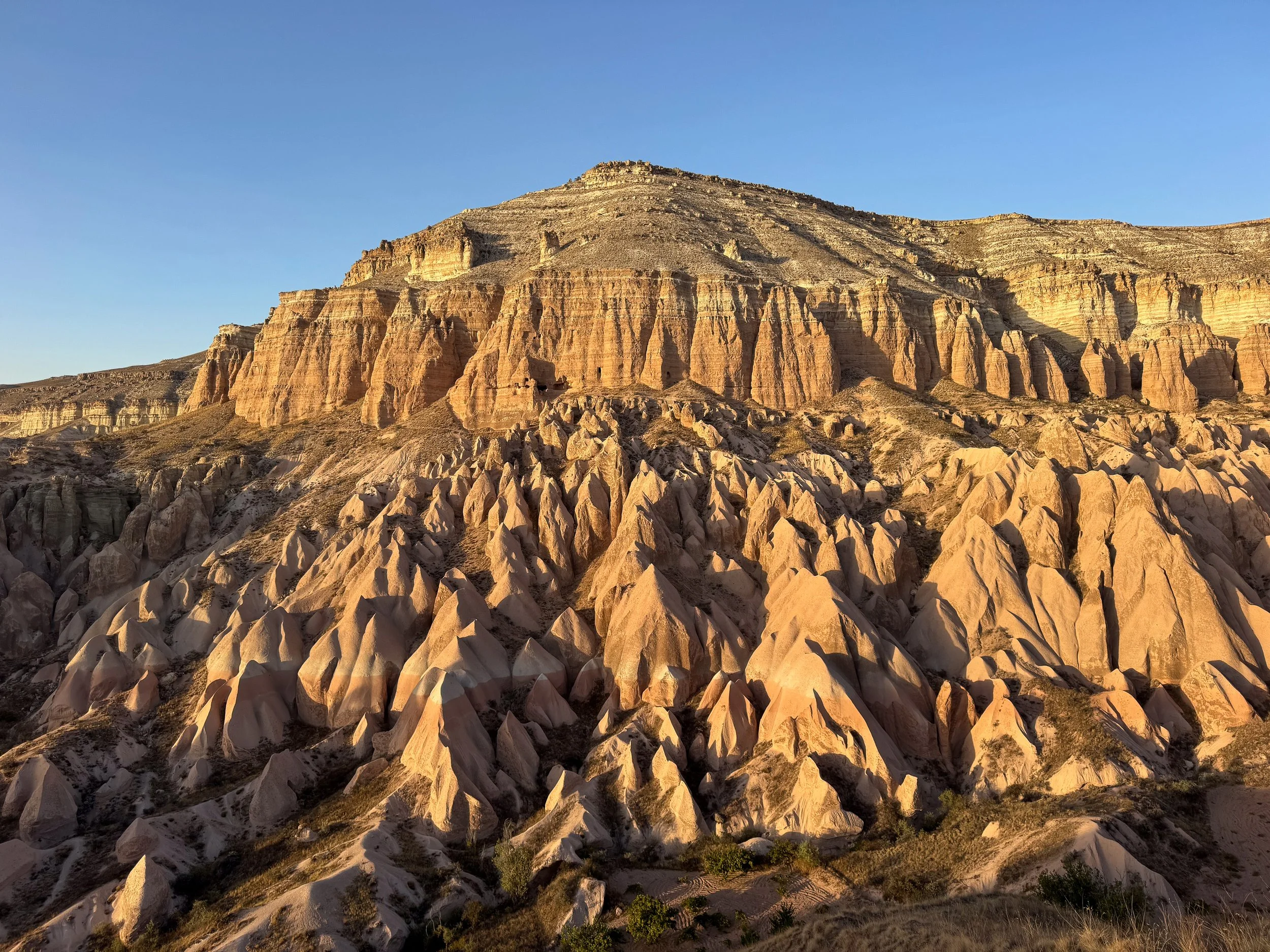
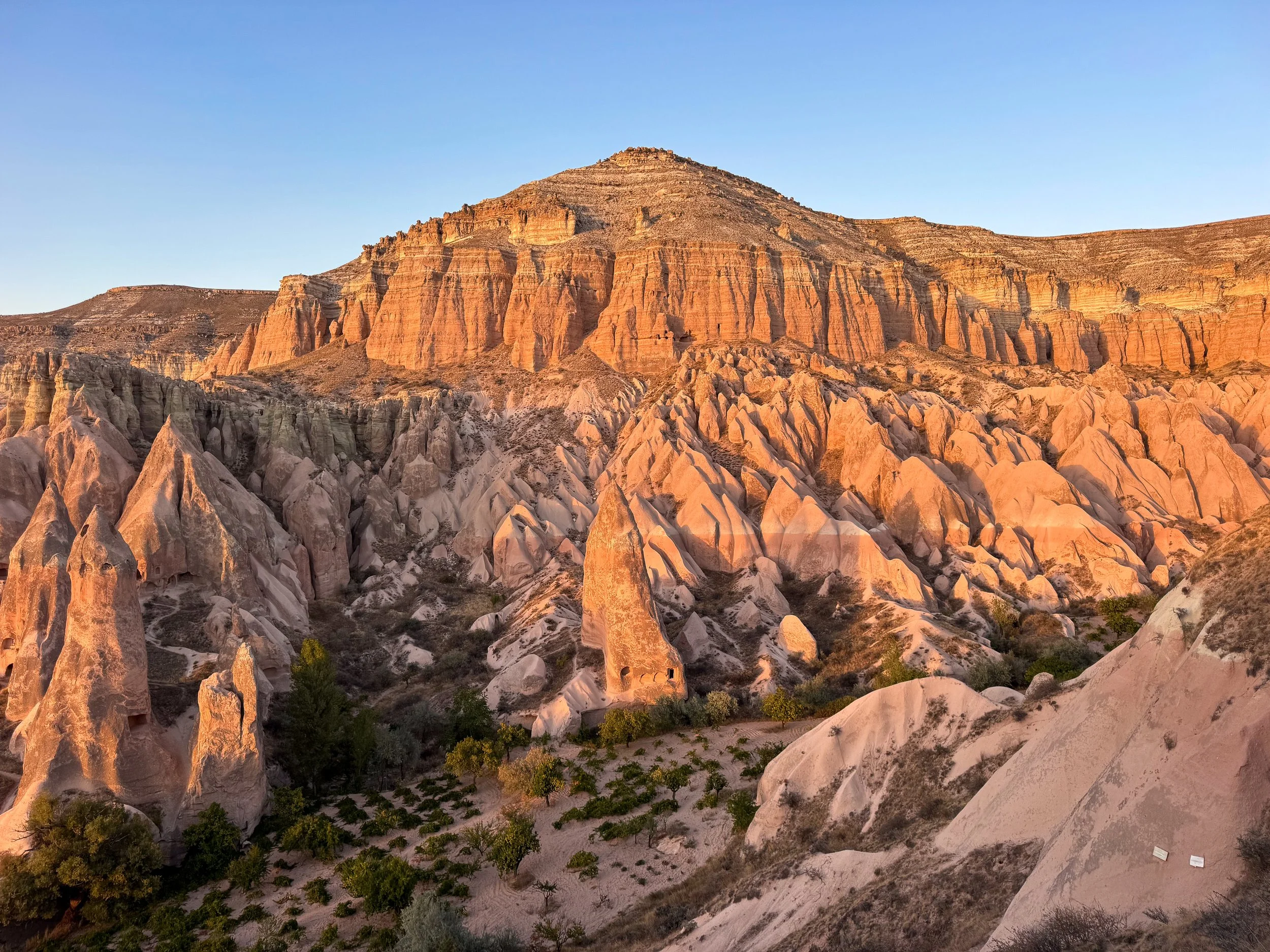
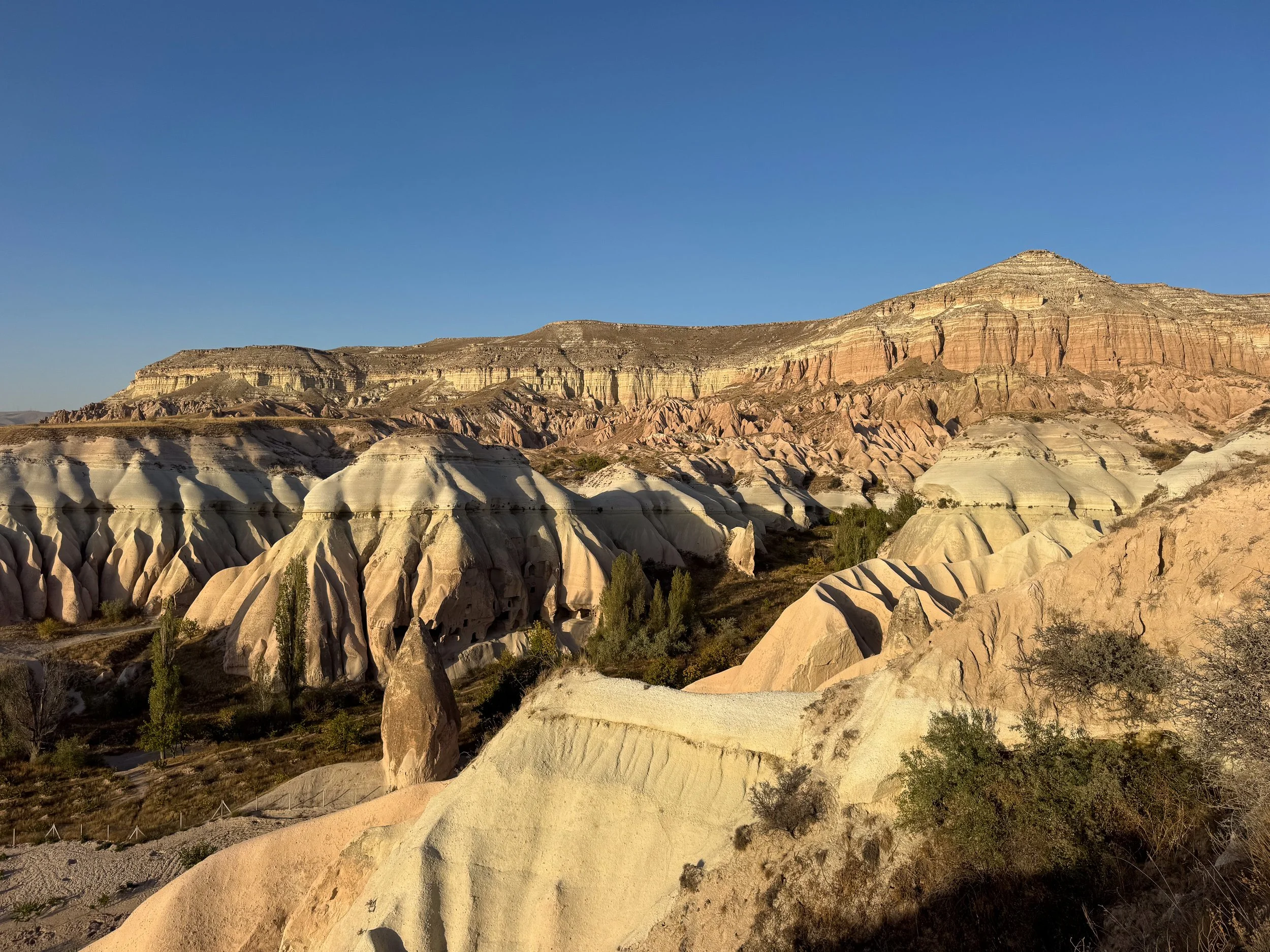
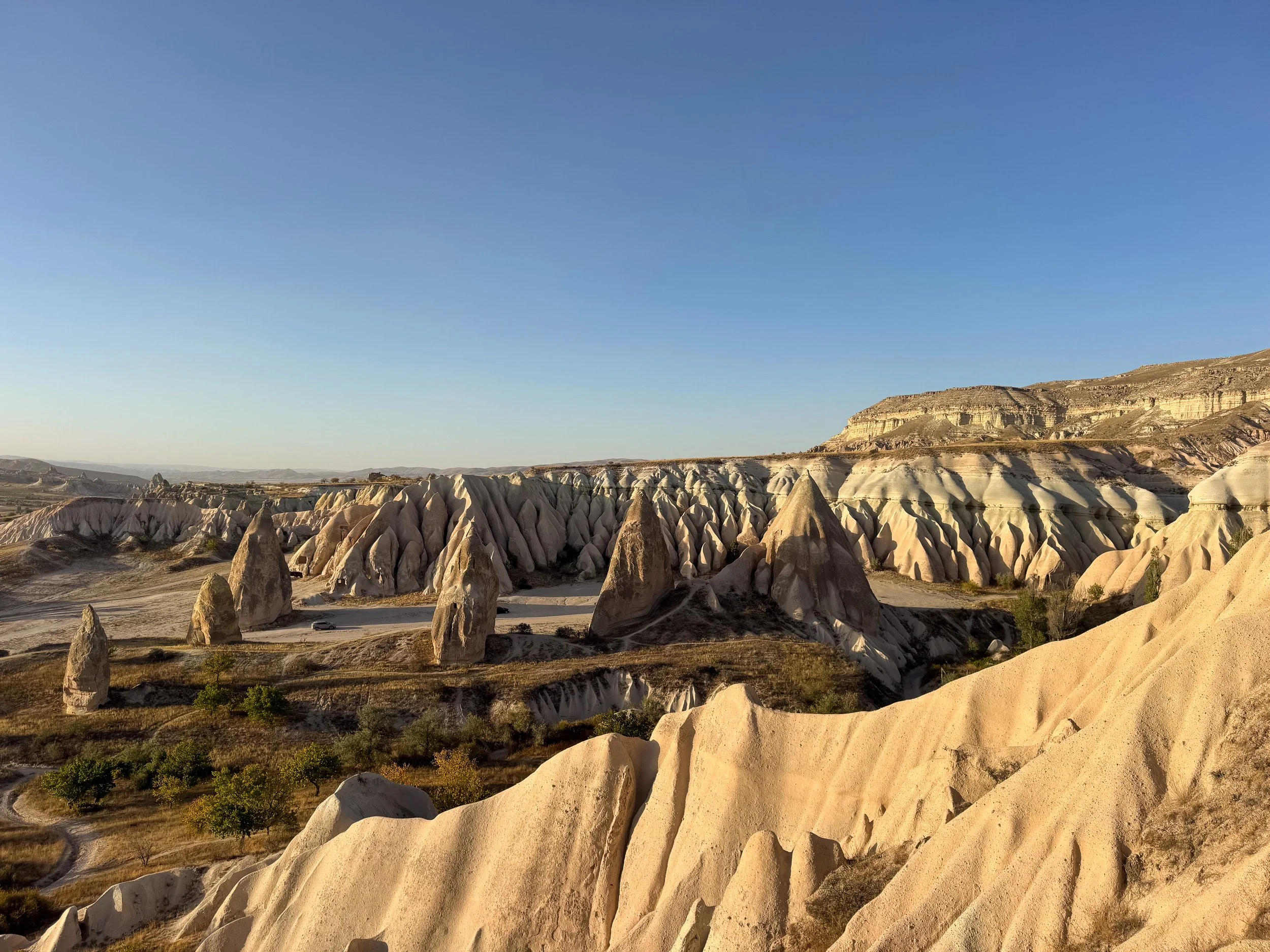
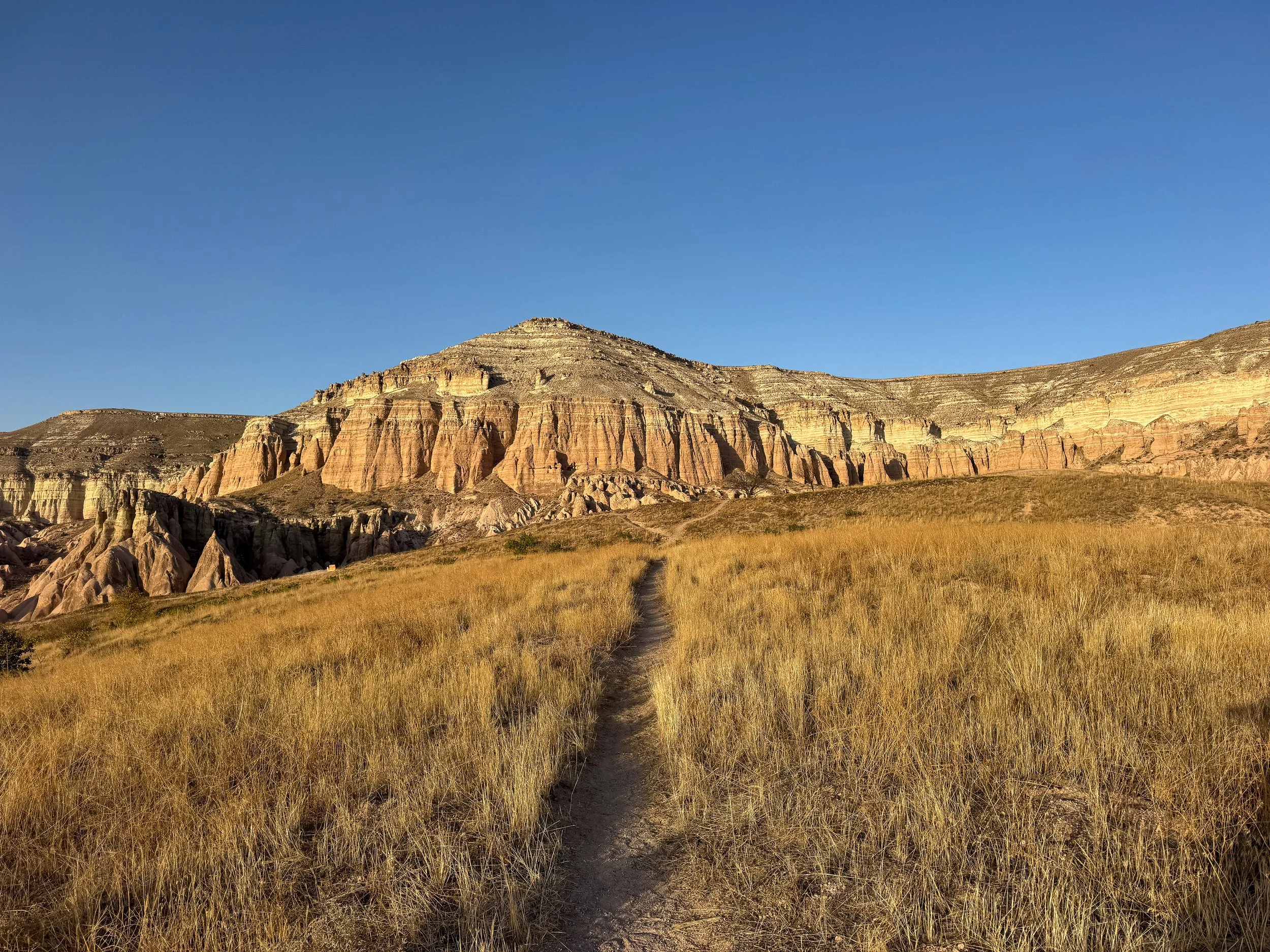
Rose Valley. A rugged valley named after its pinkish hued landscape. Tooth shaped fairy chimneys and ribbon like bands of eroded rock cover the valley. Hiking trails weave along its ridges and across its floor. Visit during golden hour when the sunlight makes the structures appear most pink and stick around for the sunset.
Good to Know. There are several viewpoints, however the Rose Valley Sunset Pointoffers the best views.
Ihlara Valley. A river canyon flanked by vertical rock cliffs and the ruins of over one hundred cliffside churches. The valley offers a combination of scenic nature and archeological sightseeing. Hiking trails follow the river with pathways branching off to 9th century churches. Their conditions range from collapsed ruins to carved chambered with colorful and well preserved frescos.
Ihlara Cave Churches:
Daniel Pantonassa Church. An elaborately decorated church with colorful and well preserved frescos of biblical scenes. It has the best frescos in the valley.
Purenli Seki Church. A partially collapsed church with painted frescos still visible on its arched doorway.
Kokar Church. A two chambered church with colorful frescos of biblical scenes and exposed in floor tombs.
Dark Castle Church. A large monastery with scorched ceilings and surfaces. Arched passageways lead to grand chambers and burial crypts.
The Serpent Church. A church with a singular nave and a burial crypt. Detailed and deteriorating frescos depicting biblical scenes cover its surfaces.
Karagedik Church. The ruins of a built church collapsed by a fallen boulder. Some arches with frescos remain visible amongst the rubble.
Janinth Church. A two level church built into the cliffside with a chiseled stone facade. An archway leads to its internal chambers and tombs.
Diker Aile Çay Bahçesi. A riverside café with a series of Persian tea houses lining its banks.
Getting Here. Enter the valley from the Welcome Center, hiking counterclockwise along the river, crossing its bridges and visiting the ruins. Plan to spend at least a half day here.
Turkish Cuisine
Testi Kebab (Pottery Kebab). Cappadocia’s famed kebab cooked inside a clay jar and cracked open with a large knife. It’s often made with meats, vegetables and spices then eaten with bread.
Sultan’s Delight. A savory roasted eggplant dish cooked with a cheesy roux.
Etli Biber Dolmas. A Turkish style of stuffed peppers filled with seasoned rice and boiled. It’s served hot or cold.
Simit. A sesame seeded ring shaped pastry similar to a bagel. It’s commonly eaten at breakfast with coffee.
Börek. A snaked together flaky pastry stuffed with savory or sweet fillings. Try the spinach and cheese version.
Döner Kebap. A Turkish style sandwich made from slices of rotisserie grilled meat combined with veggies in a pita.
Manti. A small Turkish style noodle or dumpling.
Pide. An ovular boat shaped pastry cradling a pool of melted cheese. It’s common on menus across the country.
Turkish Coffee. Finely ground coffee slowly brewed in a long-handled copper pot over heated sand. It has a smooth and strong flavor.
Turkish Delight. A gelatinous candy made with a range of flavors like rose, mint, lemon and orange. It’s cut into cubes and dusted in corn starch. Higher end versions are mixed with or encrusted in nuts and flowers then formed into elegant looking rolls or bricks.
Baklava. A flaky bite sized pastry made with layers of chopped nuts. It’s soaked in a sugar or honey glaze. It comes in a variety of styles and shapes.
Places to Eat & Drink
Vinodocia Wine House. A wine store in an ancient stone house with an underground cave used as a cellar. They sell local wines from Cappadocia and across Turkey. Come for a 5 glass tasting and leave with a bottle to bring home.
Firin Expres. A Turkish restaurant with a massive wood burning oven at its center. The chef bakes fresh bread, pide, pizzas and flaming jars of testi kebab. It’s one of the few places that has a vegetarian version.
Develi Cıvıklısı Pita Parradise. A restaurant specializing in various types of fresh baked pide like vegetarian, spinach and cheese, plain cheese and sausage.
Hector Coffee House & Lounge. A multi floor café in Göreme with a rooftop terrace and Persian style lounge. Come here for afternoon coffee and baklava.
Mozaik Restaurant. A cozy restaurant and bar with a warmly lit interior and Turkish wines. Come here for a mulled wine by the fireplace on a chilly night.
Where to Stay
Atilla’s Cave Hotel. A cave hotel in the town of Nar with multiple rooms built into a 1,500 year old cave dwelling. The rooms are authentic, spacious and warmly lit making for a cozy stay. The hotel has a rooftop terrace and restaurant serving homestyle Turkish meals. Book on Airbnb.
Hotel Philosophia. A hostel in Uçhisar with private stone walled rooms and rustic bungalows near the center of town. Its garden patio and communal kitchen are perfect for relaxing and meeting other travelers. The host provides a daily breakfast spread with Turkish tea. Reserve on Hotels.
Rental Car
Renting a car and driving between the valleys is the best way to see the sights and natural landscapes on your own time. We rented an economy car from Garenta at the airport for our week in the region. Driving was not too different than in other parts of Europe or the United States.
Location Specifics
When to Visit. We visited Cappadocia during the shoulder season in early October. The days were mild and evenings were cool making outdoor hikes through the valleys quite pleasant.
How Long to Visit. Plan on visiting Cappadocia for at least 5 days. This will give you enough time to visit several valleys at a leisurely pace.
Avoid the Tours. Tours allow visitors short on time to visit multiple sights in one day, however they’re quite shallow. Most groups stop for a brief photo and move on.
Wear Proper Footwear. Wear hiking boots or shoes with sturdy treads while hiking. The loose gravel and steep terrain can be treacherous.
Language. Turkish, the national language is widely spoken in Cappadocia. Many people in the tourism industry speak a range of languages including English, Italian and Russian.
Cash vs. Card. Most businesses accept credit cards. Carry Turkish Lira for times when card machines are down. ATMs are plentiful in town centers. Foreign currencies like the Dollar or Euro are not accepted.
Tipping. A 10% tip or service charge is customary. Confirm if it’s included before paying or double tipping.
Elsewhere in Turkey
From Cappadocia's cave dwellings and dramatic valleys to Istanbul's Byzantine and Ottoman landmarks, neighborhoods and culinary traditions, discover more of Turkey beyond the countryside.
Istanbul Travel Guide: Neighborhoods, Historic Sights & Turkish Cuisine. Wander through Istanbul's vibrant neighborhoods where Ottoman landmarks, bustling bazaars and Turkish culture connect two continents across the Bosphorus.
For Next Time…
Cappadocia is a place of ancient history and incredible landscapes. We experienced a lot during our week and left with inspiration for our next trip to Turkey.
Hot Air Balloon Flight. Since our hot air balloon flight was repeatedly cancelled due to weather, we plan to try again on our next adventure here.
Cave Dwelling Camping. After seeing people camping in the Red Valley, we’ll be traveling with our camping gear and staying overnight in one of the ancient cave dwellings.
Tuz Gölü Salt Flats. A vast salt lake home to flamingos, mirror-like reflections and picturesque sunsets.
Çatalhöyük Archaeological Site. A neolithic archeological site with the excavated ruins of a Hittite city dating back to 7,500 BCE.
Sagalassos Archaeological Site. An ancient acropolis with ruins of baths, theaters and statues from the Greek and Roman empires.
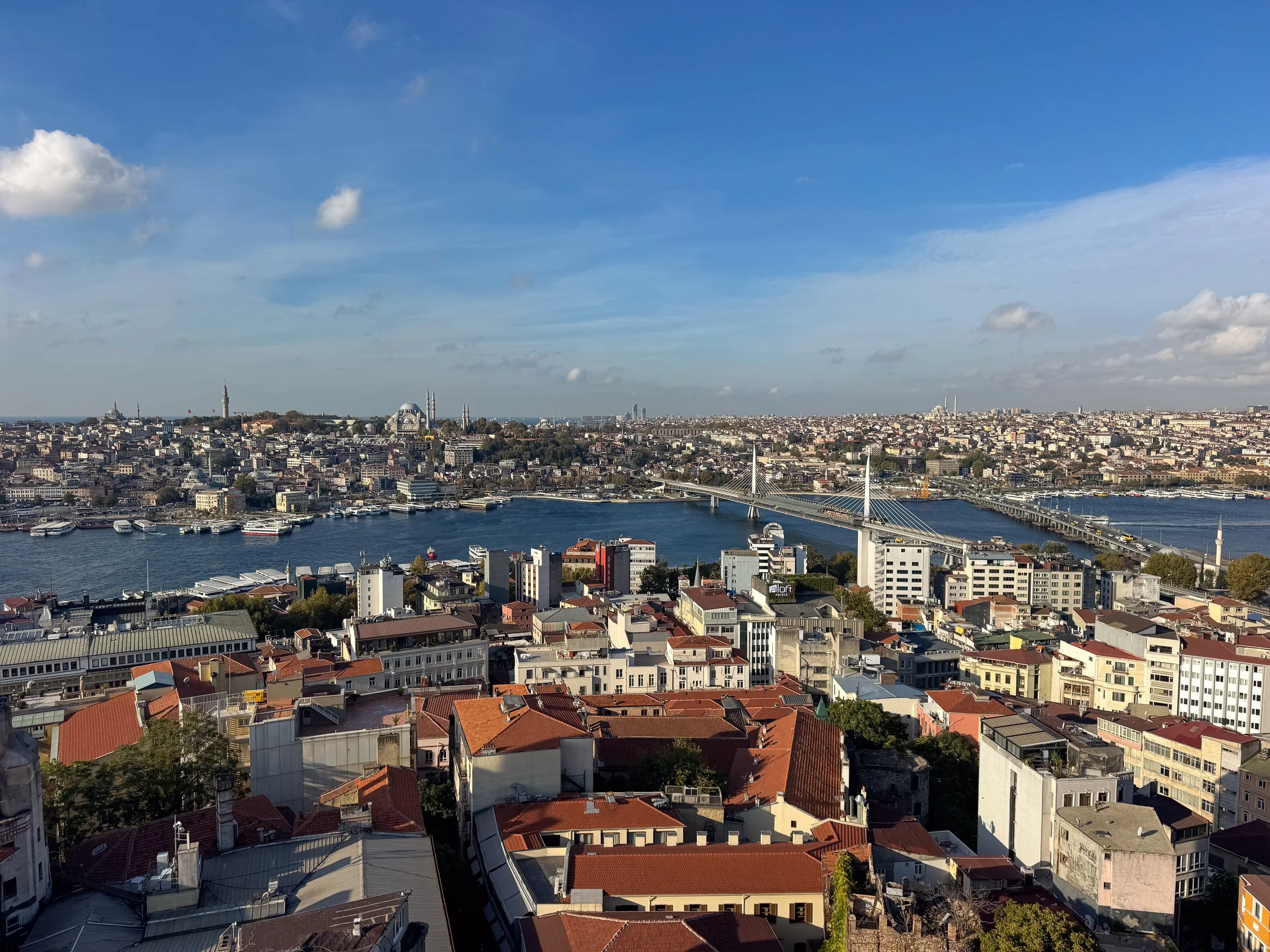
Istanbul Travel Guide: Neighborhoods, Historic Sights & Turkish Cuisine
Wander through Istanbul's vibrant neighborhoods where Ottoman landmarks, bustling bazaars and Turkish culture connect two continents across the Bosphorus.
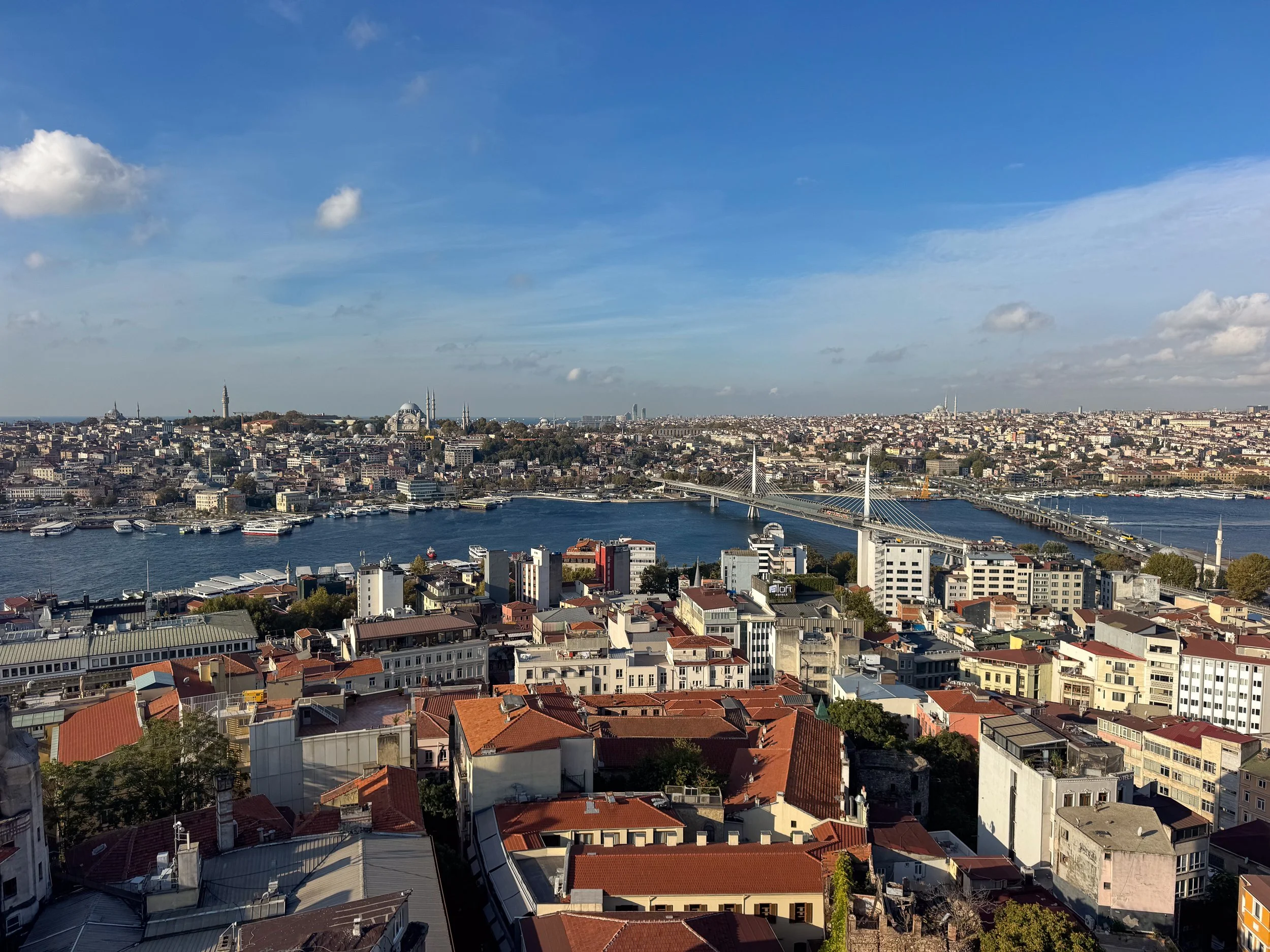
Istanbul, Turkey
Istanbul is a stylish city at the crossroads of time and cultures. It straddles two continents, embracing its European charm and Middle Eastern influences. Vibrant neighborhoods are teeming with indie cafes, diverse restaurants, lively bars, sweets shops and all manner of boutiques. The modern metropolis has a storied history dating back to ancient times with historic sights, royal palaces, grand mosques and sprawling bazaars.
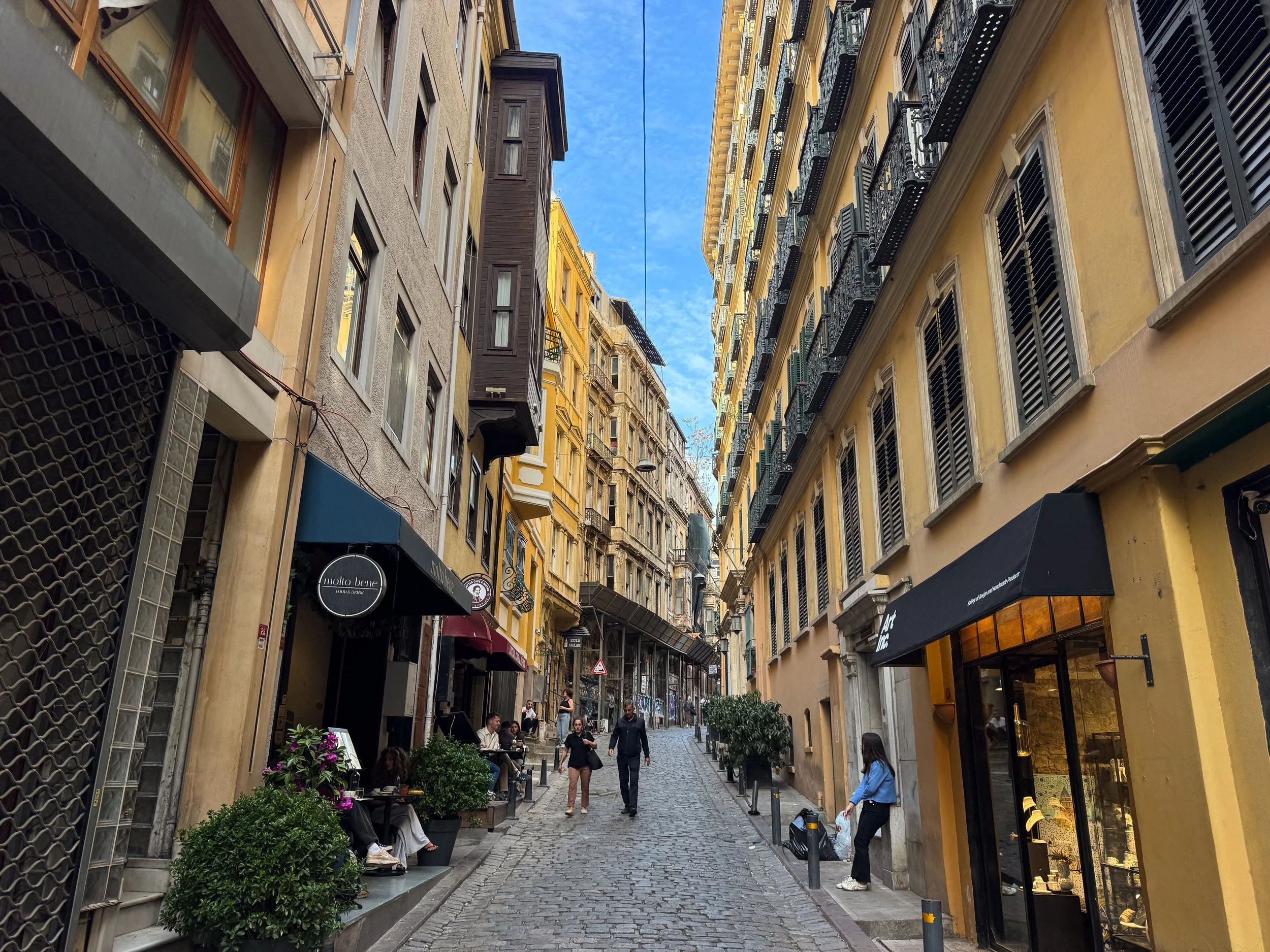
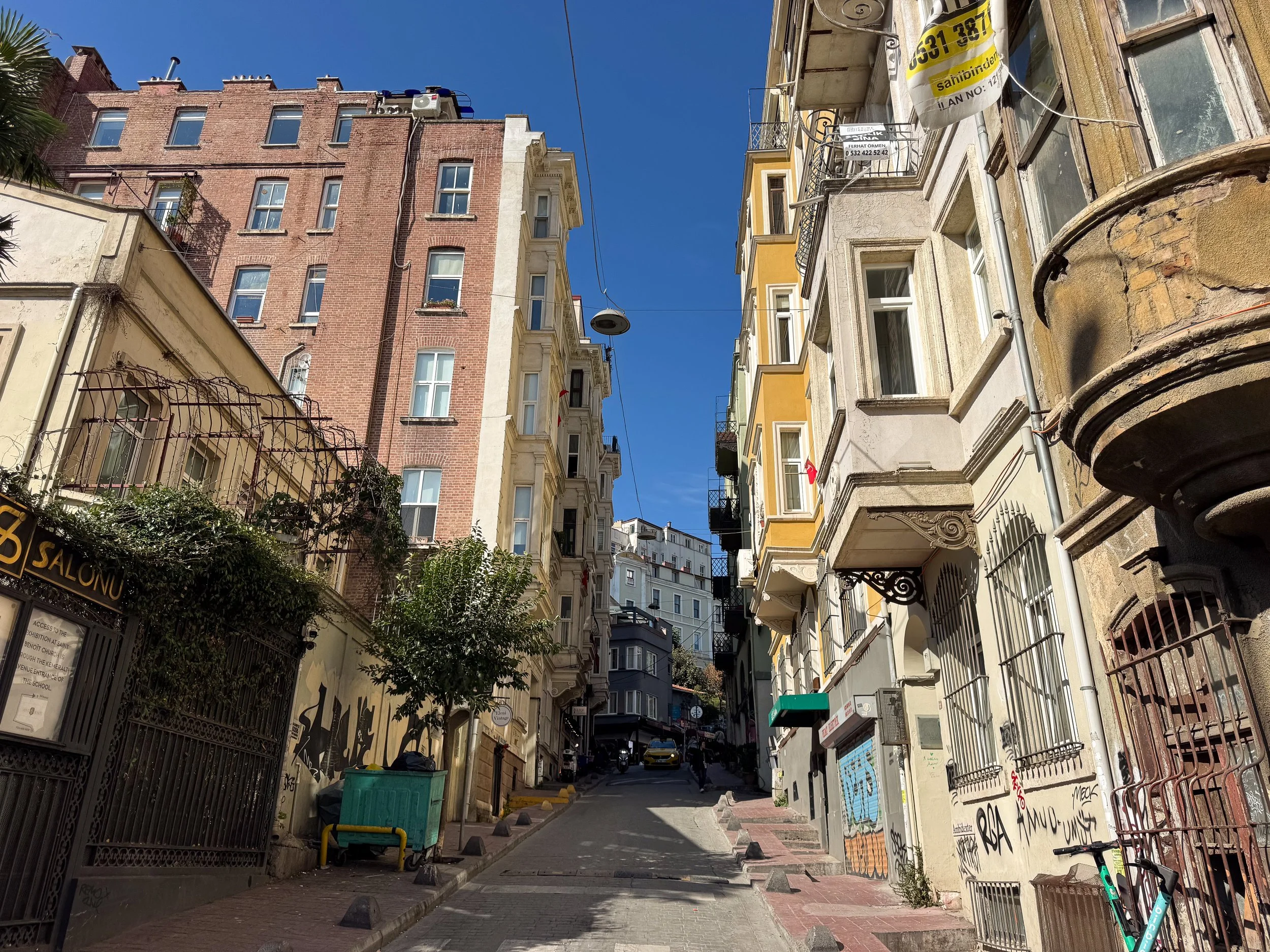
Neighborhoods & Streets
Karaköy (Galata). A hilly neighborhood centered on one of the city’s main landmarks, the medieval Galata Tower. The area is a beautiful place to stay and explore. Its cobblestone streets are lined with historic European architecture, vintage shops, artisan jewelers, Turkish restaurants, tiny cafes and happening bars.
Umbrella Street. A photogenic street in Karaköy covered in a canopy of colorful umbrellas and grape vines. It’s lined with dozens of cafes and coffee shops.
Mumhane Street. A trendy street home to elevated restaurants, cocktail bars, Turkish sweets shops, designer boutiques and street food stands.
Sofyali Street. A narrow street in Karaköy with dozens of pubs and bars. Come here for local beers, cocktails and light bites.
Eminönü. A vast neighborhood of Istanbul home to historic sights, Ottoman style mosques and markets including the Grand Bazaar and Egyptian Market.
Sultanahmet. The oldest neighborhood of Istanbul home to cobblestone alleyways, neoclassical architecture and landmark sights like The Hagia Sophia, Blue Mosque and Topkapi Palace.
Kadıköy. A trendy neighborhood on the Asian side of Istanbul. It’s a young and non touristy spot with bustling streets, dozens of cafes, cocktail bars and pubs. Come here on a Friday night to experience the city’s nightlife. Visit Fahri Konsolos and Lelabbo Moda for cocktails and Muhit Kadiköy for local beers.
Getting Here. Kadıköy is reachable by a public ferry from the riverfronts in Eminönü and Karaköy. Ferries run every half an hour late into the night.
See the Sights
Hagia Sophia. A landmark mosque and one of the most important buildings from the Byzantine period. It has survived over 1,700 years, witnessing the rise and fall of empires and religions. Its multi-domed structure features buttresses and Islamic minarets. The interior mezzanine offers views of its domed ceilings, stone walls, early Christian mosaics and emerald carpeted prayer hall.
Hagia Sophia Museum. A museum dedicated to the history of the Hagia Sophia and Istanbul. An audio visual guide narrates its key moments in time from the founding of Constantinople, the rise and fall of Byzantine and Ottoman Empires, the expansion of Christianity and Islam and centuries of additions and restorations.
Blue Mosque. An iconic Ottoman style mosque with a series of domed roofs and pairs of tiered minarets. The interior prayer hall is adorned with hand painted blue tiles, elaborately painted ceilings and colorful stained glass windows. Massive columns support the domed structure while a series of suspended lanterns illuminate its interior. Entrance is free. Plan to arrive before 8am.
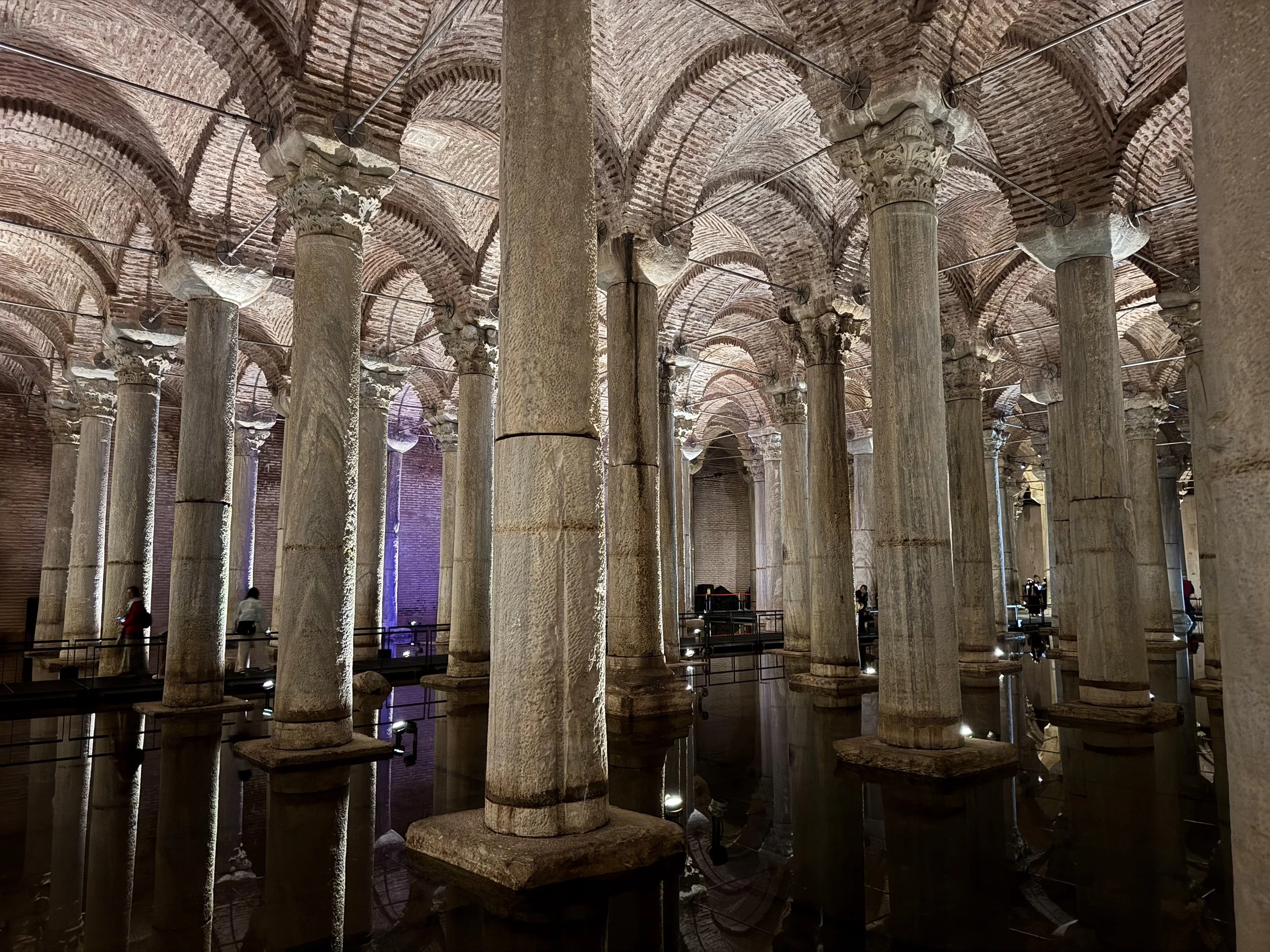
Basilica Cistern. A vast subterranean cistern from the 6th century of Constantinople. Warm lights illuminate the cistern in a dim glow. Walkways lead above the flooded floor as columns reflect across the still water. Its vaulted brick ceilings are held up by hundreds of tall Corinthian style columns. Two of the most notable sit on the bases depicting the head of Medusa.
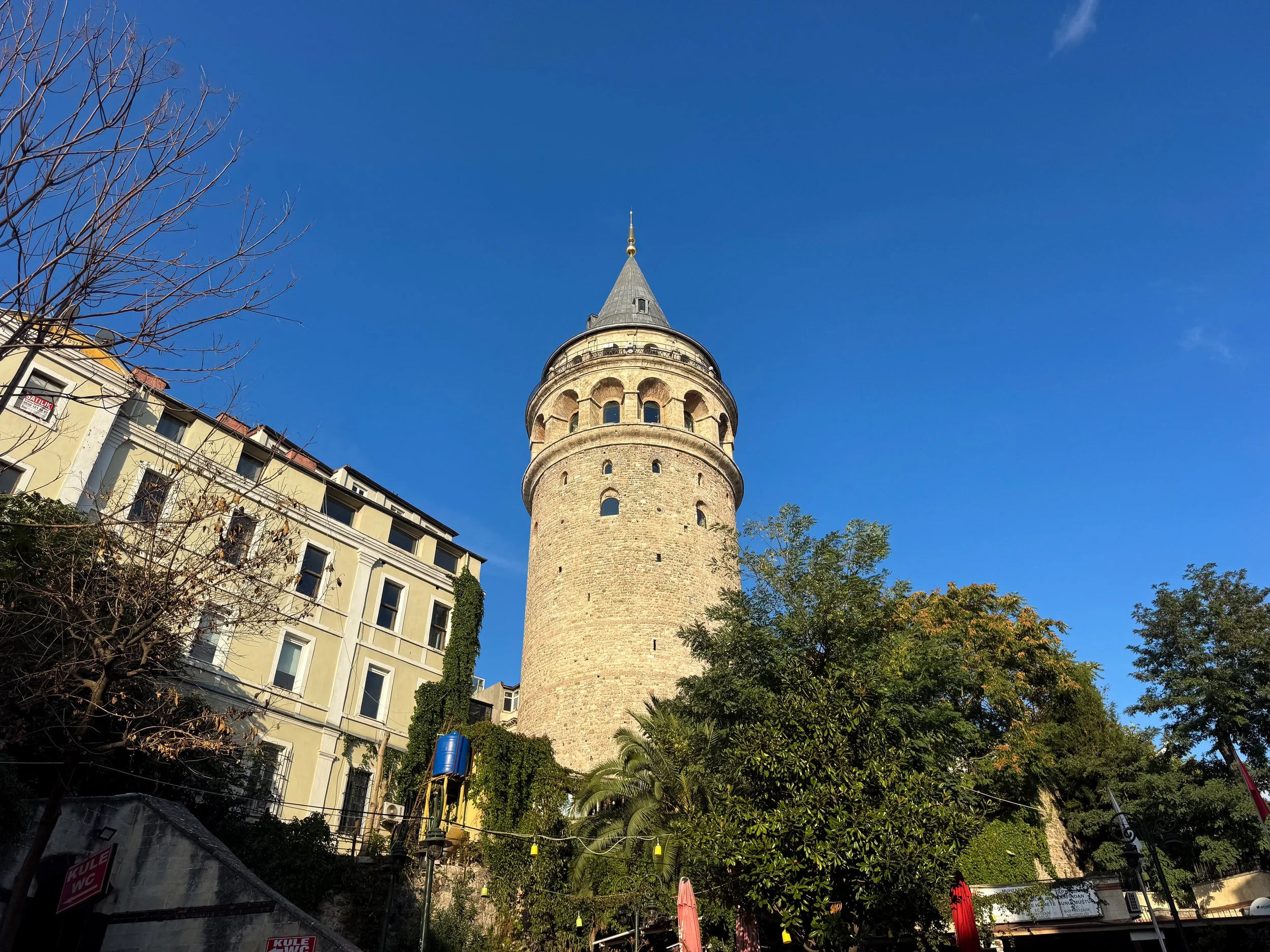
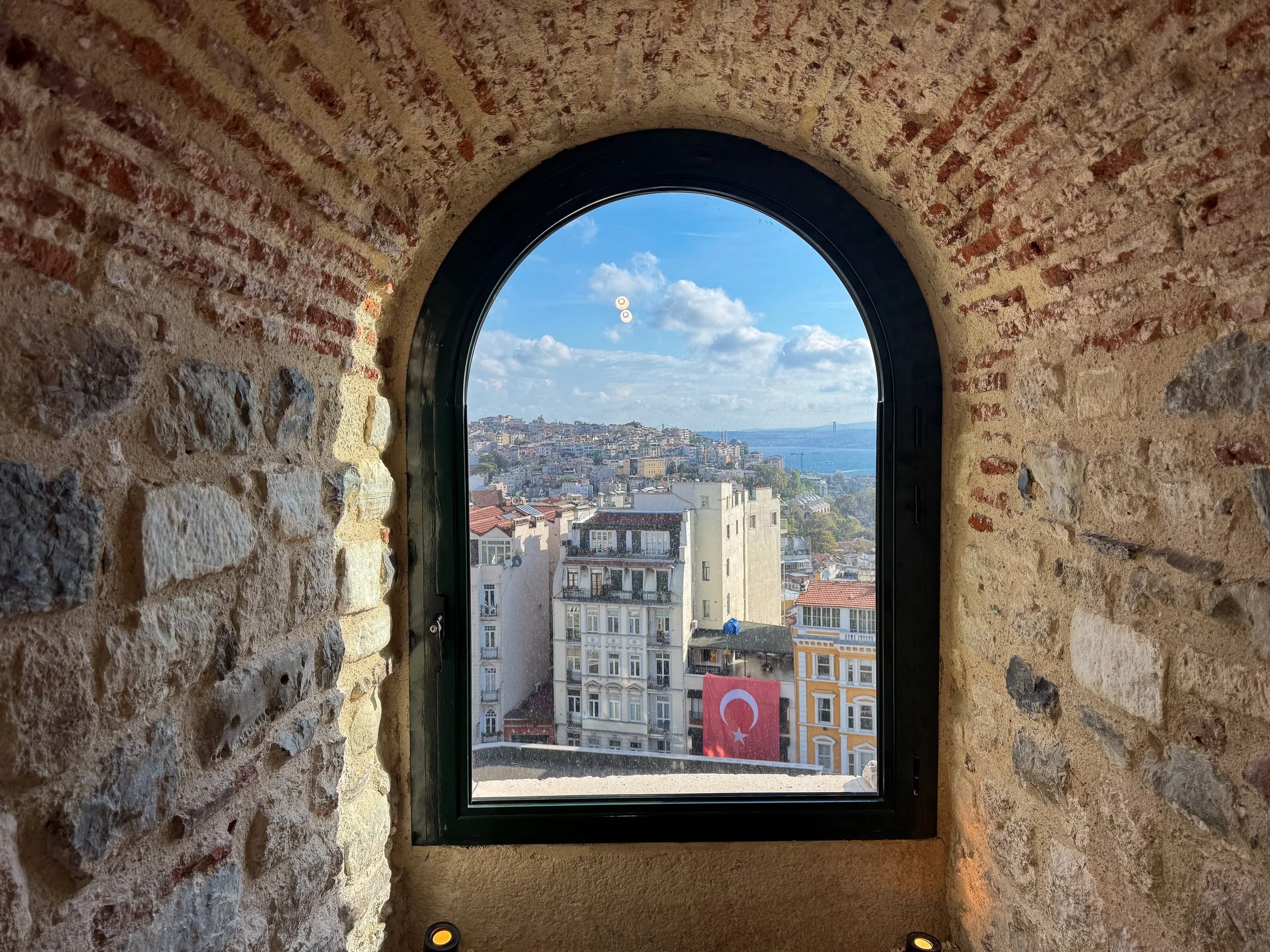
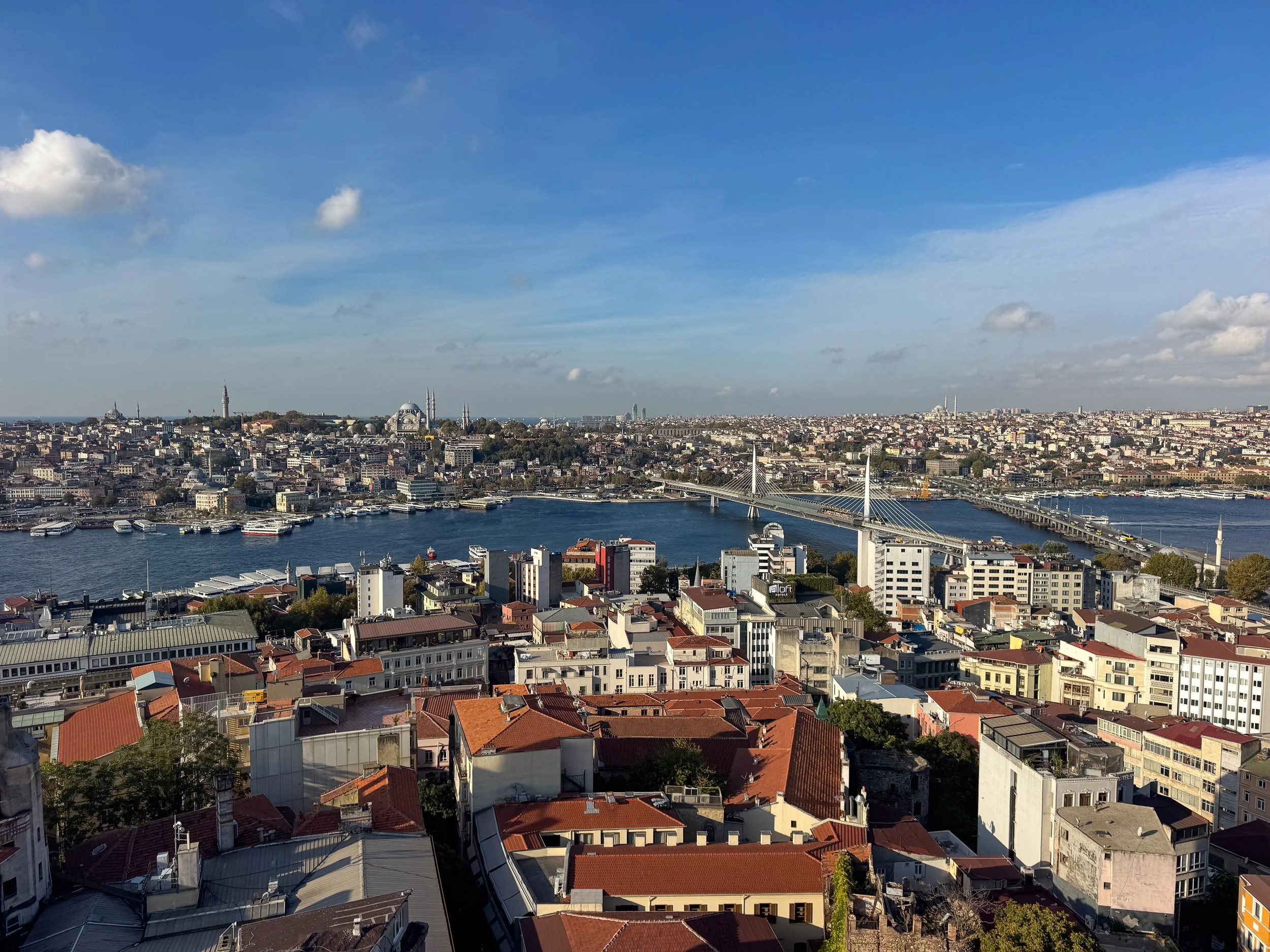
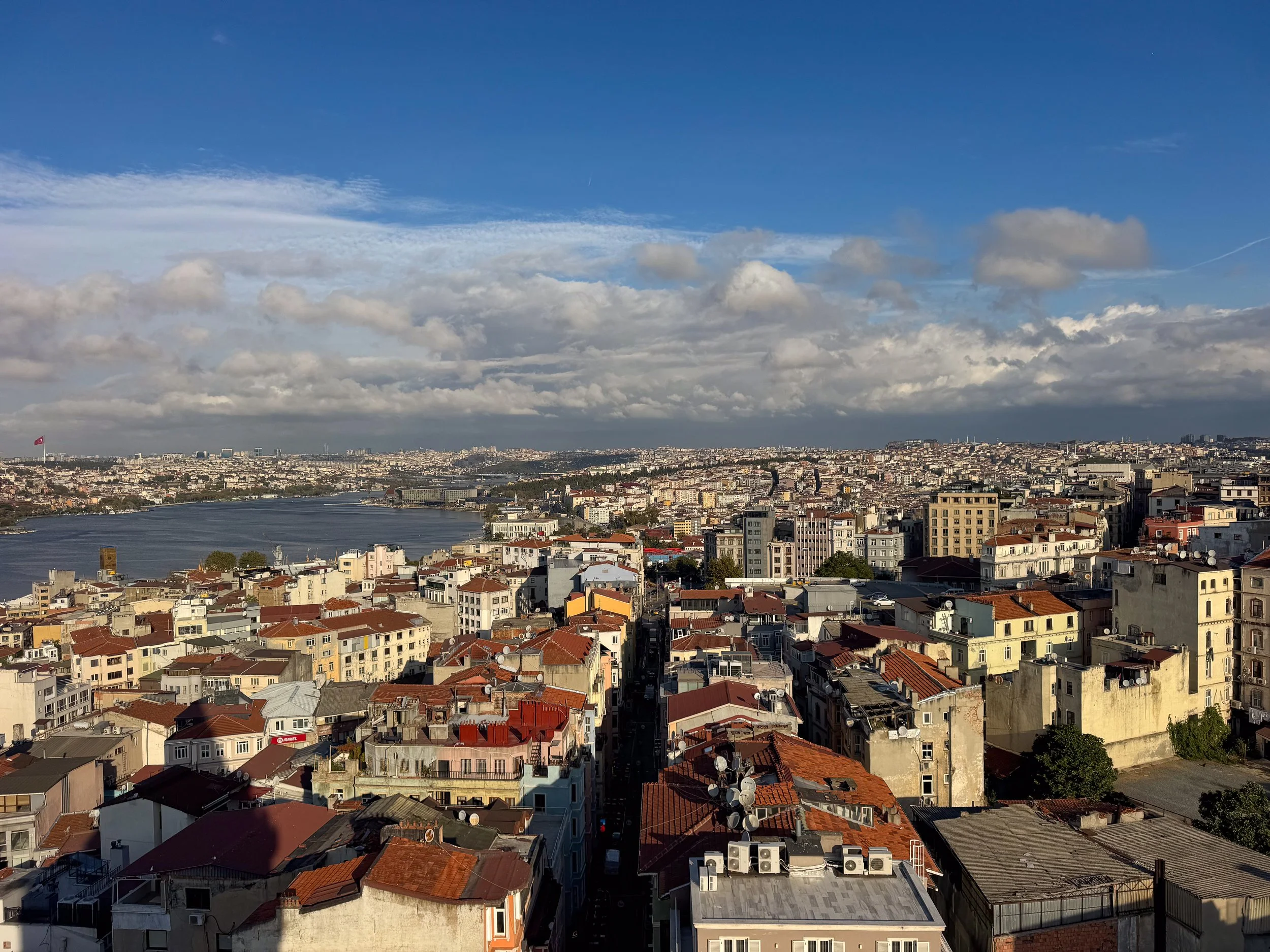
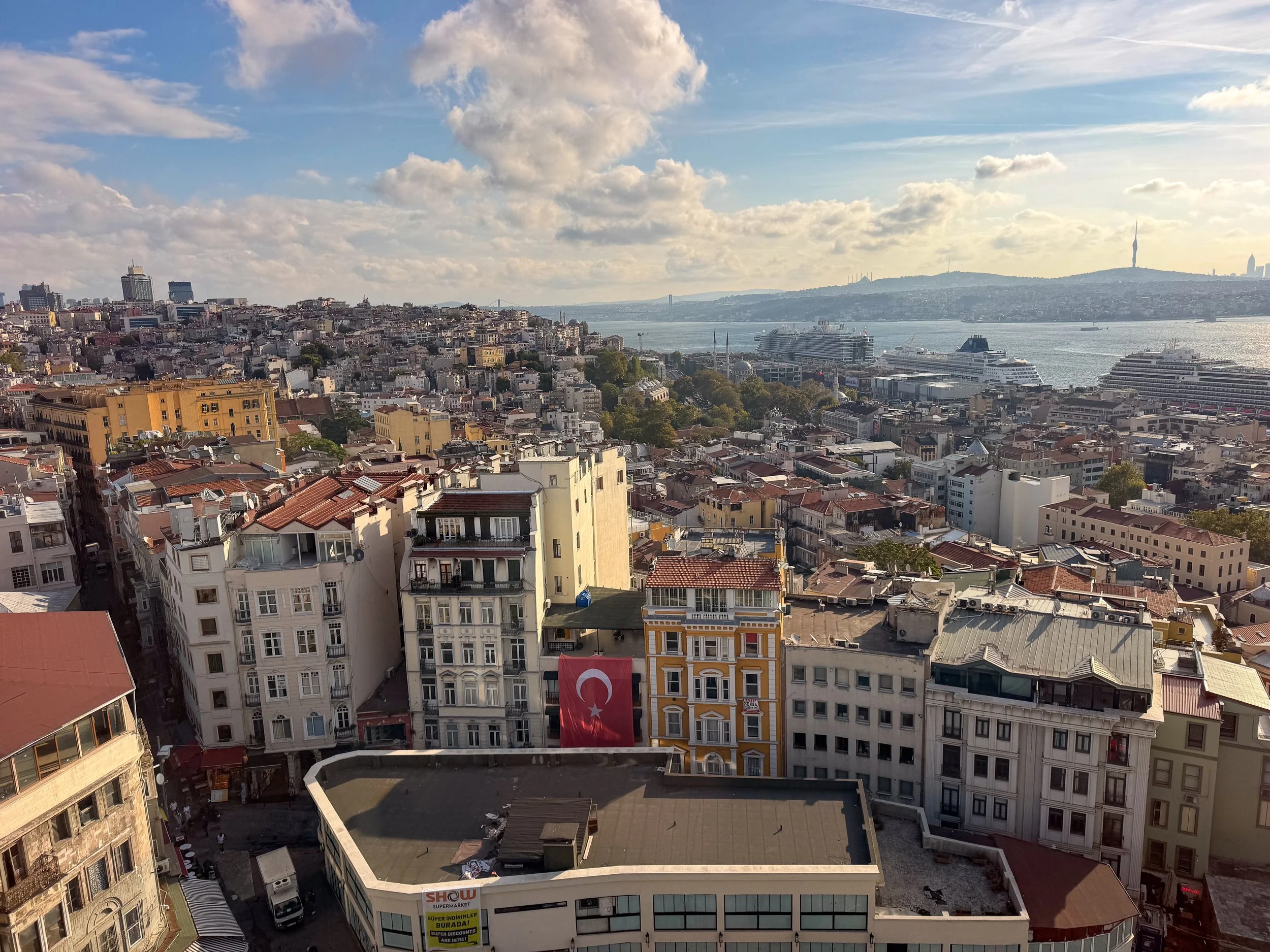
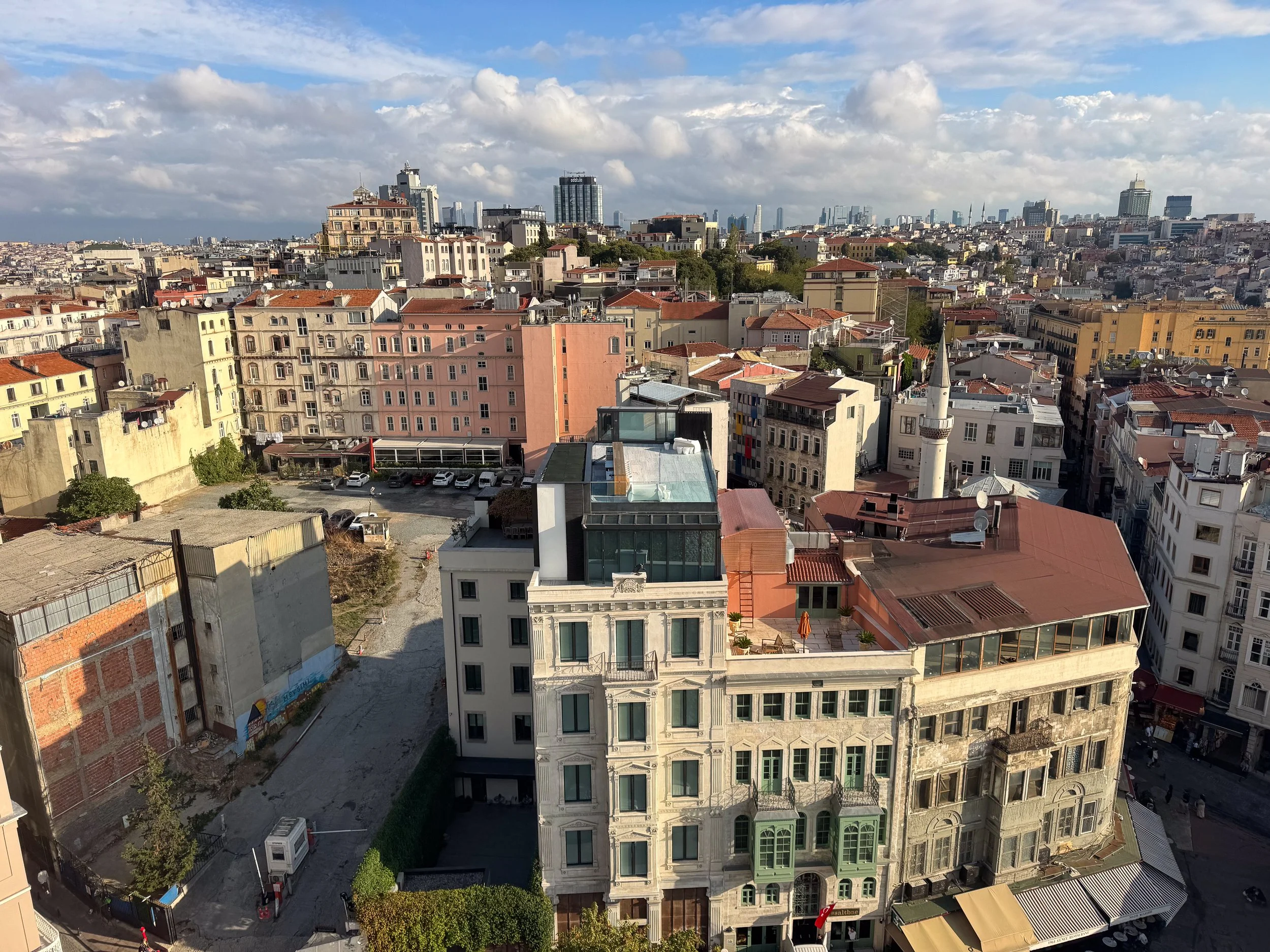
Galata Tower. A medieval watch tower built on a hill overlooking Istanbul. Its top floor boasts panoramic views of the sprawling city and the Bosporus River. A light show is projected on the facade at night, Visit at 8:30am when it opens to avoid the crowds.
Istanbul Archaeological Museum. A museum housing a collection of ancient artifacts from across Mediterranean civilizations dating back thousands of years.
The Sarcophagus Room features ornately carved marble sarcophagi decorated with battle scenes, mythical creatures and originally painted surfaces.
The Ancient Greek Hall displays life-like statues and reliefs of Greek gods, emperors and human figures like Apollo, Zeus and Alexander the Great.
The Treasures Hall showcases golden olive leaf crowns, jewelry and ancient coins minted with the faces of emperors from the ancient Roman, Greek and Byzantine empires.
Chora Church. An ancient stone church built more than 100 years before the Hagia Sophia. Its domed ceilings and vaulted interiors are adorned with 14th century Byzantine mosaics. Some can be viewed for free from the outside.
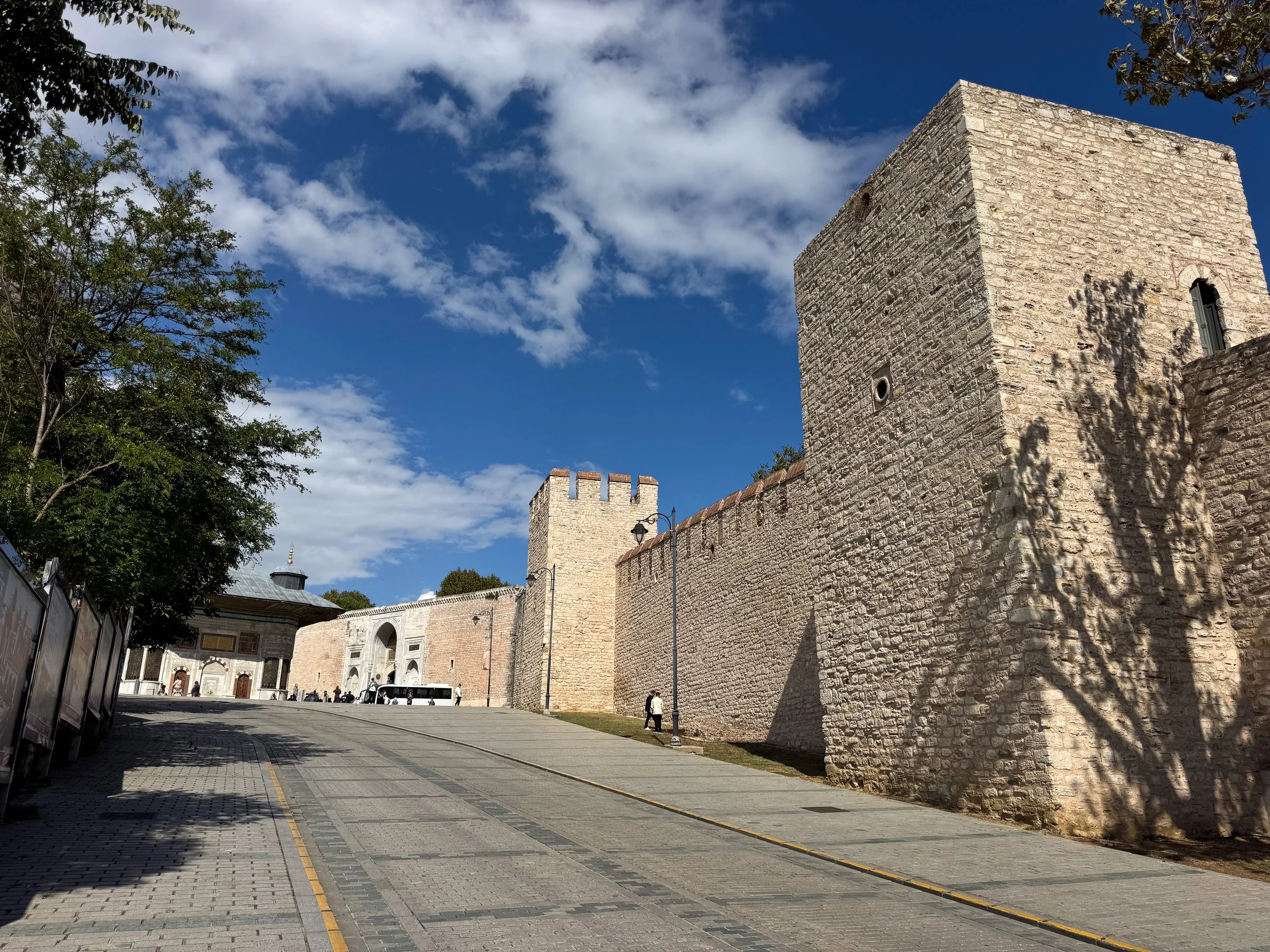
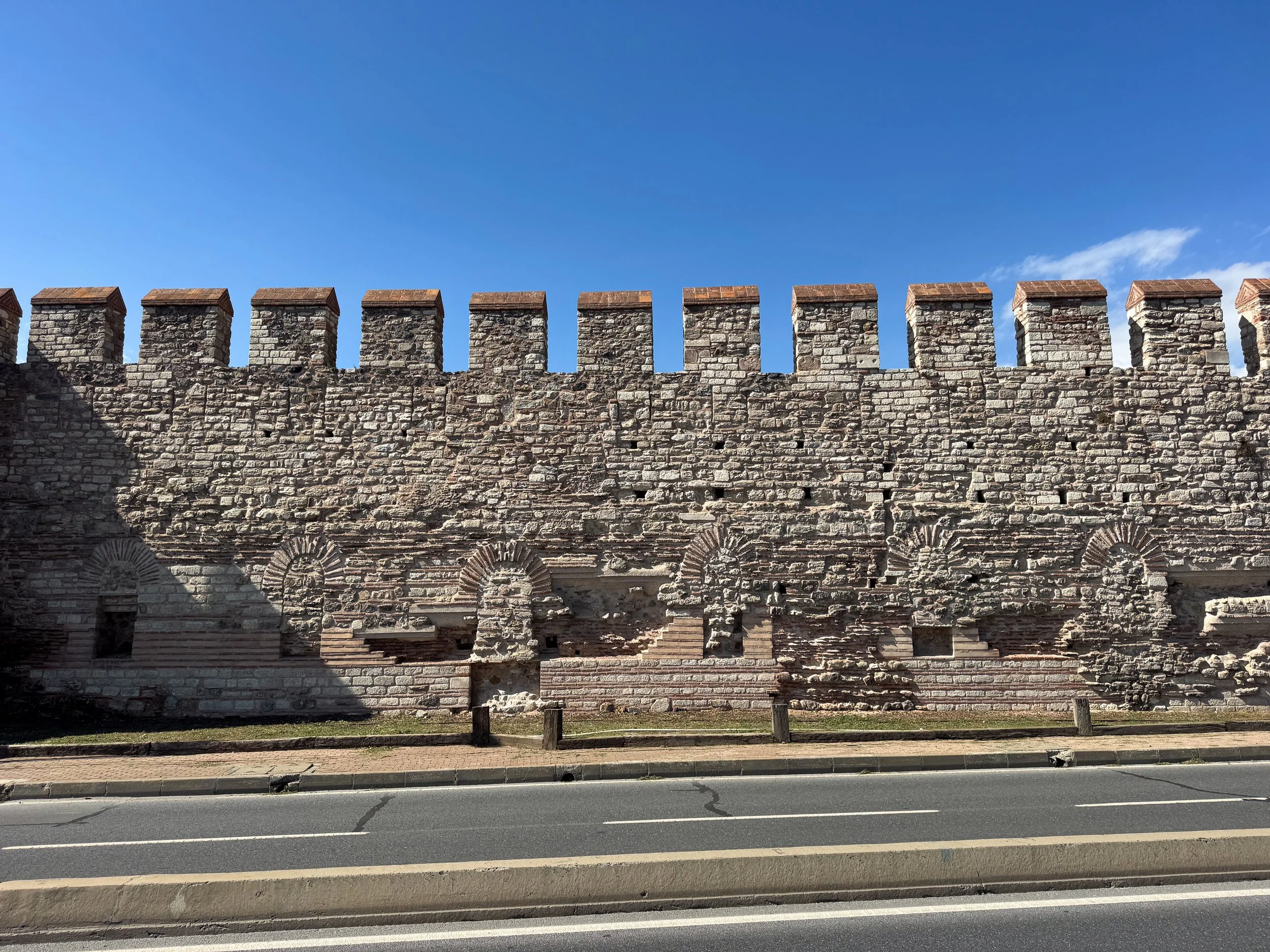
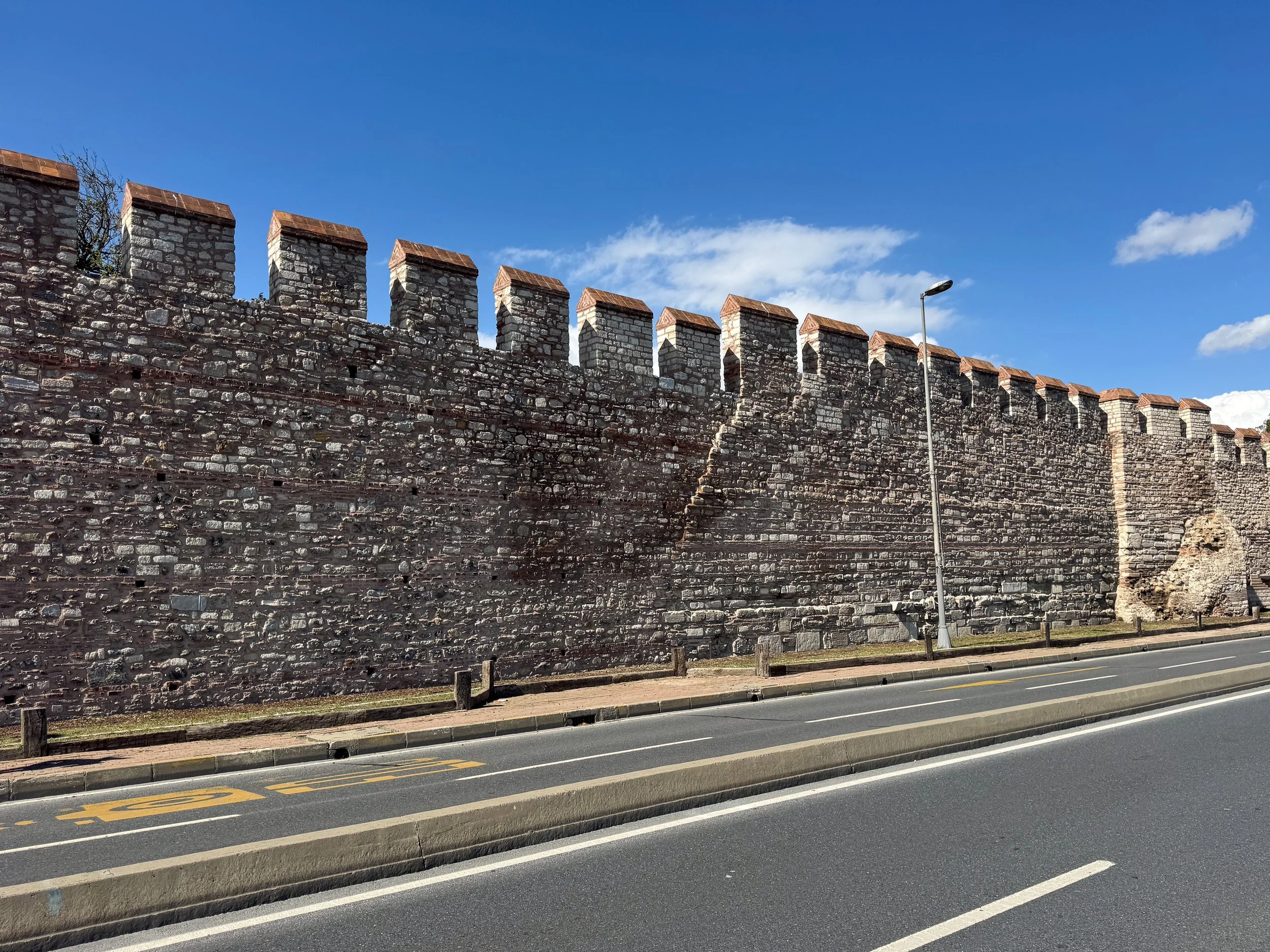
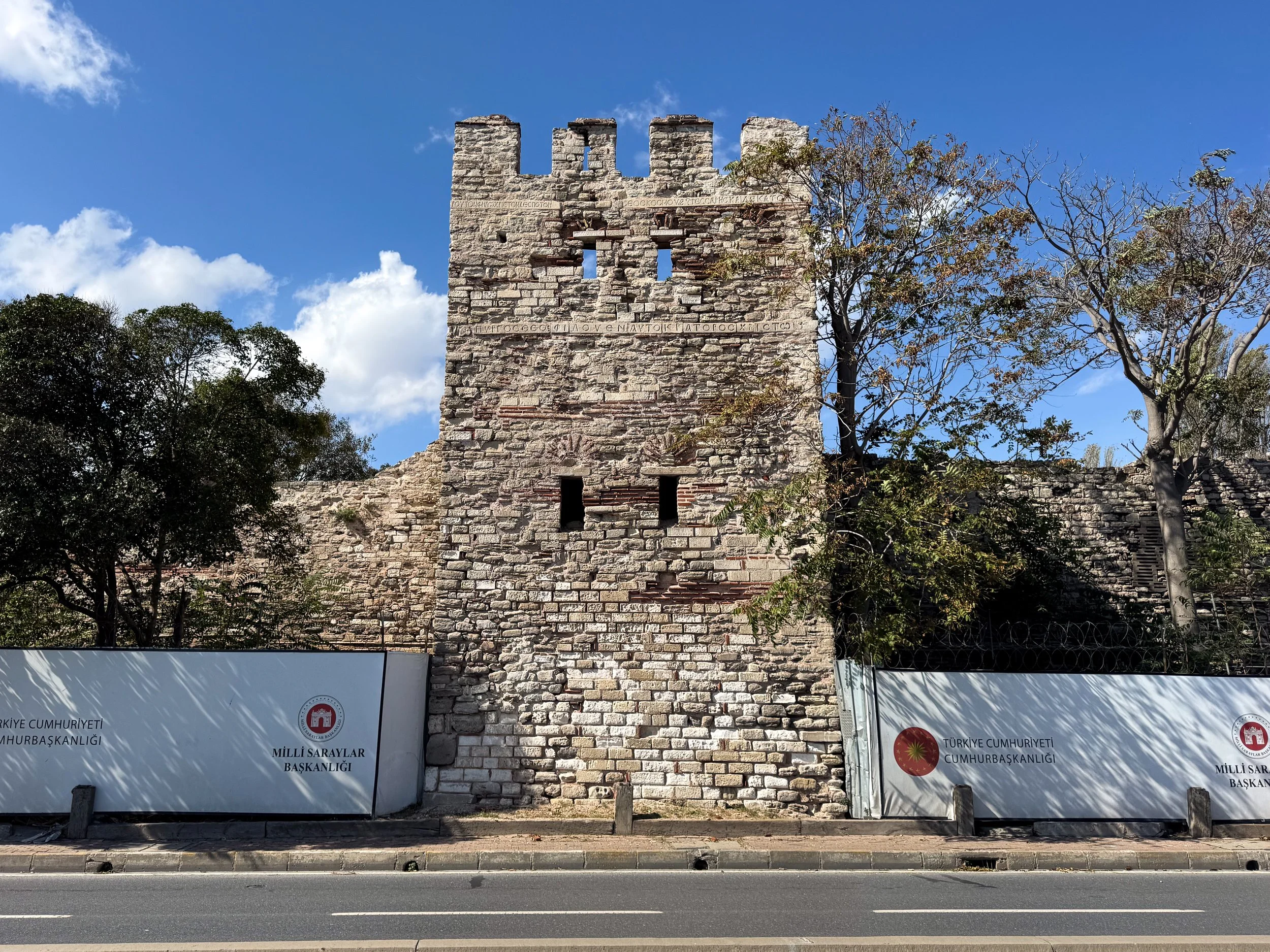
The Walls of Constantinople. A 4th century stone and brick wall surrounding the ancient city of Constantinople. It’s stationed with watch towers, arched gates and toothed battlements. The best preserved sections are along the Bosphorus River and Northwest side of the city.
Aqueduct of Valens. The remnants of a double arched aqueduct from the 4th century of Constantinople. Today cars drive through its arches along a modern road in the city of Istanbul.
Suleymaniye Mosque. The largest Ottoman style mosque in Istanbul. It features a multi-domed roof, pairs of minarets and an arched courtyard and prayer hall adorned with Islamic calligraphy. Built on a hill, the outer lawn offers scenic views of the city.
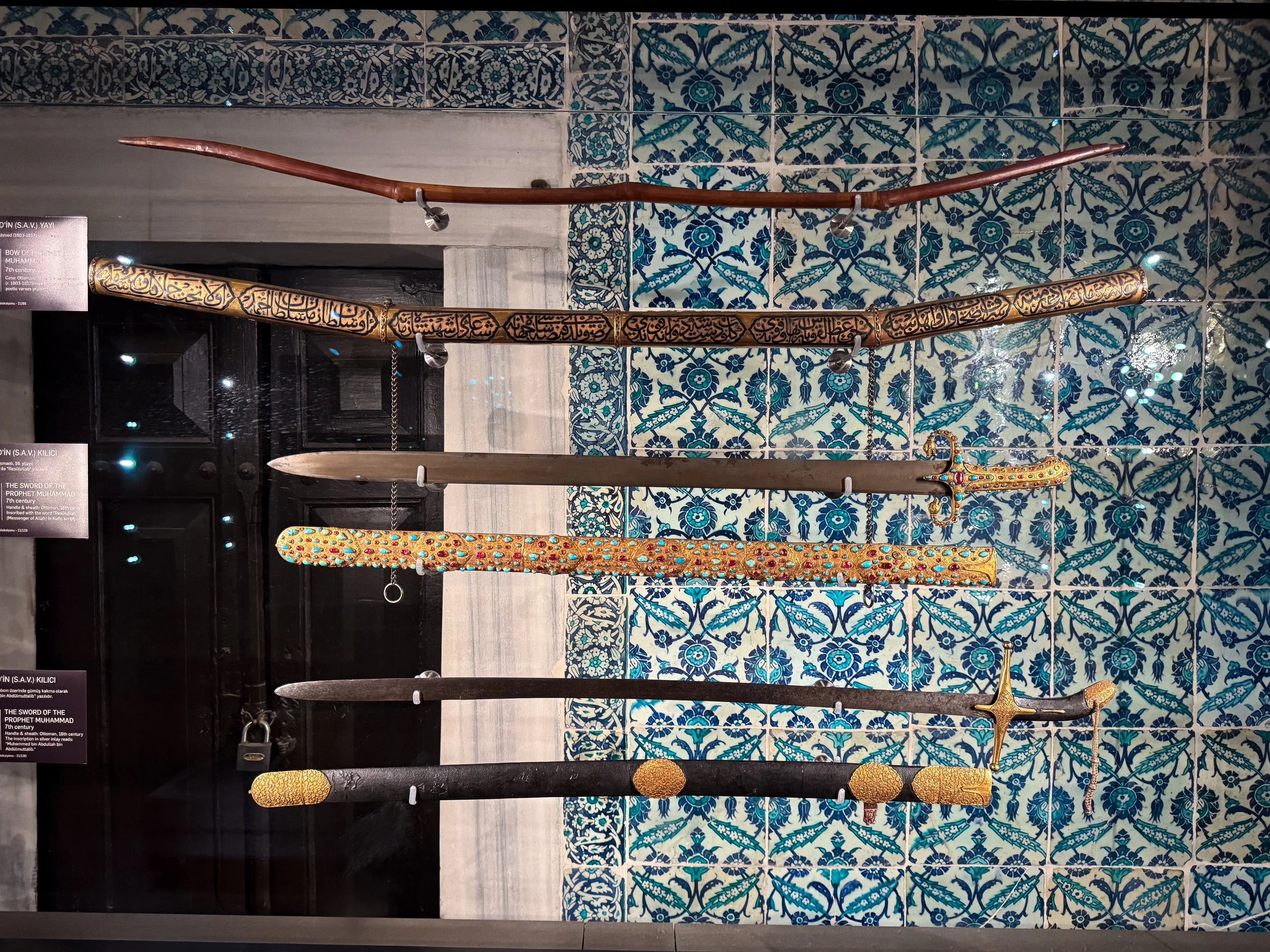
Visit the Sultan’s Palaces
Topkapi Palace. The historic and traditional palace of the Ottoman sultans. The grounds include ceremonial, administrative and living quarters used by the sultan, his family and advisors. Many spaces have been converted into exhibits and museums.
Gate of Salutation. A medieval style stone gate with twin spires. It marks the entrance to the palace grounds.
Gülhane Park. A city park built on the grounds of the former palace gardens. Stone paved walkways are flanked by grassy lawns, flowering gardens, towering sycamore trees, manicured hedges and Roman ruins. Food vendors wait outside of the park’s walls selling ears of corn, roasted chestnuts and simit.
Baghdad Pavilion. An Ottoman style pavilion decorated in hand painted blue tiles and varying natural stones. Its ornate interior features a domed ceiling, colorful stained glass windows and a throne for the sultans.
The Marble Terrace. A series of marble paved terraces with hilltop views overlooking the Bosphorus River, Golden Horn and city of Istanbul.
Imperial Treasury. An opulent exhibit with the Crown Jewels and priceless treasures of the Ottoman Empire. On display are golden and bejeweled objects including jewelry, thrones, medals, daggers, swords, armor and Quran covers.
Sultan's Clothing Exhibit. A two floor exhibit of the Sultan’s traditional clothing. On display are ceremonial outfits, military uniforms, intricately embroidered tunics, fur lined kaftans and accessories like turbans, fezzes, boots and belts.
The Holy Relics. A palace hall with artifacts from the various prophets of the Abrahamic religions. On display are the staff of Moses, the sword of David, a skull fragment of John the Baptist, the Robe of Mohammad and the Coat of Fatima.
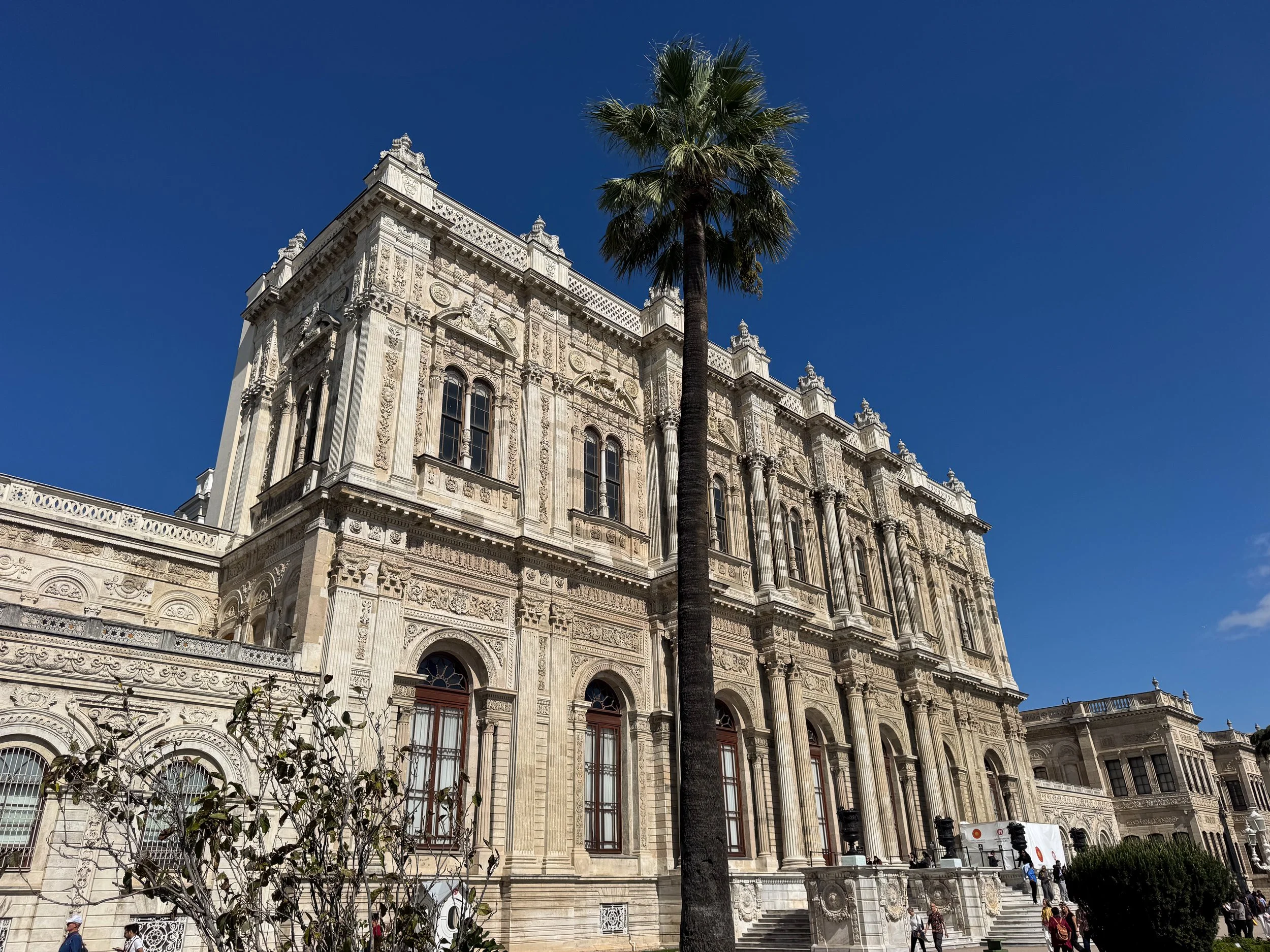
Dolmabahçe Palace. An opulent and lavish palace built along the banks of the Bosphorus River. It was built by the Ottoman Sultans to rival the royal palaces of Europe, combining neoclassical and baroque styles.
Selamlik. A truly lavish building used to run state affairs. Its gilded interiors are styled with marble columns, intricately patterned wood floors and Baroque style ceilings. Beige painted walls are decorated with gold framed mirrors and portraits of the sultans. Rooms are furnished with Persian carpets, crystal chandeliers and antique furniture.
The Crystal Staircase. A double horseshoe shaped staircase and key feature of the Selamlik. Crystal banisters line each step as a massive crystal chandelier hangs overhead.
The Harem. The ornate living quarters for the sultan and his family. Its interior chambers include apartments, halls, baths and wardrobes for the sultan, his mother and multiple wives.
National Painting Museum. A building designed for the sultan’s heirs. It’s now an art museum displaying Ottoman and Turkish paintings. Galleries showcase portraits of the sultans and princes, the Ottoman navy, seasonal scenes of Istanbul, its iconic mosques and the Bosporus River.
Pro Tip. Visit the second floor parlor café for Turkish coffee and a slice of mosaic cake.
Good to Know. No photos are allowed inside of any of the palace buildings.
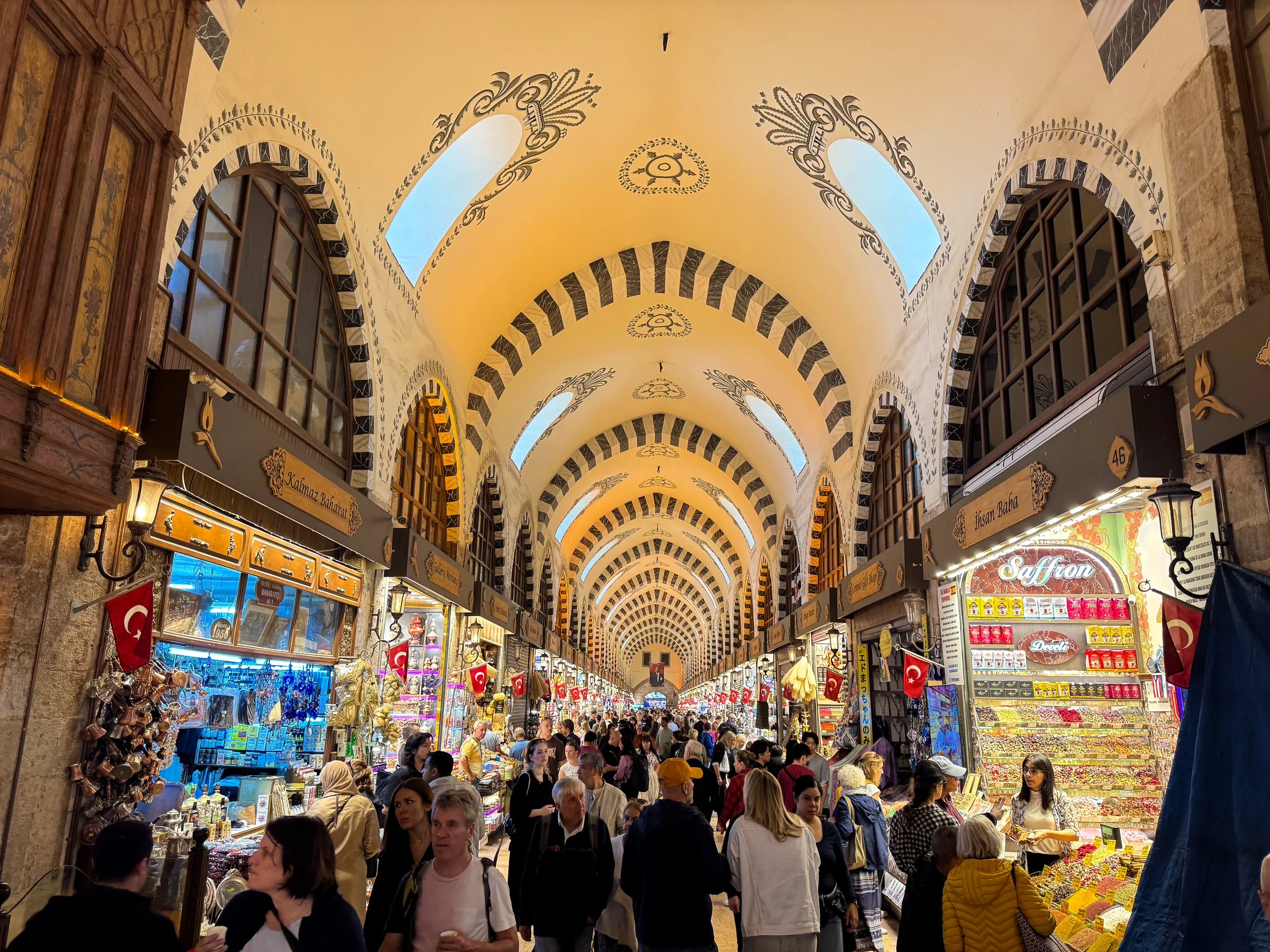
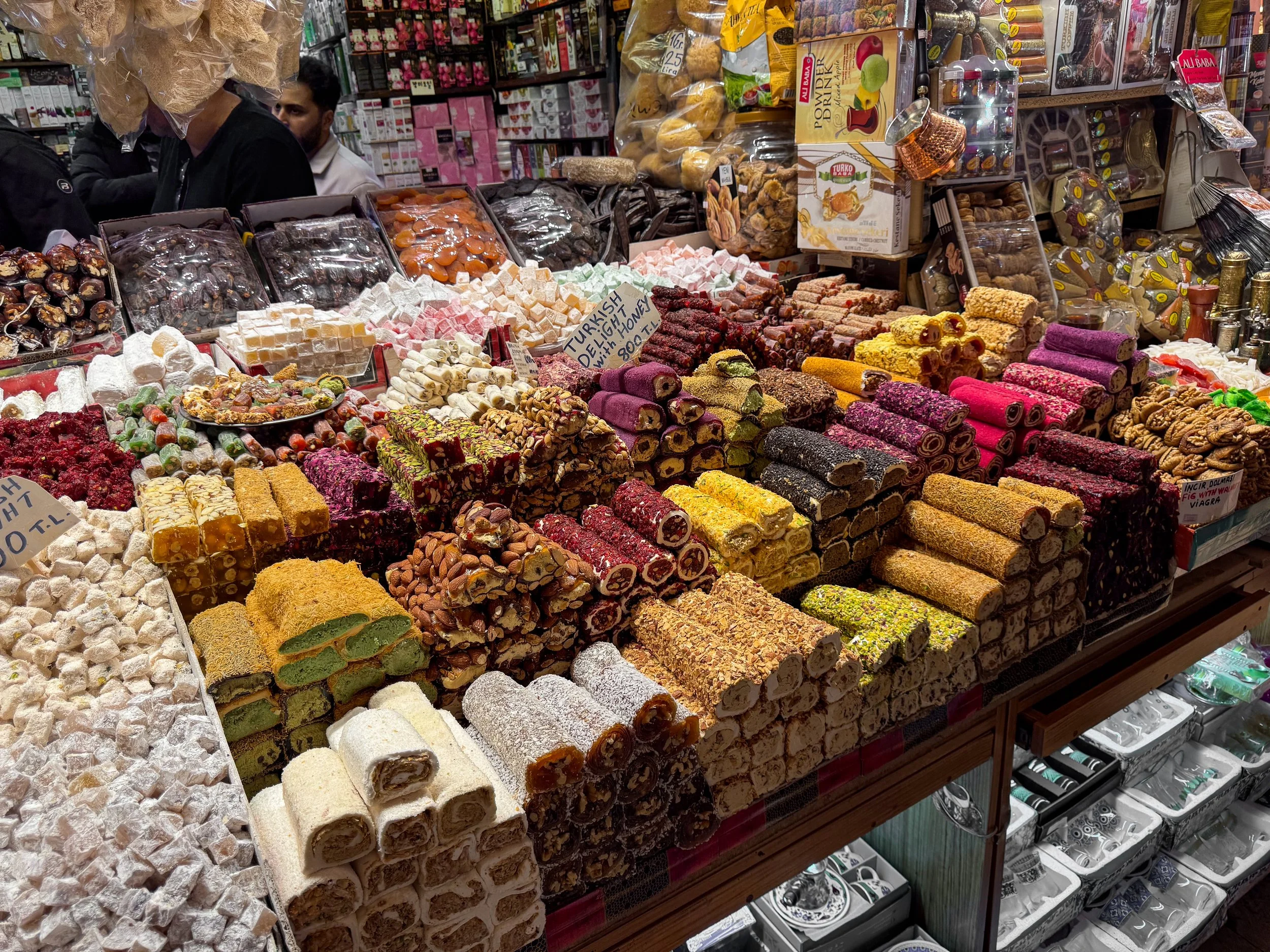
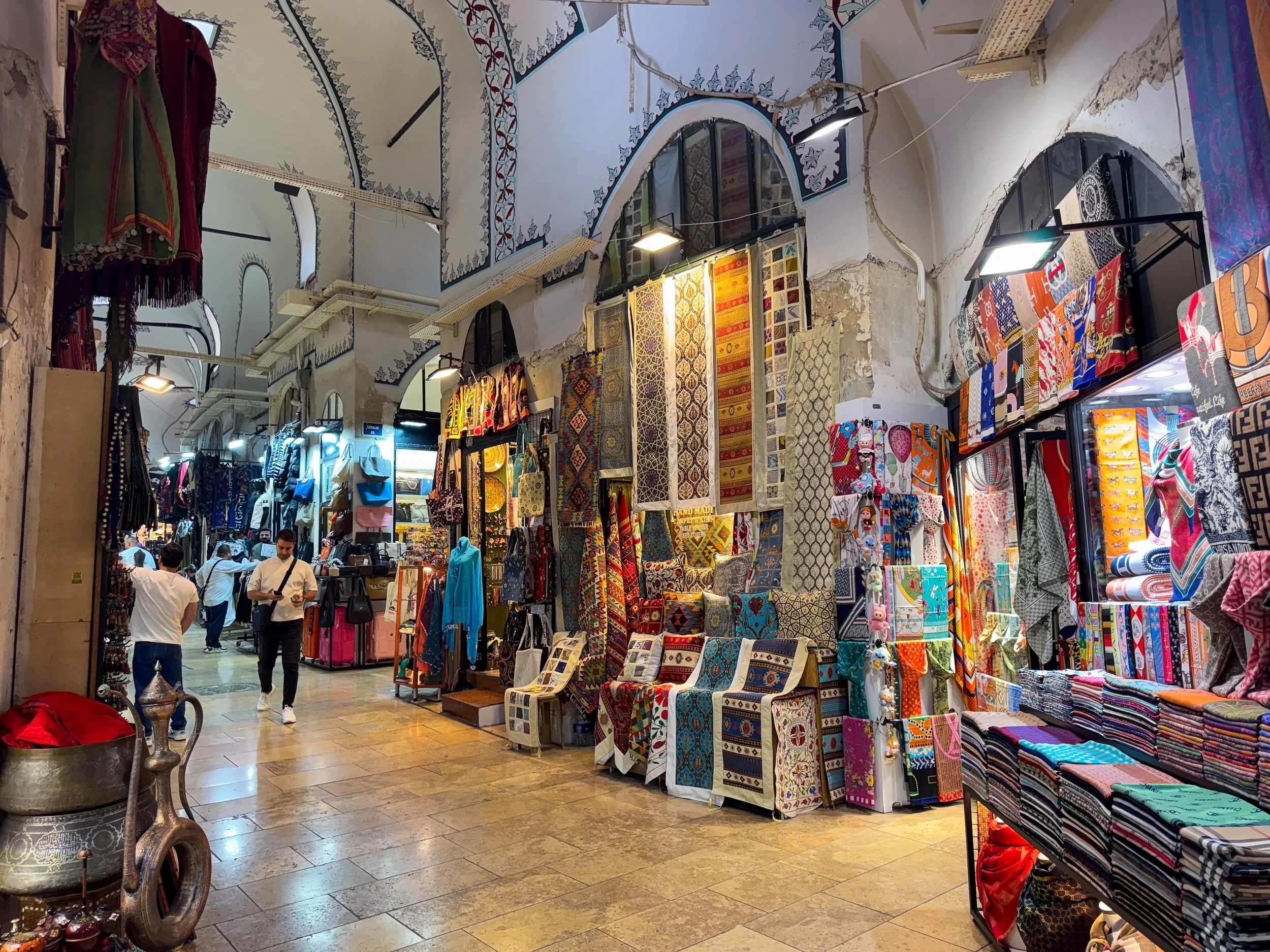
Shop the Markets & Bazaars
The Grand Bazaar. A historic complex with thousands of shops built into a sprawling network of covered streets, domed passageways and vaulted arcades. Merchants sell Turkish coffee makers, Persian rugs, Ottoman lamps, gold jewelry, antiques, leather goods, faux designer bags and Turkish sweets. Visit during the early afternoon and stop by Çarşu Kebap for a traditional Turkish lunch.
The Egyptian Market (Spice Market). A vaulted passageway lined with shops selling colorful piles of spices, herbal teas, dried fruits and Turkish delight, nougat and baklava. Shop around for the best prices and always negotiate for a deal.
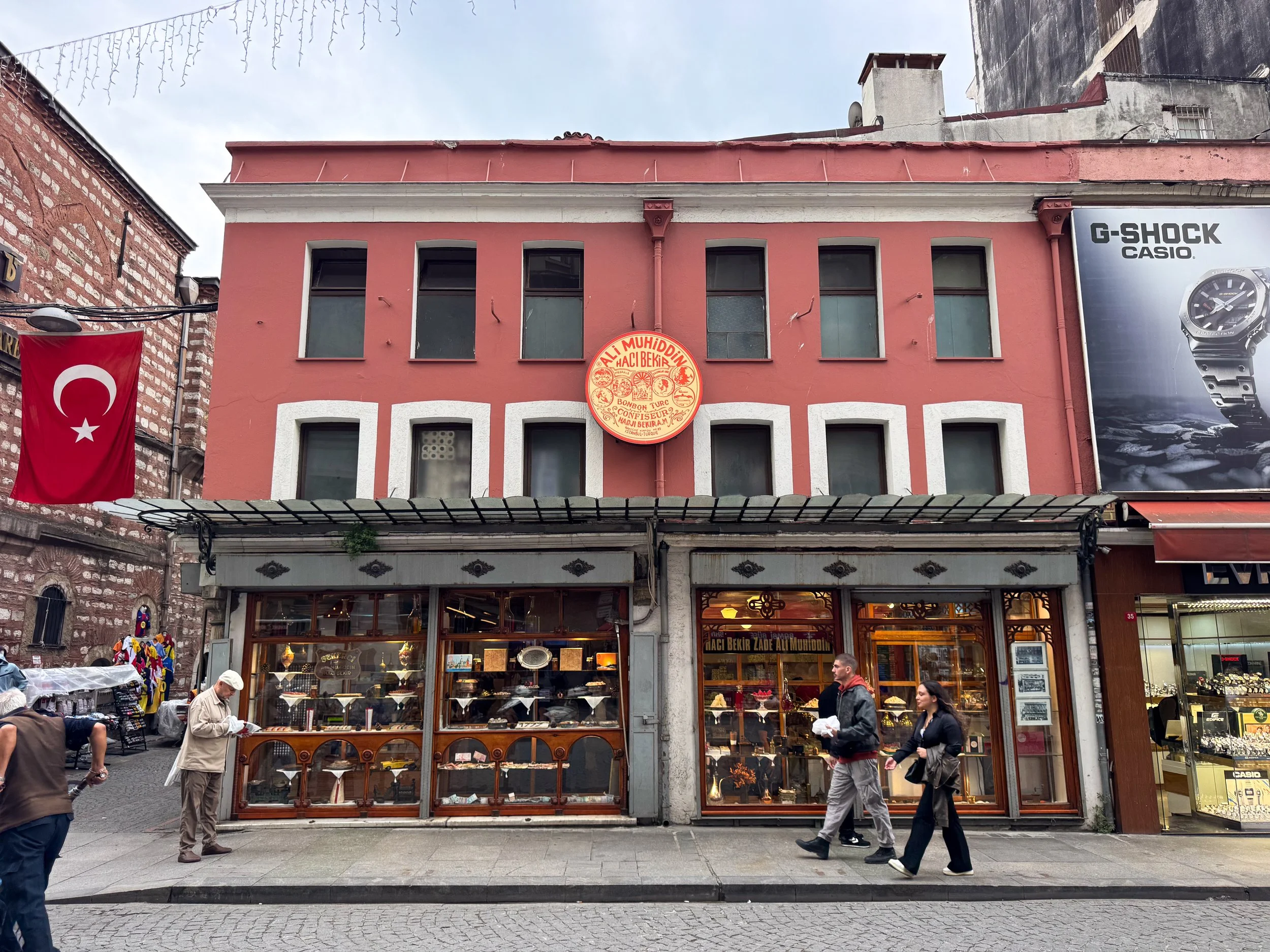
Places to Eat & Drink
Ali Muhiddin Hacı Bekir. The original confectioner that perfected the recipe for Turkish Delight. Their chain of unassuming shops isn’t as flashy as others but attracts loyal locals and those with a love of the famed treat.
Galata Kitchen. A restaurant with a selection of Turkish and Mediterranean dishes sold by the plate. Try the artichoke hearts, grape leaves, stuffed peppers, stewed eggplant and beet salad.
Çarşu Kebap. A Turkish restaurant along a side passage of the Grand Bazaar. While they specialize in meat, they offer vegetarian dishes like lentil soup, cucumber and tzatziki with cheese pide.
Vegan Community Kitchen Restaurant. A small restaurant serving homestyle vegan versions of traditional Turkish dishes like Döner Kebap and Manti.
Tarihi Eminönü Balık Ekmek. A riverfront restaurant serving Balık Ekmek, sandwiches with filets of mackerel griddled on a floating kitchen. It’s a hyper local place to enjoy an affordable meal.
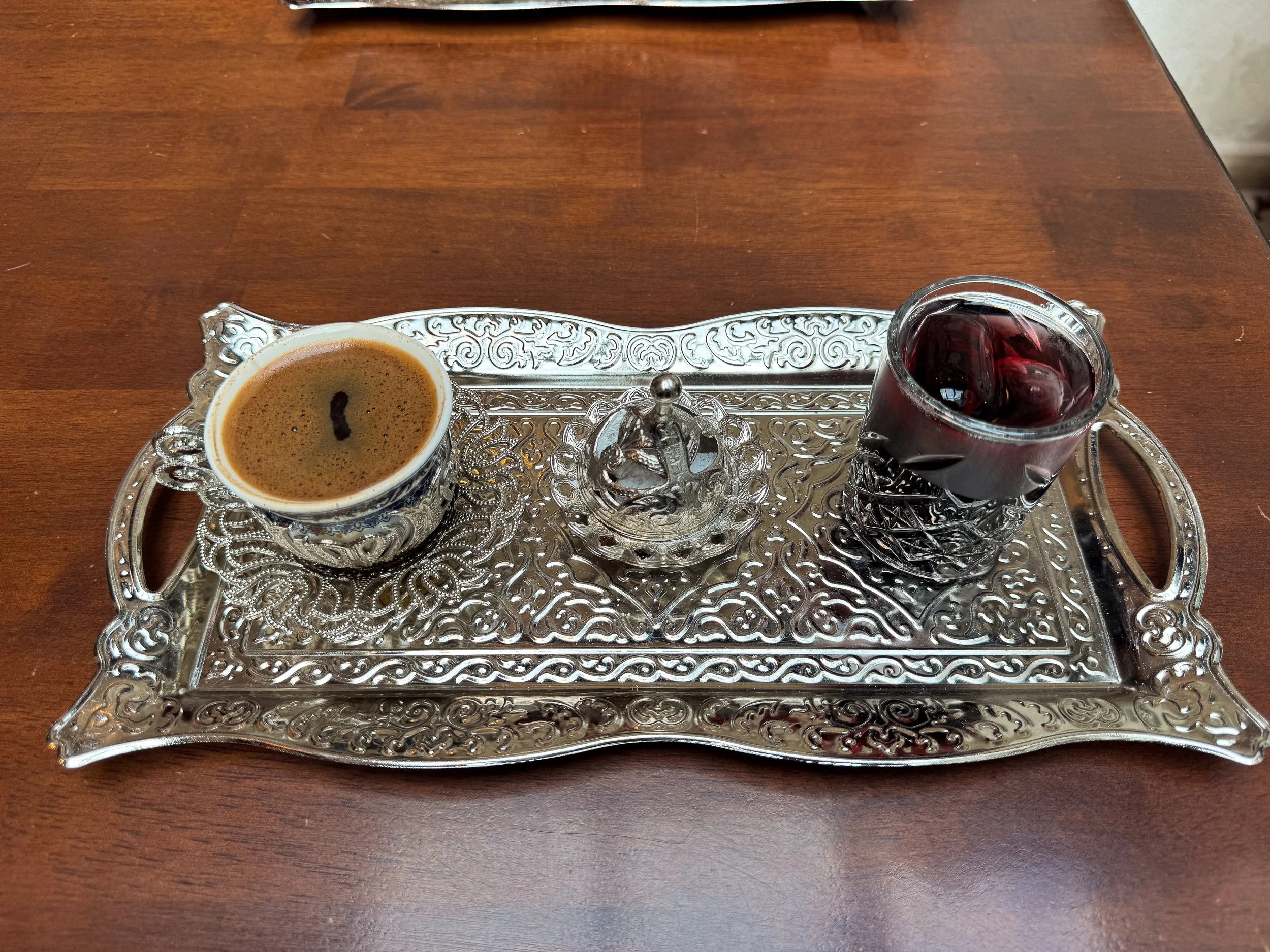
Daroute Coffee. A café near the Blue Mosque with traditional Turkish Coffee. Order the set paired with Turkish Delight and hibiscus juice.
Tarihi Cihangir Simit Firni. A historic hole in the wall bakery with homestyle baklava, simit, pide and pastries. Come here for their sweet and savory Turkish bakes.
Privato Café. A breakfast spot specializing in traditional Turkish spreads served with breads, jams, butters, cheeses, sweet and savory pastries, fried eggs and tea.
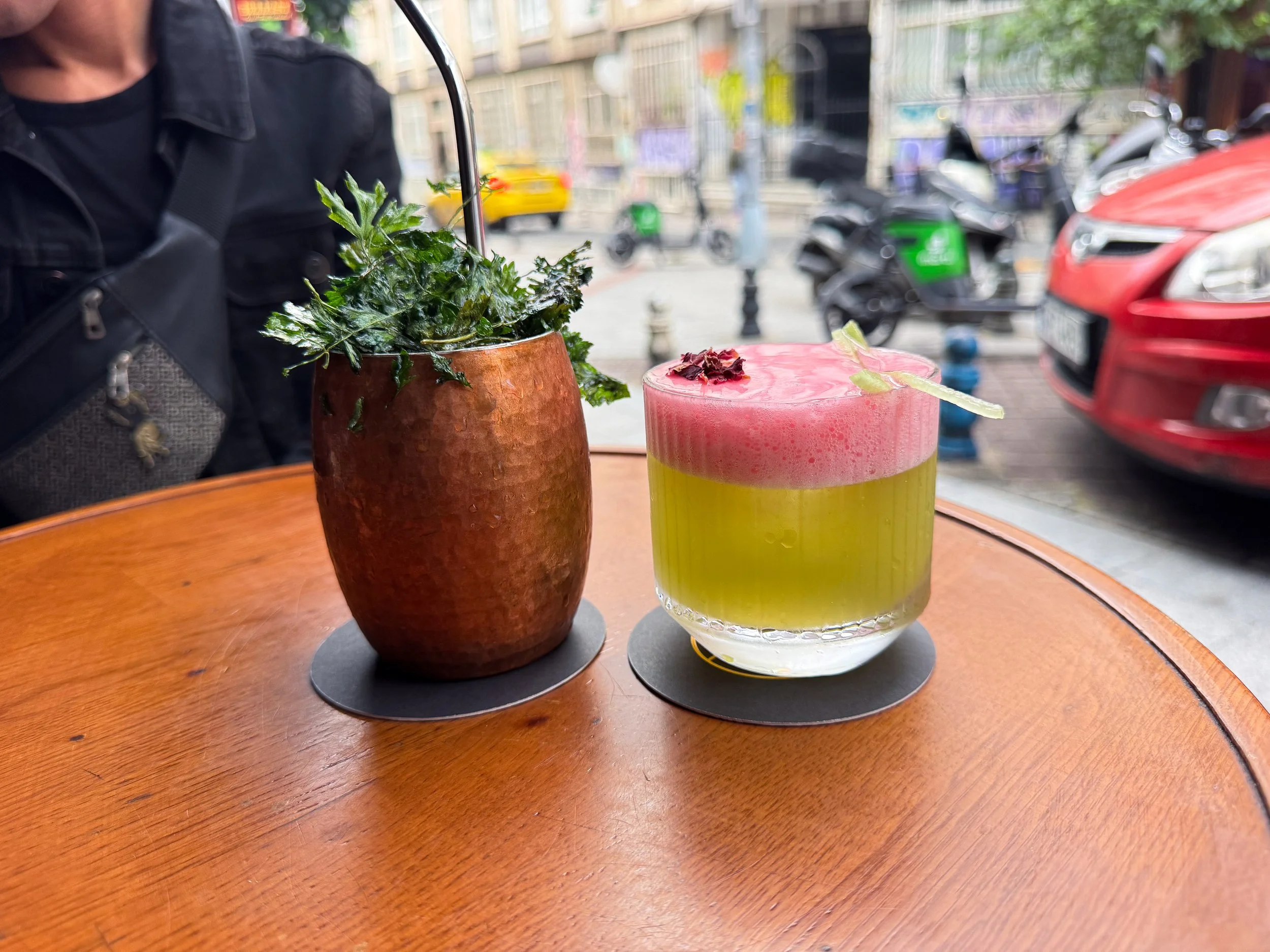
Fahri Konsolos. A pocket bar with elegantly presented cocktails and signature drinks made with seasonal ingredients. Try the gin forward cucumber and rose cocktail or mule mug topped with olive oil fried parsley.
Muhit Kadıköy. A popular pub style bar with inexpensive drinks and light bites. Come here for Turkish beers and flavored French fries.
Lelabbo Moda. A bar with a vintage atmosphere and classic cocktails made with house techniques as well as a range of creative signature cocktails. Try the Smoked Fiesta and Burnt Not Smoked.
Benden Karaköy. A street side restaurant and bar along the Umbrella Street with Turkish dishes and wines. Try the Yeni Raki, a local anise flavored liquor mixed with water.
Tower Pub. A cocktail bar steps away from the Galata Tower. Come here for the chill vibes, local beers and well made cocktails.
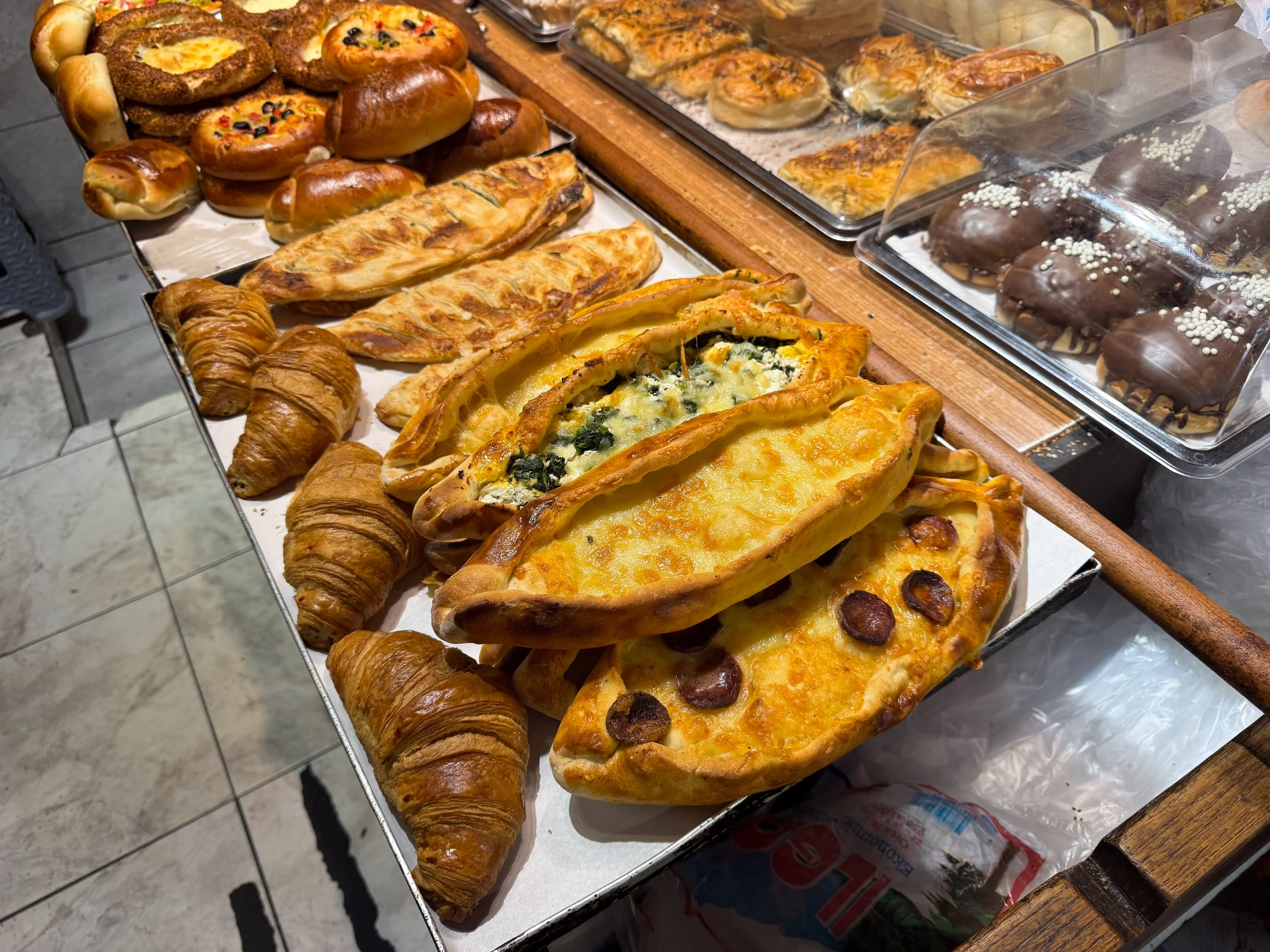
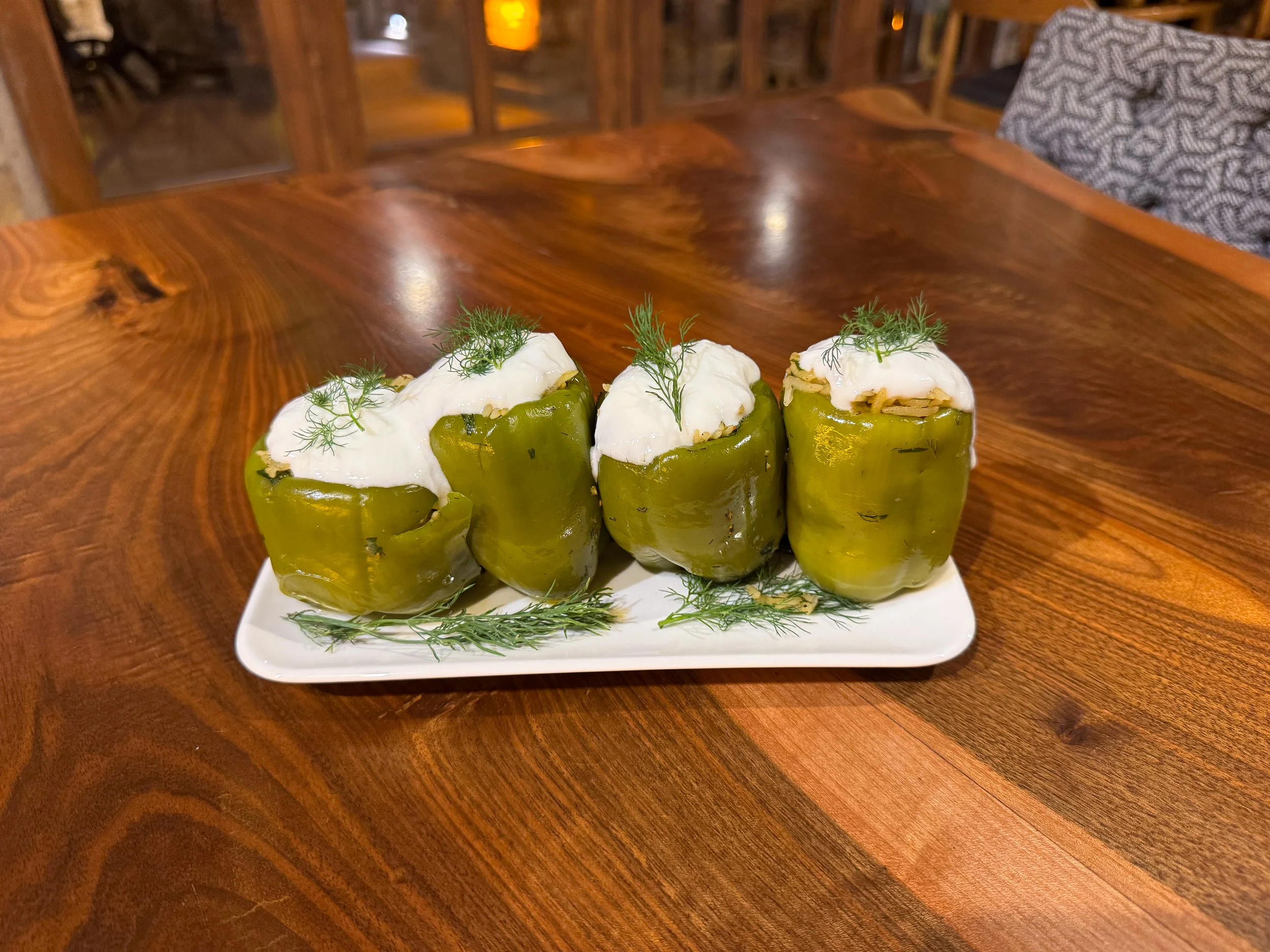
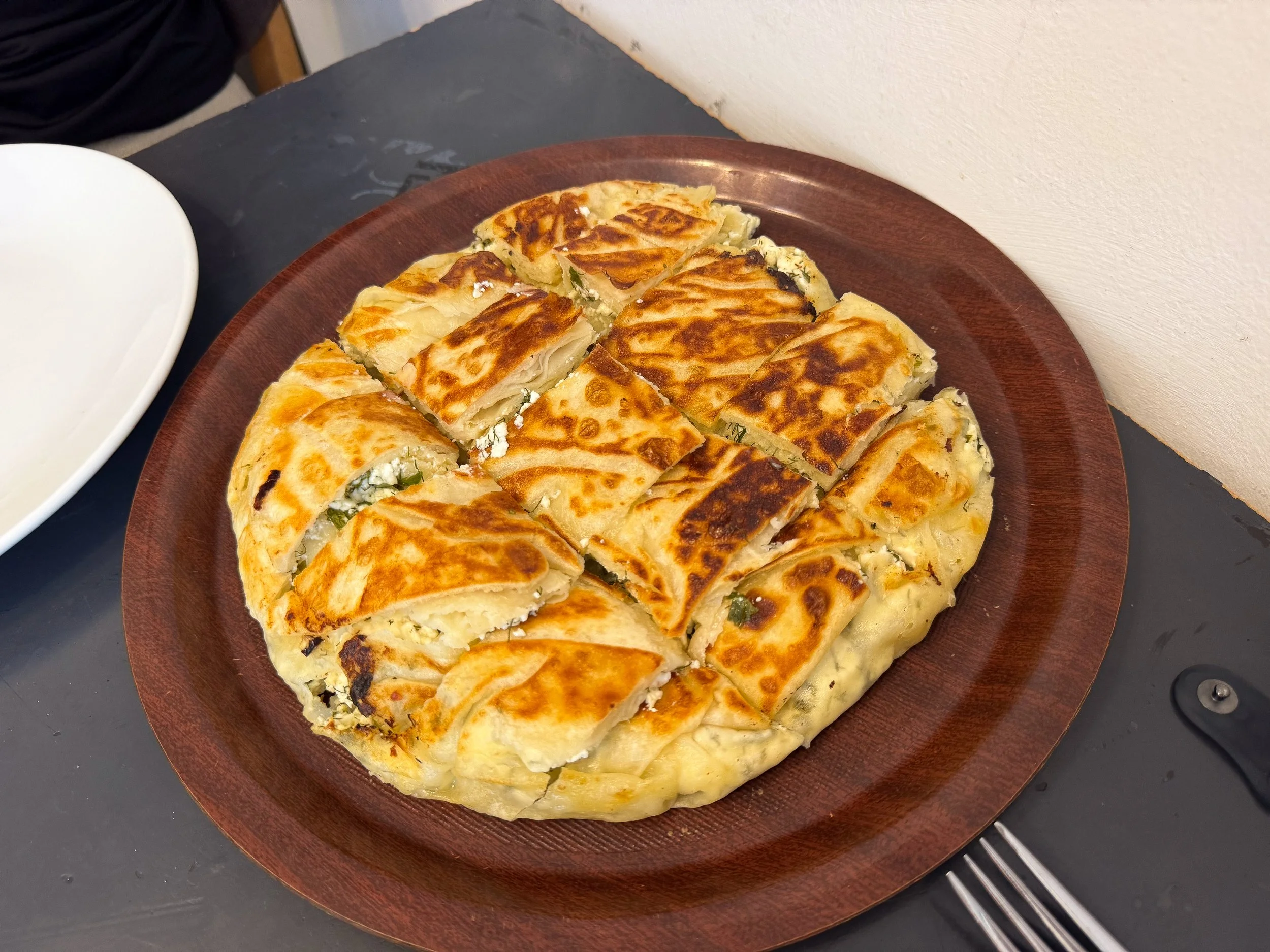
Turkish Cuisine
Döner Kebap. A Turkish style sandwich made from slices of rotisserie grilled meat combined with veggies in a pita.
Manti. A small Turkish style dumpling often filled with meat and garnished with yogurt.
Balık Ekmek. A Turkish fish sandwich made with filets of griddled mackerel, lettuce and tomatoes.
Pide. An ovular boat shaped pastry cradling a pool of melted cheese. It’s common on menus across the country.
Simit. A sesame seeded ring shaped pastry similar to a bagel. It’s commonly eaten at breakfast with coffee.
Börek. A snaked together flaky pastry stuffed with savory or sweet fillings. Try the spinach and cheese version.
Midye Dolma (Stuffed Mussels). A common street food snack served at carts across the city. Mussels are stuffed with rice, berries and spices, then served with a generous squeeze of lemon.
Turkish Delight. A gelatinous candy made with a range of flavors like rose, mint, lemon and orange. It’s cut into cubes and dusted in corn starch. Higher end versions are mixed with or encrusted in nuts and flowers then formed into elegant looking rolls or bricks.
Turkish Coffee. Finely ground coffee slowly brewed in a long-handled copper pot over heated sand. It has a smooth and strong flavor.
Baklava. A flaky bite sized pastry made with layers of chopped nuts. It’s soaked in a sugar or honey glaze. It comes in a variety of styles and shapes.
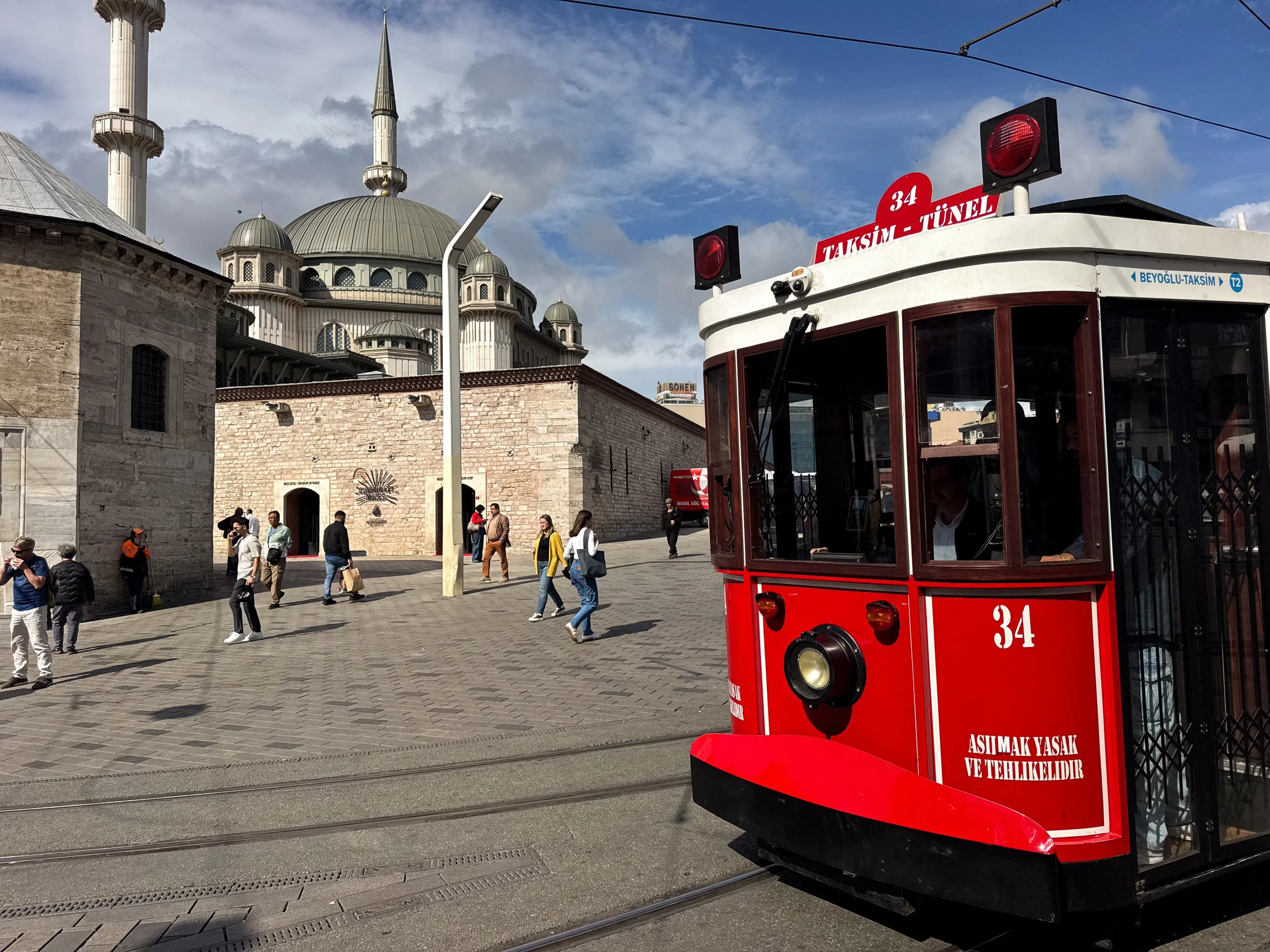
Getting Around
Public Transit. The city’s metro, trams, buses and ferries are the best way to travel across Istanbul. Buy a reloadable Istanbul Card from one of the kiosks at any metro station to use across all lines including to or from the airport.
Uber. Uber is available in Istanbul. It’s a good option for getting across the city quickly, though it can be expensive compared to public transit.
On Foot. Plan to spend time exploring neighborhoods on foot. It’s the best way to experience the vibrant urban landscape of the city, its history and culture.
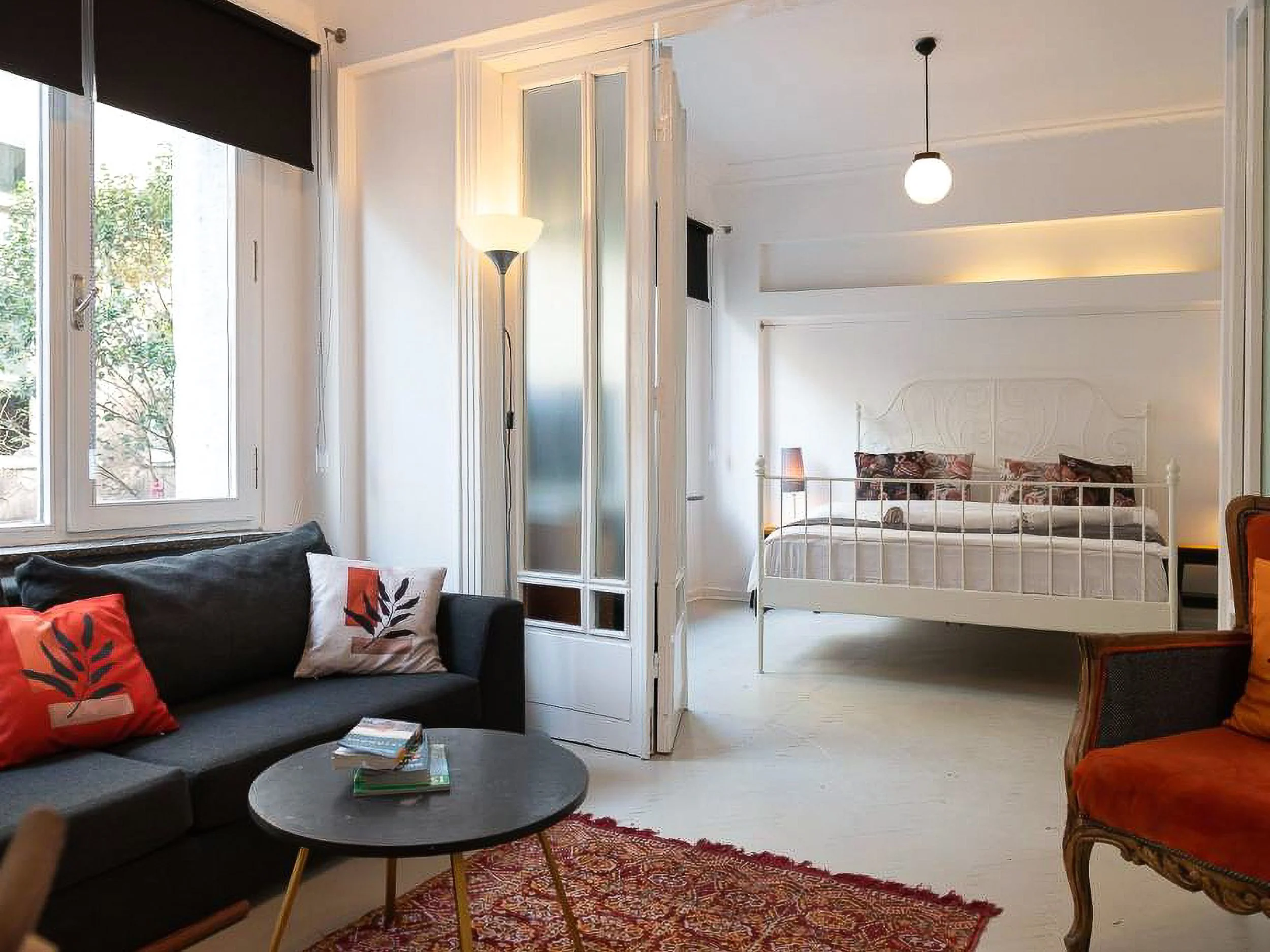
Where to Stay
Mayer Tatarbeyi. An apartment building with different style short term rentals. We stayed in a street view apartment with a comfy bed, cozy living area and kitchenette. The building has a rooftop terrace with city views! Reserve on Booking.
Location Specifics
When to Visit. Istanbul is beautiful in late September and early October. It’s a quieter time to visit, post peak season. Try to visit major attractions during the morning on weekdays to avoid the largest crowds.
Language. Turkish is the national language, however English is commonly spoken by most people, written on menus, museum descriptions and transit signs.
Cash vs. Card. Credit cards are widely accepted across the city. It’s good to carry some Turkish Lira for cash only business or places with minimum spends.
Beware of Pricing Scams. Confirm the price before ordering or buying anything not clearly marked. If paying by card, confirm the price again before charging it.
Tipping. A 10% tip is standard across Turkey. It’s often included on most bills when paying.
Visiting Mosques. Non-Muslims can enter most mosques outside of prayer times. Plan to dress modestly by covering your legs and shoulders. Women must cover their hair.
Buying Baklava. When buying baklava, avoid the tourist shops on the busy streets and seek out a small local bakery. The baklava will be tastier and cheaper.
Stray Cats. Street cats and kittens are lovingly embraced in Istanbul. They’re a common sight across the city.
Smoking. Smoking is extremely common in Istanbul. People light up in restaurants, bars and on the street. It’s practically unavoidable for non-smokers or people with allergies.
LGBTQ+ Safety. Istanbul is a welcoming and accepting city in a more conservative country. We had no problems as an openly gay couple, wearing our wedding rings, dressing as ourselves or booking accommodations with a single bed. PDA is frowned upon between most people.
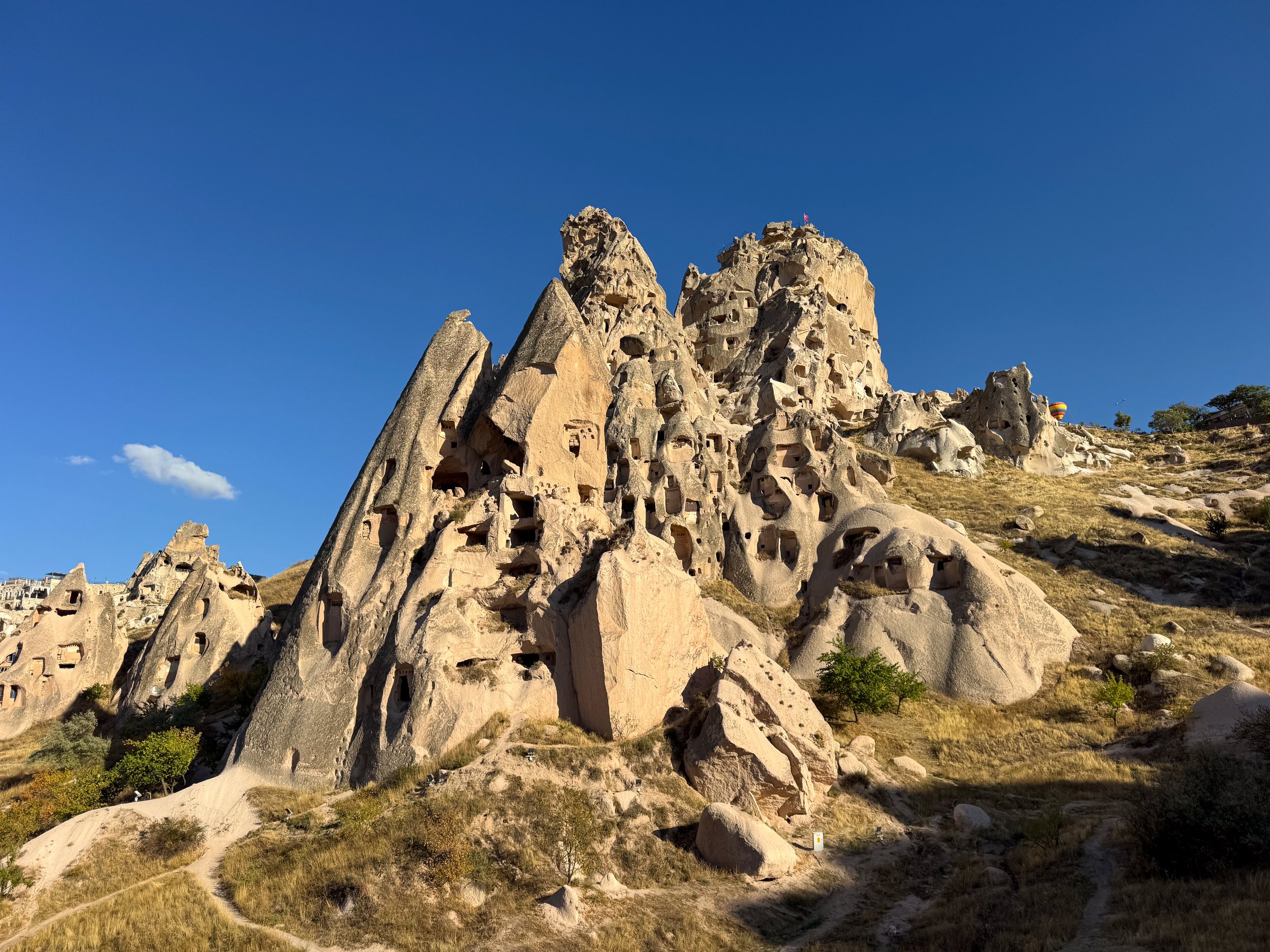
Elsewhere in Turkey
From Istanbul's historic neighborhoods, grand mosques and bustling bazaars to Cappadocia's fairy chimneys and valley trails, continue exploring Turkey's diverse landscapes and culture.
Cappadocia Travel Guide: Fairy Chimneys, Valley Hikes & Ancient Wonders. Explore Cappadocia's surreal landscapes where dramatic valleys, cave dwellings and underground cities create one of Turkey's most enchanting and adventurous destinations.
For Next Time…
Istanbul is one of the few destinations we could see ourselves living! When we return, it may be for an extended period of time. Having visited the tourist sights, we plan to experience more local areas of the city and return to the neighborhood of Kadıköy.