

Maya Ruins Travel Guide: Jungles, Temples & Ancient Cities
Journey through ancient Maya cities, temples and archaeological wonders across Belize and Guatemala while exploring dramatic jungle landscapes.
Exploring the Maya Jungle
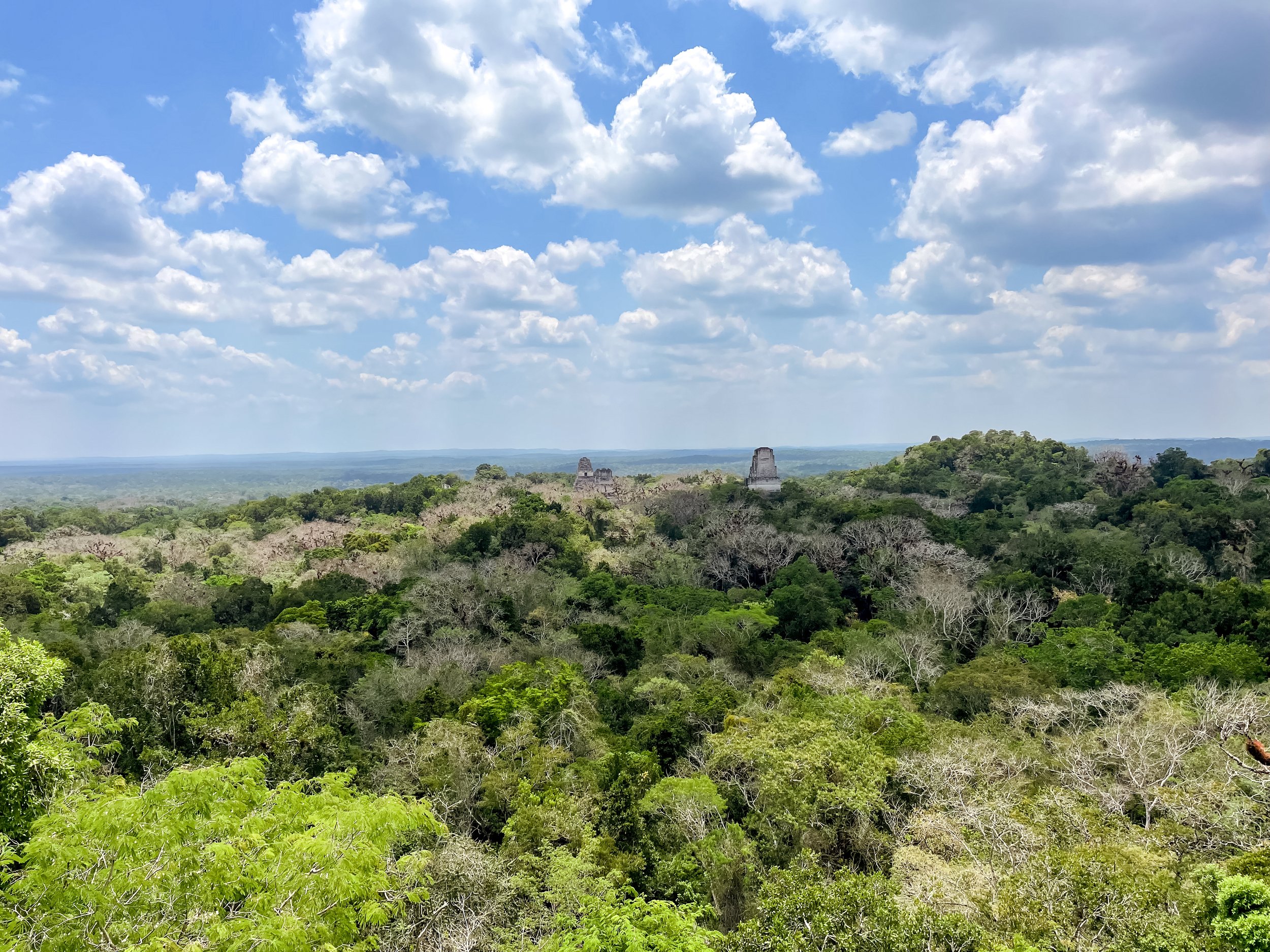
Deep within the lush jungles of Belize and Guatemala are some of the Mayan civilization’s most sacred sights. Ancient acropolises reside at the center of lost cities while overgrown ruins and towering pyramids rise from the dense jungle canopy. Sacred caves and their vast chambers entomb sacrificial remains and historic artifacts. Remote towns offer places to taste local cuisine, meet other travelers and reenergize in nature.
Caracol Mayan Ruins
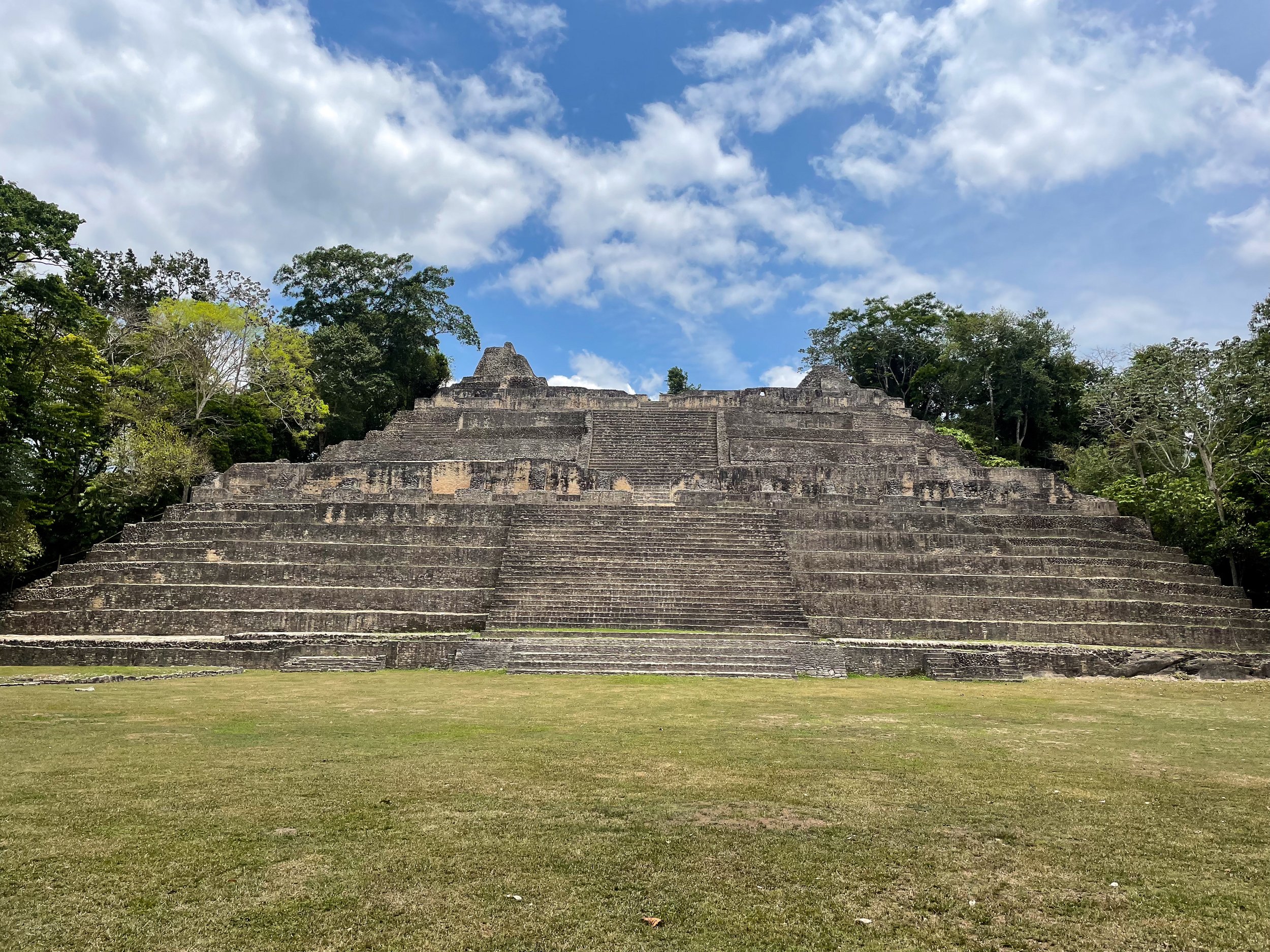
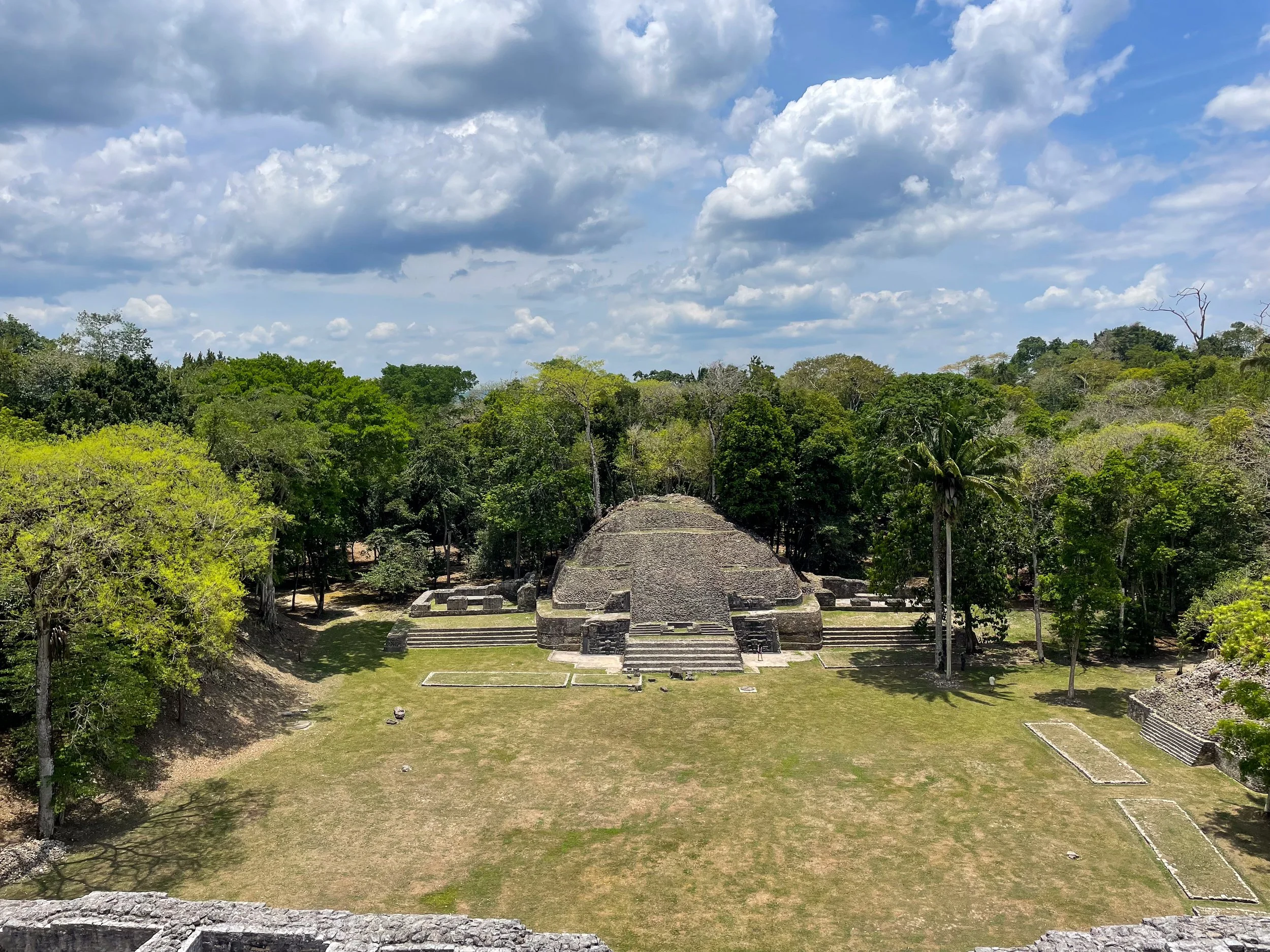
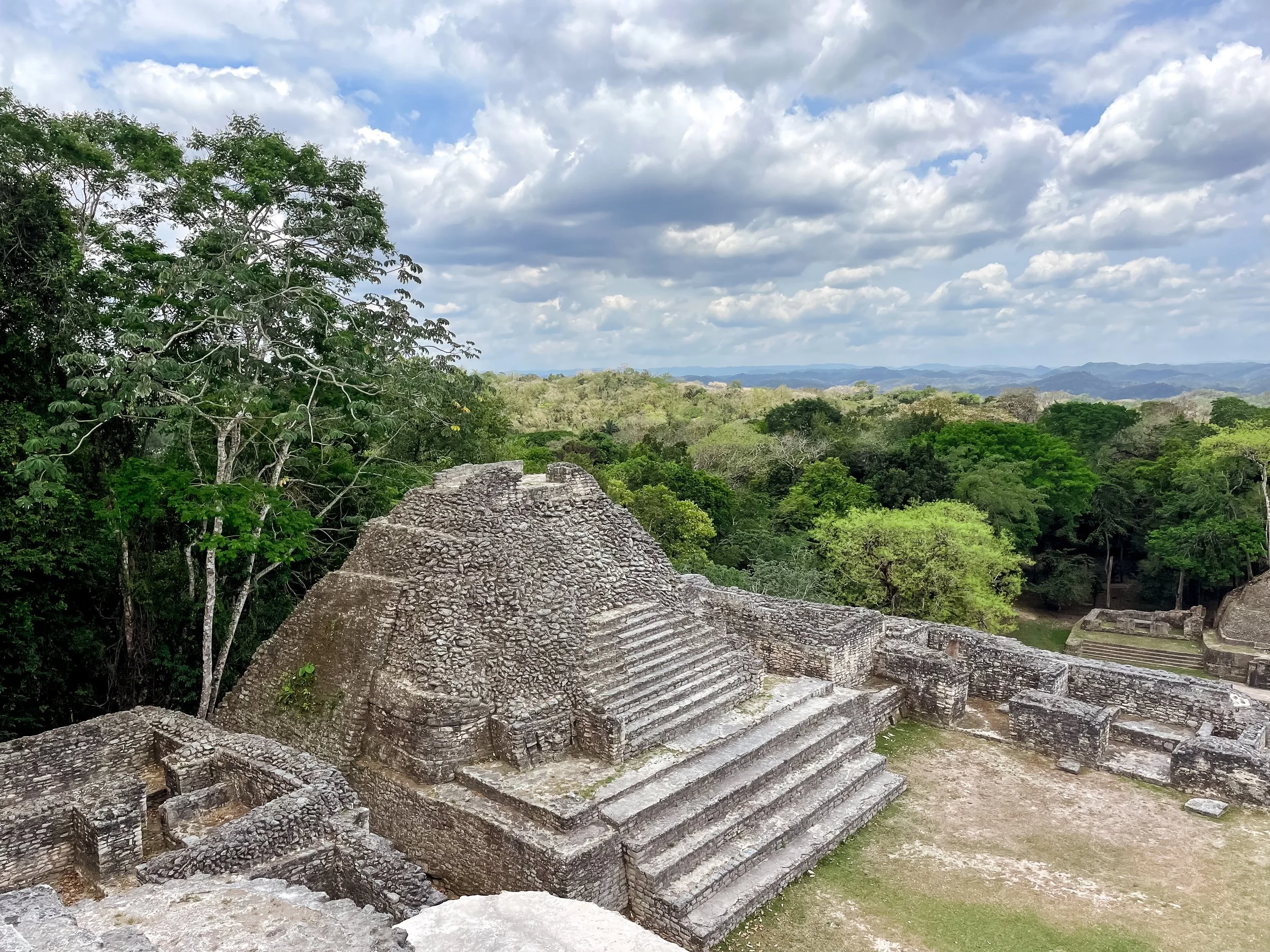
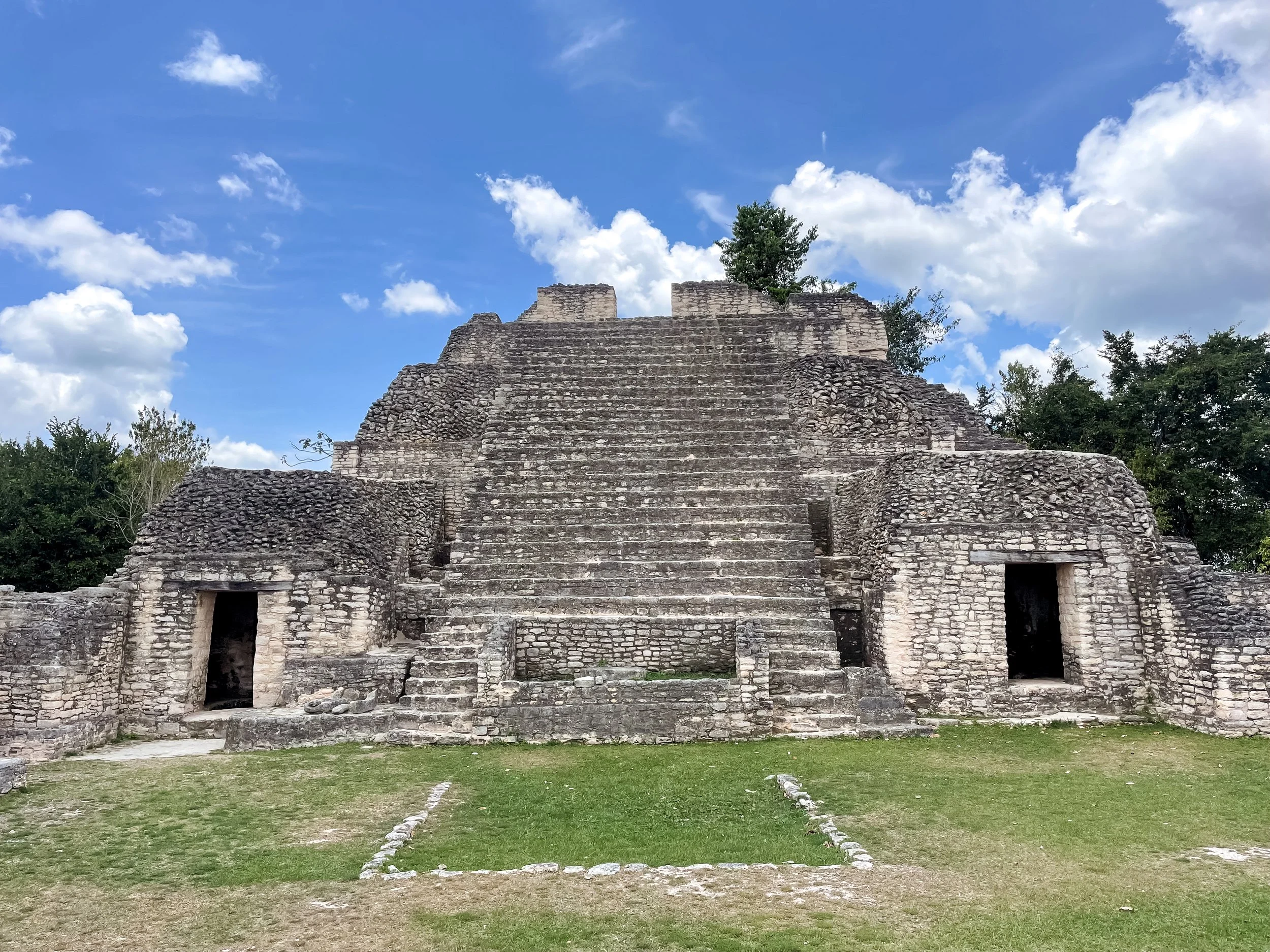
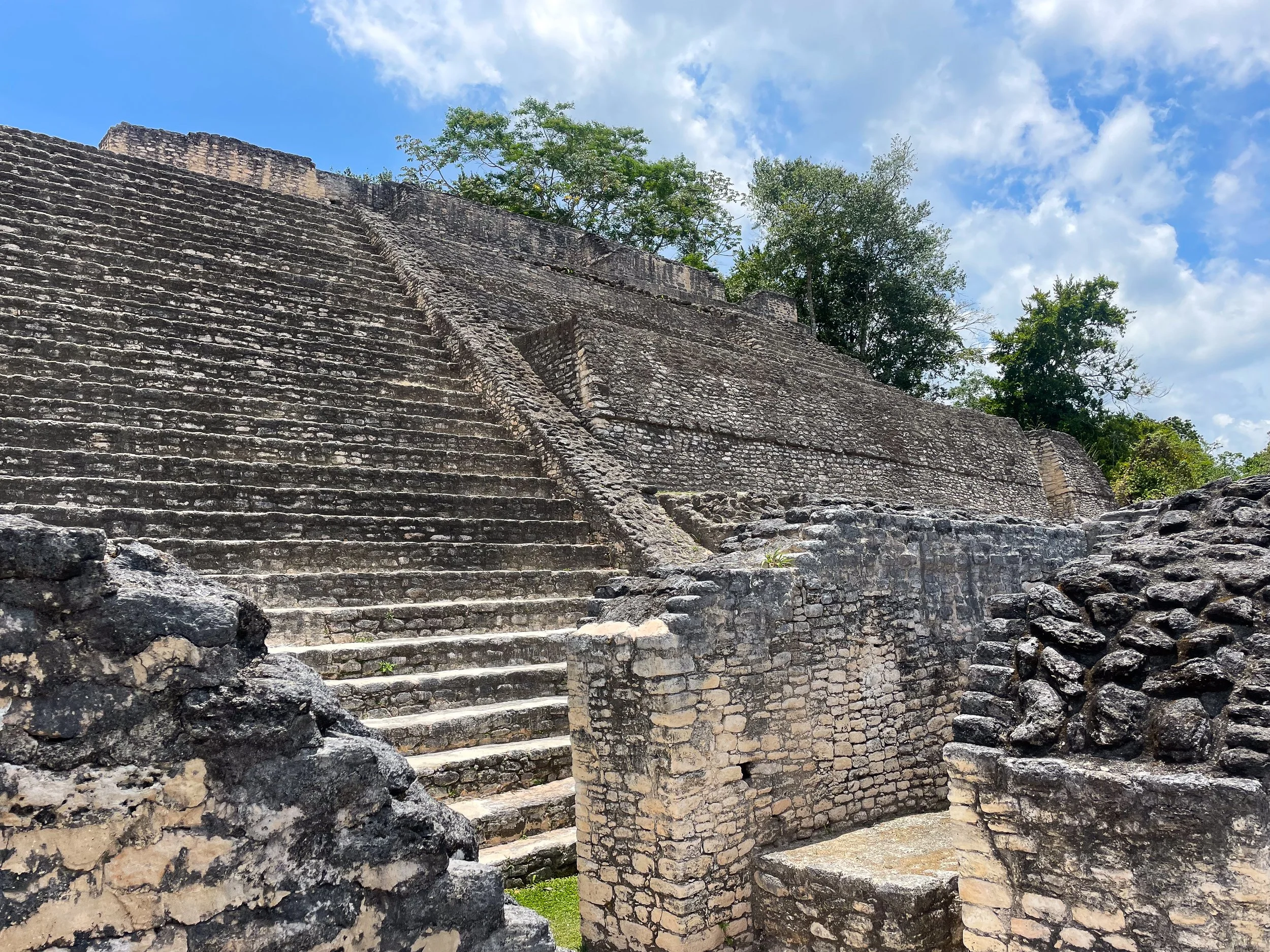
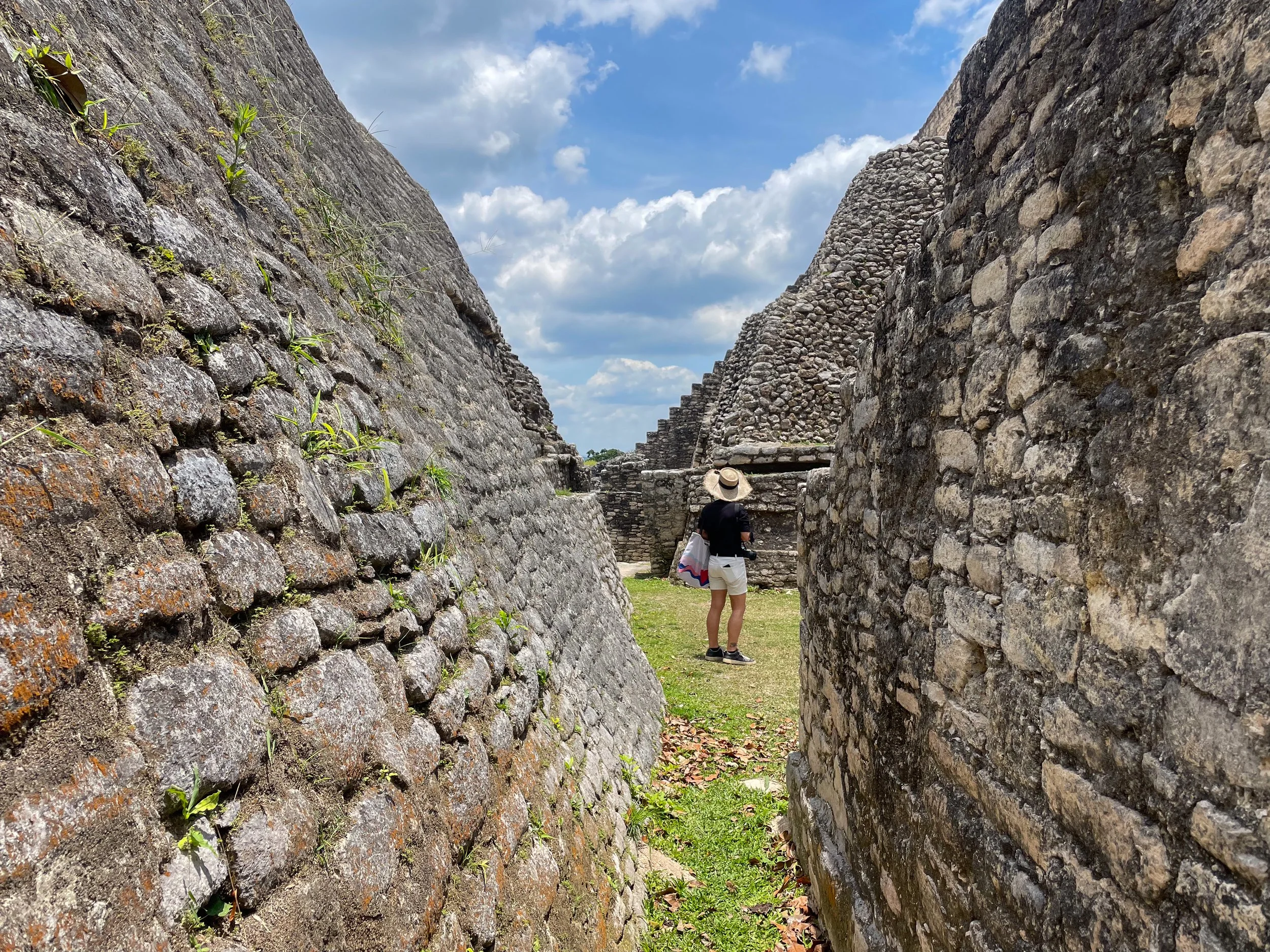
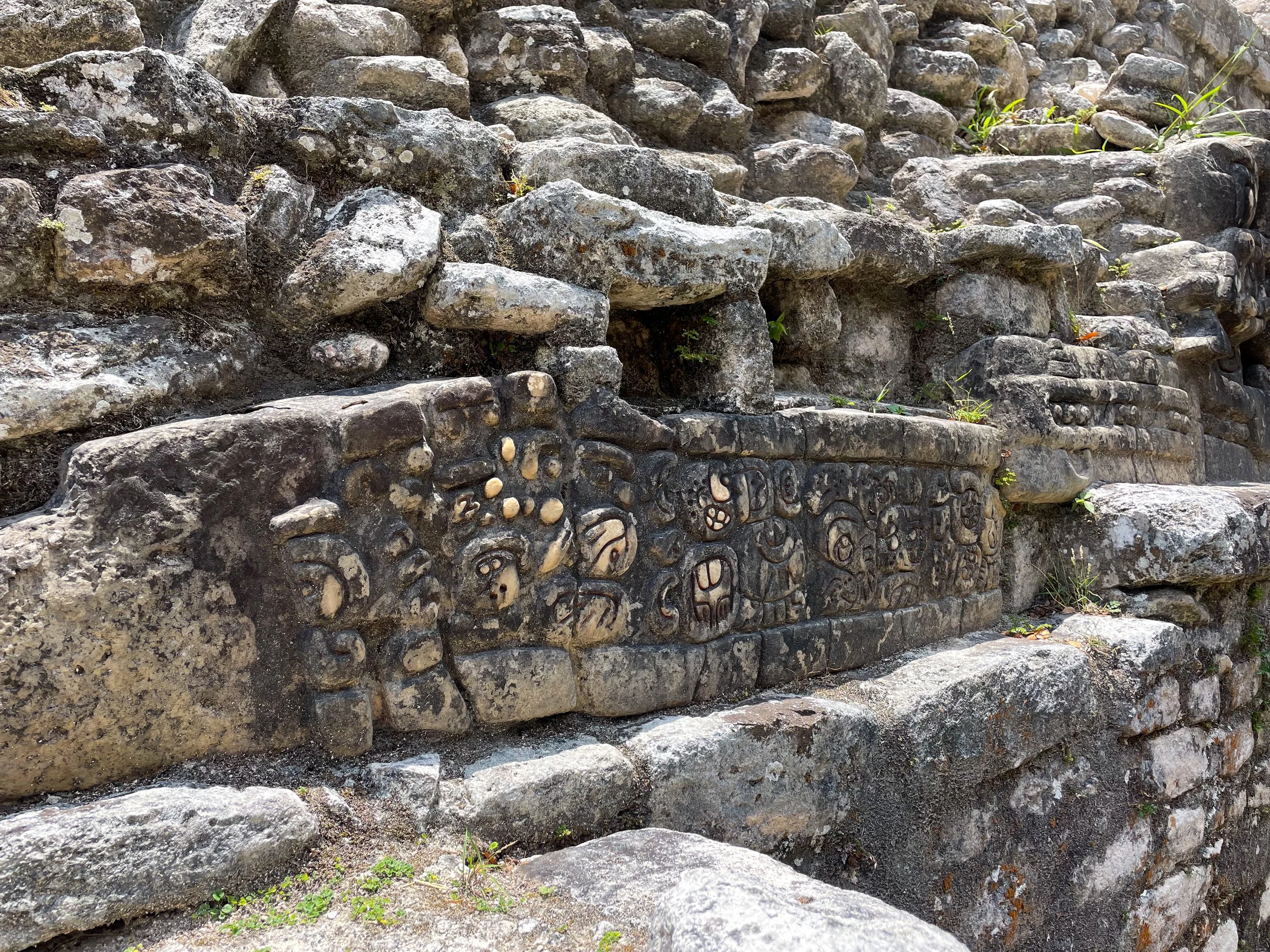
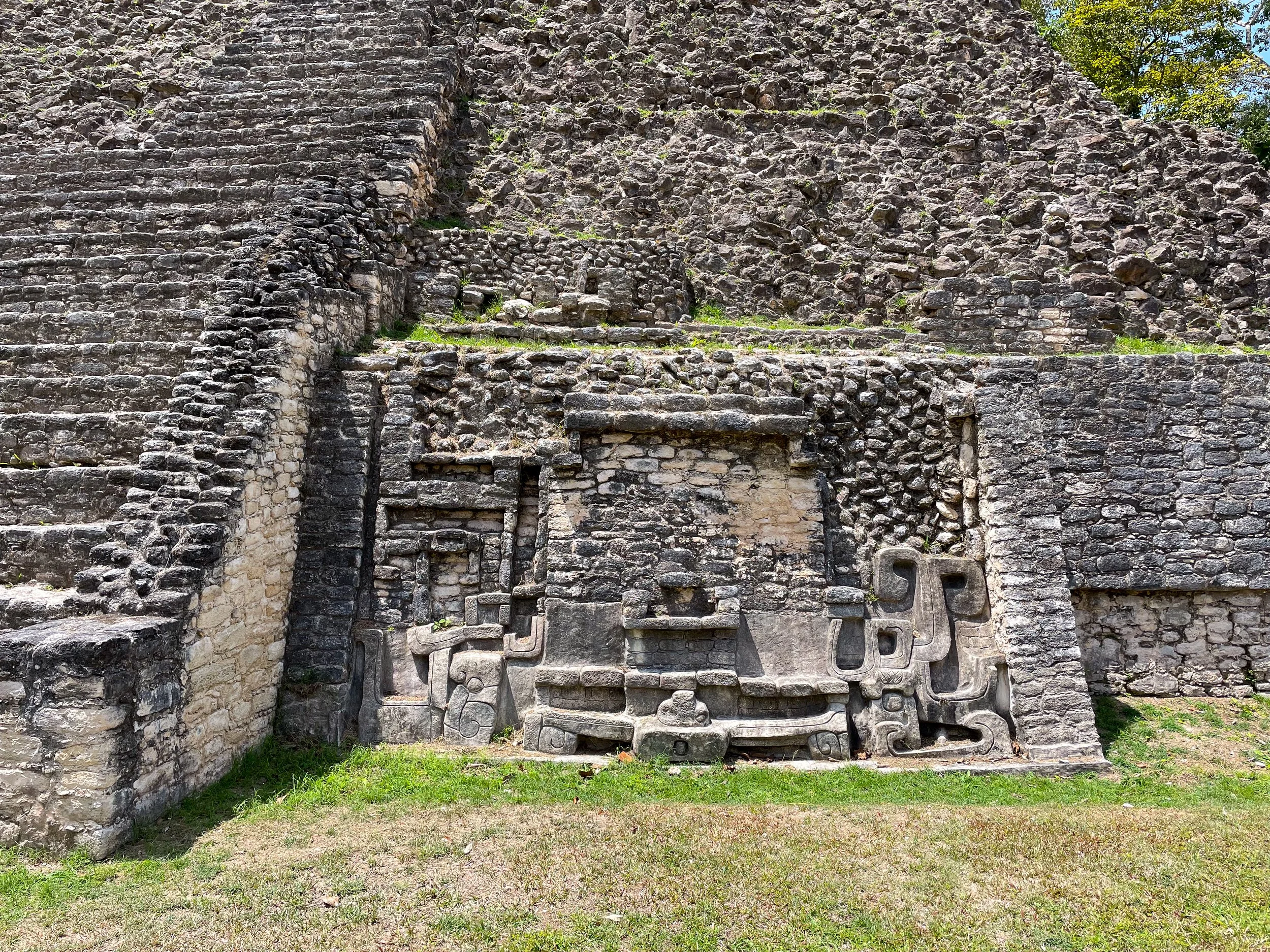
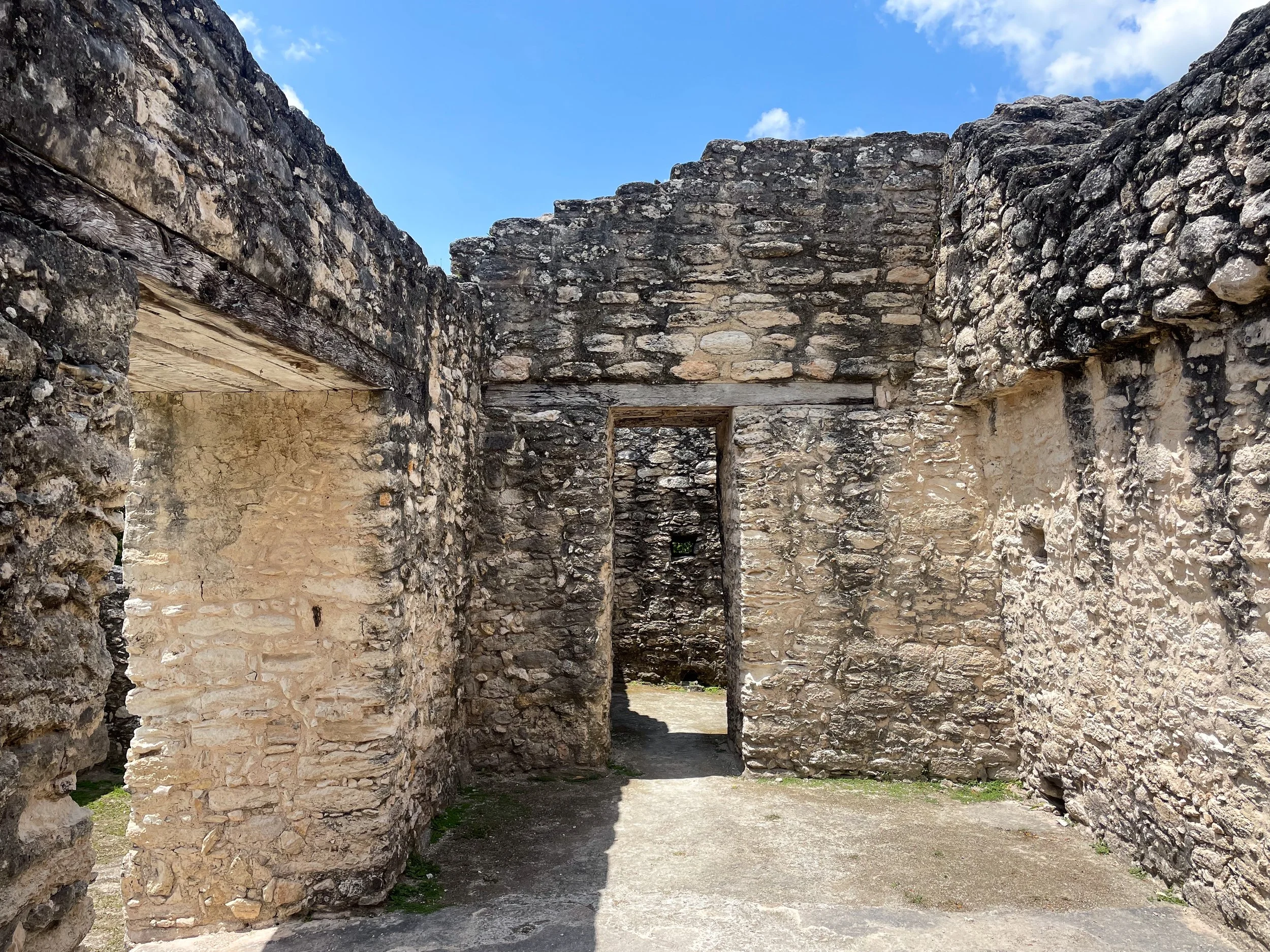
Caracol is an ancient Mayan city within the Belizean jungle. Its ruins and acropolises are comprised of pyramids, ball courts, astronomic observatories, royal tombs, reservoirs and hieroglyphs.
The Sky Palace. A three tiered pyramid named Caana, which translates to “Sky Palace.” It has remained the tallest built structure in Belize for over 3,000 years! We climbed steep stone steps to its upper level, explored its rooms, crawled into a royal tomb and looked across Belize and into Guatemala from above the jungle canopy.
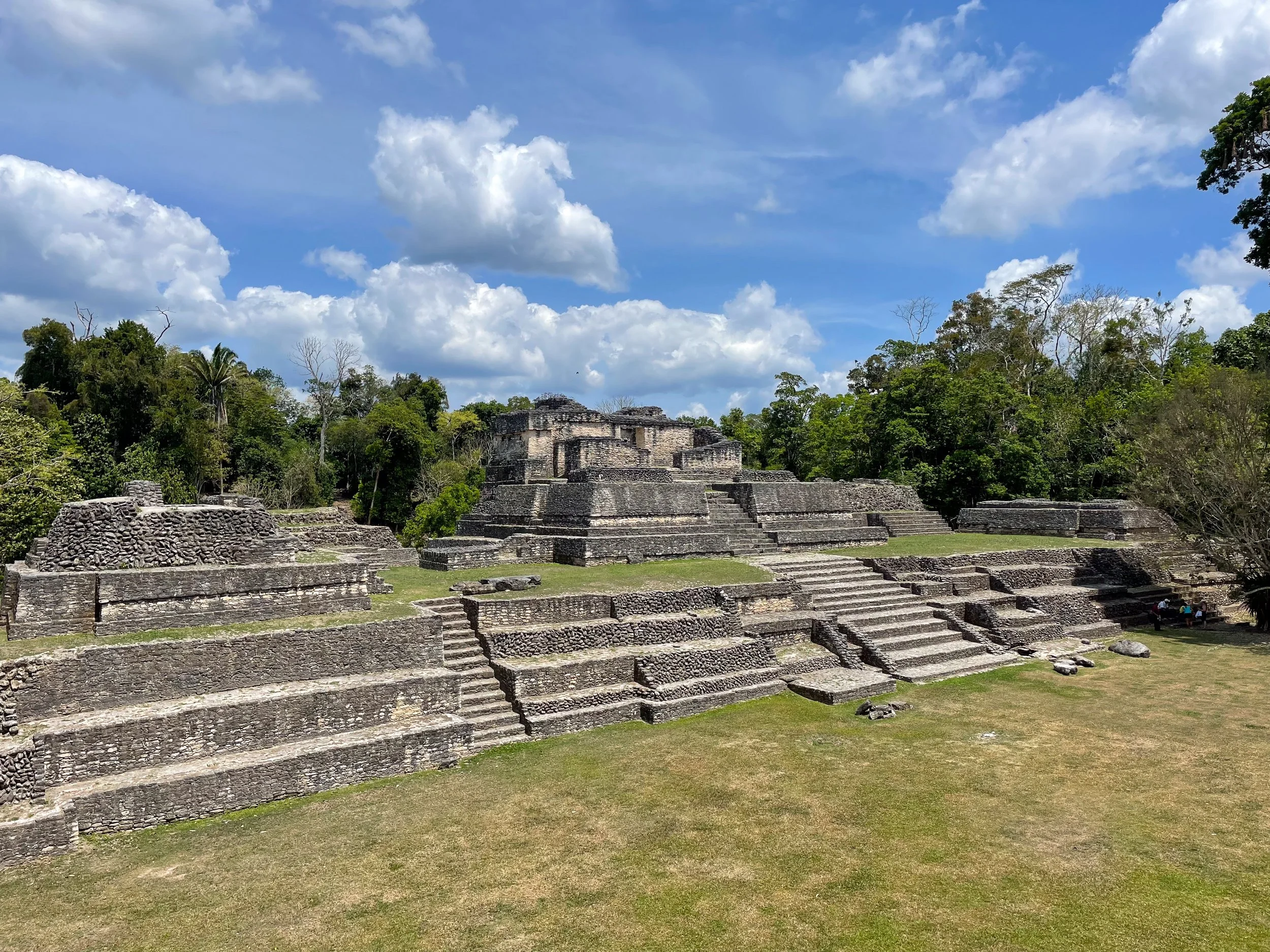
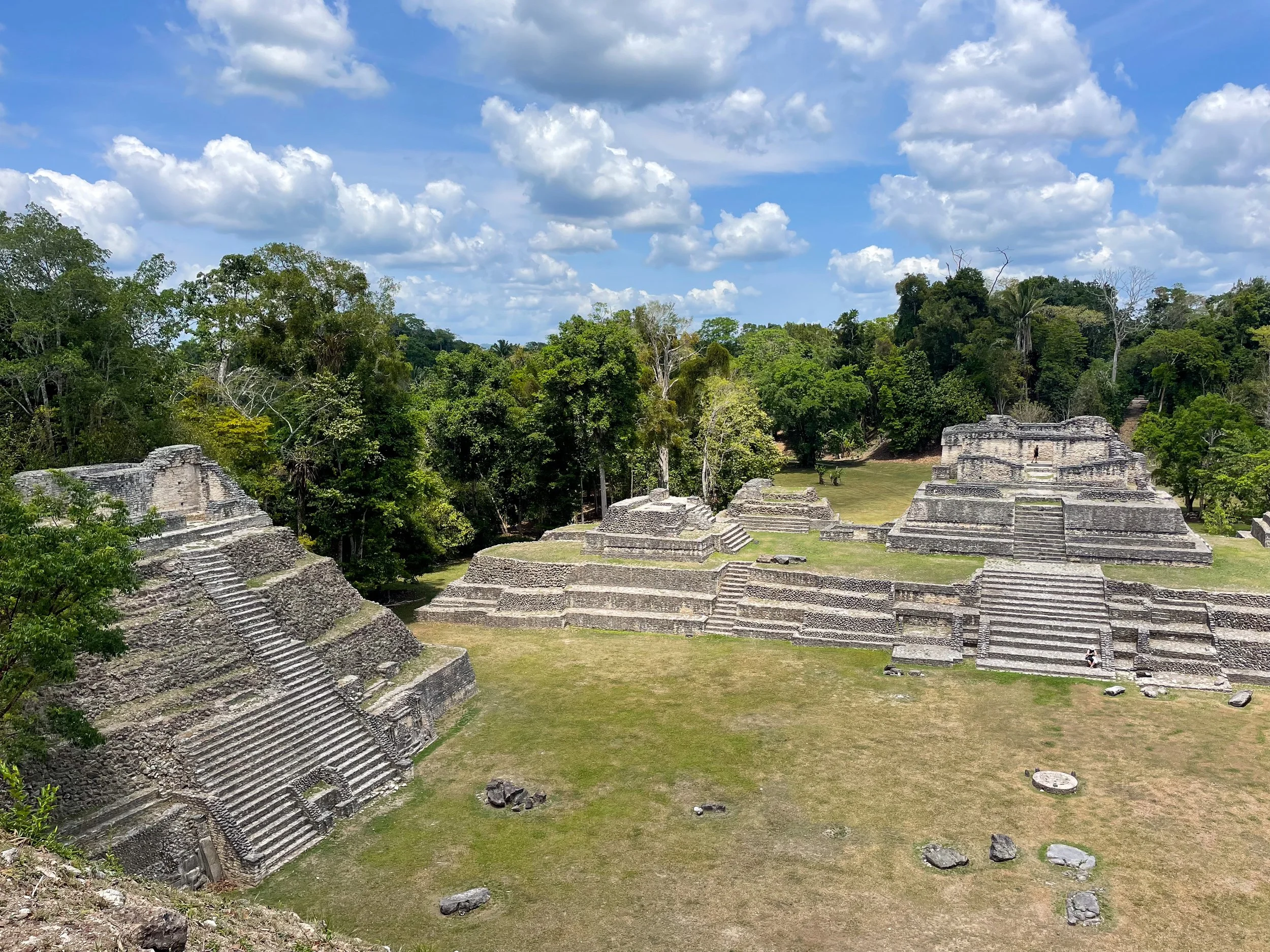
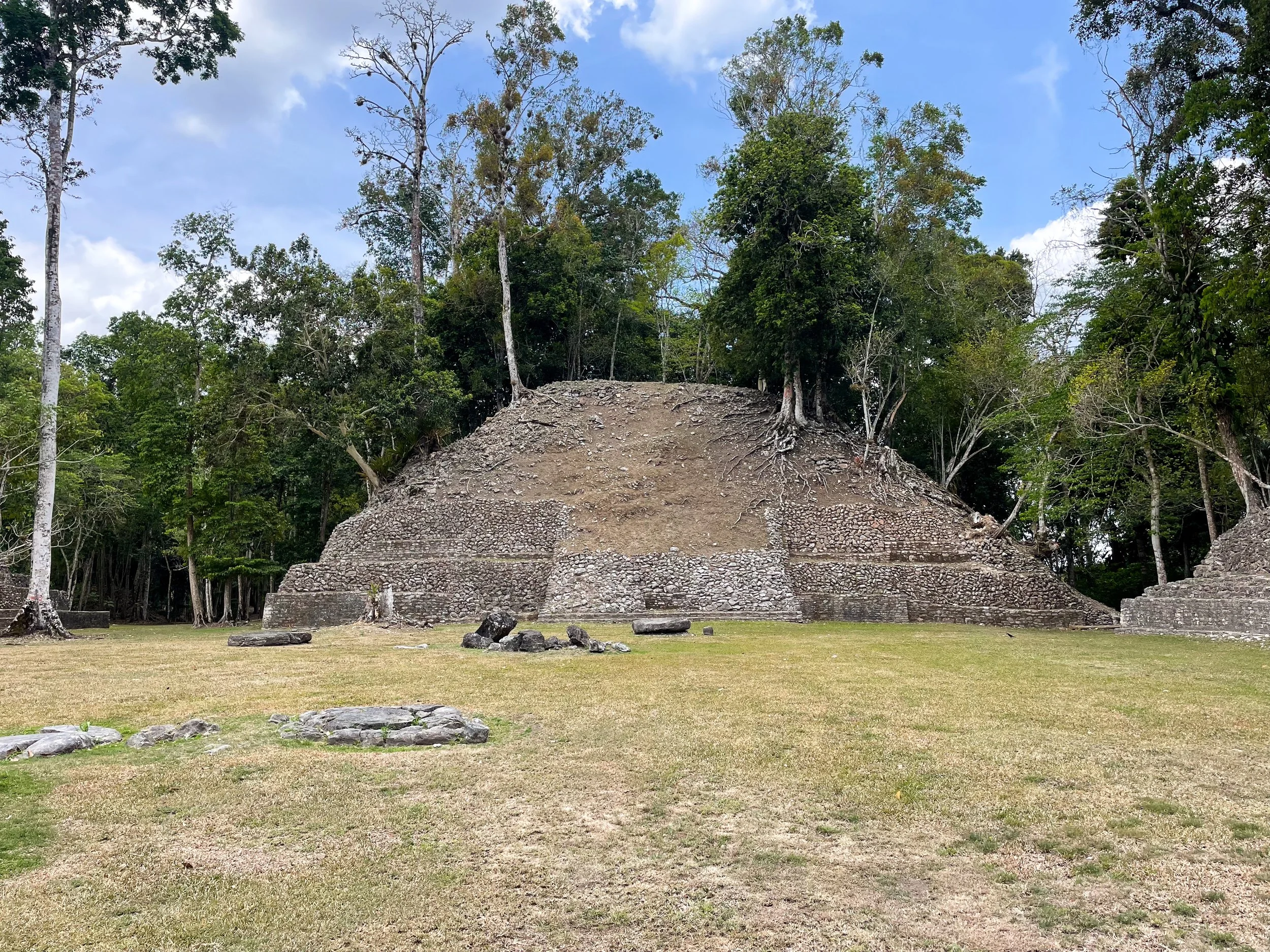
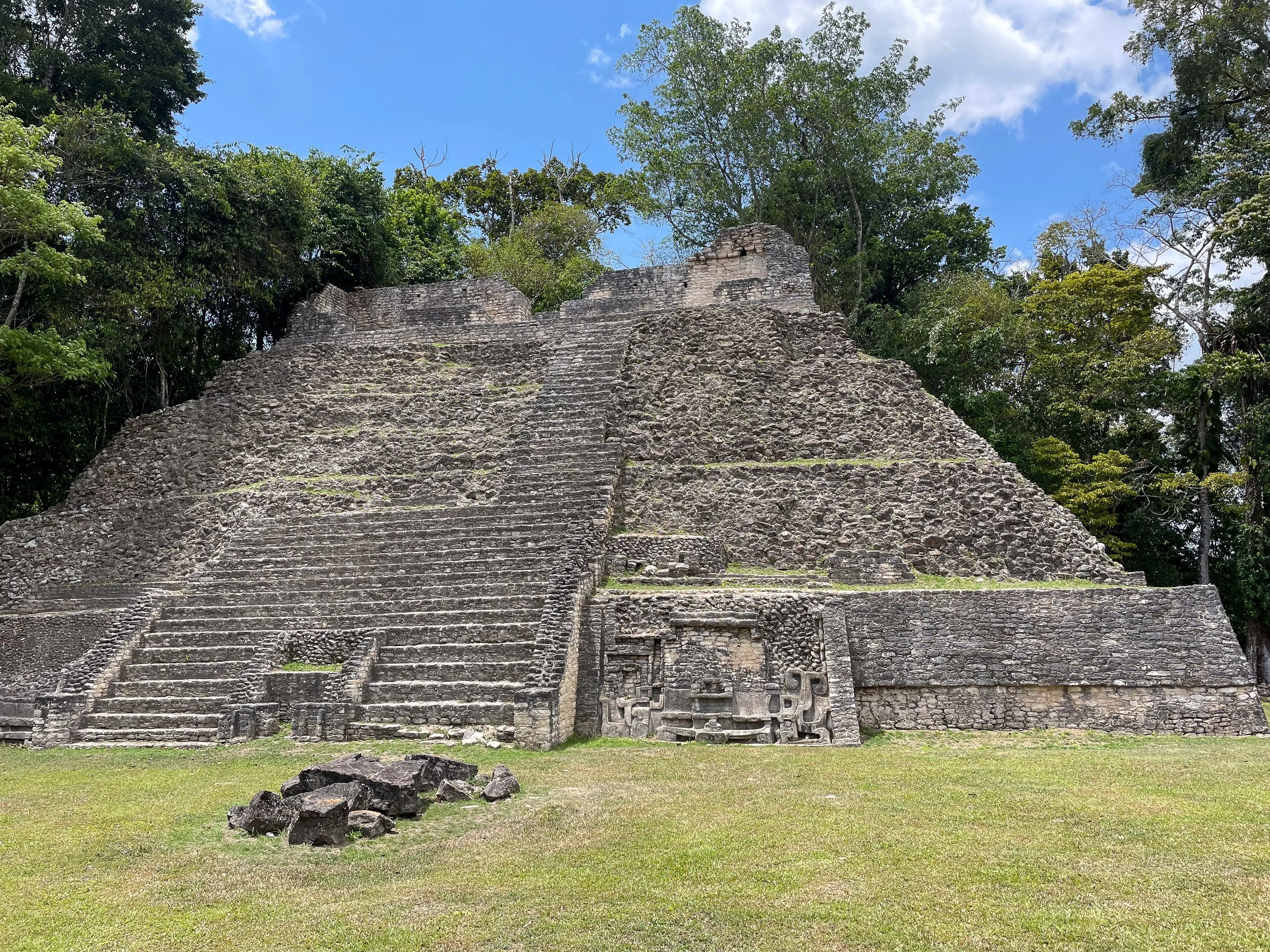
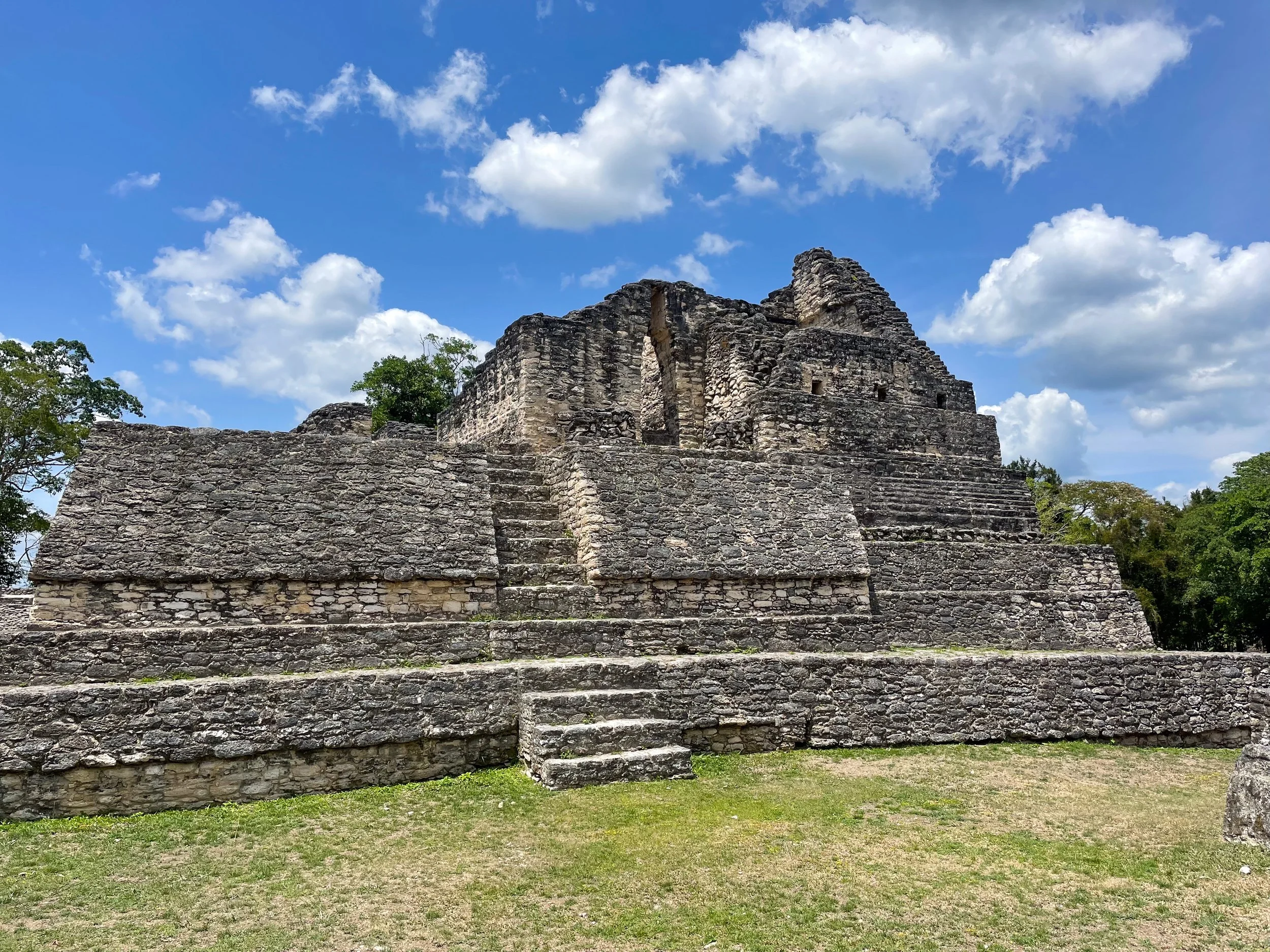
Astronomical Acropolis. Astronomy was one of the cornerstones of the Mayan civilization. They built structures to track the solstices, study the stars and connect to their gods. The astronomical acropolis at Caracol is one of the most significant to be discovered. It’s flanked by temples, pyramids and a ball court.
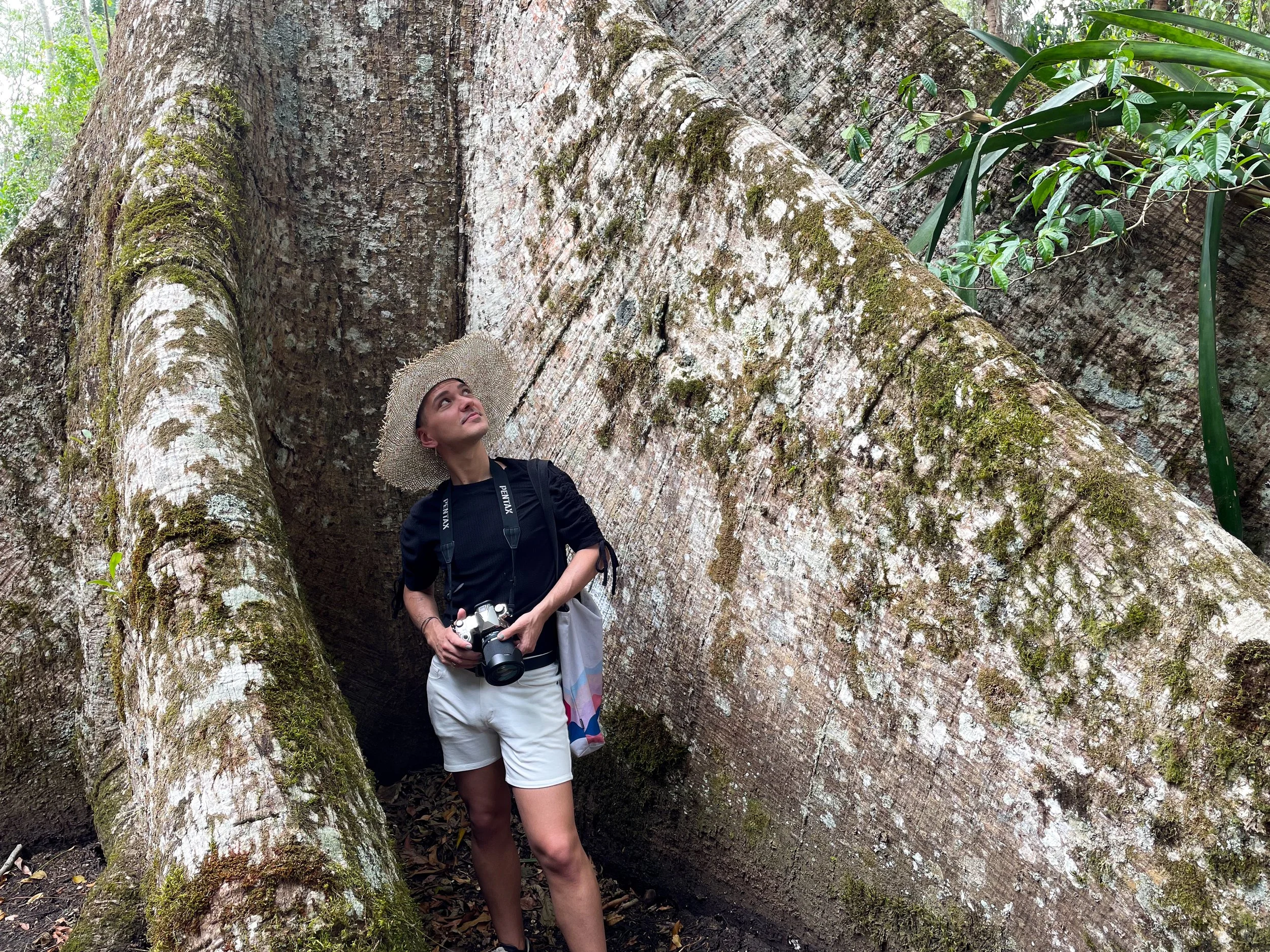
Wildlife Spotting. The remoteness of the archeological park emphasizes the ancient and abandoned nature of the site. As we explored, we heard the billowing grunts of howler monkeys and spotted the reclusive Quetzal, Guatemala’s national bird.
Caracol Tour. We visited Caracol on a small group tour from San Ignacio, traveling about two hours along back roads through dense jungle to reach the ruins. The tour included a local lunch of rice and beans, fried plantains, spiced & stewed tofu and rum punch. We booked with Maya Walk Tours through Viator.
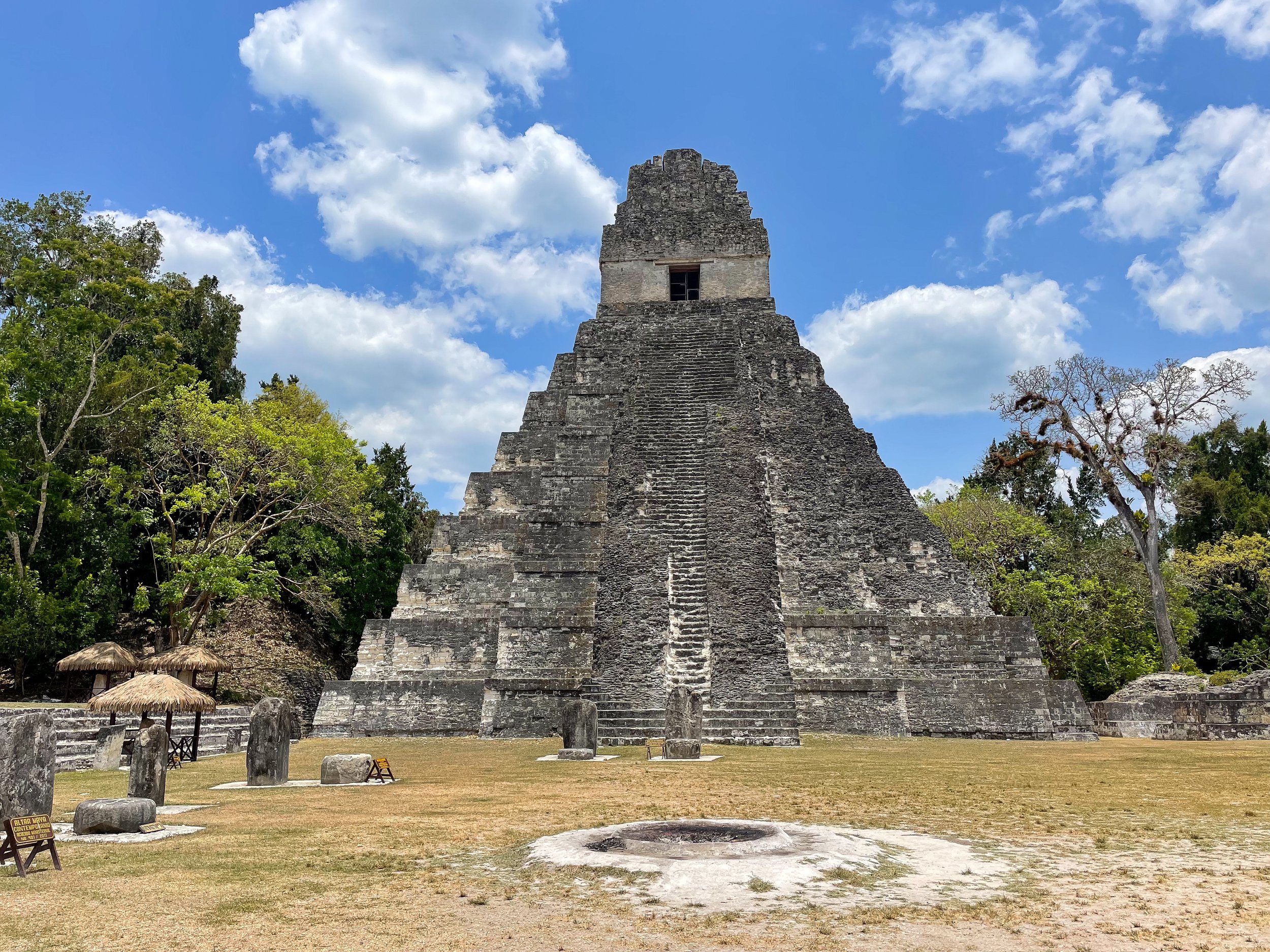
Tikal National Park
Once the epicenter of the Mayan civilization, Tikal is the largest Mayan city ever constructed. Formerly home to 150,000 people and more than 2,000 structures, it’s now dramatically reclaimed by nature. Its ruins reveal the achievements, ceremonies and eventual collapse of the ancient Maya. Nature trails link towering temples, buried mounds and ongoing excavations while wildlife such as toucans, parrots, spider monkeys, and foxes roam the surrounding forest. We explored the ancient wonder on a cross border day trip from Belize to Guatemala.
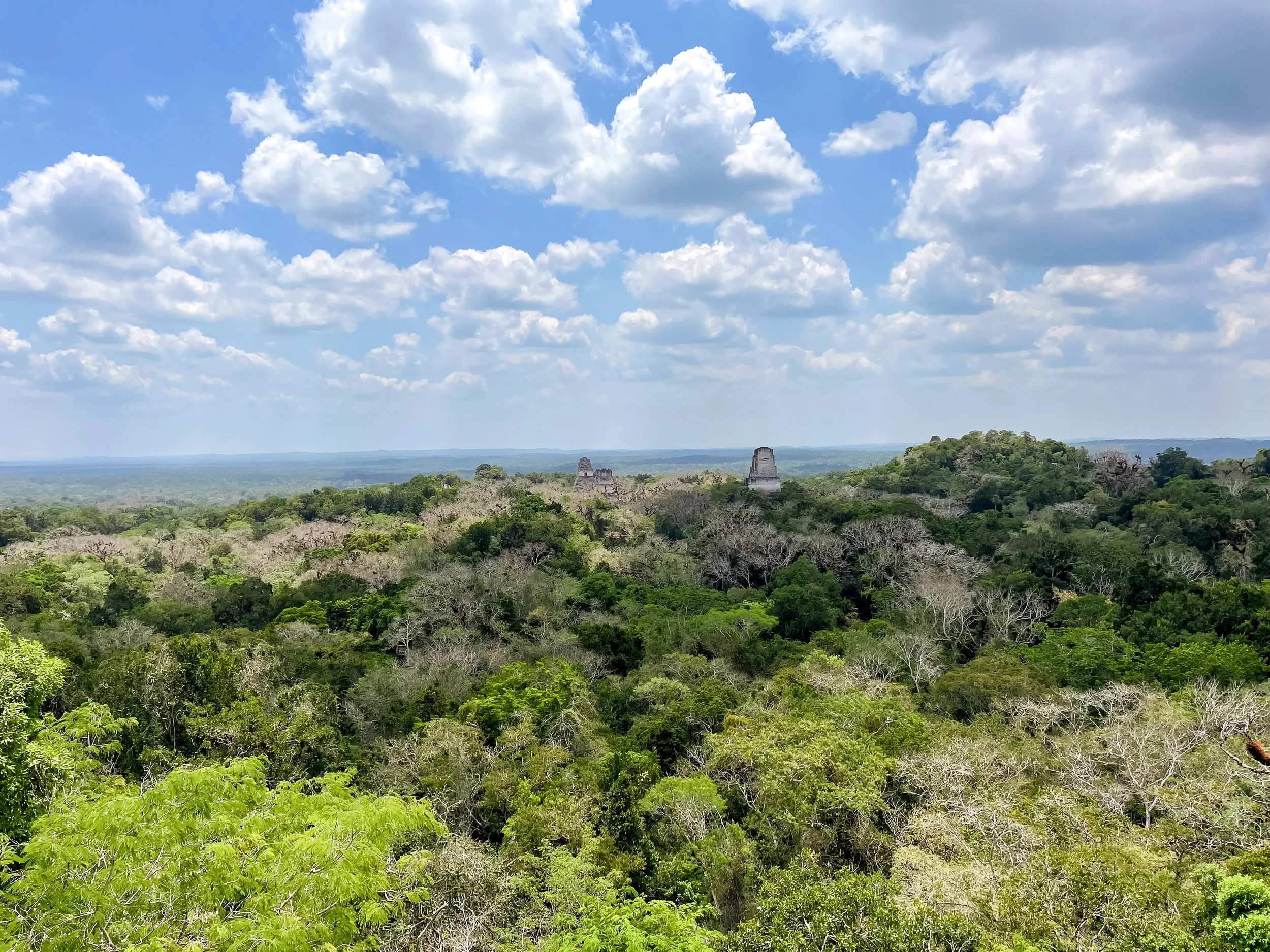
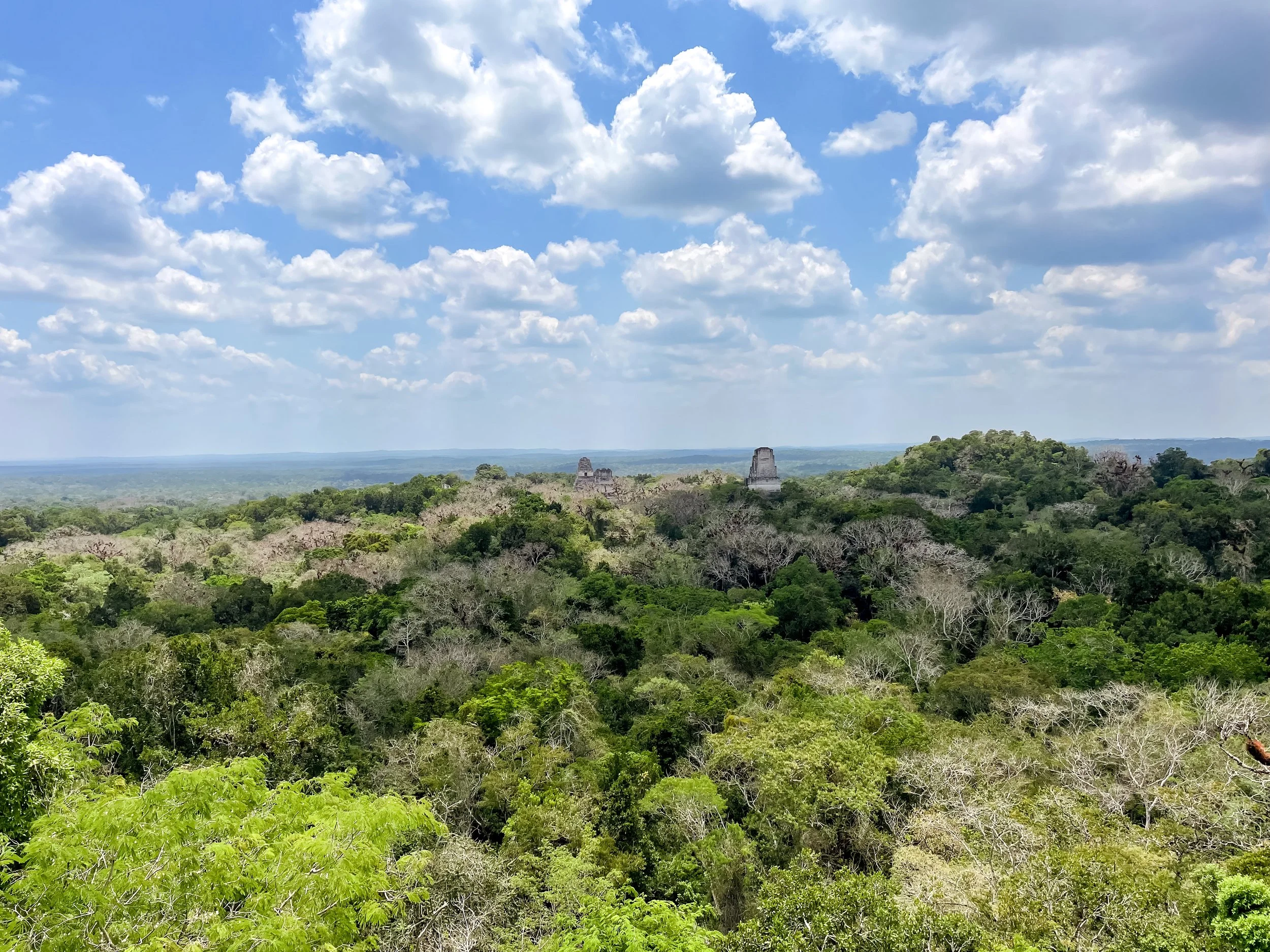
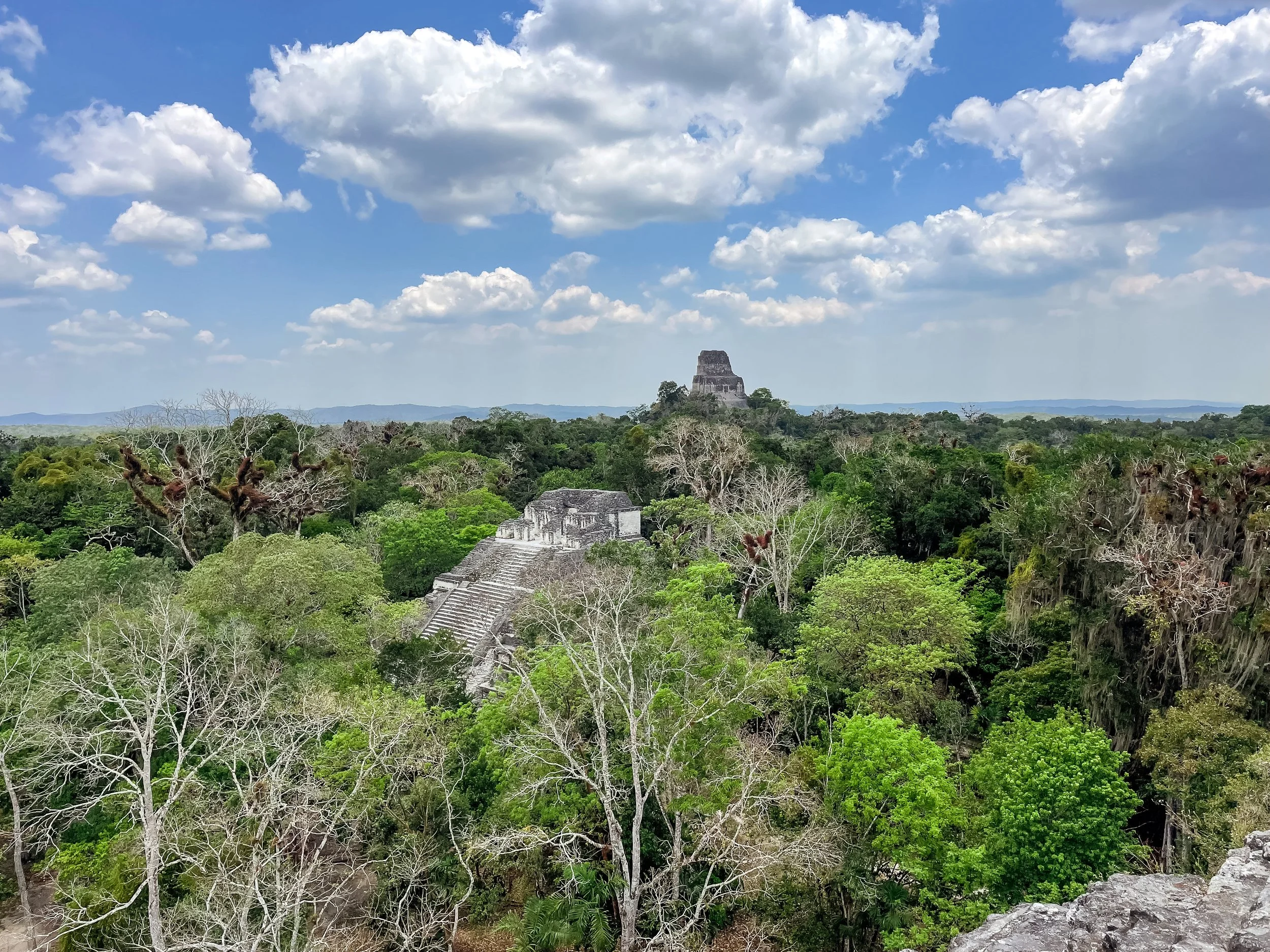
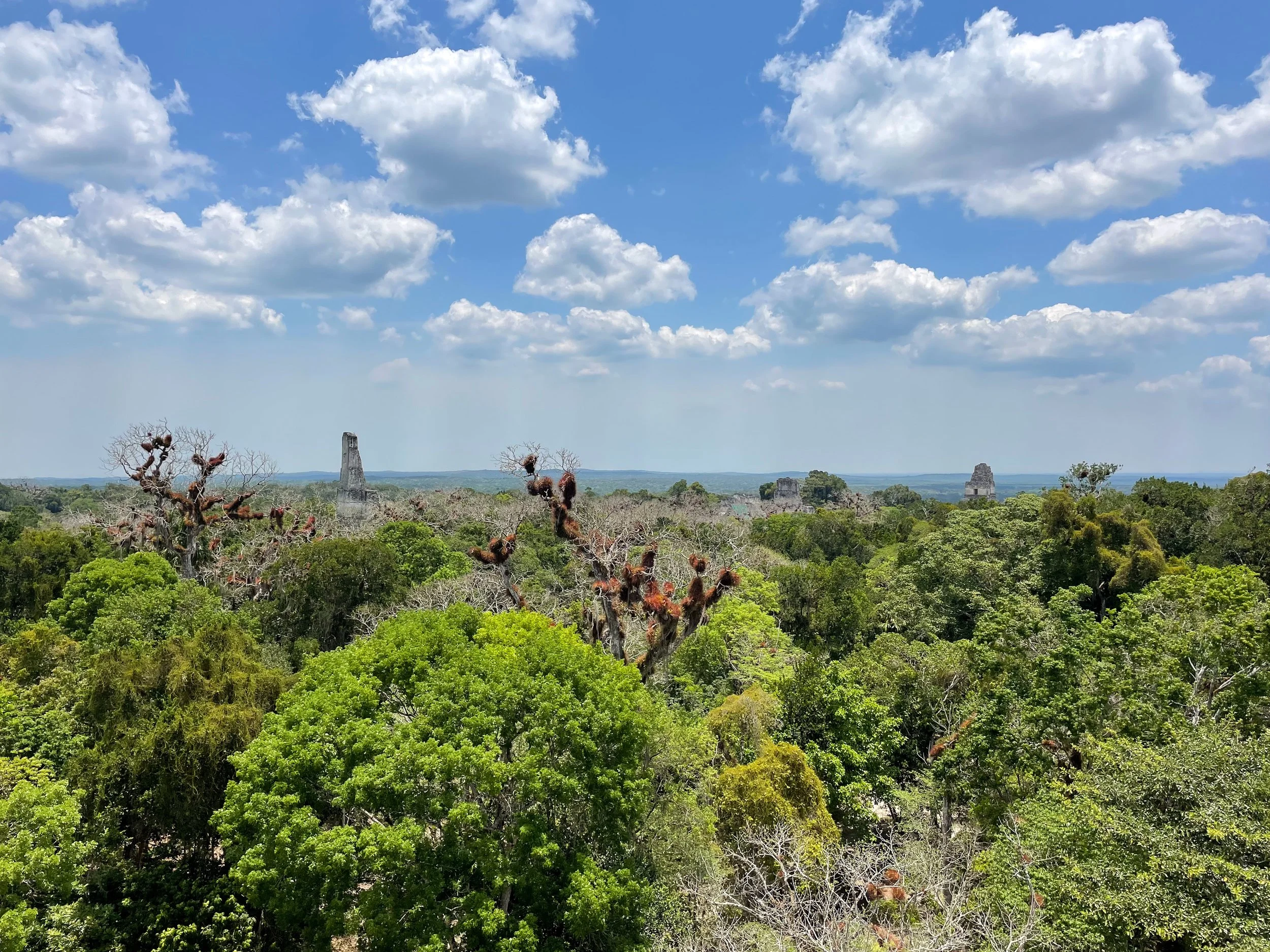
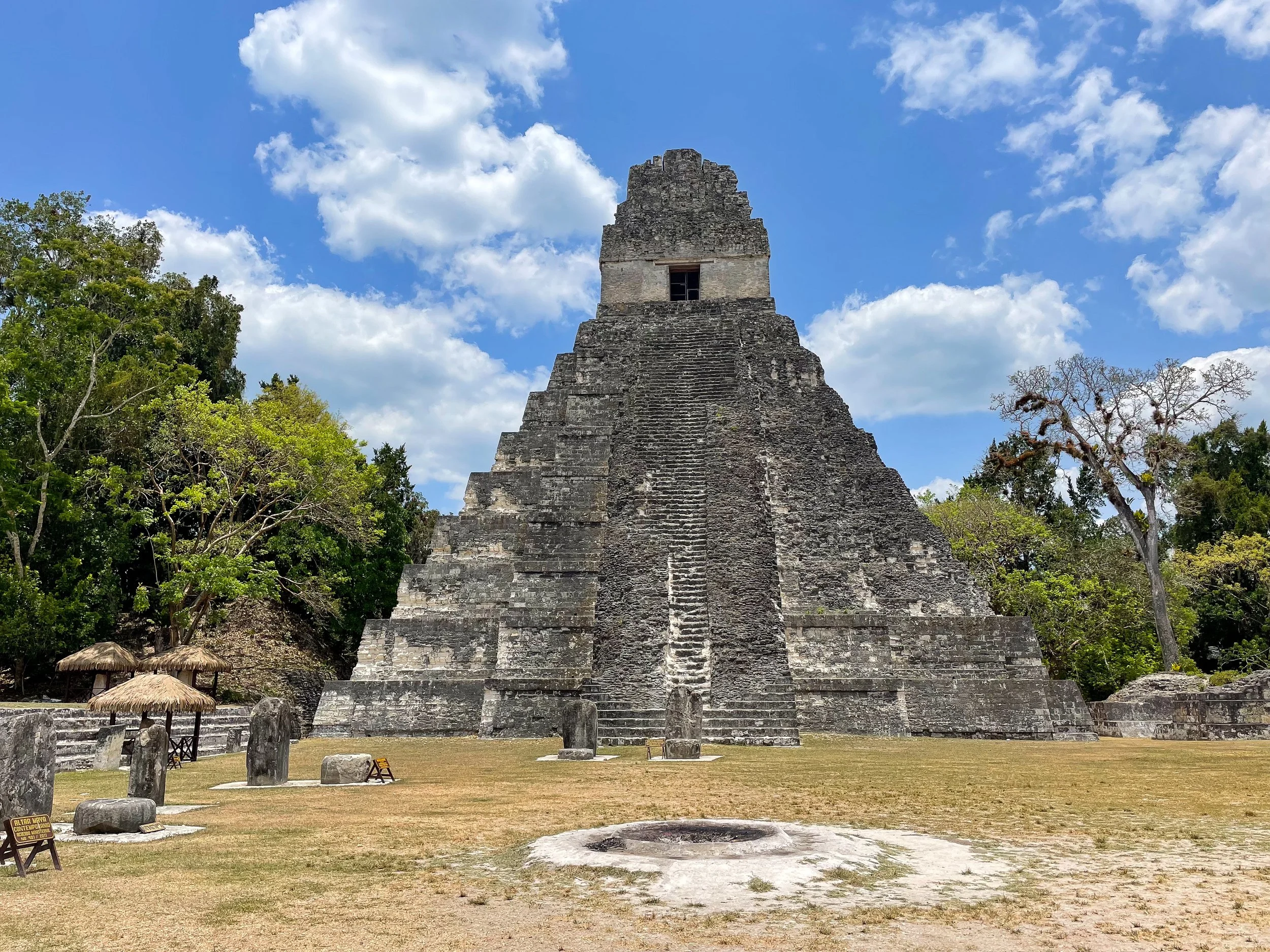
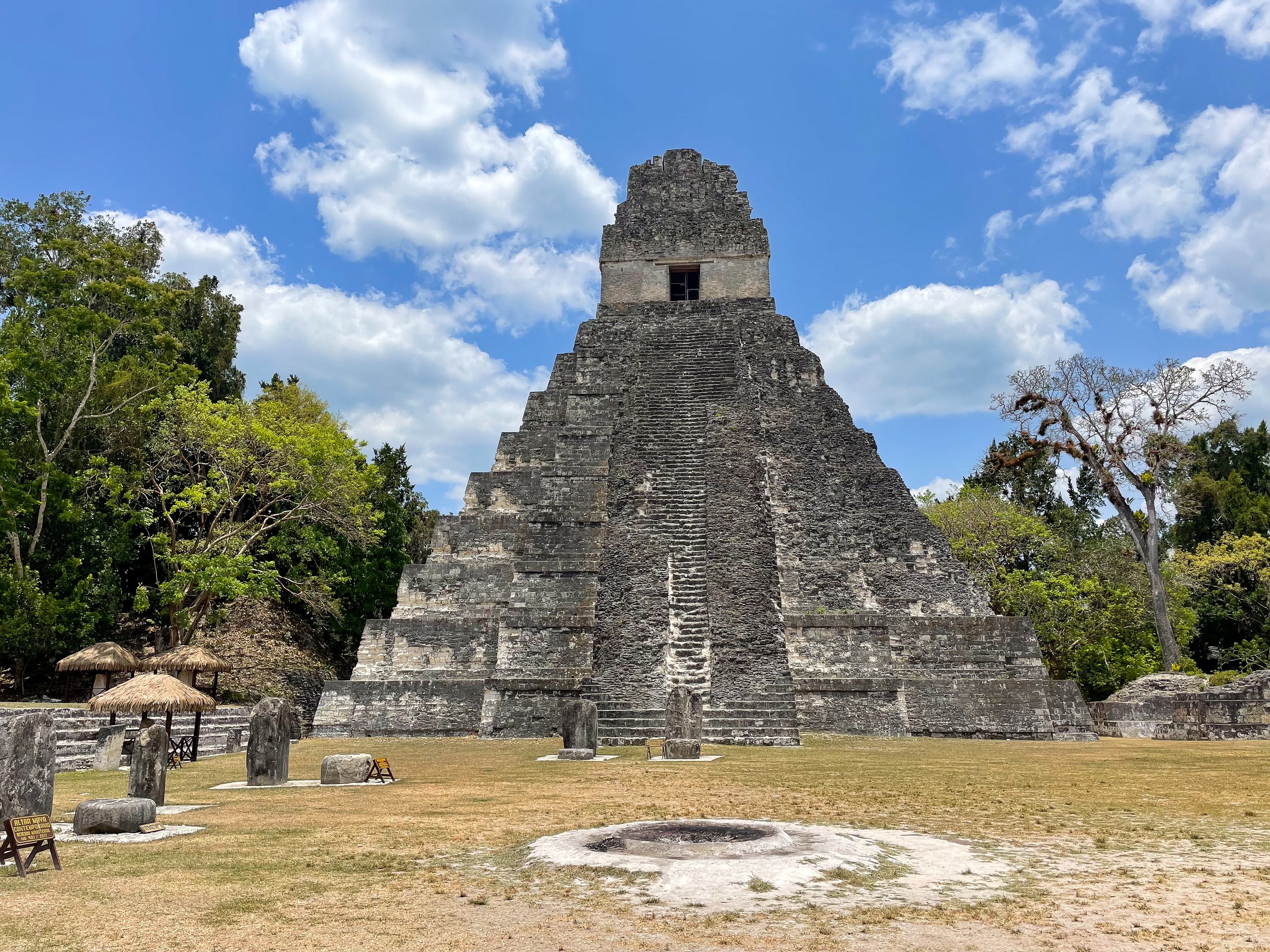
Temple of the Double Headed Serpent. A ceremonial temple and the largest at Tikal. Its crumbling ruins rise 70 meters from the jungle canopy. Stairs lead to its upper levels with views of the expansive jungle canopy and distant temples protruding from it. We imagined what the city must have looked like from this vantage point during its peak.
Fun Fact. The view from this temple is made famous by a scene in Star Wars when the Millennium Falcon landed on the rebel moon base of Yavin 4.
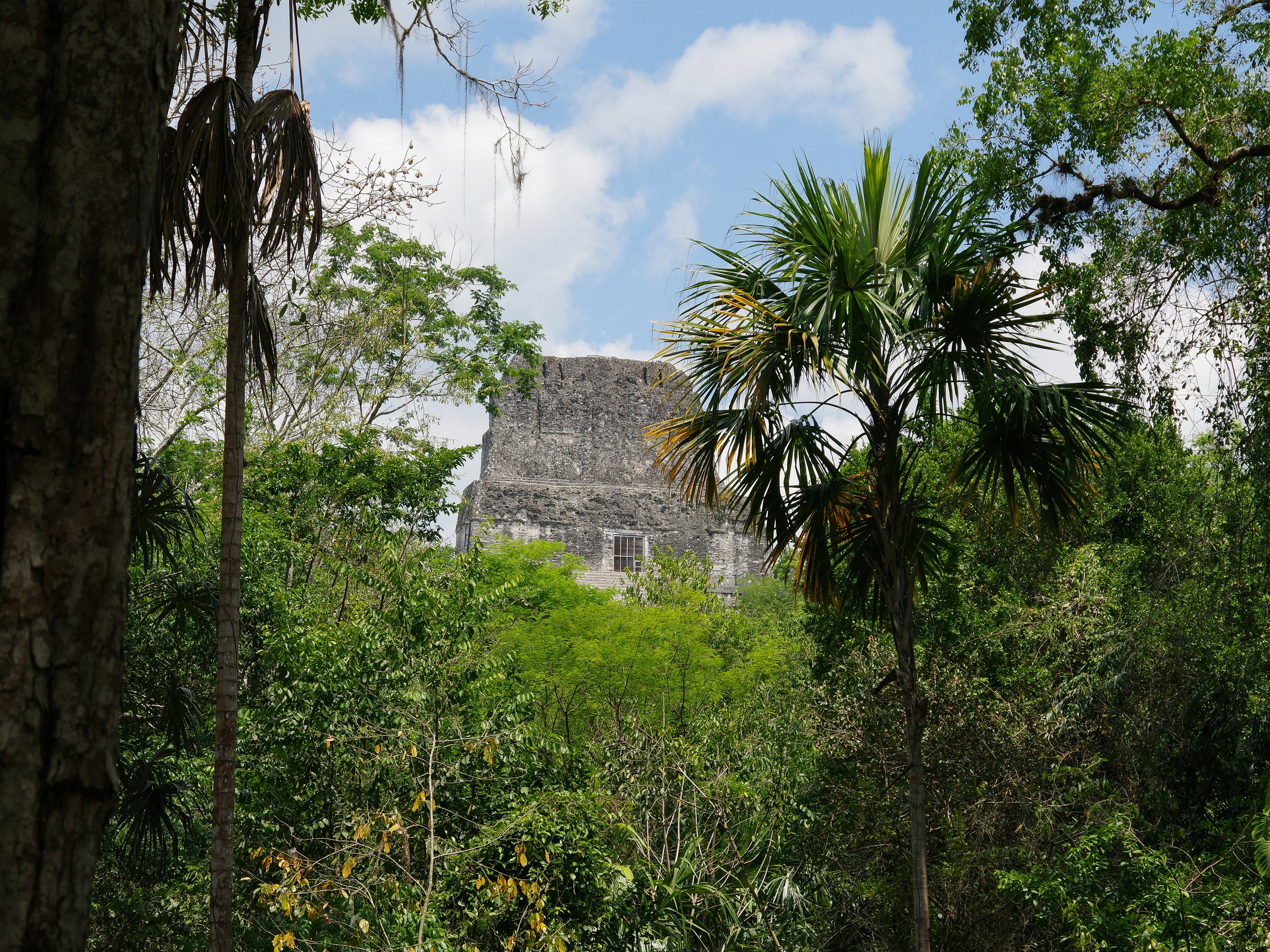
Temple of the Jaguar Priest. One of the tallest temples at Tikal. Its upper levels rise from the jungle canopy while its base is overgrown with vegetation. The temple is not accessible but can be viewed through the trees below and from Temple IV.
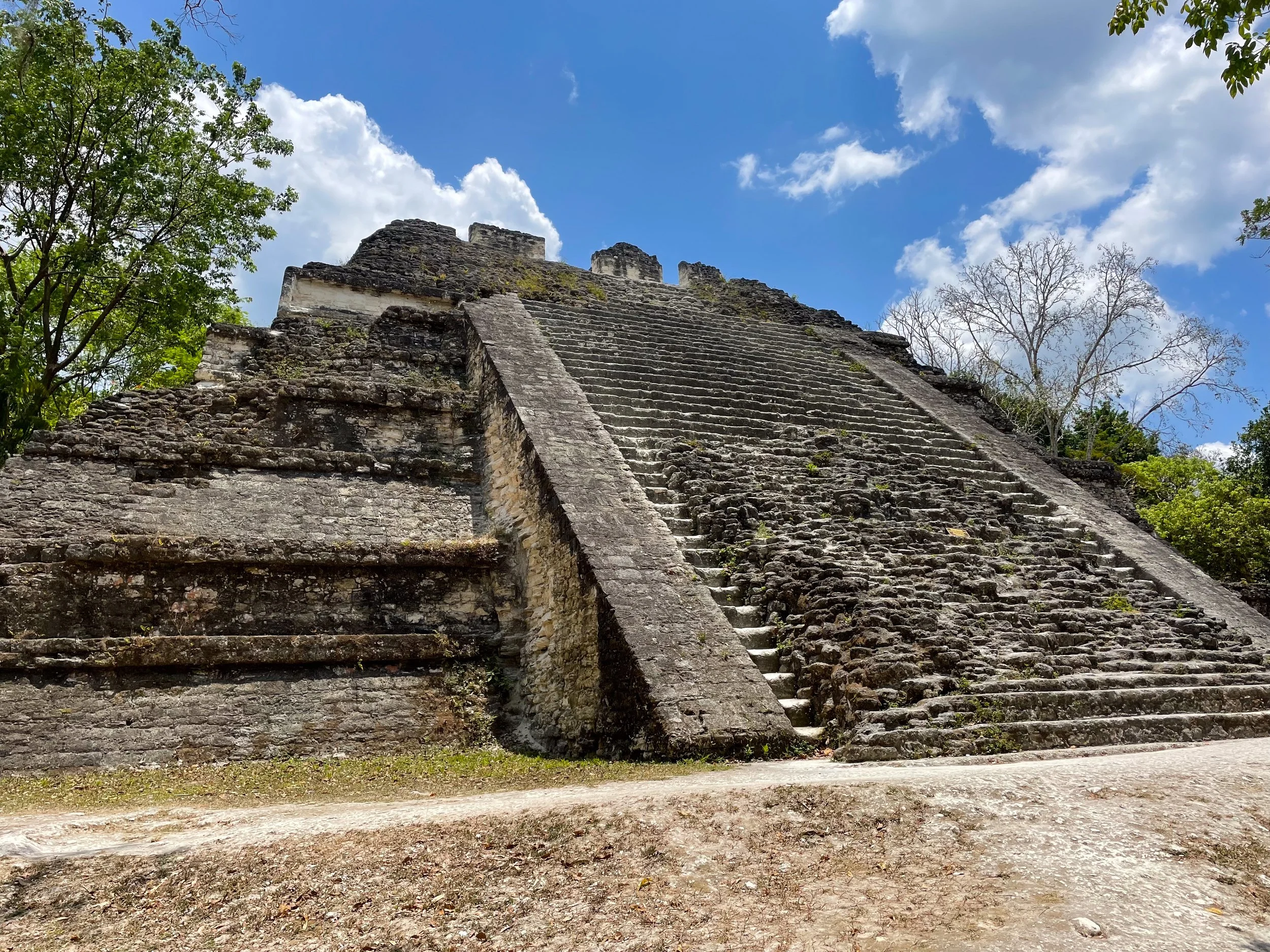
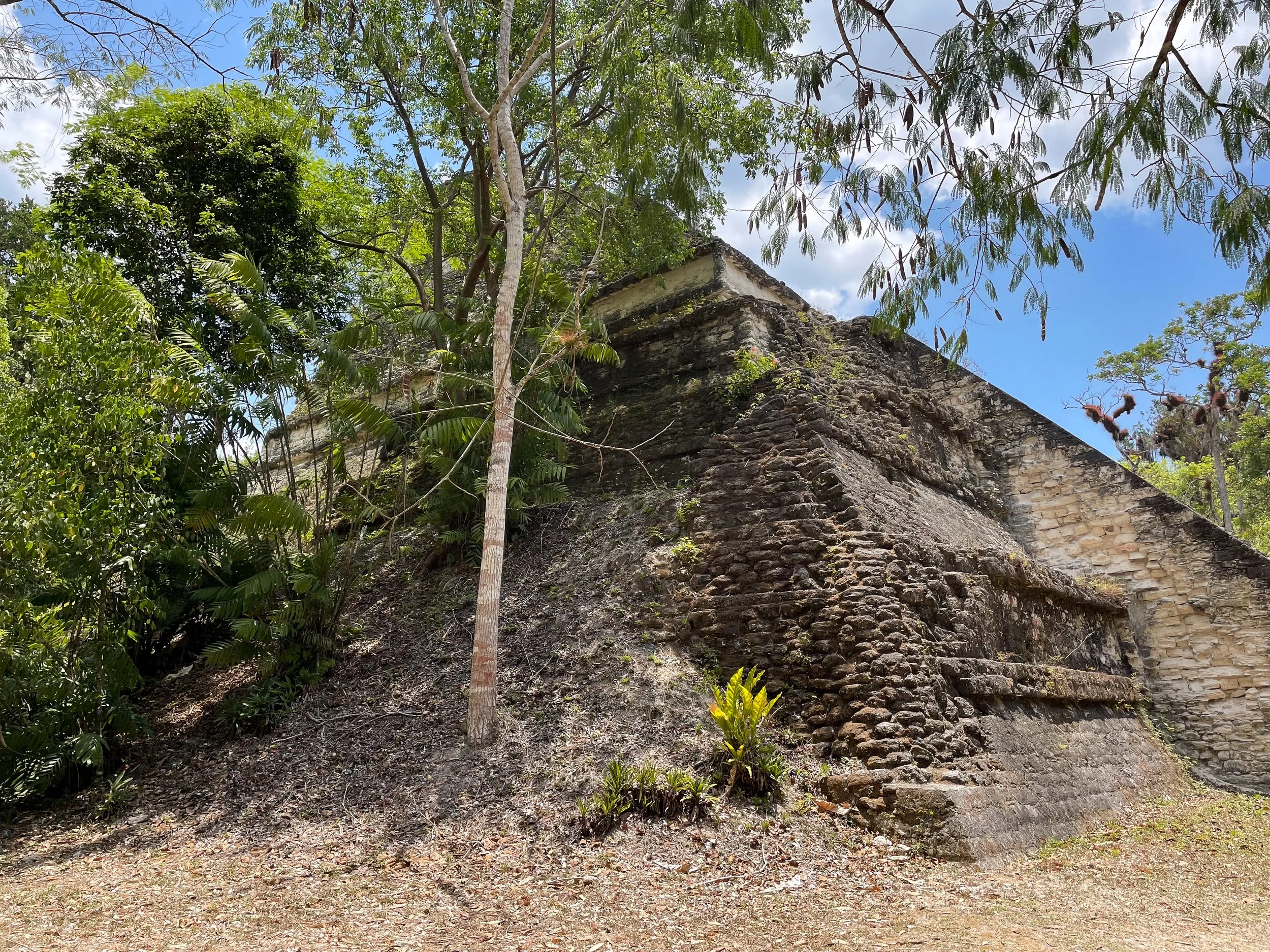
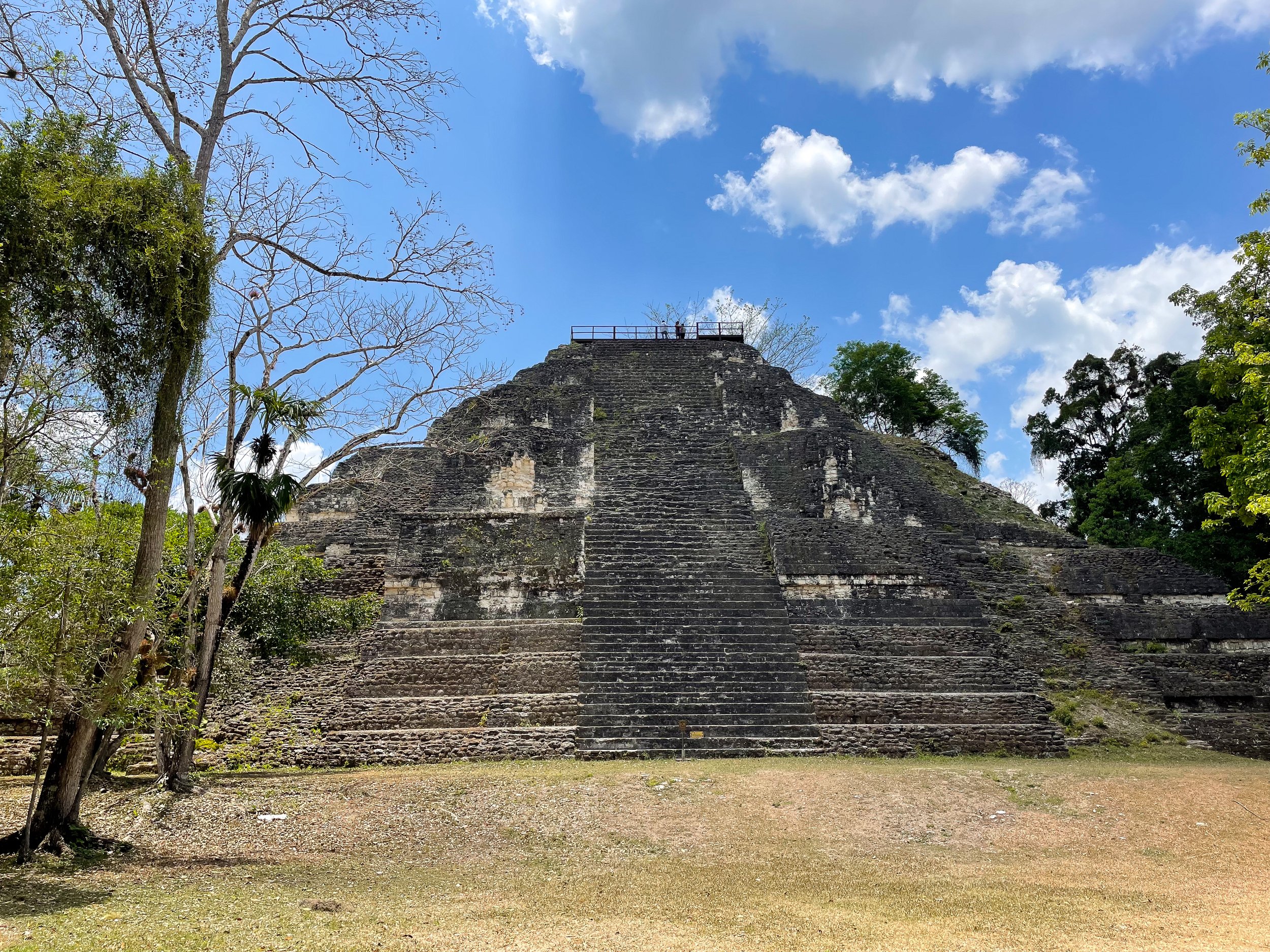
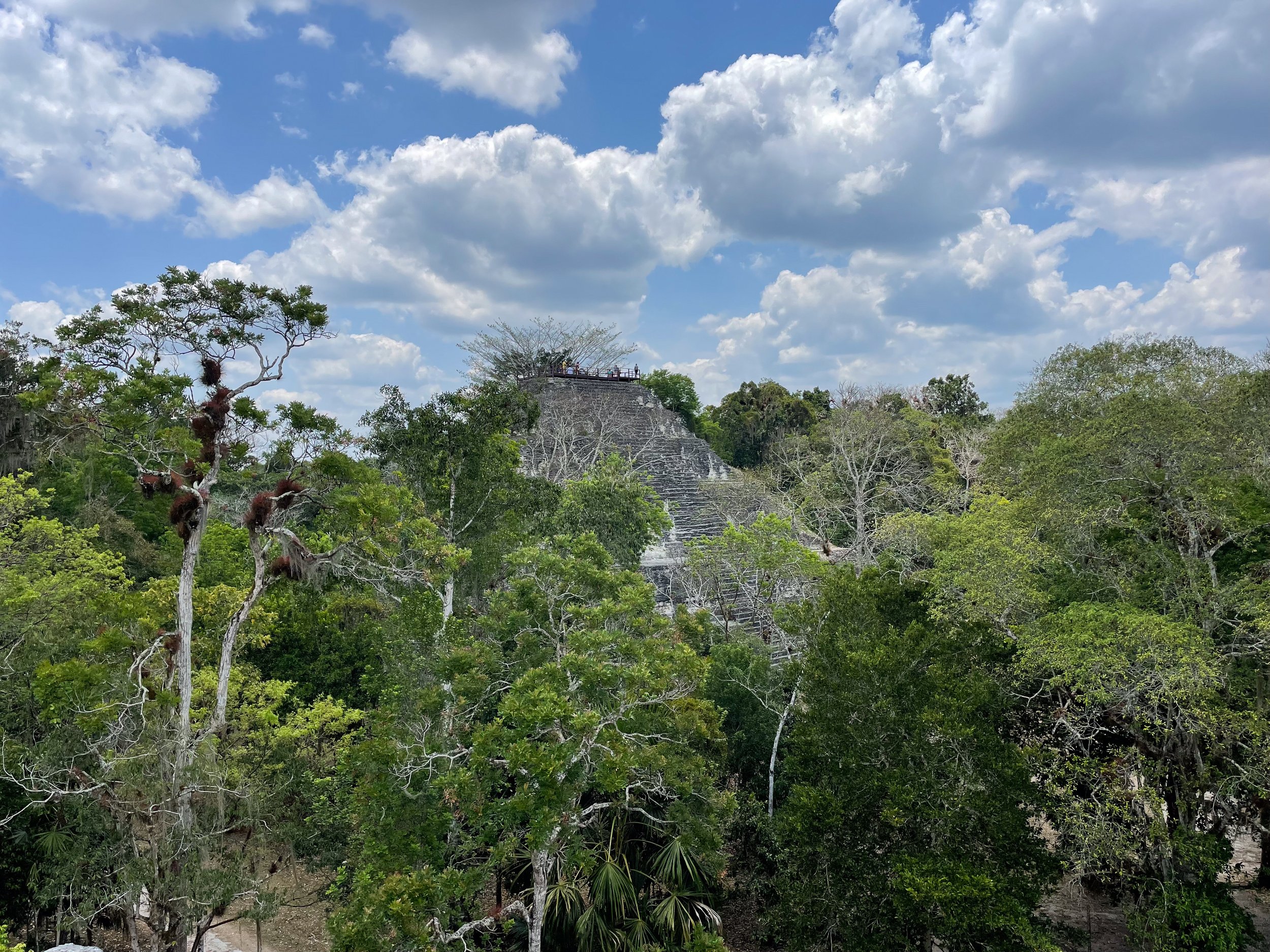
The Lost World Complex. A large ceremonial complex with multiple temples, pyramids and an astronomical acropolis. Its largest pyramid has an observation deck overlooking several nearby temples and pyramids across Tikal.
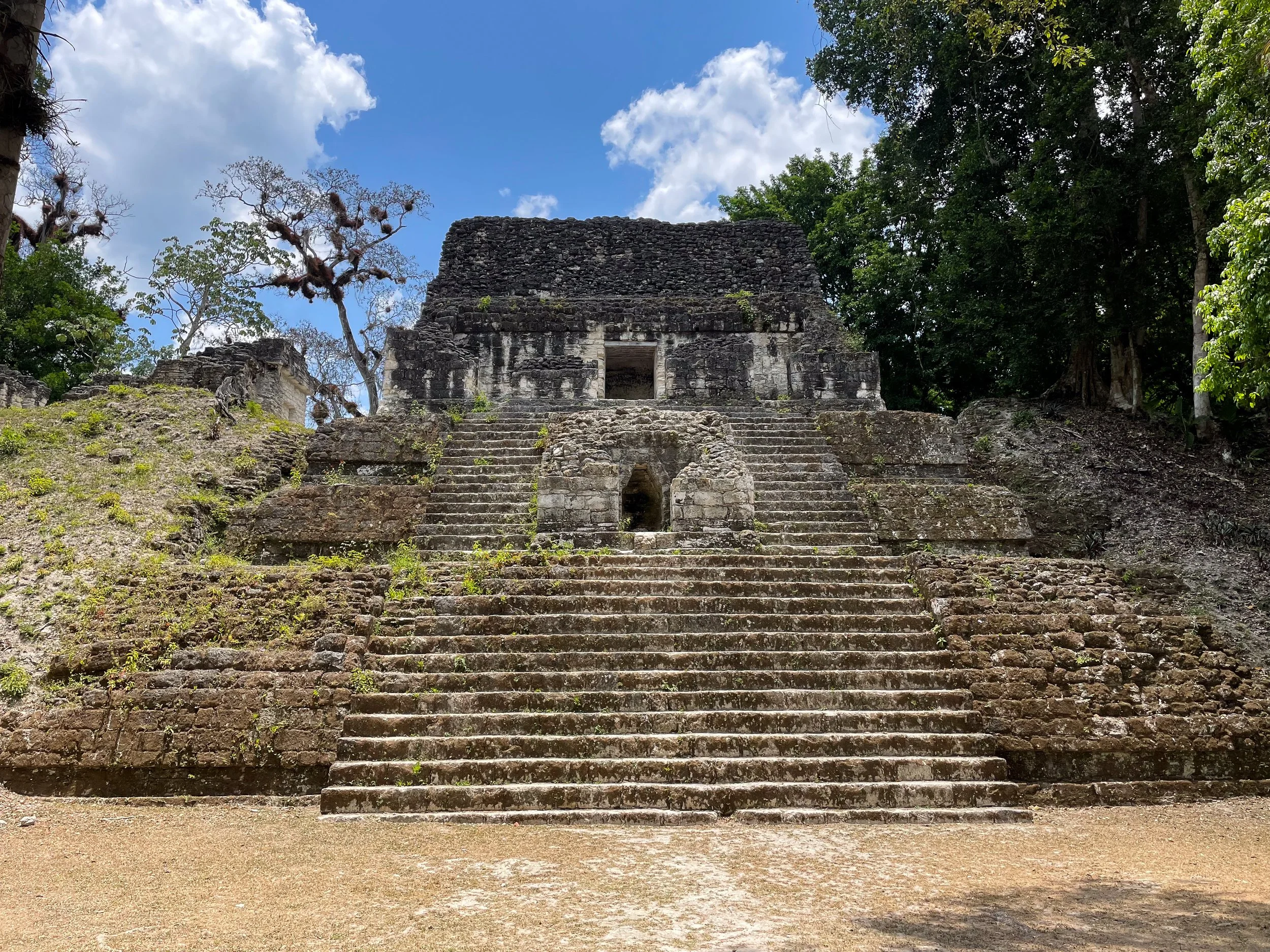
The Talud Tablero Temple. A temple within The Lost World complex featuring architectural influences from the Teotihuacan civilization. Climbable steps lead up its wide base and sloped levels to an exposed room at its top.
Plaza of Seven Temples. A linear astronomical acropolis with seven pyramids and temples designed to track the solstices and study the stars. Many of the structures remain overgrown and only partially exposed.
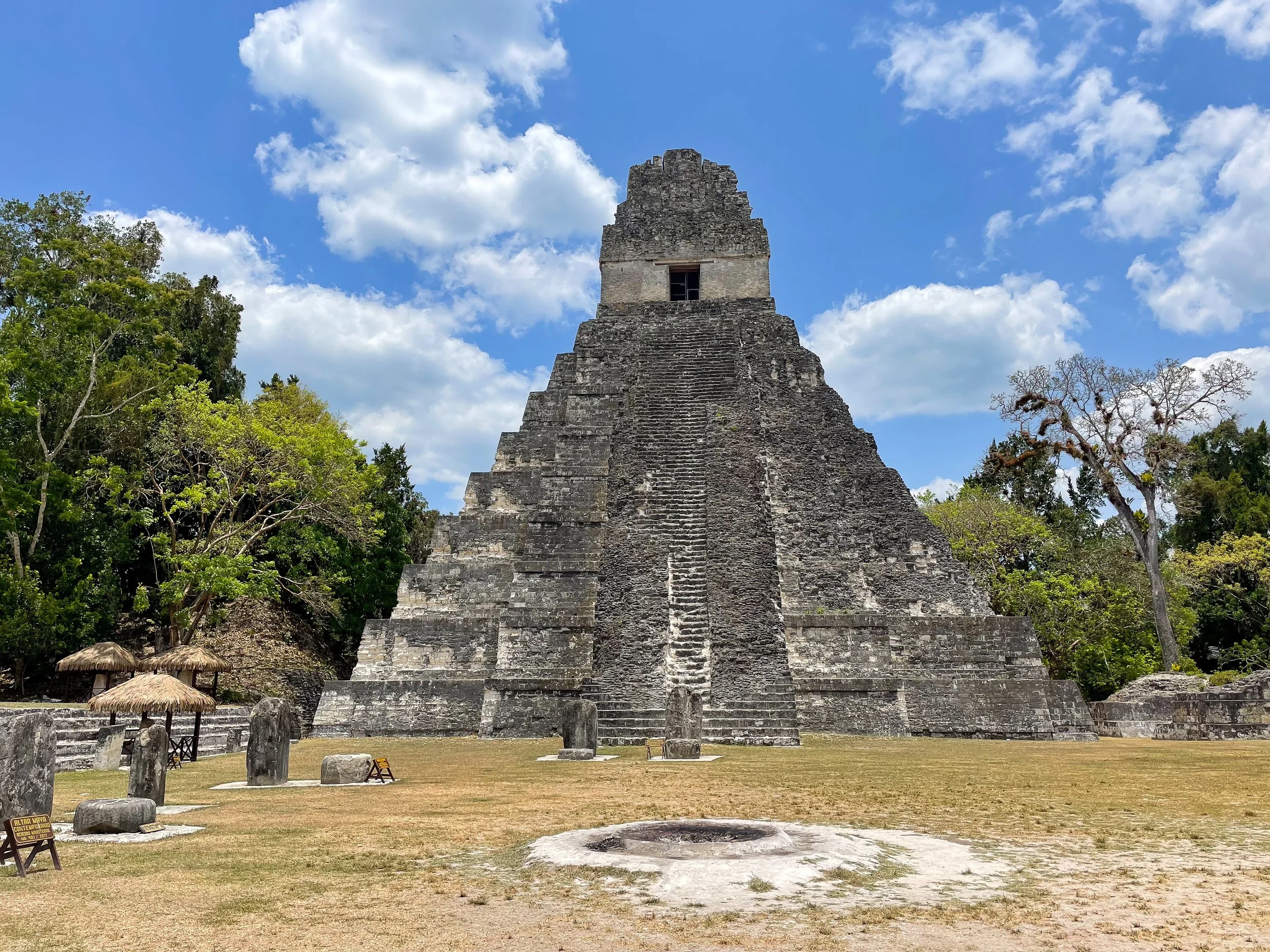
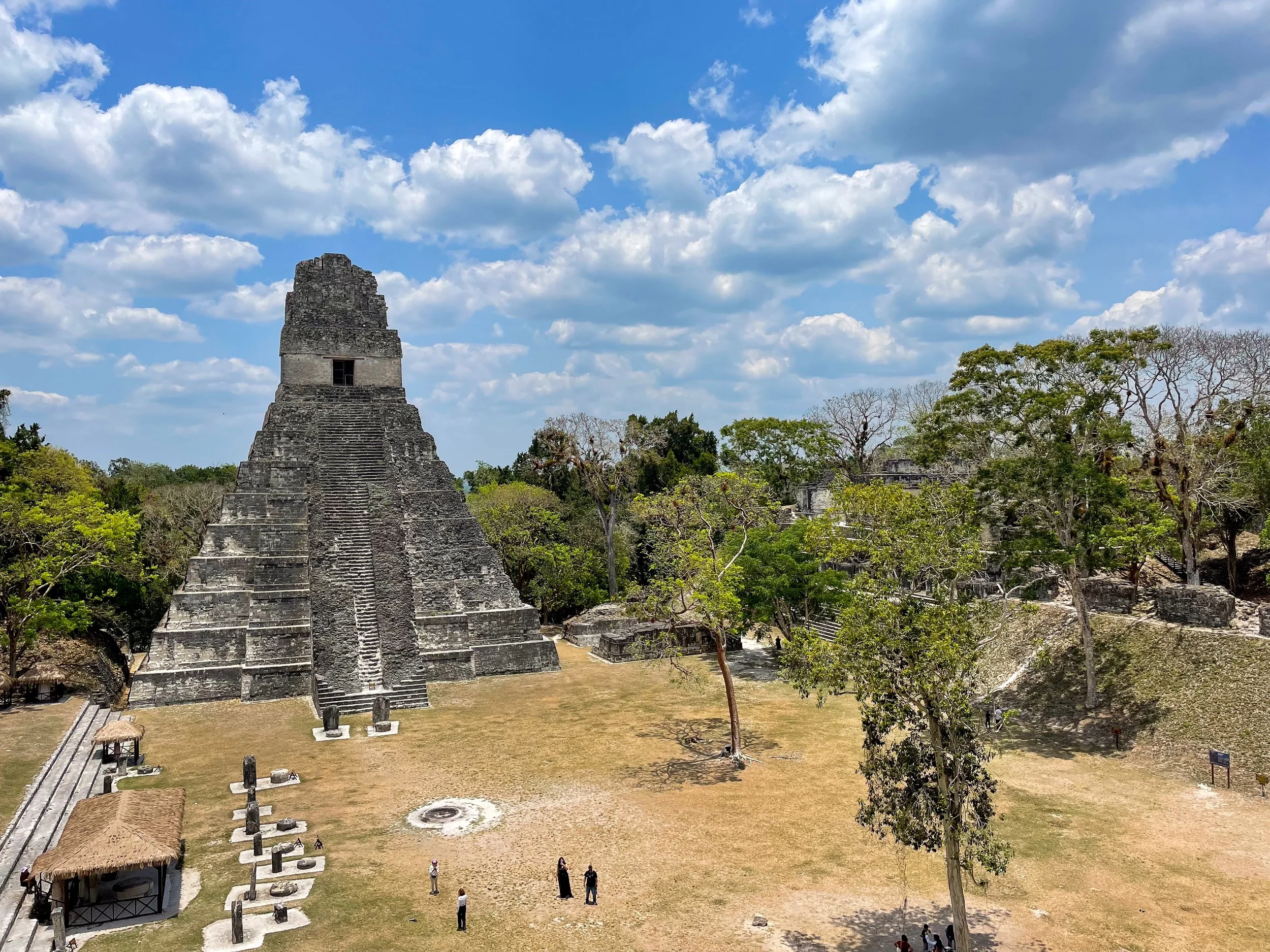
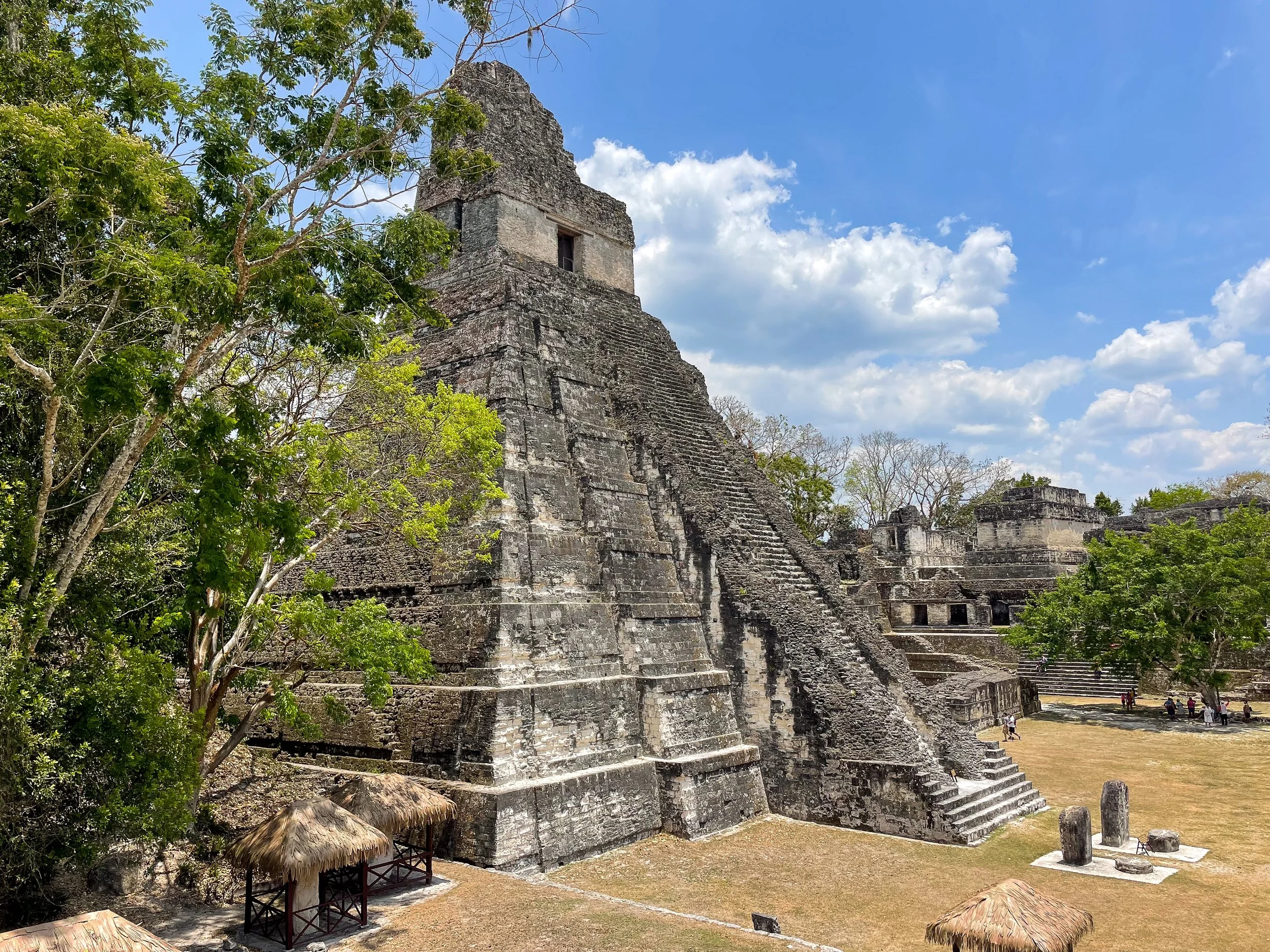
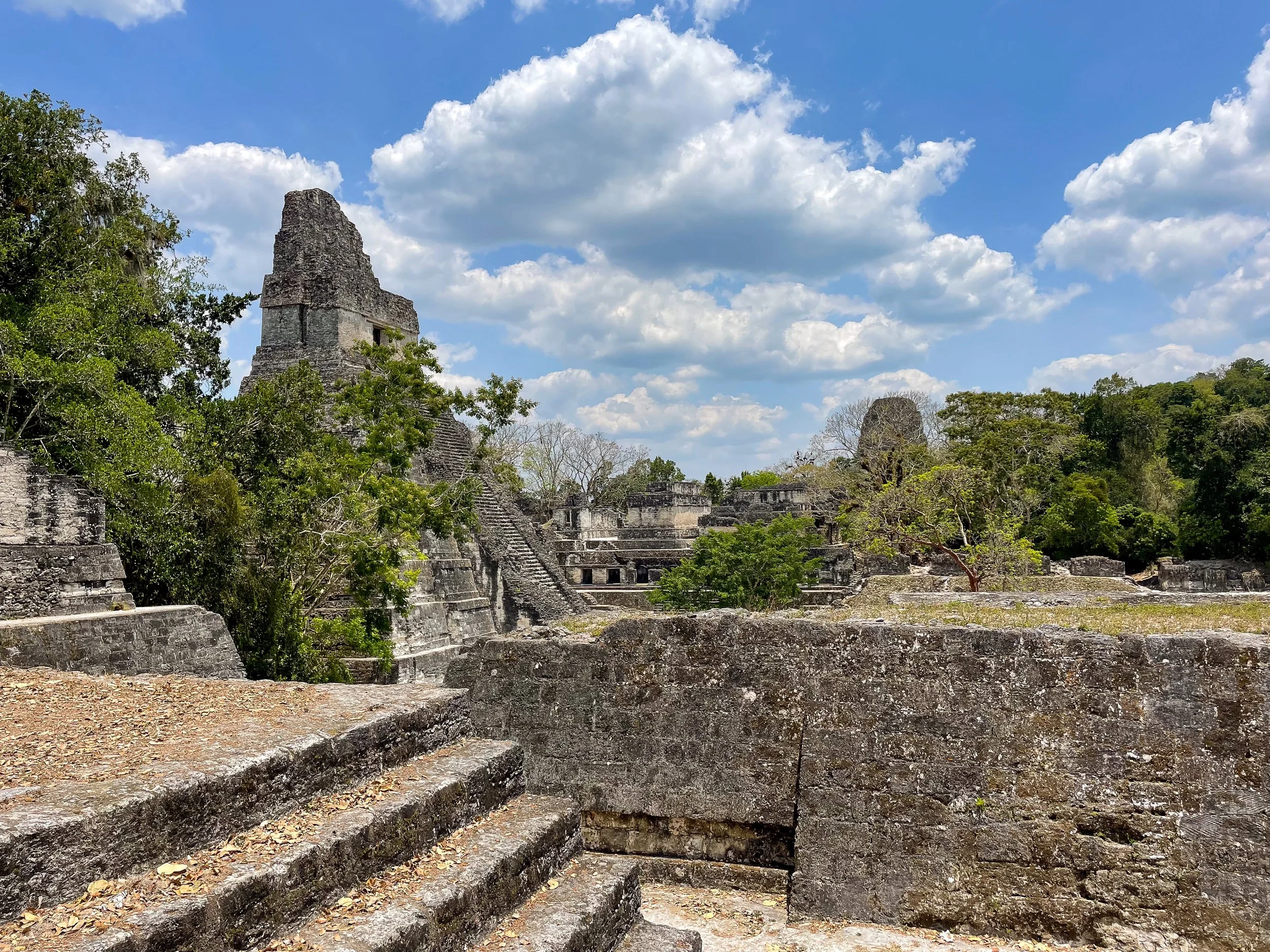
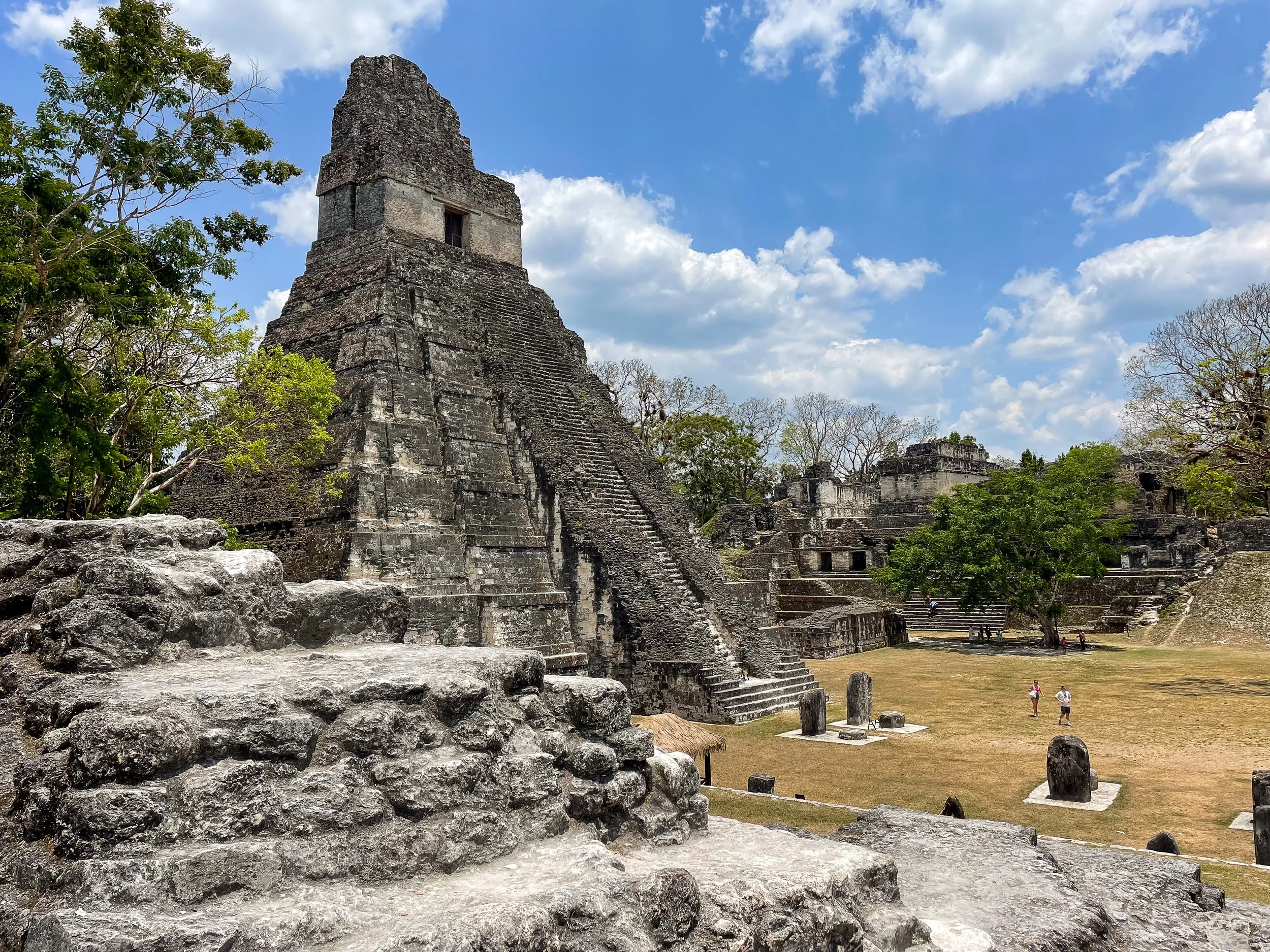
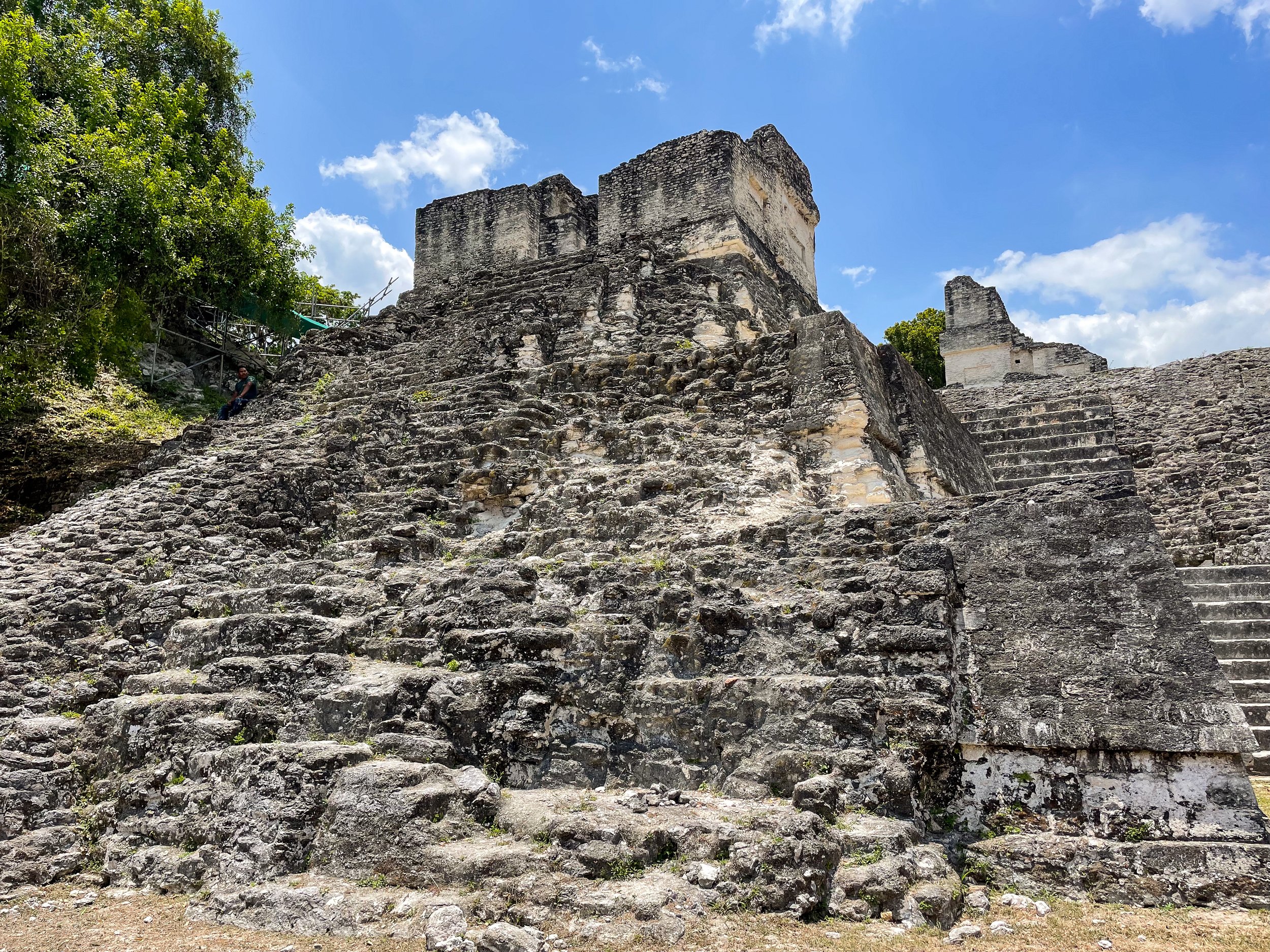
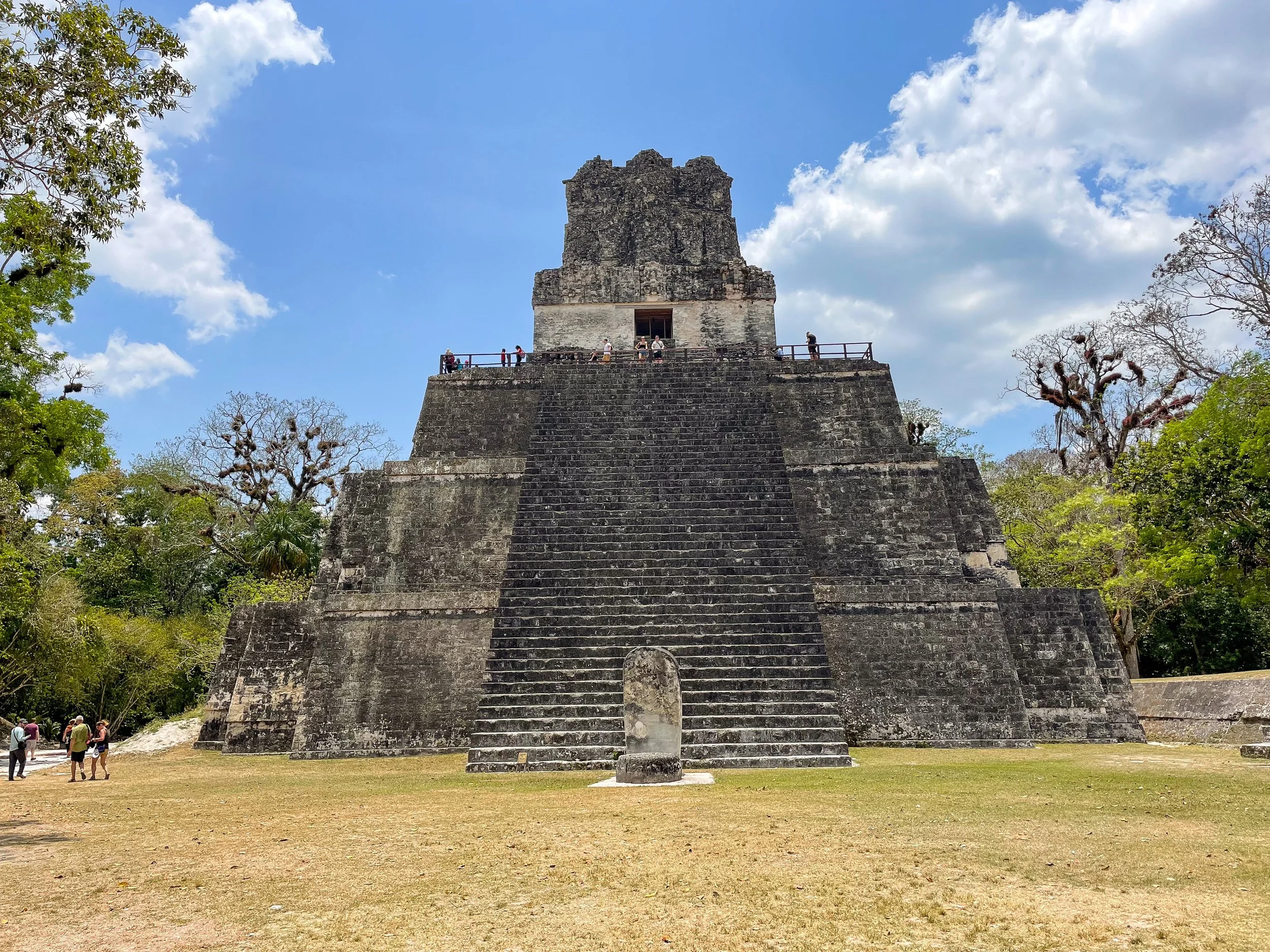
The North Acropolis. The most well preserved and recognizable acropolis at Tikal. Its central plaza is framed by multiple pyramids, residential structures and a ball court. Once home to Mayan royals and the burial site of past rulers, it features tombs and stelae. The complex is largely free to explore, including the opportunity to climb two of its pyramids for sweeping views of neighboring structures and close-up looks at their detailed carvings and hieroglyphs.
Temple of the Great Jaguar. The most picturesque pyramid at Tikal residing at the center of the North Acropolis. Its ten level stepped sides lead to a throne room at its top. Though non-accessible, the temple can be viewed from the plaza and Temple II.
The Temple of Masks. A large stepped pyramid with a shrine at its upper level featuring eroded carvings of two masks. It offers the best views of the North Acropolis and the Temple of the Great Jaguar.
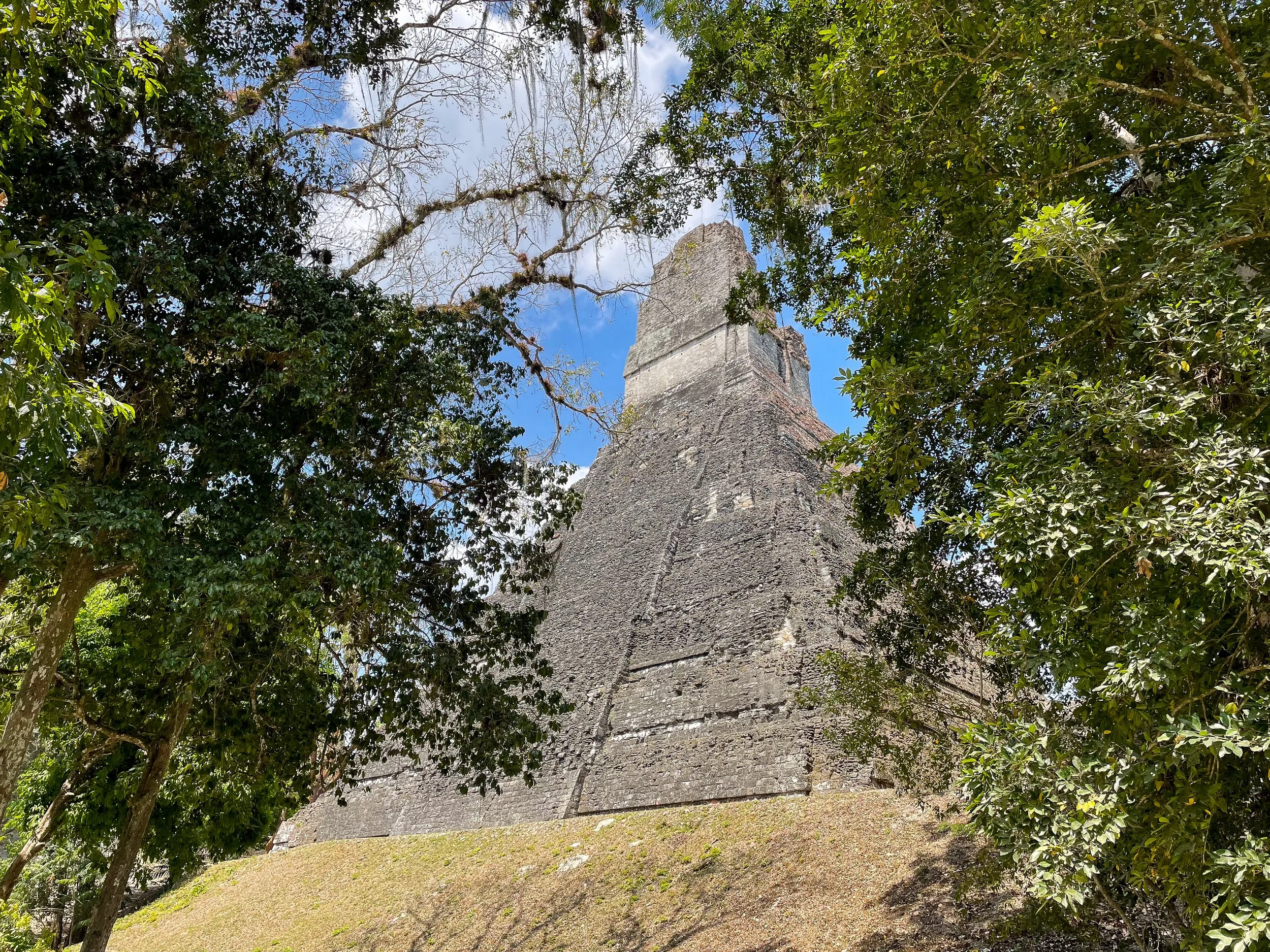
Getting Here. We visited Tikal with Belize Family Excursions on a day trip from San Ignacio. Our tour included transportation across the border of Belize and Guatemala, free time to explore the ruins and lunch at a local restaurant in Guatemala.
Actun Tunichil Muknal Cave
Actun Tunichil Muknal (ATM) is one of the most sacred places to the ancient Mayans, considered the entrance to the underworld. The sprawling cave system features an underground river and breathtaking rock formations. The chambers of the cave contain sacrificial human remains and Mayan pottery. The cave is well protected, with only a limited number of visitors permitted to enter per day.
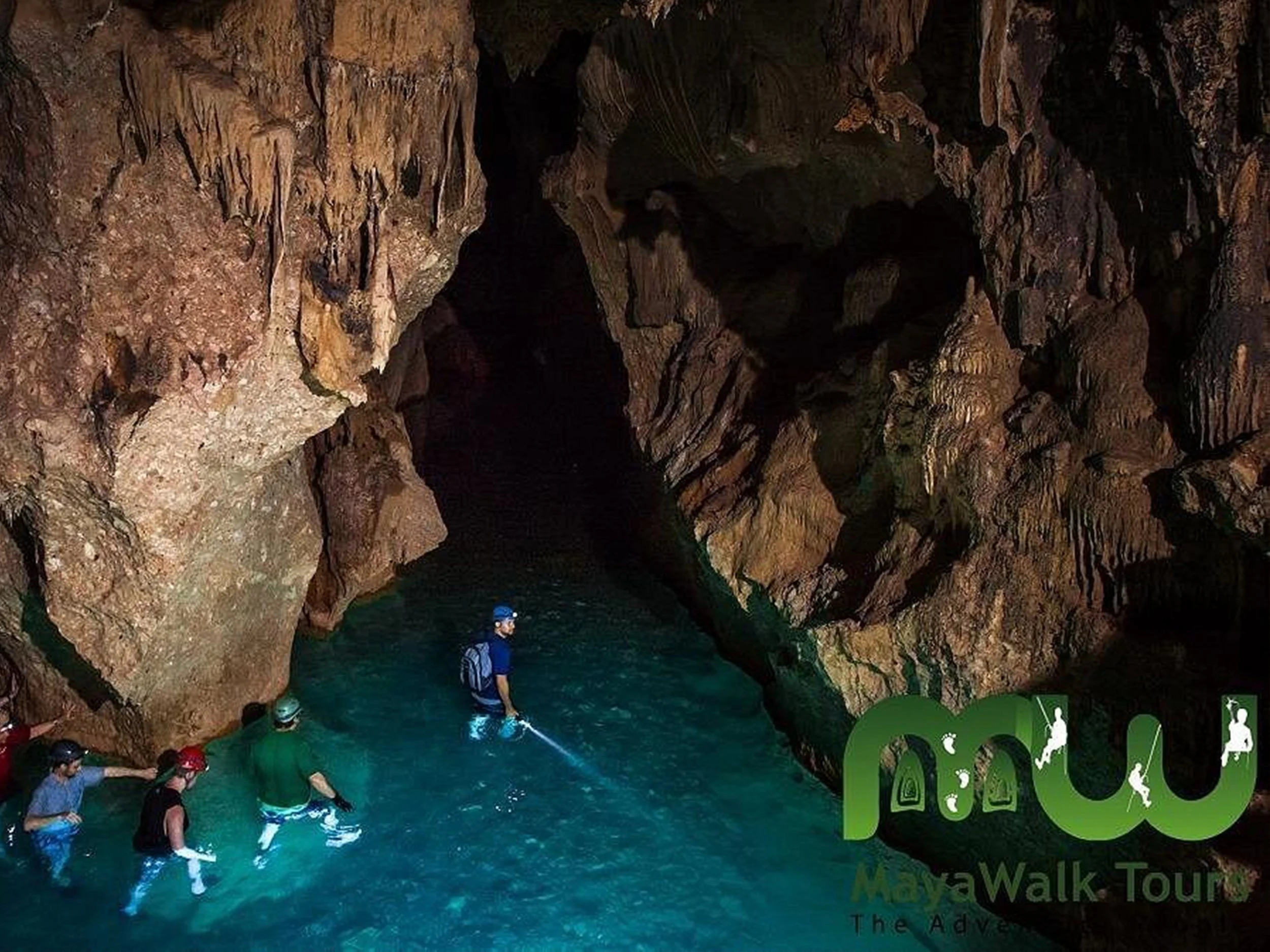
The Entrance of the Underworld
A hike through the jungle and across three shallow rivers leads to the entrance of the cave. A striking blue river flows from the darkness of its mouth. We swam inside with headlamps lighting the way. We squeezed through tight crevices and water filled passages before entering wider chambers and climbing over rocks as the river moved around us. Along the way, we admired clusters of stalactites and stalagmites used as musical instruments, like a xylophone, by the ancient Maya when tapped on. We scrambled up to a cliff to access the cave’s vast second half.
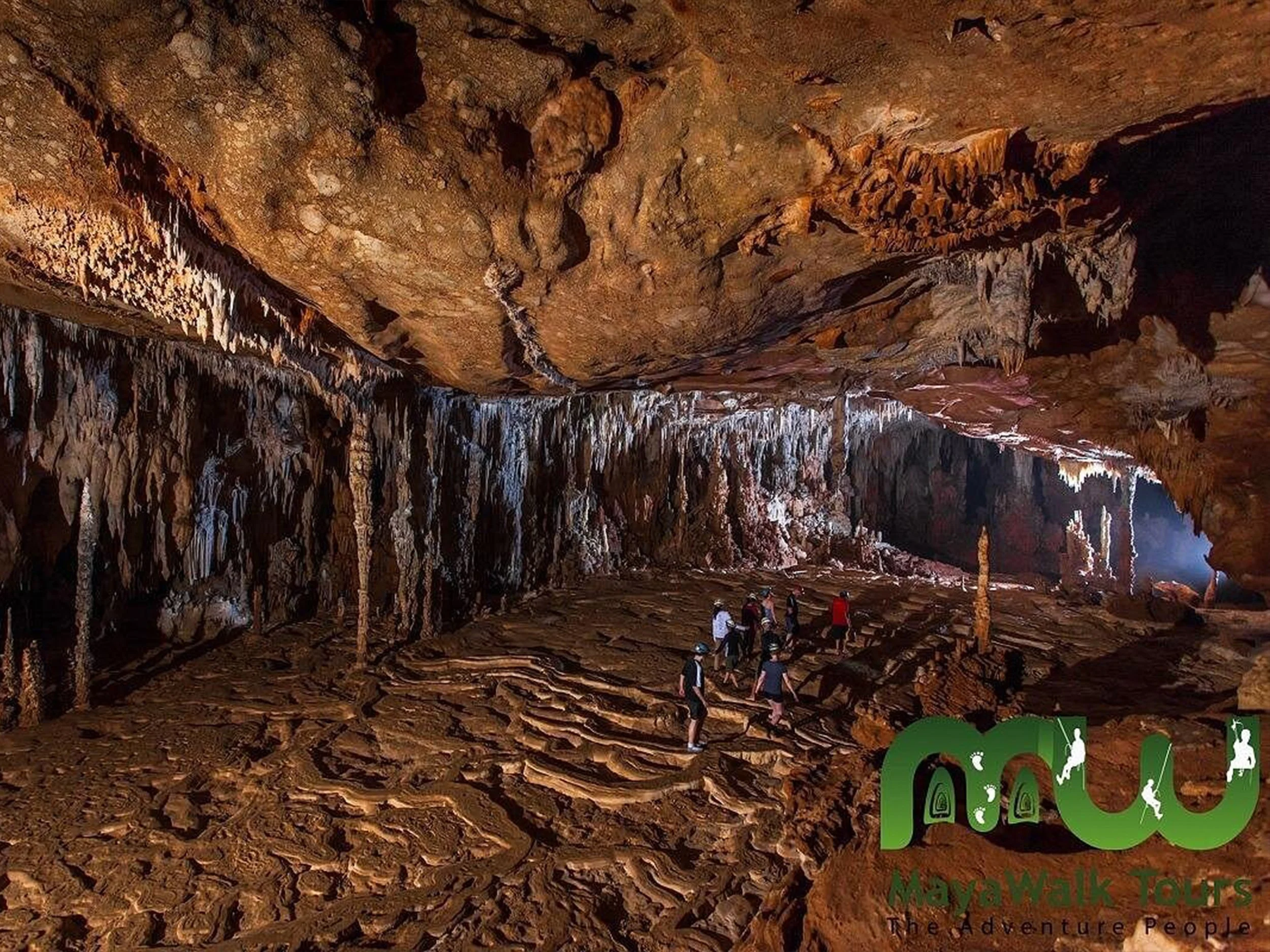
Ceremonial Chambers
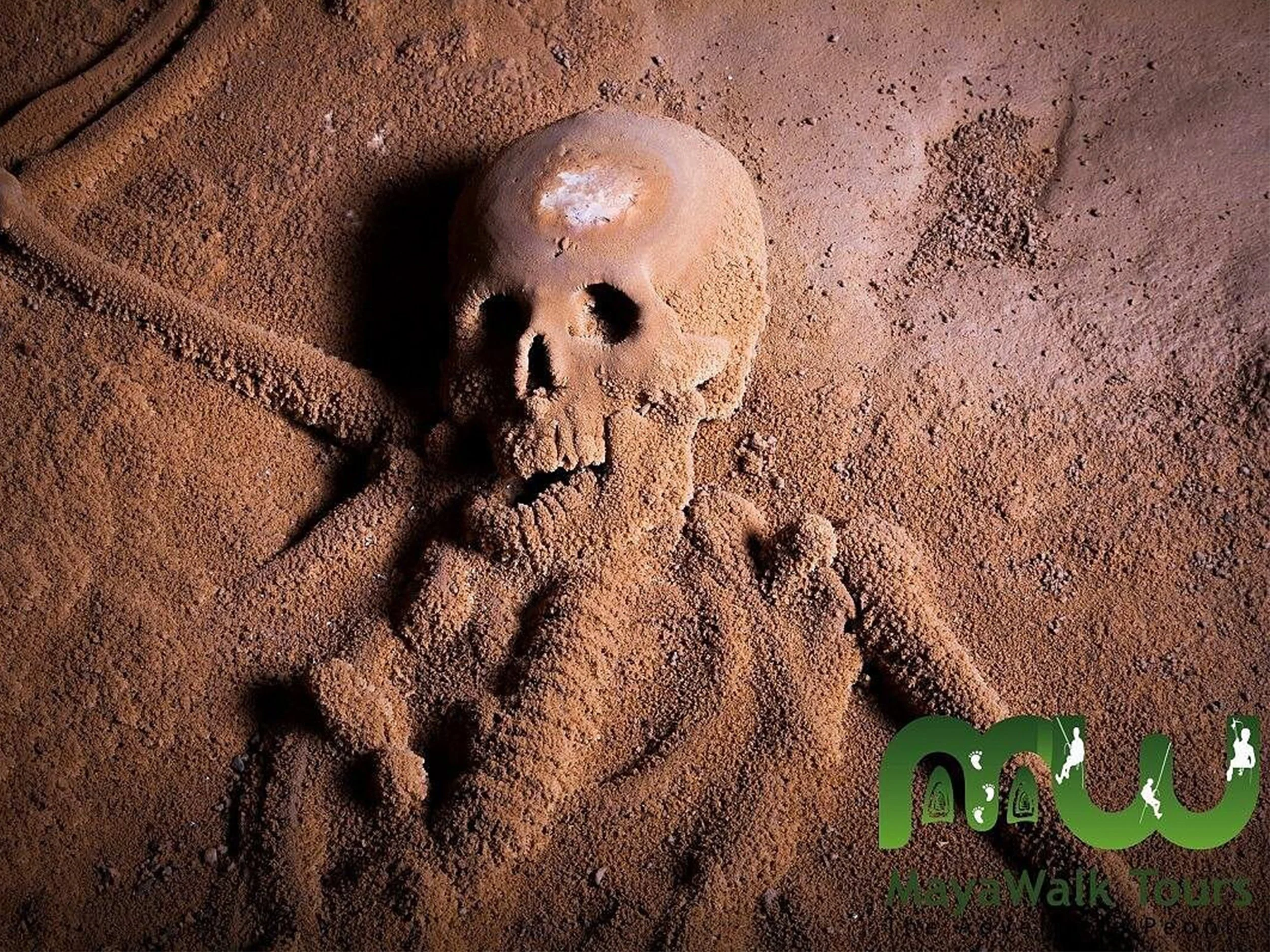
At this point, we removed our shoes and continued in our socks out of reverence of what awaited. We stepped into a massive cathedral like chamber with columns of rock, sparkling stalactites and mineral pools. Countless pieces of 1,000 year old pottery lay all around us, many of which remained mostly intact. Carved stalagmites cast shadows said to depict stories of Mayan gods. As we moved deeper, we encountered skeletal remains of sacrificial victims, including skulls and the bones of infants, culminating in the haunting sight of two calcified and exceptionally well preserved skeletons at the chamber’s furthest reach.
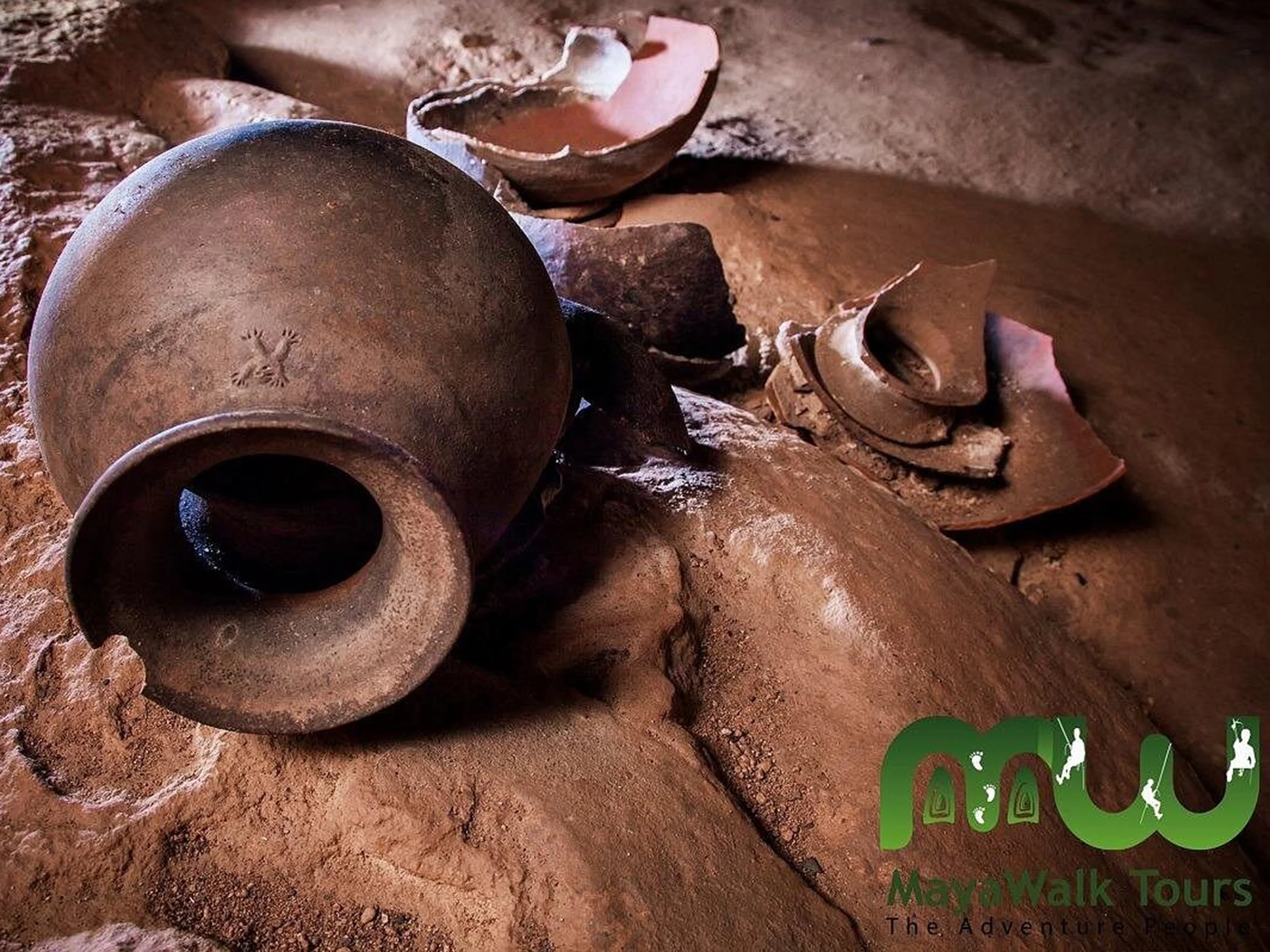
Mayan History
The ancient Mayans visited Actun Tunichil Muknal to make sacrifices in hopes the gods would provide water and end an extensive drought. When the rituals failed, the Mayans abandoned many parts of Belize and Guatemala leaving behind the ruins of their ancient cities.
Tips for Visiting Actun Tunichil Muknal:
Less than 200 people are allowed in per day. We booked ahead of time with Maya Walk Tours on Viator.
Phones, cameras, food and water bottles are prohibited. Photos provided are courtesy of Maya Walk Tours.
The trailhead to ATM is located over an hour from San Ignacio by car.
Like our tour of Caracol, it included a similar lunch.
You will get wet! Bring an extra pair of clothes and shoes to change into.
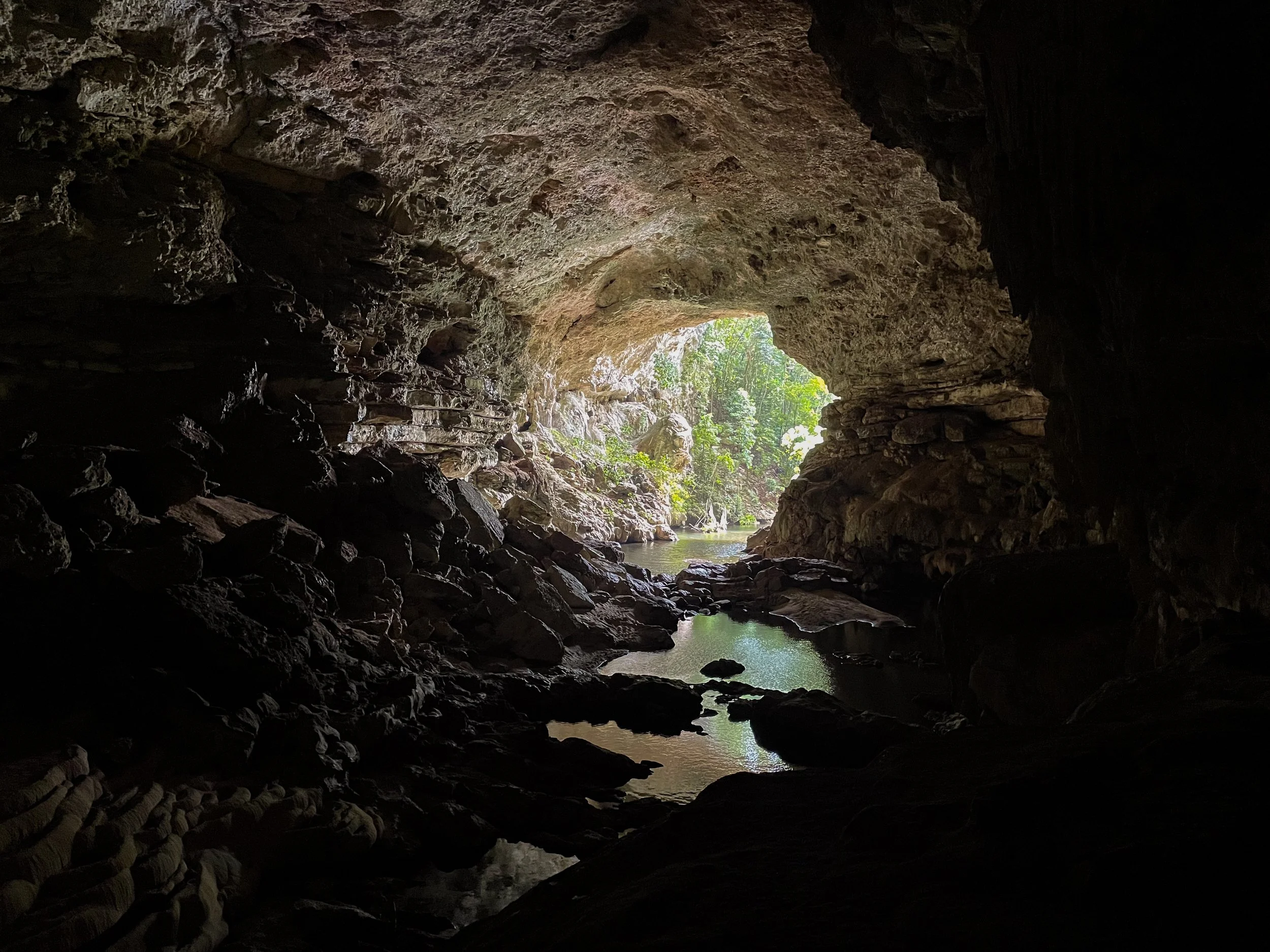
Rio Frio Cave
A sacred cave with a massive entrance, chamber and series of rock formations, including one resembling the profile of a monkey. The ancient Maya believed the god of rain, Chacc, resided here, often appearing as a cloud of mist exiting the cave in the early morning. Visits are usually included on excursions to Caracol.
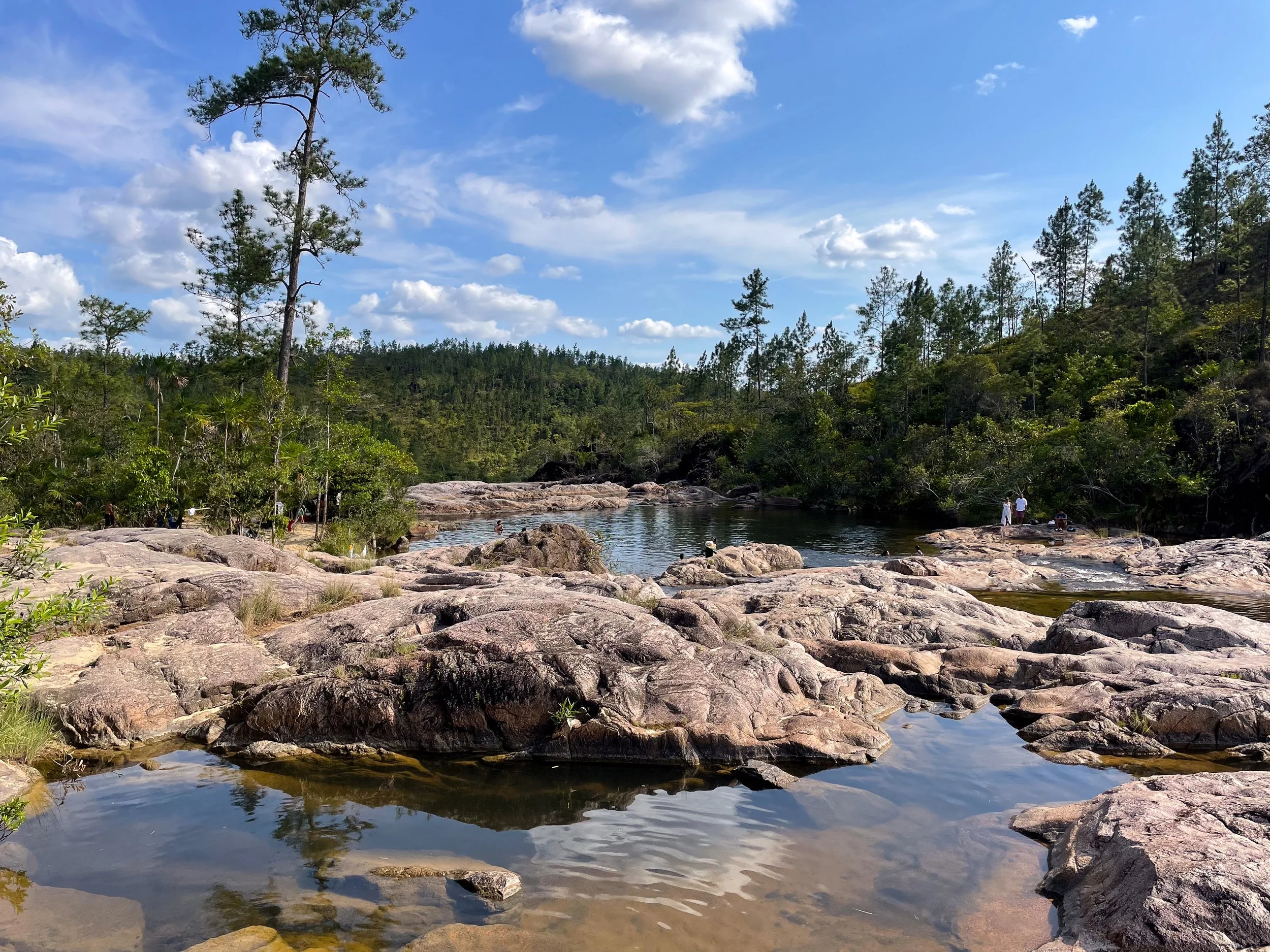
Rio on Pools
Relaxing in Belize’s mountain rivers is a popular local pastime. The Rio on Pools are natural river pools formed in the bedrock of the Rio Frio. Contrary to the name, the pools are not cold but quite tepid. They are surrounded by a pine forest known as the pine ridge mountain.
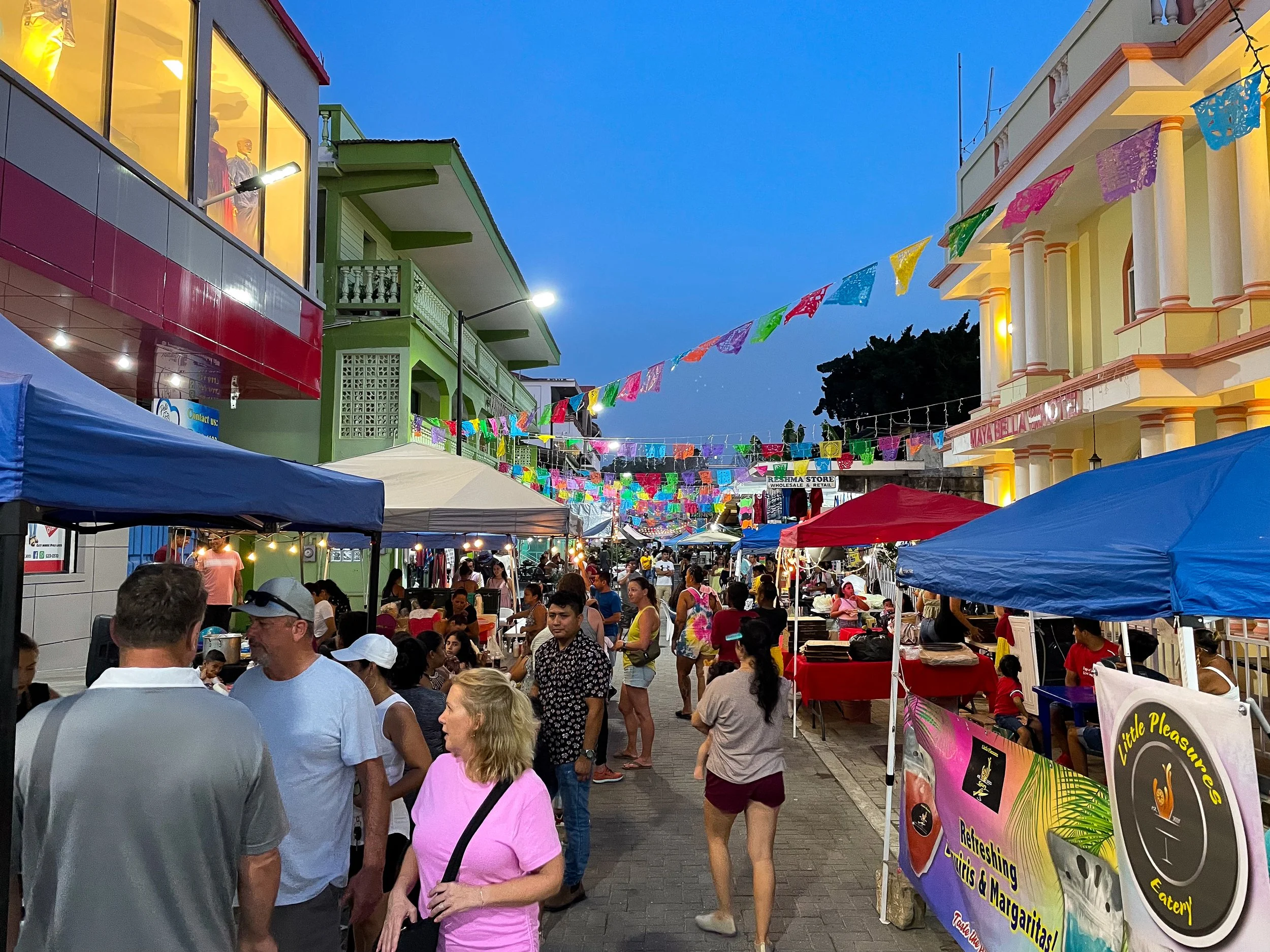
Western Belize
Even in more remote areas of Western Belize are small towns and cities with thriving local culture, markets, restaurants and festivals.
Cayo District. A jungleous region of Belize on the west side of the country bordering Guatemala. It is home to lush terrain, underground rivers and most notably, Mayan ruins and temples.
San Ignacio. The main city in the Cayo District with local and backpacker vibes. It’s a hub for eco activities and excursions on both sides of the Belize and Guatemalan borders.
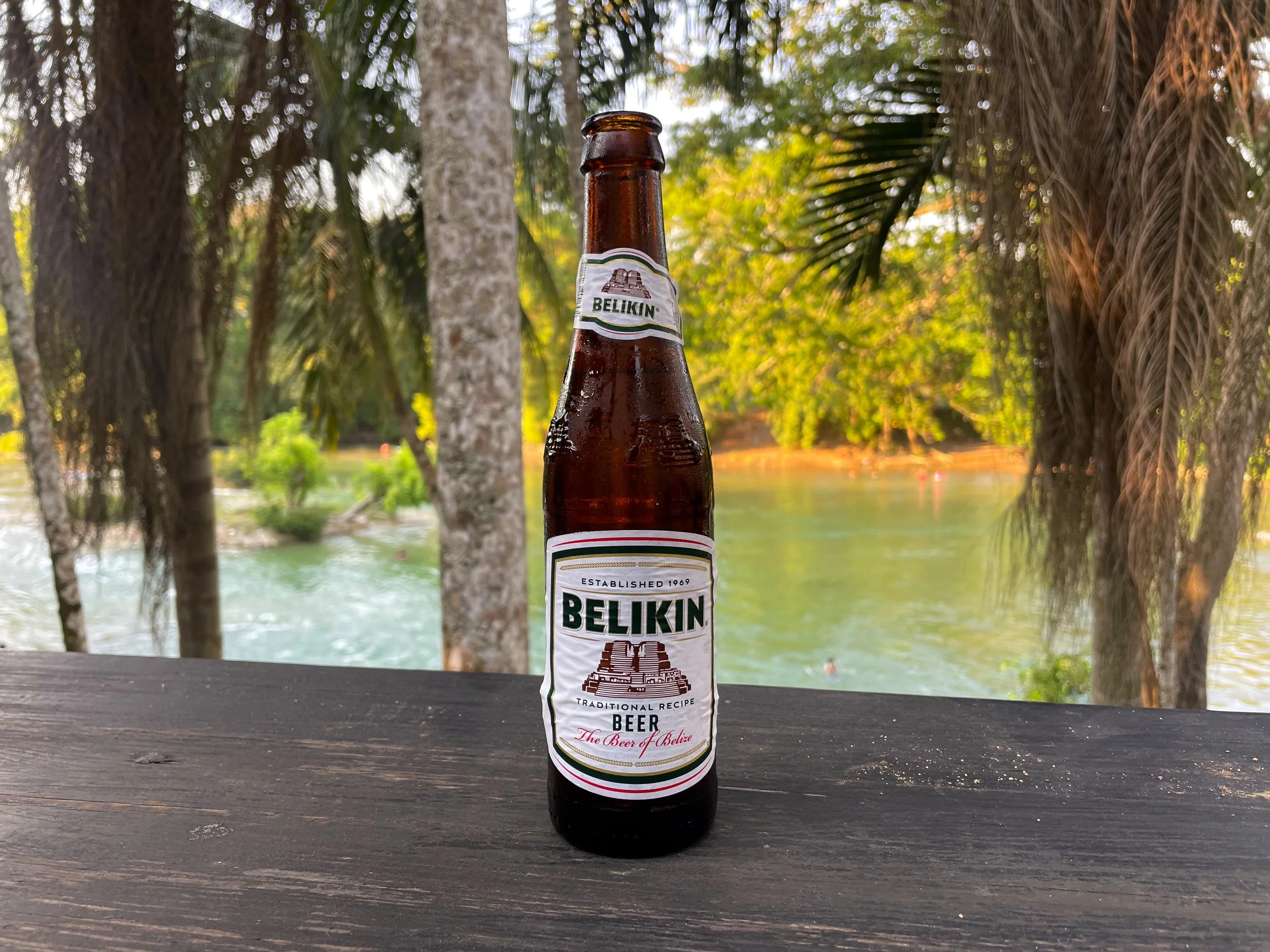
Burns Avenue. A pedestrian street in the center of San Ignacio with hostels, shops, restaurants, bars and tour operators. We visited in early May during the Cinco de Mayo Festival. The street was decorated with colorful banderas and came to life at night with music, fireworks and vendors selling street food. We ate pupusas, tortas, and sambusas while sipping on margaritas and the local beer, Belikin.
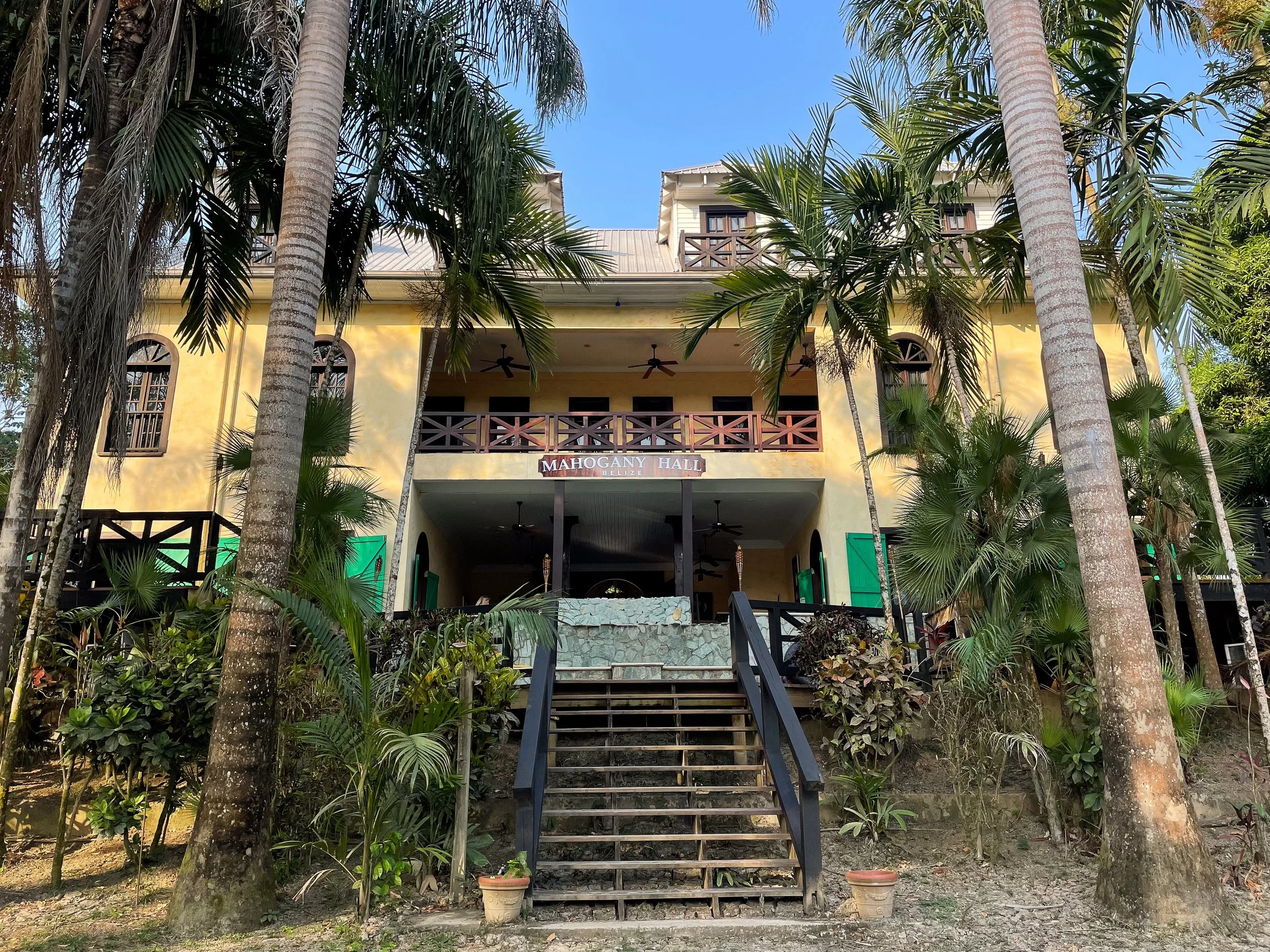
Bullet Tree Falls. A remote town 5km from San Ignacio in the middle of the jungle only accessible by dirt road. We stayed here at the Mahogany Hall.
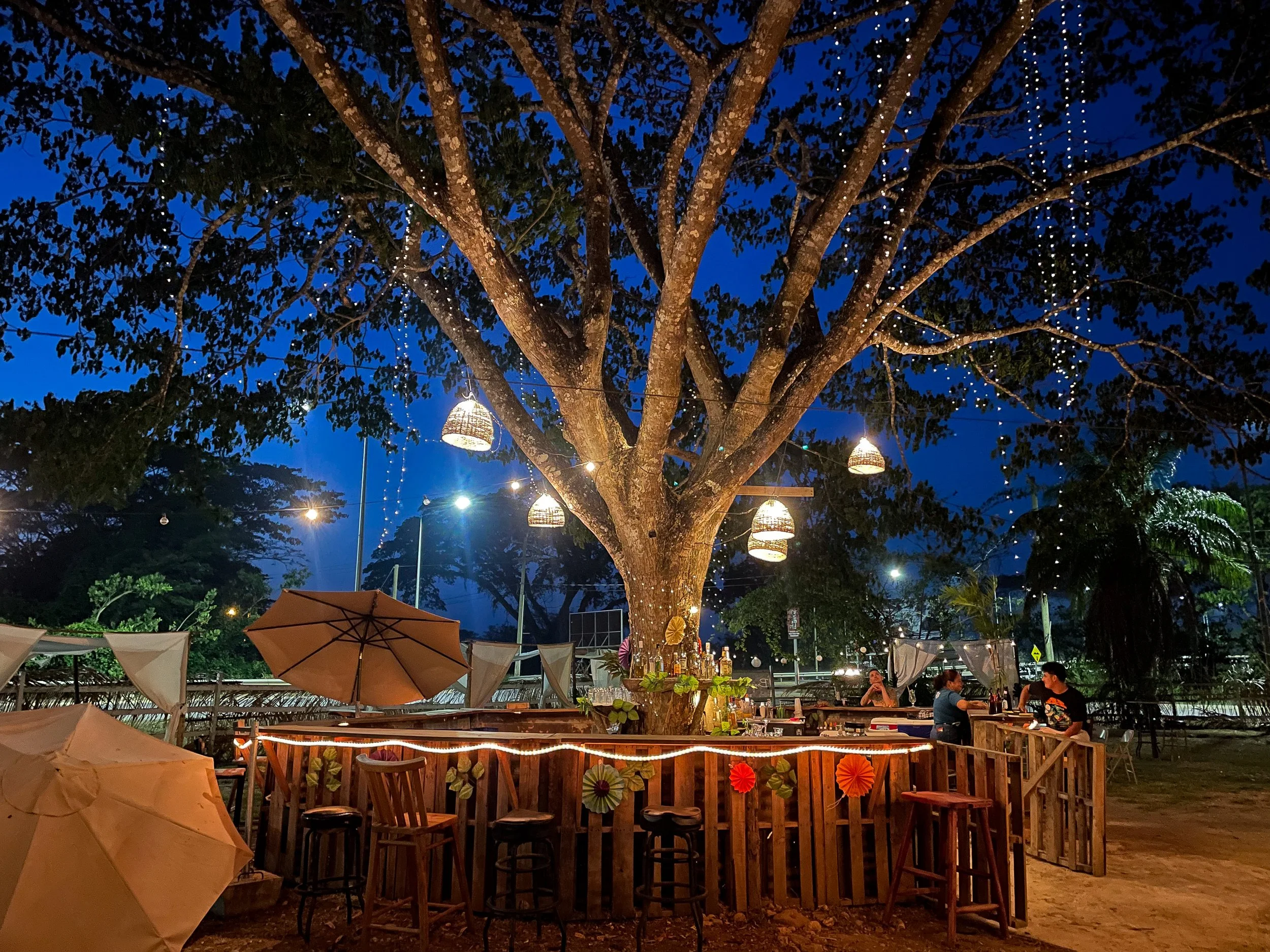
Places to Eat & Drink
Lola’s Restaurant and Bar. An outdoor patio perched on the hill overlooking San Ignacio. The menu was heavily seafood based. We ordered the herbed fish, blackened fish, conch and octopus ceviche as well as a few cocktails.
Ko Ox Han Nah. A popular restaurant for Belizean cuisine made from local ingredients, mostly sourced from the San Ignacio Market. We ordered the whole fried red snapper and garlic rum shrimp with sides of coconut rice.
Booze and Branches. An open air bar circling a large tree with twinkle lights and linen draped pergolas made from branches. They offered classic cocktails like margaritas, mojitos, sangria and rum-ritas.
Guava Limb. A locally recommended restaurant on Burns Ave with a fusion of foods from Belize and South East Asia as well as brick oven pizza. We spent hours here chatting with a new friend, Jacob, who we met during our excursion to Actun Tunichil Muknal.
Coffee de los Mayas. A coffee shop with a walk-up counter located on Burns Ave.
San Ignacio Market. A daily farmers market held near the center of town from 6am to 5pm. Local vendors set up stands selling vegetables, fruits, honey, souvenirs and street food. Come here for breakfast at Magaly’s Fast Food, sorrel (hibiscus juice) and horchata (sweetened rice milk).
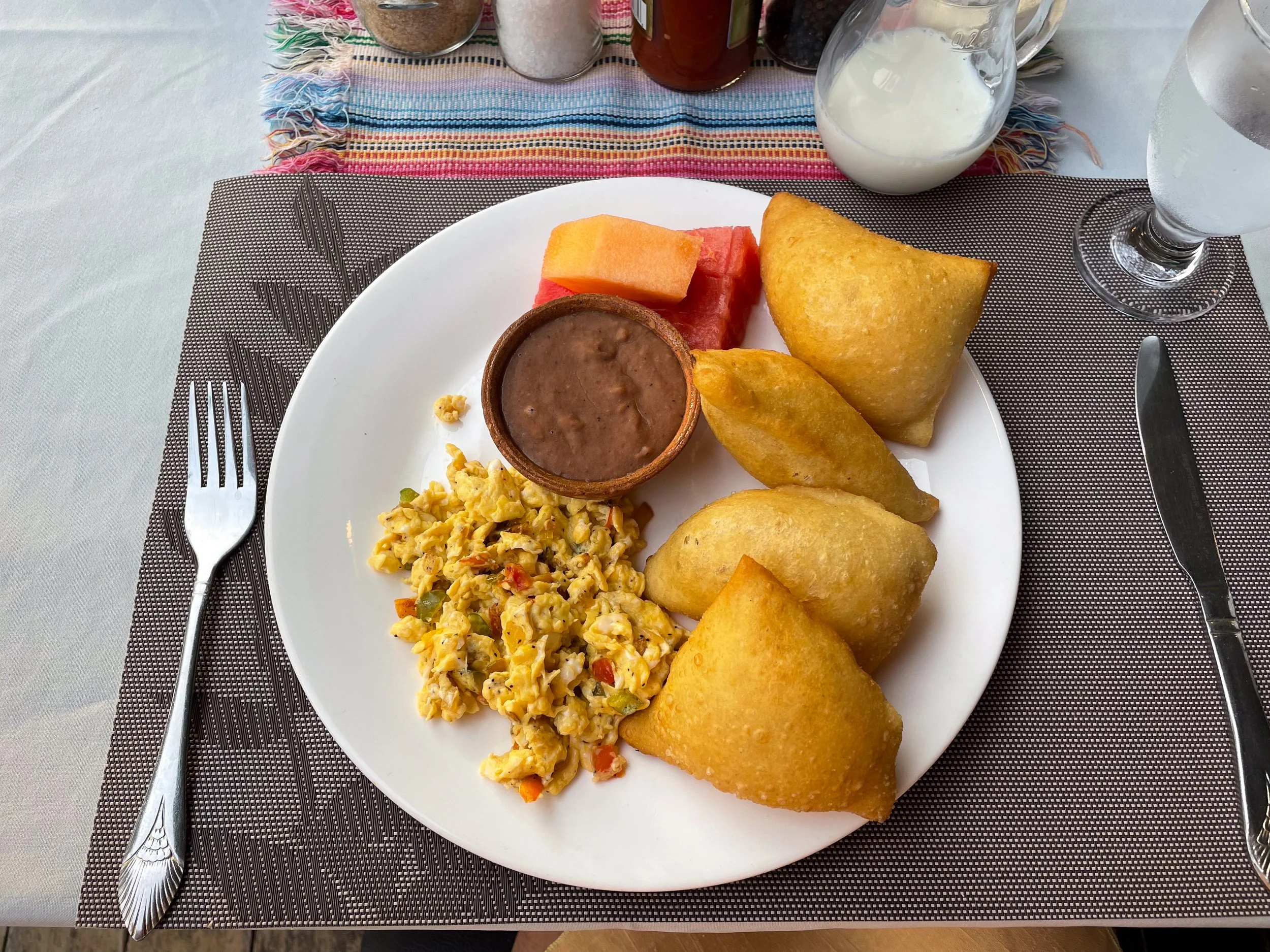
Belizean Cuisine
Fry Jacks. Deep-fried pieces of dough served with refried beans and tropical fruit.
Salbutes. Deep fried corn tortillas topped with veggies or meat.
Pupusas. A white corn arepa stuffed with various fillings or toppings. We had the bean and cheese pupusas.
Escabeche. Chicken and onion stewed in a curry sauce. We were offered a vegetarian version made with tofu during lunches on our excursions.
Sorrel. Hibiscus juice.
Marie Sharps. A popular habanero hot sauce seen on nearly every dining table throughout Belize.
Belikin. Belize’s national beer with a Mayan temple on its label.
Where to Stay
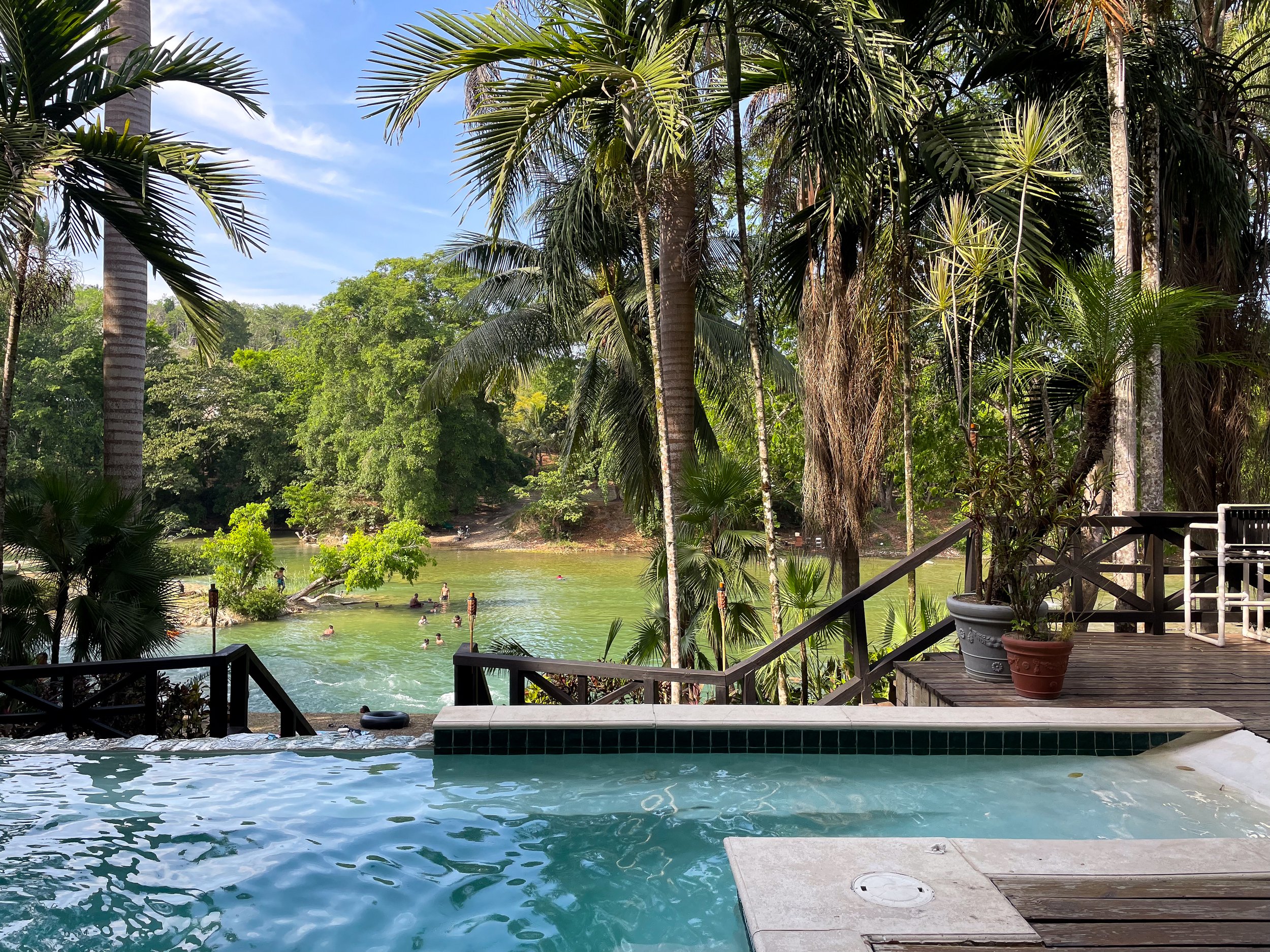
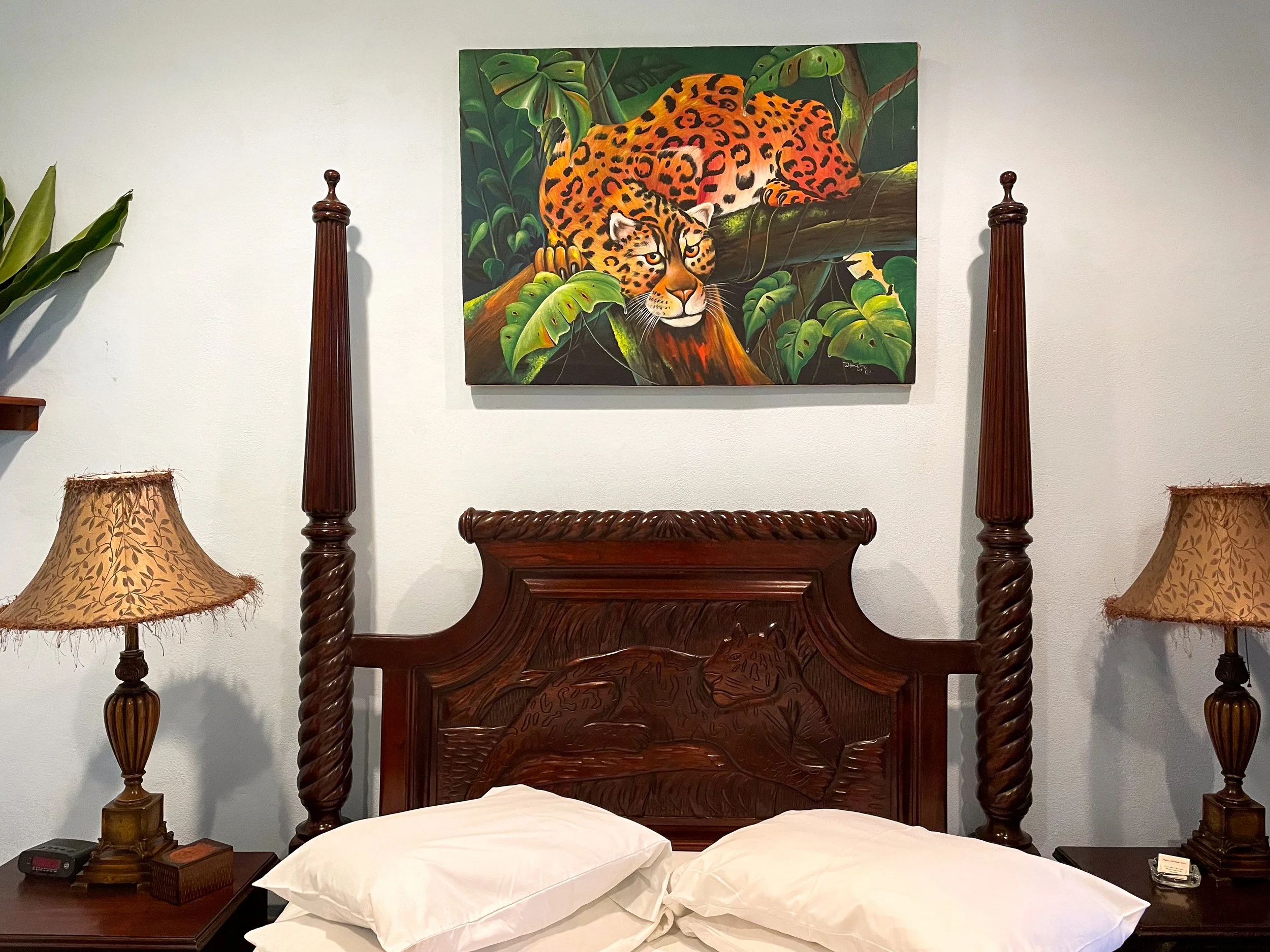
We stayed at Mahogany Hall, an eco hotel along the banks of the Mopan River in the town of Bullet Tree Falls. It was a peaceful location in the middle of the tropical jungle. Our room was accented with mahogany furniture with carvings of jaguars, toucans and tropical plants. The hotel has a restaurant, bar and infinity pool. We enjoyed breakfast here most mornings and a Belikin by the pool during the evenings.
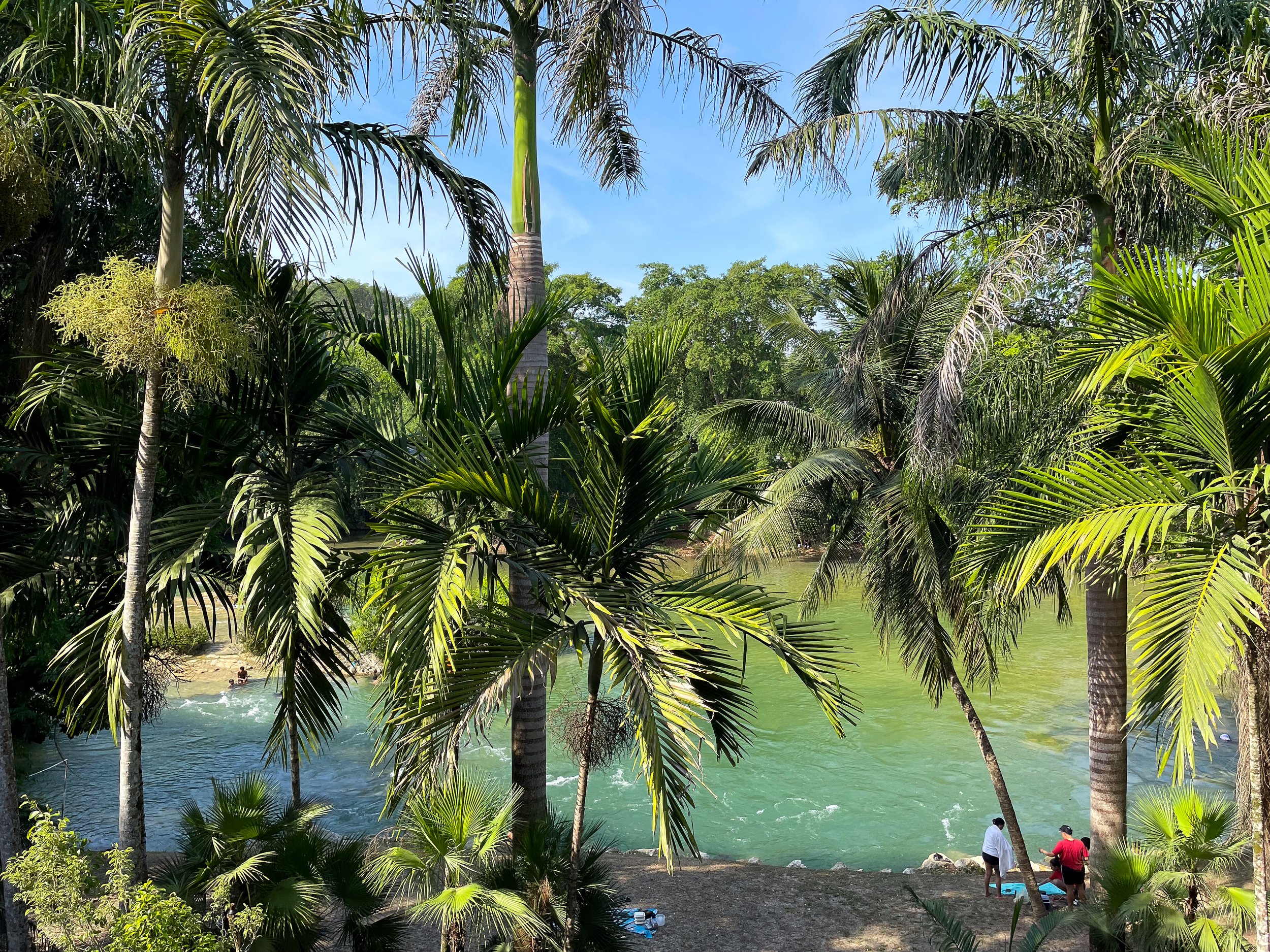
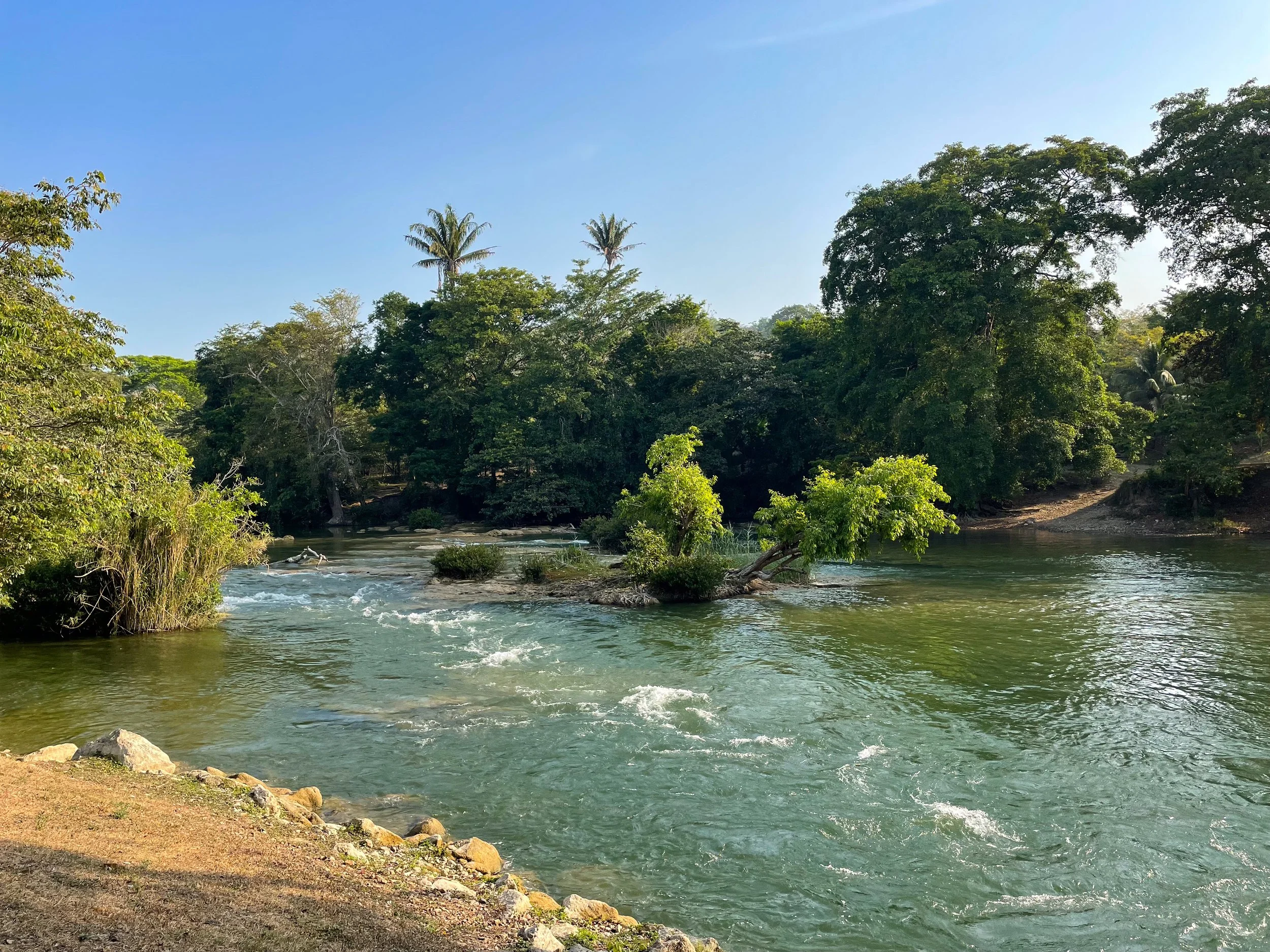
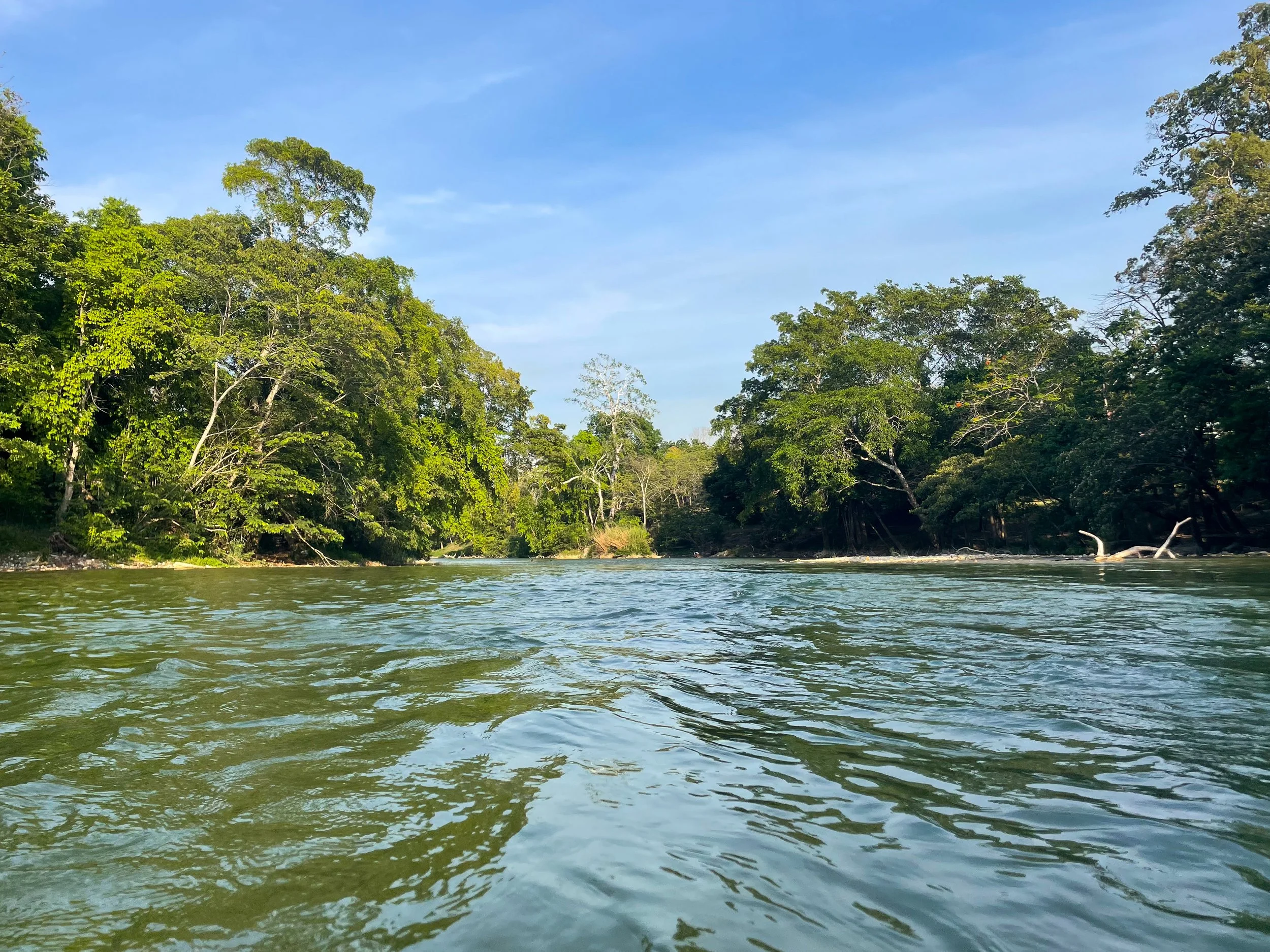
The Mopan River. While here, we joined locals and waded in the Mopan River to cool off from the afternoon heat. We lounged on the shallow river bed as the current gently passed by and tropical birds chased each other overhead.
Getting Around
Airport Shuttle. We shuttled to and from the airport and our hotel in Bullet Tree Falls with Belize Family Adventure through Viator. Transportation took less than two hours and was a good way to see the countryside.
Excursions. All of our excursions included transportation. We were either picked up from our hotel or at the operator’s office before being shuttled to our destination.
By Taxi. In San Ignacio, taxis were easy to find and would more than often find us. They’re identifiable by their green license plates with white letters. We took the number of one taxi driver, Apellio, who quickly became our driver while in town. Taxis cost $20-25 Belize Dollars ($10-$12.50 USD) between Bullet Tree Falls and San Ignacio.
On Foot. San Ignacio is a relatively small town and can be easily walked on foot.
Location Specifics
Currency. The Belizean Dollar and US Dollar are used interchangeably across the island. At the time, the exchange rate was 1 USD to 2 BZD, making conversions and transactions easy.
Cash vs Card. Carry cash for taxis, snacks and tips.
Language. English is the most commonly spoken language in Belize. Spanish is most commonly spoken in Guatemala.
Drinking Water. Tap water is not safe for consumption due to risk of contamination. Only drink filtered or bottled water.
Elsewhere in Belize & Guatemala
From colonial architecture to lakeside villages beneath towering volcanoes and Caribbean coral reefs, discover more of Guatemala's and Belize’s rich history and landscapes.
Antigua Guatemala Travel Guide: Acatenango, Colonial Charm & Local Cuisine. Explore Antigua Guatemala's cobblestone streets, colonial architecture and local cuisine beneath towering volcanoes, including the iconic hike to Acatenango and Fuego.
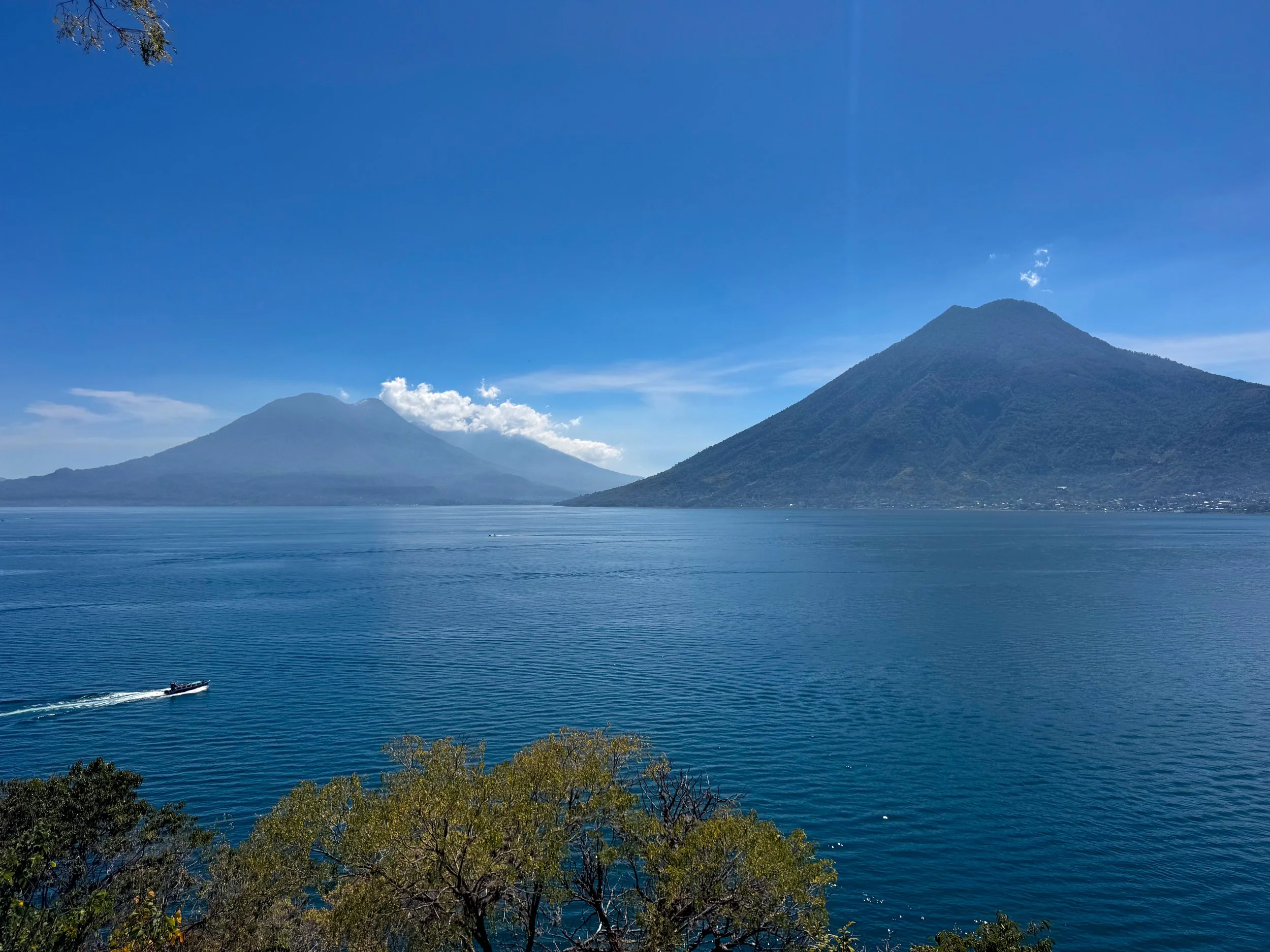
Lake Atitlán Travel Guide: Villages, Volcanoes & Mayan Culture. Navigate between Lake Atitlán's lakeside villages where volcanic landscapes and living Mayan culture shape one of Guatemala's most remarkable destinations.
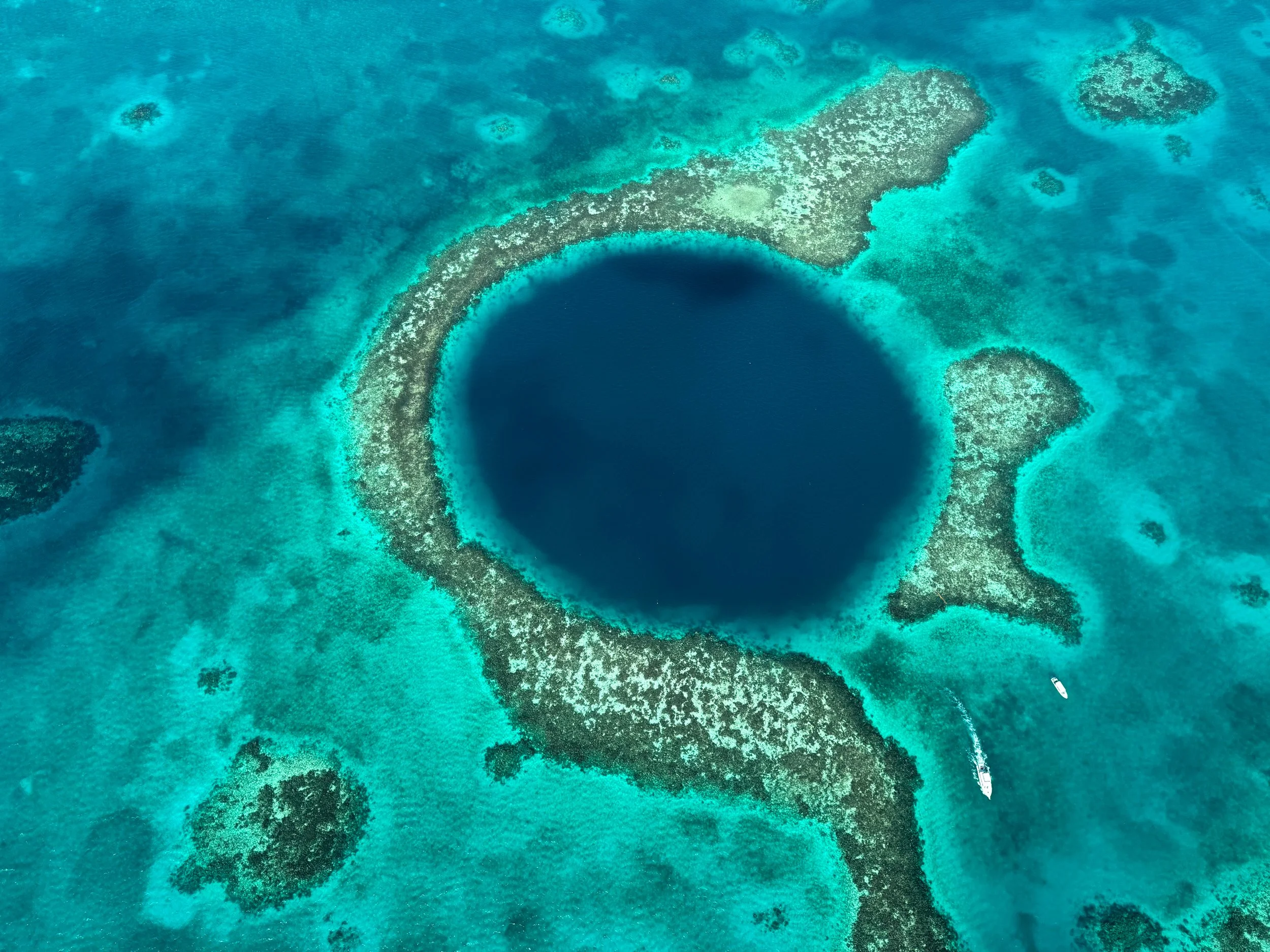
Caye Caulker Travel Guide: Snorkeling, Belize Barrier Reef & Island Life. Dive into Caye Caulker's turquoise waters for world class snorkeling in the Belize Barrier Reef while embracing the island's tropical spirit and Go Slow motto.
For Next Time…
We fell in love with the jungle, Mayan ruins and culture of Belize and Guatemala. We will certainly be back one day and have plans to visit more locations across both countries.
Altun Ha. A Mayan acropolis with pyramids, temples, ball courts and platforms on the mainland north of Belize City.
Tikal Sunrise Hike. An early morning hike in Tikal to watch the sunrise from the top of the famed pyramids. We saw photos of the colorful sunrise, layers of morning mist and dramatic ruins peek from jungleous canopy below.
Flores, Guatemala. A picturesque island city on Lago Petén Itzá known for its colorful architecture and proximity to Mayan ruins.
Antigua Guatemala Travel Guide: Acatenango, Colonial Charm & Local Cuisine
Explore Antigua Guatemala's cobblestone streets, colonial architecture and local cuisine beneath towering volcanoes, including the iconic hike to Acatenango and Fuego.
Antigua, Guatemala
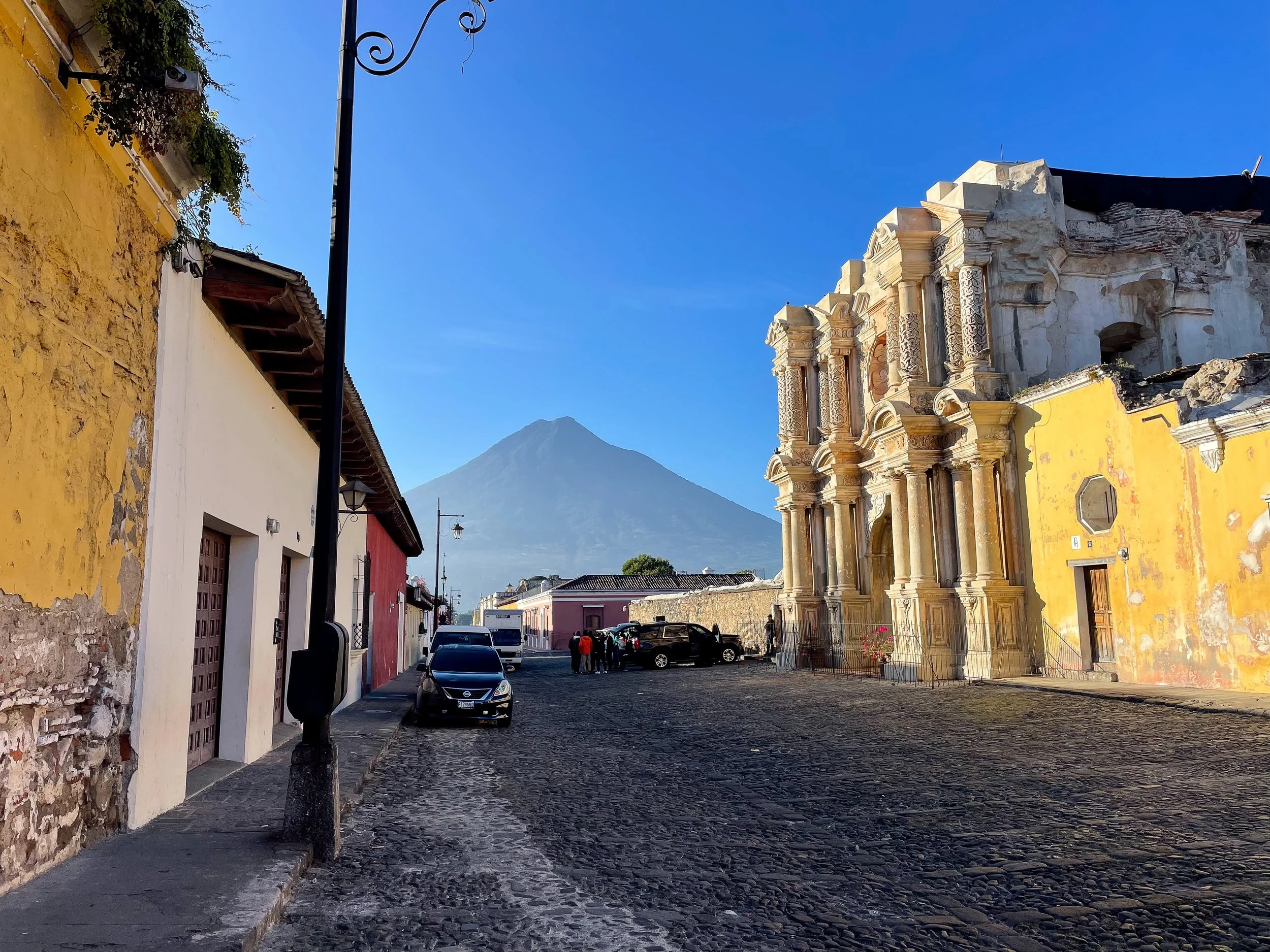
Antigua is a picturesque and historic city with colonial era streets, a lively cultural scene and views of imposing volcanoes. The city’s charm invites travelers to admire its Spanish colonial architecture and explore the remains of crumbling ruins. The bustling food scene and cafe culture make Antigua a wonderful place to taste traditional Guatemalan dishes and coffee. Vendors at artisan markets sell handmade crafts, colorful textiles and vibrant ceramics. Backpackers stay at local hostels and study at Spanish language schools. Overnight hikes lead to the summit of nearby volcanoes including the explosive Volcán de Fuego.
A Colonial Gem
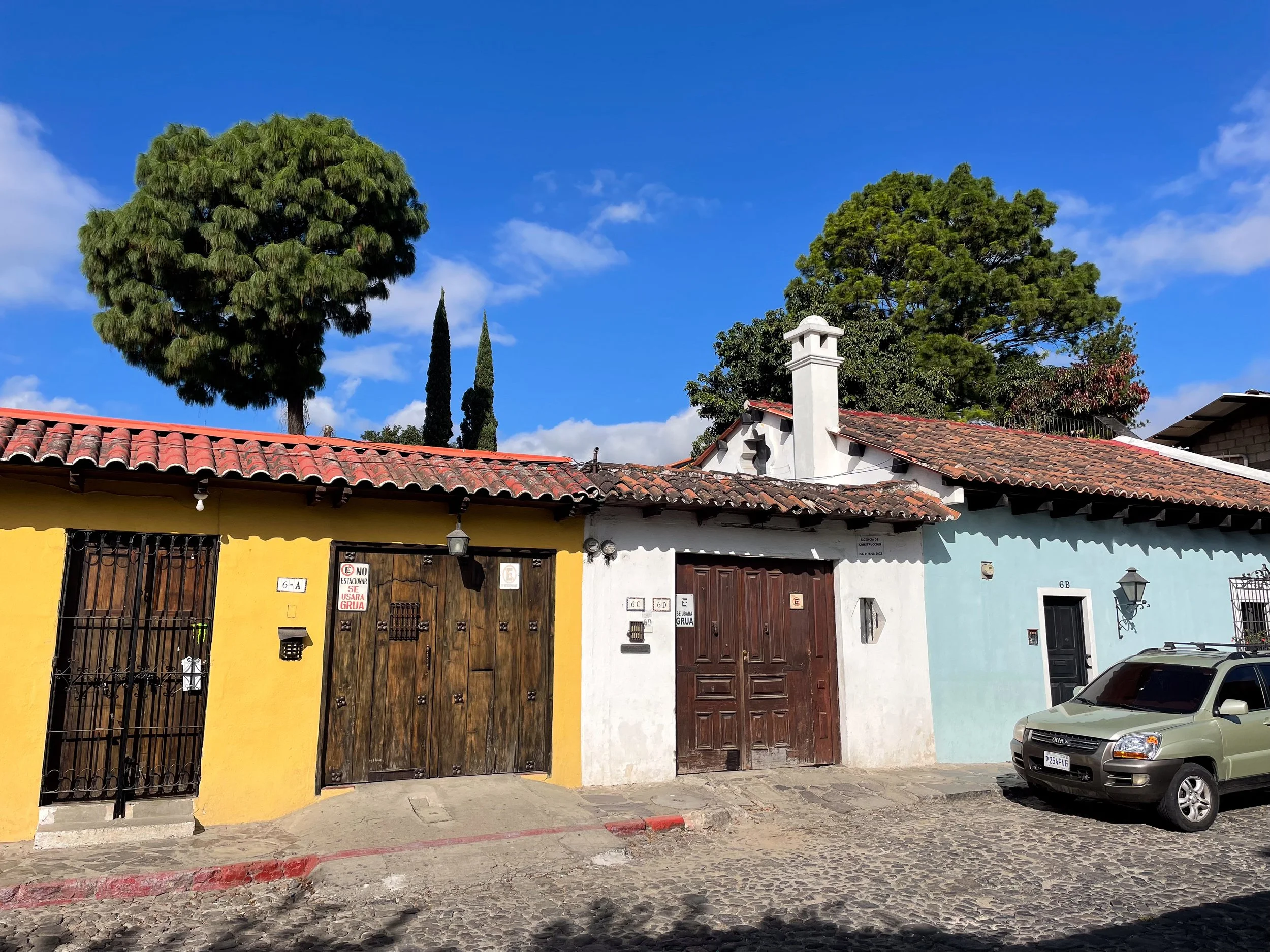
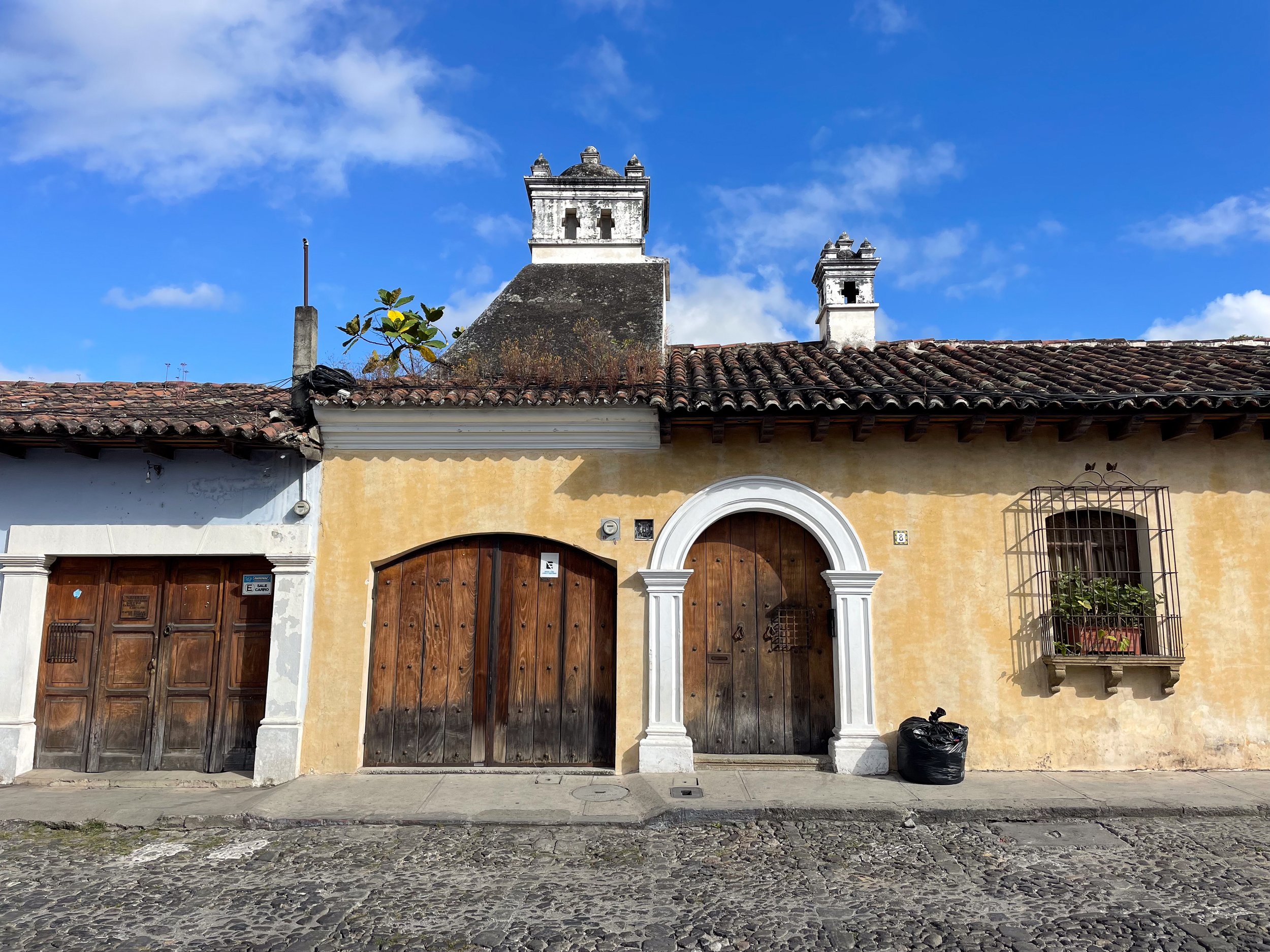
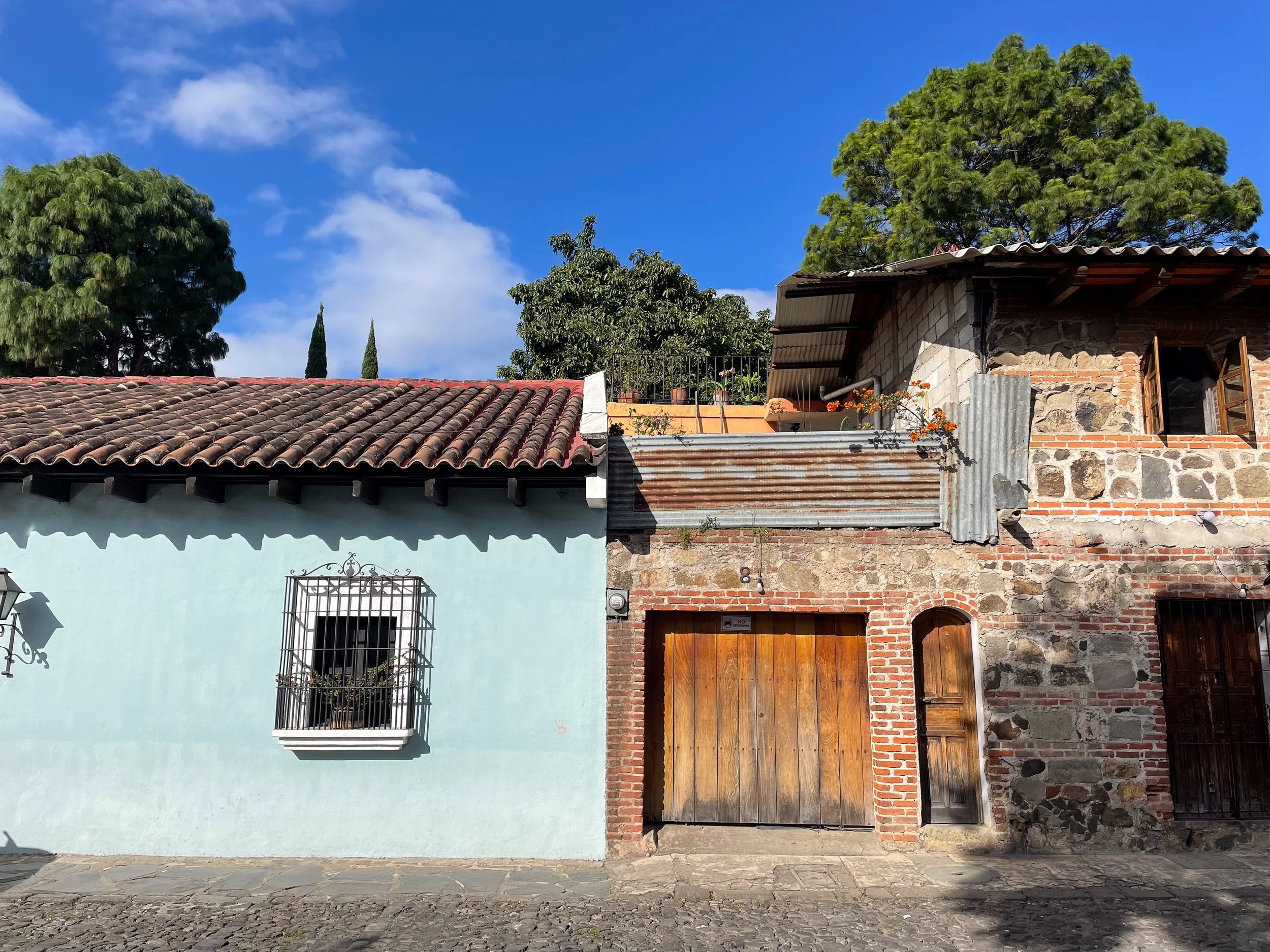
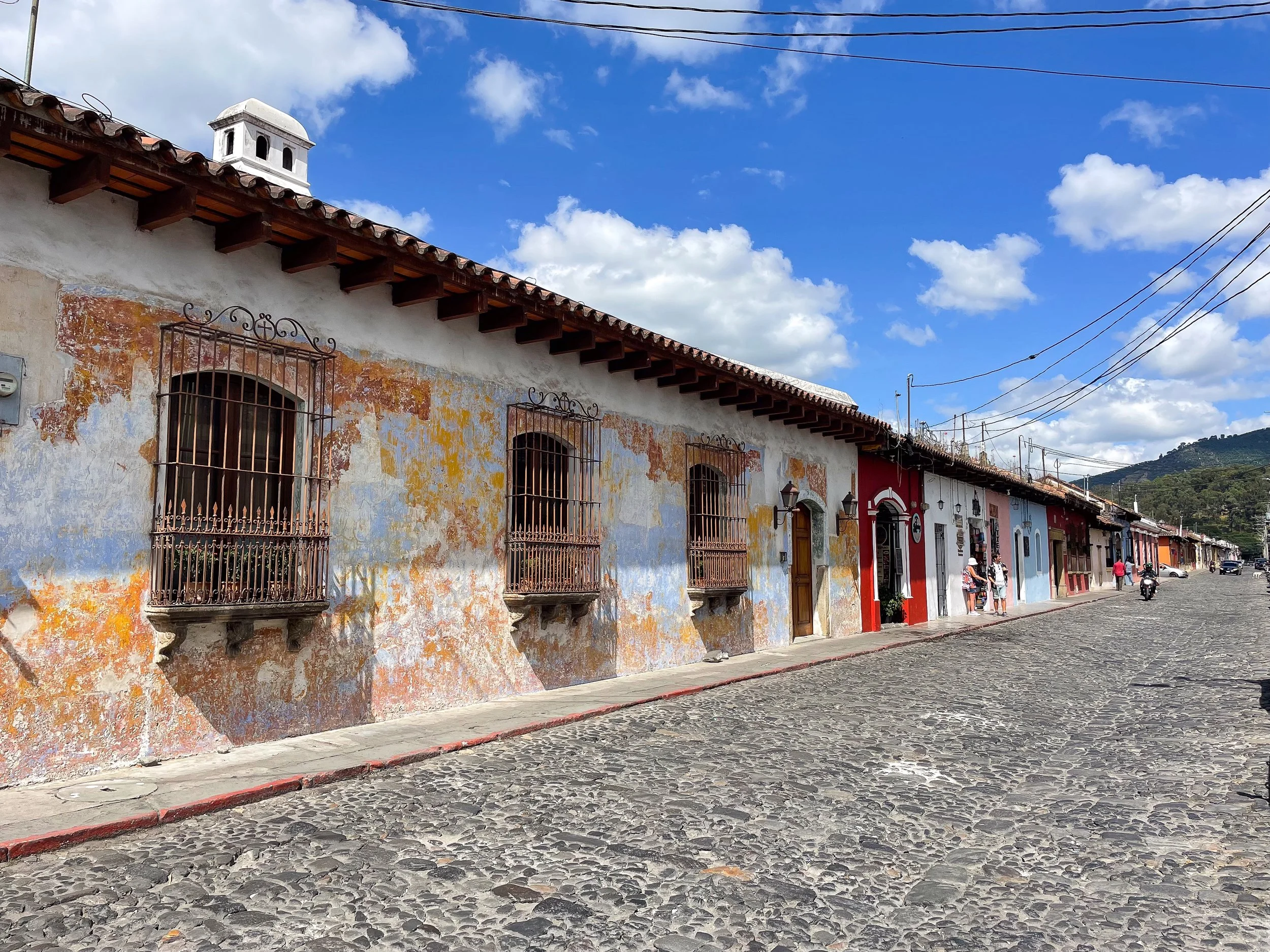
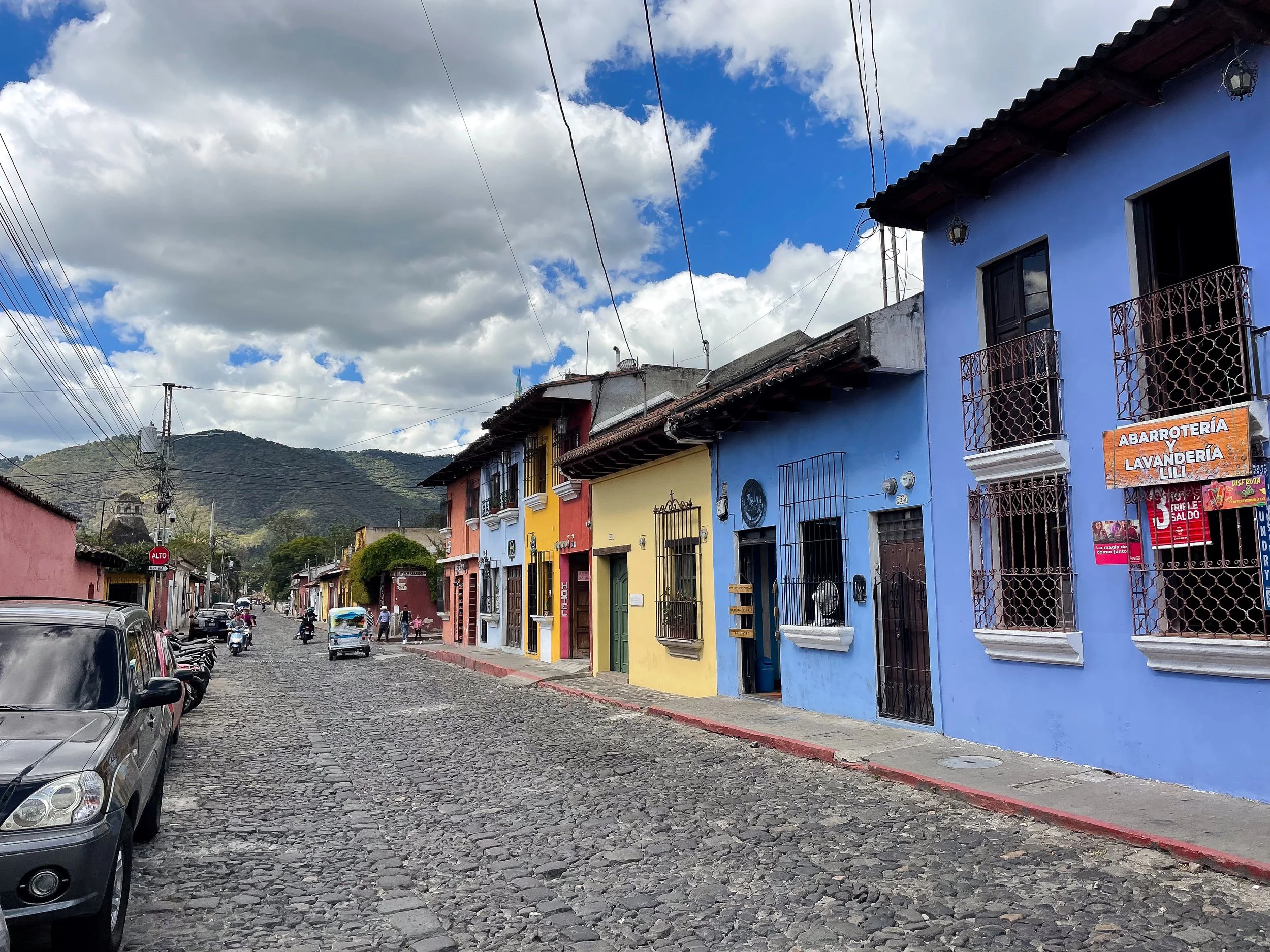
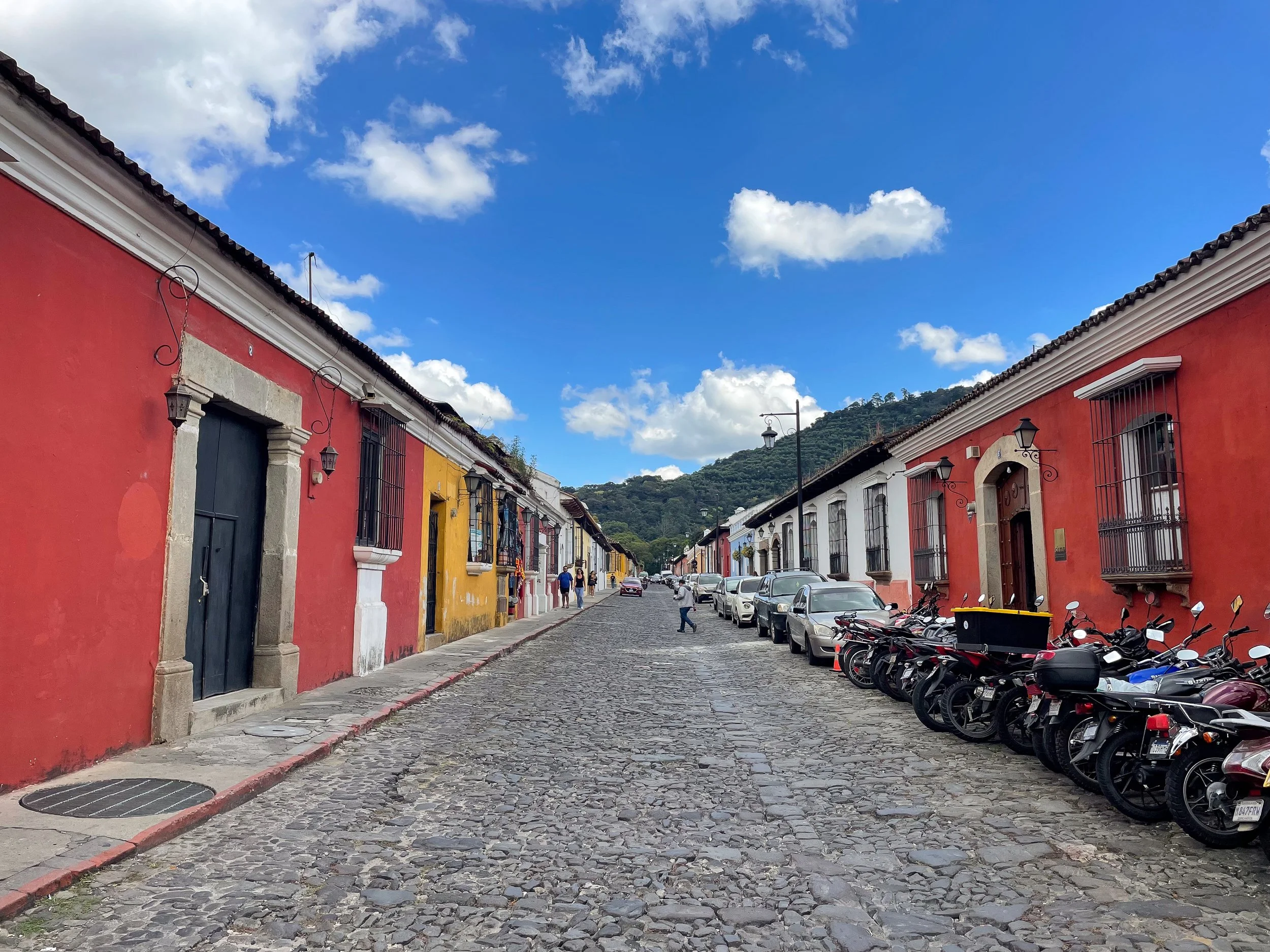
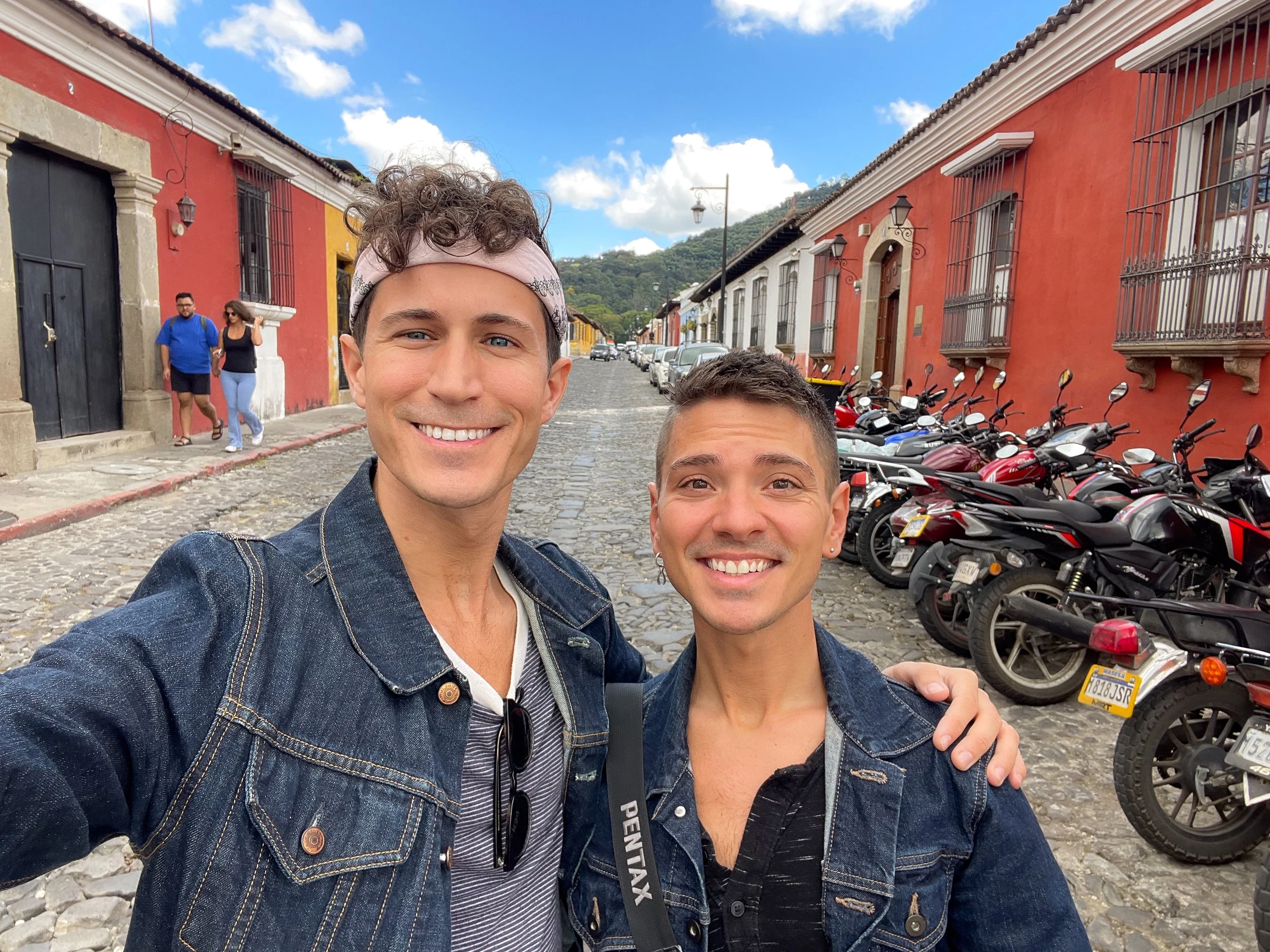
Dating back nearly 500 years, Antigua is the Spanish colonial gem of Guatemala. Landmark sights, museums, ornate cathedrals and crumbling ruins built of stone, brick and plaster line Antigua’s grid of cobblestone streets. Warmly painted facades ranging in tones of red, ochre, yellow and cream alternate from building to building. Carved wooden doors often lead to lush shaded courtyards occupied by restaurants and cafes. Popular terraces boast views overlooking the clay tiled roofs, cathedral spires and imposing volcanoes.
Colonial Sights
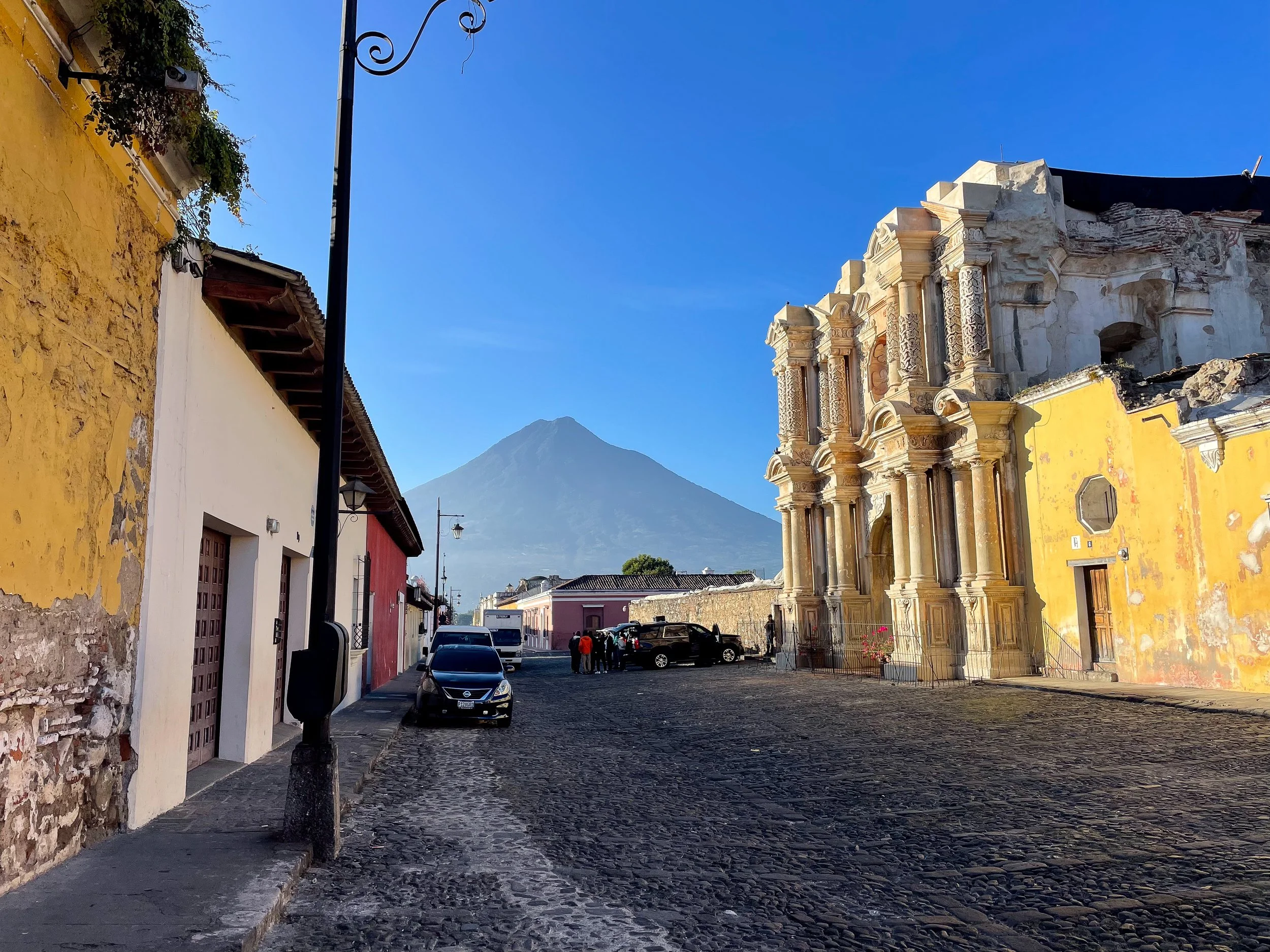
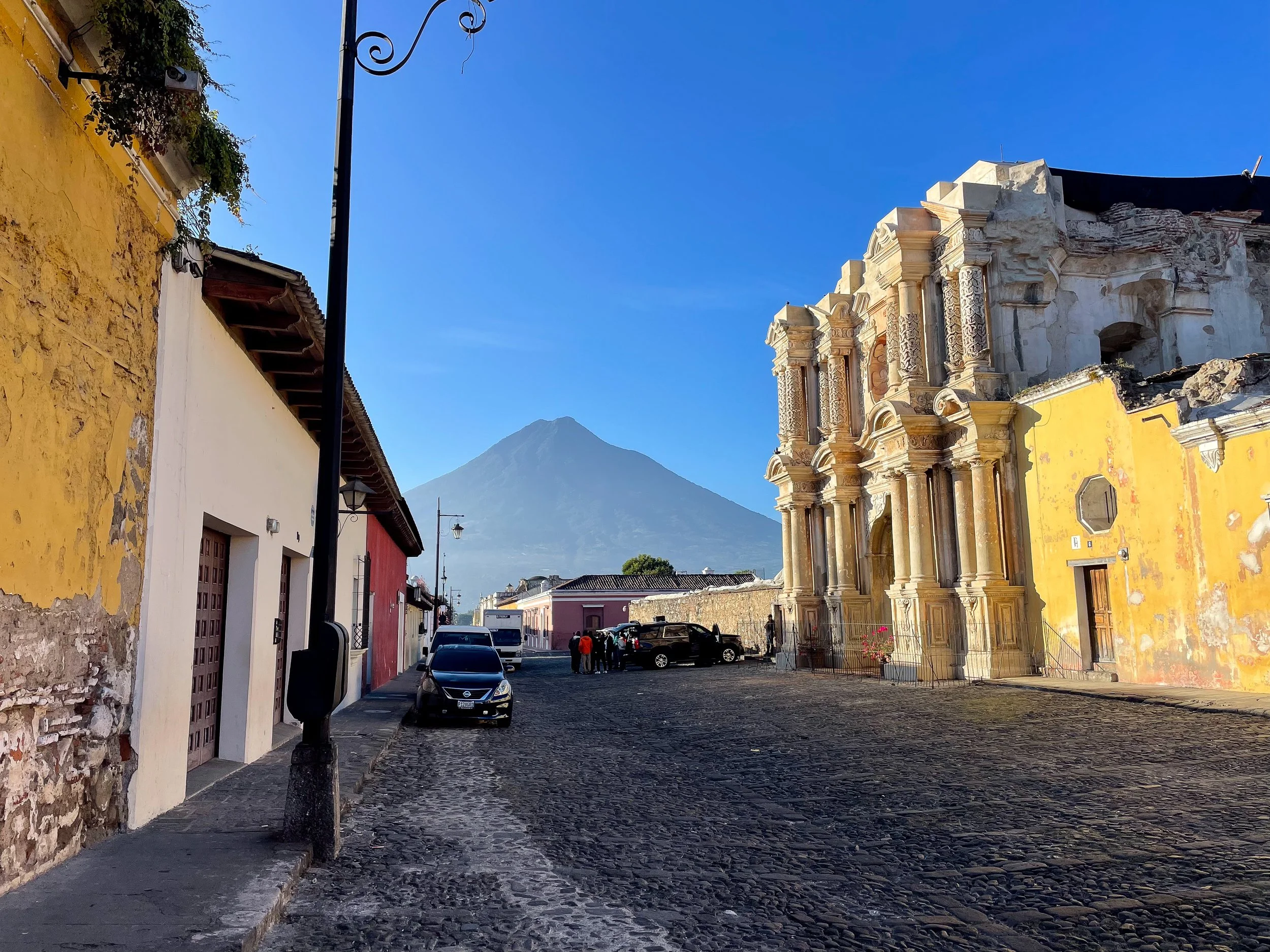
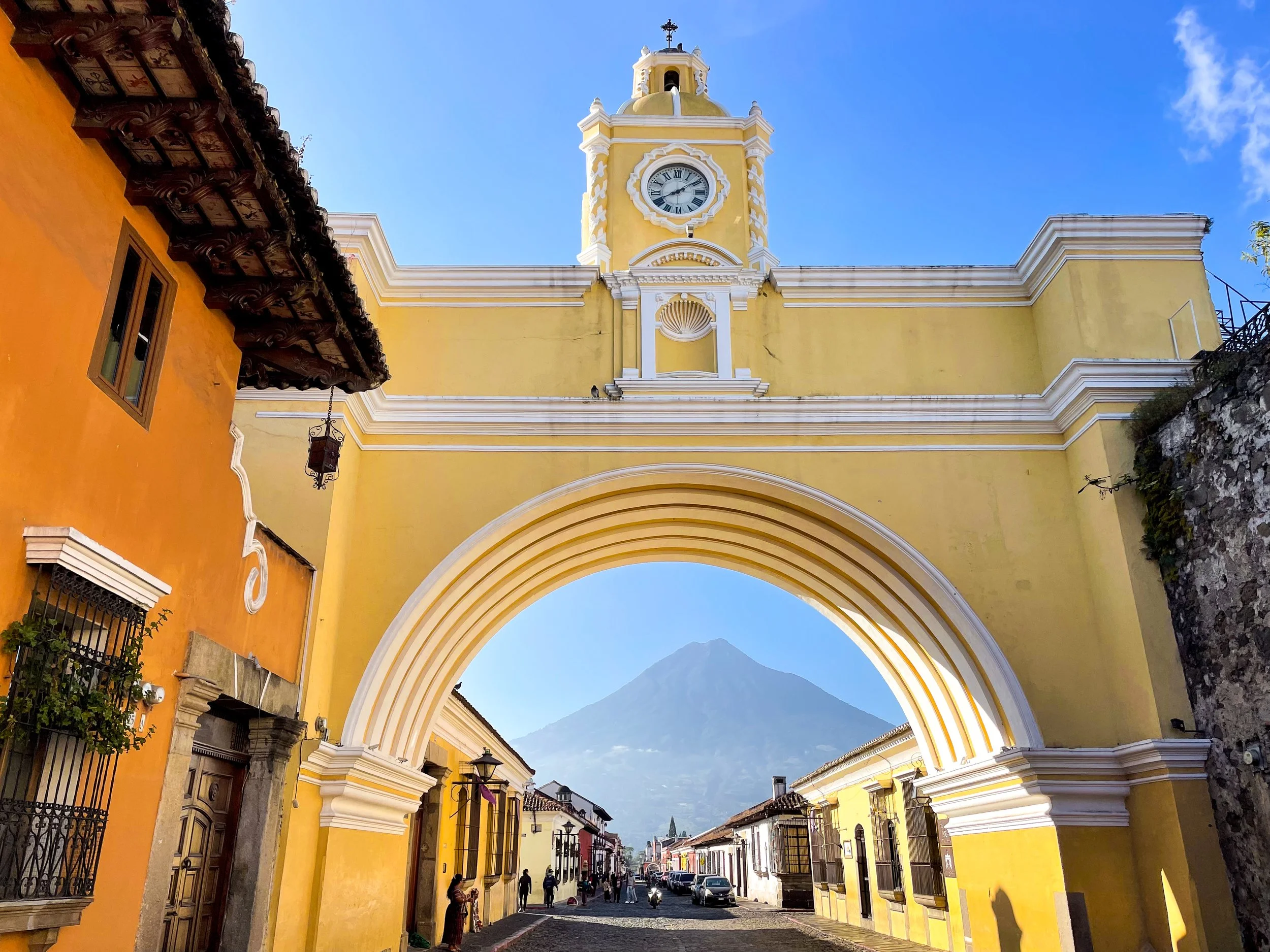
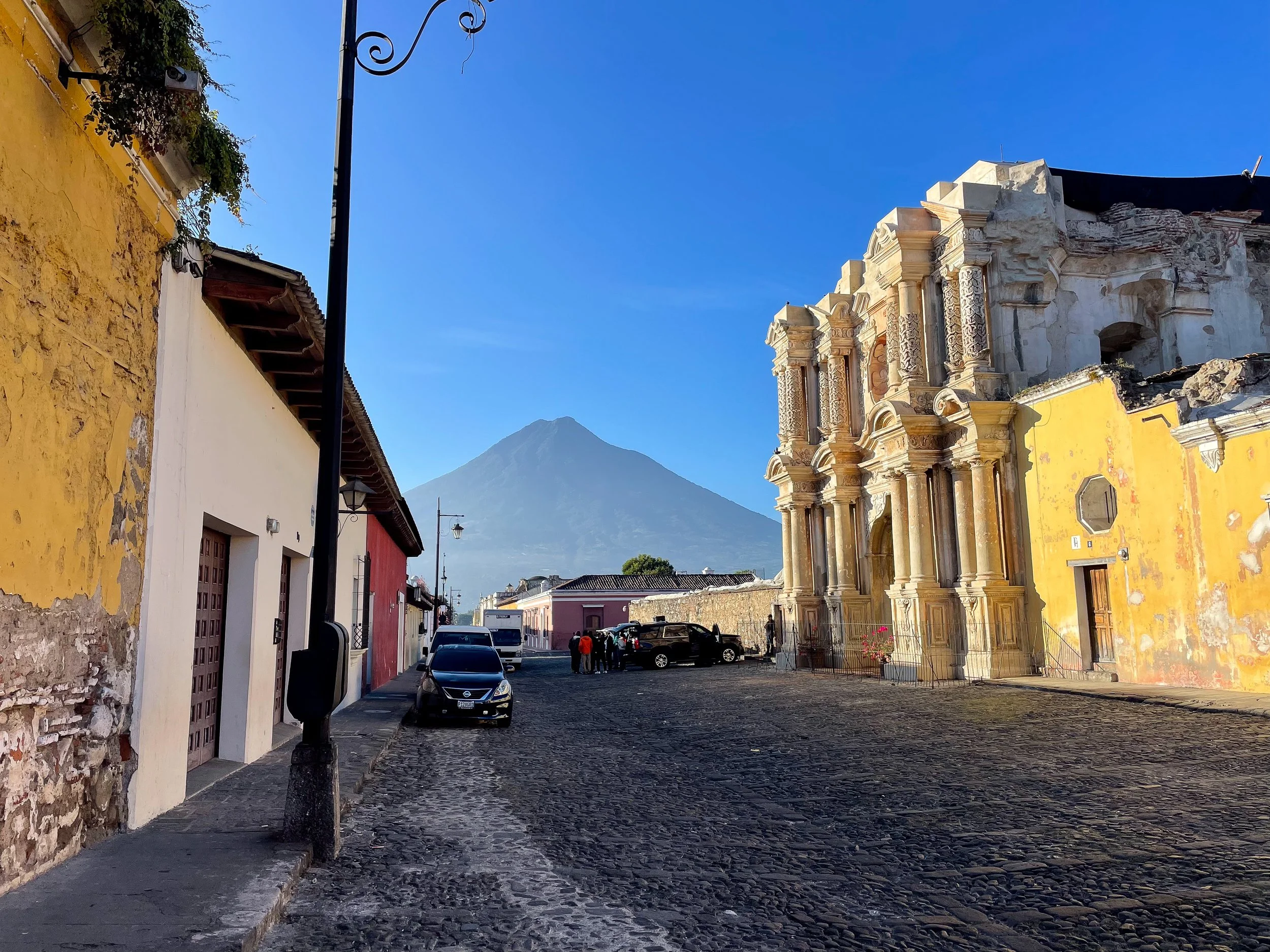
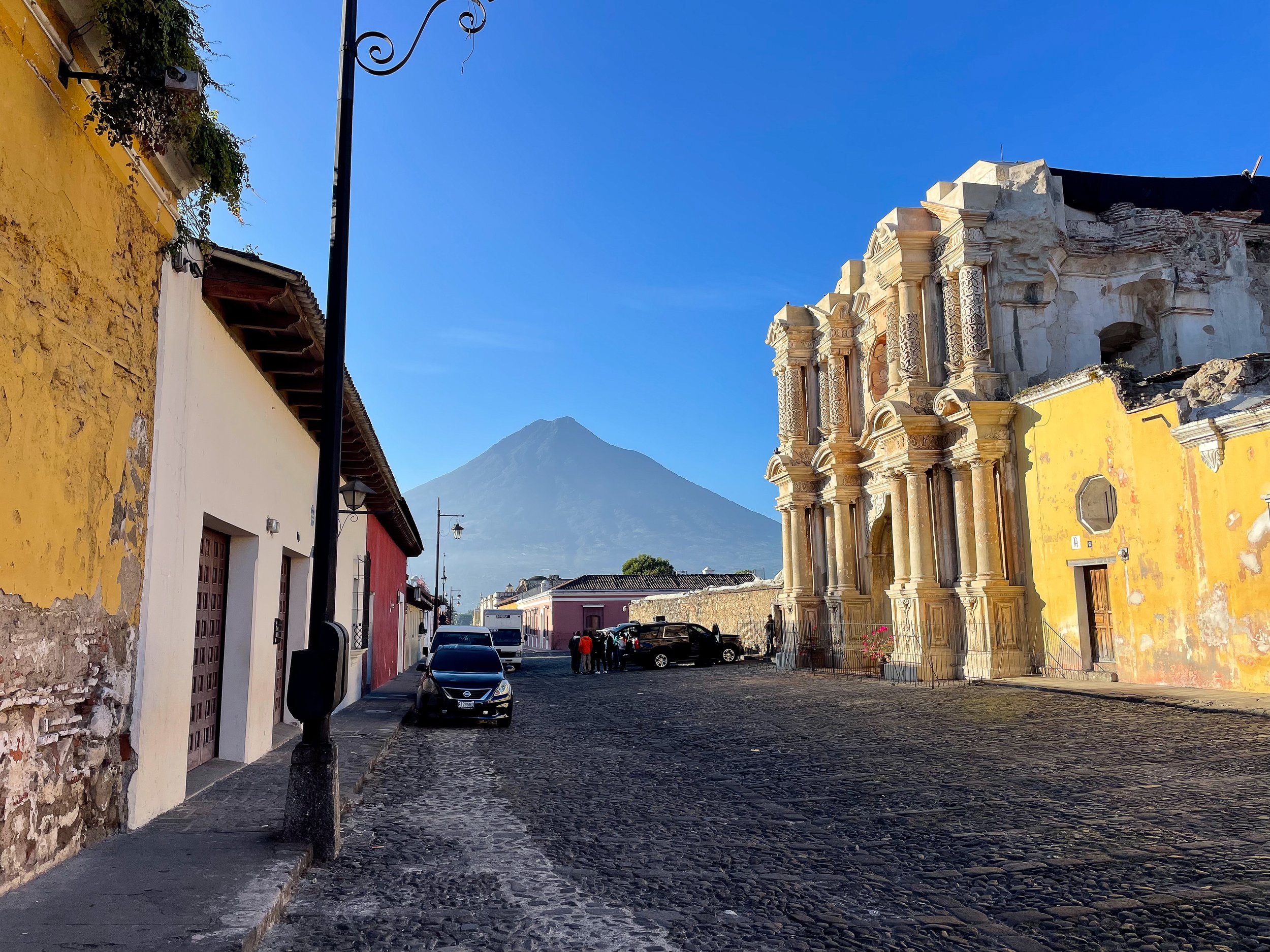
Santa Catalina Arch. A famous yellow arch and clock tower stretching over the cobblestone street and framing Volcán de Agua. Come just after sunrise for the best view without groups of people.
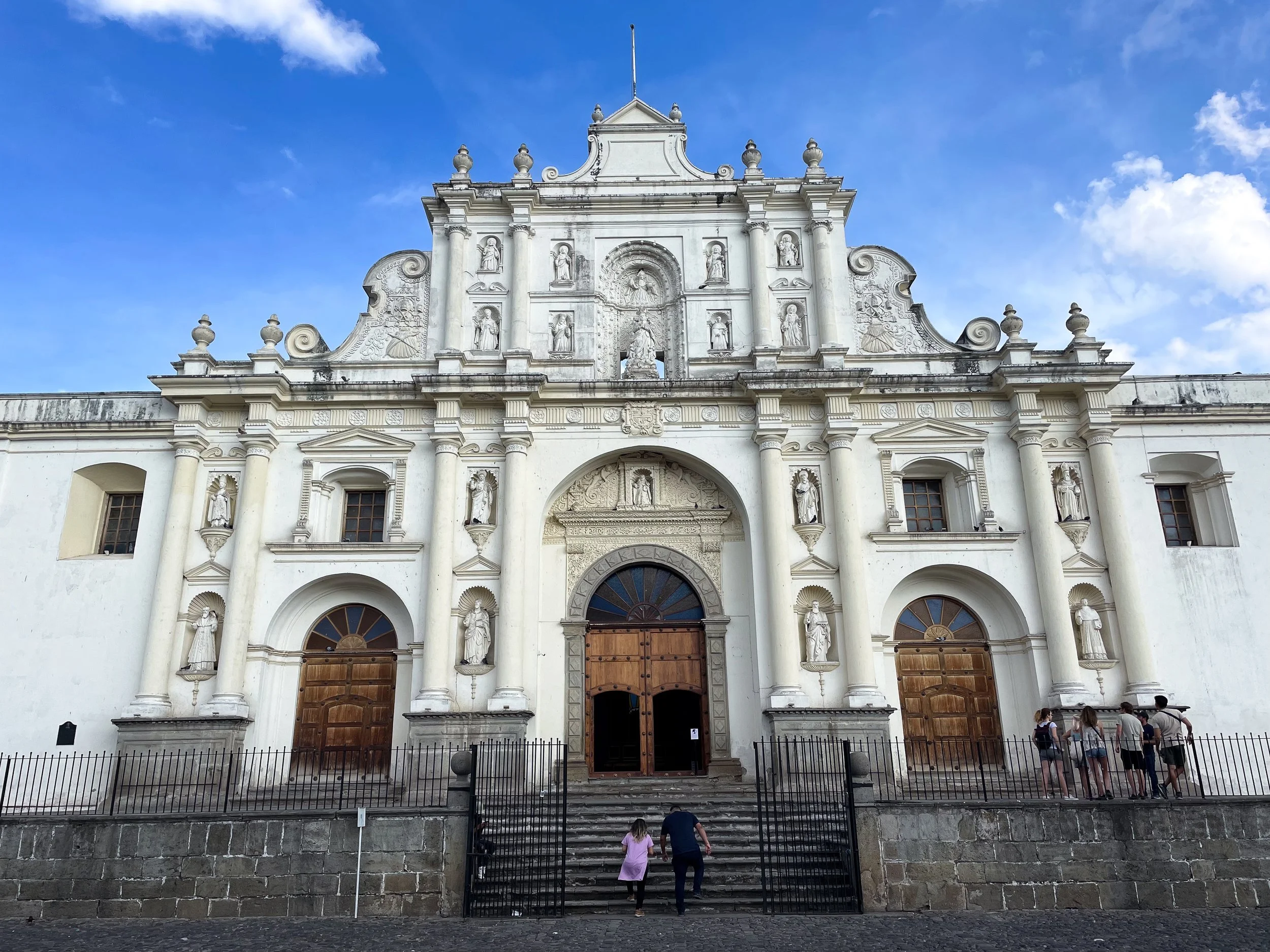
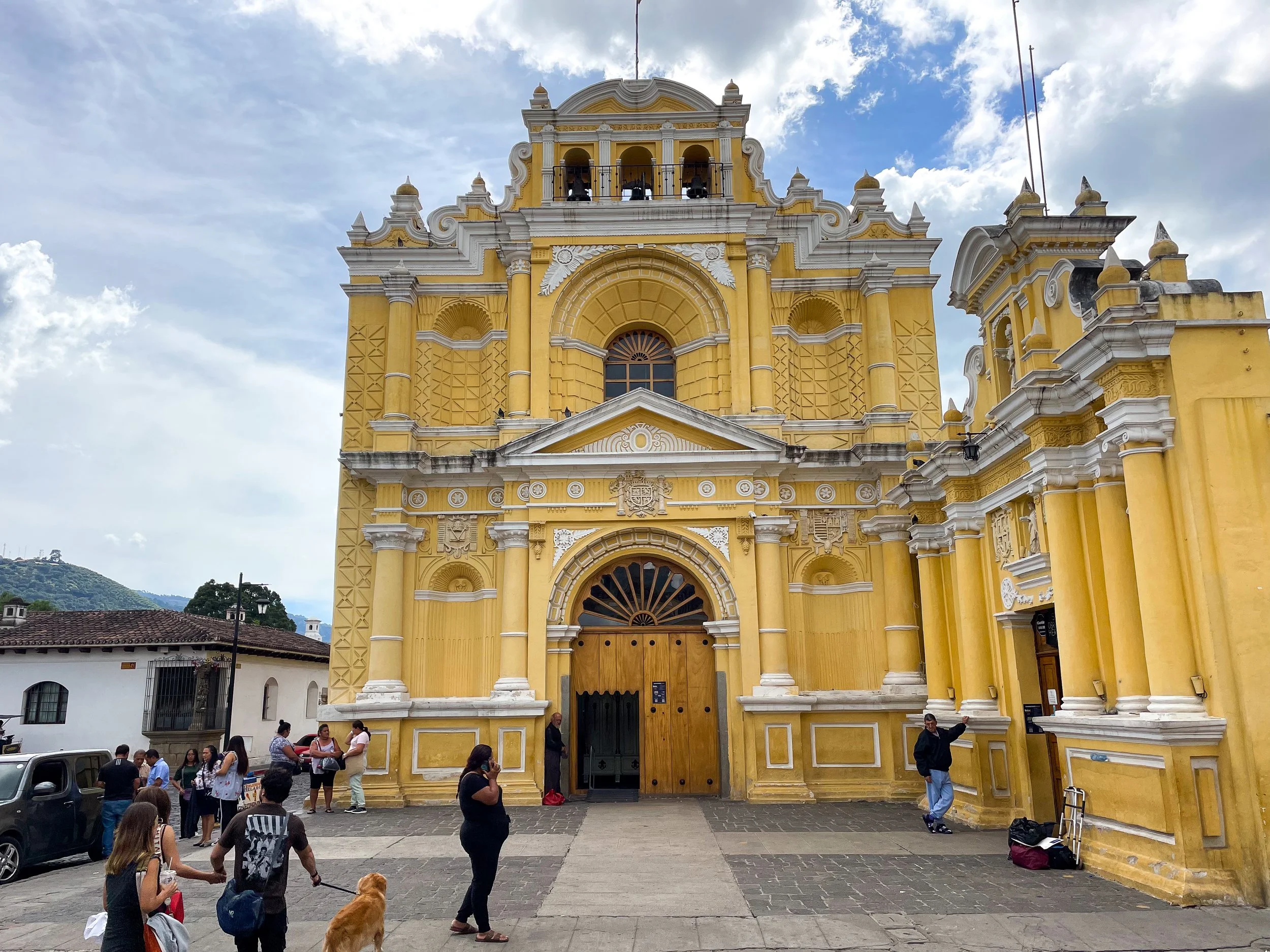
Catedral de San José. A cathedral built into the ruins of Catedral de Santiago. Its grand white facade with intricate plaster work, niches containing statues and large wooden doors spans the eastern width of Parque Central.
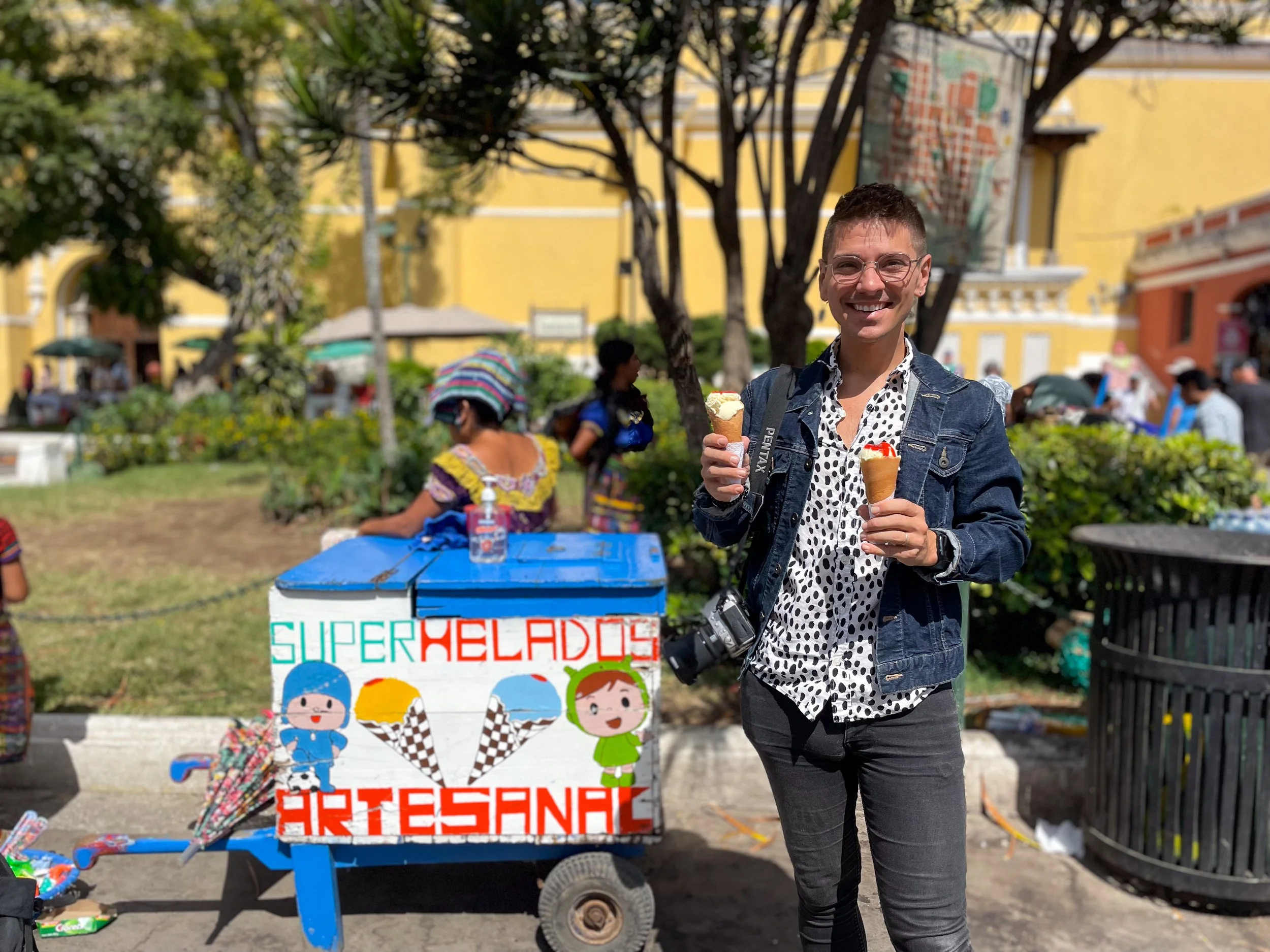
Parque Central. A park and plaza at the center of Antigua with benches, trees, gardens and a mermaid fountain with water spraying from her breasts. Locals come to relax with their families, vendors sell ice cream cones, guides offer walking tours and shoeshiners polish boots. It’s surrounded by restaurants, cafes, shops and colonial landmarks.
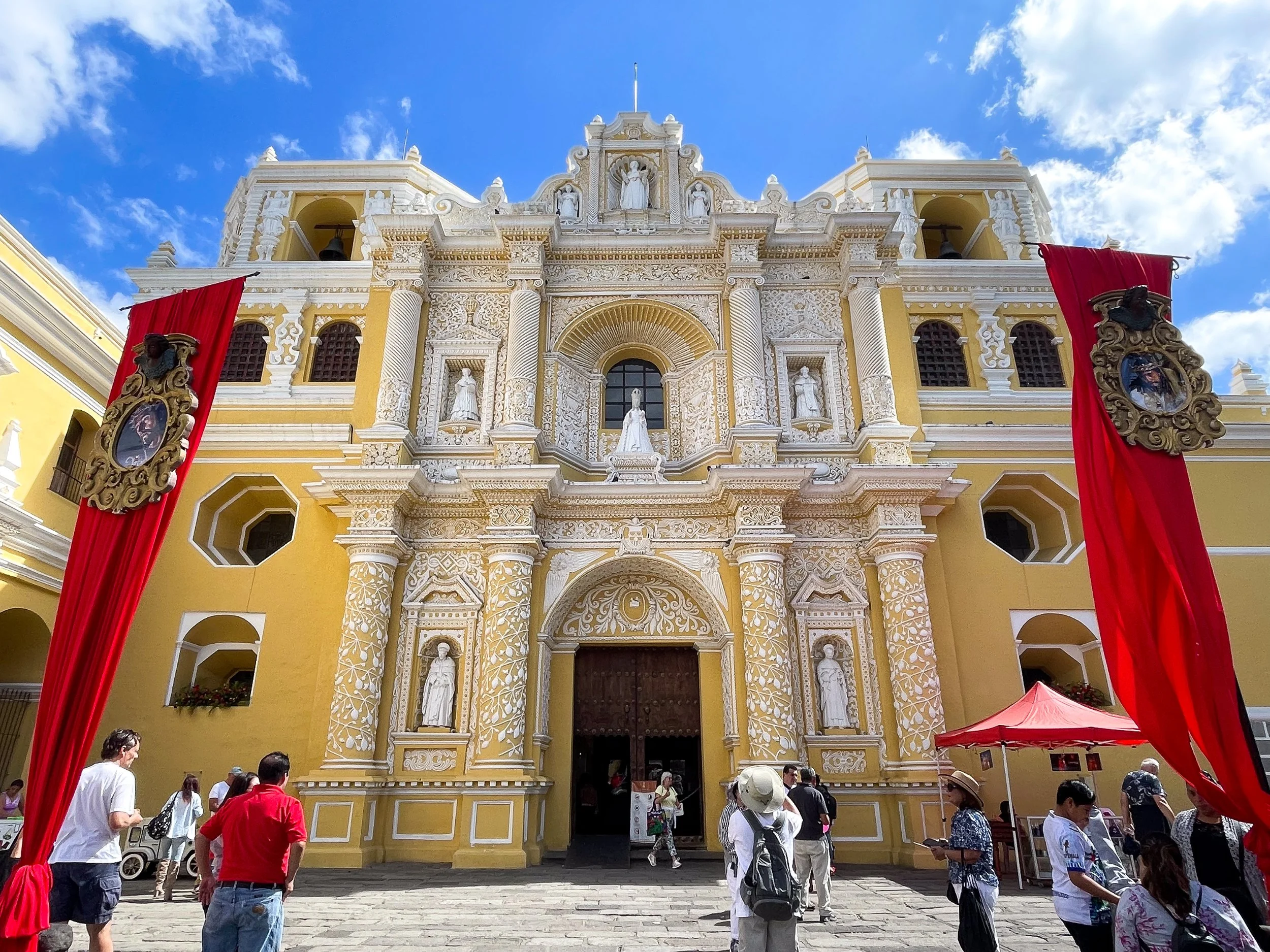
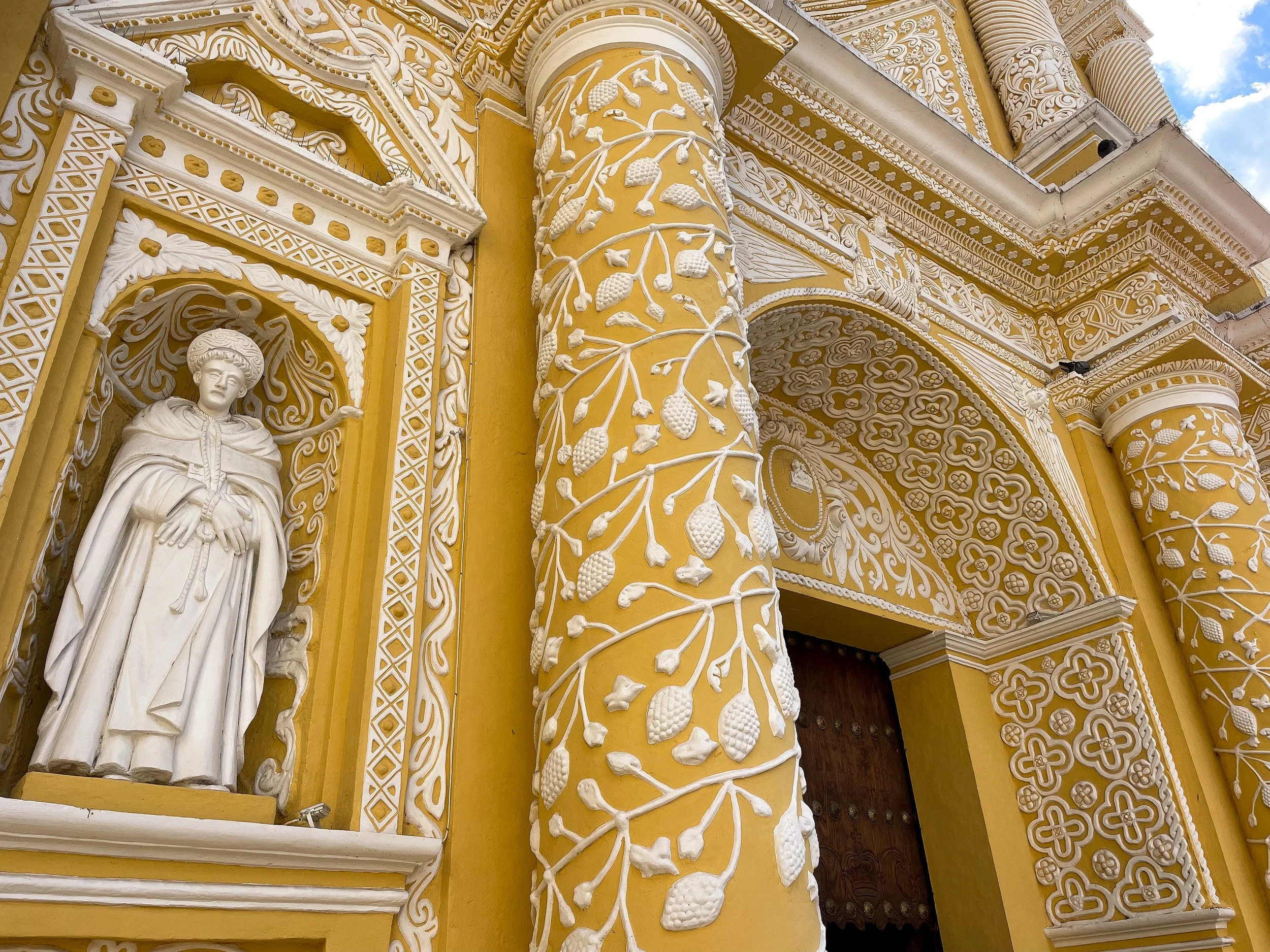
La Iglesia de Merced. A baroque style church with a yellow facade decorated in finely detailed white stucco ornamentation of grape vines and bunches. La Merced remains one of the few undamaged churches to survive from the centuries of earthquakes.
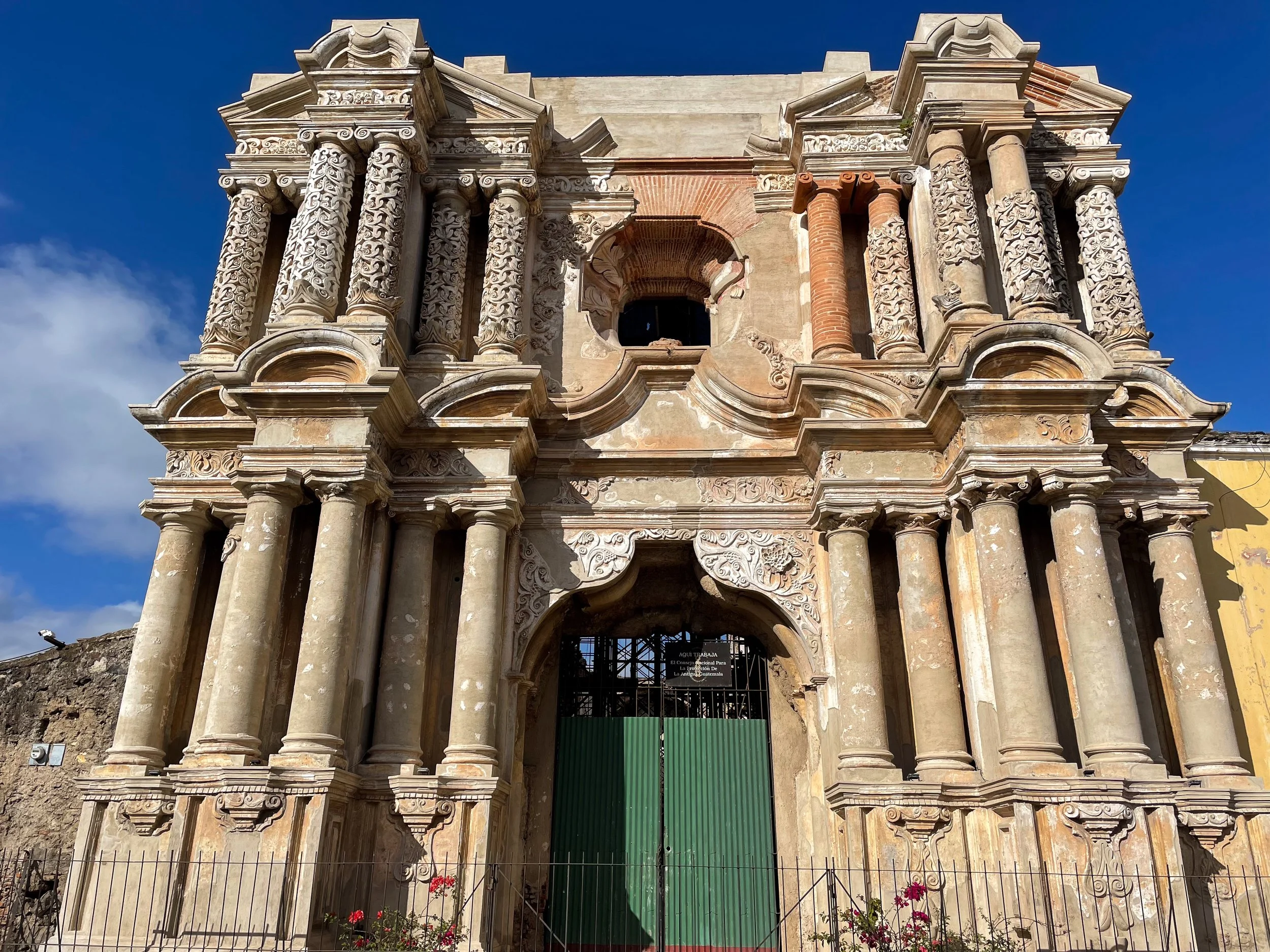
Iglesia del Carmen. The crumbling ruins of a church held together by supports and scaffolding. It’s inaccessible but can be admired from out front of its baroque facade.
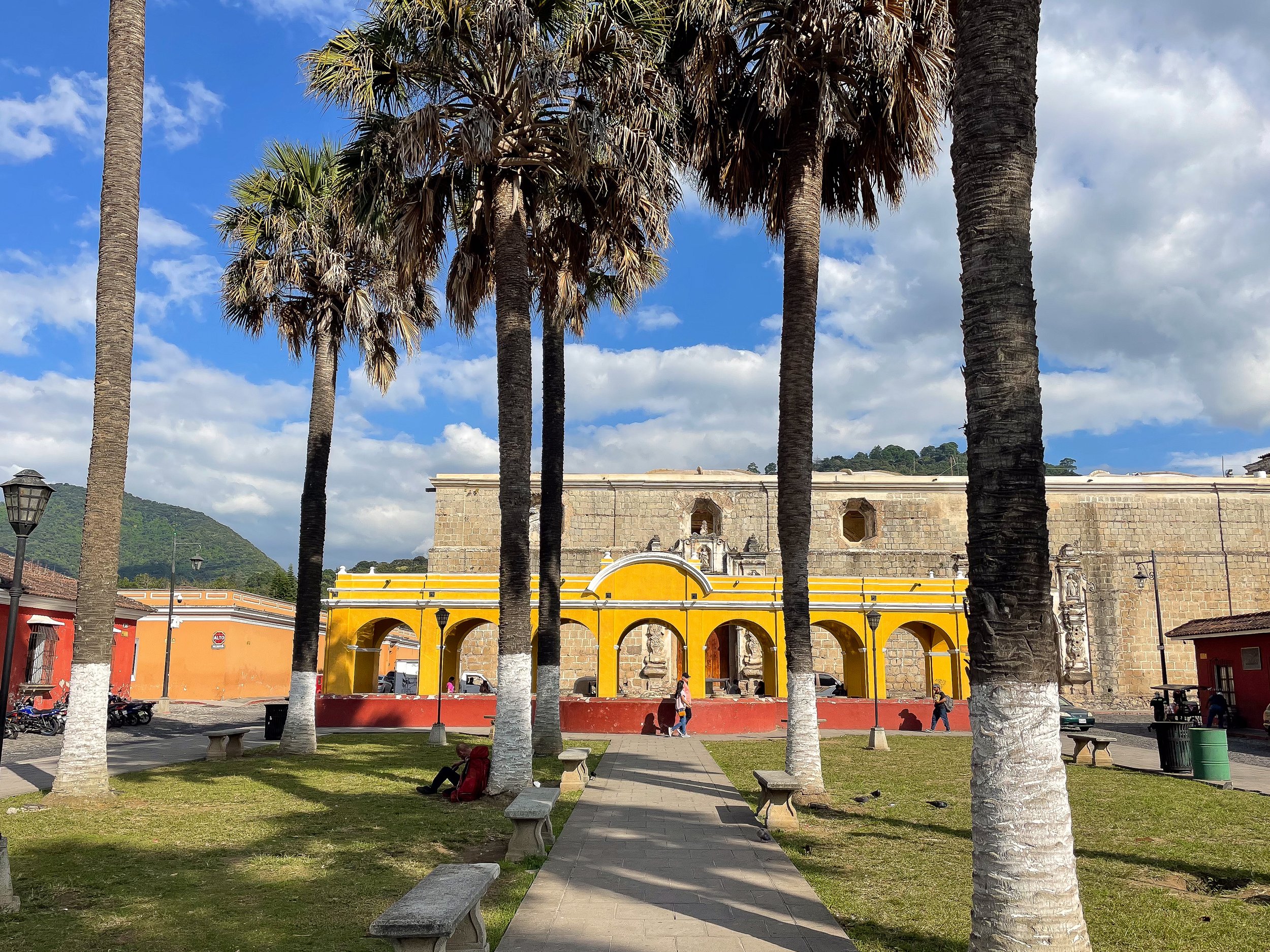
Tanque la Unión. A yellow arched pavilion and former colonial laundry well turned into a public fountain and park.
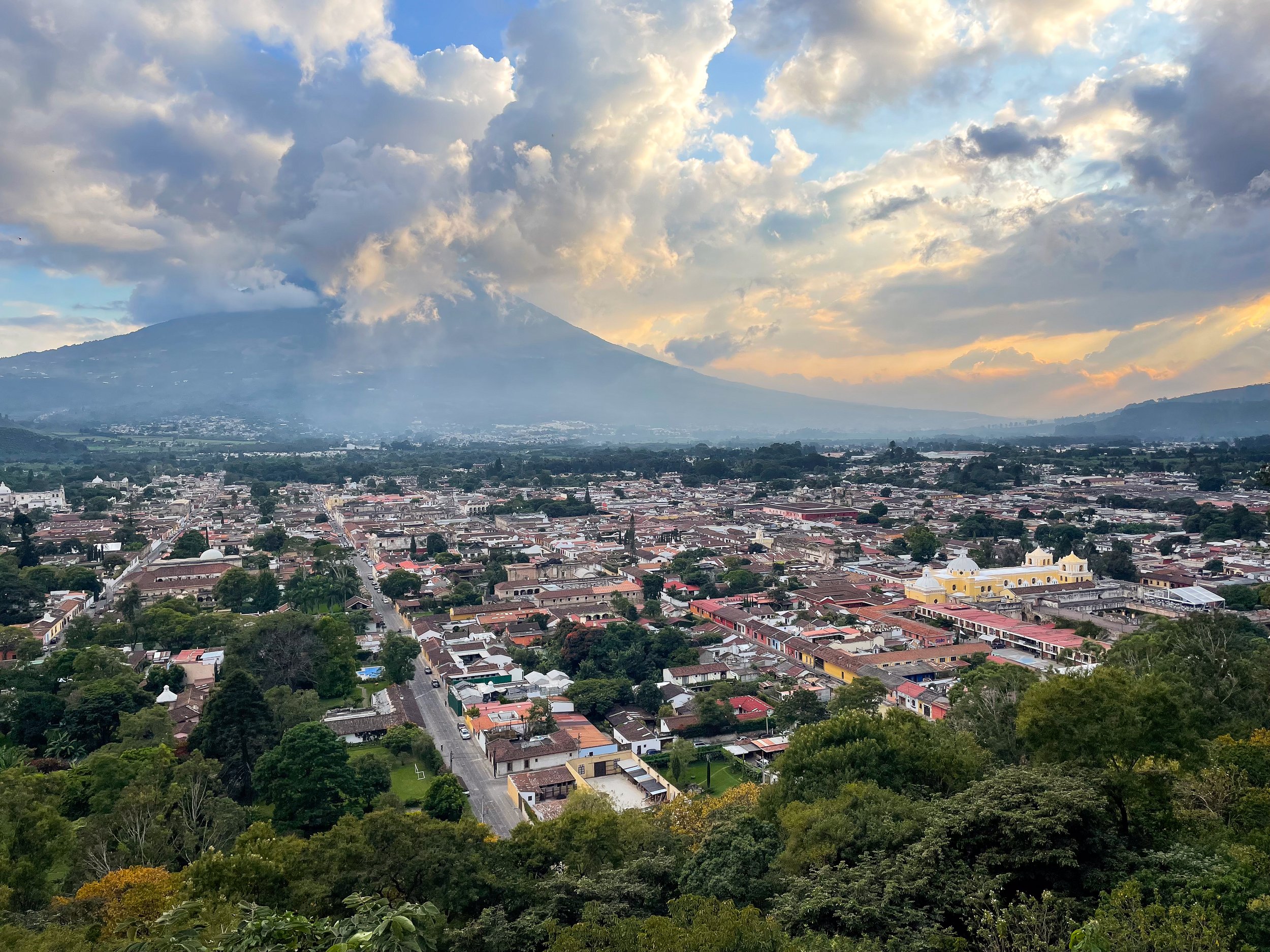
Cerro de la Cruz. A hilltop hike to a viewpoint overlooking Antigua, the volcanoes, mountains and valley. It’s popular at sunset or the early morning. The hike takes 10-15 minutes from the entrance guarded by police.
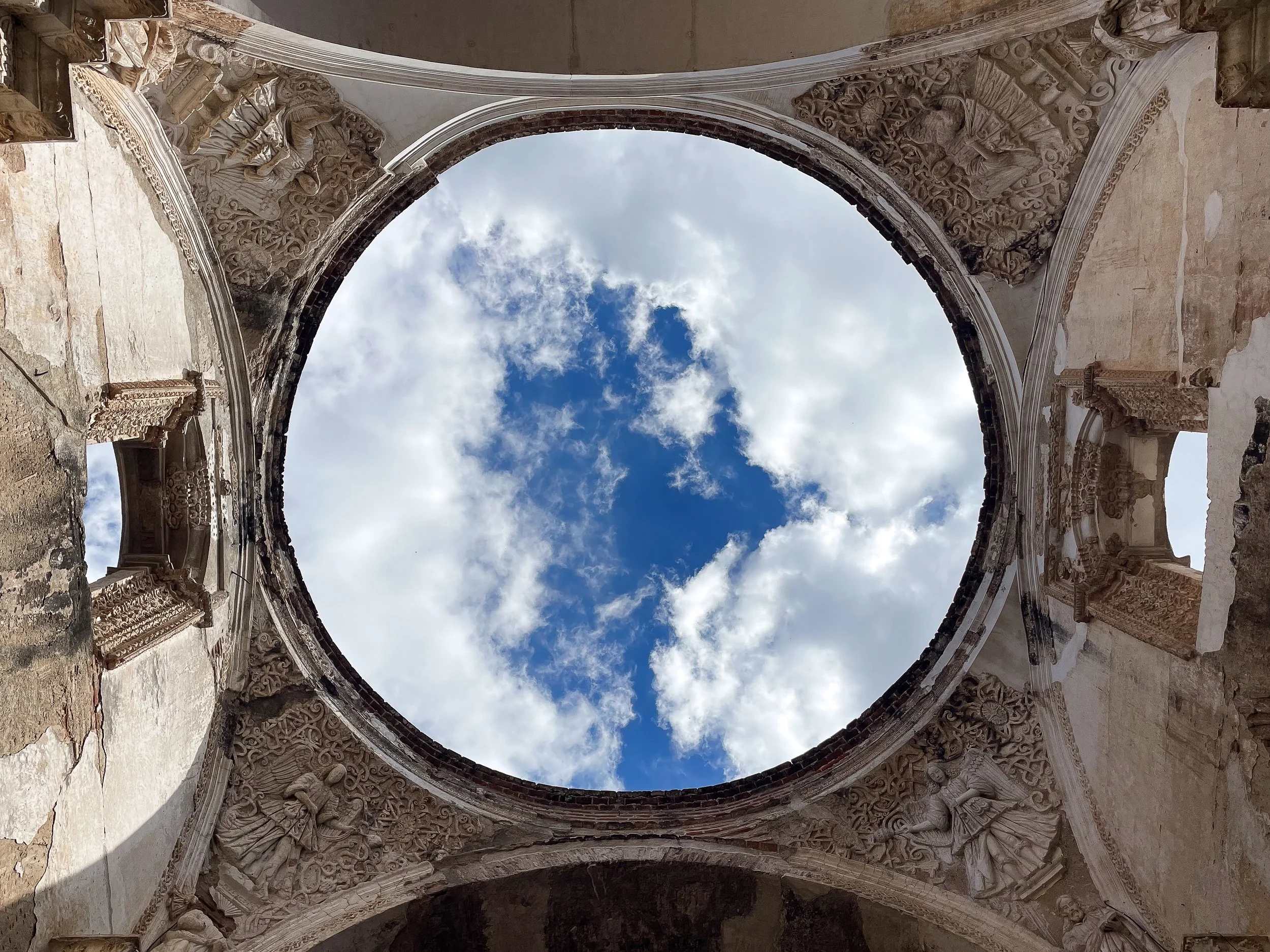
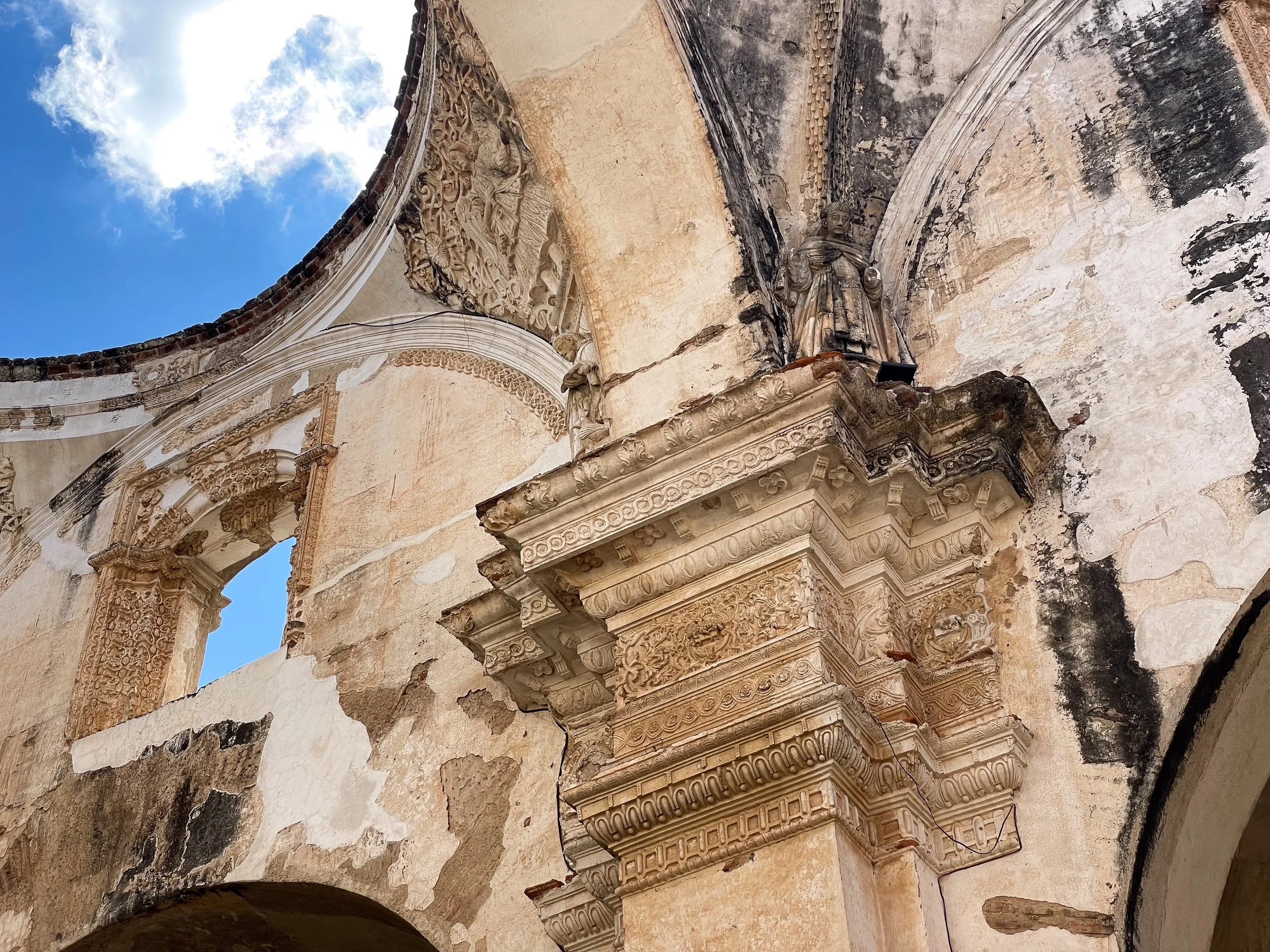
Crumbling Ruins
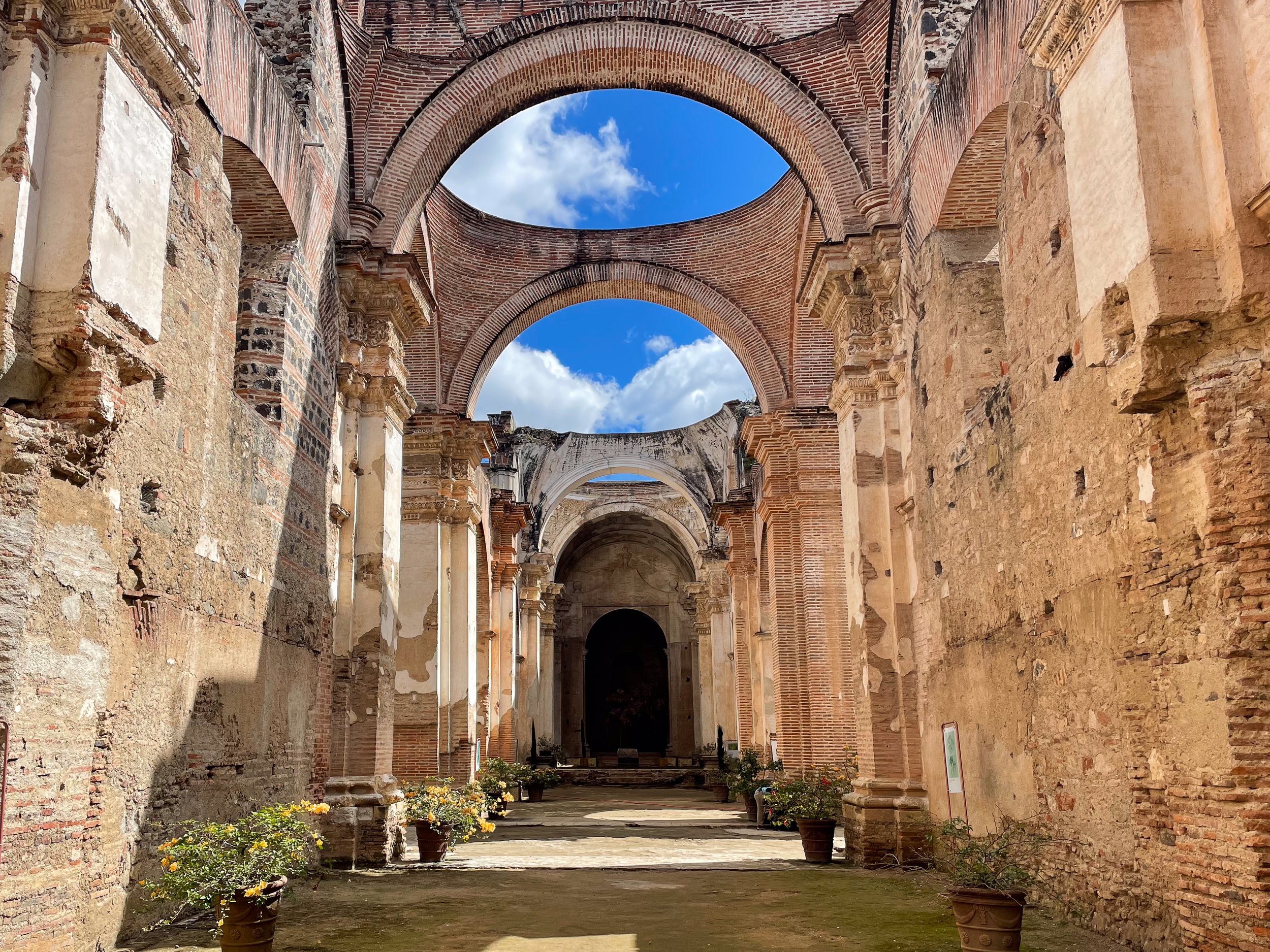
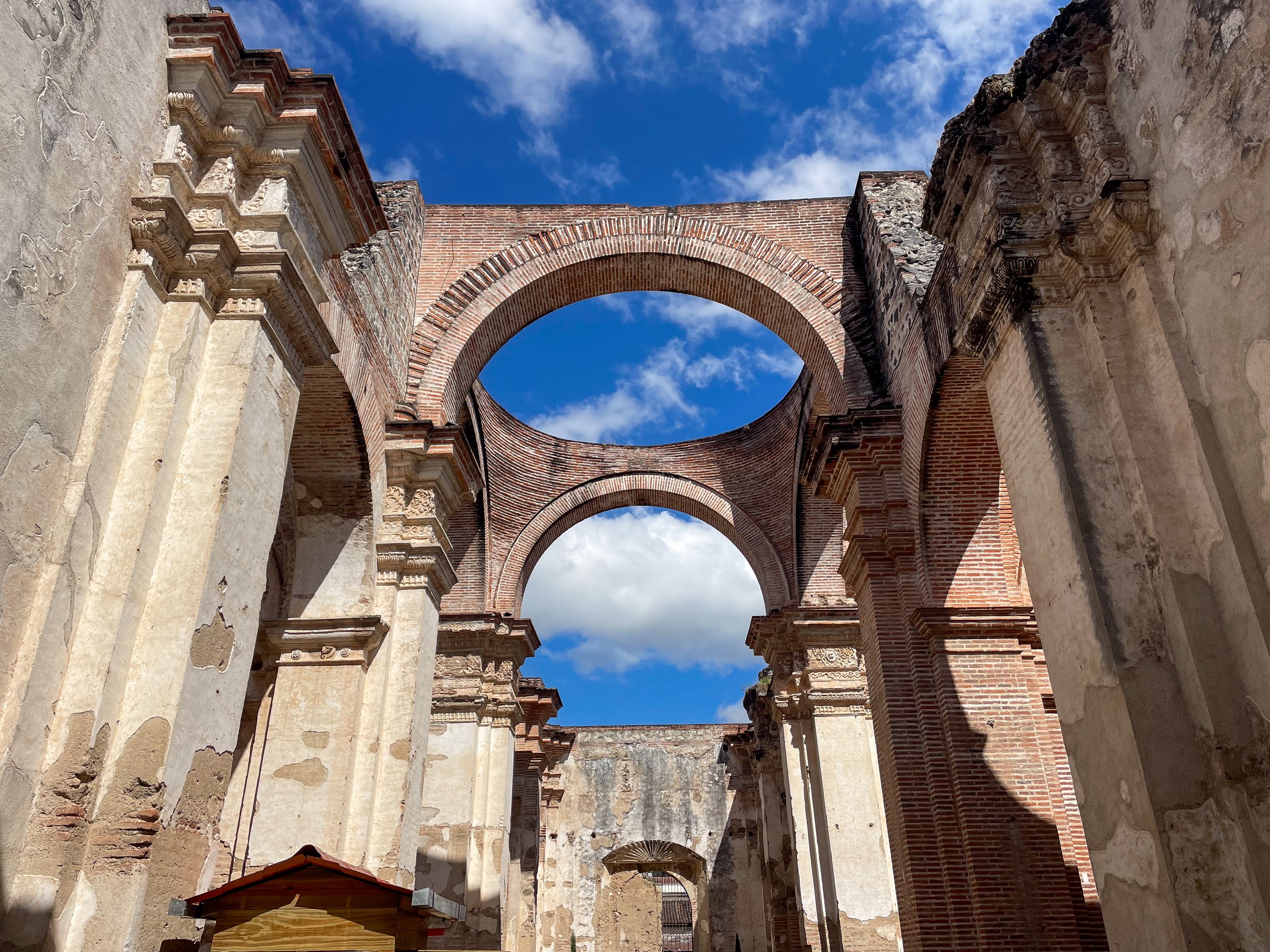
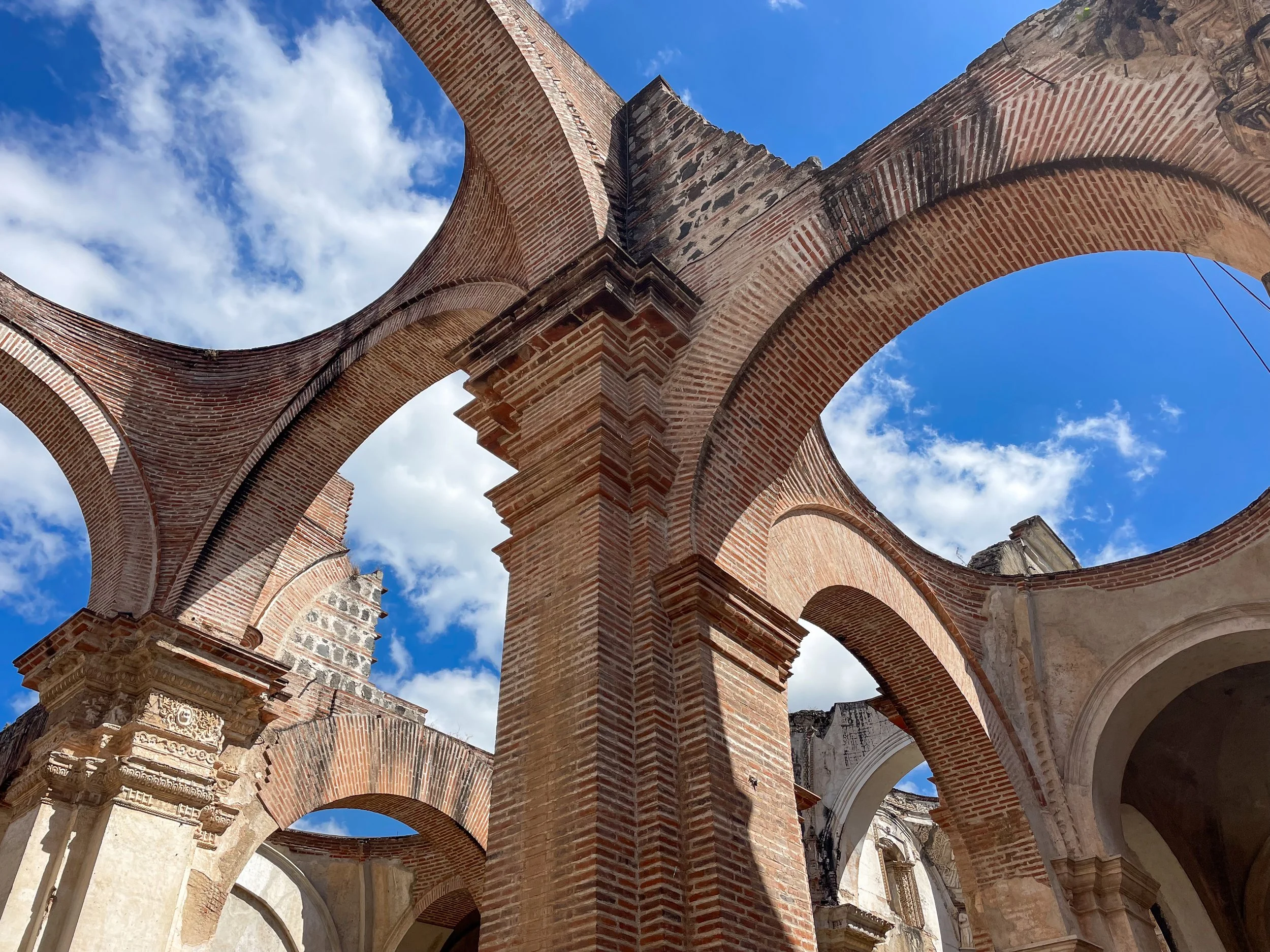
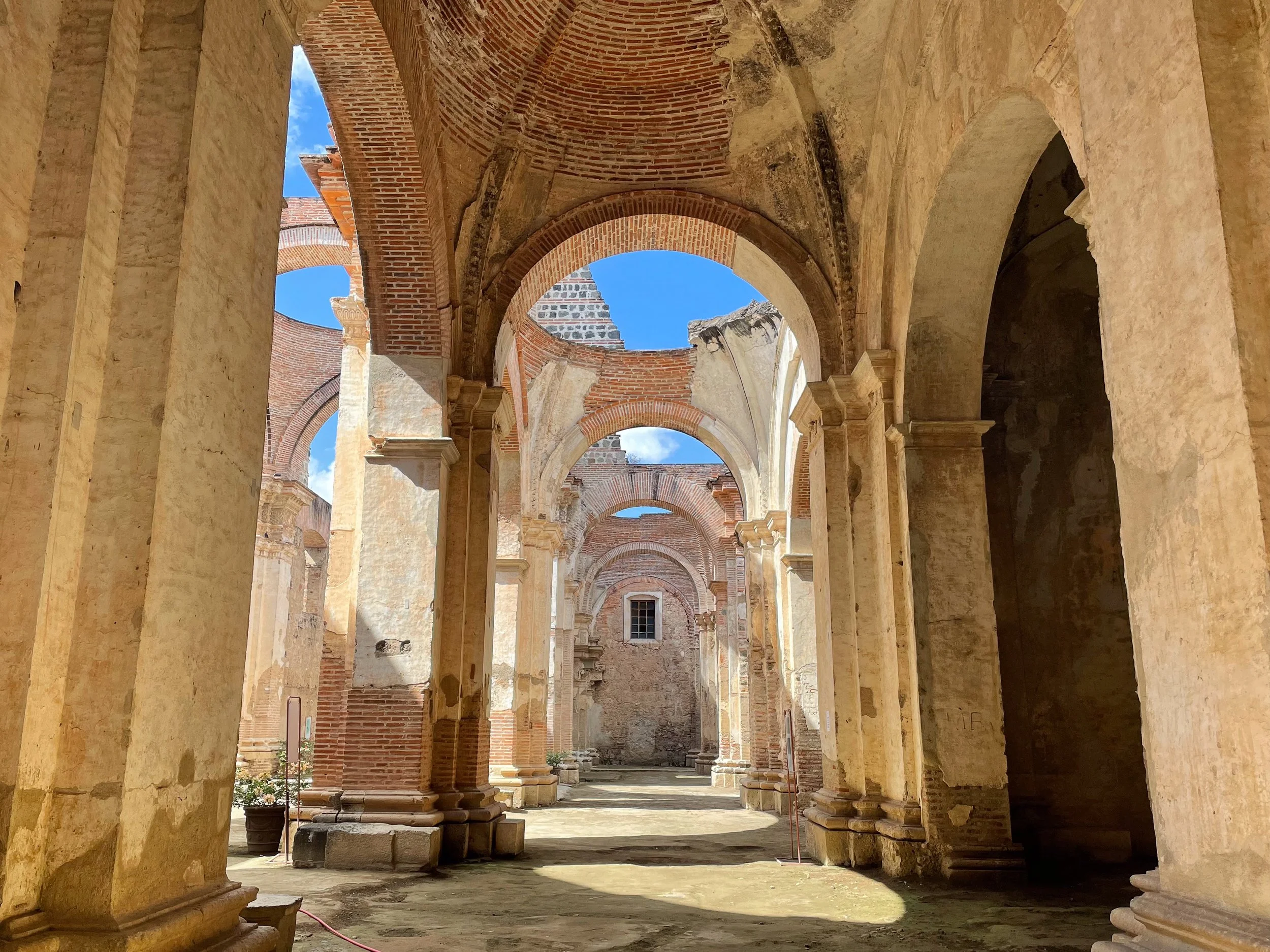
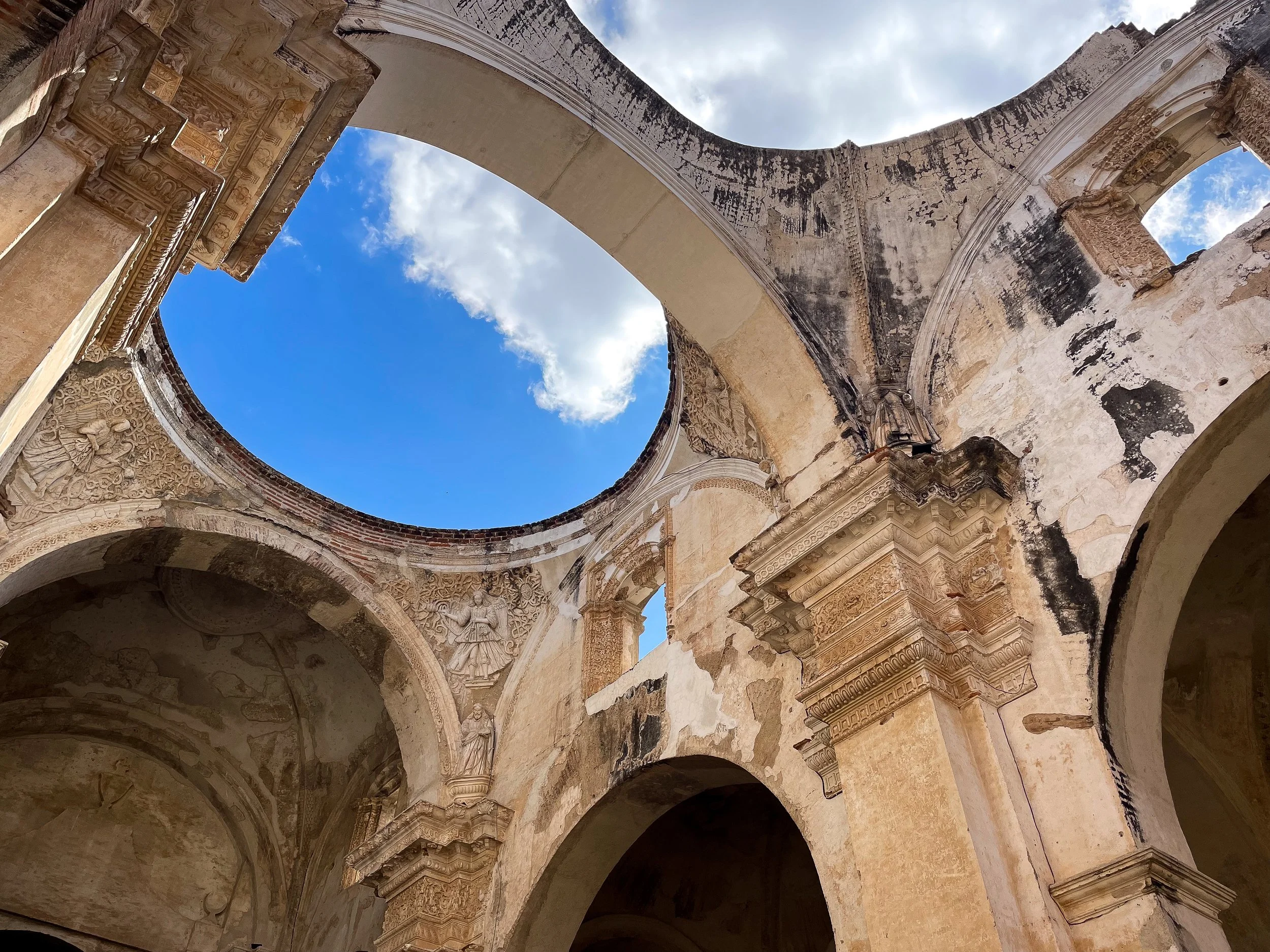
Antigua is an architectural and archeological playground with ruins of colonial buildings and churches destroyed during centuries of earthquakes.
Catedral de Santiago. The ruins of a massive cathedral characterized by its collapsed domed ceiling revealing the sky above. Many arches of the domed ceiling remain, held up by towering brick and stone columns, some of which are still embellished in delicate plaster moldings and flourishes.
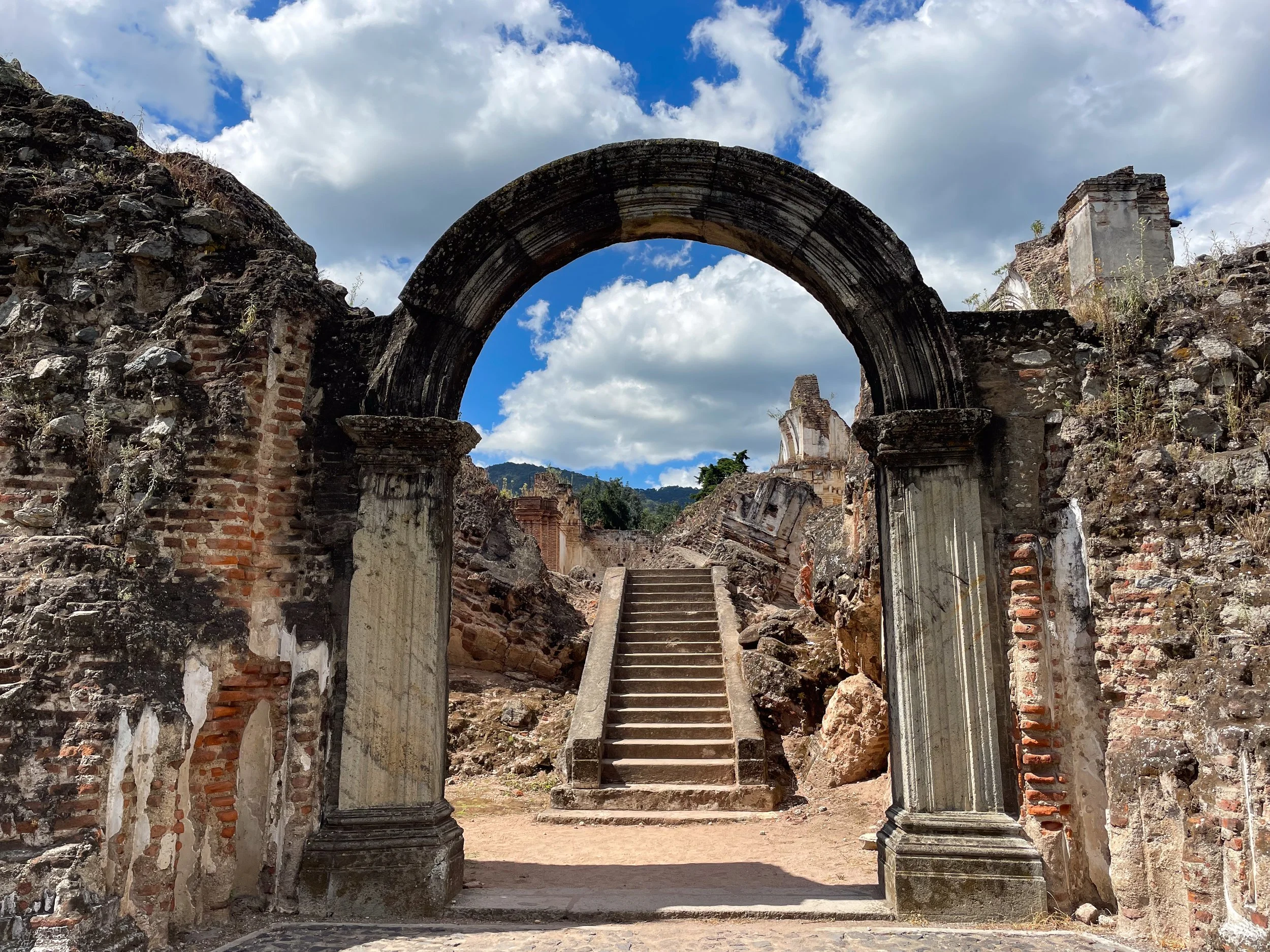
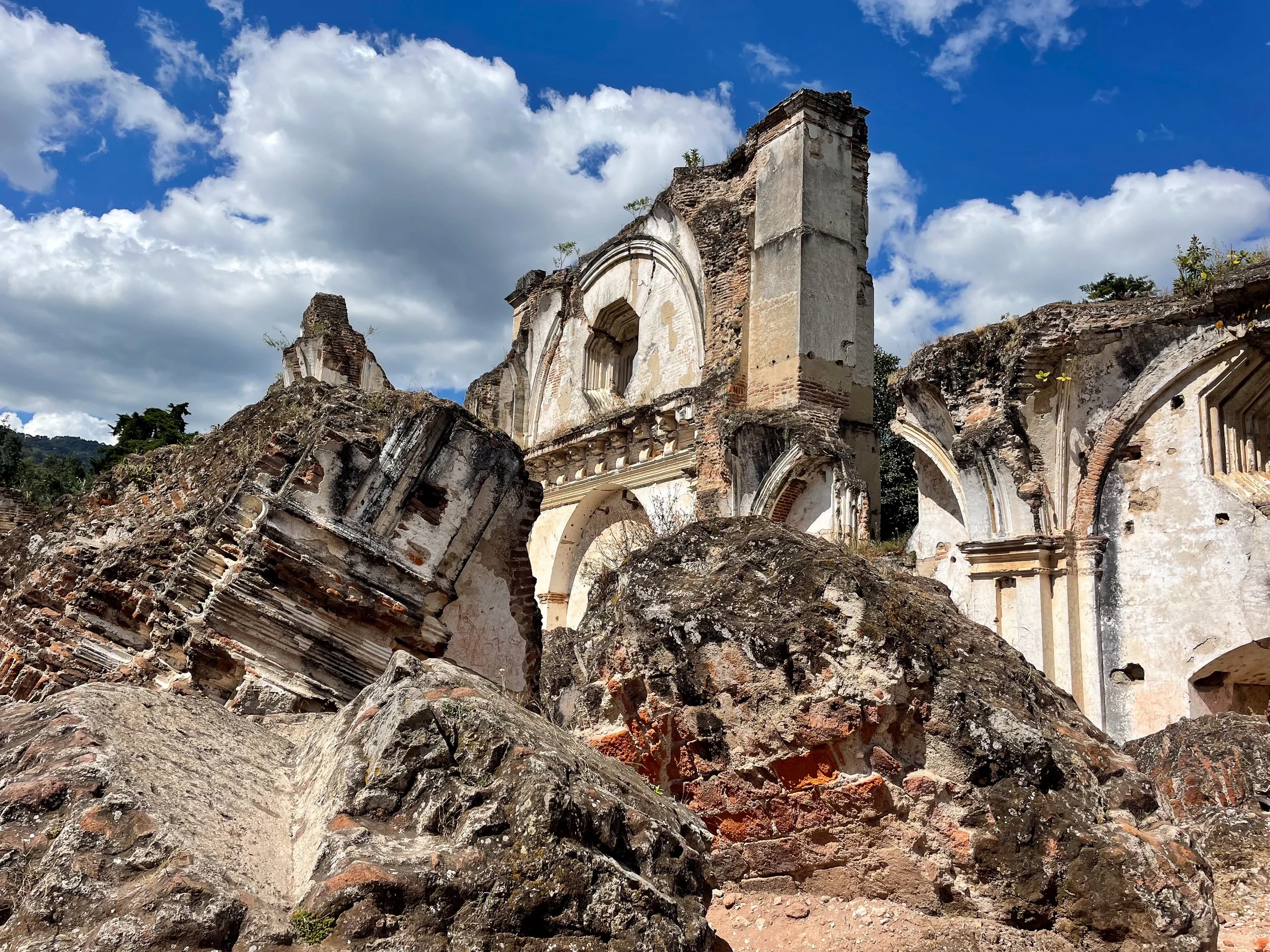
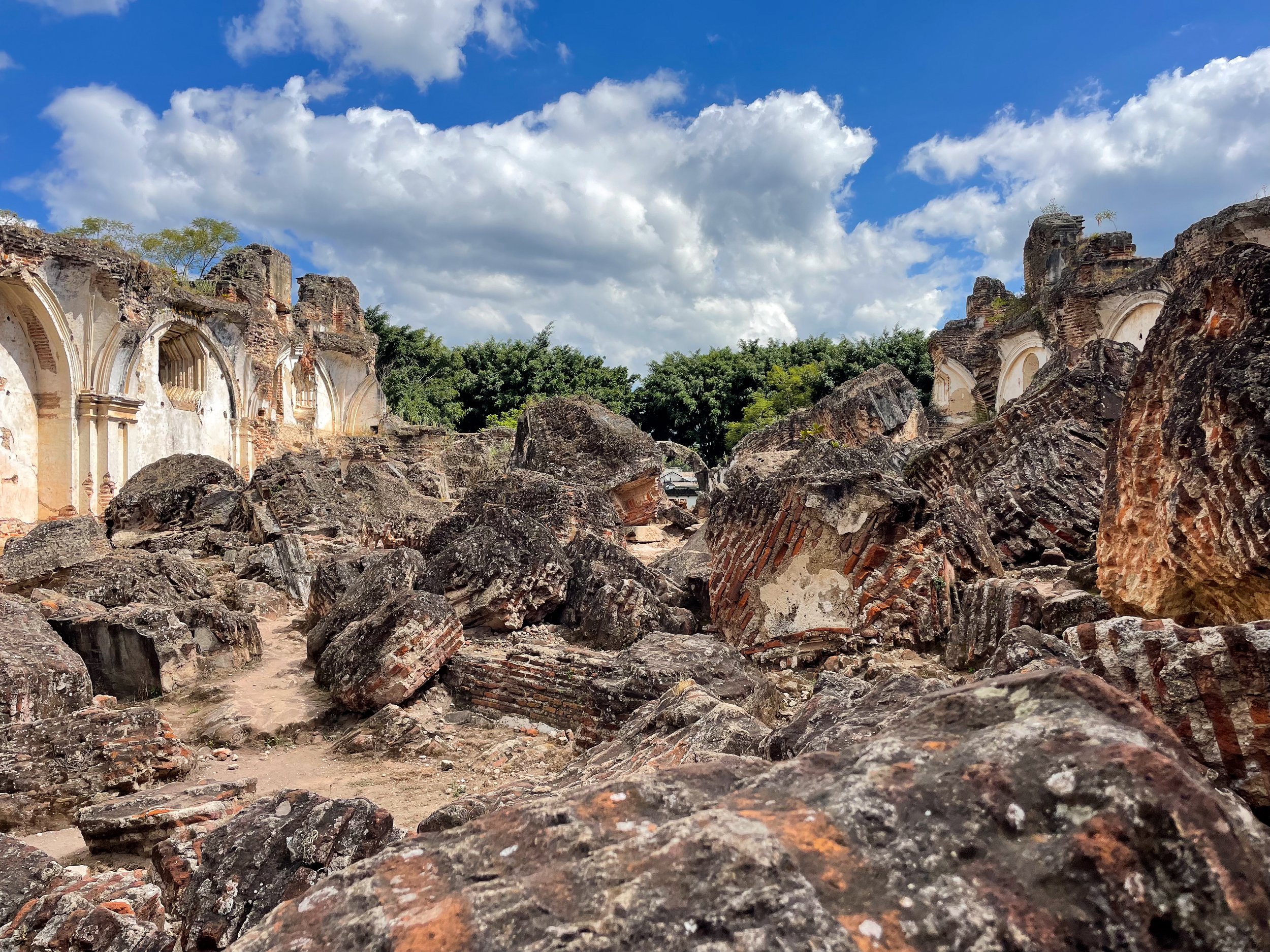
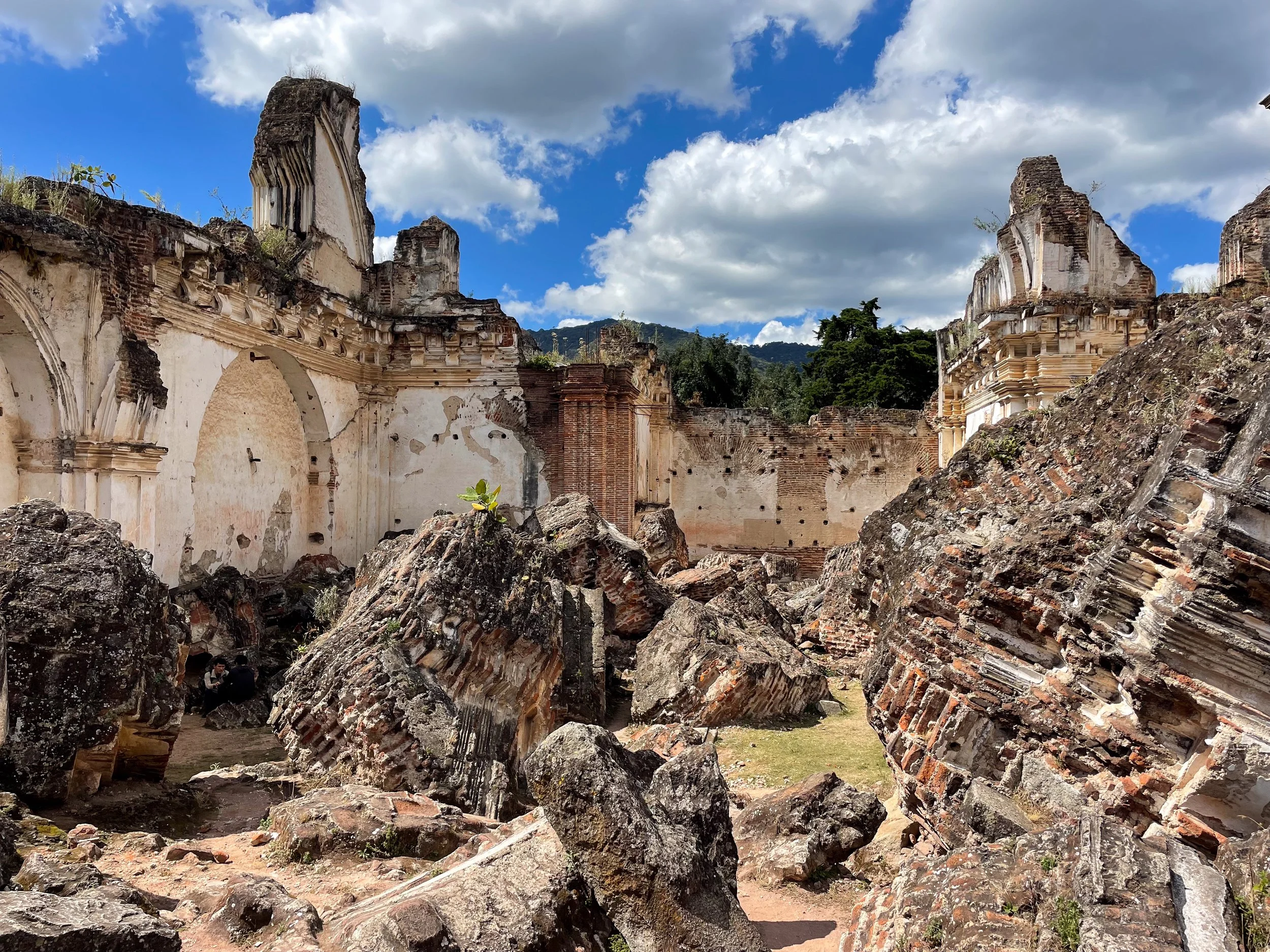
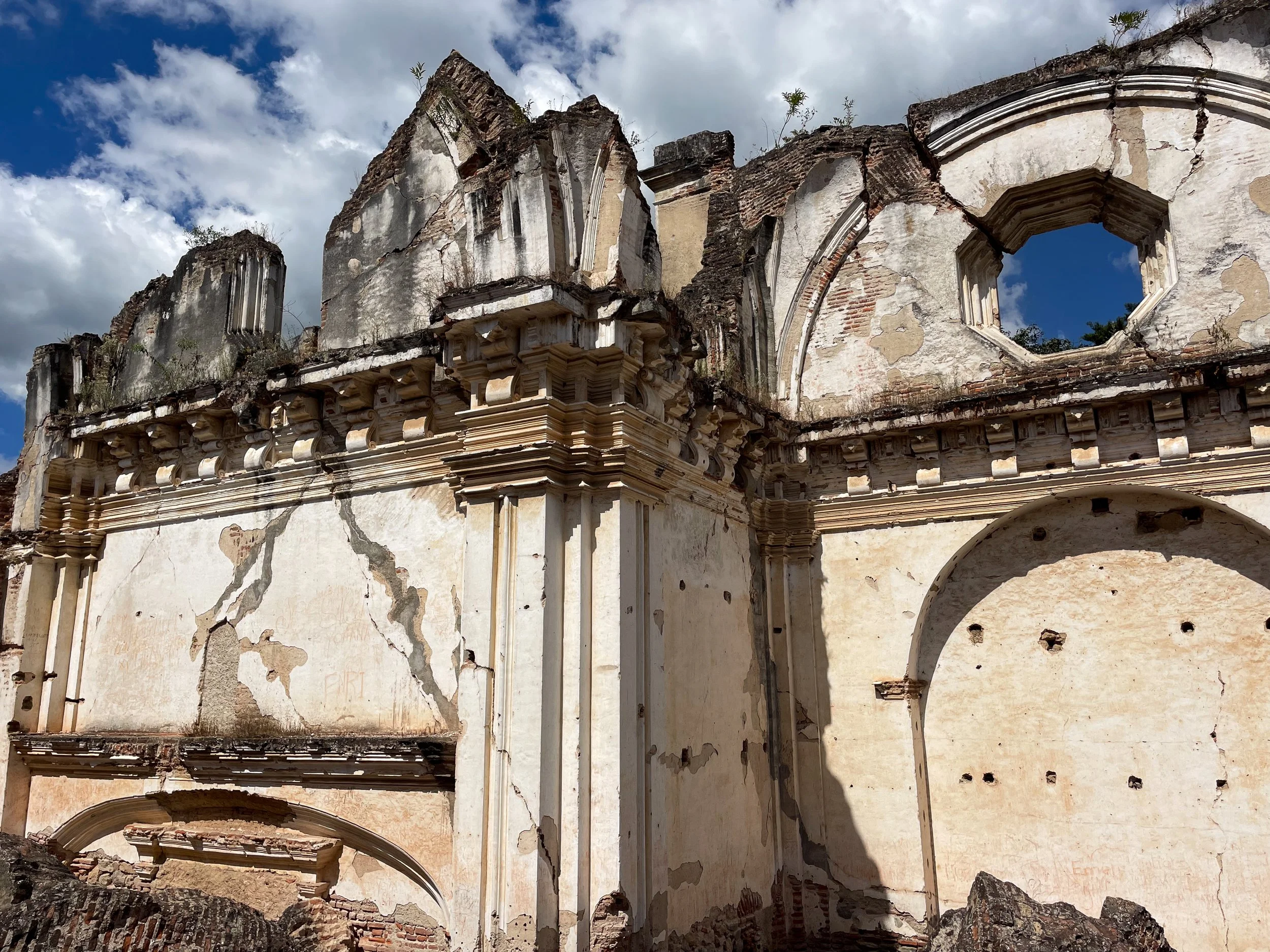
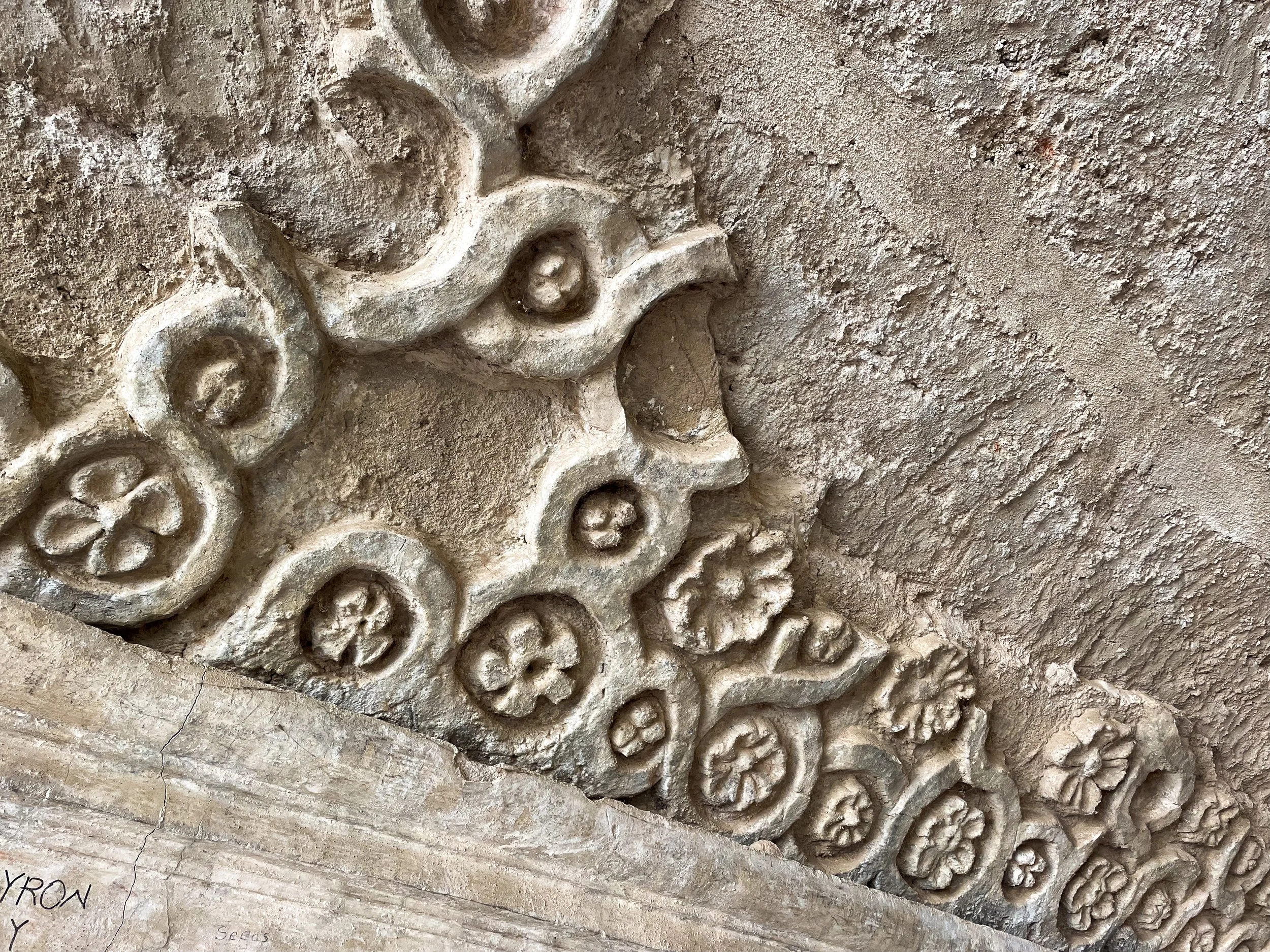
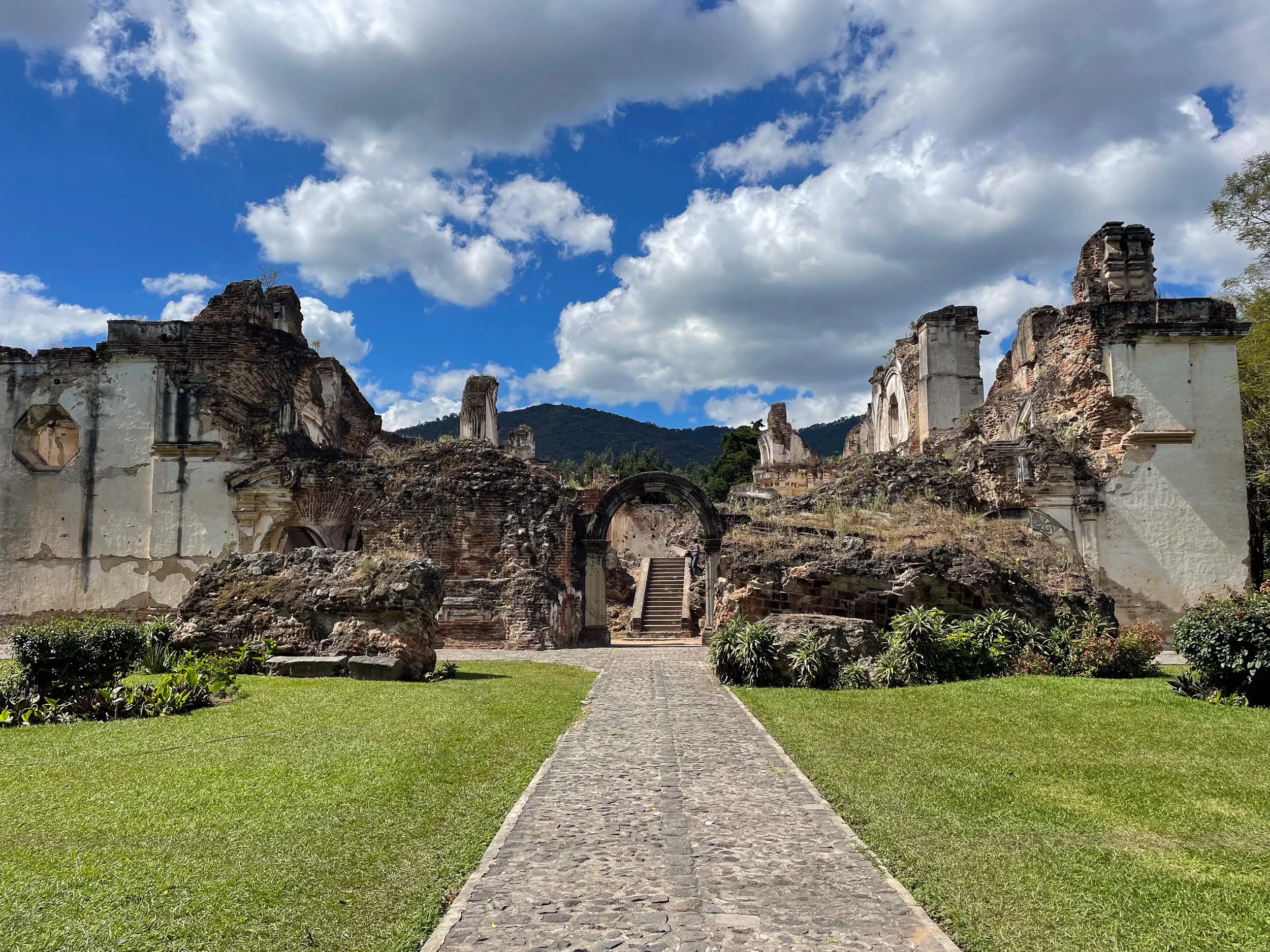
Iglesia La Recolección. Destroyed beyond repair, a lone arch and set of stairs lead to this former church where only the walls remain standing. Within its sanctuary are toppled columns, massive pieces of brick masonry and plaster debris. The ruins can be explored and even climbed on, making for a photogenic picture. The remaining grounds encompass two courtyards with the ruins of a convent.
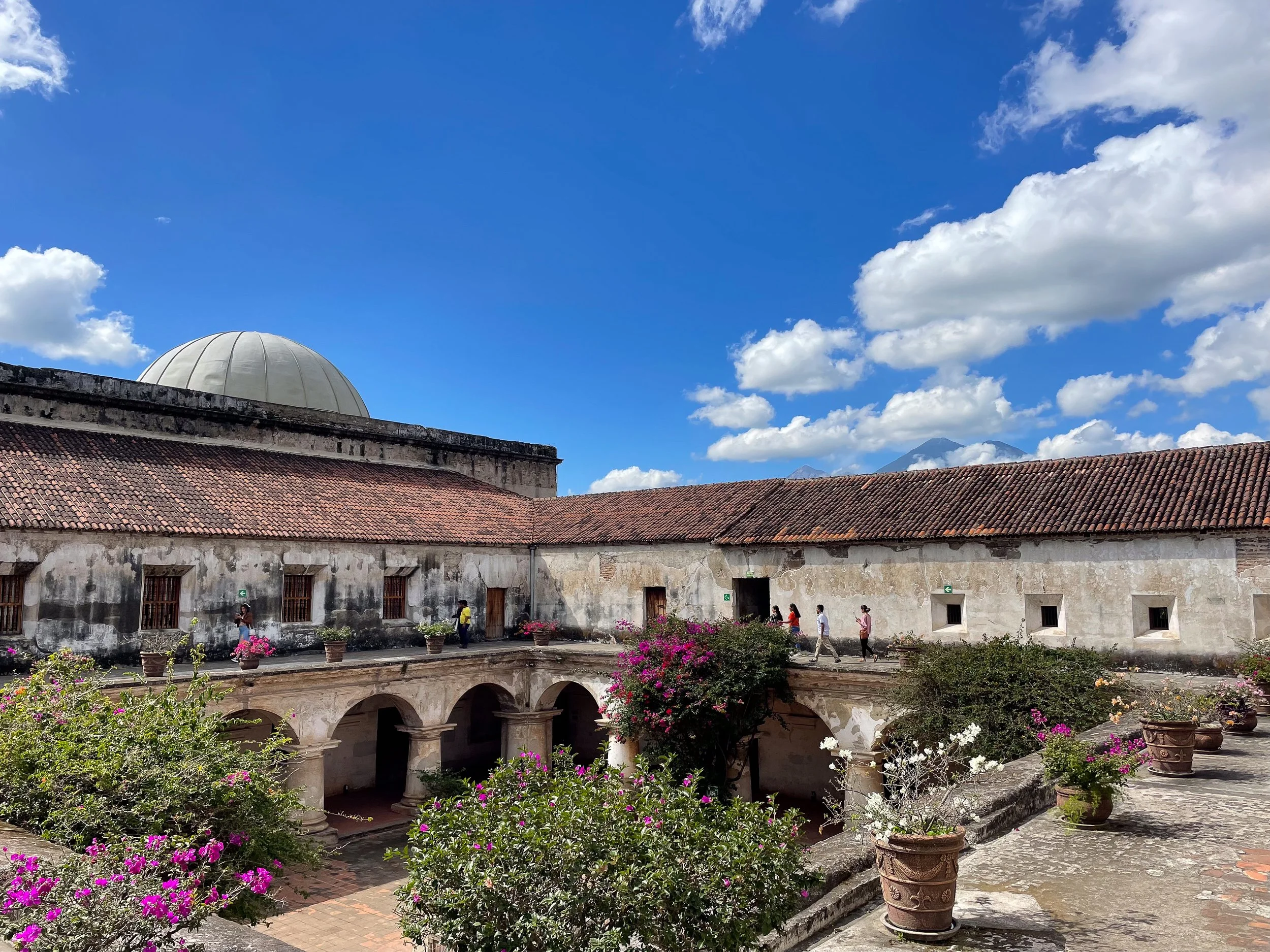
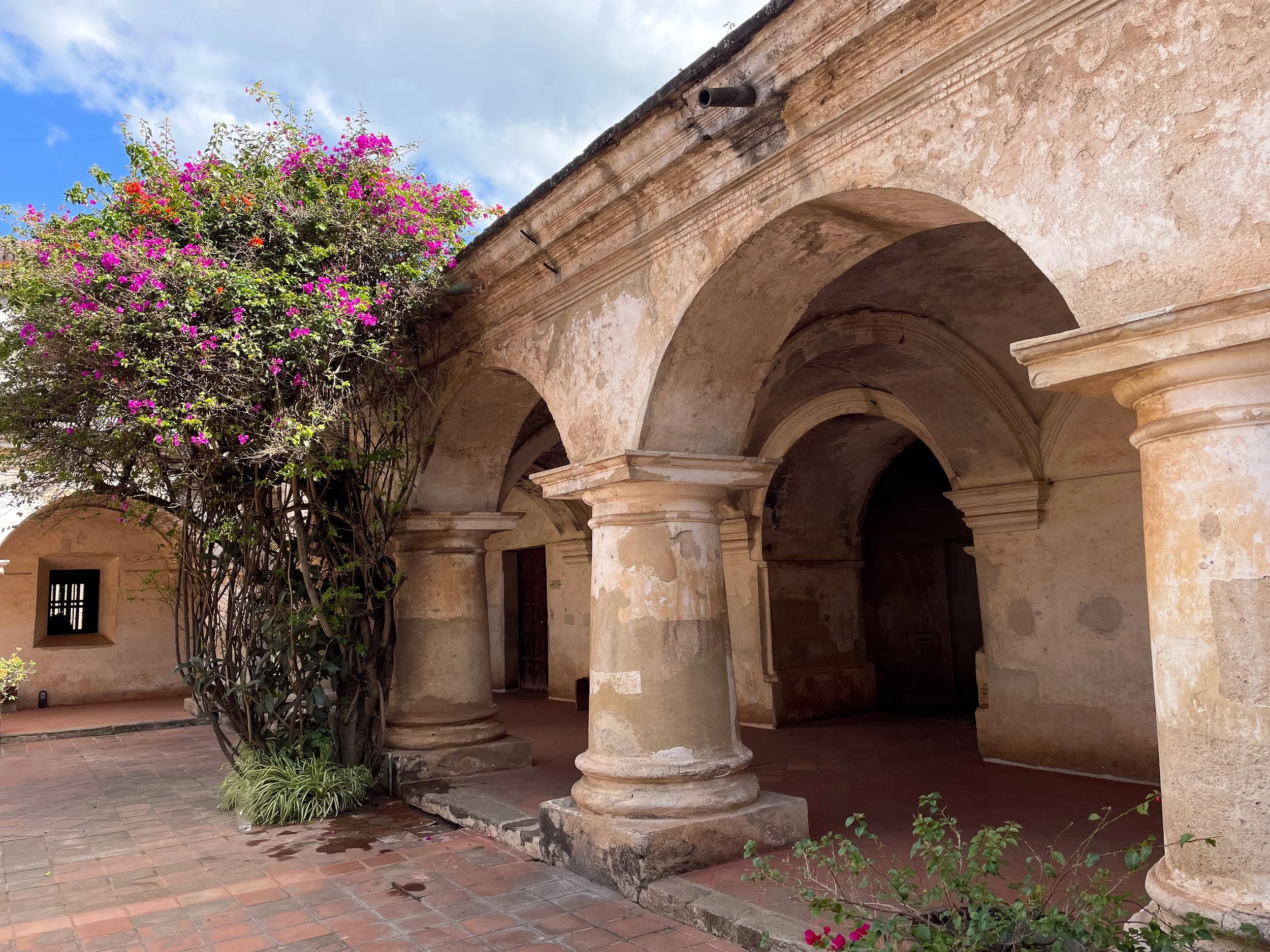
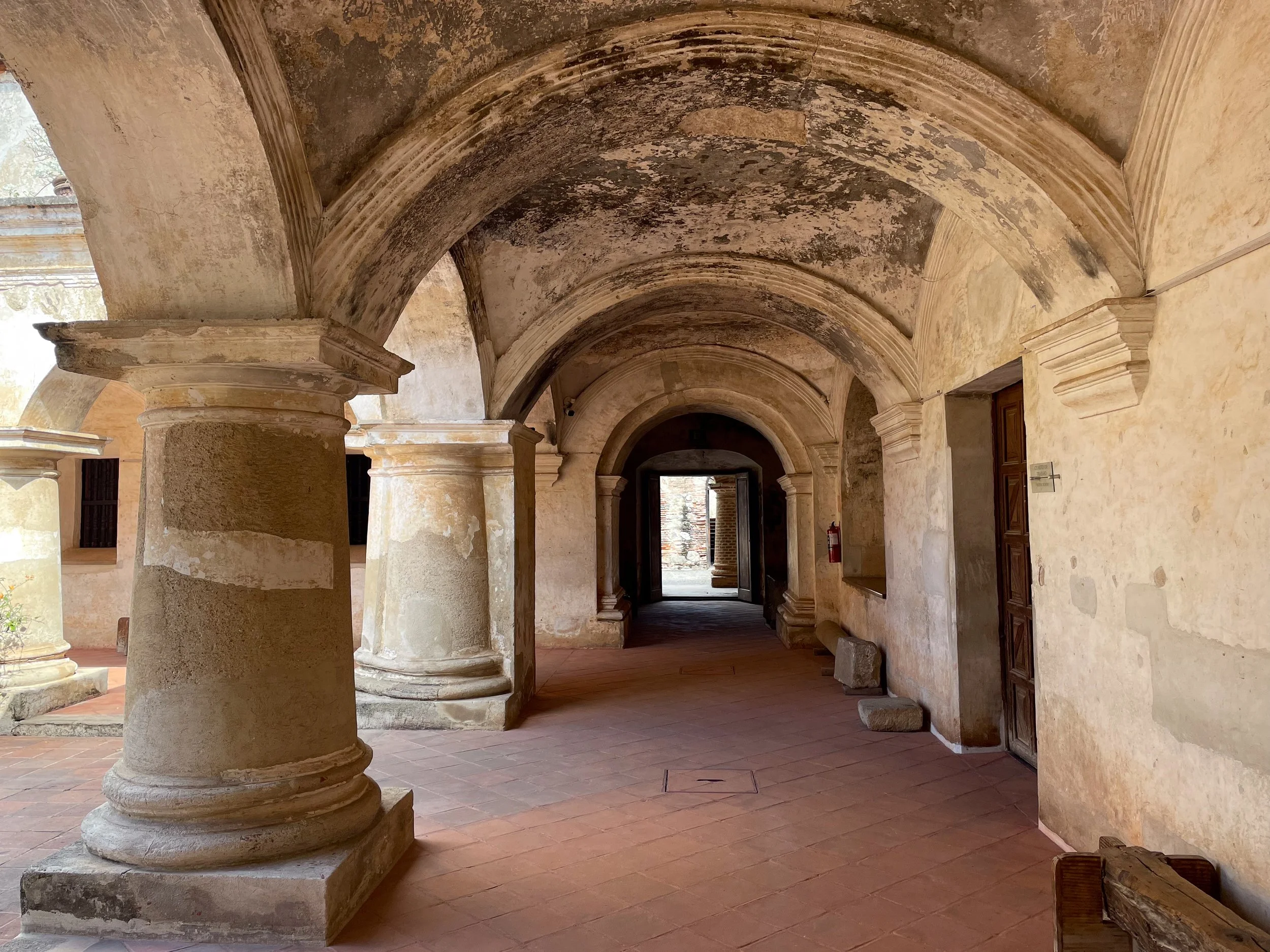
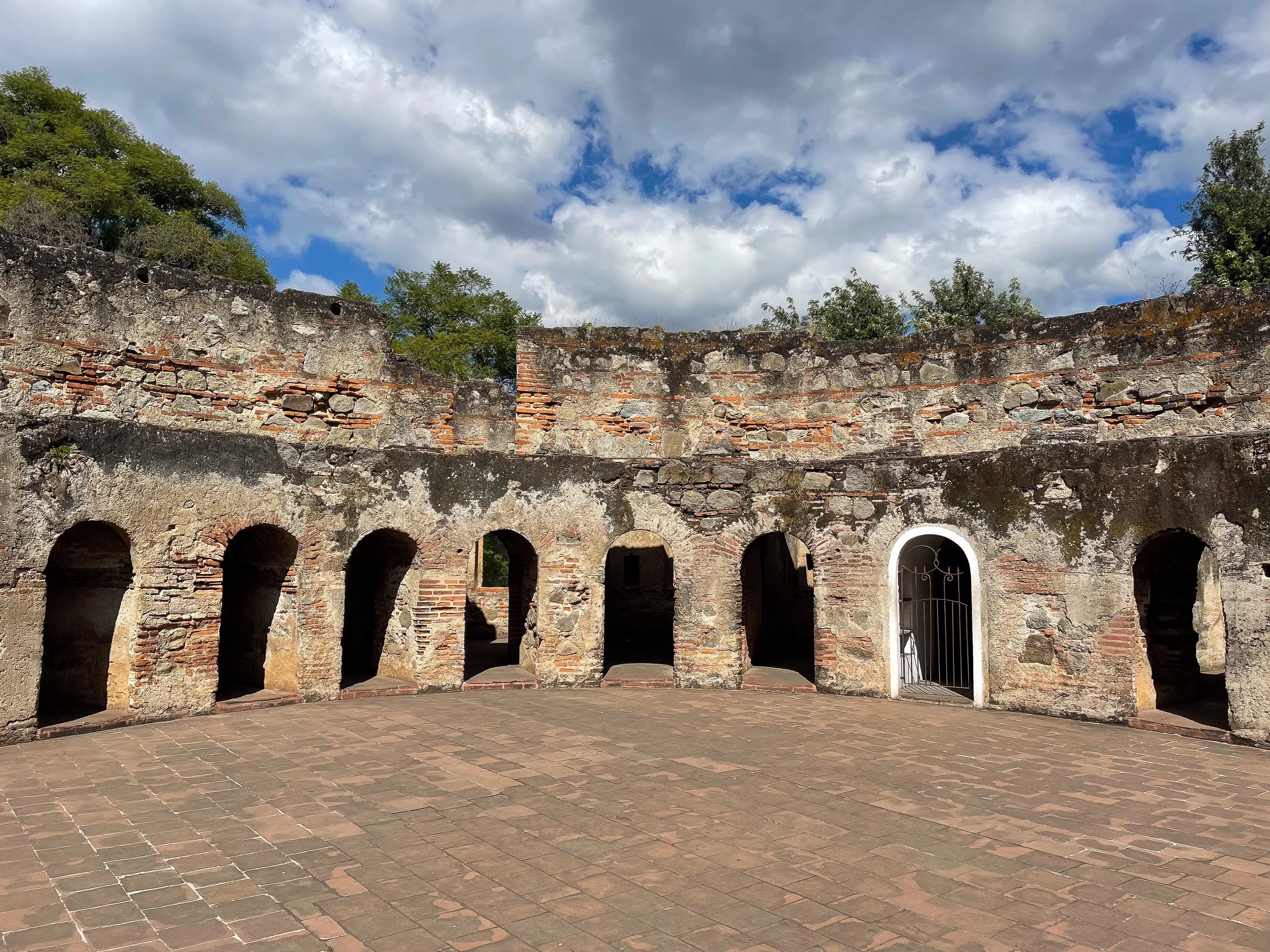
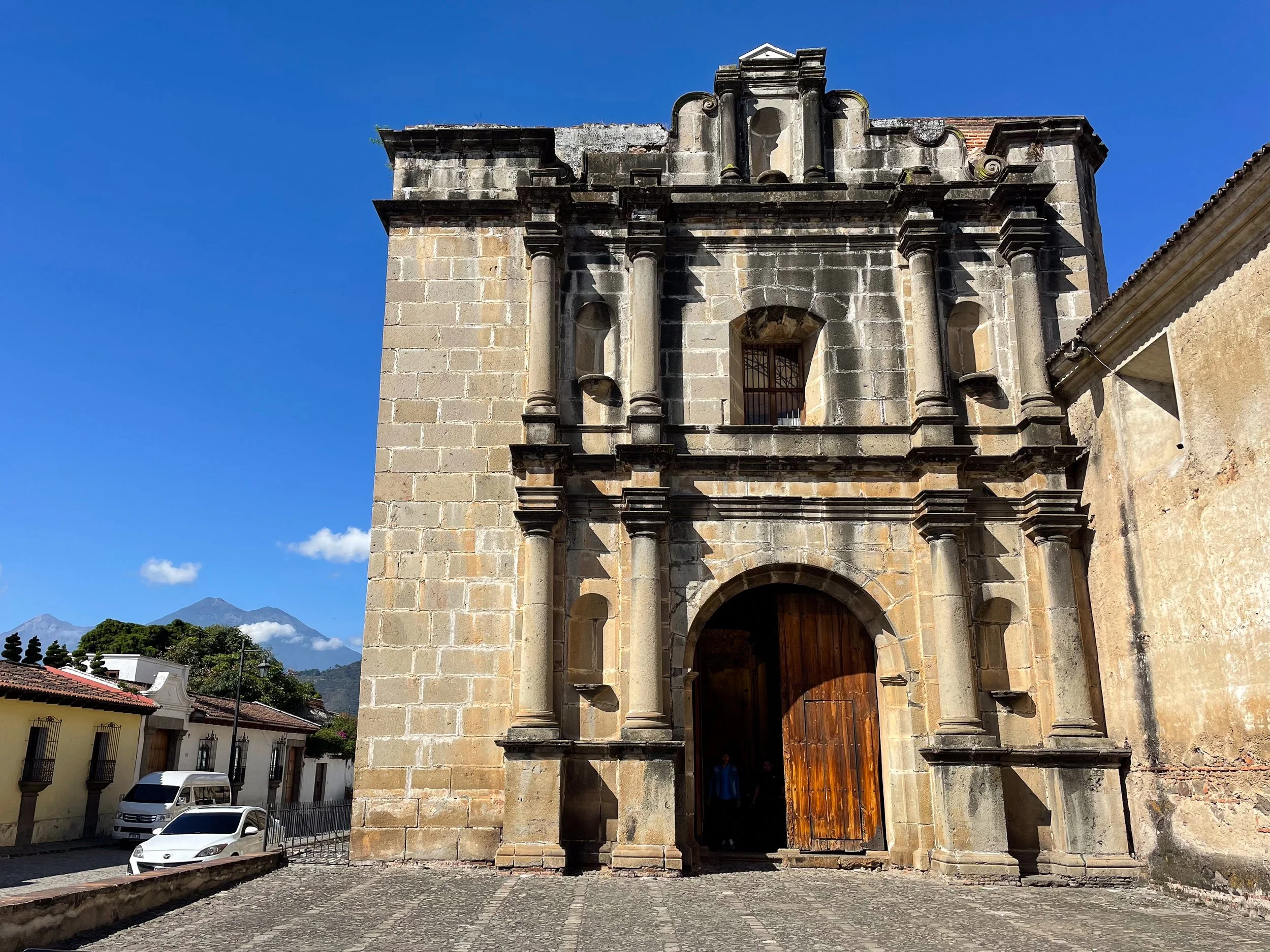
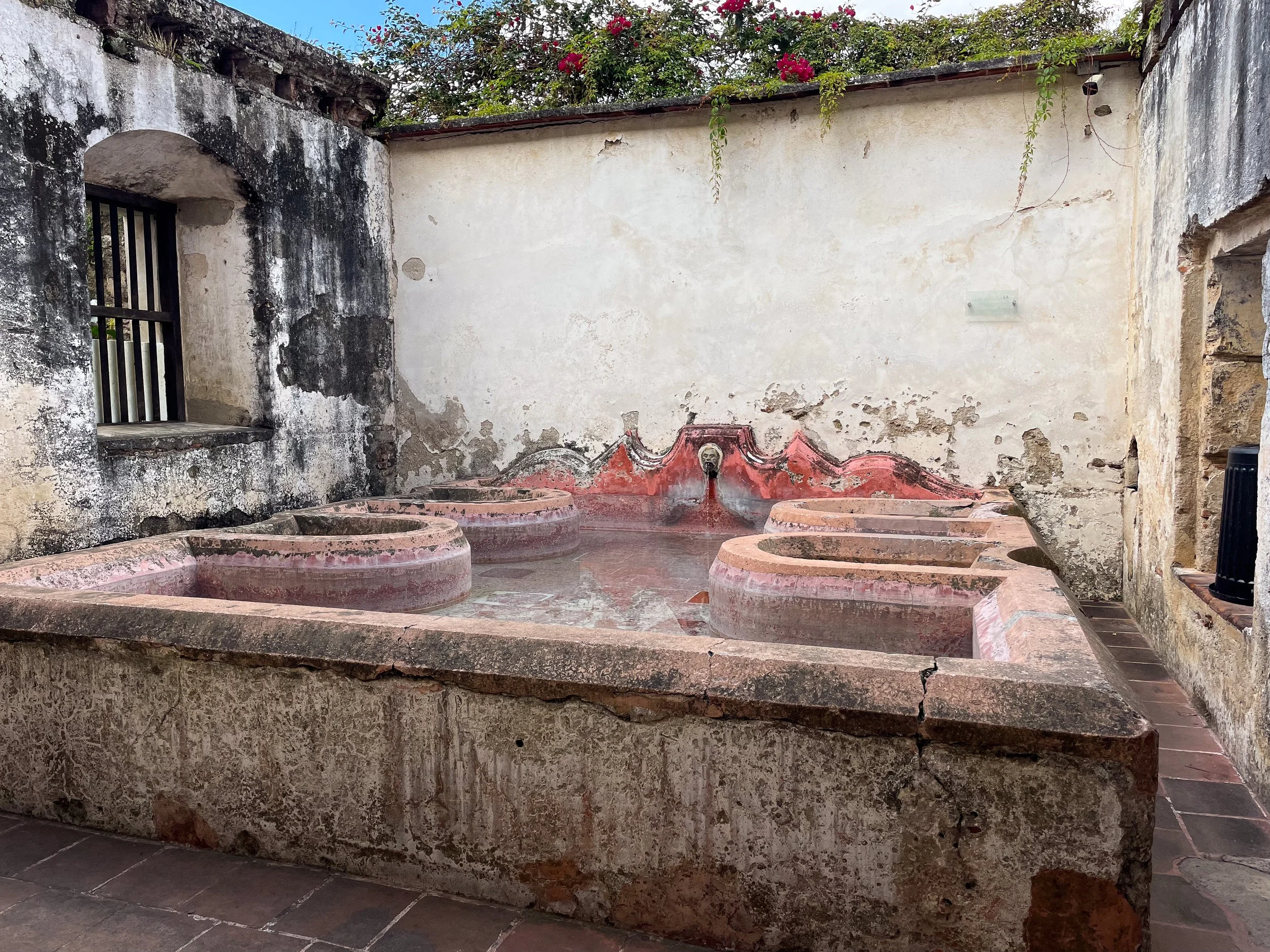
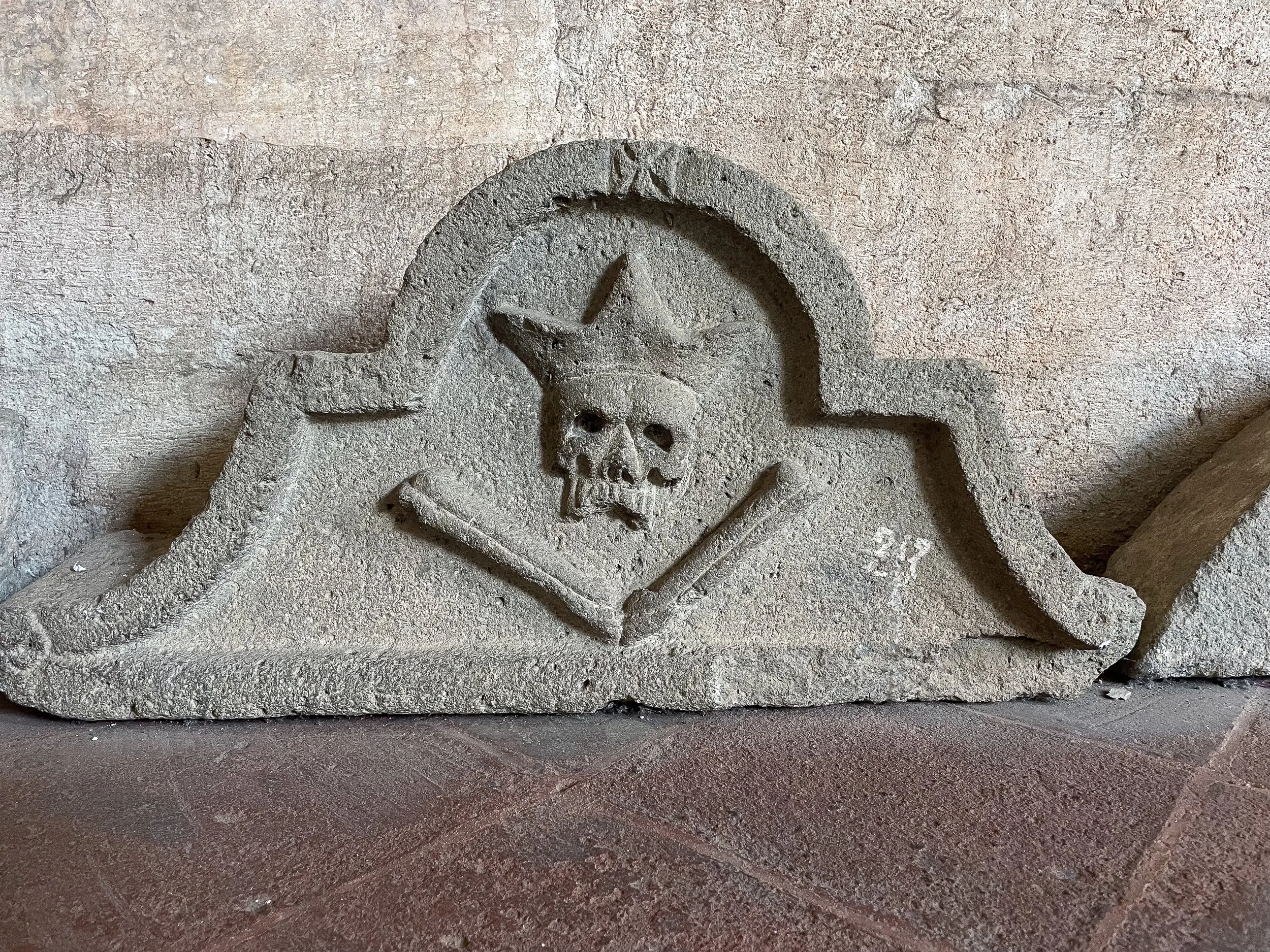
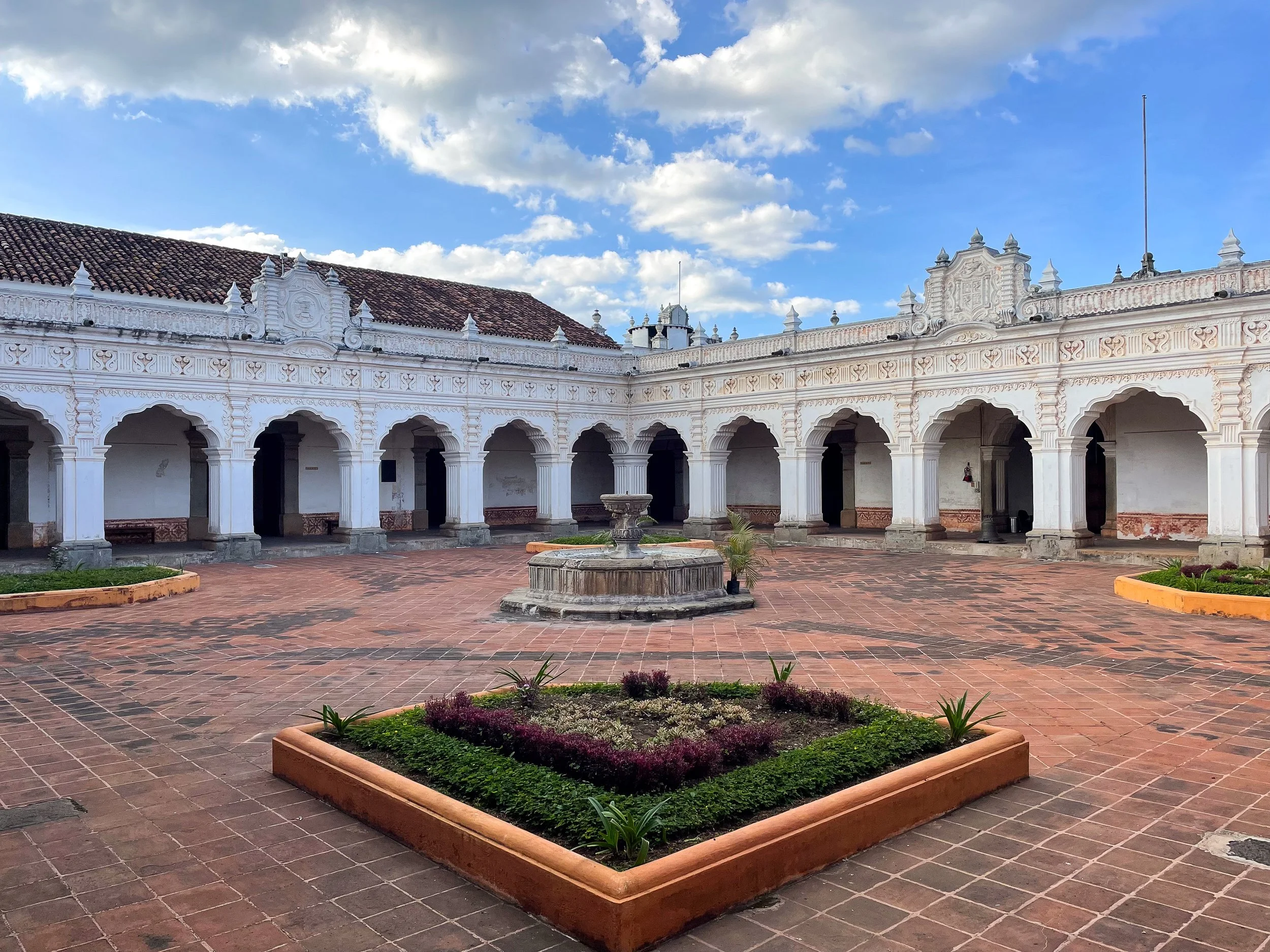
Convento de San Capuchinas. A former convent turned into an art museum. The grounds contain an interior courtyard, the ruins of a church, a butterfly garden and a circular building of nuns' cells complete with creepy nun mannequins. Exhibits display a collection of religious artwork, pre-colonial artifacts, broken statues and stone masonry.
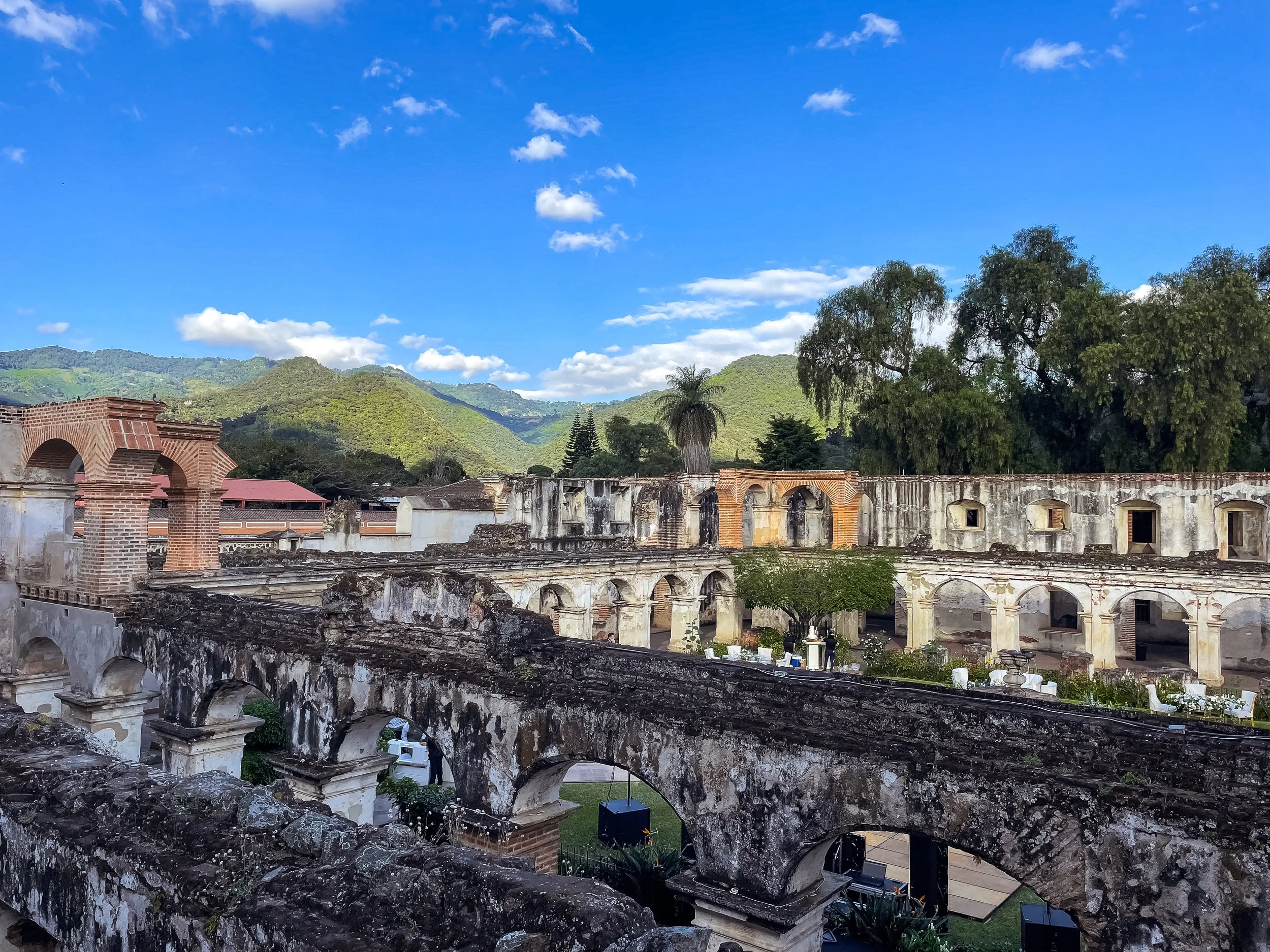
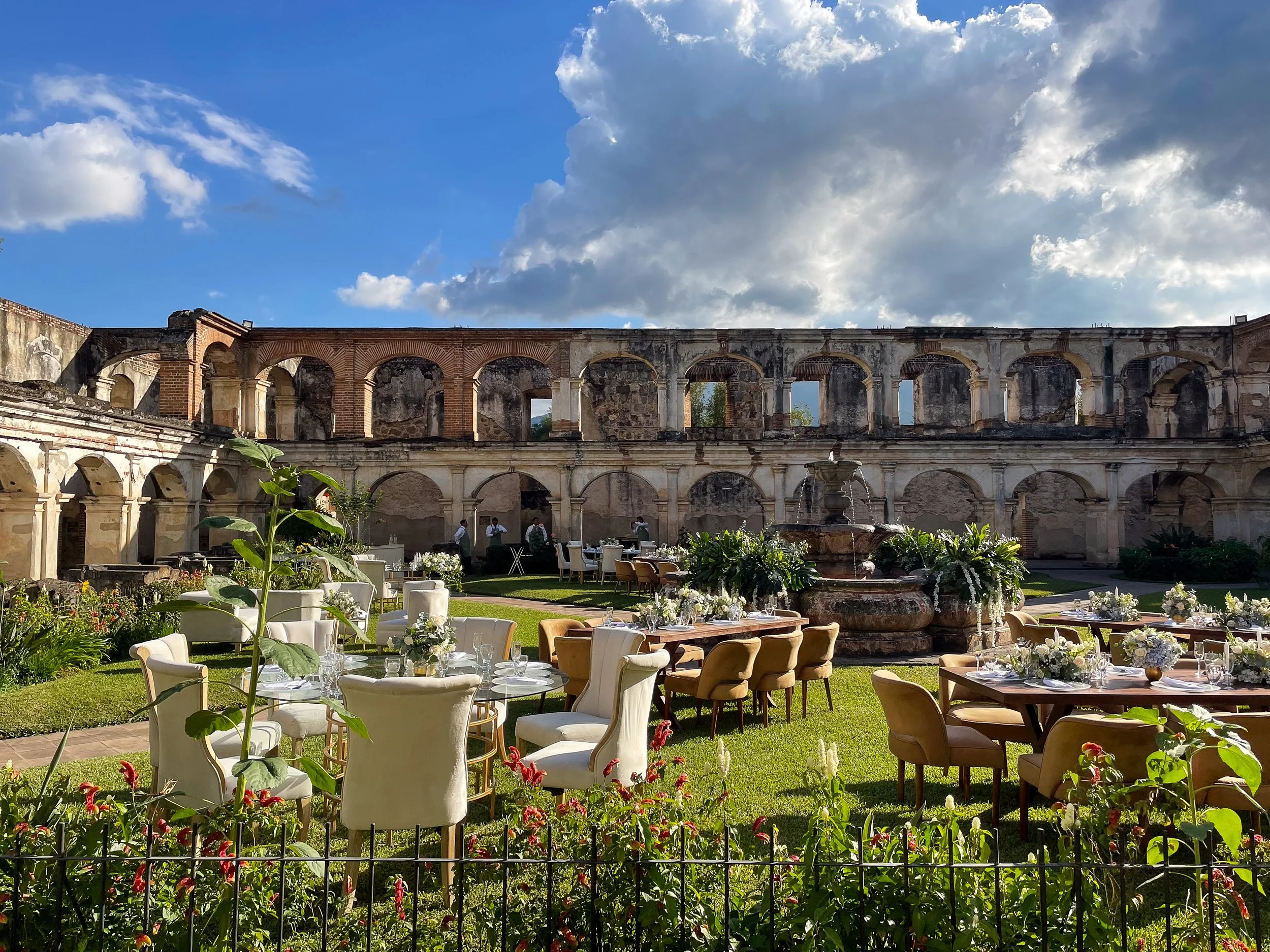
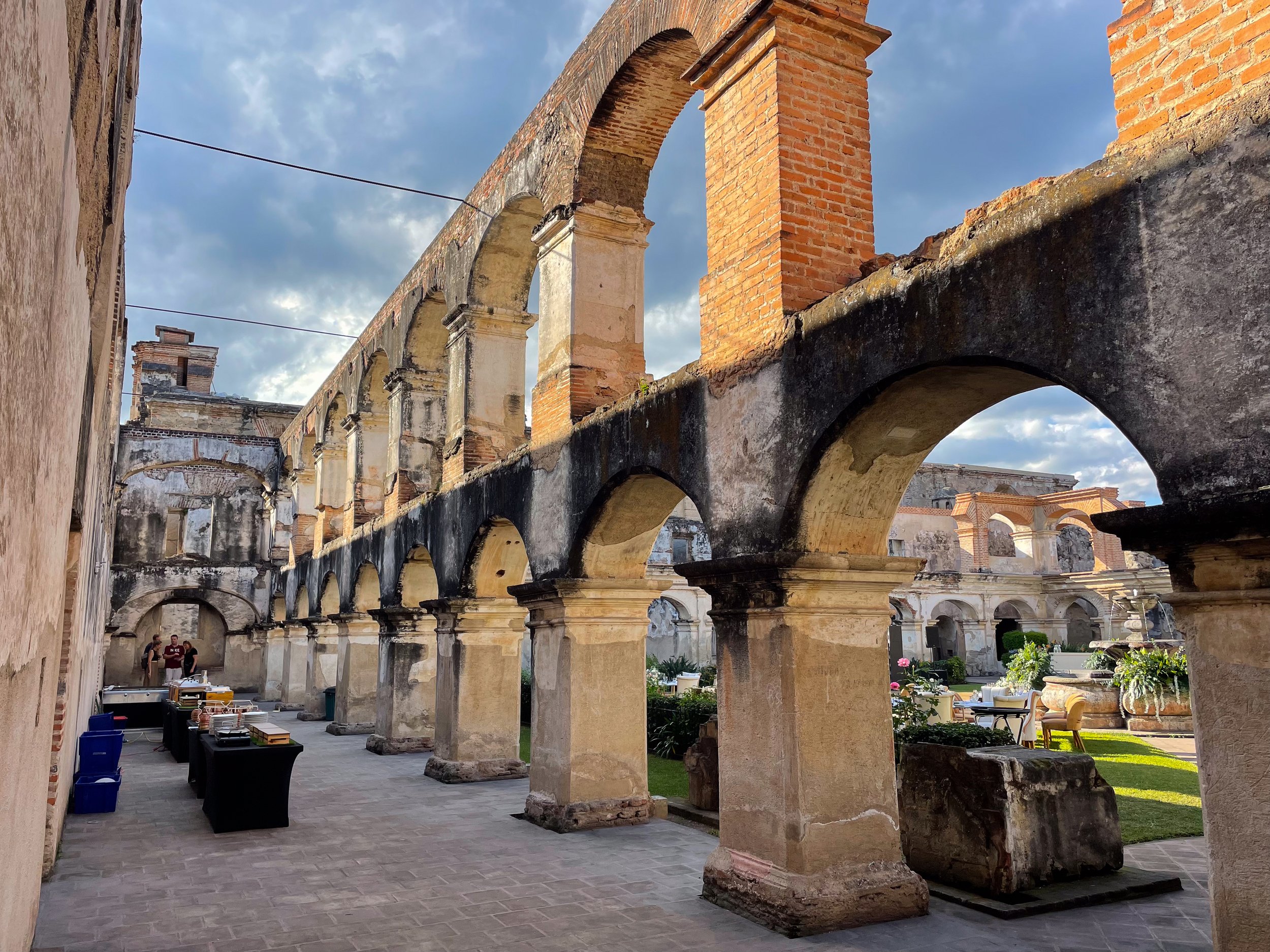
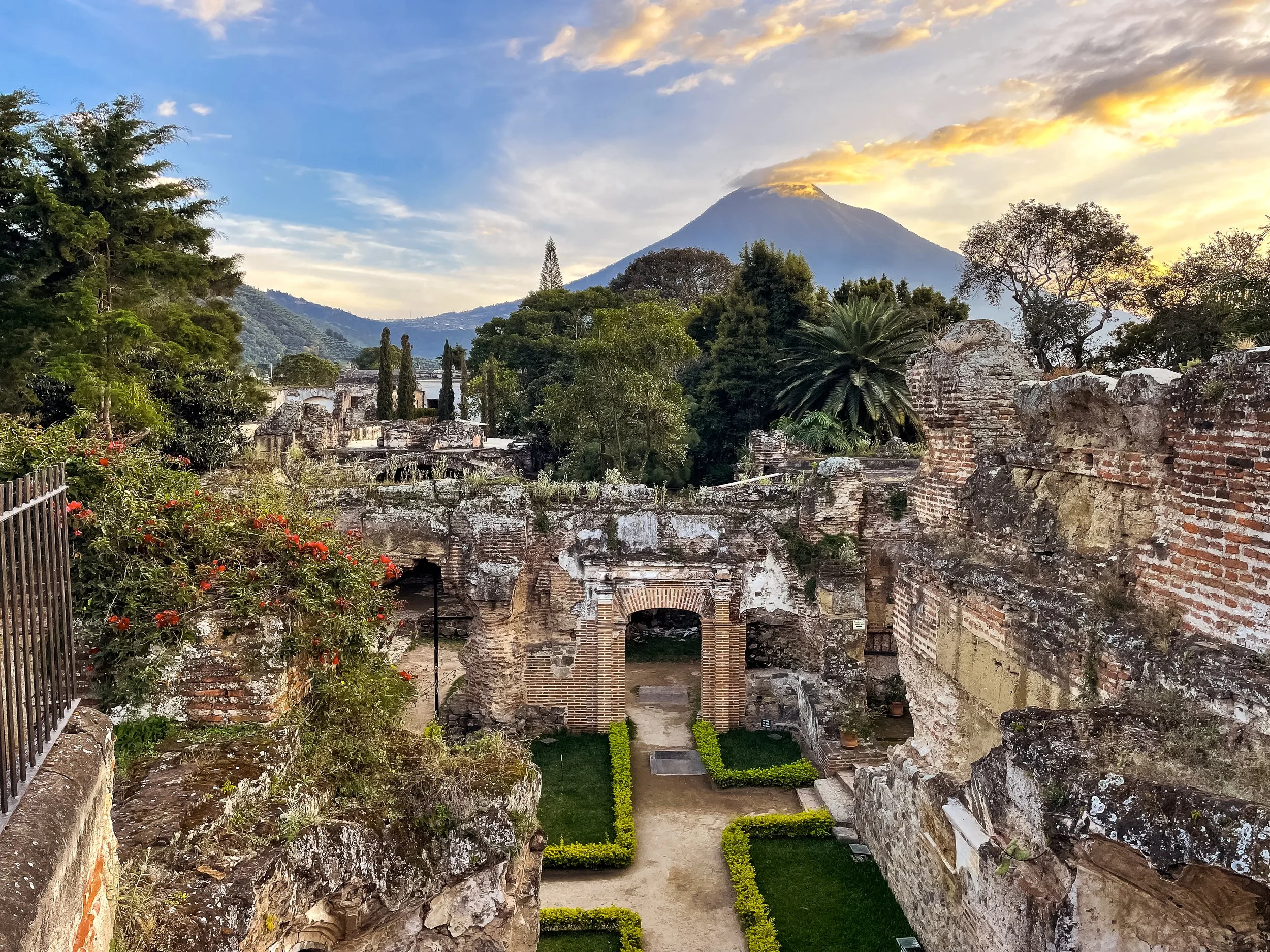
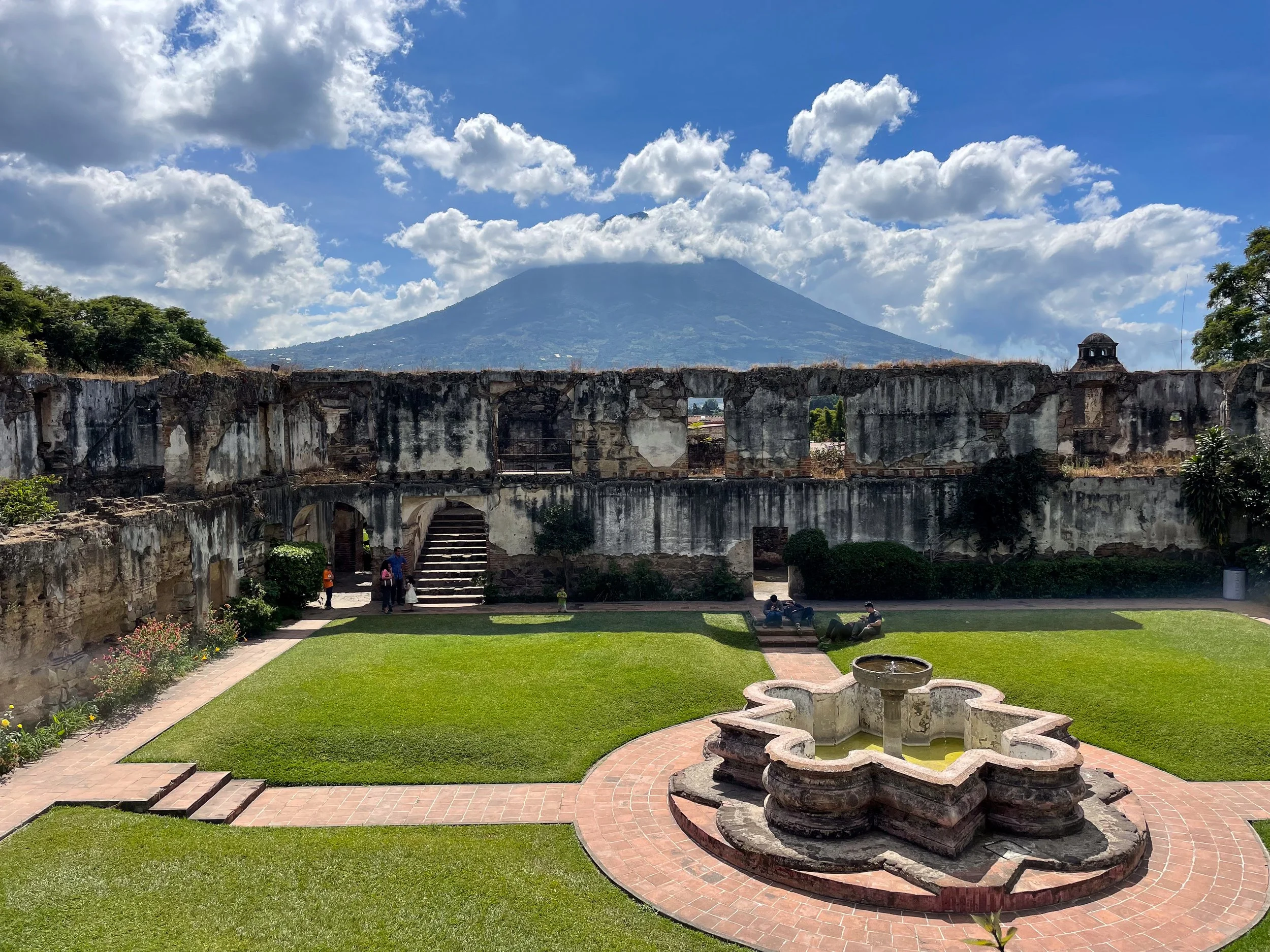
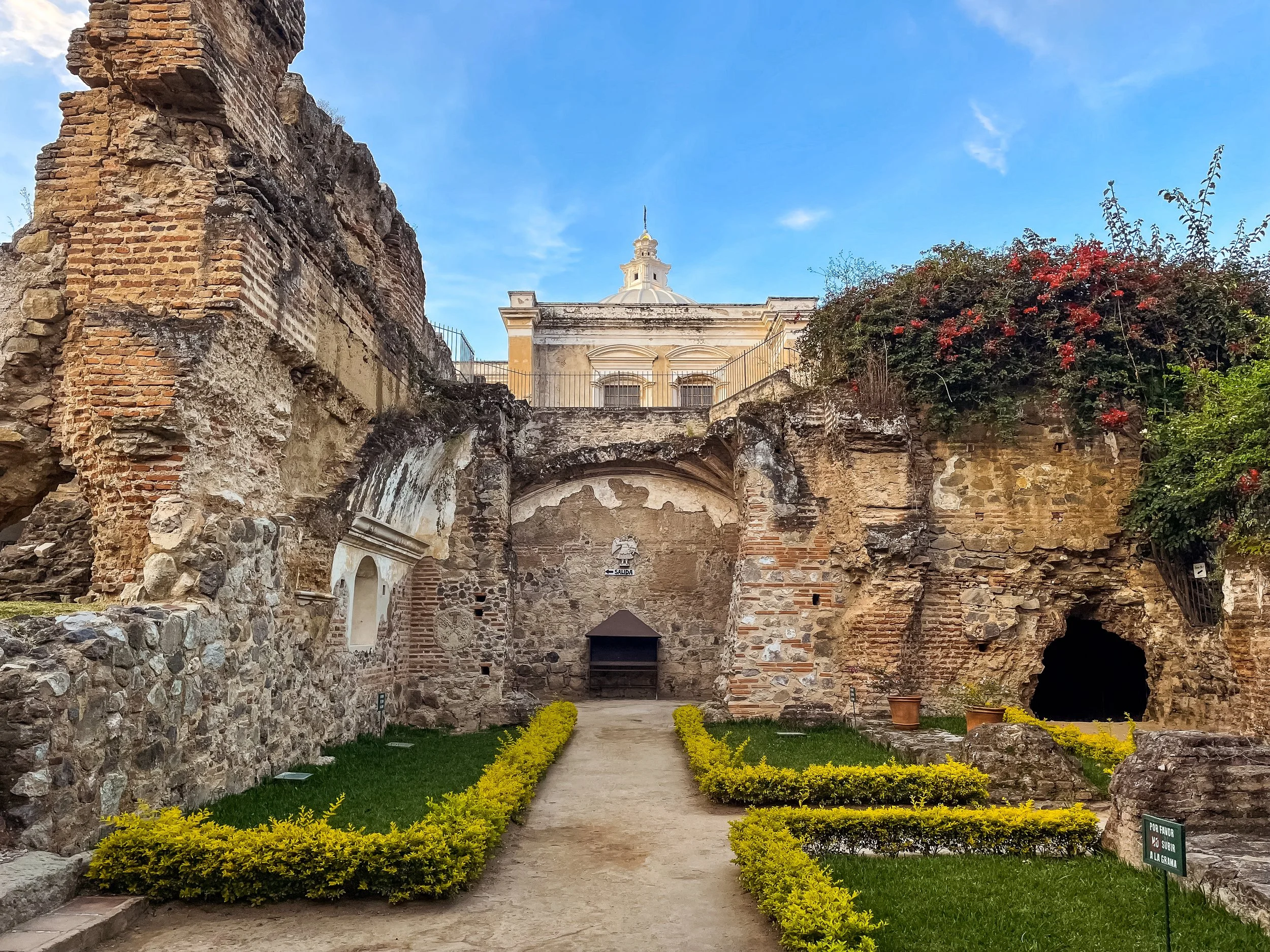
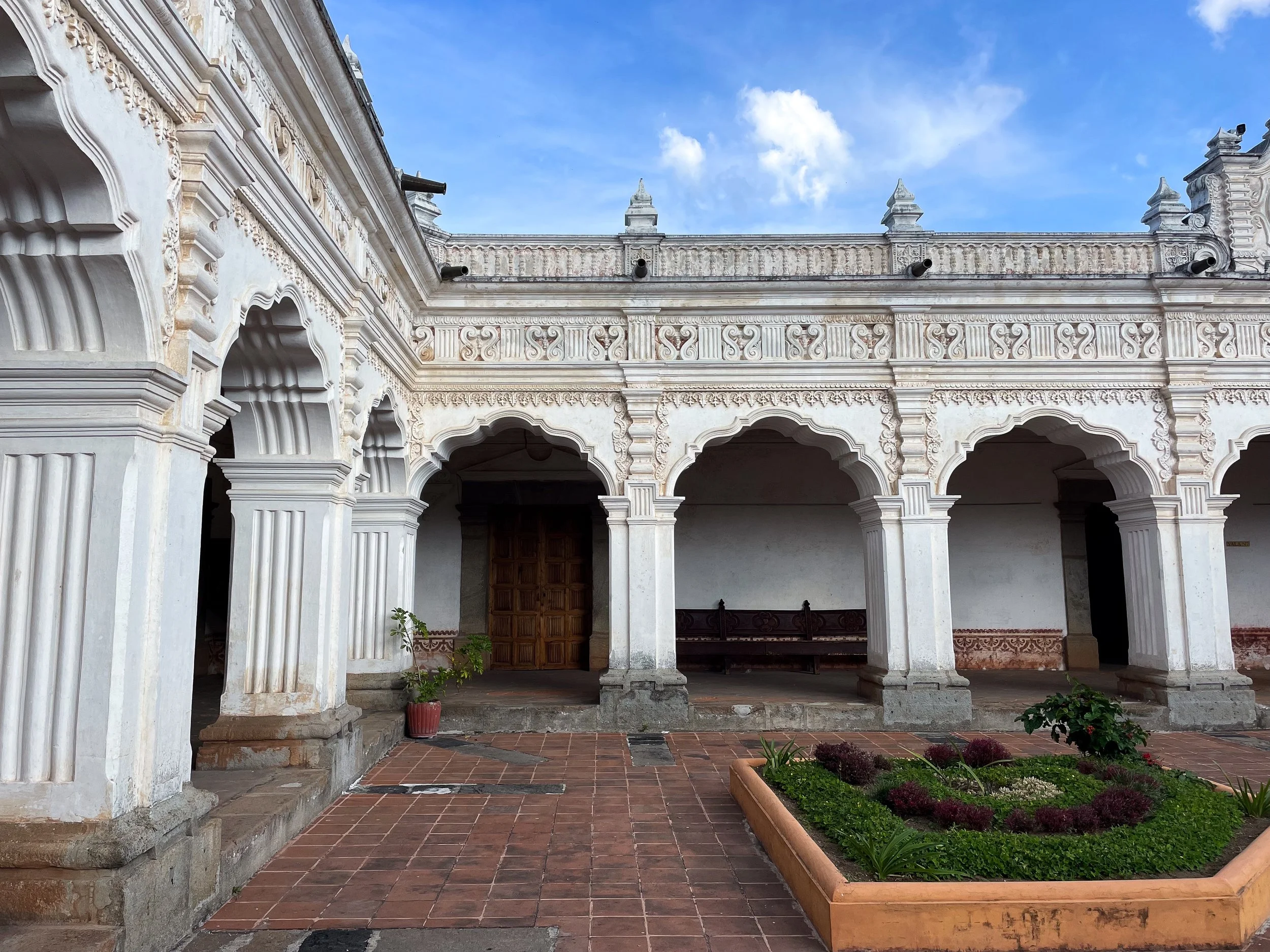
Convento Santa Clara. The ruins of a church and convent with an ornate stone facade and crumbling cloisters surrounding a lush garden courtyard. The beautiful setting doubles as an event space for dreamy weddings.
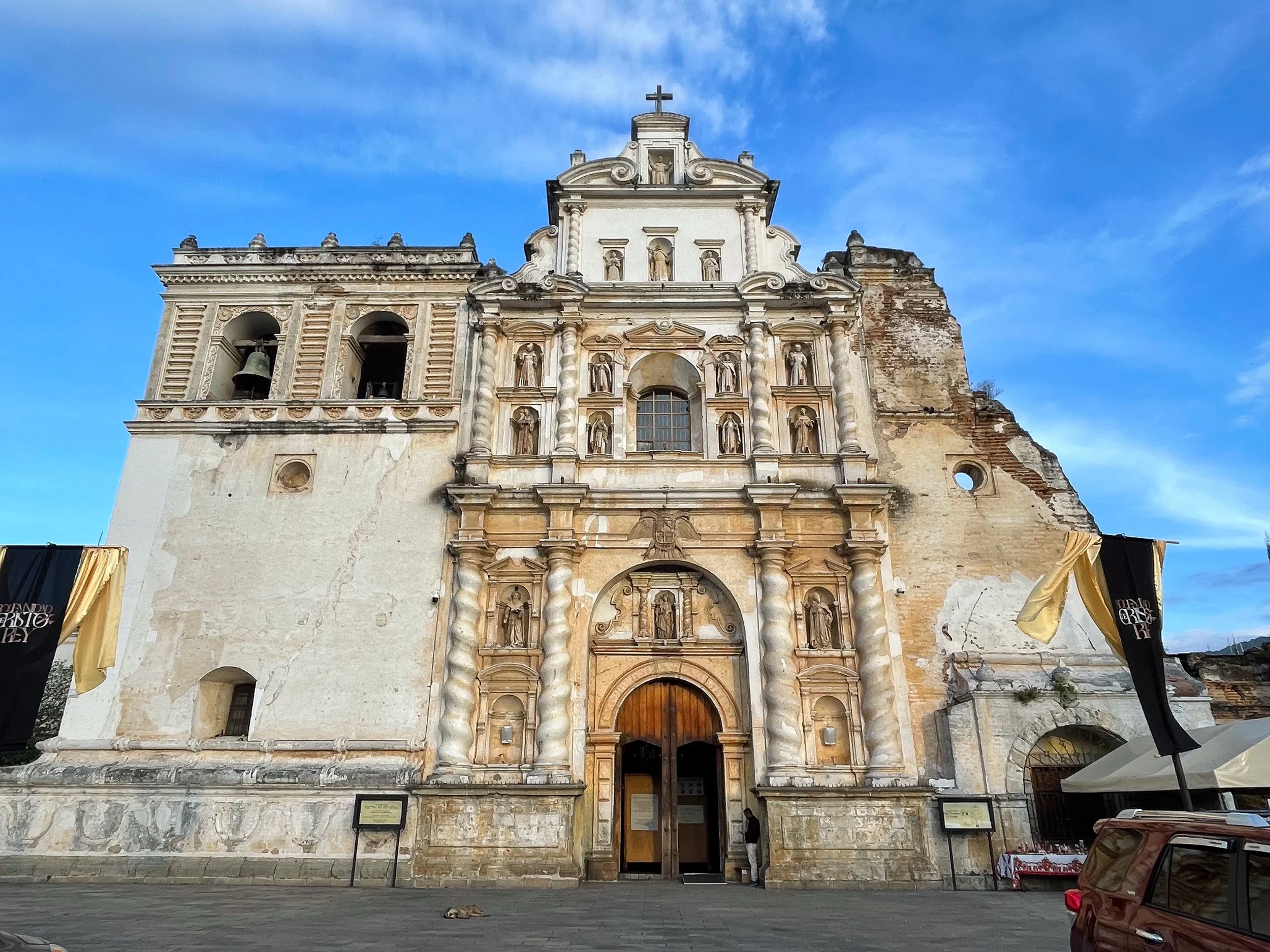
Iglesia de San Francisco. A restored church with a partially collapsed facade and grounds with the crumbling ruins of a former monastery used by the friars. Within the grounds are lush gardens home to nesting green parrots and walkways leading to a second floor with views of the volcanoes.
Iglesia San Jerónimo. The ruins of a former church. All that remains is a grassy courtyard with a restored fountain and some accessible cloisters.
Visit the Museums
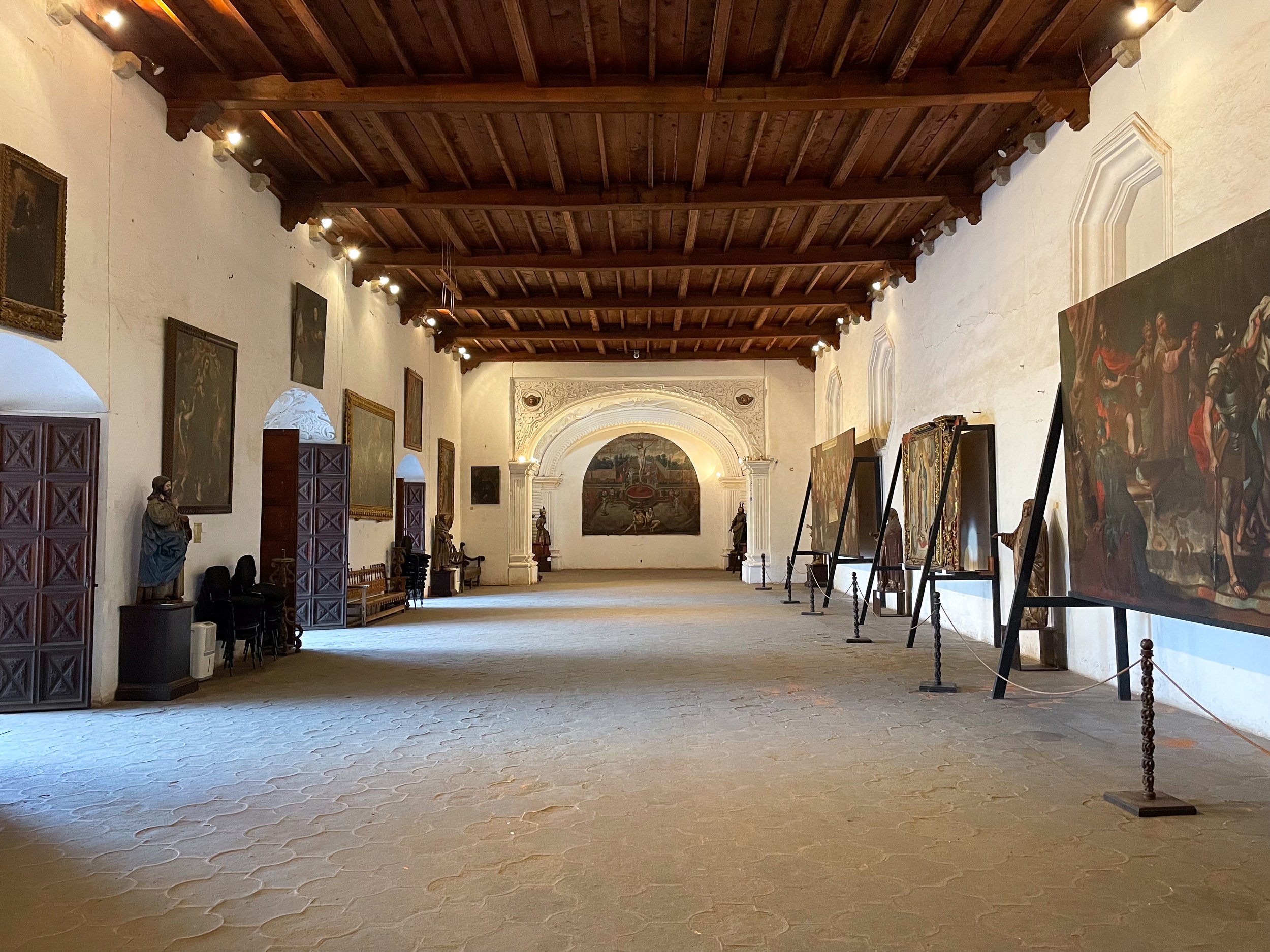
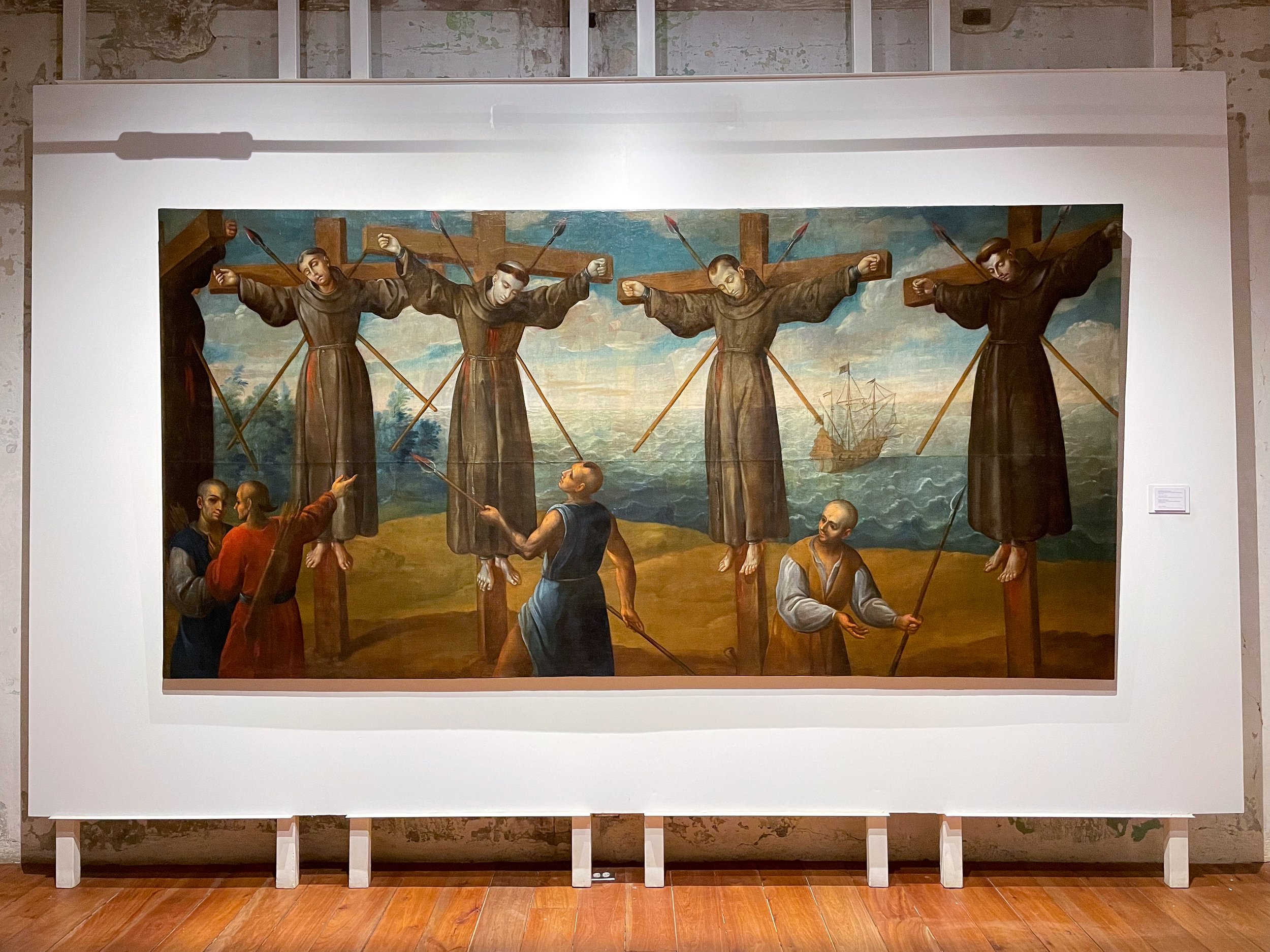
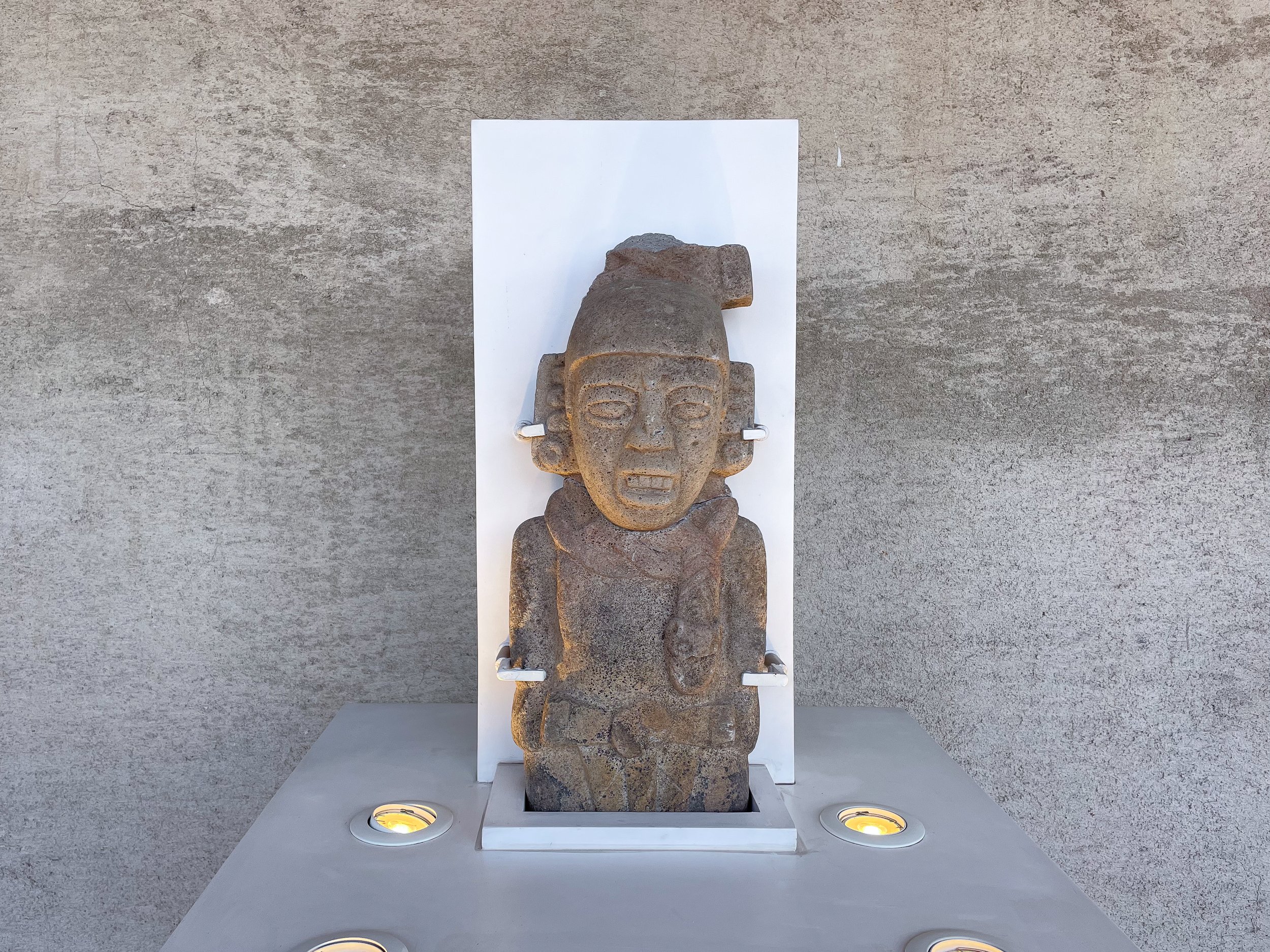
Museo de Arte Colonial. A colonial art museum with galleries of religious paintings and artifacts. The museum is one of the few buildings not destroyed during the 1773 earthquake and featured on the 100 Quetzal bill.
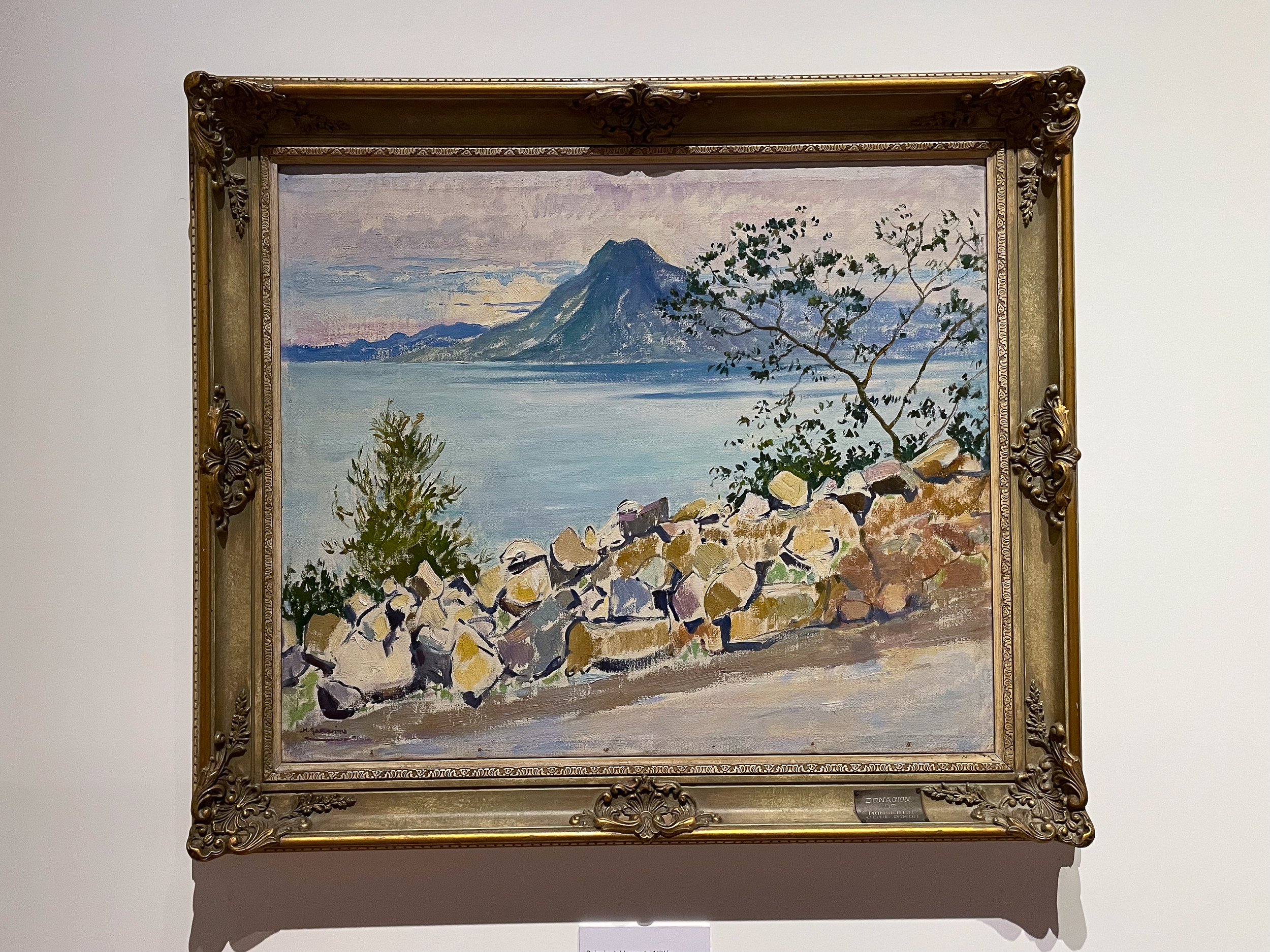
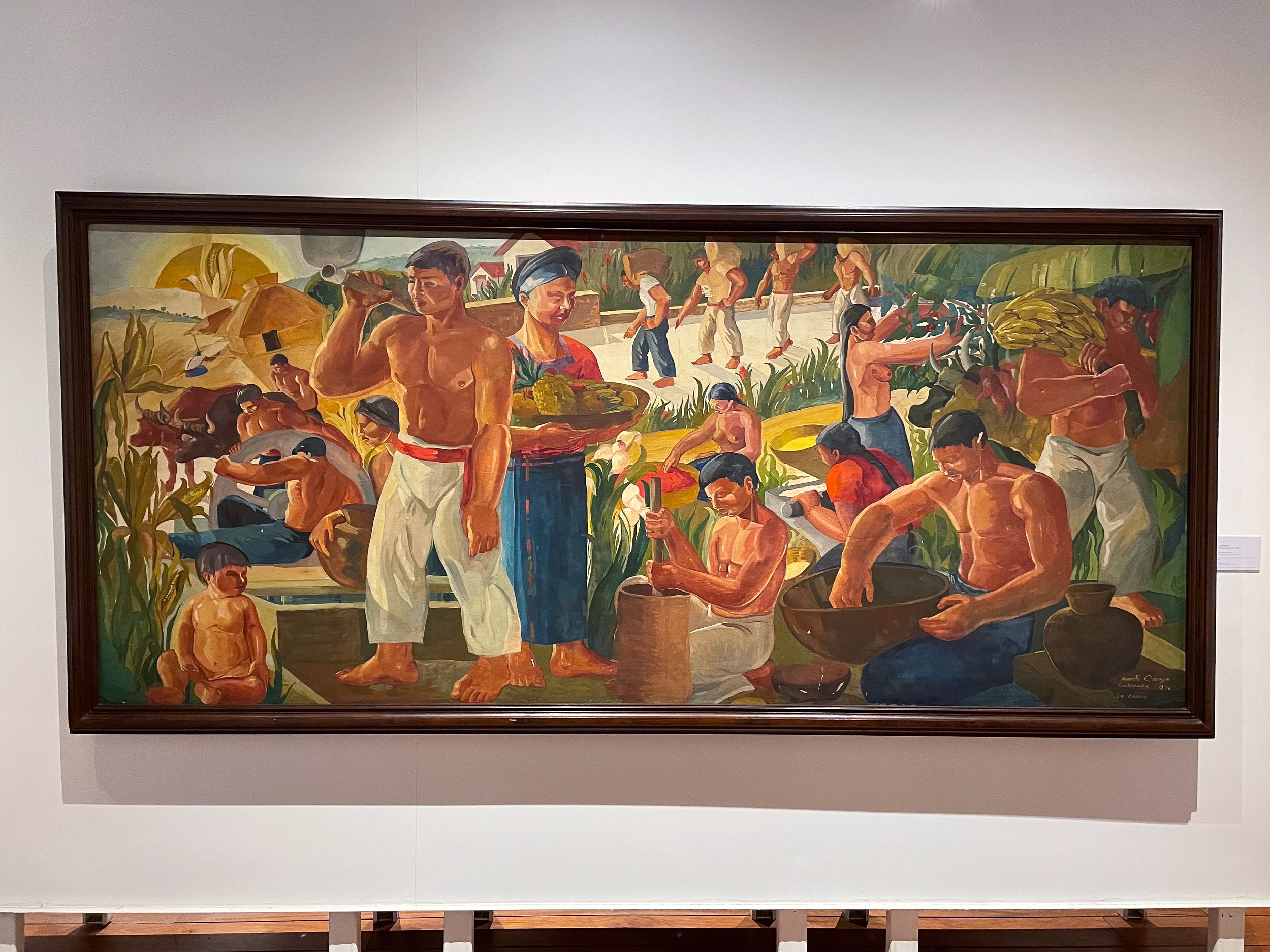
Museo Nacional de Arte de Guatemala (MUNAG). A Guatemalan art museum adjacent to the Parque Central. It includes paintings of the country’s landscapes, Mayan people, Guatemala’s declaration of independence, iron cannons, religious artwork and pre-Colombian artifacts.
Shop the Artisan & Local Markets
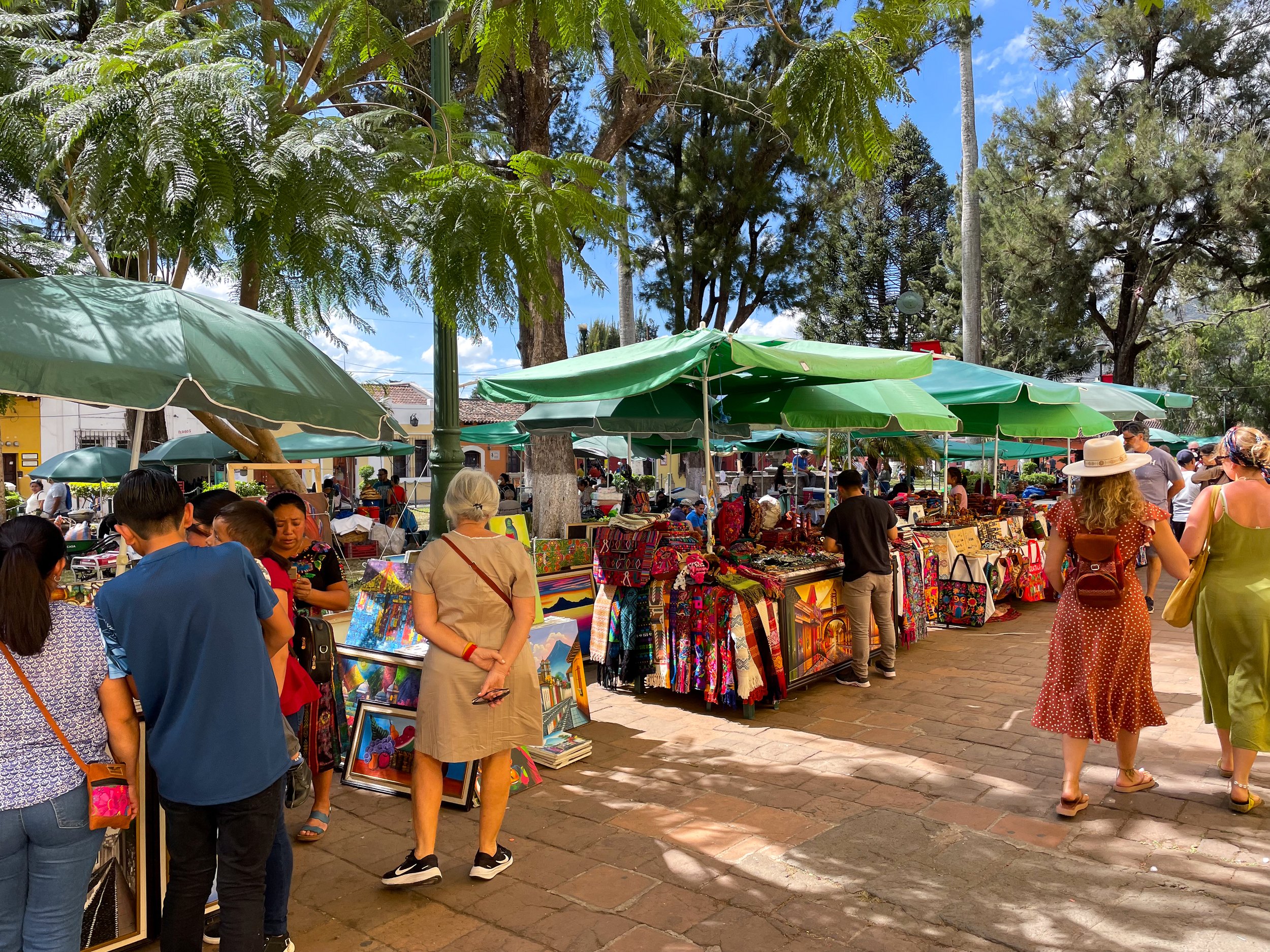
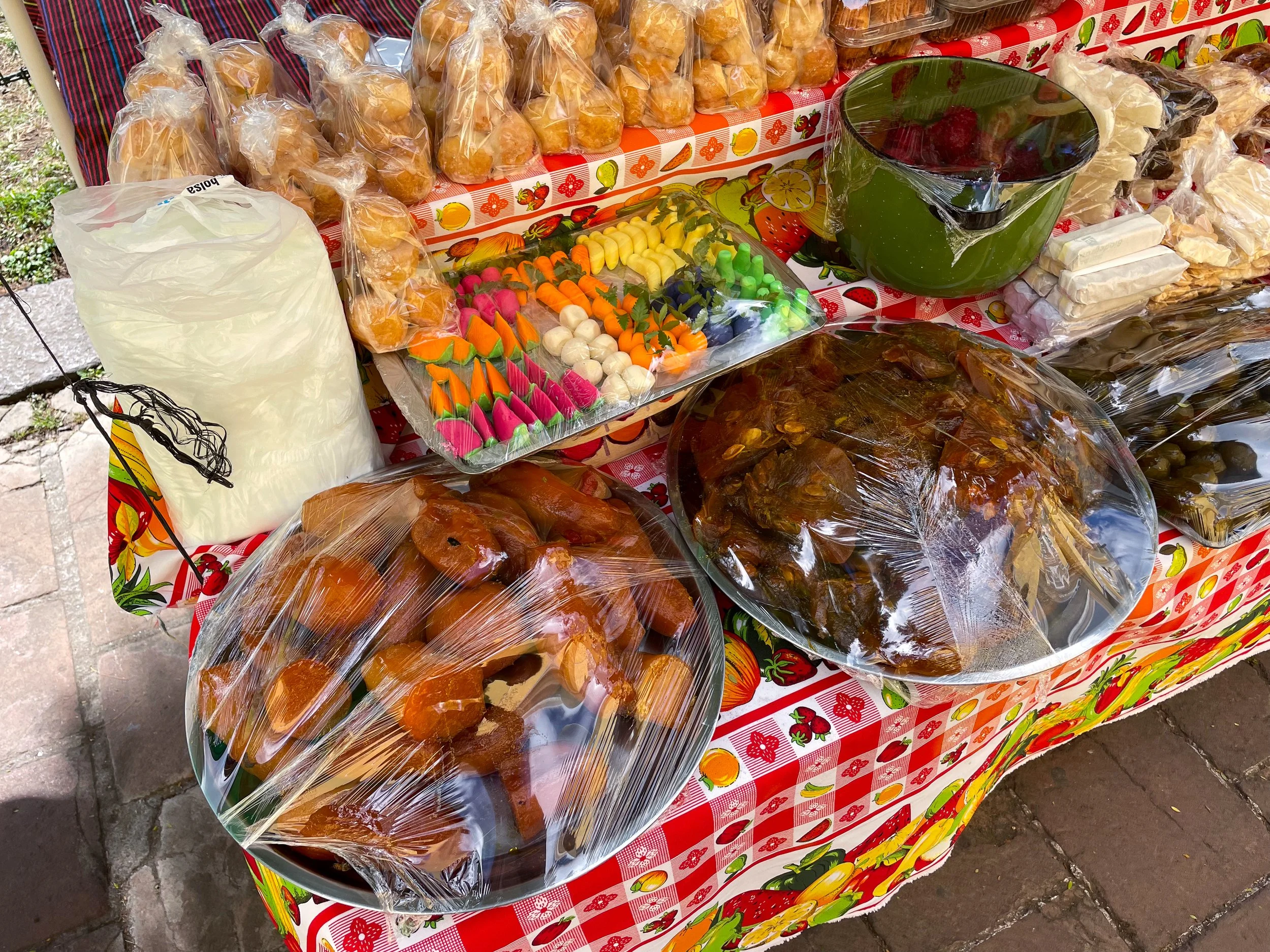
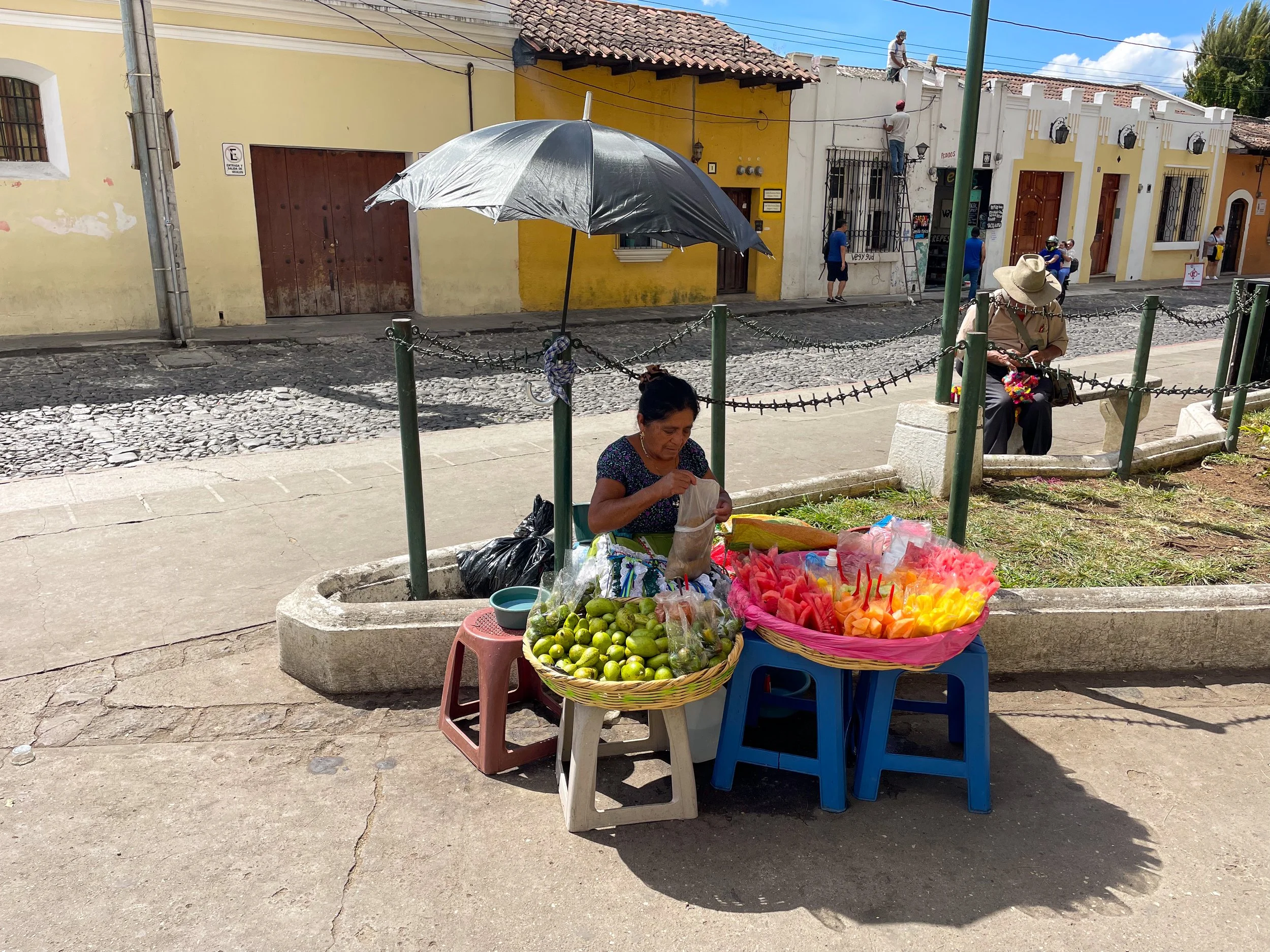
Parque la Merced. Located outside of La Iglesia de Merced, this park is brimming with food and craft vendors. It’s one of the best places in the city to find every kind of Guatemalan street food or sweet imaginable. A fountain with fish reliefs relocated from Iglesia de San Francisco is located here.
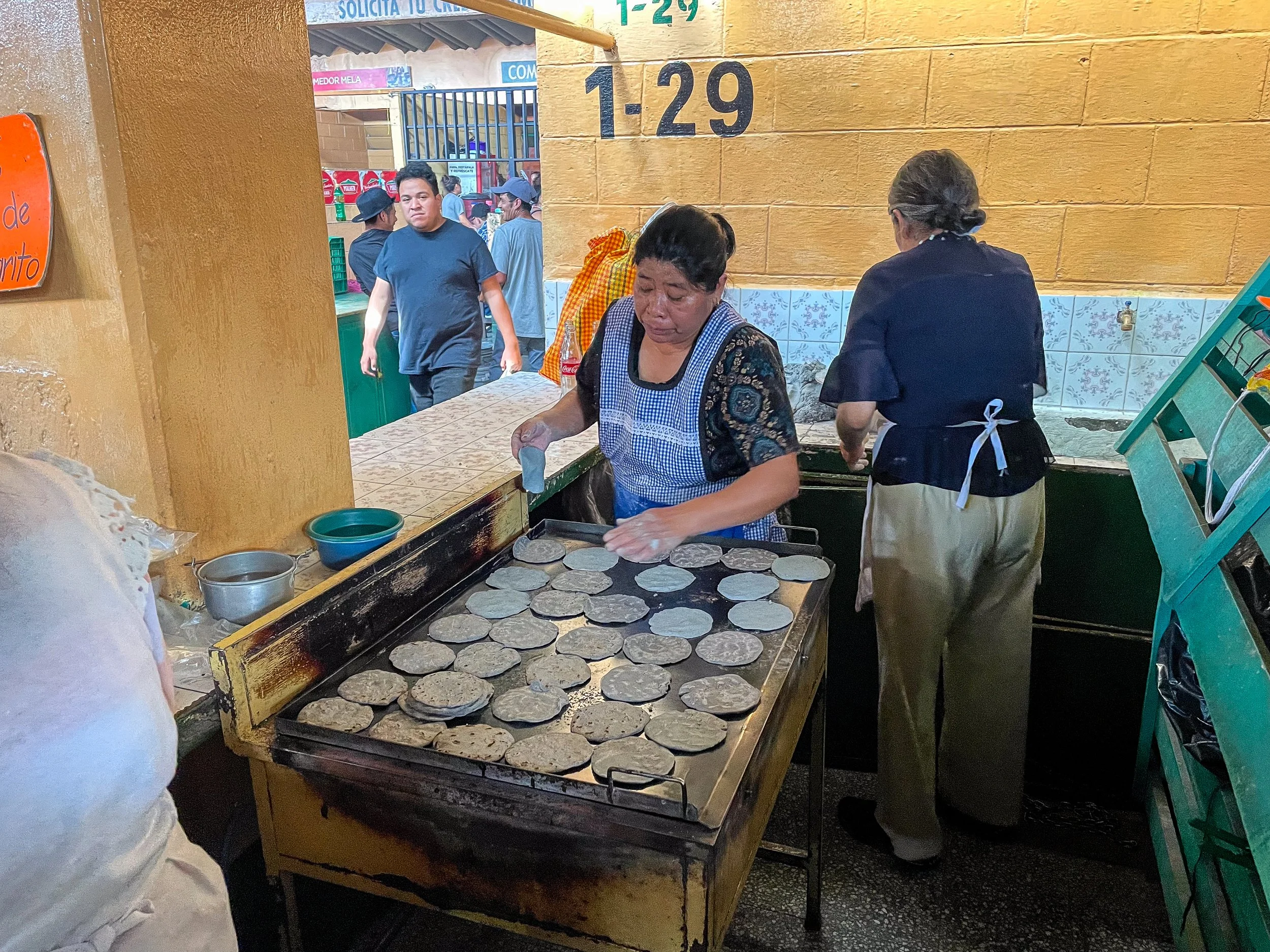
Mercado Central. A large market with a maze of aisles and booths under a patchwork tin roof. Locals come here for everyday necessities including produce, meats, flowers, shoes, clothes, electronics, appliances, toys, etc. There are restaurant stalls in a food court style pavilion. We brought home fresh purple corn tortillas from here.
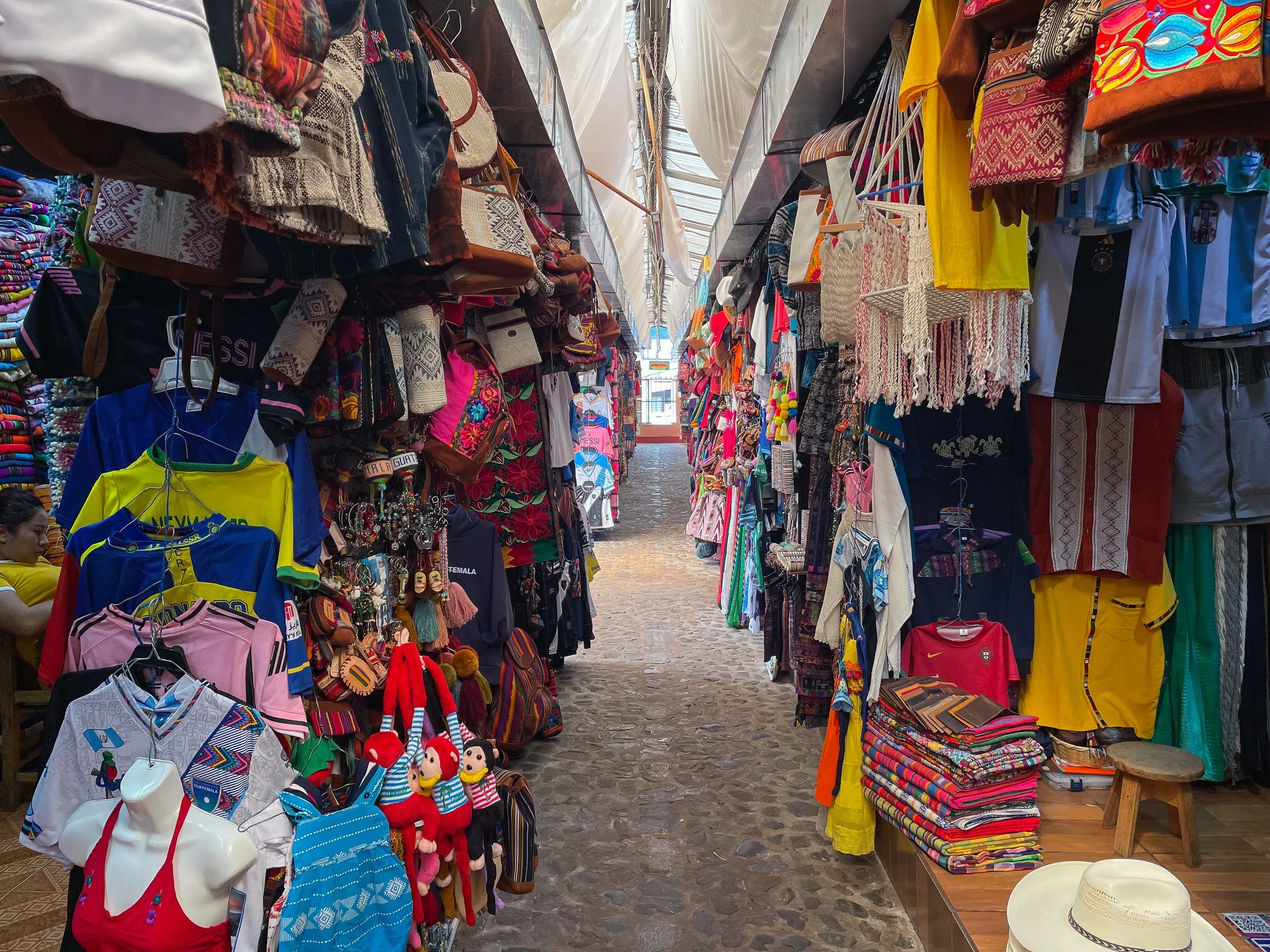
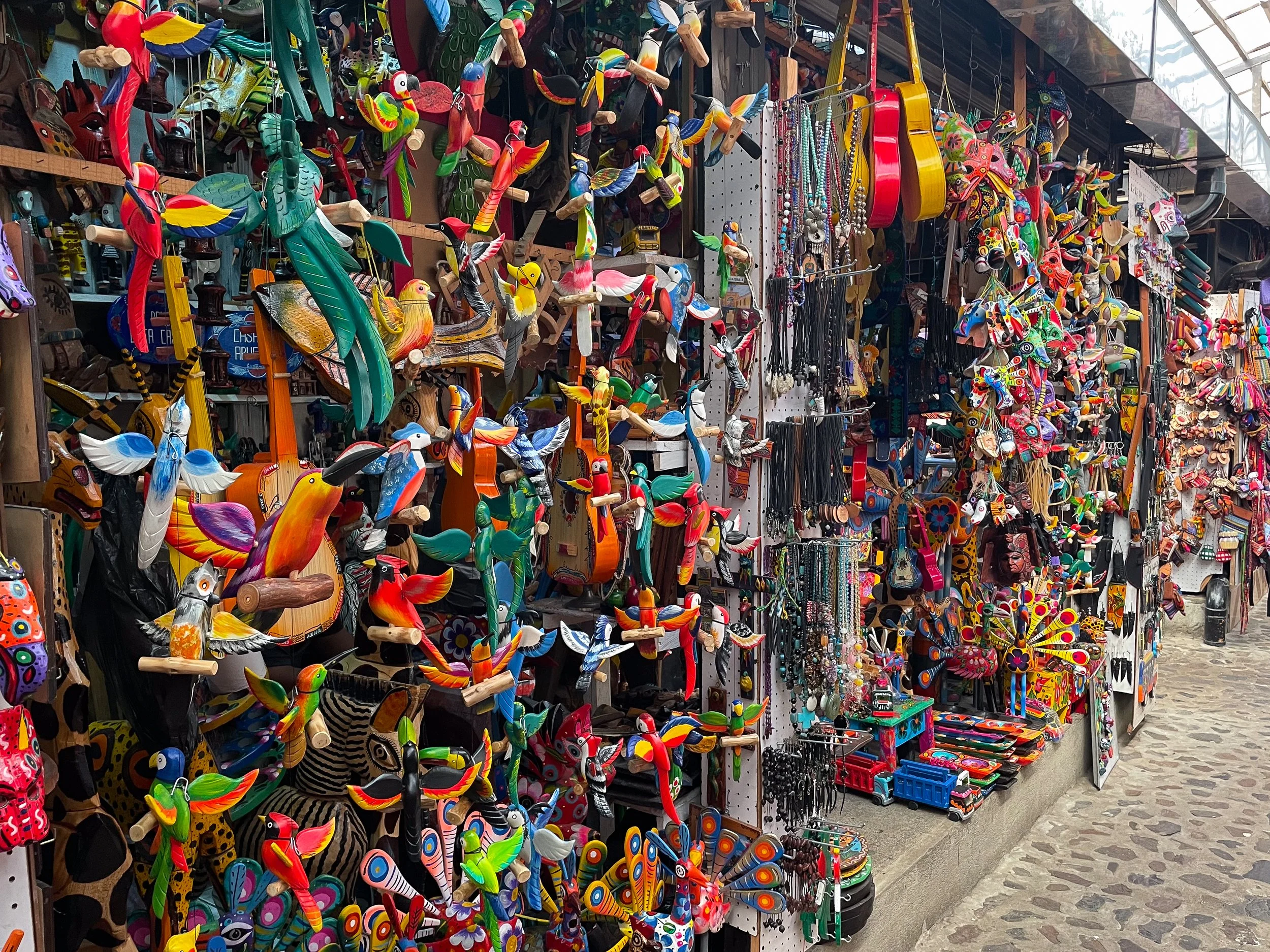
Mercado de Artesanias. A beautiful handicrafts market with vendors selling colorful textiles, painted ceramics, wooden objects, jade jewelry and souvenirs. Come here to haggle and buy something locally made. We bought mugs, a tortilla blanket and an ornament.
Mercado de Artesanias El Carmen. A handicrafts market with aisles of vendors selling locally made items and souvenirs. It’s located next to the ruins of Iglesia El Carmen.
Volcanic Landscapes
Antigua is flanked by dormant and active volcanoes providing a breathtaking landscape that creates a postcard style backdrop to the city’s colonial era streets.
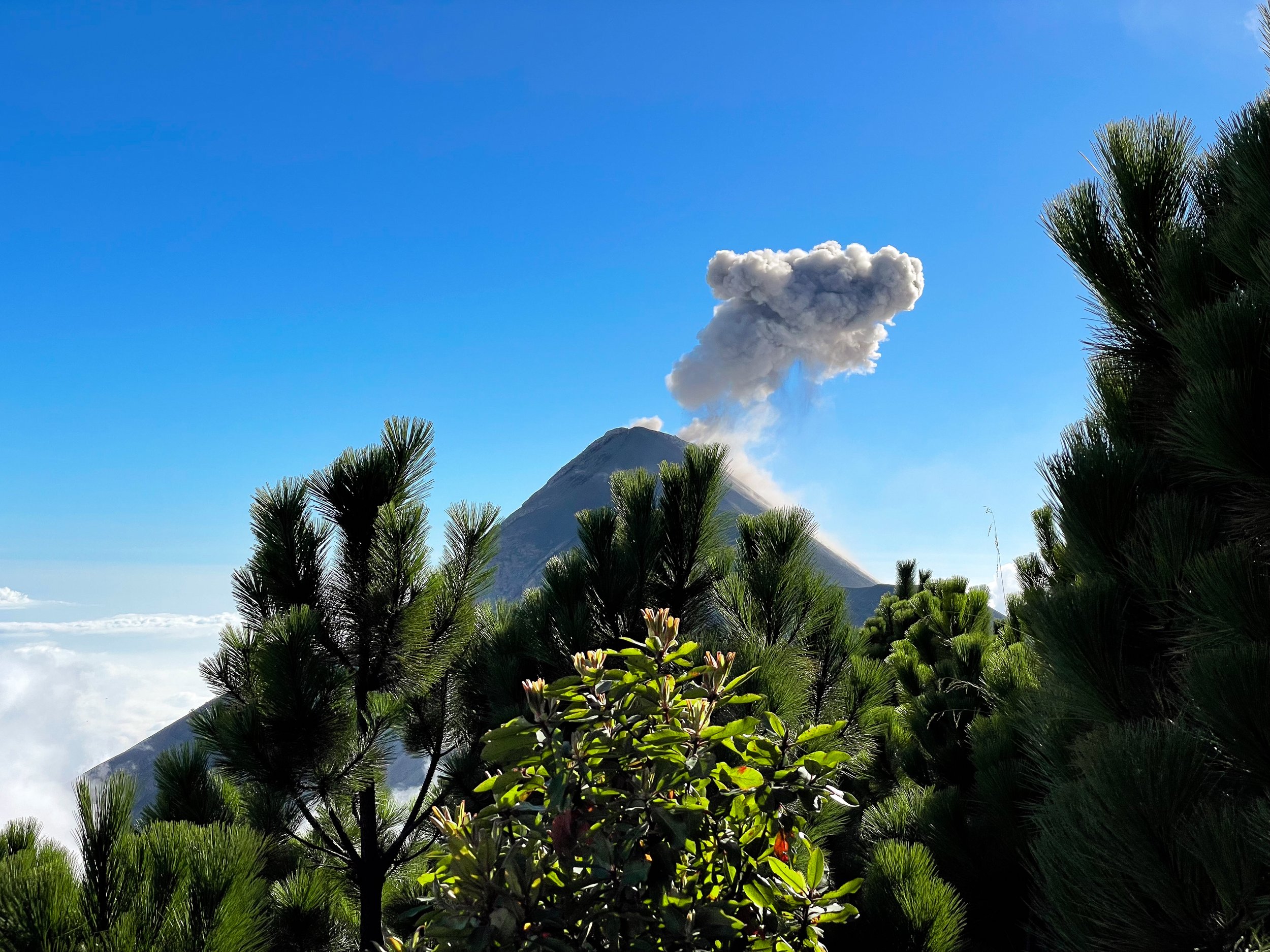
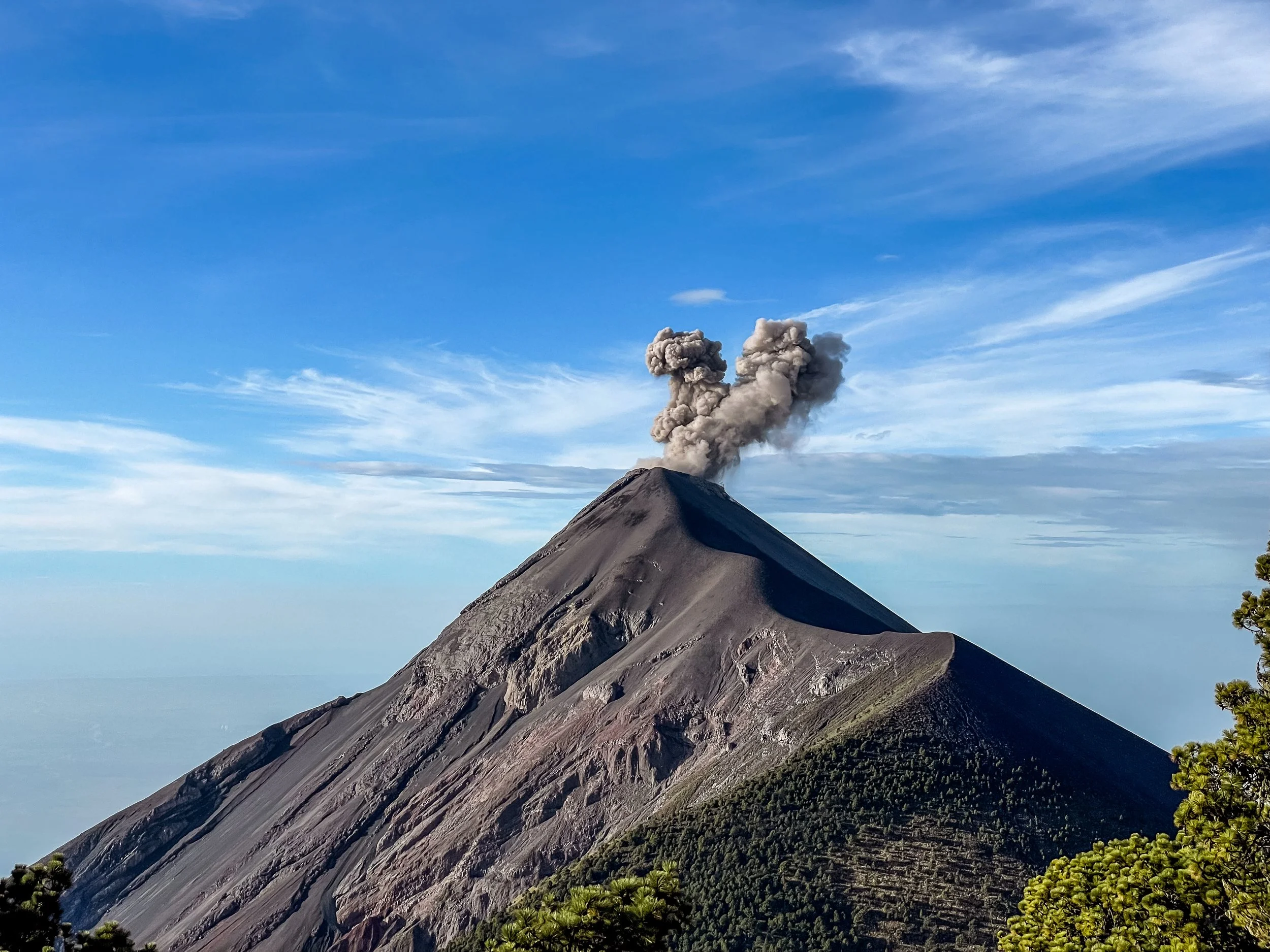
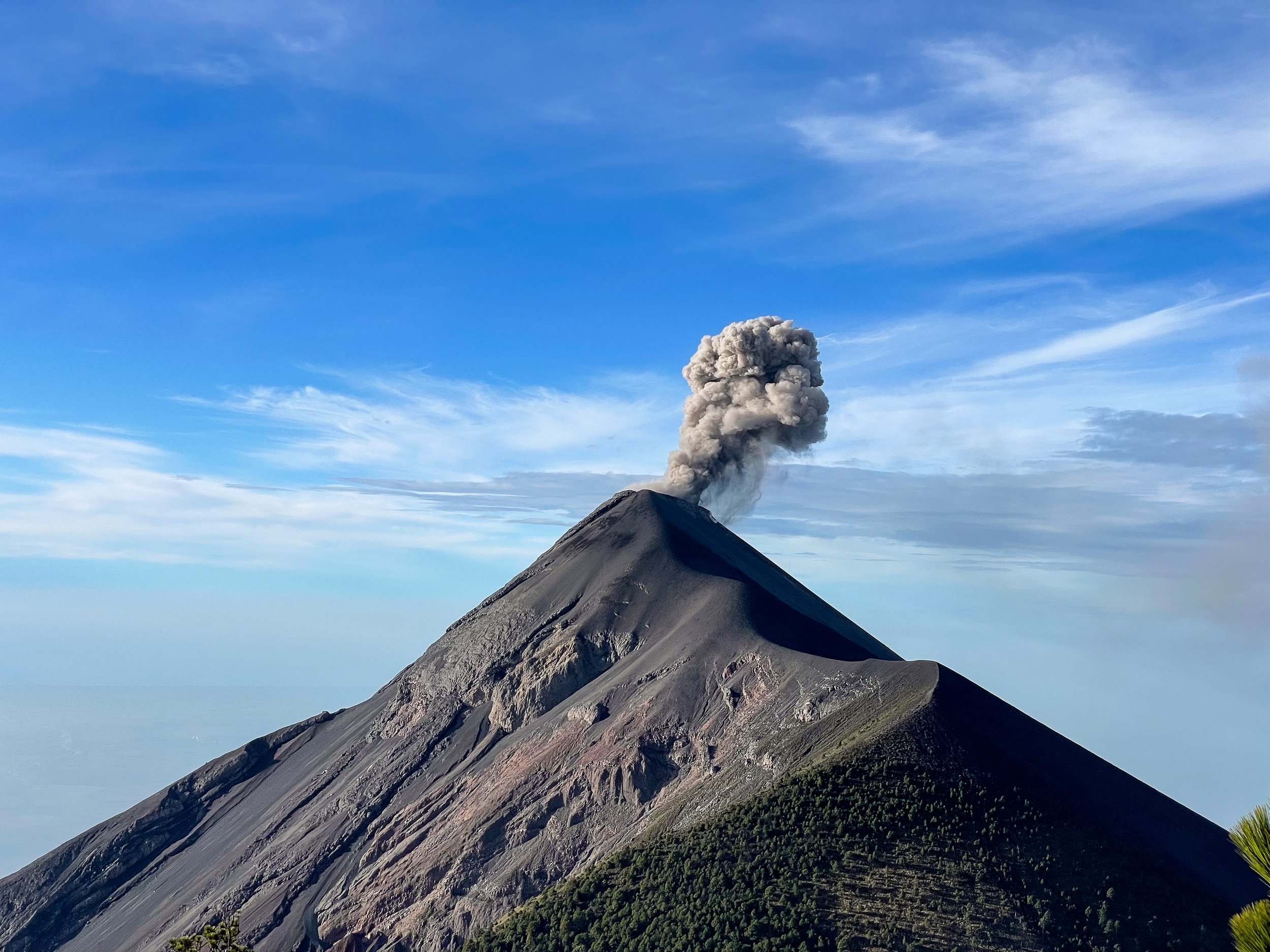
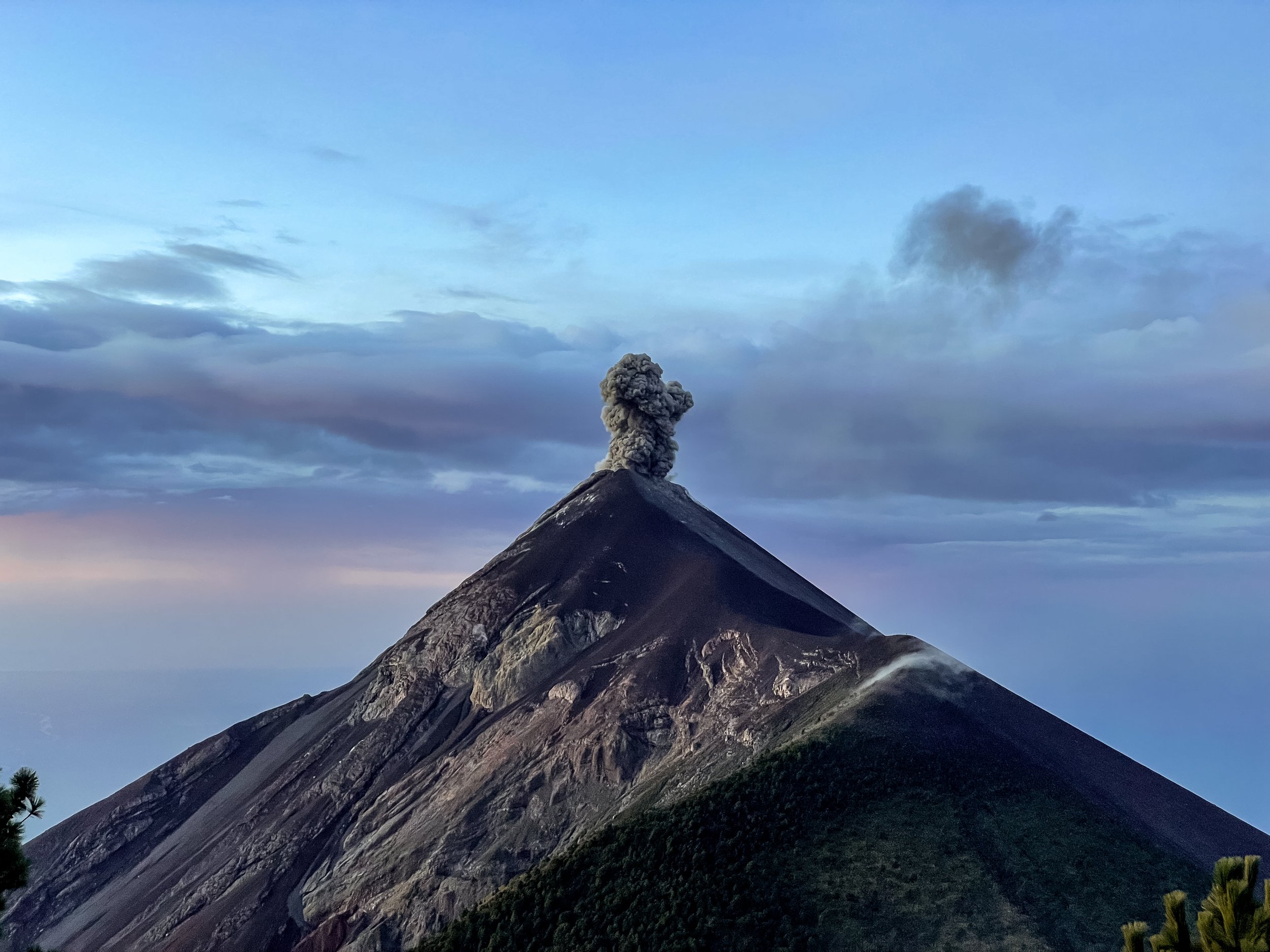
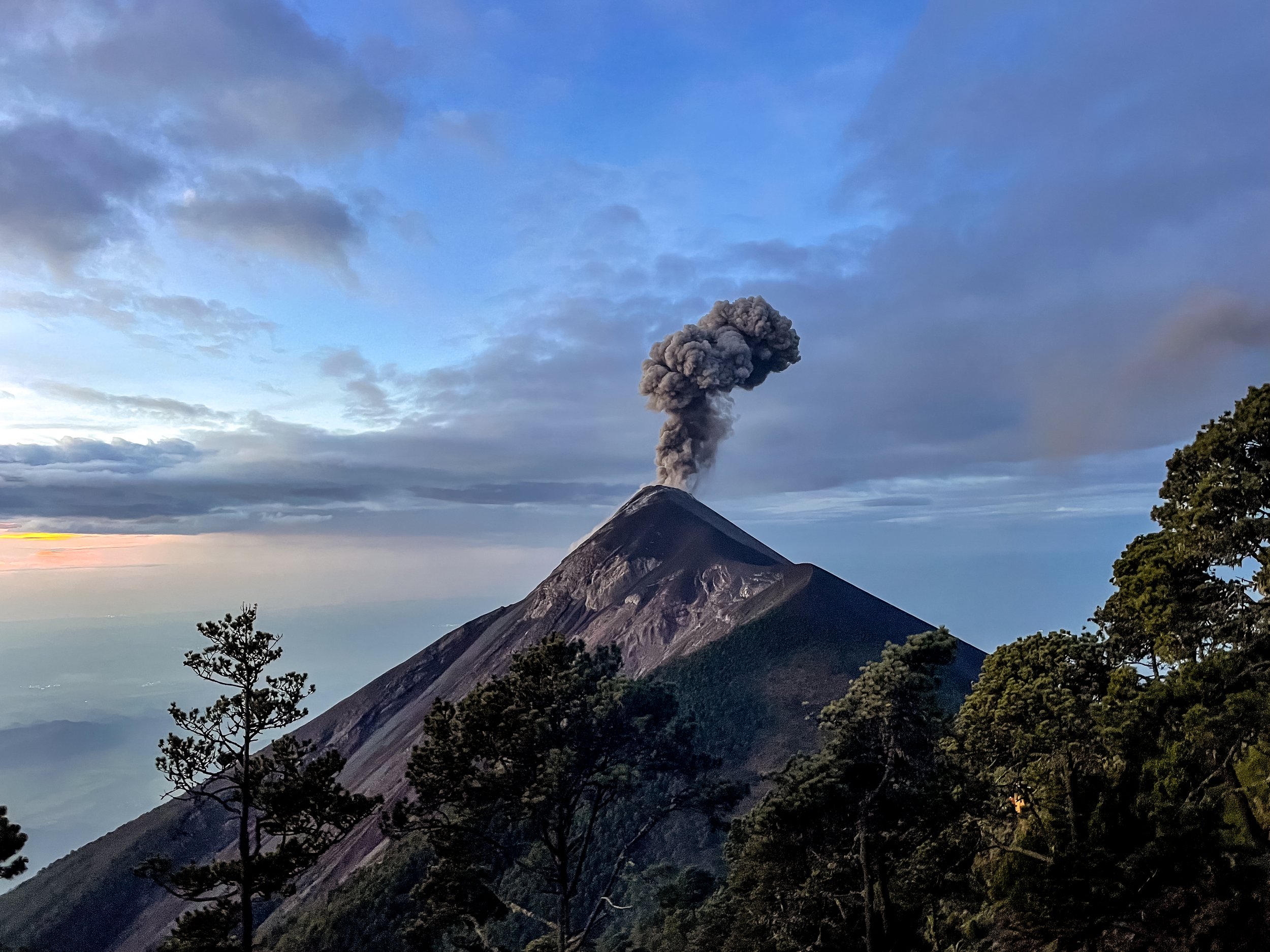
Volcán de Fuego. Known as “The Volcano of Fire,” Fuego has been continuously erupting since 2002 with bursts of lava and clouds of ash spewing from its summit every 15 to 30 minutes. Views of its eruptions can be regularly seen from Antigua both day and night.
Volcán Acatenango. The twin volcano to Fuego and tallest of the 3 surrounding Antigua. Many backpackers hike and camp overnight on its slopes to witness Fuego’s eruptions up close.
Volcán de Agua. A dormant cone shaped volcano to the south of Antigua. The best views of its summit are during the early morning before clouds settle in.
Overnight on Acatenango
Volcán de Acatenango should be on every backpacker’s wish list! We joined a guided group to hike its slopes, camp overnight, witness unclose eruptions of Volcán de Fuego and watch a beautiful sunrise. It was one of the most physically exhausting things we’ve done but equally rewarding.
Hike to Basecamp
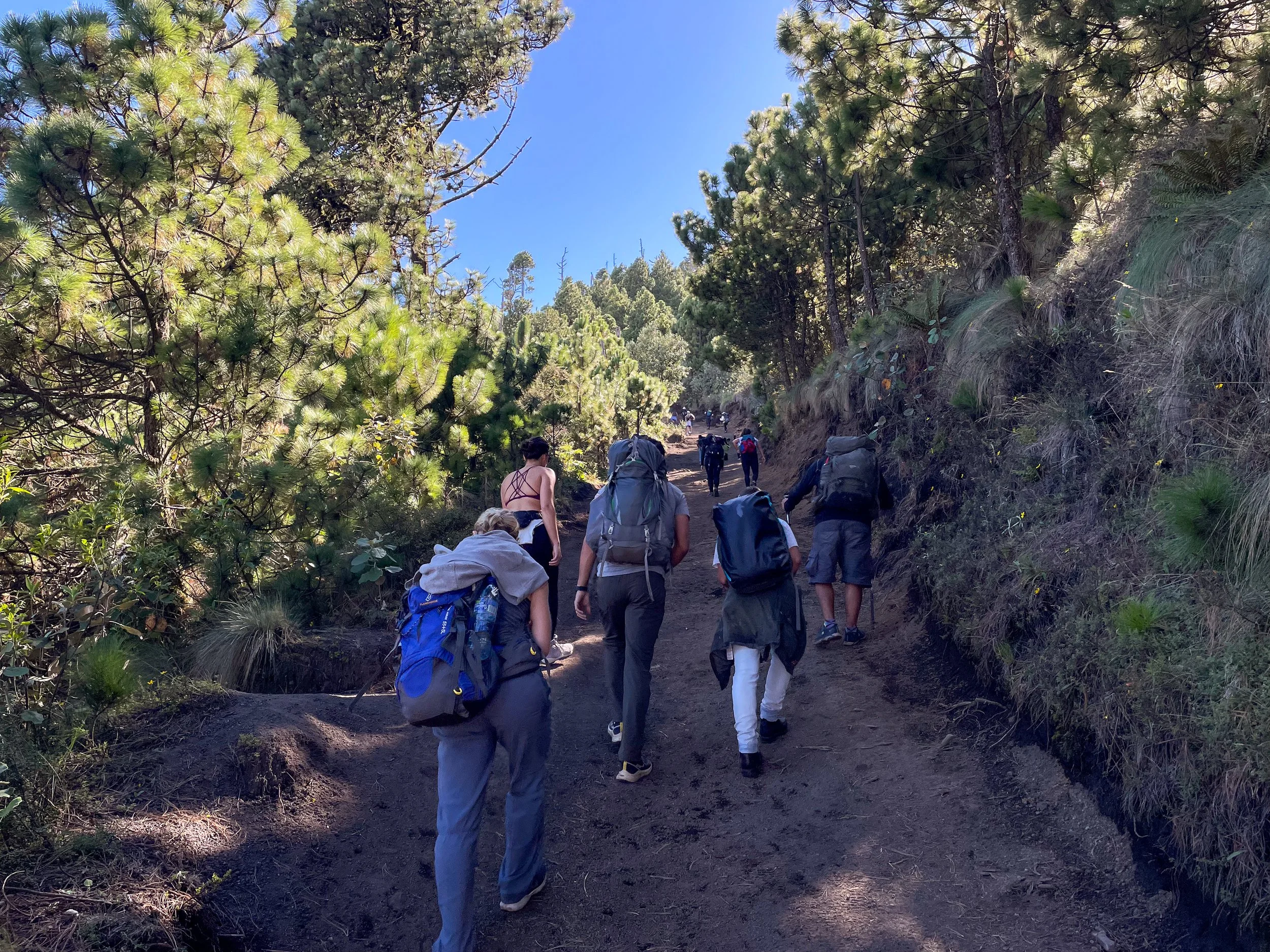
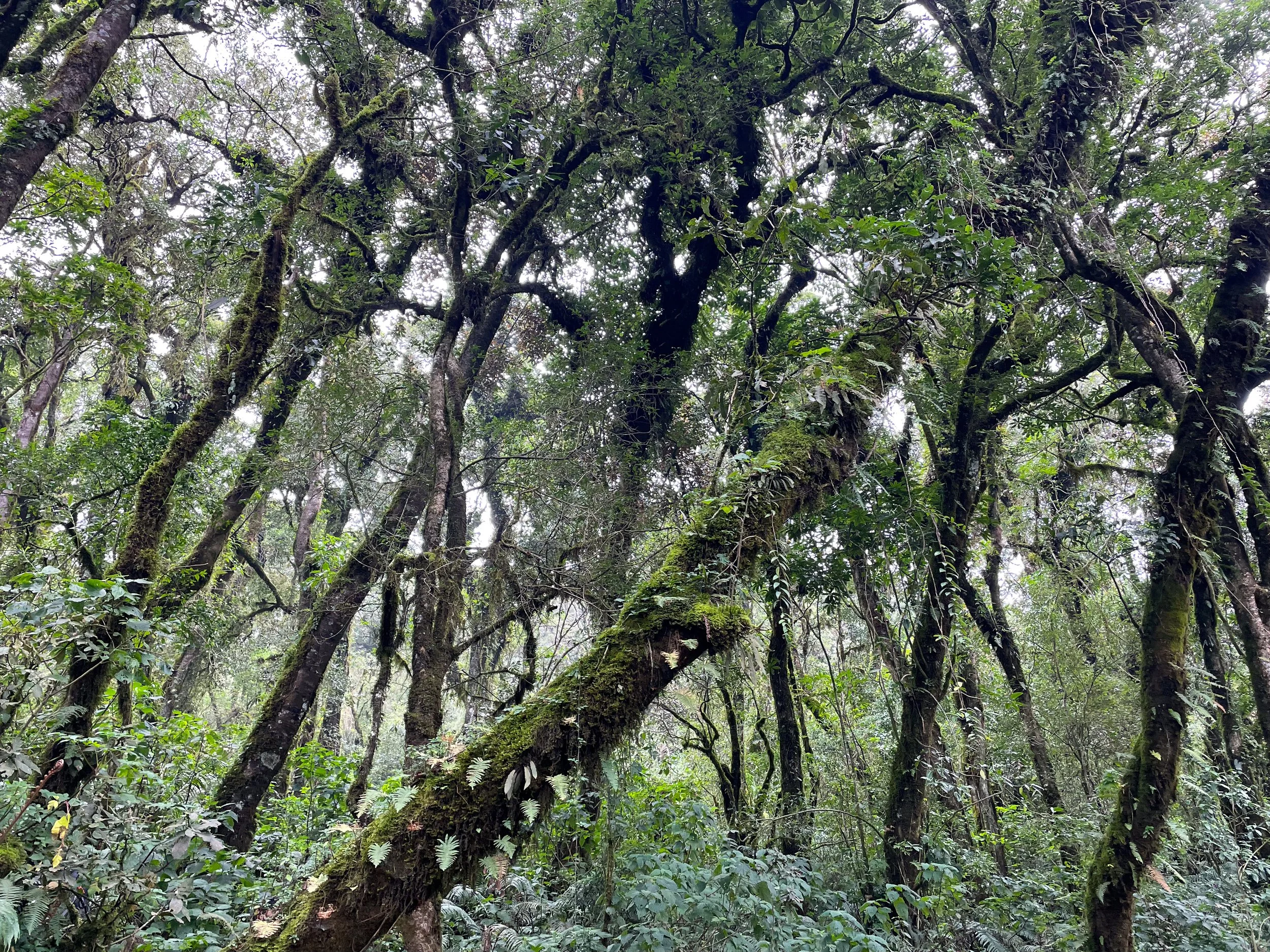
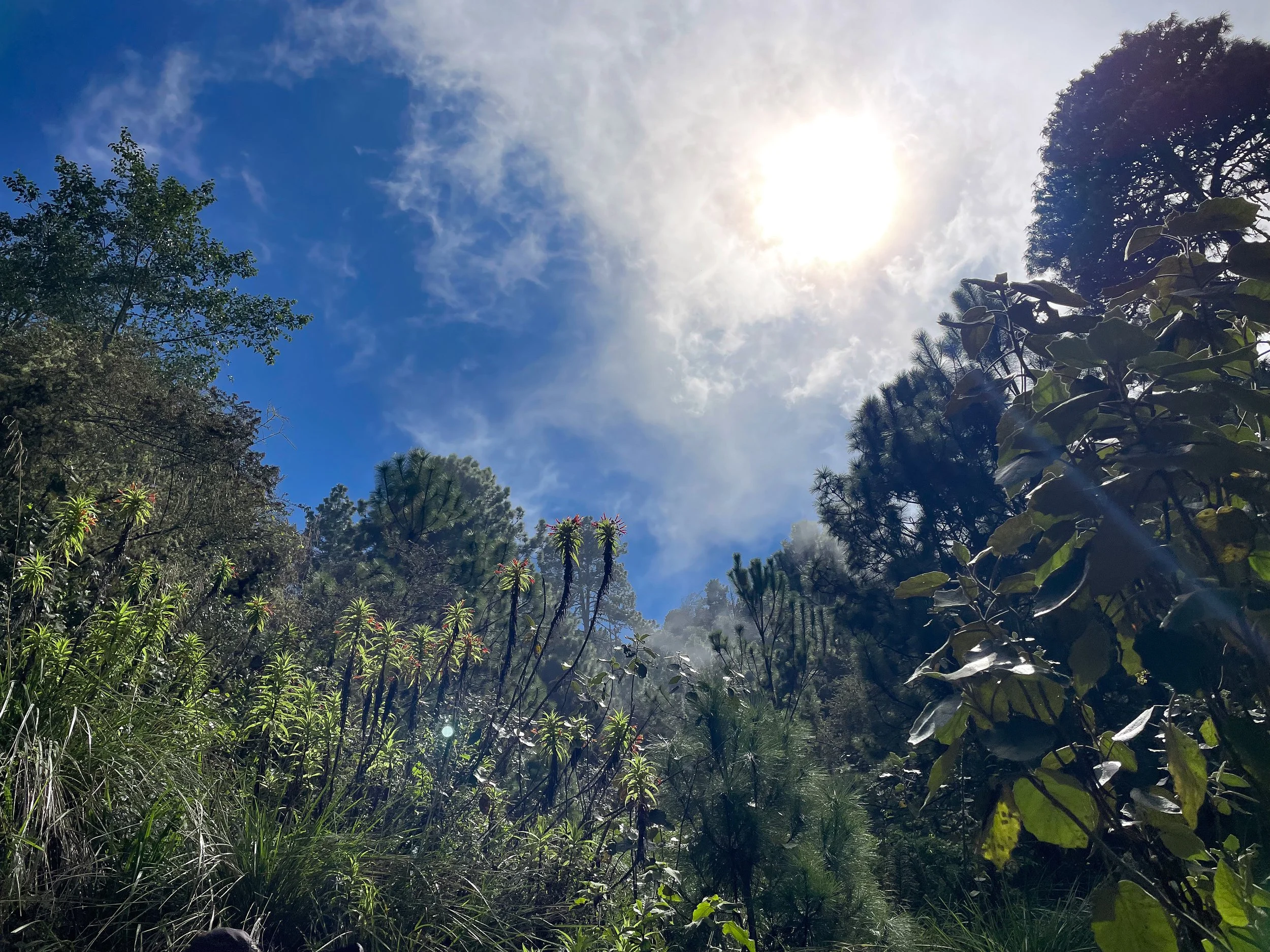
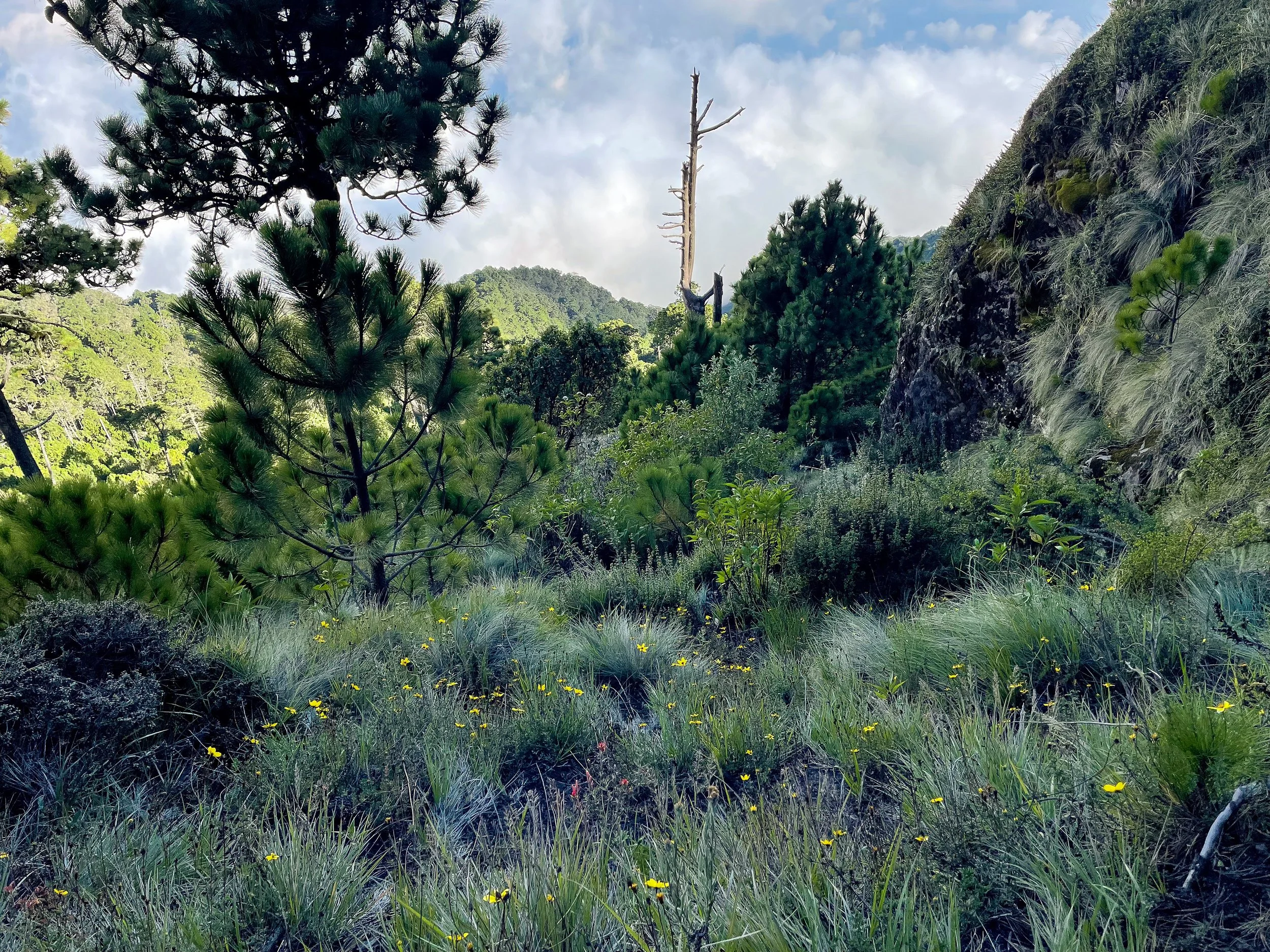
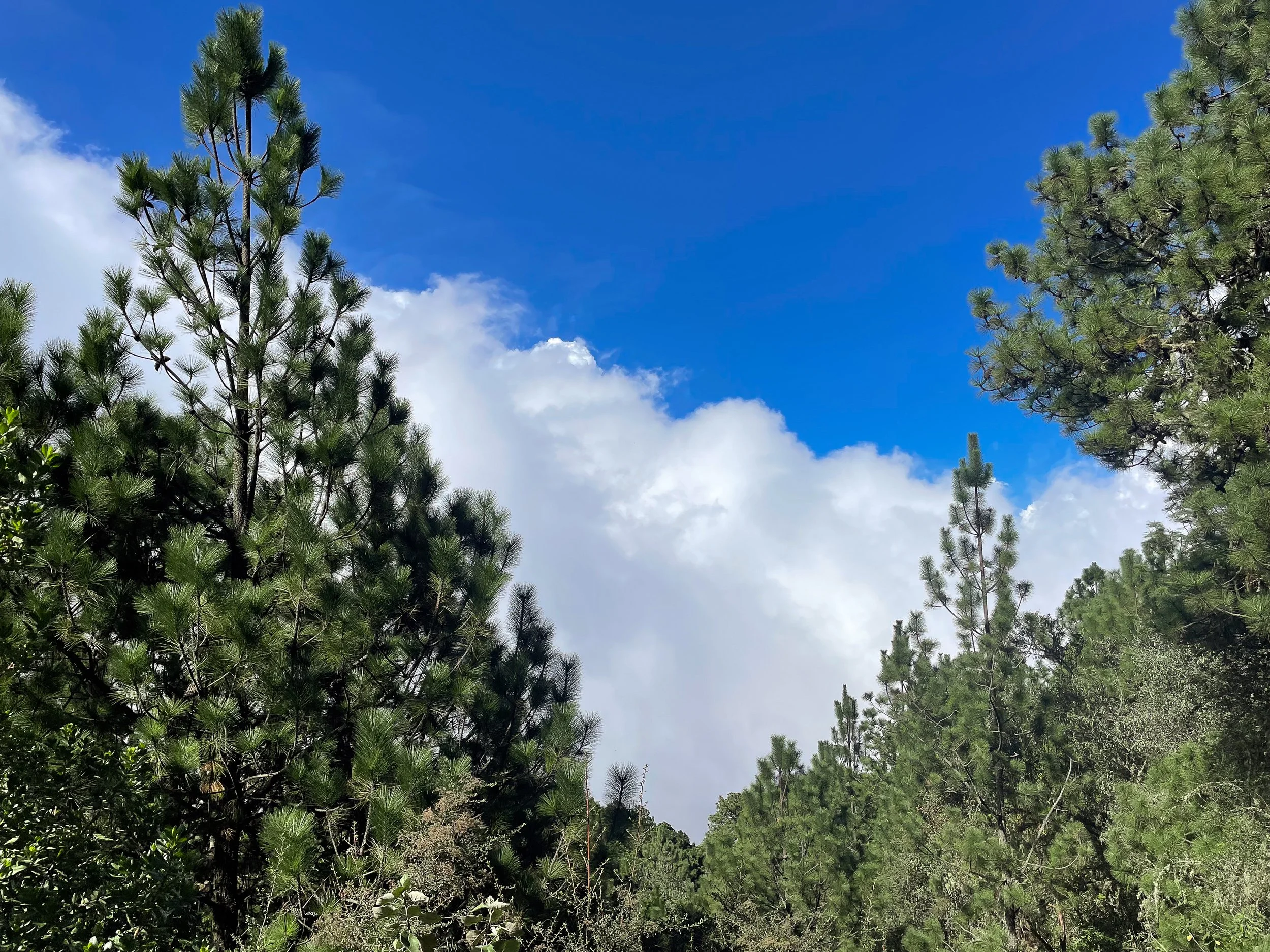
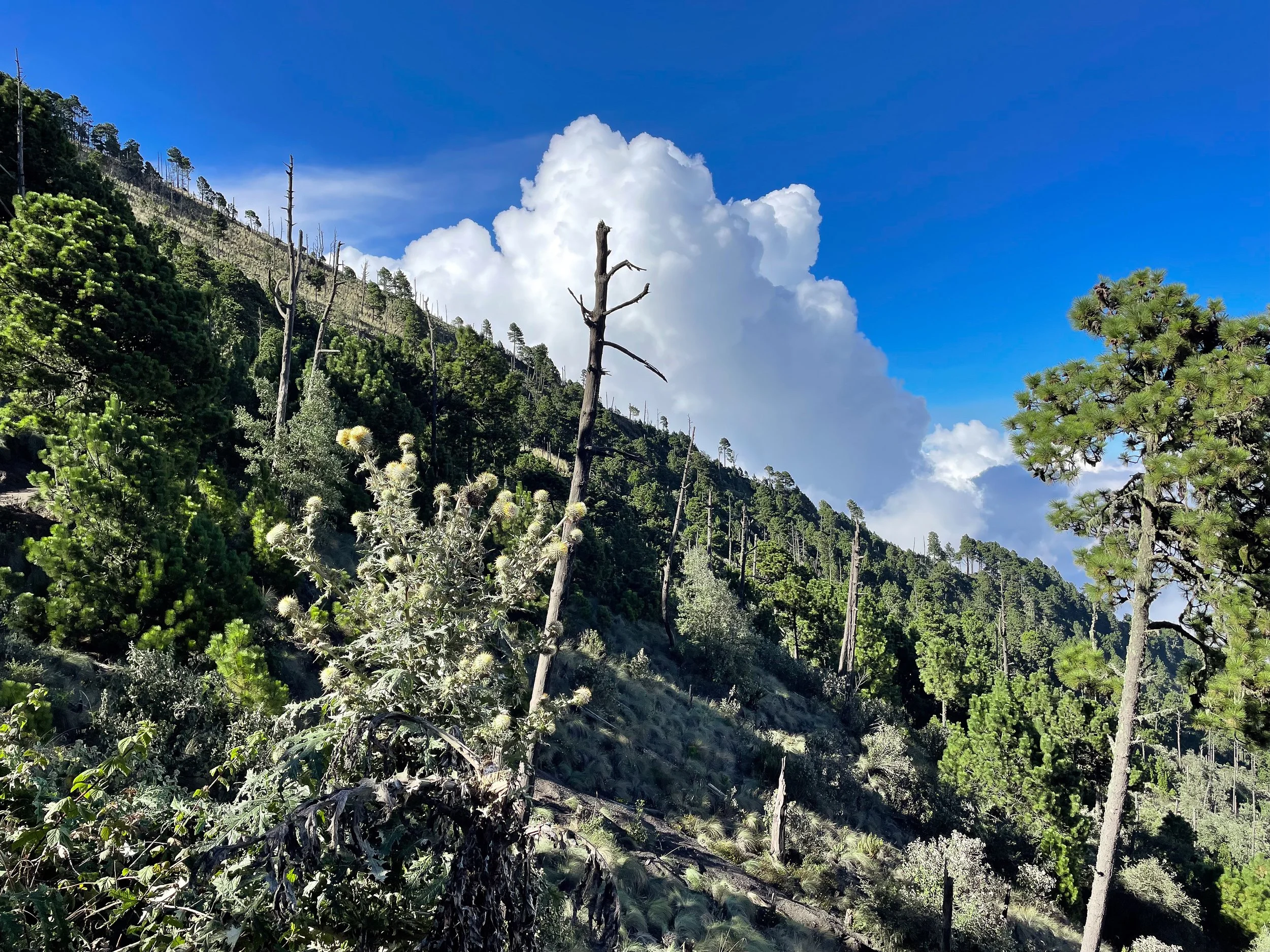
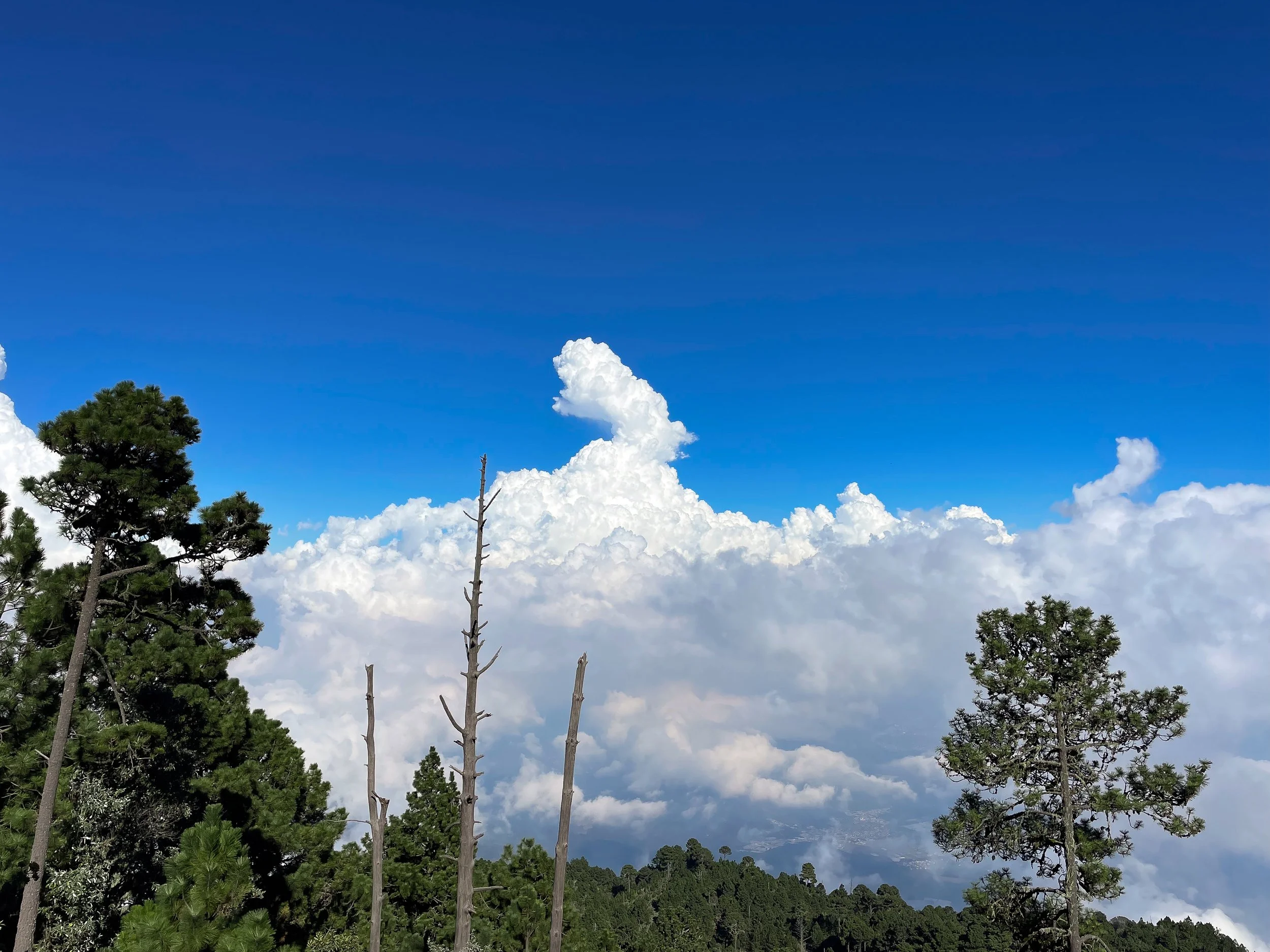
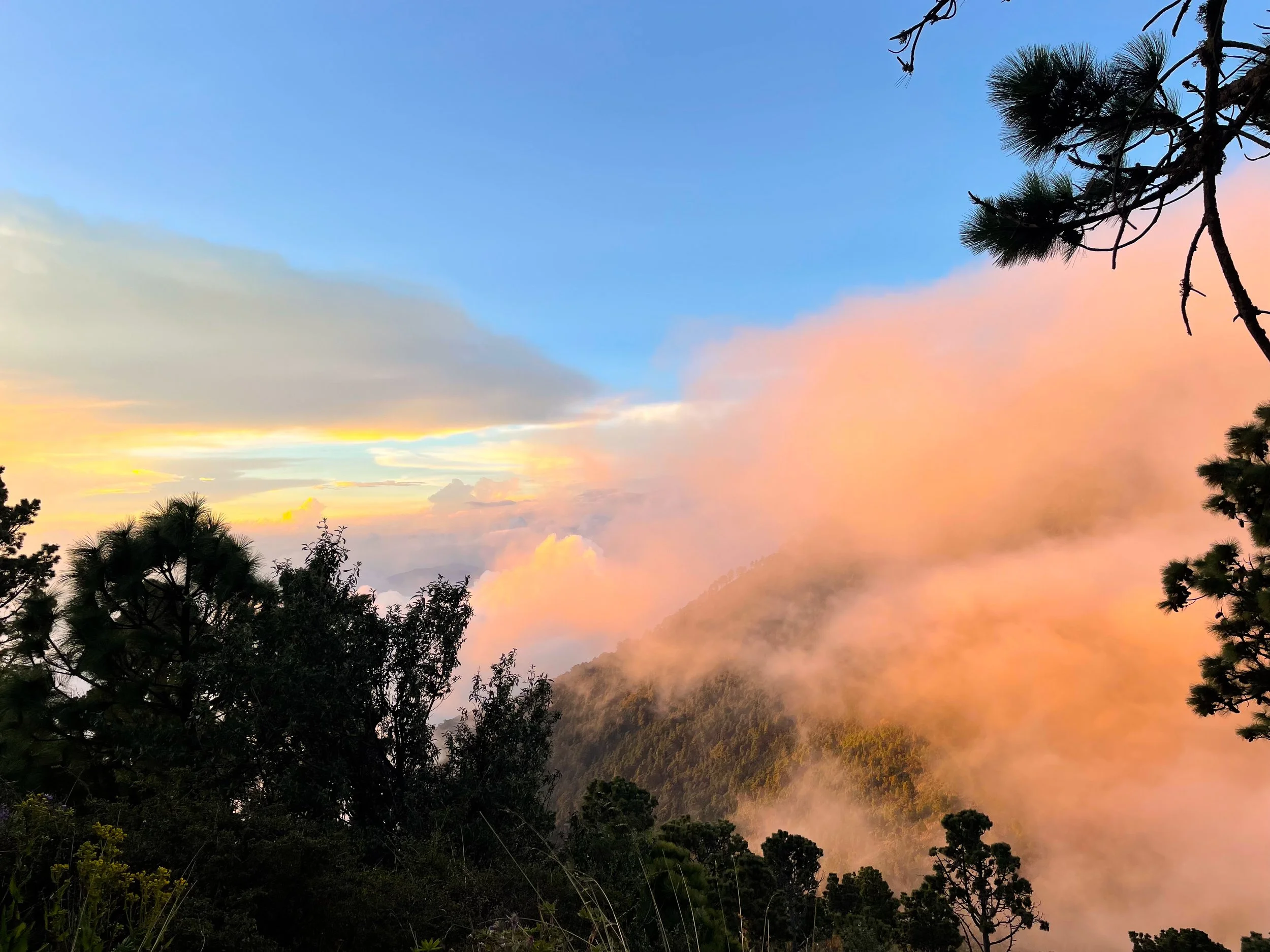
The hike to basecamp started at Aldea la Soledad, a small village an hour outside Antigua. It marks the trailhead of La Ruta de Acatenango. It brought us through different terrains and micro climates. We began our ascent on a trail through farmland and steep dirt stairs. Climbing in altitude, we reached the cloud forest, a wooded area with tall moss covered trees, ferns, slippery trails and constant fog. The fog began to lift the further we hiked, completely clearing by the time we reached the pine forest. This forested area is covered in pine trees, tall grasses and colorful wildflowers. The hike took 5 hours to reach basecamp.
Acatenango Basecamp
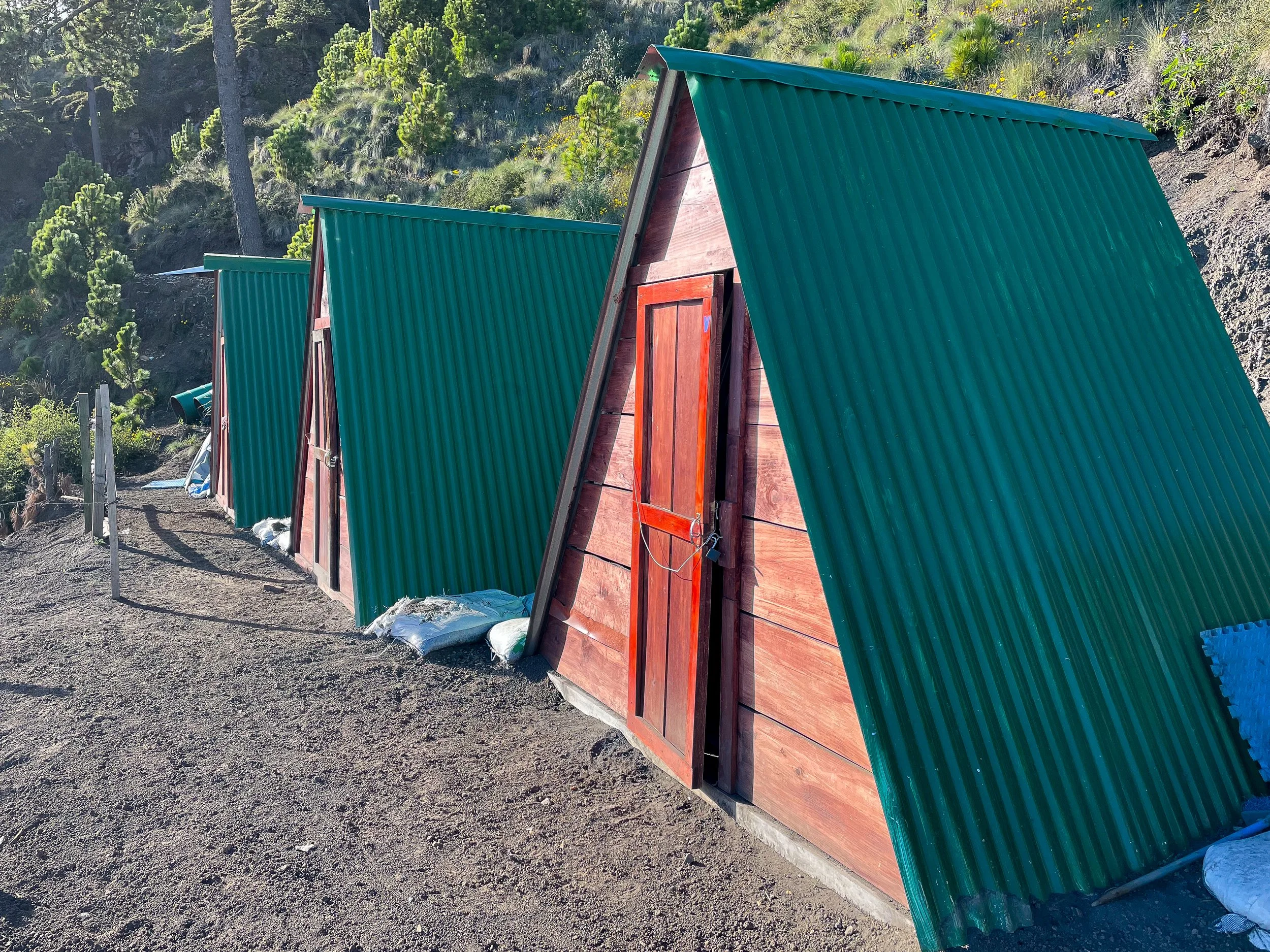
Basecamp was our home for the night and starting point for our hike to the crest of Fuego and the summit of Acatenango. We “slept” in a small A frame style shack, cuddled up to keep warm. The guides kept a small fire lit for warmth and to prepare camp meals.
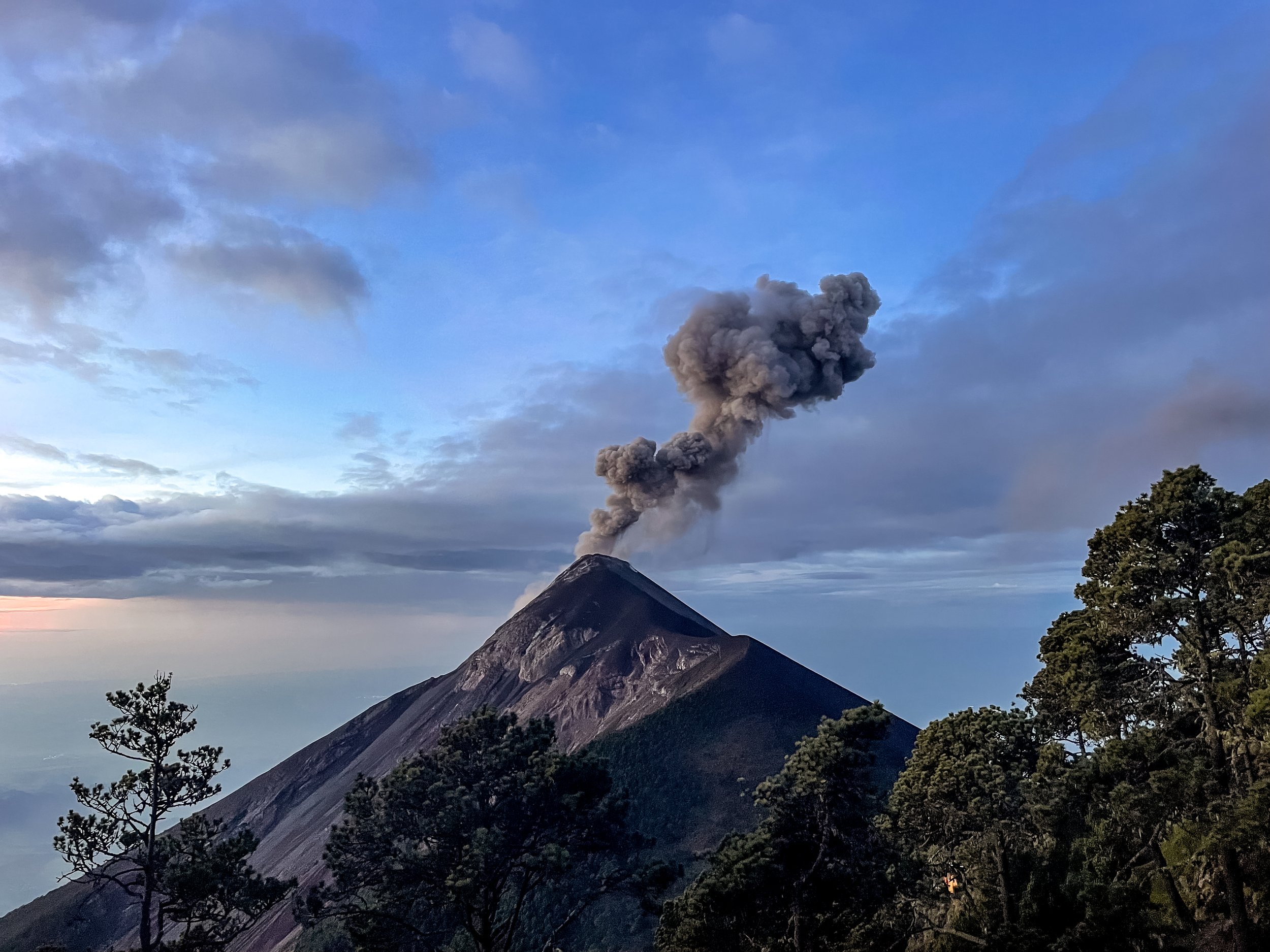
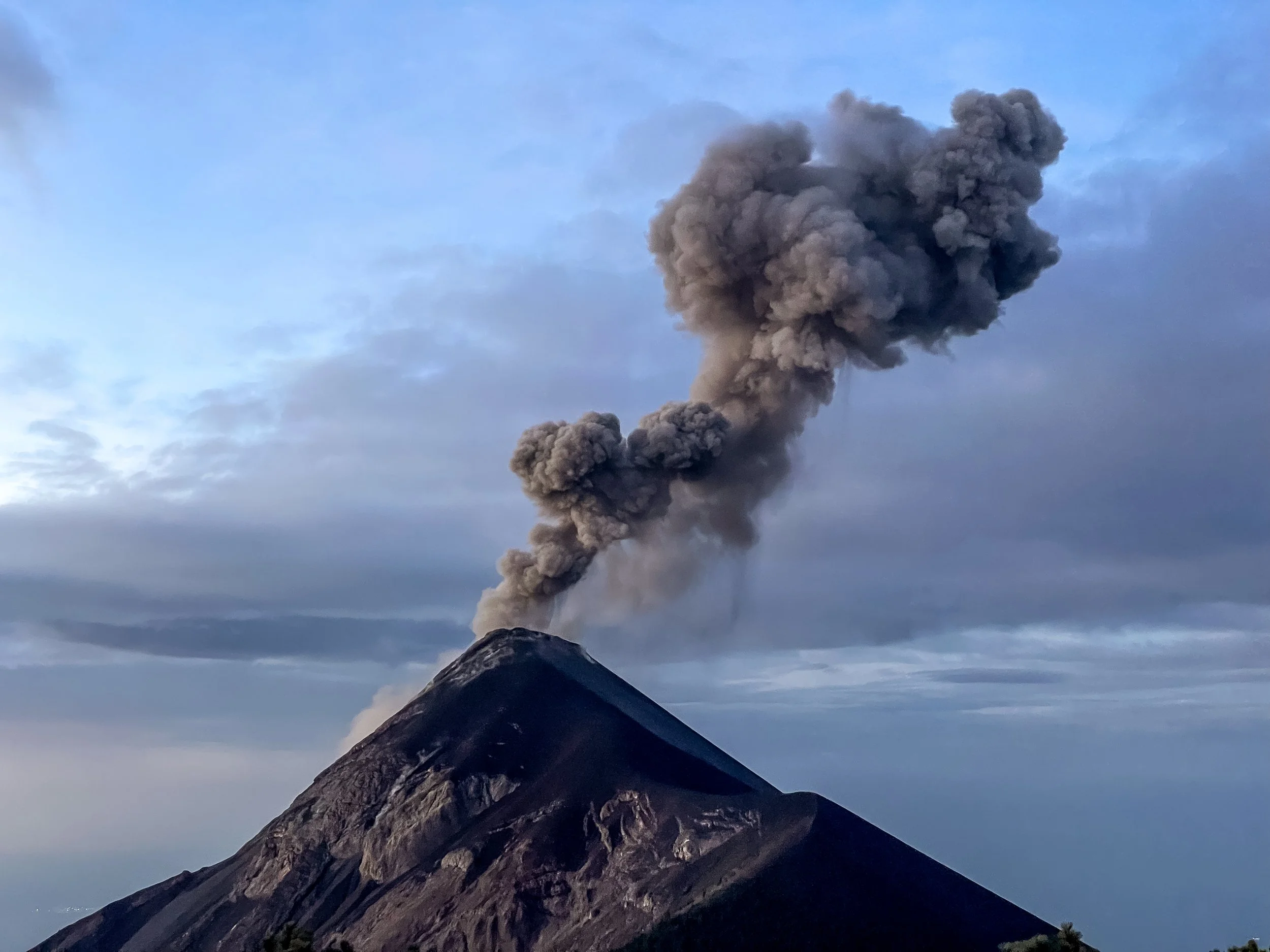
The Volcano of Fire
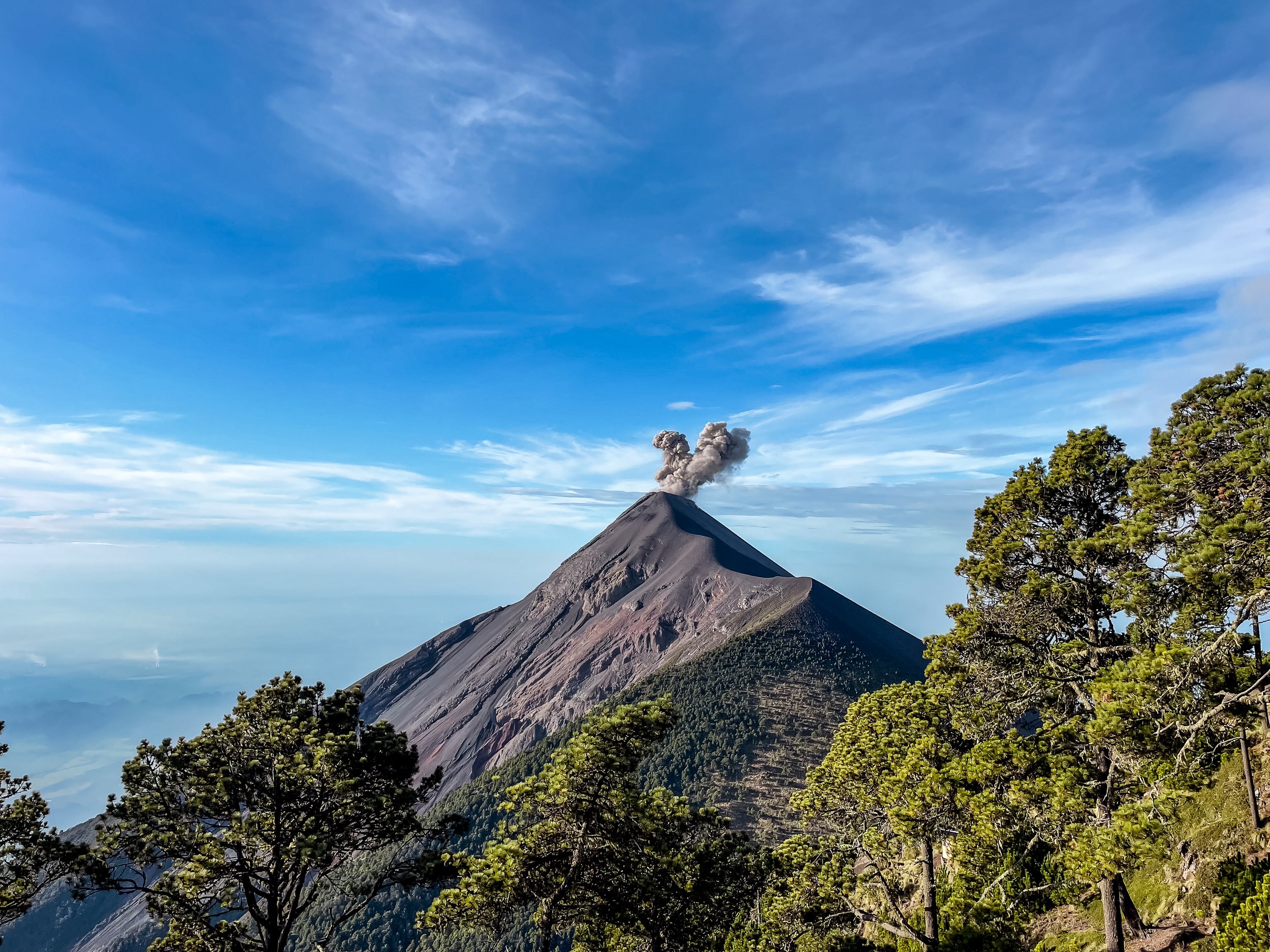
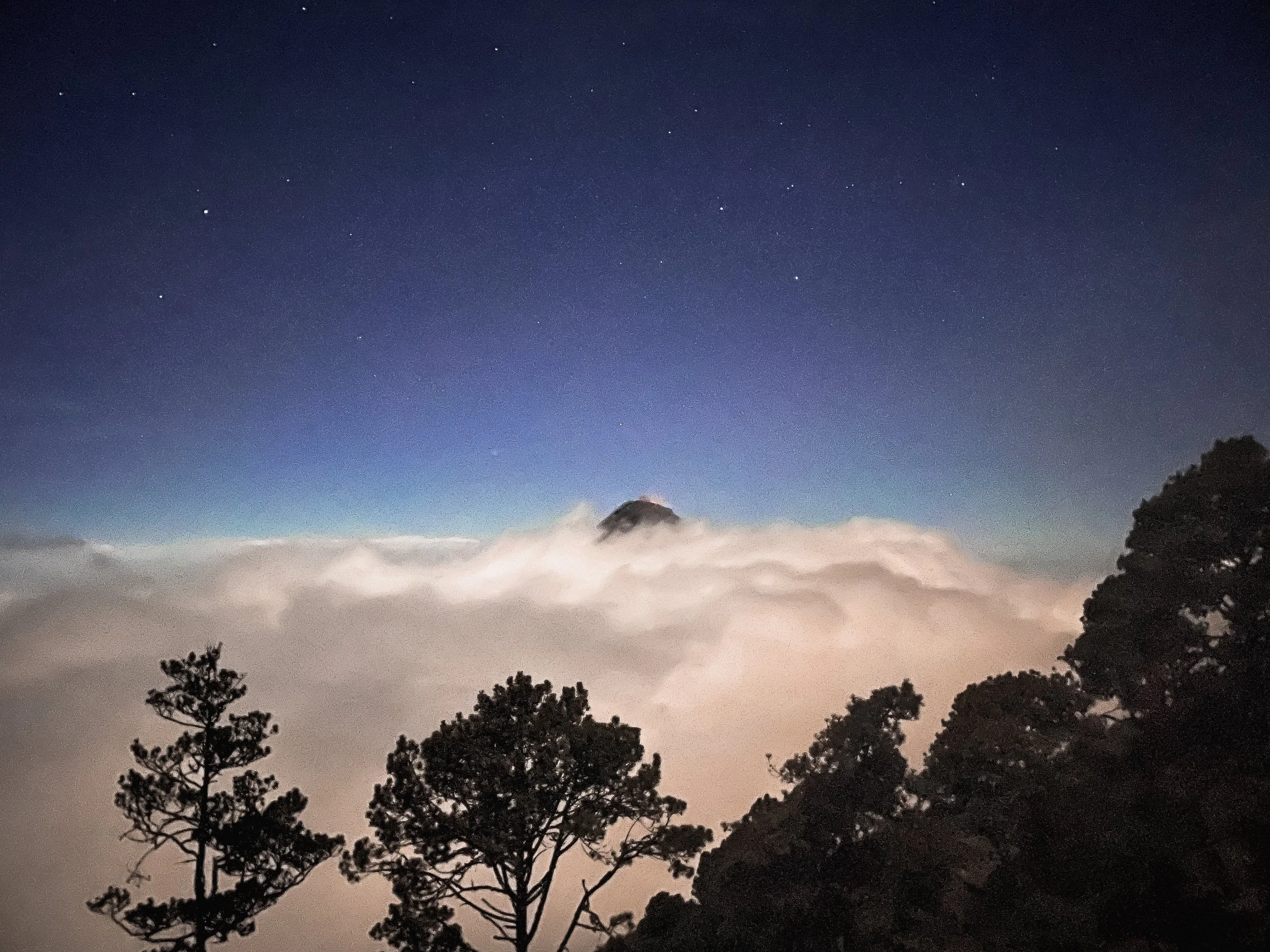
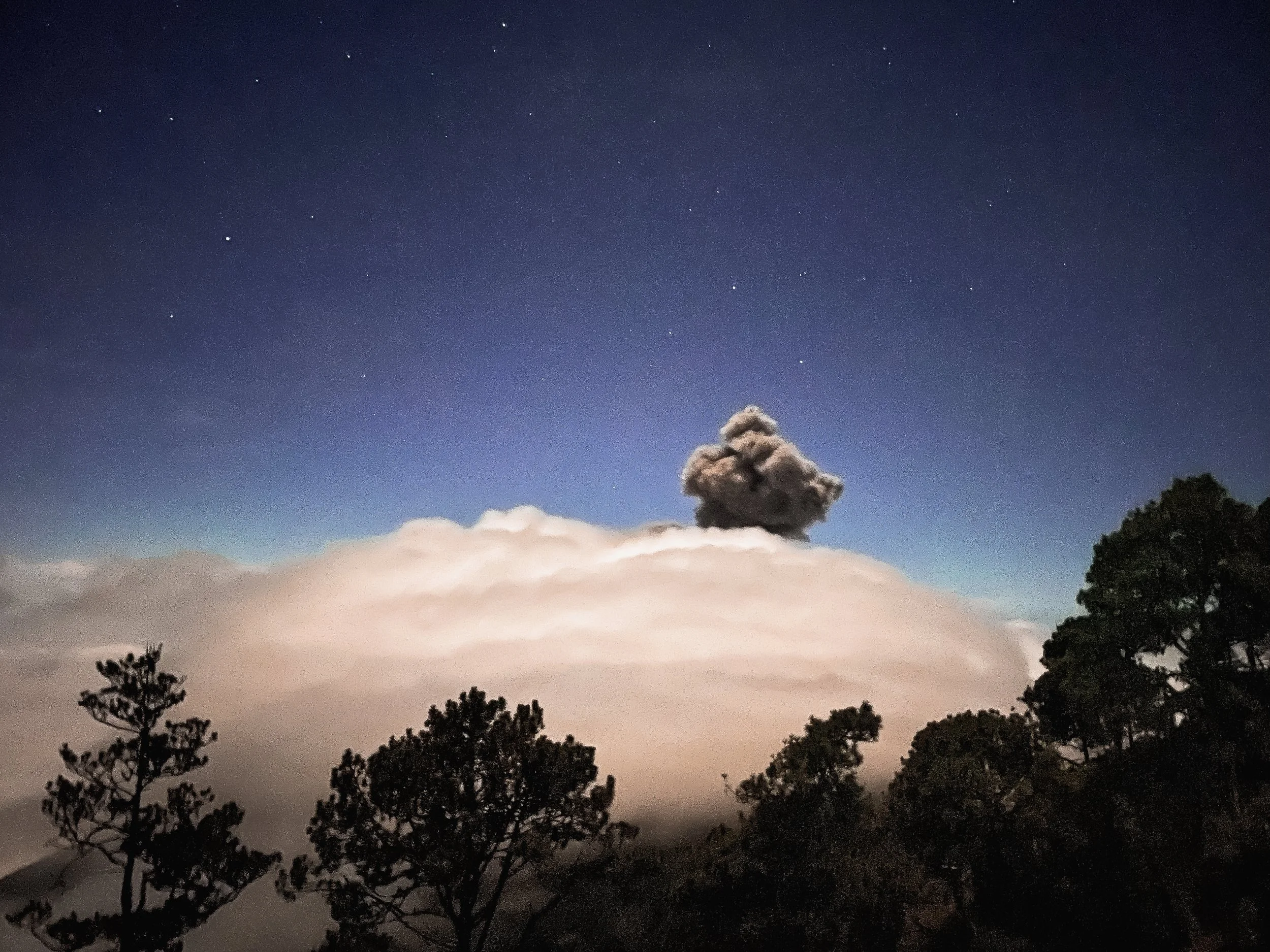
The campsite offered direct views of Volcán de Fuego and its frequent eruptions. During the day, the volcano billowed grey clouds of ash into the blue sky. At night, the red glow of lava rocketed through the air followed by a deep boom and crackling as it spilled down its slopes. Shockwaves from larger eruptions could even be felt in our chests!
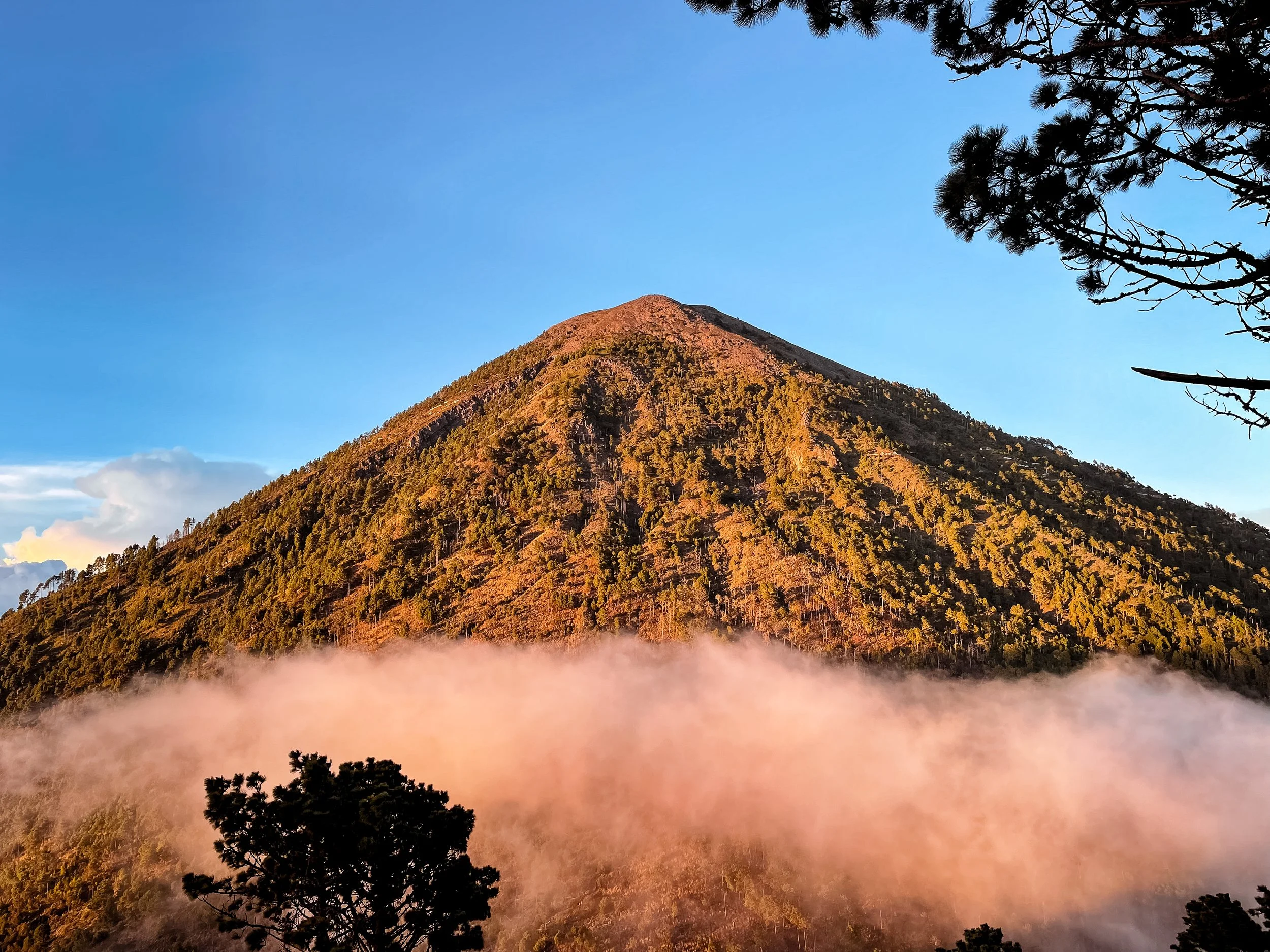
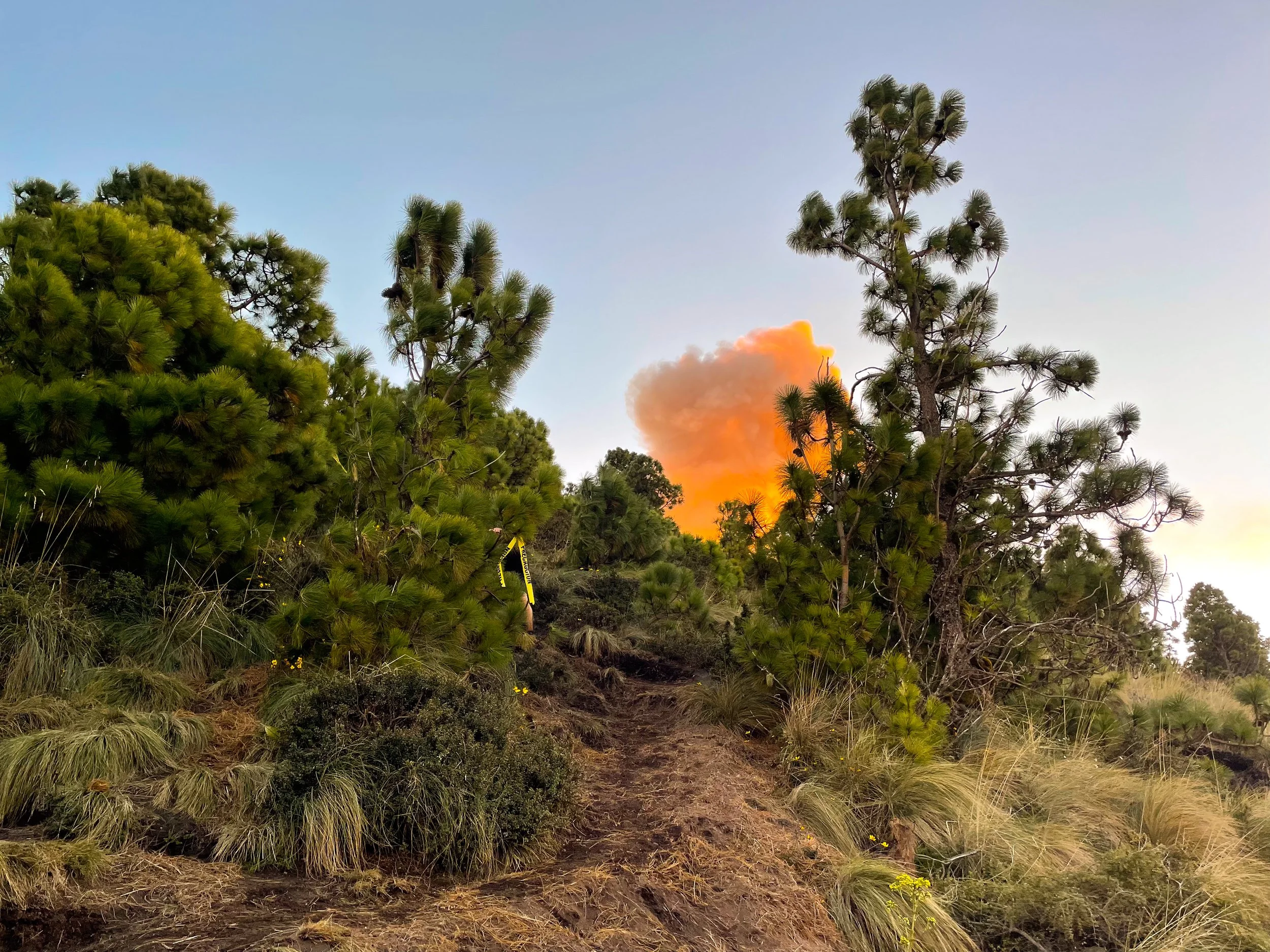
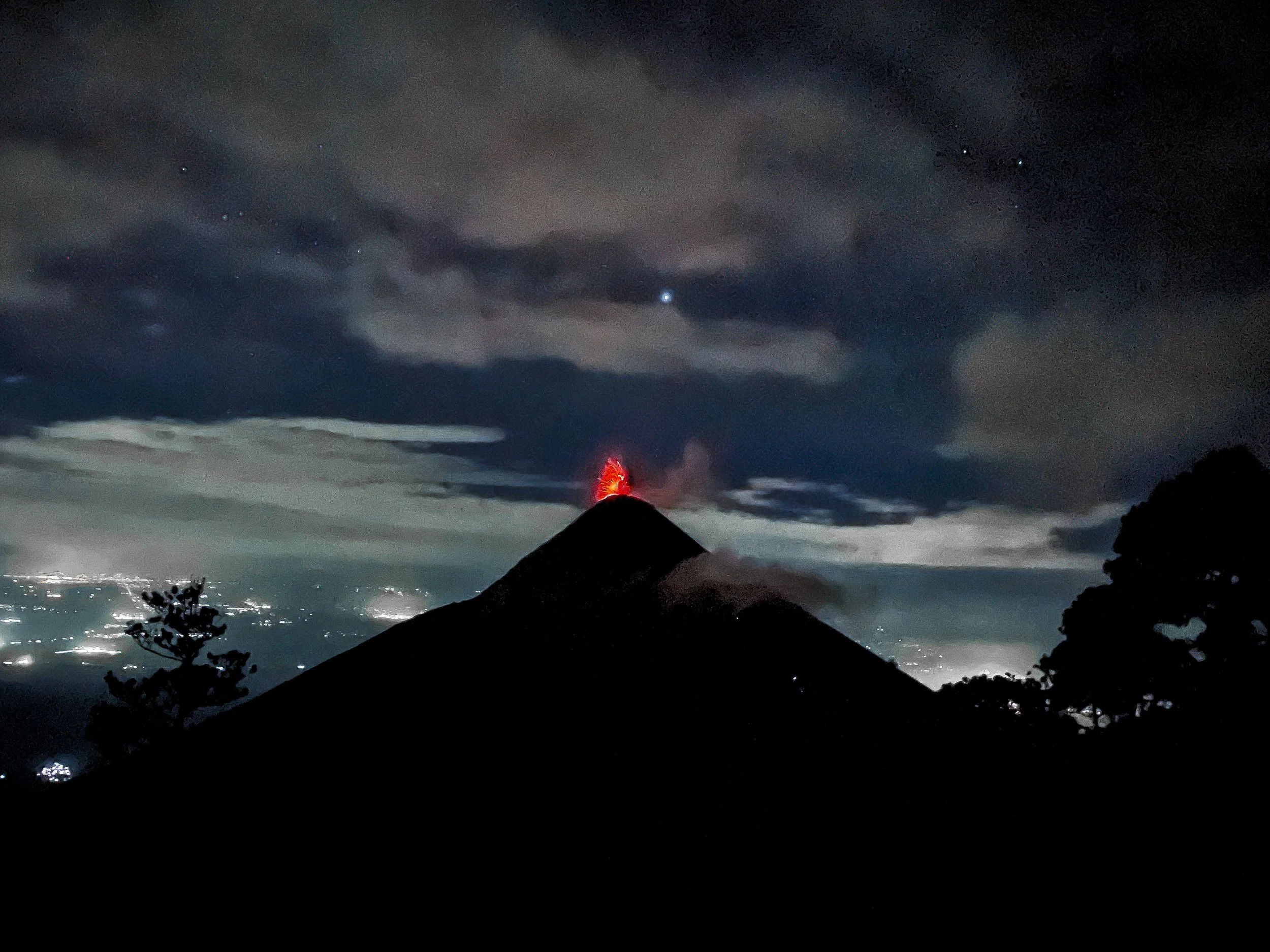
Hike To the Crest of Fuego
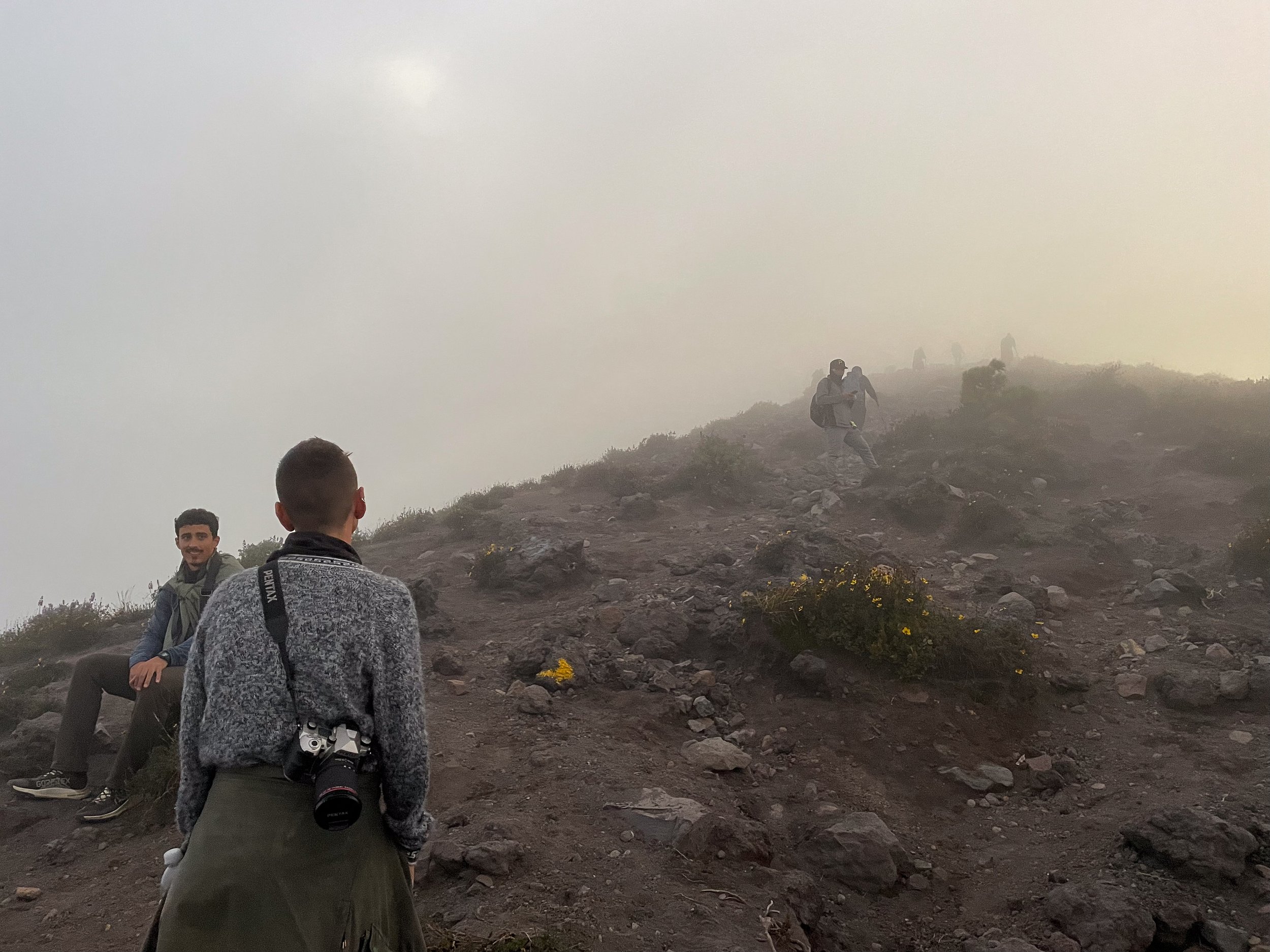
The hike to the barren and black crest of Fuego began from basecamp, passing through pine forest to the saddle between both volcanoes. Beyond that point, the ascent grew steep and unstable, with loose gravel and exposed roots. Clouds began to settle as the sun set, blocking views of the summit. After waiting in cold, wet and windy conditions without a clearing, we returned to basecamp, stopping for brief rests in order to glimpse eruptions of ash, lava and embers pierce the clouds.
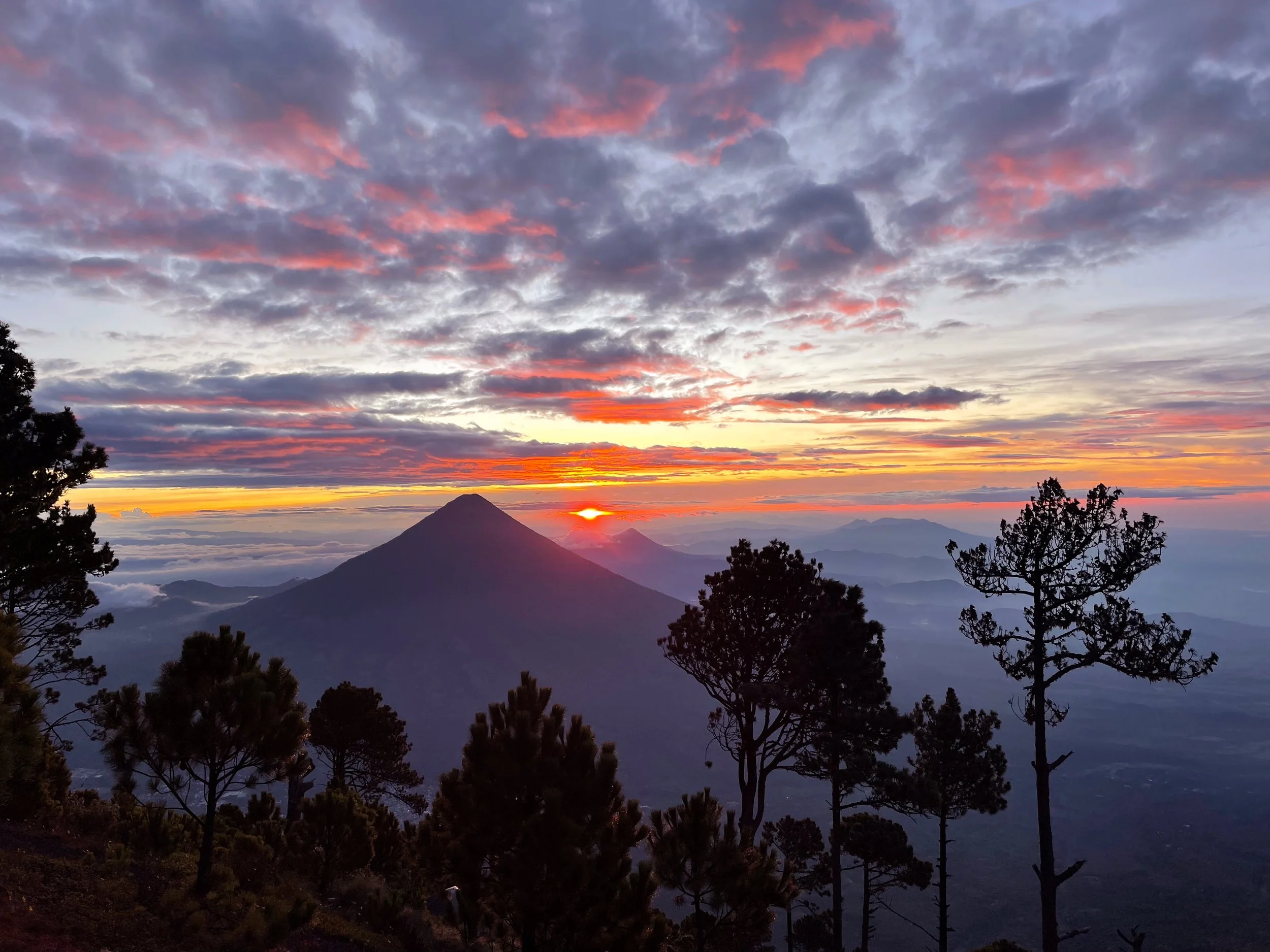
Summit Sunrise
The hike to the summit of Acatenango began at 4am. The sun rose quickly afterwards, illuminating the cloud dappled sky and volcanic landscape in brilliant colors of purple, red and orange. Soon after, we began our descent and return to Antigua.
Things to Keep in Mind
Hire A Guide. Guides are not required to hike Acatenango but are helpful when navigating the route. We joined a guided group through a local operator on Viator.
Porters. There are options to hire a porter to carry your equipment and gear.
Vendors. There are vendors along the trail before the pine forest selling snacks and beverages.
Cash. Bring plenty of cash for the additional hikes, snacks, beverages and tips
Gear to Pack. Bring your own gear or rent equipment from your guide.
A 30 to 40 liter backpack
Hiking shoes/boots
Warm clothes and layers (thermals, sweaters, scarves, gloves, hats, puffer, waterproof outer layer)
2-3 liters of water
Trail snacks
Sleeping bag and pillow
Headlamp or flash light
Sunblock
Toilet paper
Hand sanitizer
Sunglasses
A power bank
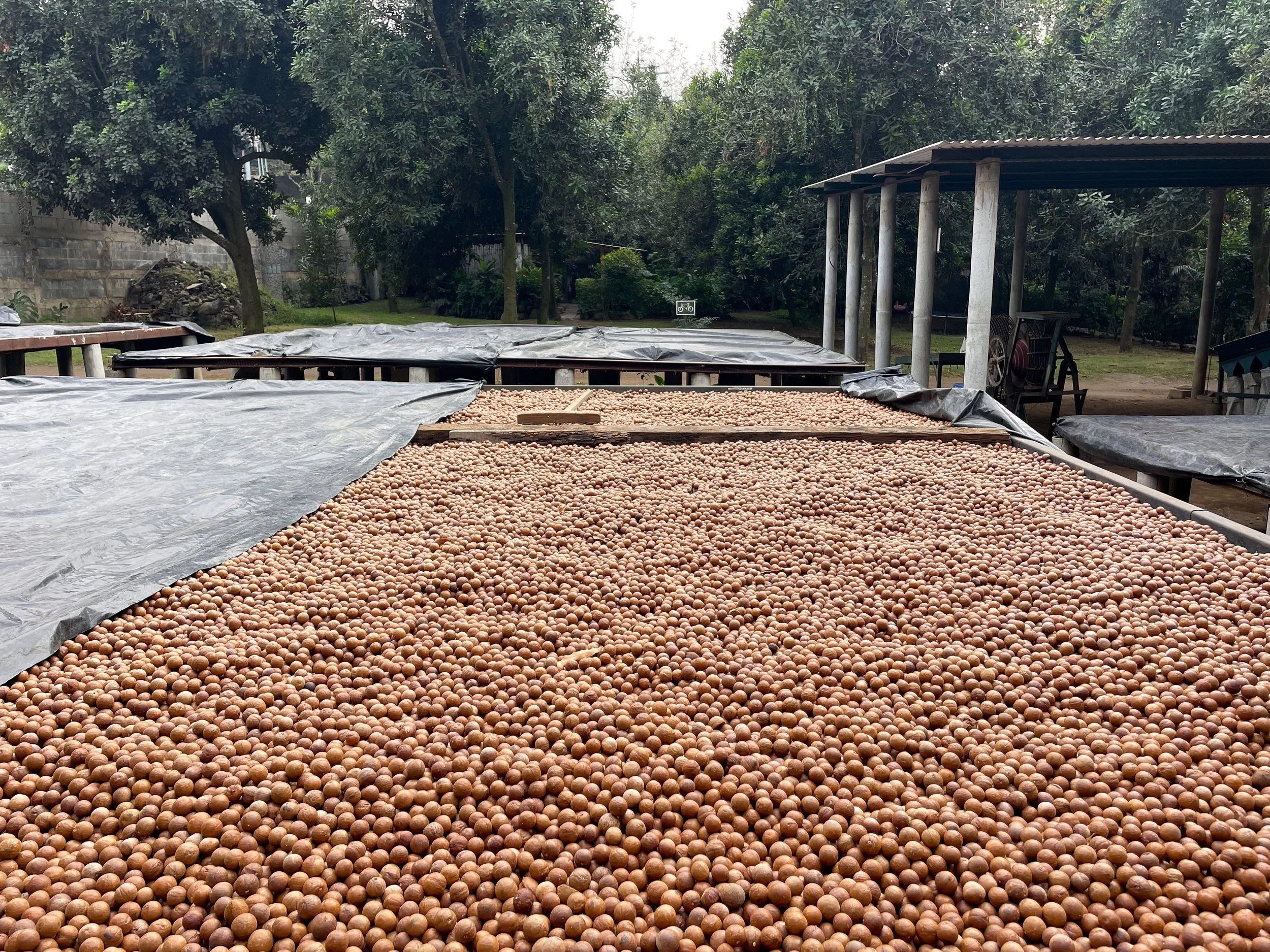
Volcanic Farmland
Antigua’s fertile volcanic valleys make it ideal for growing a range of crops including coffee, cacao and macadamia nut. We visited Valhalla Farm, a sustainable and organic macadamia nut farm with free tours, tastings, a restaurant and spa. We came here for a full body macadamia nut oil massage after our overnight hike to Volcán de Fuego. It was so relaxing and therapeutic! The farm tour included a walk around the grounds to see the macadamia nut trees, learn how they’re harvested and processed. Afterwards, we sampled macadamia nut products like roasted nuts, chocolates, baked goods and oils.
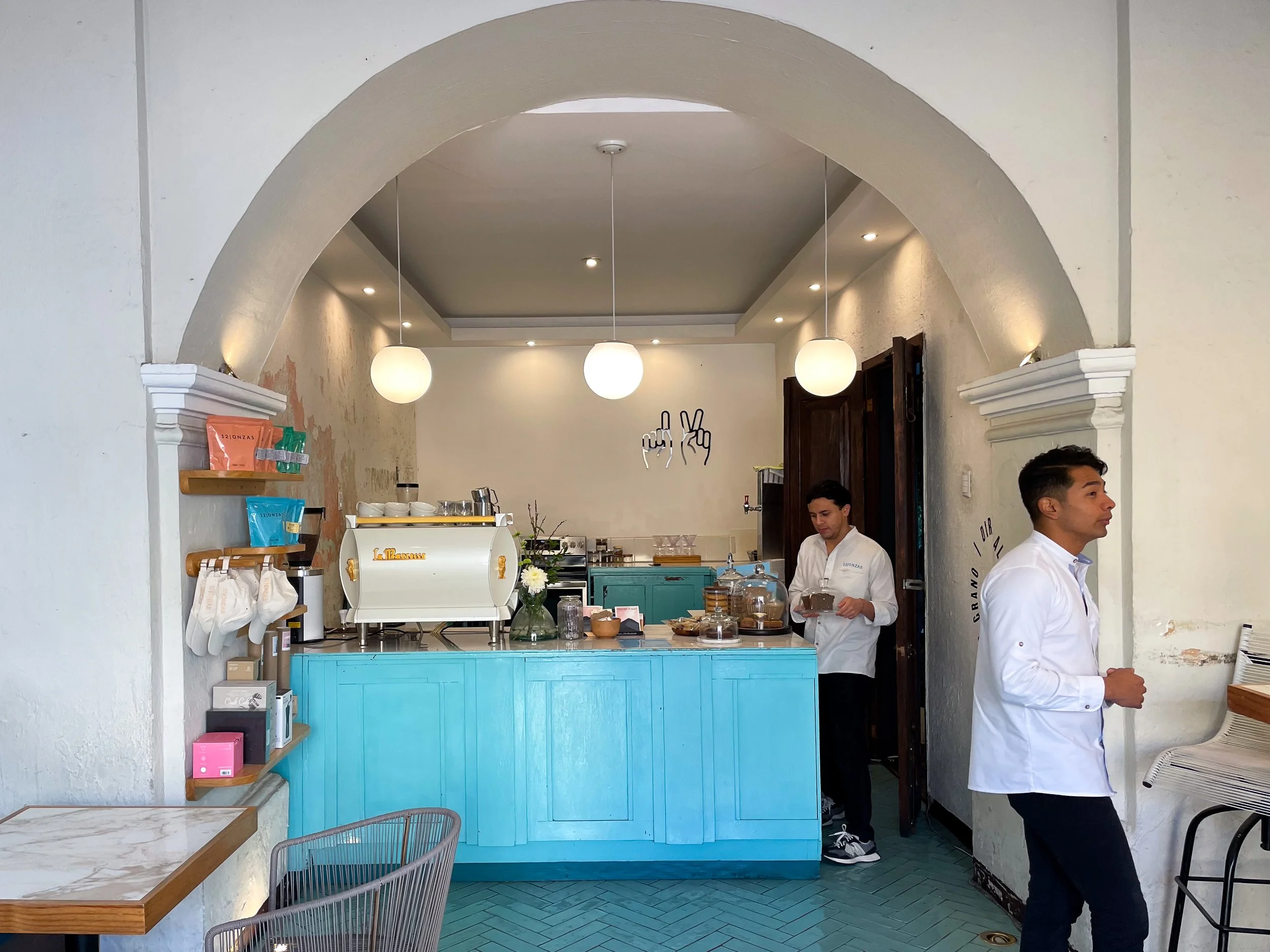
Cafe Culture
Antigua has a bustling cafe culture with many small cafes, coffee shops and breakfast spots brewing Guatemalan grown and roasted coffee beans.
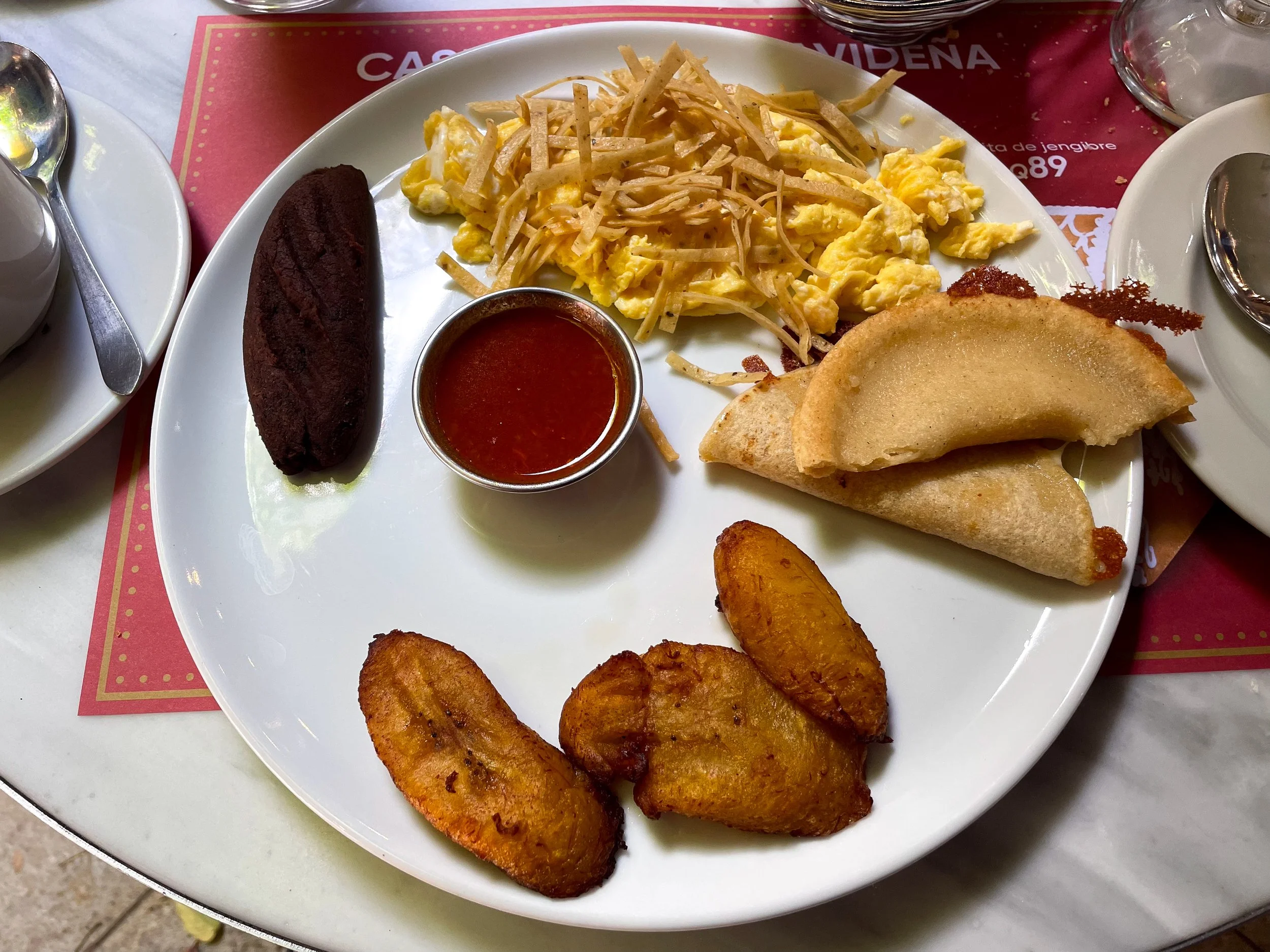
Bakery San Martin. A cafe and bakery with fresh breads, cookies, and carafes of French pressed Guatemalan coffee. Come for the “Desayuno Antigüeño,” which includes scrambled eggs with onion and tomato, breads, fried sweet plantains, refried beans and tortilla with cheese.
El Gran Cafe. A small coffee shop for Guatemalan coffee and light pastries. We brought home two bags of whole beans.
12 Onzas. A cafe for Guatemalan pour over coffee, light pastries and classic breakfast dishes.
Places to Eat
We quickly learned that Antigua has a thriving food scene with restaurants serving traditional and contemporary Guatemalan dishes, authentic street food and vegan or vegetarian options. Most restaurants in Antigua have a garden courtyard, rooftop or terrace and interior dining room.
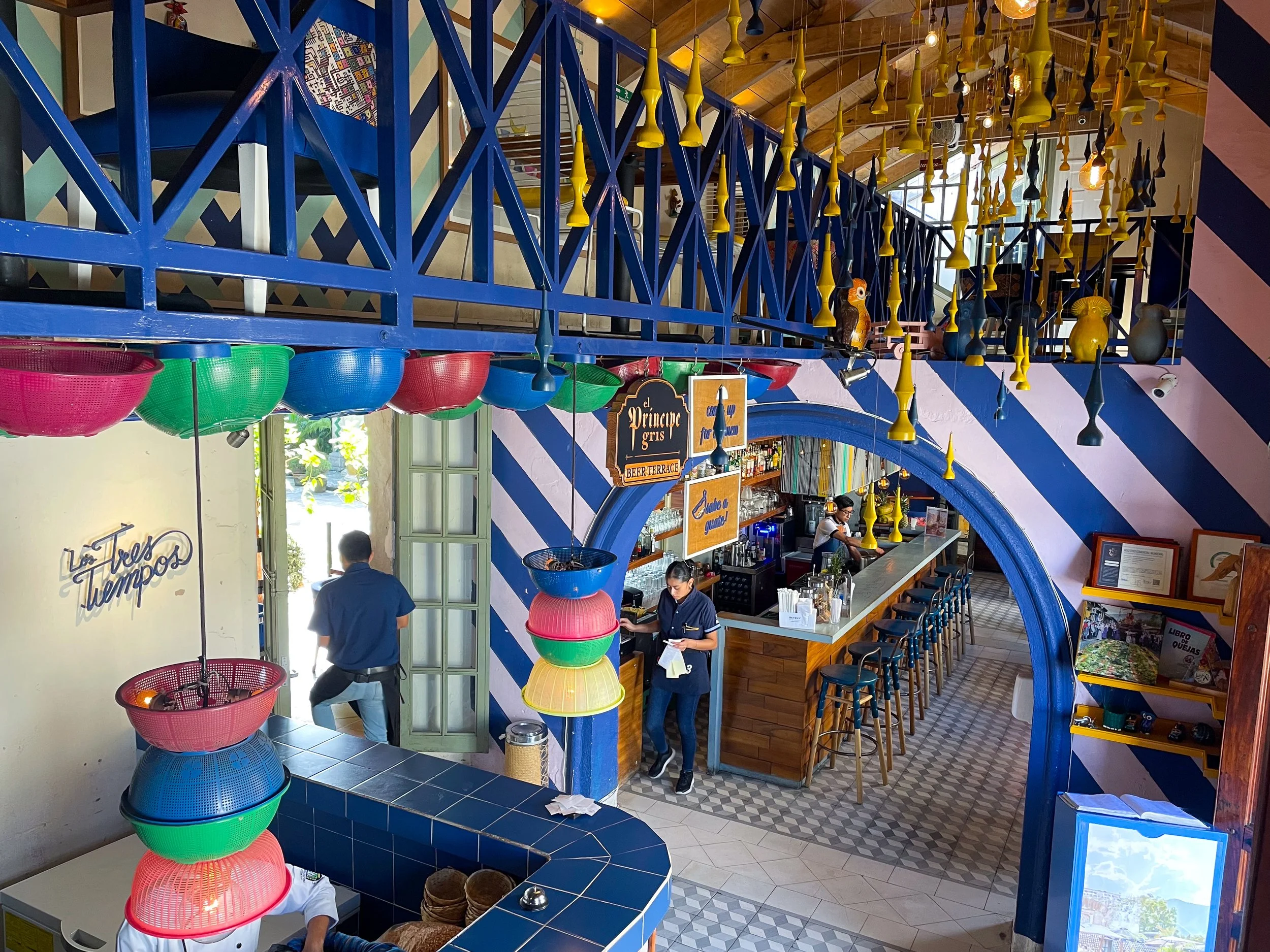
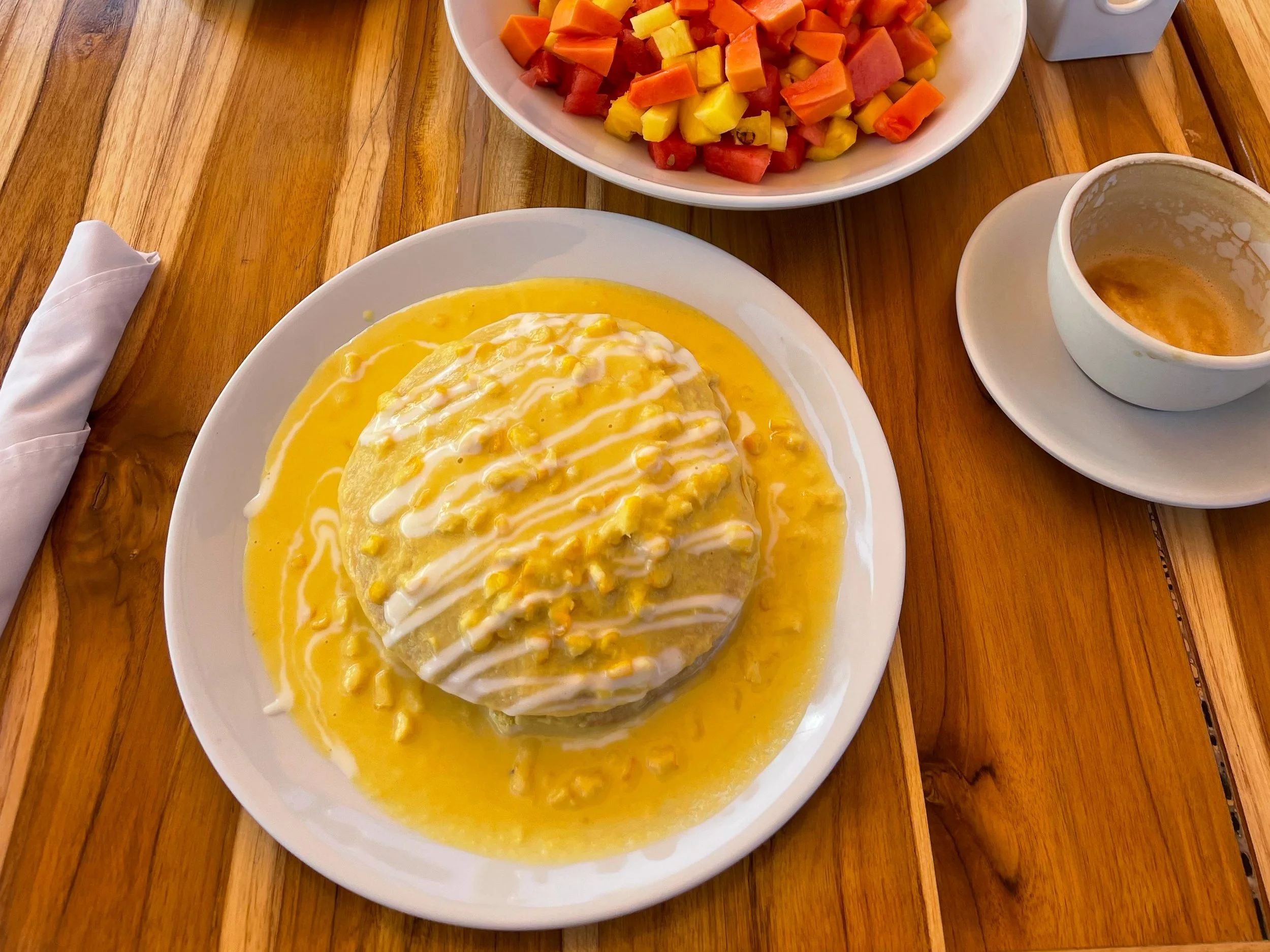
Los Tres Tiempos. A colorfully decorated restaurant with a lush outdoor terrace and menu including traditional brunch dishes. Try the sweet corn pancakes covered in a creamed corn sauce, the chilaquiles with white & blue corn chips and red & green sauce or the fruit platter with pineapple, papaya and watermelon.
27 Adentro. A restaurant with a modern take on Guatemalan and Latin dishes. It has a garden courtyard and rooftop with views of Volcán de Fuego. We saw a large eruption with lava from here. There are many vegetarian options including pepián, sopa de maíz, tostone cups and sangria.
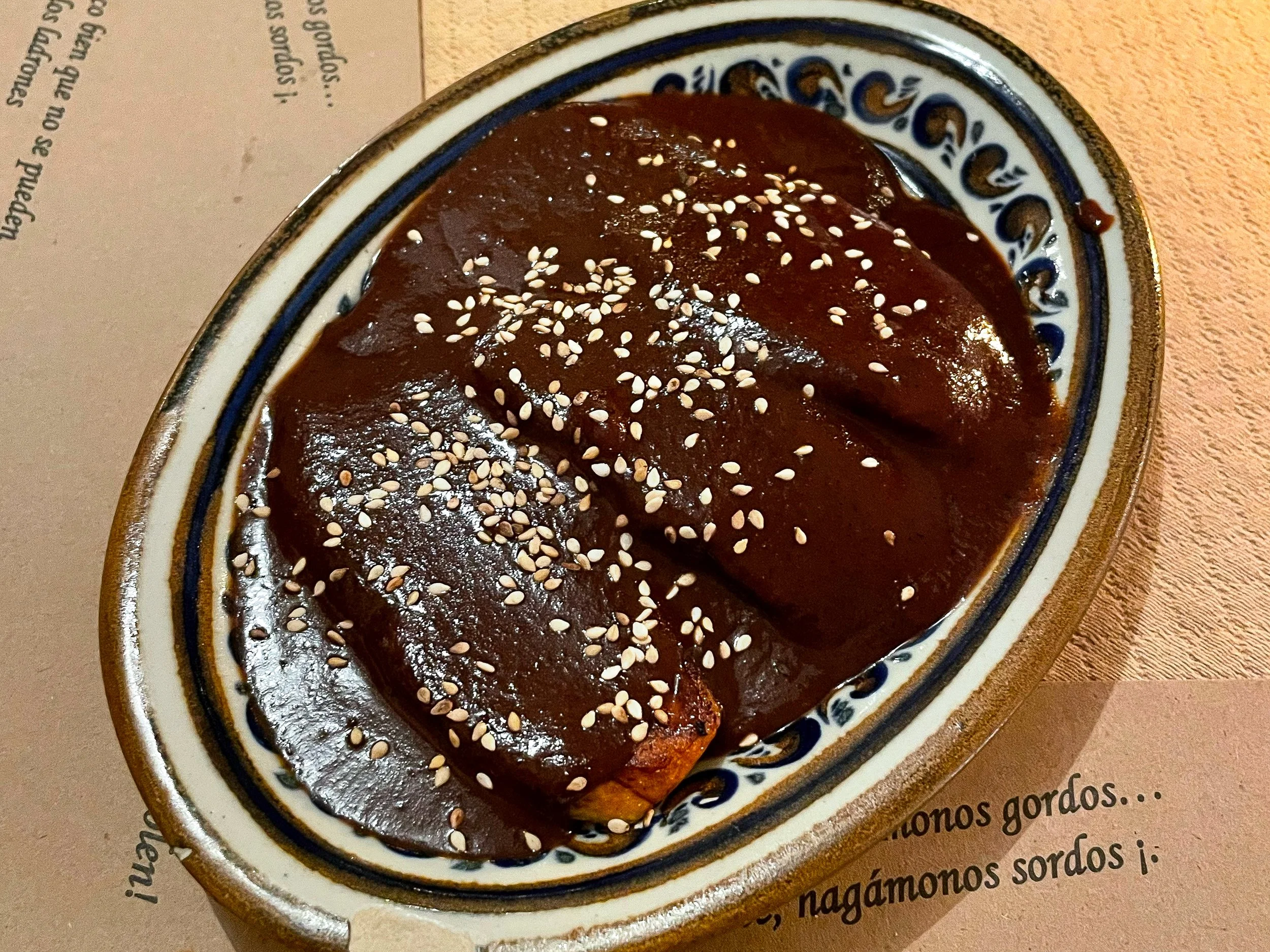
La Fonda Calle Real. Around lunch time, the smell of pan fired masa wafting from the store front comal invites passersby in. The romantic interior has an open air courtyard with a canopy of flowering vines. The menu consists of traditional Guatemalan dishes. We tried the vegetarian pepián, chile relleno and plantains con mole.
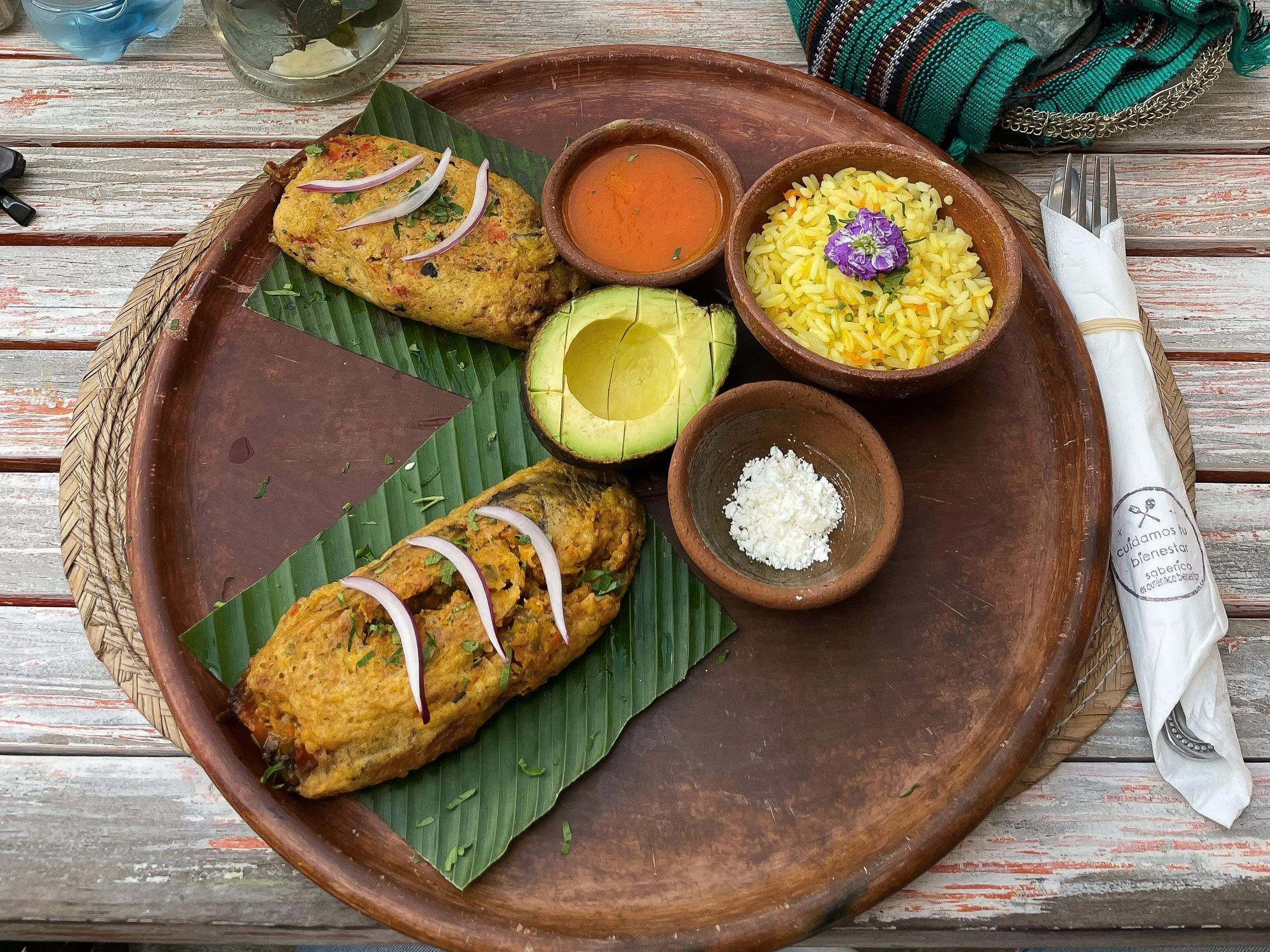
Saberico. A vegetarian friendly garden restaurant with a sprawling outdoor patio and menu of contemporary Guatemalan dishes. We ordered the beet & cabbage tostadas, chile relleno and kombucha cocktails.
Antojito Salvadoreño. An unofficial restaurant specializing in pupusas. Call ahead to order and wait outside of the Condominio Arcadas for pick up. We ordered cheese and bean pupusas with a canoa de platano.
Frida’s. A Mexican style restaurant themed after Frida Kahlo with portraits of the artist pictured throughout. The menu specializes in tacos and margaritas. We tried the veggie tacos, crispy broccoli in poblano mole and seitan al pastor tacos with pineapple. For drinks, try the spicy mezcal margarita and hibiscus mezcal margarita.
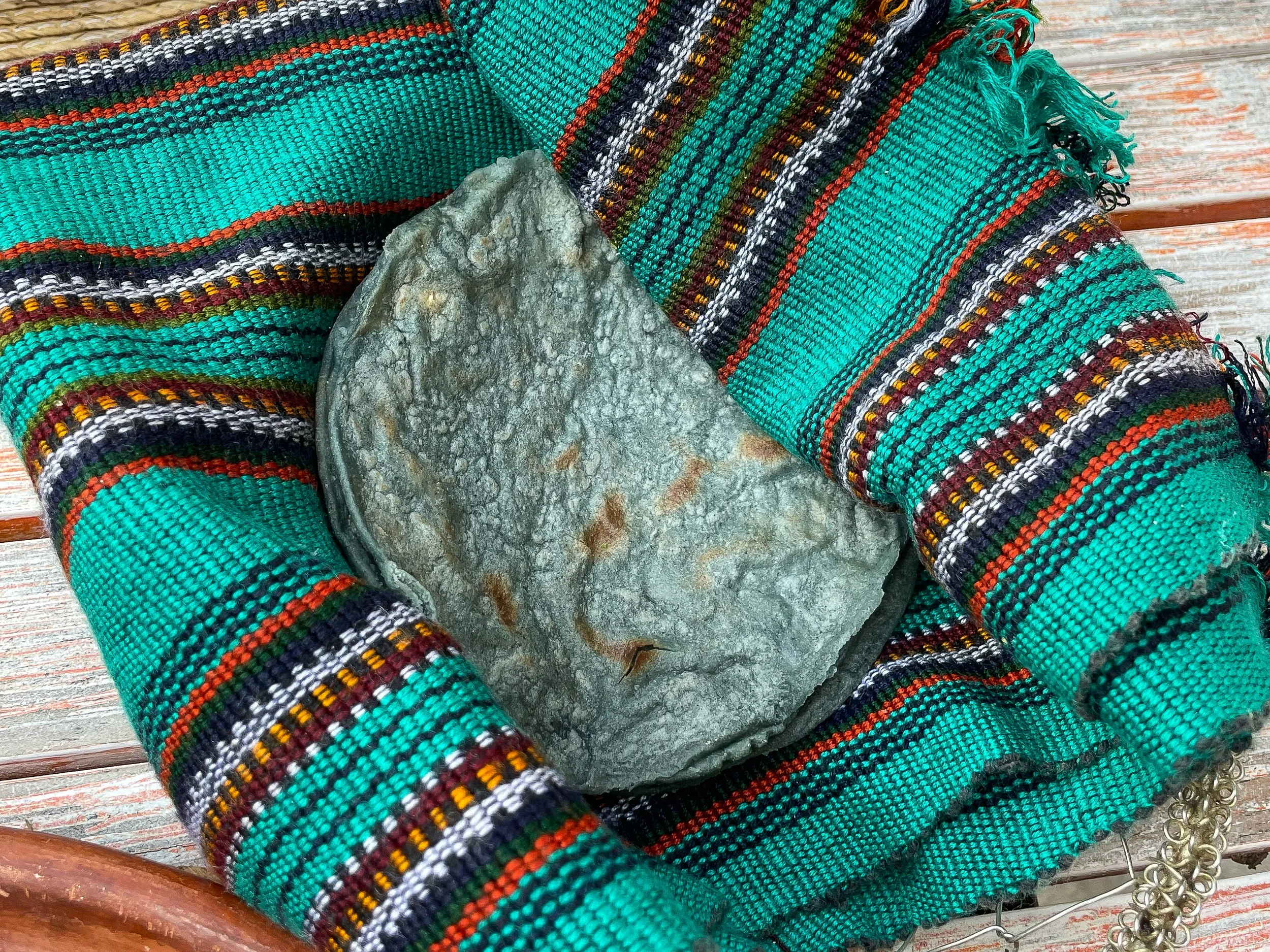
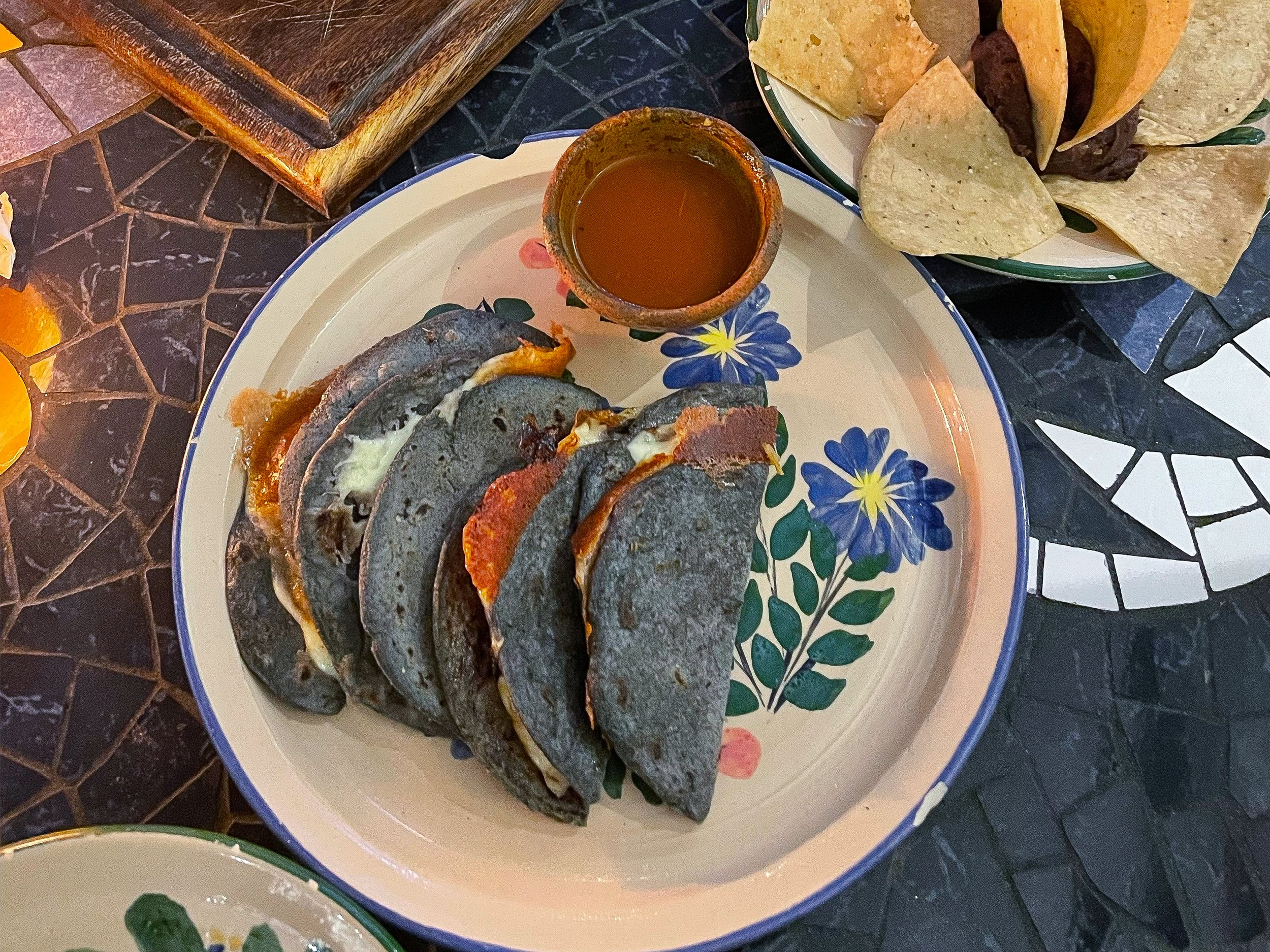
El Adobe. The eye-catching entry with a display of colorfully painted Guatemalan wooden masks invites passersby in for a look at the menu. The restaurant serves traditional Guatemalan and Mayan inspired dishes. We ordered the blue corn tortillas with cheese and salsa, fried black beans and a whole fried fish called Mojarra.
Places to Drink
Together with a brewery, speakeasy, dive and rooftop bar, there is no shortage of places to find a drink in Antigua.
Antigua Brewing Company. A brewery with local beers and city views from their terrace. We sampled a flight of beers. Two favorites are the Fuego IPA, a very hoppy brew, and the Canchona Blonde Ale, a refreshing and slightly nutty ale.
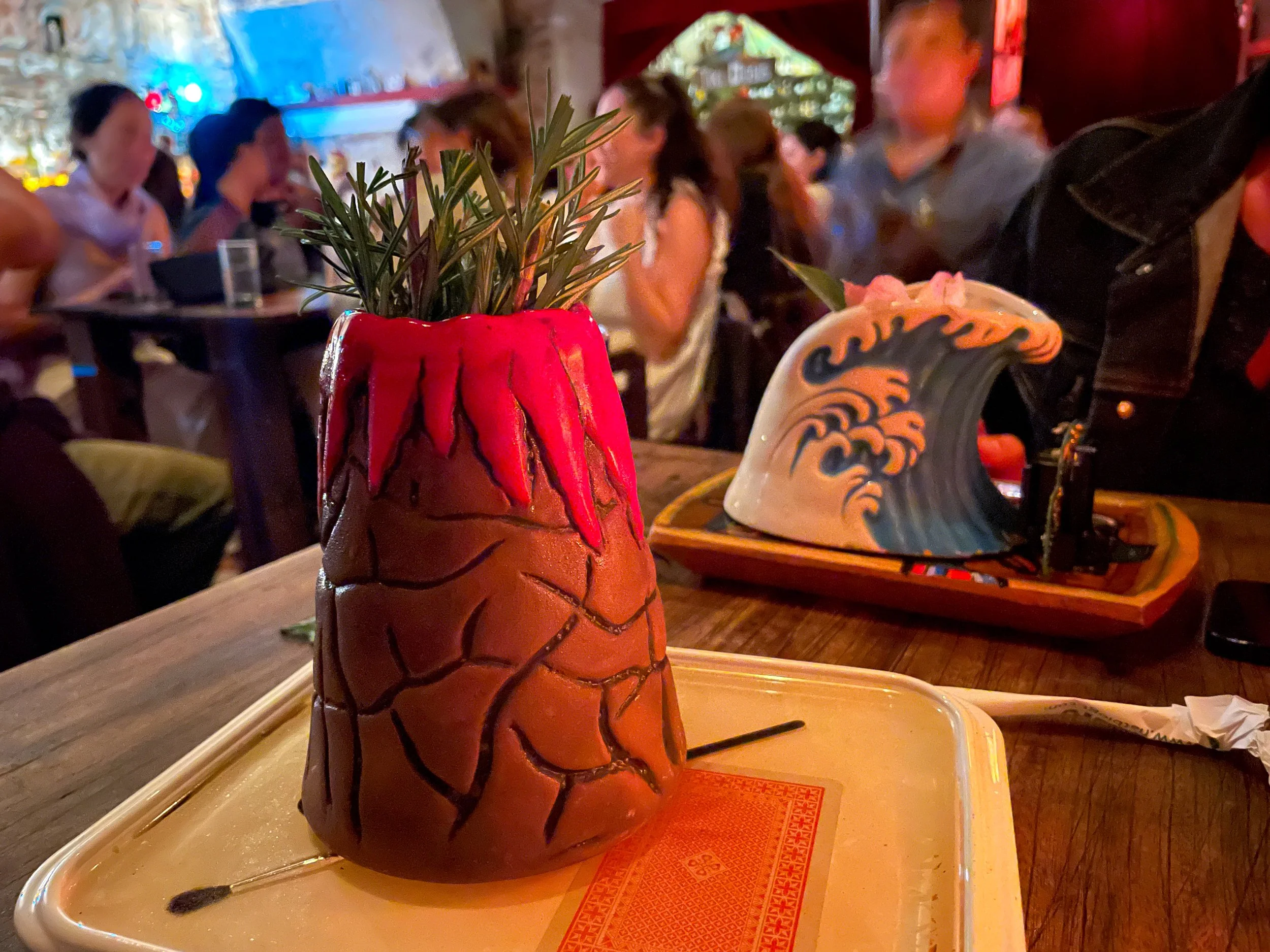
Ulew. A dimly lit speakeasy with a stone and brick interior located behind a phone booth in the Antigua Brewing Company. Mixologists make drinks based on your flavor preference. We ordered spicy but balanced tiki style drinks that came out in a volcano and wave mug.
Cafe No Se. A dive bar for beer and mezcal. The menu is handwritten on cardboard, candles dripping in wax light the interior and the walls are covered in signatures and stickers. We drank and played chess at a table in the corner.
Adra Hostel. Come to their energetic courtyard and rooftop for local beers, cocktails and live DJ.
Guatemalan Cuisine
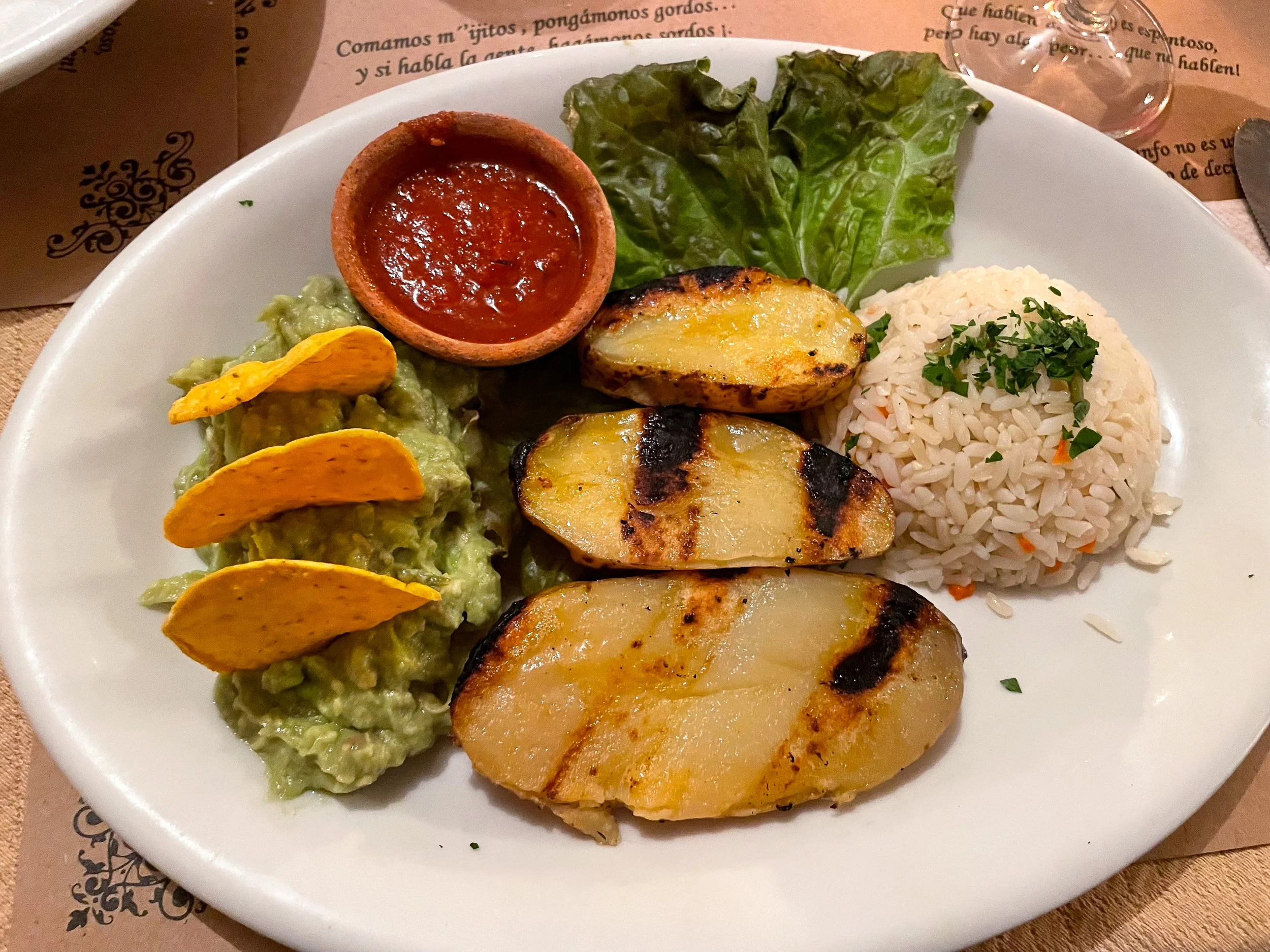
There are so many authentic dishes to try when visiting Antigua. Some of our favorites include traditional ingredients like corn masa and plantain.
Pupusas. A griddle fried masa patty filled with beans and cheese or meat.
Chile Relleno. A stuffed poblano pepper that’s been breaded and deep fried. It's common to be stuffed with cheese or rice, beans and vegetables.
Pepián. A spiced stew made with a base or green or red tomatoes. It can be vegetable or meat based.
Sopa de Maíz. A creamy corn soup.
Tostones. Twice fried and smashed green plantains, often served with a salsa.
Purple Corn Masa. Purple corn used to make any corn based dish like tortillas or pupusas.
Platano con Mole. A sweet plantain that’s been fried and covered in a savory sweet mole sauce.
Canoa de Platano. A whole sweet plantain that’s been deep fried, cut open like a canoe and filled with a sweet cream sauce.
Mojarra. A popular Central American fish. It’s commonly served whole fried with lime.
Gallo. A lager and the beer of choice across Guatemala, recognizable by its label picturing a rooster.
Nispero. Popular at fruit stands and in dishes at restaurants. Small orange fruits with a citrus peachy flavor, a thin skin and pit. Try them fresh, jammed, canned or in a sauce.
Where to Stay
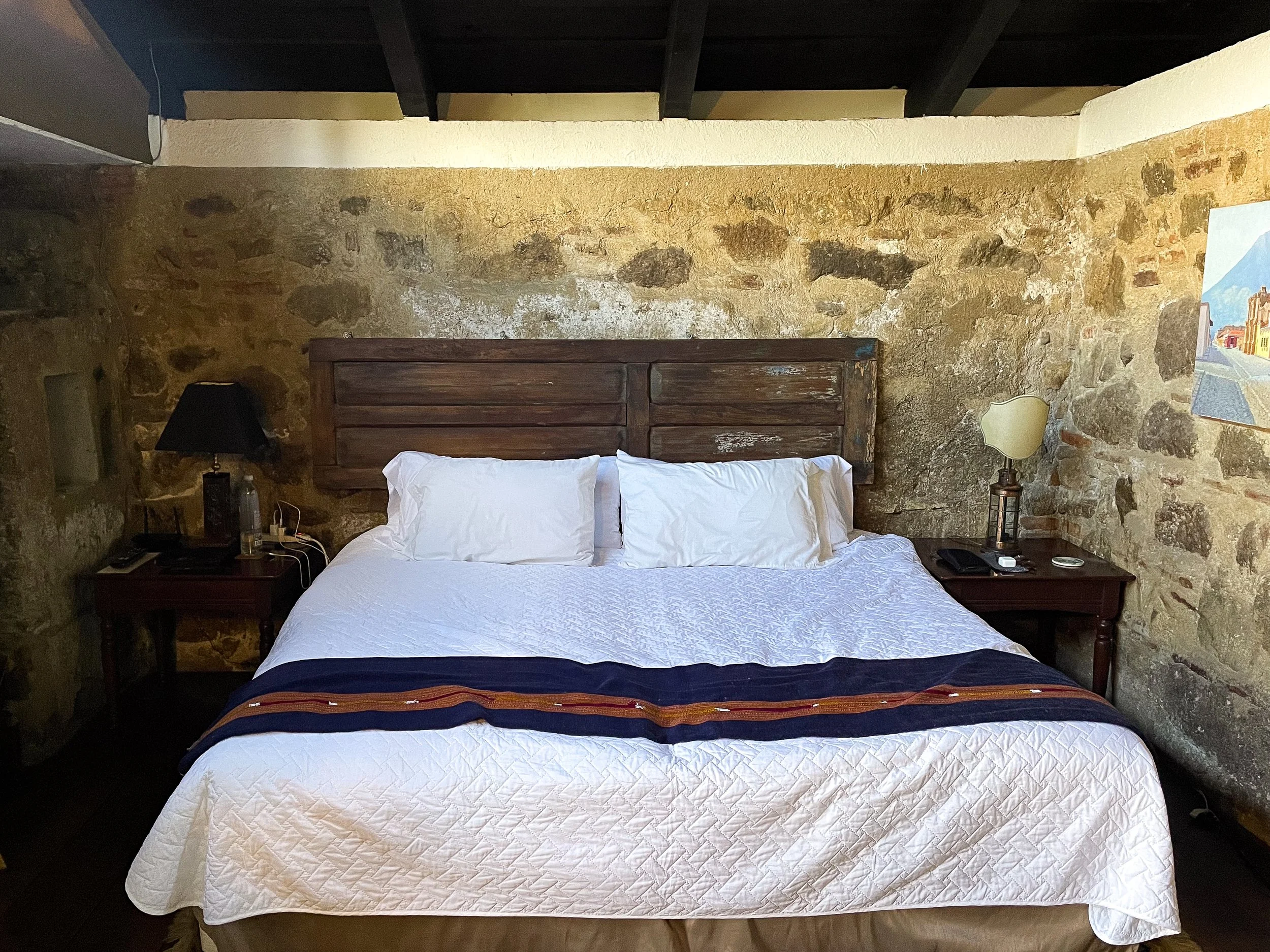
Antigua is a large backpacker destination with apartment rentals and hostels throughout the city. We stayed in a centrally located Airbnb at the El Solar Apartments. The apartment was a renovated ruin with exposed brick, stone walls, wooden beams and artwork of the city.
Getting Around
Guatemala City to Antigua. Book a transfer between Guatemala City and Antigua with a reputable local agency like Due South Travels. They safely shuttled us between the airport and our stay in Antigua during late night hours.
On Foot. Antigua is a very walkable city. Exploring it on foot is the best way to see the colonial sights, crumbing ruins and volcanic views.
By Taxi. Yellow cabs and Ubers are readily available in Antigua. They’re an affordable way of reaching nearby locations. Always confirm the price and destination before getting into the taxi.
Location Specifics
Drinking Water. Tap water is not drinkable. Only drink bottled or filtered water.
Cash vs Card. Many businesses are cash only. Carry USD to exchange or the local Quetzal.
Safety. We found the Antigua to be very safe. The locals tend to be welcoming and friendly.
Language. Spanish is widely spoken, many people speak English and some speak Mayan.
UV Protection. Wear sunblock. The higher altitude makes the sun’s UV stronger.
Elsewhere in Guatemala
From volcanic lakes to ancient Maya cities, continue exploring Guatemala's diverse landscapes and cultural heritage.
Lake Atitlán Travel Guide: Villages, Volcanoes & Mayan Culture. Navigate between Lake Atitlán's lakeside villages where volcanic landscapes and living Mayan culture shape one of Guatemala's most remarkable destinations.
Maya Ruins Travel Guide: Jungles, Temples & Ancient Cities. Journey through ancient Maya cities, temples and archaeological wonders across Belize and Guatemala while exploring dramatic jungle landscapes.
For Next Time…
Flores, Guatemala. A picturesque island city on Lago Petén Itzá known for its colorful architecture and proximity to Mayan ruins.
Monterrico. A beach town along Guatemala’s Pacific Coast known for its black sand beaches and annual sea turtle migrations.
El Paredón. A sleepy surf town along Guatemala’s Pacific Coast with black sand beaches and great year round surf conditions.
Lake Atitlán Travel Guide: Villages, Volcanoes & Mayan Culture
Journey between Lake Atitlán's lakeside villages where volcanic landscapes and living Mayan culture shape one of Guatemala's most remarkable destinations.
Lake Atitlán, Guatemala
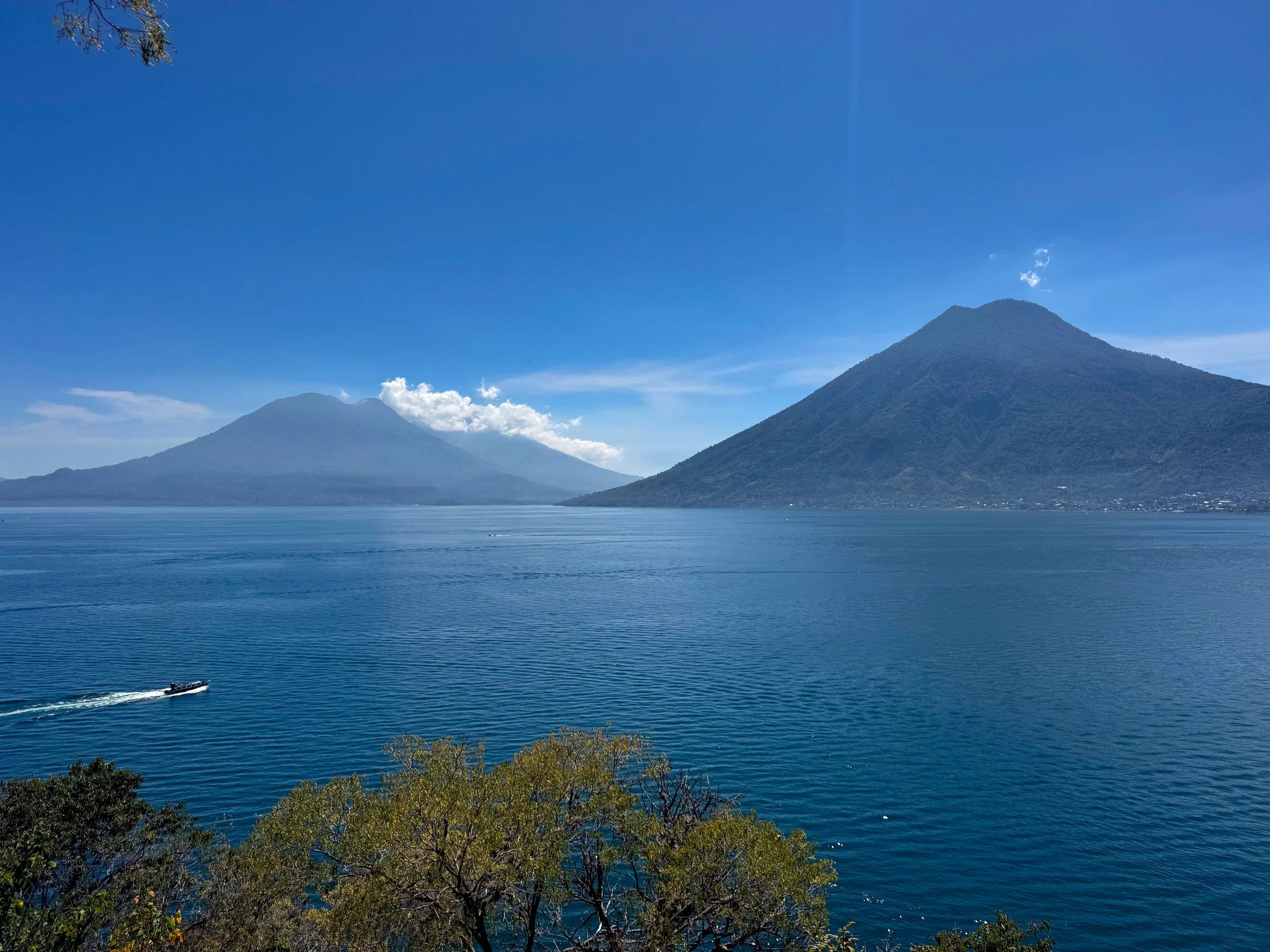
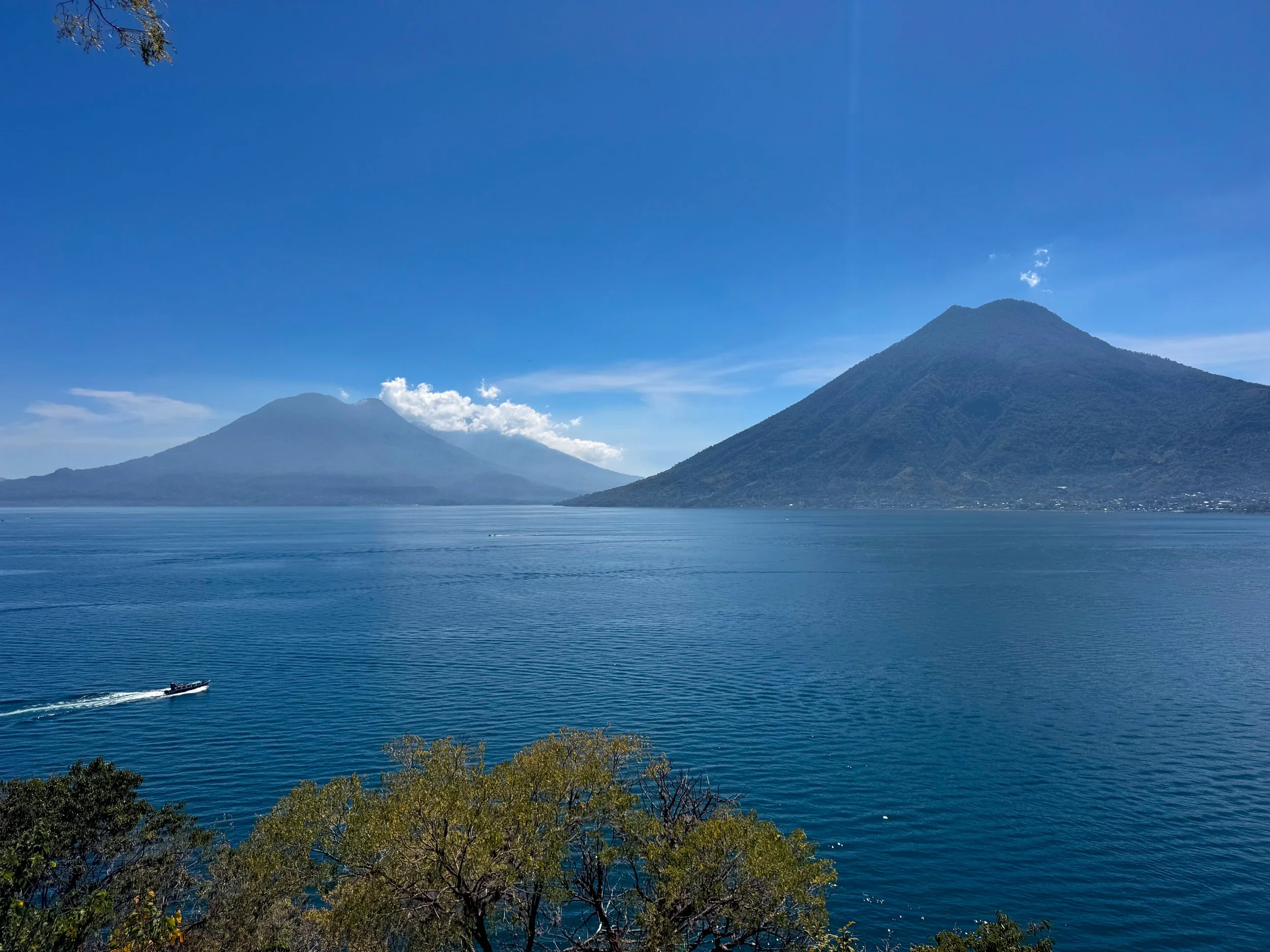
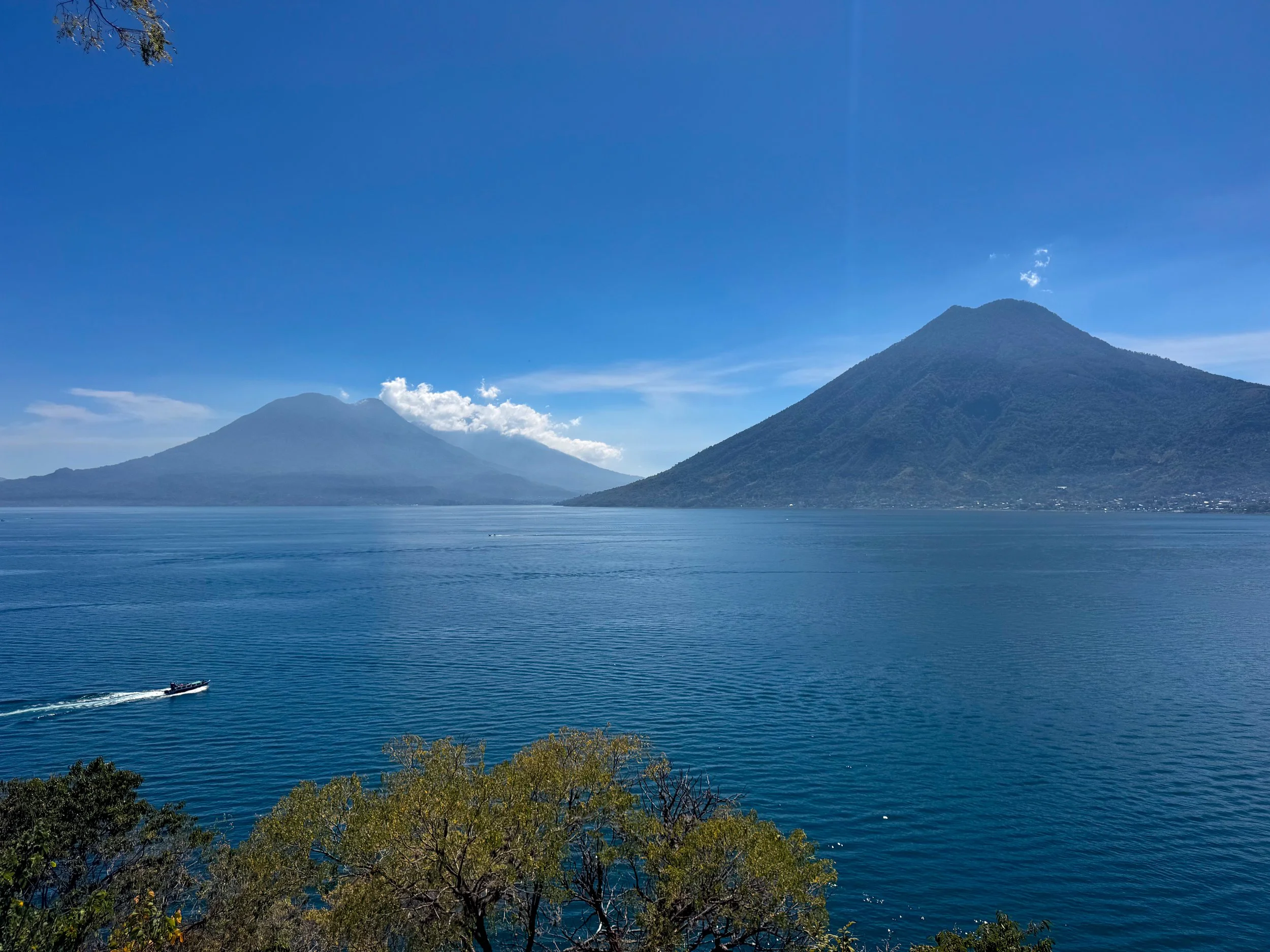
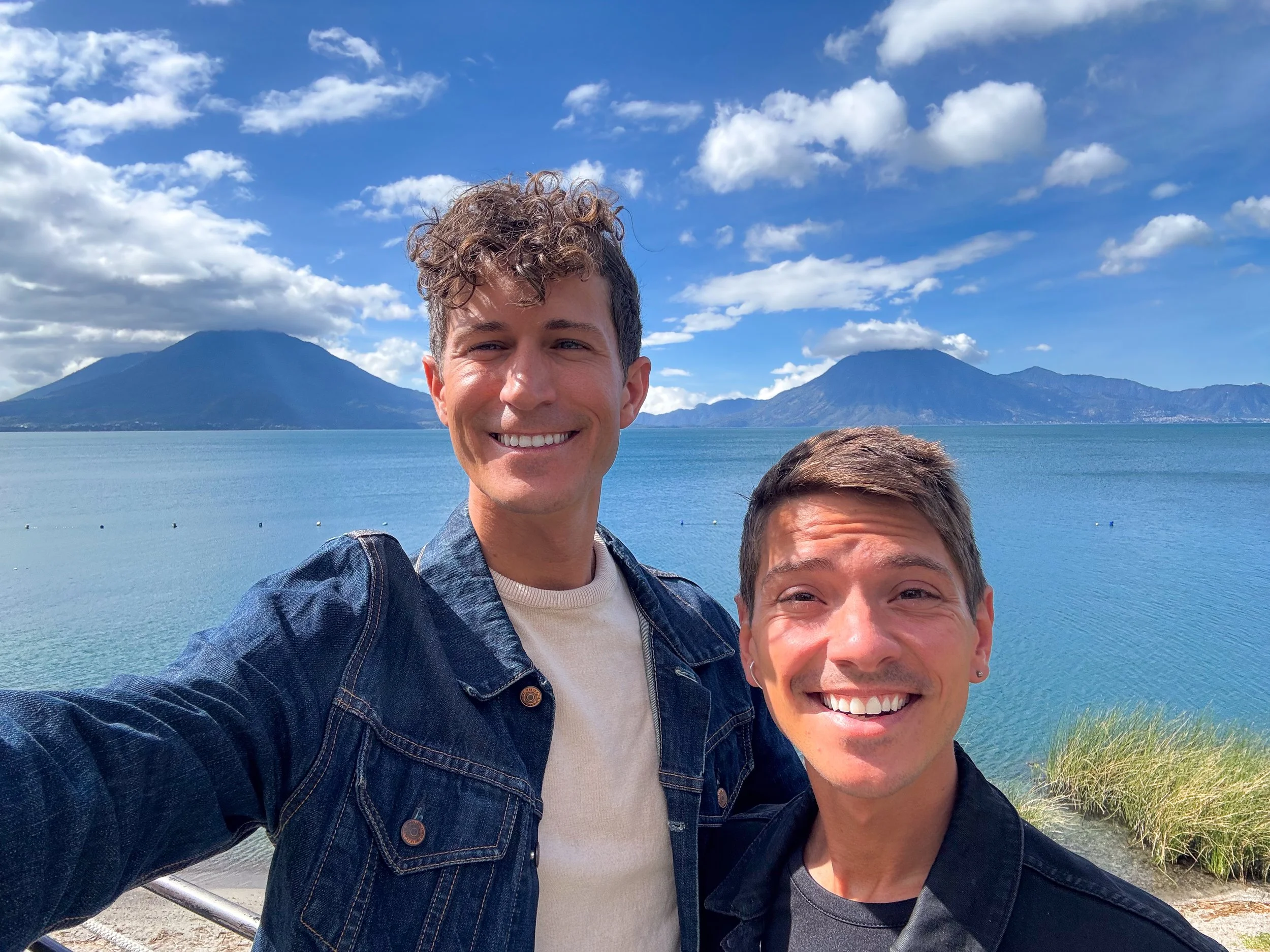
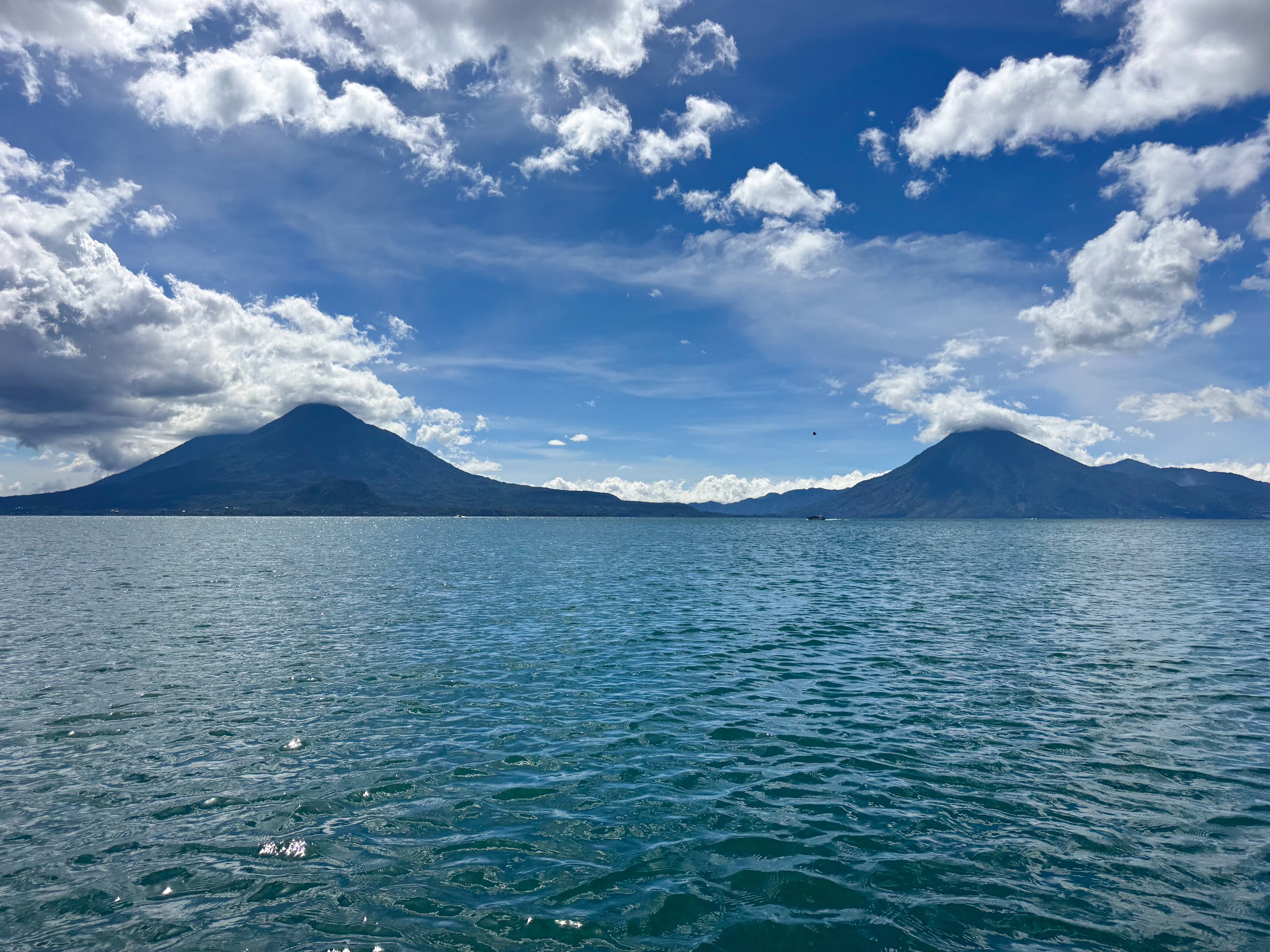
Lake Atitlan is a fresh water lake in a volcanic crater of Guatemala’s lush and rugged highlands. Its shores are surrounded by conical volcanoes, nature preserves, coffee farms and small pueblos home to Mayan cultures, indigenous peoples and backpackers.
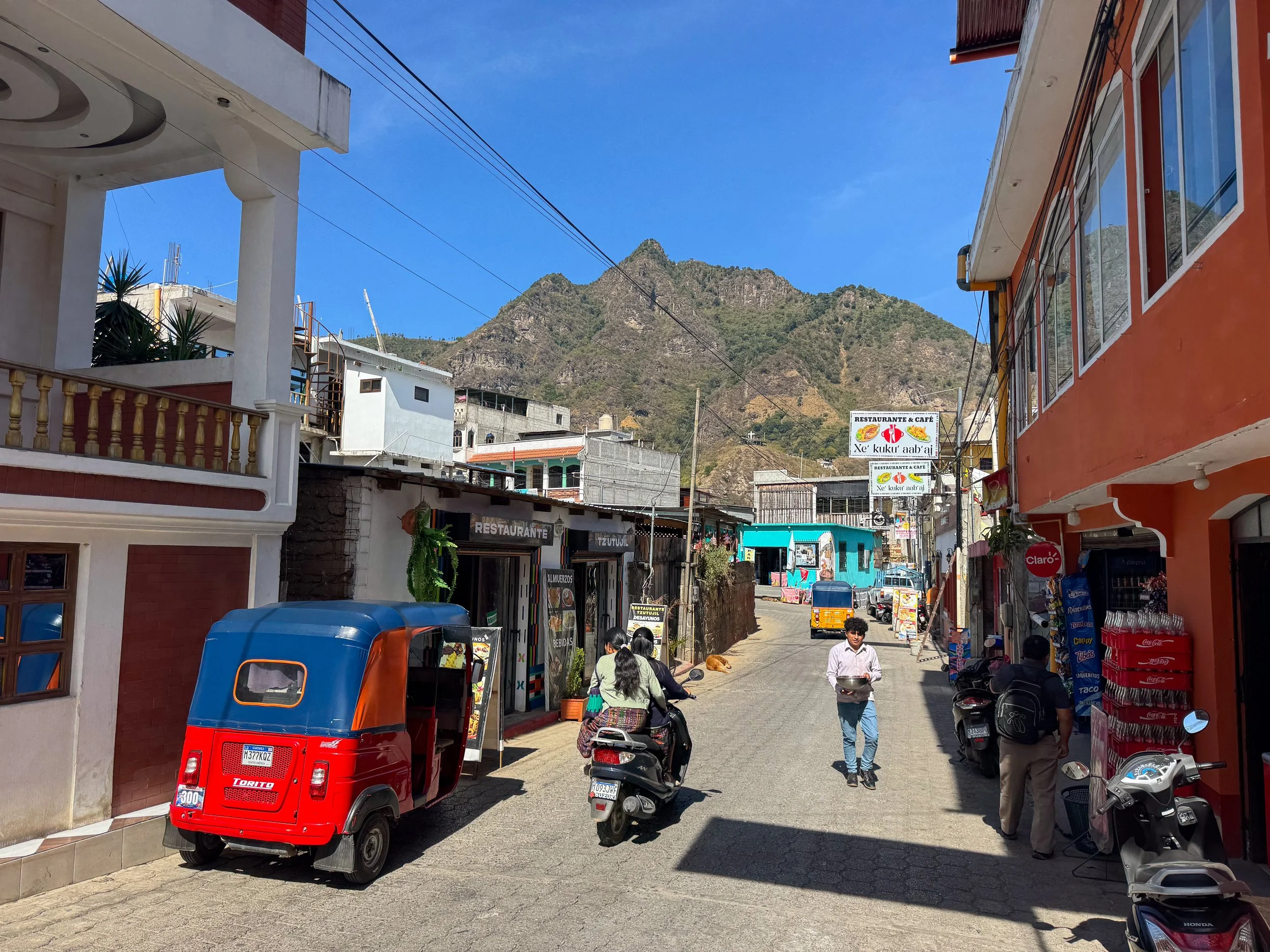
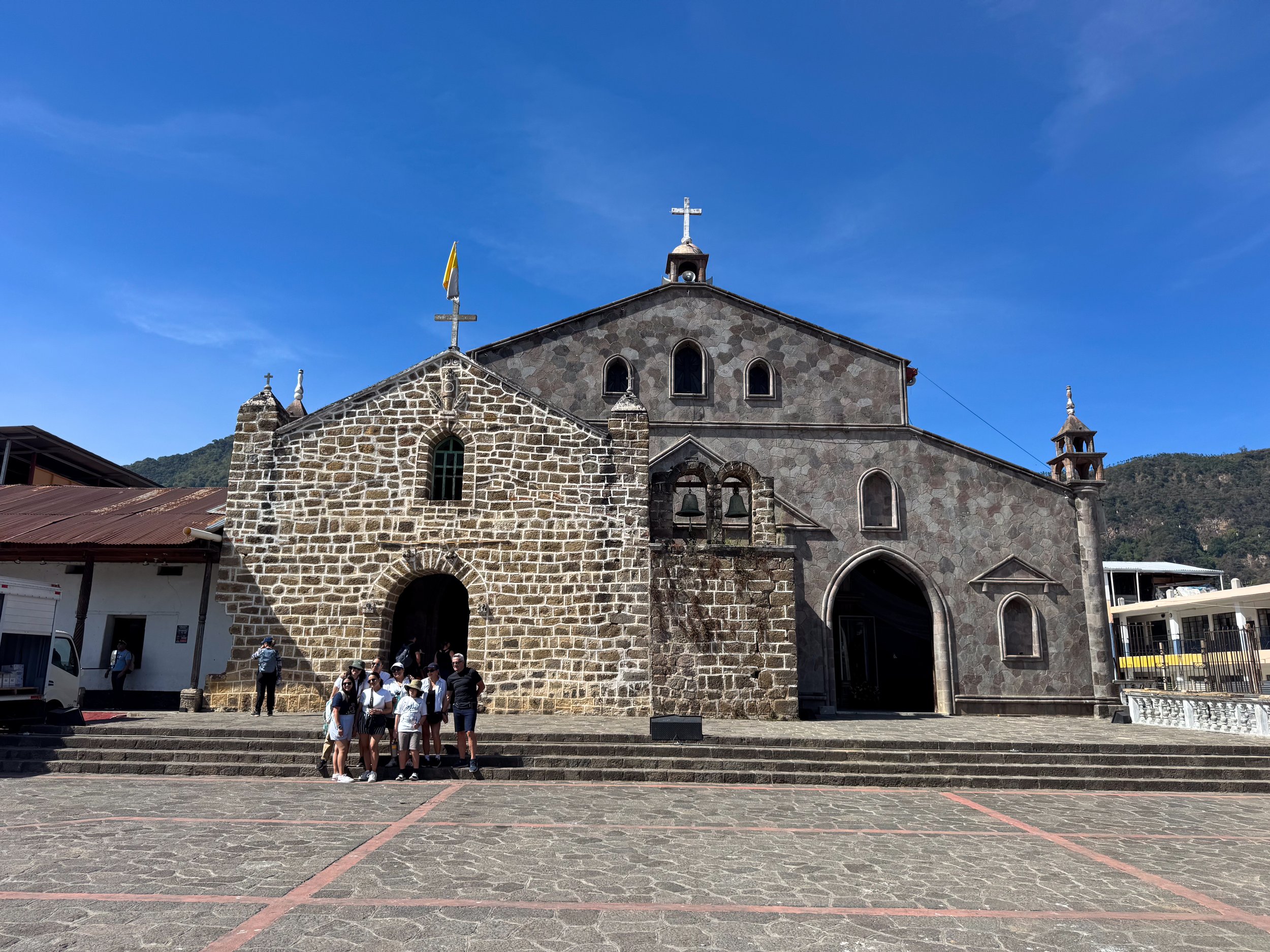
San Juan de la Laguna
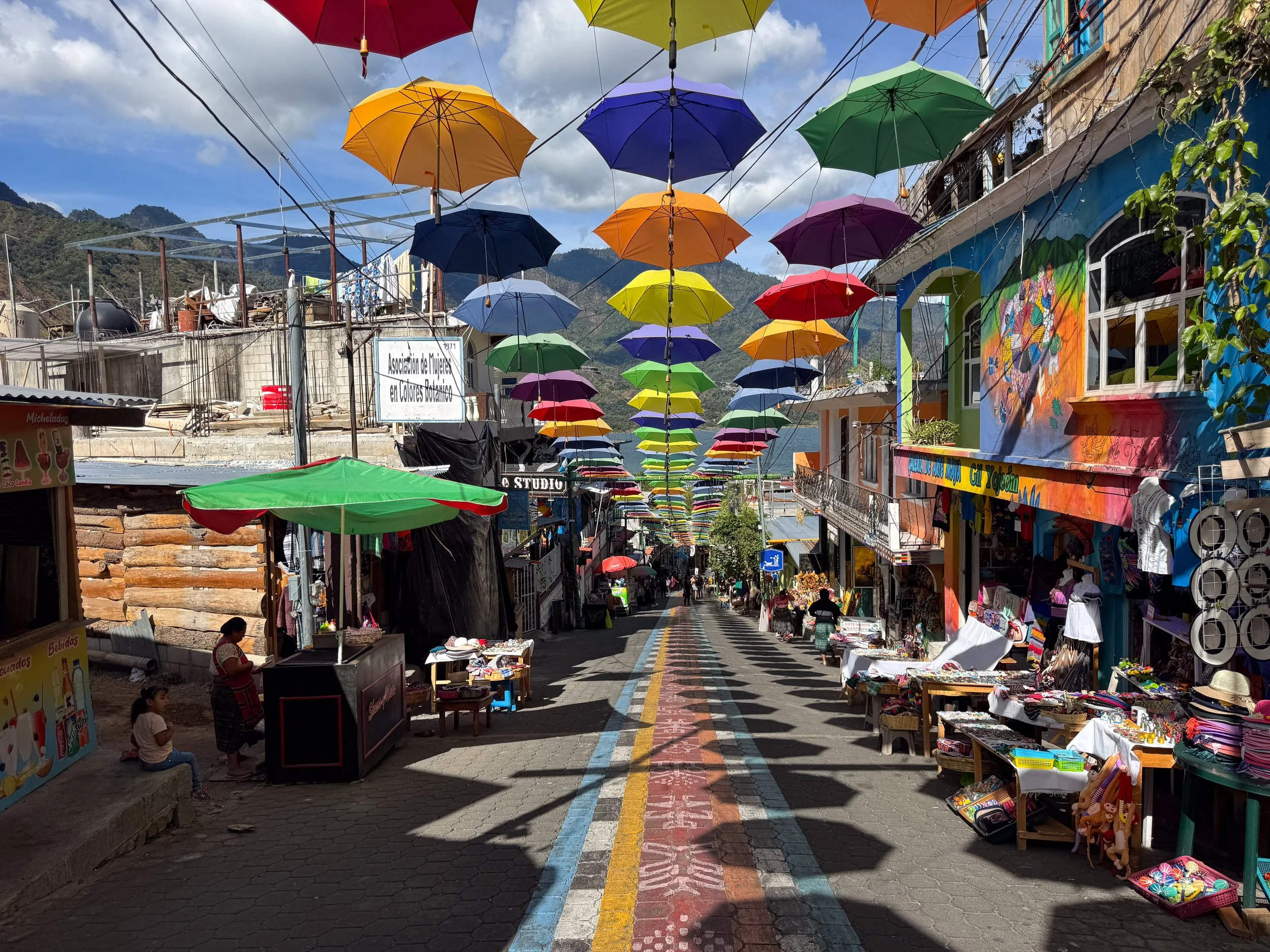
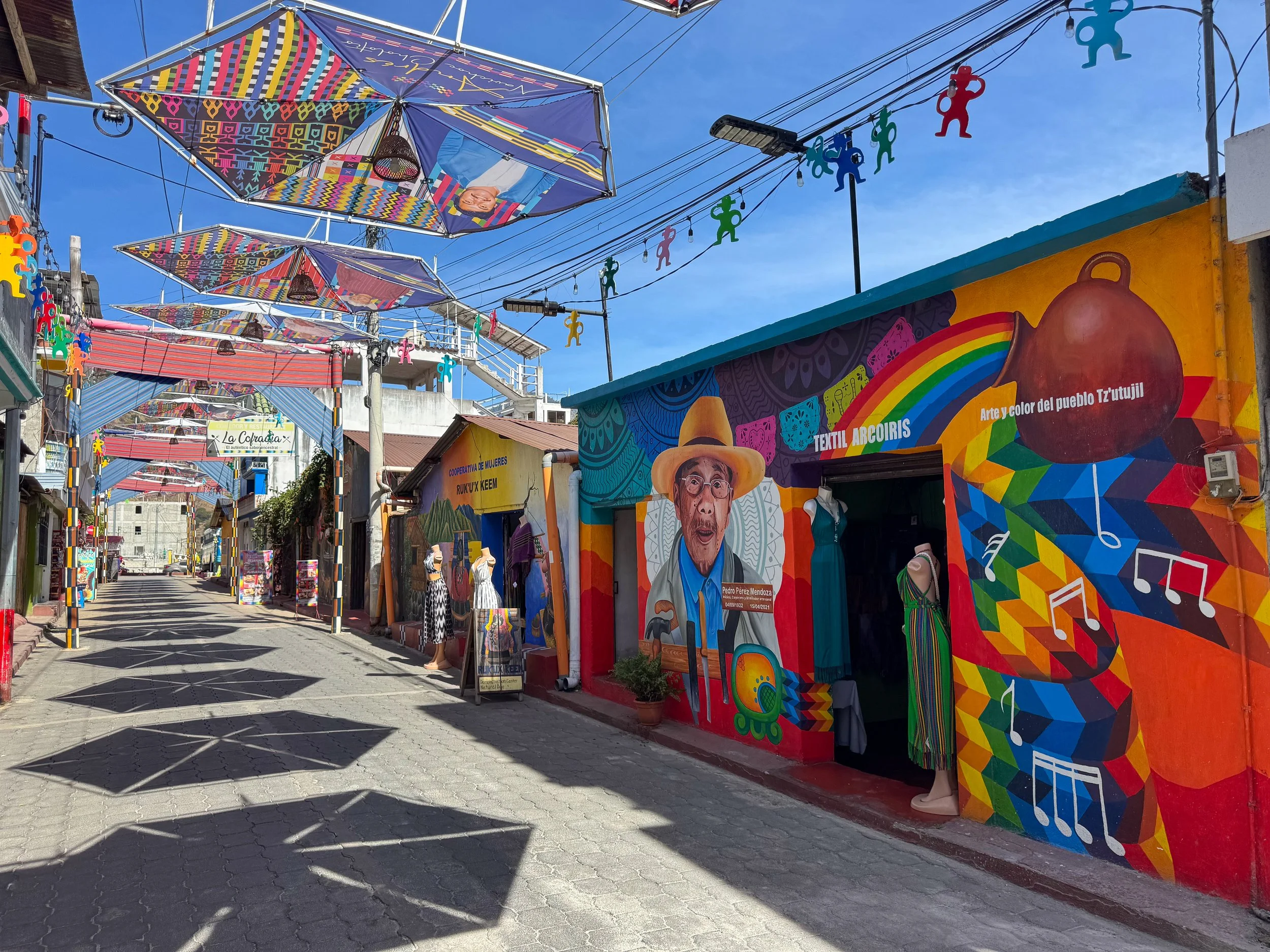
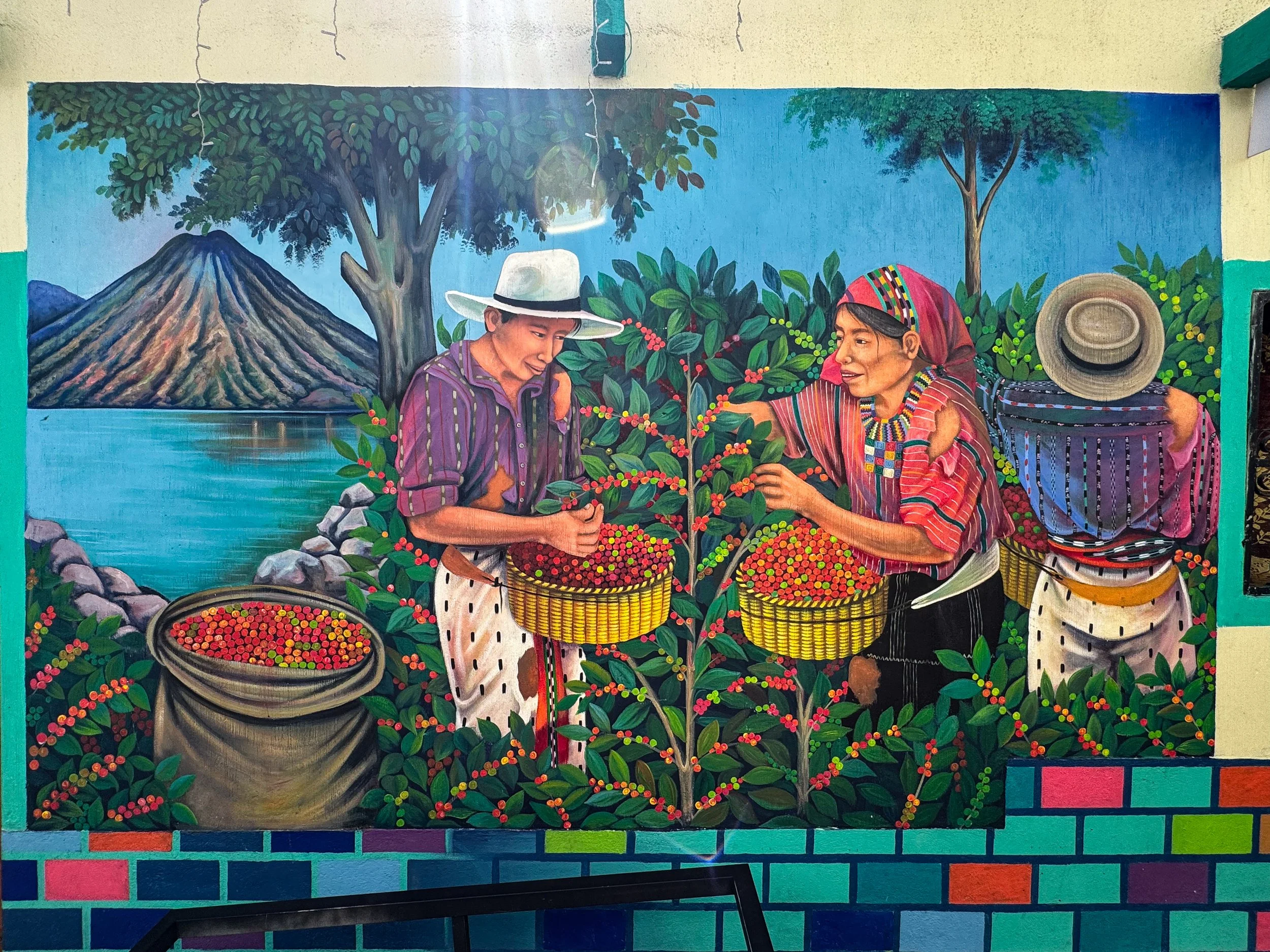
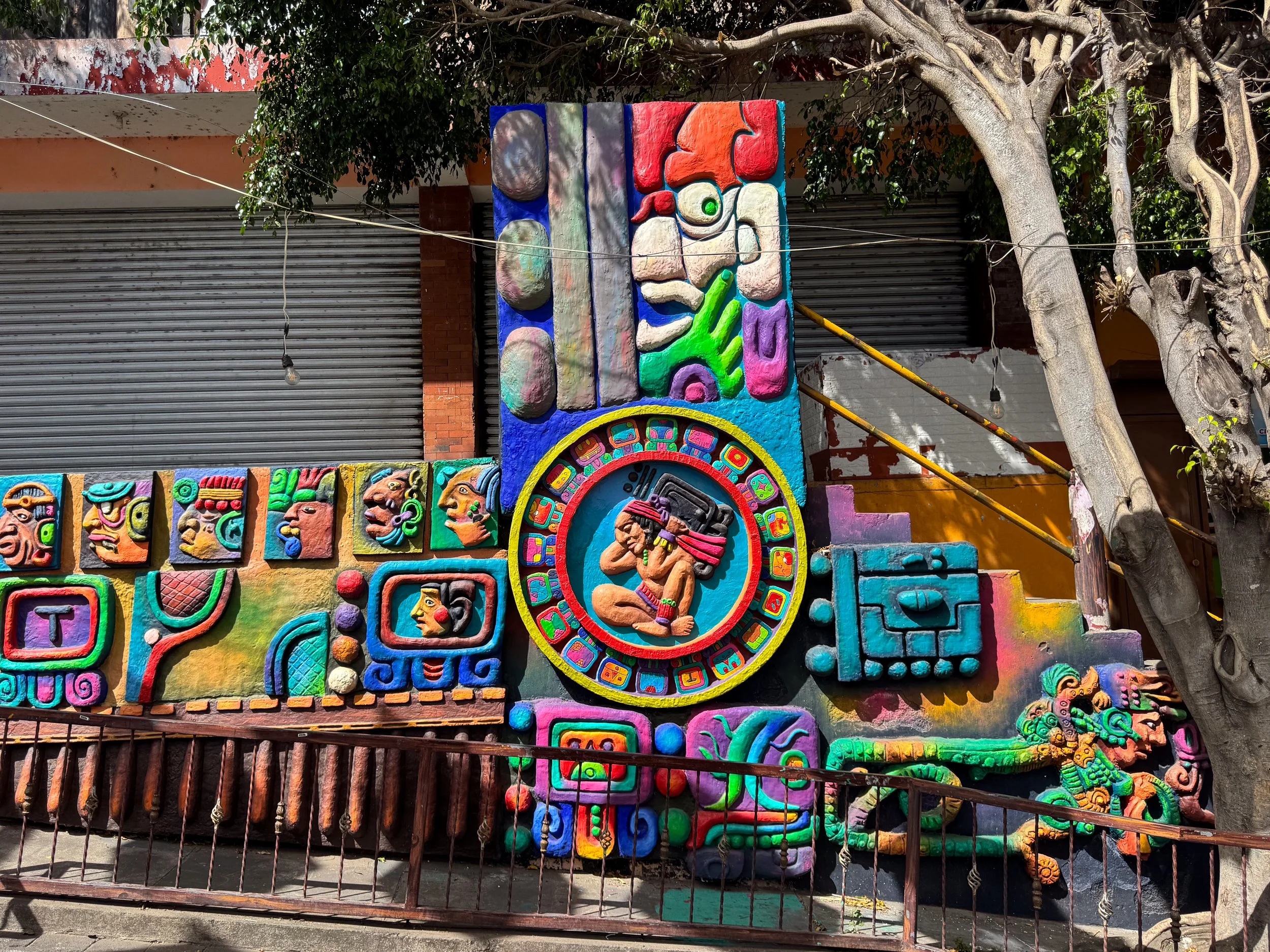
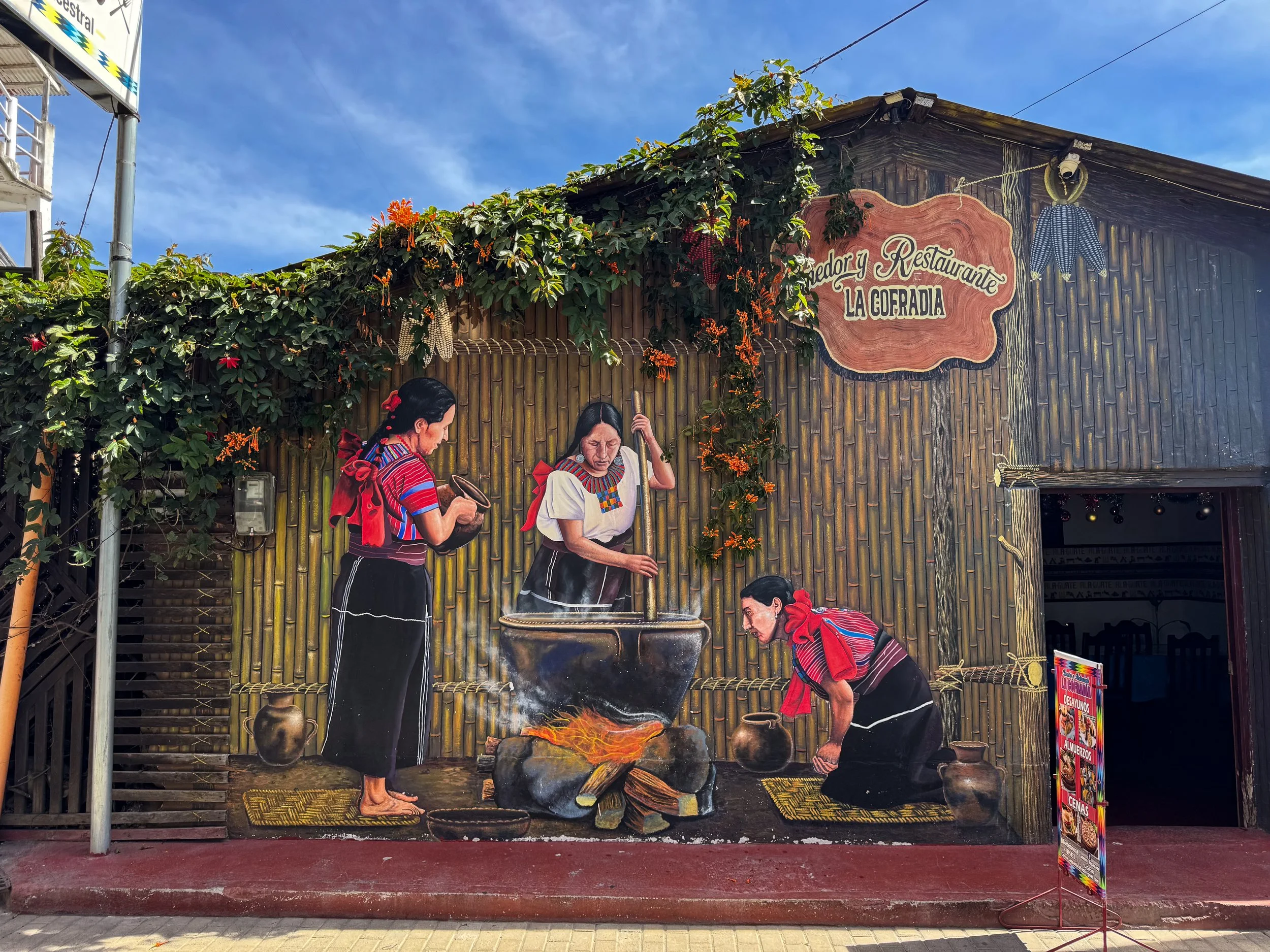
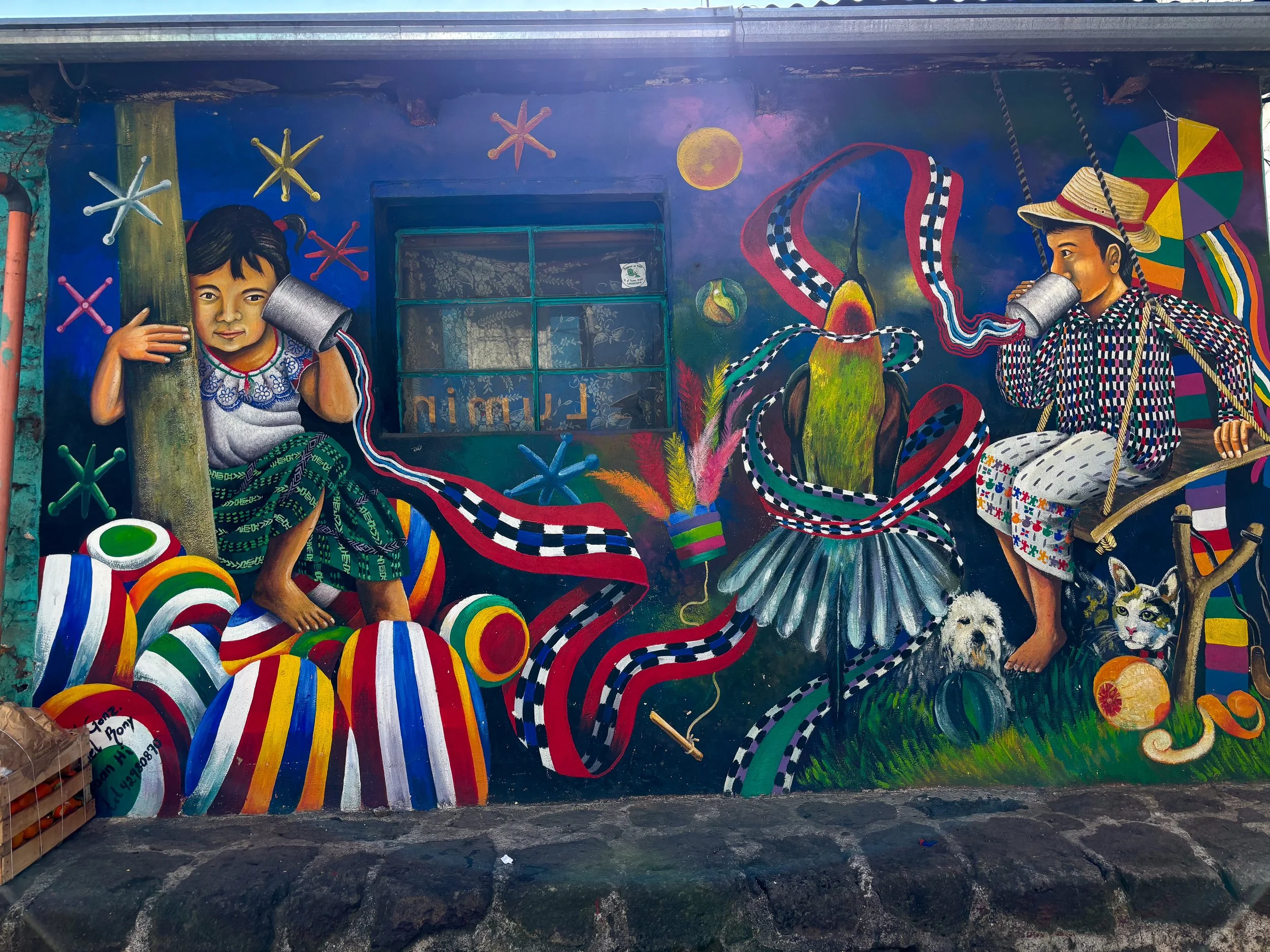
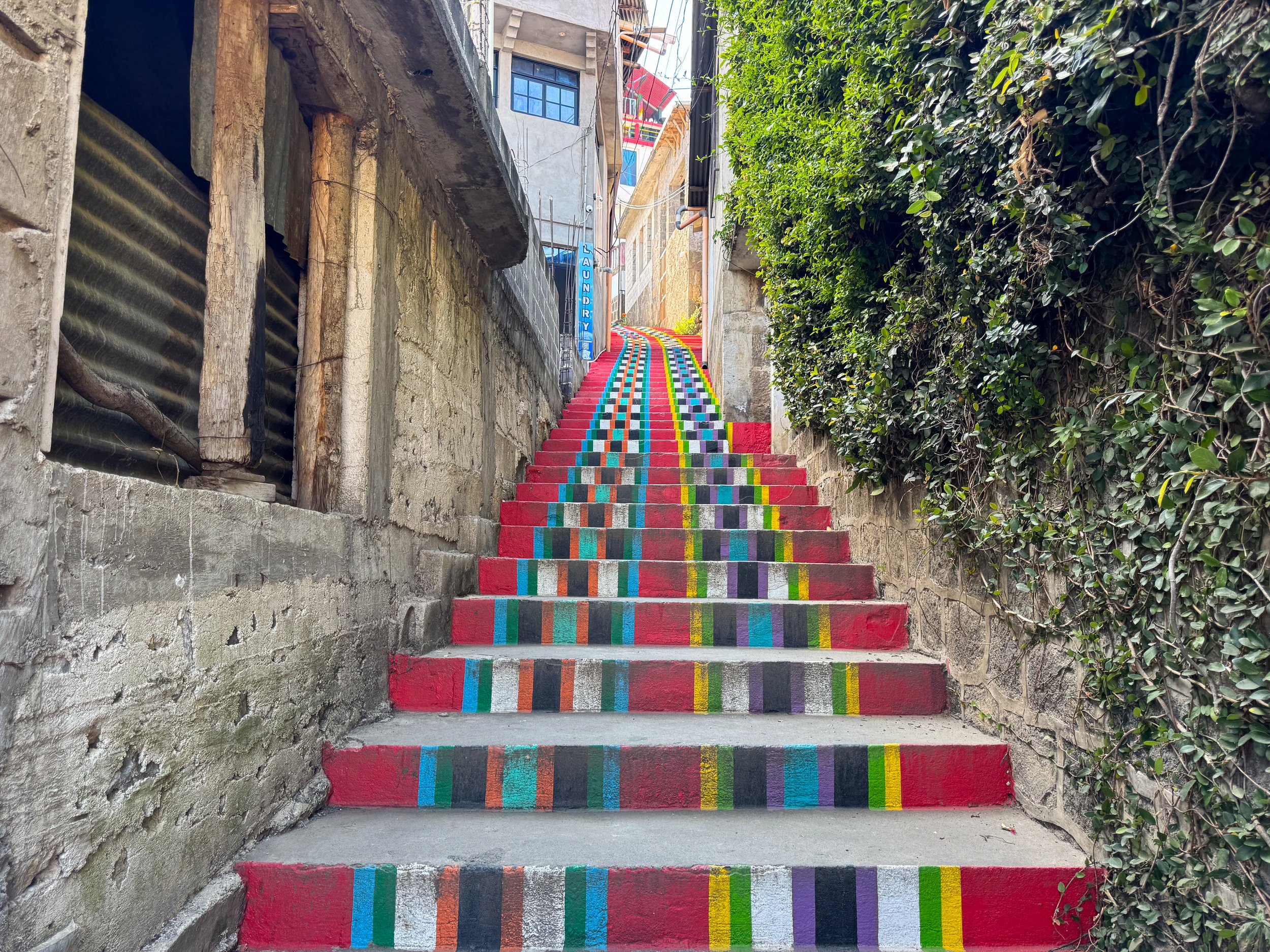
San Juan de la Laguna is a pueblo with an authentic and vibrant local culture known for its handicrafts and artistic traditions preserved by indigenous women. Buildings throughout town are painted with colorful murals depicting the women and their artistry. The main streets are decorated in canopies of umbrellas, banderas and string lights. Cafes, bakeries, textile shops, art galleries and roof top restaurants with views of Lake Atitlán are common places to taste the local culture.
Los Calles de las Sombrillas. A series of painted streets throughout the pueblo with a canopy of colorful umbrellas, banderas and string lights hanging overhead. The most vibrant street leads from the ferry dock into town, passing craft and souvenir stores, cafes serving Guatemalan coffee, galleries selling colorful paintings and walls painted with vibrant murals depicting the local culture.
Market Municipal. A small produce market along La Calle de las Sombrillas with vendors selling fresh vegetables, produce, dried peppers, eggs, herbs and lake fish. We bought groceries for the week to cook Guatemalan meals in our hotel’s traditional kitchen.
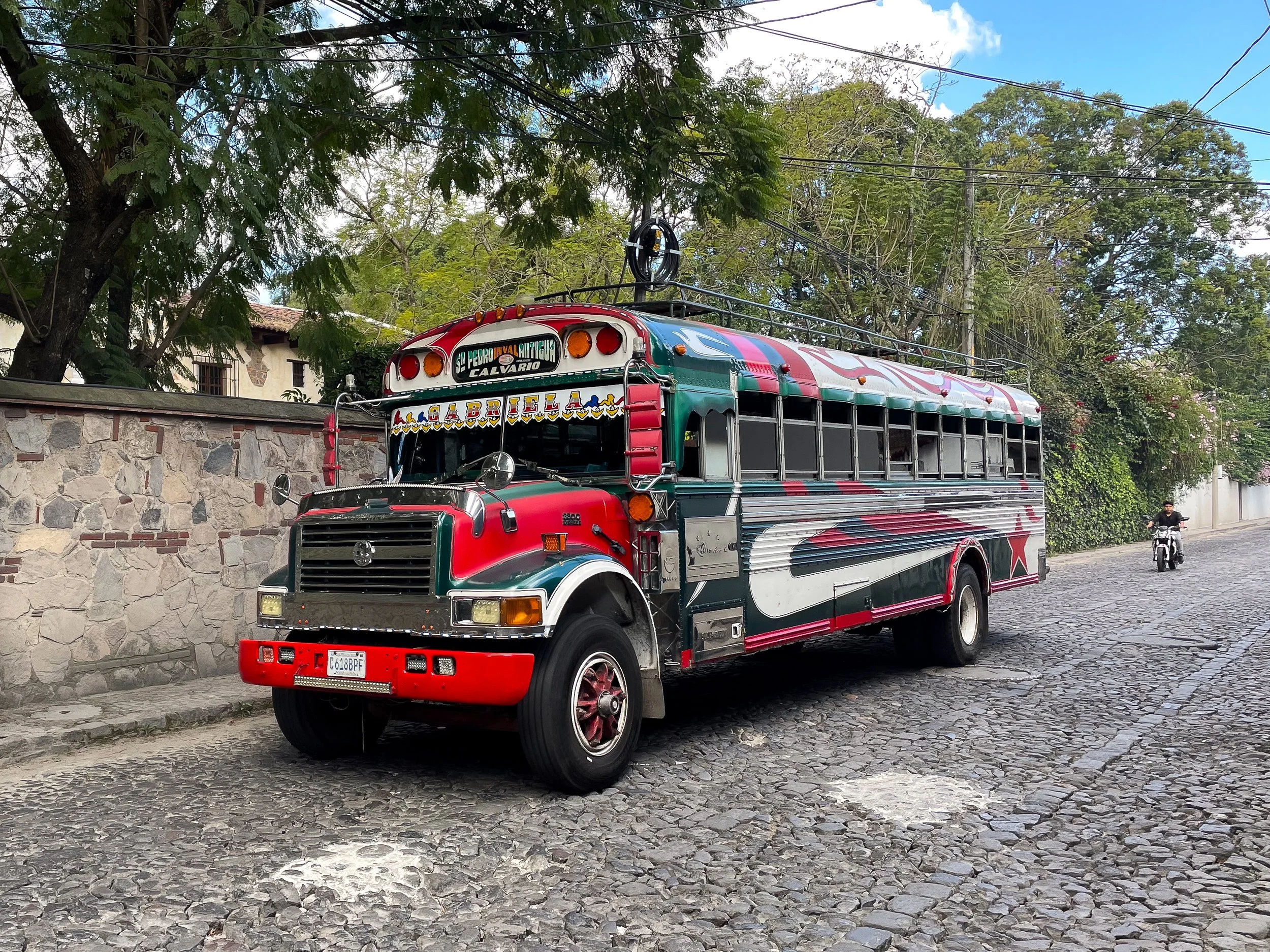
SOL 4. The main road that passes through San Juan. After the last ferries leave for the day, this road becomes the epicenter of activity for locals. Whole families gather for dinner as street food vendors fill the air with aromas of grilled meats, fresh made tortillas and burning charcoal. Brightly illuminated chicken buses roar past, announcing their presence with the honk of a train horn.
Iglesia Católica San Juan La Laguna. A historic but simple stone church in the center of town with dual bells. The plaza in front of it is a popular spot for street food vendors selling pollo con papas (chicken with fries), choco-fruitas (chocolate covered fruits), pan dulces (sweet breads) and micheladas.
Traditions & Crafts
Indigenous women keep Mayan traditions and crafts alive. Throughout the pueblo, women are seen wearing colorful handwoven textiles, often seen making tortillas on streets and weaving inside shops and collectives.
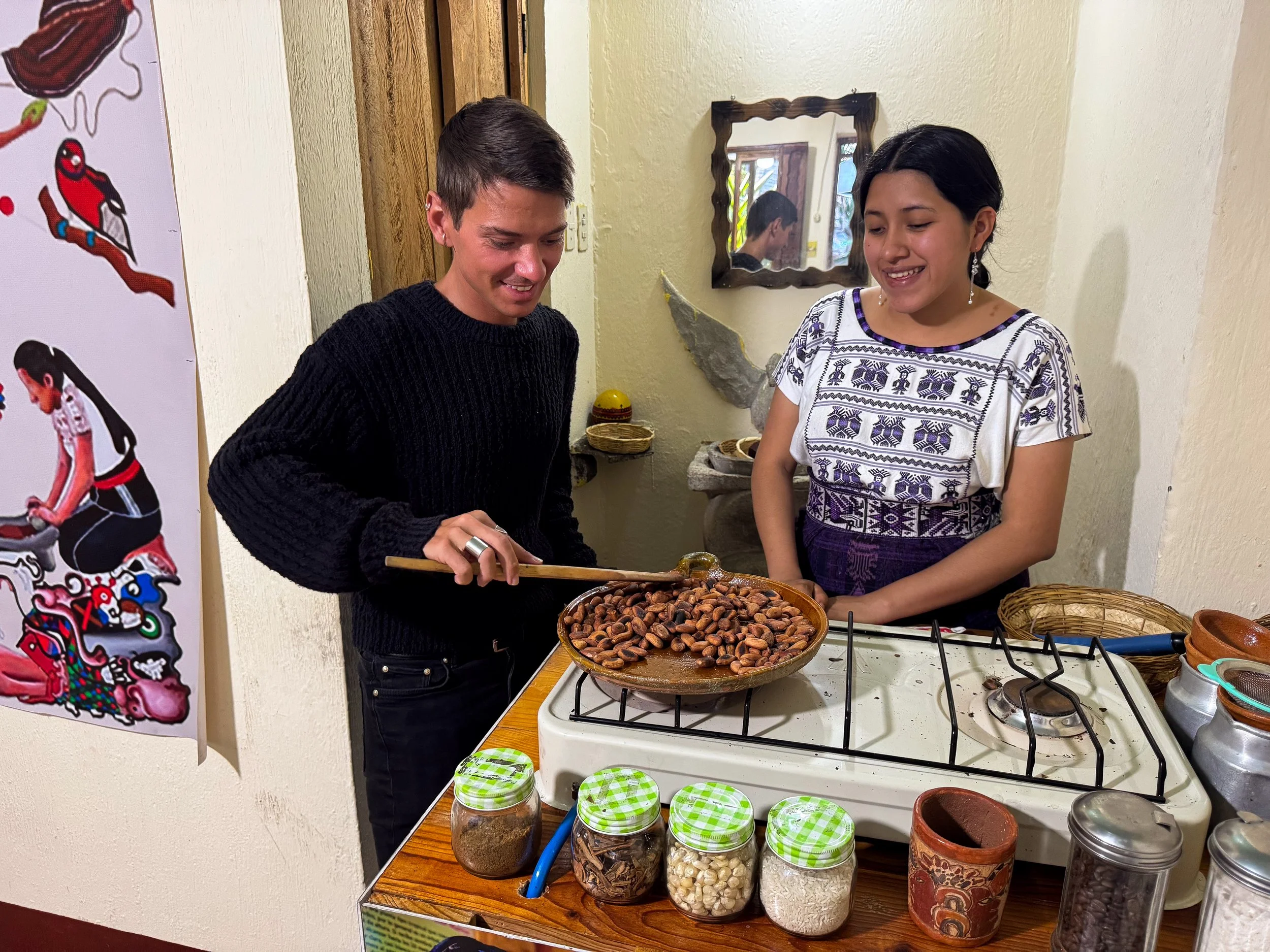
Licor Marron Chocolate. A Guatemalan chocolatier with traditional chocolate making classes, tastings and history lessons about cacao's importance to the ancient Mayans. During an hour long class, we began by separating hundreds of dried cacao beans by size to roast in a traditional clay comal (frying pan). An intoxicating chocolate aroma wafted from the beans as they popped and cracked under the heat. Once fully roasted, we separated the husks by hand and pulverized the beans on a traditional grinding stone. We tasted tea made from the husks and ancestral hot chocolate made from the cacao grounds mixed with molasses sugar, cinnamon and cardamom. We bought a few hand pressed bars and a large pellet of ancestral chocolate used to make our hot chocolate at home.
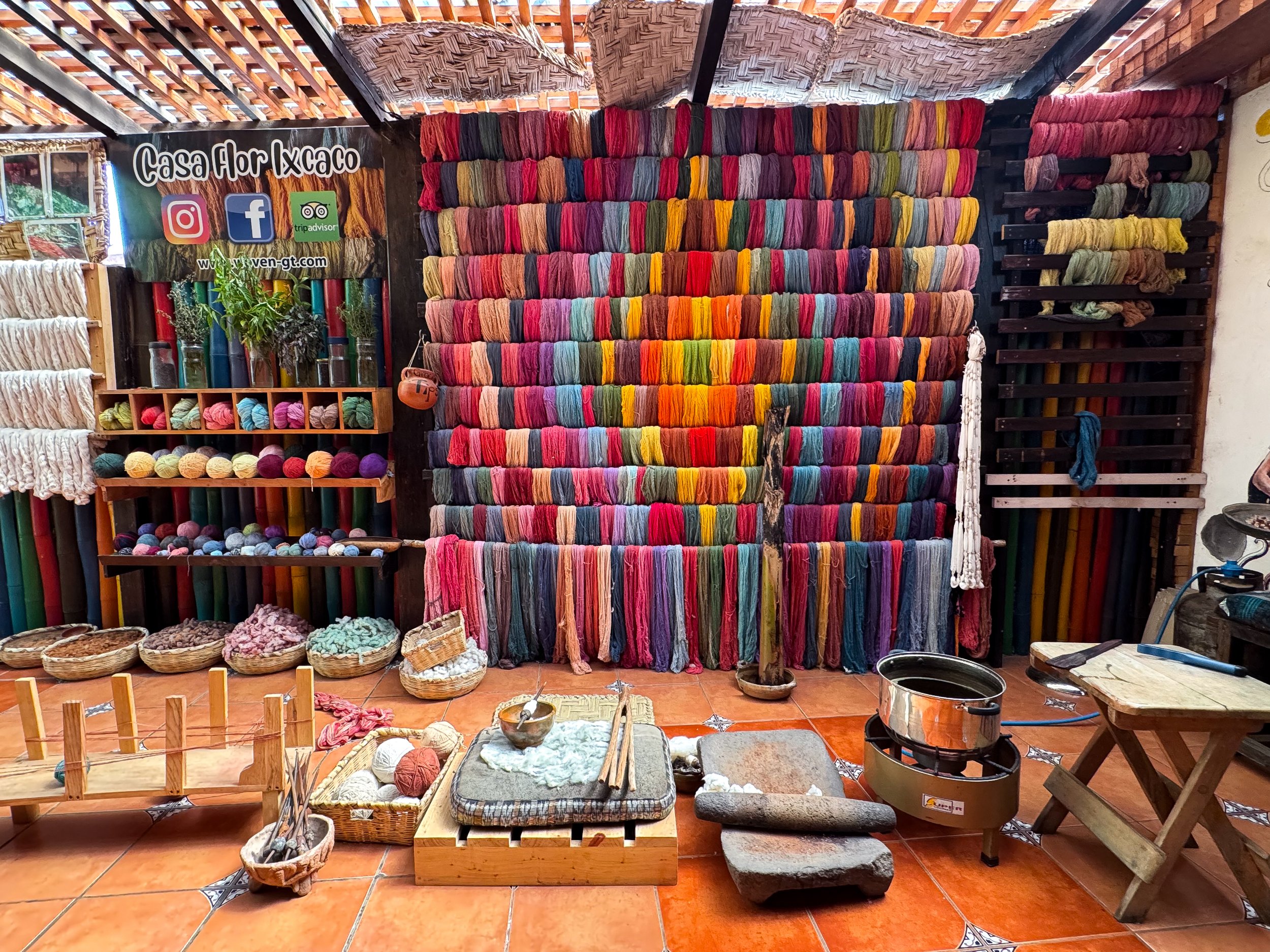
Casa Flor Ixcaco Weaving Cooperative. A female owned weaving cooperative with demonstrations of the textile making process. During the demo, a weaver began by separating seeds from raw cotton, beat the cotton fibers to soften them, spun them into yarn and dyed them in a turmeric bath. Using a back strap loom, she continued weaving a piece that was weeks in the process. The cooperative has a store with textiles made by the women, including clothes, bags, home decor and blankets. Each piece has a tag with a photo and name of the woman who made it, the type of cotton it’s made from, the dyes that were used and how long the item took to make.
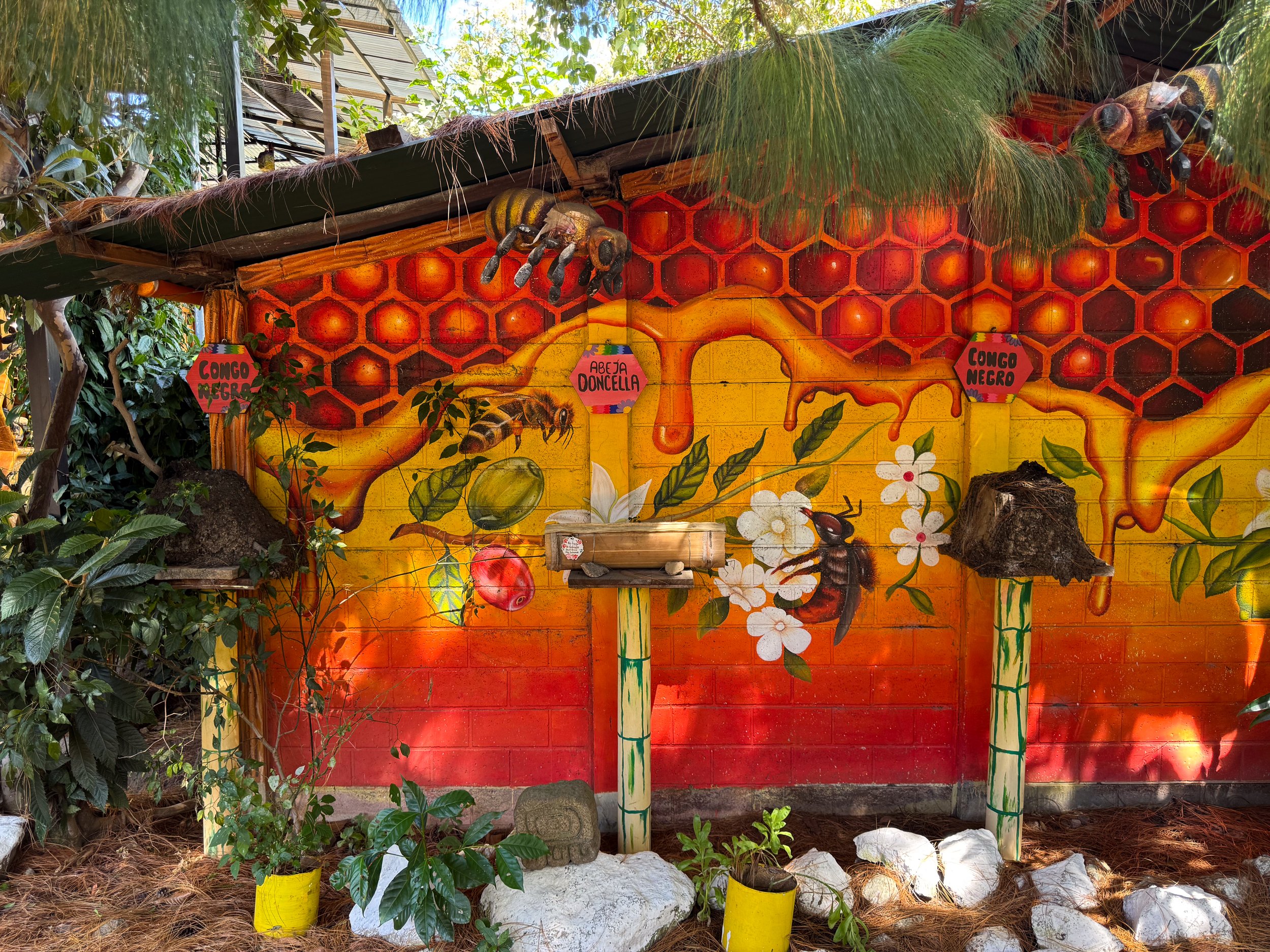
Mundo de Abejas Mayas. A bee farm and honey producer with an interactive garden home to hives of various species of stingless bees. We visited and tasted over a dozen types of pure and infused honeys made from local ingredients. We bought a jar of crystallized honey spread to smear on toast and sweeten herbal tea. Their shop sells all types of bee products including candles, honeys, pollen, raw honey combs, royal jelly, bee venom, honey wine and soaps. Despite its name, the bee farm has nothing to do with Mayan culture. It’s focused on the sustainable harvesting of honey and preservation of bees endemic to Guatemala.
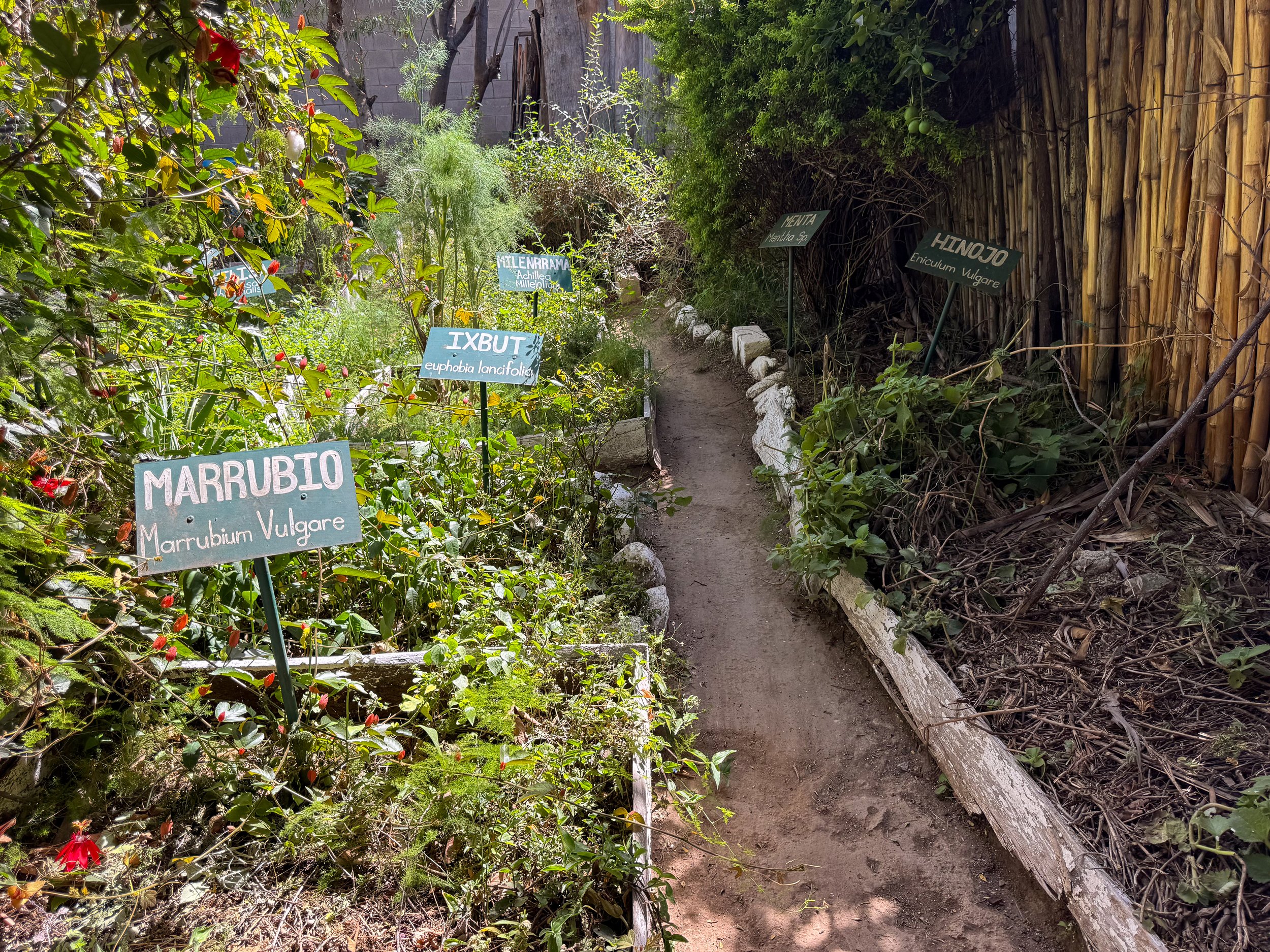
Asociación Q’omaneel. A traditional medicinal garden commonly grown by Guatemalan women at home and used to make teas, soaps and oils to treat various ailments from stomach aches, joint pain, burns, stress, etc. We bought a tea that’s supposed to help with sleeping made from dried stems, leaves and flowers. We steeped it nightly and mixed it with our crystallized honey from Mundo de Abejas Mayas.
Hiking & Lookouts
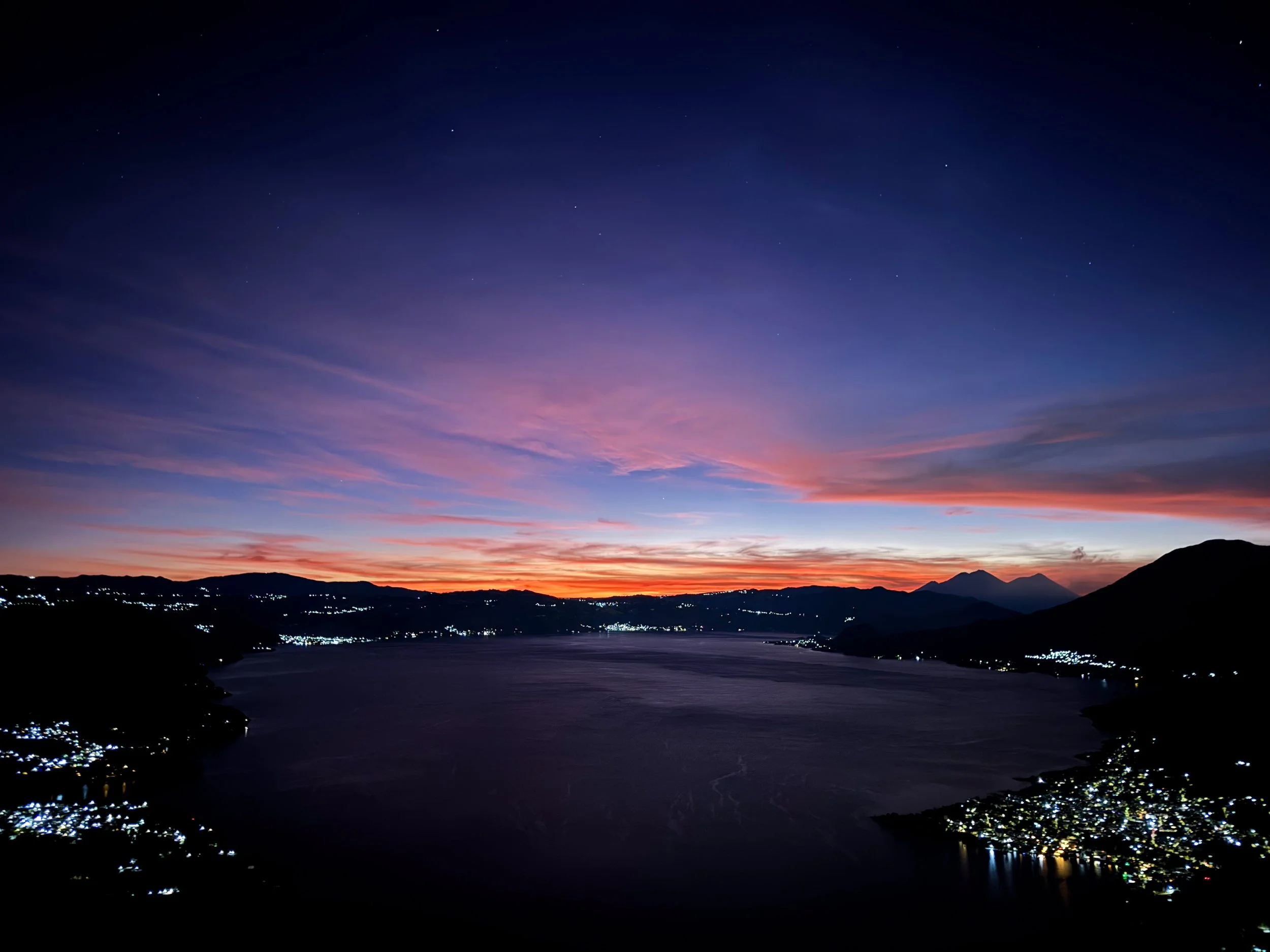
Cerro Cristalino (Nariz del Rostro Maya). A mountain peak popular for its sunrise hike overlooking Lake Atitlán, the surrounding volcanos and pueblos. Starting at 4am, we hiked with a local guide from the trail head to the summit. We passed through farmland with avocado trees, coffee plants, black beans and corn stalks, reaching the lookout 30 minutes later. Surprised to be the first to arrive, we took front row seats to watch the sunrise!
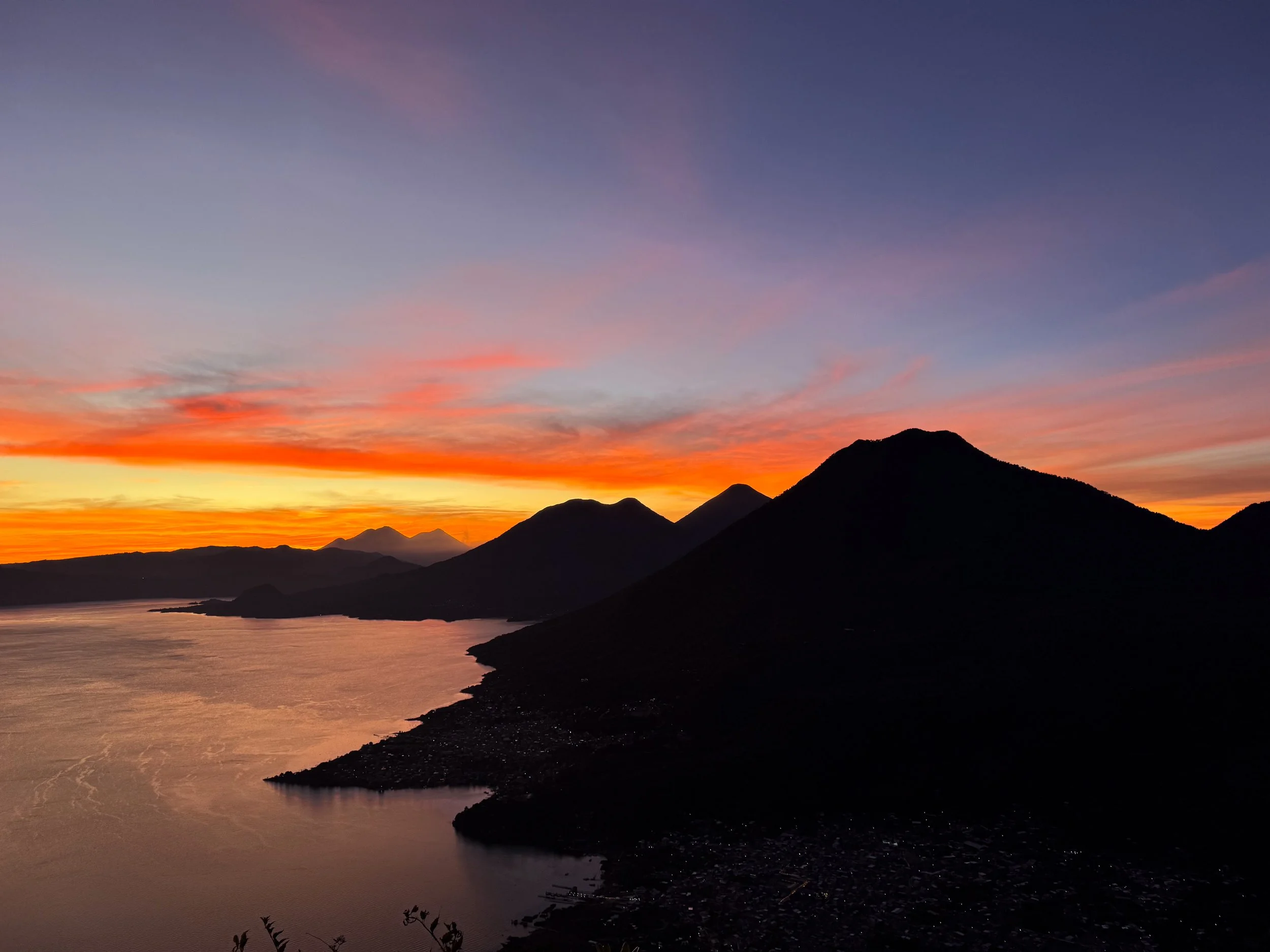
The San Pedro, Tolimán and Atitlán Volcanos create a silhouette set against the dark blue and purple star covered sky. Below, twinkling lights from the pueblos dot the lake. Further in the distance, the volcanic chain continues with Agua, Acatanango and Fuego. Every several minutes, we saw the red glow of lava erupting from Fuego and giant plumes of ash rising above it. First light appeared with dim reds, turning to oranges, pinks and yellows as the sun rose above the volcanic landscape and reflected in calm the lake. As the sun rose, we were served coffee in clay mugs and conchas for breakfast. The tour included a round trip transfer from our hotel in San Juan to the trail head. We booked with Tours with Vick on Viator.
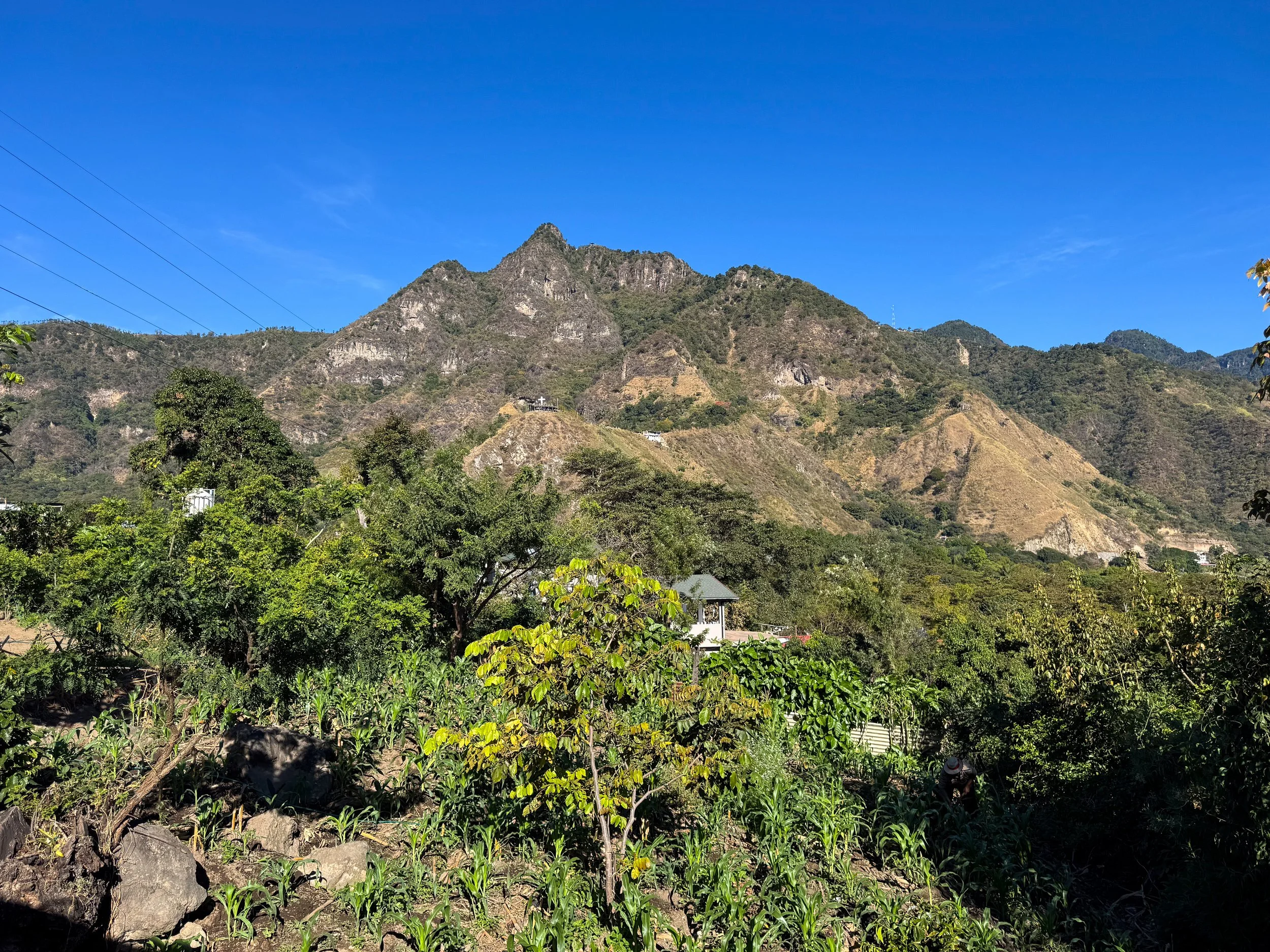
Good to Know. From San Juan, the mountain crest looks like the profile of a face looking upwards. It’s named after a beloved Mayan woman and local legend. Tourists commonly call the mountain, “The Indian’s Nose.” This is considered disrespectful to locals and best avoided.
Places to Eat & Drink
Cafe Las Marias. A tiny coffee roaster with a cafe on its second floor serving bold brews of Guatemalan coffee prepared in various styles including drip, aeropress and Turkish. The cafe is semi-hidden in an alley. Once finding it, ring a bell to be let in. The intimate cafe only has two tables and boasts views of Cerro Cristalino. They offer full breakfasts and do occasional coffee roasting demonstrations but there’s no set schedule.
Jaque. A second floor restaurant above a gallery with an outdoor patio overlooking Lake Atitlán and the San Pedro Volcano. The menu features a range of pizzas, seafood and vegetarian dishes. We ordered a Mojarra Frita (whole fried fish) and garlic shrimp with fresh made tortillas and two bottles of the local beer, Gallo.
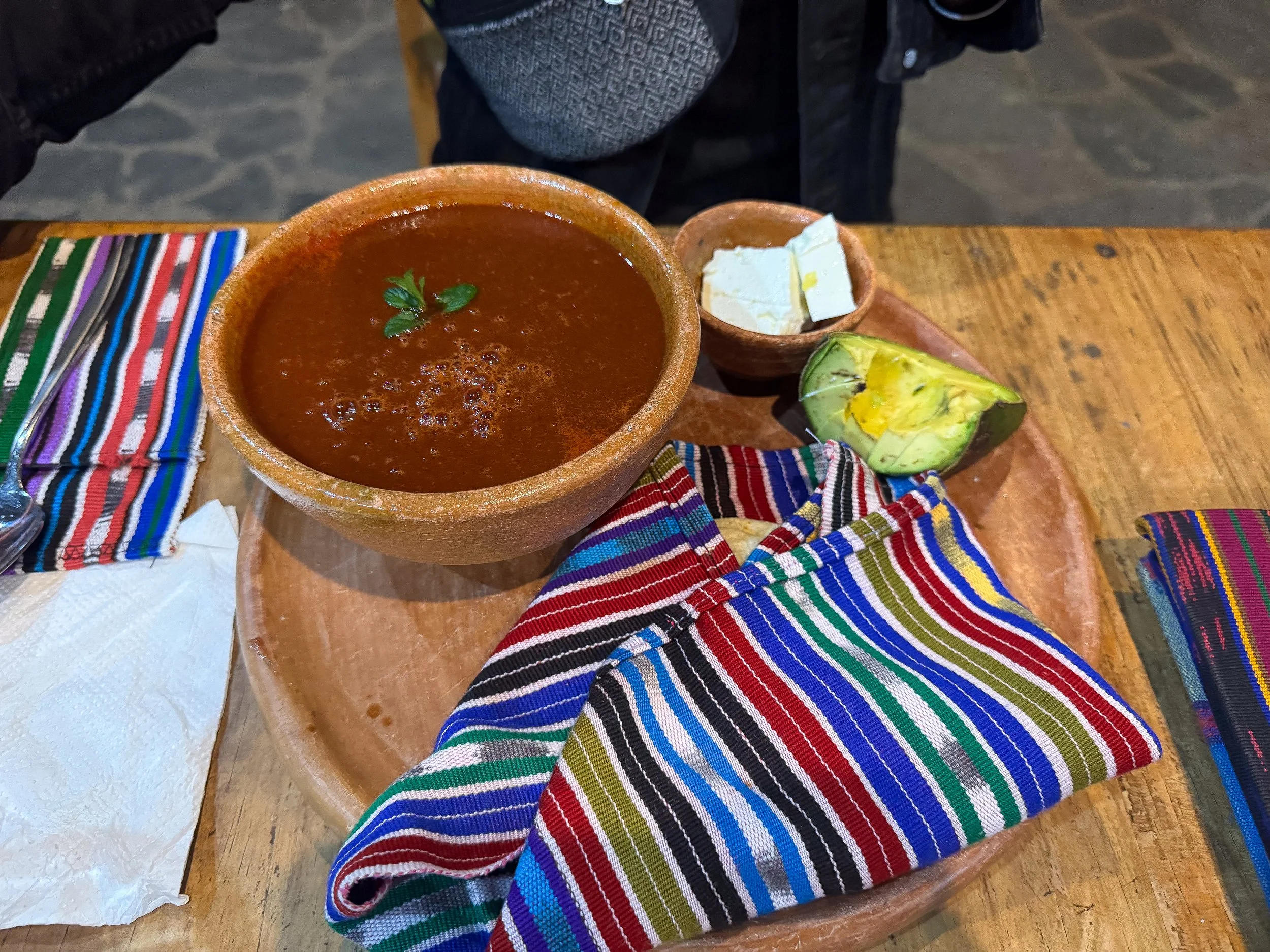
Restaurante MayAchik’. An eco hotel and restaurant on the outskirts of town with homemade vegetarian and vegan dishes. We ordered the Tacos de la Casa made with hibiscus flowers and Chapín, a local soup made from chile peppers, tomato and cilantro. Both were served with locally grown avocado and handmade tortillas. For dessert, we shared a plate of fried plantains covered in a spicy and chocolaty mole with a garnish of toasted sesame seeds.
Santa Catarina Palapó
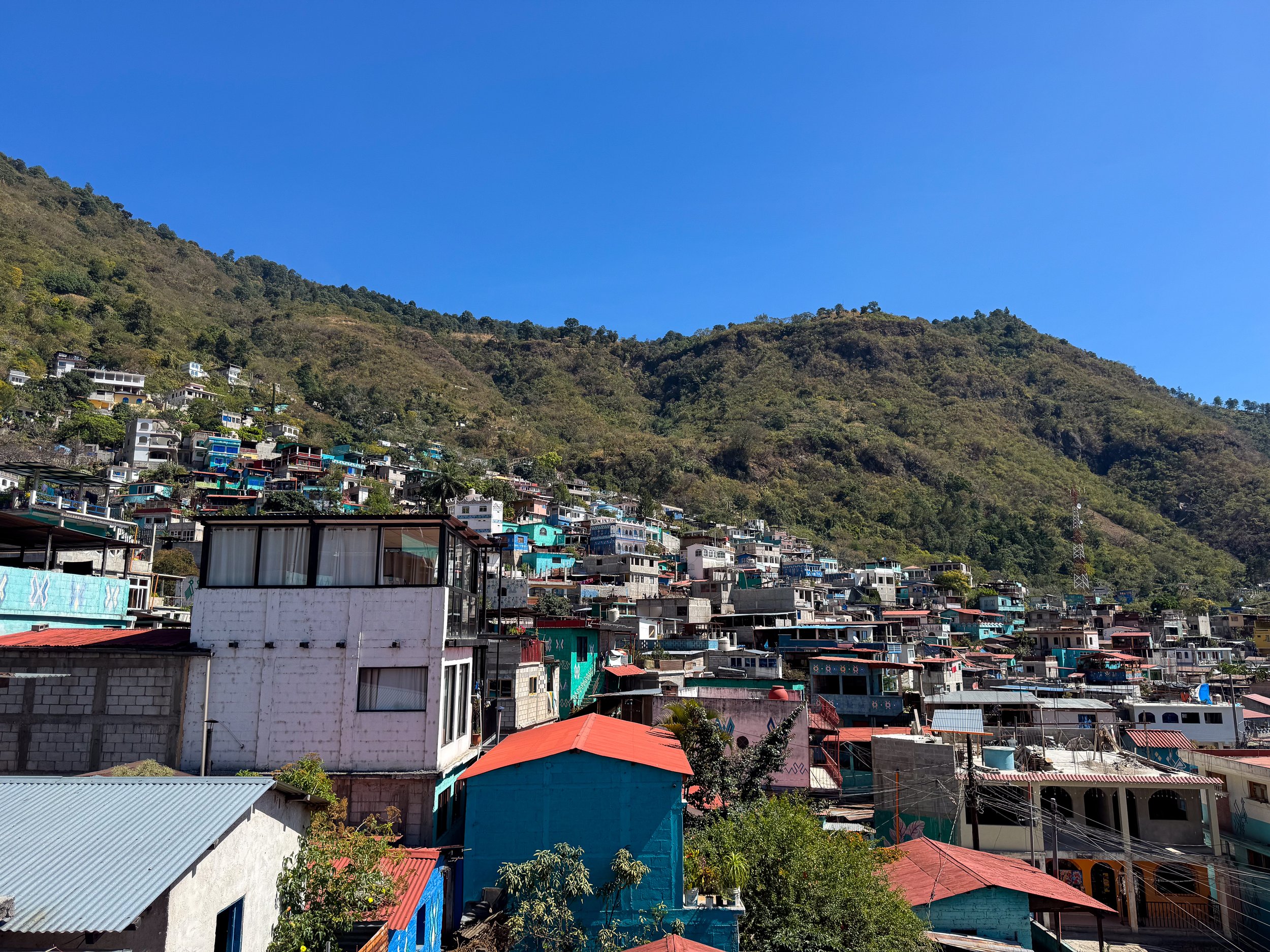
A small pueblo known locally for its traditional handicrafts and patterned buildings painted in shades of blue. It’s lesser visited and nearly untouched by tourism, allowing it to maintain a strong sense of authenticity. We followed a combination of cultural routes leading through town past various sights including viewpoints, museums and artisan shops. Similar to San Juan, many of the shops are women owned cooperatives used to keep the local traditions alive and to allow them to earn an independent livelihood.
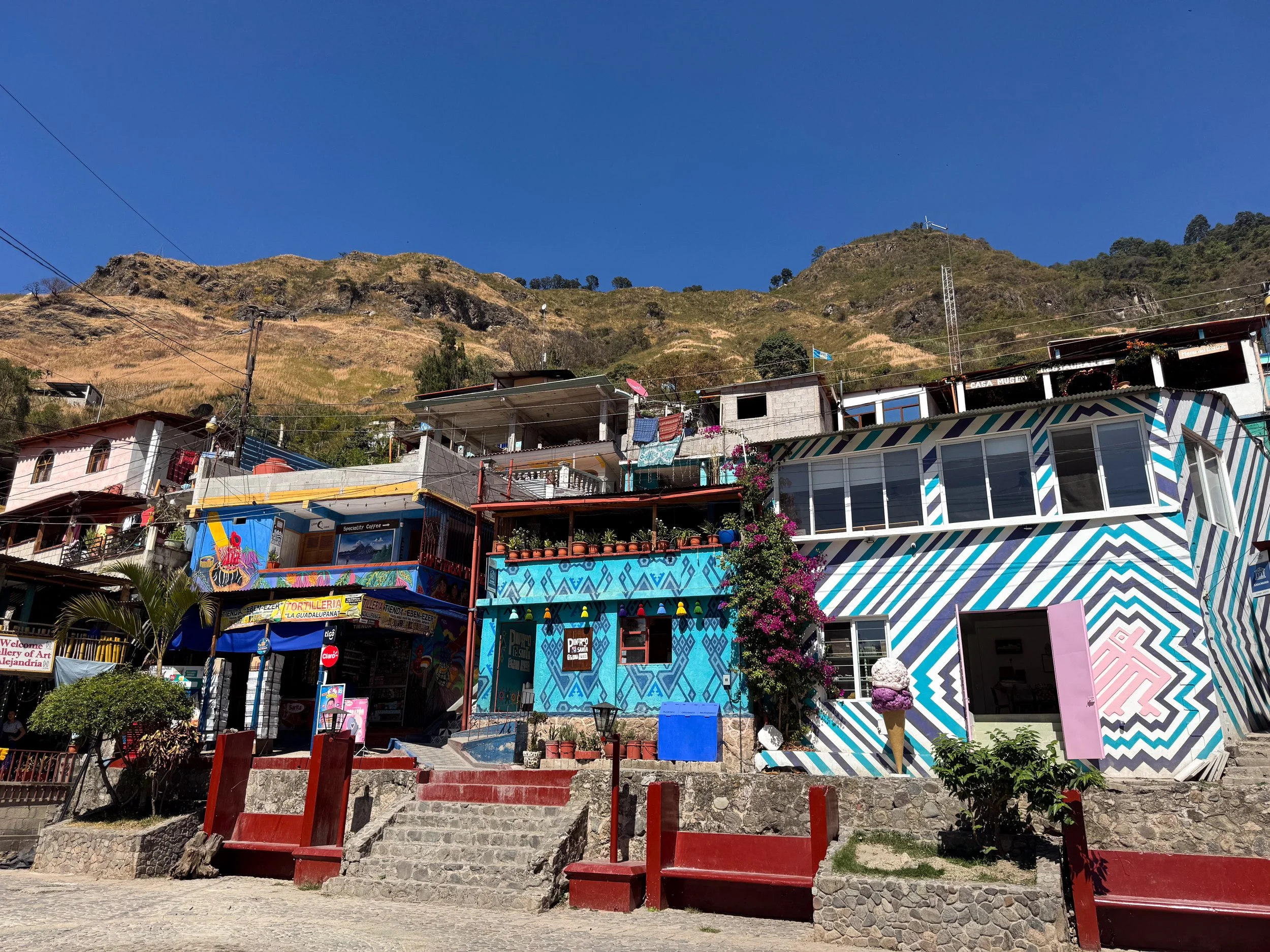
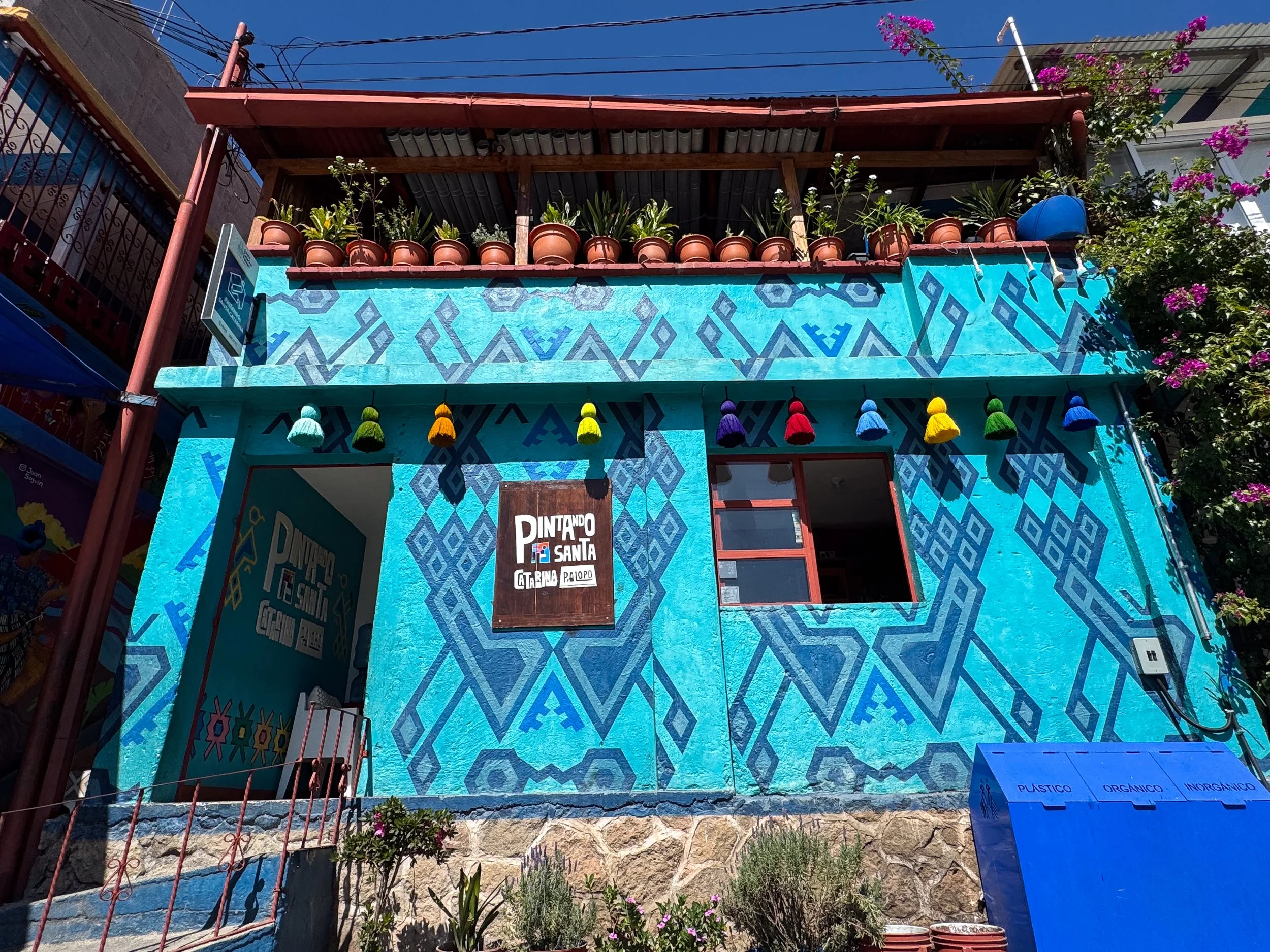
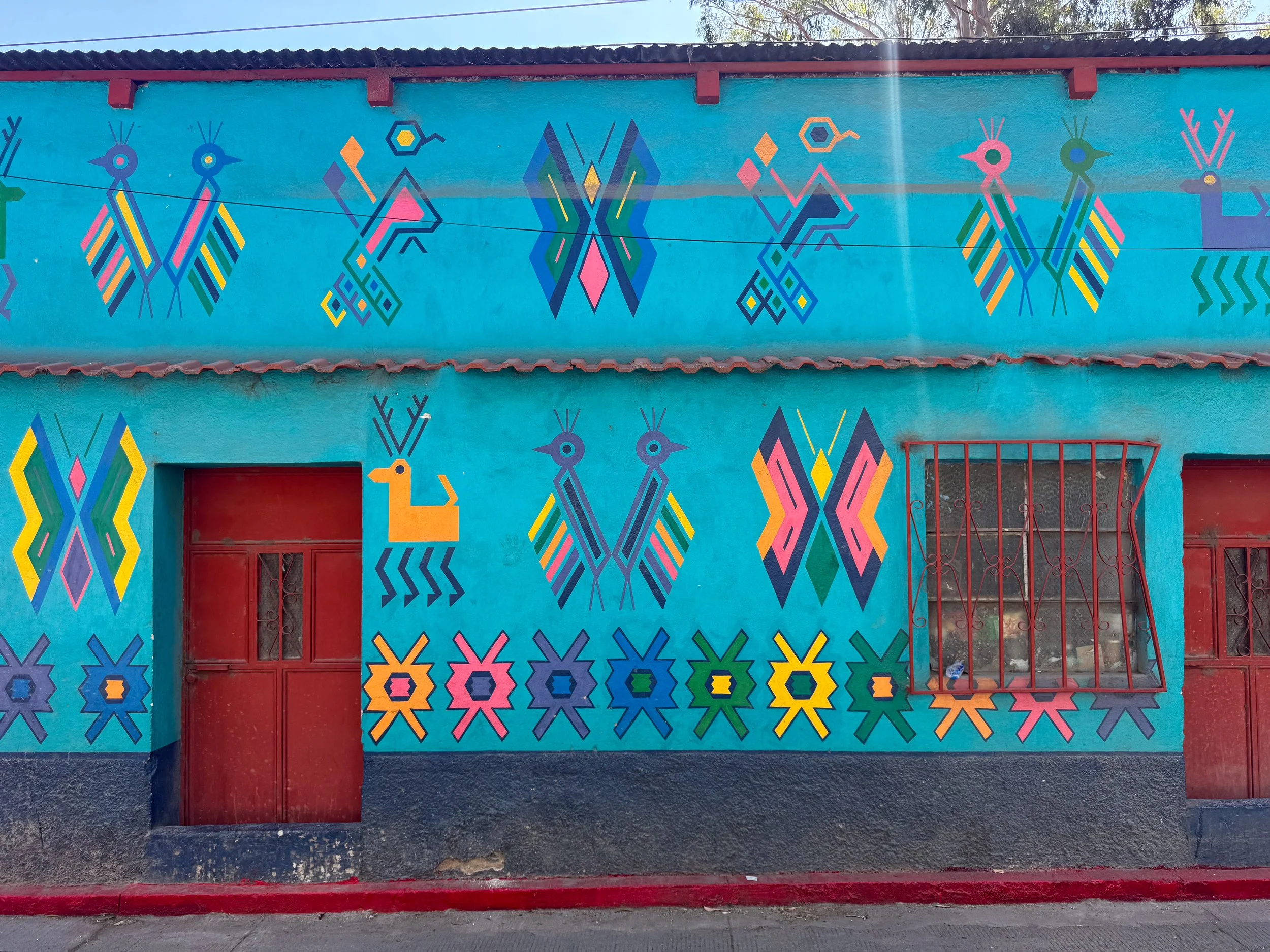
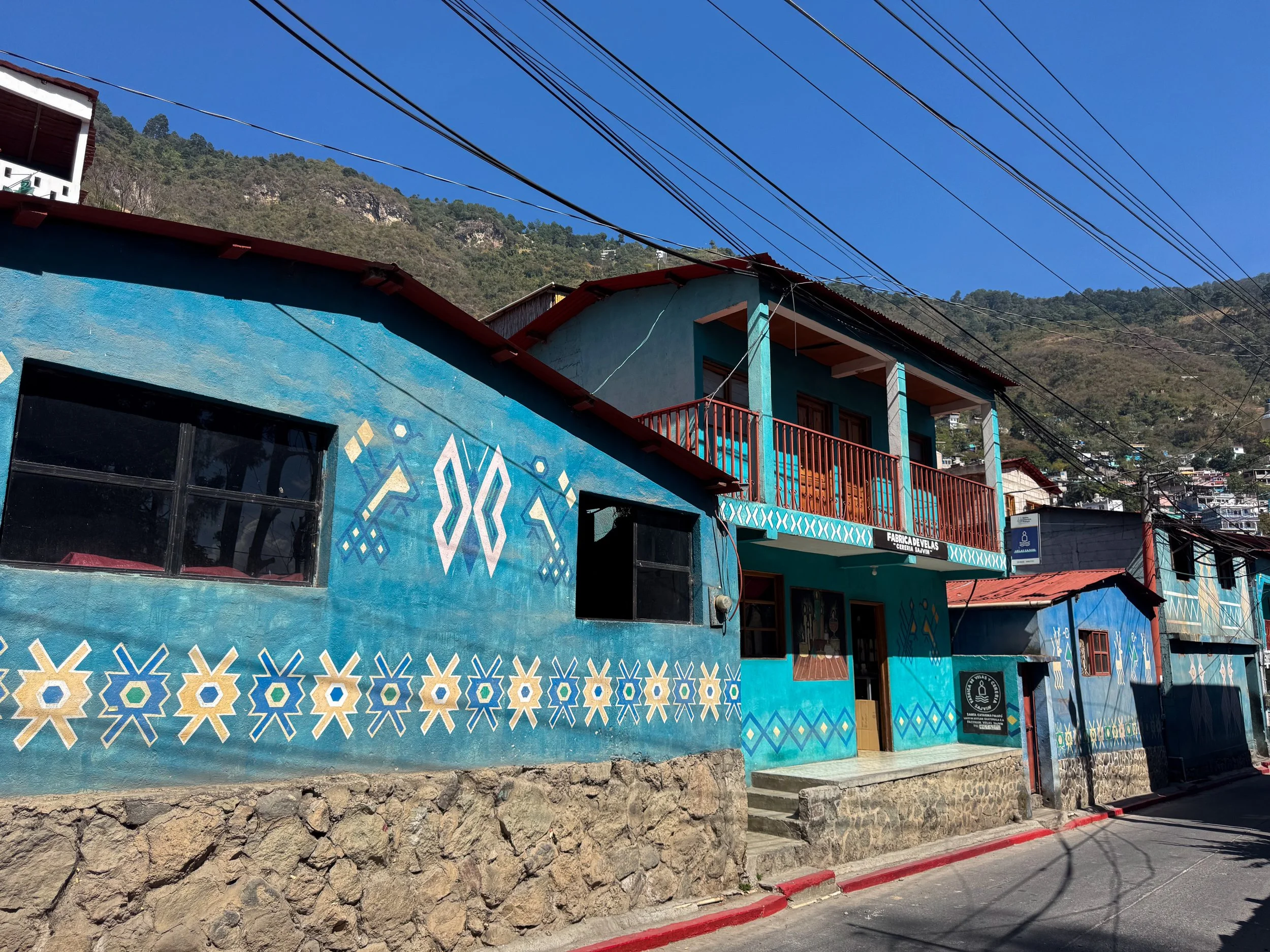
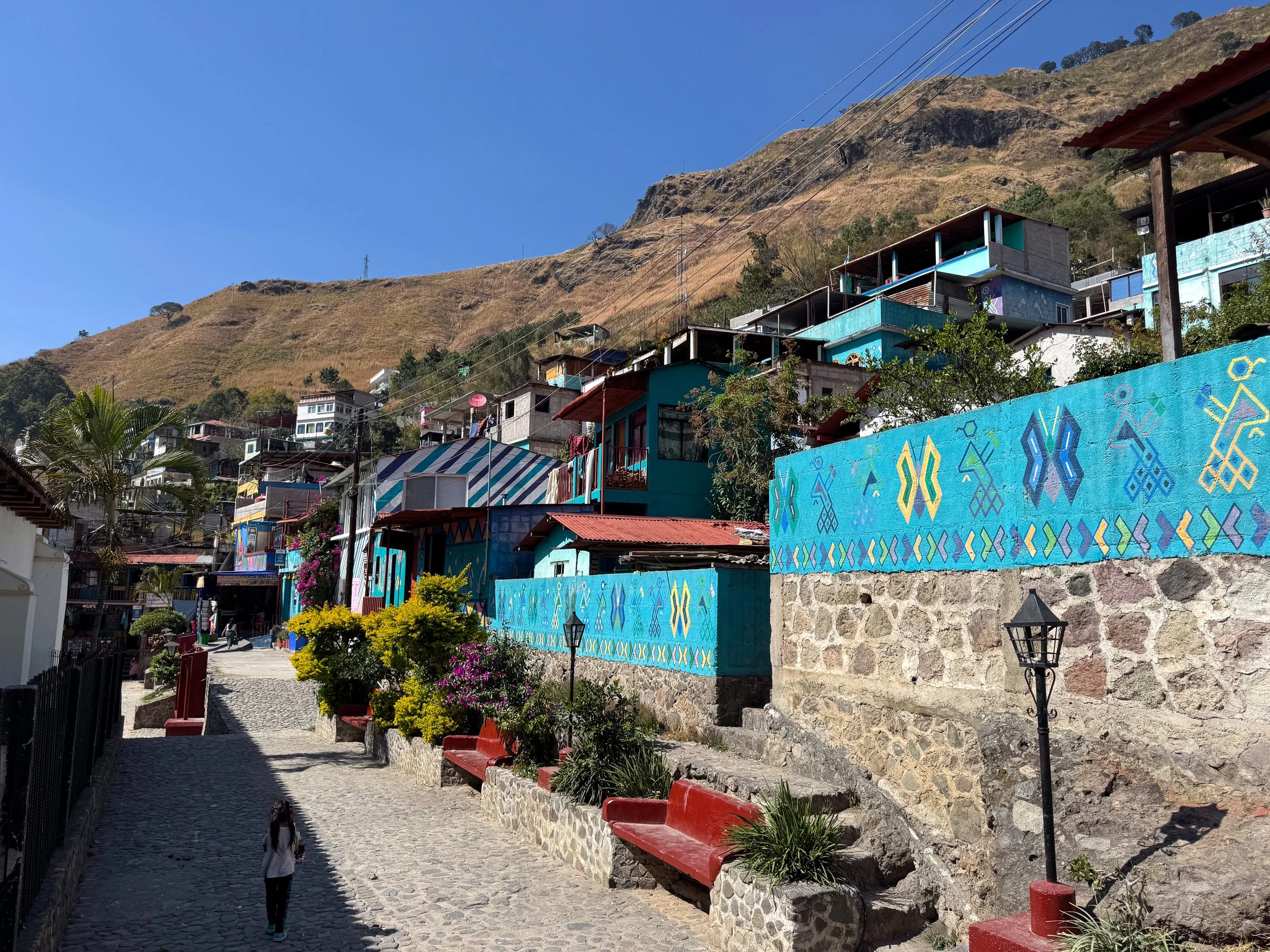
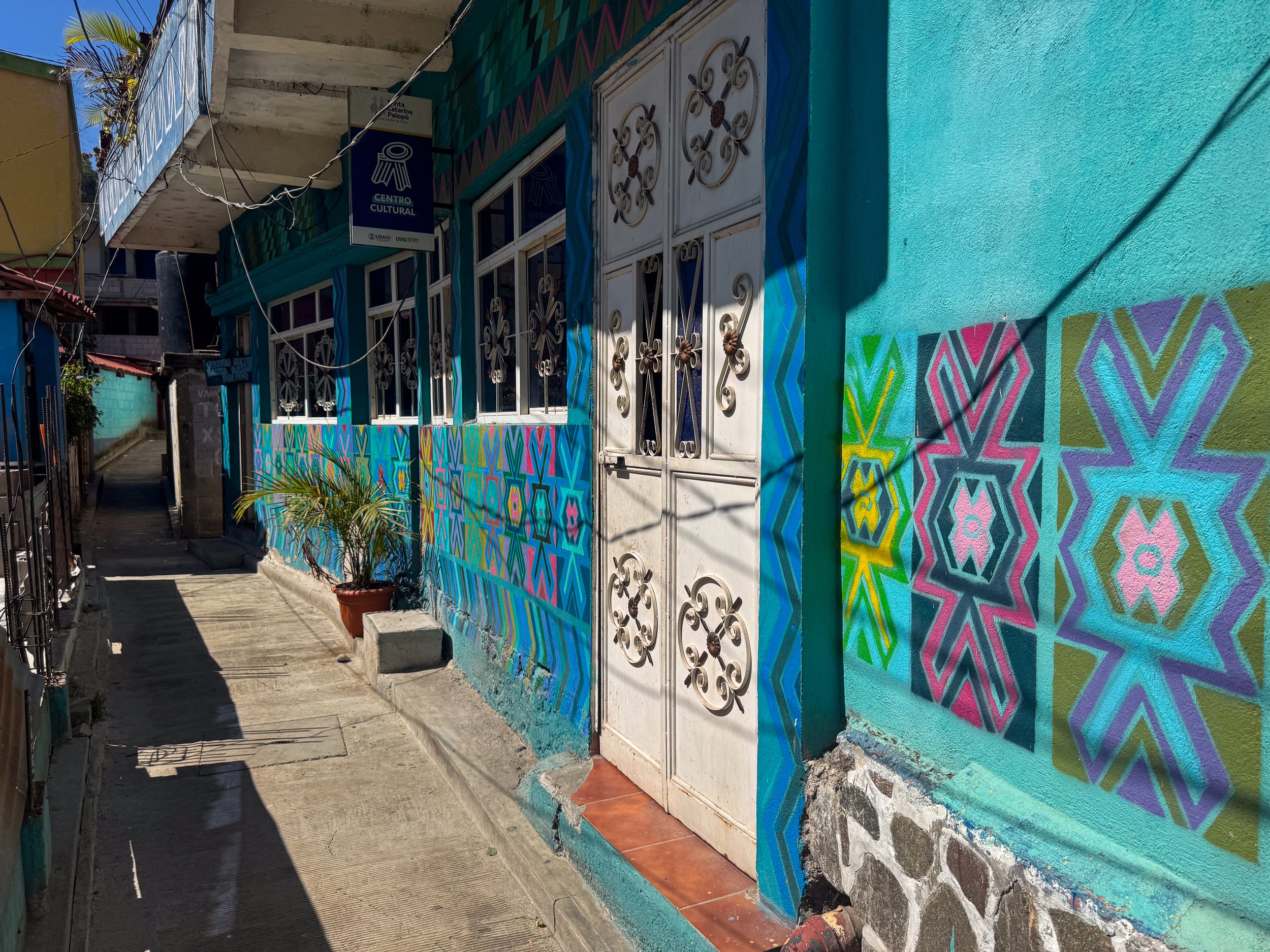
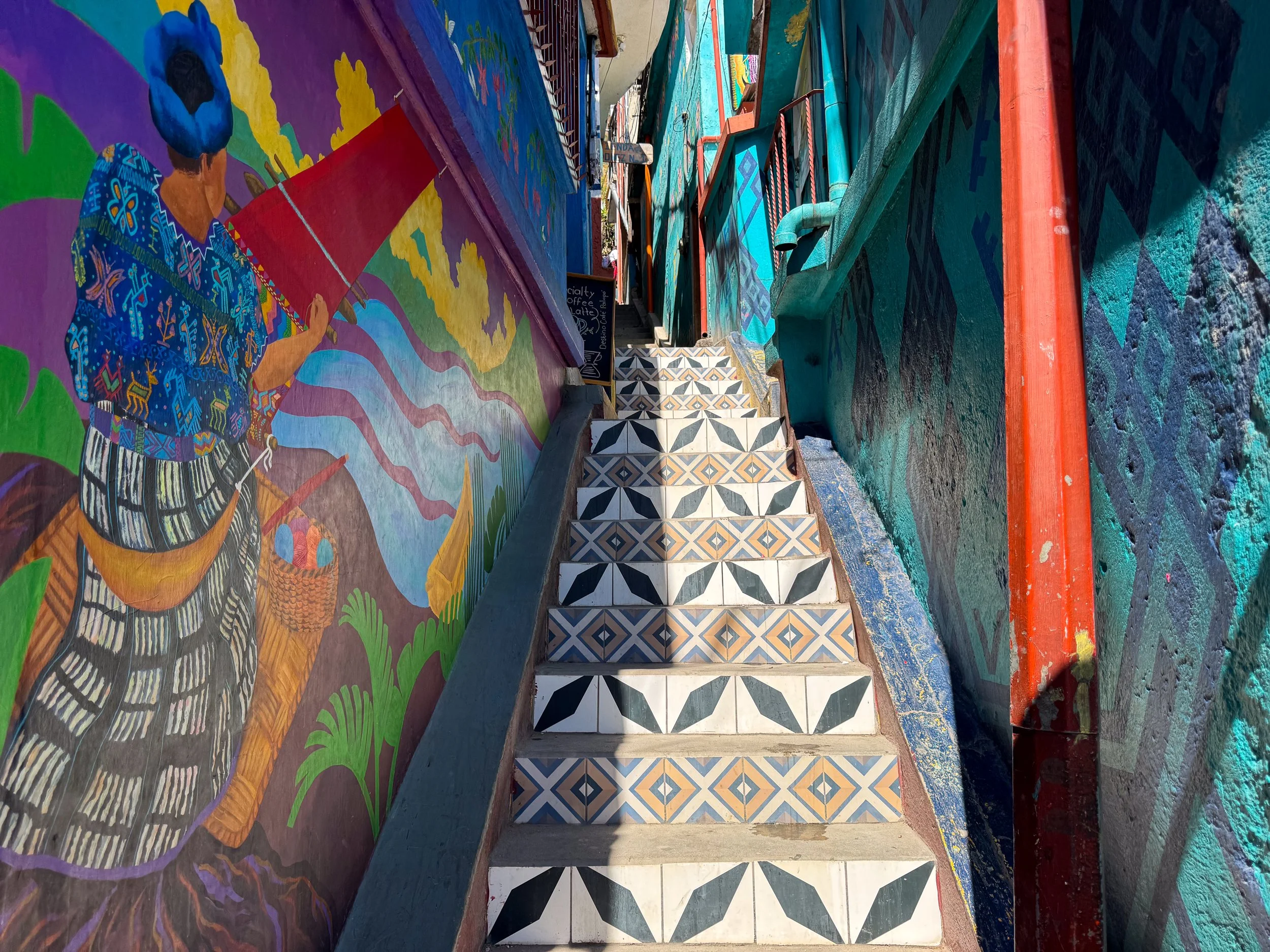
Proyecto Pintando Santa Catarina Palapó. A small but fascinating cultural center dedicated to the town’s efforts of painting all of its buildings in a range of blue hues and patterns reflective of the local Mayan people. Blue represents the primary color of the local textiles and the symbols represent nature including birds, butterflies, fish, corn, the volcanos and lake. We bought a clay Christmas ornament painted to look like a local house.
Casa Museo. A simple museum dedicated to the town’s cultural history and way of life with four small exhibits. One discusses the history, traditions and legends of the communities in Santa Catarina. The second is a replica ancestral home adorned with artifacts, furnishings and personal belongings. The third is a mock Temascal, a traditional Mayan sauna and bath. The fourth is a Mayan betting game named Patolli. Filed down beans are used as dice and rolled to move a token twenty-some places forward before the other player. The museum has a rooftop restaurant and cafe with views of the town’s center, built up hillside and lake flanked by volcanos.
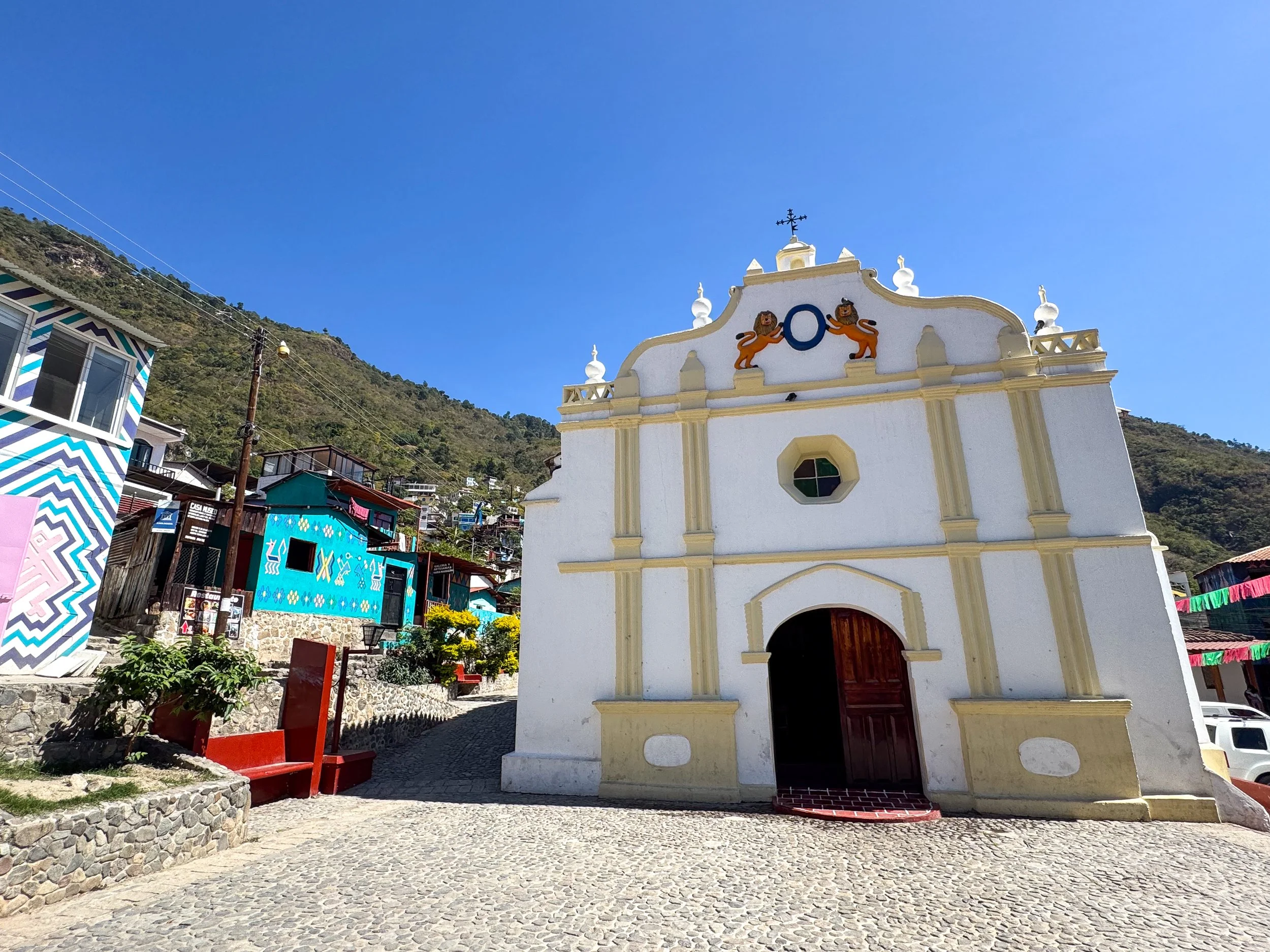
Iglesia Santa Catarina Palapó. A small windowless church in the center of the pueblo with a white painted facade, wooden doors, clay tiled roof and a motif of two lions holding up a blue circle.
Centro Cultural Santa Catarina Palapó. A small museum dedicated to the textiles of the community. It’s explains the history, colors and meaning behind the traditional textiles worn by the locals. Red colored textiles were the most traditional. Shades of blue later became popular. Today, it’s a mix of those colors and many others that represent the individual weavers’ own style. There is a textile shop on the second floor with women weaving on back strap looms.
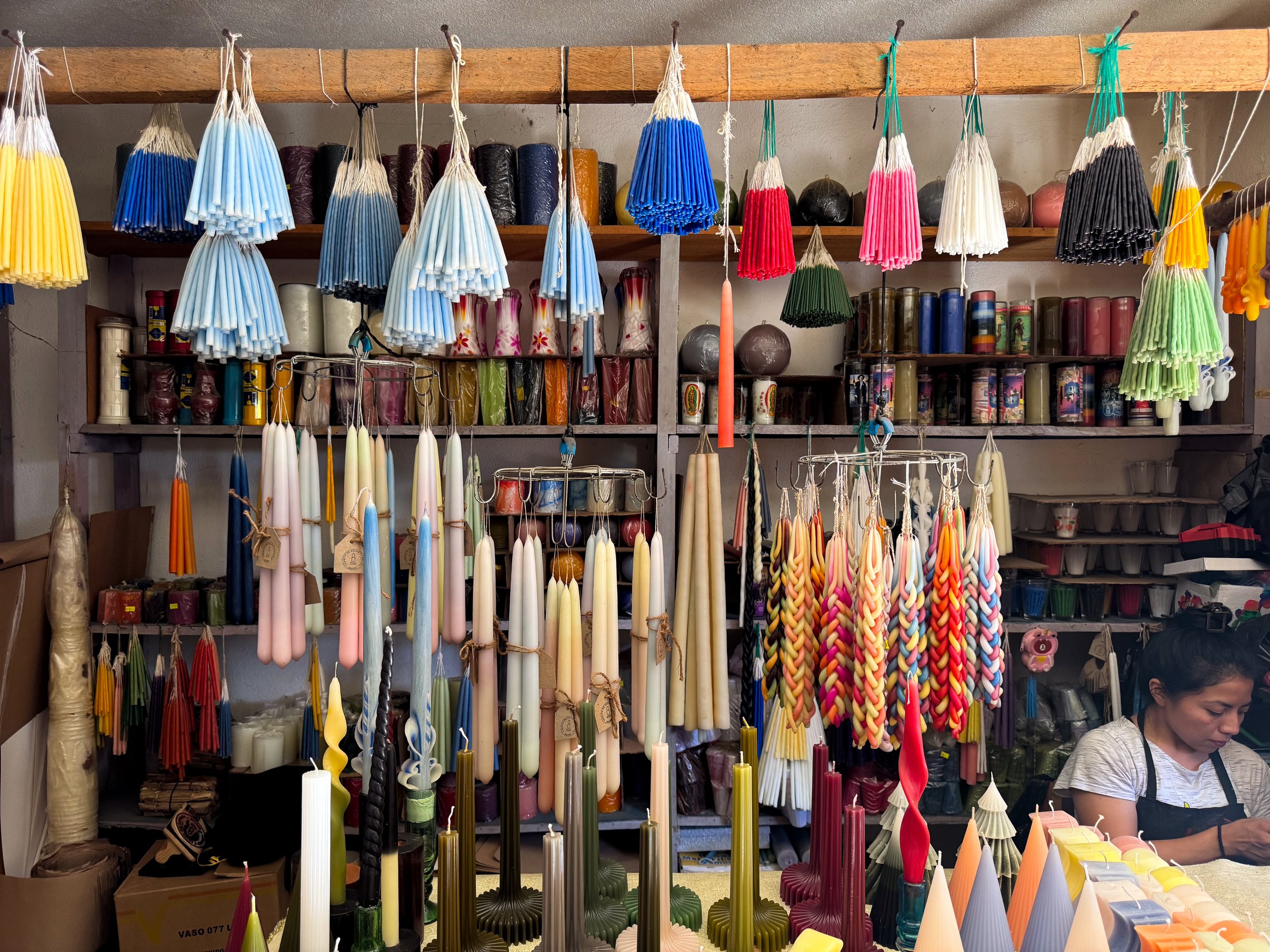
Fábrica de Velas y Cerería Sajvin. A traditional candle maker with various styles and colors of handmade candles. The shop owner explained the process of how the candles are dipped, colored and molded using bees wax and paraffin wax. We bought strings of pink and blue candles for 15Q each.
San Pedro de Atitlán
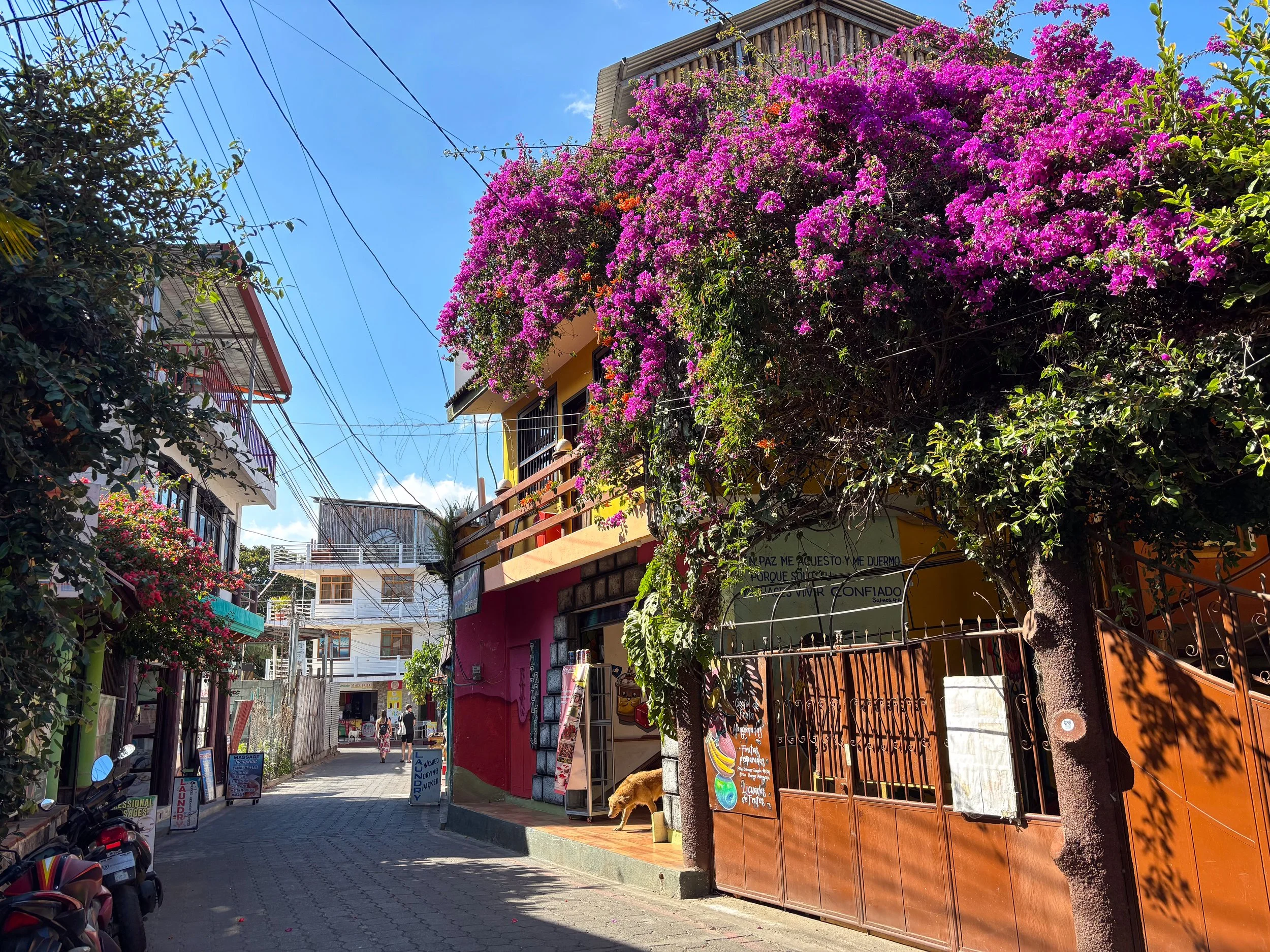
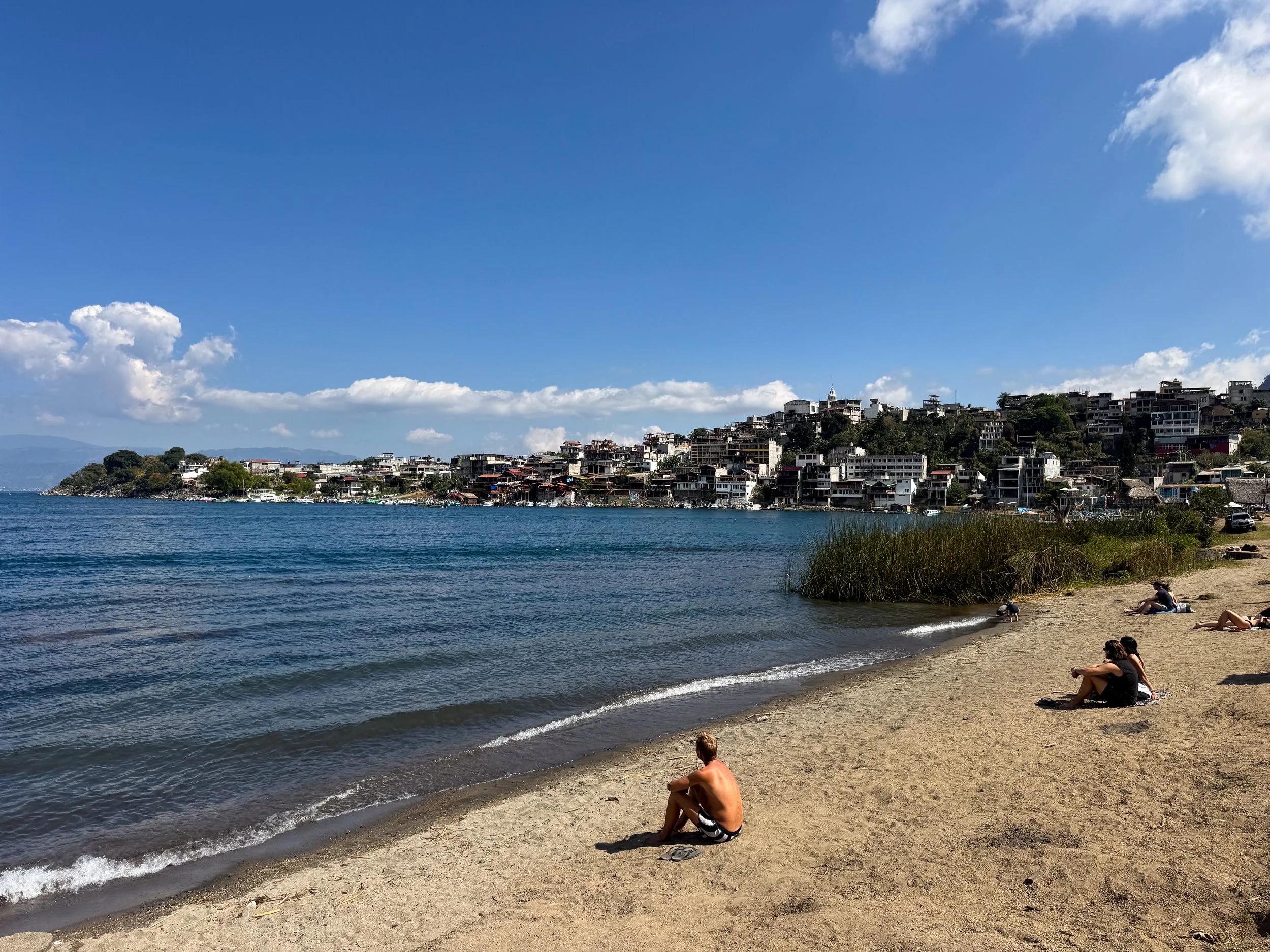
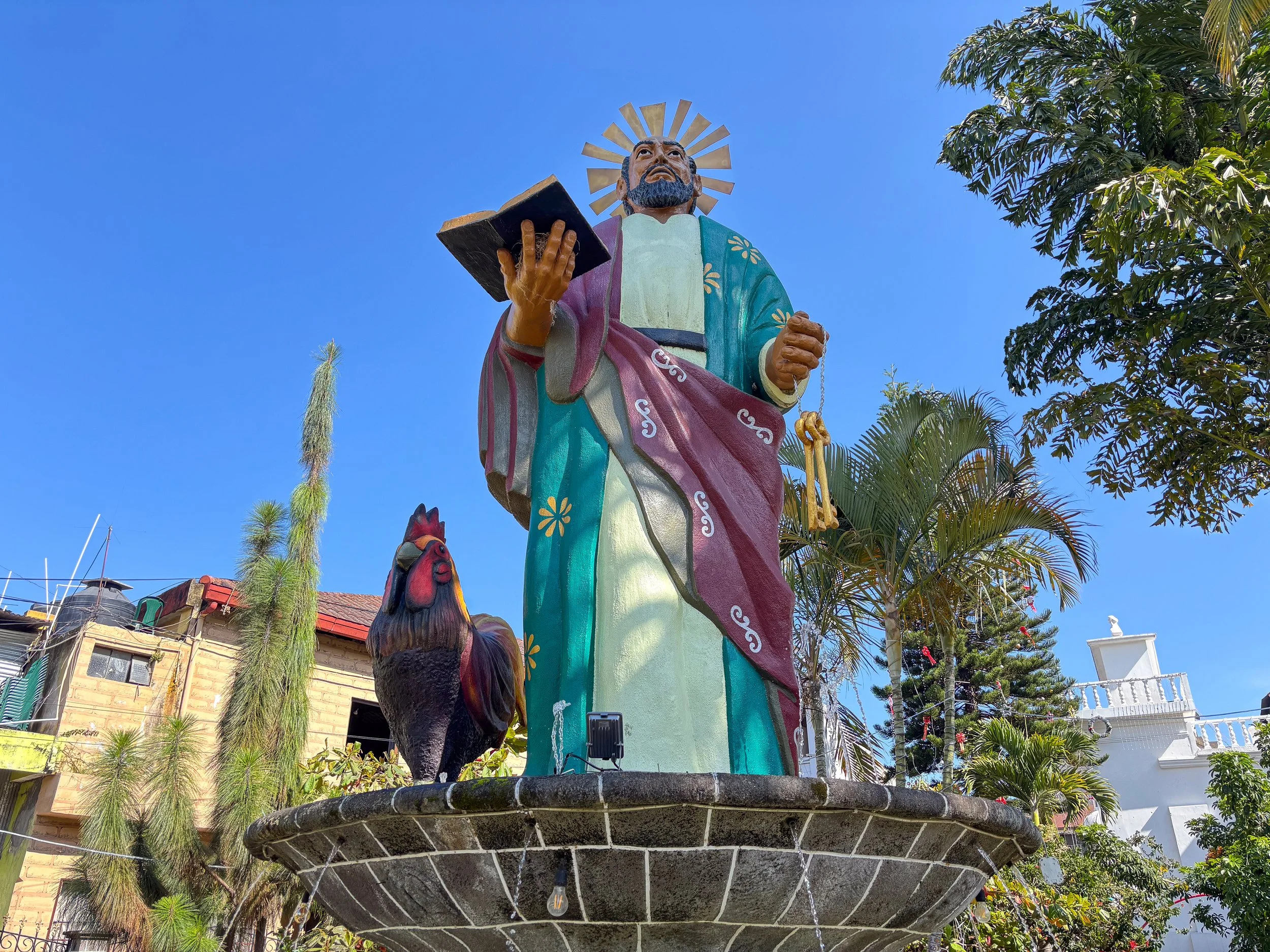
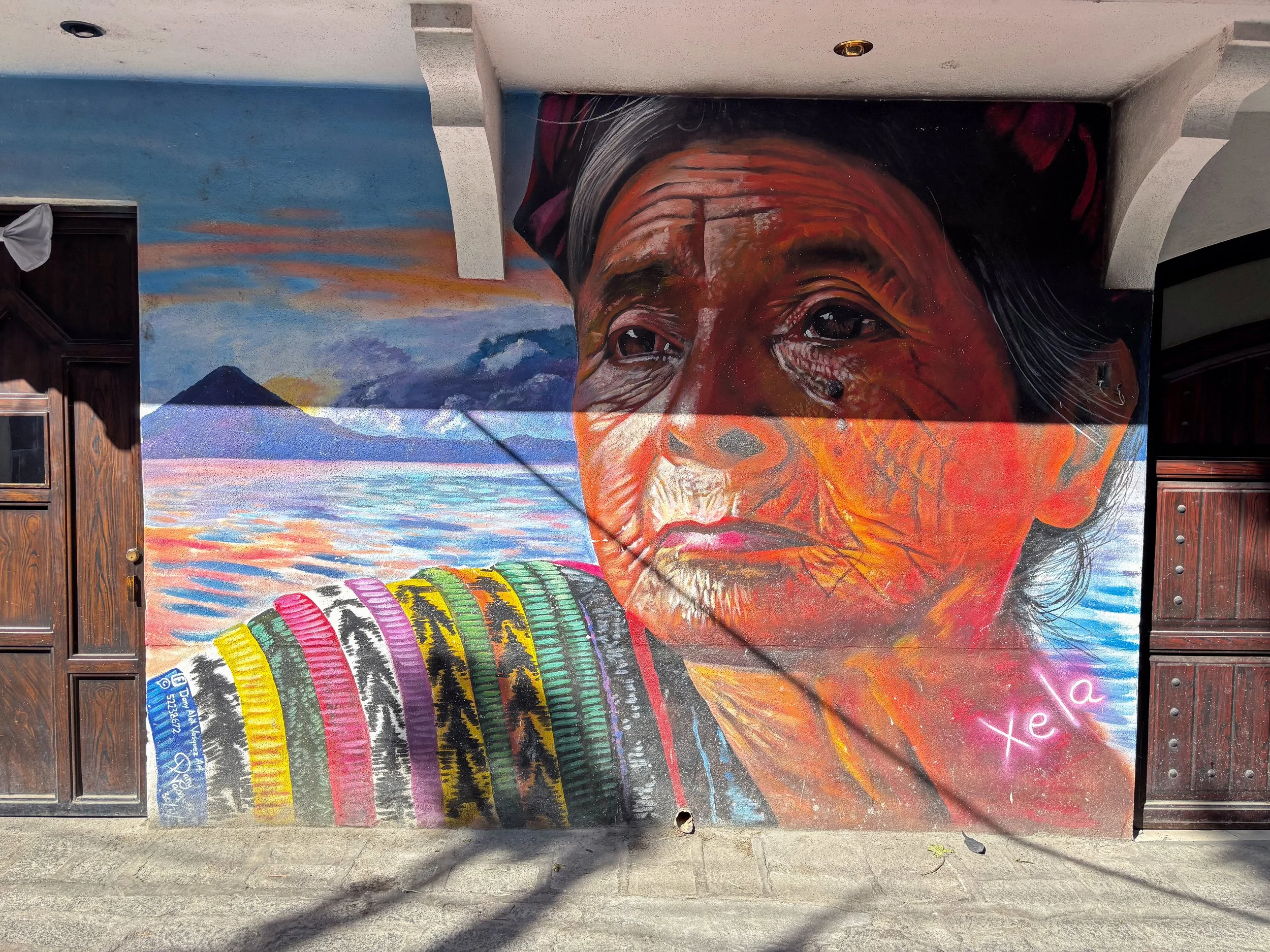
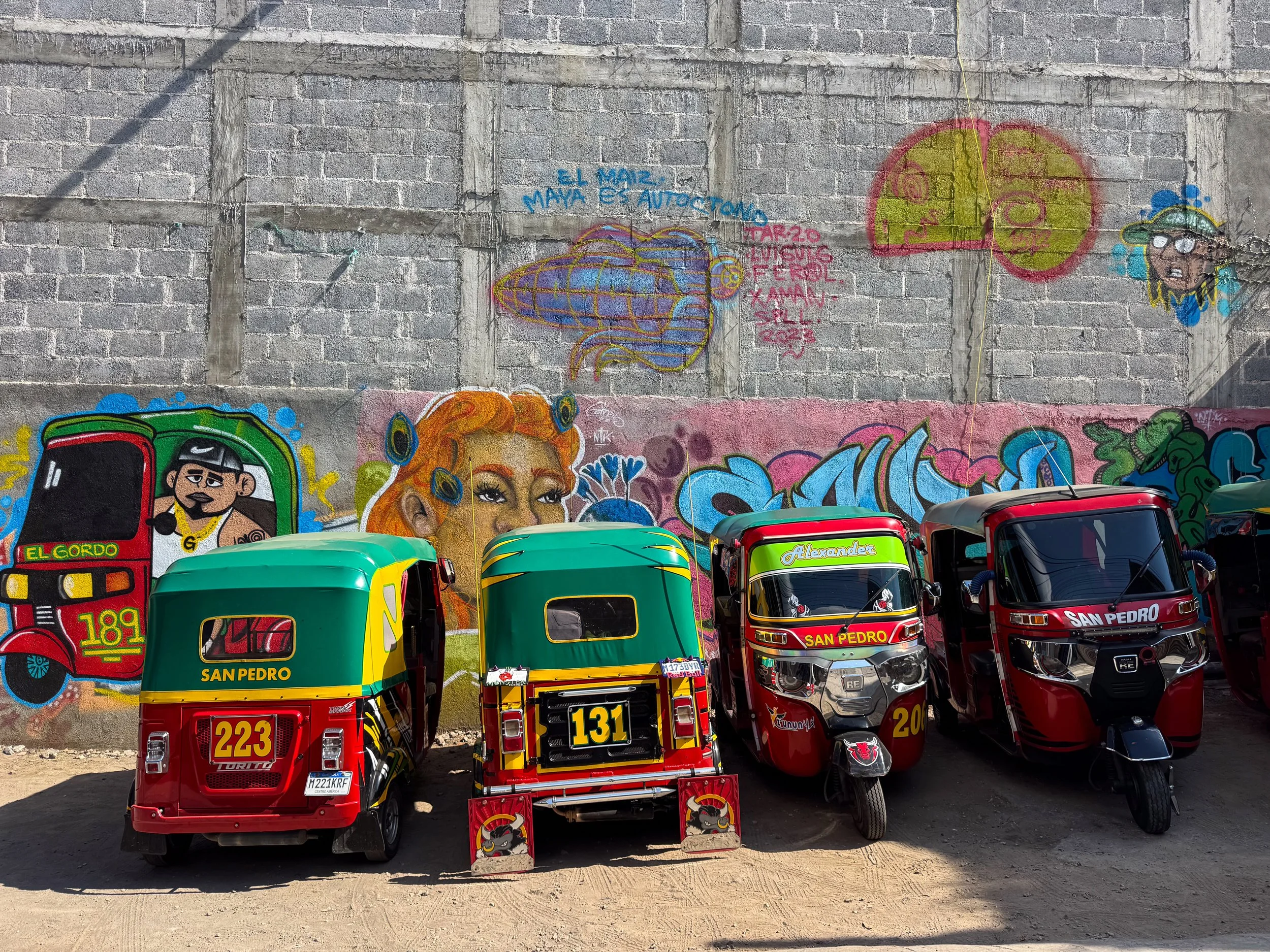
San Pedro is a larger pueblo at the base of the San Pedro Volcano. It’s locally known as a backpacker destination and for its nightly party scene. The roads parallel to the lake are busting with expats, travelers, hostels, restaurants, cafes and bars making it a popular place to visit and stay. Further into the pueblo, we discovered the local side of town. We walked along the quiet winding streets listening to locals speaking Mayan and watched as they mixed masa to make tortillas. The pueblo is more Catholic than many of the others we visited. Simple murals of bible verses are contrasted by colorful ones depicting Mayan and indigenous culture.
Tzunun' Ya'. A museum dedicated to the history and people of San Pedro as well as Lake Atitlán’s geological formation and volcanic past. One of the most interesting parts of the exhibit was a black and white film from 1941 of life in the pueblo. Several aspects remained the same including women wearing traditional clothes and carrying objects on their heads as well as men fishing from small wooden boats and carrying heaps of firewood on their backs.
San Pedro Playa Pública. A public beach looking over the lake, skyline and volcano. It’s a simple beach popular with locals and backpackers. We came here to layout, listen to the waves and picnic.
La Ventana del Lago. An elevated lake view restaurant with seafood dishes and Guatemalan cuisine. It’s a little out of place for a backpacker’s town which inadvertently made it a quiet spot for a date night. We dined by candle light, ordering the Mojarra Frita (whole fried fish) and Caldo de Mariscos (seafood soup).
Backpacker Bars
Sublime. A large bar overlooking the lake with nightly events, daily happy hours, well made cocktails, local beers and simple but tasty dishes like vegetarian nachos. We ordered the watermelon mojito and pineapple sunrise.
420 Reggae Bar. A local bar with a backpackers vibe along the main road displaying a well curated wall of spirits used to make classic cocktails all for 25Q.
Shanti Shanti. A restaurant and bar overlooking the lake. We stopped in for spiked fruit smoothies made with pineapple, muskmelon, watermelon, rum and vodka.
San Pedro Volcano
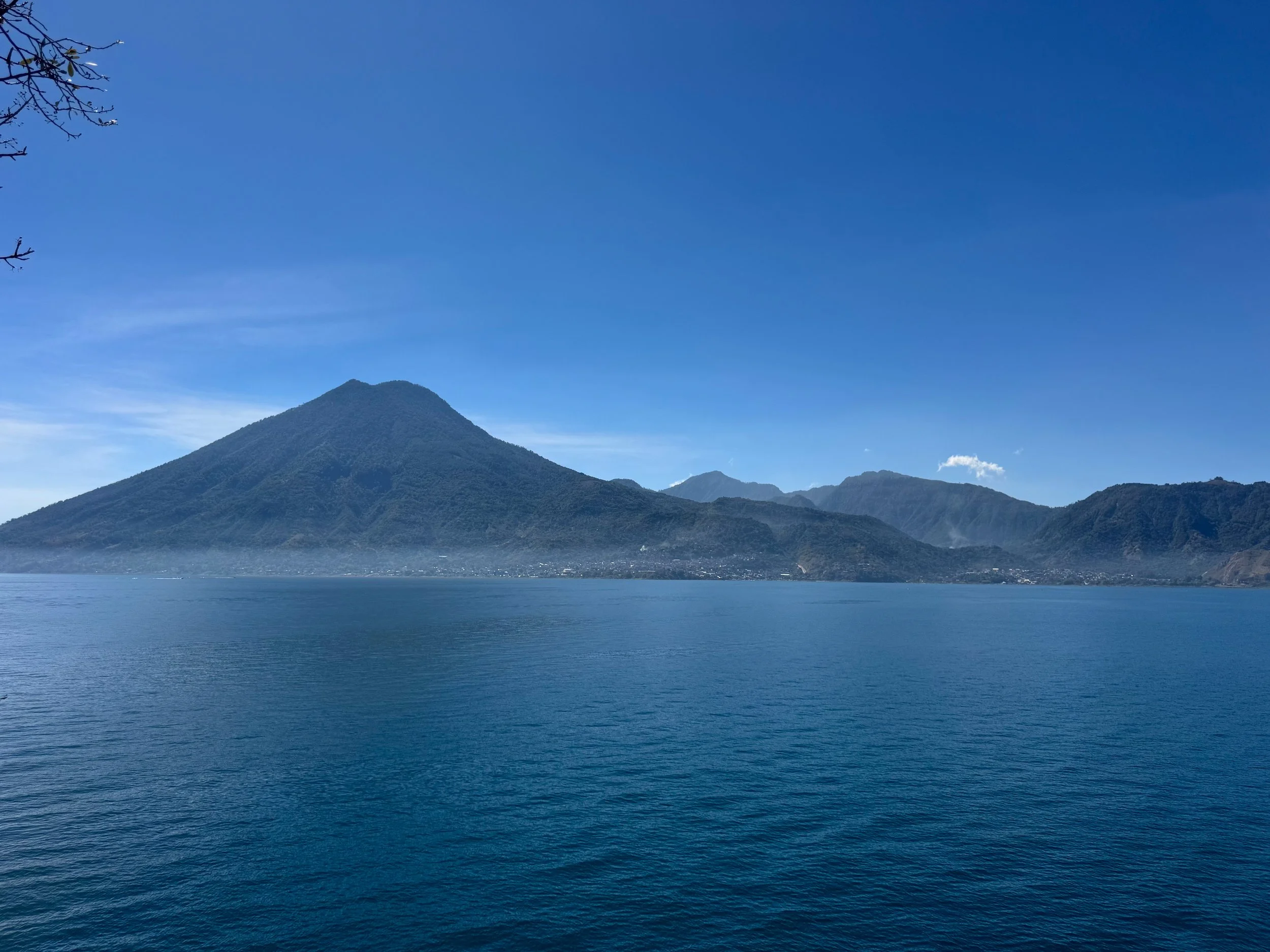
A 3,000 meter high conical shaped volcano covered in farmland and lush forest on the shores of Lake Atitlán beyond the pueblo of San Pedro.
Hiking the Volcano
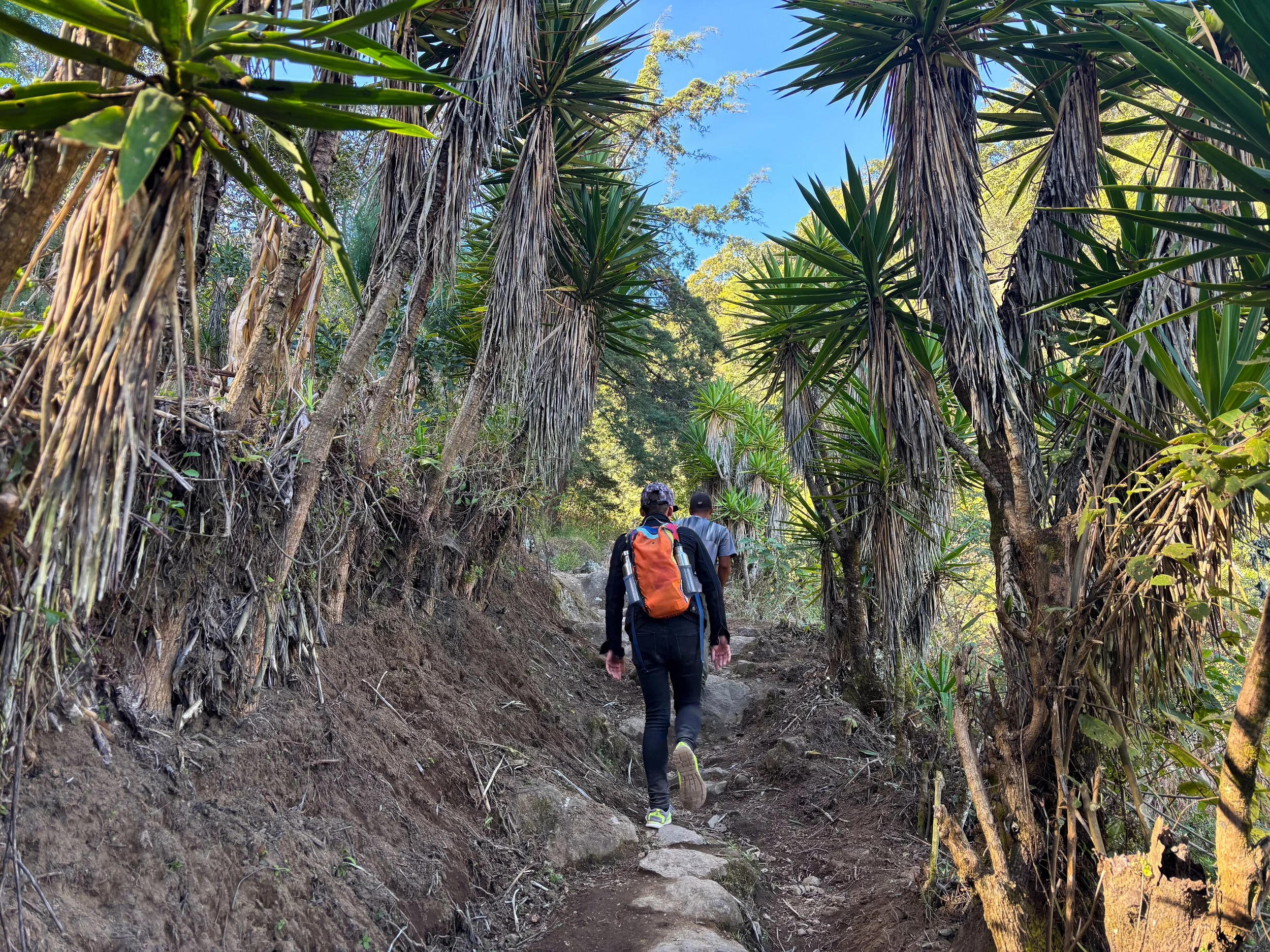
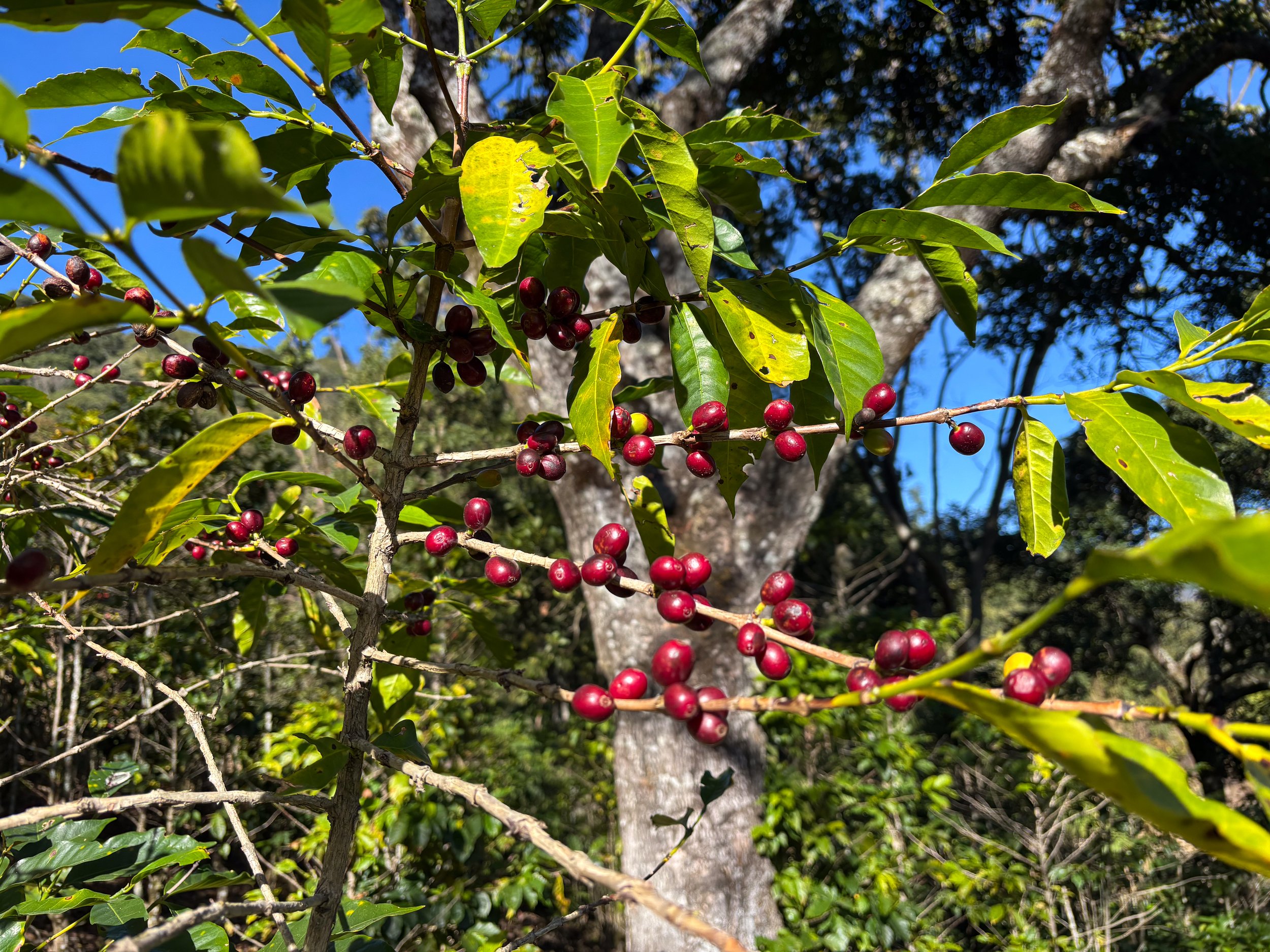
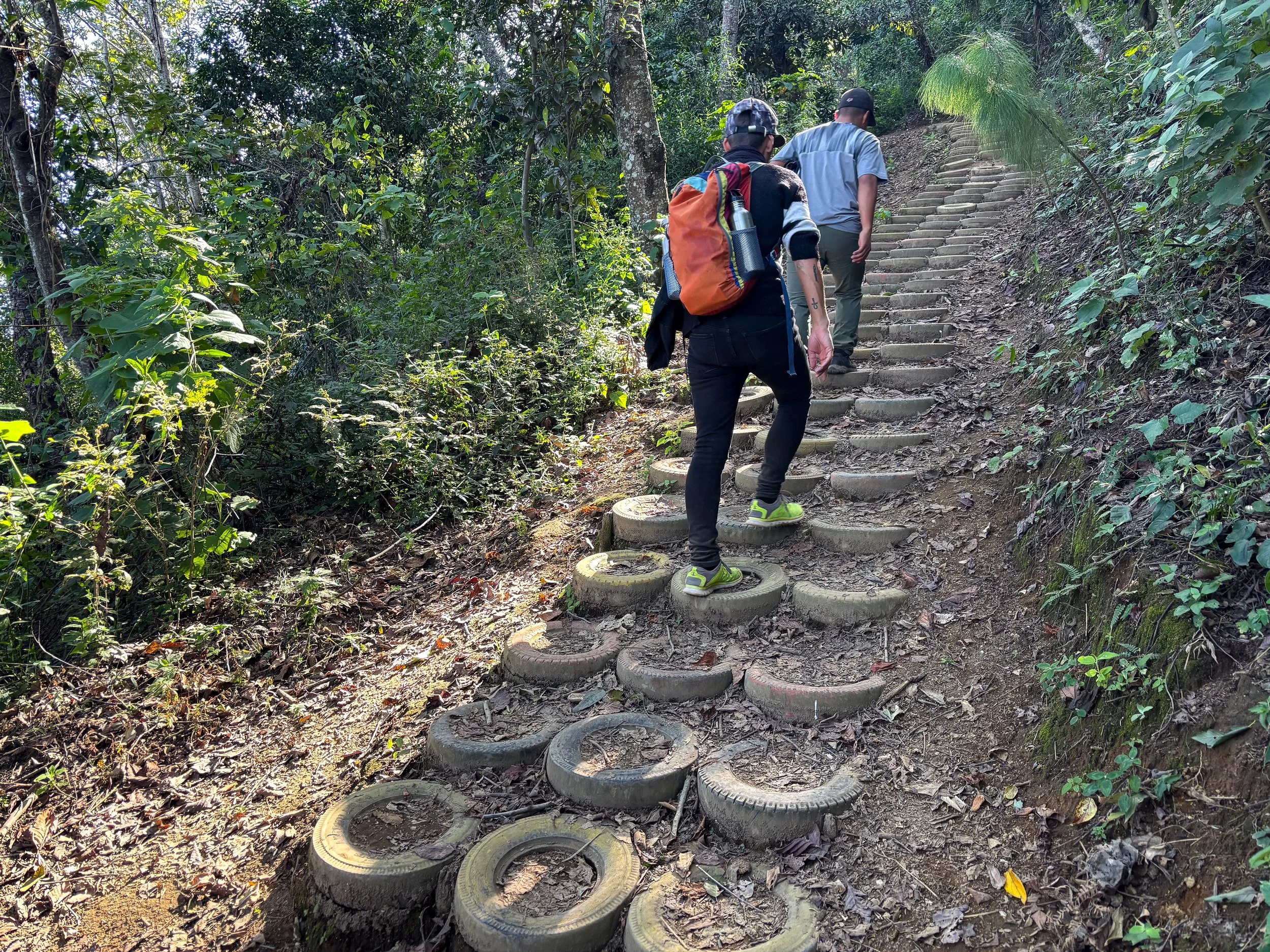
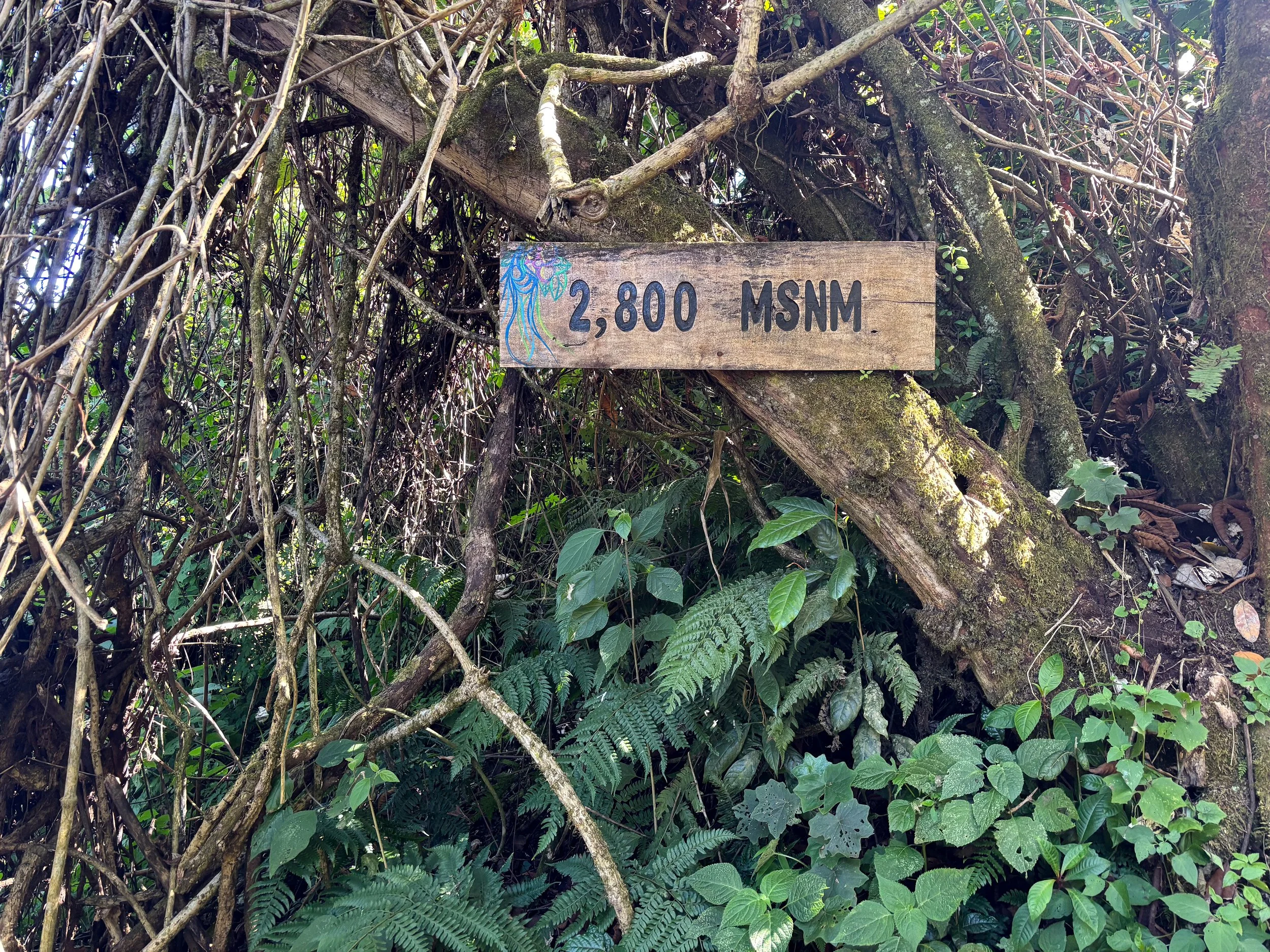
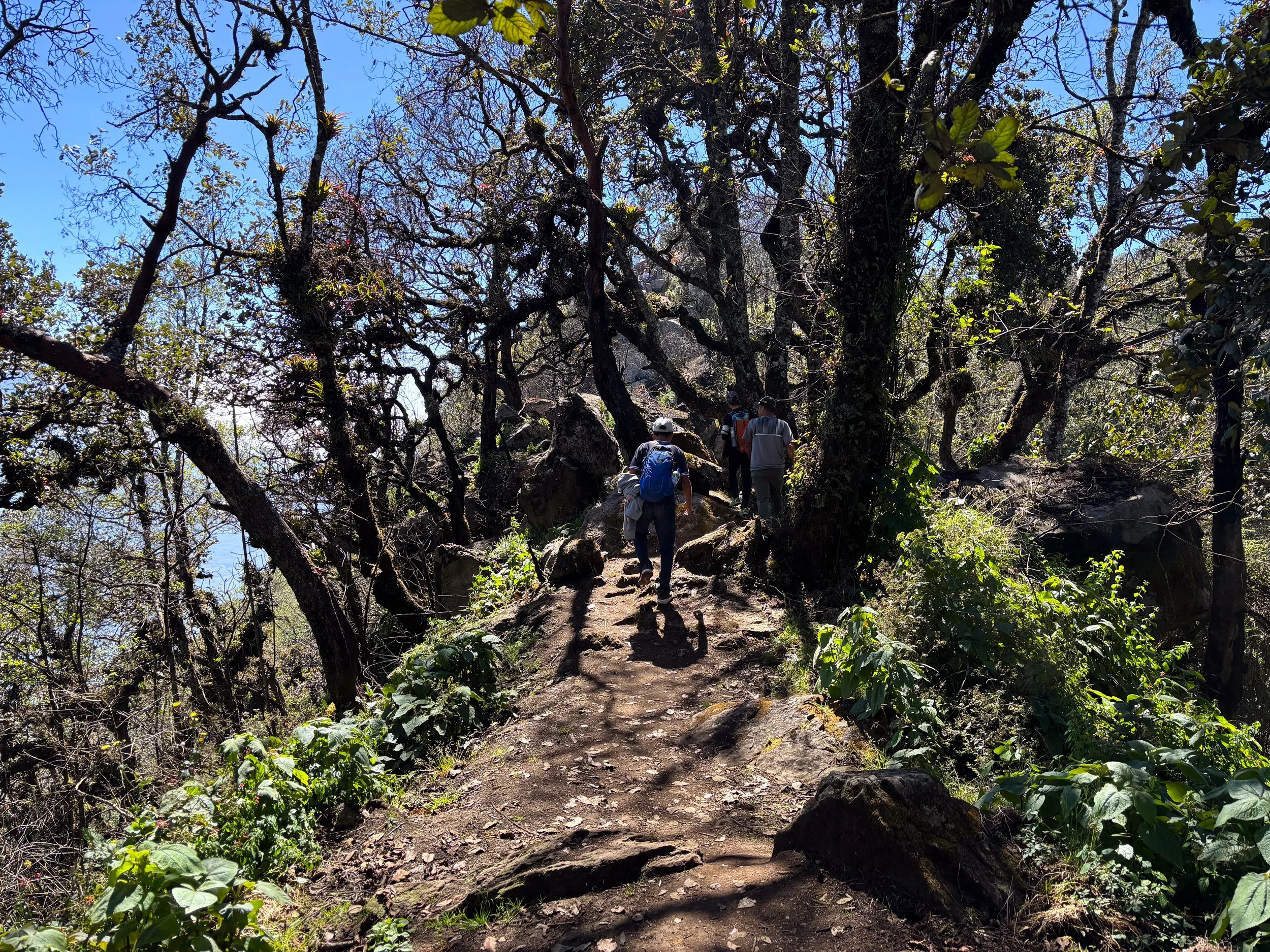
A trail leads from the welcome center through farmland with crops of coffee, avocado, corn and squash. As we hiked up, farmers harvested firewood, carrying large bundles down on their backs. Beyond the farmland, the trail passed through forest, providing shade most of the route up. The path is well maintained, paved in occasional sections with cement stairs, wooden log steps and stacked rubber tires. The trail climbs steadily uphill with altitude markers every 100 meters and occasional points of interest along the way.
Mirador Tz'unun Ya'. A lookout over San Pedro La Laguna and Lake Atitlán at 2,173 meters.
Area de Descanso. A rest area and lookout with a tire swing overlooking the lake at about 2,300 meters.
Arbol Anciano Quercus. A fallen 400 year old tree at 2,600 meters.
Tronco de Arbol Aijlamam Gran Abuelo. A sacred Mayan tree believed to be the reincarnation of a powerful Mayan wizard. It’s located around 2,750 meters.
Area de Acampar. A campground with a graffitied wooden cabin and restroom at 2,867 meters.
The Summit
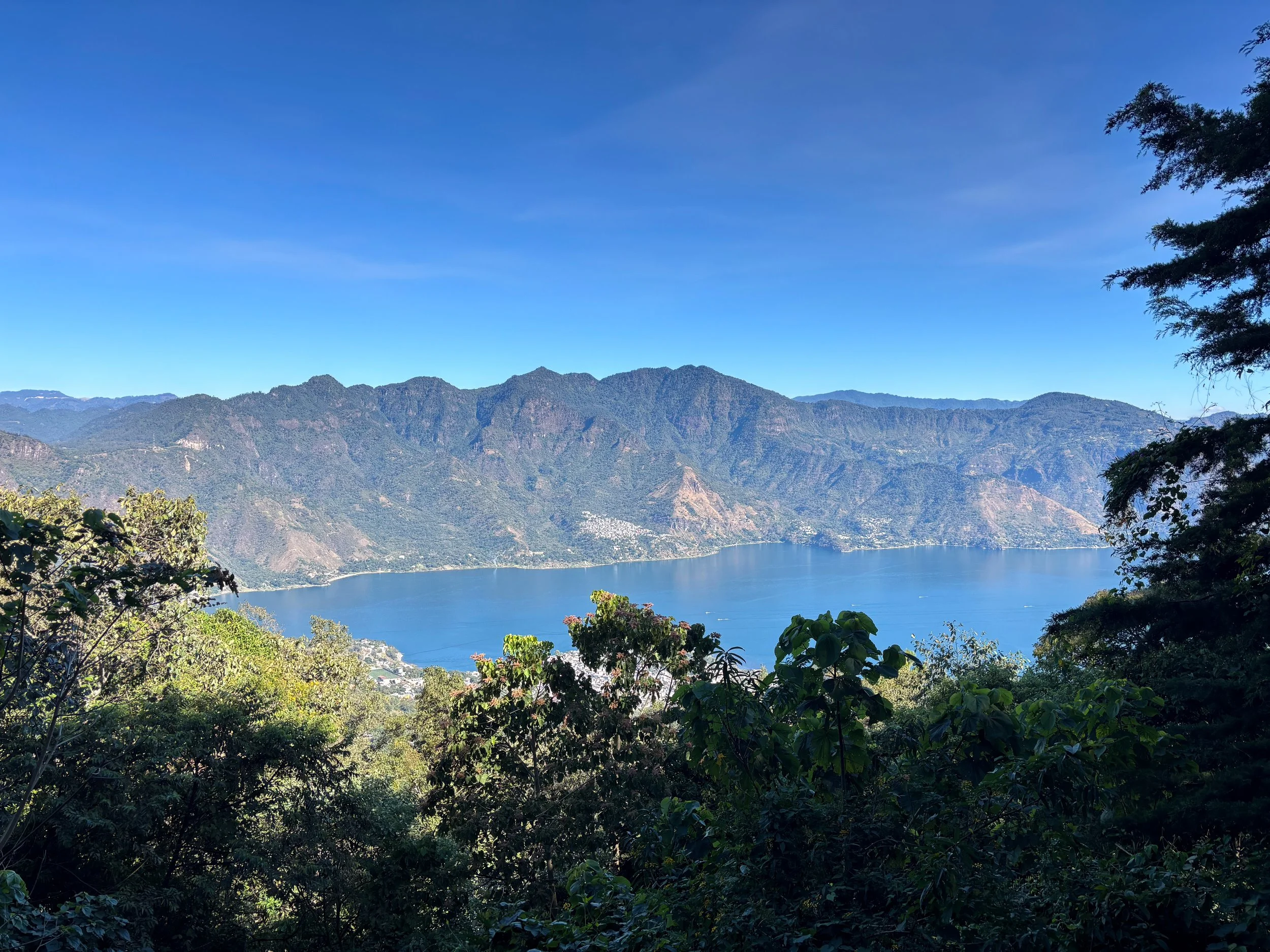
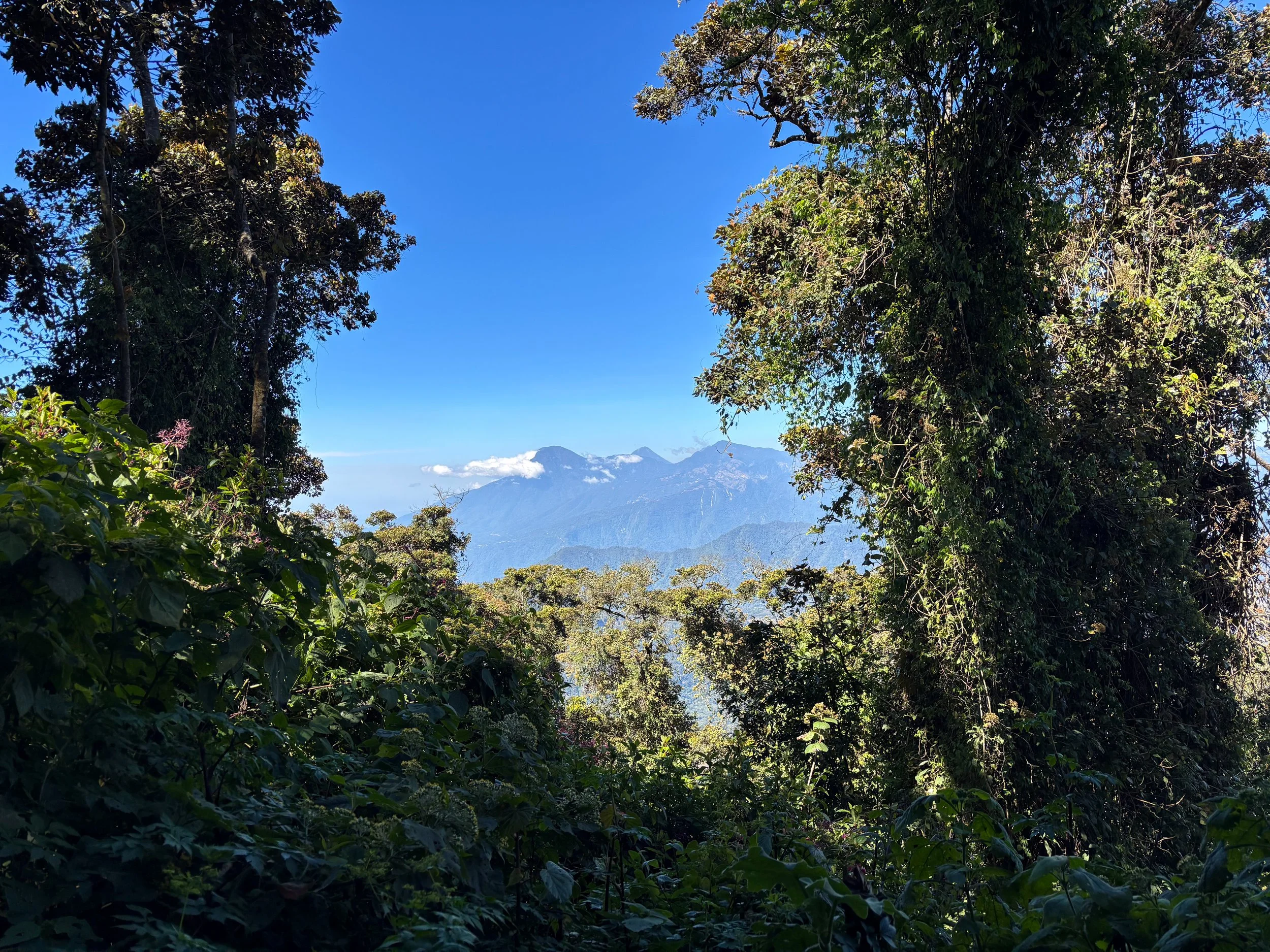
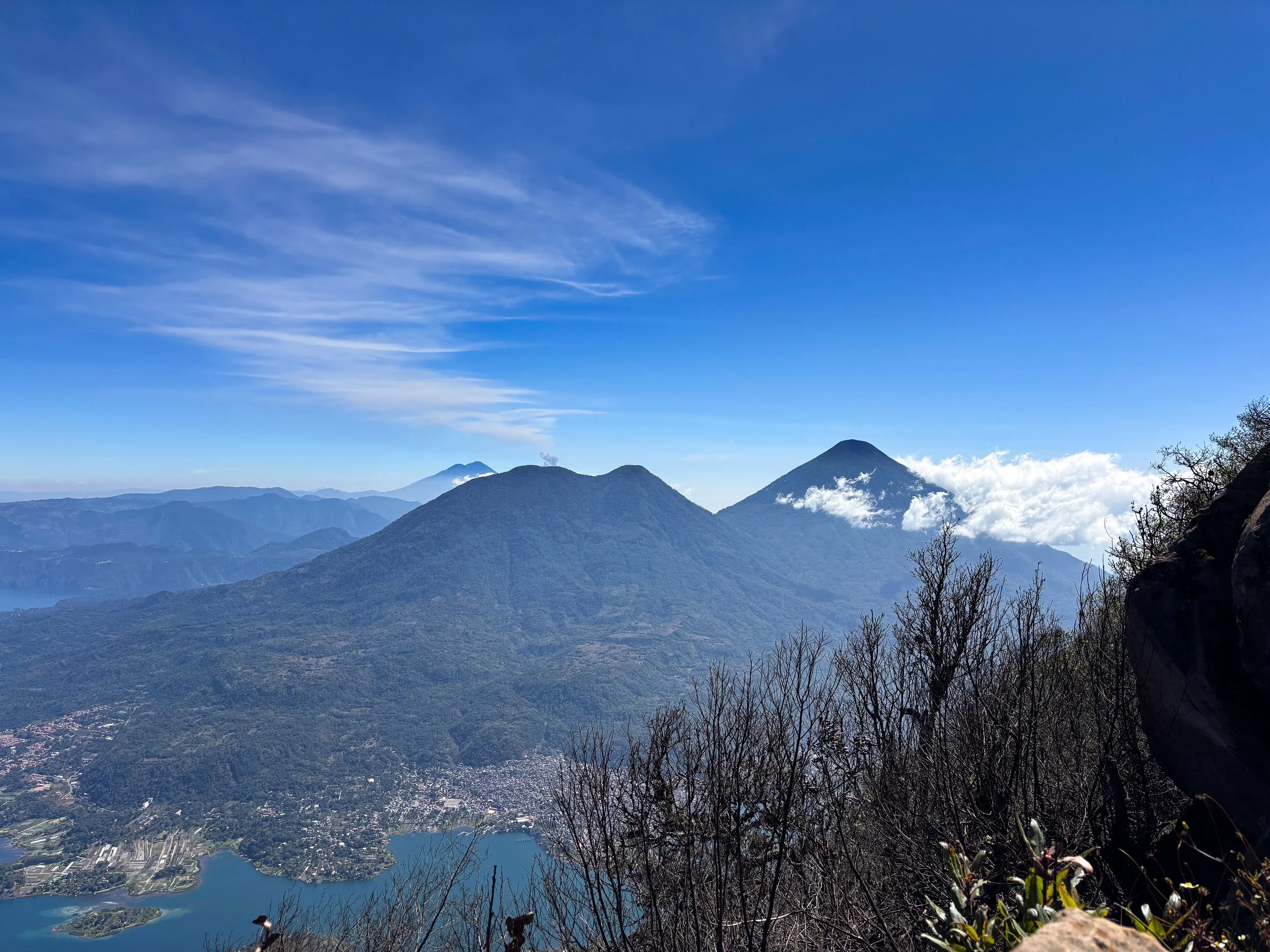
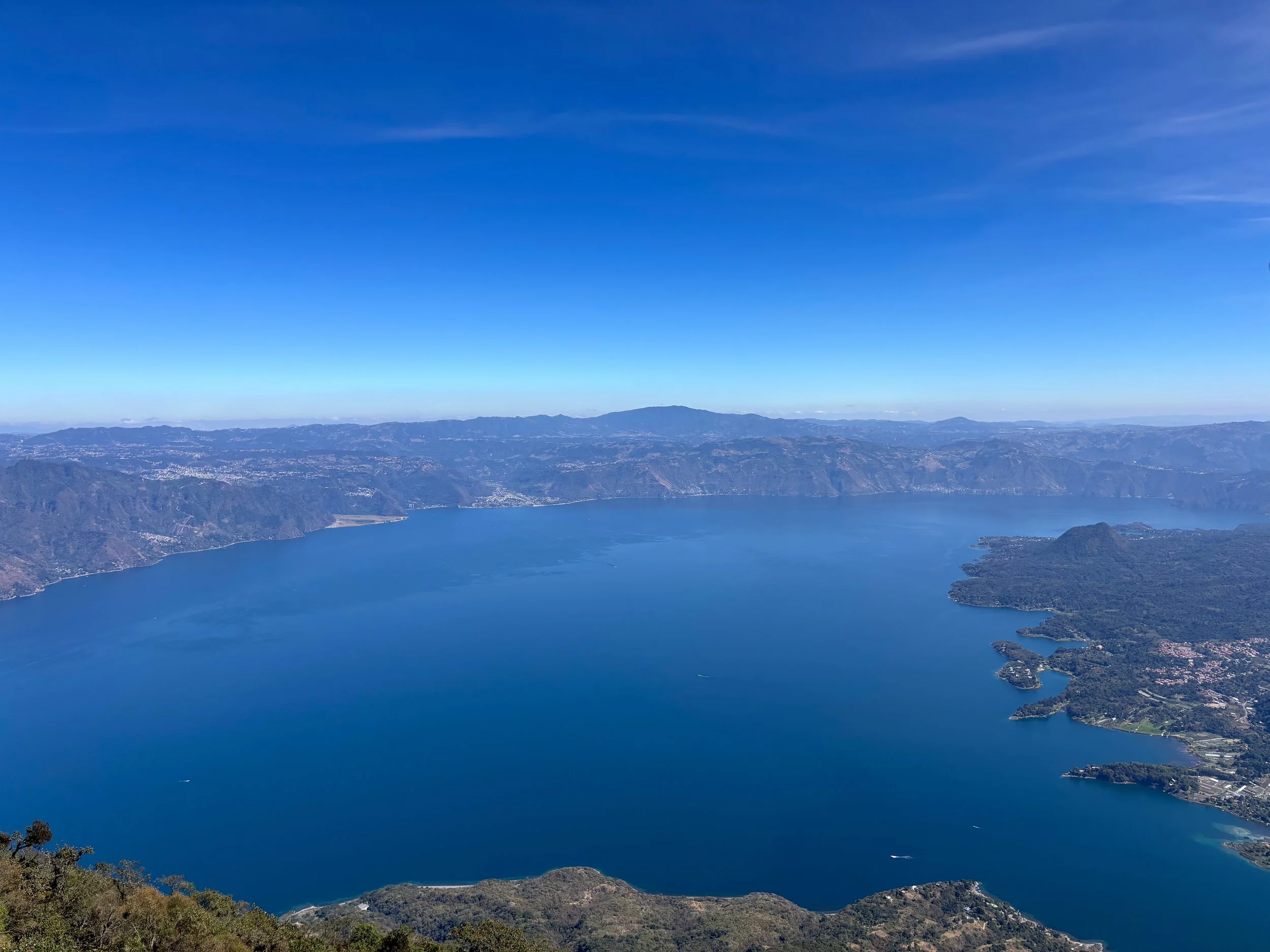
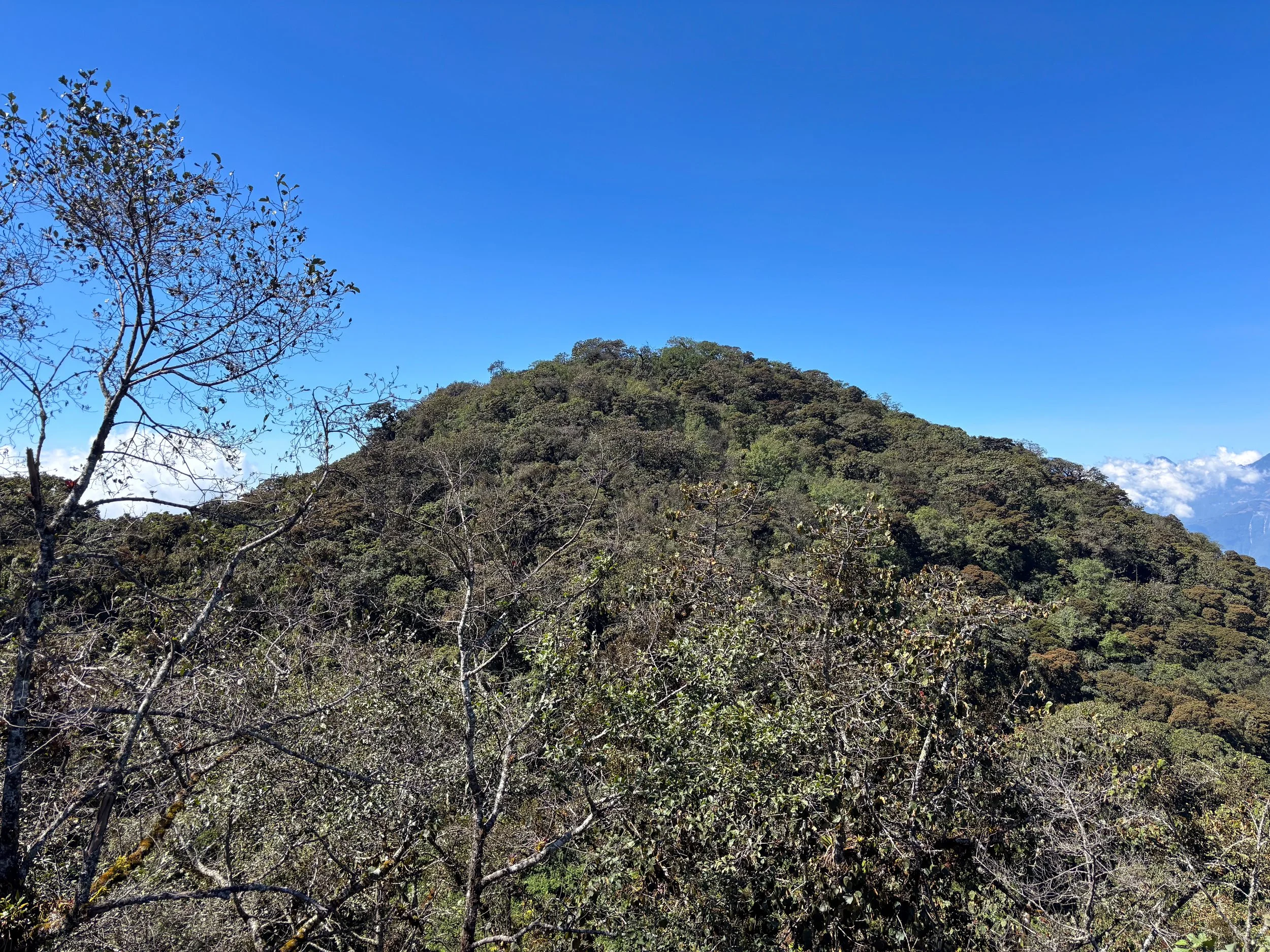
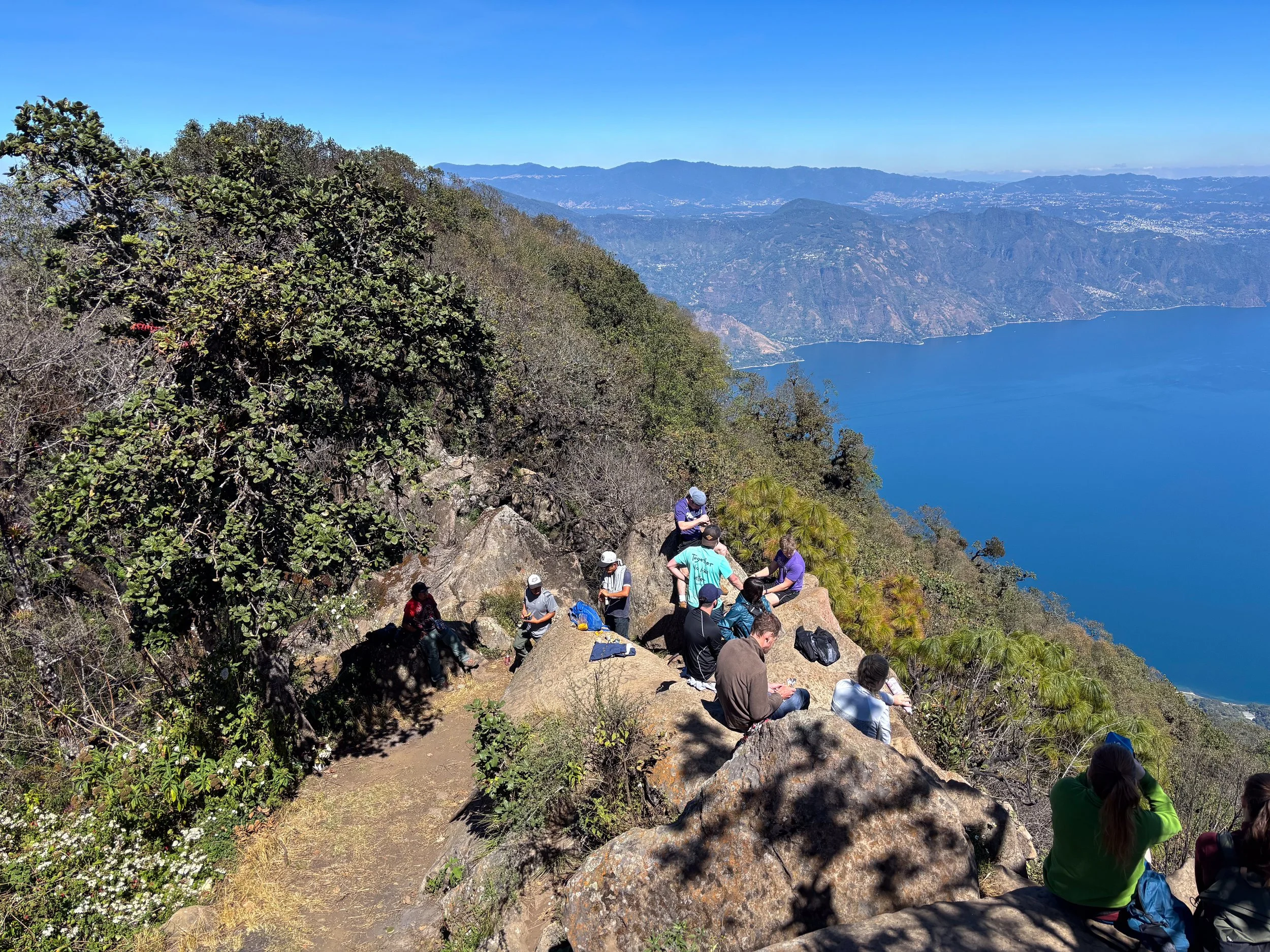
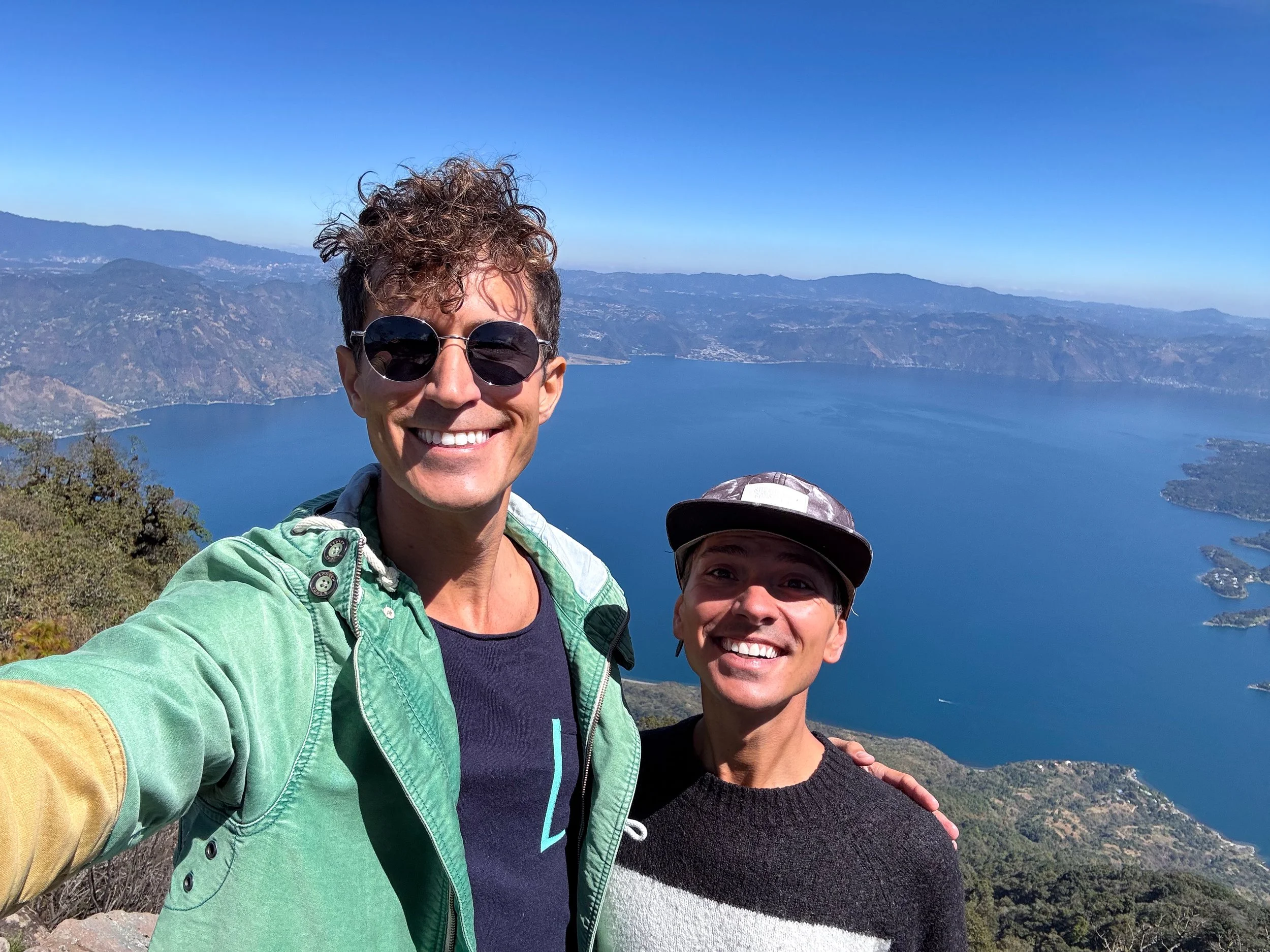
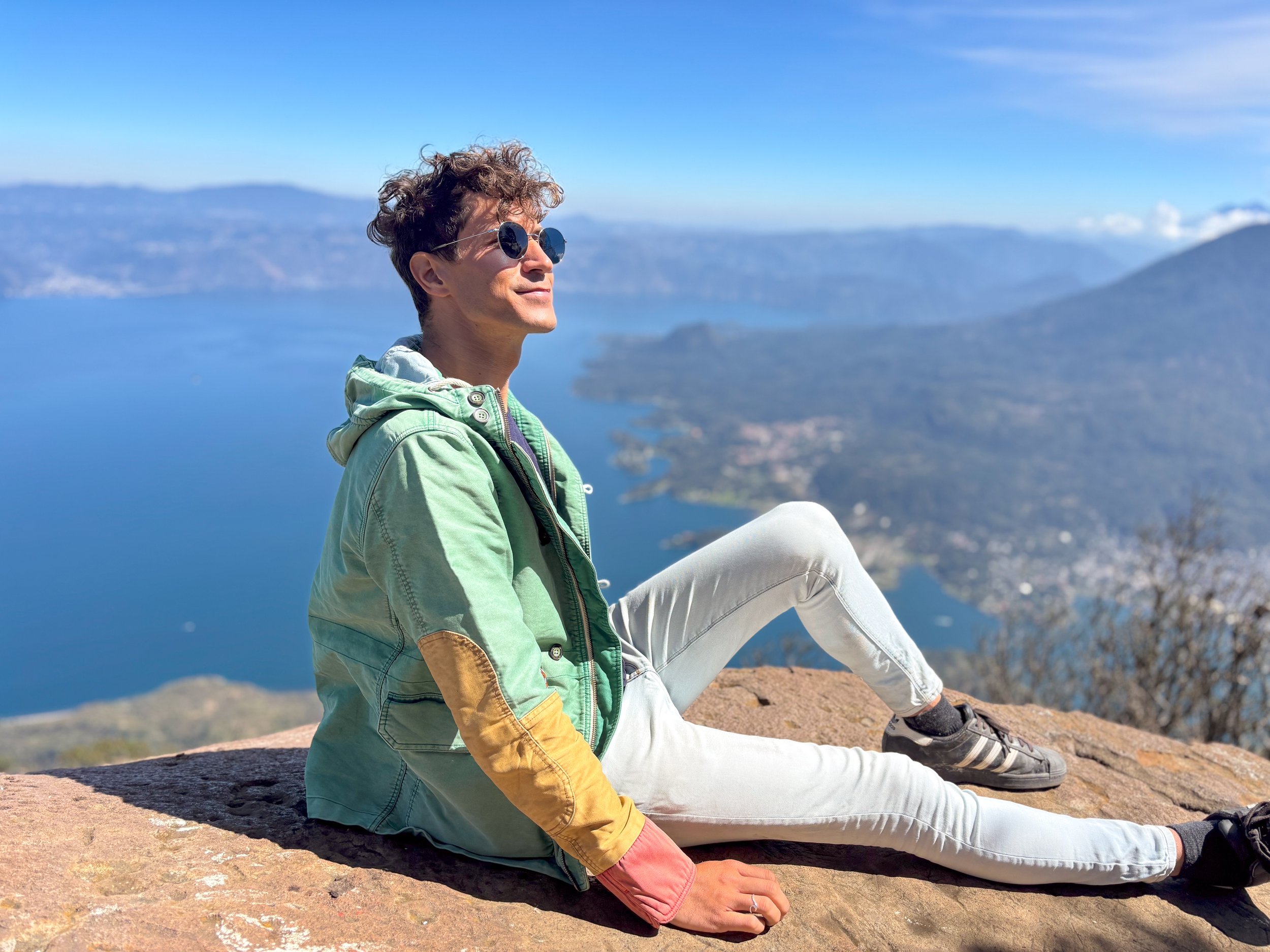
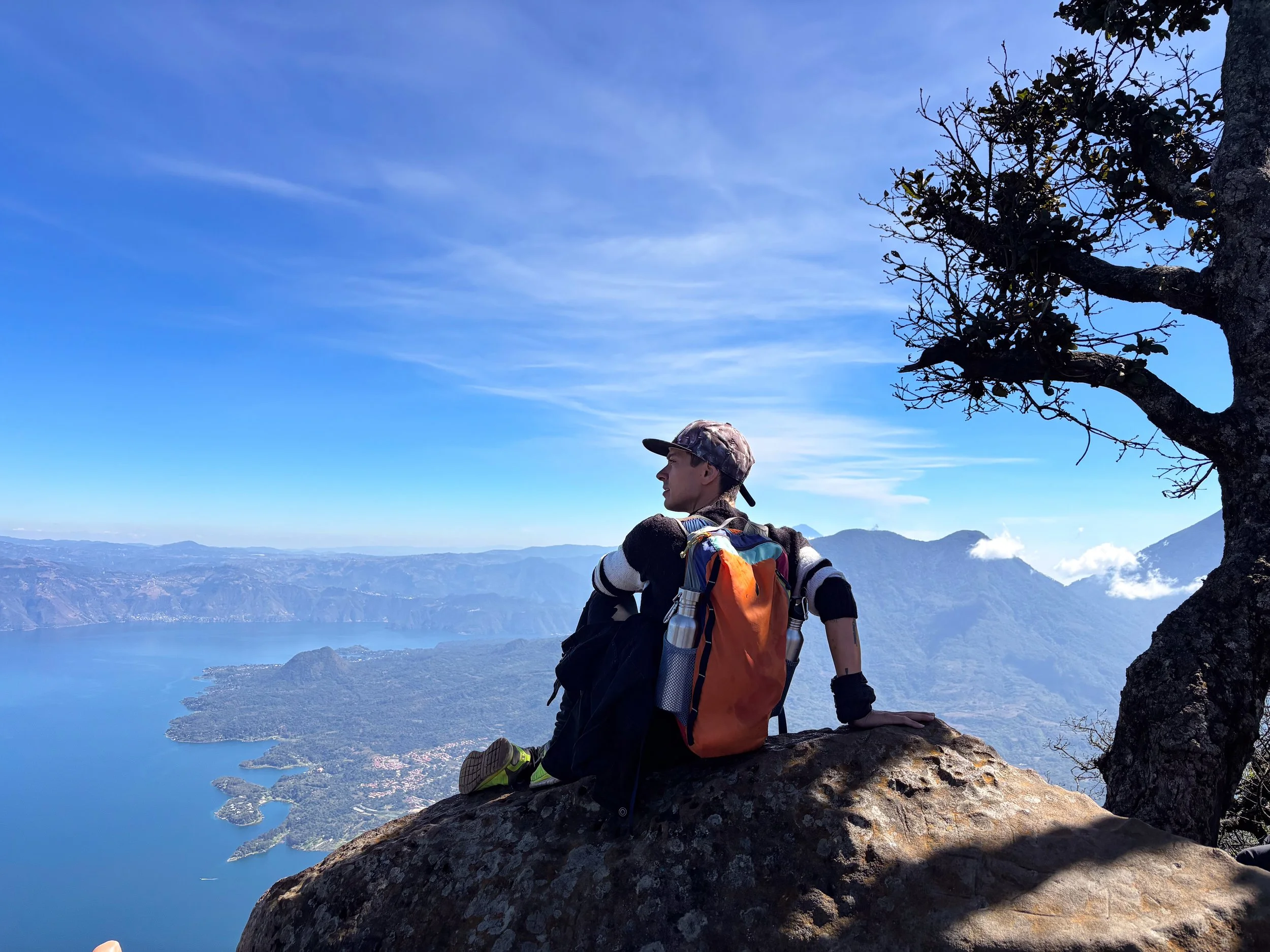
After 2 hours 30 minutes of hiking, we reached the summit at an altitude of 3,000 meters. We walked the crater rim lined with moss covered trees to a rocky outcrop with views of the deep blue lake, its pueblos and the chain of volcanos. From above, boats looked like small dots as they crossed the lake leaving a rippled trail behind them. In the distance, Volcan de Fuego let out continual eruptions of smoke and ash high into the sky. We spent about an hour at the summit, eating our lunch and enjoying the views.
Tips for Hiking the San Pedro Volcano
Hire a Guide. We hired our guide, Vic, from the Cerro Cristalino (Nariz del Rostro Maya) Sunrise Hike. He organized transportation, safely guided us to/from the summit, shared stories about Mayan legends and info about the local nature and landscape. Book his tour here!
Timing. We began hiking at 9am and reached the summit at 11:30am. It took us under 2 hours to hike down.
Safety. Having read the warnings about armed bandits online, we were apprehensive about going on the hike. Beforehand, we read recent reviews, spoke to others that had safely completed the hike and confirmed the current safety situation with our Airbnb host and guide. We only carried enough cash for the hike. We left our wedding rings, all but one cell phone and one credit/debit card at our hotel.
Popularity. The San Pedro hike is not as popular others in Guatemala. We met about a dozen hikers at the summit, some solo and others in pairs. Along the route down, we passed a few groups, one led by two armed police officers.
San Marcos
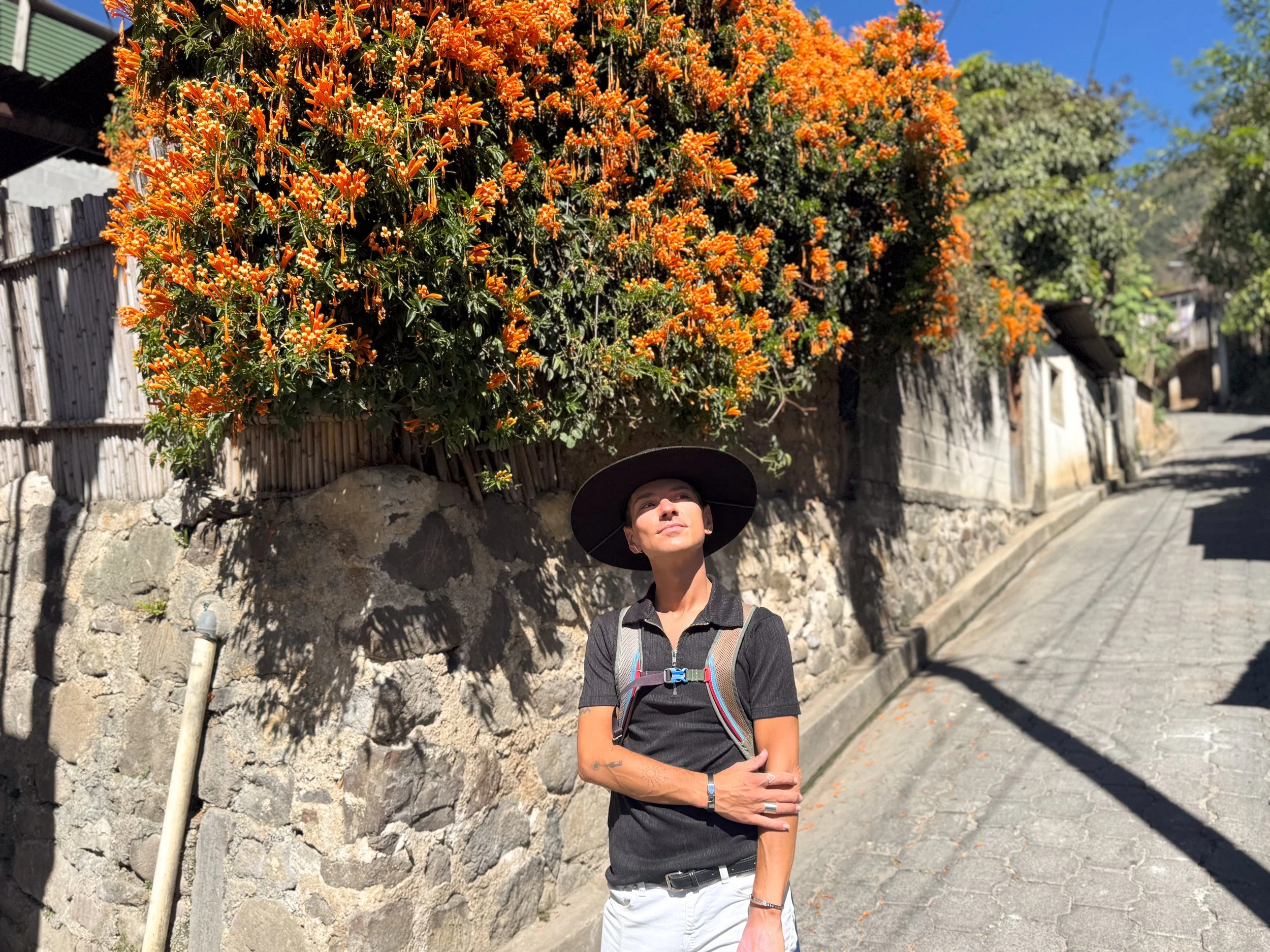
San Marcos is a very small pueblo with bohemian vibes, winding pedestrian walkways, a peaceful nature reserve and the best views of Lake Atitlán and the volcanos.
The Hippie Highway. The narrow street leading from the ferry dock into town is locally called the “Hippie Highway.” The street is appropriately named for all of the health food cafes, fruit and vegetable farm stands, tins of smoldering incense, shops with bohemian style clothes, vendors selling feather and wire jewelry, long haired expats, stick and poke tattoo shops, wellness studios with crystal healers, spiritual massages and yoga classes.
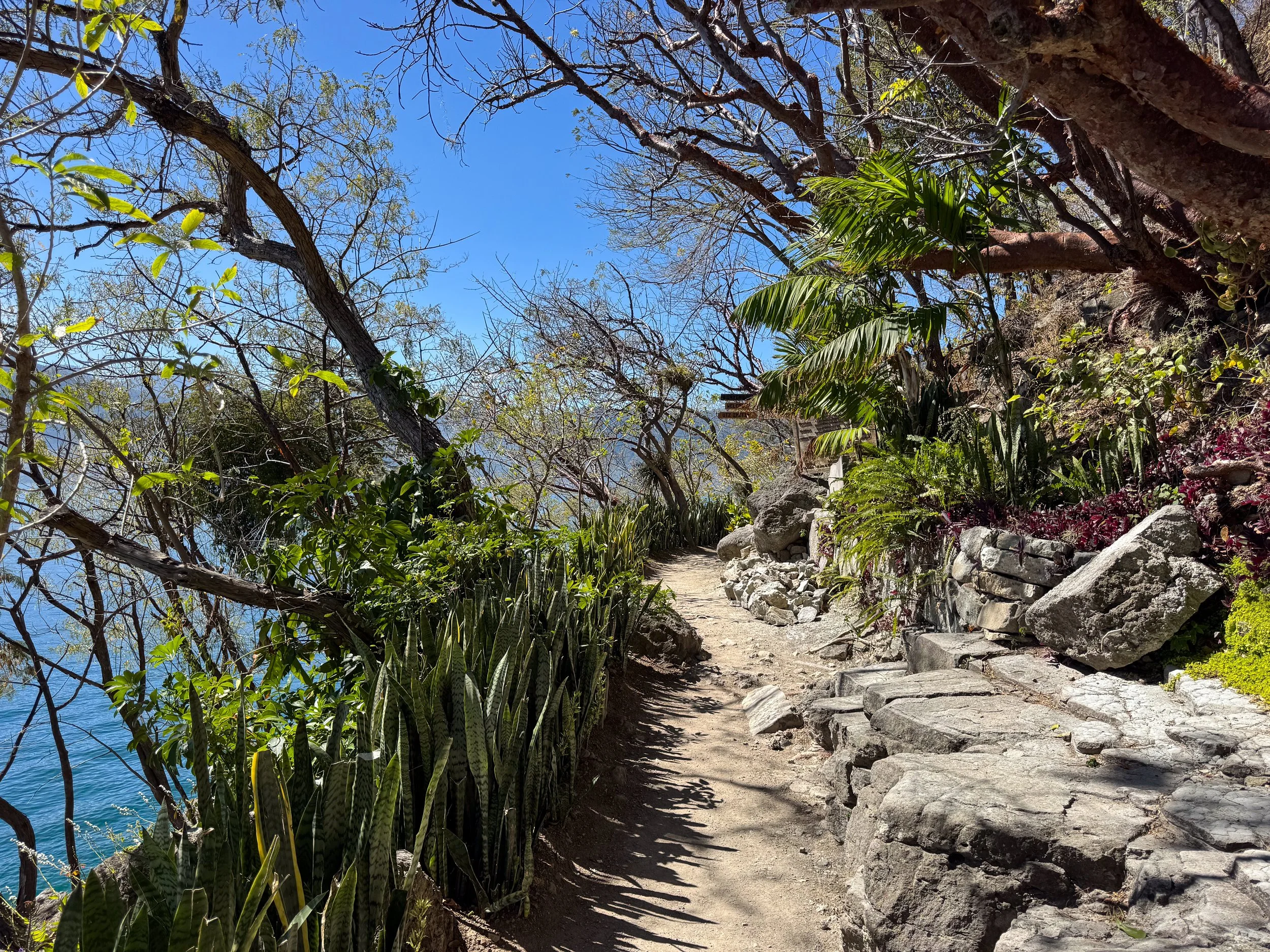
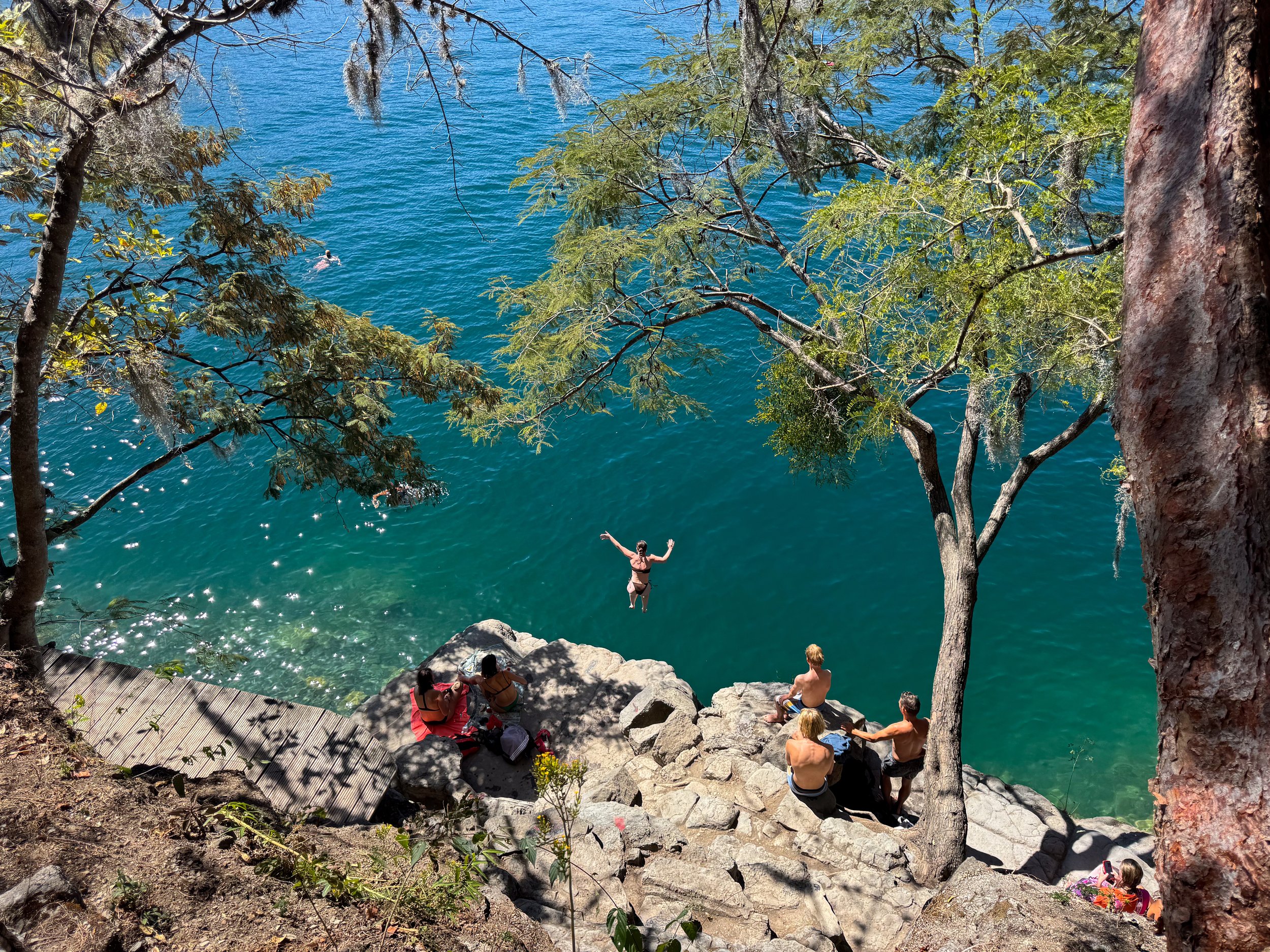
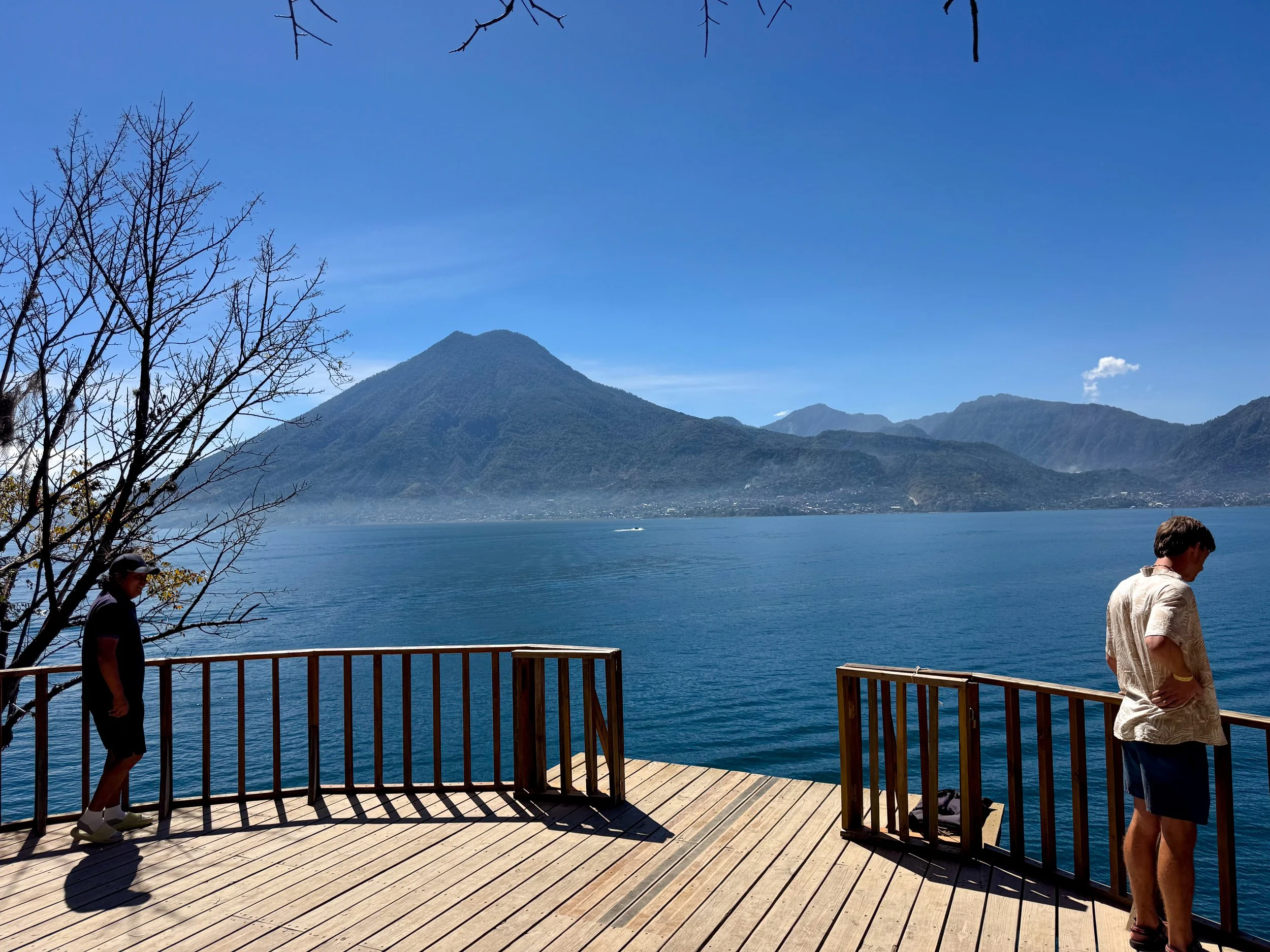
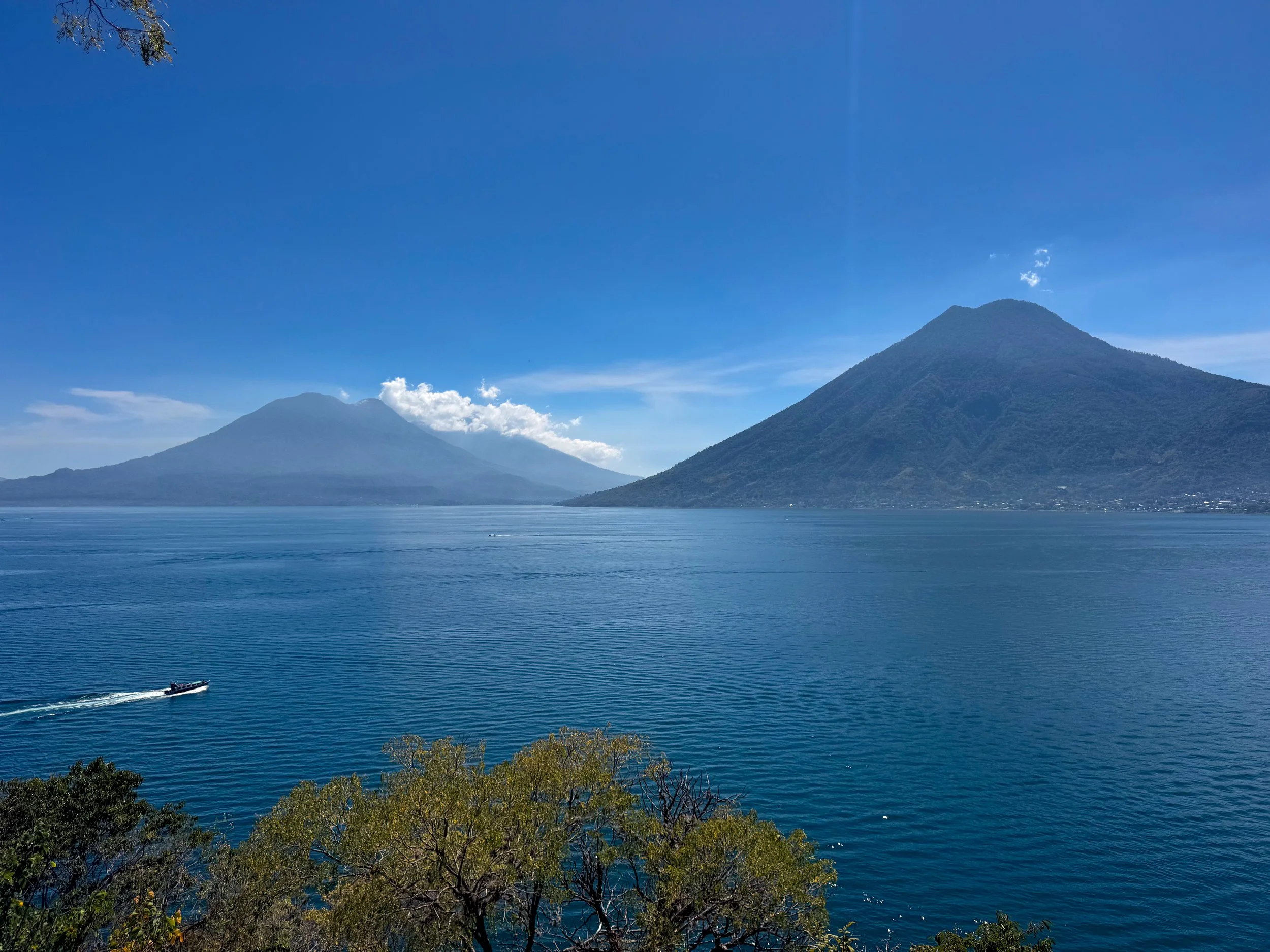
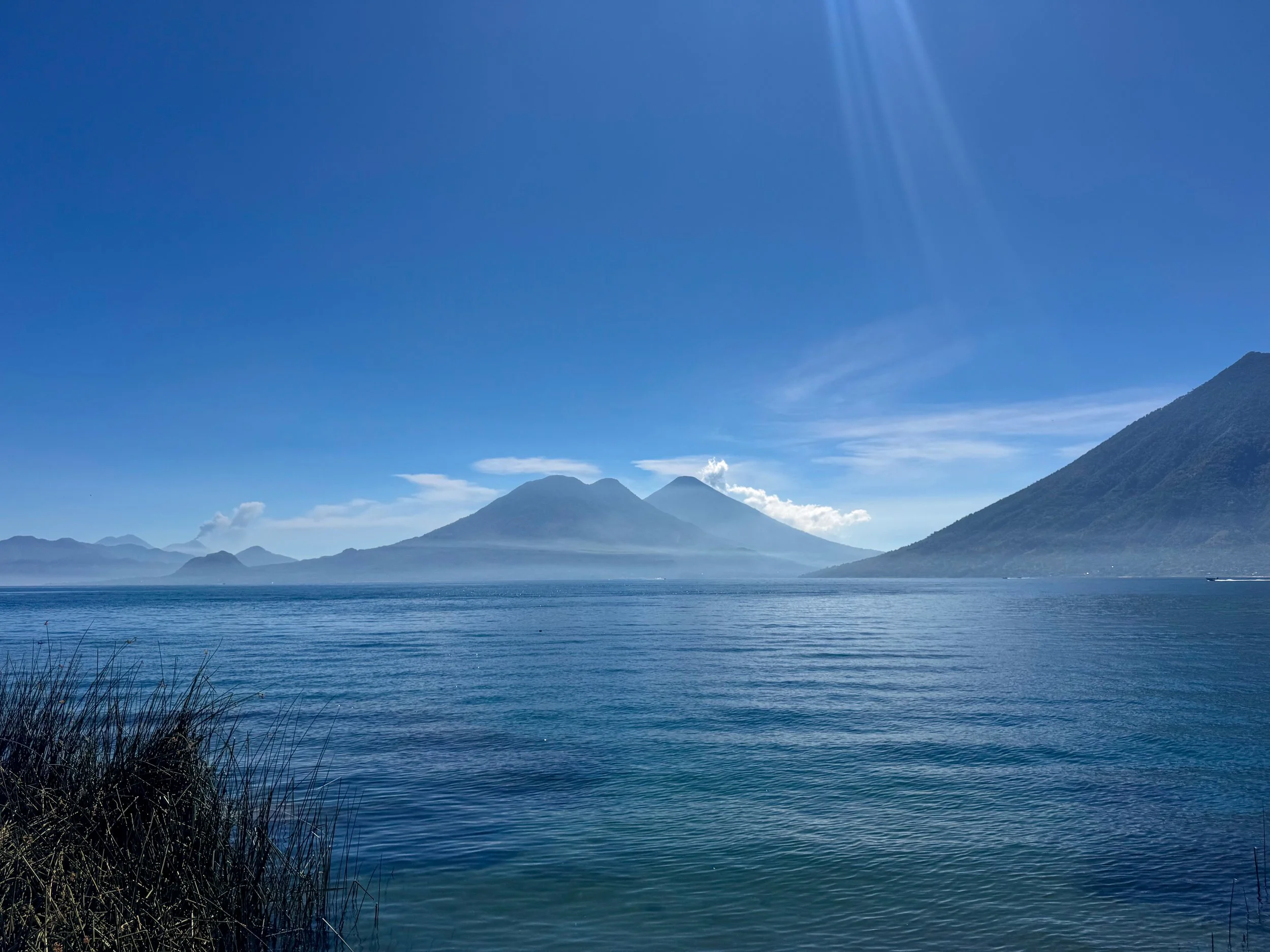
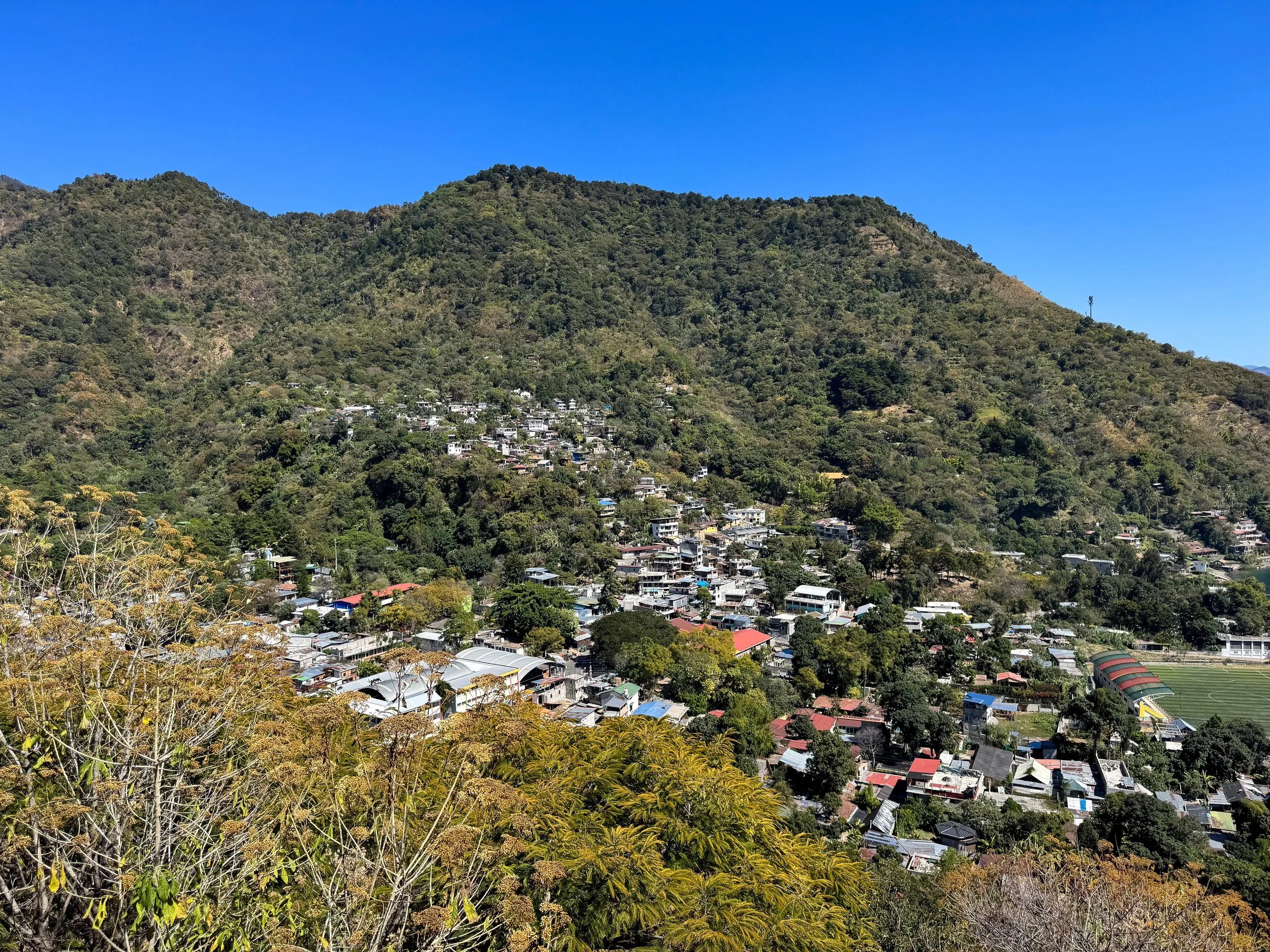
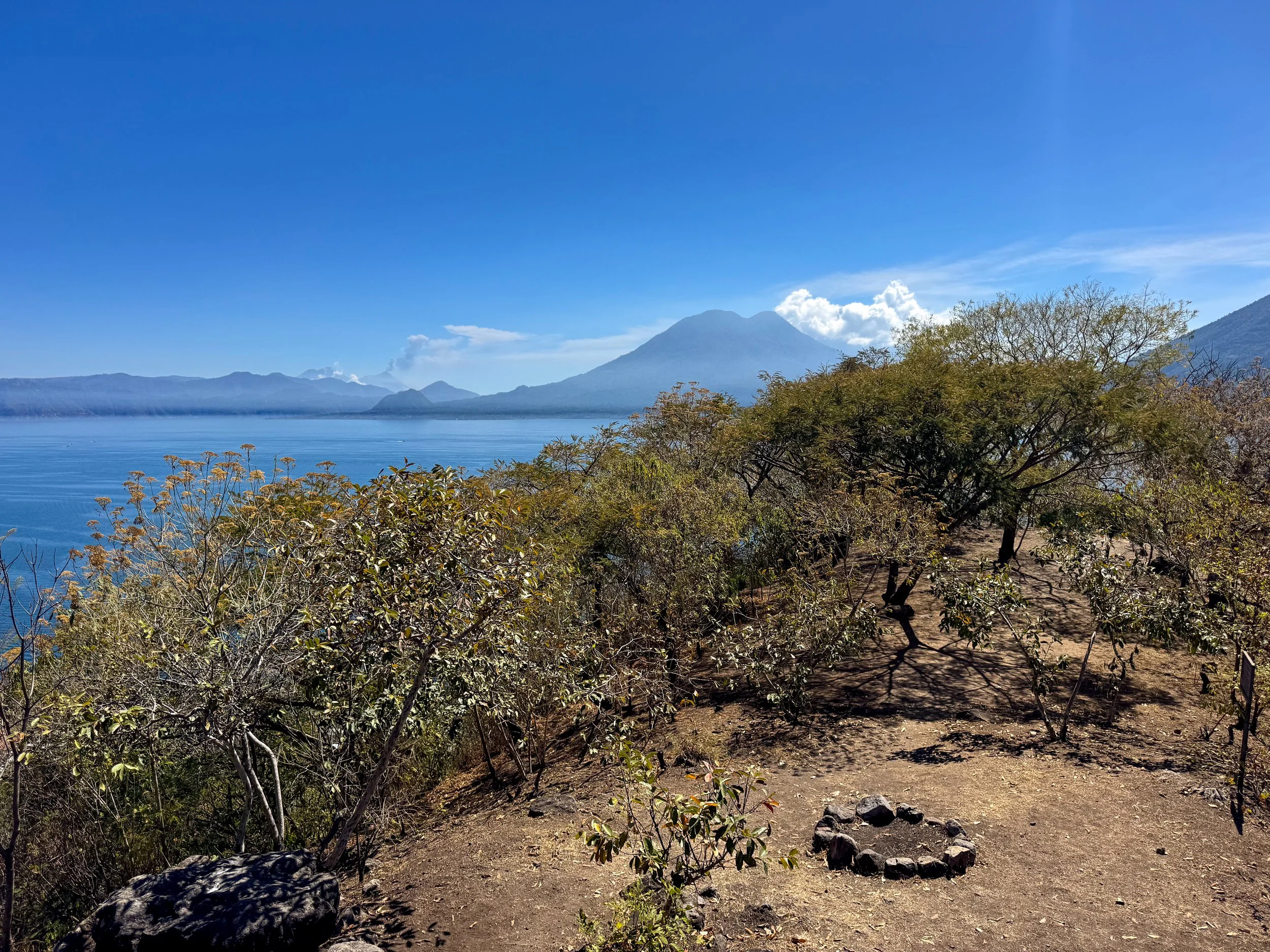
Cherri Tzankujil Nature Reserve. A peaceful nature reserve with trails leading to Mayan ceremonial altars, bathing areas and lookouts over the lake, volcanos and town. We spent an entire afternoon here, surrounded by breathtaking nature, hiking the trails, sunbathing and picnicking along the rocky cliffs and swimming in the cool refreshing water. From one of the overlooks, we watched as adrenaline seekers jumped from The Trampoline, a 12 meter jump into the lake below.
Circles Cafe & Bakery. A bakery and cafe with Guatemalan coffee, sourdough breads, rustic pastries, sandwiches and pizzas.
Mi Vida Bar. A two floor open air bar with views of the lake and volcanos, local beers and classic cocktails.
Panajachel
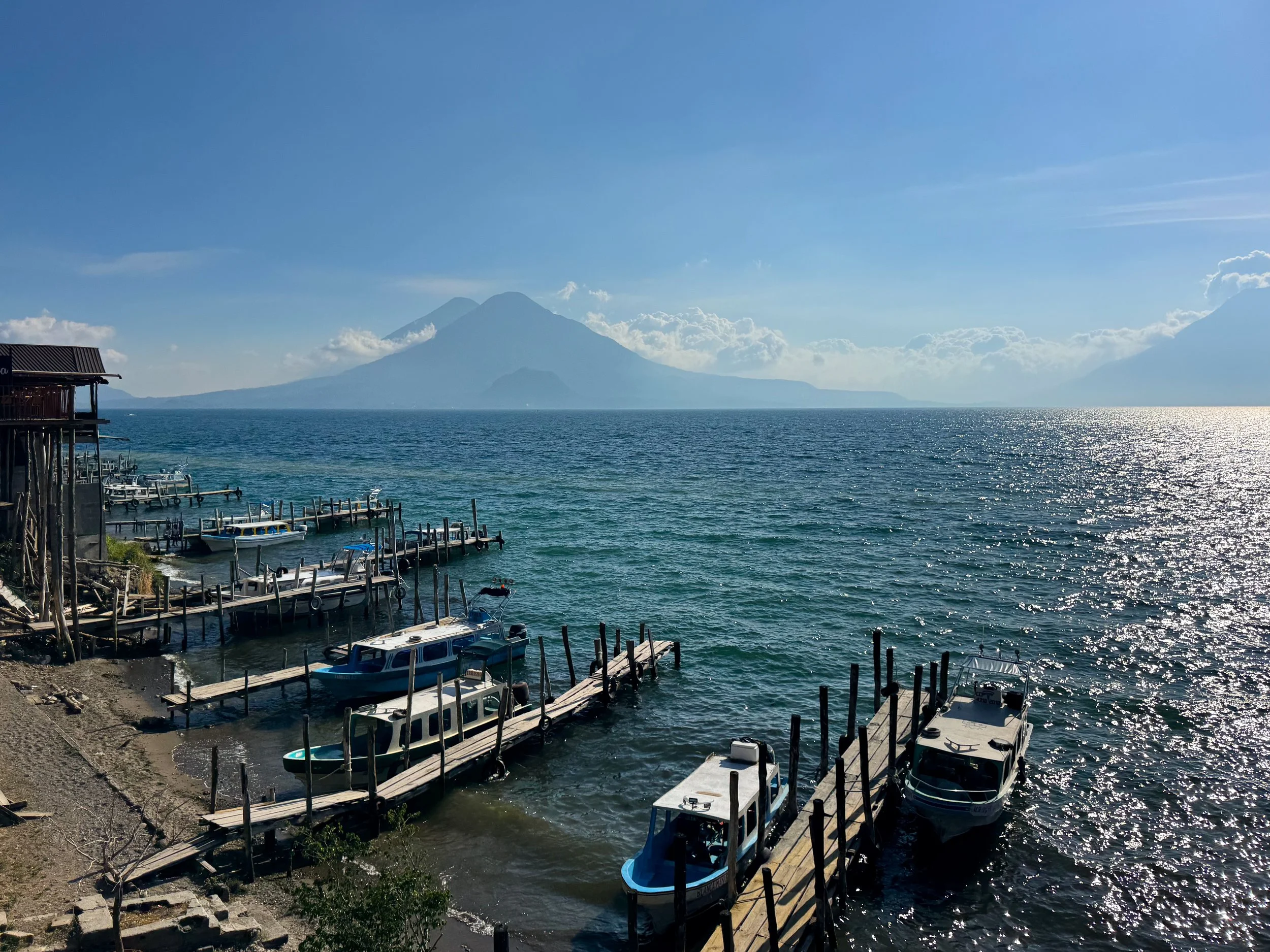
Panajachel, also called Pana, is the most developed and commercial pueblo on Lake Atitlán. It’s home to multitudes of Guatemalan craft shops, cafes and lake front restaurants. It’s a branching off point and hub to reach the other pueblos around the lake.
Calle Santander. Panajachel’s main tourist street lined with shops and vendors selling all types of handmade leather goods, colorful woven textiles, beaded jewelry and hammocks. The road follows the lake front and leads further into the pueblo. Along the lake, restaurants share similar menus with views of it and the volcanos. Further in town, cafes serve Guatemalan coffee. Overhead, twinkle lights and banderas crisscross the street as tuk tuks and moto bikes zip by.
Guatemalan Cuisine
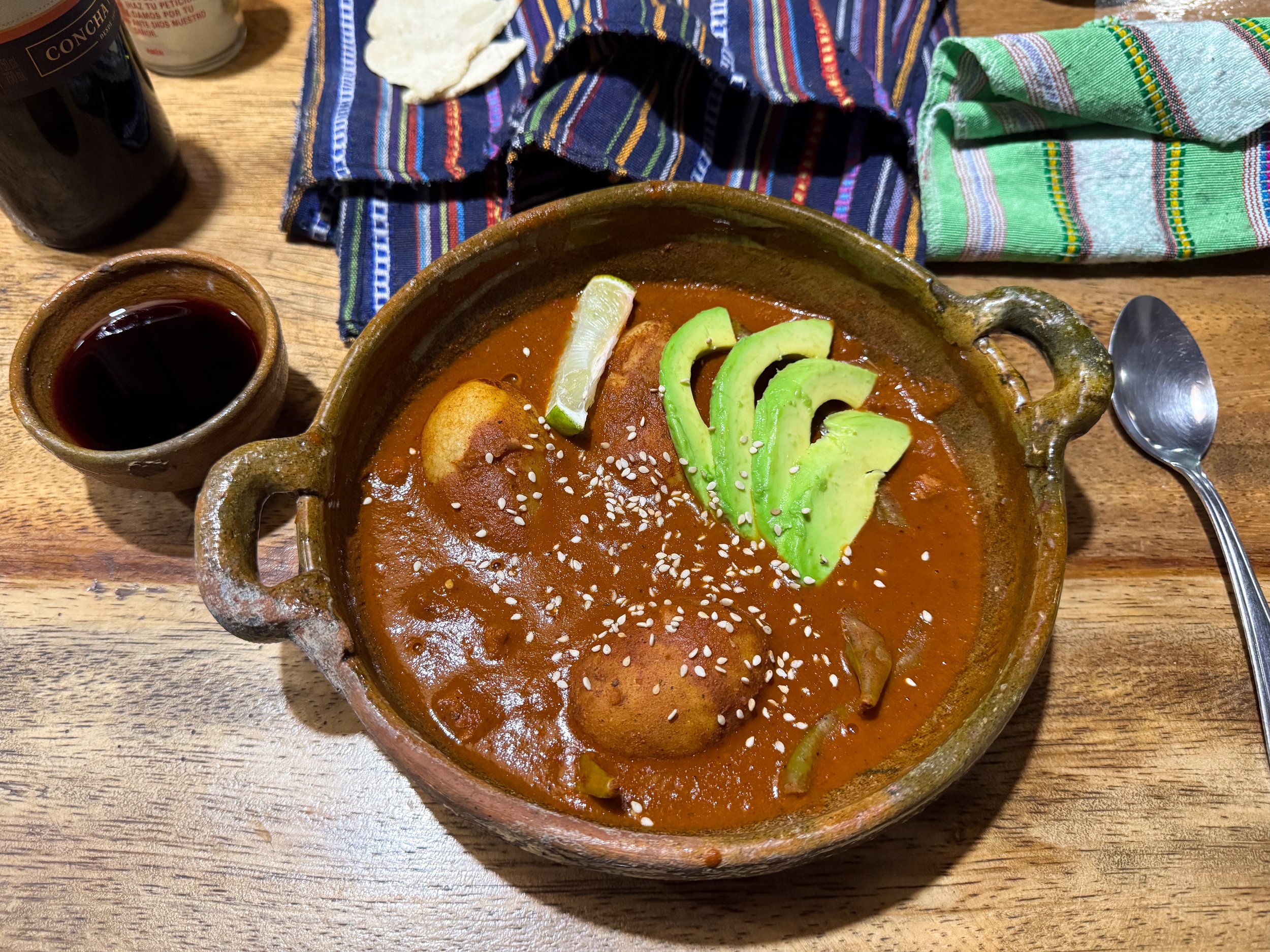
Chapín. A local soup made from chile guajillo, tomato and cilantro served with avocado and tortilla.
Pepián. A very traditional Guatemalan stew made from a mixture of peppers, veggies, spices, seeds and meats.
Corn Tortillas. A common base or accompaniment to nearly every dish in Guatemala. The tortillas are often made fresh from yellow, white and sometimes blue corn masa.
Pupusas. A corn masa arepa stuffed with various fillings like black bean and cheese.
Desayuno Typical. A typical breakfast dish comprised of eggs, tortilla, refried beans, sliced avocado, cheese and fried plantains.
Mojarra Frita. A whole fried white fish with a spiky spine found in the lakes, rivers and shores of Central America.
Caldo de Mariscos. A clay pot or bowl with a base of spicy seafood broth and a range of fish, crustaceans and shellfish.
Choco Fruita. Chocolate dipped fruits like banana, coconut, papaya and watermelon sold by street vendors. They’re popular in San Juan.
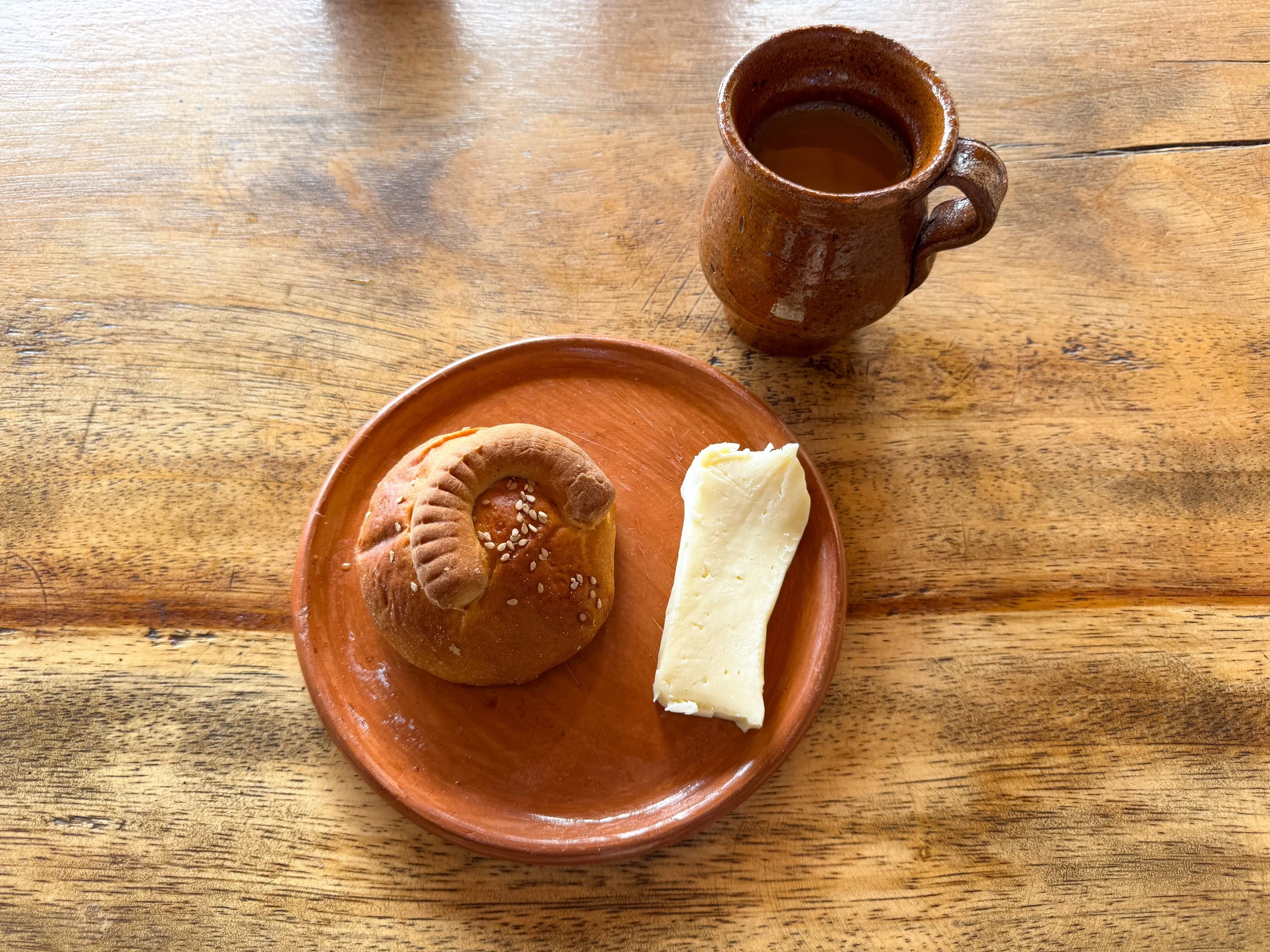
Guatemalan Drinks
Ancestral Hot Chocolate. A traditional Mayan method of making hot chocolate from pure cacao mixed with cinnamon and raw sugar then mixed with creamy milk.
Guatemalan Coffee. Guatemala is one of the most prosperous coffee producing regions in the Americas. Locally grown and roasted beans are brewed into a full bodied, rich and chocolaty flavored cups of coffee and espresso at cafes and homes around the country.
Gallo. Guatemala’s national beer, recognizable by its green bottle and the logo of a rooster on its label. It has a classic light beer flavor and is sold everywhere across the country.
Michelada. A cocktail made from beer, tomato juice, lime and spices with a salted rim. They’re commonly made with Gallo and sold at bar carts by street vendors.
Quetzalteca. A local spirt sold in small bottles with flavors like tamarind, hibiscus, strawberry, pineapple, watermelon and mulberry. It’s often prepared at bars over ice with lime juice and tajin.
Zacapa. Guatemala’s national rum. With our Priority Pass, we visited Casa del Ron, the brand’s lounge at the La Aurora International Airport. For free, we ordered two cocktails, the Zacapa Sour and Zacapa Express as well as a glass of Zacapa XO neat, a blend of 10-25 year aged rum.
Where to Stay
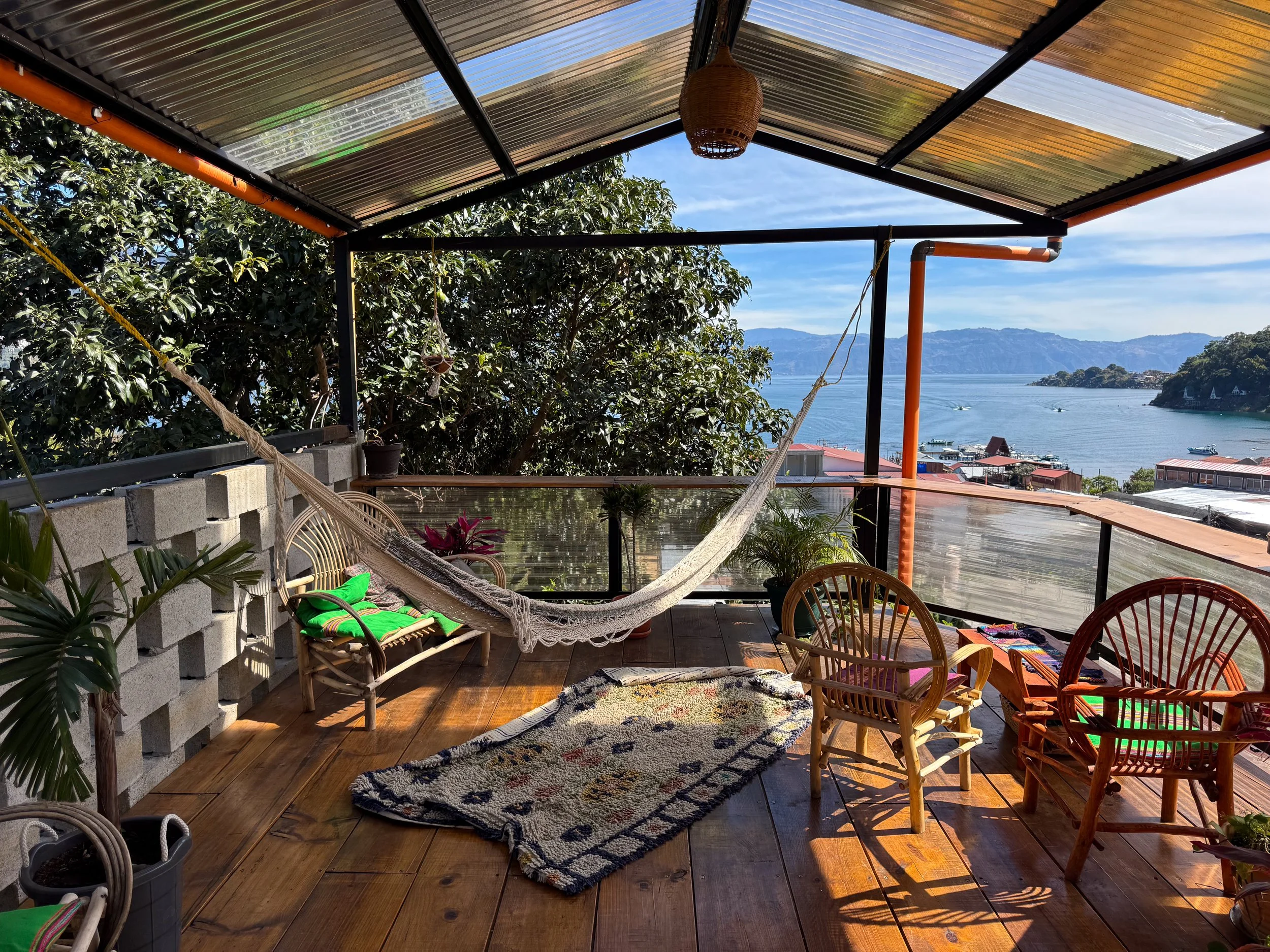
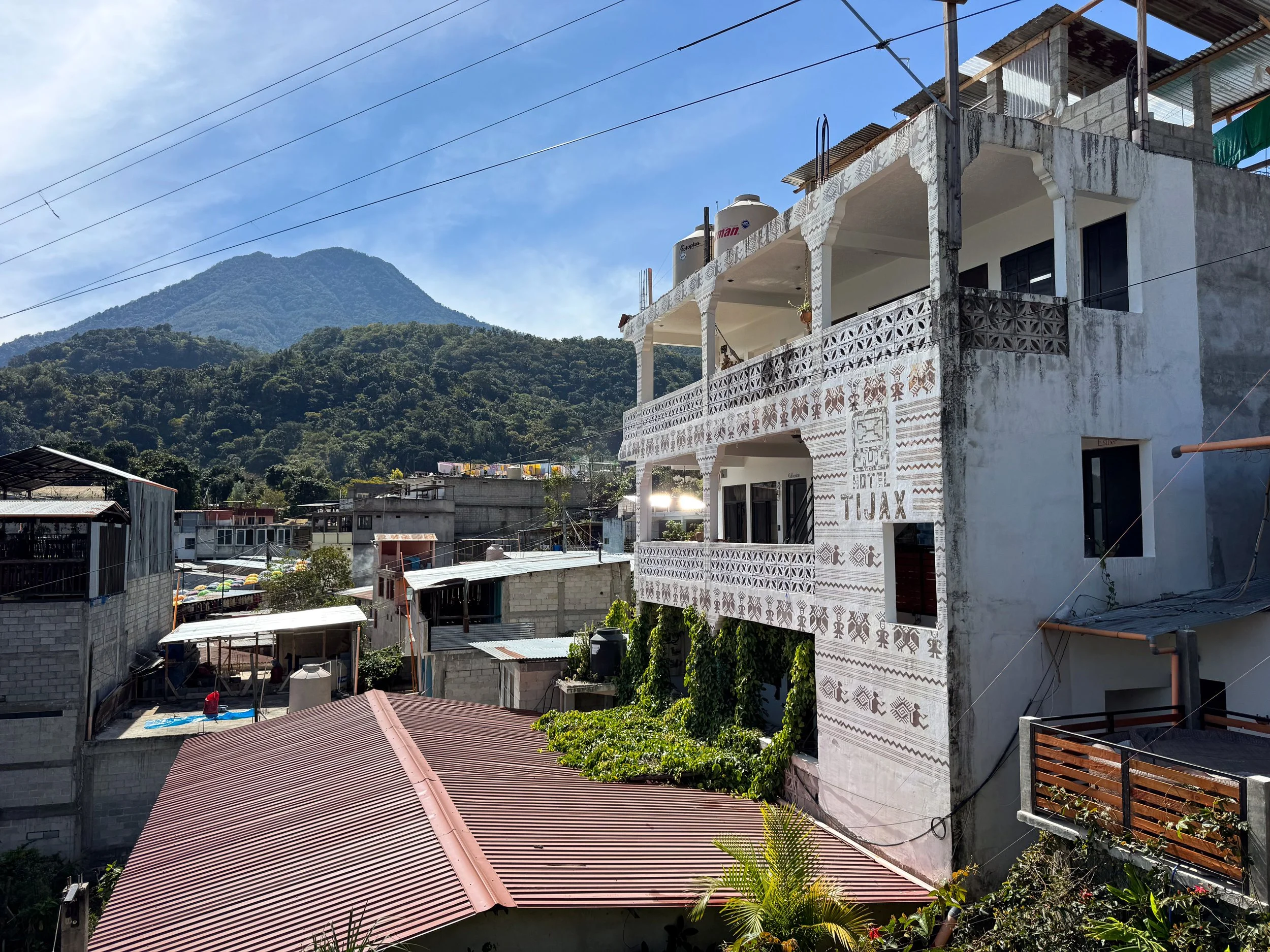
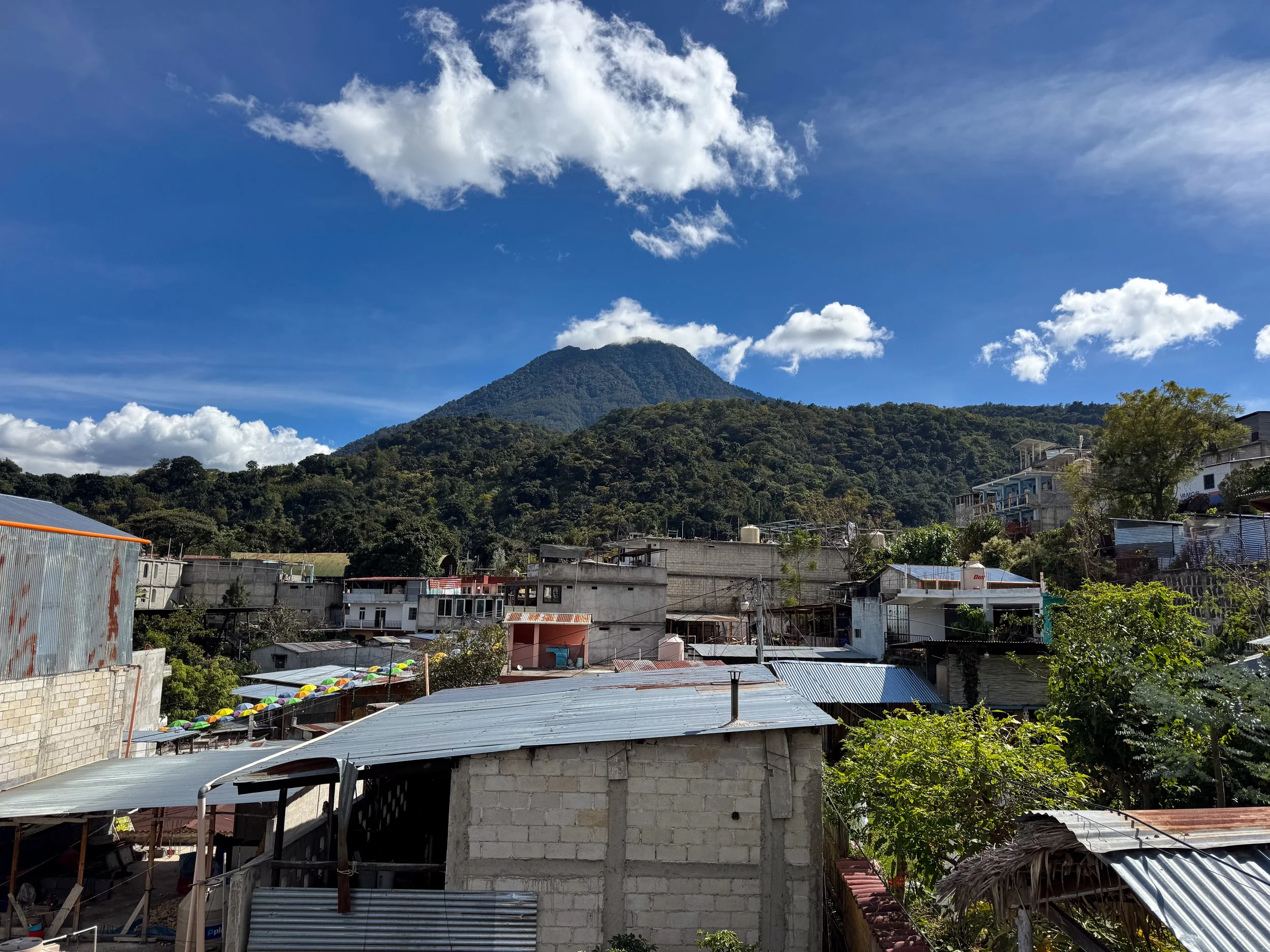
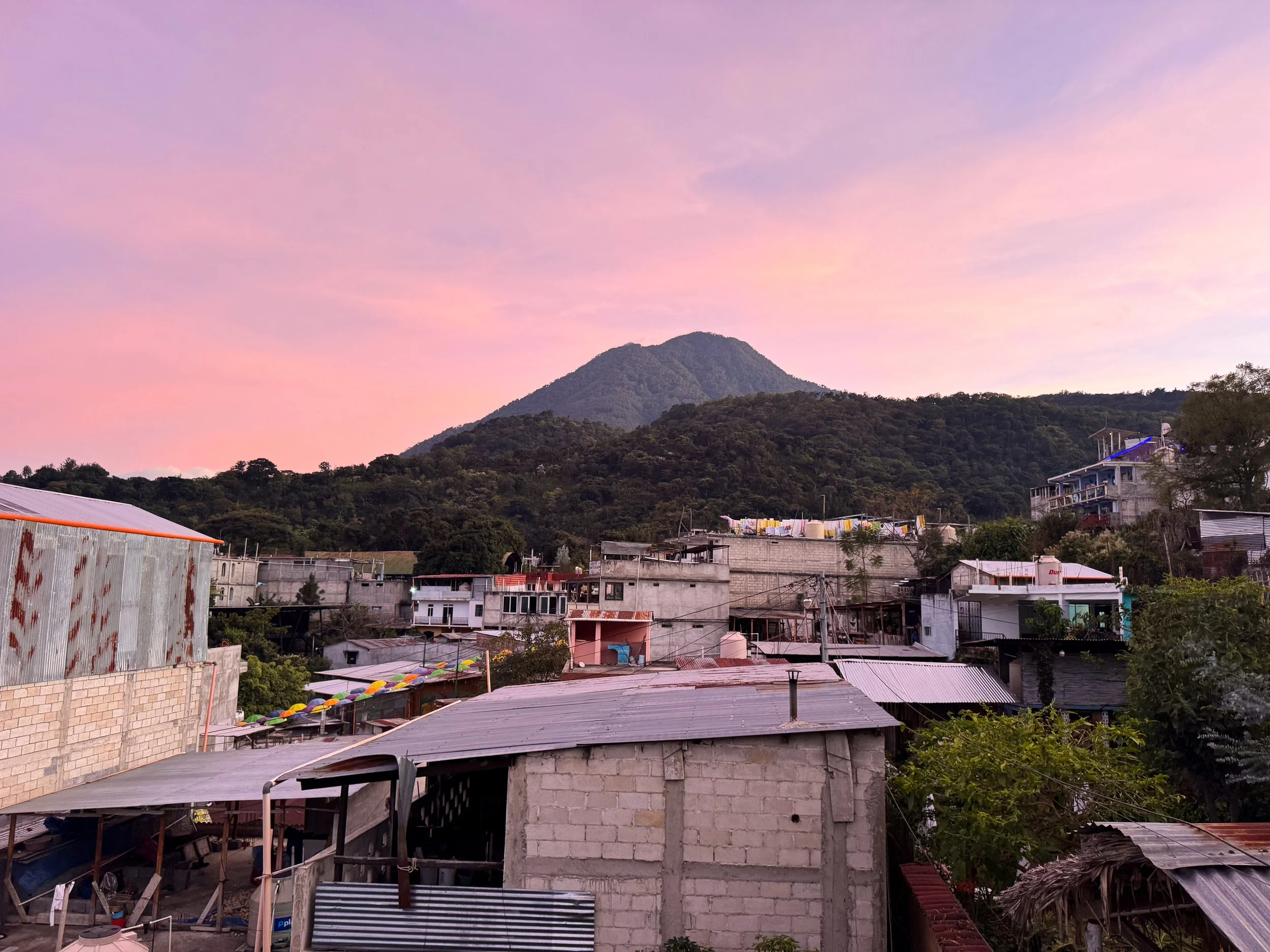
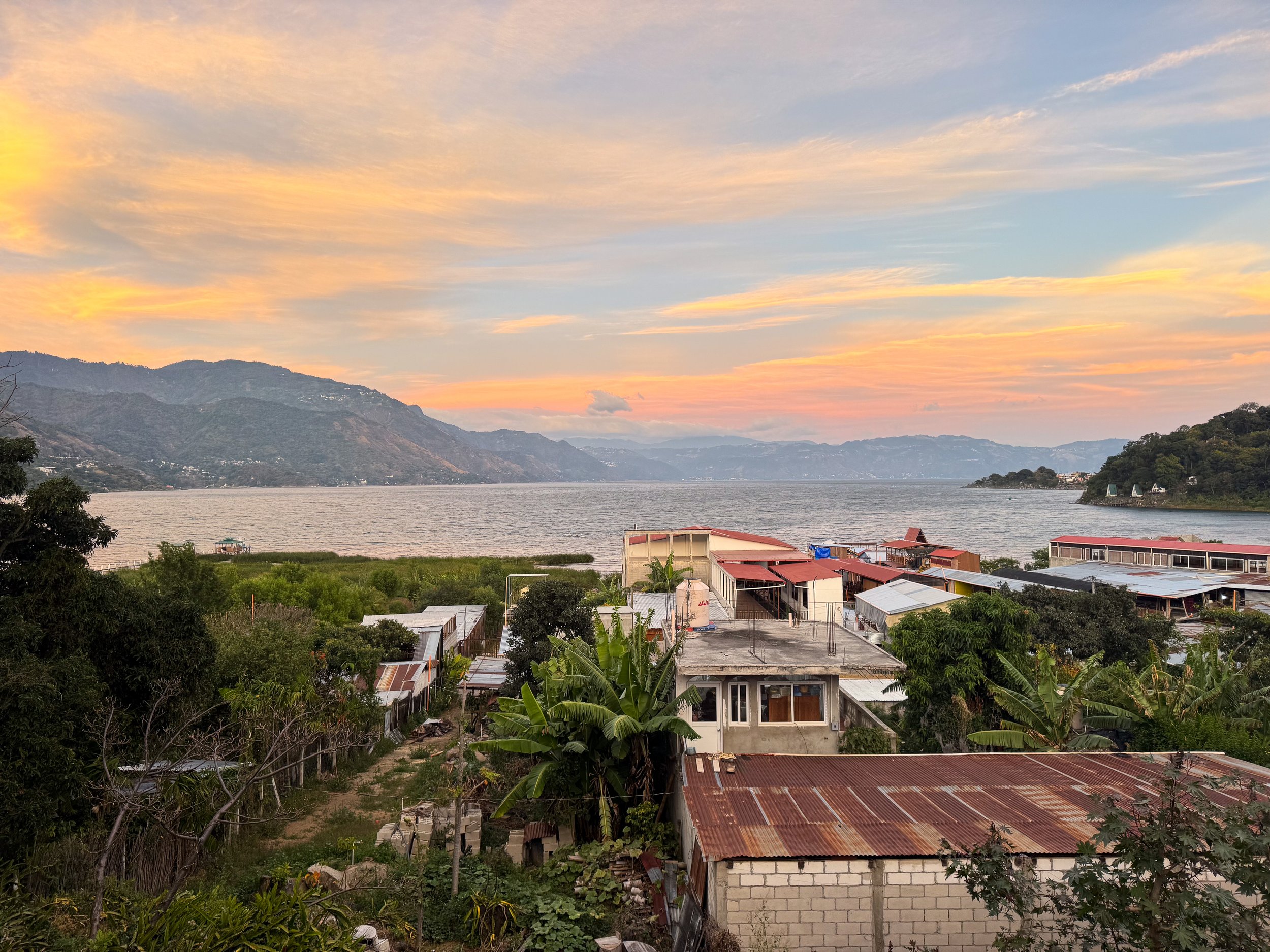
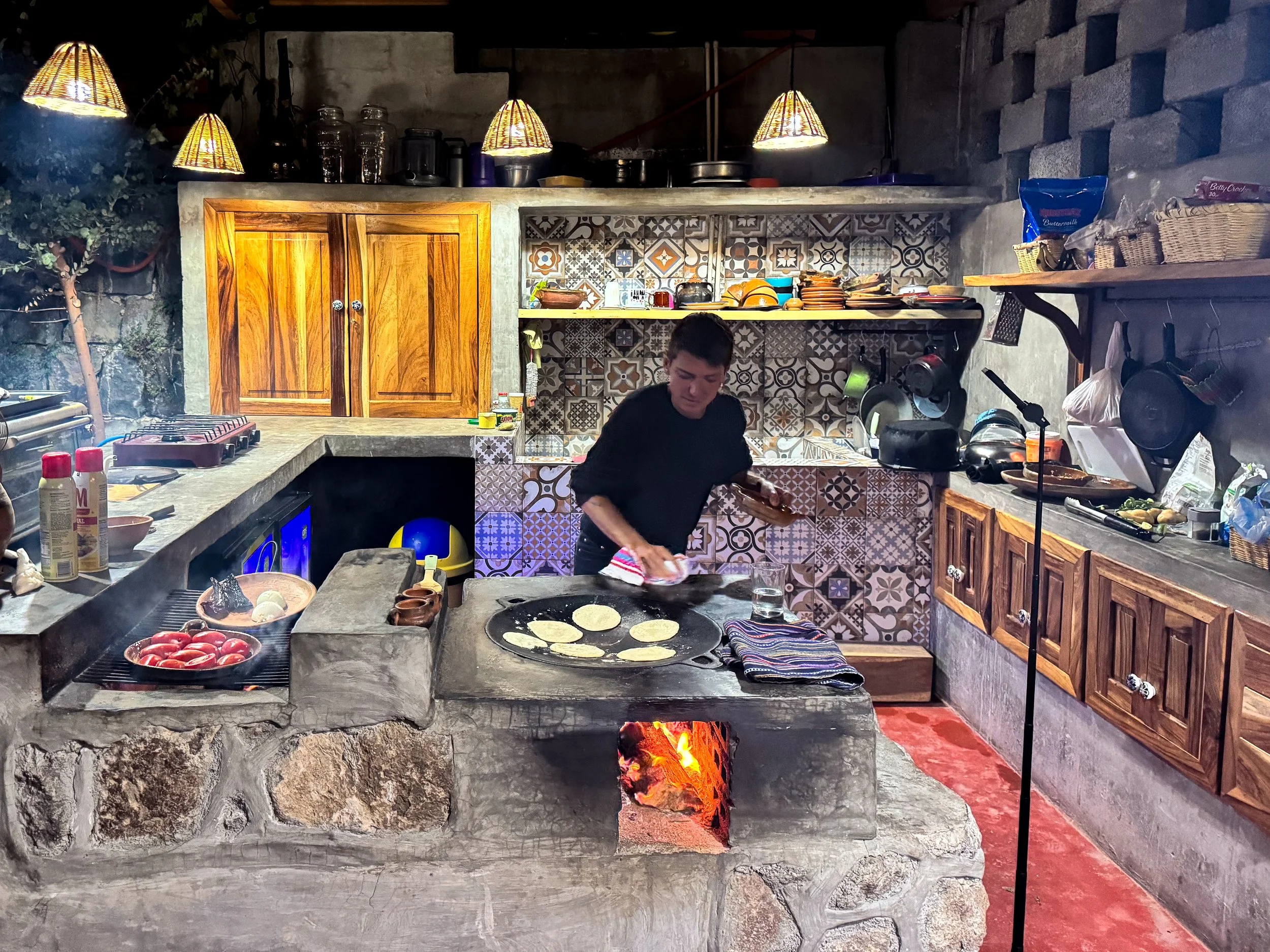
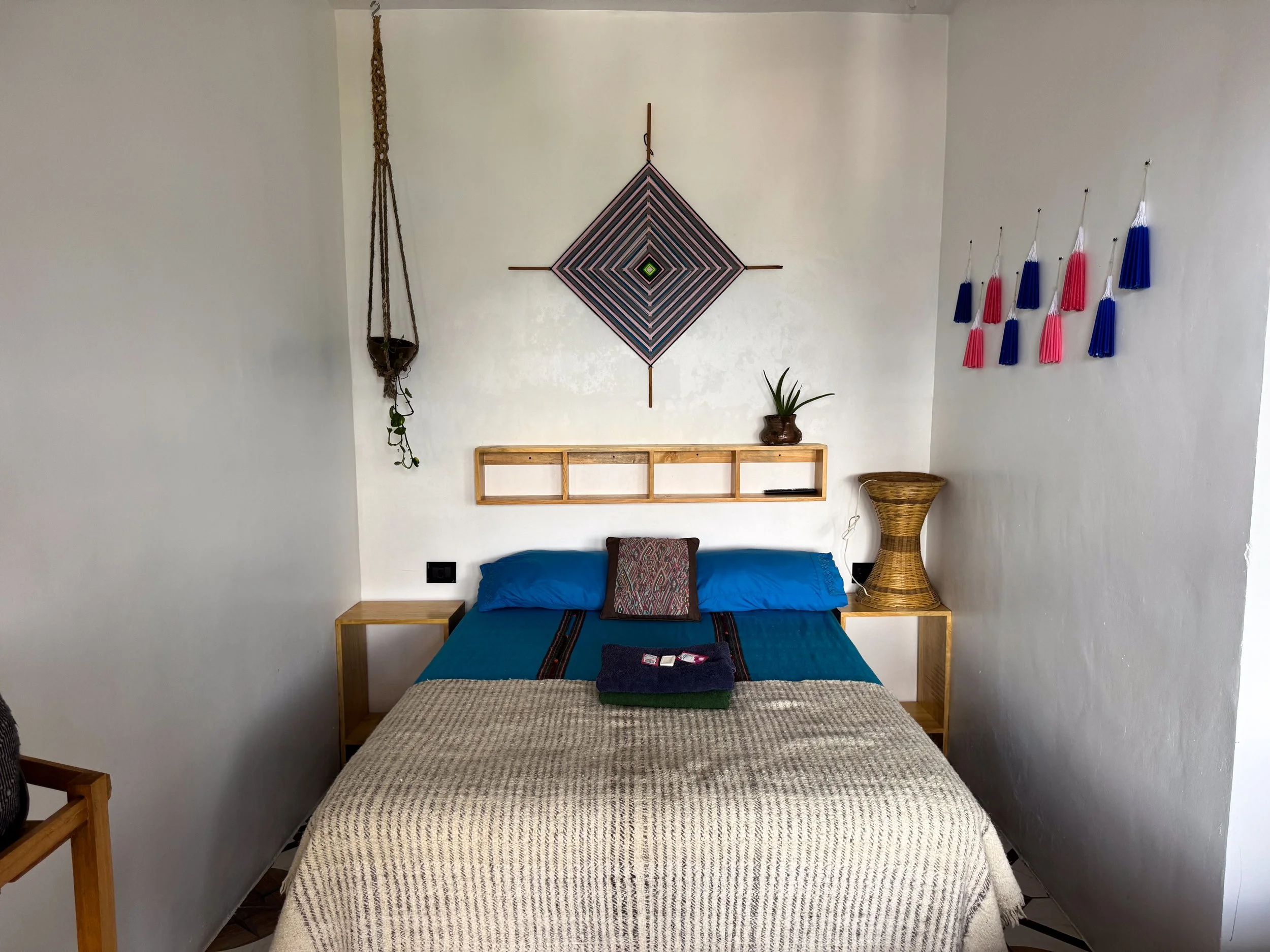
Hotel Tijax. We stayed at a boutique hotel in San Juan de La Laguna with balcony views overlooking Lake Atitlán and the tin clad roofs of the pueblo. The rooms are decorated in local products including textiles, paintings, ceramics and candles. One of the best aspects of the hotel was the outdoor kitchen! It’s equipped with a wood burning comal, grill and traditional clay dish-ware. The space is decorated with a colorful tiled backsplash, basket lights and live edge dining table. The owners provide clean drinking water and freshly brewed coffee from Cafe Las Marias up the street. Book on Airbnb.
Getting to Lago Atitlán
We hired a transfer ahead of time from the airport in Guatemala City to bring us to Panajachel. The trip took 4 hours due to traffic. We hired the same company to transfer us from San Juan back to the airport. The trip took 3 hours. We booked on Viator.
Getting Around Lago Atitlán
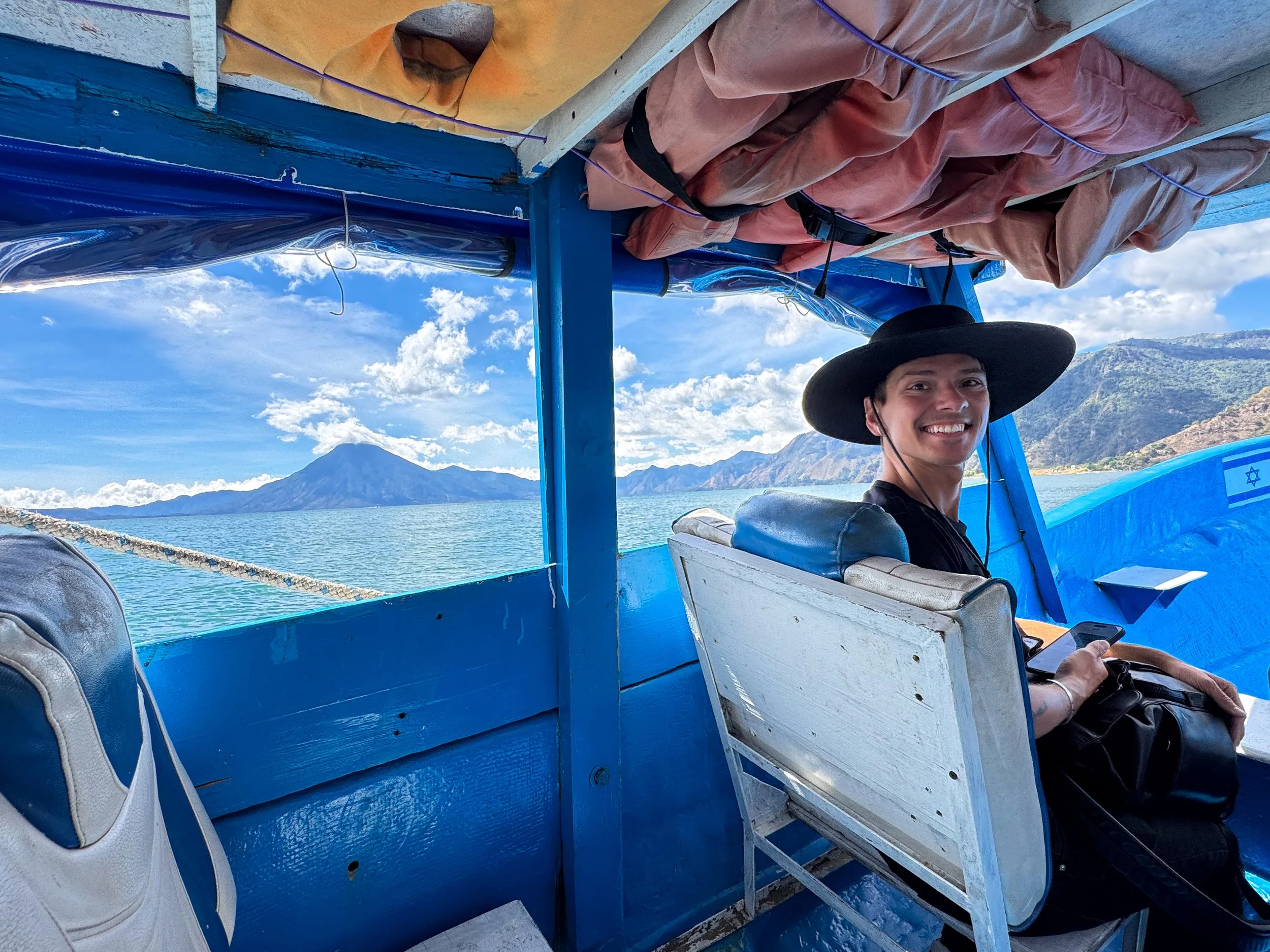
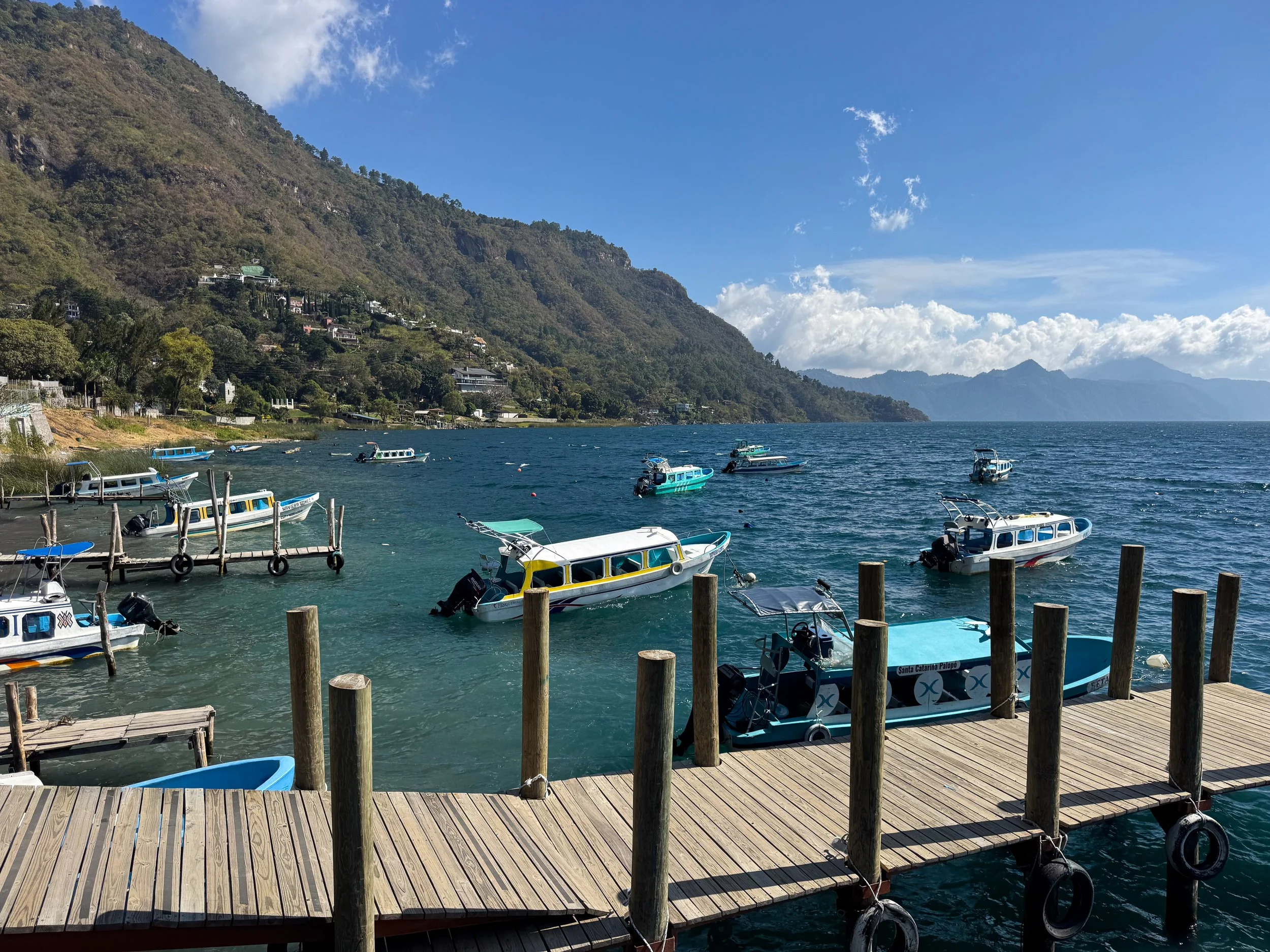
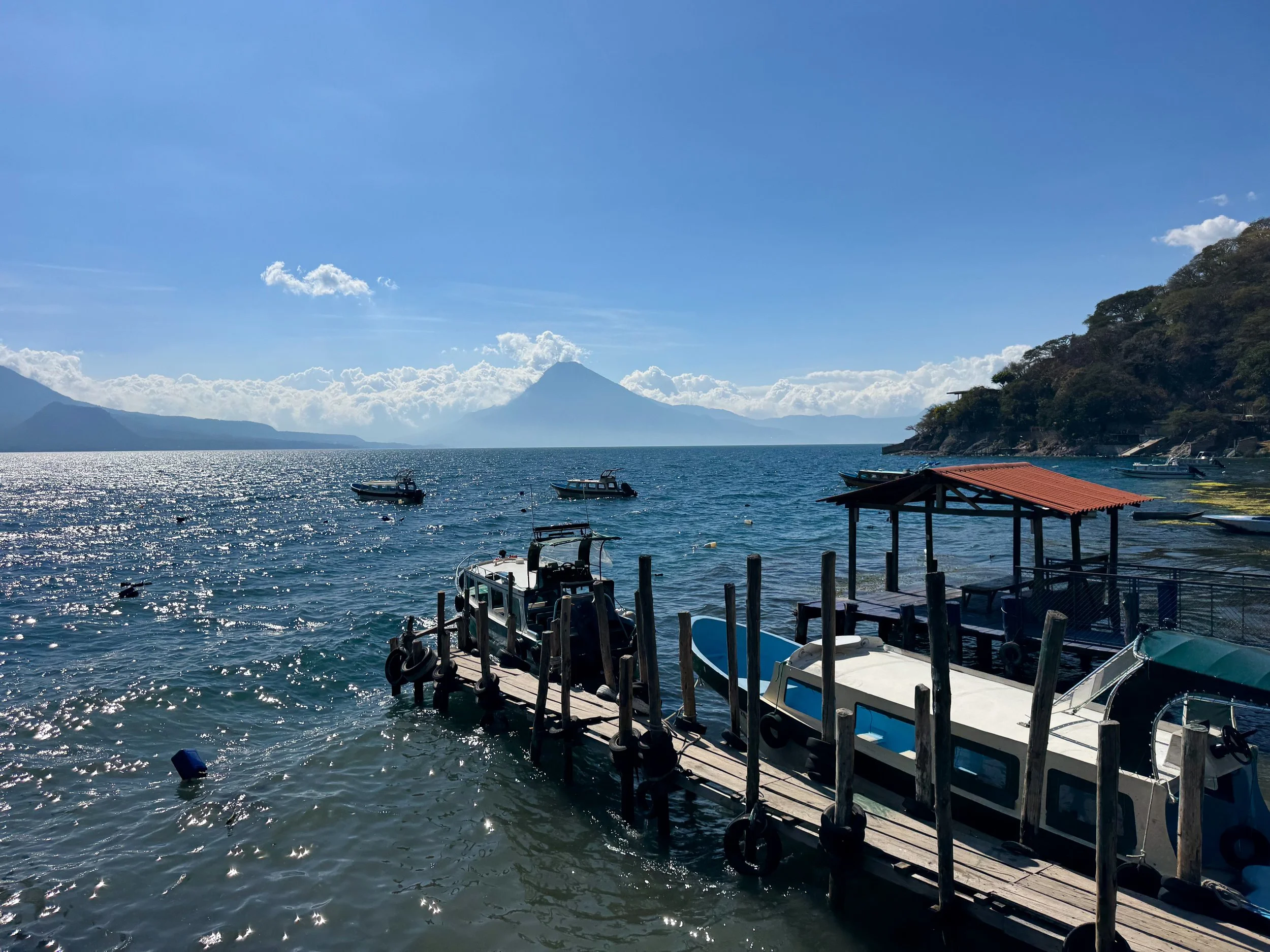
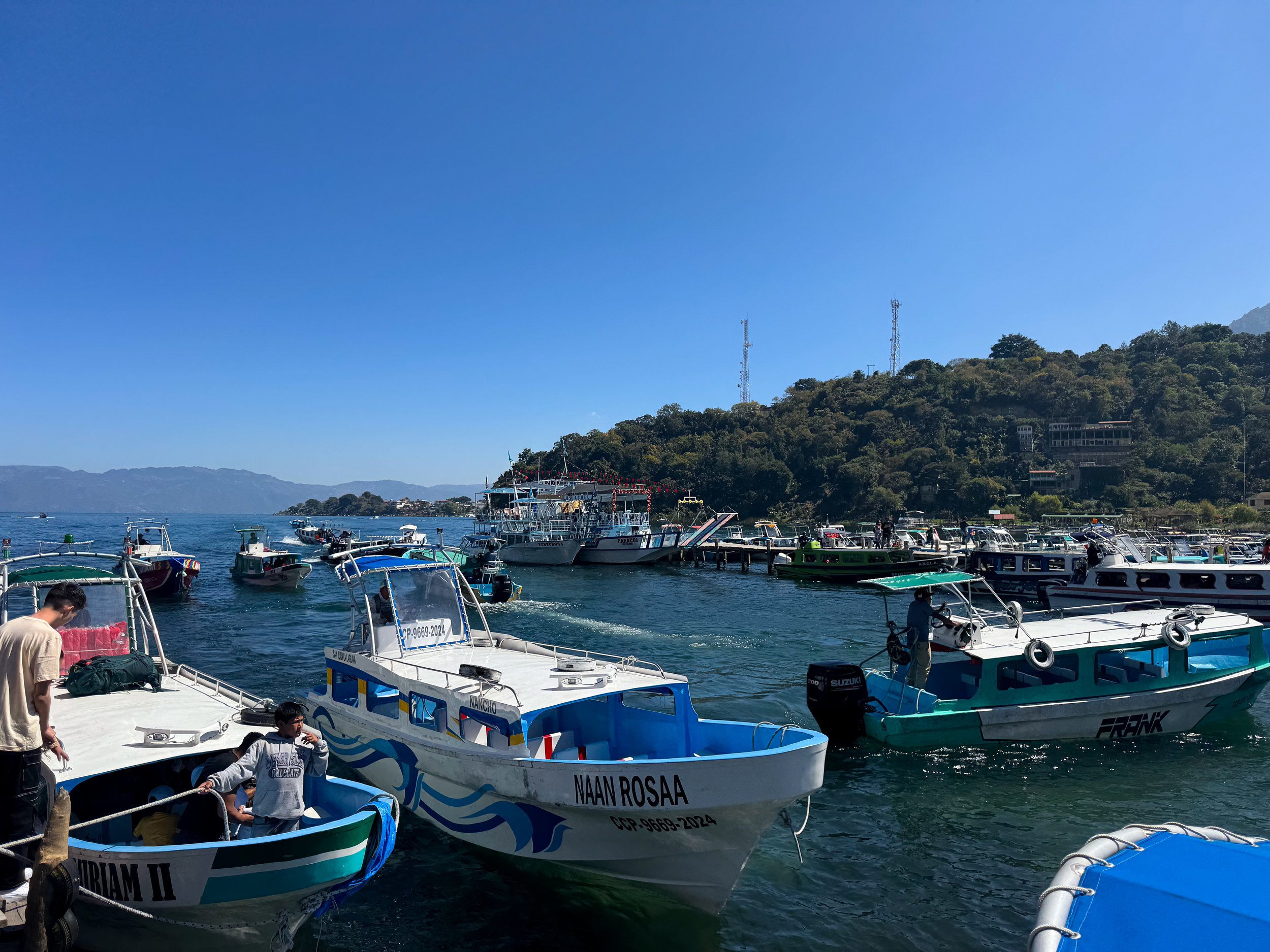
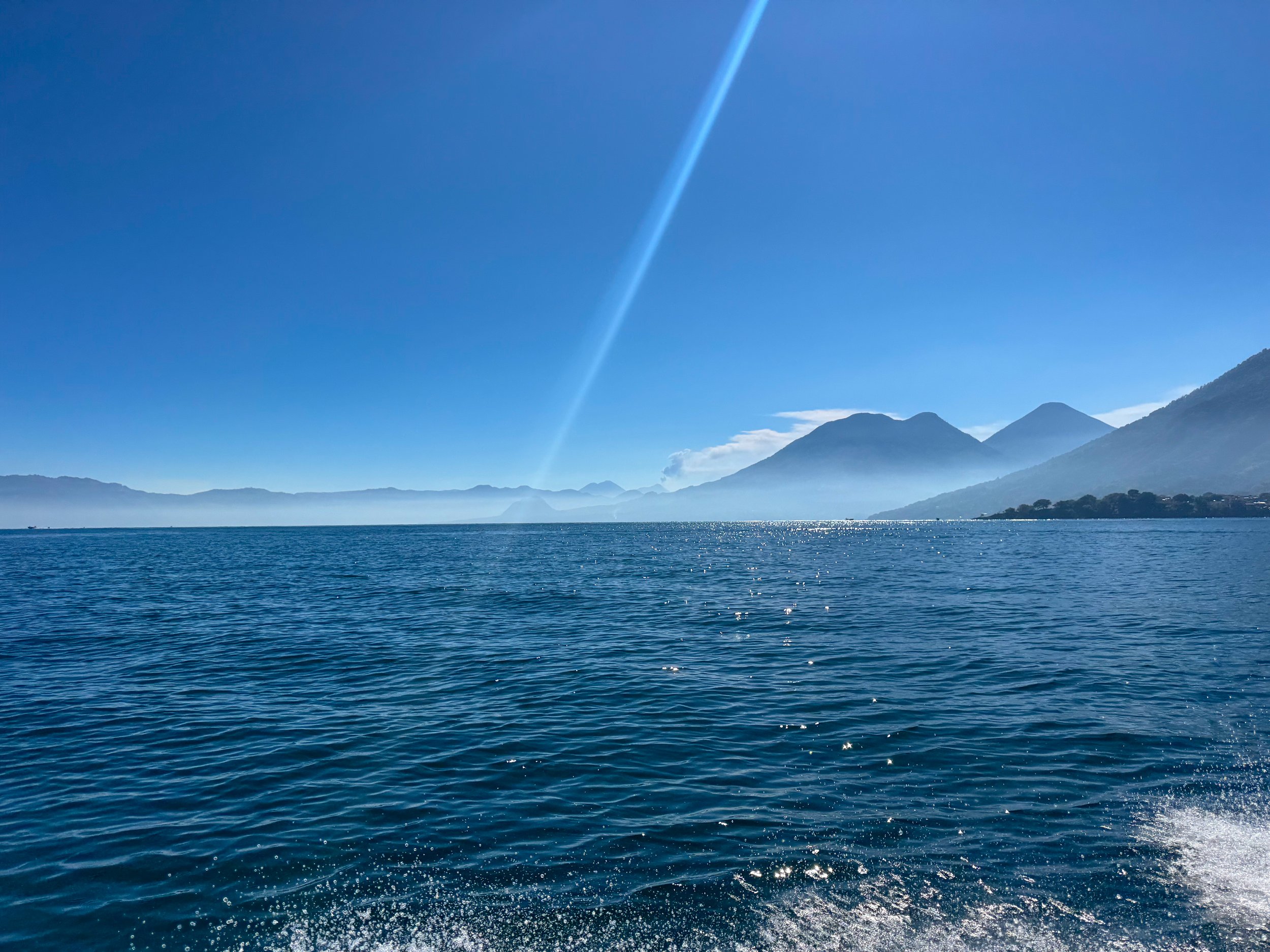
Public Ferries (Lanchas). Public ferries are an enjoyable way to sightsee and happen to be the most affordable method to visit towns along Lake Atitlán. Ferries operate from docks in town, starting at 6:30am until 5:30pm. They travel in a circuit around the lake stopping at most towns between Panajachal and San Pedro, including Santa Cruz, Jaibalito, Tsununa, San Marcos, San Pablo and San Juan.
Ferry Prices. Tickets cost 15-25Q per person depending on the distance between towns. There is typically an authorized price chart at the ferry dock with the latest prices. Anything more than what’s listed is a scam.
Beware of Scammers. People at the docks can be scammy telling you there are no public ferries to your destination and the only option is a private boat. This is not true if traveling between the hours of 6:30am to 5:30pm. Ignore them and keep asking around for the public ferry.
Good to Know. Ferries don’t depart until there are at least a dozen passengers on board. We never waited longer than 15 minutes. The water gets increasingly bumpy and wavy in the afternoon due to wind.
Tuk-Tuks. Tuk-tuks are readily available to get around town at all hours. Prices typically cost between 5-10Q per person. Tuk-tuks can travel between towns but drop off on the edge of the next town. The price varies depending on the distance between towns.
On Foot. If you’re okay walking uphill, most of the towns are easily walkable. It’s a great way to see the local culture, murals and views of the lake.
Location Specifics
Fireworks. Fireworks are regularly set off in all pueblos of Lake Atitlán, day and night. The echoes sound like a volcanic eruption!
Safety. We felt safe in all of the cities we visited along Lake Atitlán and kept aware of our surroundings. We followed common recommendations like hiring a guide when hiking and didn’t walk between towns, especially at night.
Toilets. Like most places in Central and South America, used toilet paper is thrown in the bin, not the toilet.
Drinking Water. Tap water is unsafe to drink in Guatemala due to contamination. Stick to bottled or purified water.
Cash vs Card. Most businesses only accept cash. Carry enough for the day. There is at least one ATM or currency exchange in all of the major towns around the lake.
Stray Dogs. Stray dogs are common around the pueblos of Lake Atitlán. They’re rarely aggressive but best left alone.
Elsewhere in Guatemala
From colonial cities to ancient jungle temples, discover more of Guatemala beyond the shores of Lake Atitlán.
Antigua Guatemala Travel Guide: Acatenango, Colonial Charm & Local Cuisine. Explore Antigua Guatemala's cobblestone streets, colonial architecture and local cuisine beneath towering volcanoes, including the iconic hike to Acatenango and Fuego.
Maya Ruins Travel Guide: Jungles, Temples & Ancient Cities. Journey through ancient Maya cities, temples and archaeological wonders across Belize and Guatemala while exploring dramatic jungle landscapes.
For Next Time…
Having been to Guatemala three times, we’re certain to return! There are a few things high on our list next time we visit this magical country.
Flores. A colorful colonial island town on one of Guatemala’s mountainous lakes. We were teased seeing the city from above on a layover from Belize to Guatemala City.
Tikal Sunrise Hike. An early morning hike in Tikal to watch the sunrise from the top of the famed pyramids. We saw photos of the colorful sunrise, layers of morning mist and dramatic ruins peek from jungleous canopy below.
Chichicastenango. Latin America’s largest outdoor market known for its handicrafts, textiles and jewelry. If we make it back to Lake Atitlán, we’ll take a day trip here from Panajachel.