

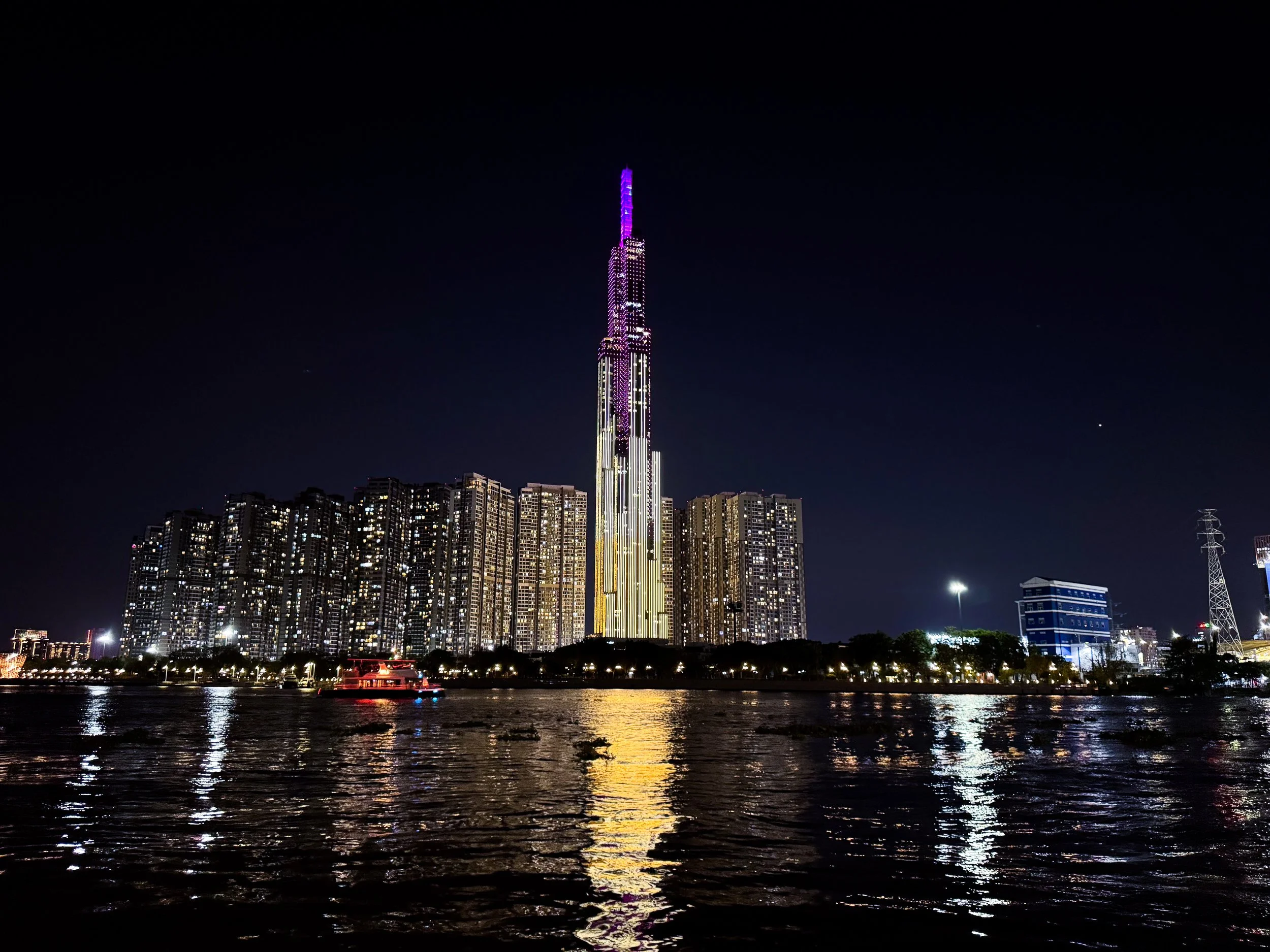
Saigon Travel Guide: Markets, Nightlife & Vietnamese Culture
Experience Saigon where bustling markets, vibrant nightlife, historic landmarks, neon lit skyscrapers and street food stalls bring modern Vietnam to life.
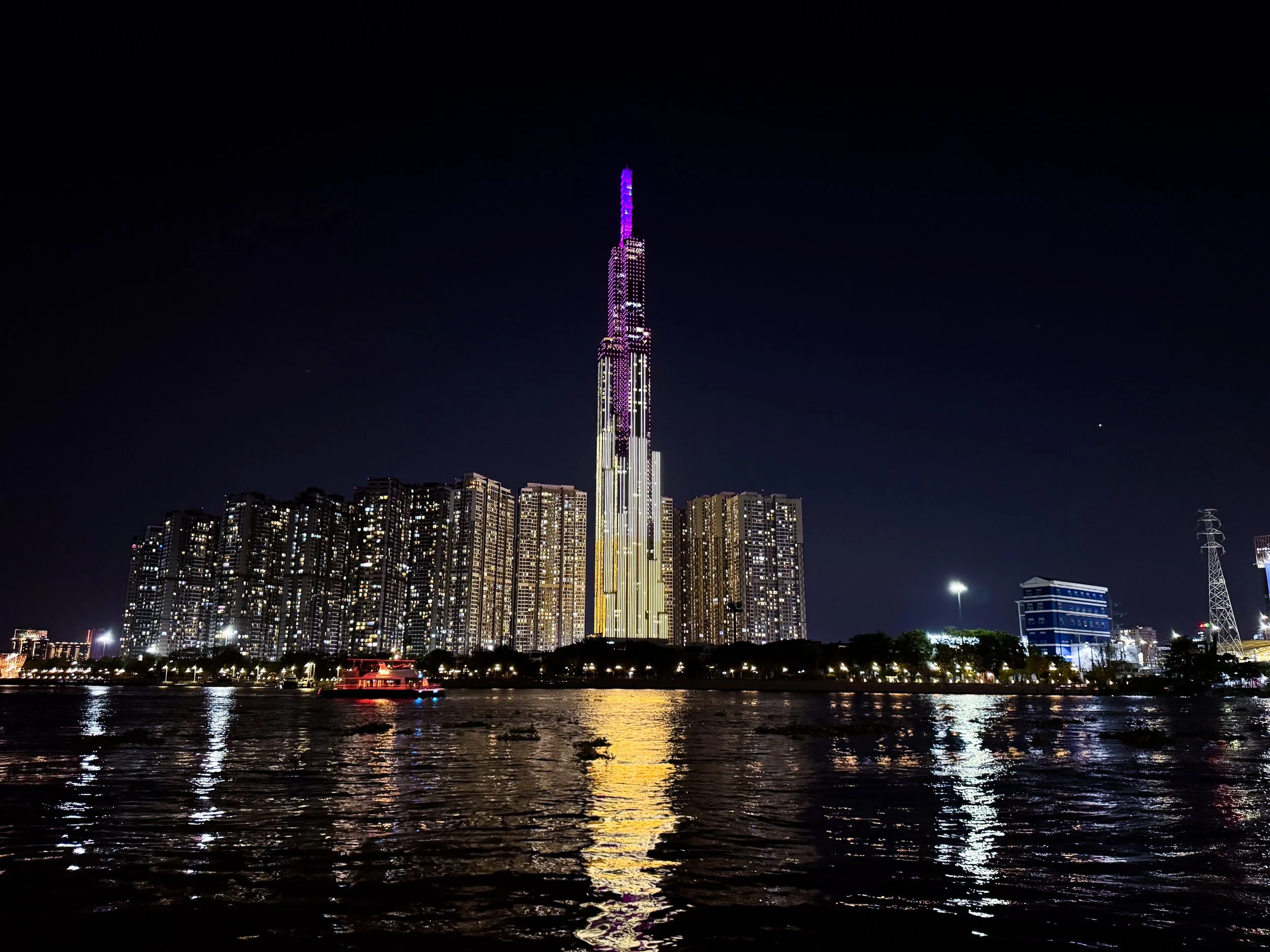
Saigon, Vietnam
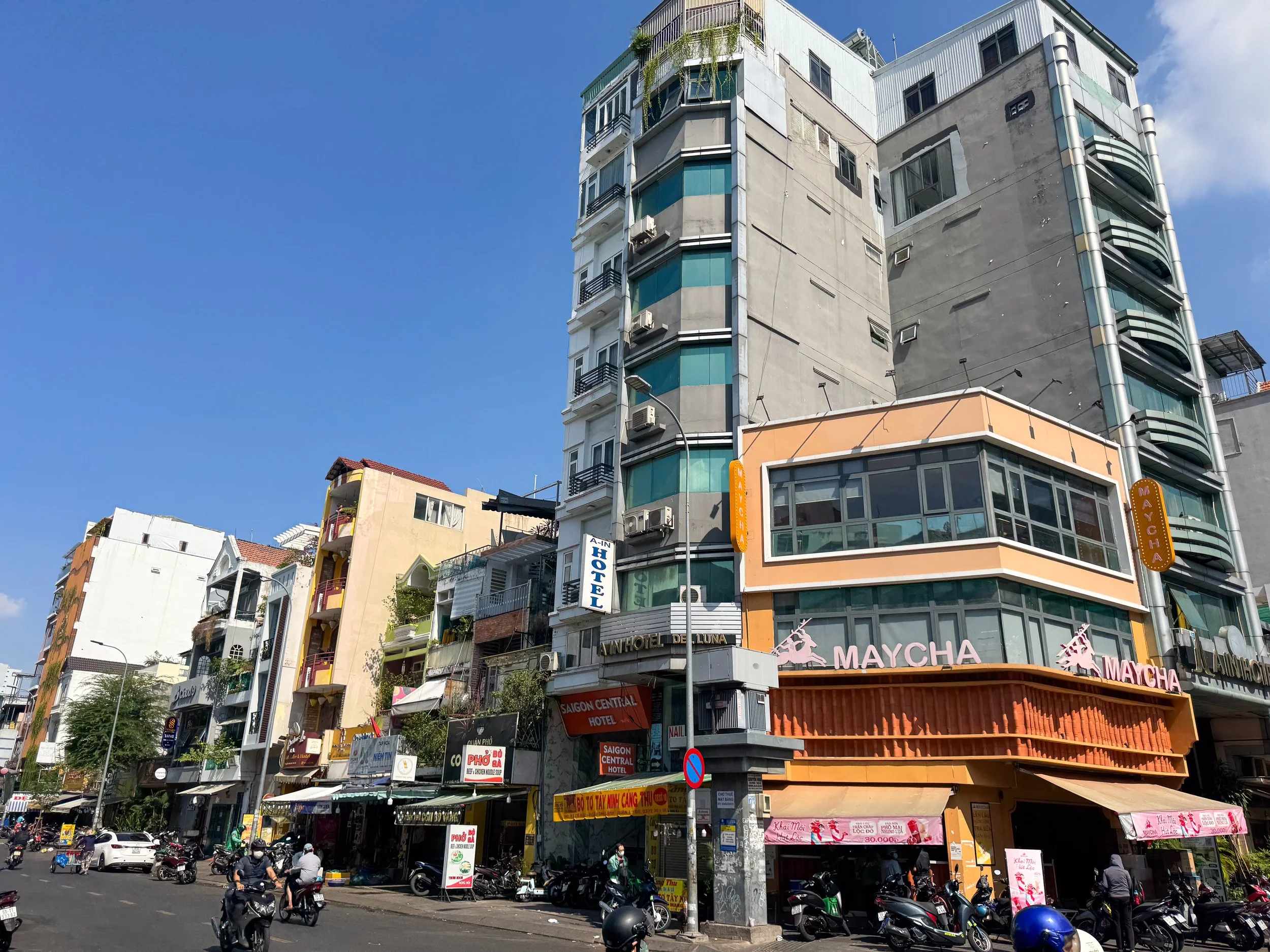
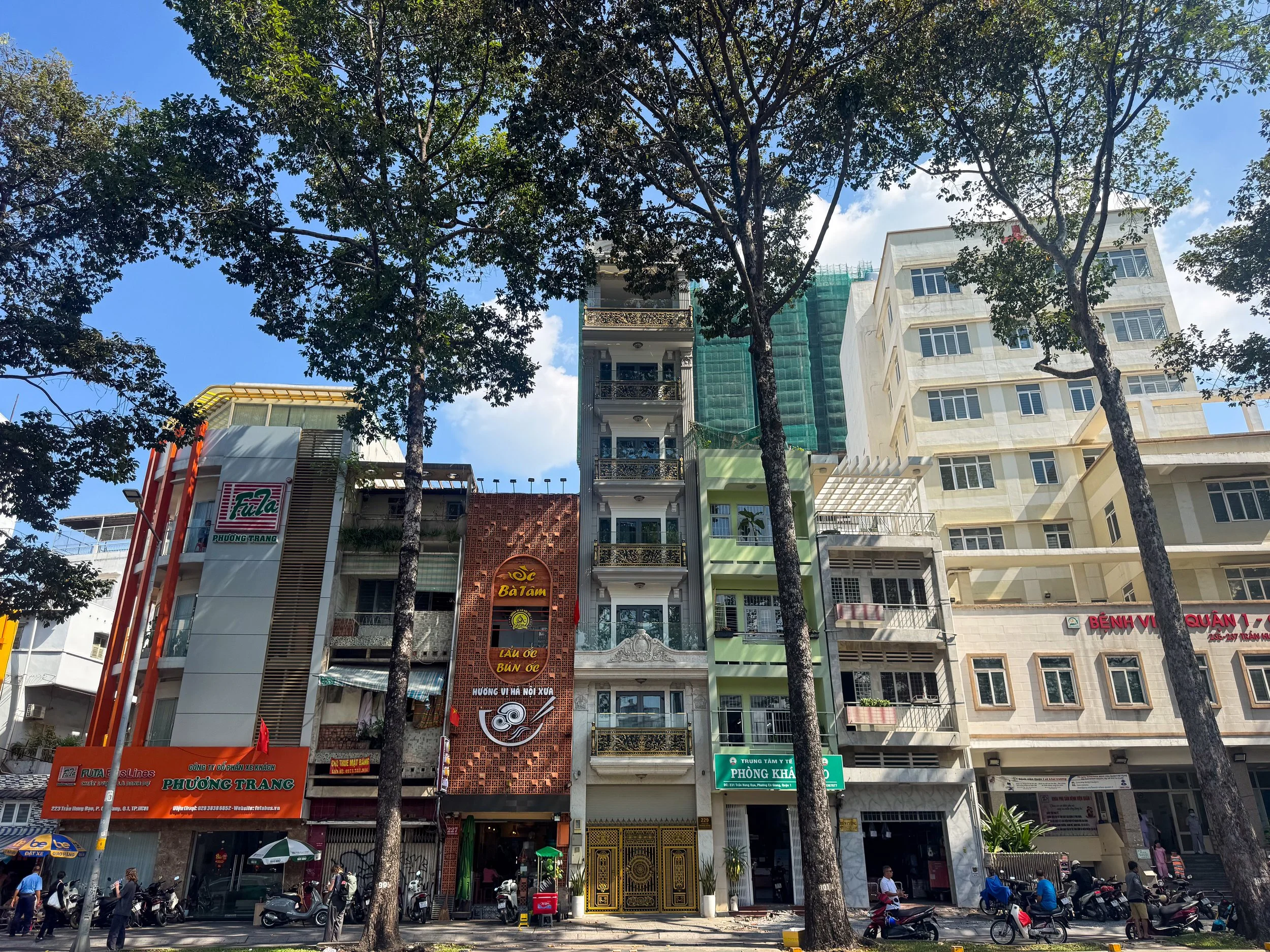
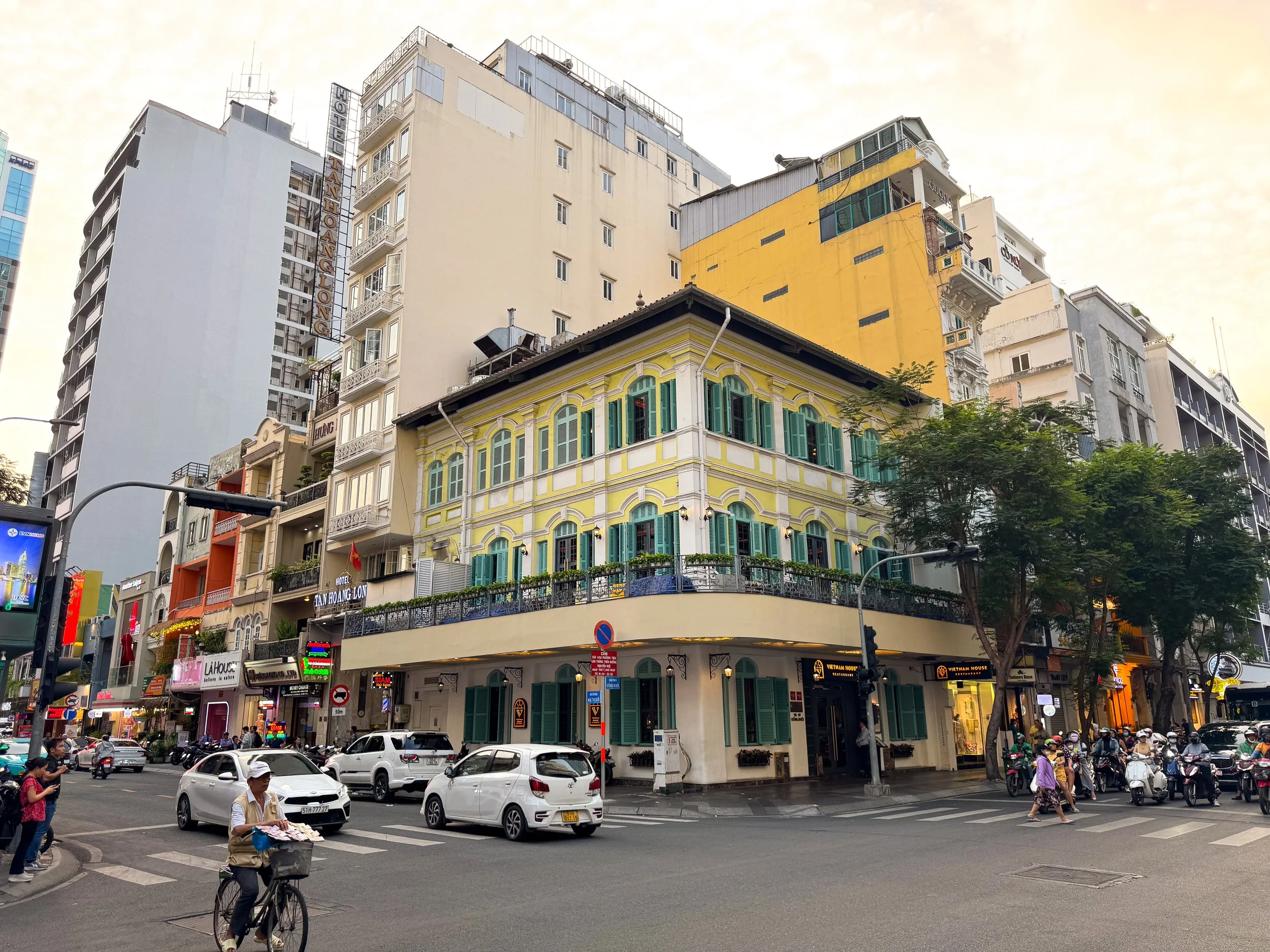
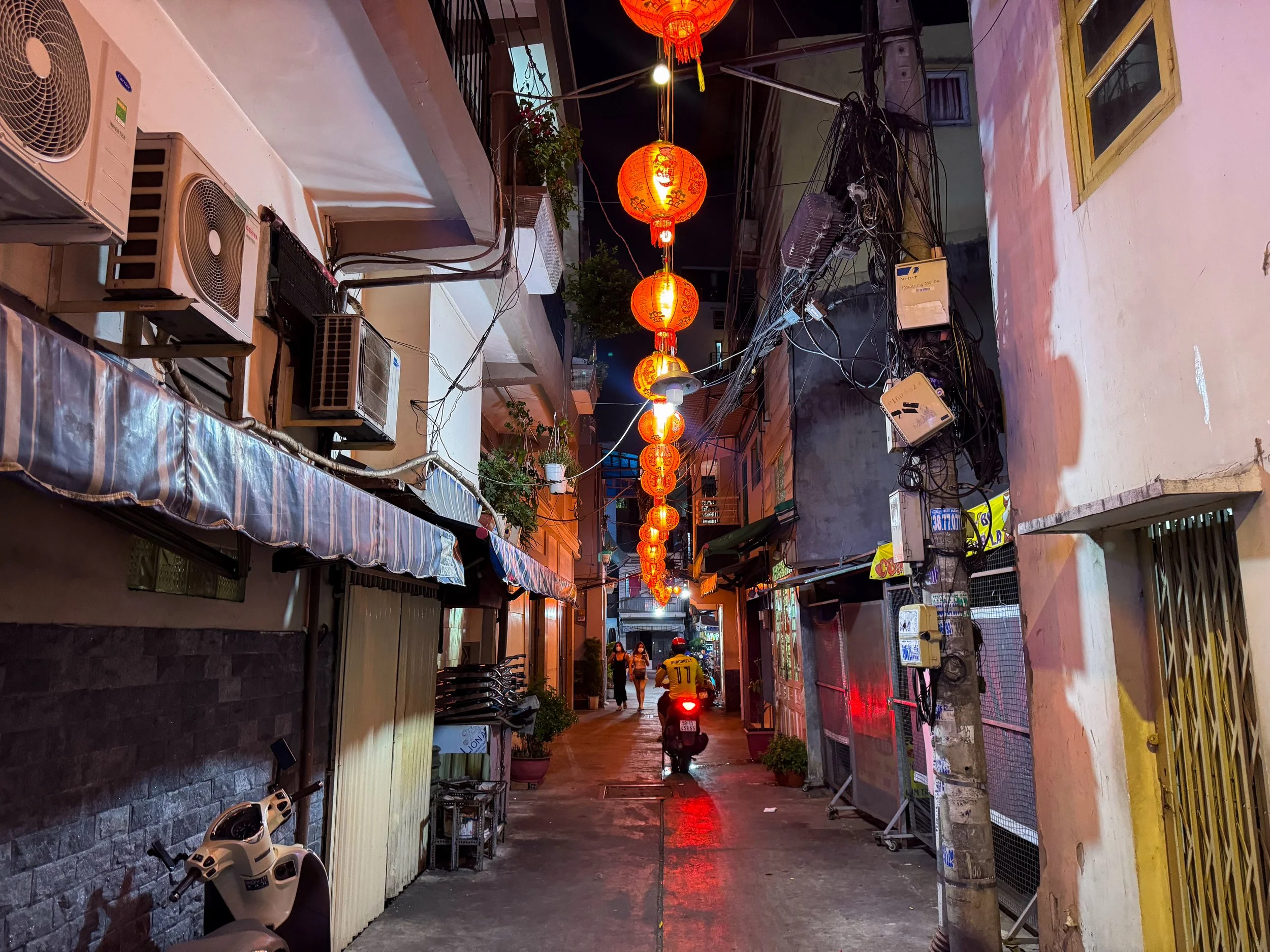
Saigon is a bustling Vietnamese city famed for its chaotic streets, vibrant nightlife and historic sights. Narrow alleyways and roads are lined with thin buildings, home to coffee shops, cocktail bars and seafood restaurants.
Ho Chi Minh City
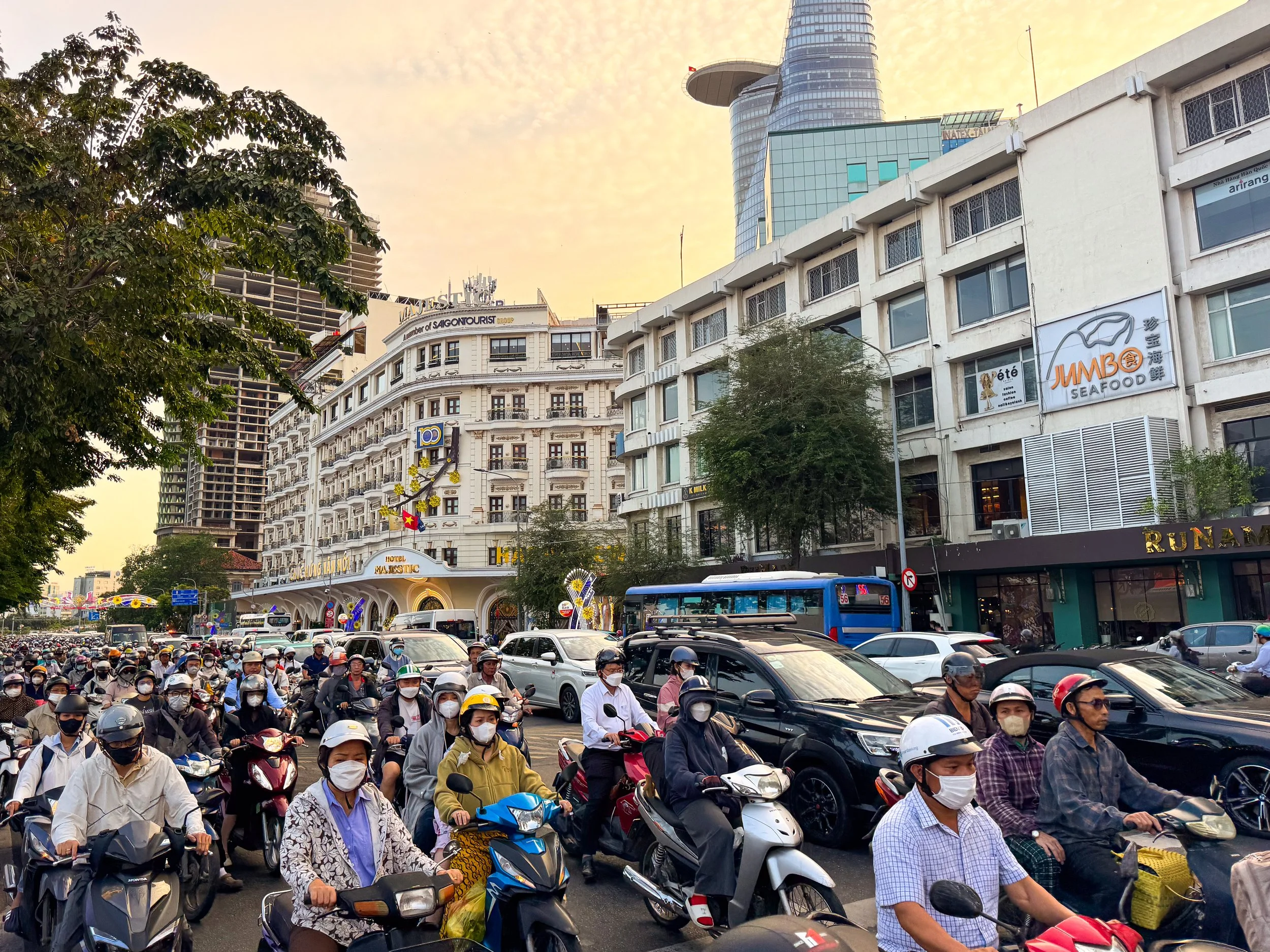
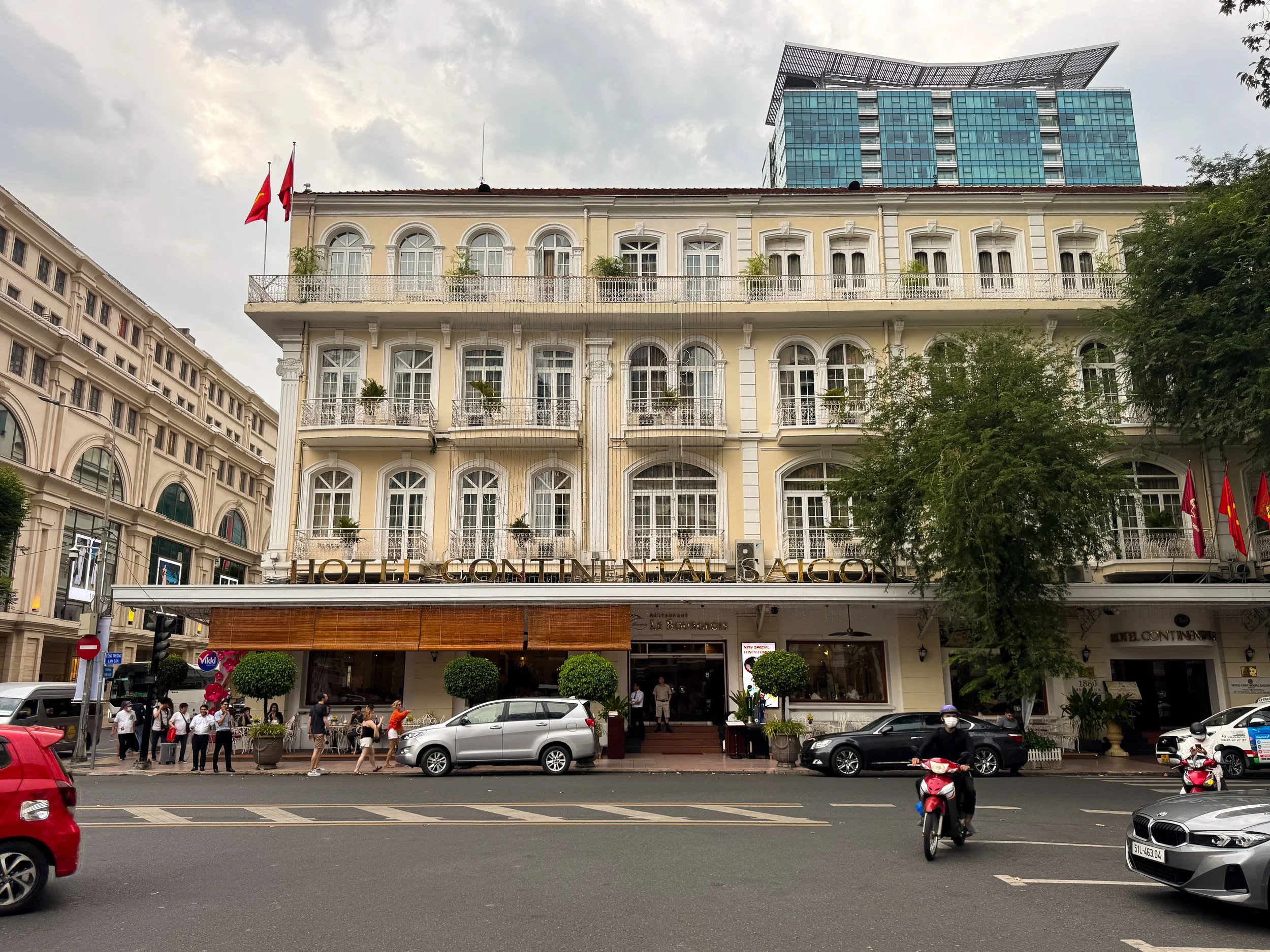
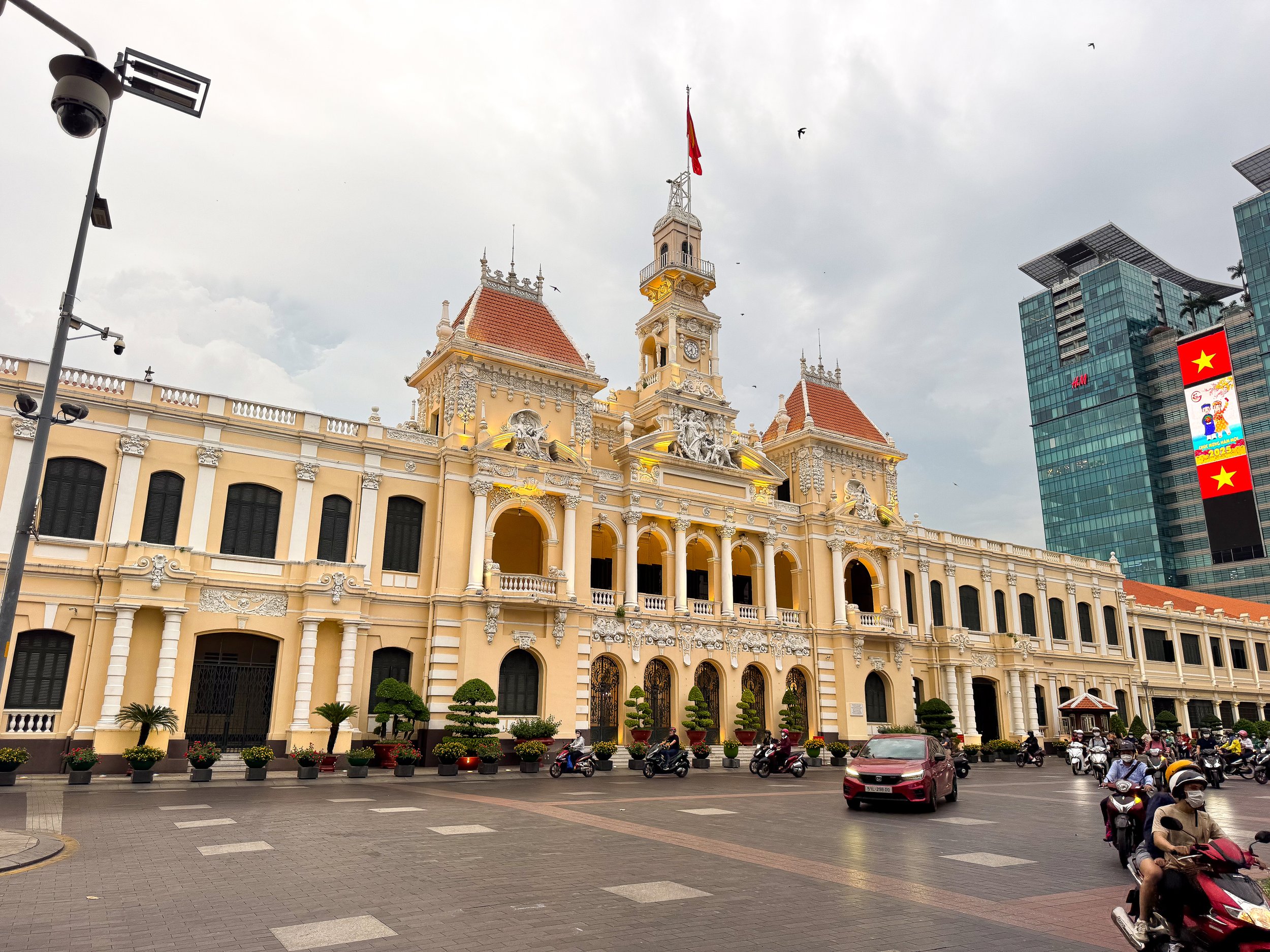
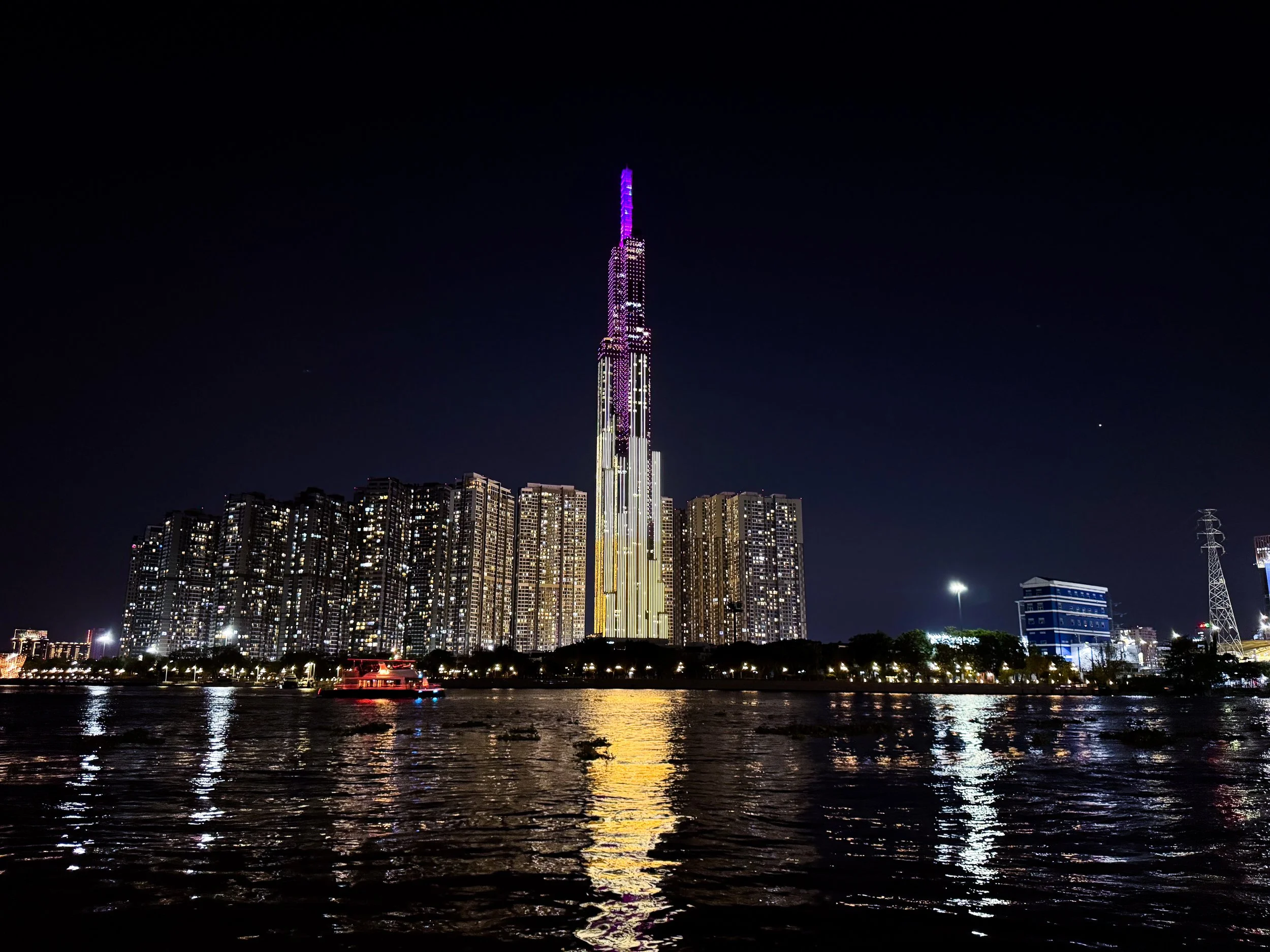
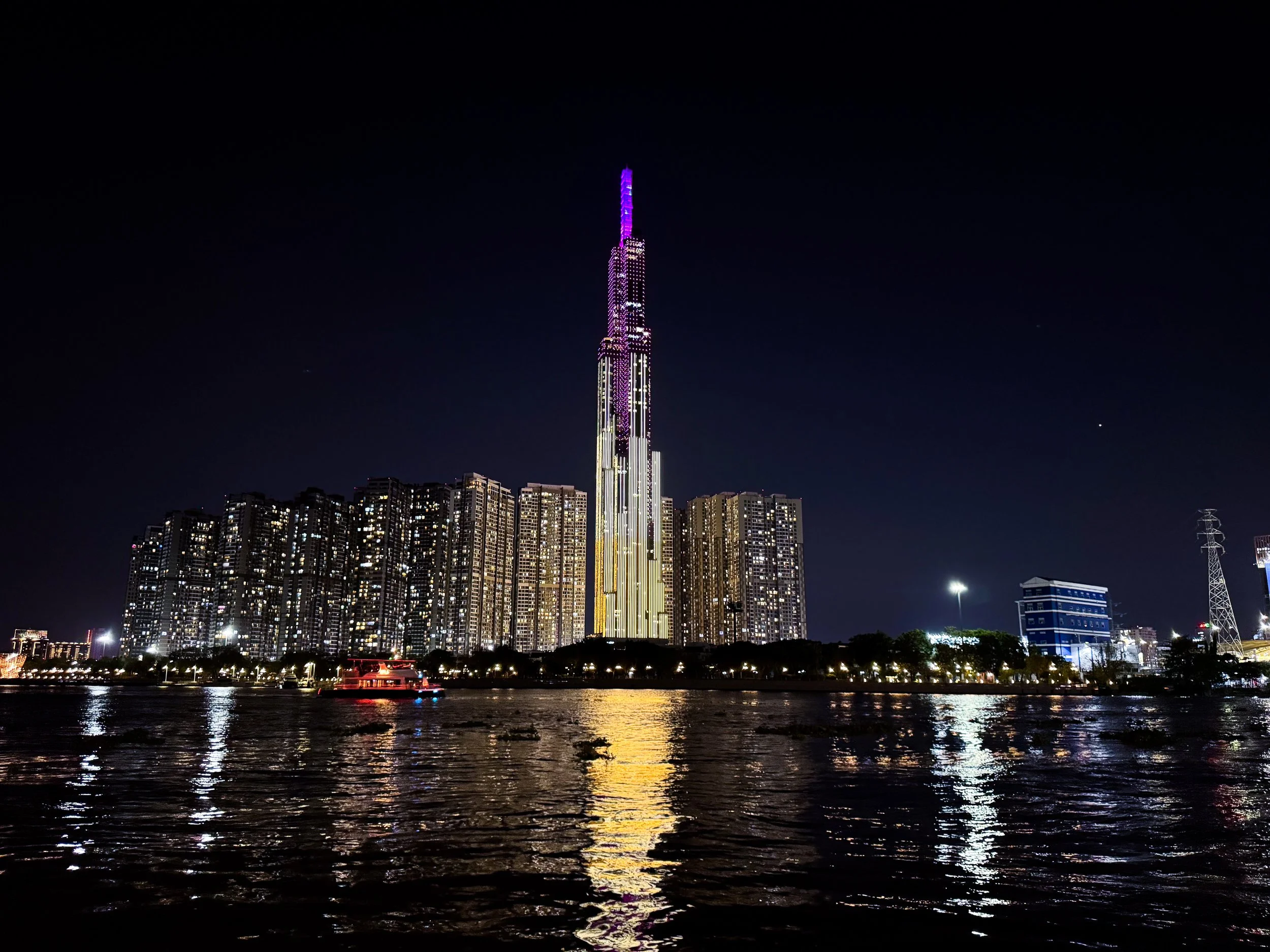
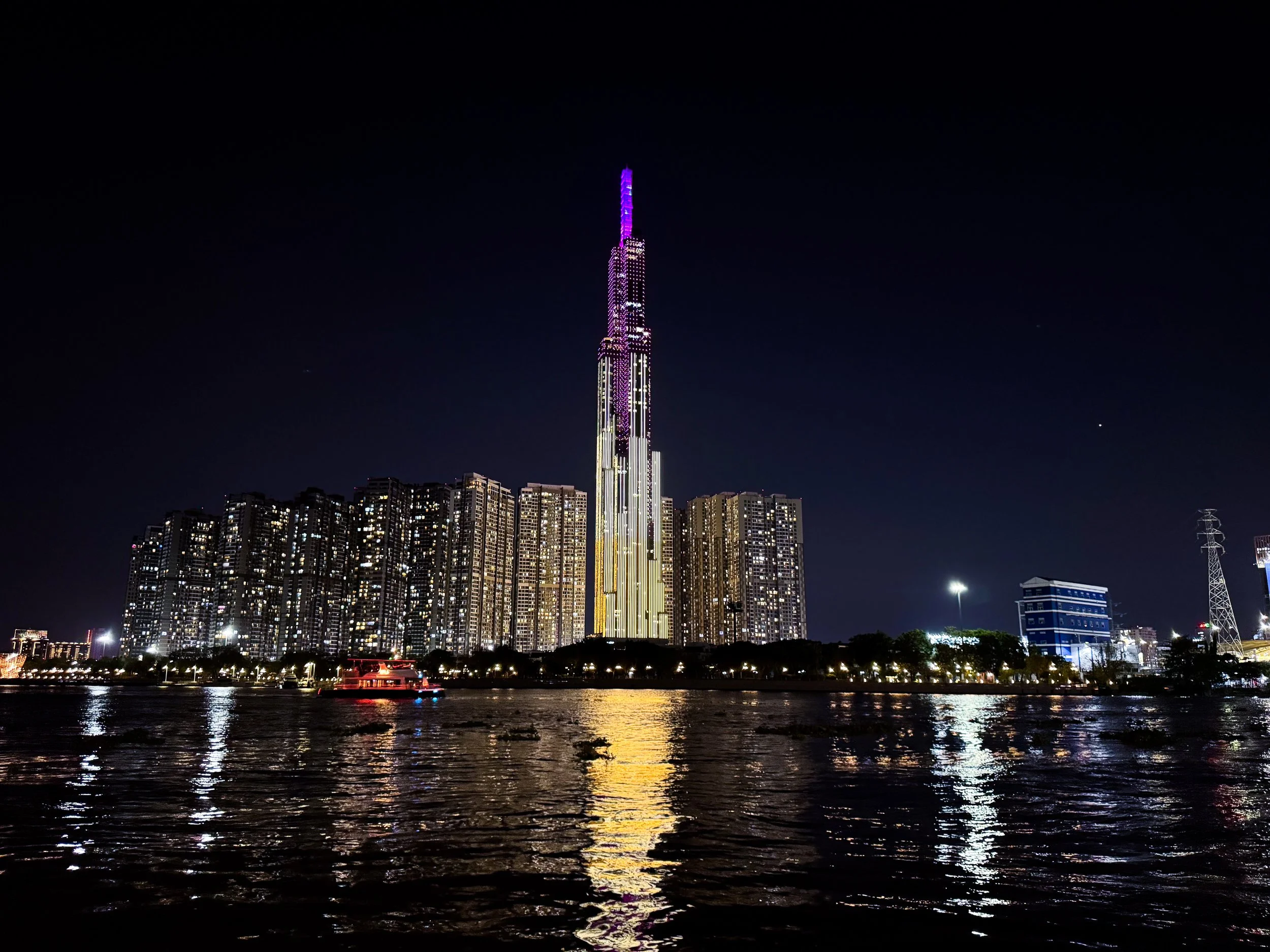
Saigon is formally known as Ho Chi Minh City or HCMC. Modern skyscrapers define the skyline, each illuminated in colorful lights at night. Moto bikes continually zip across the city, beeping at pedestrians stuck in zebra crossings. The city is an important location to learn about the war and unification of Vietnam. We only spent a few days here but could easily get lost exploring this city for weeks.
Things to Do
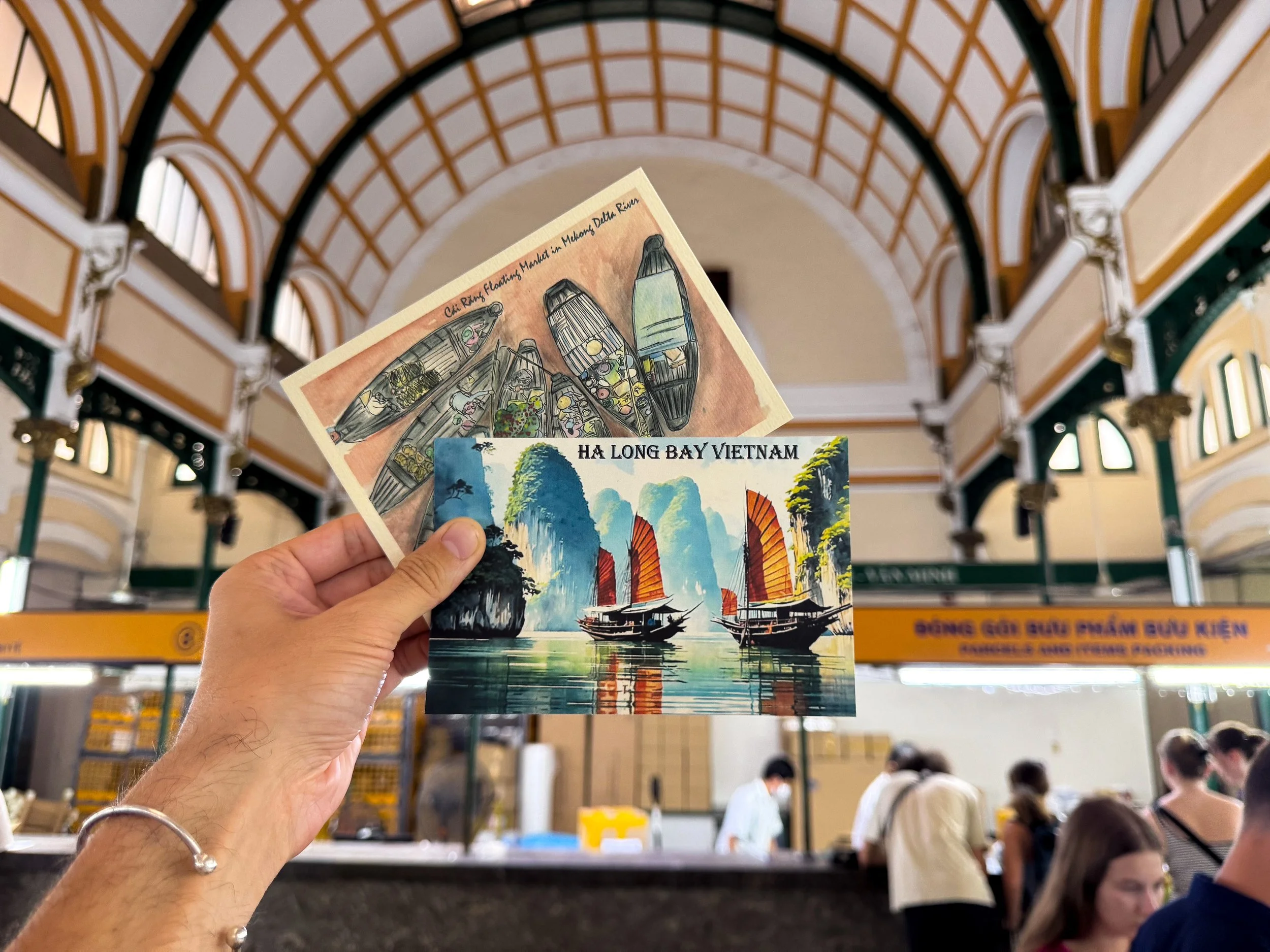
Mail a Post Card. Visit the French Colonial style Ho Chi Minh Post Office to buy a post card and mail it back home. Baskets of post cards feature Vietnamese artwork, historic sights and cultural symbols. We bought a couple, stamped them with local postage and sent them on their way around the world. It’s very touristy and a fun experience that brings back the nostalgia of traveling in a time before smart phones and social media.
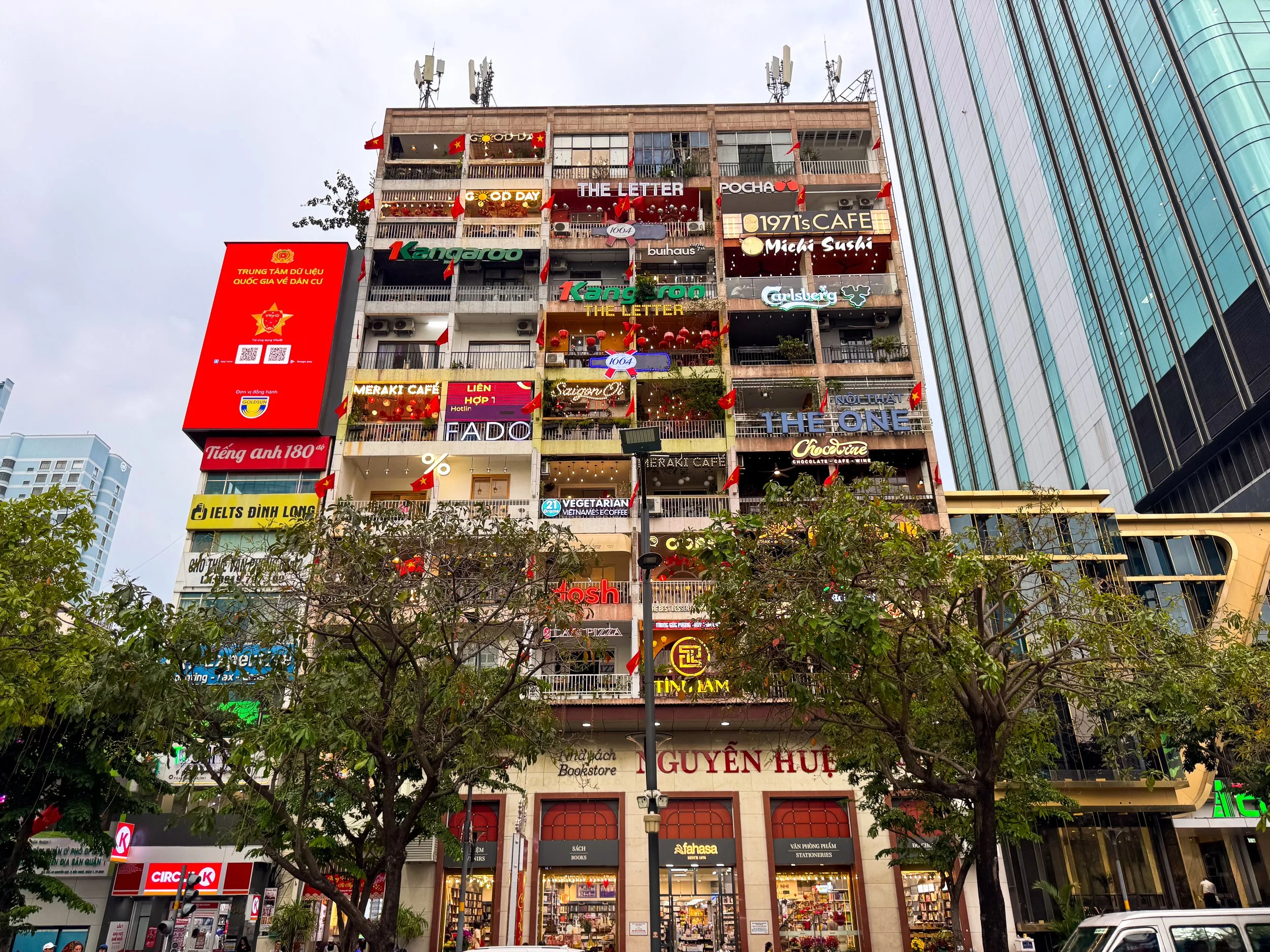
Order Coffee at The Café Apartments. A nine floor building along the Nguyen Hue Walking Street with dozens of cafés serving Vietnamese style coffees. From the street, neon signs, paper lanterns and string lights cover the building and its balconies. We visited Saigon Oi, a café in the center of the fifth floor decorated in plants and vines with a balcony overlooking the walking street. We ordered an iced coconut coffee and iced matcha latte, each topped with coffee and tea jellies.
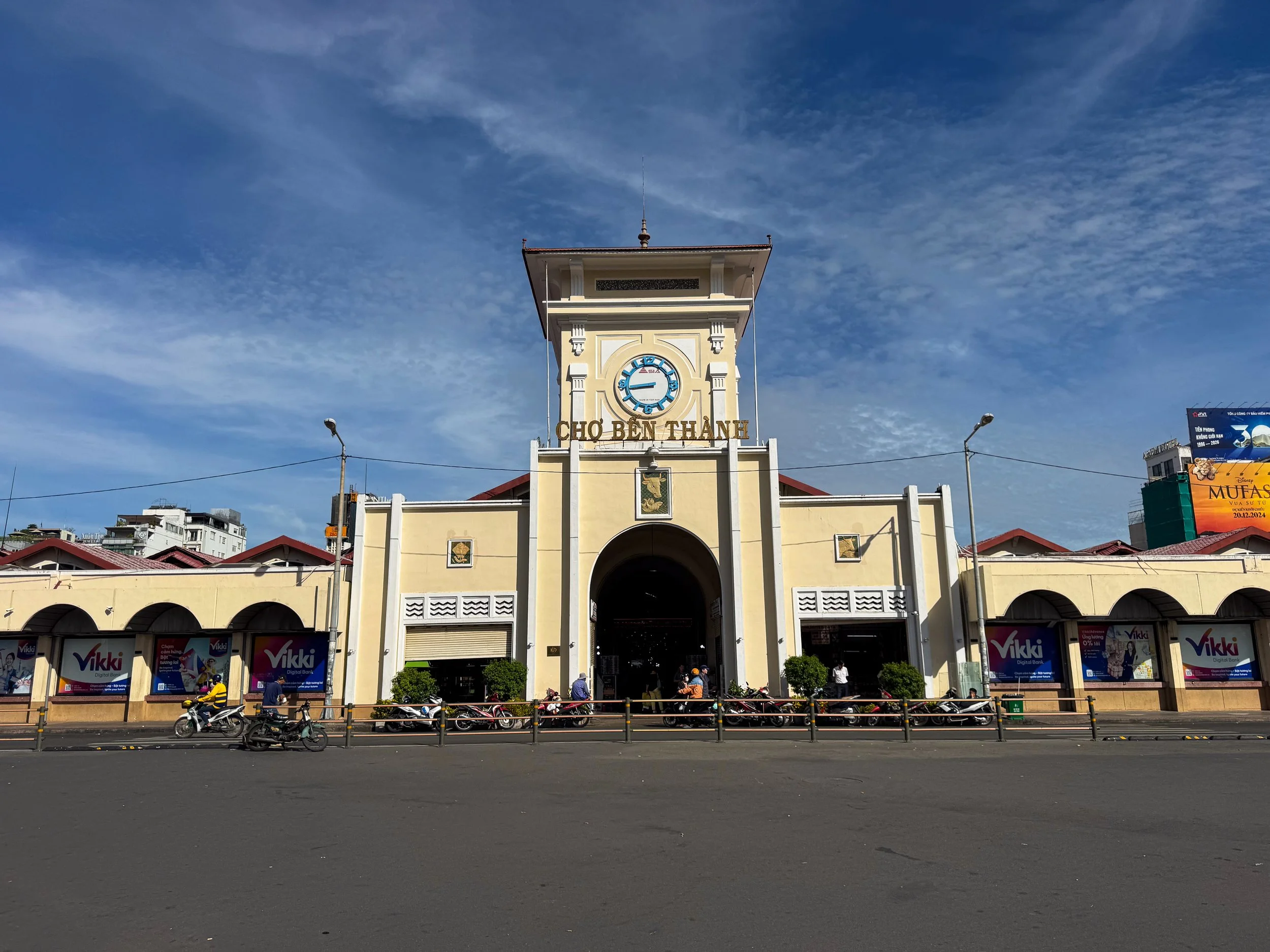
Shop at the Cho Ben Thanh Market. A historic Vietnamese market with aisles of souvenir stands, custom clothing makers, jewelry shops and vendors selling coffee, spices and candies. Shops will give outrageous prices for their goods. Negotiate for the cost of everything, offering to pay as little as 10-20% of the asking price. Walk away when they say no. They’ll chase after and eventually accept.
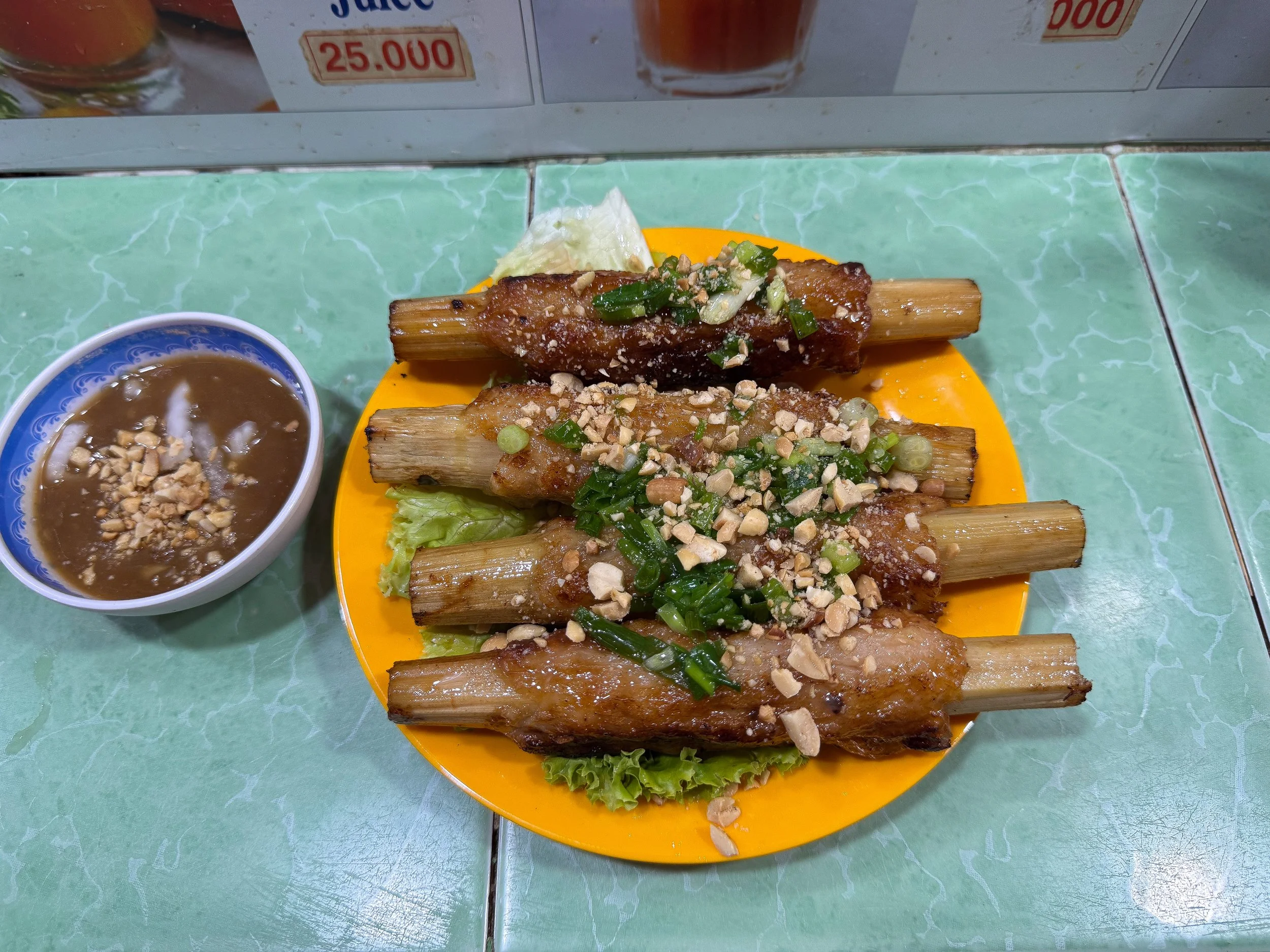
Street Food Kitchens. Inside Cho Ben Thanh Market are restaurants serving fresh pressed juices and seafood focused Vietnamese dishes. Try the sugarcane juice and Chao Tom, minced shrimp wrapped around sugarcane and grilled.
Farmers Market. An outdoor farmers market lines the rear of the market. Vendors sell fruits, vegetables, tofu, a variety of eggs and fresh caught seafood like crabs, prawns, squid and whole fish. We shopped here for groceries during our time in town.
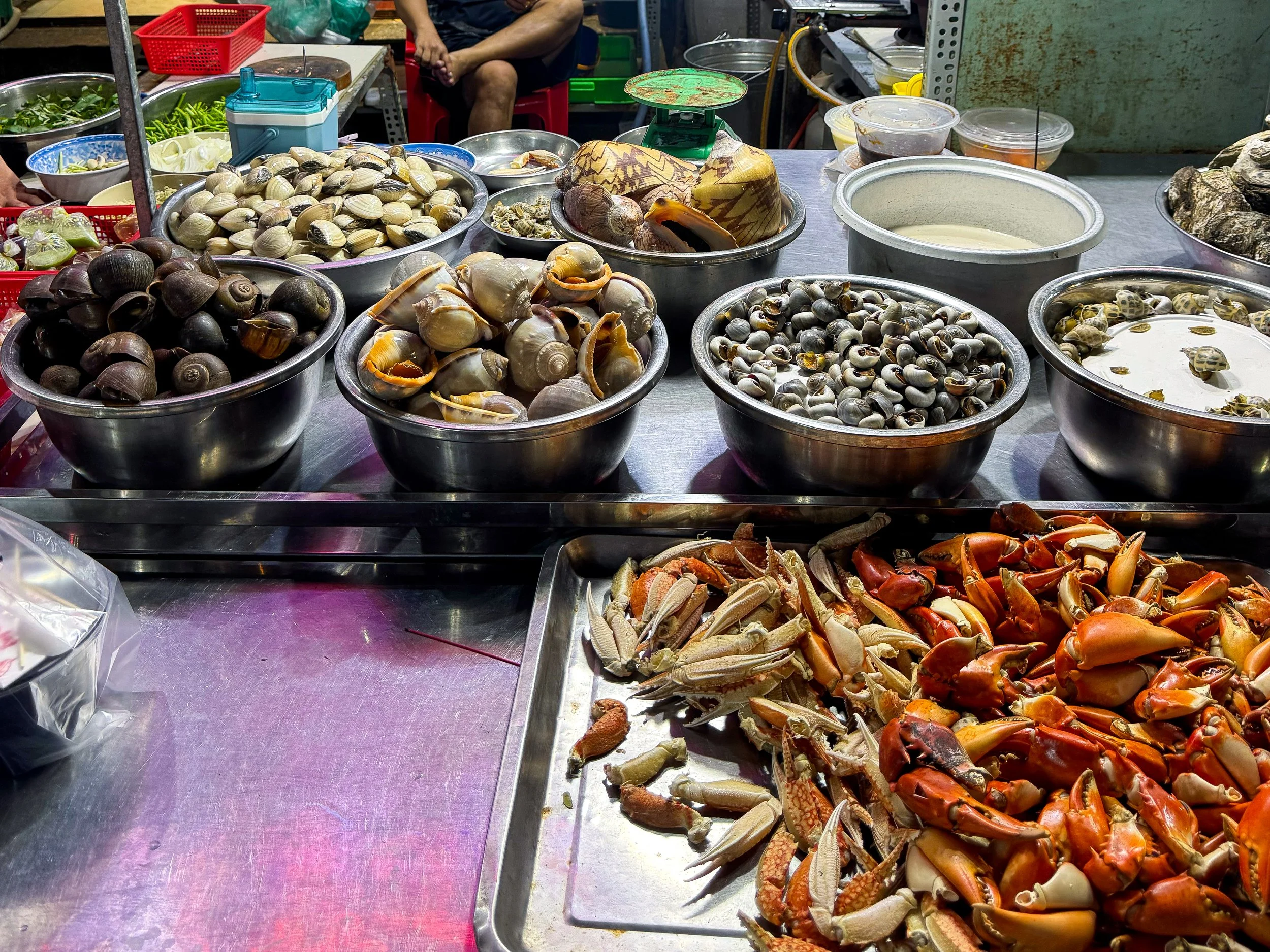
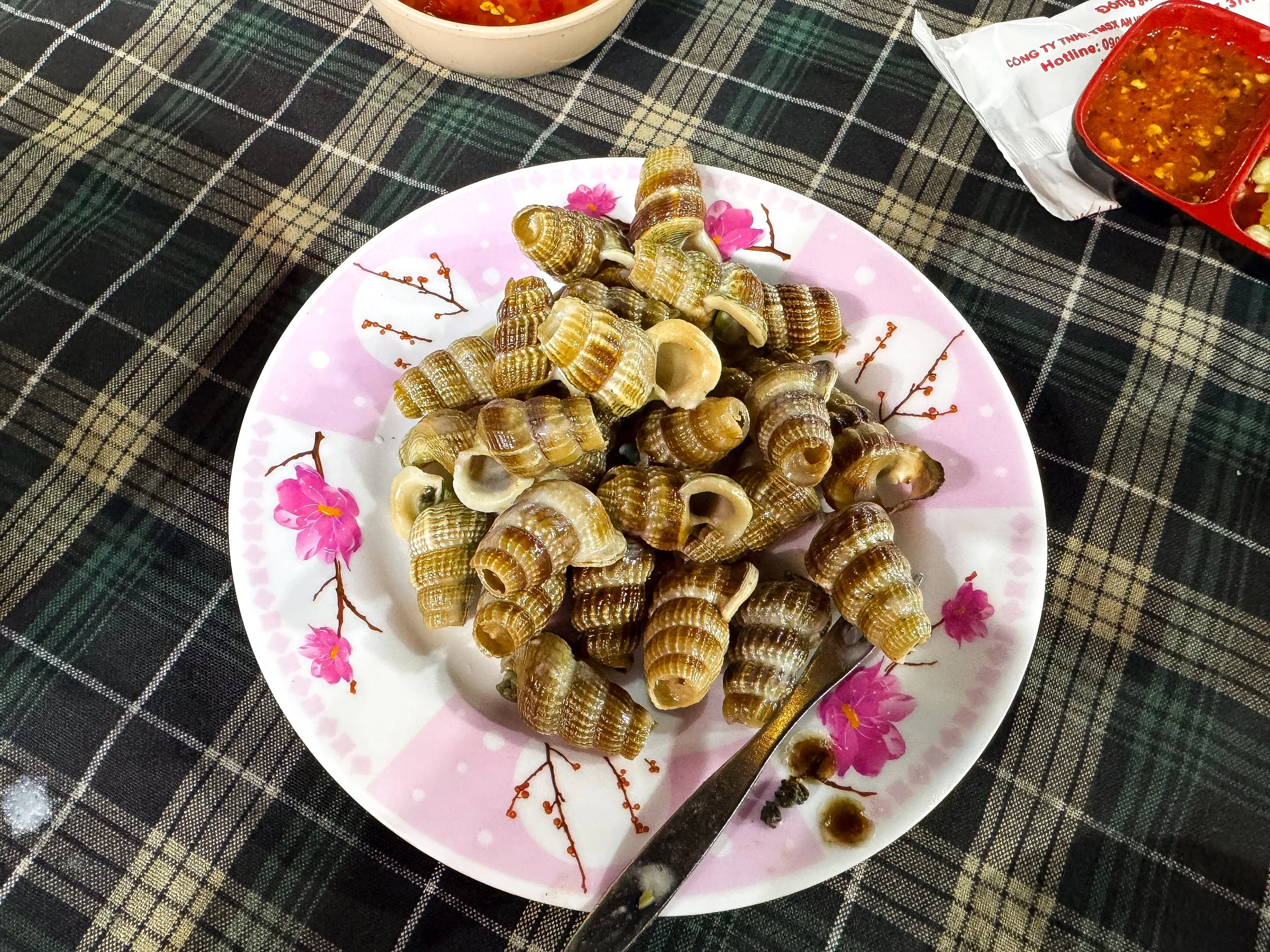
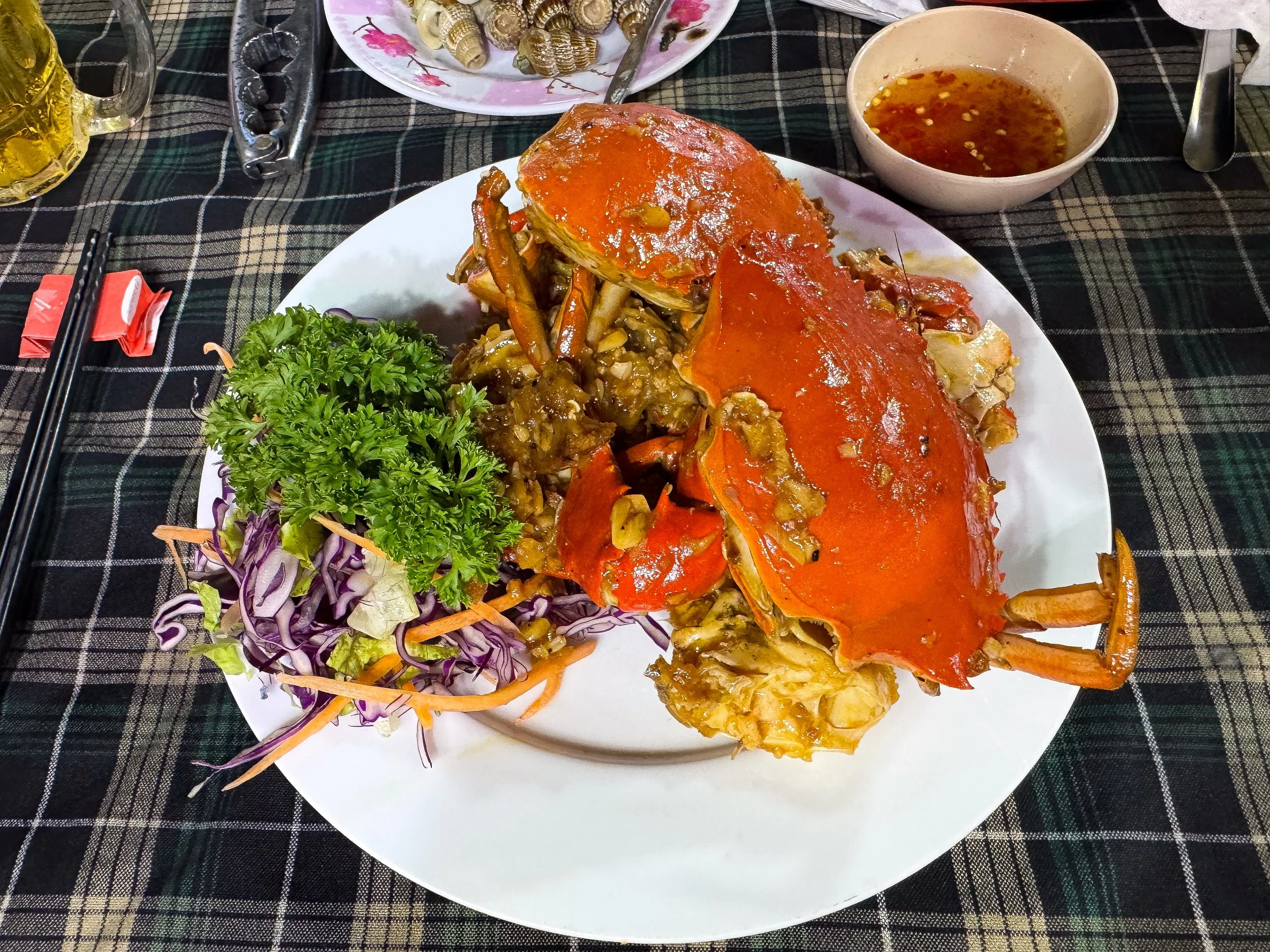
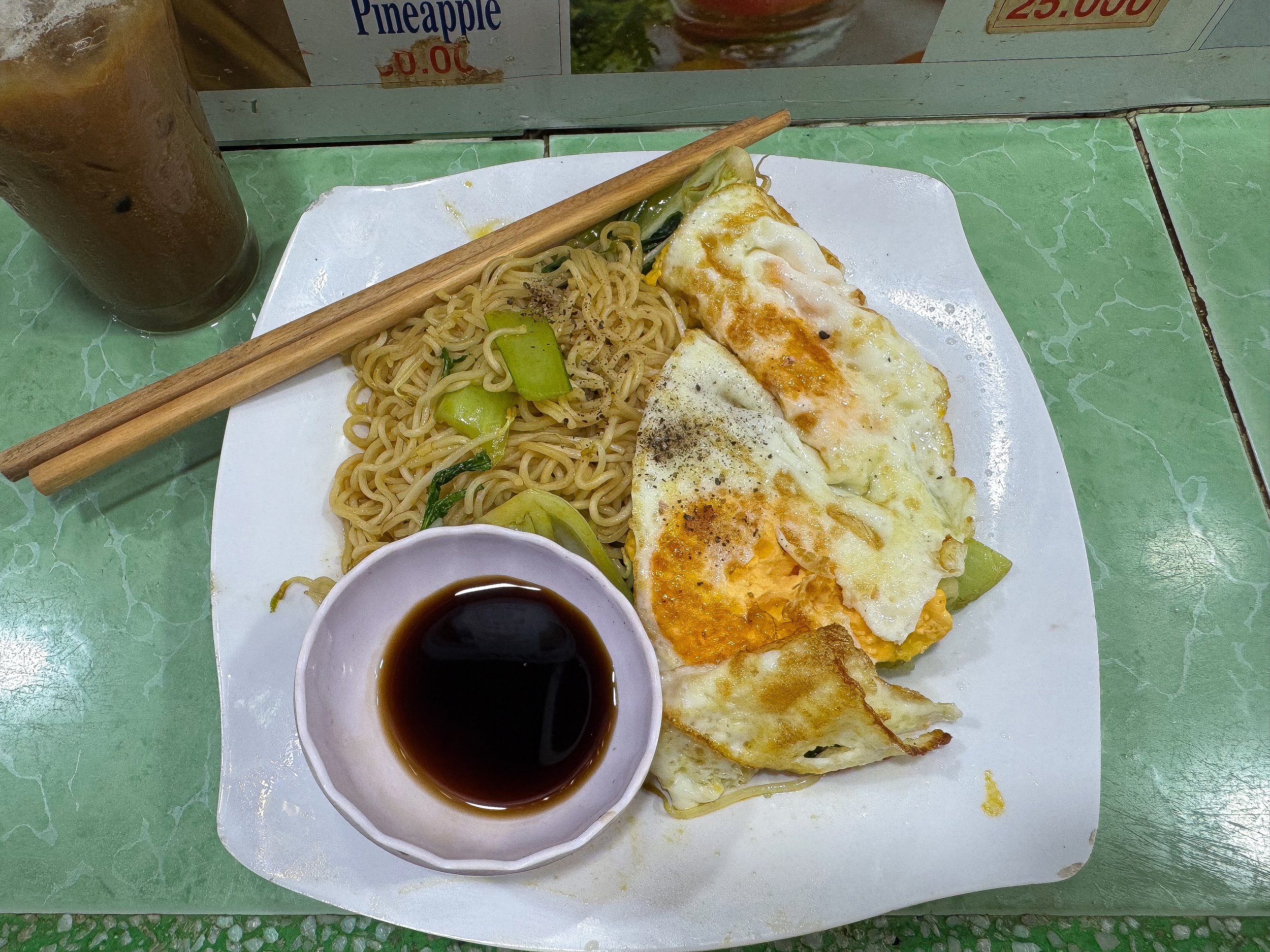
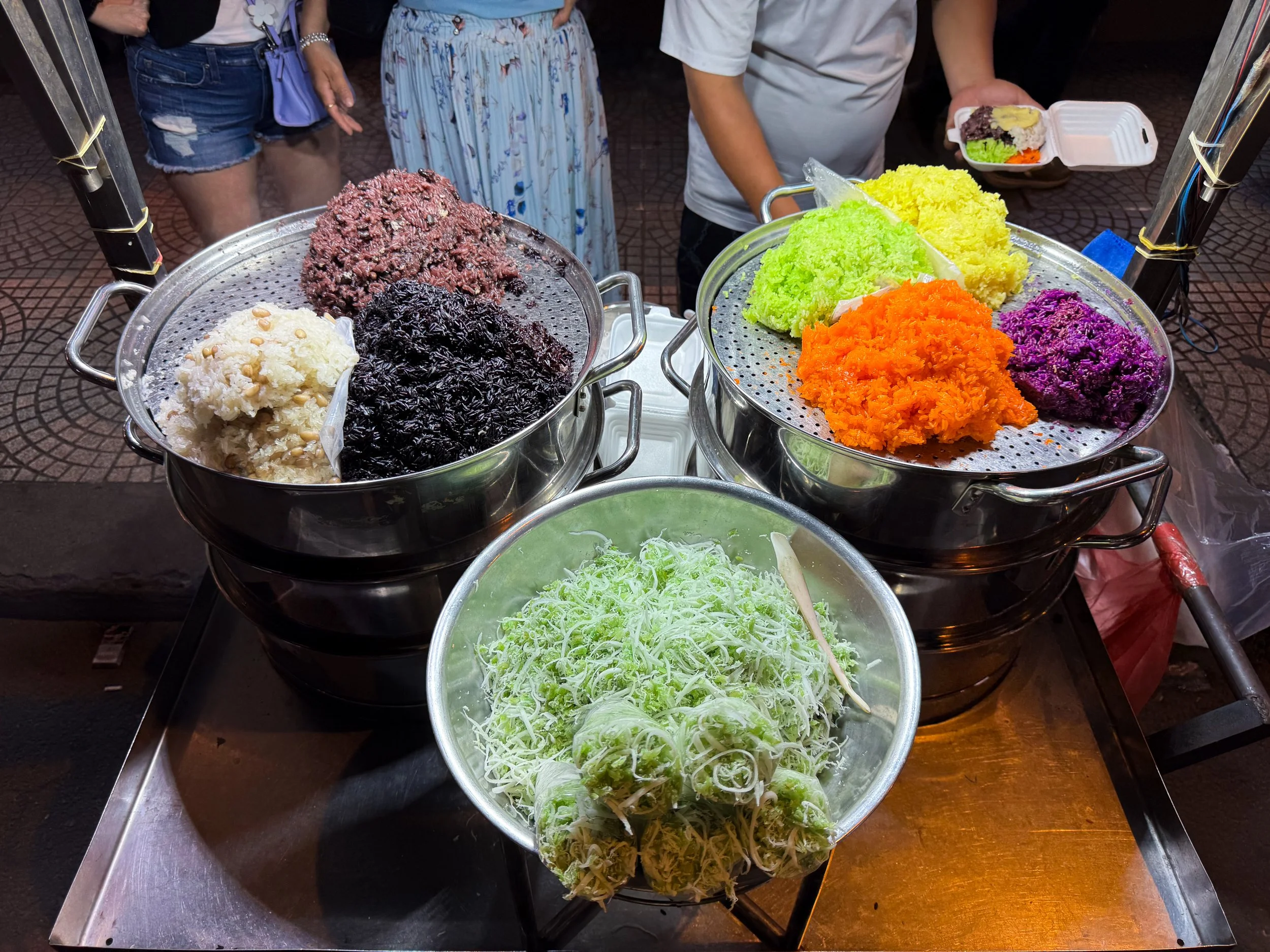
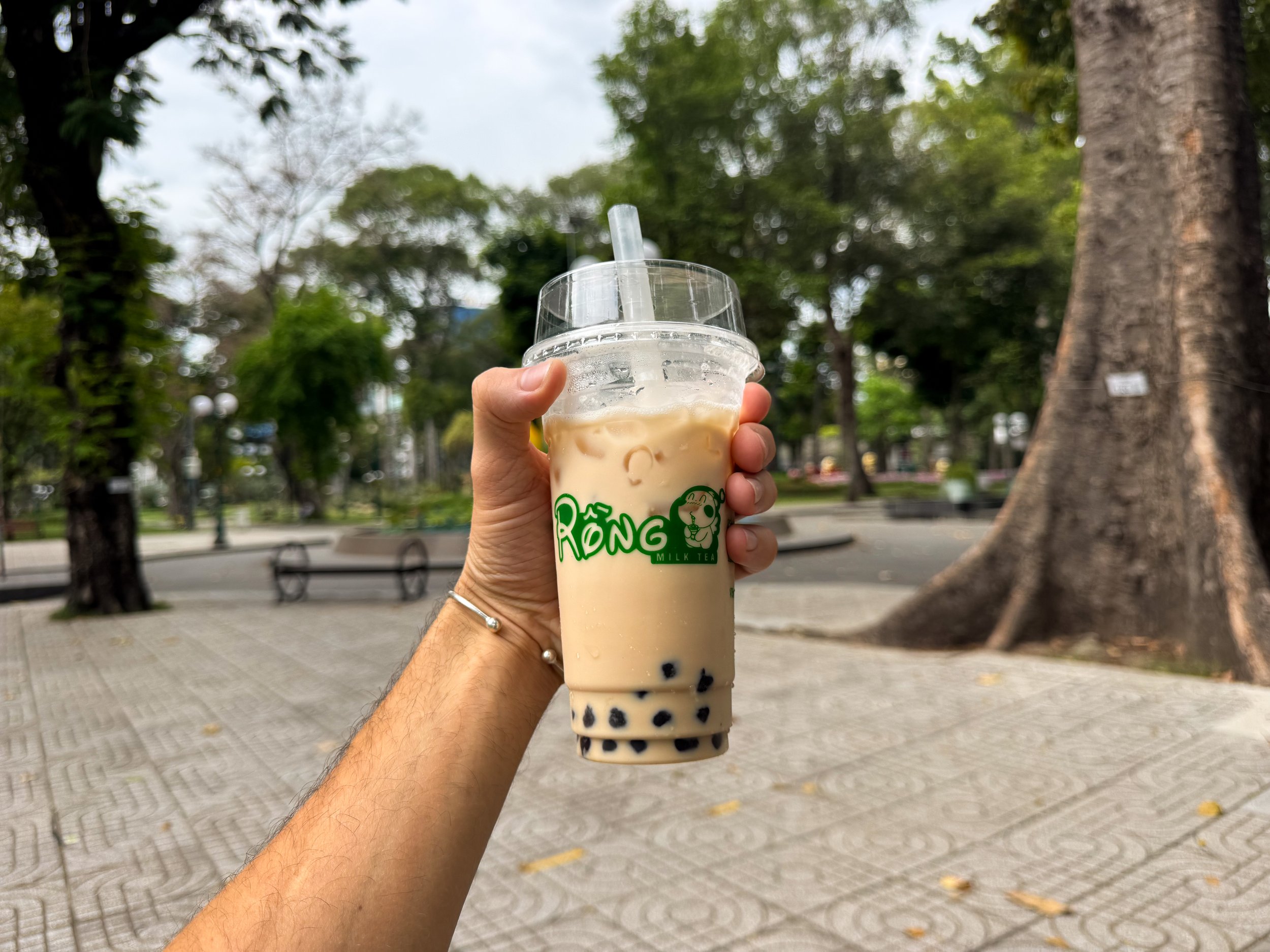
Eat Vietnamese Street Food. With its proximity to the coast, seafood is popular across Saigon, especially as street food. We visited Quan Ang Cua, a local seafood restaurant with tanks of live sea creatures ranging from baby octopus, red snapper, grouper, conch, prawns, crabs, lobsters, scallops and snails. We ordered a bowl of snails cooked in coconut broth and crab sautéed in garlic butter. Other street food includes stir fried noodles, five colored sticky rice and boba milk tea.
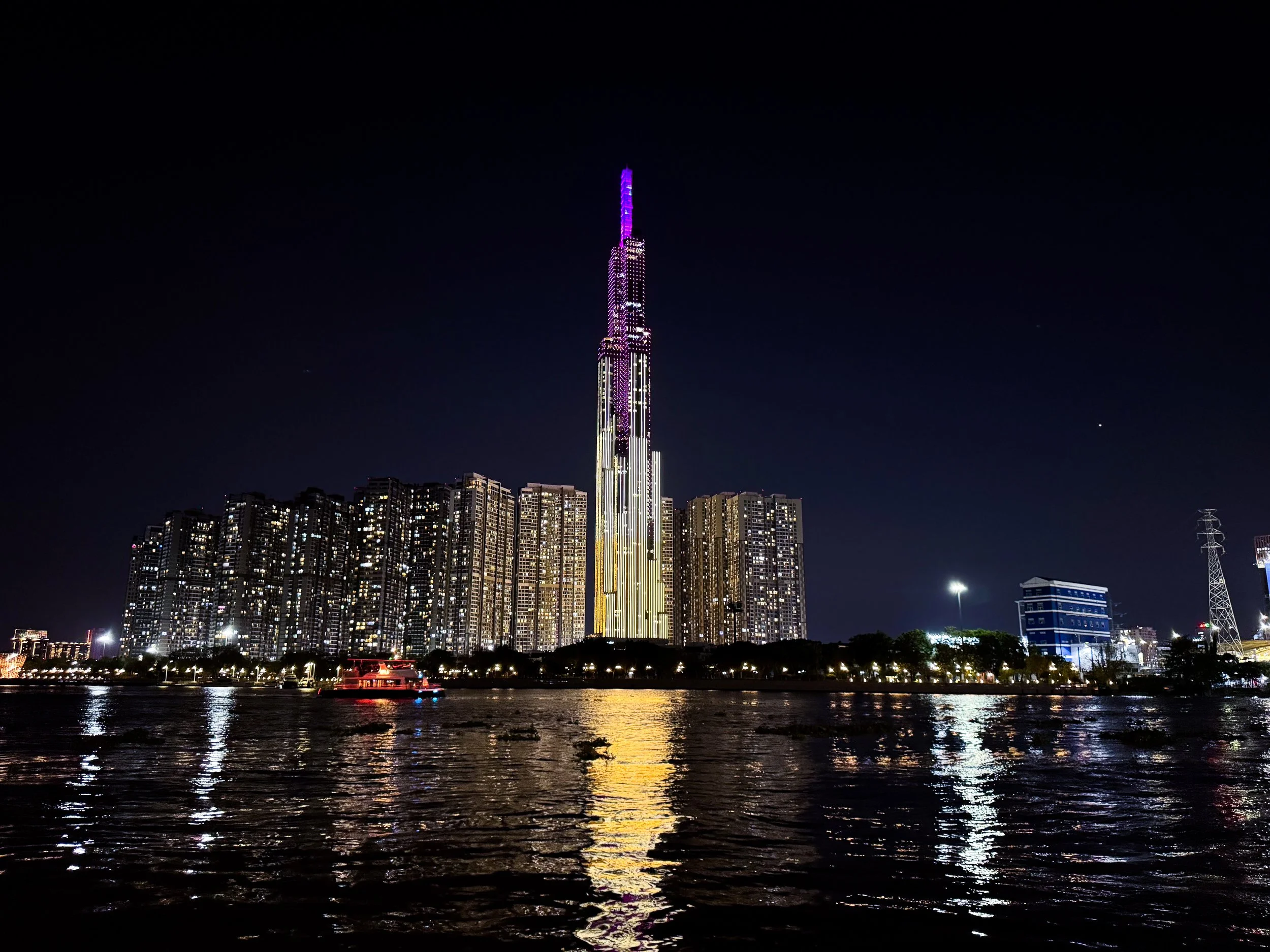
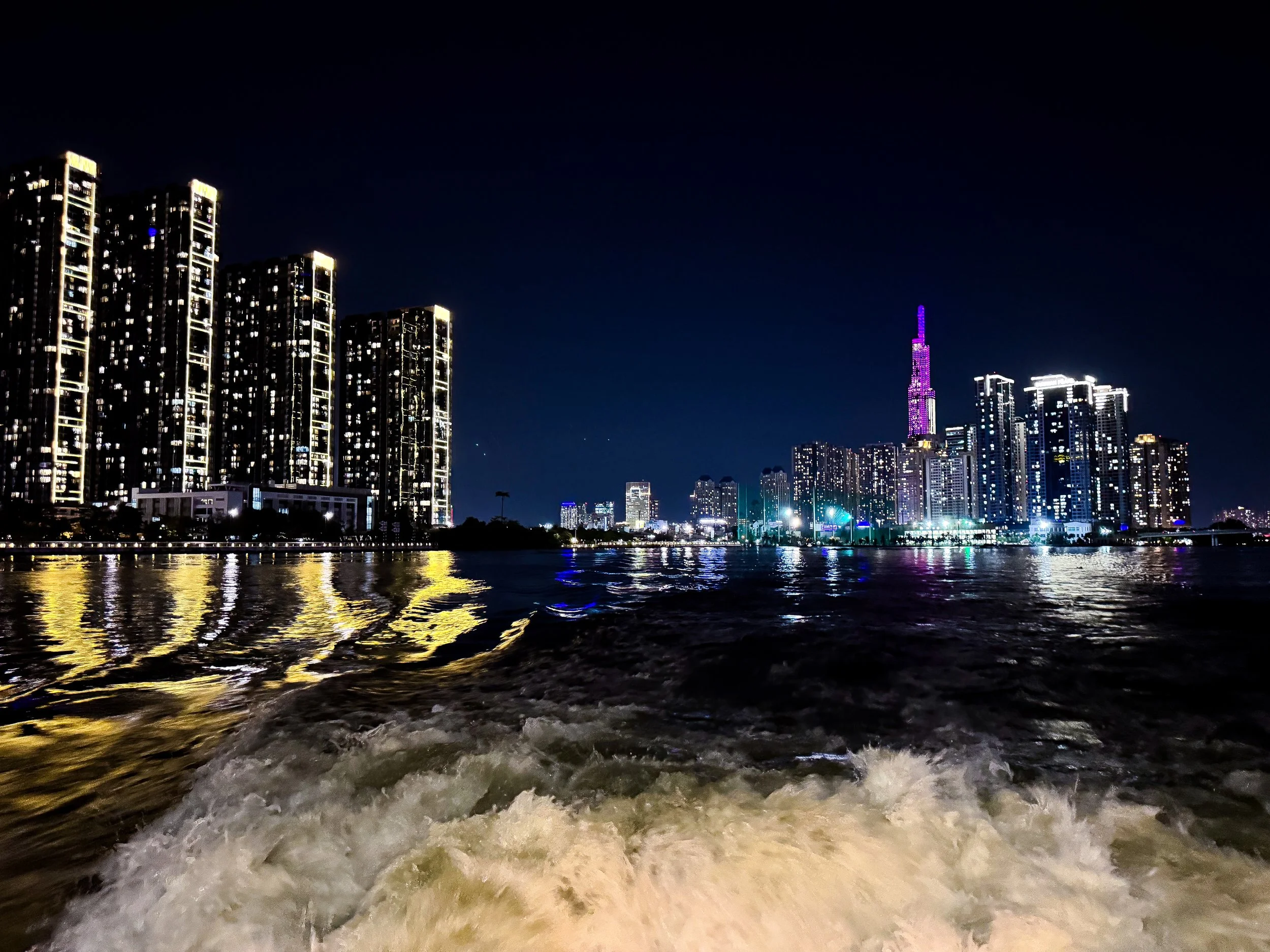
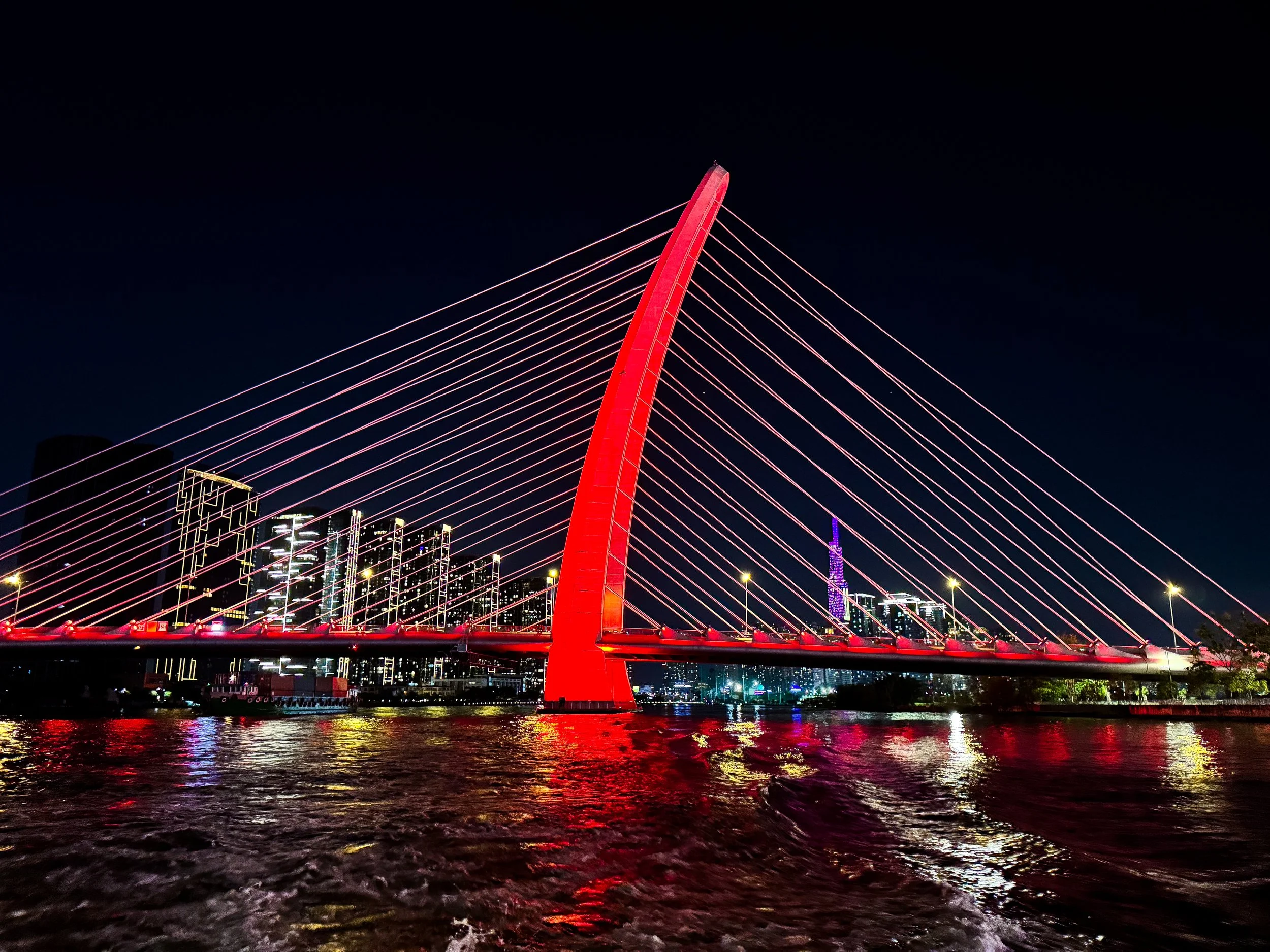
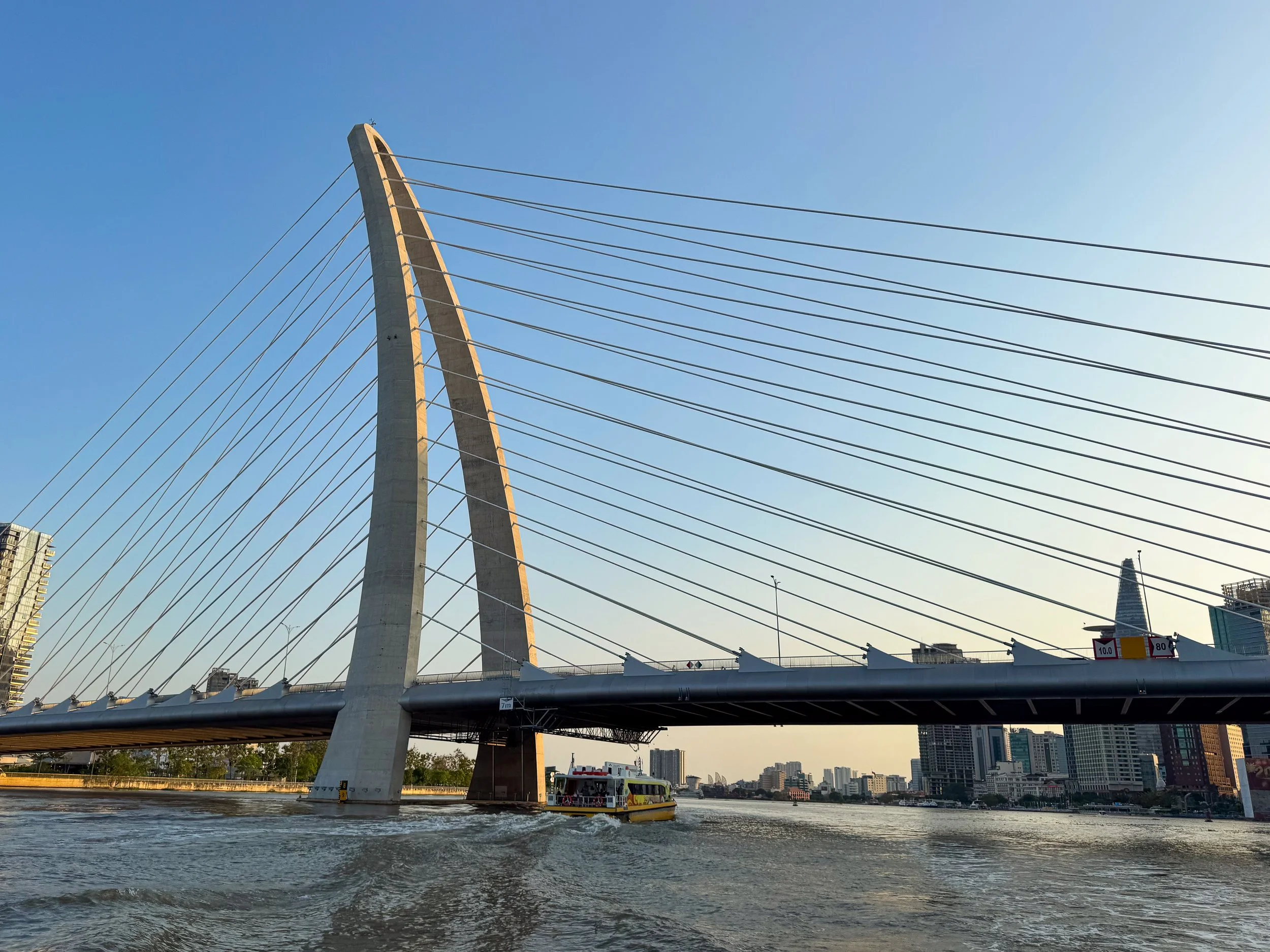
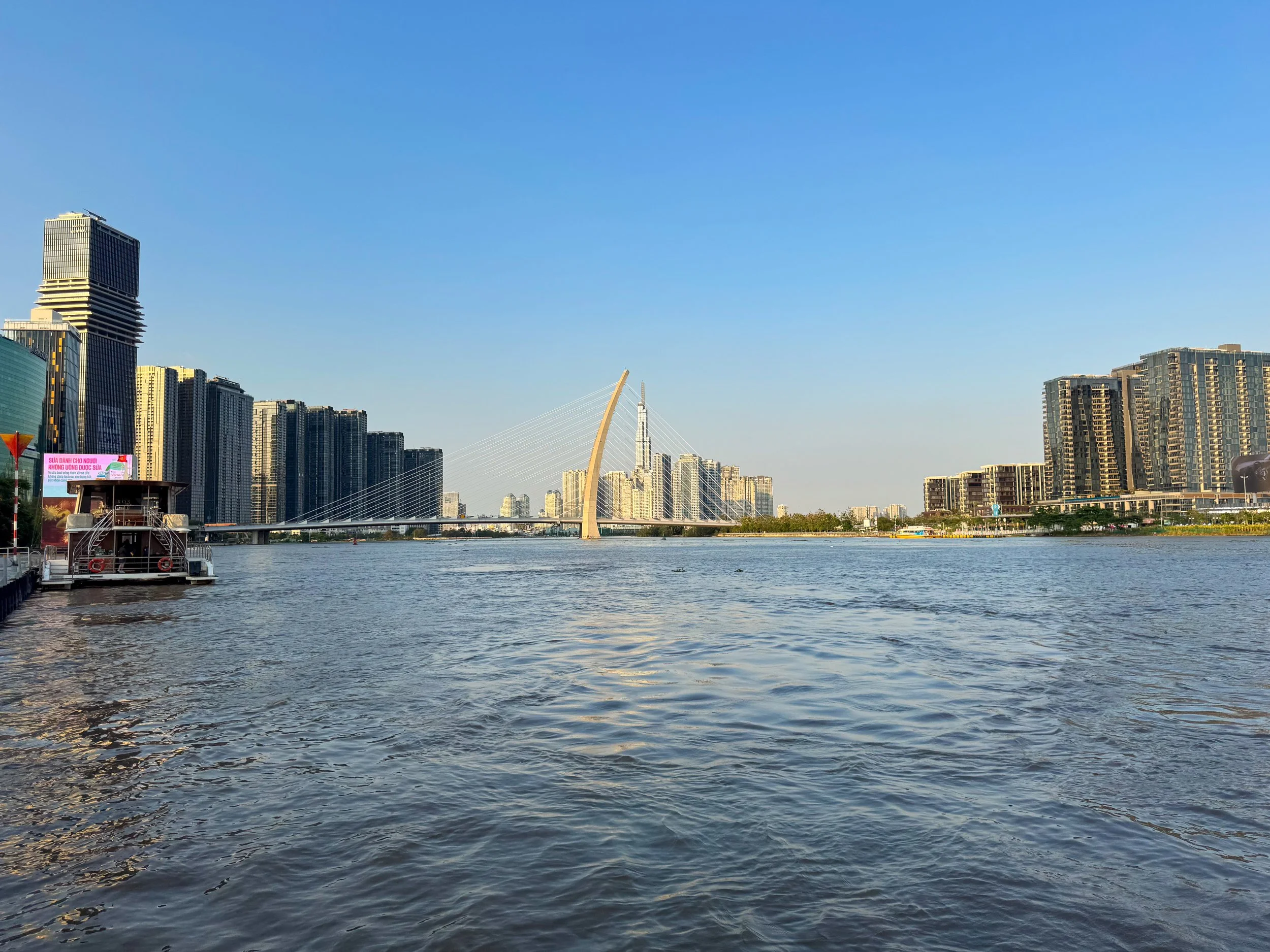
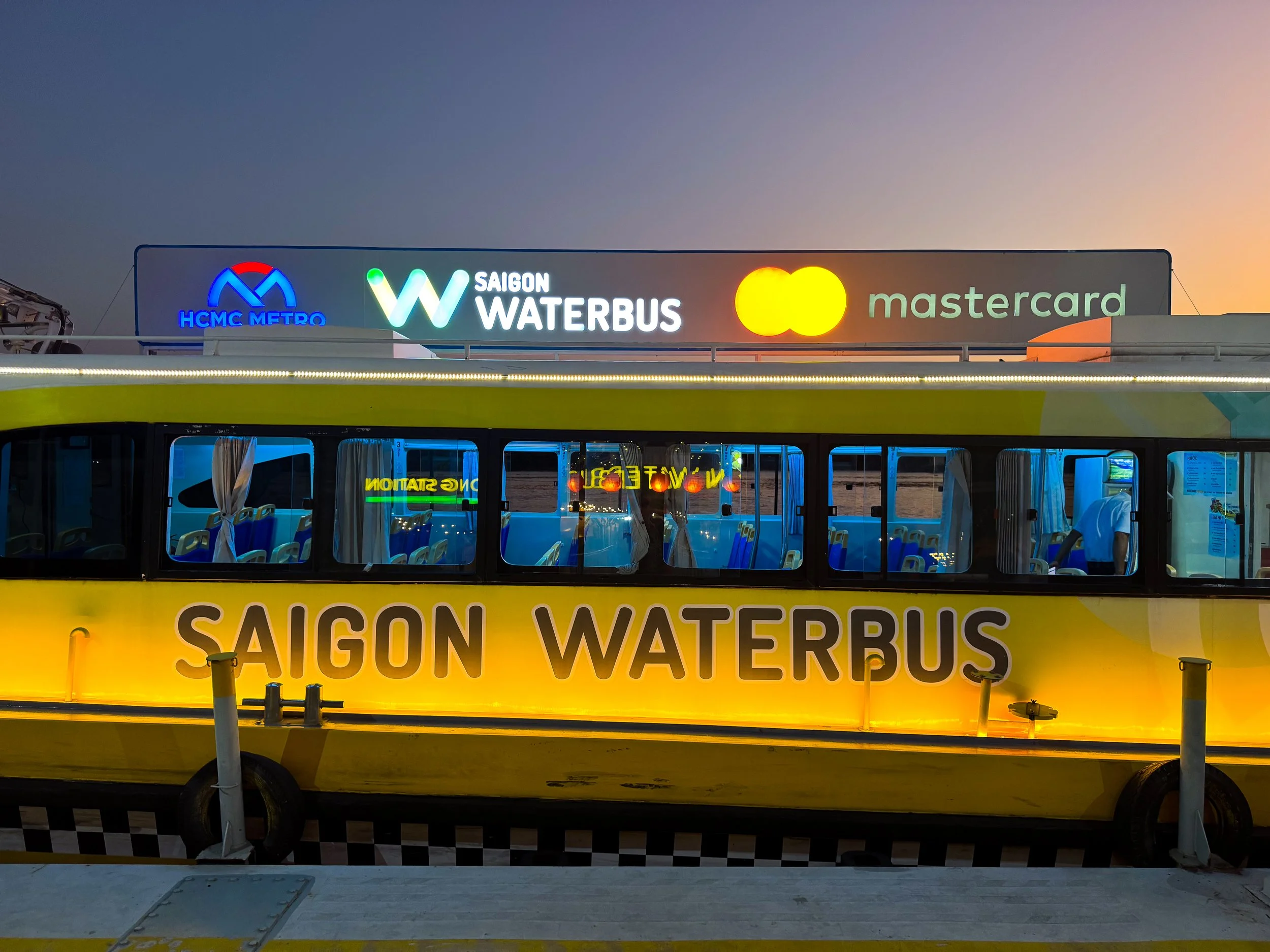
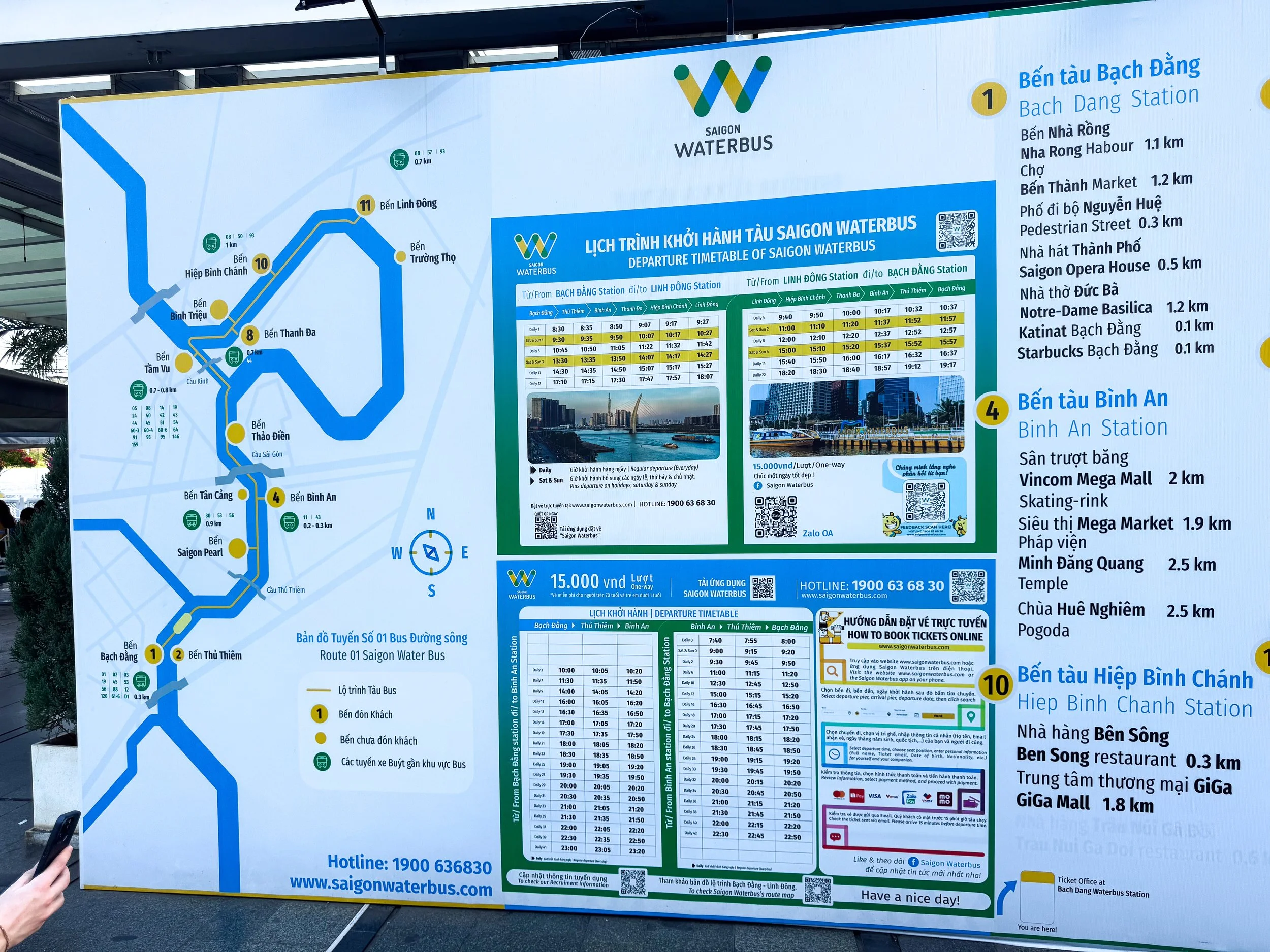
Ride the Saigon Waterbus. A water taxi with stations along Saigon River. We booked tickets to sightsee and watch the sunset, riding the full route between Bach Dang and Linh Dong stations. We embarked an hour before sunset and returned an hour after sunset. The route offered views of the modern skyline, landmark buildings, French style chateaus, riverside parks, contemporary bridges, local neighborhoods and waterfront restaurants.
Pro Tip. Book tickets at the station a day in advance. When buying tickets, request an outdoor or window seat to maximize views. The most central station is Bach Dang.
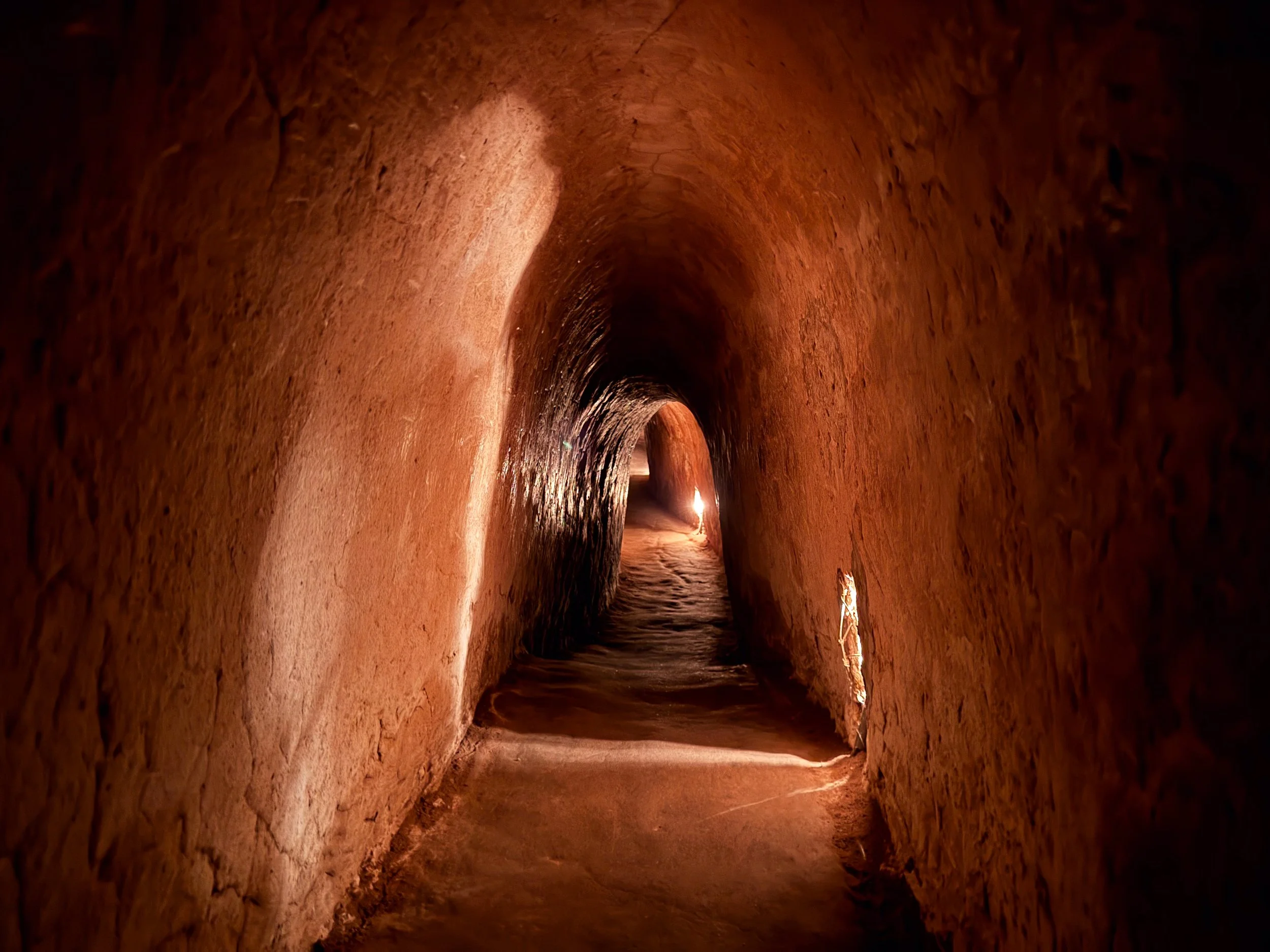
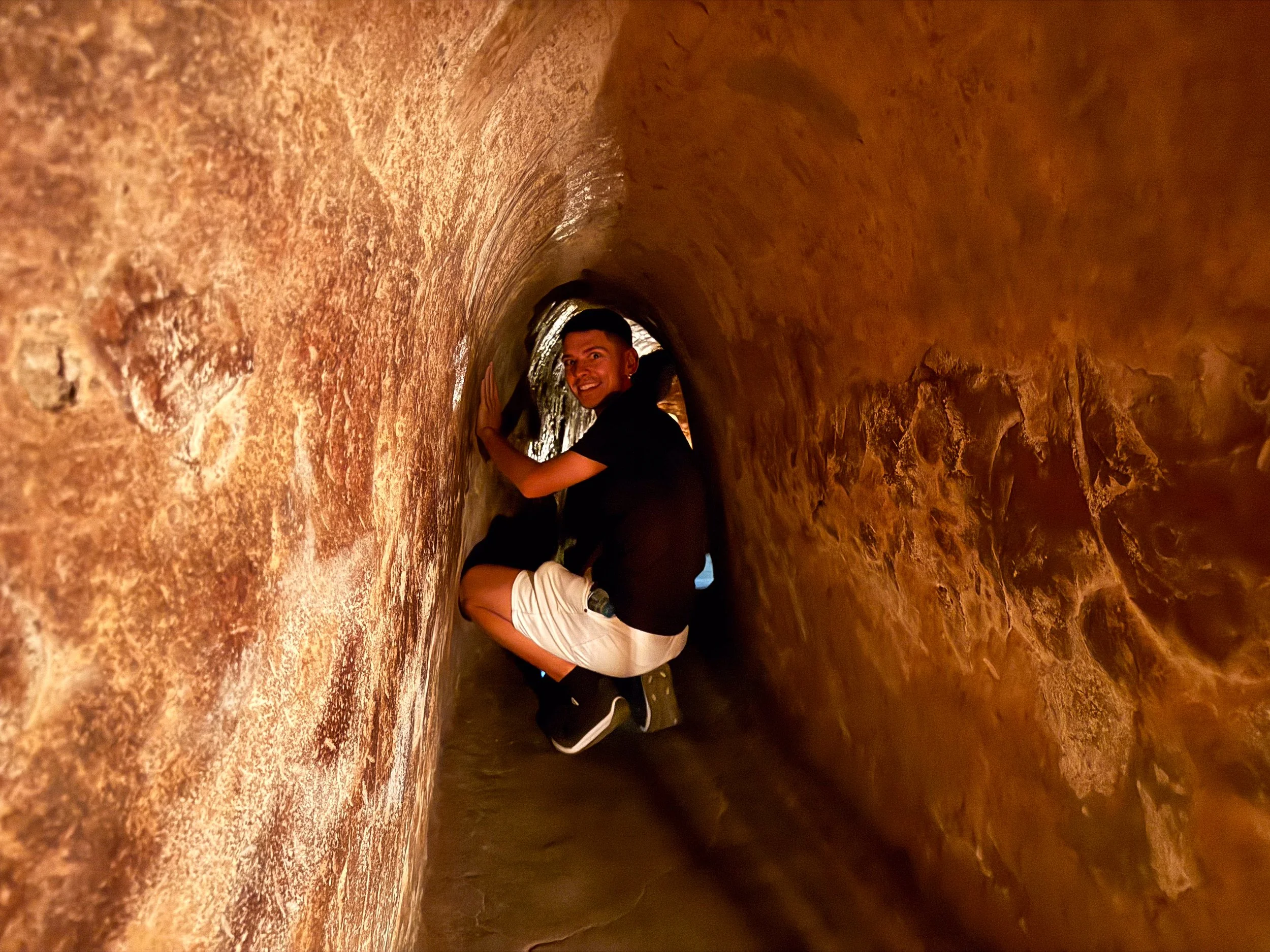
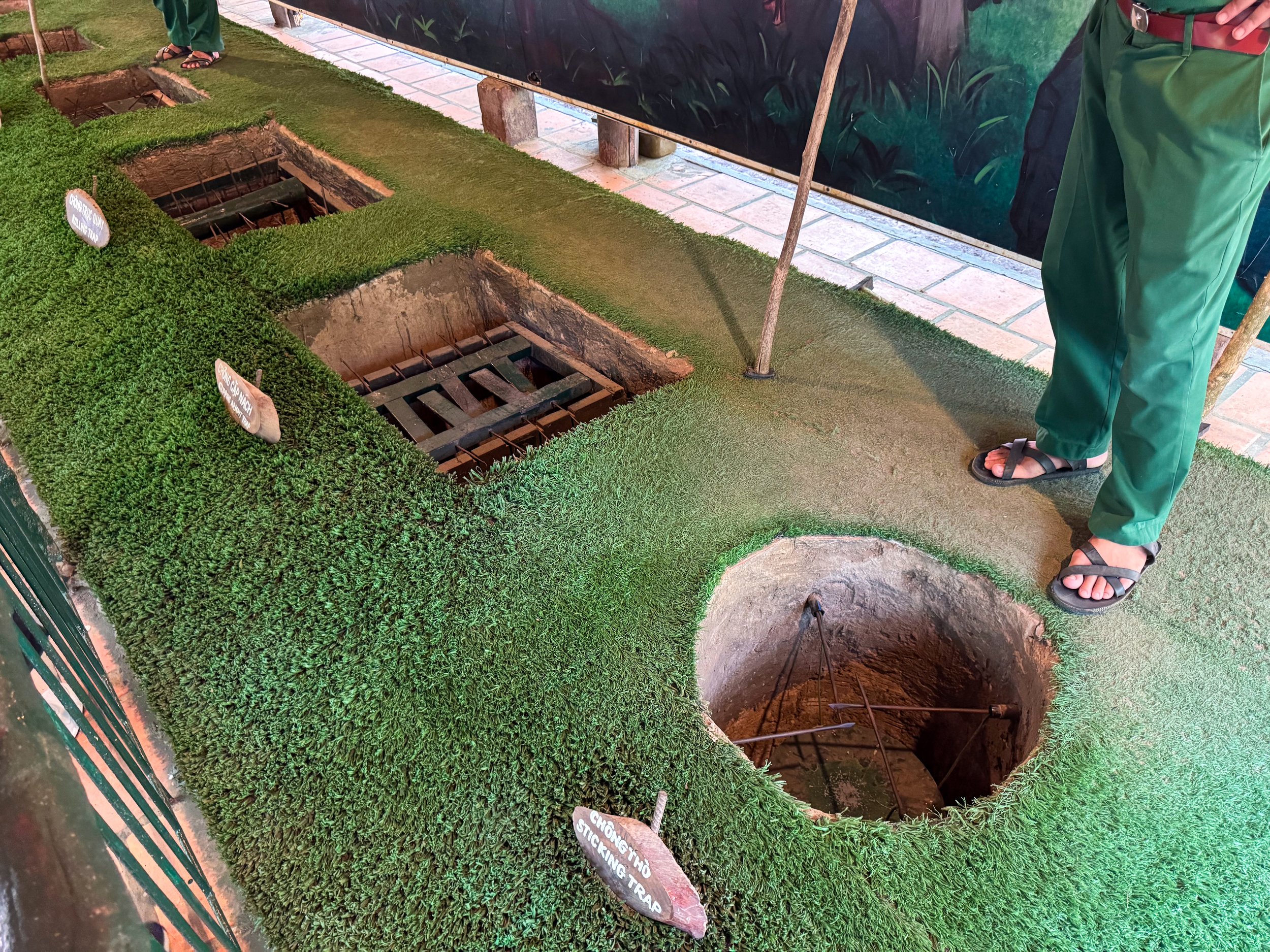
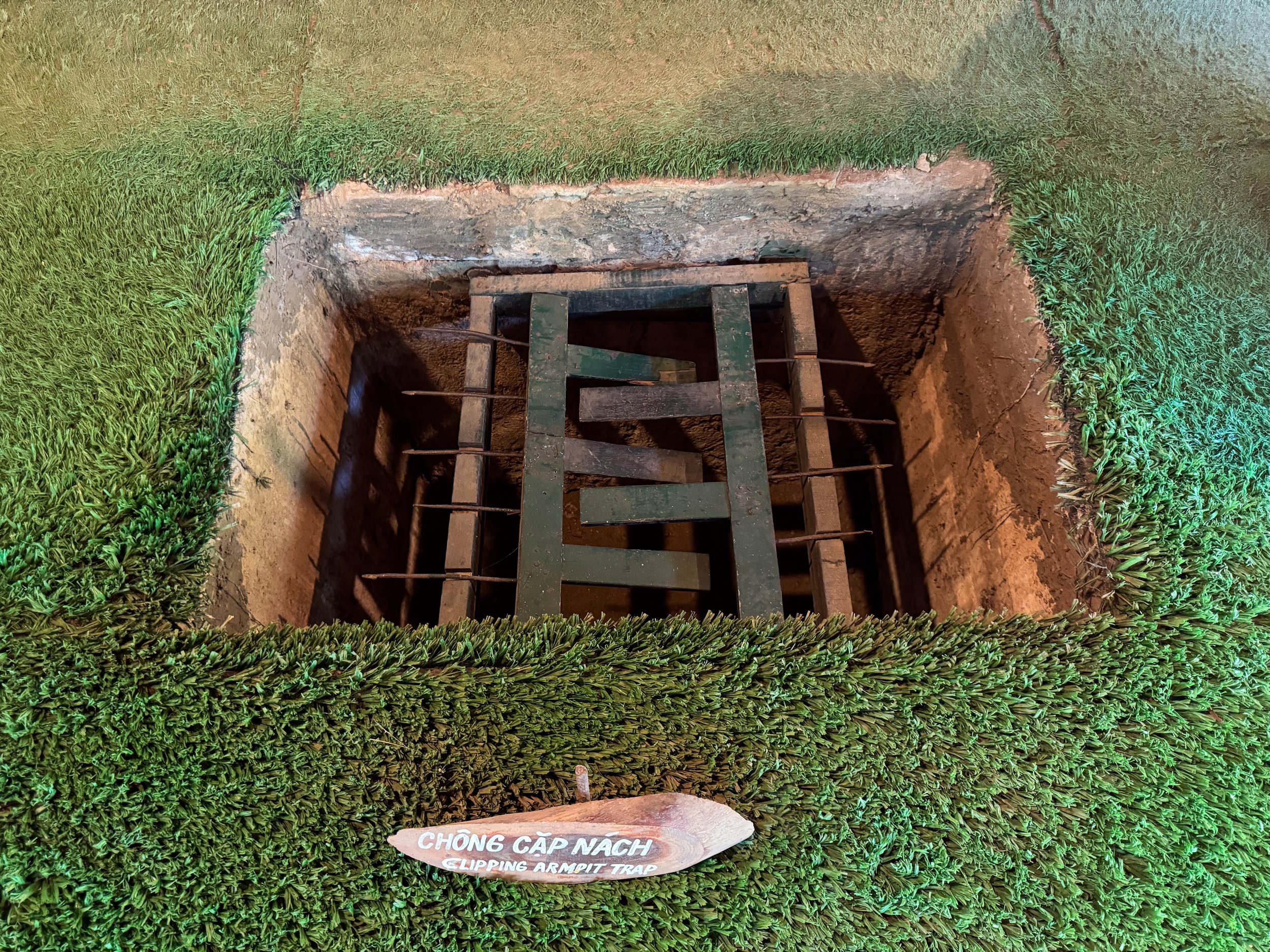
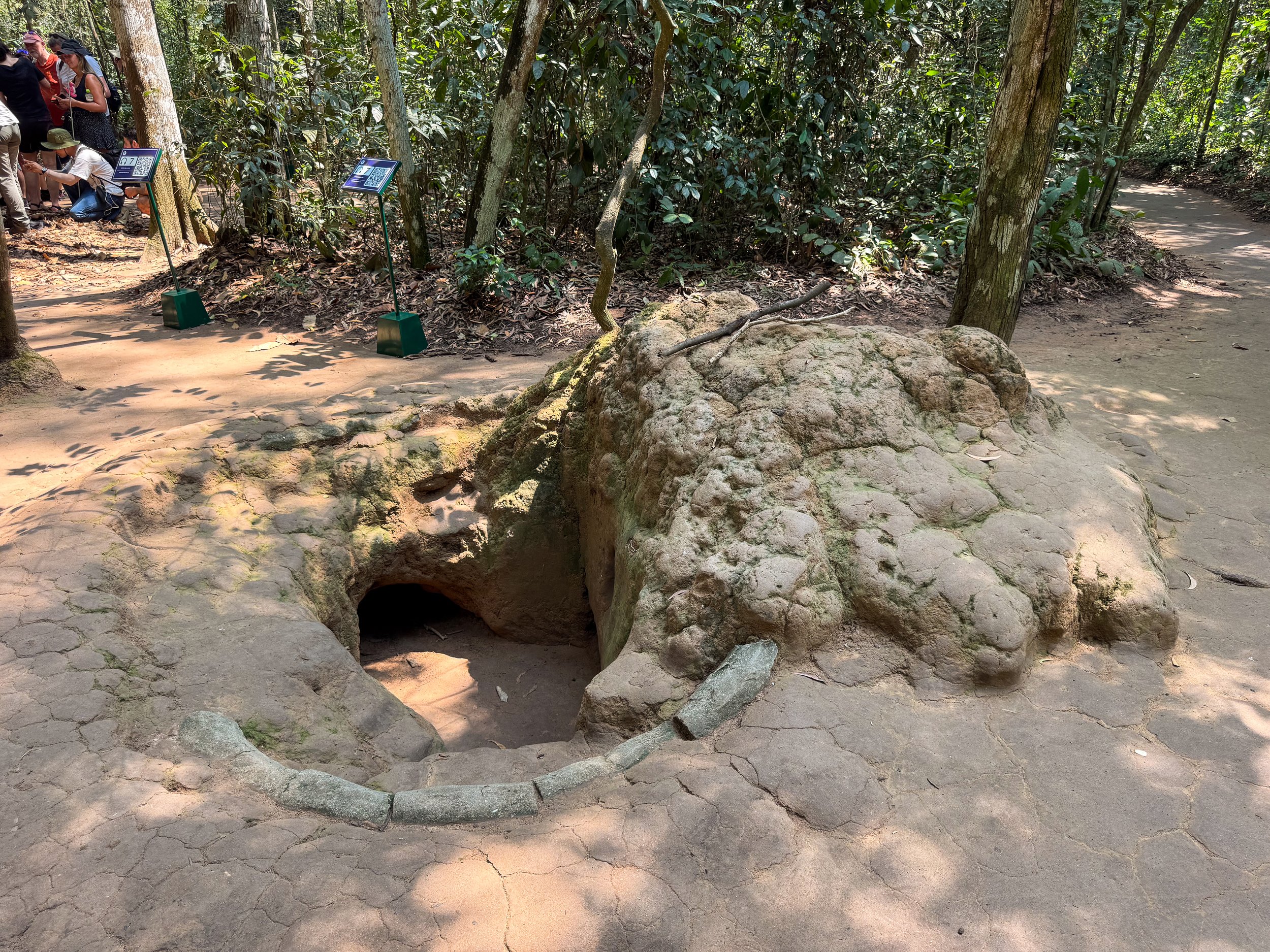
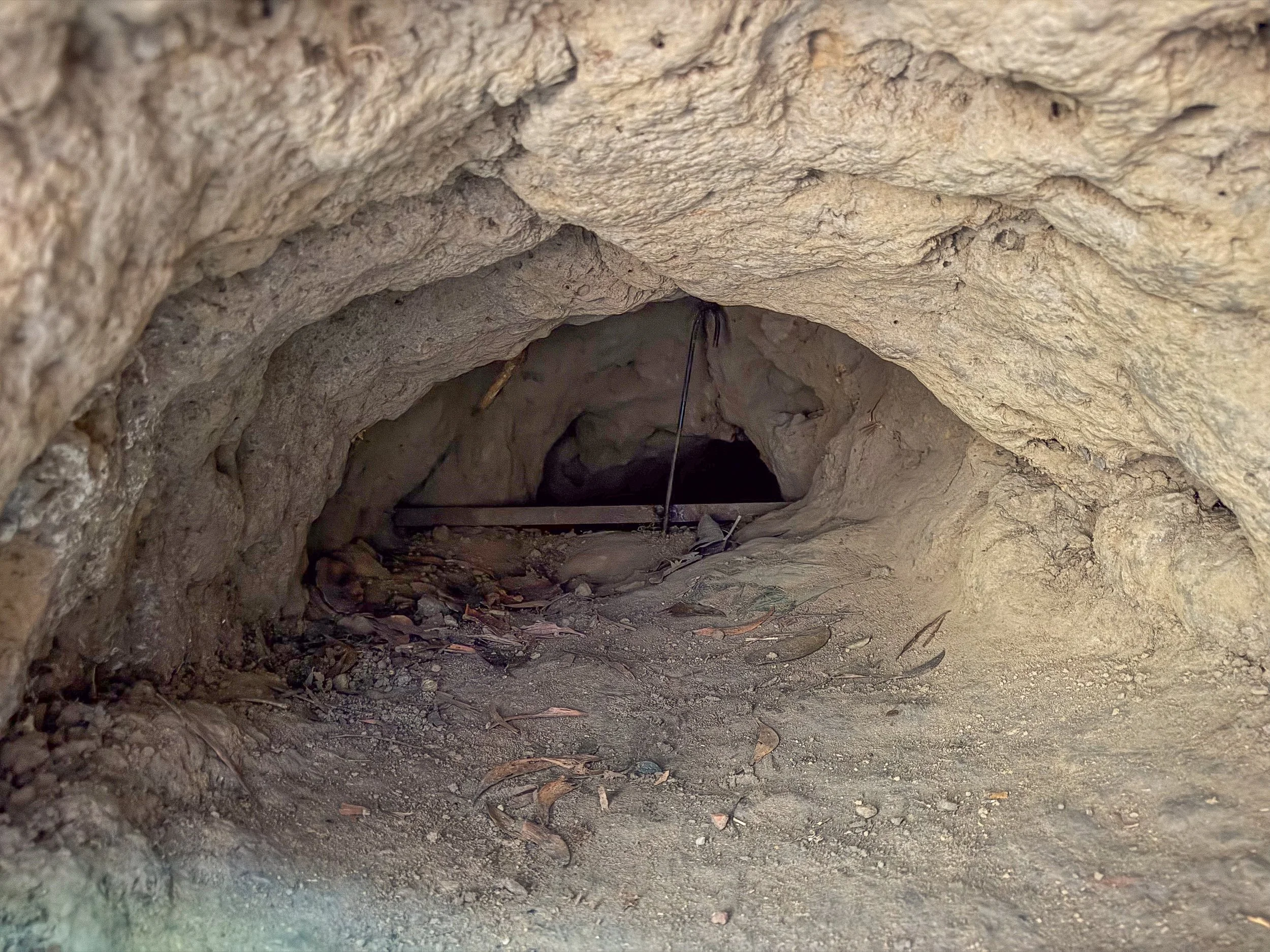
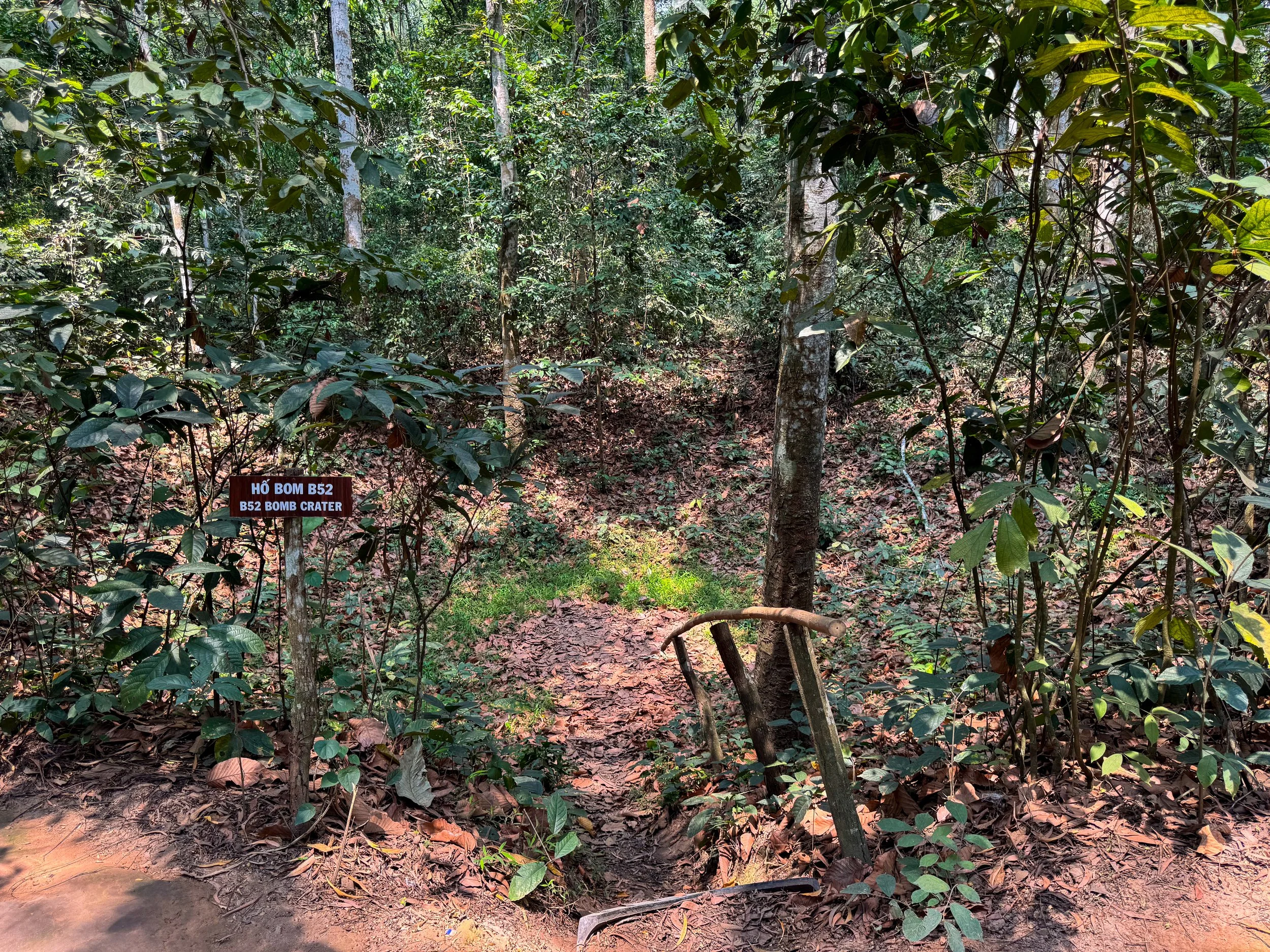
Visit the Cu Chi Tunnels. The infamous tunnels were dug by the Vietcong and Cu Chi guerrillas to fight against the Americans during the Vietnam War. The former battleground, now a museum, teaches about the 250km of tunnels, the history of the war, the use of conventional and chemical weapons, guerrilla warfare and booby traps. We crawled through a widened 100 meter section of a tunnel, watched as people fired machine guns and tasted cassava often eaten by soldiers. The tunnels are located about 1 hour 30 minutes from Saigon. We visited with Vietnam Travel Group and booked on Viator.

Walking Streets
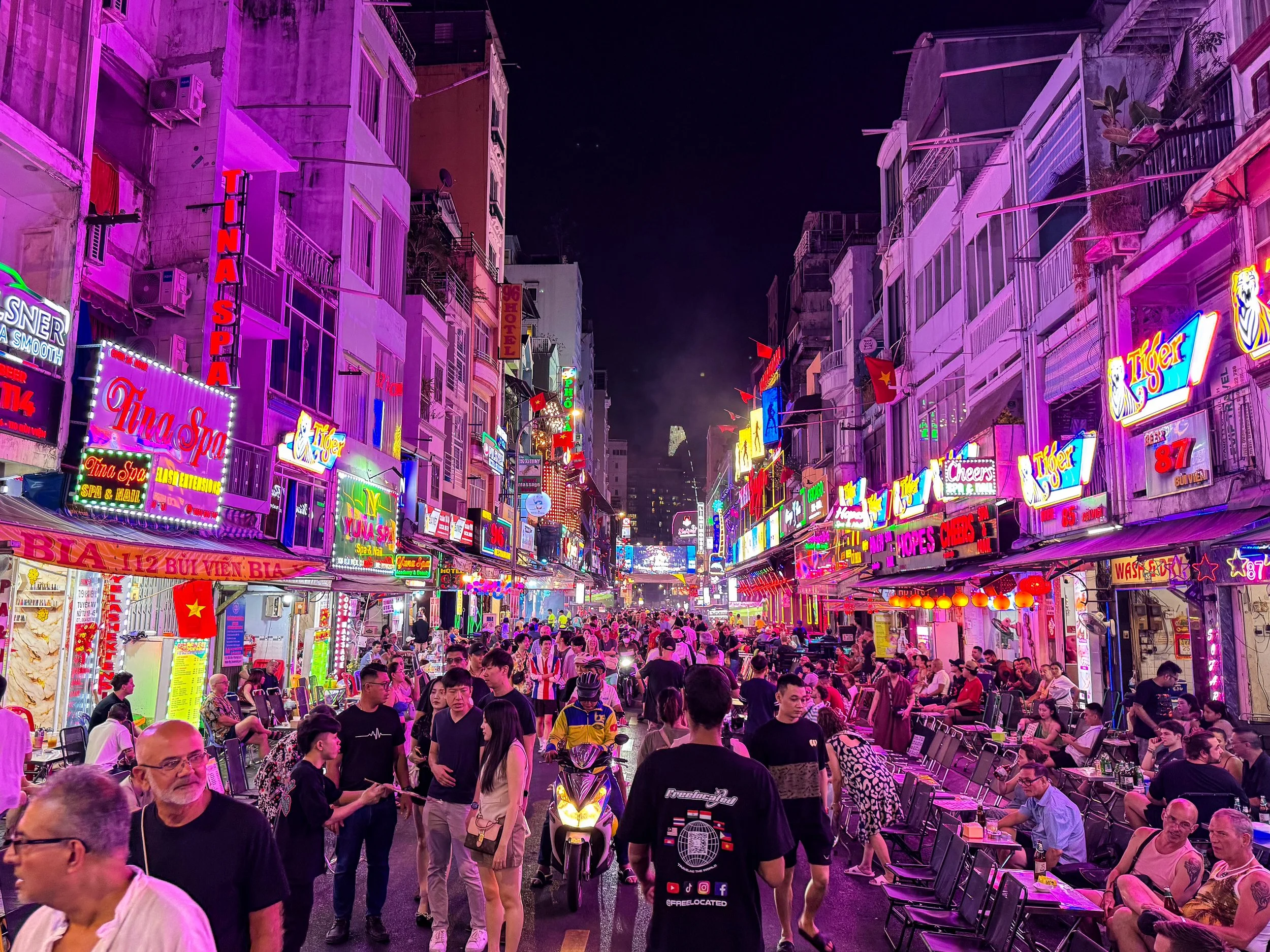
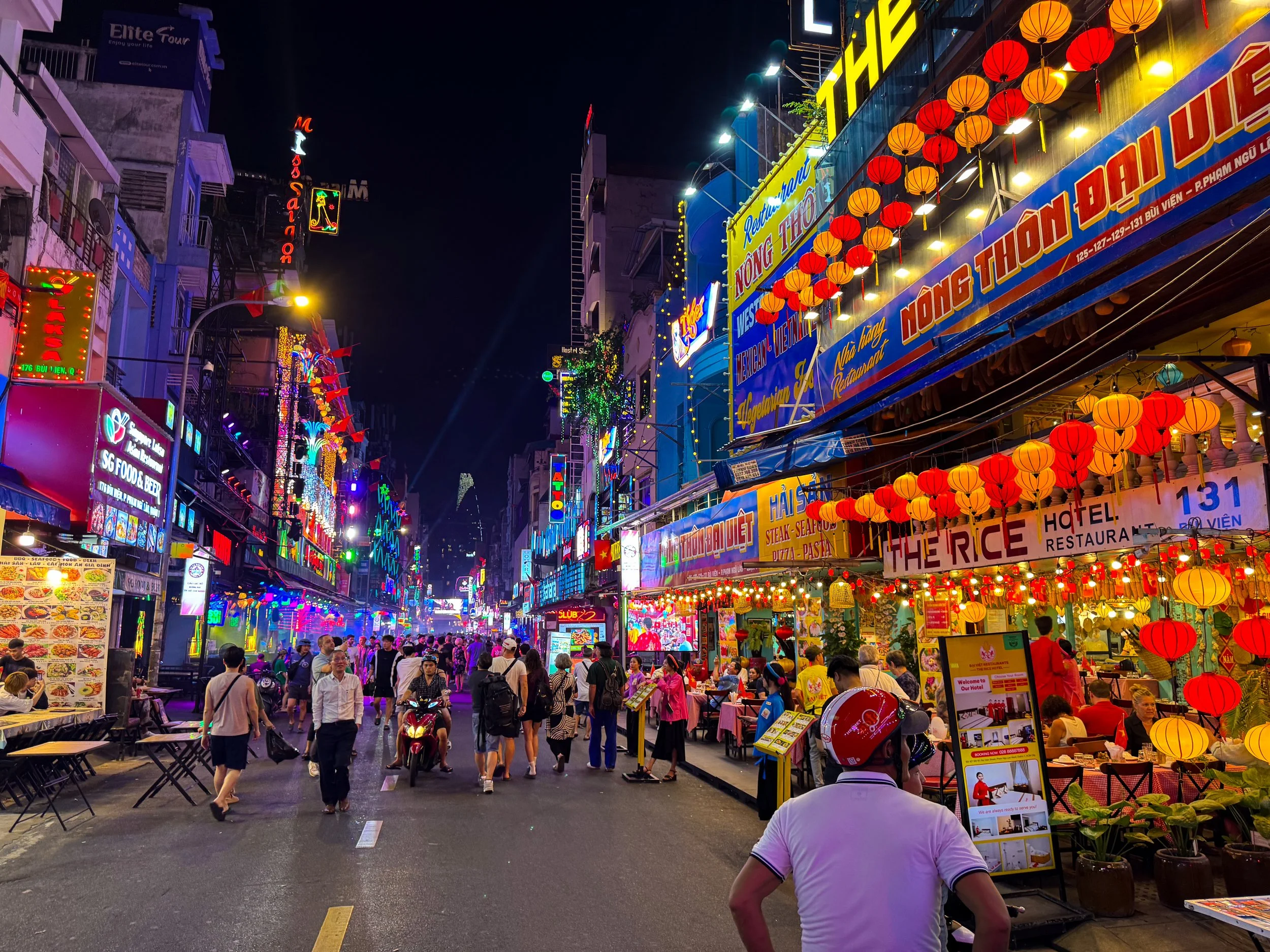
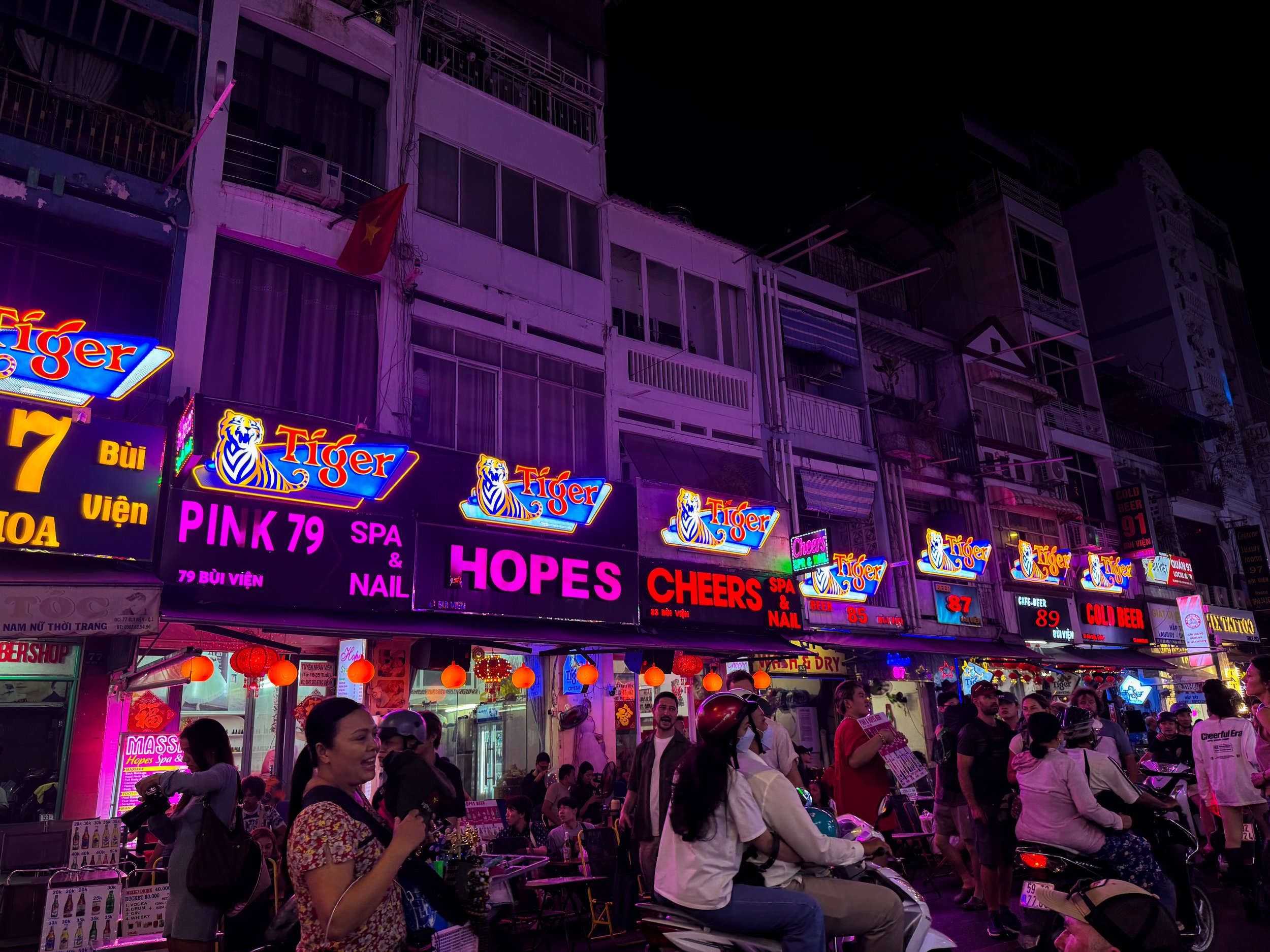
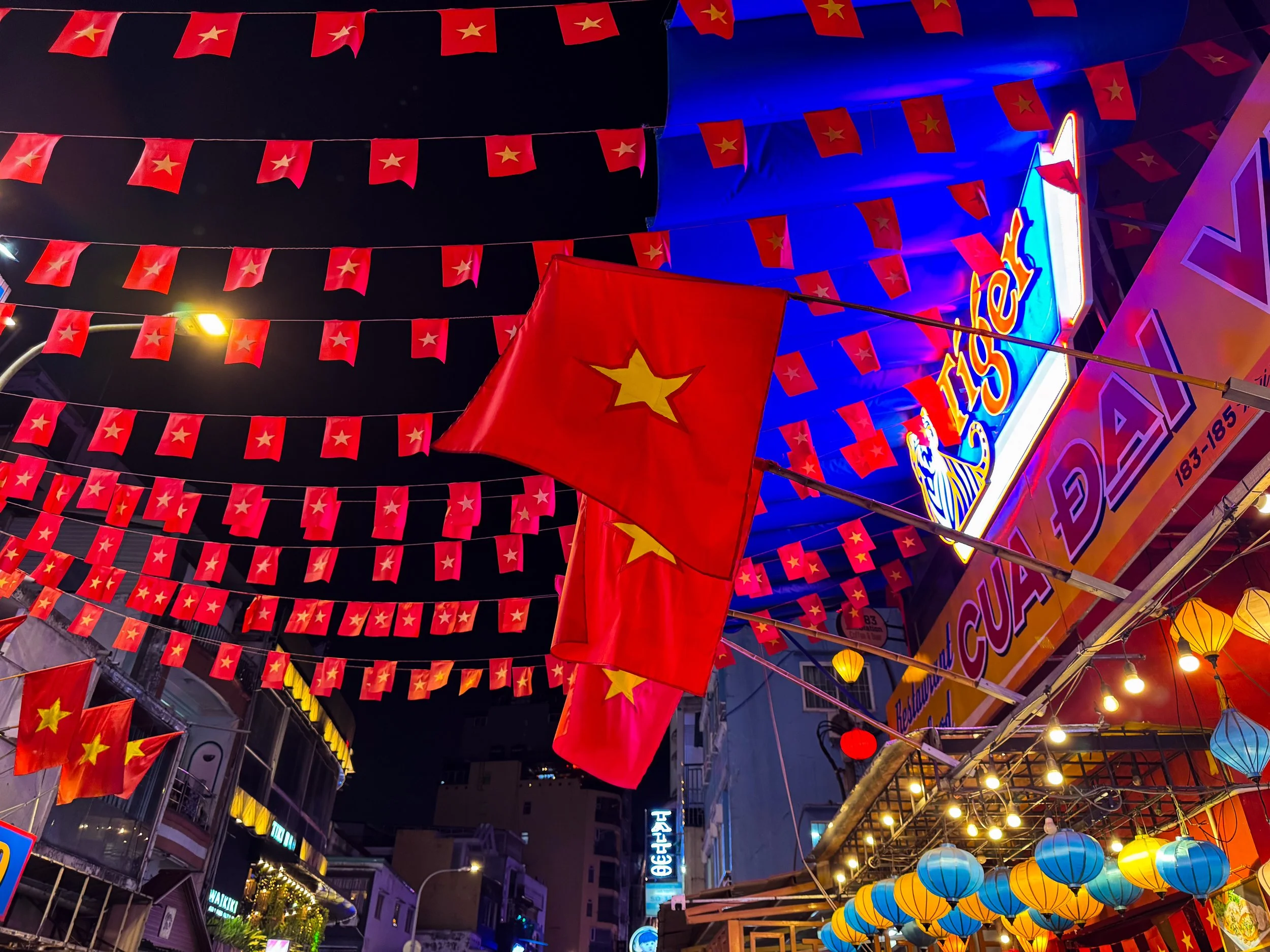
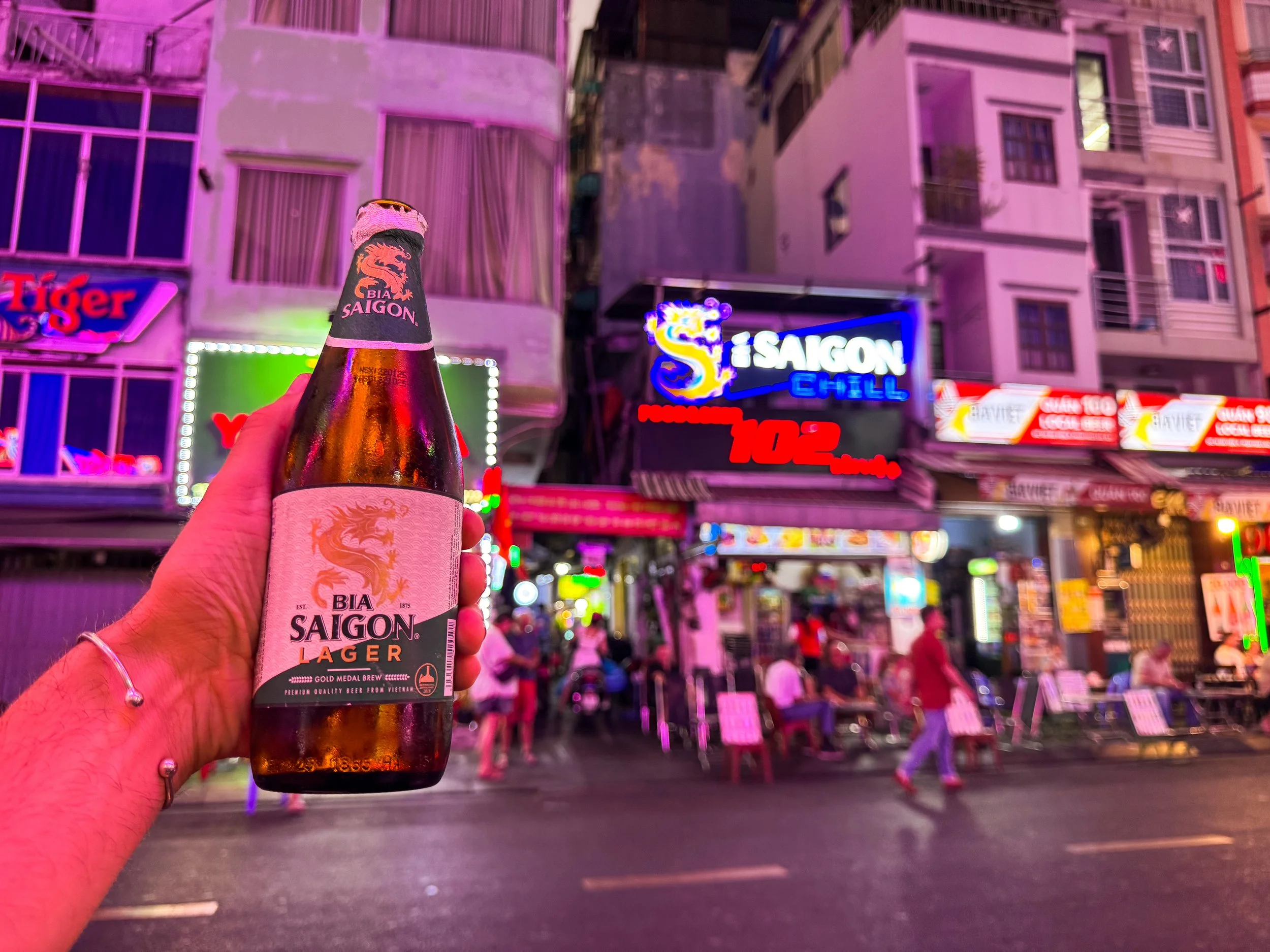
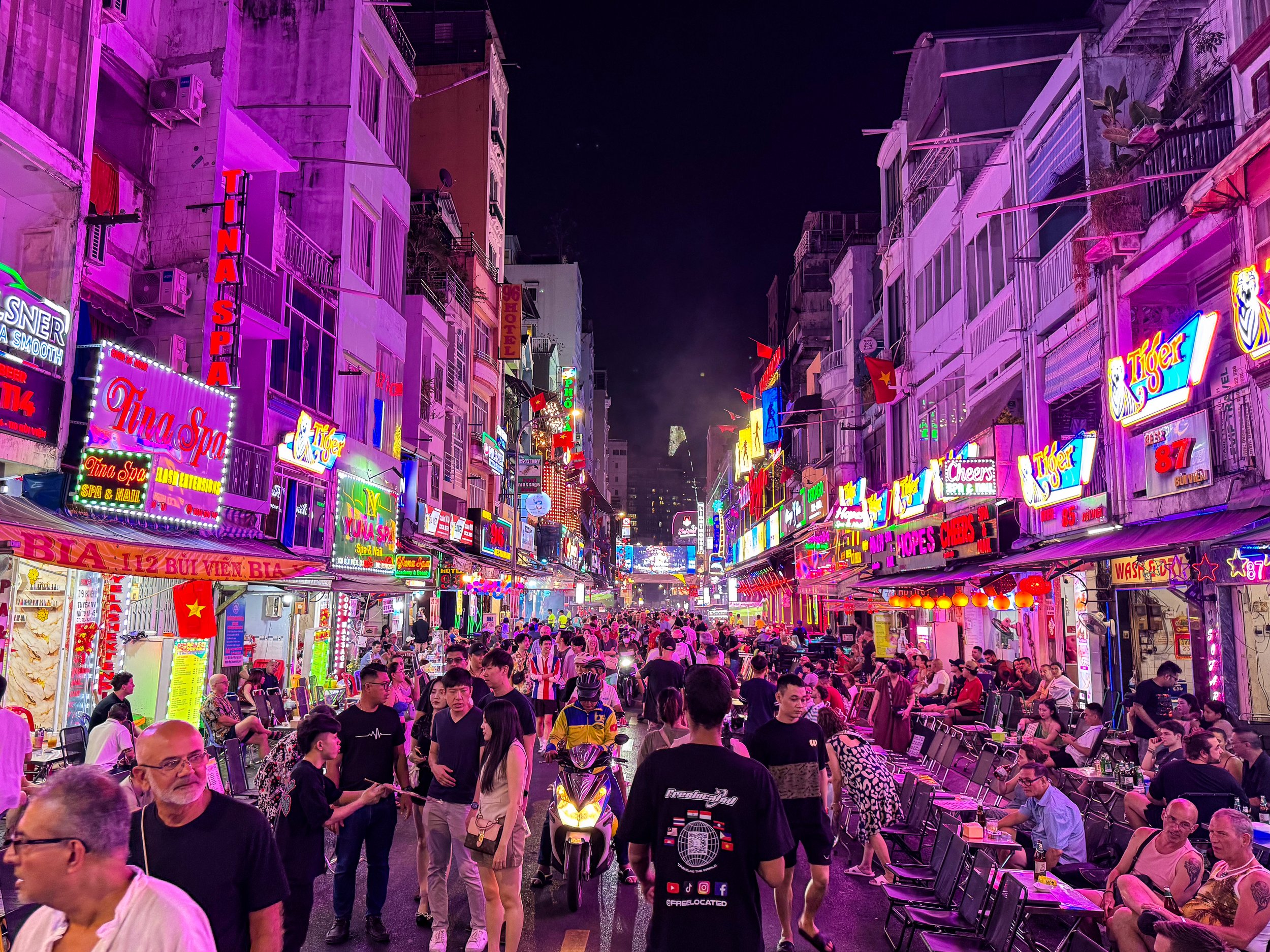
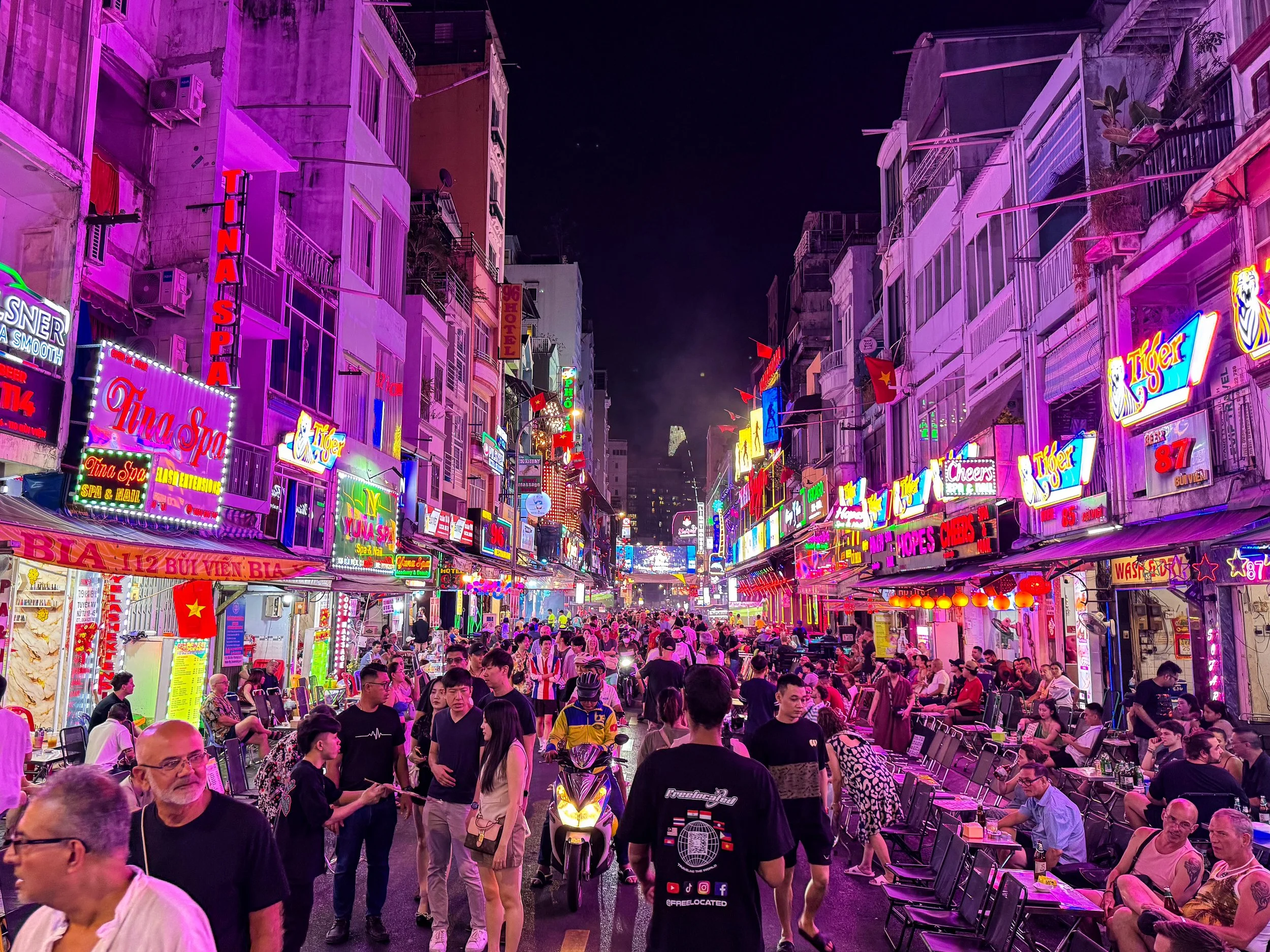
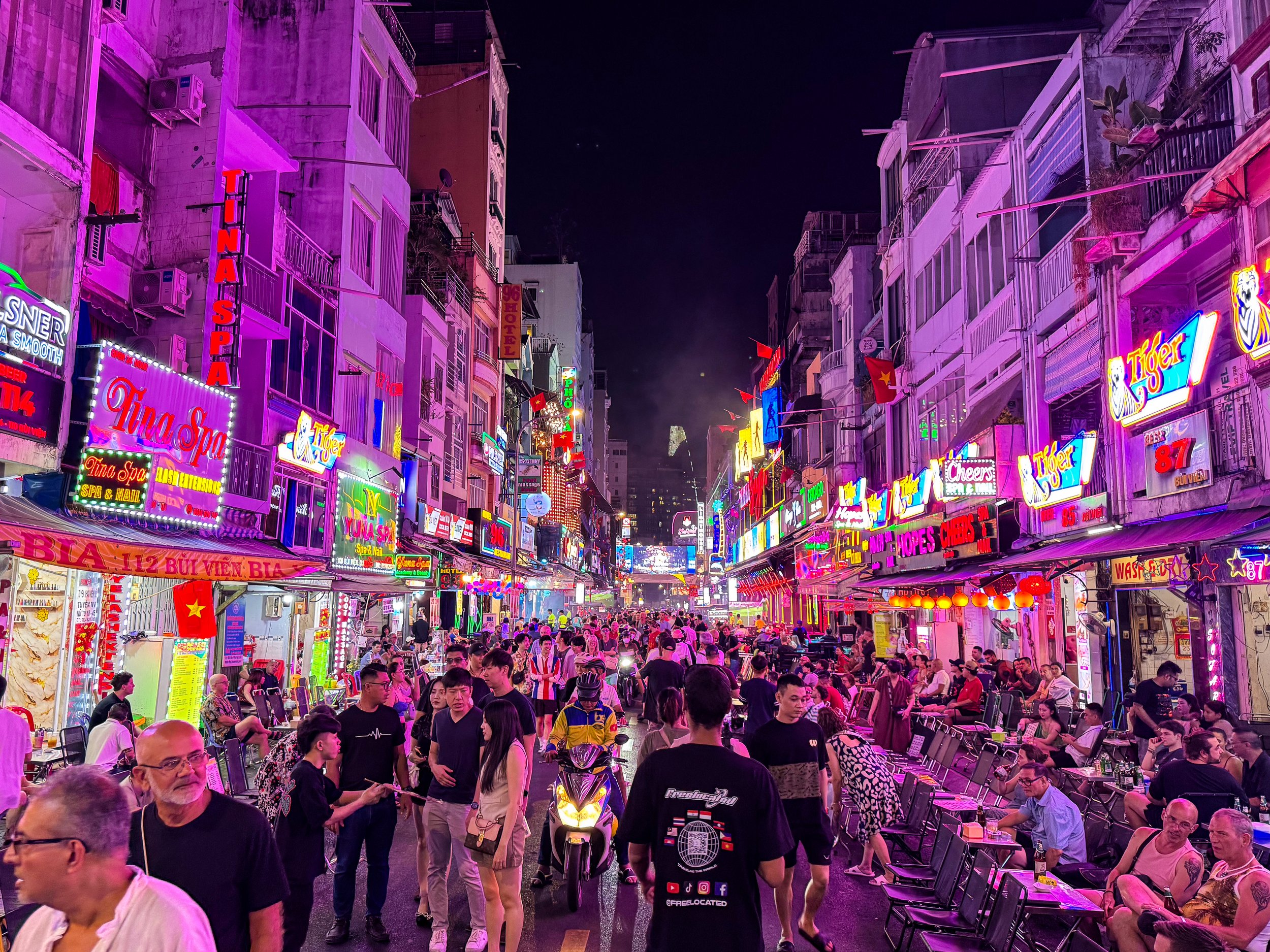
Bui Vien Walking Street. A nightlife street with bars, clubs, tattoo shops and massage parlors. Bright and colorful lights illuminate the street as loud music, live singers, go-go dancers, crowds of visitors, beeping moto bikes and hosts eager to flag down customers create a spectrum of sensory stimuli. Numbered bars and sidewalk patios with fold up chairs line both sides of the street selling inexpensive Vietnamese beers like the city’s namesake, Saigon.
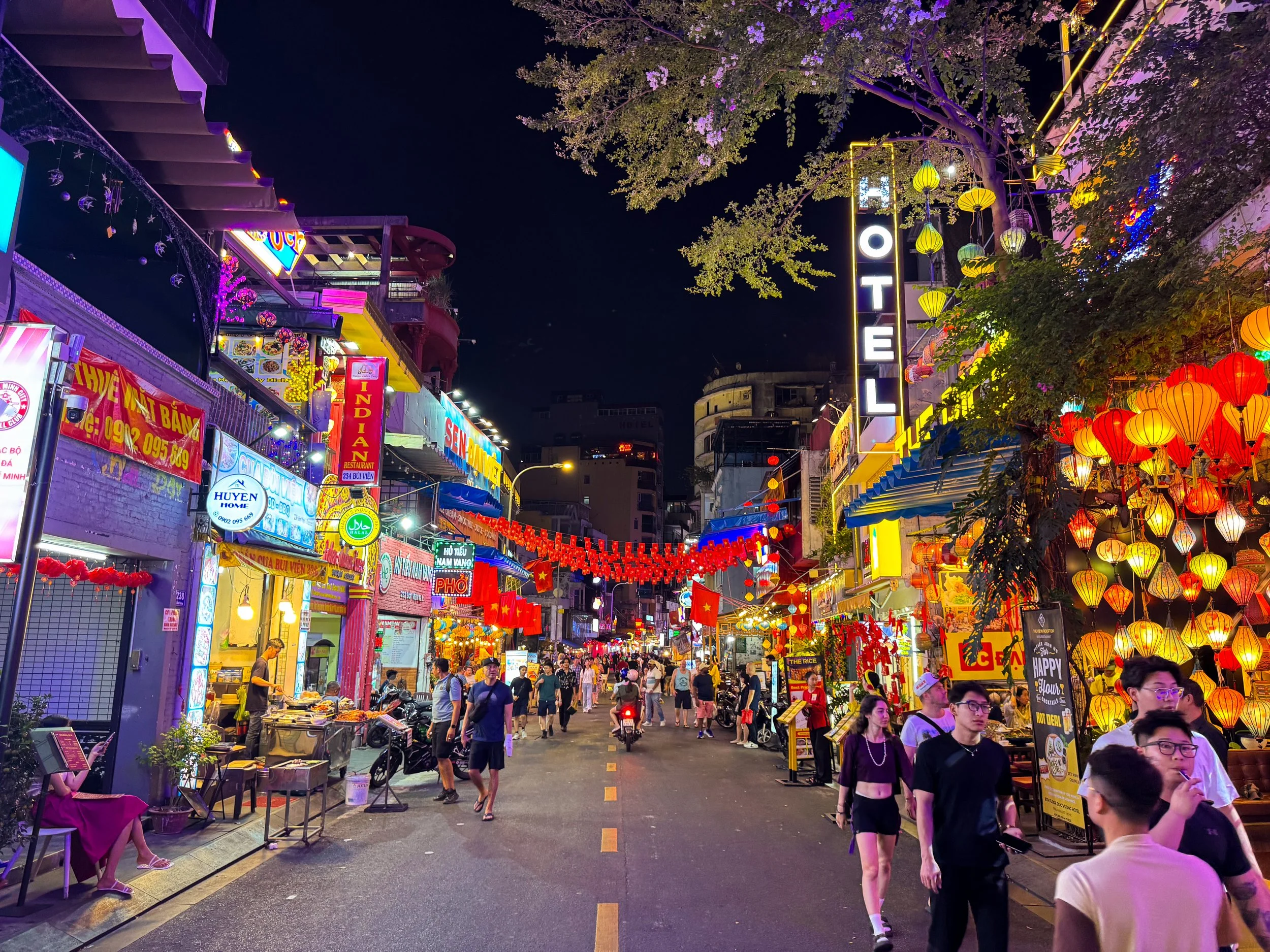
Nguyen Hue Walking Street. A walking street leading from the French Colonial style city hall to the Saigon River. It’s lined with a range of hotels, cafés, restaurants and stores. Large digital screens display banners of the communist flag and propaganda. Festivals and events are often held here. At the time, decorations from Tet celebrations the month prior remained on display.
Book Street. A pedestrian only street with a couple dozen bookshops, cafés and kiosks selling mostly Vietnamese books. We strolled through the shops looking at the beautiful covers and Vietnamese translations of English titles.
See the Sights
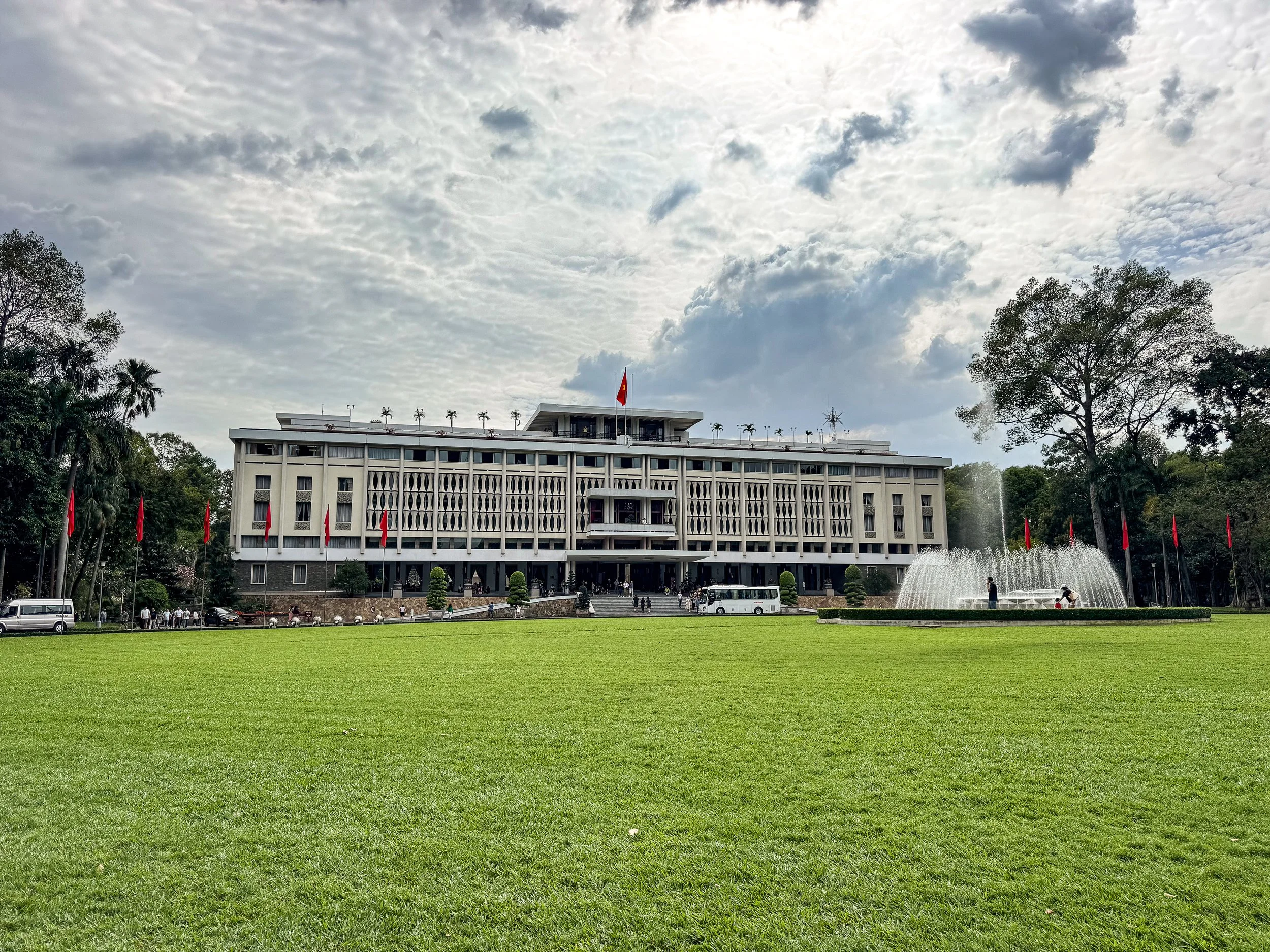
Independence Palace. The former seat of government for the Southern Vietnam Republic. It’s now a historical museum and symbol of Vietnam’s reunification after the fall of Saigon. The armored tanks used to storm the palace gates and a fighter jet used to bomb it during the south’s collapse are displayed on the front lawn.
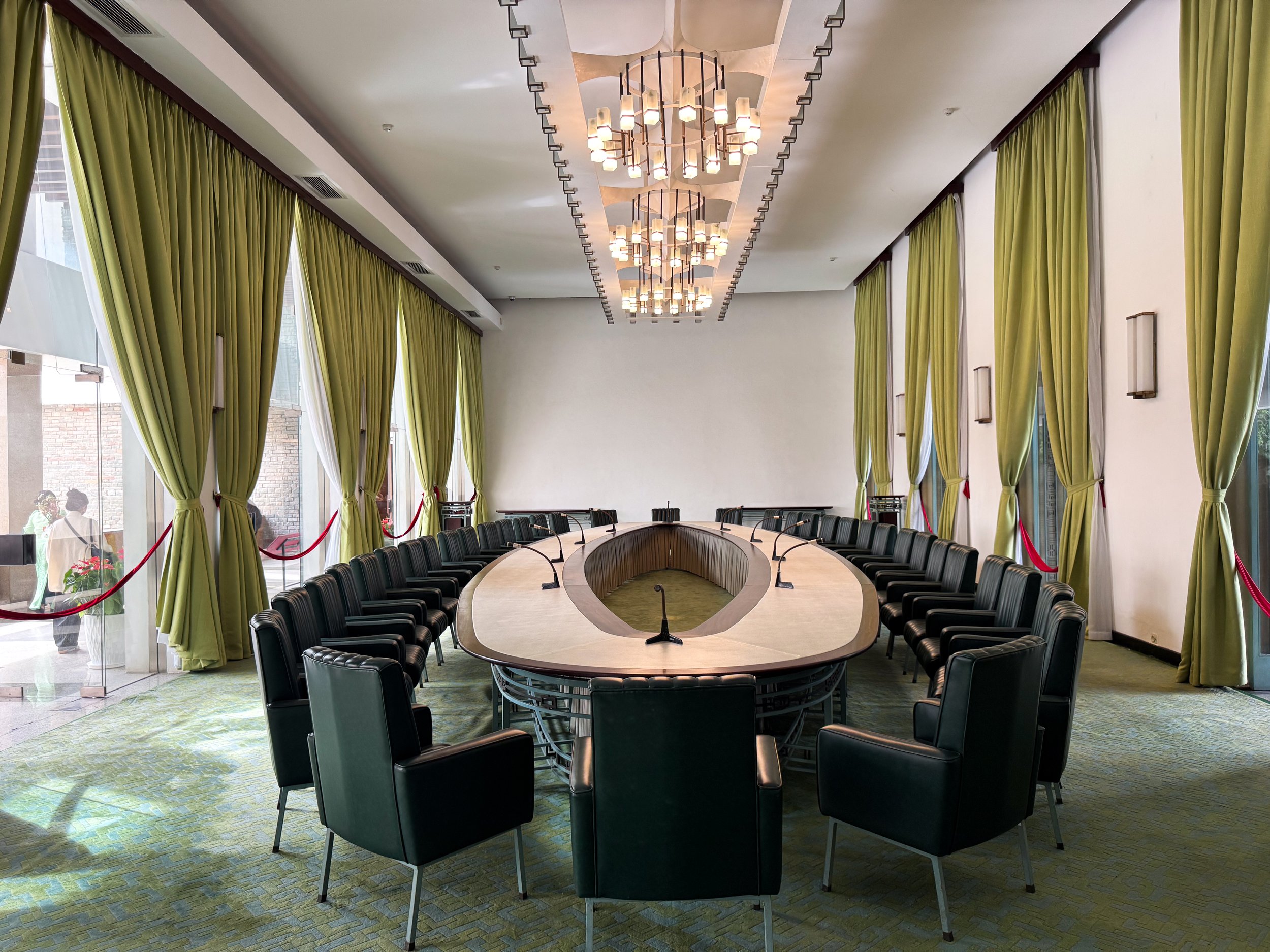
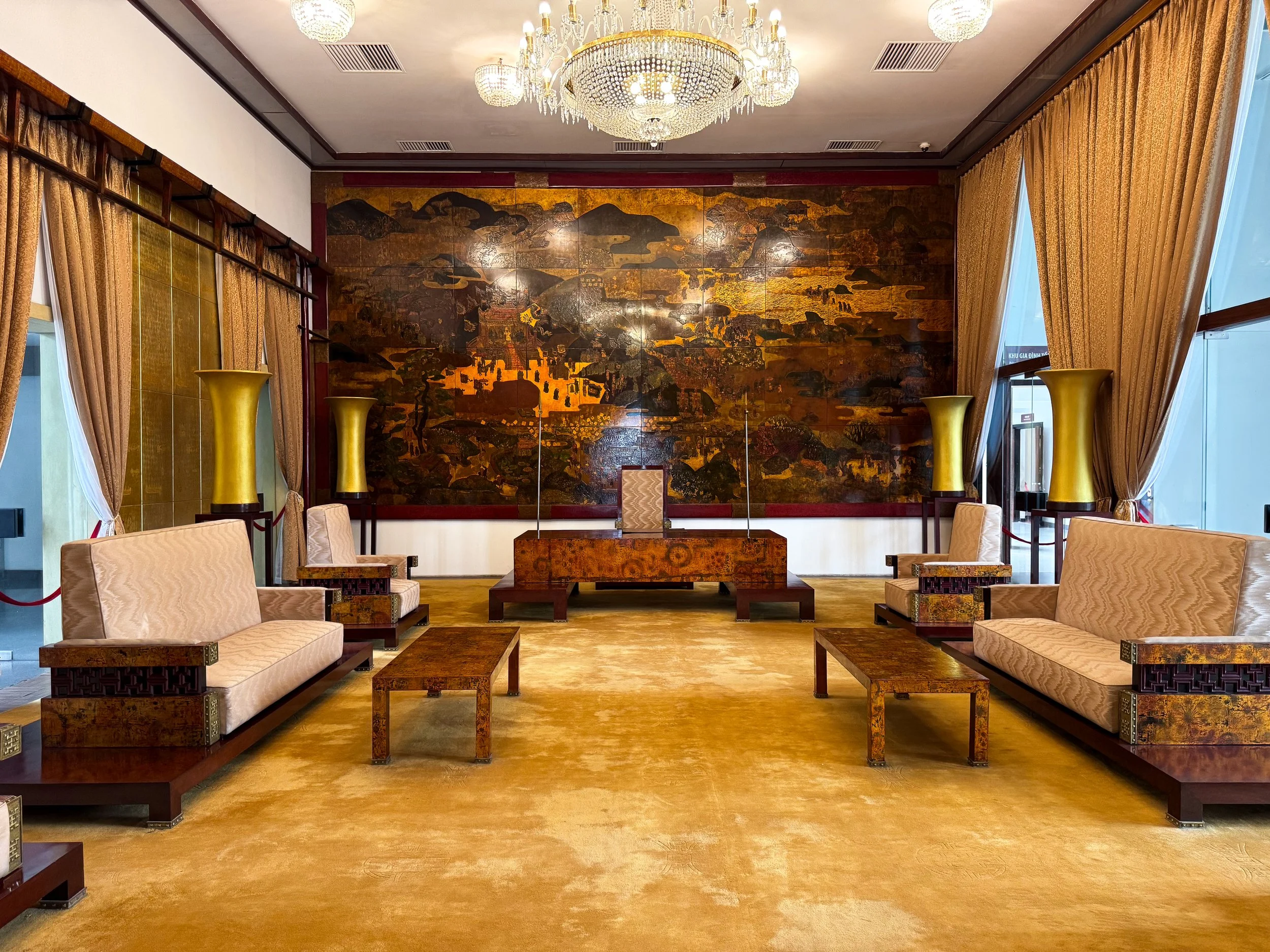
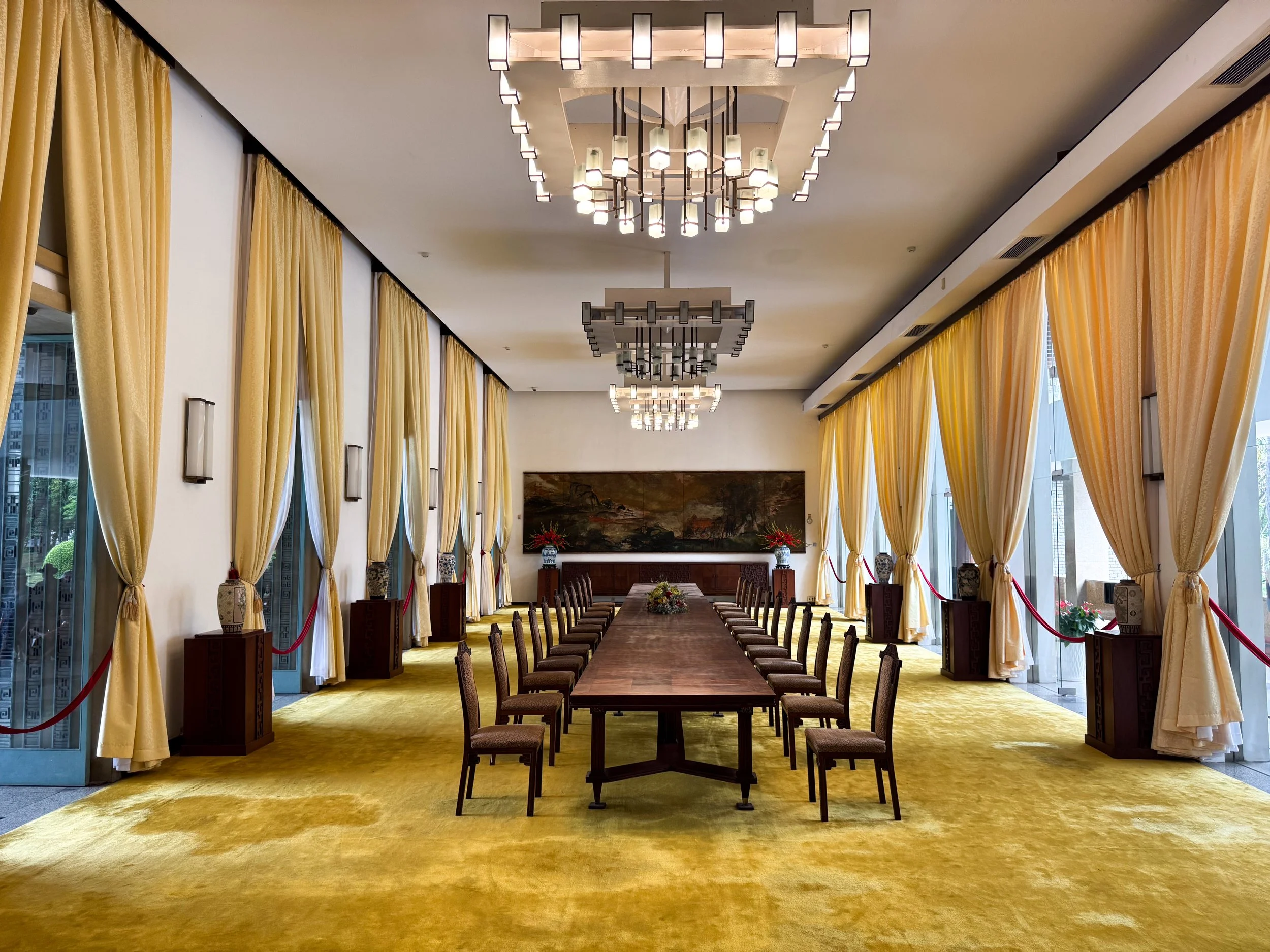
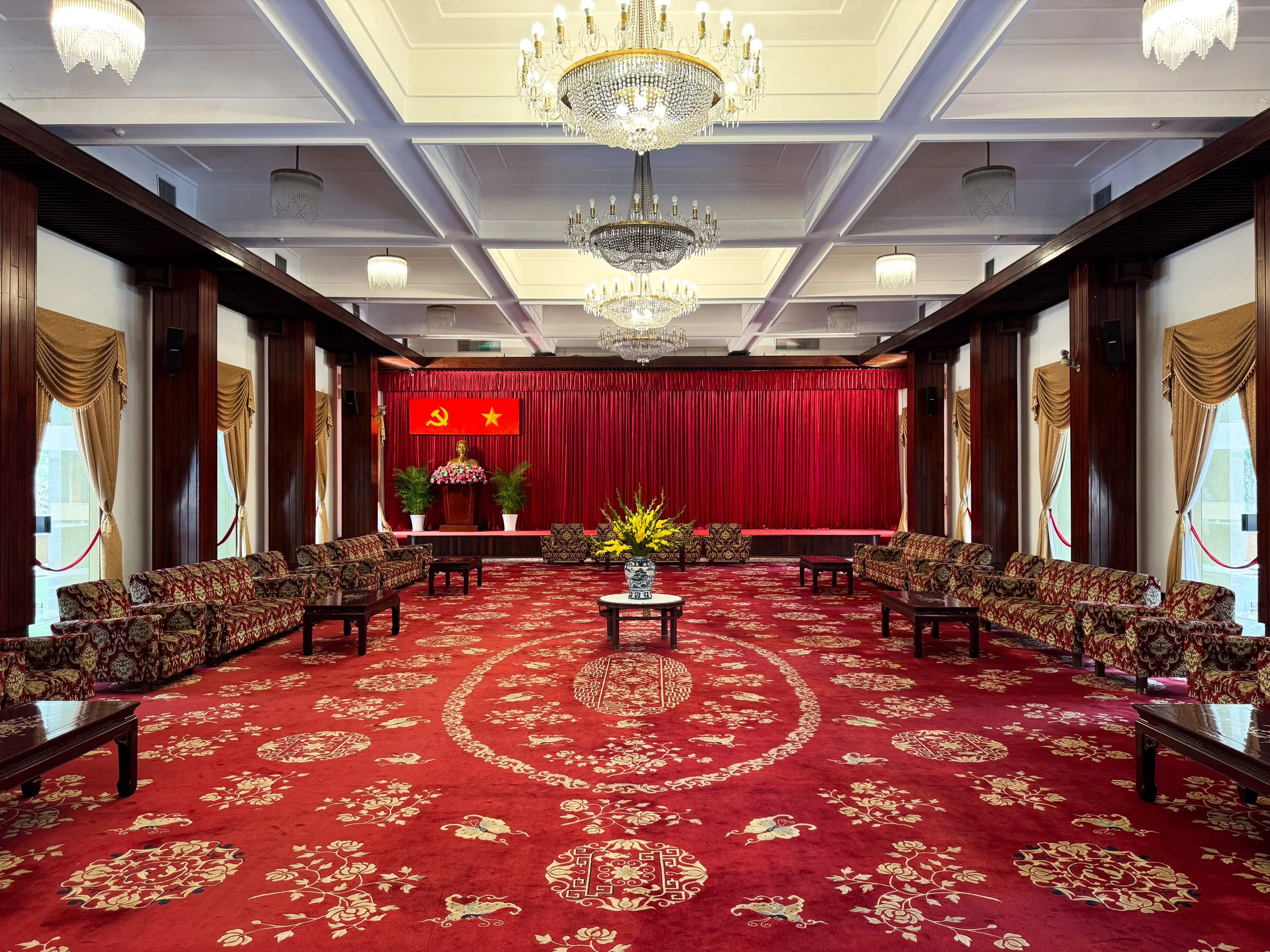
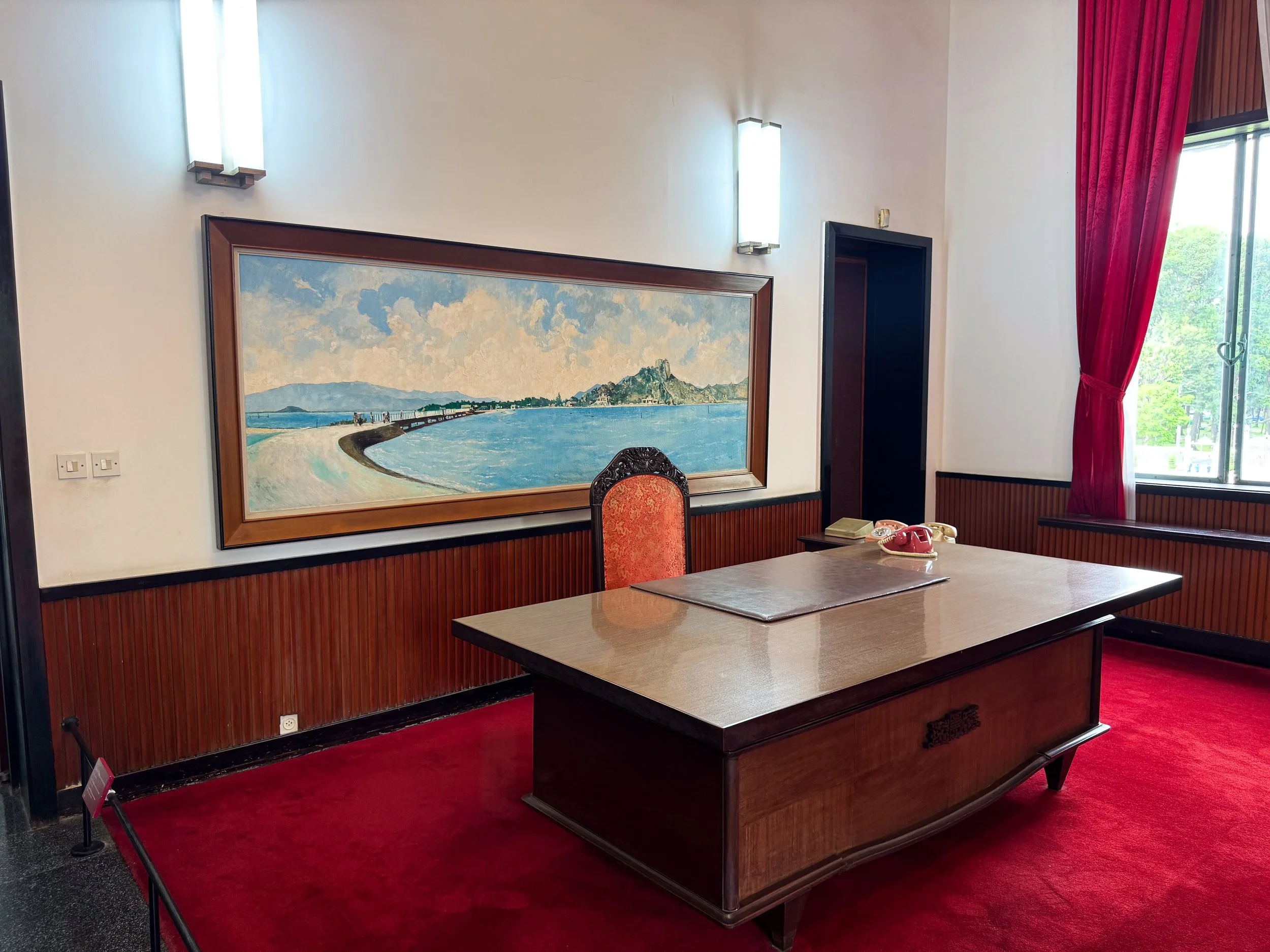

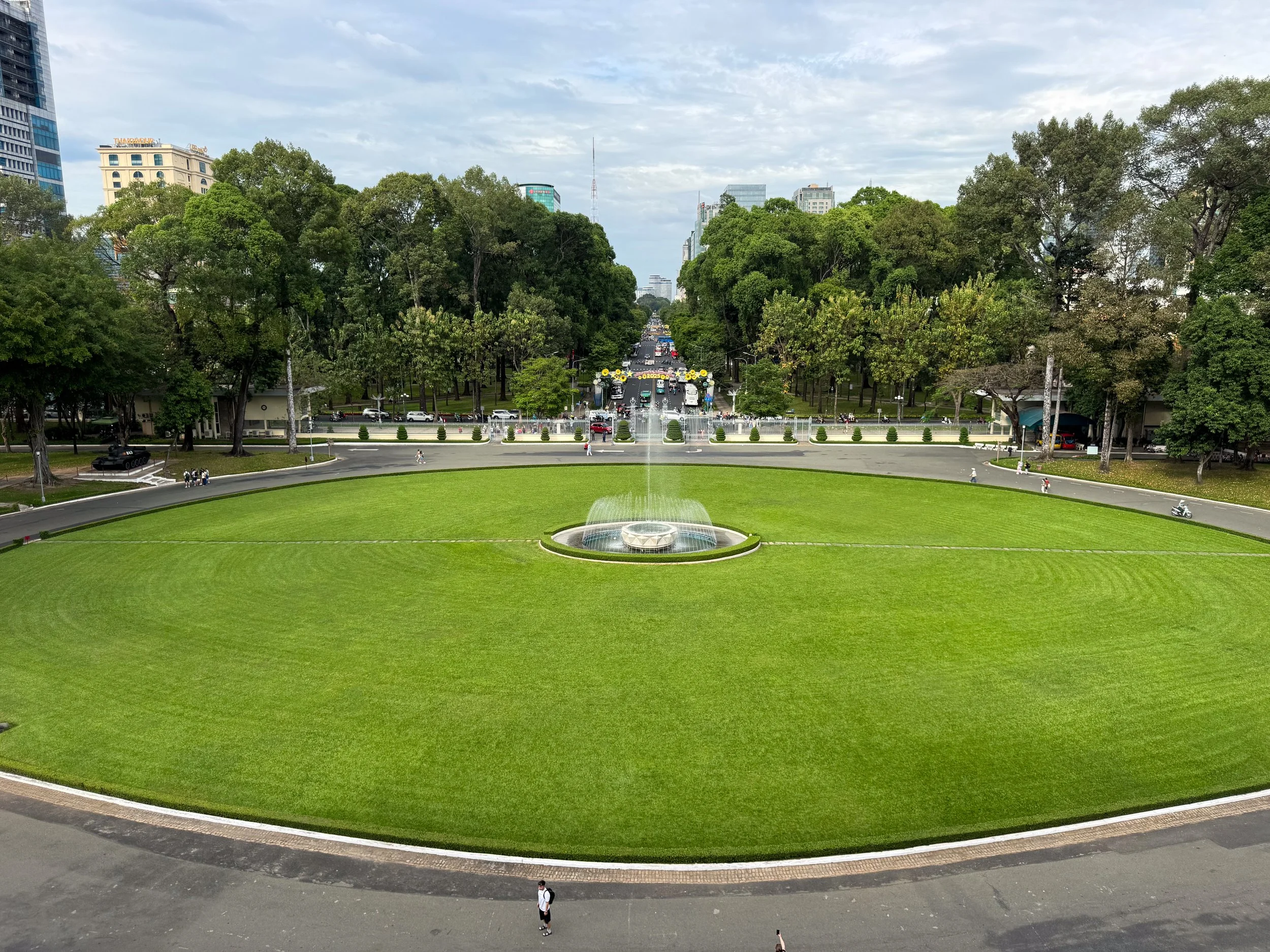
The building is a midcentury beauty defined by its rectangular planes, minimal detailing, lofty corridors and symmetrical design. It was inspired by a French colonial palace that once stood in its place while taking on elements of ancient Vietnamese design. Its ground floor is mostly open air with rooms used for hosting state banquets, cabinet meetings and conferences. The second floor served as the presidential office and residence with a grand foyer, reception hall, ambassadors hall, national security chamber, bedroom and wardrobe. The third floor is the entertainment floor with a game room, theater, first lady’s reception room and a library. The fourth floor has a gala space, a helicopter pad and two large circles noting where bombs were dropped on the palace.
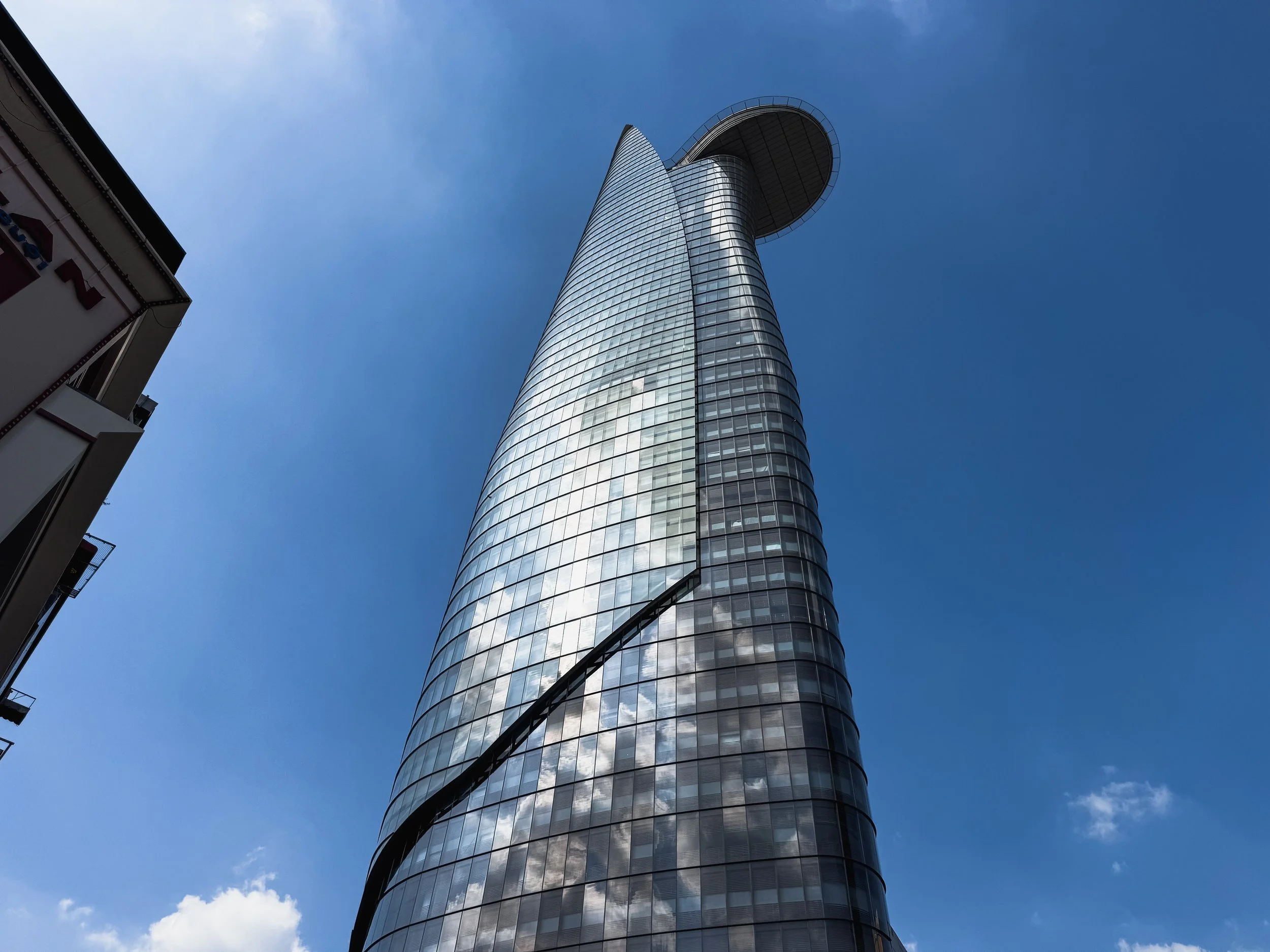
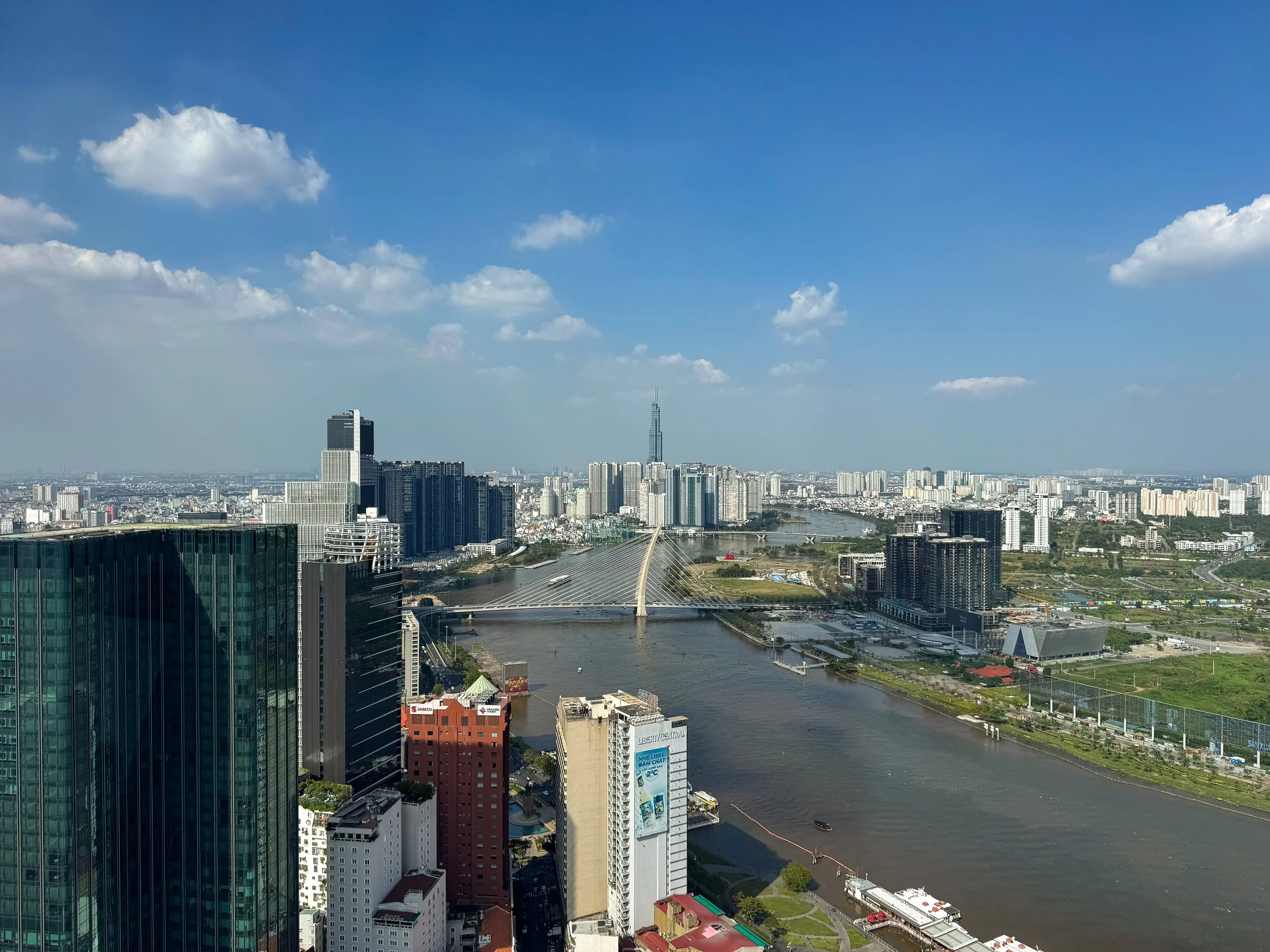
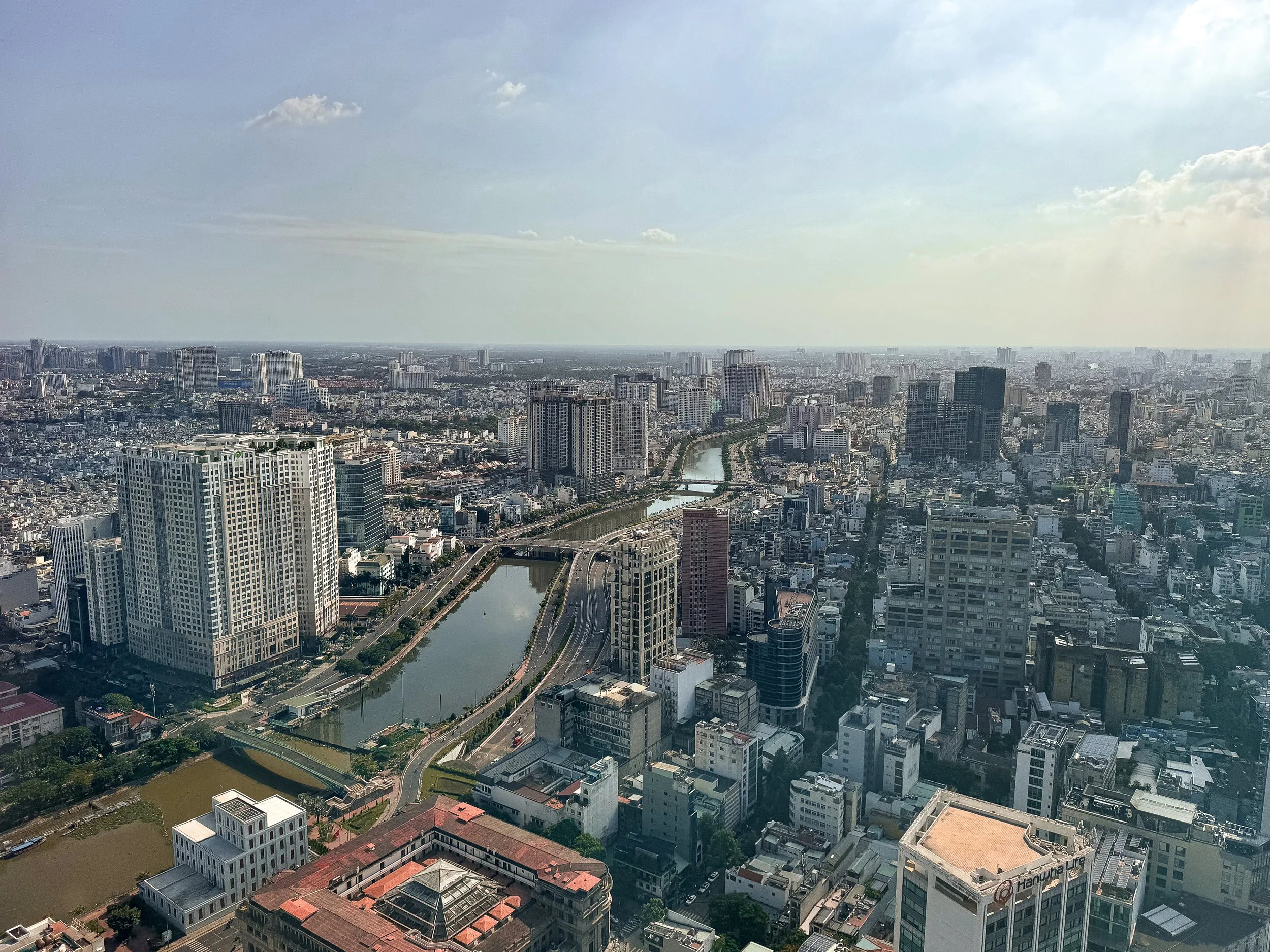
Skydeck Saigon. An observation deck located on the 49th floor of the city’s iconic Lotus Tower with panoramic views of the city, countryside and Saigon River.
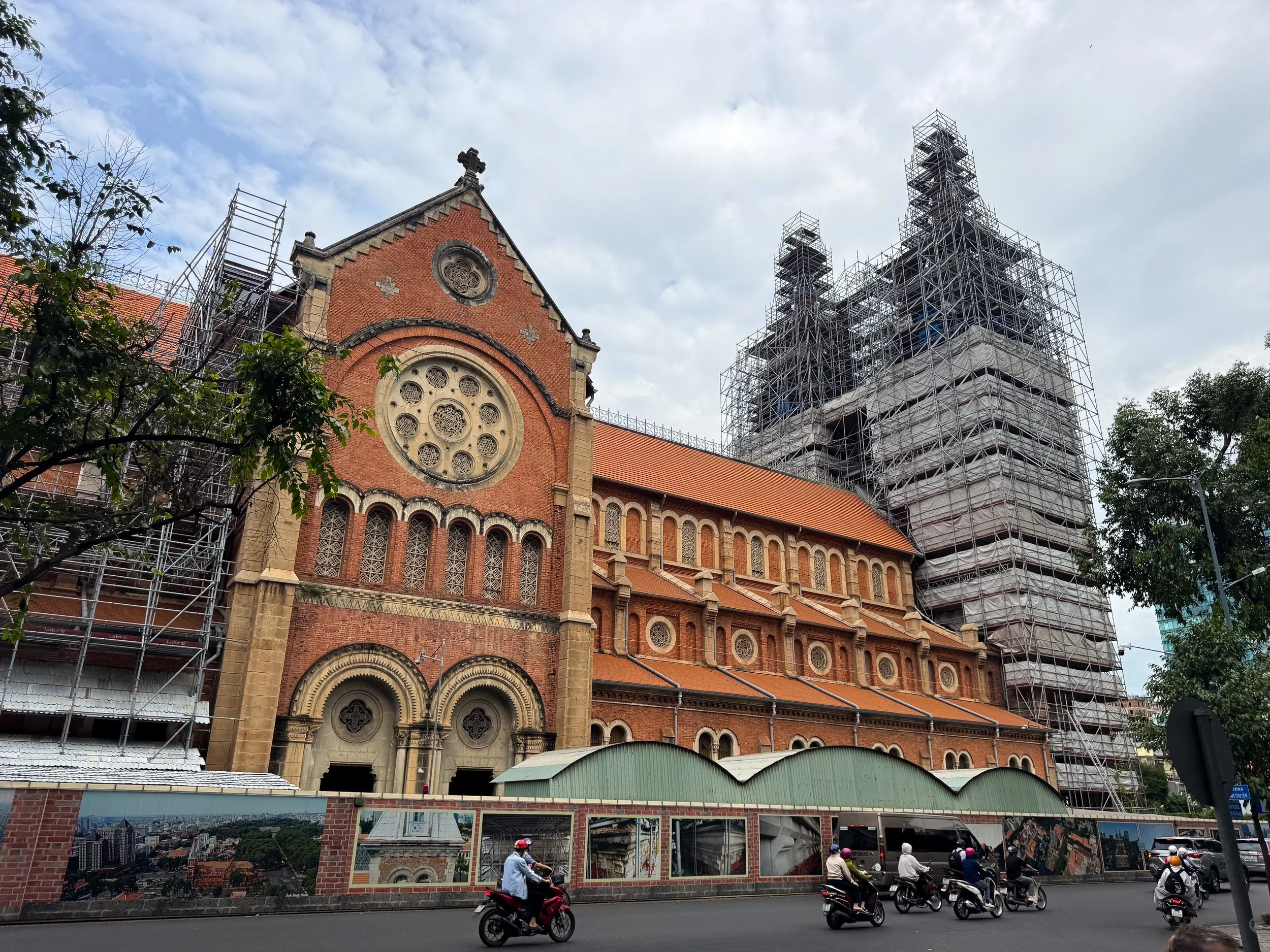
Notre Dame Cathedral. A French colonial cathedral designed to look like Notre Dame with rose windows, two tall spires and buttress like facades. The cathedral was closed and almost fully covered in scaffolding during the time we visited.
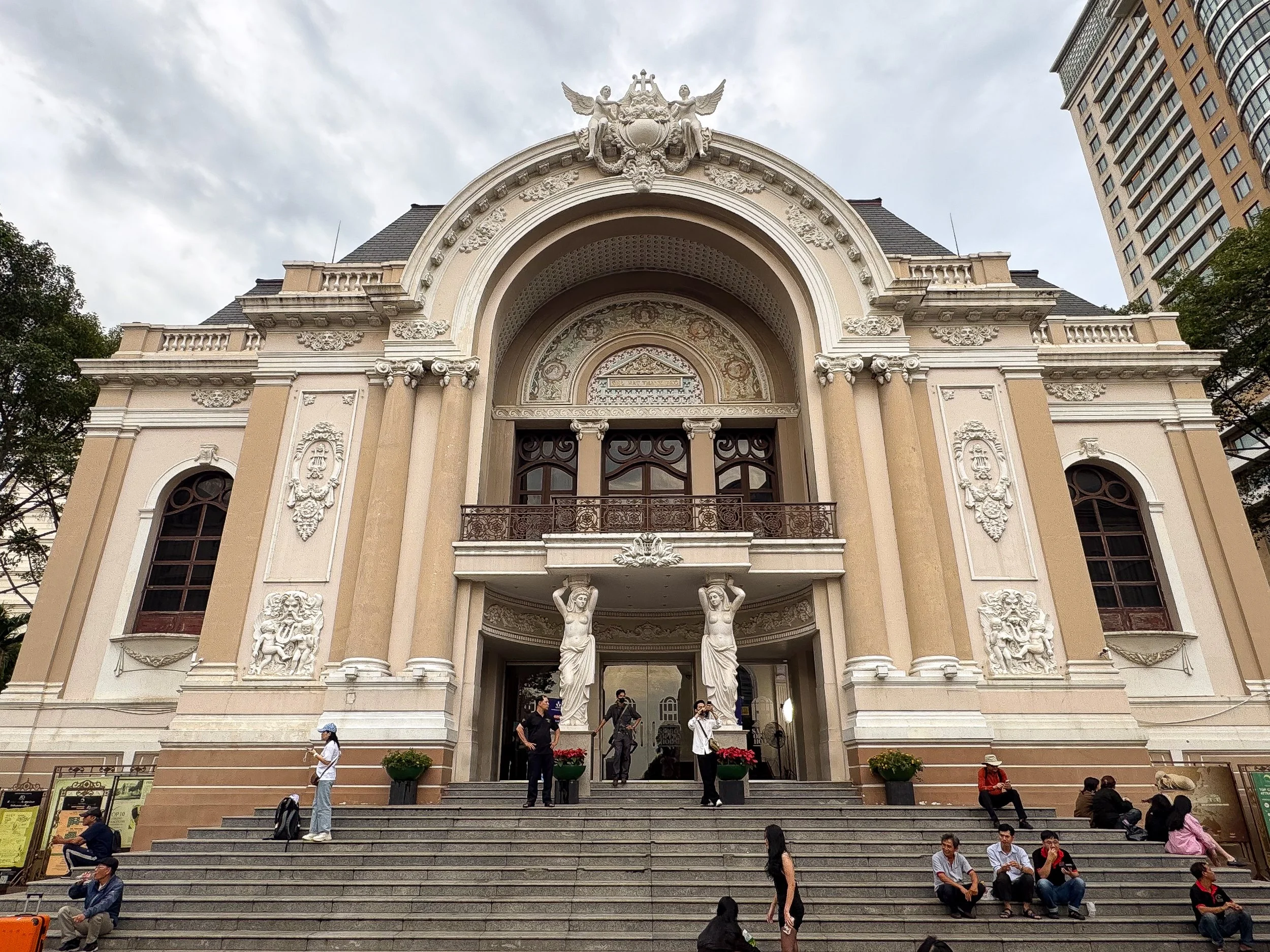
Saigon Opera House. A French colonial opera house in the middle of downtown with a traditional arched facade decorated in classical designs and Greek statues. The neighborhood surrounding it is home to many French luxury brands and high end hotels.
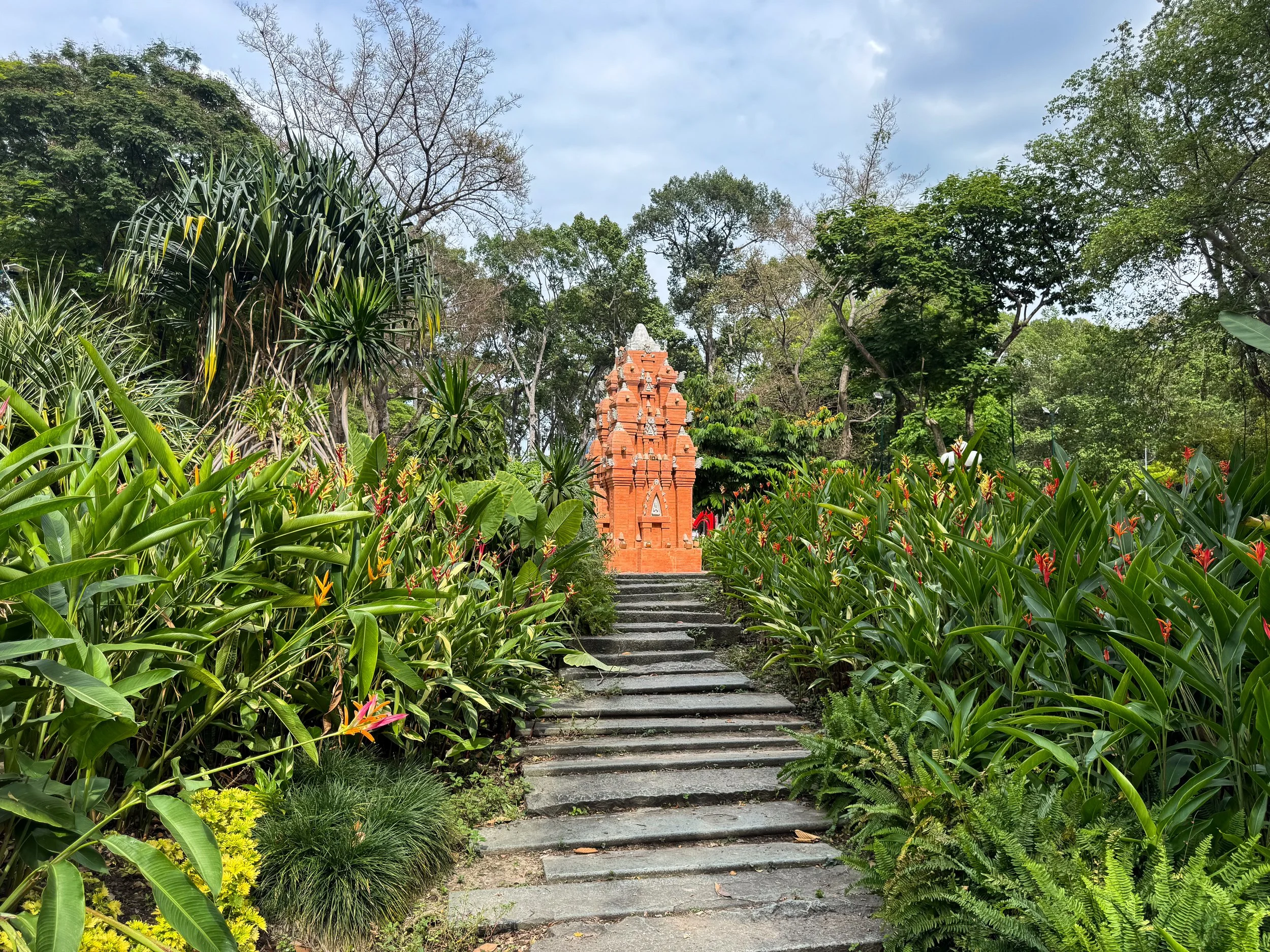
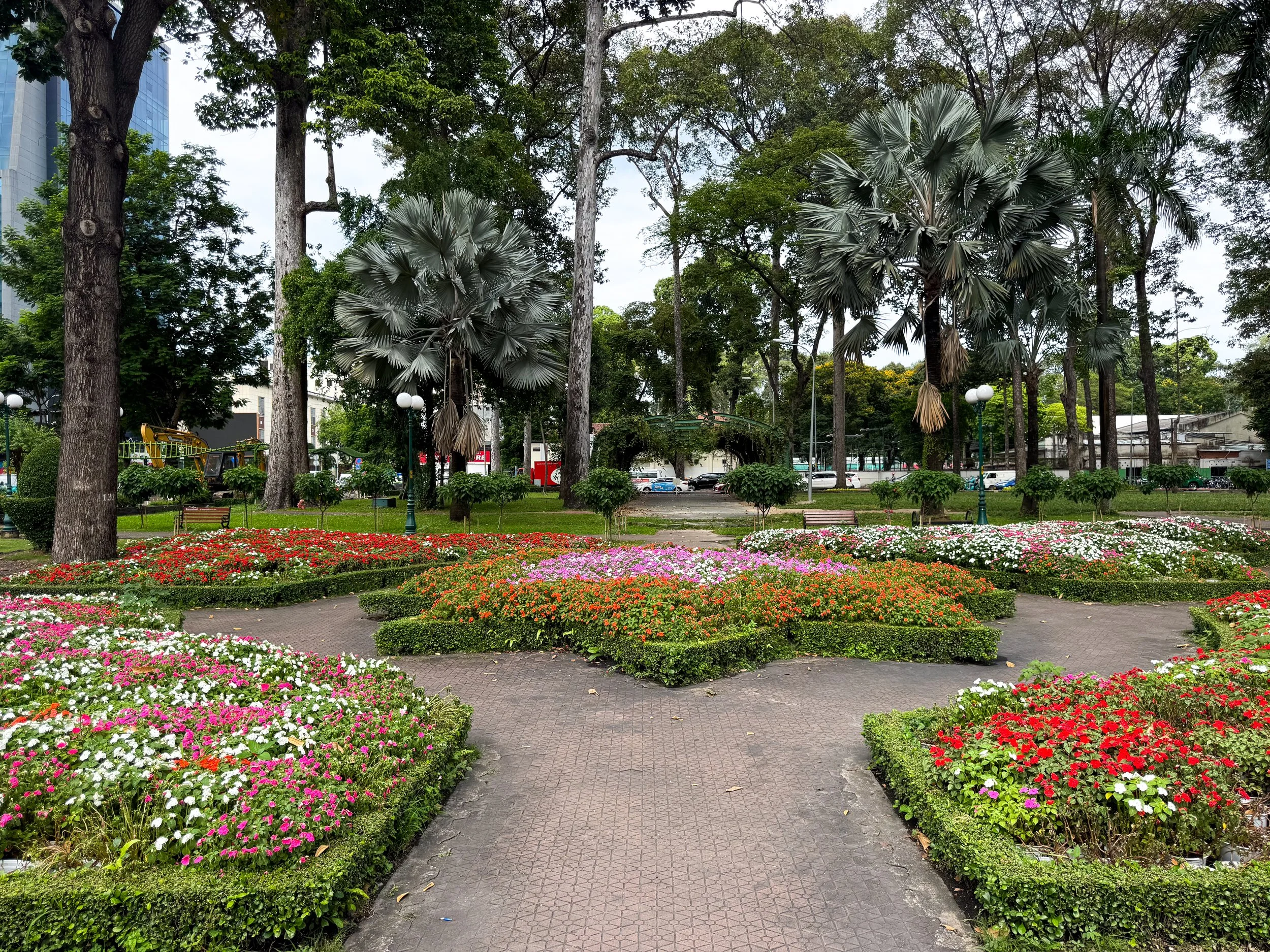
Tao Dan Park. A city park with shaded walkways, flower gardens, a lily pond, pagoda inspired pavilions, various sculptures and a temple dedicated to a former king. We packed a lunch and dined in the park with bubble milk tea.
Cocktail Bars
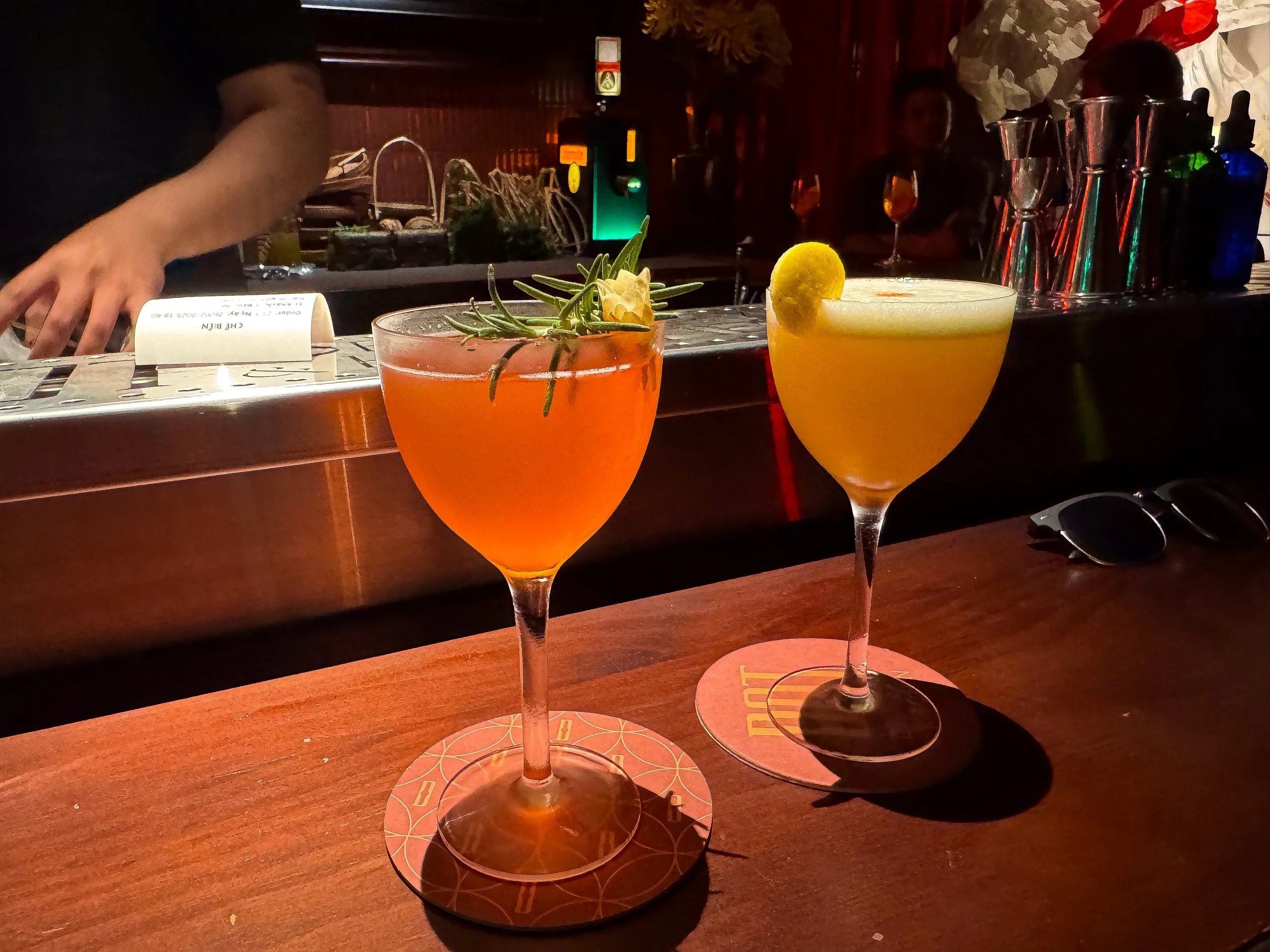
Like many major cities, cocktail bars are popular across Saigon. In typical style, we visited a speakeasy, tiki bar and roof top bar.
Dot Drinkery & Kitchen. A speakeasy style cocktail bar on the third floor of an unassuming building with a dimly lit interior and Vietnamese decor. The mixologists craft flavorful and aromatic cocktails with local ingredients like kumquat juice, pandan leaves, lemongrass and shrimp salt. Try the Big City Life and The Guava Dawn.
Waikiki Bar & Restaurant. A two floor tiki bar with beachy decor on the Bui Vien Walking Street. Come here for tropical drinks served in tiki mugs and fresh coconuts. Relax with a Singapore Sling or Mai Tai and watch the busyness of the street pass-by.
The View Rooftop Bar. A rooftop bar and restaurant on the Bui Vien Walking Street with panoramic city views and well made cocktails. Try a classic lychee martini or the Hoi An Ancient Town, a gin and lotus flower drink served in a ceramic mug with a rooster painted on it.
Location Specifics
Getting Around. We explored the city mainly on foot and by calling Grab. Grab is South East Asia’s taxi hailing app. Grabs are widely available and inexpensive.
Crossing Traffic. Crossing traffic can be intimidating in Vietnam and cities like Saigon. We cautiously walked into traffic with our hands out at zebra crosswalks, keeping a slow but consistent pace as scooters passed by on either side of us. It definitely takes some getting used to.
Shoes. Expect to remove shoes when entering temples, homes and many businesses. Many hotels and some restaurants offer paper slippers for dining or using the restroom.
Avoid Pointing. It is considered rude to point with one finger. Instead, use your full hand to gesture towards something you mean to point at.
Card vs Cash. Cash is the preferred method of payment. Many businesses will not accept credit or debit cards. The Vietnamese Dong is the local currency.
Drinking Water. Tap water is not safe for consumption. It’s best to buy bottled or filtered water.
Safety. Like most of Vietnam, Saigon is safe to visit with no need for extra precautions.
Language. Vietnamese and English are widely spoken, seen on street signs and restaurant menus across the country. That said, it’s still good to know a few Vietnamese phrases.
Hello = Xin chào (Sing-Chow)
Thank you = Cảm ơn (Com-Un)
Good bye = Tạm biệt (Tam-Be-Et)
See you later = Hẹn gặp lại (Hen-Gap-Lie)
Where to Stay
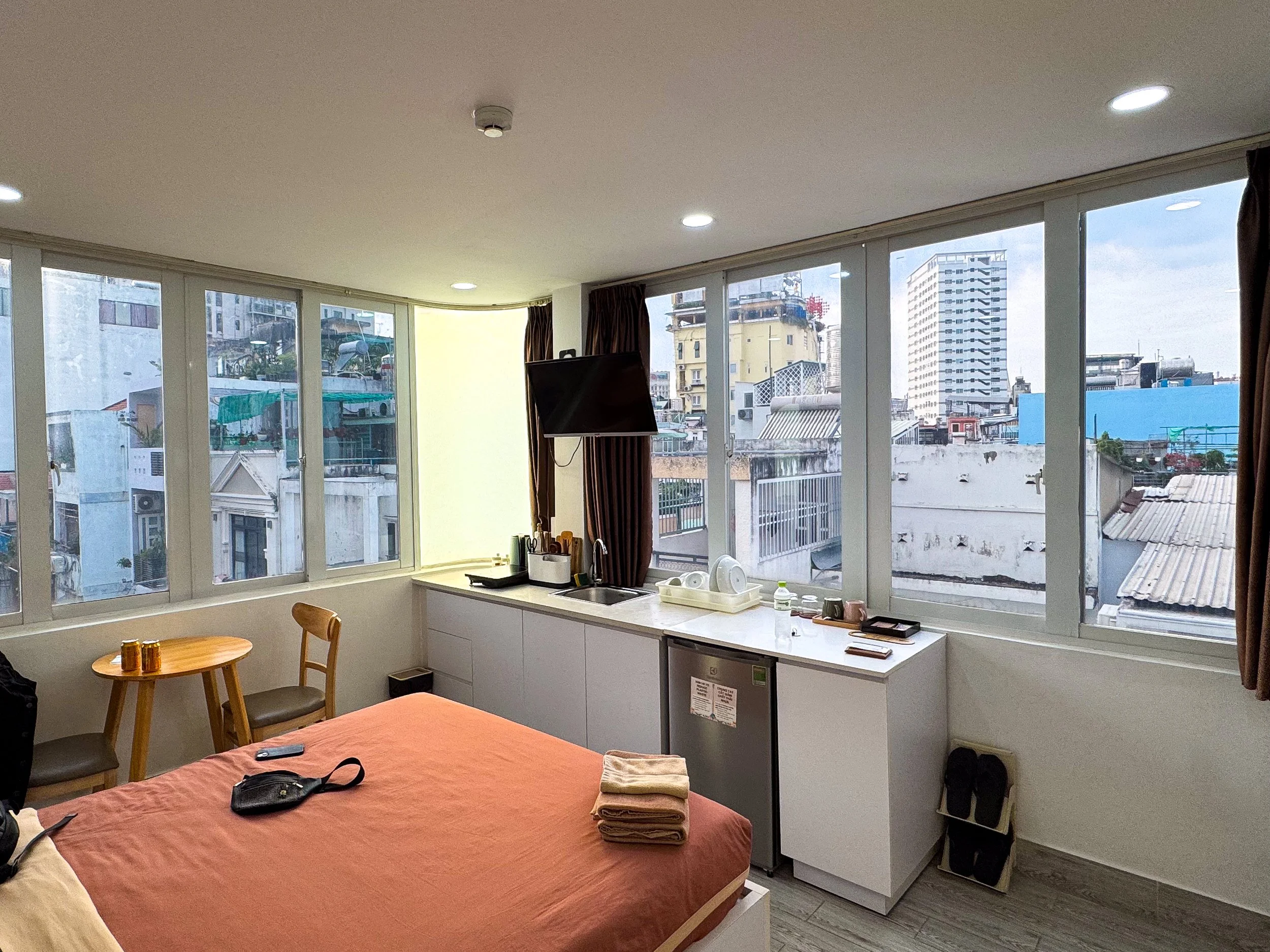
We stayed at Ekomo Home, a small apartment building with short term rentals. The cozy fifth floor unit had a full kitchen and city views with a basic rooftop terrace one floor above. It’s located less than 5 minutes to the Bui Vien Walking Street and 20 minutes from the Cho Ben Thanh Market.
Elsewhere in Vietnam
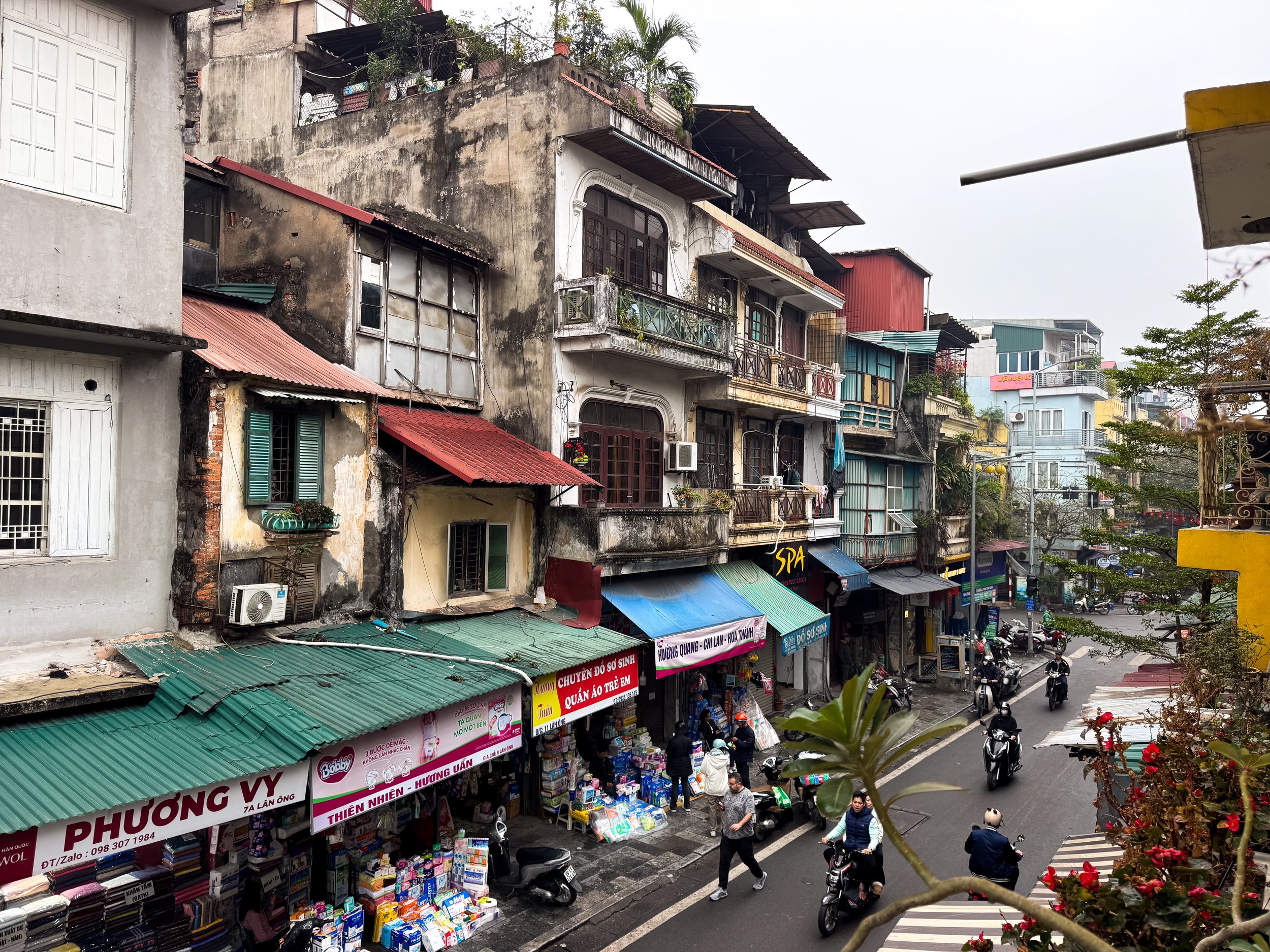
From Saigon's vibrant markets and nightlife to Hanoi's historic neighborhoods, Ninh Binh's karst landscapes and Hoi An's ancient streets, discover more of Vietnam through these travel guides:
Hanoi Travel Guide: Old Quarter, Street Food & Vietnamese Culture. Explore Hanoi's Old Quarter and neighborhoods where sacred temples, night markets, Train Street and Vietnamese street food capture the spirit of Vietnam's capital.
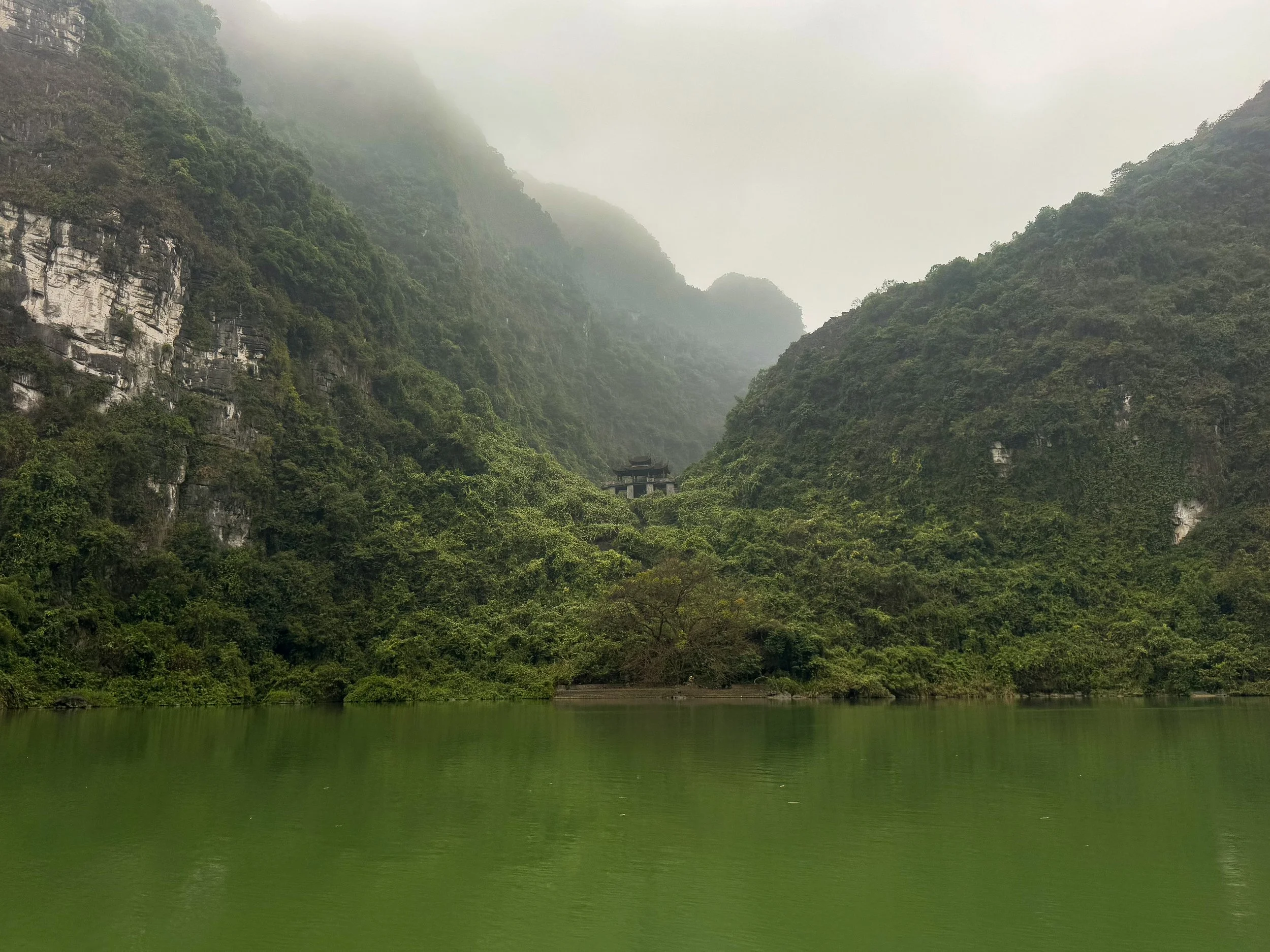
Ninh Binh Travel Guide: Trang An, Karst Landscapes & Ancient Temples. Drift through Ninh Binh where winding rivers, towering karst landscapes, rice paddies and imperial temples reveal Vietnam's timeless beauty and ancient history.
Hoi An Travel Guide: Ancient Town, Lanterns & Vietnamese Street Food. Wander through Hoi An's ancient town where glowing lanterns, bustling markets, historic temples & Vietnamese street food preserve centuries of tradition.
For Next Time…
Saigon is one of the few major cities we could see ourselves living! Its urban charm, vibrant energy and worldly presence beckon us to return. We have a short list of city sights and countryside escapes that we plan to experience on our next trip.
Explore the Saigon Waterbus Route. Sightseeing on the waterbus was a great way to see the river and city! When we return, we plan to spend a day exploring the neighborhoods and sights along several of the stops.
Ben Nghe Street Food Market. A large food hall specializing in Vietnamese cuisine and street food. It’s a popular tourist spot to enjoy local and worldly flavors.
Cat Tien National Park. A tropical forest and protected bio-reserve home to multitudes of endangered and exotic flora and fauna. Self guided bike and foot trails lead through the park while guides can be hired for “safaris.” It’s located about 4 hours from Saigon.
Cai Rang (Can Tho) Floating Market. Merchants gather on hundreds of small wooden boats selling fruits and vegetables, cooking street food and performing Vietnamese folk music. The market is located a few hours from Saigon and best experienced in the early hours of 4-6am.
Ninh Binh Travel Guide: Trang An, Karst Landscapes & Ancient Temples
Drift through Ninh Binh where winding rivers, towering karst landscapes, rice paddies and imperial temples reveal Vietnam's timeless beauty and ancient history.
Ninh Binh, The Ancient Capital of Vietnam
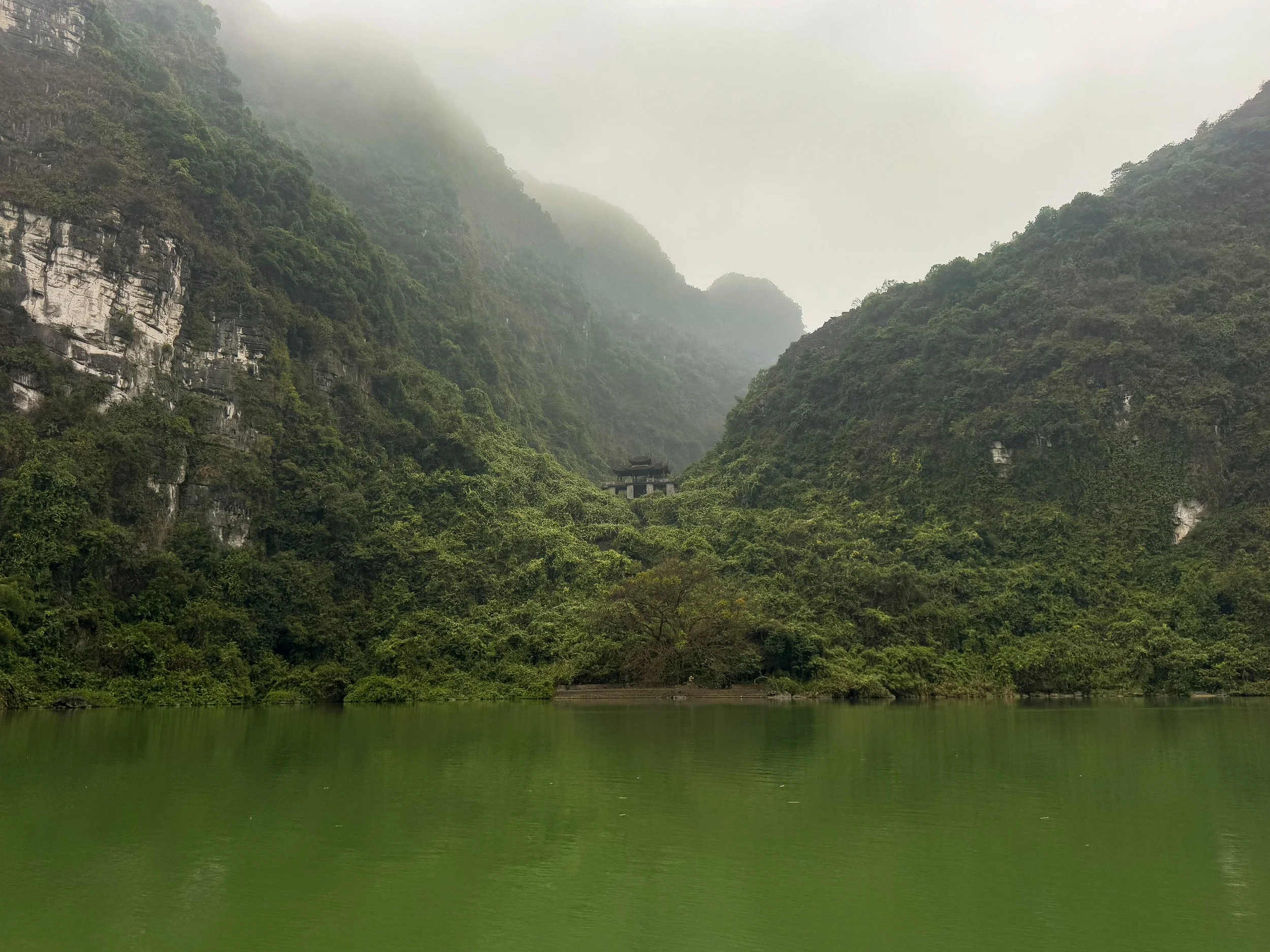
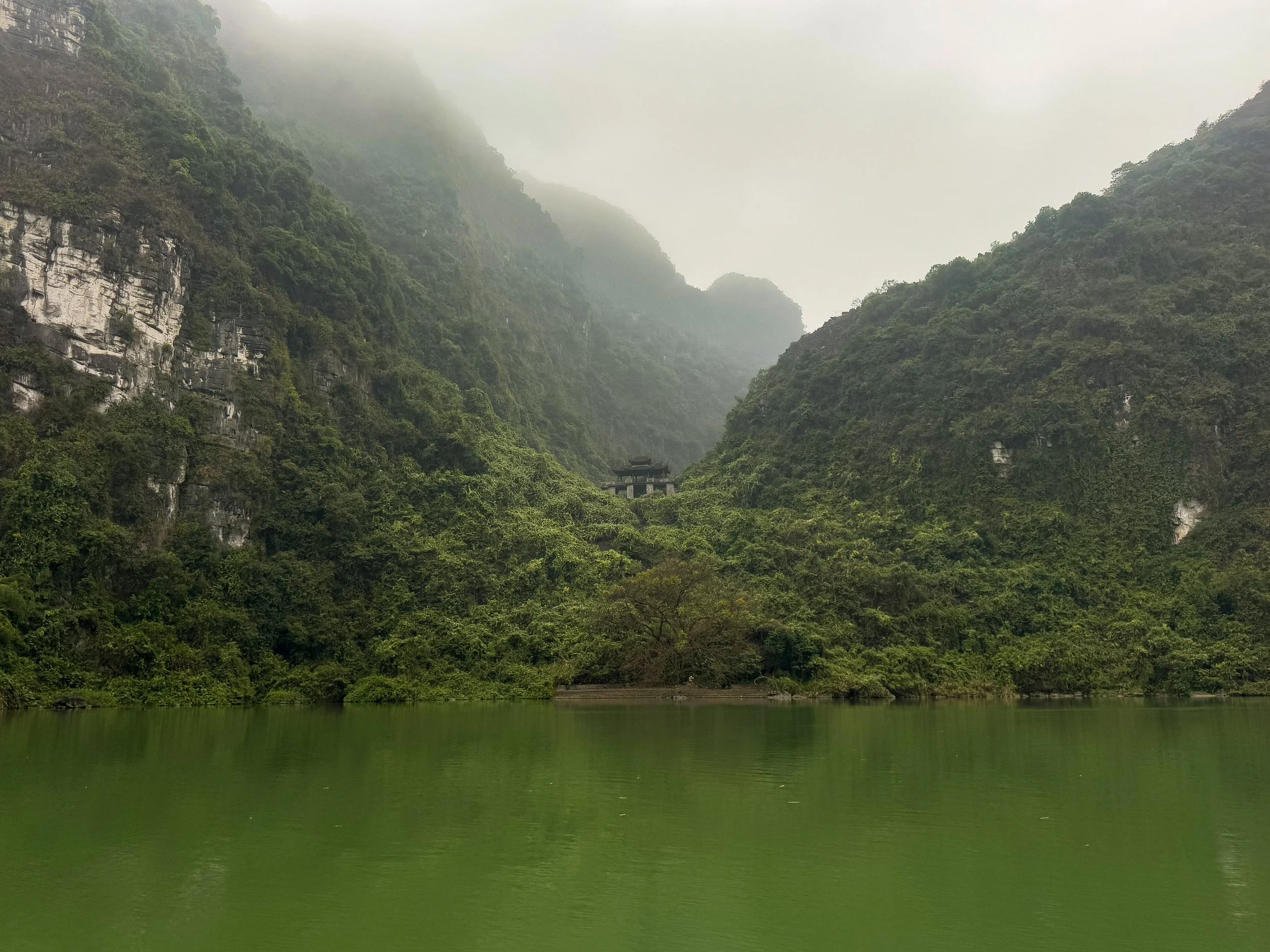
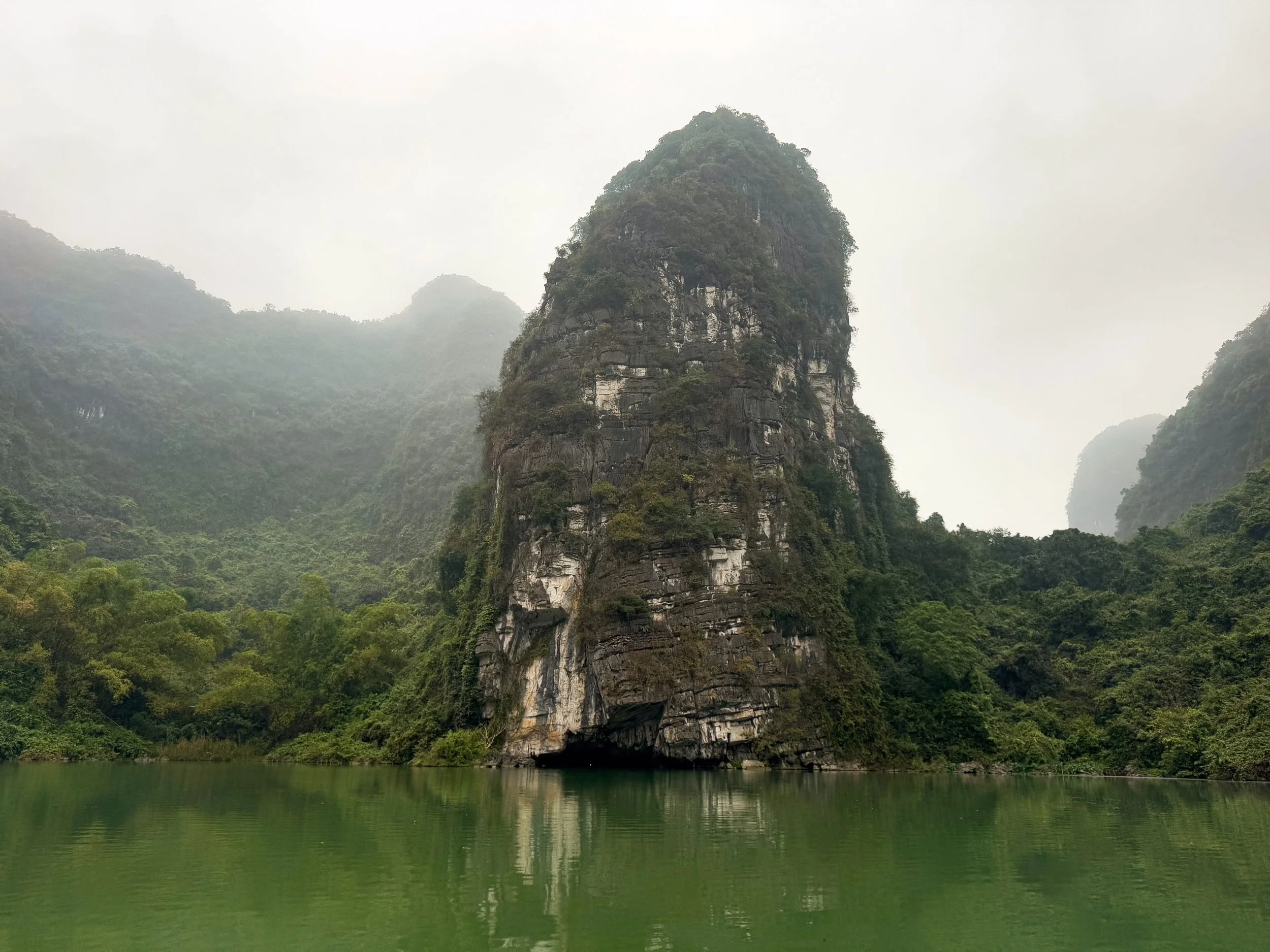
Ninh Binh is the ancient capital of Vietnam. It’s a place where history, nature and culture seamlessly blend together. Scenic landscapes are defined by towering karst mountains, underground rivers, deep cave systems and endless fields of rice paddies. Rowers navigate passengers through the tranquil waterways and countryside. Historic temples, royal tombs and modern day pagodas invite visitors and worshippers to their halls. Small villages with charming homestays and restaurants serving regional cuisine provide a welcoming and local atmosphere. We spent a few days here, sightseeing at a relaxing pace.
Trang An Boat Tour
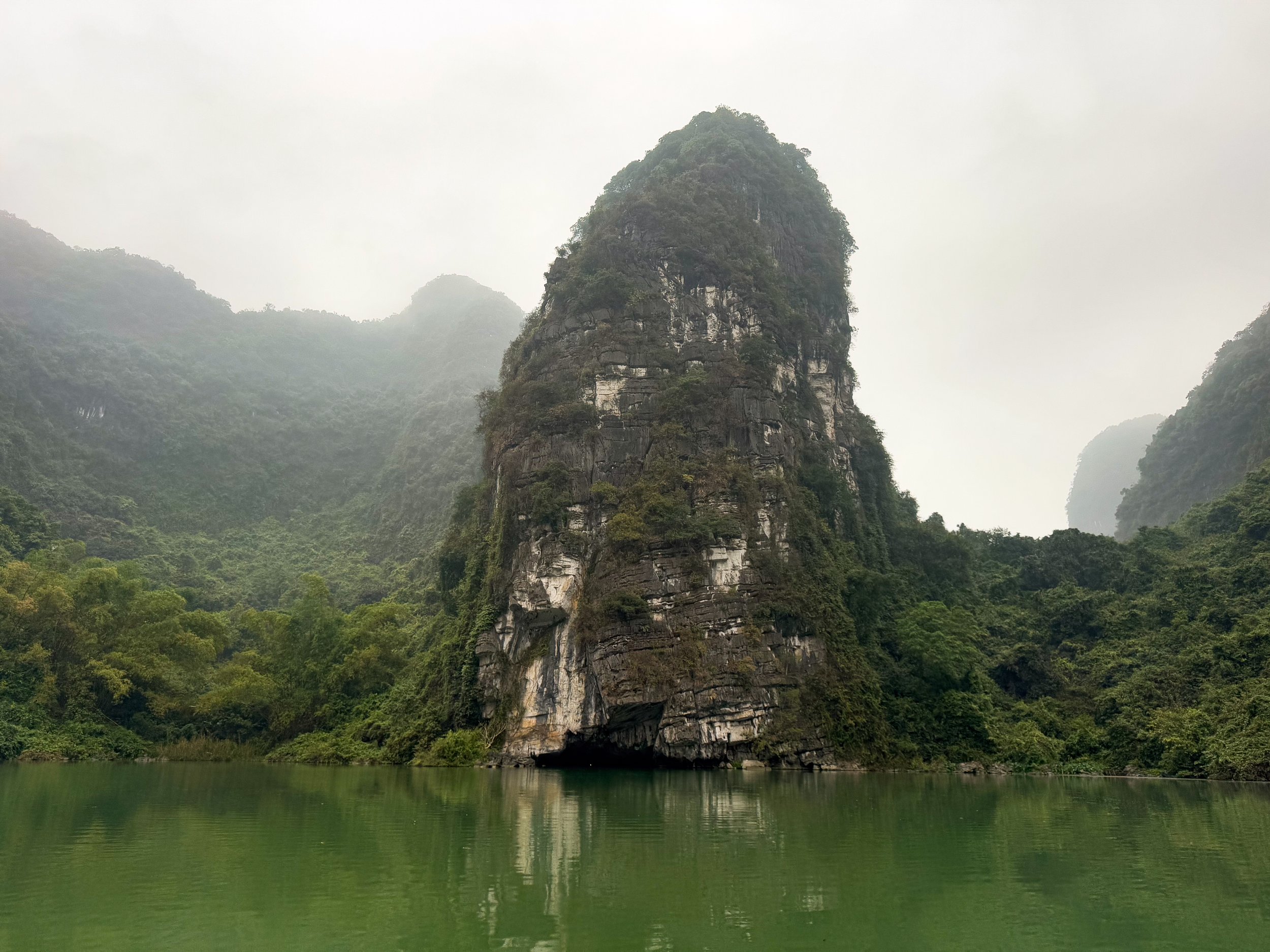
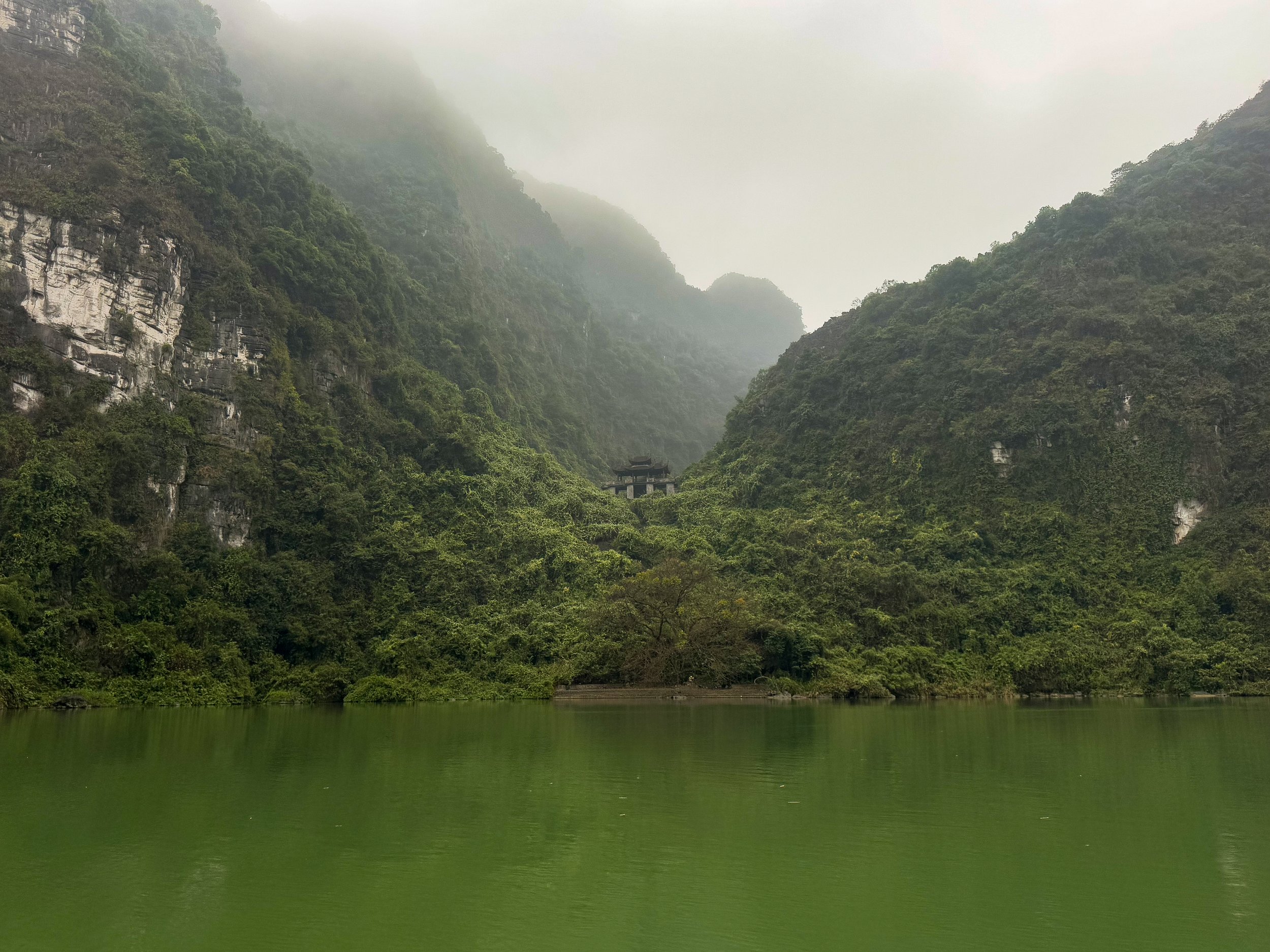
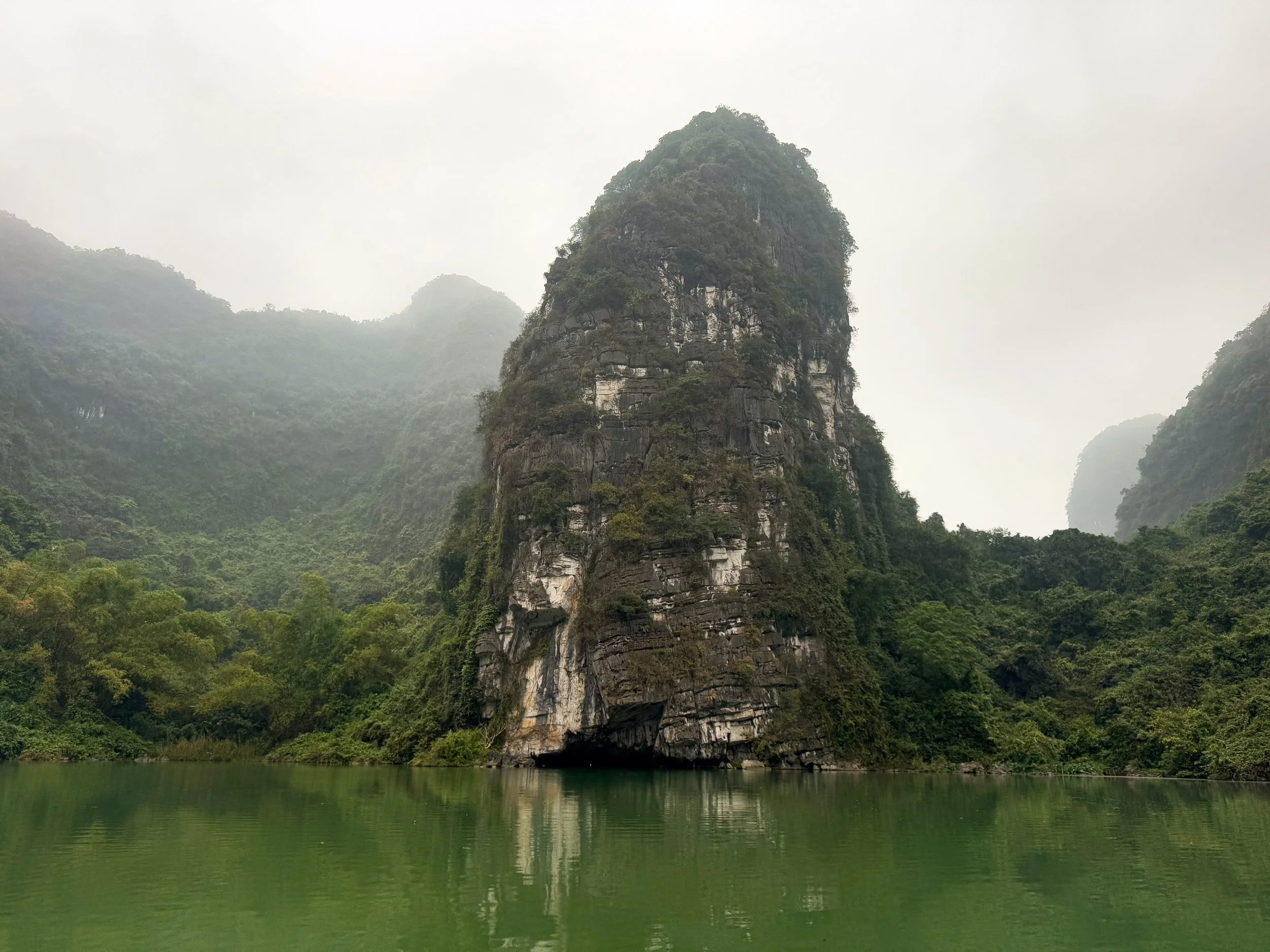
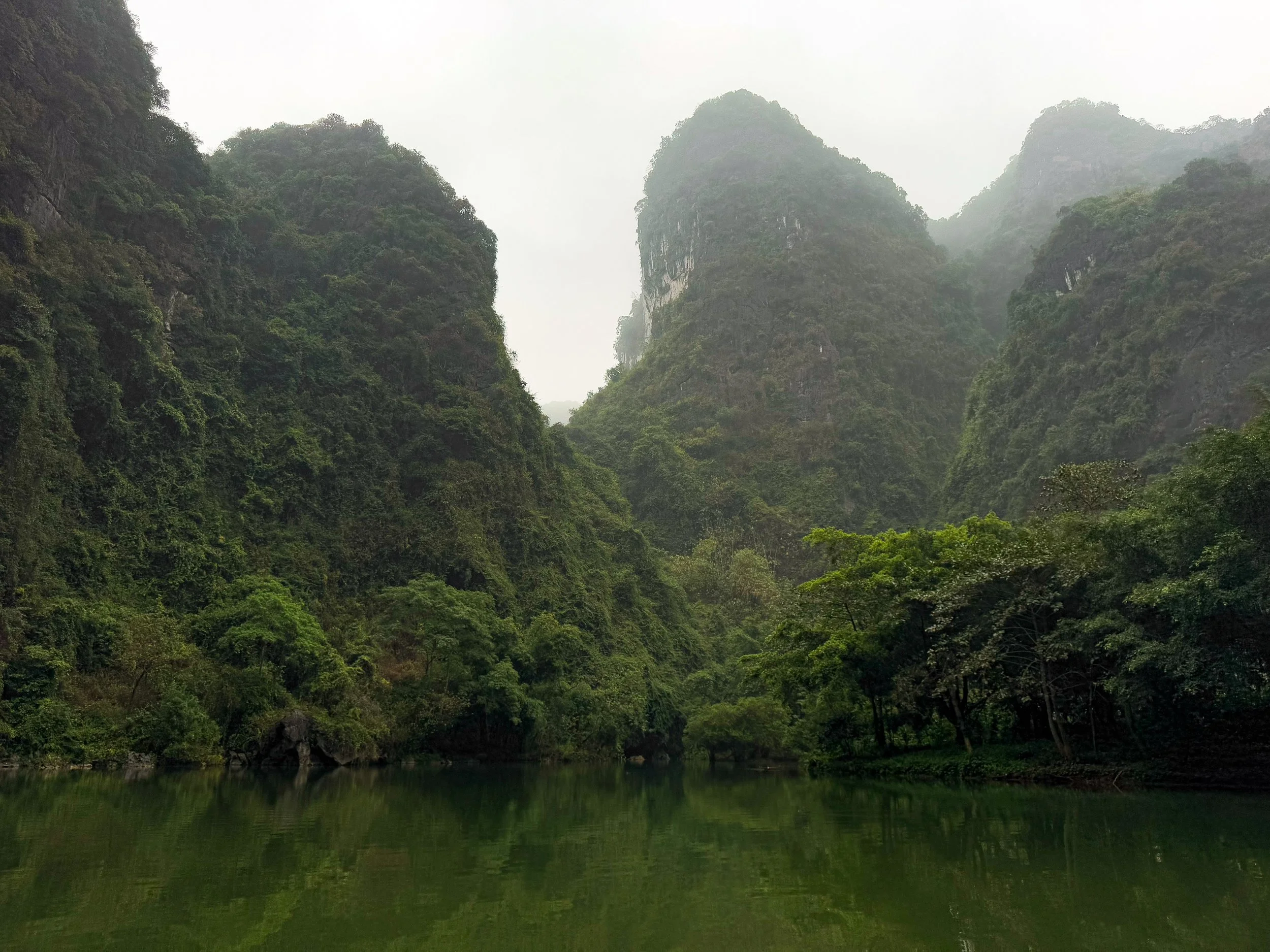
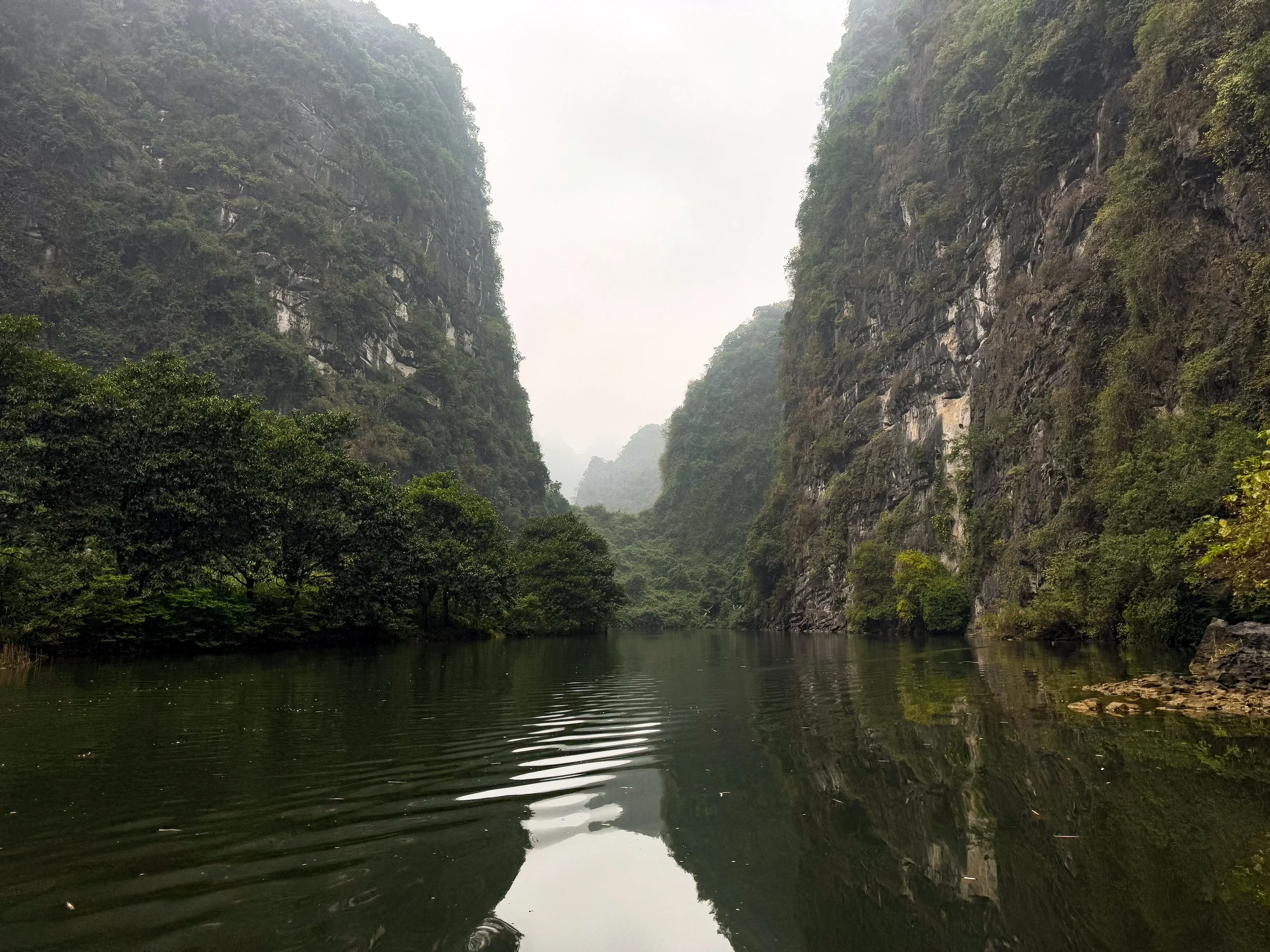
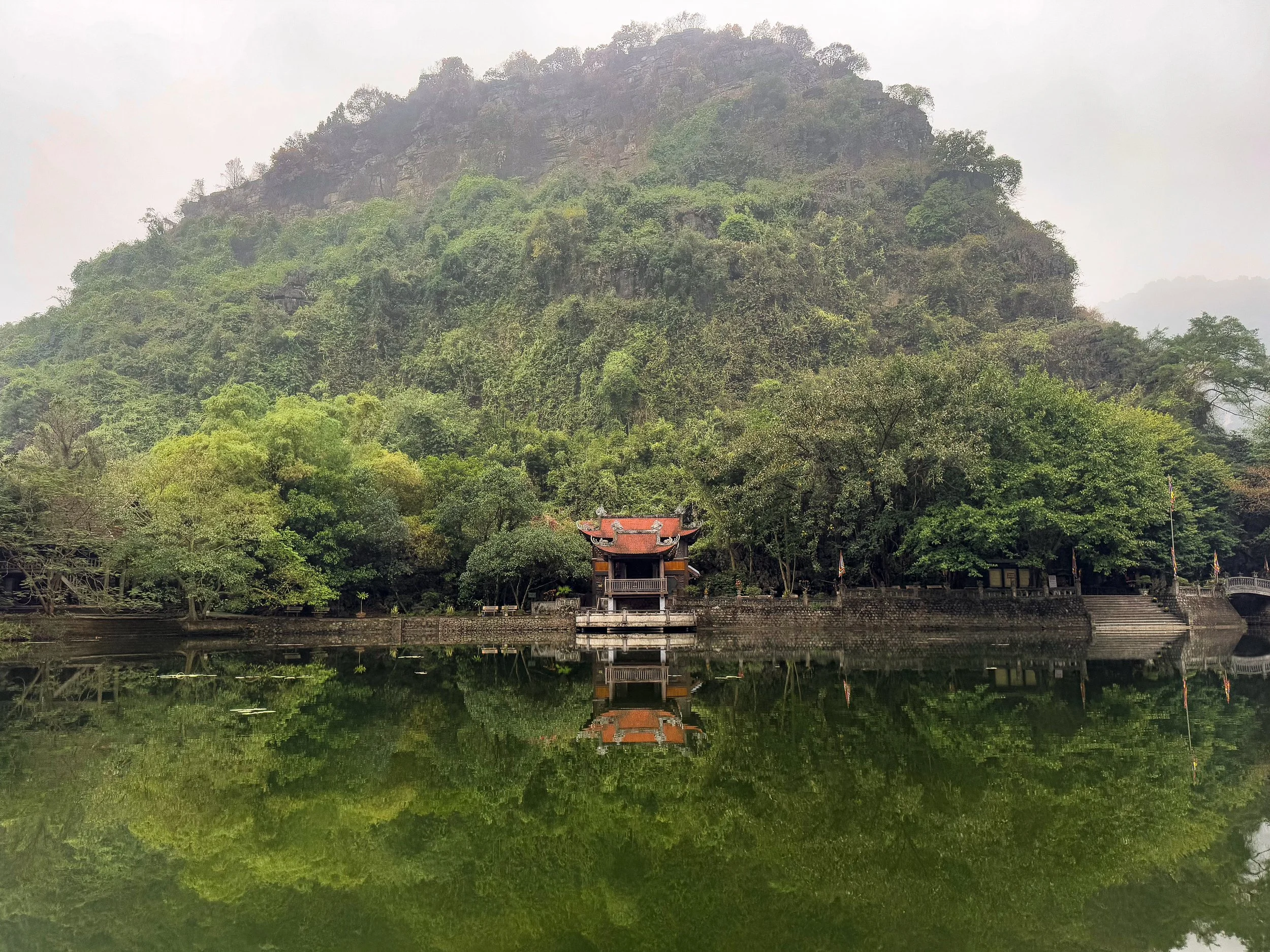
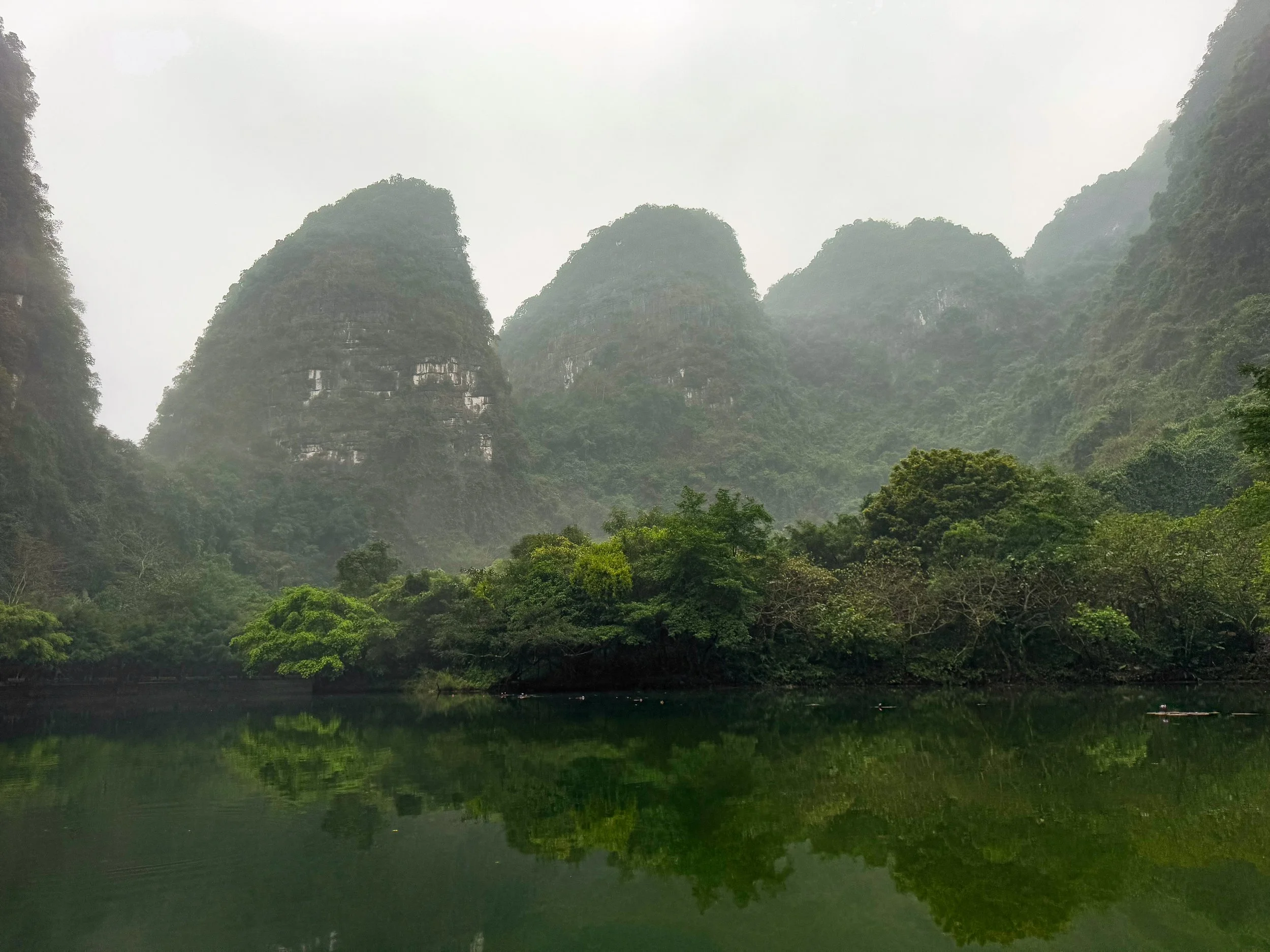
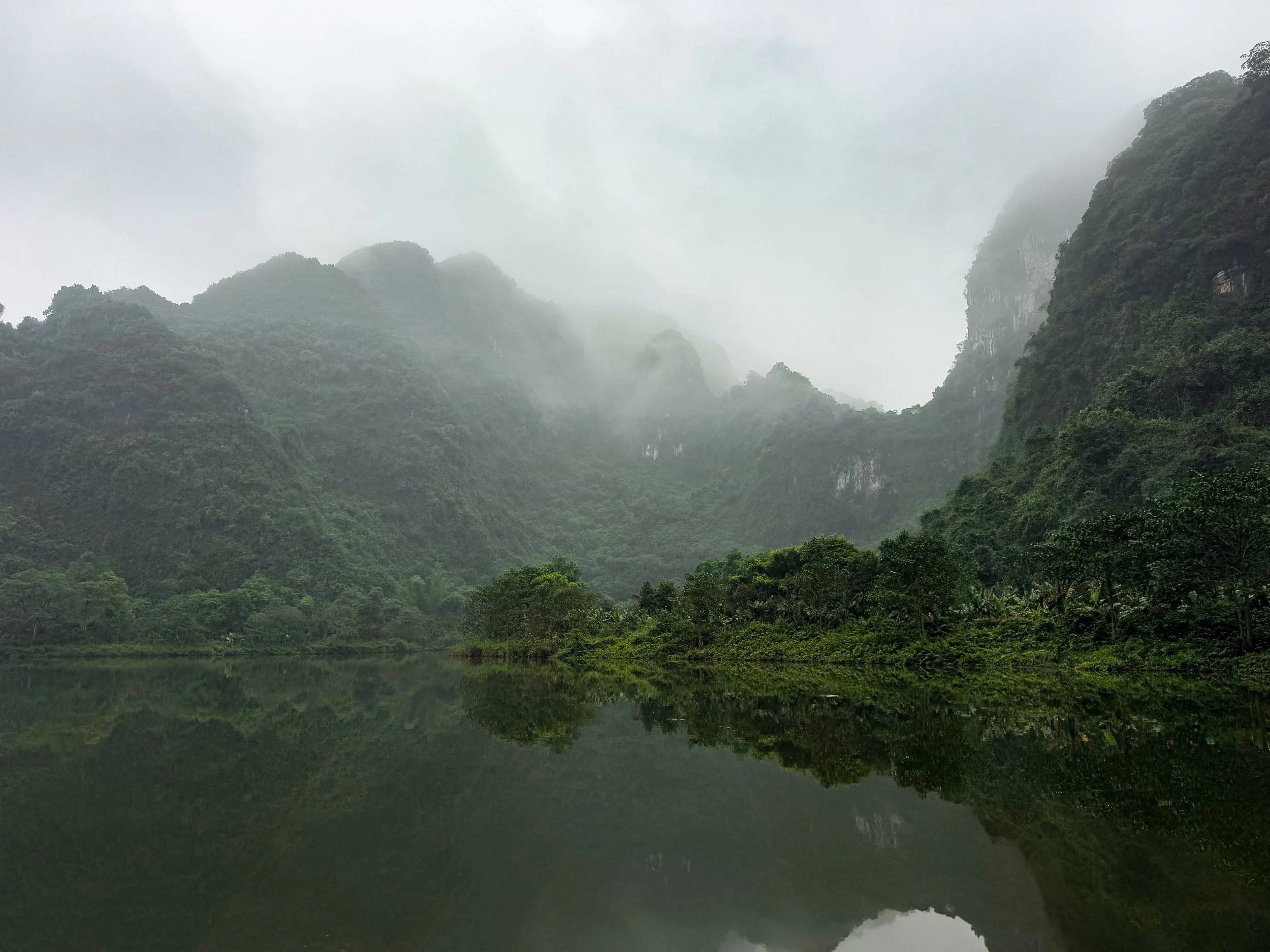
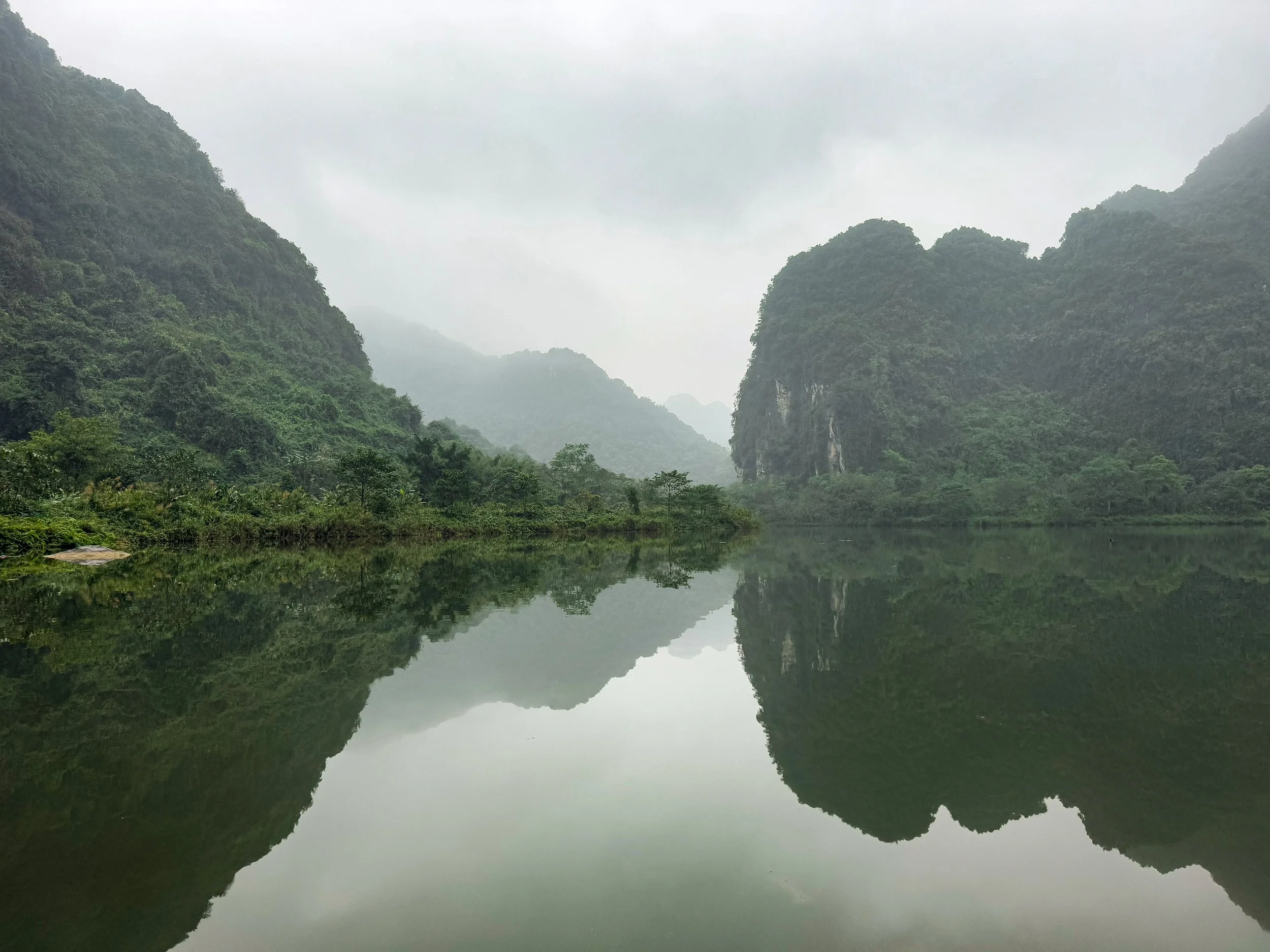
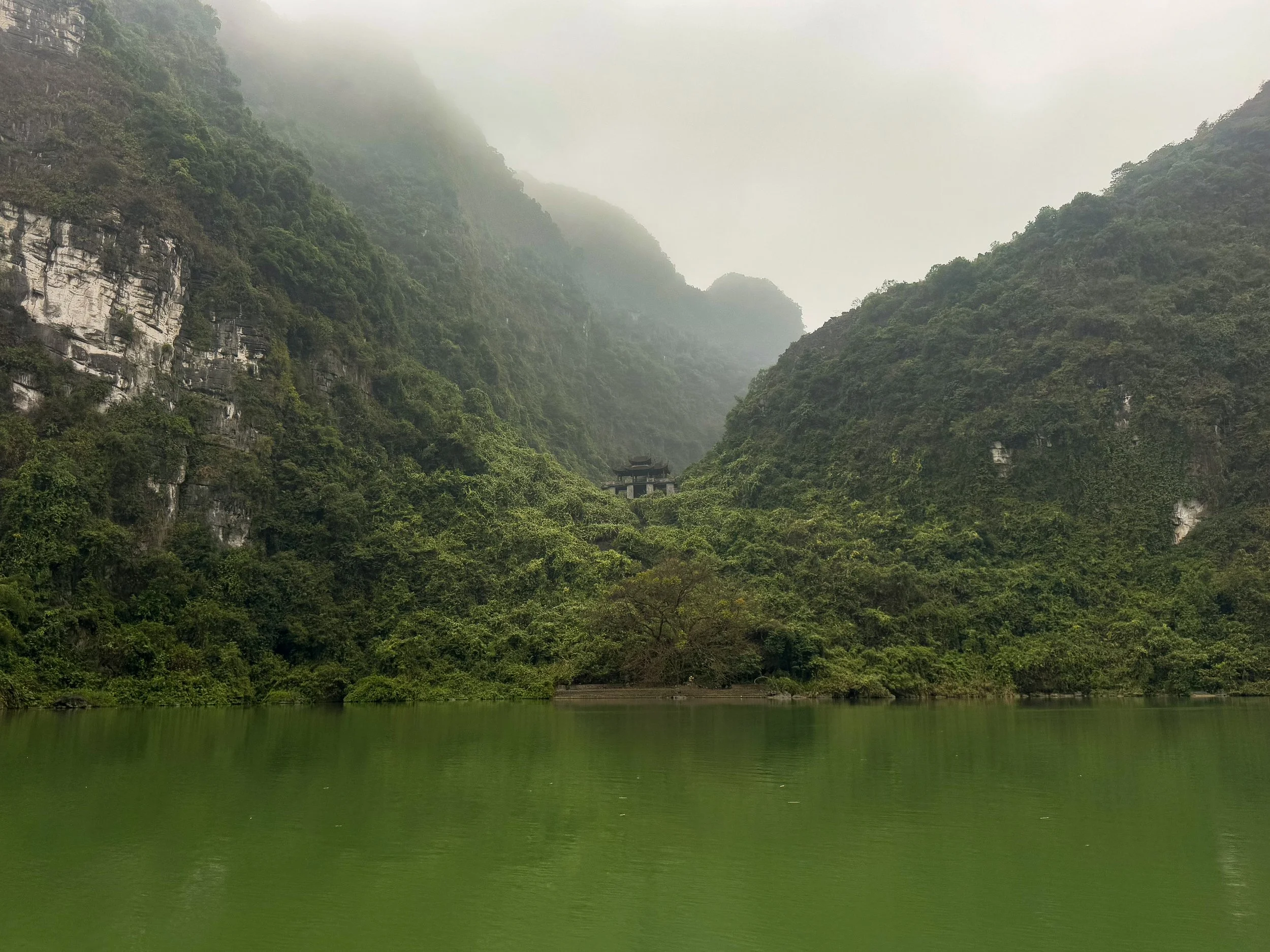
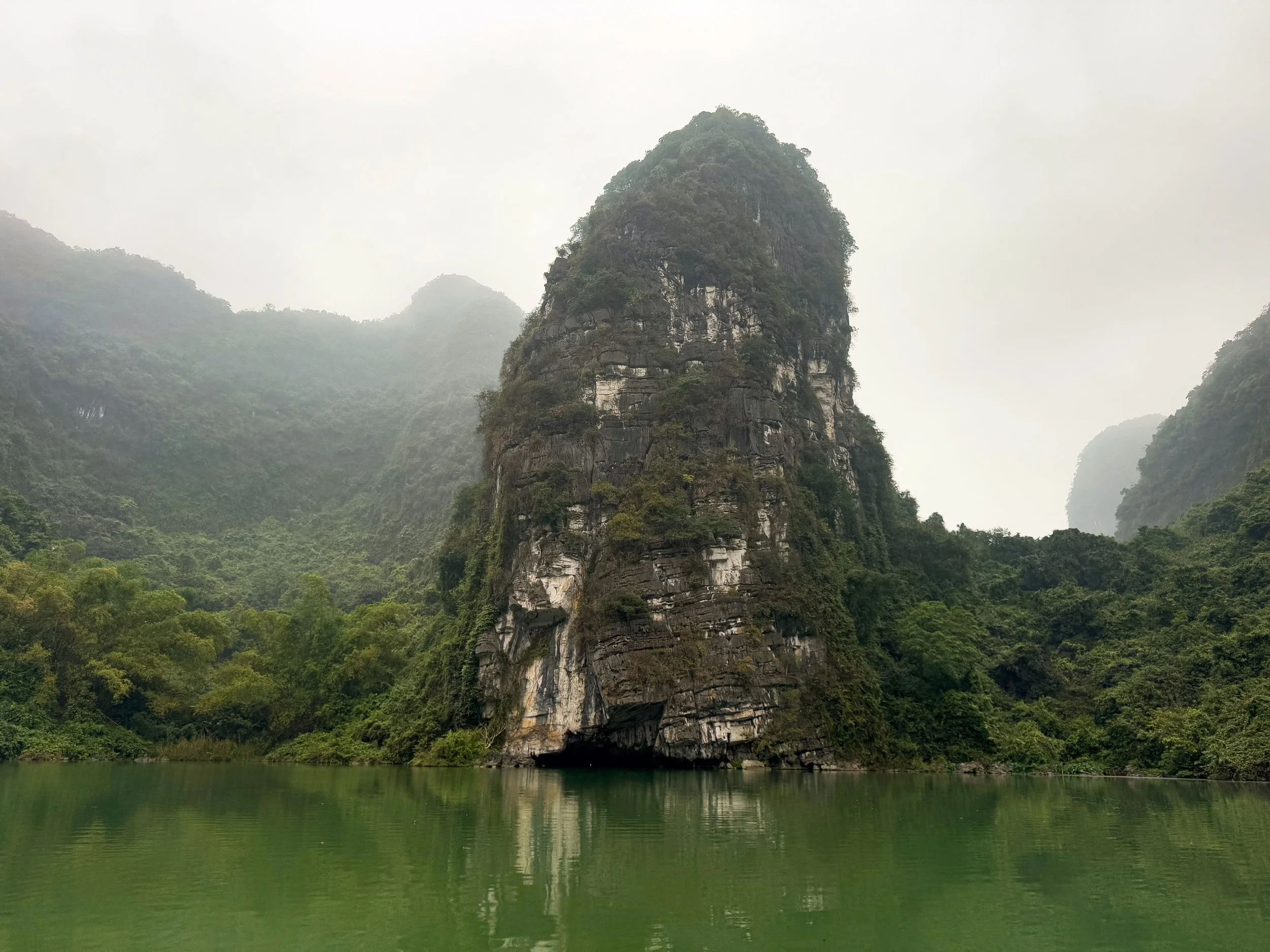
A breathtaking landscape covered in towering rock formations, lush tree covered mountains and underground rivers. Ancient temples and pagodas are perched on the hills and along the waterways, surrounded by nothing but nature. Even on a cloudy day, the haze covered silhouettes of the landscape create a mystifying allure. The best way to visit is by row boat tour.
Trang An Temples
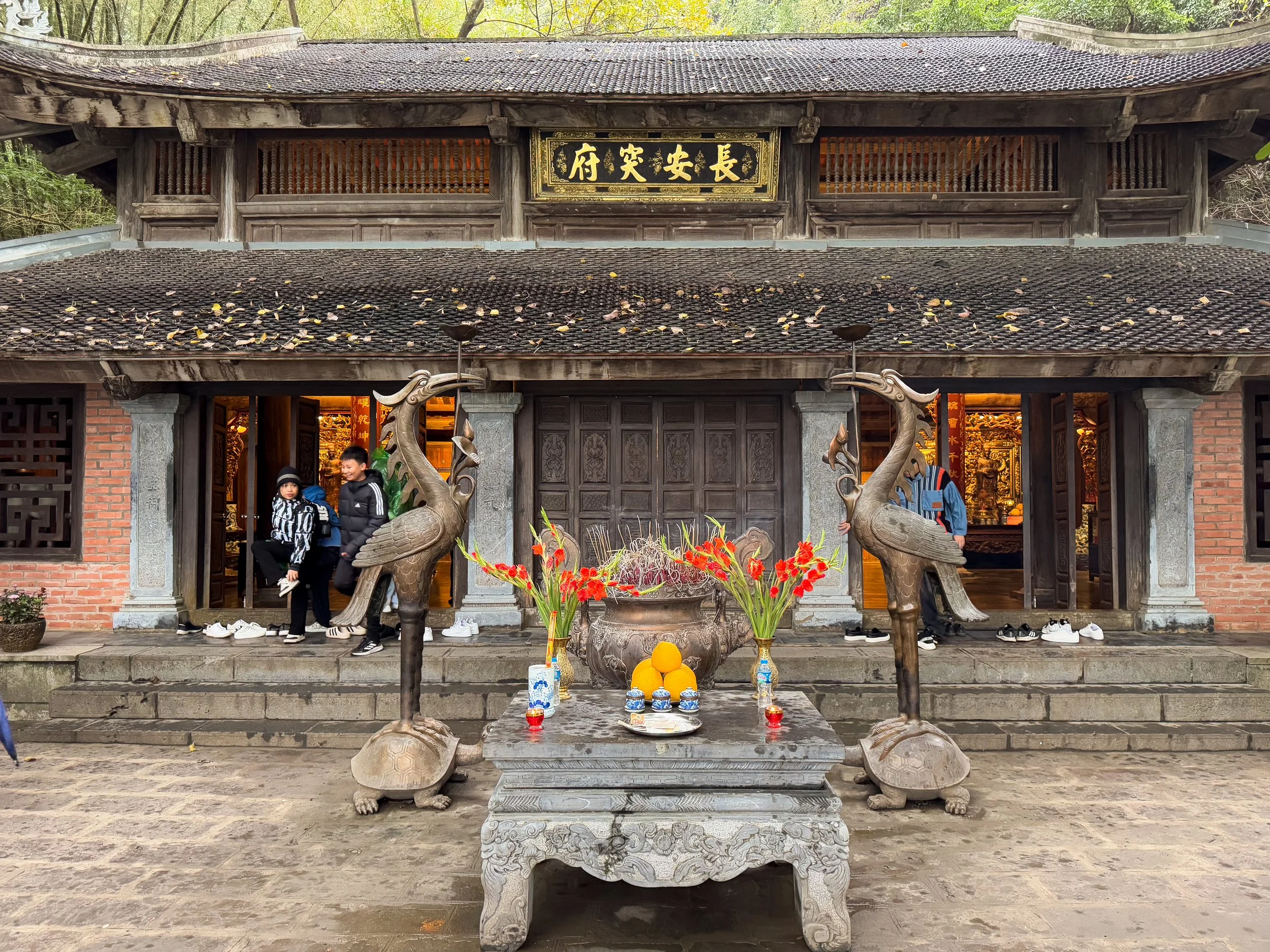
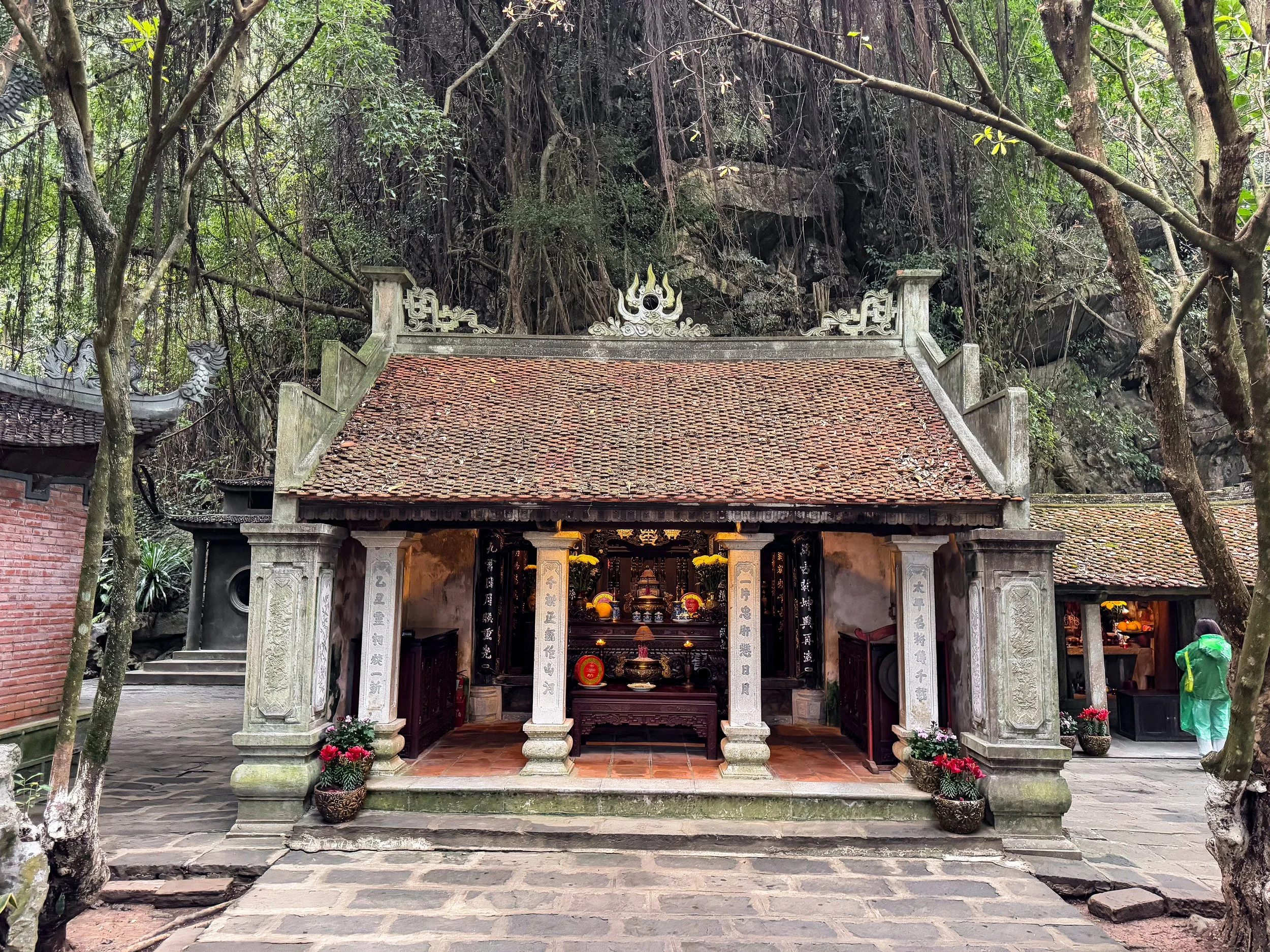
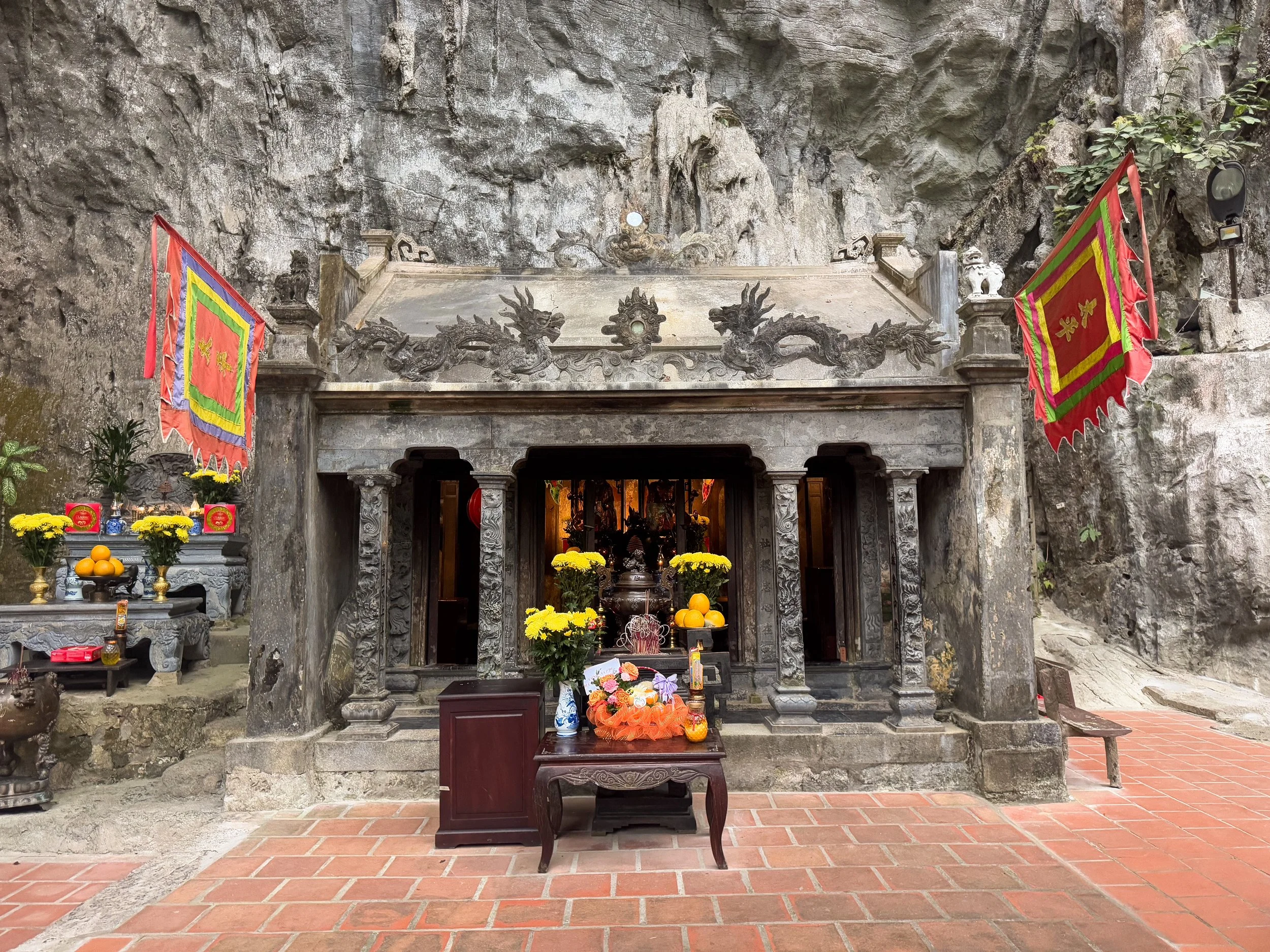
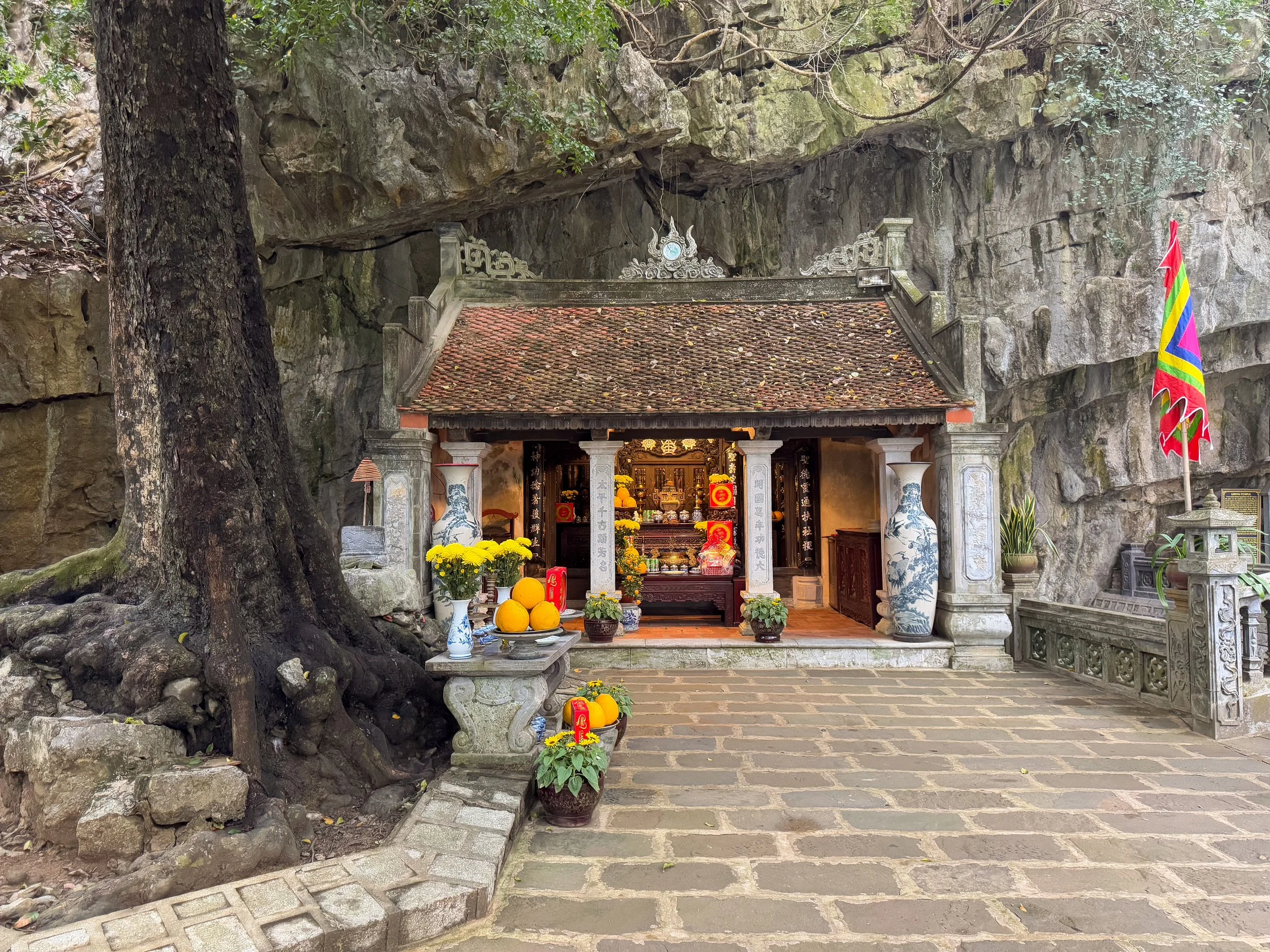
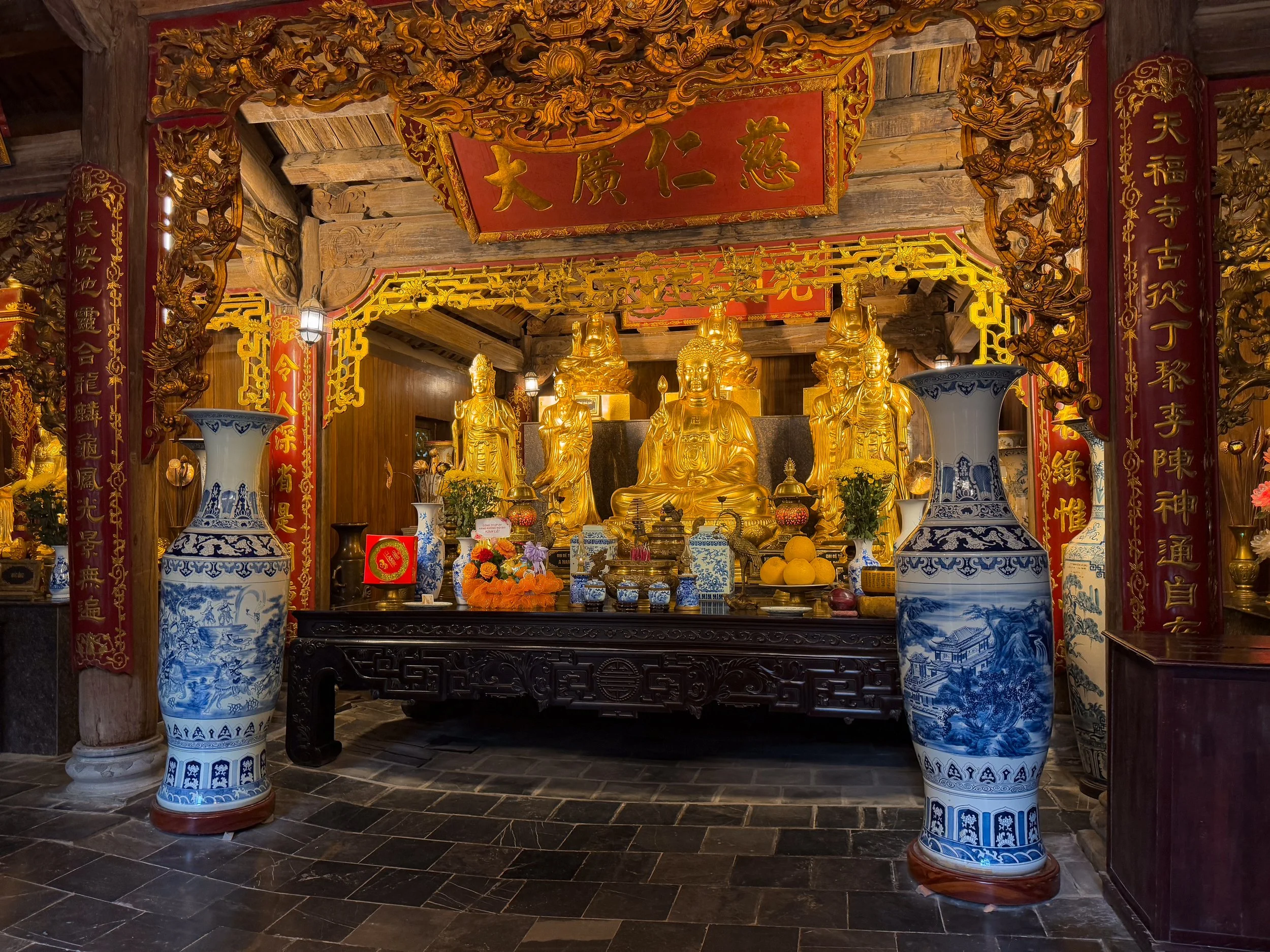
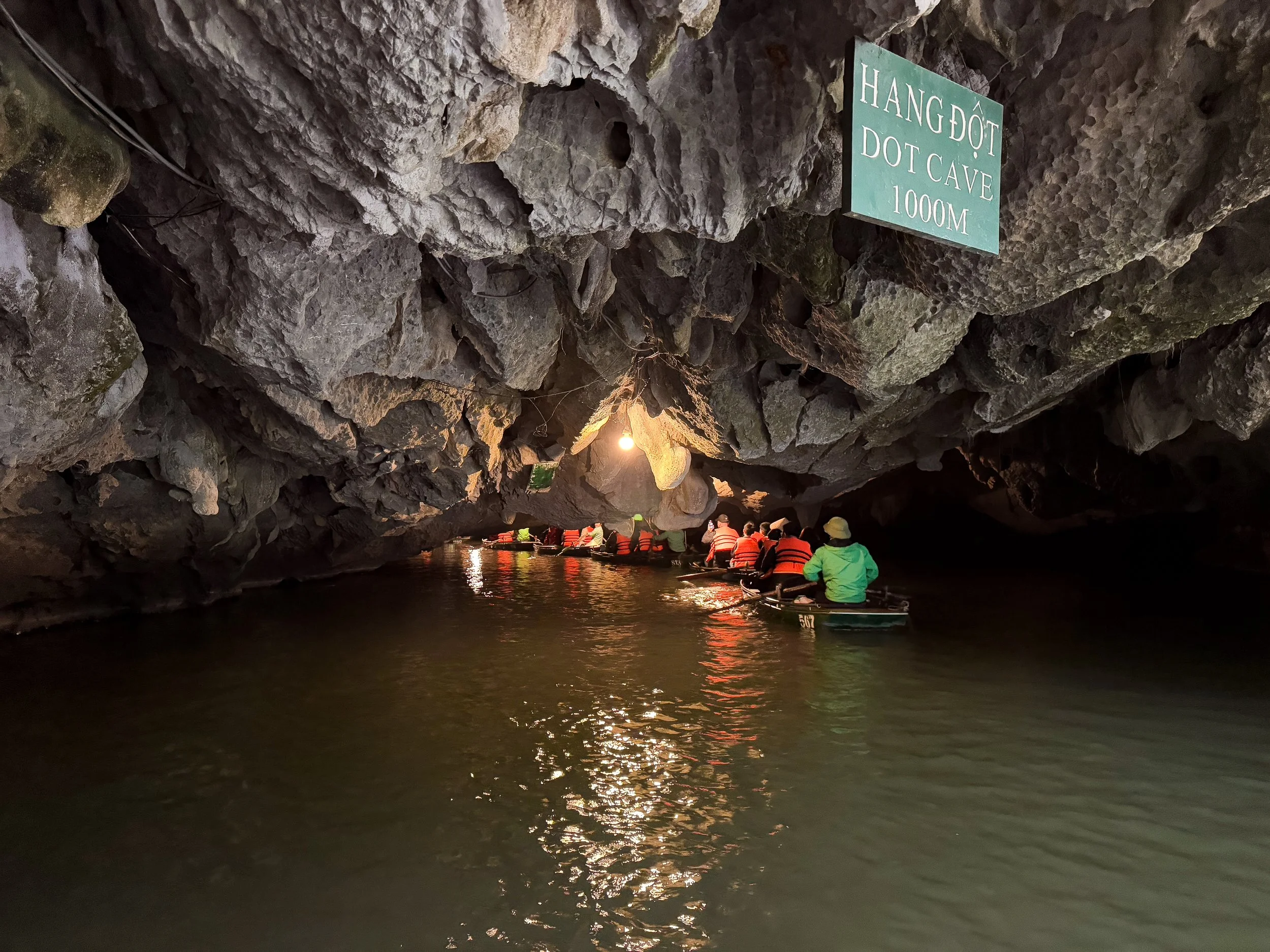
Dinh Dien Temple. A temple dating back over 1,000 years sitting on the edge of a river bank against the backdrop of a karst mountain. Within its wooden and stone facade is a glowing altar with statues, vases, smoldering incense and offerings. It’s located at the entrance of Hang Dot Cave, a 1,000 meter long cave and the longest in Trang An.
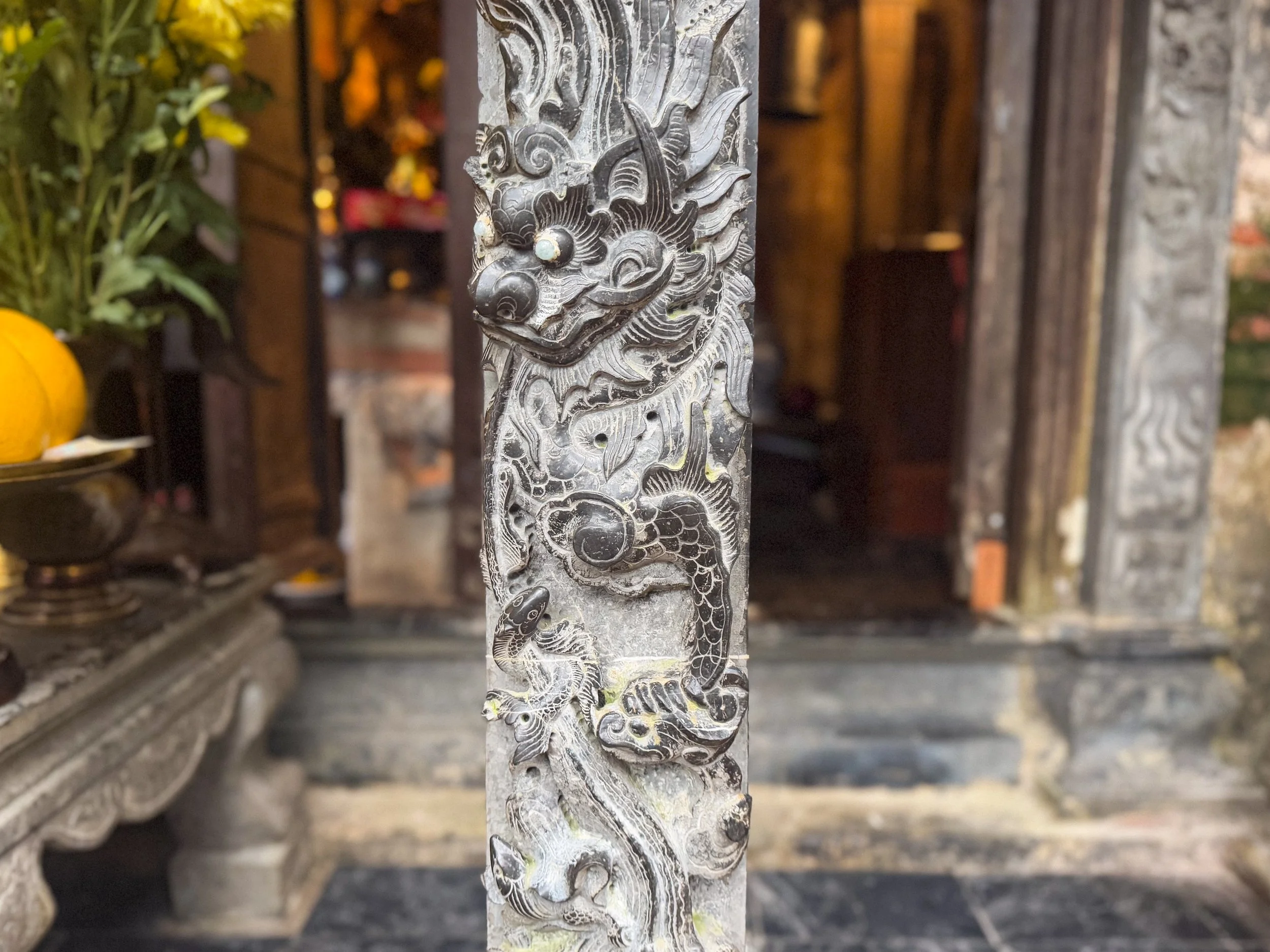
Tran Temple. One of the most sacred and ancient temples in Trang An. It’s decorated with intricate stone carvings featuring the four sacred animals, the dragon, turtle, phoenix and unicorn. It served as a defensive fort for the ancient kingdom over 1,000 years ago. It’s only reachable via a stone staircase between two karst formations.
Khong Temple. A legendary temple dating back to the 10th century. It honors an ancient king who was assassinated and his royal officials who secretly buried his body then killed themselves in order to keep the location a secret.
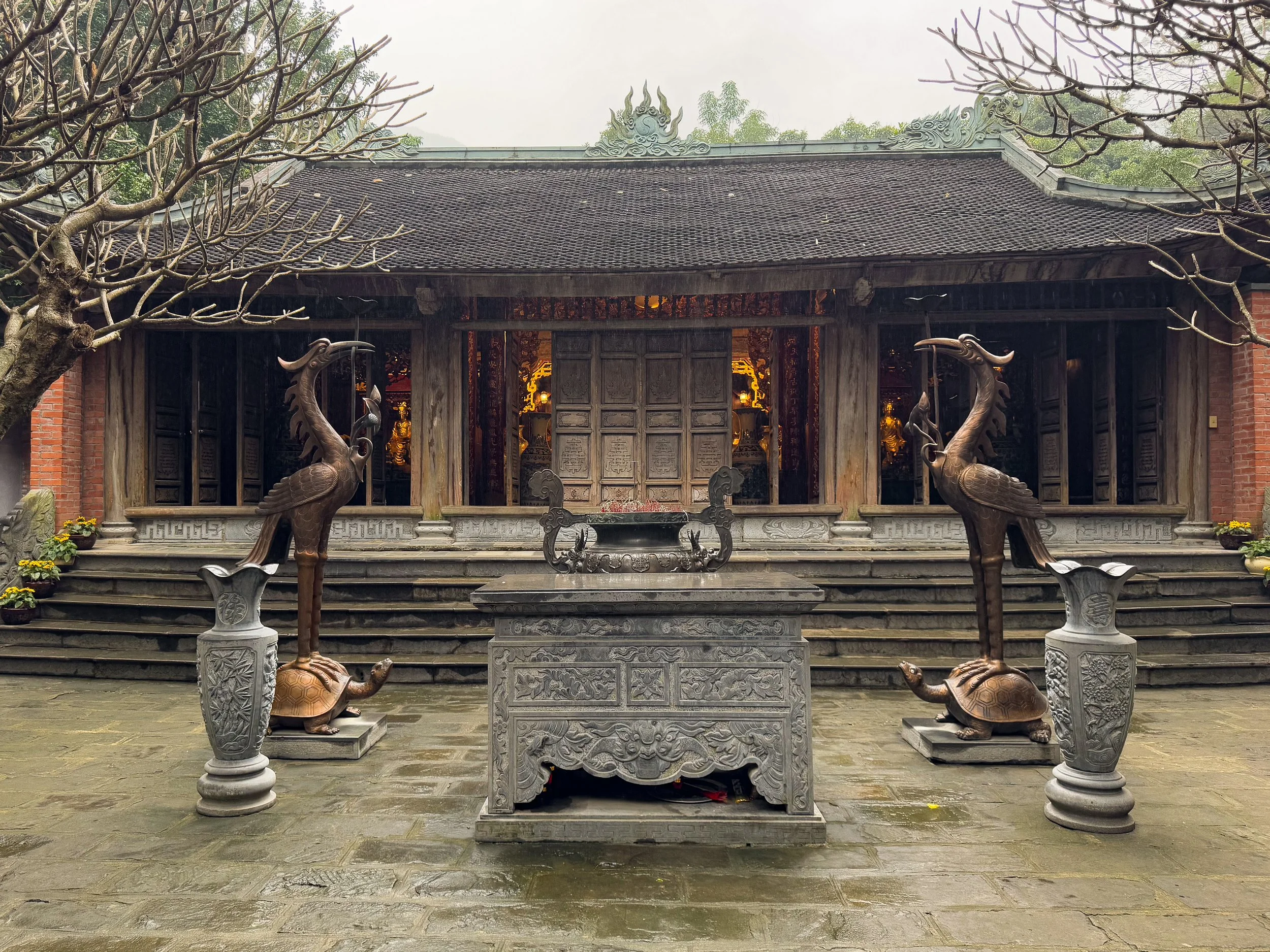
Bao Hieu Pagoda. A modern temple designed in ancient style near the Khong Temple. Its symmetrical facade is made from carved ironwood and limestone. Inside is a glowing shrine with golden statues of the Buddha and several monks. Outside are bronze statues and stone motifs of the four sacred animals.
Trang An Caves
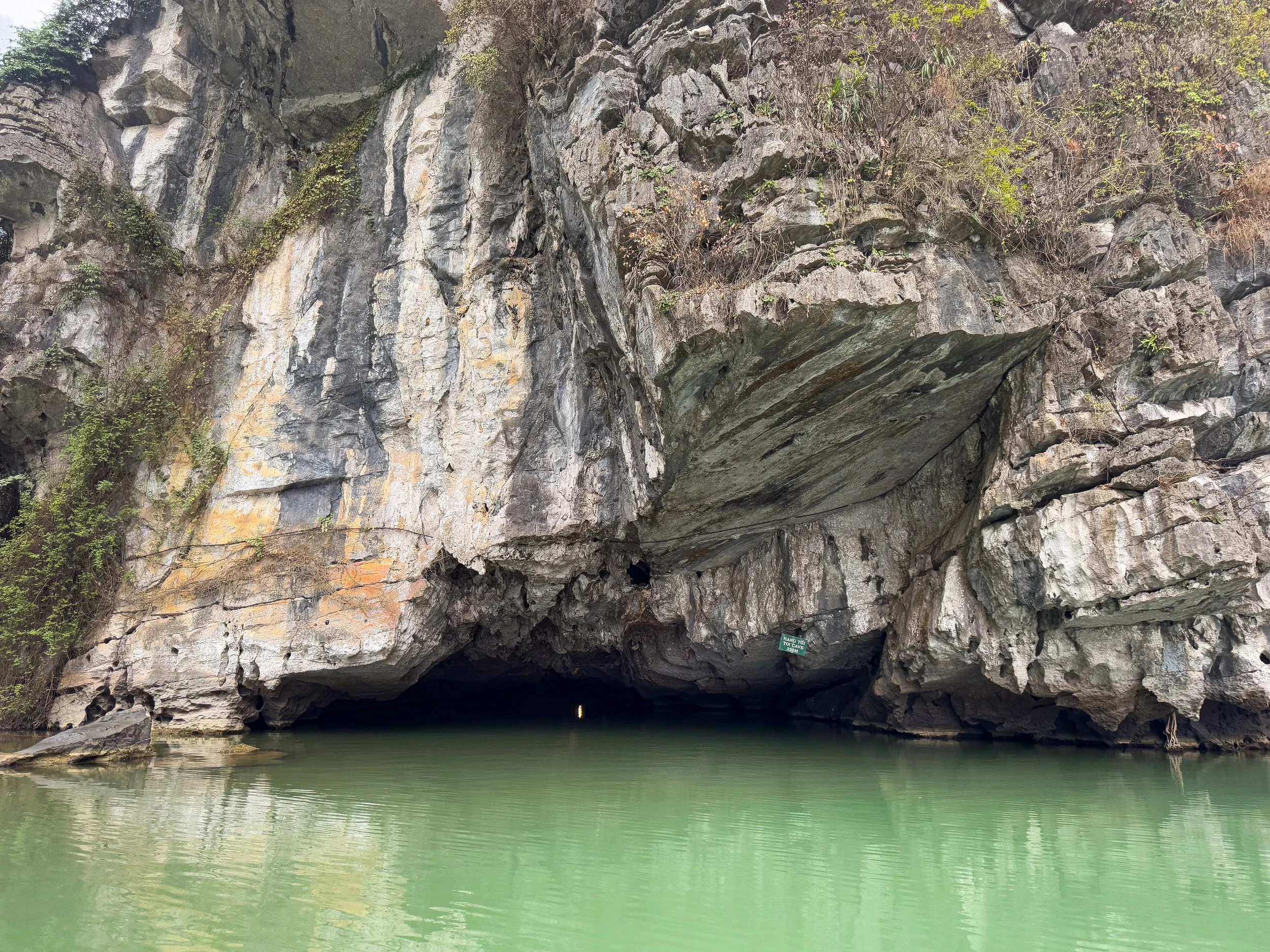
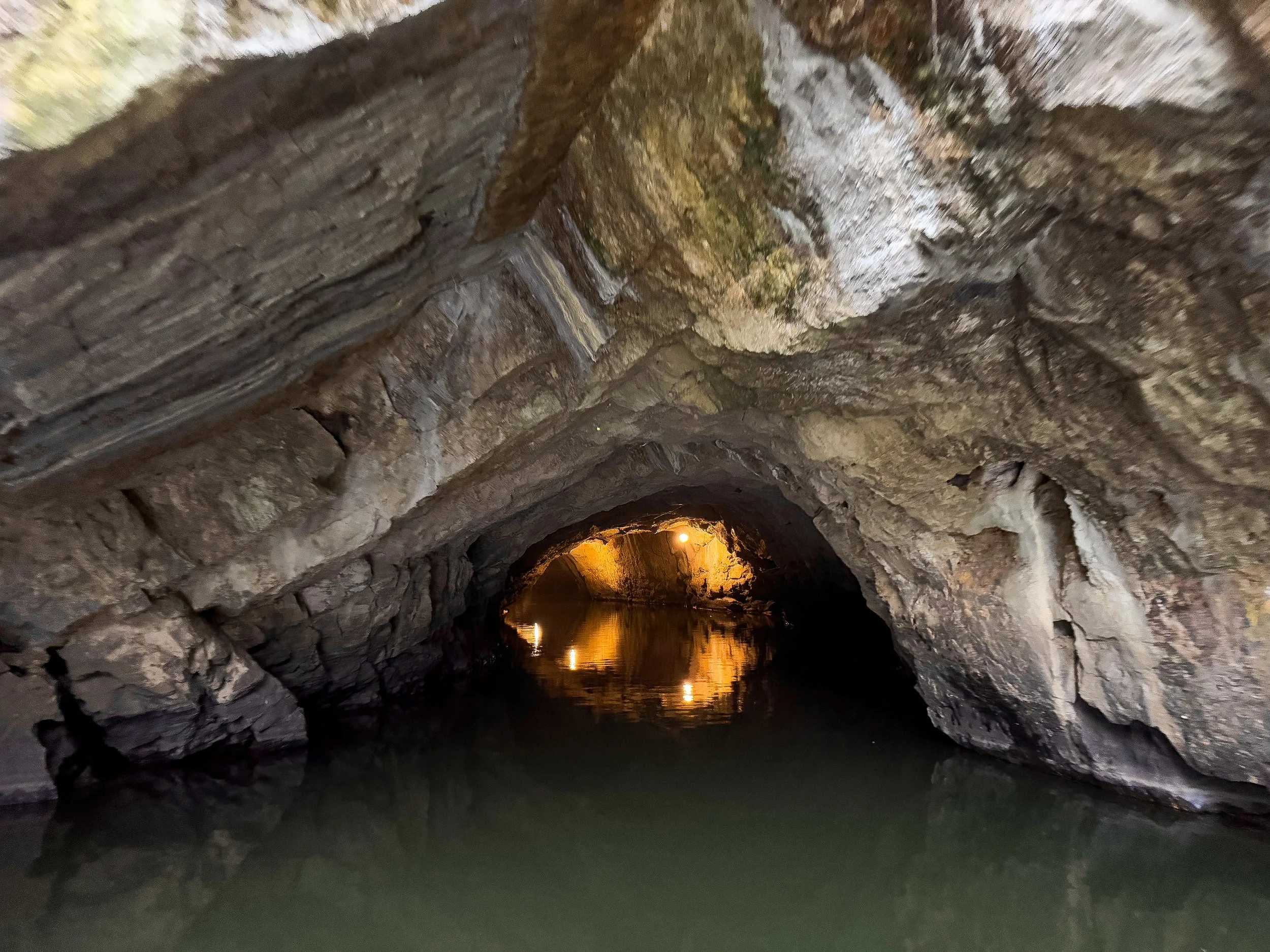
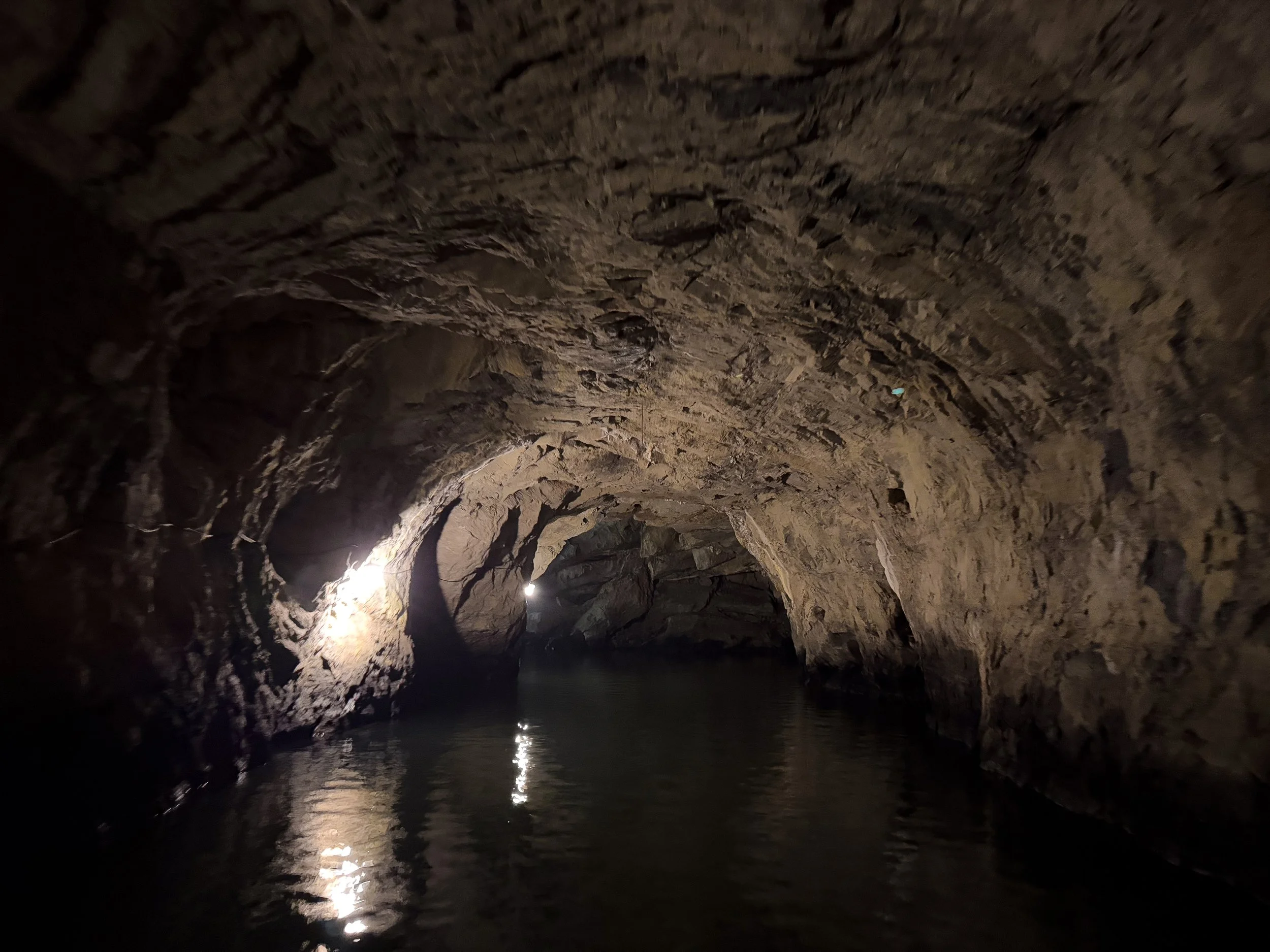
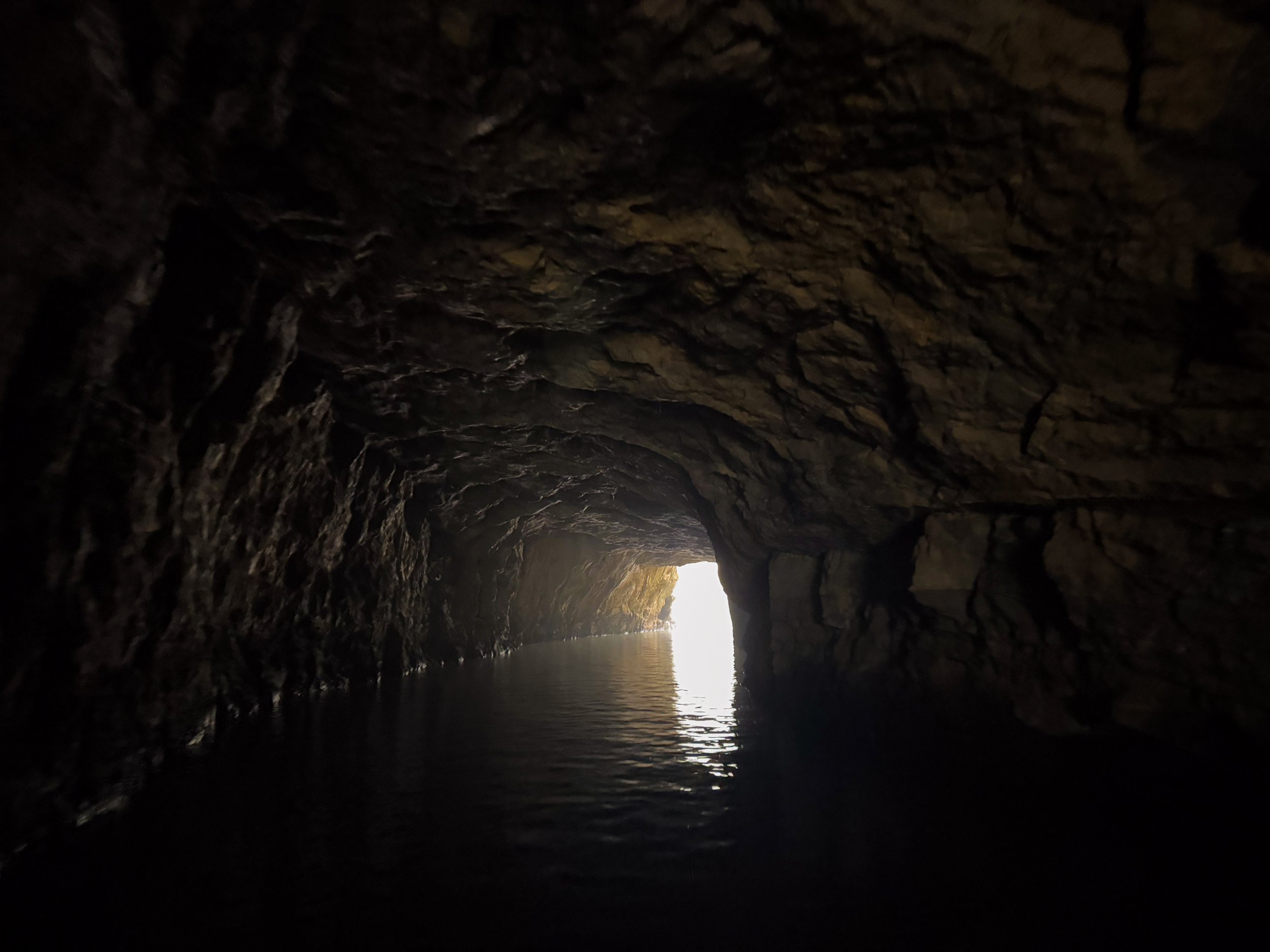
Hang Toi Cave. A 320 meter long cave with very narrow walls and low hanging rock formations. We had to duck several times. It was incredible how the rower was able to navigate through it.
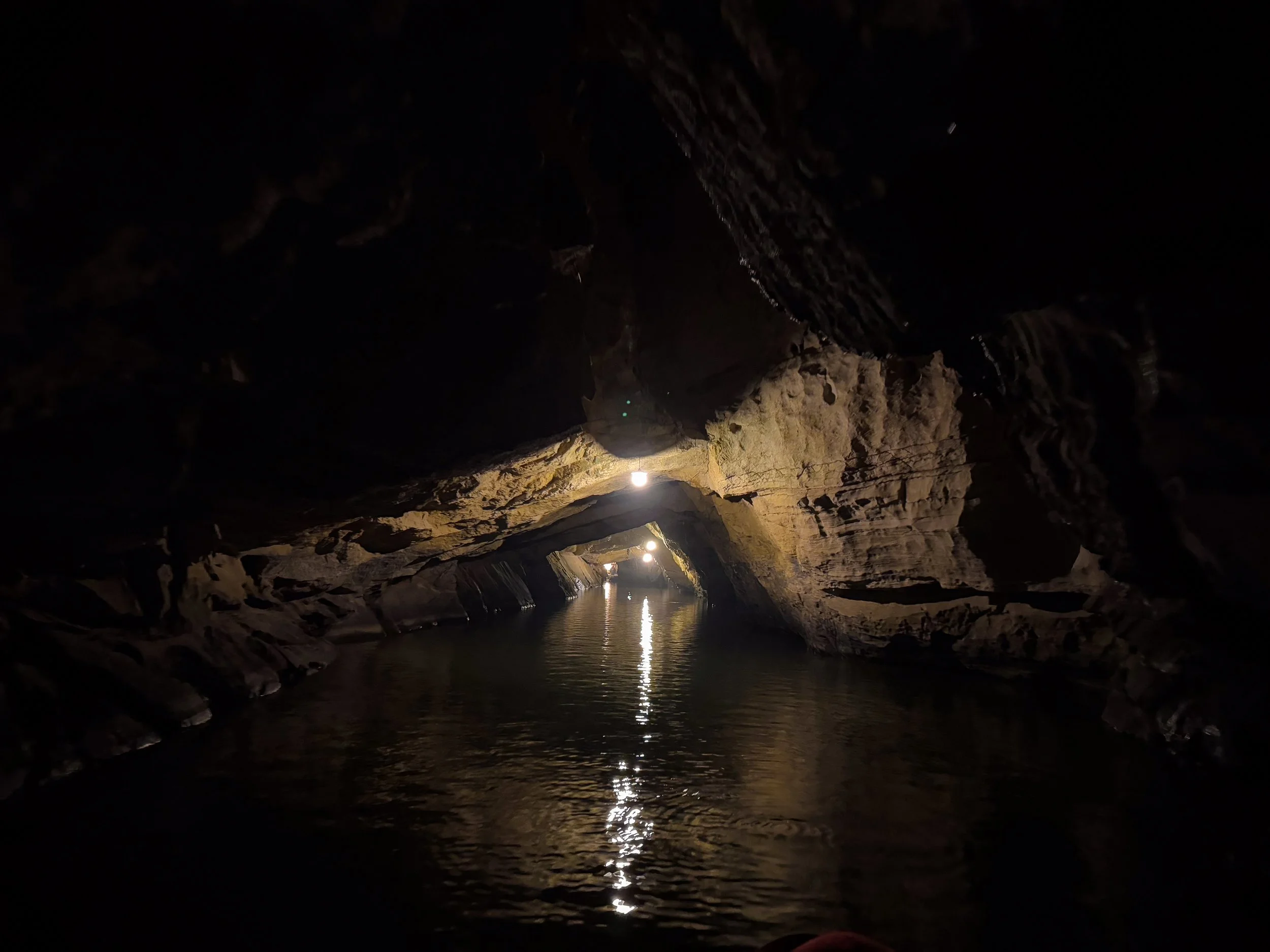
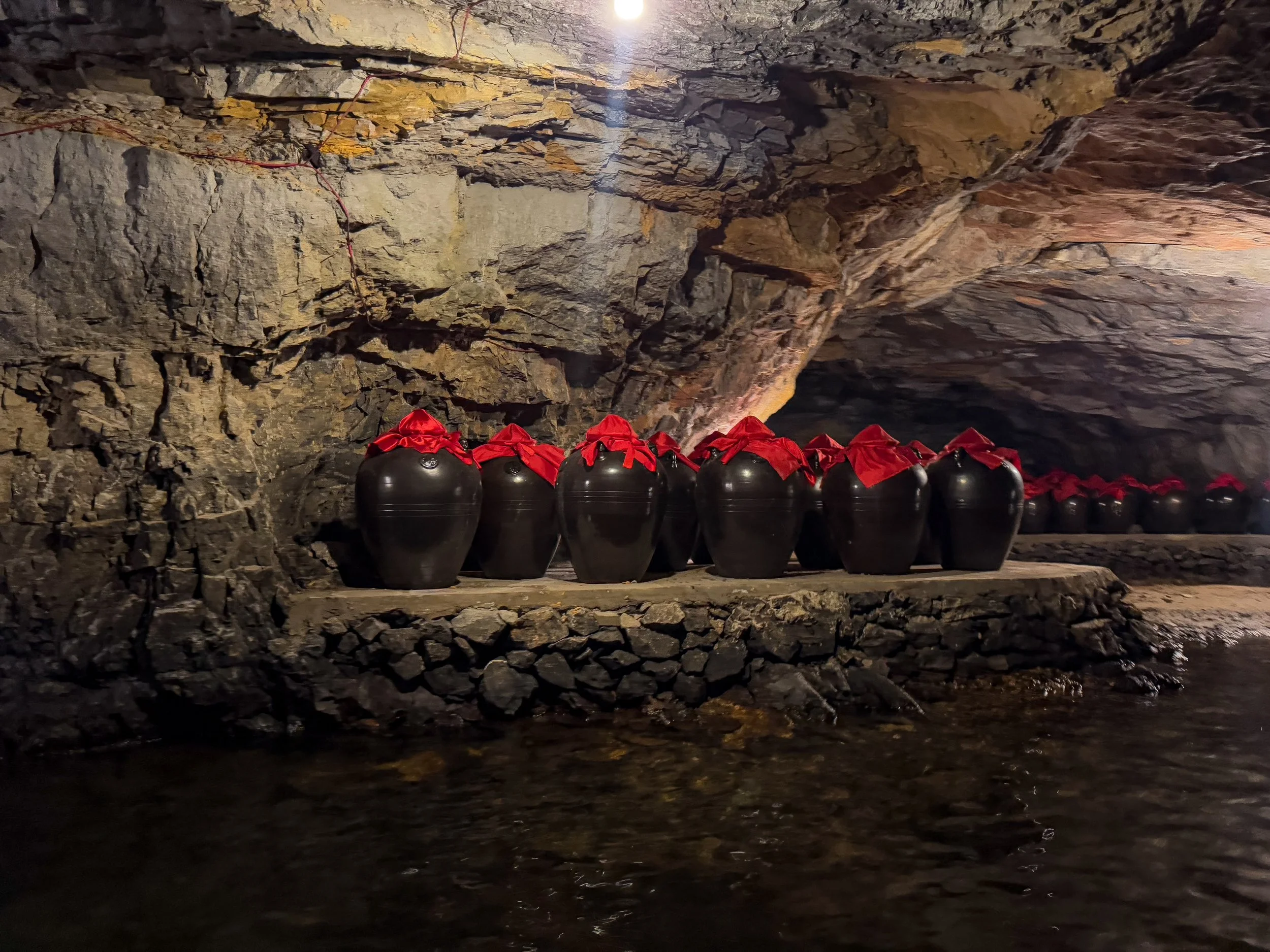
Hang Nau Ruou Cave. A 250 meter long arched cave that weaves through the mountain. Deep inside sheets of sediment create angular walls and ceilings resembling the shape of a rhombus. The exit chamber holds large ceramic jars of aging wine.
Son Duong Cave. A 250 meter long cave tunneling through the karst mountains with hundreds of stalactites suspended from the ceiling.
Quy Hau Cave. A short 100 meter cave with no artificial illumination giving it an untouched natural feeling.
Tips for Visiting Trang An
Arrive Early. Get an early start before thousands of people arrive by bus. We arrived just before 7am and quickly made it to a row boat.
Choose A Route. There are three different routes through Trang An. We chose Route 1, the longest route and least crowded. It brought us through 9 different caves and to multiple temples.
Boat Size. Boats fit four people. We were paired with another couple.
Tipping. Tipping is expected. Tip the rower 10% of the ticket fee.
Skull Island
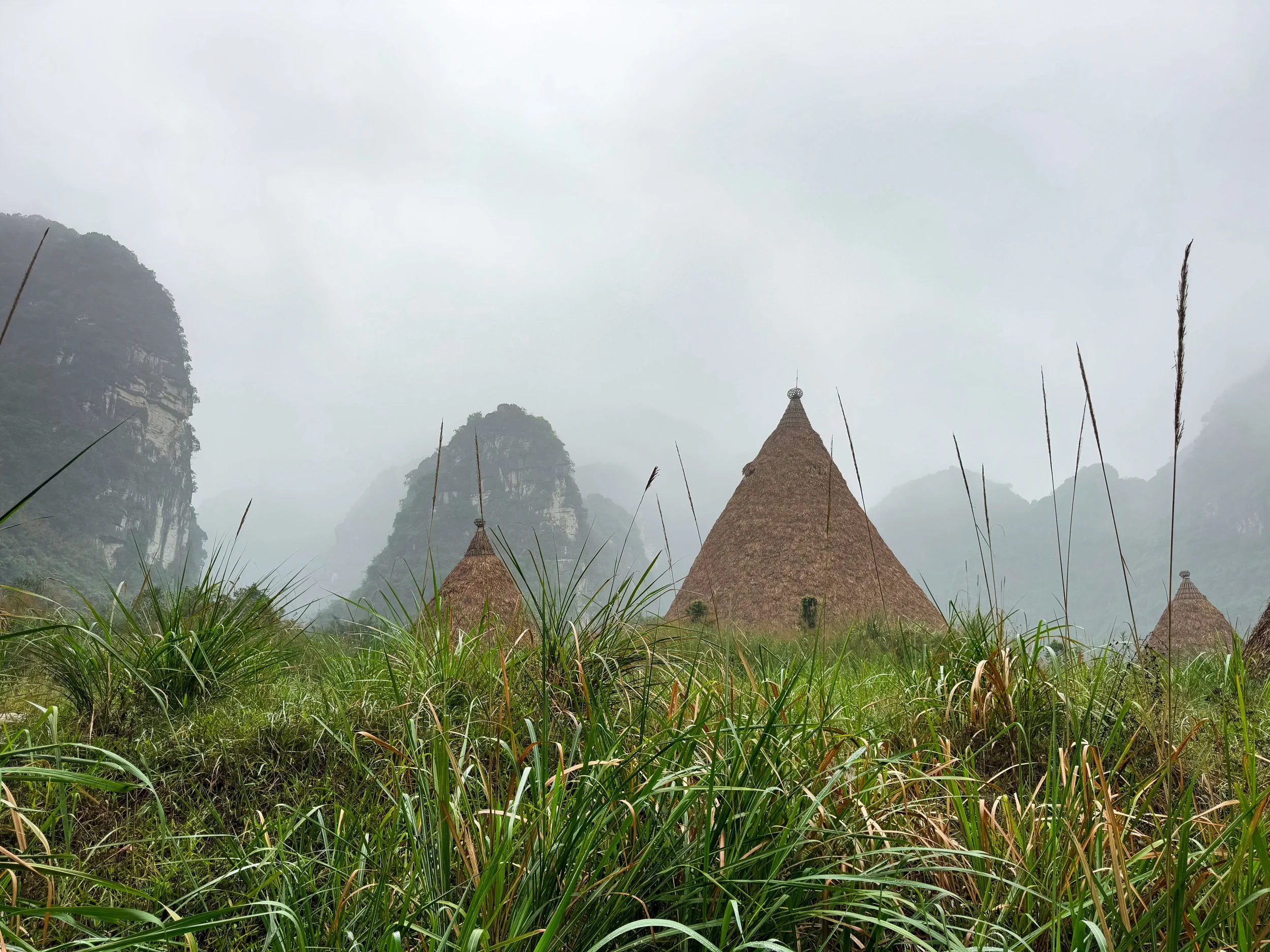
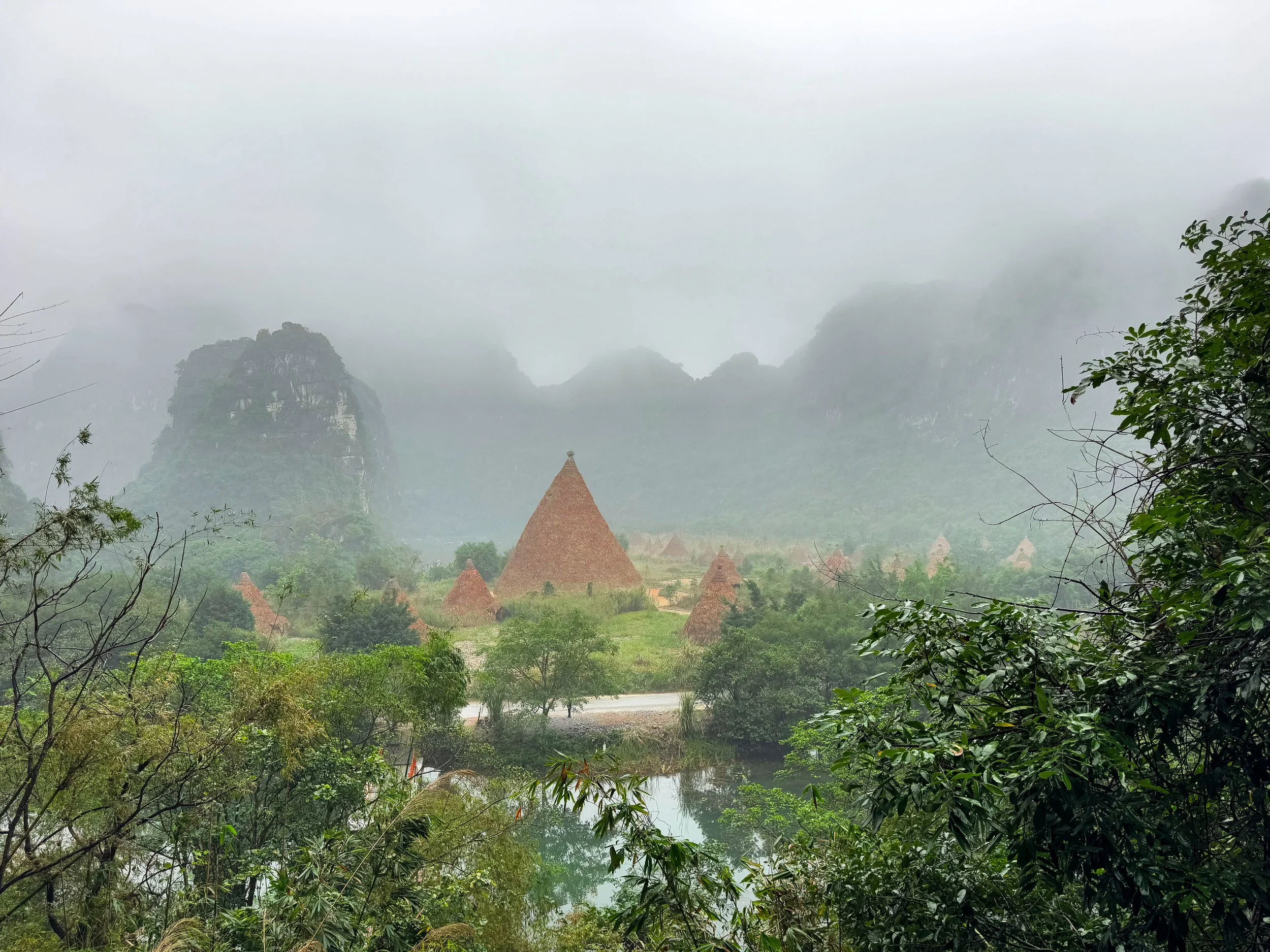
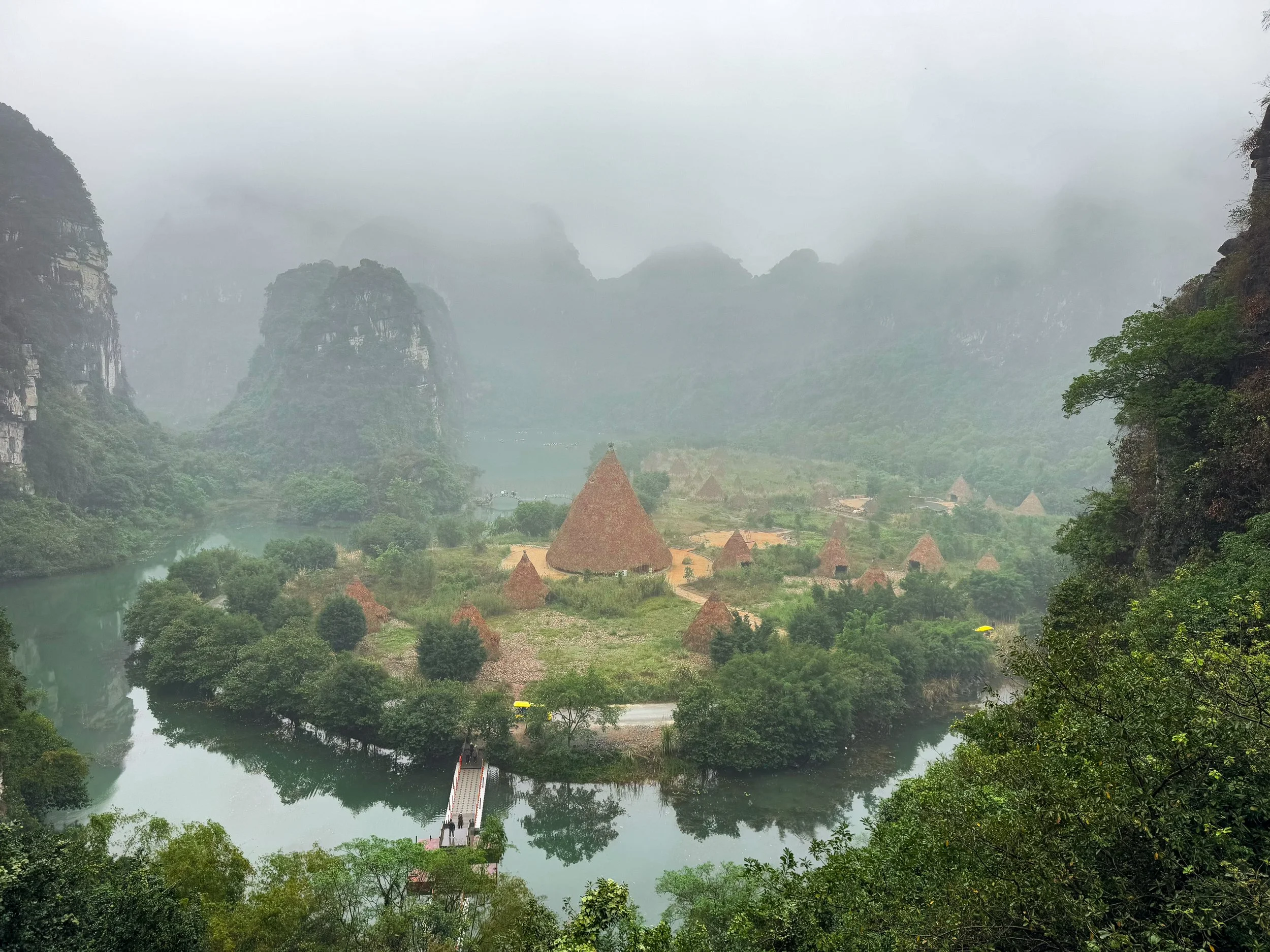
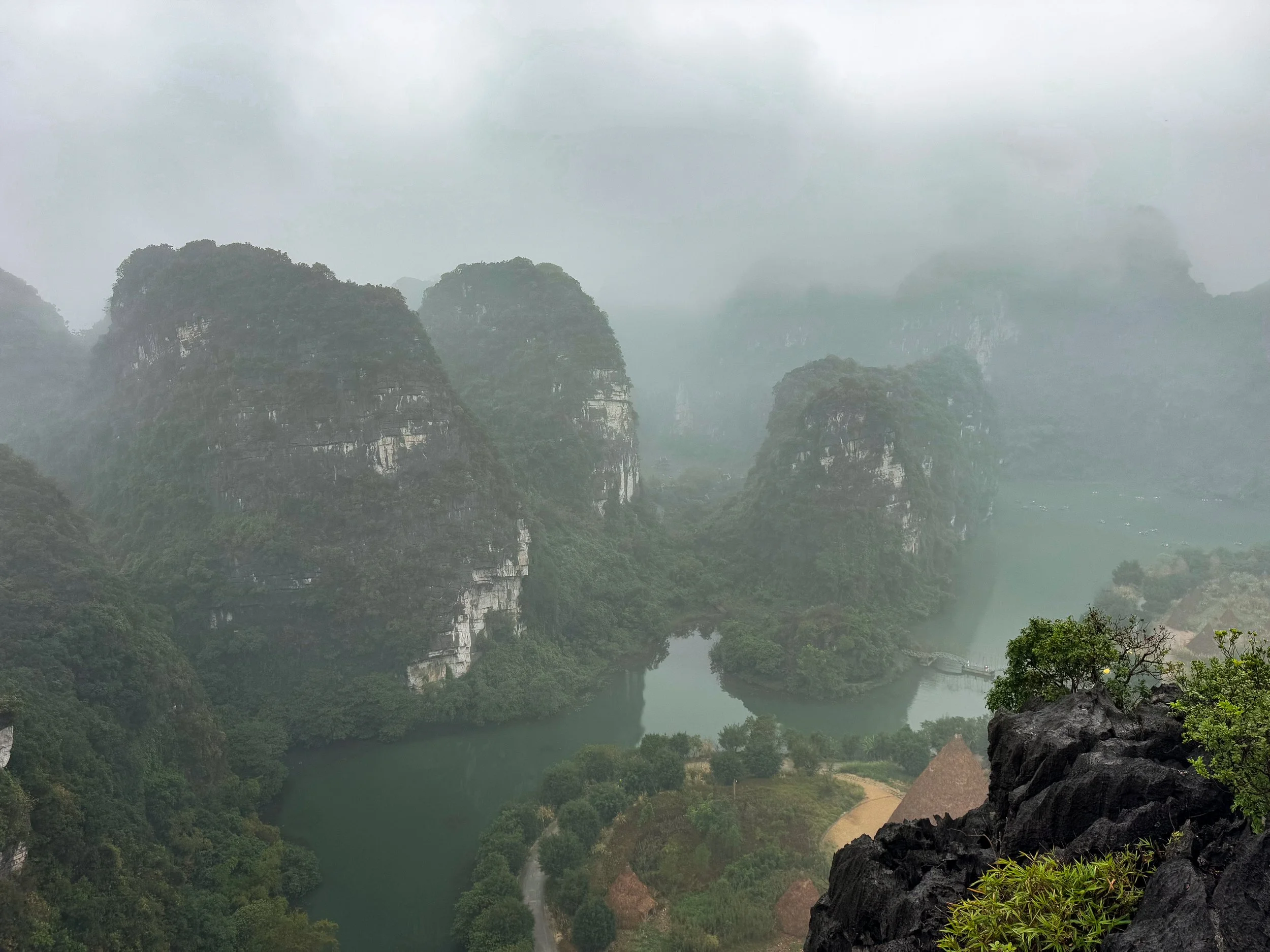
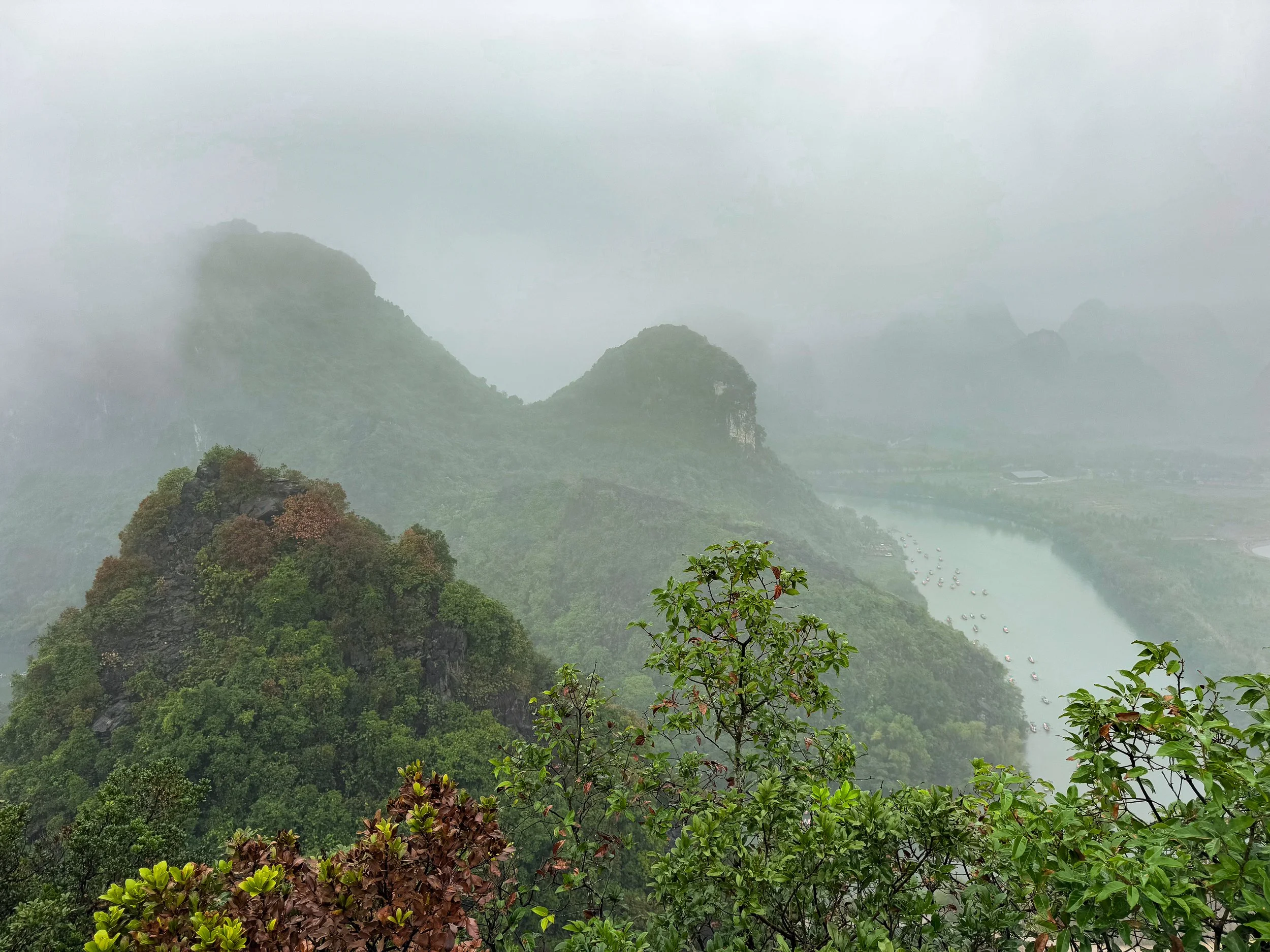
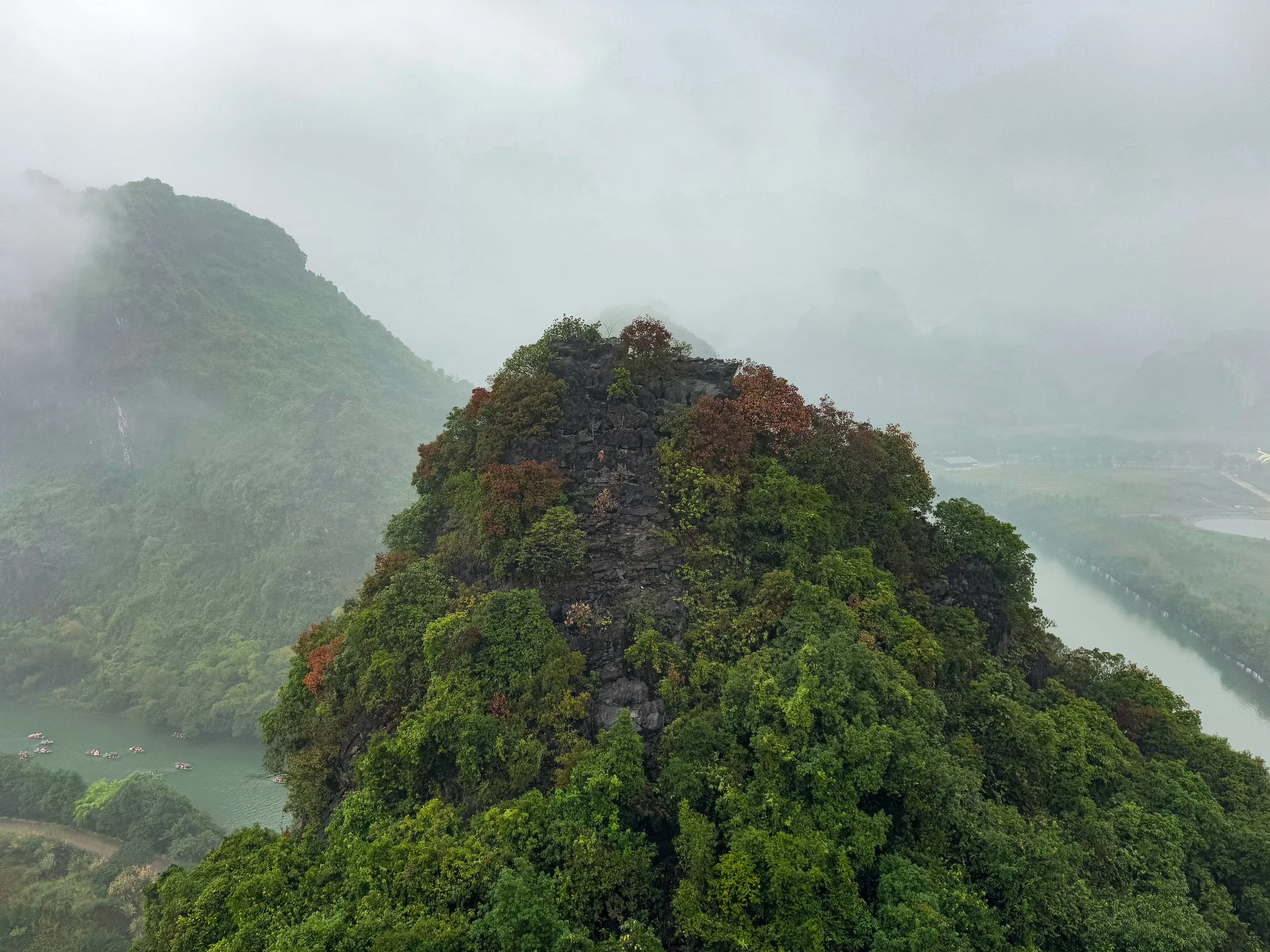
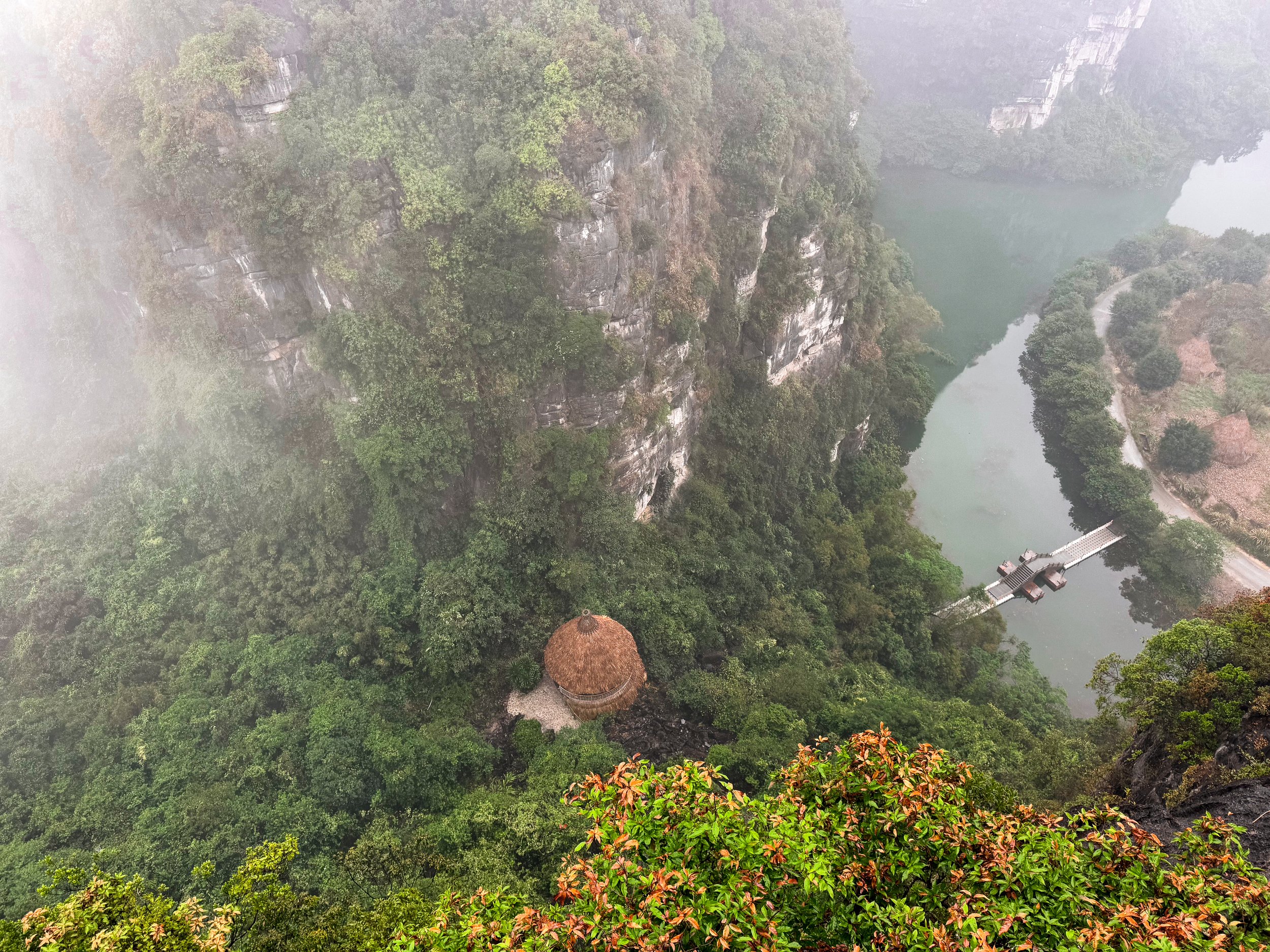
A movie set created for King Kong Skull Island with a village of thatched conical huts. It’s viewable from one route through Trang An and from a mountainous hike overlooking it. A trail leads from just outside of the village into the karst mountains. At its summit is a bamboo hut with views of the Island and the surrounding landscape. We visited on a foggy day which created a mysterious allure. The park has several replica conical huts that can be visited, an outdoor restaurant and bamboo platforms above the river for swimming and sunning during the warmer months.
Tam Coc Boat Tour
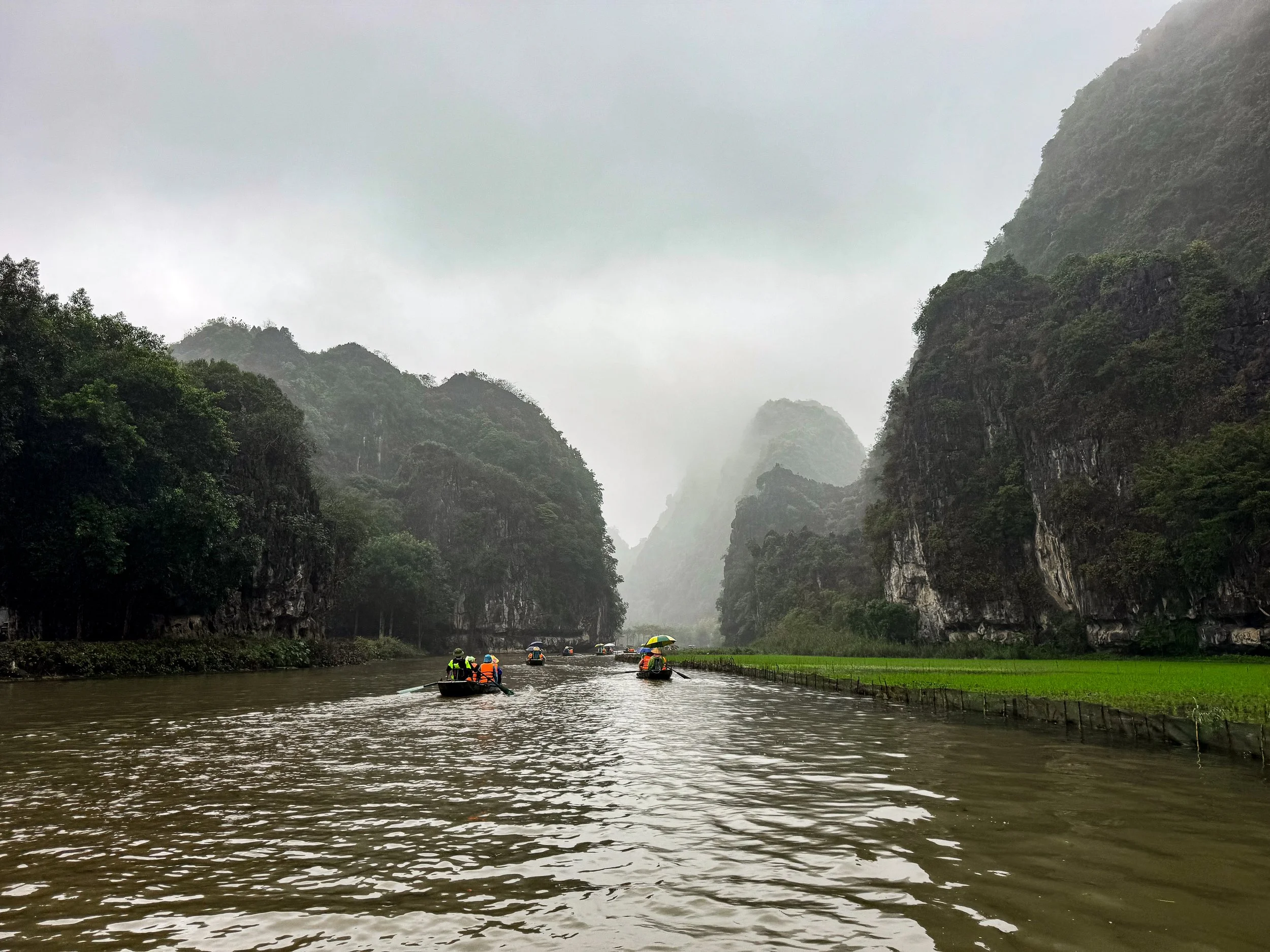
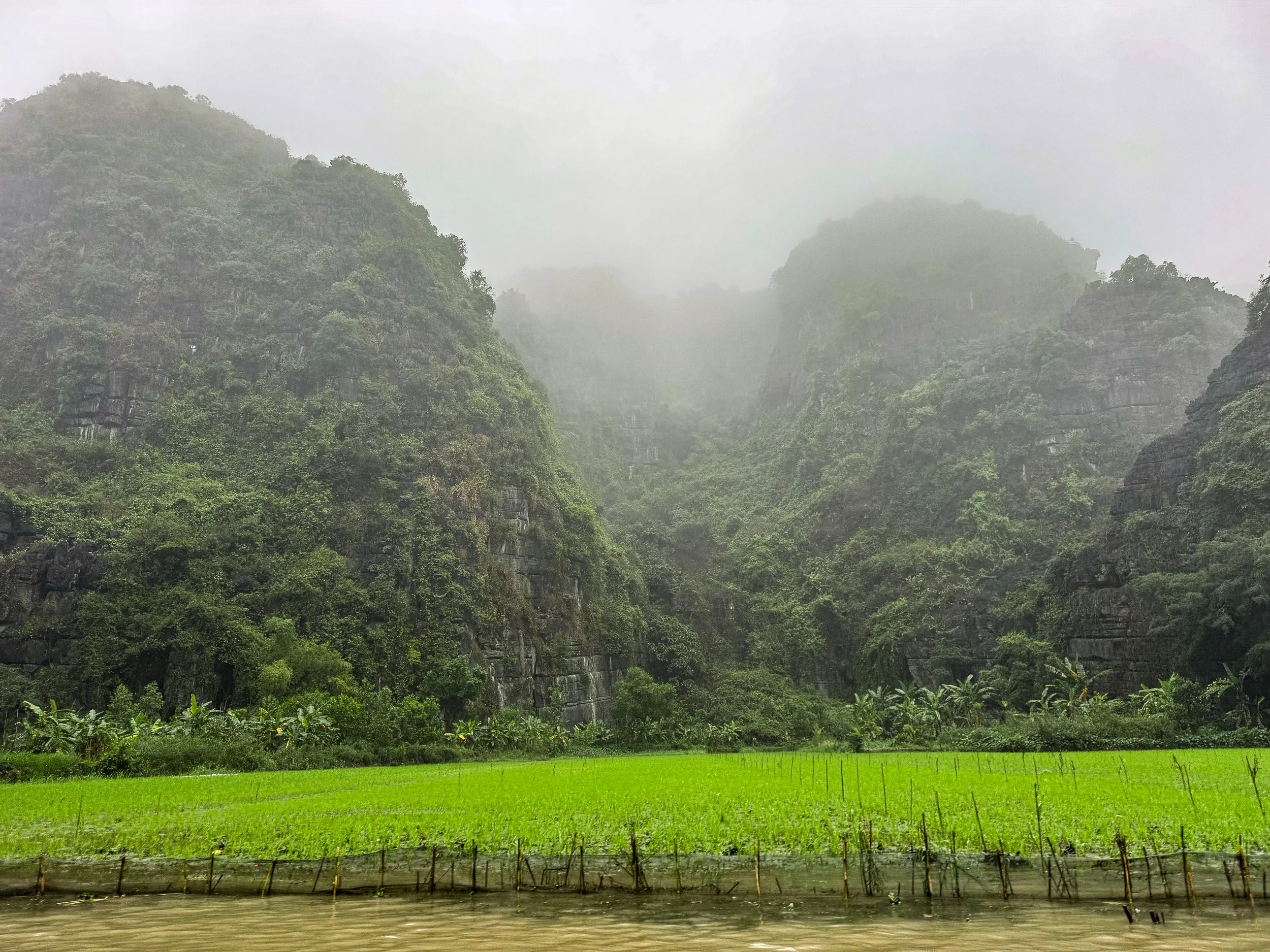
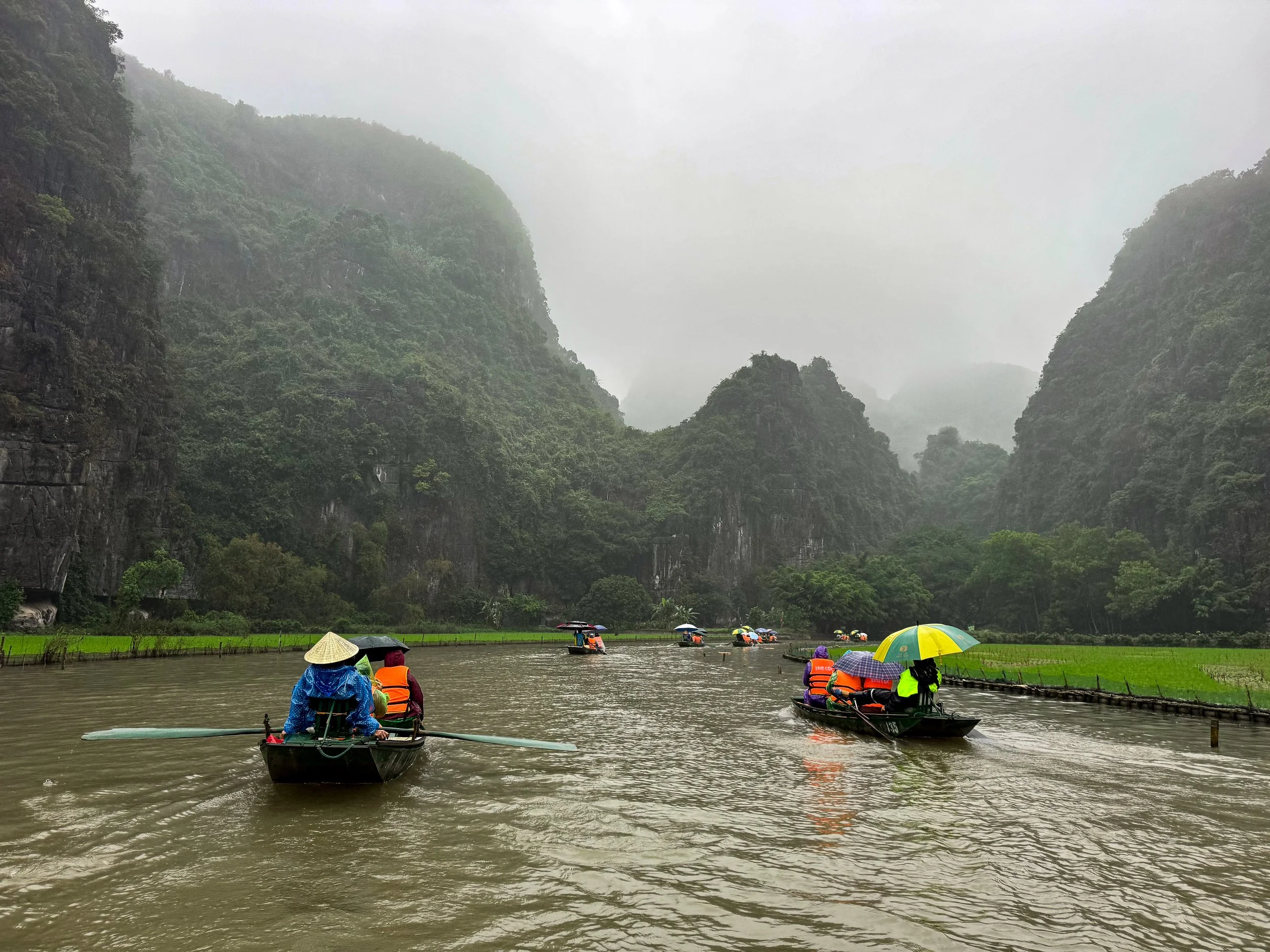
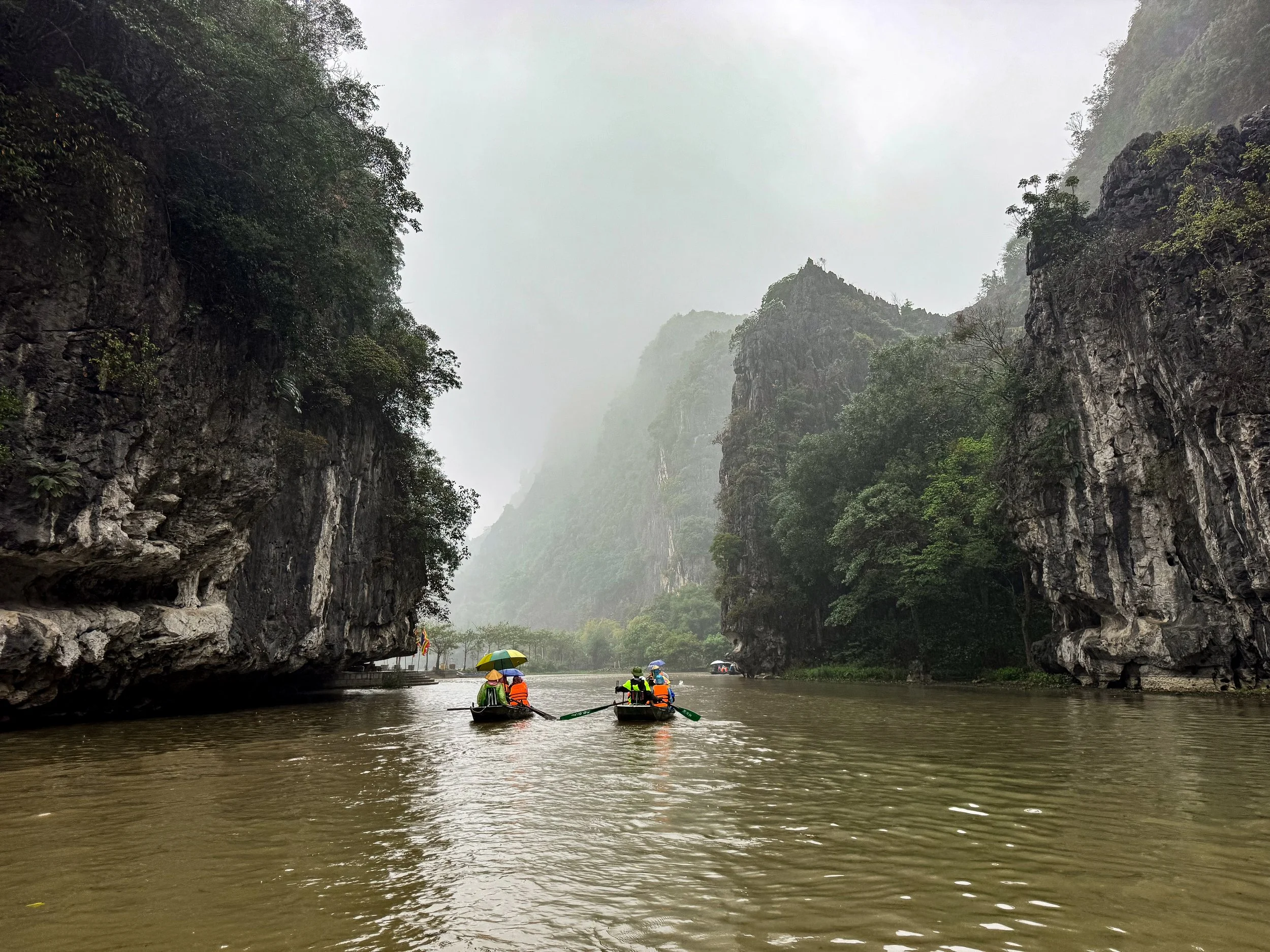
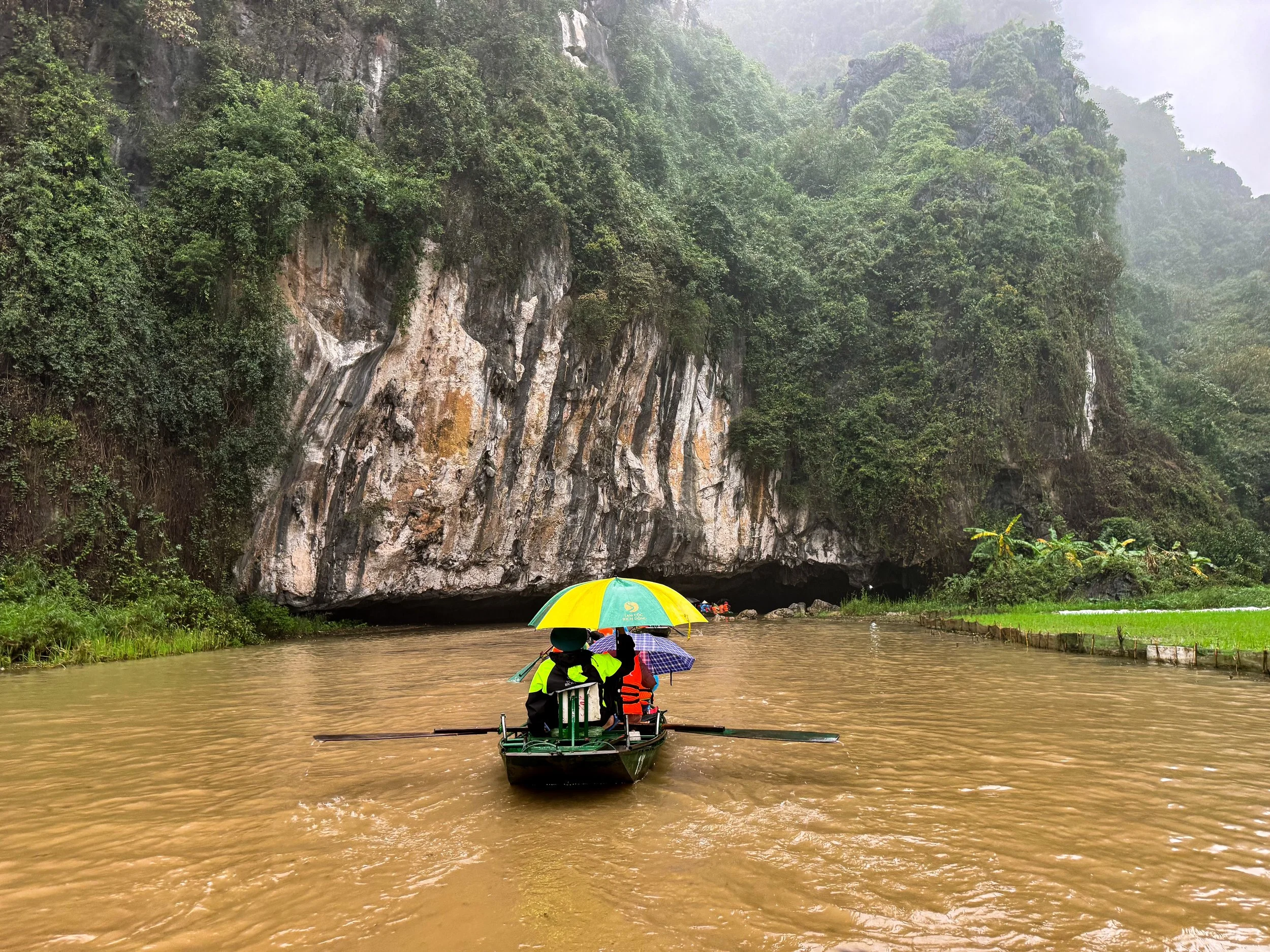
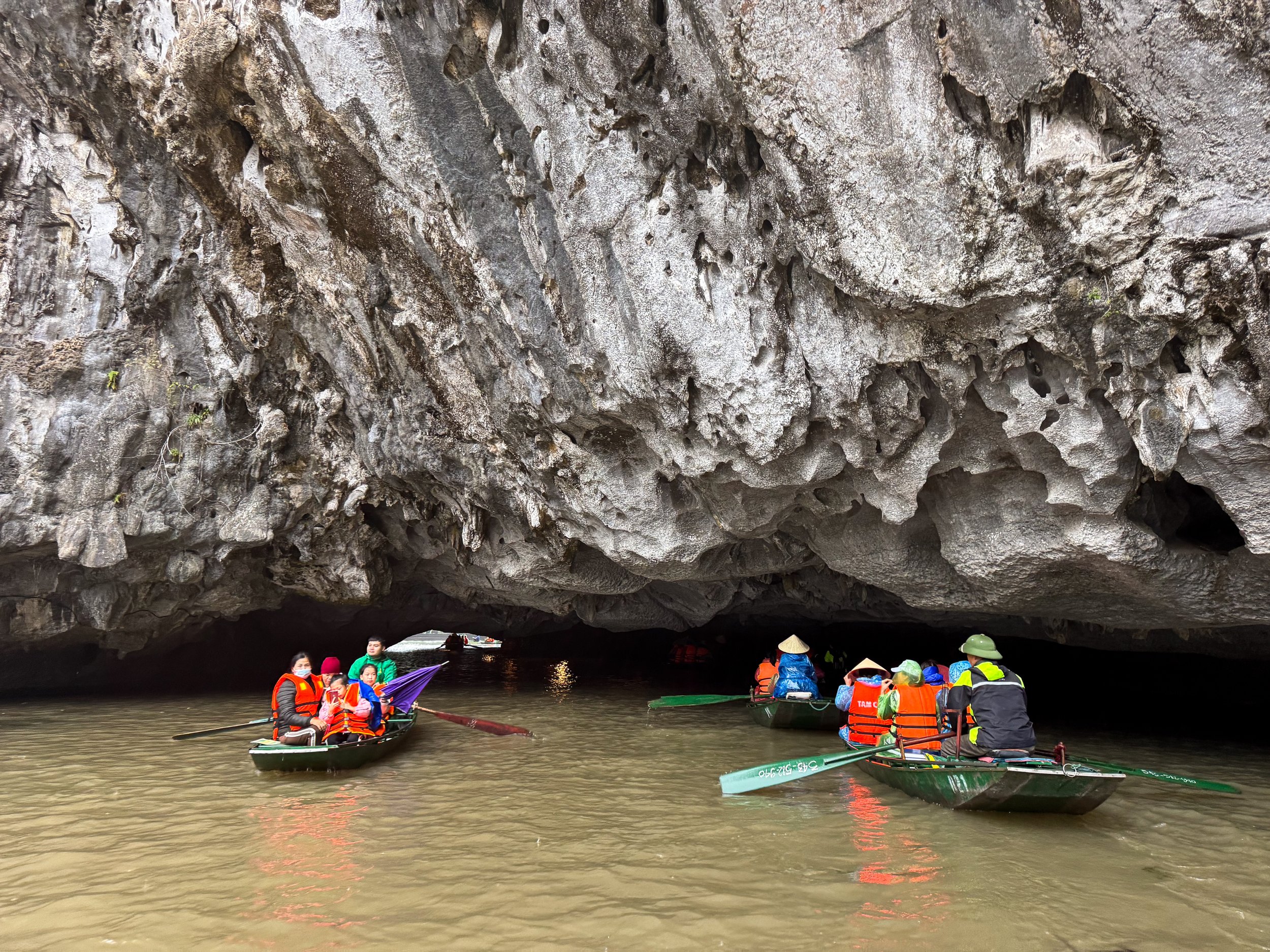
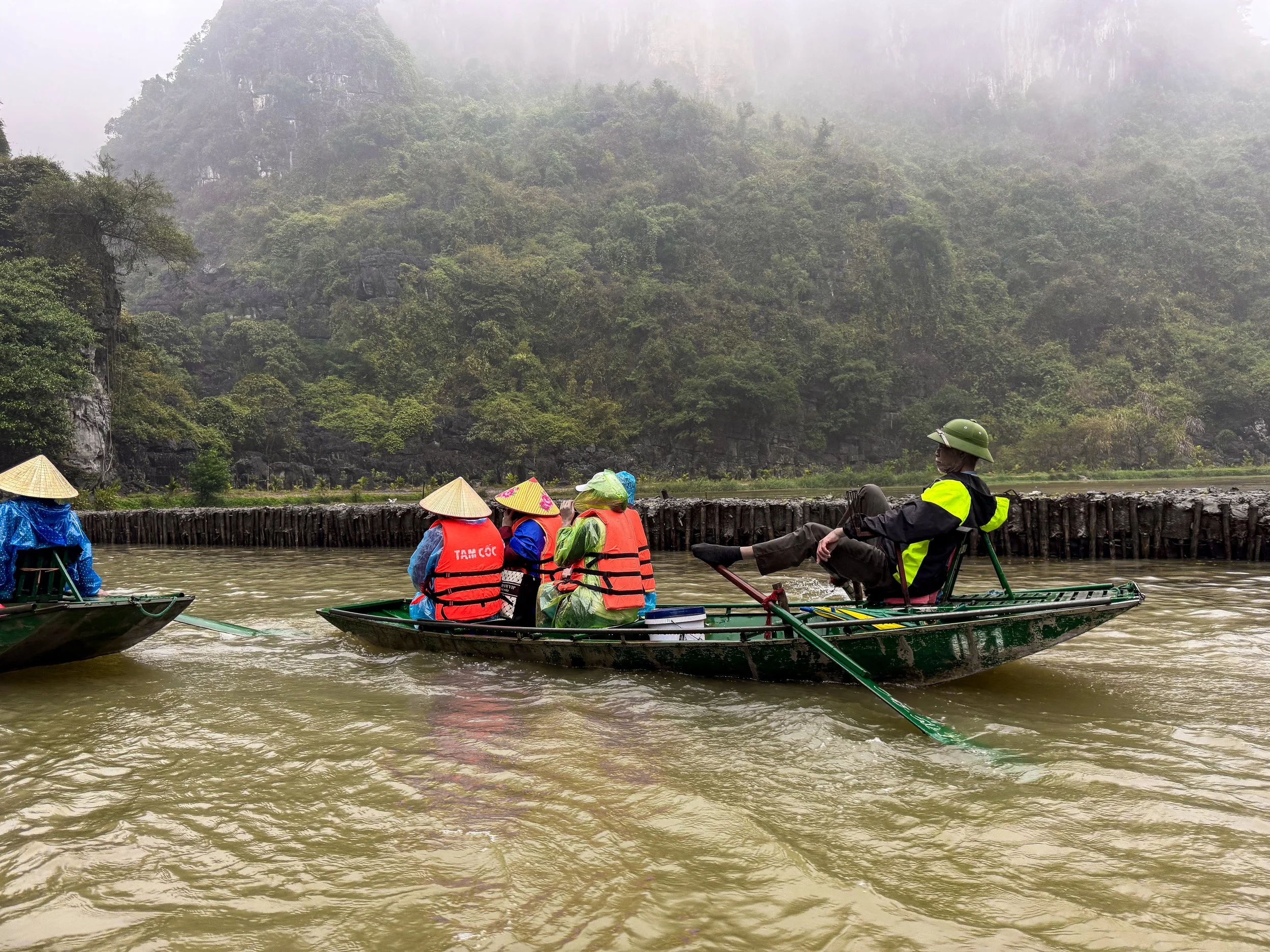
Tam Coc is a river valley flanked by the famed karst mountains and sprouting rice paddies of Ninh Binh’s landscape. Much like Trang An, the best way to tour the waterway is by row boat tour. Rowers often paddle using their feet, a surprisingly common sight. The river weaves through the valley and into tiny slits within the mountains to dark caves. On a cloudy day, the mountains fade into the haze creating a mysterious atmosphere that spans across the landscape.
Tips for Visiting Tam Coc
Arrive Early. Arrive by 7:30am or earlier to avoid the large tour groups. Buy tickets from the tour office and take the electric shuttle to the boat launch.
Choose A Route. There is only one boat route however there is an additional option to see multiple temples along the waterway by electric shuttle.
Boat Size. Boats are assigned by group, ranging from individual to groups as large as six.
Tipping. Tipping is expected. Tip the rower 10% of the ticket fee.
Bai Dinh Pagoda Complex
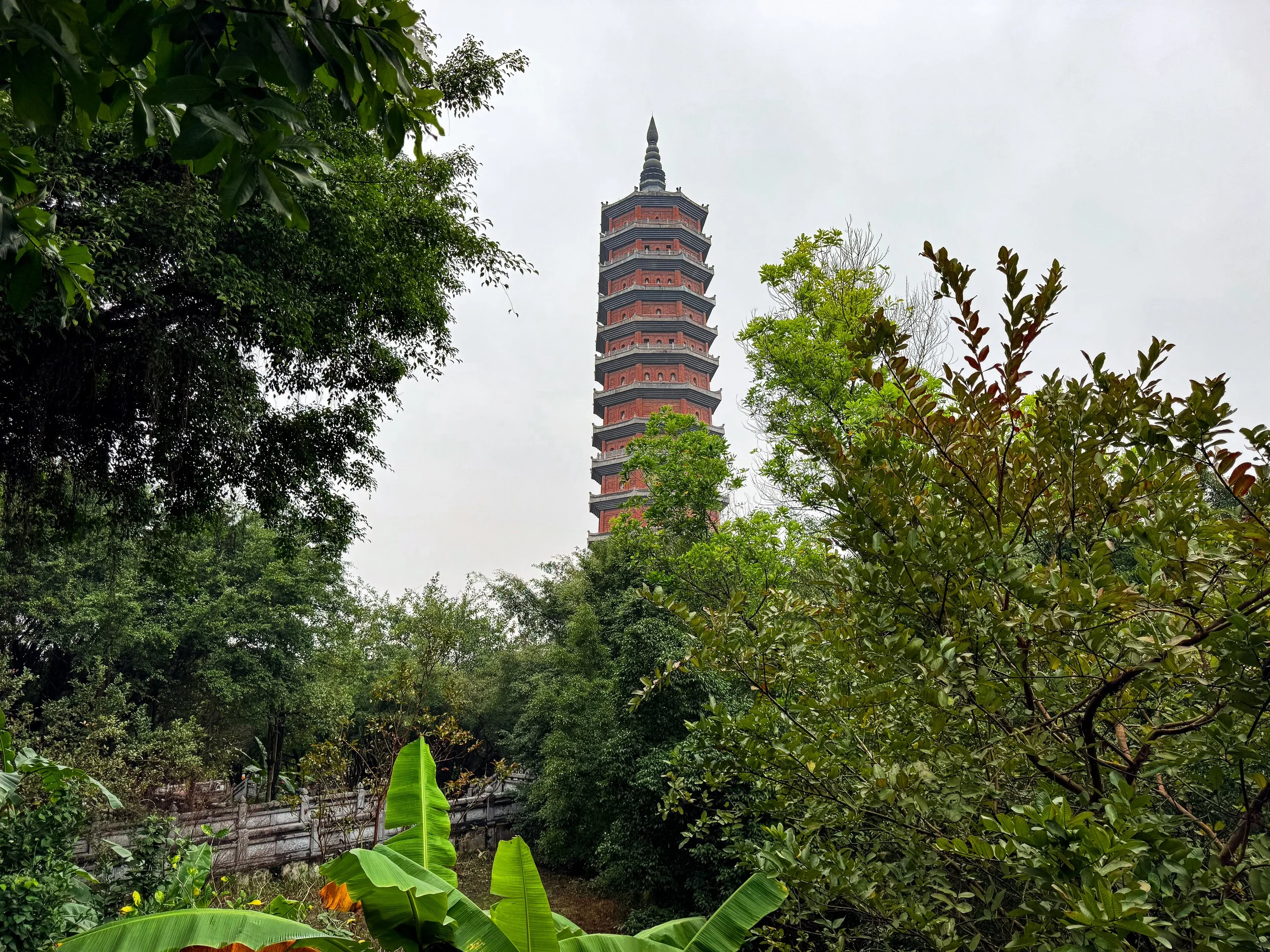
Bai Dinh is one of the most impressive Buddhist sights in the world and the largest temple complex in Vietnam. It dates back to the 11th century and has a developing modern day expansion keeping true to the original architectural styles and symmetry.
Internal Three Gates. An entrance temple with three large doorways. Together, they symbolize entering the world of the Buddha. Inside are two giant bronze statues of an armored warrior. One encouraging people to do good deeds and one warning people against doing evil deeds.

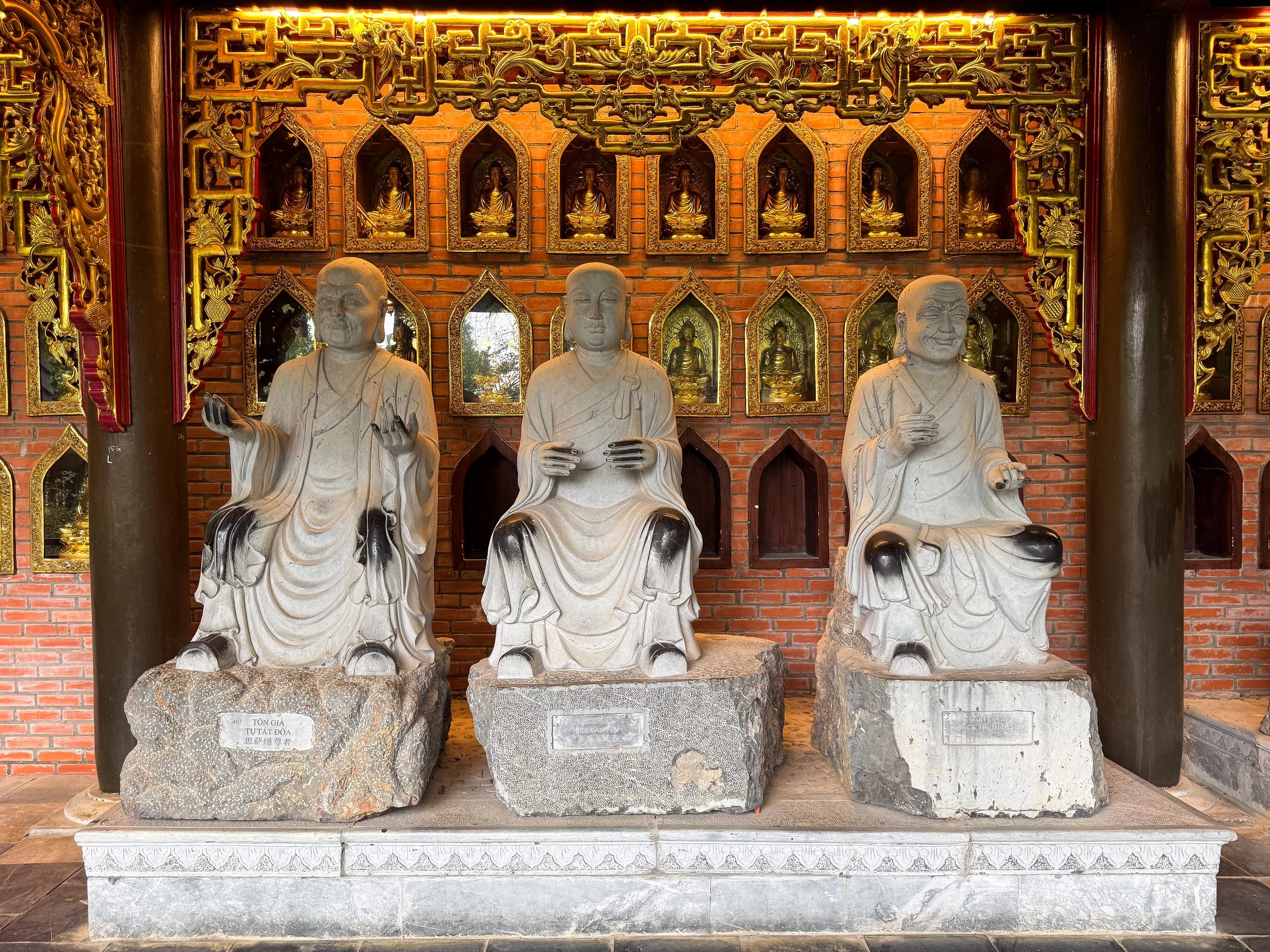
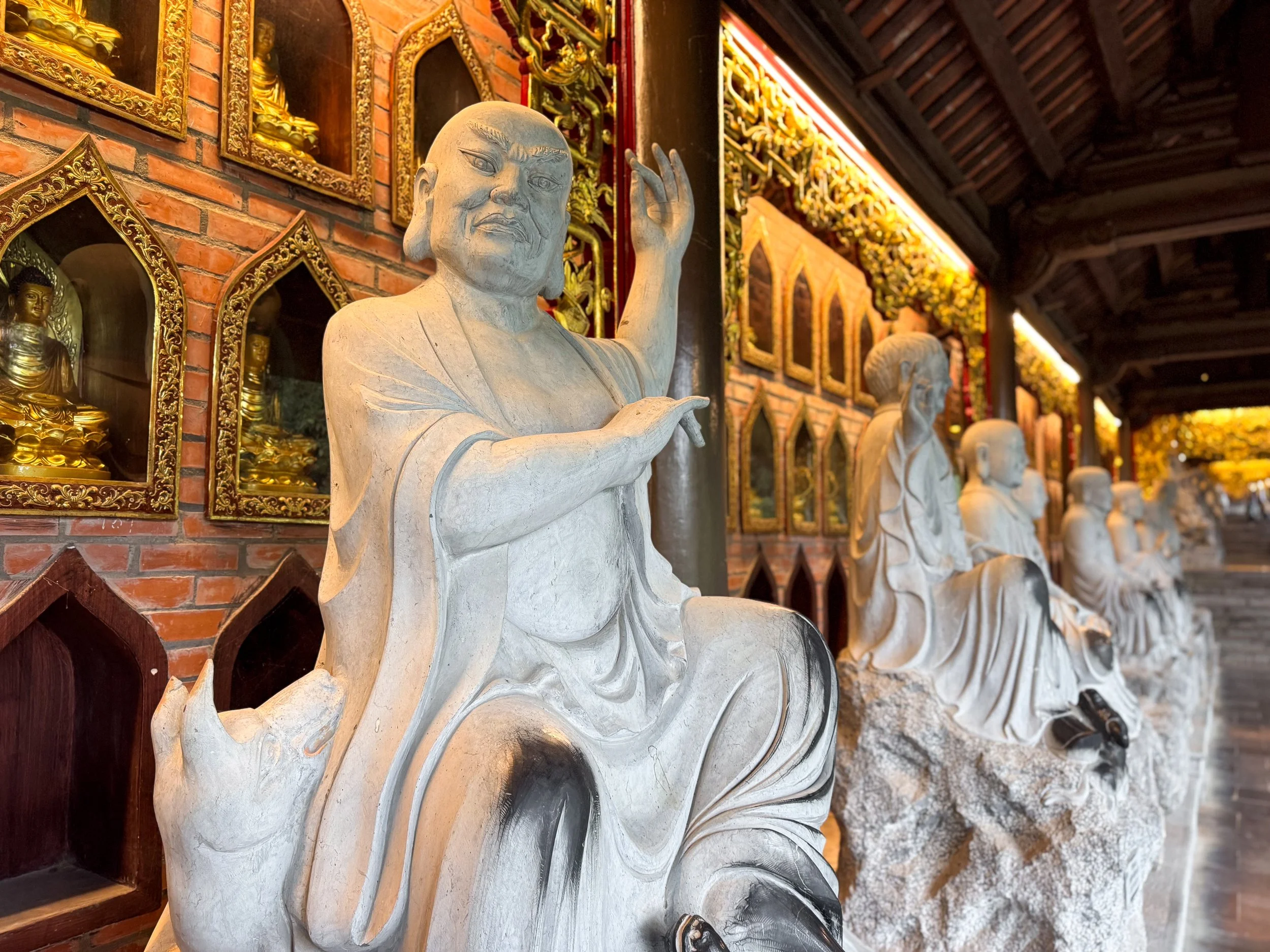
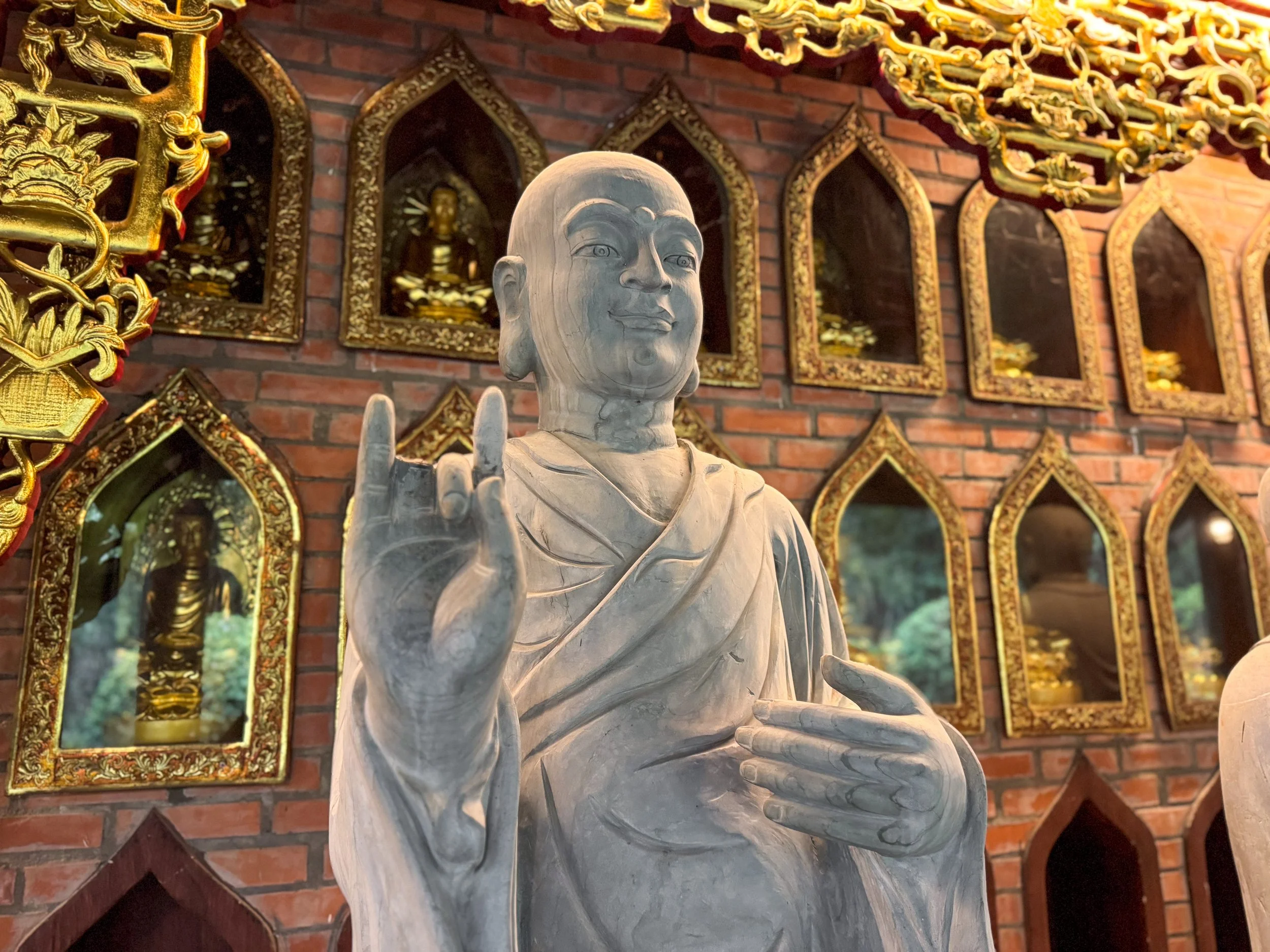
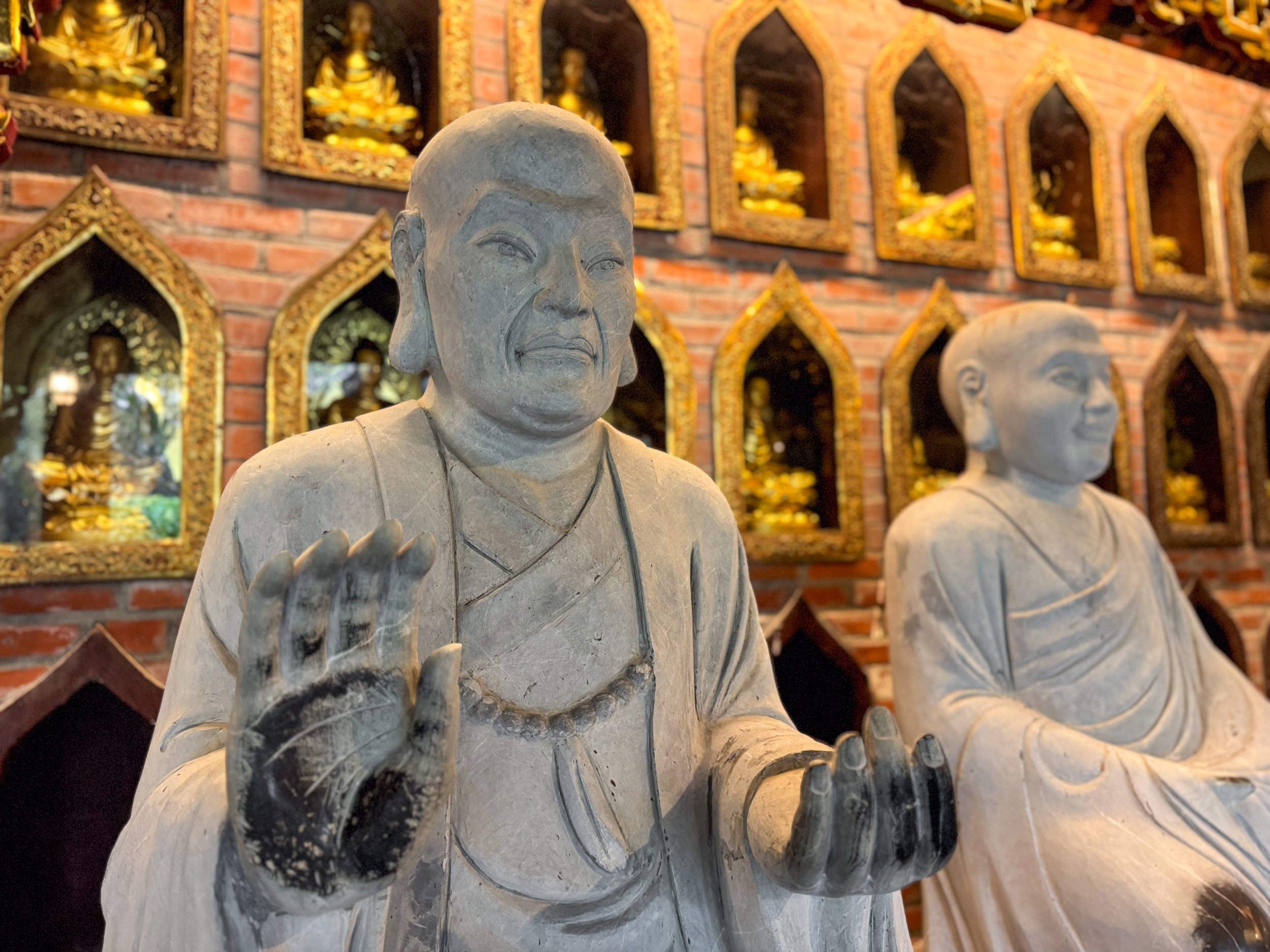
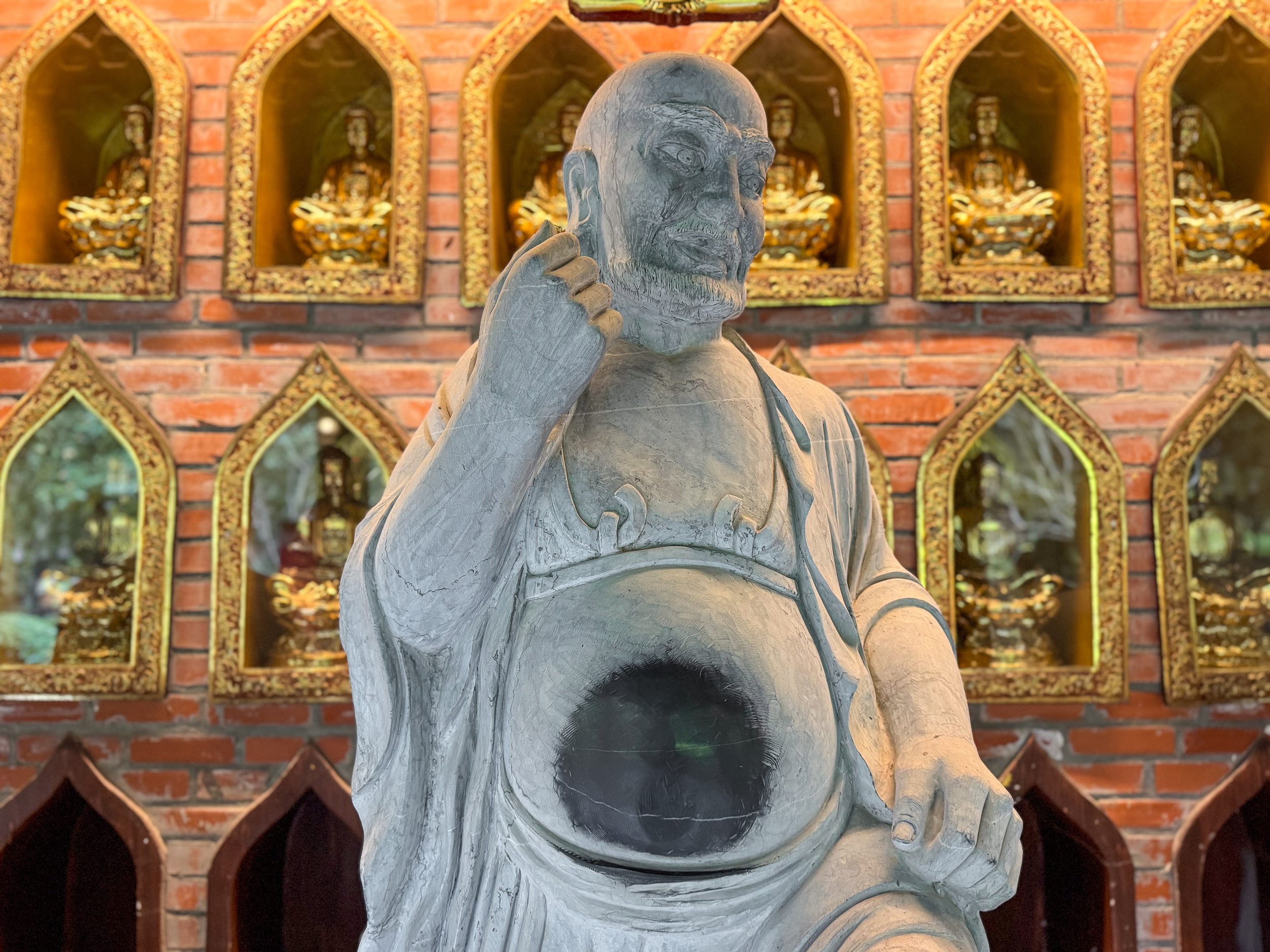
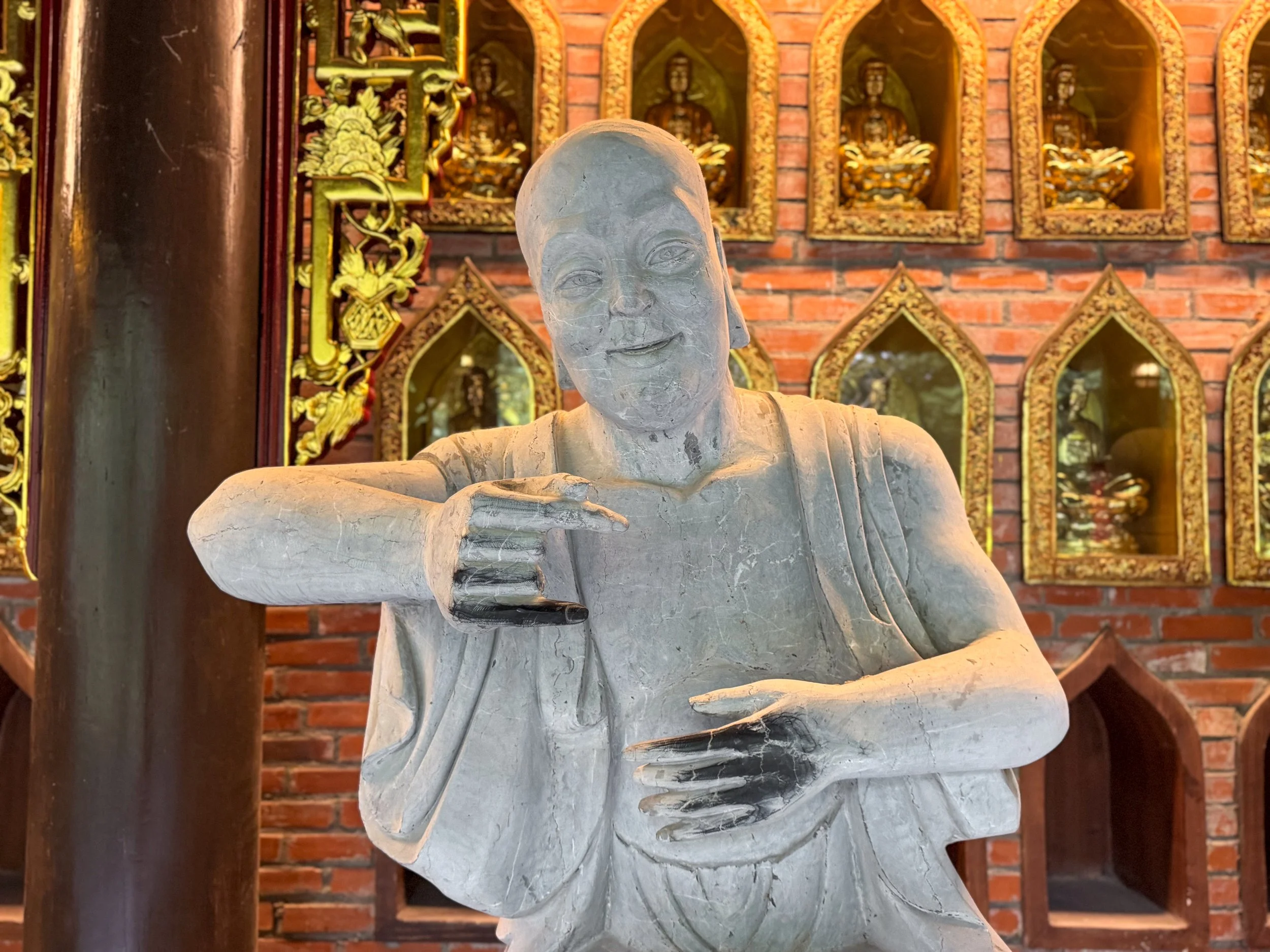
Arhat Corridor. A lively corridor stretching across the temple complex and landscape with 500 stone statues of monks that have reached enlightenment. They are all unique and incredibly animated, each holding different postures and expressions. Some range from stoic and wise to laughing and humorous, peaceful and calm, young and old. People often rub their knees, feet, bellies or objects they’re holding for good luck. It holds the record for the longest Arhat corridor in Asia and largest number of Arhat statues in Vietnam.
Bell Tower. An octagonal three tiered pagoda housing the largest bronze bell in Vietnam. Steps lead to the dark wooden pagoda’s belfry where the trunk of an entire ironwood tree is used to ring it. We could only imagine the echoing noise it must make. Below the bell is an equally impressive 70 ton bronze drum.
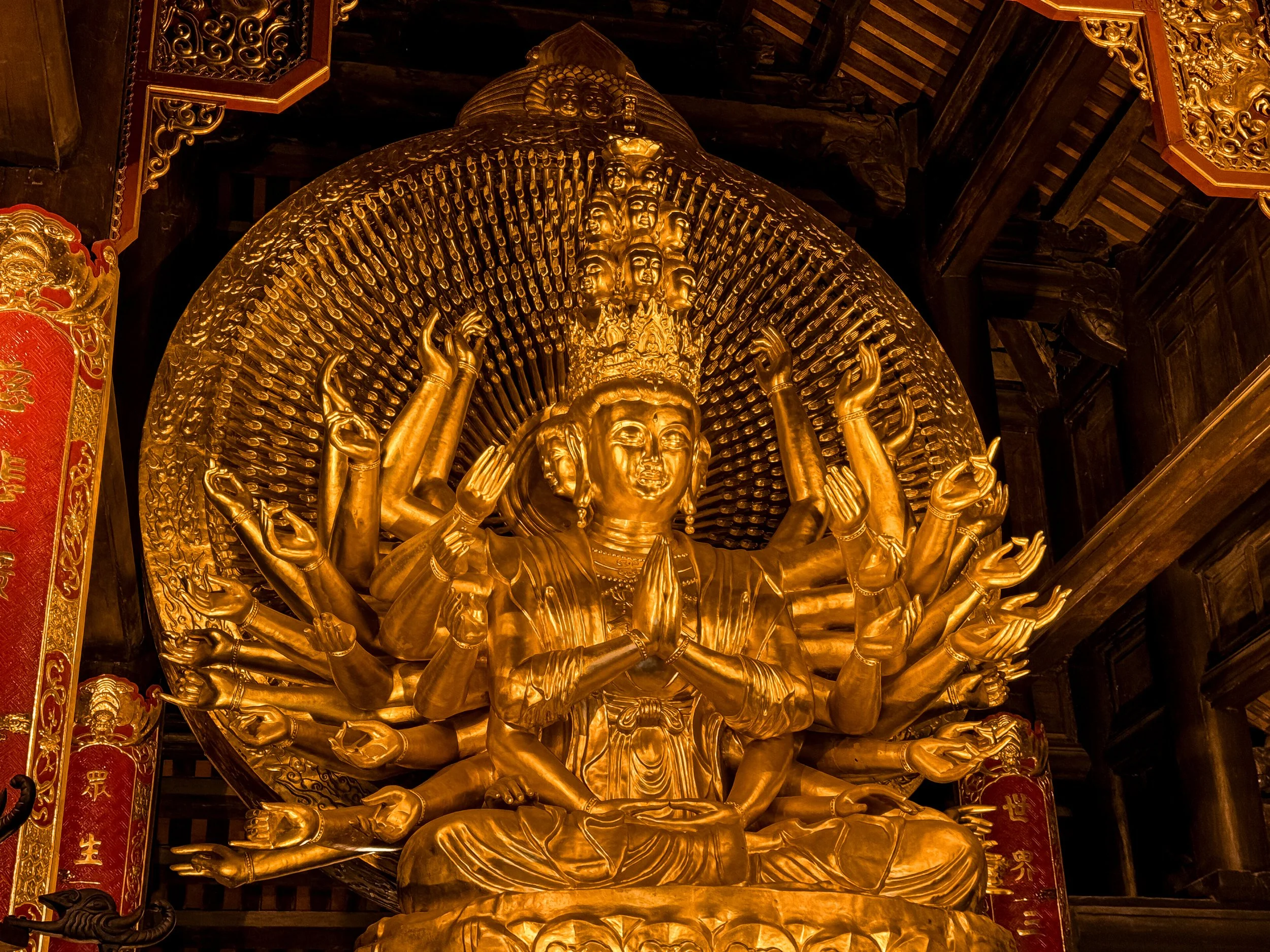
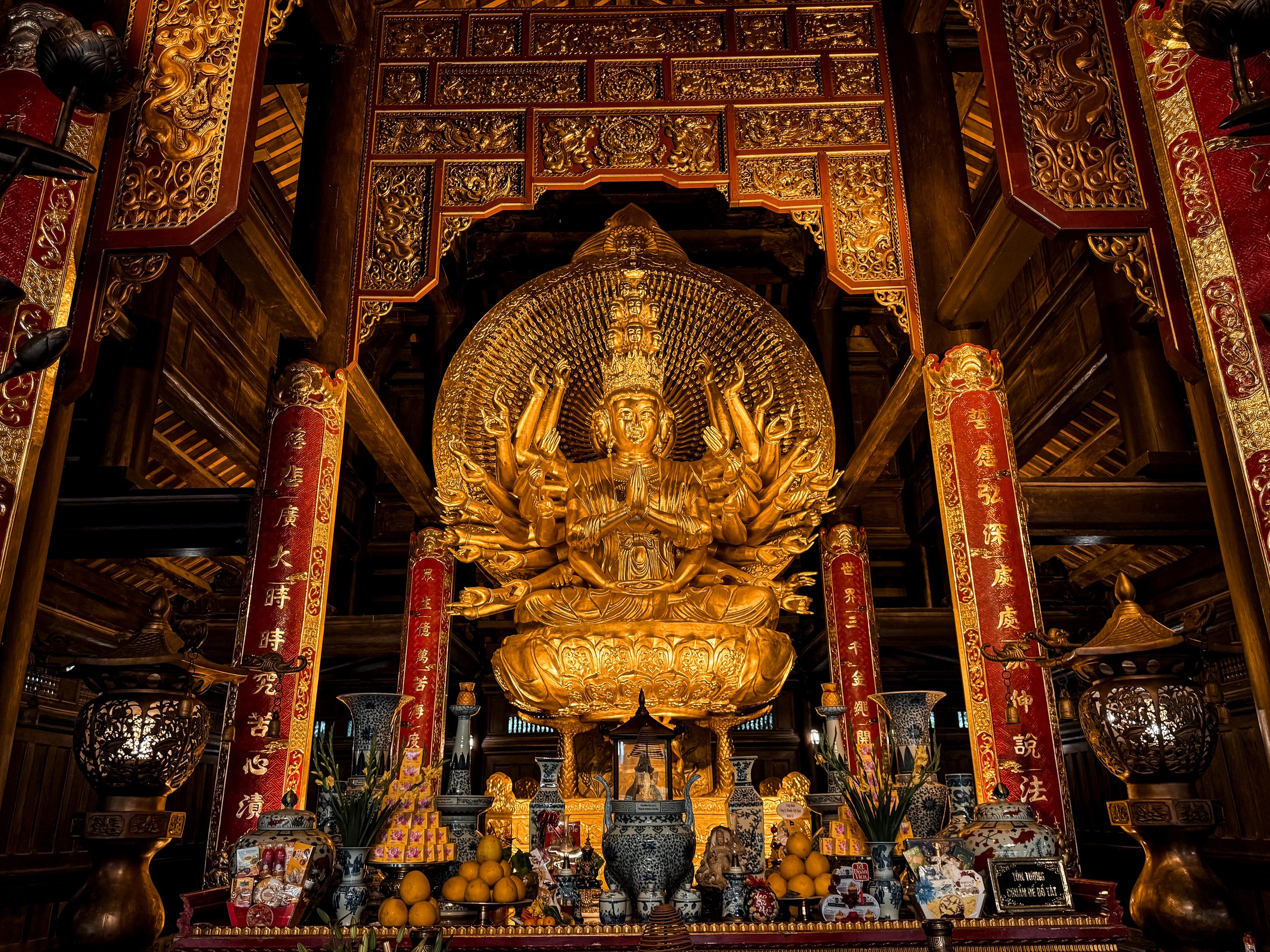
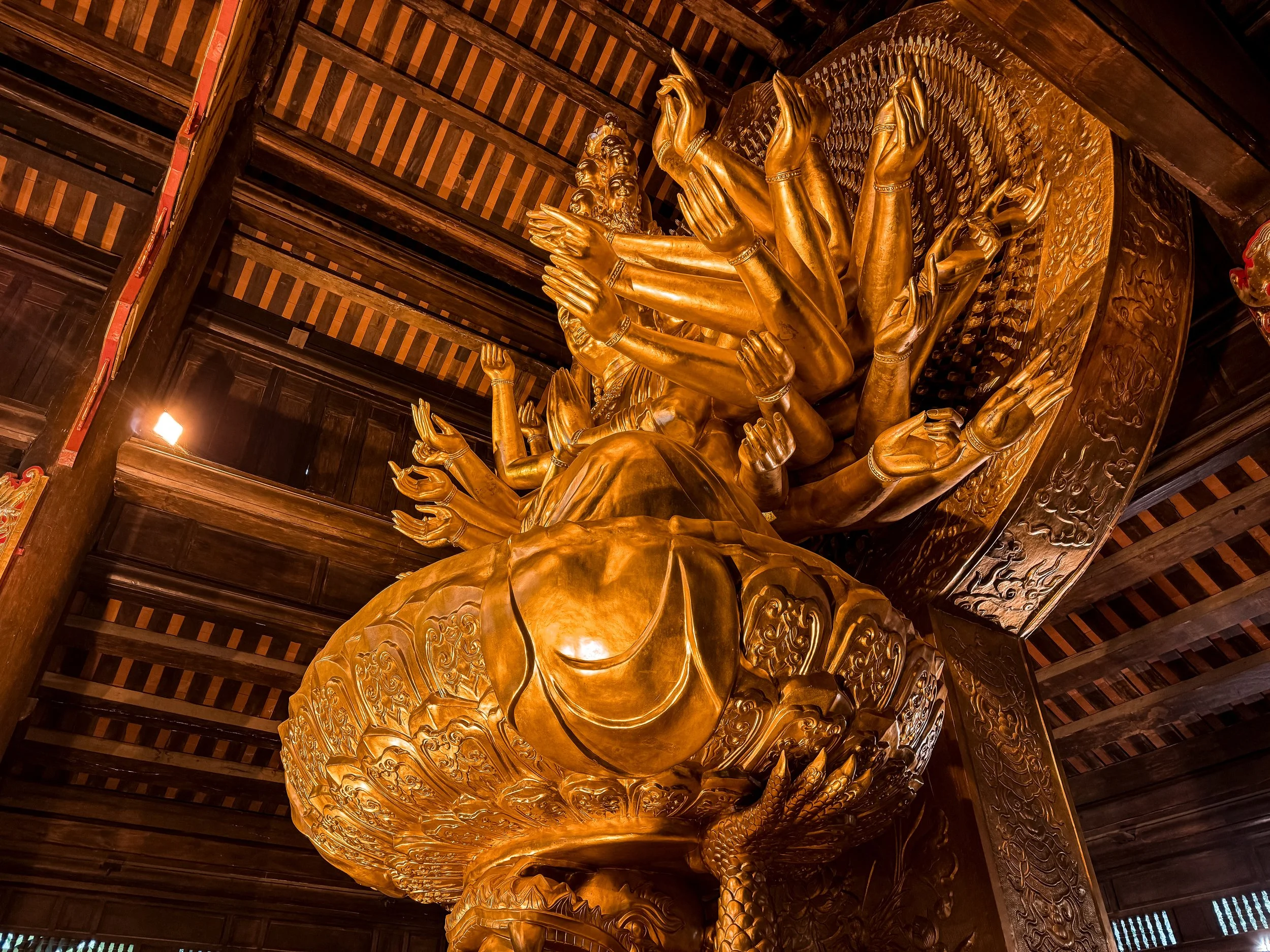
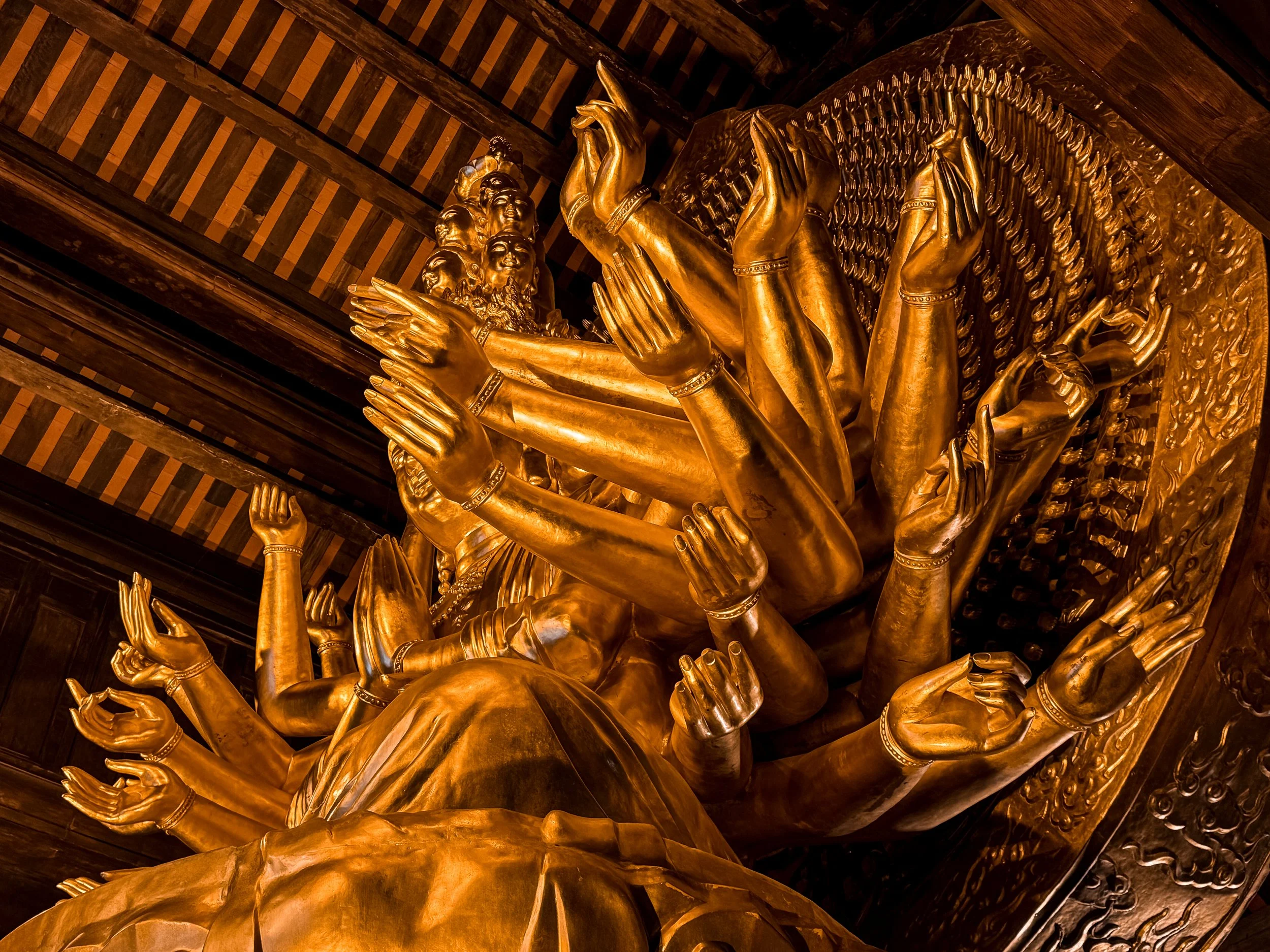
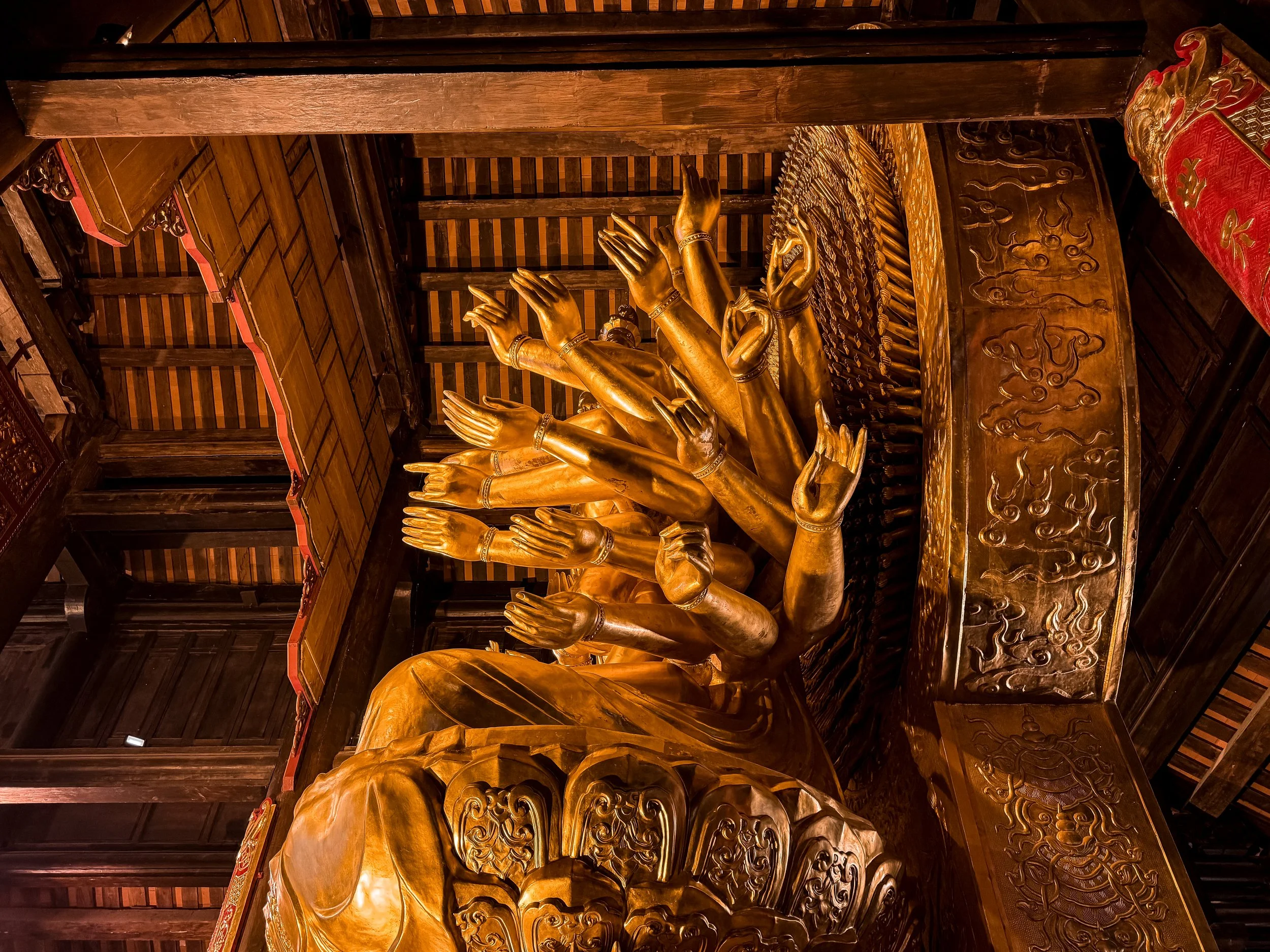
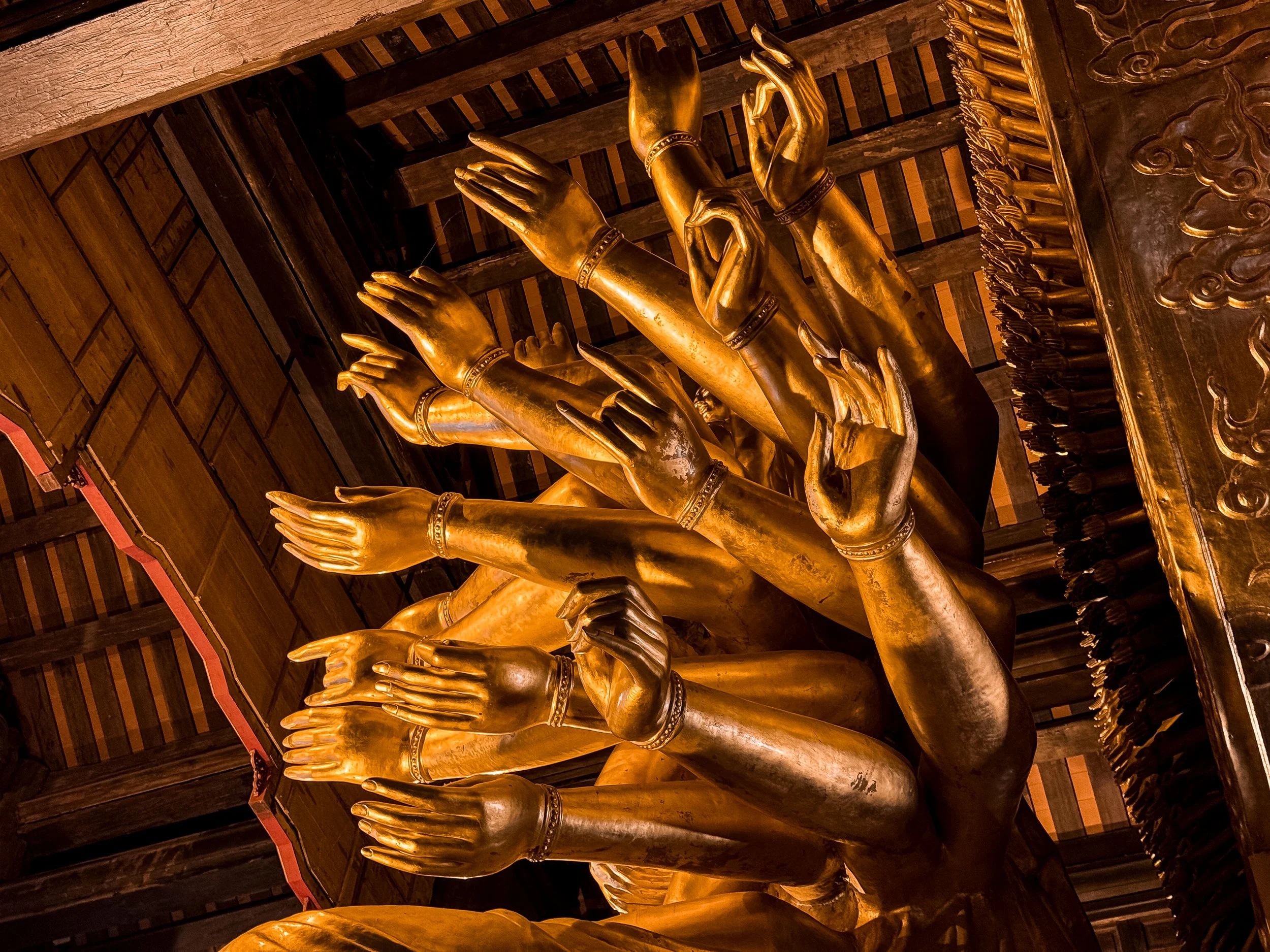
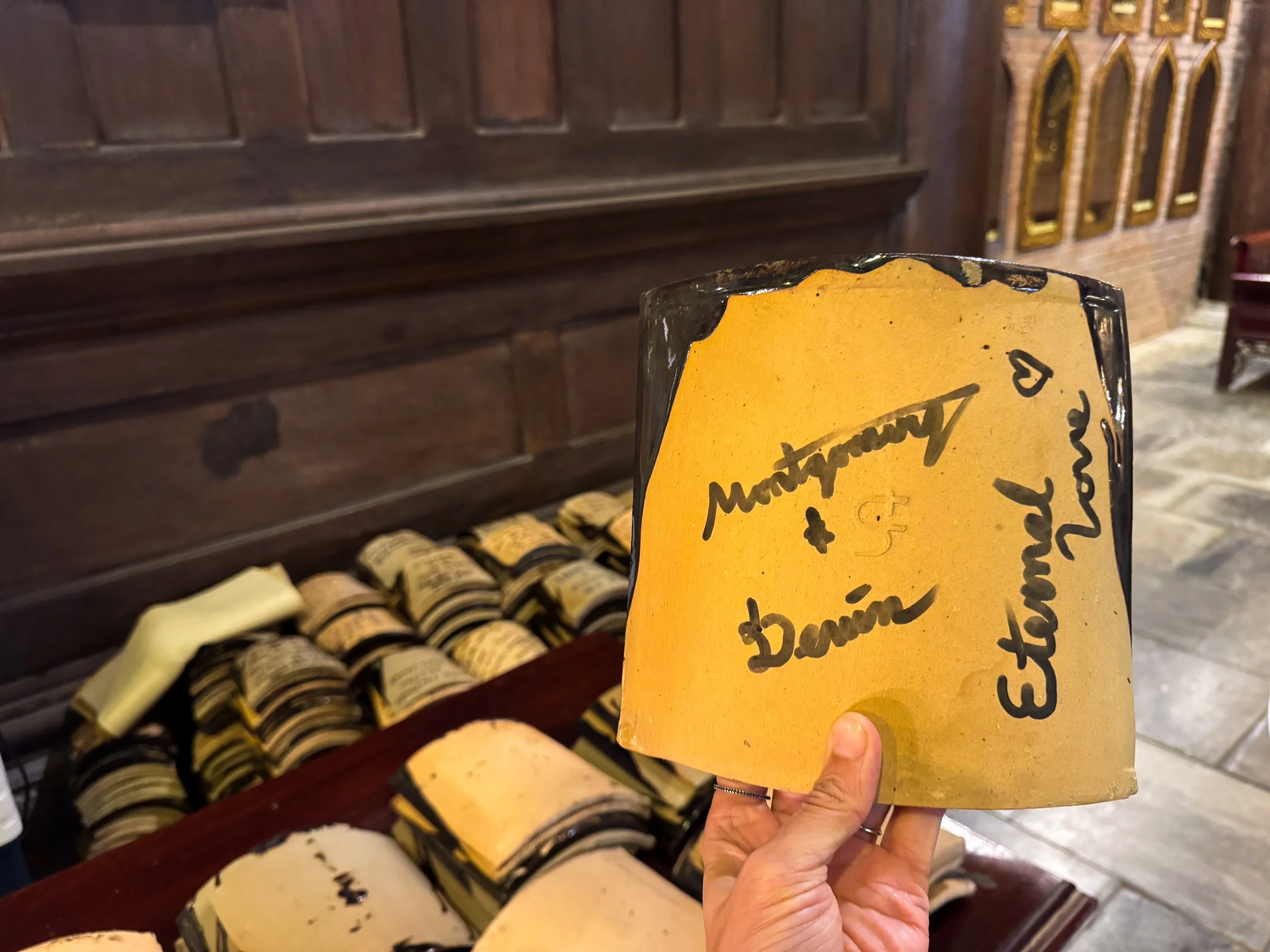
The Kuan-Yin Hall. A major temple housing a giant gilded statue of the Avalokiteshvara Buddha. A version of the Buddha with 11 heads and 1000 arms seated on a lotus flower. This is a modern addition to the complex built with historical accuracy. It has an ironwood and brick facade, three large gates or doors and a brown terracotta tiled roof with tail feather tipped cornices. We bought and donated a terracotta roof tile to the pagoda for its future repairs. We signed our names with the words “eternal love.”
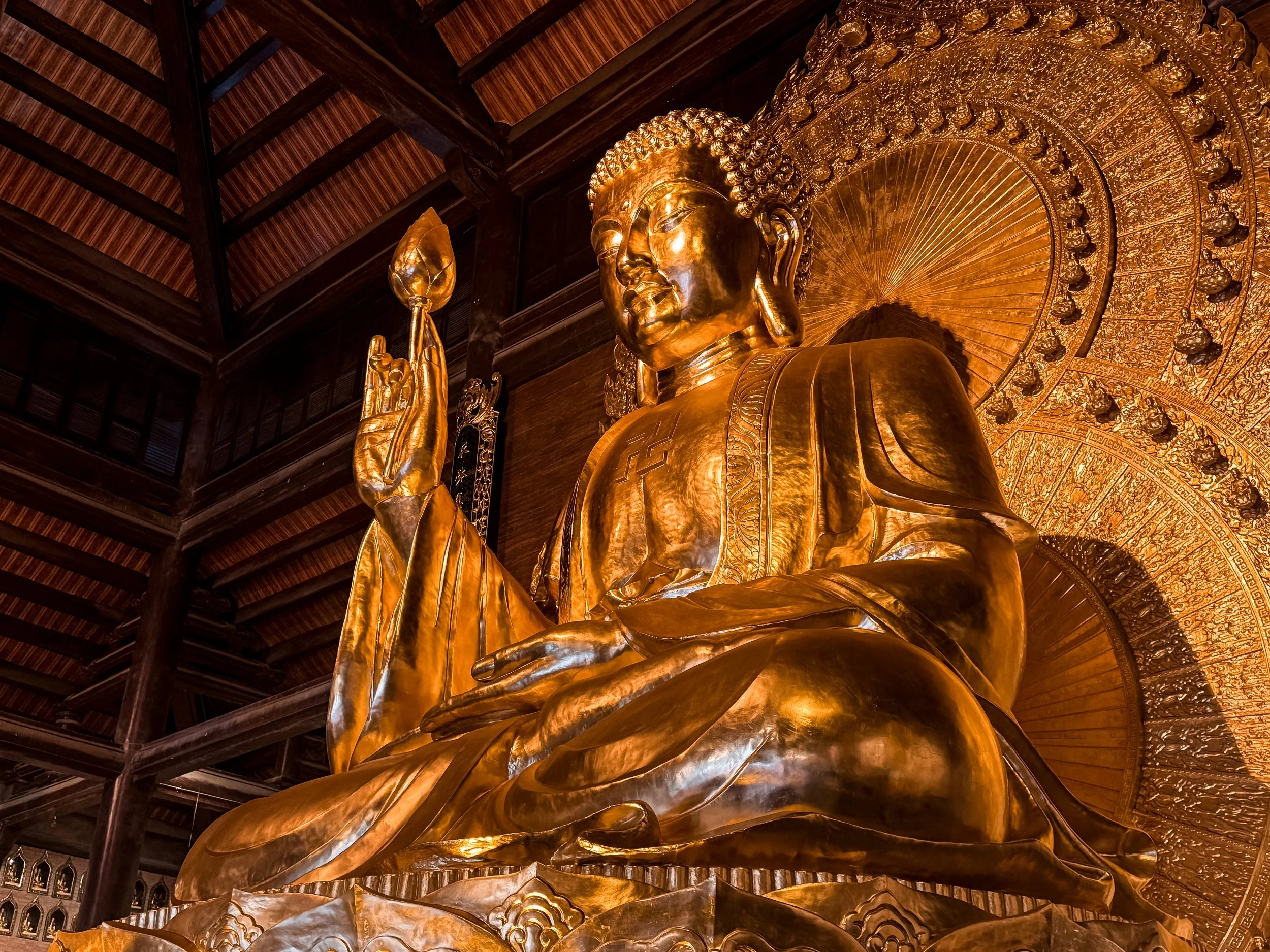
The Buddha Sakyamuni Hall. A major temple taller than the previous with a large gilded Buddha sitting on a lotus flower at its center. Its walls are lined with hundreds of niches containing smaller Buddha statues. Its ceiling features an arched structure carved in motifs of dragons as if flying across the sky above. In front of the Buddha is an altar with large ceramic vases and offerings of fruits, sweets, flowers and money.

The Three Periods Hall. The final major temple and largest of the three. Inside are three gilded statues of the Buddha representing the past, present and future. Each sits on a lotus flower with a golden backdrop behind them, making different signs with their hands. It is the largest set of Period Buddhas in Vietnam. Like the previous temples, there are altars for offering and its walls are decorated in niches of gilded sitting Buddhas.
Maitreya Buddha Statue. A giant bronze statue of the happy looking big bellied Buddha. It stands on a pedestal in the open air and is the largest of its type in Asia.
The Sacred Bodhi Tree. A propagation of the world’s longest living tree, aged over 2,500 years. It is thought that Buddha attained enlightenment underneath it.
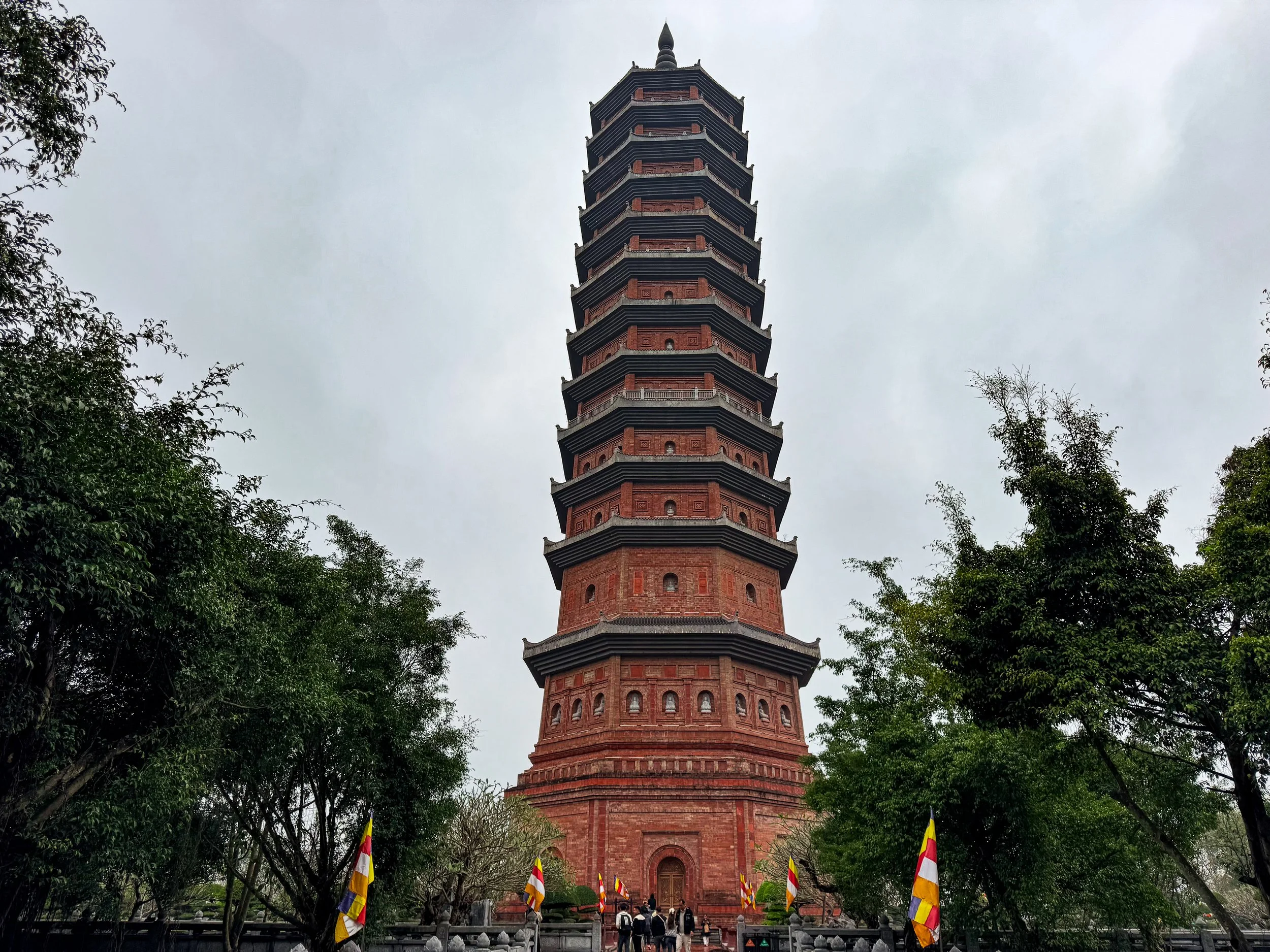
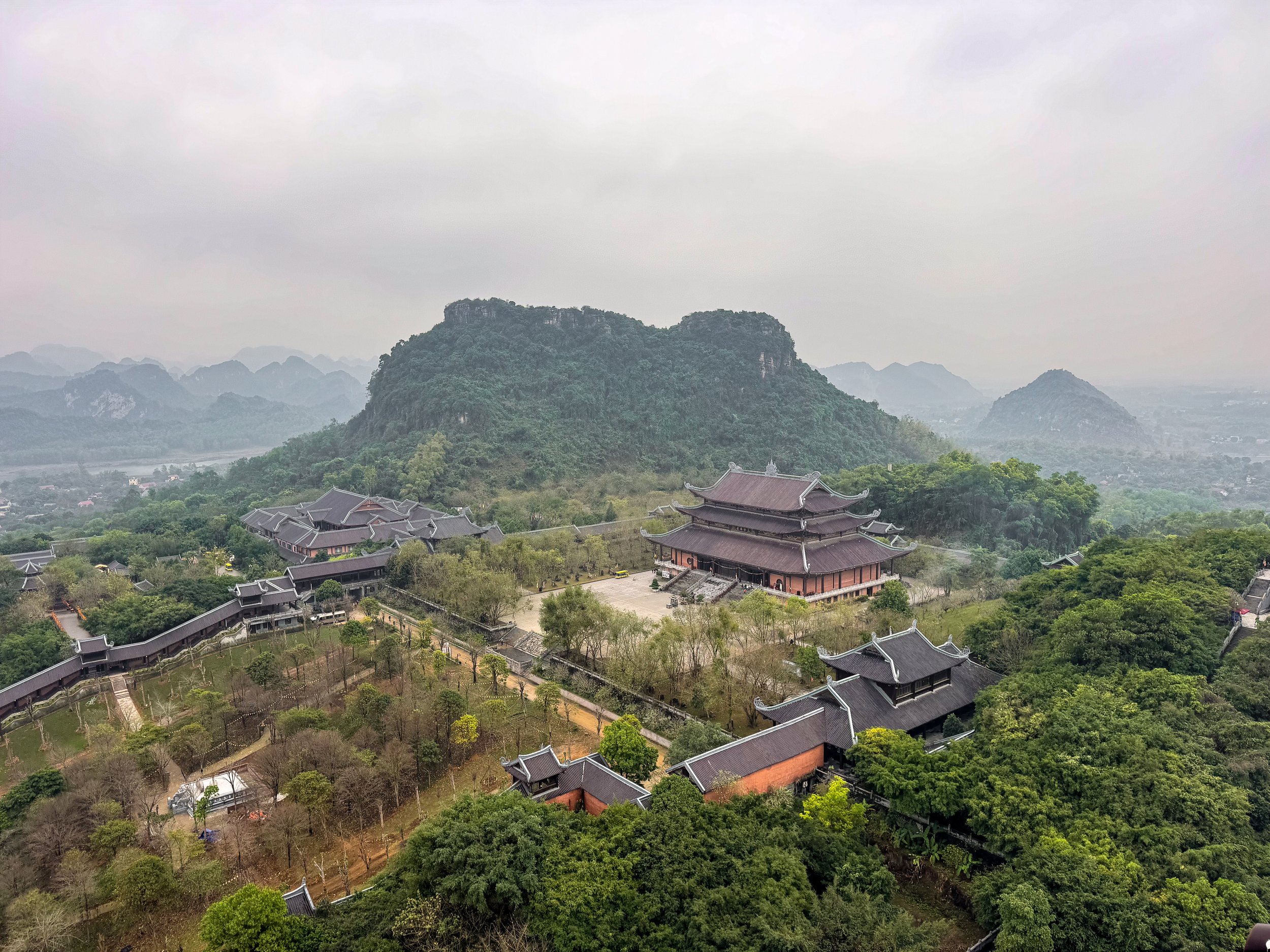
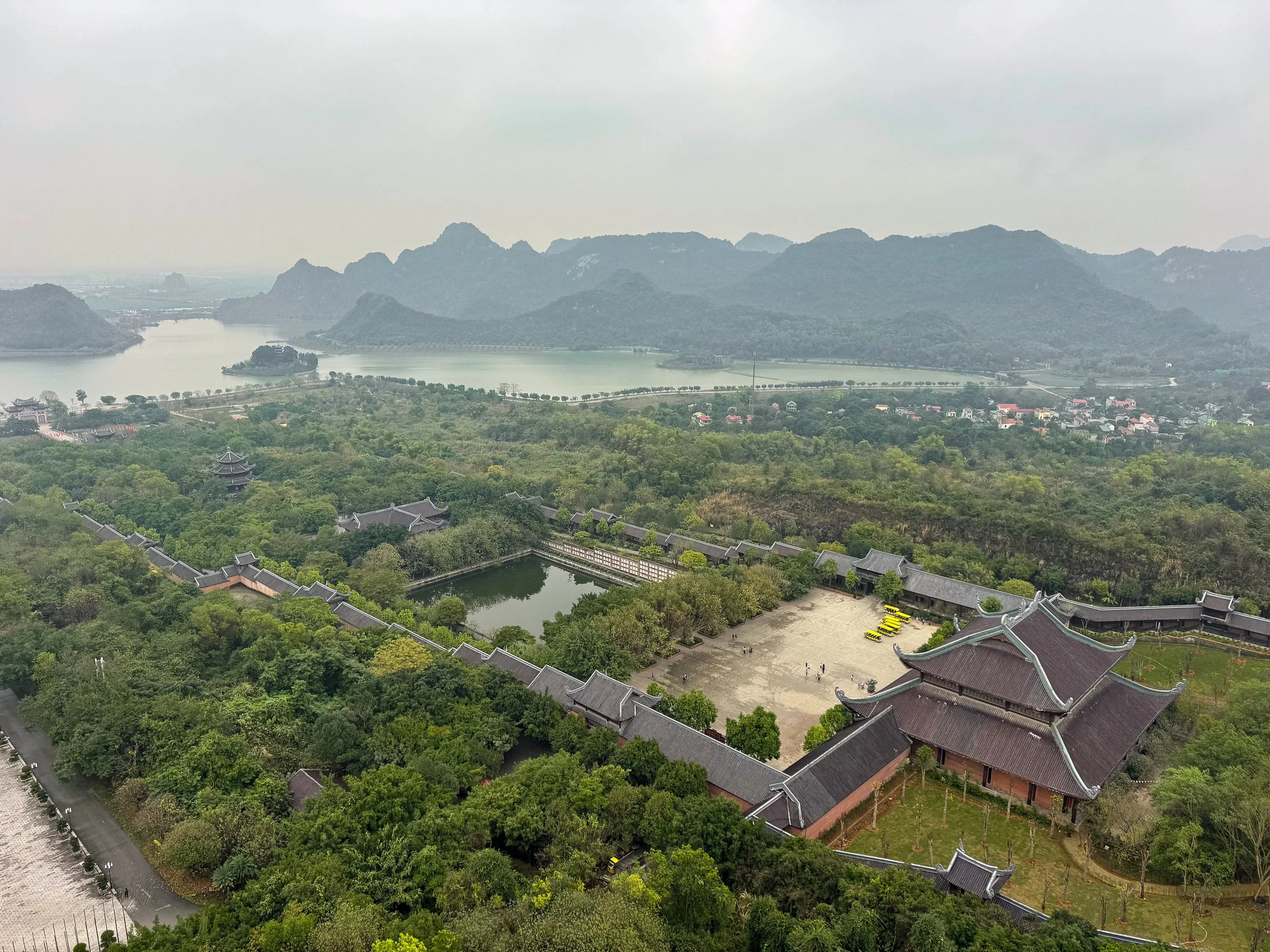
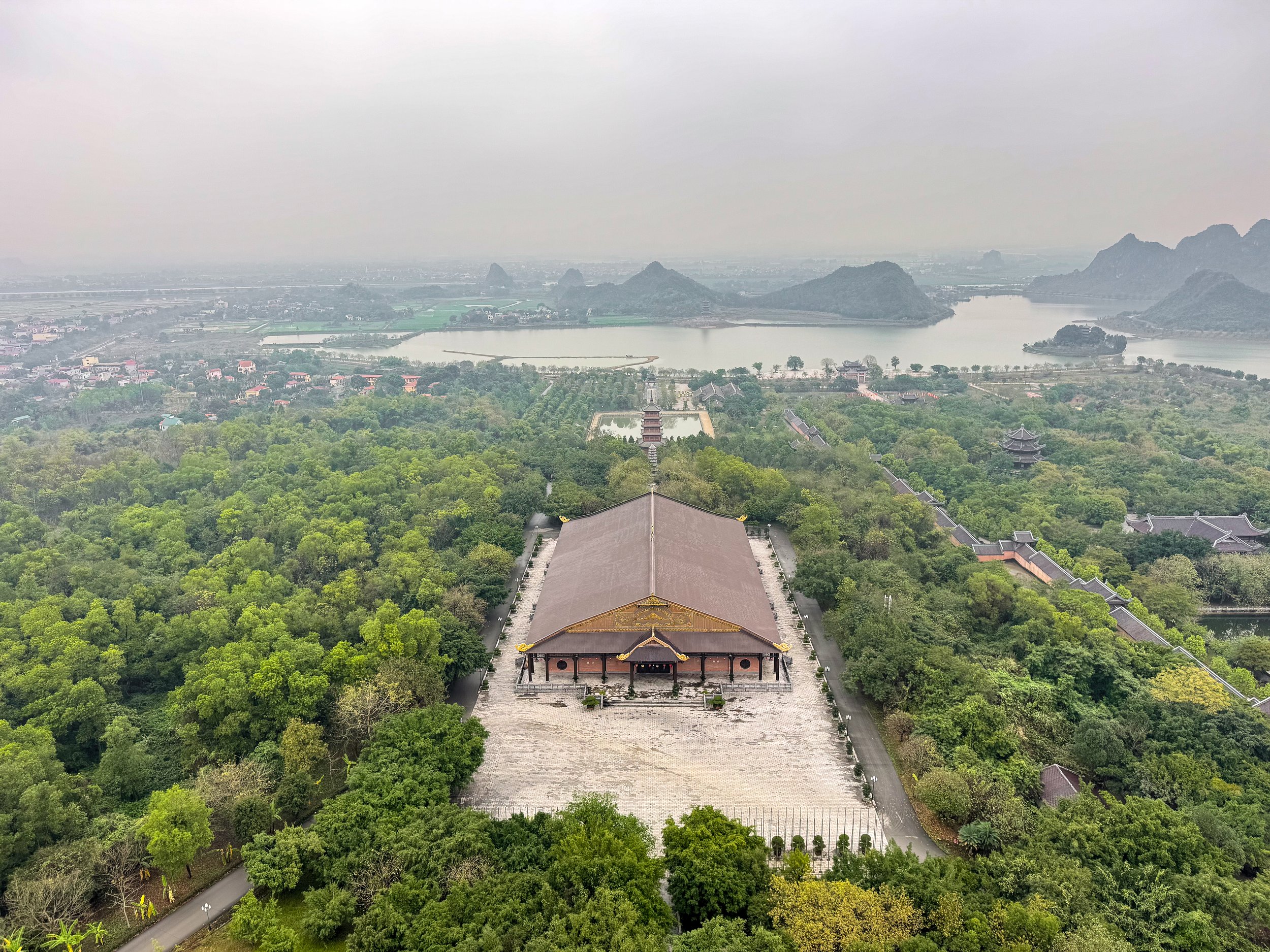
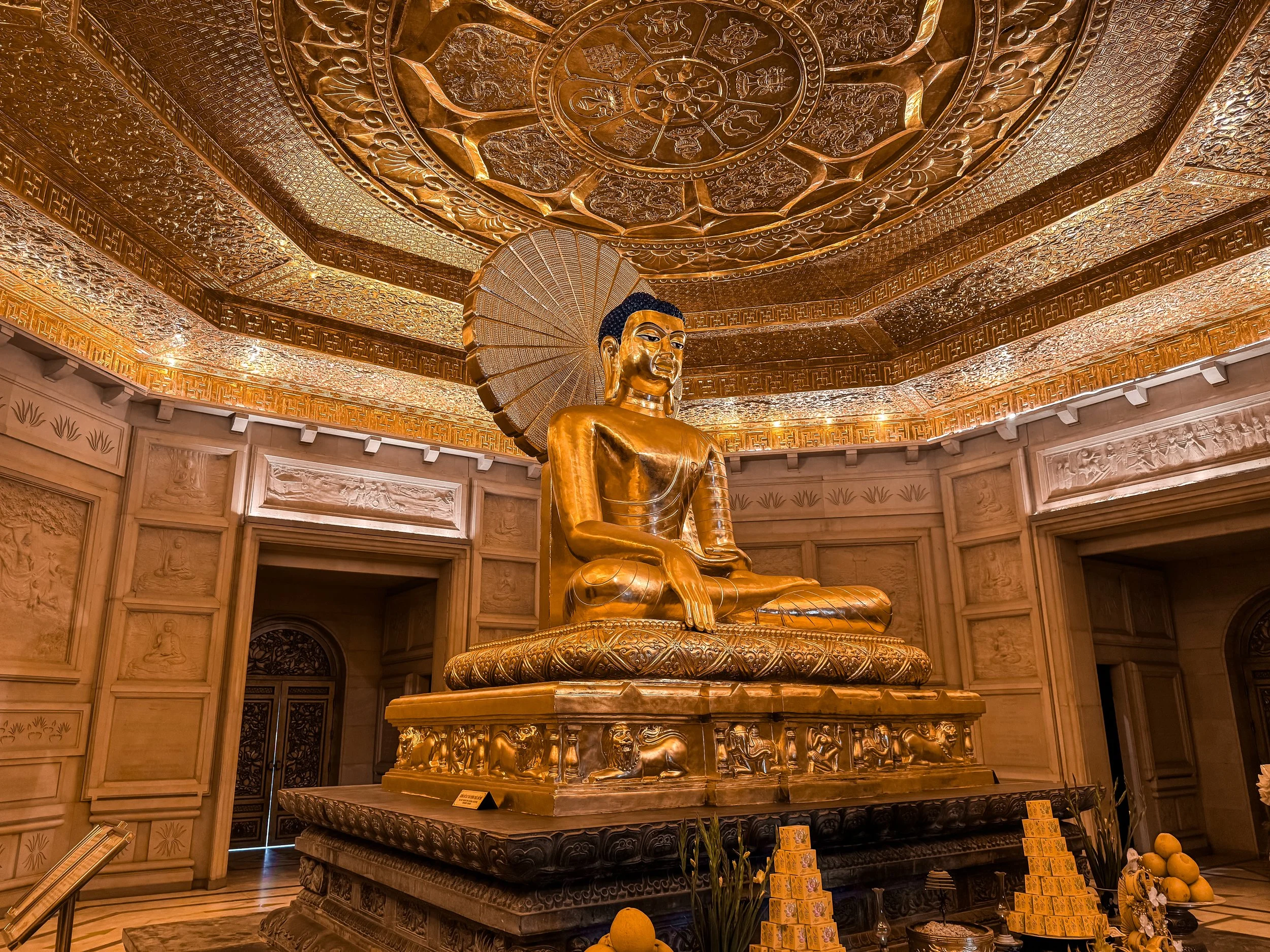
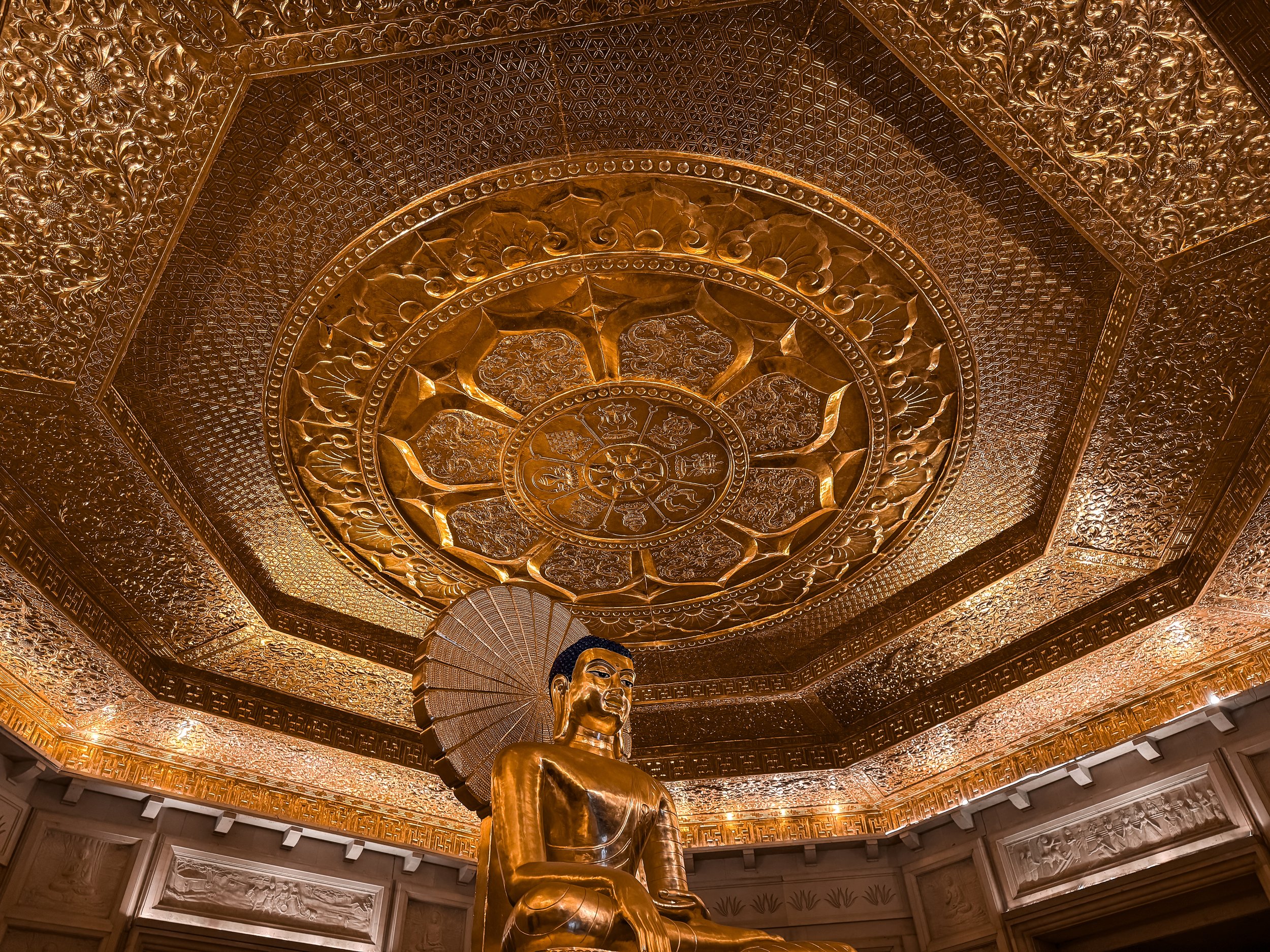
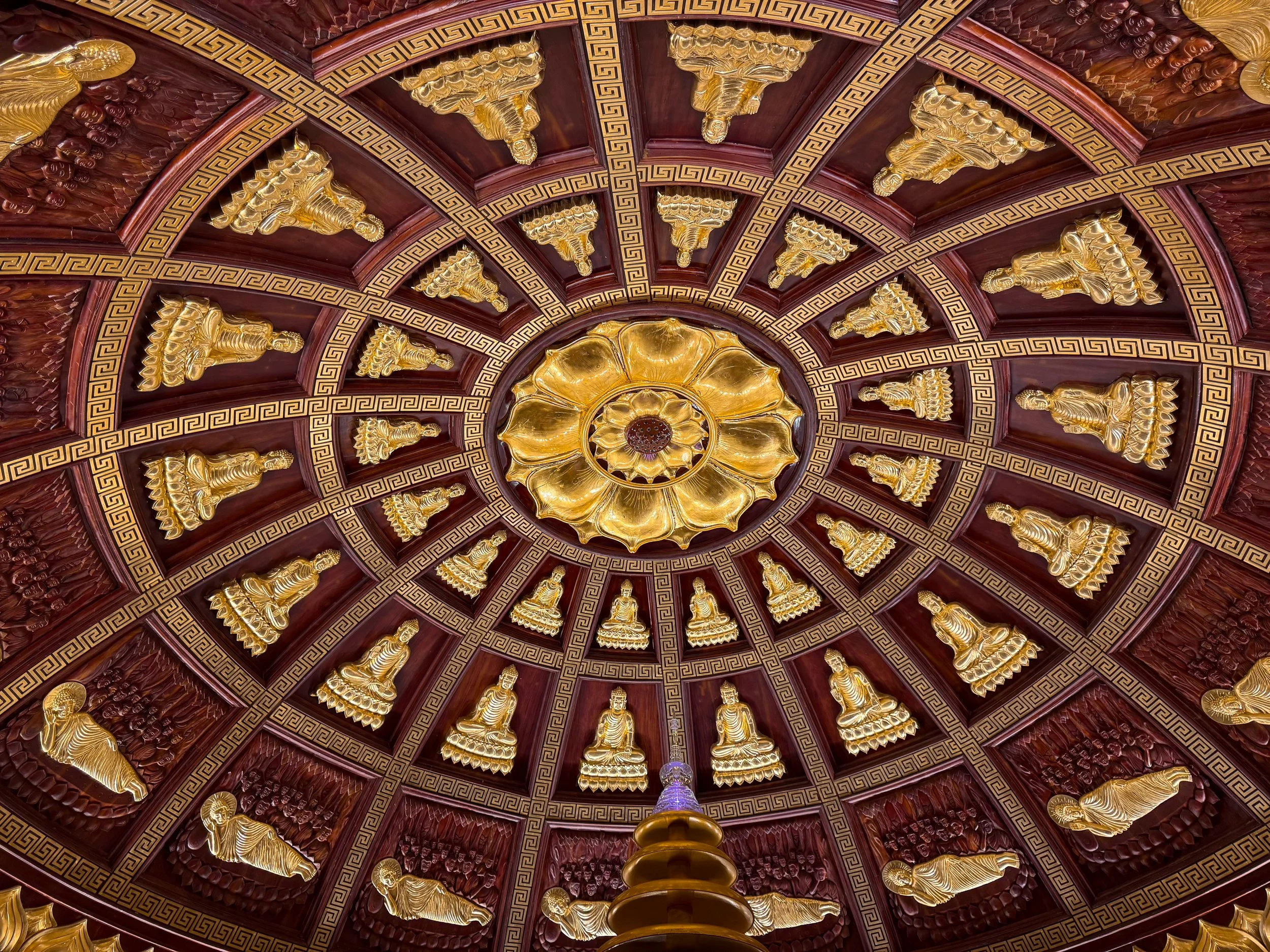
Bao Thien Stupa. The tallest stupa in all of Asia, measuring 100 meters tall. It’s an impressive sight visible from around the temple complex. An elevator leads to the 12th floor with views of the landscape and surroundings temples. Stairs lead to the 13th floor with a gilded altar and domed ceiling with reliefs of various posed Buddhas. It’s a modern addition to the complex, completed in 2008.
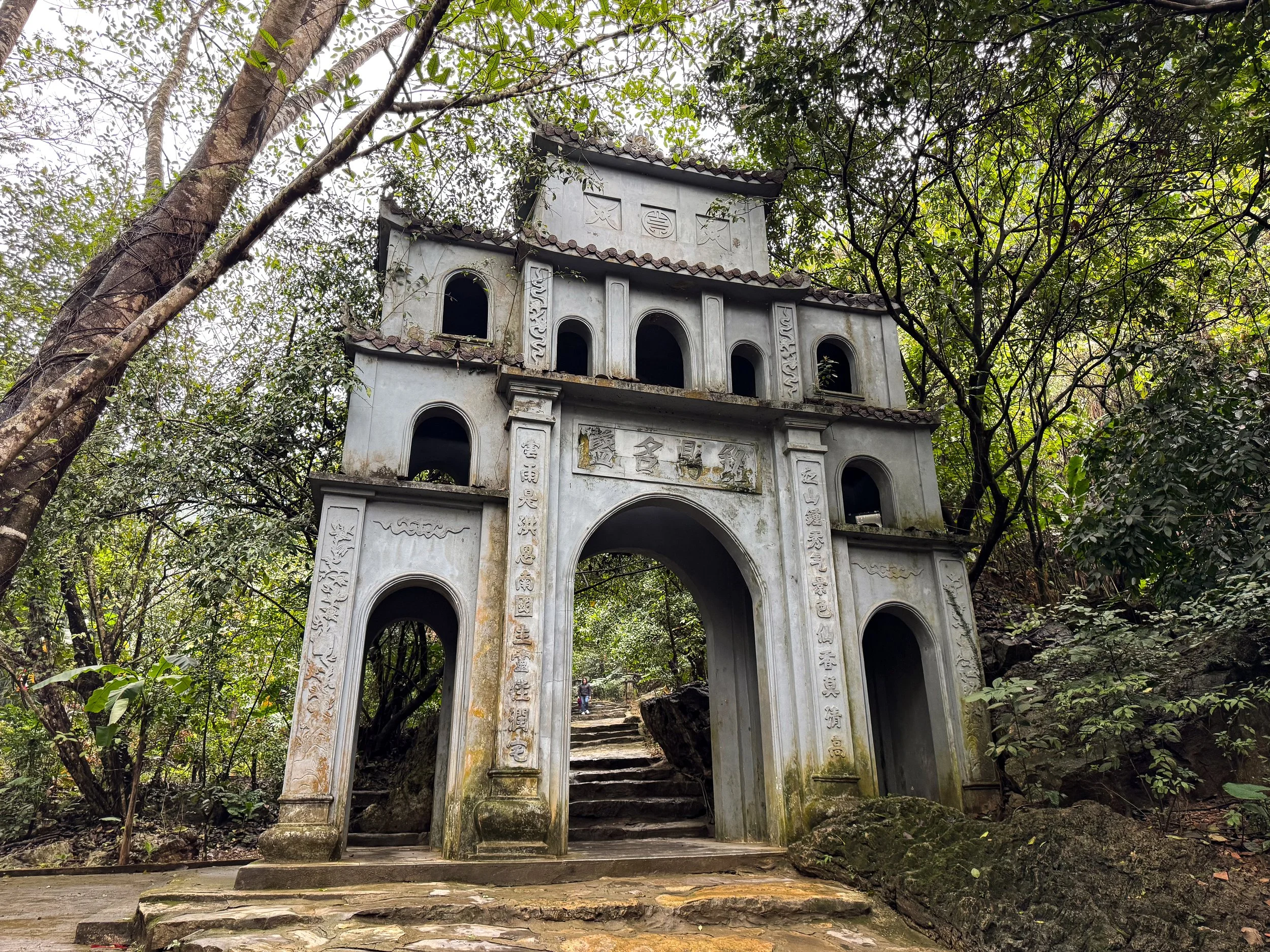
Ancient Pagoda. A 1,000 year old pagoda at the entrance of the ancient mountain temple complex. It has a simple four tiered design with various arches and reliefs. It leads up a trail to two sacred cave temples.
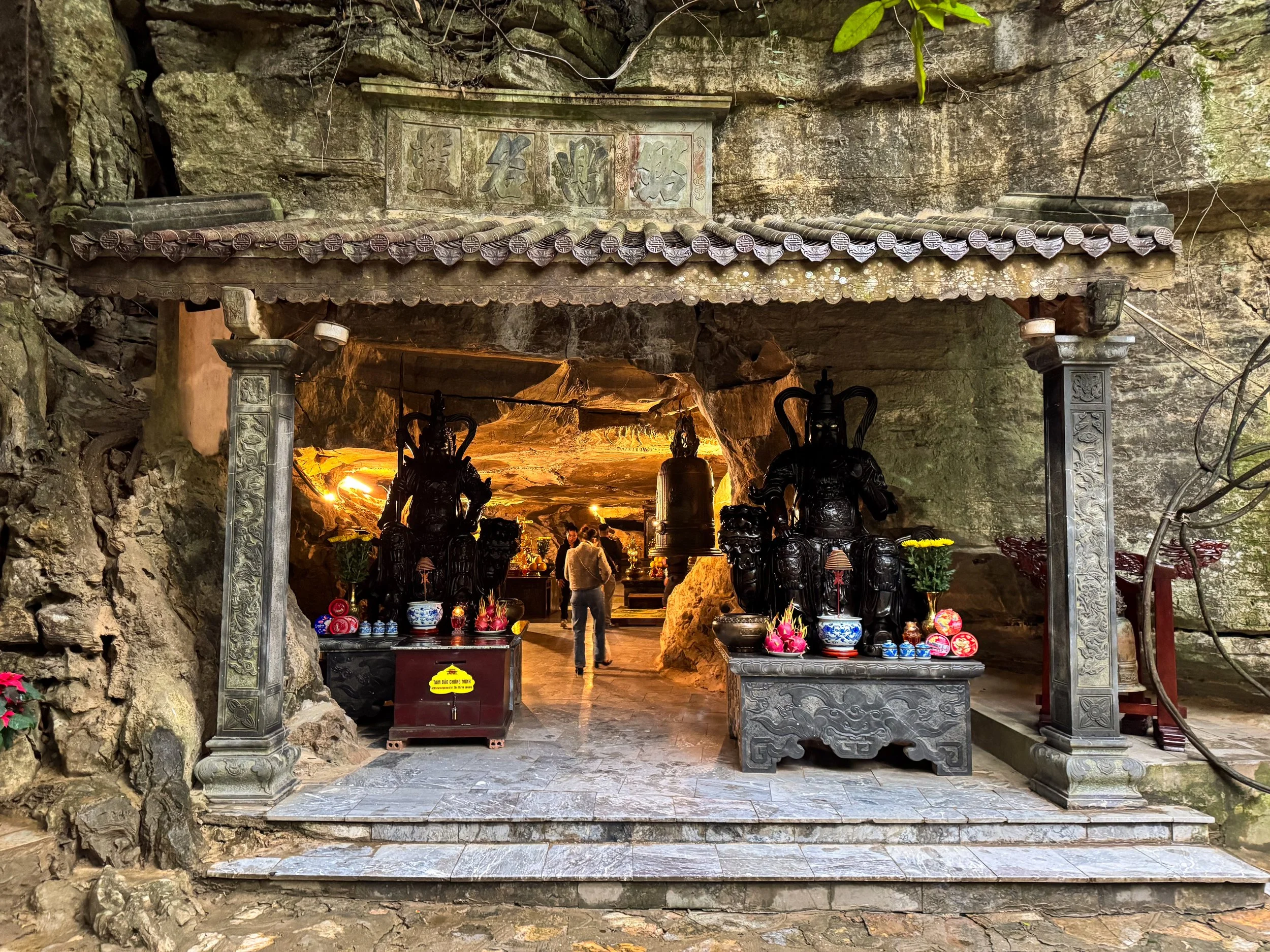
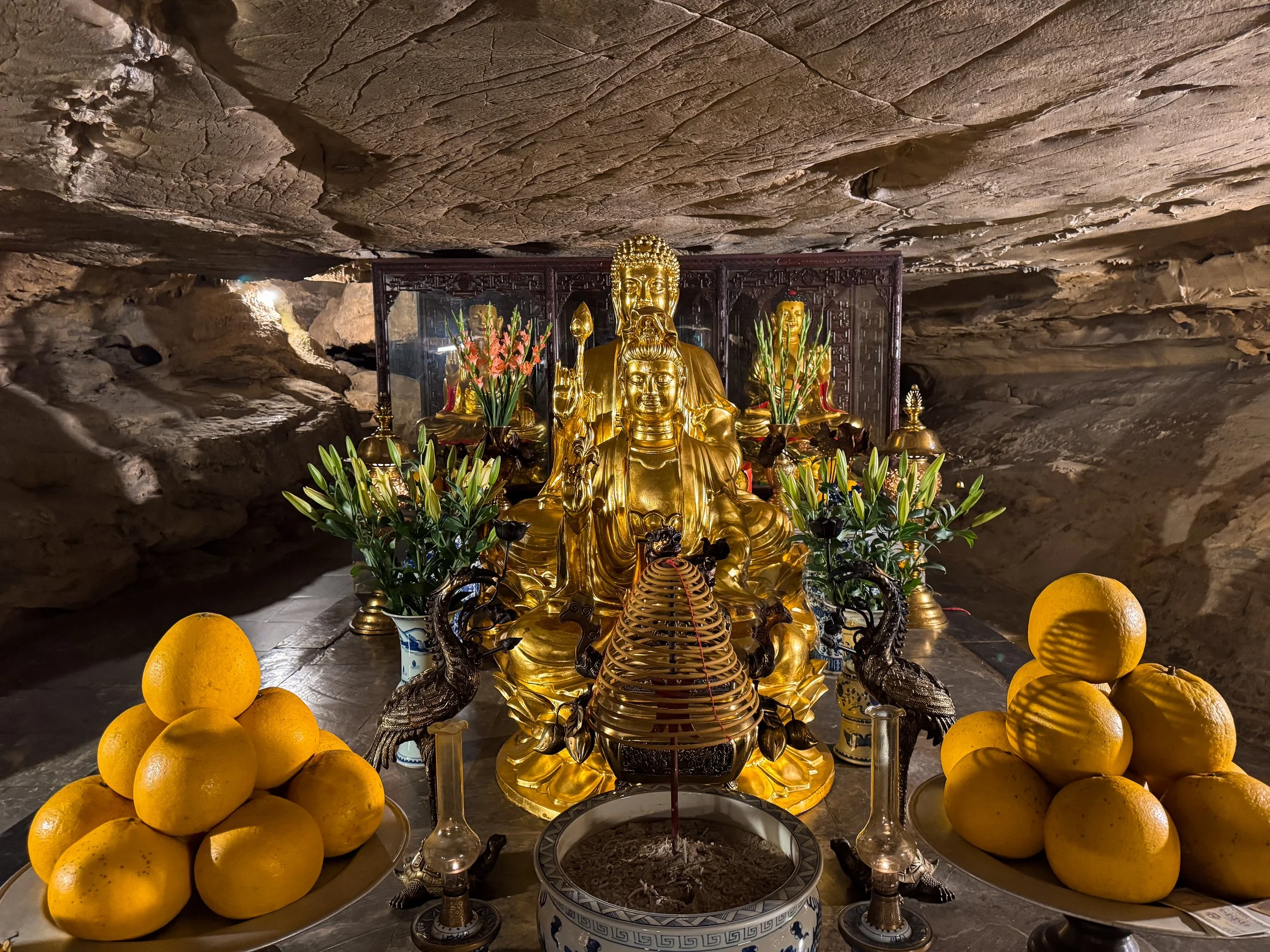
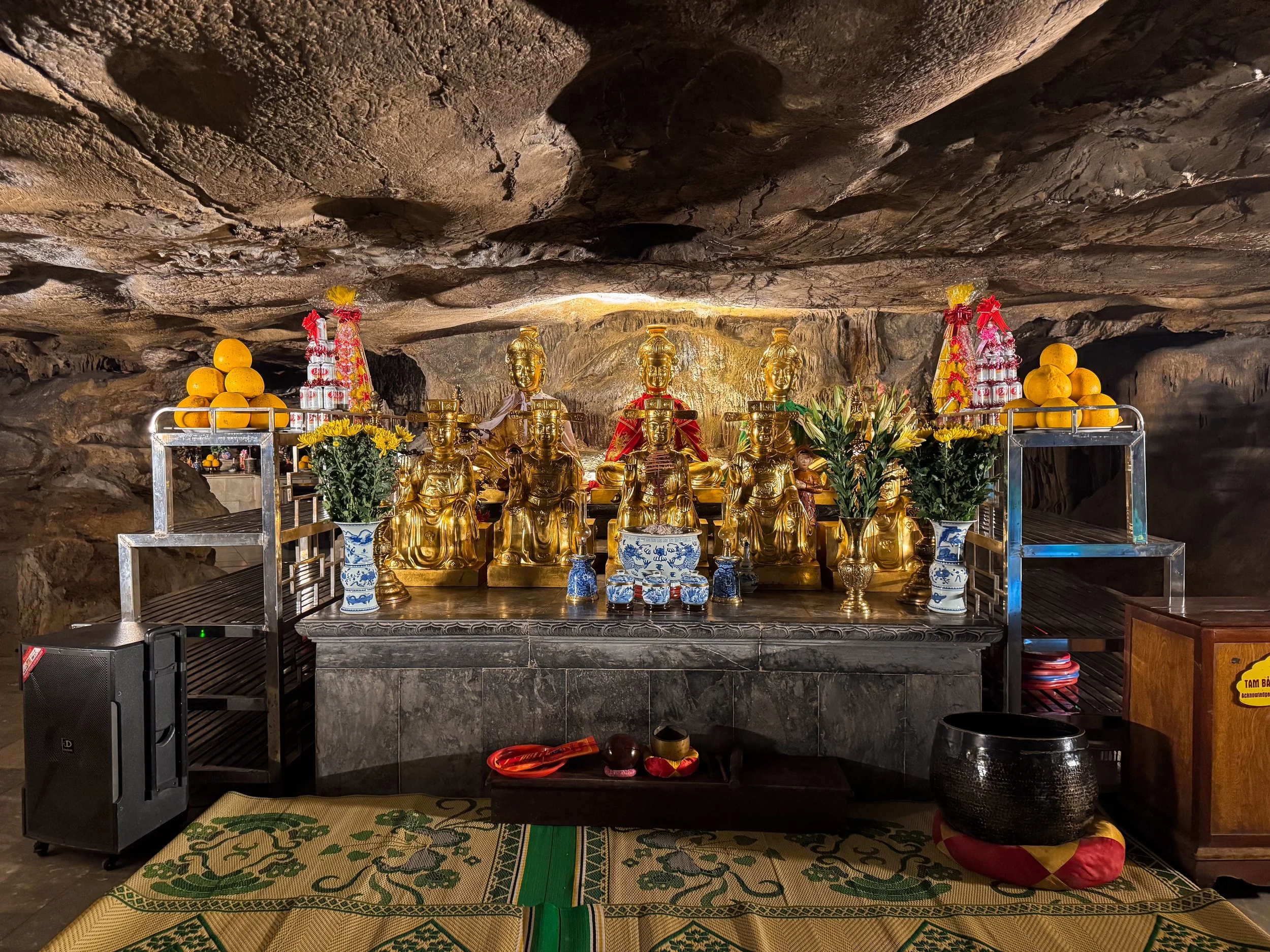
Buddha Worshiping Cave. A cave temple in the mountainous part of the ancient complex. Inside of its cavernous walls are altars and statues of Buddha built upon rock formations.
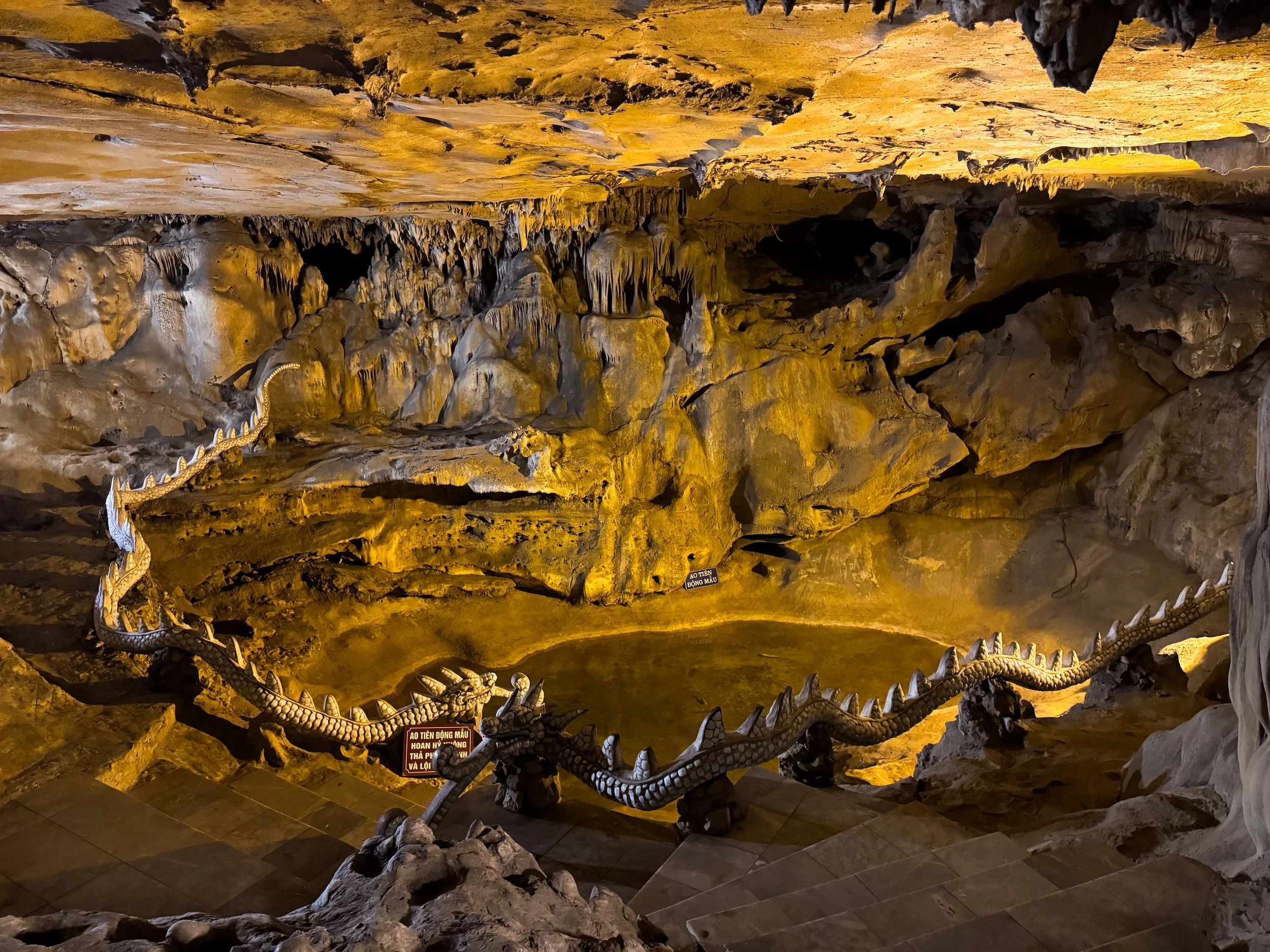
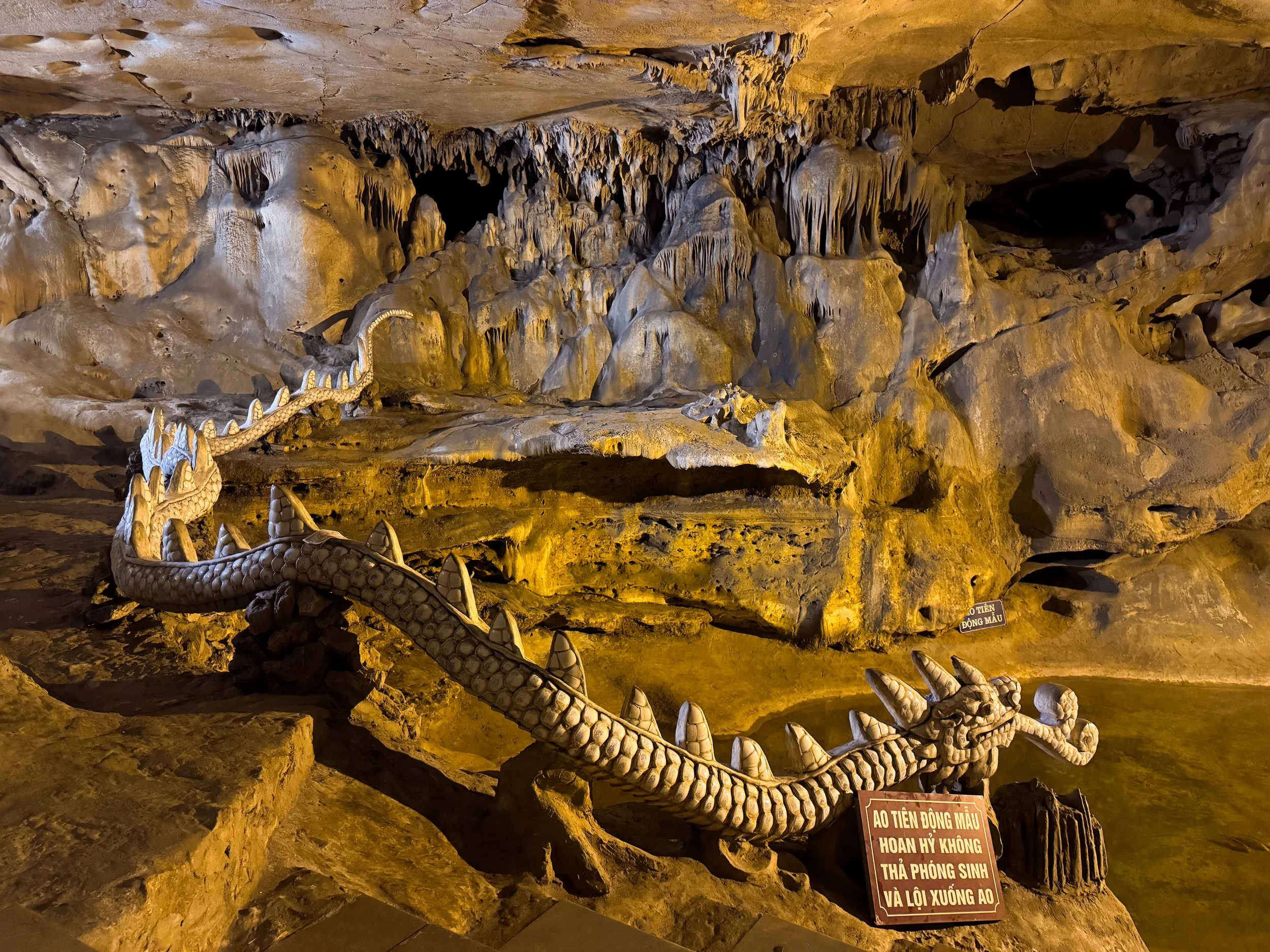
Mother Goddess Worshiping Cave. A sacred cave with several Buddhist altars and a natural hot spring surrounded by winding statues of two sea dragons.
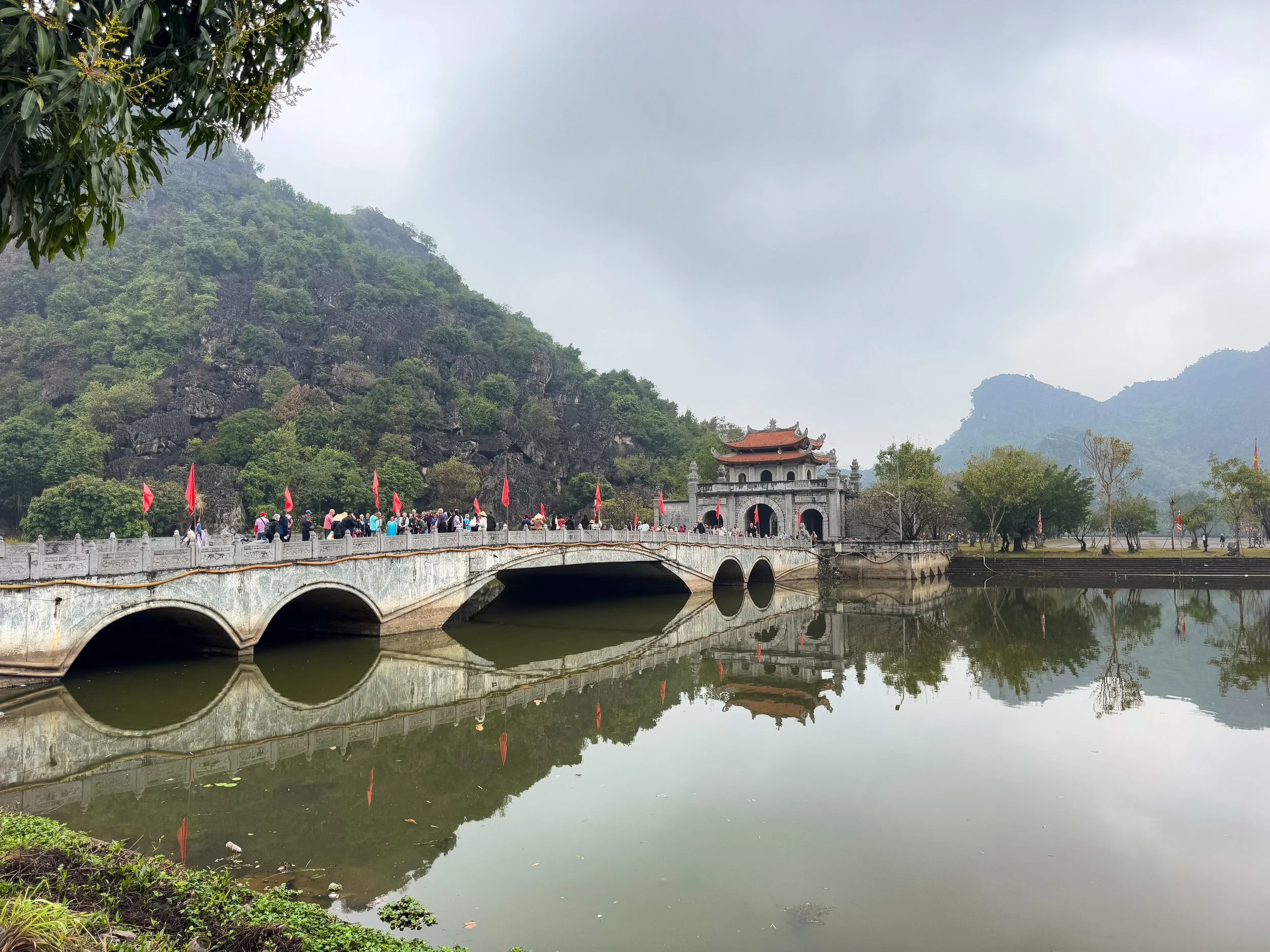
The Hoa Lu Ancient Capital
Hoa Lu is the site of Vietnam’s Ancient Capital with royal temples, pagodas and the tombs of past emperors. It’s culturally significant to the Vietnamese and an important part of the country’s history.
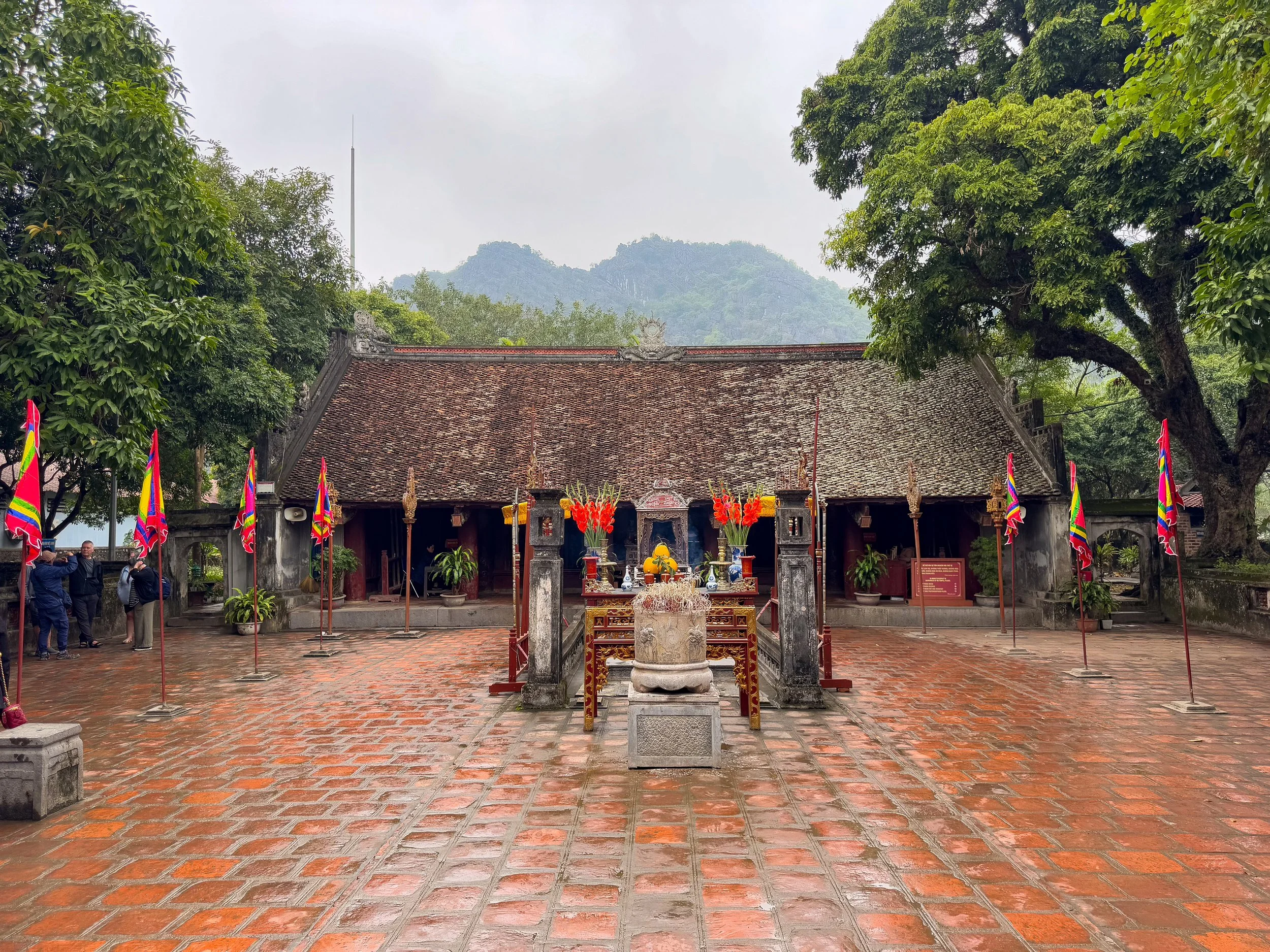
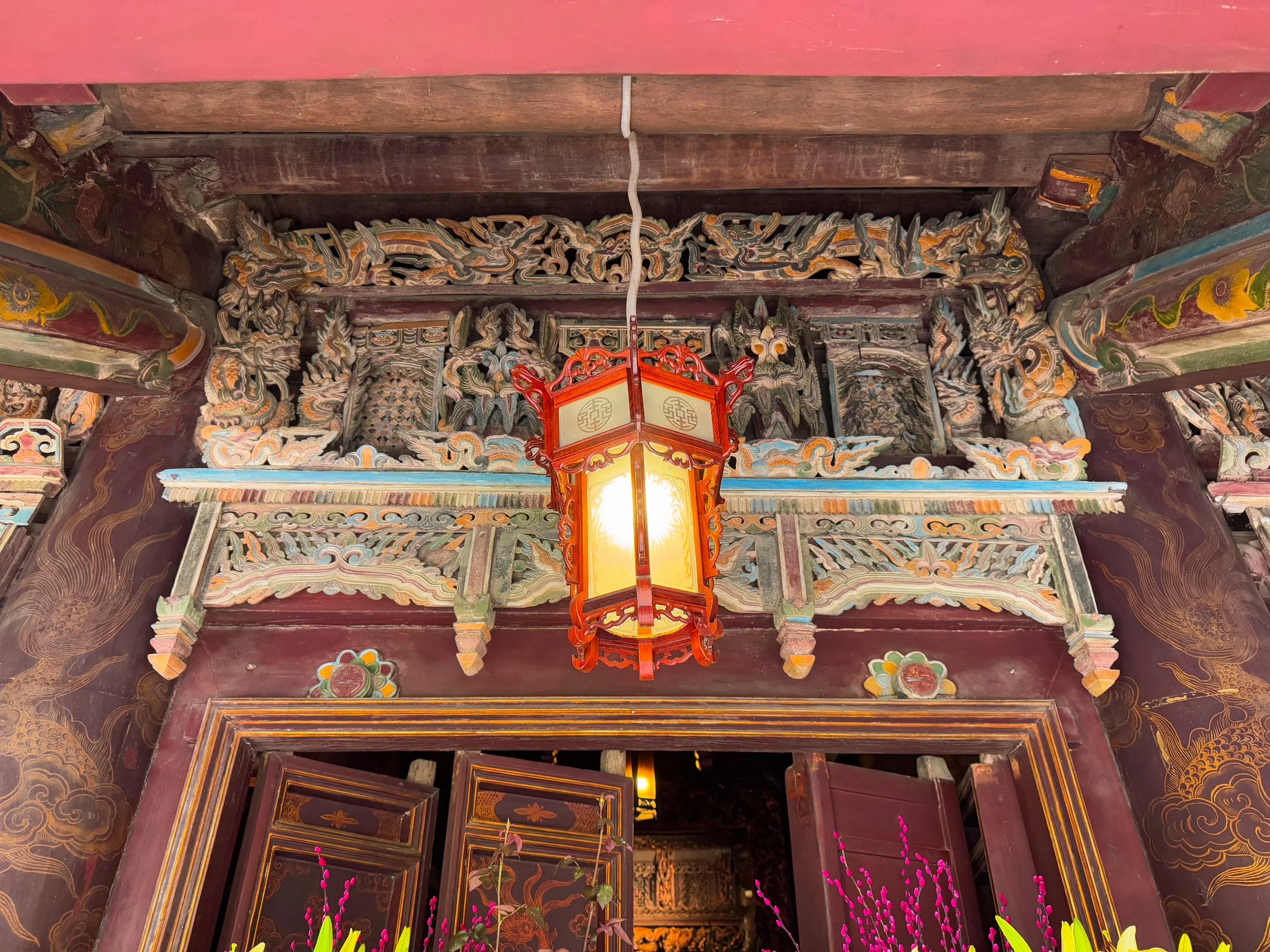
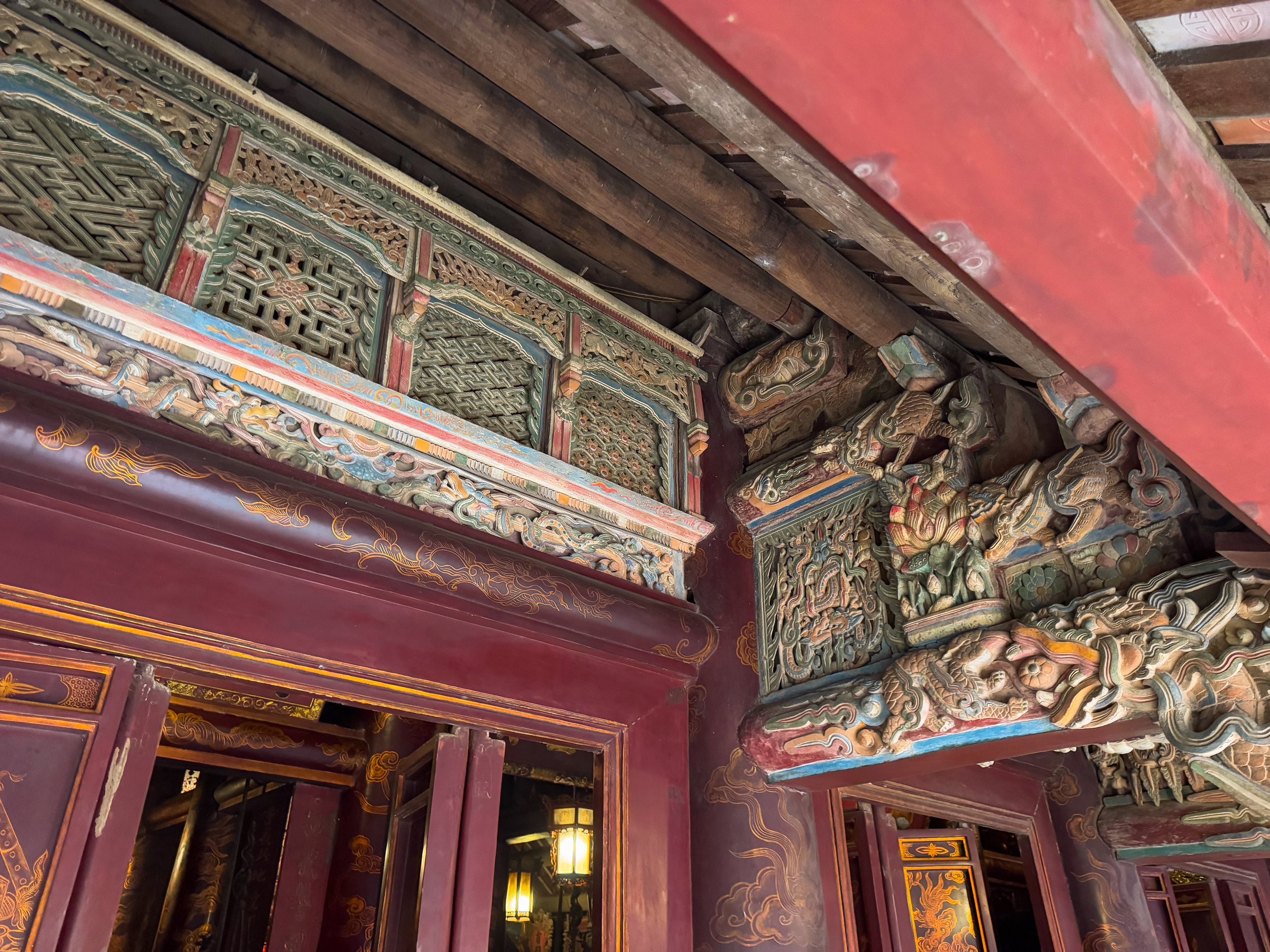
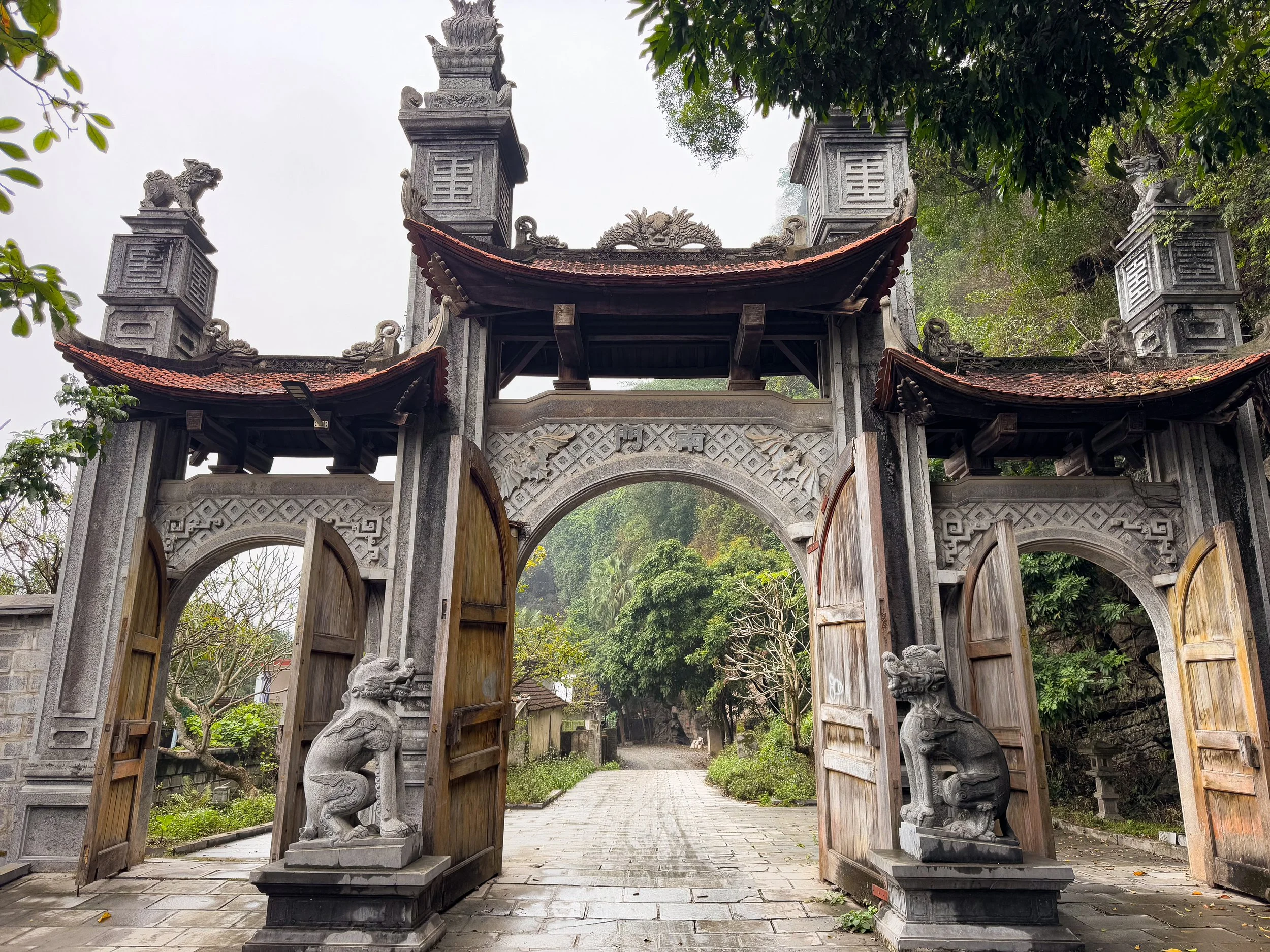
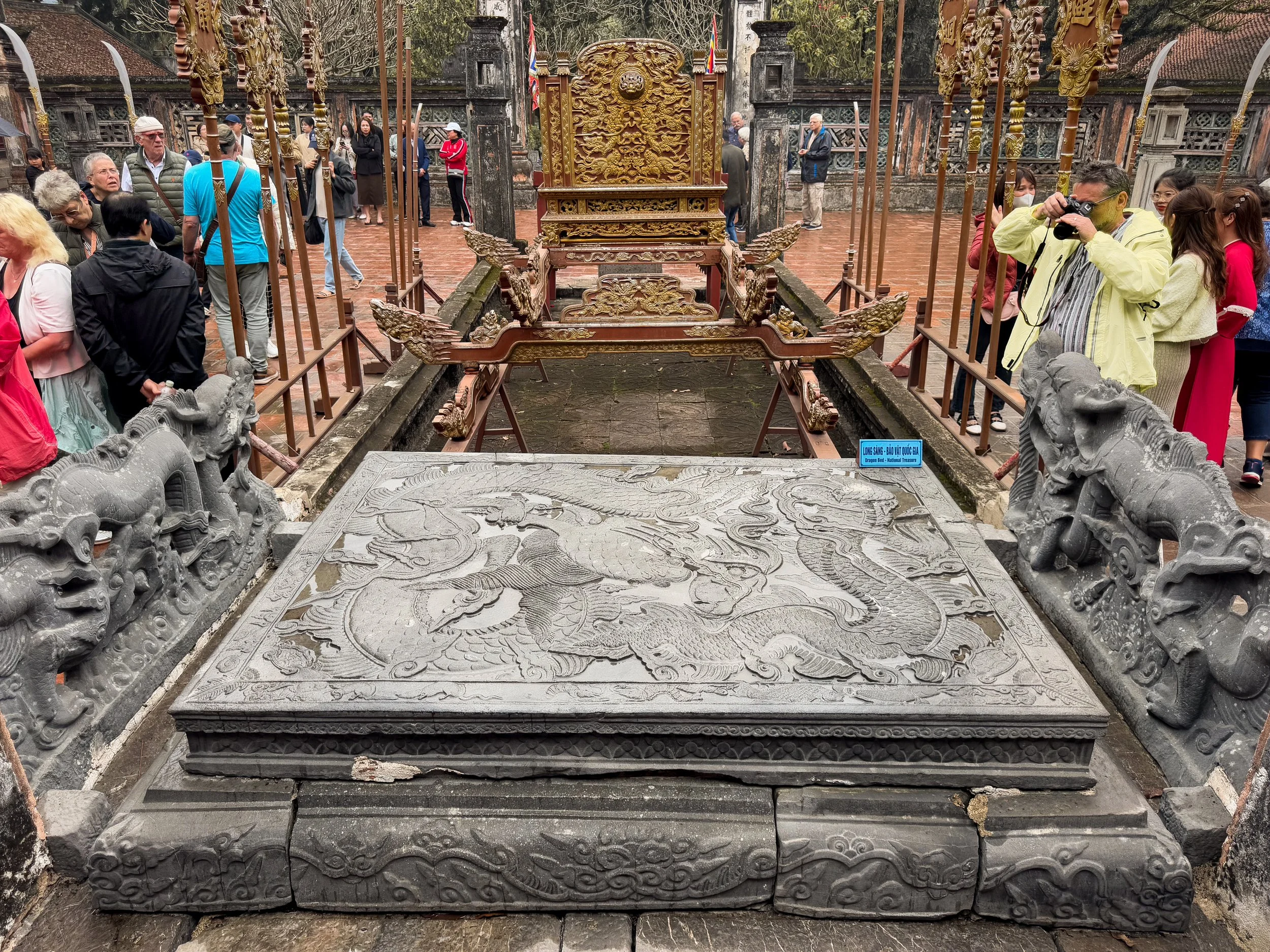
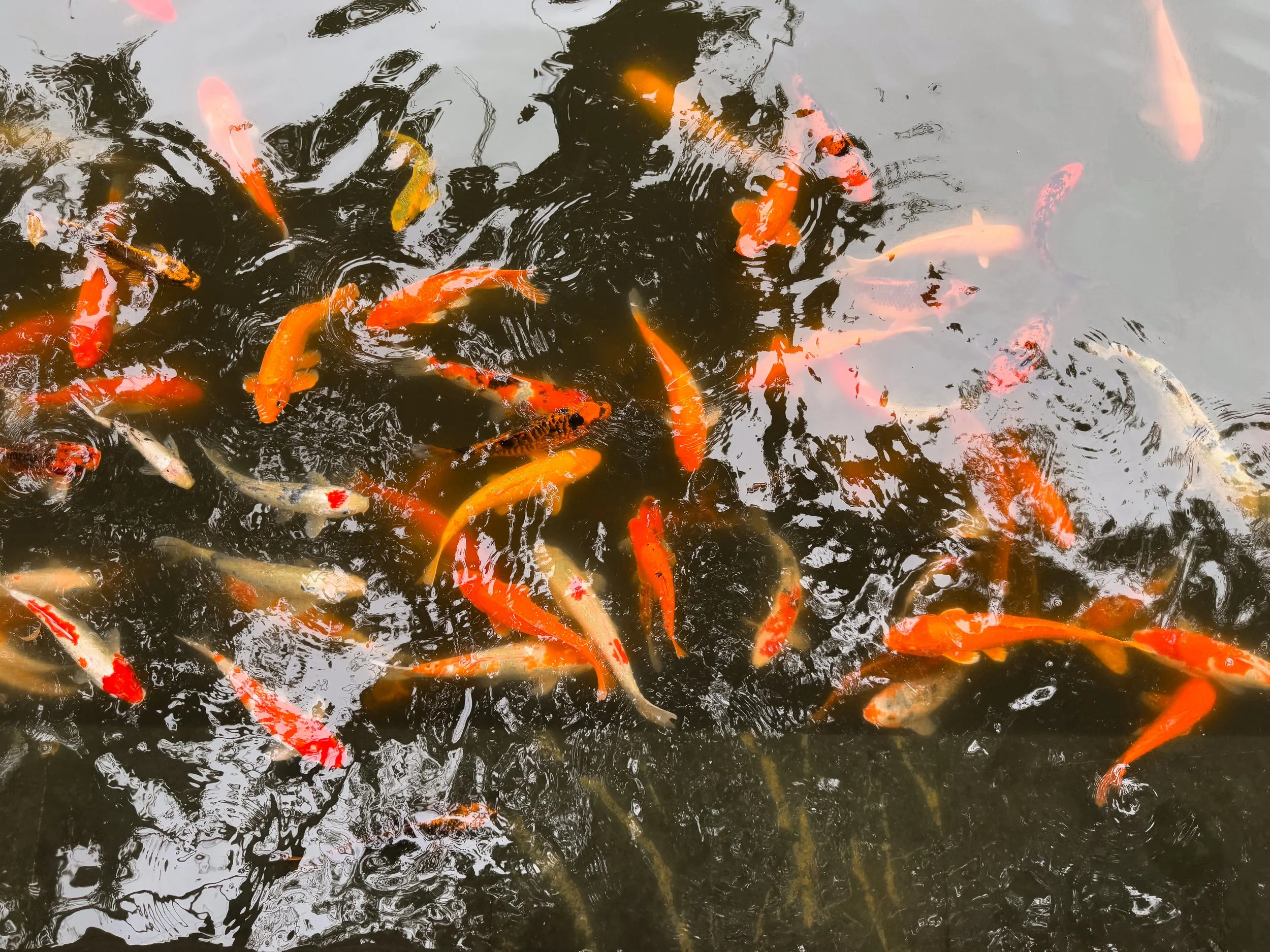
Dinh Tien Hong King Temple. A temple dedicated to the first king of ancient Vietnam credited with unifying the country during the 9th century. Multiple gates and tranquil courtyards with koi ponds lead to the main temple. Stone stelae sitting on statues of turtles, a reproduction of the emperor’s throne and a stone dragon bed are placed throughout. Inside its intricately carved wooden and stone facade are statues of the former emperor. People often pray to him and pay him tribute.
Le Dai Hanh King Temple. A temple dedicated to a revered king from the 9th century responsible for expanding ancient Vietnam’s growth and prosperity. It’s very similar to the previous temple with a slightly different courtyard.
Tomb of Emperor Le Dai Hanh. The burial site of a Vietnamese emperor built against the backdrop of the mountains facing a rice paddy. It’s located 1km from the temple and much lesser visited.
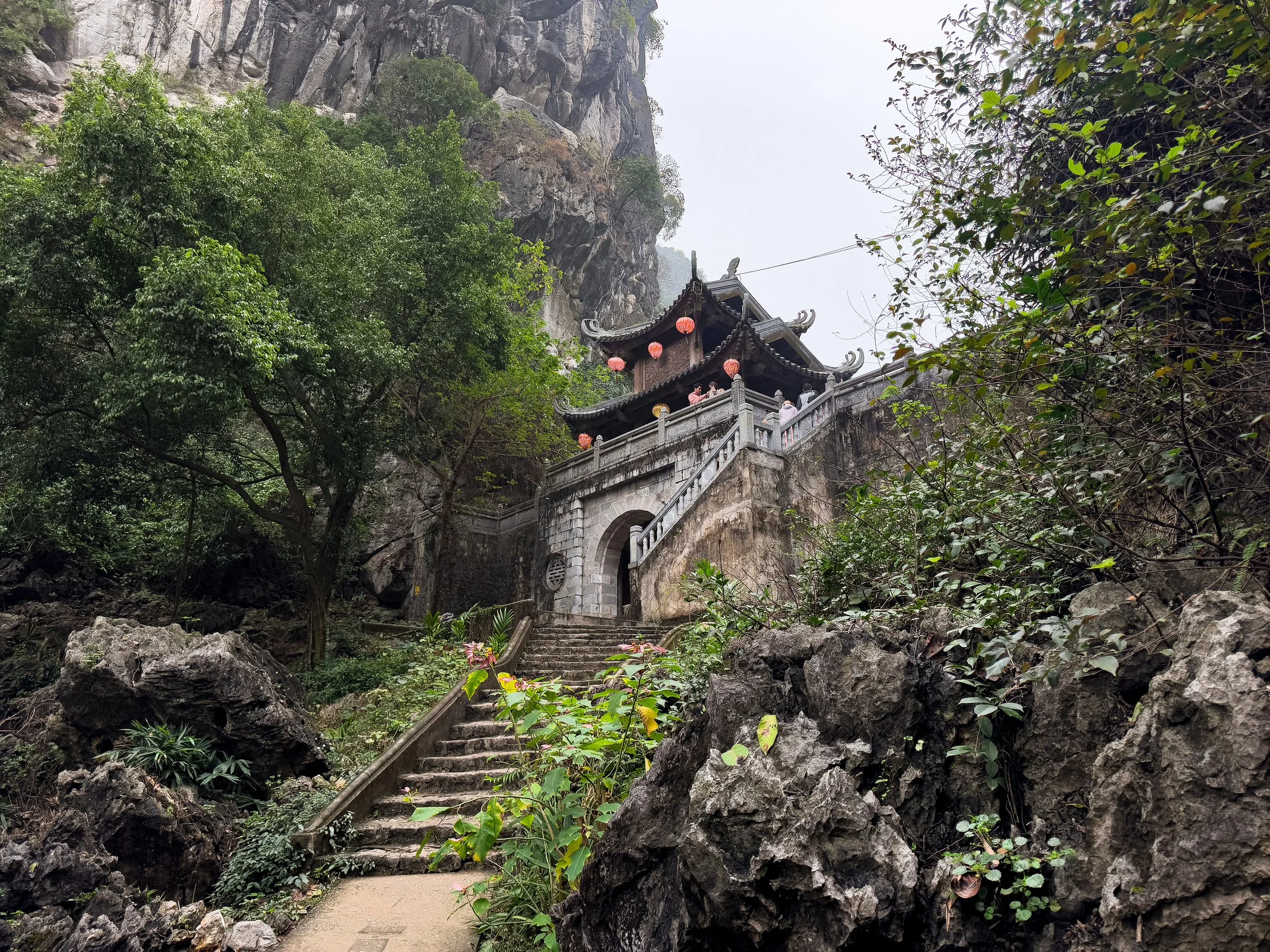
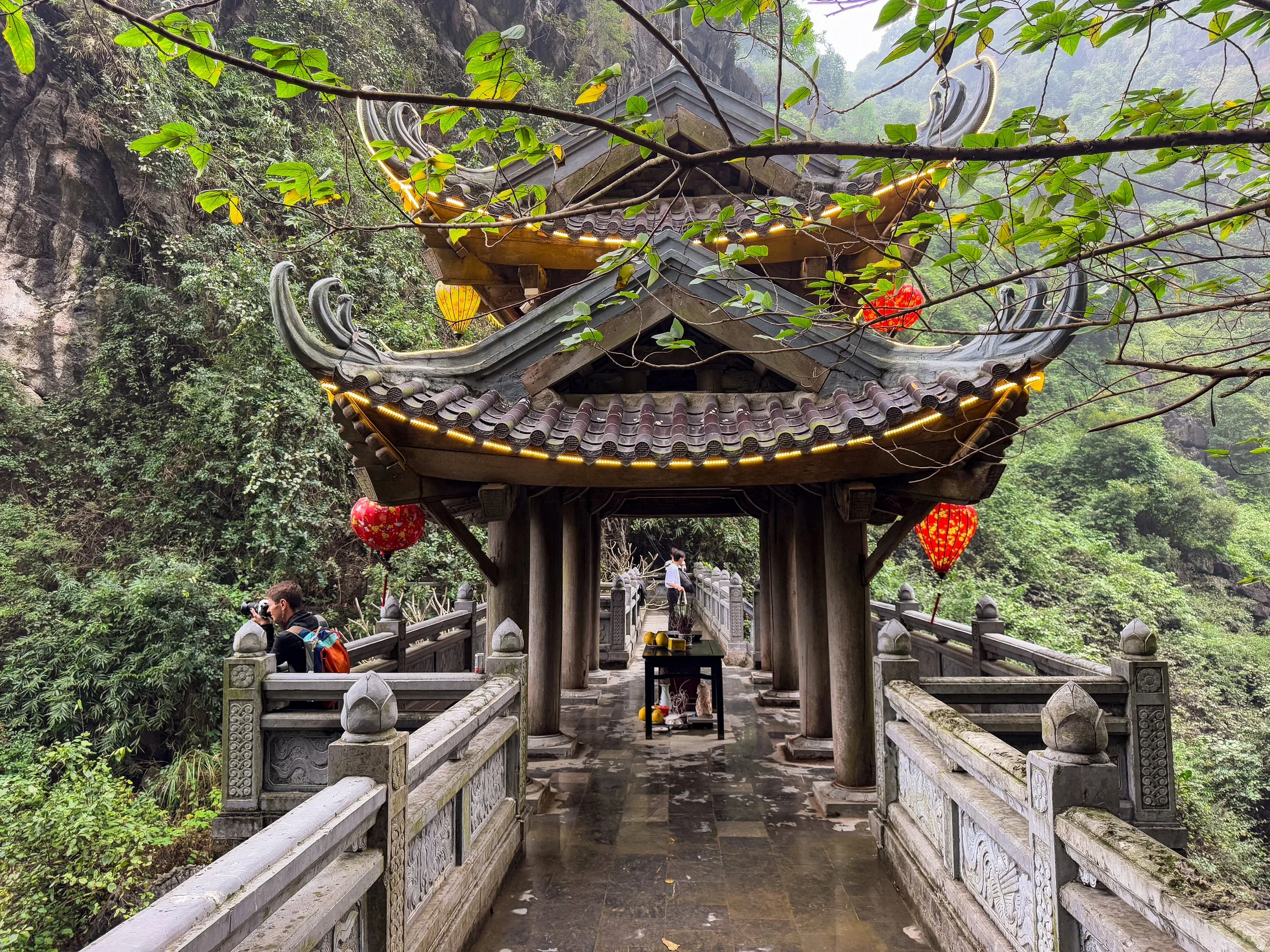
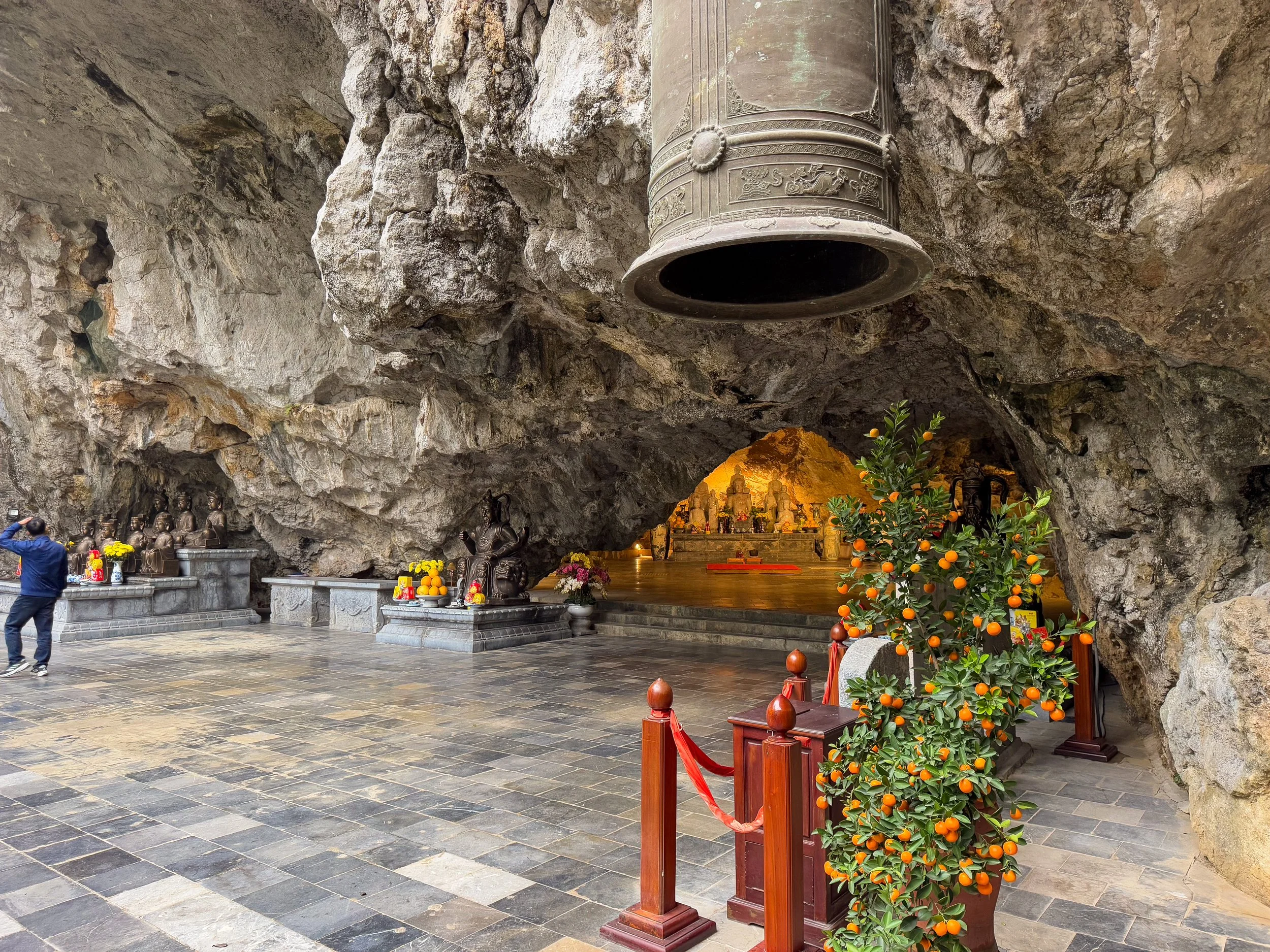
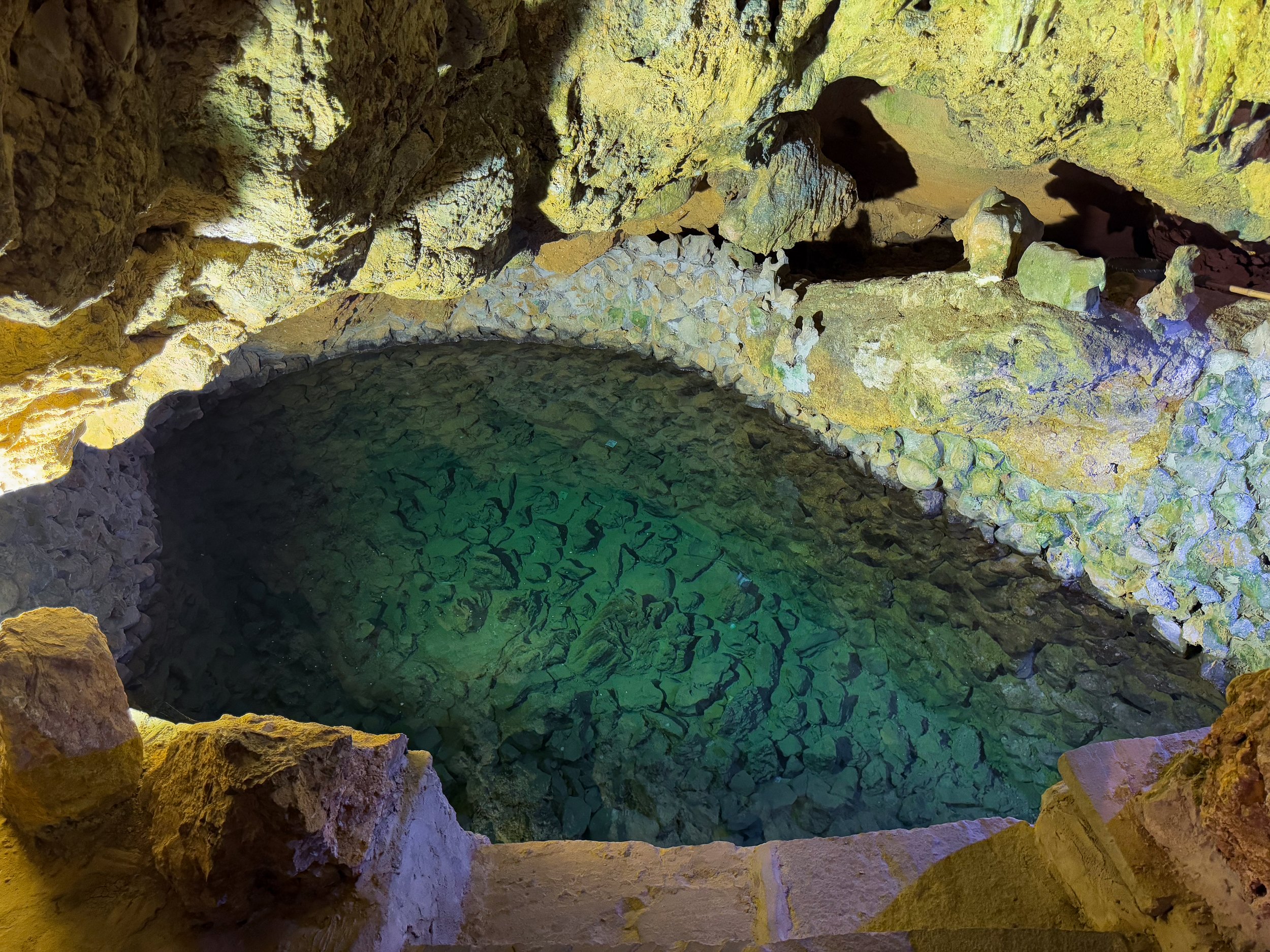
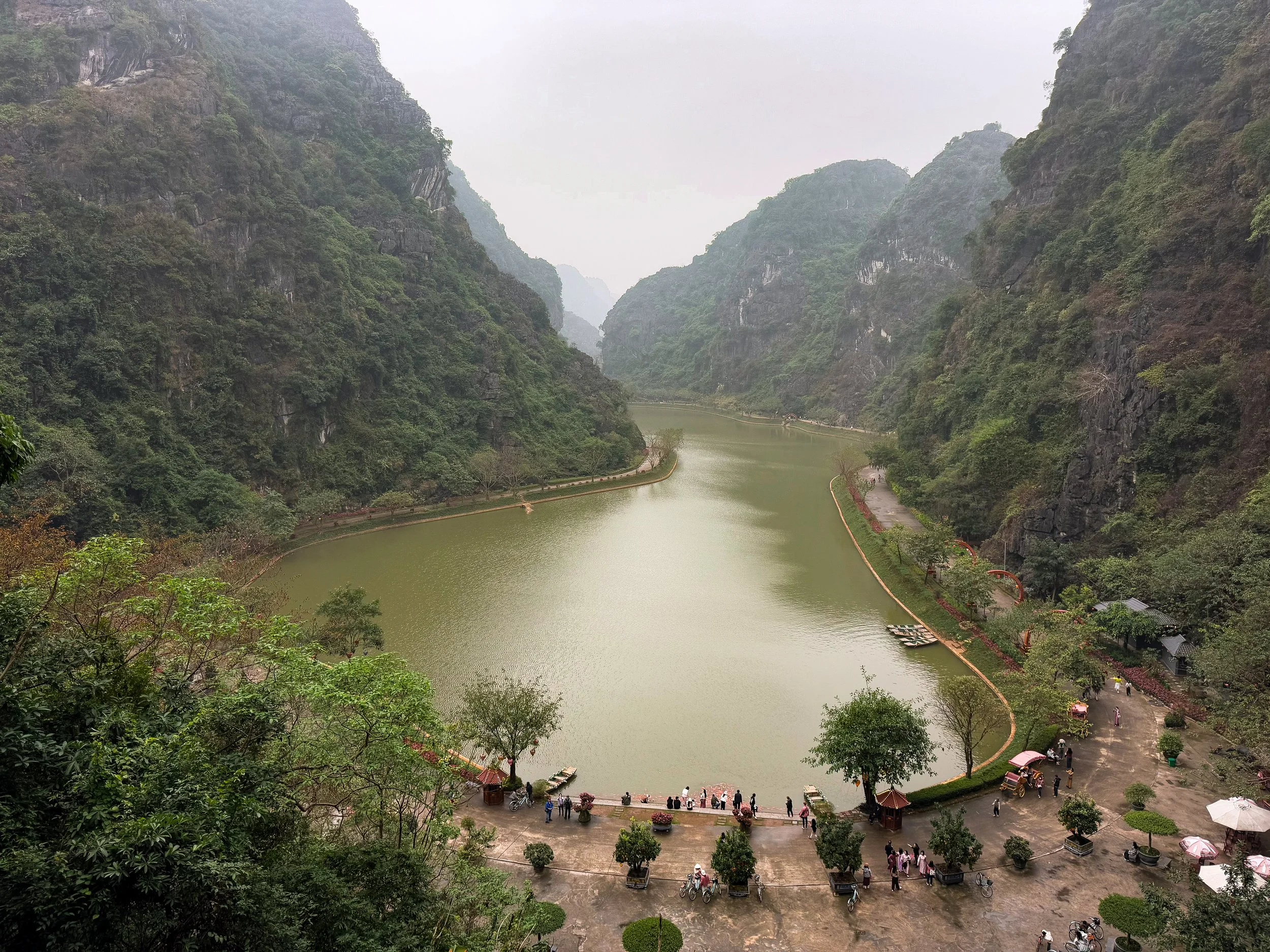
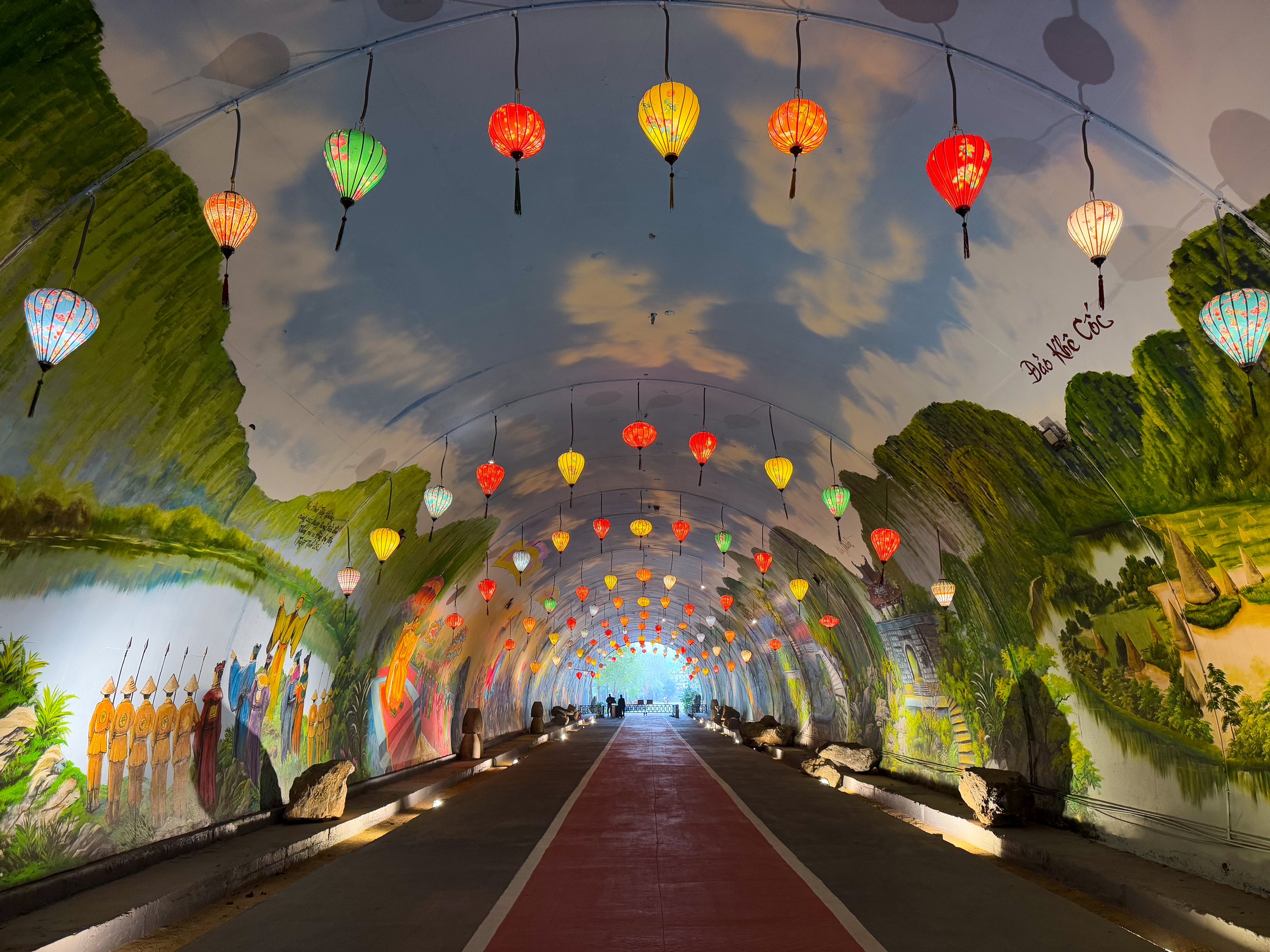
Tuyet Tinh Coc (Buddha Cave)
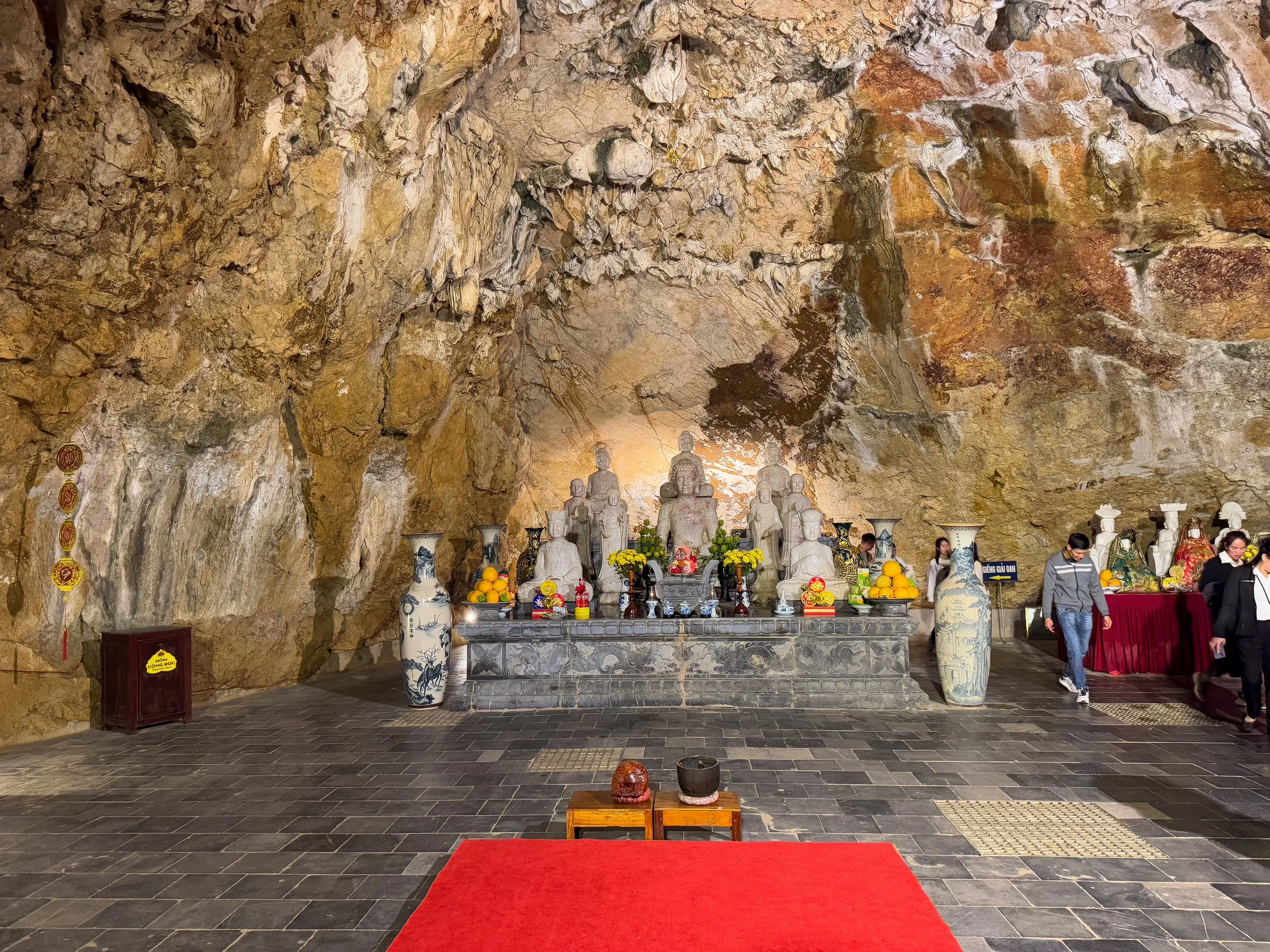
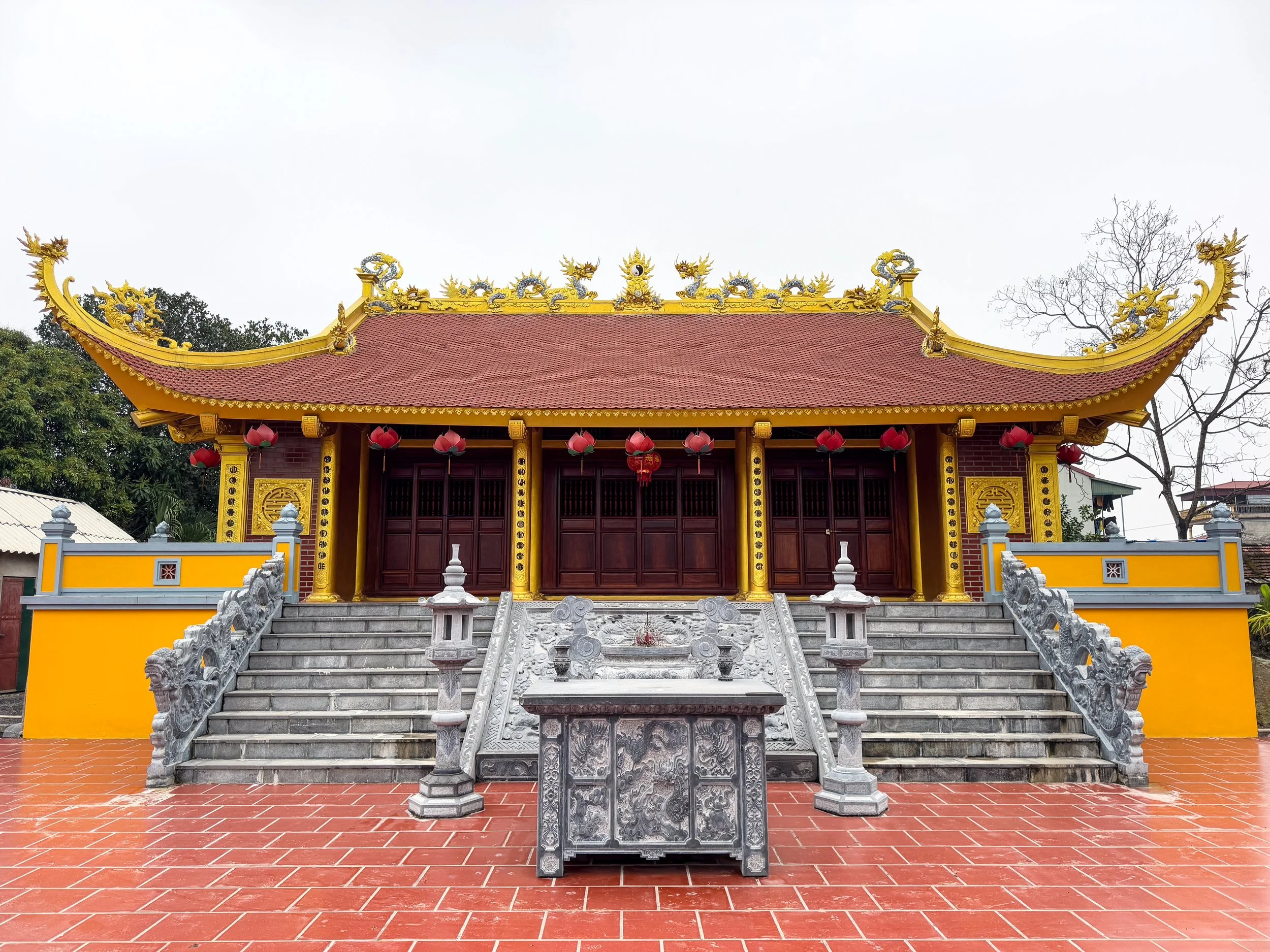
A lake park surrounded by karst mountains with Buddhist temples at its two ends. The park is accessible through a tunnel, painted with vibrant murals of Vietnam’s landscape, history and legends. At one end of the lake is a cliffside cave with golden Buddha statues and a sacred spring inside. On the opposite end of the lake is a wooden pagoda built upon a rocky ridge. People often come here to run loops around the lake, feed the koi fish and picnic.
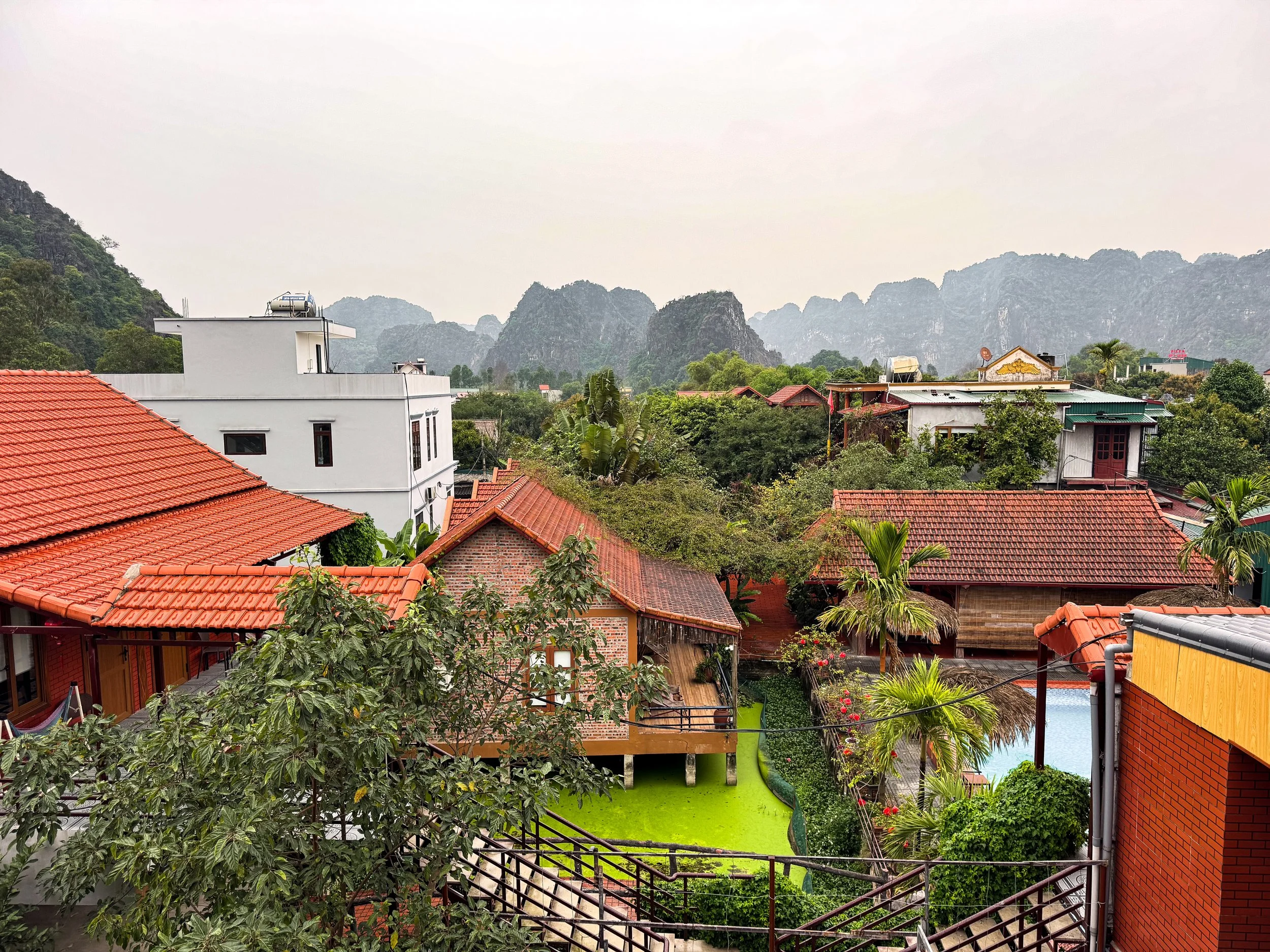
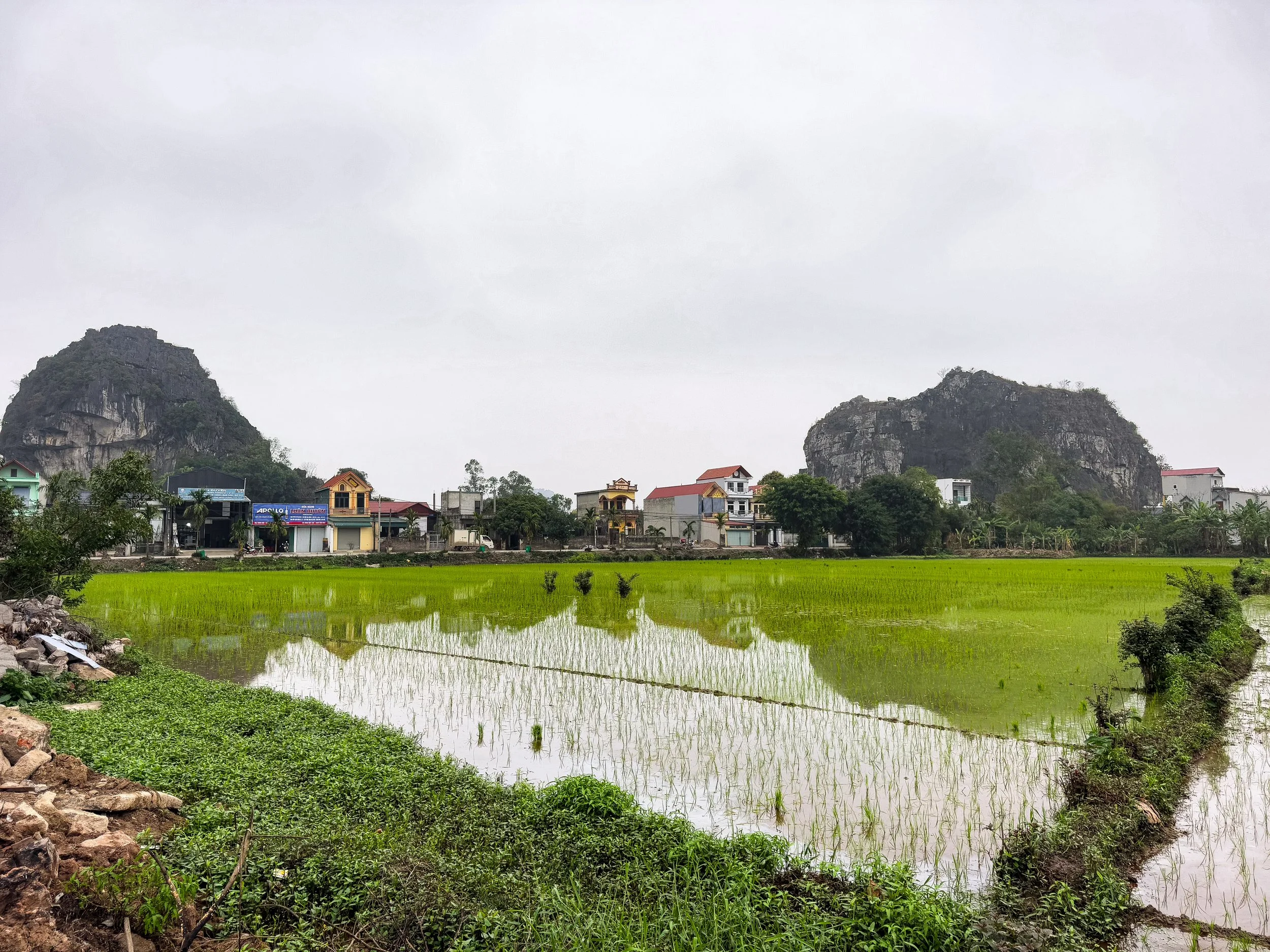
Trang An Village
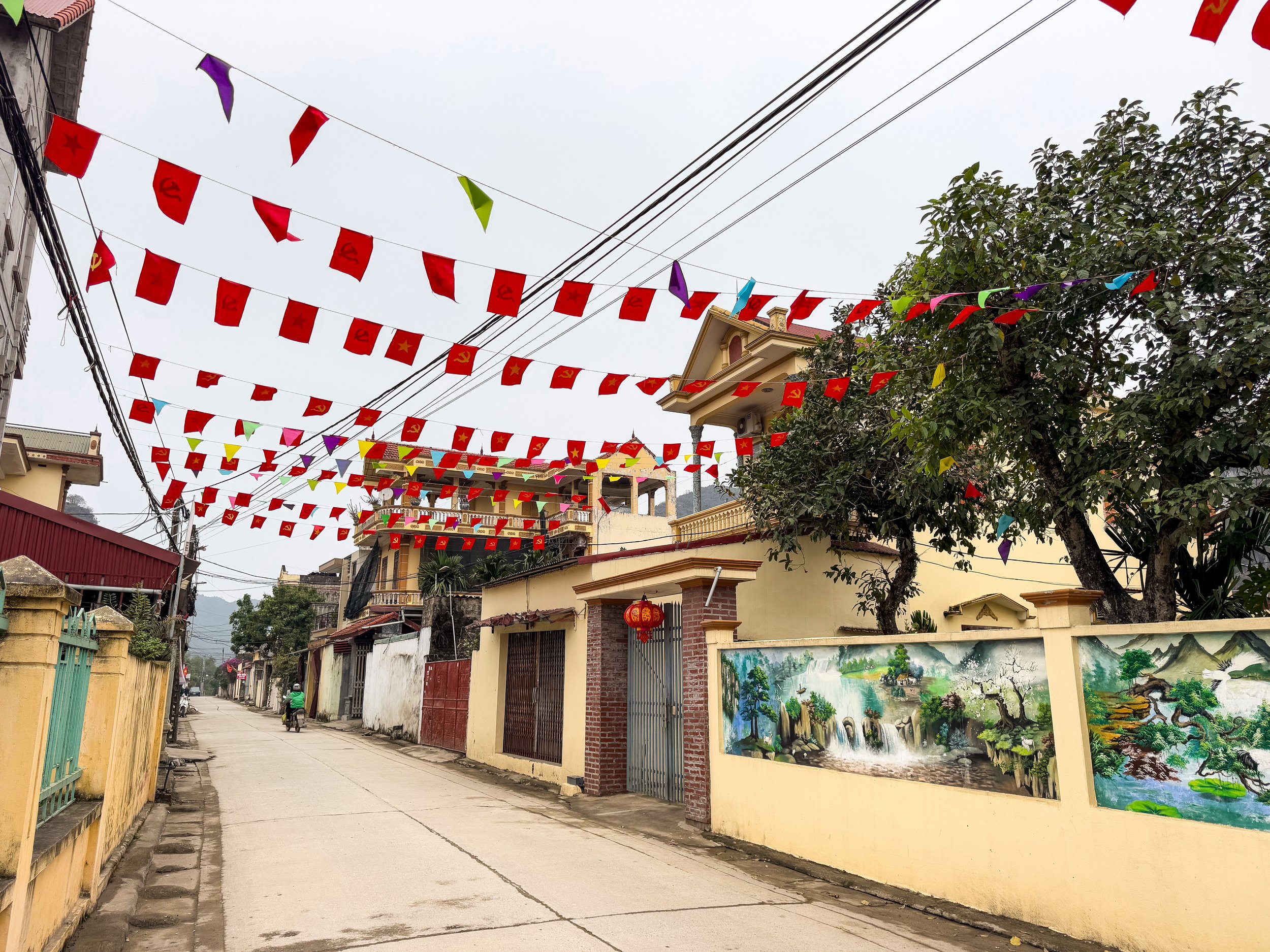
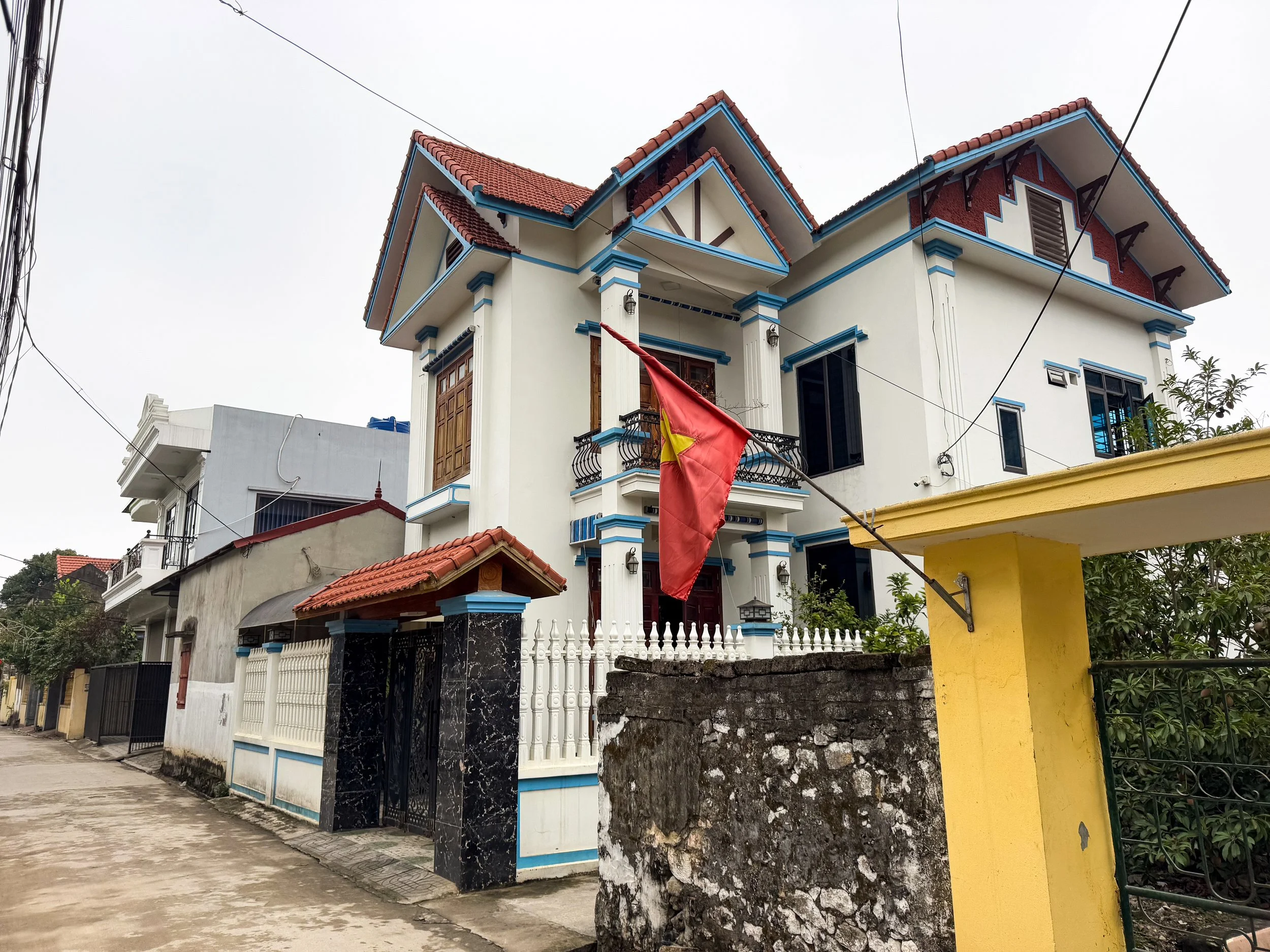
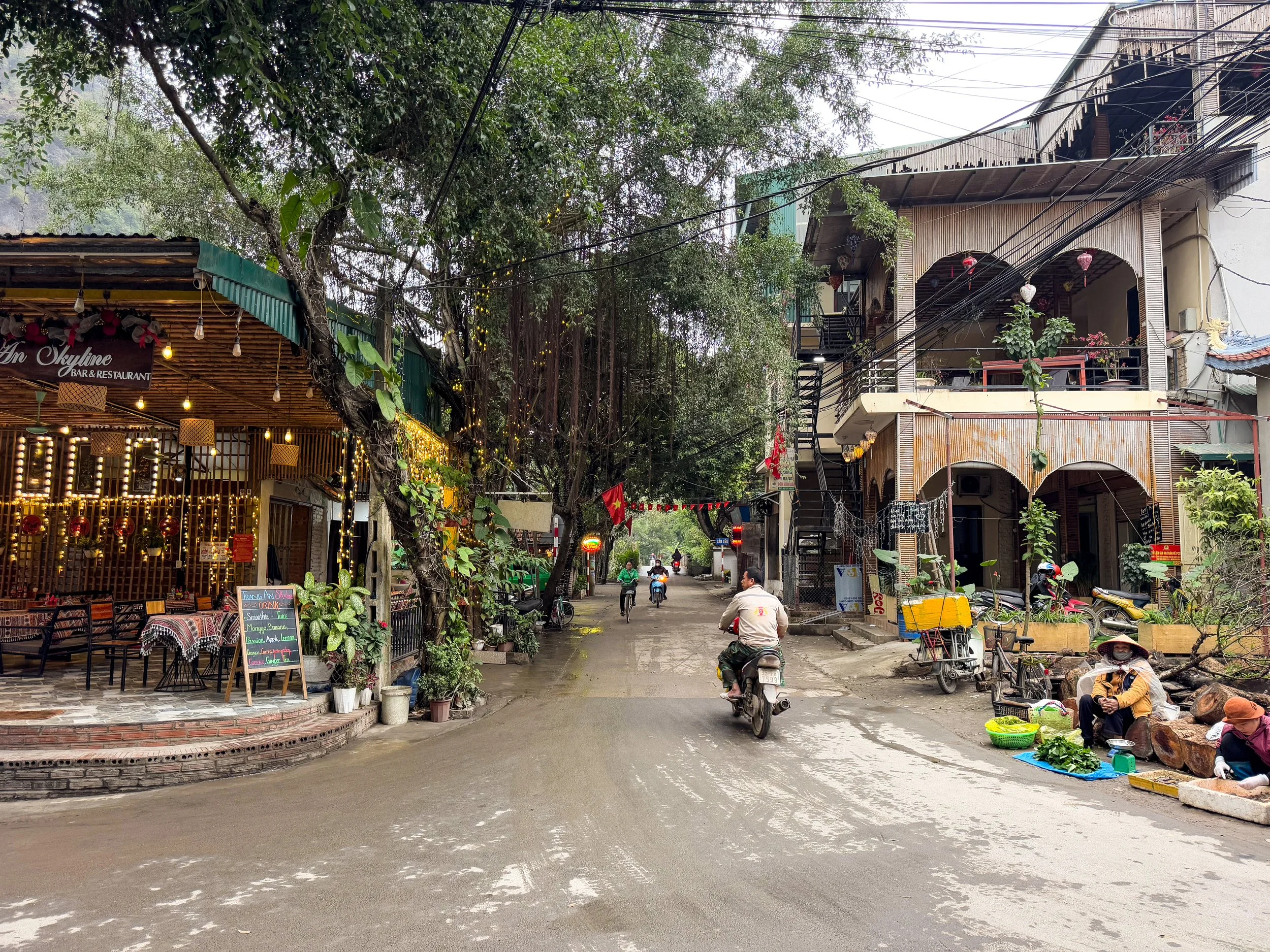
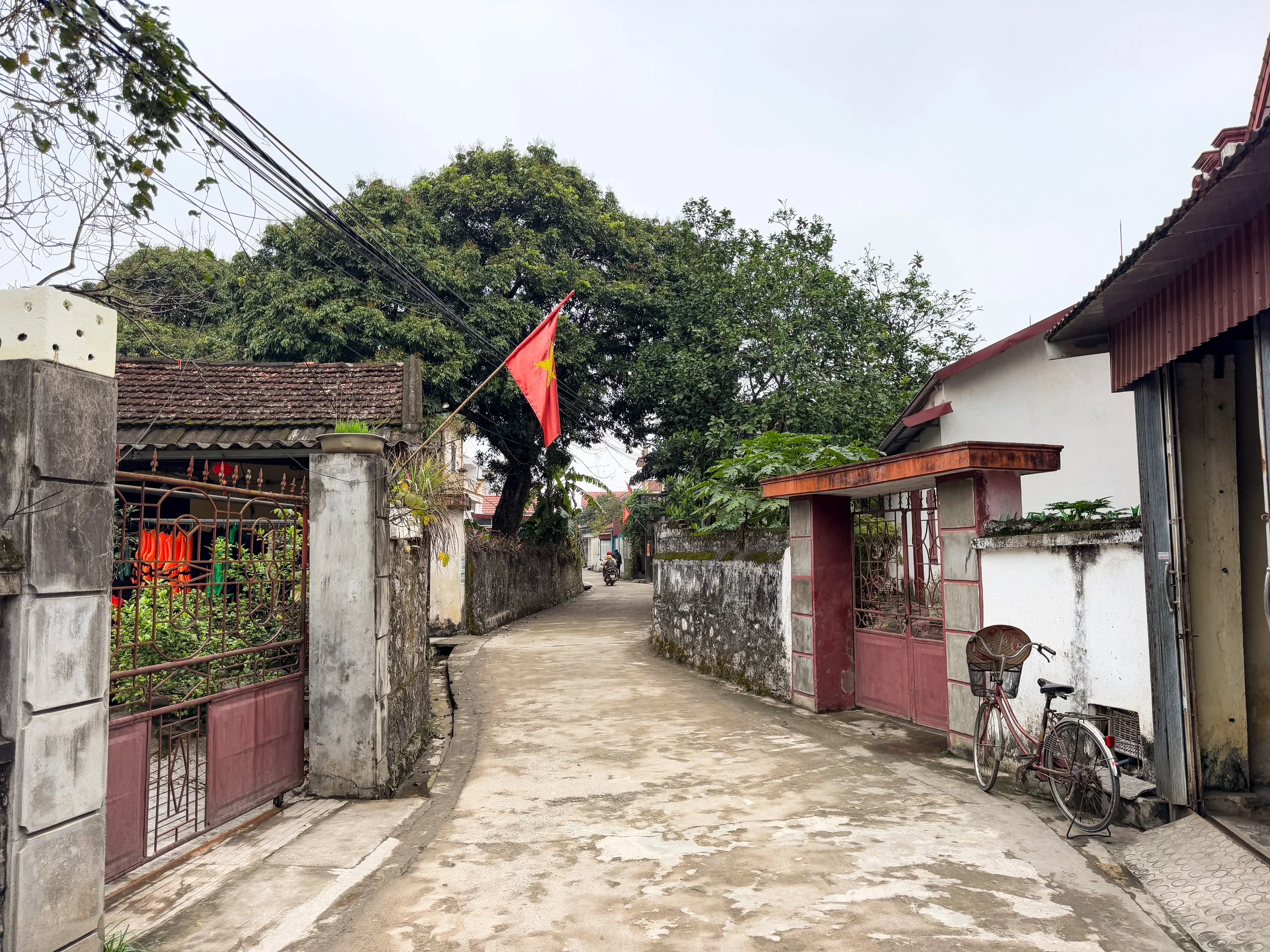
Located near the entrance in Trang An between rice paddies and karst formations is the rural village of Xuan Ang Ngoai. It’s lesser visited and has an authentic atmosphere. People fish in the canals, older women sell produce at tiny roadside shops, children play soccer in front of the temple and karaoke echoes from people’s homes at night. The village is popular with backpackers and budget travelers for its homestays. A homestay is a small local run hotel that offers room and board. Throughout the town are affordable restaurants and cafés. It’s the perfect spot for biking to Trang An, Tam Coc and the Ancient Citadel without the need to hire a guide or join a tour.
Vietnamese Cuisine in Ninh Binh
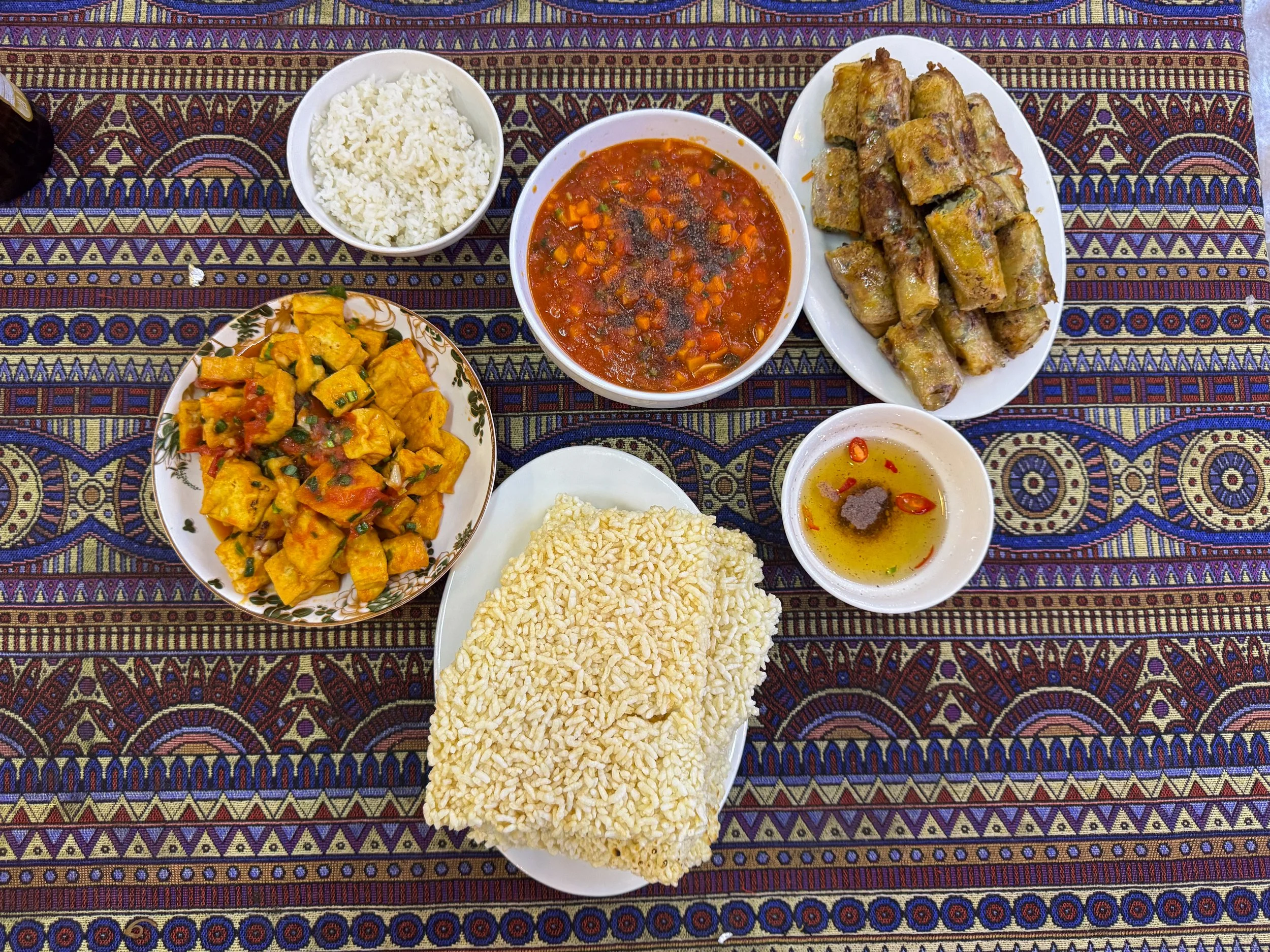
The cuisine in Ninh Binh is similar to that of many other places in Vietnam. Dishes like pho, banh mi, spring rolls, rice and noodles are commonly eaten and served. There are some dishes that stand out.
Fried Tofu. Fried tofu stewed in a variety of sauces. The two most common styles are tofu with lemongrass and tofu with tomatoes.
Burnt Rice. Large puffed rice crackers served with a savory dipping sauce or stew made from meats and vegetables.
Dumplings. Crispy pan fried dumplings stuffed with meats, vegetables or seafood.
Bao. Puffy steamed bread rolls. They’re eaten at breakfast or as a snack.
Places to Eat & Drink
Restaurant Trang A Riverside Garden. A riverside restaurant with Vietnamese dishes common in Ninh Binh. We ordered the lemongrass tofu and crispy fish dumplings. The next day, we returned for a round of local beers and game of pool.
Trang An NP. A roadside restaurant in the village with generous portions of local dishes. We tried the burnt rice with vegetable stew, the crispy spring rolls and tomato tofu.
Café The Began. A small café with Vietnamese and European style coffees. We visited one morning for a brown coffee (coffee with sweetened condensed milk). While sipping on coffee, we played a game of chess.
Getting Here & Around
By Transfer. To reach Ninh Binh, we took a door to door transfer from Hanoi. The trip took about two hours. On our return, we were dropped off at the airport in Hanoi. Book here to reach Ninh Binh. Book here to return from Ninh Binh.
By Bike. The best way to get around Ninh Binh is on a bicycle. From our homestay, we were able to reach Trang An, Tam Coc and the Ancient Citadel each within 30 minutes. Most homestays offer bike rentals for a small fee. We paid the equivalent of $4 for 2 bikes during our entire stay.
Location Specifics
Card vs. Cash. Cash is the preferred method of payment. Many businesses will not accept credit or debit cards. The Vietnamese Dong is the local currency.
Drinking Water. Tap water is not safe for consumption. It’s best to buy bottled or filtered water.
Safety. Like most of Vietnam, Ninh Binh is safe to visit with no need for extra precautions.
Language. Vietnamese and English are widely spoken, seen on street signs and restaurant menus across the country. That said, it’s still good to know a few Vietnamese phrases.
Hello = Xin chào (Sing-Chow)
Thank you = Cảm ơn (Com-Un)
Good bye = Tạm biệt (Tam-Be-Et)
See you later = Hẹn gặp lại (Hen-Gap-Lie)
Where to Stay
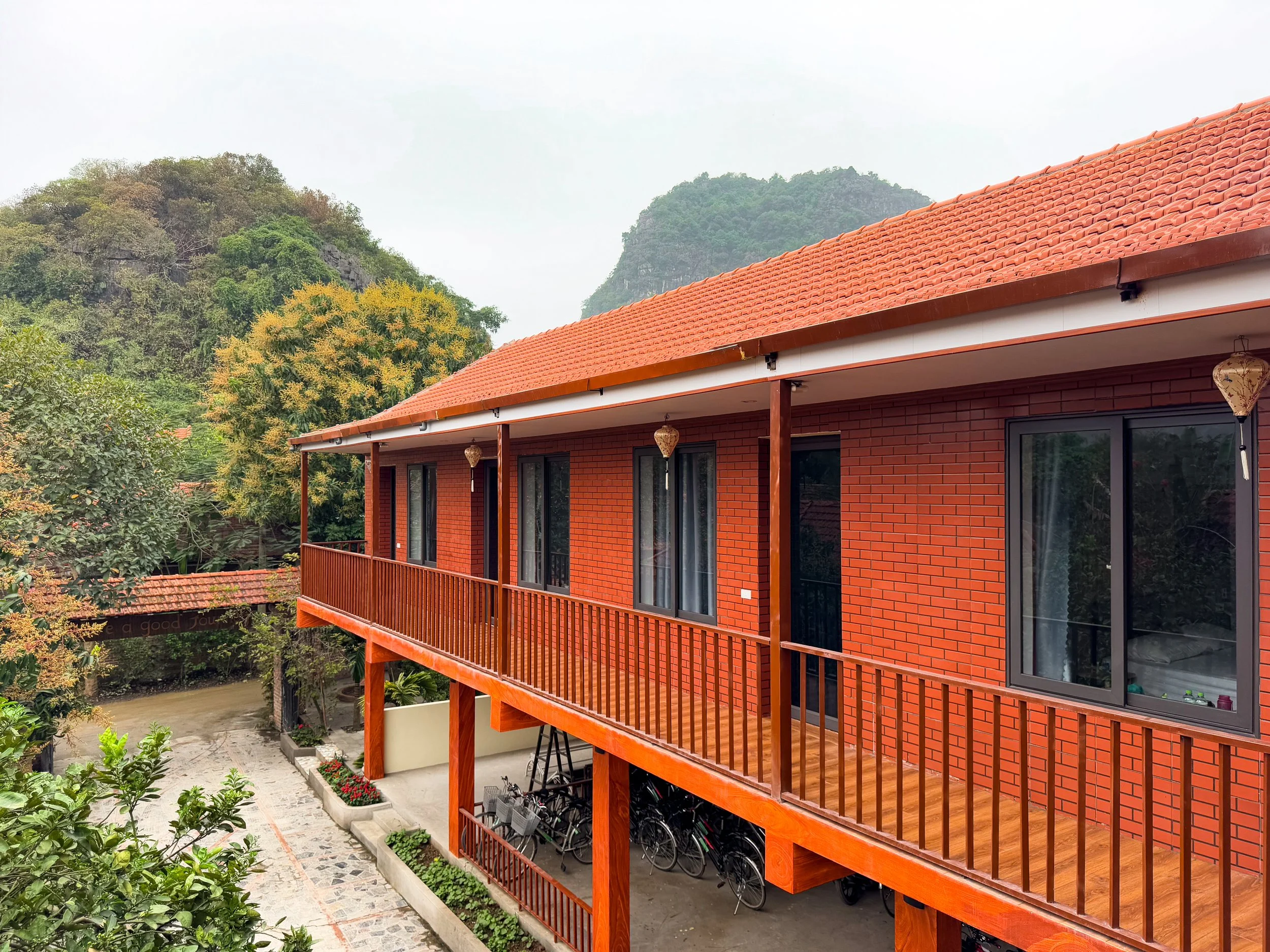
Greenland Homestay. A homestay in a small village near Trang An. We stayed here during our time in Ninh Binh, biking to the nearby sights. The homestay has private rooms, bike rentals, free breakfast, a beer fridge, restaurant and a pool. Reserve on Booking.
Elsewhere in Vietnam
From Ninh Binh's limestone landscapes and ancient temples to Hanoi's historic streets, Hoi An's lantern lined alleys and Saigon's urban energy, discover more of Vietnam through these travel guides:
Hanoi Travel Guide: Old Quarter, Street Food & Vietnamese Culture. Explore Hanoi's Old Quarter and neighborhoods where sacred temples, night markets, Train Street and Vietnamese street food capture the spirit of Vietnam's capital.
Hoi An Travel Guide: Ancient Town, Lanterns & Vietnamese Street Food. Wander through Hoi An's ancient town where glowing lanterns, bustling markets, historic temples & Vietnamese street food preserve centuries of tradition.
Saigon Travel Guide: Markets, Nightlife & Vietnamese Culture. Experience Saigon where bustling markets, vibrant nightlife, historic landmarks, neon lit skyscrapers and street food stalls bring modern Vietnam to life.
For Next Time…
We would re-do our entire trip to Ninh Binh during a different time of year with a lesser chance of cloudy and cold weather. If we return, we may choose the peak season during November or December as opposed to mid February.
Hanoi Travel Guide: Old Quarter, Street Food & Vietnamese Culture
Explore Hanoi's Old Quarter and neighborhoods where sacred temples, night markets, Train Street and Vietnamese street food capture the spirit of Vietnam's capital.
Hanoi, Vietnam
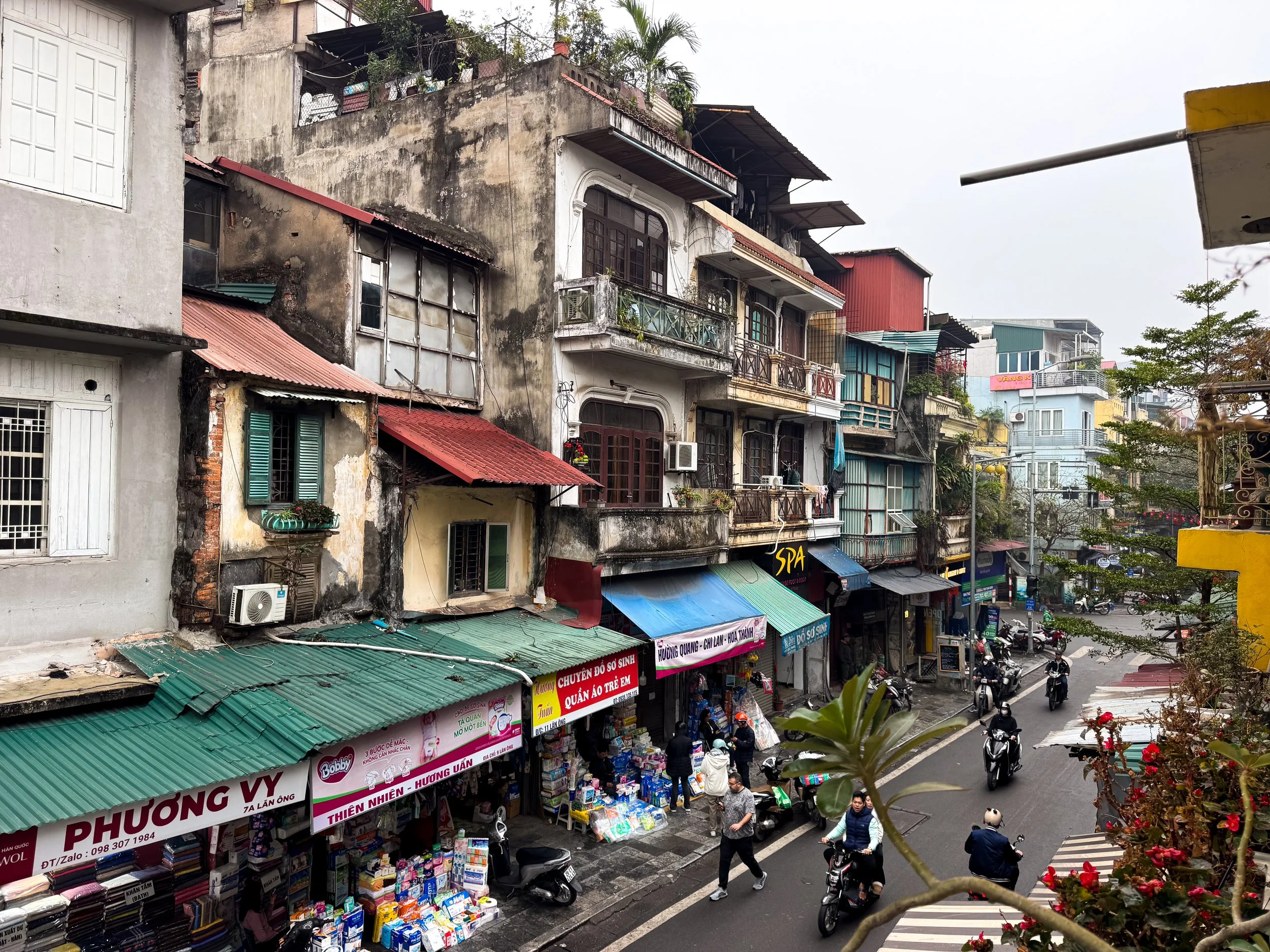
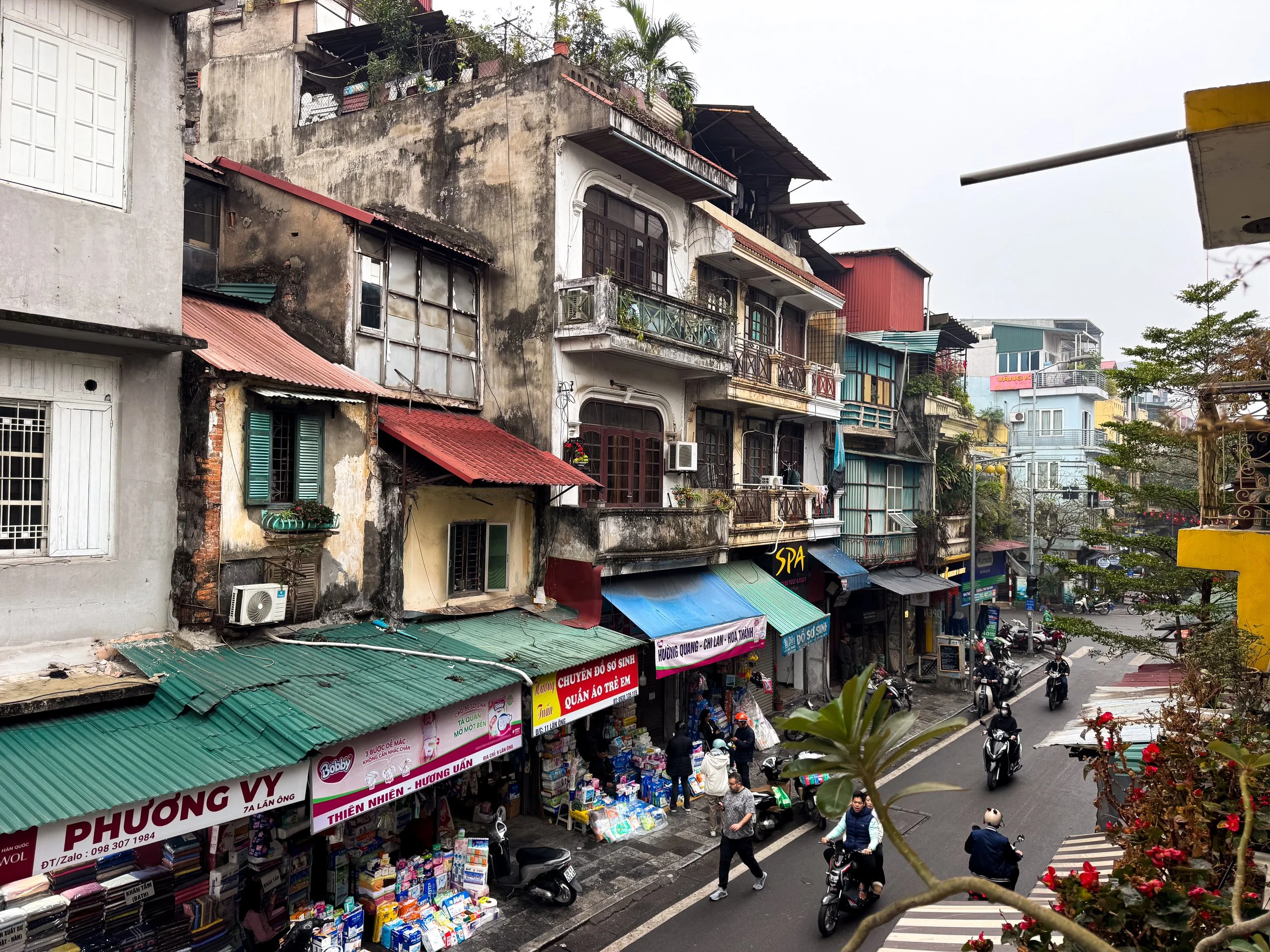
Hanoi is a sprawling metropolis abound with rich cultural experiences, a storied history and modern appeal. The capital city dates back to ancient times and is home to landmark sights and sacred temples. Paper lanterns and communist flags often decorate its chaotic streets as people speed by on scooters. Bustling night markets, sidewalk cafes and street food vendors lure in locals and visitors alike. Nearby natural wonders offer a peaceful escape from the city’s lively pace.


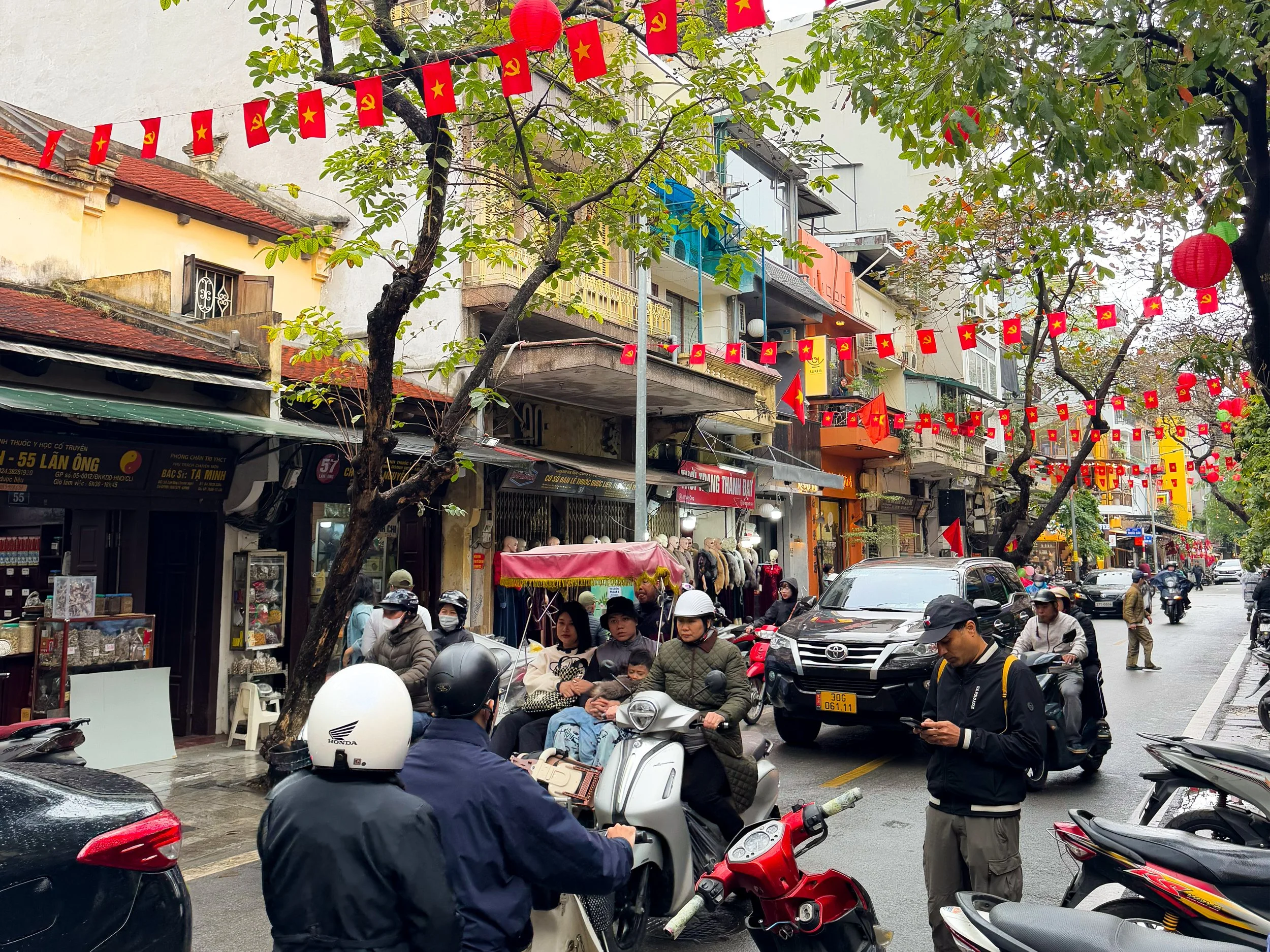
Old Quarter Streets
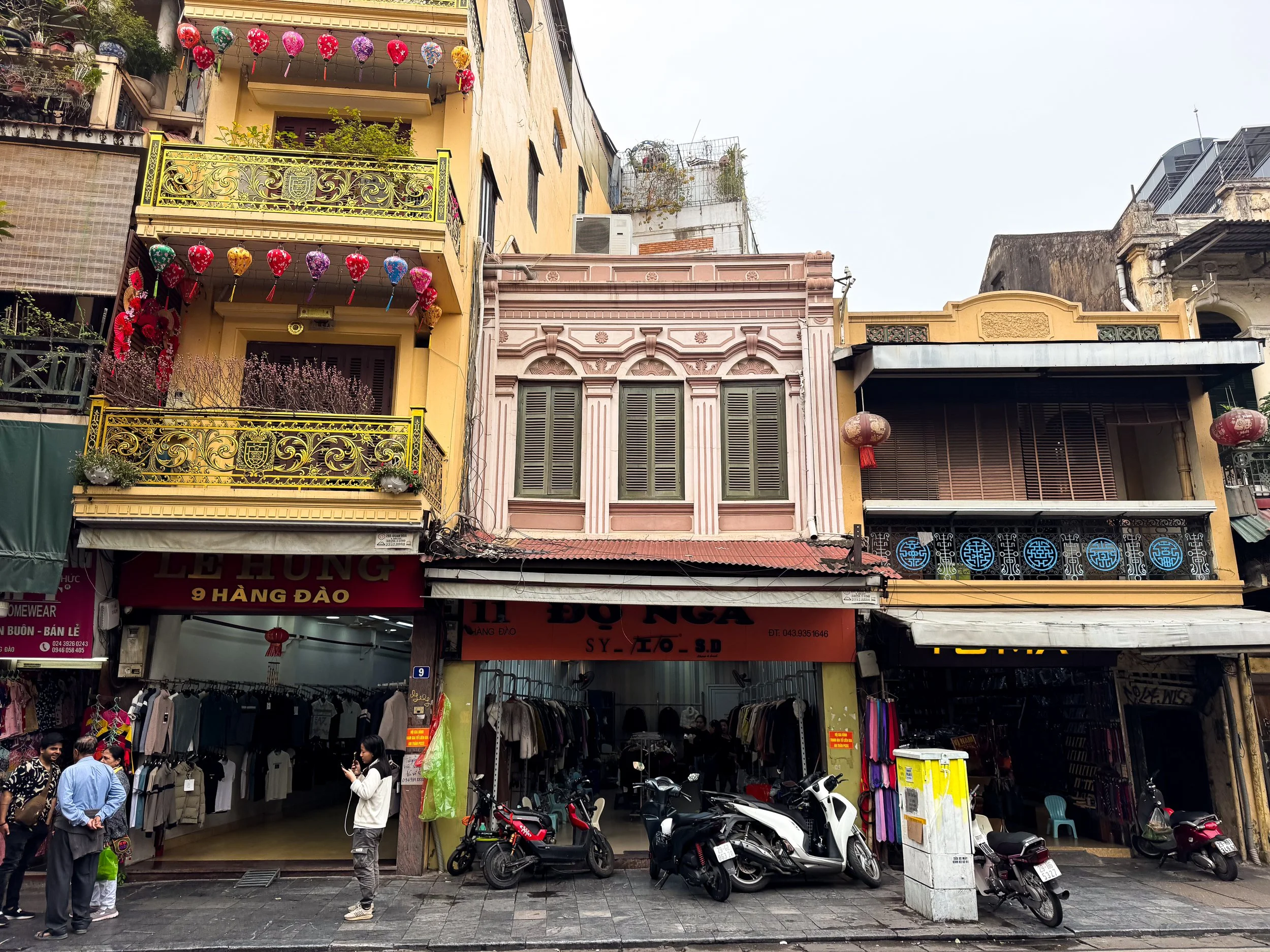
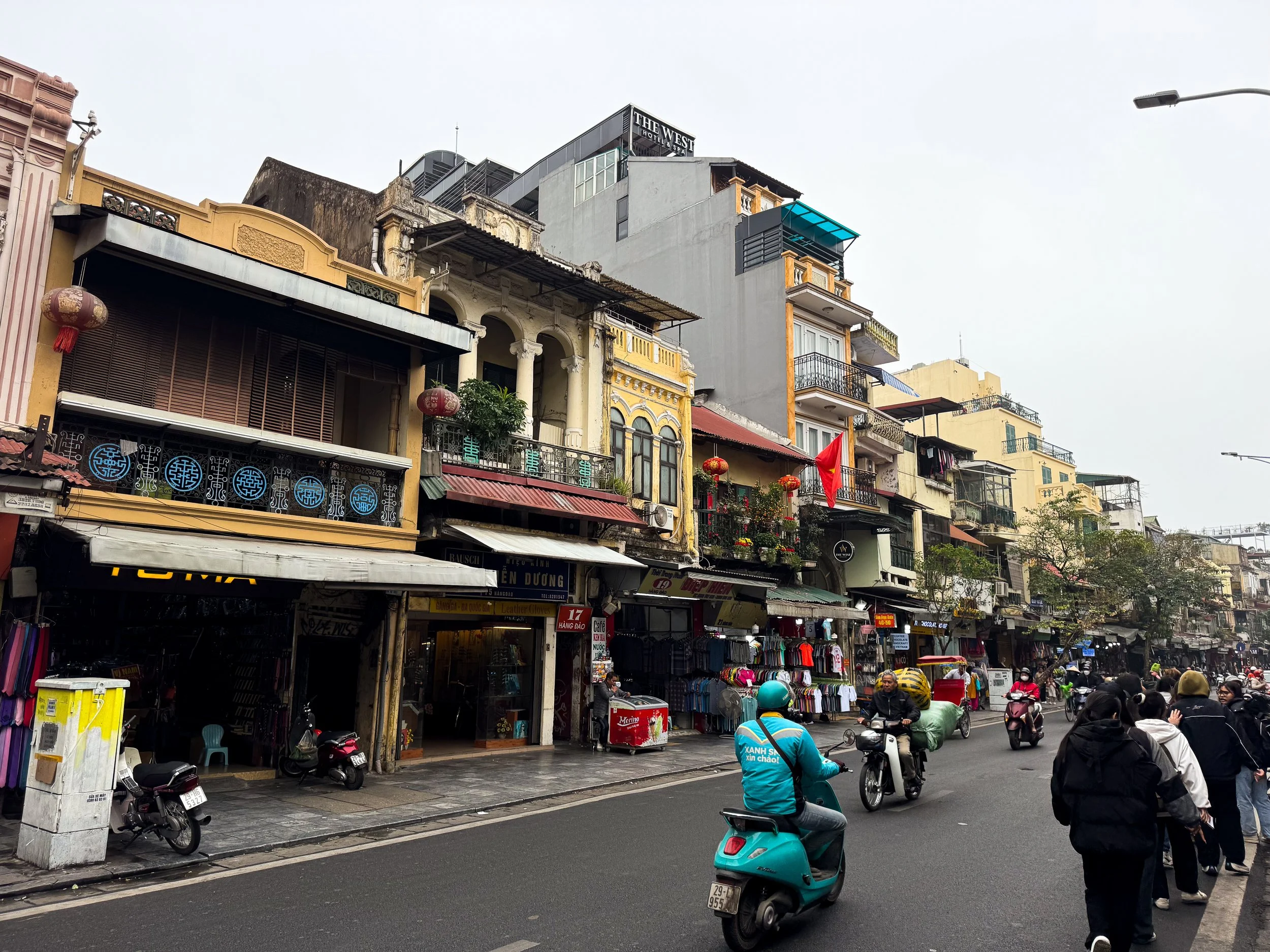
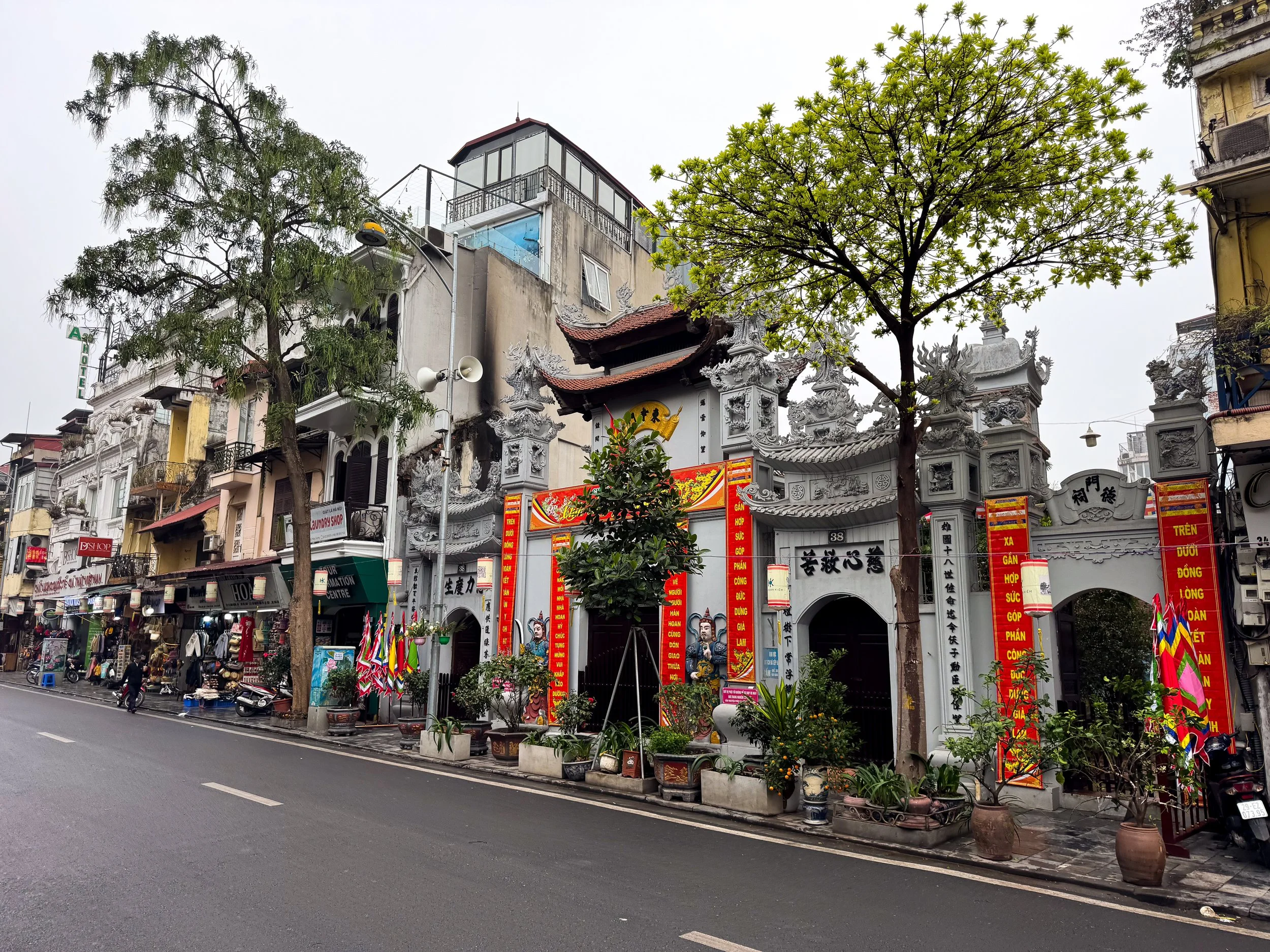
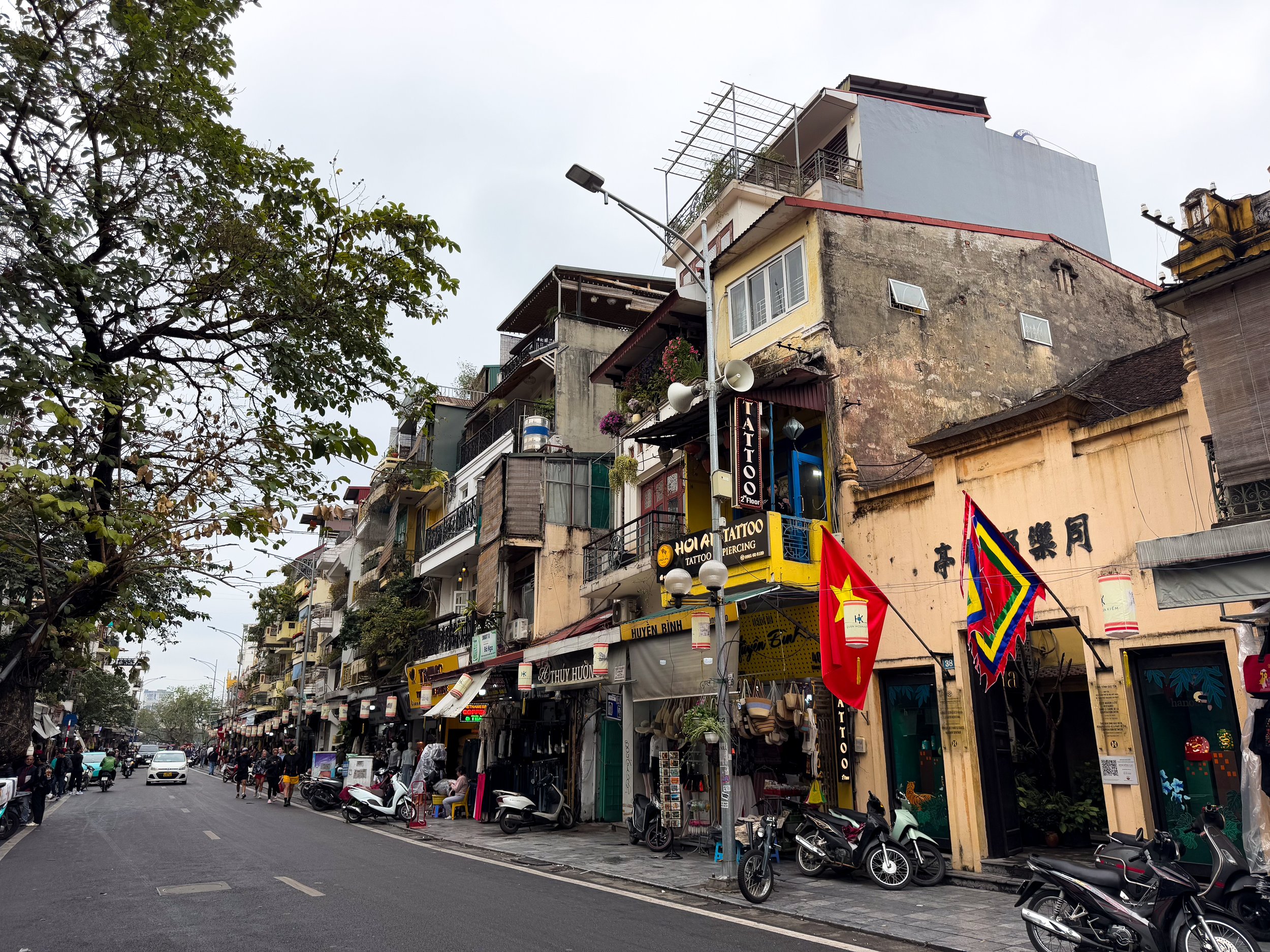
Hanoi’s Old Quarter is one of the most lively neighborhoods of the city with several “themed” streets. It’s popular for its night markets, nightlife, food scene, train streets and cultural products.
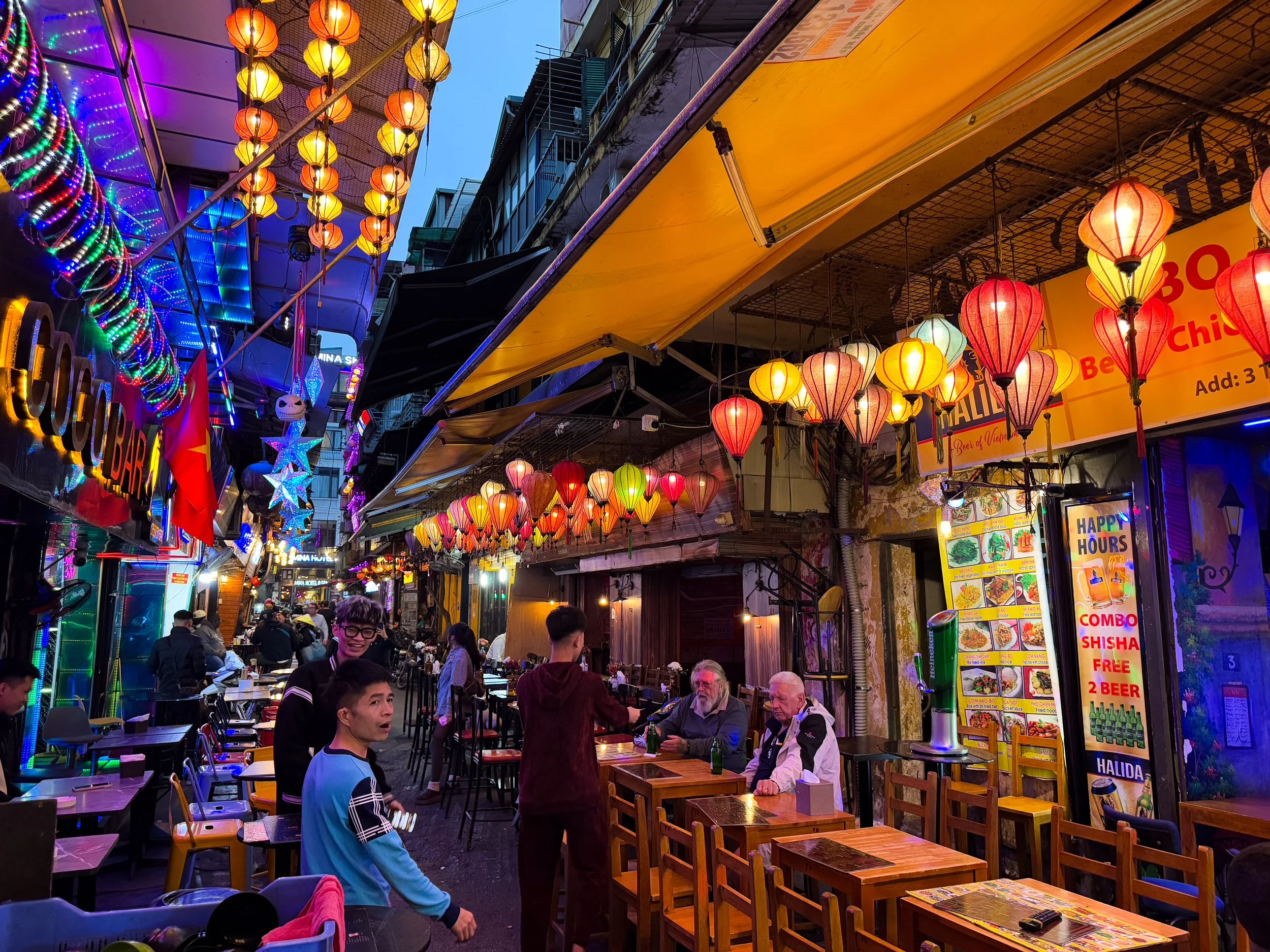
Hang Buom (Nightlife Street). An incredibly vibrant, loud and chaotic nightlife street with dozens of bars catering to all crowds of people. We bar hopped among the chaos, enjoying a bottle of soju at street level and cocktails from a balcony overlooking it.
Hang Dao (Night Market Street). A street with a nightly market starting at 7pm. Tents of vendors sell clothing, jewelry, knock off hand bags and various goods while food carts fry and grill types of Vietnamese street food.
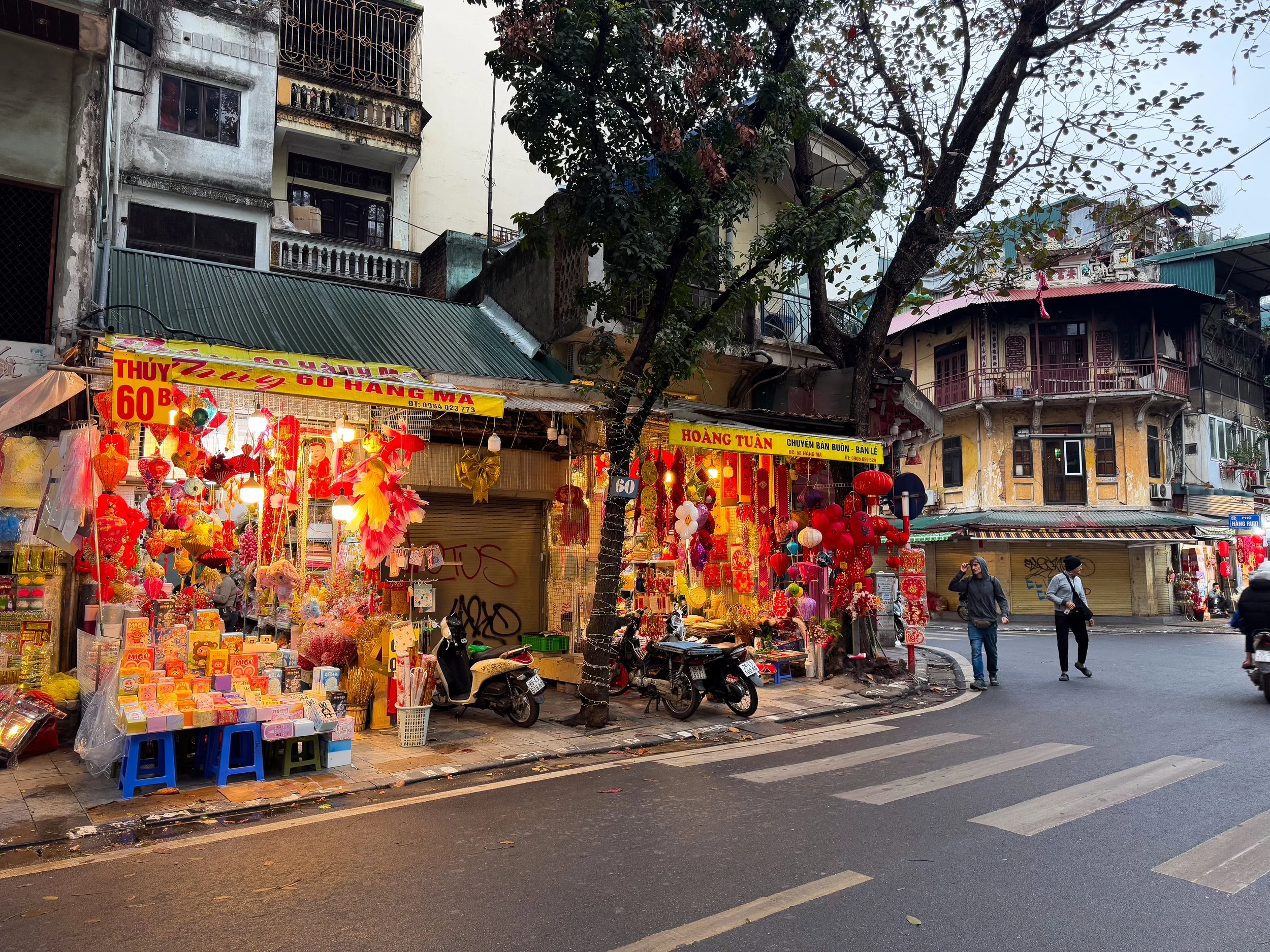
Hang Ma (Festival Street). A street with several stores selling decorations for celebrations like Tet or Lunar New Year. Shops stand out with the red, yellow and golden glow of paper lanterns, tasseled ornaments, beckoning cats, dragon puppets, red envelopes and incense sticks.
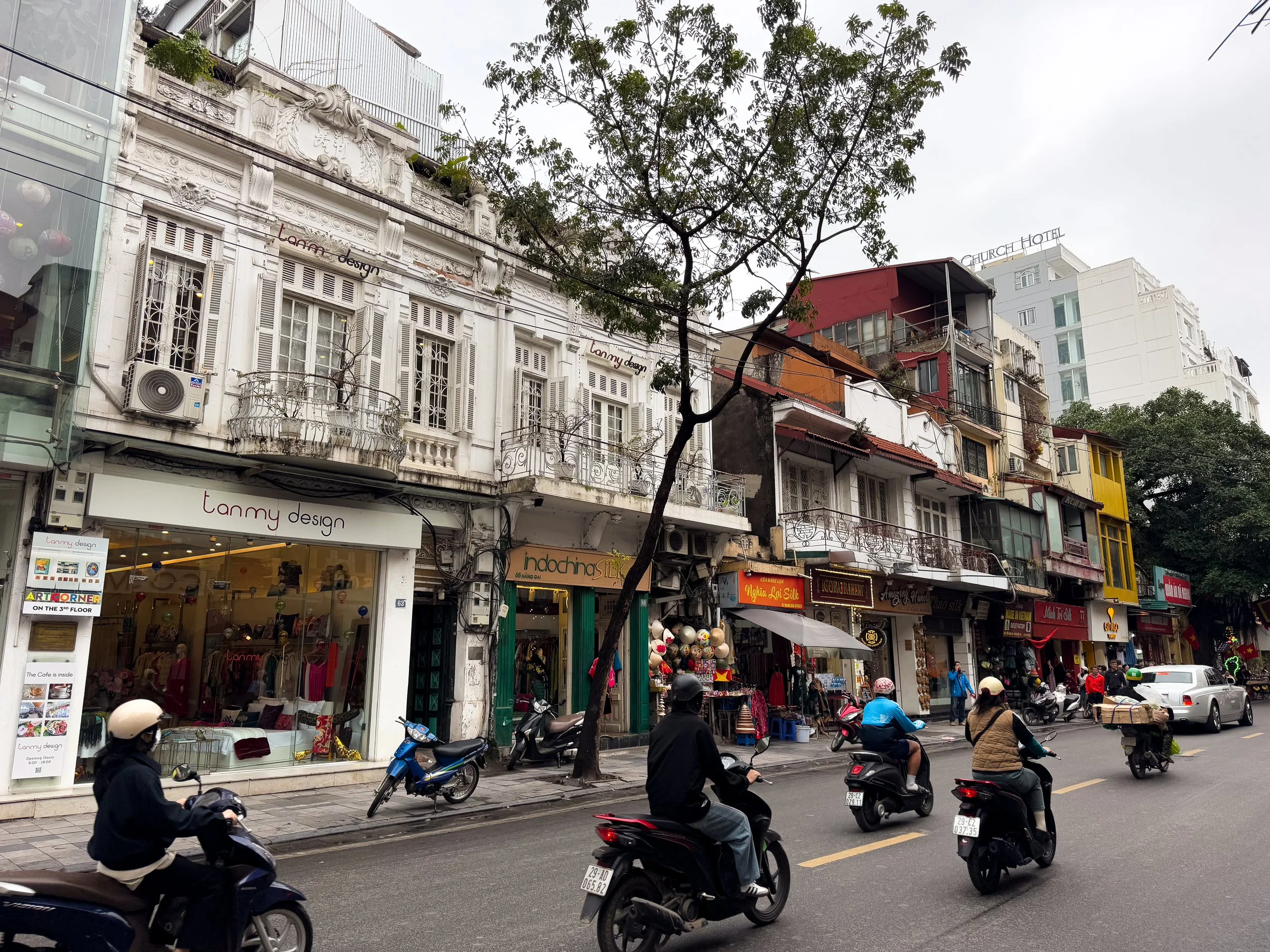
Hang Gai (Silk Street). The silk district with several shops and tailors selling silk textiles, clothing and accessories.
Tong Duy Tan (Food Street). A street lined with restaurants selling Vietnamese dishes, vegetarian meals and various forms of hot pot. Twinkle lights and paper lanterns decorate the trees above the street as Moto bikes zip by and locals eat.
Cha Ca Street. A street named after Hanoi’s most famous local dish, Cha Ca. Several restaurants prepare and serve it, one of the most well known is Cha Ca La Vong. It’s the only item on the menu and they’ve had over 150 years to perfect their recipe.
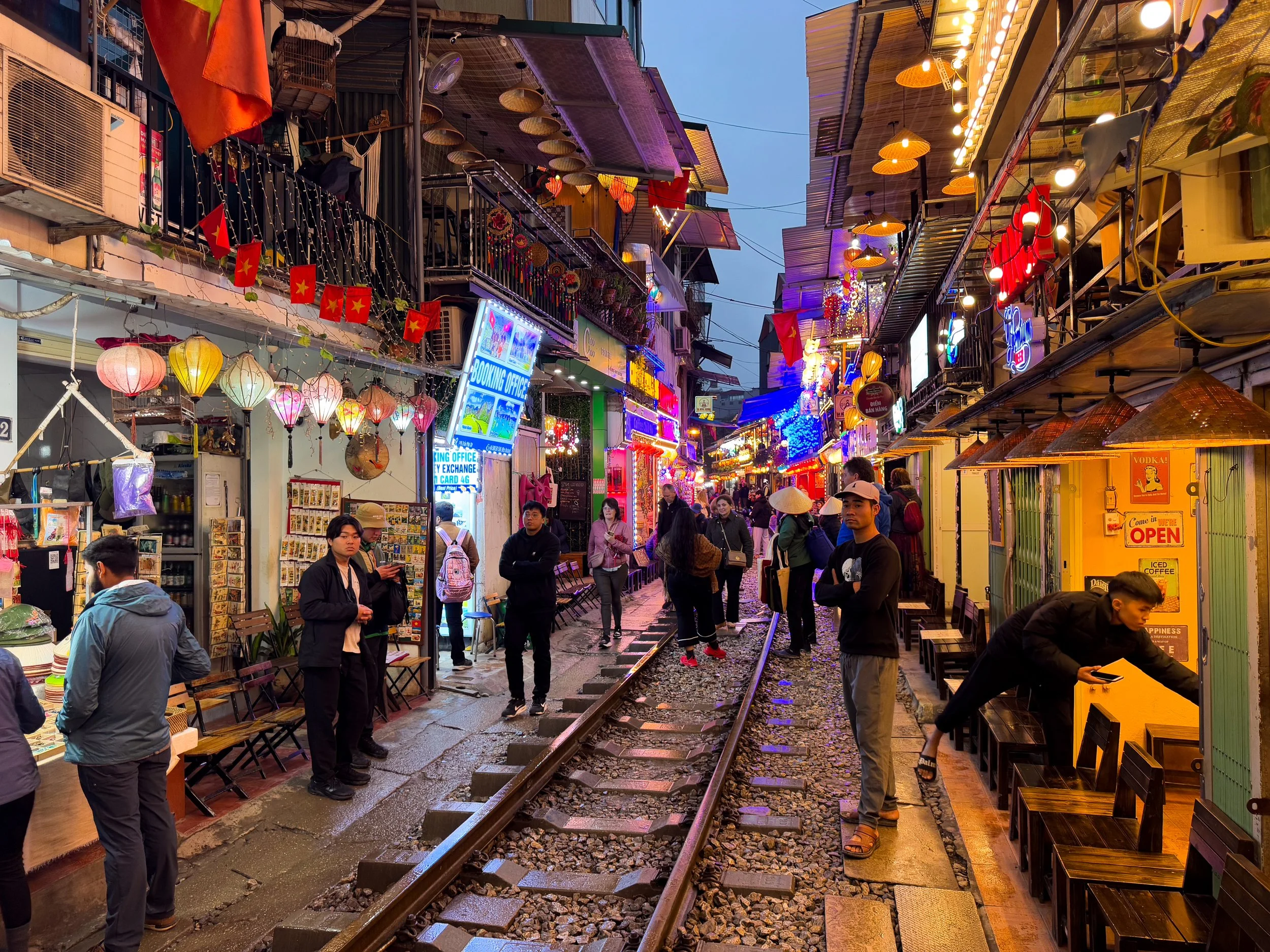
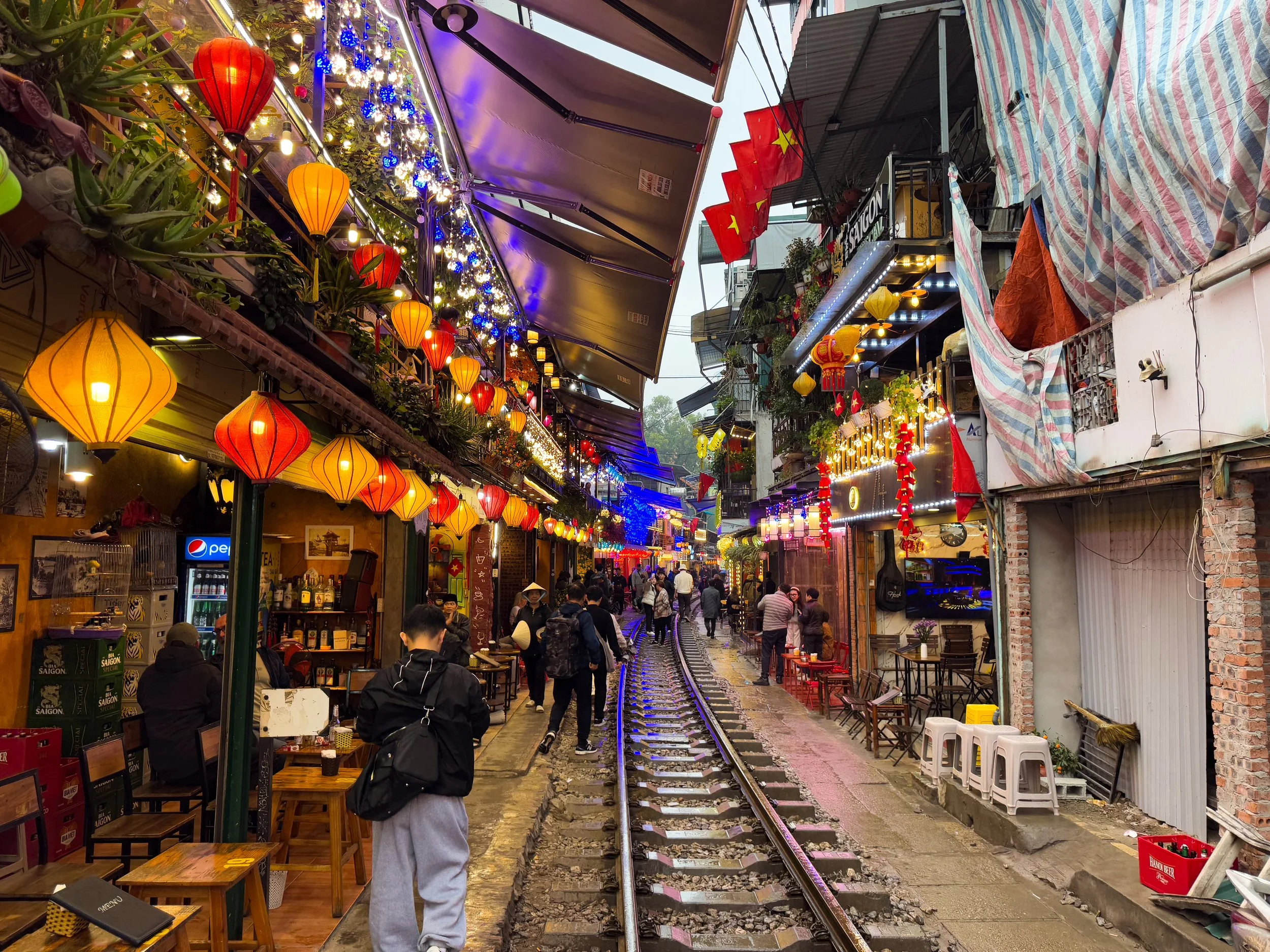
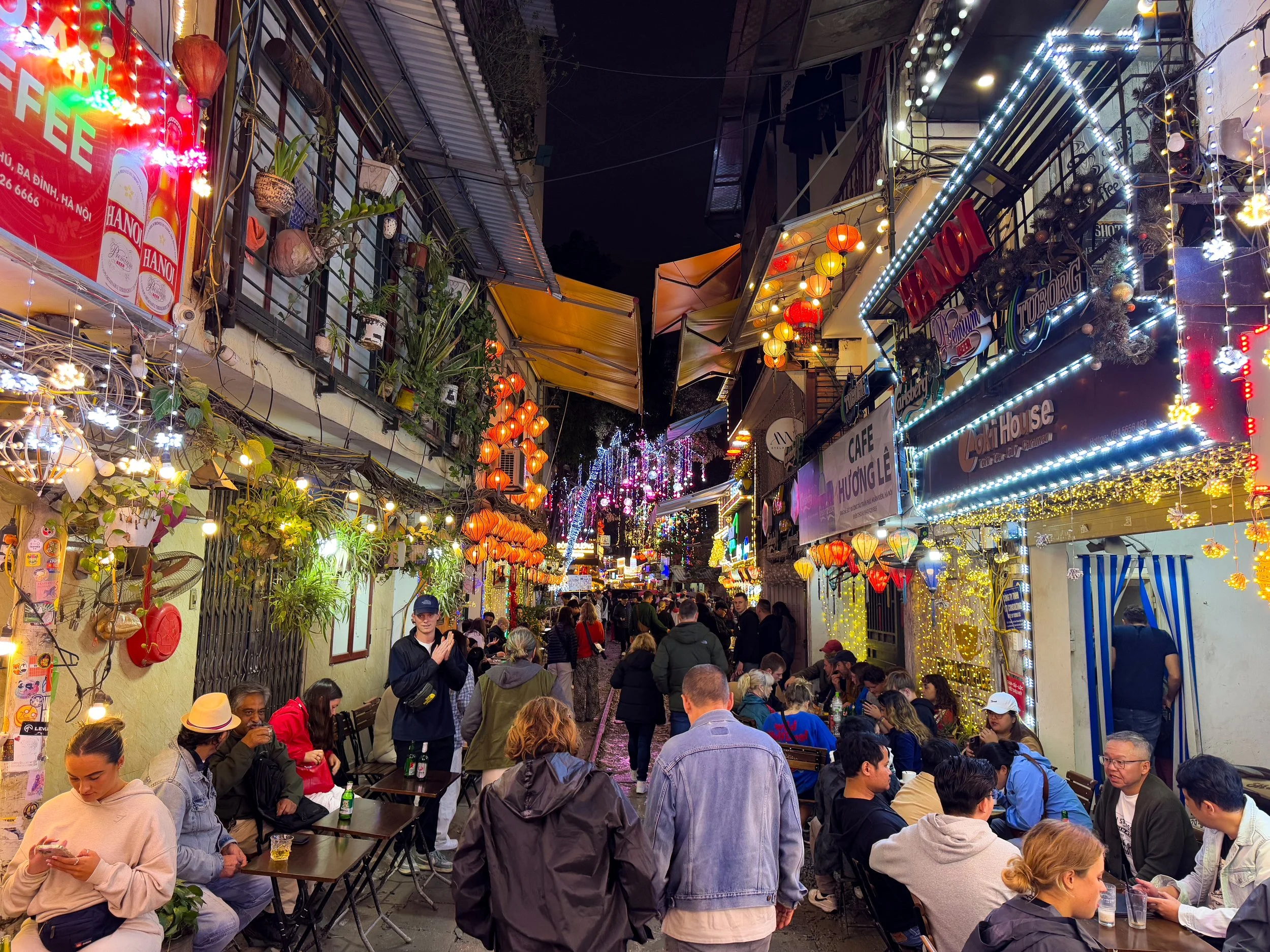
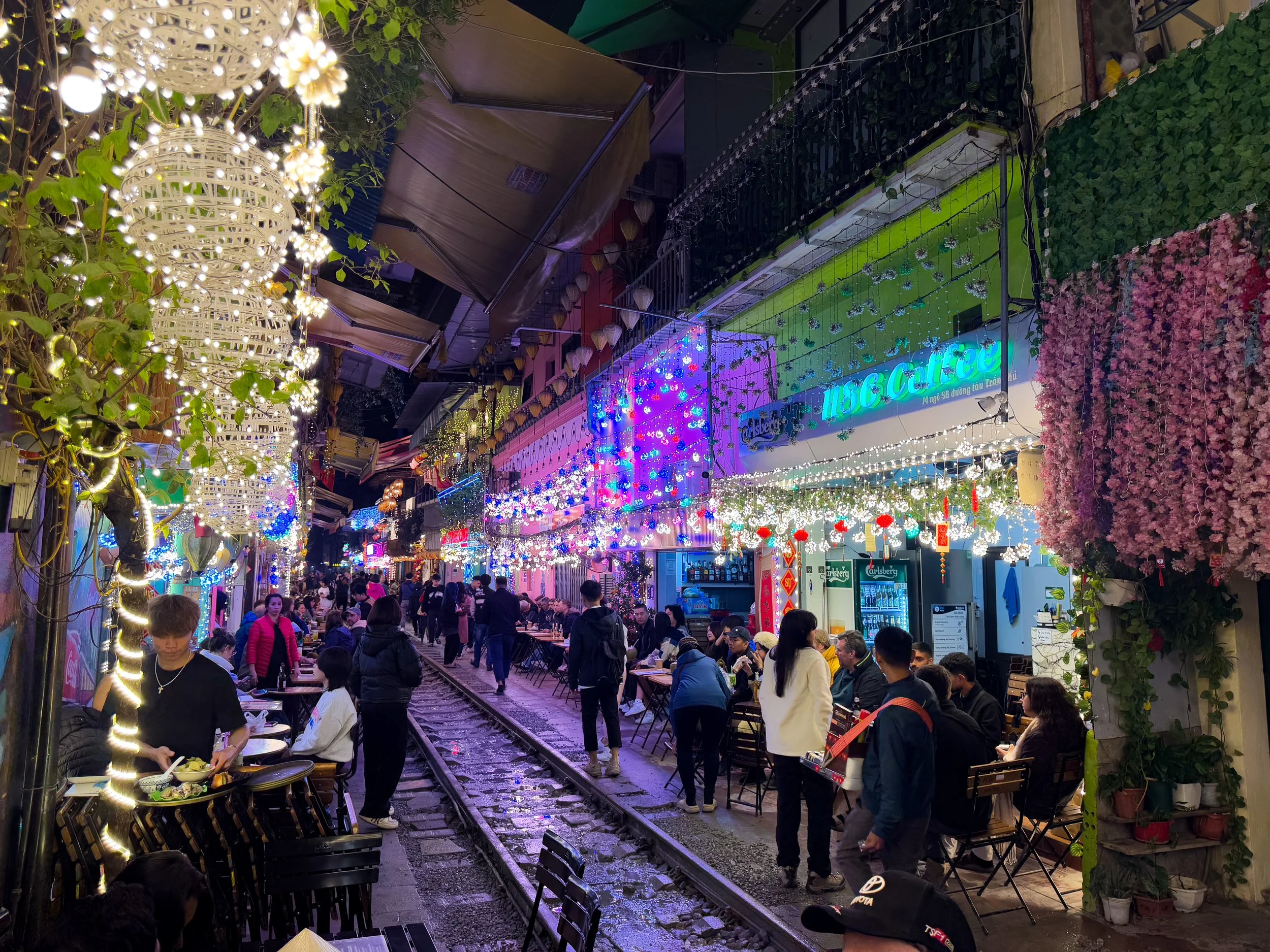
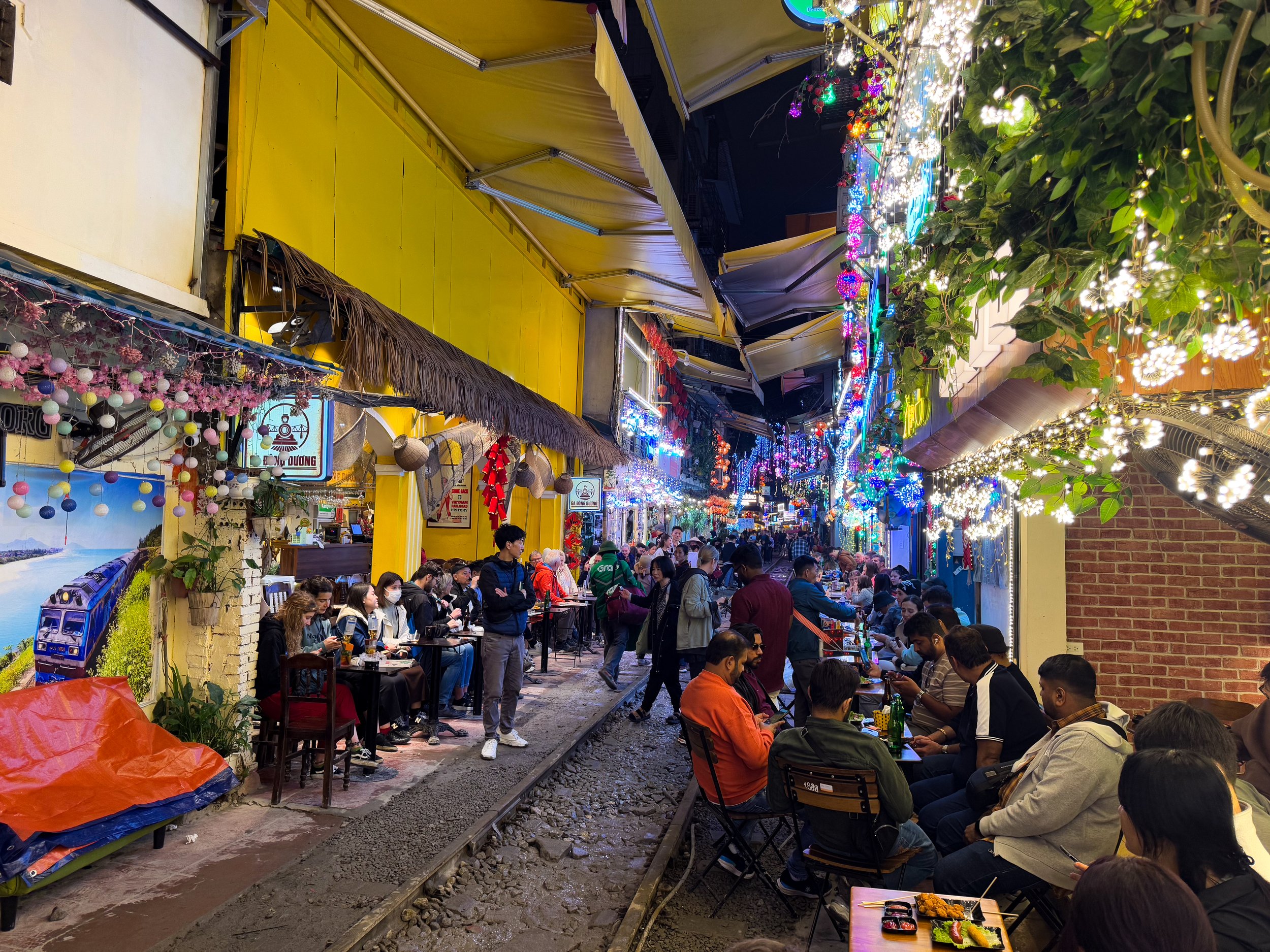
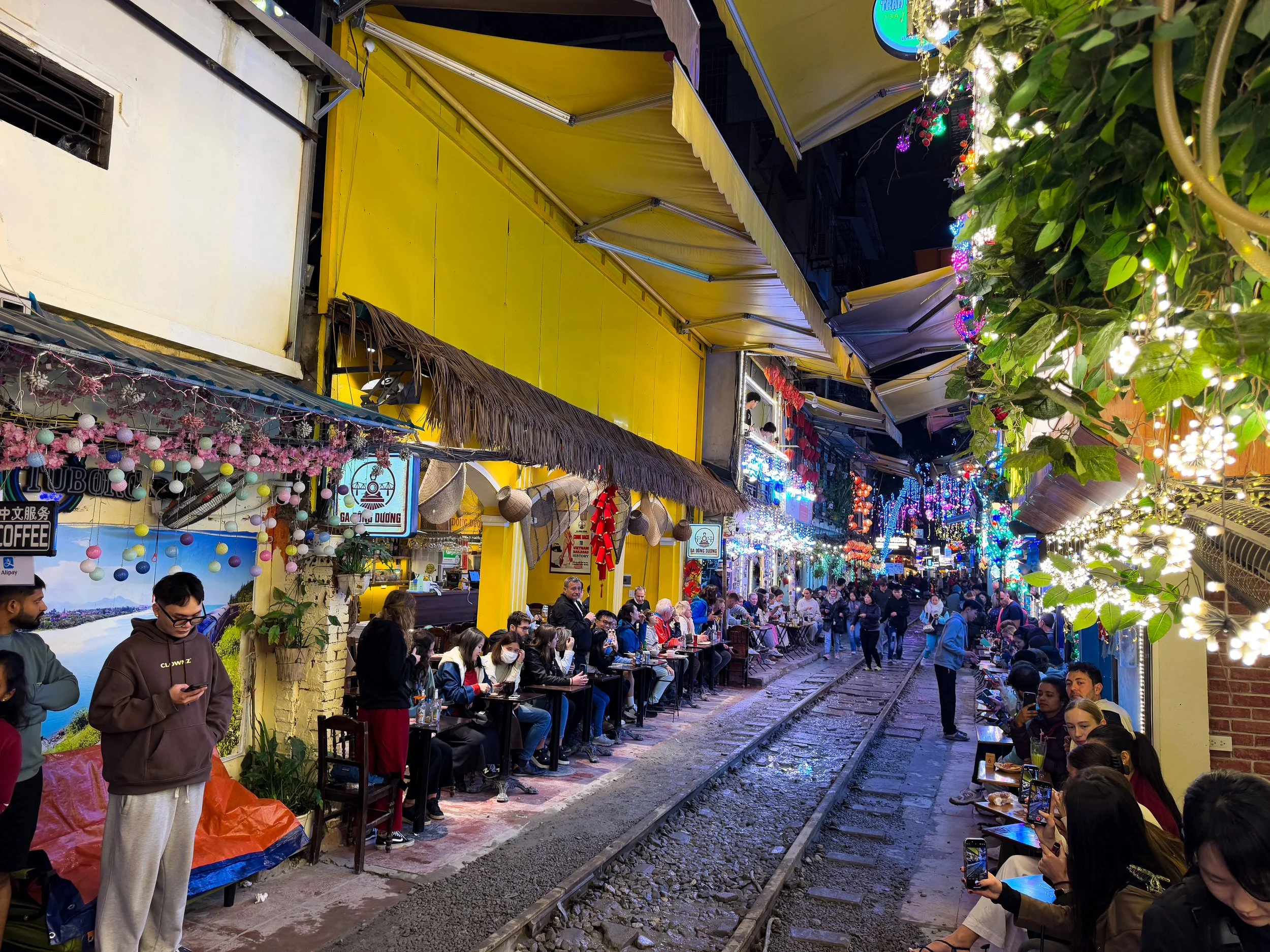
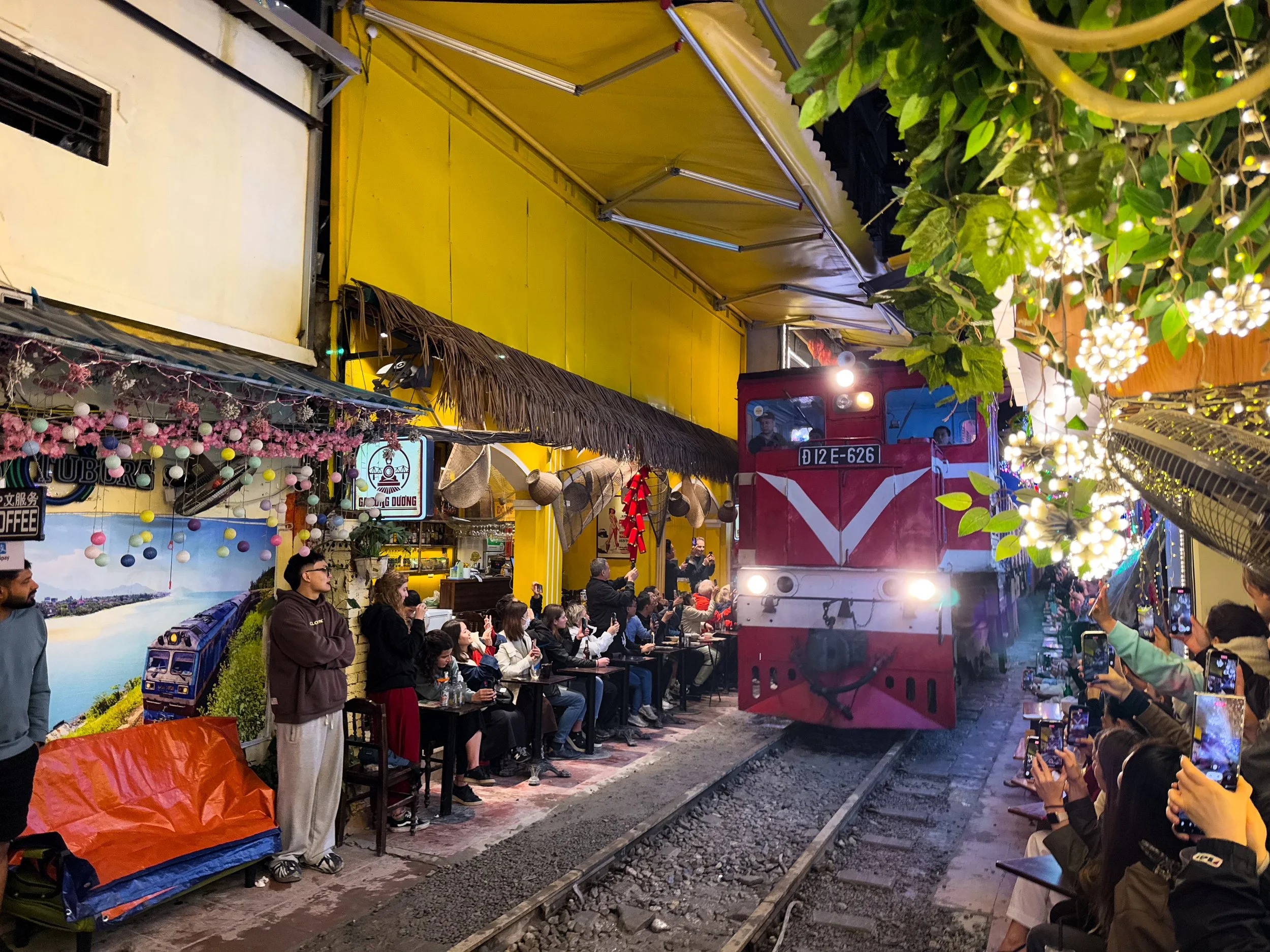
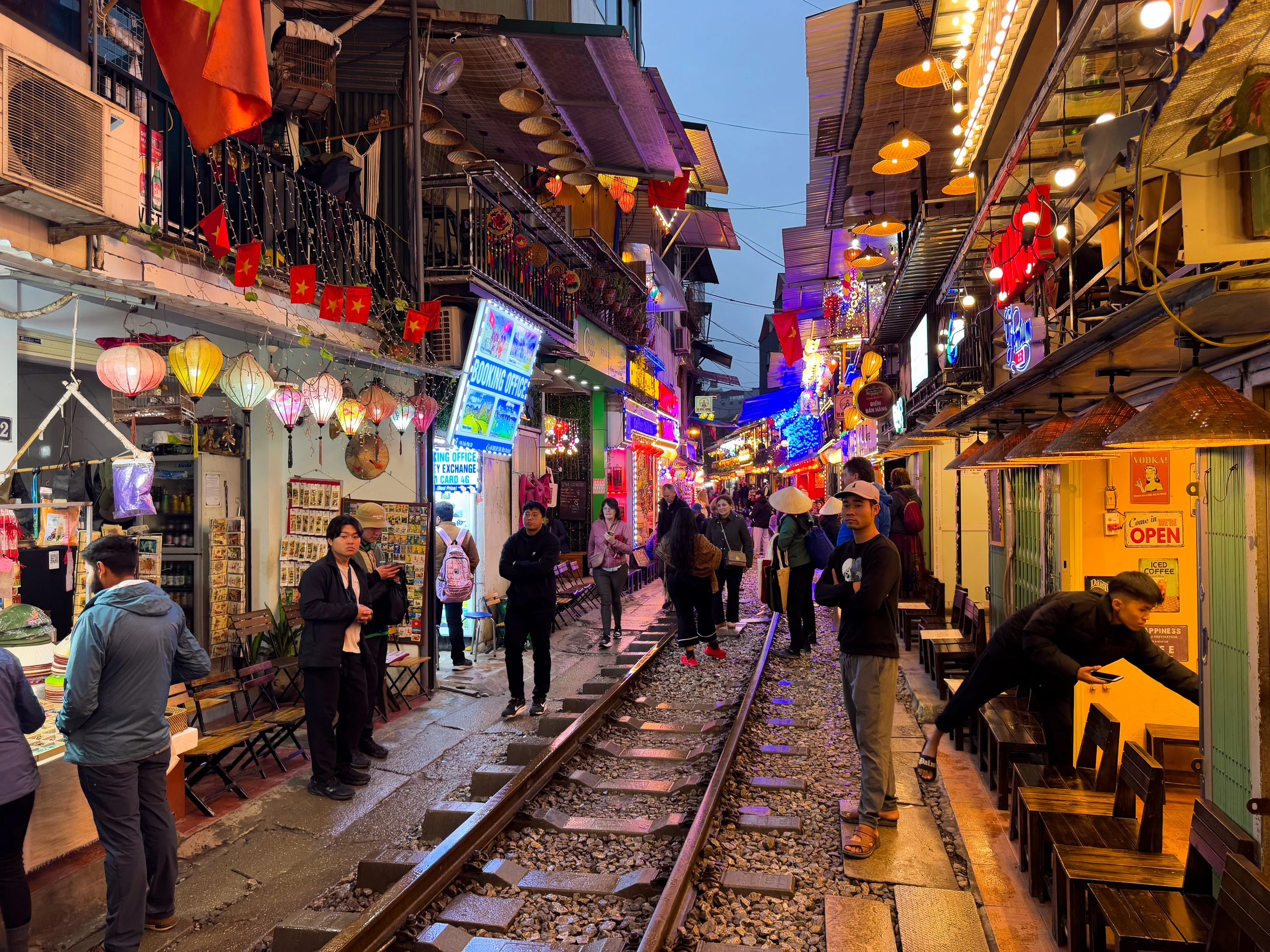
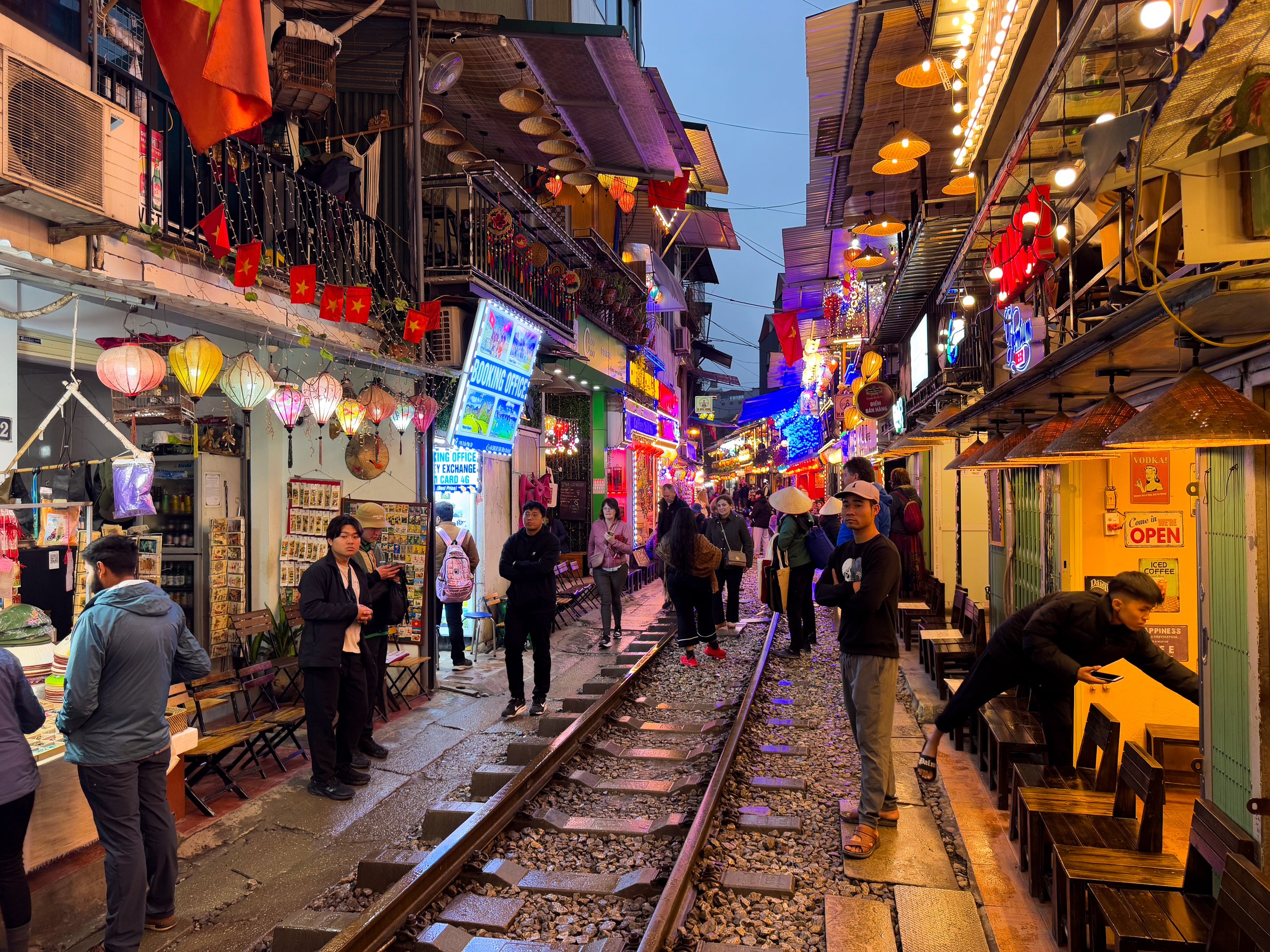
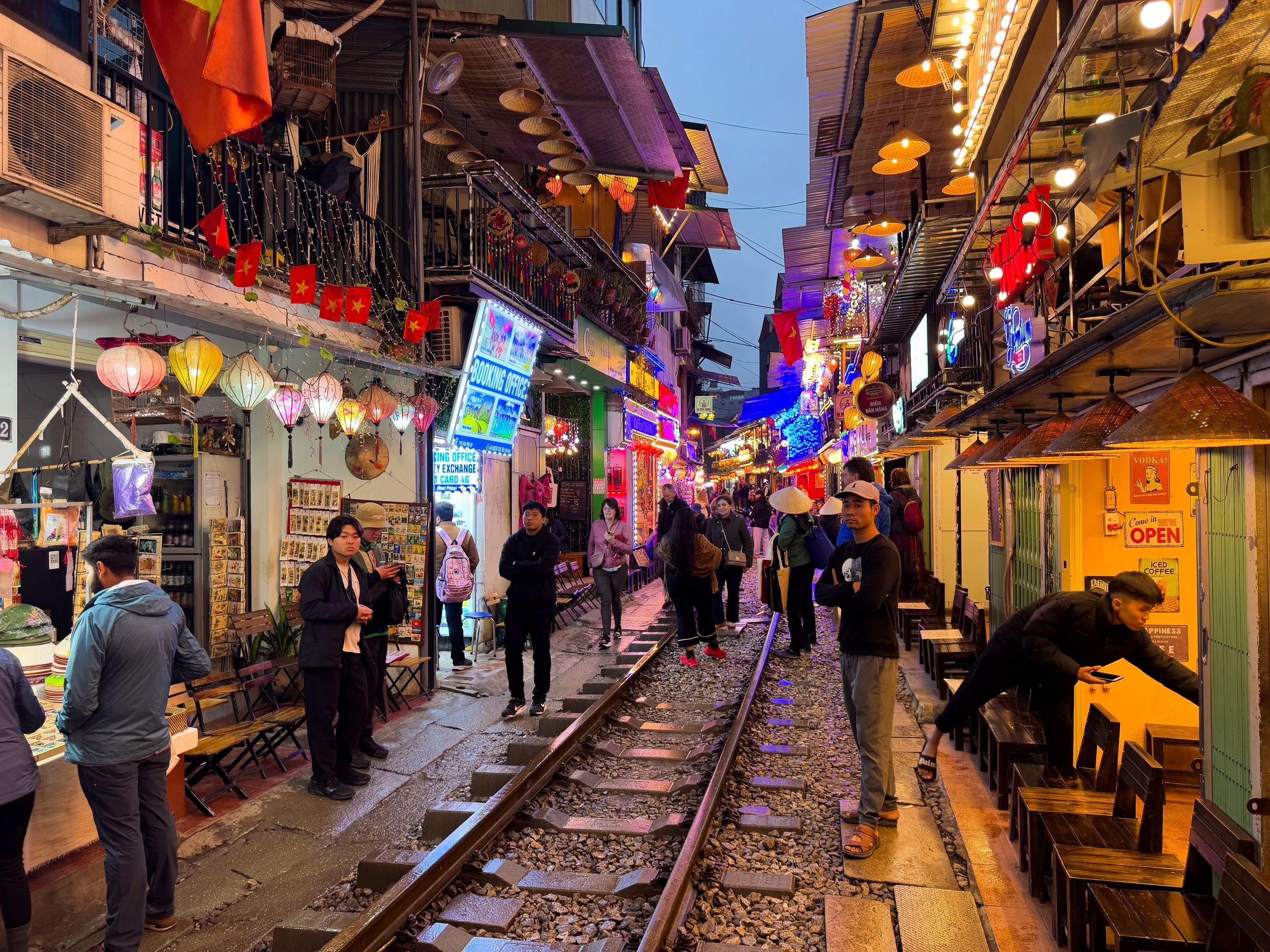
Phung Hung (Train Street). A narrow railway sandwiched between a canyon of buildings lined with dozens of cafes and bars serving Vietnamese coffees and beers. The street is covered in a mangle of string lights, colorful lanterns and illuminated signs with track side patios and second floor balconies. It’s easily one of the most exhilarating streets in the old town. Hundreds of people flock here to experience the train rushing past during an adrenaline packed minute.
Pro Tip. Ask any cafe staff when the next train is scheduled and the direction it’s traveling from. Return at least one hour before to get a good spot. Visit at night when the atmosphere is bright and lively.
Good to Know. There are a lot of scammy people blocking access to the train street. They will try to charge an admission or force you to sit at their cafe. Ignore them and push past saying you have a reservation elsewhere.
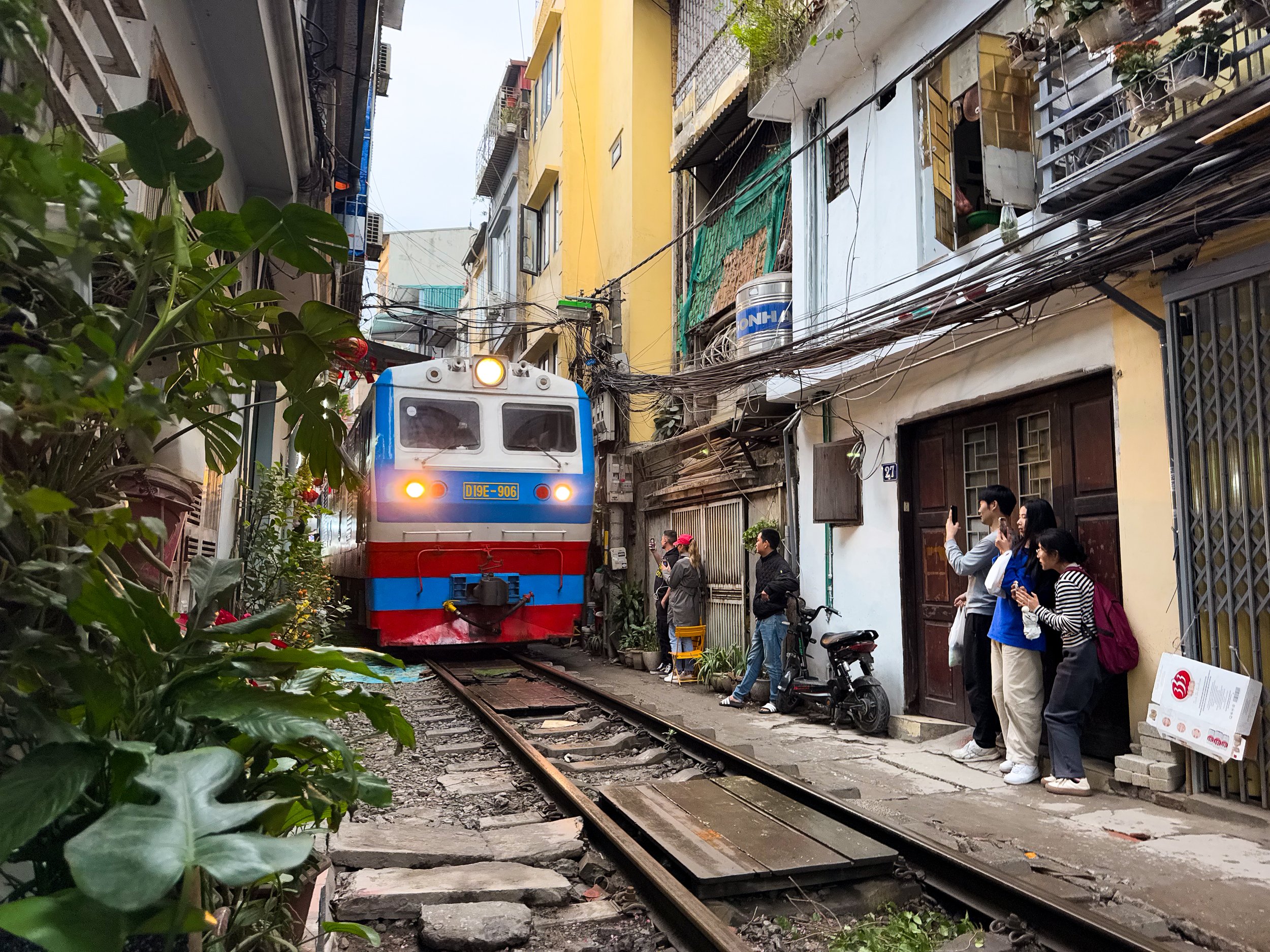
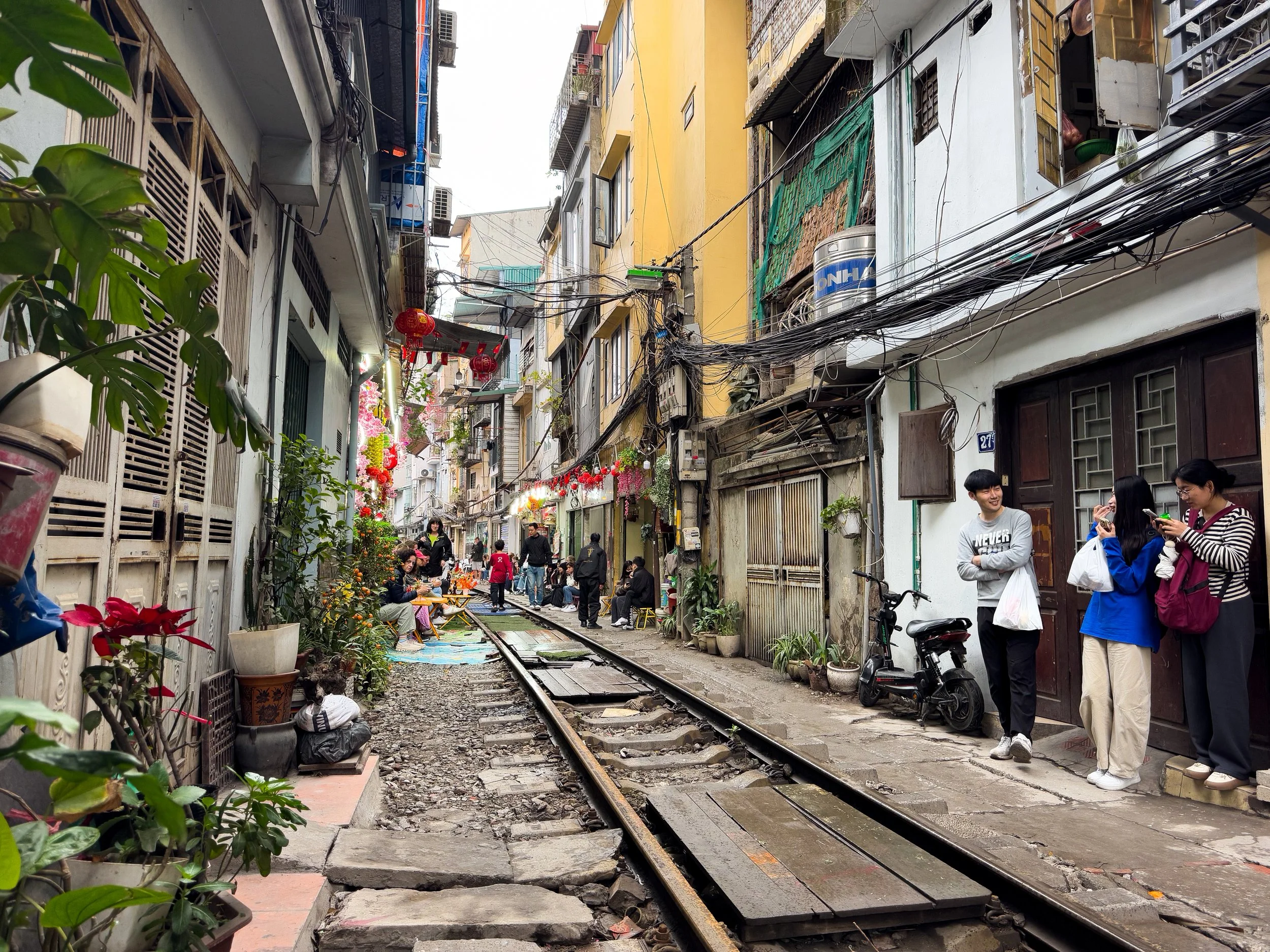
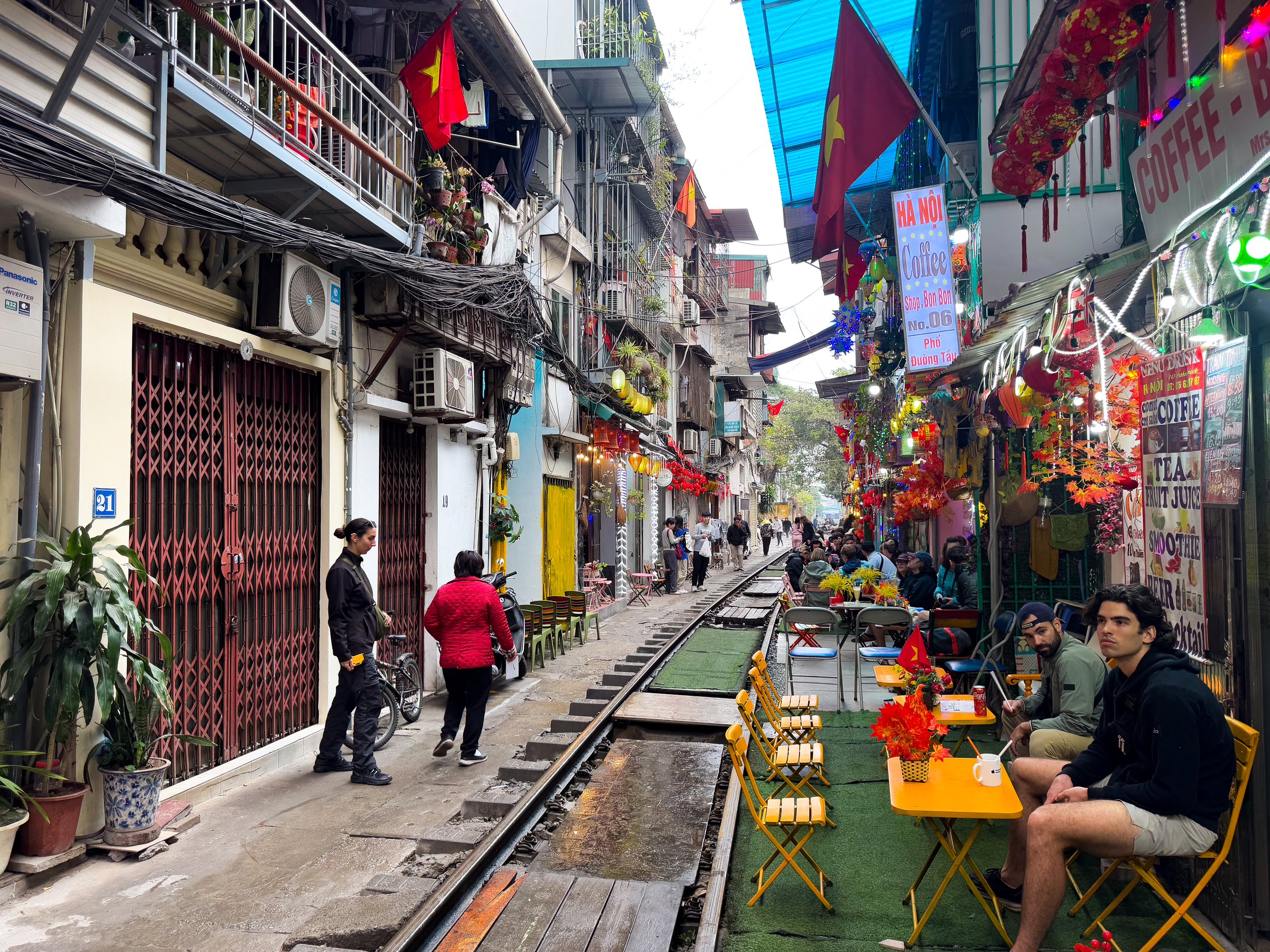
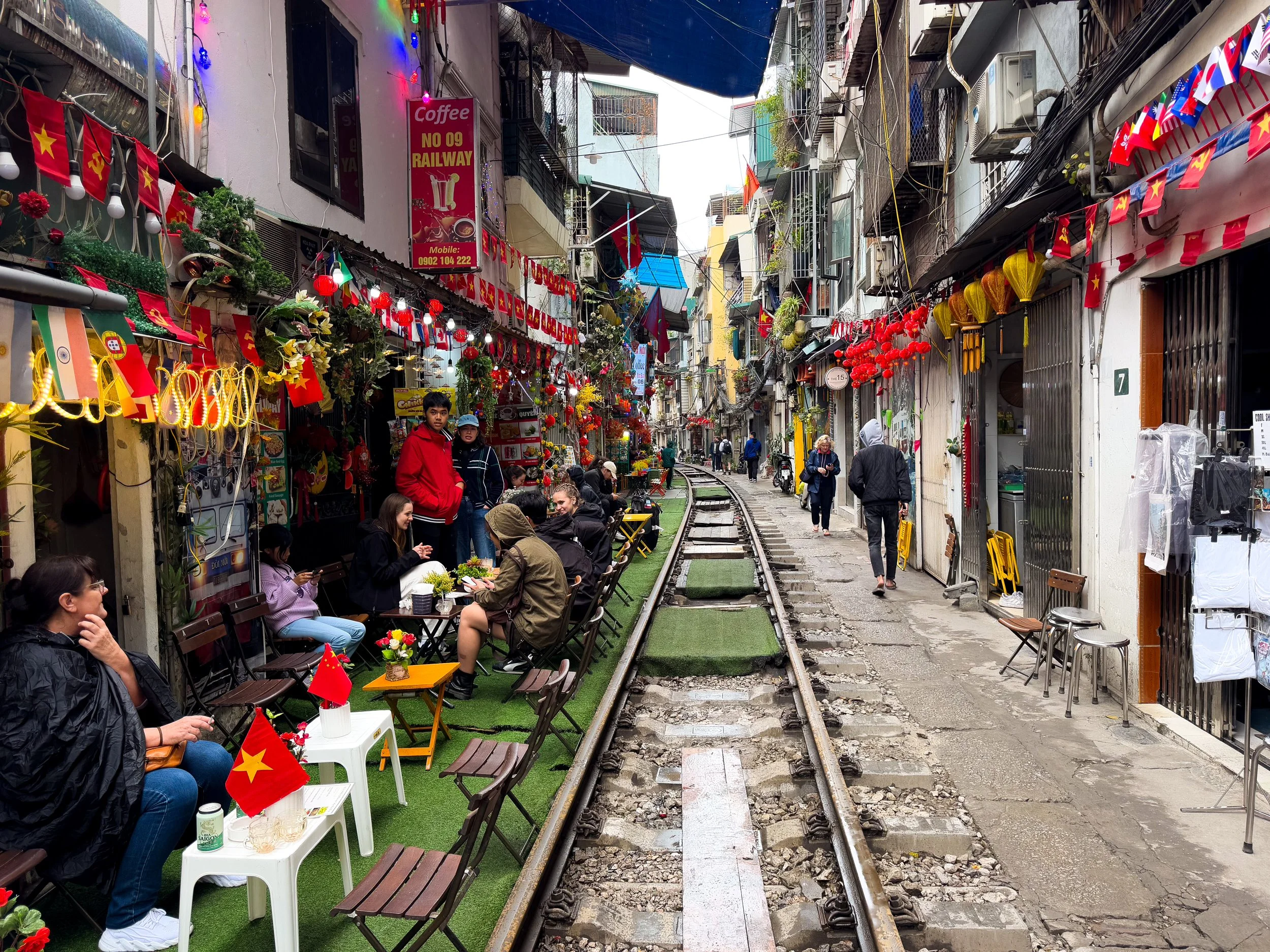
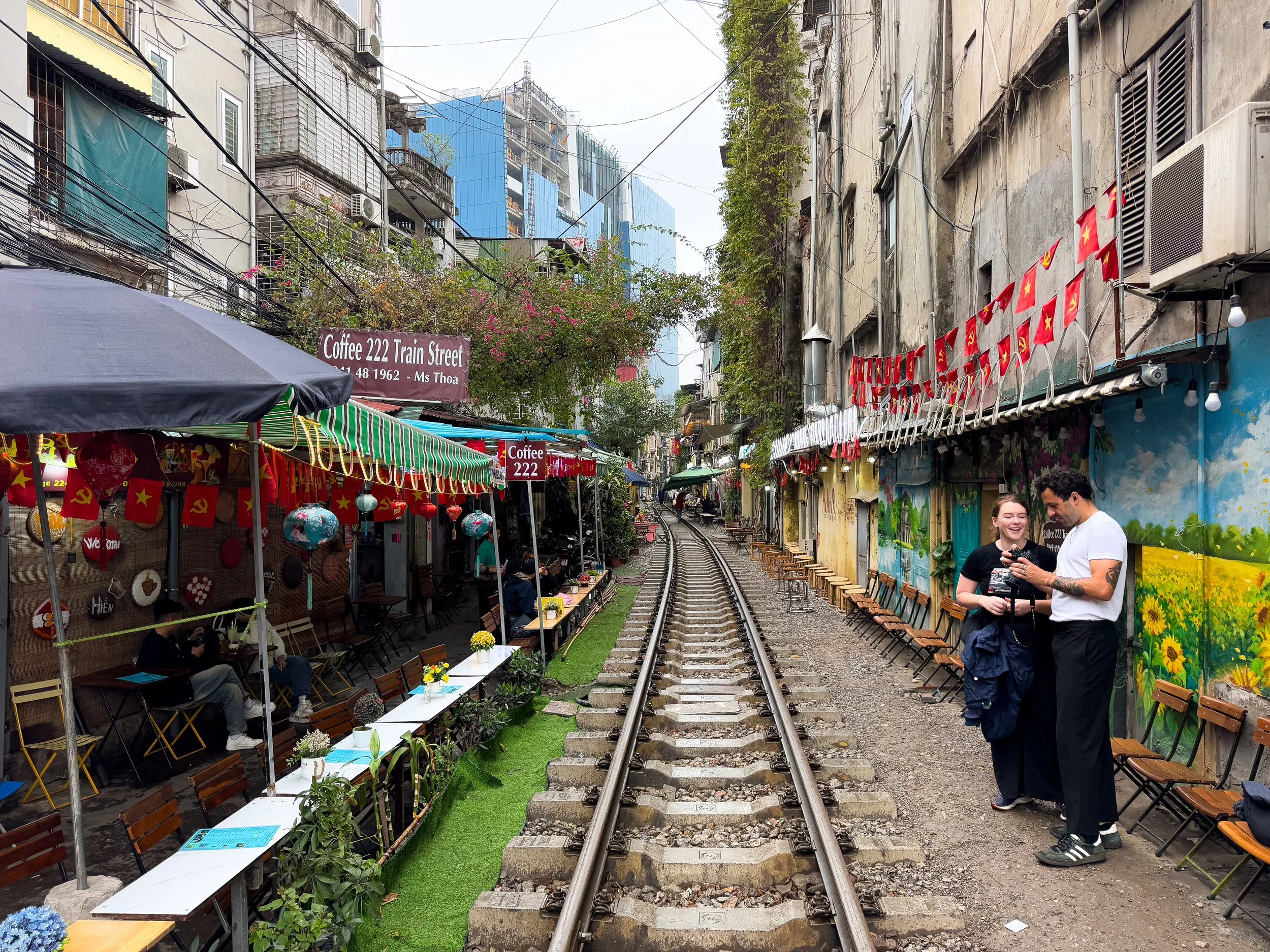
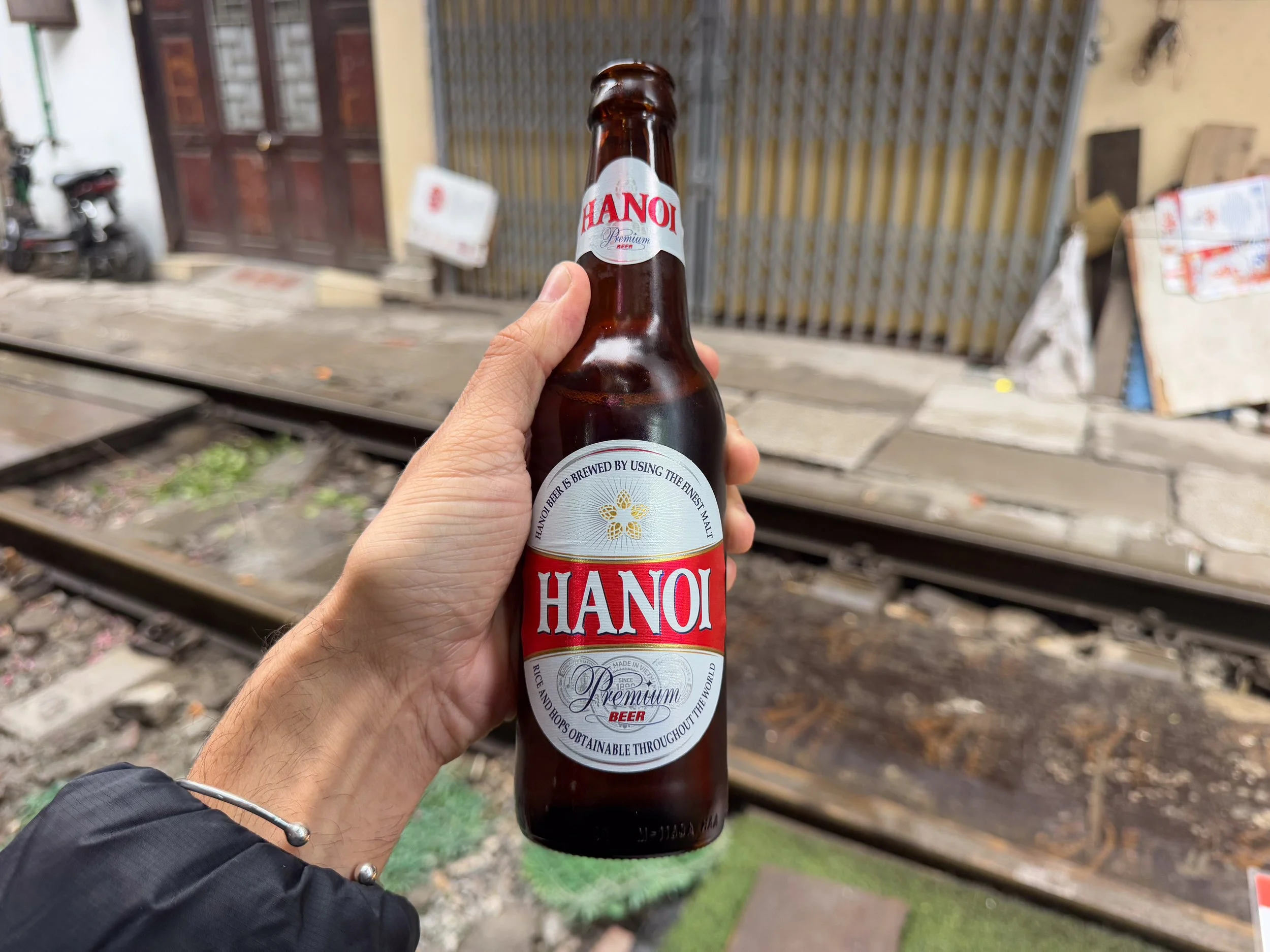
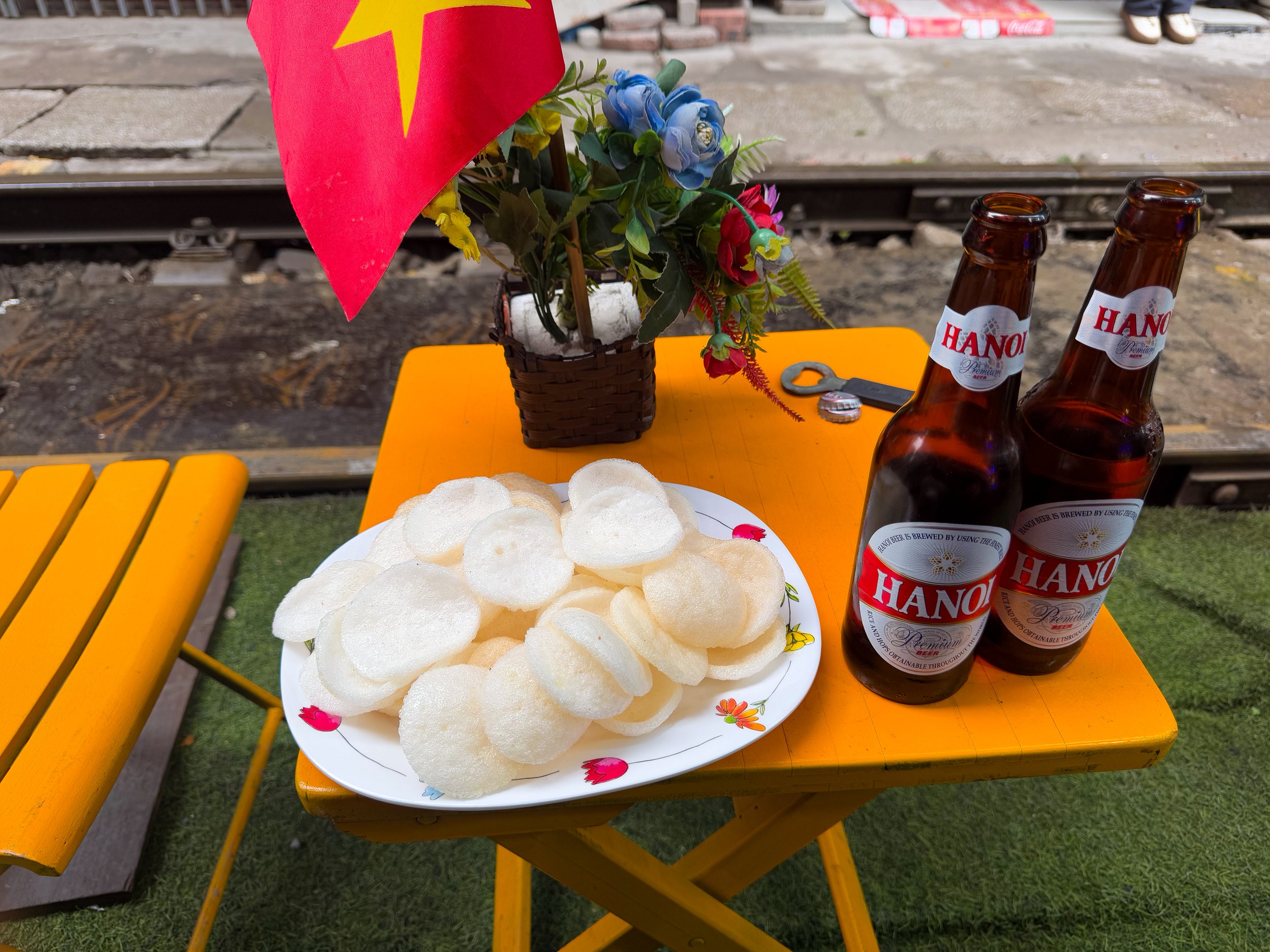
Tau Khan Thien (Train Street South). An alternate train street nestled tightly between an alleyway of small buildings. Though designed for tourists, it’s lesser visited and feels more local. Many cafes are operated out of people’s homes while older Vietnamese women watch to make sure no one gets hurt. As the train approaches, stop keepers close up awnings, pack away furniture and instruct people to tuck up against the walls. It’s thrilling as the train approaches and passes with barely any clearance between us and it.
Pro Tip. Order a beer and place the bottle cap on the tracks for a flattened souvenir.
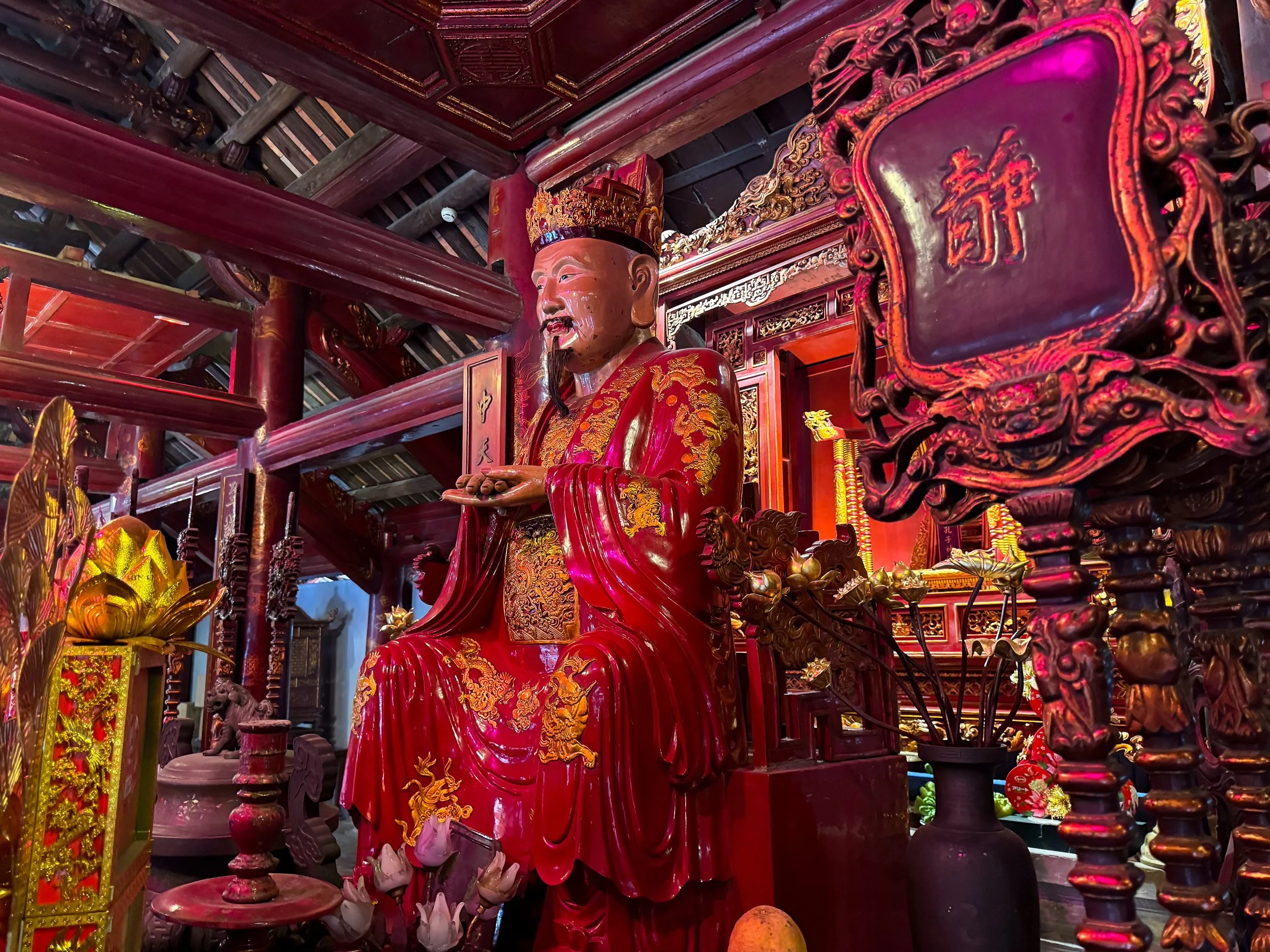
See the Temples and Sights
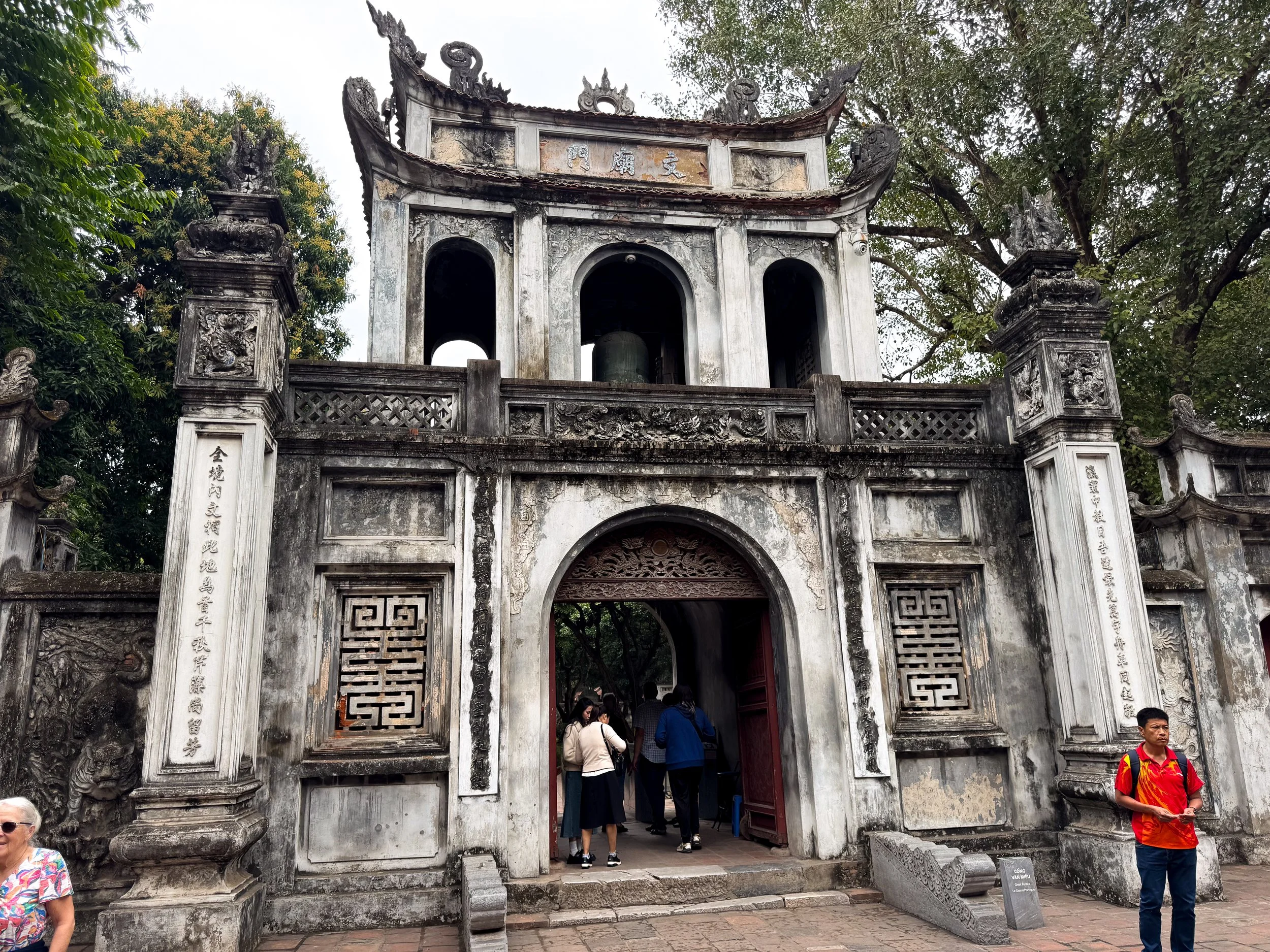
Temple of Literature. An ancient Confucian temple dedicated to education and the development of talent. It was created by past emperors as a place for the most revered scholars to study and take a series of exams. Its symmetrical design is very symbolic. A central path suggests the path to enlightenment while a series of gates signifies the advance of knowledge. Today, students come to the grounds to mediate, study and pray for knowledge, good grades and their future.
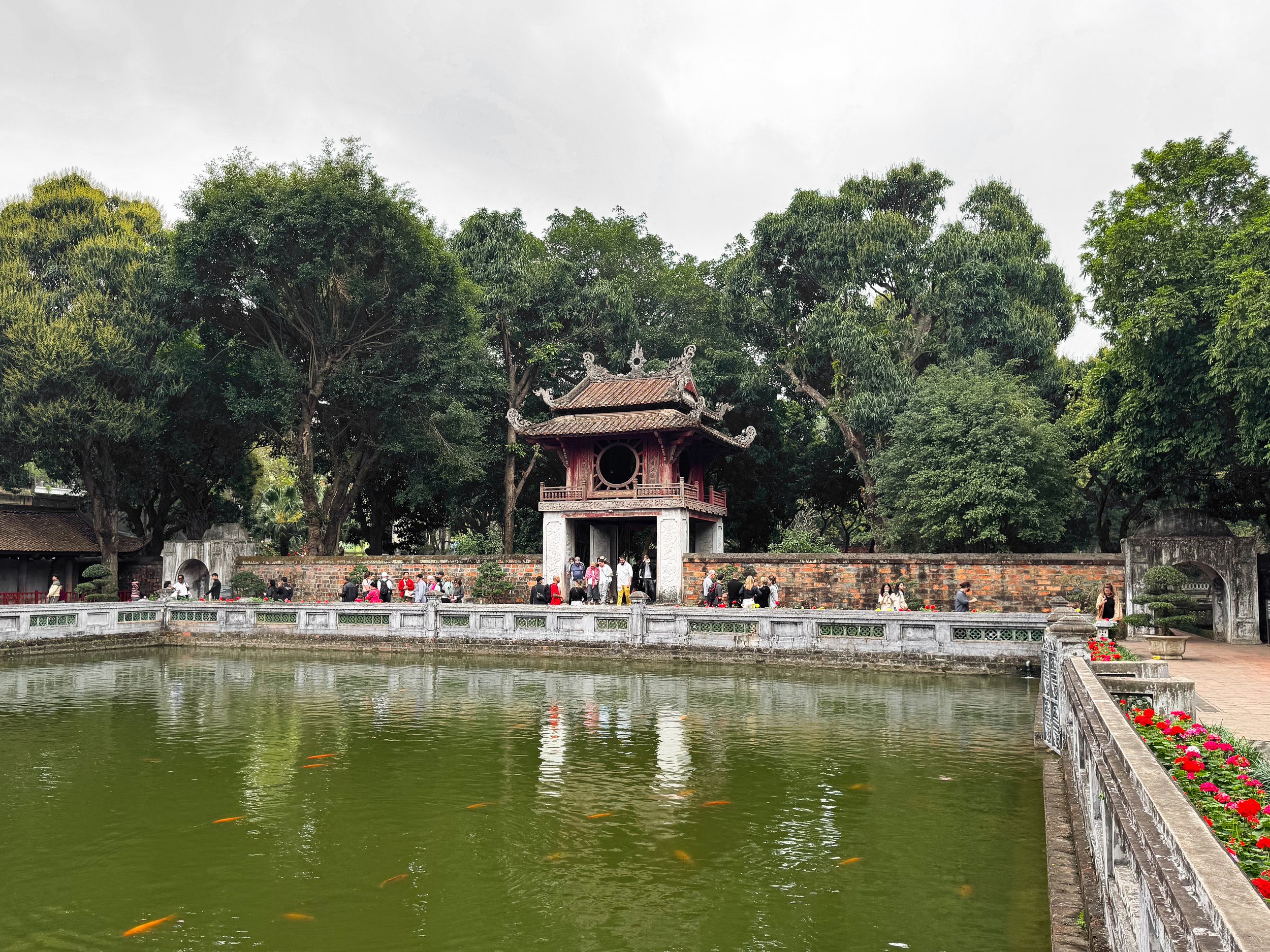
Van Mieu Gate. A three tiered entrance gate to the temple grounds adorned with motifs of dragons. It leads to a courtyard with a grassy lawn, sculpted bushes and pools with koi fish.
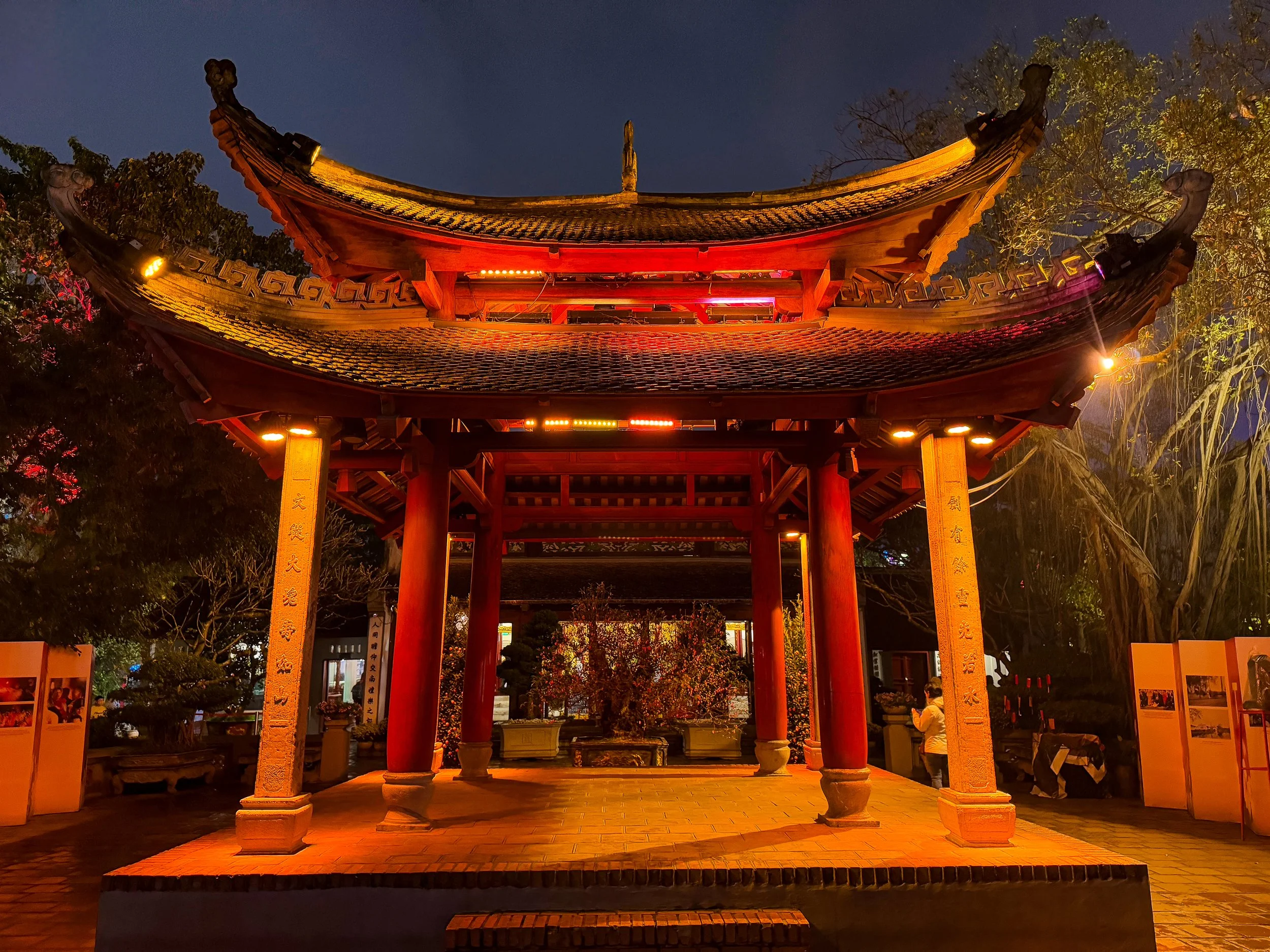
Khue Van Pagoda. A red painted wooden pagoda held up by four stone columns representing the elements. It features designs of dragons and a circle symbolizing the infinite nature of enlightenment. It is considered the symbol of Hanoi.
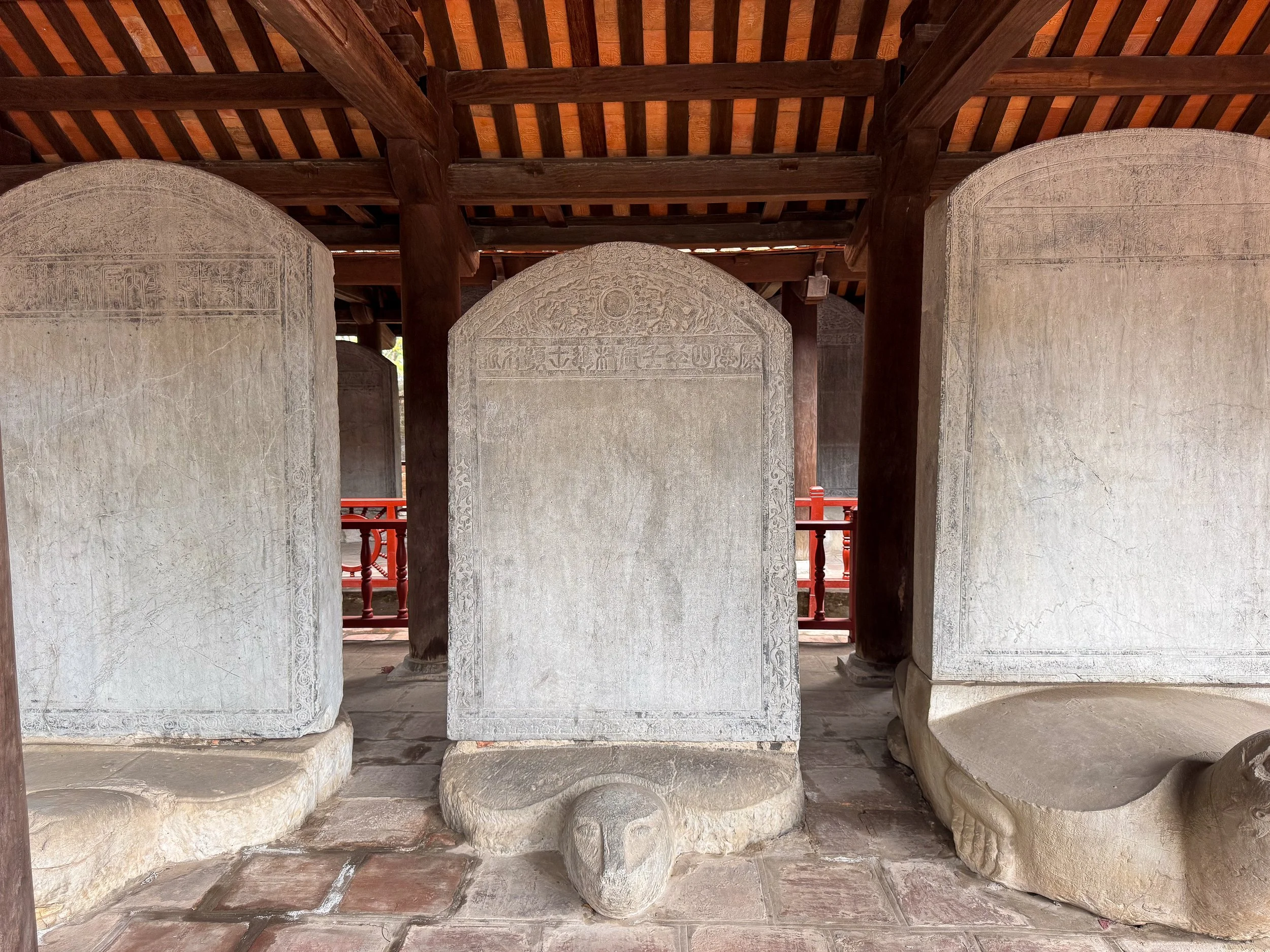
Well of Heavenly Clarity. A courtyard with a large koi pond at its center. It’s flanked by The Stelae of Doctors, a series of pavilions housing statues of turtles with stelae placed on top. Each stelae is inscribed with writings from previous royal scholars.
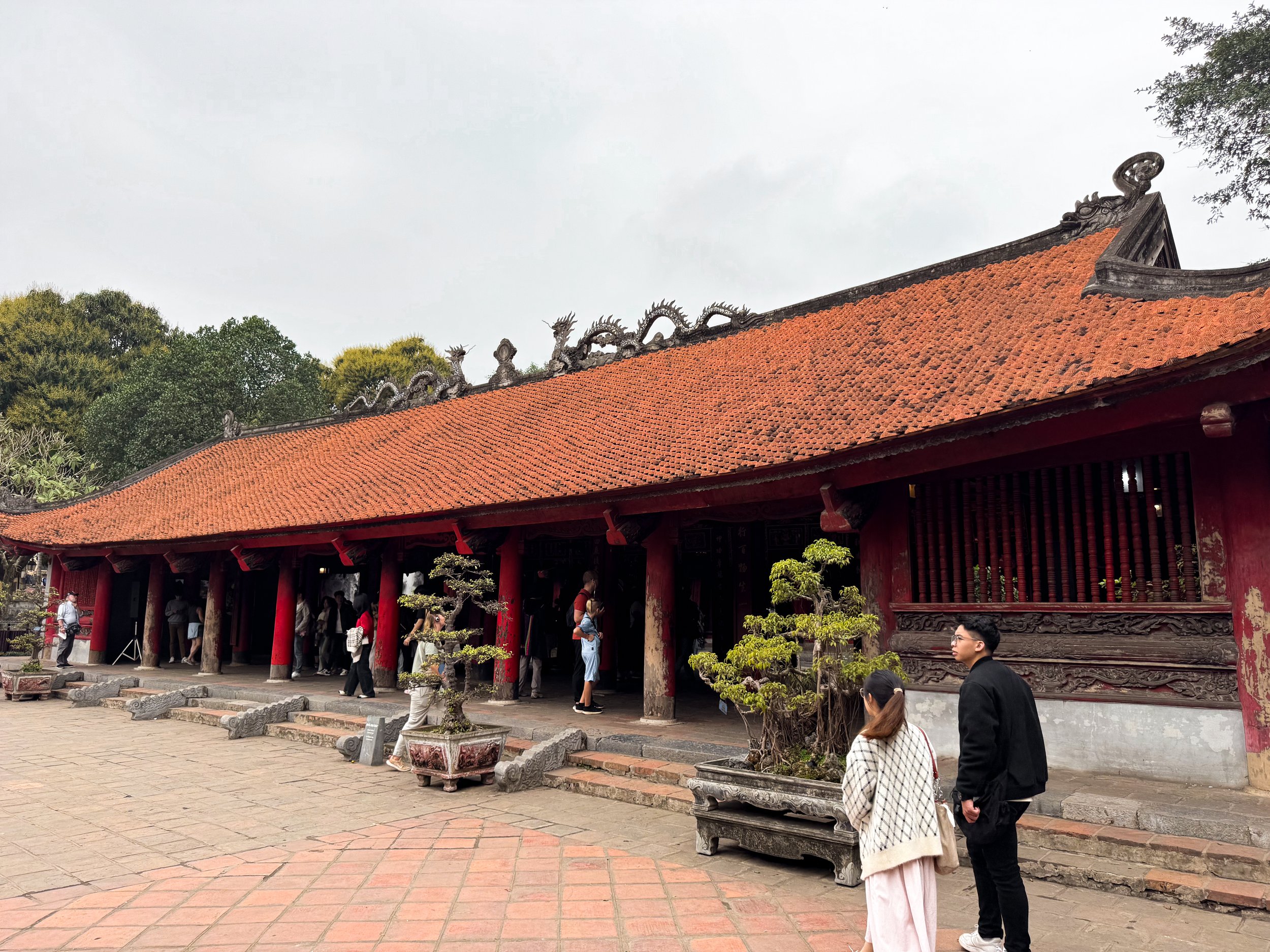
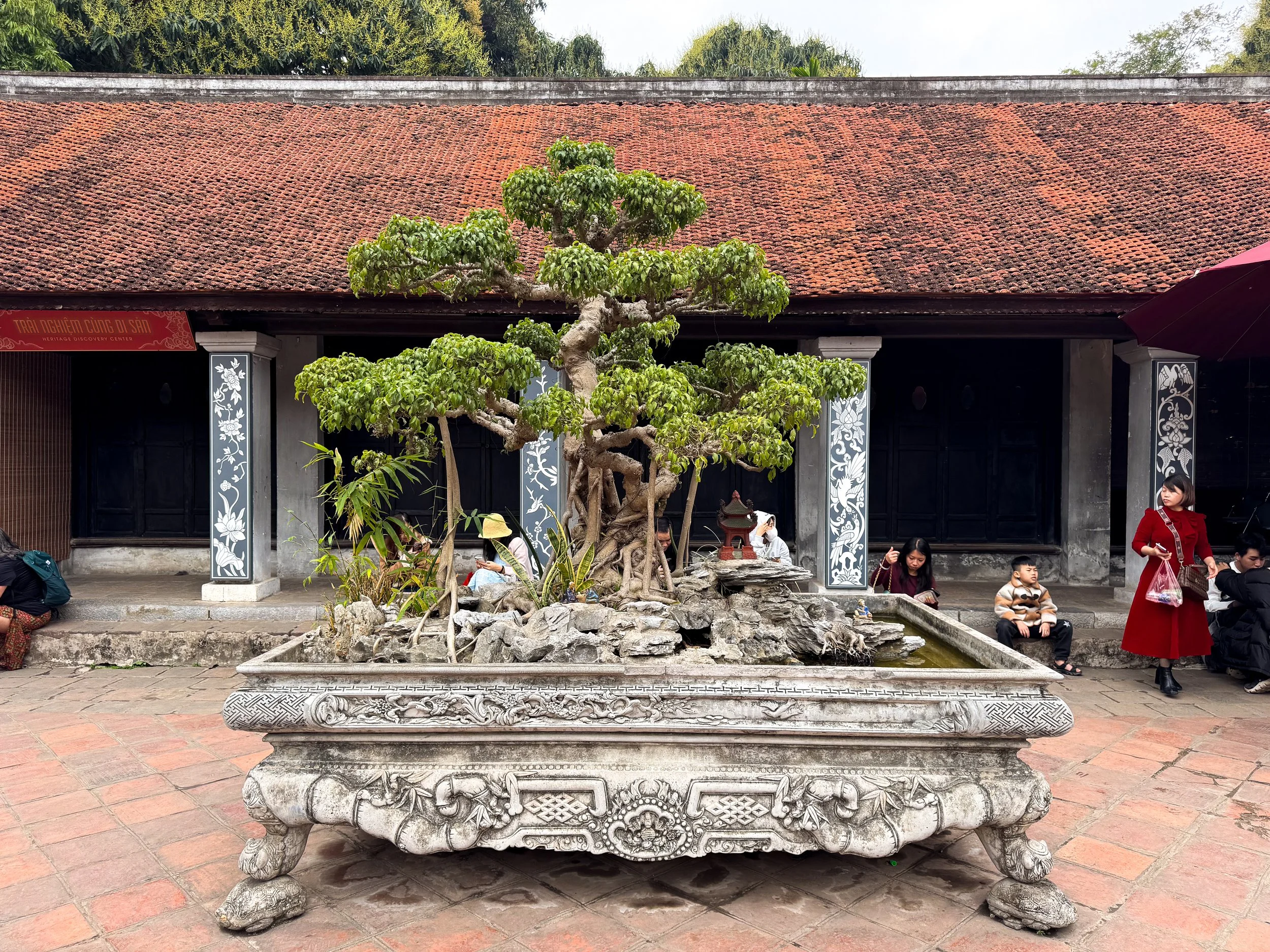
Courtyard of the Sages. A brick paved courtyard used for royal exams. Its sides are flanked by planters with bonsai trees and former class rooms, now a museum dedicated to the history of the complex and its scholars.
House of Ceremonies. A pavilion in the Courtyard of the Sages with two large dragon sculptures centered on top of the terracotta tiled roof.
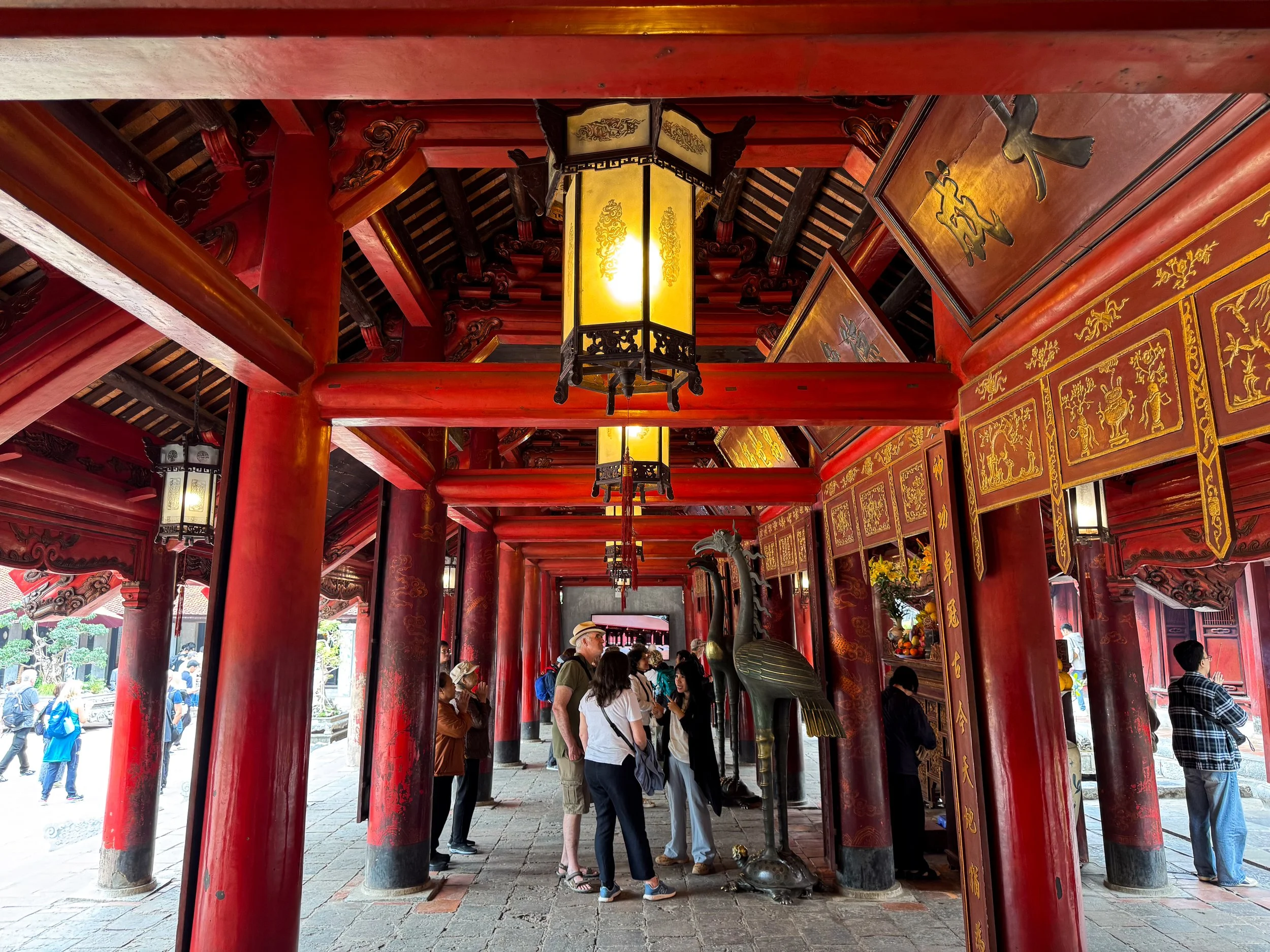
Sanctuary of Confucius. A temple dedicated to Confucius. Inside are statues of him and altars with burning sticks of incense, offerings of citrus fruits, cookies and flowers.
Thai Hoc Hall. A recently rebuilt pagoda dedicated to the emperors that founded The Temple of Literature. Inside of its two floors are statues of the emperors and altars to make offerings.
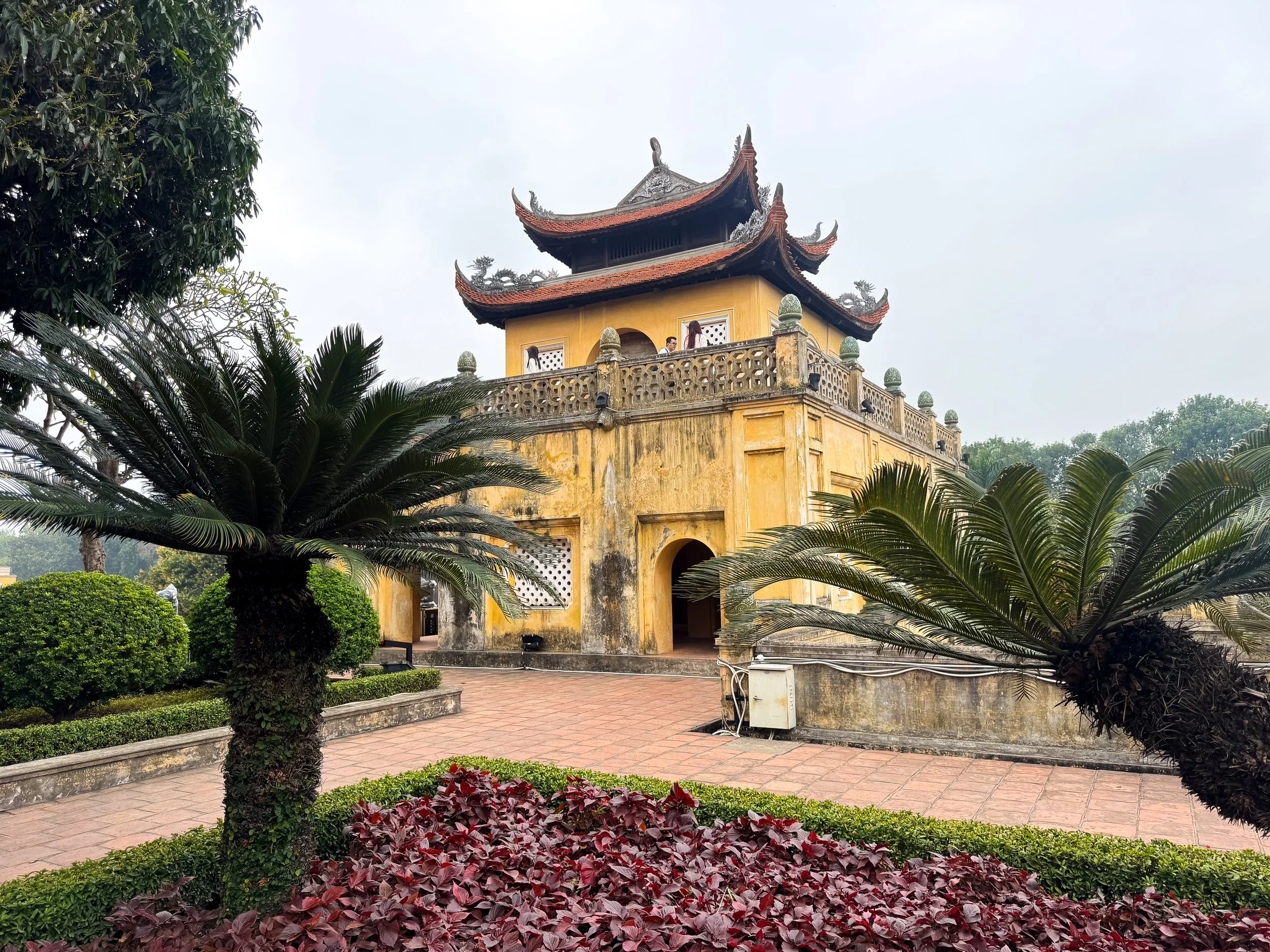
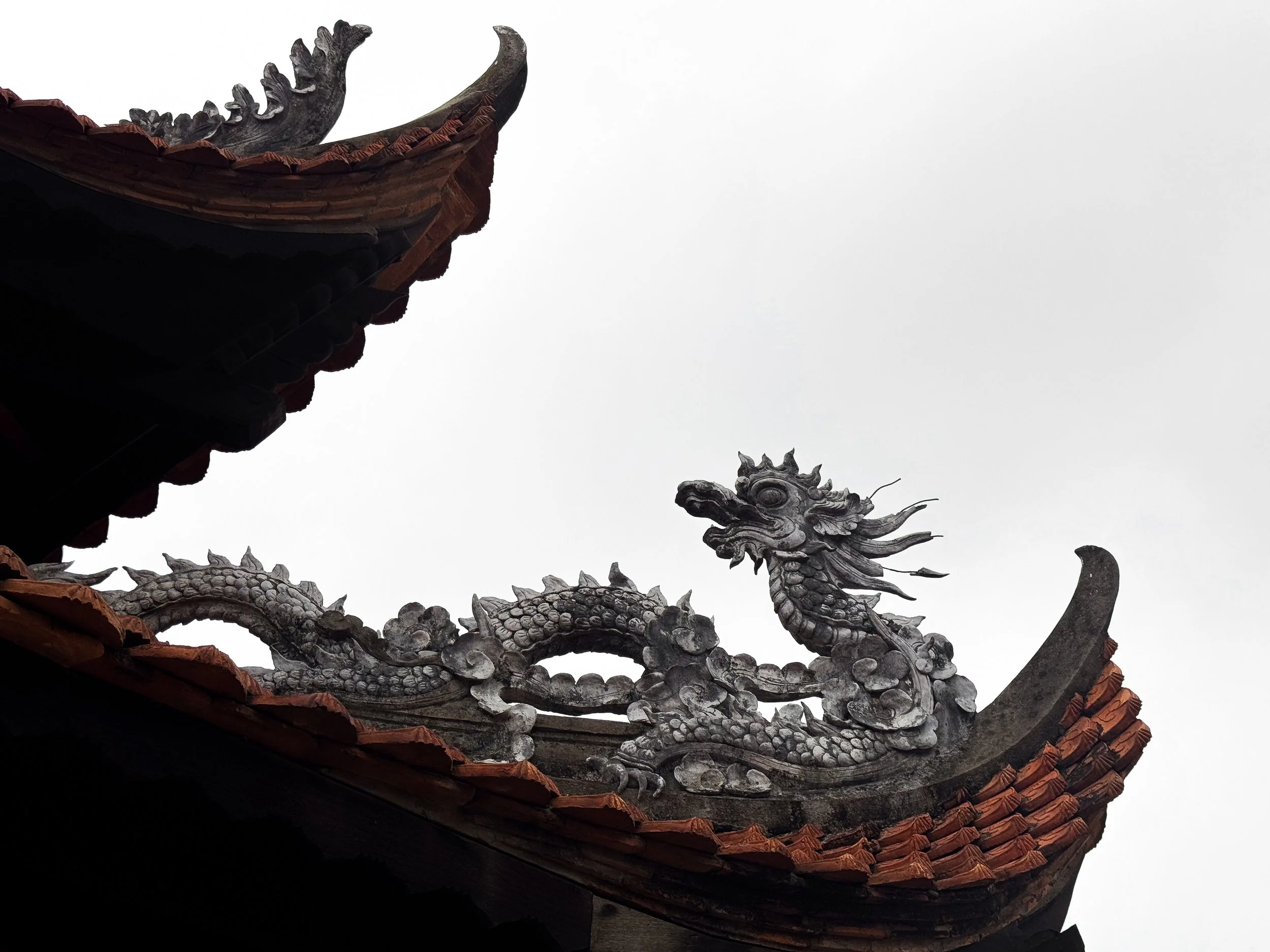
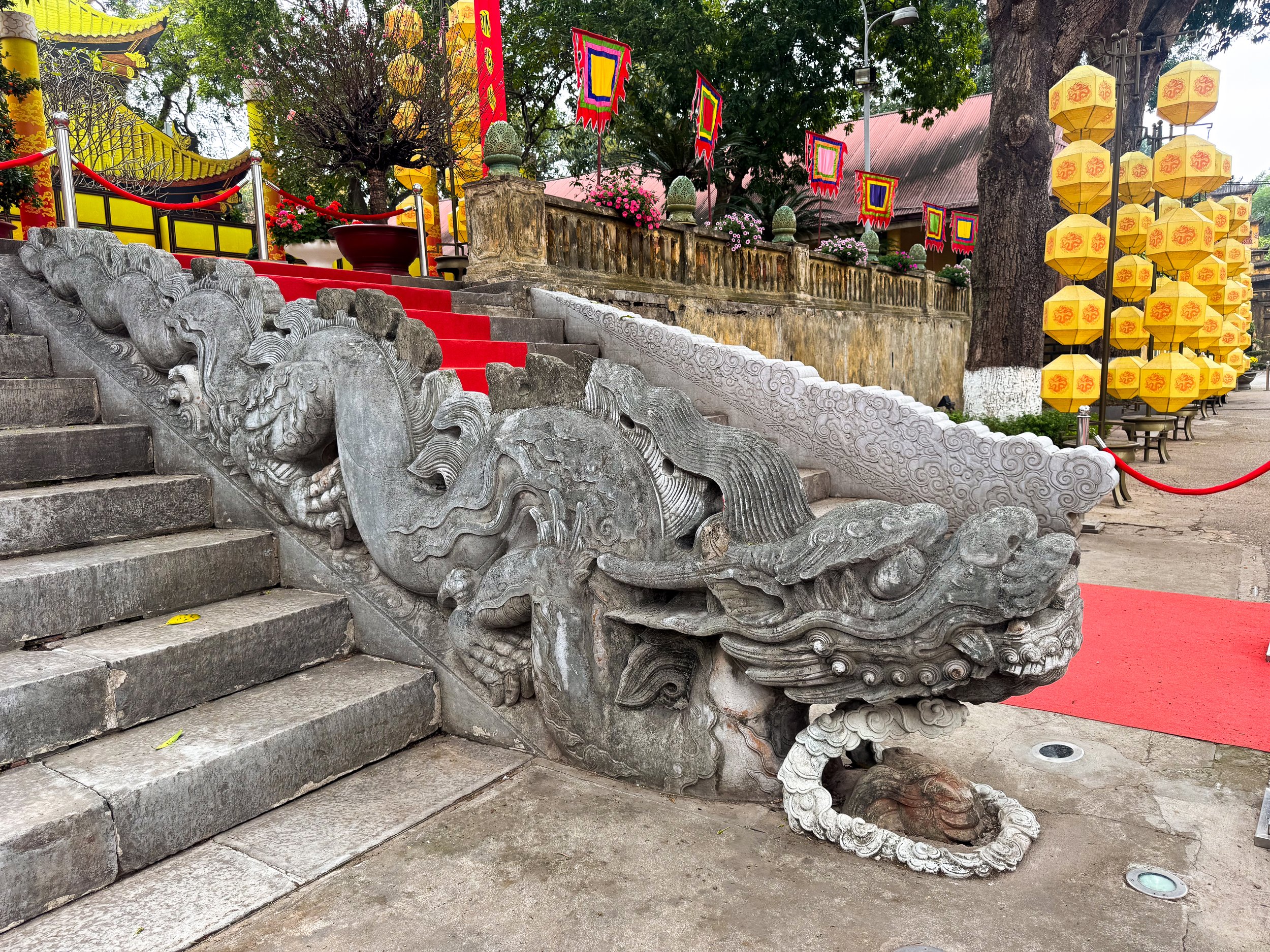
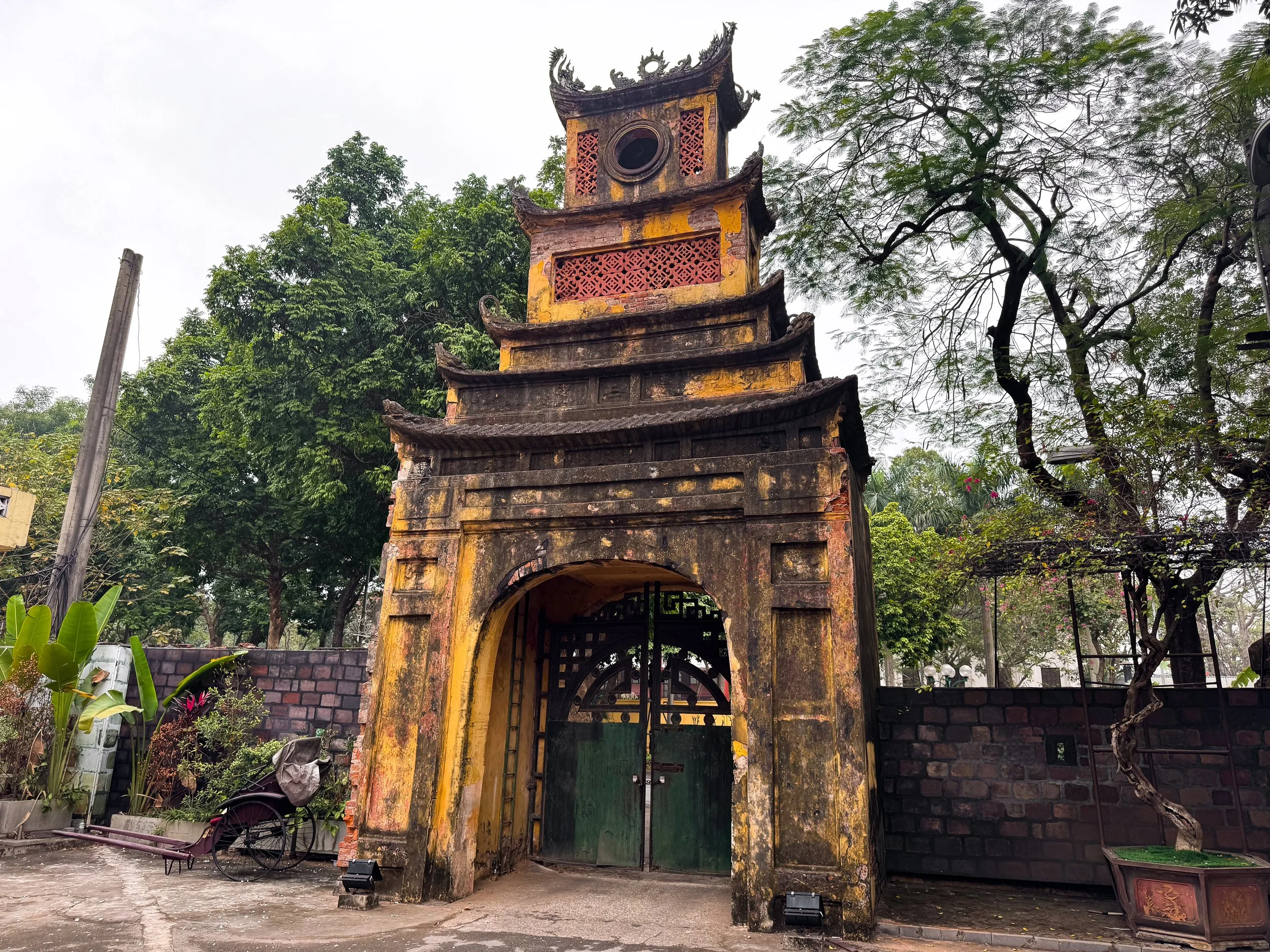
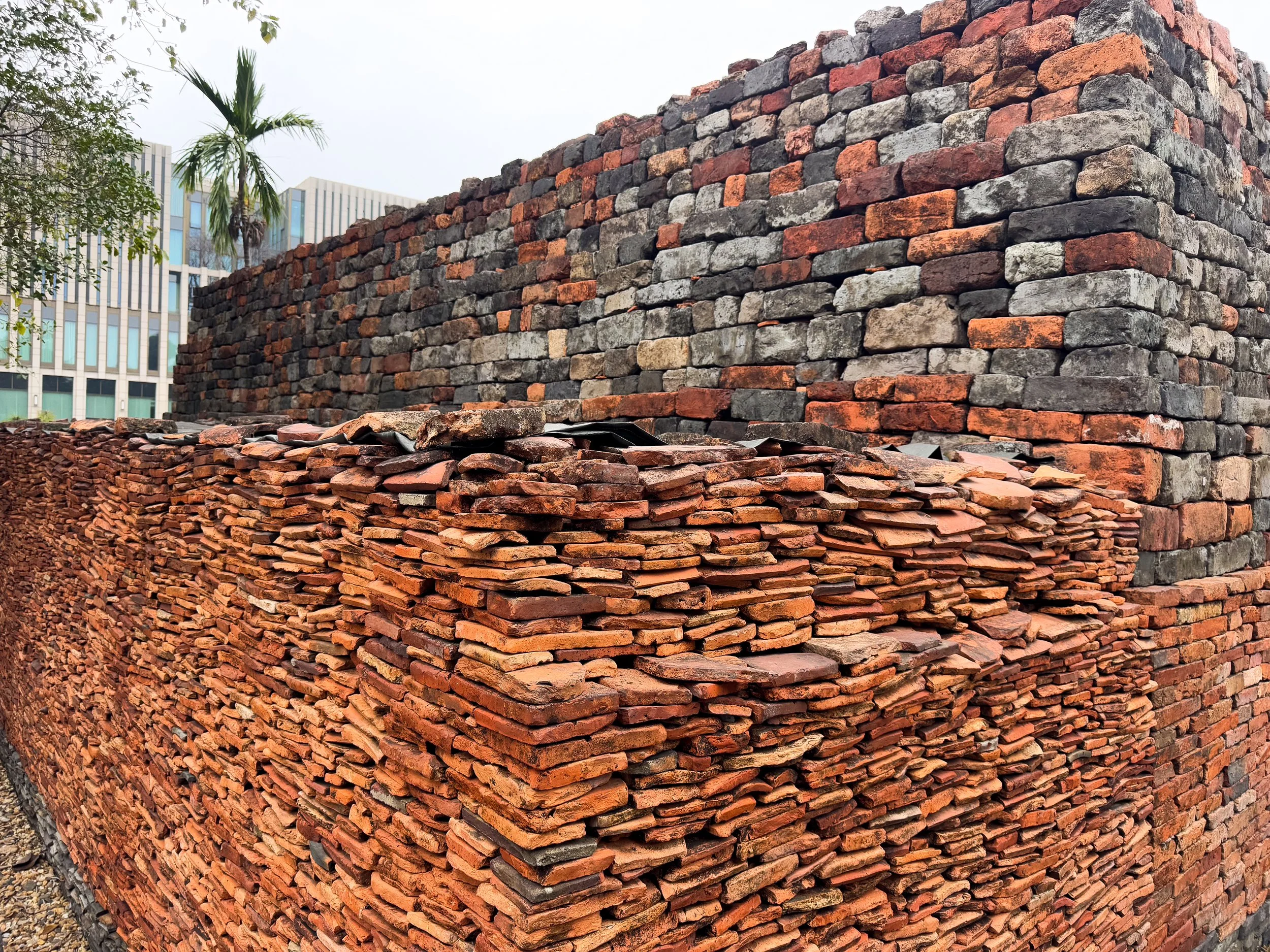
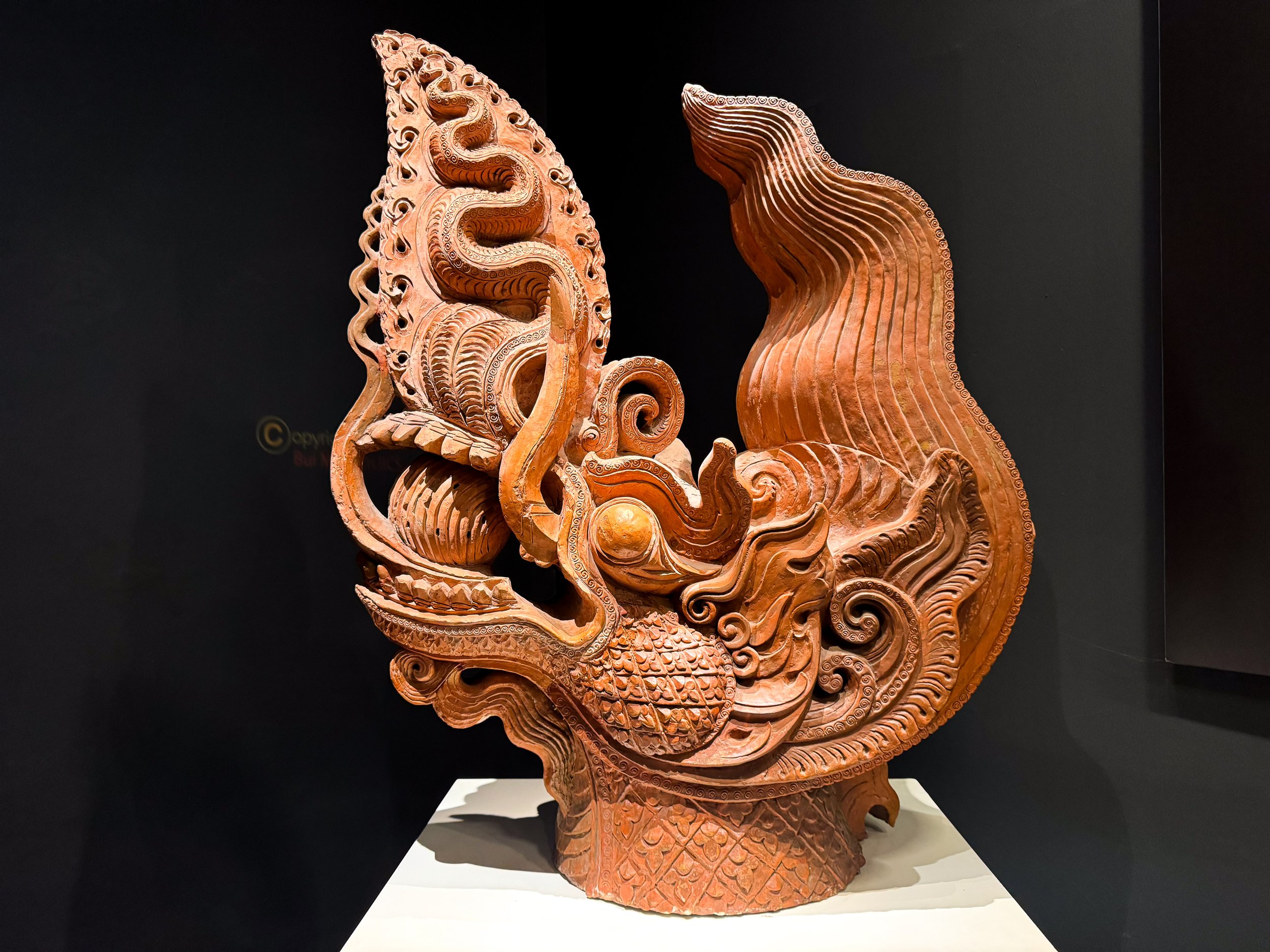
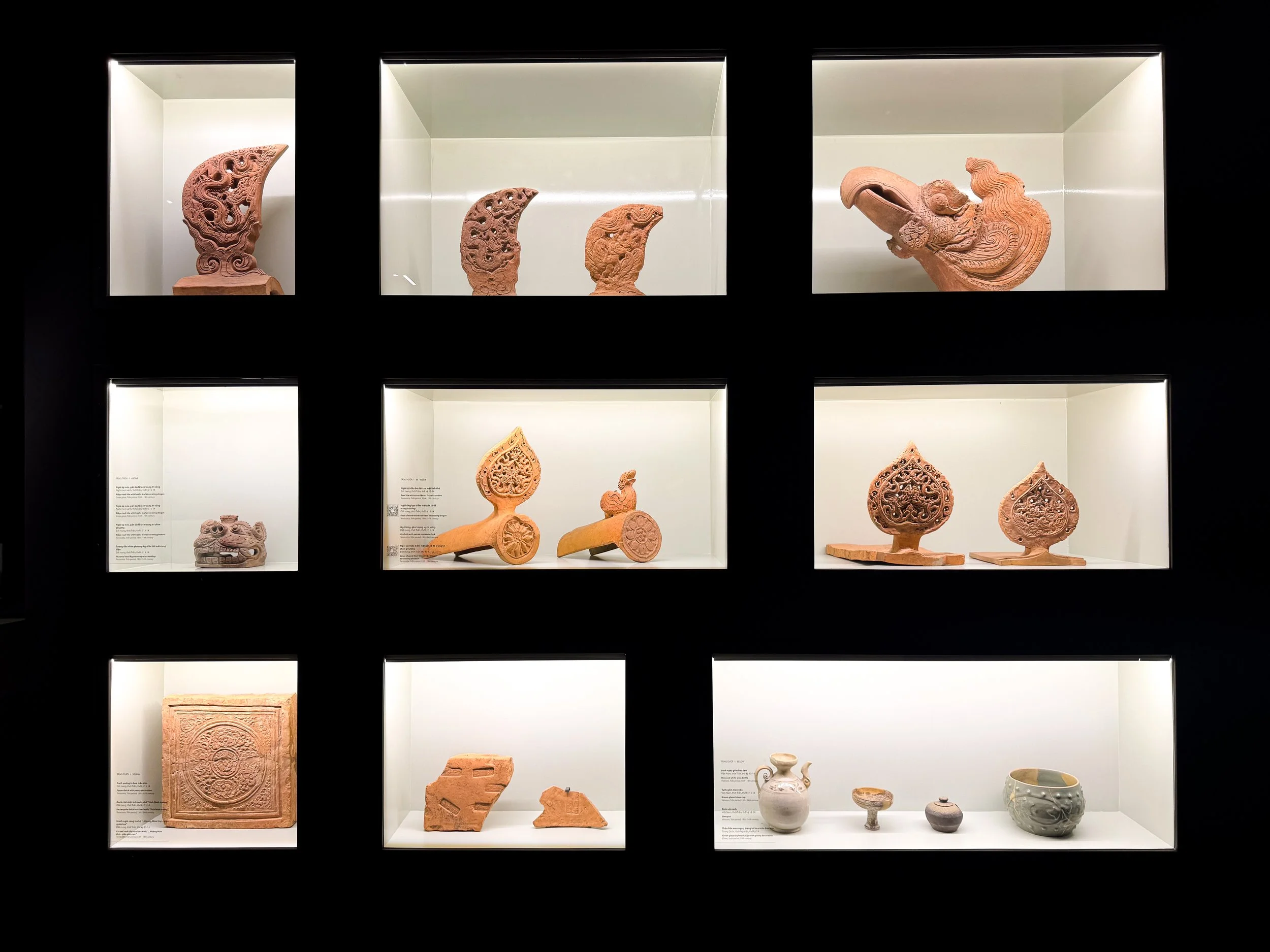
Ancient Citadel. The royal grounds of Vietnam’s ancient capital. Much of it was leveled during the French colonial period. Original stone dragon steps lead to where the former royal palace once stood. A museum houses artifacts discovered at archeological dig sites including ornate terracotta roof tiles, cornices of dragons, porcelain dishes and woodblocks used for printing. Exposed dig sites, piles of stacked bricks and terracotta roof tiles recovered from them can be seen throughout the grounds.
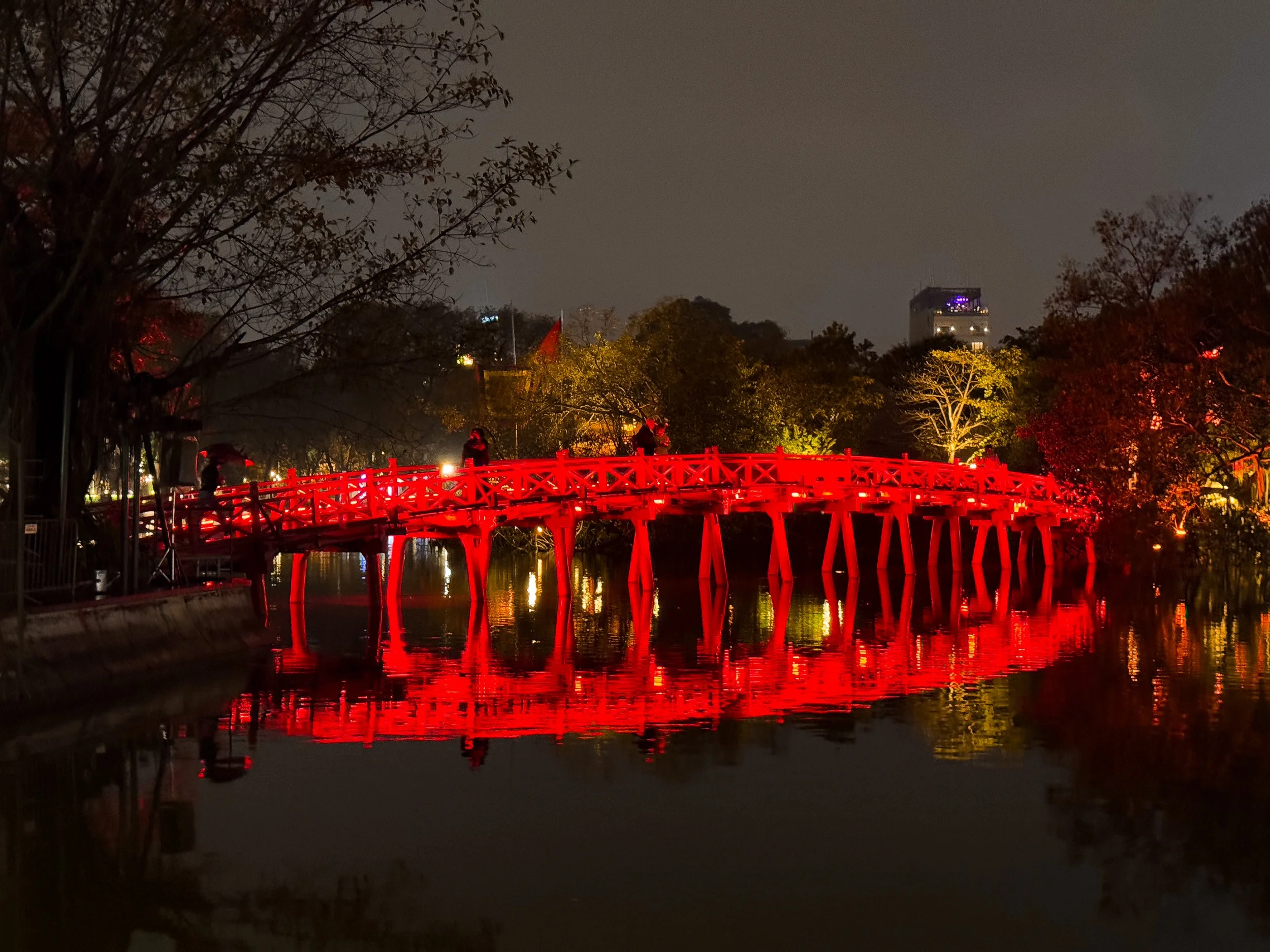
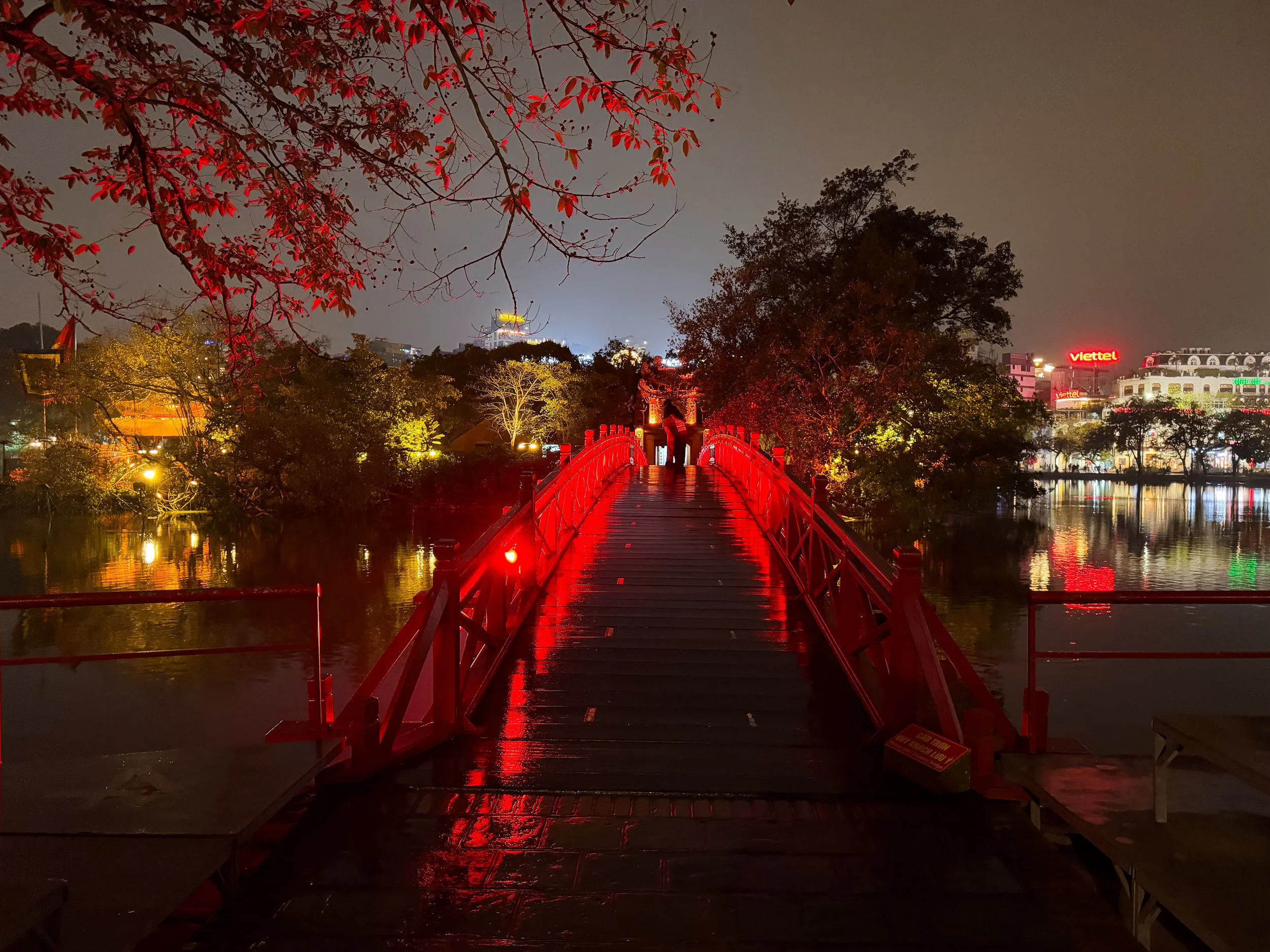
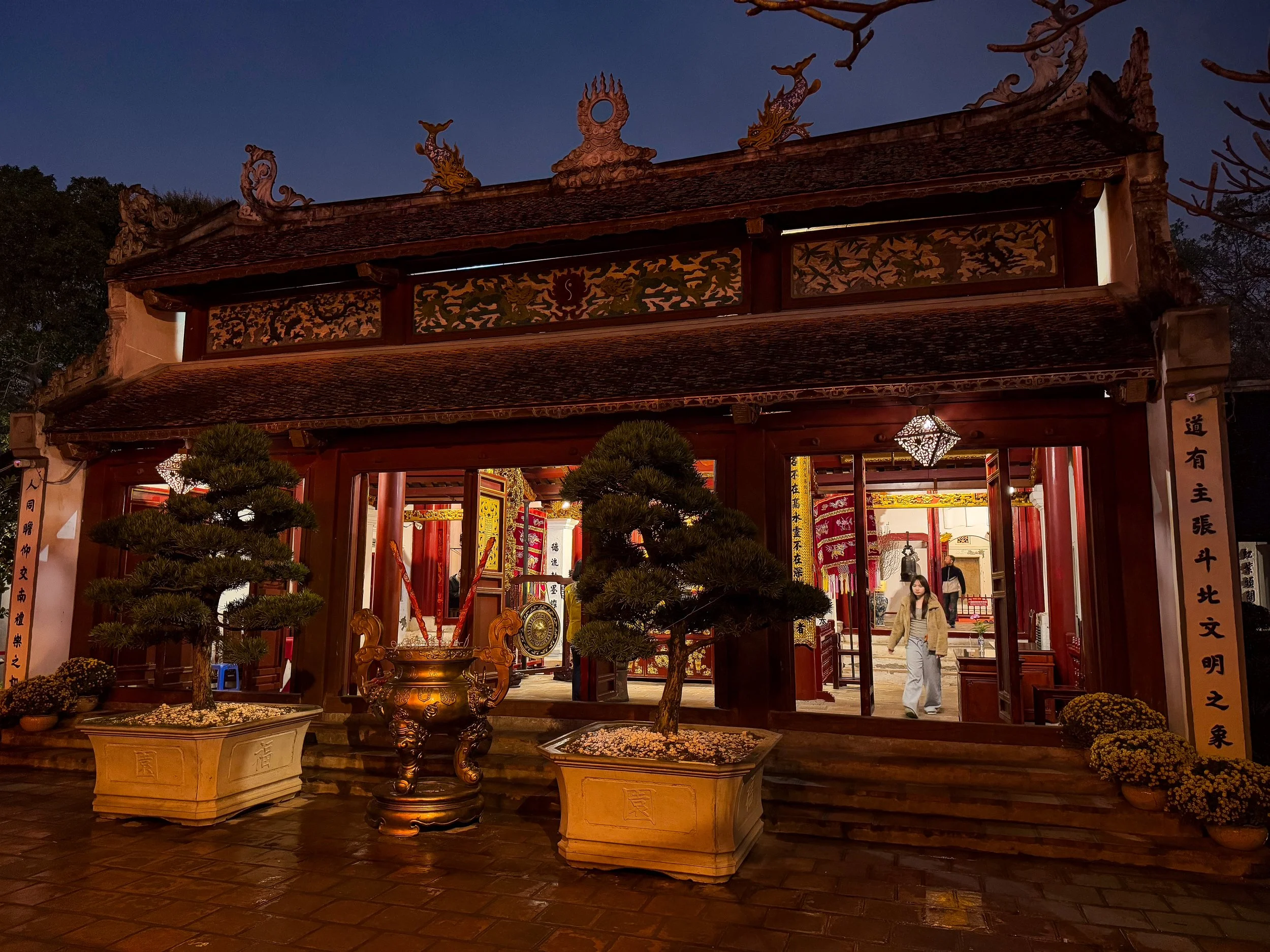
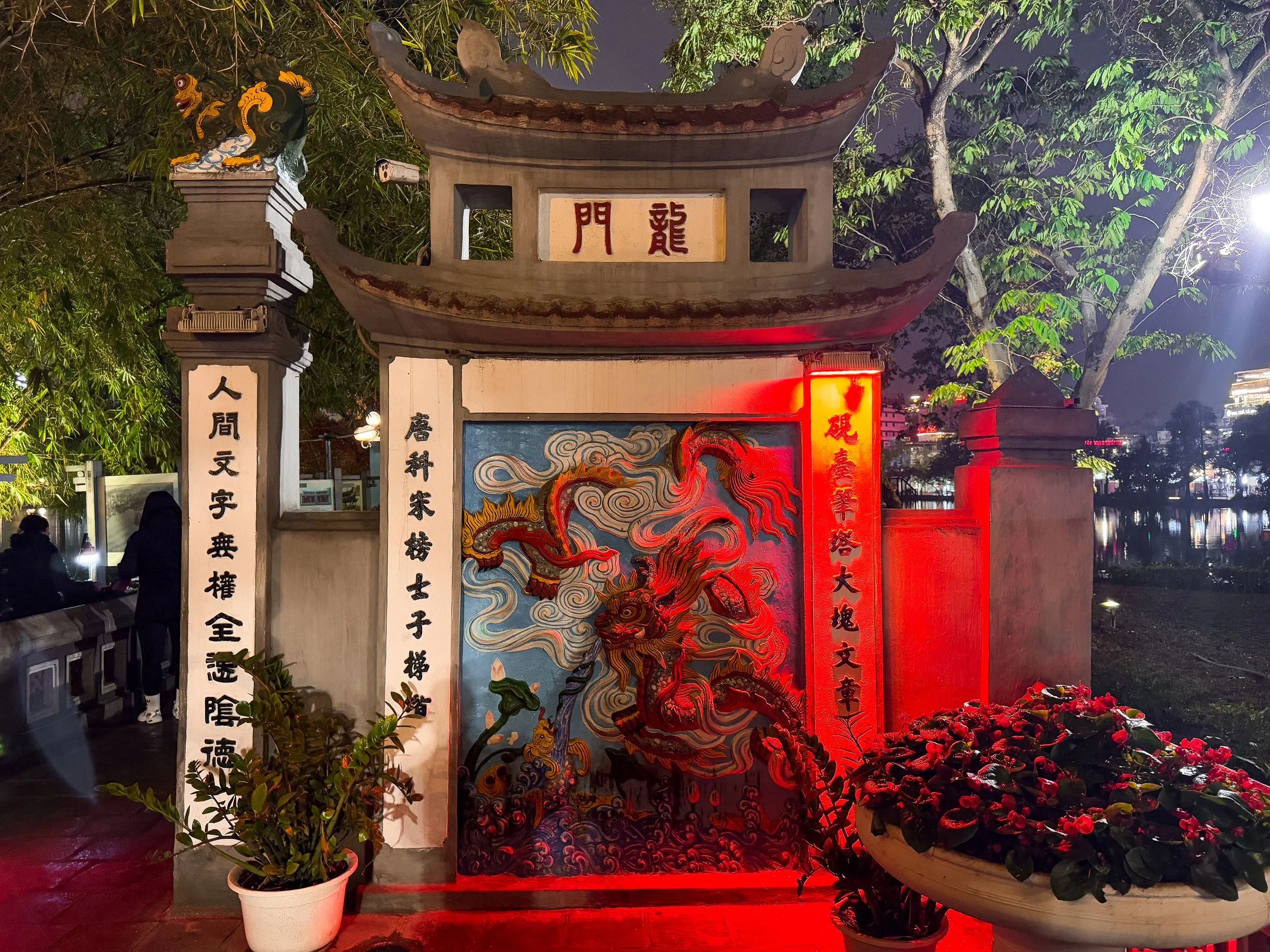
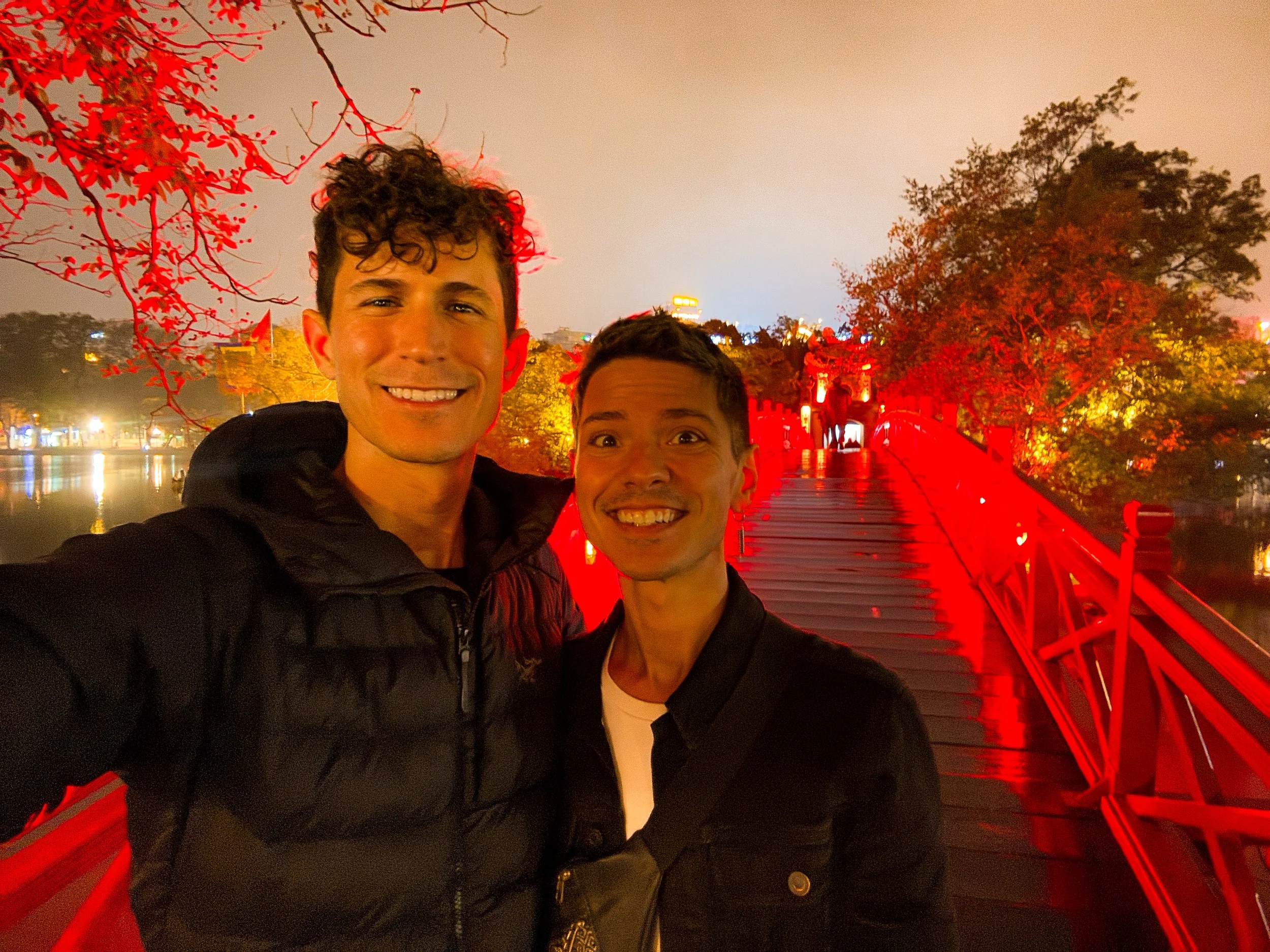
Hoan Kiem Lake. A sacred lake in the old town home to ancient temples and the Legend of the Sword Lake Turtle. The legend says that a golden turtle appeared from the lake and lent a sword to the emperor to defeat an invading army. On weekends the surrounding road becomes a walking street with performers and street food vendors.
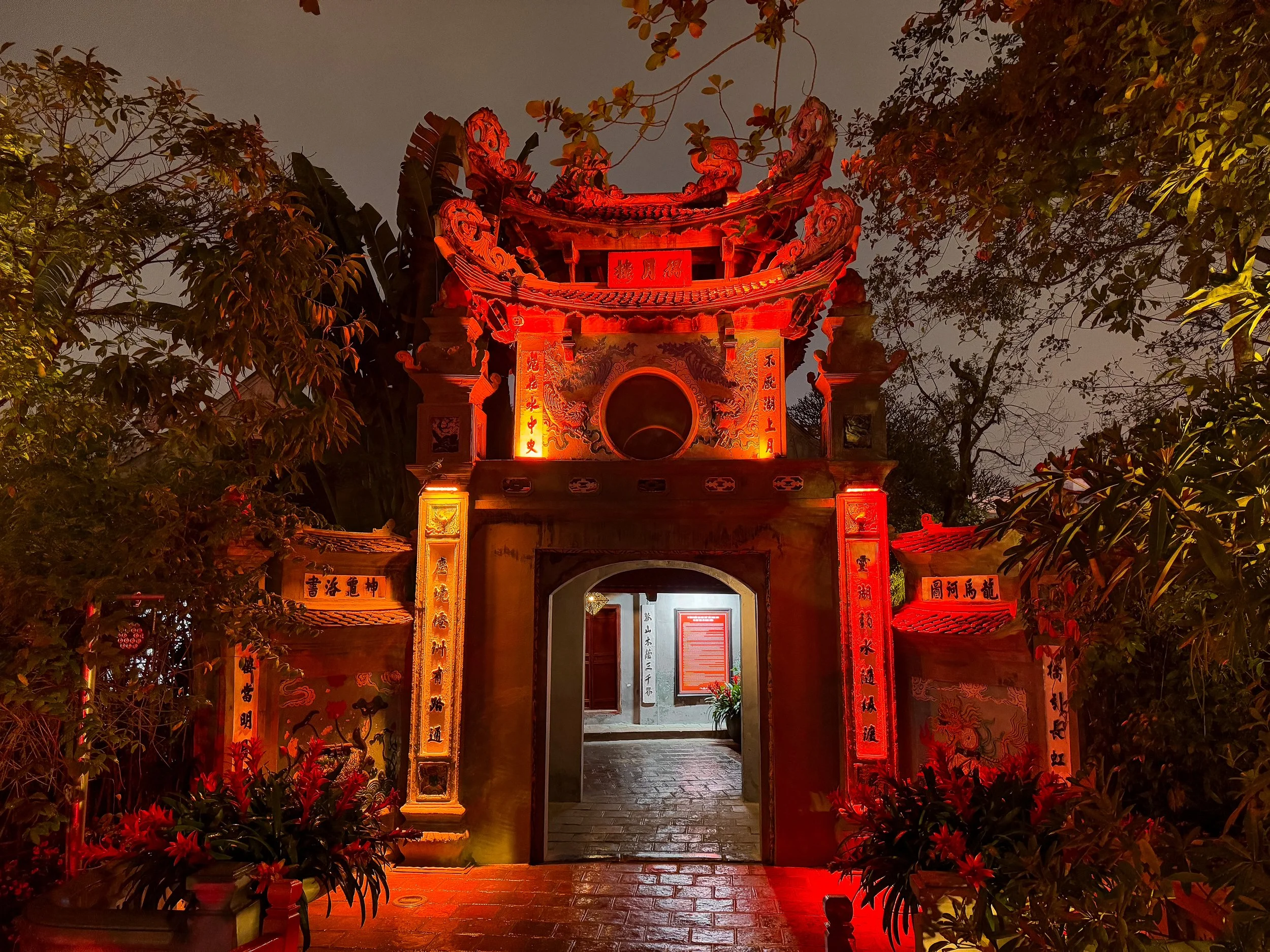
Ngoc Son Temple. An island temple on Hoan Kiem Lakereachable by a red wooden footbridge. The temple is a very sacred place for the Vietnamese with multiple shrines dedicated to Confucius. It houses the preserved remains of two possibly extinct giant turtles that once lived in the lake.
Ba Dinh Square. A wide road used for parades and ceremonies surrounded by government and communist buildings including the National Assembly, Ho Chi Minh Mausoleum, Presidential Palace, Communist Party Headquarters and Government Headquarters. Many are well guarded and forbidden to take photos of.
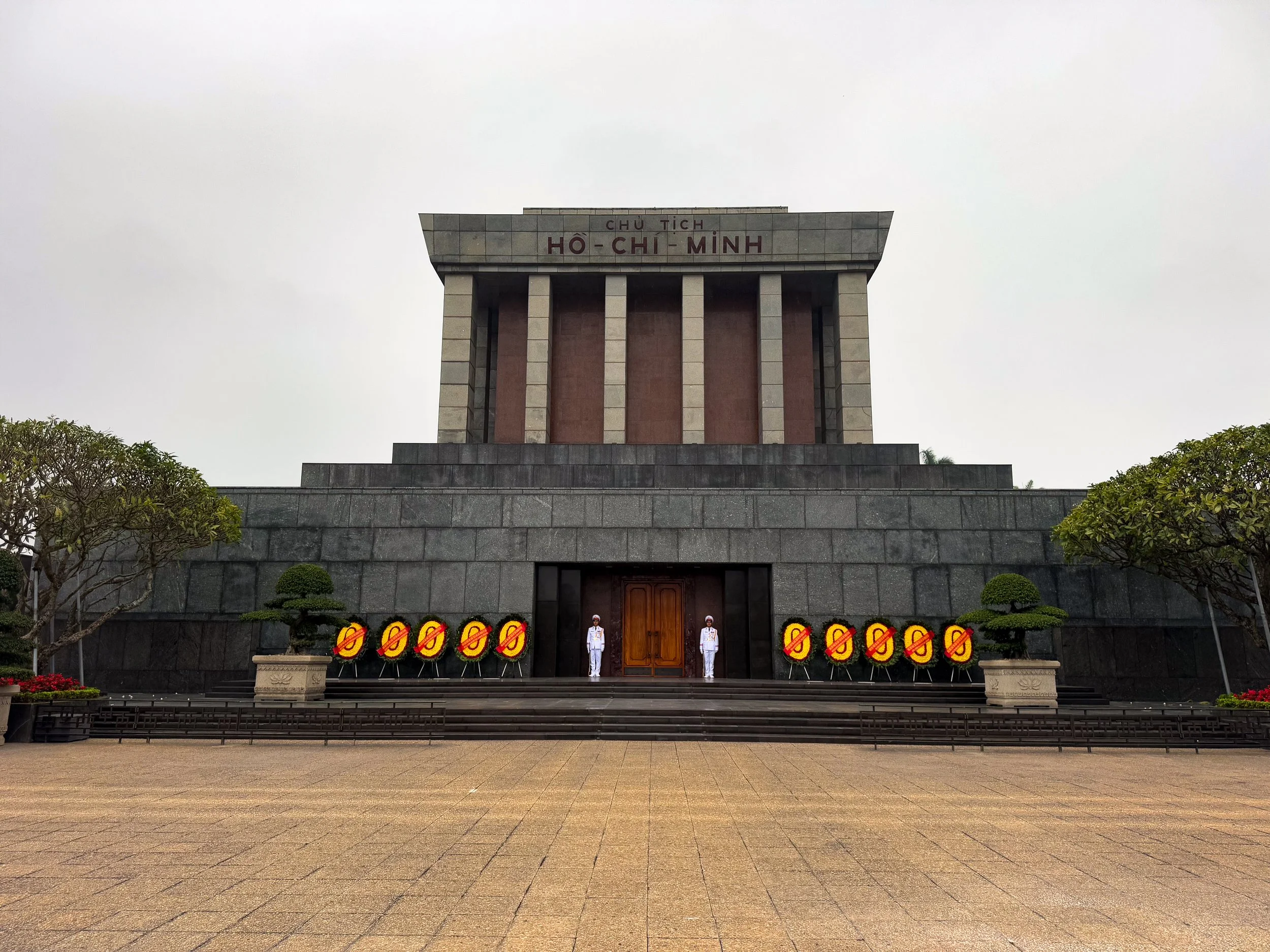
Ho Chi Minh Mausoleum. A communist style mausoleum housing the embalmed body of Ho Chi Minh, the founder of modern day Vietnam.
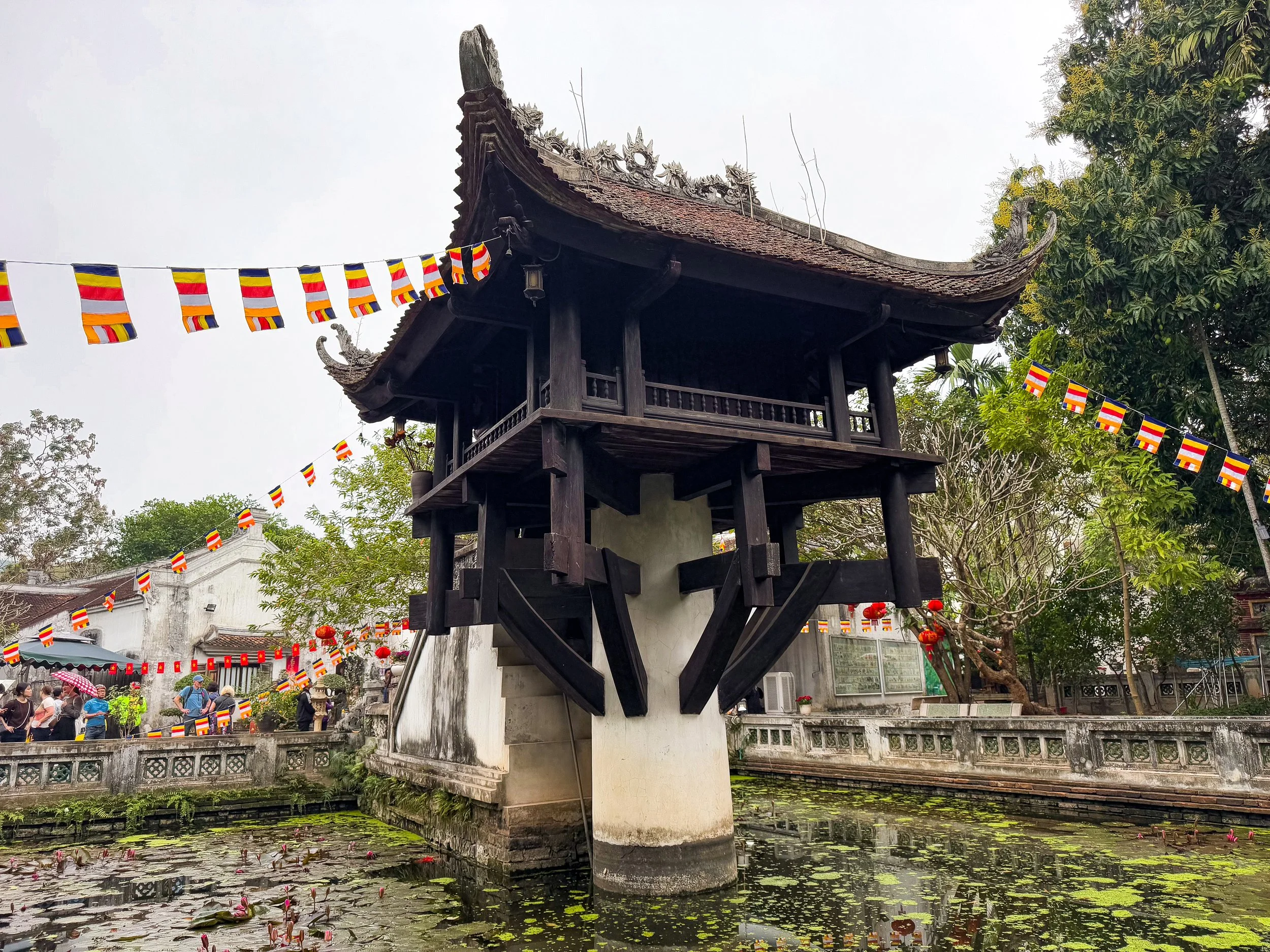
One Pillar Pagoda. A pagoda attached to a singular round column in the middle of a koi and lily pond. Steps walk up to it where there is a shrine for prayers and offerings.
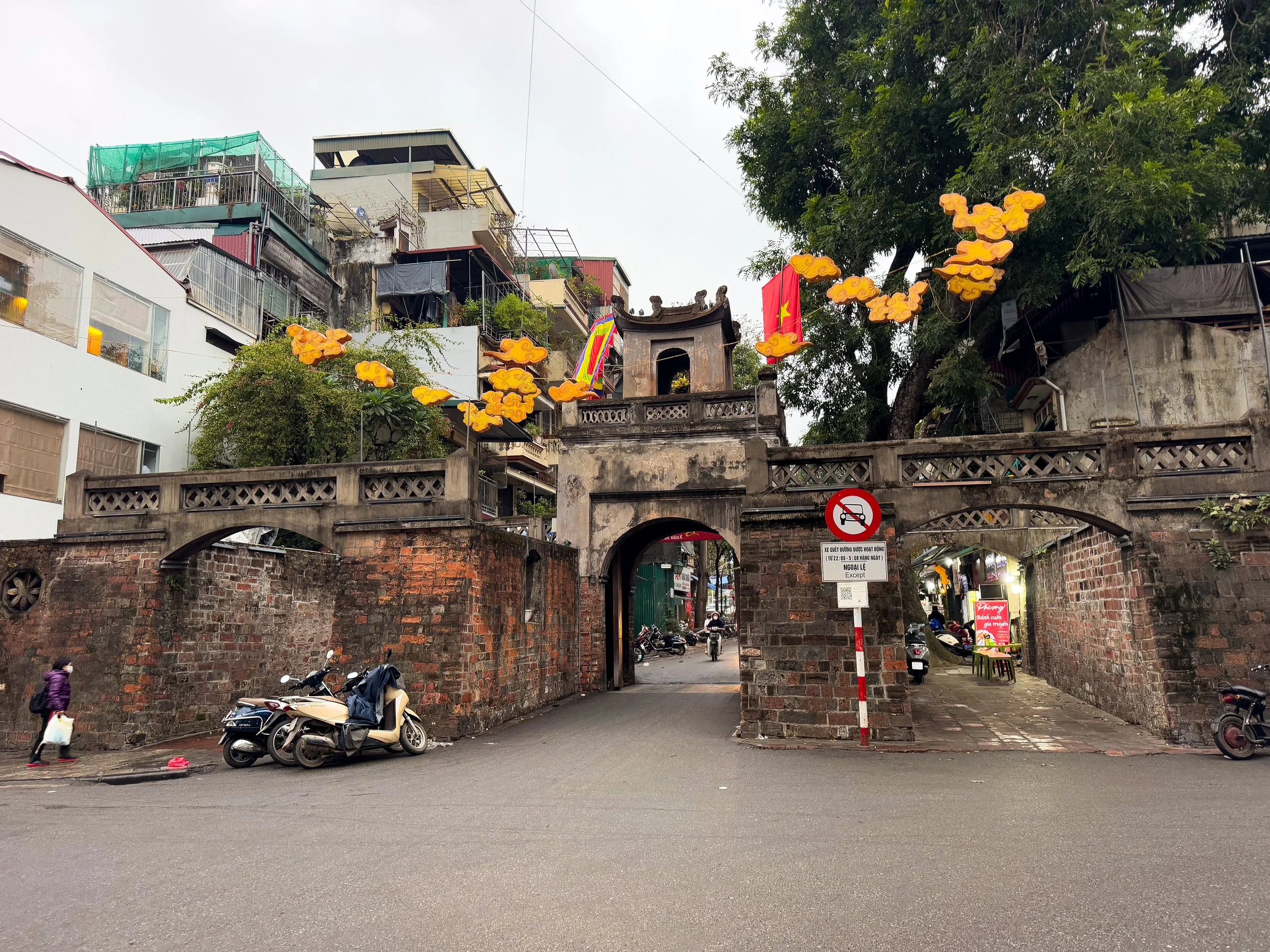
O Quan Chuong (Old East Gate). The only remaining city gate from ancient Hanoi. Its arched red brick and stone gate has a small pagoda on top. It’s only large enough for scooters and pedestrians to pass through.
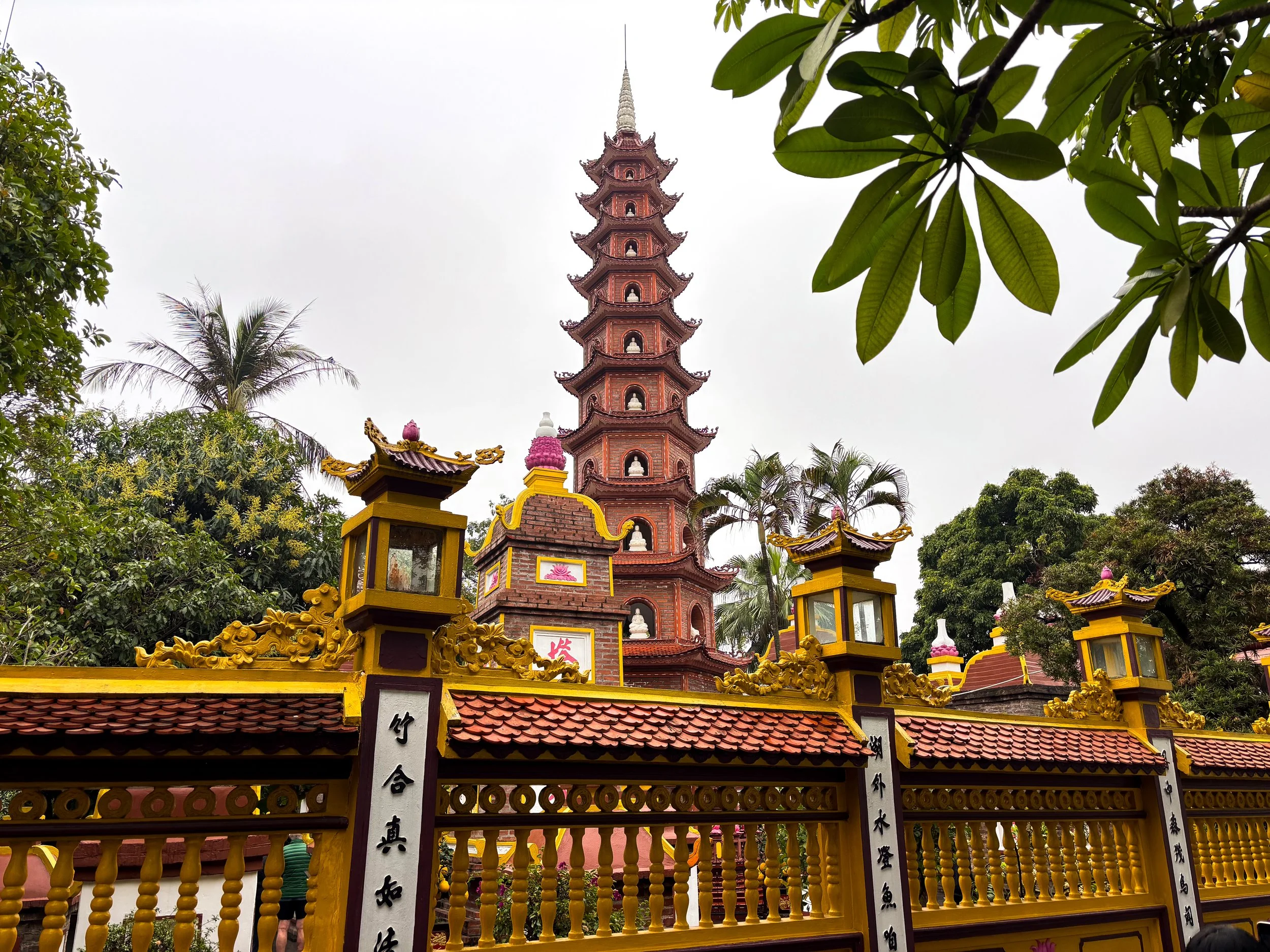
Quan Thanh Temple. A Taoist temple dating back to the founding of ancient Hanoi over 1,000 years ago. Inside is a giant bronze statue of Tao and elaborate altars with offerings. The temple’s walls, doors and columns are decorated in gold painted motifs of clouds and dragons, calligraphy inlaid with mother of pearl and painted reliefs of white tigers, water dragons, cranes and flowering cherry blossom trees.
Things to Do
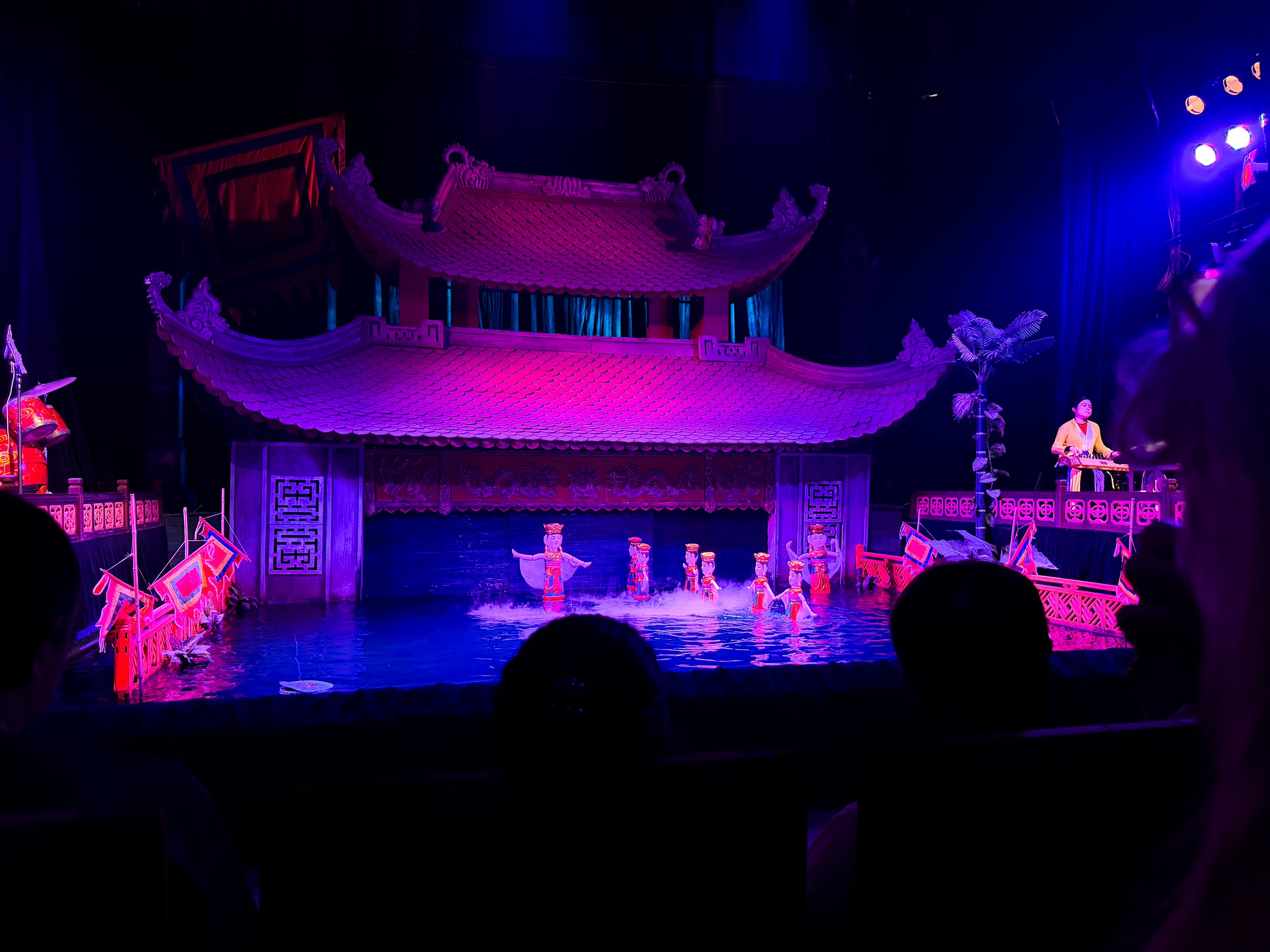
Thang Long Water Puppet Theatre. Vietnamese water puppets are a traditional form of entertainment and story telling dating back hundreds of years. At the Thang Long Water Puppet Theatre, live musicians, singers and puppeteers put on a beautiful performance depicting over a dozen scenes from Vietnamese folklore and legends. The puppets splash around on stage (aka a pool) against the back drop of a pagoda, disappearing behind a bamboo curtain when scenes change. We watched water dragons slinking back and forth, a comedic fishing scene, phoenixes laying and hatching an egg and Confucius ceremonies.
Pro Tip. There are multiple shows daily running from afternoon to evening. Arrive at the theater in the morning to buy tickets. The best seats are in rows A, B and C.
Good to Know. Be considerate and avoid taking repeated photos. It’s distracting to the people behind you.
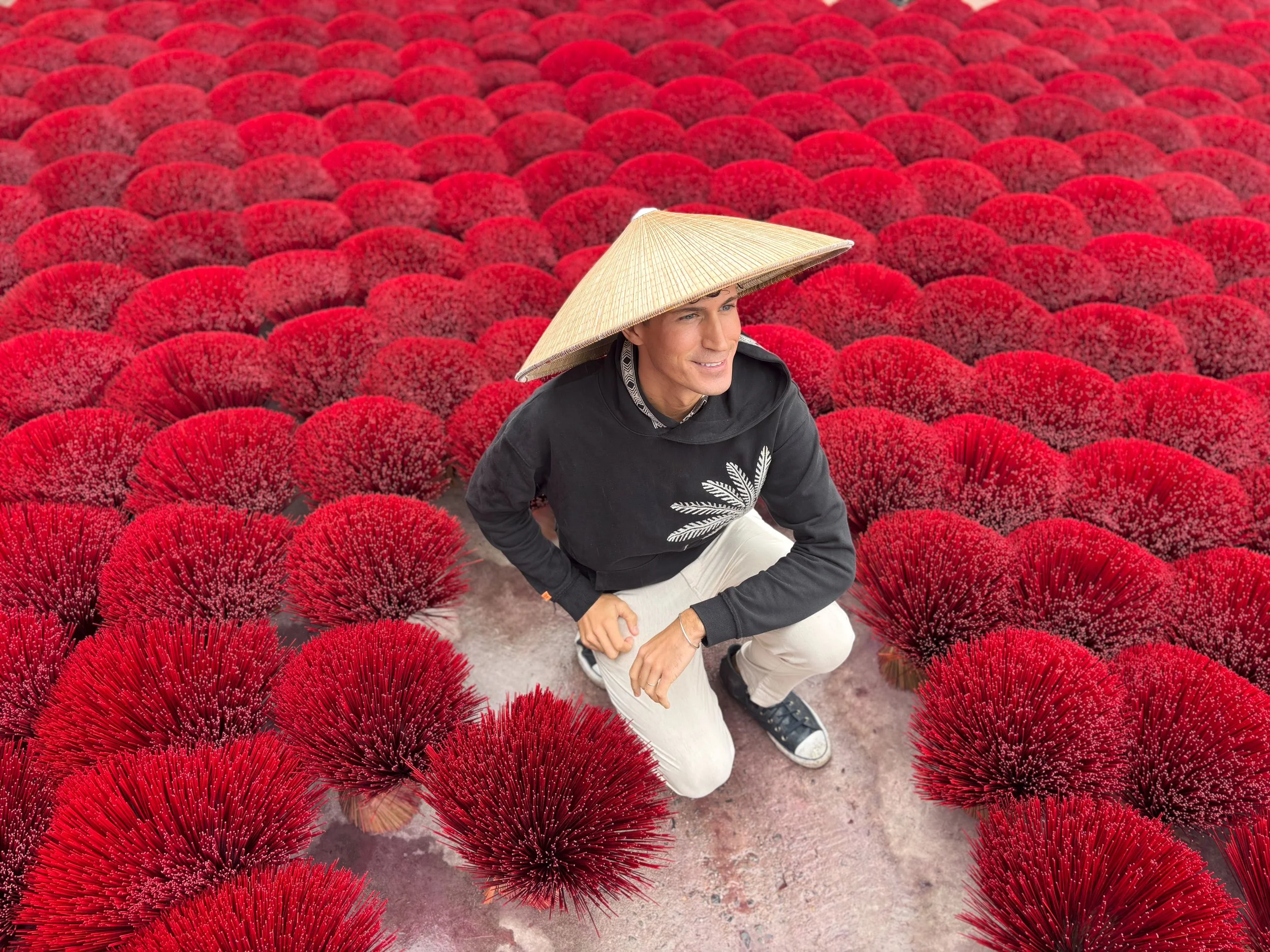
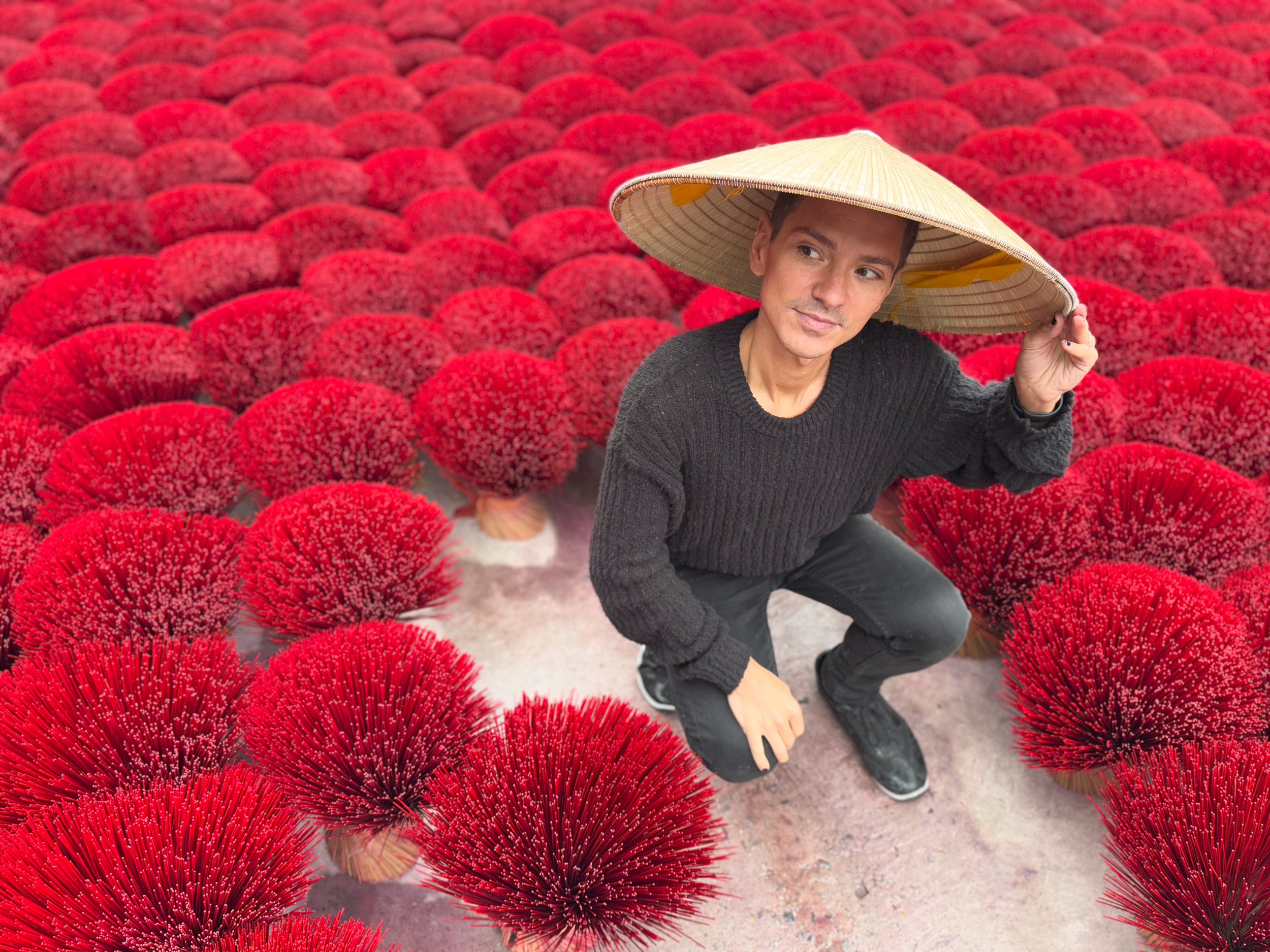
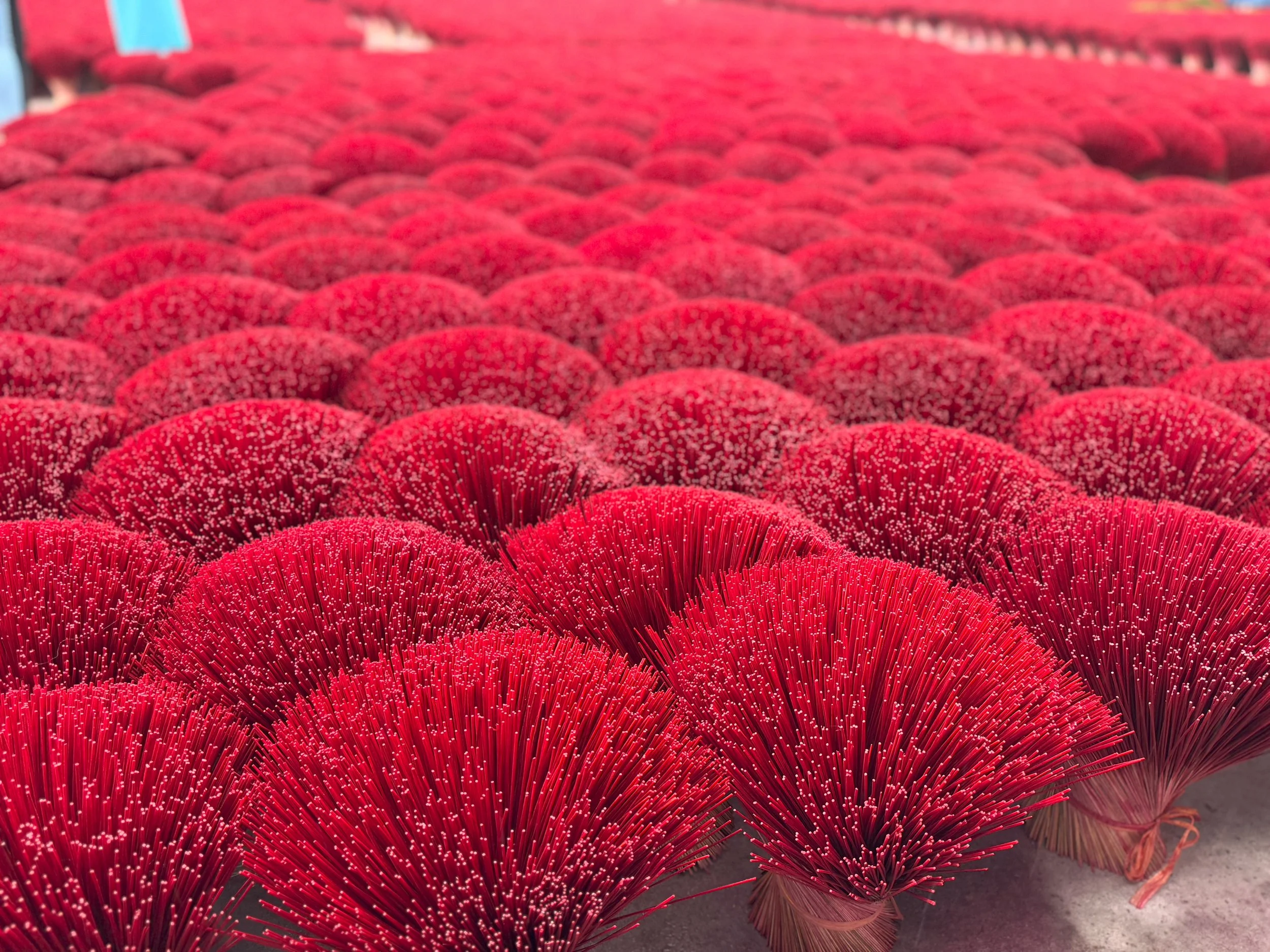
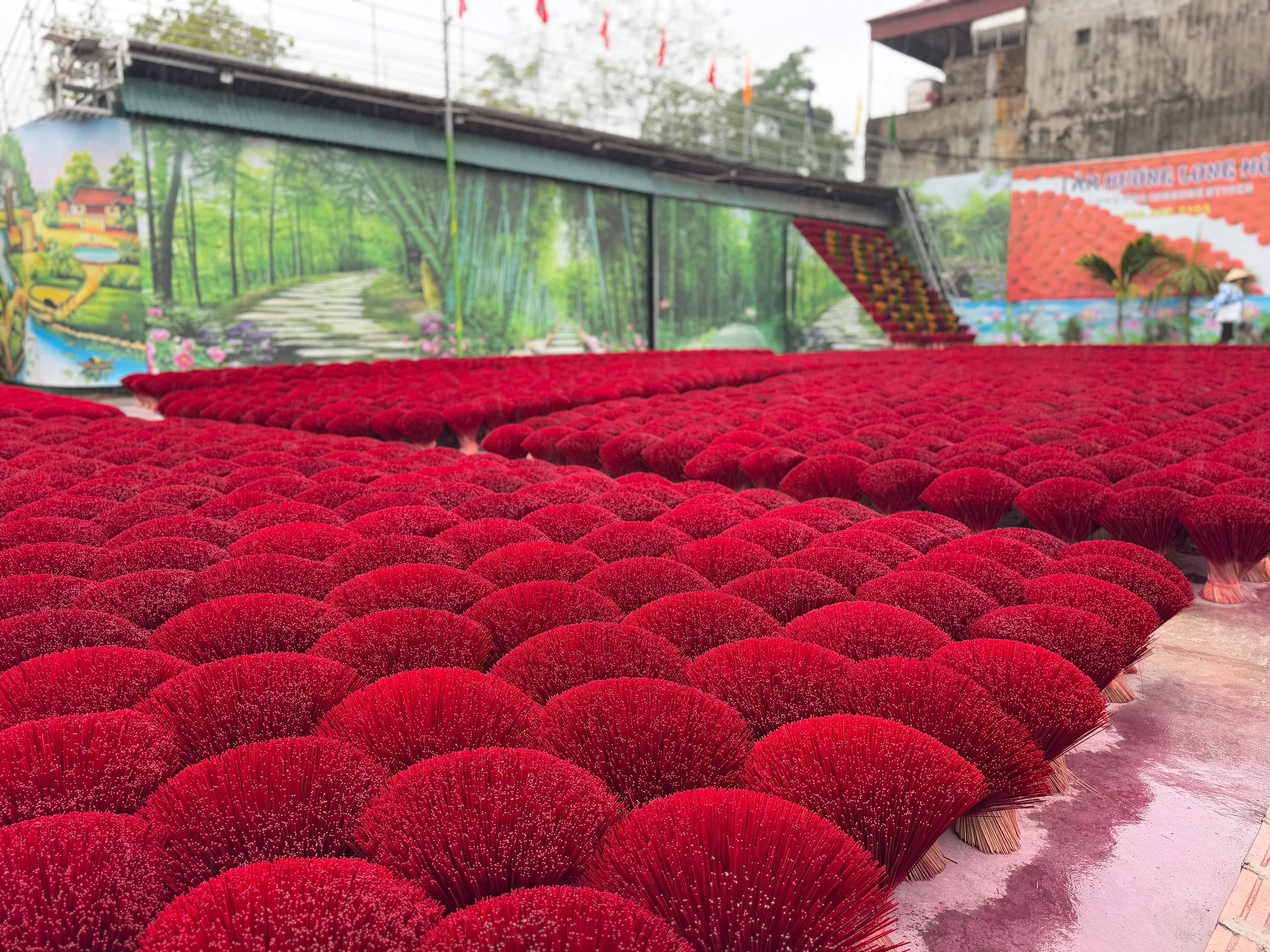
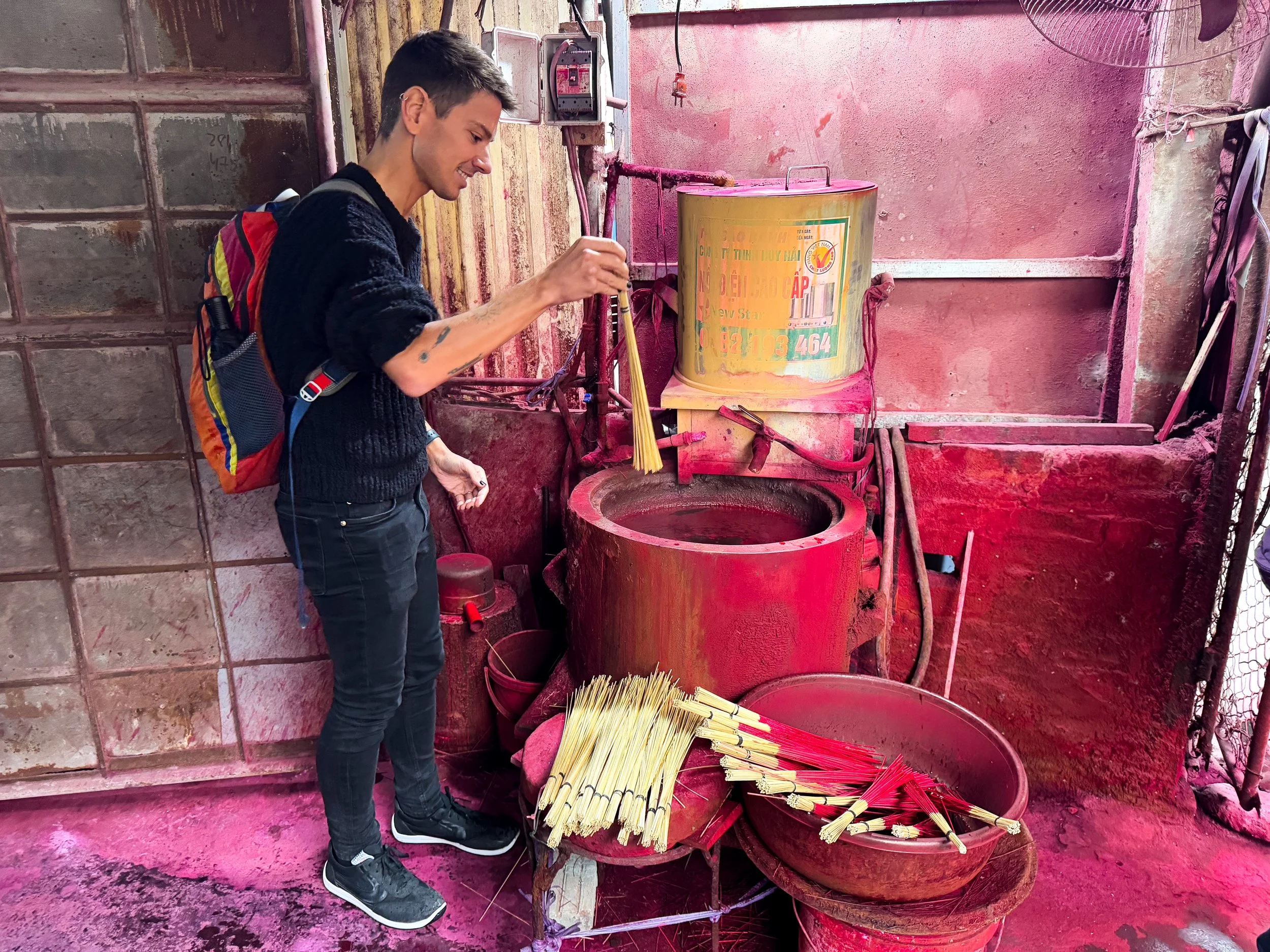
Visit the Incense Village. Burning incense is a daily part of life in Vietnam. It’s commonly used in temples, restaurants and people’s homes. We visited one village where it’s produced, getting to make our own. We saw how raw bamboo is purged of insects, sun dried and then splintered by hand into thin sticks. The sticks are then hand dipped into a vat of red dye to give them their characteristic color. Once dyed, they’re fed into a machine that packs wet incense powder onto them. The incense powder we used was made from ground cinnamon and bamboo. Afterwards, we visited an “Instagram courtyard” covered in bundles of red incense sticks with areas for photo ops. We booked our tour with Tinny Travel on Viator.
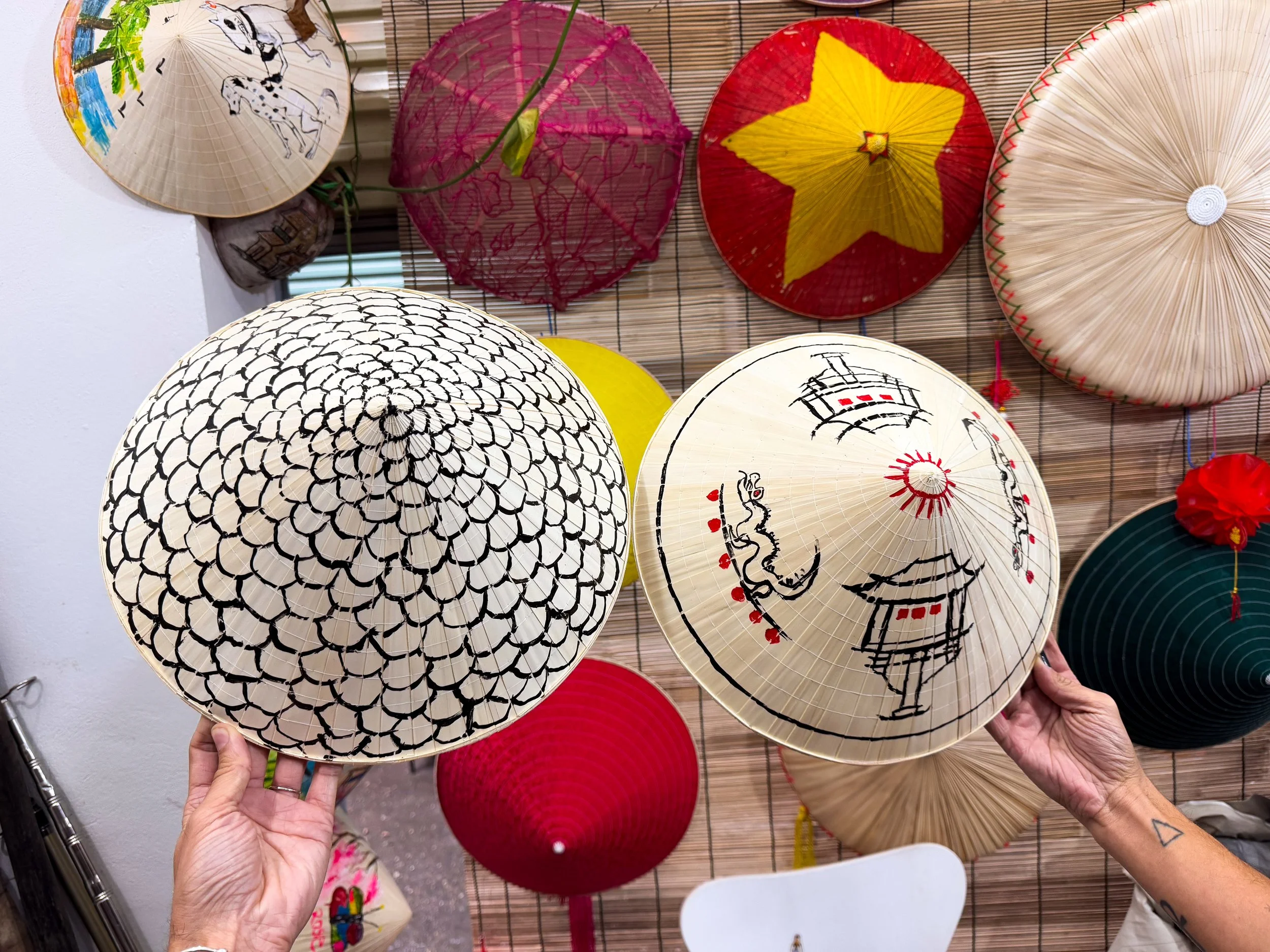
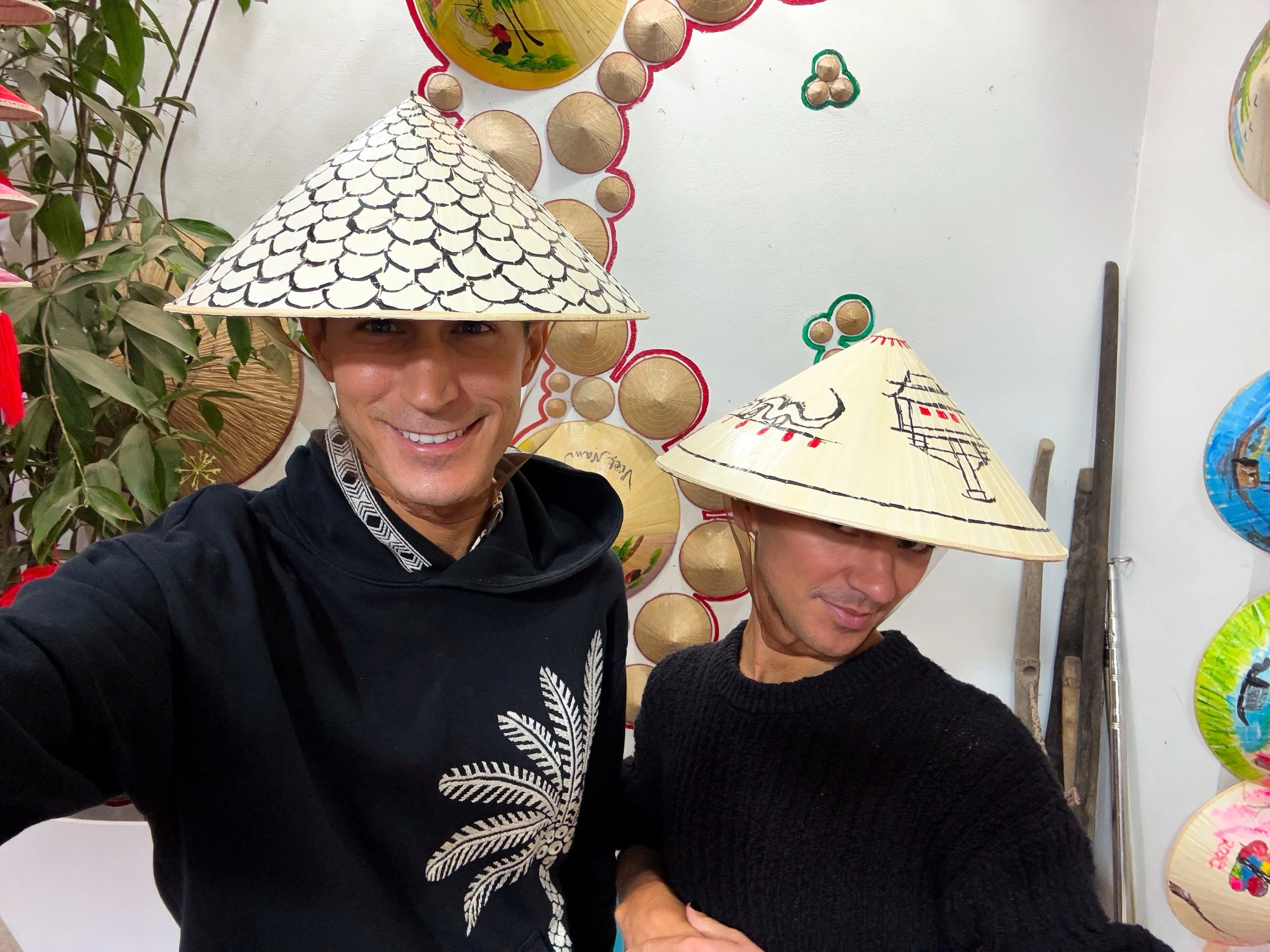
Learn about Conical Hat Making. Conical hats, called Nón lá in Vietnamese are commonly worn by women to protect from the sun and rain. On our Incense Village Tour, we visited a family home where they’re made, getting to see the stages and process involved in making a hat from start to finish. We painted our own hats inspired by the Temple of Literature and the One Pillar Pagoda.
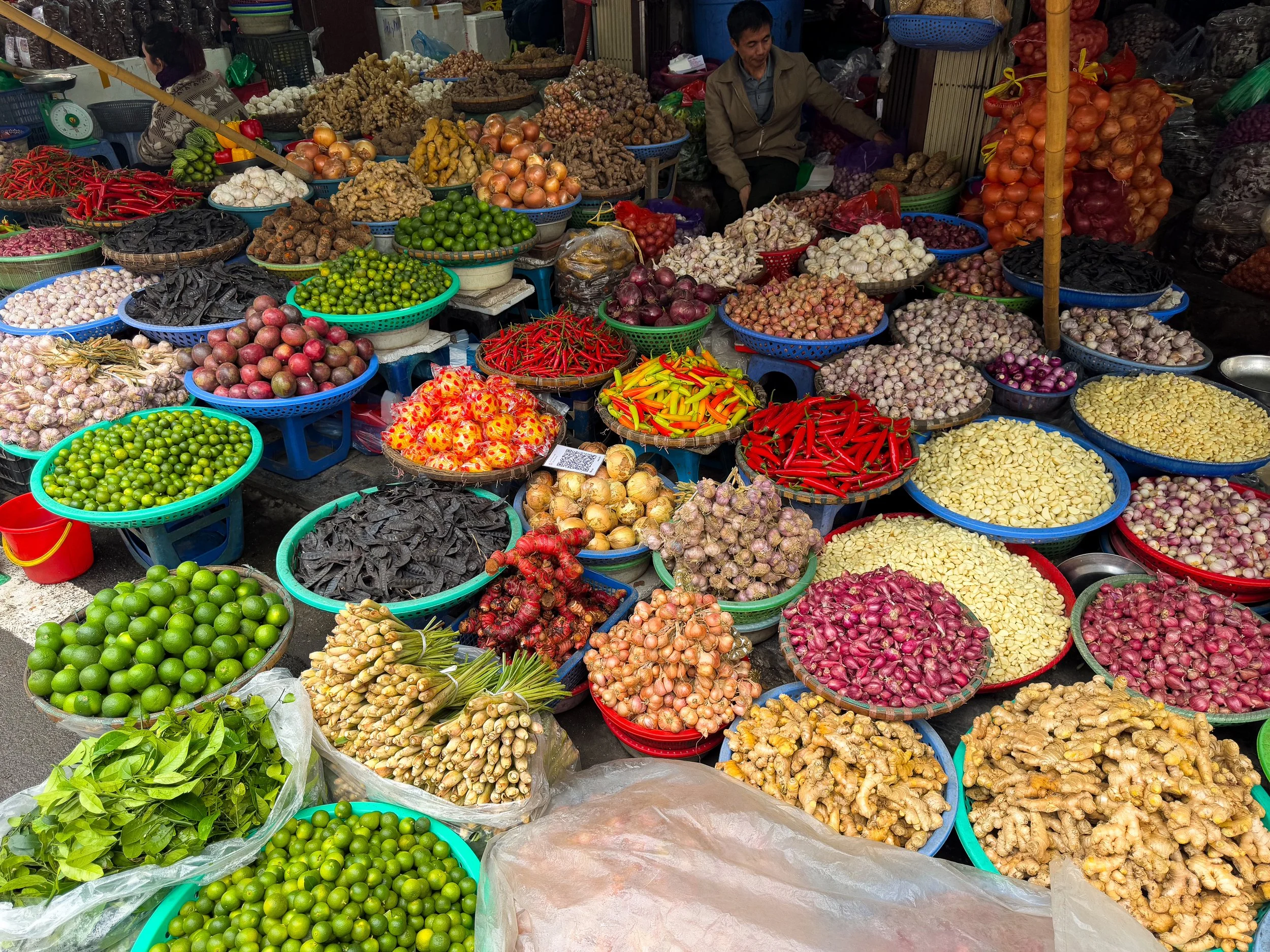
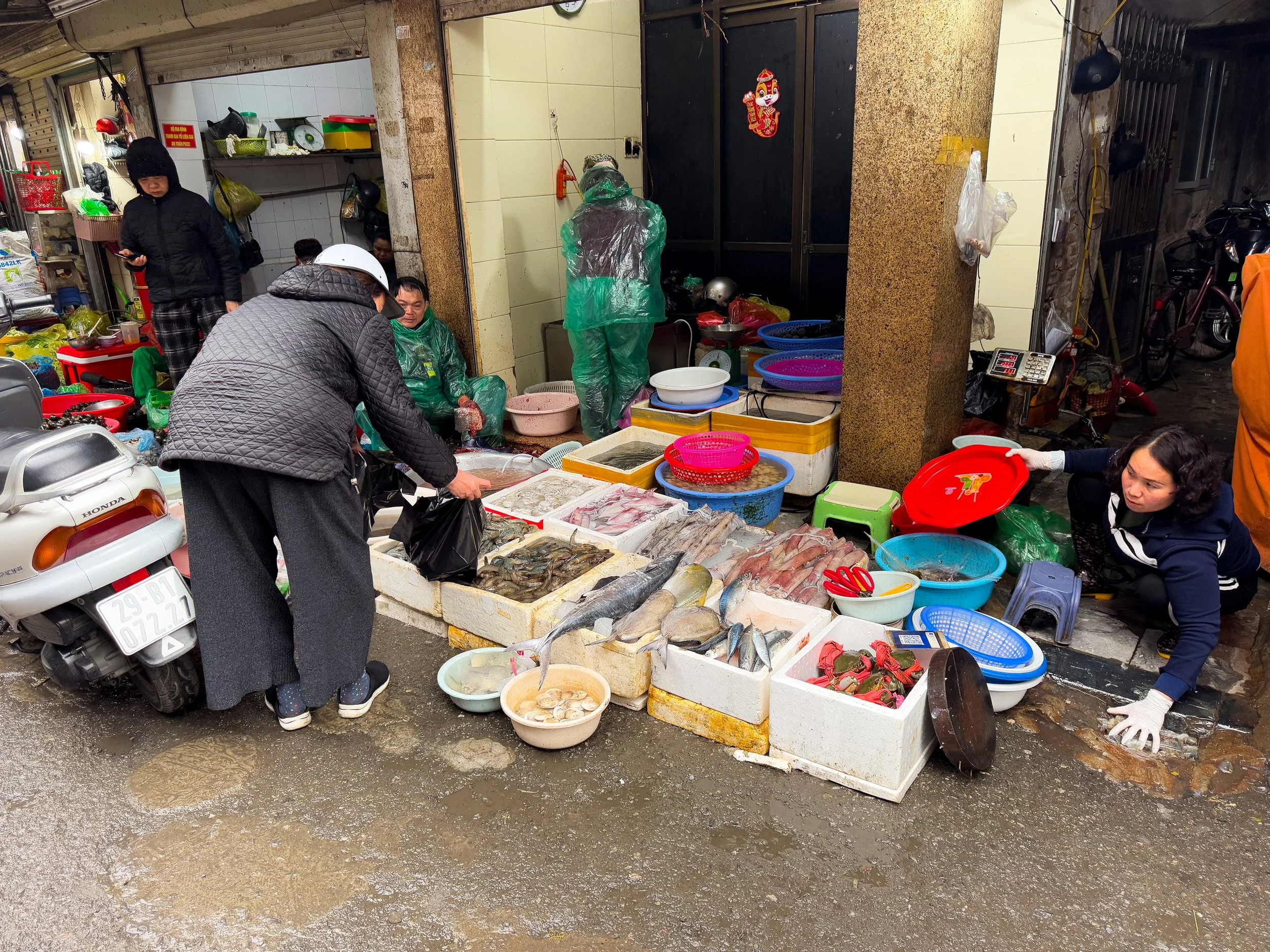
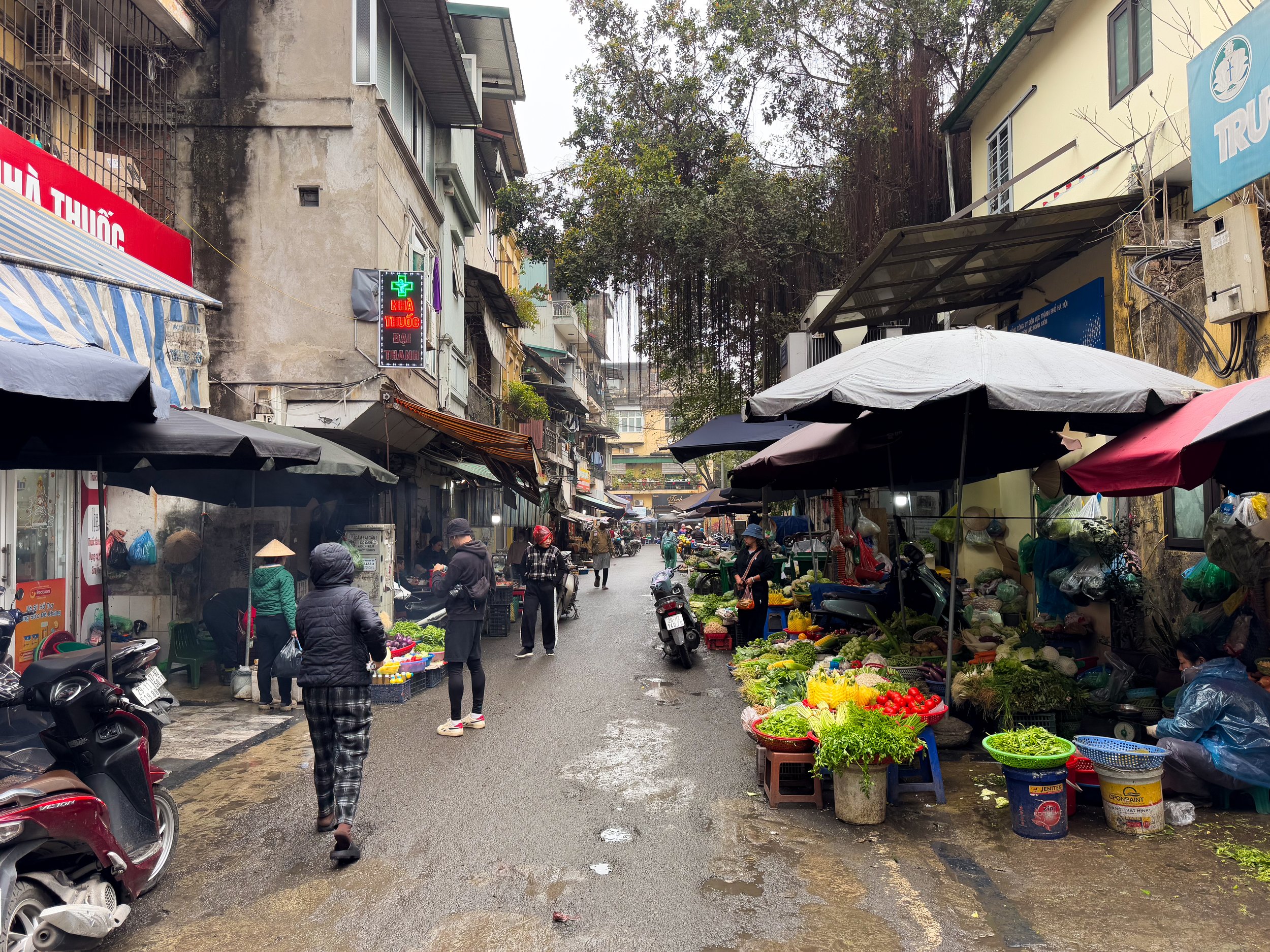
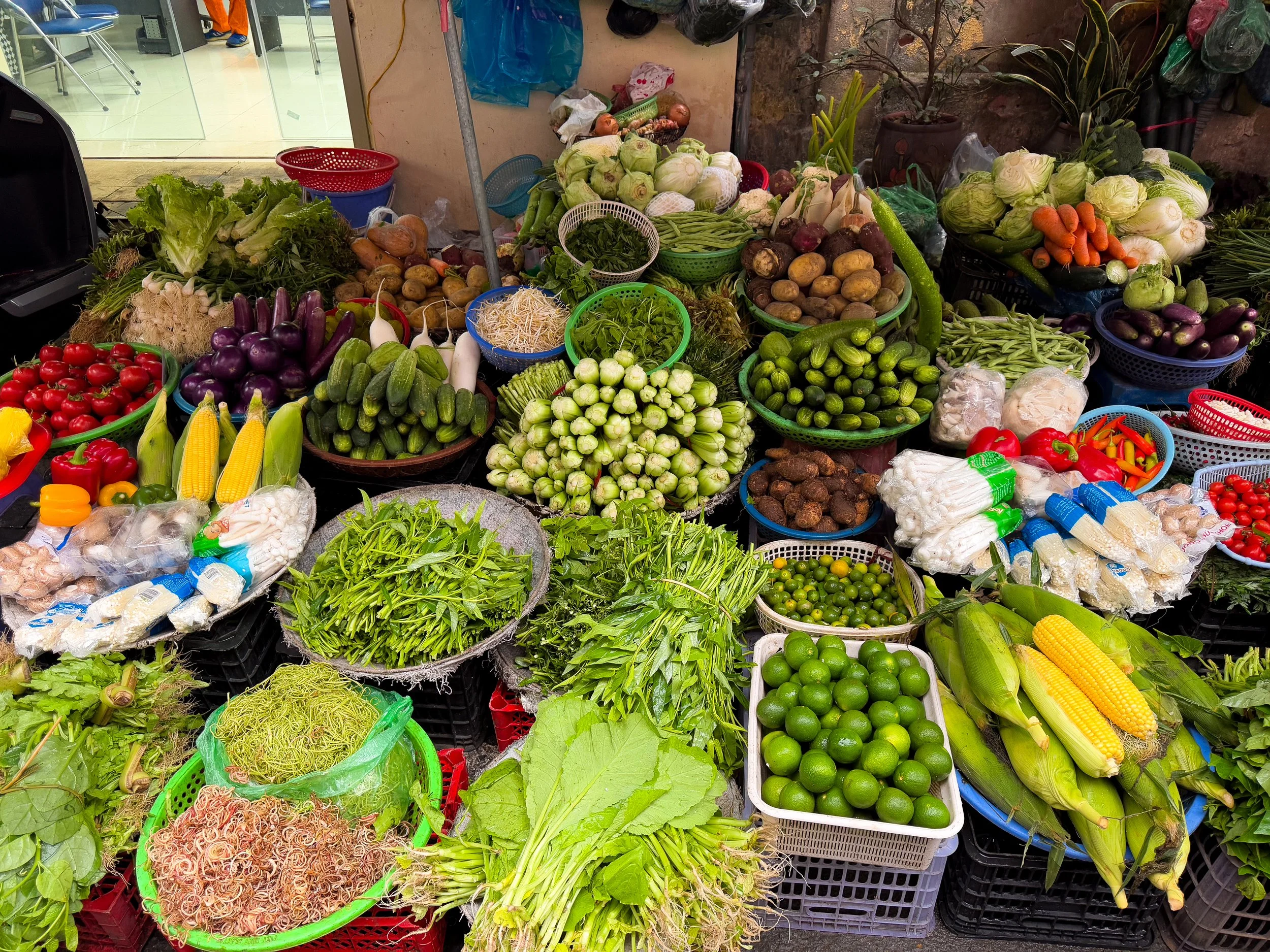
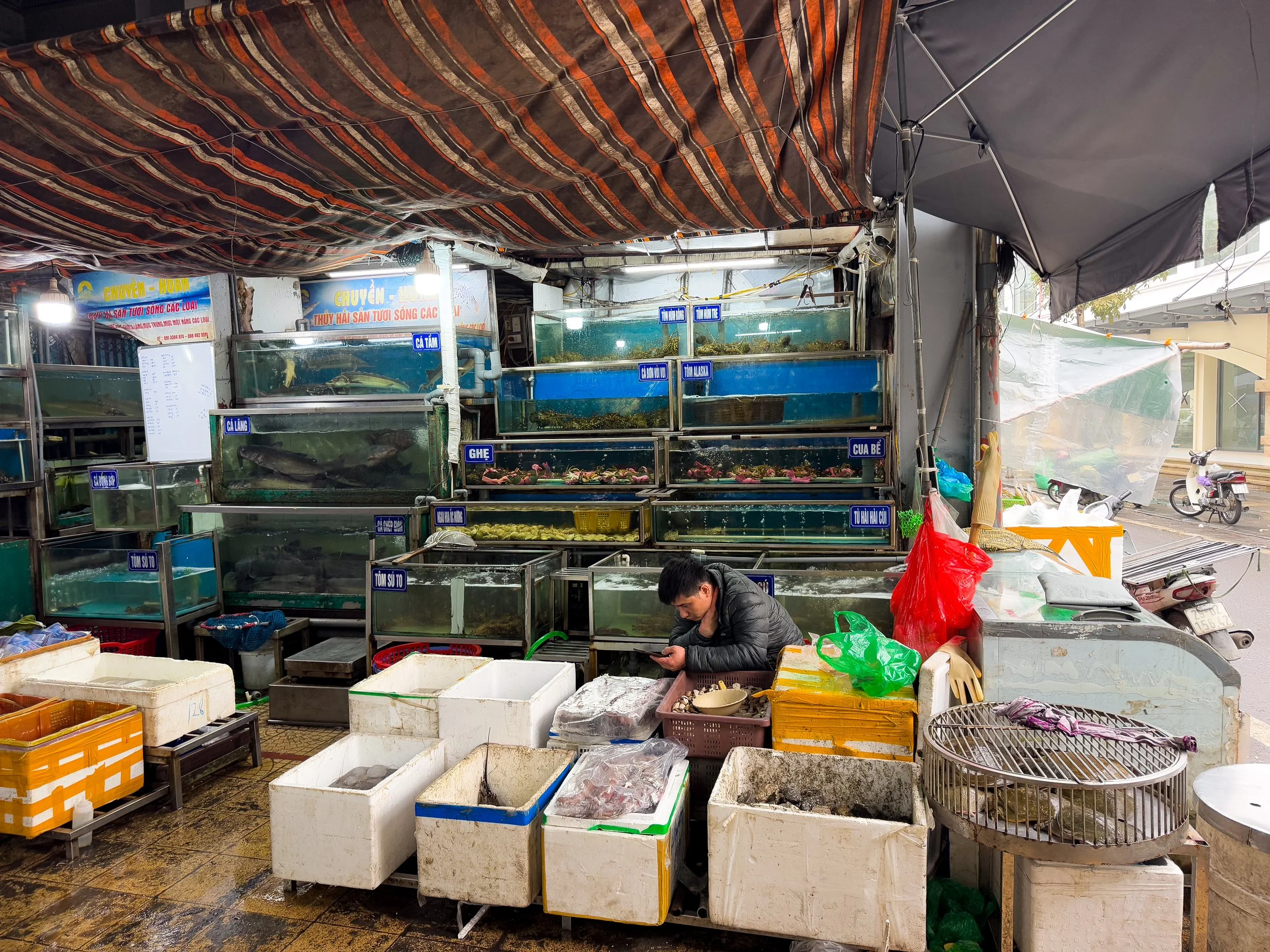
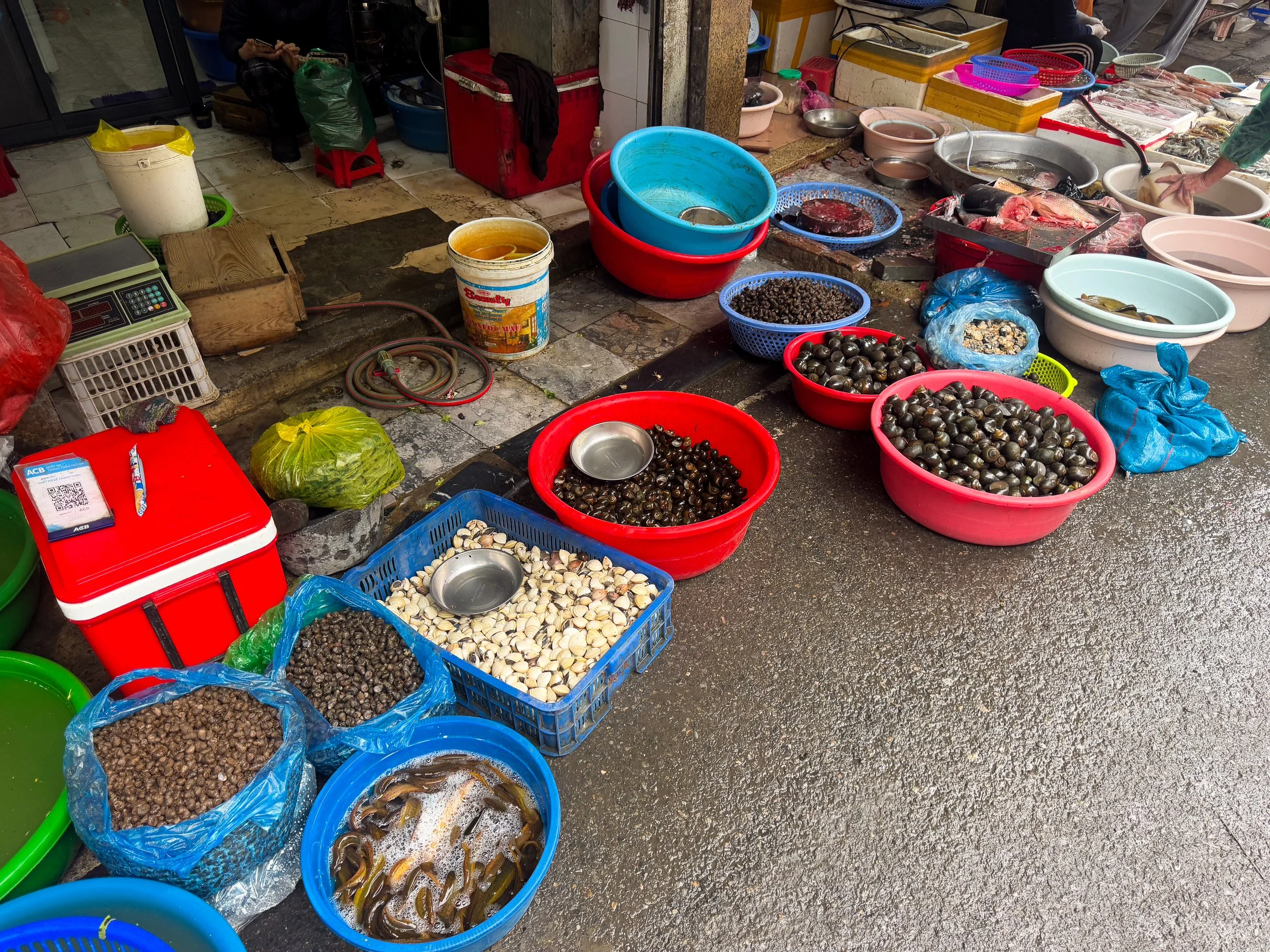
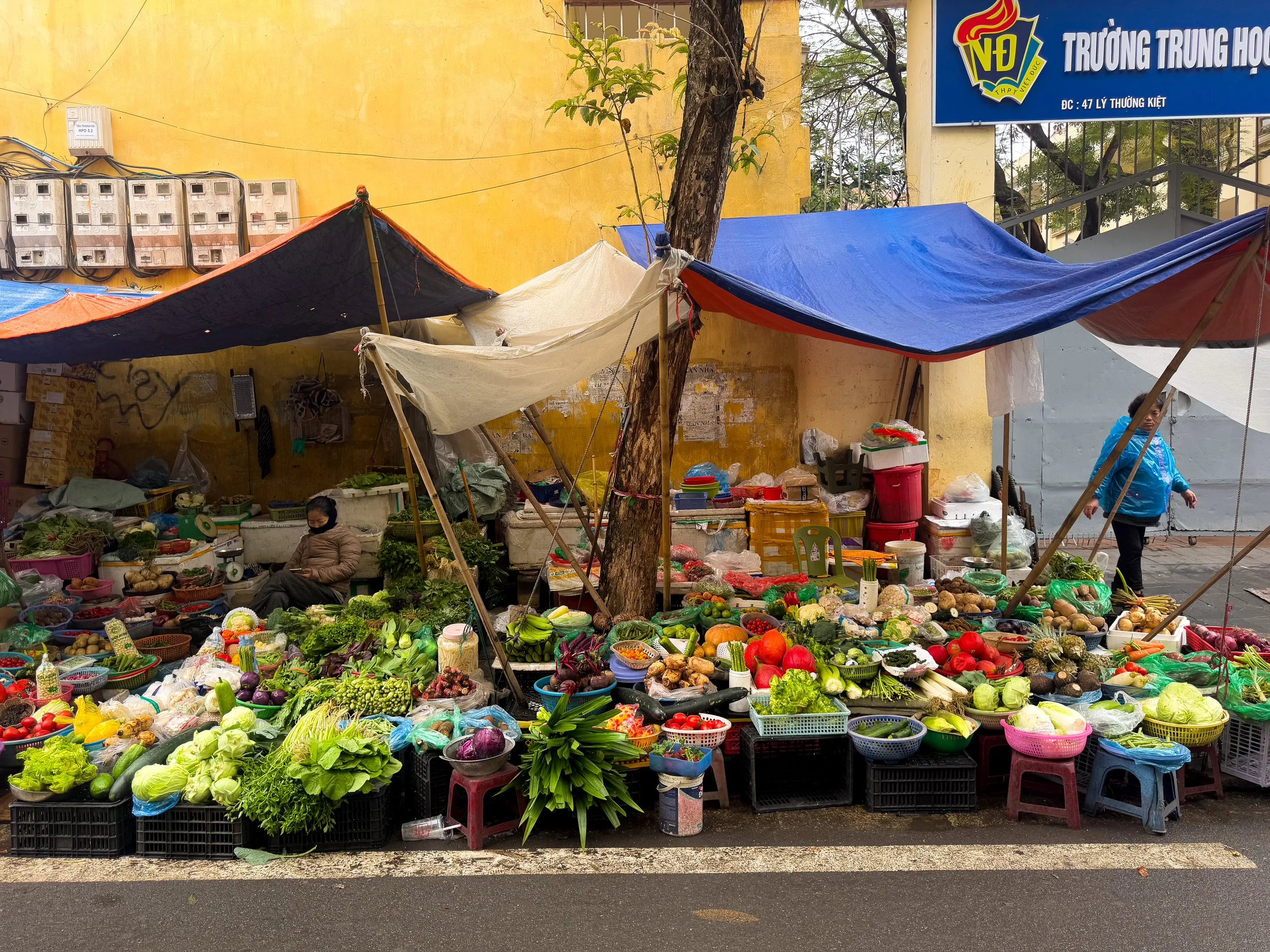
Shop at the Thien Thuat Market. A farmers market lining the curbs of Thien Thuat Street and the adjacent roads in Hanoi’s Old Town. Local merchants display baskets and plastic bins with a variety of goods including meats, seafood, vegetables, fruits, herbs, dried goods and noodles. We shopped here for groceries to cook several of our own meals.
Pro Tip. Ask around and haggle over prices with vendors before buying.
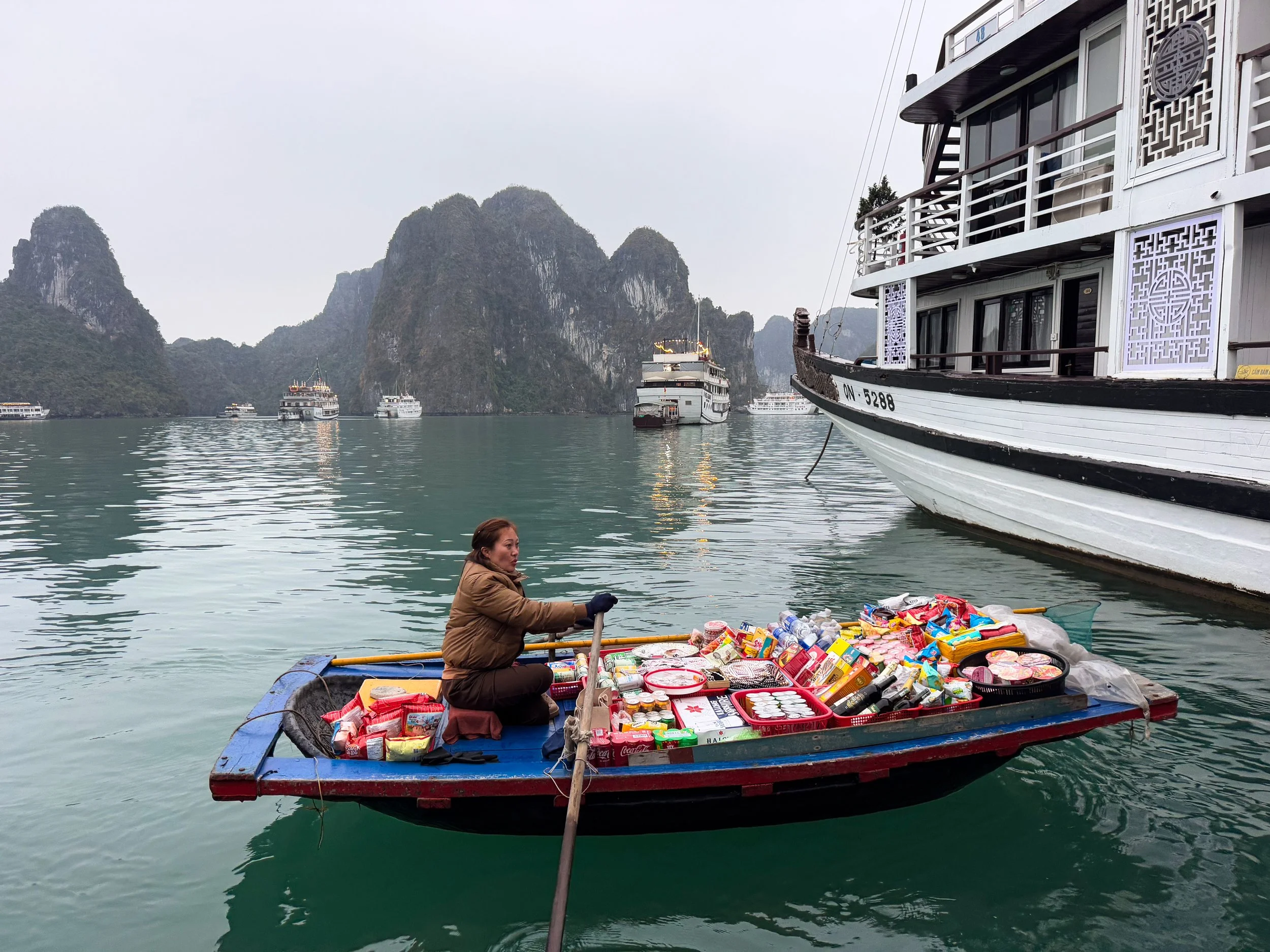
Ha Long Bay
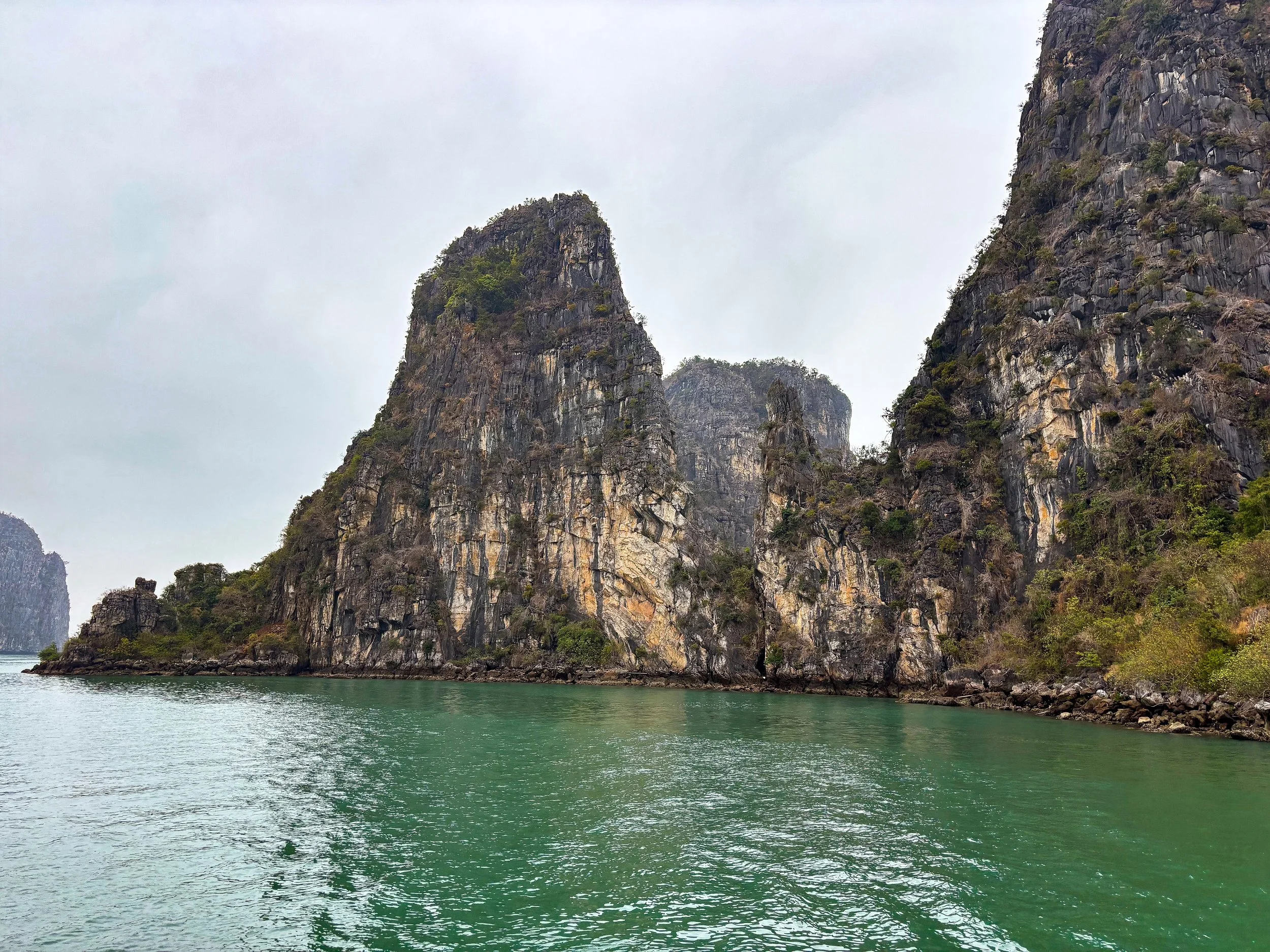
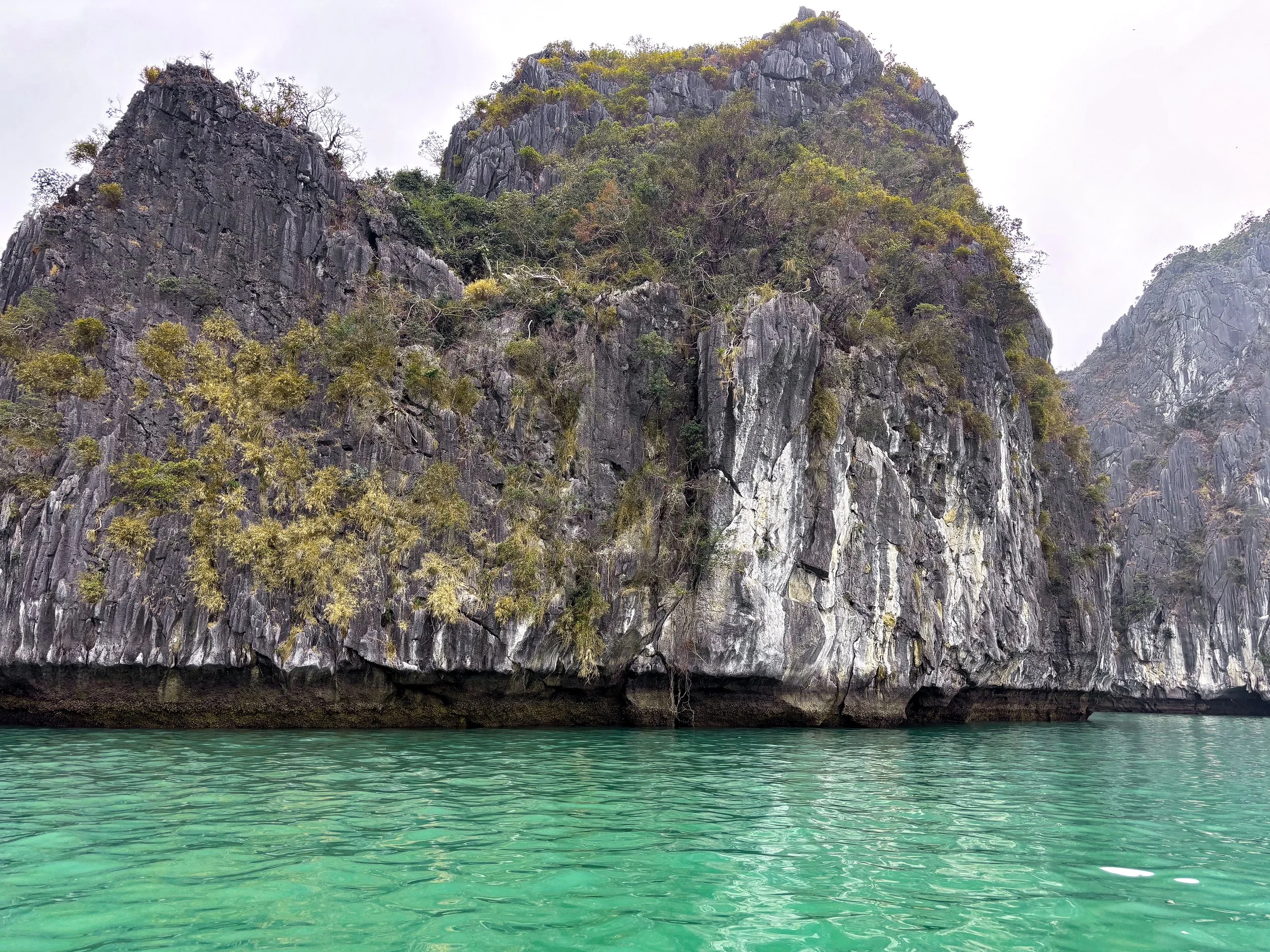
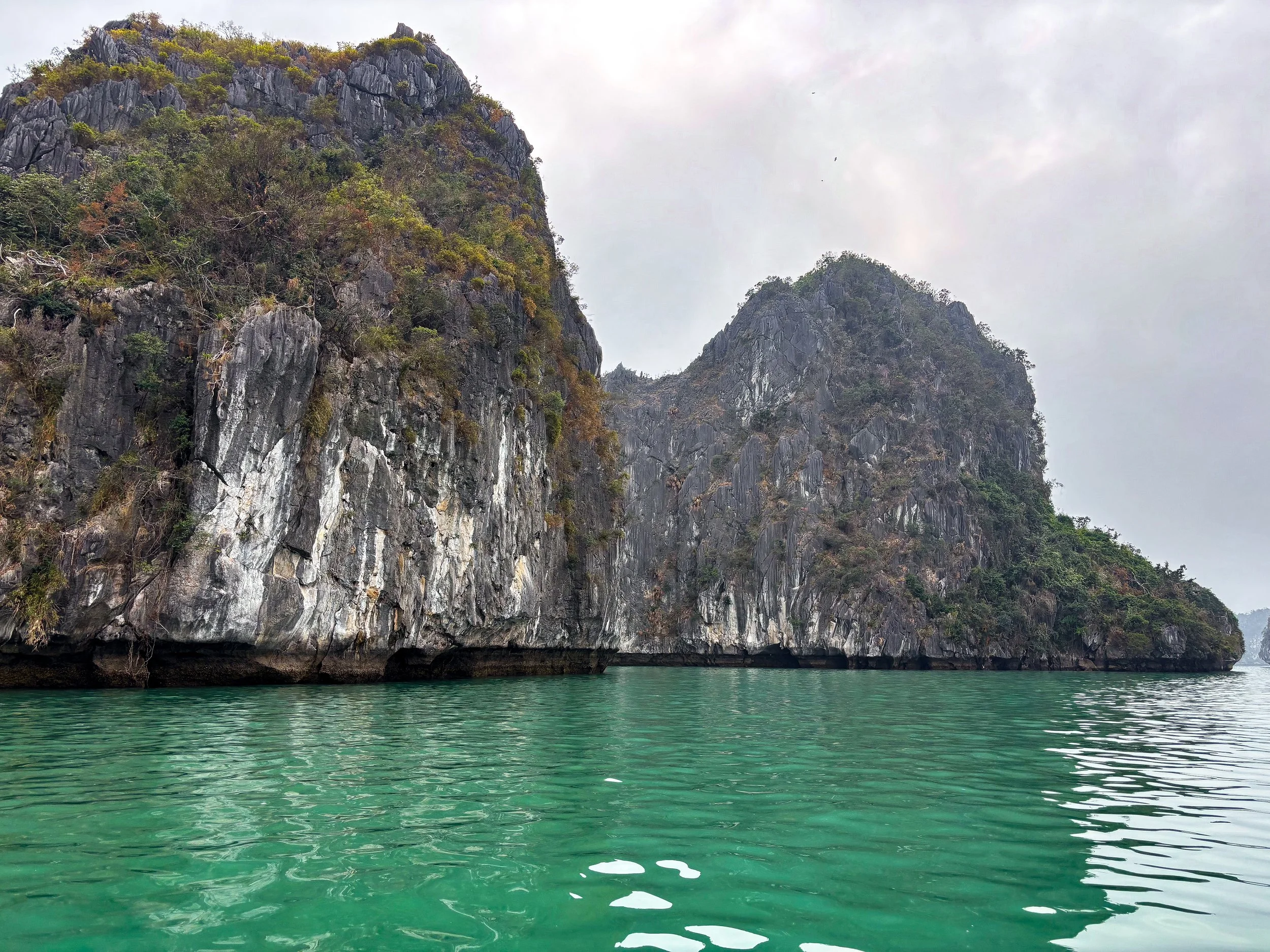
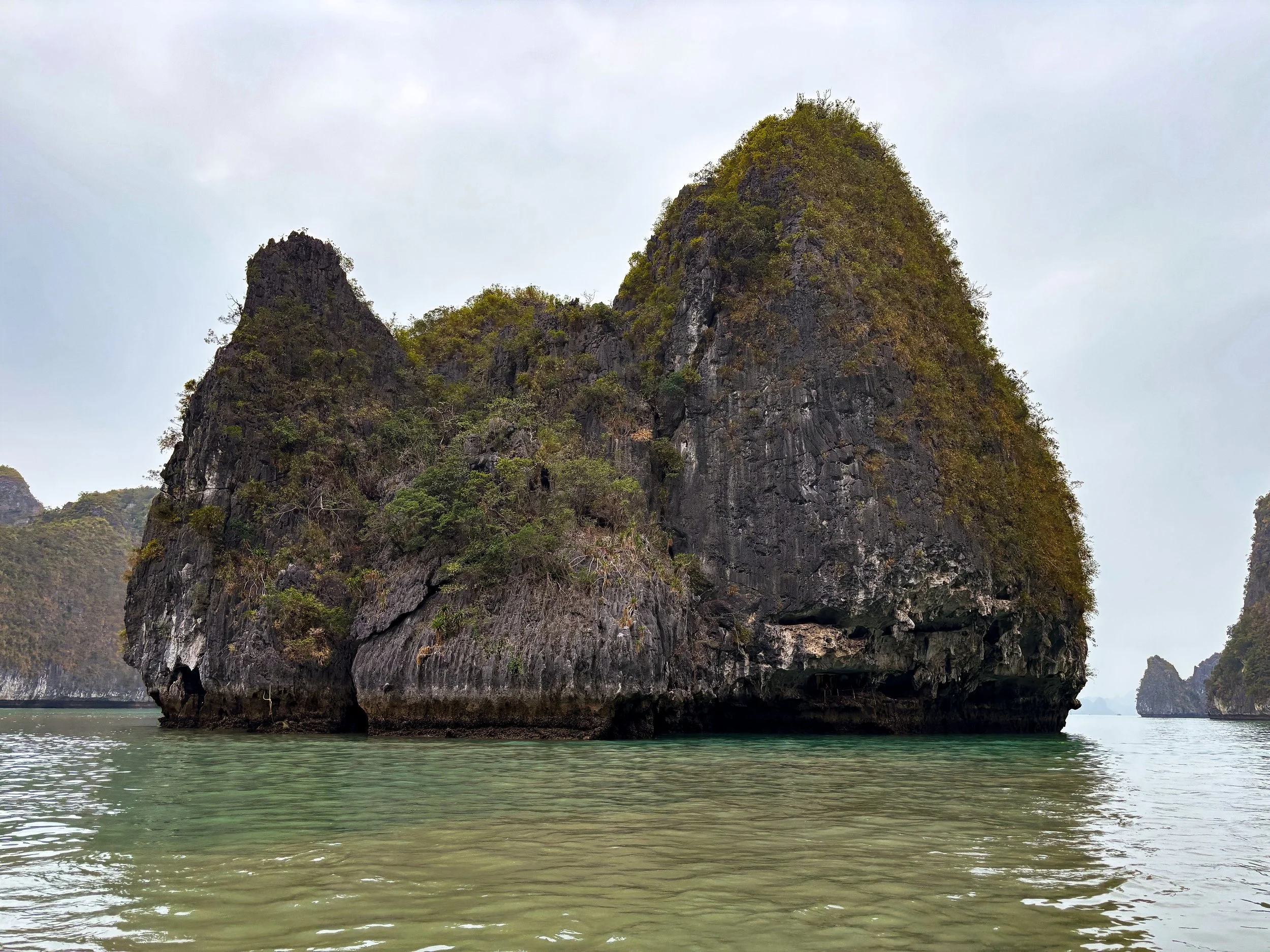
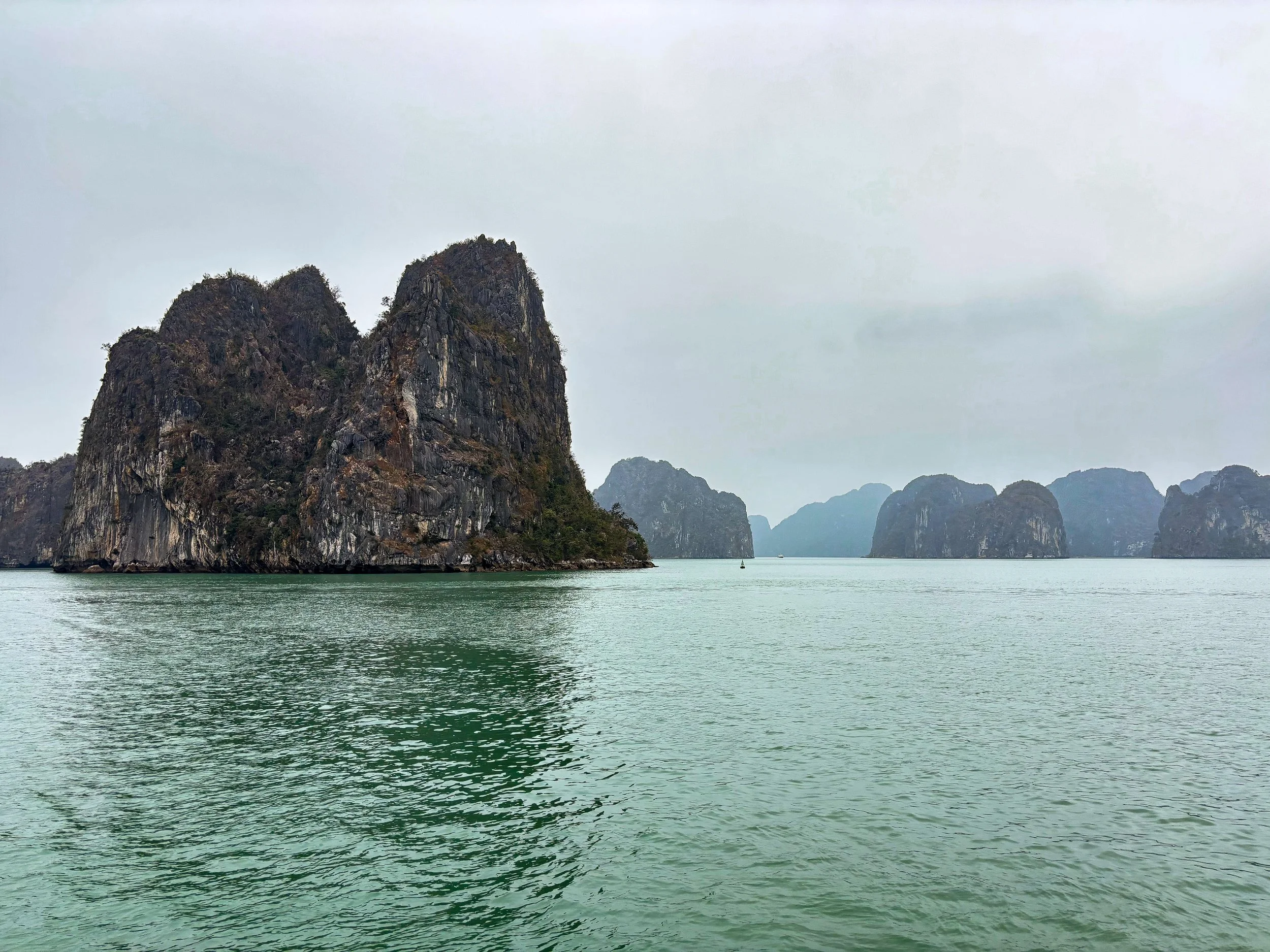
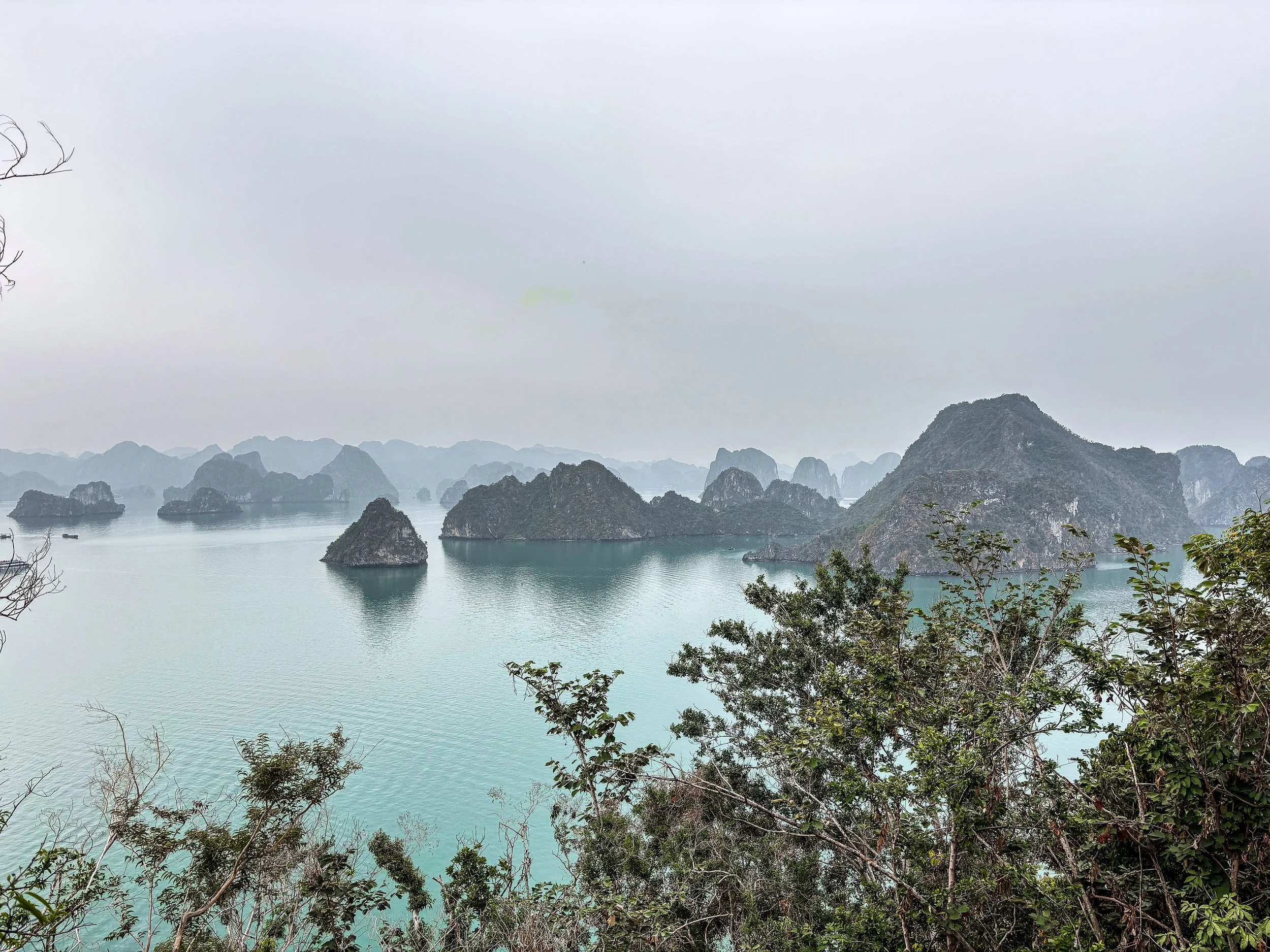
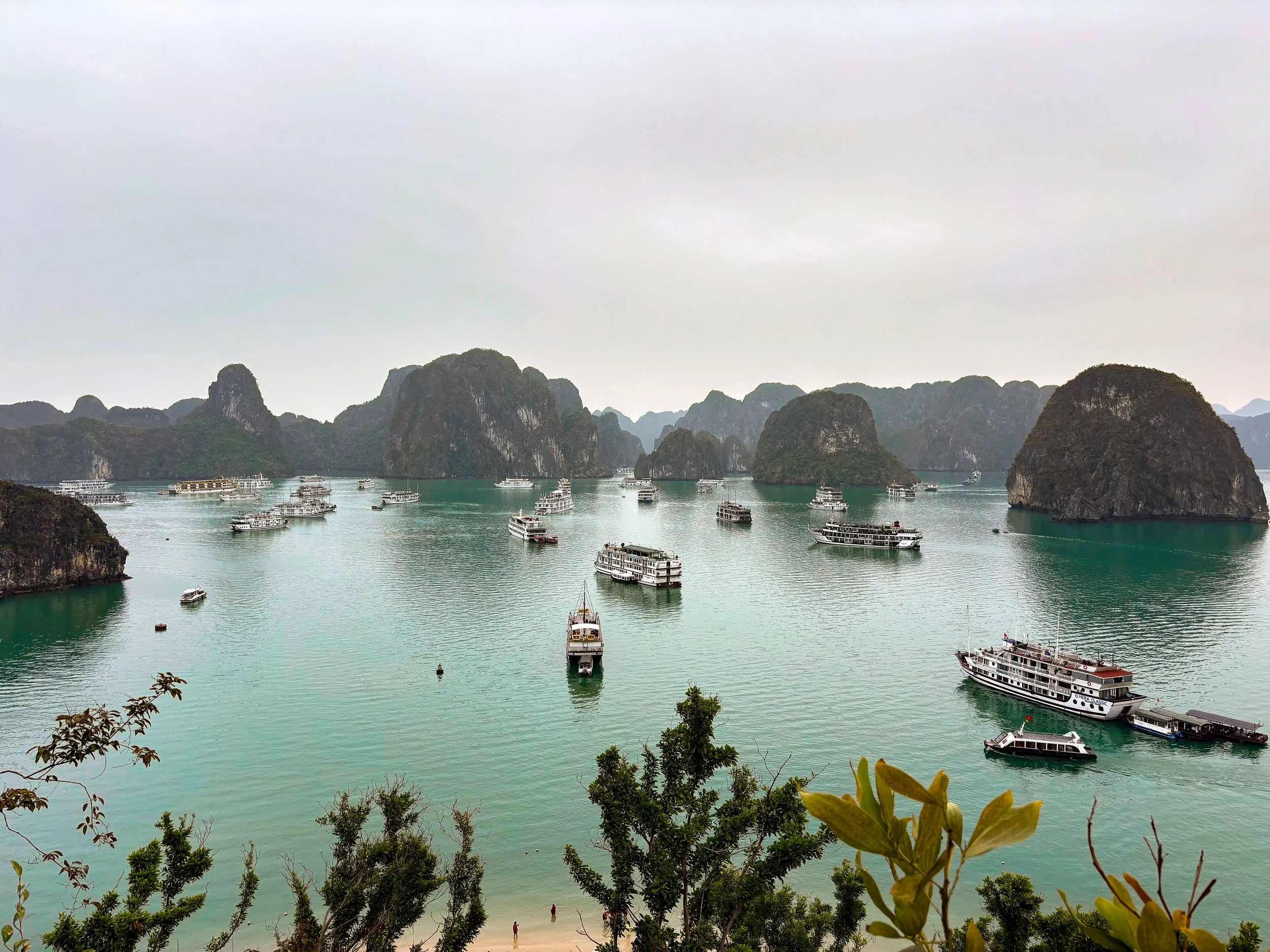
Ha Long Bay is one of Vietnam’s many natural wonders and was a highlight of our trip. It’s famed for its hundreds of towering stone islands that sharply rise from the water. Their sheer faces and craggily slopes are covered in patches of foliage. Some are home to caves, coves and beaches. At the time, clouds gave the islands a mystifying appearance. The best way to experience the bay is by boat.
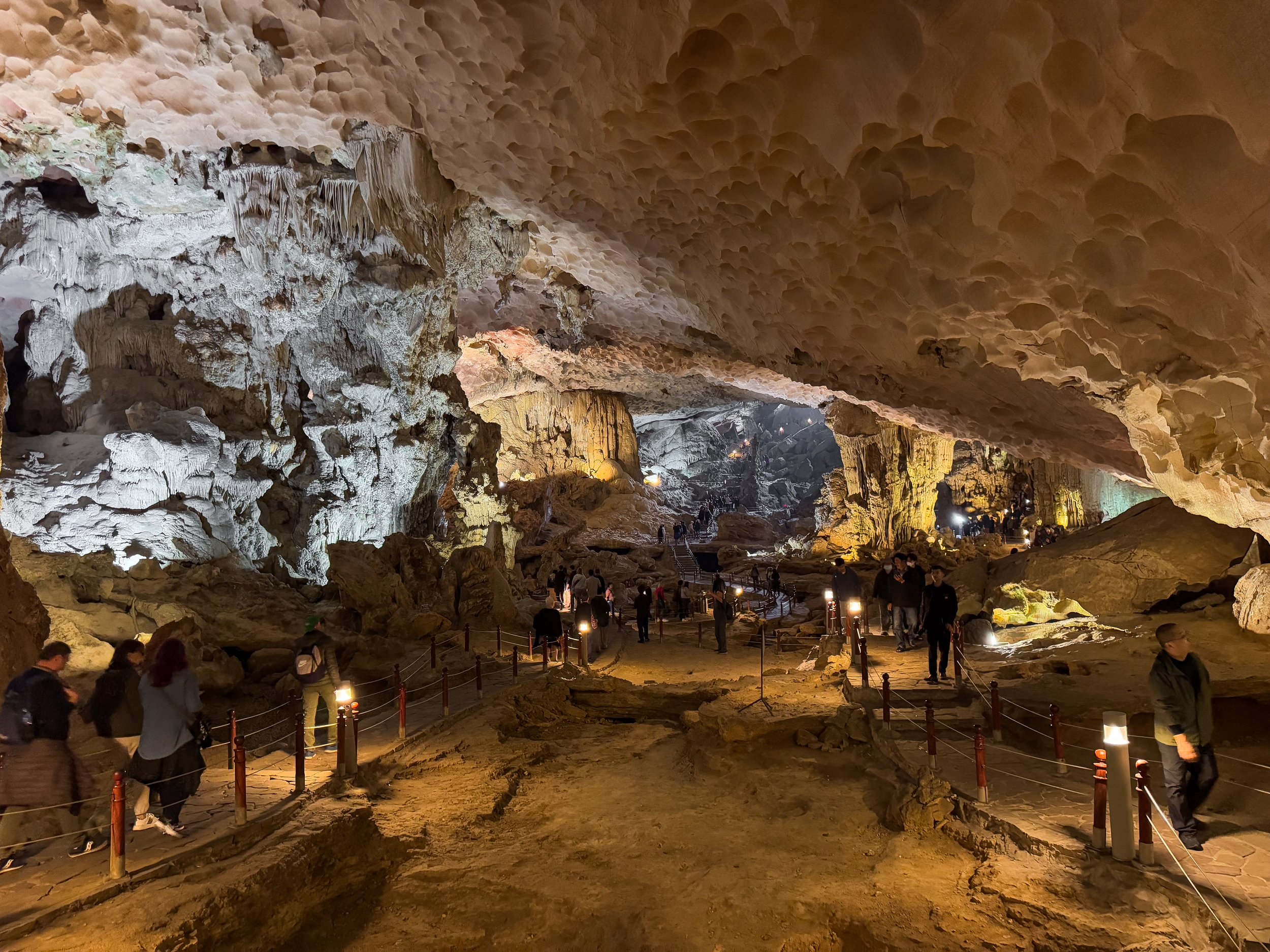
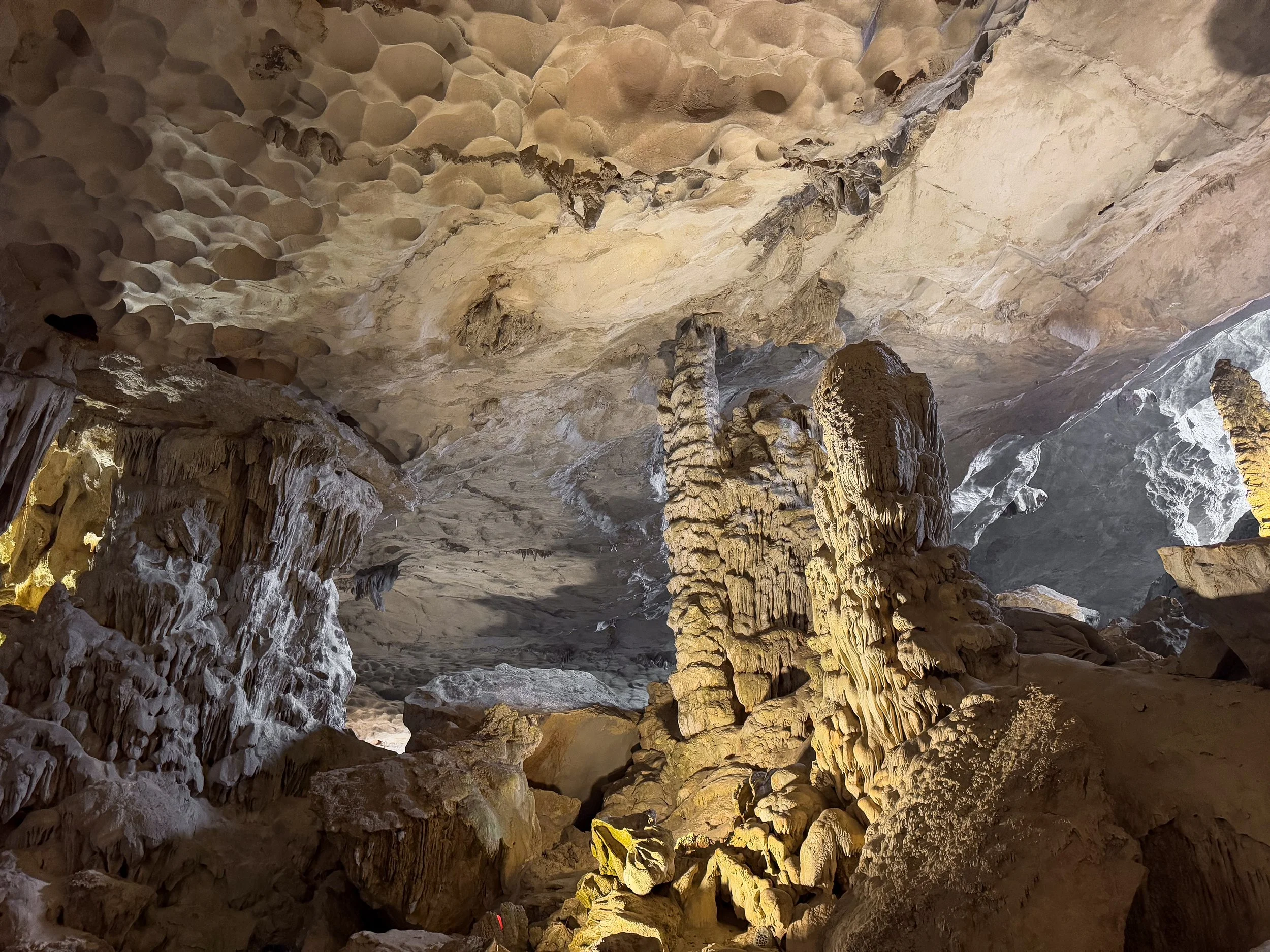
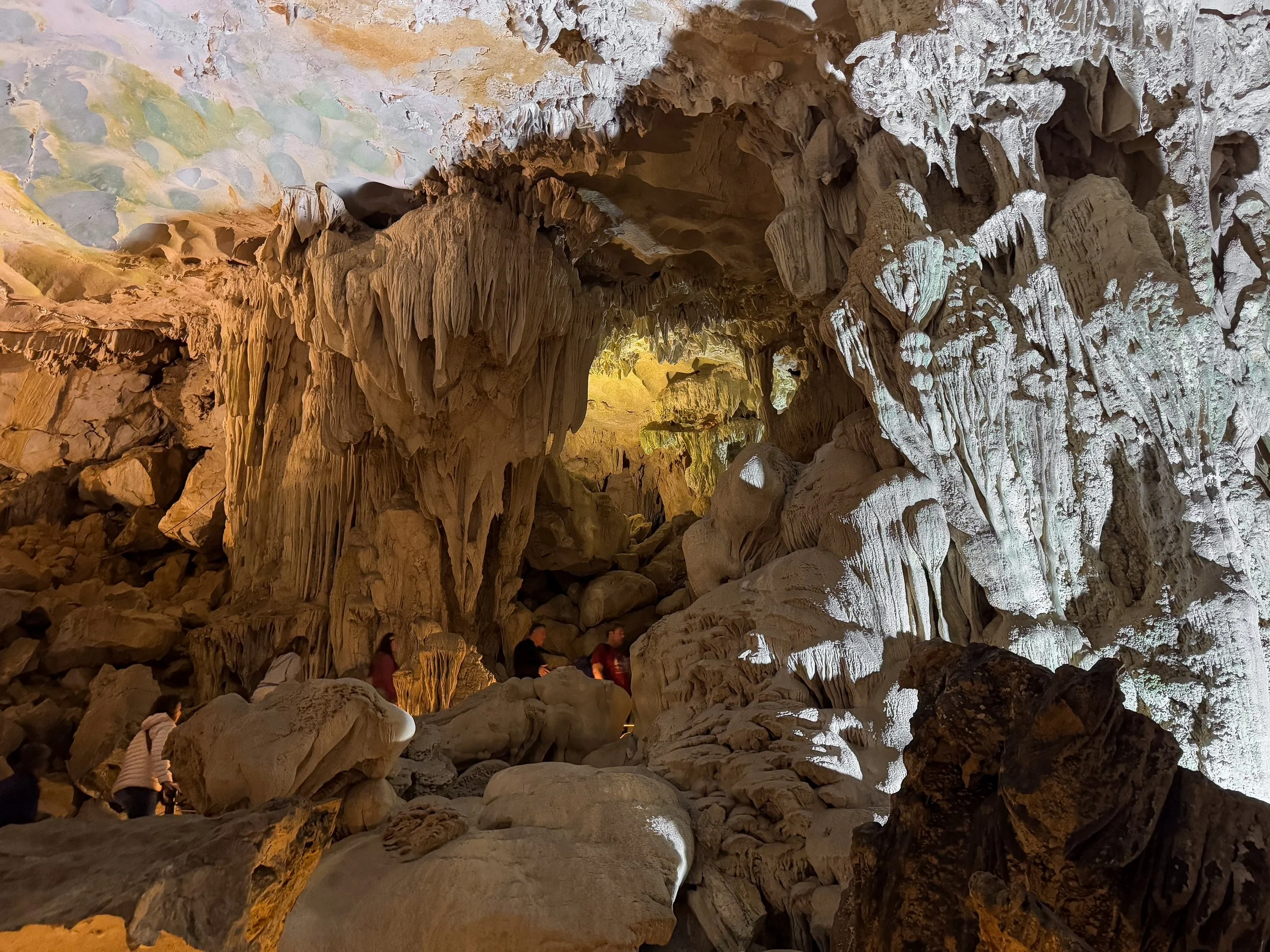
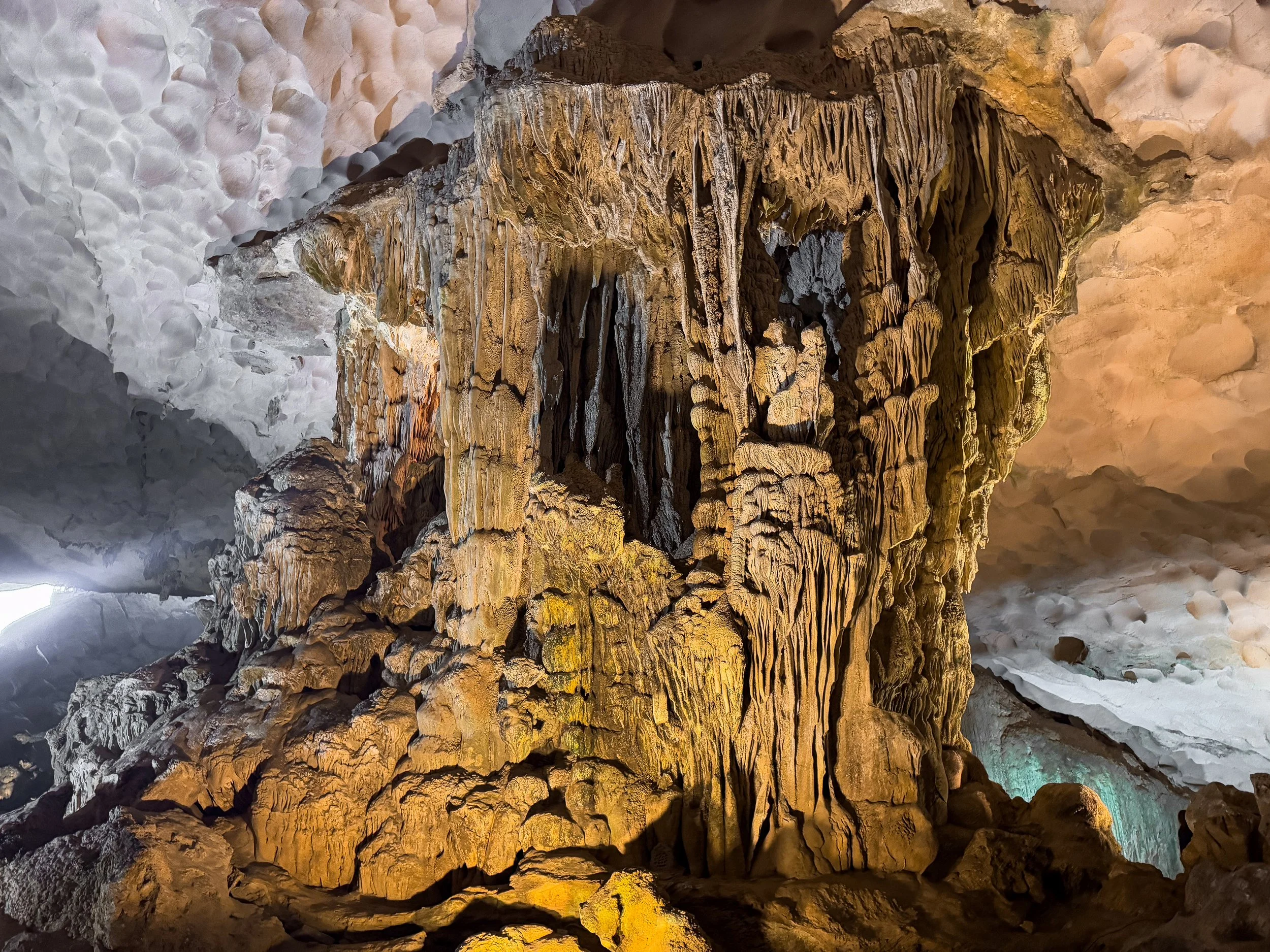
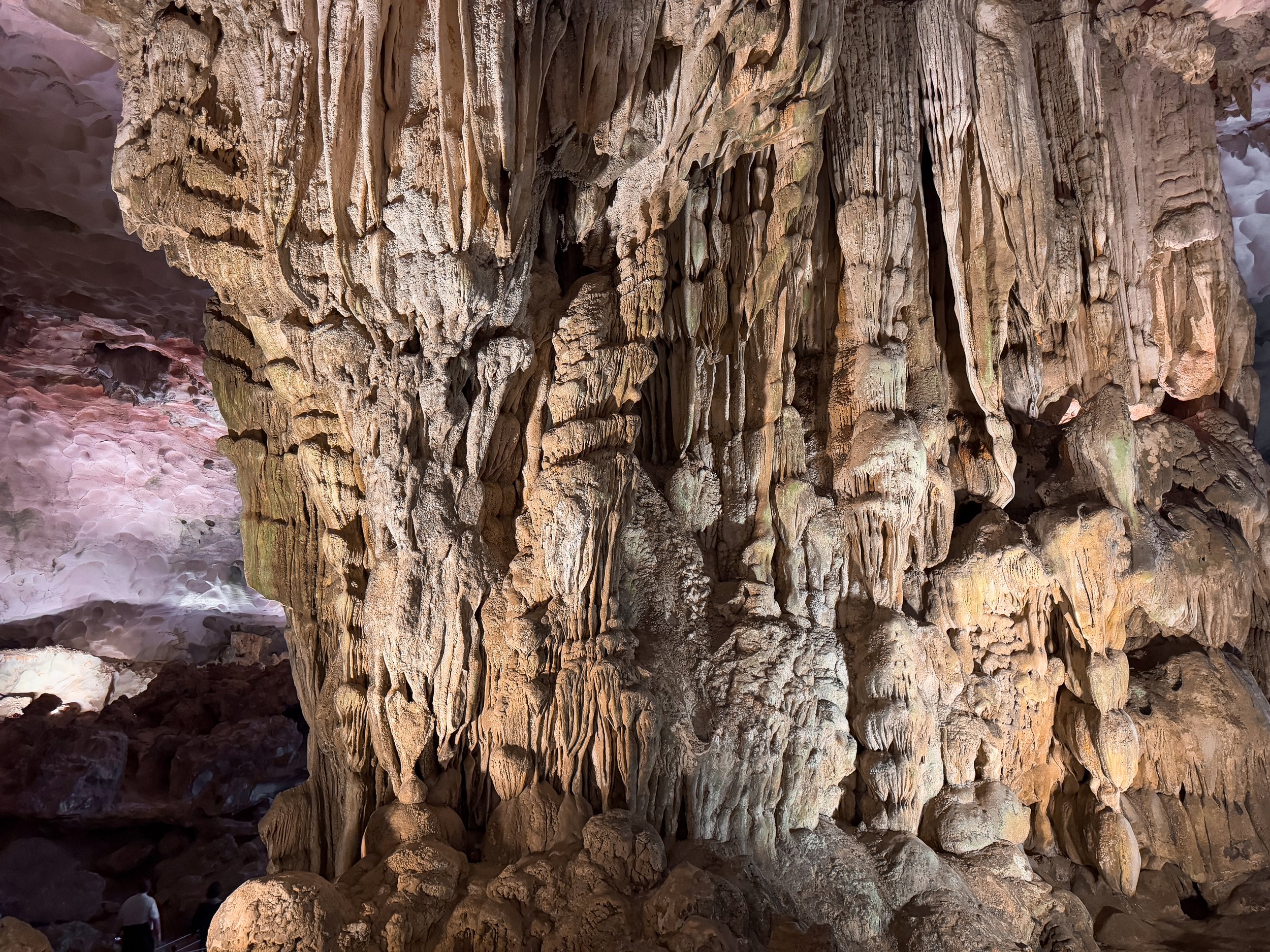
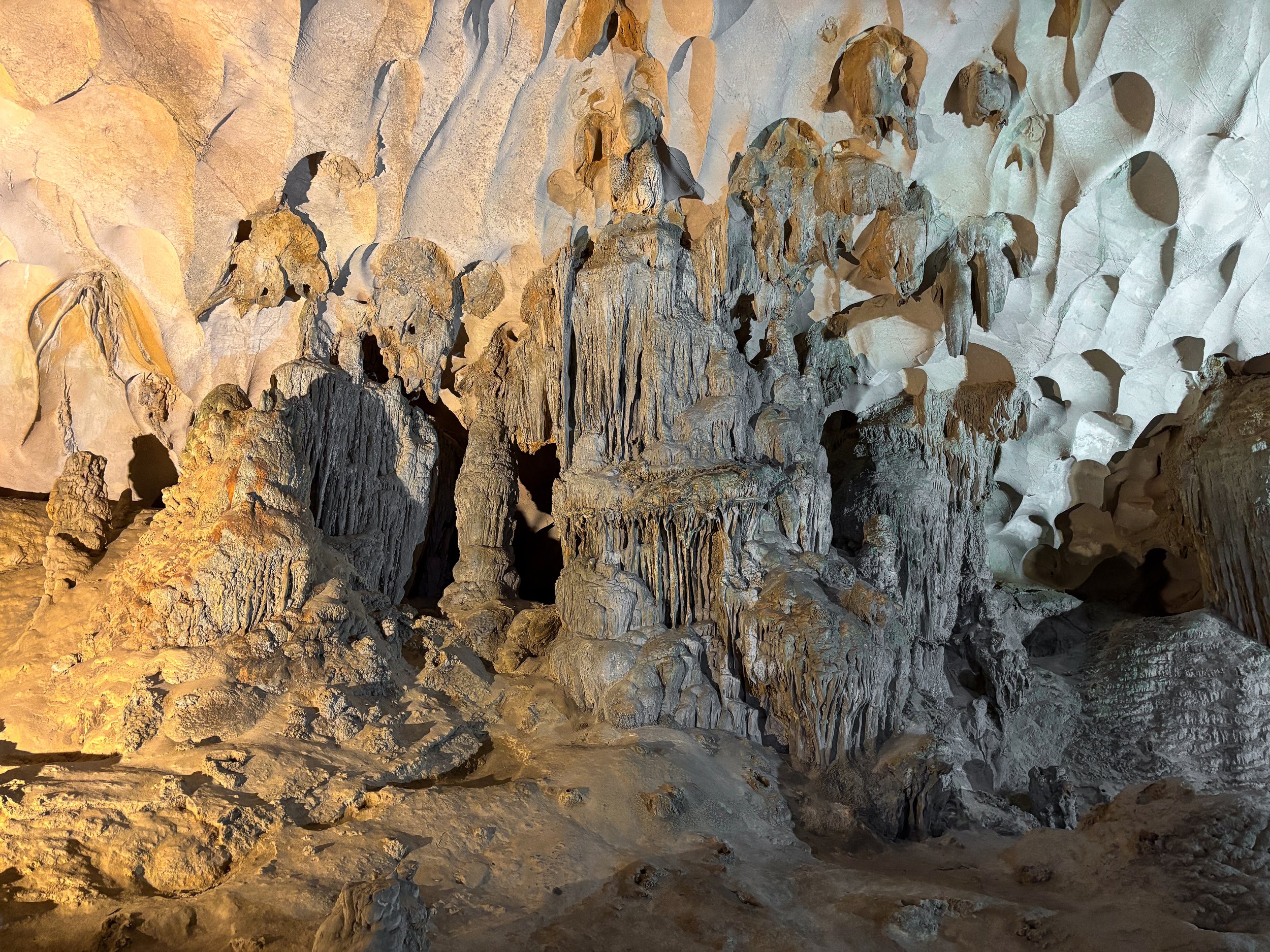
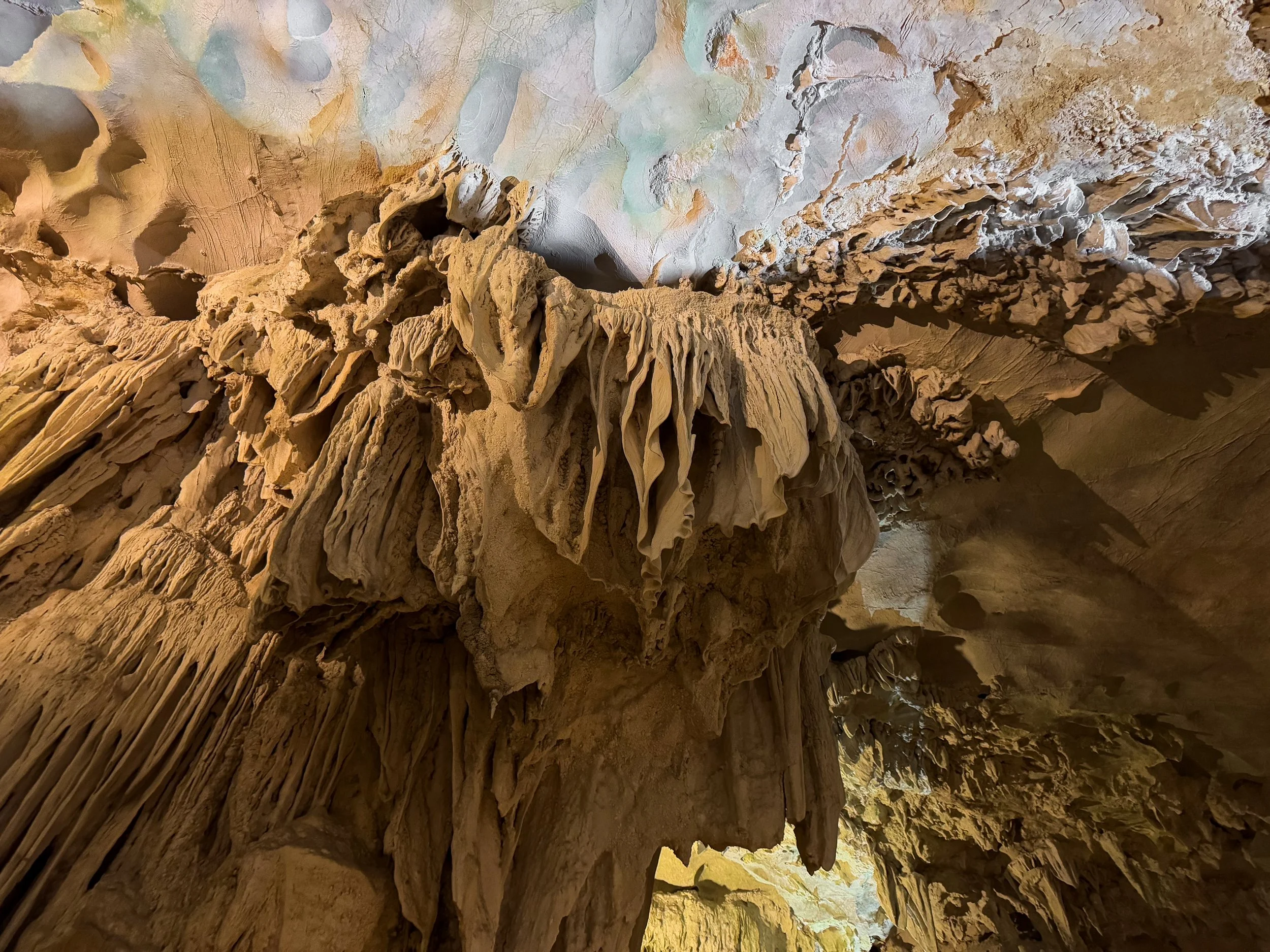
Sung Sot Cave. The largest cave in Ha Long Bay. A staircase leads up a karst island to the mouth of the cave. Inside are a series of chambers, each grander than the next. The cave walls are covered in stalactites that drip down to the floor. The ceilings are sculpted into a smooth and rippled pattern from lapping water. The final chamber is absolutely massive. A trail meanders deep into its interior past a large stone column before looping back out.
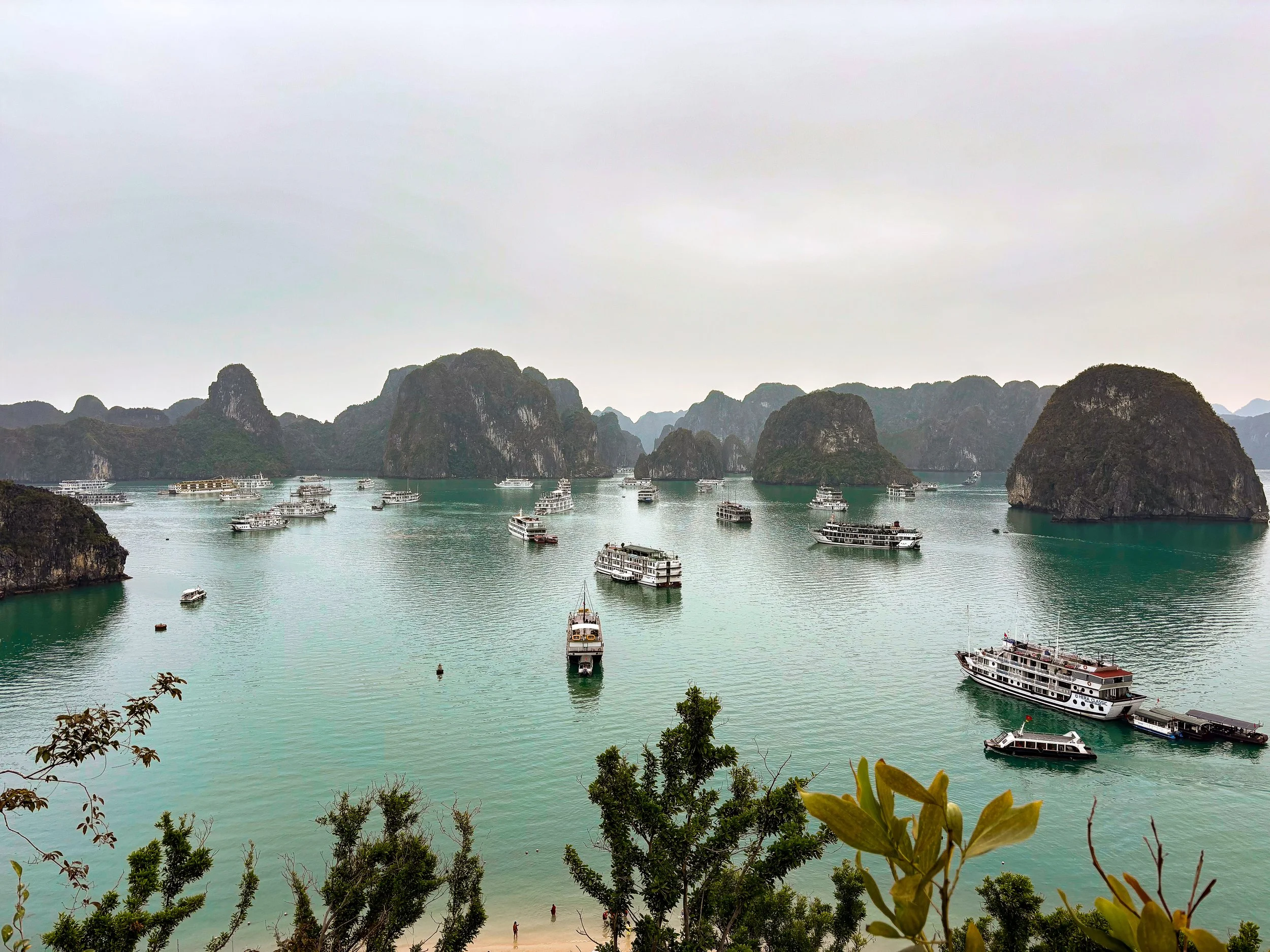
Ti Top Island. A popular island with a yellow sand beach and mountaintop lookout. A 400 step staircase leads to a pagoda with panoramic views of the bay’s karst islands, blue tinted water and anchored ships. It was too cold to swim at the time but we enjoyed the beach and scenery from shore.
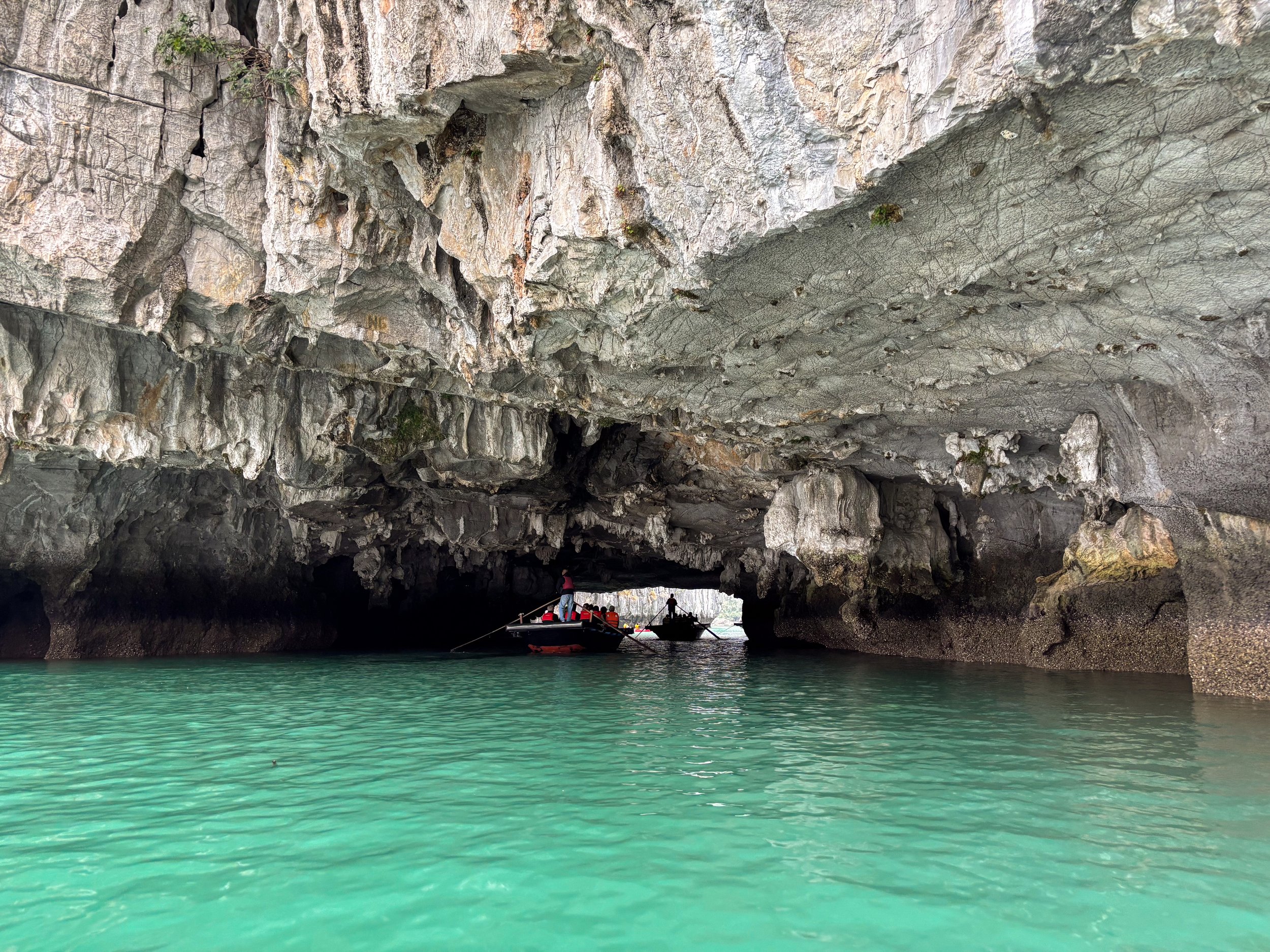
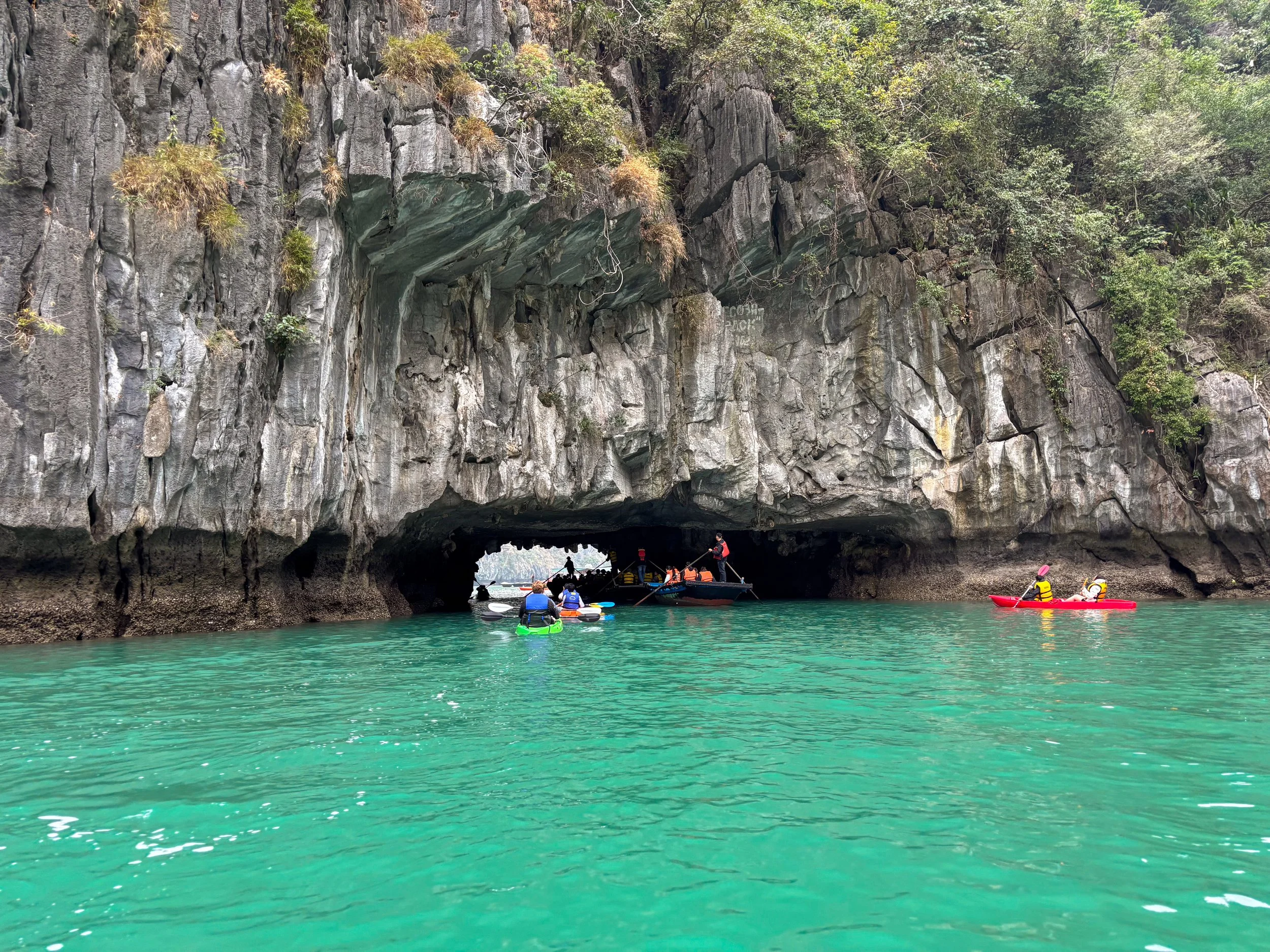
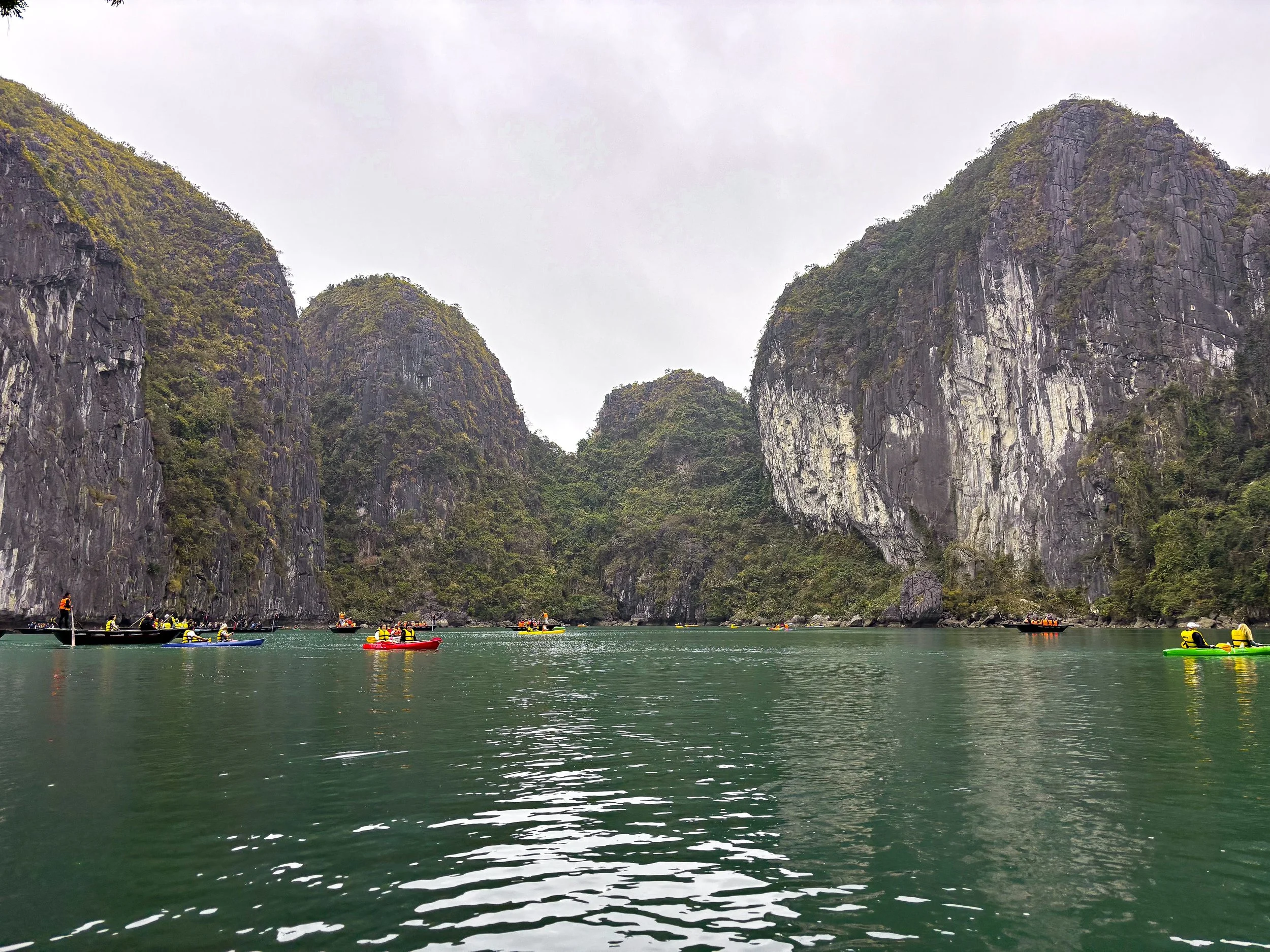
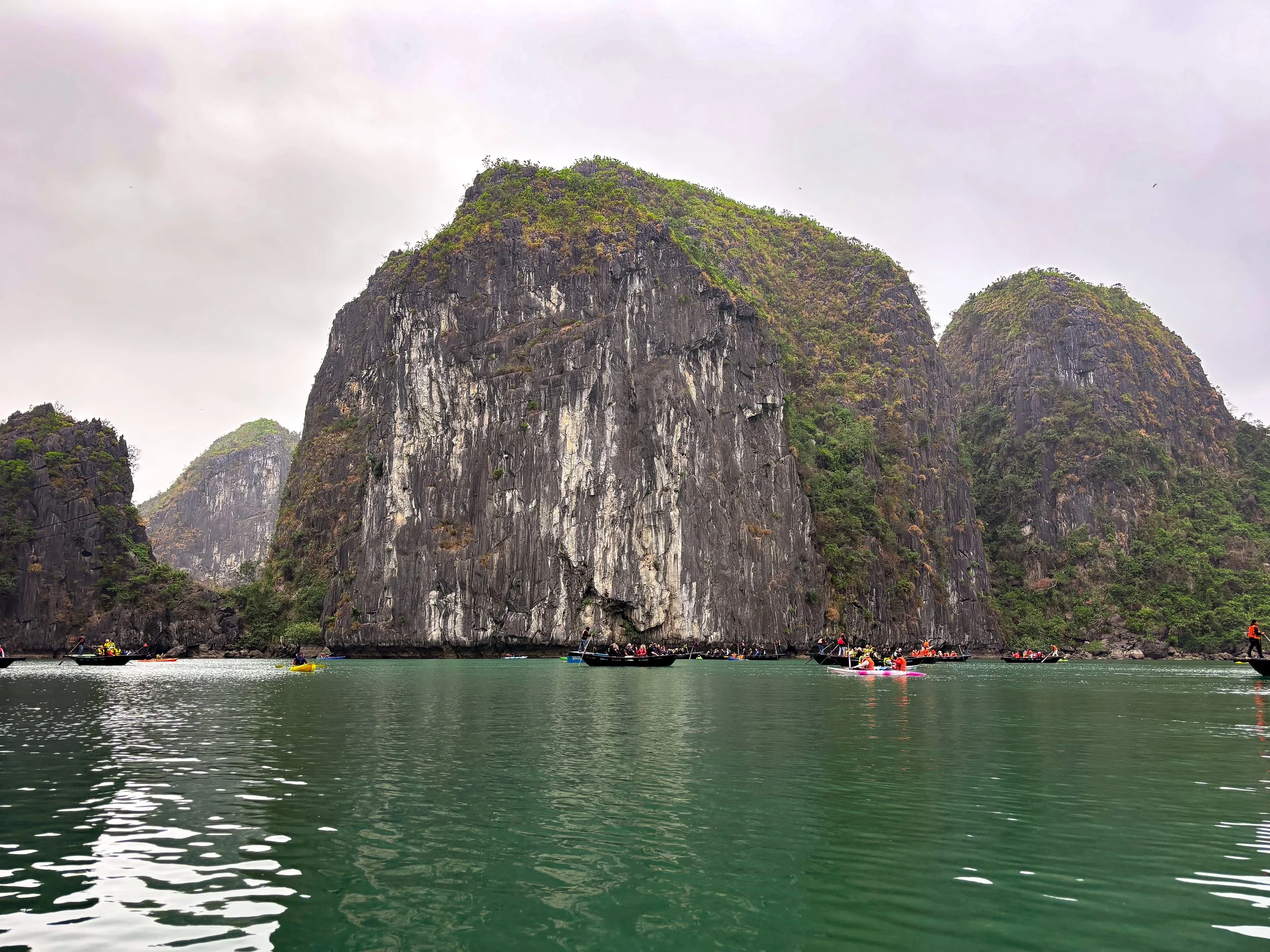
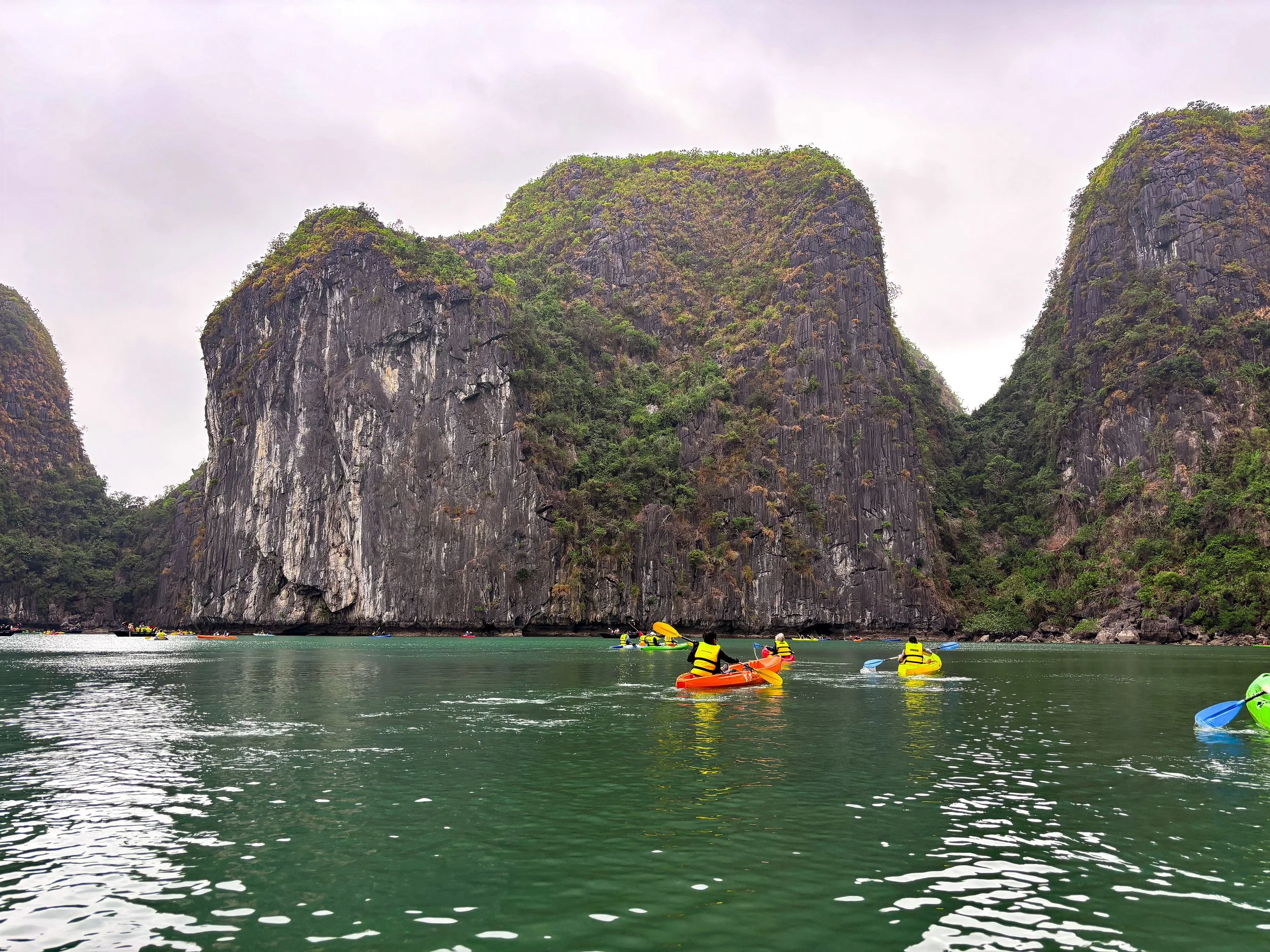
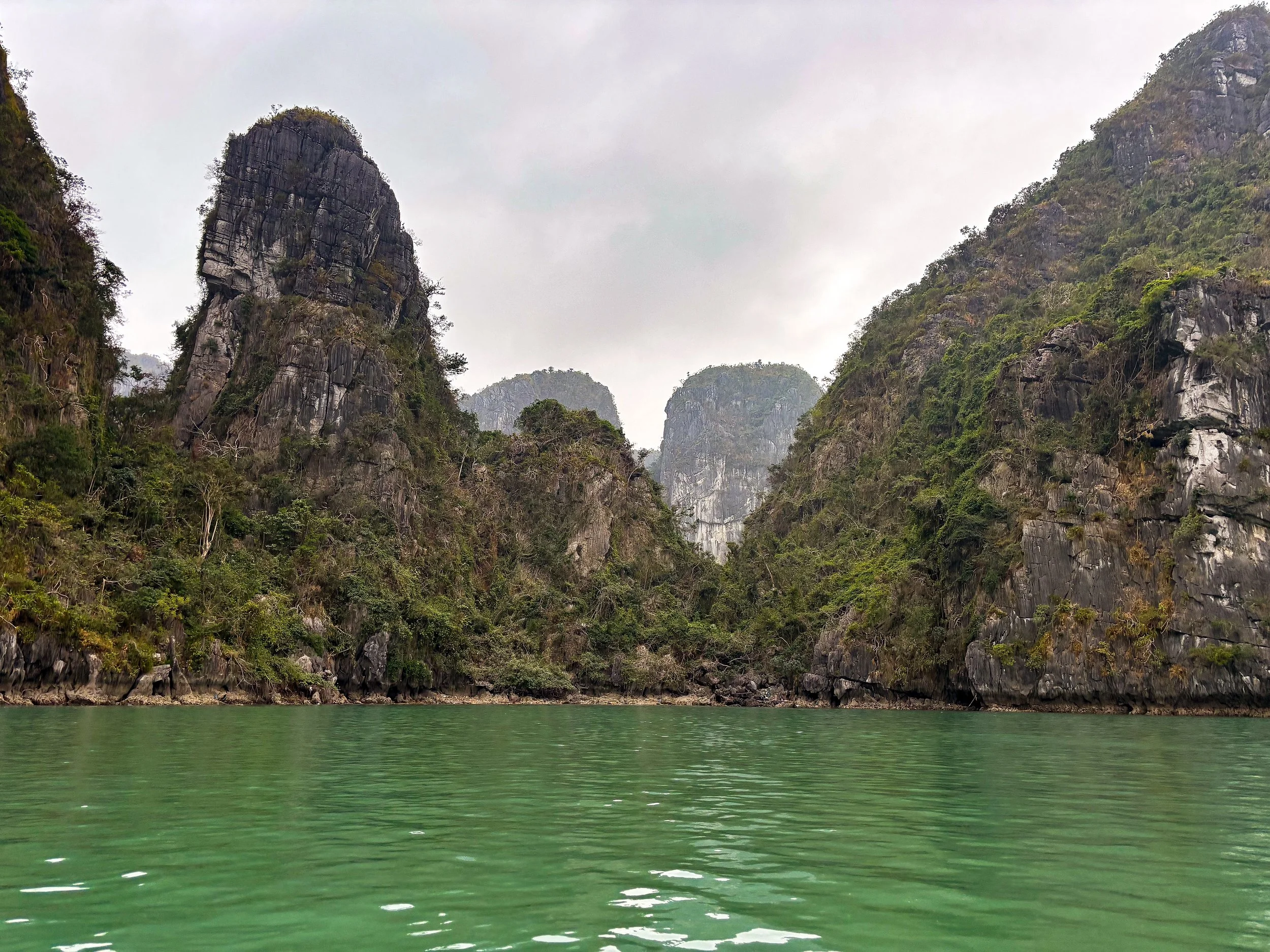

Hang Luon Cove. A cove in the middle of a karst island, only accessible through a shallow cave. We kayaked through the cave and around the cove where we were surrounded by steep cliffs and dark green water. We spotted wild monkeys sitting and running along the rocks.
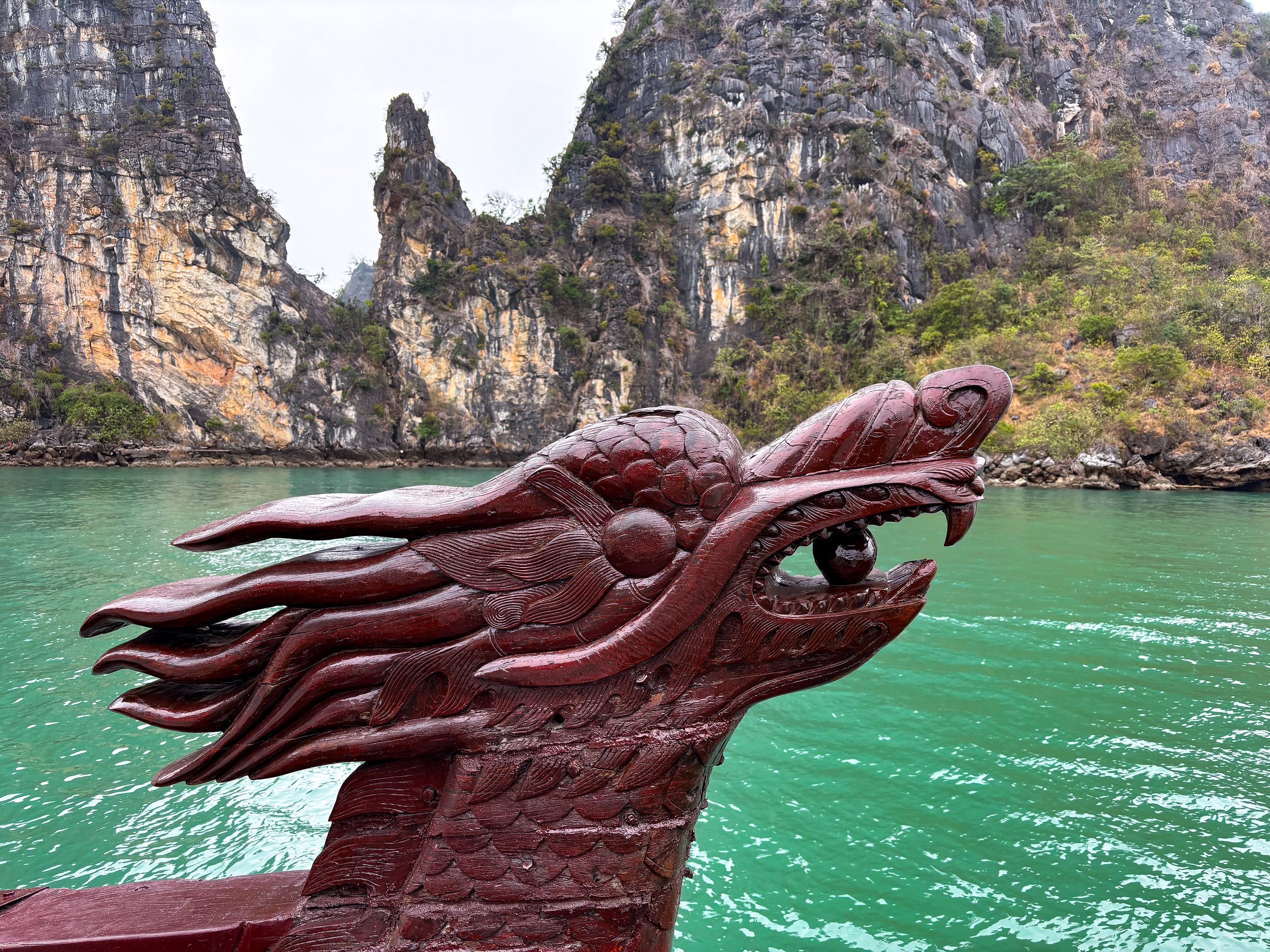
Le Journey. We booked an overnight tour of Ha Long Bay with a company called Le Journey. Their beautiful wooden ship has private cabins, a communal dining room and a rooftop deck and bar. The energetic crew kept us and other guests entertained with multiple excursions and activities like squid fishing, a cooking lesson and karaoke. The chef prepared delicious meals including local dishes like Ha Long Bay squid, jellyfish salad and fried rice. The tour included transportation between our stay in Hanoi and the Tuan Chau International Marina about 2 hours 30 minutes away.
Good to Know. The sights we visited are some of the most popular in Ha Long Bay. Many tour companies follow the same schedule meaning that hundreds of tourists will descend upon them at the same time. Though crowded, the nature is no less beautiful and time on the boat offers a quiet reprieve.
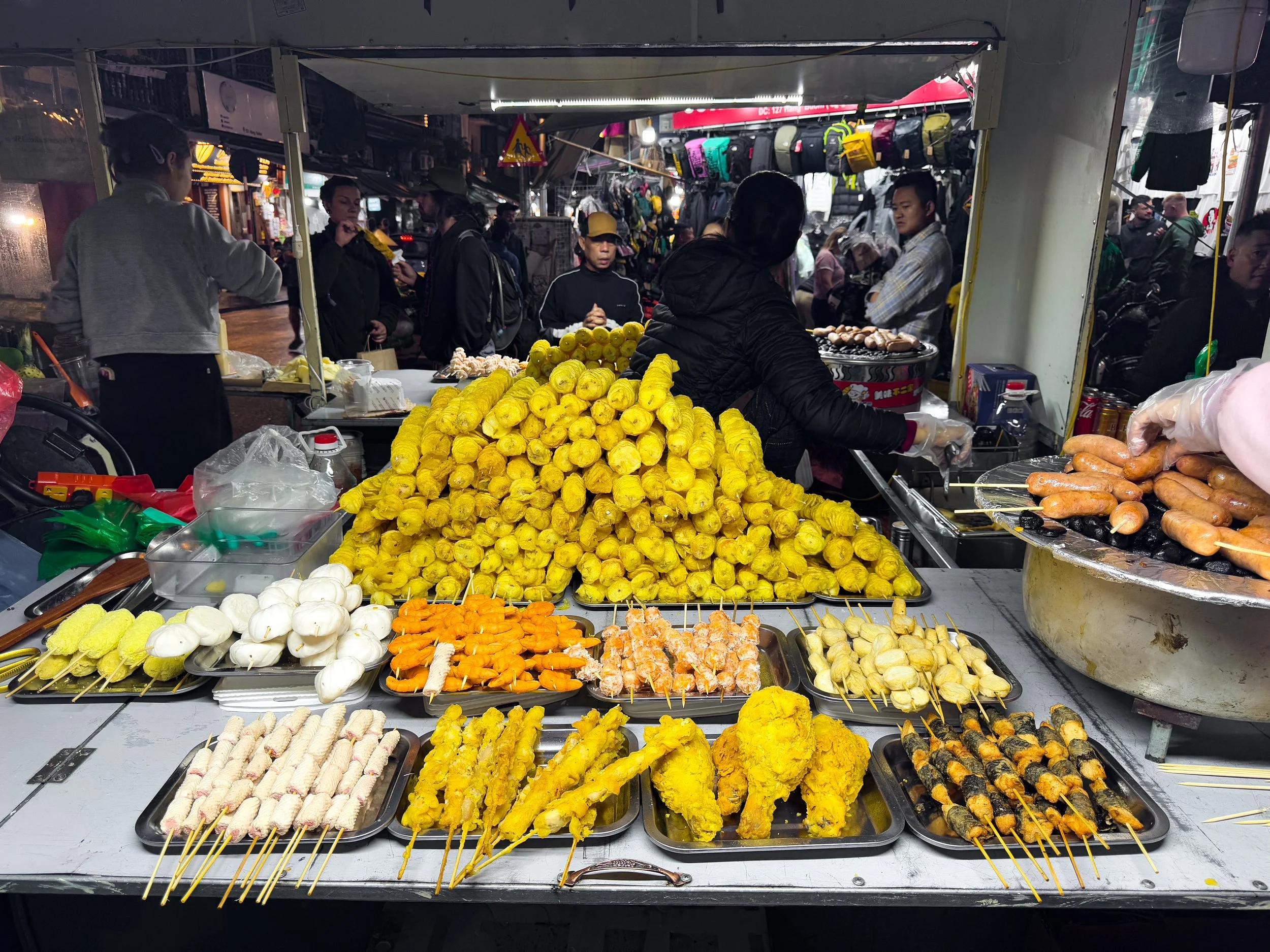
Vietnamese Street Food
Street food is popular across Vietnam, especially at night markets. We tried several dishes and treats along the streets of Hanoi.
Keo Cu Đo (Rice Paper Candy). A molasses-like paste mixed with peanuts and sandwiched between two rice paper wafers.
Bao (Steamed Buns). Steamed bread rolls often shaped like lotus flower. A popular way to eat them is deep fried with a drizzle of sweetened condensed milk.
Banh Tieu (Vietnamese Donuts). Tiny dough balls covered in sesame seeds or sugar glazed and filled with mung bean paste.
Bánh Rán (Sesame Balls). Deep fried gelatinous rice balls filled with sweetened bean paste and coated in toasted sesame seeds.
Banh Dong Xu (Golden Coin Cake). A sweet pancake filled with mozzarella cheese and griddled in a mold of a Korean coin. It's a popular street food, often served hot for its long stringy cheese pull.
Khoai Tay Loc Xoay (Tornado Potatoes). Hand-cut slices of skewered and twice fried potatoes resembling a vortex. They’re often covered in mayo and sweet chili sauce.
Bach Tuoc Nuong (Grilled Octopus). Skewered and barbecued octopus legs cooked over a coal grill.
Mực Khô Nướng (Grilled Dried Squid). A whole dried squid cooked over a charcoal grill. It has a jerky-like texture and is served with sweet chili sauce.


Vietnamese Cuisine
Banh Mi. A beloved Vietnamese sandwich famed for its baguette style bread baked with a crunchy exterior and pillowy interior. It’s traditionally stuffed with cilantro, cucumber, carrots and meat or tofu.
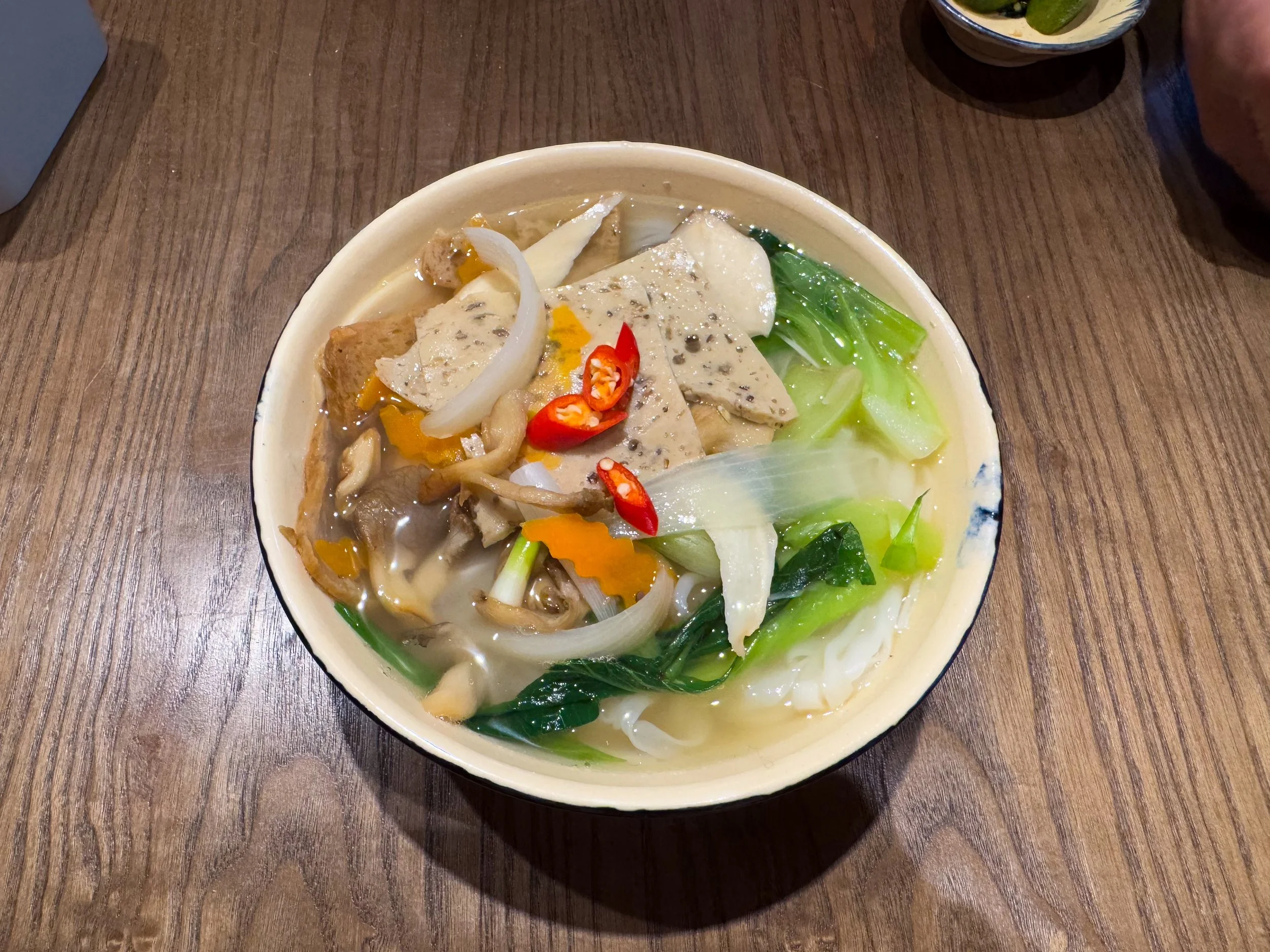
Pho. A Vietnamese soup made with a base of savory broth boiled with warm spices like star anise, cinnamon and ginger. It’s served with rice noodles, vegetables, meat or tofu.
Rice Noodles. Thin and sticky white noodles made from rice flour. They’re served in many dishes or on the side.
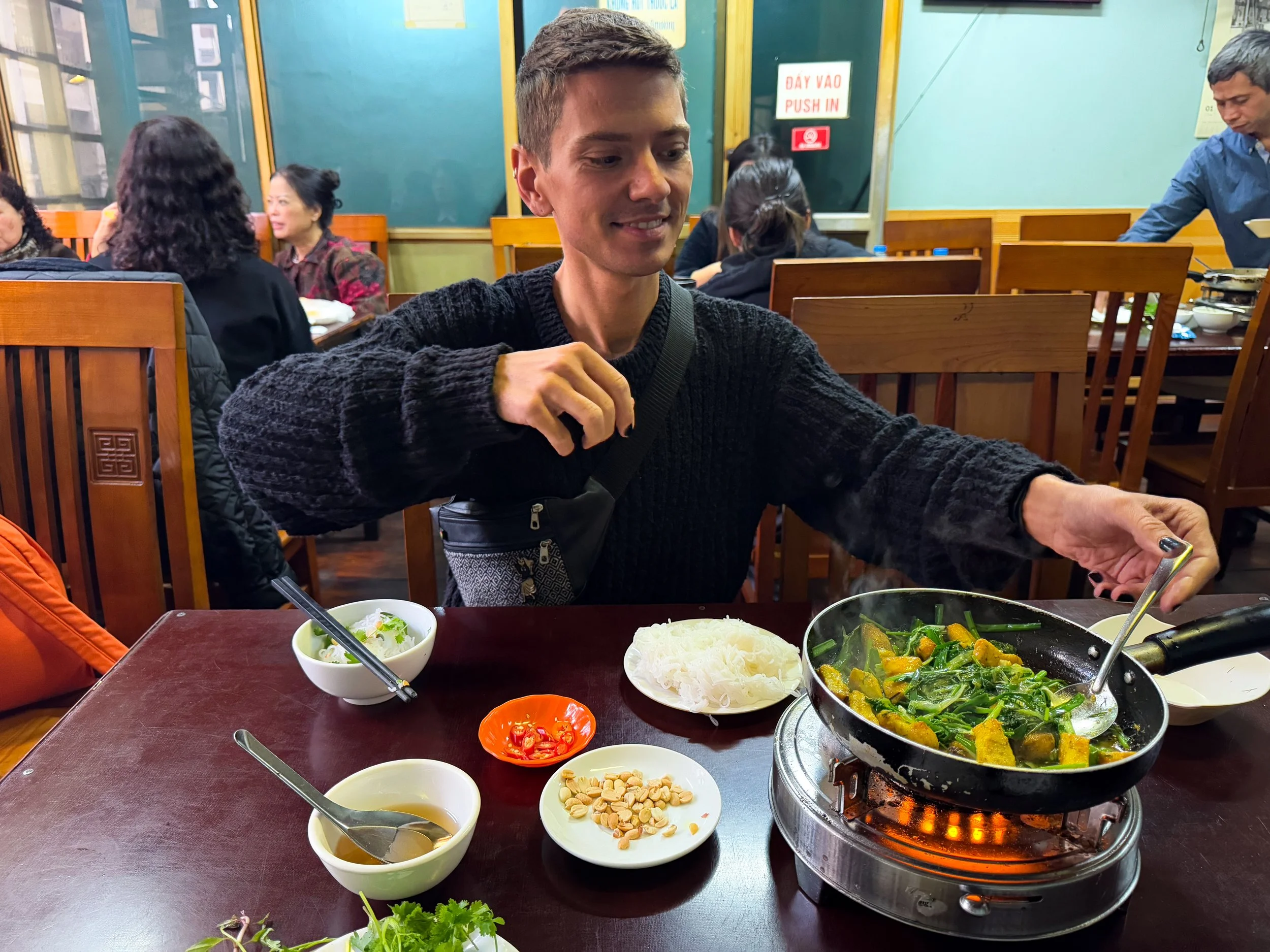
Cha Ca. A beloved local dish is made from snakehead fish marinated in turmeric and galangal and sautéed with a mixture of fresh herbs including turmeric, cilantro, dill, spring onions and garlic. It’s served alongside rice noodles, peanuts and chili peppers.
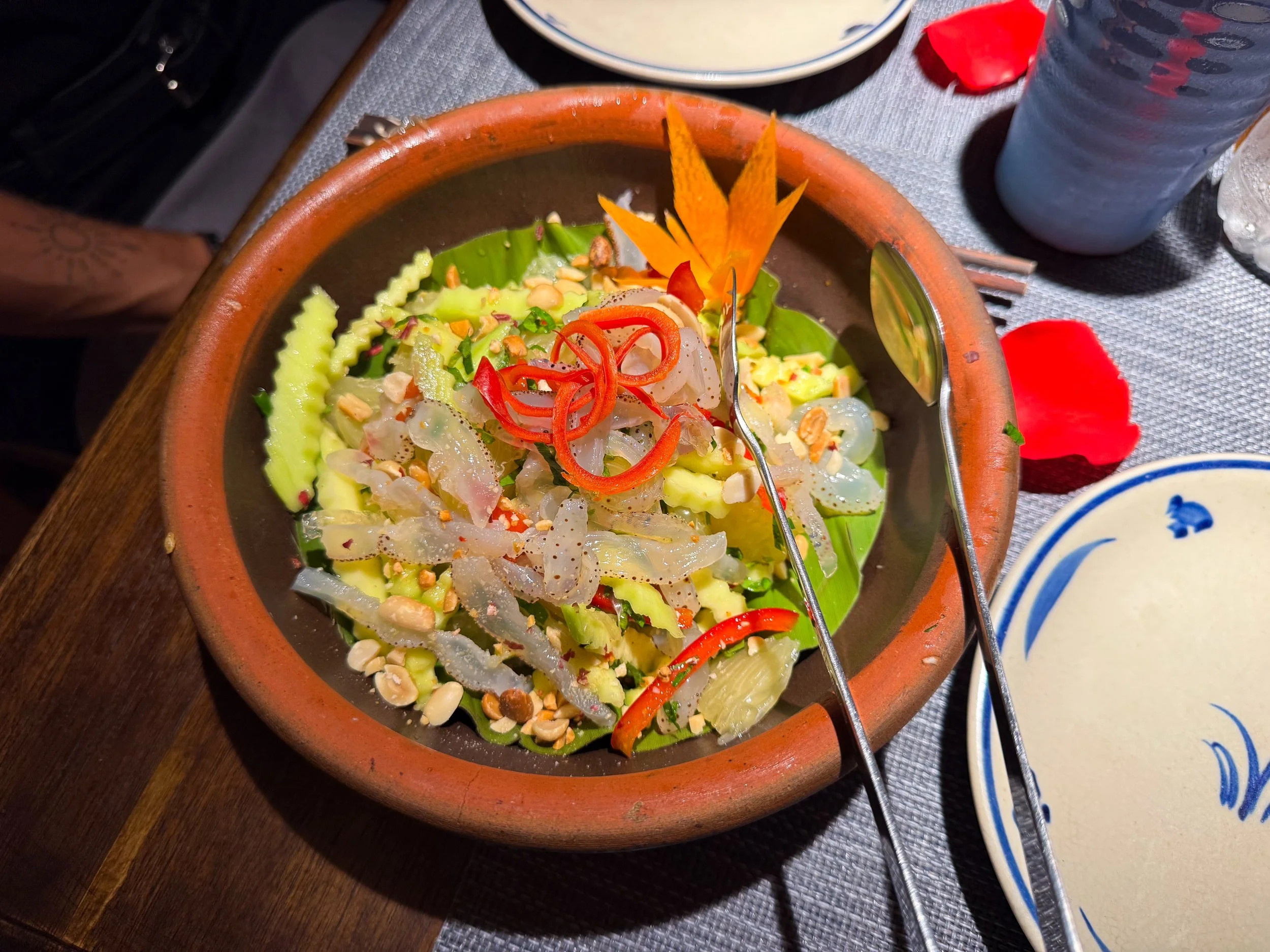
Jellyfish Salad. A salad made from thinly sliced strips of jellyfish mixed with pickled carrots, cucumber and onion in a soy sauce and sesame oil mixture. It has a characteristically crunchy texture and umami forward taste.
Vietnamese Coffee
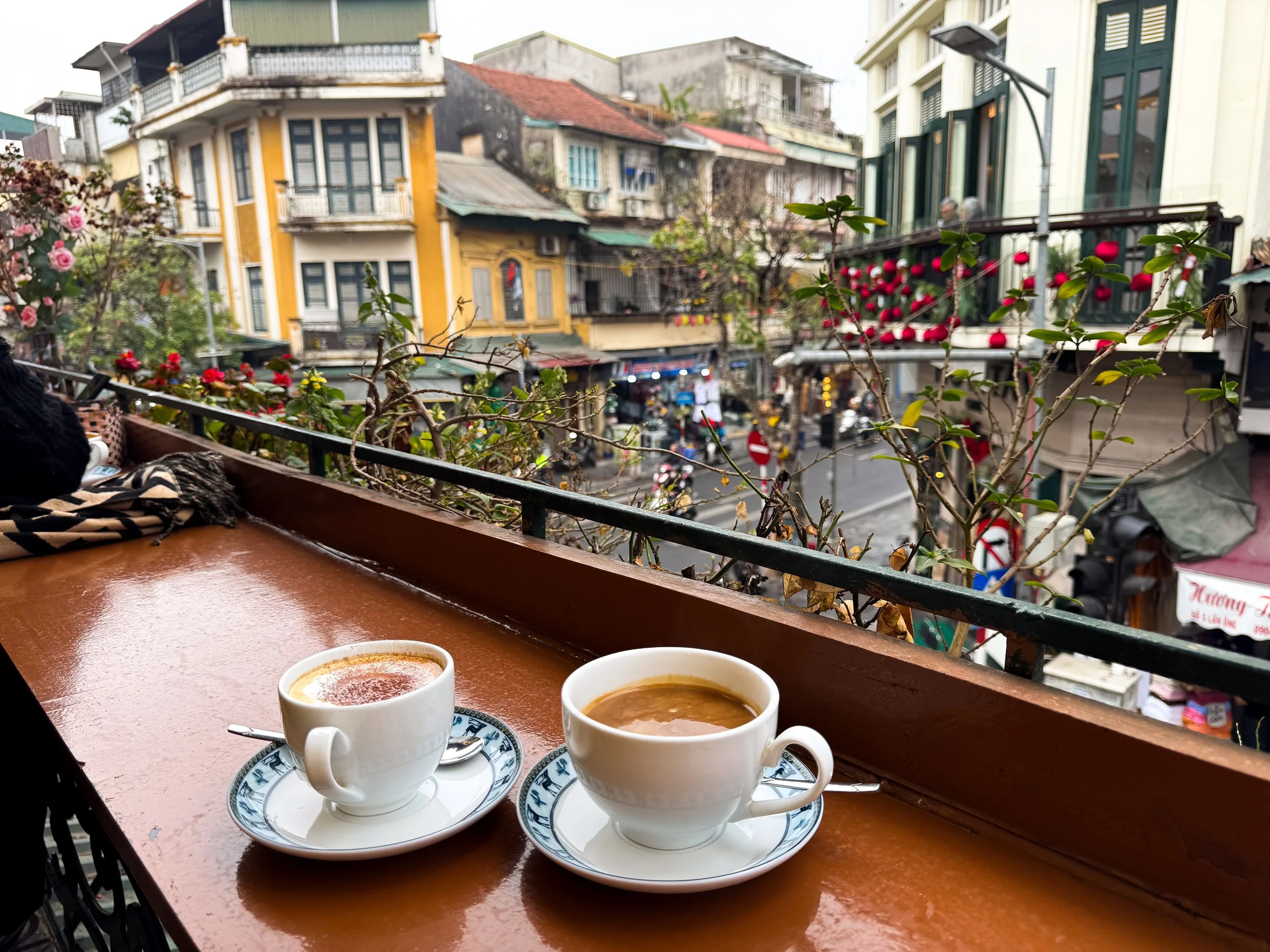
Coffee culture is a popular part of daily life in Vietnam. Street cafes with tiny folding chairs and stackable plastic furnishings commonly spill out onto sidewalks. Groups of locals sit around sipping on their preferred style of coffee often alongside a glass of hot green tea. Typical coffees are:
Vietnamese Coffee. The most popular preparation style, mixed with sweetened condensed milk and served hot or iced.
Egg Coffee. A creamy coffee mixed with whipped egg yolk and sweetened condensed milk.
Salt Coffee. A sweet and savory coffee mixed with salted cream and often dusted in cocoa powder.
Coconut Coffee. A thick and sweet coffee mixed with coconut cream.
Three in One. An instant coffee mixture made with coffee crystals, powdered cream and sugar.
Places to Eat and Drink
Lan Ong Restaurant. An elevated restaurant serving contemporary adaptations of Vietnamese cuisine. Dishes are beautifully presented and the atmosphere is warm and inviting. Try the Cha Ca served in a clay pot over a wood burning flame, the jellyfish salad made with green papaya & grapefruit, the seafood curry made with prawns & crab claws and for dessert, the sweet potato creme brûlée.
Cha Ca La Vong. An extremely local restaurant on the second floor of a historic home, serving Hanoi’s famed dish Cha Ca. The cook brings out a personal grill, pan with the sizzling fish and bowl of herbs. It’s all sautéed together until blanched and aromatic.
Coffee A. A café on a corner in the old quarter with classic Vietnamese coffees. Sit at the wrap around balcony on the second floor overlooking the chaotic street and intersection below.
Hoangs. A restaurant with Vietnamese and South East Asian rice and noodles dishes. Try the vegetable fried rice and stir fried rice noodles with seafood.
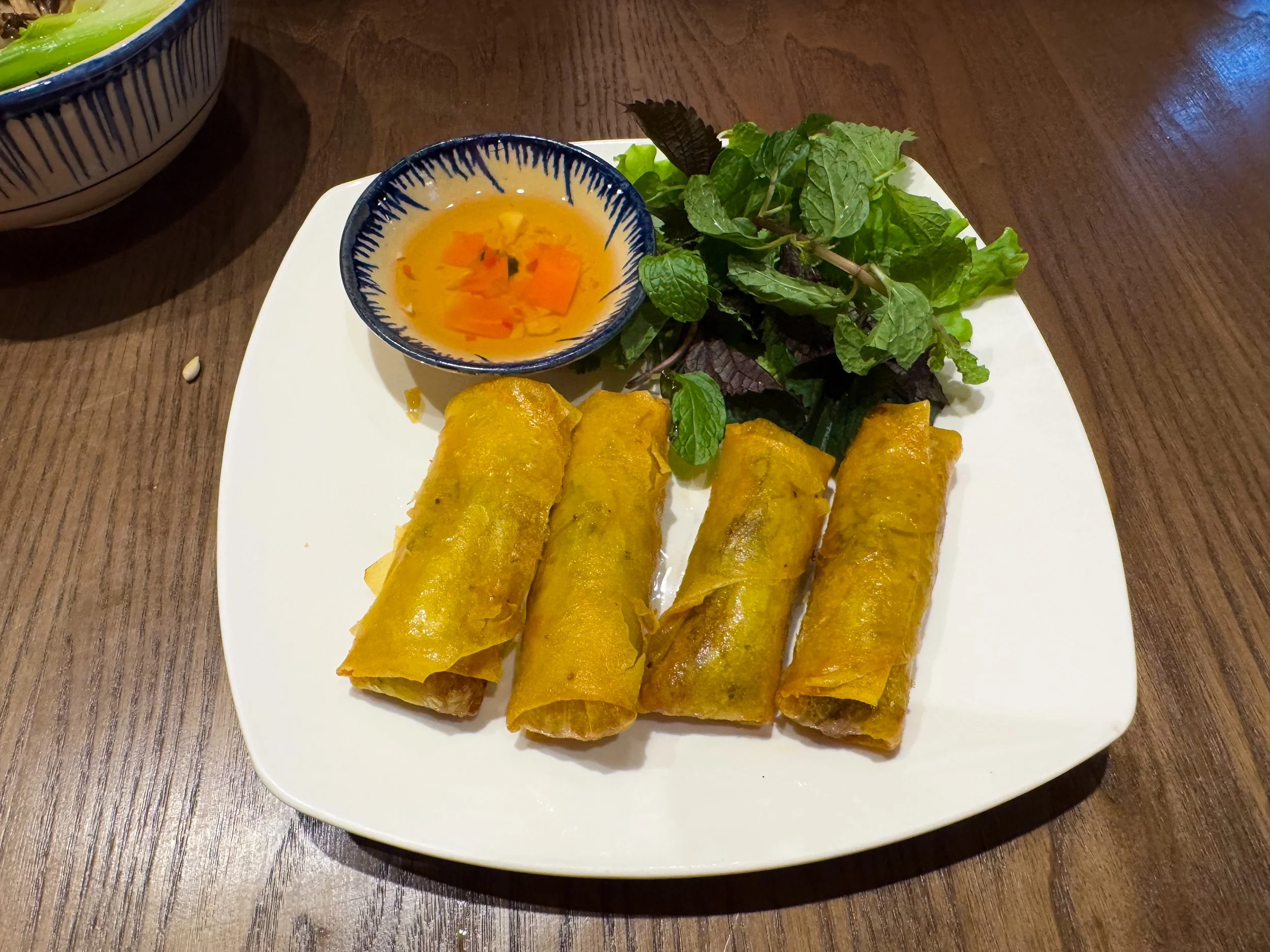
Tet Restaurant. A vegetarian Vietnamese restaurant with national and local dishes like pho and fried spring rolls made with fresh vegetables and house made tempe.
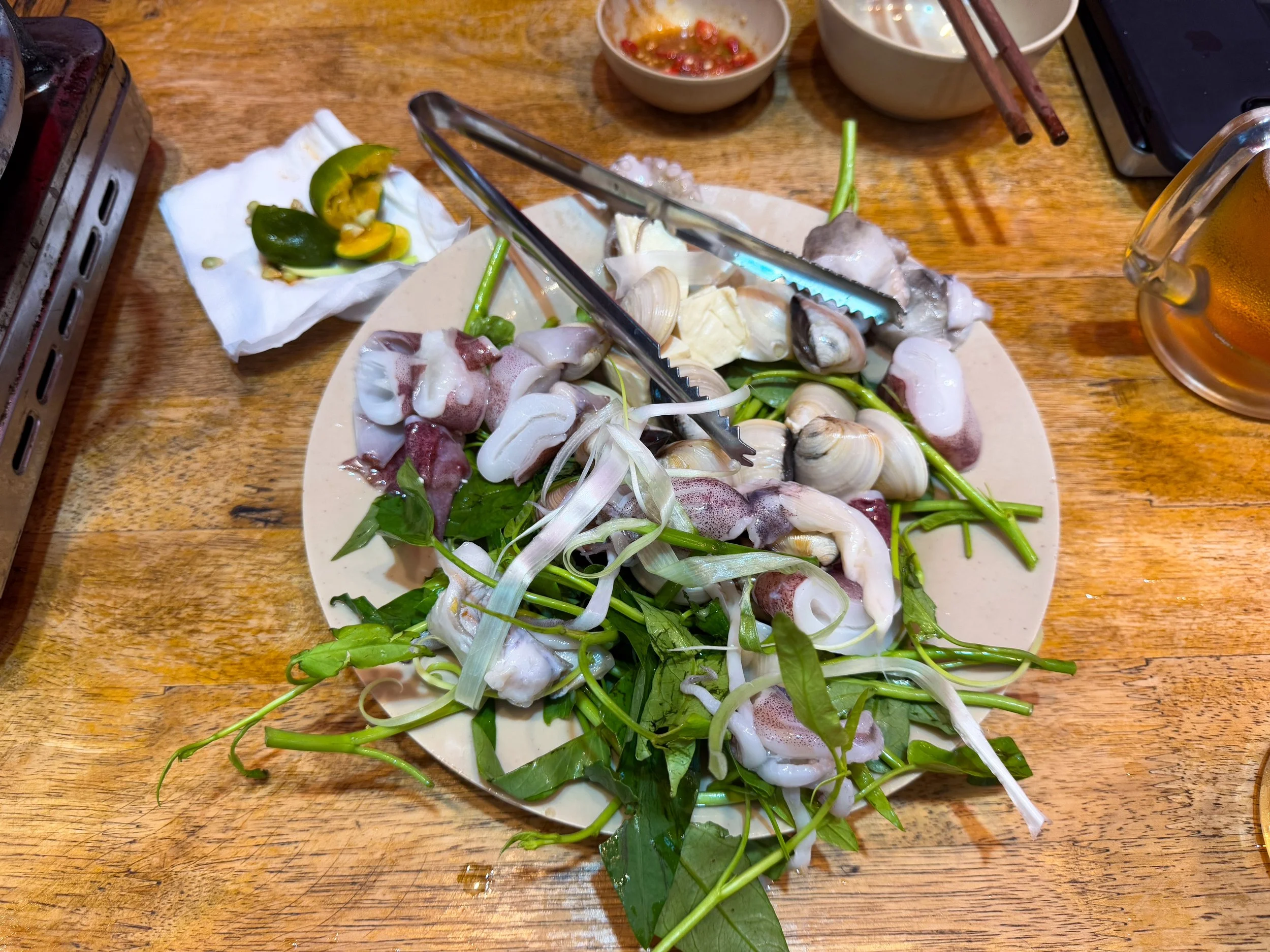
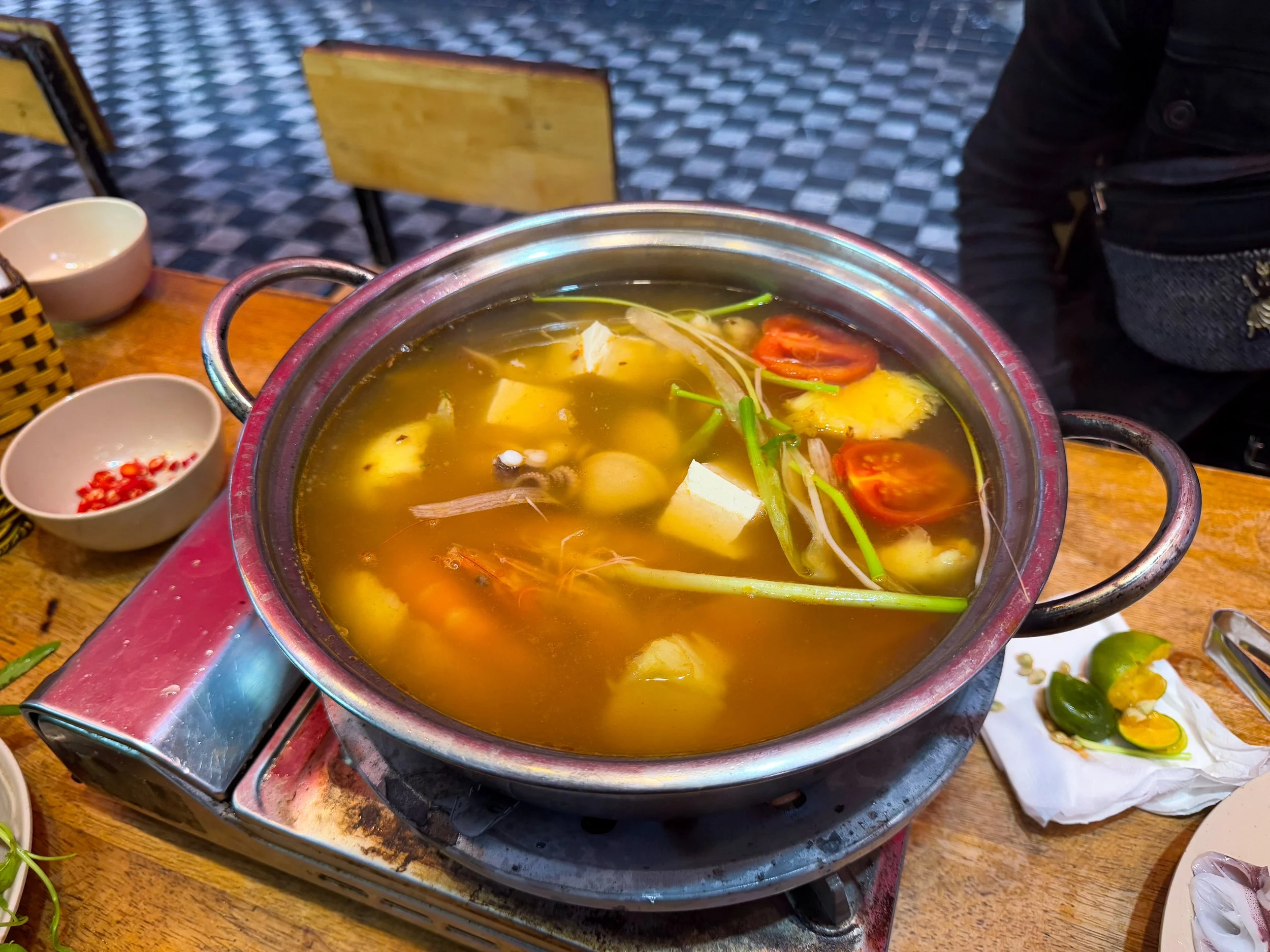
Com Tam Lam Sai Ghenh. An unassuming restaurant on the Tong Duy Tan Food Street with Vietnamese dishes and hot pot. We shared a seafood hot pot made in a boiling pot of savory broth with a mixture of fresh clams, squid, prawns, tofu, greens and ramen.
Kem Dua Coffee (Tower Cafe). A narrow multi-floor café with Vietnamese coffees and views of Ho Tay Lake. After climbing 6 floors for a seat, we nicknamed it tower café.
Givral French Bakery. A chain bakery with French patisserie. We stopped in for a slice of pineapple roll cake and a miniature chantilly cream bouche.
Ta Ta Café. A café with artisan coffees hidden on the second floor of a dilapidated French colonial building. A giant tree grows out of its yellow painted facade while a sign reading “coffee bar” leads up a rickety wooden staircase to its entrance.
Where to Stay
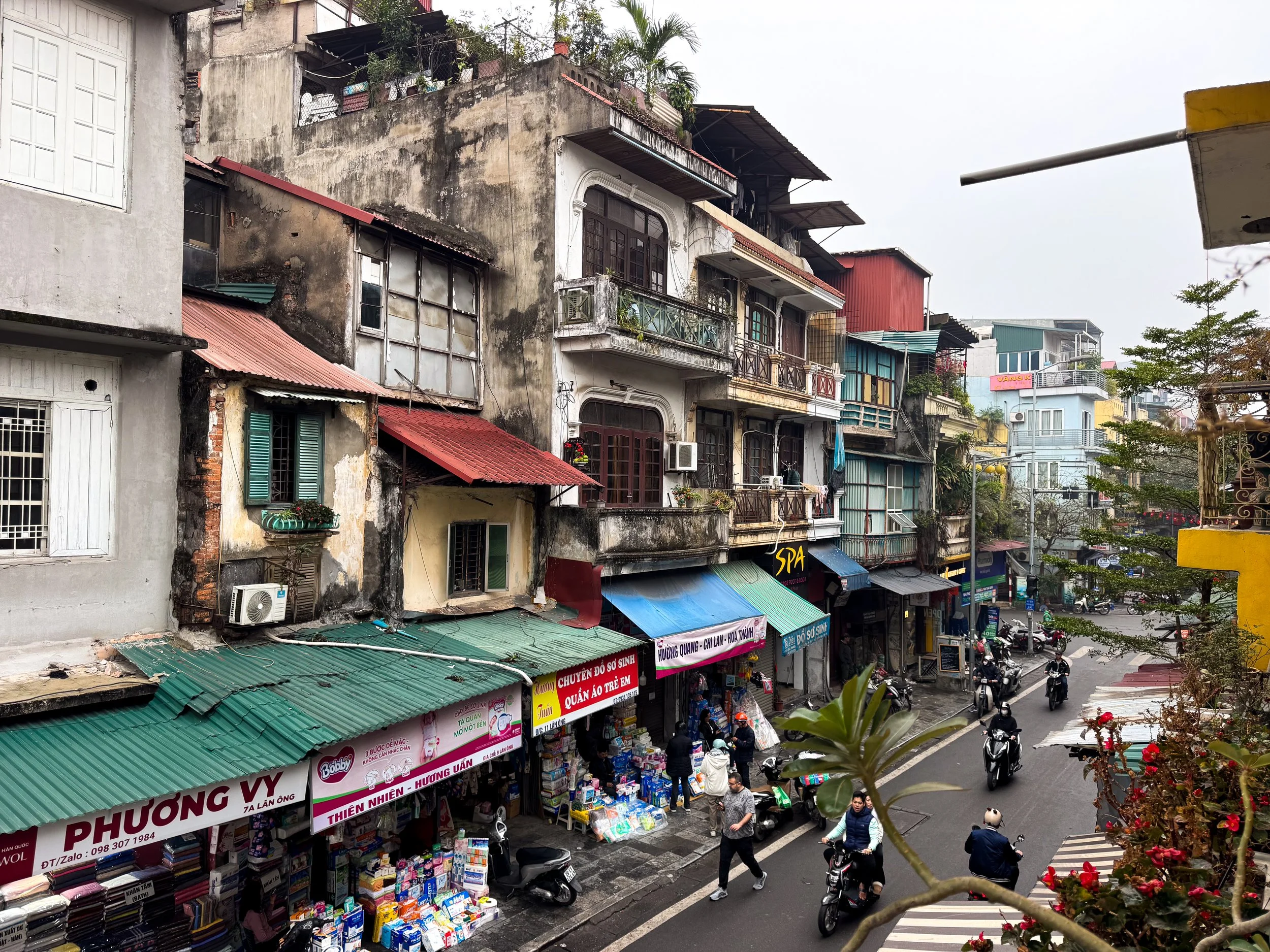
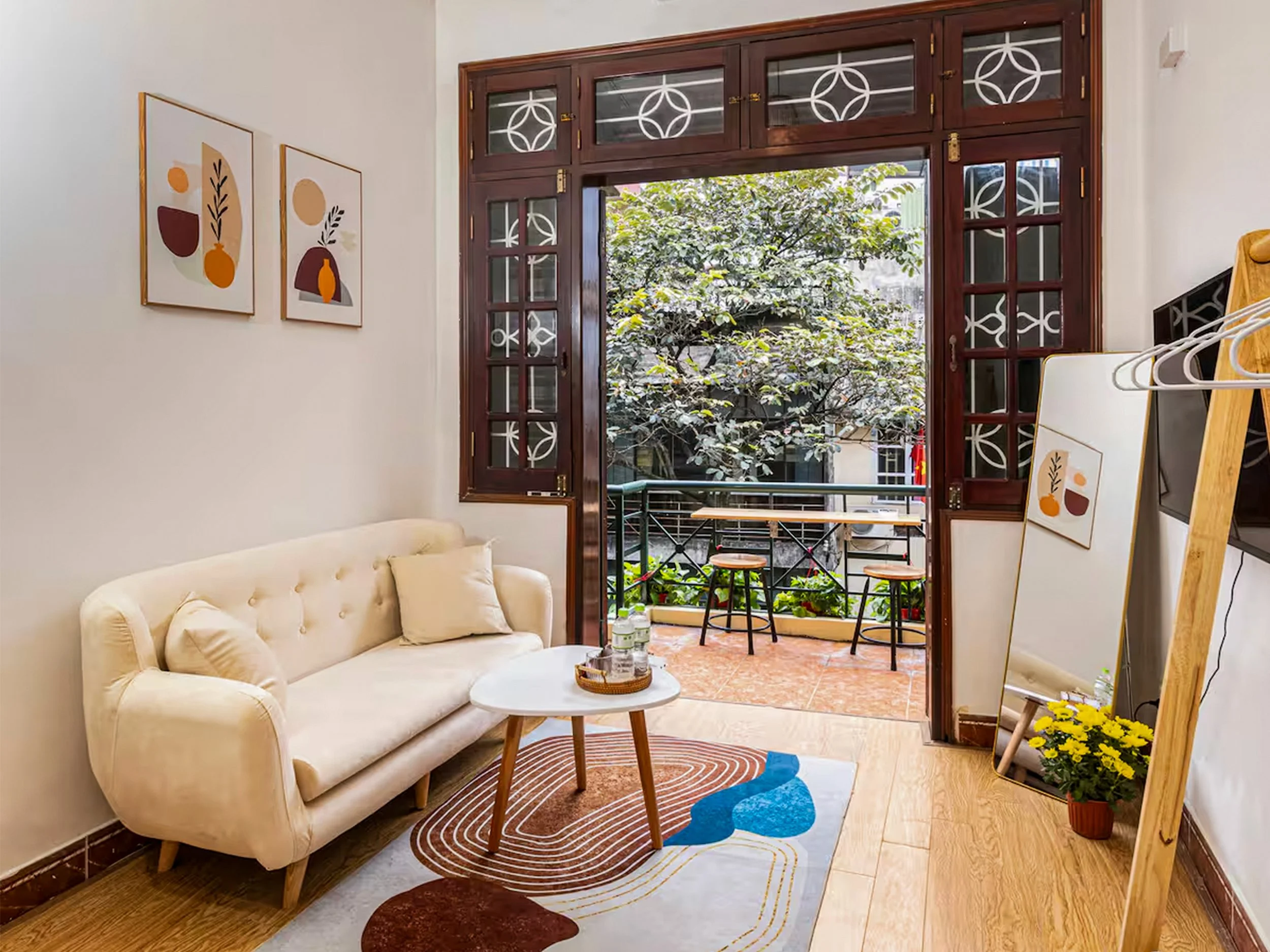
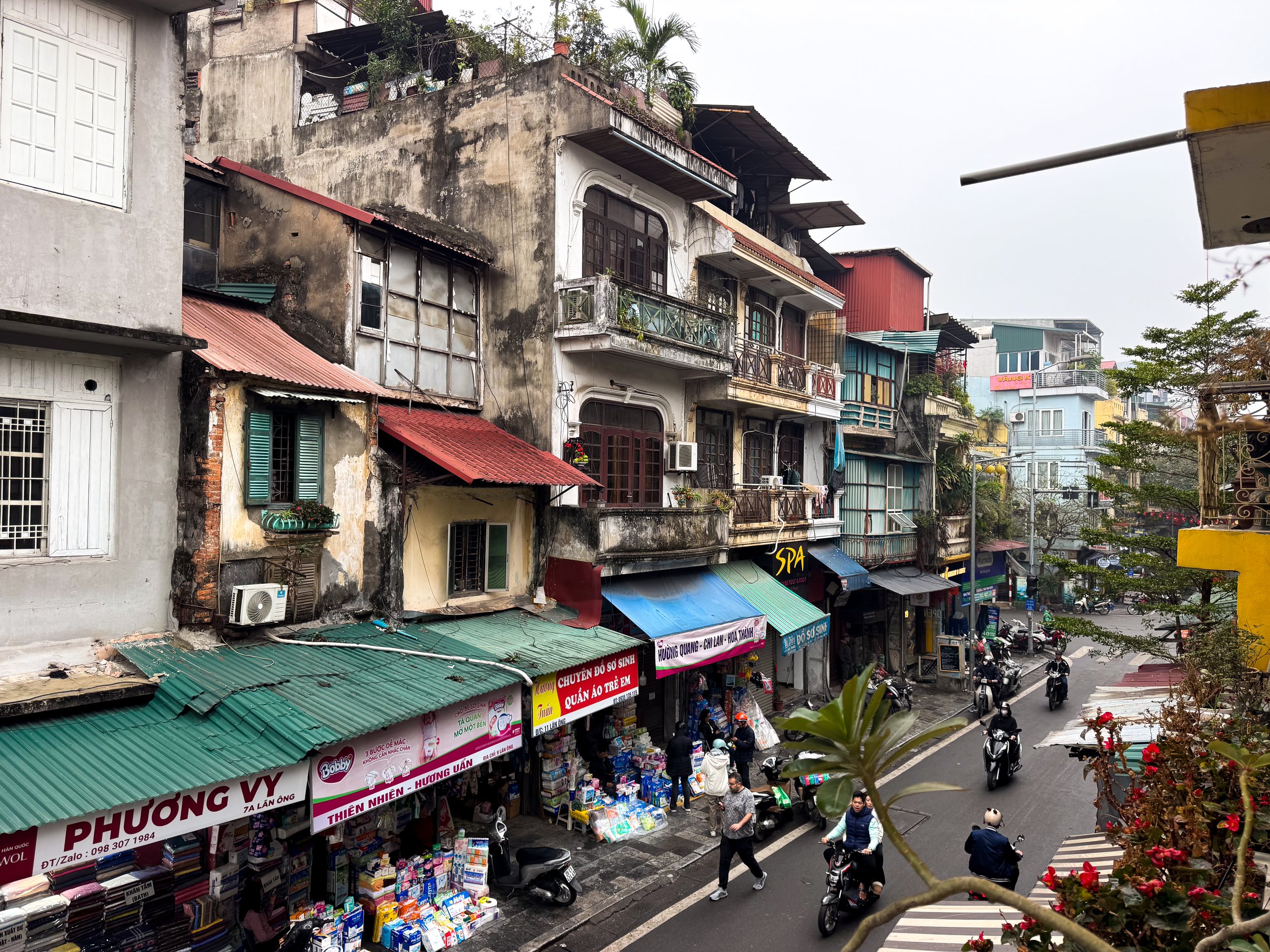
We stayed on the second floor of an Airbnb in the Old Quarter. It’s near many of the famous streets, central sights, sidewalk cafes and bars we visited. The room was spacious with a balcony overlooking the street, a shared kitchen and roof top washer/dryer.
Getting Around
Grab. A taxi hailing app similar to Uber or Lyft. Taxis were readily available on the app and cheap to get around the city or from the airport.
On Foot. The city is walkable however sidewalks are often blocked by street restaurants, parked scooters and merchandise from shops. Be cautious when crossing roads, watching for cars and scooters.
Location Specifics
Cash vs. Card. Most businesses and vendors are cash only. Clothing shops often accept cards with a 1-3% fee.
Vegetarian Food. Vegetarian dishes are popular and easy to spot on menus. The word “Chay” after any dish means it’s vegetarian.
Safety. Vietnam is generally a safe country to visit. The city of Hanoi is no exception.
LGBTQ+ Safety. Vietnamese are openly welcoming of LGBTQ+ travelers. When noticing our wedding rings, local women would ask how long we’ve been married and call us a happy couple.
Language. Vietnamese and English are widely spoken, seen on street signs and restaurant menus across the country. That said, it’s still good to know a few Vietnamese phrases.
Hello = Xin chào (Sing-Chow)
Thank you = Cảm ơn (Com-Un)
Good bye = Tạm biệt (Tam-Be-Et)
See you later = Hẹn gặp lại (Hen-Gap-Lie)
Local Customs
Take shoes off when visiting homes and most temples.
Dress modestly when visiting temples. No hats, shorts or sleeveless shirts are allowed.
Hand things to people with two hands, especially cash, credit cards or the bill.
Avoid pointing at anything or anyone using an index finger. Use your full hand instead.
Showing the bottom of your feet or shoe to someone is considered extremely rude or offensive, especially at temples.
When to Visit
There really is no “low” season in Vietnam. It’s a popular destination at all times of year. We visited in mid February, after the “high” season which runs from November to January. The weather was chilly, cloudy and rainy. According to several locals, this was atypical for this time of year. Thankfully it was not a deterrent to enjoying our time in this beautiful city.
Elsewhere in Vietnam
From Hanoi's historic Old Quarter and street food culture to the karst landscapes of Ninh Binh, lantern-lit Hoi An and vibrant Saigon, continue exploring Vietnam through these travel guides:
Ninh Binh Travel Guide: Trang An, Karst Landscapes & Ancient Temples. Drift through Ninh Binh where winding rivers, towering karst landscapes, rice paddies and imperial temples reveal Vietnam's timeless beauty and ancient history.
Hoi An Travel Guide: Ancient Town, Lanterns & Vietnamese Street Food. Wander through Hoi An's ancient town where glowing lanterns, bustling markets, historic temples & Vietnamese street food preserve centuries of tradition.
Saigon Travel Guide: Markets, Nightlife & Vietnamese Culture. Experience Saigon where bustling markets, vibrant nightlife, historic landmarks, neon lit skyscrapers and street food stalls bring modern Vietnam to life.
For Next Time…
Vietnam is a massive country with so much breathtaking nature. When we return, we have several sights in the north and middle of the country we hope to visit.
Camping inside Hang Son Doong. A massive cave system with underground campsites, rivers and hiking trails. It can be expensive and difficult to reach but is top of our list for our next trip to Vietnam.
Bai Tu Long Bay. An alternate to Ha Long Bay with many similar rock formations and islands. It’s said to be less busy and equally if not more beautiful.
Mu Cang Chai Rice Terrace. Sprawling rice terraces in a mountainous valley about 300km northwest of Hanoi.
Ban Gioc Waterfalls. A series of cascading waterfalls in the jungle on the border of Vietnam and China.
Hoi An Travel Guide: Ancient Town, Lanterns & Vietnamese Street Food
Wander through Hoi An's ancient town where glowing lanterns, bustling markets, historic temples and Vietnamese street food preserve centuries of tradition.
Hoi An, Vietnam
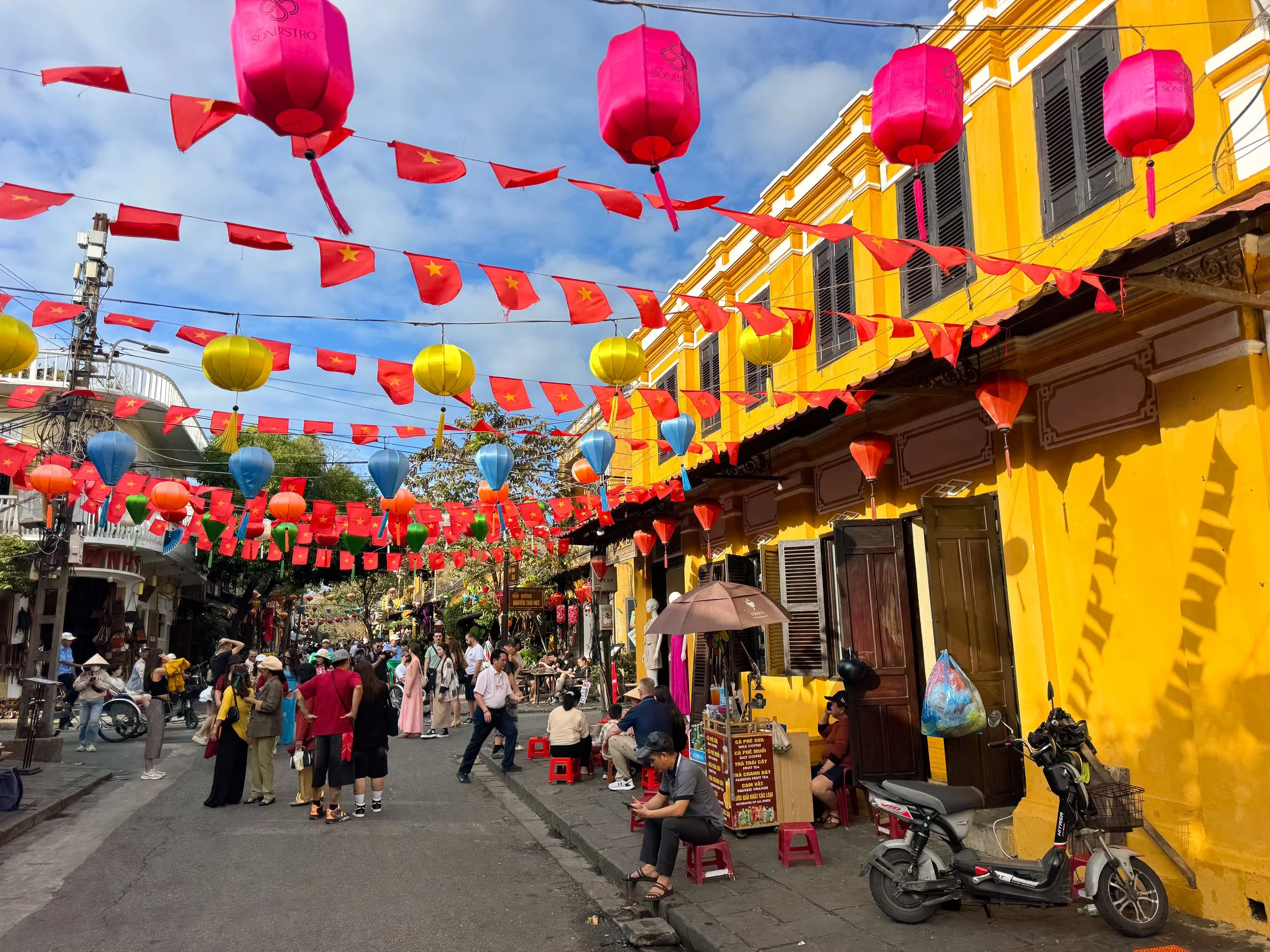
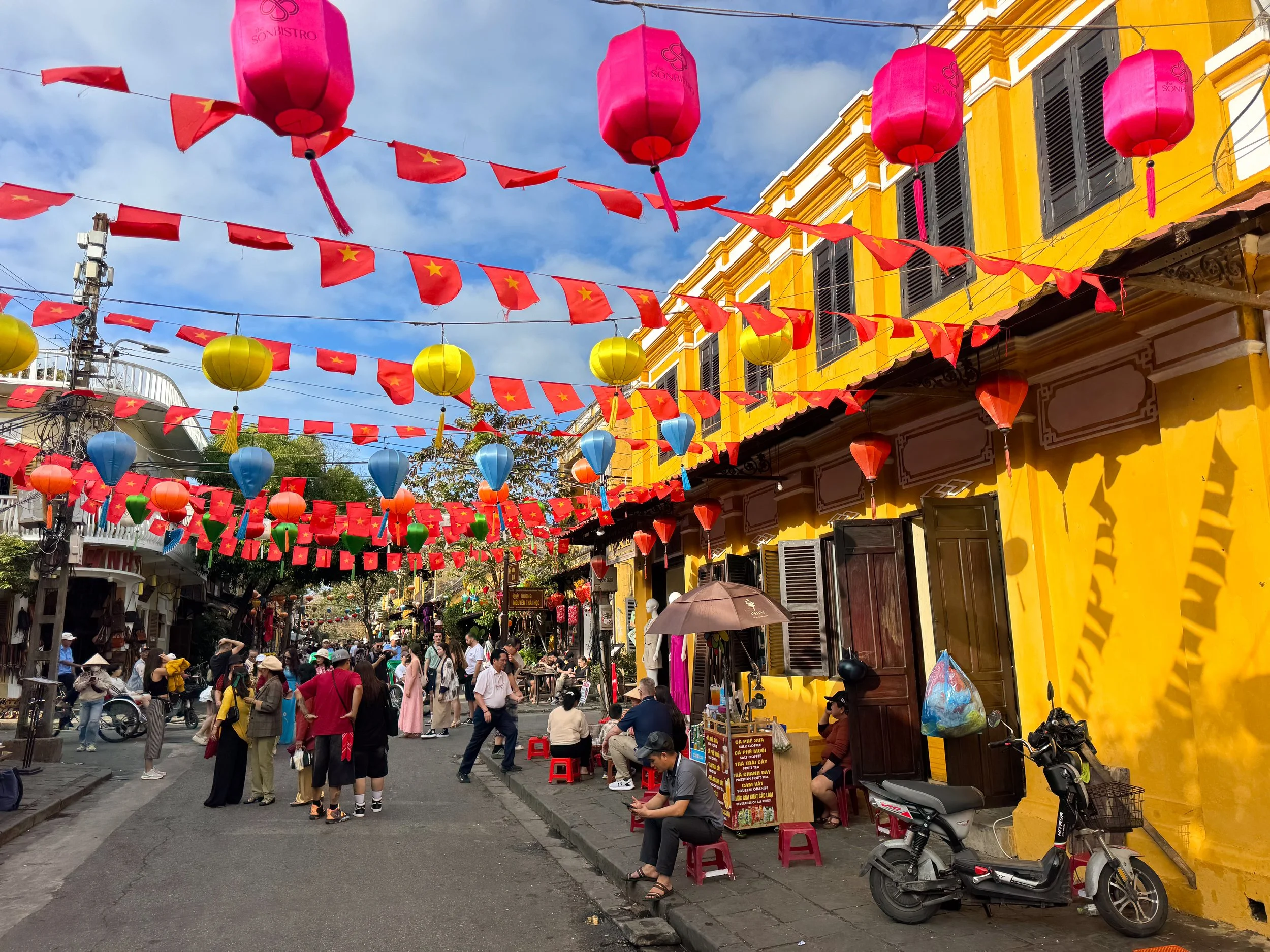
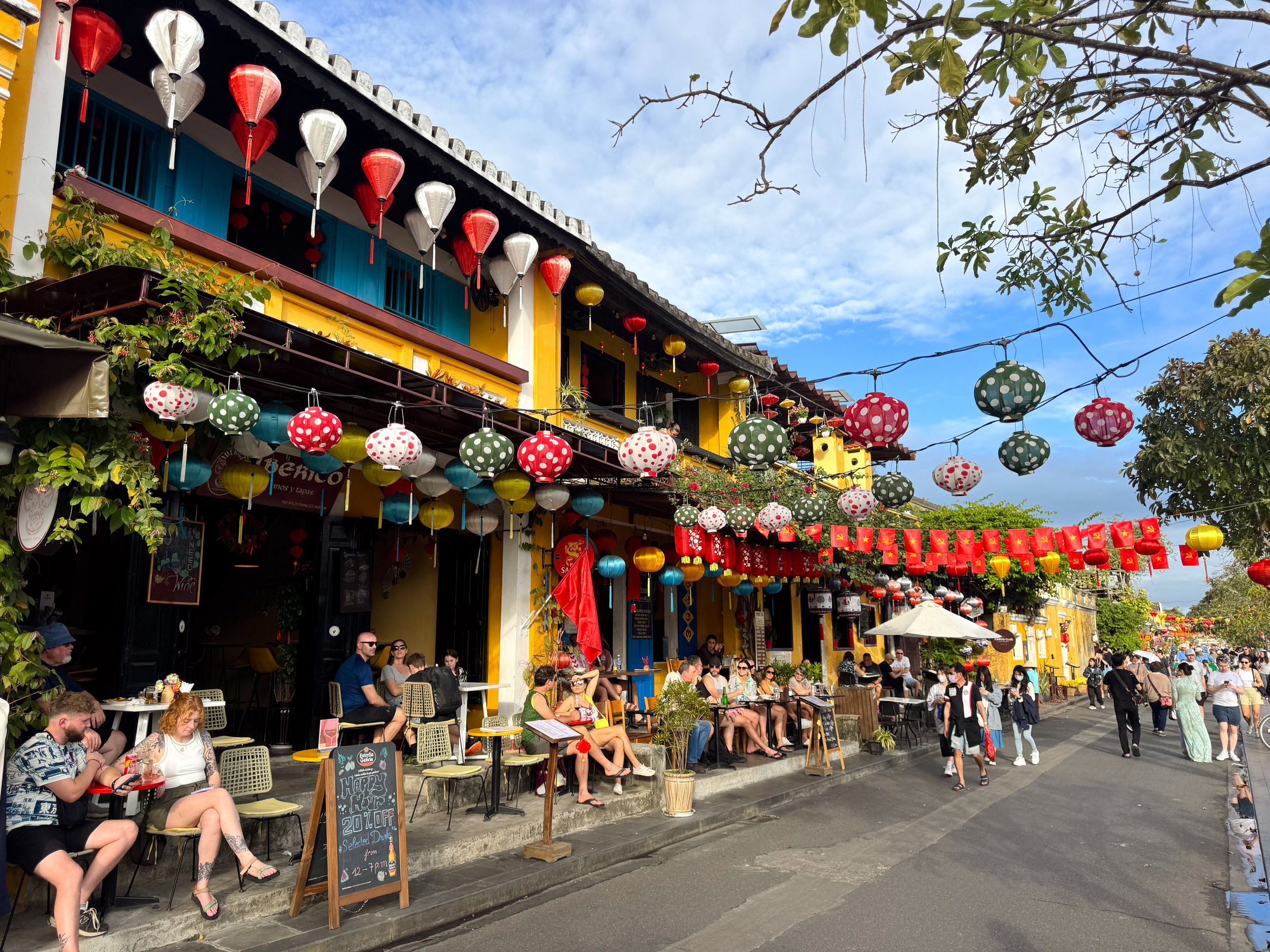
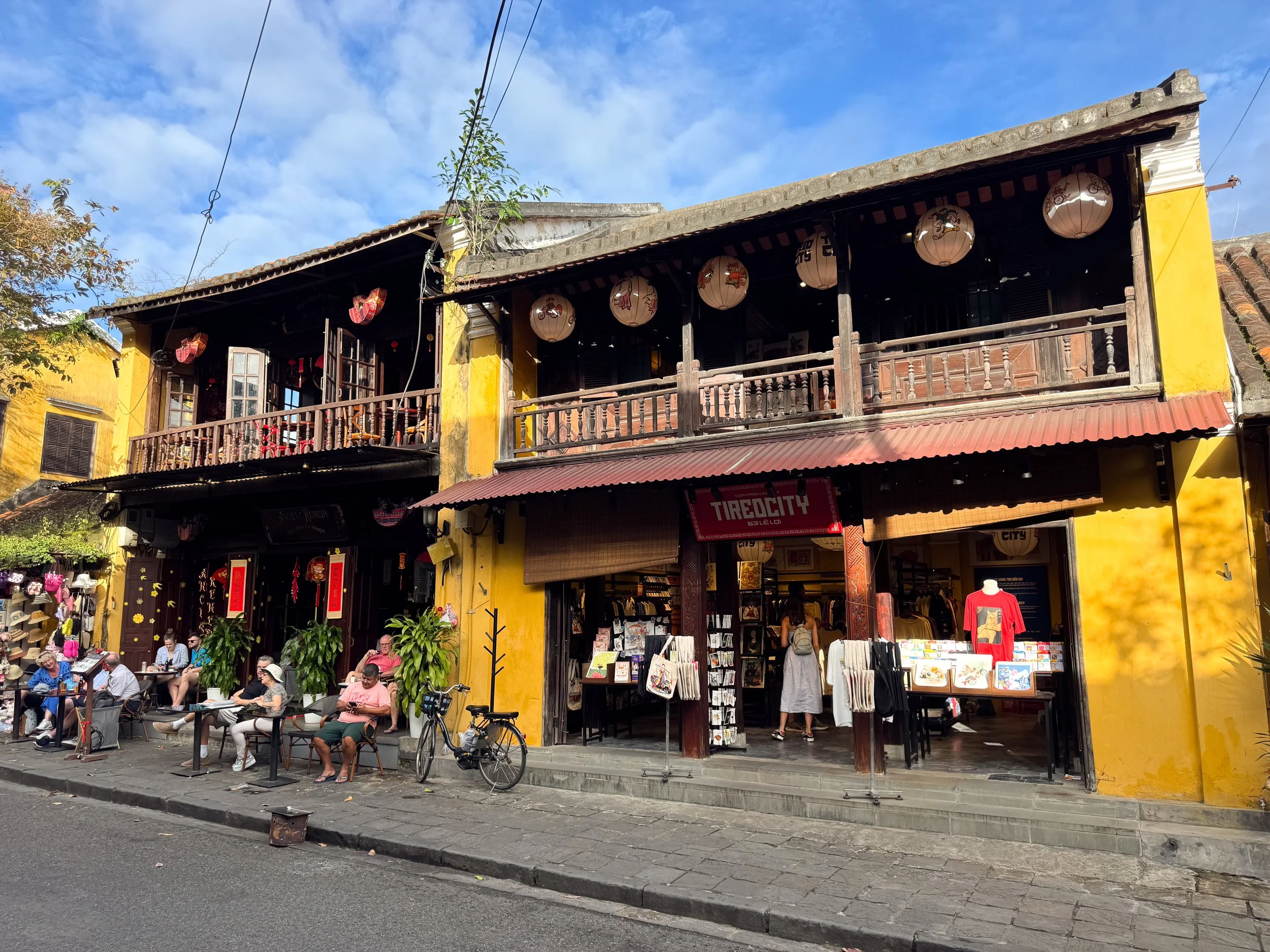
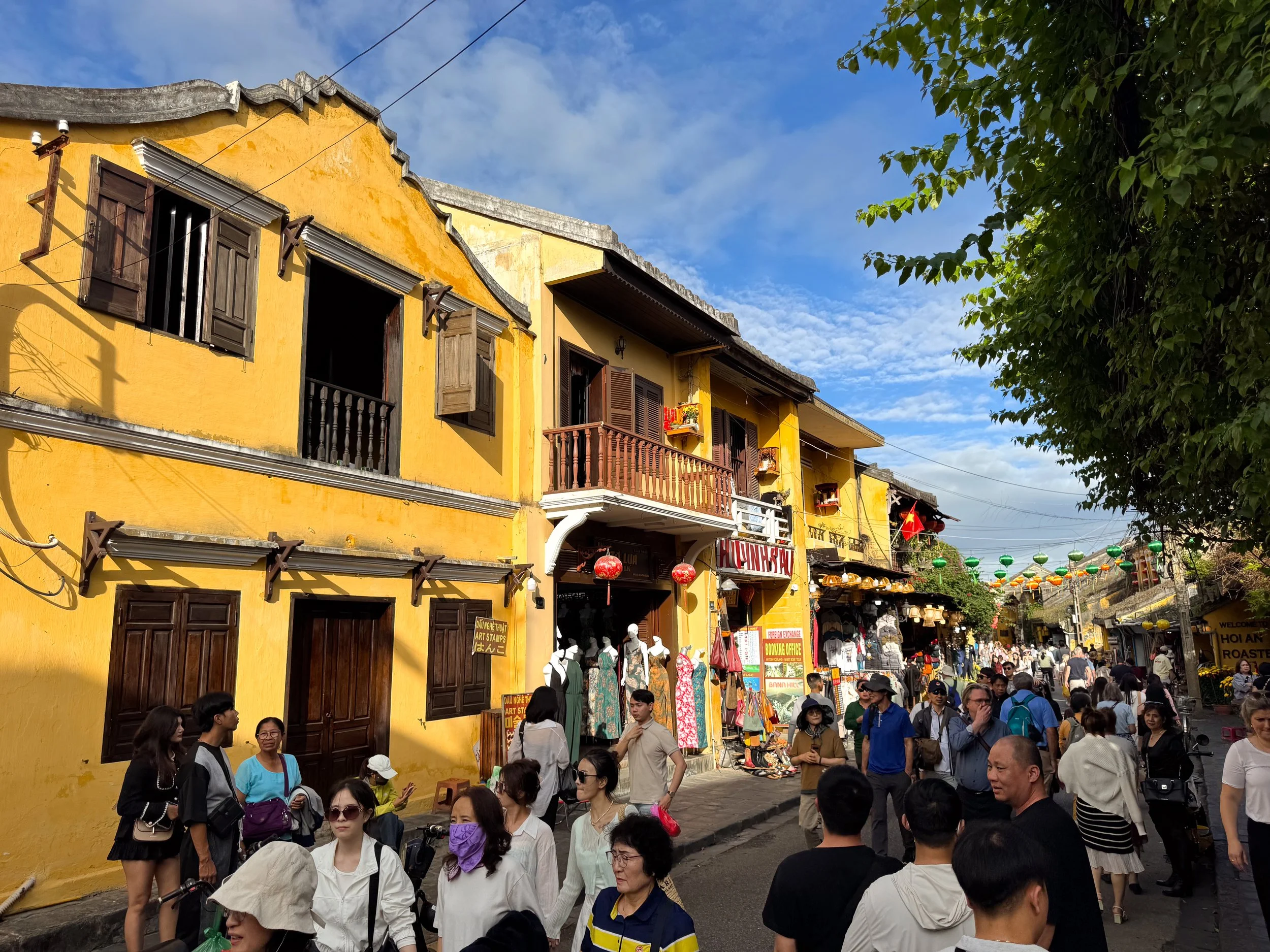
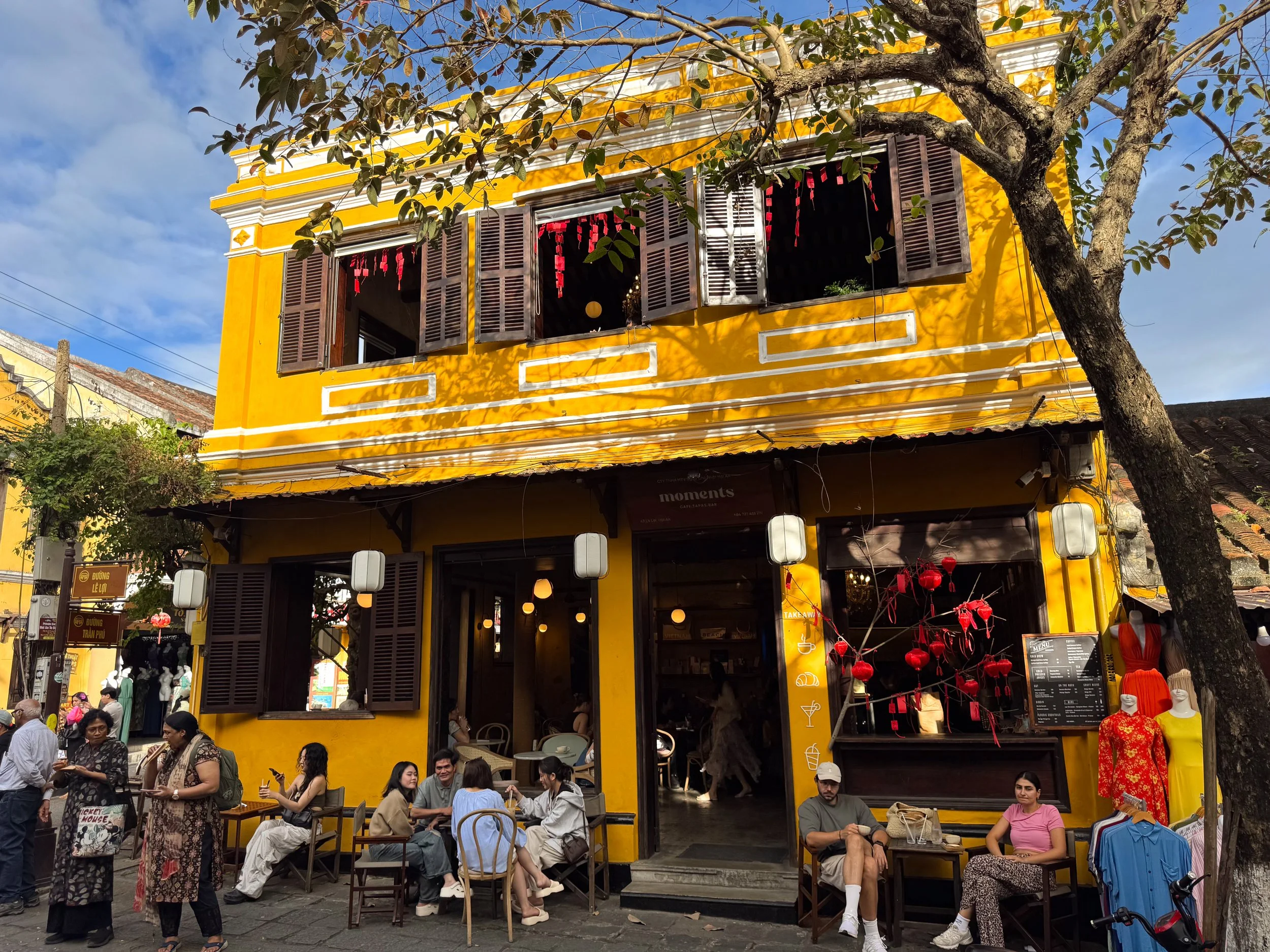
Hoi An is a historic and bustling Vietnamese city famed for its culture, handmade goods and markets. Paper lanterns hang above streets between wooden and yellow painted houses. Vendors sell produce in baskets along the curbs. Locals wearing conical hats zip by on scooters. The smell of incense and street food wafts through the air. Ornate temples welcome visitors and worshippers. Makers work away at craft studios and measure customers at custom tailoring shops.

The Ancient Town
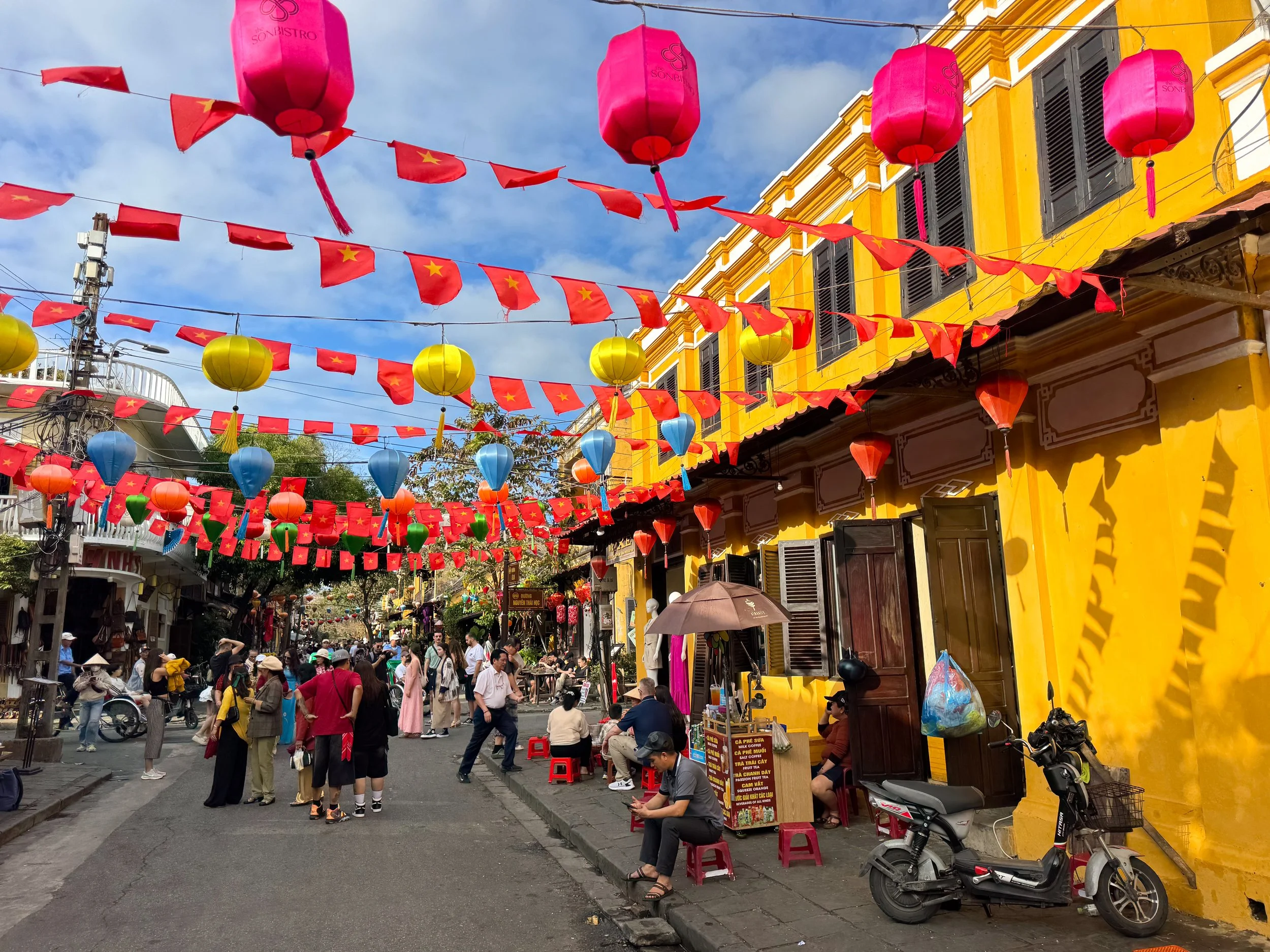
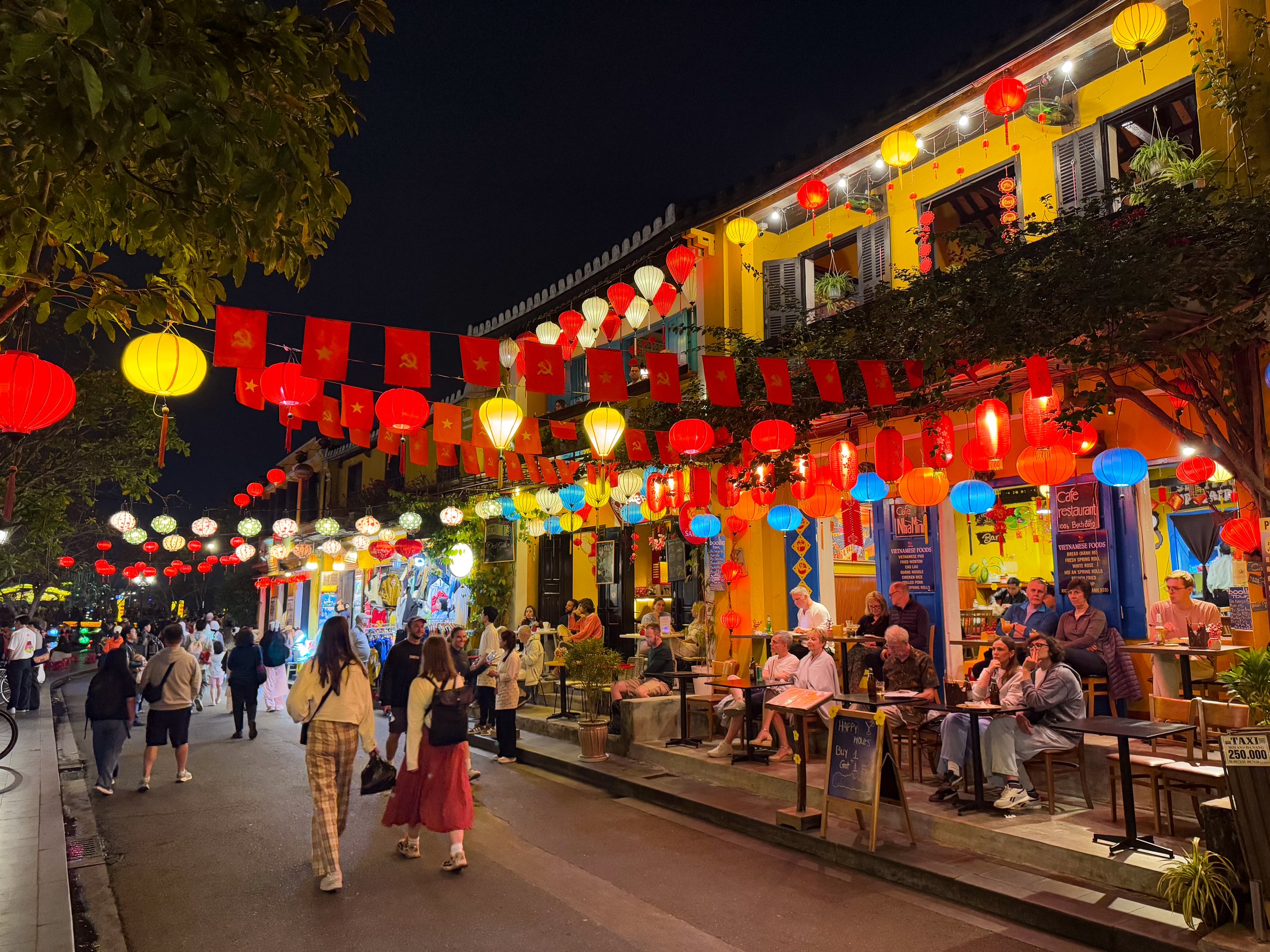
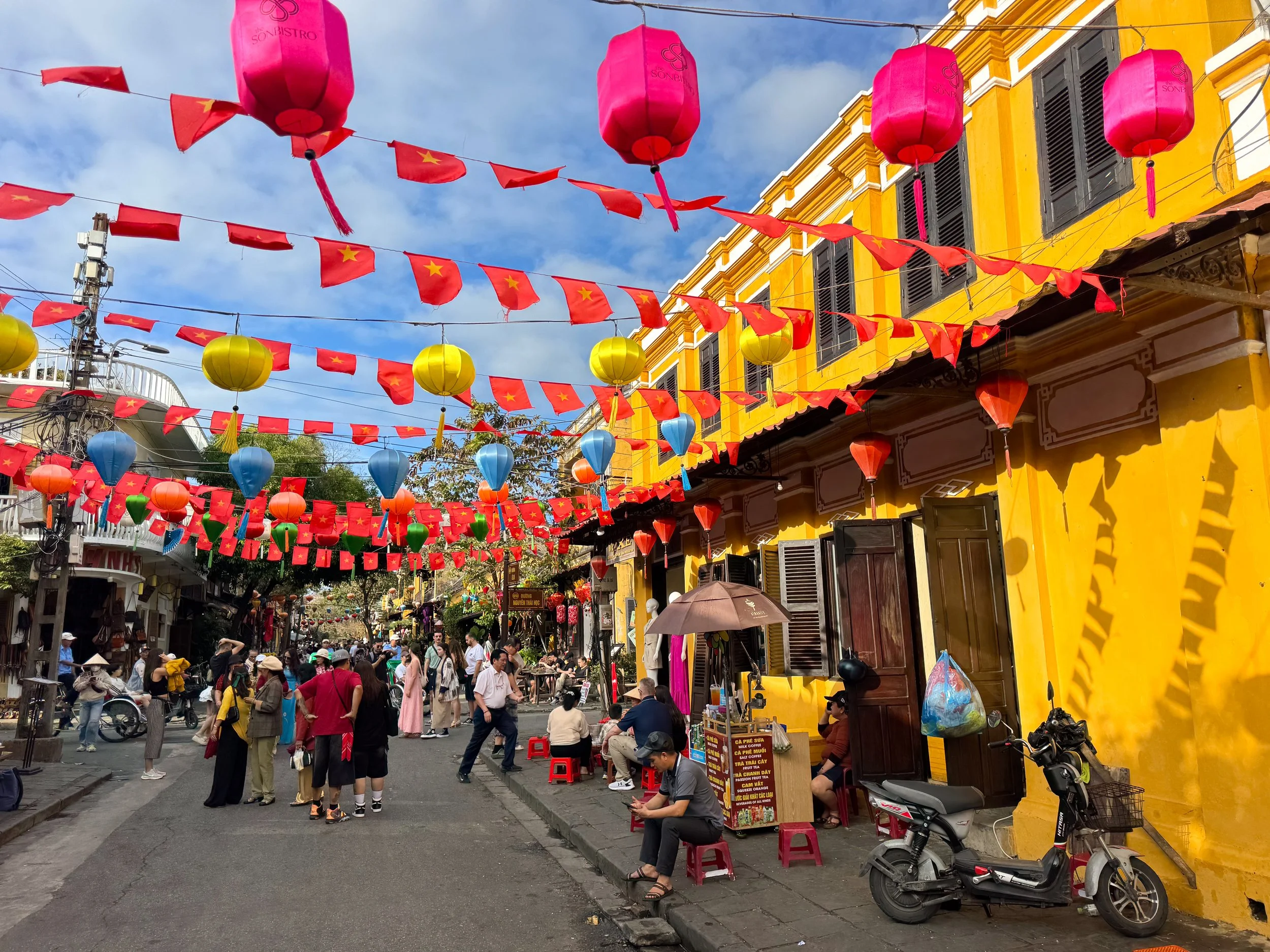
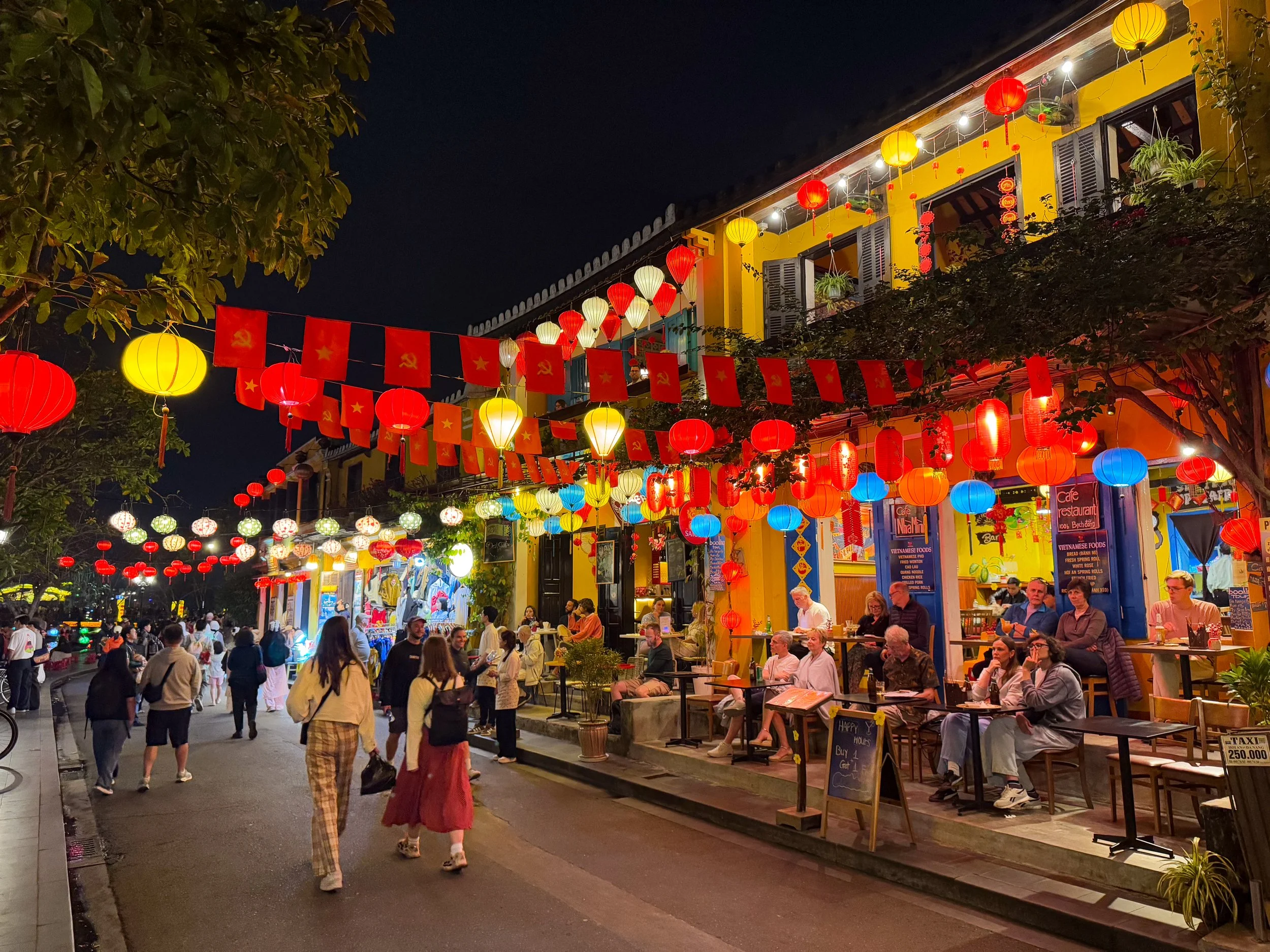
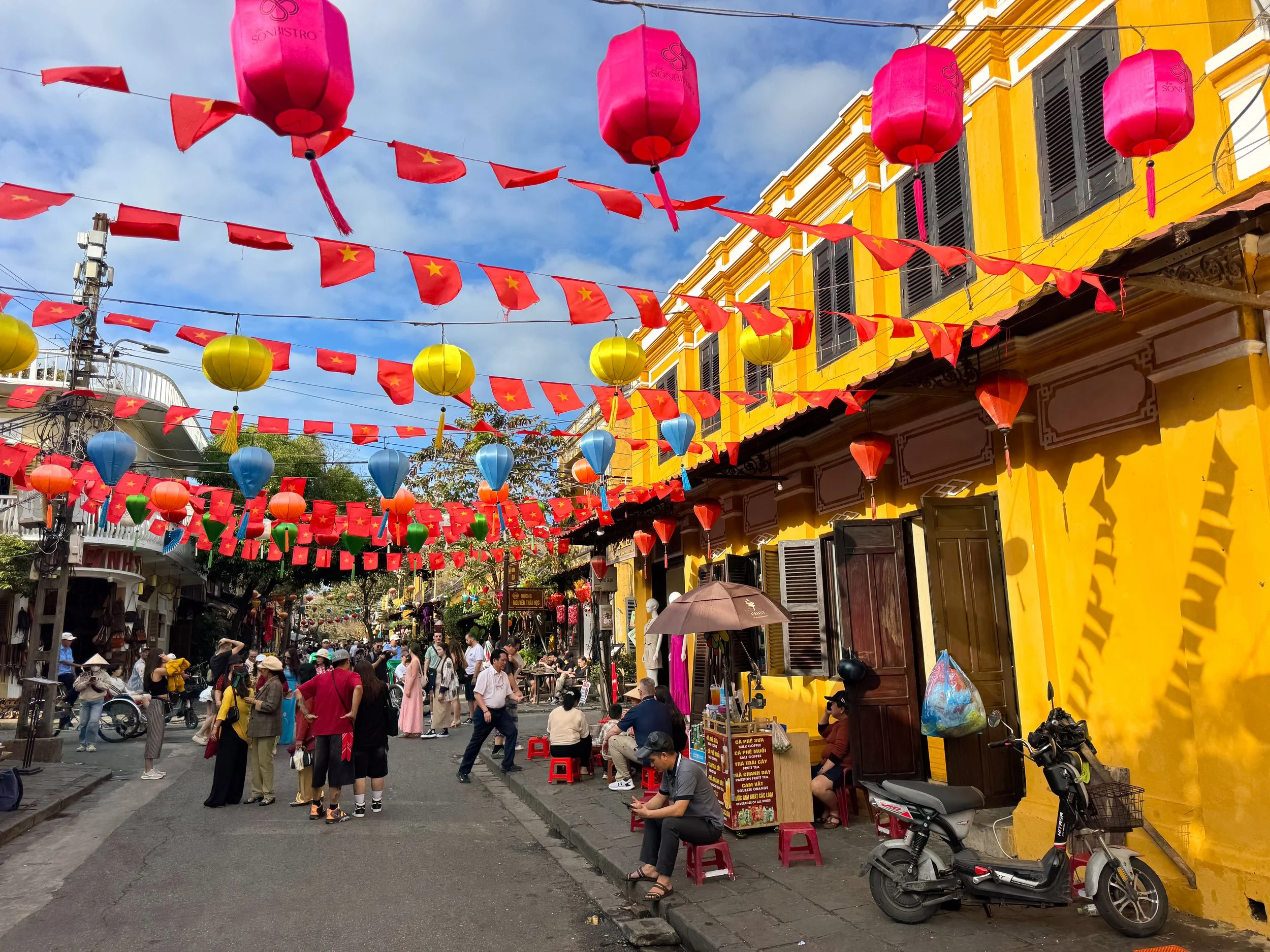
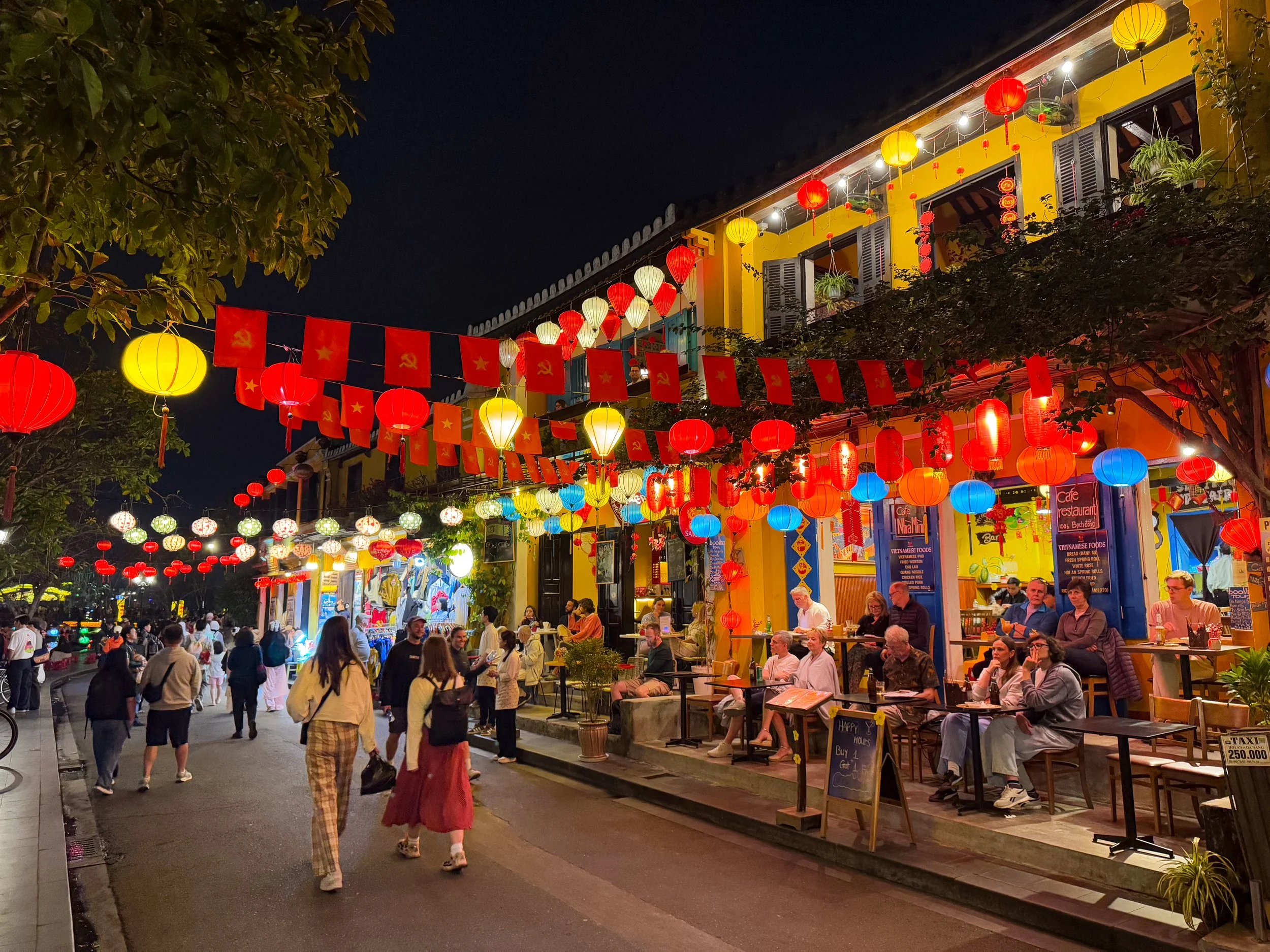
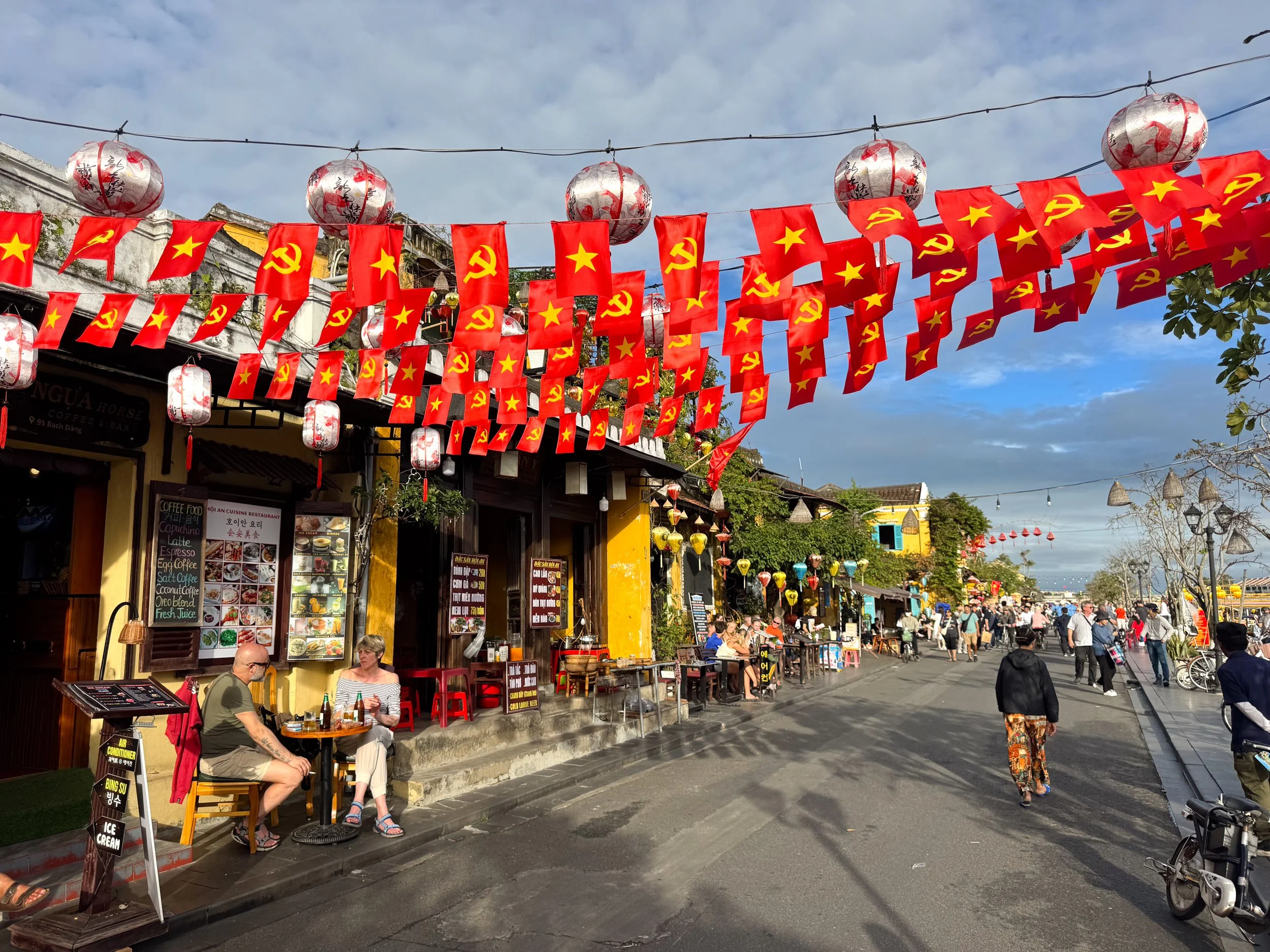
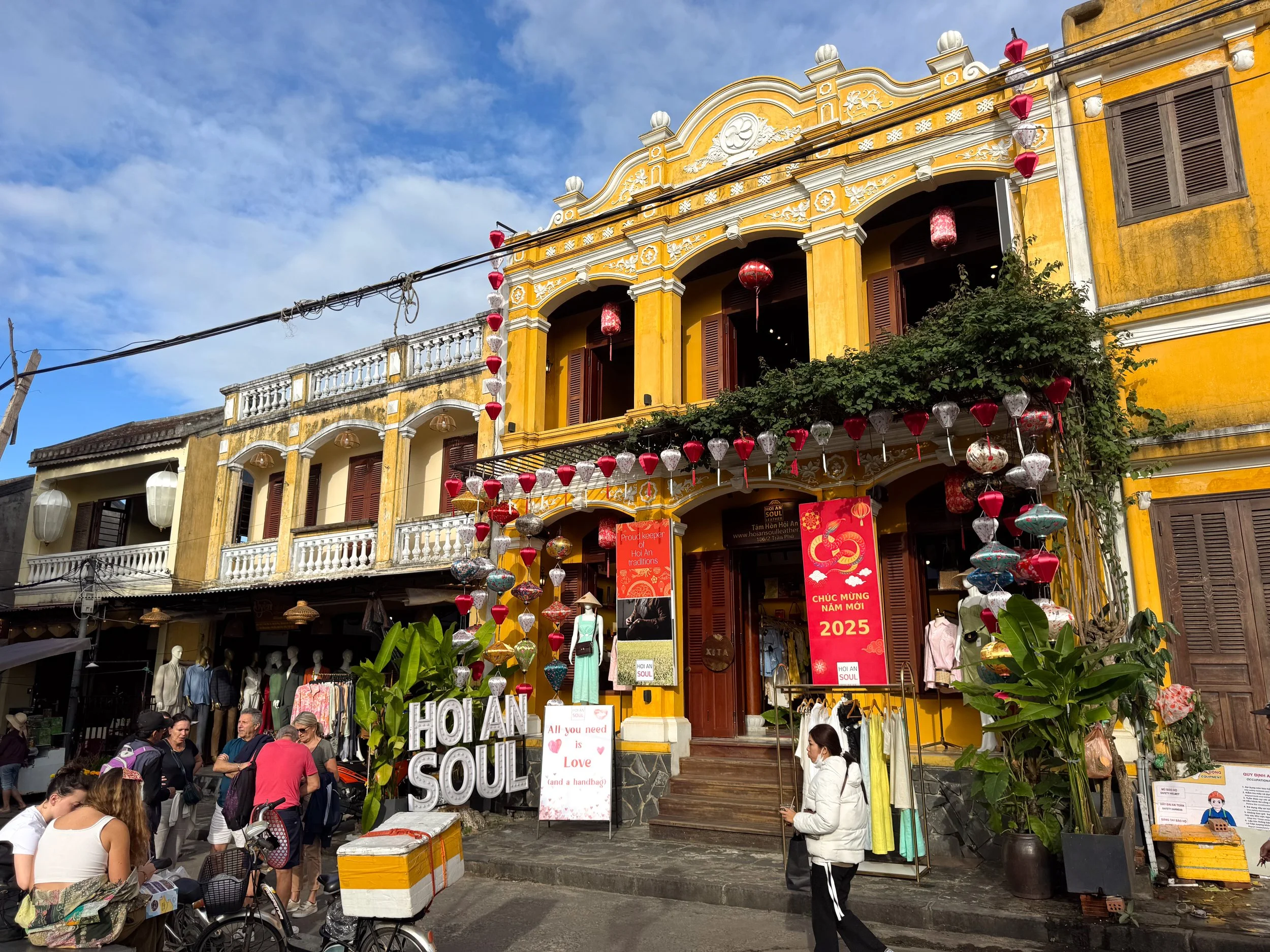
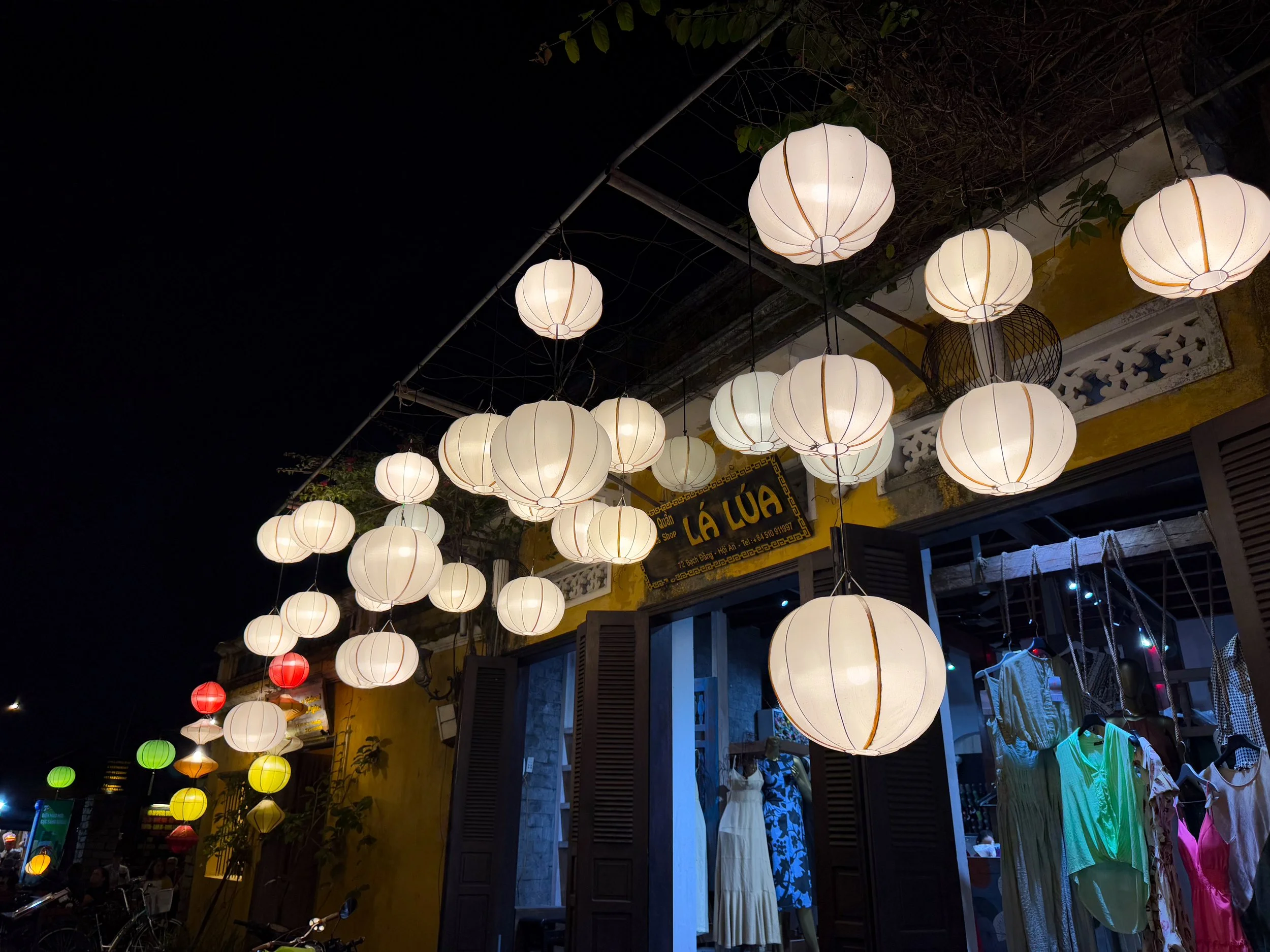
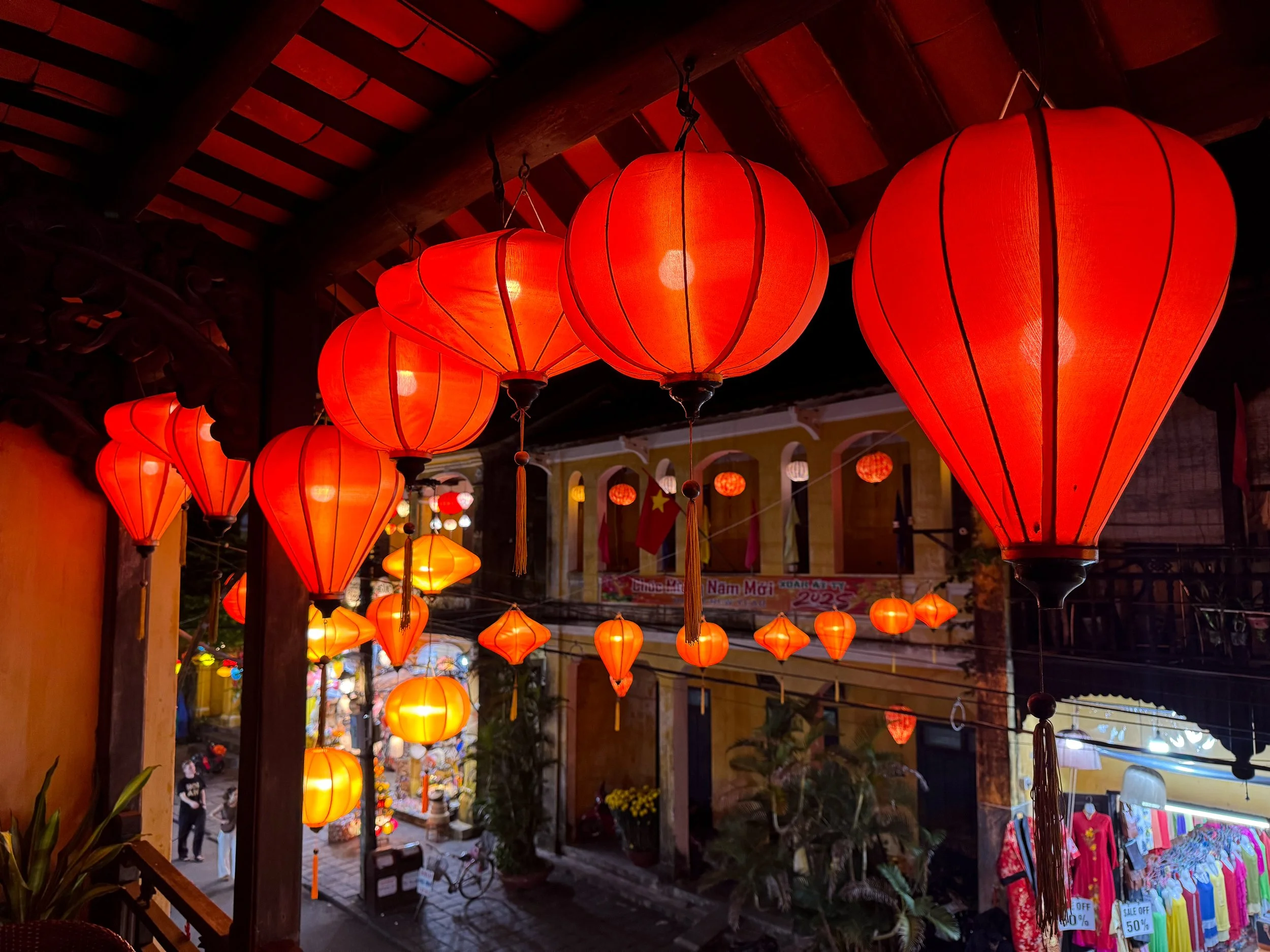
The Ancient Town is the epicenter of history, culture and activity in Hoi An. Its old houses, ornate temples and bridges are discoverable when walking down the narrow streets and alleyways. Colorful lanterns and banners of the Vietnamese and Communist flags hang overhead. Shops sell locally produced silks, leather goods, linen outfits, custom clothing and knock off name brands. Restaurants and cafés spill out onto the sidewalks serving Vietnamese dishes and coffee. The town comes to life at night for the daily lantern festival, night markets and street food.
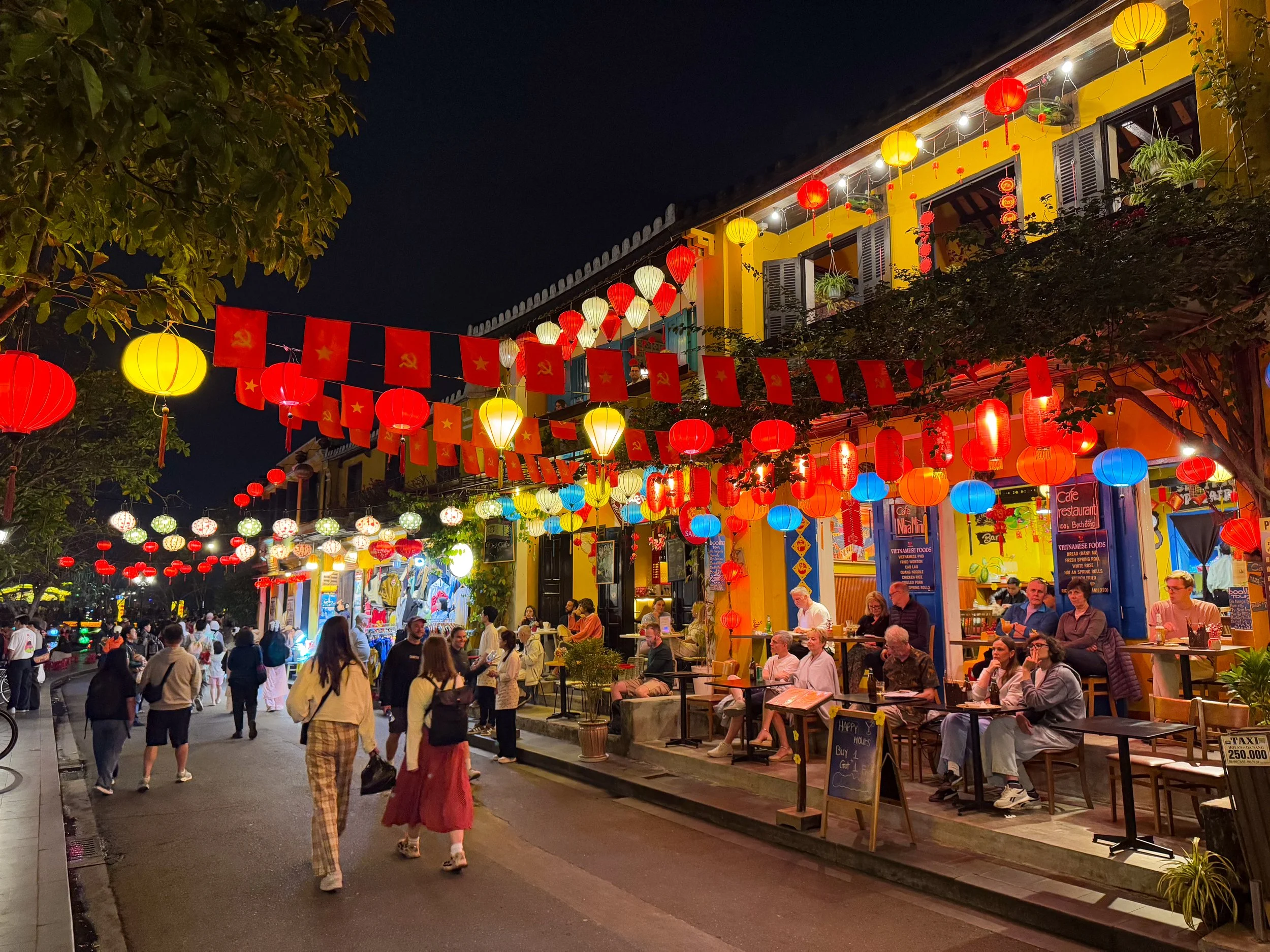
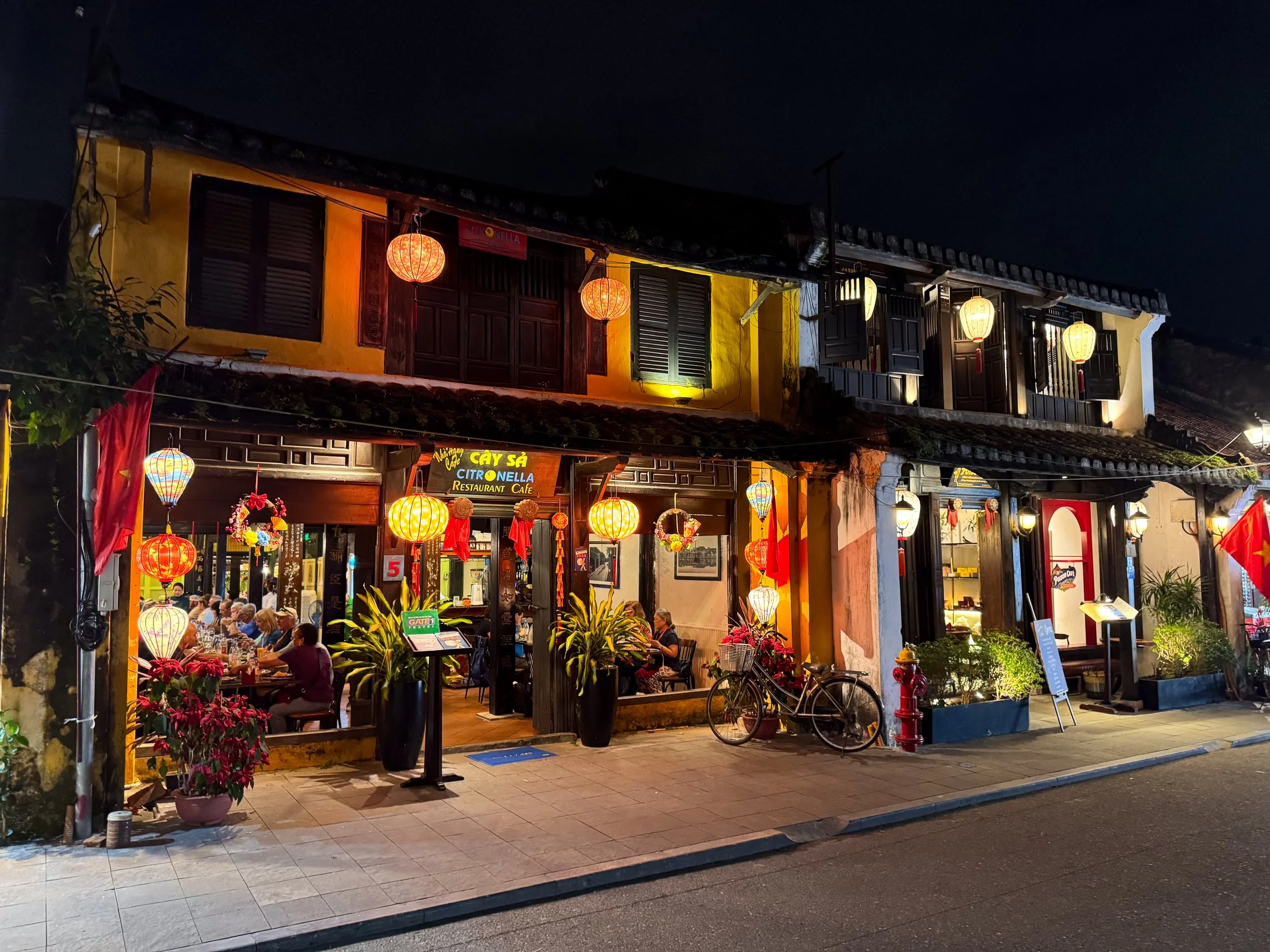
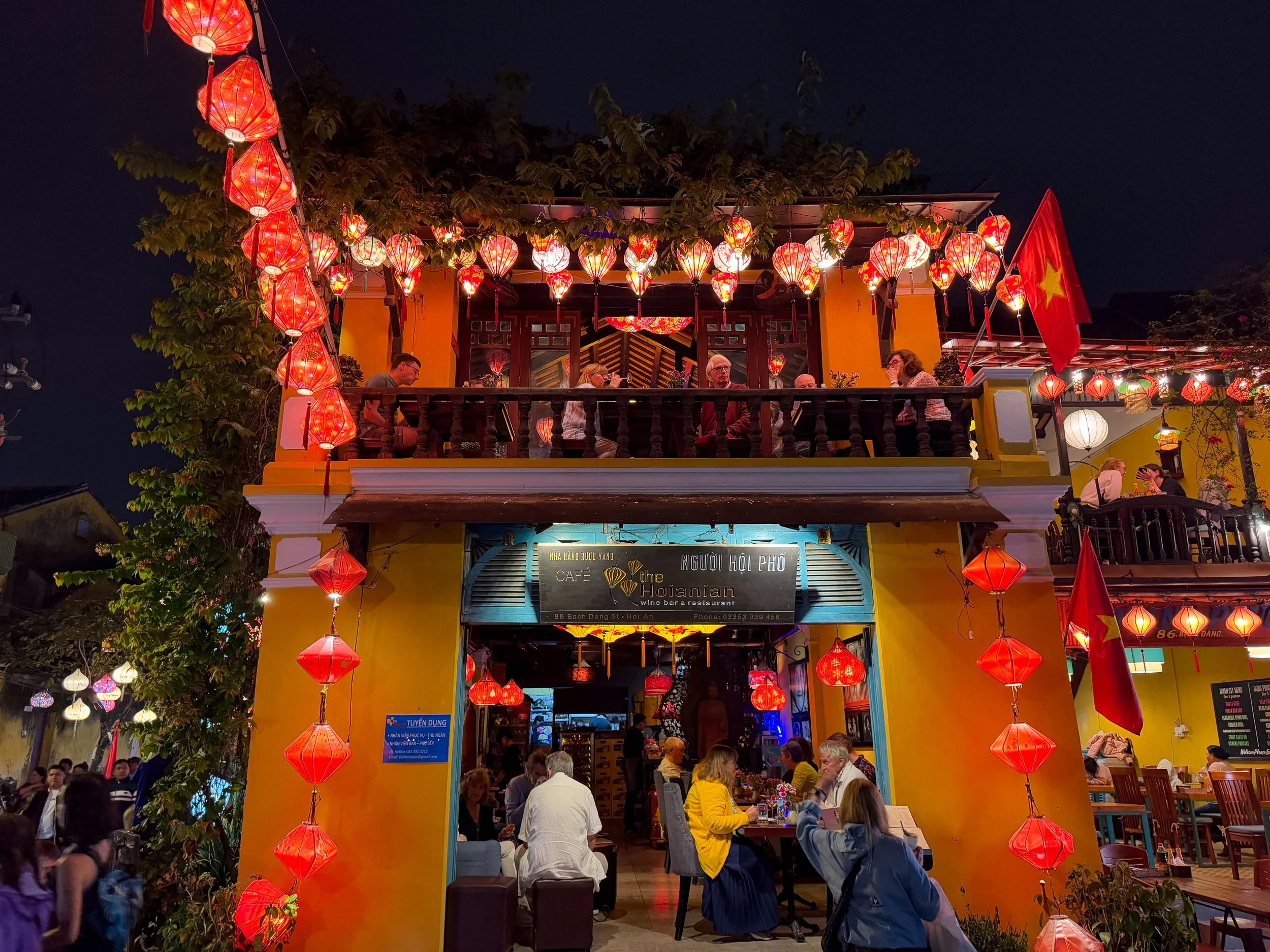
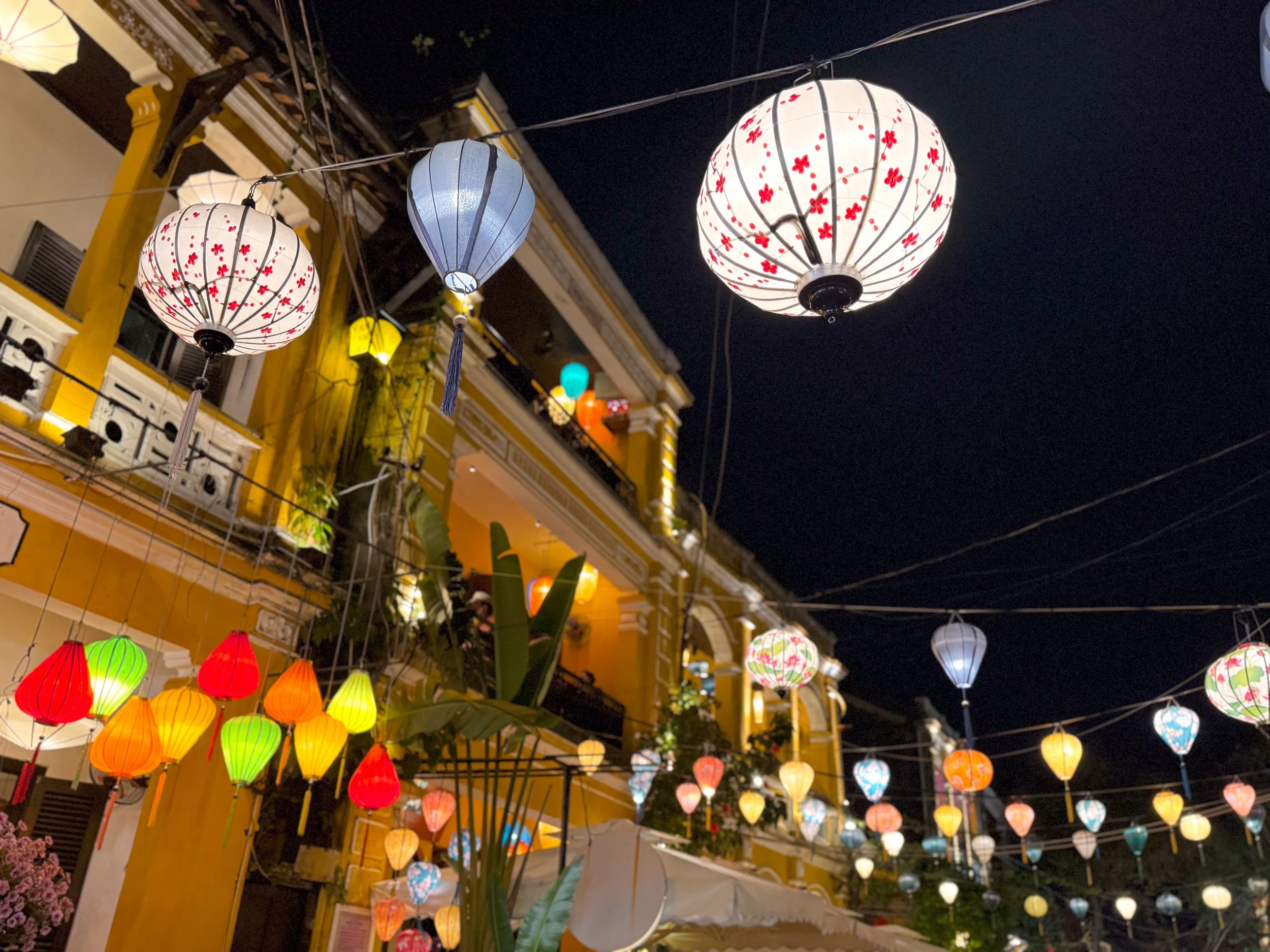
Hoi An Ancient Town Ticket. We were required to buy a ticket to enter the Ancient Town. It allowed us access to 5 different sights over three days. Occasionally, officials will ask to see and scan the ticket when entering town. They can be purchased at most cultural sights.
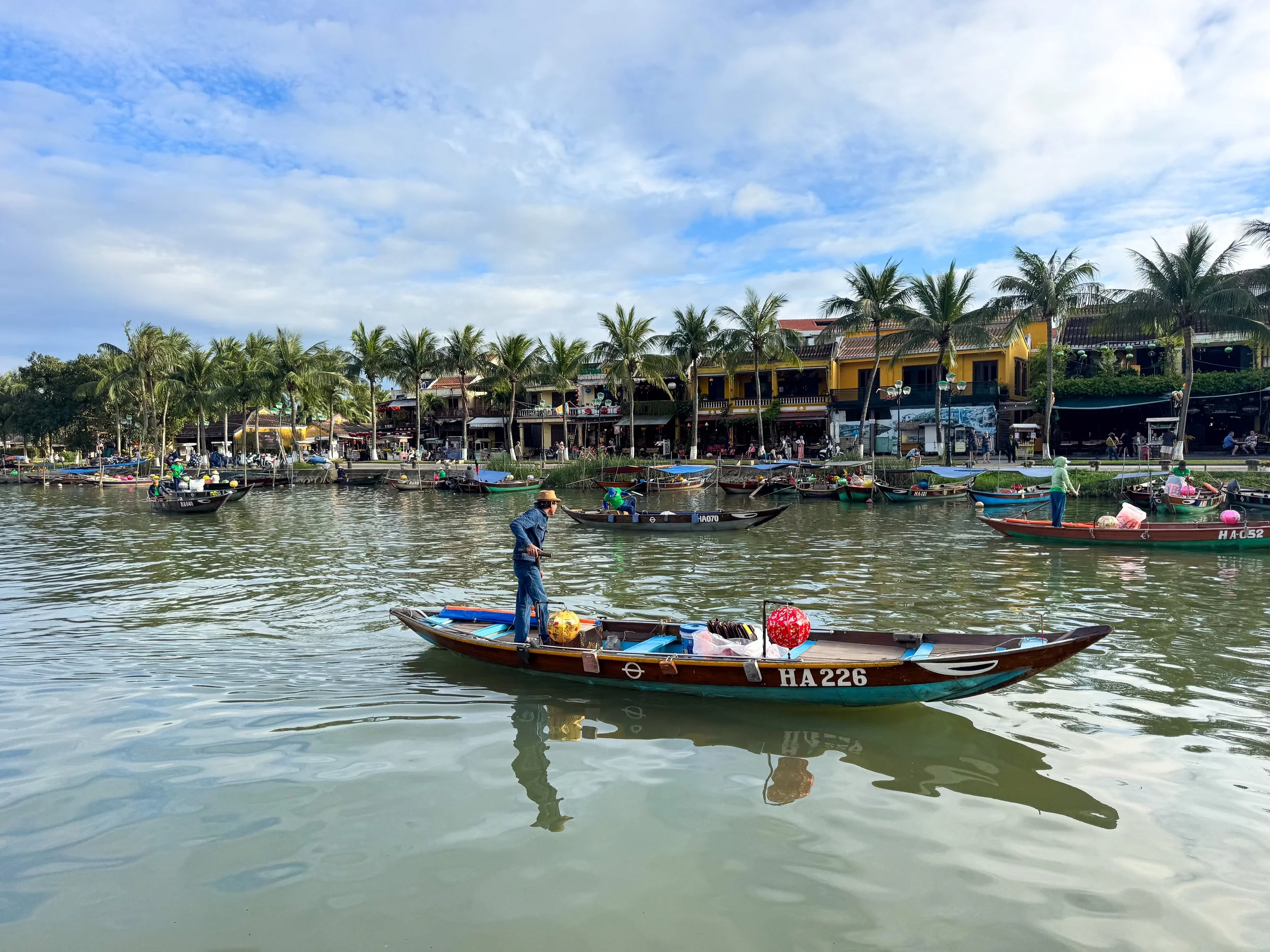
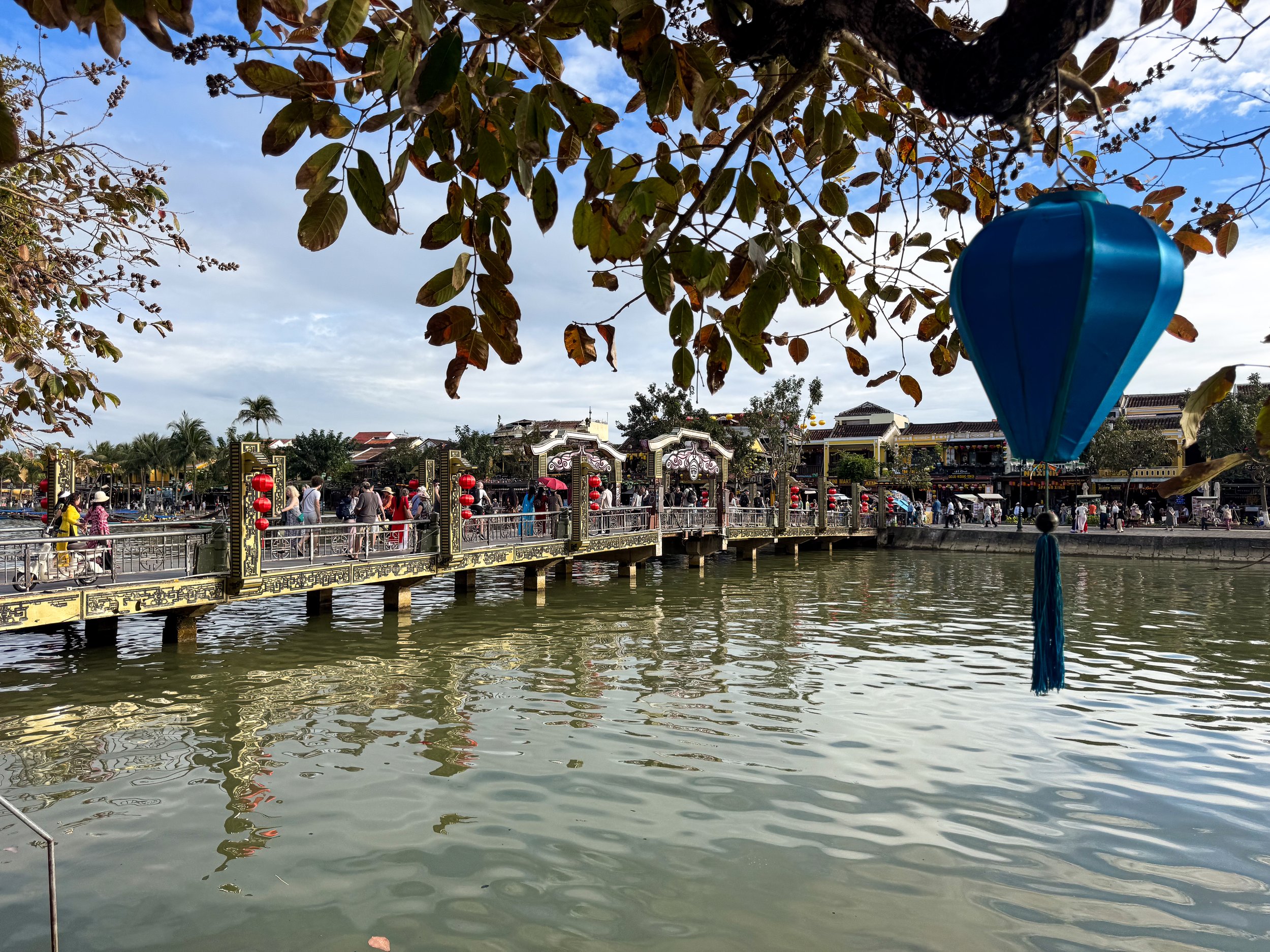
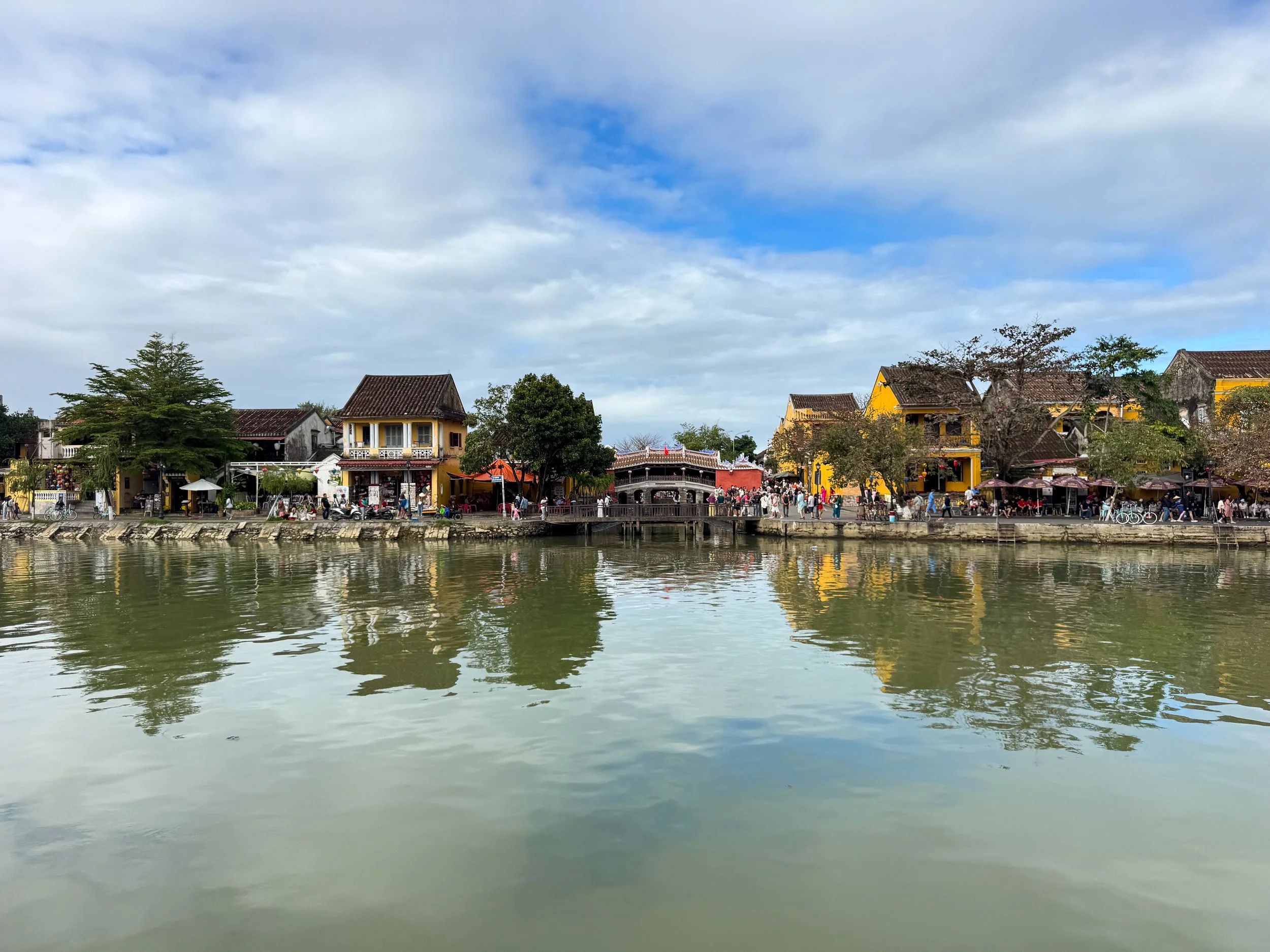
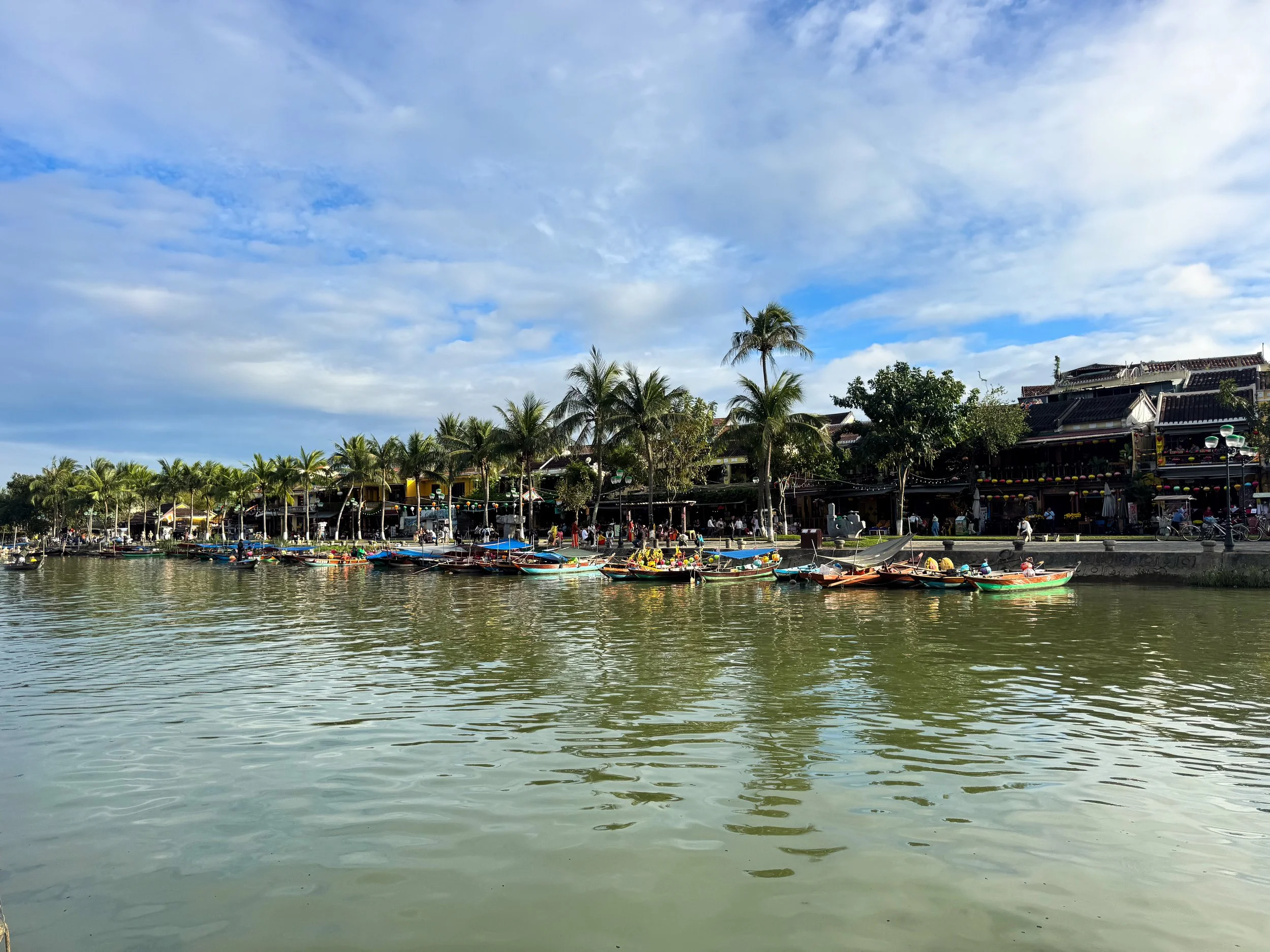
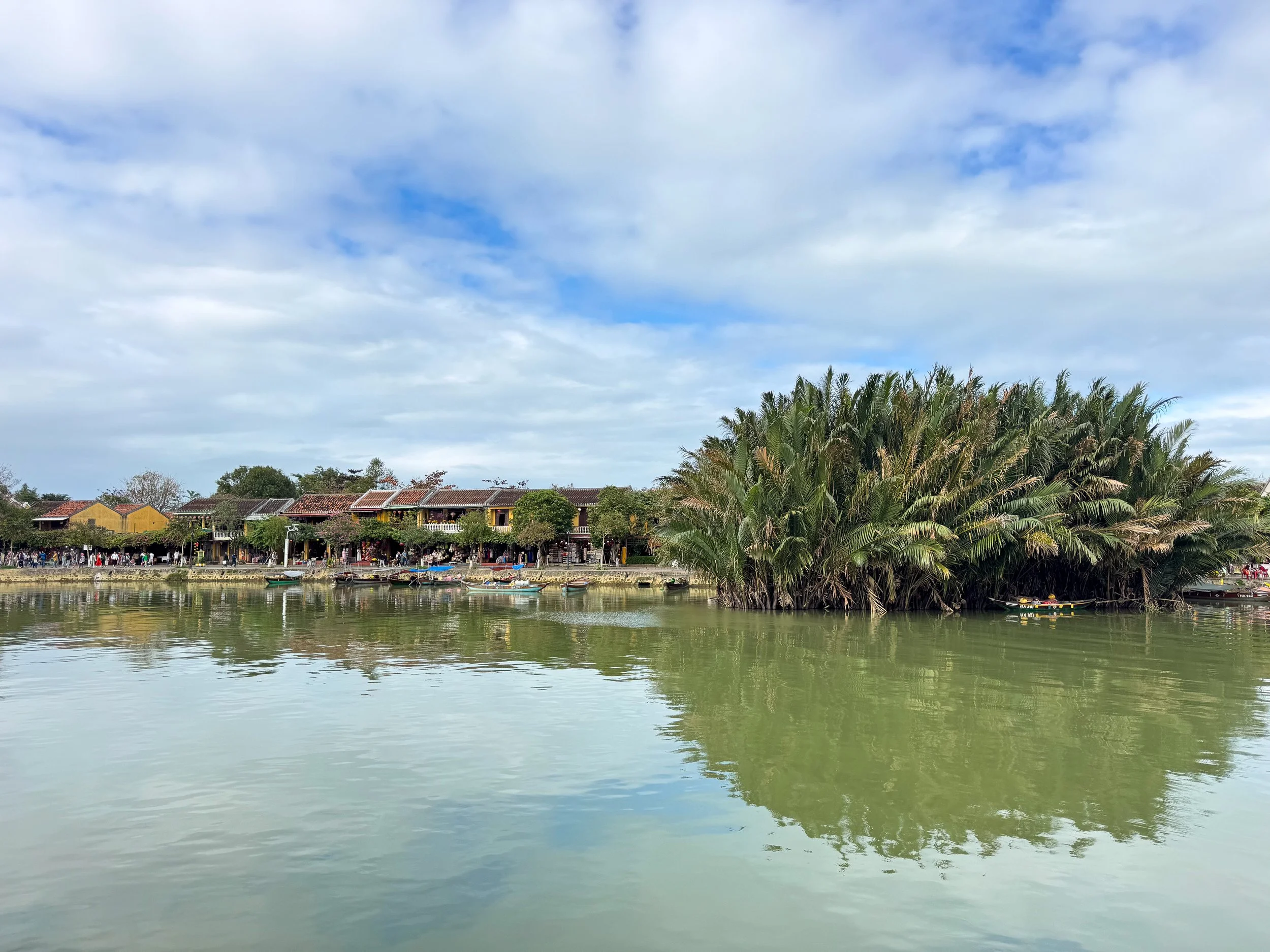
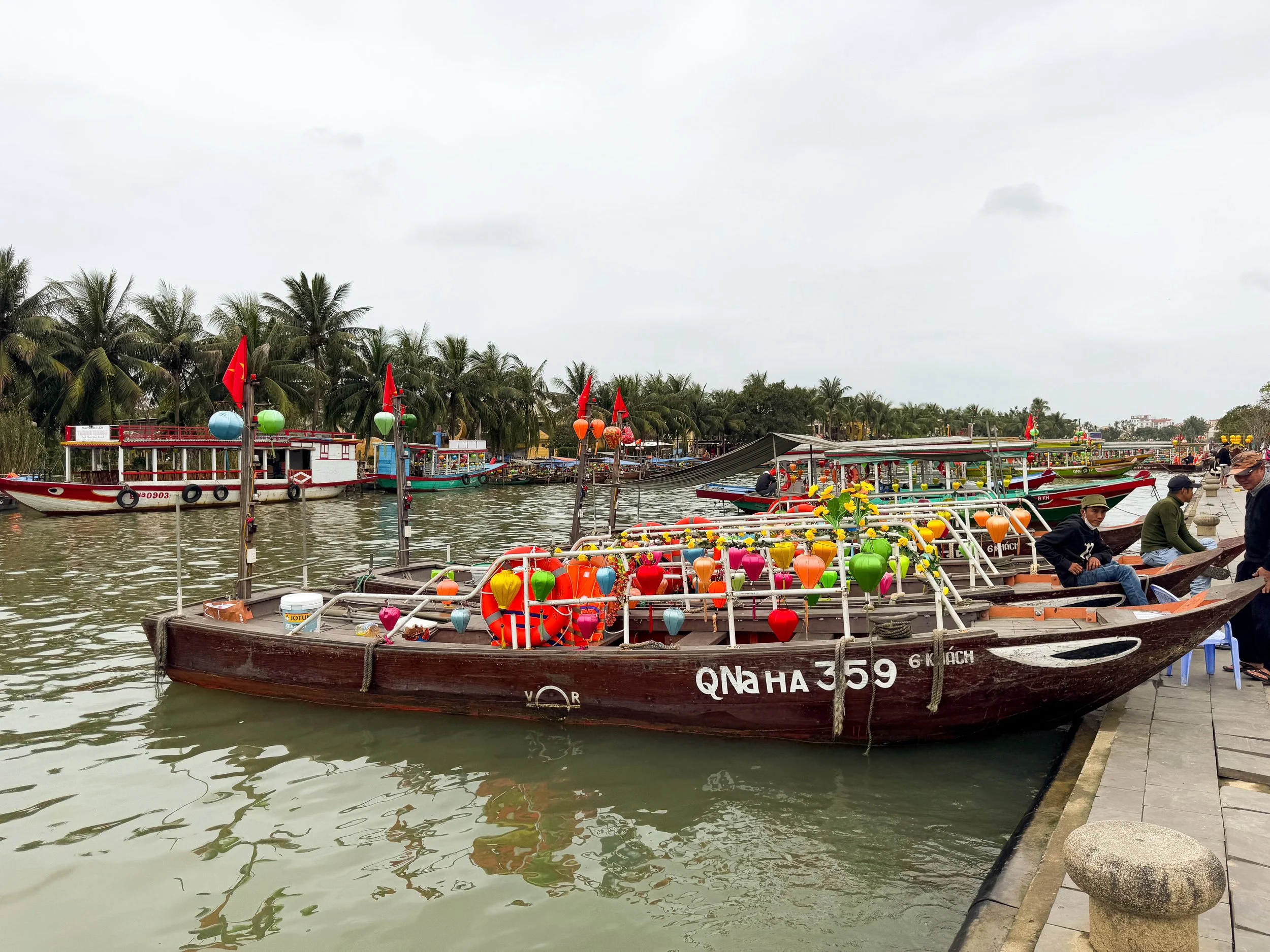
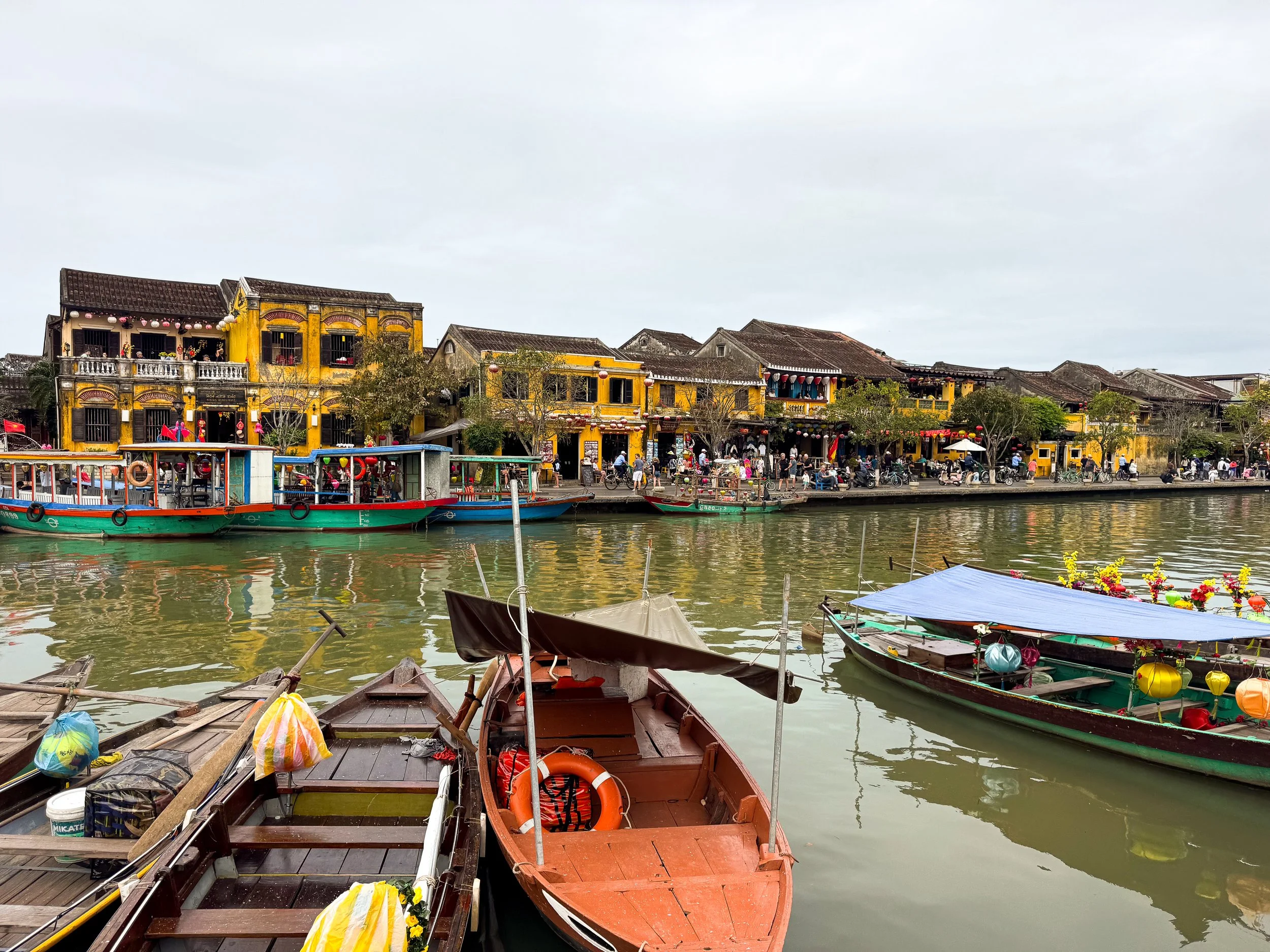
Ancient Town Waterfront. A promenade lined with historic buildings, bridges, shops, restaurants and cafés with curbside patios overlooking the river. Tour guides offer sightseeing tours on colorful boats. At night, it becomes the site of the daily lantern festival.
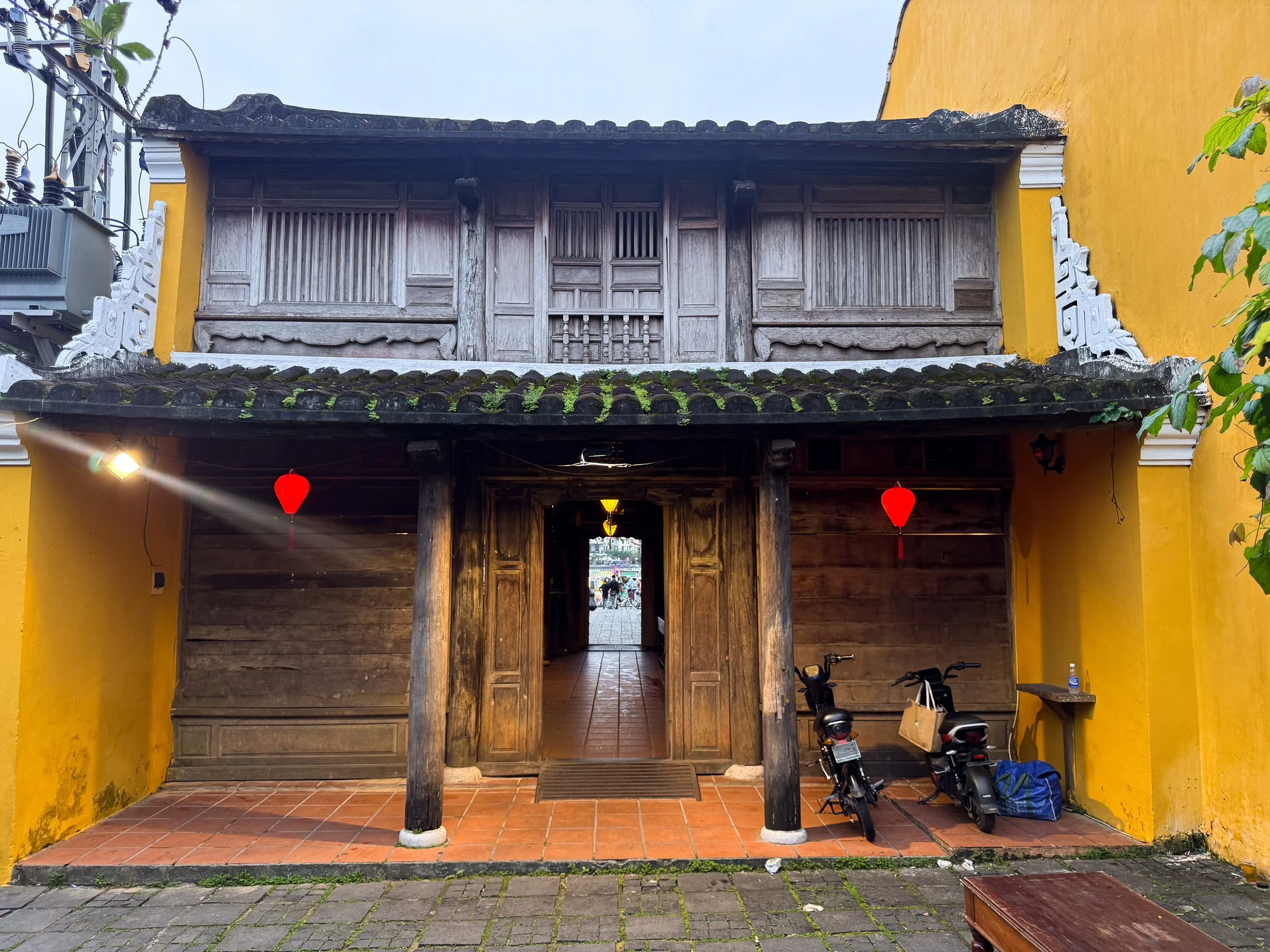
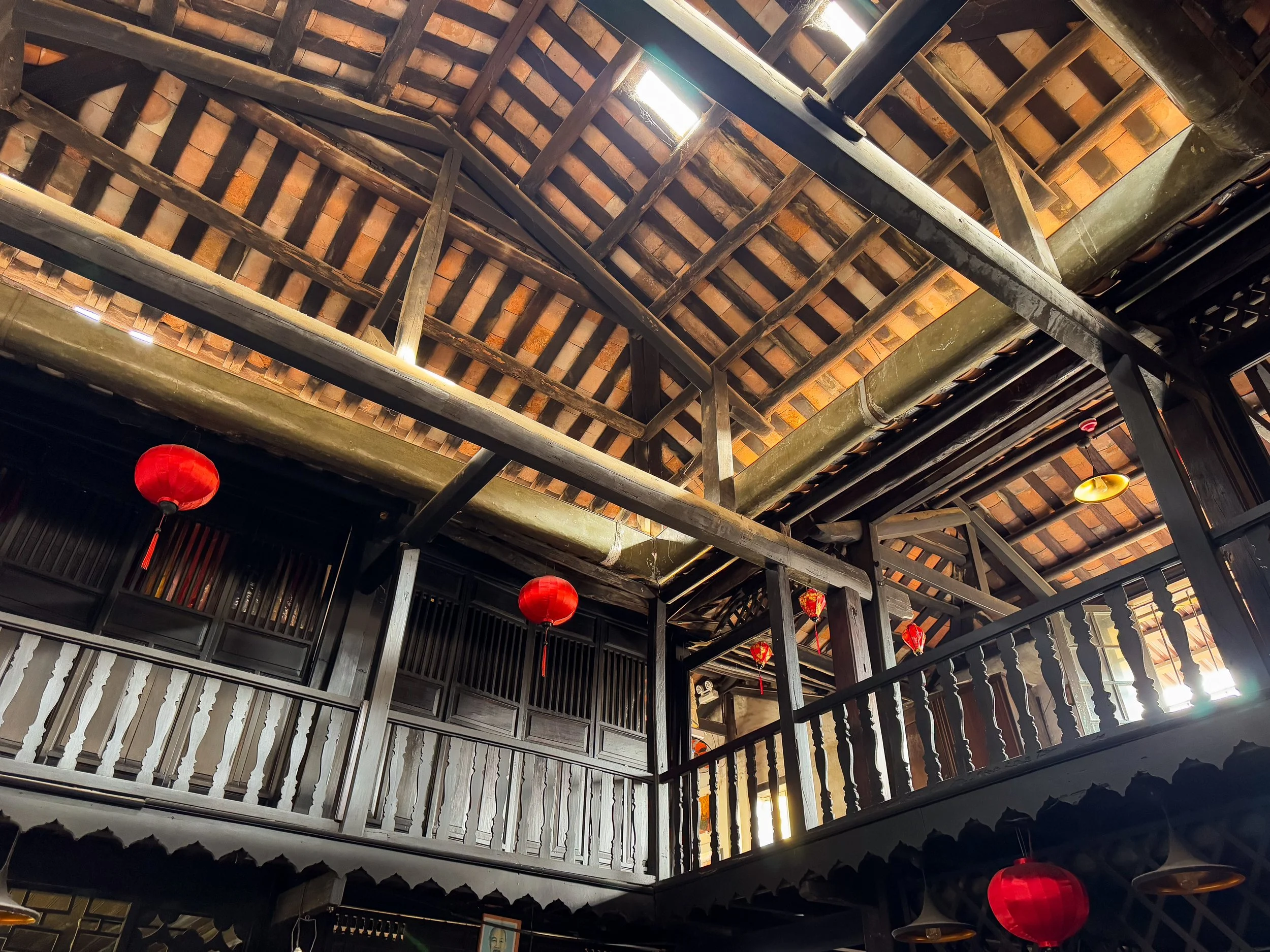

Ancient Town Sights
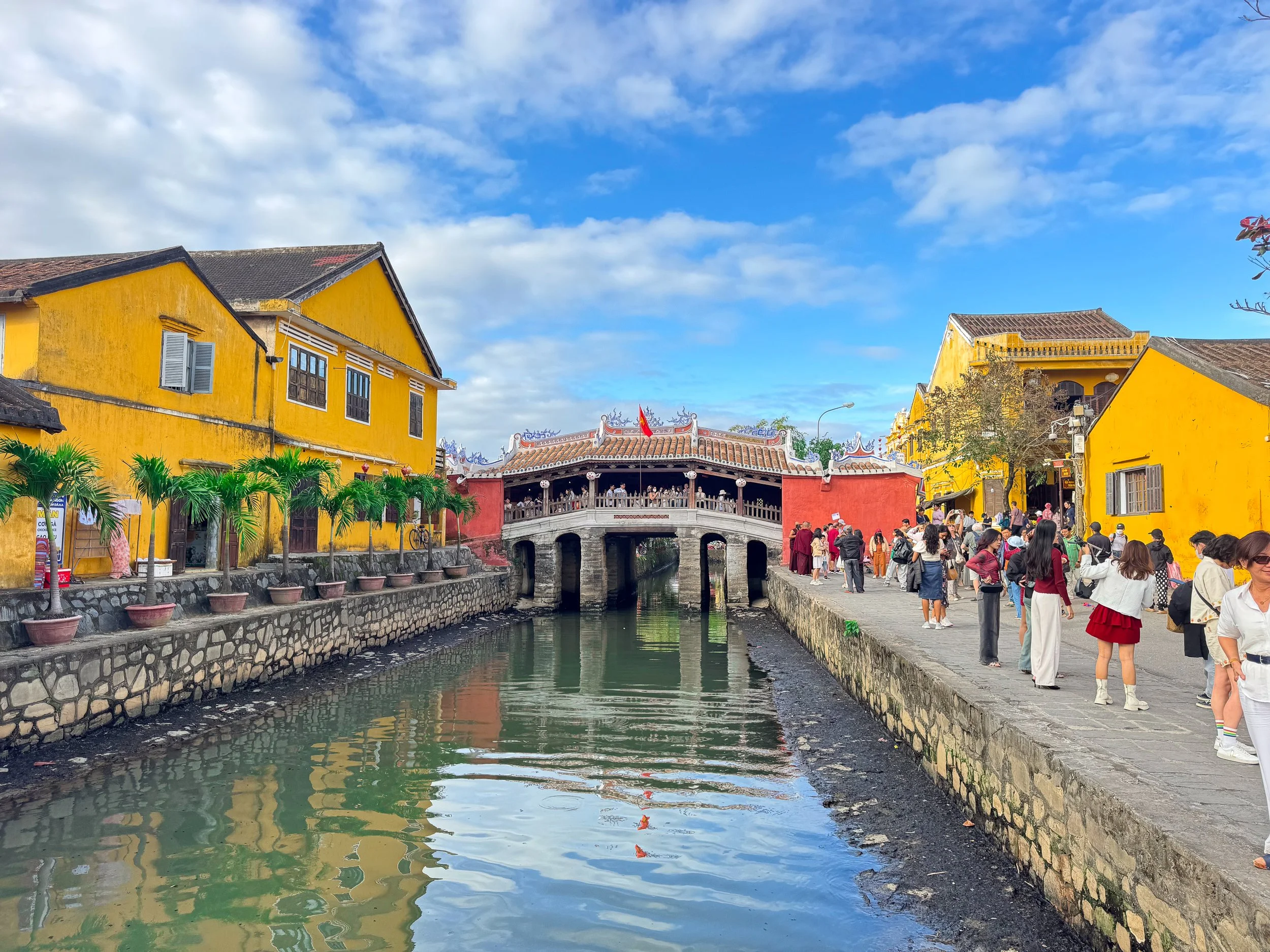
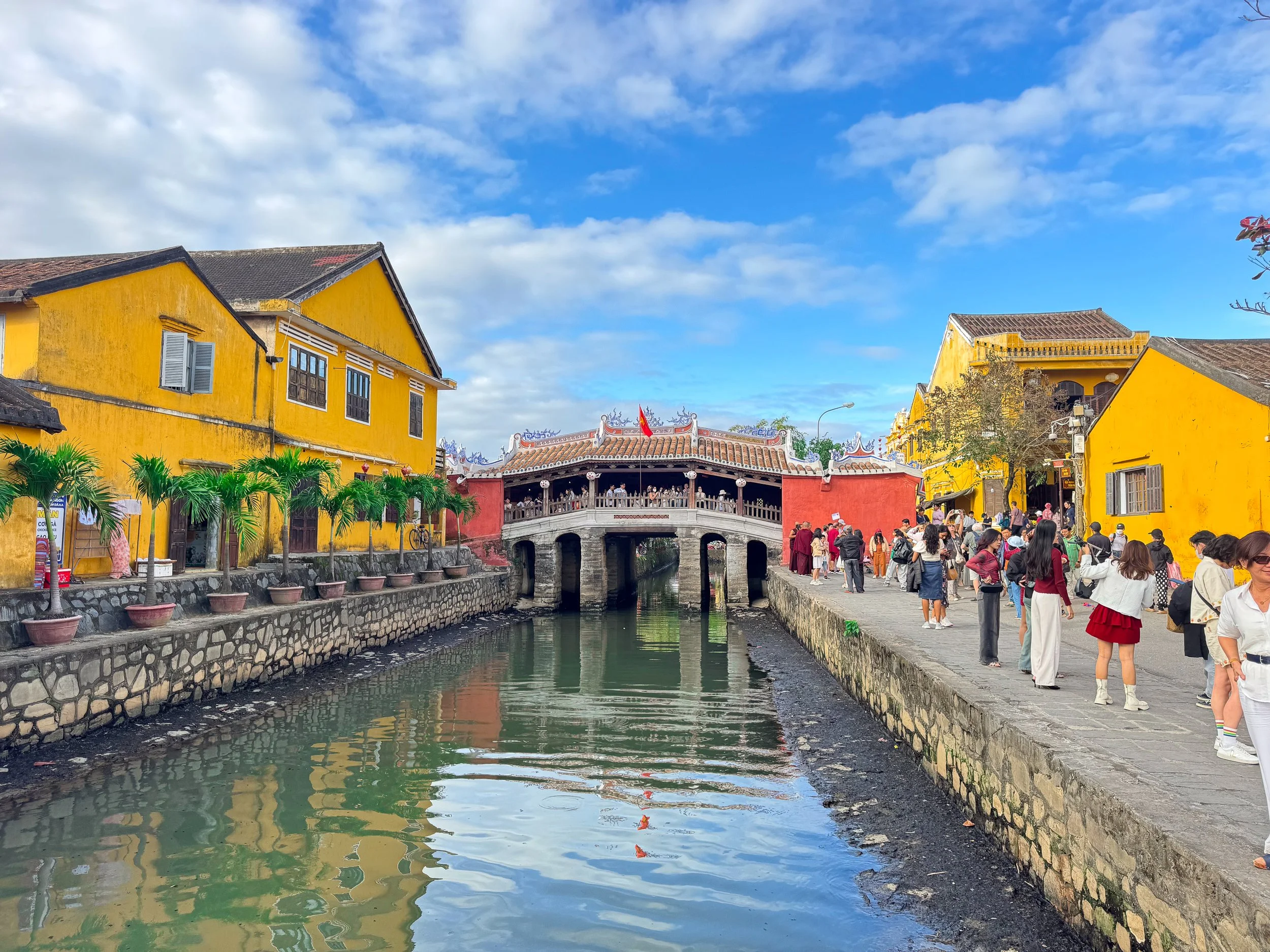
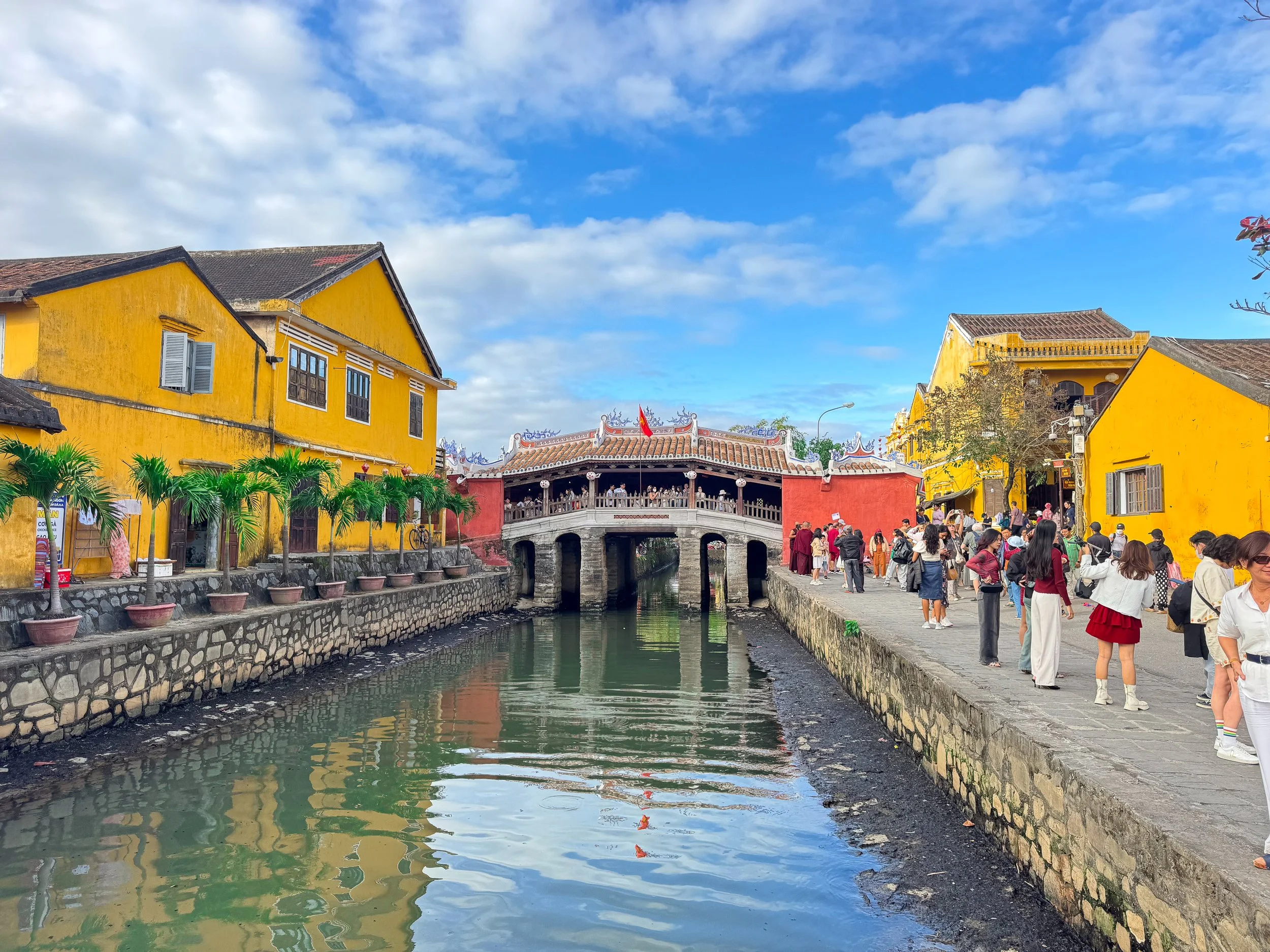
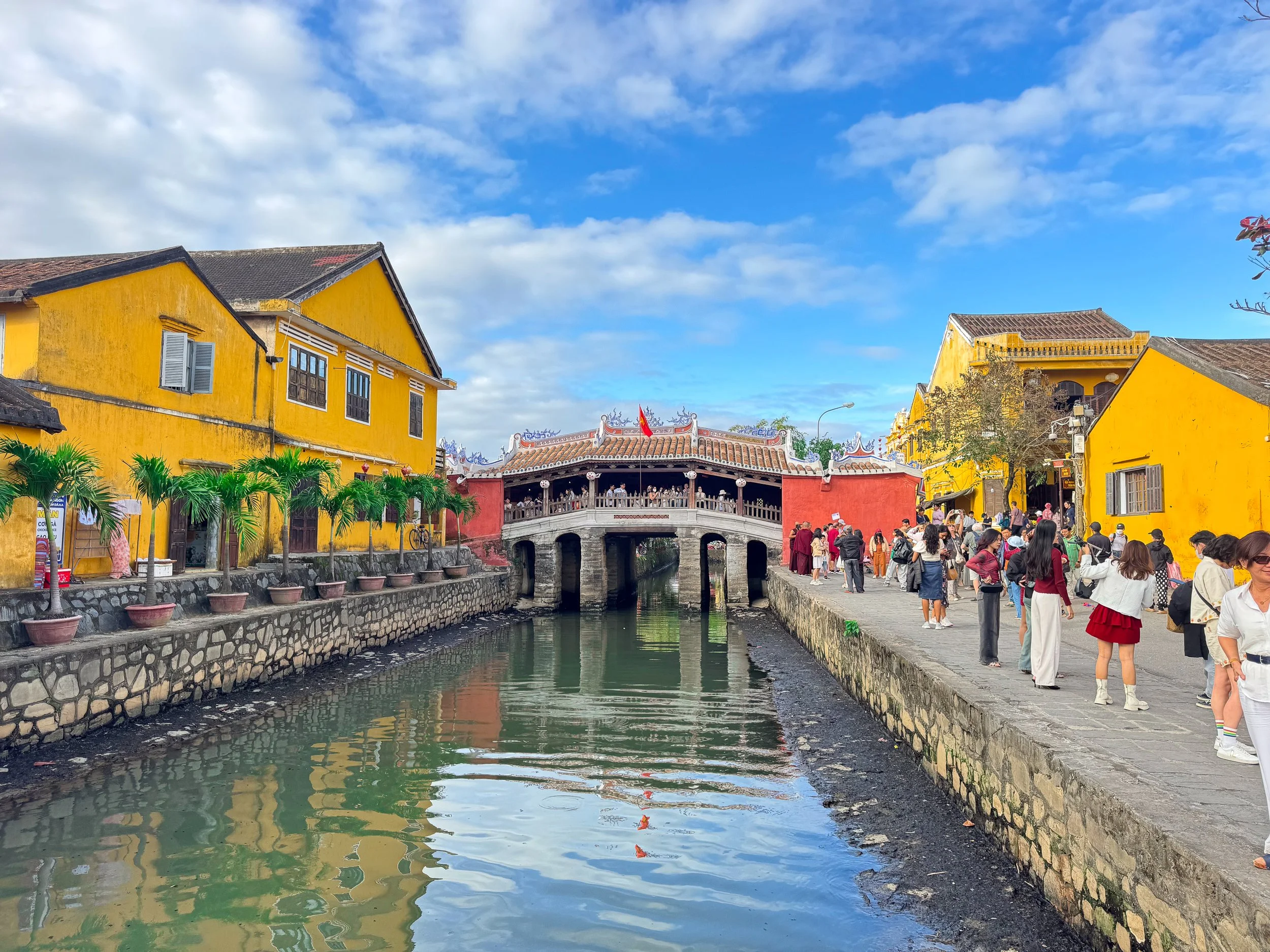
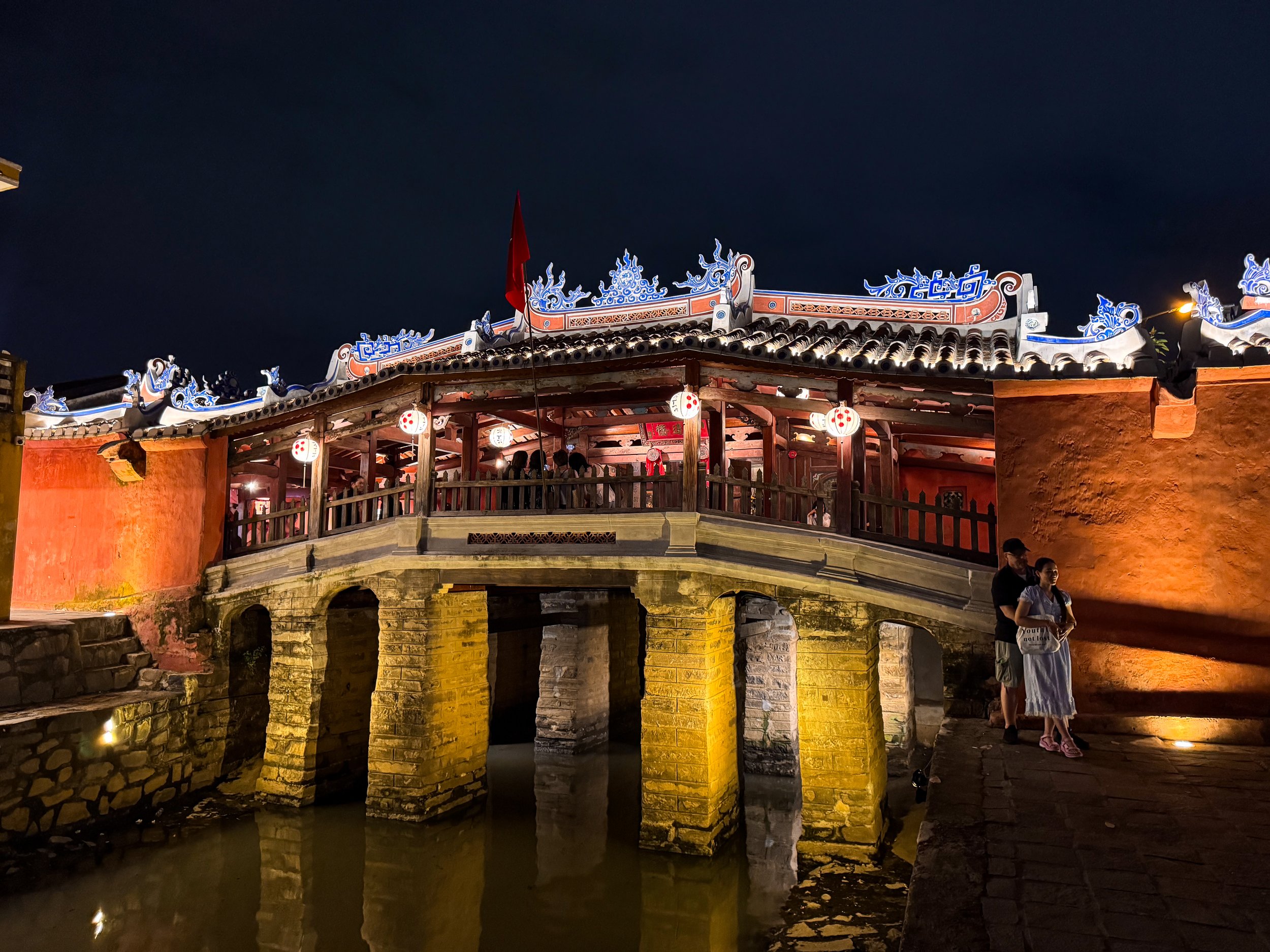
Japanese Bridge. A Japanese style wooden bridge and gate to the Ancient Town. It’s painted red with an ornate tiled roof depicting a traditional merchant boat. Inside is an arched walkway and a small temple. The bridge is featured on the 20,000 Dong banknote.
Cam Nam Bridge. A landmark bridge connecting the Ancient Town with An Hoi. It lights up at night and is a popular spot to view the colorful lights, lanterns and boats during the lantern festival.
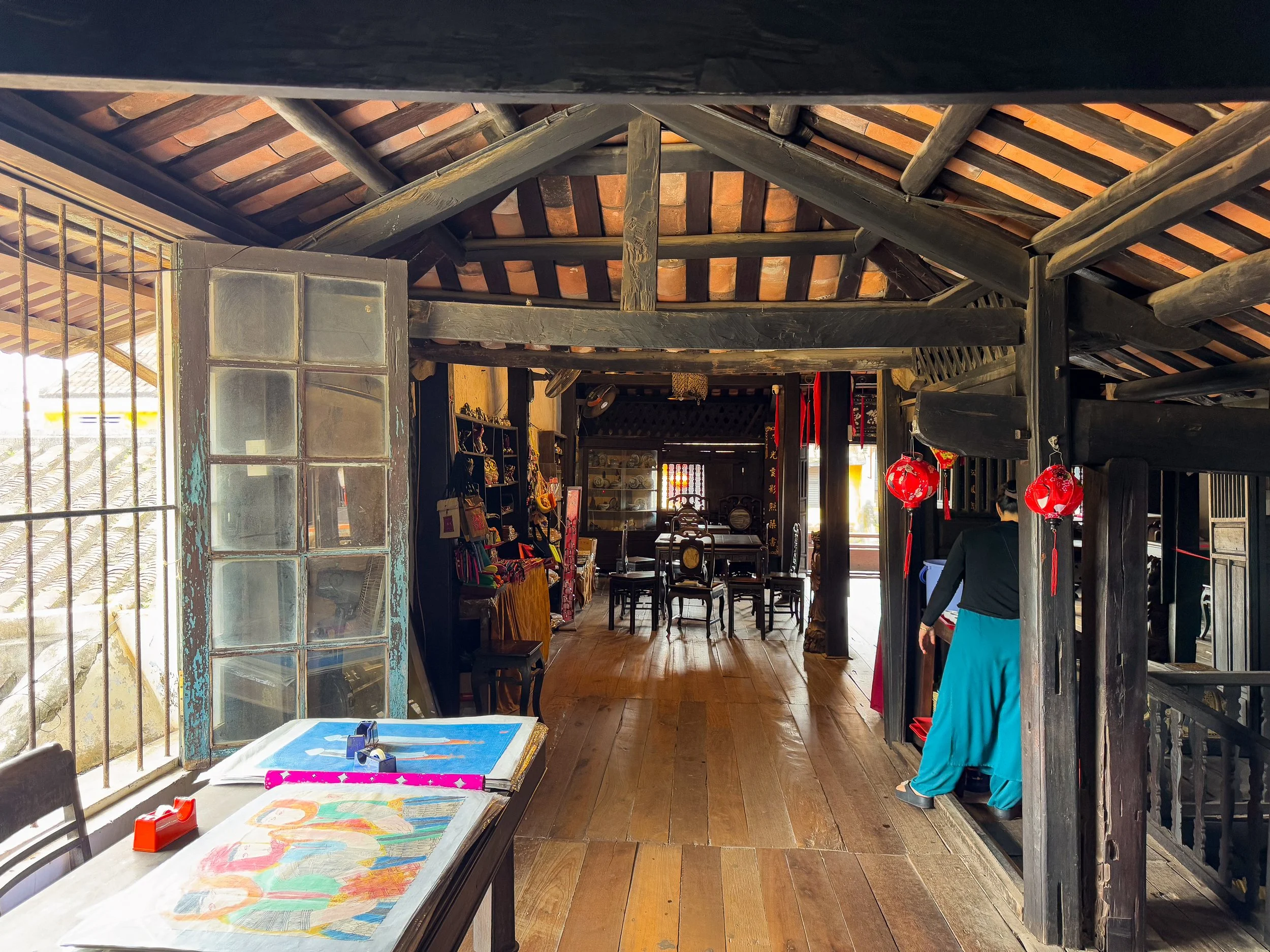
Hoi An Old Houses. Dark wooden and yellow painted houses with mossy clay tiled roofs characteristic of the Ancient Town. Many houses date back hundreds of years, some are still home to the original families and others are now museums.
Quan Thang Old House. A historic merchant house from the 17th century. Its architectural style is recognized as one of the most beautiful homes in Hoi An with its single floor design, wooden facade and arched and clay tiled roof.
Phung Hung Old House. A two floor merchant house with Japanese and Chinese architectural influences, tall ironwood beams, a second floor balcony, a clay tiled roof and mother of pearl inlaid furniture.
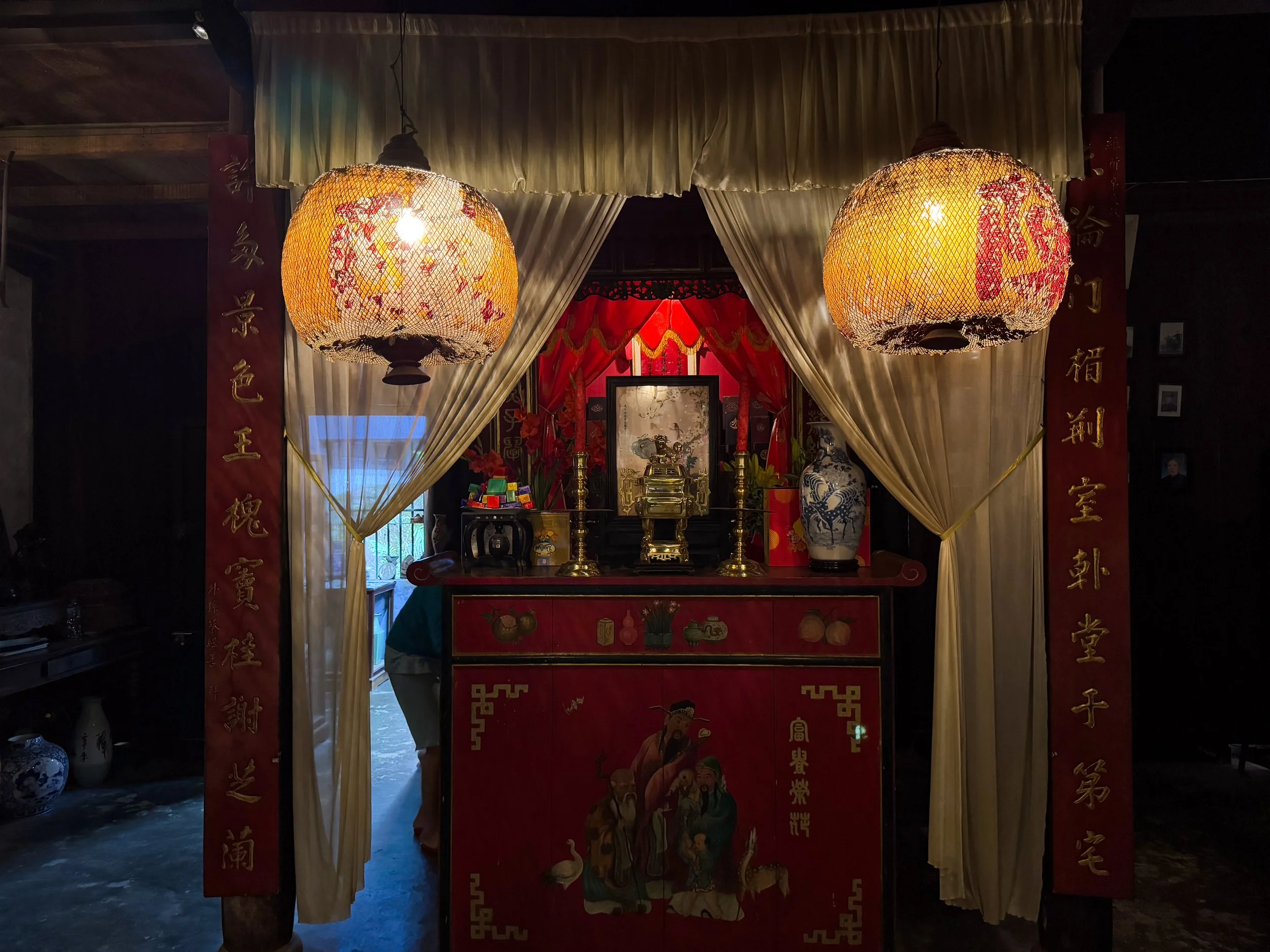
Tran Family Chapel. A historic home belonging to the same family for over 200 years. Inside is a chapel dedicated to their ancestors. It has an altar with photos and drawings of deceased family members surrounded by paper lanterns, flowers and citrus offerings.
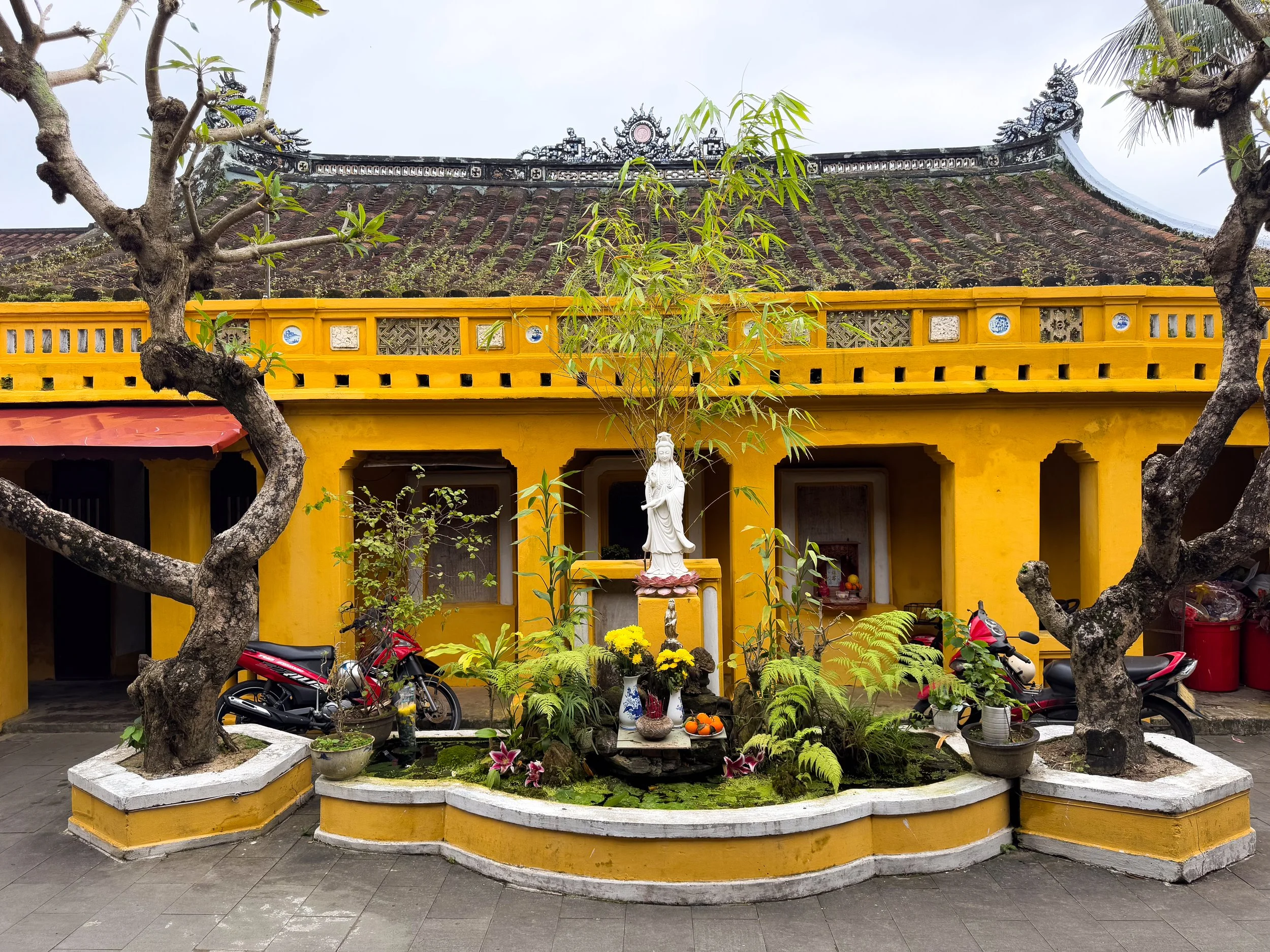
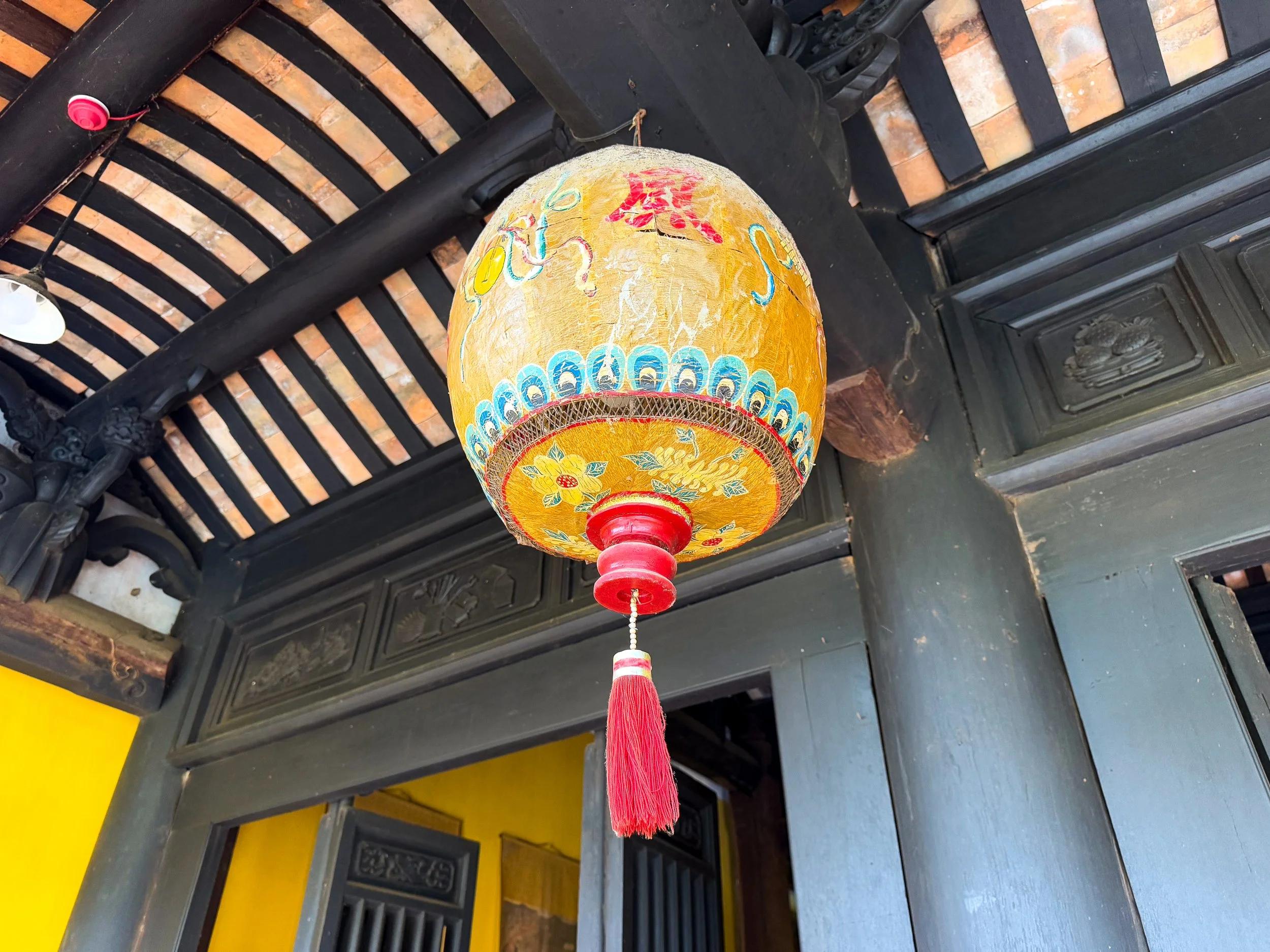
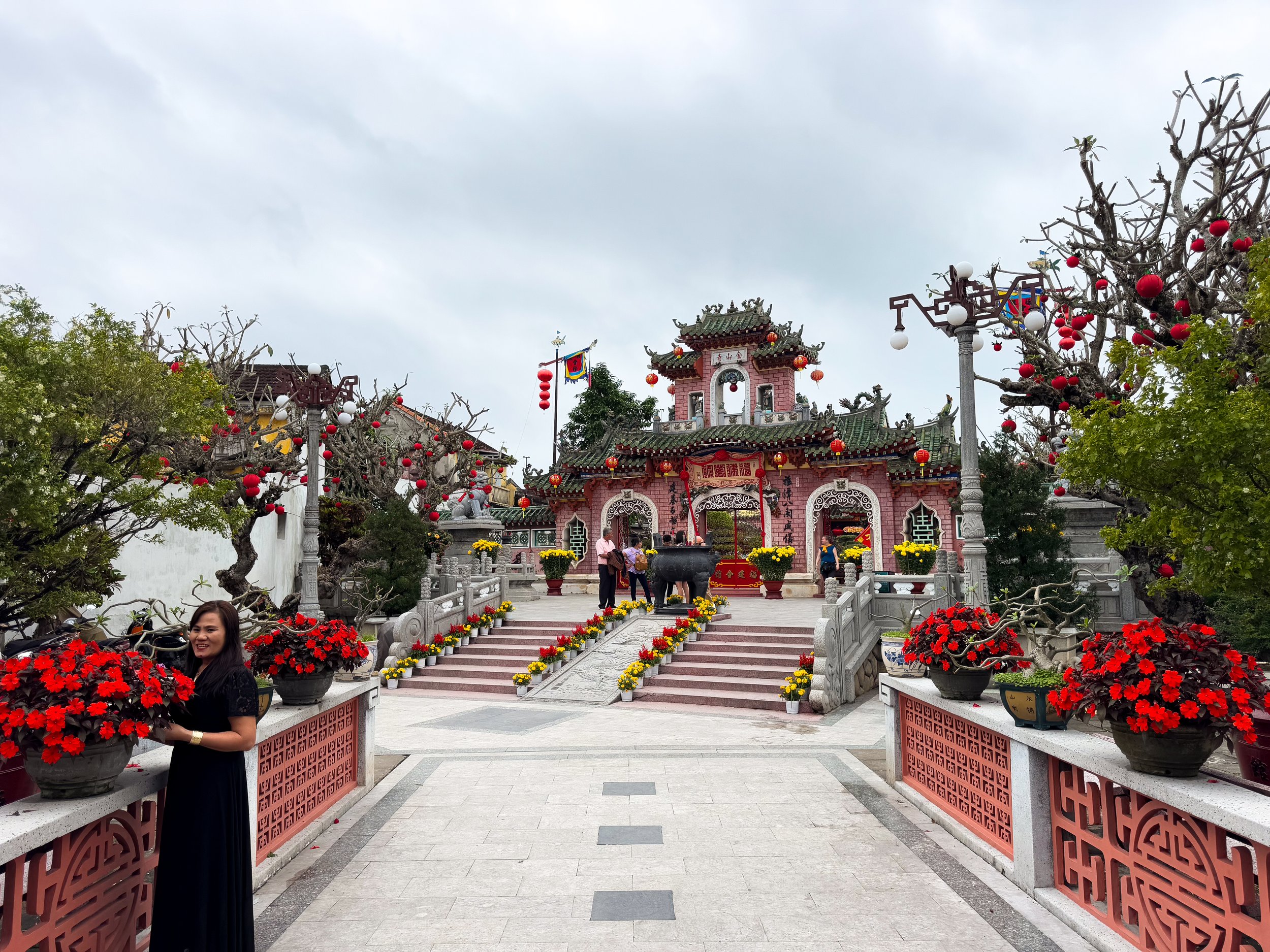
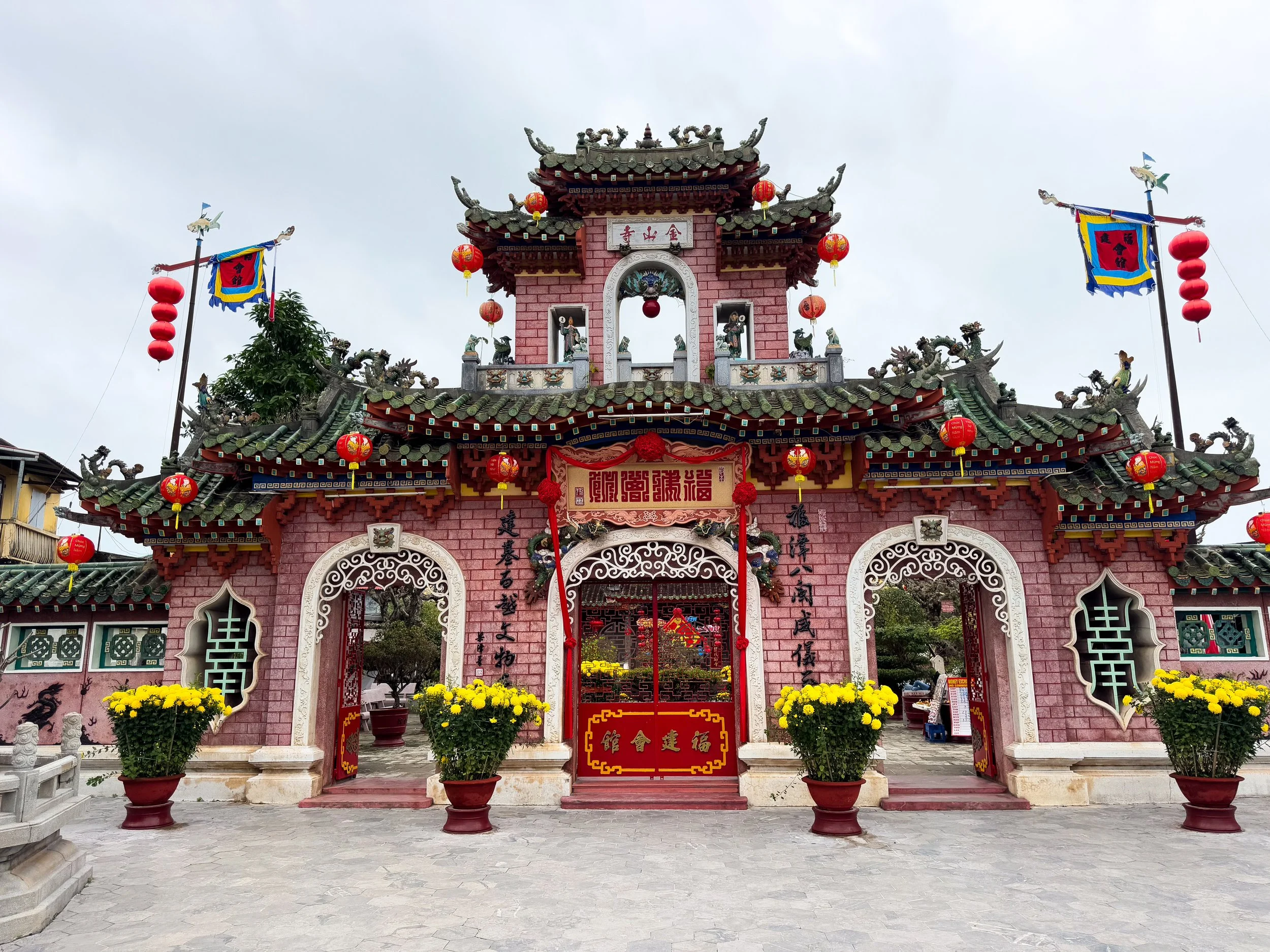
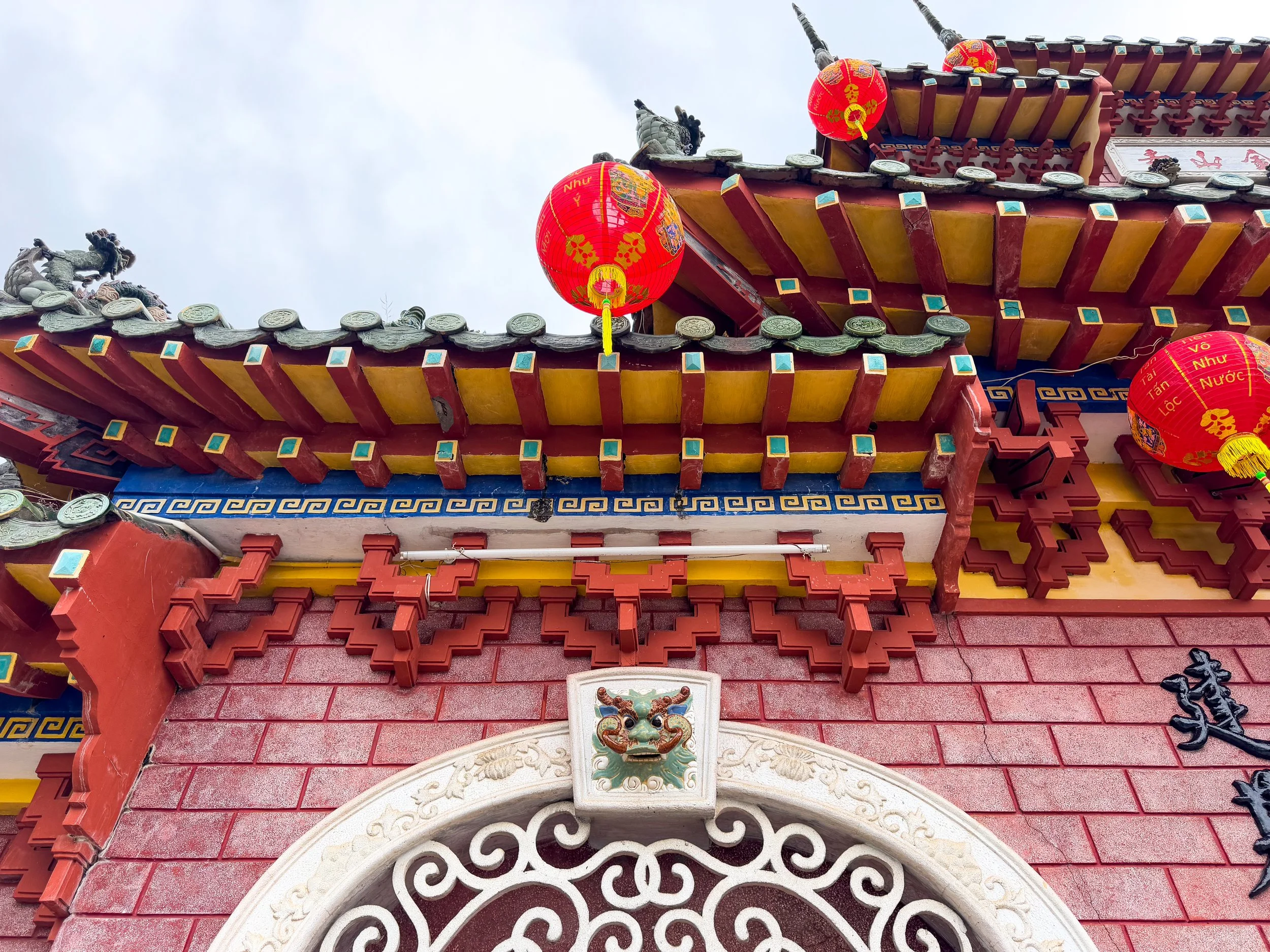
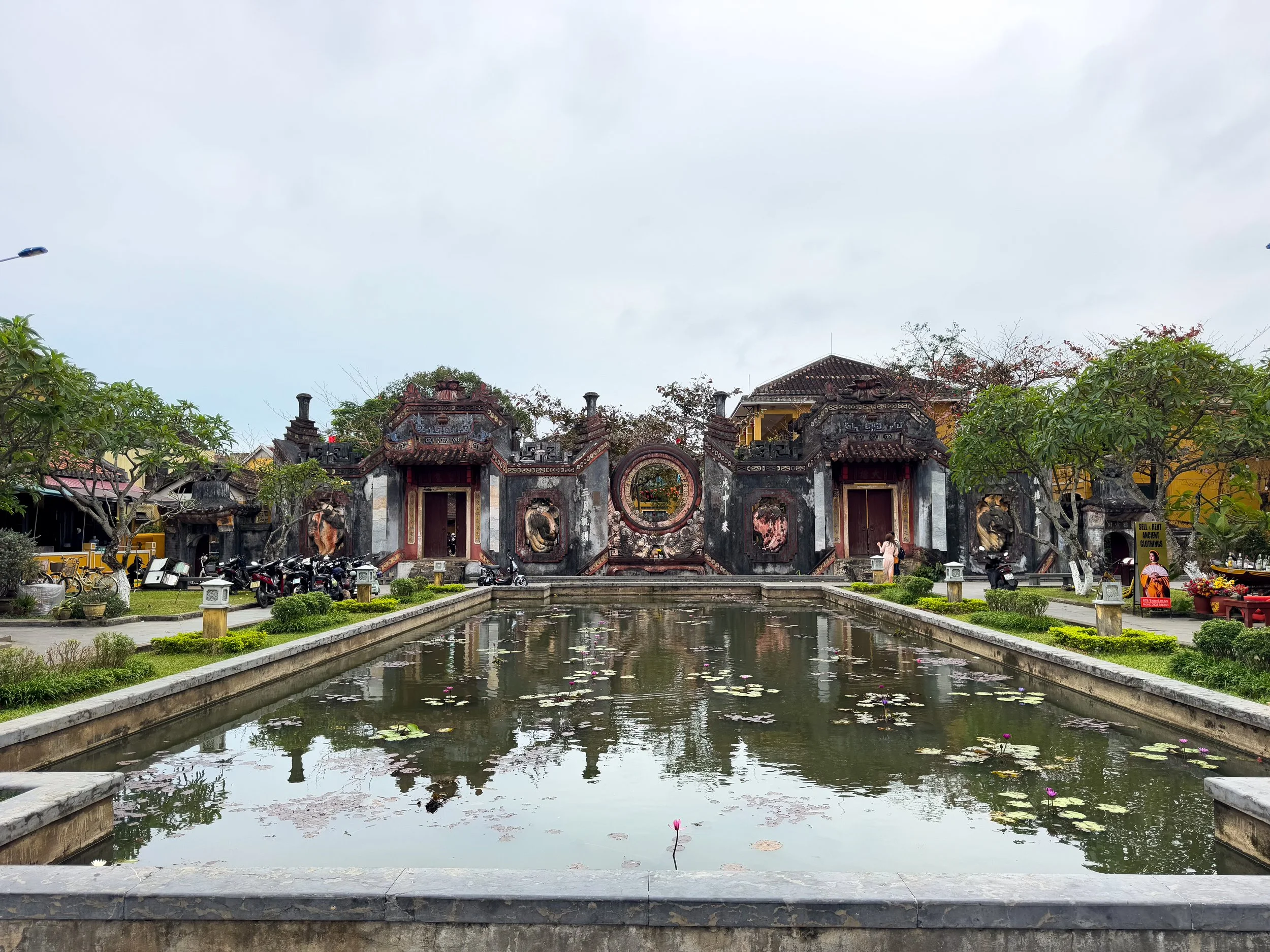
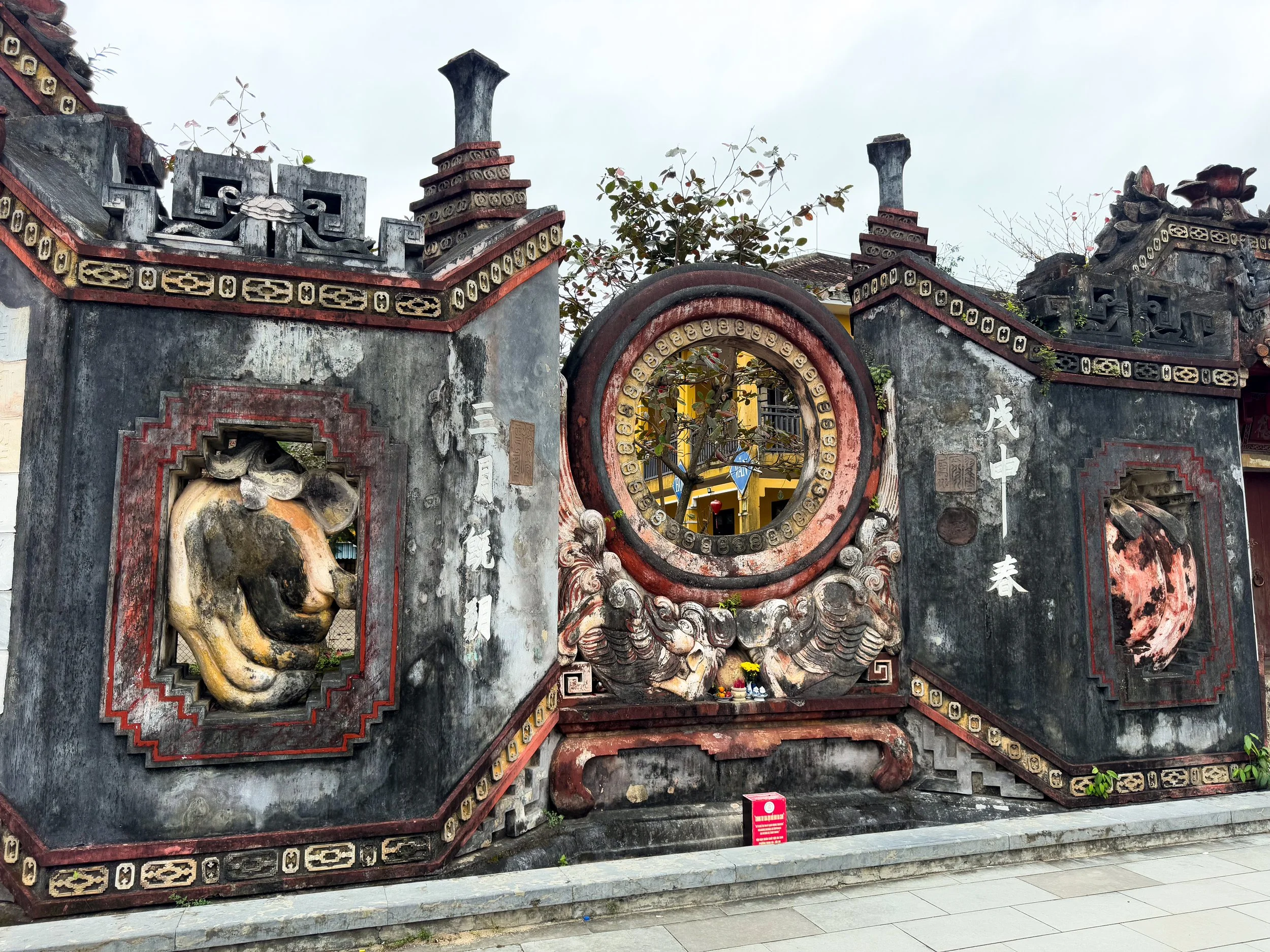
Temples and Pagodas. The Ancient Town has several temples and pagodas where people worship, meditate and make offerings.
Phuoc Kien Hoi Quan. A temple dedicated to a sea goddess with an ornate pagoda style entry gate, sculptures of scaled fish and a fountain with a dragon above a koi pond. Inside, sculptures of Confucius sit behind gold and red altars as smoldering coils of spiraled incense hang from the ceiling.
Ong Pagoda. An ancient pagoda and temple dating back over 1,000 years with traditional designs like red painted wooden columns, paper lanterns, an altar and a sculptural koi pond. It’s a quiet and peaceful place to visit. The smell of incense, the sound of water circulating and echo of the gong quickly become therapeutic.
The Ba Mu Temple Gate. A 600 year old temple gate covered in reliefs and carvings of flowers, calligraphy and geometric designs. It has a circular portal at its center and doorways leading through it. It used to connect two temples that no longer exist today.
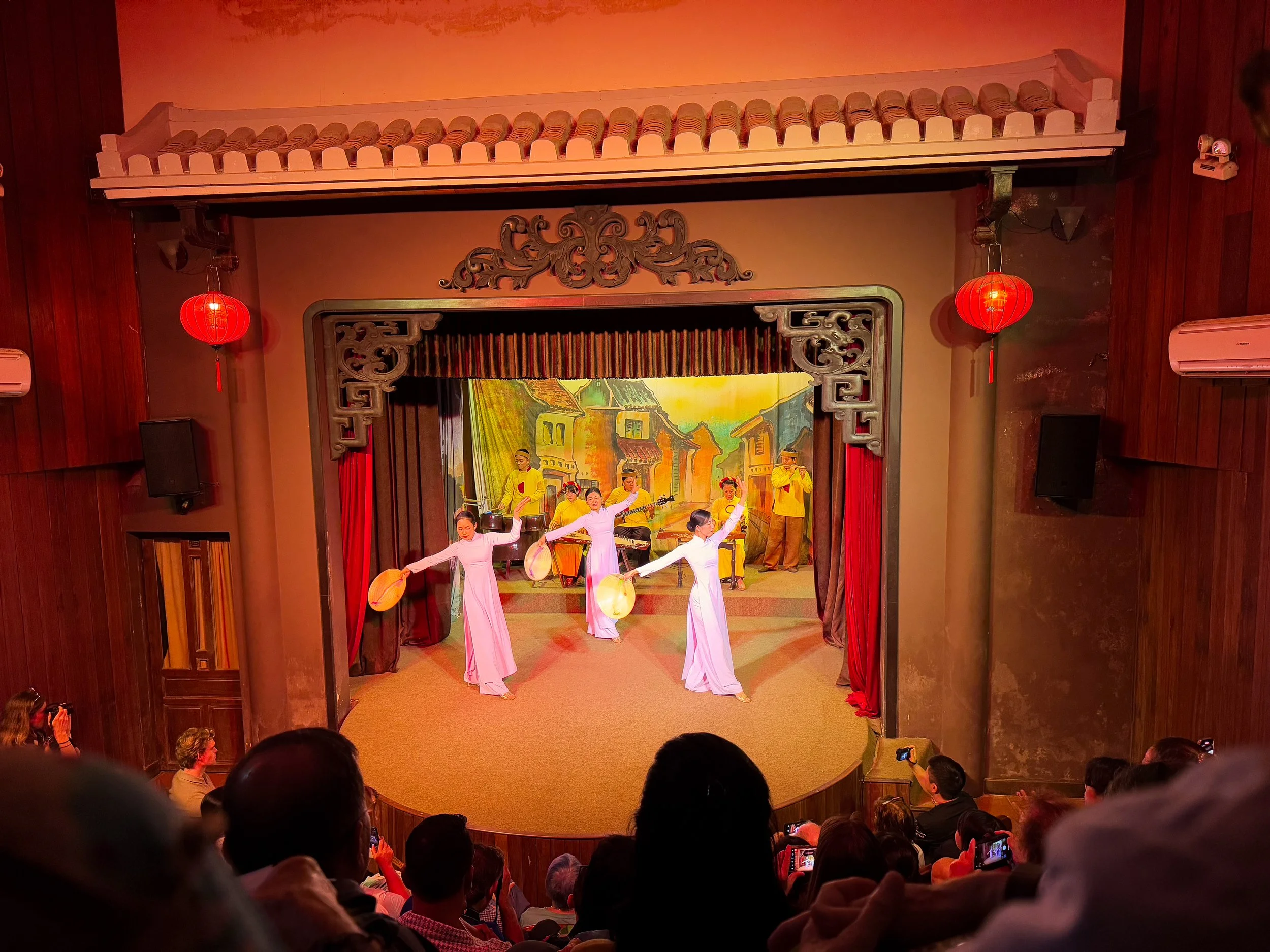
Hoi An Traditional Art Performance House. A historic theater offering 30 minute cultural performances and shows. We listened to musicians play flutes, drums and strings, saw dancers perform graceful acts in traditional outfits and were introduced to the game of Bai Choi.
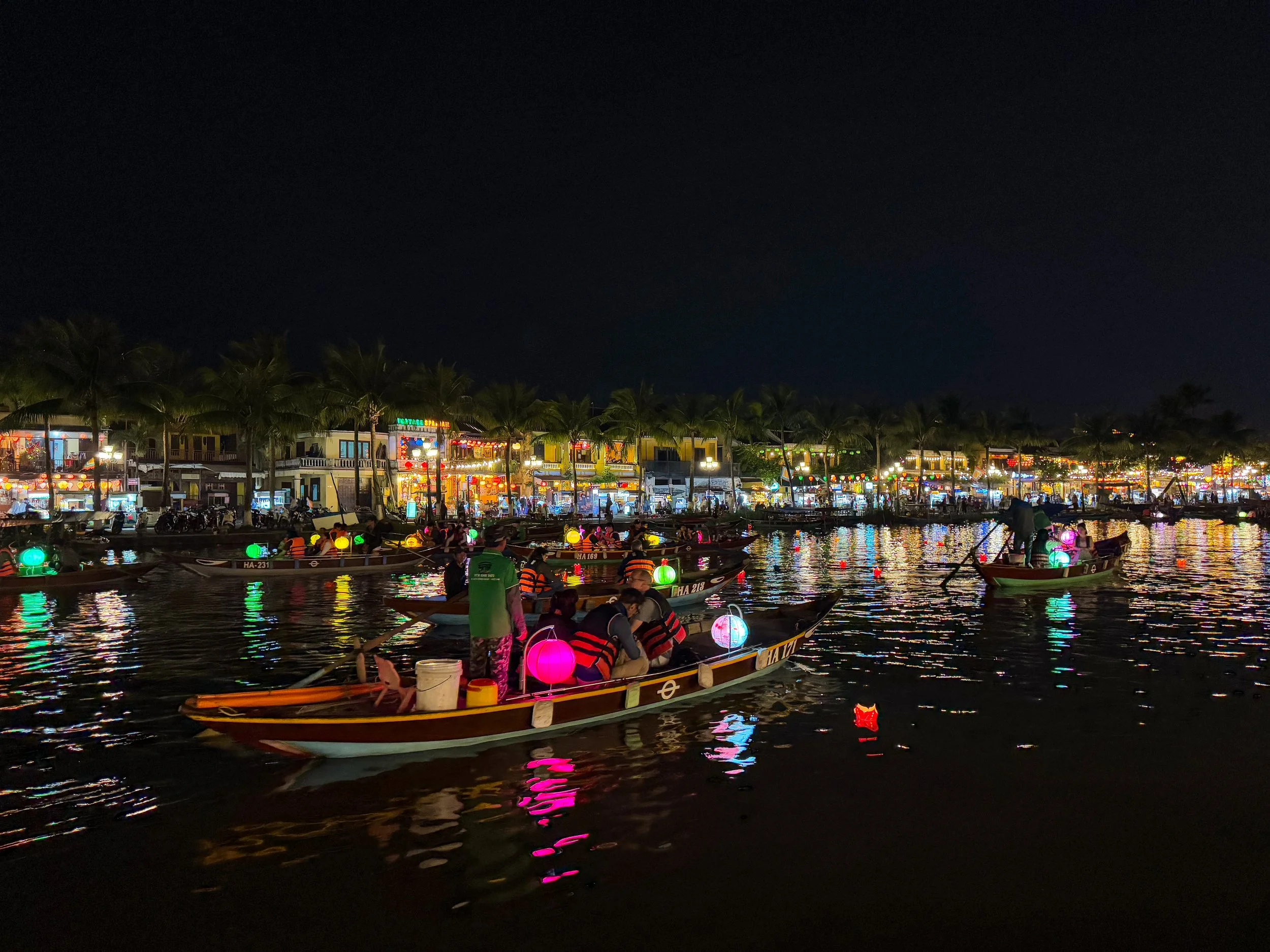
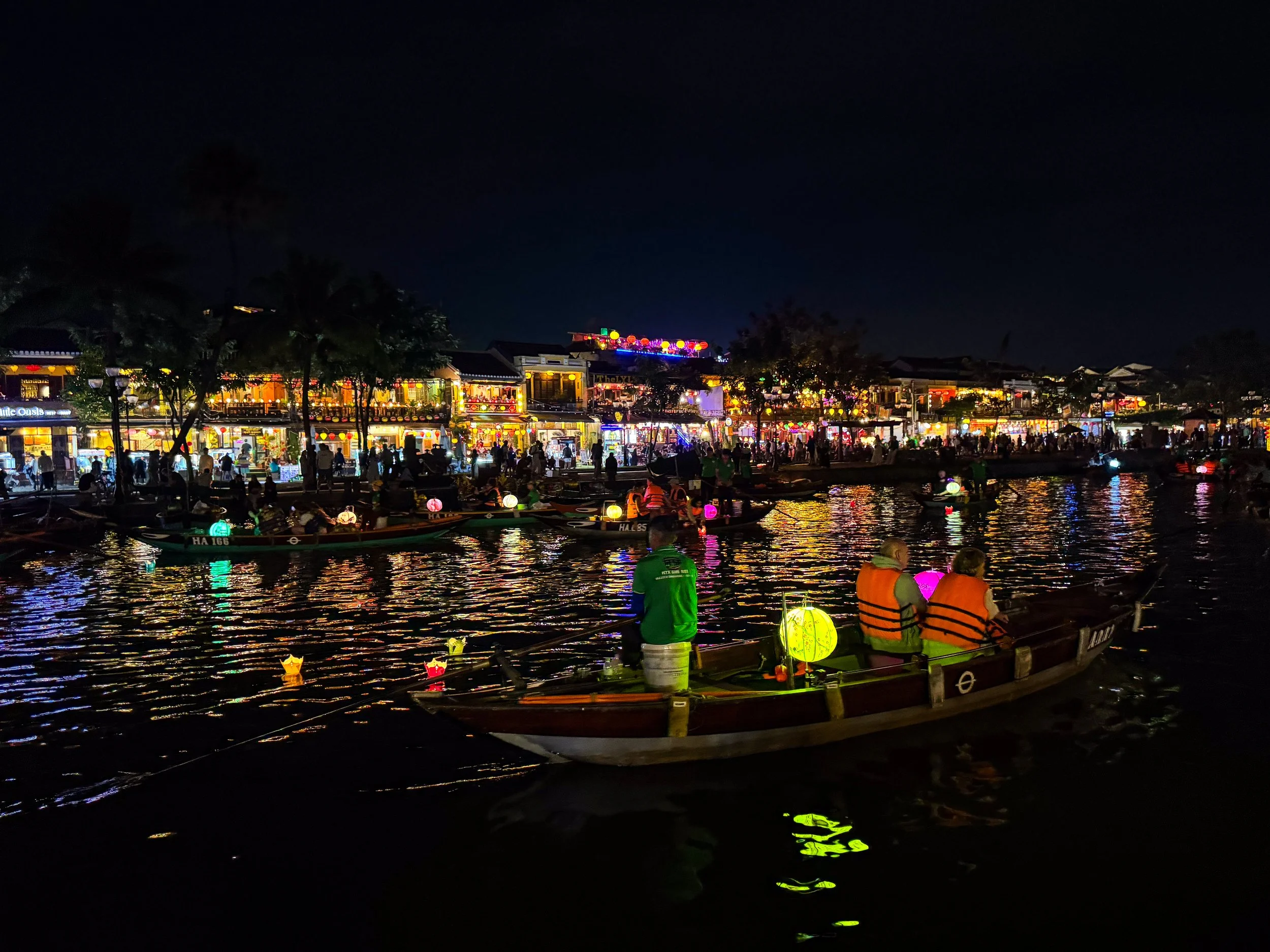
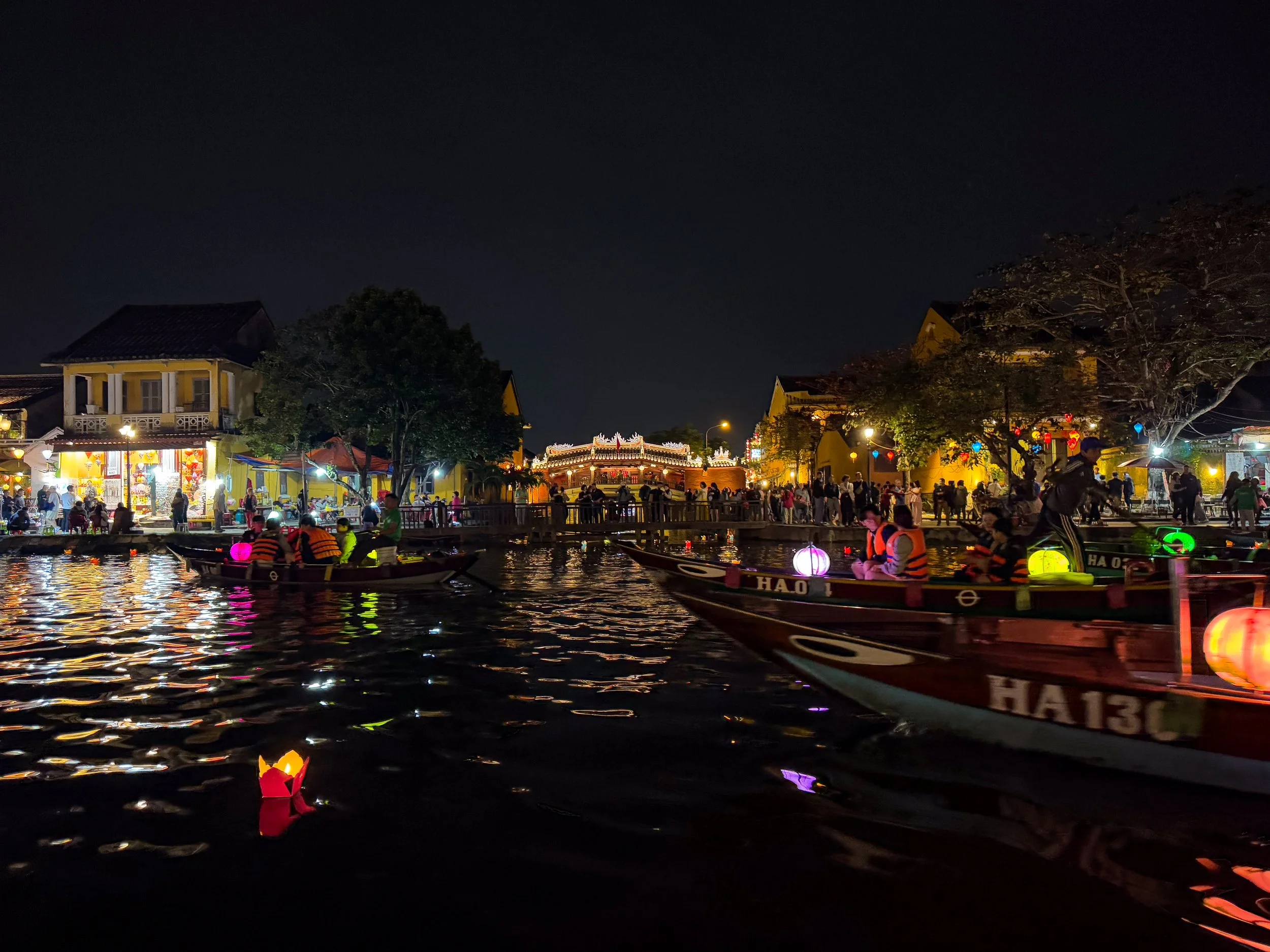
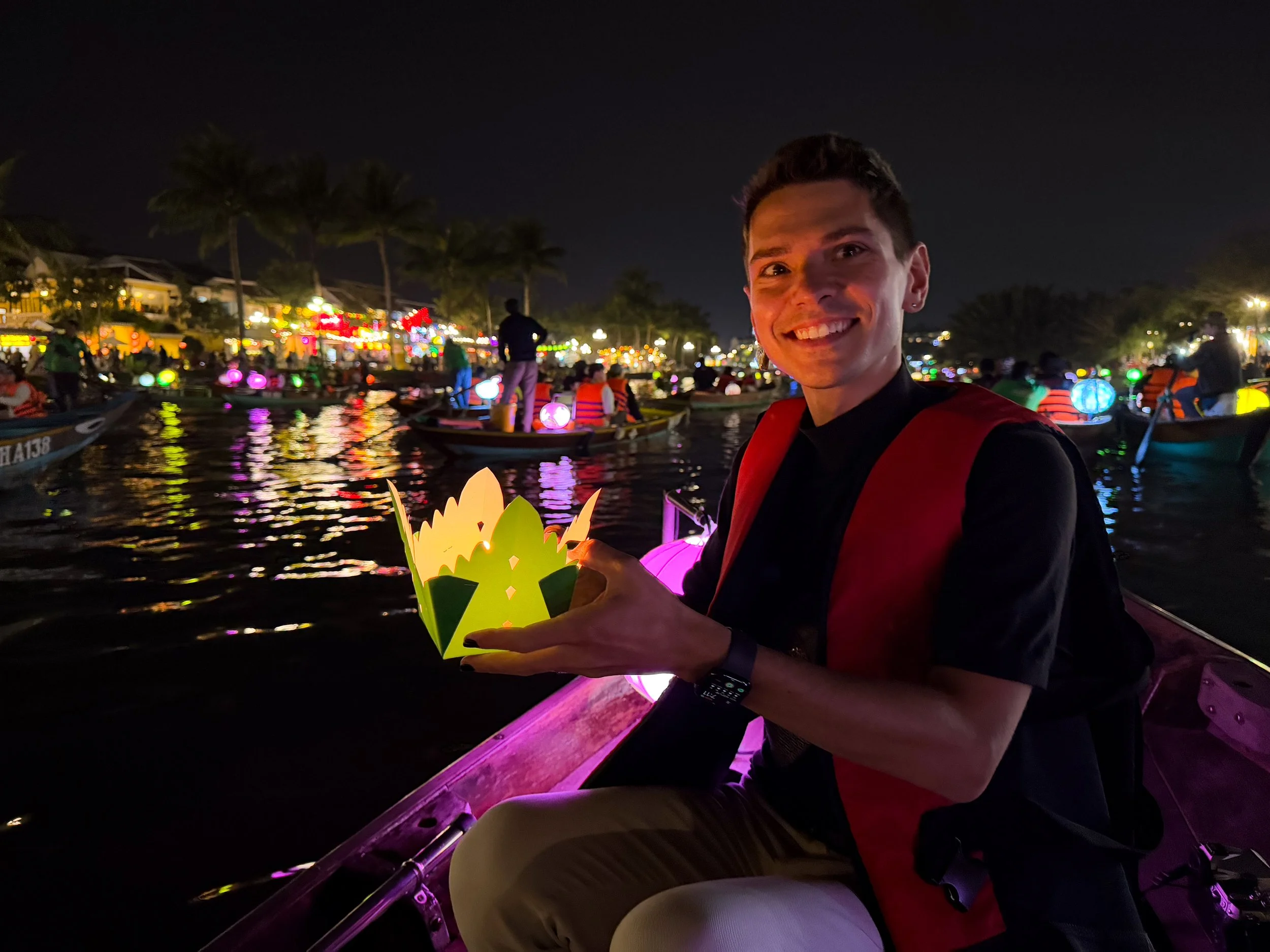
The Lantern Festival
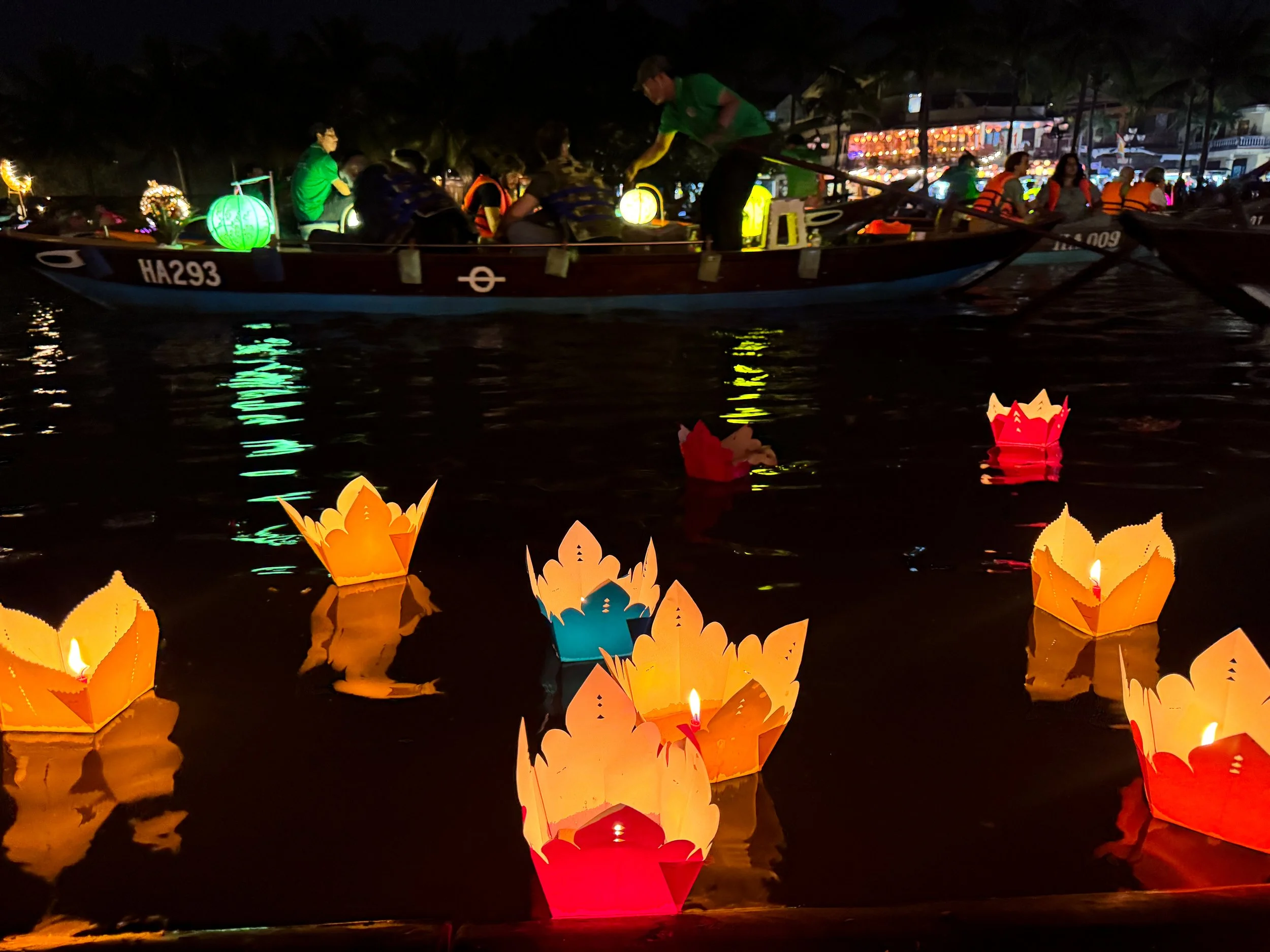
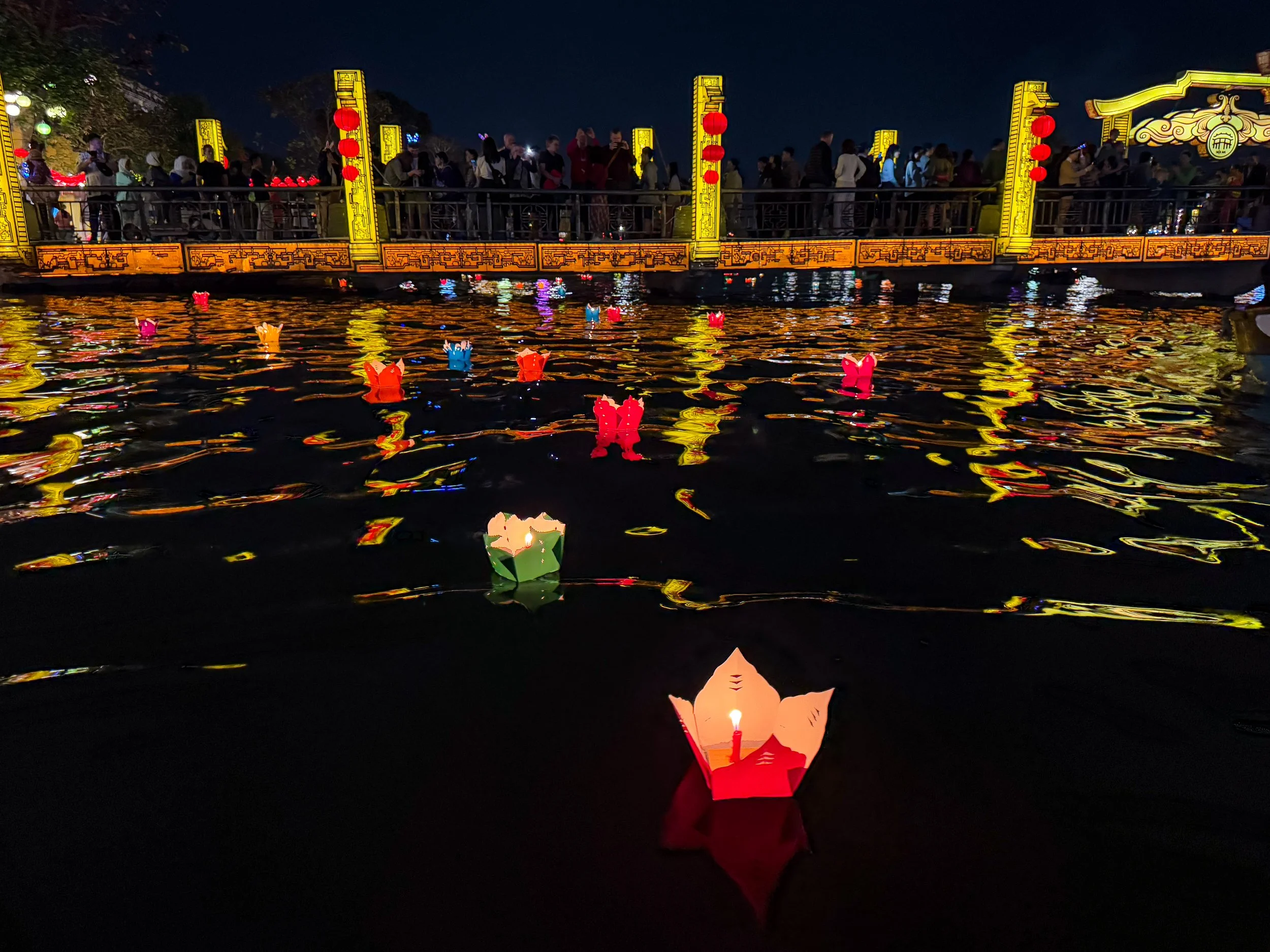
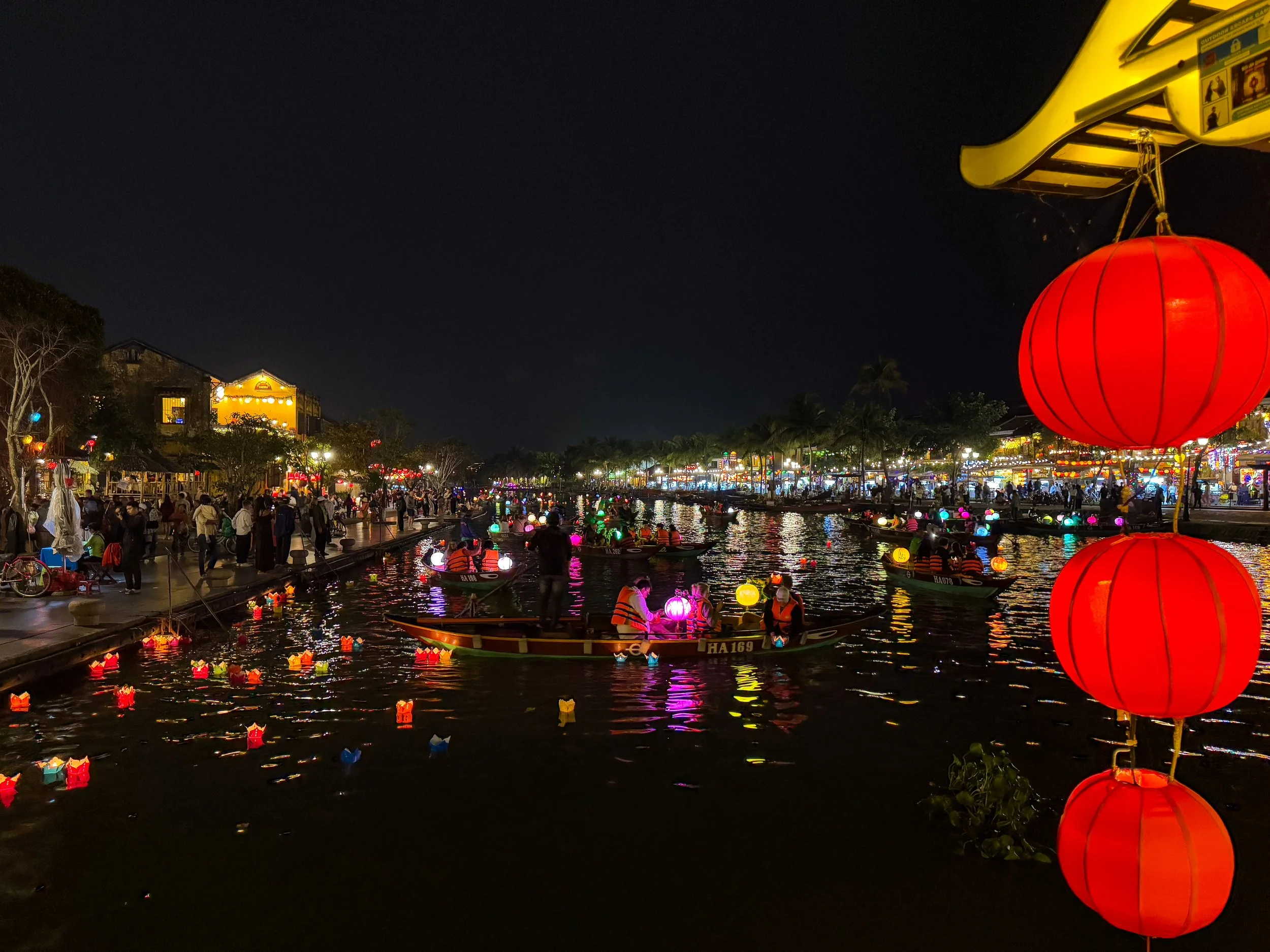
A nightly festival held along the waterfront with thousands of glowing and candlelit lanterns illuminating the Ancient Town. Delicate flames of paper lanterns flicker as they float along the water. Small row boats are illuminated by orbs of light. The water shimmers with the reflection of colorful lights dancing on it. Vendors offer boat rides and sell paper lanterns. We were rowed along the canal and released a paper lantern into the water, each making a wish and relating positive thoughts into the world.
Participate in Bai Choi
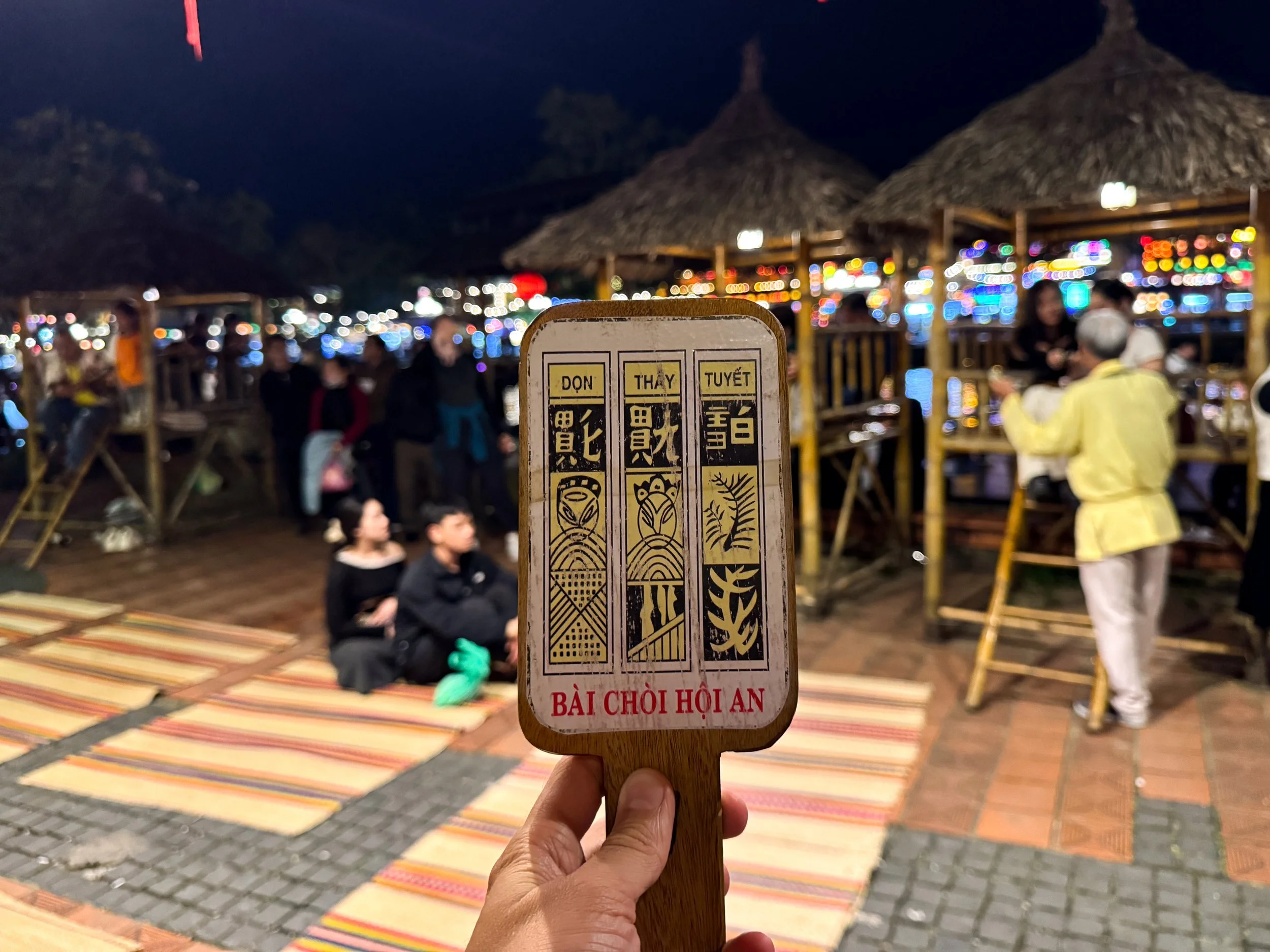
Bai Choi is a Vietnamese folk game that combines various art forms including calligraphy, music and dance.
The Rules. Bai Choi is a group game, where huts of players compete against each other. Each hut is given a paddle with 3 columns of calligraphy on it. As the game begins, a “chanter” pulls a bamboo card from a basket decorated in a singular column of calligraphy. The “chanter” then weaves the calligraphy into a song and holds it up for players to match. A hut is given a yellow flag each time they match a column. Once one hut matches all 3 columns, the game ends.
Bai Choi Hoi An. A Bai Choi theater with nightly games. We arrived early and sat in a bamboo hut waiting for the game to start. We purchased two paddles from the “chanter” as more players arrived. A band began performing as the charter pulled the first card. As the game went on, we matched two of the three columns before another hut won. It was an incredibly fun and lively game!
An Hoi Island
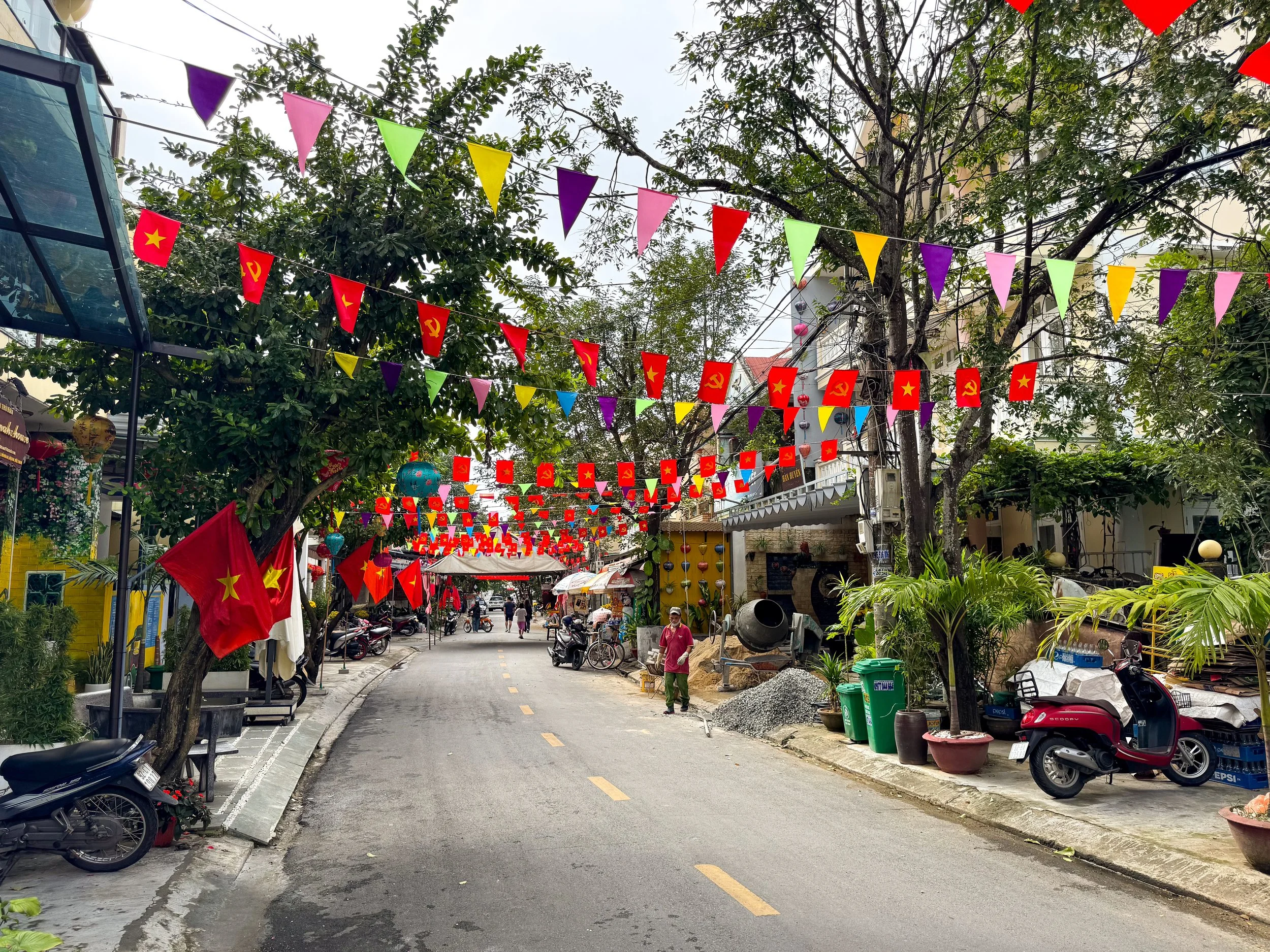
An Hoi is an island neighborhood directly across the river from the Ancient Town. Many streets are draped with colorful lanterns and banners of the Vietnamese and Communist flags. It’s a popular place to stay due to its proximity to the Ancient Town with a large number of guest houses and hotels. The waterfront becomes a hub for nightlife with animated bars, street food vendors, a night market and the lantern festival.
Shop the Markets
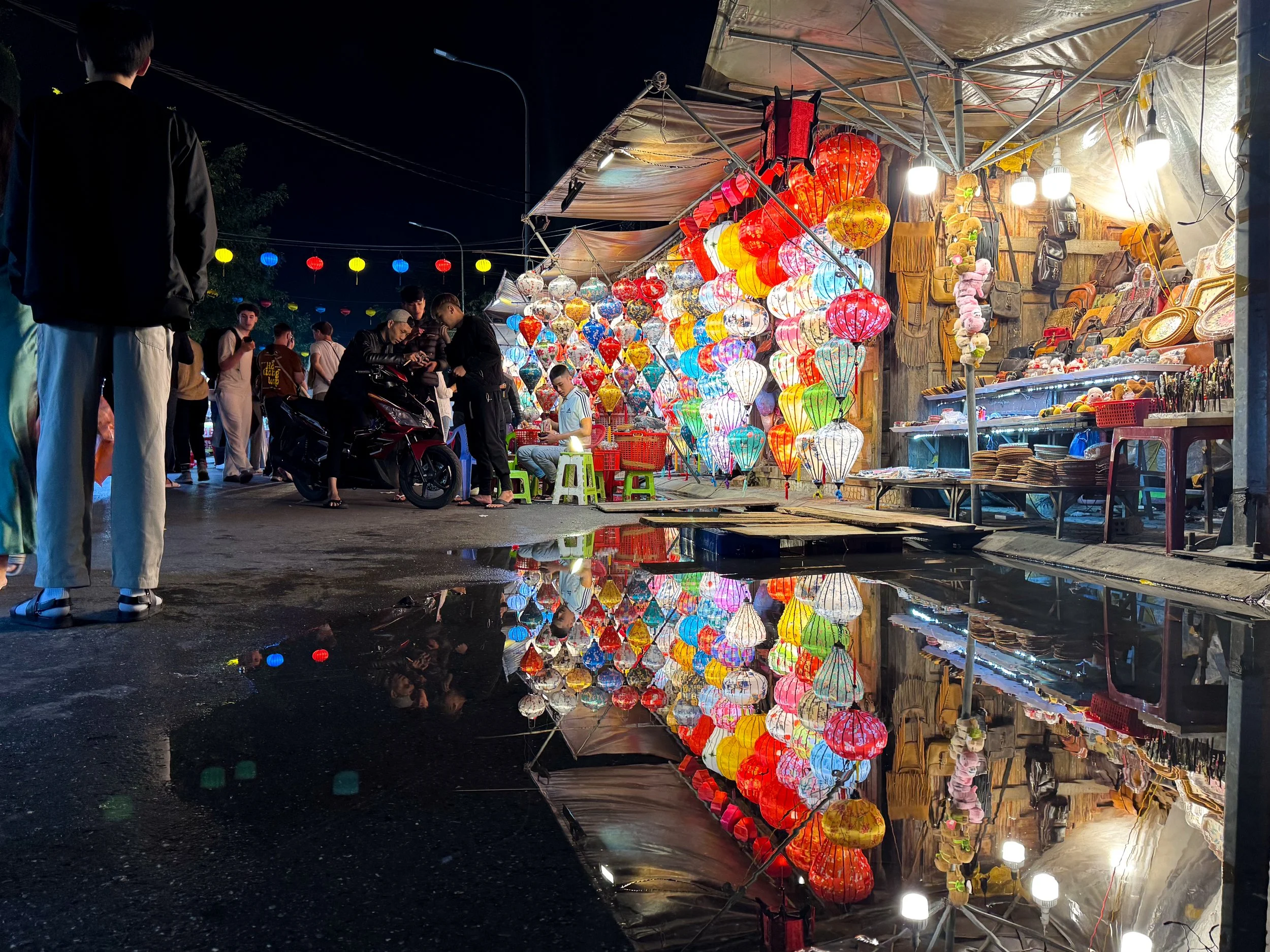
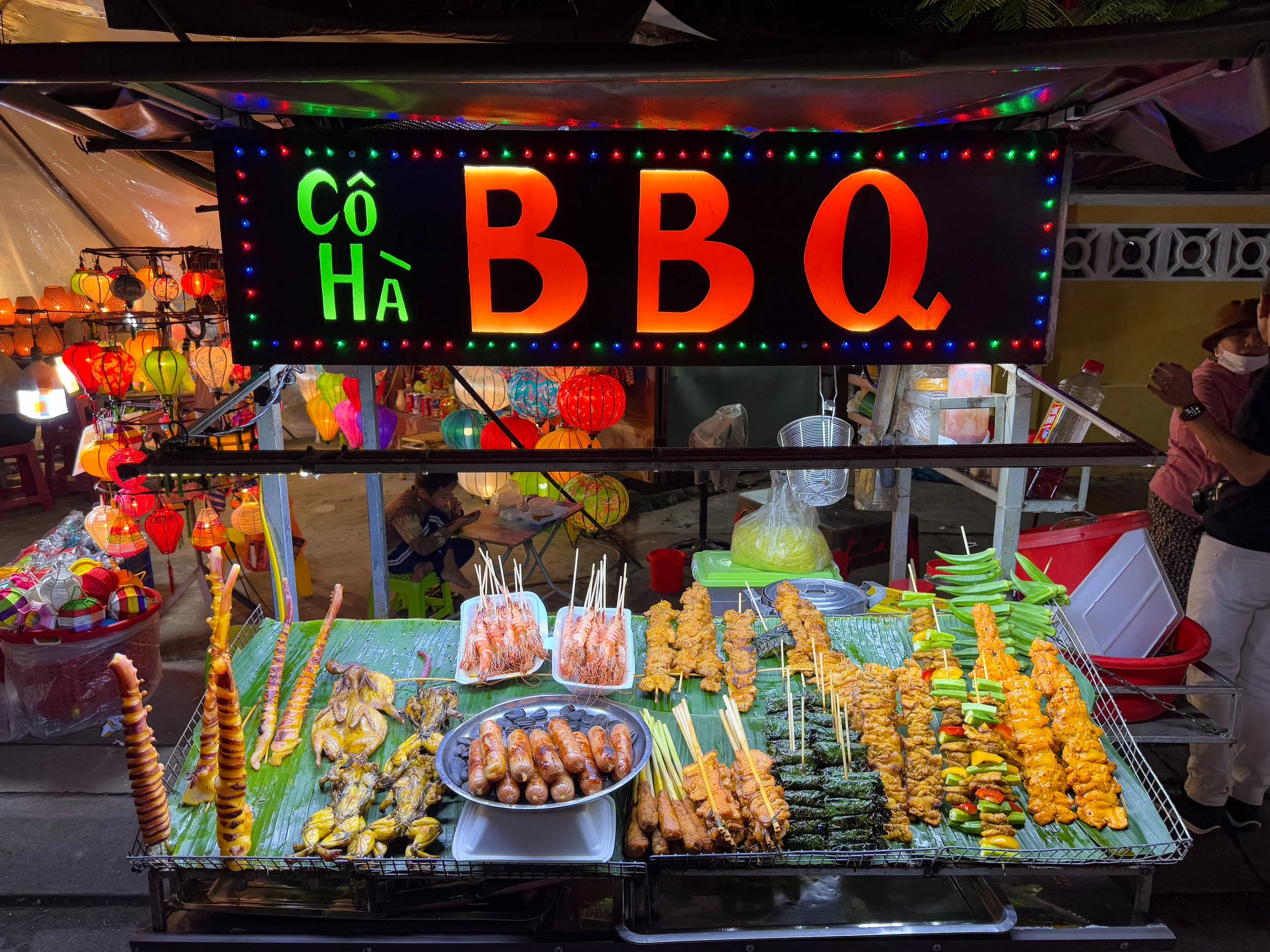
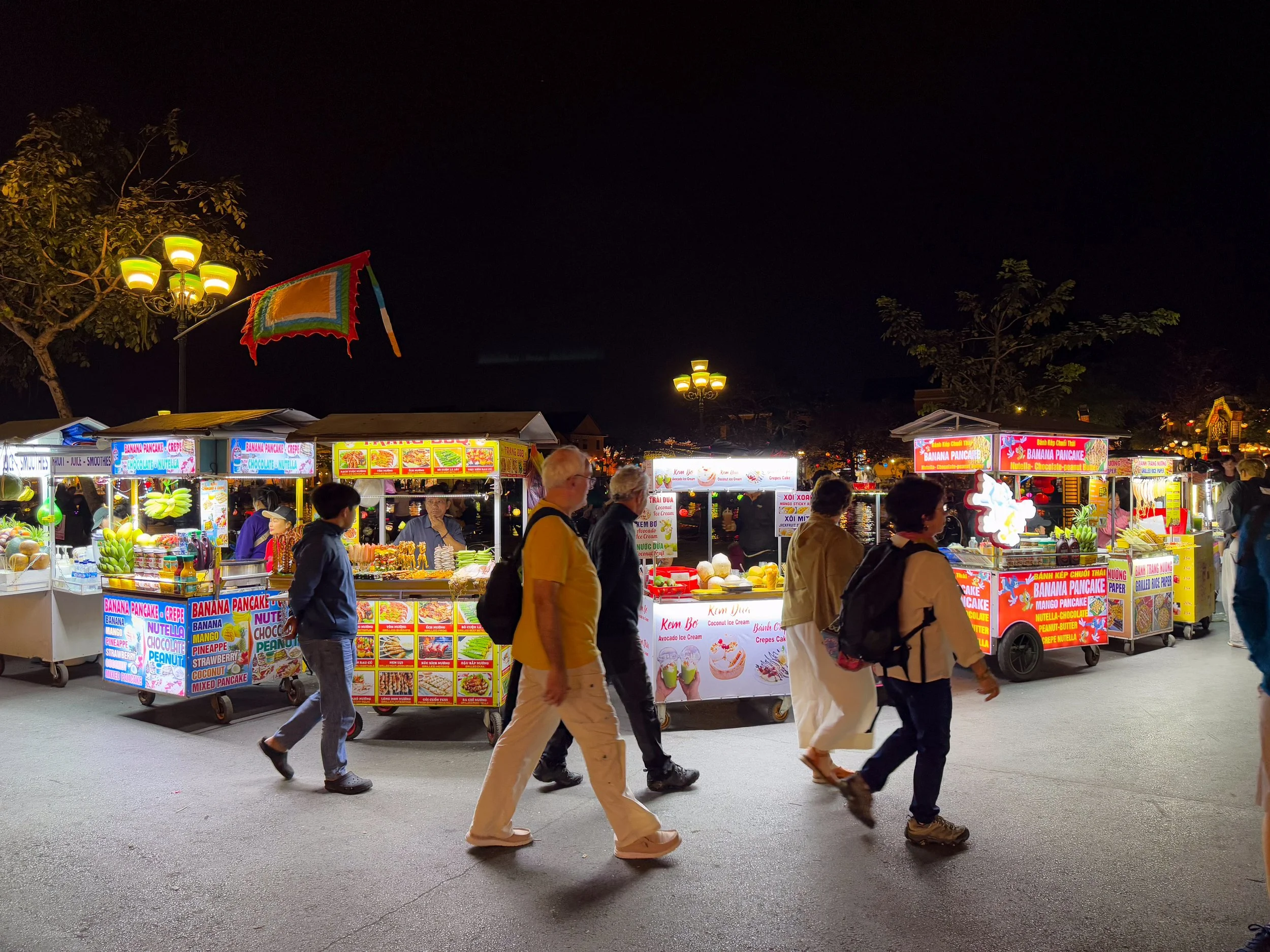
Nguyen Hoang Street & Night Market. A street dissecting the center of An Hoi with lantern shops, a vibrant night market and street food vendors. As the lantern festival starts, merchants set up carts stocked with clothes, jewelry, accessories and souvenirs in the center of the street. It’s the best place to try all manner of Vietnamese street food, especially near the waterfront. We tried several dishes two nights in a row.
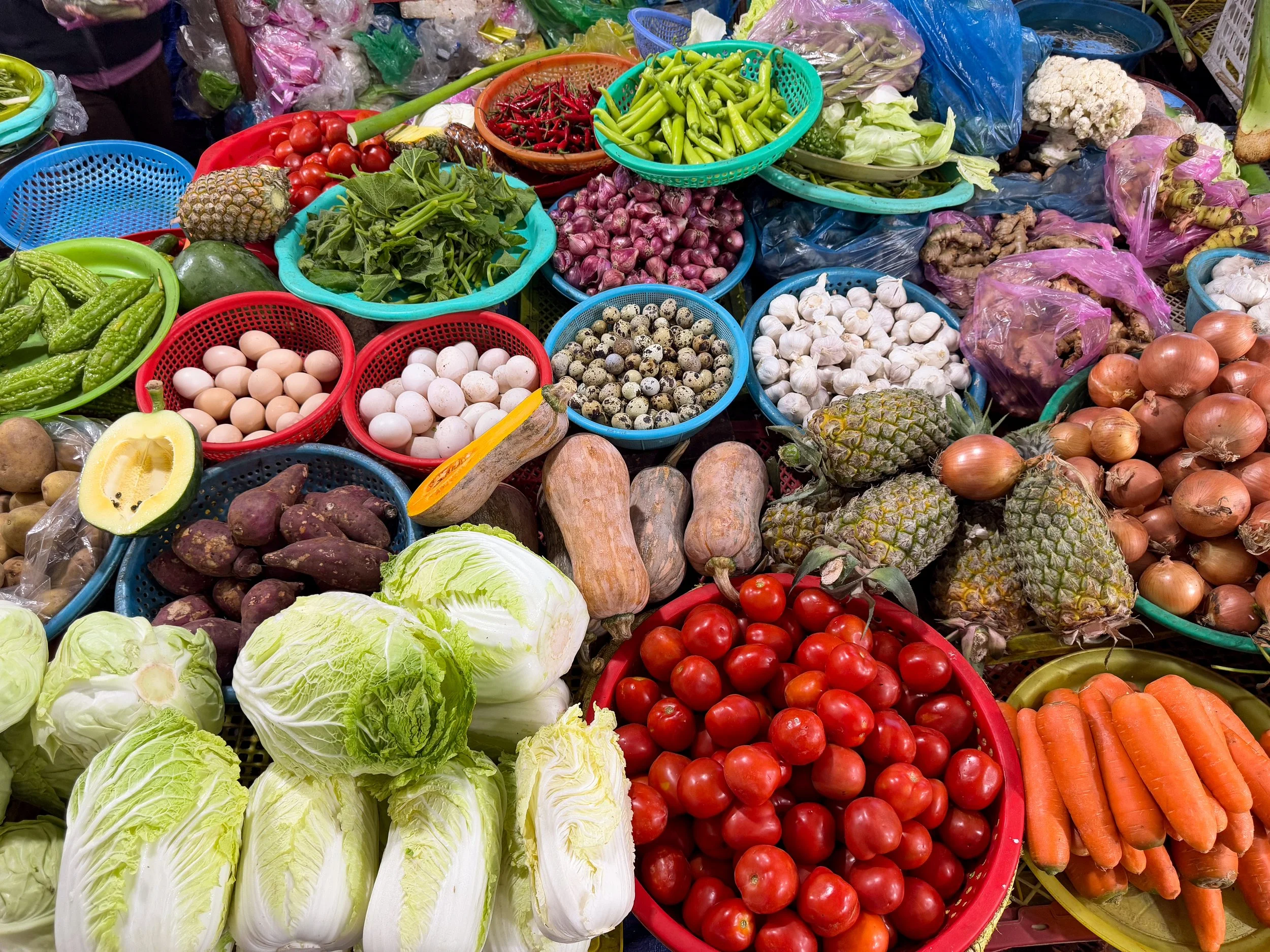
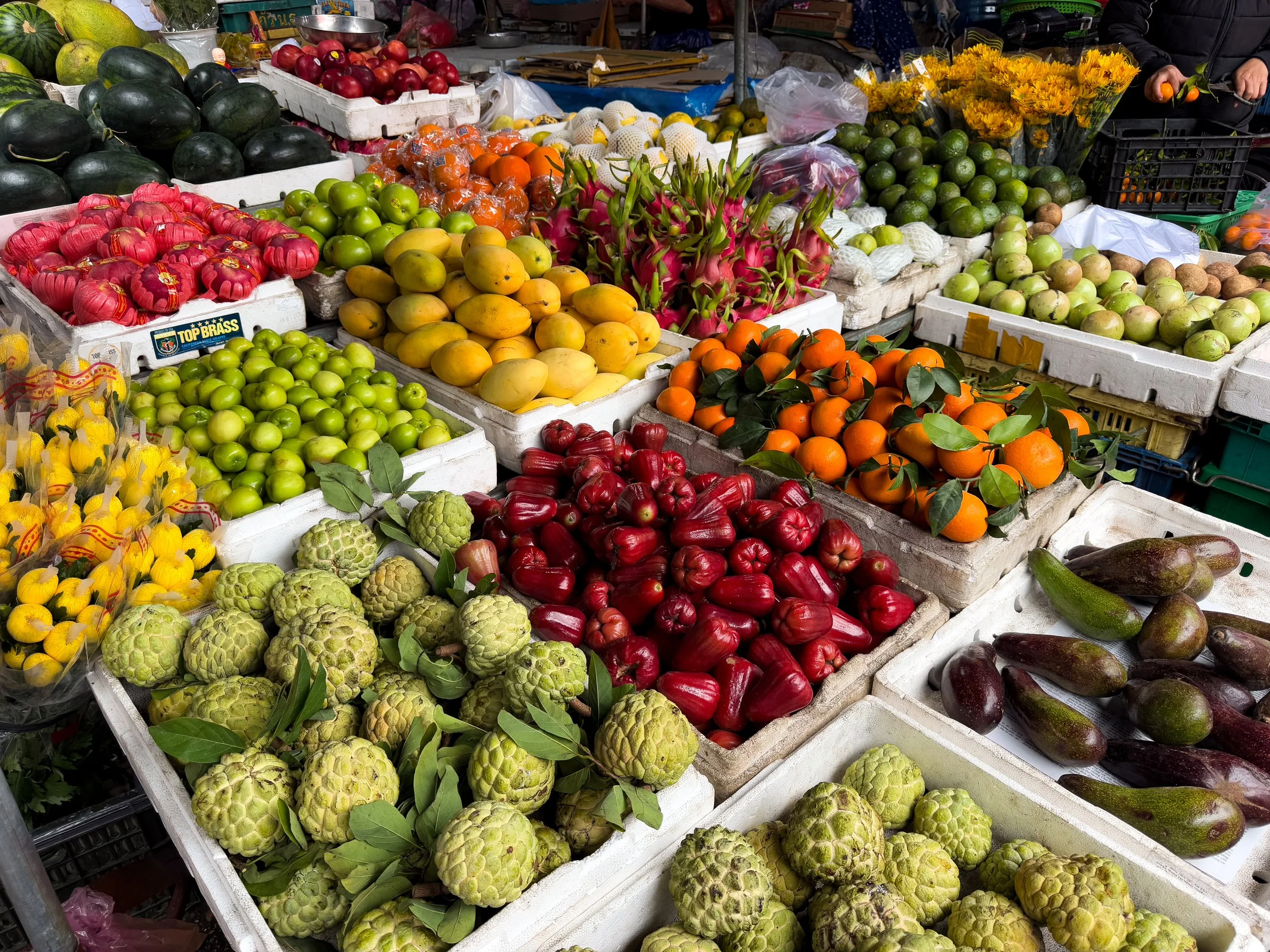
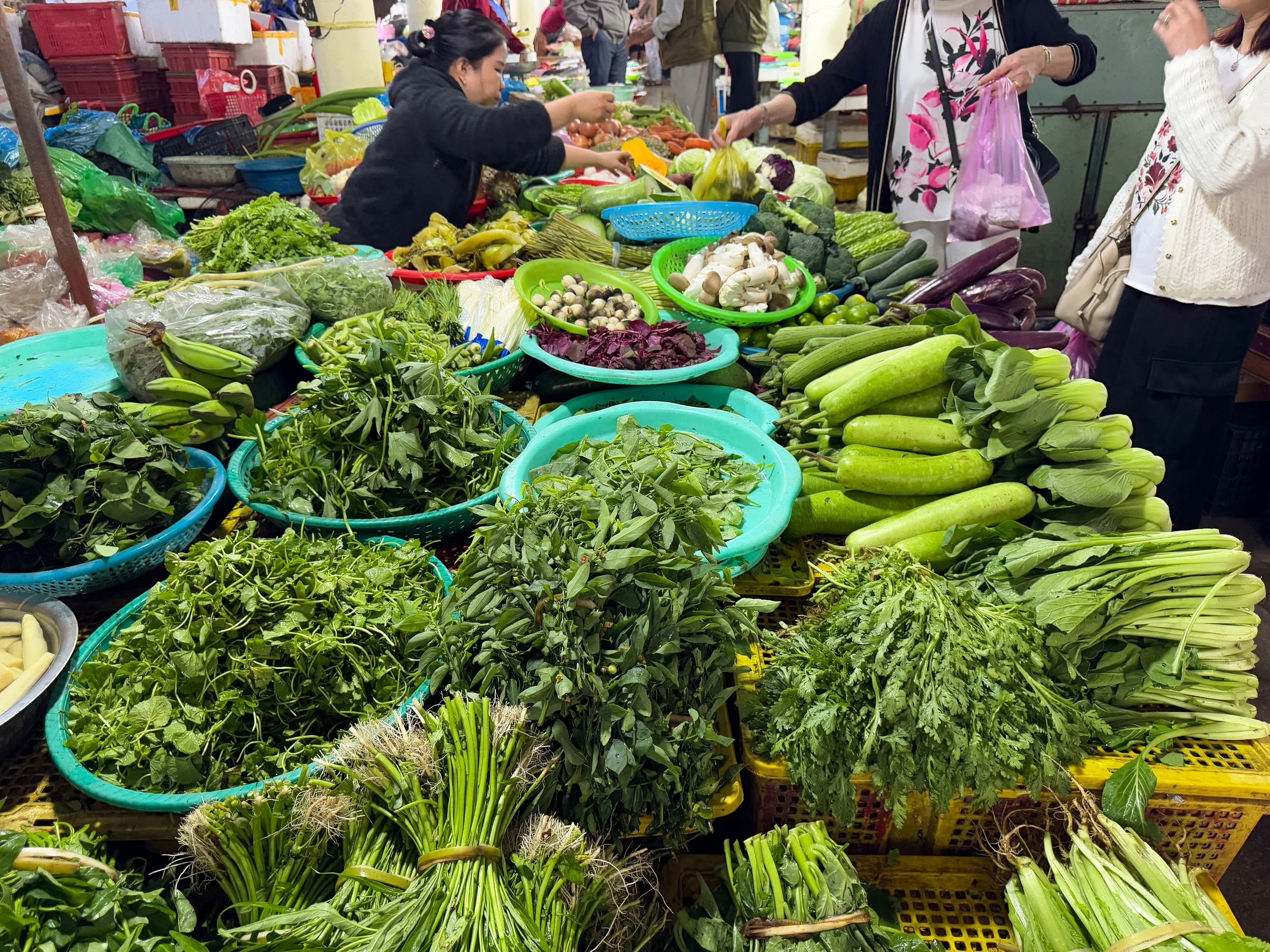
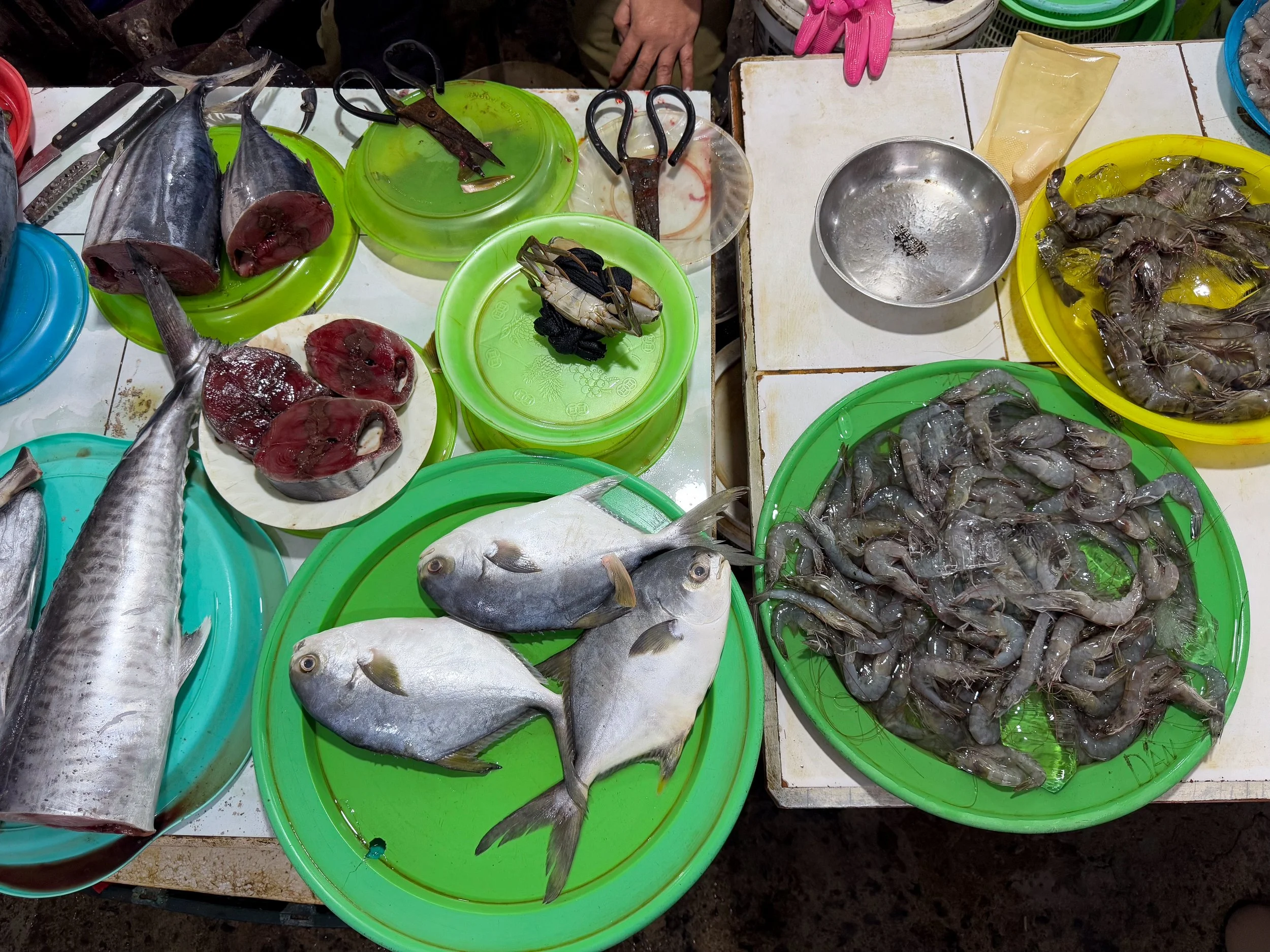
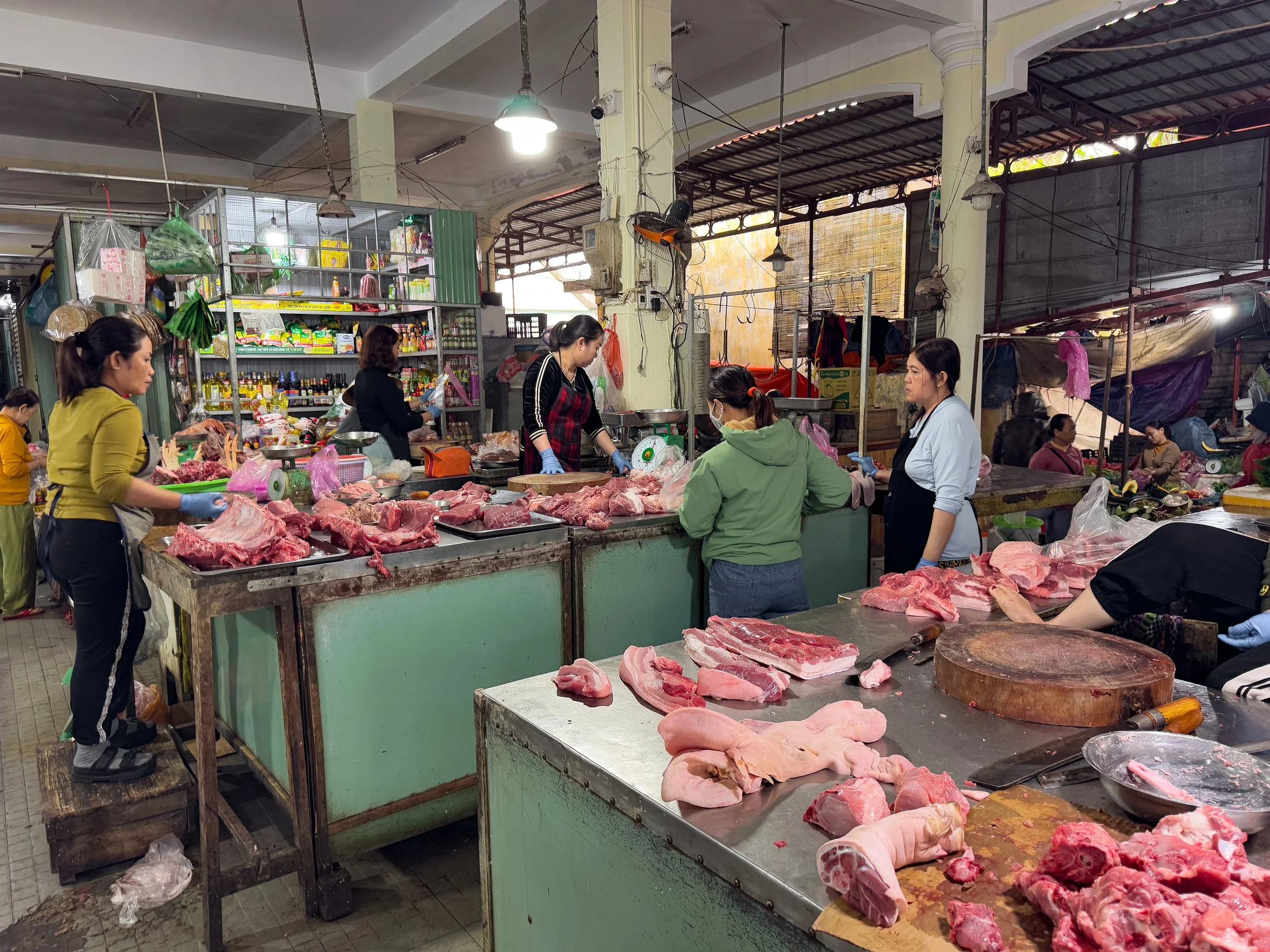
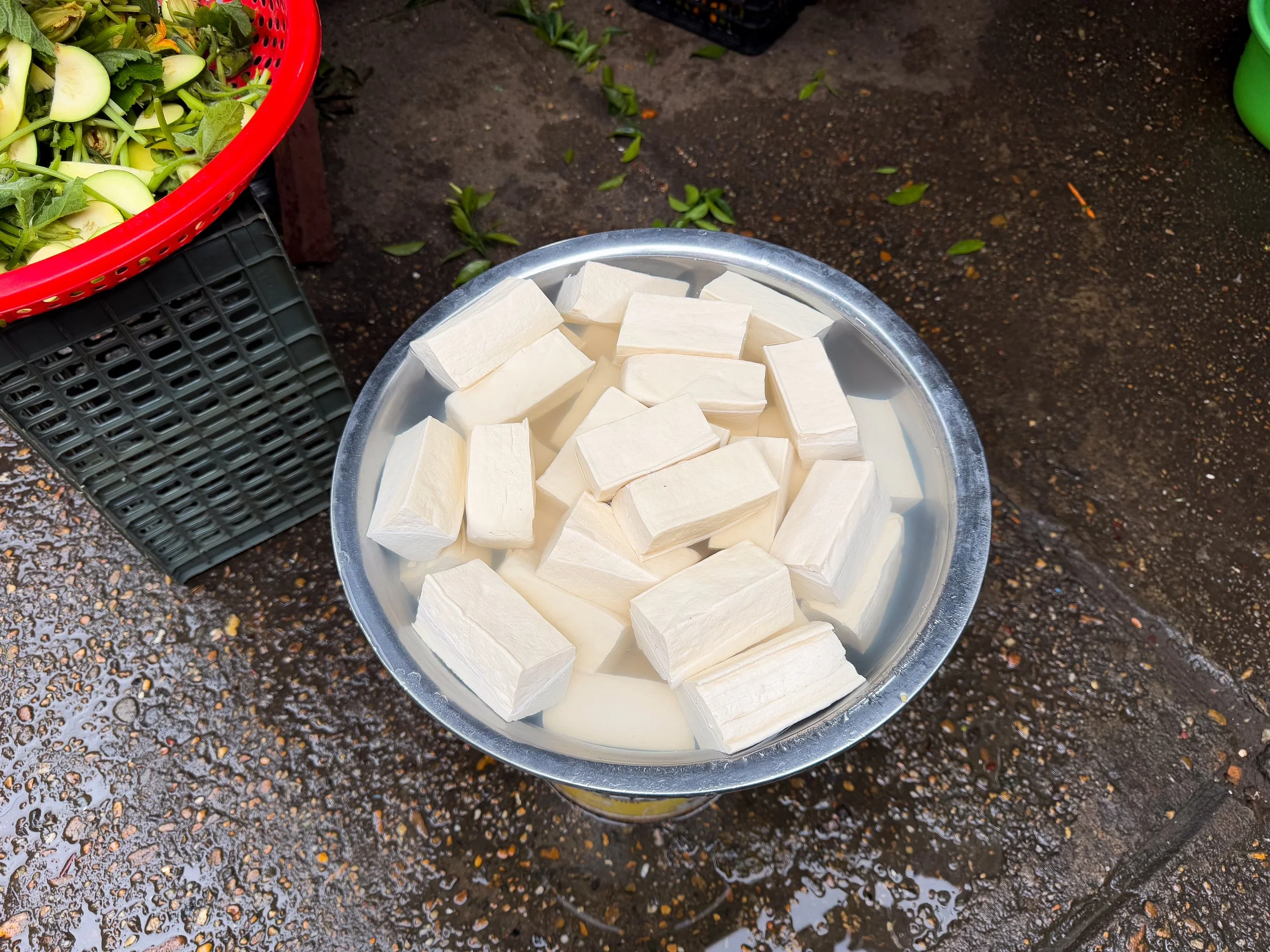
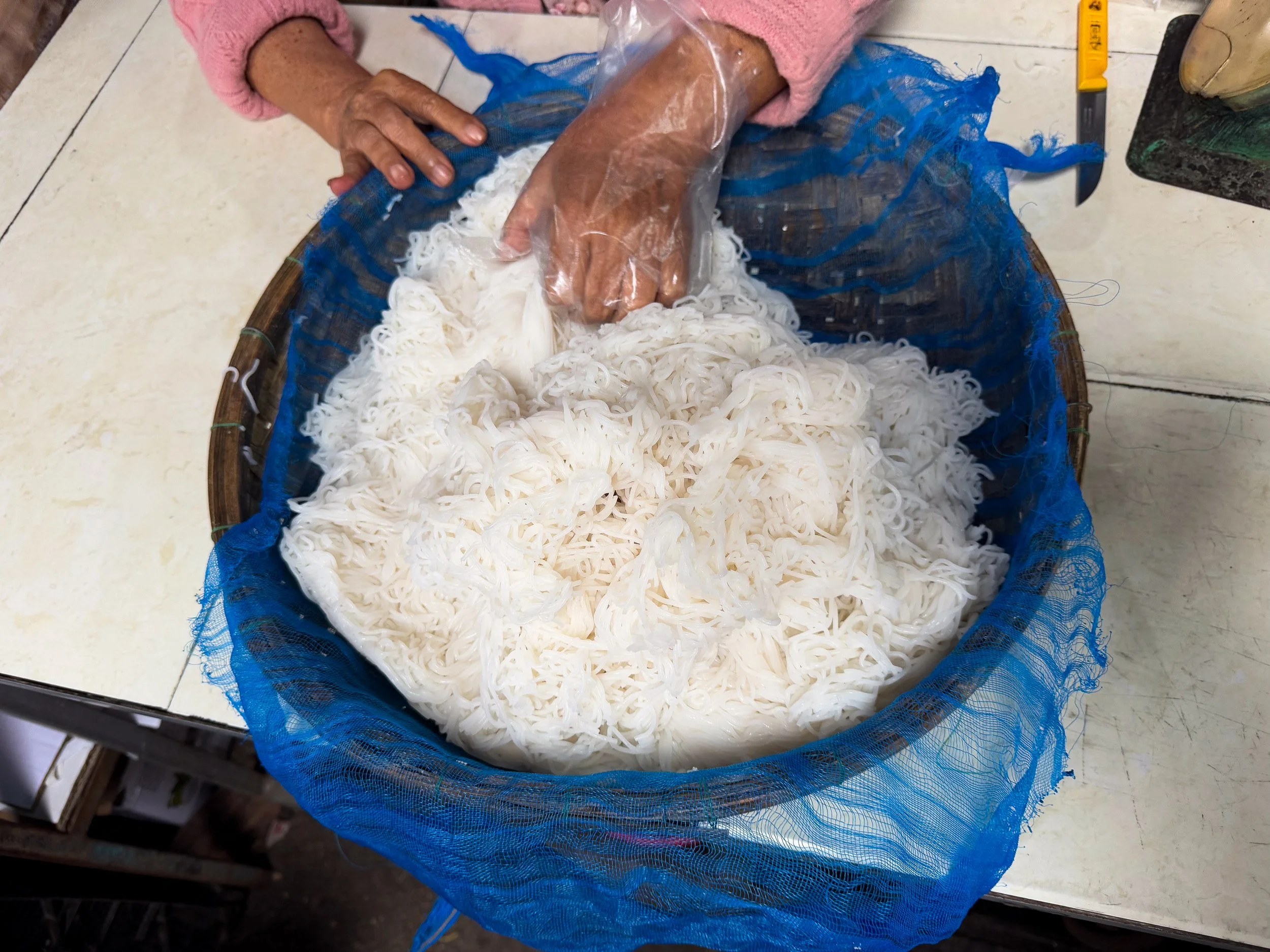
Cho Tan An Market. Also called the Tiger Market, Cho Tan An is a traditional Vietnamese farmers market with tables of vendors set up under a canopy of tin roofs and tarp covered tents. Cash in hand, we visited buying groceries for the week. Baskets are filled with vegetables, fruits and herbs including dragon fruit, bok choy, lychee, rose apples, durian, napa cabbage, rambutan and basil. Live and freshly caught seafood like crabs, shrimp, fish, eel and clams are displayed on tables. Butchers slice meats, pluck ducks and shave pig skin. Elsewhere, merchants sell quail eggs, buckets of tofu, piles of rice noodles, dried mushrooms, rice paper, fish sauces, chili oils and fresh cut flowers.
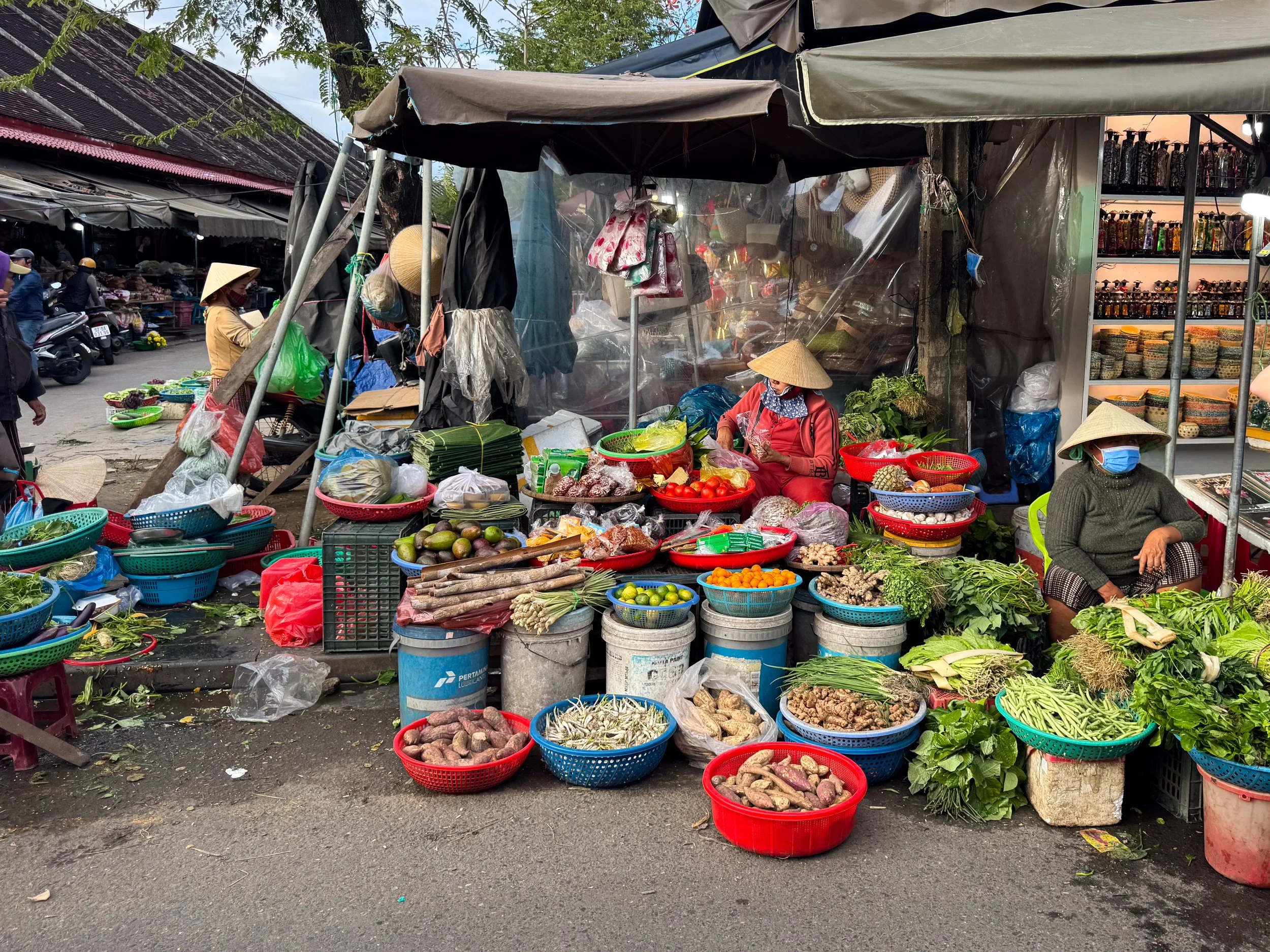
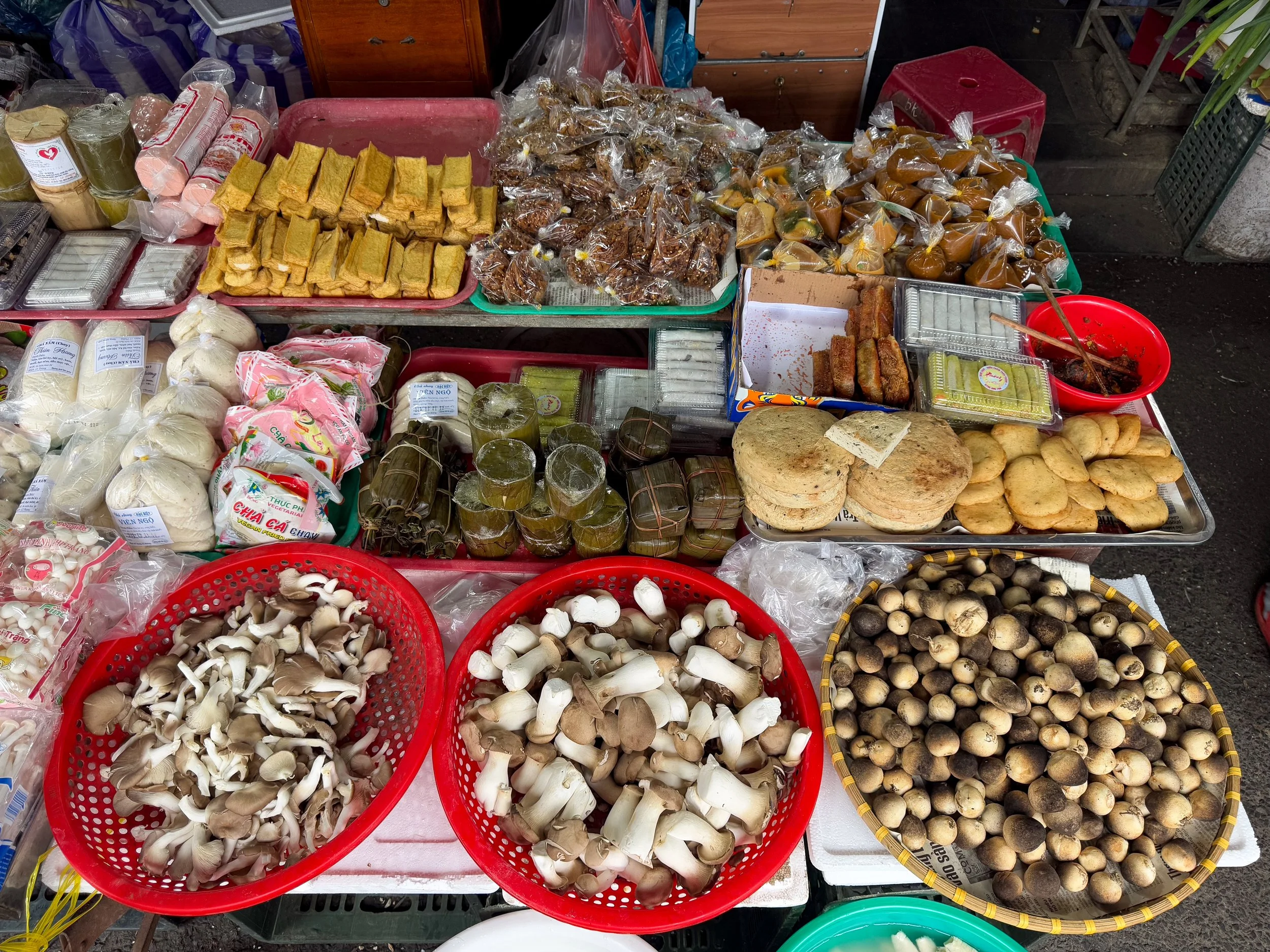
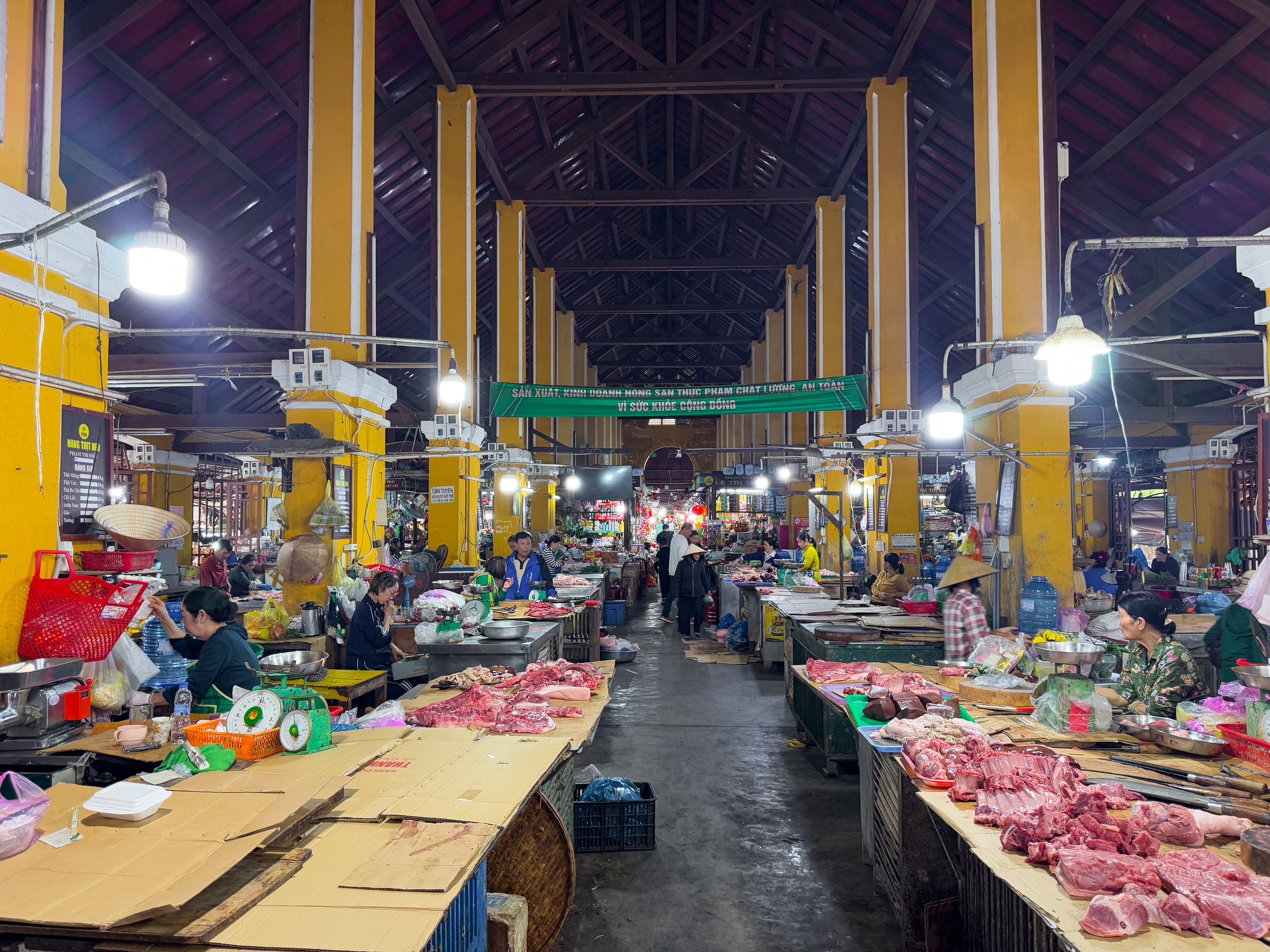
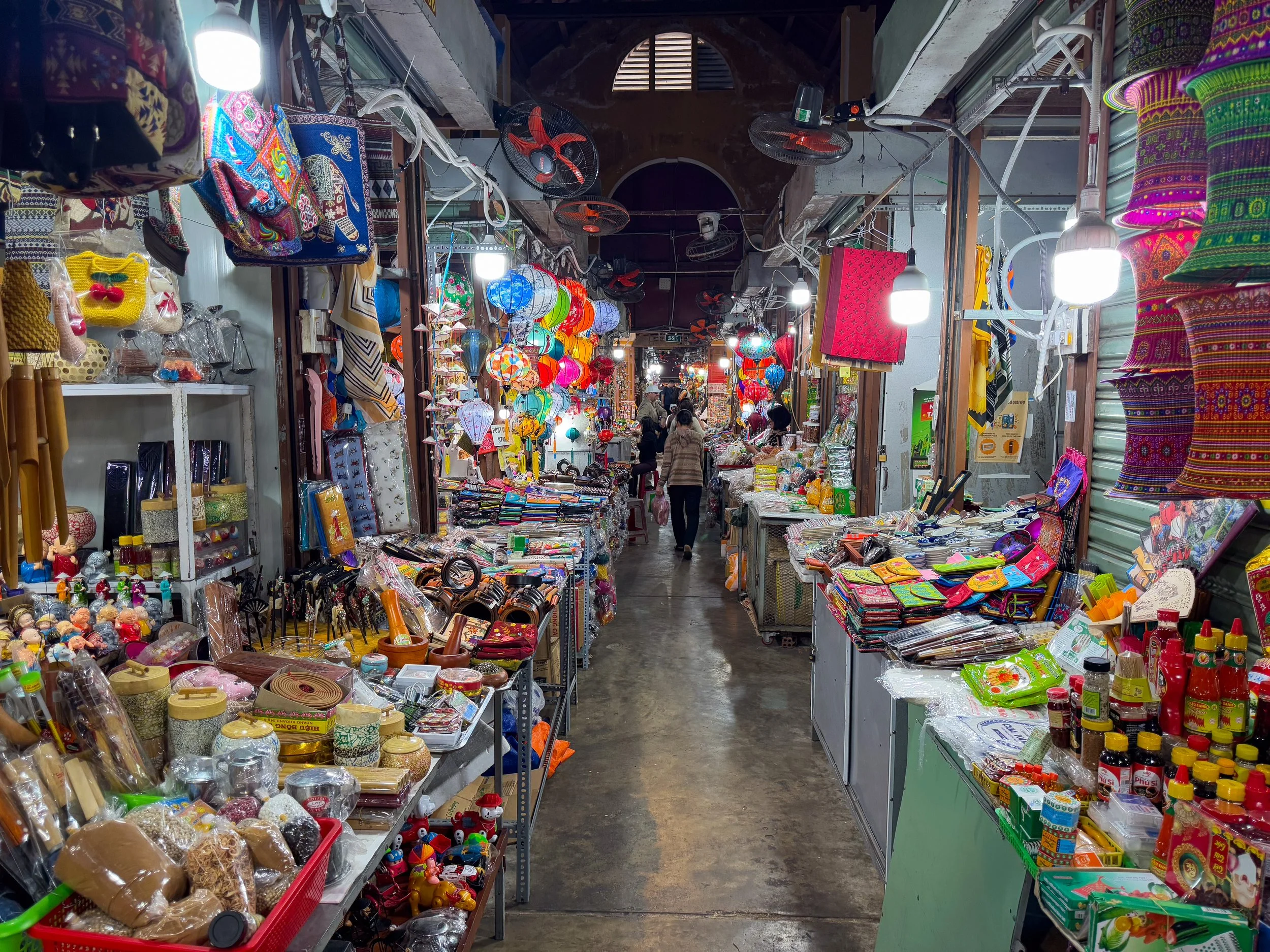
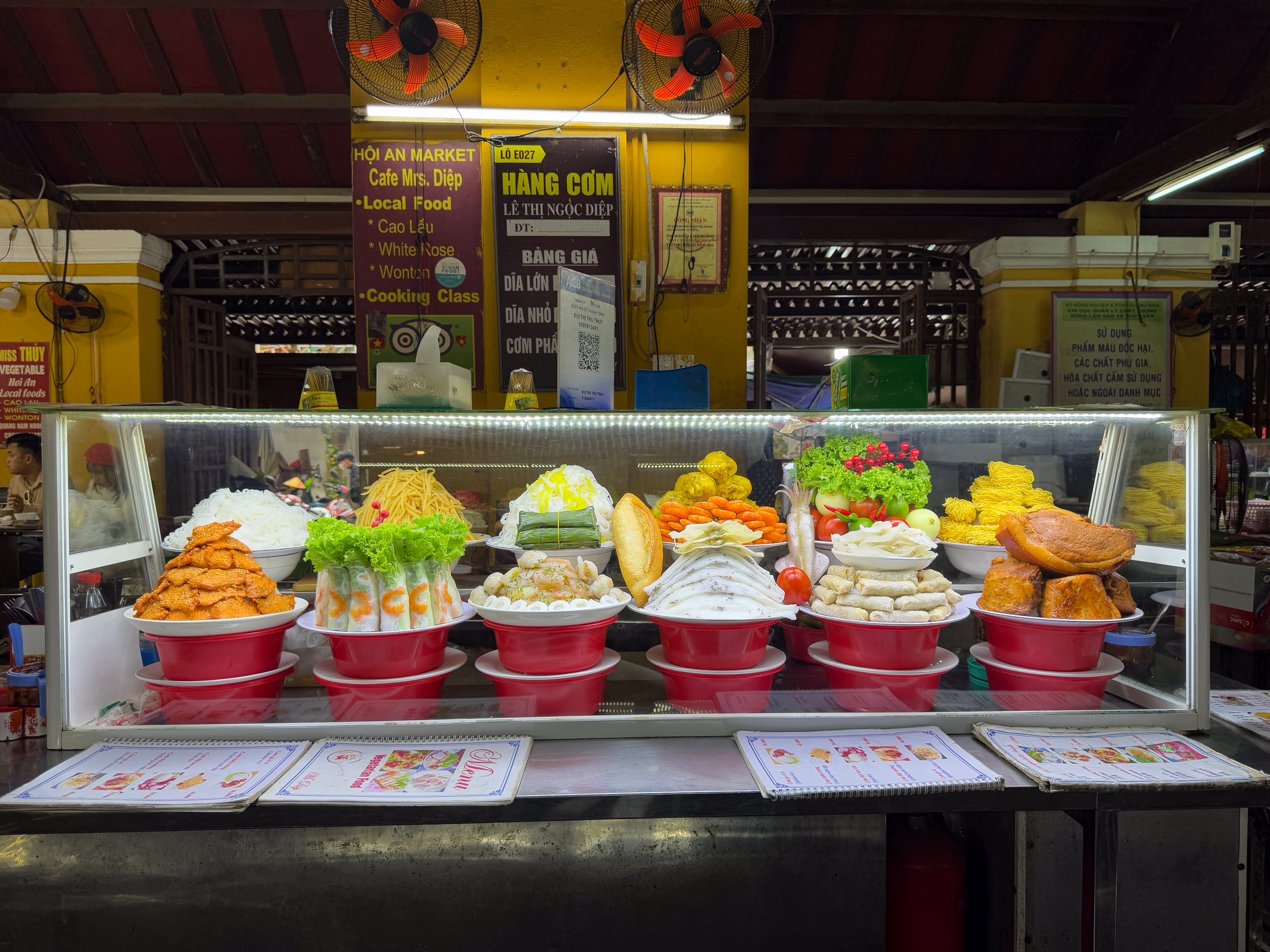
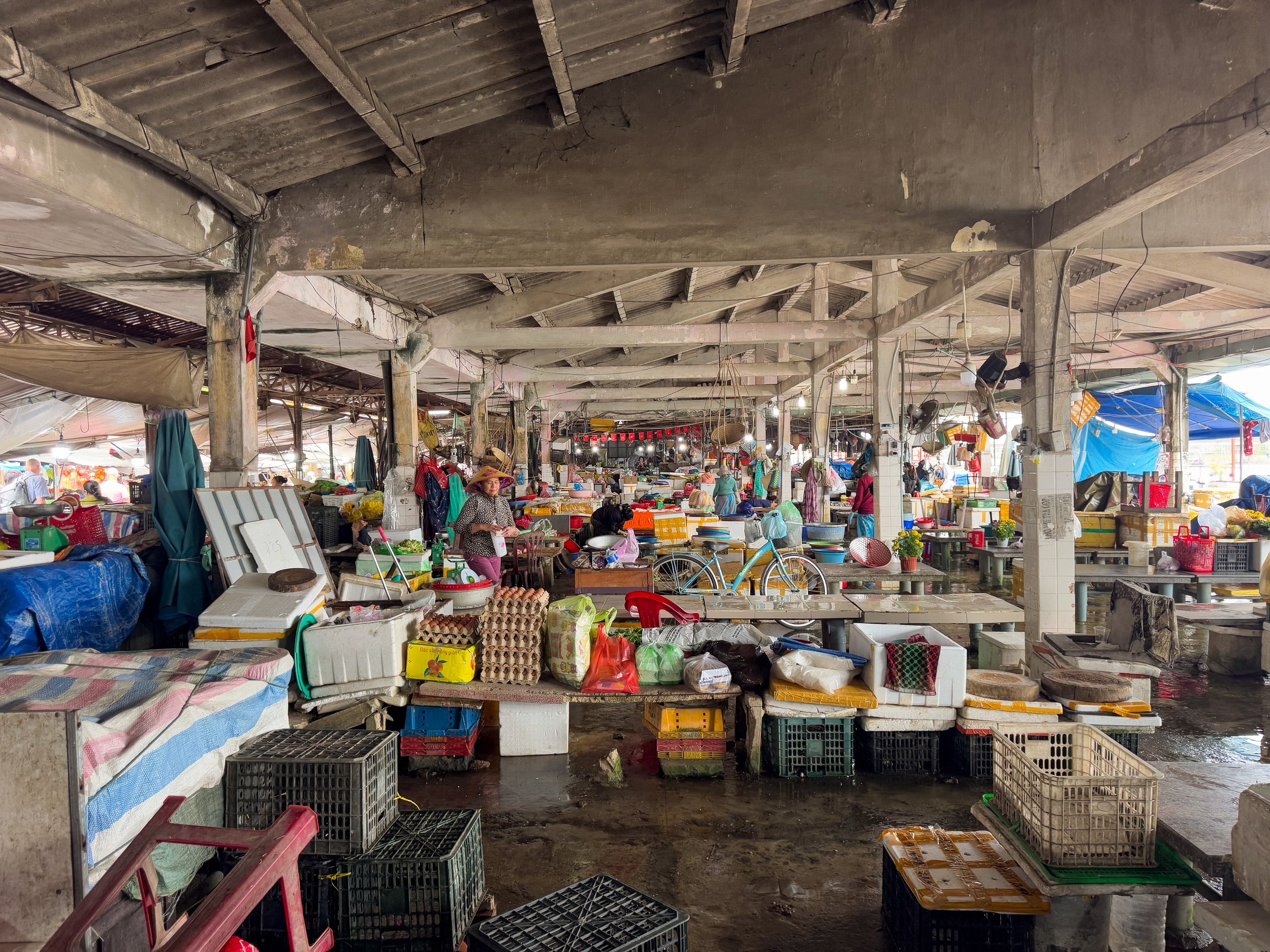
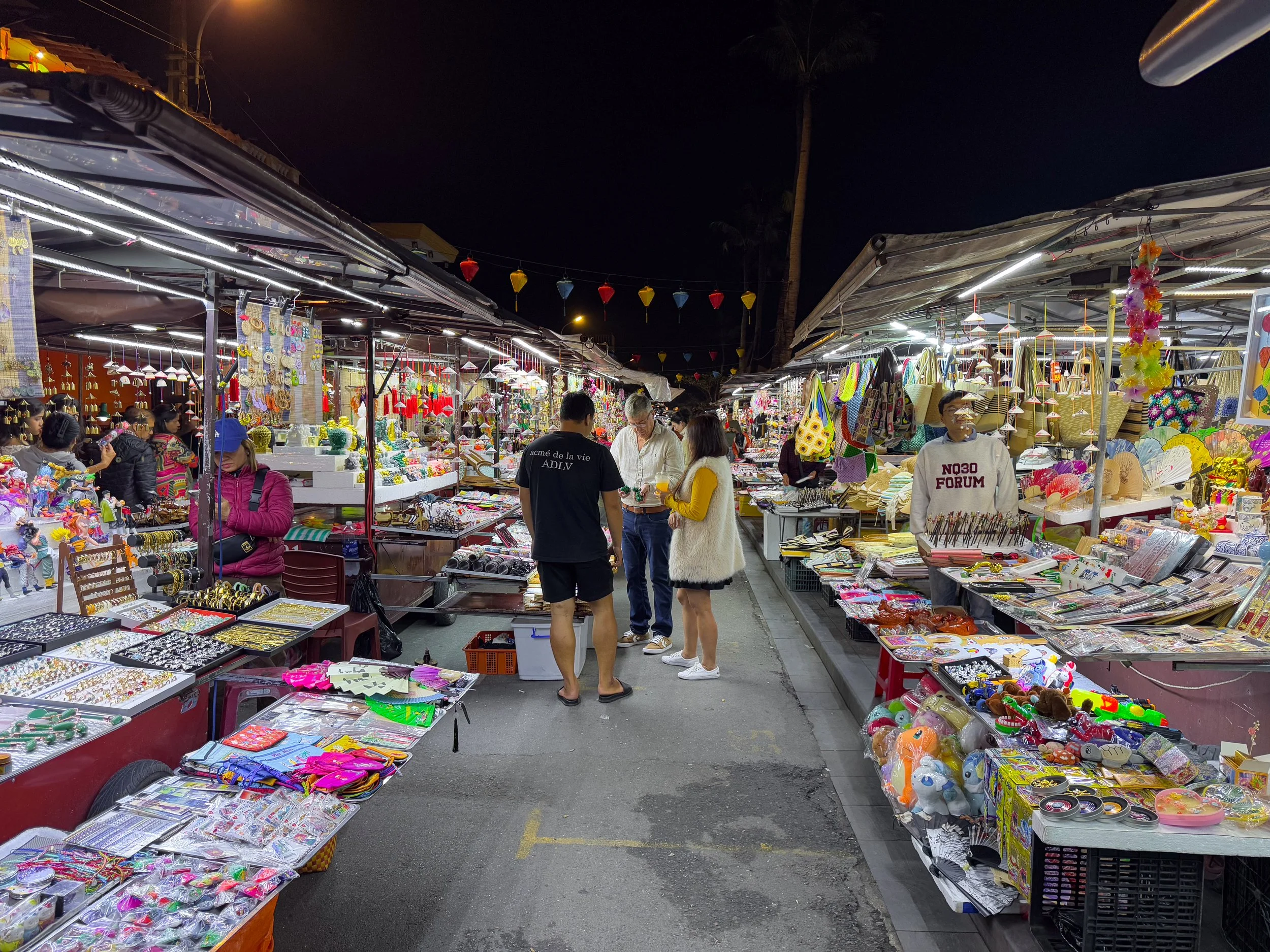
Hoi An Market. A large market in the ancient city held underneath a series of sheds with vendors selling produce, meats, seafood and dry goods. It’s similar to the Tiger Market with the addition of merchants selling souvenirs and Vietnamese dishes. The market spills out into the surrounding streets and along the waterfront.
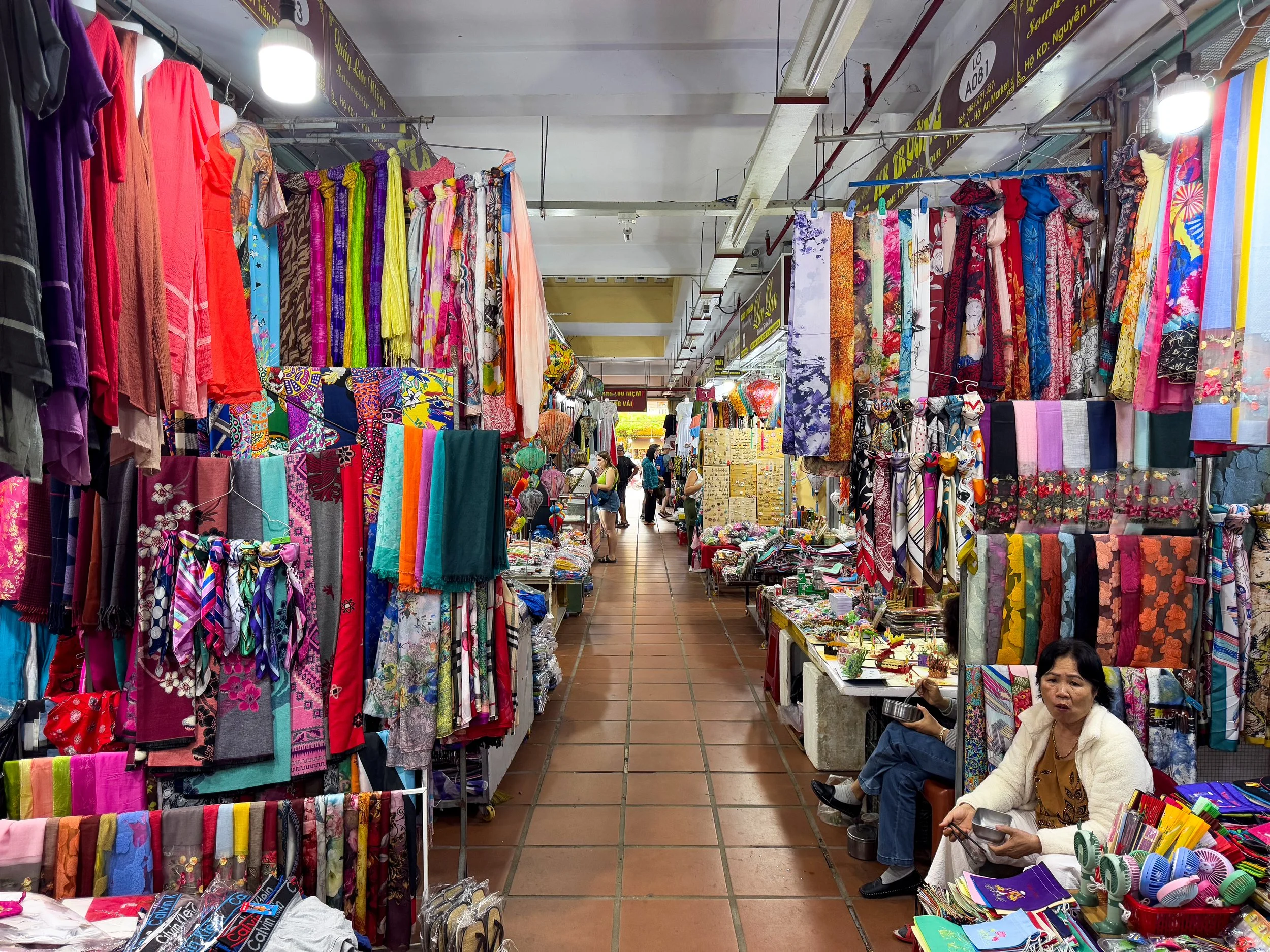
Hoi An Fabric Market. A large textile market lined with bolts of fabrics, booths with tailors and custom clothing makers. It’s popular to have formal wear like suits and dresses made here. Vendors can produce anything using inspiration photos and have look books to choose from. They can be overly pushy when walking through the market so only come here if you’re serious about having something made.
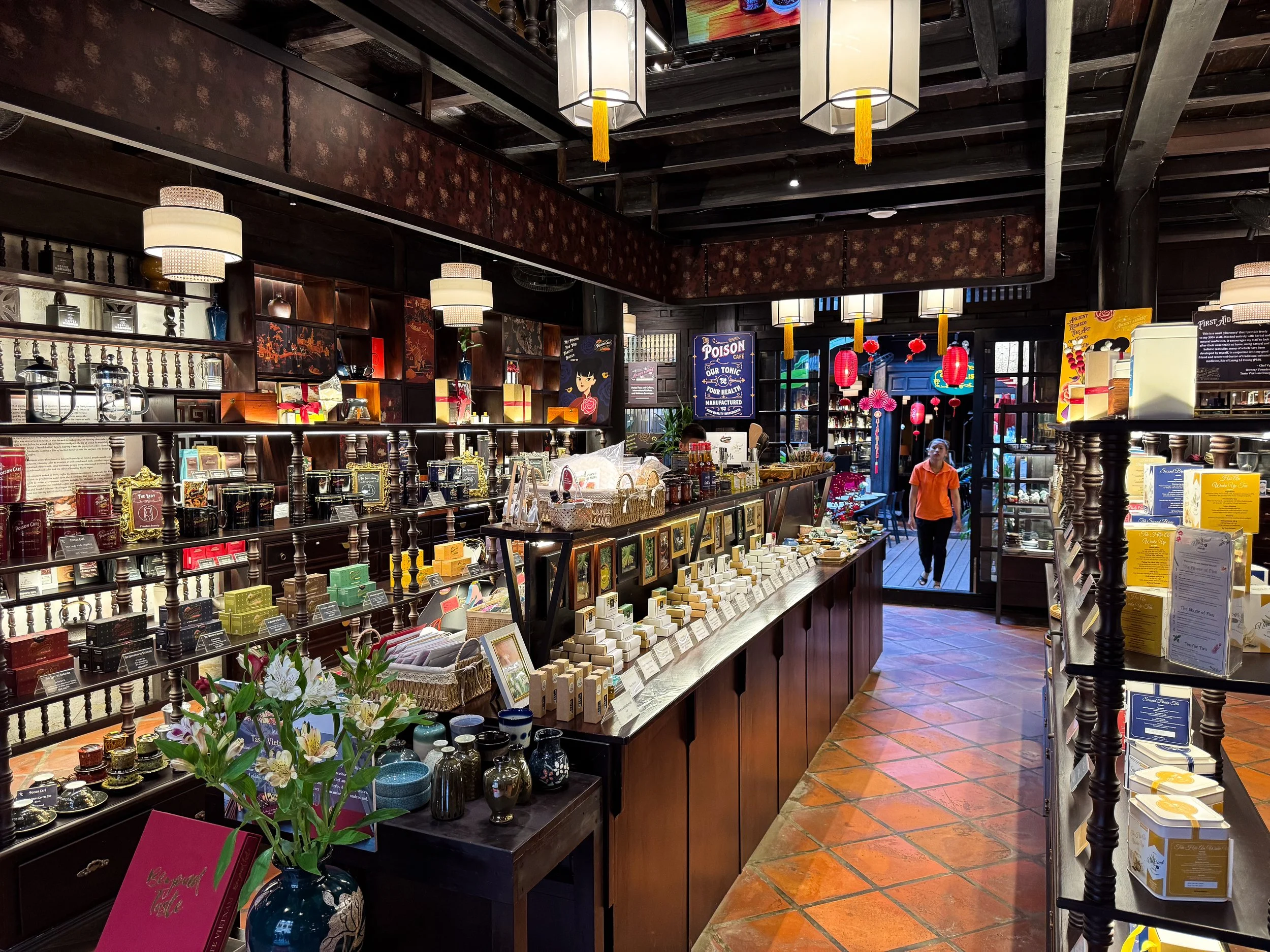
The Spice Route by Ms Vy. A market selling herbal rice wines, candied ginger, almond cookies, aromatic soaps, medicinal teas and spices. The market leads into a small courtyard with a café and up to a rooftop with views of the riverfront. It’s located inside a historic home and former maternity hospital.
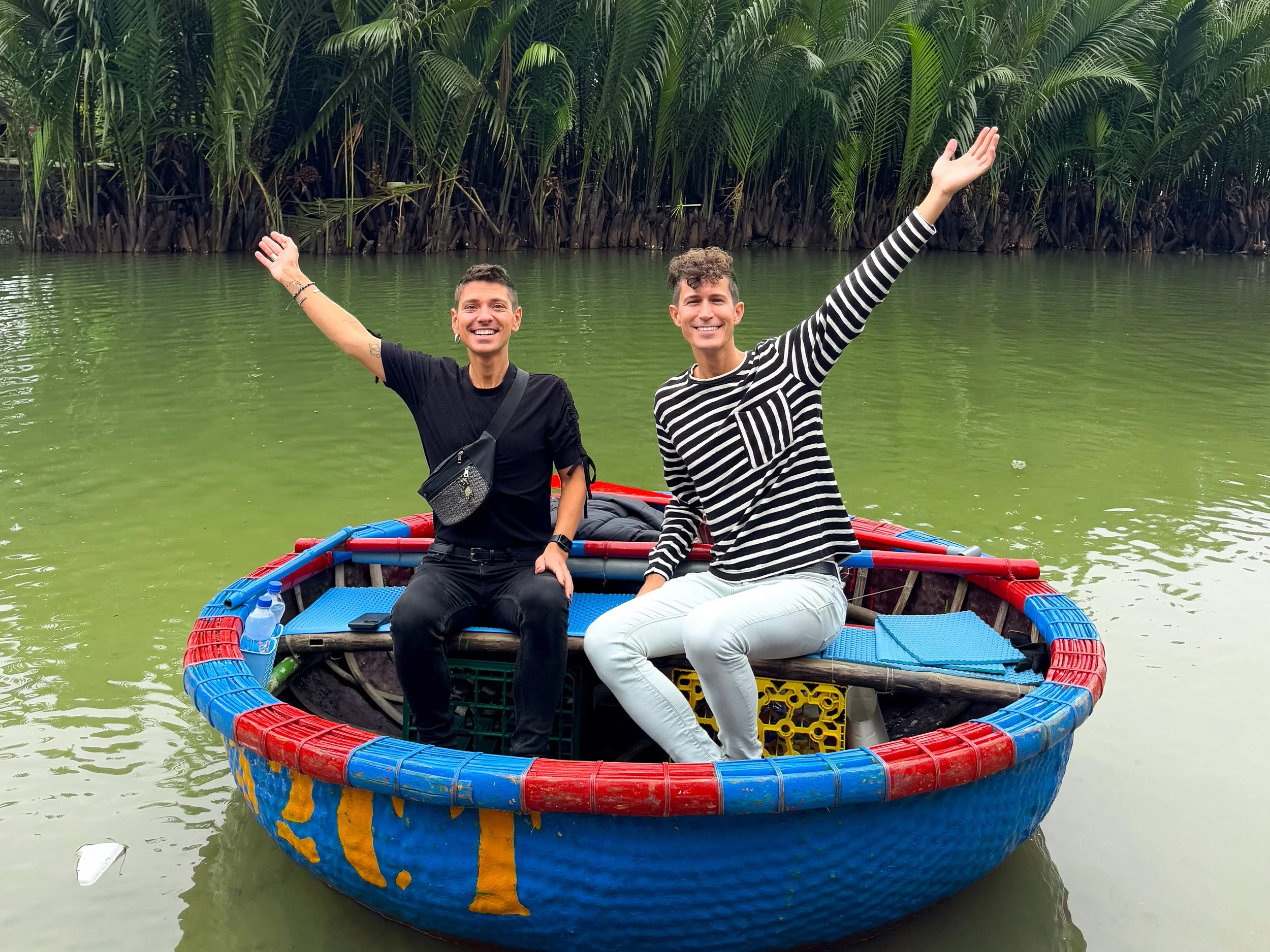
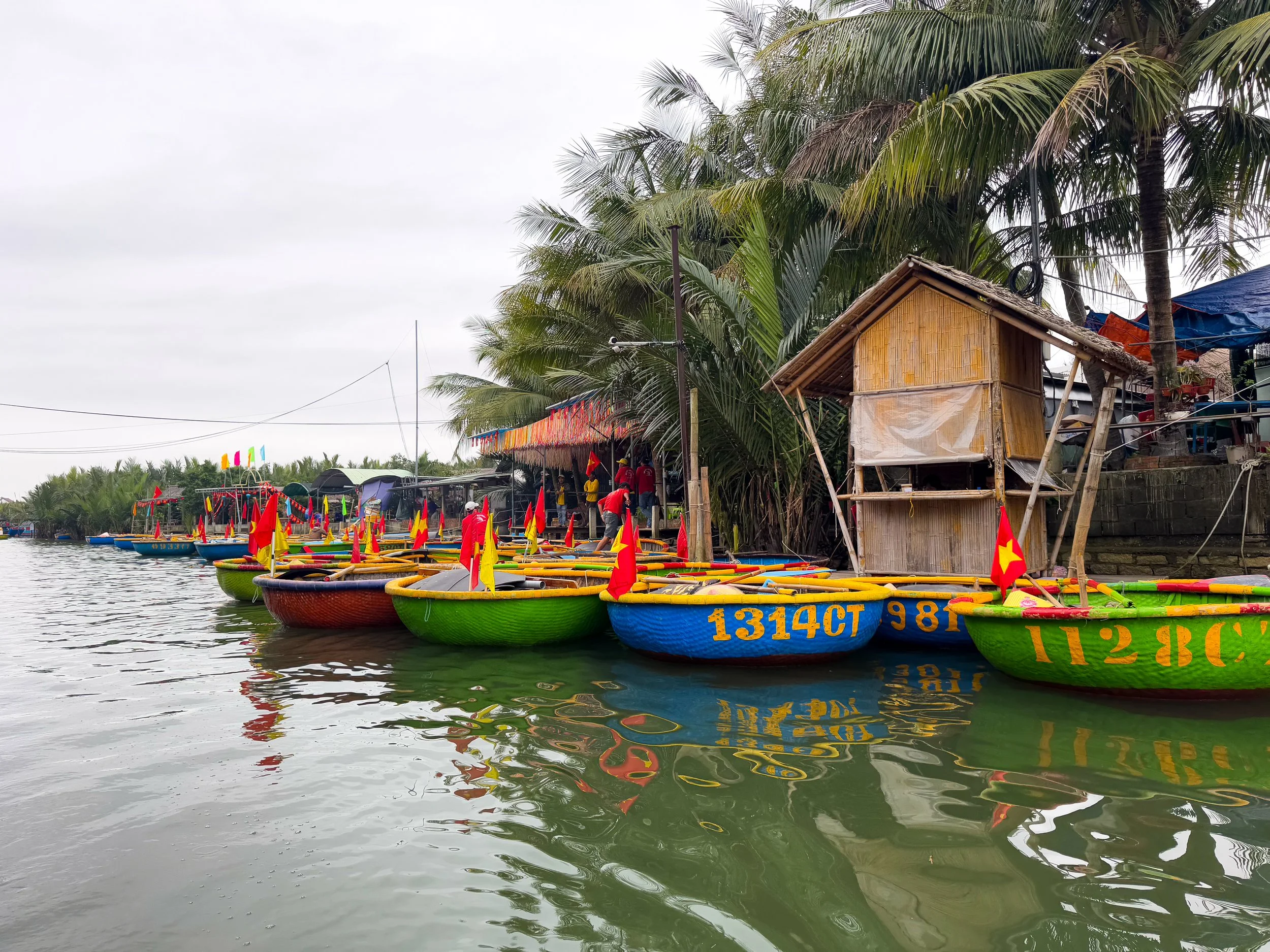
Coconut Basket Boats
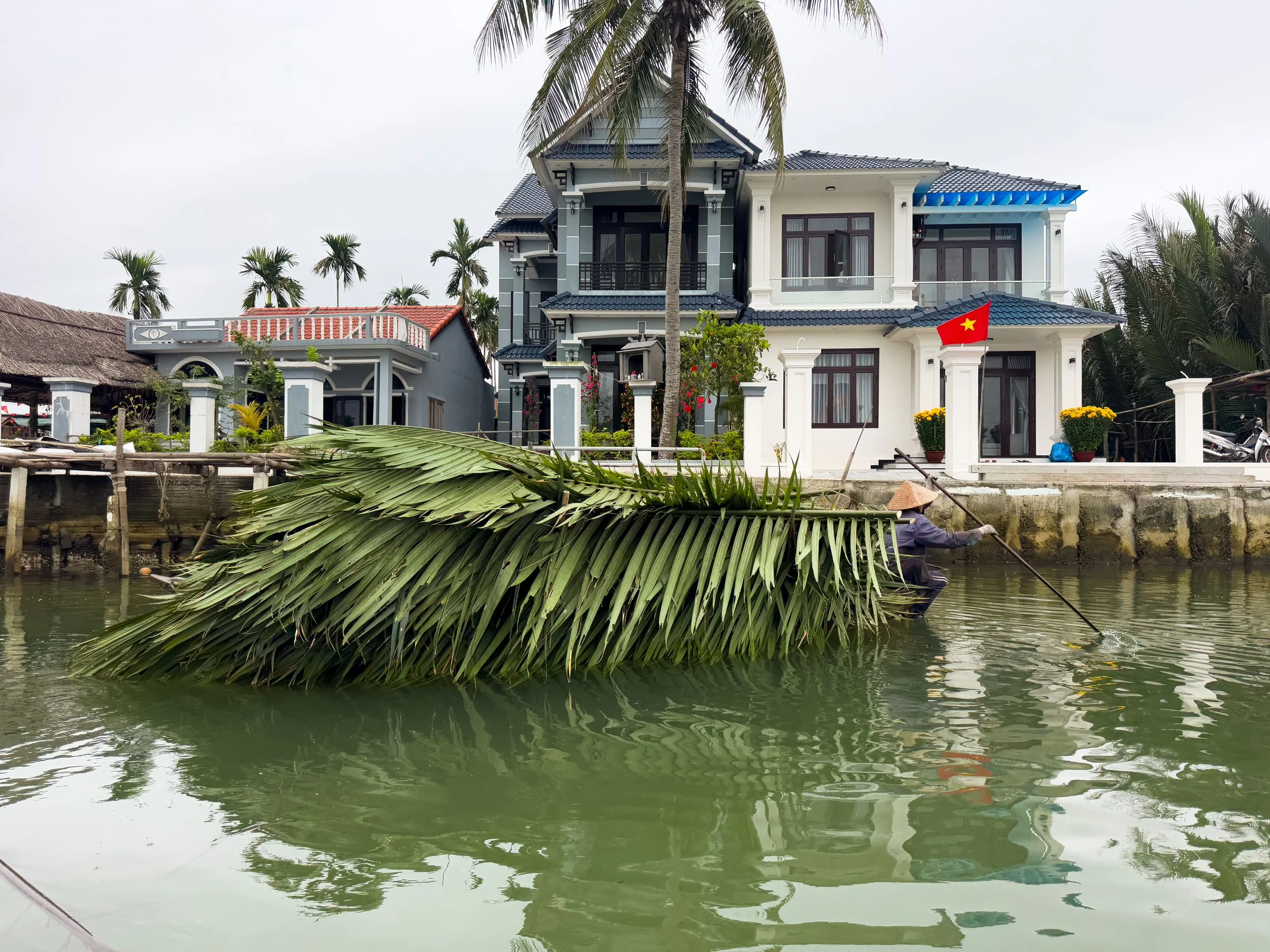
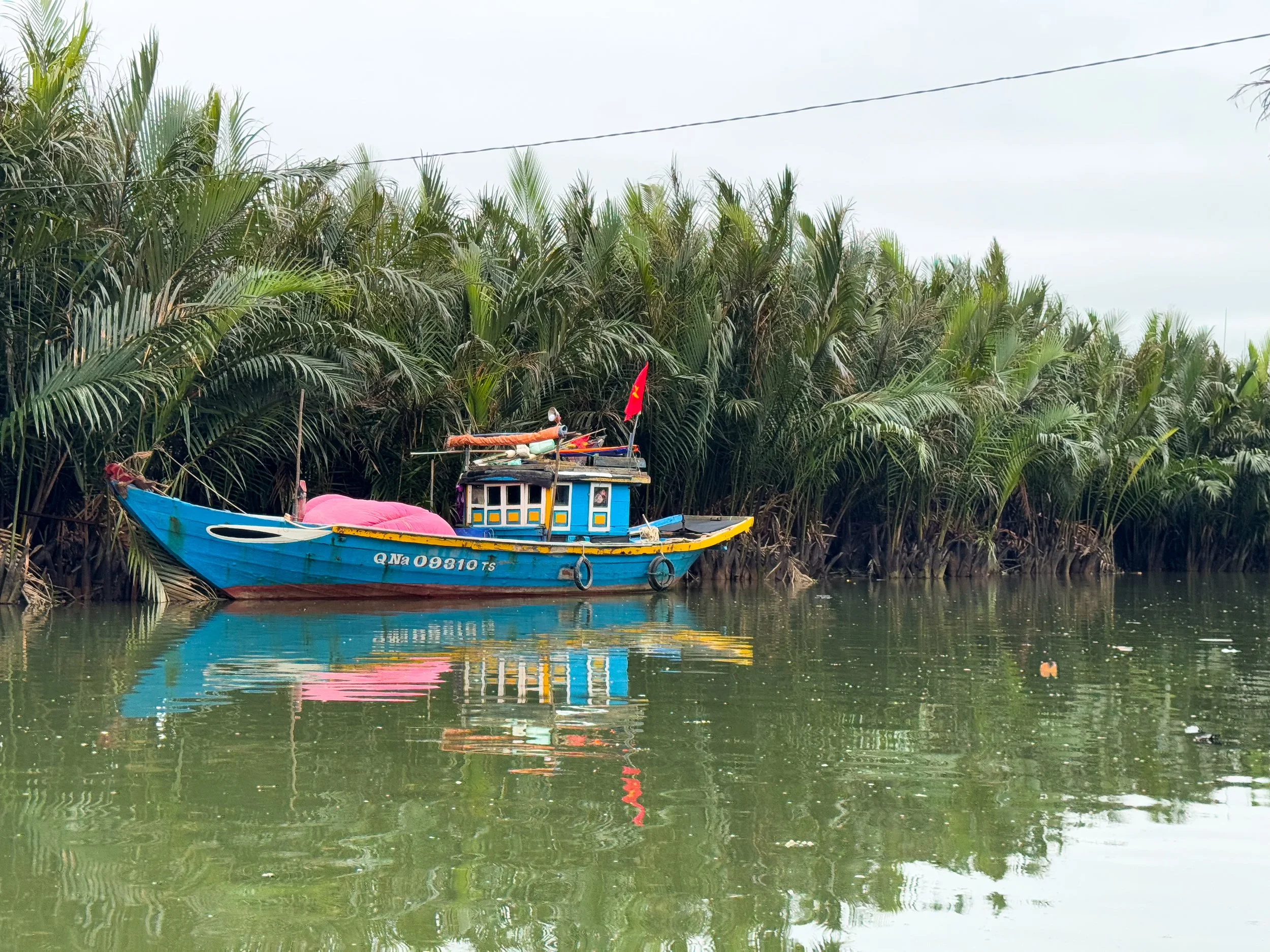
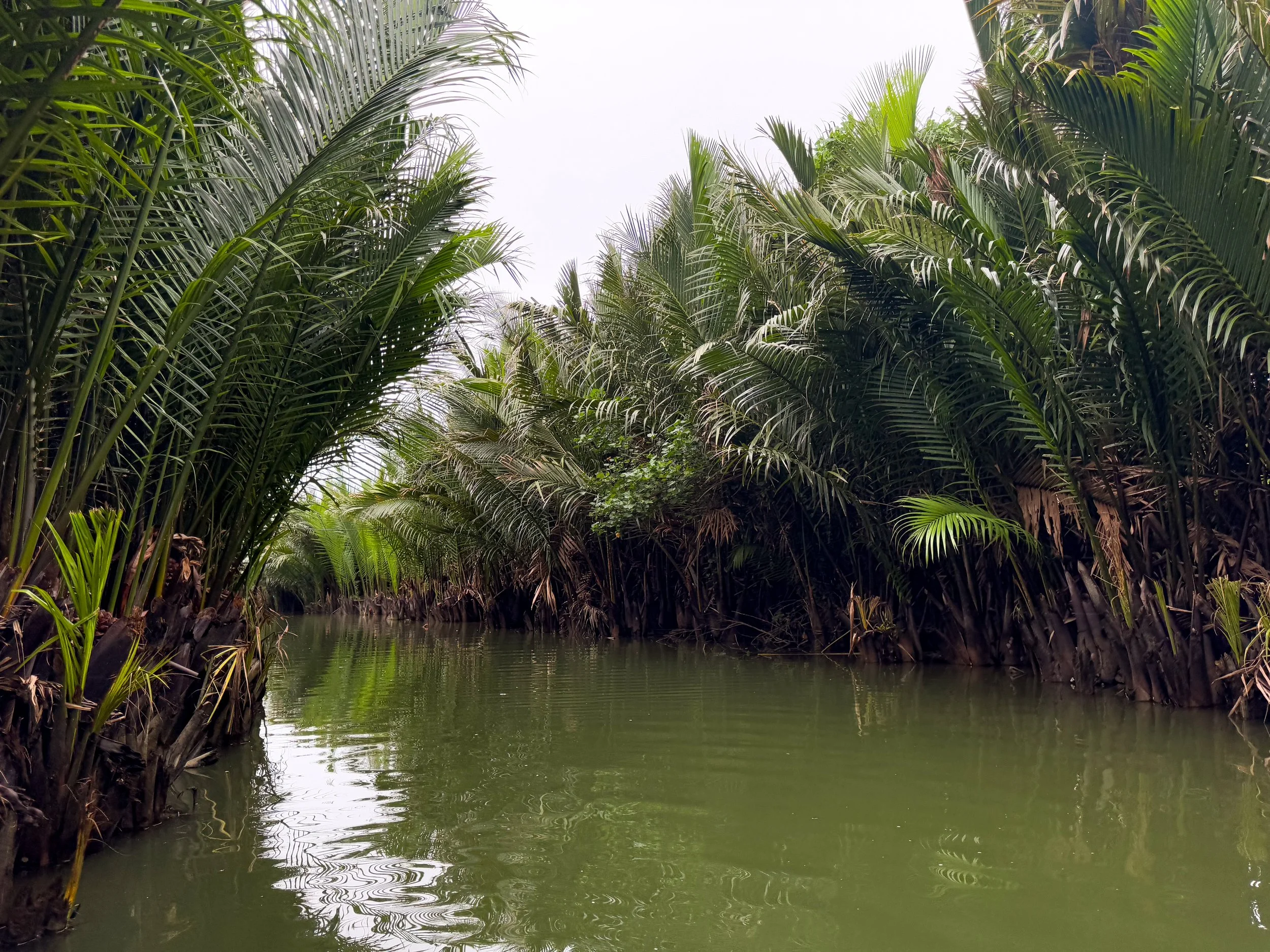
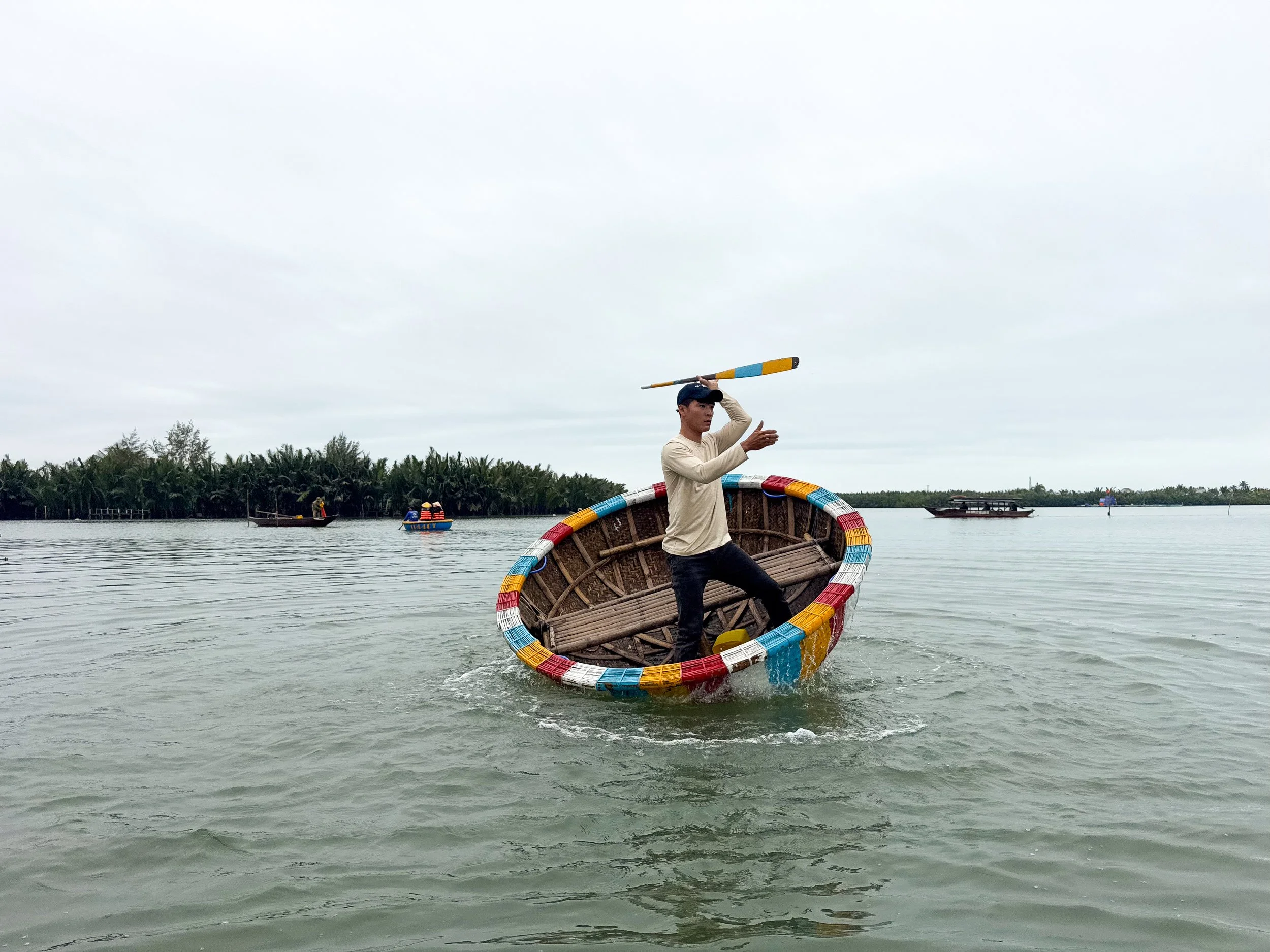
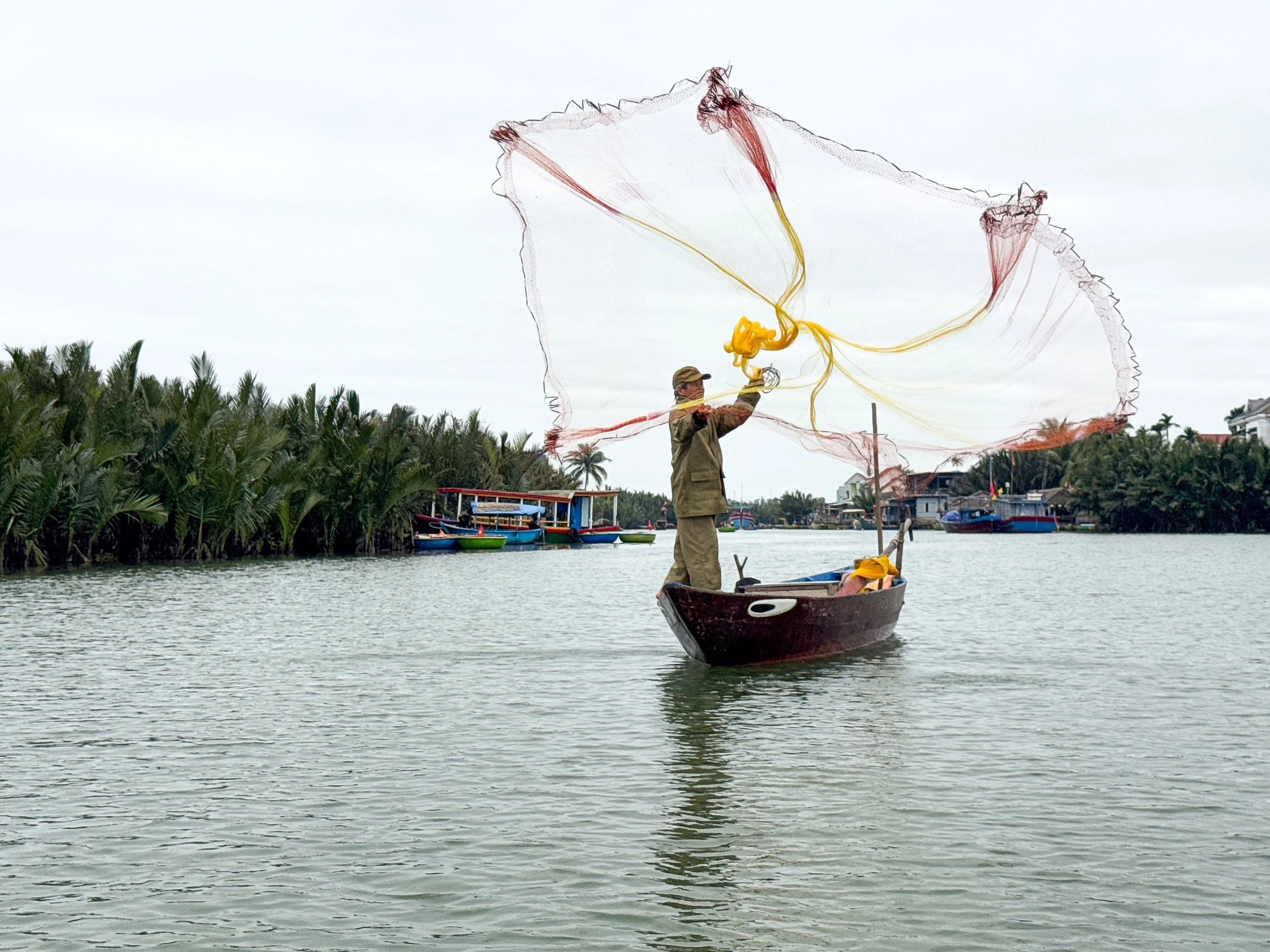
One of the most popular activities in Hoi An is experiencing coconut basket boats and getting spun around at rapid speeds. The round boats are traditionally woven baskets used by locals for stability while fishing the coastal waters. Paired with an energetic guide, he paddled us through the palm covered channels of the coconut island. We saw locals harvesting palm leaves for thatched roofs, watched a net fishing demonstration, paddled the boat ourselves and of course got spun around! We booked ahead of time, including roundtrip transportation from our homestay with Green Coconut Village Cooking Tour.
My Son Sanctuary
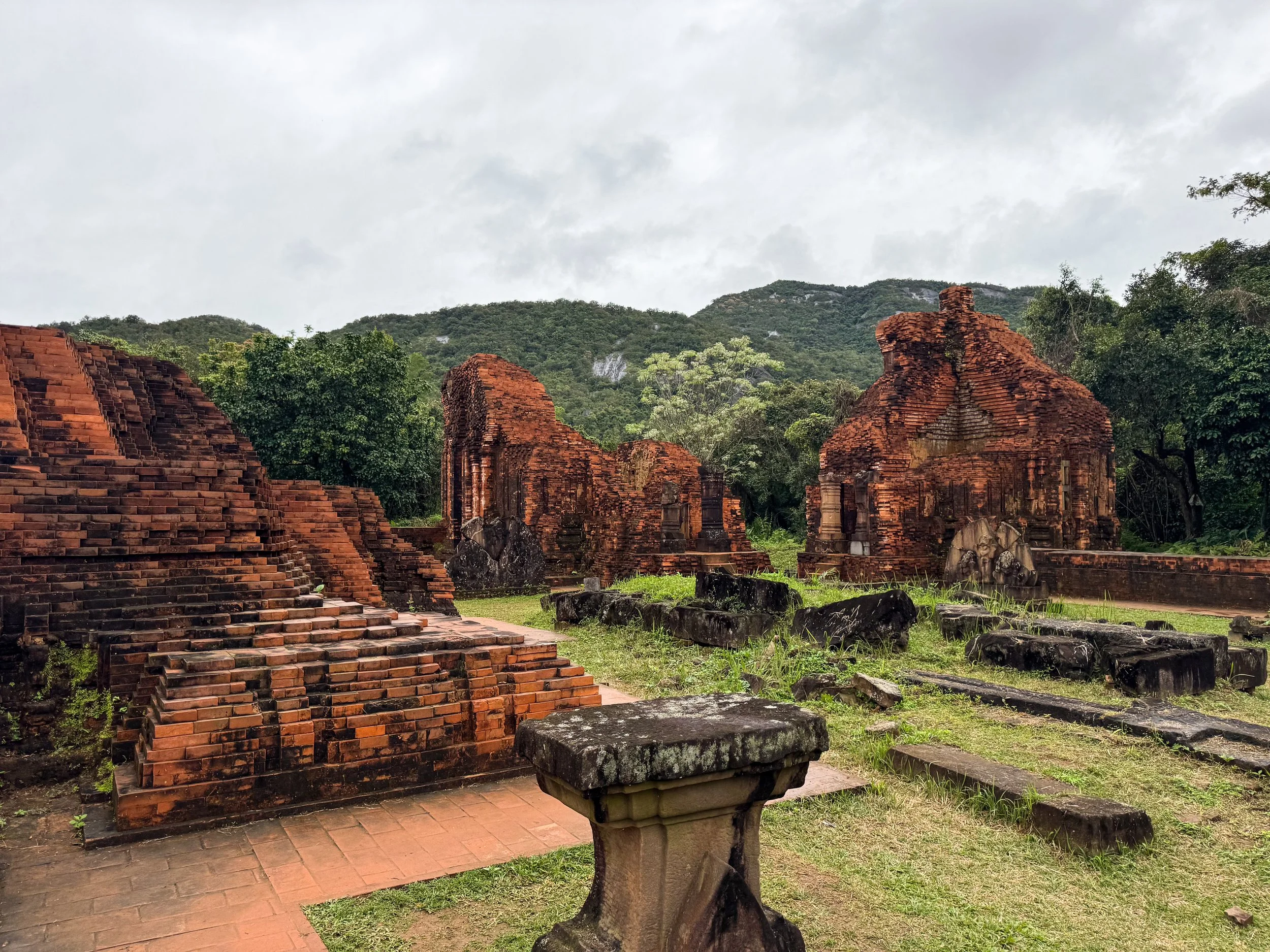
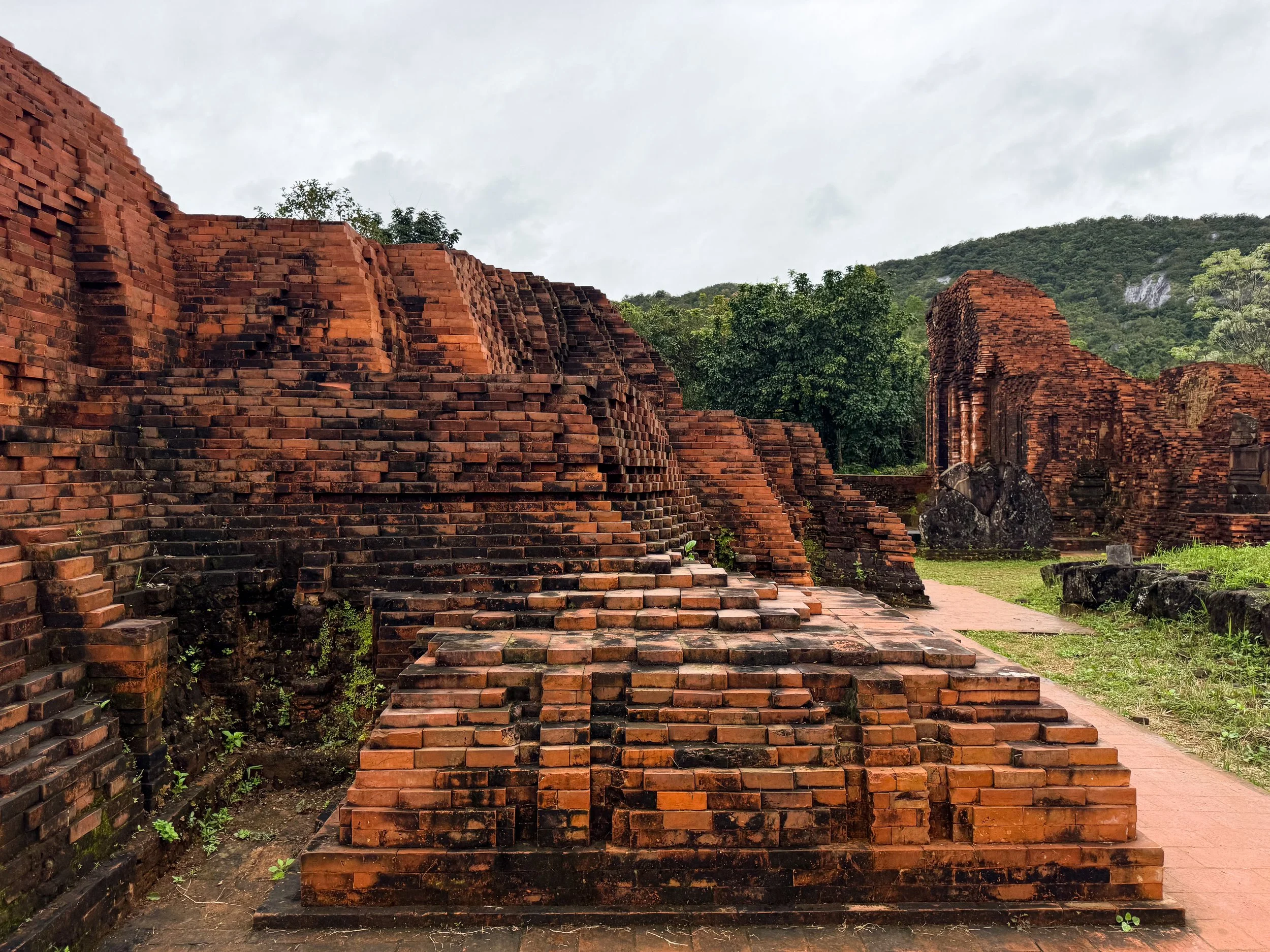
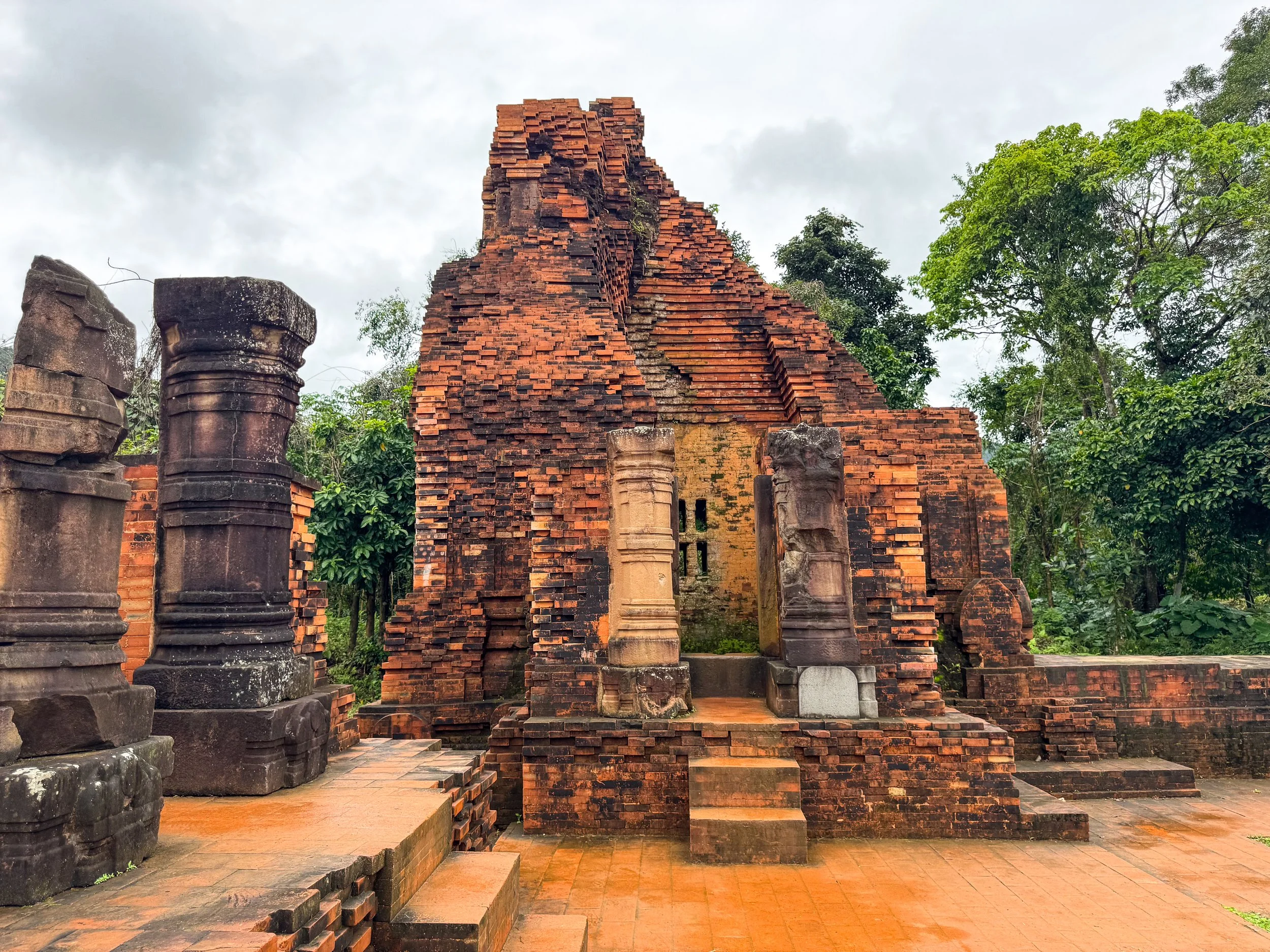
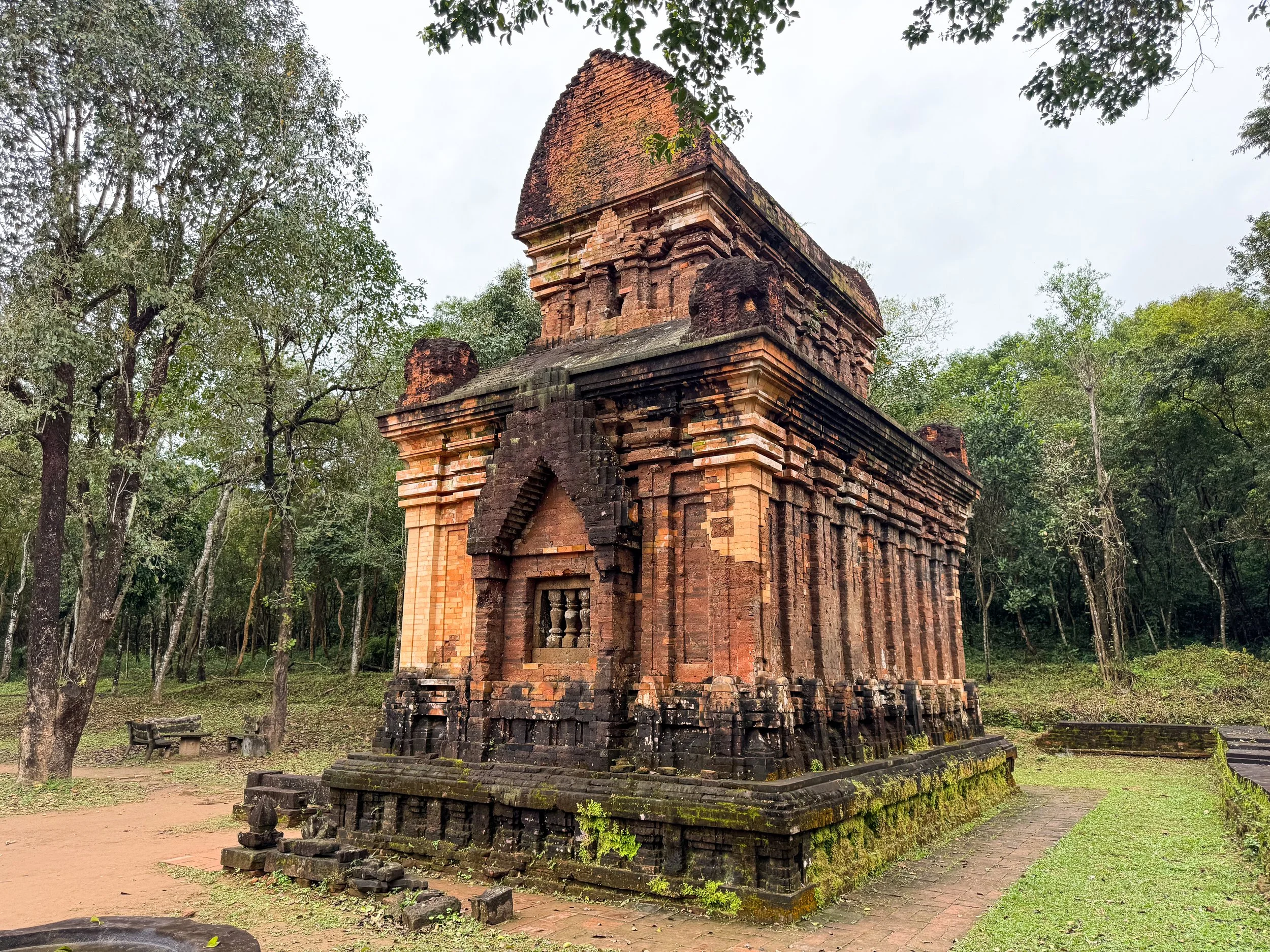
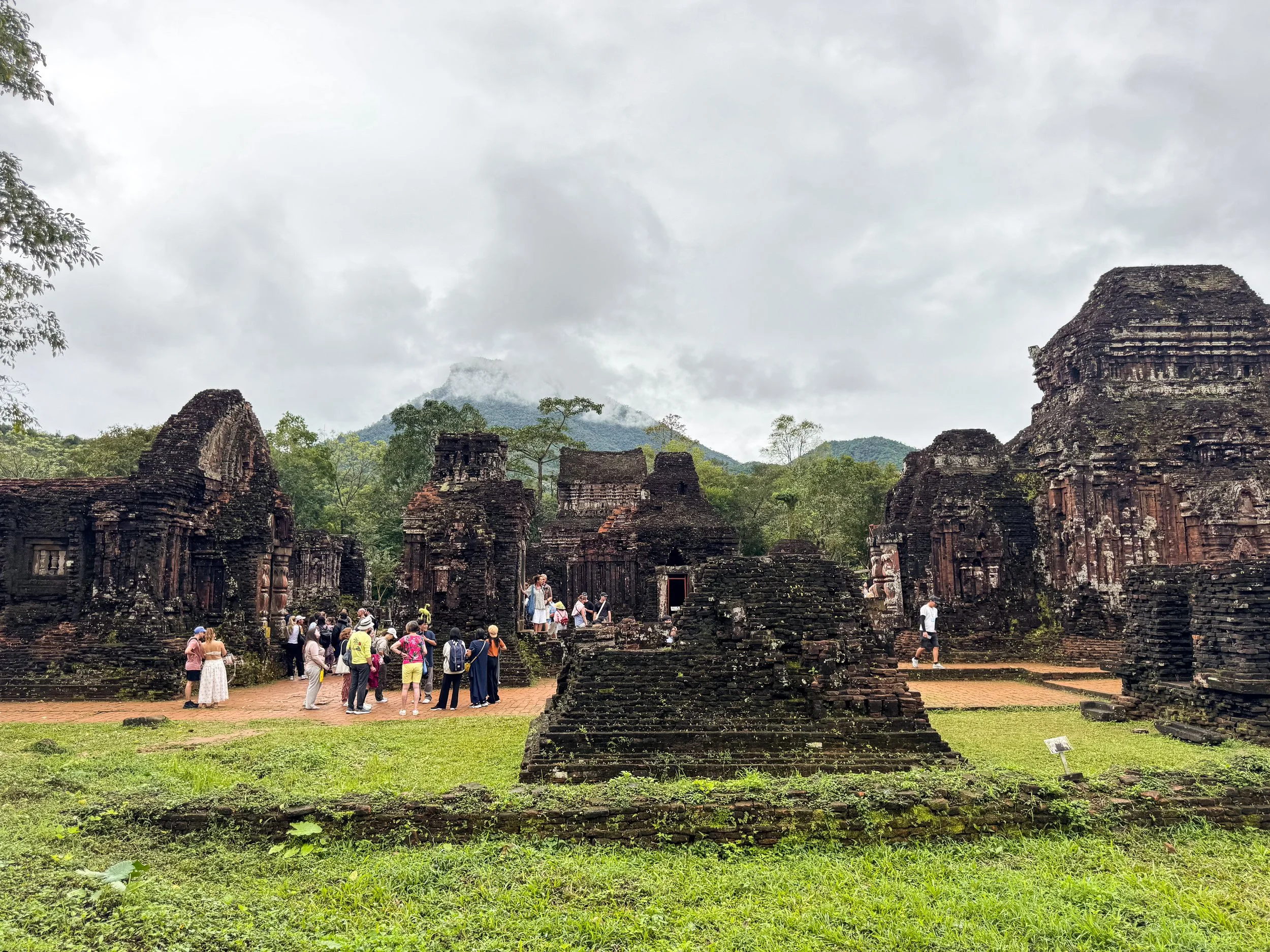
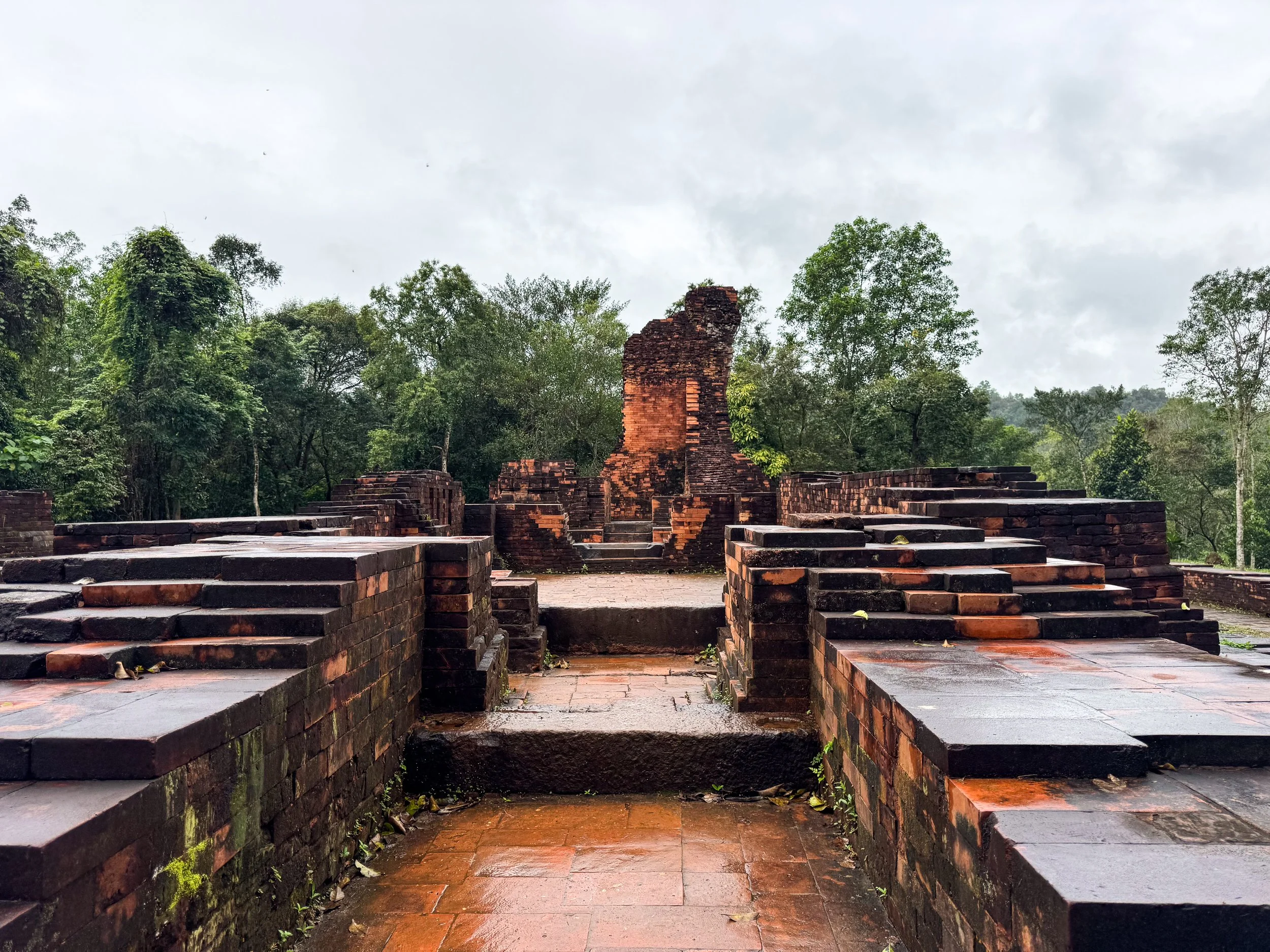
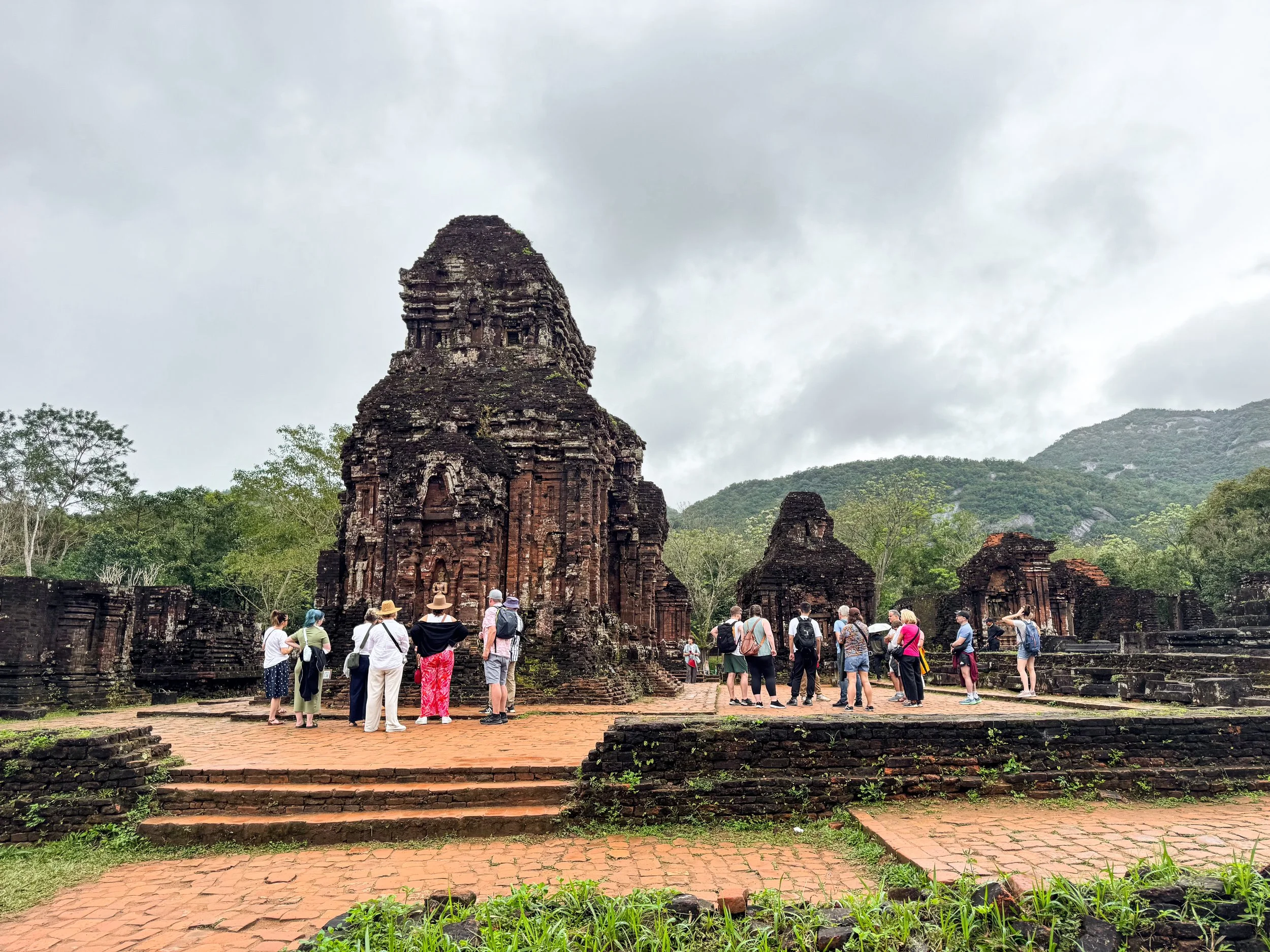
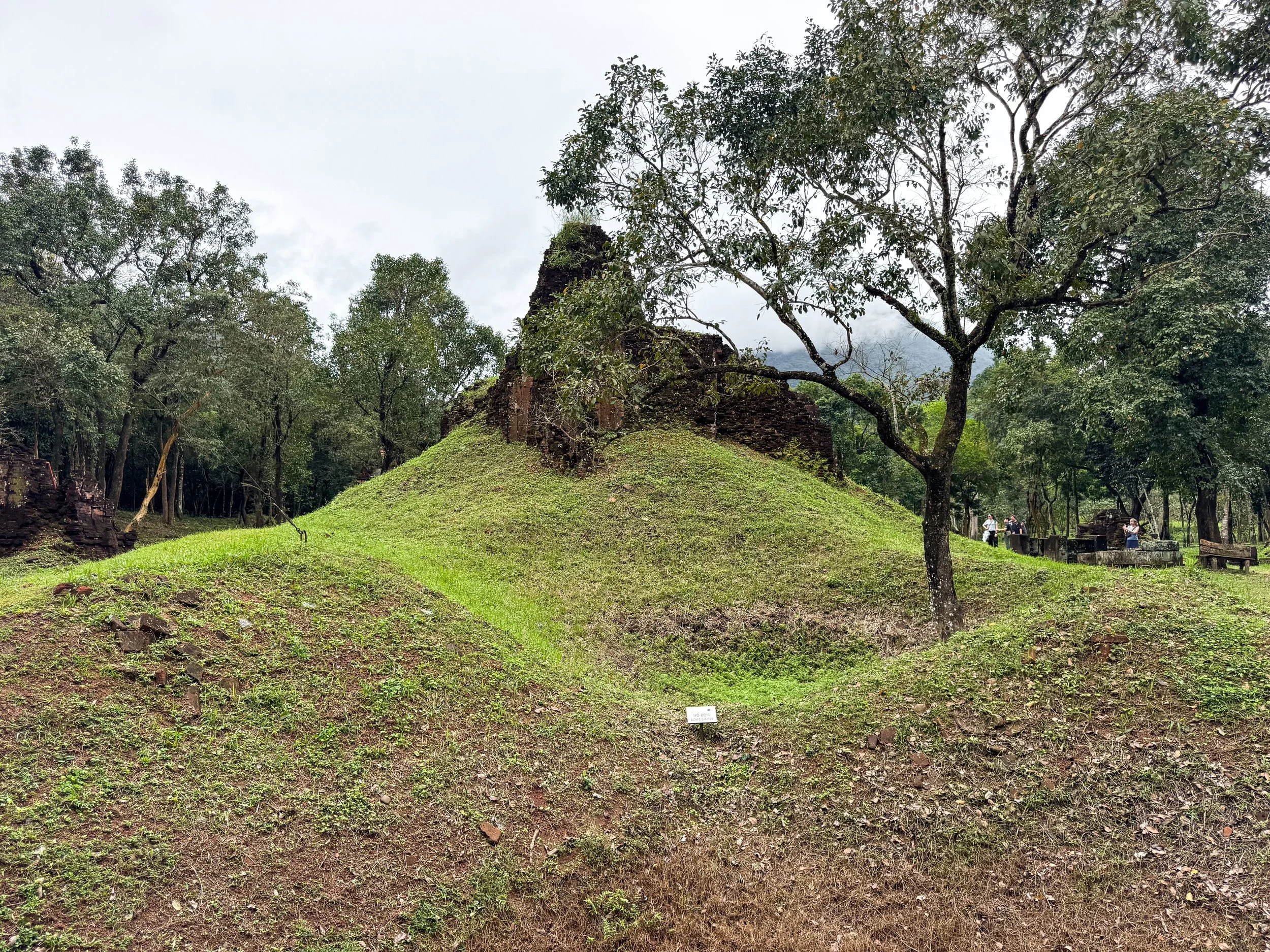
My Son Sanctuary is a mountainous temple complex dedicated to the Hindu god, Shiva. It dates back to the 4th century and underwent continual expansion for 1,000 years afterwards. The sanctuary is the largest complex of its kind in South East Asia. It’s comprised of multiple groupings built from stacked ochre colored bricks and carved sandstone blocks used to create temples, gates, columns, altars and shrines. The complex was heavily destroyed during the US bombing of Vietnam. Fortunately, many of the temples have been restored, others remain crumbling and some are still buried and overgrown. Pathways lead between multiple temple groupings, many of which can be walked through and entered.
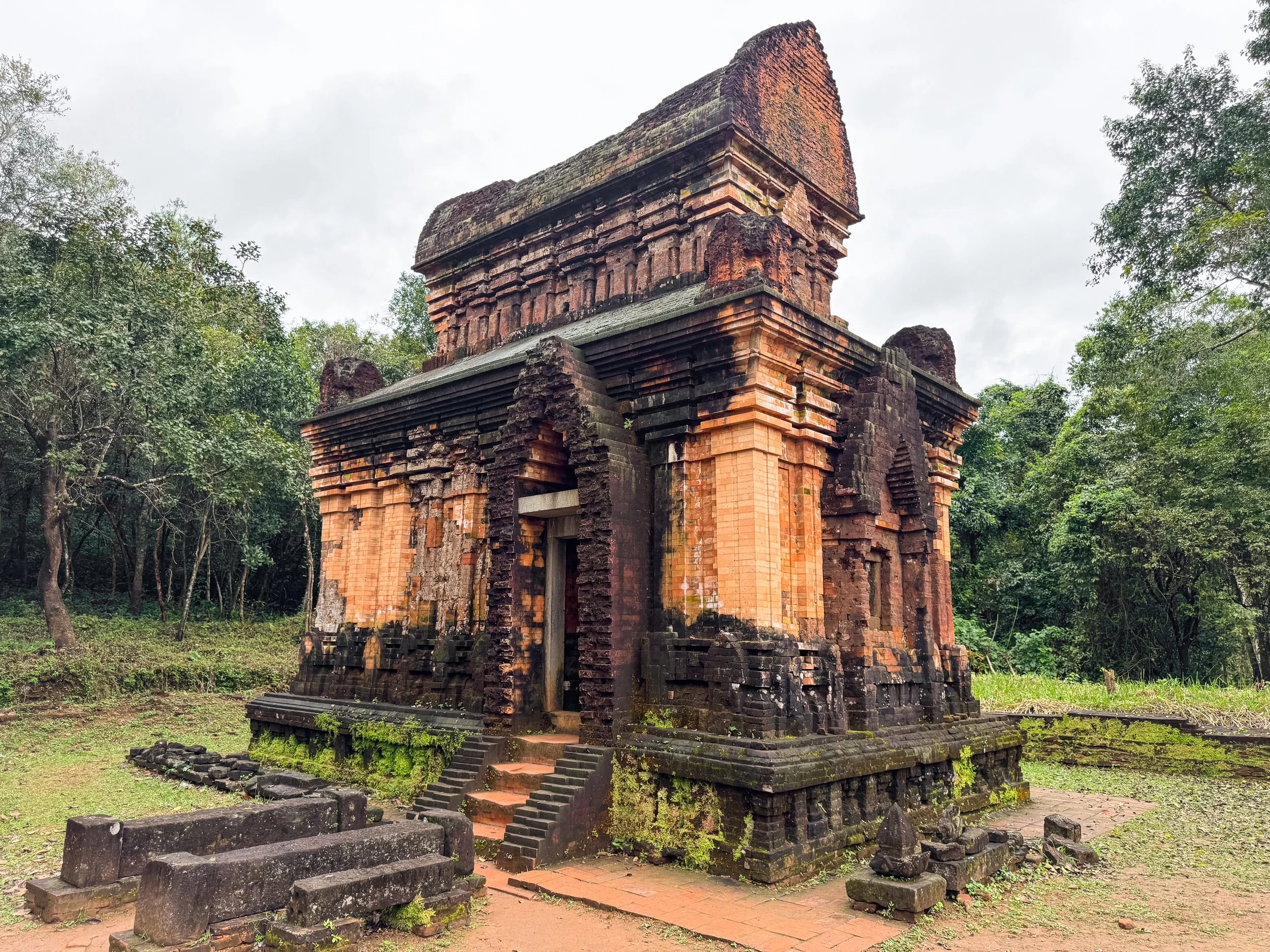

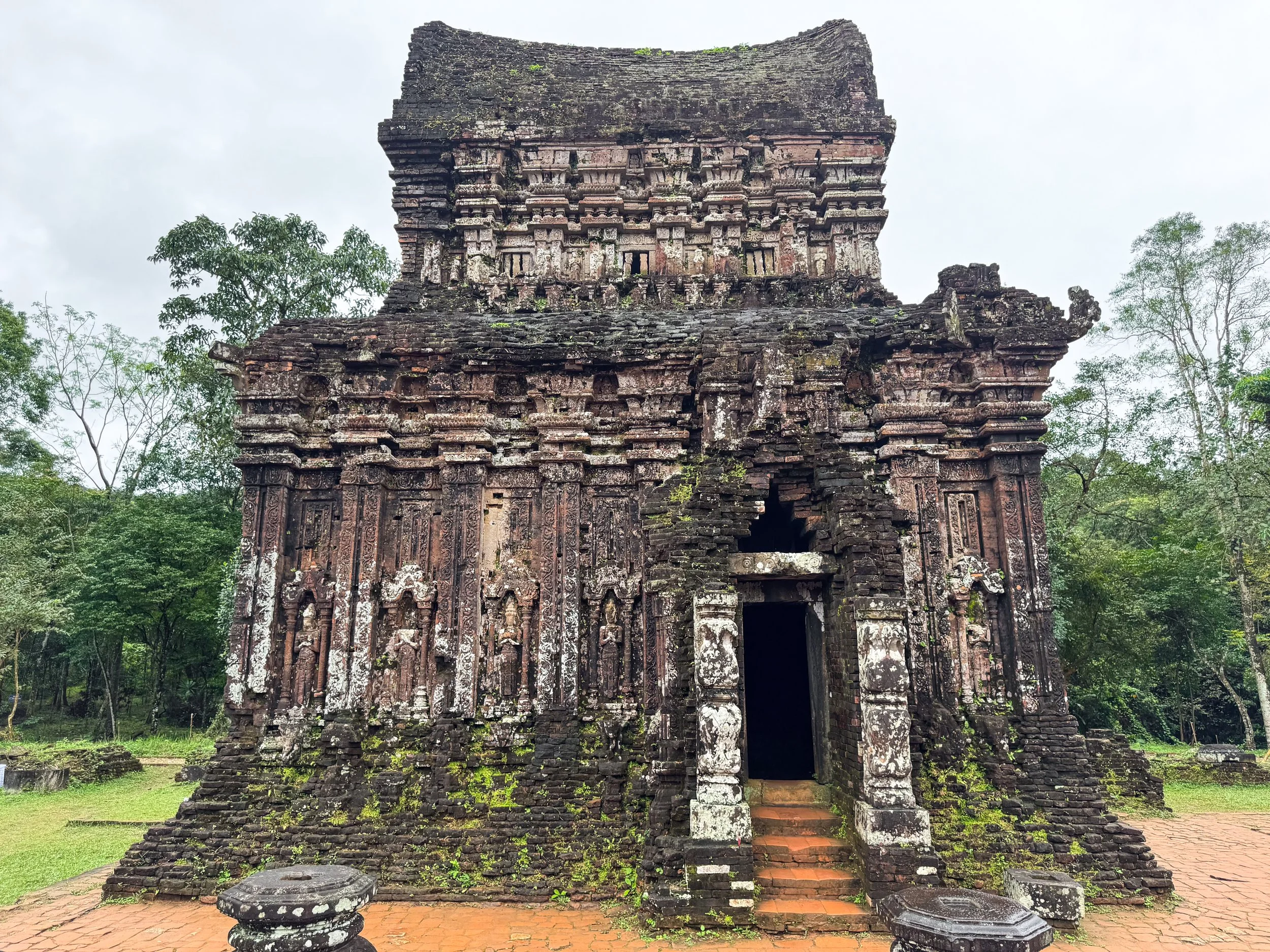
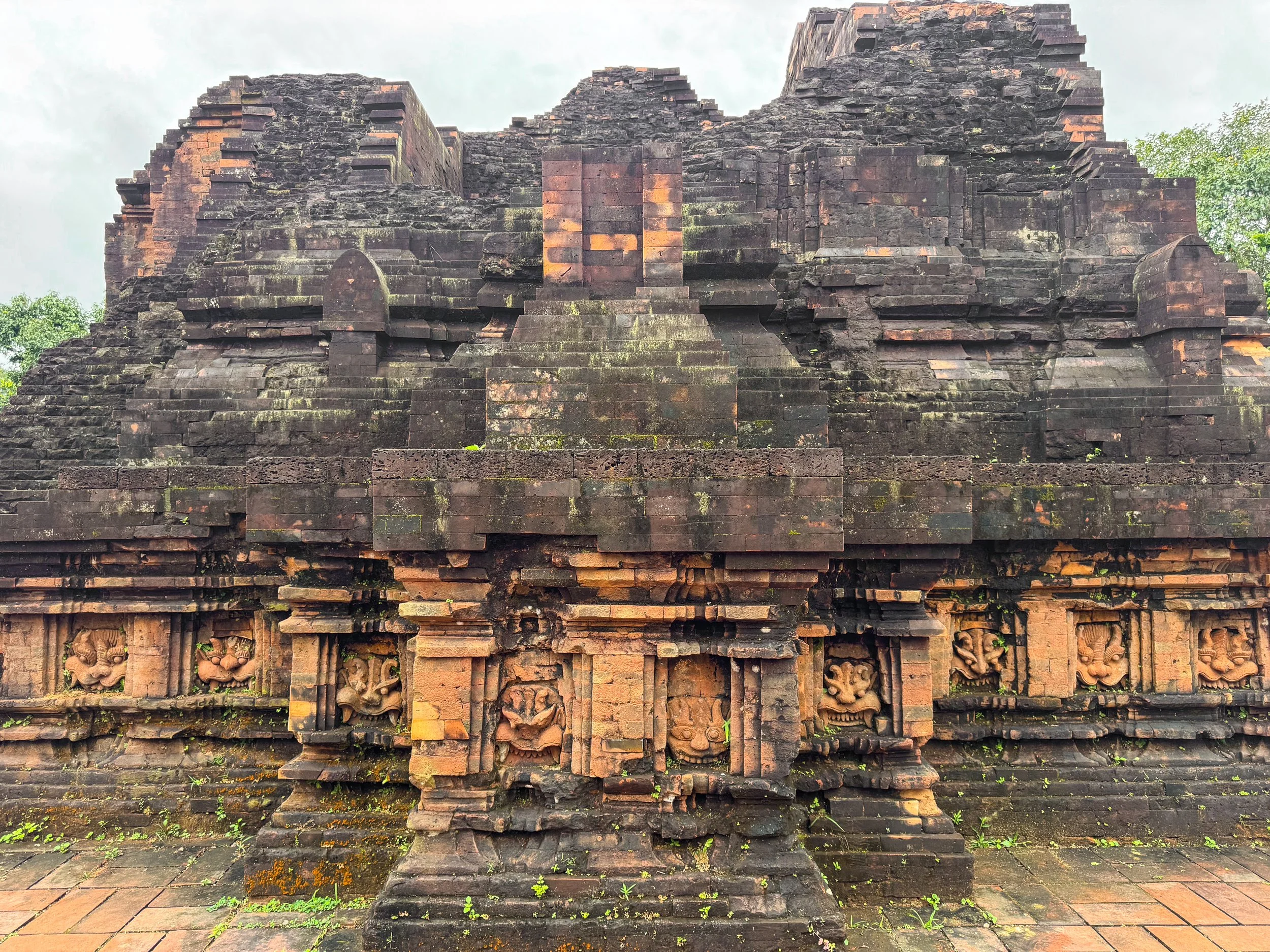
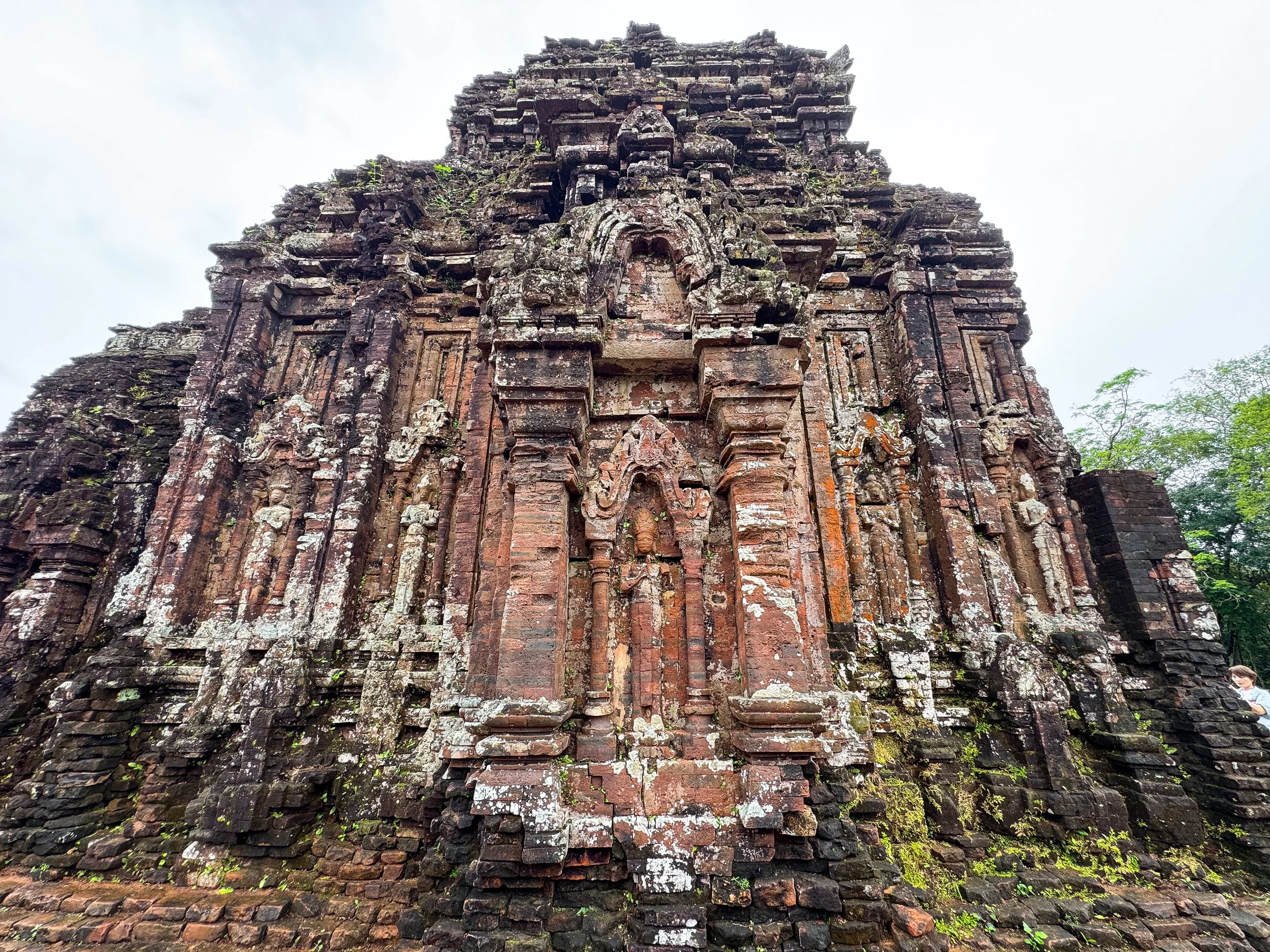
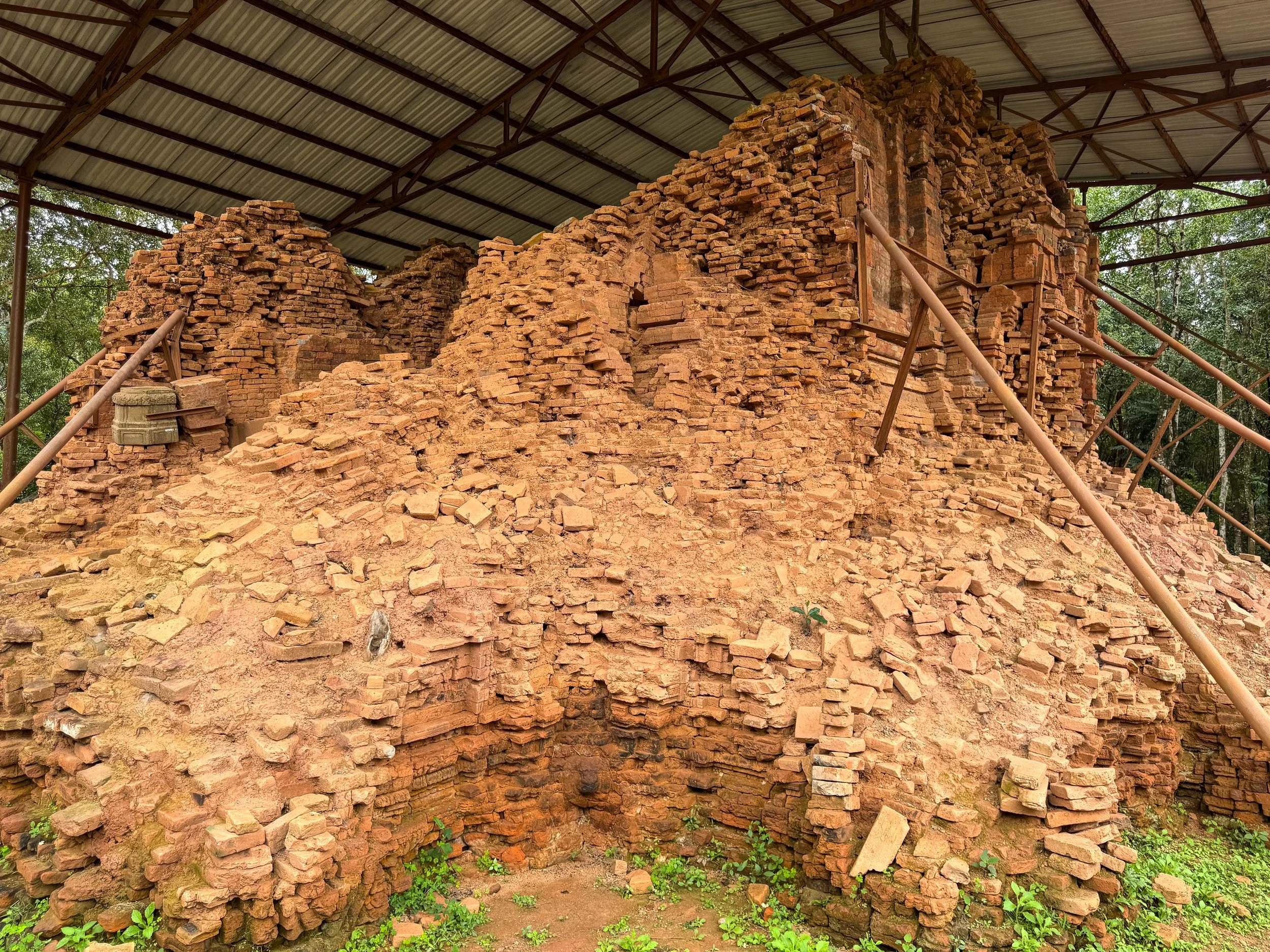
Group M. A platform and temple with the crumbling brick tower gate dating back to the 13th century.
Groups B and C. The main temple complex dating back over 1,000 years with a temple dedicated to Shiva and multiple halls for mediation and prayer. We walked around the ruins, viewing carvings of Shiva, past fallen columns, and inside the still standing dark meditation halls.
Group A. A temple complex with brick structures and sandstone altars completely destroyed by bombing.
Group G. A temple with ornate reliefs of the faces of Hindu deities carved into the sandstone and brick at its base.
Group E. A grouping of temples including a well preserved prayer hall and stelae covered in ancient Sanskrit. Some ruins are under restoration and some still buried beneath a grassy hill. The site is scarred with bomb craters.
Group K. A linear platform with an ornate and leaning brick temple at its end.
Getting Here. We booked a roundtrip shuttle from Hoi An departing at 8am and returning at 1pm. The ruins are about 1 hour from the city. We had nearly 3 hours to explore them on our own time. We booked with Hoi An Food Tour - Private Day Tours.
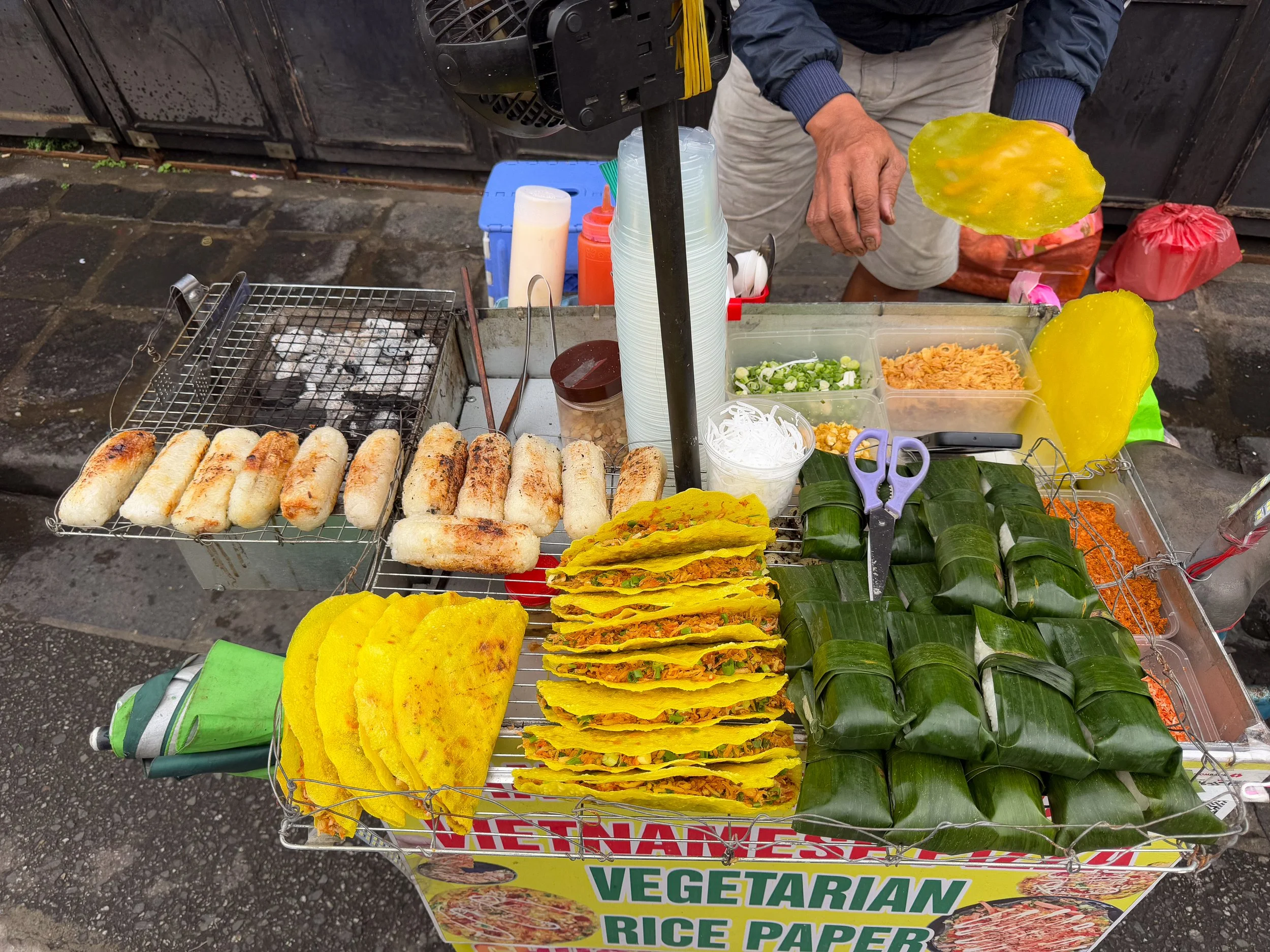
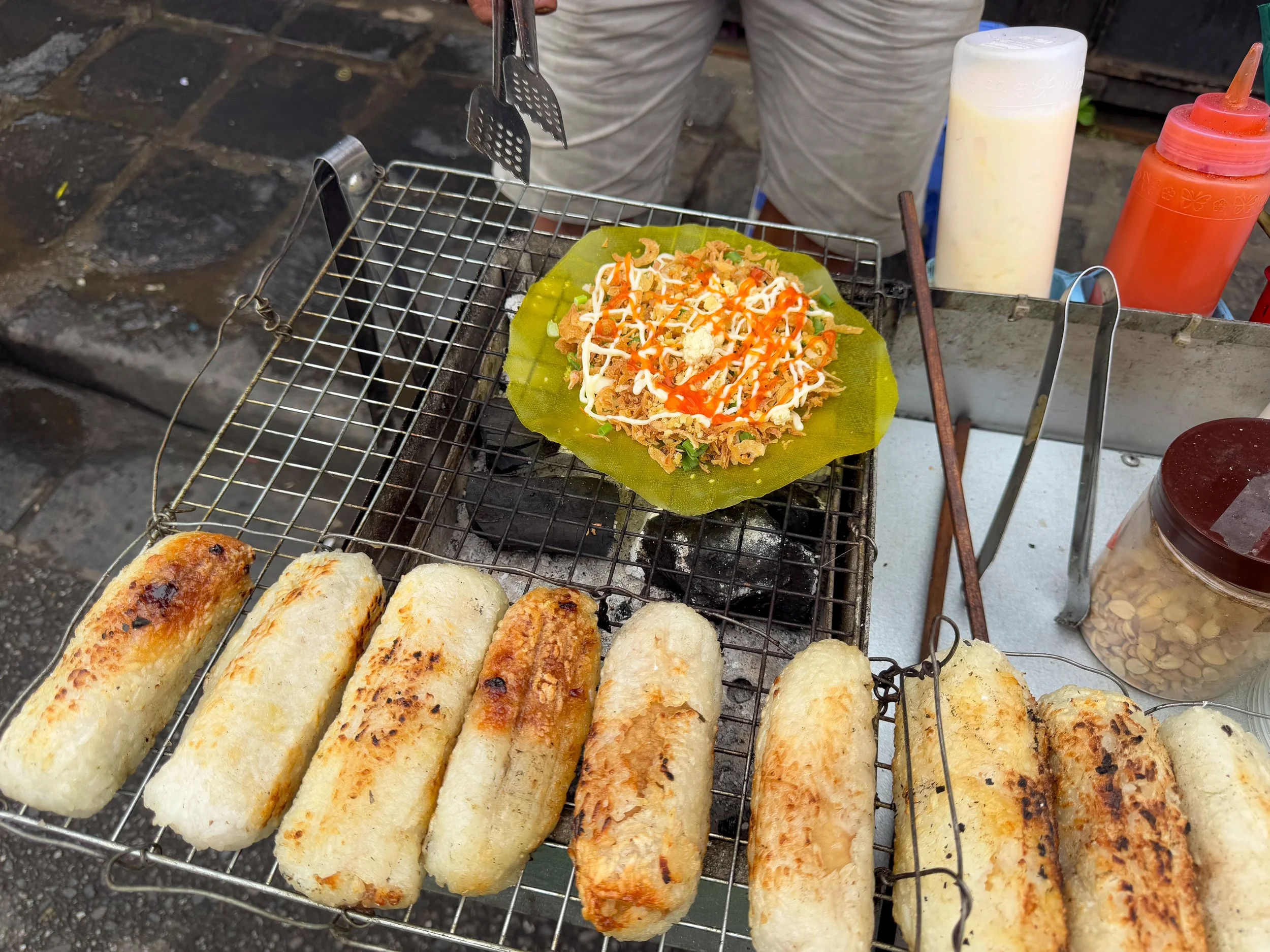
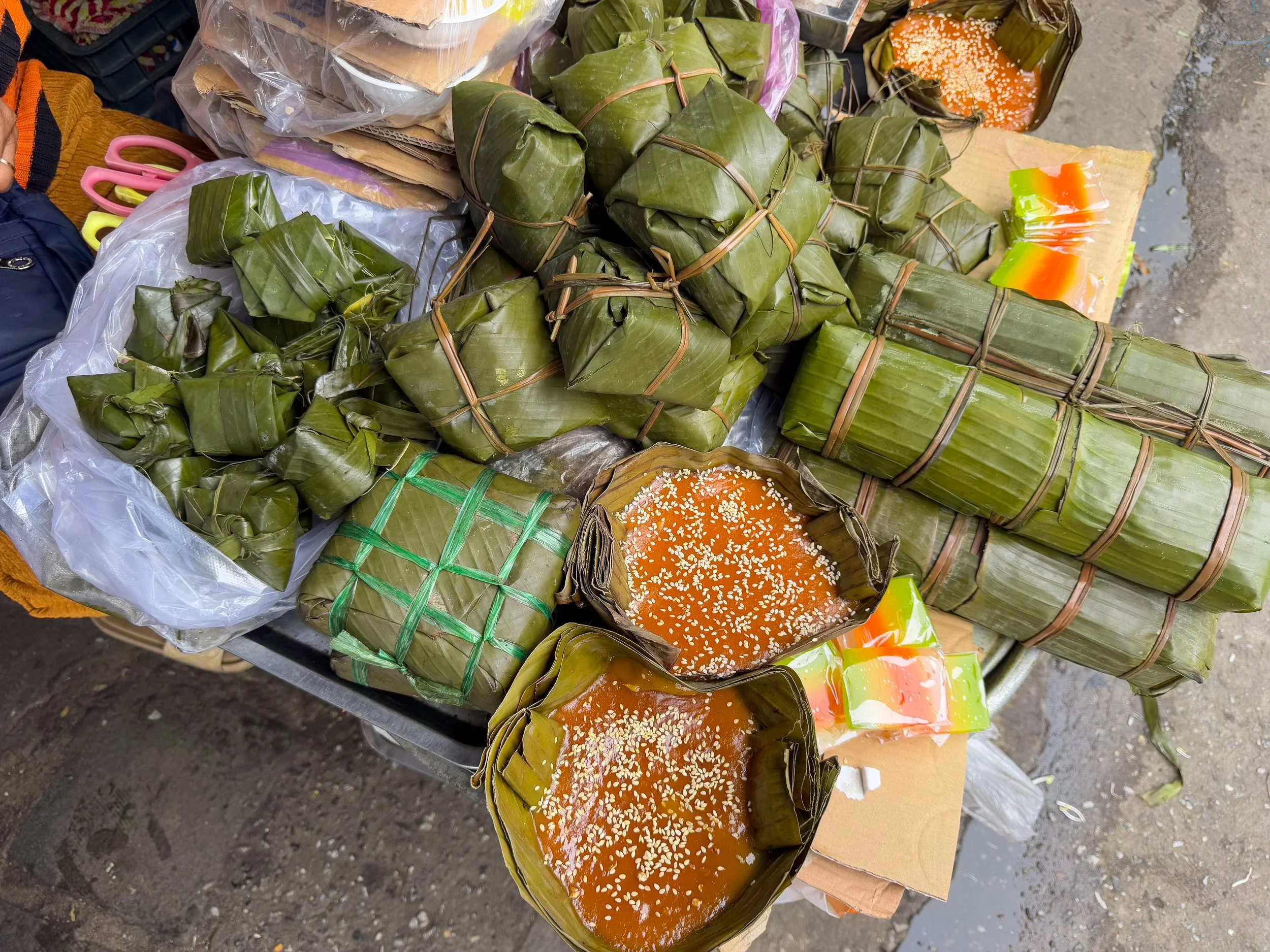
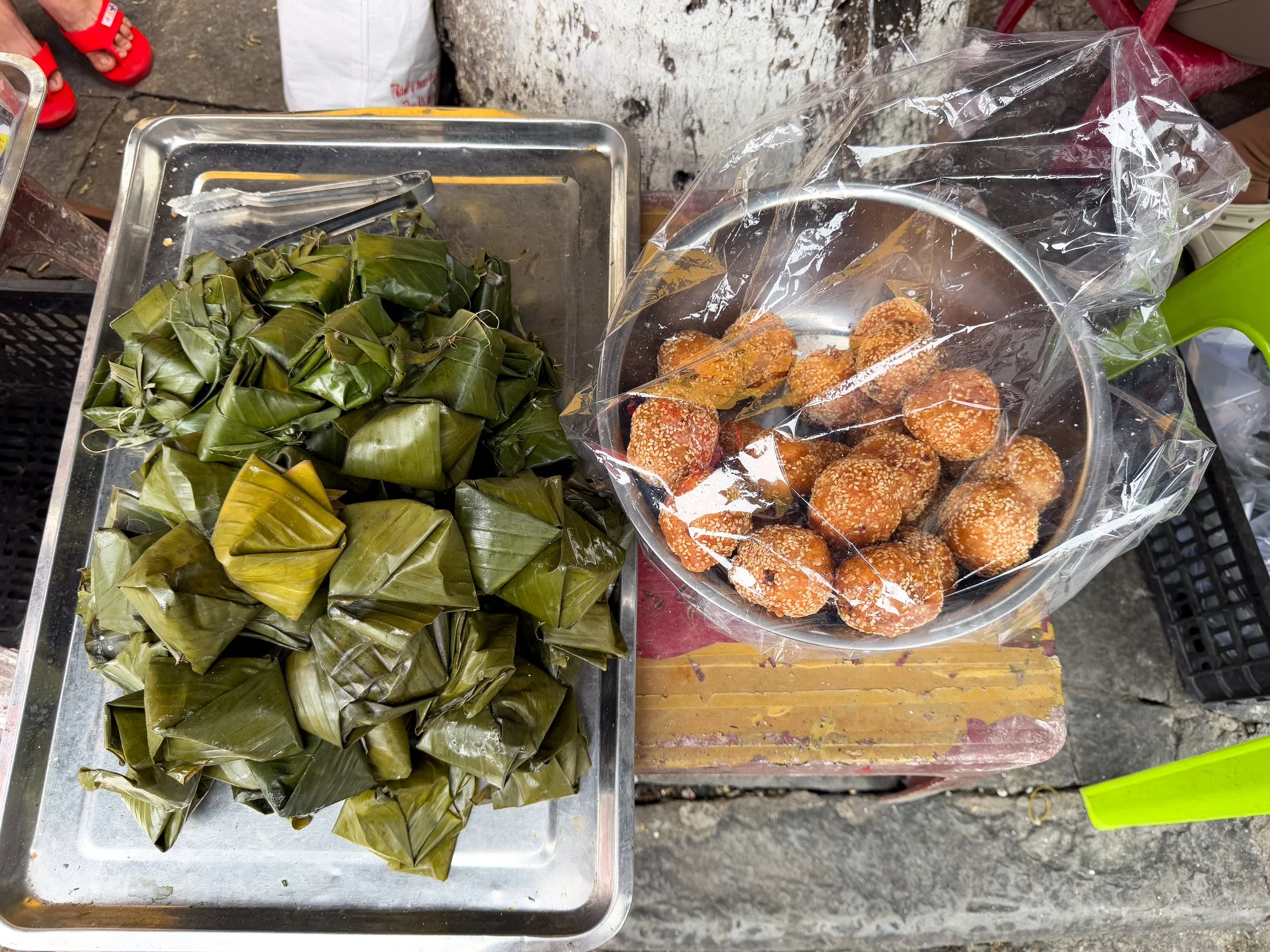
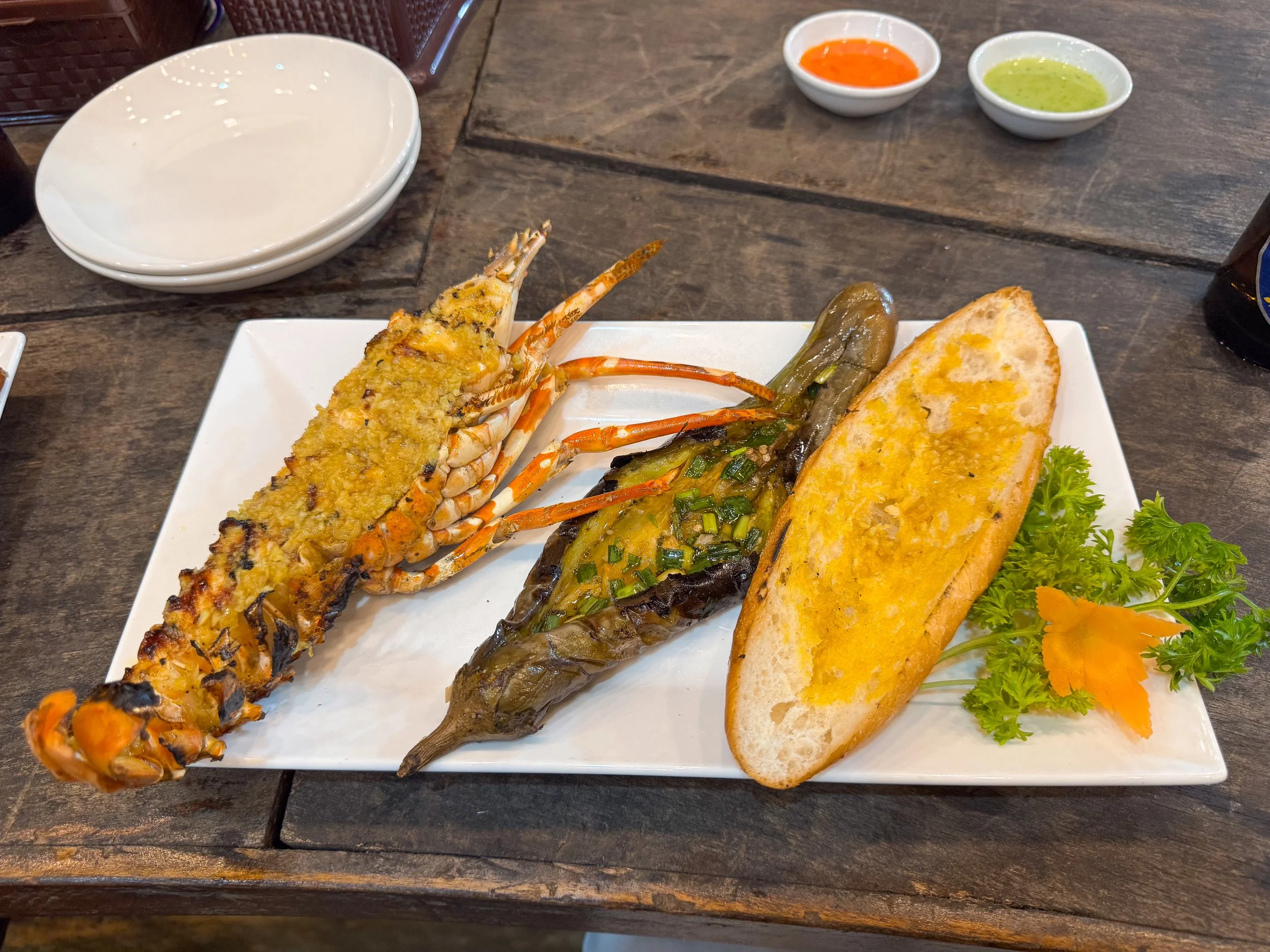
Vietnamese Street Food
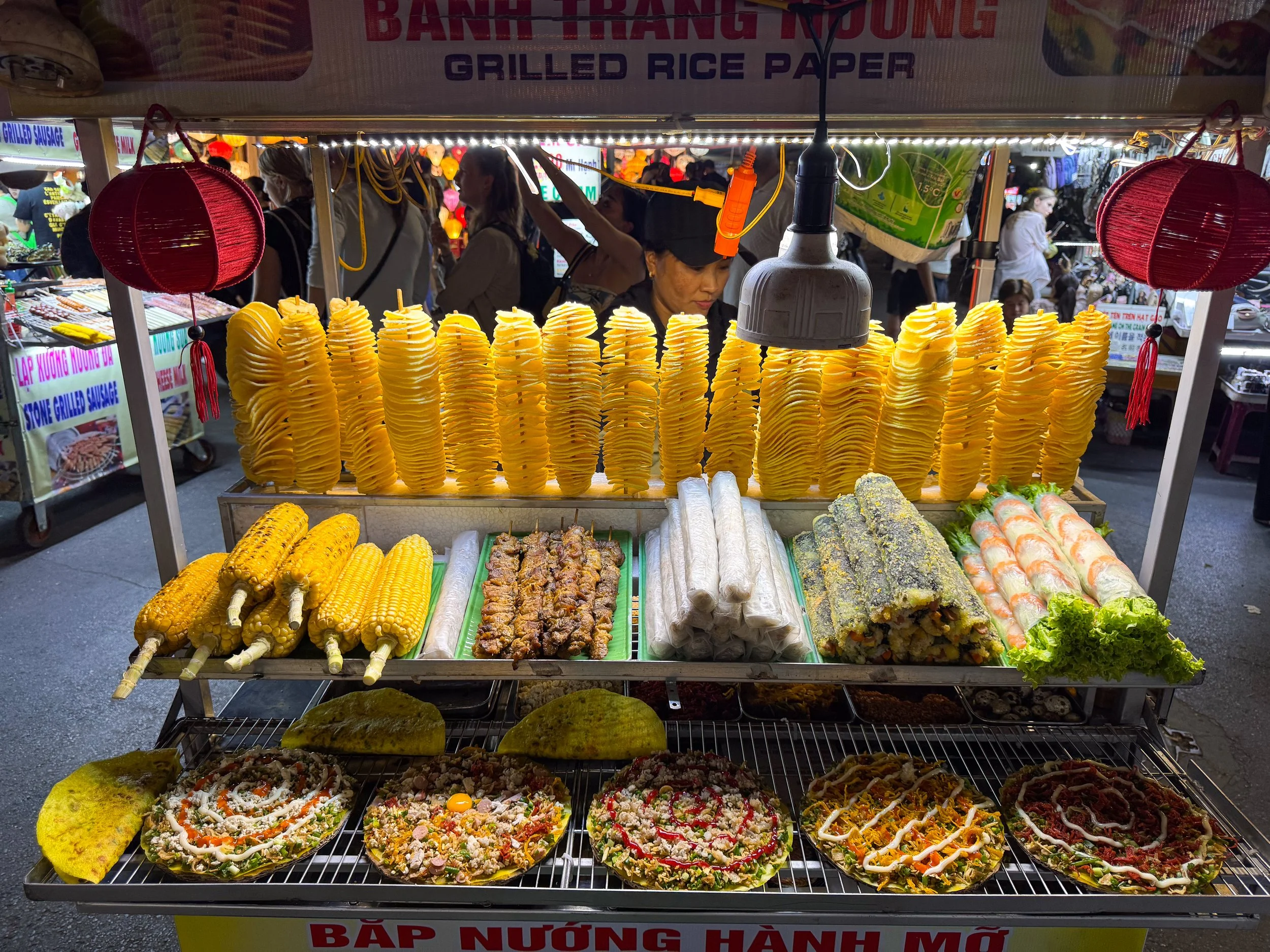
Vietnamese street food is a part of daily life across the country and ubiquitous with its cuisine. We ate street food daily as a quick snack and food crawled through the night markets.
Banh Trang Nuon (Vietnamese Pizza). A sheet of rice paper covered in toppings like fried onion, spring onion, tofu, mayo and spicy sauce, placed over a coal grill, folded in half and crisped.
Bánh Xoái (Mango Cake). A gelatinous rice cake covered in cornstarch and filled with roasted peanuts and sugar.
Banh Gio (Rice Dumpling). A triangular shaped dumpling made from gelatinous rice wrapped and served in a banana leaf. It’s often stuffed with savory ingredients.
Chuoi Nep Nuong (Grilled Rice Banana). A fist sized nugget of sticky rice wrapped around a banana filling and grilled over a coal fire. It’s sliced up and covered in a drizzle of sweetened condensed milk.
Bao (Steamed Buns). Steamed rolls of bread often shaped like lotus leaves. They’re often deep fried and drizzled with sweetened condensed milk.
Bánh Rán (Sesame Balls). Deep fried gelatinous rice balls filled with sweetened bean paste and coated in toasted sesame seeds.
Khoai Tay Loc Xoay (Tornado Potatoes). Hand-cut slices of skewered and twice fried potatoes resembling a vortex. They’re often covered in mayo and sweet chili sauce.
Bach Tuoc Nuong (Grilled Octopus). Skewered and barbecued octopus legs cooked over a coal grill.
Dau Bap (Okra). Skewers of grilled and charred okra.
Muc Khô Nuong (Grilled Dried Squid). A whole dried squid cooked over a charcoal grill. It has a jerky-like texture and is served with sweet chili sauce.
Tôm Hùm Nuong (Grilled Lobster). A freshly caught whole lobster, sliced in half, barbecued over a charcoal grill and covered in pan fried garlic and shallots.
Bánh Trung Thu Tím (Sweet Potato Mooncakes). Pucks made from a mixture of purple sweet potato, coconut and mung bean purée.
Banana Pancakes. Envelope shaped crepes filled with sliced bananas and covered in a drizzle of sweetened condensed milk.
Thai Ice Cream. Also known as rolled ice cream, it’s a popular dessert mixed with coconut, banana, pineapple or mango.
Street Cocktails. A street style bar cart with local beers and a menu of classic cocktails. We ordered late night drinks and watched the lantern festival along the river.
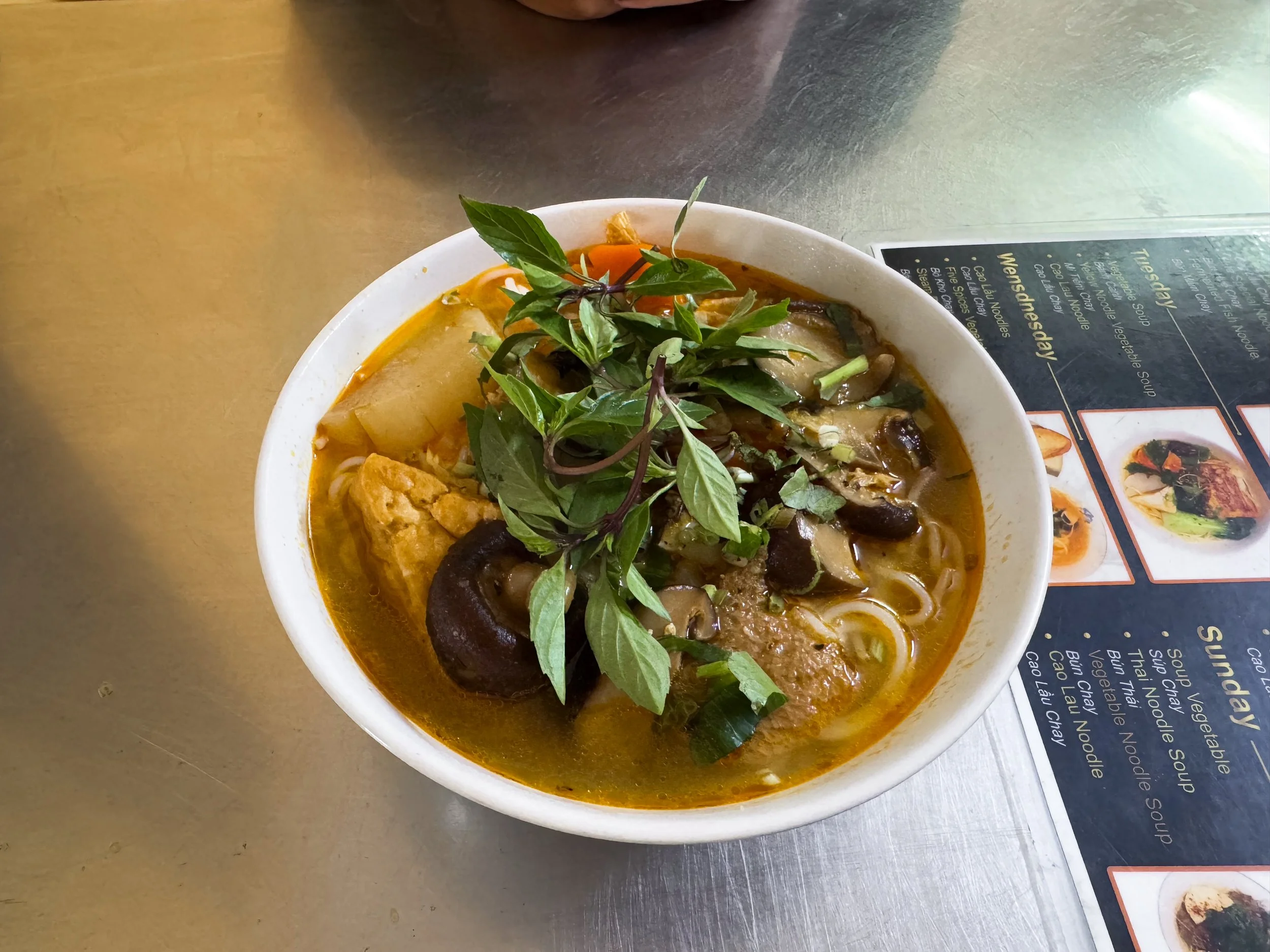
Vietnamese Cuisine
Rice Noodles. Thin and sticky white noodles made from rice flour. They’re served in many dishes or on the side.
Pho. A Vietnamese soup made with a base of rice noodles, vegetables, meat or tofu and a savory broth boiled with warm spices like star anise, cinnamon and ginger.
Banh Mi. A beloved Vietnamese sandwich famed for its baguette style bread baked with a crunchy exterior and pillowy interior. It’s traditionally stuffed with cilantro, cucumber, carrots and meat or tofu.
Cao Lâu. A noodle dish hyperlocal to Hoi An made from rice noodles soaked in lye water and served with meat, greens, herbs, bean sprouts and broth. It can be made vegetarian with tempe or tofu.
Bún Hué. A traditional rice noodle dish made with beef, vegetables and greens in a savory and spicy broth. It can be made vegetarian with tempe or tofu.
Spring Rolls. A deep fried roll of crispy dough often stuffed with cooked vegetables, herbs and meats or tofu.
Summer Rolls. A roll of gelatinous rice paper wrapped around a salad of raw cucumber, carrot, cilantro, cabbage and occasionally cooked shrimp. It’s served cold.
Rose Dumpling. A rice dumpling filled with onions, mushrooms and meat bathed in a savory sauce and garnished with fried onions. We tried a plate of them at the Hoi An Market.
Banana Blossom Salad. A salad combined with sliced banana blossoms, carrots, green papaya, onions and cilantro tossed in a citric fish sauce.
Black Sesame Soup. A creamy and rich soup made from black sesame seeds and sweetened with purple potatoes. For decades, a couple would prepare and serve it on the streets to locals. It’s now served in their family home by the son. We sat down with him and enjoyed a cup of the soup while chatting about Vietnamese culture and sipping on tea.
Chao (Rice Porridge). A thick porridge made from overcooked rice with a jammy egg, cilantro leaves, chopped spring onion, fish sauce, chili oil and sesame oil. It’s popular for breakfast.
Mango Sticky Rice. Sticky rice served with sliced mango and often eaten at breakfast. It originates in Thailand but is popular across Vietnam.
Tropical Fruits. Some to try are dragon fruit, pomelo, rose apple, mango, rambutan, papaya and lychee.
Tiger Beer. One of the national beers sold across Vietnam. It’s a lager with a light and slightly citric flavor. The bottle or can is recognizable by its logo of a tiger.
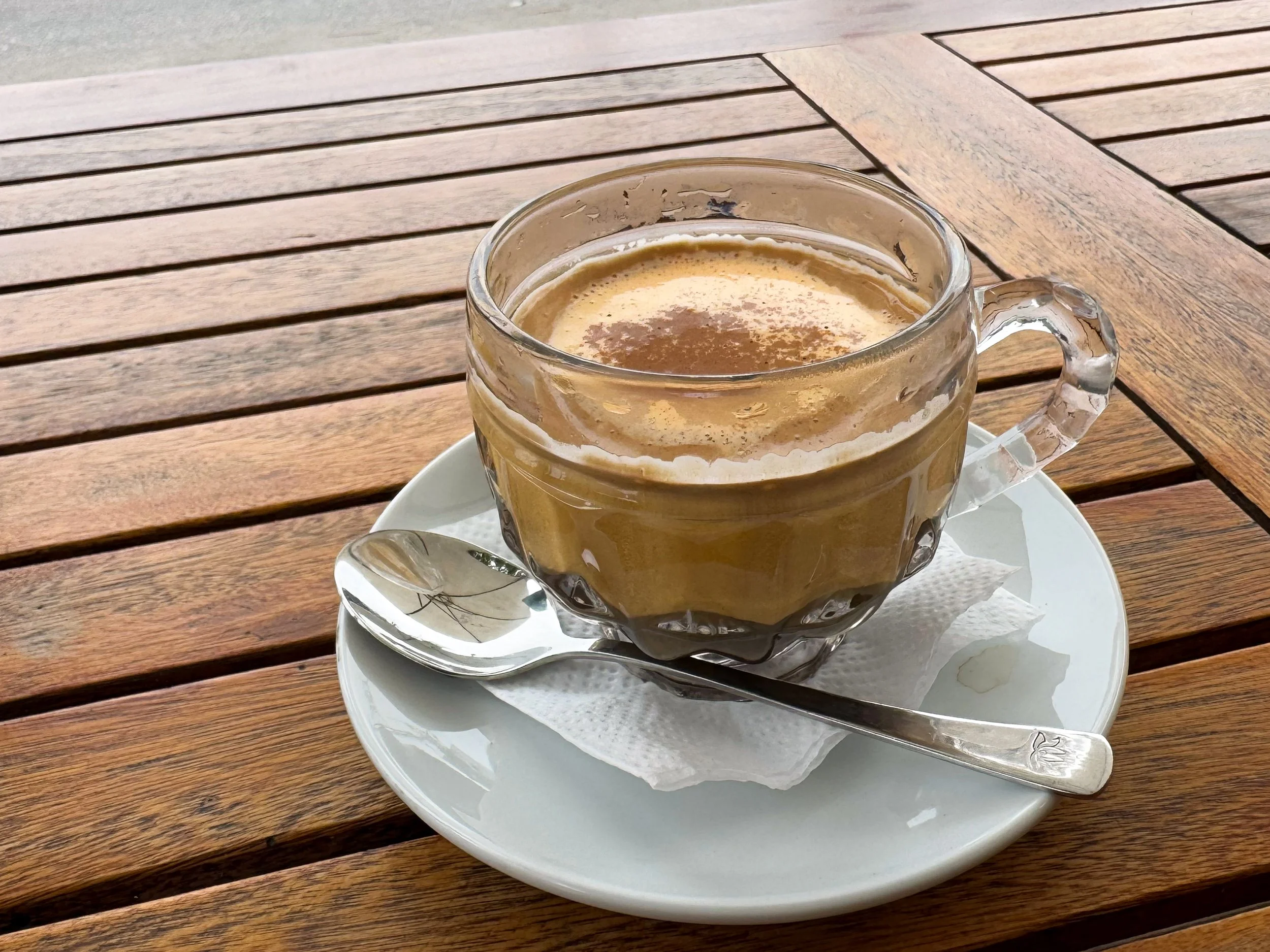
Vietnamese Coffee
The coffee culture in Vietnam is a popular part of daily life. Countless street cafes spill out onto the sidewalks with locals sipping on their preferred style.
Vietnamese Coffee. The most popular preparation style, mixed with sweetened condensed milk and served hot or iced.
Egg Coffee. A creamy coffee mixed with whipped egg yolk and sweetened condensed milk.
Salt Coffee. A sweet and savory coffee mixed with salted cream and often dusted in cocoa powder.
Coconut Coffee. A thick and sweet coffee mixed with coconut cream.
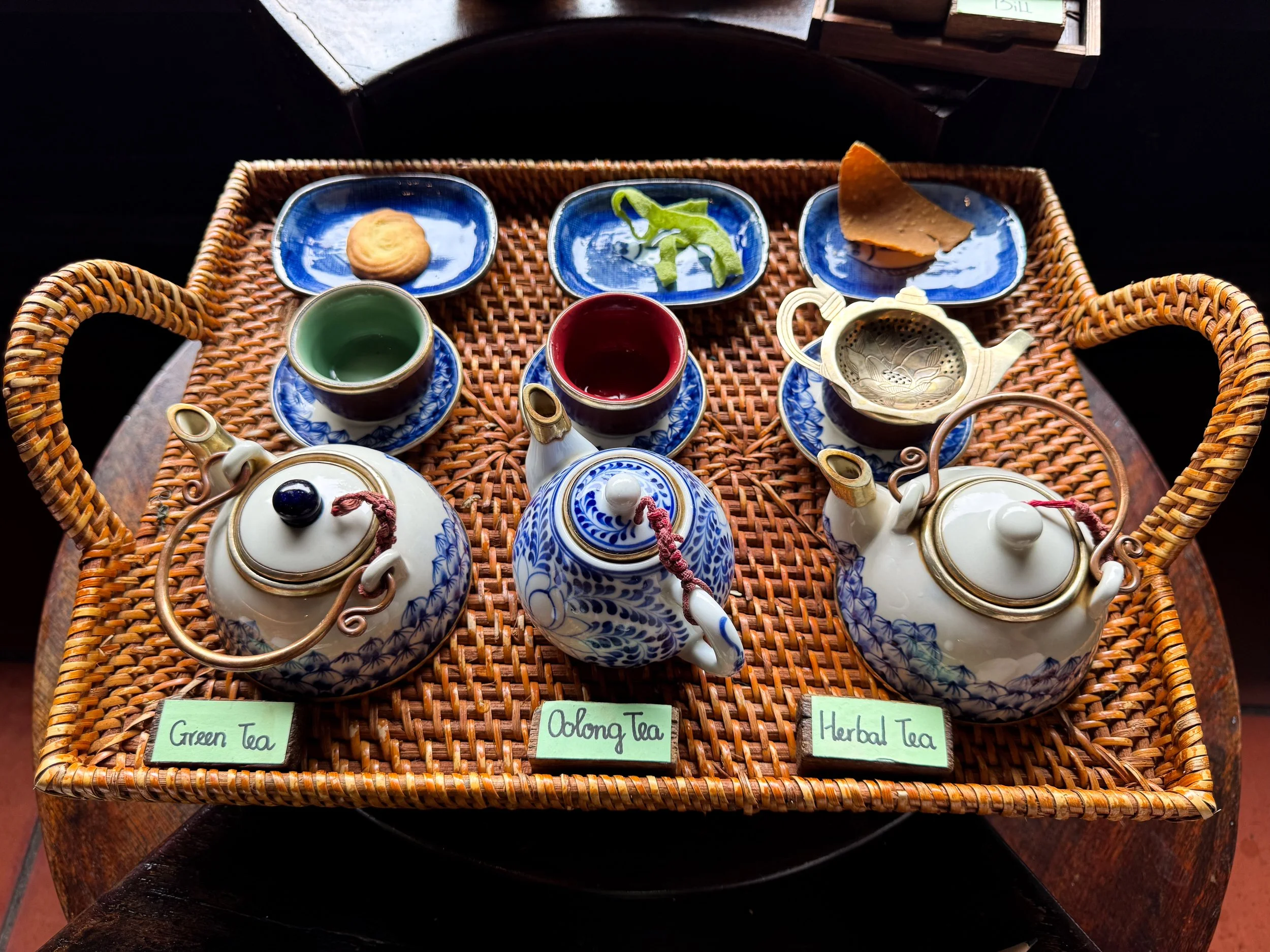
Places to Eat & Drink
Pháp Hoà Vegan. A vegan restaurant with a rotating daily menu of traditional Vietnamese noodle dishes and soups. The owner and cook prepared us bowls of Cao Lâu Chay and Bún Hué Chay.
Banh Mi Phuong. A very popular restaurant to taste the beloved Vietnamese sandwich, Banh Mi. The restaurant is set up similar to a NYC deli with a list of options and a fast paced ordering counter. We both ordered the vegetarian option with tofu.
Tropical Home Craft Beer & Cocktail Bar. A hidden bar down a narrow alleyway with local beers and strong tiki drinks served in tiki mugs with miniature Vietnamese hats on top. We ordered the Zombie and Tropical Love You.
Reaching Out Teahouse. A traditional Vietnamese tea house operated by deaf and mute individuals. Silence is observed and orders are placed by using hand gestures and blocks with written phrases. We ordered a Vietnamese tea tasting with herbal, green and oolong teas paired with cookies and snacks.
Market Bar Hoi An. A second floor bar with an outdoor patio above the Hoi An Fabric Market. They concoct house infused gins with local flavors like pho, mangosteen, rose, nectarine and plum. We sipped on gin and tonics while watching scooters weave through the chaotic intersection below.
Little Faifo Restaurant and Bar. An old wooden house converted into a restaurant with Vietnamese dishes. We dined on their romantic balcony under the glow of the red lanterns looking over the street below. Order the banana blossom salad topped with grilled shrimp and calamari.
Hoi An Ancient Remedy. A dim sum restaurant with herbal cocktails and rice wines located inside of a historic house. We tried the Ginseng Herbal Wine and The King Herbal Wine. The first had a bitter herbal flavor and the second tasted of warm spices and herbs. Each 100ml bottle was poured over ice with a slice of lime.
Hai San Hoi An. A waterfront café in the ancient town serving Vietnamese coffees like egg and salt coffee.
Vietnamese Crafts
Hoi An is regionally known for its artwork and crafts including ink wash painting, lantern making, silk weaving, wood carvings and pottery.
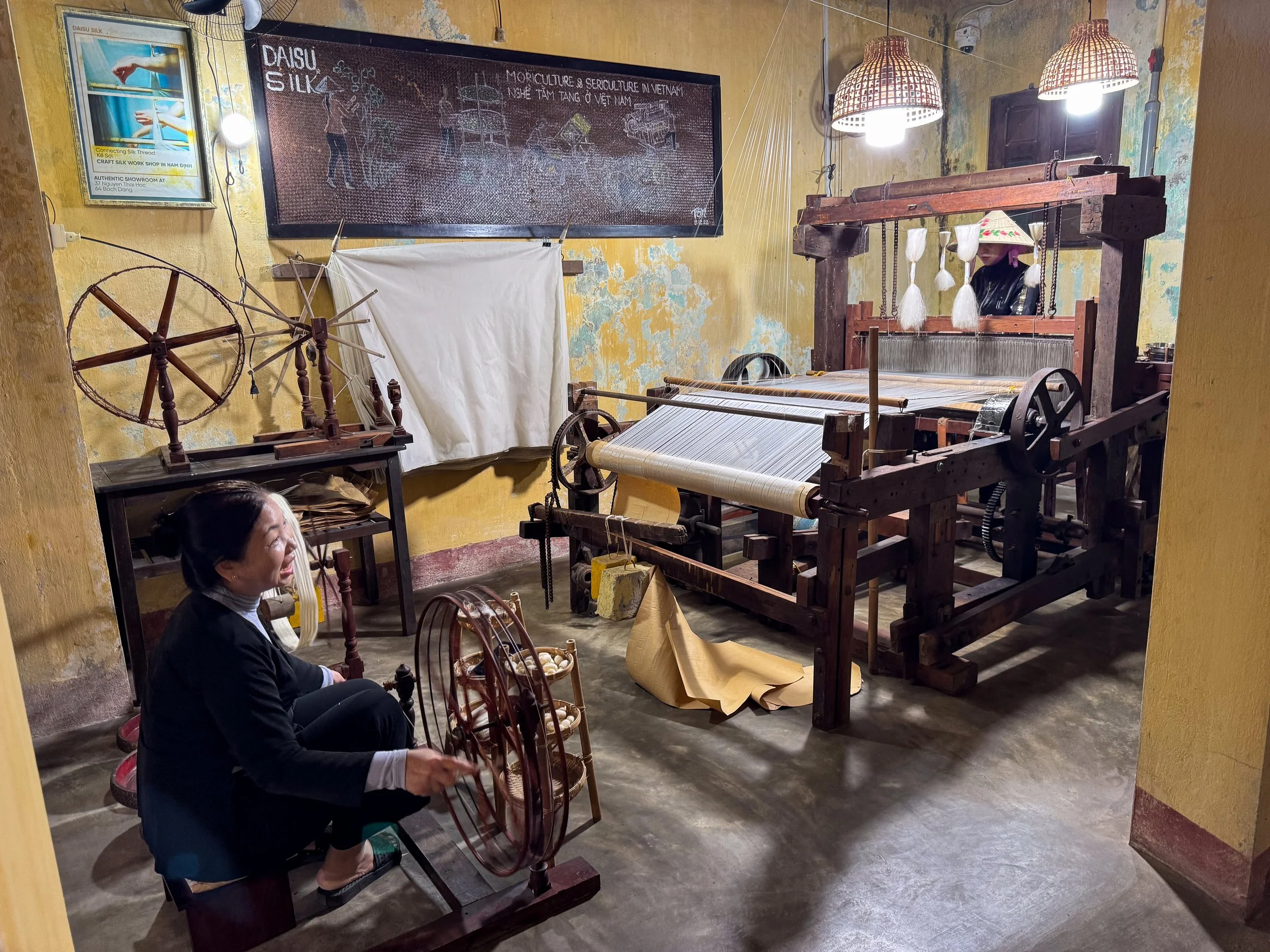
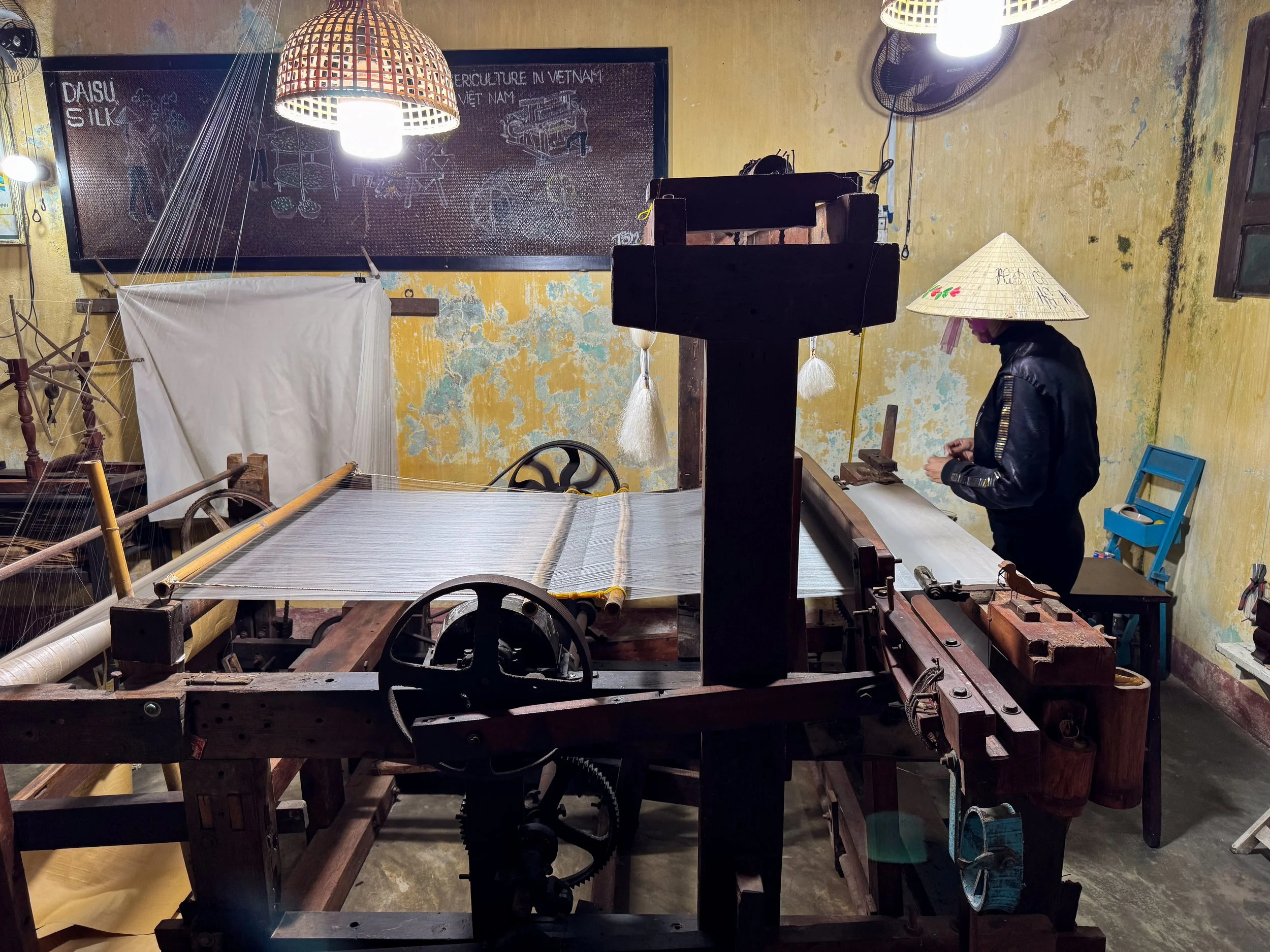
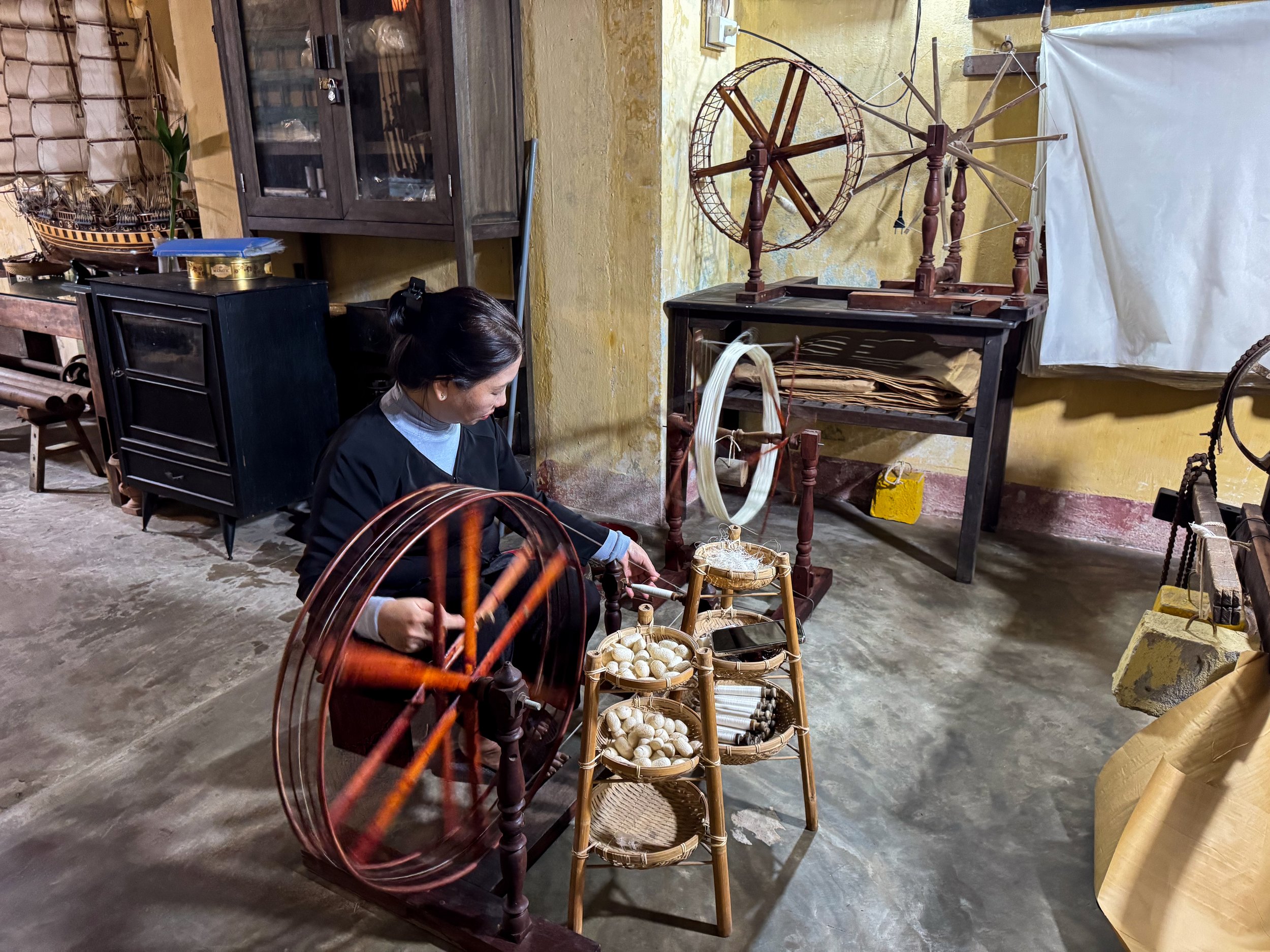
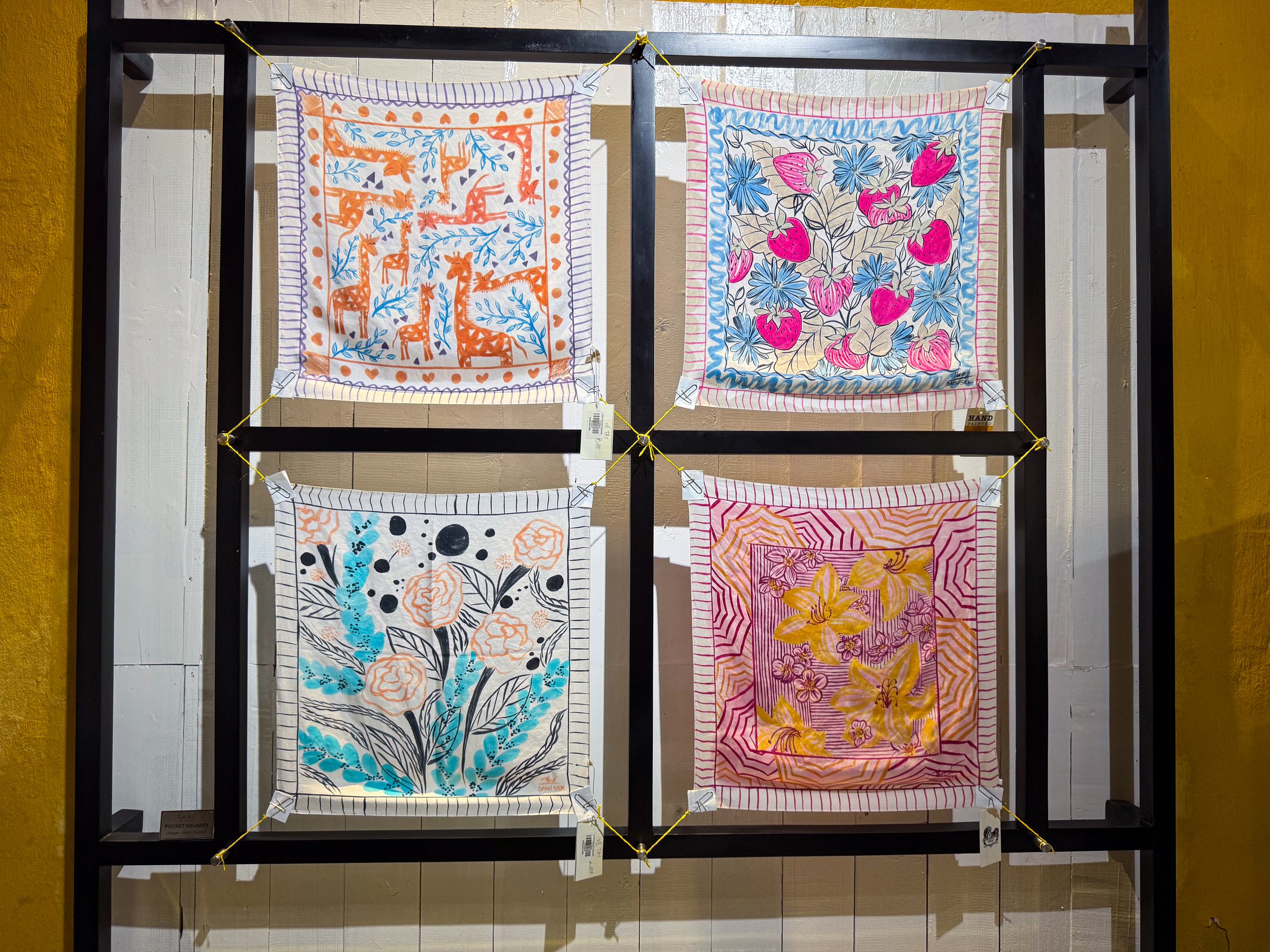
Silk Making. We visited Daisu Silk, a boutique and a processing studio where silk is milled. We watched as women hand spun silk fibers into string and weaved bolts of pure silk fabric on antique wooden looms. They sell one of a kind hand painted silk squares available in 3 sizes. Prices are significantly higher than anywhere else in the ancient city, starting at about $100 USD. Visiting the shop and studio is free.
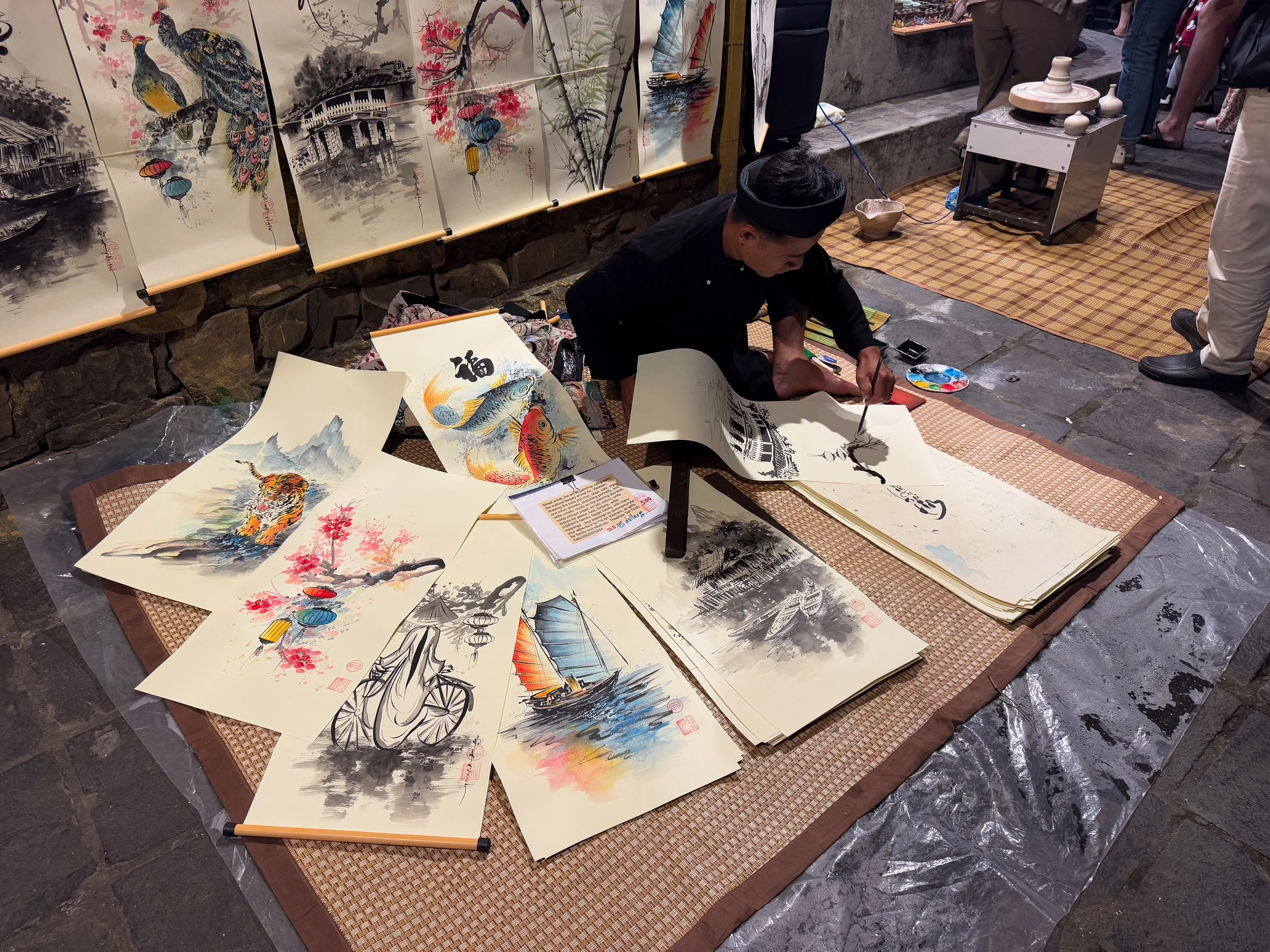
Ink Wash Painting. A painting technique used by artists to brush ink and water onto paper or silk to create art. We watched street artists paint scenes from around Hoi An including cityscapes, landscapes and the Japanese Bridge.
Lantern Making. Lanterns are a huge part of Vietnamese culture and many are made in Hoi An. We visited the Hang Dung Lantern Making Class, where tourists can paint their own lanterns. With little space to bring one home, we watched as others painted their own.
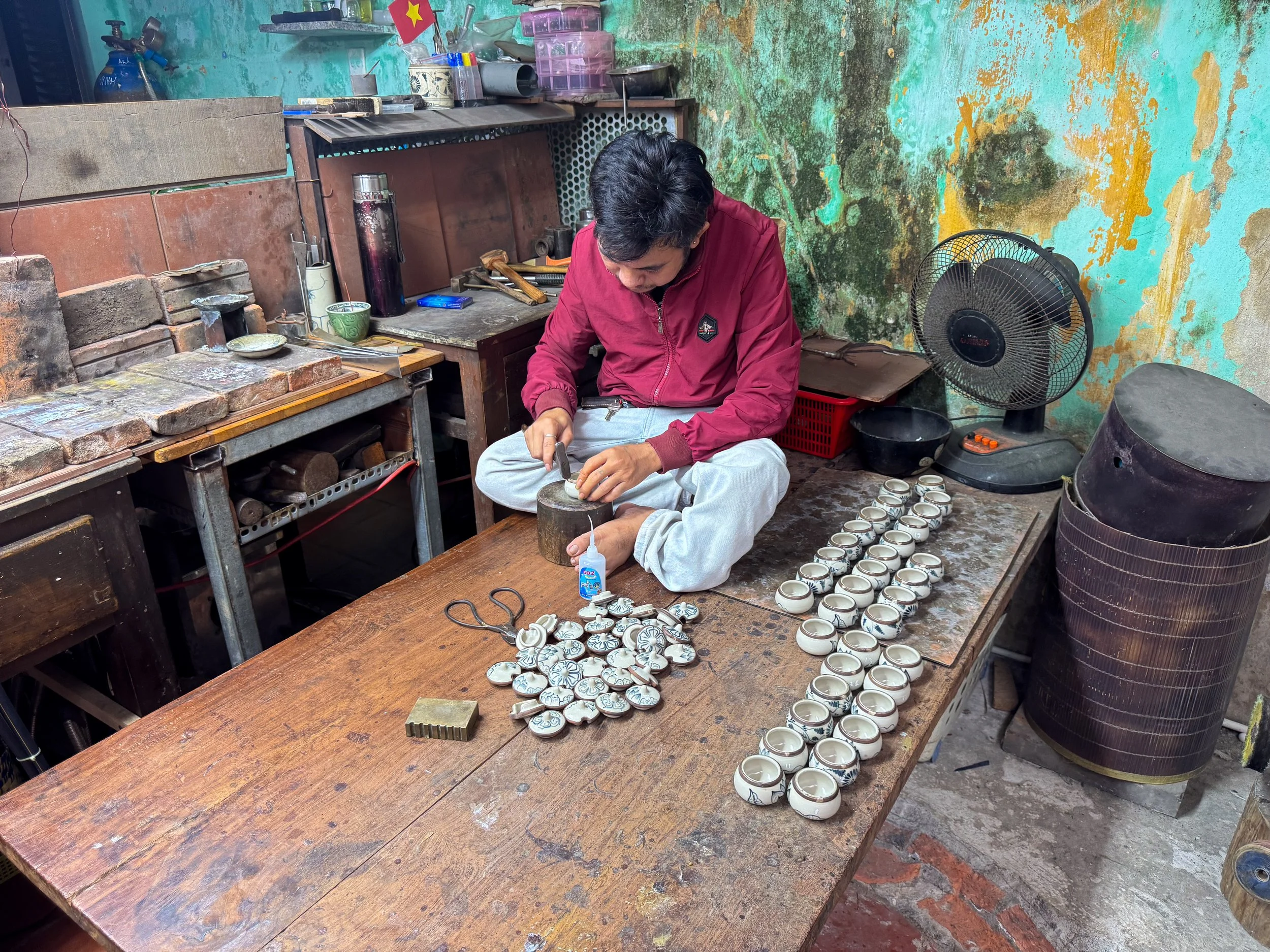
Pottery Making. Behind the Reaching Out Teahouse is a shop with handmade tea sets and a studio where ceramics are decorated with gold rims, copper handles and silver designs. We watched as artisans hand sawed, hammered and filed metal to complete the ceramics.
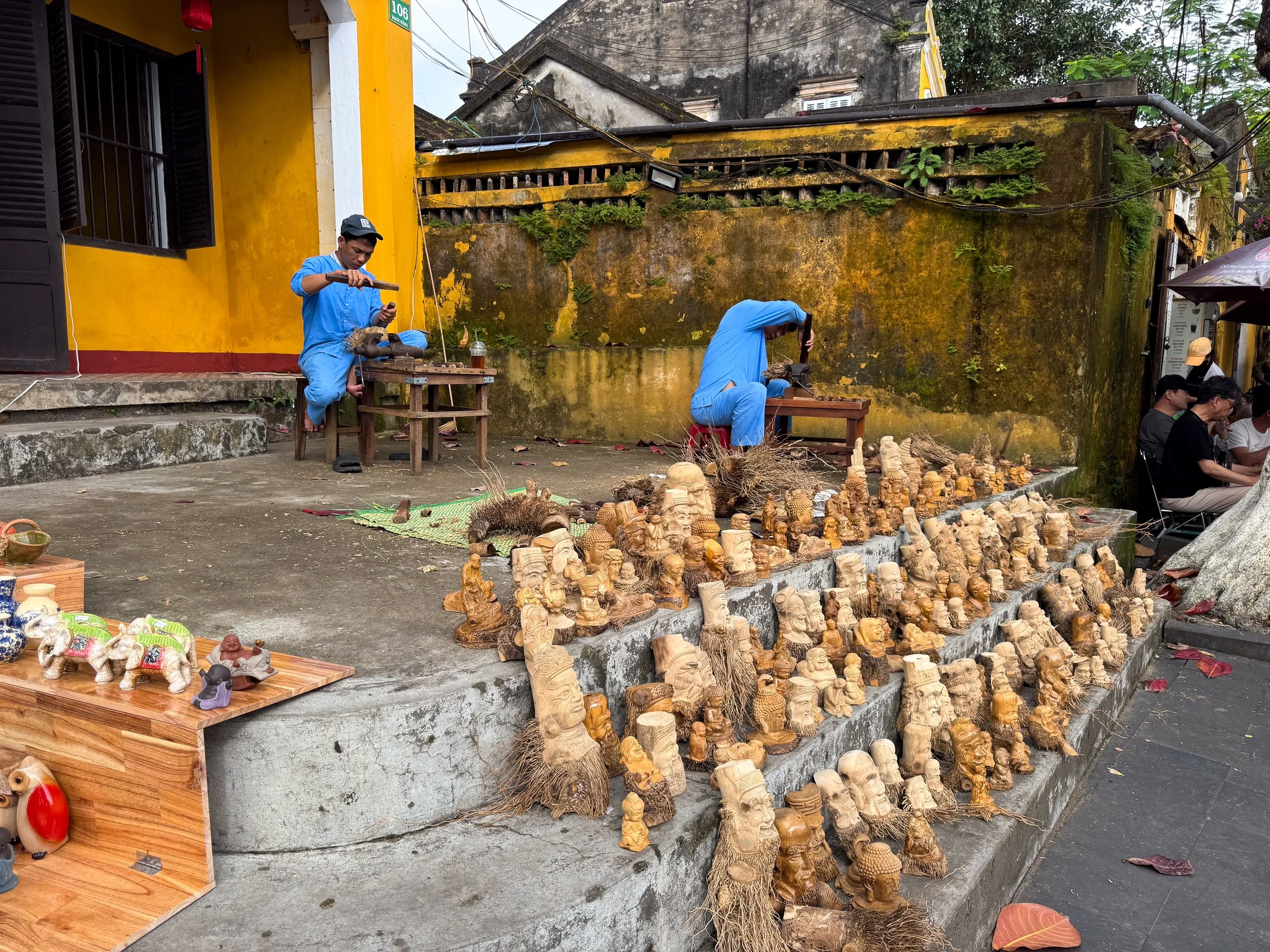
Wood Carving. Wood carving is an ancient tradition used to decorate the wooden elements of homes and temples in Hoi An. Today, artists use hammers and chisels to sculpt faces out of bamboo roots as souvenirs.
Linen & Leather Goods
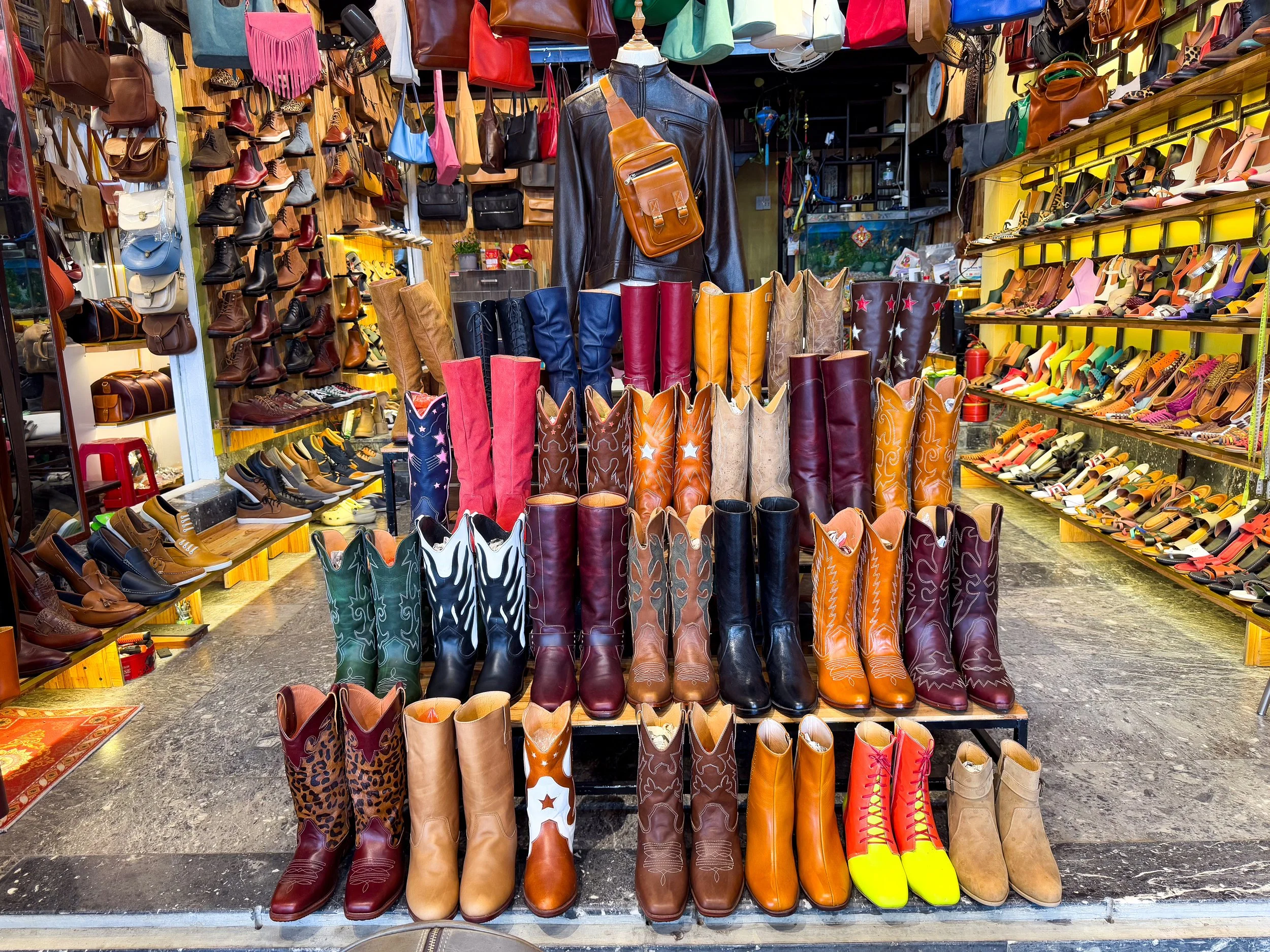
Throughout Hoi An, many shops sell high quality handmade linen and leather goods including bags, shoes and accessories, offering one of a kind customizations.
Helen Leather. The place to buy boots in Hoi An! I customized every element of each pair, selecting the design, shape, stitching, sole, color and softness. After negotiating on price, they measured my feet and began working on my order, completing them in 24 hours.
Leather Shop New Fashion. A leather goods shop with shoes, boots, bags, wallets and other accessories. I bought an off the shelf laptop bag and had a custom cord organizer made to pair with it.
Leather & Suede Shop. A shop specializing in leather backpacks, duffels, purses, messenger bags and wallets. I bought a minimally designed flip top backpack.
Instyle Boutique Clothing. A linen wear shop with modern handmade pieces of clothing including button down shirts, vests, dresses, one piece jumpsuits, pants and shorts. I bought a hand painted linen shirt.
Where to Stay
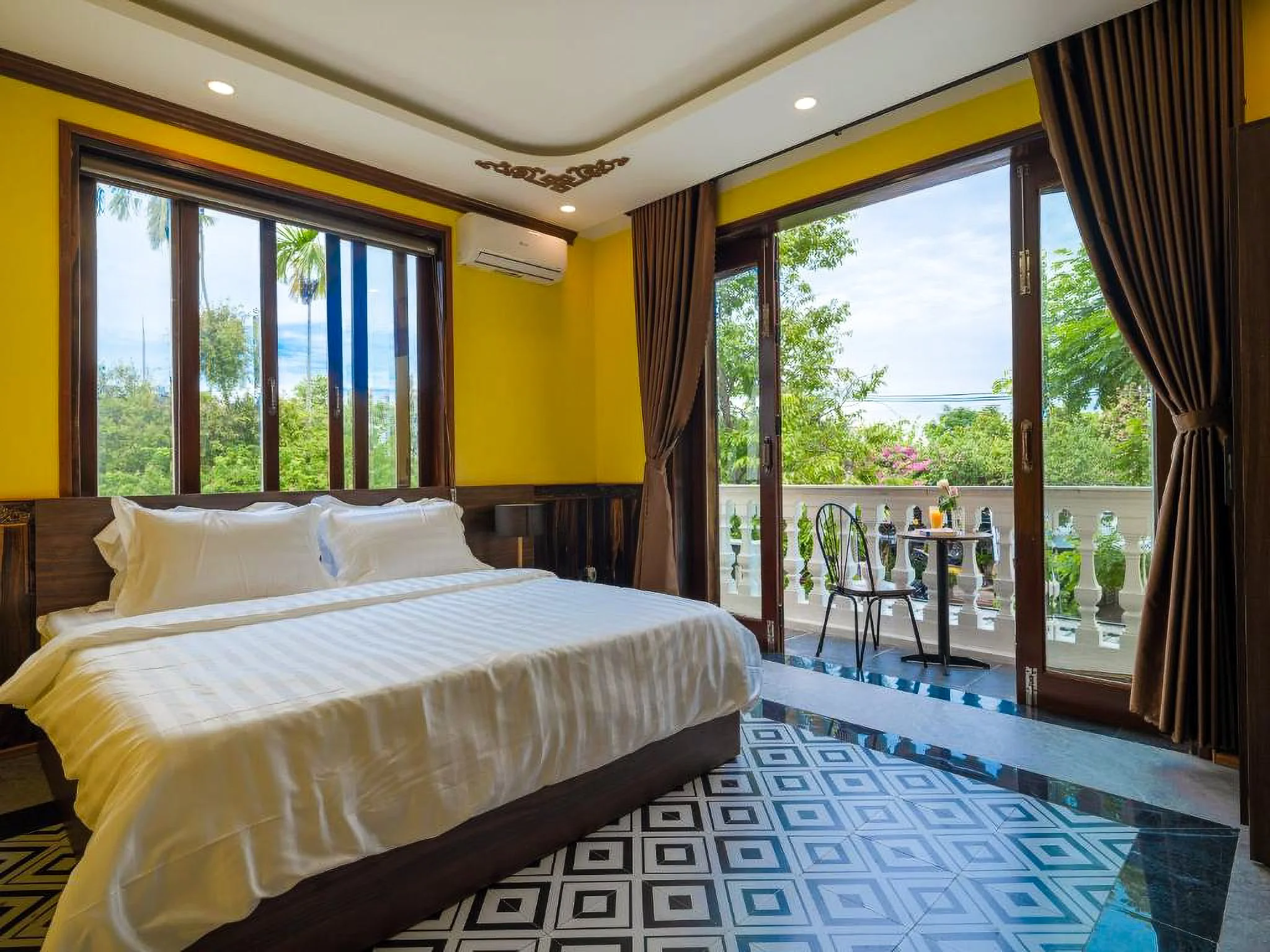
Arabica Coffee & Homestay. A café with Vietnamese coffees and rental units above its storefront. We stayed here for the week, enjoying coffees by morning and relaxing in our room and the communal kitchen during the evening. It’s located just outside of the ancient town in a very walkable area. Reserve on Booking.
Getting Around
Grab Taxis. Widely available on the Grab App and cheap to get around town as well as between Hoi An and the Da Nang Airport.
On Foot. The ancient town and surrounding neighborhoods are easily walkable. Be cautious when crossing roads, double checking for scooters.
By Scooter. Though we didn’t rent them, scooters are the most popular and local way to get around the city. We saw some rentals for $5 USD per day.
Sightseeing Rickshaw. A three wheeled bicycle with a seat for one or two people in front of the driver. Many tourists hire one to tour them around the ancient town.
Location Specifics
Cash vs. Card. Most businesses and vendors are cash only. Clothing shops often accept cards with a 1-3% fee.
Vegetarian Food. Vegetarian dishes are popular and easy to spot on menus. The word “Chay” after any dish means it’s vegetarian.
Safety. Vietnam is generally a safe country to visit. The ancient town of Hoi An is no exception.
LGBTQ+ Safety. Vietnamese are openly welcoming of LGBTQ+ travelers. When noticing our wedding rings, local women would ask how long we’ve been married and call us a happy couple.
Language. Vietnamese and English are widely spoken, seen on street signs and restaurant menus across the country. That said, it’s still good to know a few Vietnamese phrases.
Hello = Xin chào (Sing-Chow)
Thank you = Cảm ơn (Com-Un)
Good bye = Tạm biệt (Tam-Be-Et)
See you later = Hẹn gặp lại (Hen-Gap-Lie)
Local Customs
Take shoes off when visiting homes and temples.
Dress modestly when visiting temples. No hats, shorts or sleeveless shirts.
Hand things to people with two hands.
Avoid pointing at anything or anyone using an index finger. Use your full hand instead.
Crossing arms or pointing the soles of feet at anyone is considered rude.
Elsewhere in Vietnam
From Hoi An's lantern lit streets and riverside charm to Hanoi's cultural heritage, Ninh Binh's natural wonders and Saigon's bustling markets, continue your journey through Vietnam with these travel guides:
Hanoi Travel Guide: Old Quarter, Street Food & Vietnamese Culture. Explore Hanoi's Old Quarter and neighborhoods where sacred temples, night markets, Train Street and Vietnamese street food capture the spirit of Vietnam's capital.
Ninh Binh Travel Guide: Trang An, Karst Landscapes & Ancient Temples. Drift through Ninh Binh where winding rivers, towering karst landscapes, rice paddies and imperial temples reveal Vietnam's timeless beauty and ancient history.
Saigon Travel Guide: Markets, Nightlife & Vietnamese Culture. Experience Saigon where bustling markets, vibrant nightlife, historic landmarks, neon lit skyscrapers and street food stalls bring modern Vietnam to life.
For Next Time…
Cham Islands. A coastal bio reserve and marine sanctuary made up of several islands, coral reefs and local fishing villages. We had booked a tour but it was canceled due to bad weather.
Ba Na Hills. An amusement park in Da Nang famed for its bridge being held up by a pair of hands. We had planned to visit but were delayed by a day flying into Vietnam and missed our date.
Da Nang. The main city to fly into and reach Hoi An from. Next time, we’ll spend time here exploring its urban culture, beaches and nearby mountains like Marble Mountain and Monkey Mountain.