Hanoi Travel Guide: Old Quarter, Street Food & Vietnamese Culture
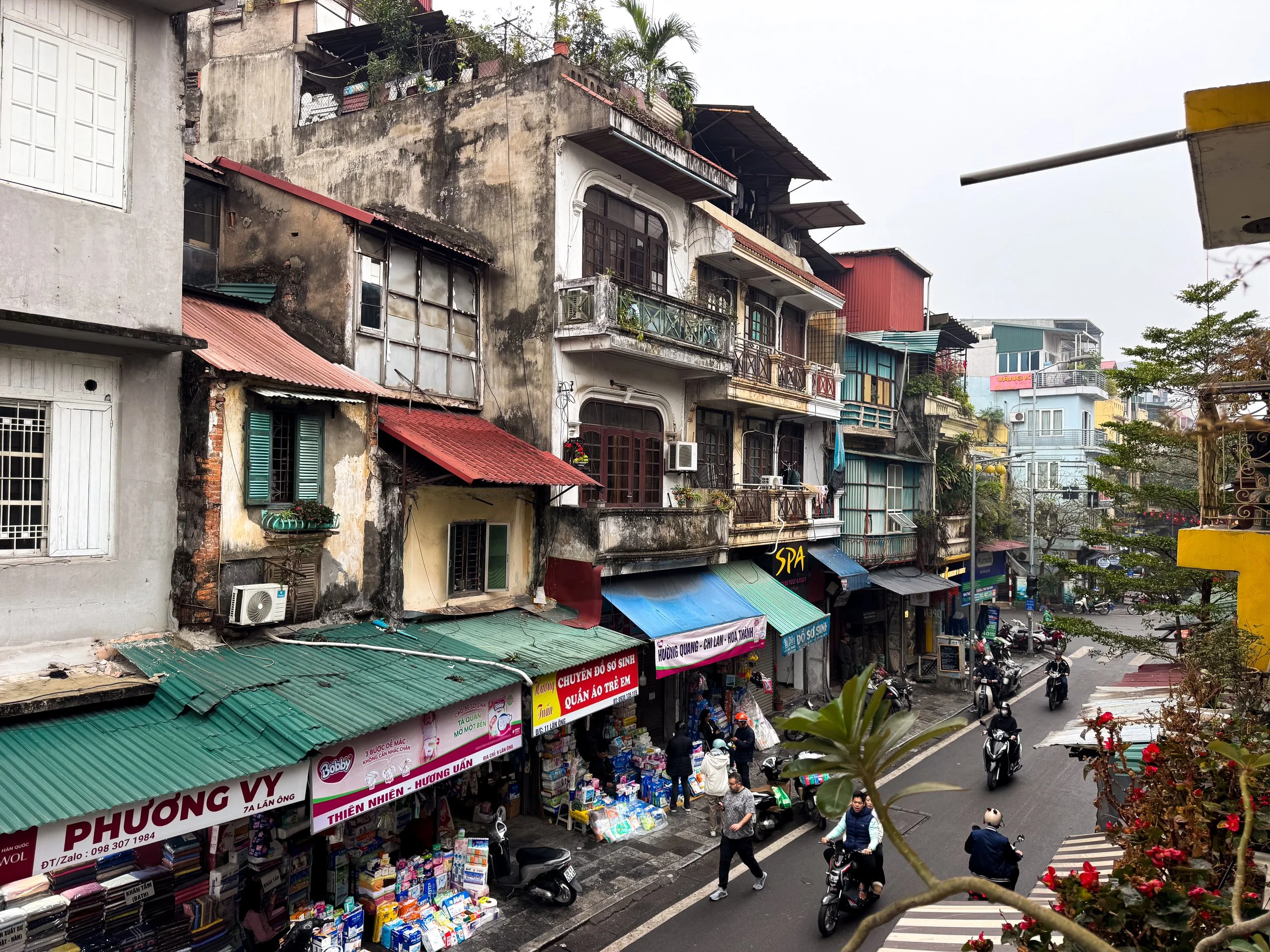
Hanoi, Vietnam
Hanoi is a sprawling metropolis abound with rich cultural experiences, a storied history and modern appeal. The capital city dates back to ancient times and is home to landmark sights and sacred temples. Paper lanterns and communist flags often decorate its chaotic streets as people speed by on scooters. Bustling night markets, sidewalk cafes and street food vendors lure in locals and visitors alike. Nearby natural wonders offer a peaceful escape from the city’s lively pace.
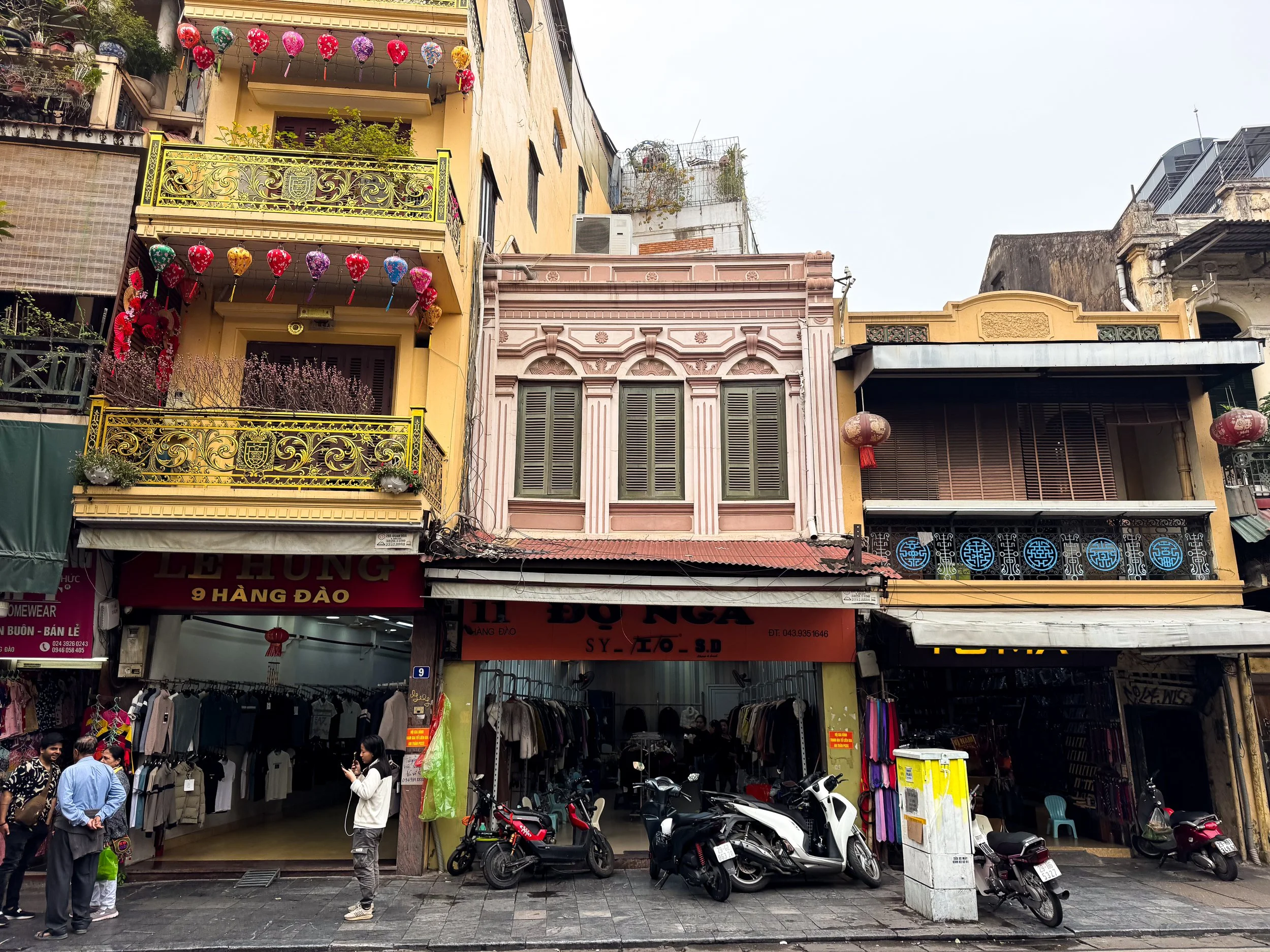

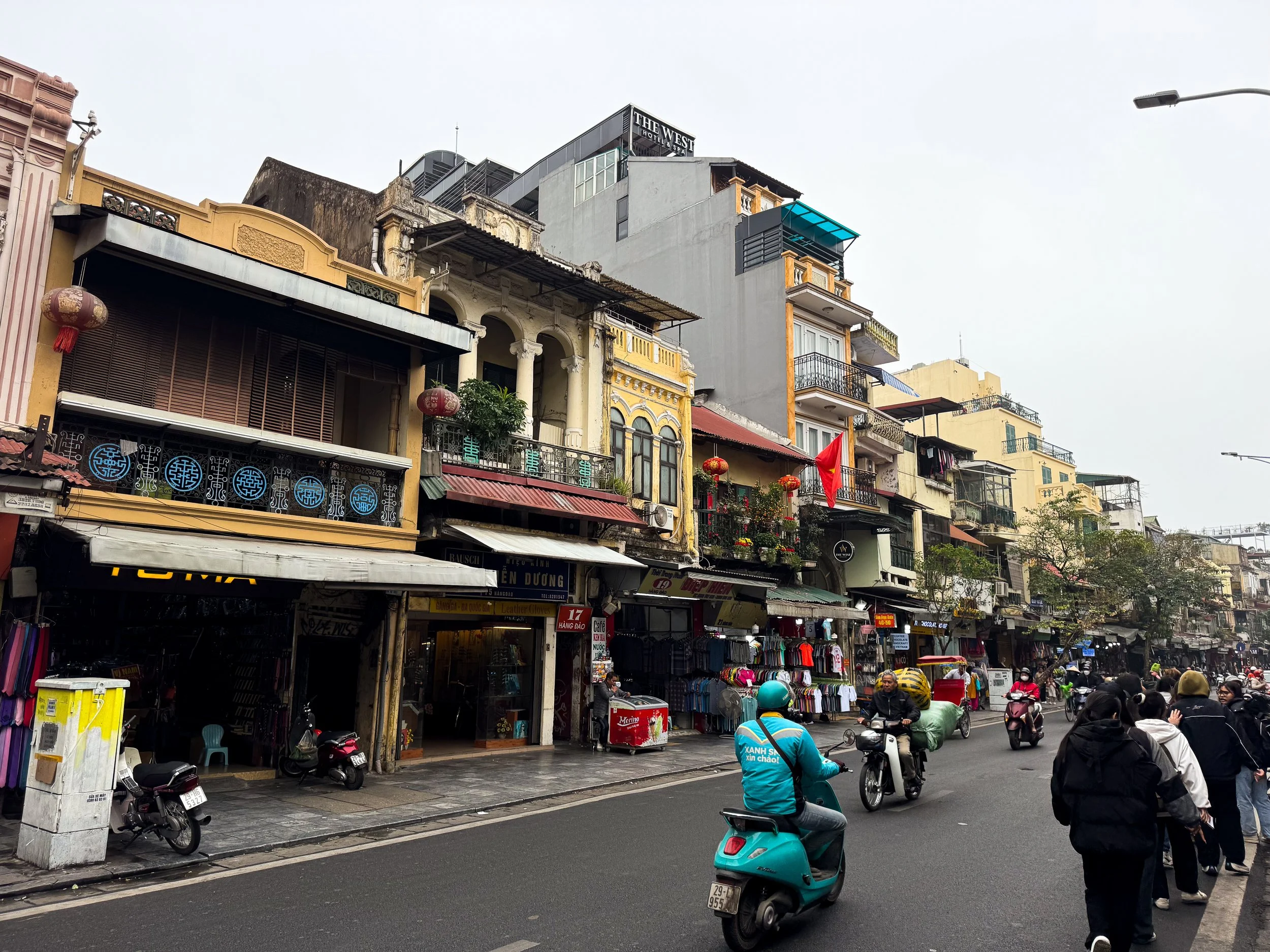

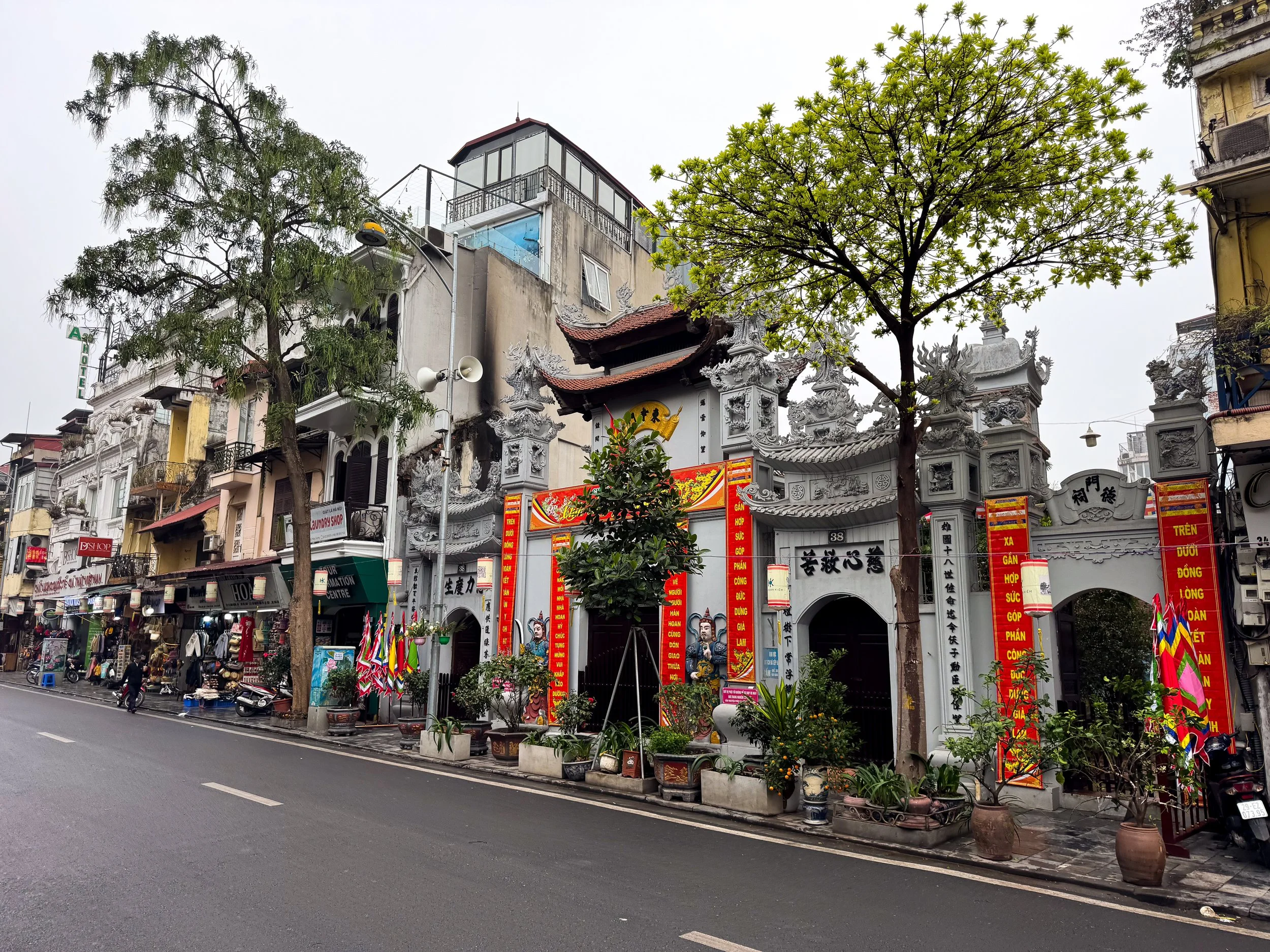
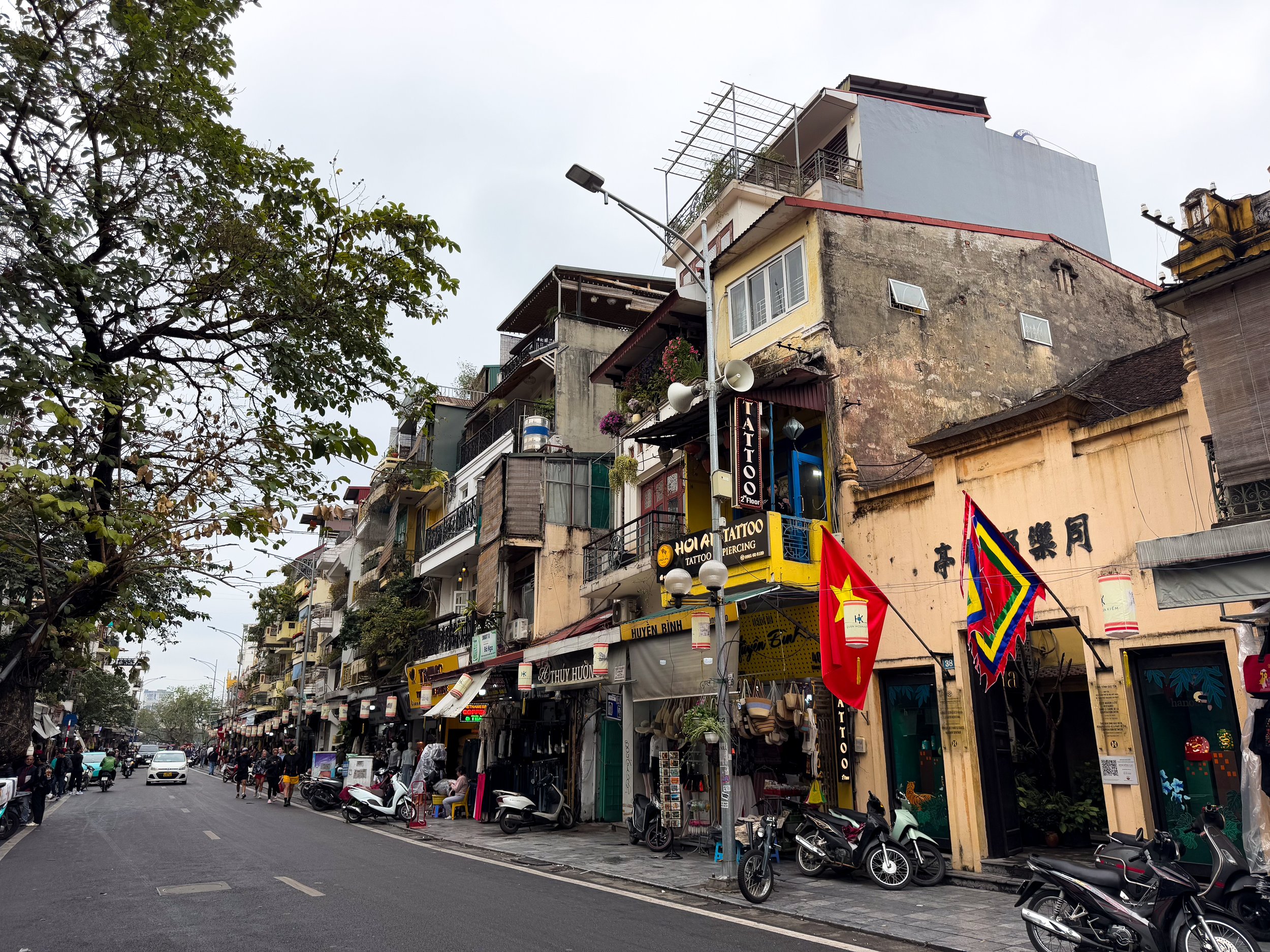
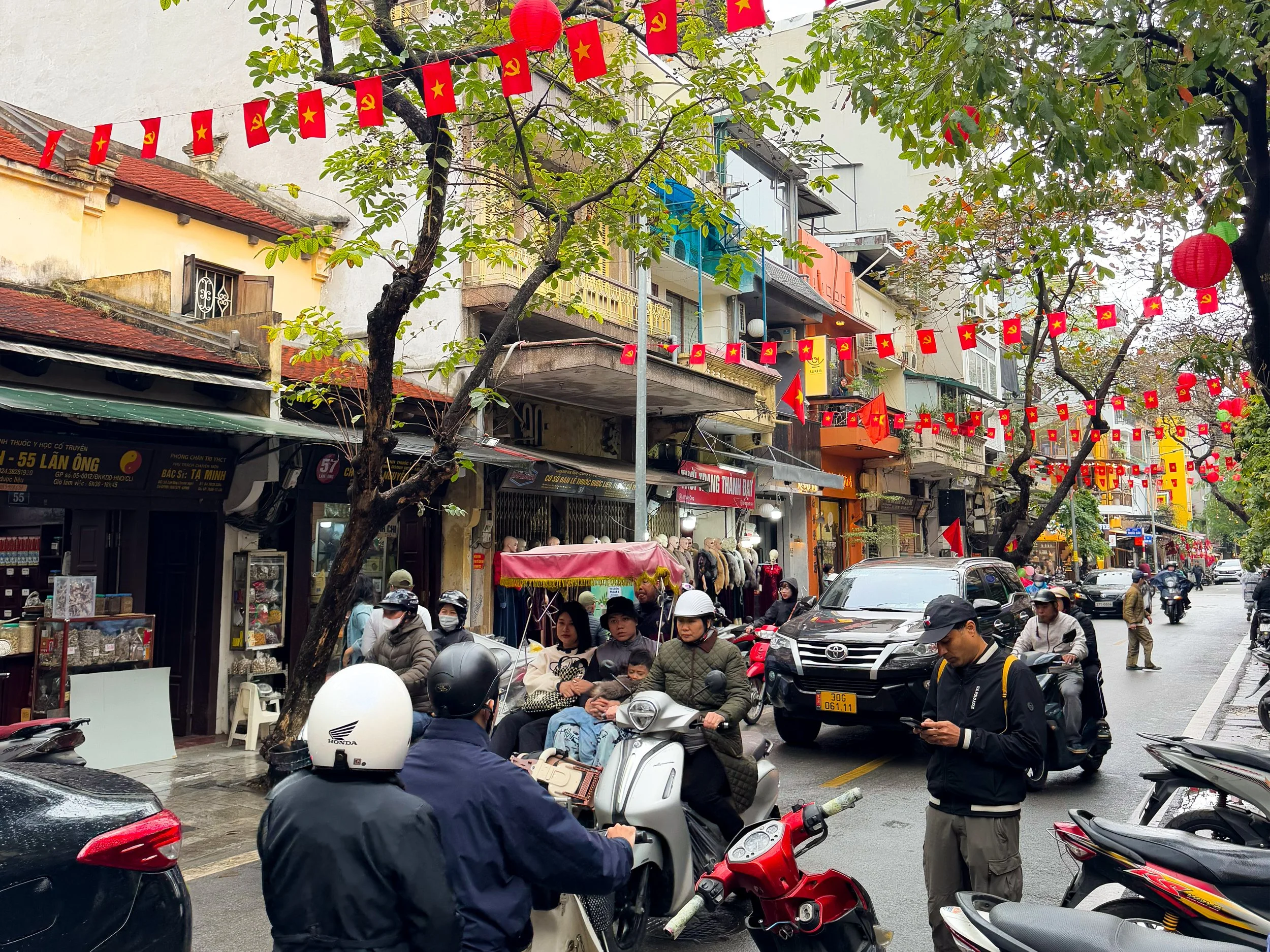
Old Quarter Streets
Hanoi’s Old Quarter is one of the most lively neighborhoods of the city with several “themed” streets. It’s popular for its night markets, nightlife, food scene, train streets and cultural products.
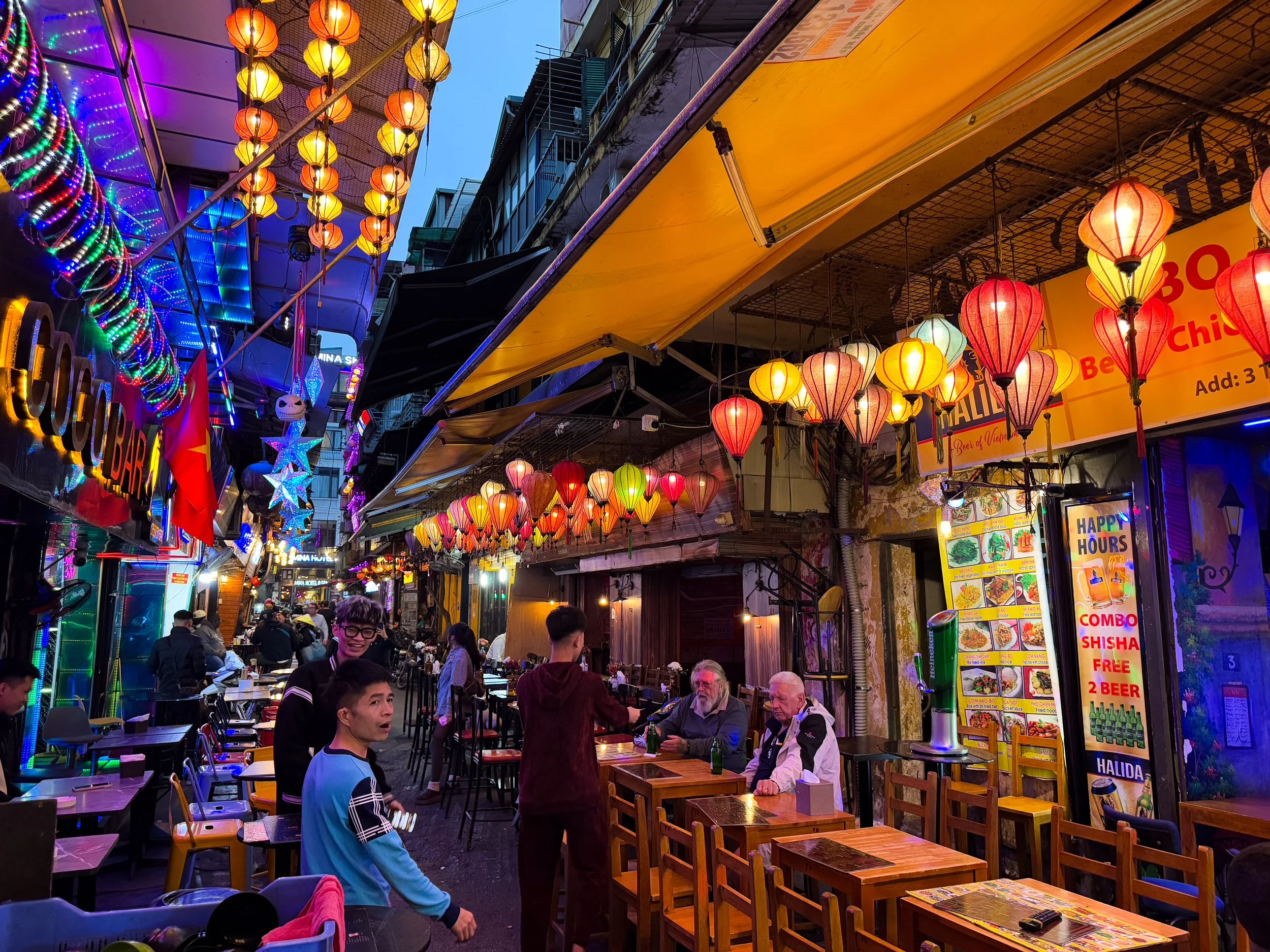
Hang Buom (Nightlife Street). An incredibly vibrant, loud and chaotic nightlife street with dozens of bars catering to all crowds of people. We bar hopped among the chaos, enjoying a bottle of soju at street level and cocktails from a balcony overlooking it.
Hang Dao (Night Market Street). A street with a nightly market starting at 7pm. Tents of vendors sell clothing, jewelry, knock off hand bags and various goods while food carts fry and grill types of Vietnamese street food.
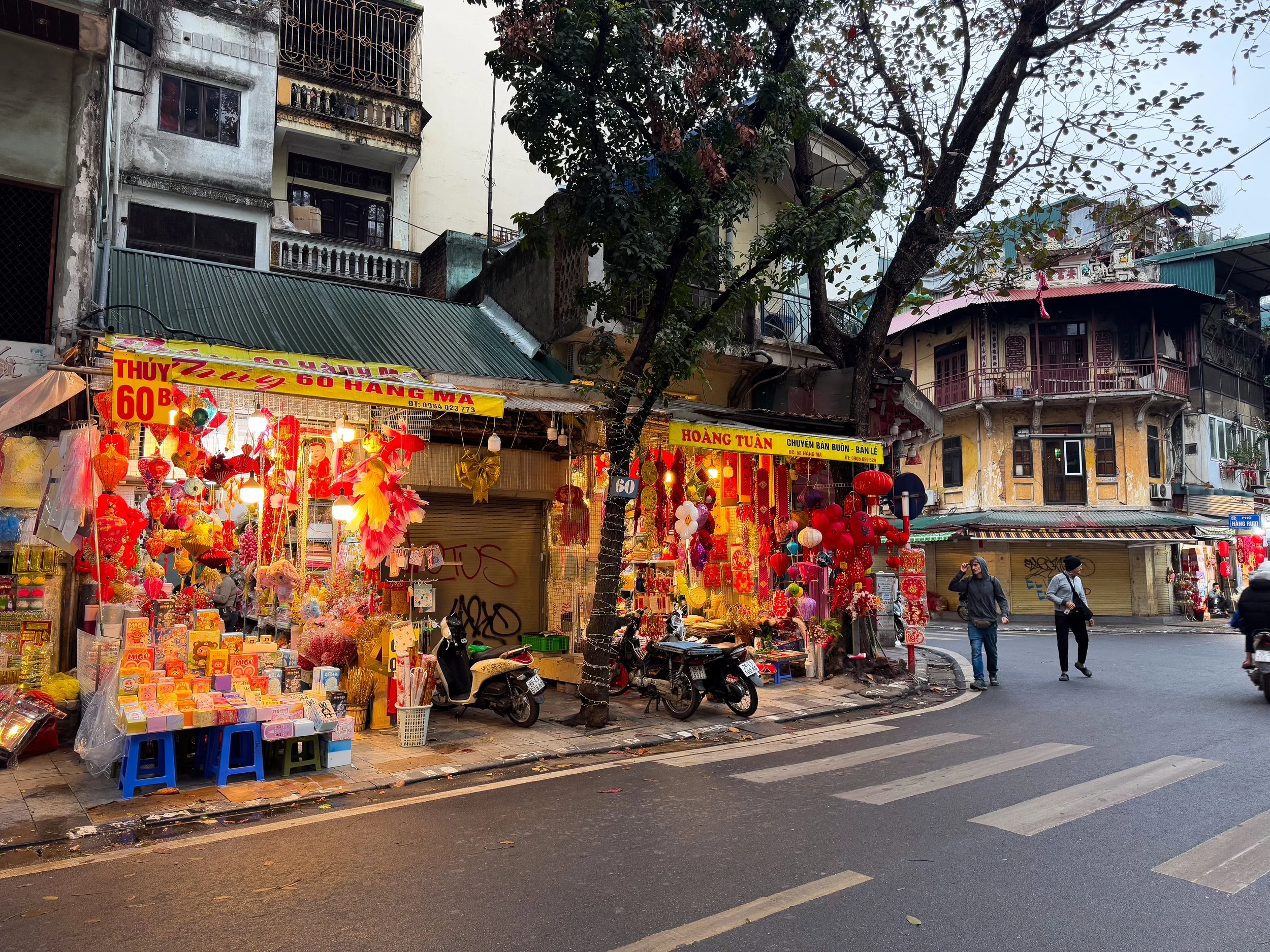
Hang Ma (Festival Street). A street with several stores selling decorations for celebrations like Tet or Lunar New Year. Shops stand out with the red, yellow and golden glow of paper lanterns, tasseled ornaments, beckoning cats, dragon puppets, red envelopes and incense sticks.
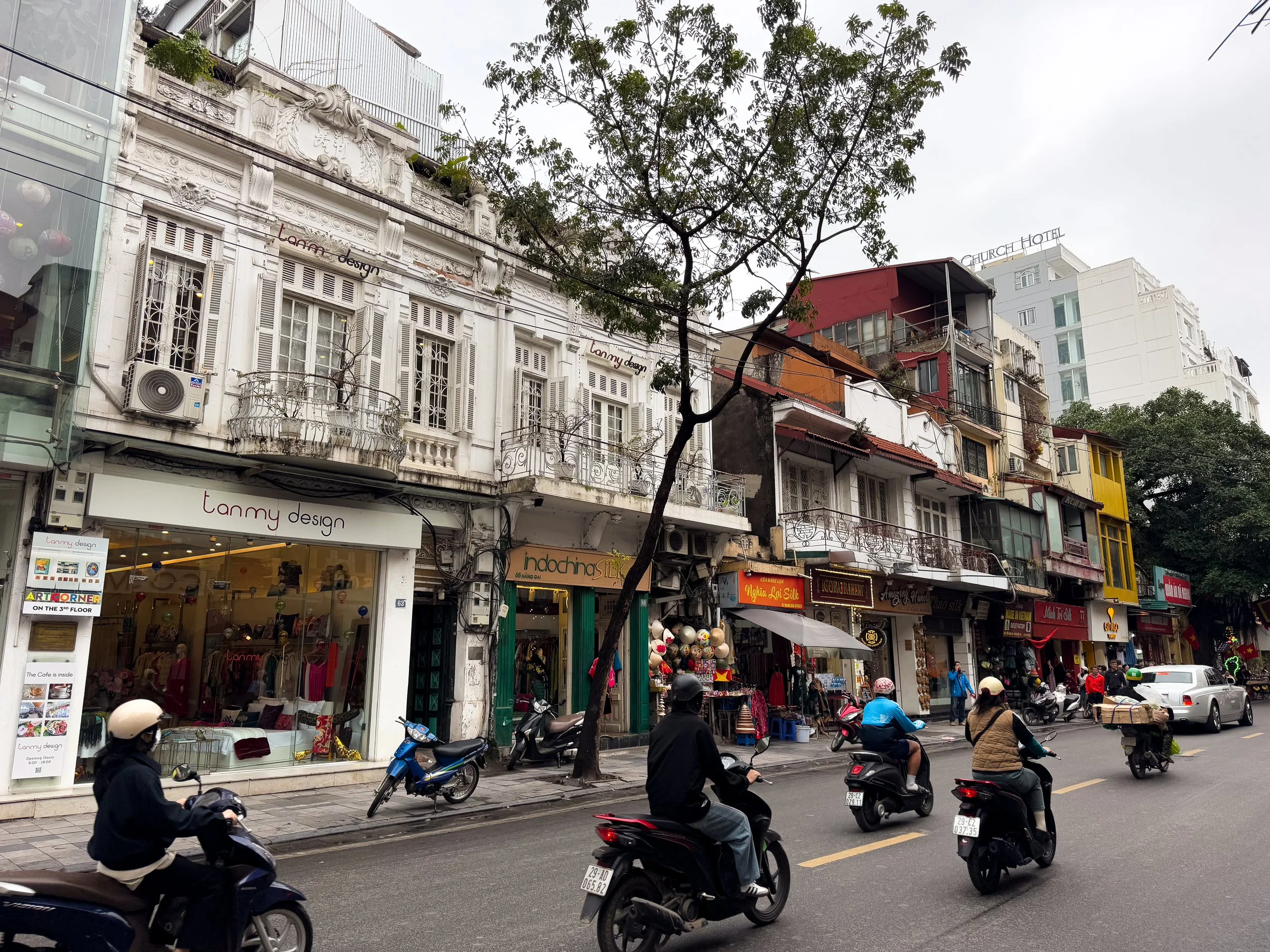
Hang Gai (Silk Street). The silk district with several shops and tailors selling silk textiles, clothing and accessories.
Tong Duy Tan (Food Street). A street lined with restaurants selling Vietnamese dishes, vegetarian meals and various forms of hot pot. Twinkle lights and paper lanterns decorate the trees above the street as Moto bikes zip by and locals eat.
Cha Ca Street. A street named after Hanoi’s most famous local dish, Cha Ca. Several restaurants prepare and serve it, one of the most well known is Cha Ca La Vong. It’s the only item on the menu and they’ve had over 150 years to perfect their recipe.
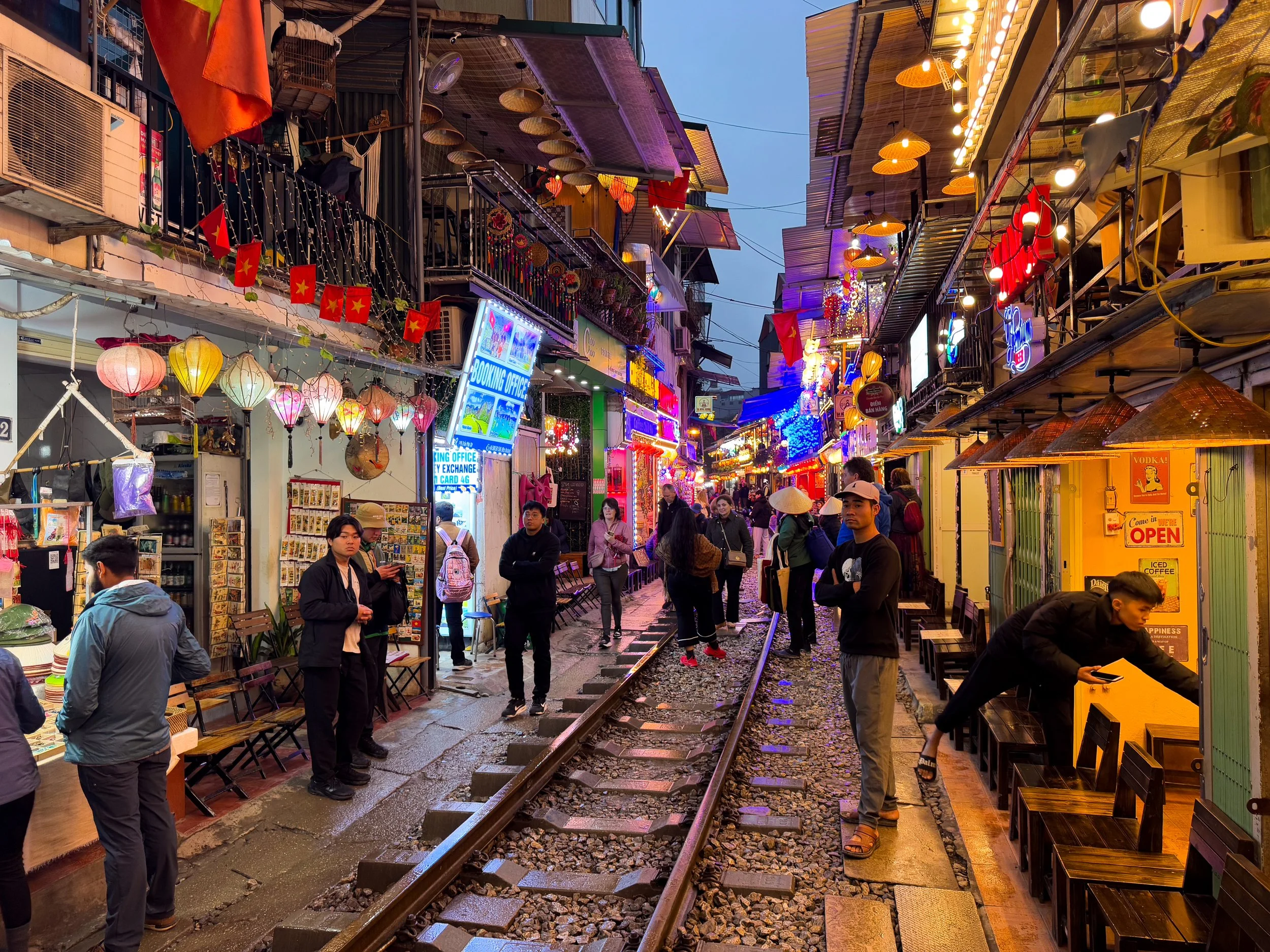
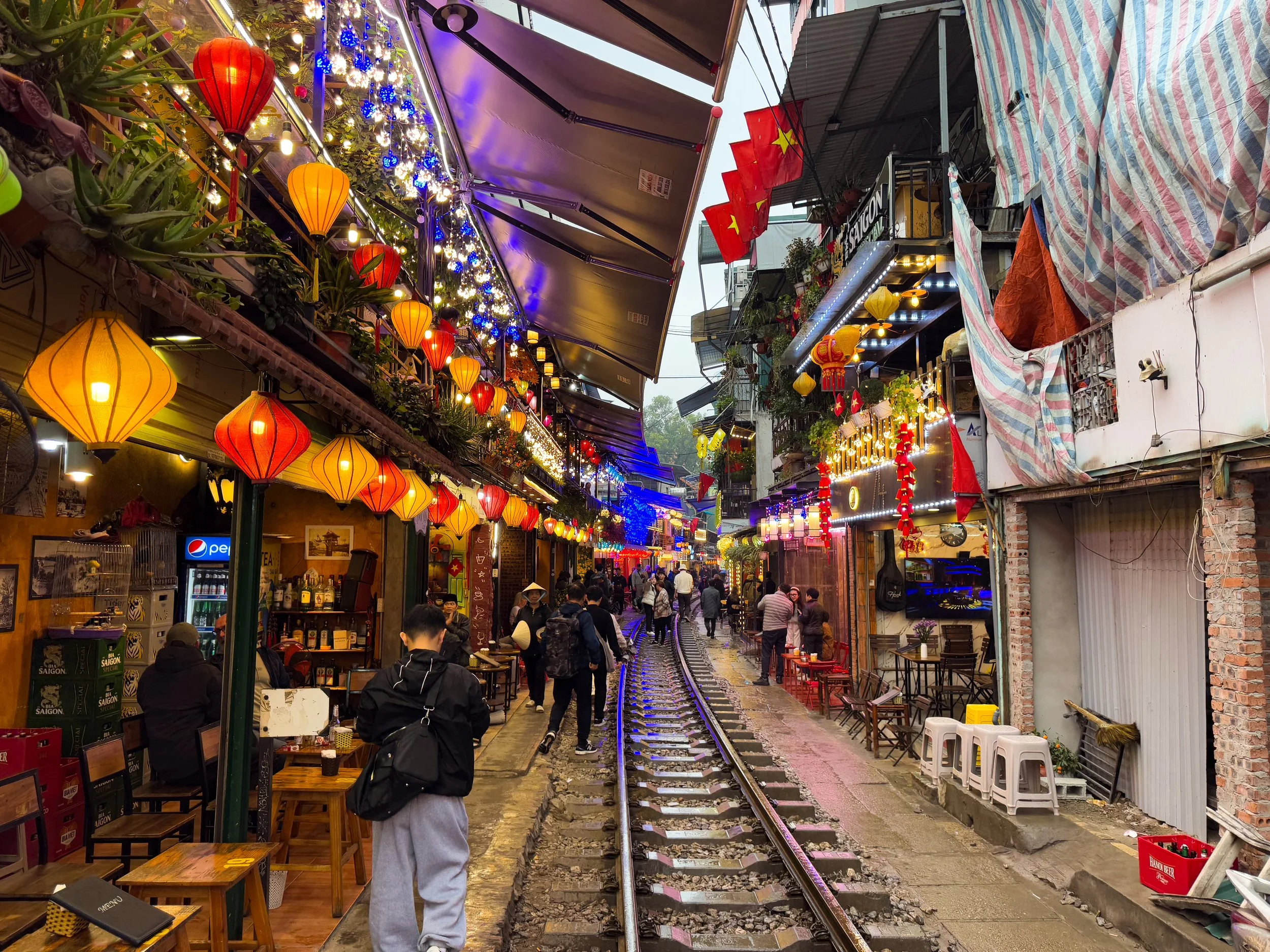
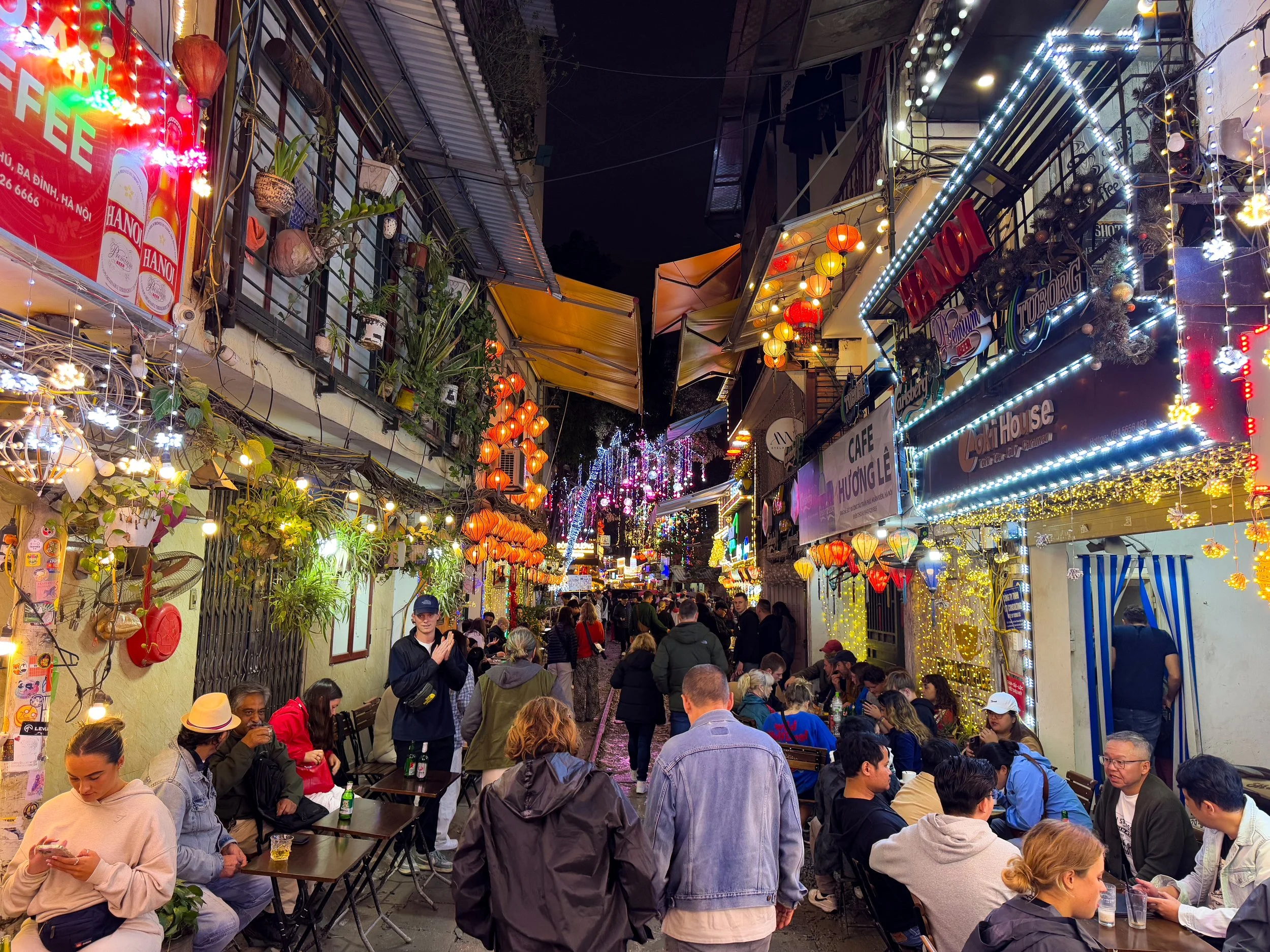
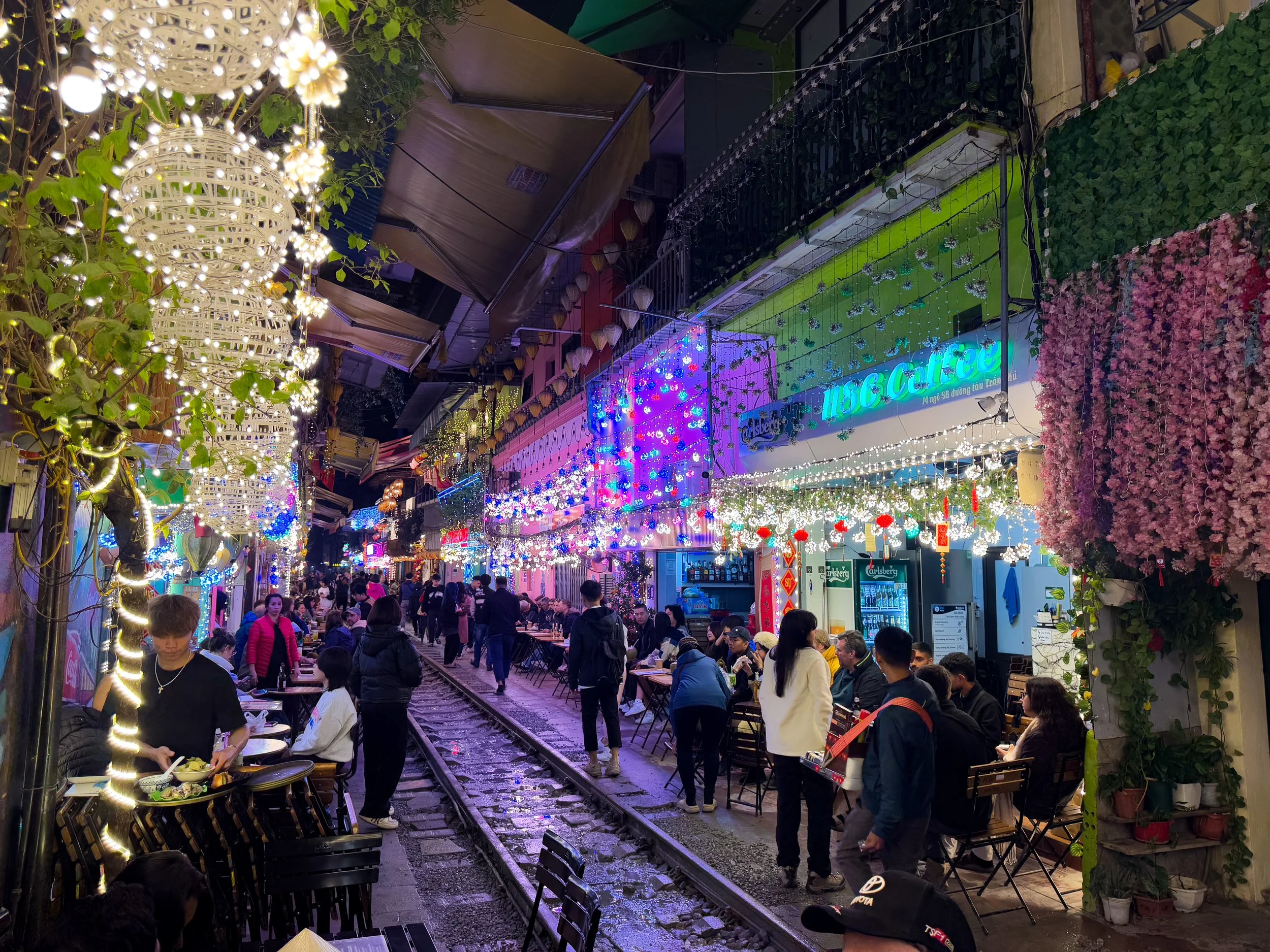
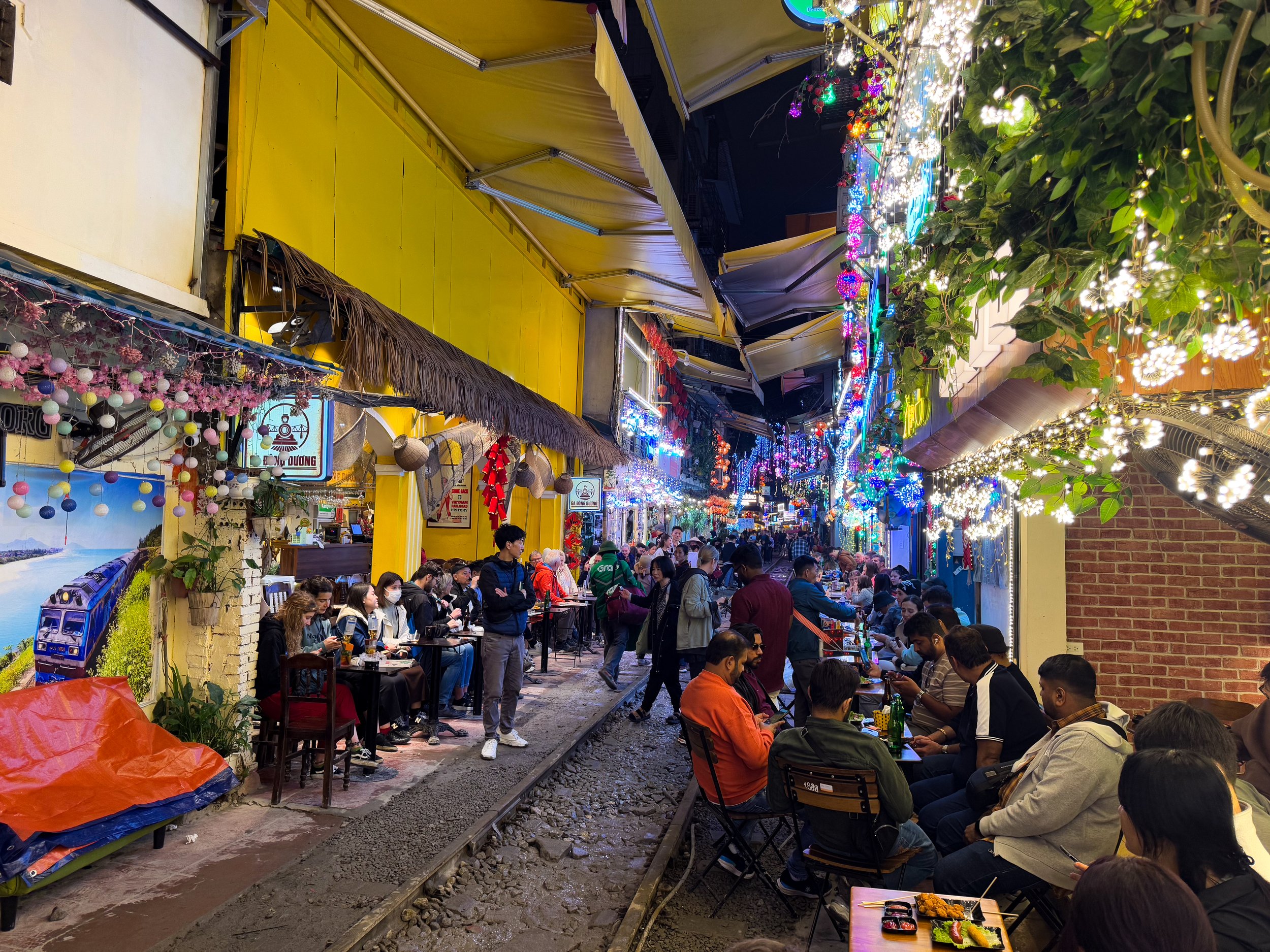
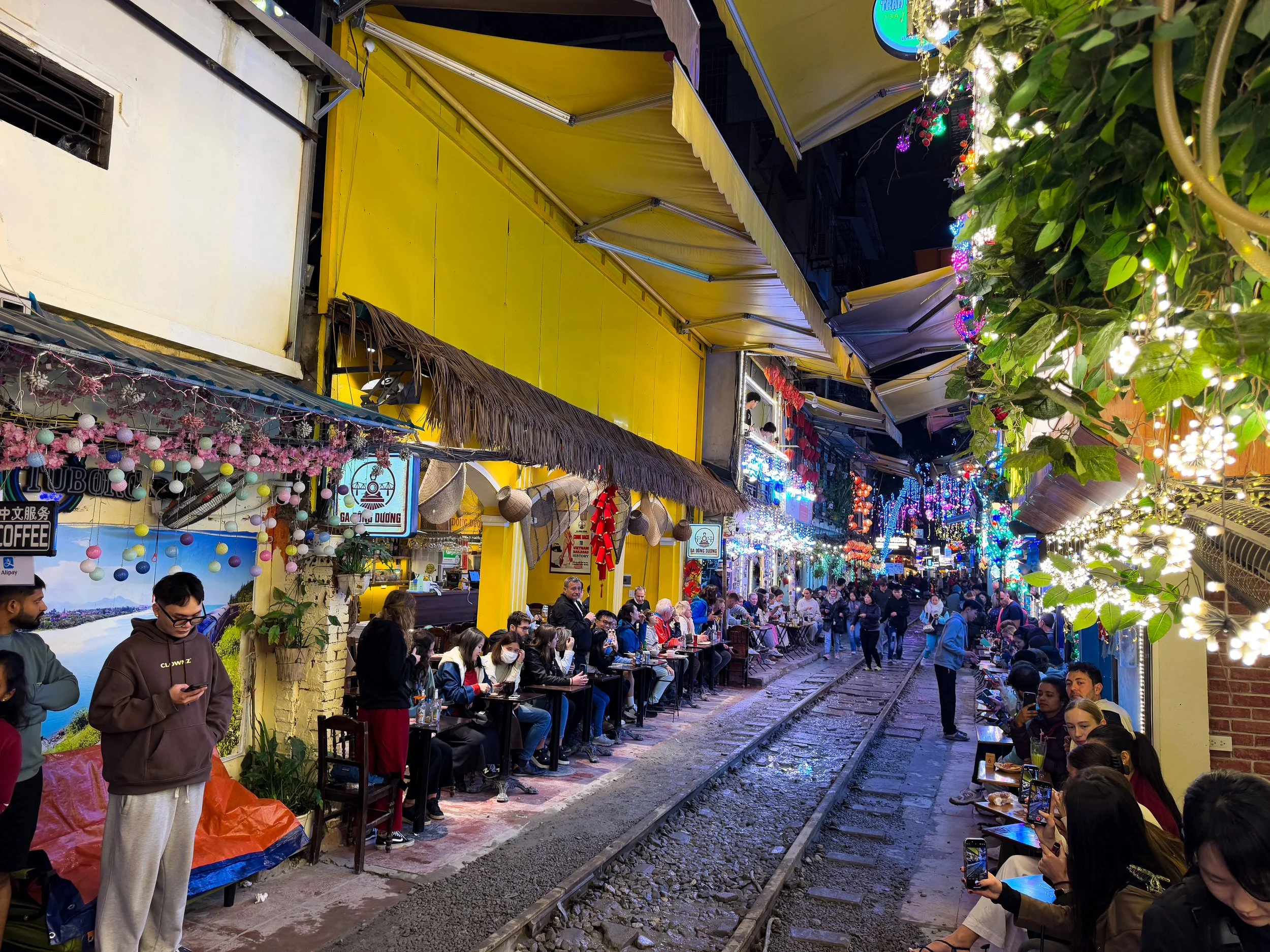
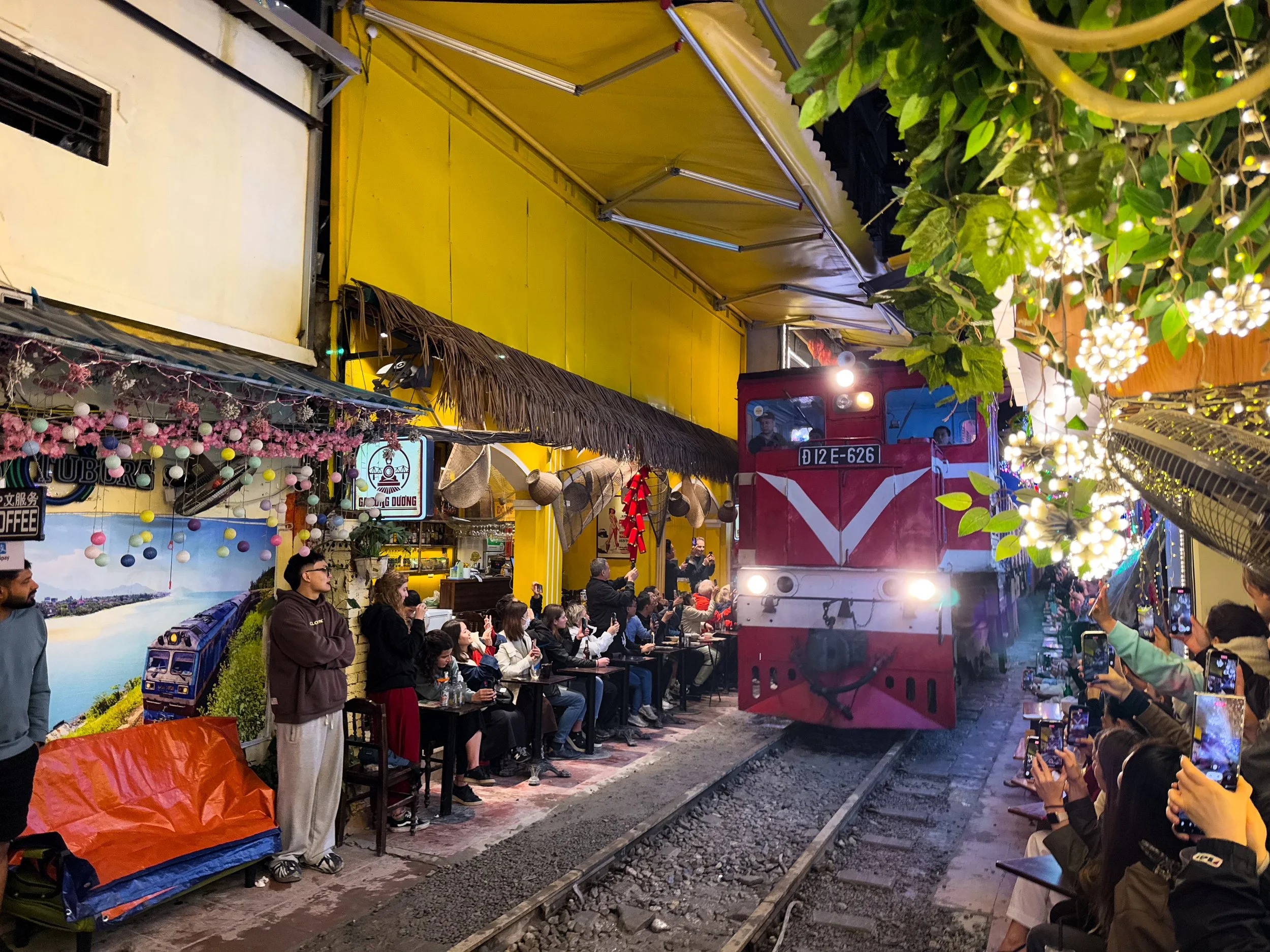
Phung Hung (Train Street). A narrow railway sandwiched between a canyon of buildings lined with dozens of cafes and bars serving Vietnamese coffees and beers. The street is covered in a mangle of string lights, colorful lanterns and illuminated signs with track side patios and second floor balconies. It’s easily one of the most exhilarating streets in the old town. Hundreds of people flock here to experience the train rushing past during an adrenaline packed minute.
Pro Tip. Ask any cafe staff when the next train is scheduled and the direction it’s traveling from. Return at least one hour before to get a good spot. Visit at night when the atmosphere is bright and lively.
Good to Know. There are a lot of scammy people blocking access to the train street. They will try to charge an admission or force you to sit at their cafe. Ignore them and push past saying you have a reservation elsewhere.
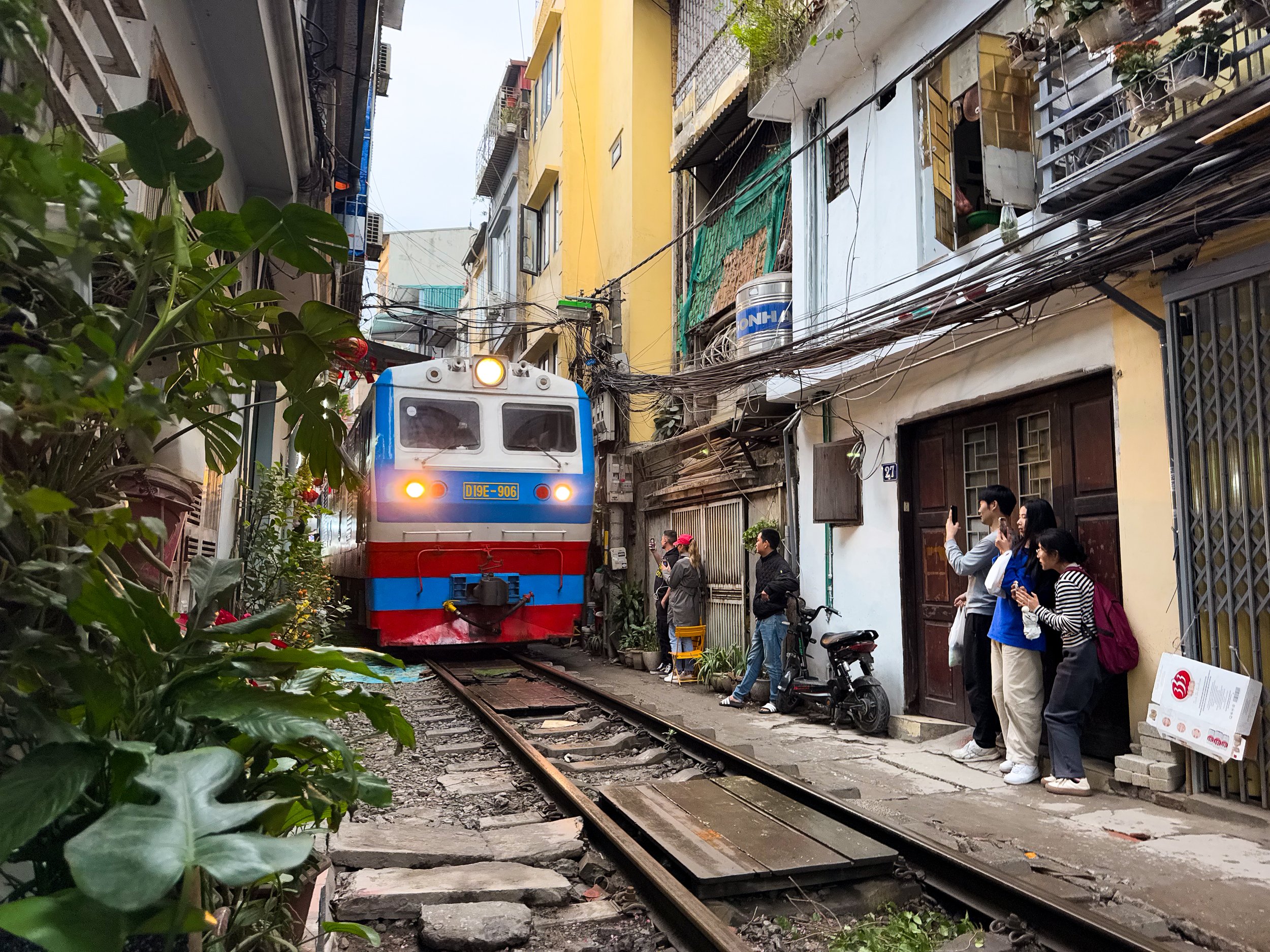
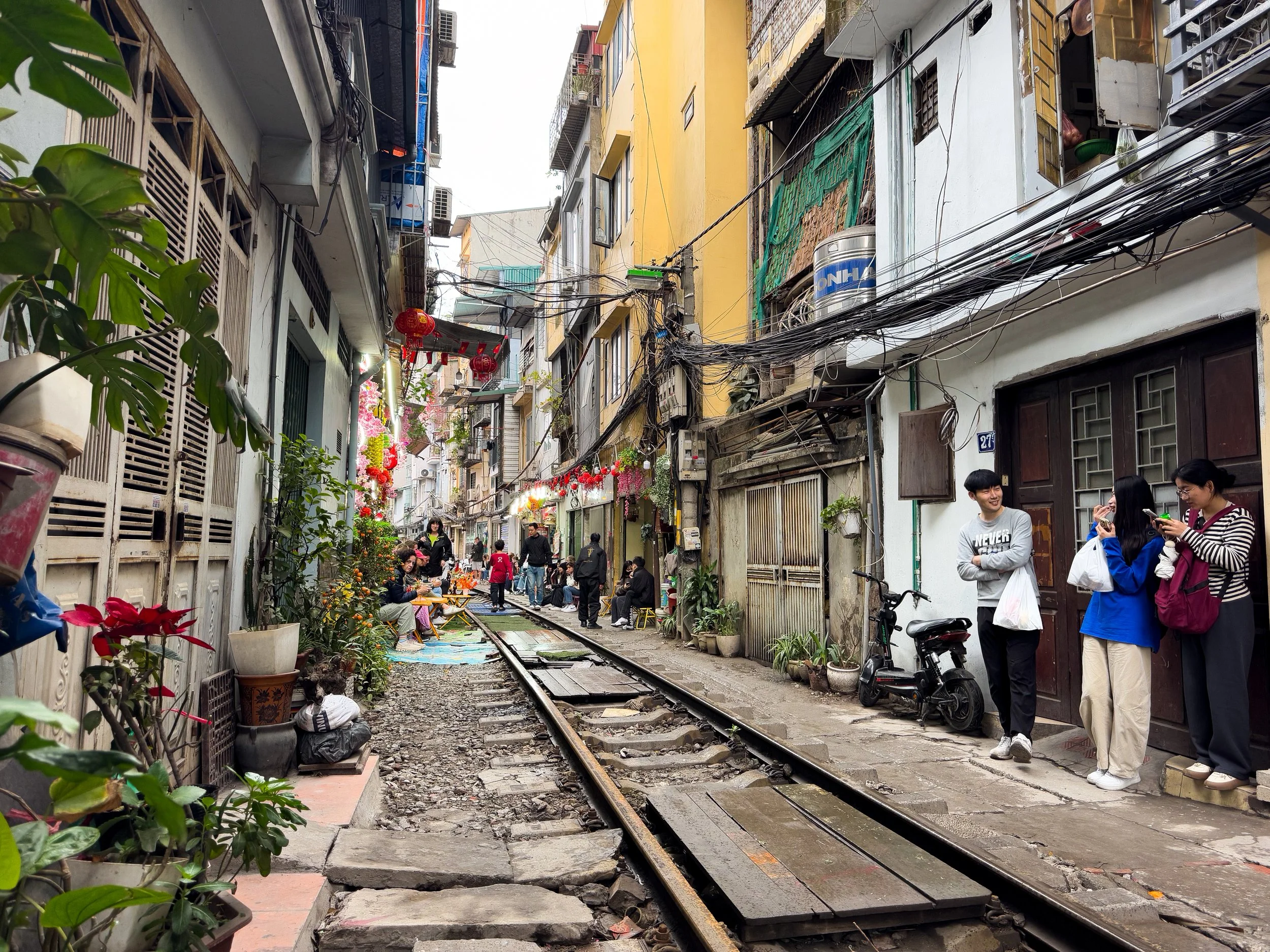
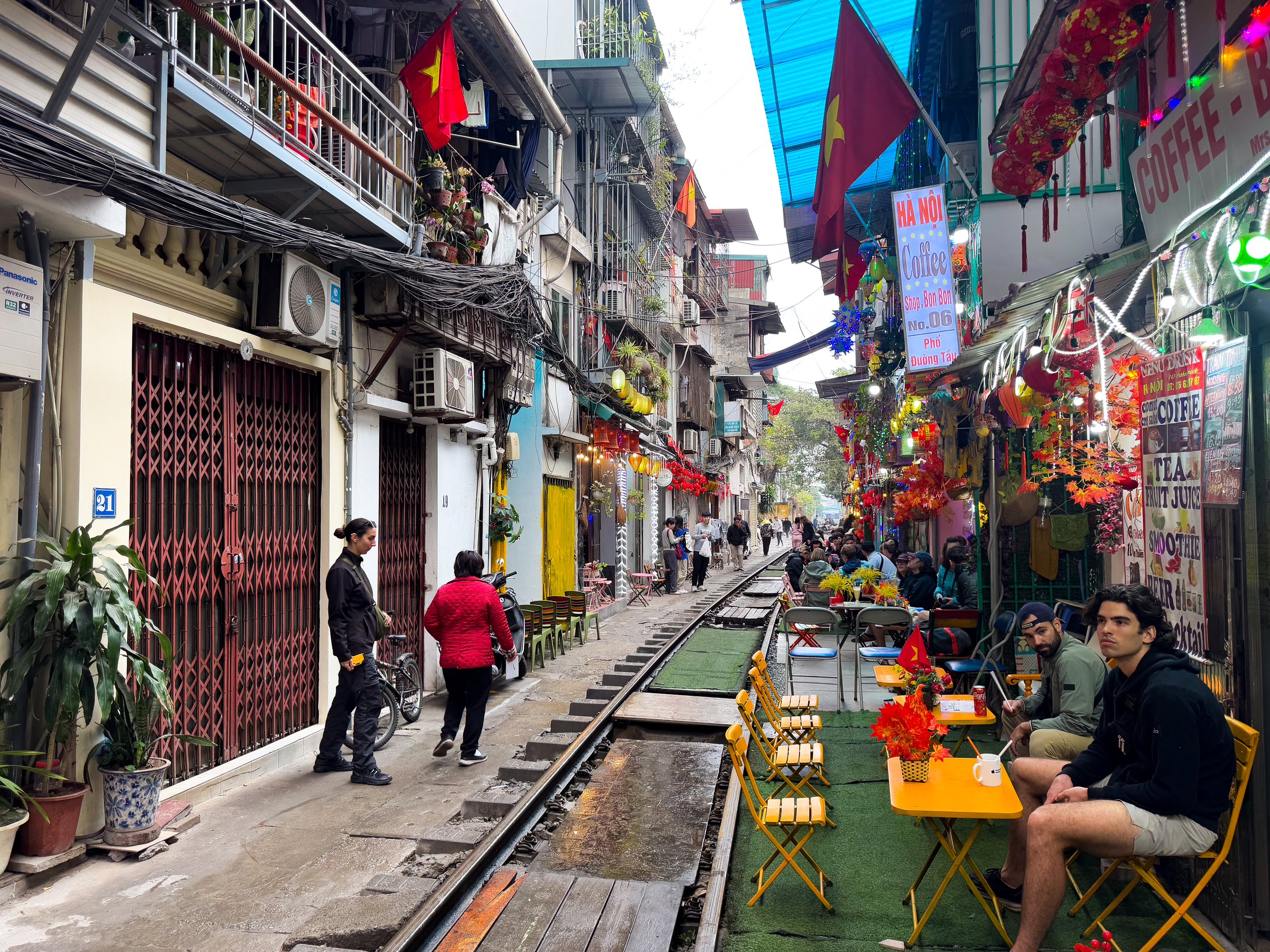
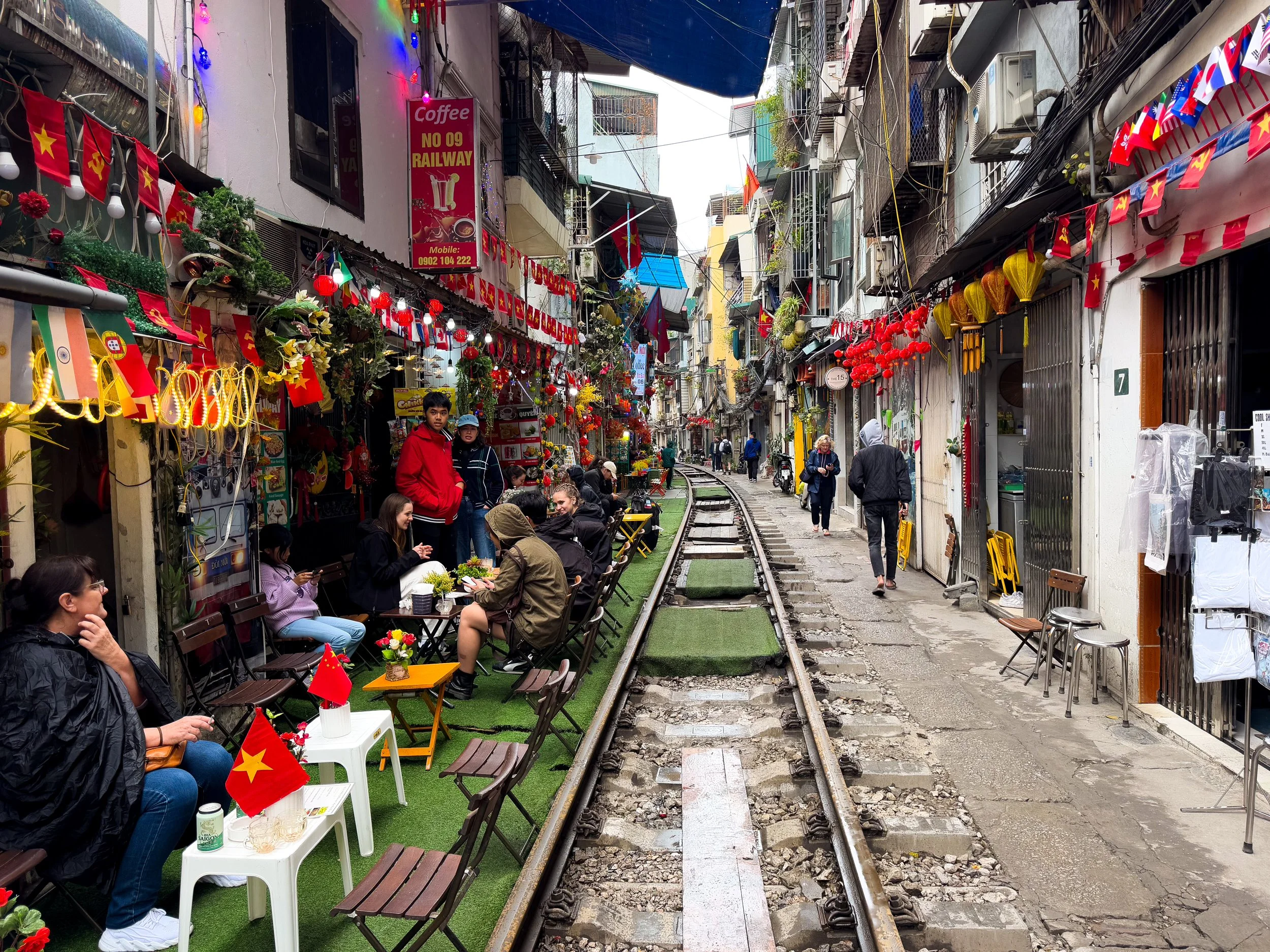
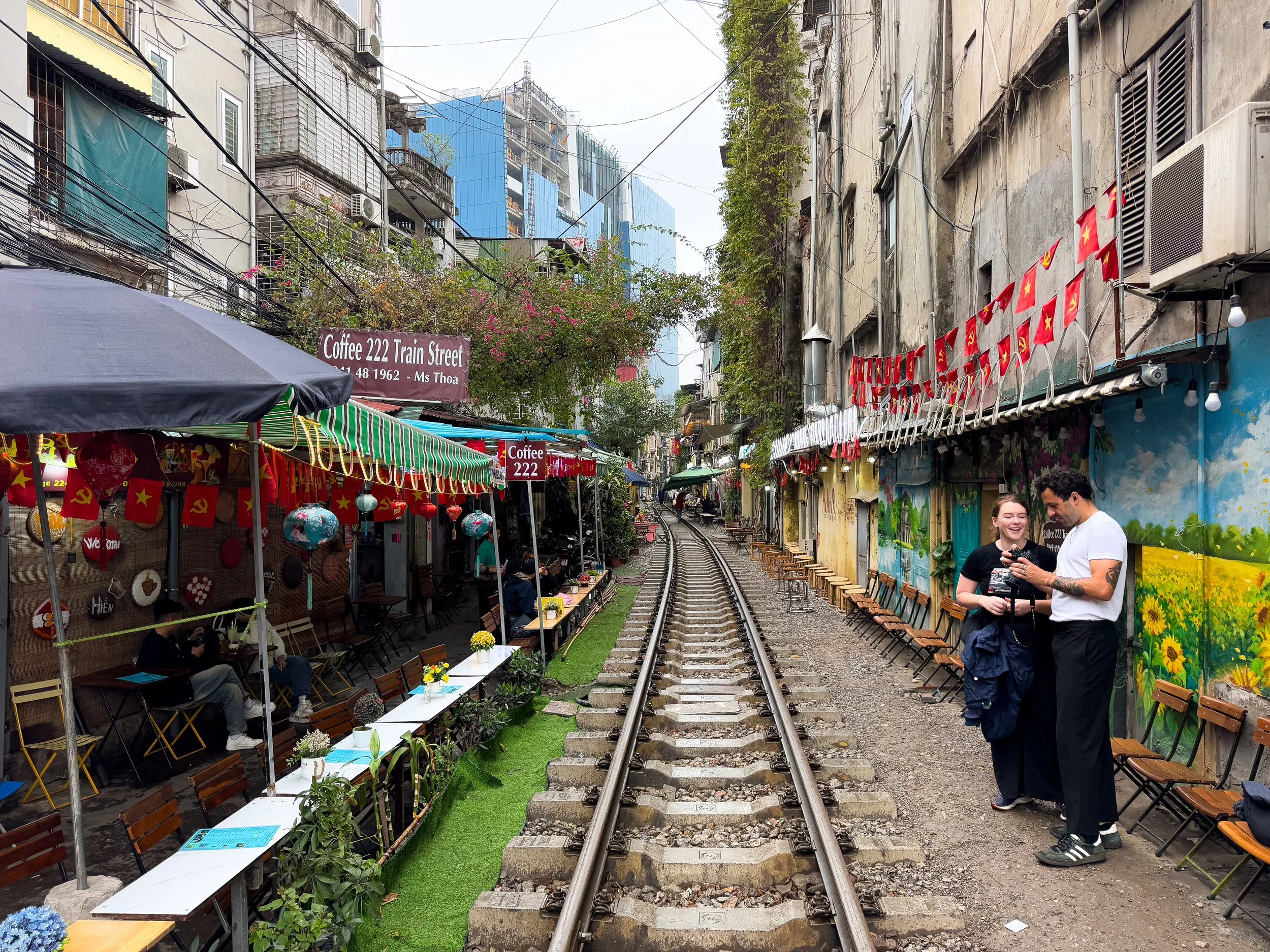
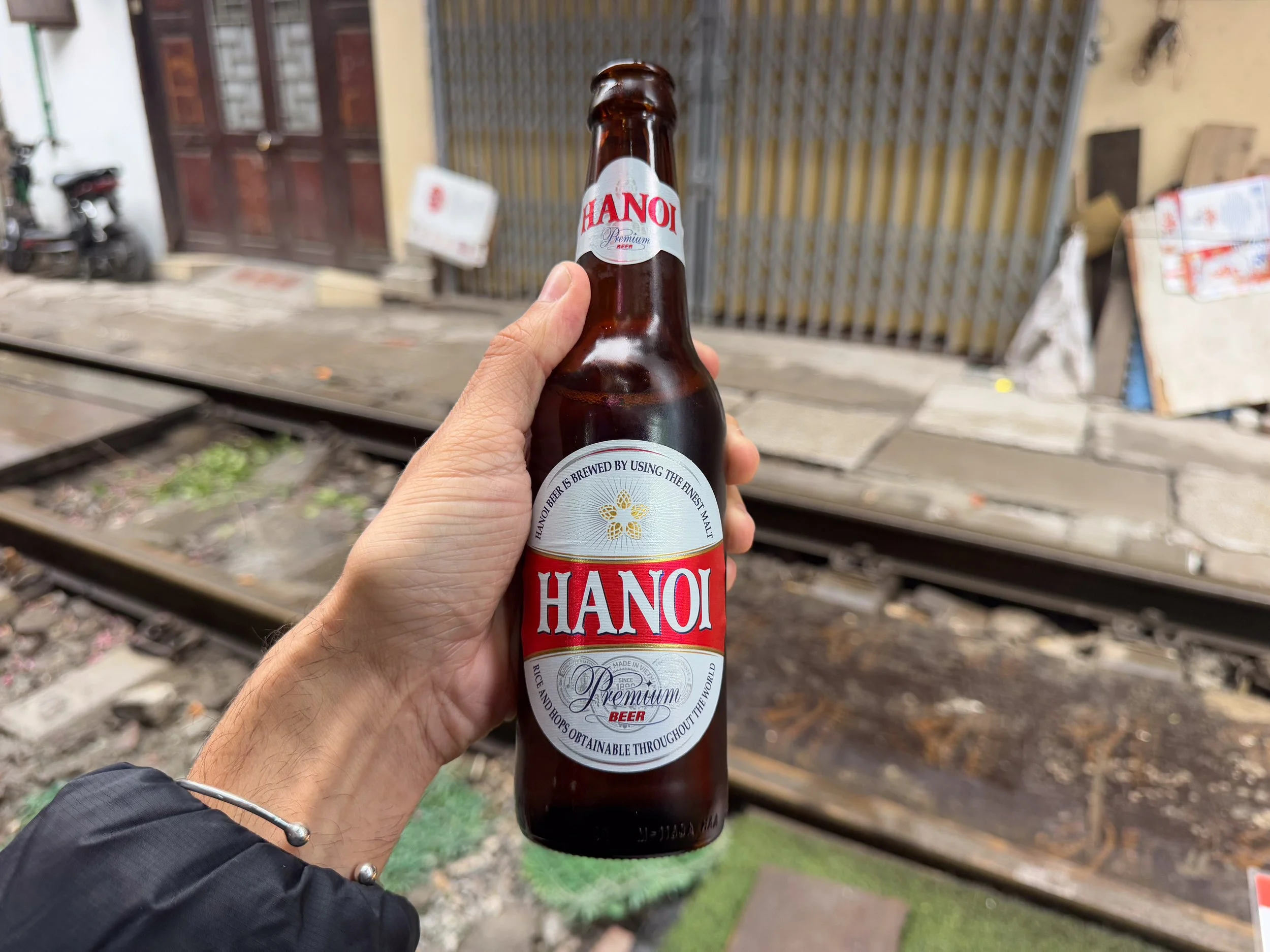
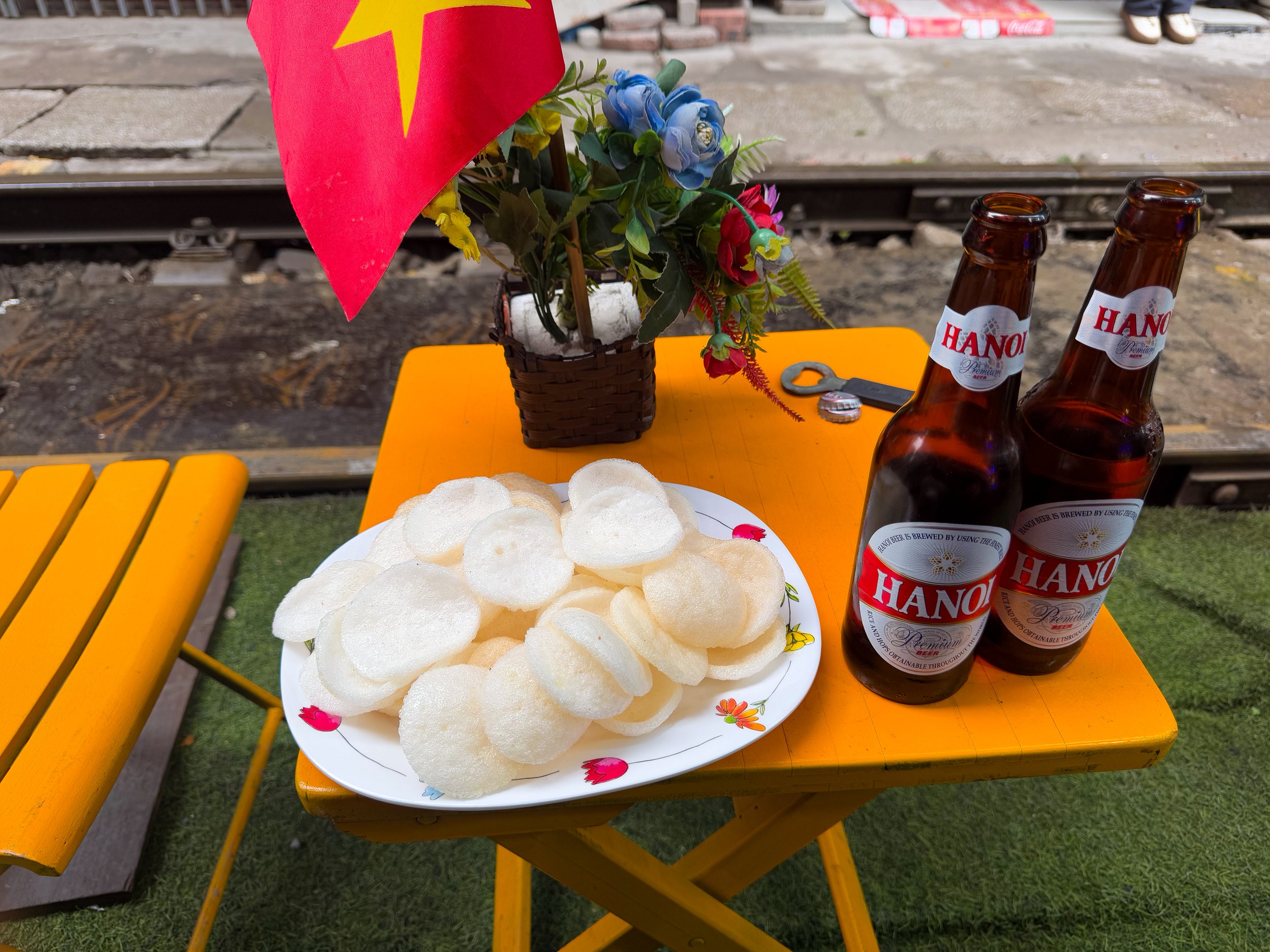
Tau Khan Thien (Train Street South). An alternate train street nestled tightly between an alleyway of small buildings. Though designed for tourists, it’s lesser visited and feels more local. Many cafes are operated out of people’s homes while older Vietnamese women watch to make sure no one gets hurt. As the train approaches, stop keepers close up awnings, pack away furniture and instruct people to tuck up against the walls. It’s thrilling as the train approaches and passes with barely any clearance between us and it.
Pro Tip. Order a beer and place the bottle cap on the tracks for a flattened souvenir.
See the Temples and Sights
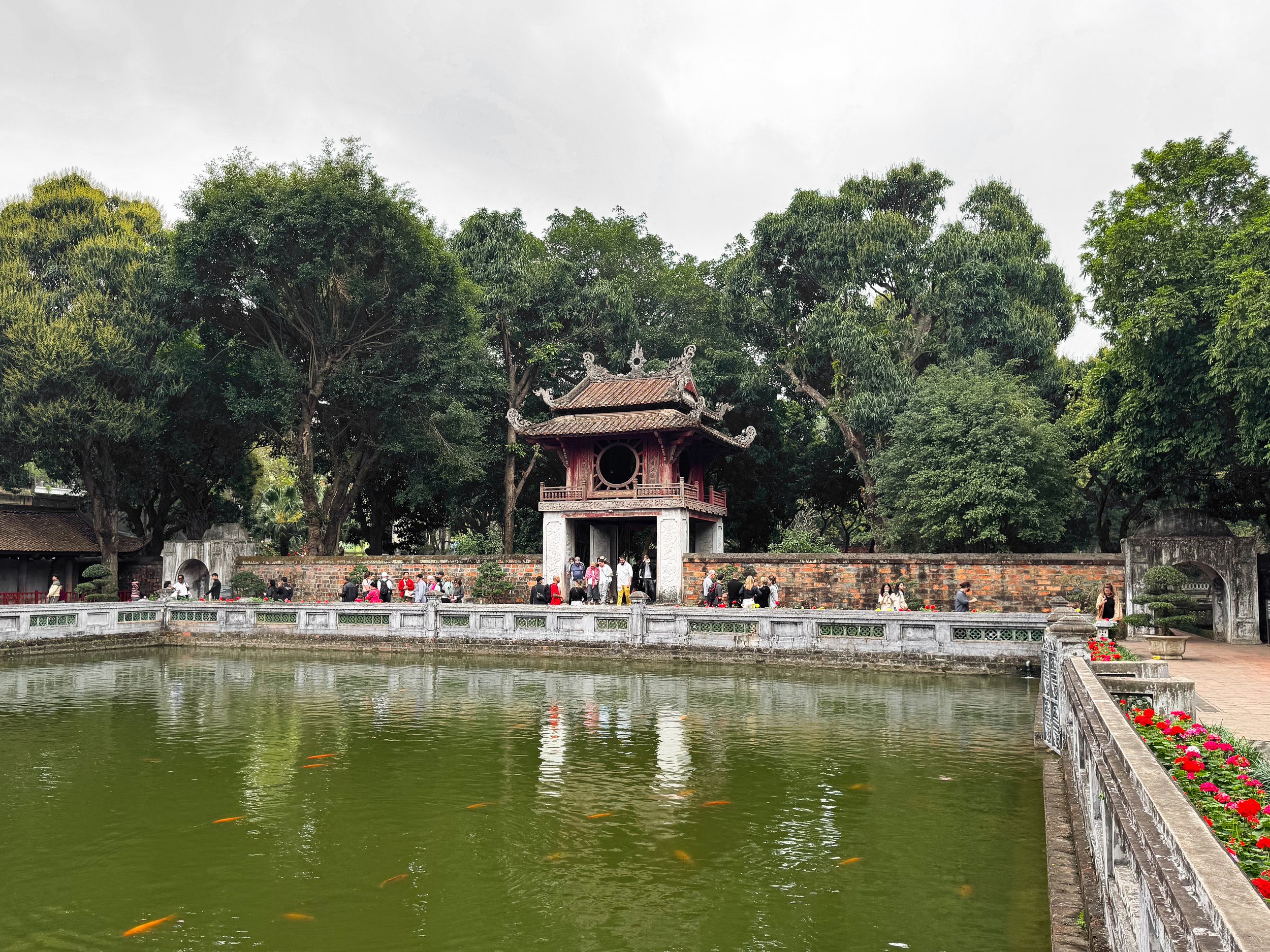
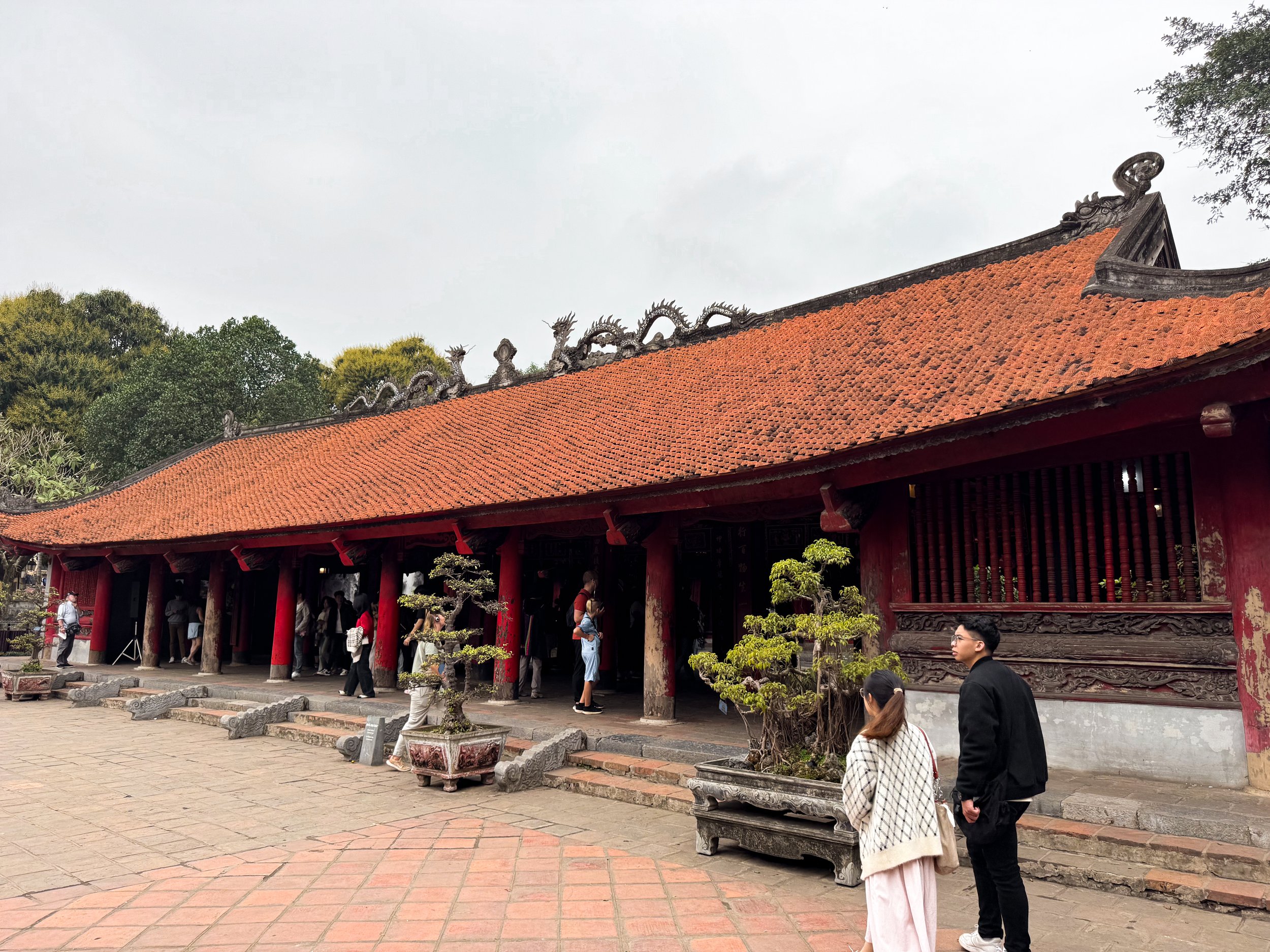
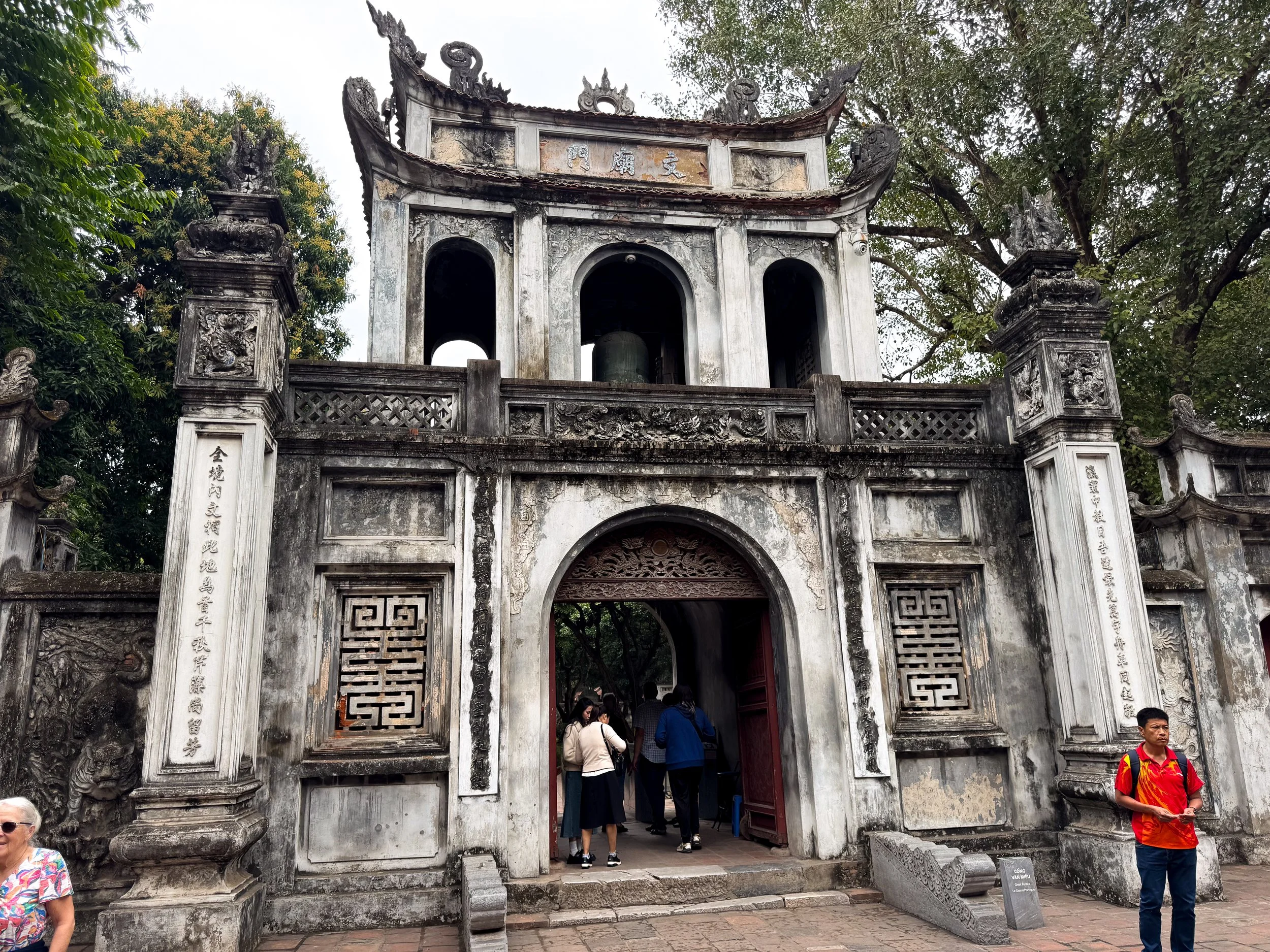
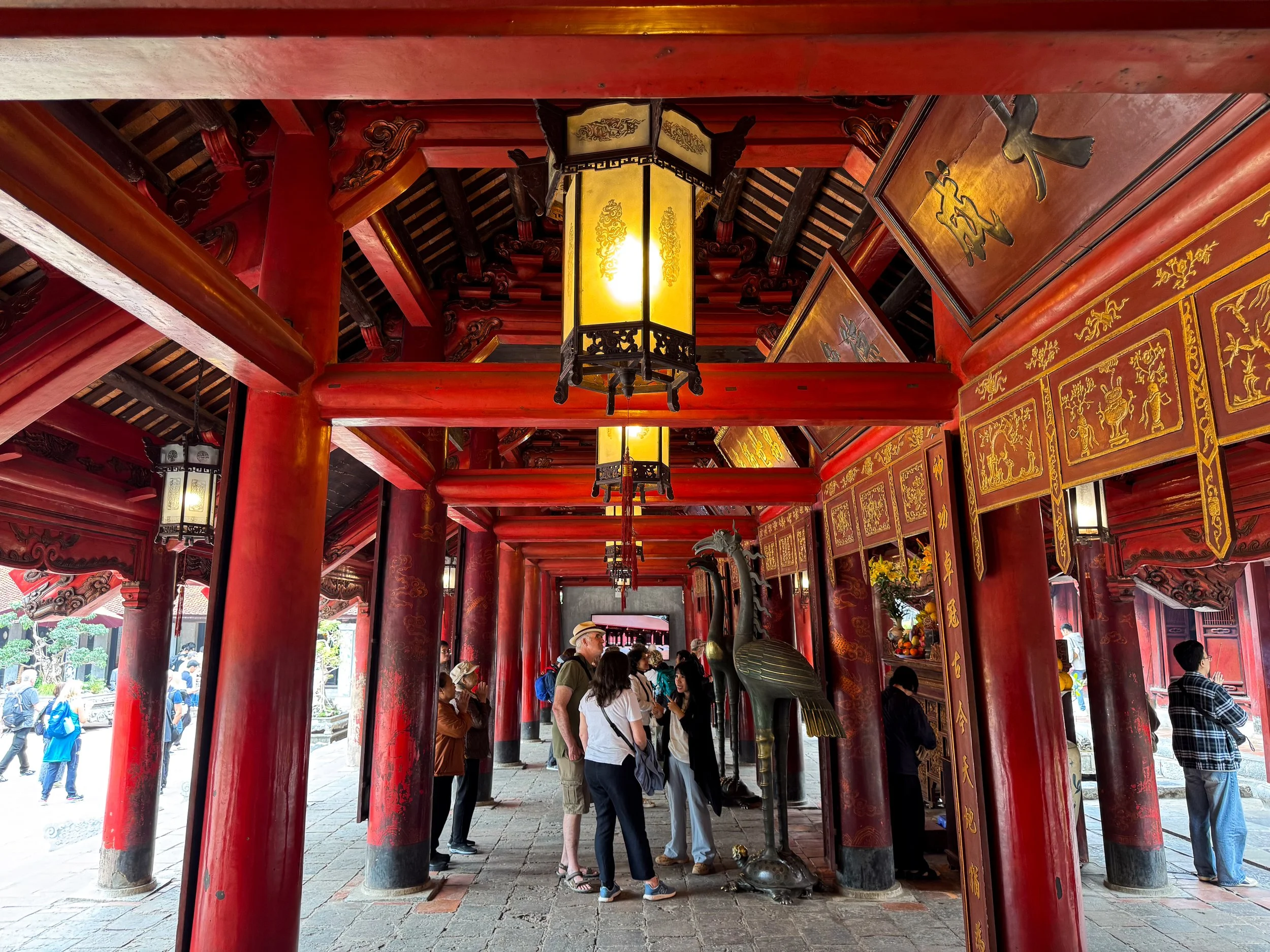
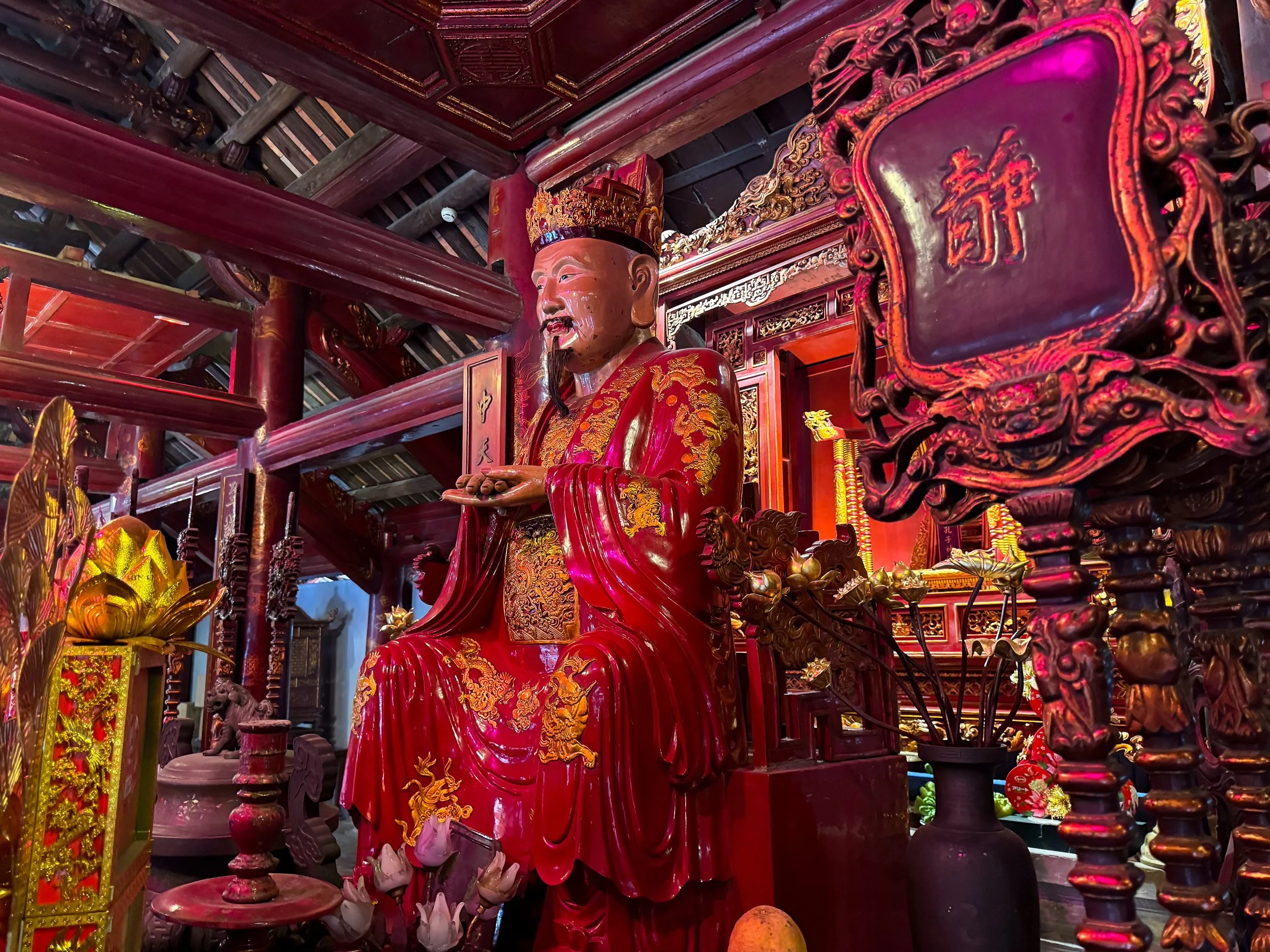
Temple of Literature. An ancient Confucian temple dedicated to education and the development of talent. It was created by past emperors as a place for the most revered scholars to study and take a series of exams. Its symmetrical design is very symbolic. A central path suggests the path to enlightenment while a series of gates signifies the advance of knowledge. Today, students come to the grounds to mediate, study and pray for knowledge, good grades and their future.
Van Mieu Gate. A three tiered entrance gate to the temple grounds adorned with motifs of dragons. It leads to a courtyard with a grassy lawn, sculpted bushes and pools with koi fish.
Khue Van Pagoda. A red painted wooden pagoda held up by four stone columns representing the elements. It features designs of dragons and a circle symbolizing the infinite nature of enlightenment. It is considered the symbol of Hanoi.
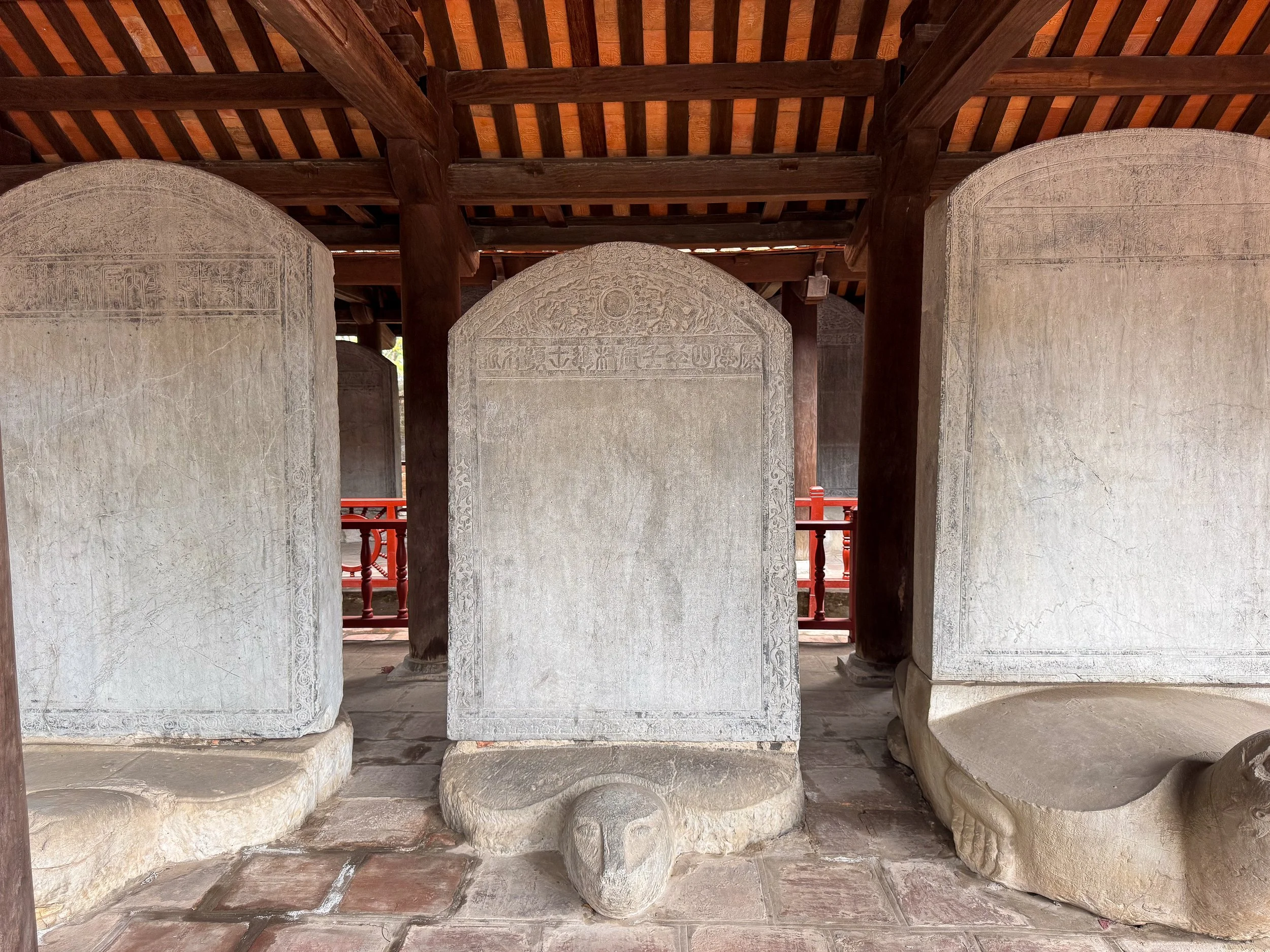
Well of Heavenly Clarity. A courtyard with a large koi pond at its center. It’s flanked by The Stelae of Doctors, a series of pavilions housing statues of turtles with stelae placed on top. Each stelae is inscribed with writings from previous royal scholars.
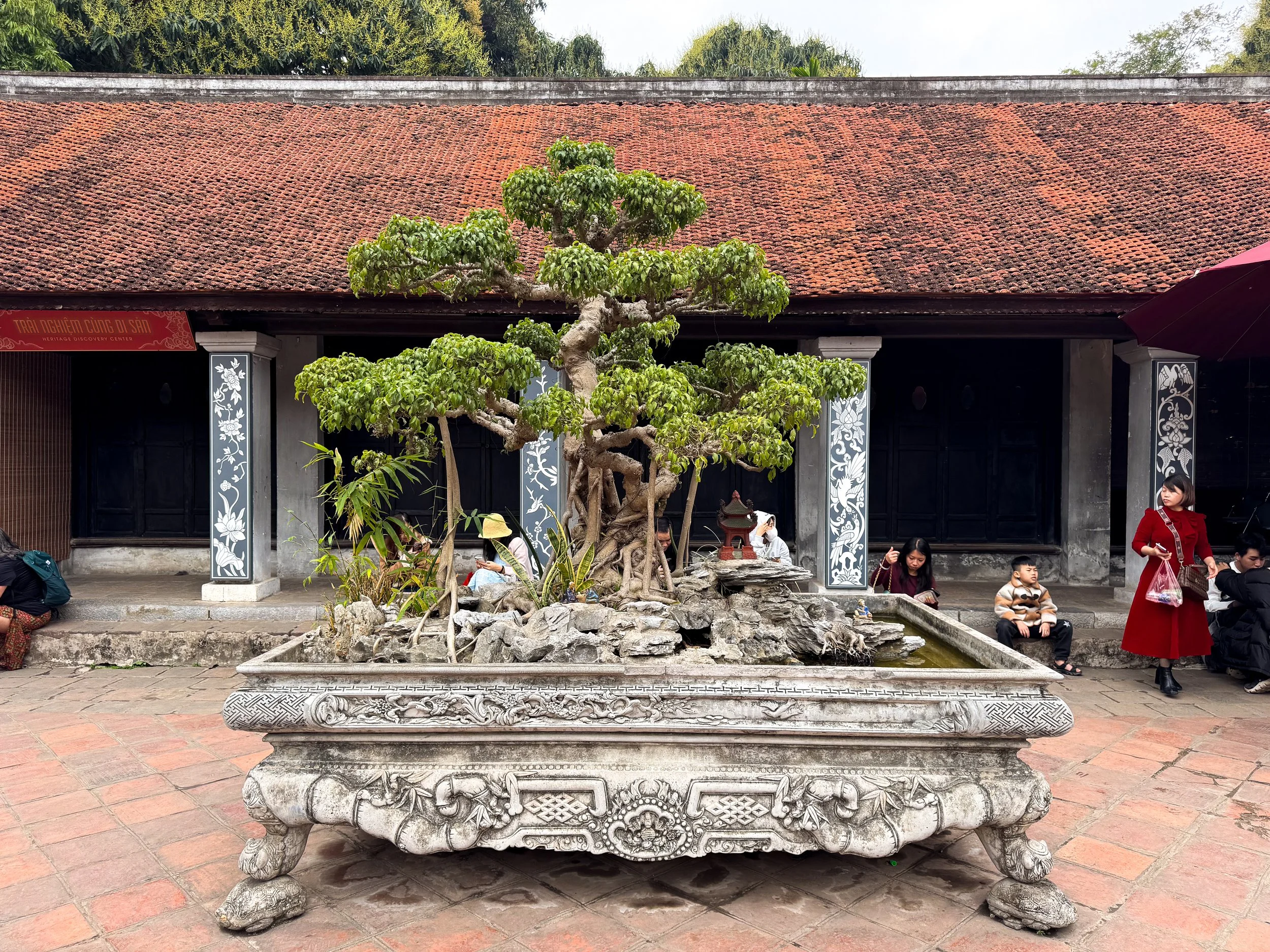
Courtyard of the Sages. A brick paved courtyard used for royal exams. Its sides are flanked by planters with bonsai trees and former class rooms, now a museum dedicated to the history of the complex and its scholars.
House of Ceremonies. A pavilion in the Courtyard of the Sages with two large dragon sculptures centered on top of the terracotta tiled roof.
Sanctuary of Confucius. A temple dedicated to Confucius. Inside are statues of him and altars with burning sticks of incense, offerings of citrus fruits, cookies and flowers.
Thai Hoc Hall. A recently rebuilt pagoda dedicated to the emperors that founded The Temple of Literature. Inside of its two floors are statues of the emperors and altars to make offerings.
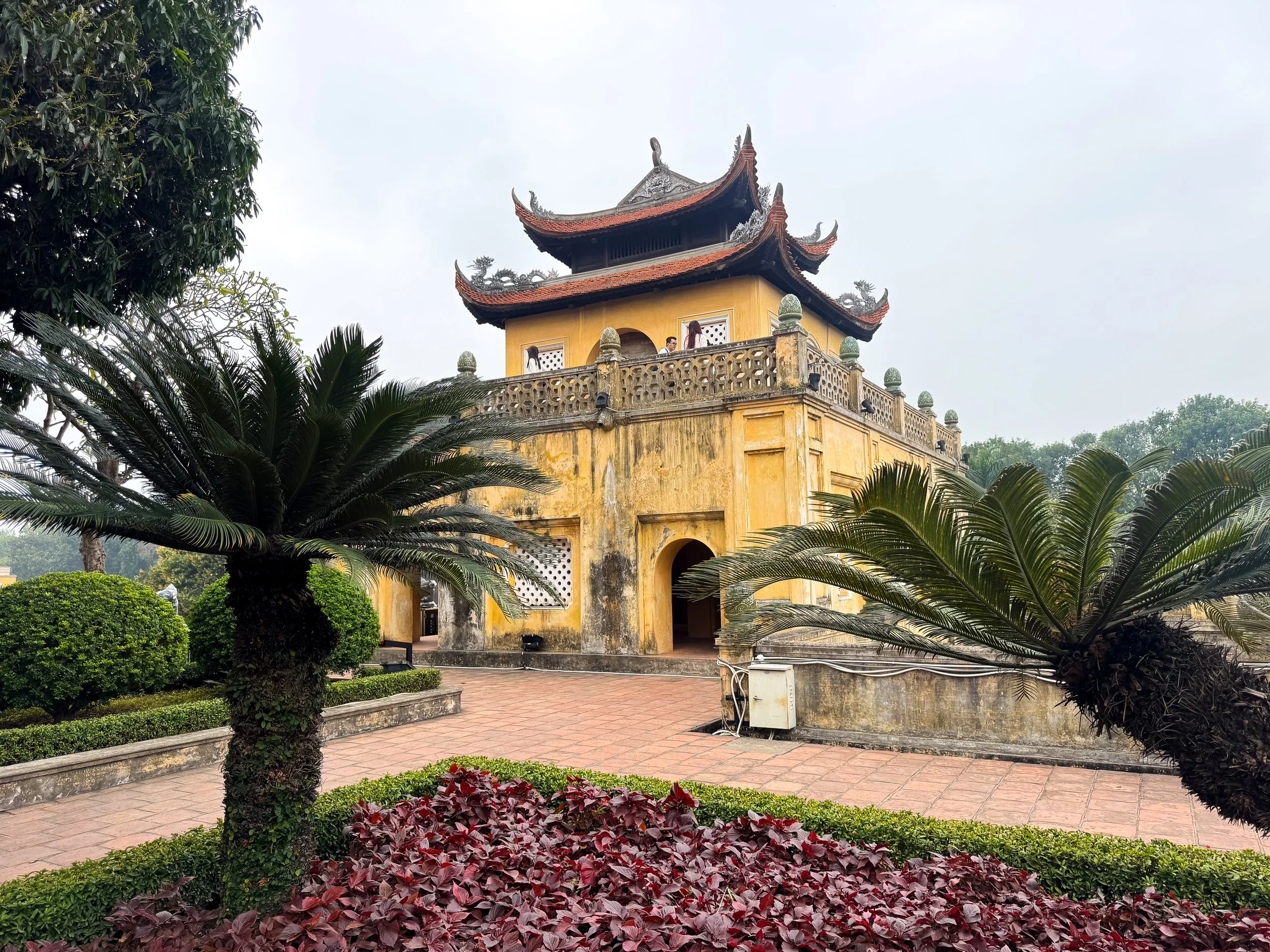
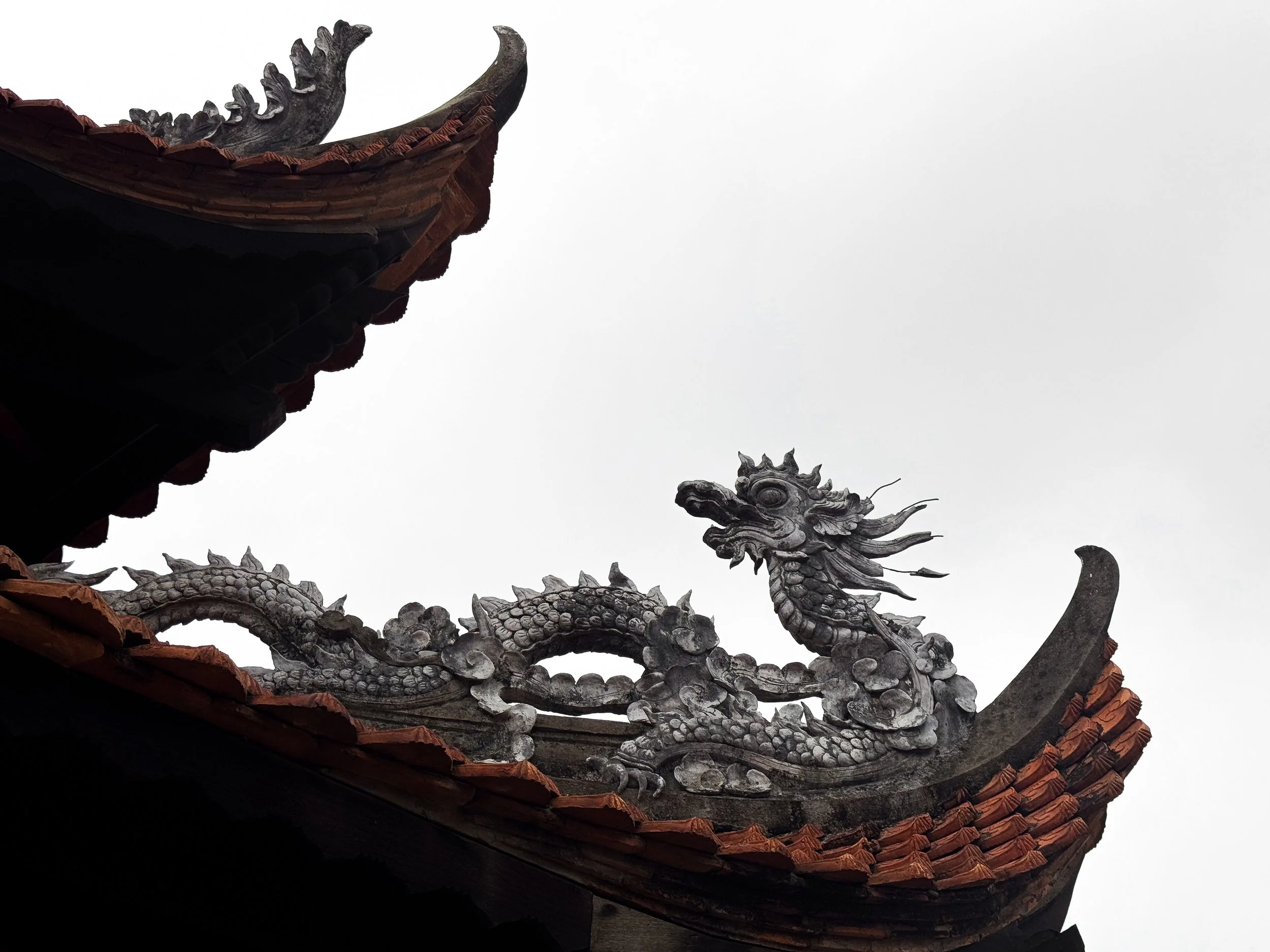
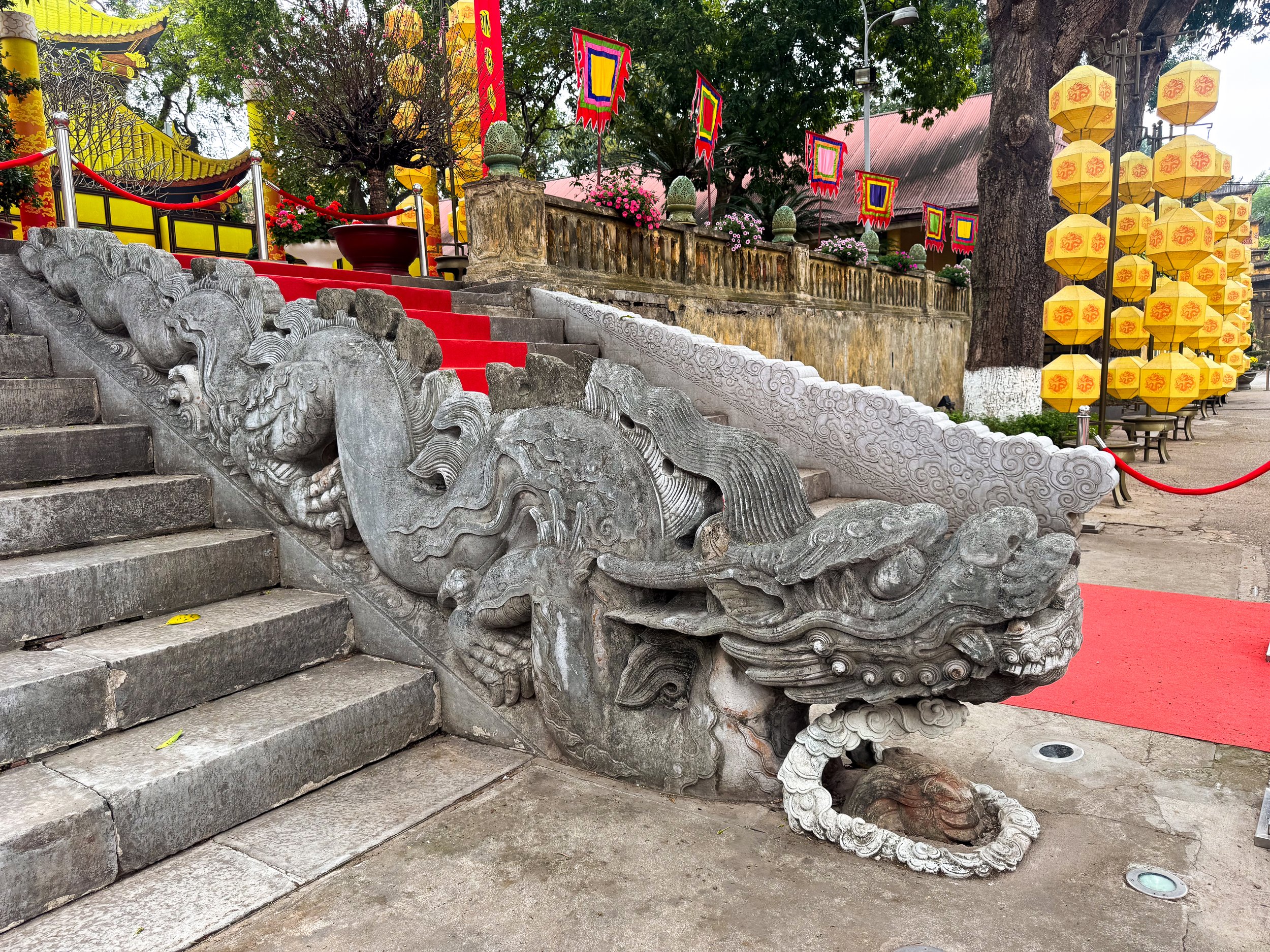
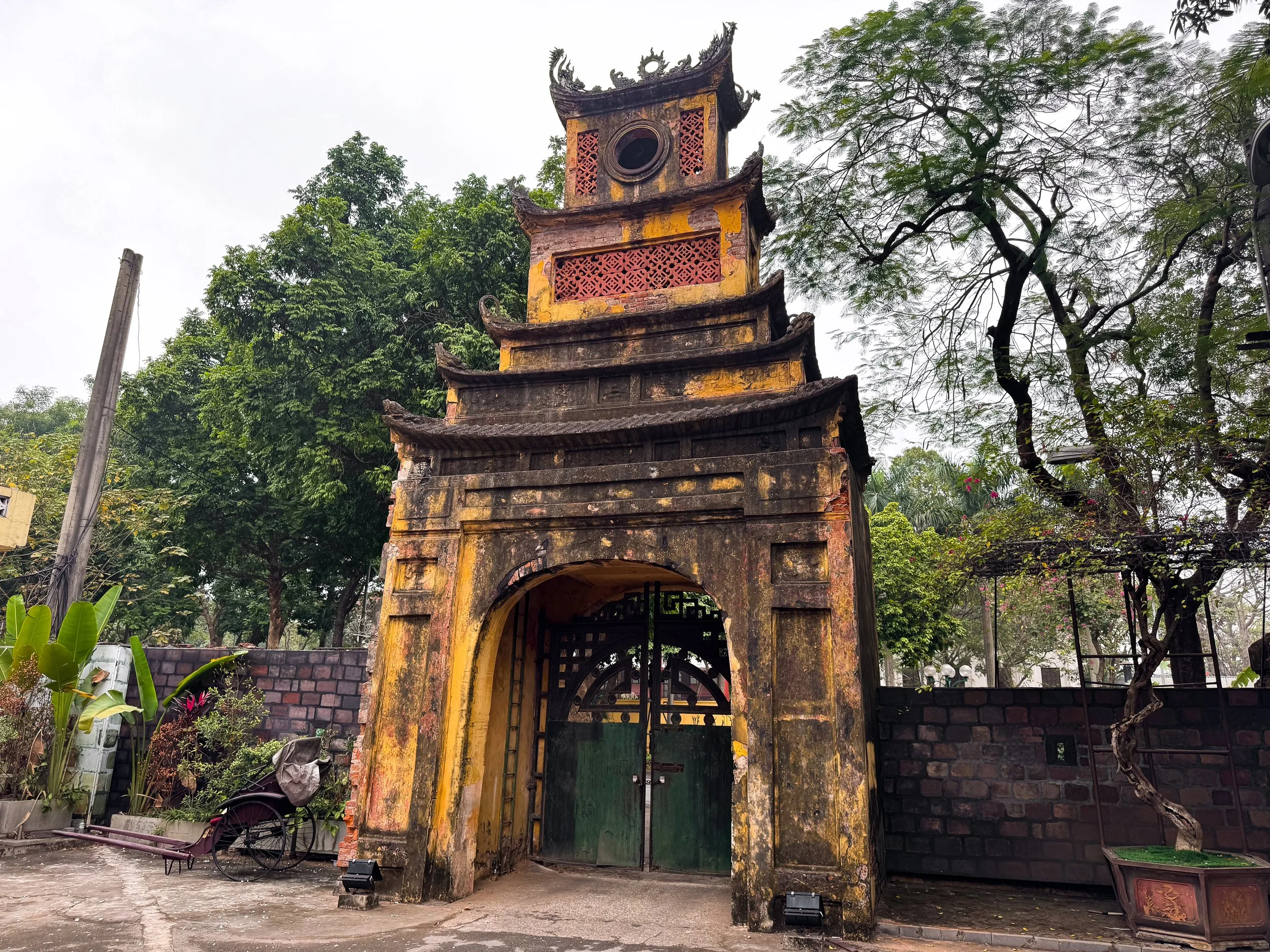
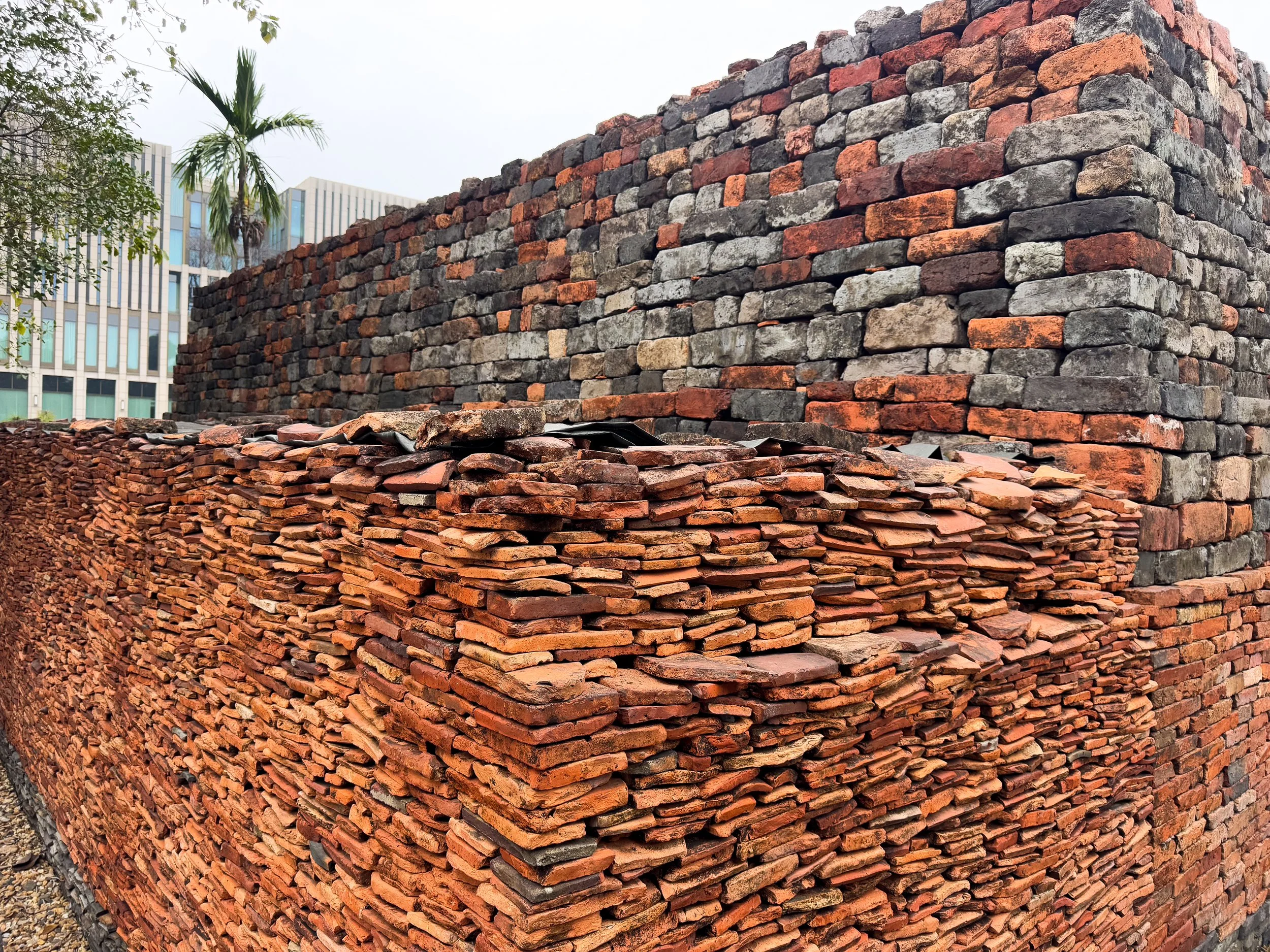
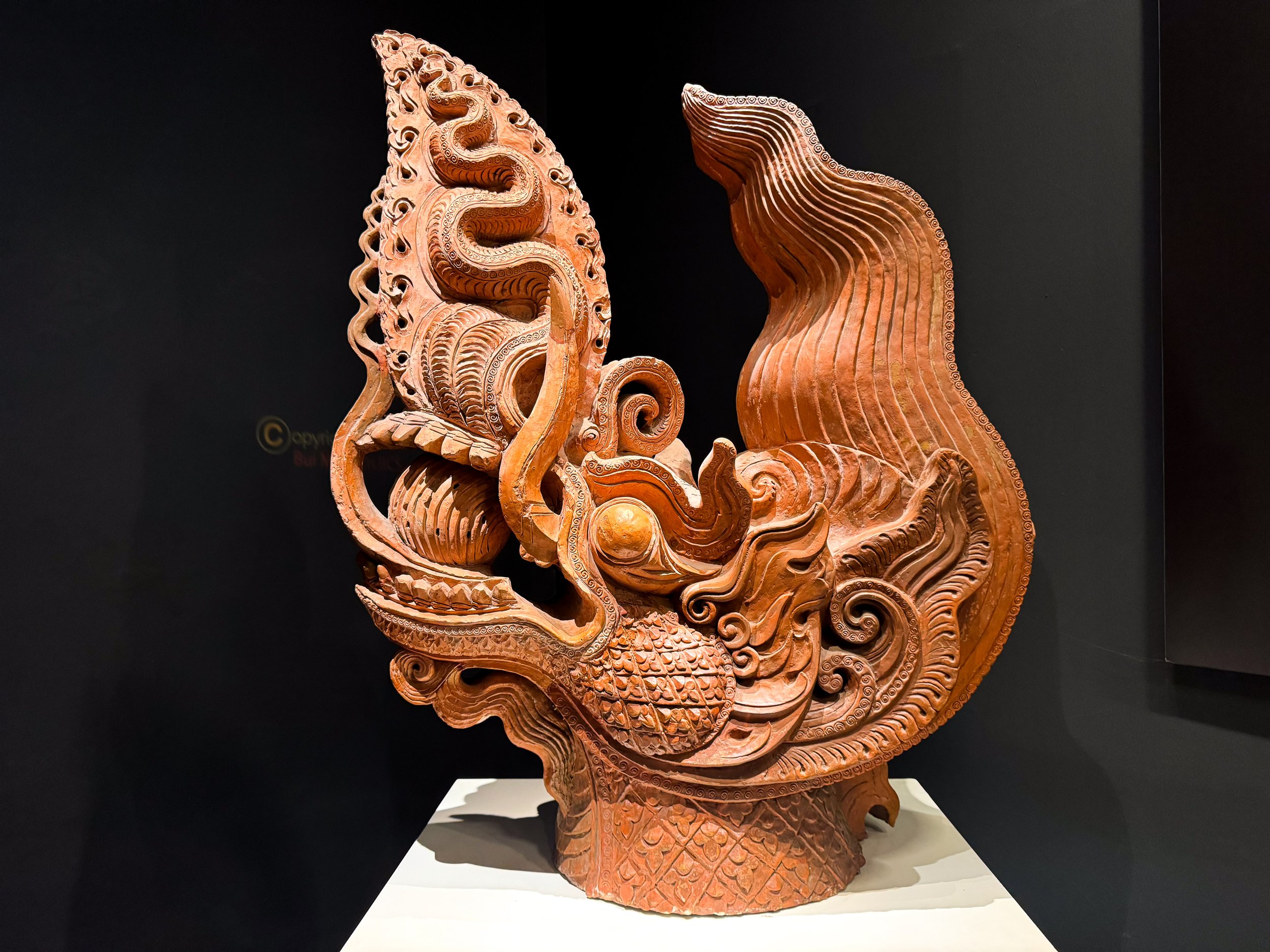
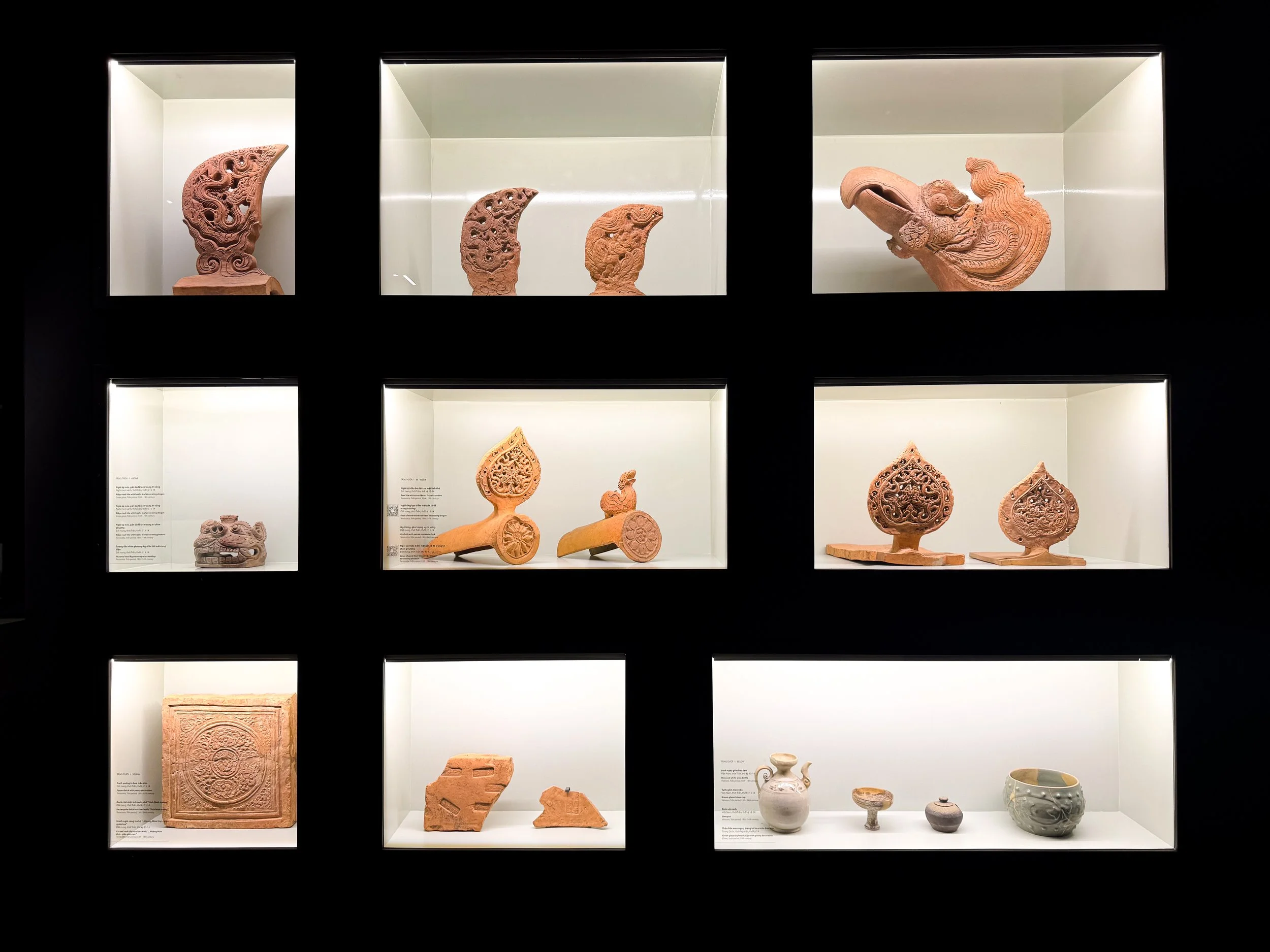
Ancient Citadel. The royal grounds of Vietnam’s ancient capital. Much of it was leveled during the French colonial period. Original stone dragon steps lead to where the former royal palace once stood. A museum houses artifacts discovered at archeological dig sites including ornate terracotta roof tiles, cornices of dragons, porcelain dishes and woodblocks used for printing. Exposed dig sites, piles of stacked bricks and terracotta roof tiles recovered from them can be seen throughout the grounds.
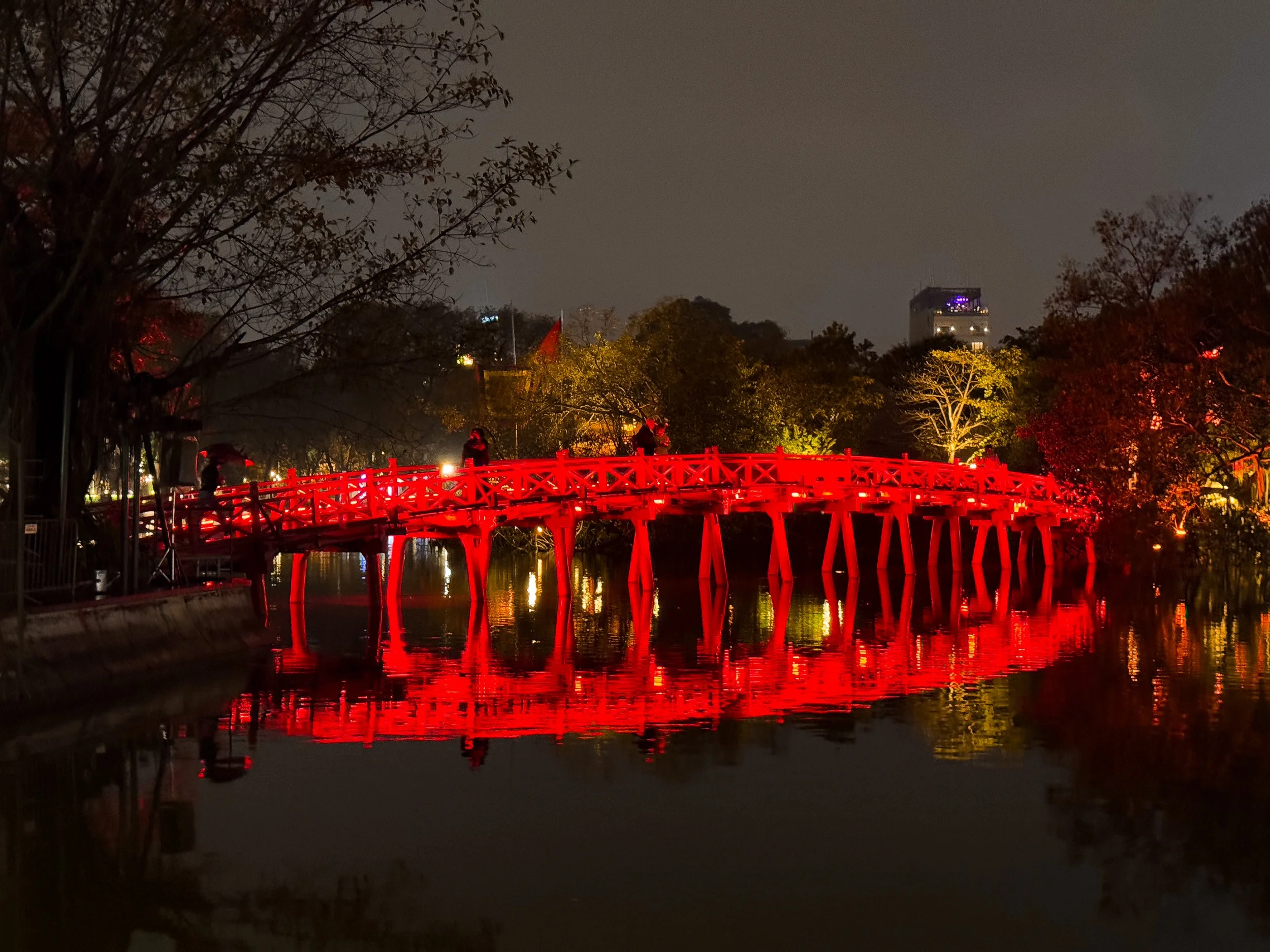
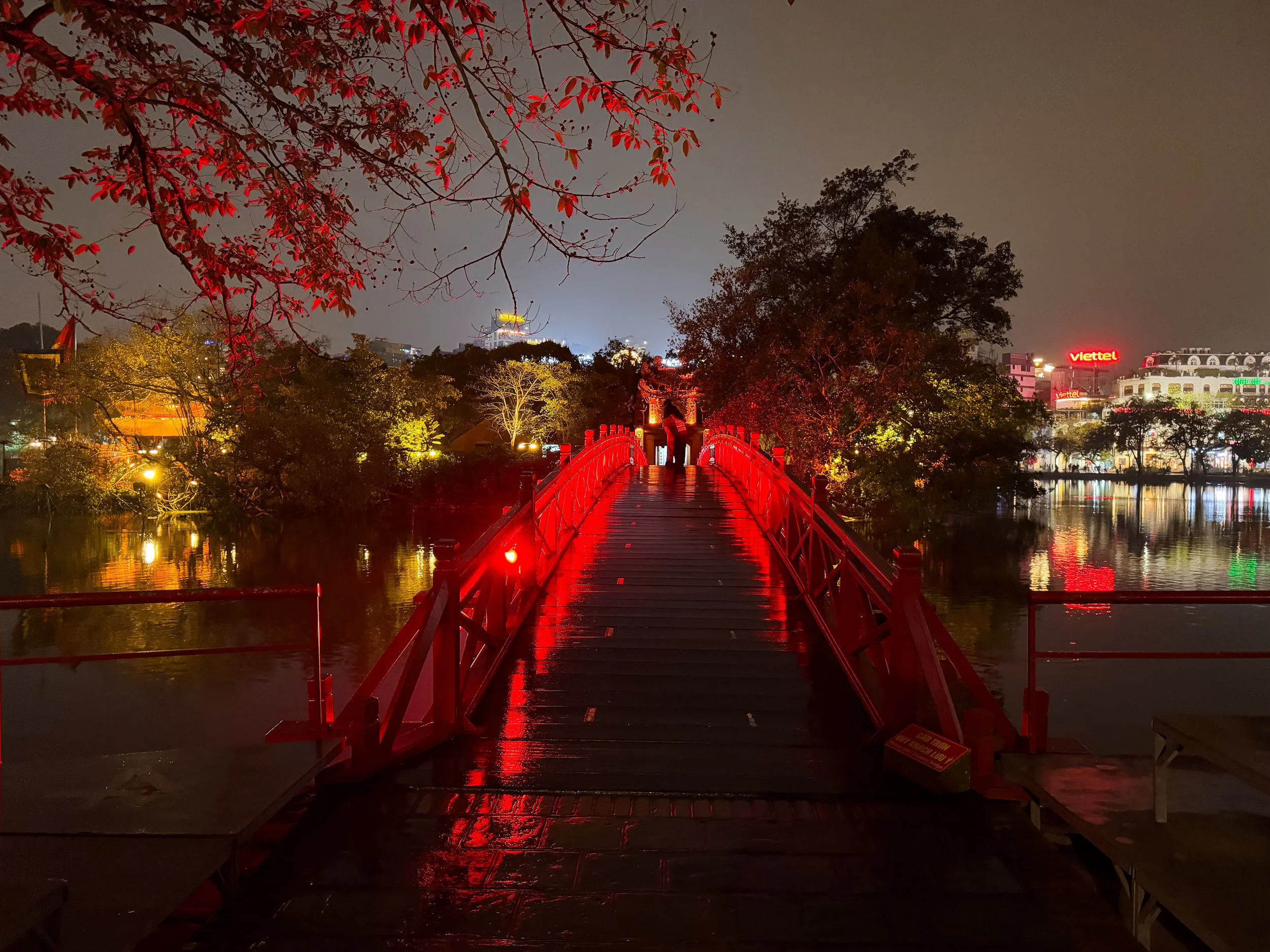
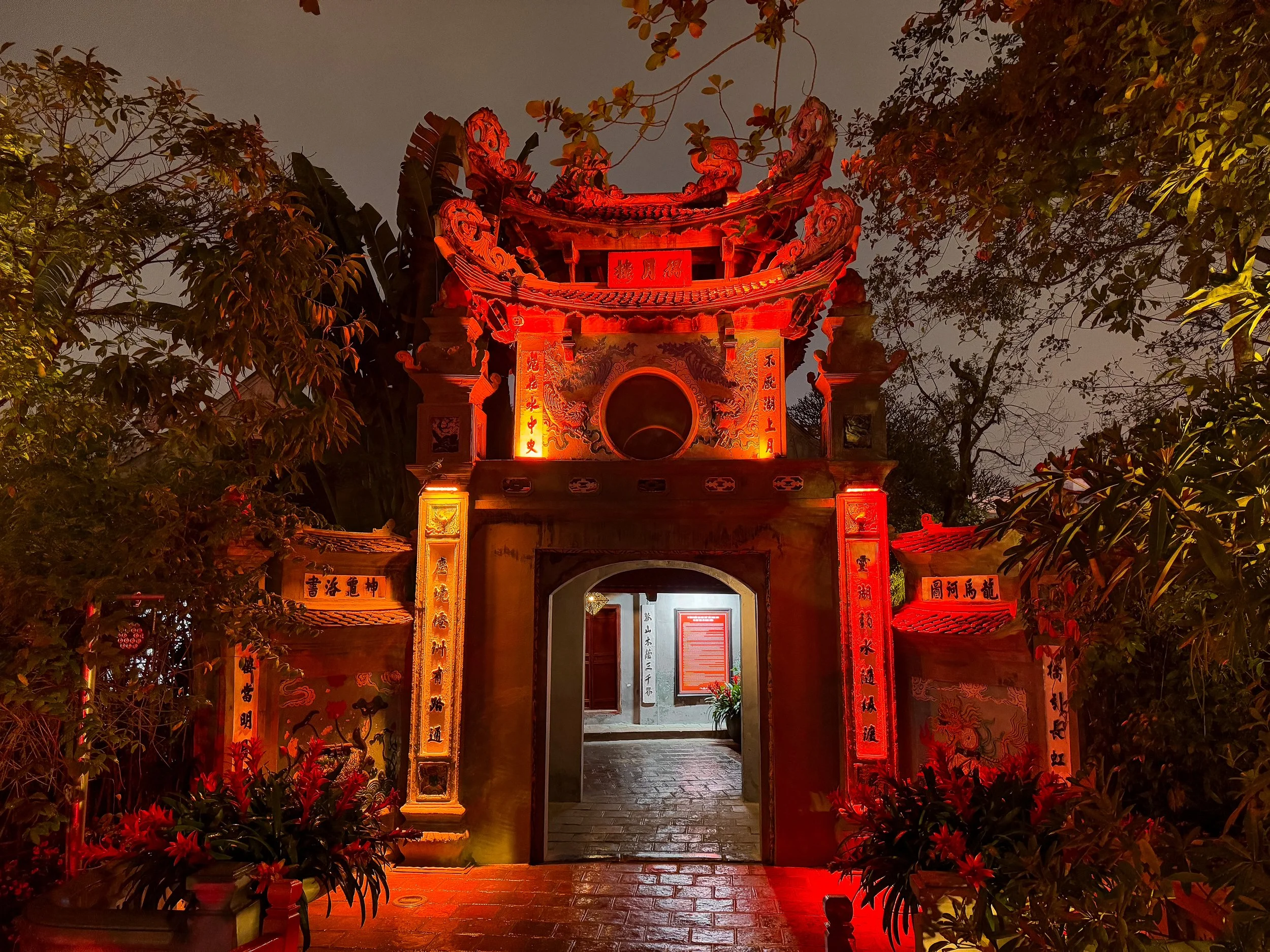
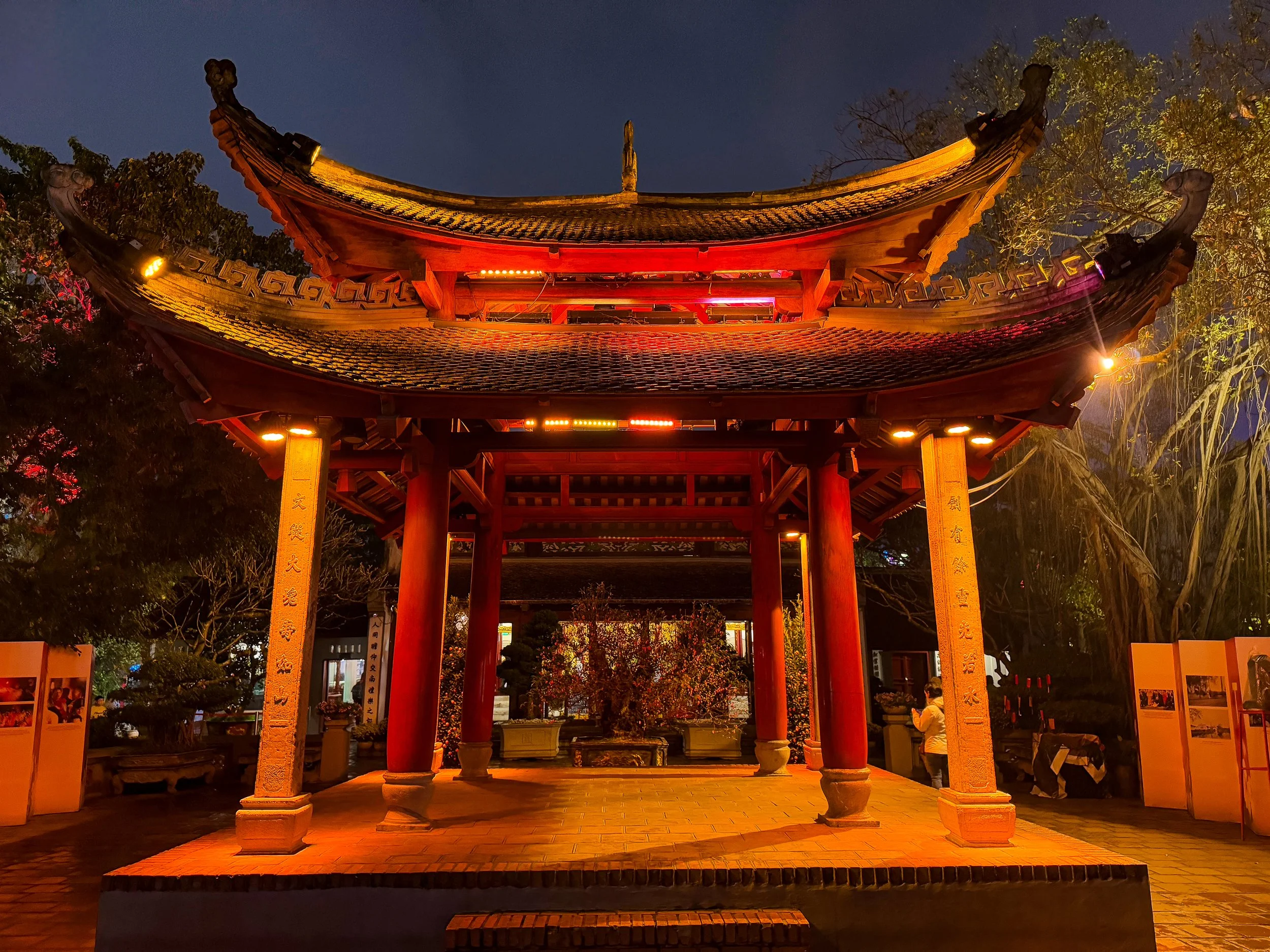
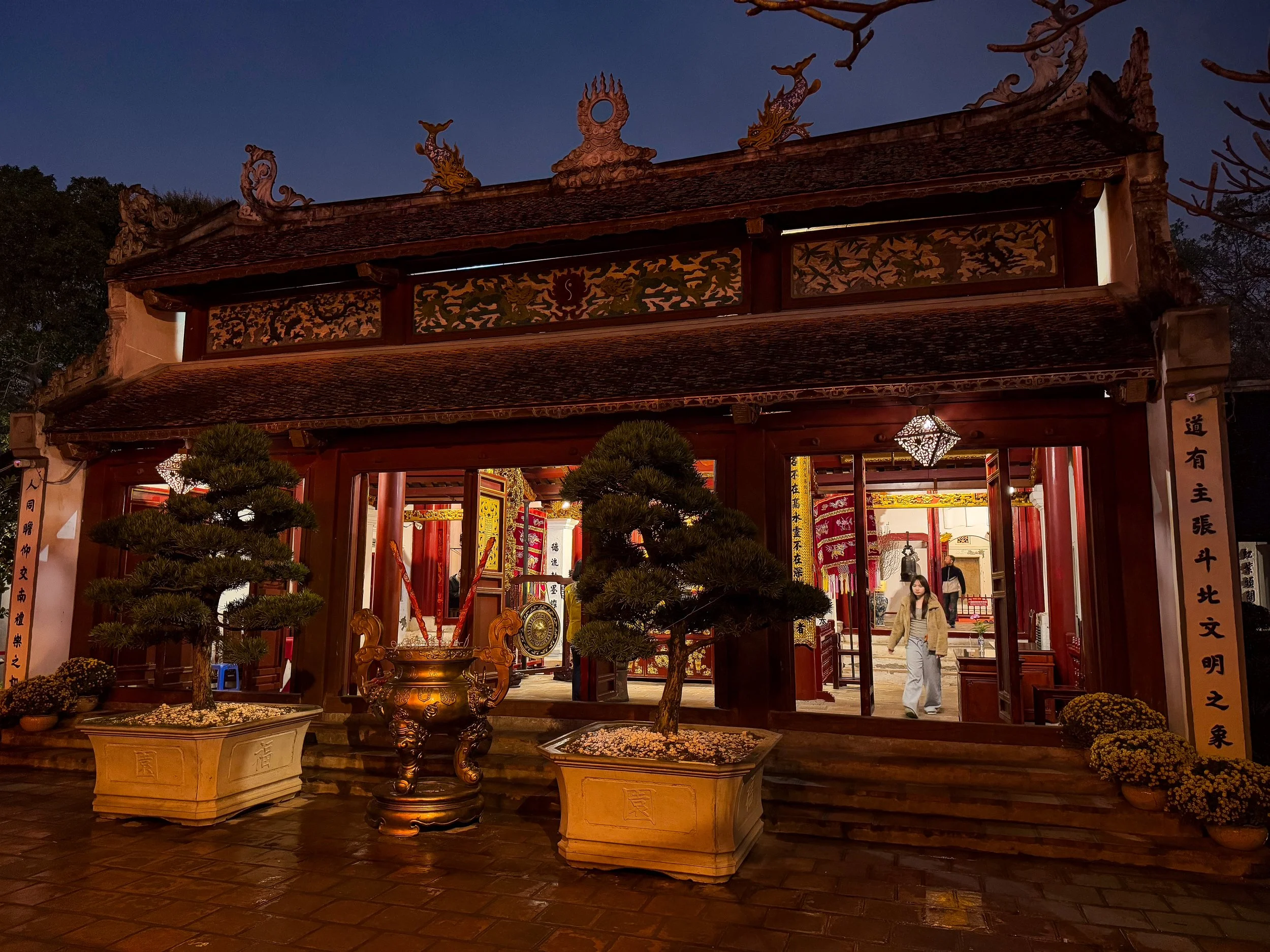
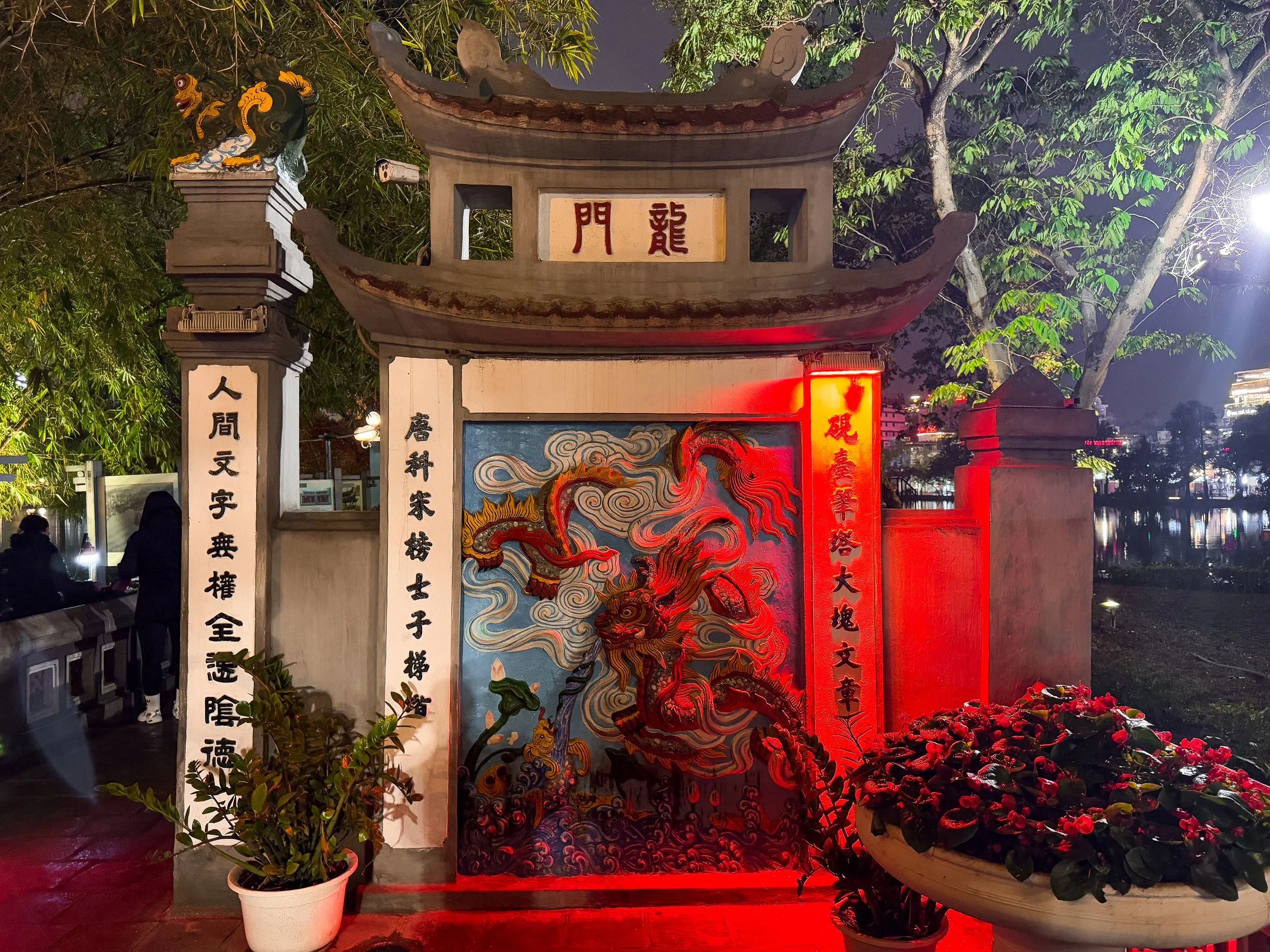
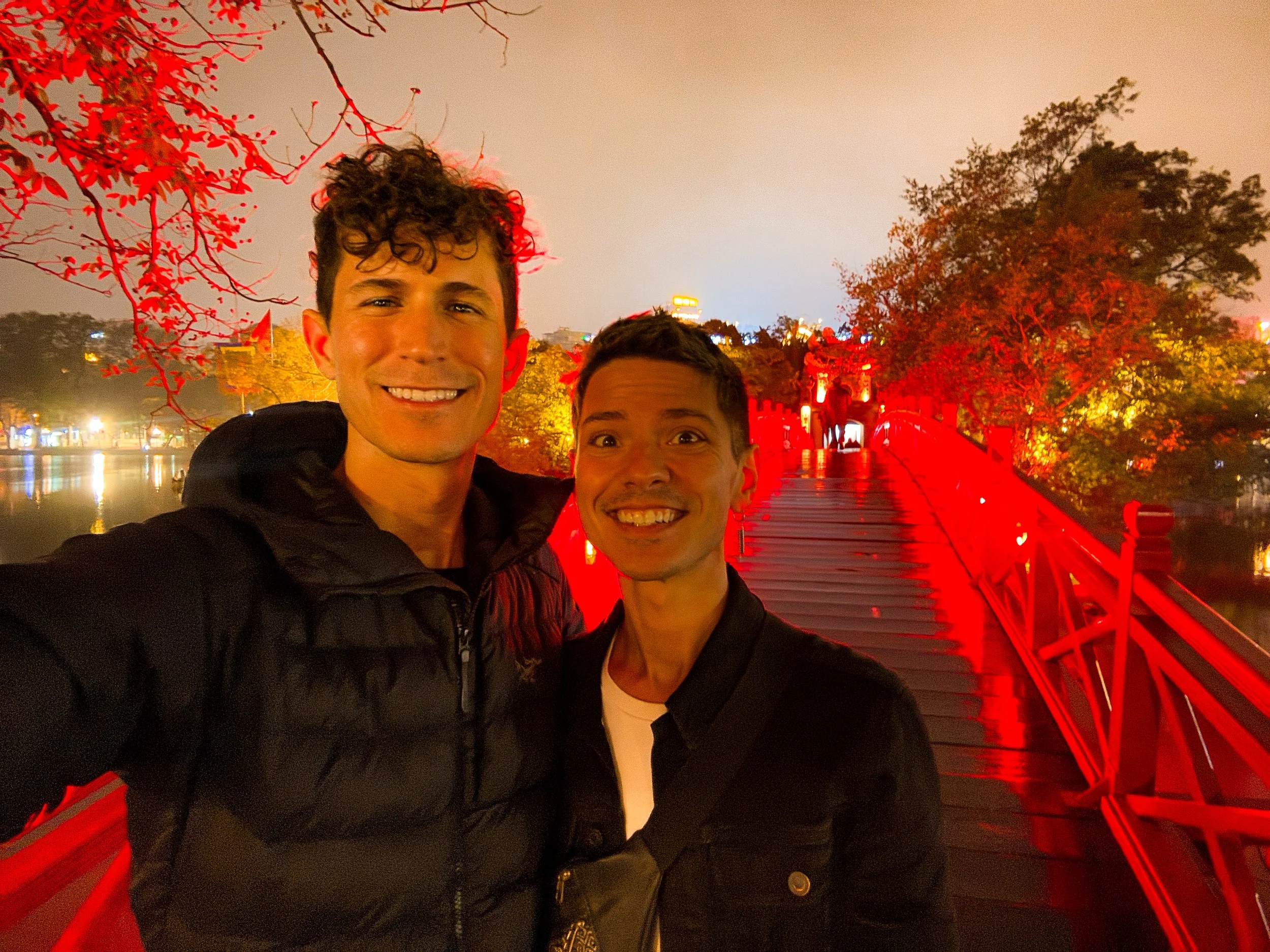
Hoan Kiem Lake. A sacred lake in the old town home to ancient temples and the Legend of the Sword Lake Turtle. The legend says that a golden turtle appeared from the lake and lent a sword to the emperor to defeat an invading army. On weekends the surrounding road becomes a walking street with performers and street food vendors.
Ngoc Son Temple. An island temple on Hoan Kiem Lakereachable by a red wooden footbridge. The temple is a very sacred place for the Vietnamese with multiple shrines dedicated to Confucius. It houses the preserved remains of two possibly extinct giant turtles that once lived in the lake.
Ba Dinh Square. A wide road used for parades and ceremonies surrounded by government and communist buildings including the National Assembly, Ho Chi Minh Mausoleum, Presidential Palace, Communist Party Headquarters and Government Headquarters. Many are well guarded and forbidden to take photos of.
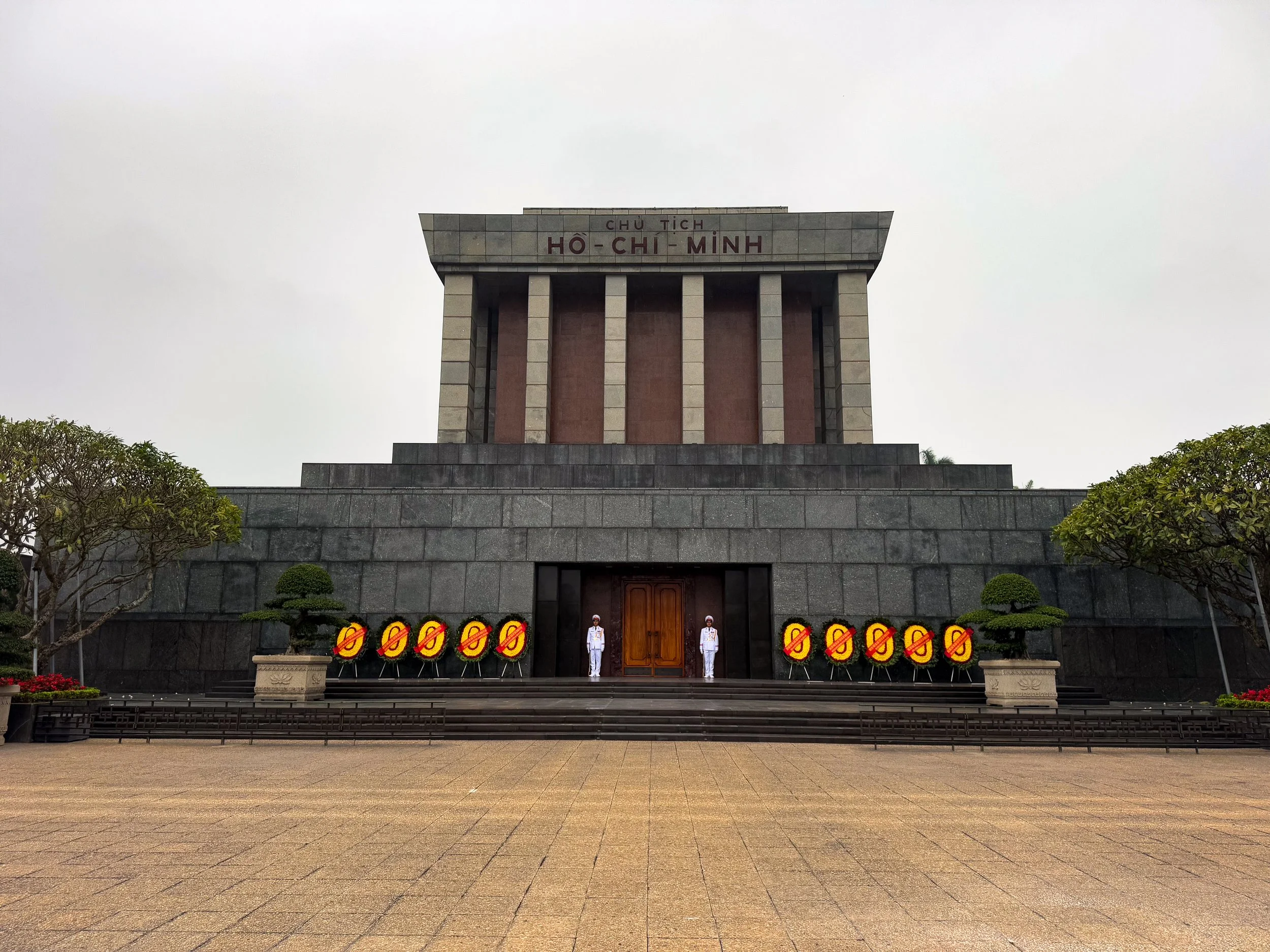
Ho Chi Minh Mausoleum. A communist style mausoleum housing the embalmed body of Ho Chi Minh, the founder of modern day Vietnam.
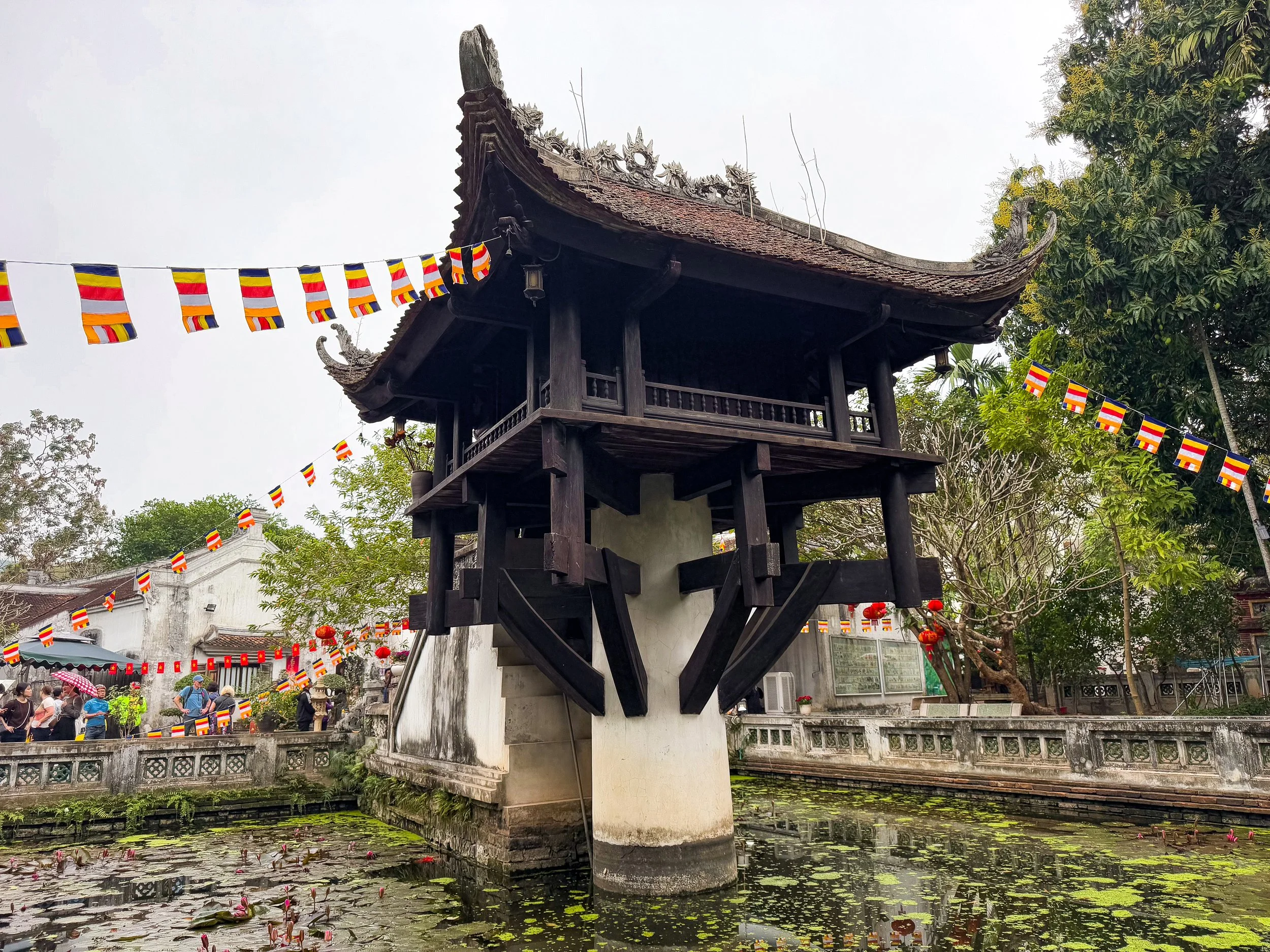
One Pillar Pagoda. A pagoda attached to a singular round column in the middle of a koi and lily pond. Steps walk up to it where there is a shrine for prayers and offerings.
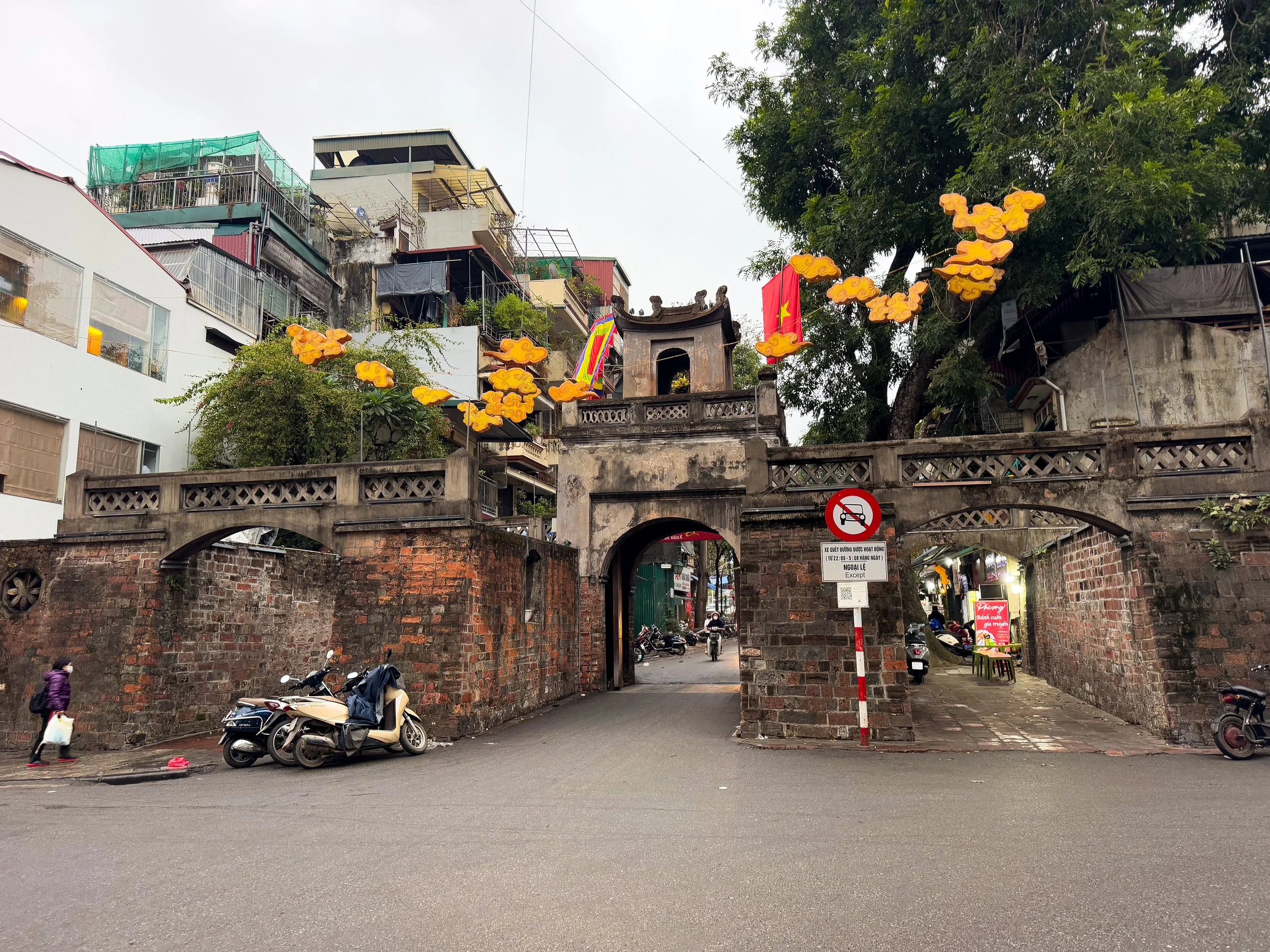
O Quan Chuong (Old East Gate). The only remaining city gate from ancient Hanoi. Its arched red brick and stone gate has a small pagoda on top. It’s only large enough for scooters and pedestrians to pass through.
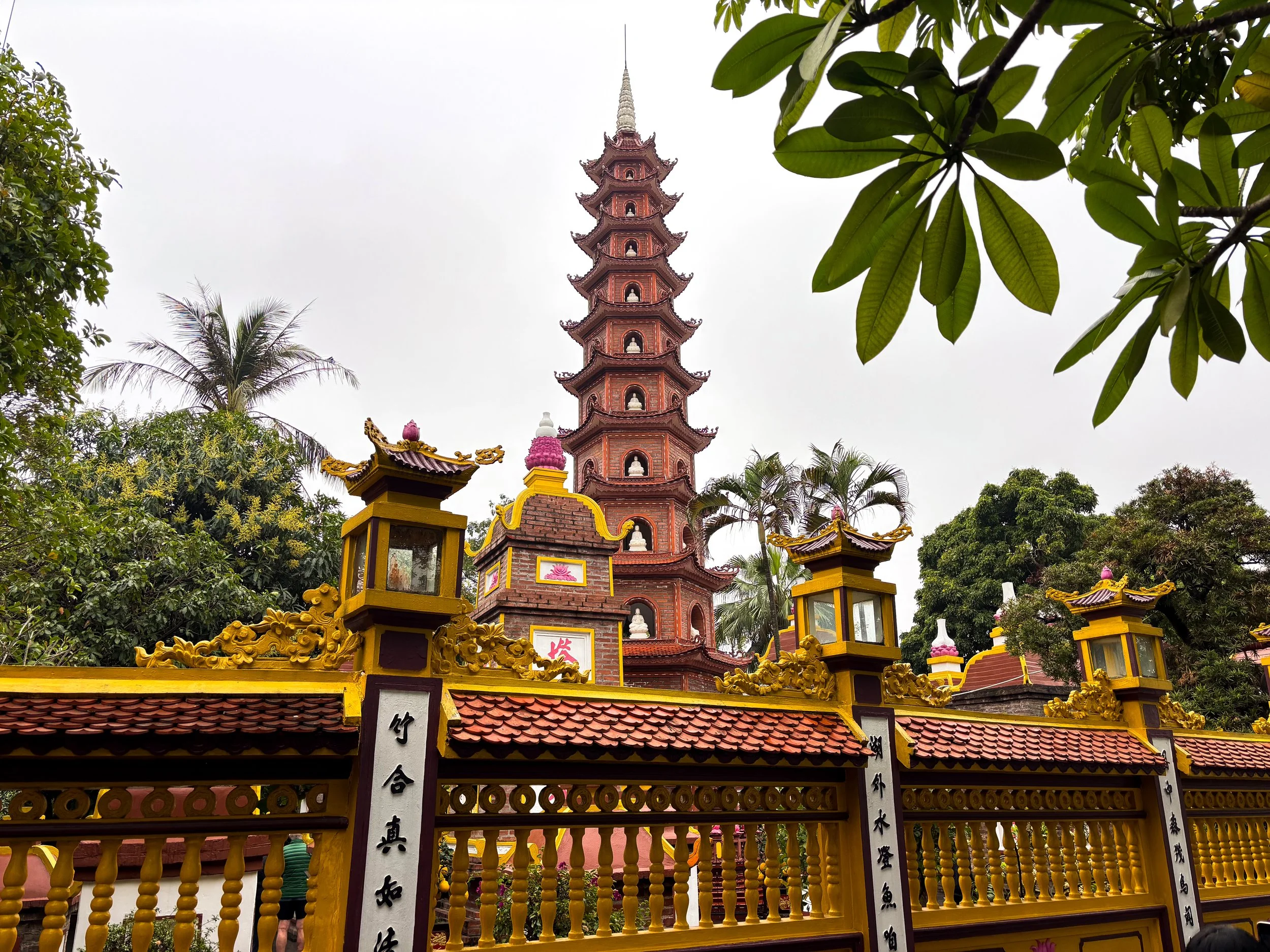
Quan Thanh Temple. A Taoist temple dating back to the founding of ancient Hanoi over 1,000 years ago. Inside is a giant bronze statue of Tao and elaborate altars with offerings. The temple’s walls, doors and columns are decorated in gold painted motifs of clouds and dragons, calligraphy inlaid with mother of pearl and painted reliefs of white tigers, water dragons, cranes and flowering cherry blossom trees.
Things to Do
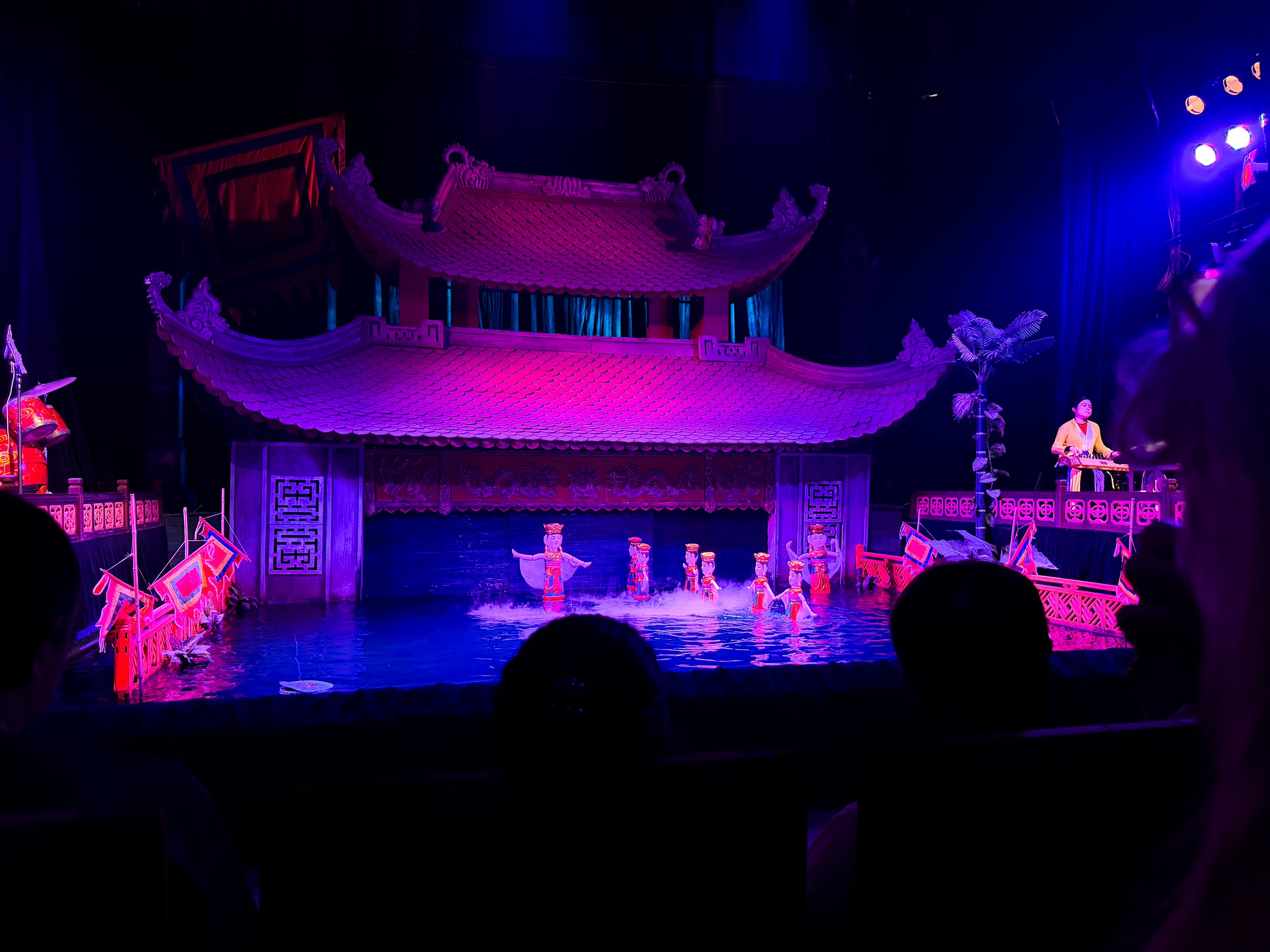
Thang Long Water Puppet Theatre. Vietnamese water puppets are a traditional form of entertainment and story telling dating back hundreds of years. At the Thang Long Water Puppet Theatre, live musicians, singers and puppeteers put on a beautiful performance depicting over a dozen scenes from Vietnamese folklore and legends. The puppets splash around on stage (aka a pool) against the back drop of a pagoda, disappearing behind a bamboo curtain when scenes change. We watched water dragons slinking back and forth, a comedic fishing scene, phoenixes laying and hatching an egg and Confucius ceremonies.
Pro Tip. There are multiple shows daily running from afternoon to evening. Arrive at the theater in the morning to buy tickets. The best seats are in rows A, B and C.
Good to Know. Be considerate and avoid taking repeated photos. It’s distracting to the people behind you.
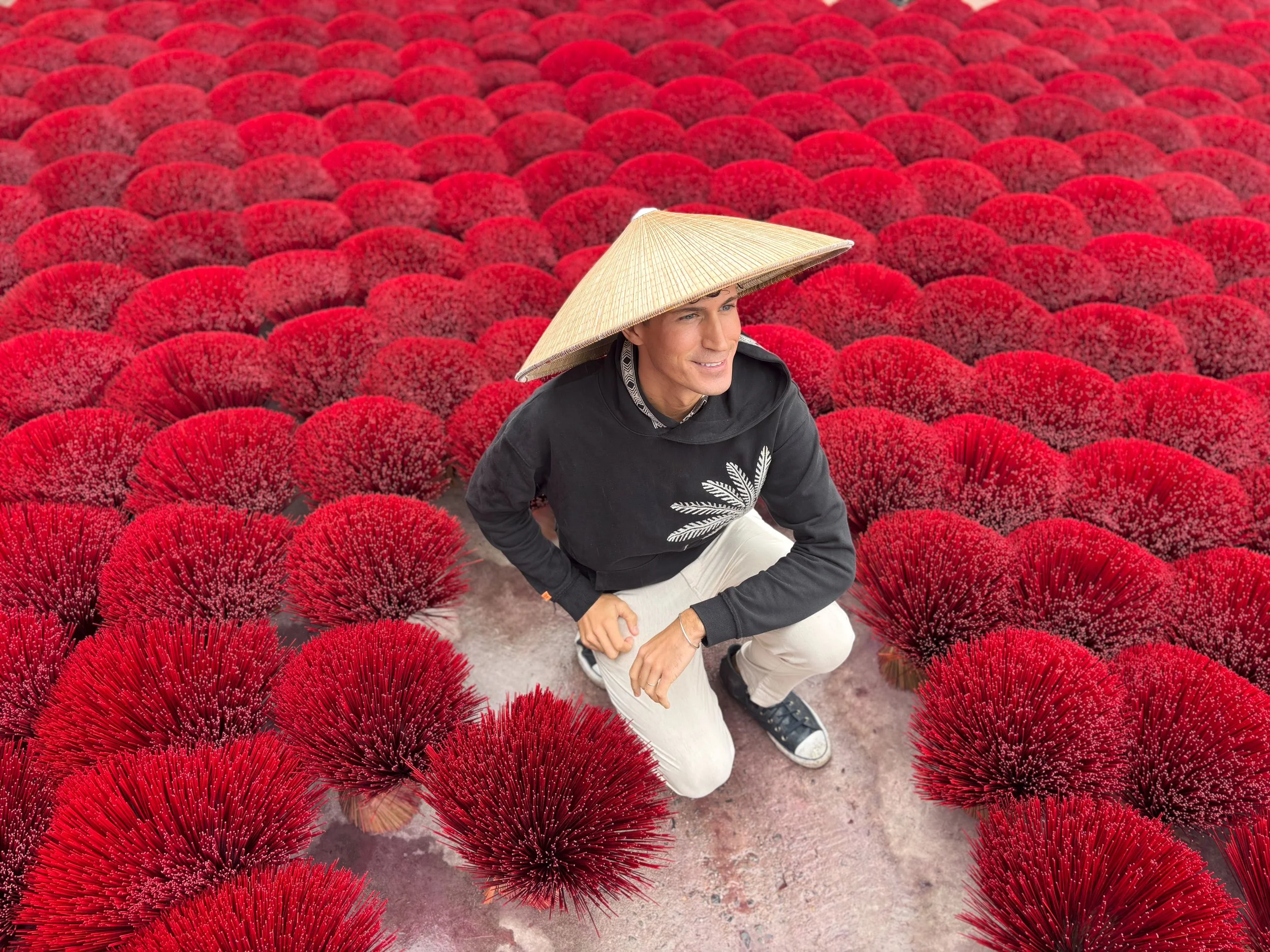
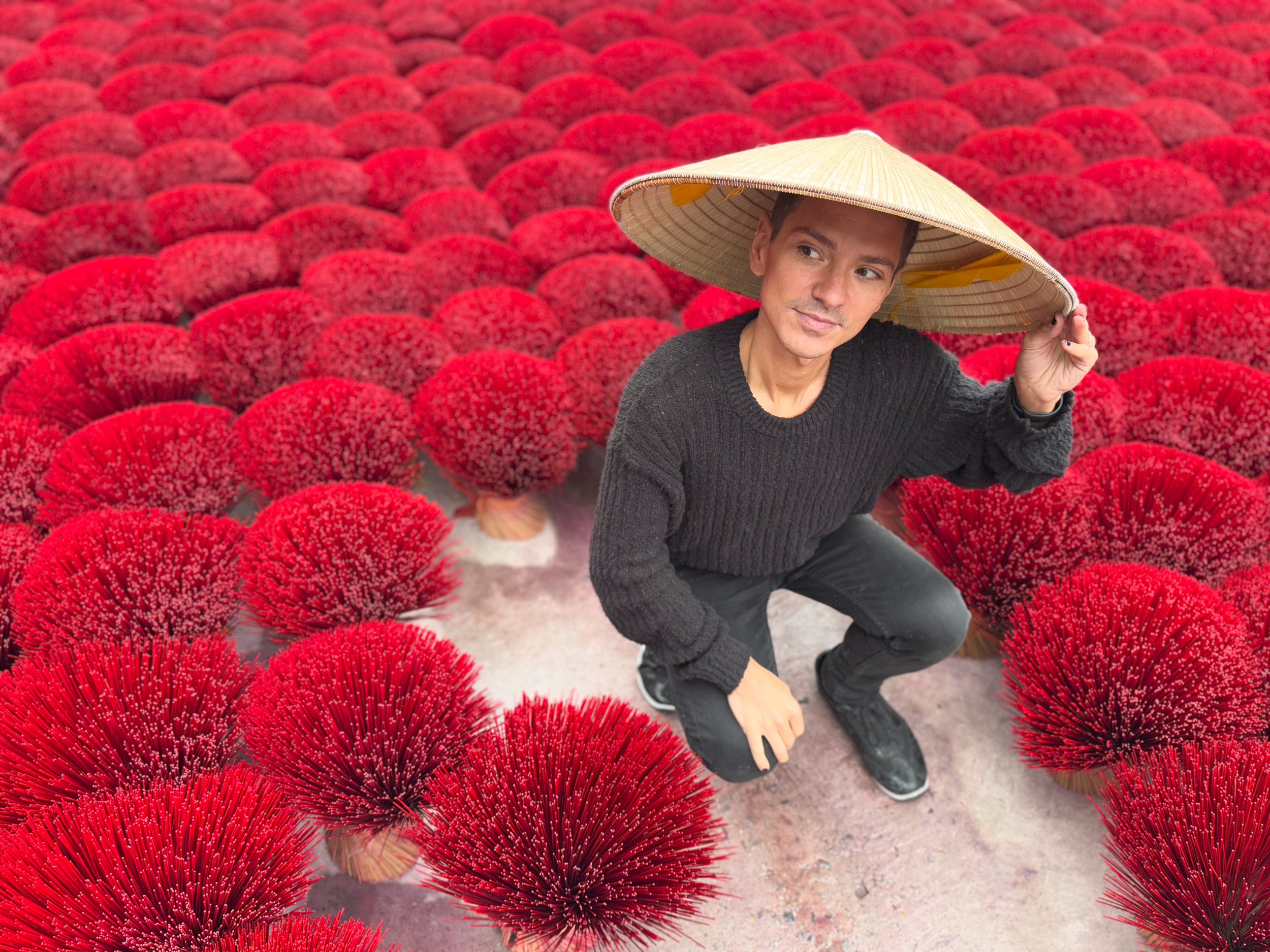
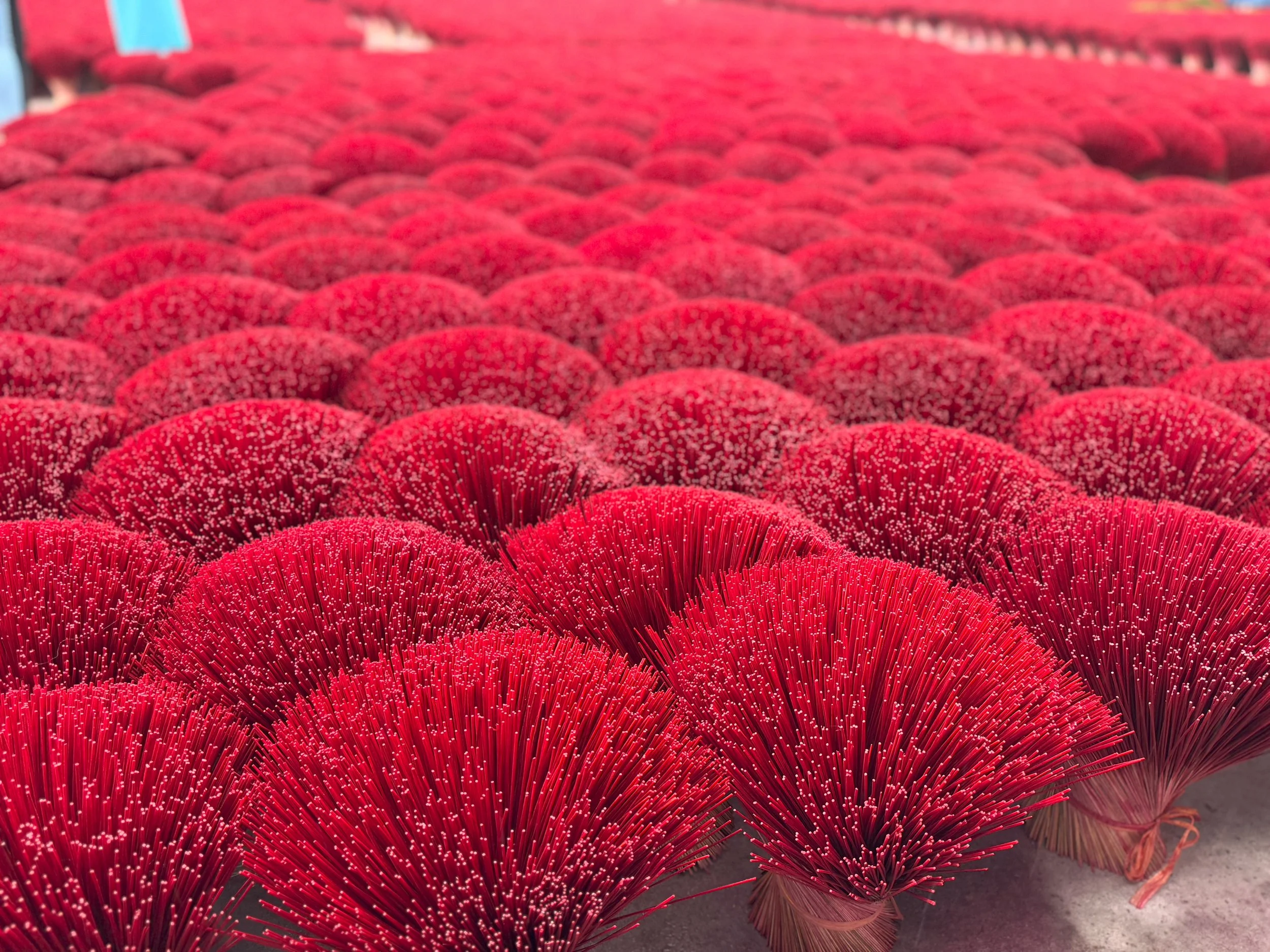
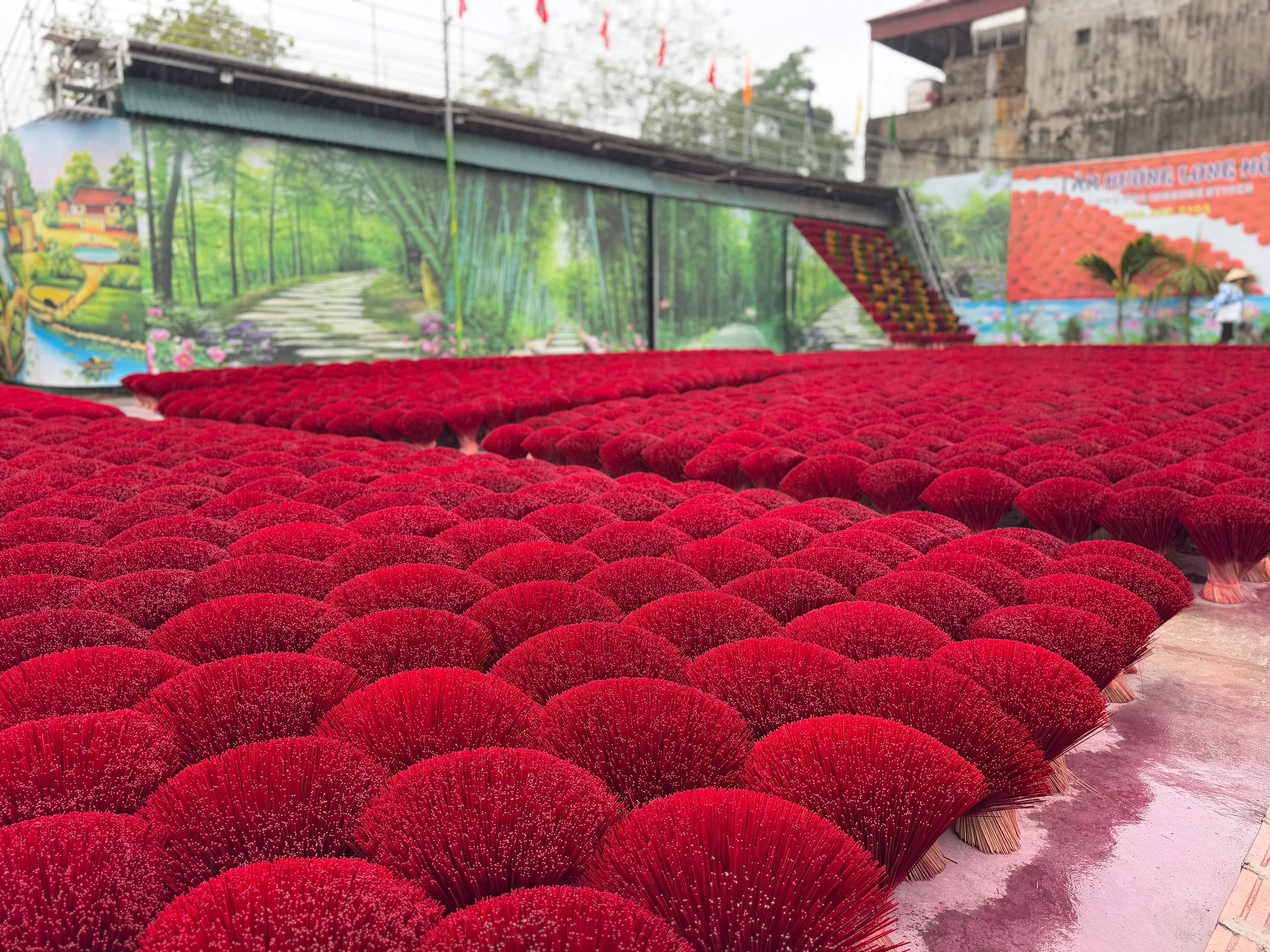
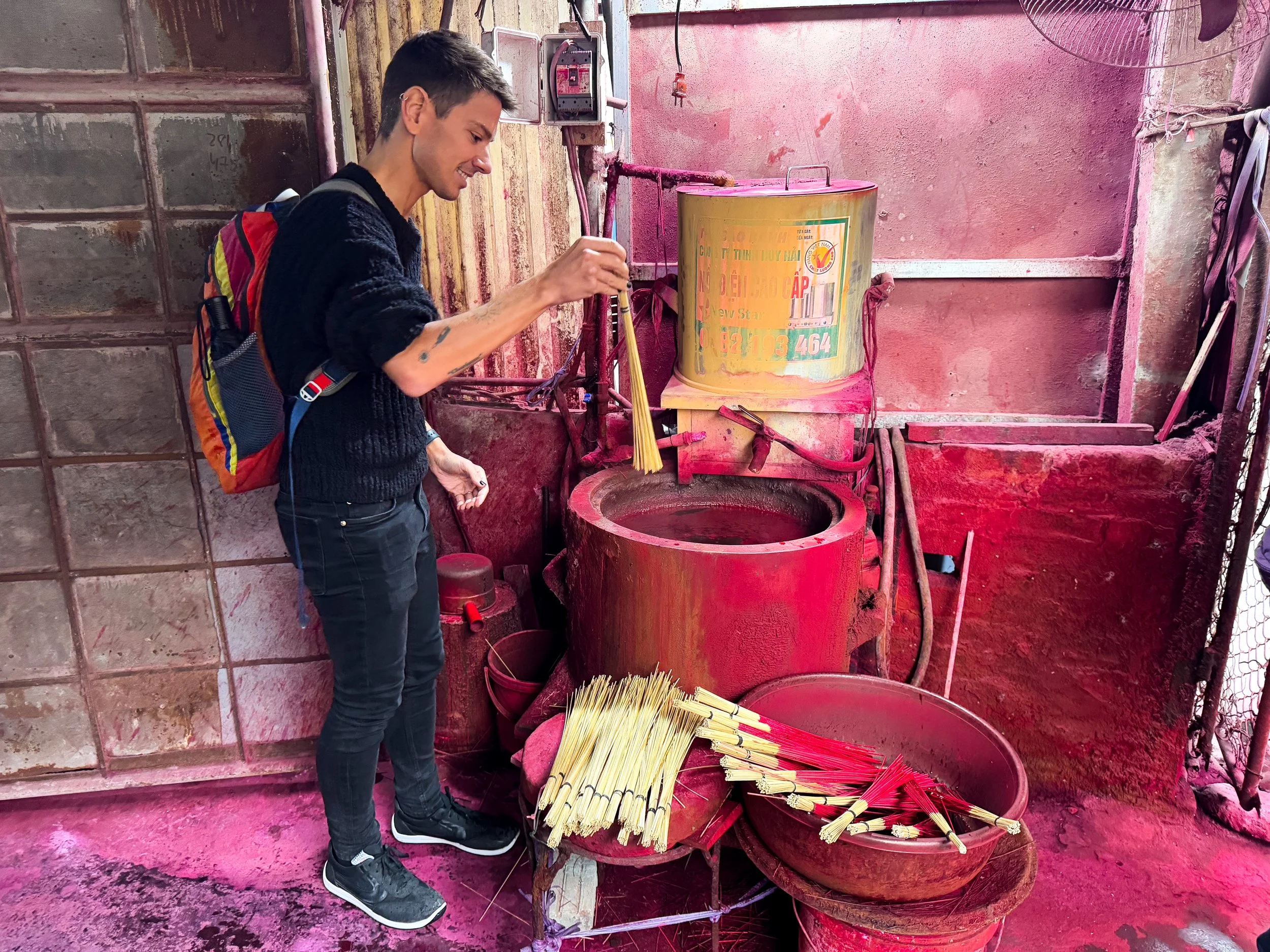
Visit the Incense Village. Burning incense is a daily part of life in Vietnam. It’s commonly used in temples, restaurants and people’s homes. We visited one village where it’s produced, getting to make our own. We saw how raw bamboo is purged of insects, sun dried and then splintered by hand into thin sticks. The sticks are then hand dipped into a vat of red dye to give them their characteristic color. Once dyed, they’re fed into a machine that packs wet incense powder onto them. The incense powder we used was made from ground cinnamon and bamboo. Afterwards, we visited an “Instagram courtyard” covered in bundles of red incense sticks with areas for photo ops. We booked our tour with Tinny Travel on Viator.
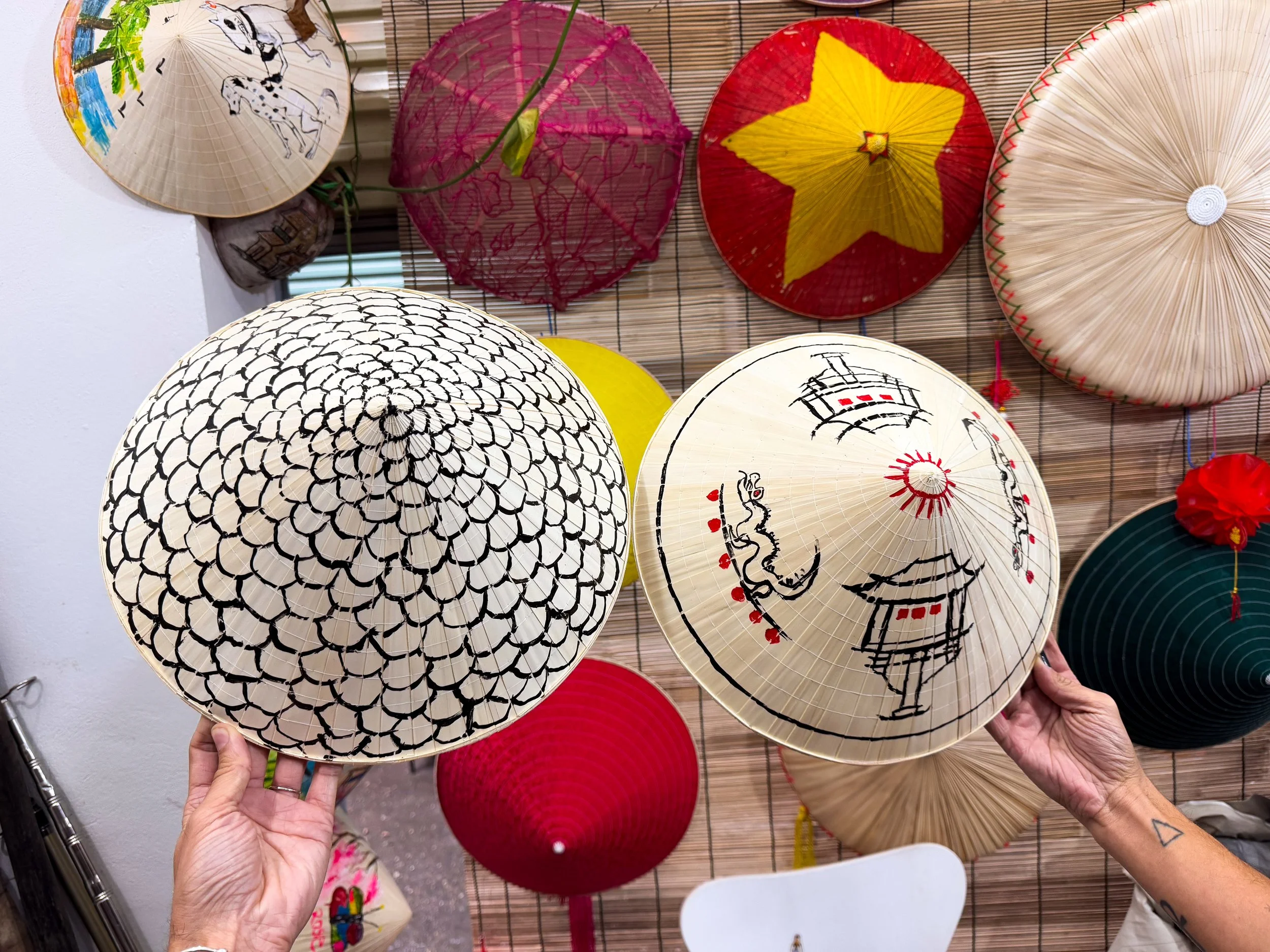
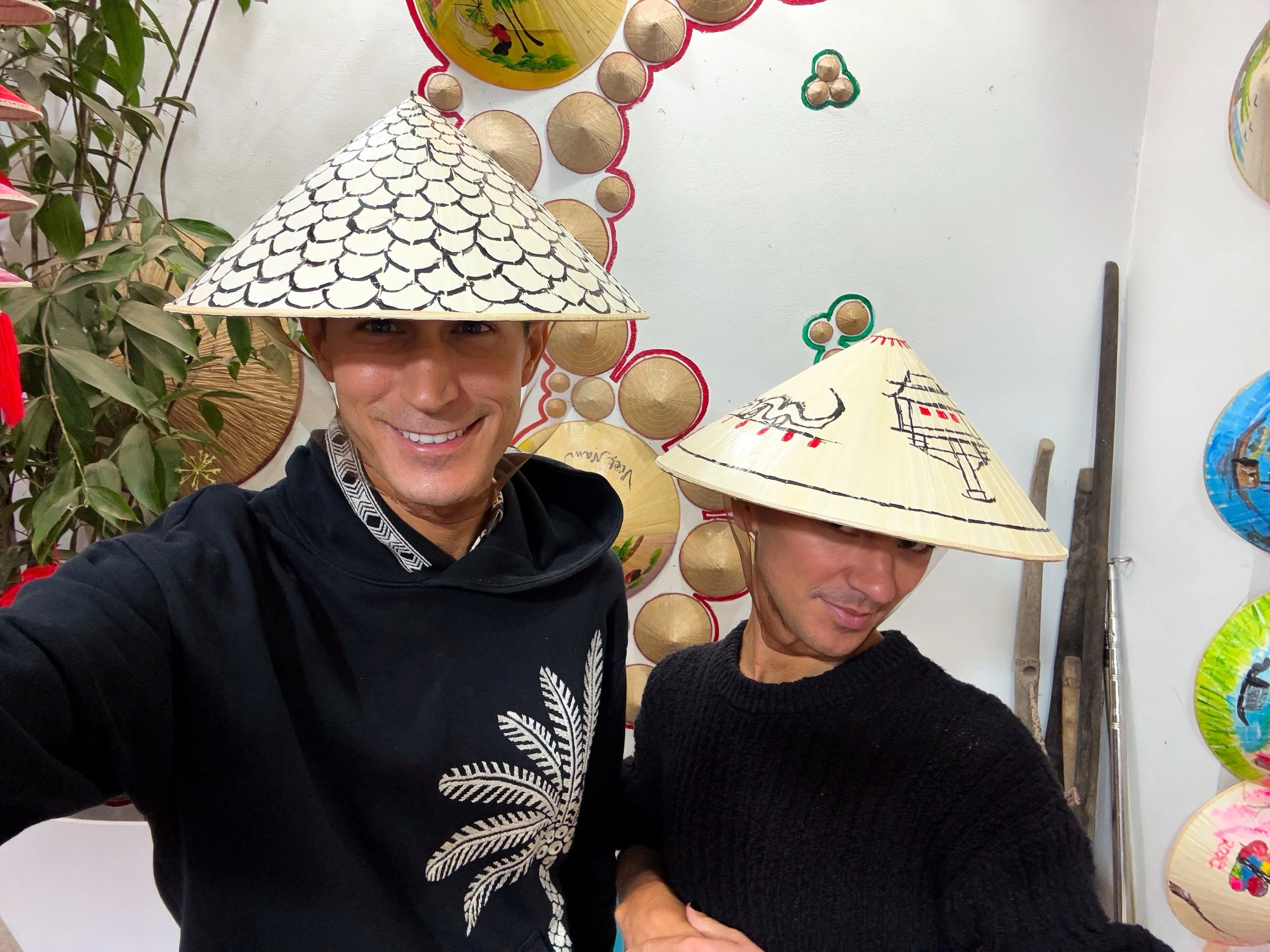
Learn about Conical Hat Making. Conical hats, called Nón lá in Vietnamese are commonly worn by women to protect from the sun and rain. On our Incense Village Tour, we visited a family home where they’re made, getting to see the stages and process involved in making a hat from start to finish. We painted our own hats inspired by the Temple of Literature and the One Pillar Pagoda.
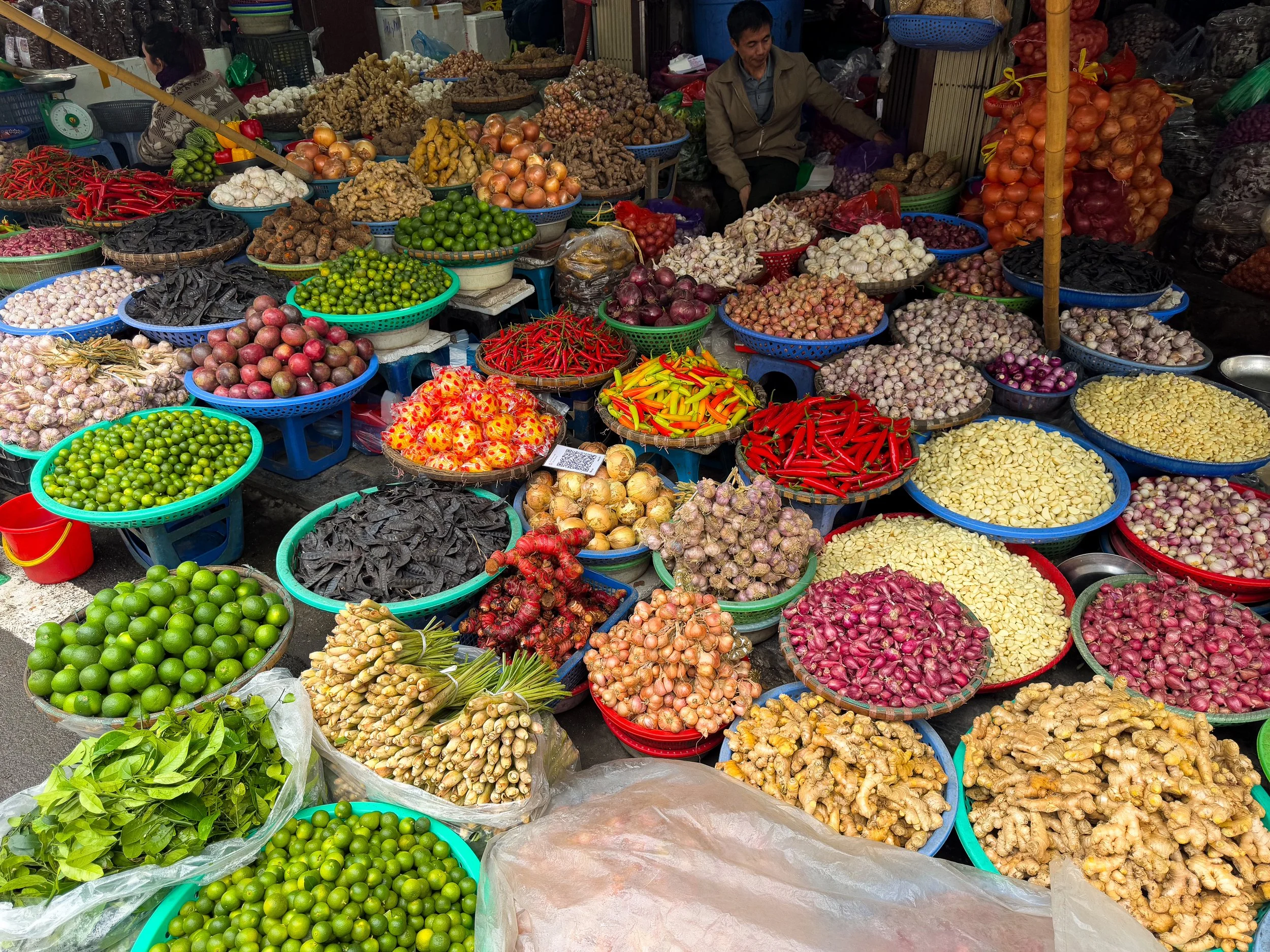
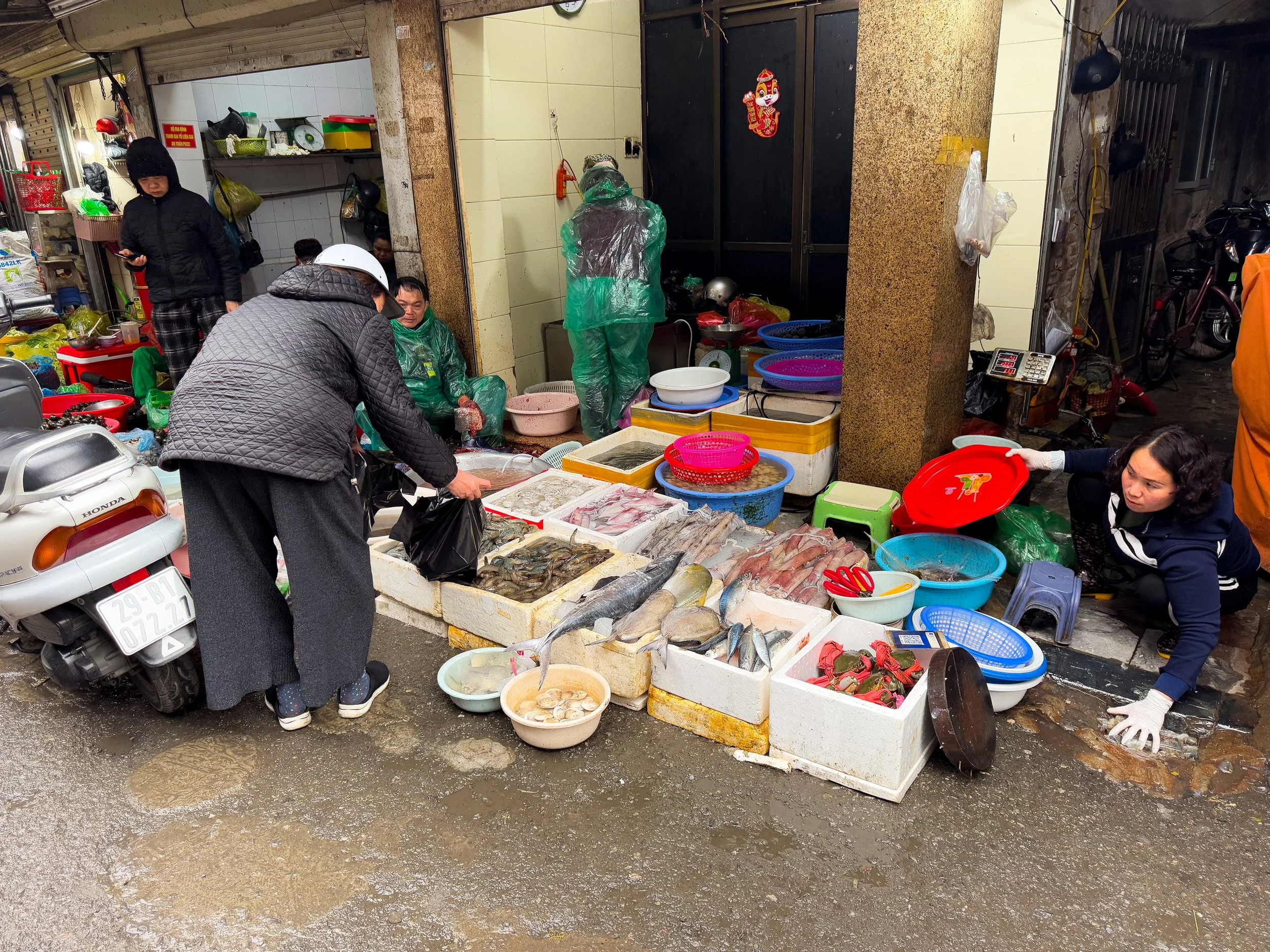
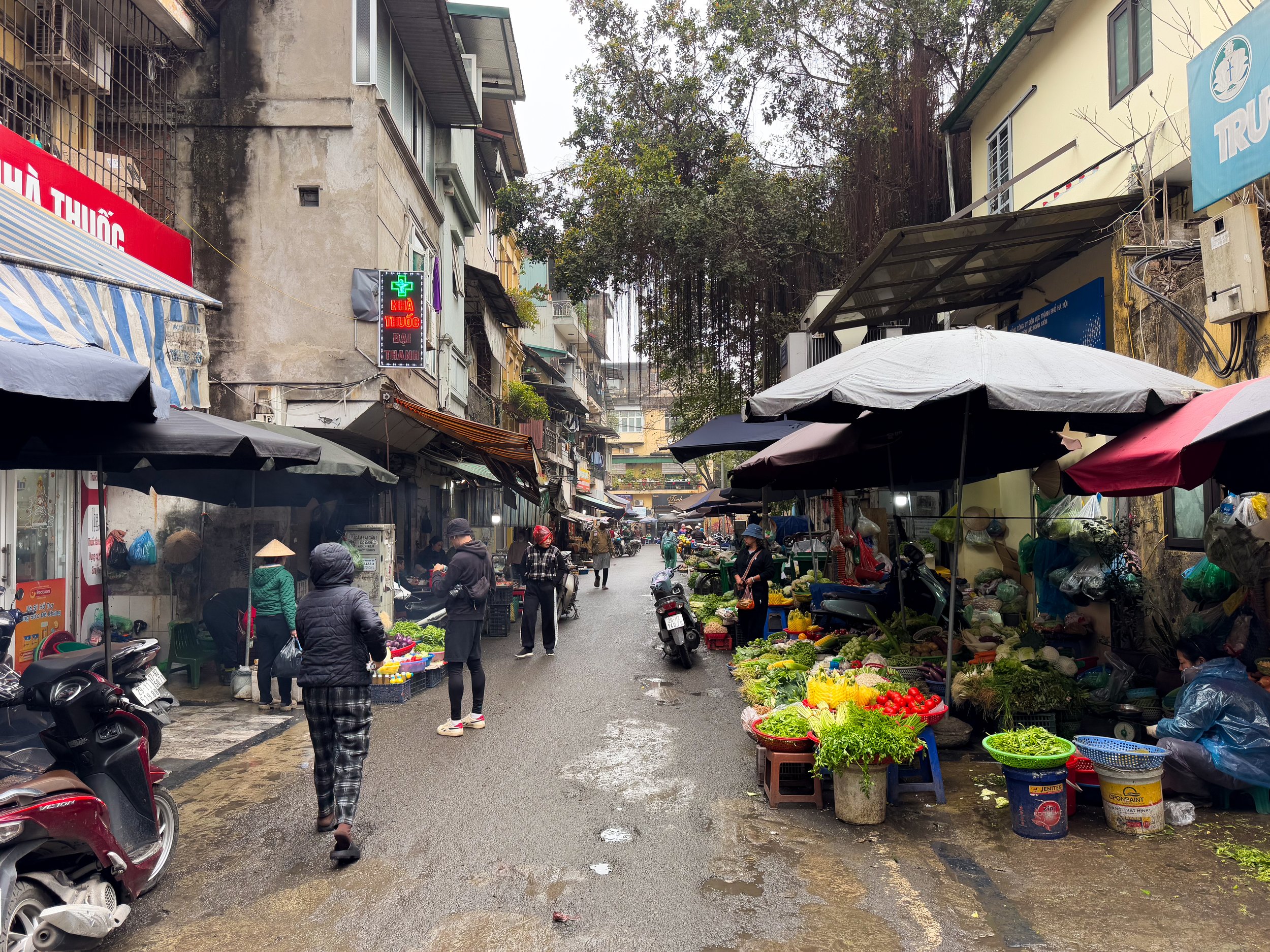
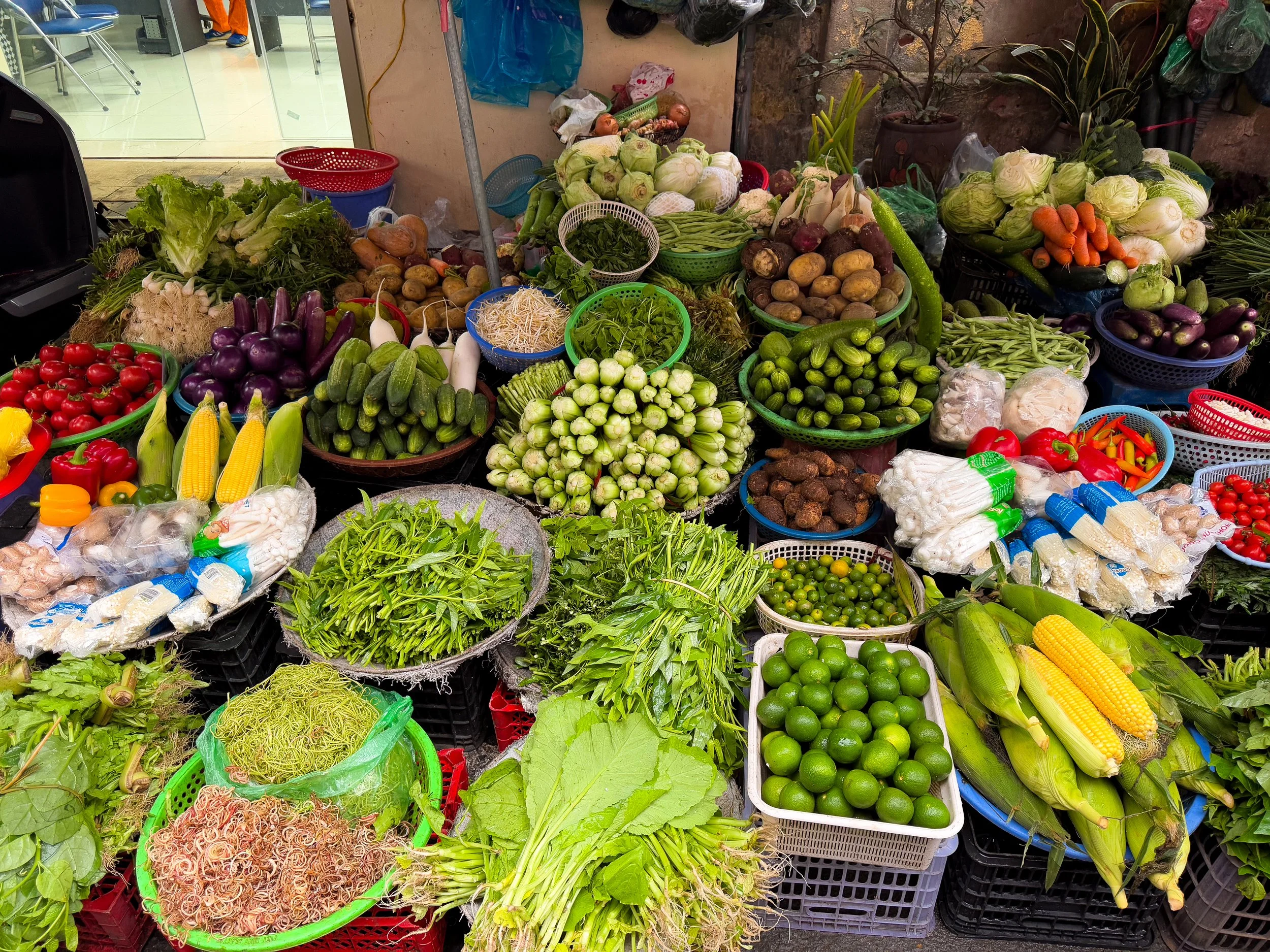
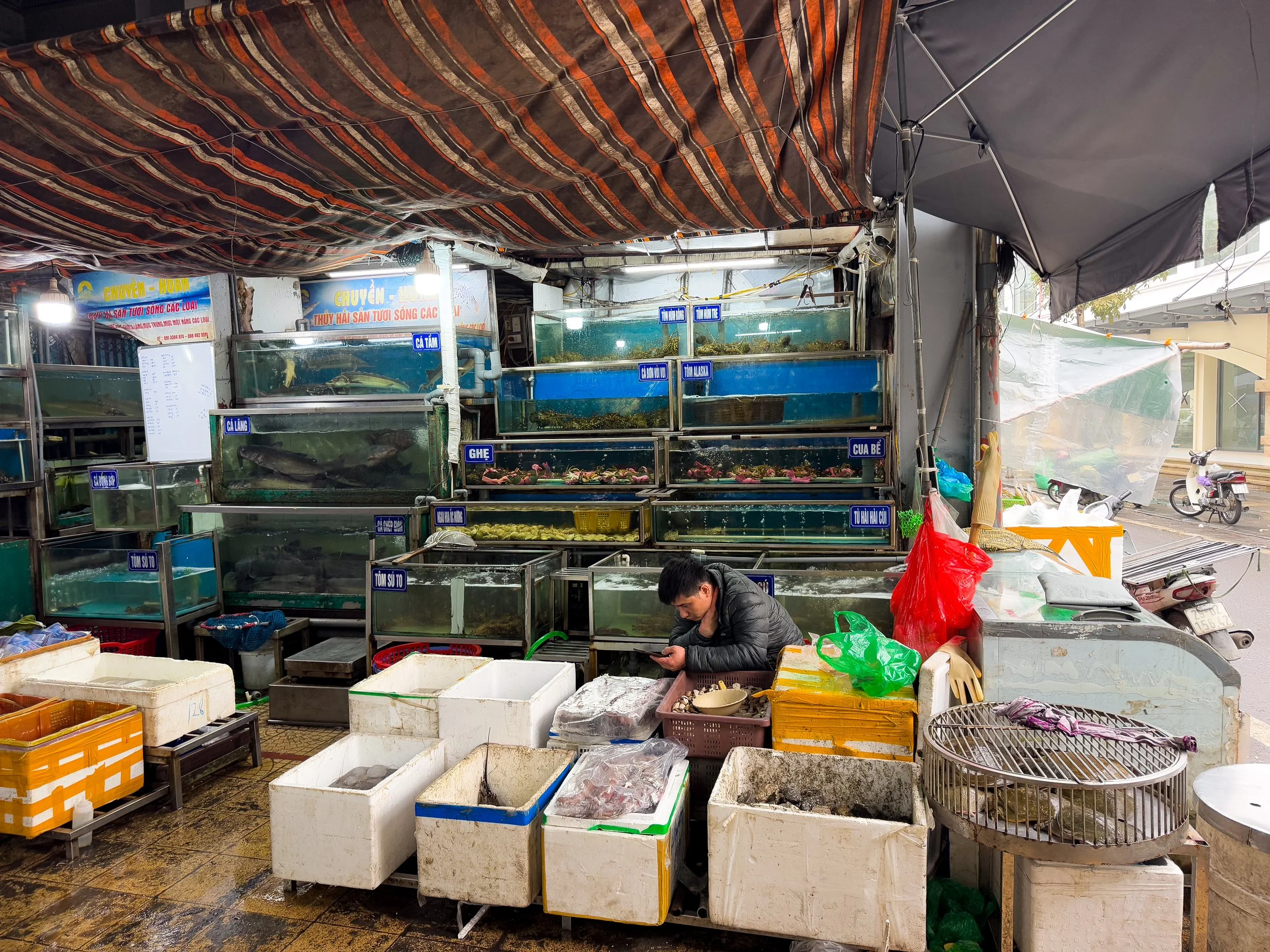
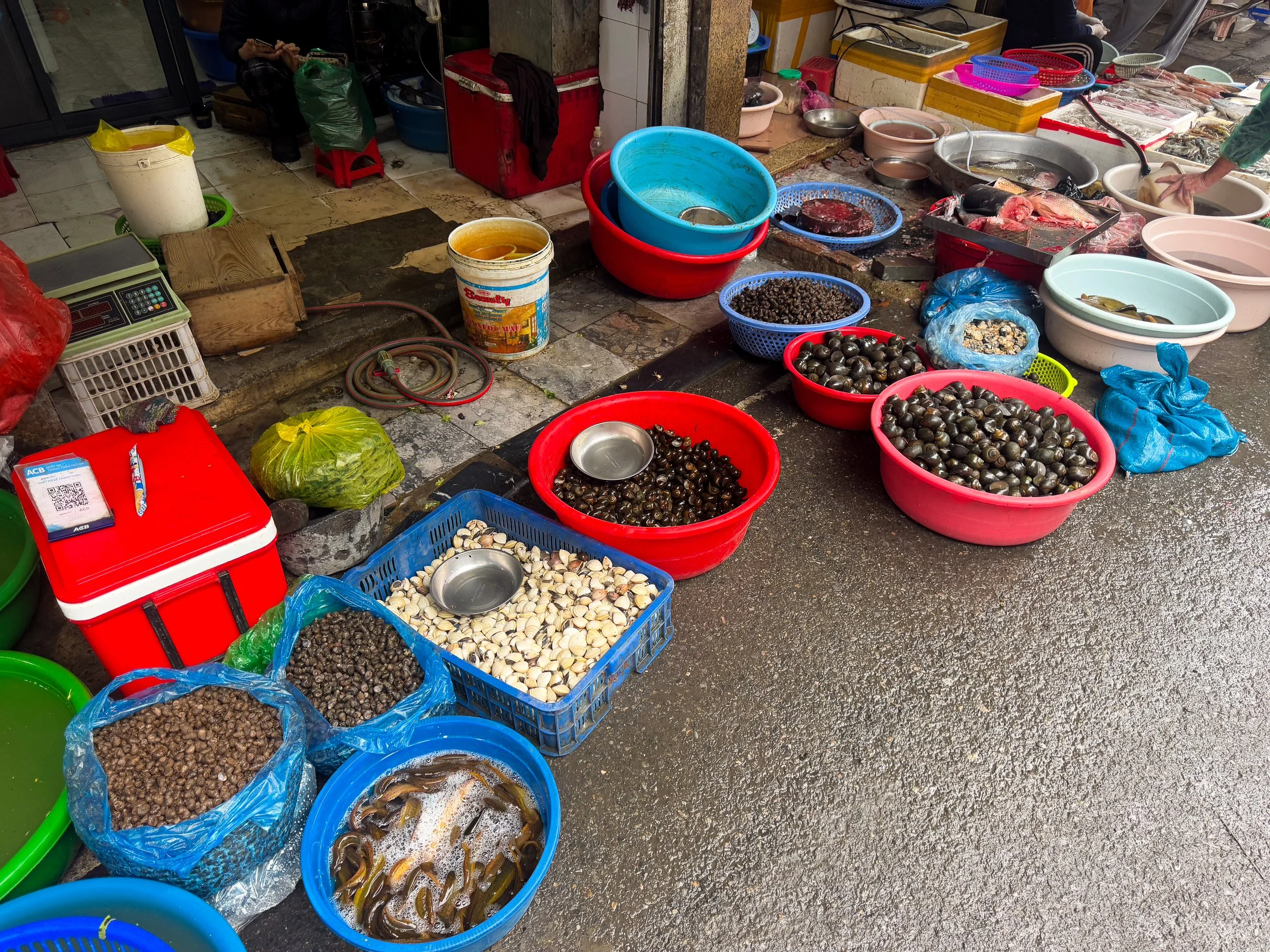
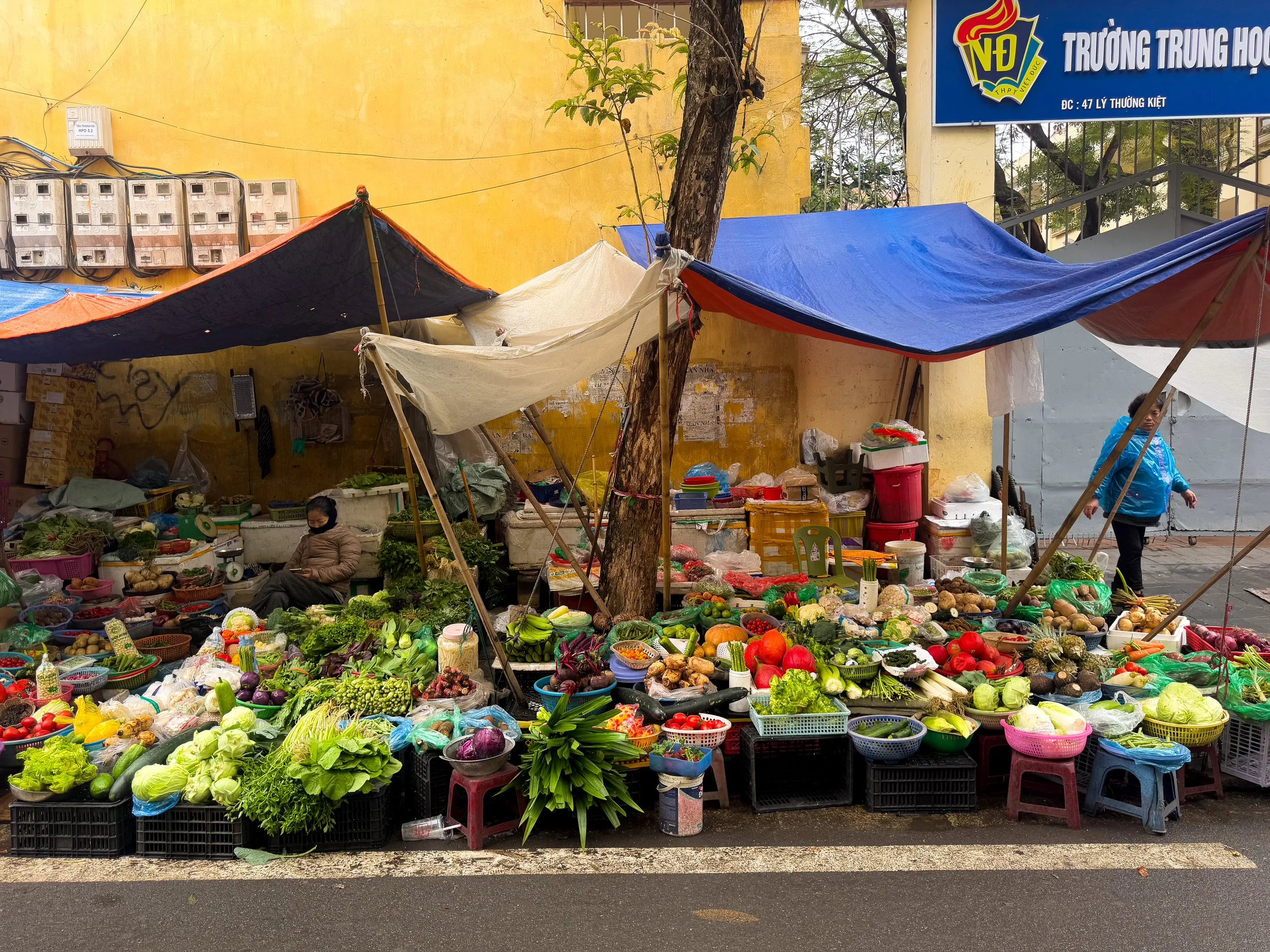
Shop at the Thien Thuat Market. A farmers market lining the curbs of Thien Thuat Street and the adjacent roads in Hanoi’s Old Town. Local merchants display baskets and plastic bins with a variety of goods including meats, seafood, vegetables, fruits, herbs, dried goods and noodles. We shopped here for groceries to cook several of our own meals.
Pro Tip. Ask around and haggle over prices with vendors before buying.
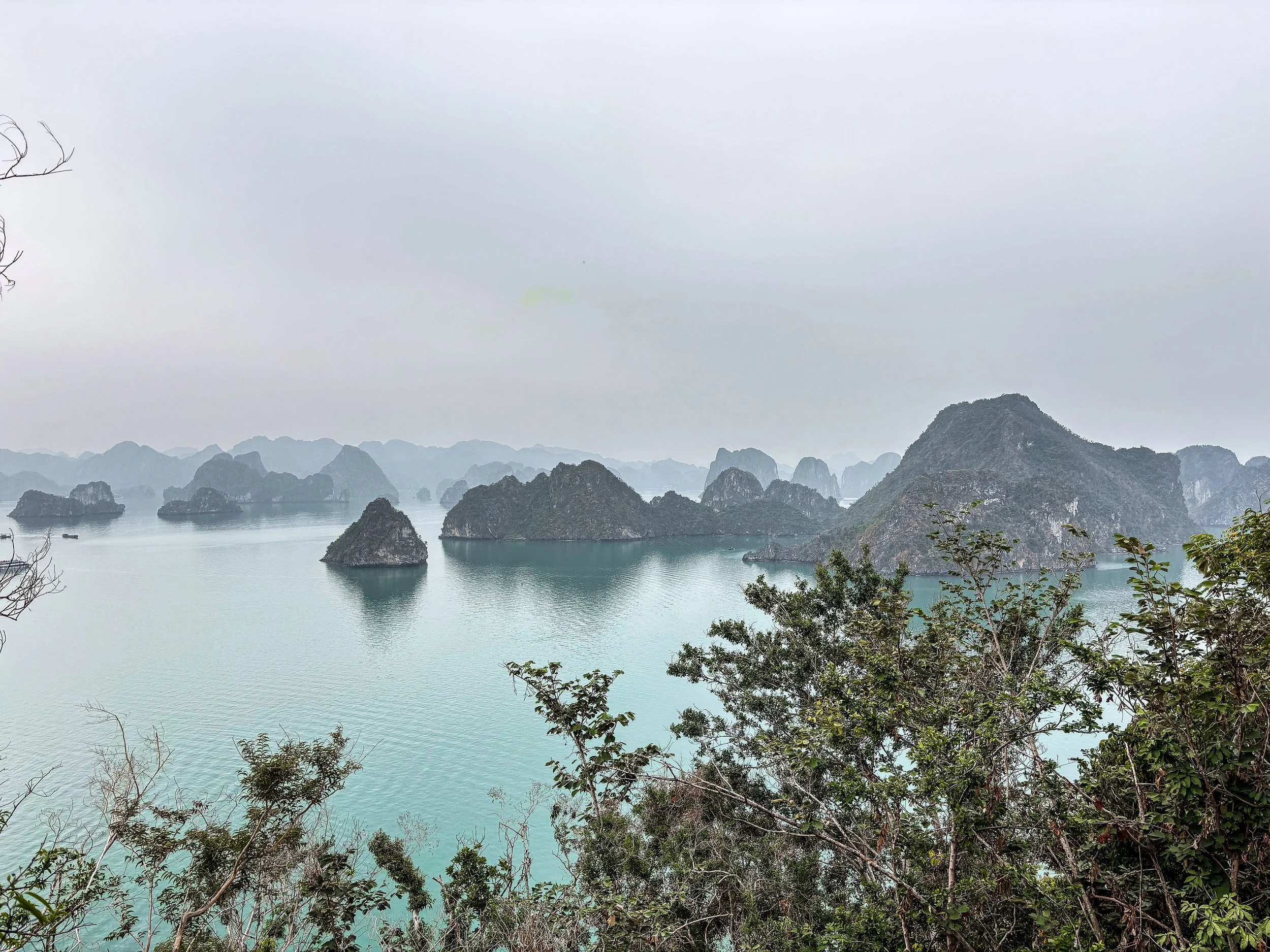
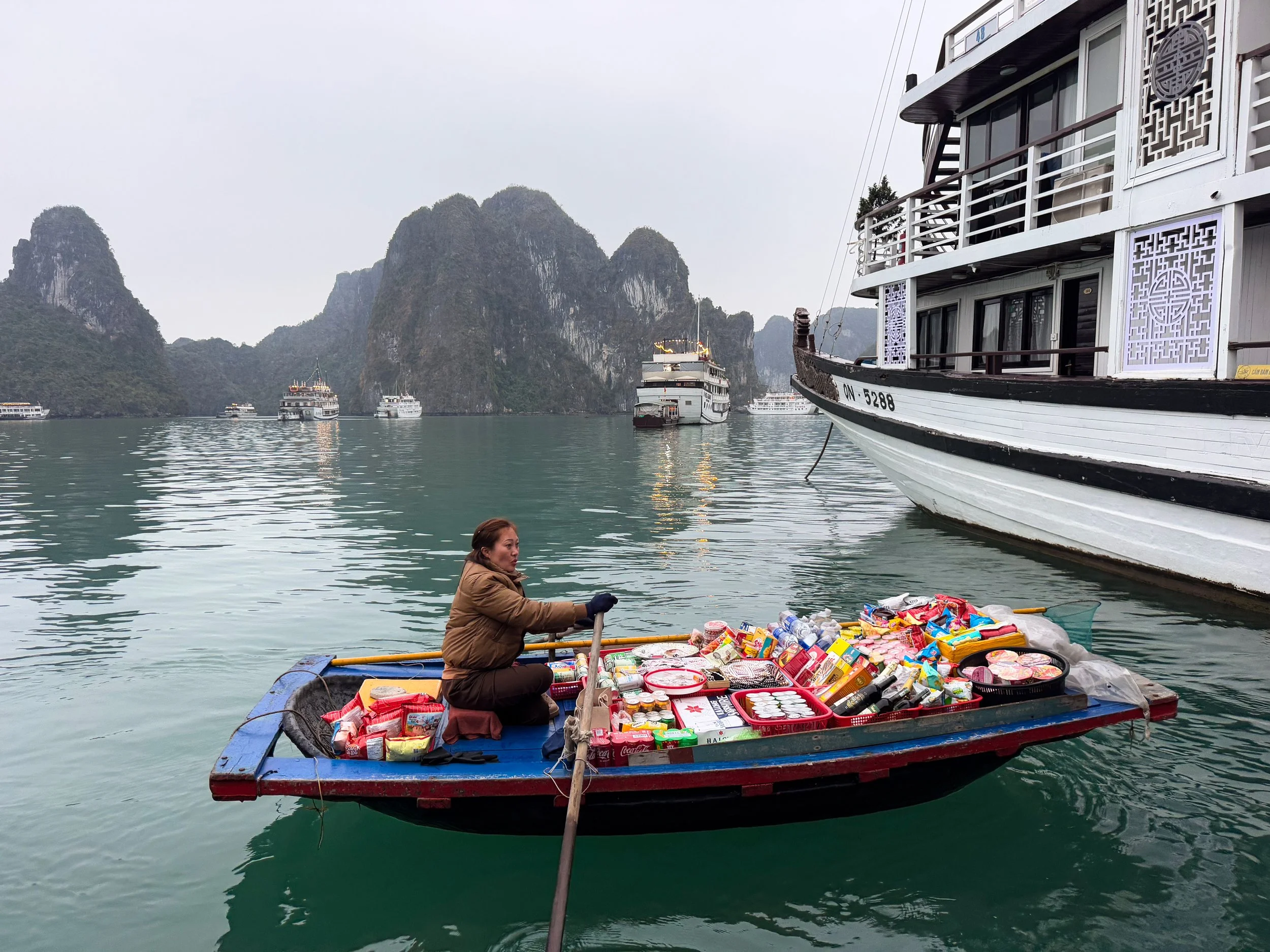
Ha Long Bay
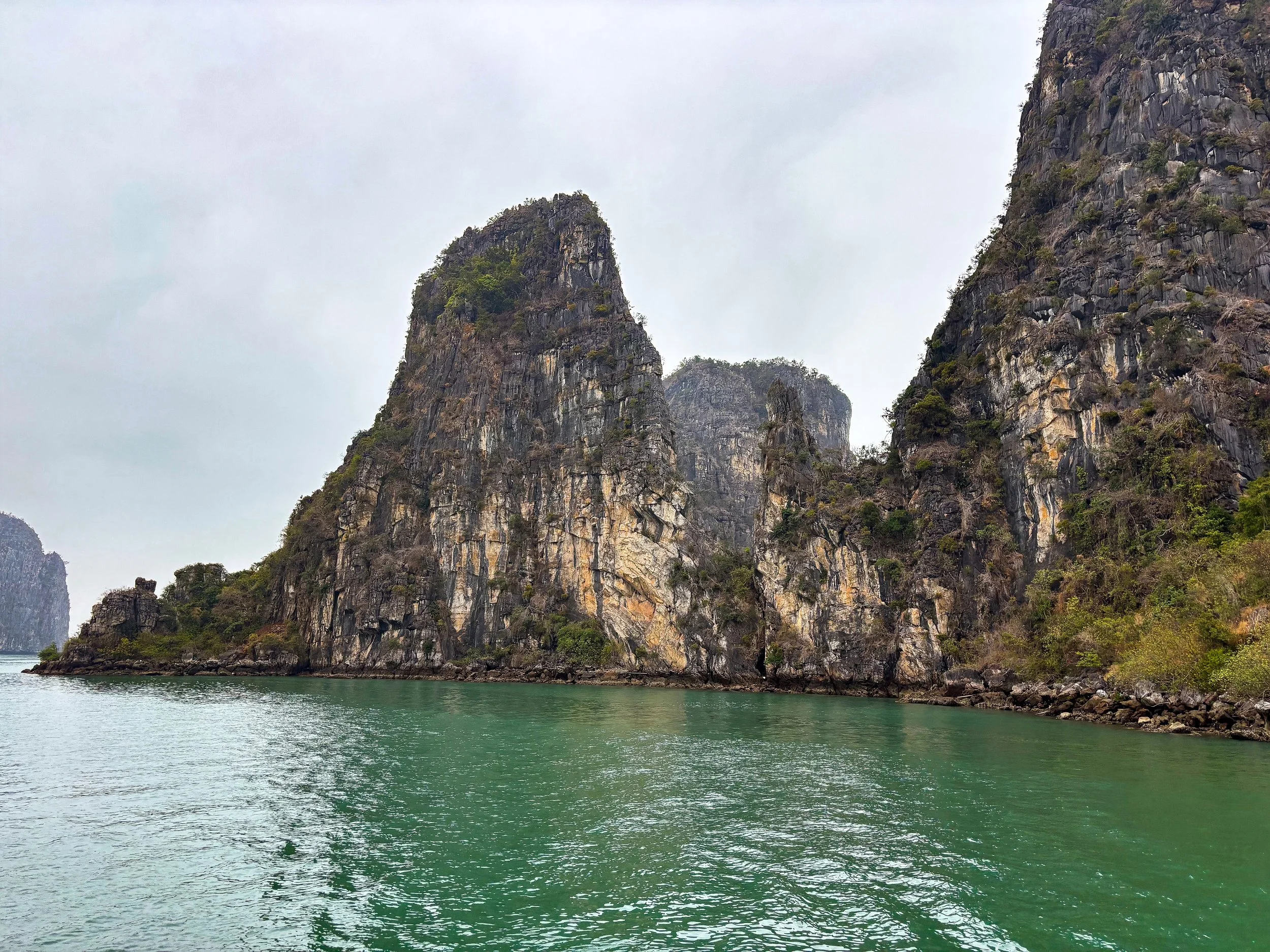
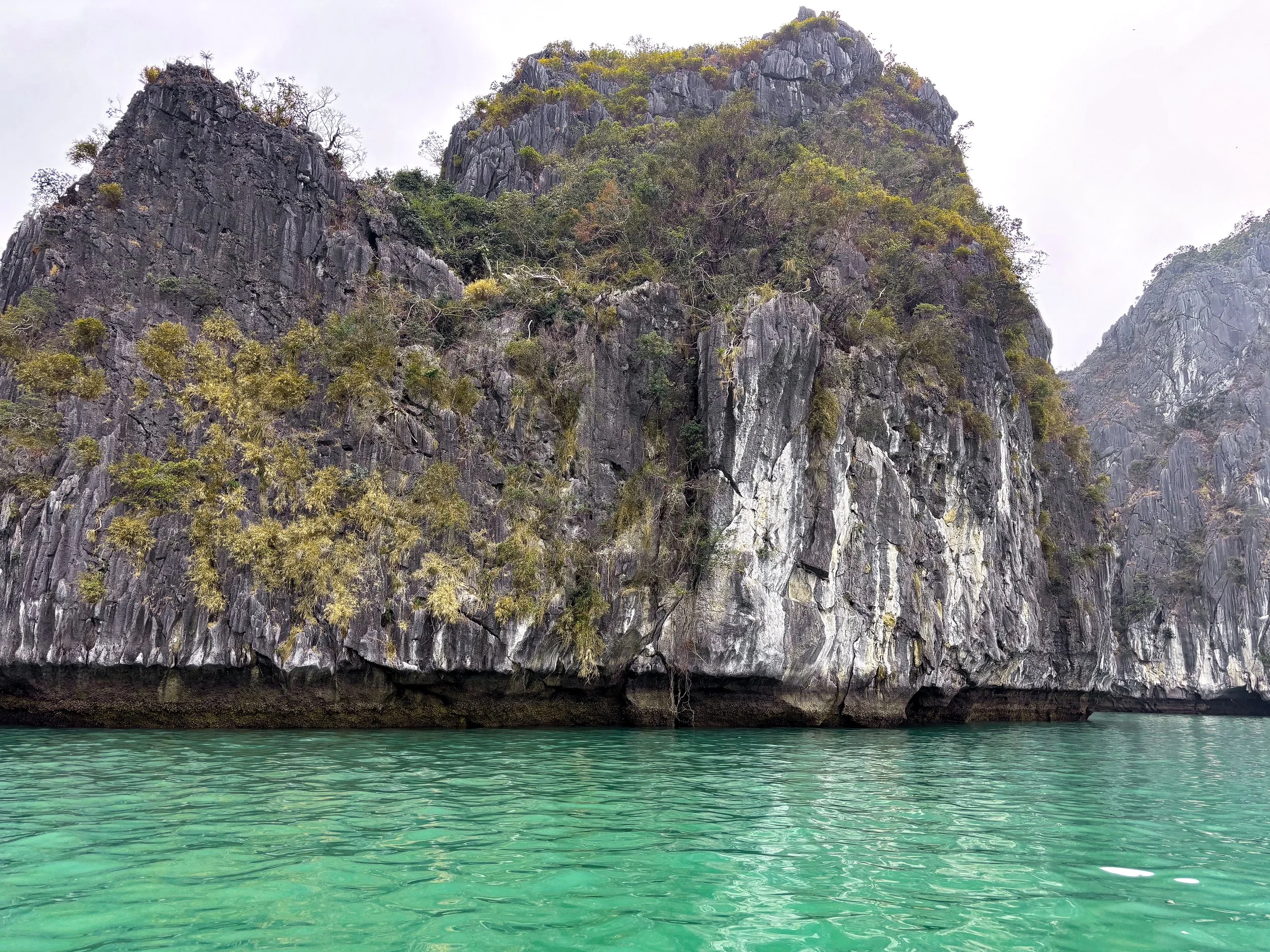
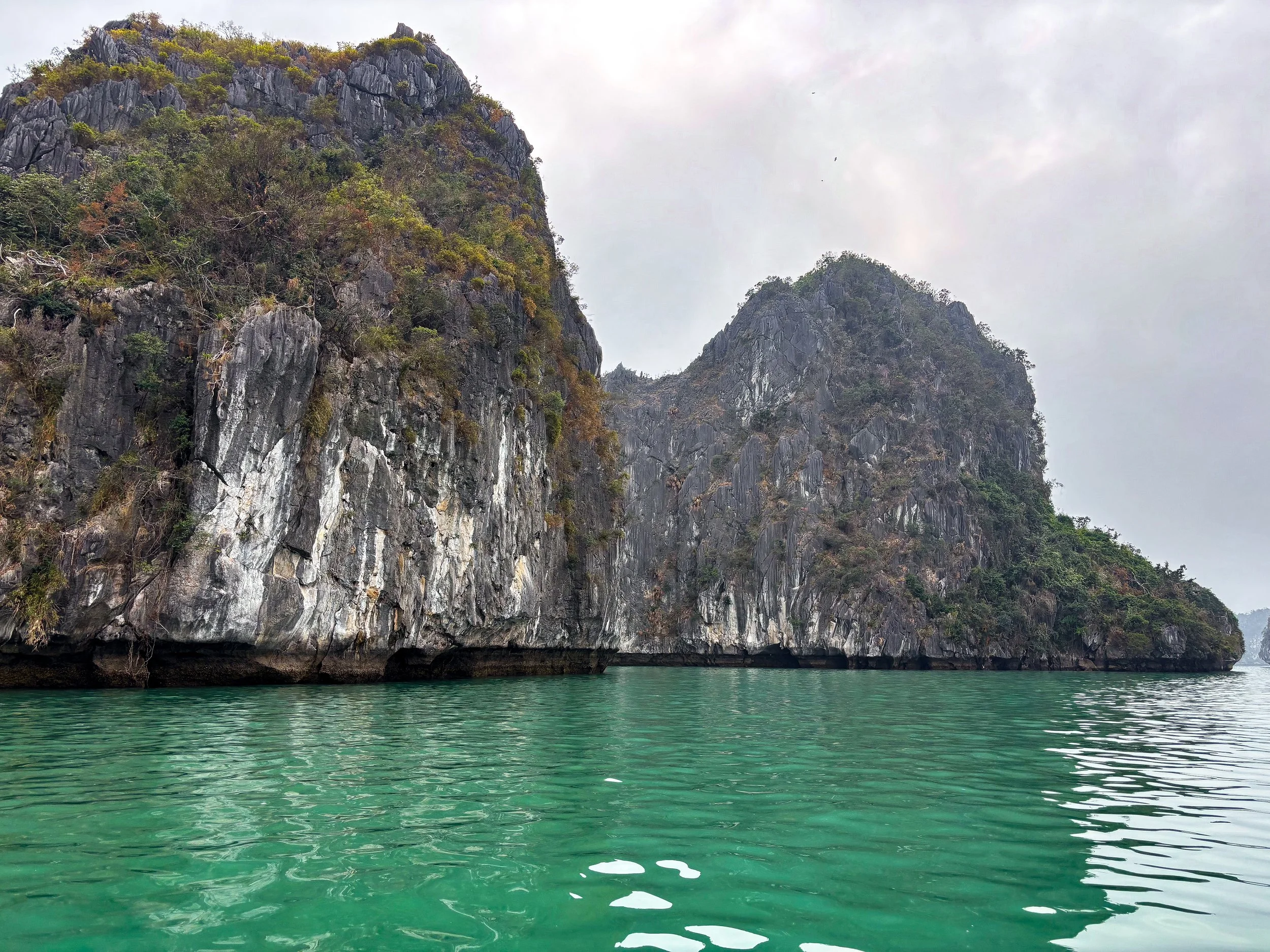
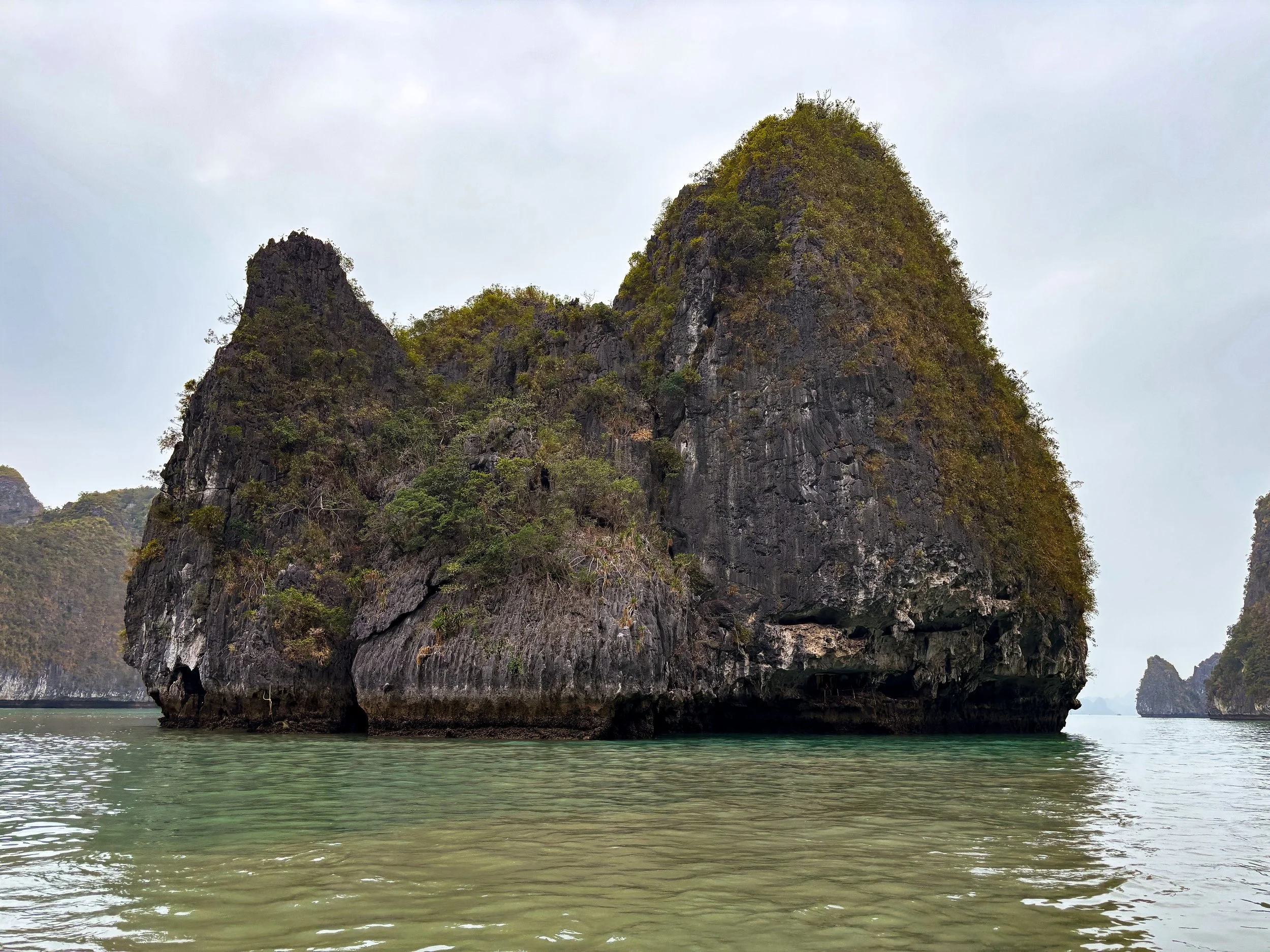
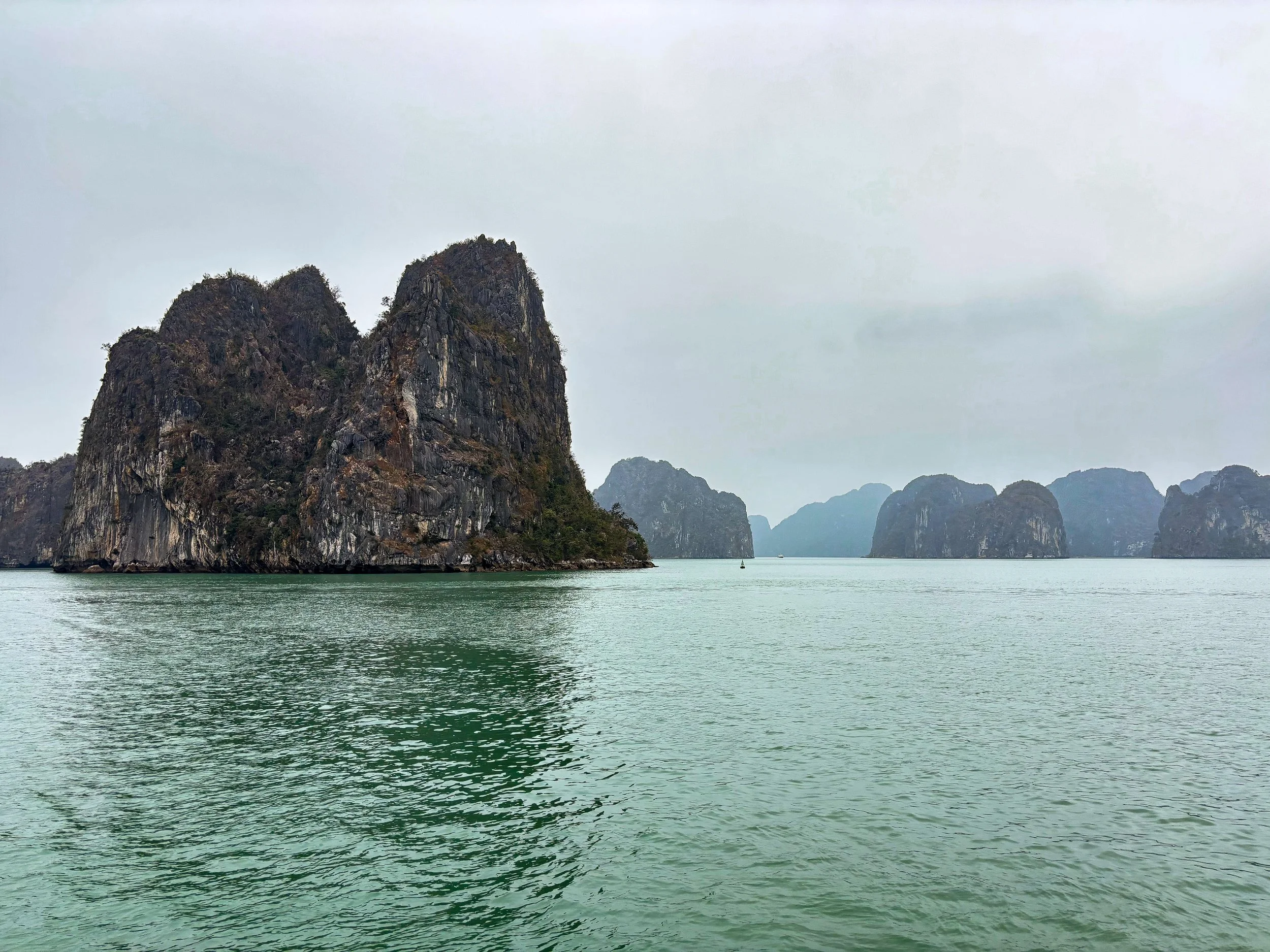
Ha Long Bay is one of Vietnam’s many natural wonders and was a highlight of our trip. It’s famed for its hundreds of towering stone islands that sharply rise from the water. Their sheer faces and craggily slopes are covered in patches of foliage. Some are home to caves, coves and beaches. At the time, clouds gave the islands a mystifying appearance. The best way to experience the bay is by boat.
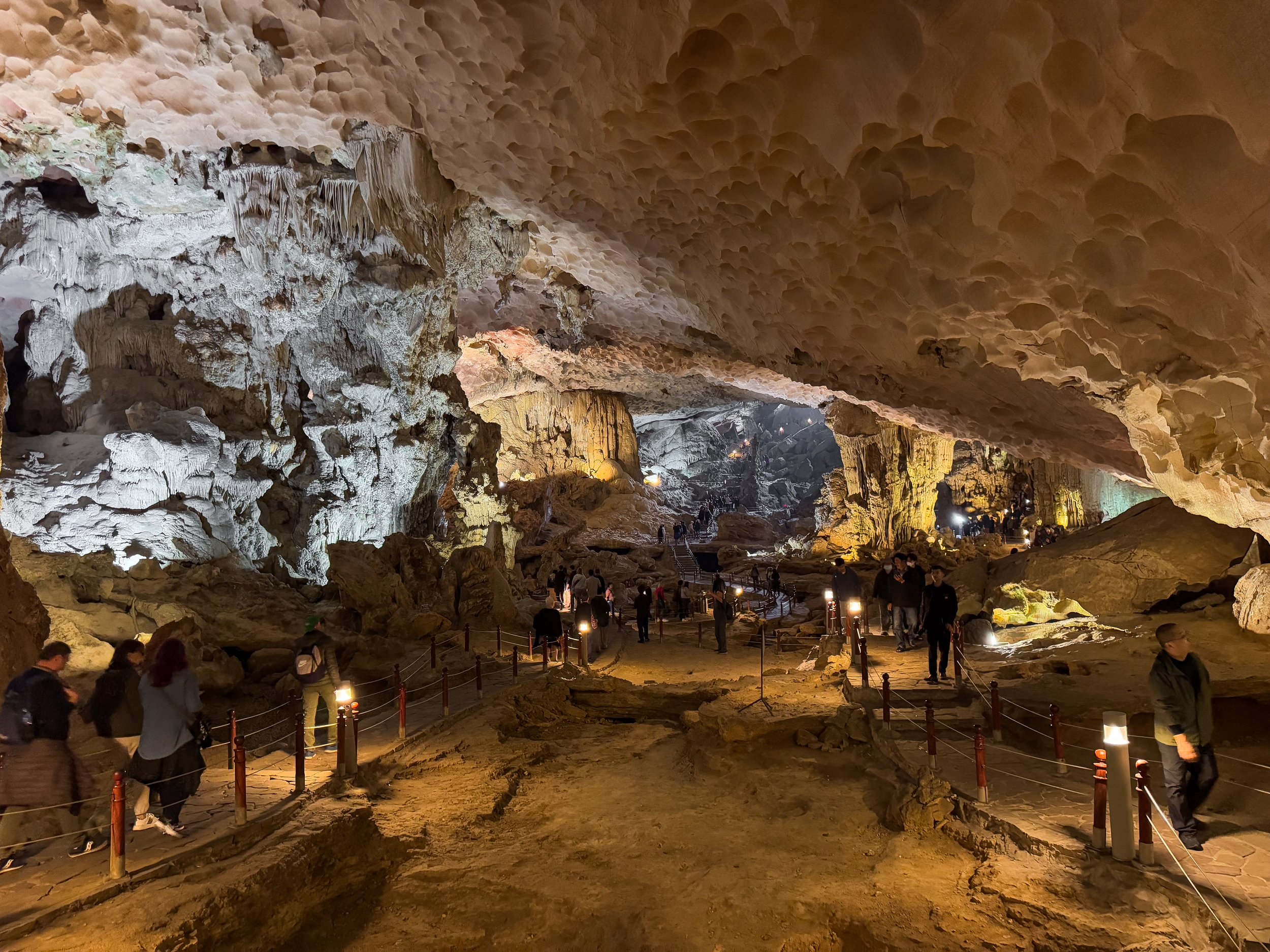
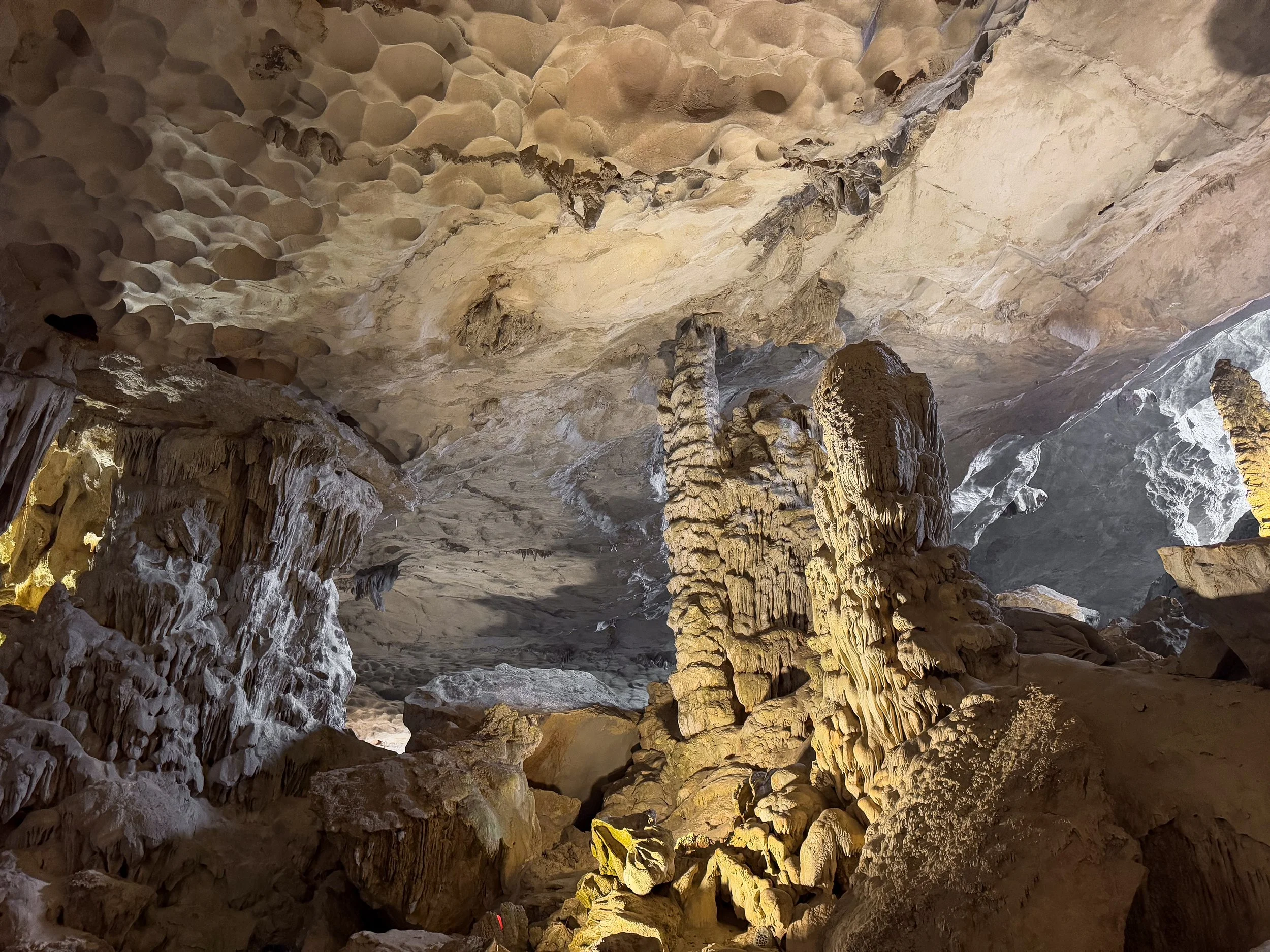
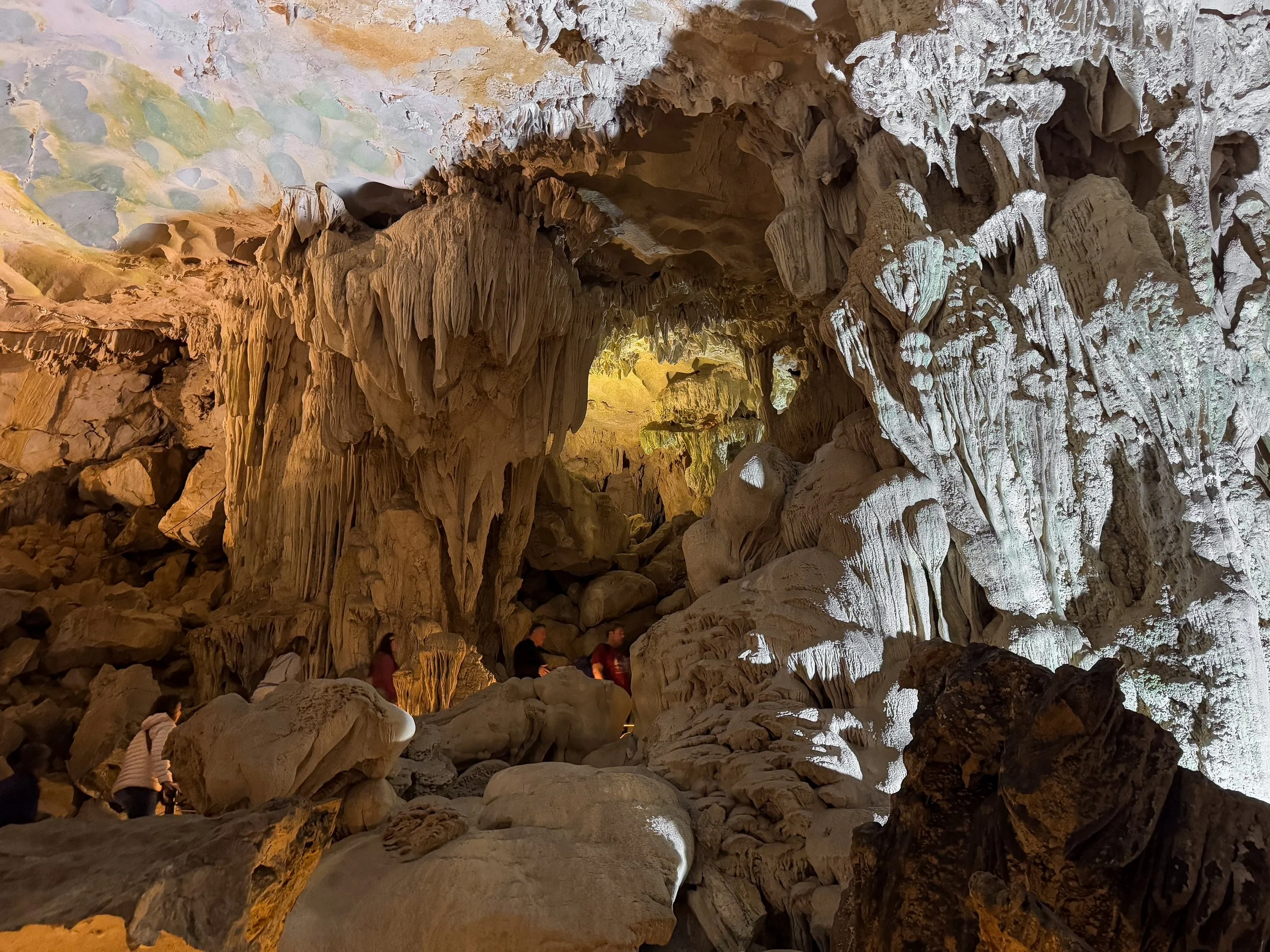
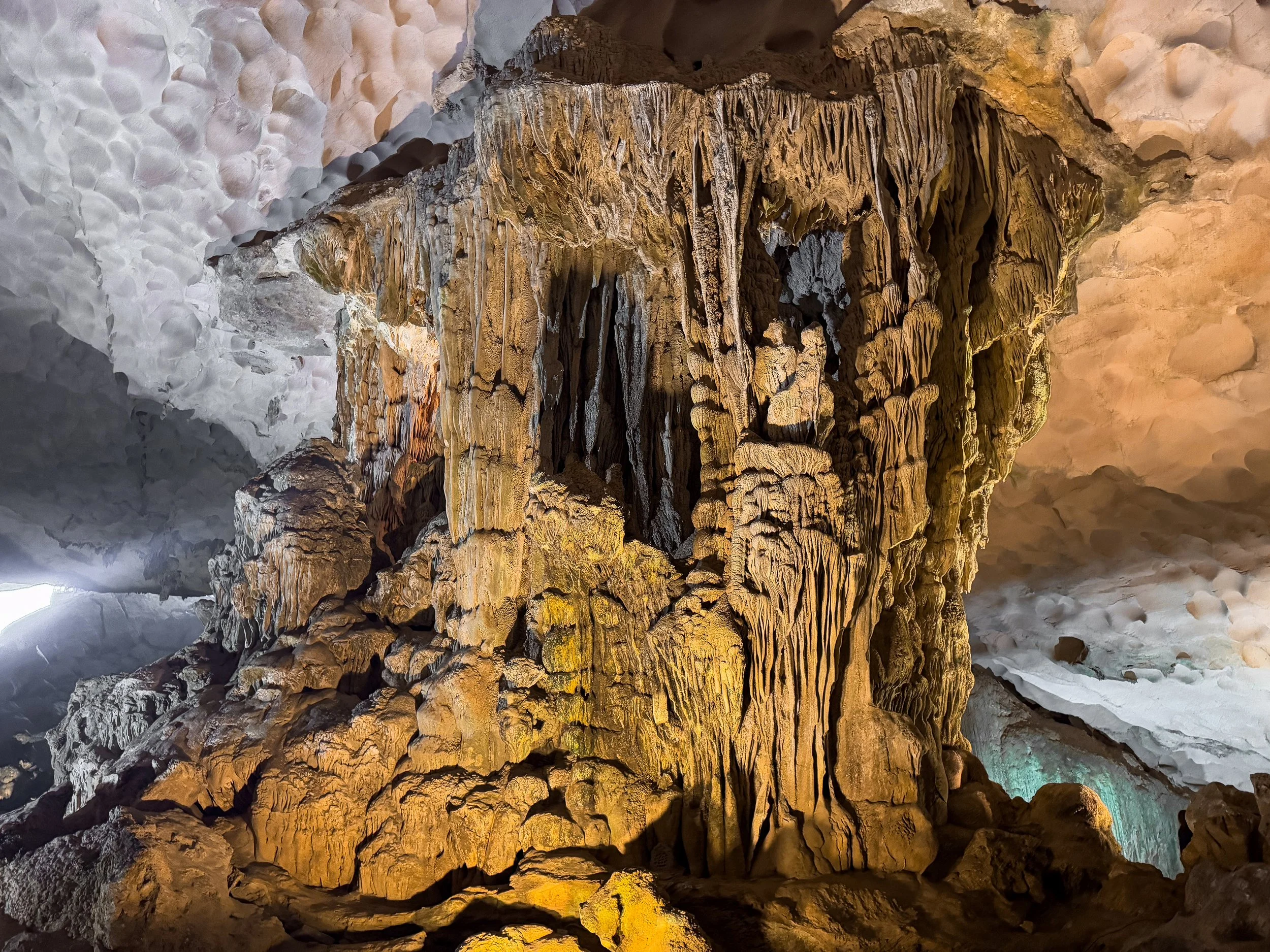
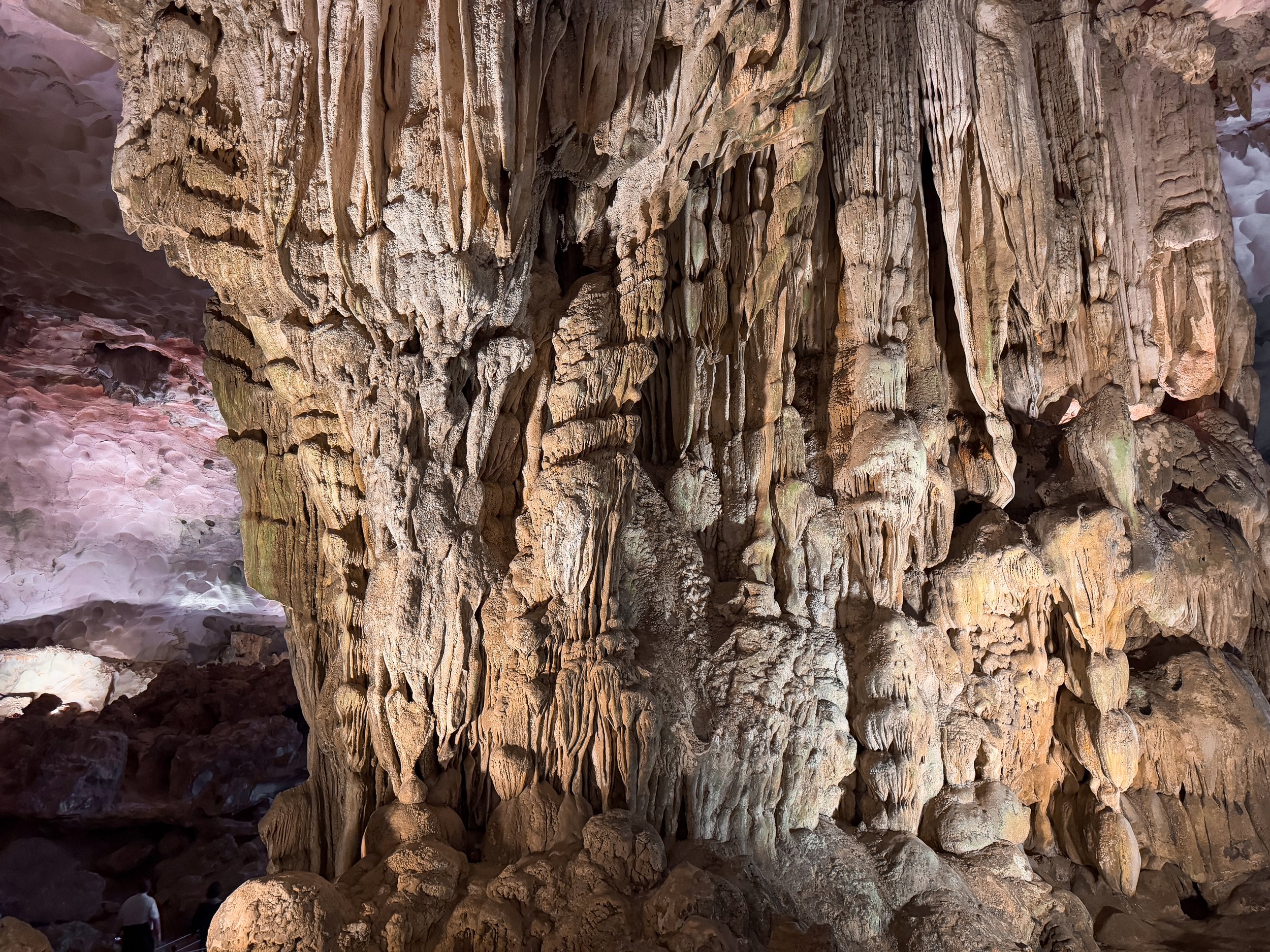
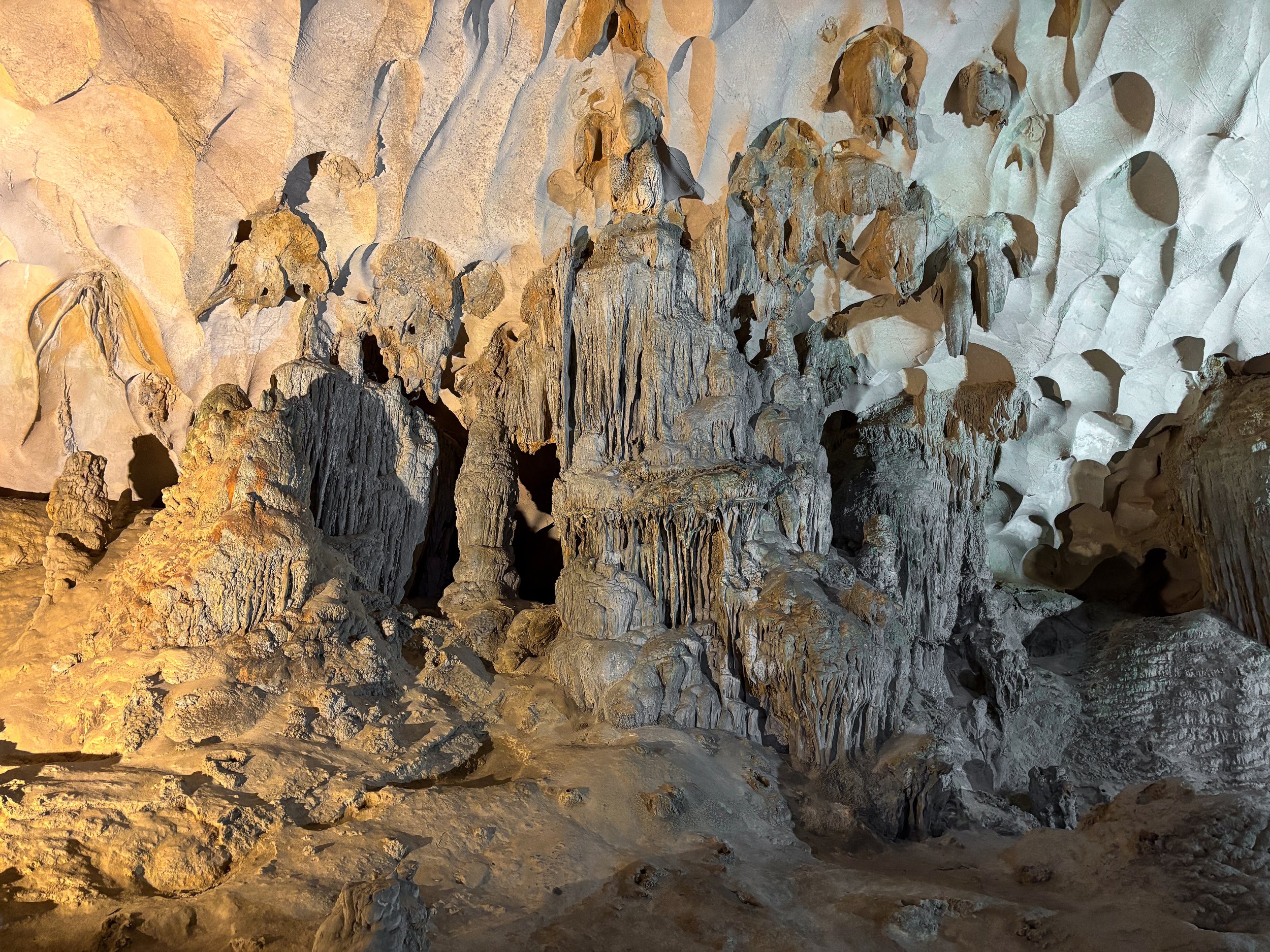
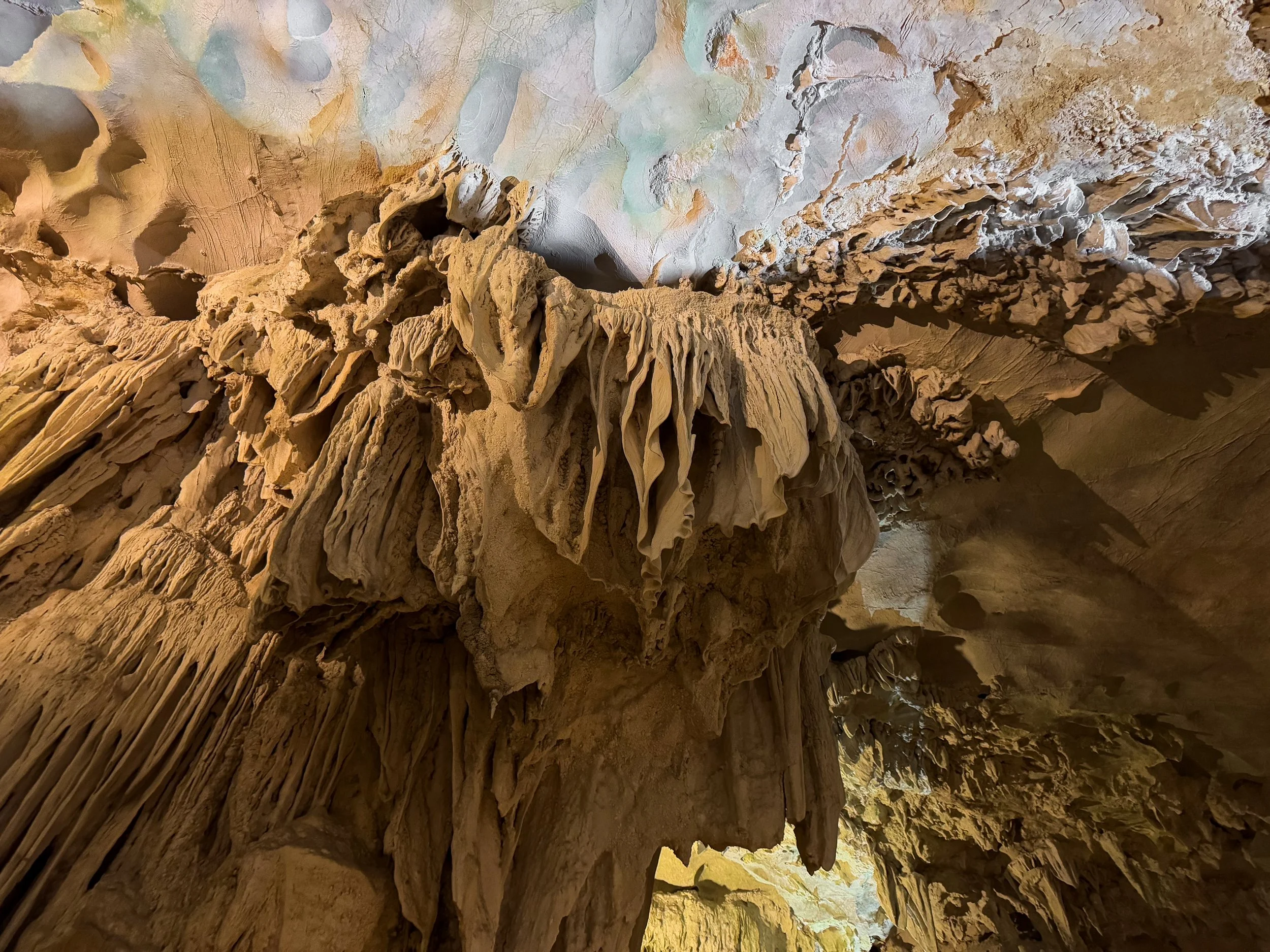
Sung Sot Cave. The largest cave in Ha Long Bay. A staircase leads up a karst island to the mouth of the cave. Inside are a series of chambers, each grander than the next. The cave walls are covered in stalactites that drip down to the floor. The ceilings are sculpted into a smooth and rippled pattern from lapping water. The final chamber is absolutely massive. A trail meanders deep into its interior past a large stone column before looping back out.
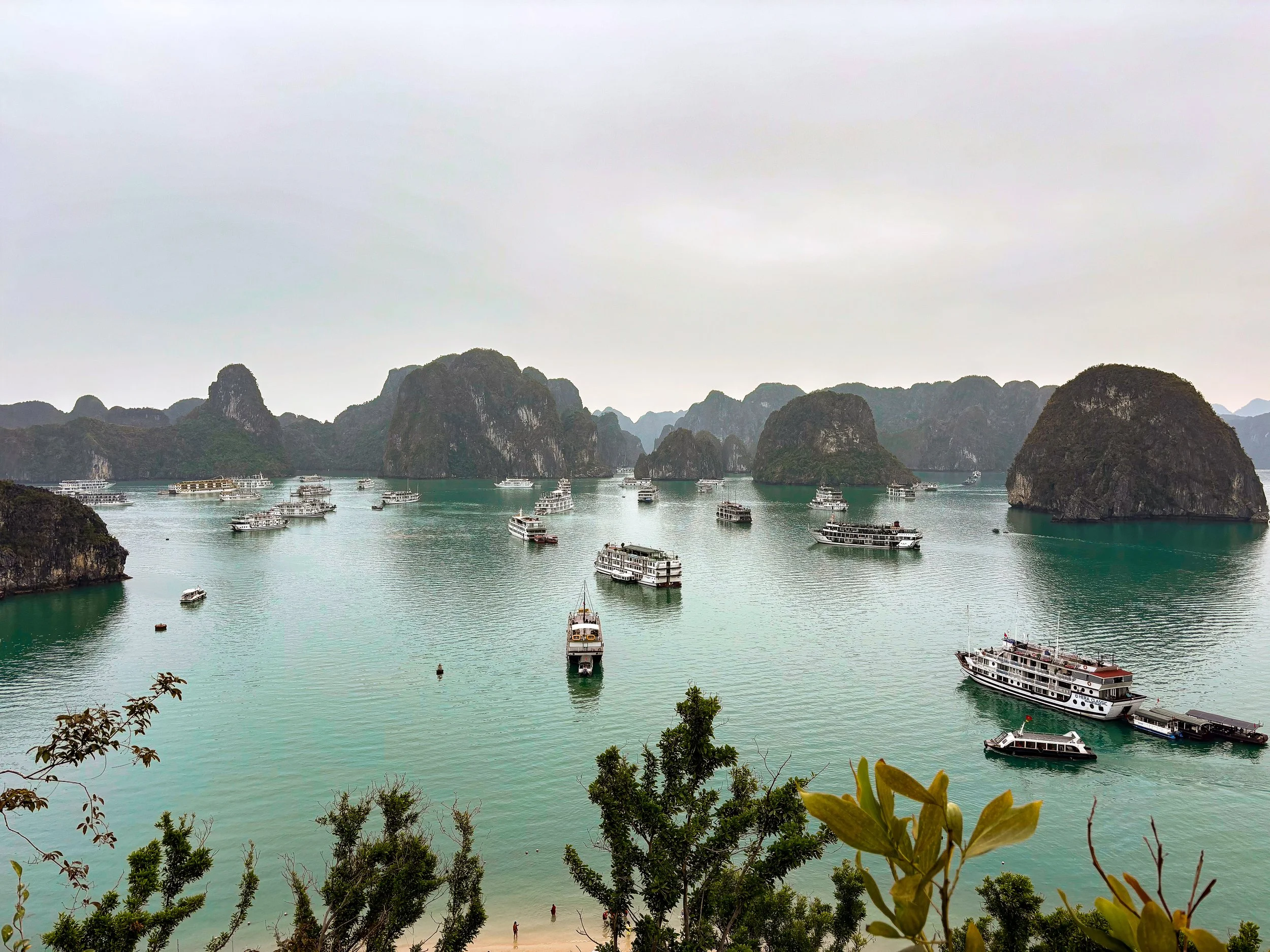
Ti Top Island. A popular island with a yellow sand beach and mountaintop lookout. A 400 step staircase leads to a pagoda with panoramic views of the bay’s karst islands, blue tinted water and anchored ships. It was too cold to swim at the time but we enjoyed the beach and scenery from shore.
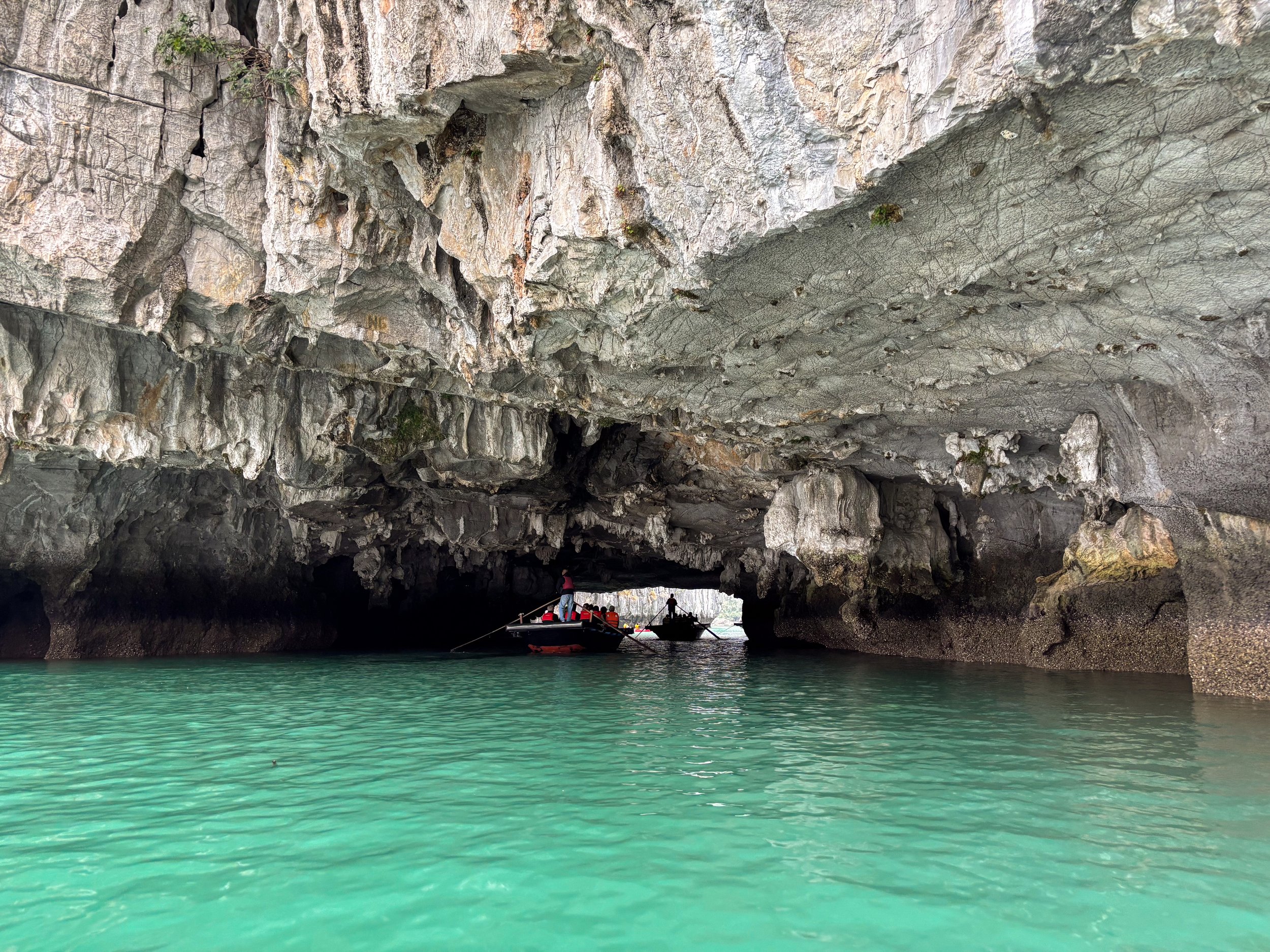
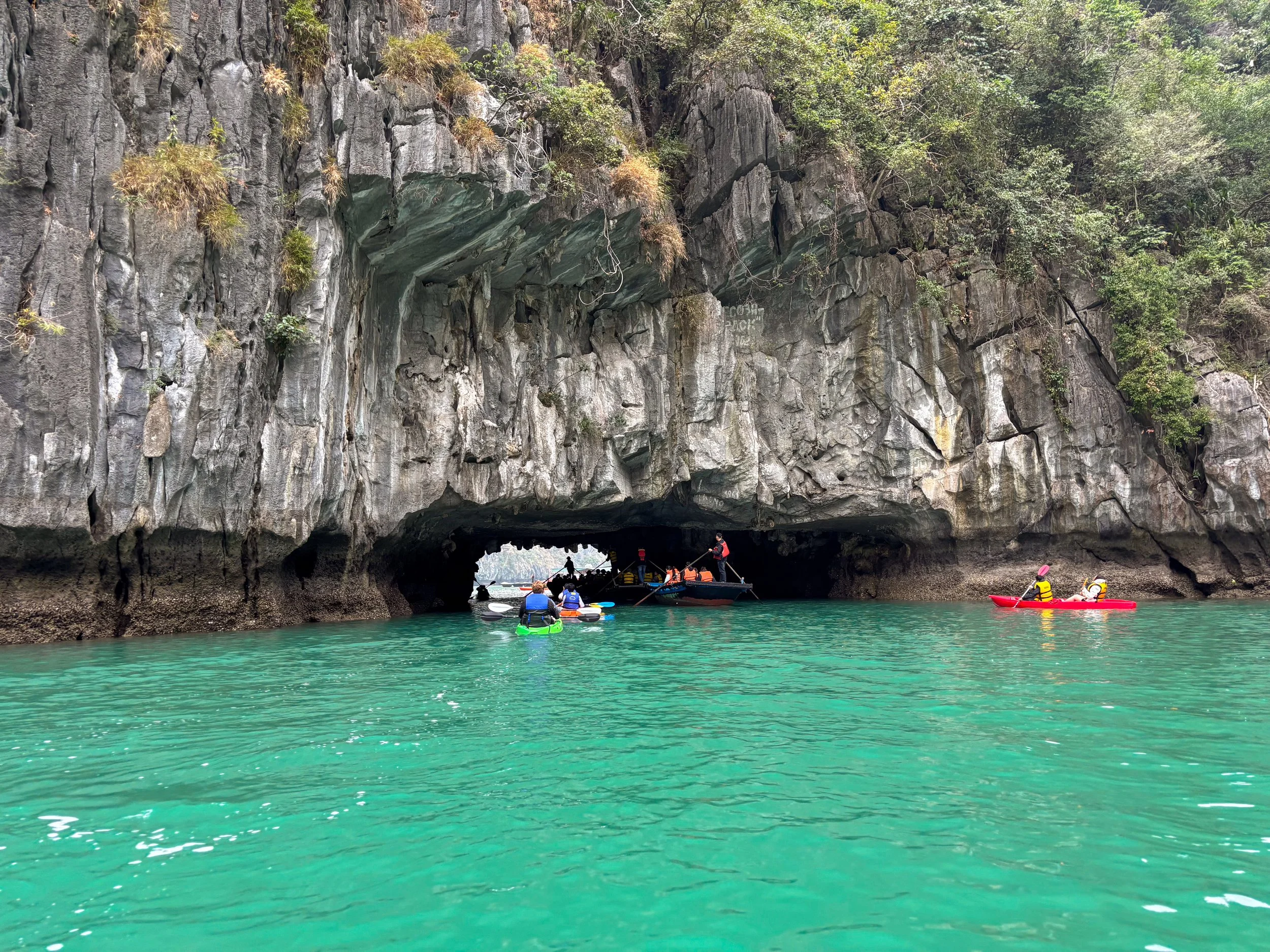
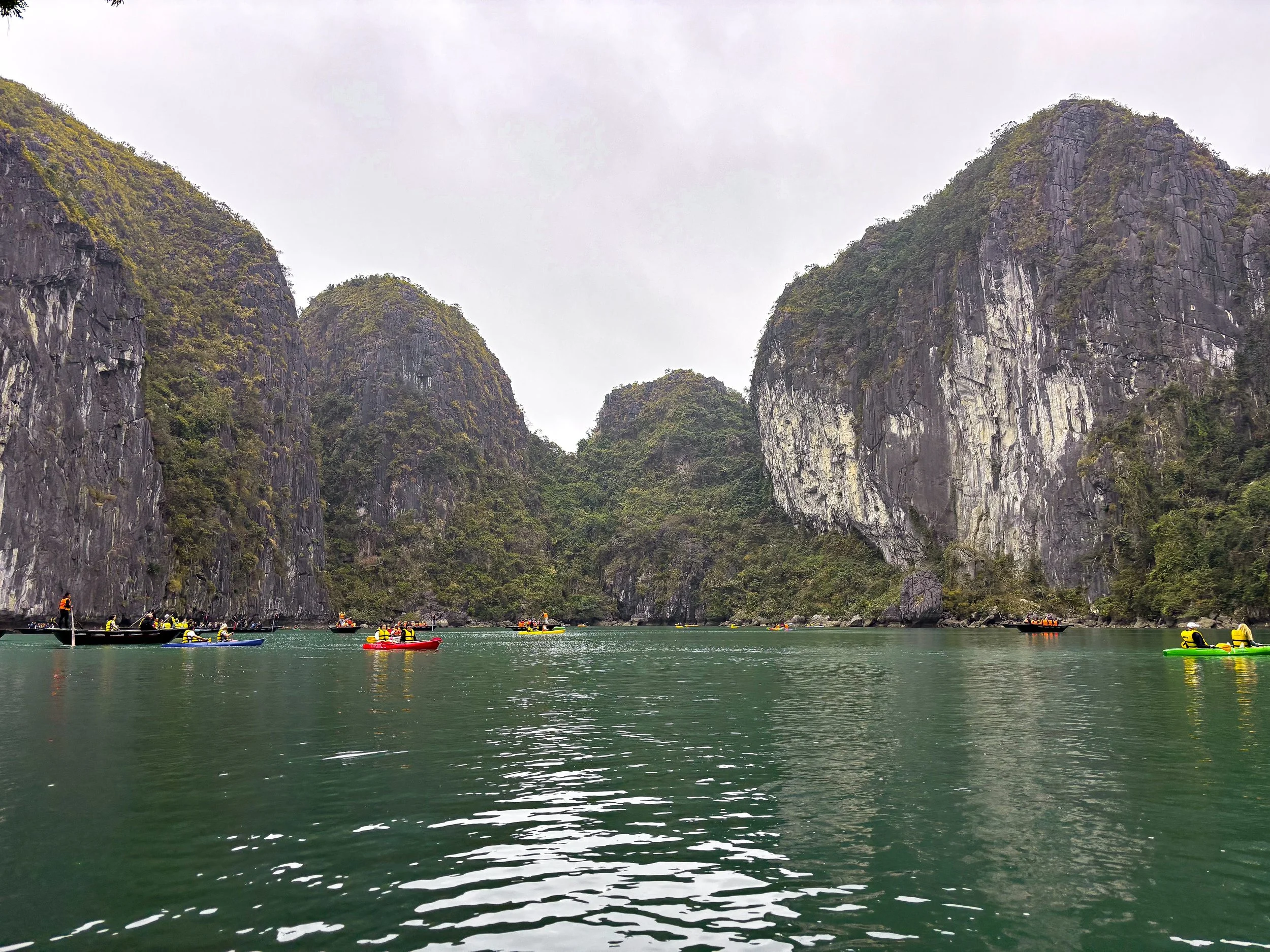
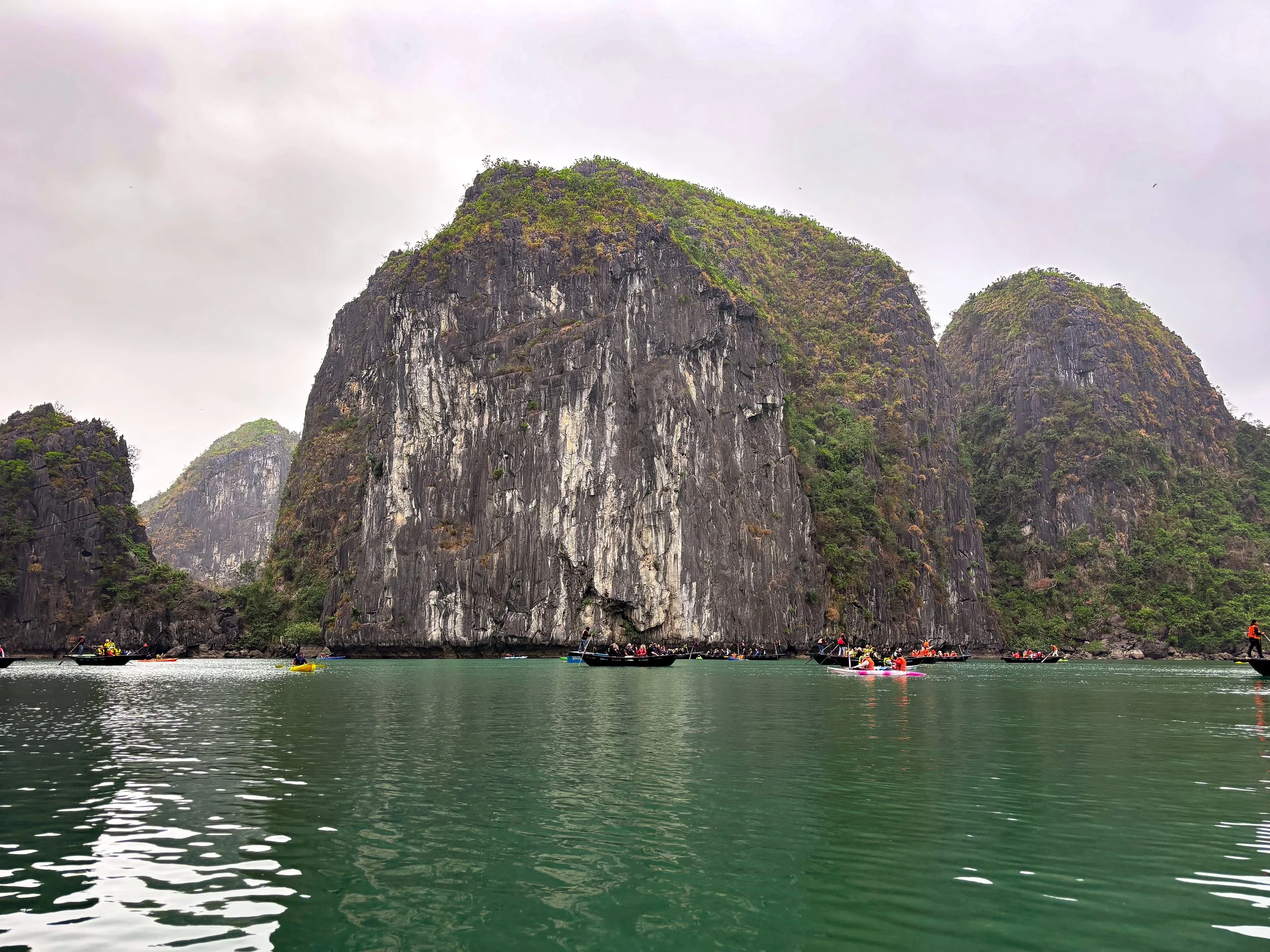
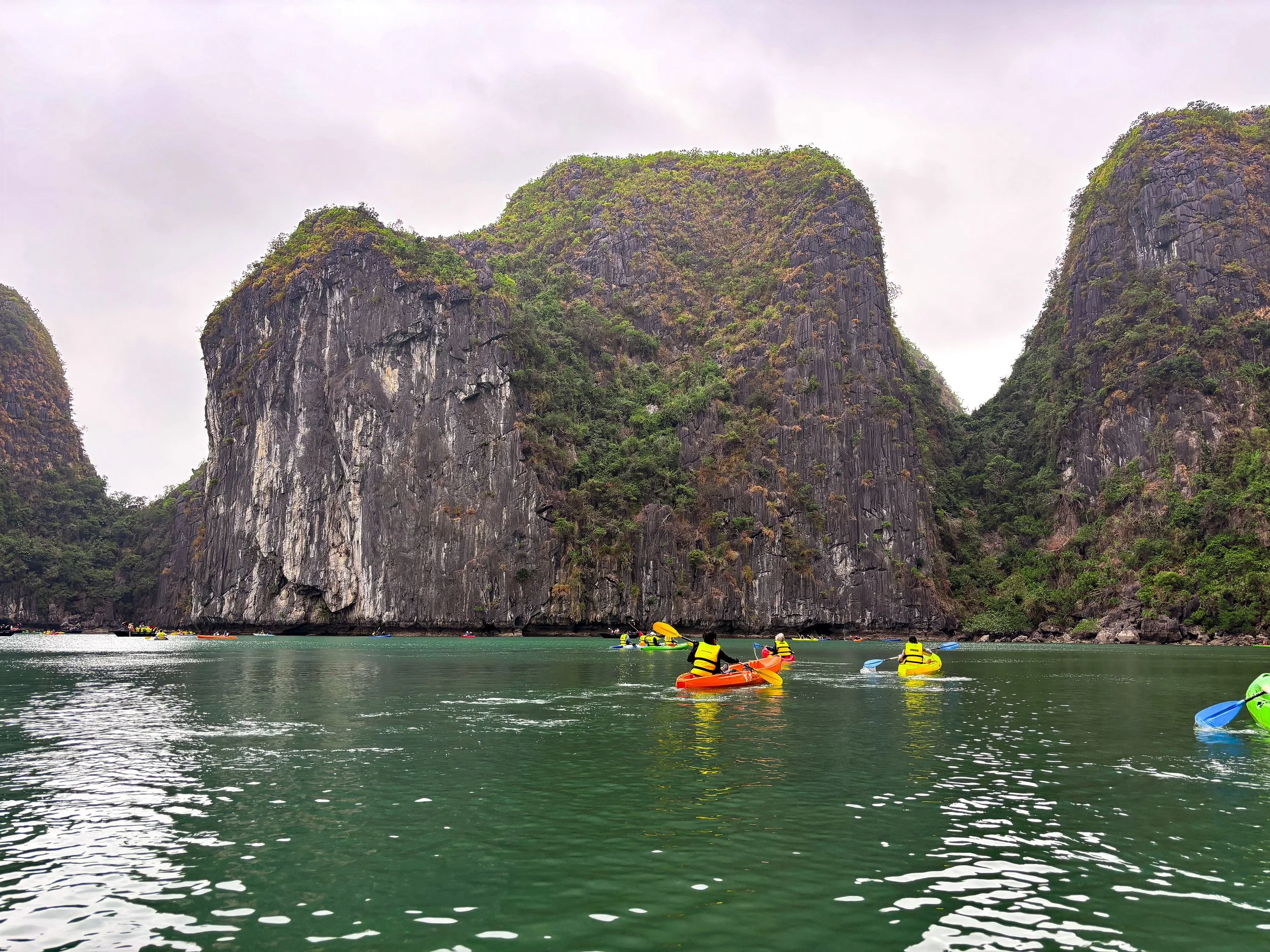
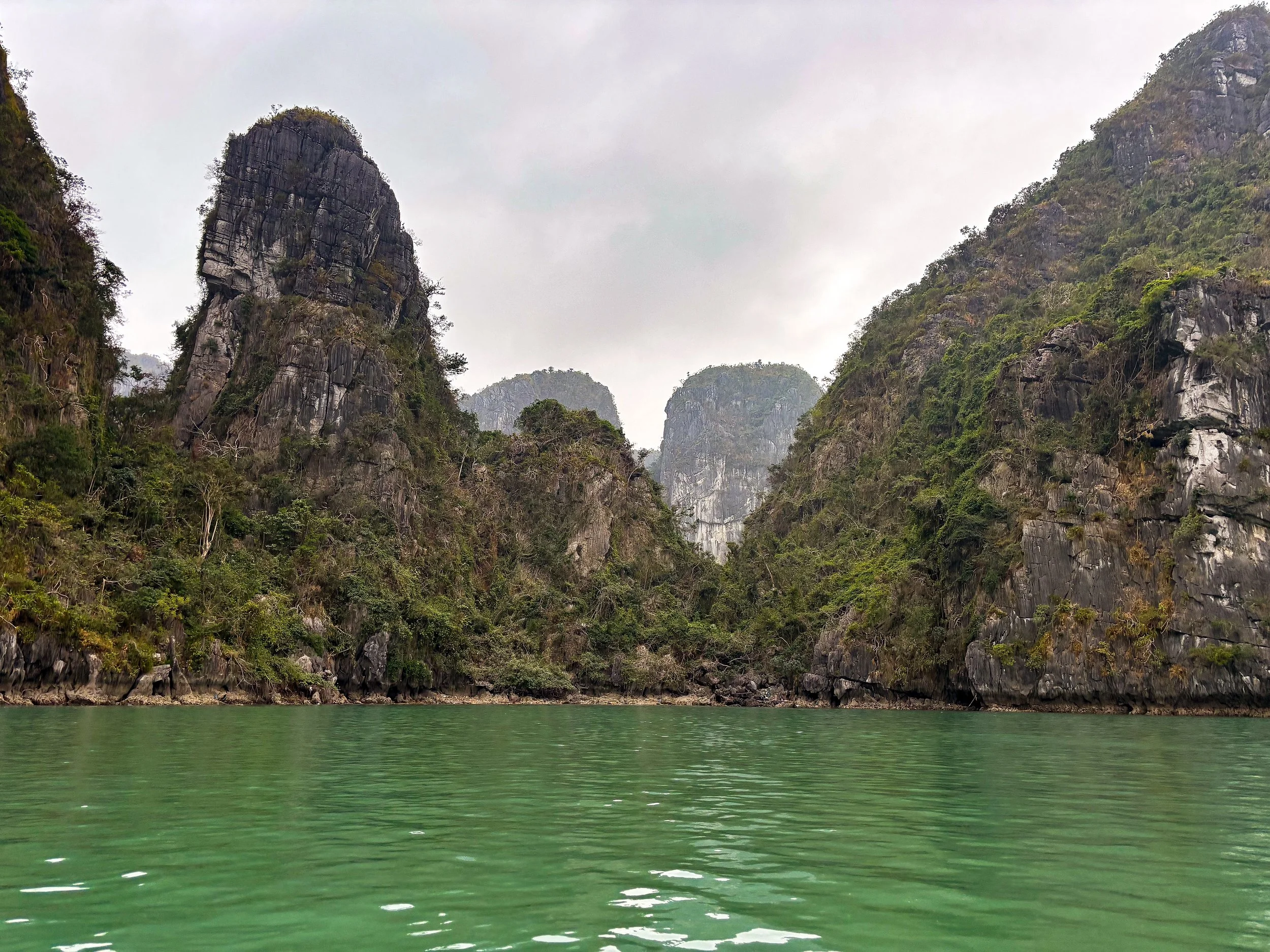

Hang Luon Cove. A cove in the middle of a karst island, only accessible through a shallow cave. We kayaked through the cave and around the cove where we were surrounded by steep cliffs and dark green water. We spotted wild monkeys sitting and running along the rocks.
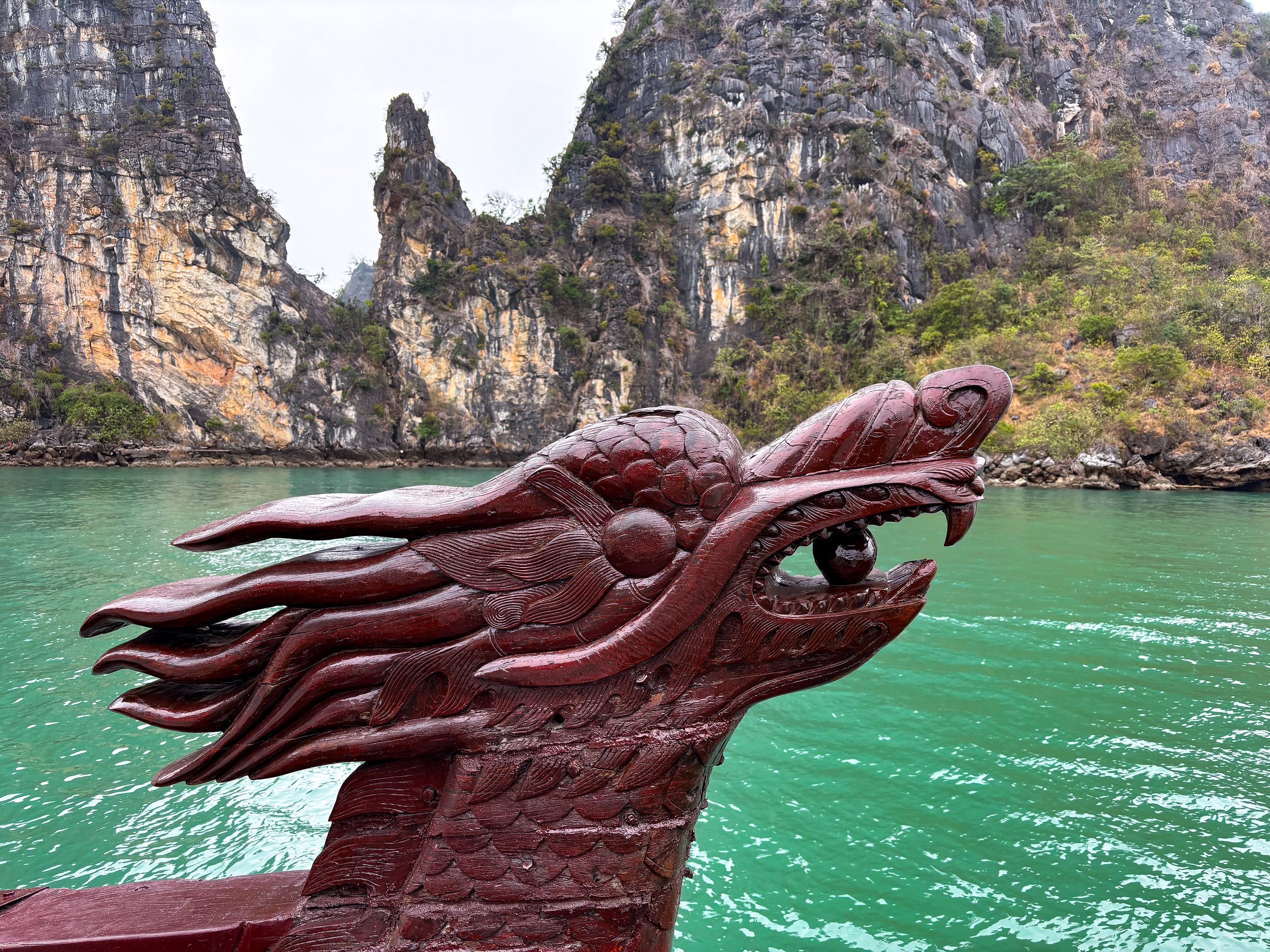
Le Journey. We booked an overnight tour of Ha Long Bay with a company called Le Journey. Their beautiful wooden ship has private cabins, a communal dining room and a rooftop deck and bar. The energetic crew kept us and other guests entertained with multiple excursions and activities like squid fishing, a cooking lesson and karaoke. The chef prepared delicious meals including local dishes like Ha Long Bay squid, jellyfish salad and fried rice. The tour included transportation between our stay in Hanoi and the Tuan Chau International Marina about 2 hours 30 minutes away.
Good to Know. The sights we visited are some of the most popular in Ha Long Bay. Many tour companies follow the same schedule meaning that hundreds of tourists will descend upon them at the same time. Though crowded, the nature is no less beautiful and time on the boat offers a quiet reprieve.
Vietnamese Street Food
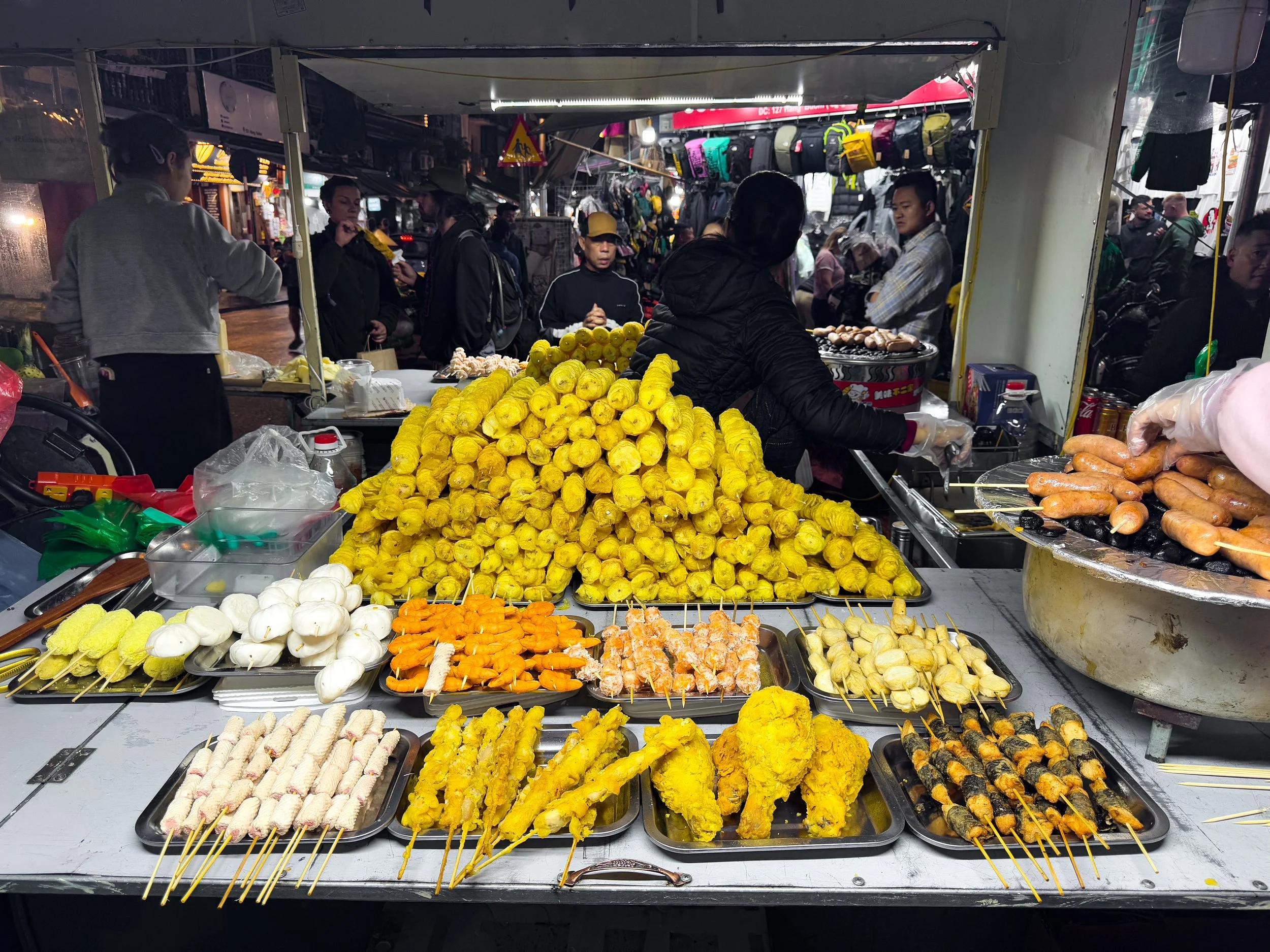
Street food is popular across Vietnam, especially at night markets. We tried several dishes and treats along the streets of Hanoi.
Keo Cu Đo (Rice Paper Candy). A molasses-like paste mixed with peanuts and sandwiched between two rice paper wafers.
Bao (Steamed Buns). Steamed bread rolls often shaped like lotus flower. A popular way to eat them is deep fried with a drizzle of sweetened condensed milk.
Banh Tieu (Vietnamese Donuts). Tiny dough balls covered in sesame seeds or sugar glazed and filled with mung bean paste.
Bánh Rán (Sesame Balls). Deep fried gelatinous rice balls filled with sweetened bean paste and coated in toasted sesame seeds.
Banh Dong Xu (Golden Coin Cake). A sweet pancake filled with mozzarella cheese and griddled in a mold of a Korean coin. It's a popular street food, often served hot for its long stringy cheese pull.
Khoai Tay Loc Xoay (Tornado Potatoes). Hand-cut slices of skewered and twice fried potatoes resembling a vortex. They’re often covered in mayo and sweet chili sauce.
Bach Tuoc Nuong (Grilled Octopus). Skewered and barbecued octopus legs cooked over a coal grill.
Mực Khô Nướng (Grilled Dried Squid). A whole dried squid cooked over a charcoal grill. It has a jerky-like texture and is served with sweet chili sauce.


Vietnamese Cuisine
Banh Mi. A beloved Vietnamese sandwich famed for its baguette style bread baked with a crunchy exterior and pillowy interior. It’s traditionally stuffed with cilantro, cucumber, carrots and meat or tofu.
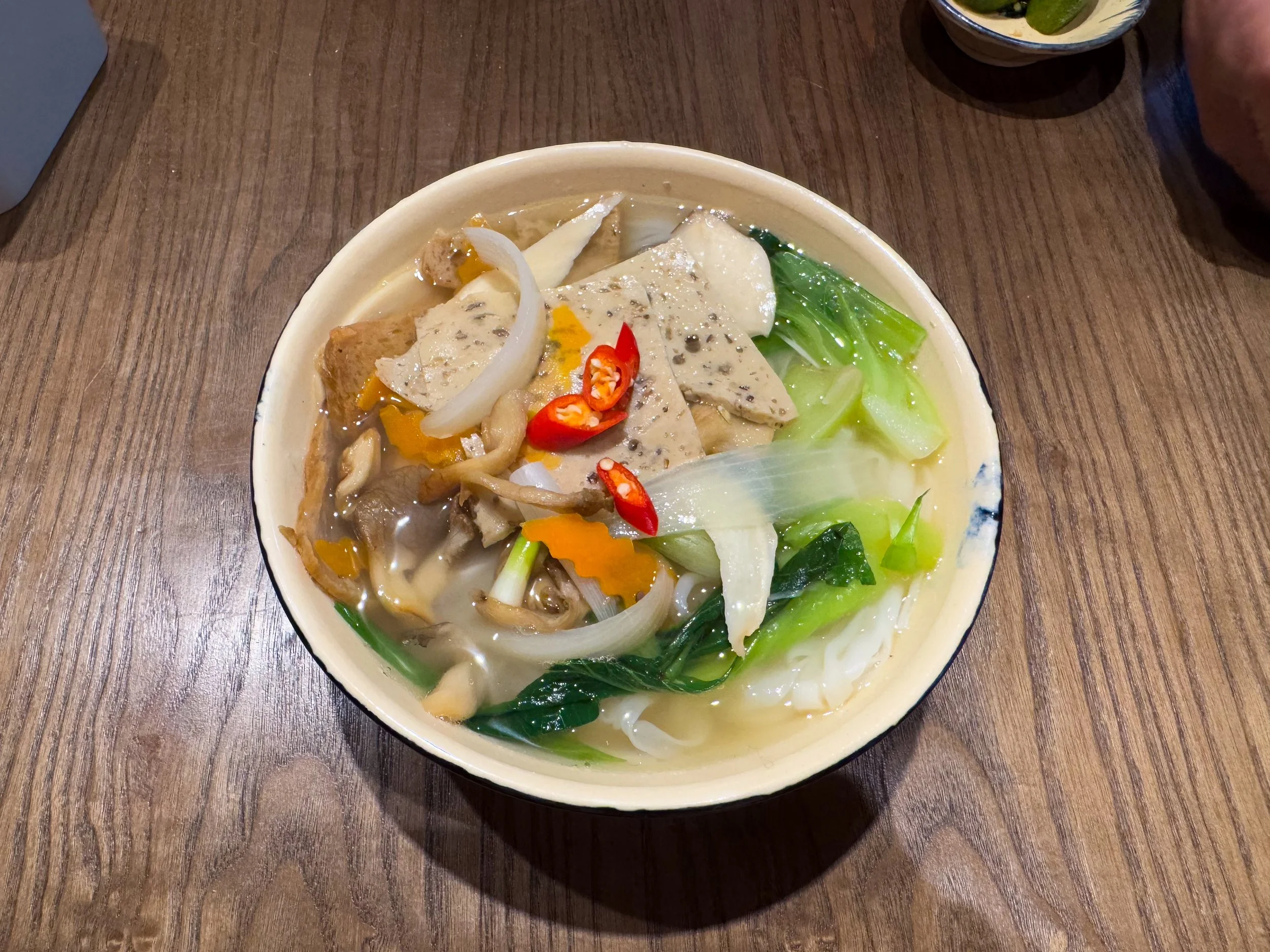
Pho. A Vietnamese soup made with a base of savory broth boiled with warm spices like star anise, cinnamon and ginger. It’s served with rice noodles, vegetables, meat or tofu.
Rice Noodles. Thin and sticky white noodles made from rice flour. They’re served in many dishes or on the side.
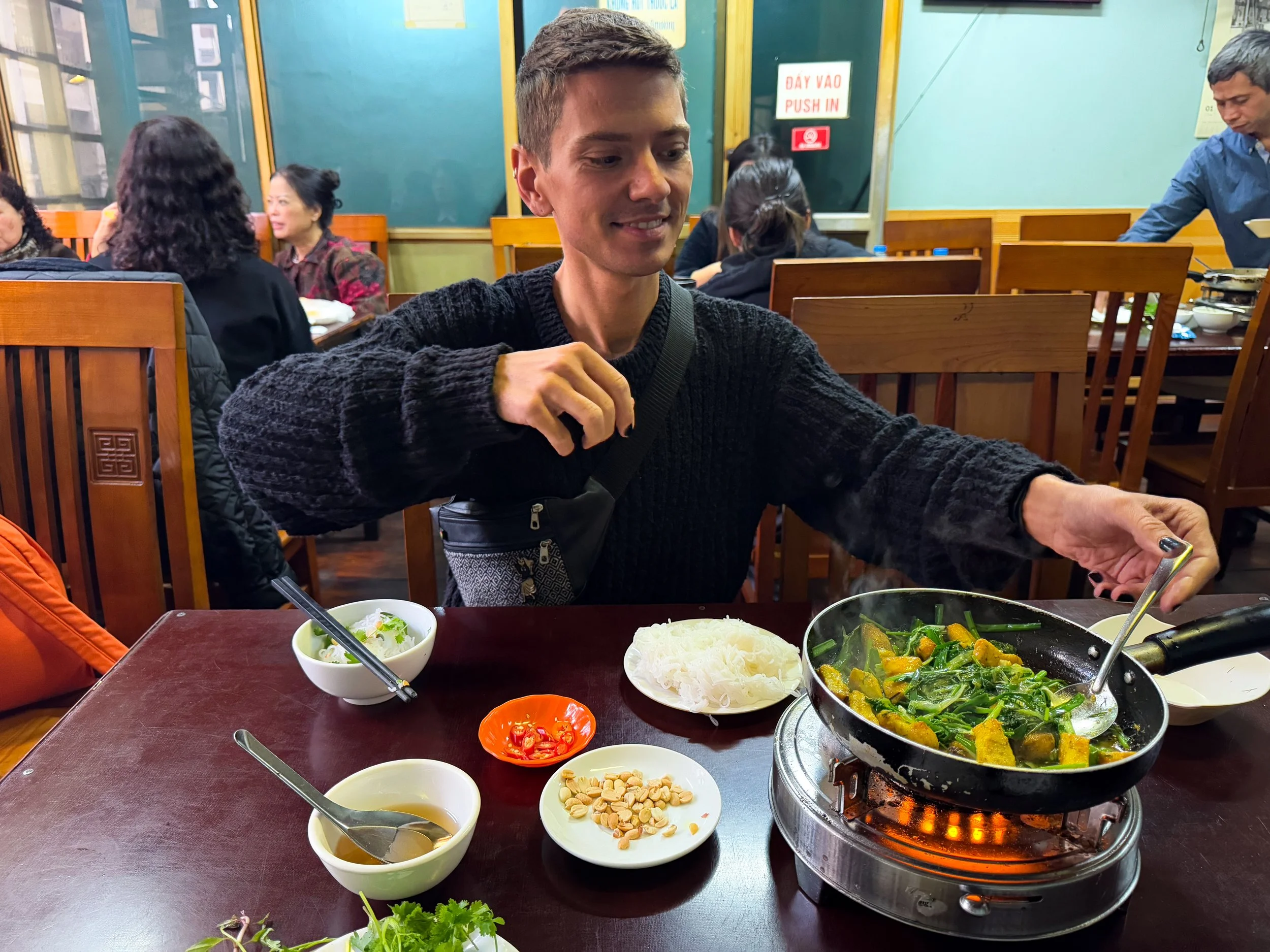
Cha Ca. A beloved local dish is made from snakehead fish marinated in turmeric and galangal and sautéed with a mixture of fresh herbs including turmeric, cilantro, dill, spring onions and garlic. It’s served alongside rice noodles, peanuts and chili peppers.
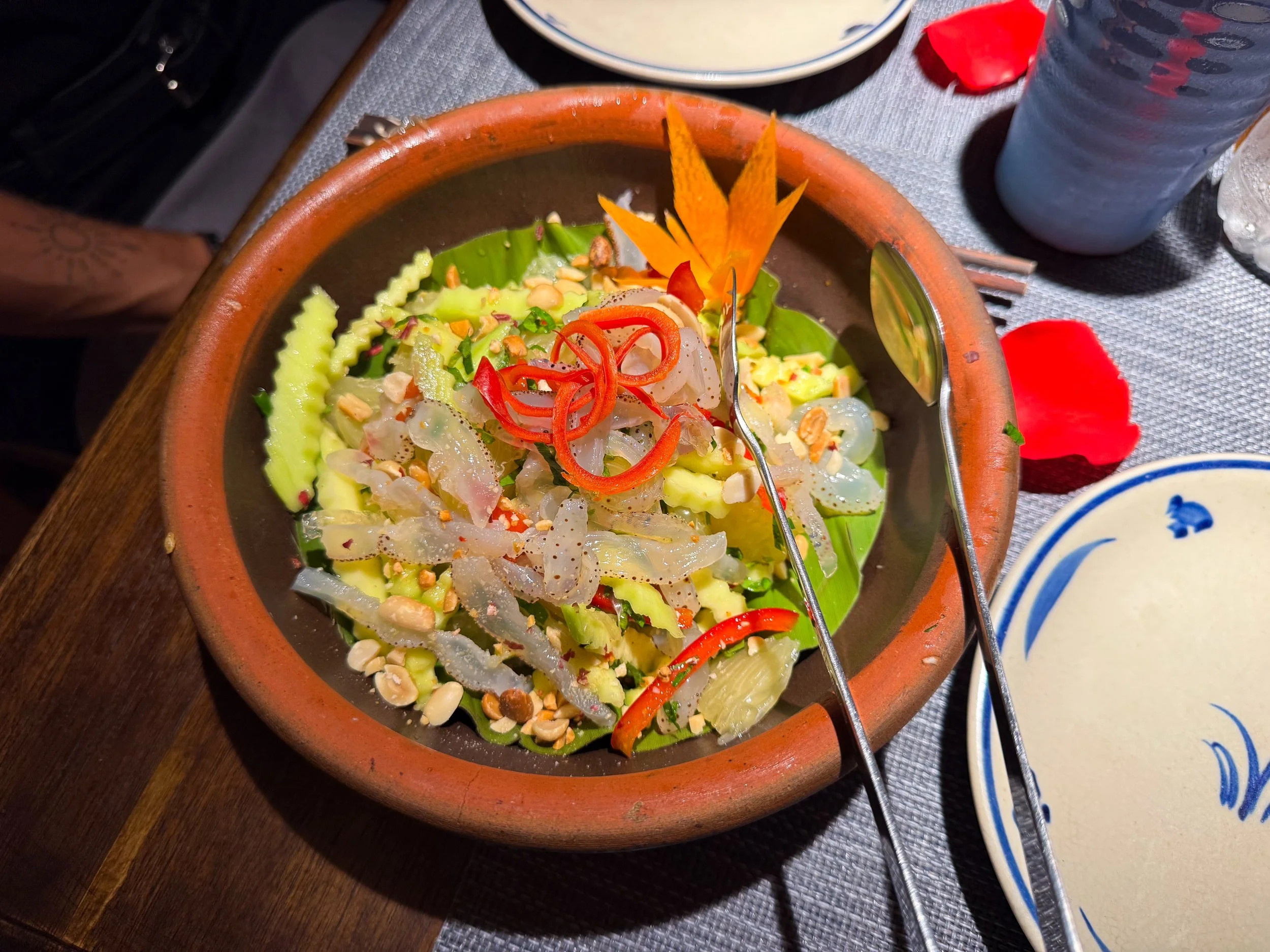
Jellyfish Salad. A salad made from thinly sliced strips of jellyfish mixed with pickled carrots, cucumber and onion in a soy sauce and sesame oil mixture. It has a characteristically crunchy texture and umami forward taste.
Vietnamese Coffee
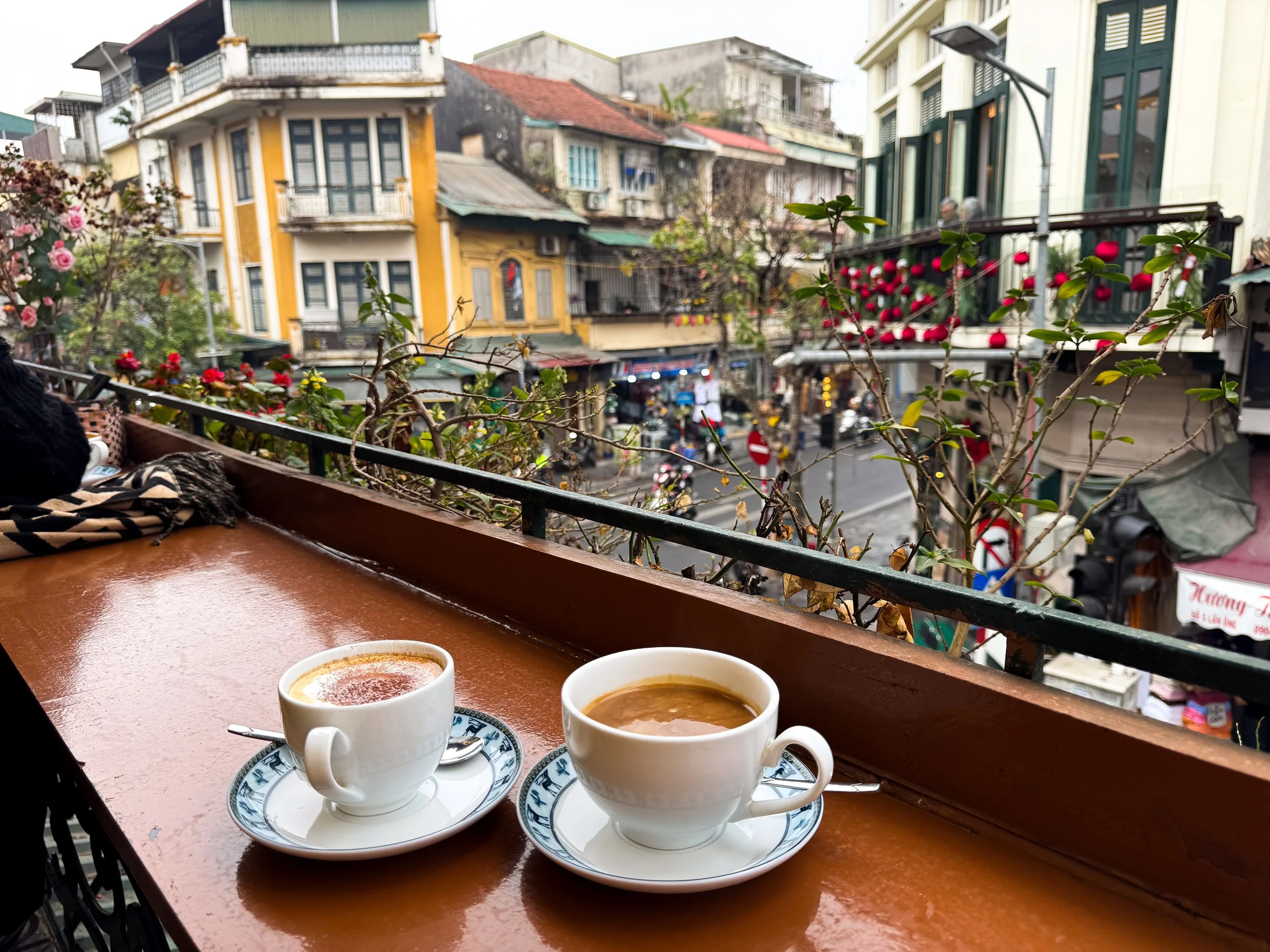
Coffee culture is a popular part of daily life in Vietnam. Street cafes with tiny folding chairs and stackable plastic furnishings commonly spill out onto sidewalks. Groups of locals sit around sipping on their preferred style of coffee often alongside a glass of hot green tea. Typical coffees are:
Vietnamese Coffee. The most popular preparation style, mixed with sweetened condensed milk and served hot or iced.
Egg Coffee. A creamy coffee mixed with whipped egg yolk and sweetened condensed milk.
Salt Coffee. A sweet and savory coffee mixed with salted cream and often dusted in cocoa powder.
Coconut Coffee. A thick and sweet coffee mixed with coconut cream.
Three in One. An instant coffee mixture made with coffee crystals, powdered cream and sugar.
Places to Eat and Drink
Lan Ong Restaurant. An elevated restaurant serving contemporary adaptations of Vietnamese cuisine. Dishes are beautifully presented and the atmosphere is warm and inviting. Try the Cha Ca served in a clay pot over a wood burning flame, the jellyfish salad made with green papaya & grapefruit, the seafood curry made with prawns & crab claws and for dessert, the sweet potato creme brûlée.
Cha Ca La Vong. An extremely local restaurant on the second floor of a historic home, serving Hanoi’s famed dish Cha Ca. The cook brings out a personal grill, pan with the sizzling fish and bowl of herbs. It’s all sautéed together until blanched and aromatic.
Coffee A. A café on a corner in the old quarter with classic Vietnamese coffees. Sit at the wrap around balcony on the second floor overlooking the chaotic street and intersection below.
Hoangs. A restaurant with Vietnamese and South East Asian rice and noodles dishes. Try the vegetable fried rice and stir fried rice noodles with seafood.
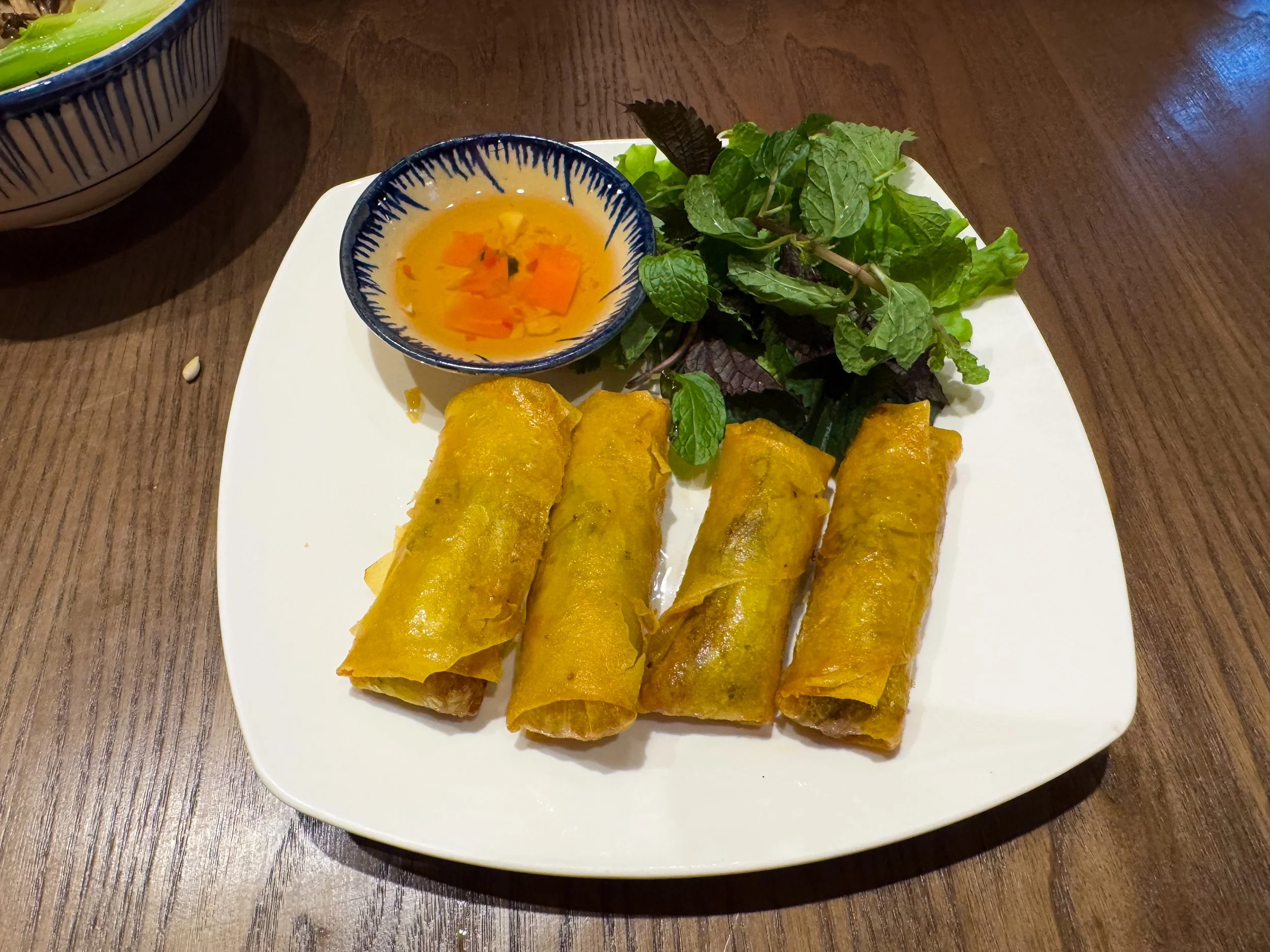
Tet Restaurant. A vegetarian Vietnamese restaurant with national and local dishes like pho and fried spring rolls made with fresh vegetables and house made tempe.
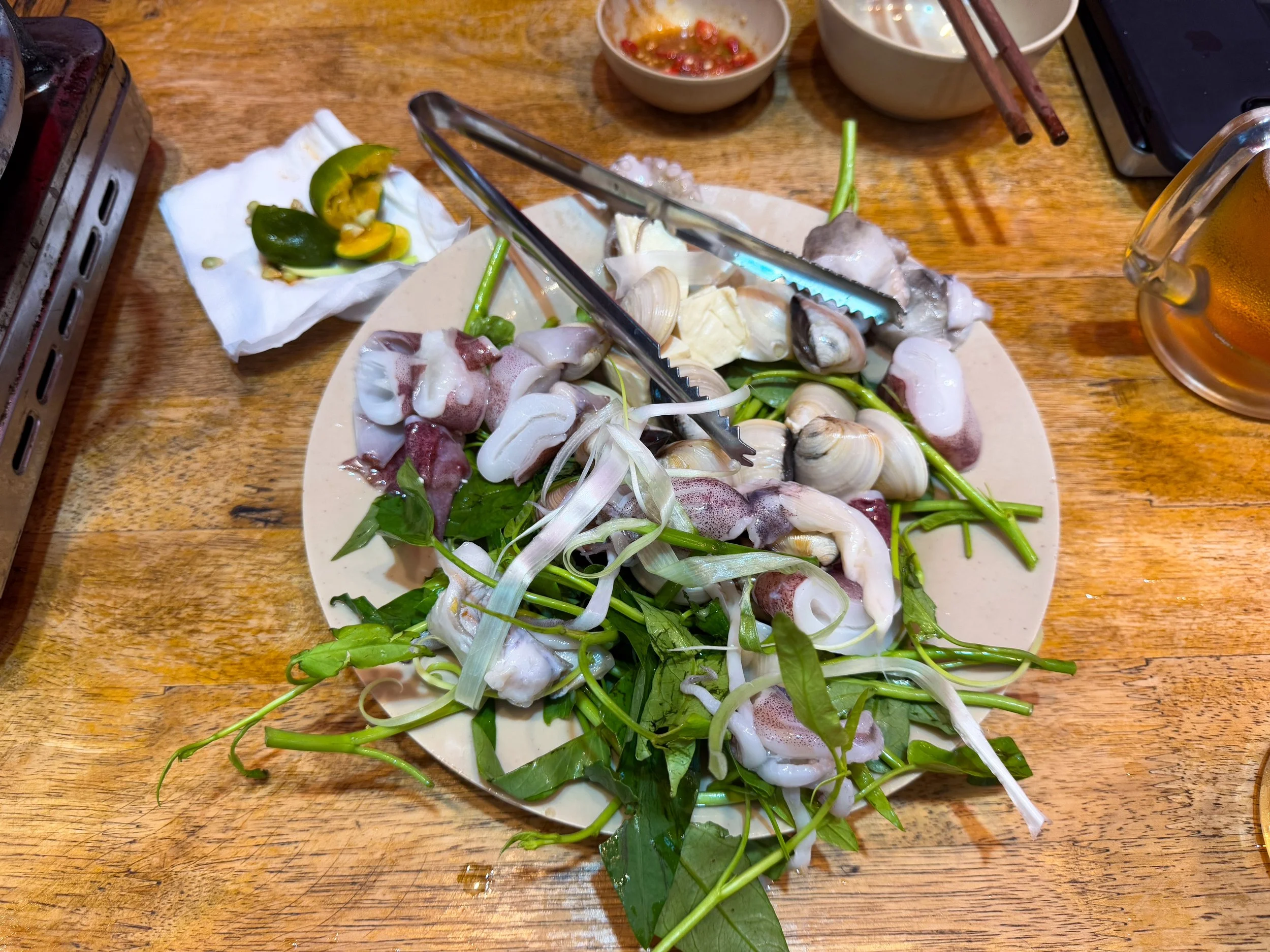
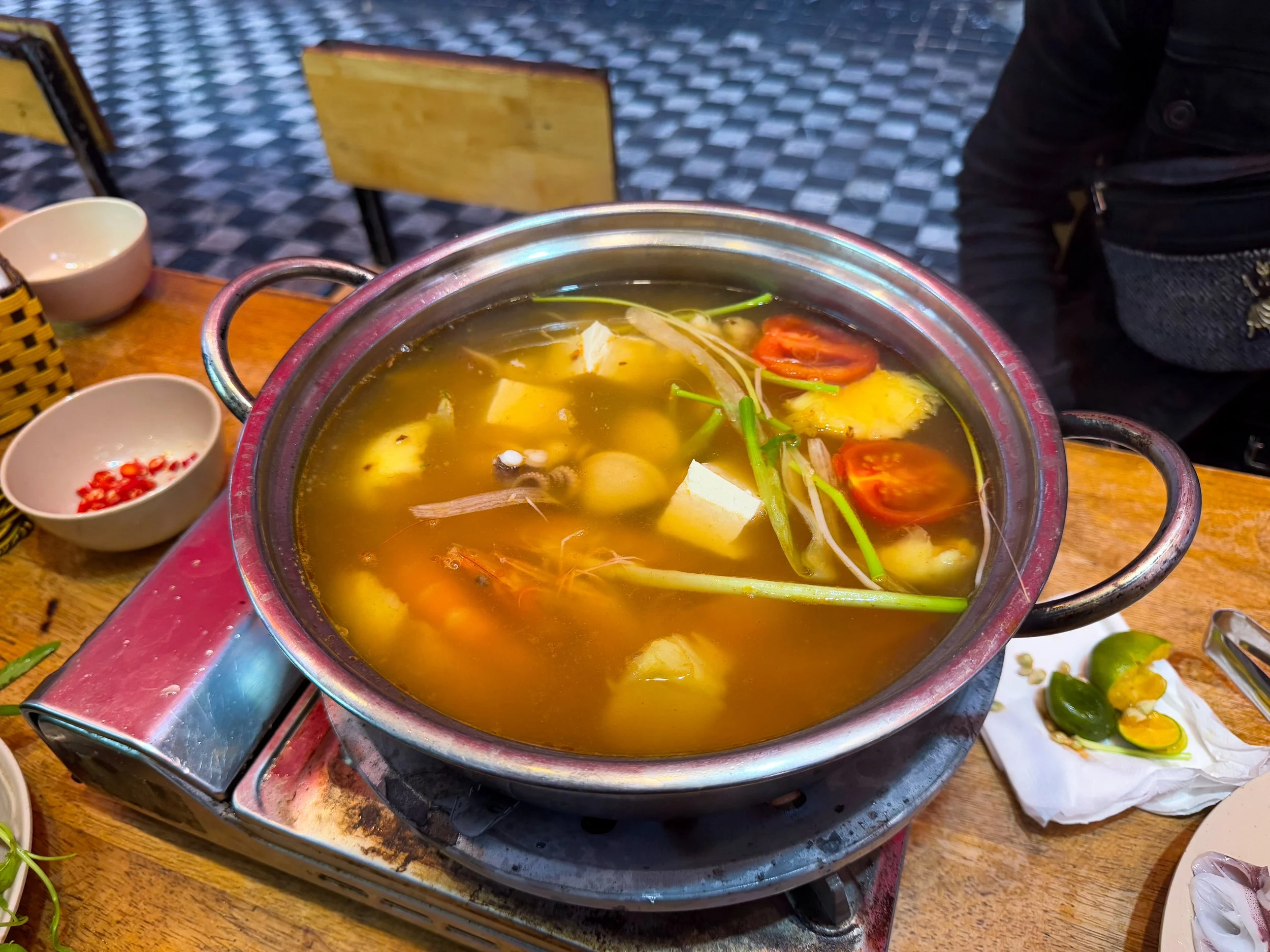
Com Tam Lam Sai Ghenh. An unassuming restaurant on the Tong Duy Tan Food Street with Vietnamese dishes and hot pot. We shared a seafood hot pot made in a boiling pot of savory broth with a mixture of fresh clams, squid, prawns, tofu, greens and ramen.
Kem Dua Coffee (Tower Cafe). A narrow multi-floor café with Vietnamese coffees and views of Ho Tay Lake. After climbing 6 floors for a seat, we nicknamed it tower café.
Givral French Bakery. A chain bakery with French patisserie. We stopped in for a slice of pineapple roll cake and a miniature chantilly cream bouche.
Ta Ta Café. A café with artisan coffees hidden on the second floor of a dilapidated French colonial building. A giant tree grows out of its yellow painted facade while a sign reading “coffee bar” leads up a rickety wooden staircase to its entrance.
Where to Stay
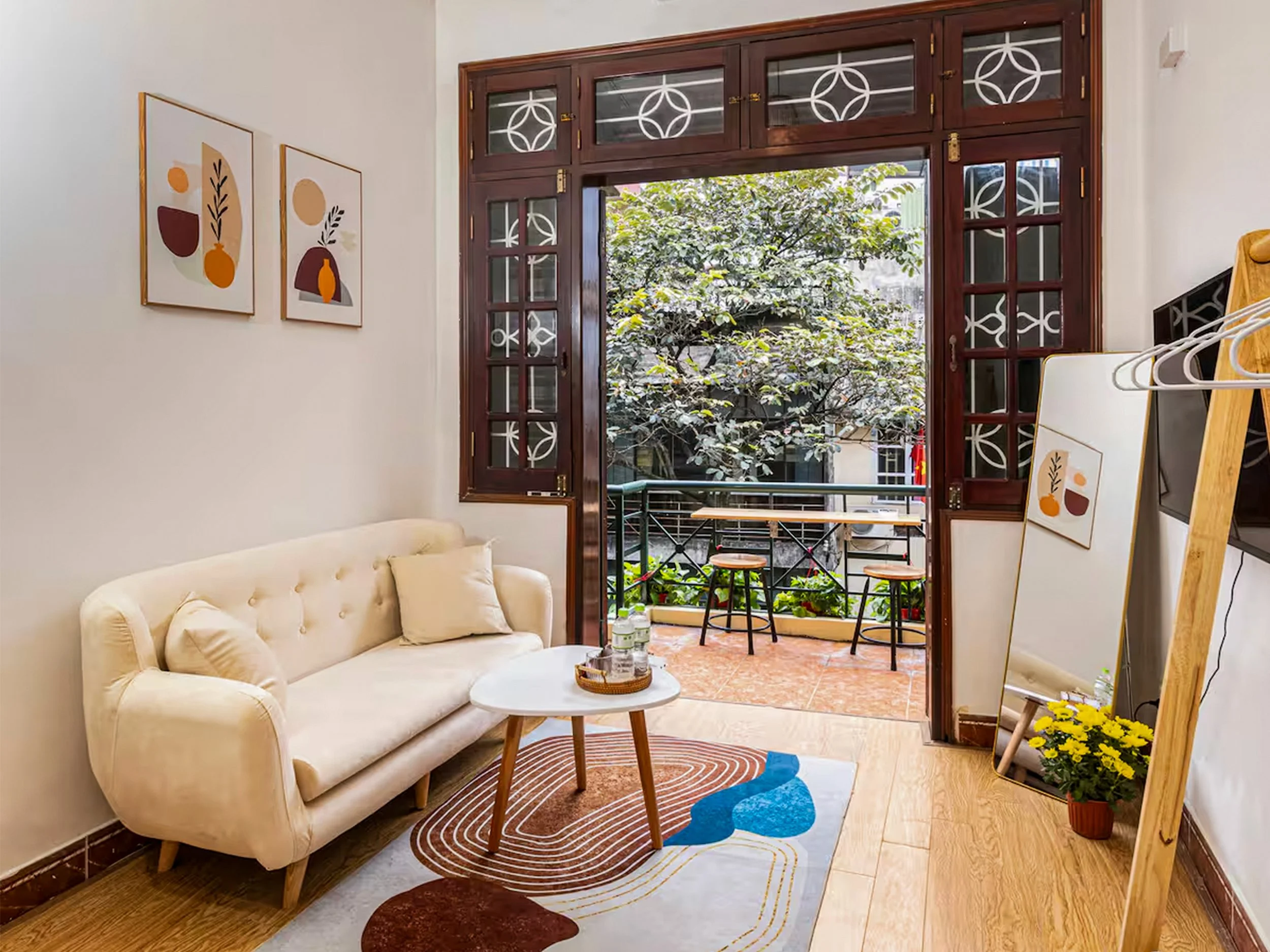
We stayed on the second floor of an Airbnb in the Old Quarter. It’s near many of the famous streets, central sights, sidewalk cafes and bars we visited. The room was spacious with a balcony overlooking the street, a shared kitchen and roof top washer/dryer.
Getting Around
Grab. A taxi hailing app similar to Uber or Lyft. Taxis were readily available on the app and cheap to get around the city or from the airport.
On Foot. The city is walkable however sidewalks are often blocked by street restaurants, parked scooters and merchandise from shops. Be cautious when crossing roads, watching for cars and scooters.
Location Specifics
Cash vs. Card. Most businesses and vendors are cash only. Clothing shops often accept cards with a 1-3% fee.
Vegetarian Food. Vegetarian dishes are popular and easy to spot on menus. The word “Chay” after any dish means it’s vegetarian.
Safety. Vietnam is generally a safe country to visit. The city of Hanoi is no exception.
LGBTQ+ Safety. Vietnamese are openly welcoming of LGBTQ+ travelers. When noticing our wedding rings, local women would ask how long we’ve been married and call us a happy couple.
Language. Vietnamese and English are widely spoken, seen on street signs and restaurant menus across the country. That said, it’s still good to know a few Vietnamese phrases.
Hello = Xin chào (Sing-Chow)
Thank you = Cảm ơn (Com-Un)
Good bye = Tạm biệt (Tam-Be-Et)
See you later = Hẹn gặp lại (Hen-Gap-Lie)
Local Customs
Take shoes off when visiting homes and most temples.
Dress modestly when visiting temples. No hats, shorts or sleeveless shirts are allowed.
Hand things to people with two hands, especially cash, credit cards or the bill.
Avoid pointing at anything or anyone using an index finger. Use your full hand instead.
Showing the bottom of your feet or shoe to someone is considered extremely rude or offensive, especially at temples.
When to Visit
There really is no “low” season in Vietnam. It’s a popular destination at all times of year. We visited in mid February, after the “high” season which runs from November to January. The weather was chilly, cloudy and rainy. According to several locals, this was atypical for this time of year. Thankfully it was not a deterrent to enjoying our time in this beautiful city.
Elsewhere in Vietnam
From Hanoi's historic Old Quarter and street food culture to the karst landscapes of Ninh Binh, lantern-lit Hoi An and vibrant Saigon, continue exploring Vietnam through these travel guides:
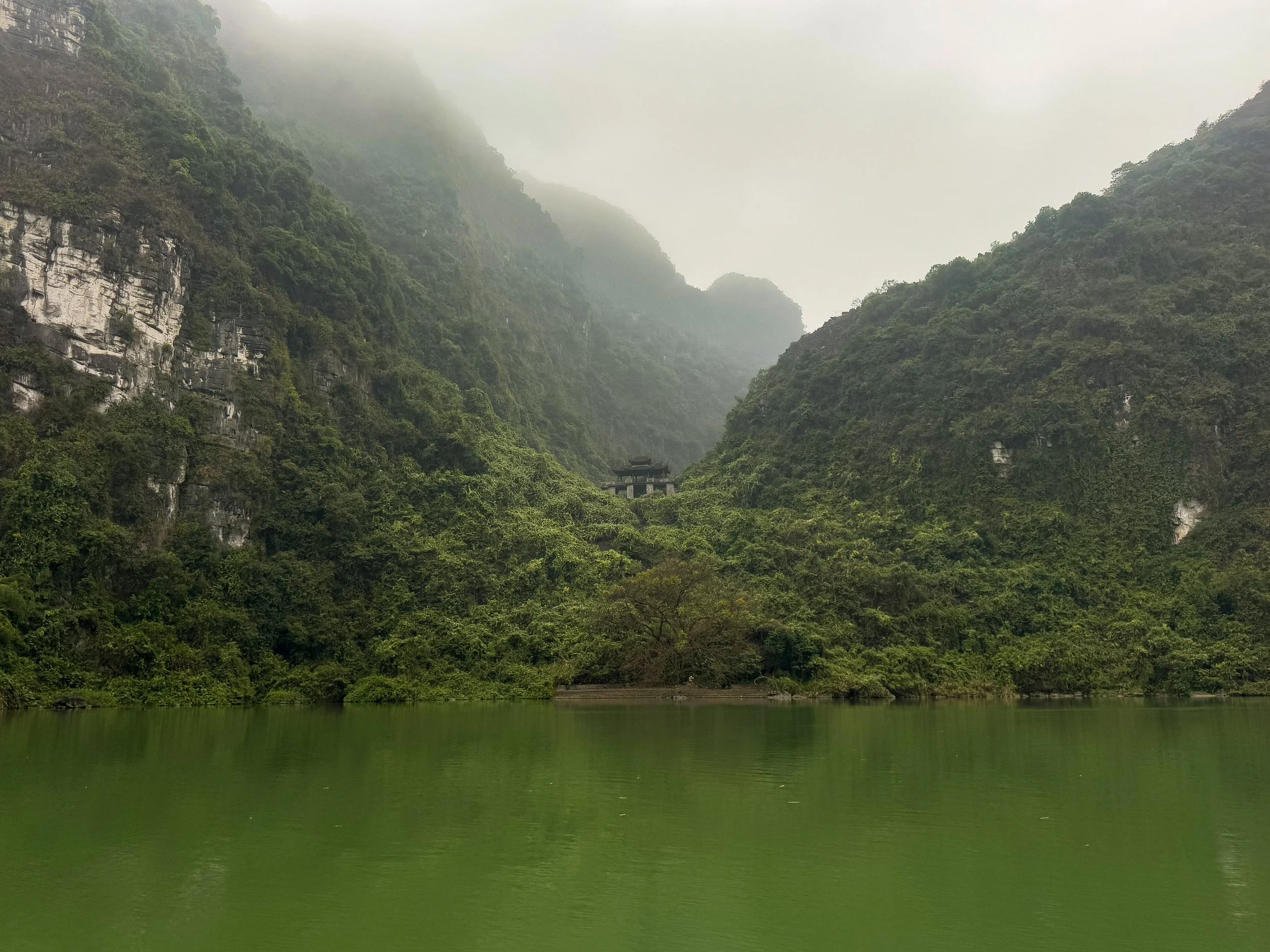
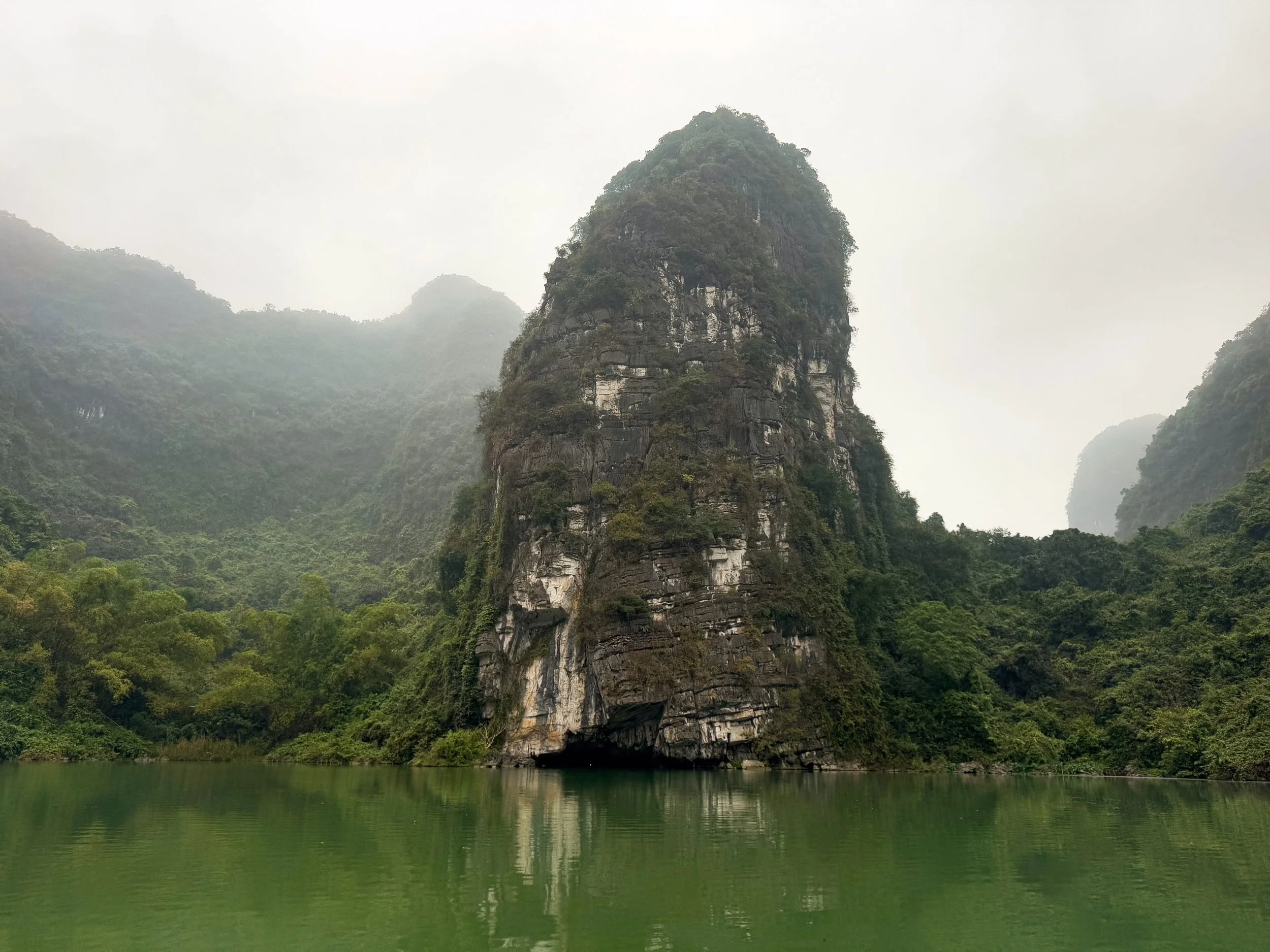
Ninh Binh Travel Guide: Trang An, Karst Landscapes & Ancient Temples. Drift through Ninh Binh where winding rivers, towering karst landscapes, rice paddies and imperial temples reveal Vietnam's timeless beauty and ancient history.
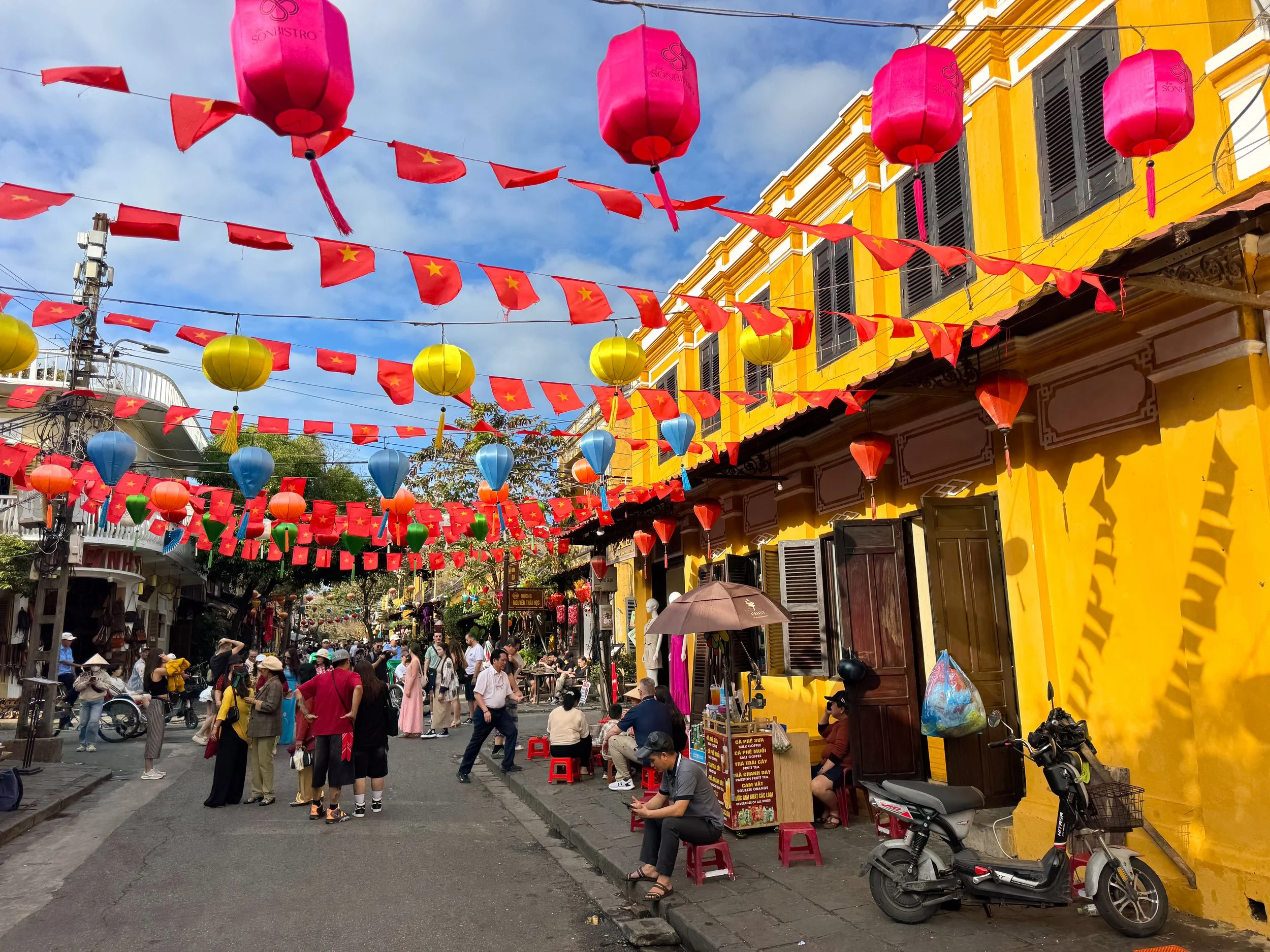
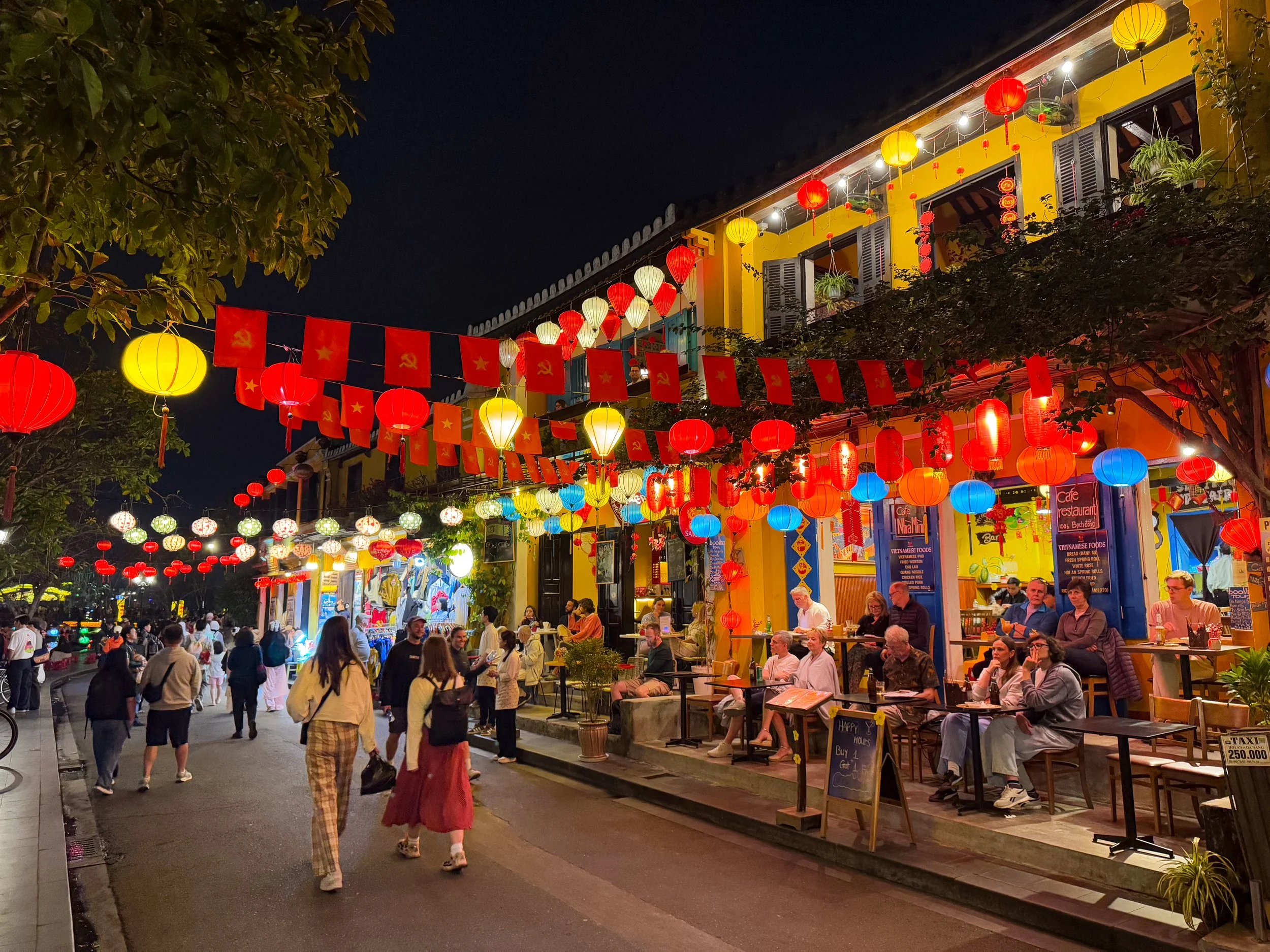
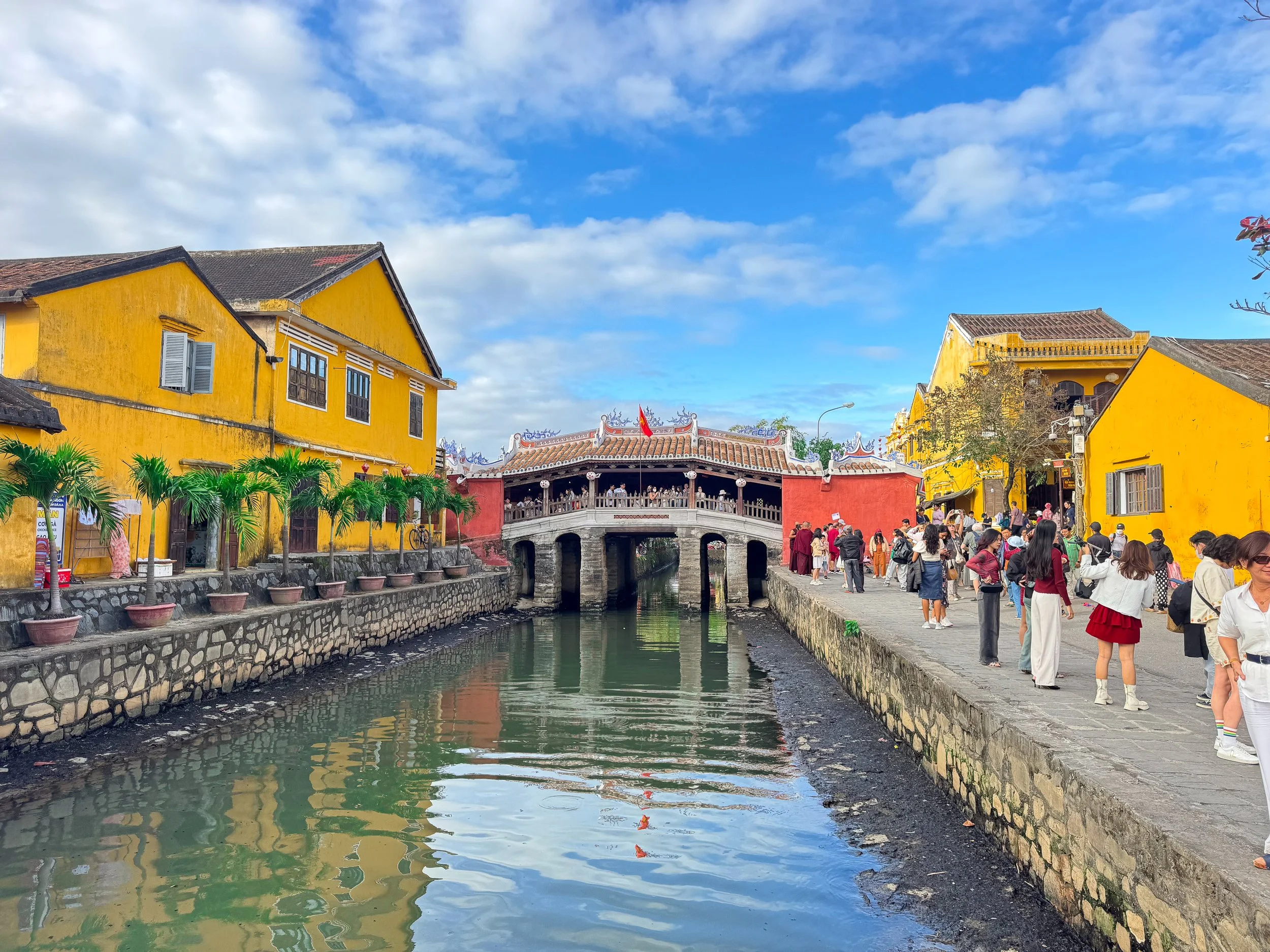
Hoi An Travel Guide: Ancient Town, Lanterns & Vietnamese Street Food. Wander through Hoi An's ancient town where glowing lanterns, bustling markets, historic temples & Vietnamese street food preserve centuries of tradition.
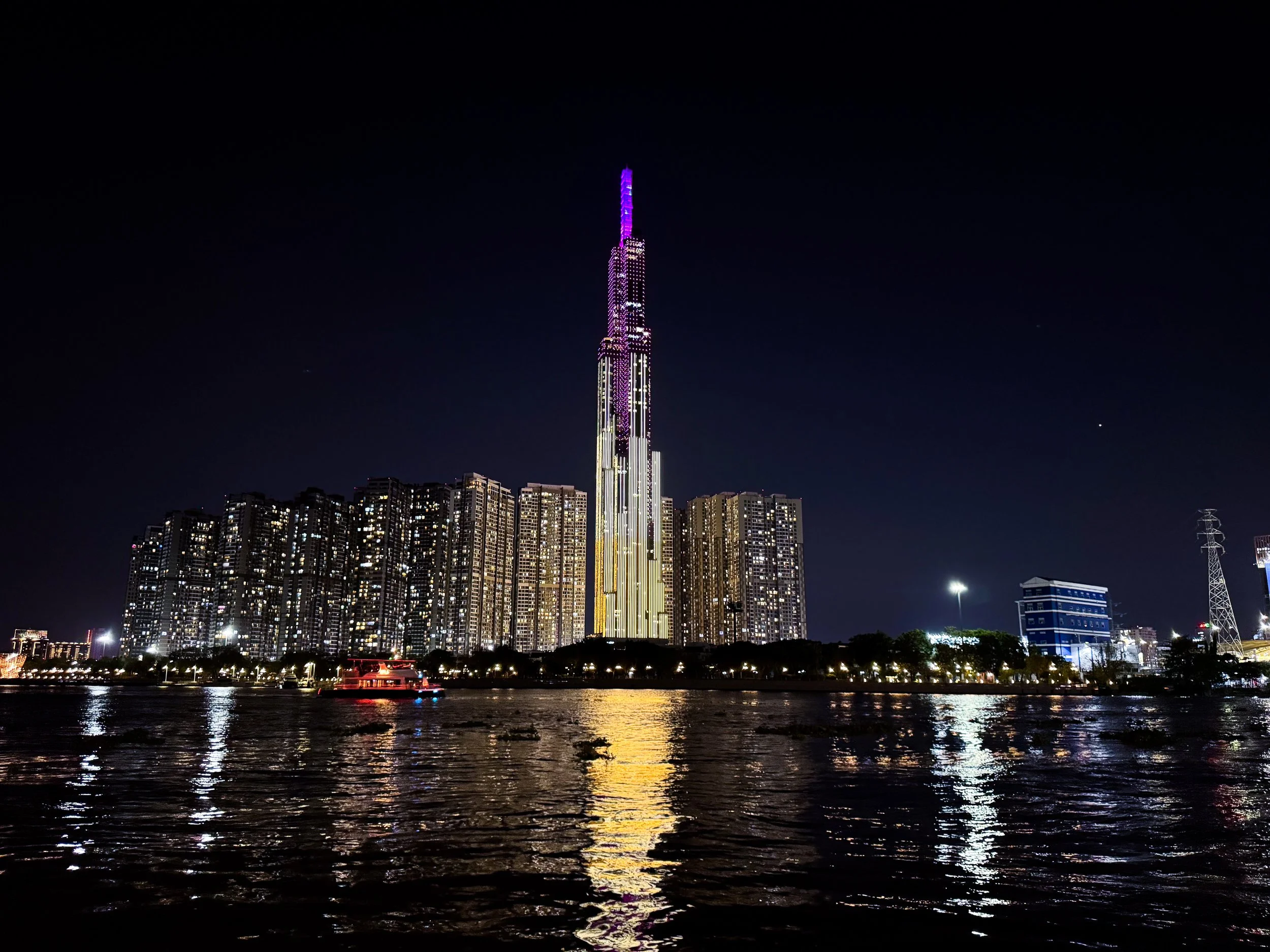
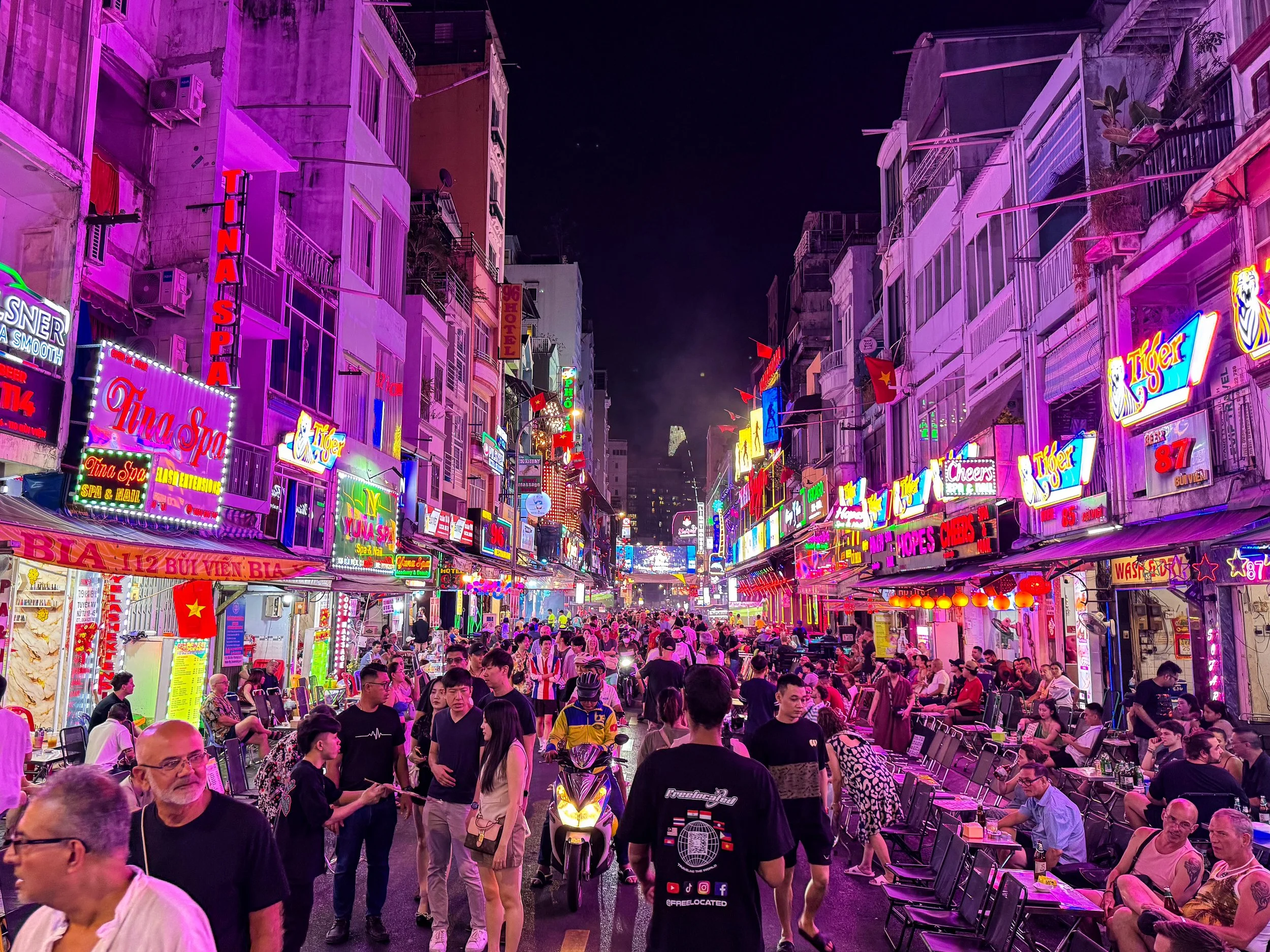
Saigon Travel Guide: Markets, Nightlife & Vietnamese Culture. Experience Saigon where bustling markets, vibrant nightlife, historic landmarks, neon lit skyscrapers and street food stalls bring modern Vietnam to life.
For Next Time…
Vietnam is a massive country with so much breathtaking nature. When we return, we have several sights in the north and middle of the country we hope to visit.
Camping inside Hang Son Doong. A massive cave system with underground campsites, rivers and hiking trails. It can be expensive and difficult to reach but is top of our list for our next trip to Vietnam.
Bai Tu Long Bay. An alternate to Ha Long Bay with many similar rock formations and islands. It’s said to be less busy and equally if not more beautiful.
Mu Cang Chai Rice Terrace. Sprawling rice terraces in a mountainous valley about 300km northwest of Hanoi.
Ban Gioc Waterfalls. A series of cascading waterfalls in the jungle on the border of Vietnam and China.