Munich & Bavaria
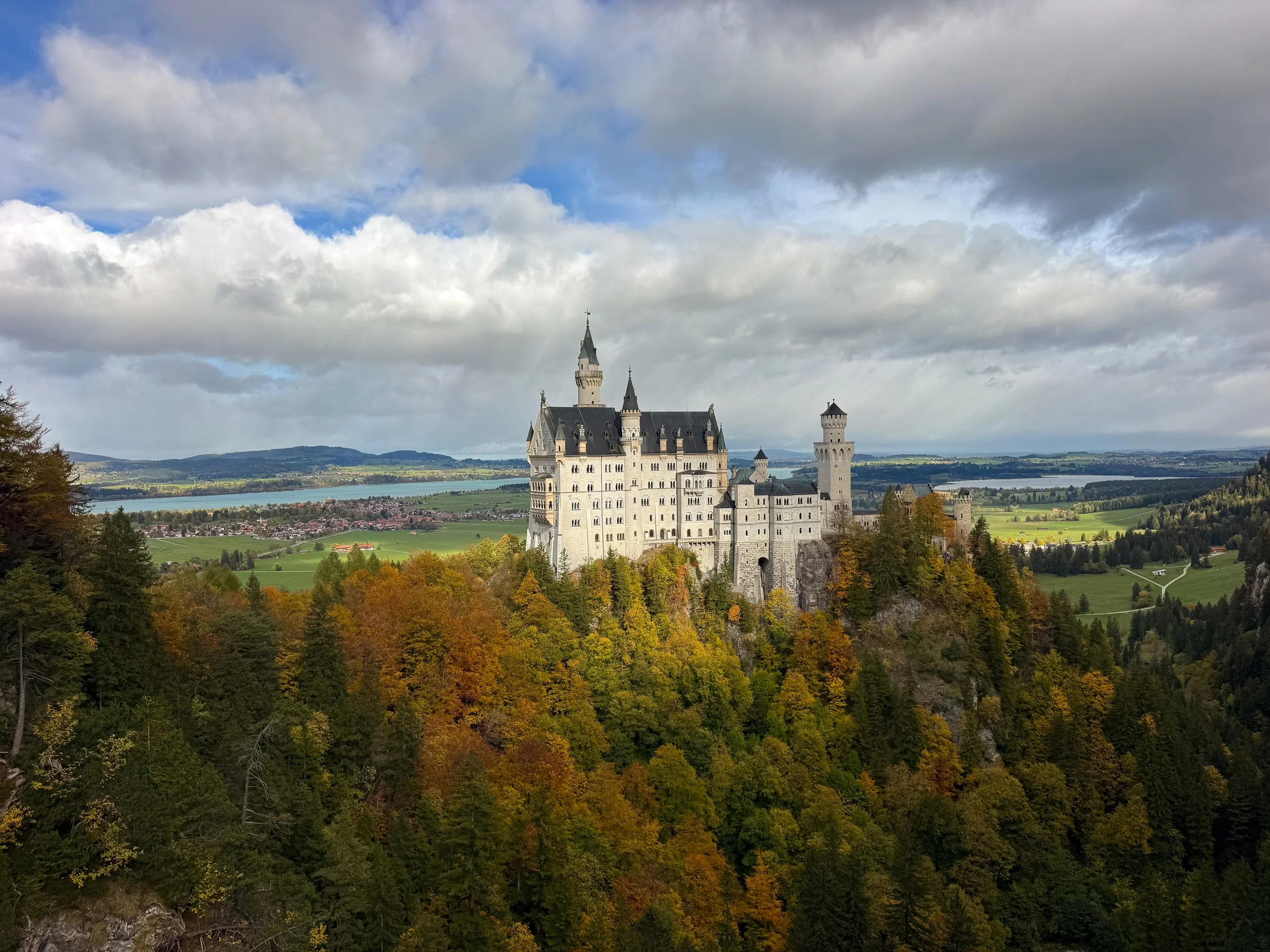
Munich, the capital of Bavaria, is a city best explored slowly, over pretzels and beer in historic beer gardens or clinking glasses with locals in bustling beer halls. Tour the lavish rooms and crown jewels of the Residenz, the former palace of Bavaria’s royal family, then dive deeper into the city’s history at its world-class museums. Take in the city from the tops of its church spires and Gothic towers, and watch the theatrical Glockenspiel reenact scenes from Munich’s past. Browse farmers markets and seasonal festivals for local foods, clothing and antiques. Beyond the city, day trips lead to the Alpine foothills, ablaze with autumn color and moody landscapes. From the Autobahn to the Romantic Road, the journey winds through half timbered Bavarian towns like Füssen to fairytale castles like Neuschwanstein.
Neighborhoods & Streets
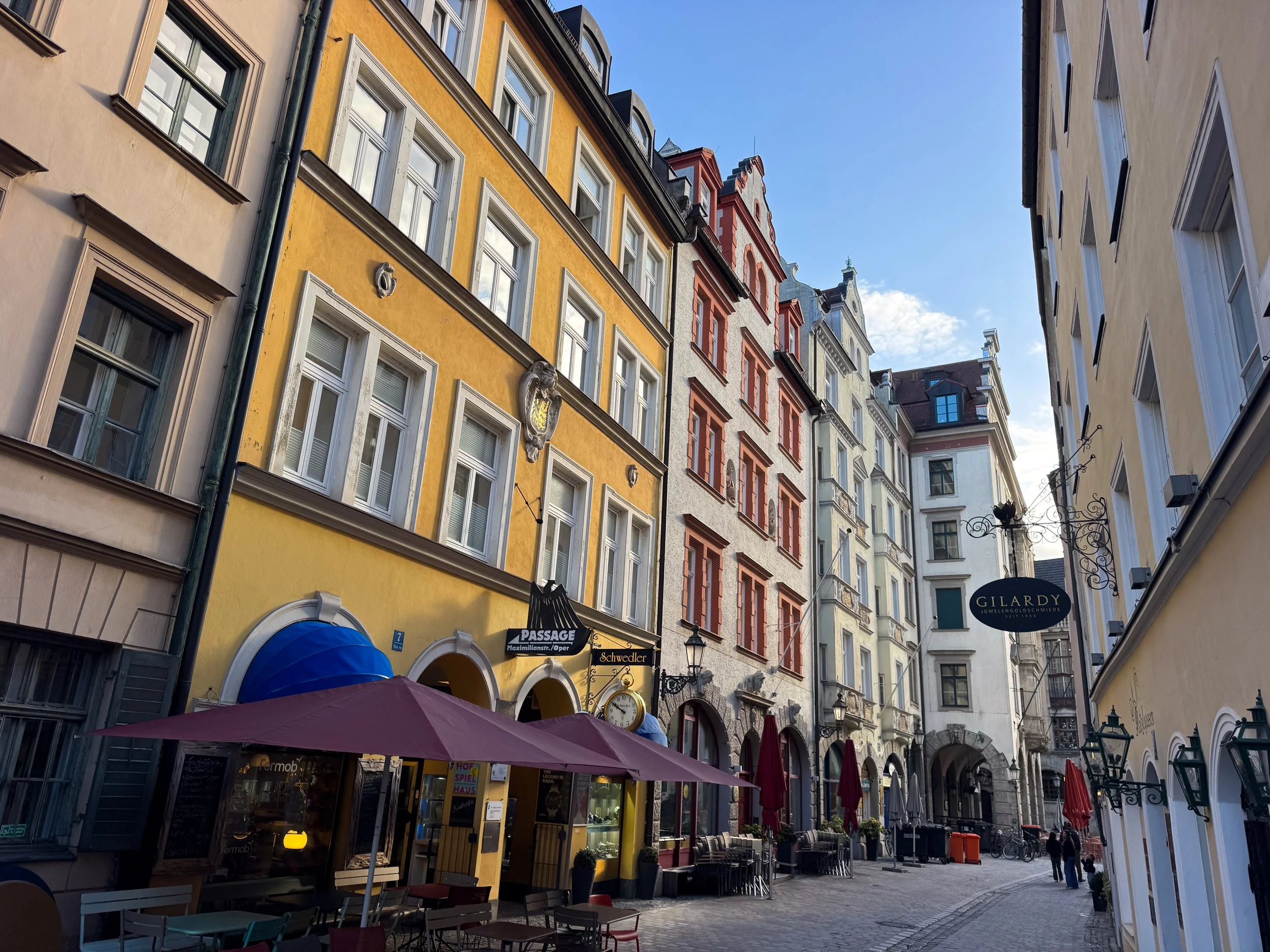
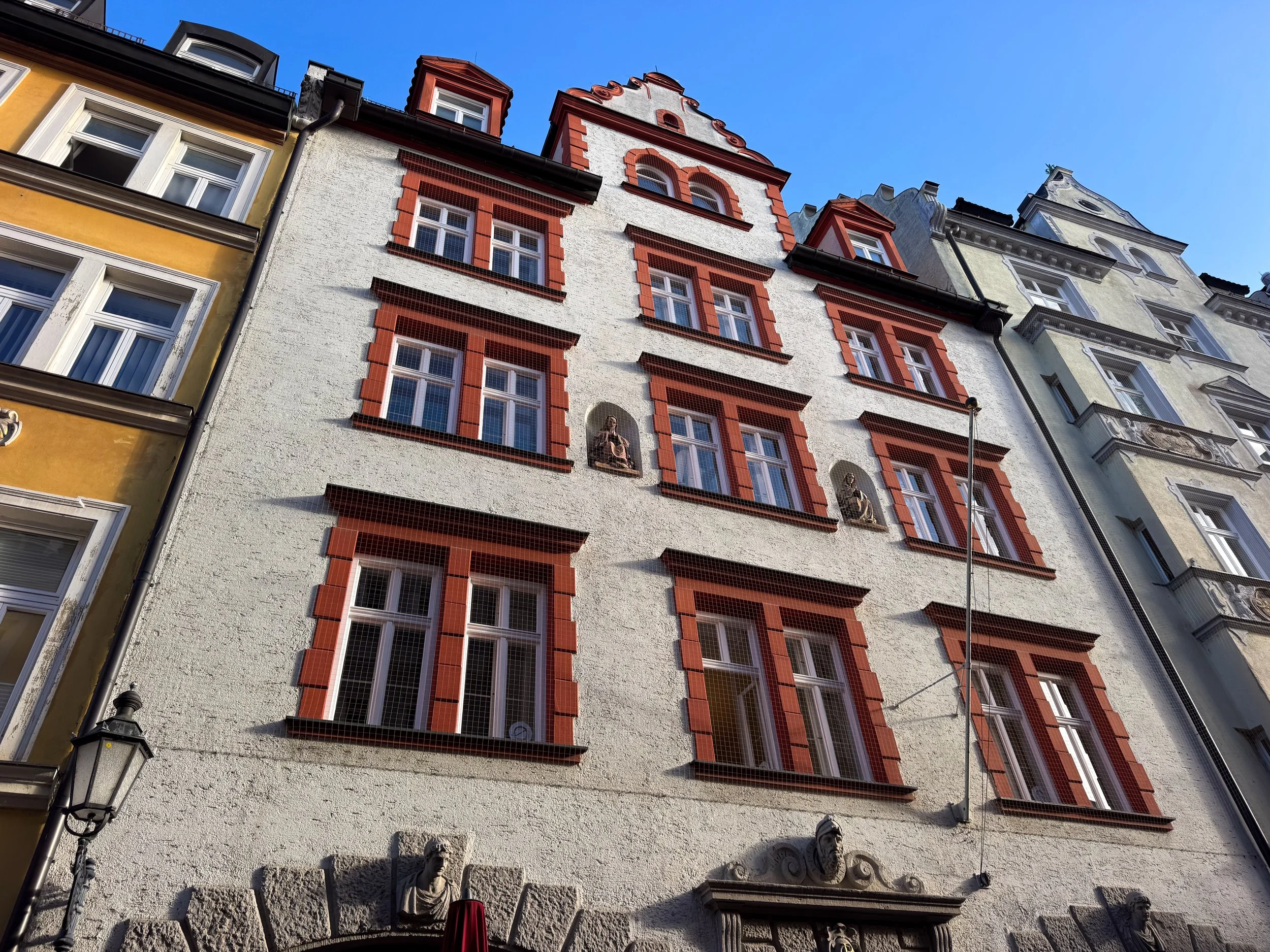
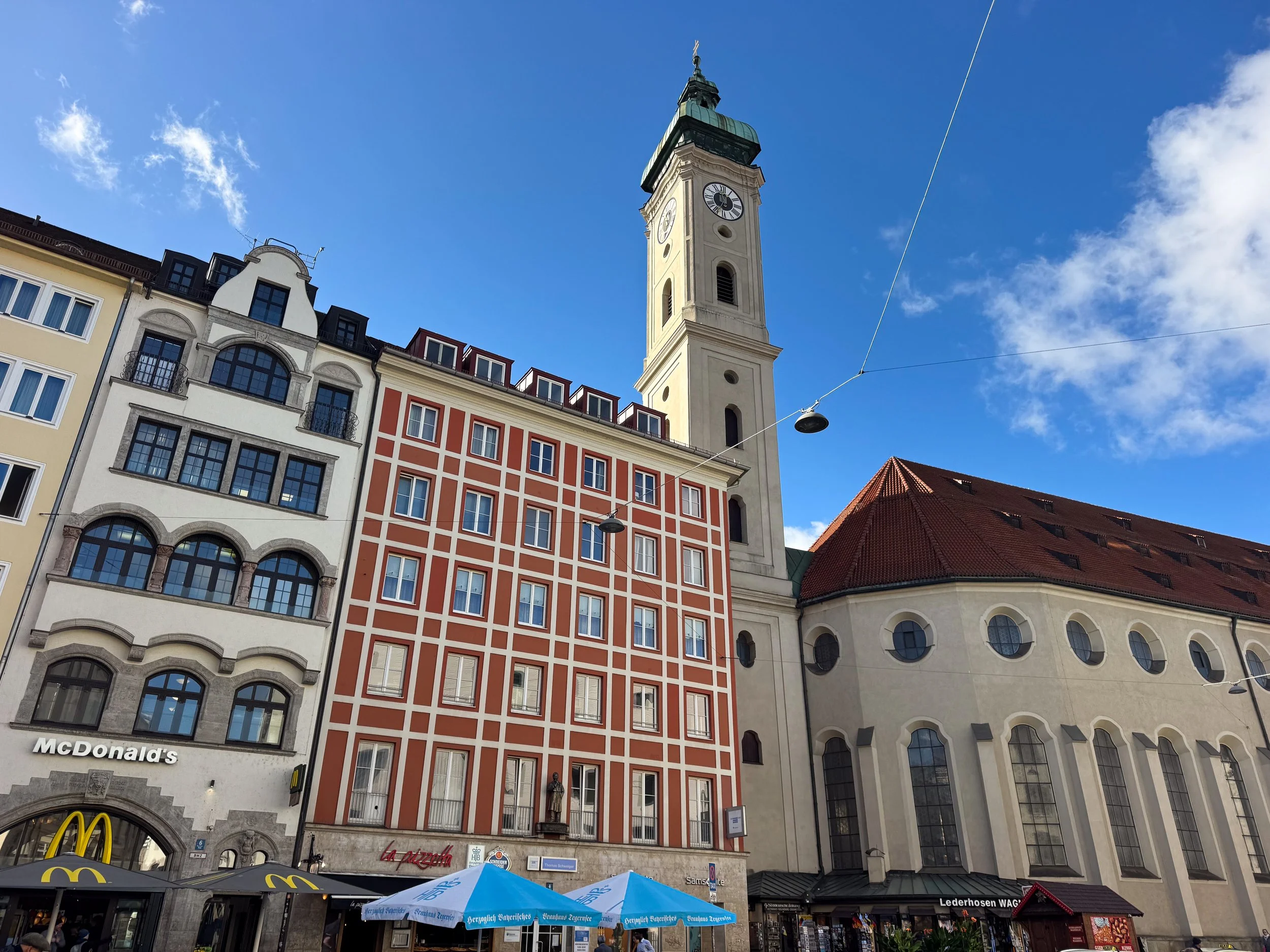
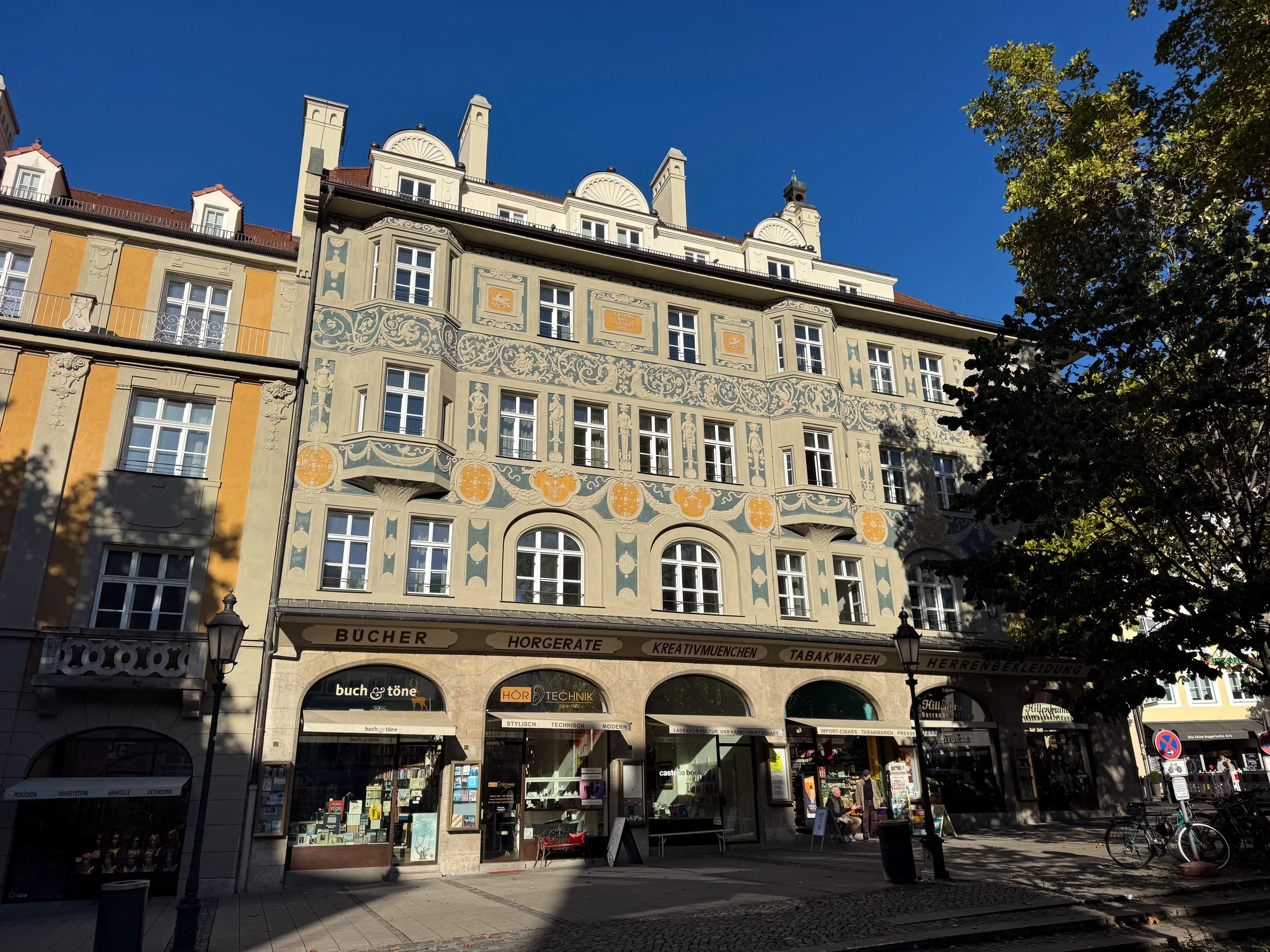
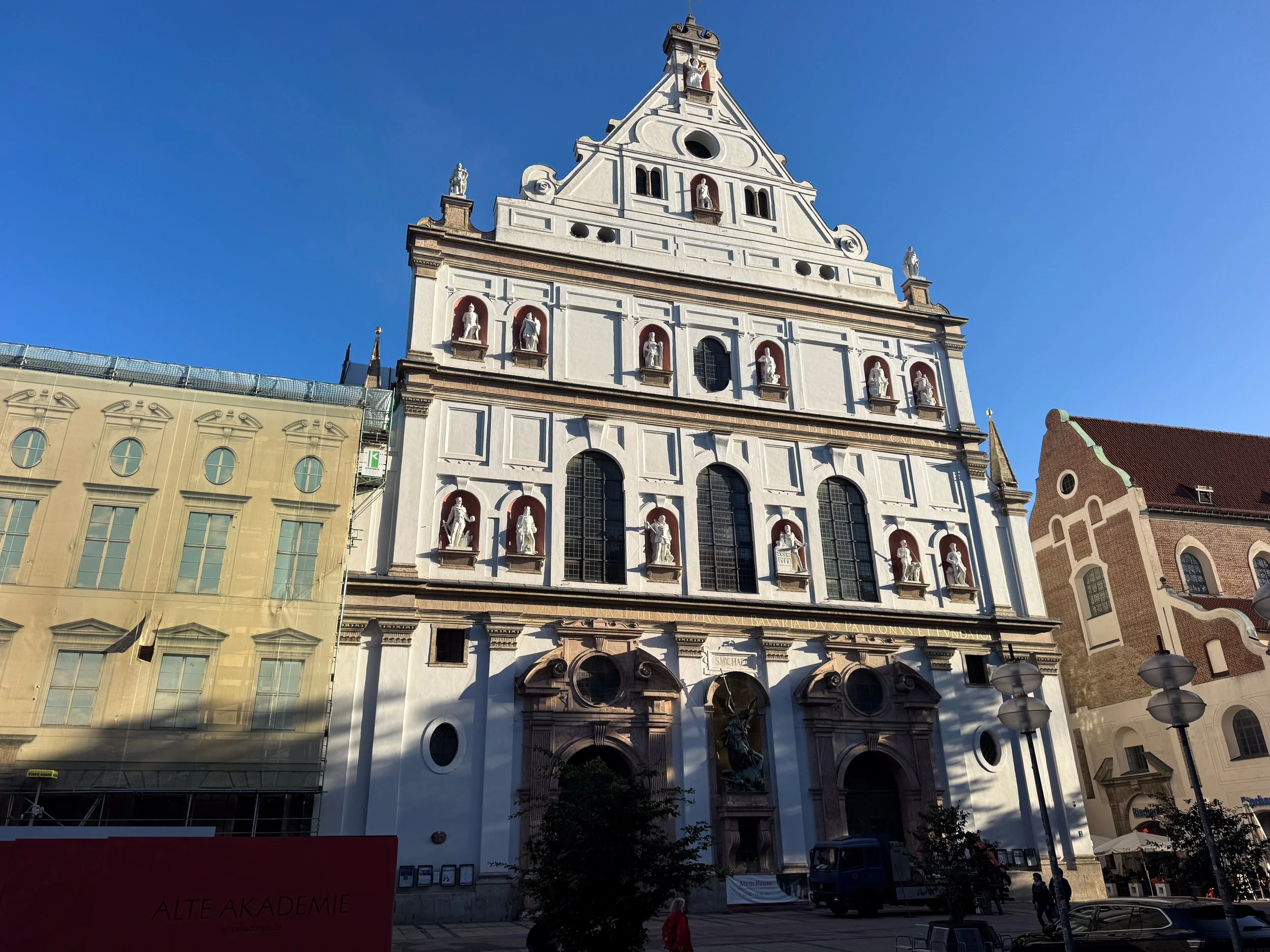
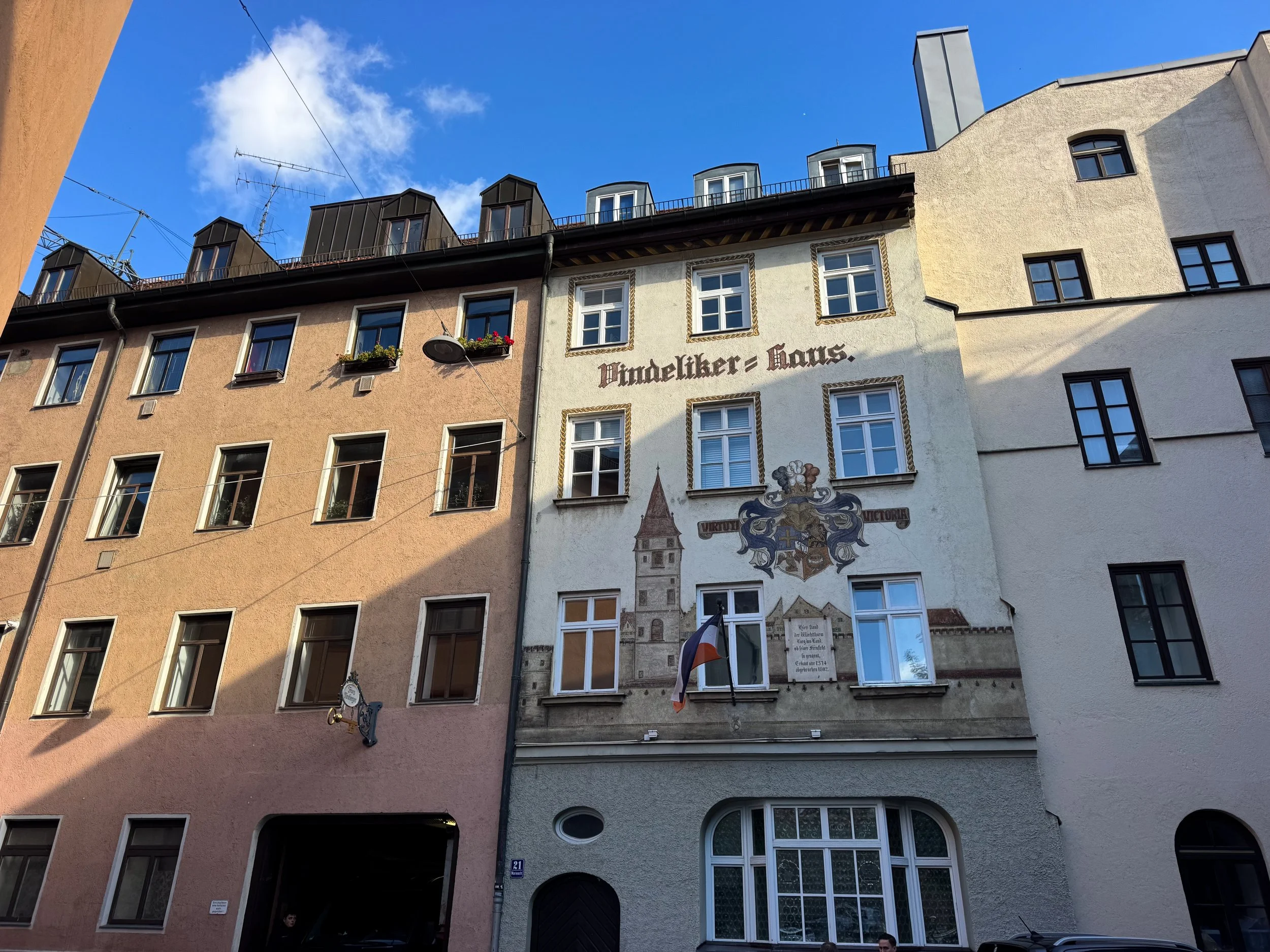
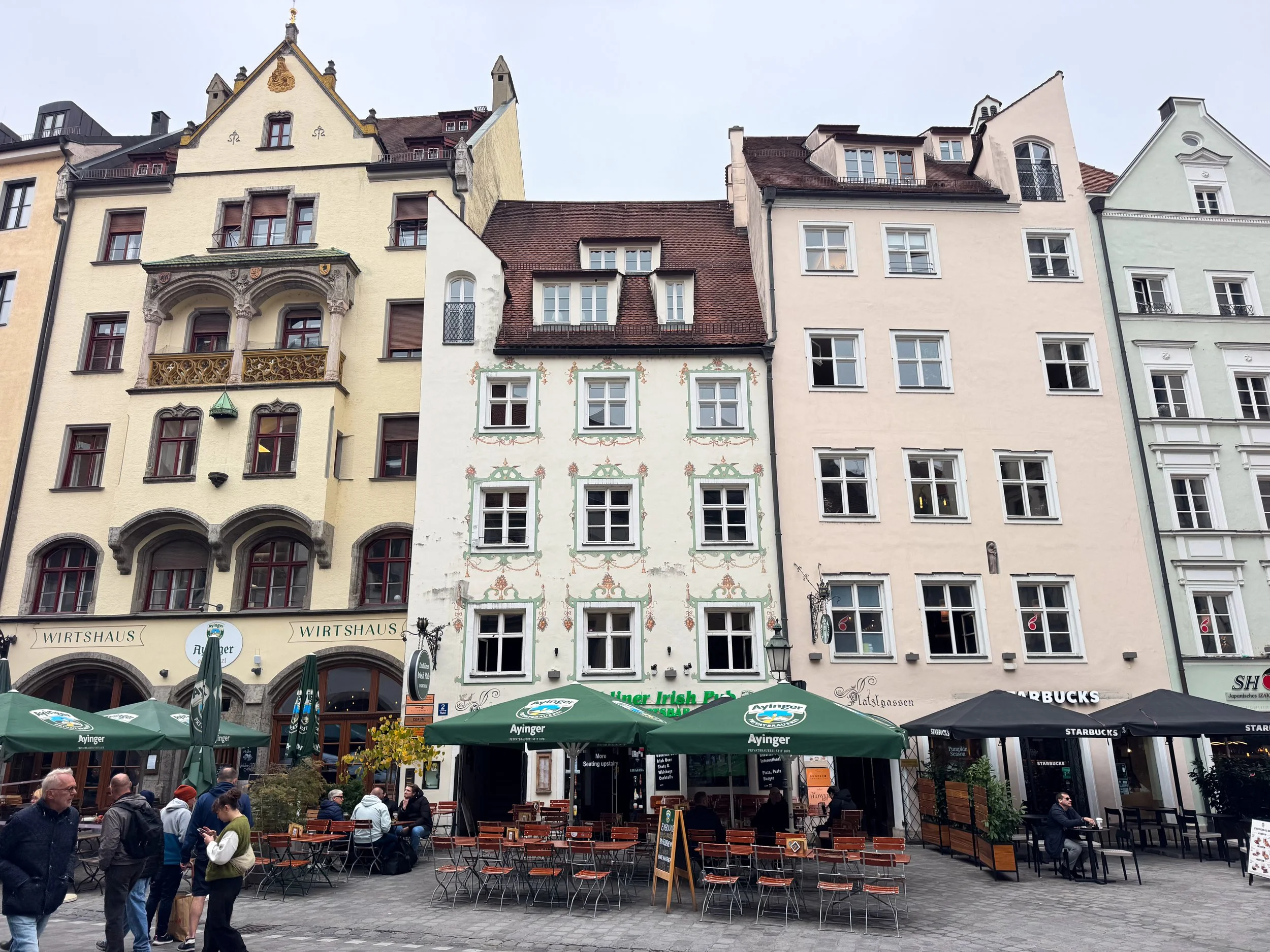
Altstadt (Old Town). Munich’s historic center, where medieval landmarks and grand European architecture stand alongside contemporary buildings. Pedestrian friendly shopping streets lead to large open plazas, while church spires and cathedral towers offer observation decks overlooking the Bavarian capital. Historic beer halls and gardens pour local brews, food markets and Bavarian restaurants serve regional specialties, and souvenir shops overflow with traditional steins. Museums round out the old town’s mix of culture and history.
Neuhauser Straße. A bustling pedestrian shopping street running from the medieval Karlstor gate to Marienplatz. Brand name stores line the way, while fruit vendors and stands roasting chestnuts dot the street.
Sendlinger Straße. A wide pedestrian street running from the medieval Sendlinger Tor gate toward Marienplatz, lined with historic buildings and brand name stores.
Glockenbachviertel. A trendy neighborhood just south of the Altstadt and the heart of Munich’s LGBTQ+ community. Pride stickers and Progress Pride flags mark its queer friendly businesses, from cocktail bars and nightclubs to boutiques, cafes and restaurants serving Bavarian, international and vegetarian cuisine. Popular with students and locals, it’s a welcome escape from the touristy city center and especially lively on weekends. Sip craft cocktails at Vertigo or Curtain Call, then head to Prosecco München for late night drinks and dancing.
Old Town Sights & Tower Lookouts
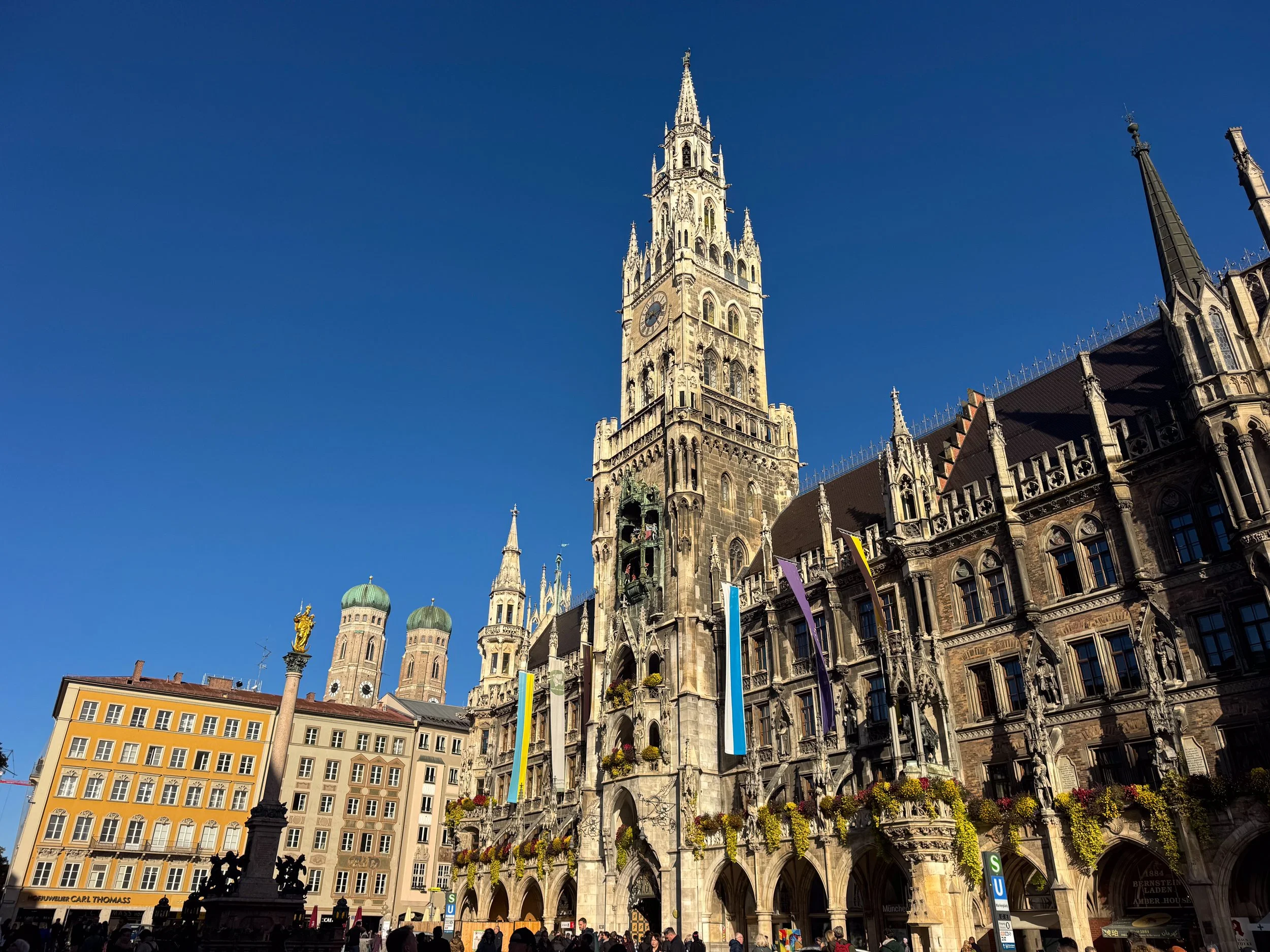
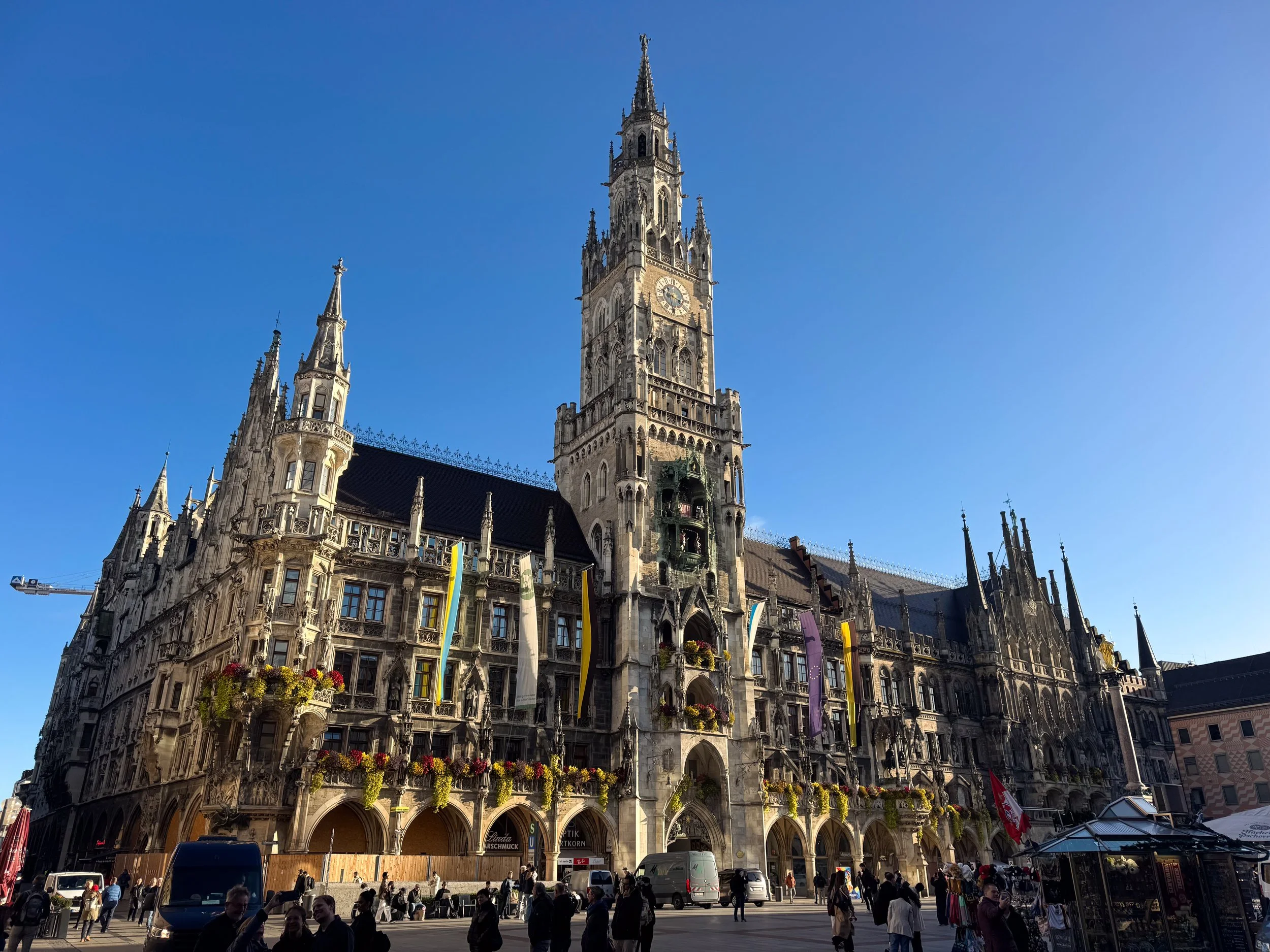
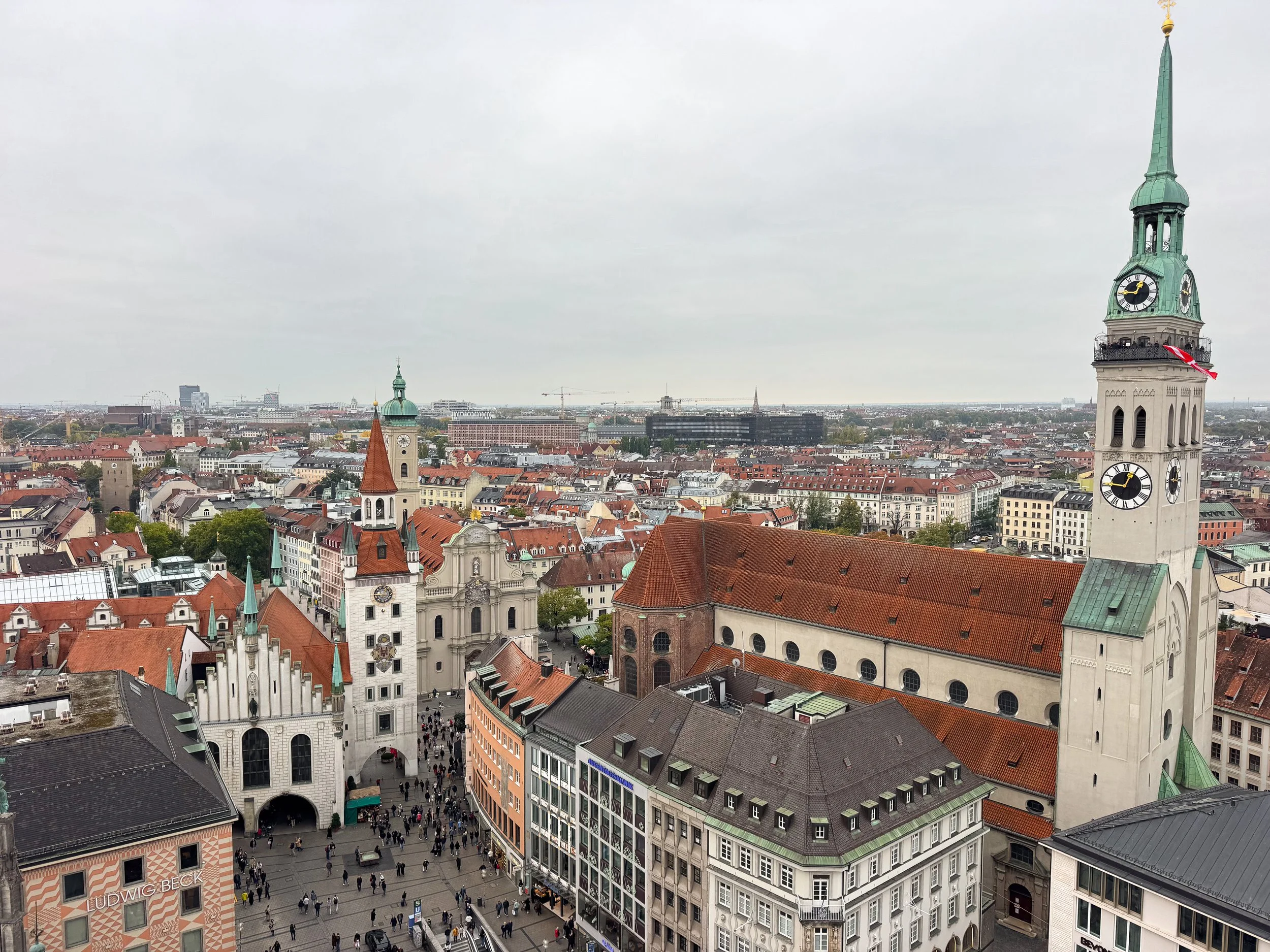
Marienplatz. A historic square at the heart of Munich’s old town, framed by the neo-Gothic Neues Rathaus (New Town Hall) and the Altes Rathaus (Old Town Hall). Crowds gather here to watch the Glockenspiel perform.
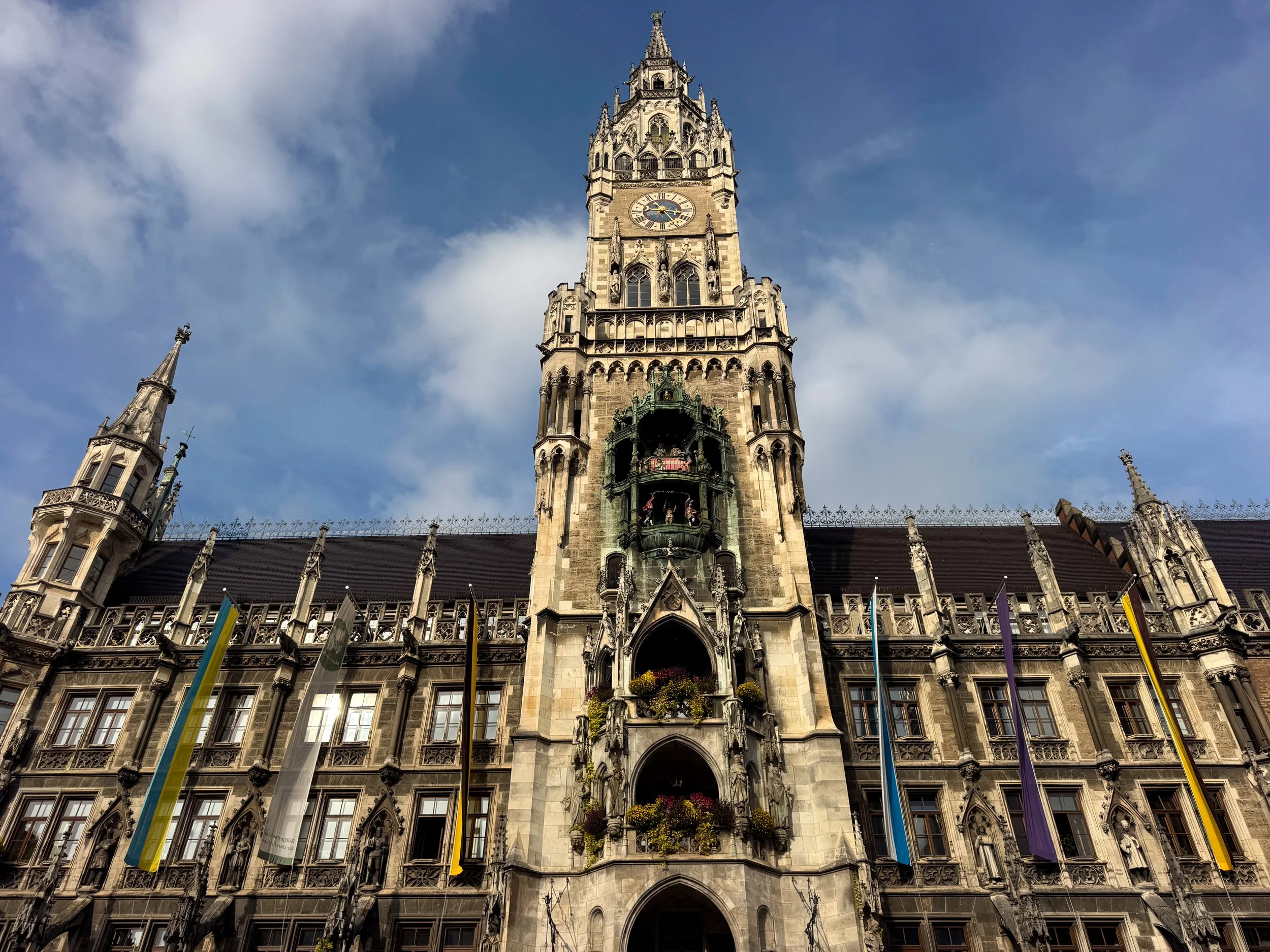
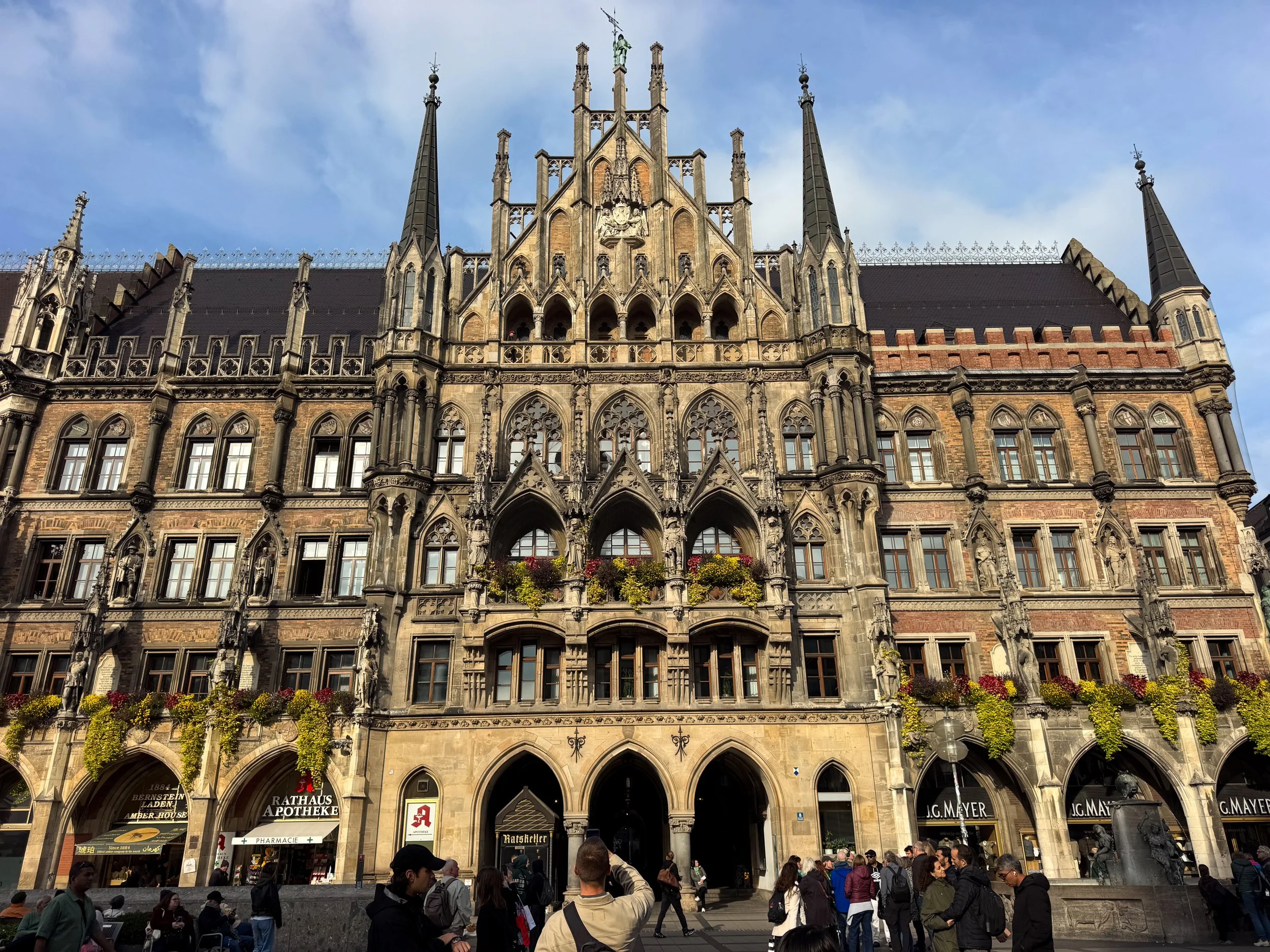
Neues Rathaus (New Town Hall). Munich’s neo-Gothic town hall dominates the Marienplatz with a blackened stone façade of knights, gargoyles, dragons, pinnacles and intricate tracery, its balconies draped in seasonal flowers. Walk through the central gate to see the stained glass lancet windows of the inner courtyard, then buy tickets inside to ride up the tower for views over the Altstadt’s rooftops, spires and the square below.
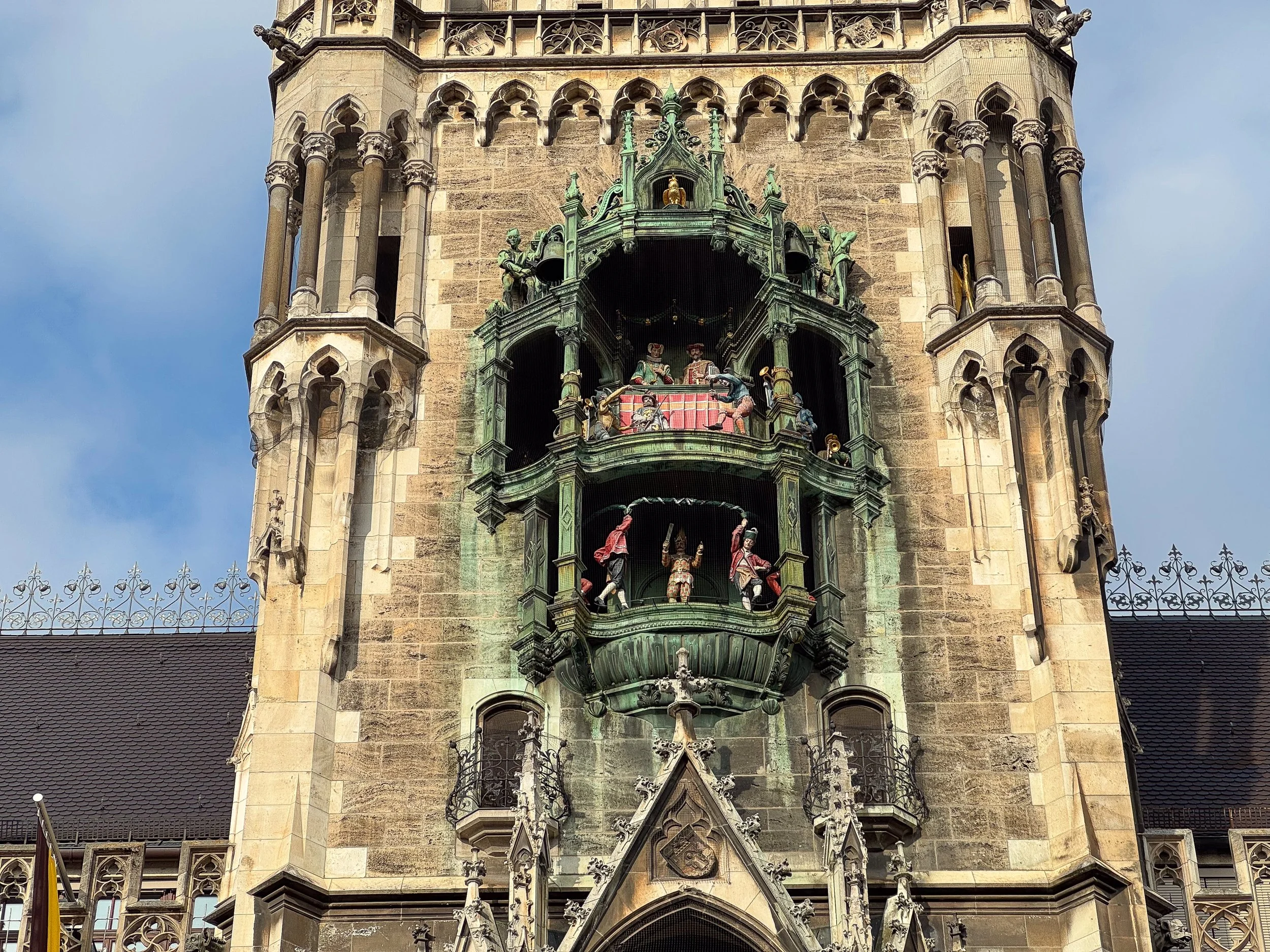
Glockenspiel. Set into the New Town Hall’s central tower, the clock puts on a theatrical show telling stories from Munich’s history. After the bells chime, an upbeat tune plays as a royal couple looks on and figurines of trumpeters, jousting knights, jesters and flag bearers twirl around them. Performances take place daily at 11am and noon, with an additional 5pm show through October. Arrive at least 10 minutes early to claim a good viewing spot.
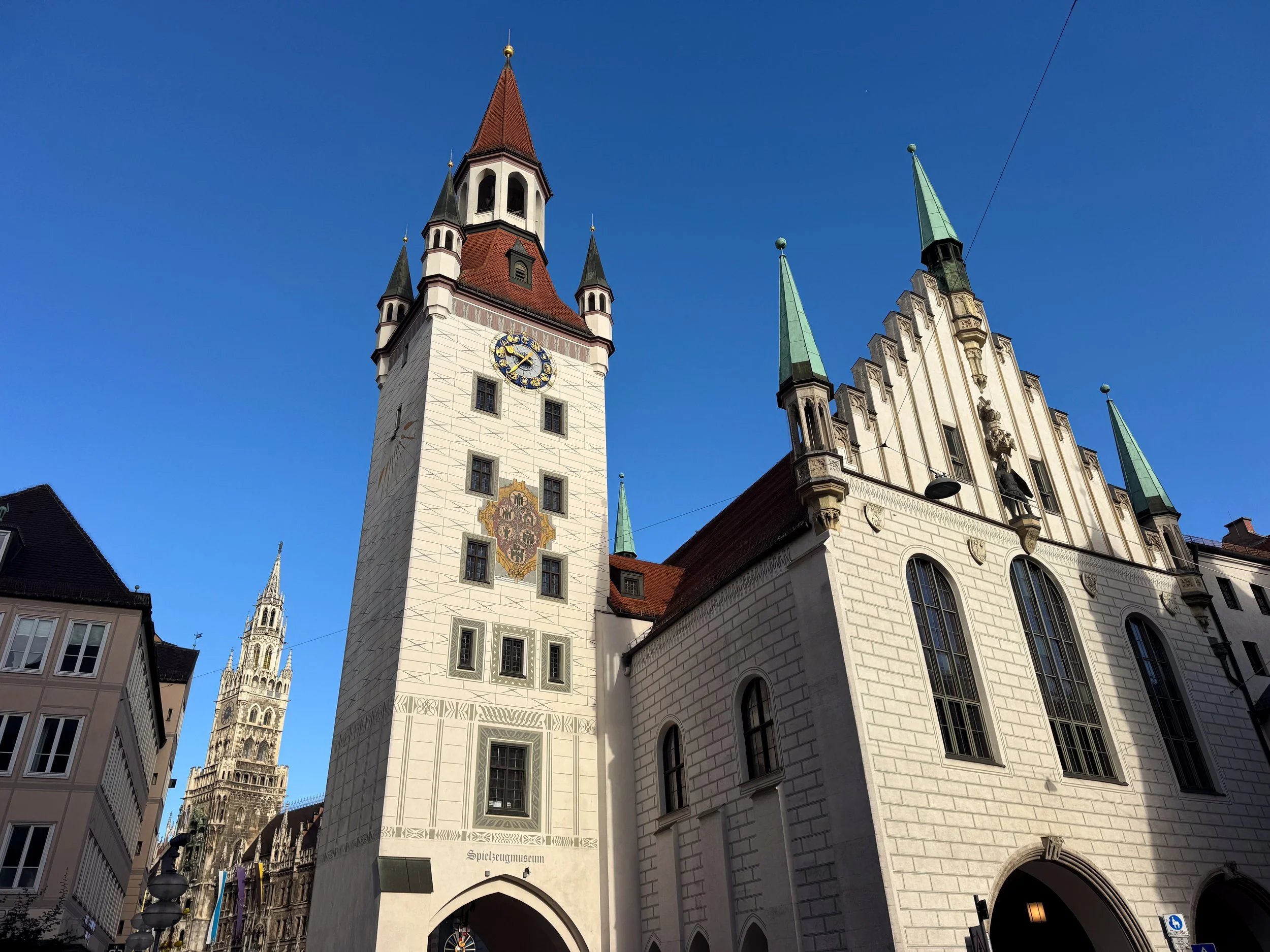
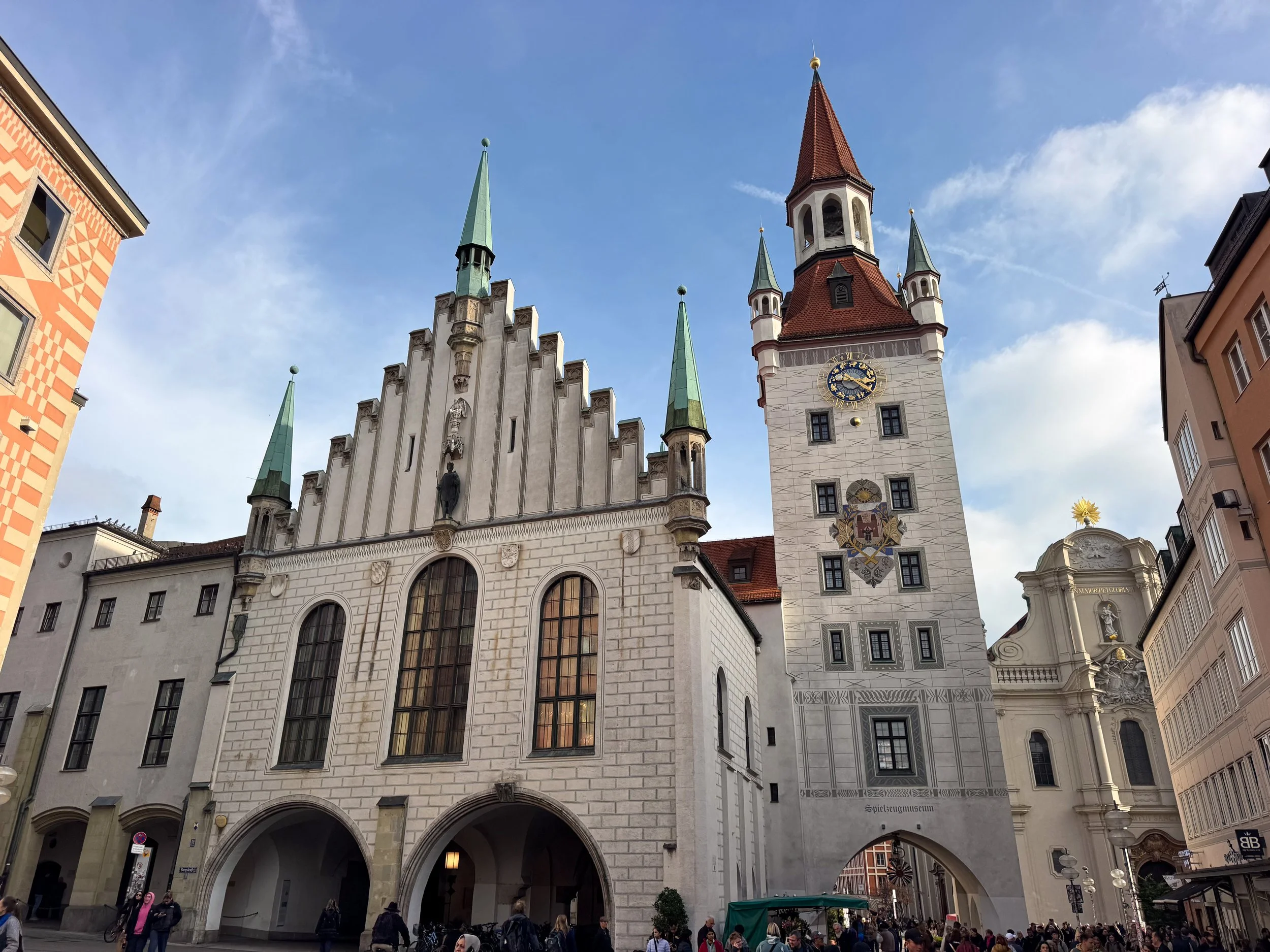
Altes Rathaus (Old Town Hall). Munich’s late Gothic old town hall has stood on one side of the Marienplatz since the 14th century. The castle-like building has a fairytale appeal; its symmetrical façade is accented by arched windows and pointed spires. The clock tower is crowned by a central spire and tiny turrets at each corner. Vaulted passageways lead through the base of the building and tower.
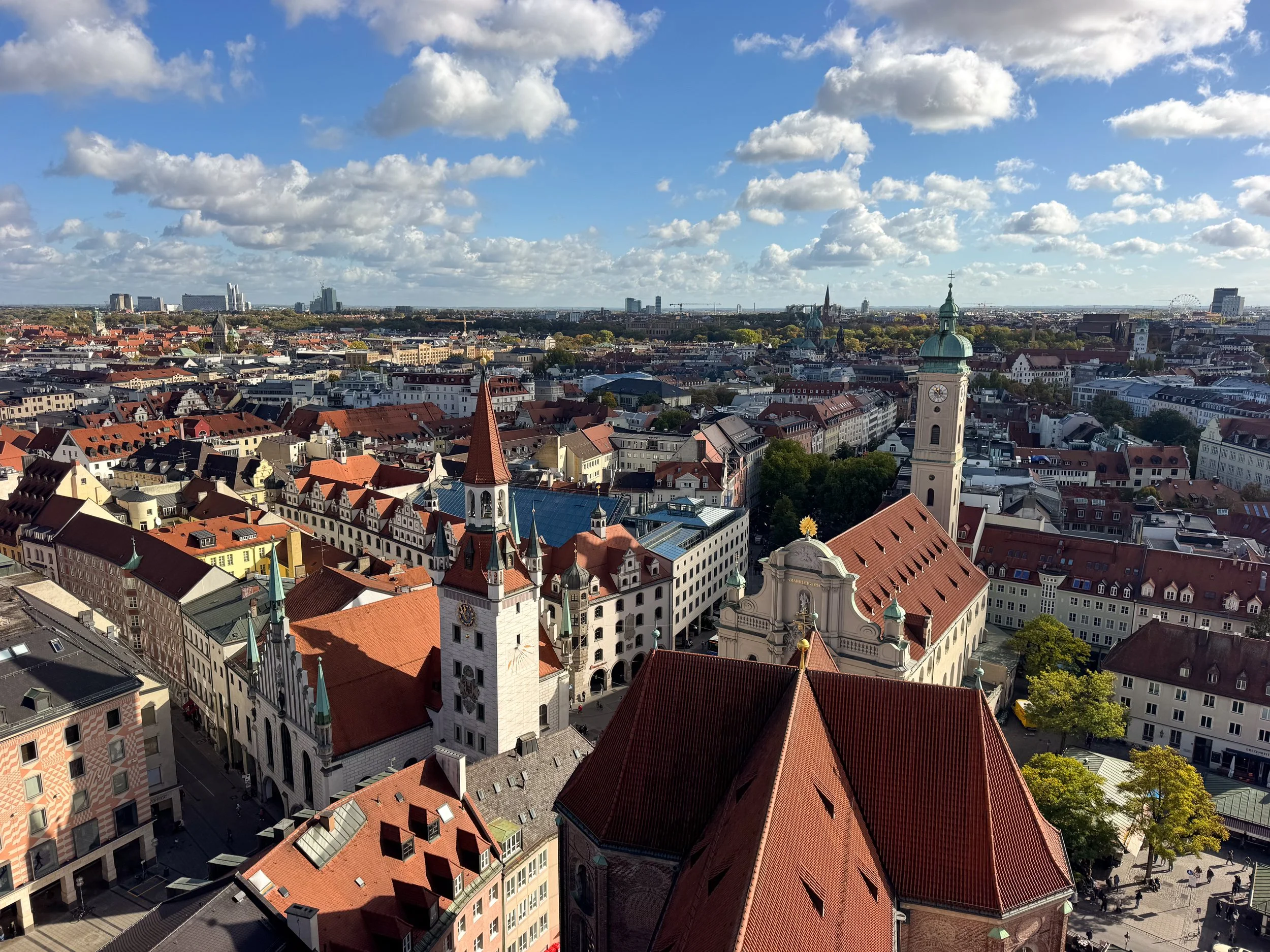
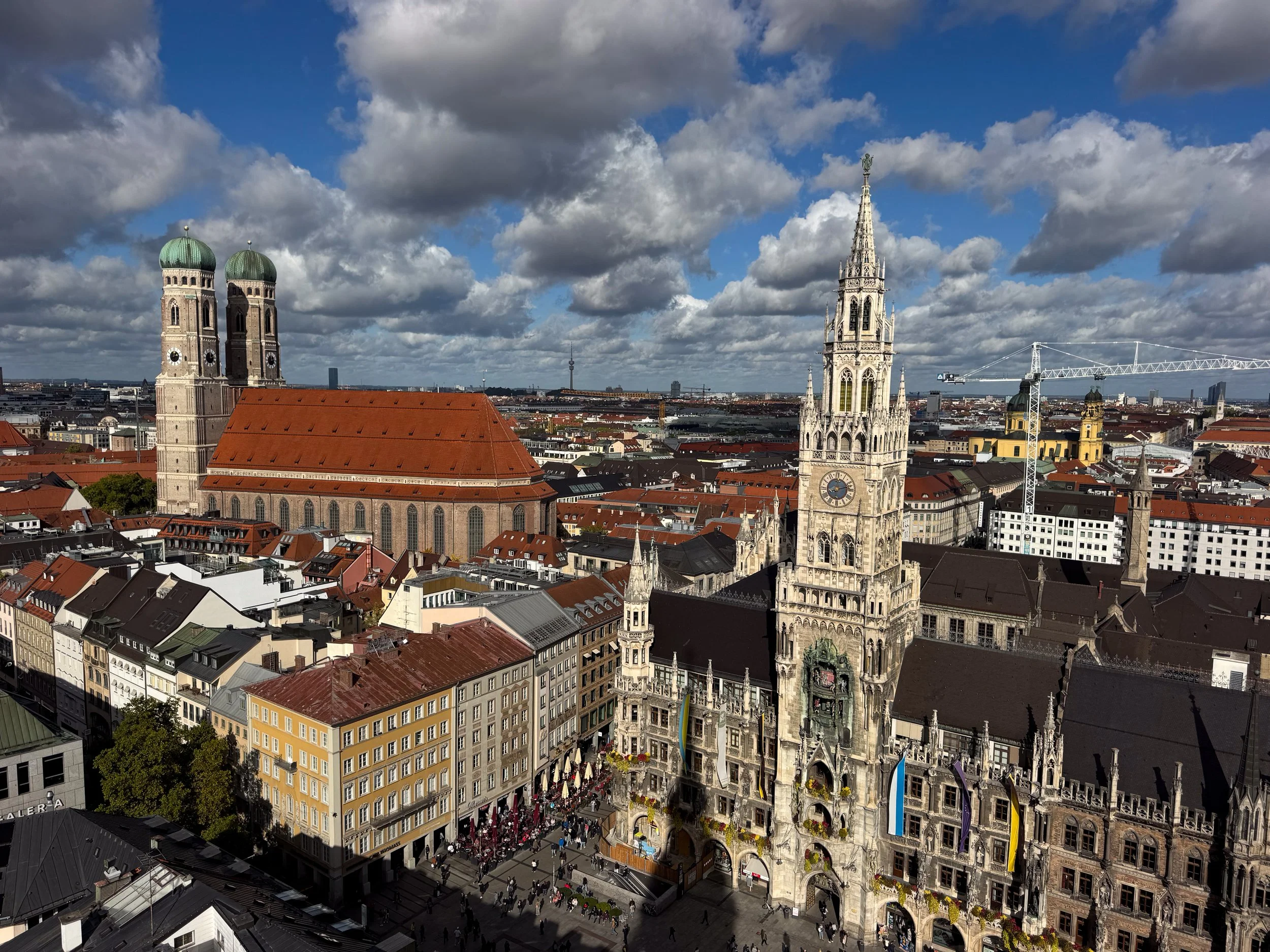
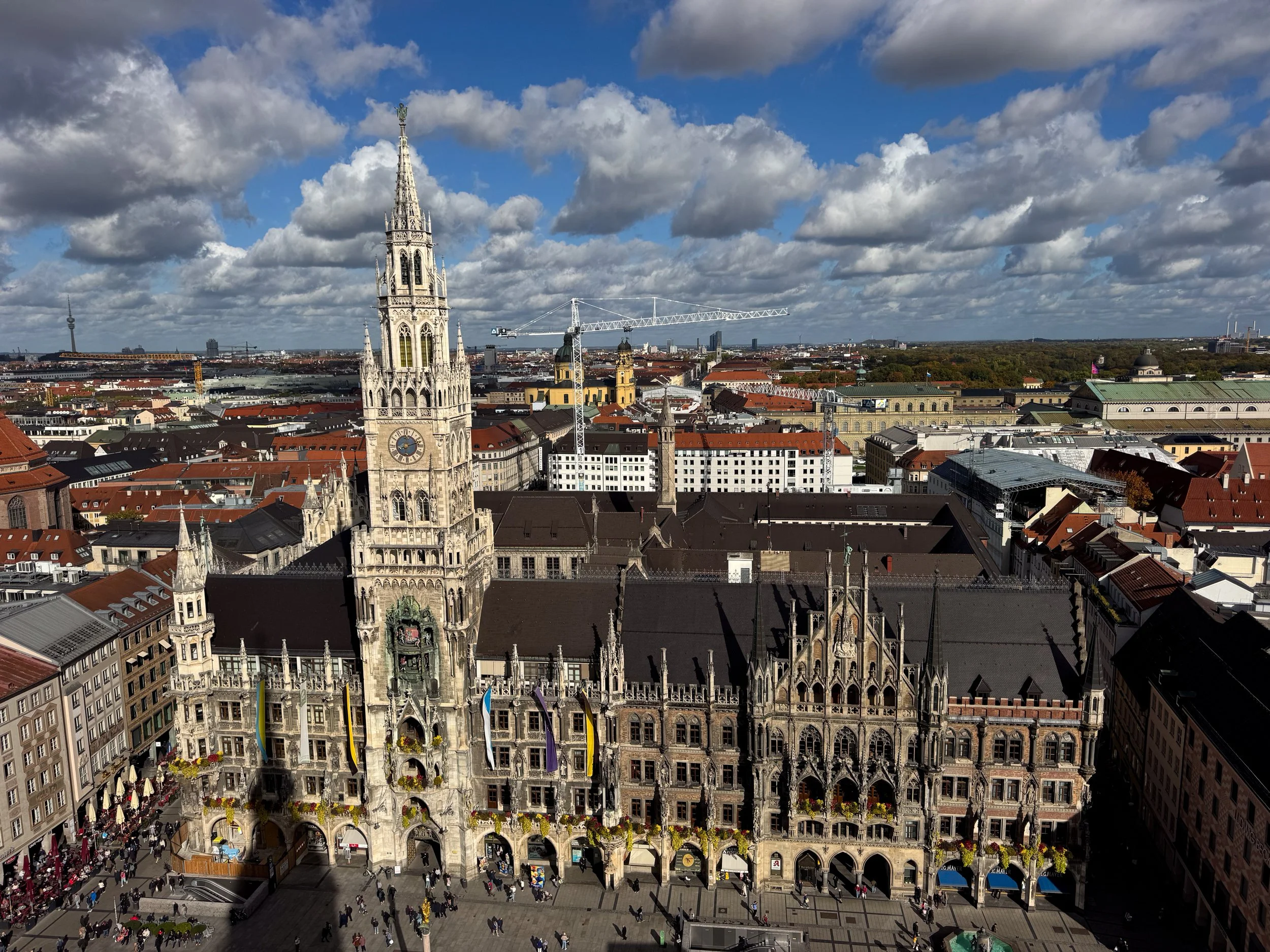
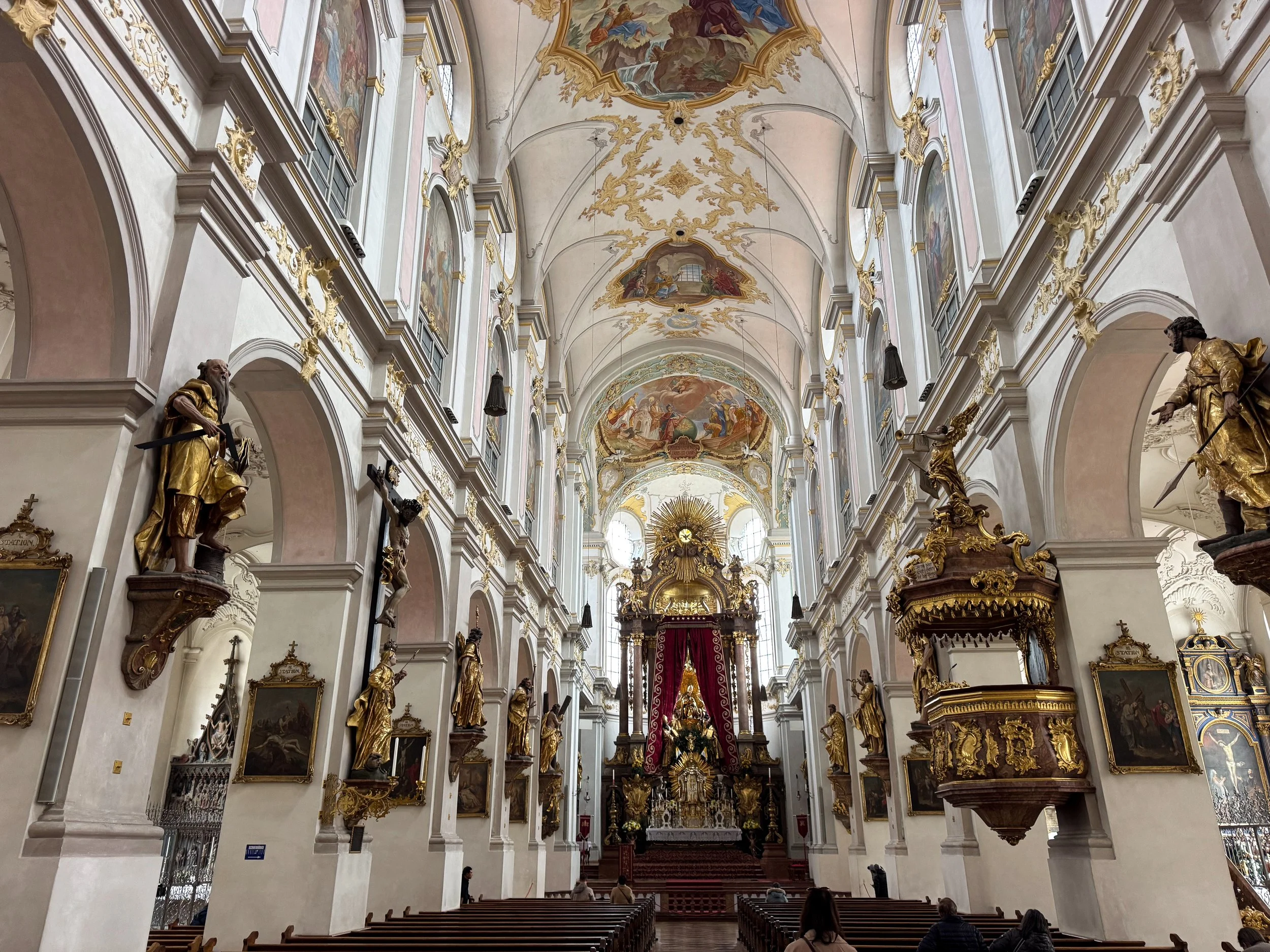
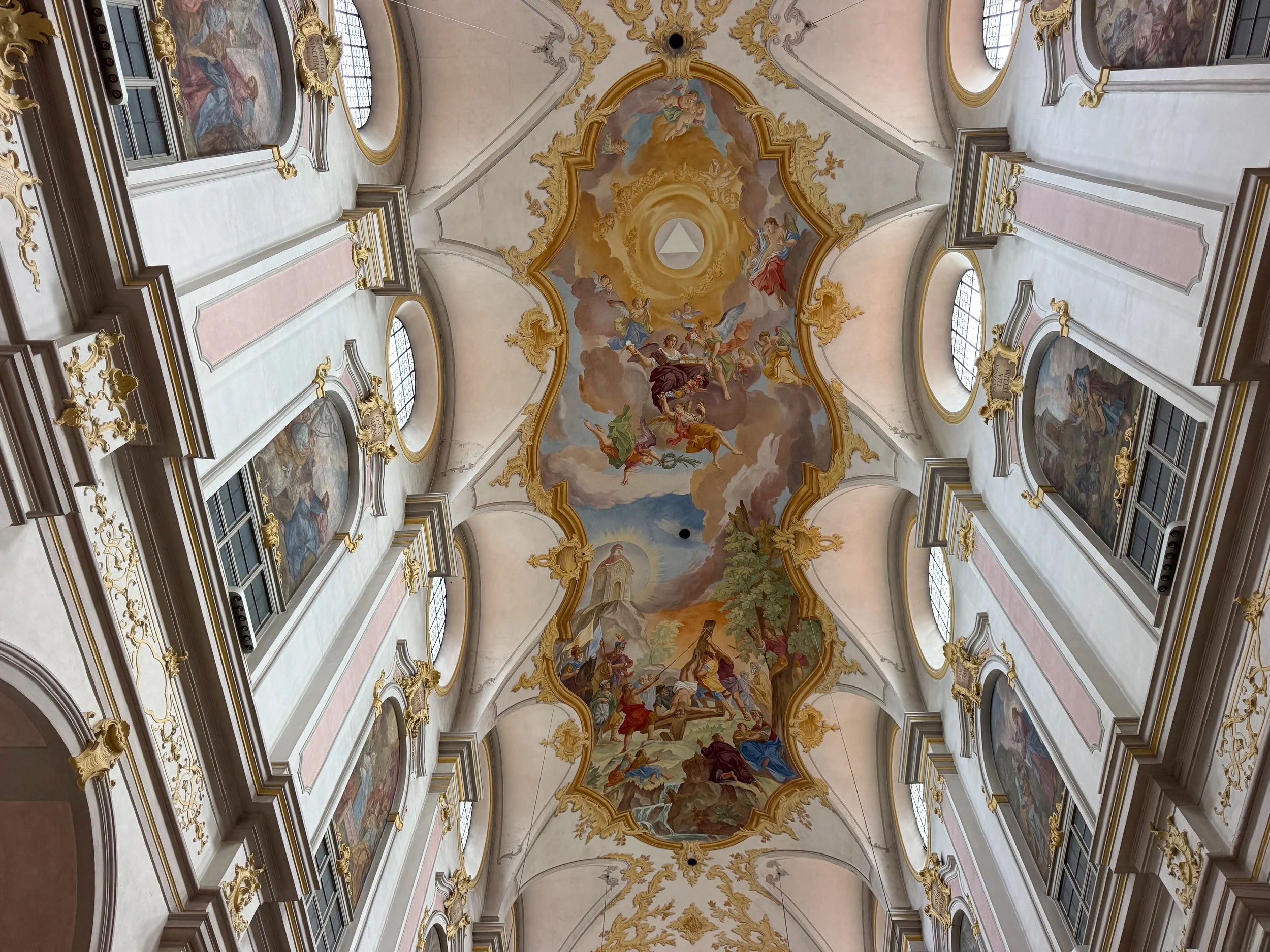
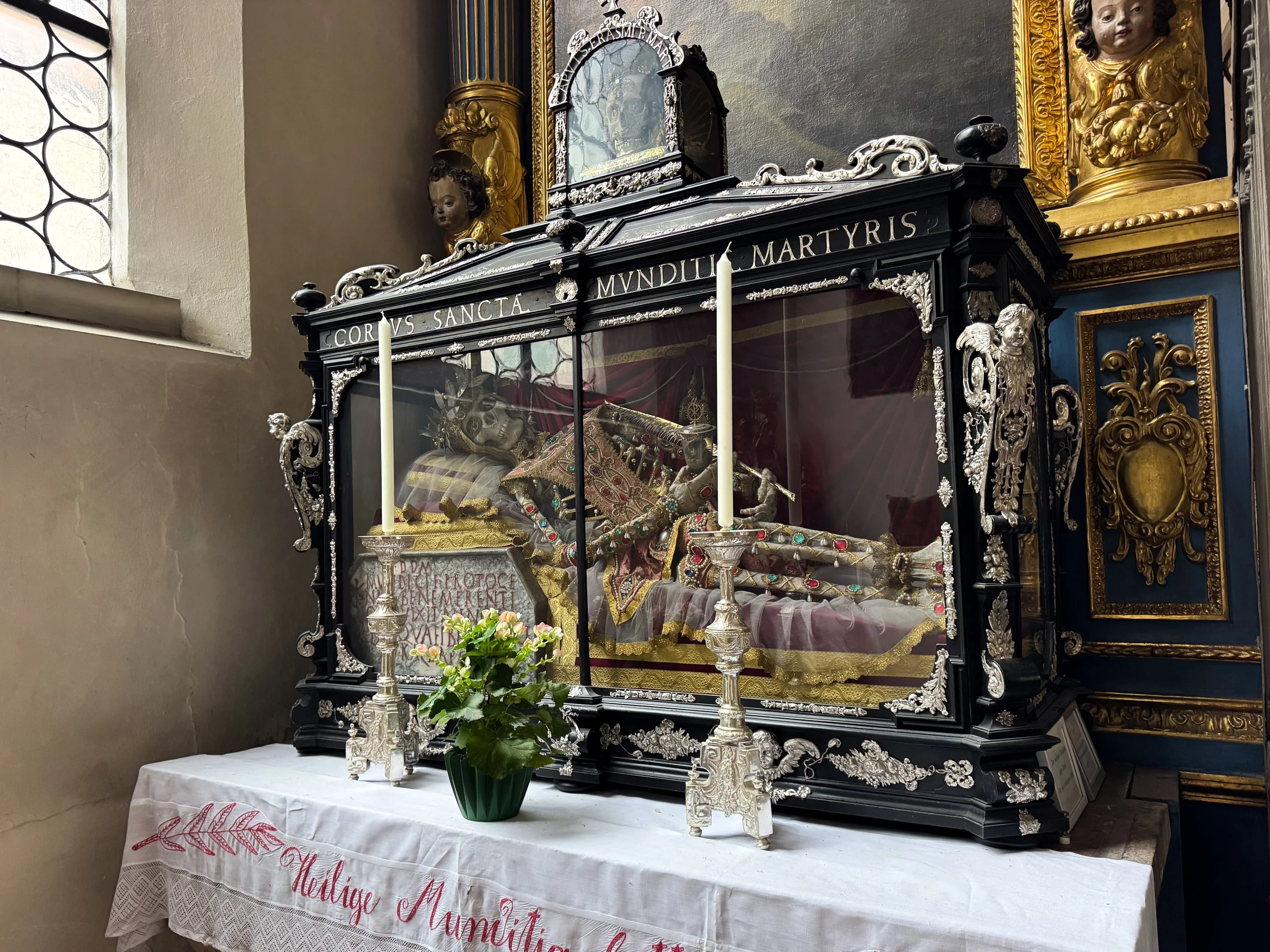
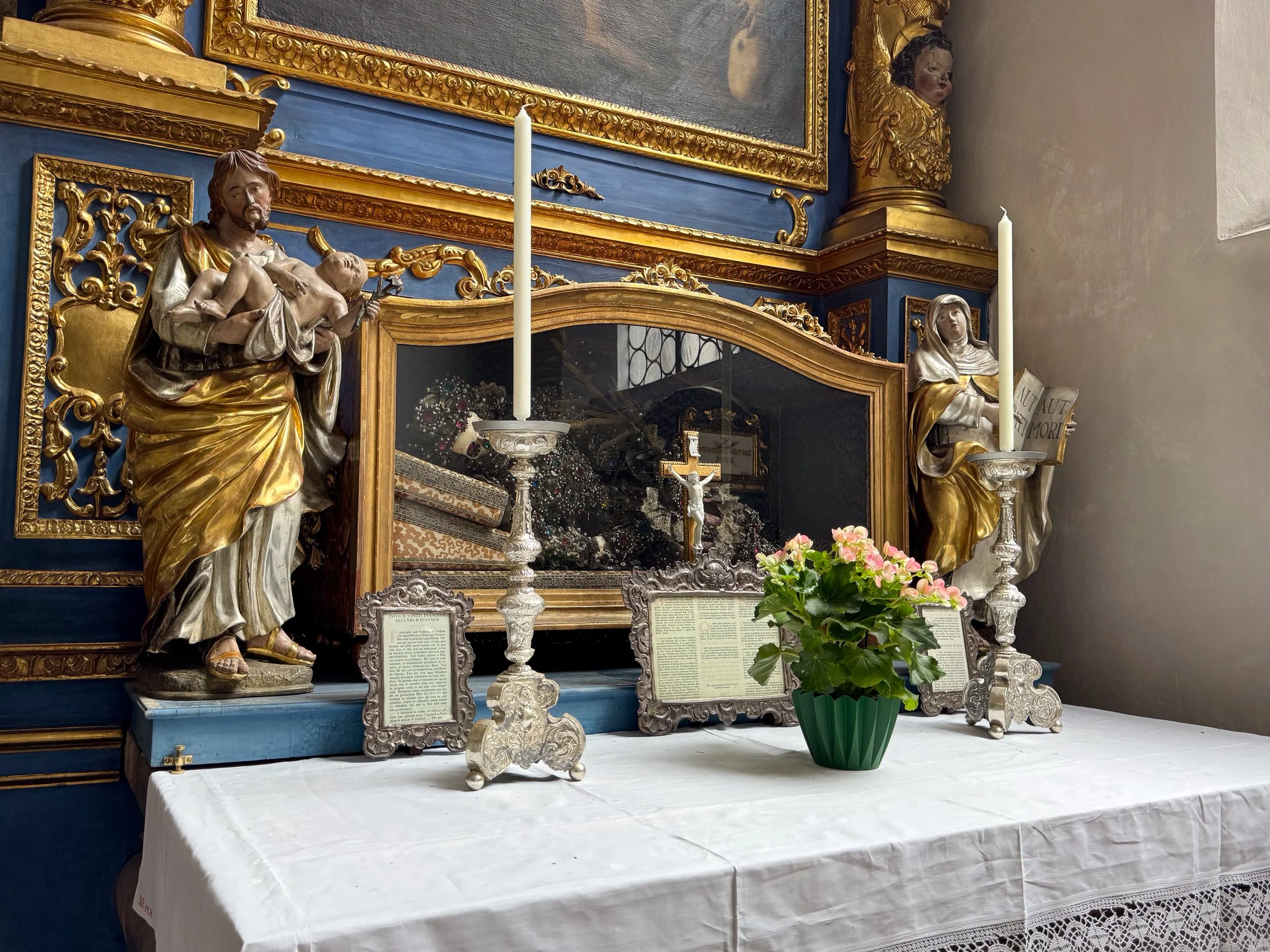
St. Peter's Church & Tower. Munich’s oldest church, dating back to the 12th century. White columns with gilded statues and gold-framed paintings rise to a vividly frescoed ceiling above an elaborate altar. Side chapels hold carved confessionals and bejeweled skeletons in glass coffins, most strikingly that of St. Munditia. Buy tickets to climb the nearly 300 steps of the church tower for dramatic views over the Altstadt.
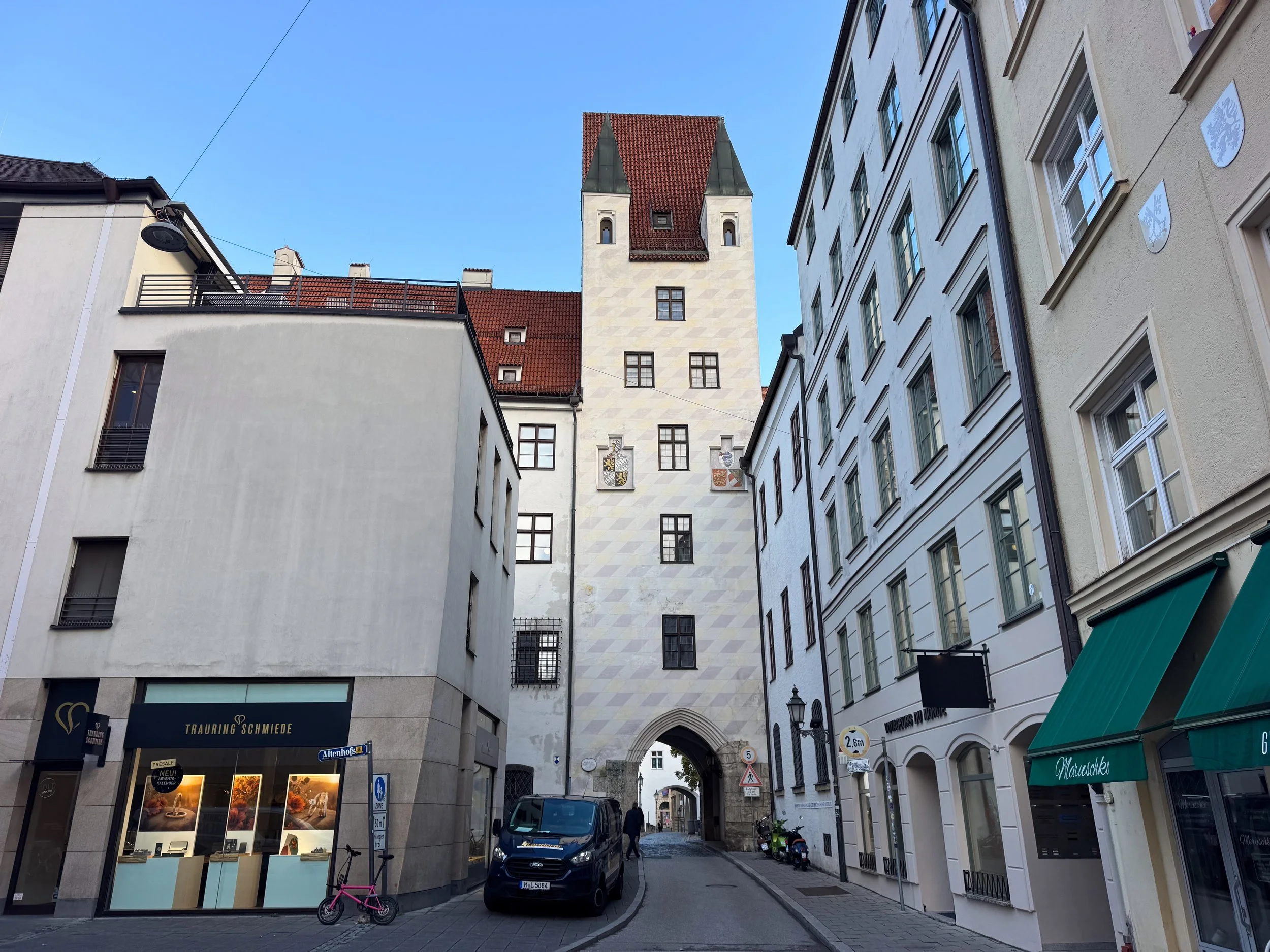
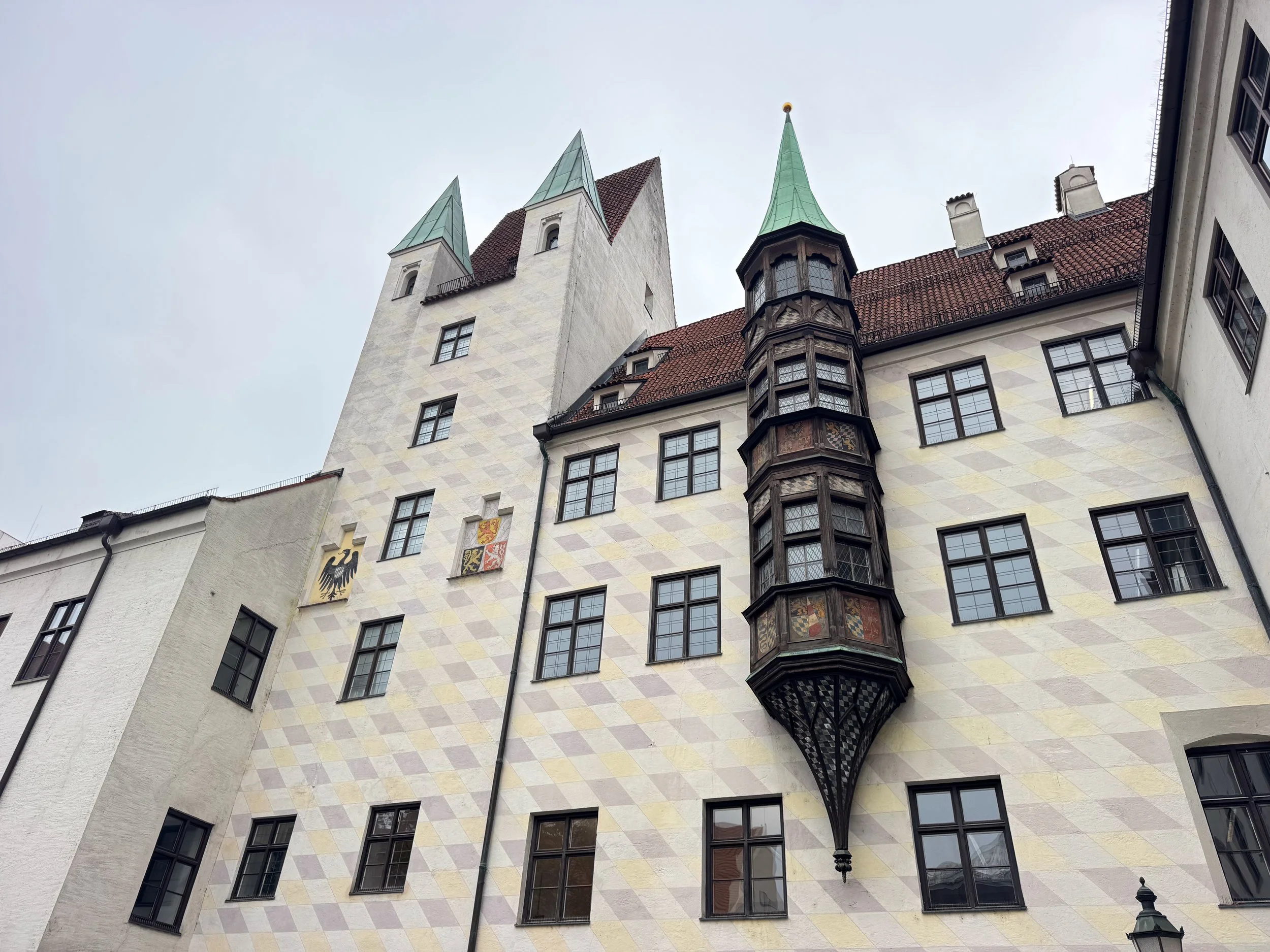
Alter Hof. The former residence of Holy Roman Emperor Ludwig IV and the Wittelsbach dynasty during the 14th and 15th centuries. Though largely rebuilt after World War II, its late Gothic gate tower survived, its façade painted in Bavaria’s blue and white diamonds and coats of arms. A three story wooden bay window overlooks the interior courtyard.
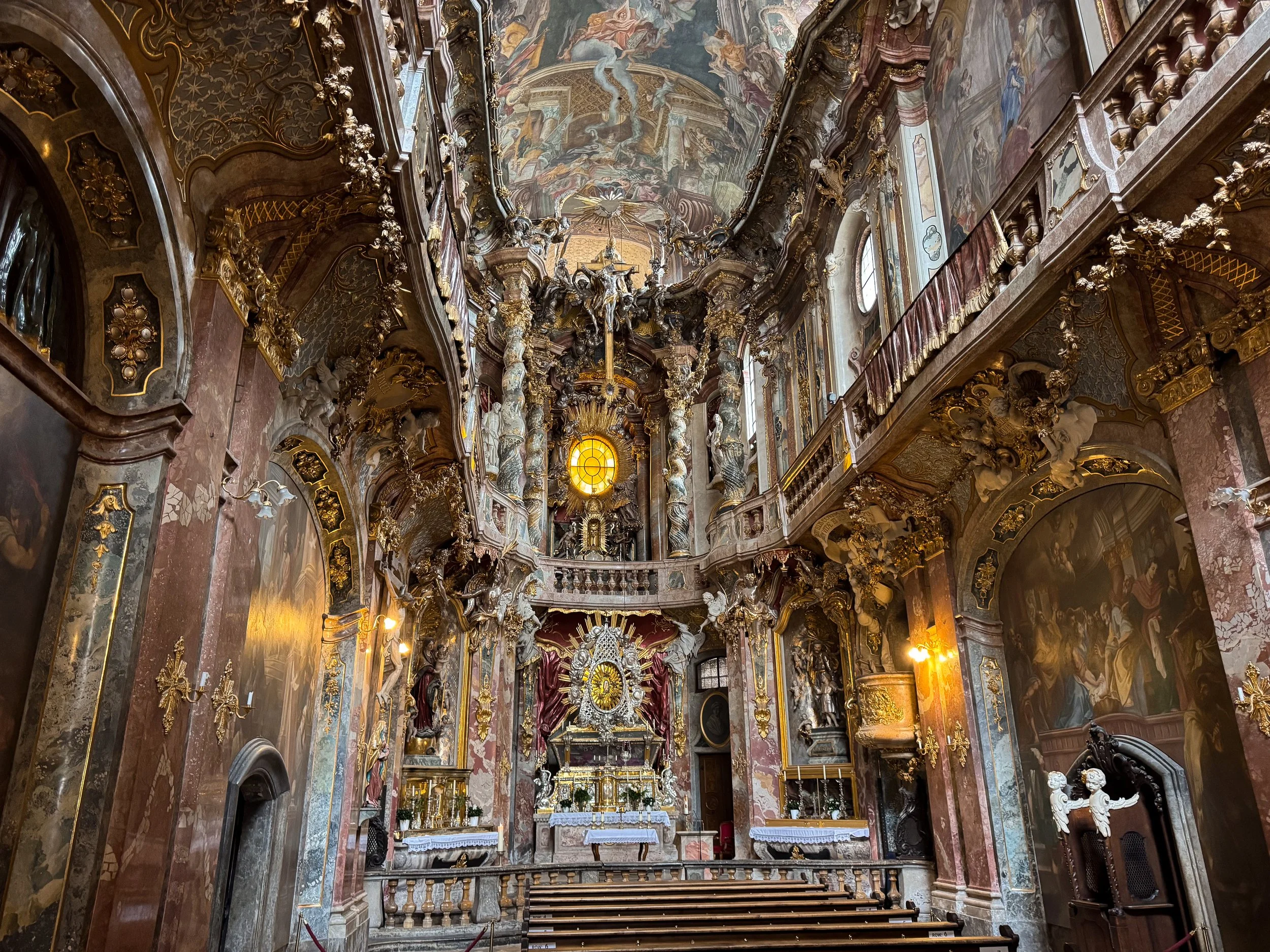
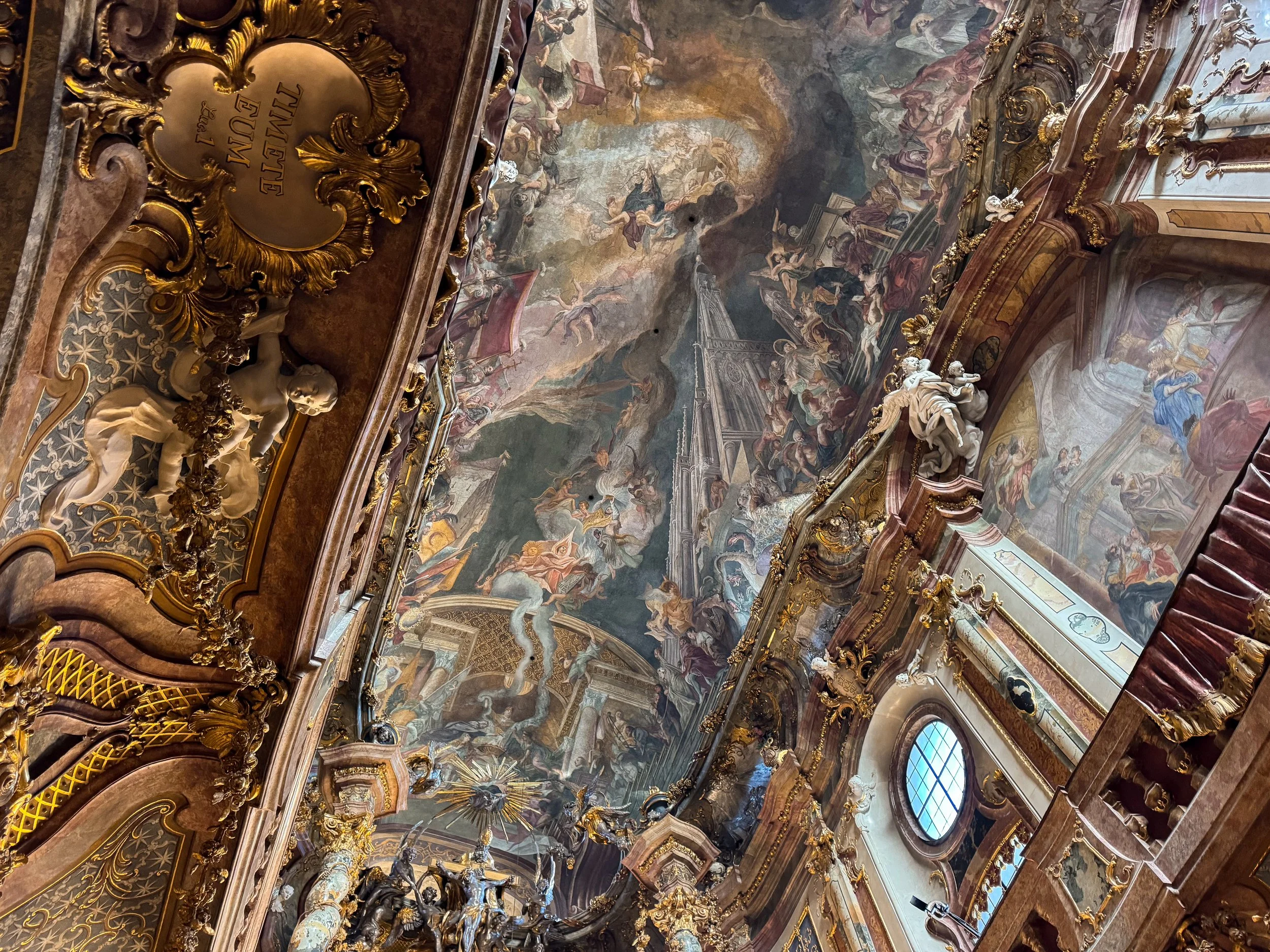
Asamkirche. A small but dazzling 18th century Baroque church tucked between buildings on Sendlinger Straße. Its façade is adorned with carved doors, statues and gilded accents. The interior glows with sculpted marble, gold and silver ornamentation, and a ceiling fresco that seems to open into the heavens.
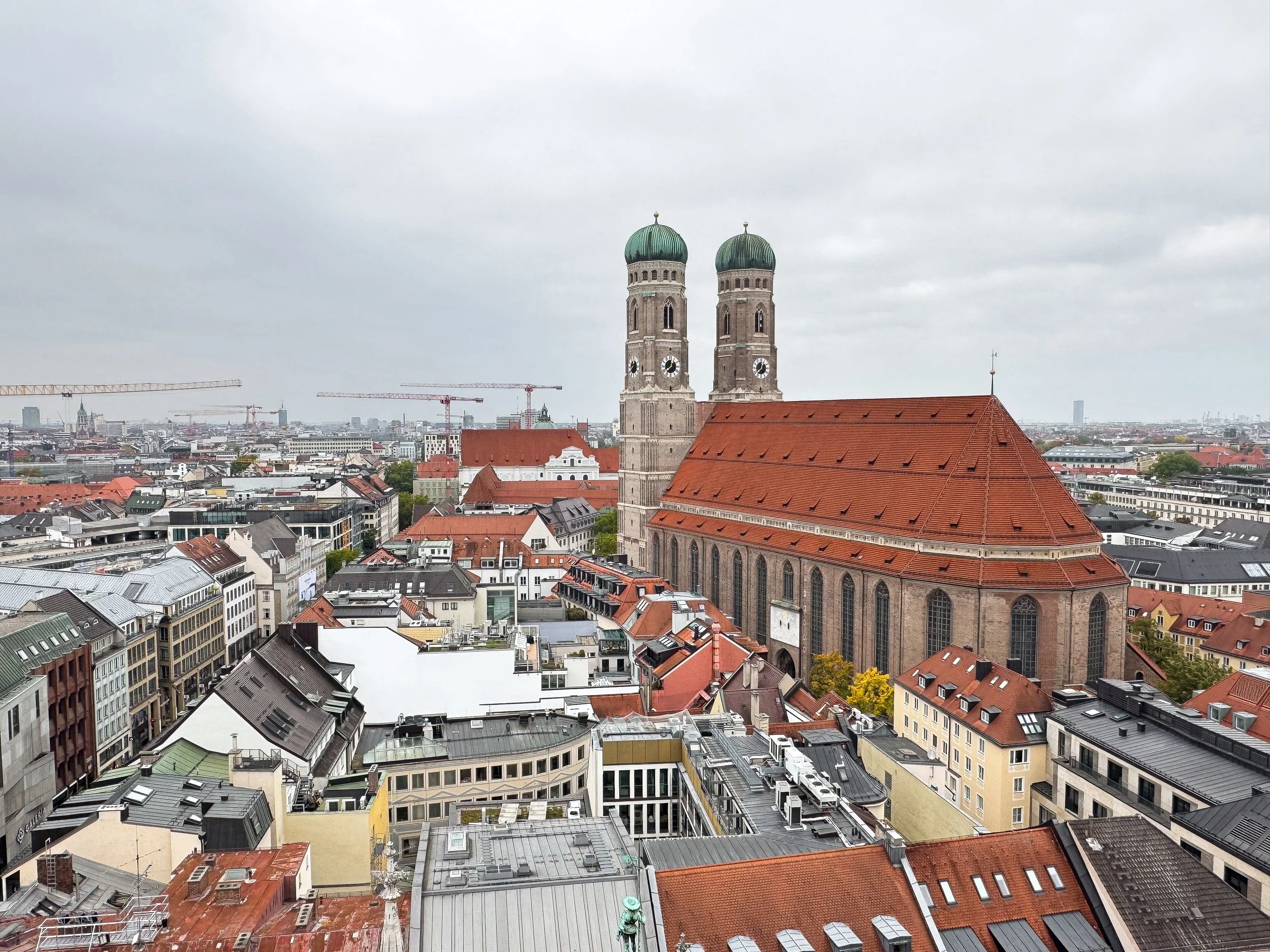
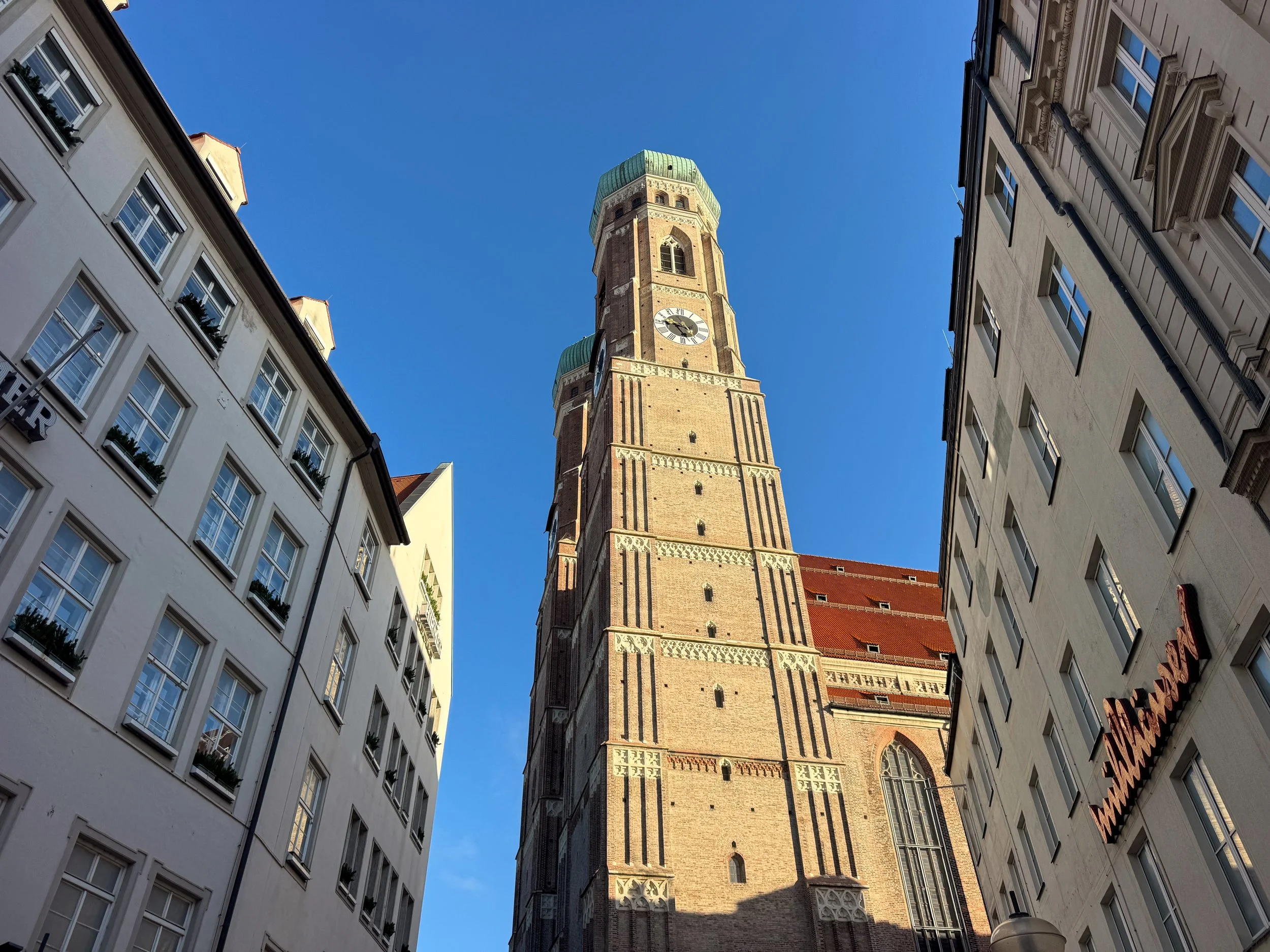
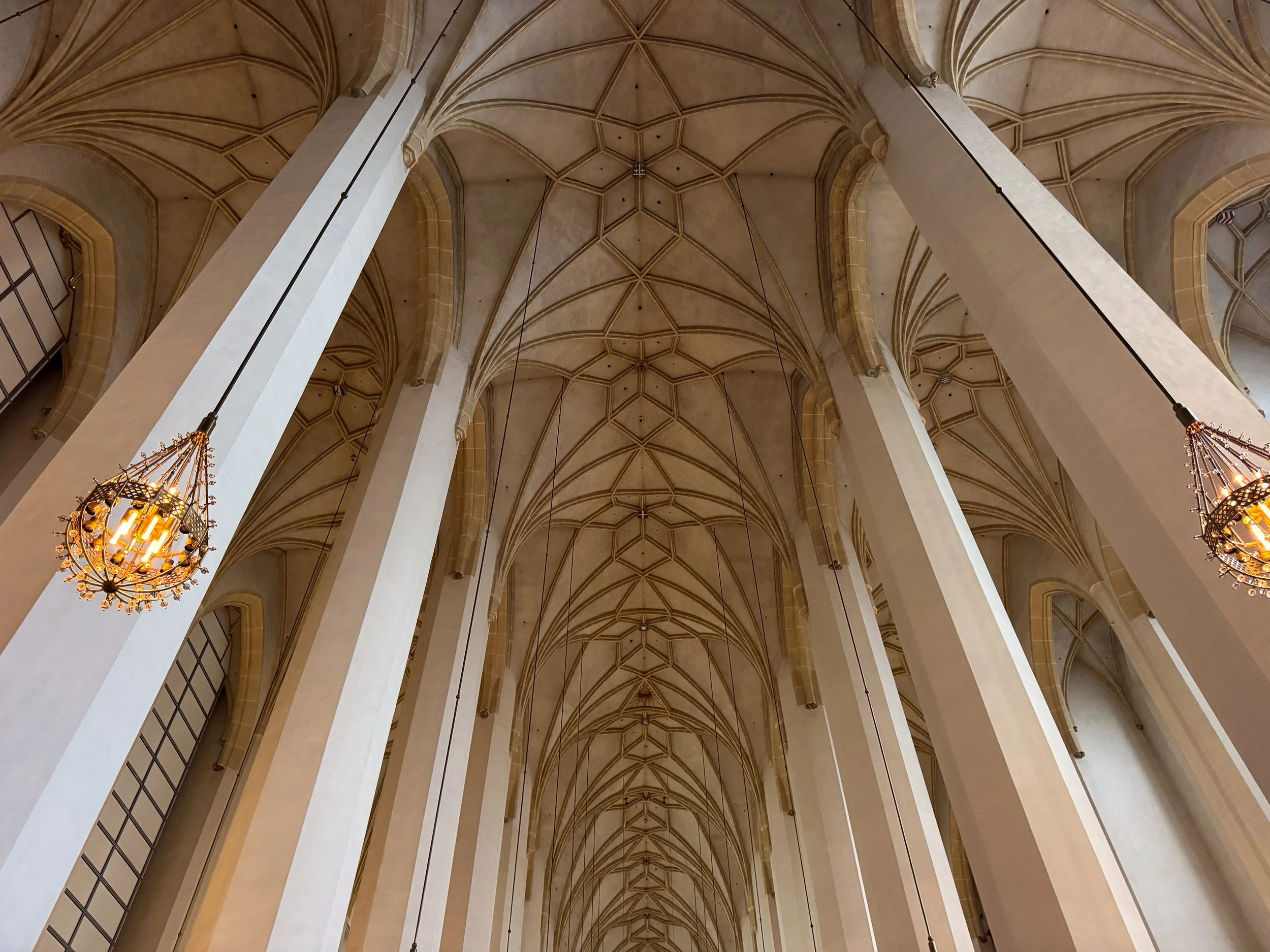
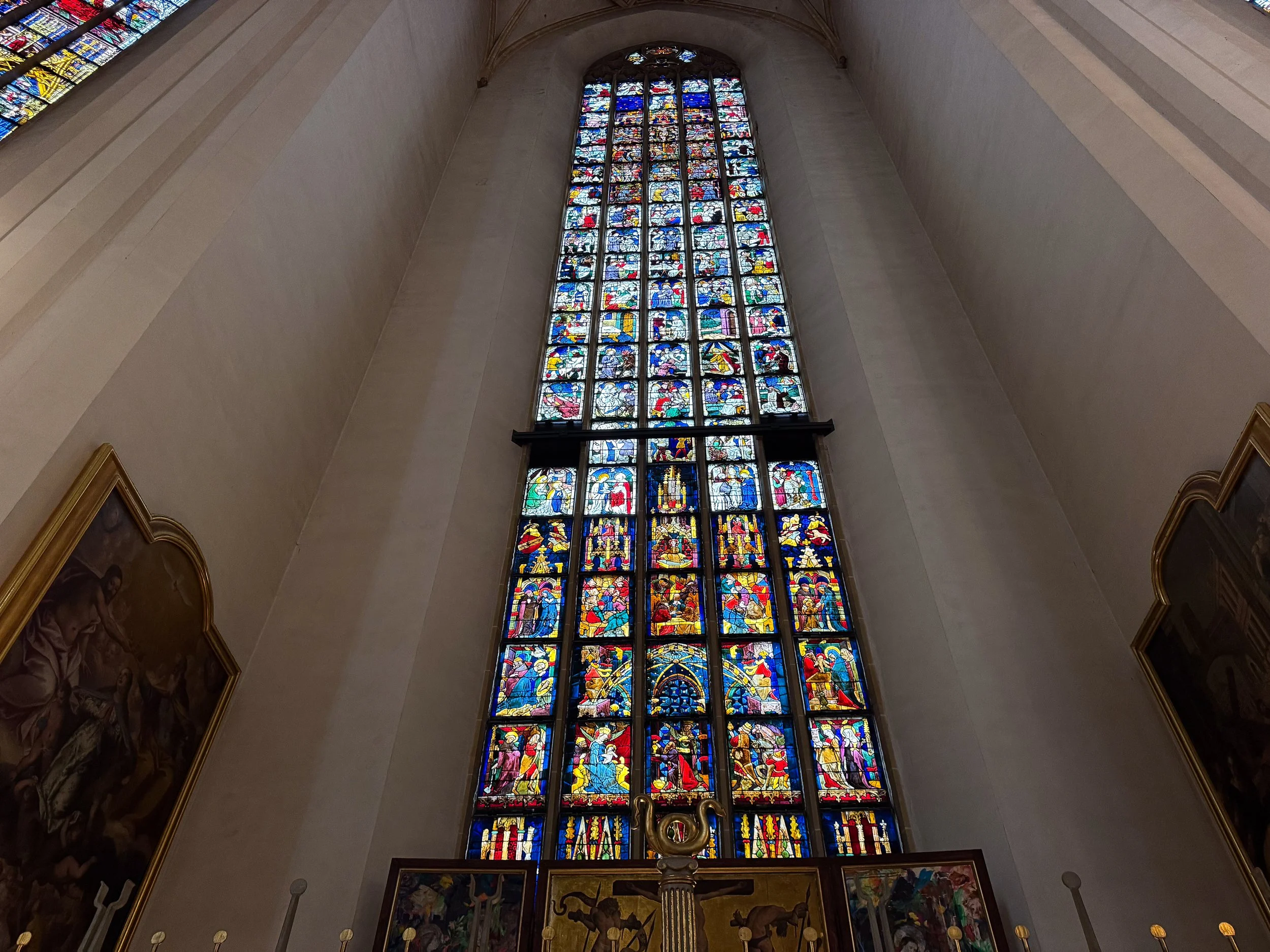
Frauenkirche Cathedral. A massive red brick cathedral recognizable by its twin towers topped with green copper domes. Inside the entrance, the Devil’s Footprint marks where, legend says, the devil stamped in triumph at a seemingly windowless church, its stained glass hidden behind soaring white columns. The cathedral is the resting place of Holy Roman Emperor Ludwig IV and members of the Wittelsbach dynasty. Visit the South Tower for panoramic city views.
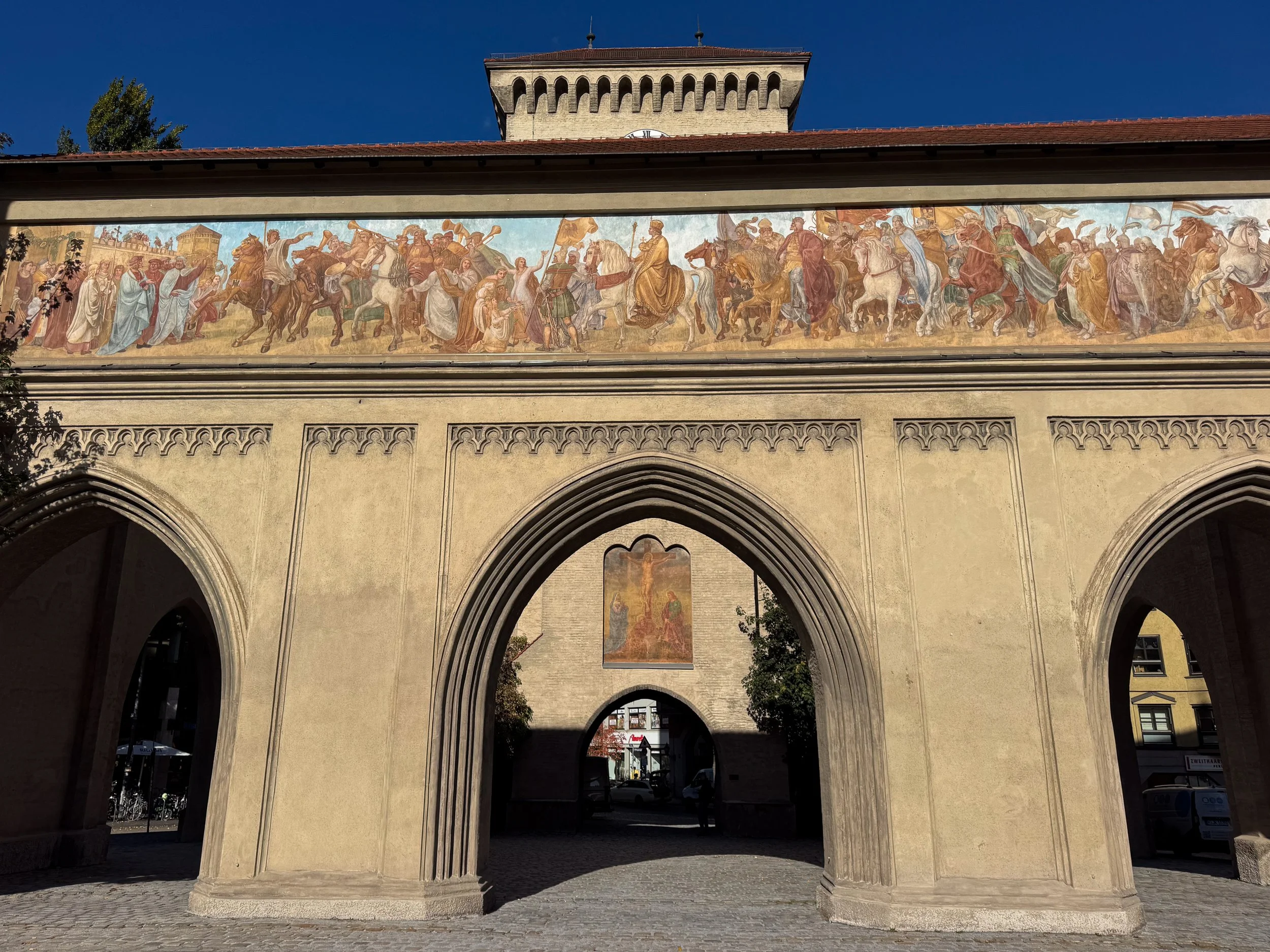
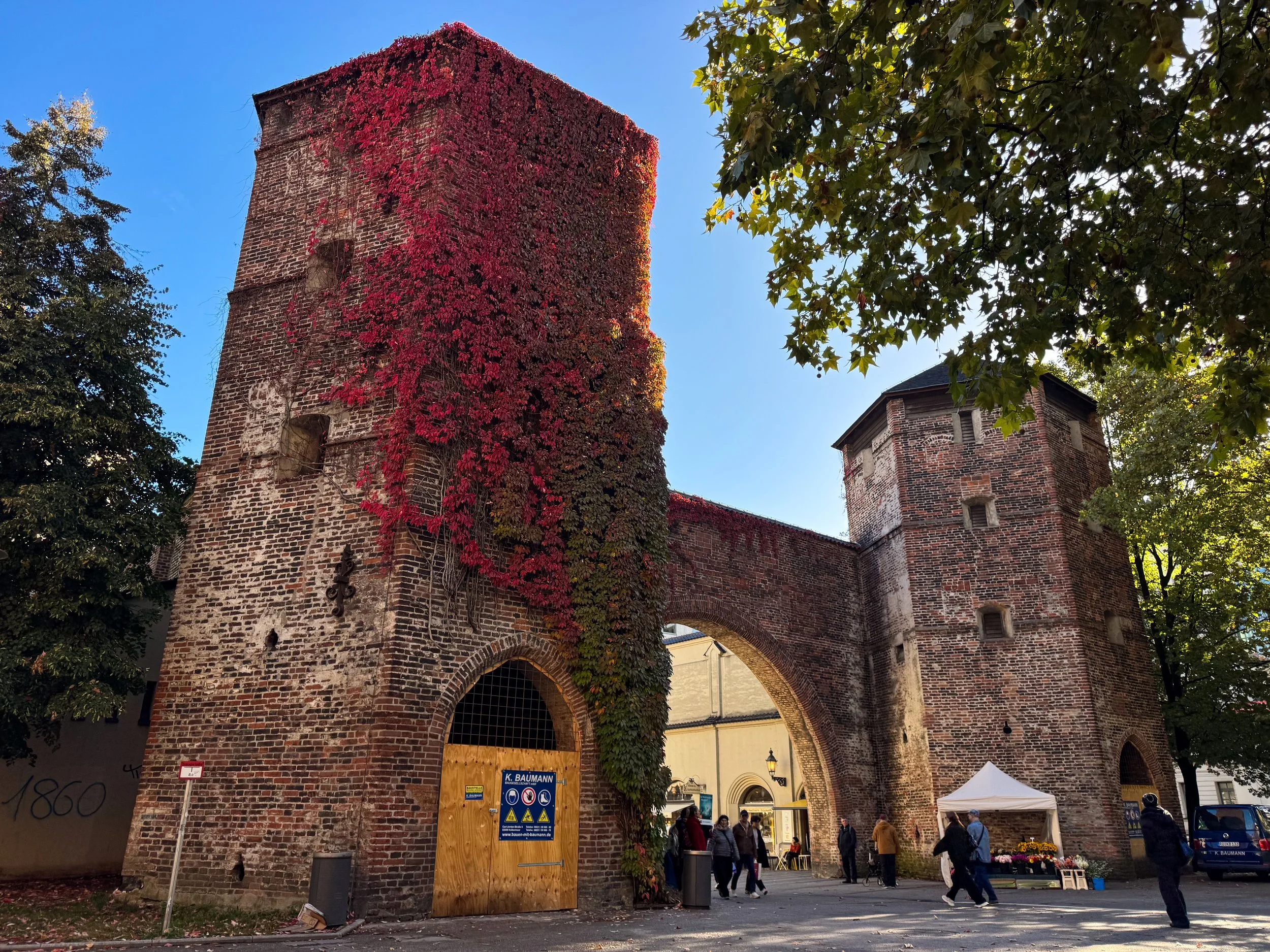
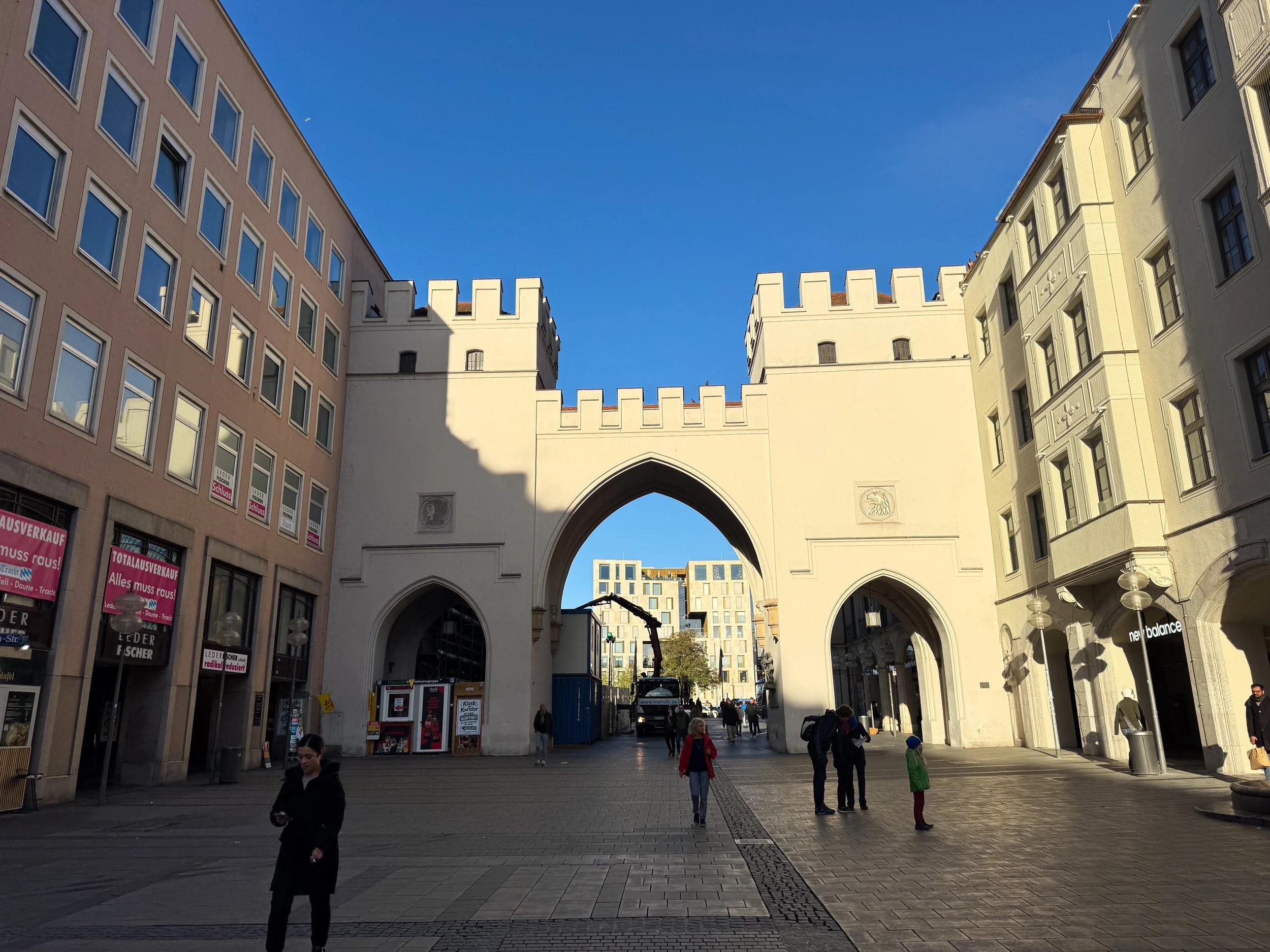
Altstadt City Gates. Three medieval gates still stand at the edges of the old town.
Isartor. A grand gate with three arched passageways, flanked by octagonal towers, with a colorful fresco depicting a royal procession. On the inner side, a brick clock tower rises above a wide Gothic arch.
Sendlinger Tor. A large gate at the end of Sendlinger Straße, where a wide central arch is flanked by two red brick hexagonal towers. One tower is draped in ivy that turns vibrant red in mid-autumn.
Karlstor. A castle-like gate at the entrance to the Altstadt on Neuhauser Straße. Two side towers flank a central bridge topped with toothed battlements as three Gothic arches lead through it.
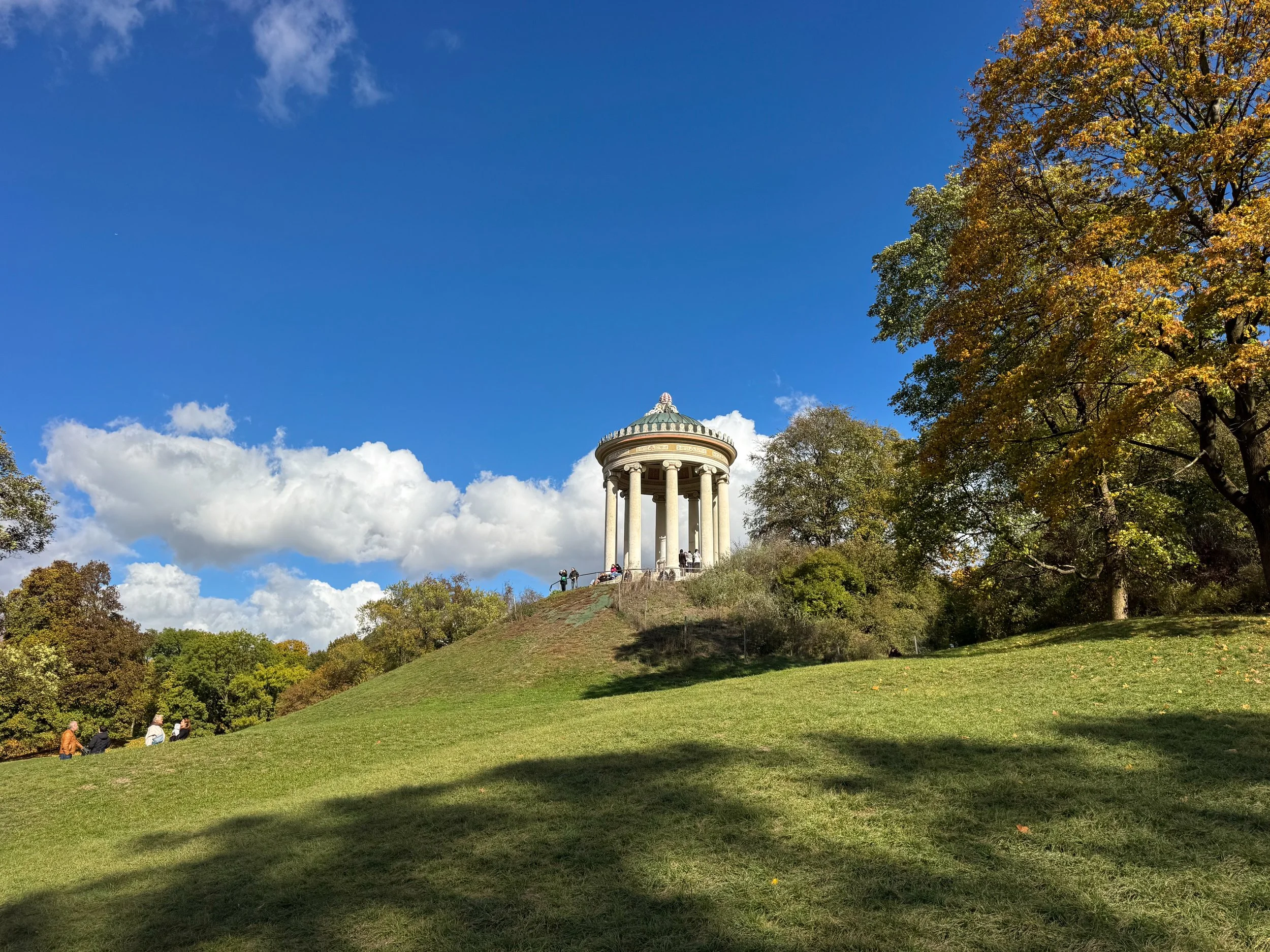
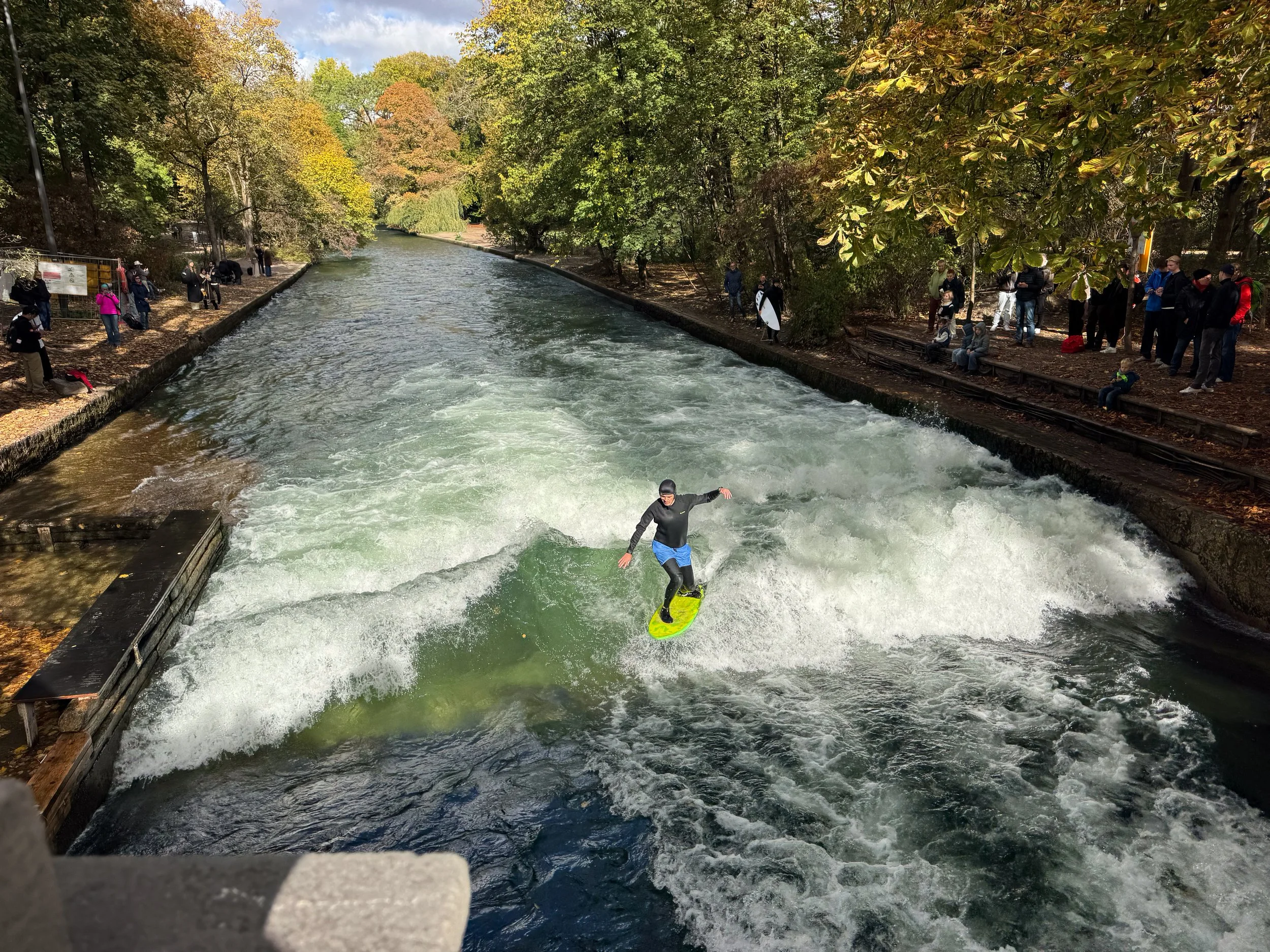
Parks & Green Spaces
Englischer Garten. A sprawling city park along the Isar River, with tree lined paths, expansive lawns, winding waterways and multiple beer gardens, including the famed Chinesischer Turm. Locals spread out for picnics on the grass while surfers ride the standing wave at the Eisbachwelle. Climb the hill to the Monopteros, a stone gazebo with scenic views across the park.
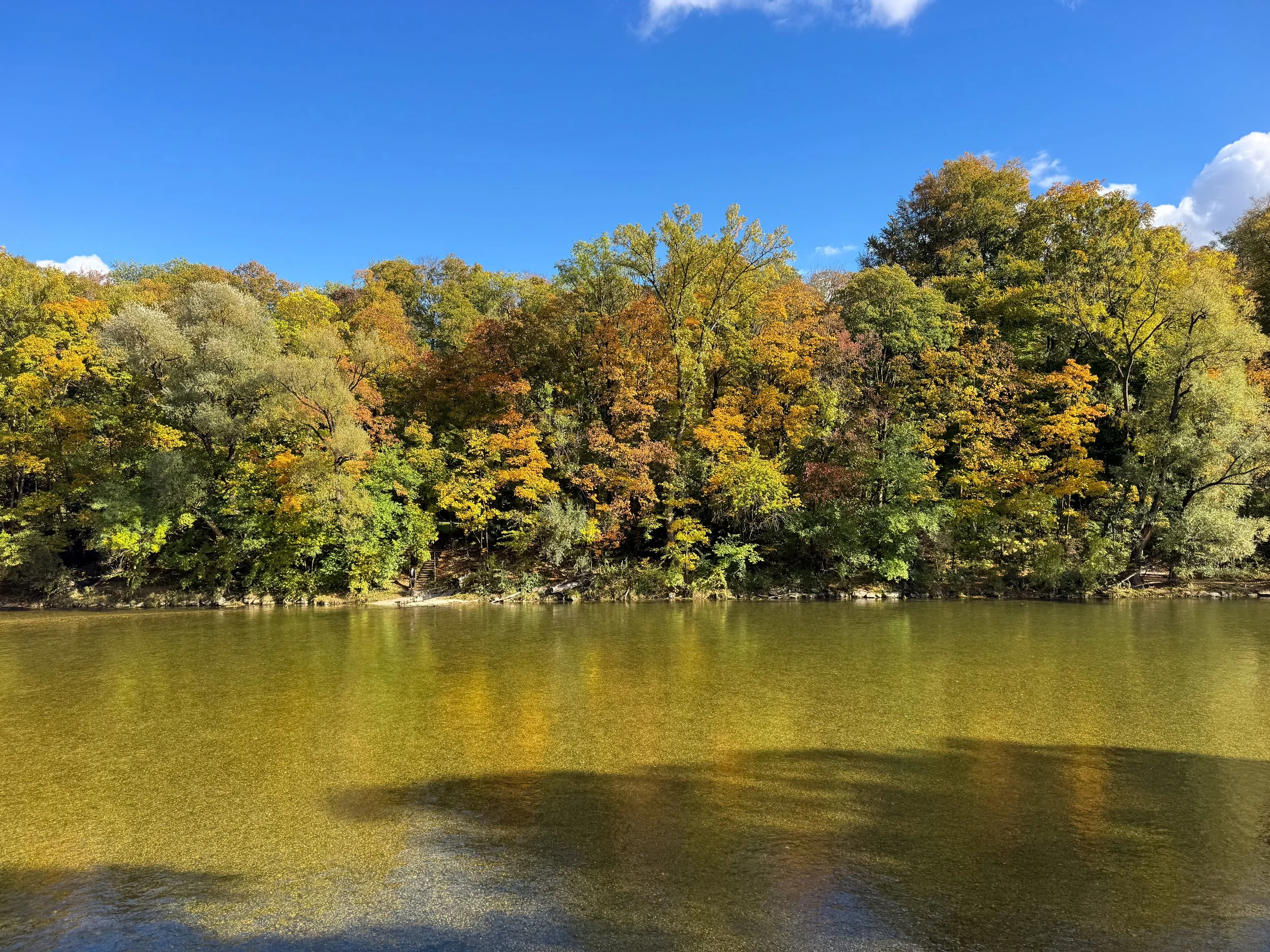
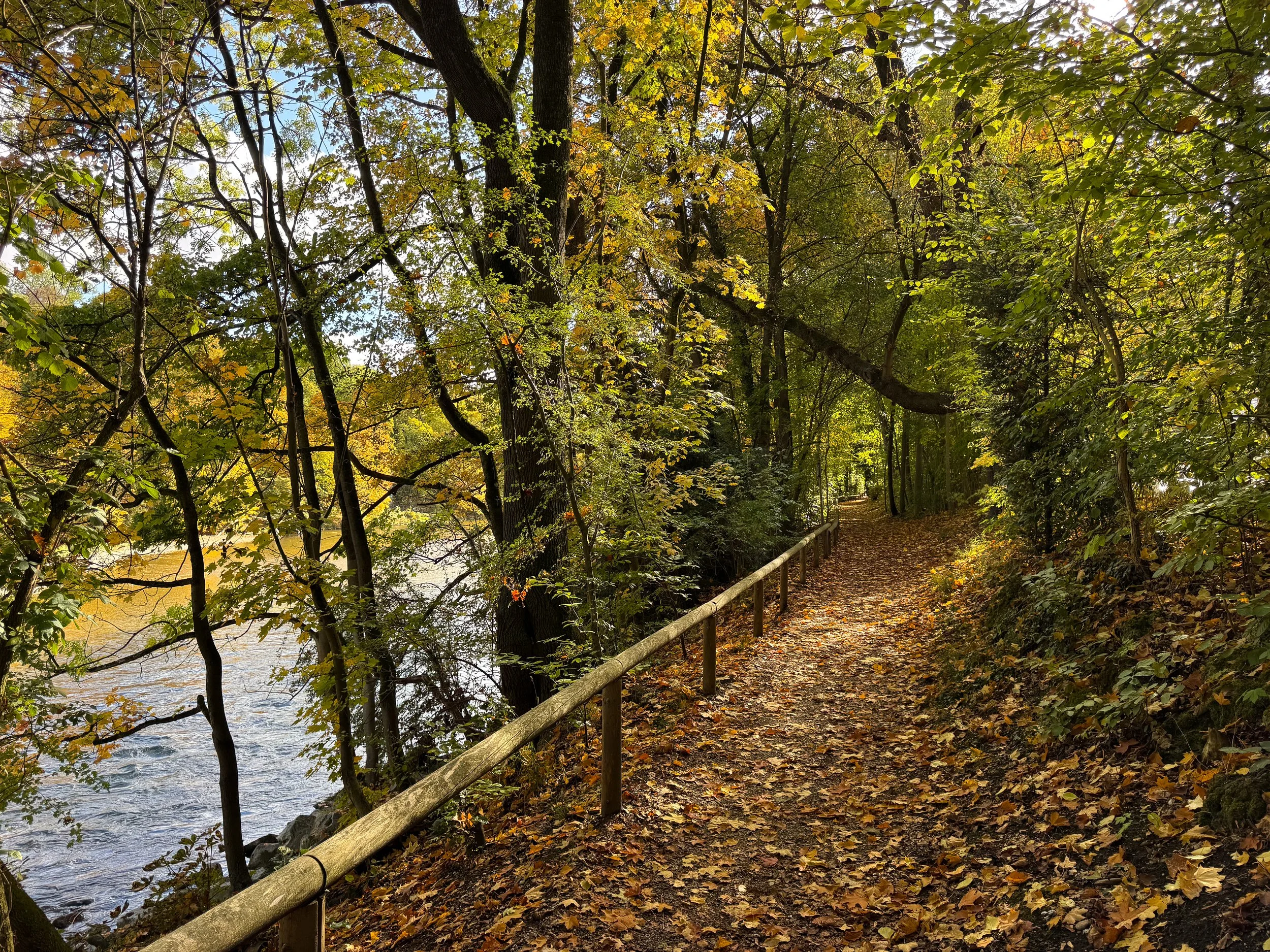
Isar River. A river meandering through the heart of Munich, its banks lined with walkways and bike paths. When the water runs low, pebble and sand beaches emerge along its edges. It’s especially beautiful in autumn, when the leaves turn vibrant shades of yellow and orange.
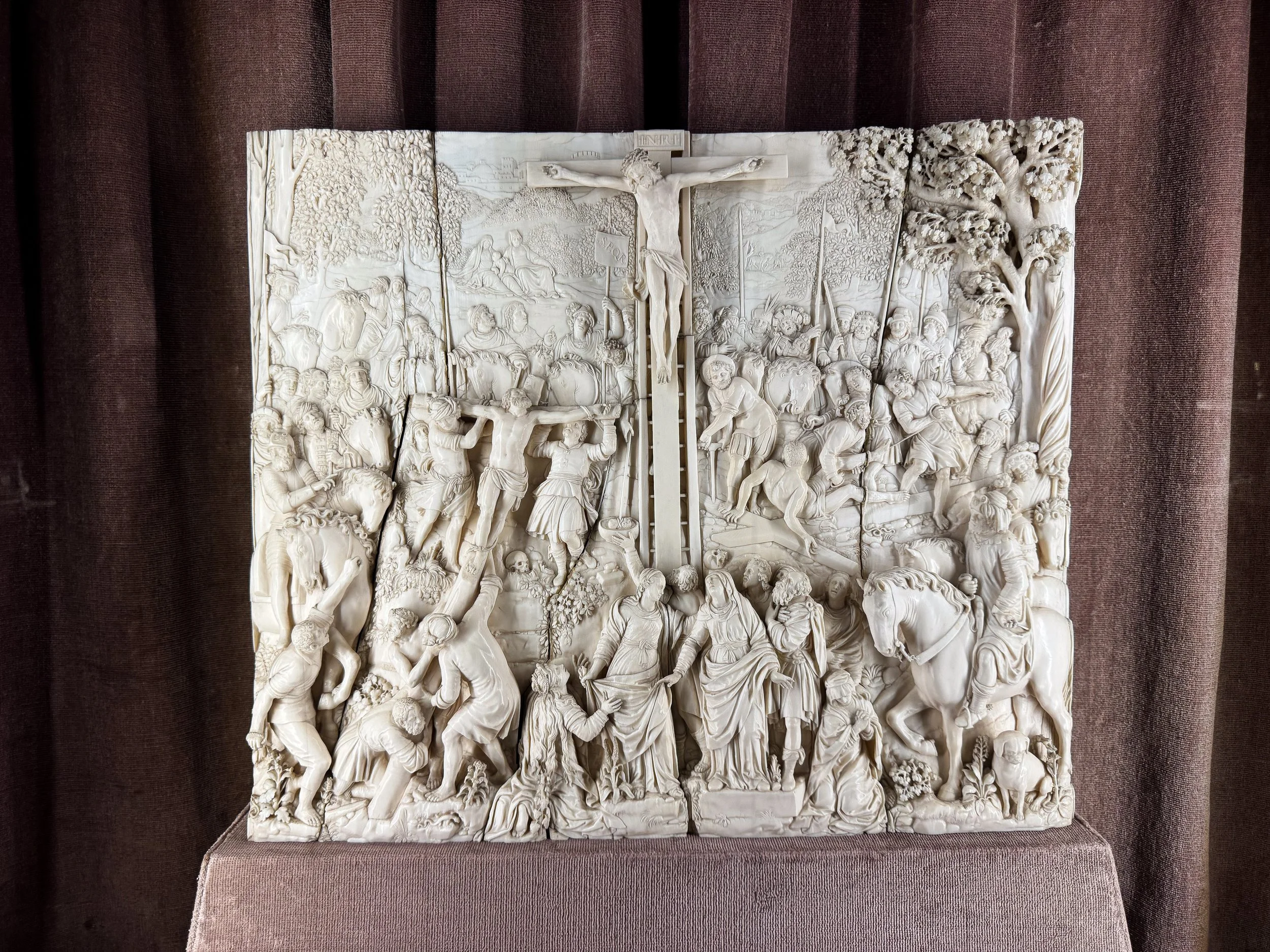
The Munich Residenz & Museums
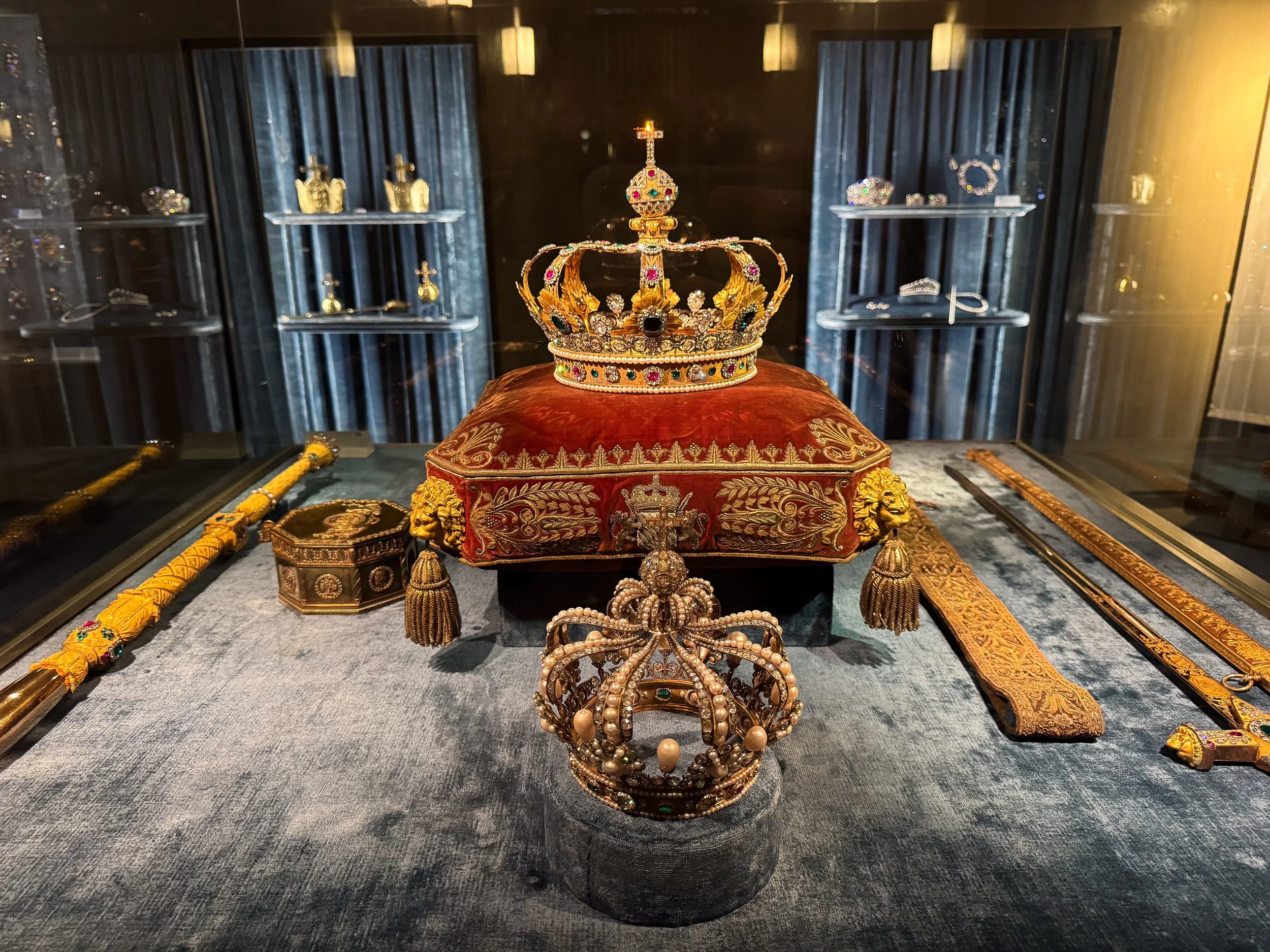
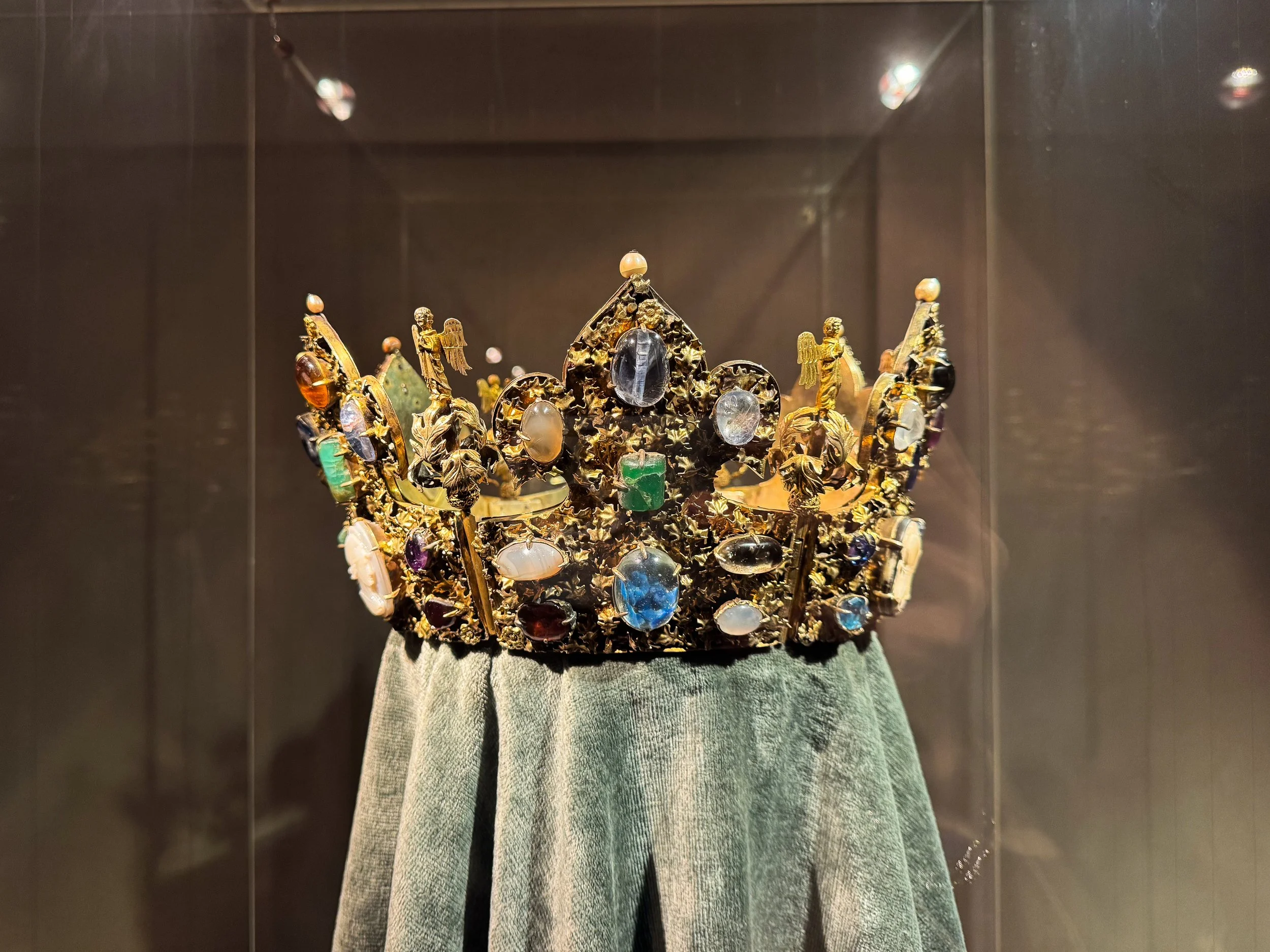
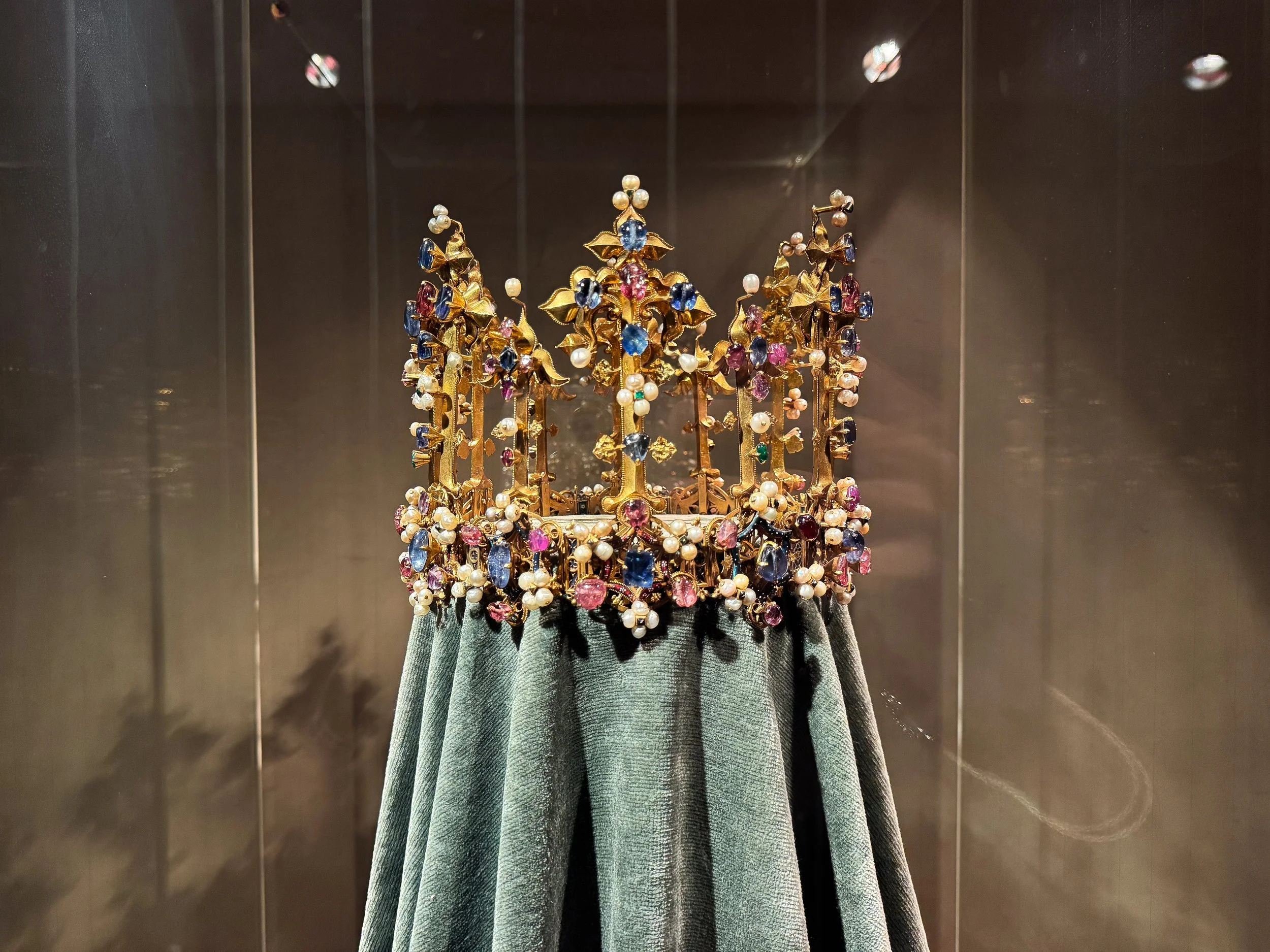
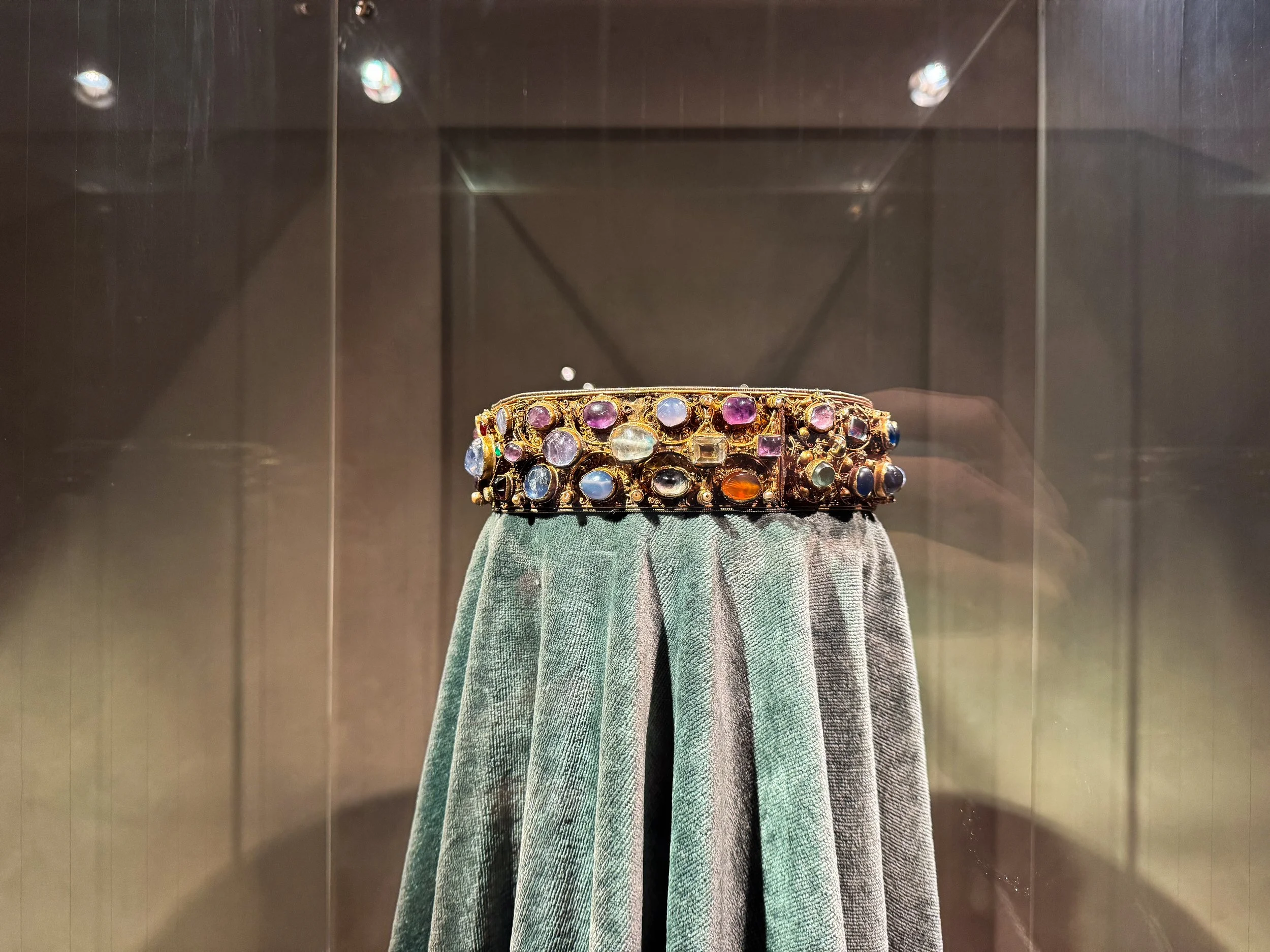
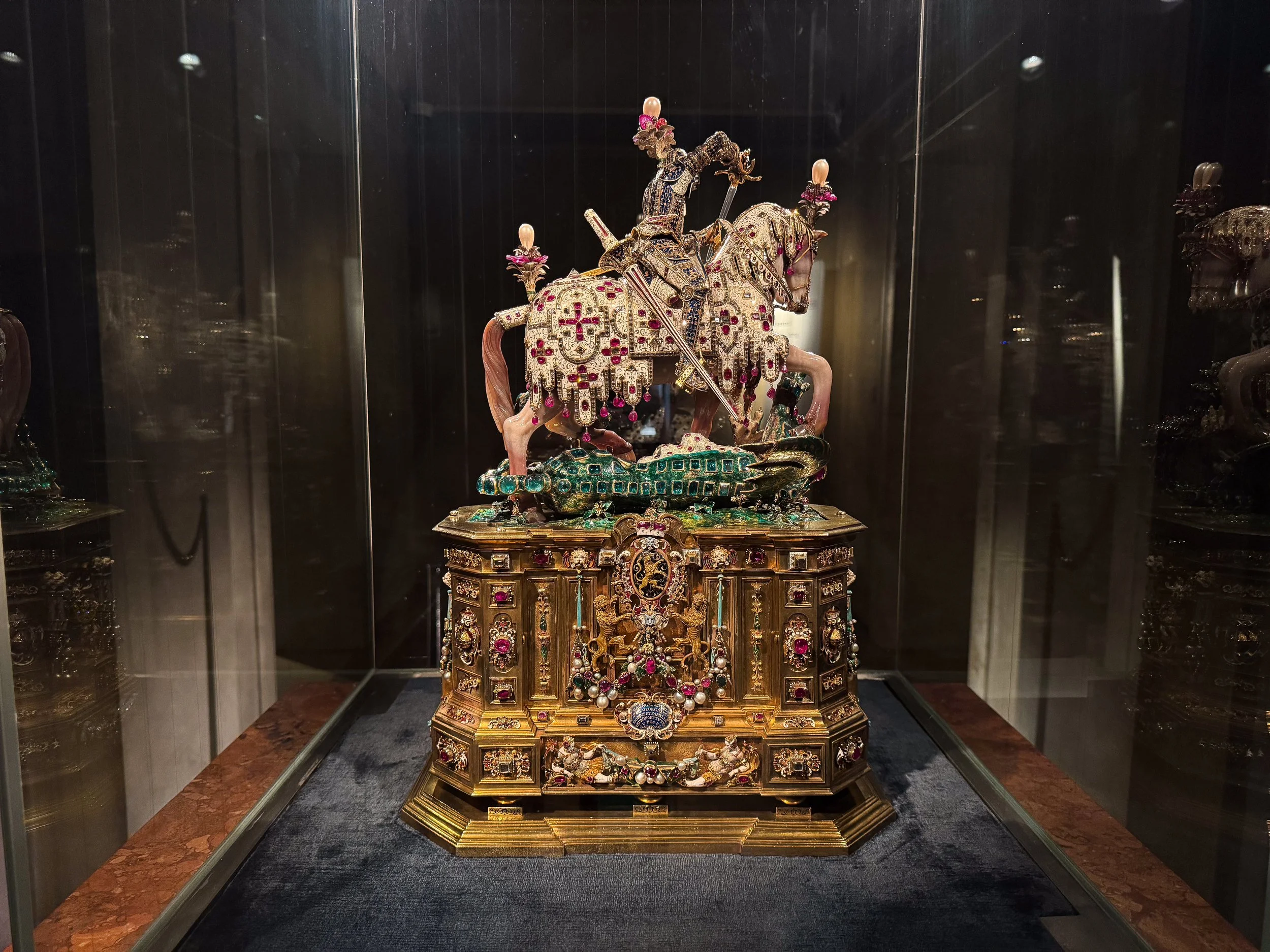
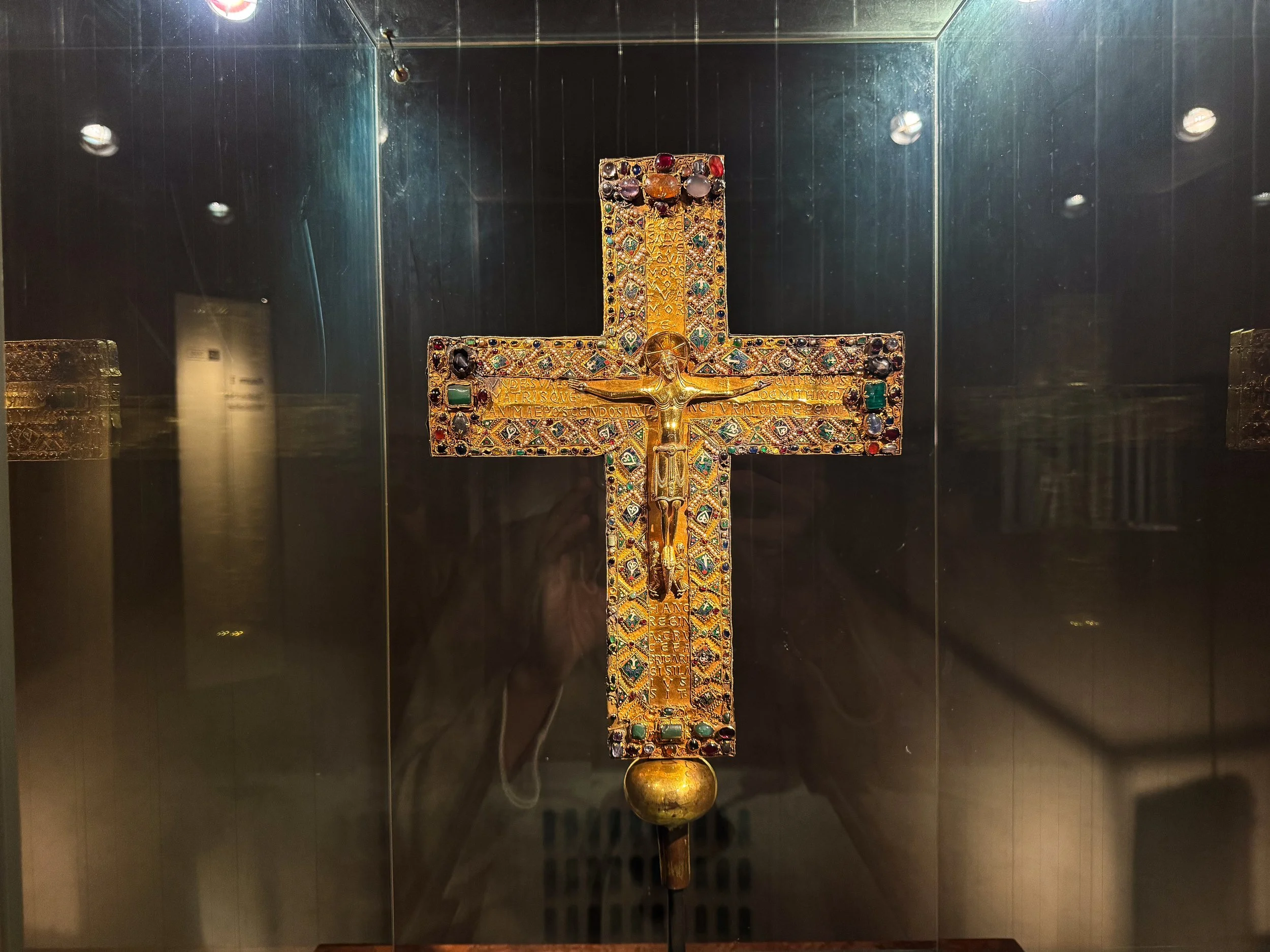
Munich Residenz. The former royal palace of the Wittelsbach dynasty, who ruled Bavaria from the 12th century until 1918. Today it’s a museum, where an expansive network of lavish rooms spans Renaissance, Baroque, Rococo and Neoclassical styles. The Treasury dazzles with the monarchy’s crown jewels.
The Treasury. An exhibit containing the Wittelsbach dynasty’s dazzling collection of crown jewels and priceless artifacts. Cases glitter with filigreed gold crowns set with gemstones, pearls and onyx, alongside jeweled swords, golden crosses, bejeweled Bibles and treasures crafted from crystal, amber, ivory and ostrich eggs. Highlights include the Crown of an English Queen, the oldest surviving English crown from around 1370; the jewel encrusted Statuette of St. George slaying the dragon; and the Royal Regalia of crowns, swords, scepter and orb.
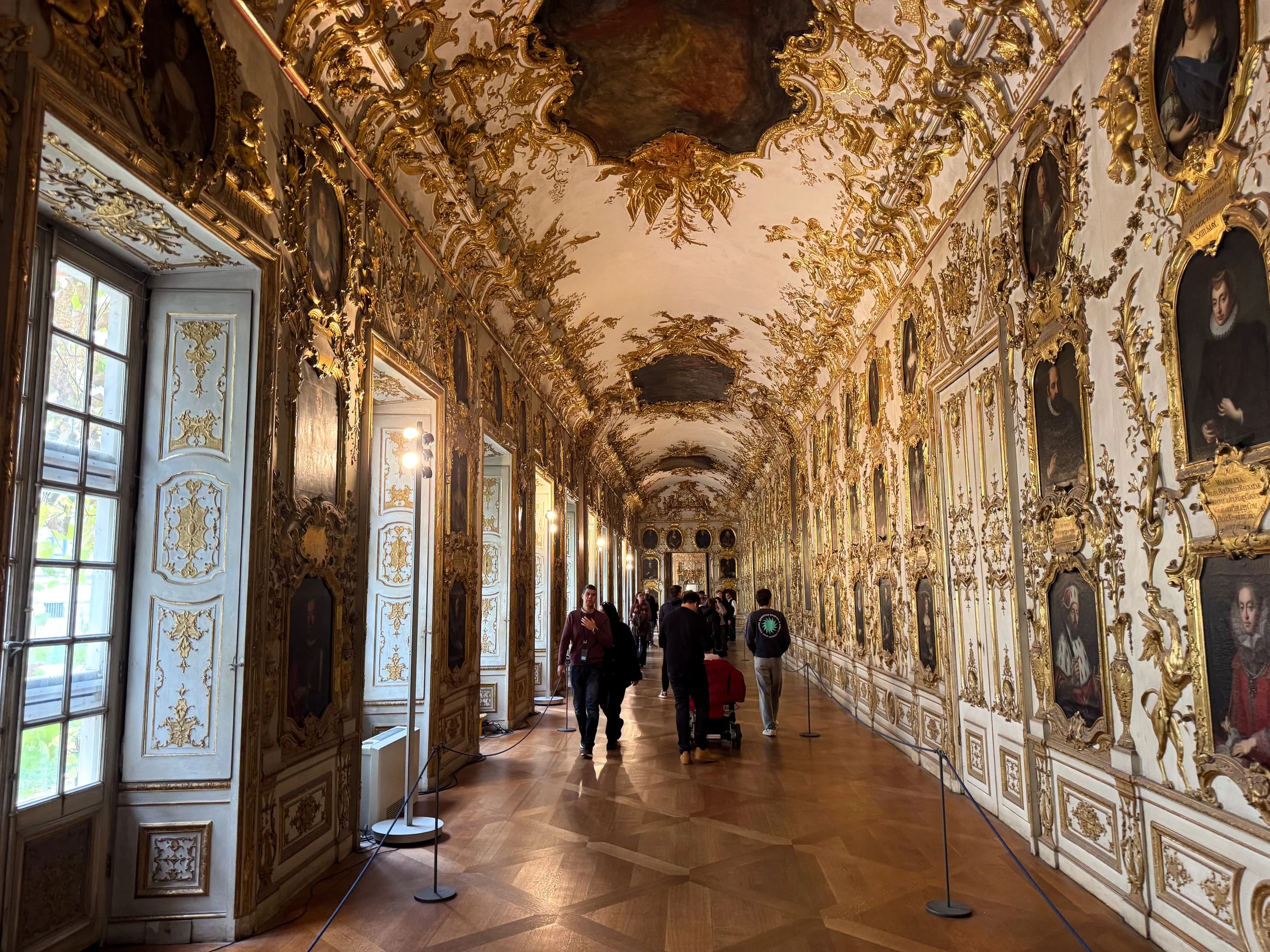
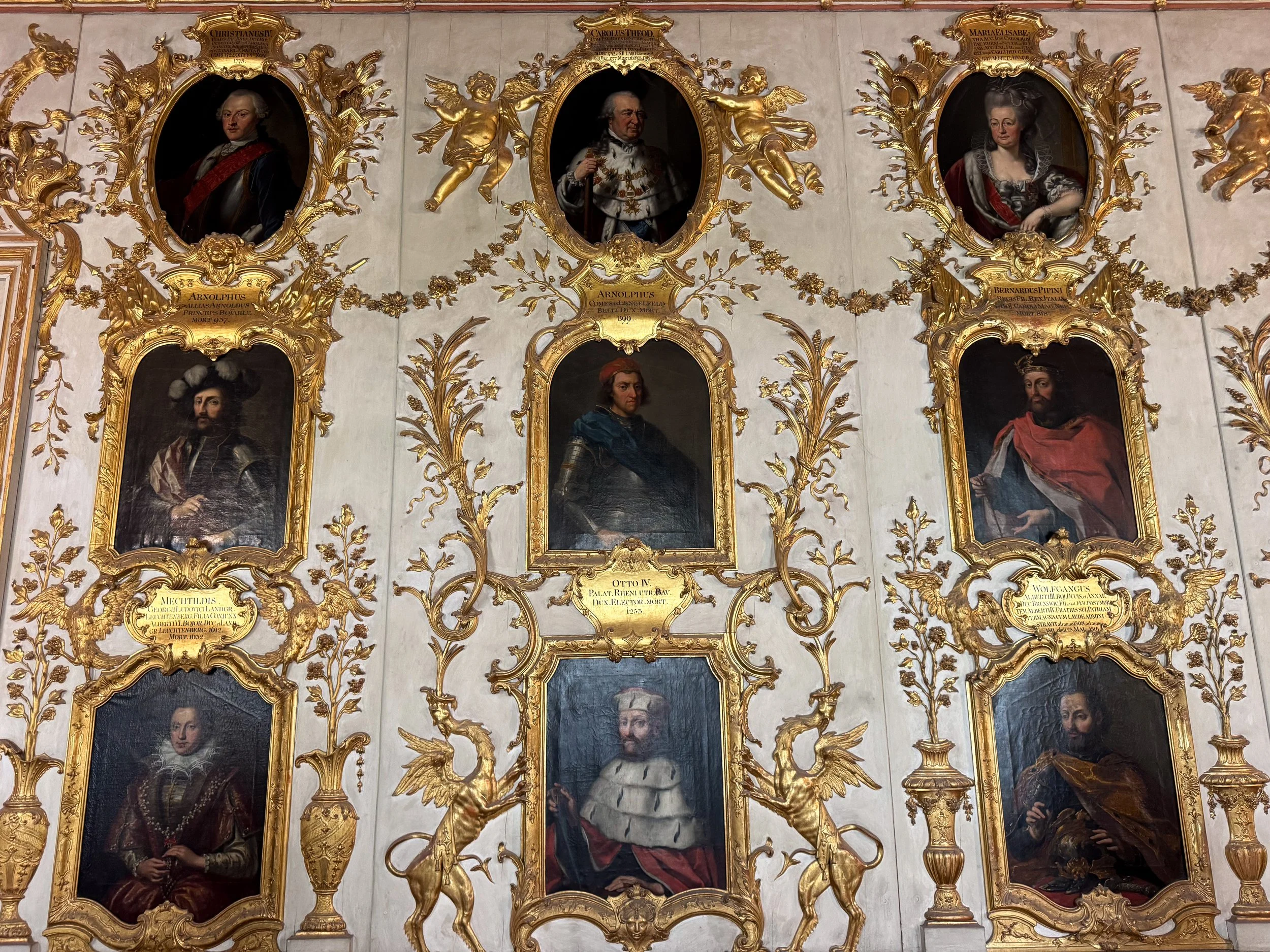
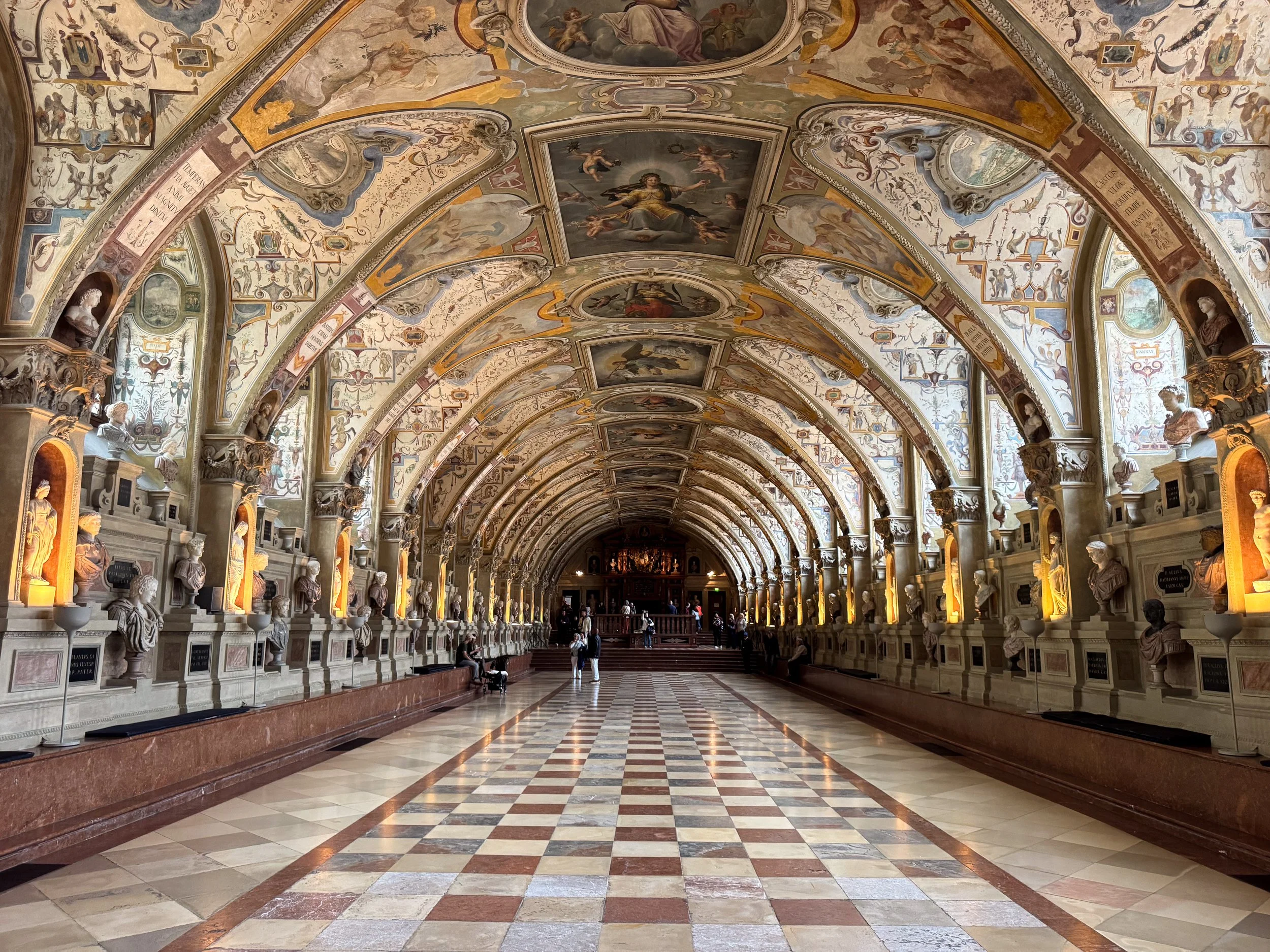
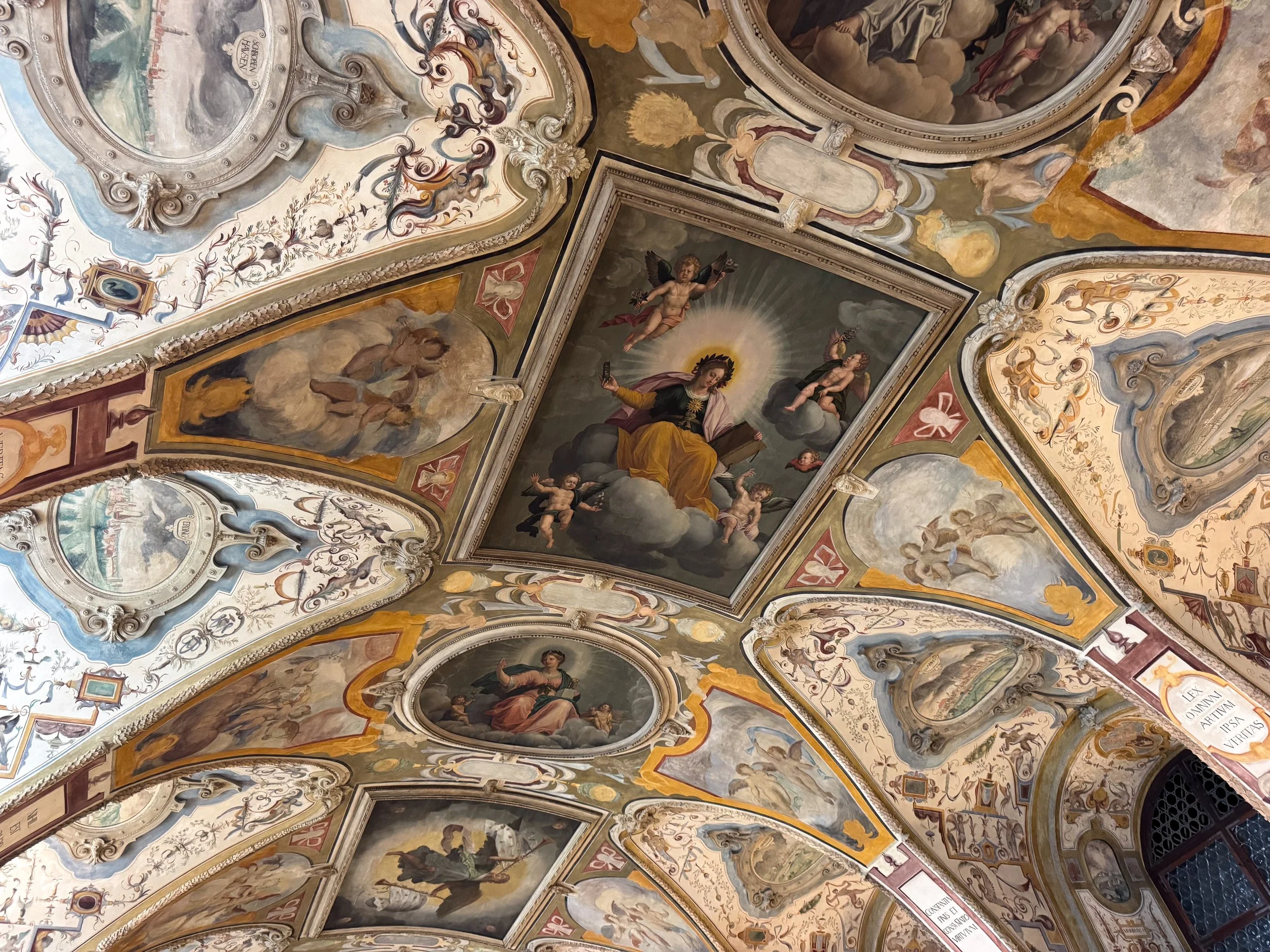
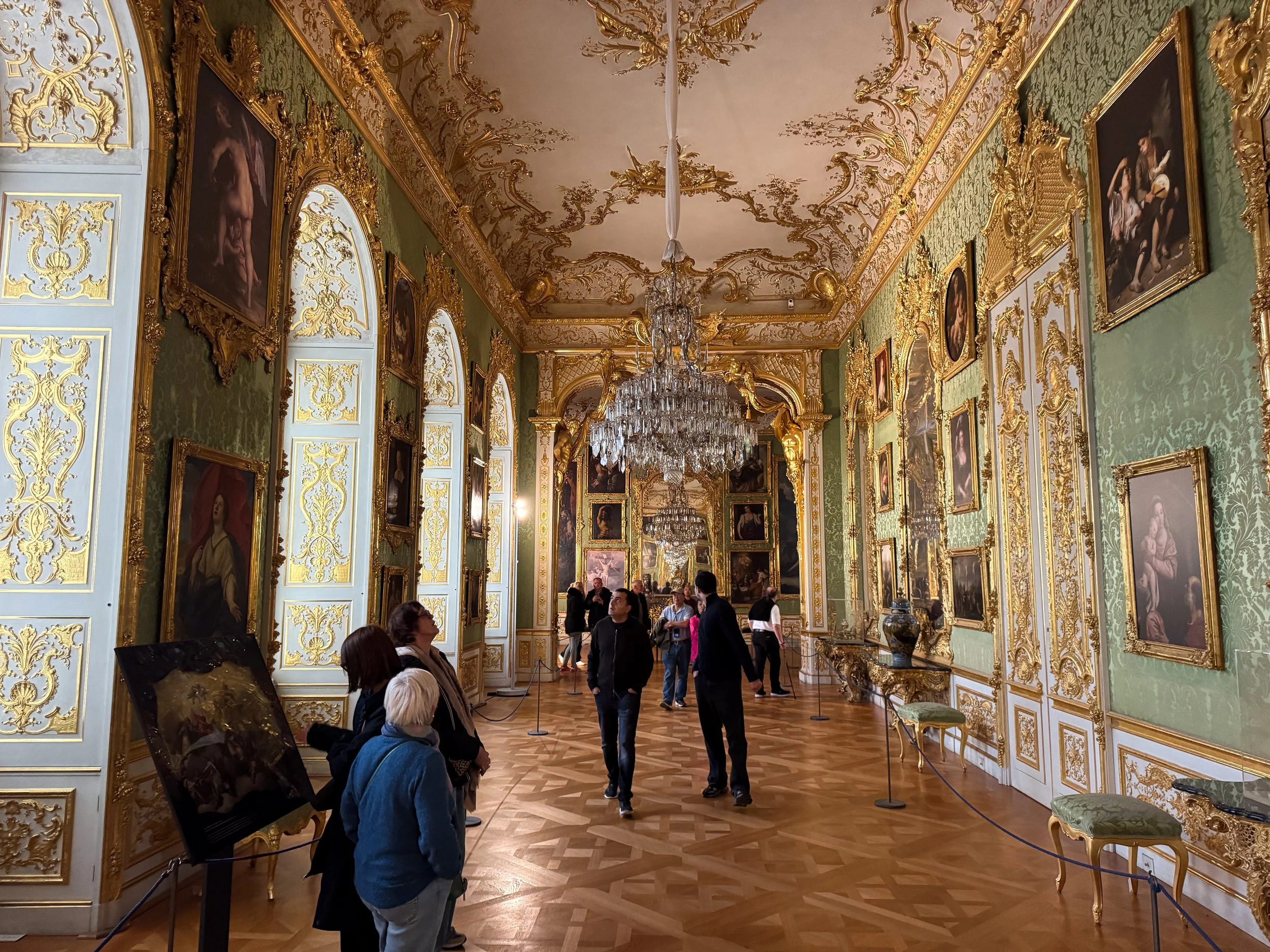
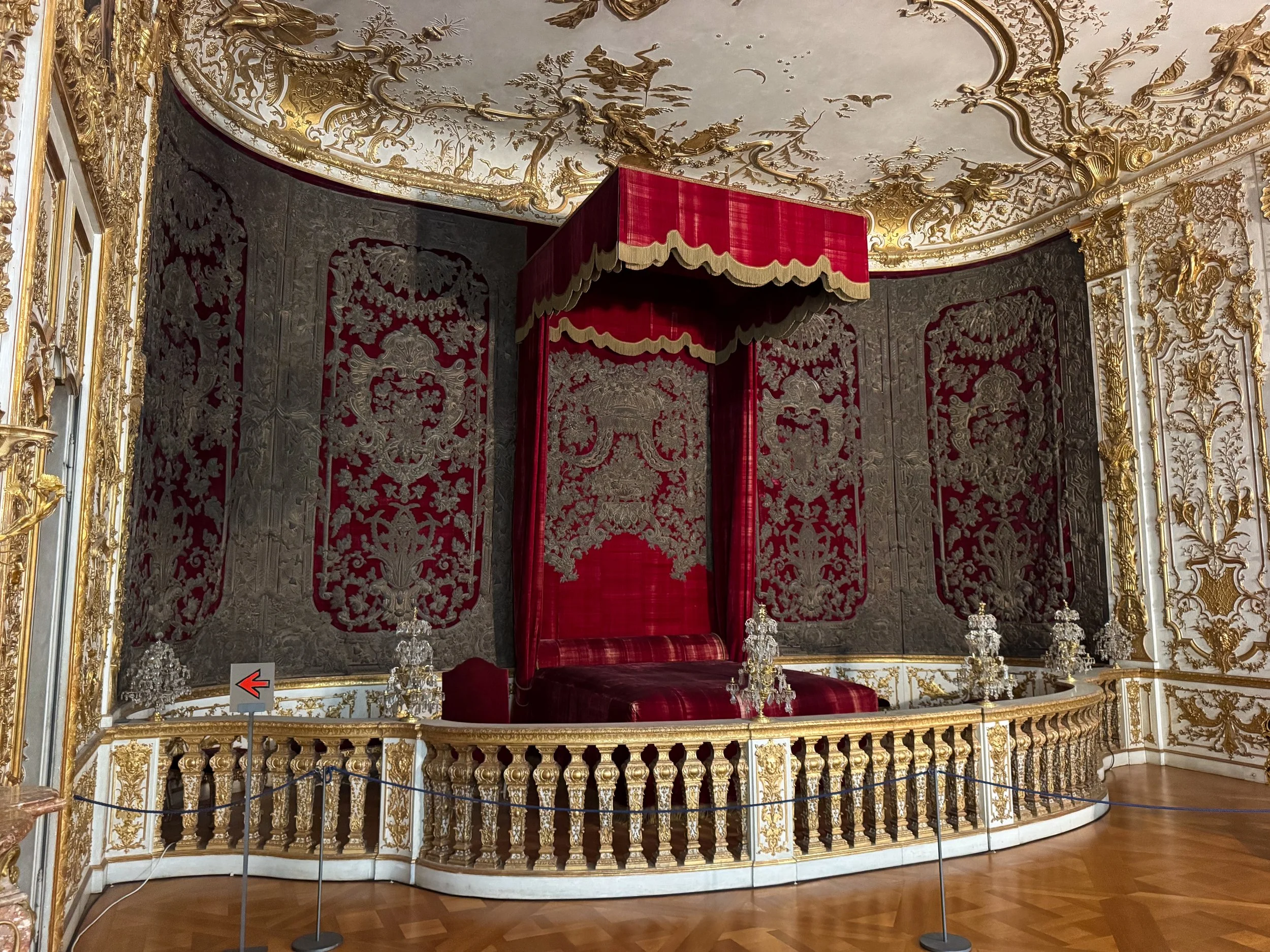
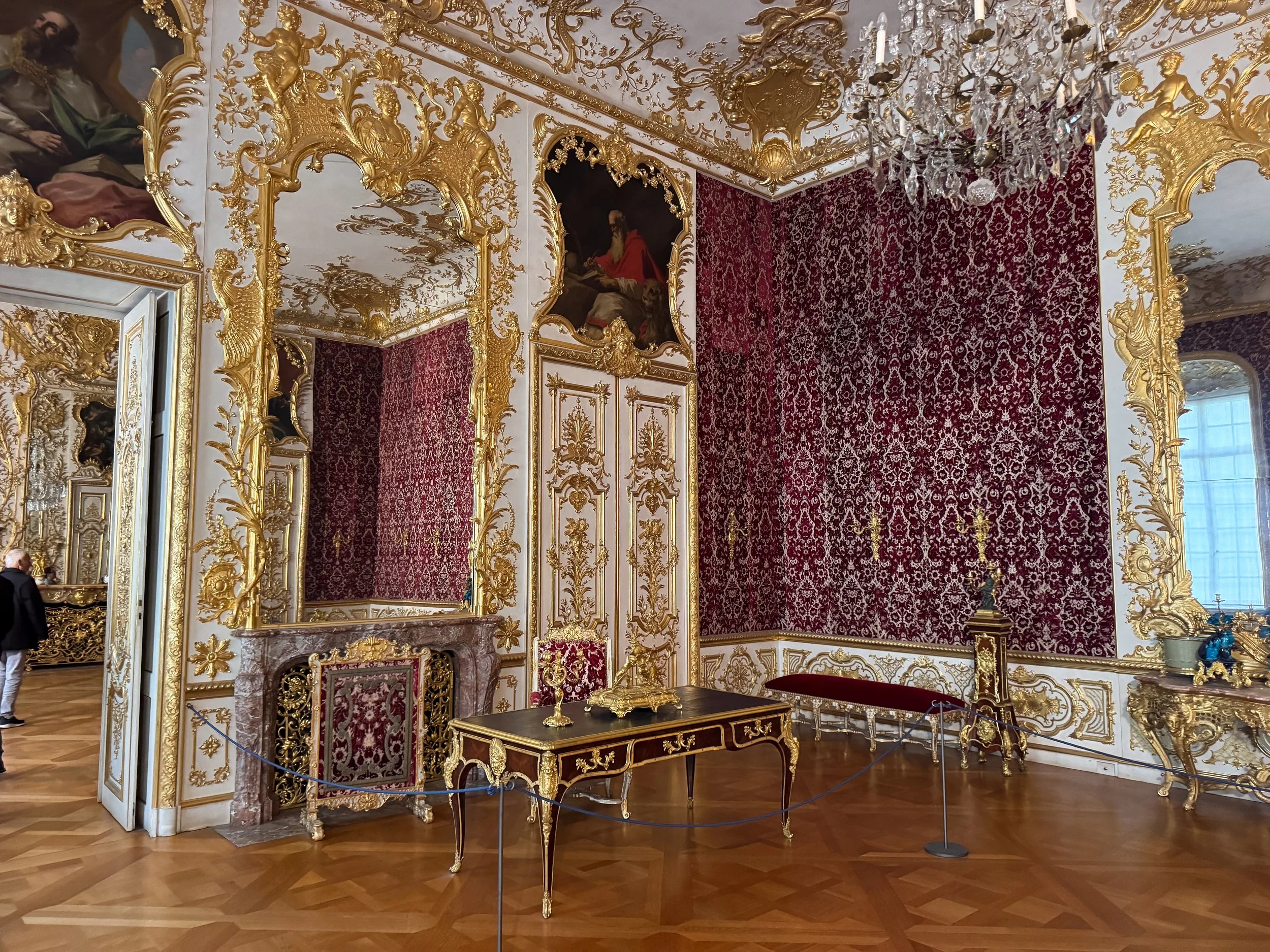
Residenz Museum. A self guided tour through the palace’s expansive state rooms and art collections, winding past gilded halls, royal audience chambers, bedrooms and throne rooms filled with antique furniture, historic paintings, medieval tapestries and impressive porcelain collections. Must see rooms include:
Ancestral Gallery. One of the first grand halls you’ll enter, lavishly gilded and lined with more than 100 portraits of the Wittelsbach family, including a family tree tracing their lineage back to Charlemagne.
Grotto Courtyard. An ornate corner of the palace courtyard, decorated with fountains, statues and mosaics made from thousands of shells.
Antiquarium. A vast Renaissance hall beneath a vaulted ceiling covered in vivid frescoes of religious, royal and Bavarian scenes, with walls lined with stone busts above marble floors.
Green Gallery. A soaring evening entertainment room hung with green silk wall coverings and a collection of grand paintings.
Good to Know. Plan to spend half a day here. The short tour of the State Rooms takes about two hours, while the long tour can take up to three, not including time in the Treasury.
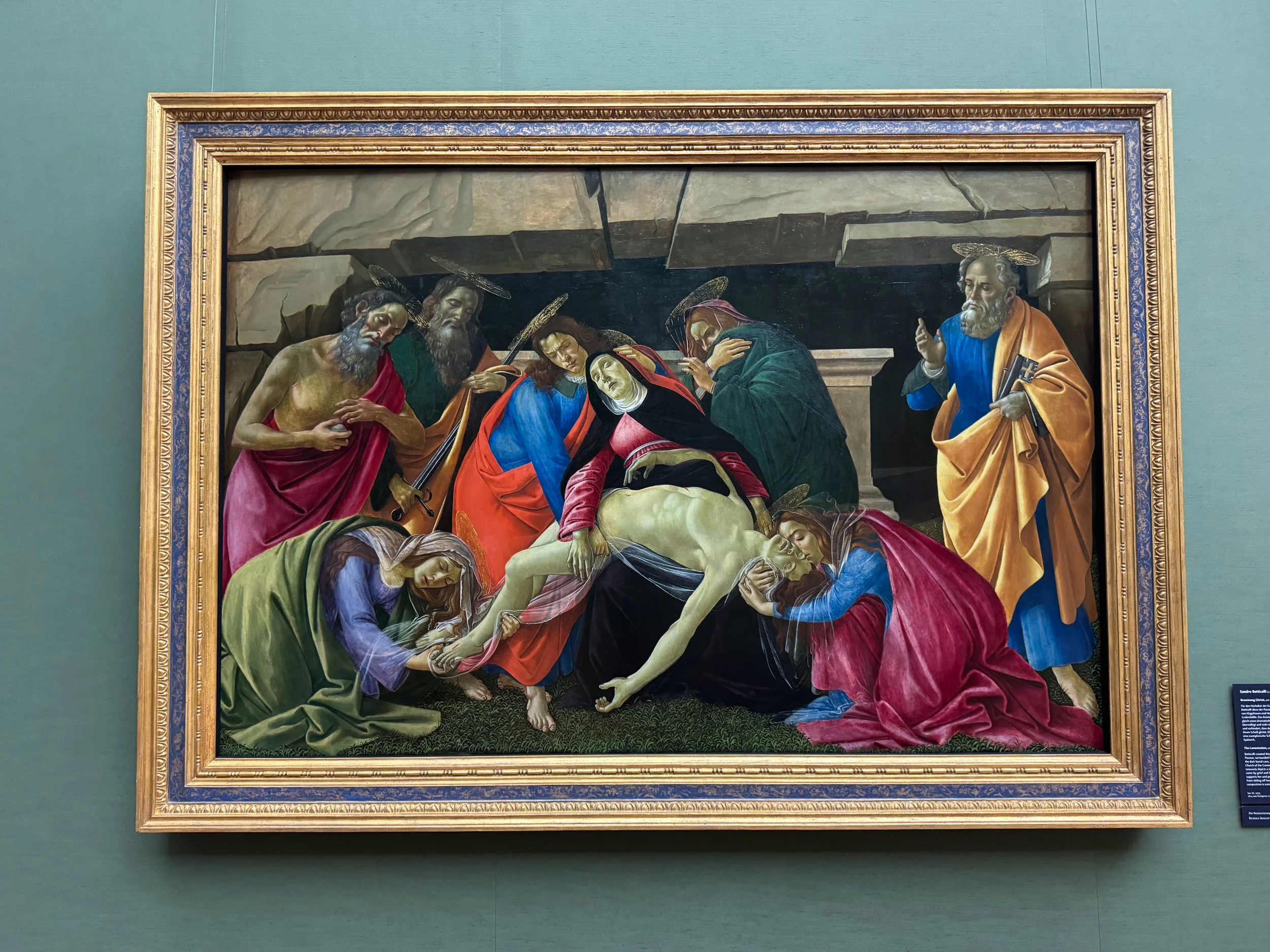
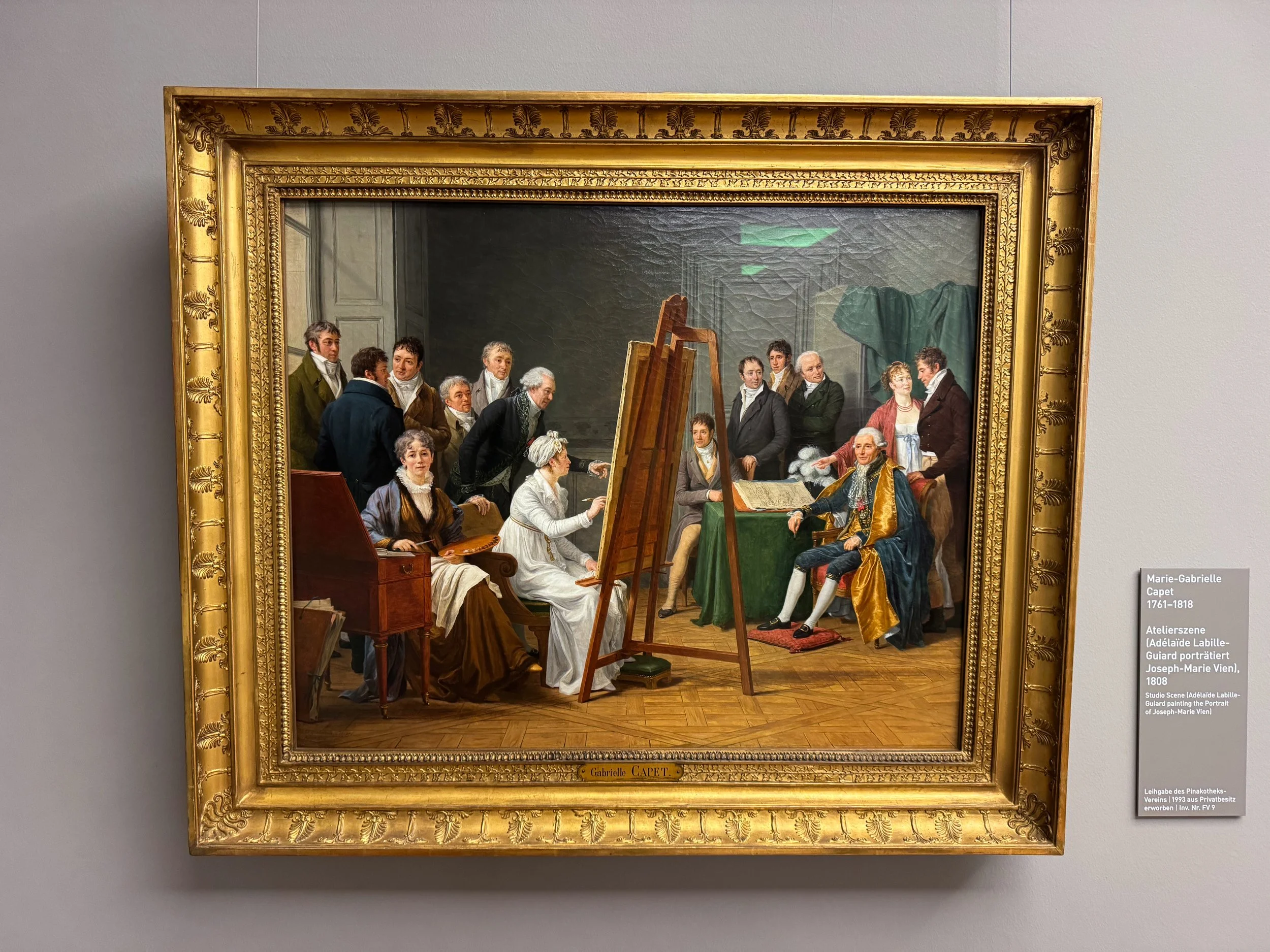
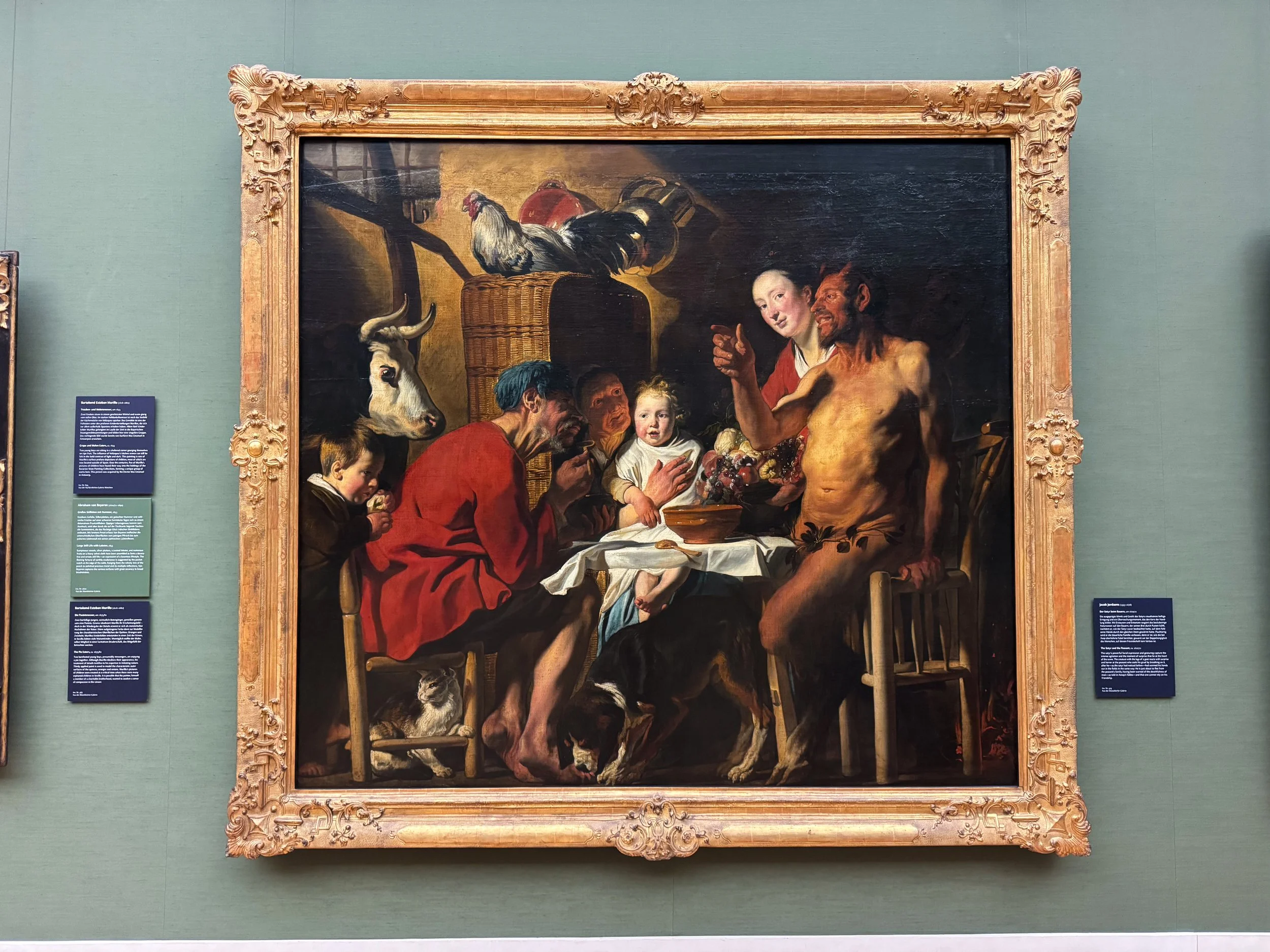
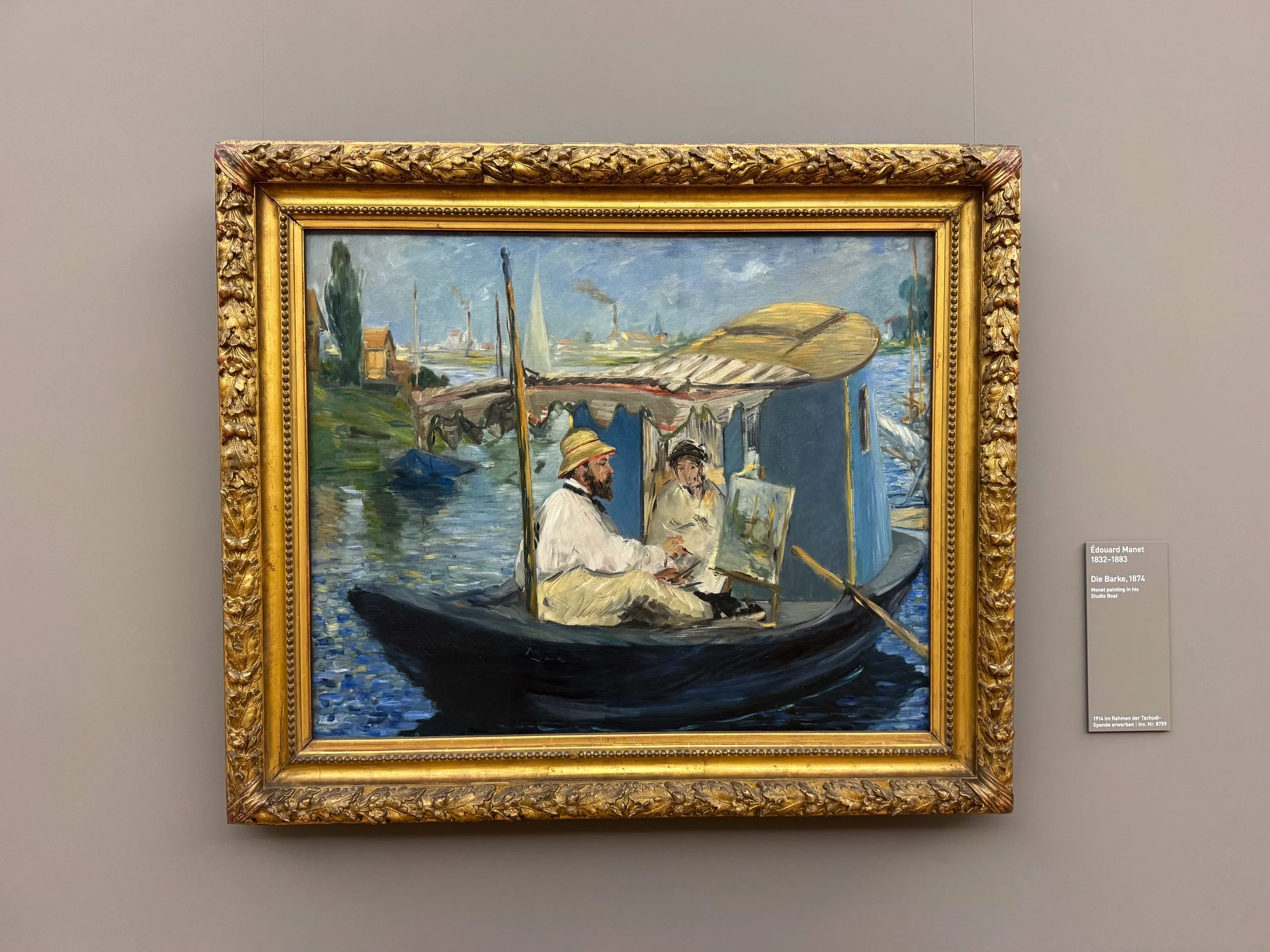
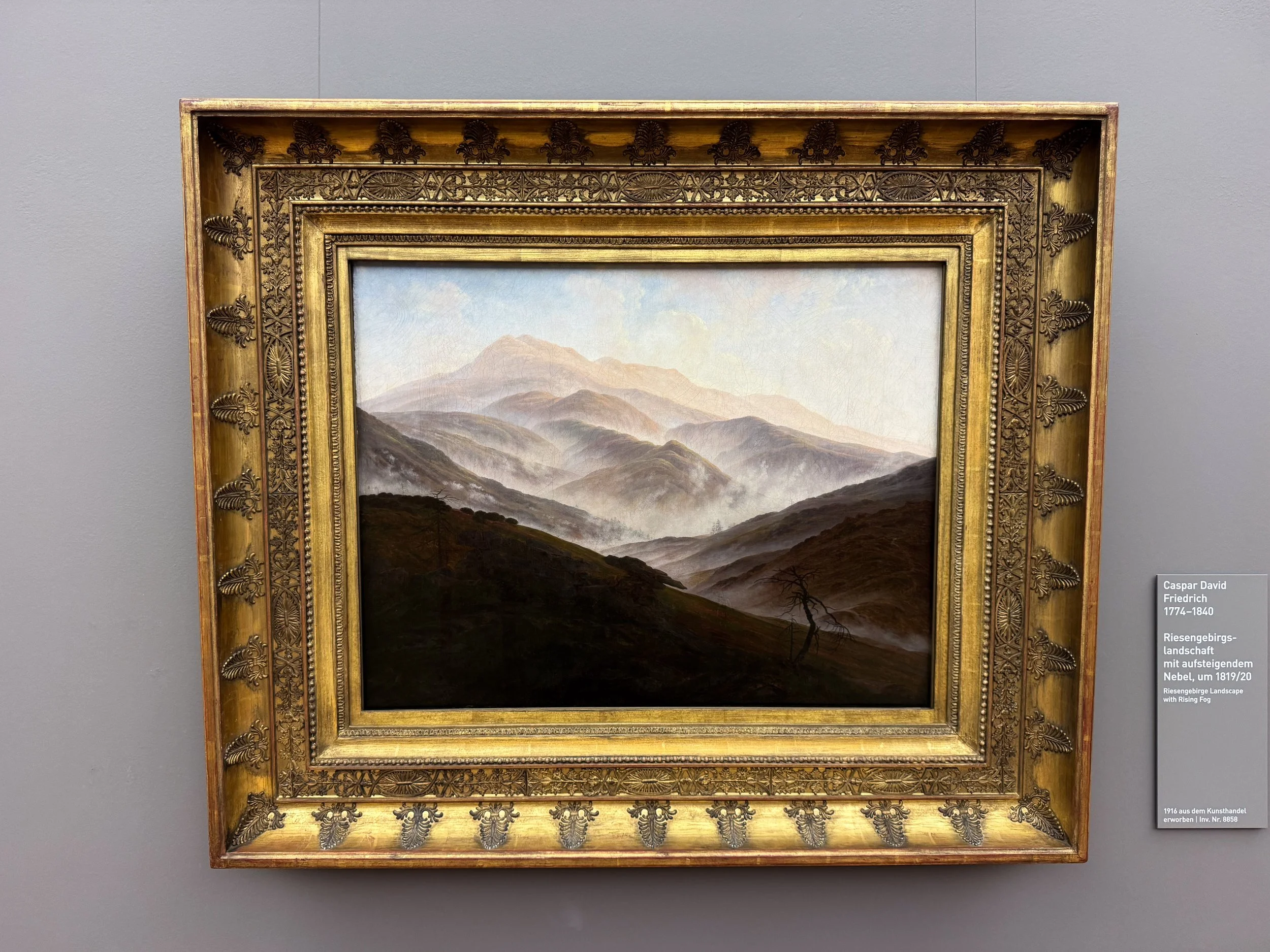
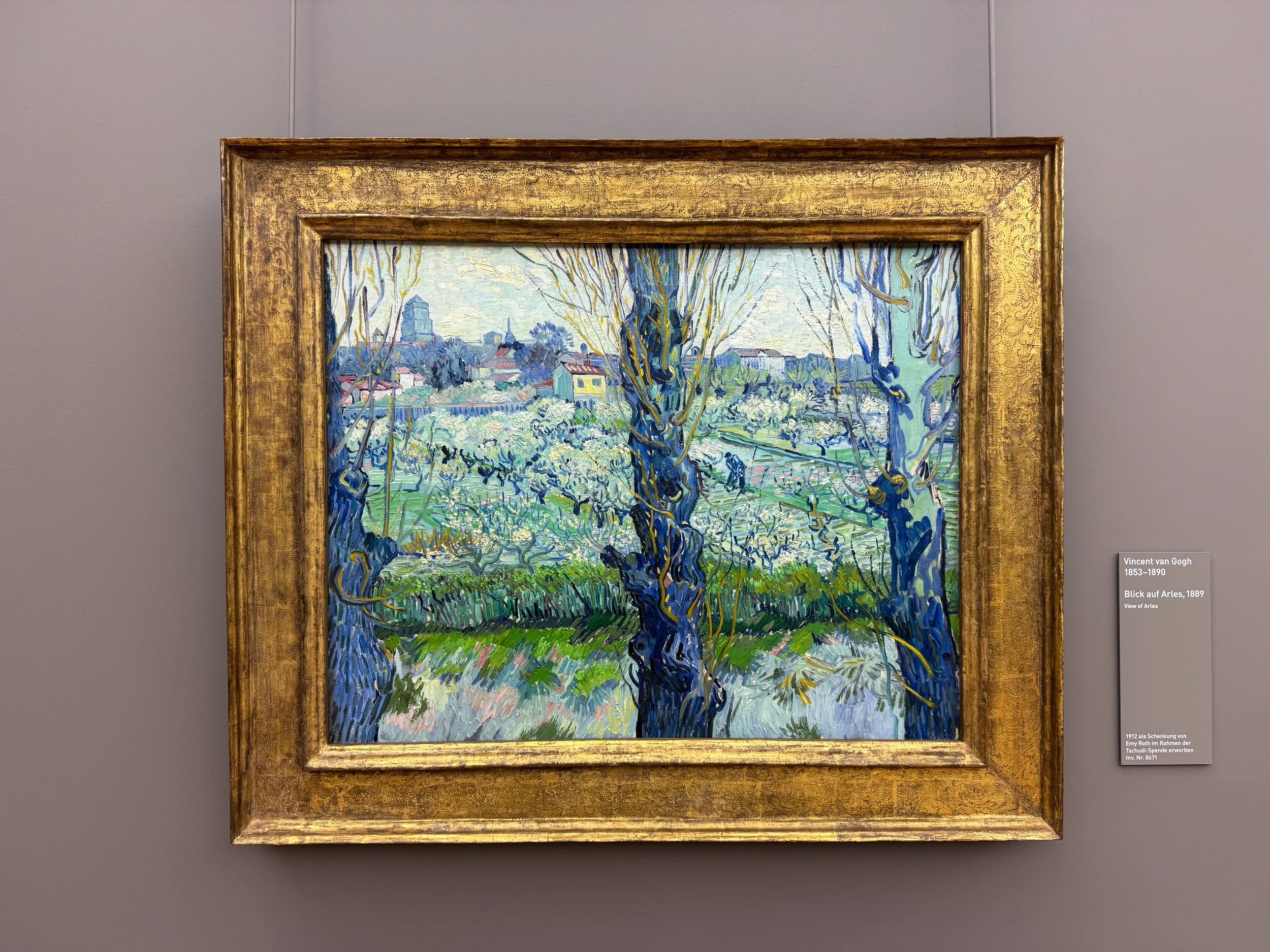
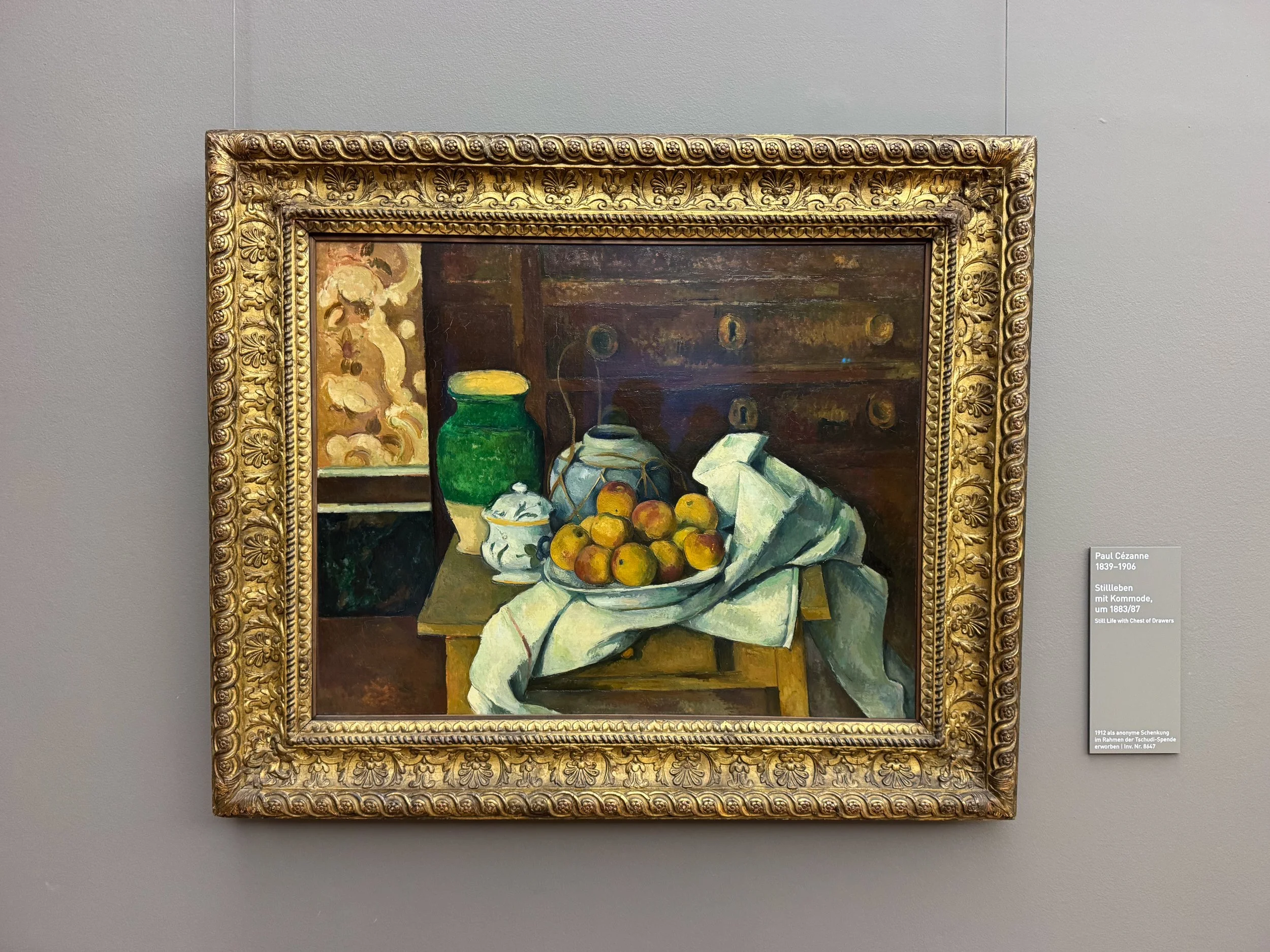
Alte Pinakothek. An art museum with one of the world’s largest collections of European Old Masters, spanning the 14th to 18th centuries, with works by Leonardo da Vinci, Raphael, Titian, Botticelli, Rubens and Rembrandt. While the neighboring Neue Pinakothek is closed for renovation, highlights from its 19th century collection, including works by Monet, Manet, Cézanne, Van Gogh and Gauguin, are also on display here.
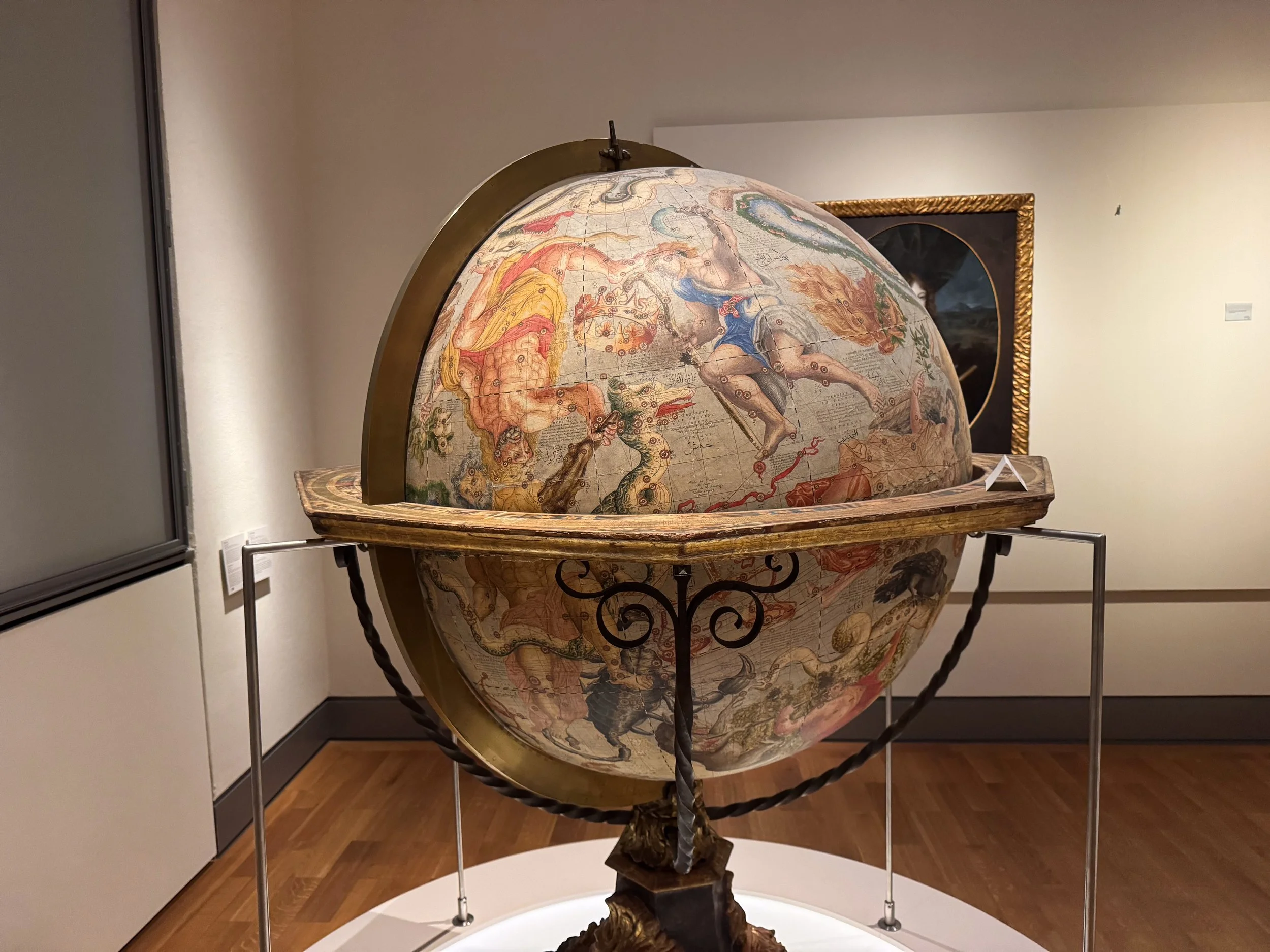
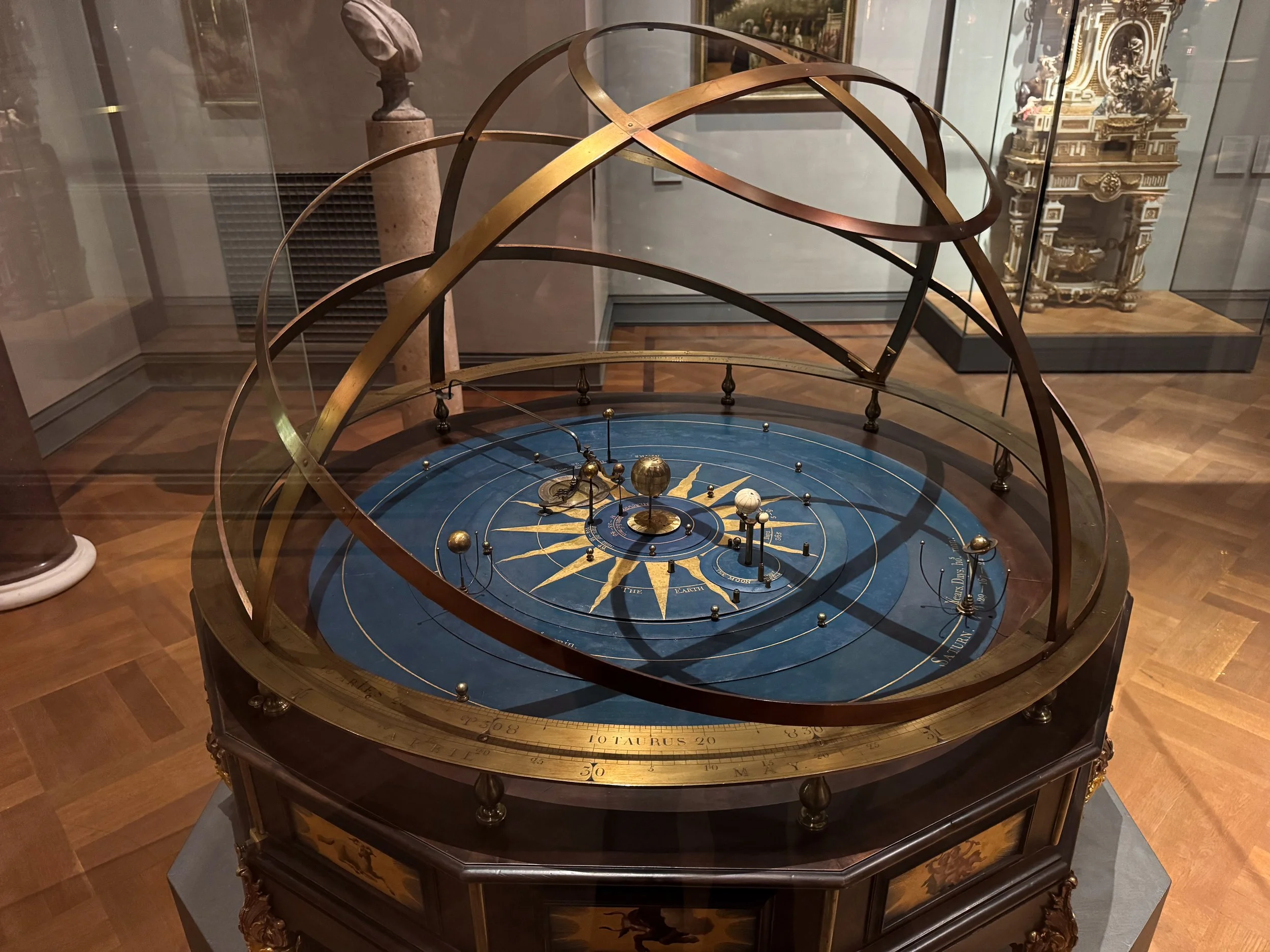
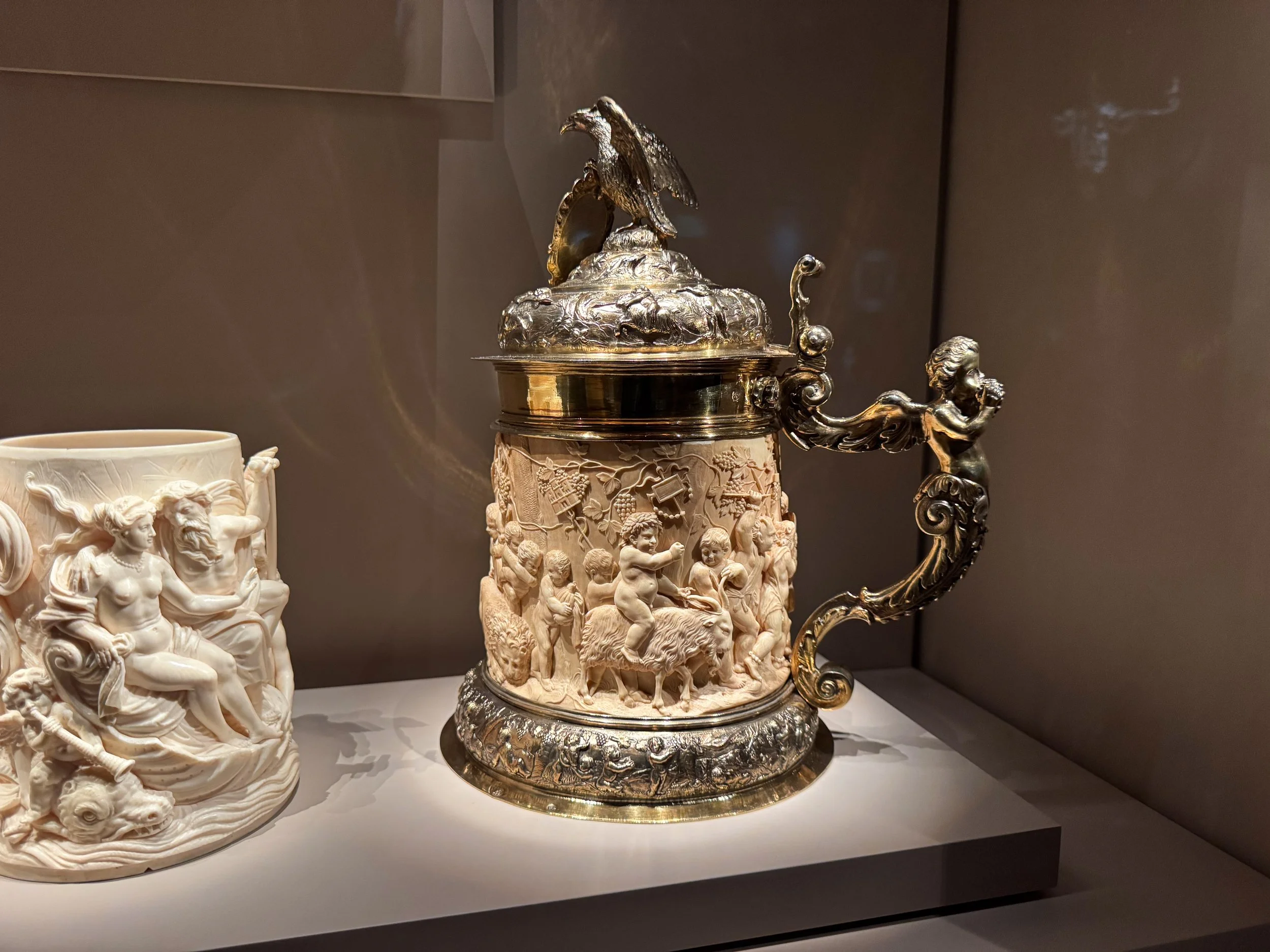
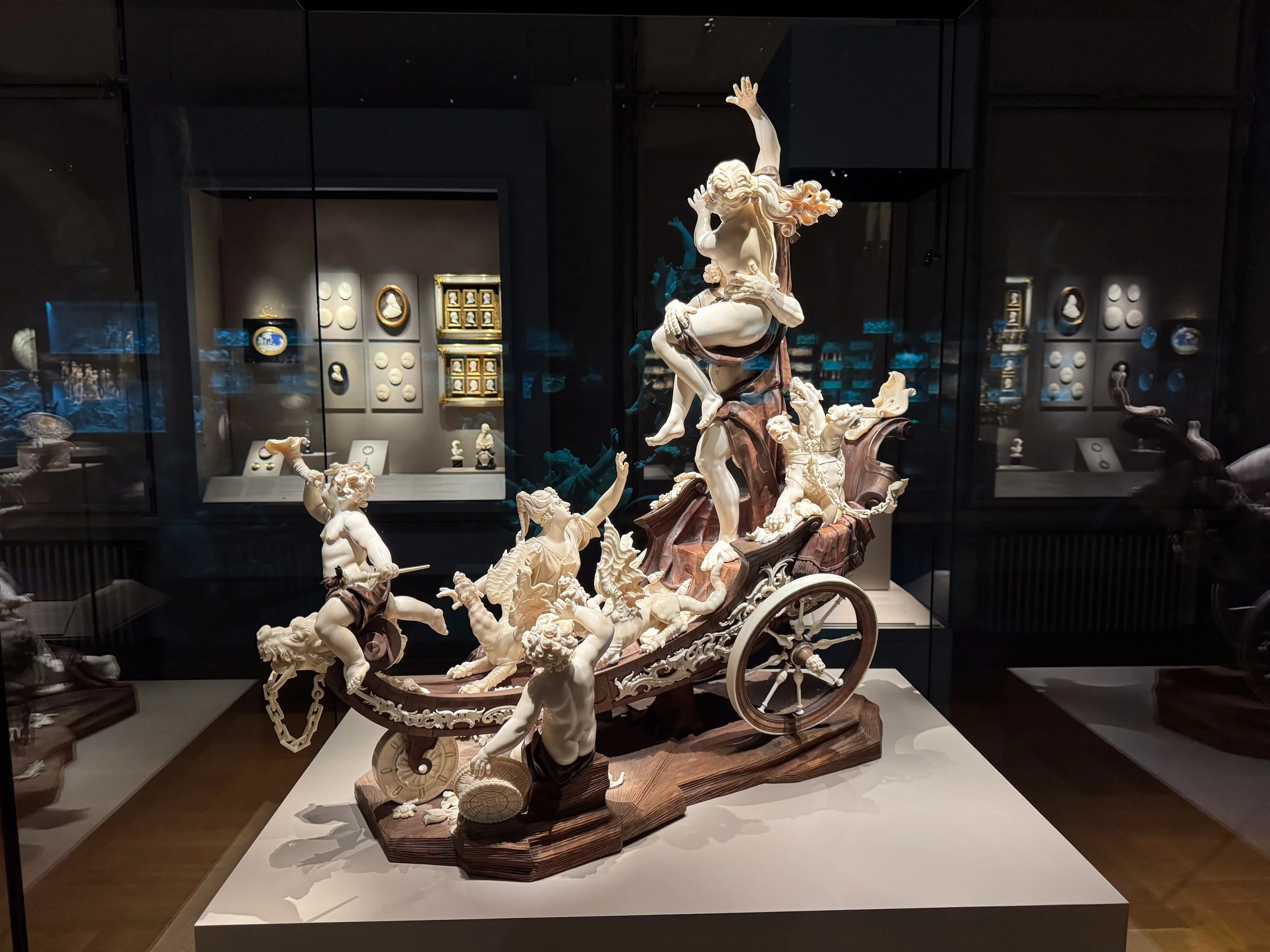
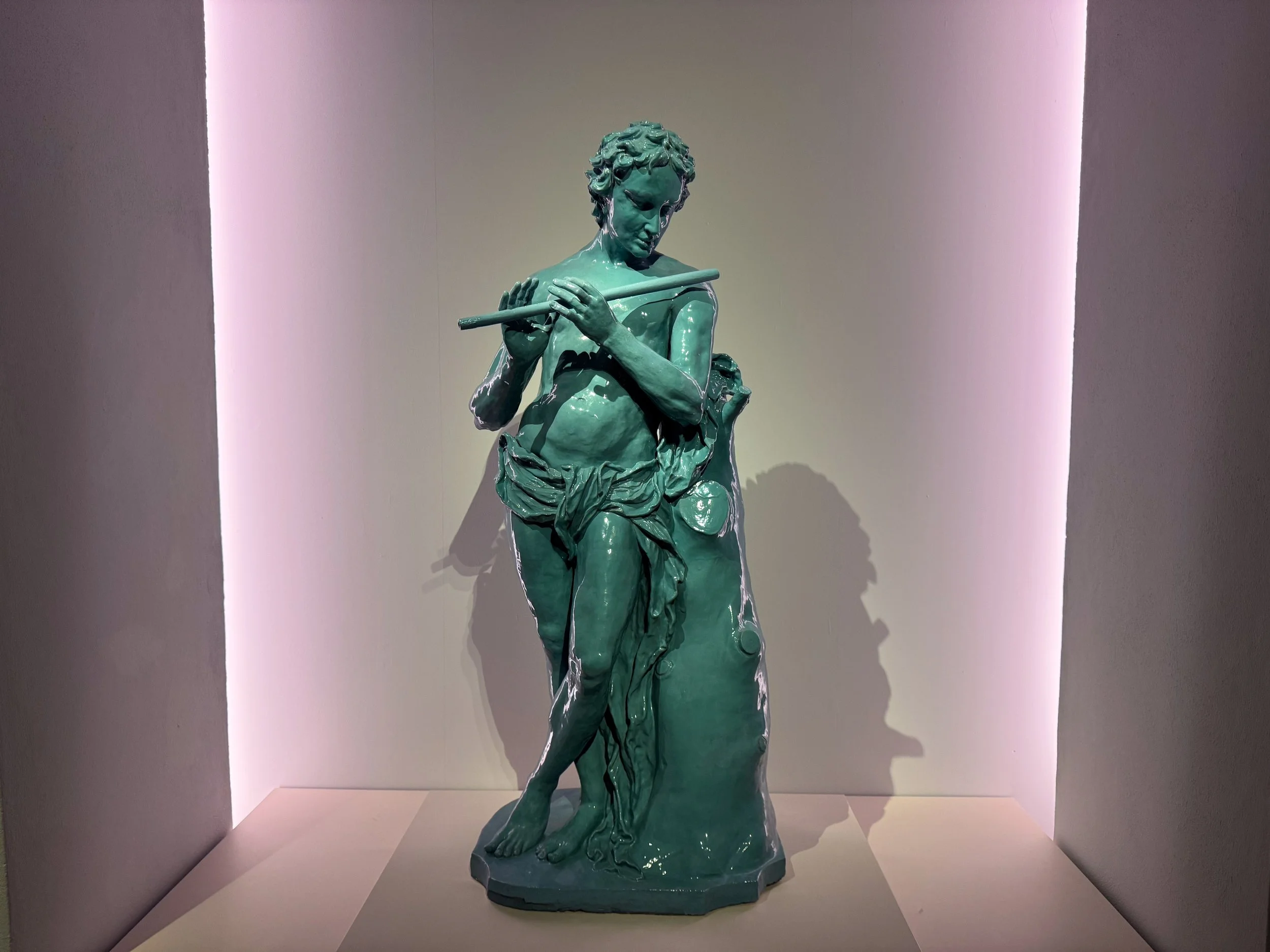
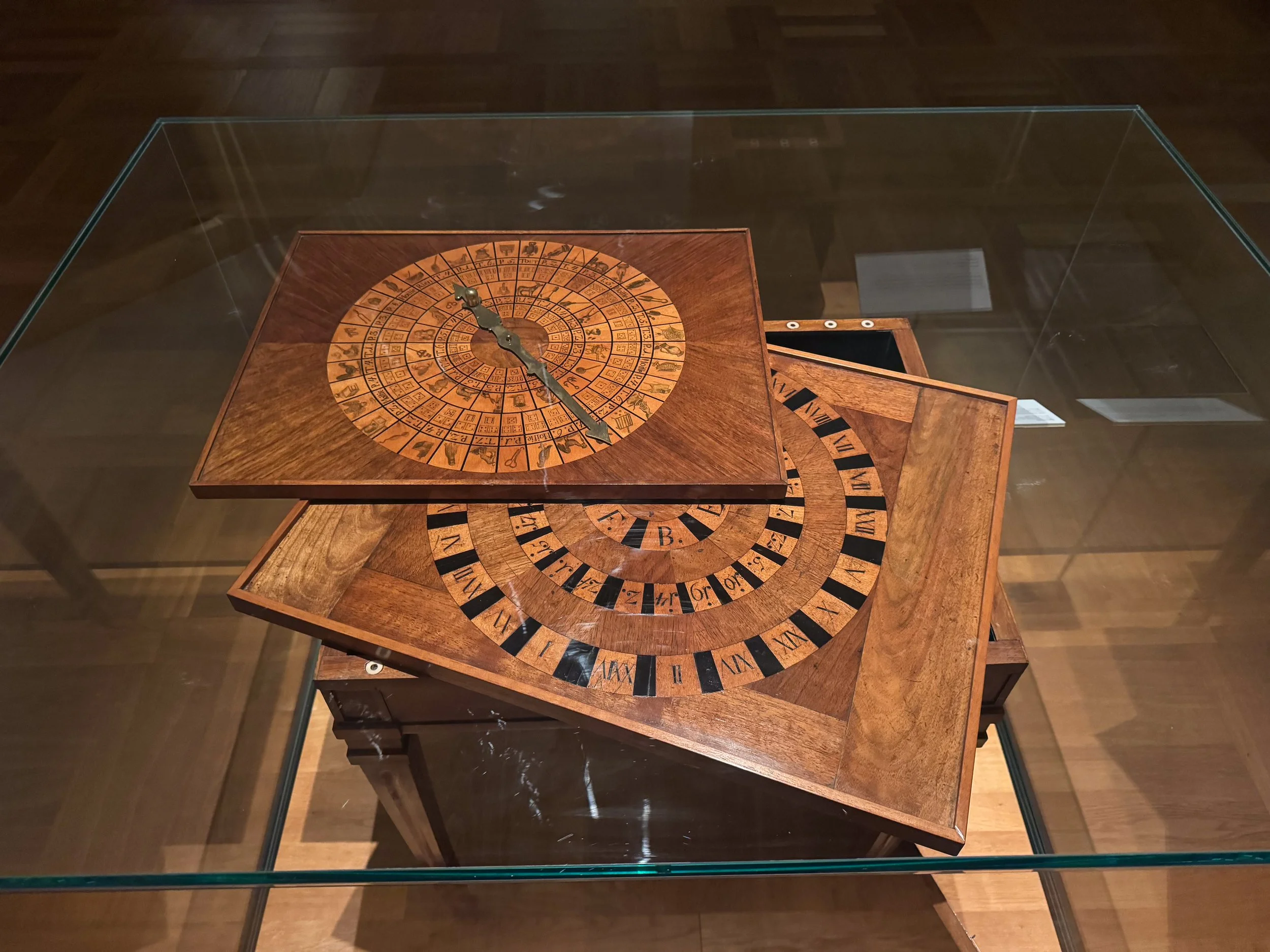
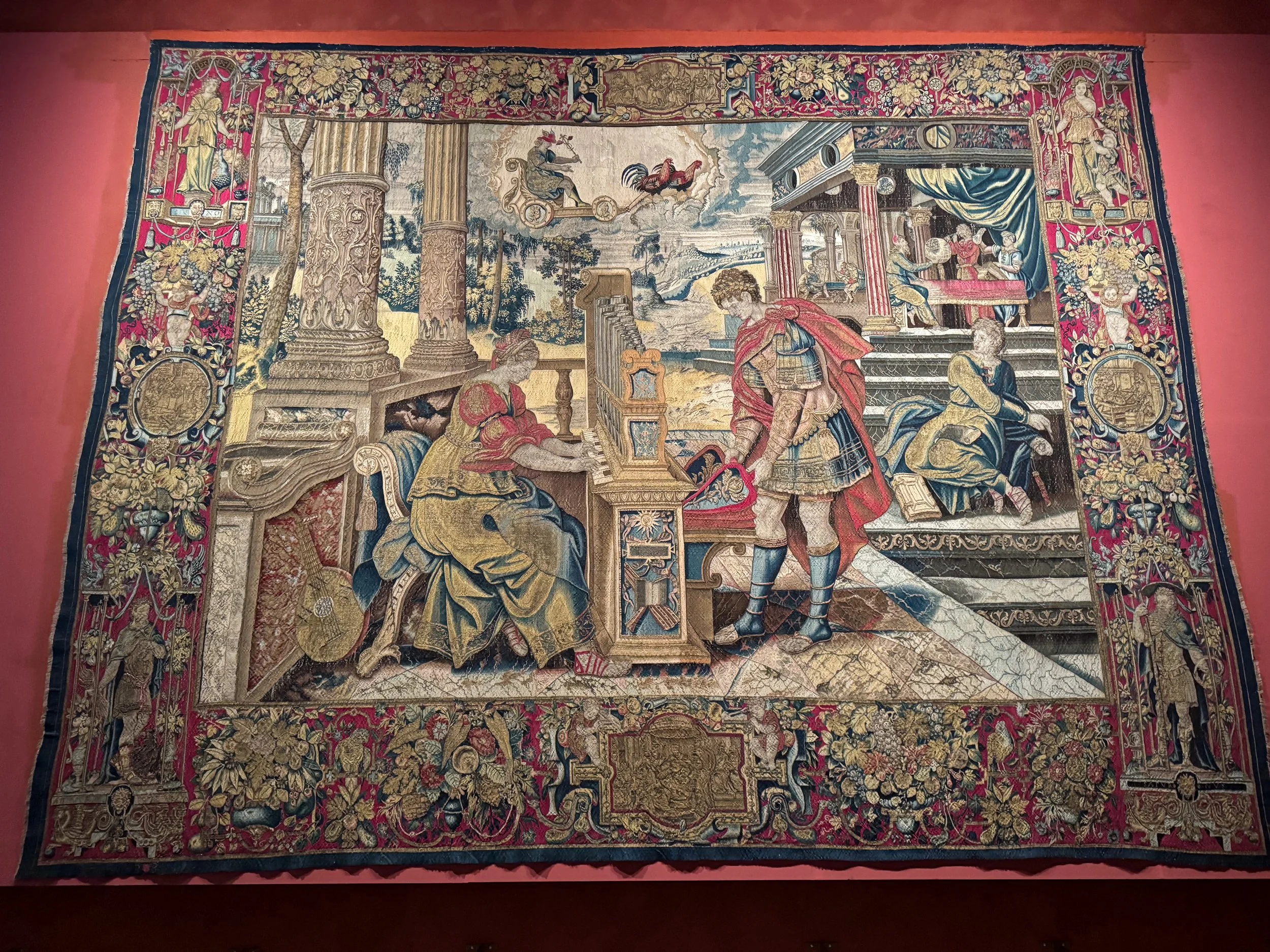
Bavarian National Museum. A vast decorative arts museum showcasing Bavarian craftsmanship with objects dating back as far as the 5th century. Galleries hold stone statues, large tapestries, decorative armor, religious artwork, mechanical clocks and planetariums, carved ivory, Baroque ceramics, gem studded jewelry, antique board games, musical instruments and traditional Bavarian costumes. Plan to spend a couple of hours wandering the exhibits with the audio guide.
Markets & Festivals
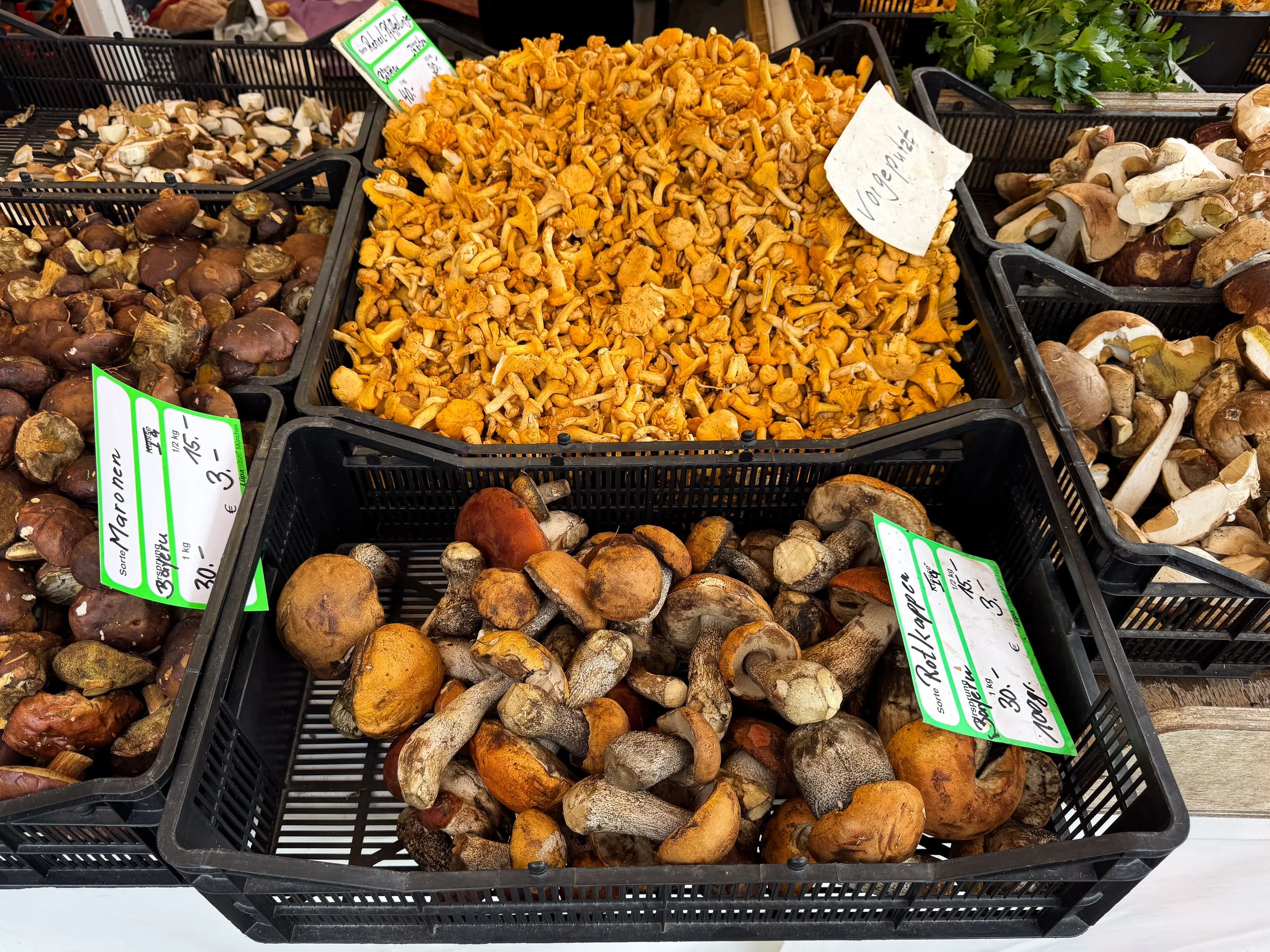
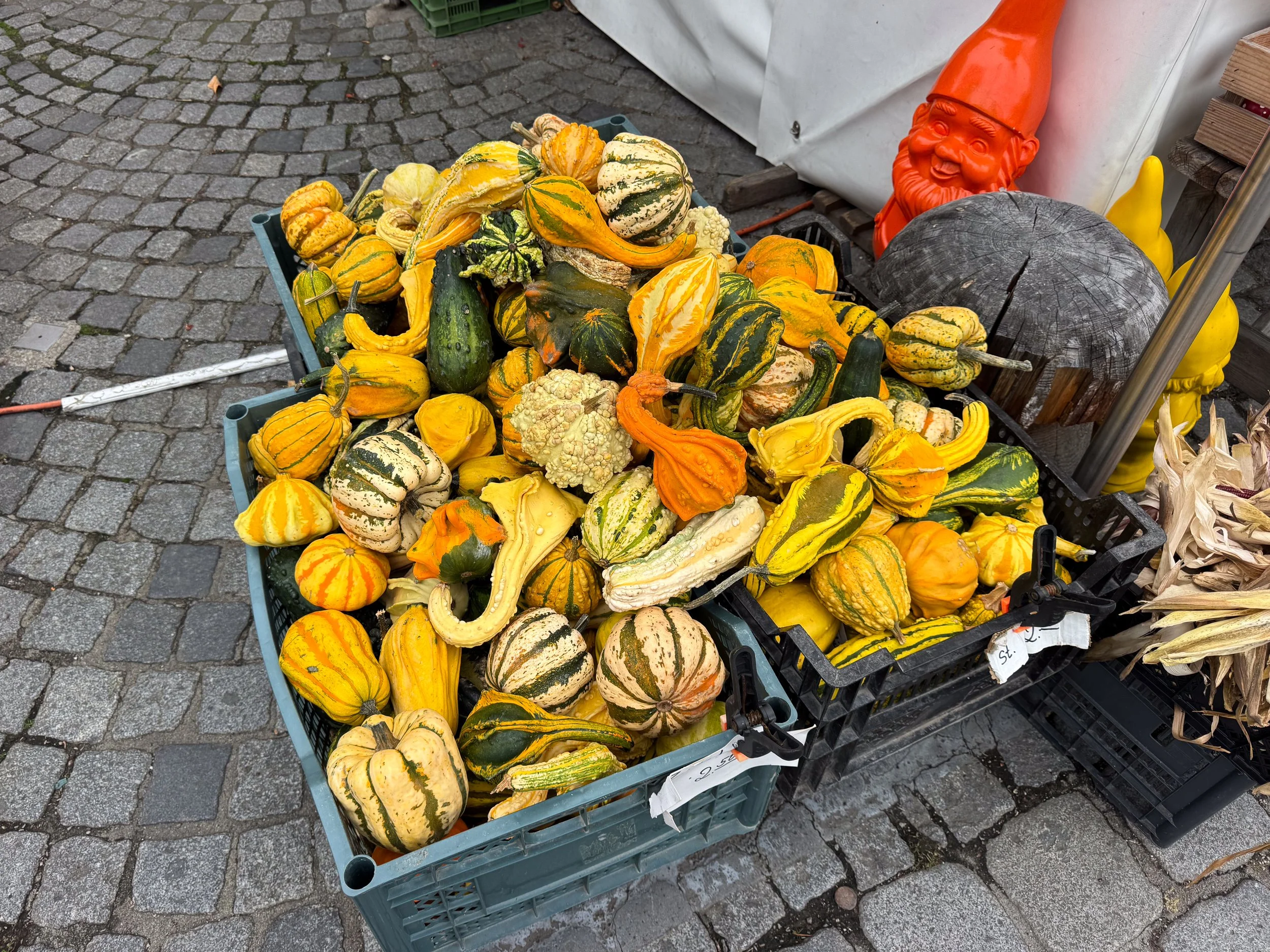
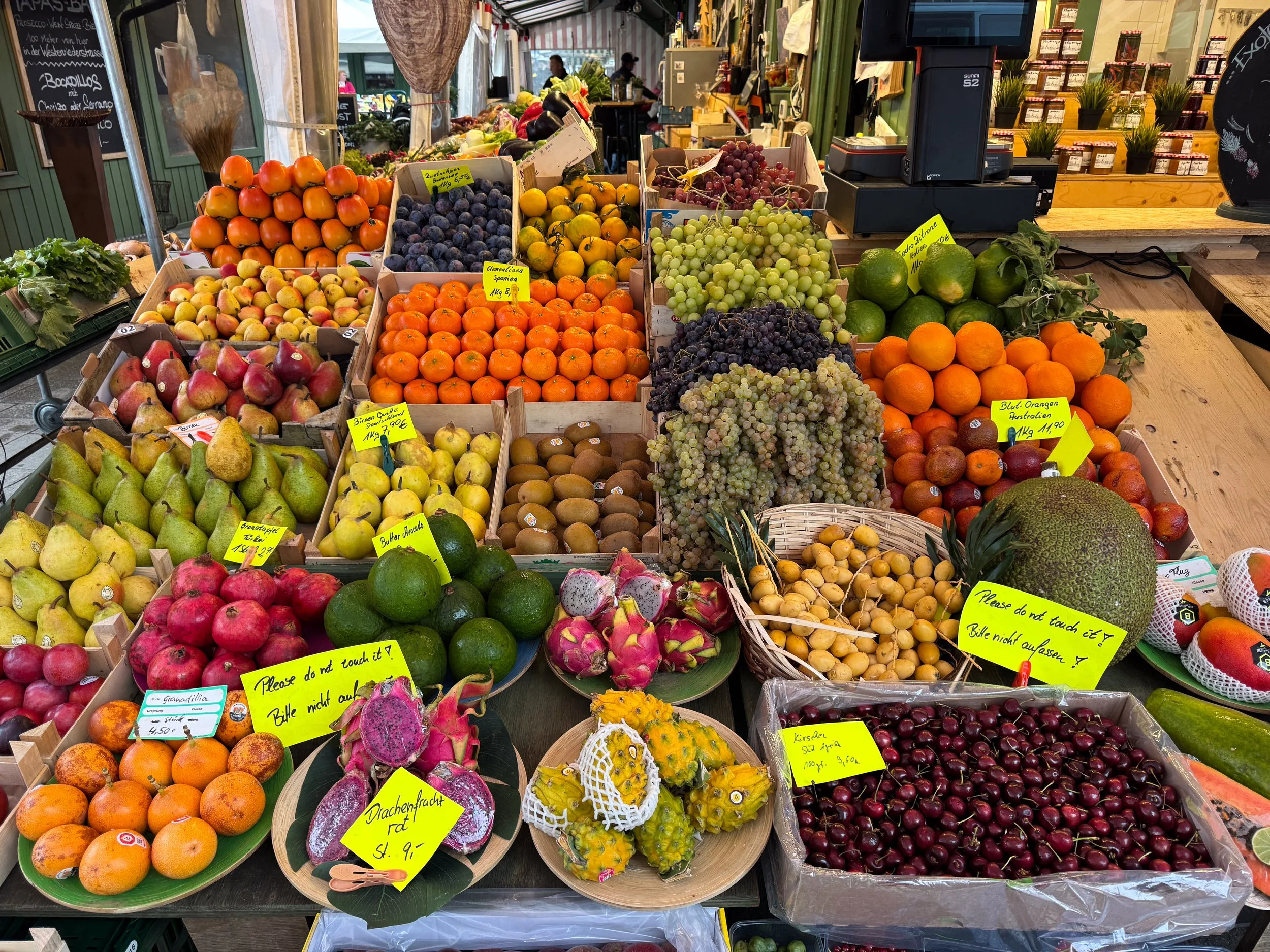
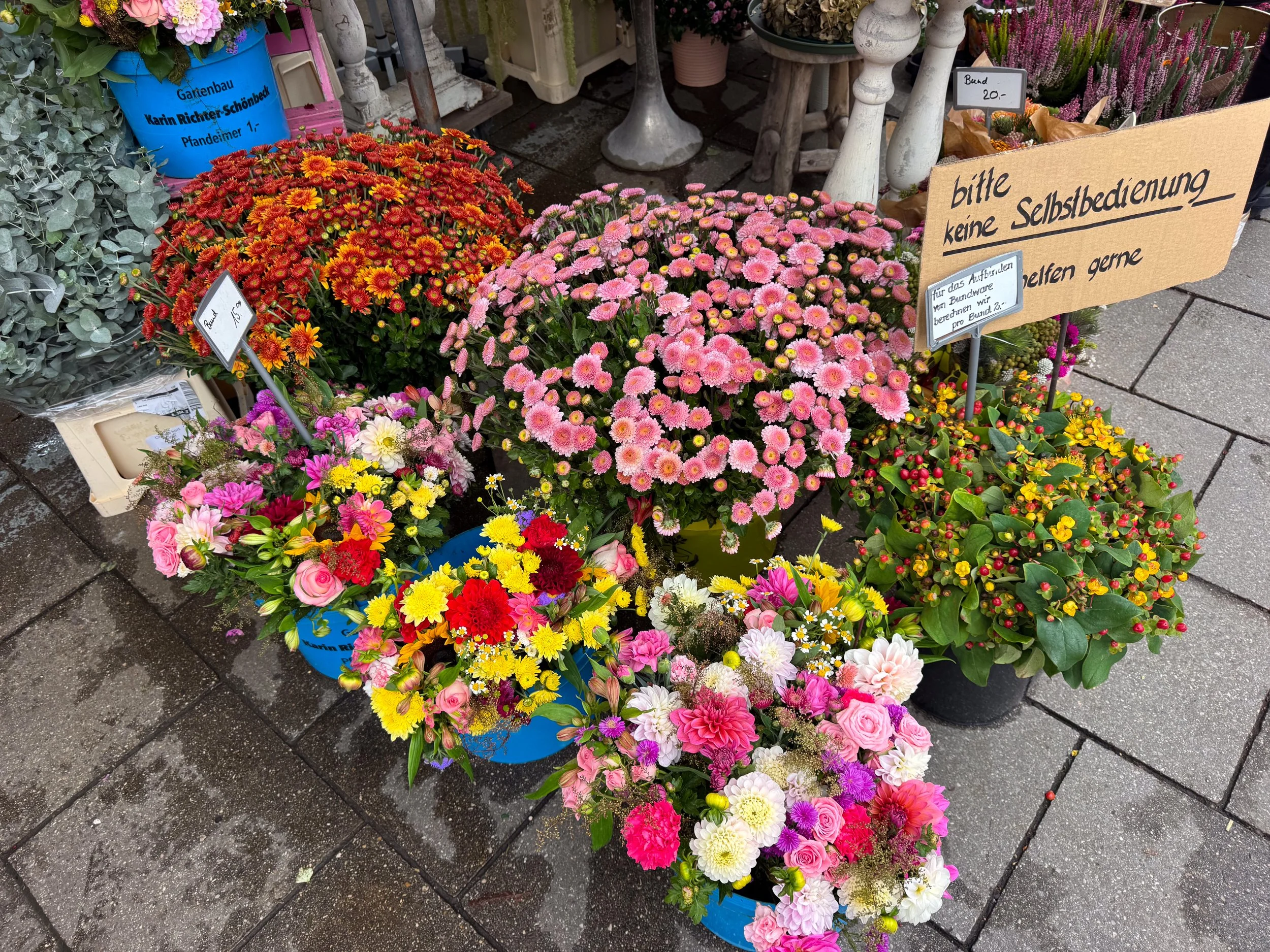
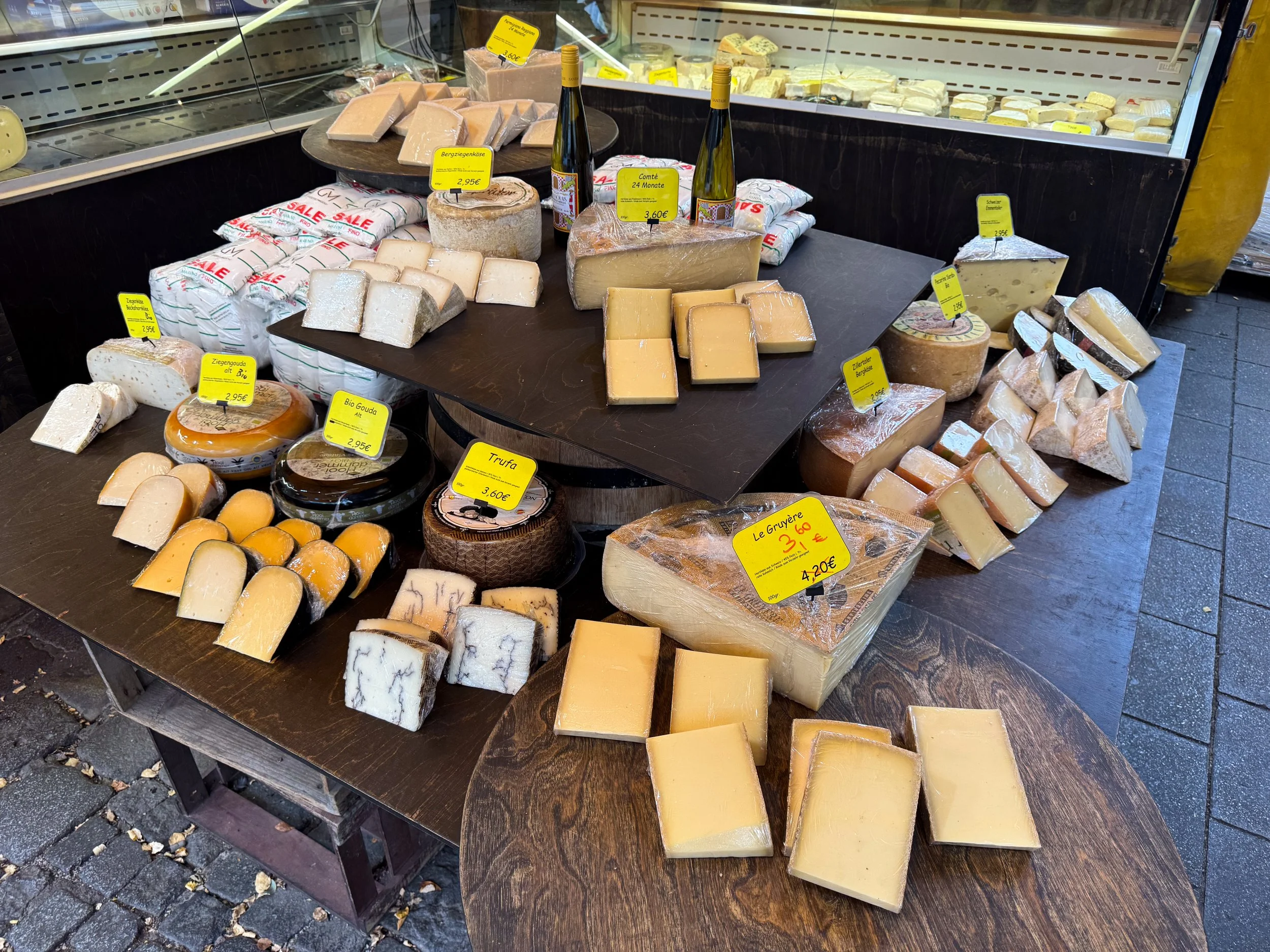
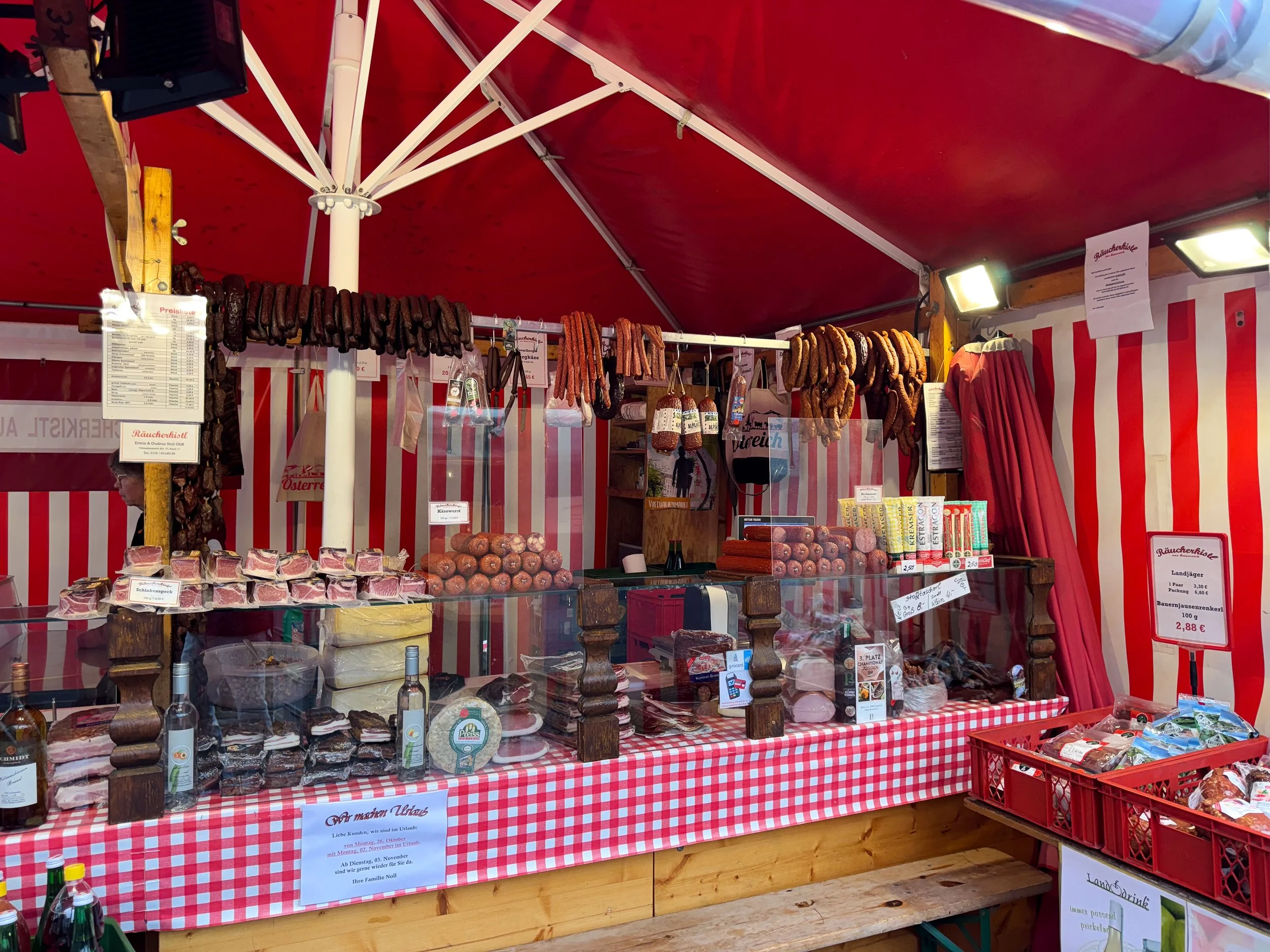
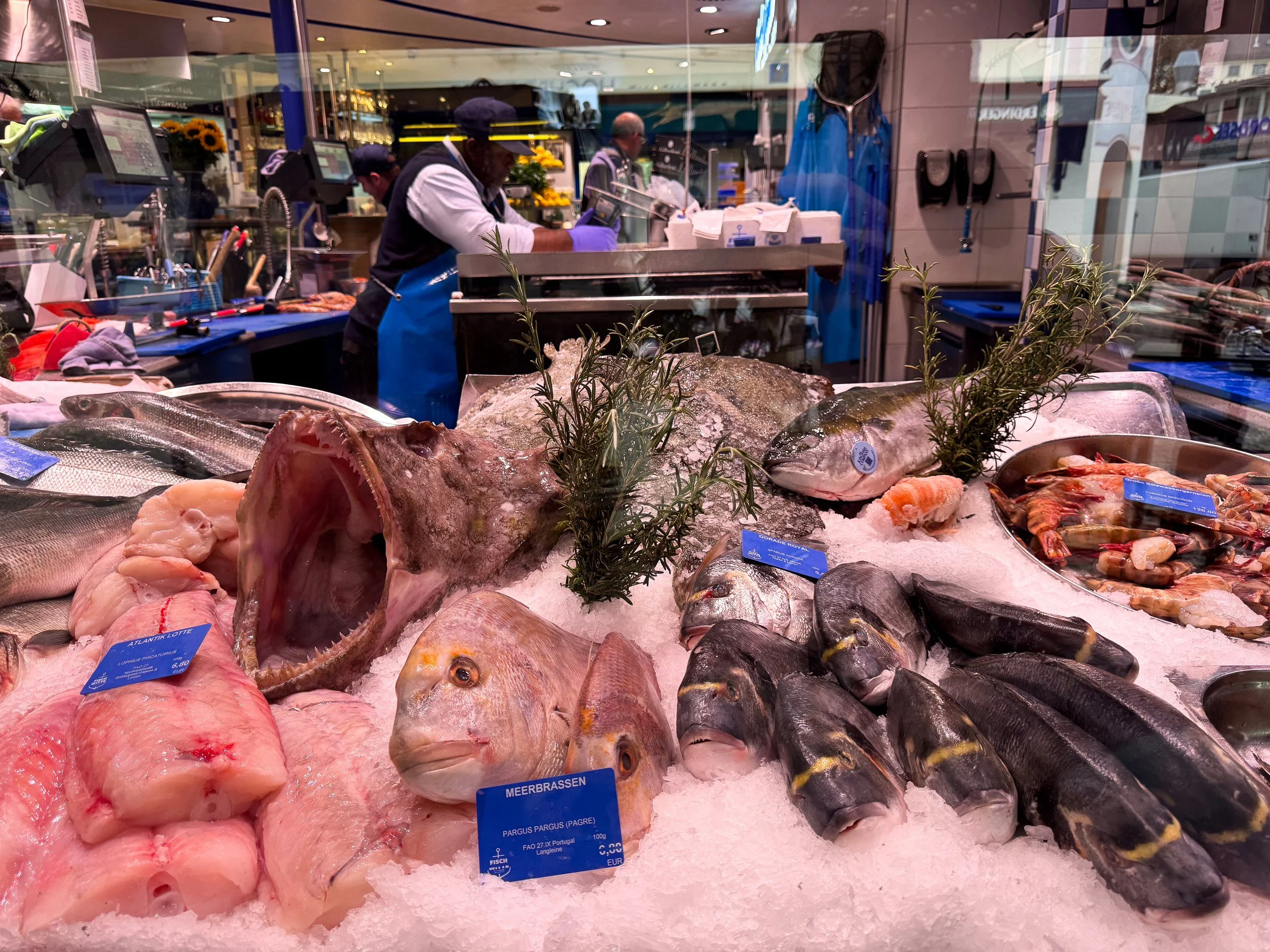
Viktualienmarkt. A sprawling outdoor food market with a beer garden at its heart. Stalls overflow with fruits and vegetables, fresh and dried flowers, Bavarian cheeses, German wines, cultivated and foraged mushrooms, cured meats, freshwater fish, pretzels and traditional pastries. Food vendors serve local dishes, while souvenir stands sell beer steins and Christmas ornaments.
Wiener Platz Market. A small outdoor food market with a seasonal beer garden, both closed for renovations during our mid-October visit. Cafes, wine bars and boutiques fill the surrounding storefronts while the Hofbräukeller Beer Hall welcomes guests daily.
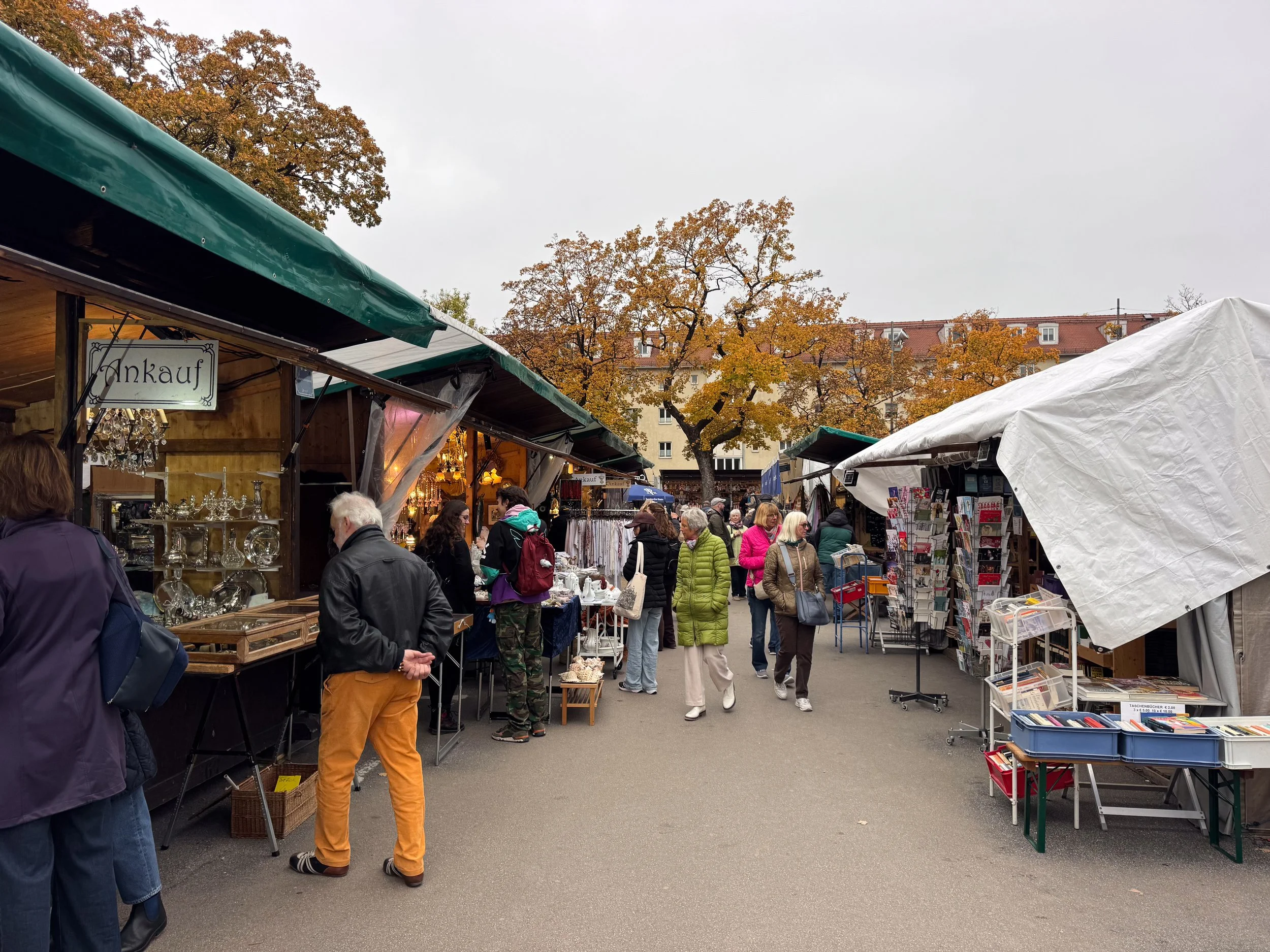
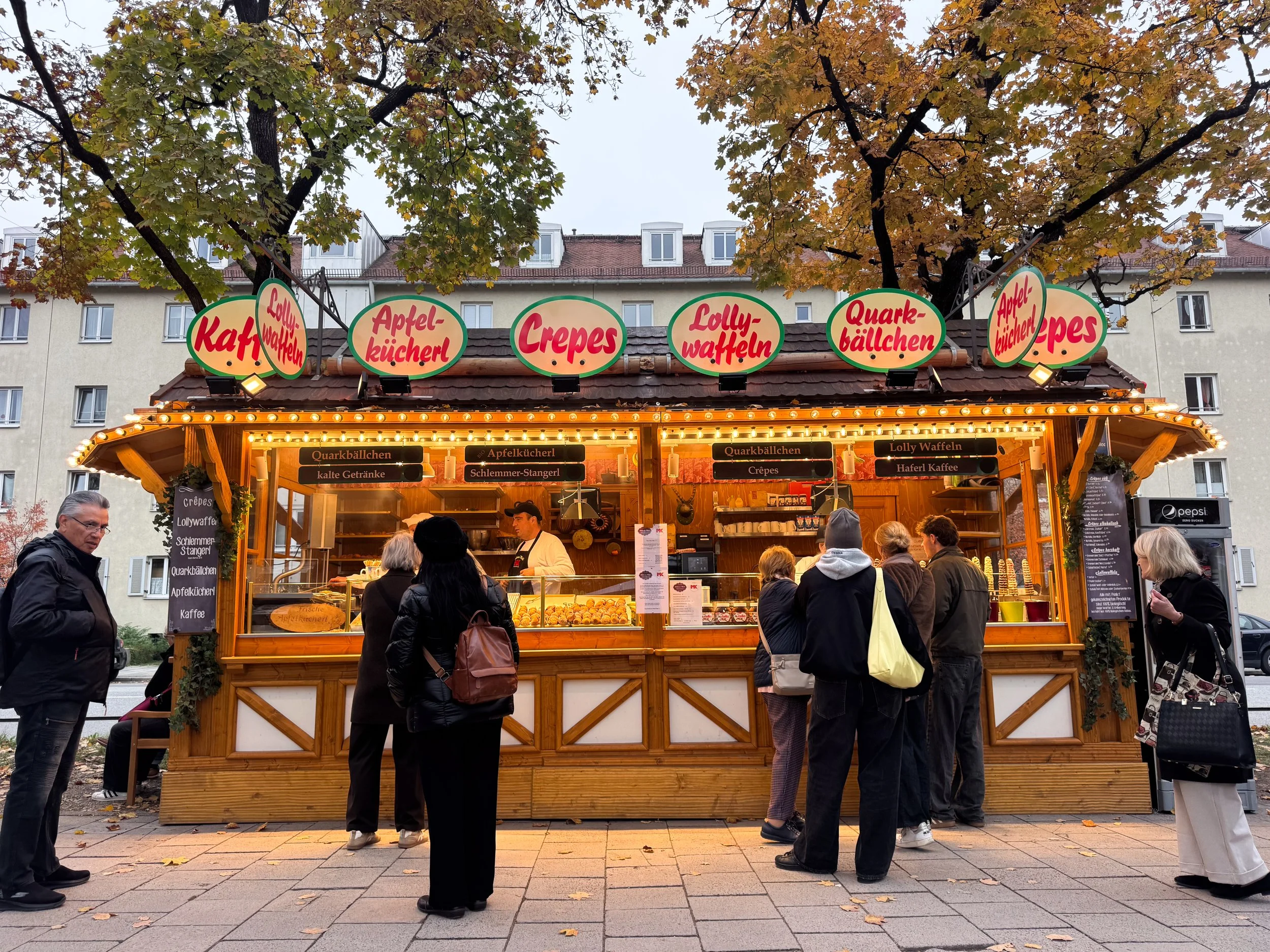
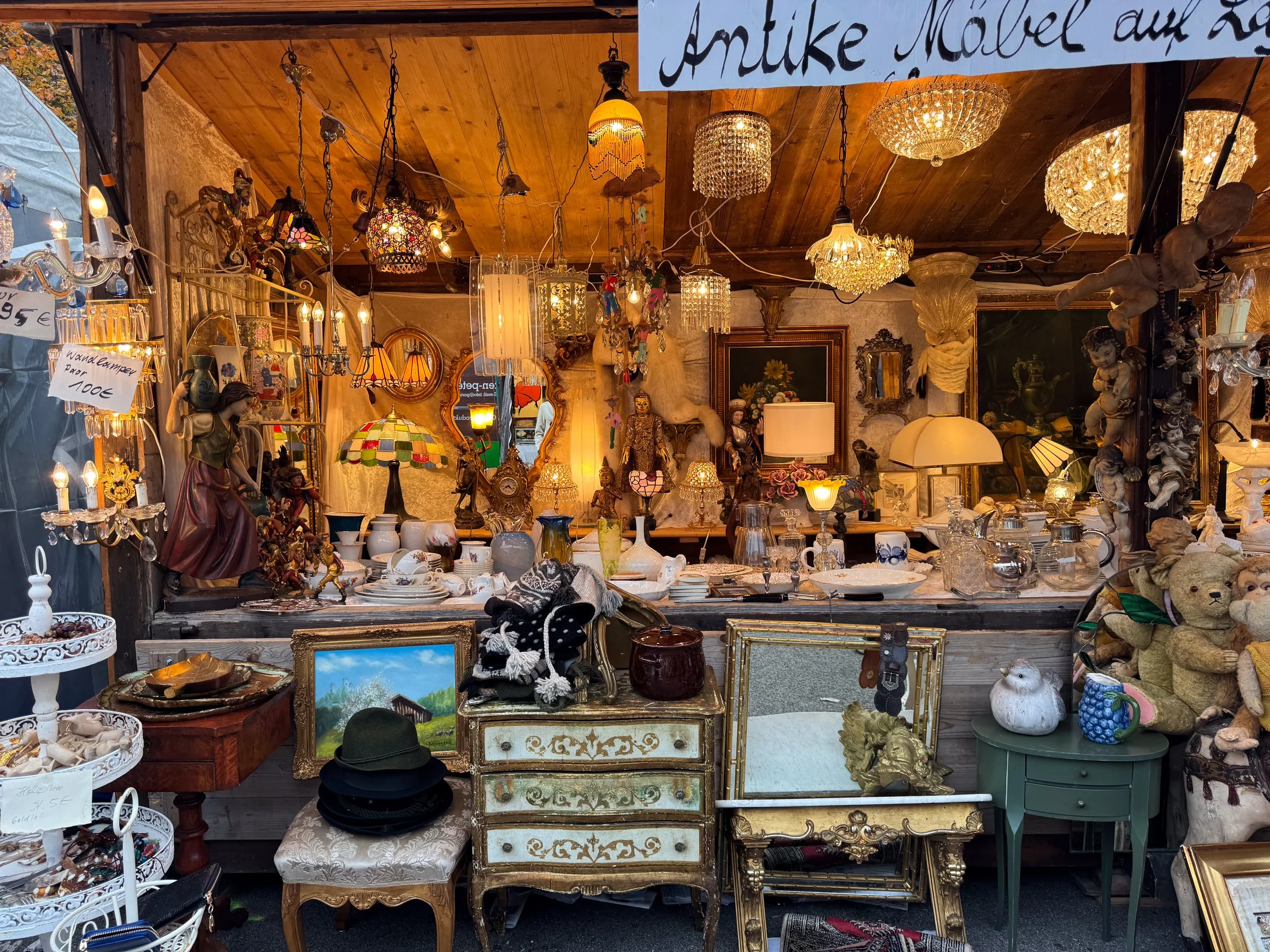
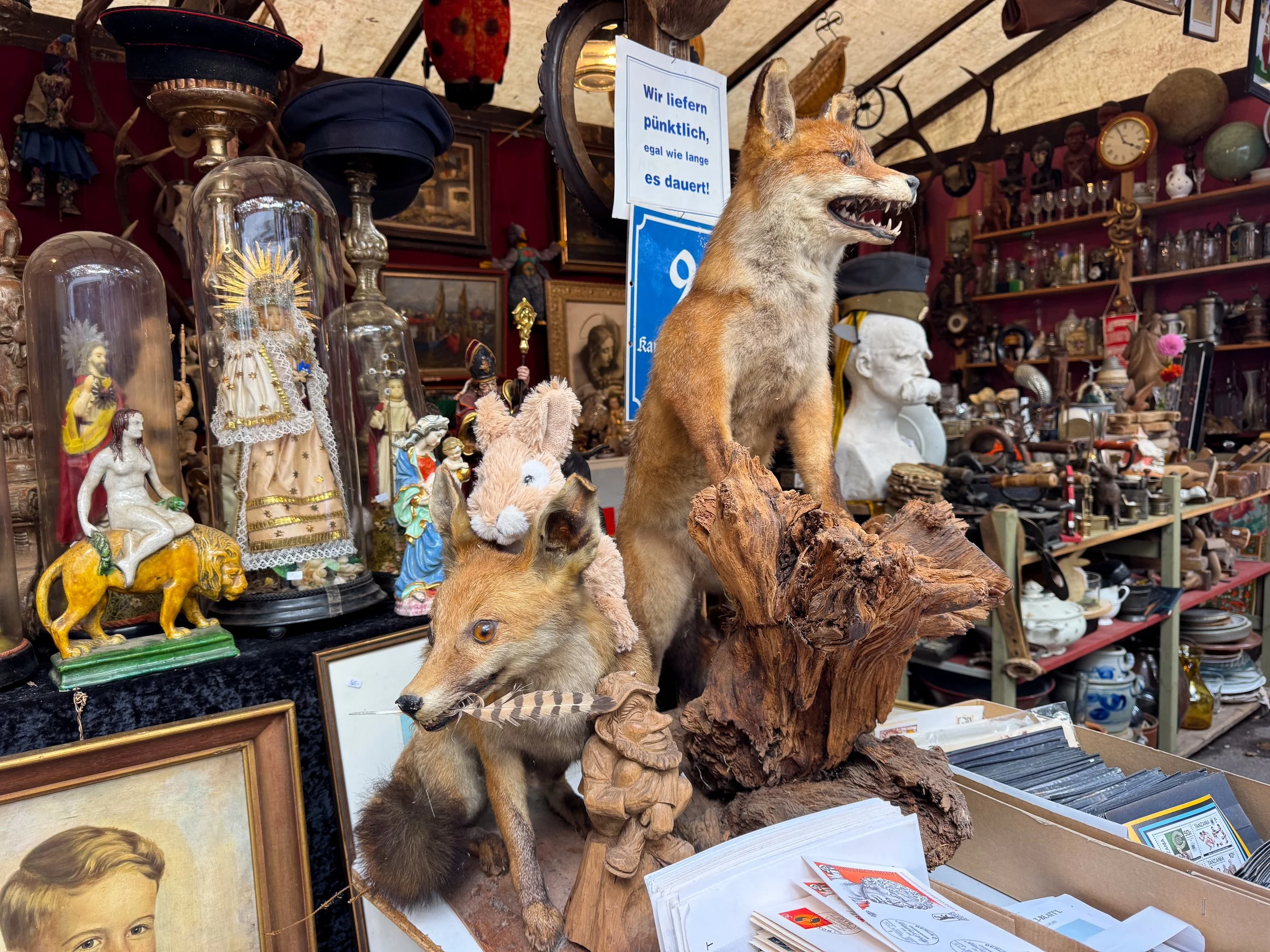
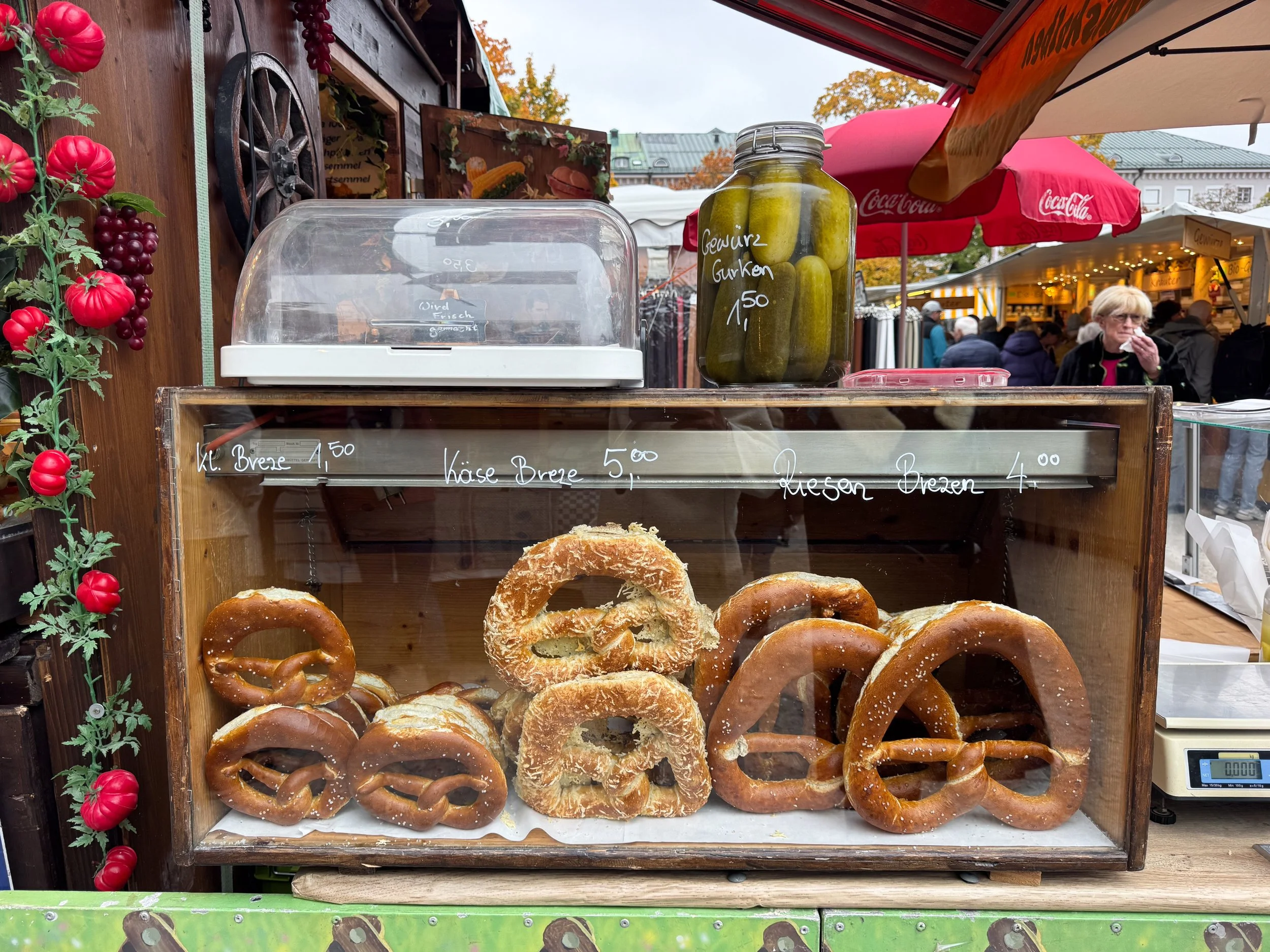
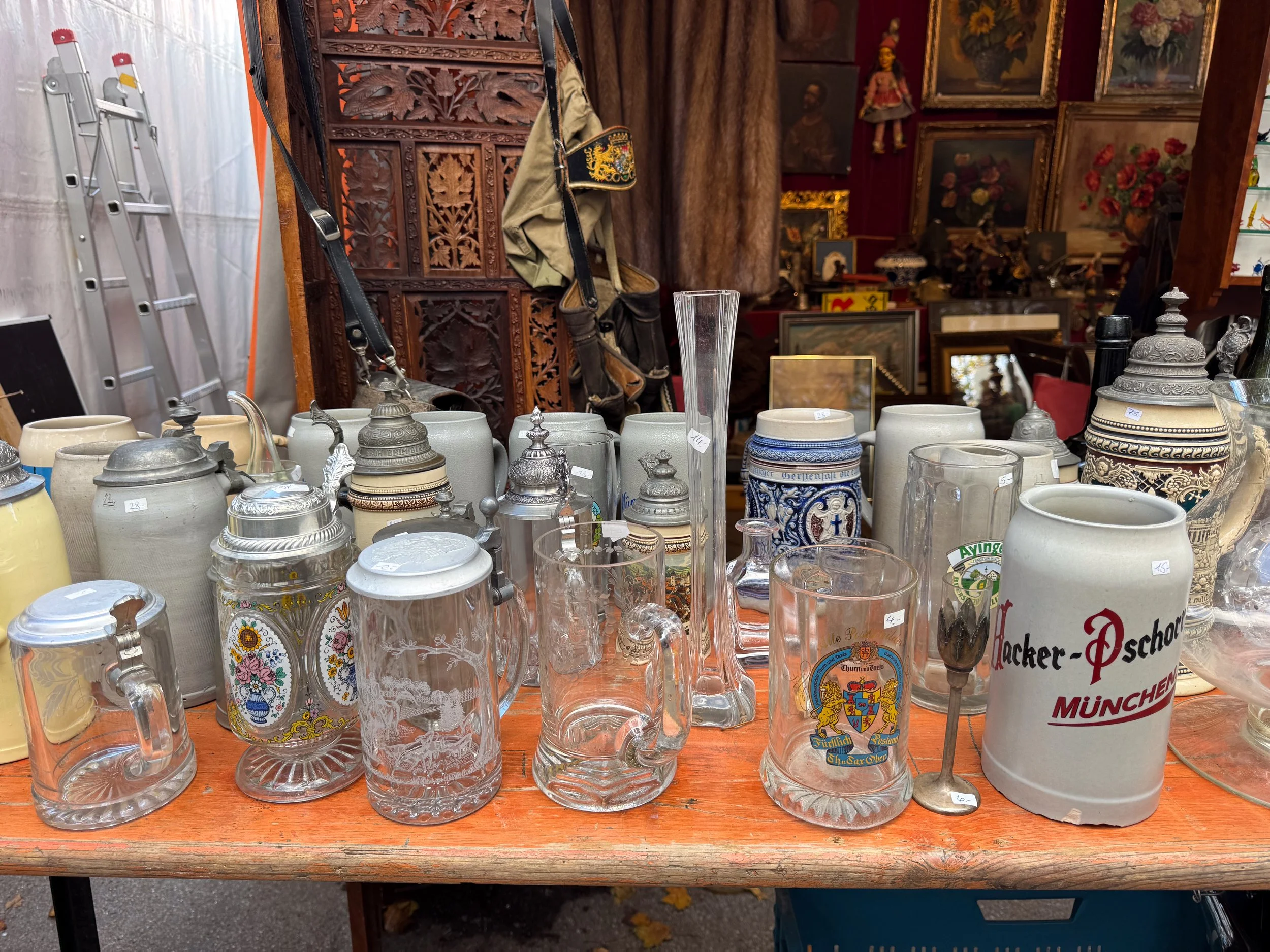
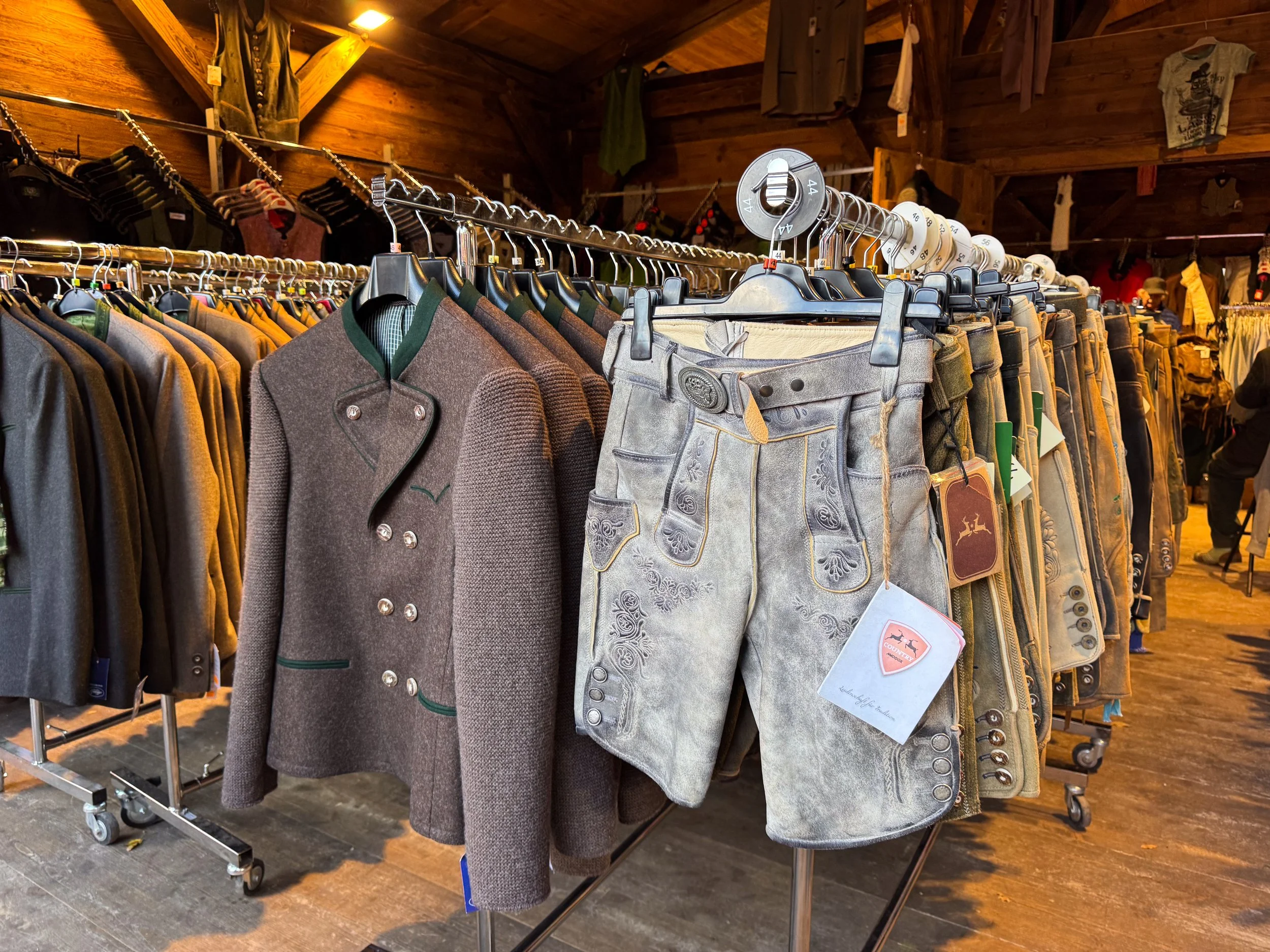
Auer Dult. Munich is famed for festivals like Oktoberfest and its Christmas markets, but one of its lesser known gems is the Auer Dult. Held three times a year, this traditional folk festival draws hundreds of vendors serving Bavarian food like bratwurst, pretzels, beer and fried sweets, while a beer garden grills fish over open coals and brightly lit rides entertain children. Antique tents brim with steins, jewelry, antlers, books, fur coats and Bavarian clothing, alongside craft kiosks and trade show booths. It’s a fun way to spend an afternoon tasting Bavarian food and shopping for authentic souvenirs to bring home.
Beer Gardens & Beer Halls
While exploring Munich, we overheard a tour guide tell their group that going to the beer garden is the number one hobby of all Germans. After visiting our fair share of beer gardens and beer halls across the city, we can say that certainly holds true.
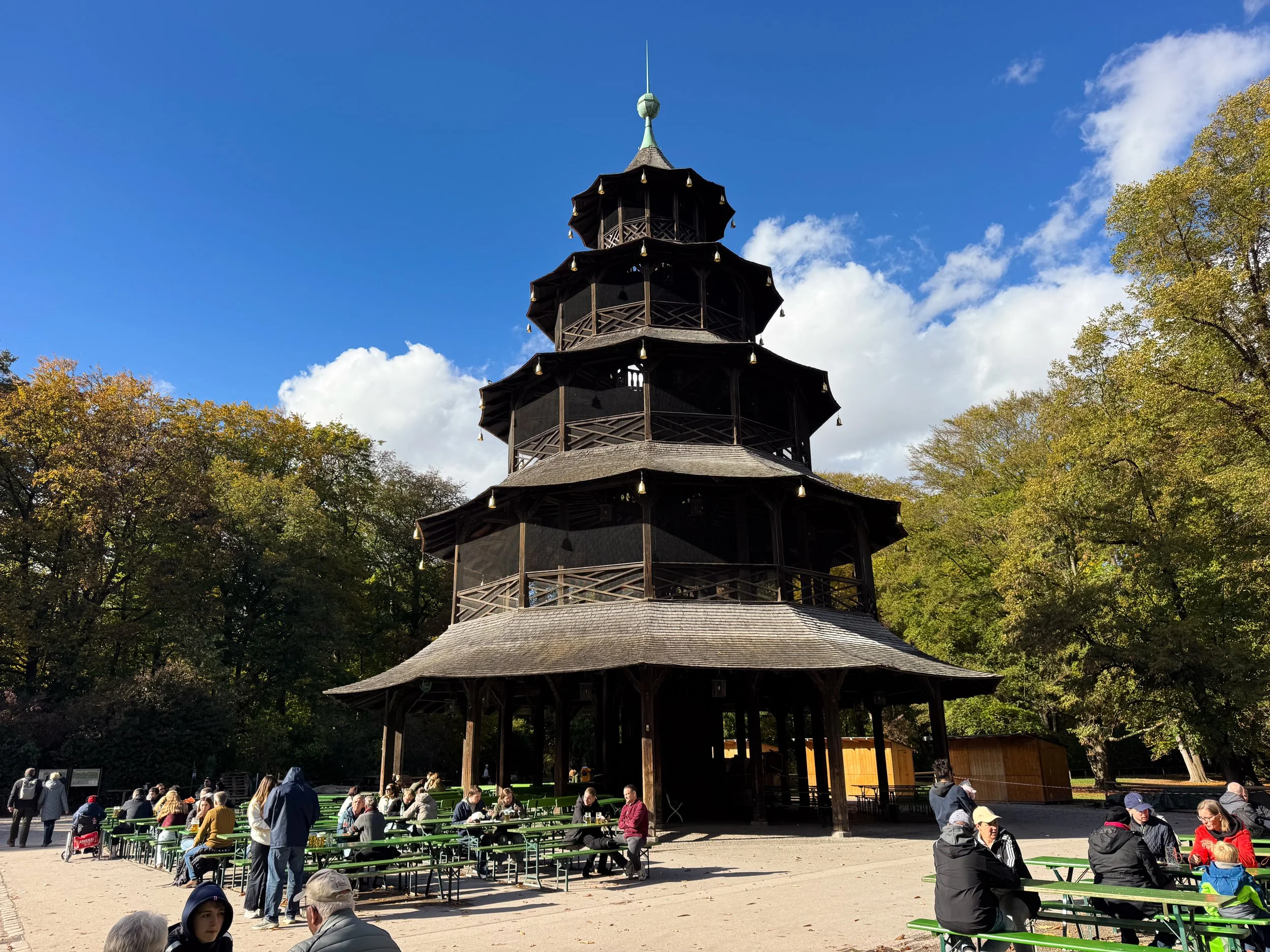
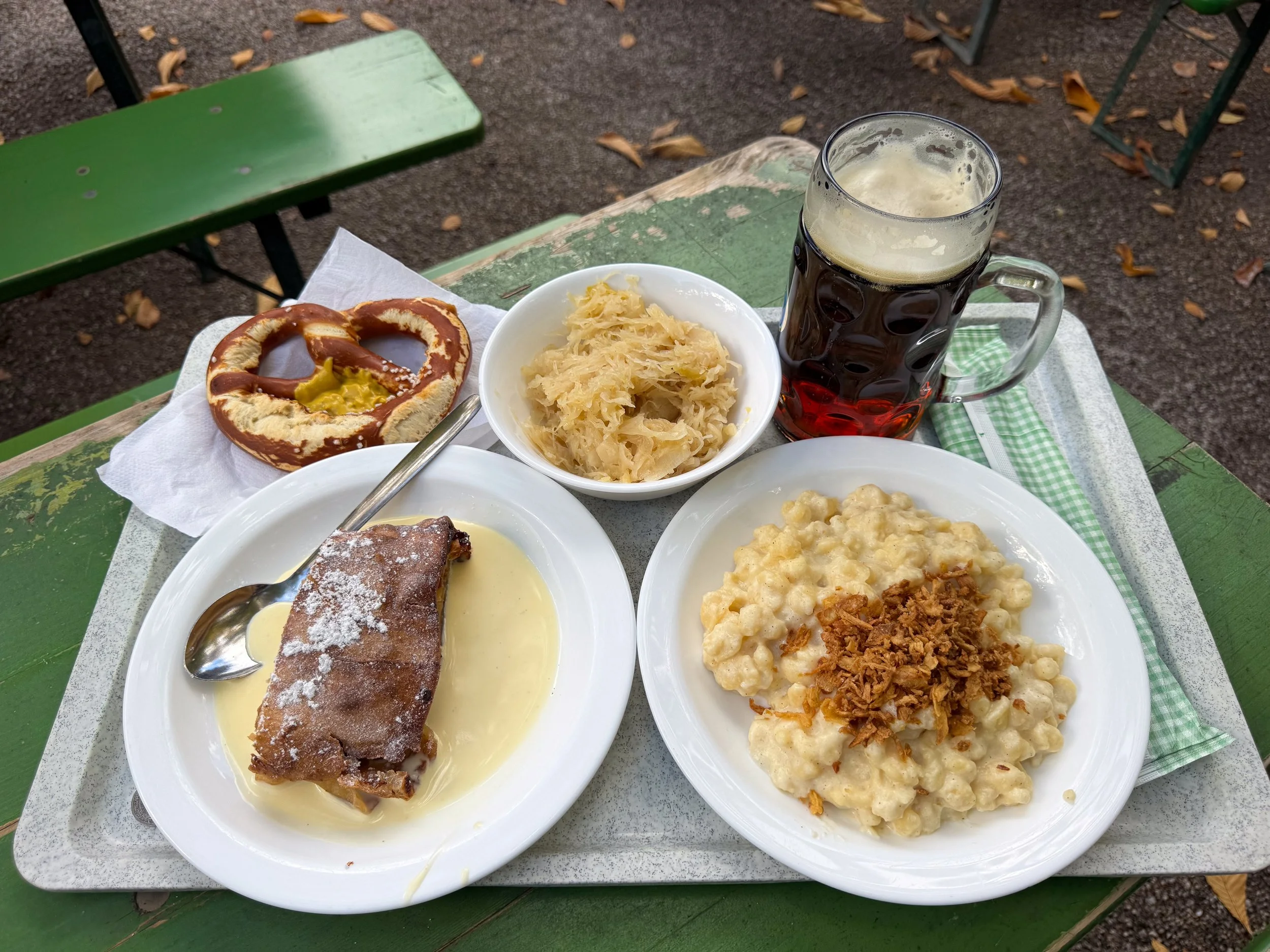
Chinesischer Turm. A historic beer garden in the Englischer Garten, famed for its five tiered, Chinese style wooden pagoda. A sea of green picnic tables fills the tree shaded grounds around it. Order at the self service counters, then carry your beer and food to any open spot. Beers come by the half or full liter, alongside German staples like pretzels, sausages, sauerkraut, potato salad, hearty meat dishes and vegetarian options.
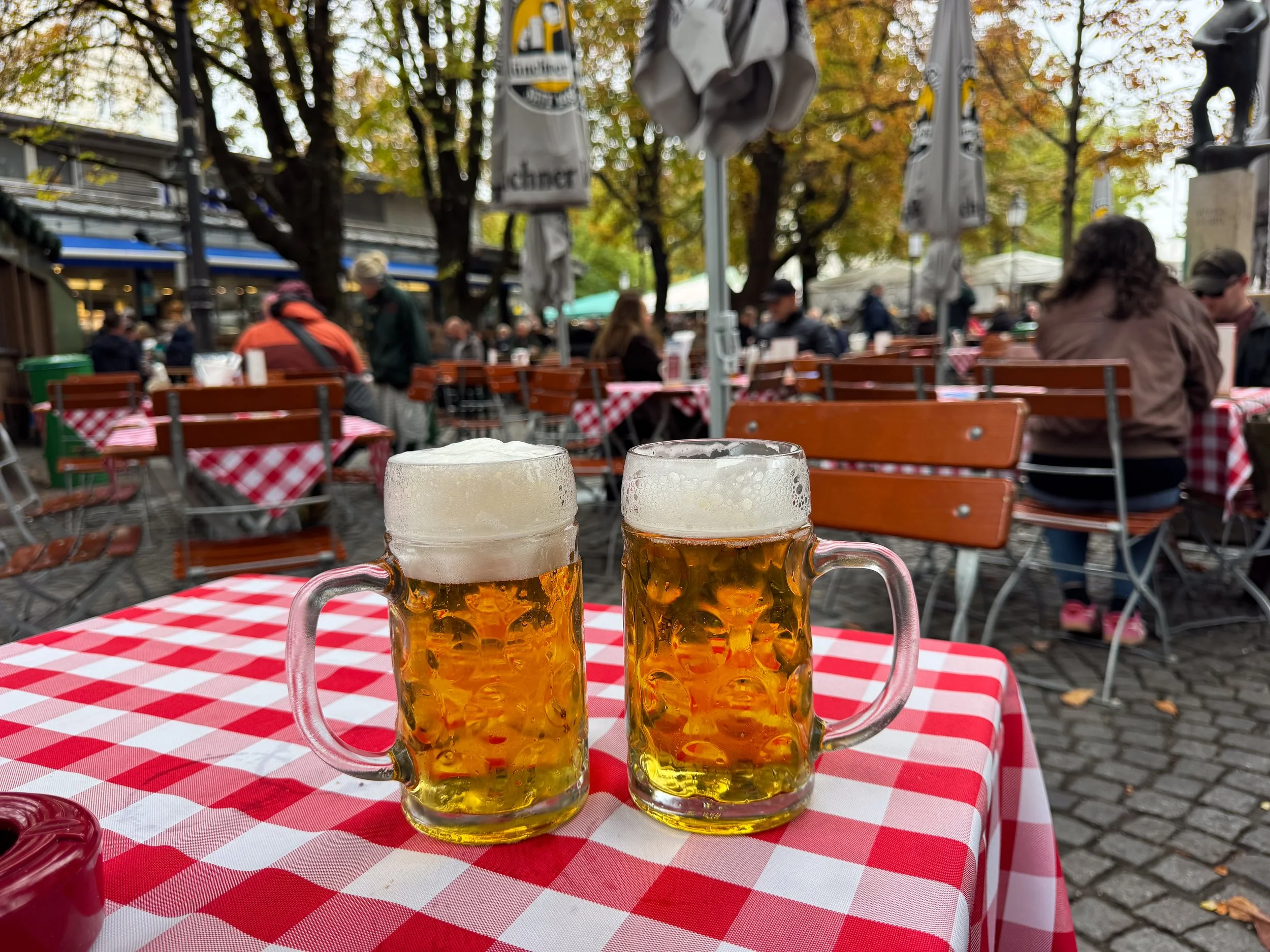
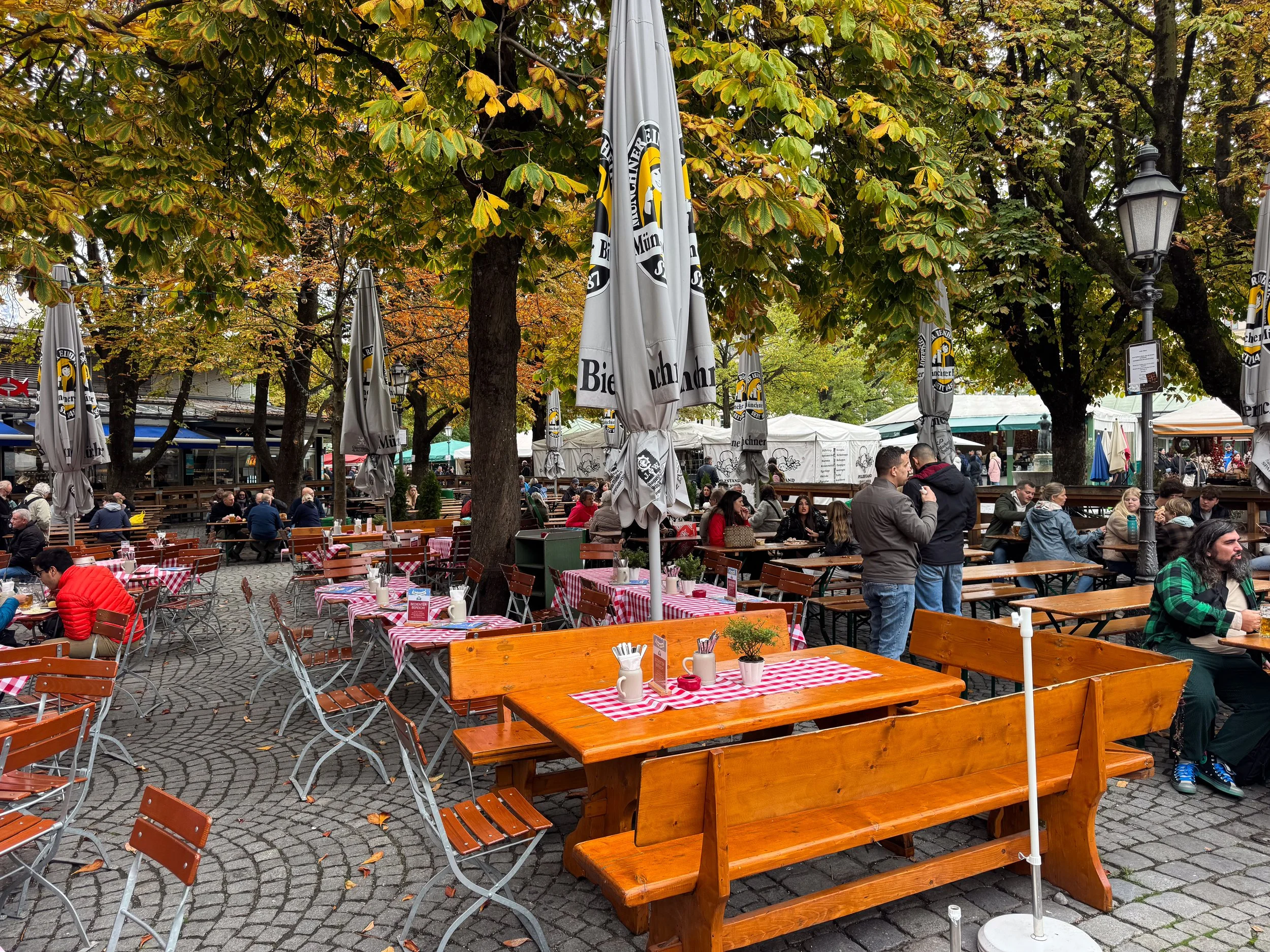
Biergarten Viktualienmarkt. A beer garden at the heart of the Viktualienmarkt. Pair a half or full liter of German beer with a giant pretzel and sweet mustard, sauerkraut, potato soup and Käsespätzle. Grab a checkered table for table service, or order at a kiosk and settle in at the beer garden’s self service picnic tables.
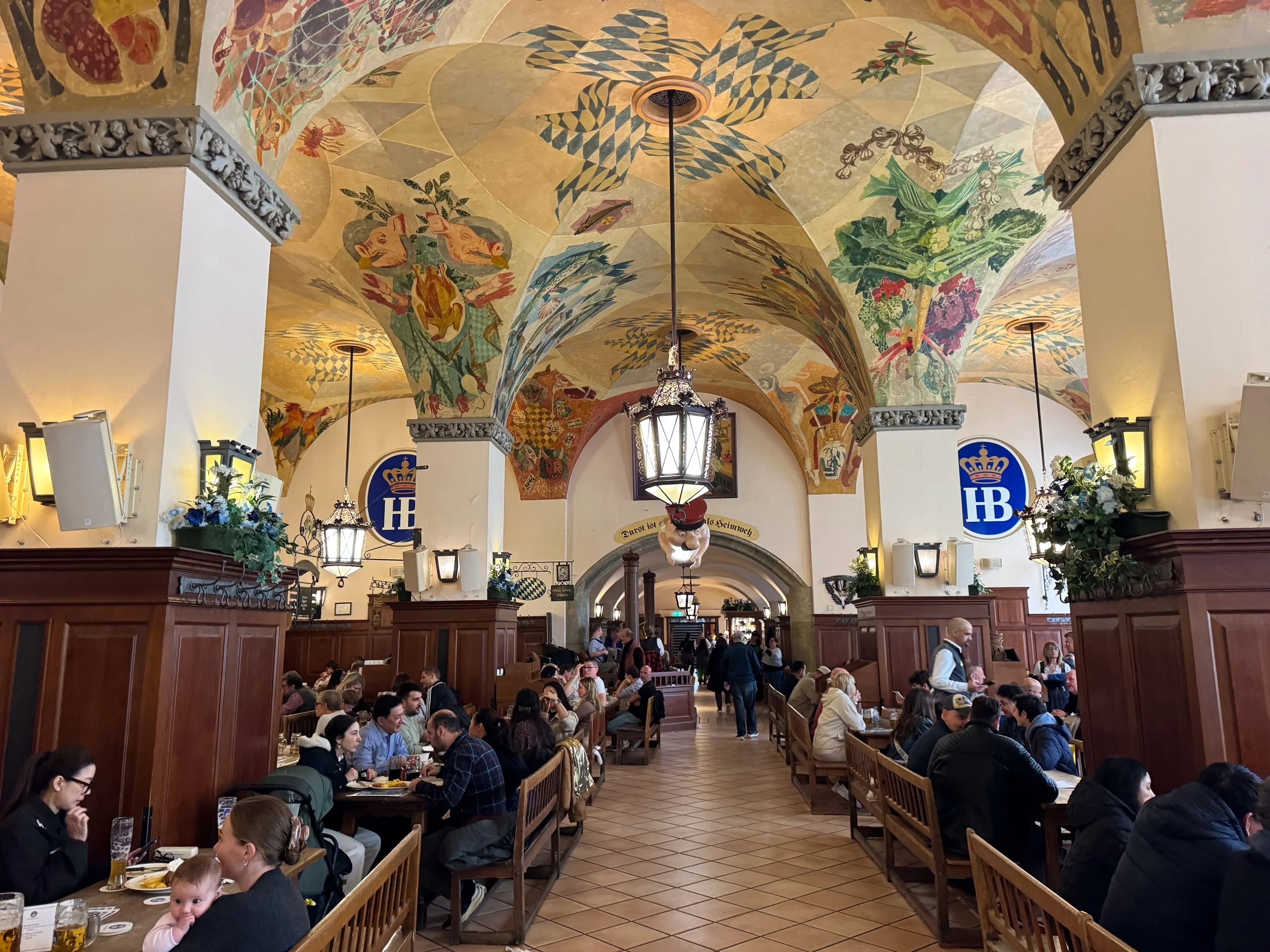
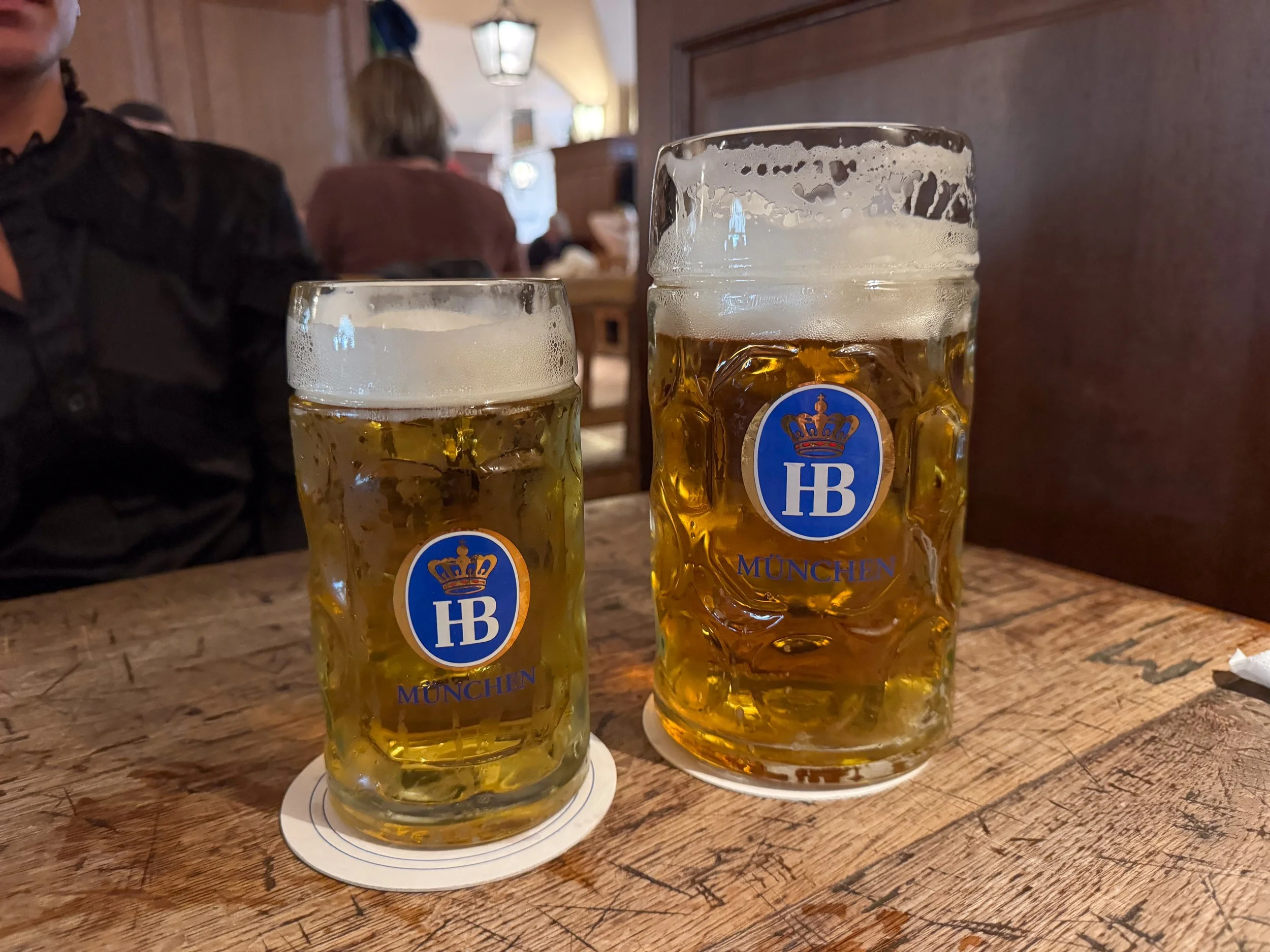
Hofbräuhaus München. A historic beer hall dating back to the 16th century, famed for its festive atmosphere year round. A Bavarian band fills the large hall with music from tubas, accordions and guitars. Seating is shared, so grab any open spot on the long wooden benches, even at a table where others are already sitting. Order a foaming liter of beer, then clink glasses with your neighbors and shout “Prost!” The menu features traditional Bavarian dishes, though the giant pretzels steal the show. Expect large tourist crowds alongside loyal regulars.
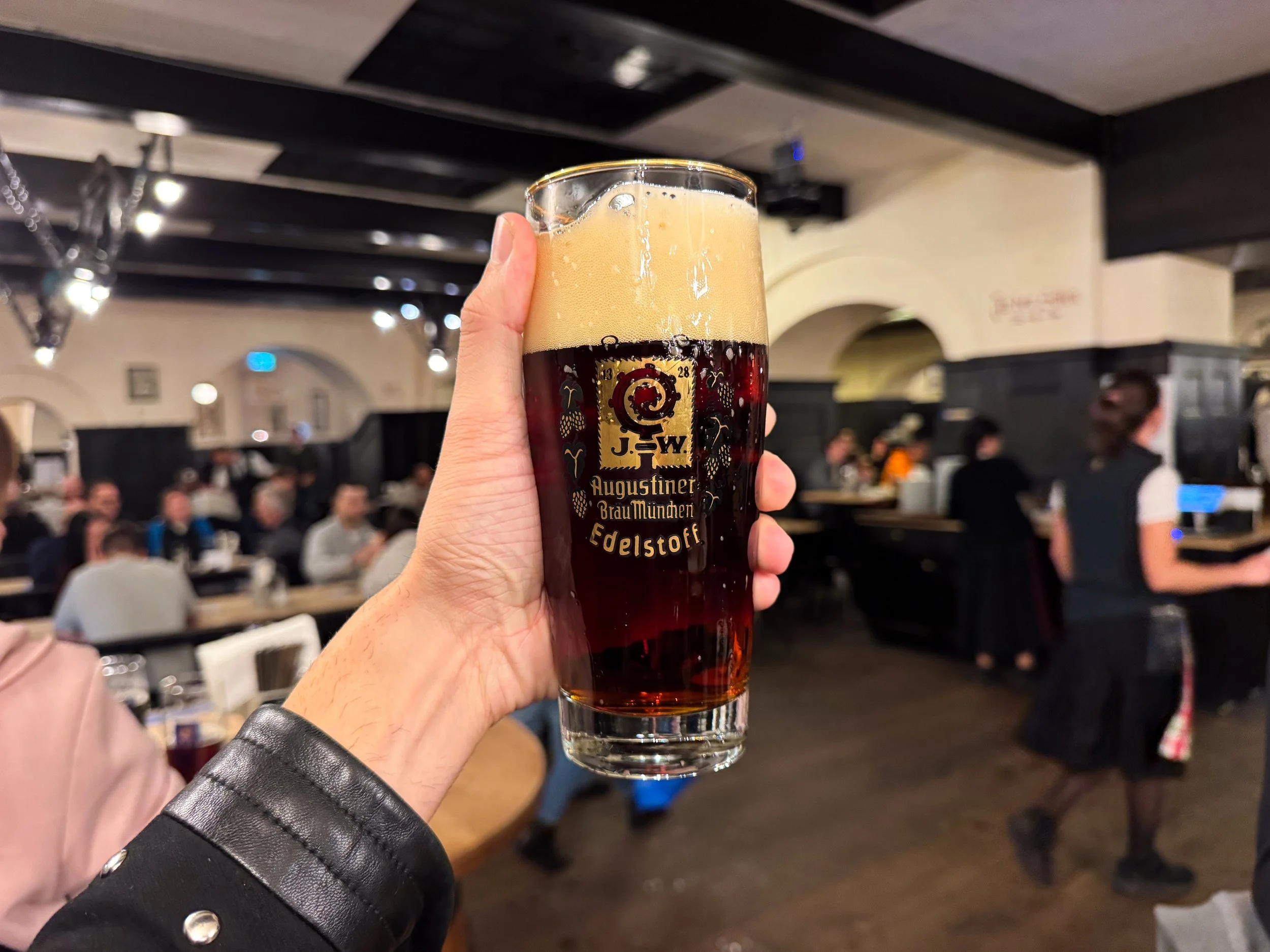
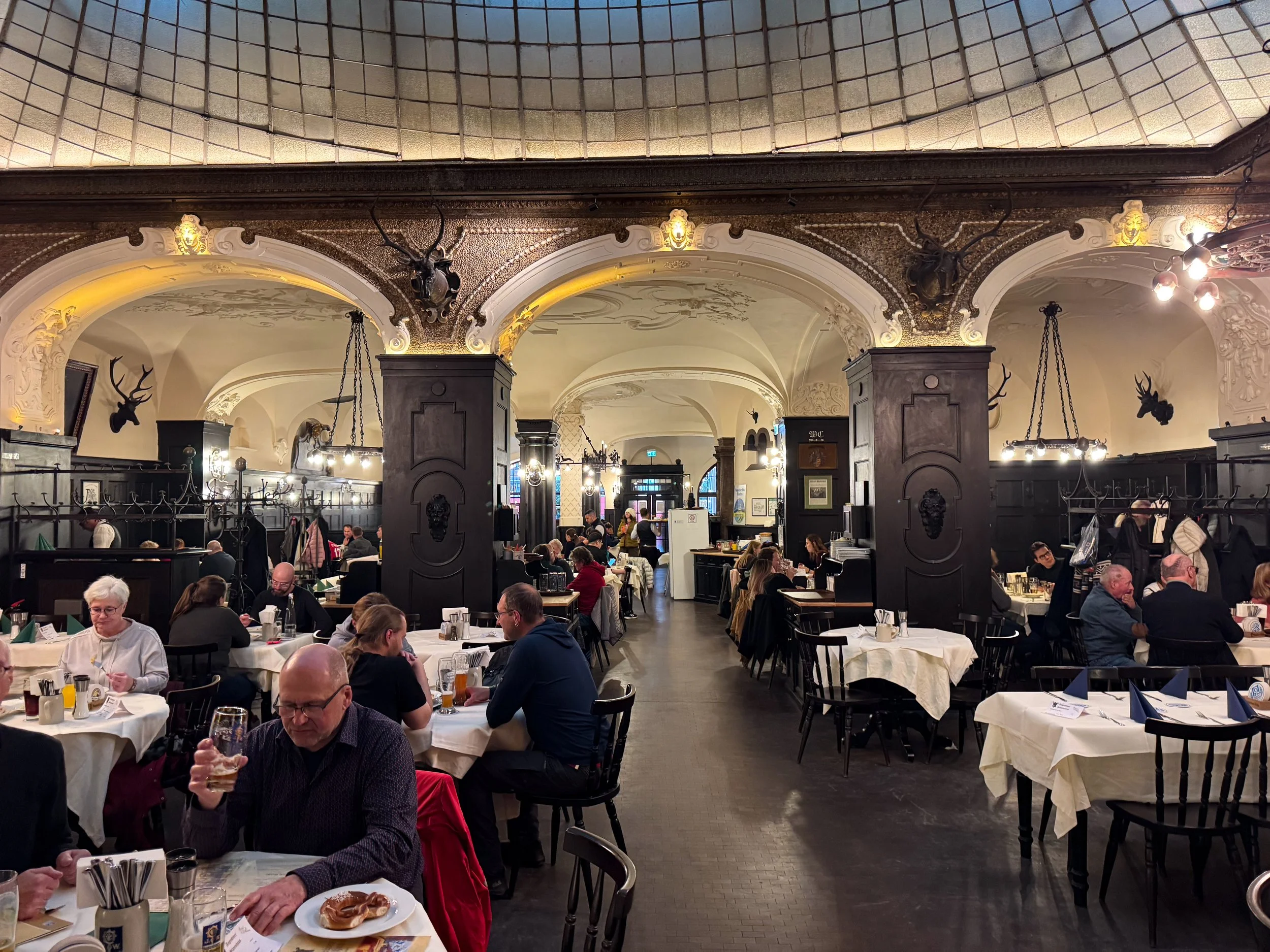
Augustiner Stammhaus. The flagship beer hall of the Augustiner brewery, founded by Augustinian monks in 1328. Its lively, multi-chambered halls feature vaulted, timber beamed ceilings and walls hung with antlers and mounted animal heads. Sit at a shared long table with locals or stand at a barrel table with friends. Watch as bartenders tap wooden kegs and fill liter glasses with foaming beer. Look for the wall of locked steins kept by regulars. Pair a Helles (pale lager) or Dunkel (dark lager) with hearty Bavarian fare.
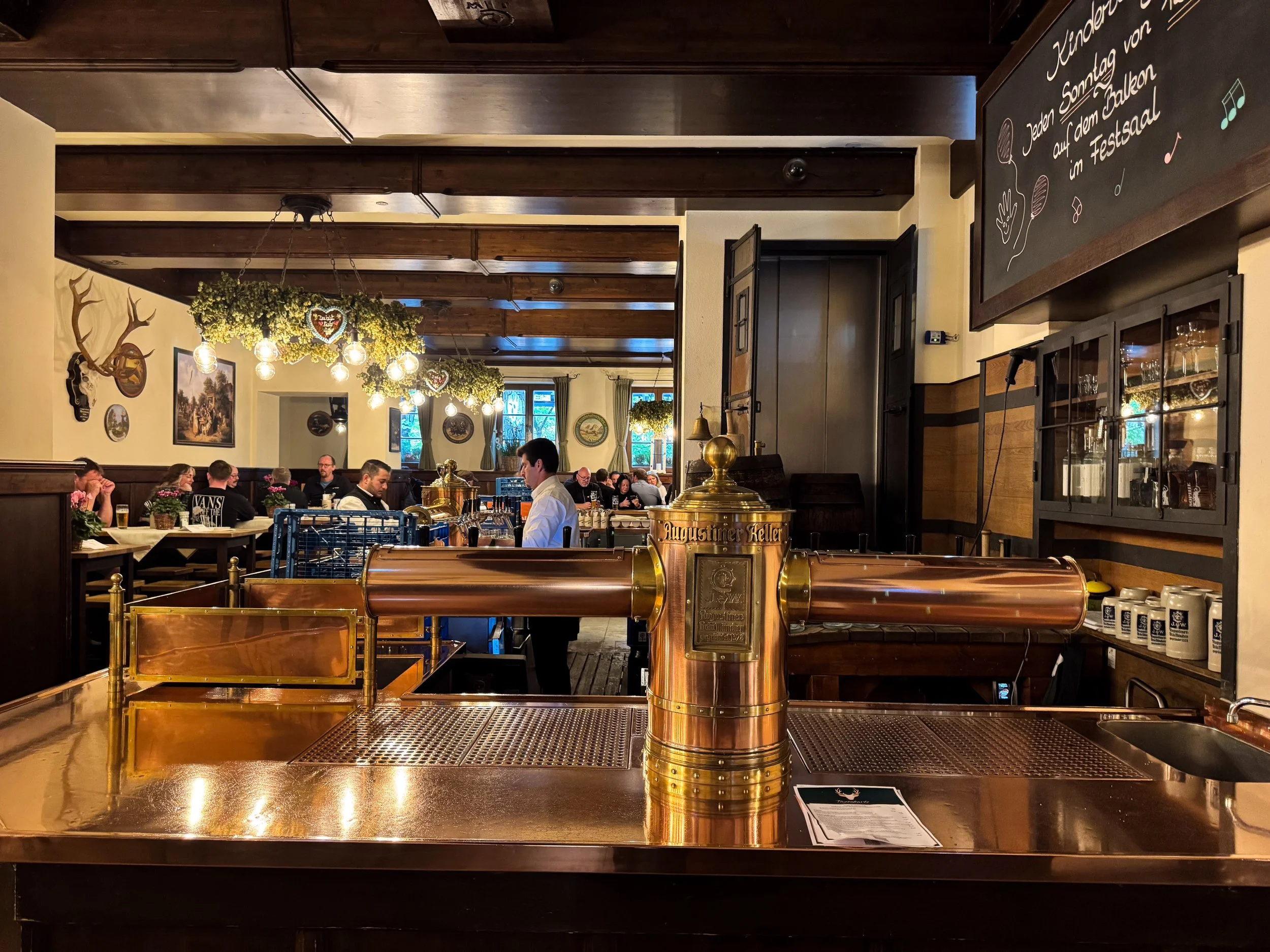
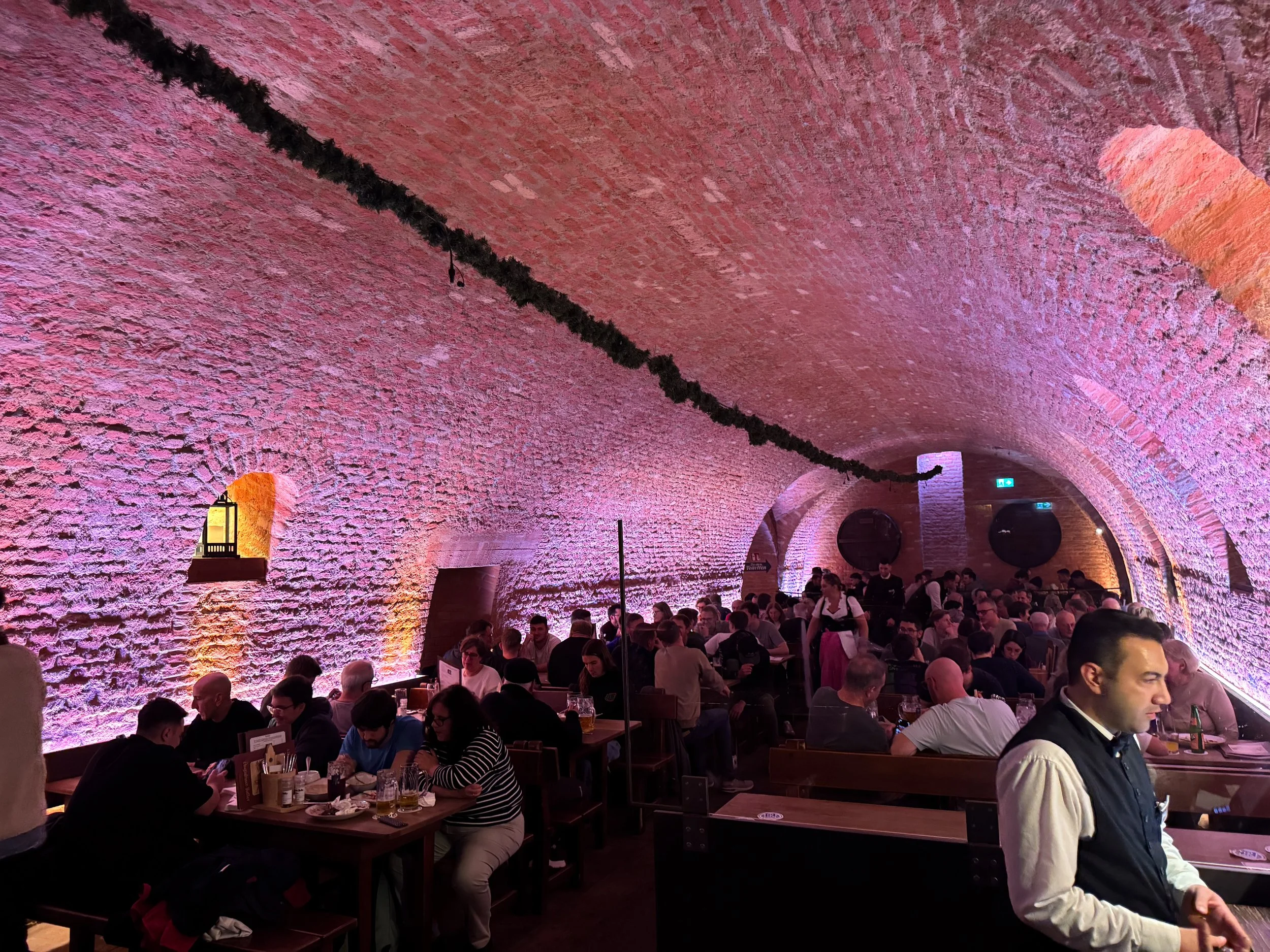
Augustiner-Keller. One of Munich’s most authentic beer halls, with a seasonal beer garden. It draws regulars and tourists alongside locals dressed in traditional Bavarian attire to celebrate special occasions. The dining rooms are filled with wooden tables, mounted antlers and garlands of hops. An underground vault, once used to keep beer cool in summer, now holds an expansive hall of wooden tables and booths. Order a half or full liter of beer alongside a hearty Bavarian meal.
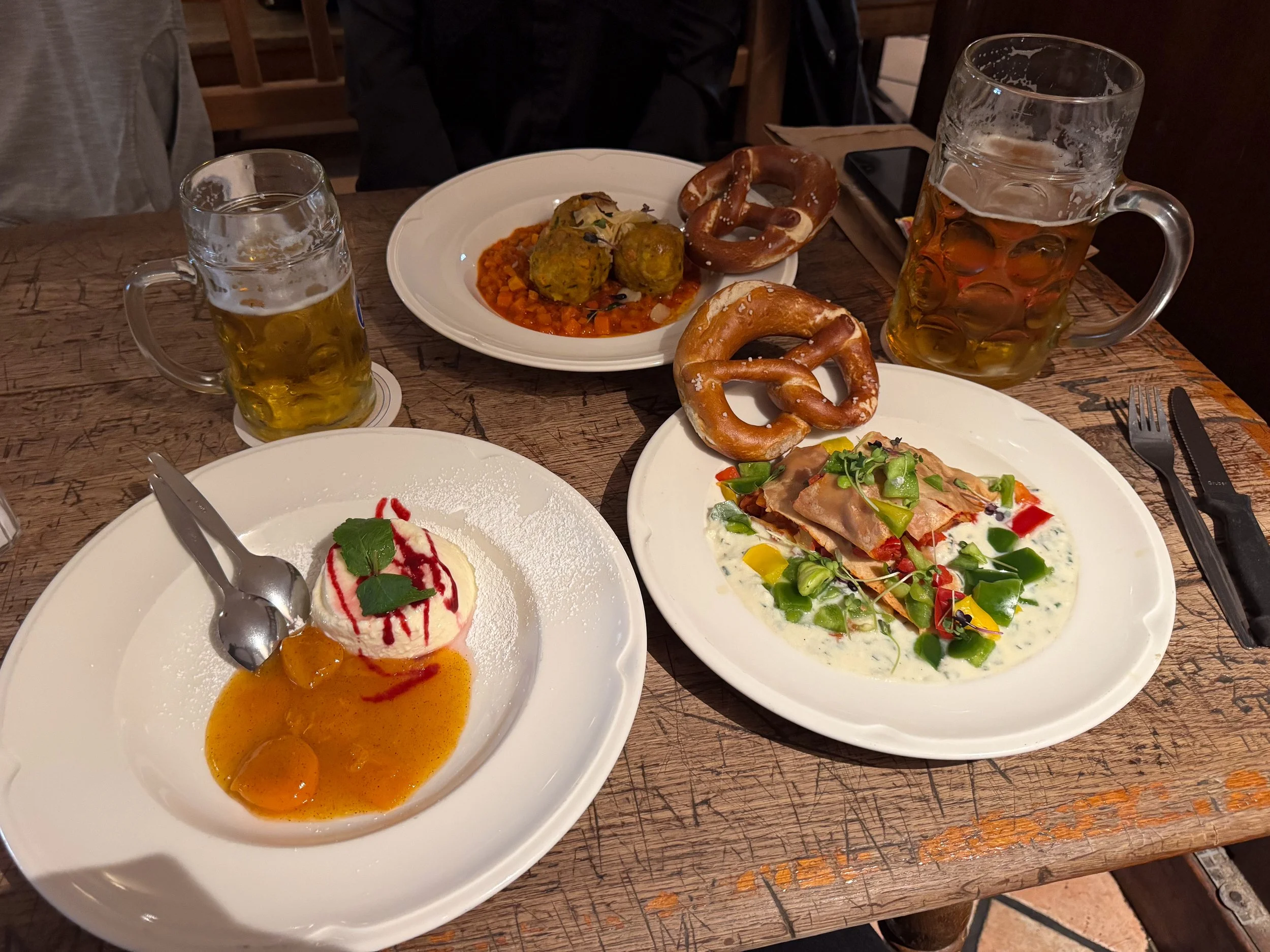
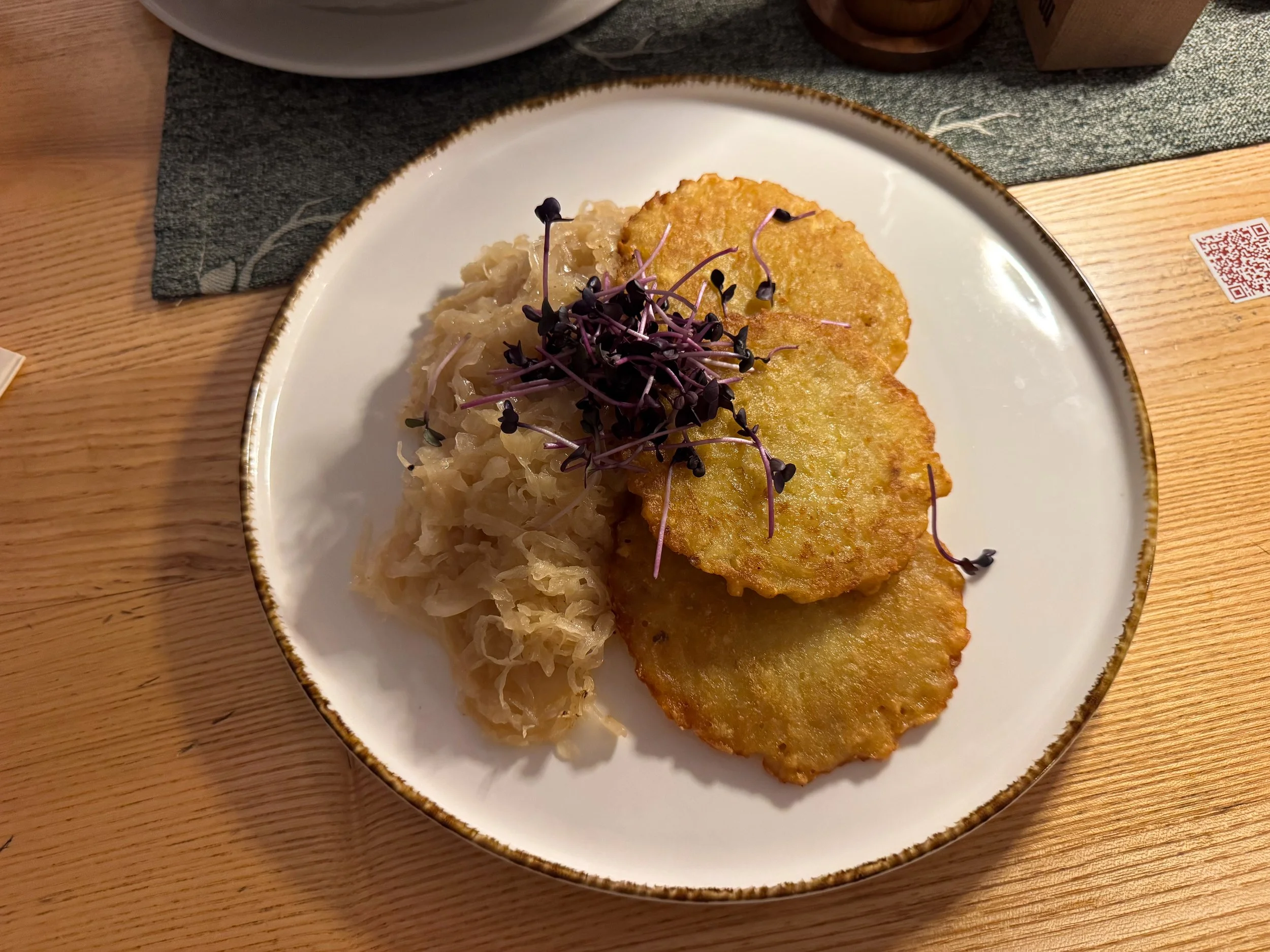
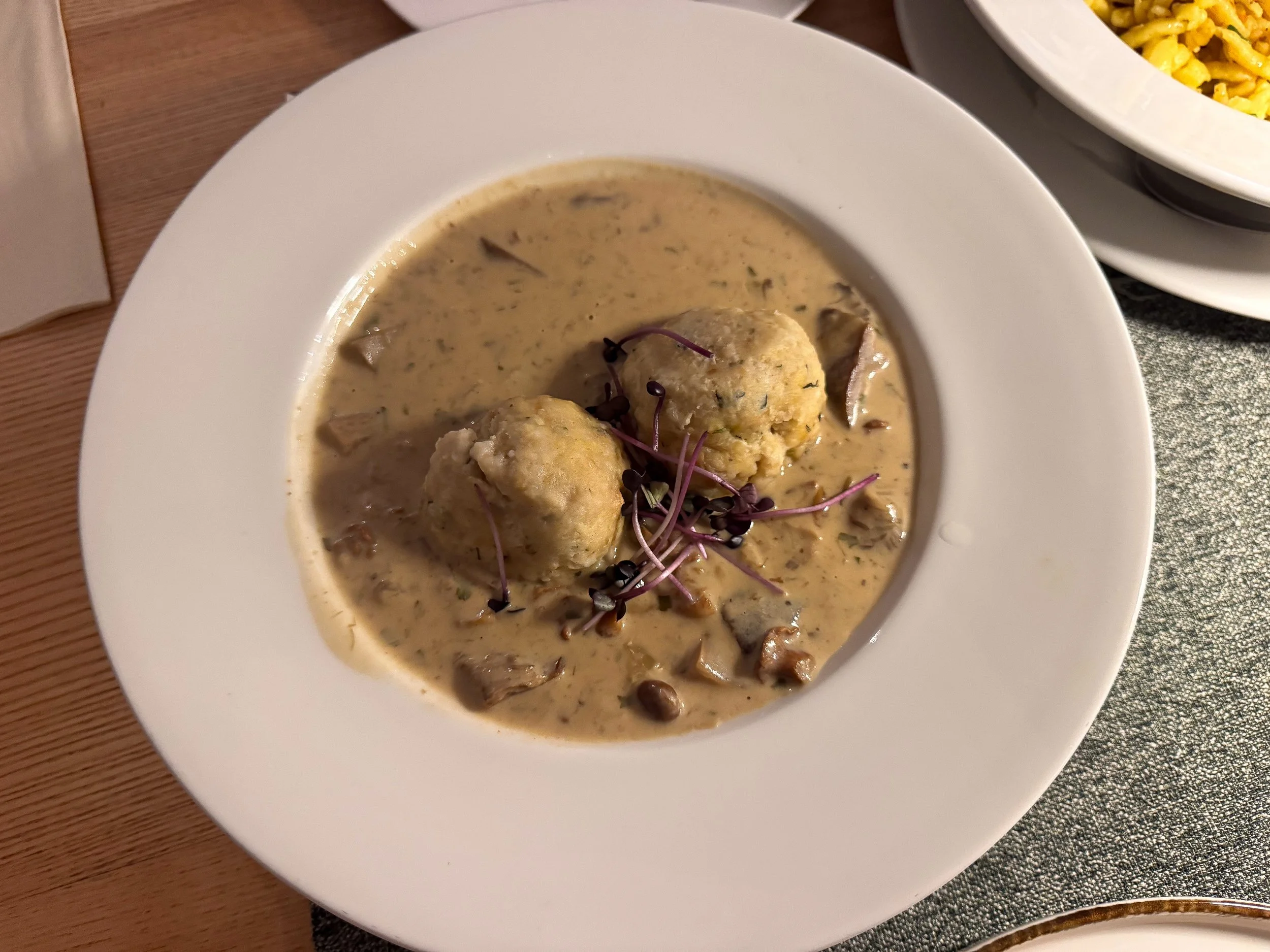
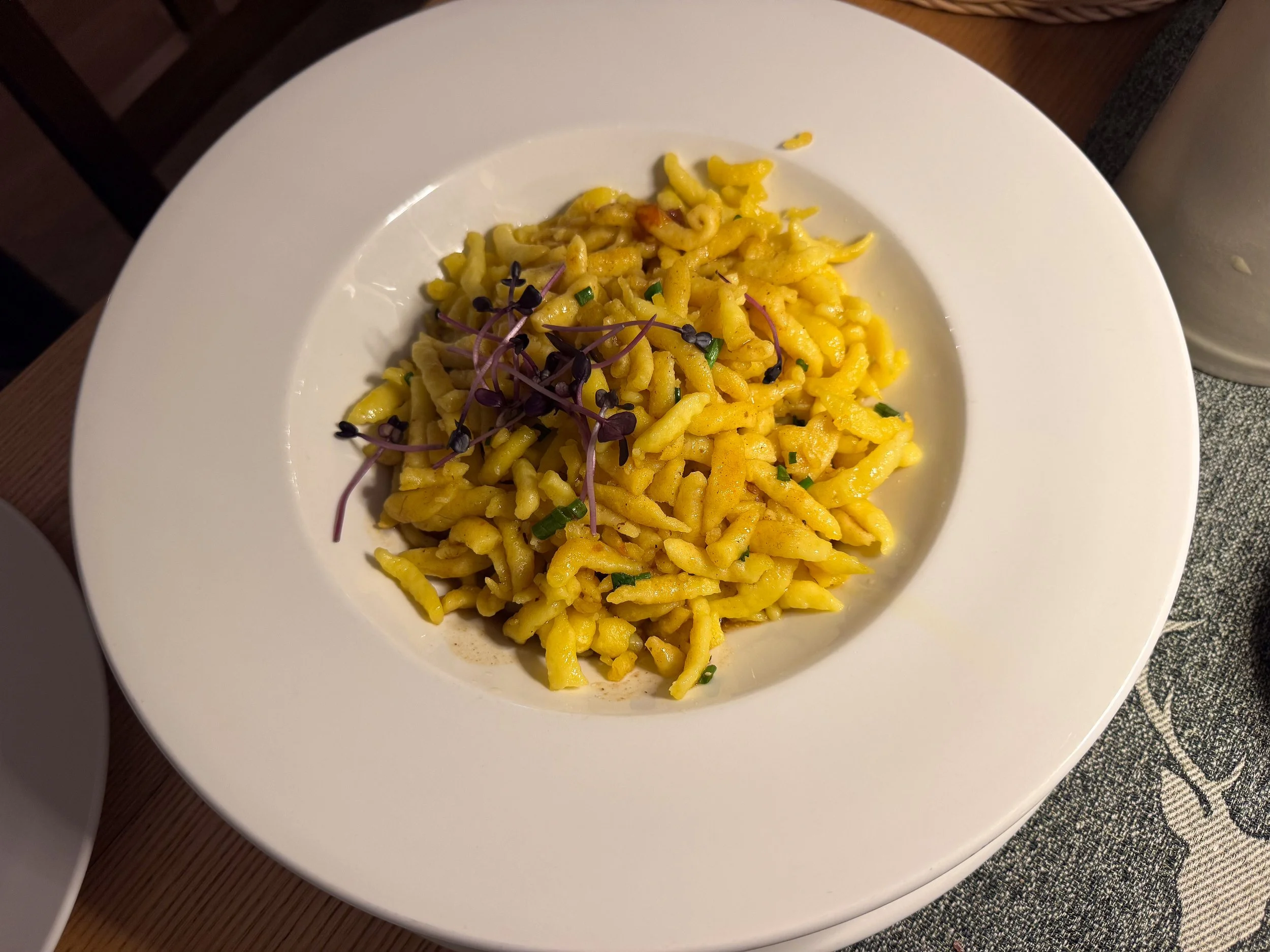
Altmünchner Gesellenhaus. A traditional Bavarian beer hall serving German beers and regional dishes. Settle in at a wooden table with a half liter of foamy beer in a heavy glass mug. The menu is surprisingly vegetarian friendly, with options like Semmelknödel (bread dumplings) in mushroom cream sauce, Spätzle (egg noodles), Reiberdatschi (potato pancakes) and classic pretzels.
Beer Garden Etiquette
Seasonal Beer Gardens. Many beer gardens close for the season in early October, though their beer halls stay open year round.
Self Service vs. Full Service. Beer gardens typically offer two types of seating.
Self Service. Order beer and food at a counter, then take any open seat at the long wooden tables and benches alongside others. You’re welcome to bring your own food to self service sections.
Full Service. These areas usually have tablecloth covered tables, where staff take your order and bring drinks and meals to you. Outside food and drinks aren’t allowed.
Bavarian Bakeries
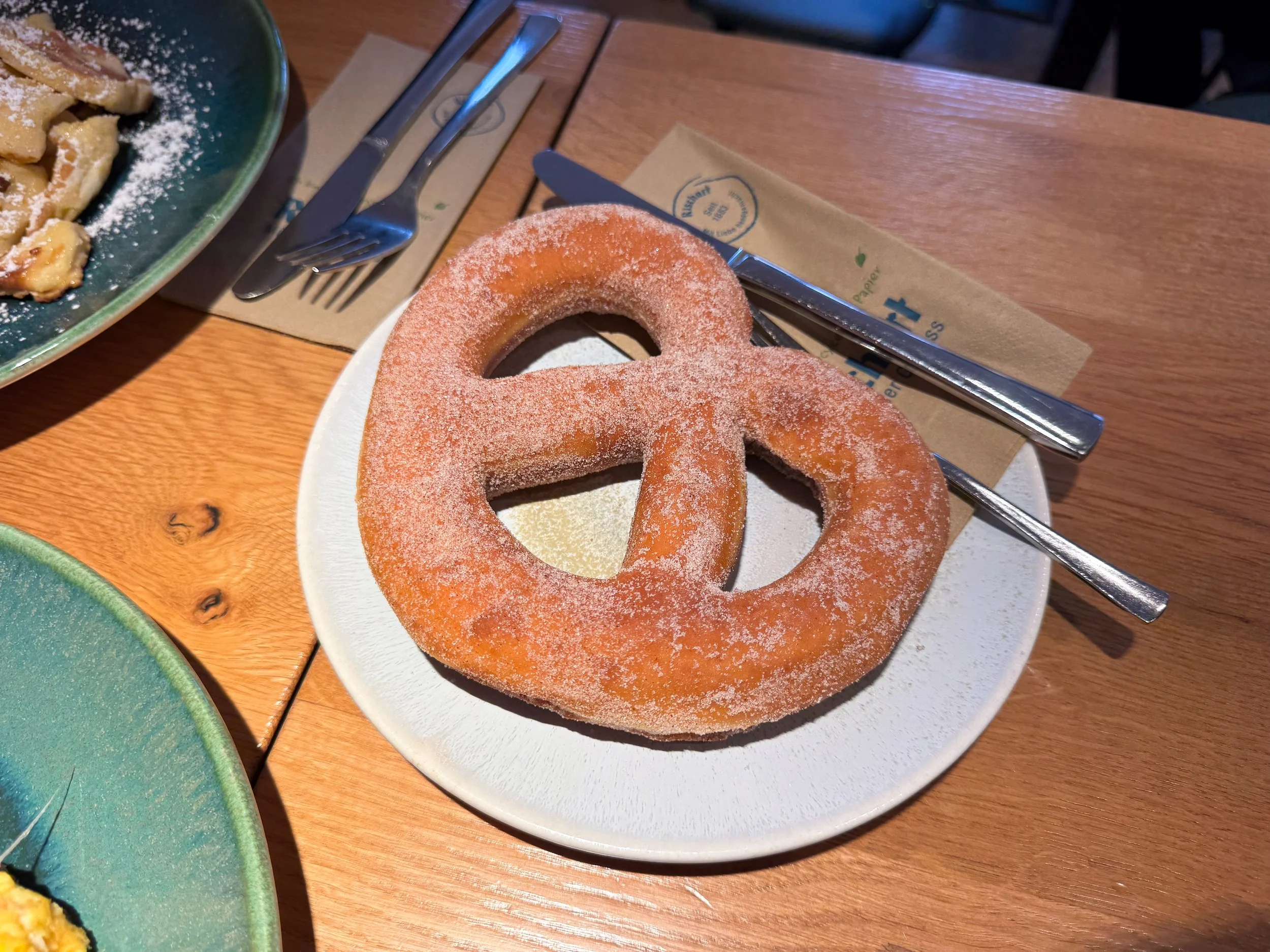
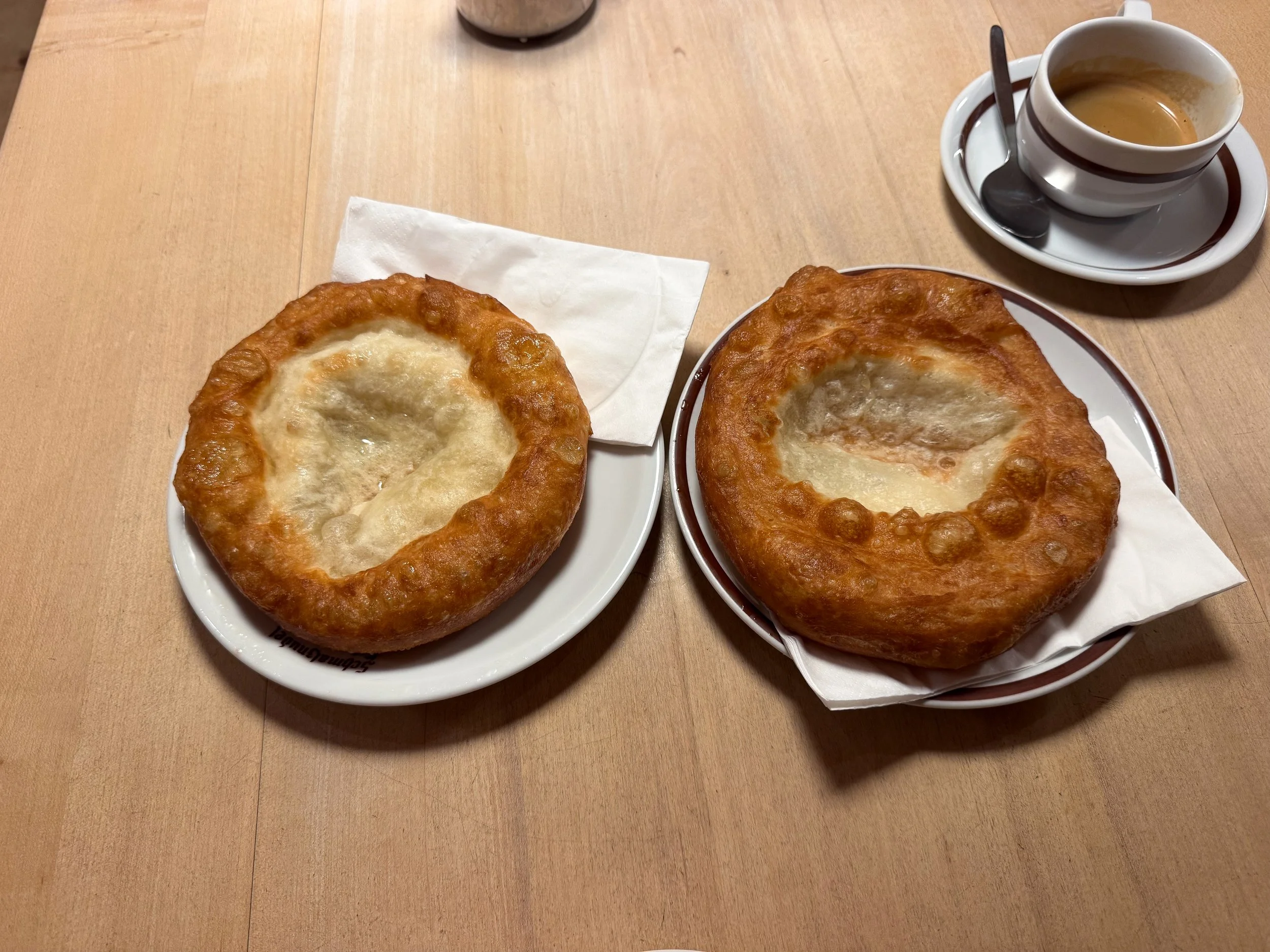
Schmalznudel - Cafe Frischhut. A beloved Munich café famed for its Schmalznudel, a traditional Bavarian doughnut. The dough is stretched into a disk and deep fried, leaving a thick pillowy rim around a thin center. They’re served plain, with sugar on hand to sprinkle to taste.
Rischart Café. A traditional Bavarian bakery with locations throughout the city. Stop in for coffee and pastries like cardamom knots, cream-filled doughnuts and Apfelstrudel, or dine in for Bavarian dishes like pretzels, Kaiserschmarrn, Spätzle and Weißwurst.
Jakob Blum Hofbräuhaus Kunstmühle. A tiny bakery with an impressive spread of hearty breads, buttery pastries, brioches and fruit tarts. Grab a pastry and coffee to go for breakfast.
Julius Brantner Brothandwerk. A Bavarian bakery specializing in rye breads made with fermented apple and warm spices like coriander, fennel and anise. Don’t miss the cinnamon and cardamom buns or the traditional pretzels.
Vegan Bavarian Restaurants
Bavarian and German cuisine is traditionally meat-heavy, but a growing number of restaurants serve vegan versions of classics like Schnitzel, Leberkäse, Bratwurst and Currywurst.
Gaststätte Bergwolf. A no frills local favorite for German beer, schnapps and Currywurst, sliced sausage smothered in a tomato based curry sauce and served with fries. It’s also one of the few spots in the city offering a vegan version. Order takeaway at the bar or share a table with locals.
Max Pett. A fully vegan restaurant serving plant-based versions of traditional Bavarian dishes like Schnitzel and Käsespätzle. Reserve ahead.
Bufet. A small yet popular bar and a favorite among young locals. Come for a local beer alongside vegan Leberkäse, a Bavarian meatloaf.
Romantic Road Day Trip from Munich
The Romantic Road is a scenic route winding hundreds of kilometers across Bavaria, linking medieval cities and storybook towns dotted with castles, fortresses and historic homes. Several stops make easy day trips from Munich, including the Alpine town of Füssen and the neighboring Neuschwanstein Castle, less than two hours away.
Neuschwanstein Castle
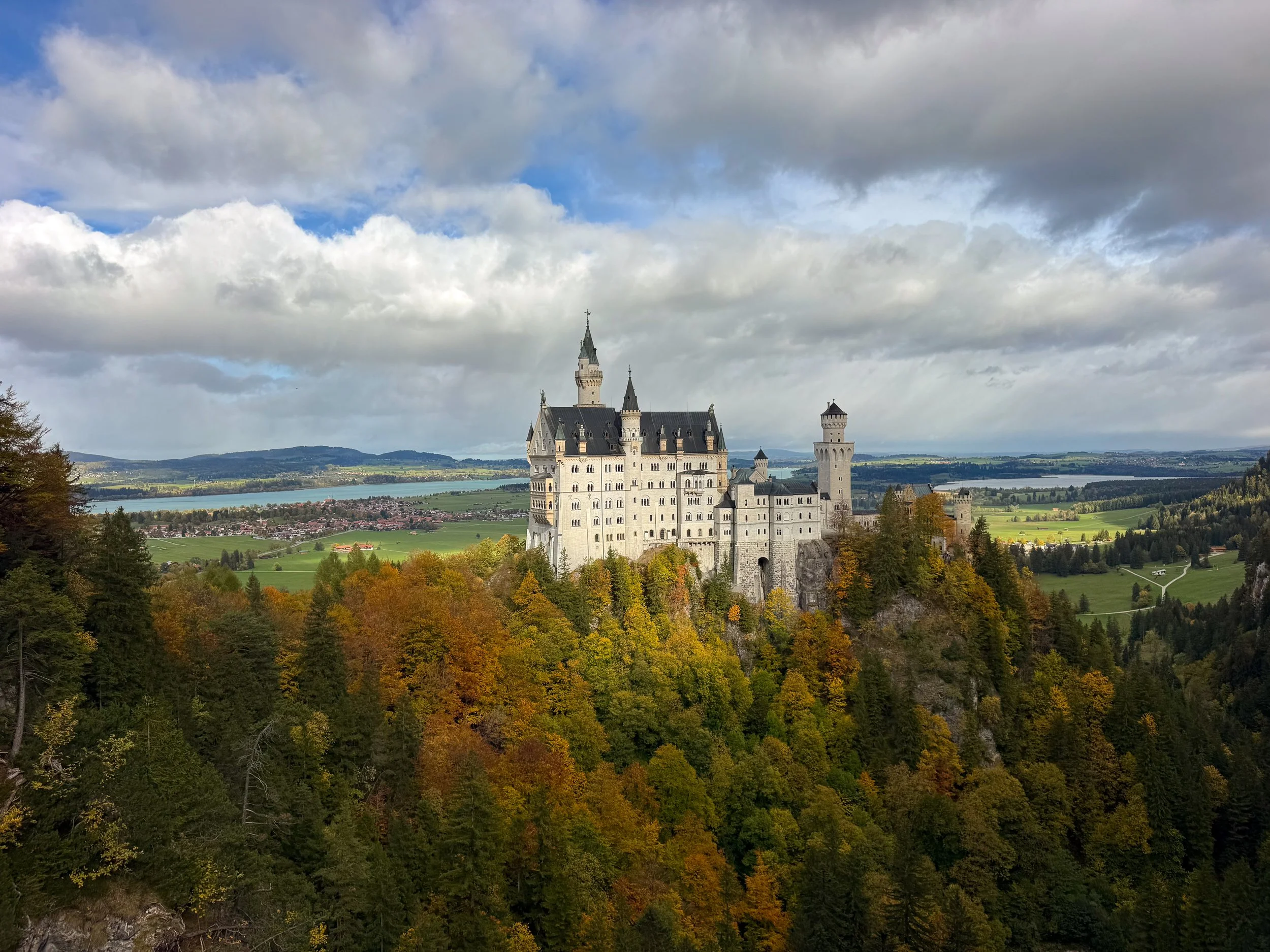
A 19th century fairytale castle perched on a forested hilltop in the foothills of the Bavarian Alps. Its cream limestone façade, narrow arched windows, cylindrical towers and tall conical spires give it a dramatic, medieval style silhouette. The castle is said to have inspired Disney’s iconic castles.
Pro Tip. Tours of the interior are available, though many rooms were never finished. Locals recommended we skip the tour and spend the extra time exploring the nearby town of Füssen.
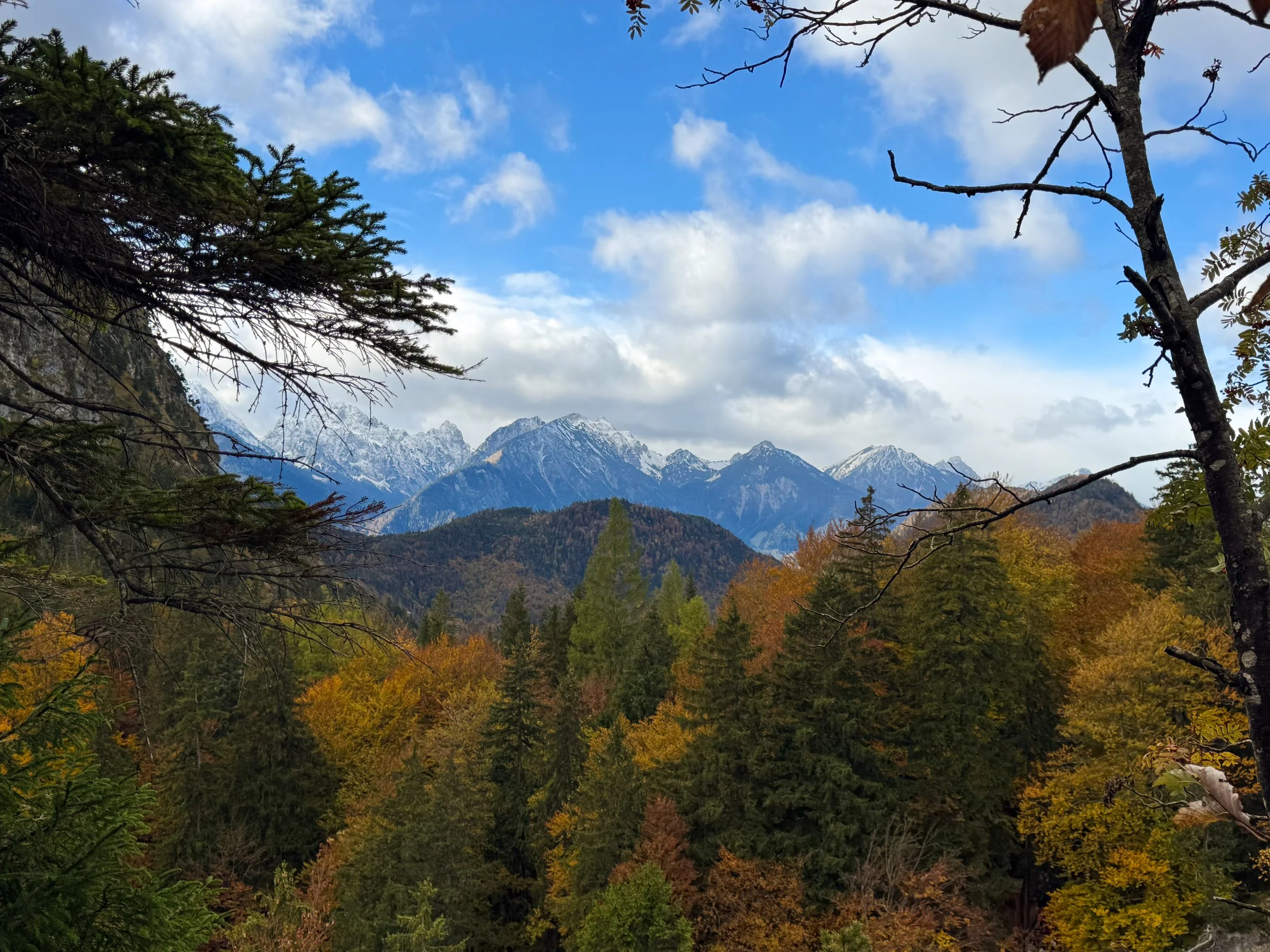
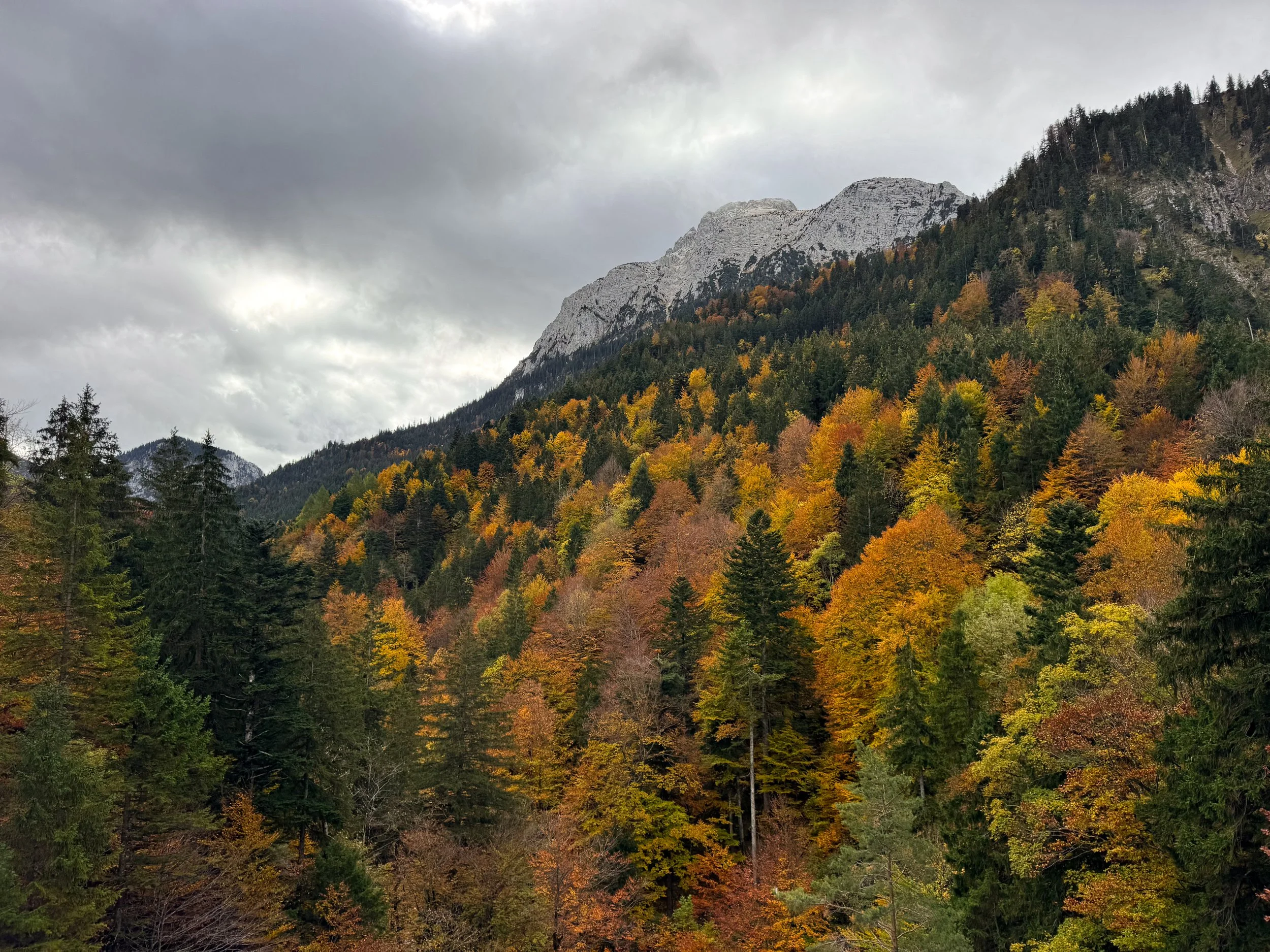
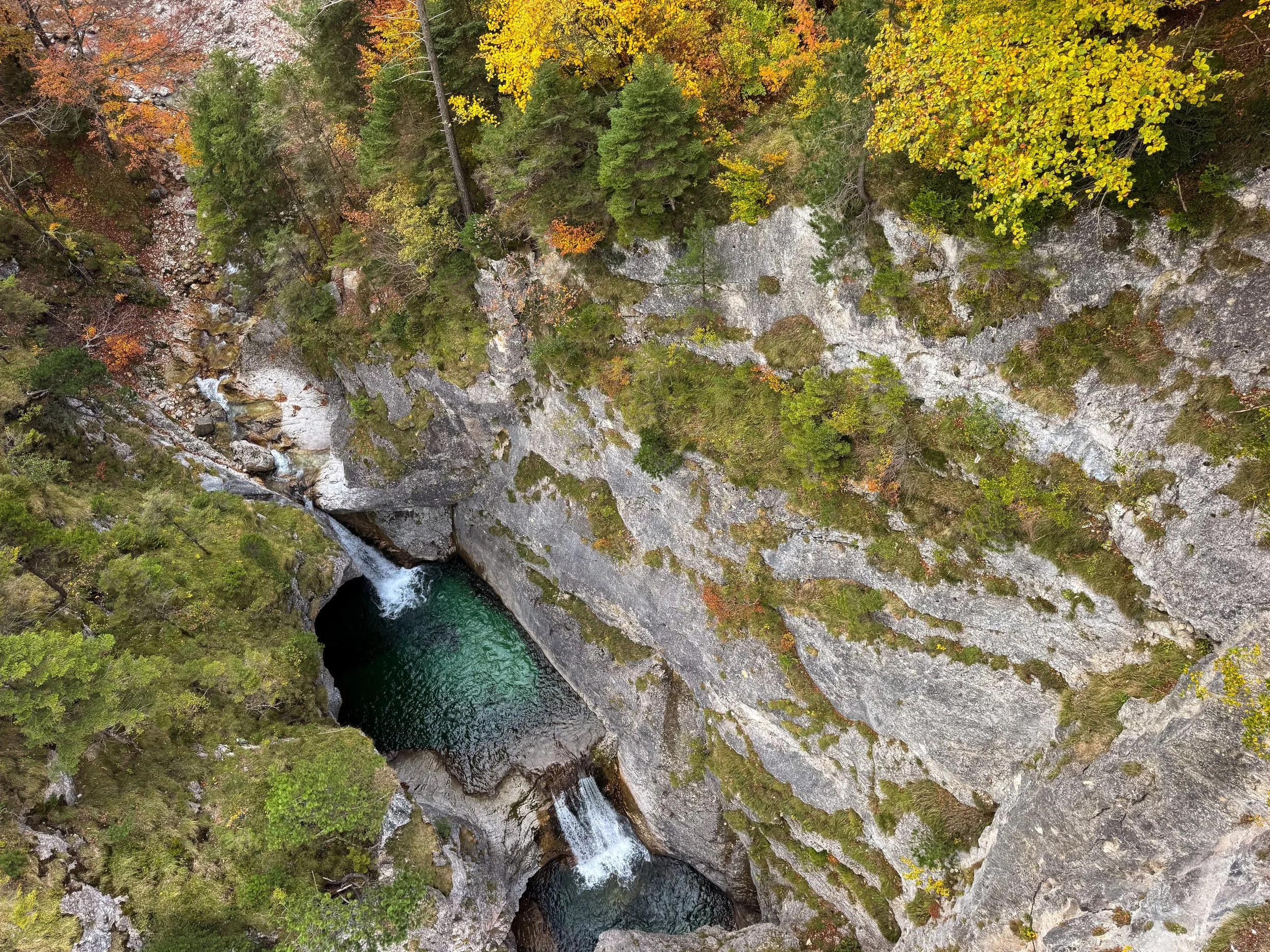
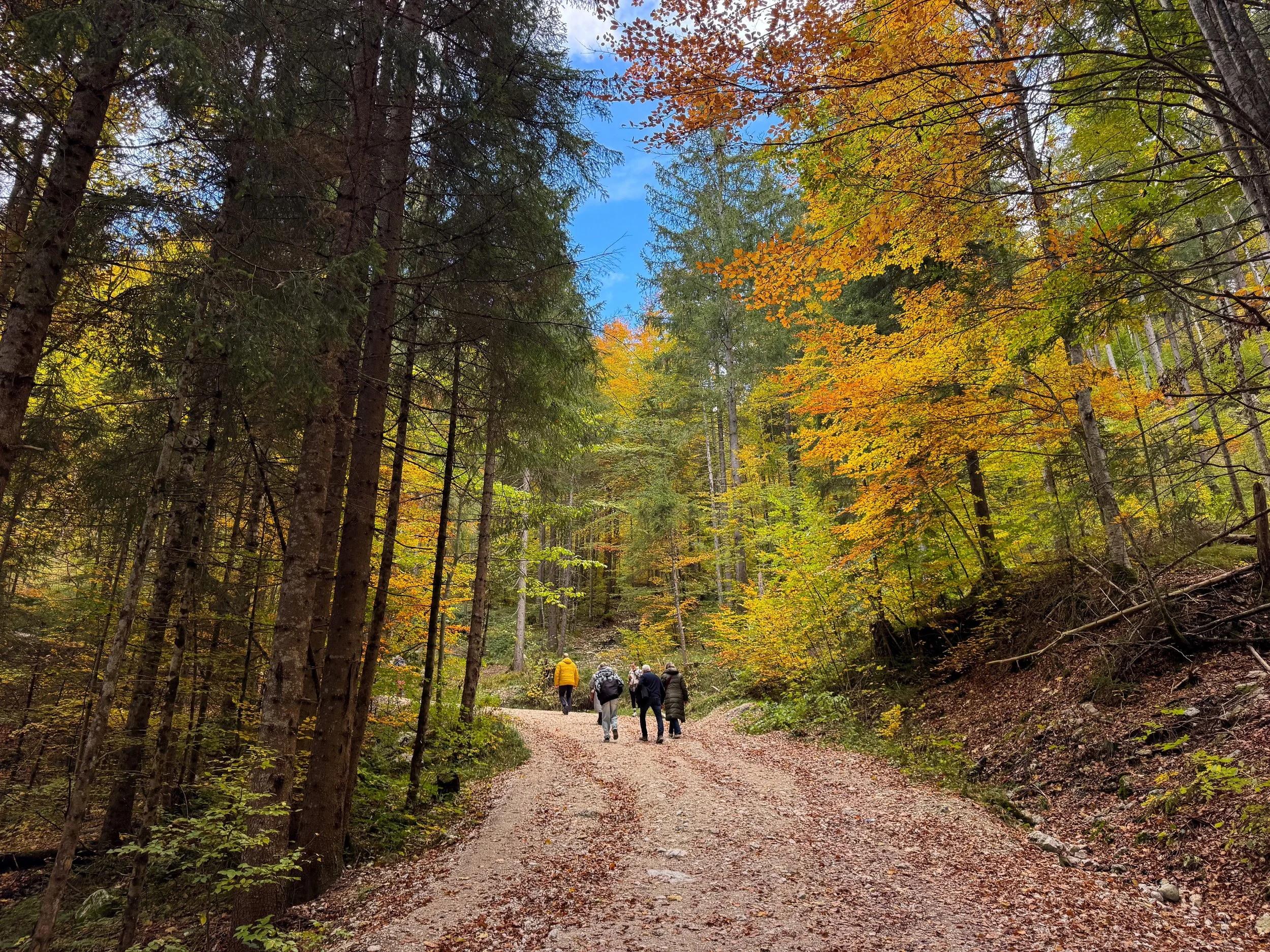
Marienbrücke (Mary’s Bridge). A pedestrian suspension bridge spanning a ravine above cascading waterfalls, offering panoramic views of Neuschwanstein and its surrounding Alpine landscape. Hike about 40 minutes from Hohenschwangau Village or take the bus from the parking lot. The bridge often closes in winter.
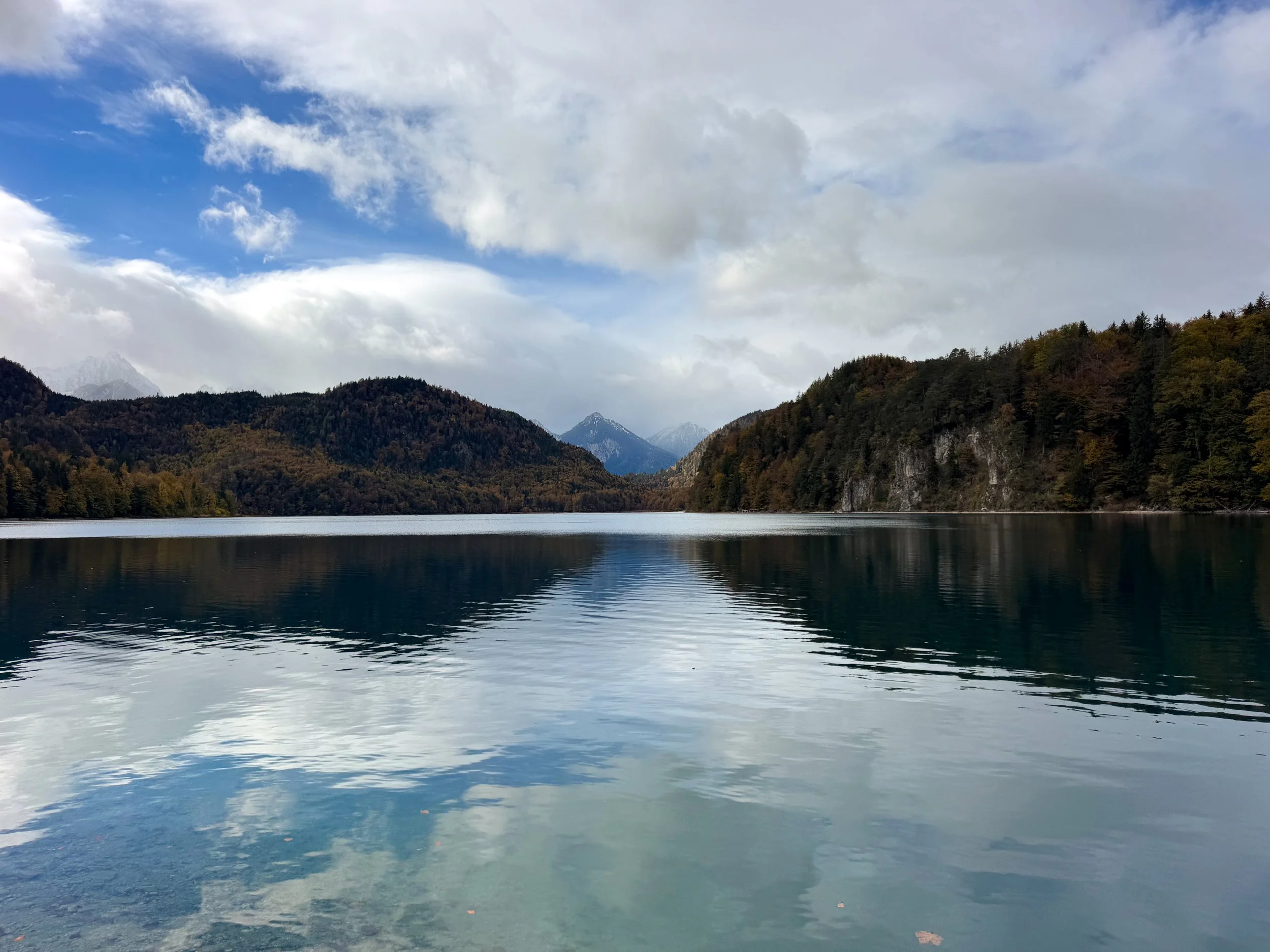
Alpsee Lake. An Alpine lake ringed by pine forest beside Hohenschwangau Village. Walking paths circle its shores with views across the water to the surrounding mountains. Pairs of ducks glide along the still surface as rowers paddle boats rented from the lakeside kiosk.
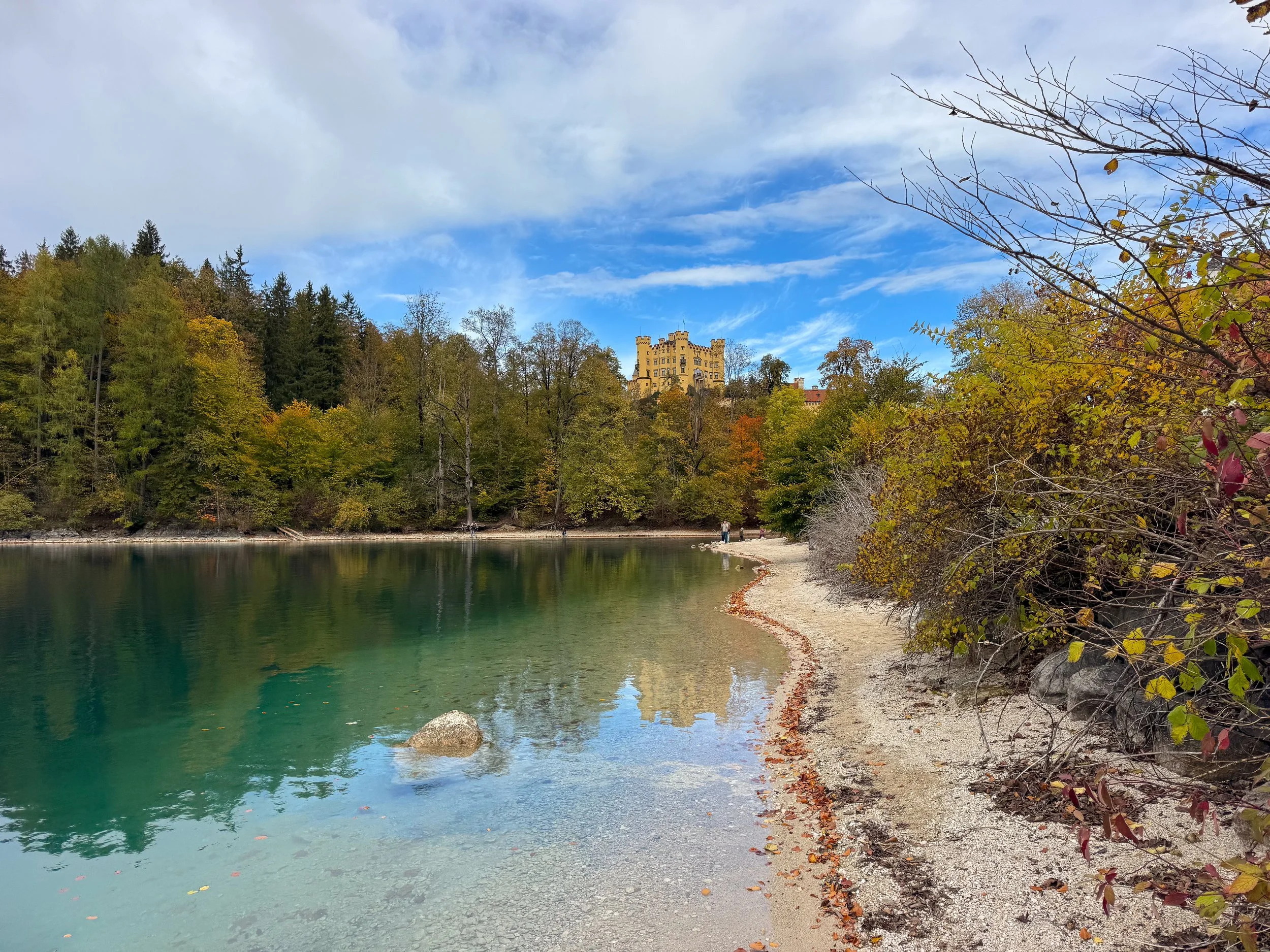
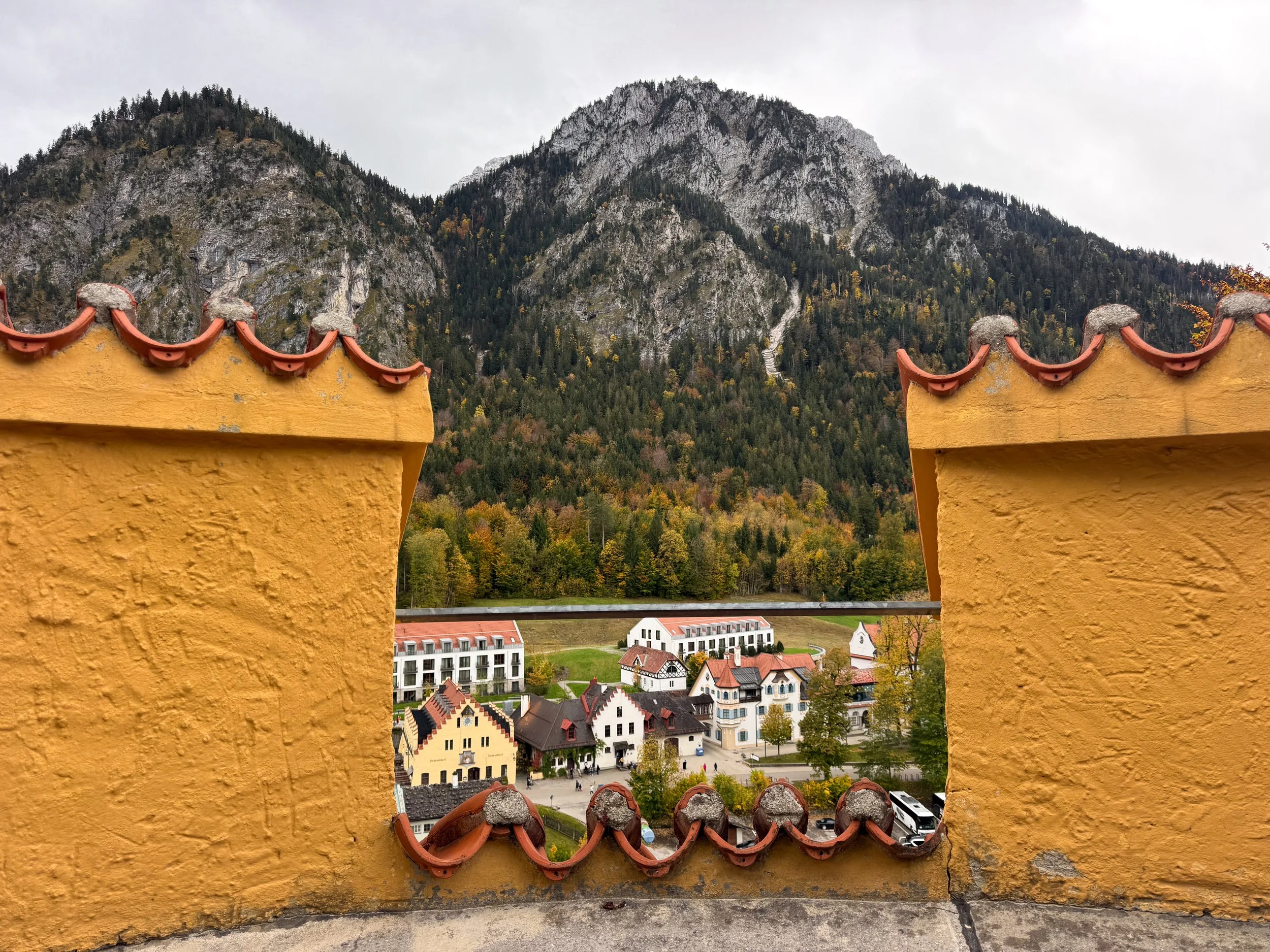
Hohenschwangau Village. A small village beneath Neuschwanstein on the shores of Lake Alpsee, lined with Bavarian style lodges, restaurants and shops. It’s named after Hohenschwangau Castle, a yellow hilltop palace that served as a summer residence and hunting lodge for the Bavarian royals.
Füssen: Old Town, Castle & Abbey
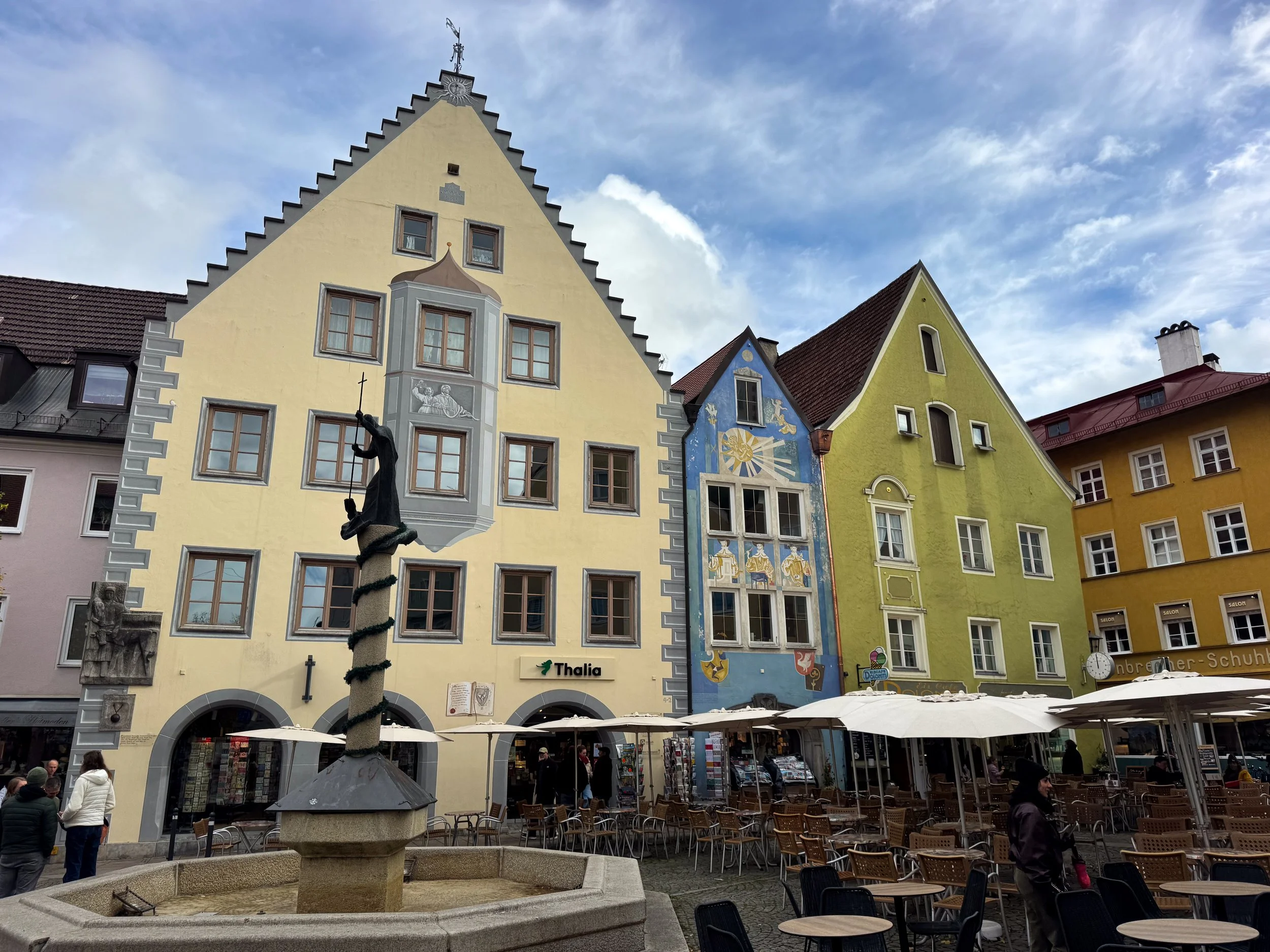
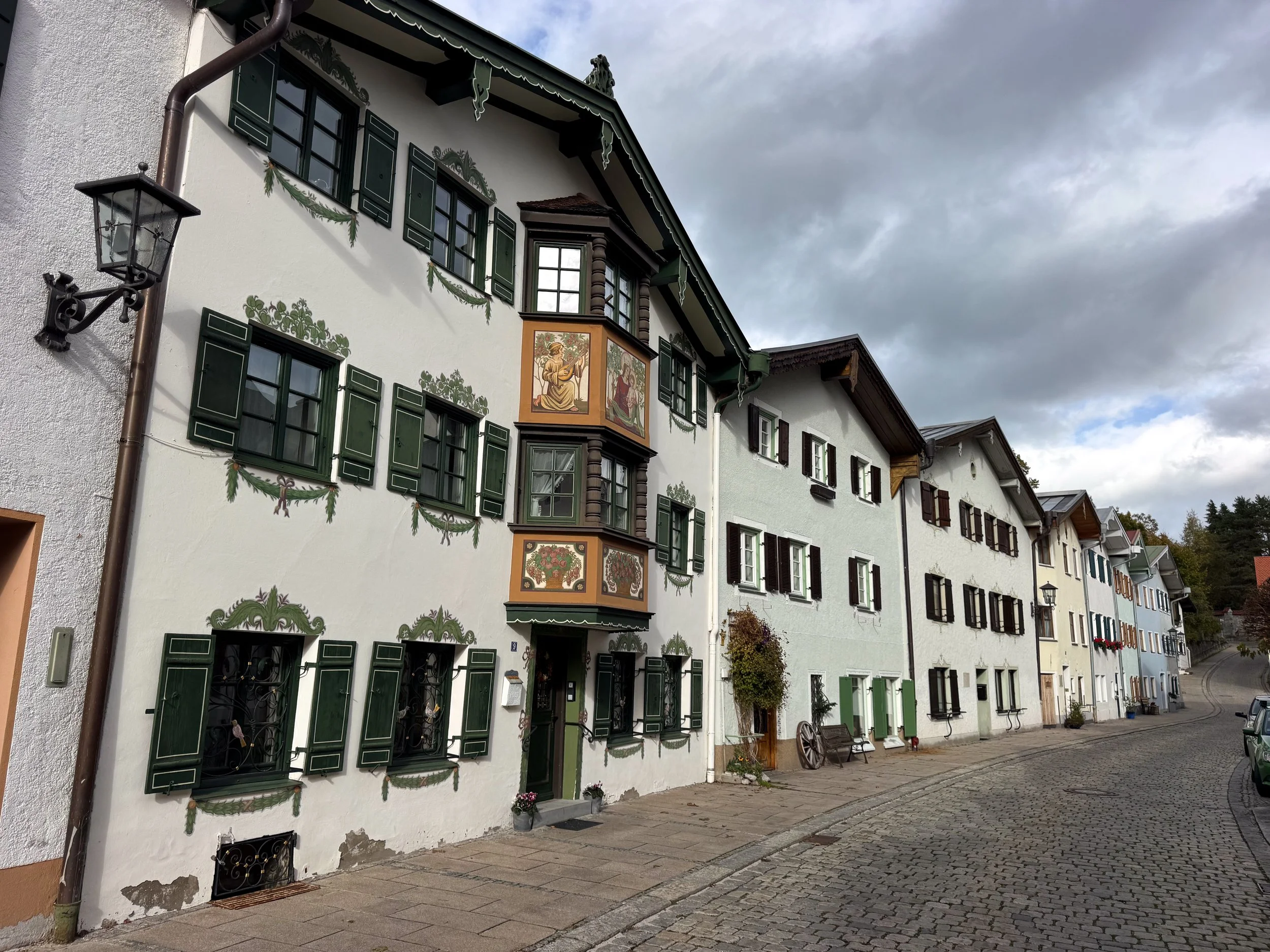
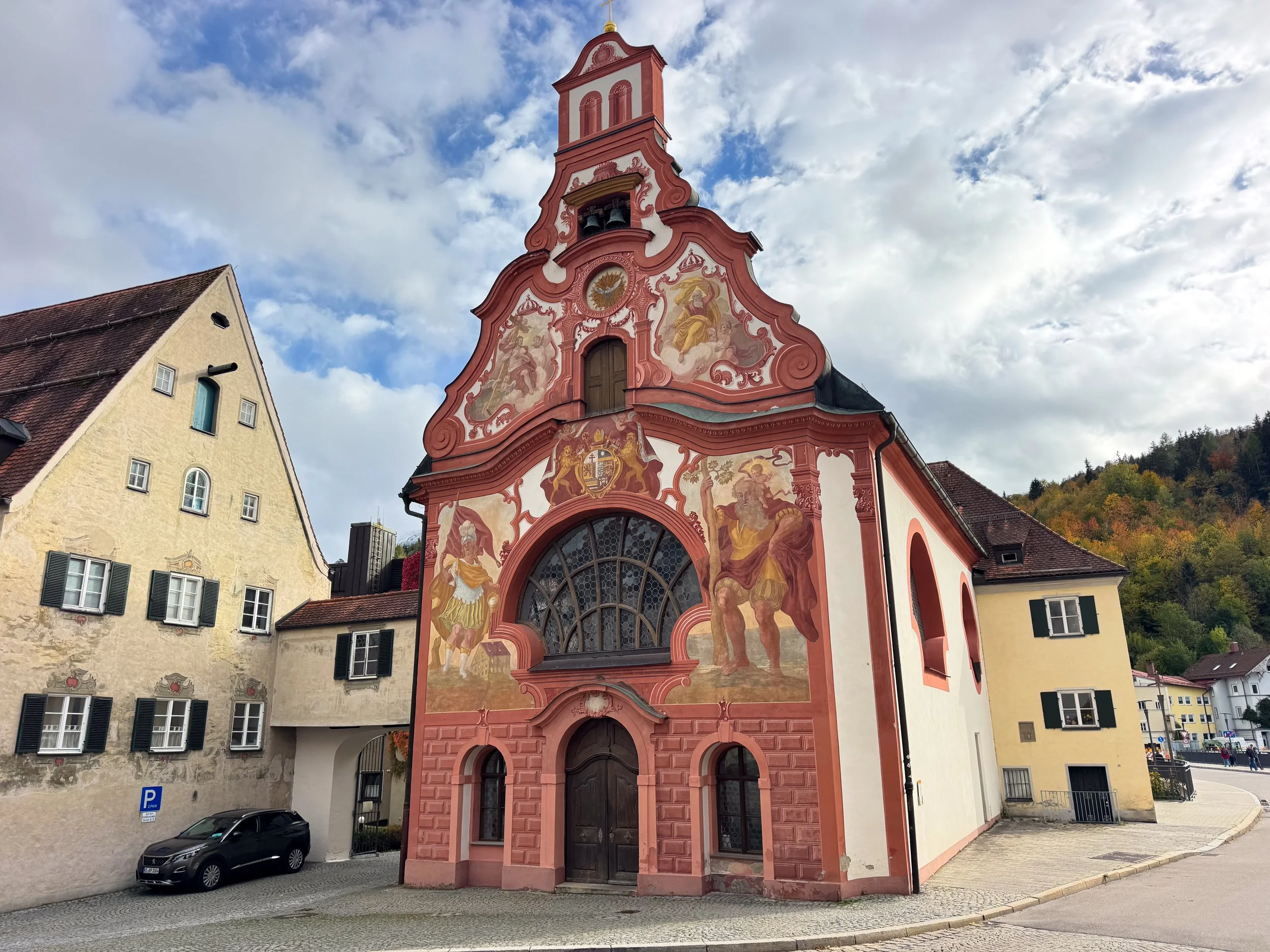
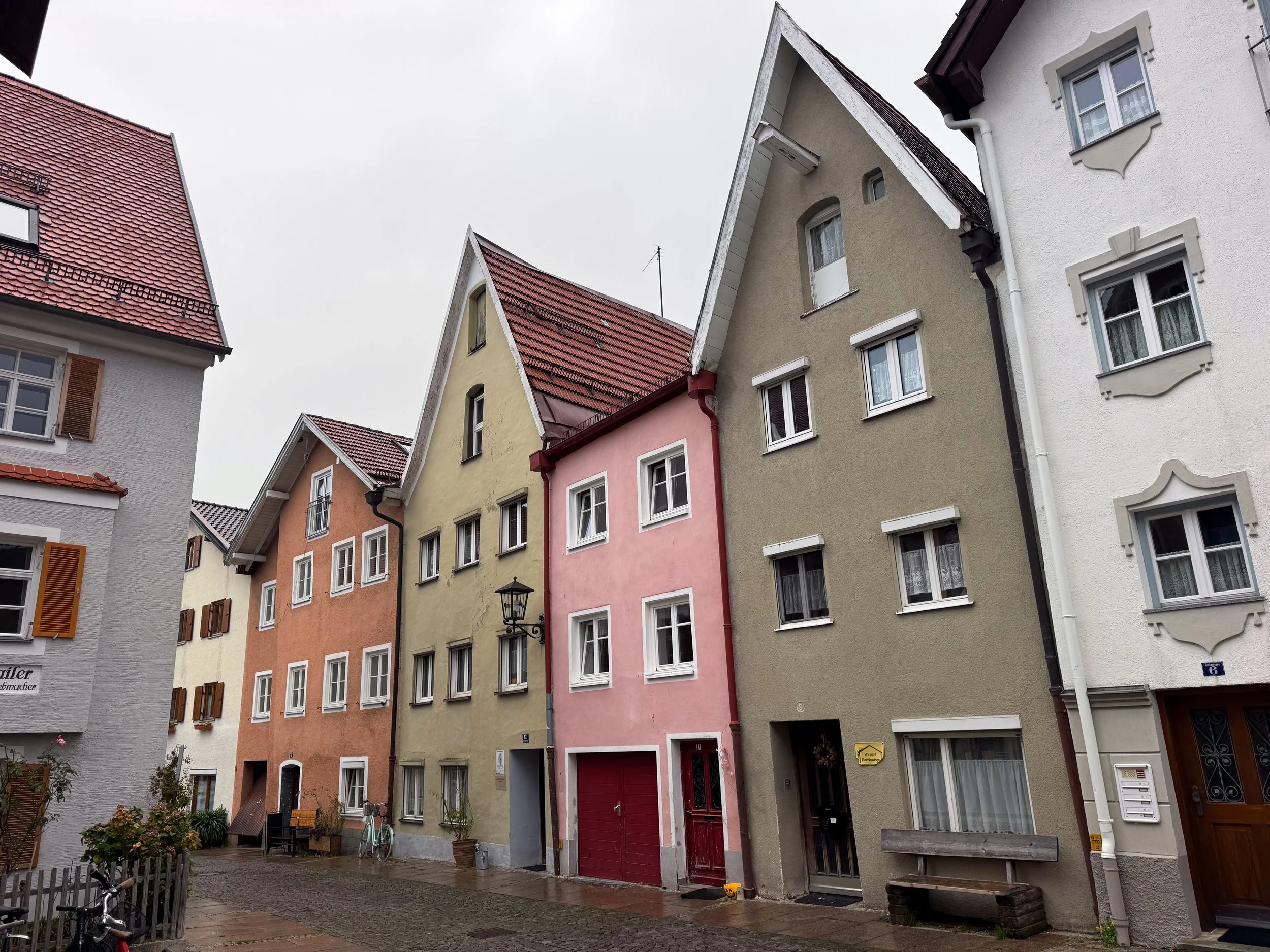
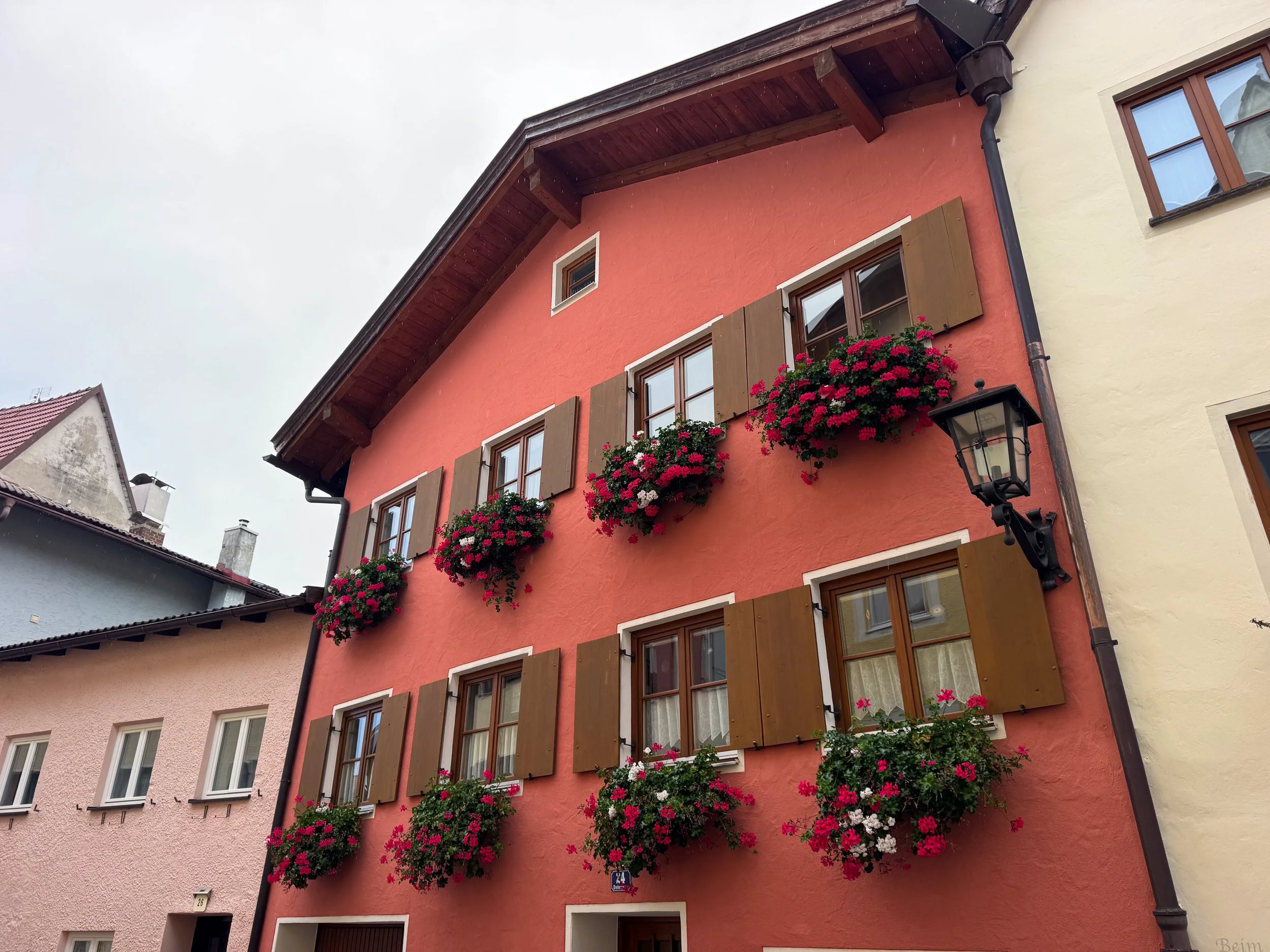
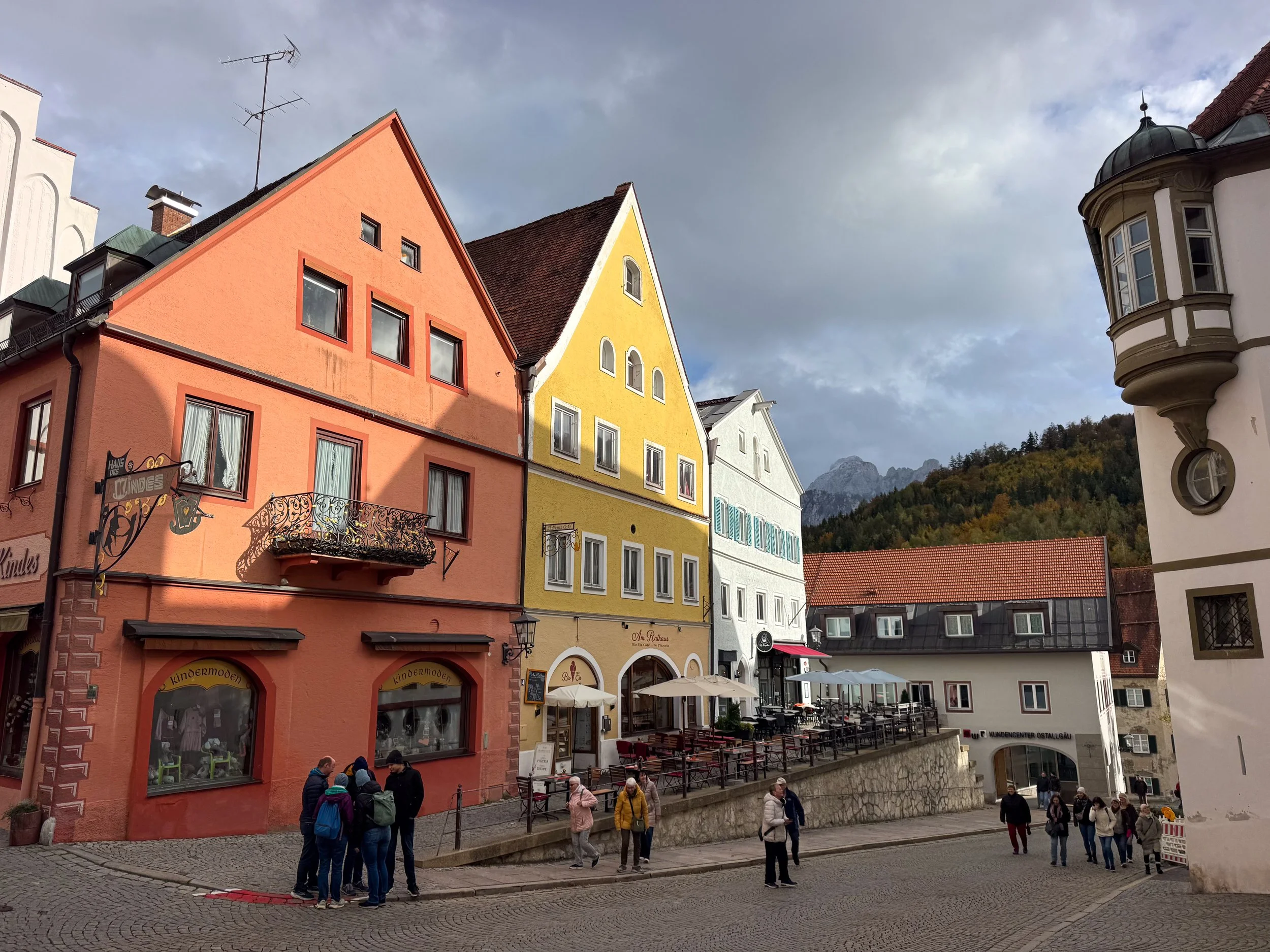
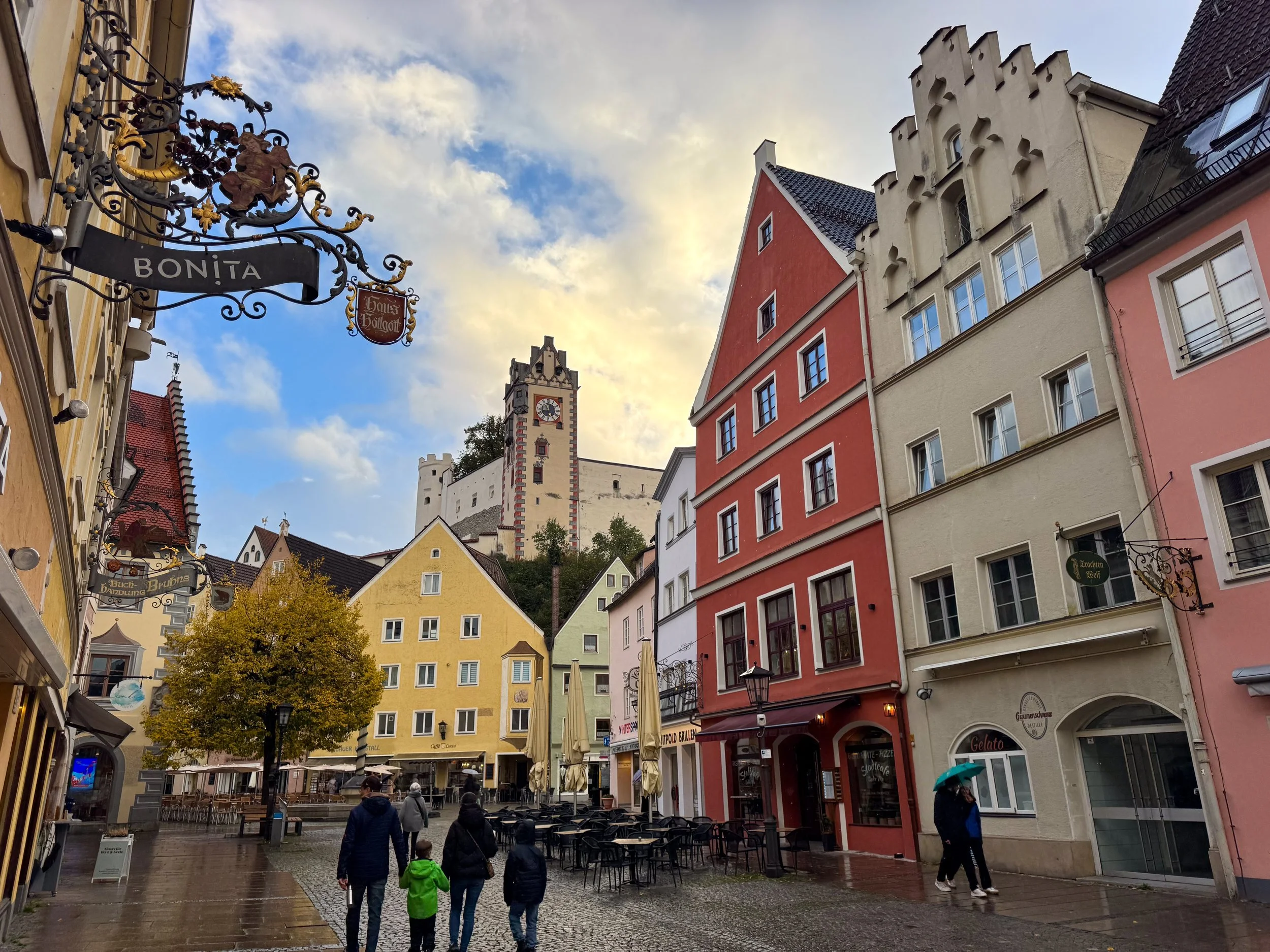
A picturesque Bavarian town at the southern end of the Romantic Road, just minutes from Neuschwanstein. It sits along the Lech River at the foot of the Alps, close to the Austrian border. Winding cobblestone streets and alleyways are lined with narrow pastel buildings beneath steeply pitched roofs. Their Renaissance and Baroque façades are decorated with frescoes, murals, wrought-iron signs and lanterns. Bavarian clothing shops, bakeries, cafes, beer halls and German restaurants fill the historic center, which is also home to a historic abbey and castle. Throughout town, spot images of the legendary dragon slaying monk.
Stadtbrunnen. The central square of Füssen’s old town, surrounded by colorful buildings and restaurants whose terraces spill onto the plaza. At its center, a fountain depicts St. Magnus slaying a dragon, while the castle’s clock tower watches over the square from above.
Reichenstraße. The main street leading into the heart of Füssen’s old town, lined with historic Bavarian buildings housing boutiques, bakeries and restaurants. Charming side streets loop around town before winding back to the main road.
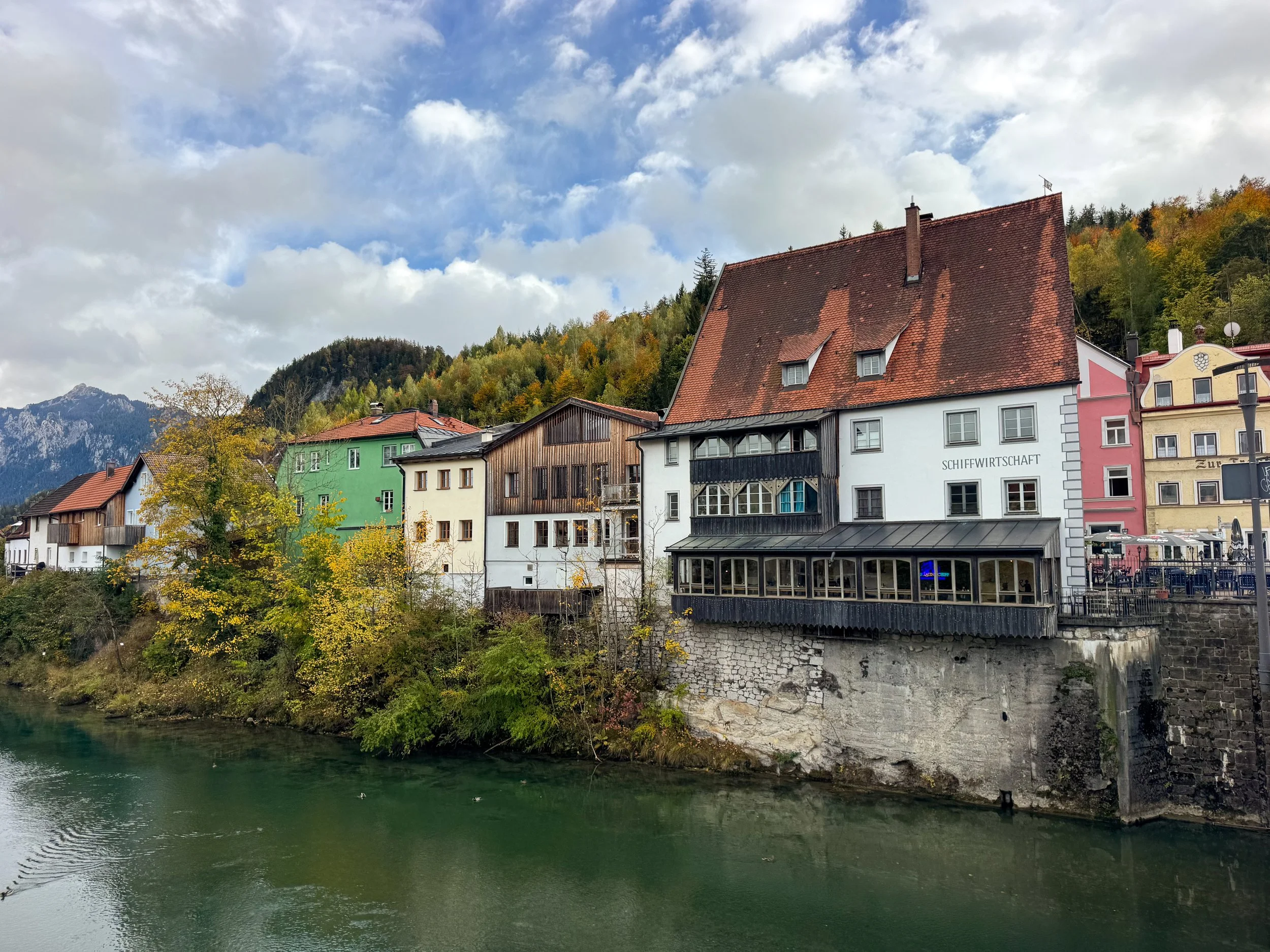
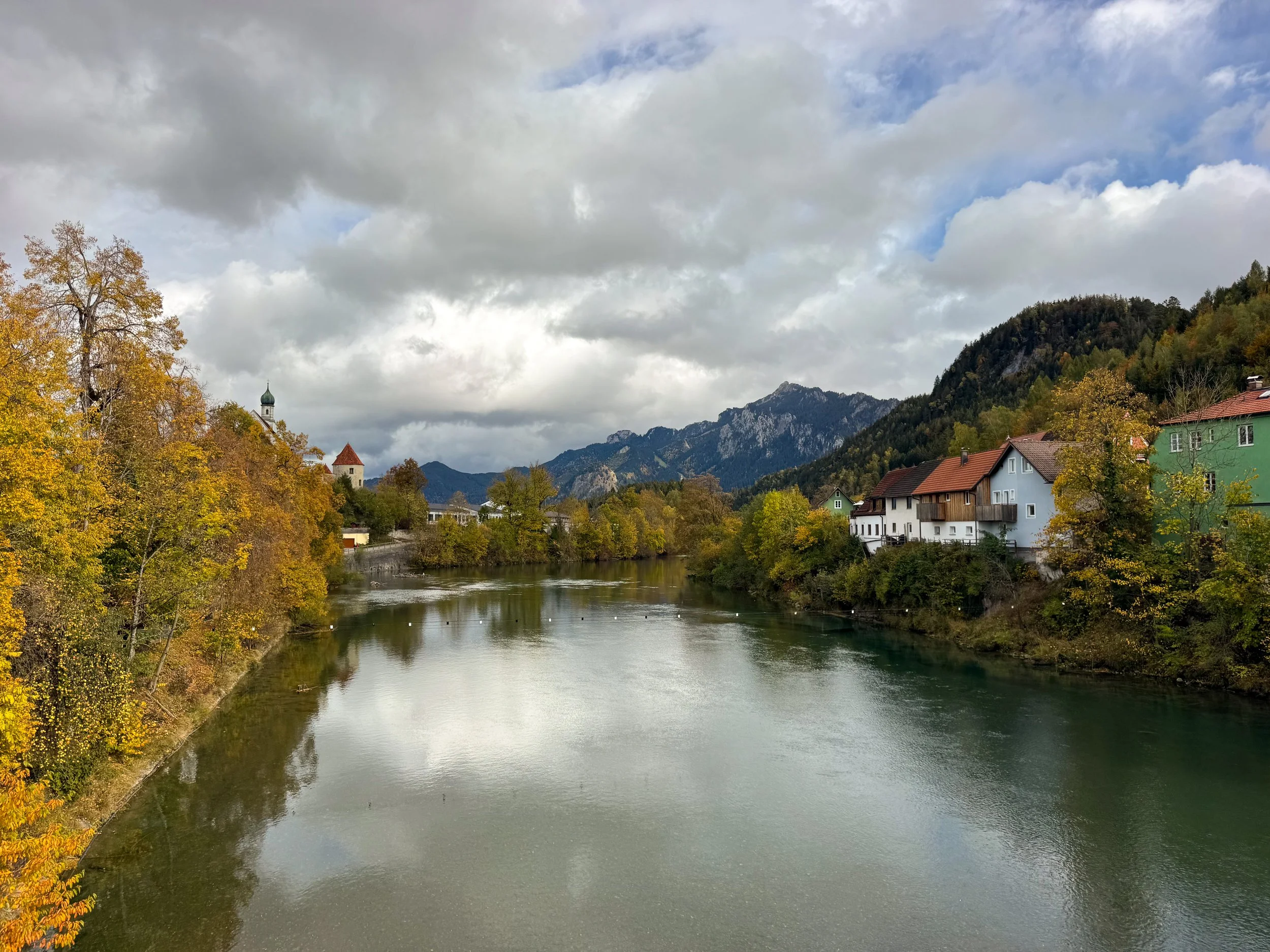
Lech River. A river flowing from the Alps along the edge of town. Its bridges and banks offer scenic views of Füssen and the surrounding landscape. Forested trails lead upstream across the border into Austria.
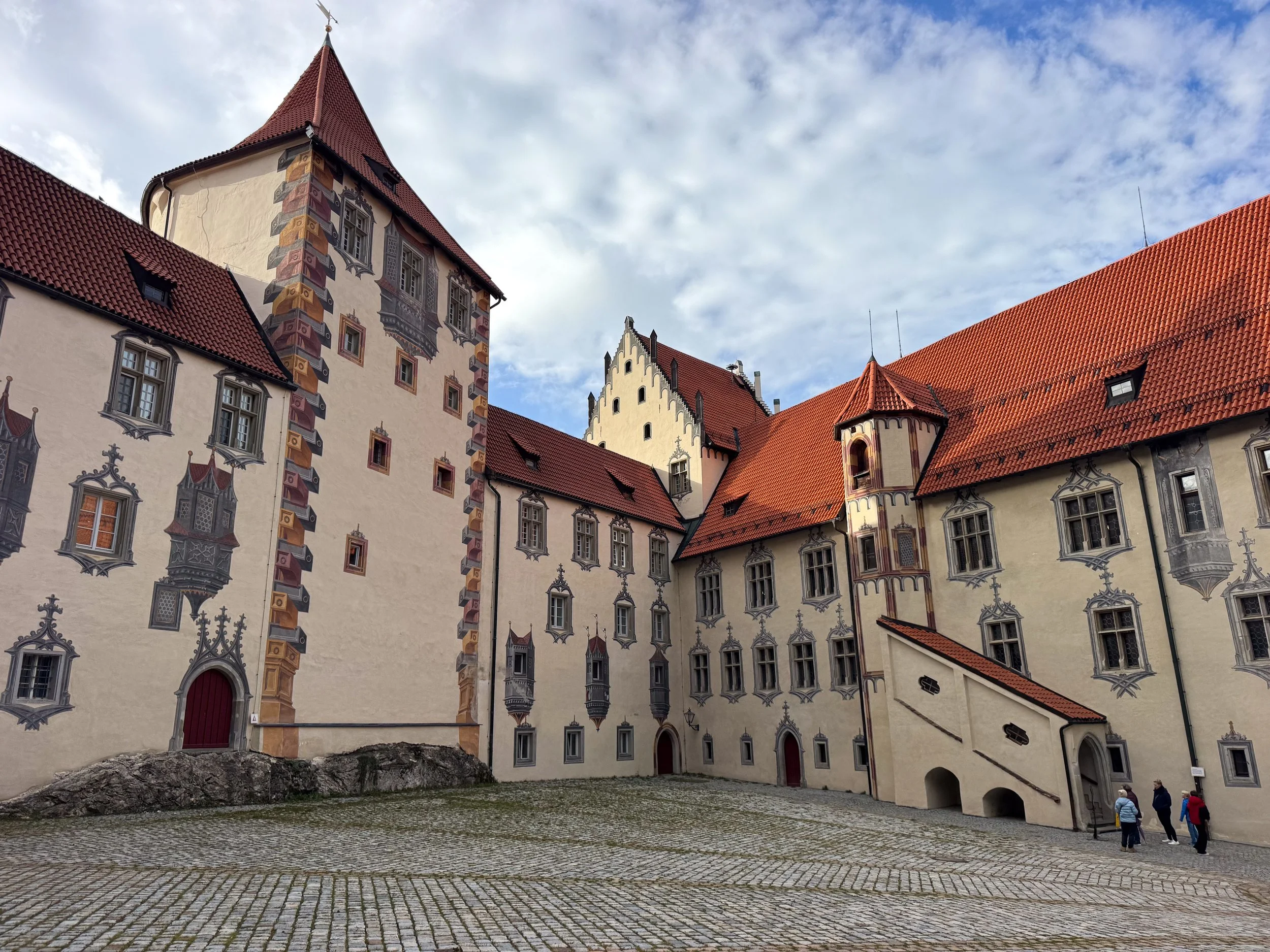
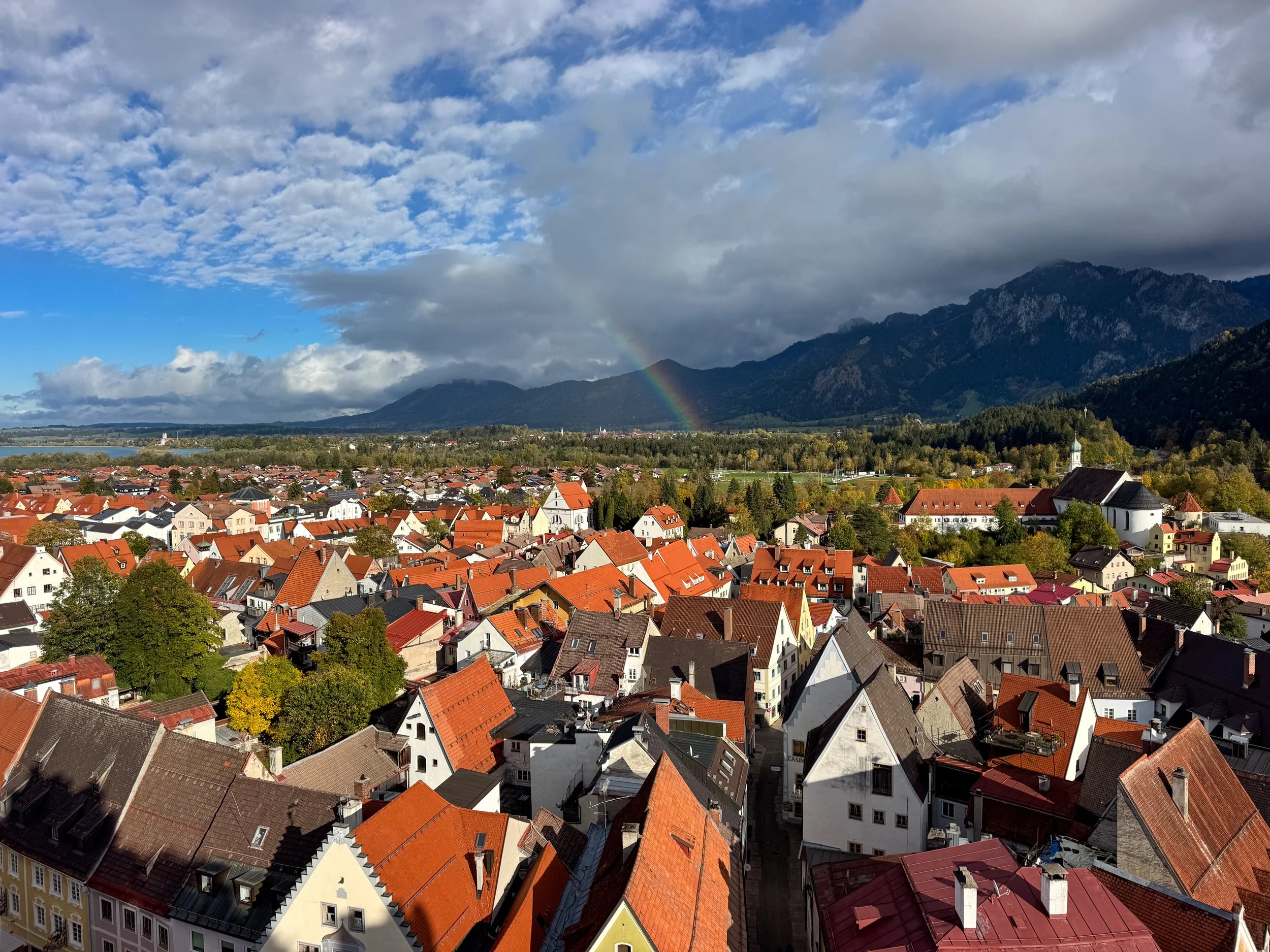
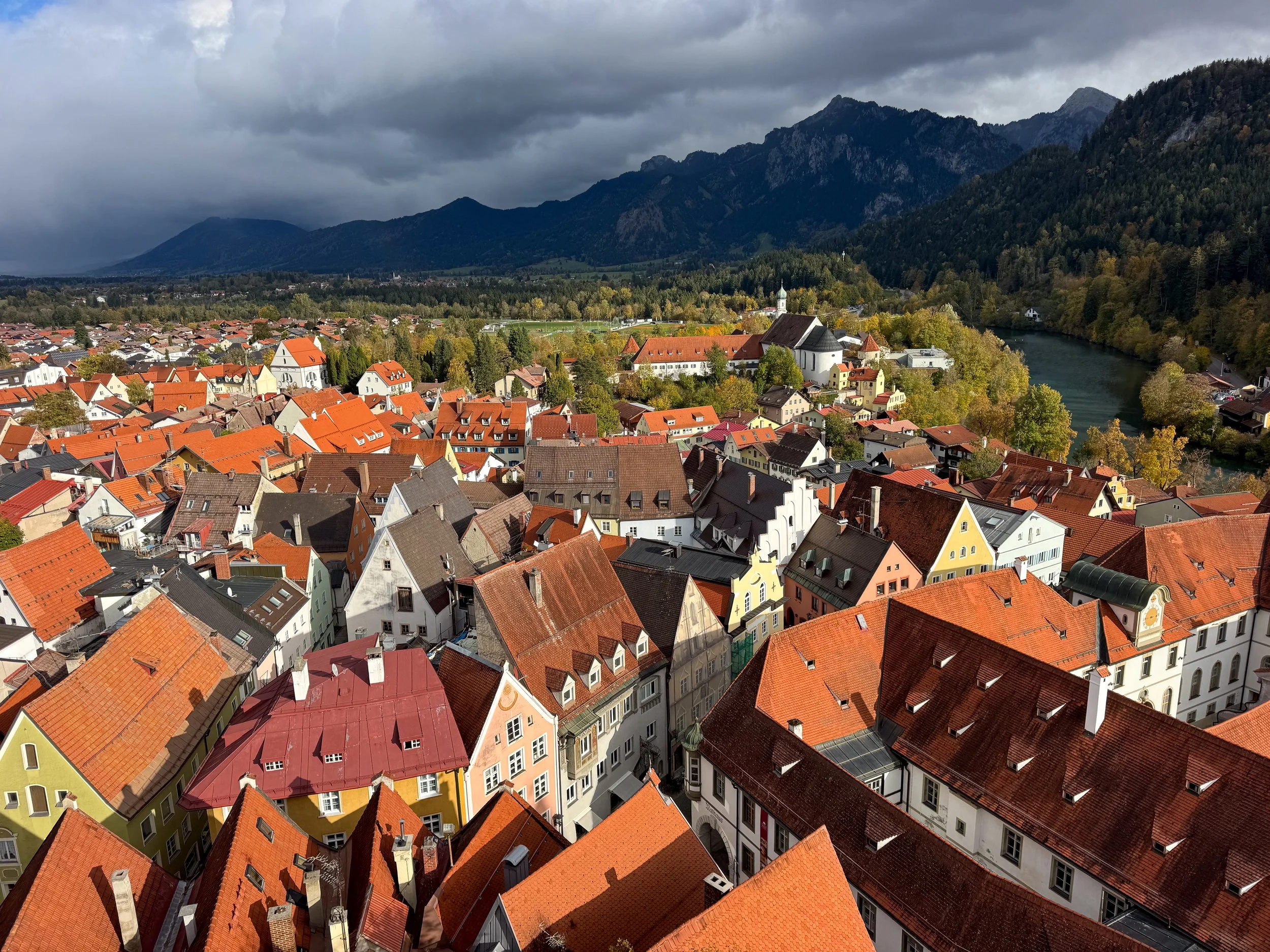
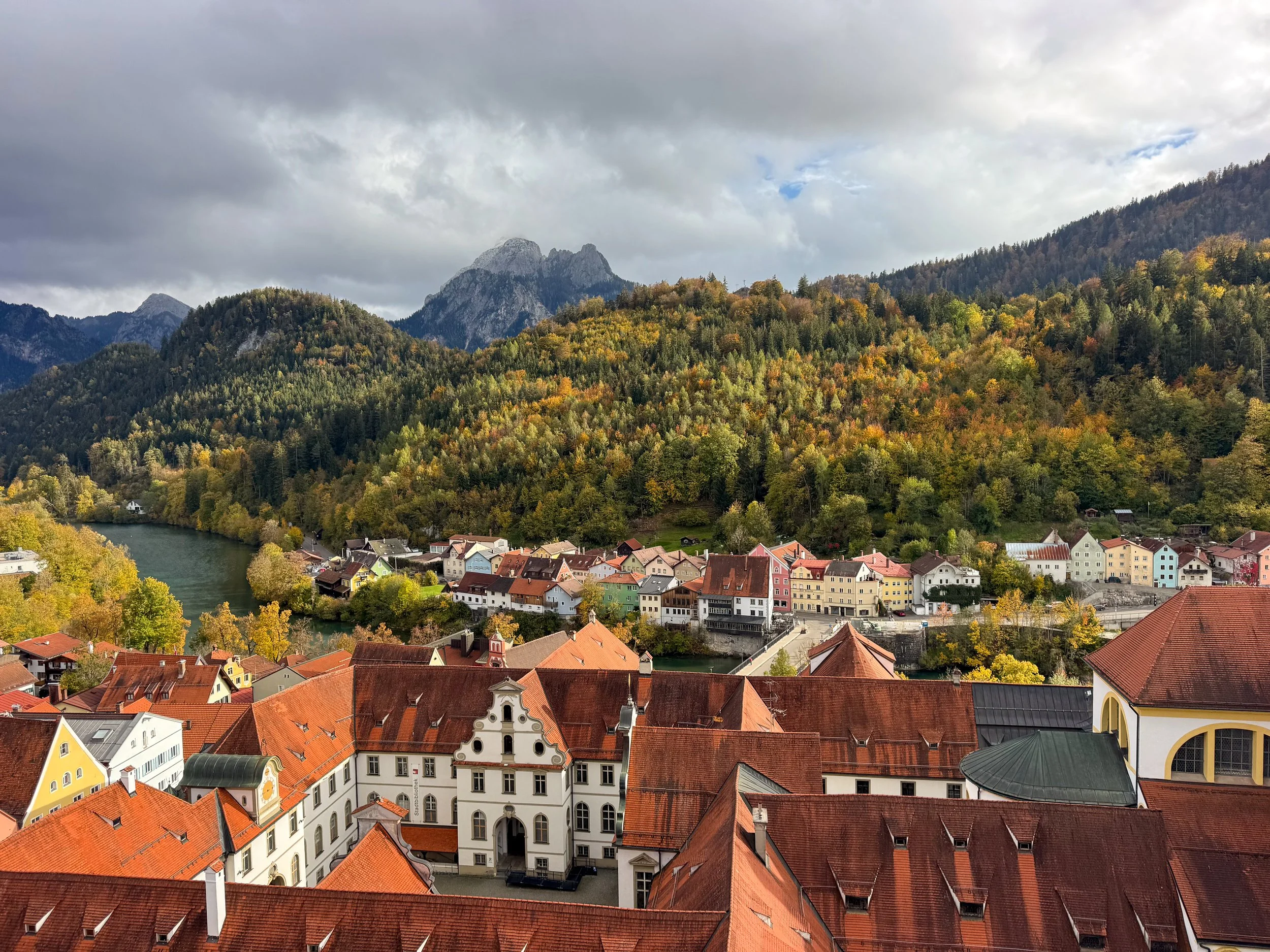
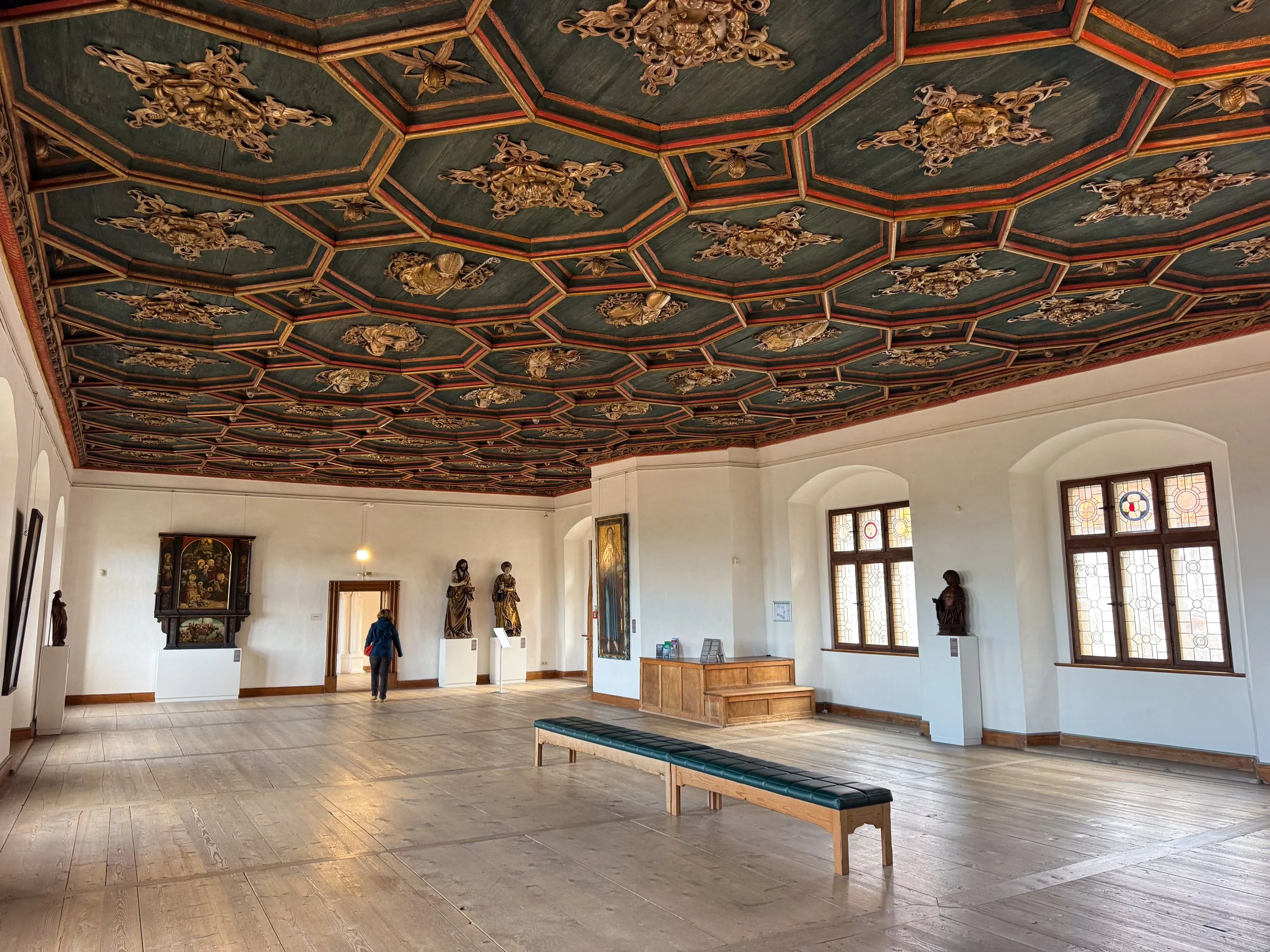
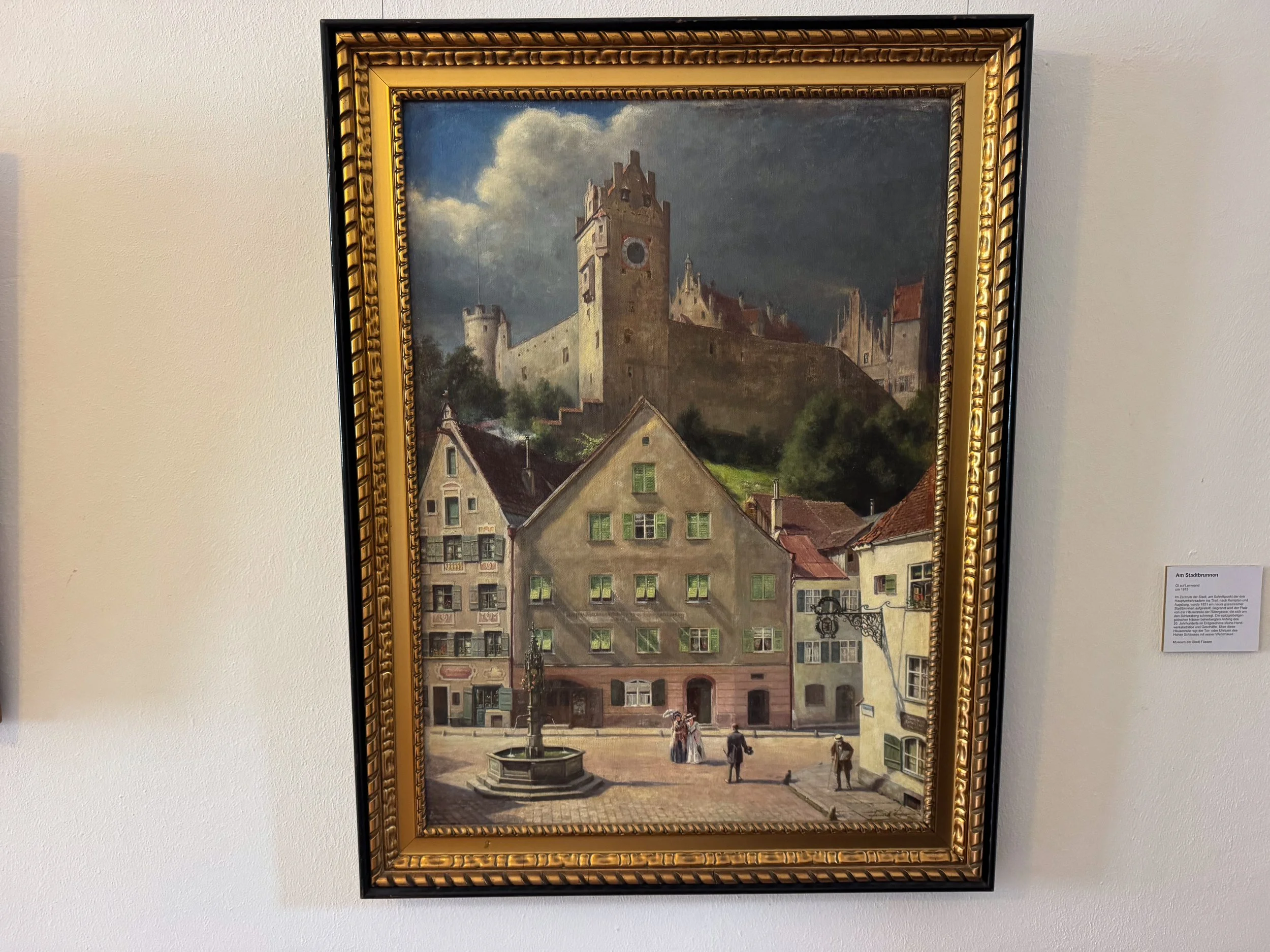
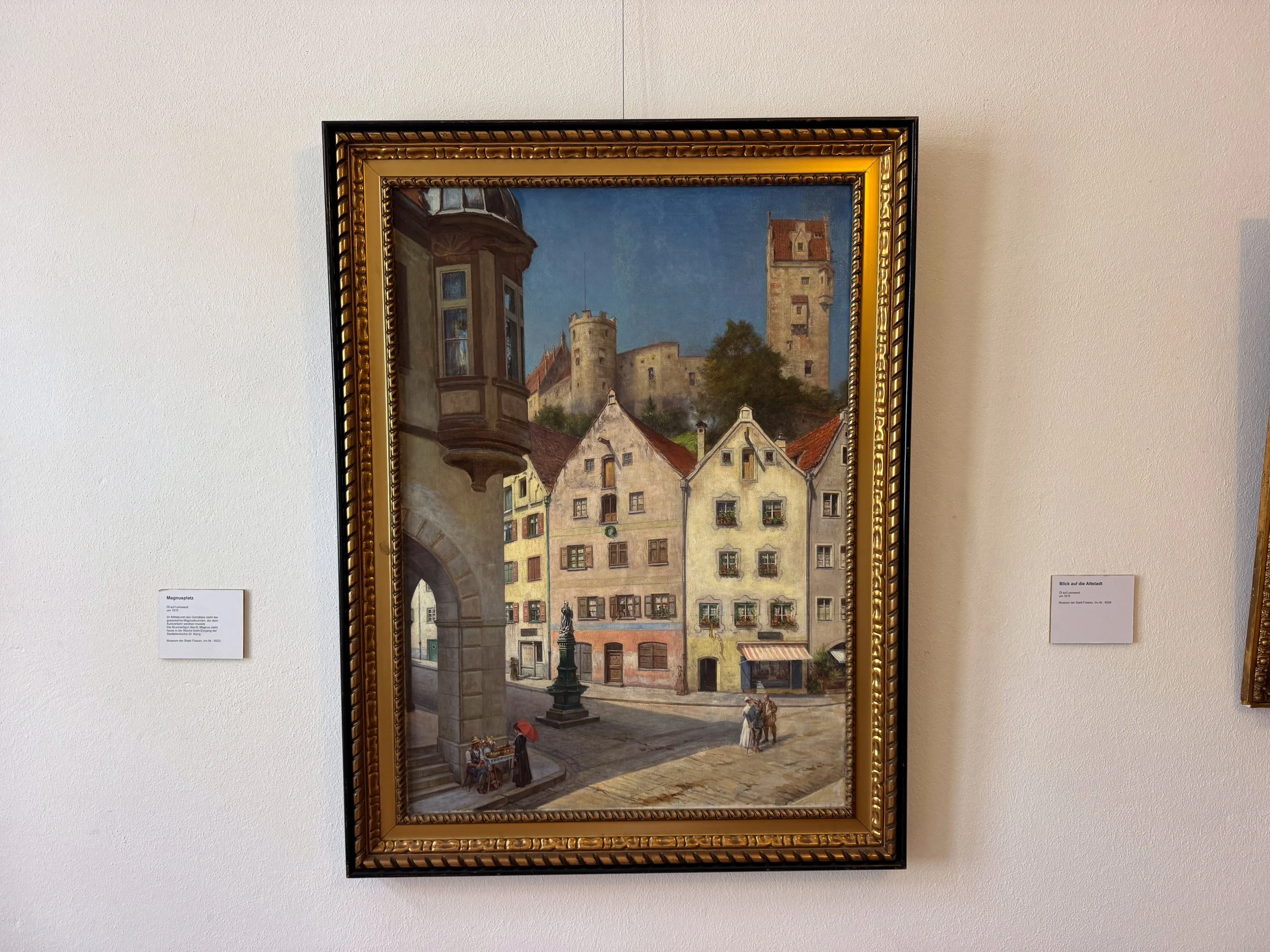
Hohes Schloss. A 13th century Gothic castle crowning Füssen’s old town. Its medieval watchtowers overlook the town’s terracotta rooftops and the surrounding landscape of forested hills and snowcapped Alps. The courtyard dazzles with 500 year-old frescoes that create ornate 3D illusions of cornices, window frames and other architectural details. The interior state rooms hold a gallery of historic paintings depicting Füssen and Renaissance era biblical stories, along with the grand Knights’ Hall and its Gothic coffered ceiling.
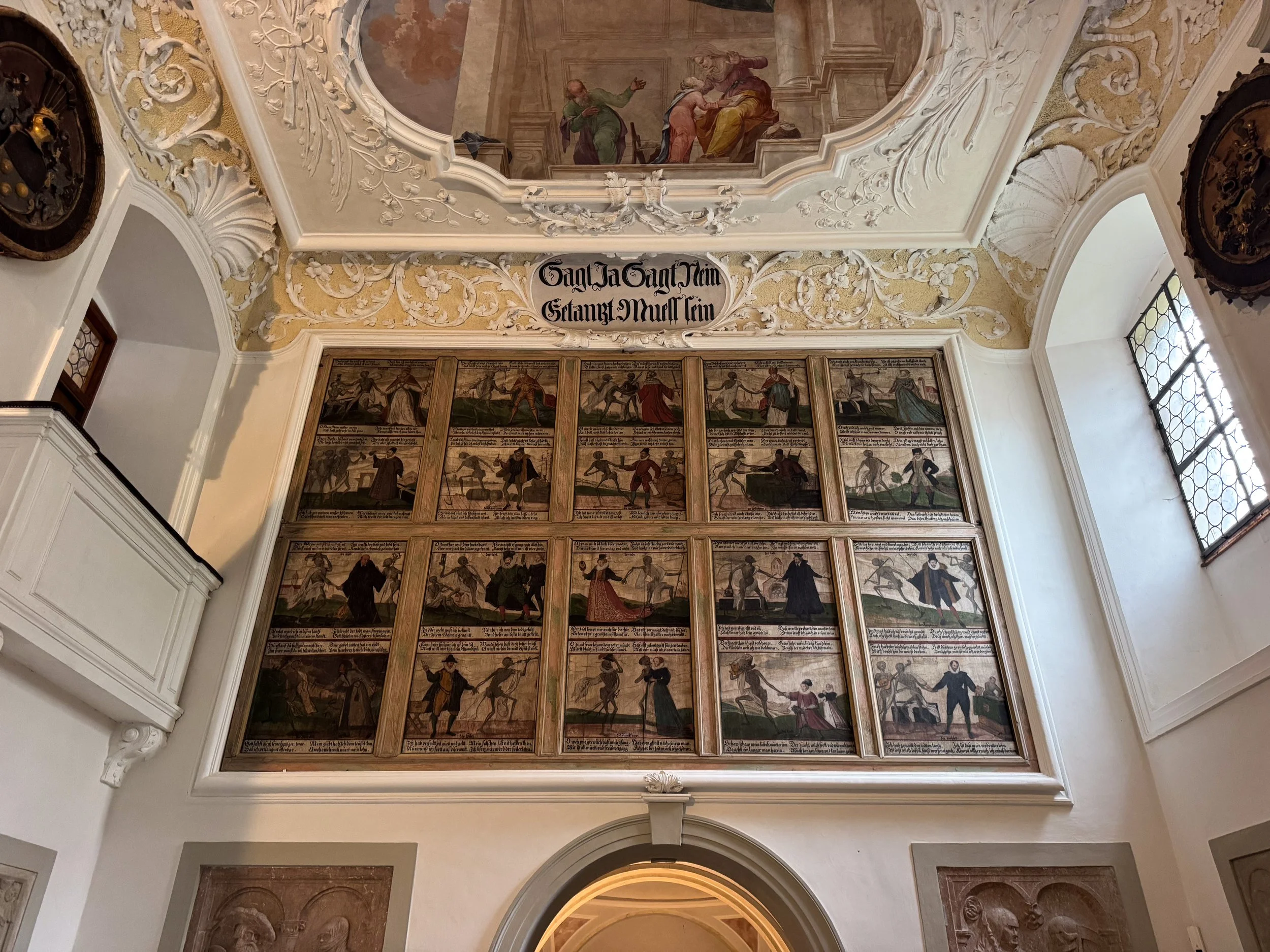
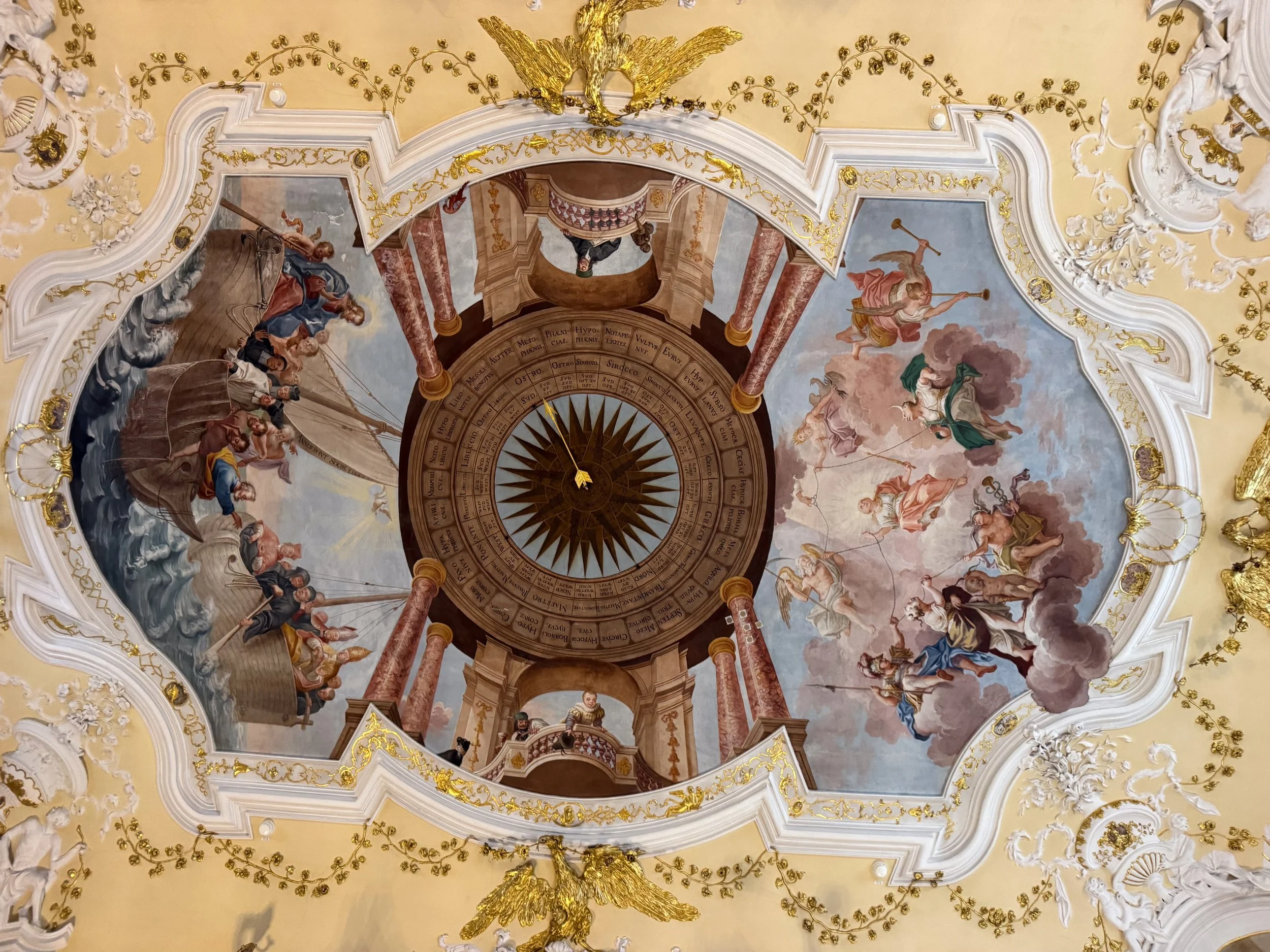
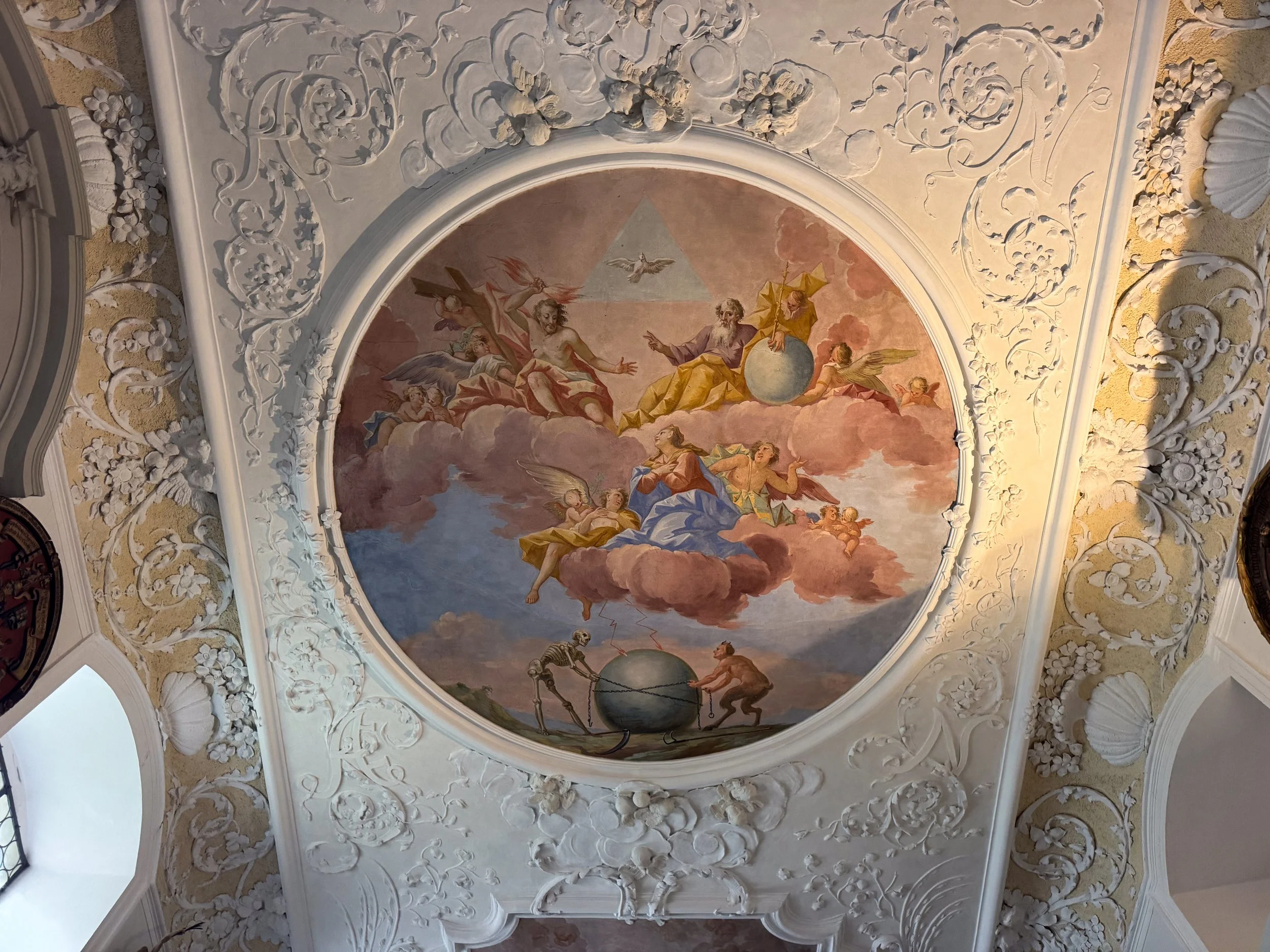
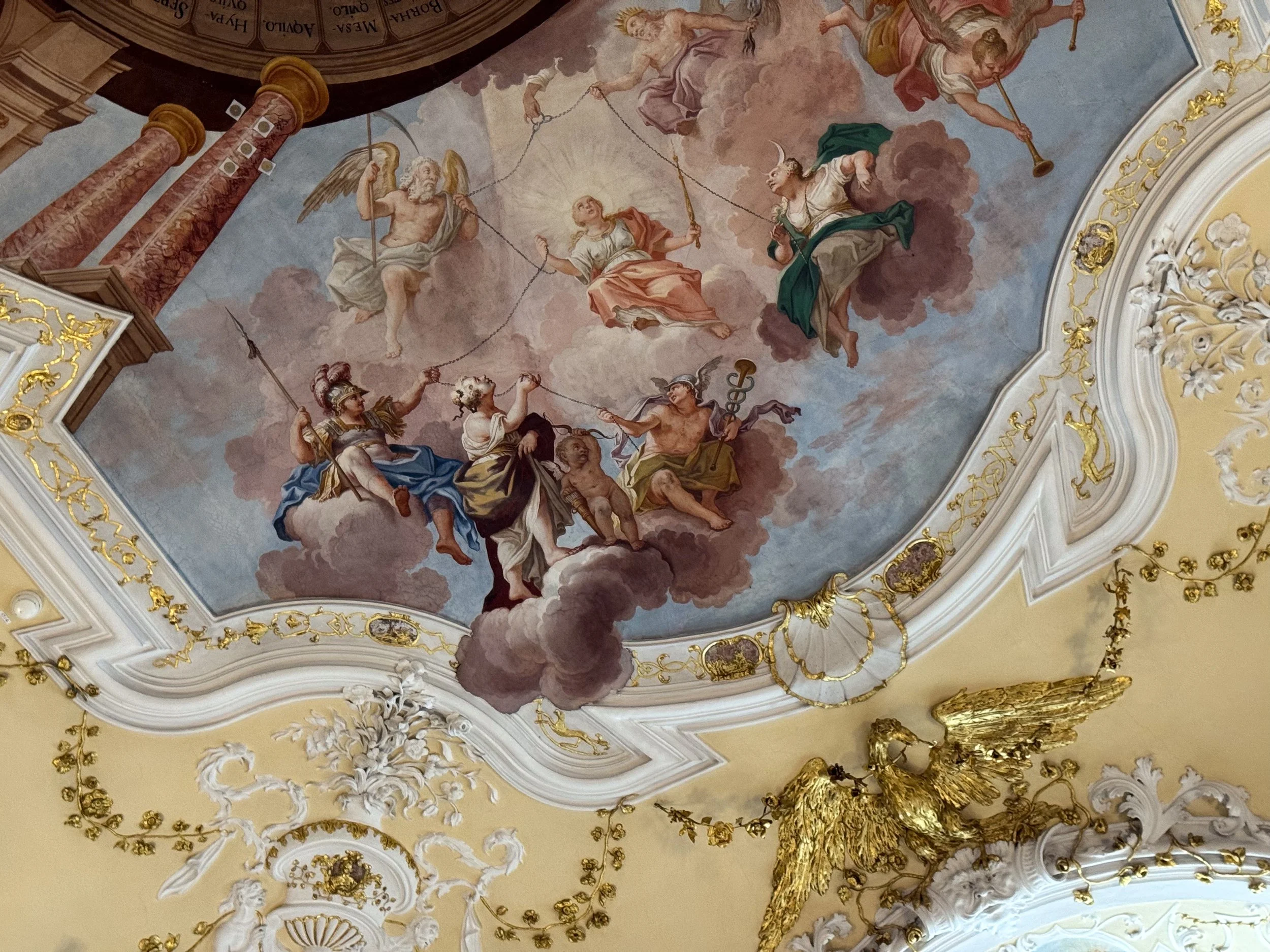
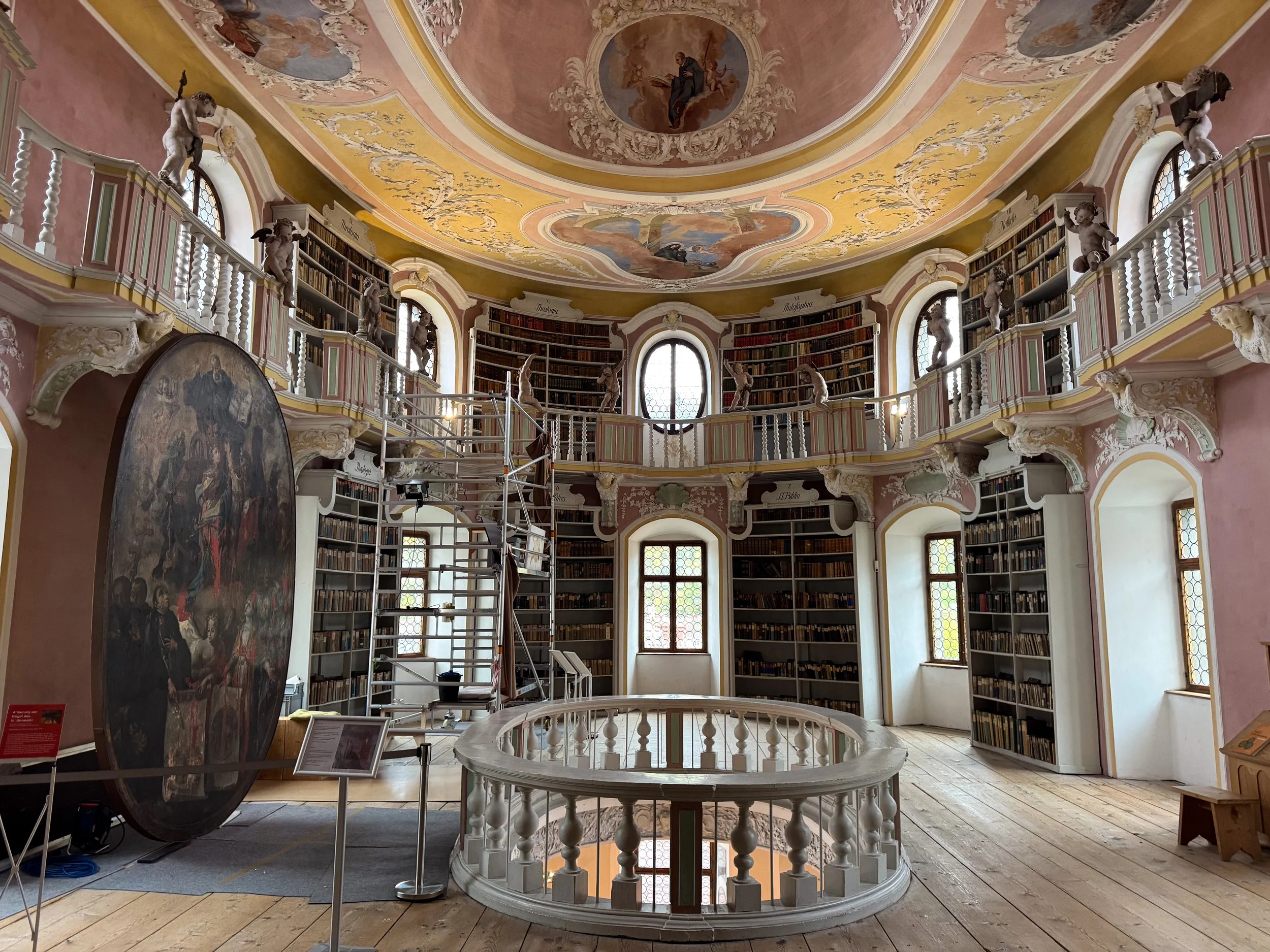
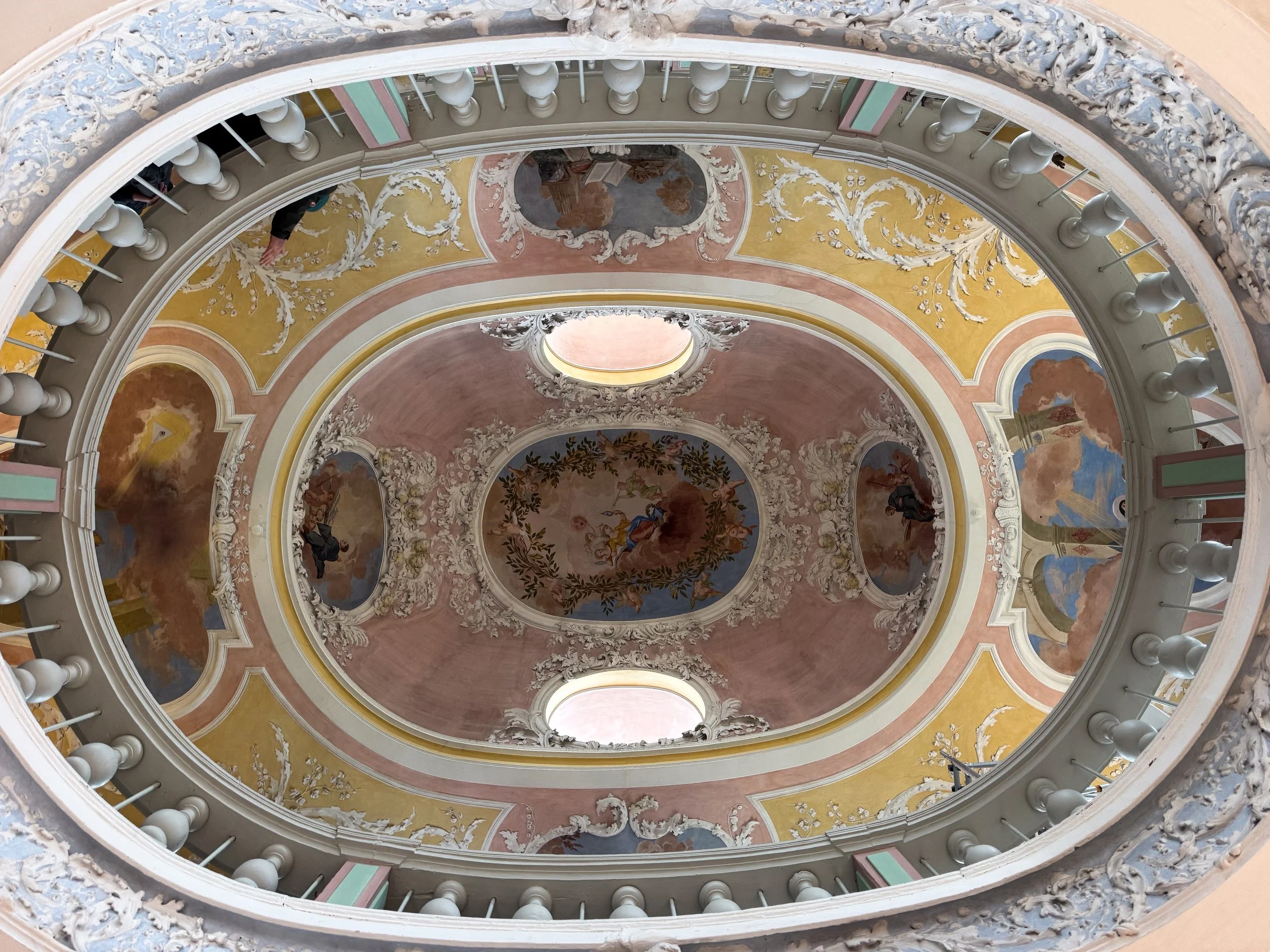
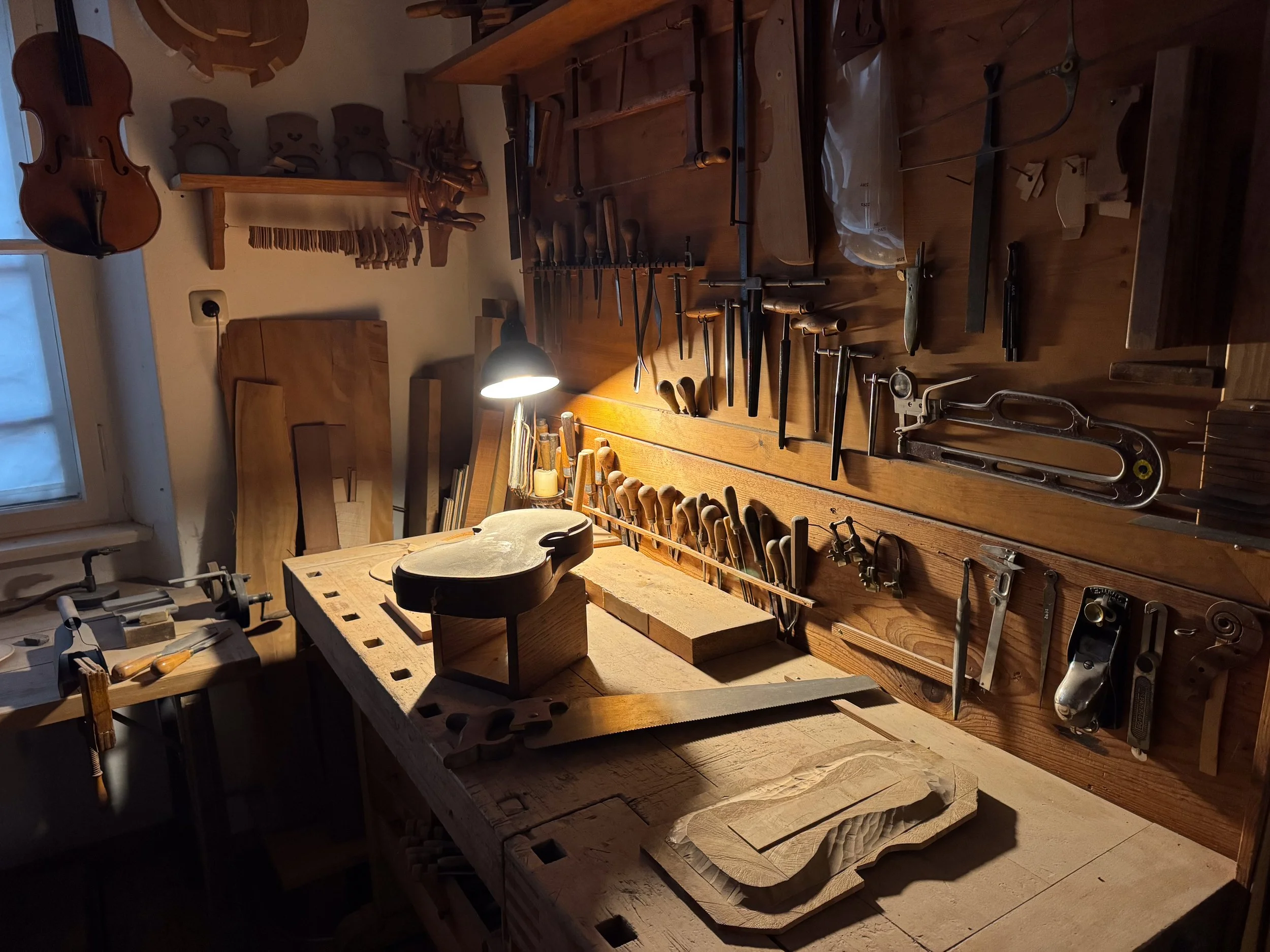
St. Mang's Abbey. A historic abbey and museum dating back to the 8th century. It was founded by St. Magnus, a monk who legend says converted Alpine pagans after slaying a dragon blamed for violent storms and failed harvests. Exhibits lead through excavated ruins of the earliest parts of the monastery and into later Baroque rooms filled with ornate stucco, colorful frescoes, a historic library and grand halls. Other galleries celebrate the town’s violin-making heritage. One chapel features Füssen’s Dance of Death, a paneled painting of skeletons dancing with laborers, knights, popes and kings. It’s a reminder that death spares no one, a common theme amid the wars and plagues that ravaged Europe for centuries.
Bavarian Food to Try
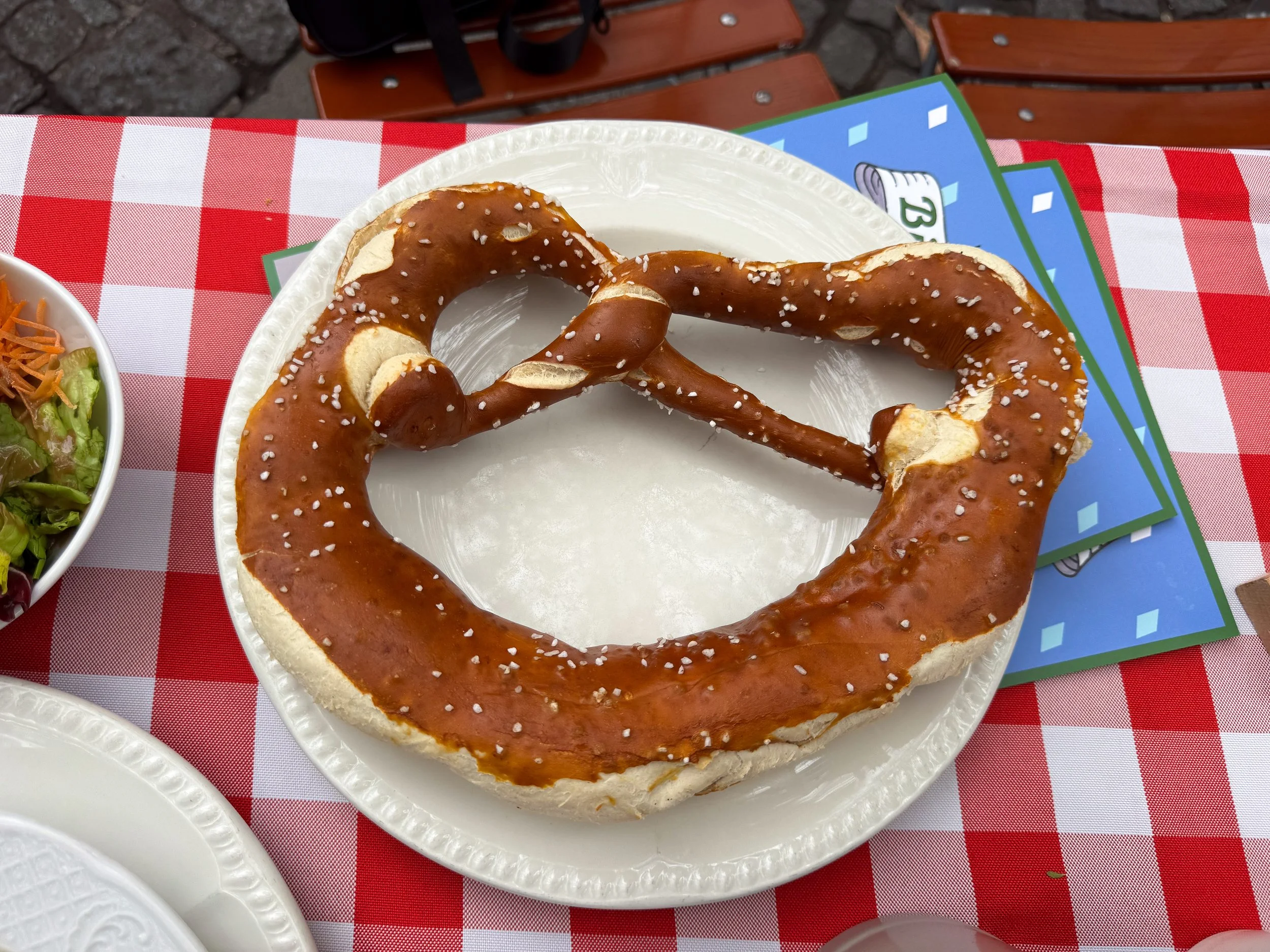
Pretzel. A staple bread shaped into a symmetrical and looped knot. The traditional lye dipped versions have a dark and crunchy crust with a light and pillowy interior.
Schnitzel. A meat dish made with thinly pounded veal that’s breaded and panfried until crispy.
Bratwurst. A classic German sausage made from pork and beef and seasoned with warm spices, served boiled, griddled or smoked.
Currywurst. Sliced sausage smothered in a tomato based curry sauce and served with fries.
Leberkäse. A German style meatloaf made from finely ground meat.
Schmalznudel. A traditional Bavarian doughnut made from dough stretched into a disk and deep fried, leaving a thick pillowy rim around a thin center.
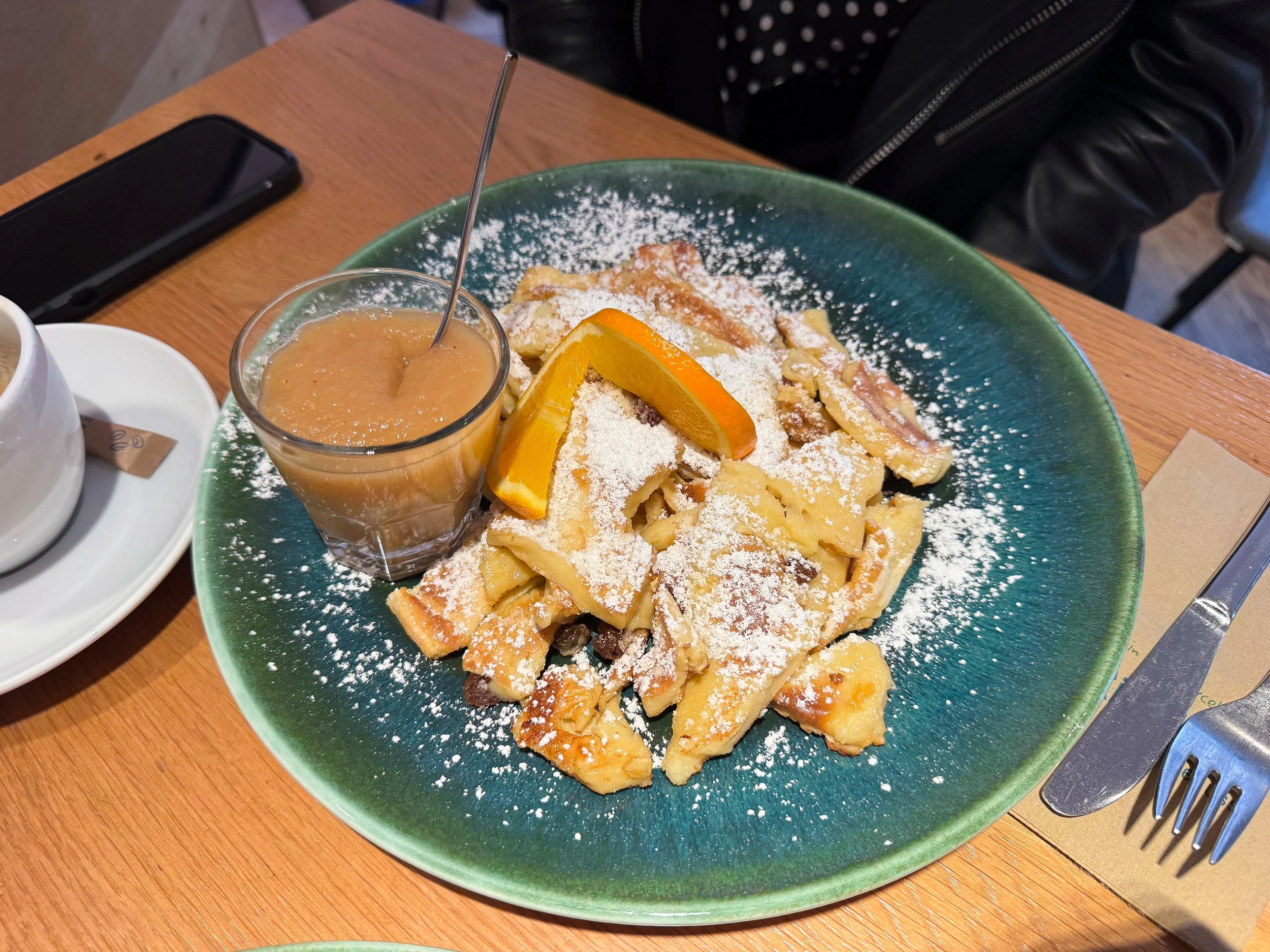
Kaiserschmarrn. Torn, fluffy pancakes caramelized with butter and sugar, then dusted with powdered sugar.
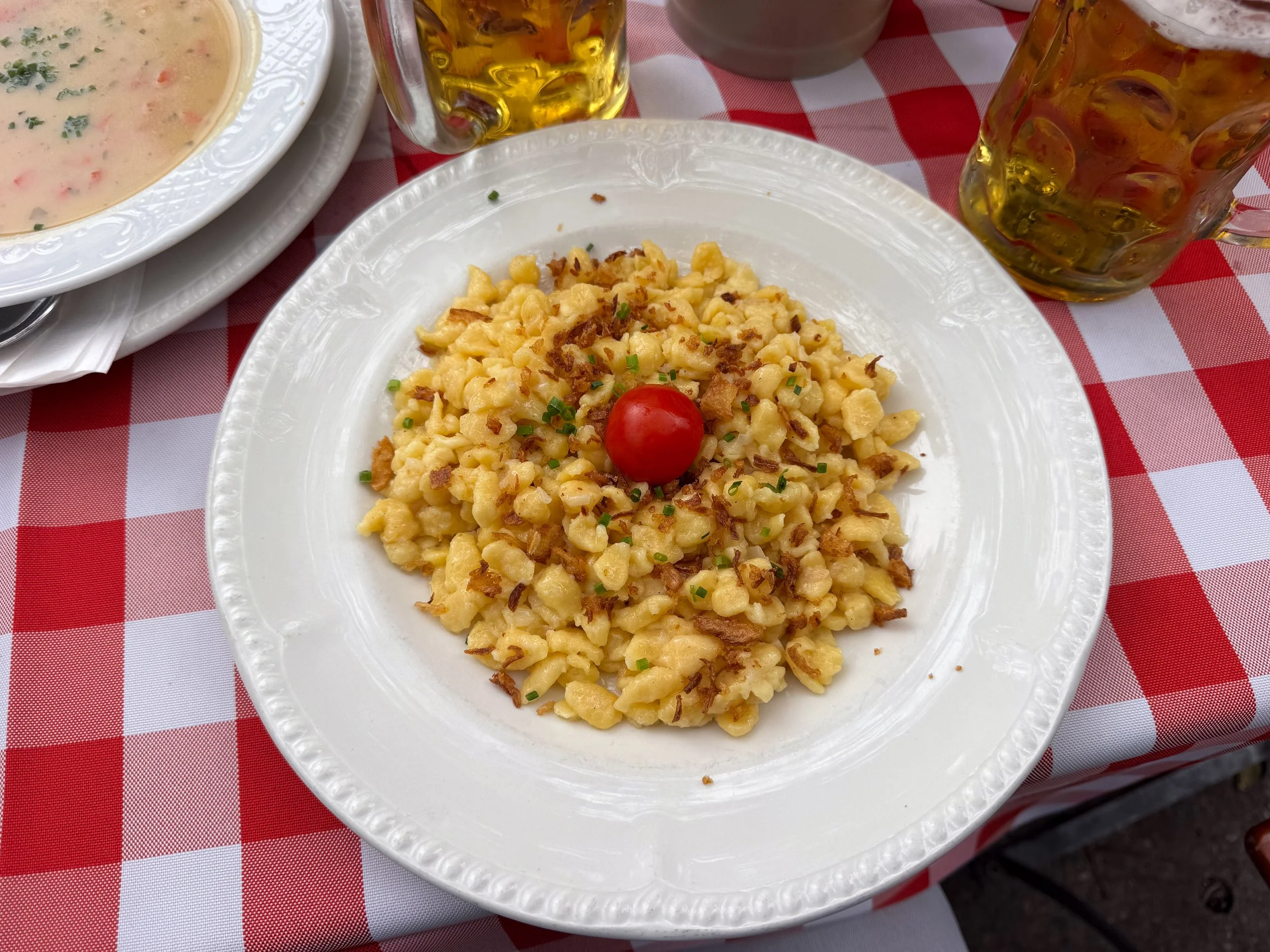
Käsespätzle. Egg noodles layered with melted cheese and topped with crispy onions, a Bavarian comfort food similar to mac and cheese.
Getting Around Munich
U-Bahn (Metro). Munich’s subway system runs multiple lines throughout the city, marked by a white “U” on a blue background.
Airport Train. The S-Bahn connects the airport with Munich’s central station. Take the S1 or S8, both of which serve the airport.
Tickets. Buy single tickets or day passes from the kiosks at stations. Validate your ticket before boarding to avoid fines for fare evasion.
On Foot. The compact city center is easily walkable and the best way to see the sights.
By Car. The Romantic Road is best explored on your own schedule. Rent a BMW from Sixt near the central station. Don’t miss the chance to cruise the Autobahn’s unrestricted speed stretches.
Know Before You Go
Language. German is the national language, but English is widely spoken as a second language but learning a few German phrases goes a long way.
Hello = Hallo
Good Morning = Guten Morgen
Goodbye = Auf Wiedersehen
Thank you = Danke or Danke schön
You’re welcome = Bitte or Bitte schön
Closures. Most shops close on Sundays, though restaurants and museums typically stay open. Many museums close on Mondays instead.
Reservations. Reserve tables at for restaurants and bars you plan to dine or drink at to guarantee a spot.
Friendliness. Despite their reputation, Germans are quite friendly. Their directness is often mistaken for rudeness, but it’s simply a cultural difference.
Crosswalks. Cross at intersections and wait for the green walk signal, as jaywalking is frowned upon.
Cash vs. Card. While most businesses accept credit cards, many are strictly cash only. Carry enough cash for meals at restaurants, beer gardens and cafes. ATMs are available throughout the city.
Tipping. Plan to tip around 5–10% for good service.
Where to Stay in Munich
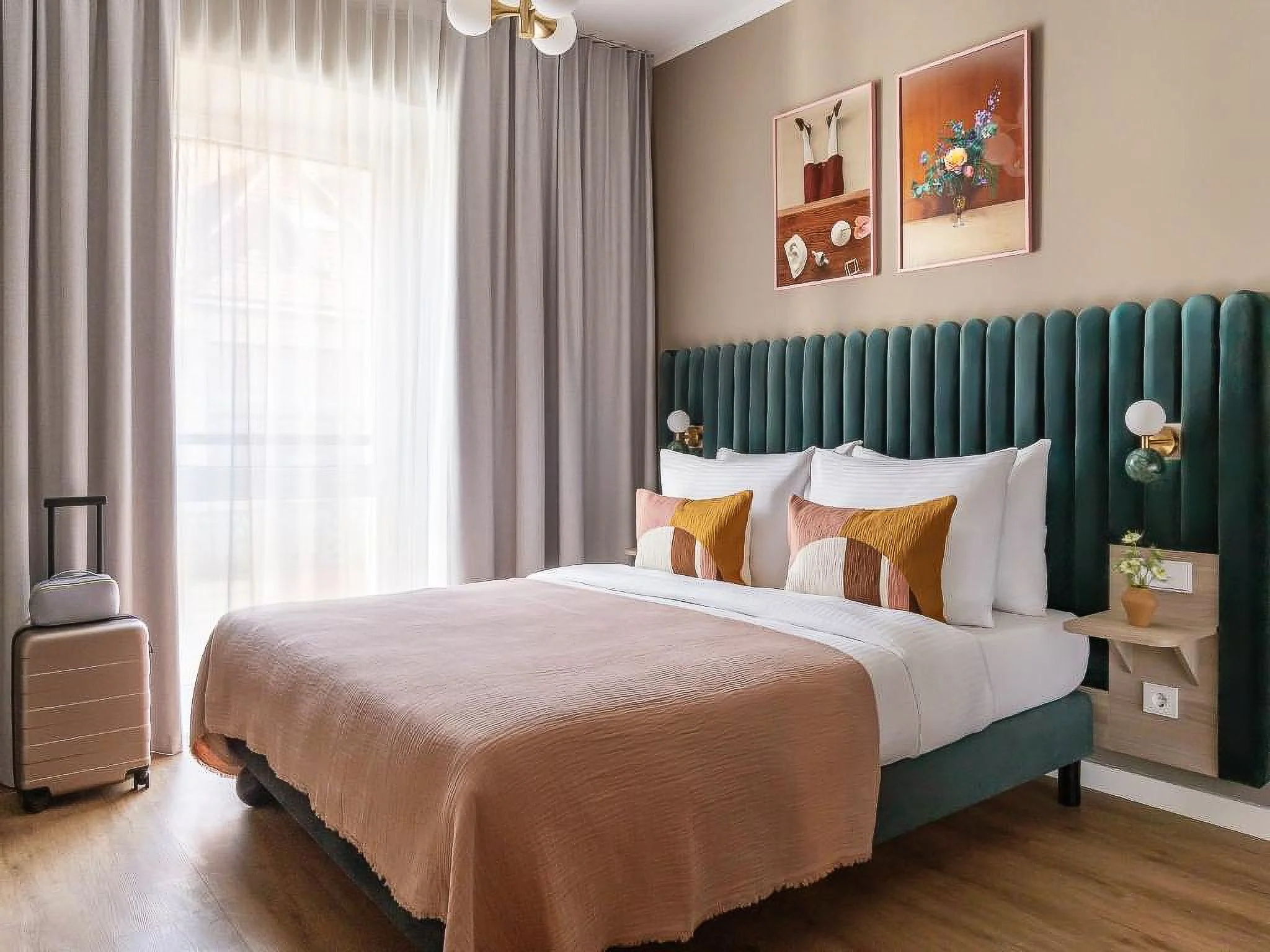
Numa. A modern hotel with multiple locations around the city and elegant rooms ideal for short stays. Each room includes a kitchenette, private bathroom, comfortable bed and work desk. High speed internet that makes it great for remote workers. Guests have access to a shared laundry room and free luggage storage. Check in is fully self service via an app. Reserve on Booking.
For Next Time: Bavarian Palaces & The Romantic Road
There’s so much to see across Bavaria beyond its capital. On our next trip to the region, we plan to visit more Bavarian palaces, historic memorial sites and towns along the Romantic Road.
Bavarian Palaces. Germany is known for its castles and palaces, and two are at the top of our list: Nymphenburg Palace and the Schleissheim Palace complex. Both served as summer retreats for the Wittelsbachs, with ornate state rooms, vast gardens and historic artifacts.
Dachau Concentration Camp Memorial Site. A memorial and museum at the site of a Nazi concentration camp that held roughly 200,000 prisoners during World War II, tens of thousands of whom died there.
Road Trip the Romantic Road. While we got to experience Füssen, a day trip wasn’t nearly enough. We plan to return to explore more of the towns along the route:
Harburg. A tiny village famed for its remarkably well preserved medieval Harburg Castle.
Rothenburg ob der Tauber. A medieval town known for its half timbered houses, walled old town and year round Christmas shops.
Dinkelsbühl. A storybook town of colorful half timbered buildings encircled by medieval walls.
Nördlingen. A medieval town built inside an ancient meteorite crater, beloved for its half timbered buildings and walkable city ramparts.