San Miguel de Allende Travel Guide: Food, Art & Colonial Charm
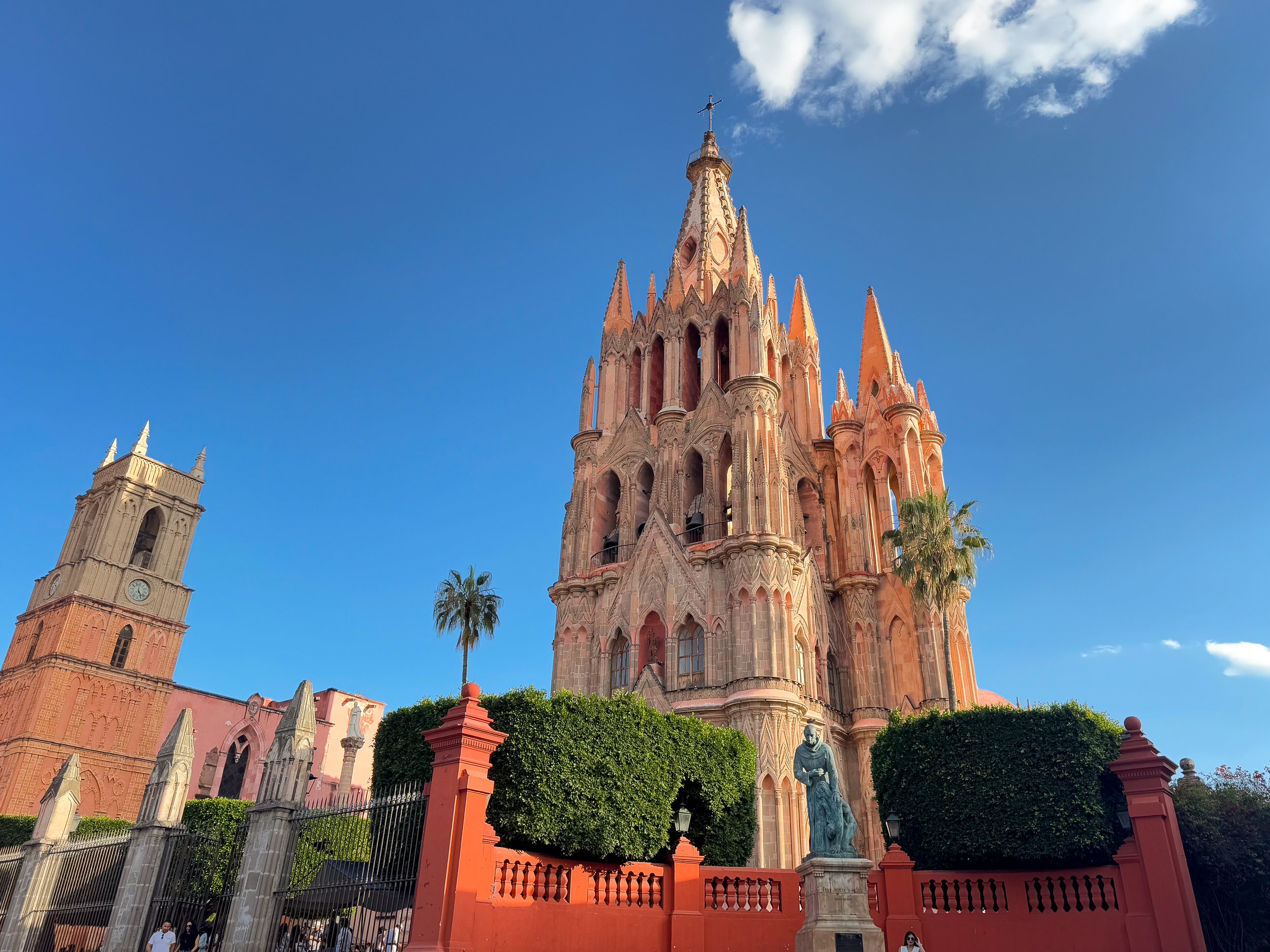
San Miguel de Allende, Mexico
San Miguel de Allende is a charming and historic pueblo famed for its unique architecture, vaquero lifestyle, desert landscapes and vineyards.
A Historic Pueblo
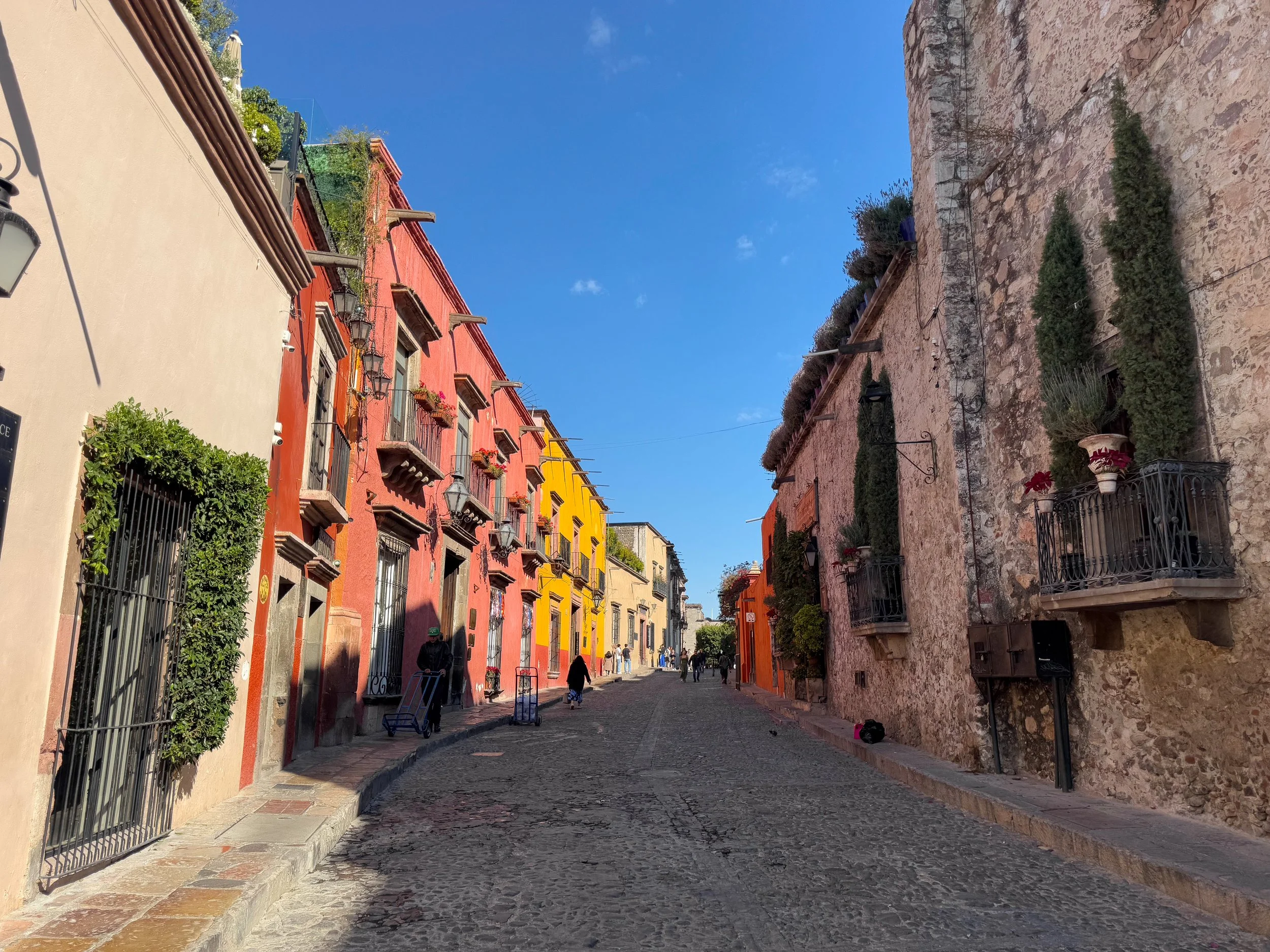
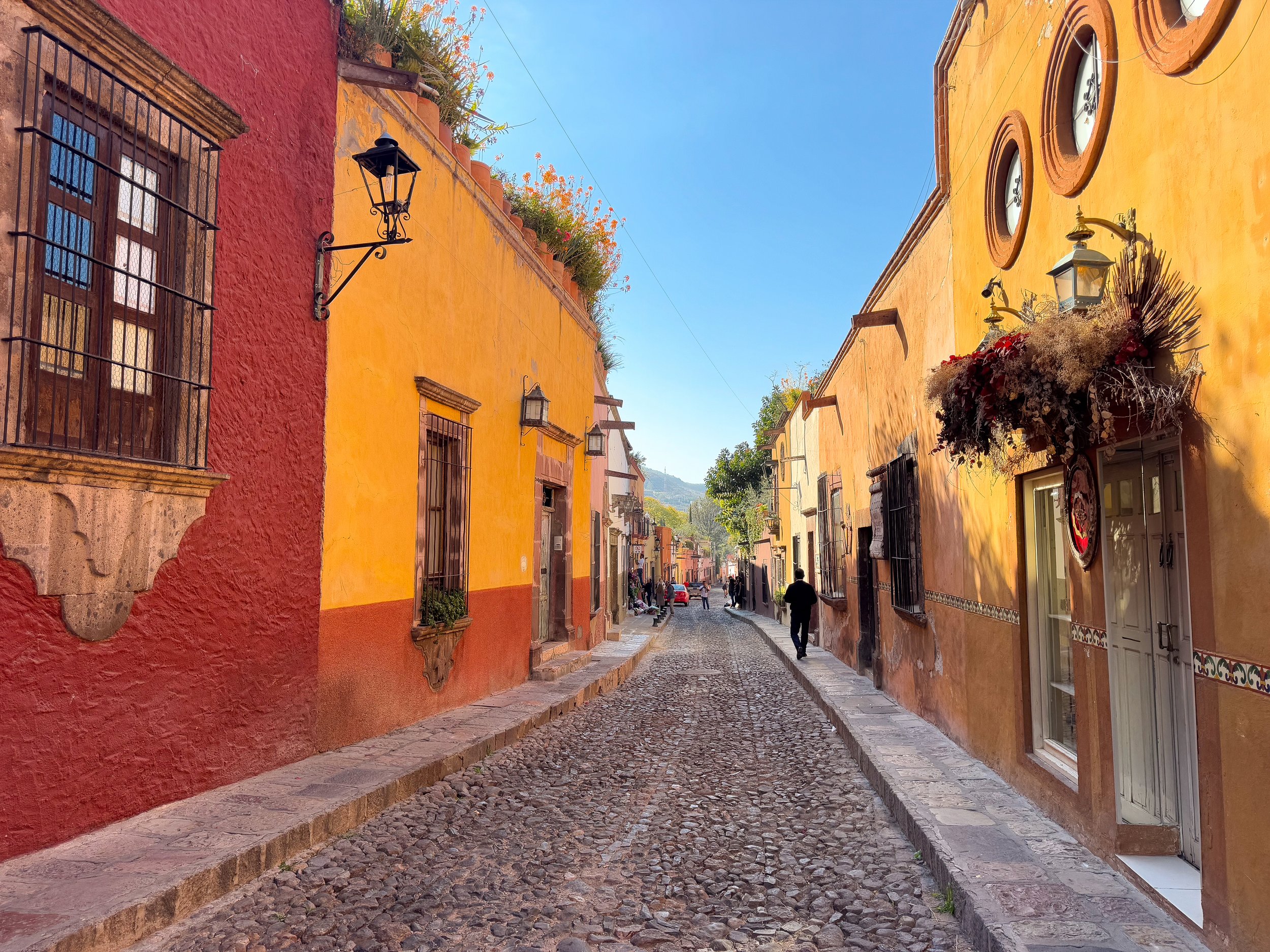
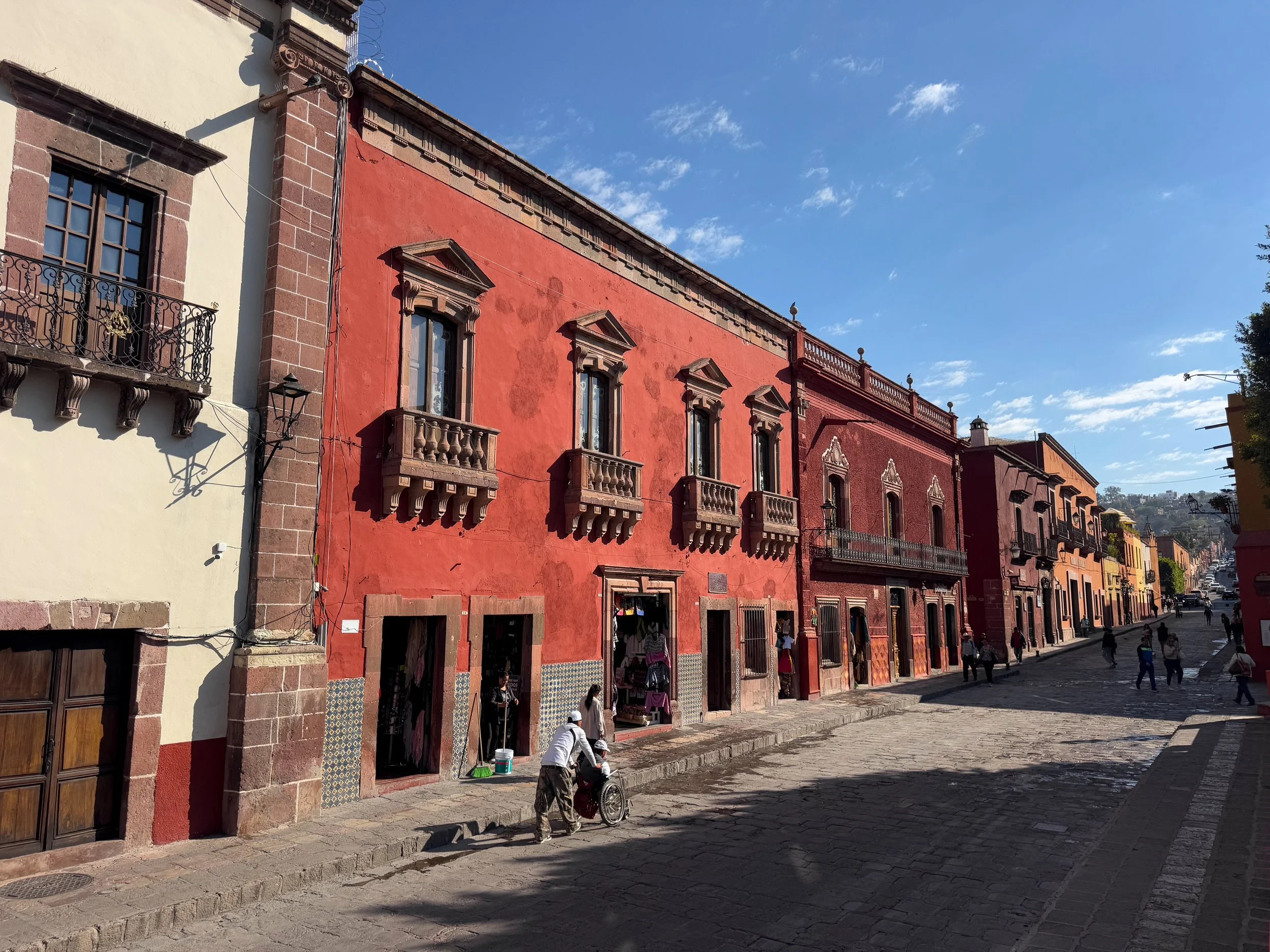
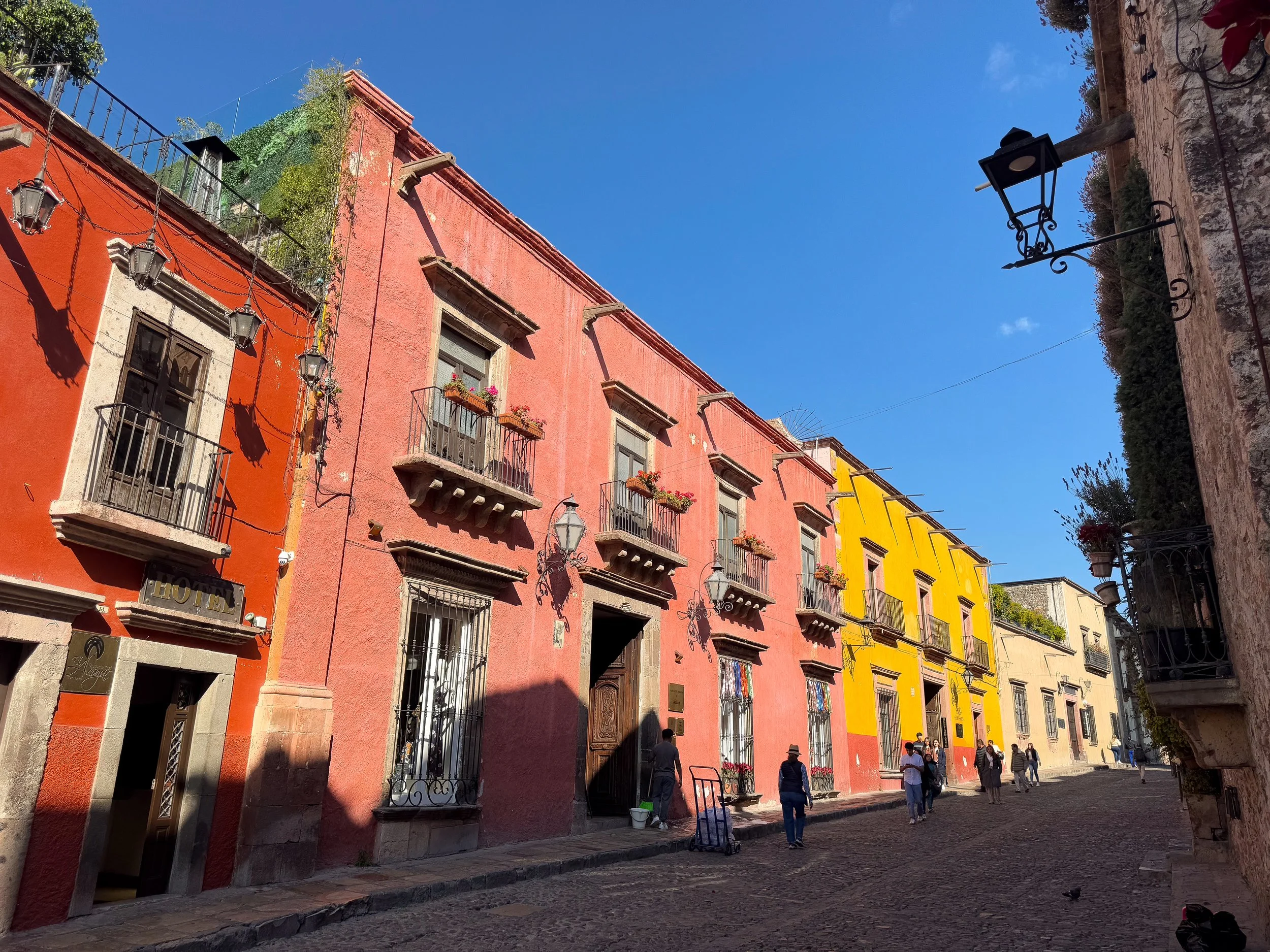
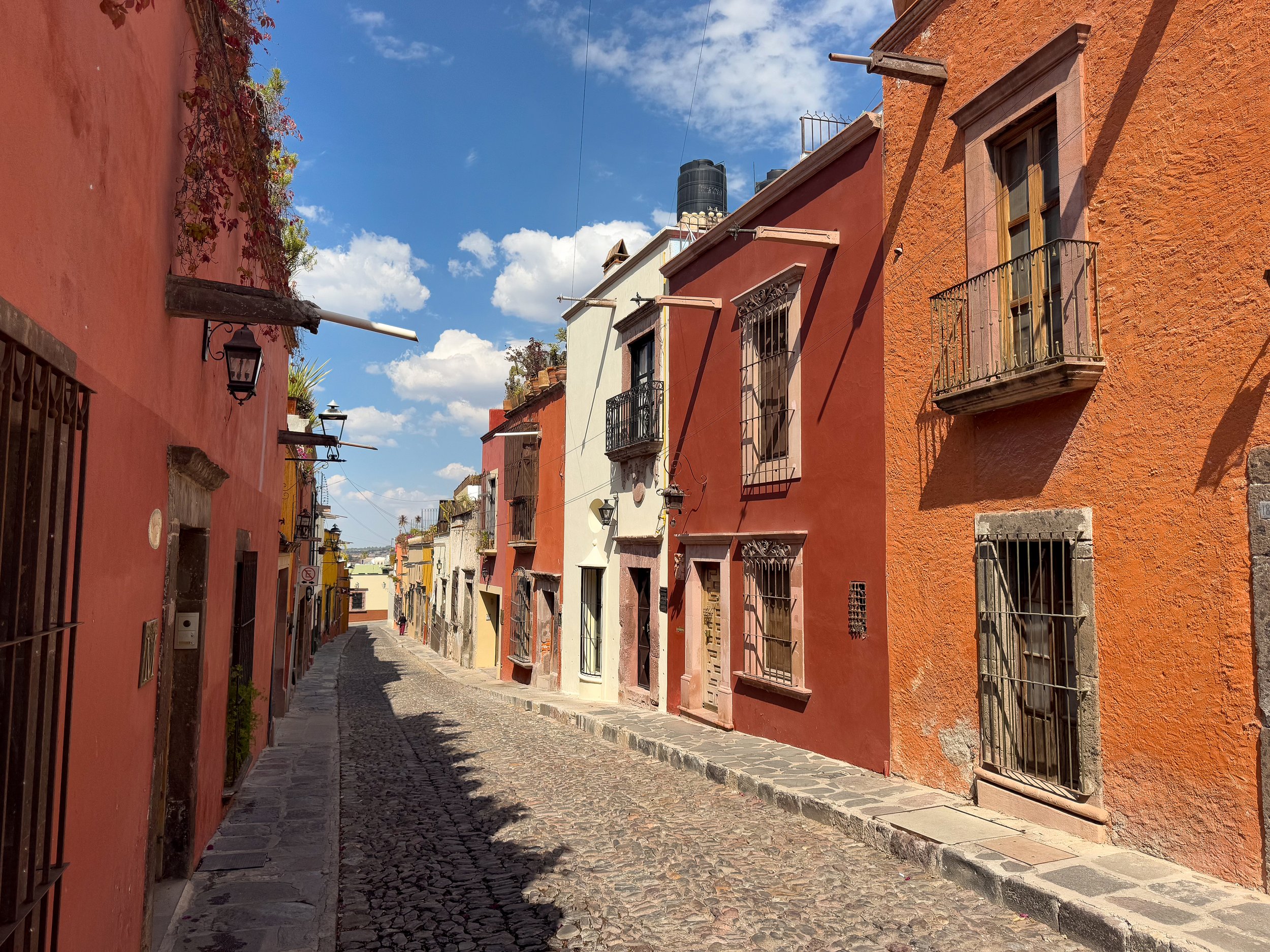
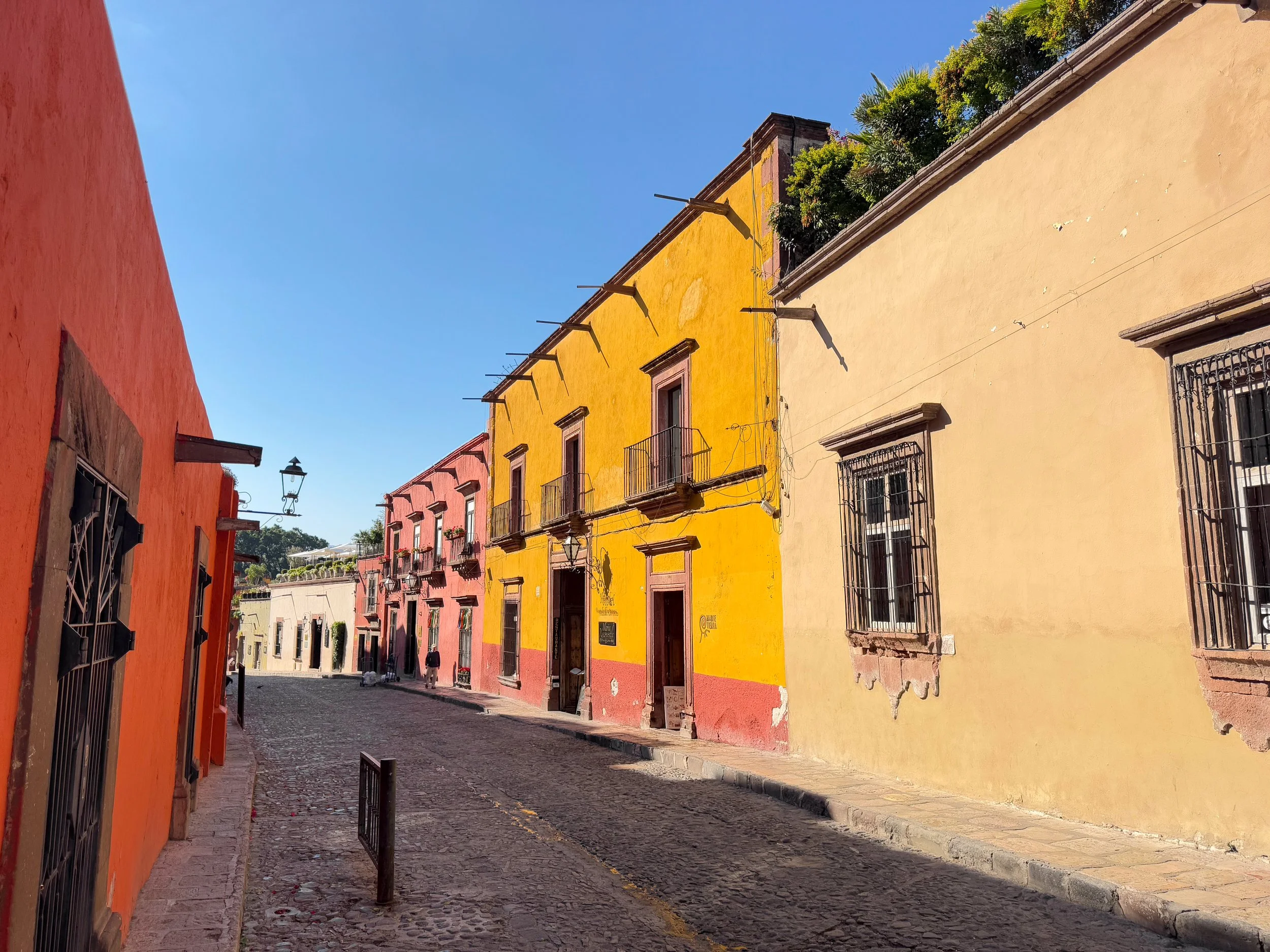
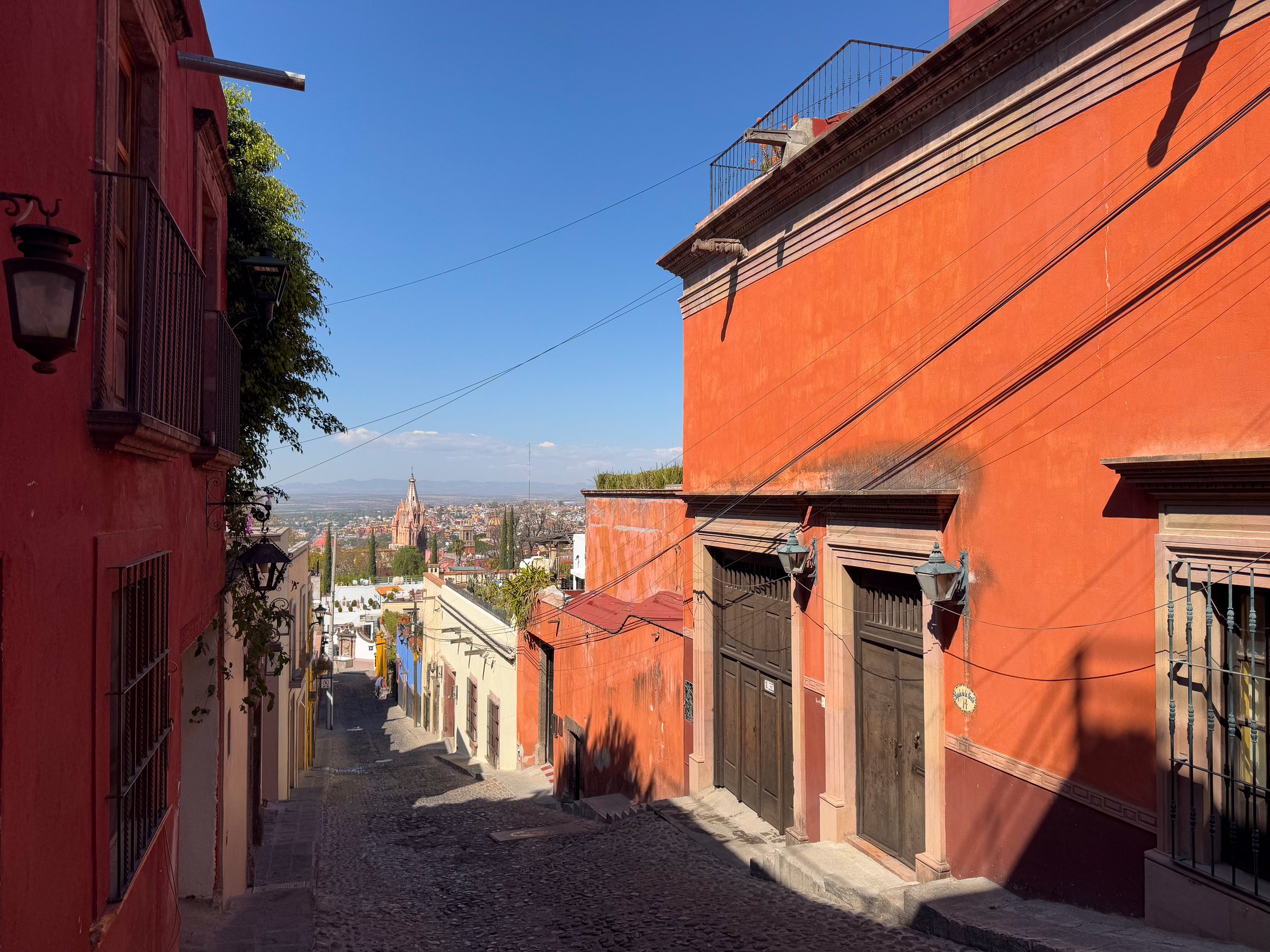
The town is best explored on foot. The stone paved streets exude warmth as painted buildings alternate in tones of tan, amber, orange, red and ochre. At night, street lanterns illuminate the city in an incandescent glow. Ornate Neo-gothic and Baroque style cathedrals with grand spires tower above rooftop terraces offering sunset views of the pueblo. Locals, tourists and expats are styled in silver jewelry, leather boots, cowboy hats and woolen ponchos sold by vendors at artisan markets and boutiques.
Despite its dry surroundings, it’s a verdant place with potted cacti, blossoming plants, sculpted trees and tall shrubs competing with the height of the cathedral spires. Church bells ring out regularly as mariachi bands perform in plazas adding music to the already lively ambience. Unsurprisingly, San Miguel de Allende is listed as one of Mexico’s Pueblos Magicos and recognized as a UNESCO Heritage Site.
Neighborhoods & Streets
Zona Central. The neighborhood at the city center with a high concentration of warmly painted historic buildings, monumental cathedrals, treelined plazas, artisan markets, boutique shops, hotels, restaurants and rooftop bars. It’s the ideal neighborhood to stay in and explore on foot while visiting San Miguel.
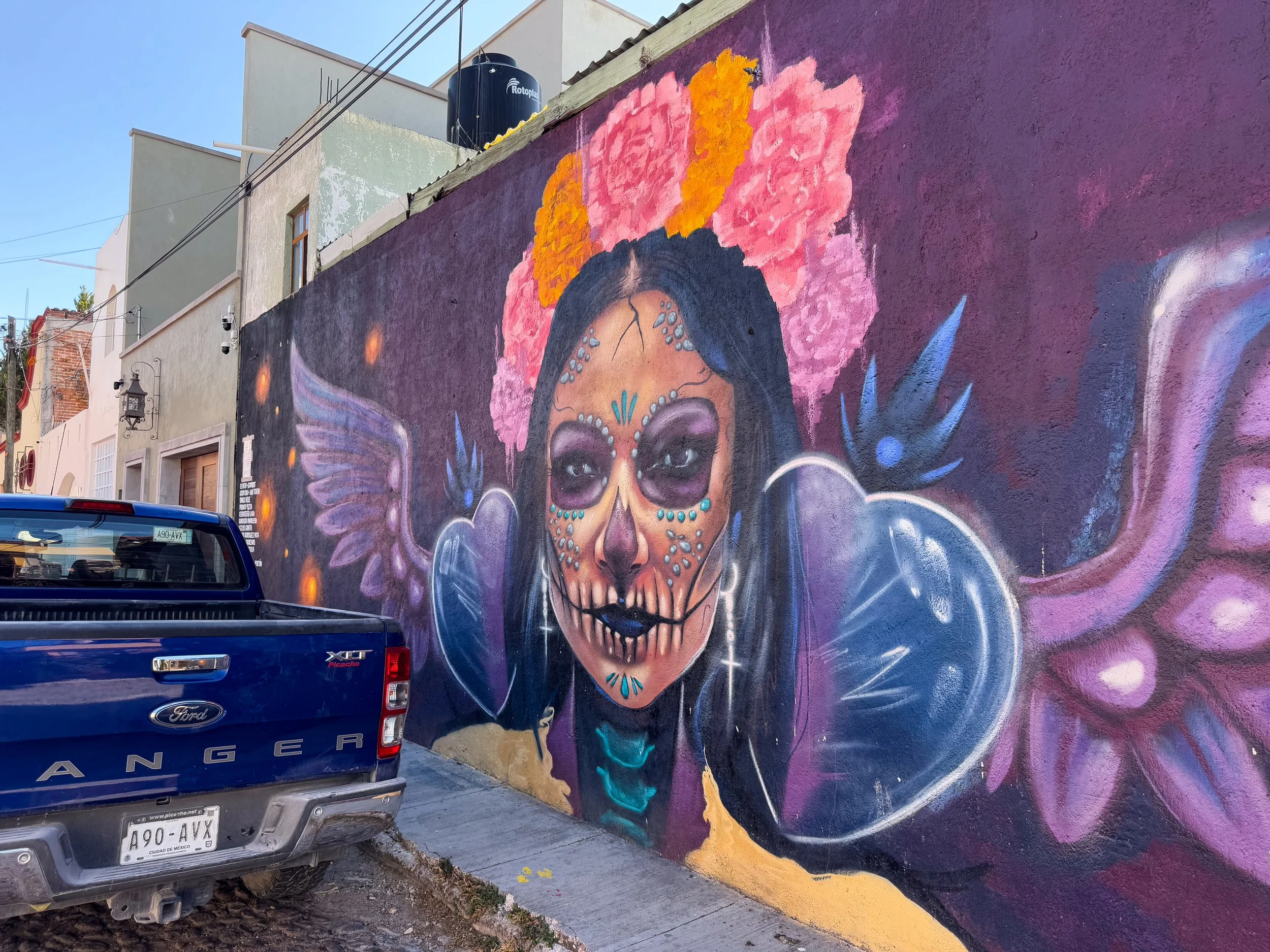
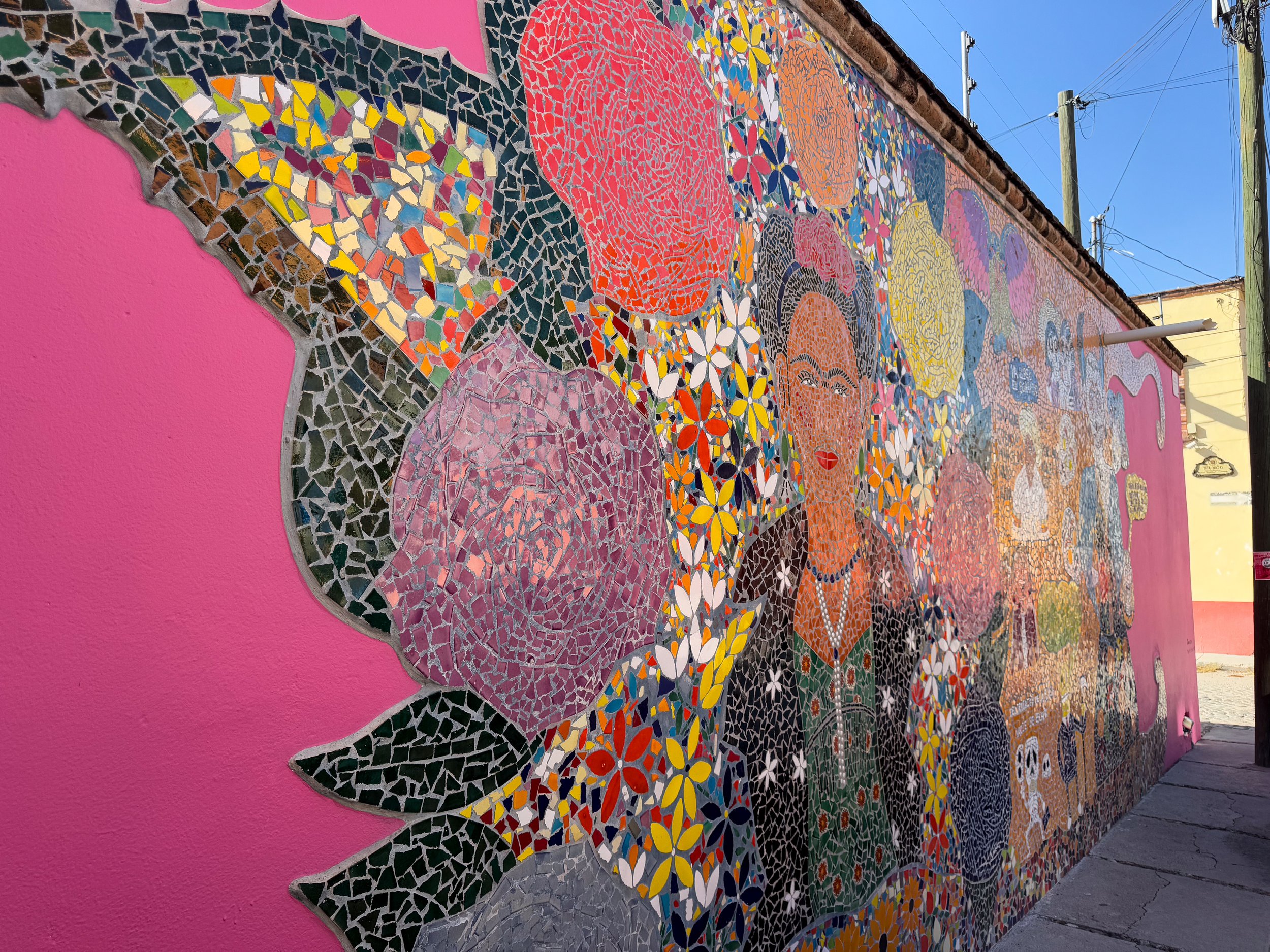
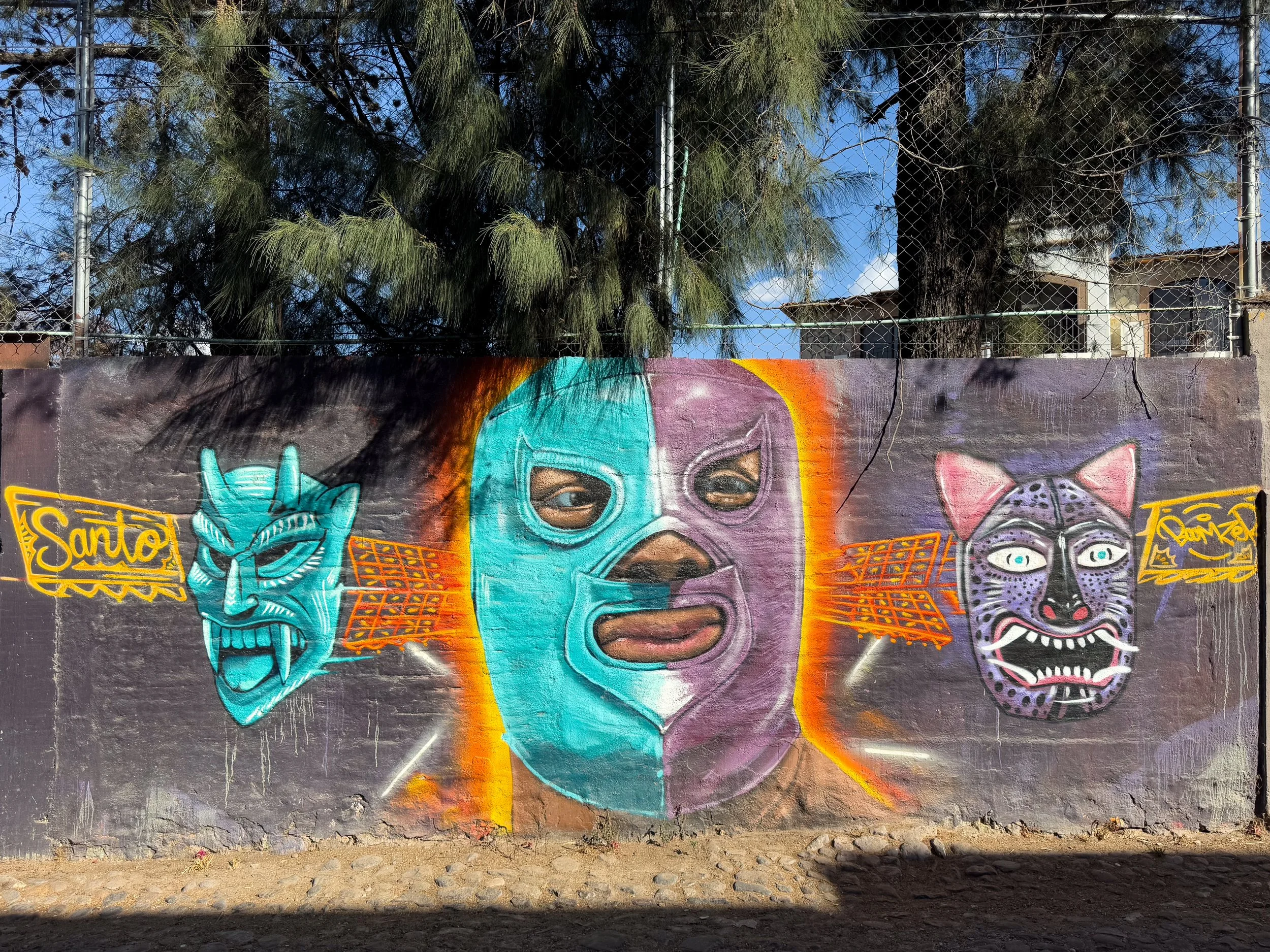
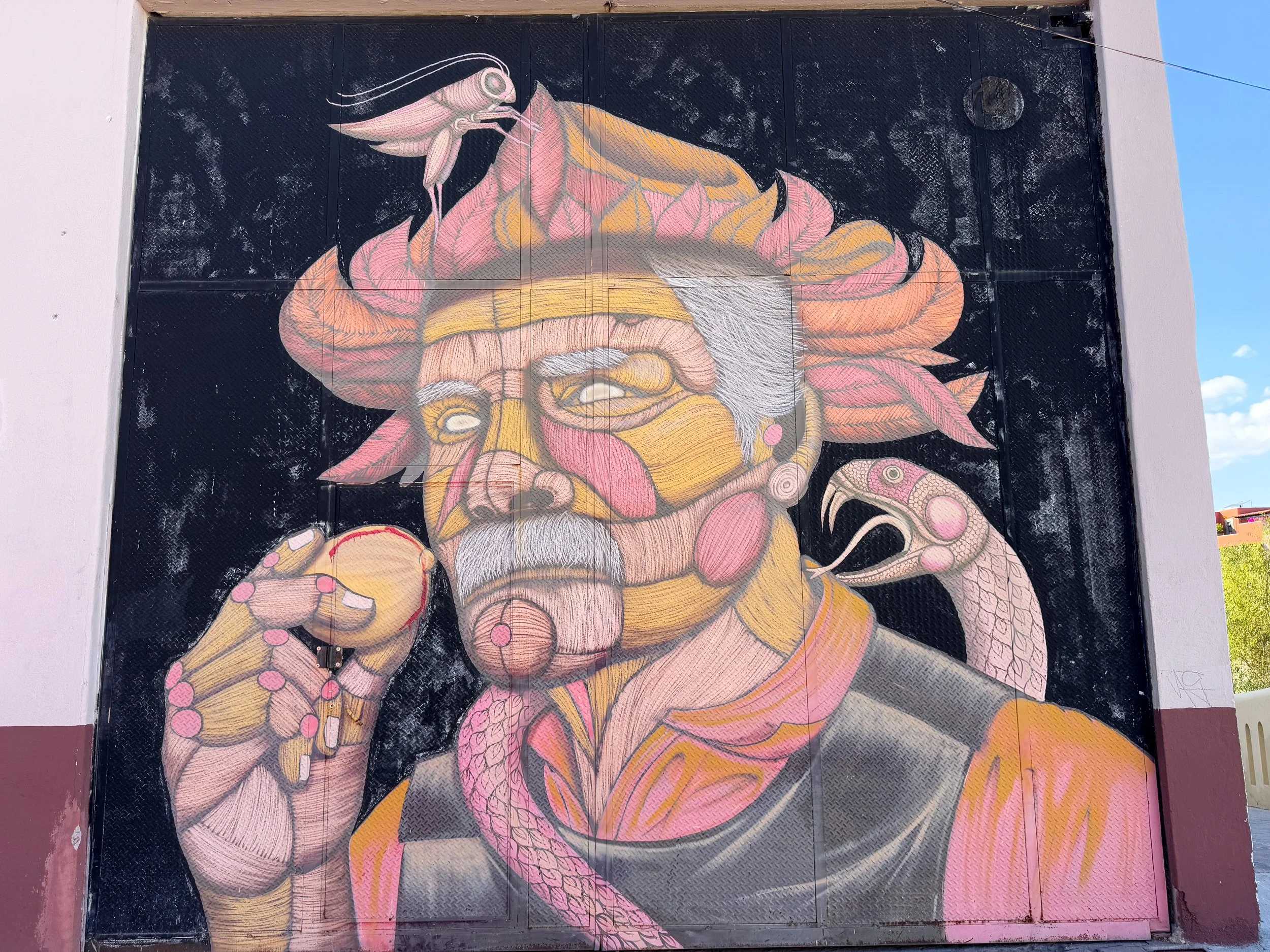
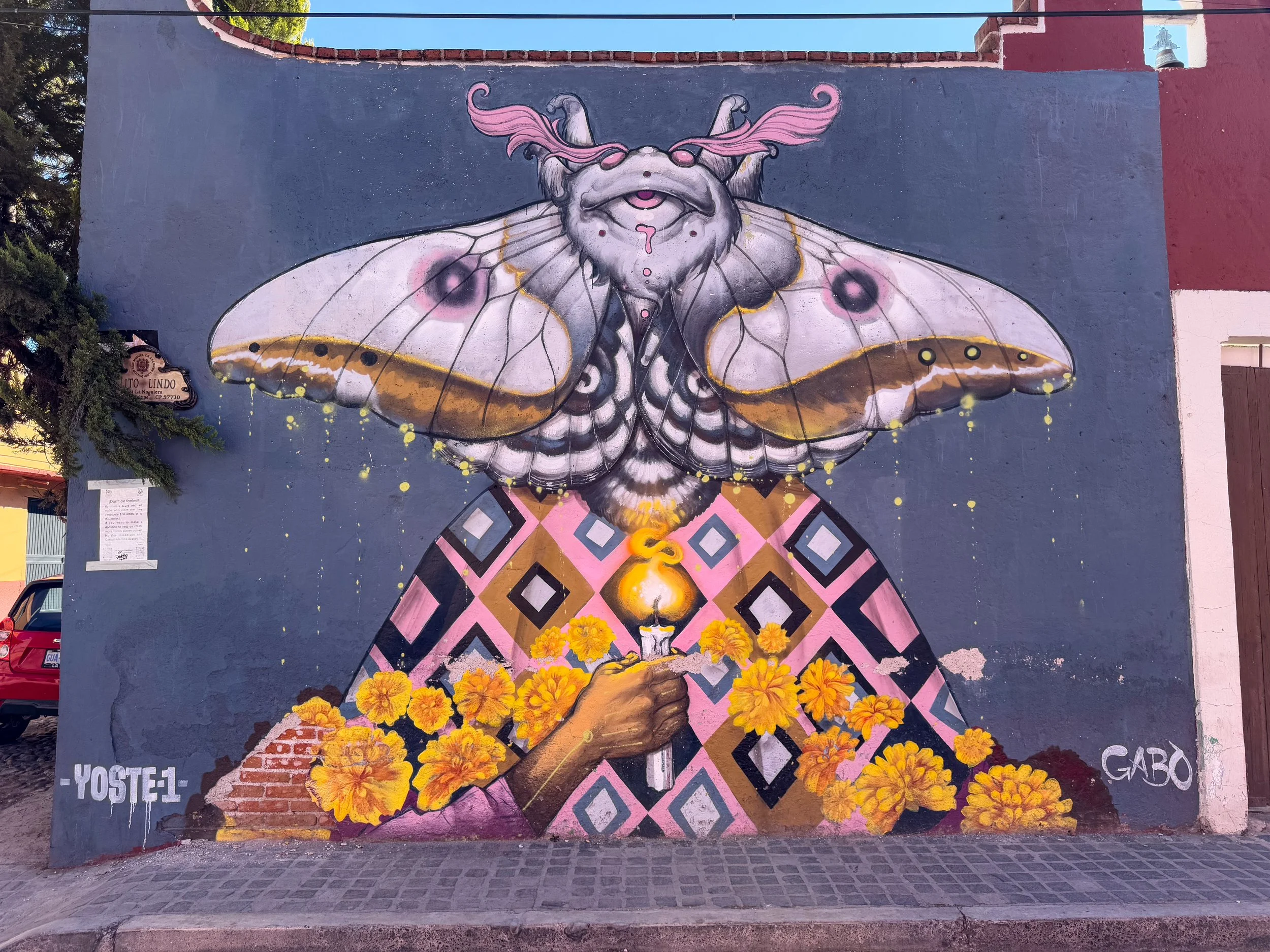
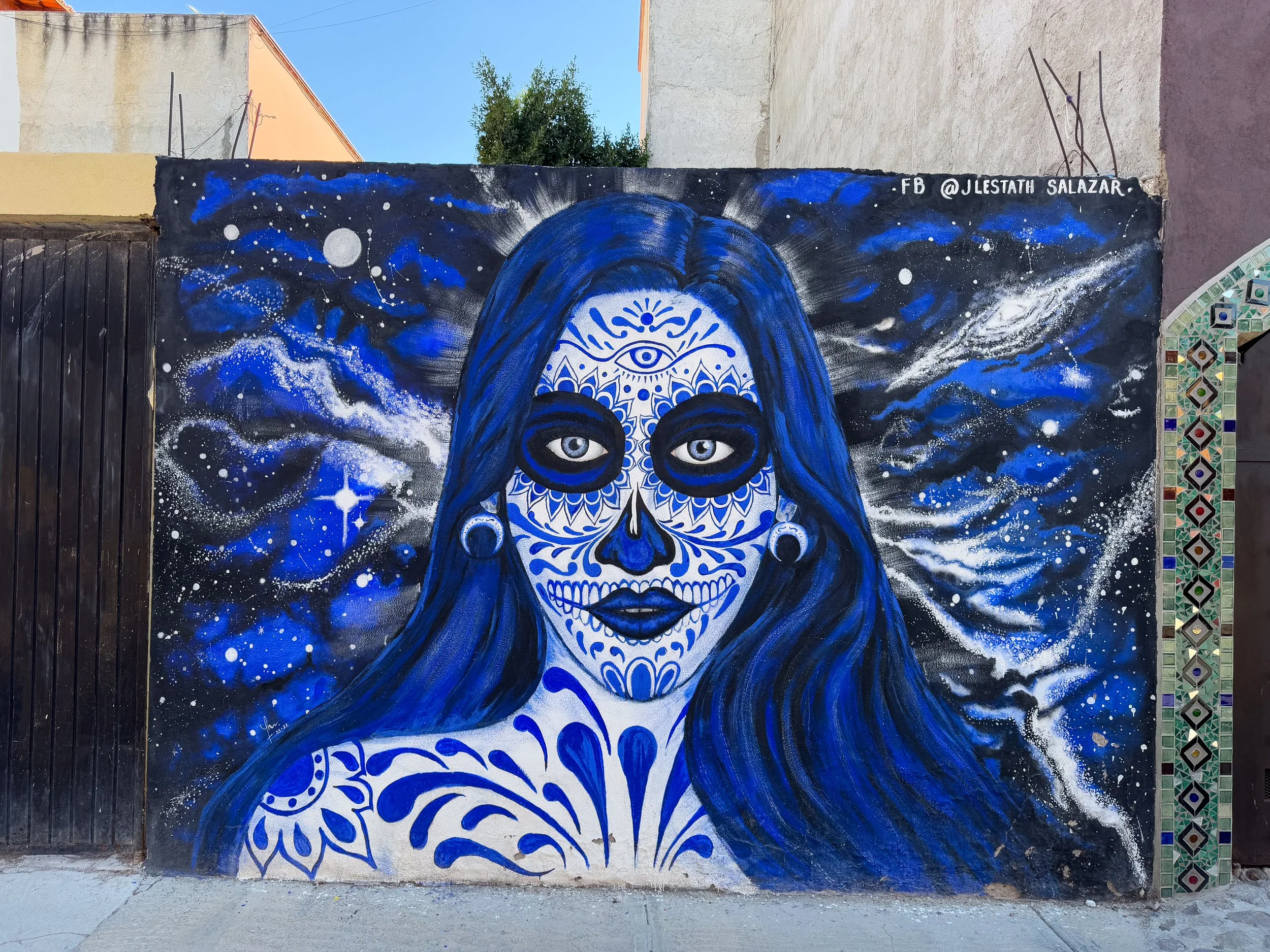
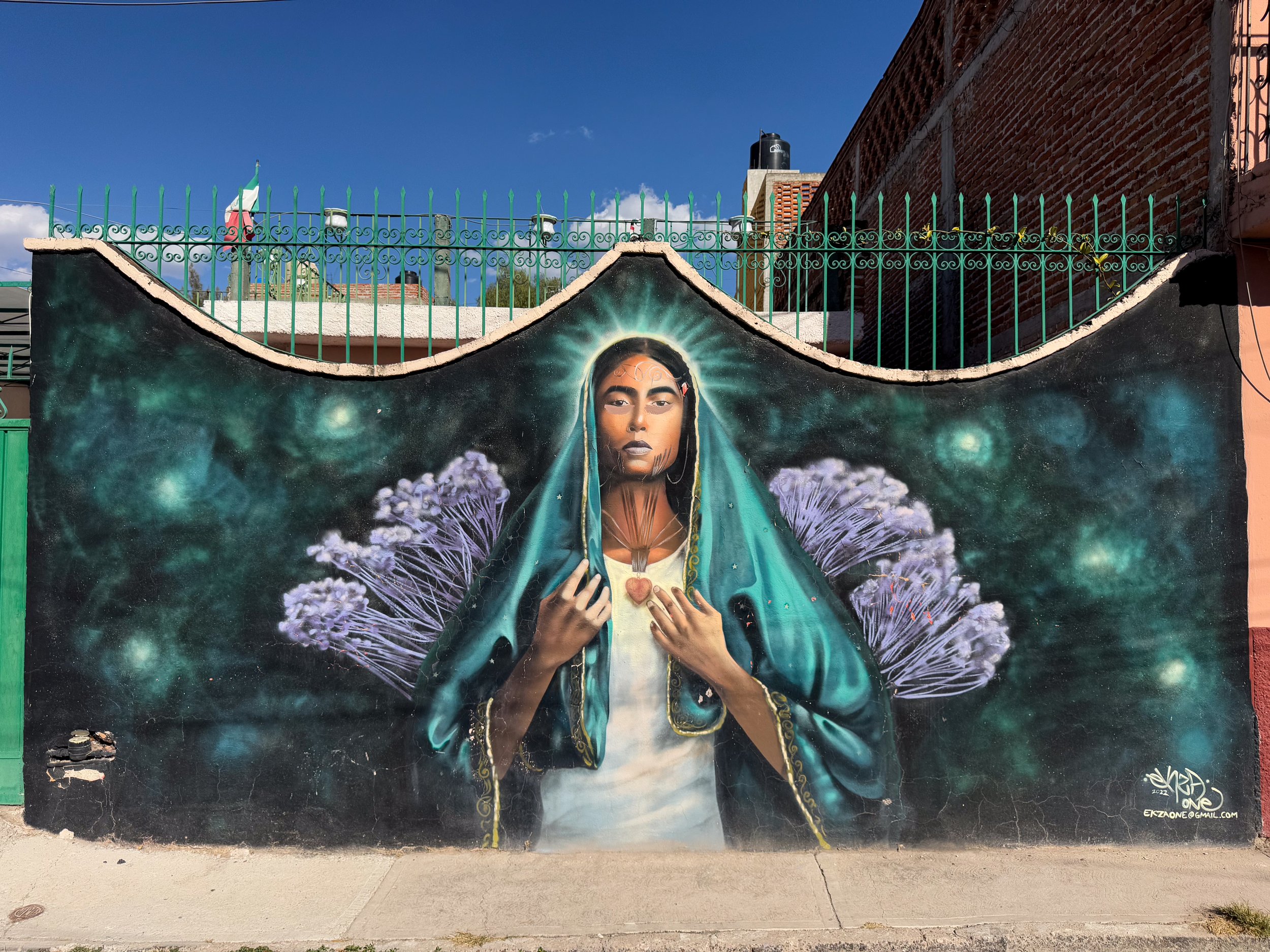
Barrio de Guadalupe. A residential neighborhood north of the city center with walls decorated in mosaics and murals of Mexican culture. We spent time wandering the open air gallery of streets admiring the works. Some of our favorites were mosaics of Frida Kahlo, Dia de los Muertos Catrinas, and a masked Lucha Libre wrestler.
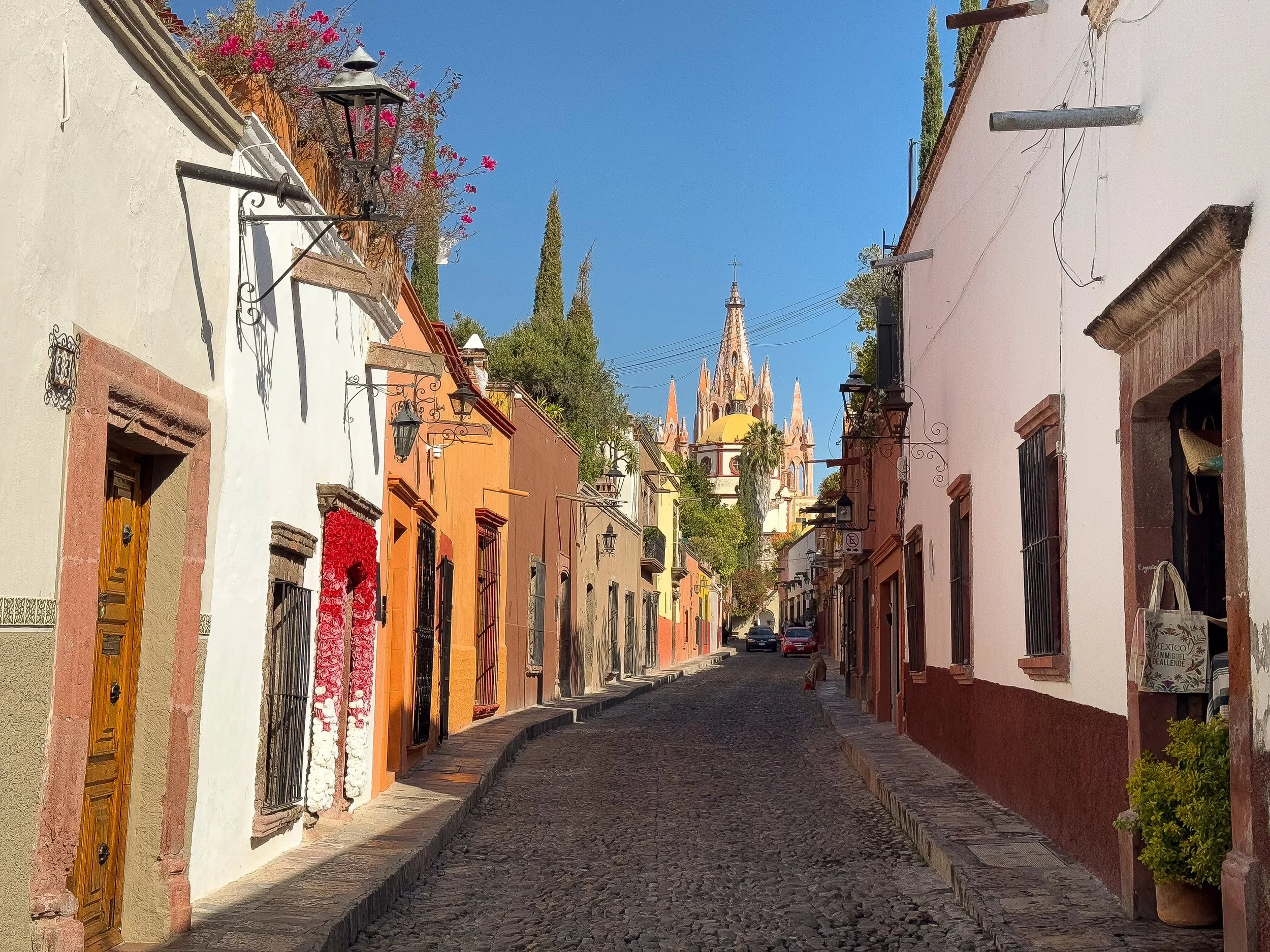
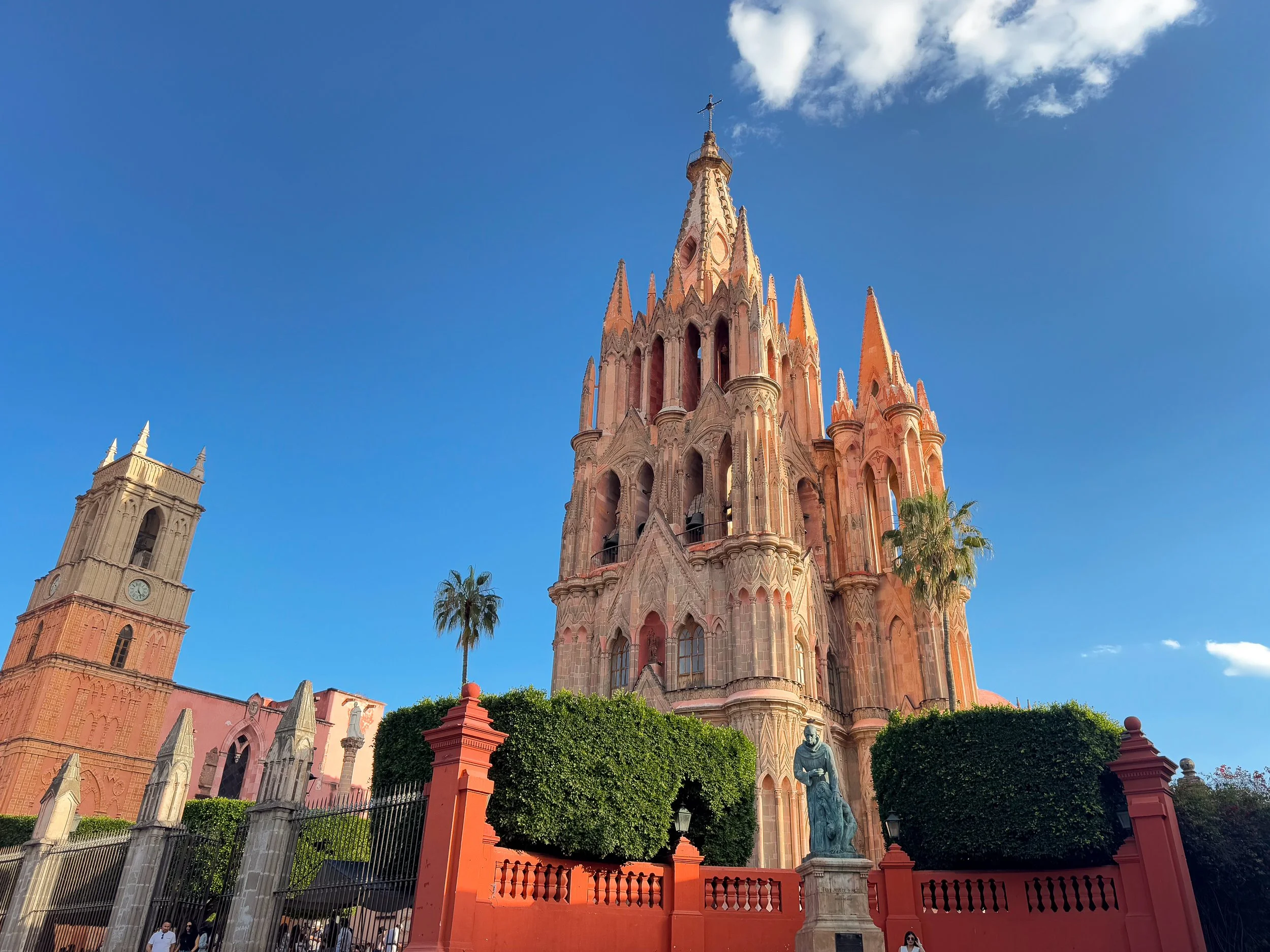
Calle Aldama. A photogenic street with historic and warmly painted buildings centered on the gothic spires and domes of Parroquia de San Miguel Arcángel.
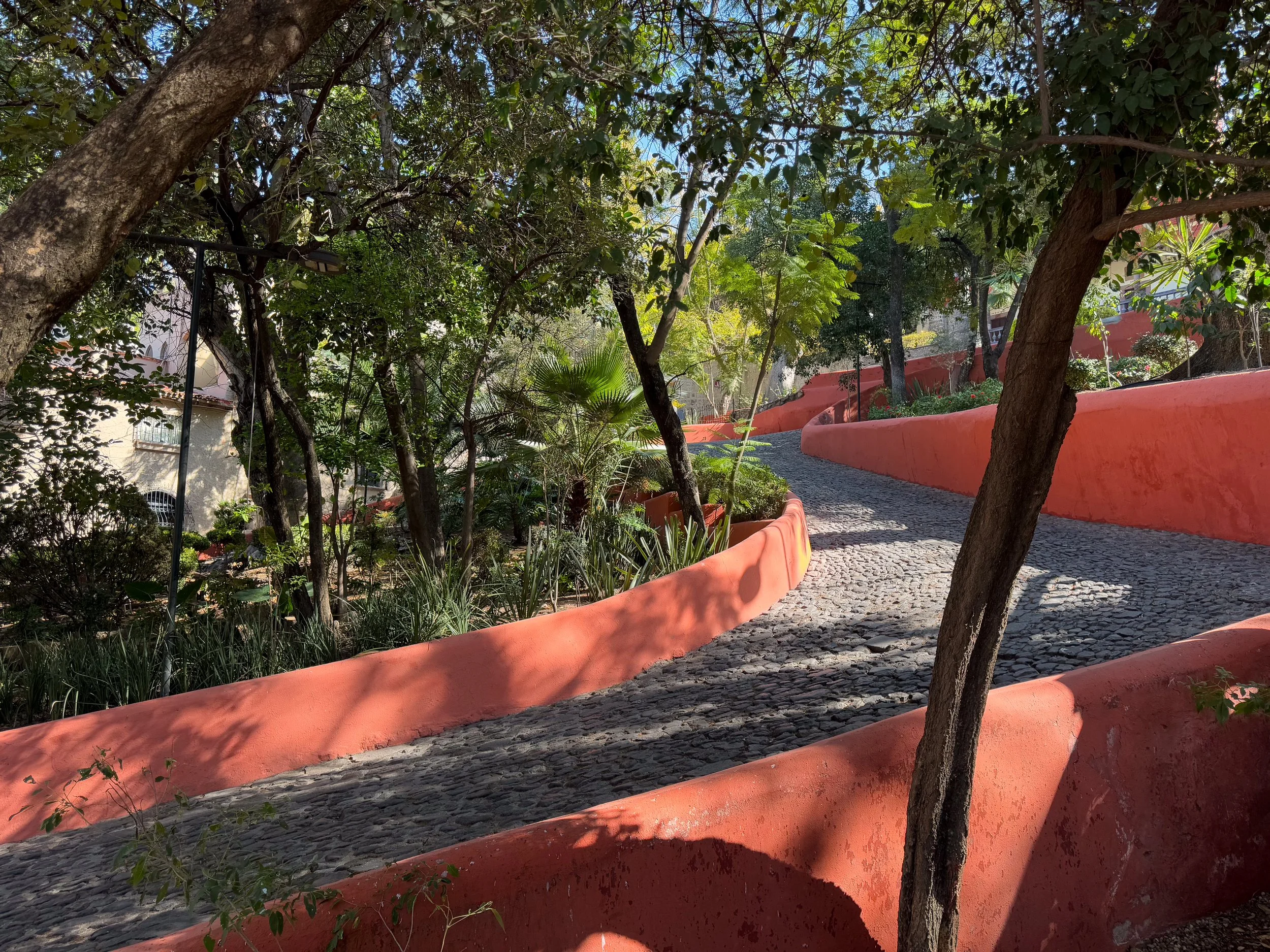
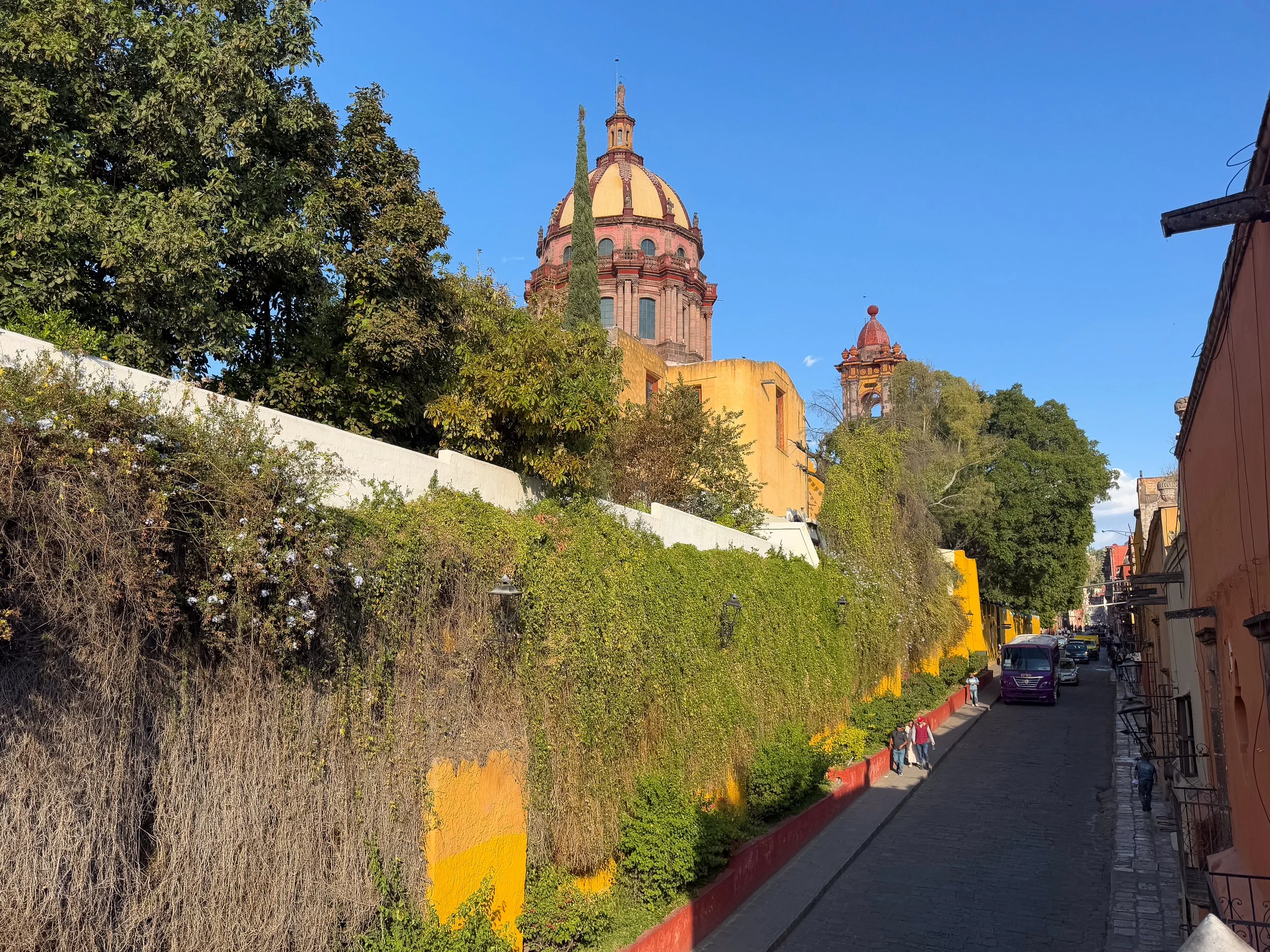
Callejon de Chorro. A winding and hilly street surrounded by landscaped gardens, historic public laundries, stepped walkways and red painted colonial architecture in the oldest area of the city. It reminded us of Lombard Street in San Francisco.
See the Sights
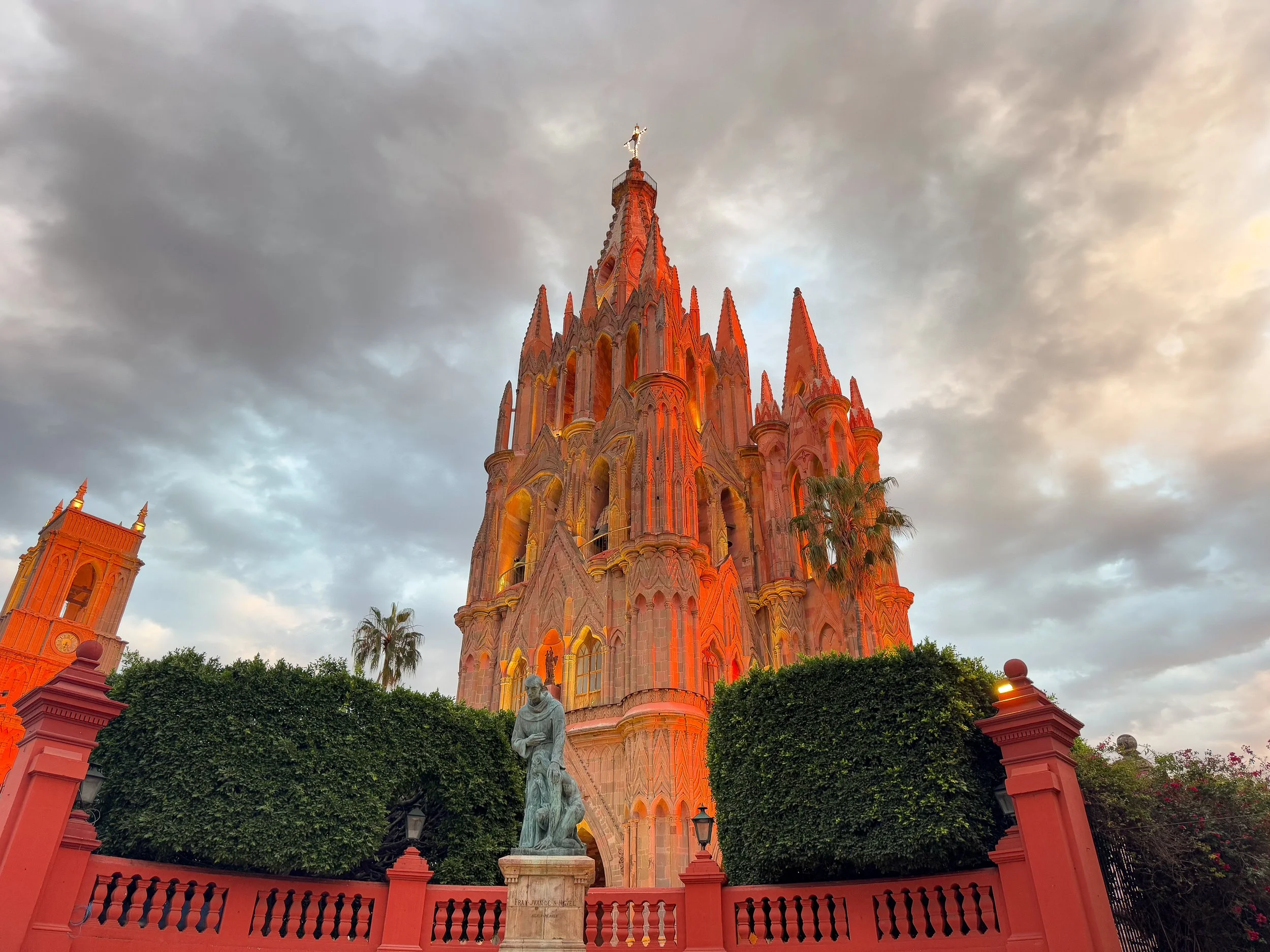
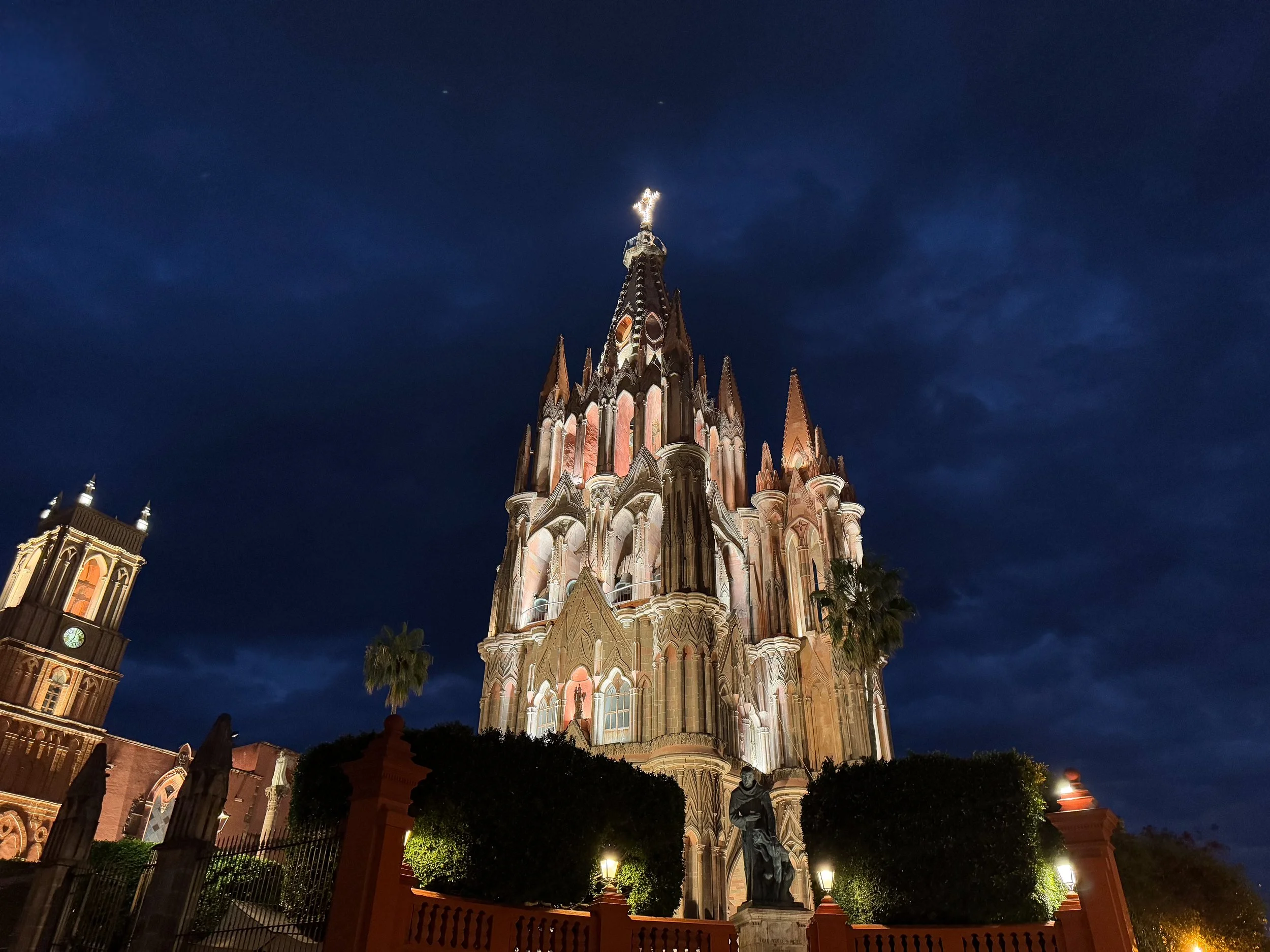
La Parroquia de San Miguel Arcángel. A towering neo-gothic cathedral located in the city center with pointed spires and vaulted arches constructed from pink stone. It's the Disney castle of cathedrals and beautiful to view both day and night.
Torre del Reloj. A pink, orange and tan stone neo-gothic clock tower attached to the cathedral.
El Jardín Allende. A popular tree covered plaza in front of the cathedral with views of its pink spires and the adjacent clock tower. It has a lively and cultural atmosphere. Well dressed Mariachi bands walk through the plaza performing for visitors both day and night while Mojigangas, giant painted paper-mache puppets, walk around posing for photos. The sides of the plaza are flanked by buildings with ground floor restaurants and shops.
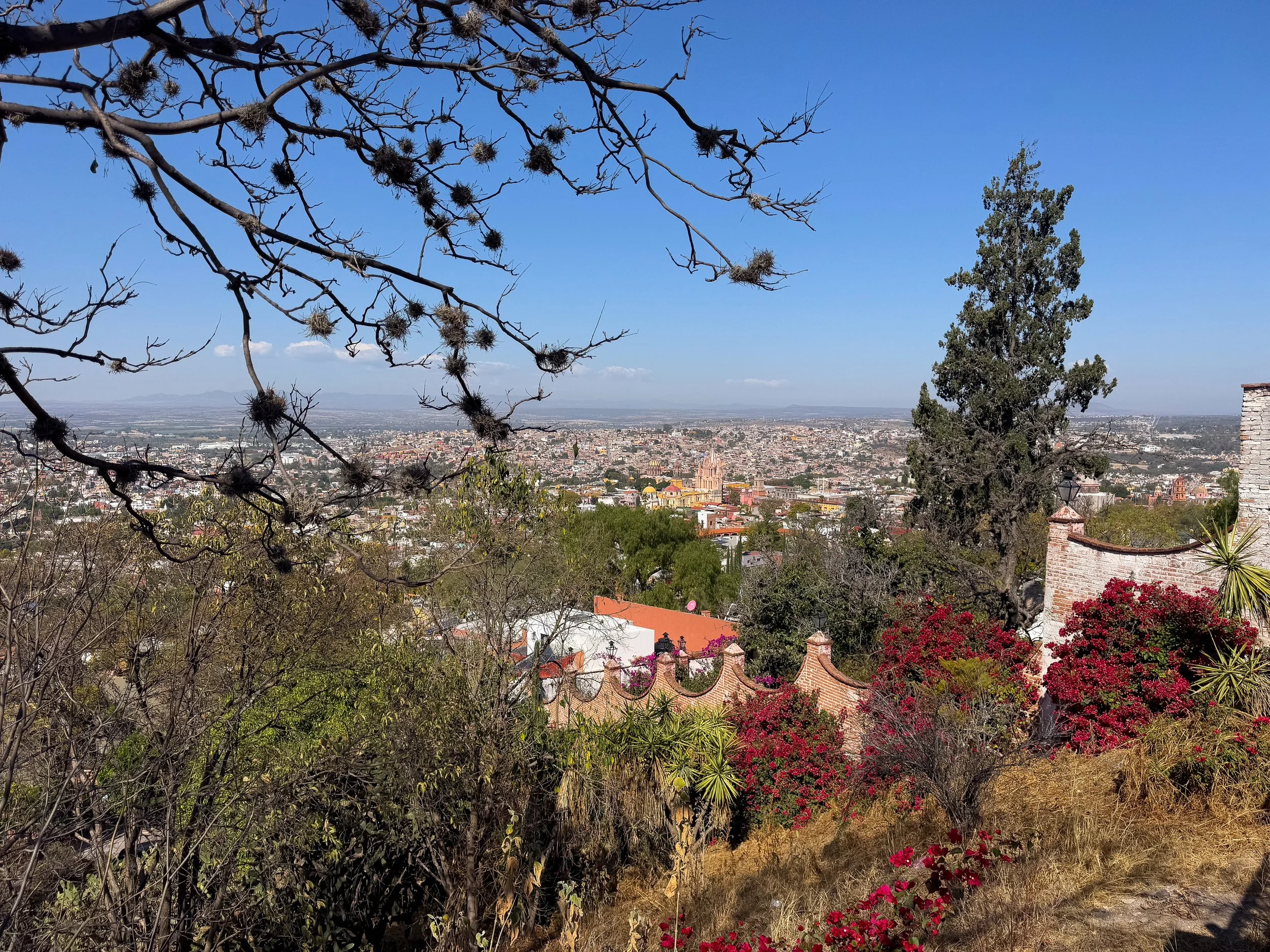
El Mirador. A hilltop lookout with views of the city center, cathedral spires, white domed roofs and desert landscape. We visited in the morning when the city was well lit however it’s also a popular sunset viewpoint.
Plaza de la Soledad. A plaza in front of the Templo de Nuestra Señora de La Salud with sculpted trees and bushes. Vendors walk around selling sombreros and ice cream.
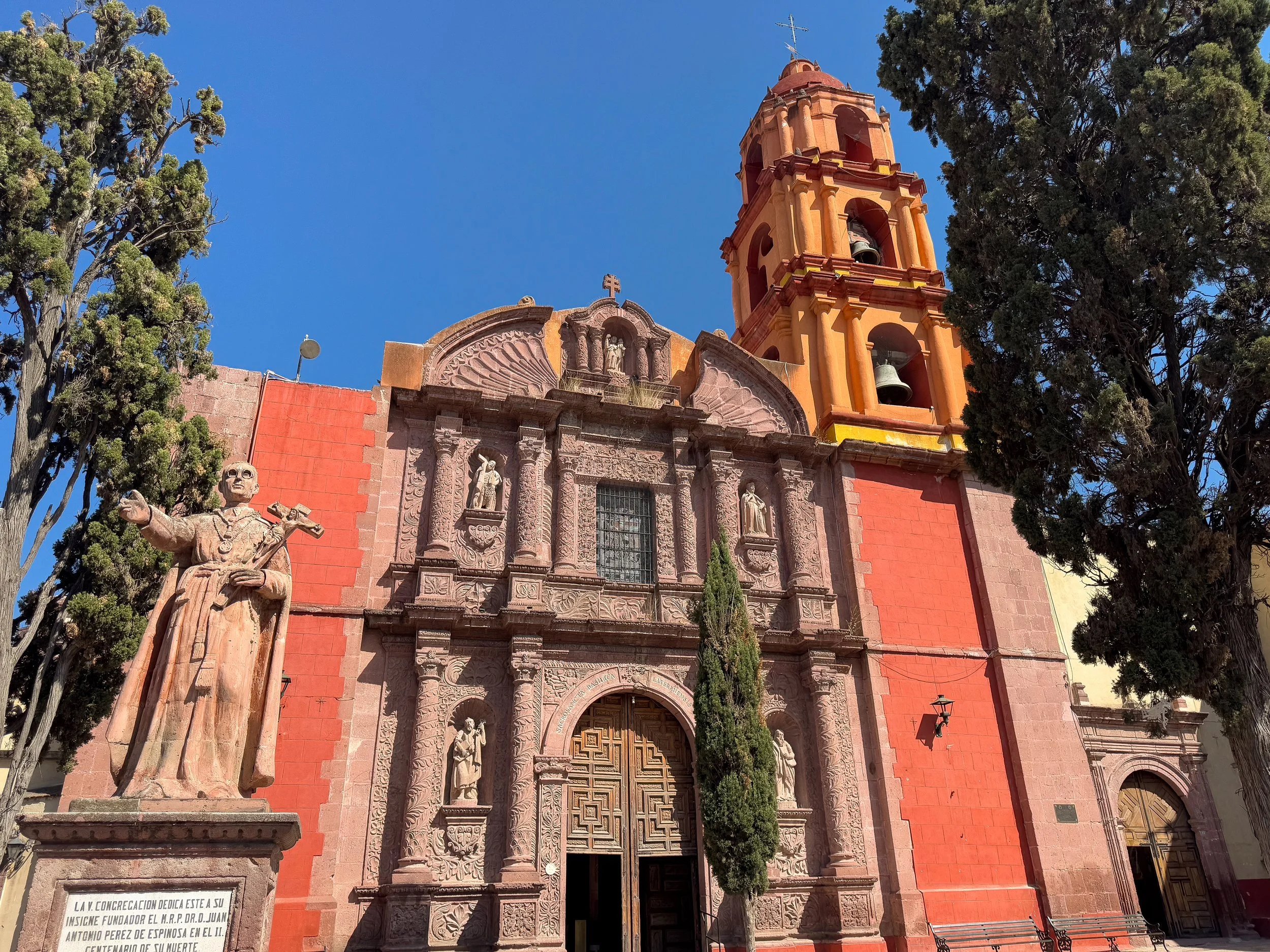
Templo del Oratorio de San Felipe Neri. A pink, orange and red stone cathedral with an ornate baroque style facade and multilevel bell tower.
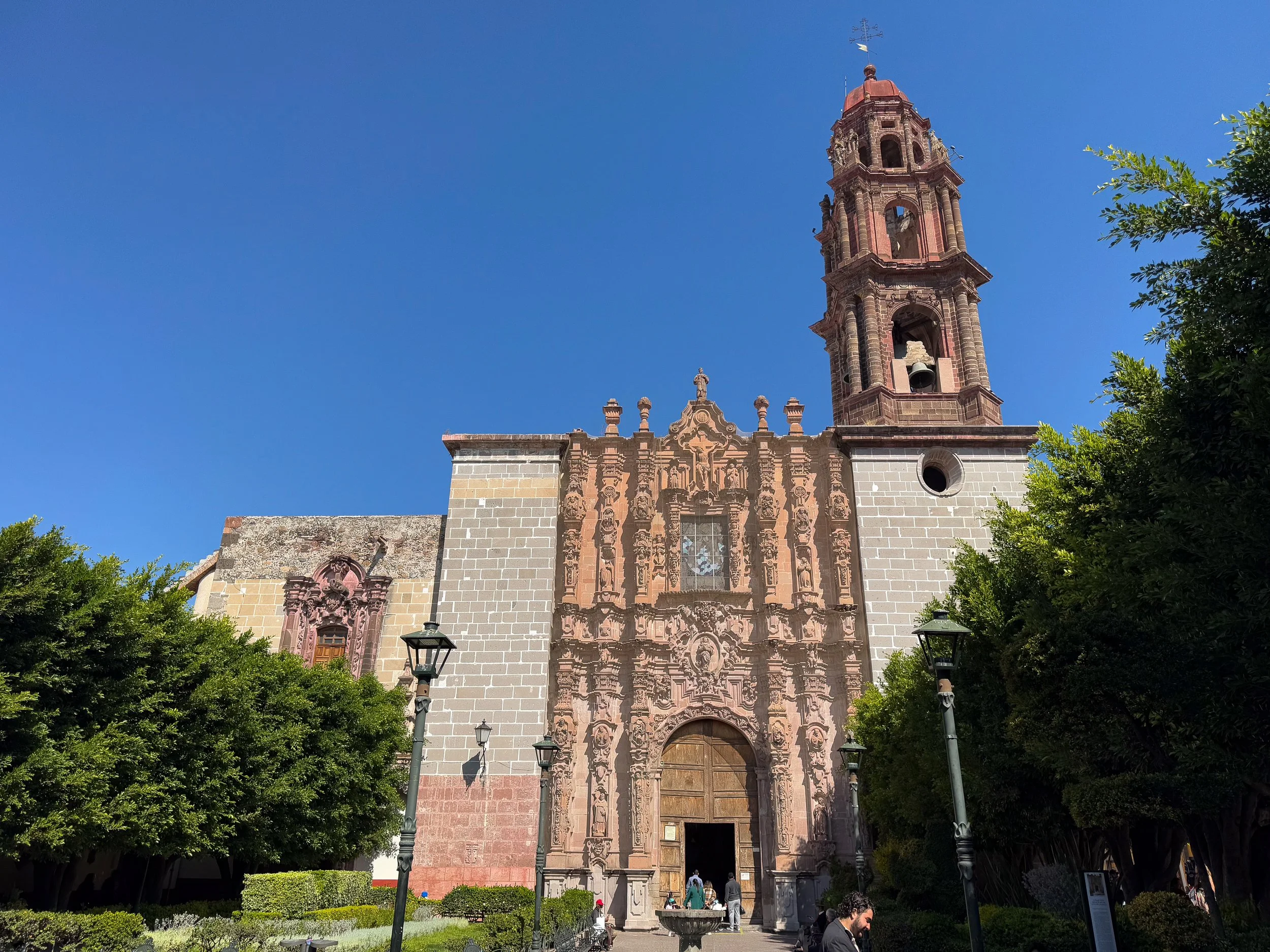
Templo de San Francisco. A historic cathedral with an intricately carved stone facade and bell tower. Visitors gather in a beautiful park with sculpted trees and bushes in front.
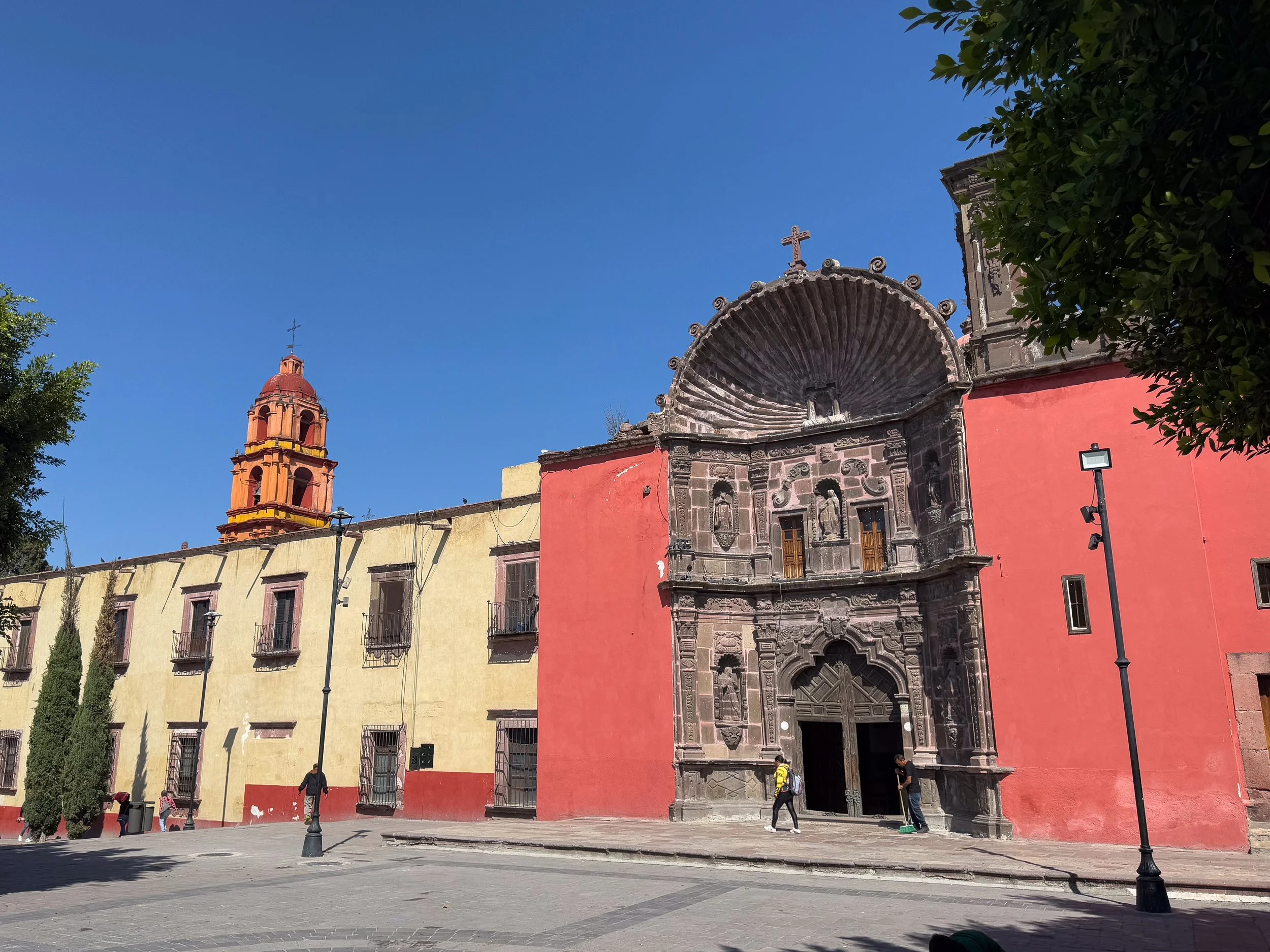
Templo de Nuestra Señora de La Salud. A historic church with recessed stone facade capped with an inverted shell design.
Parque Benito Juarez. A quiet and peaceful city park with well landscaped gardens, lush tree covered walkways, small fountains and sculptures.
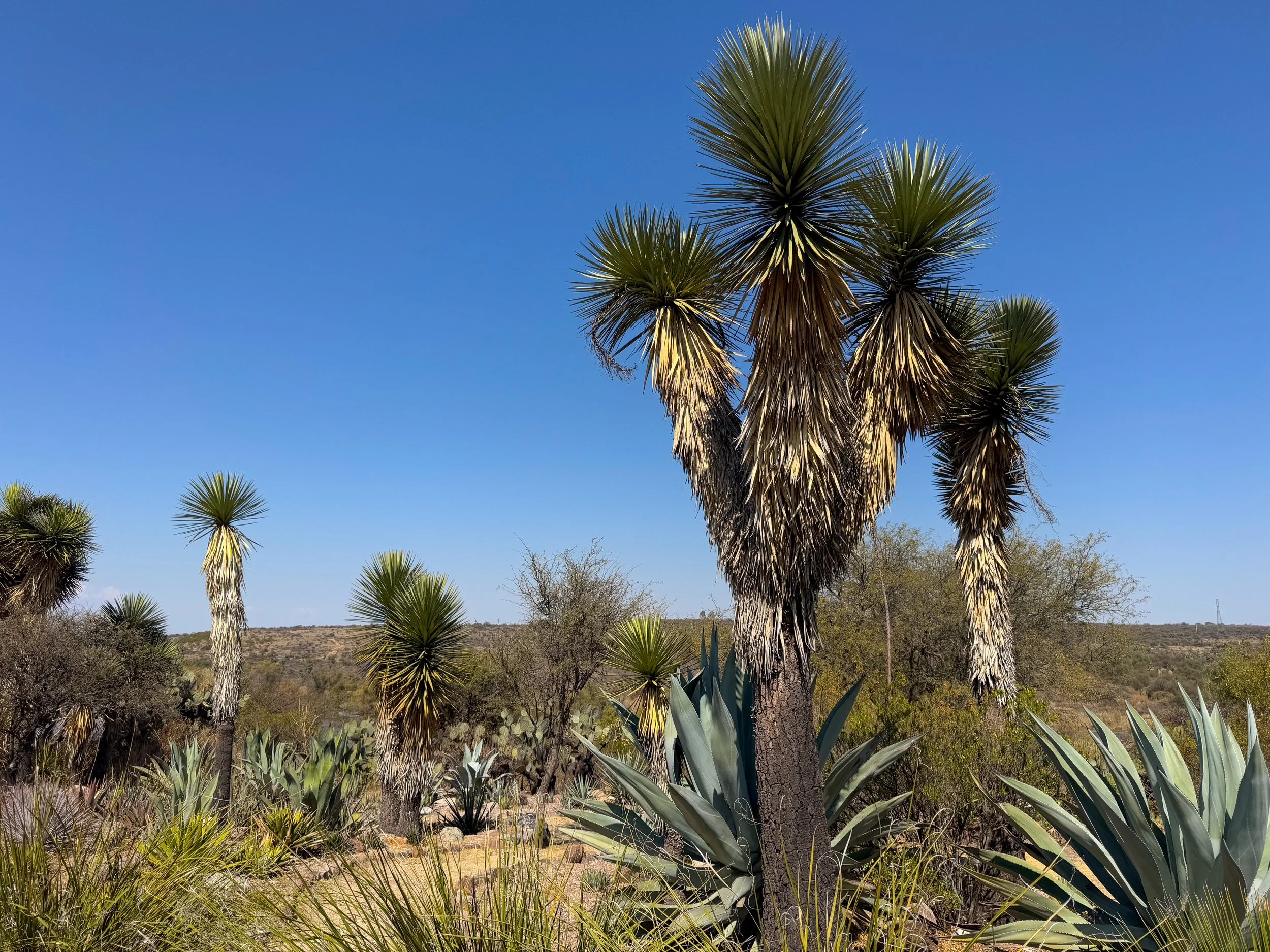
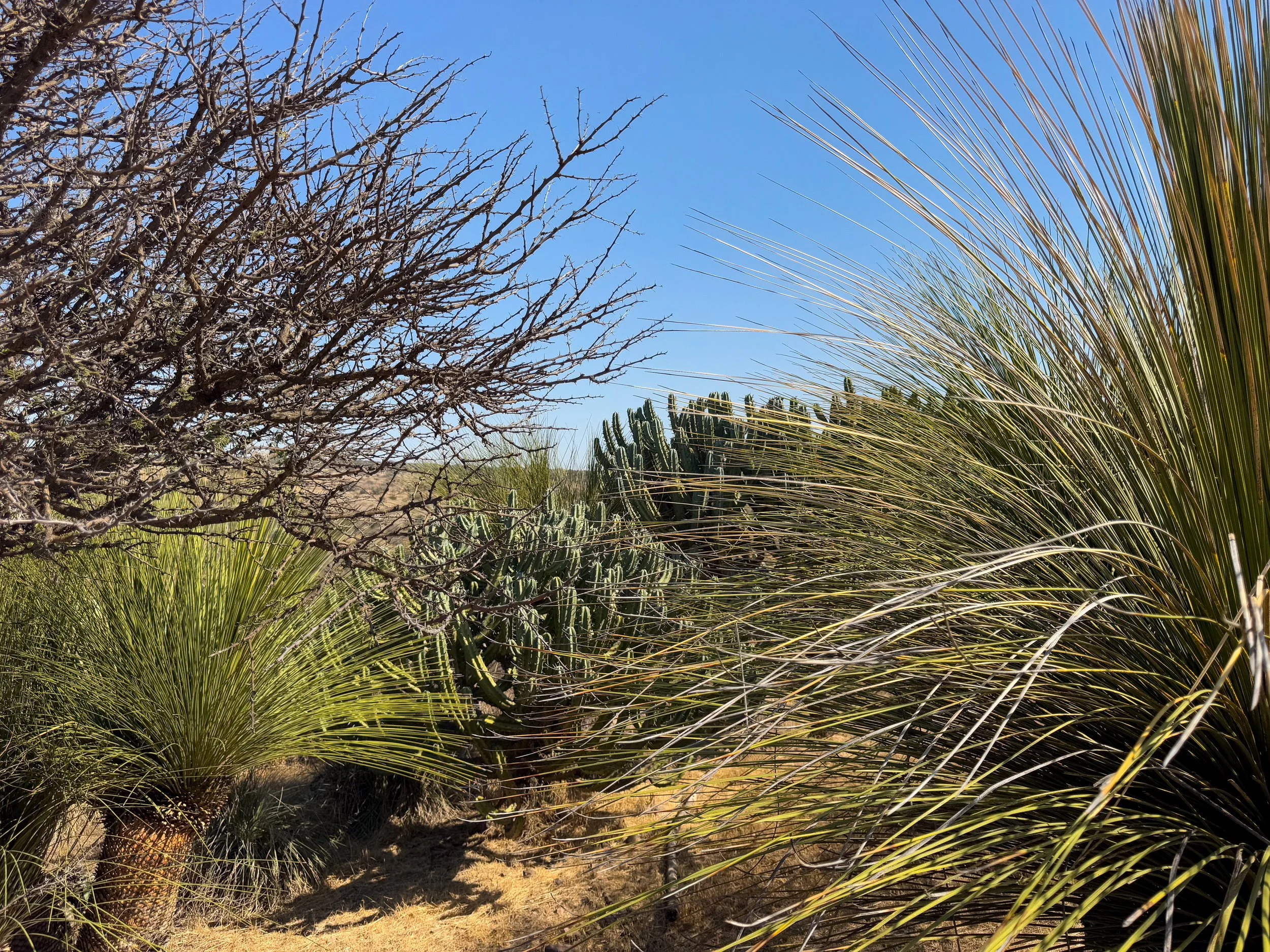
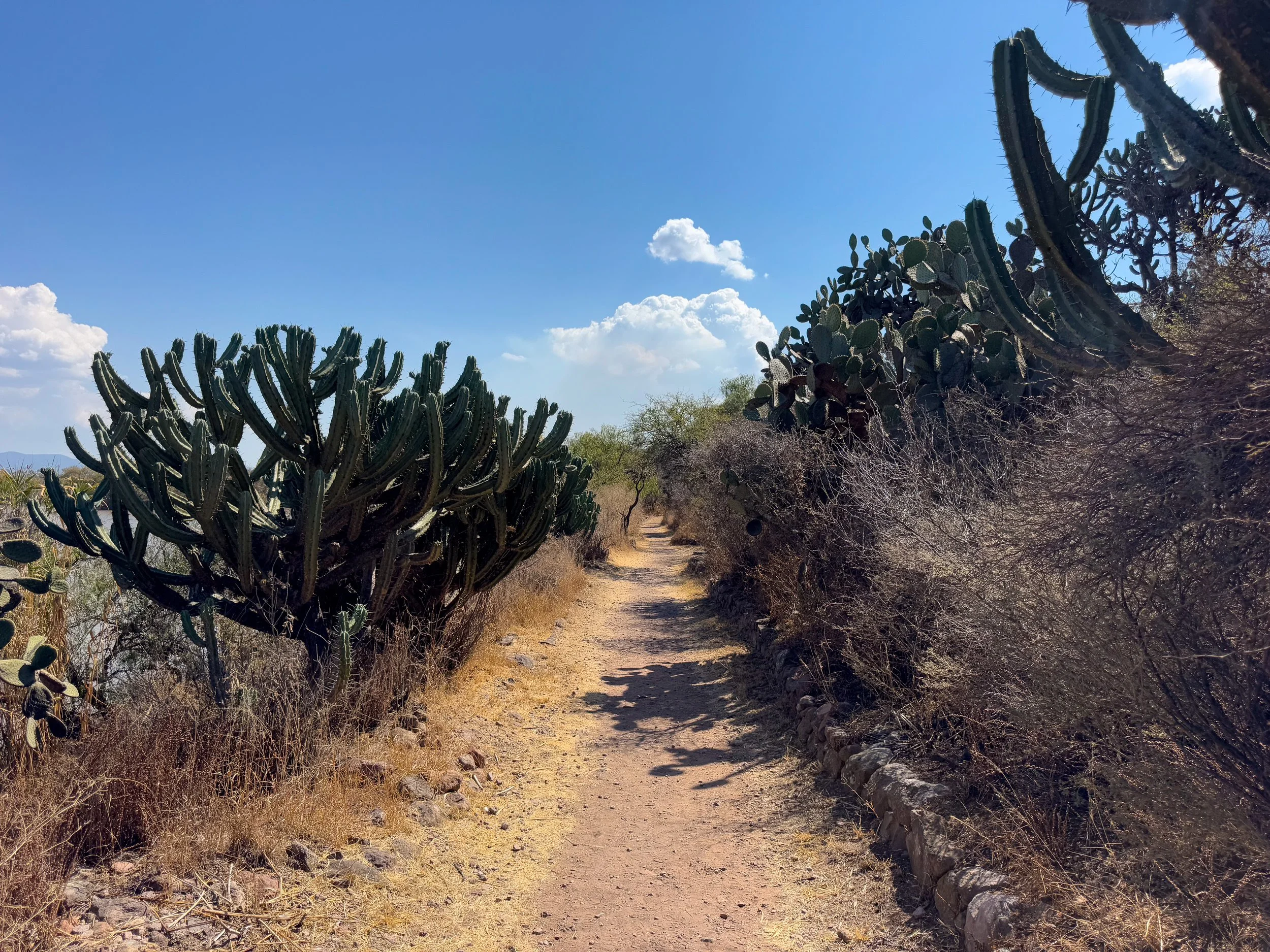

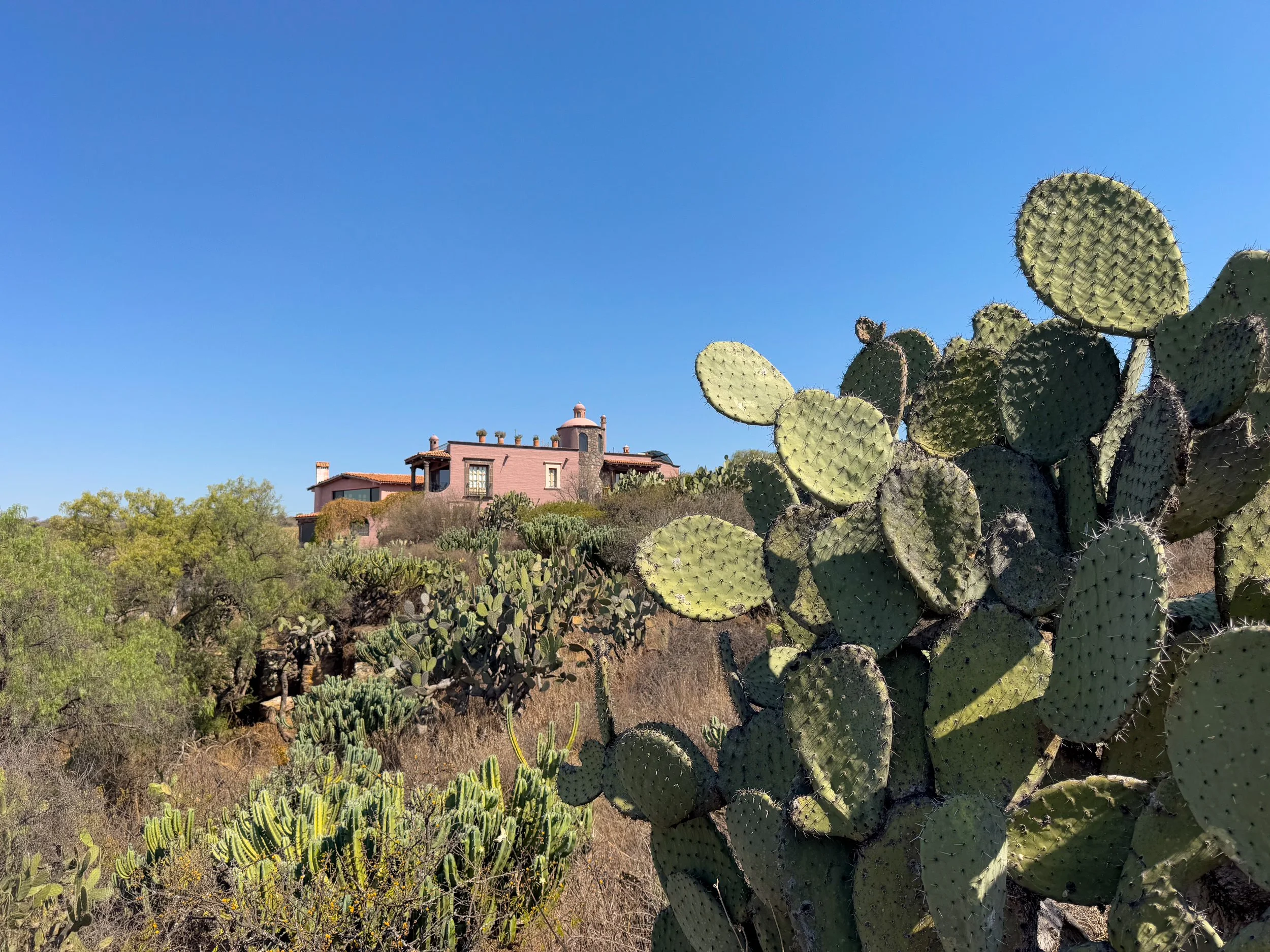
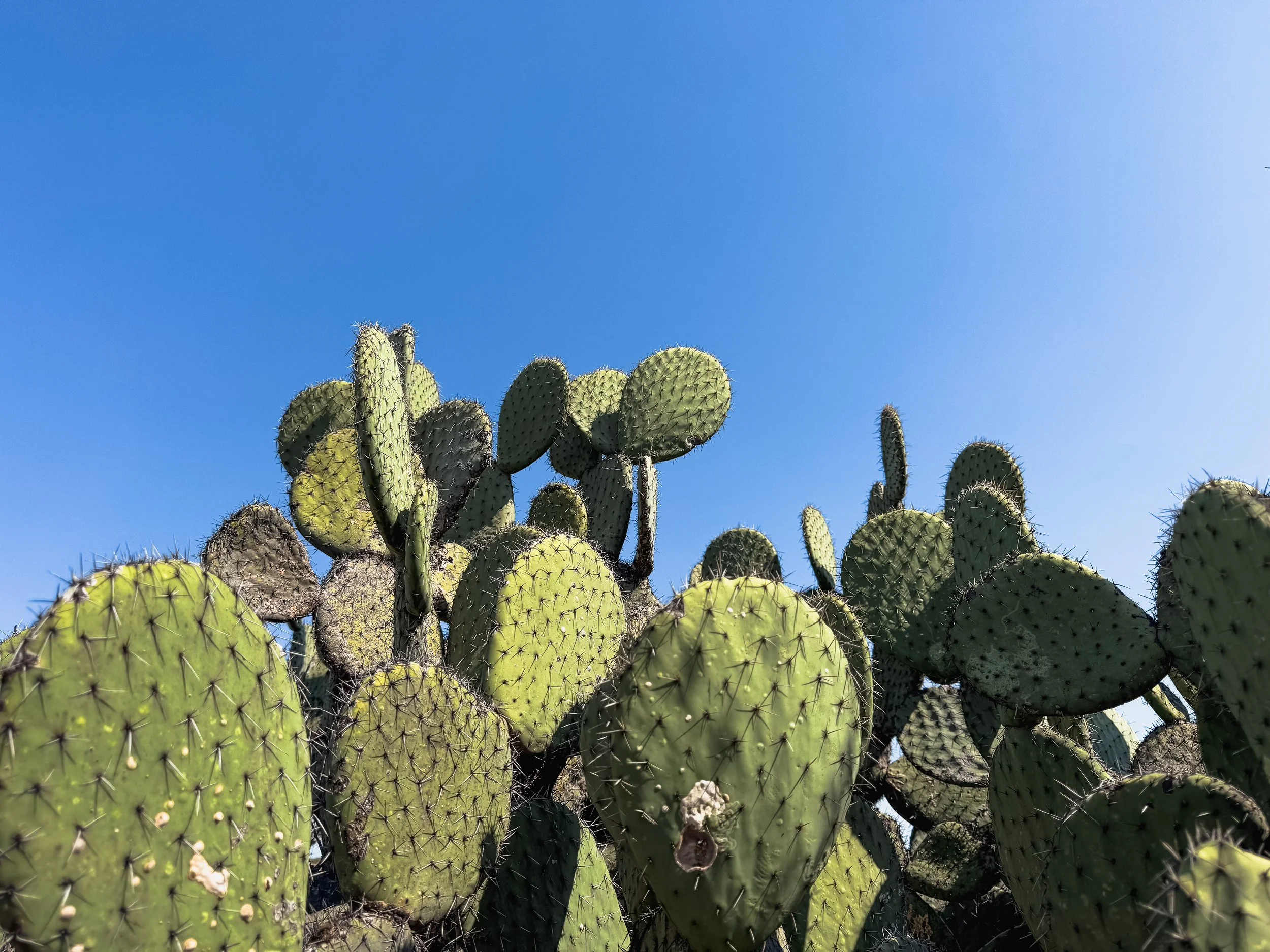
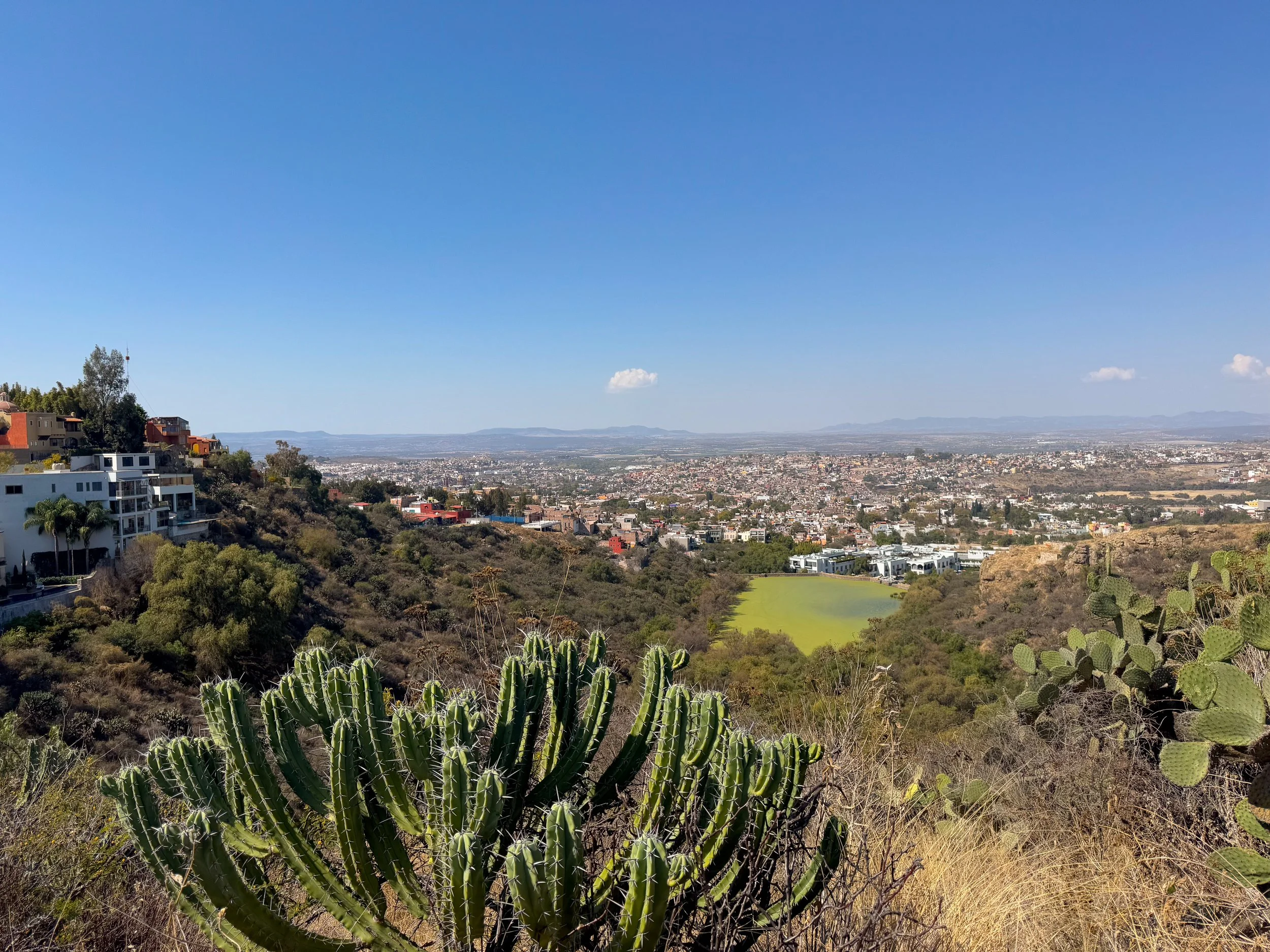
Charco del Ingenio. A dry and arid botanical garden with trails leading through the landscape past thorny bushes, cacti and maguey plants. The park is divided by a steep volcanic canyon and dam holding back a lake with different sections and sights speckled throughout.
The Canyon Trail. A narrow trail following the canyon’s edge with views of its volcanic stone walls. Shout into it to hear your echo reverberate back.
The Birdwatching Trail. A trail following the reservoir home to migratory and aquatic birds.
Sculpture Garden Trail. A trail leading from the welcome center towards the western viewpoints with several sculptures along the way.
Regional Plant Trail. A trail leading between the conservatory and welcome center with native plants and cacti.
The Western Viewpoints. A series of overlooks along the western park trails with panoramic views of San Miguel de Allende, the canyon and Guanajuato Mountains.
Pollinator’s Garden. A garden with hummingbirds and honey bees buzzing around, pollinating the budding and flowering flora.
Conservatory of Mexican Plants. A glass building home to all types of prickly and thorny native plants and cacti.


Shop the Markets
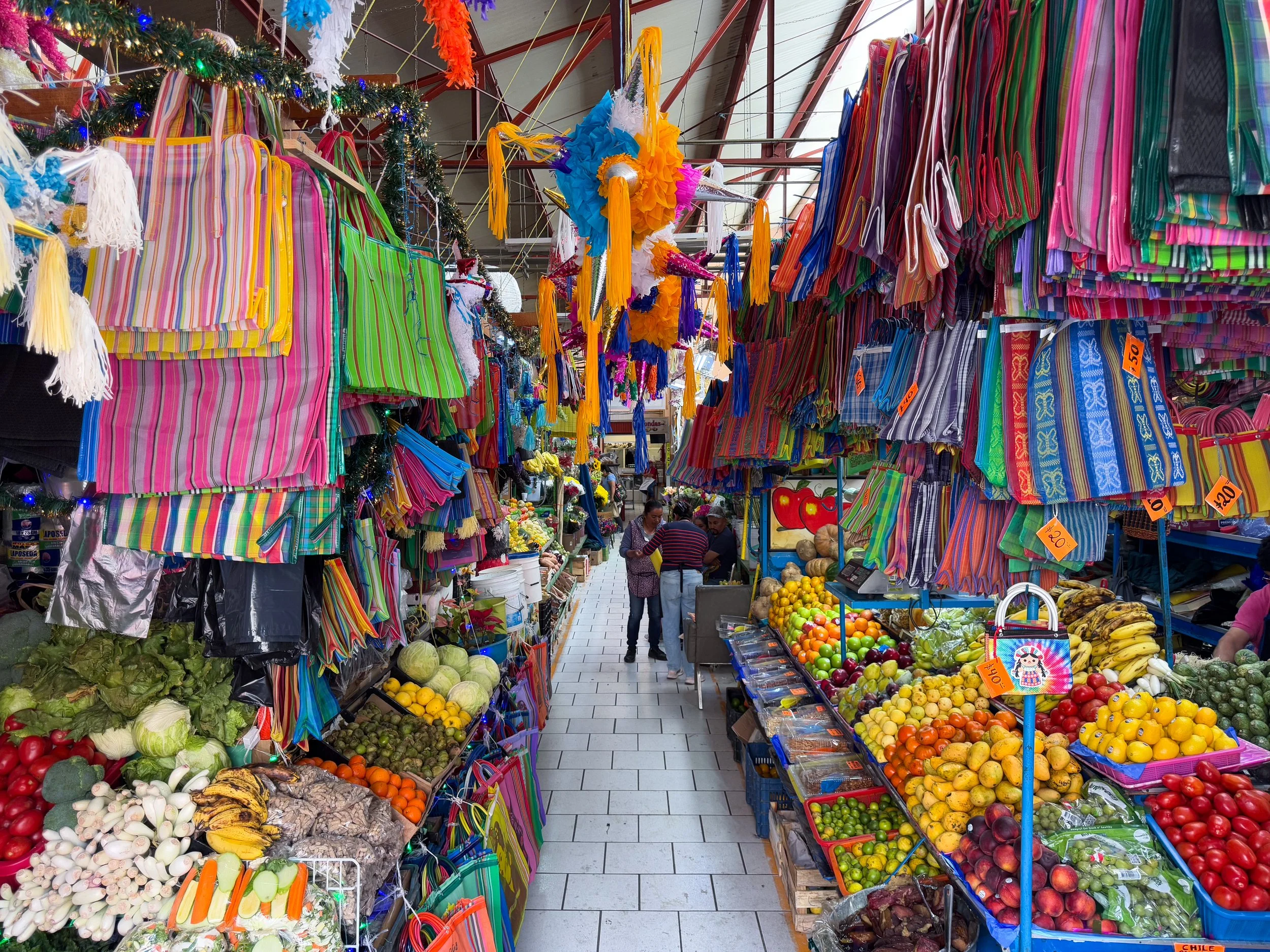
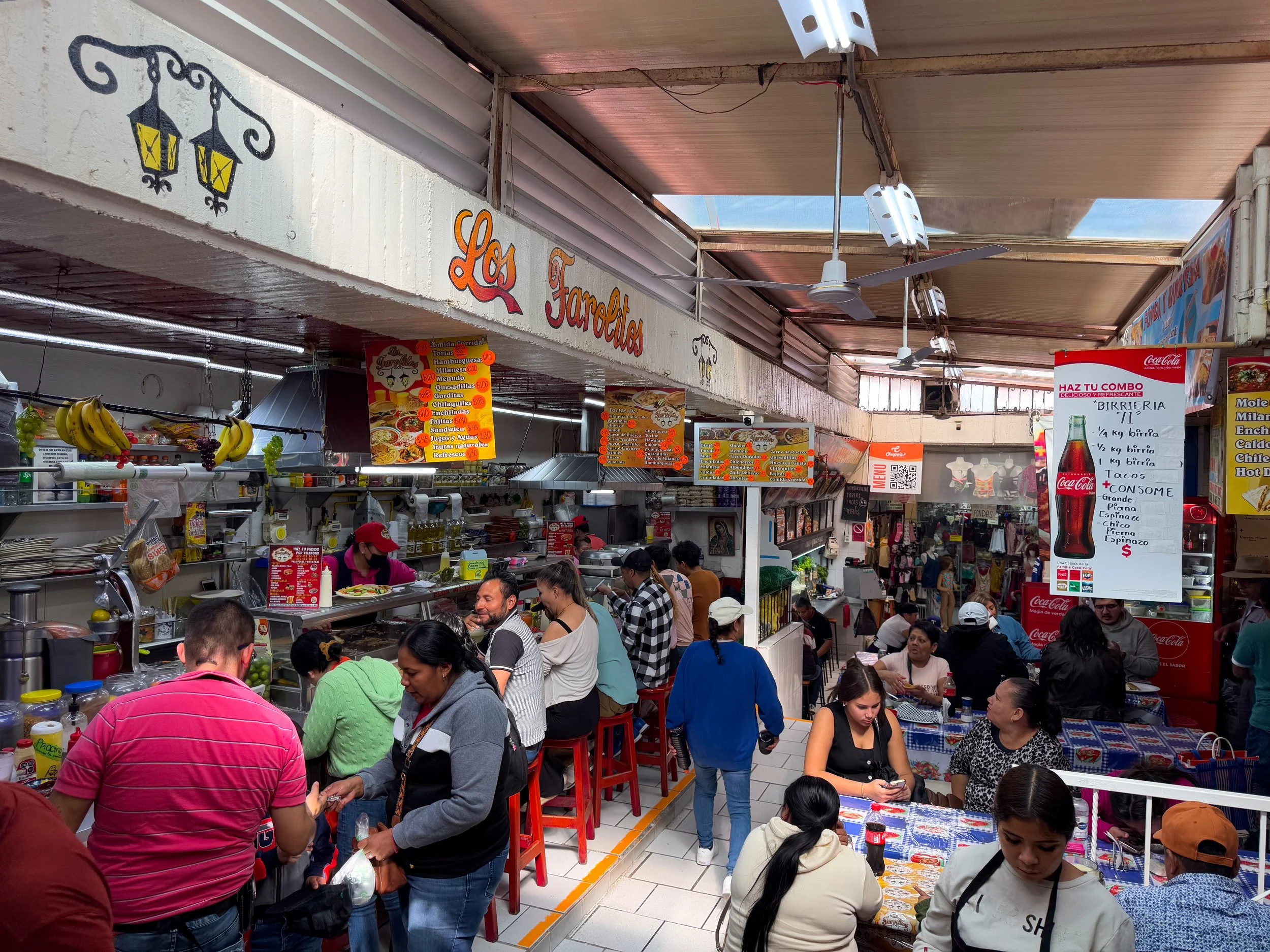
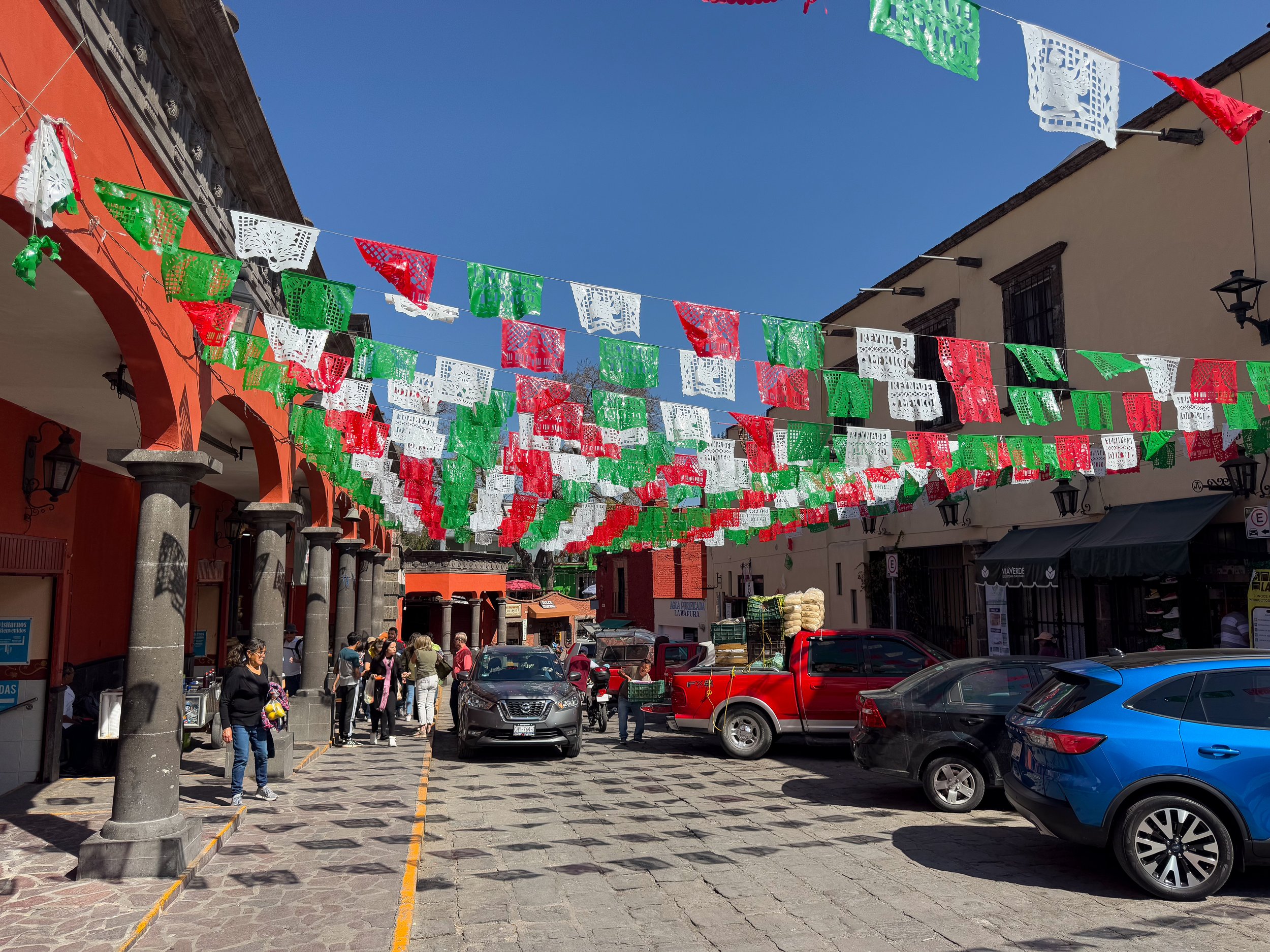
Ignacio Ramirez Market. A colorful market with aisles of vendors selling fruits, vegetables, flowers, piñatas and miscellaneous dry goods like beans, corn husks and tostadas. A section with restaurants serves affordable Mexican classics like quesadillas, gorditas, molletes and flautas. We ordered lunch from Los Farolitos spending less than 200 pesos.
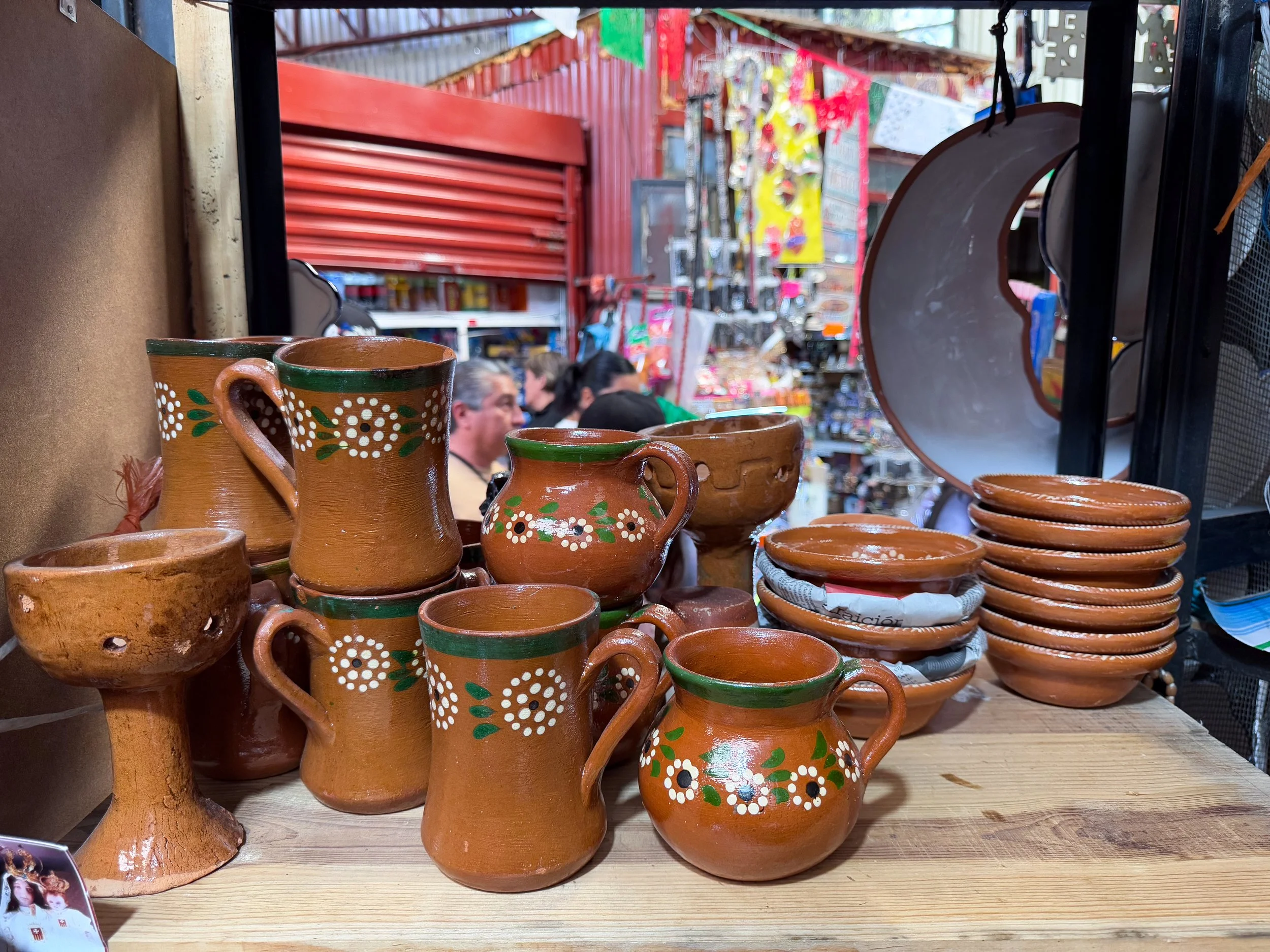
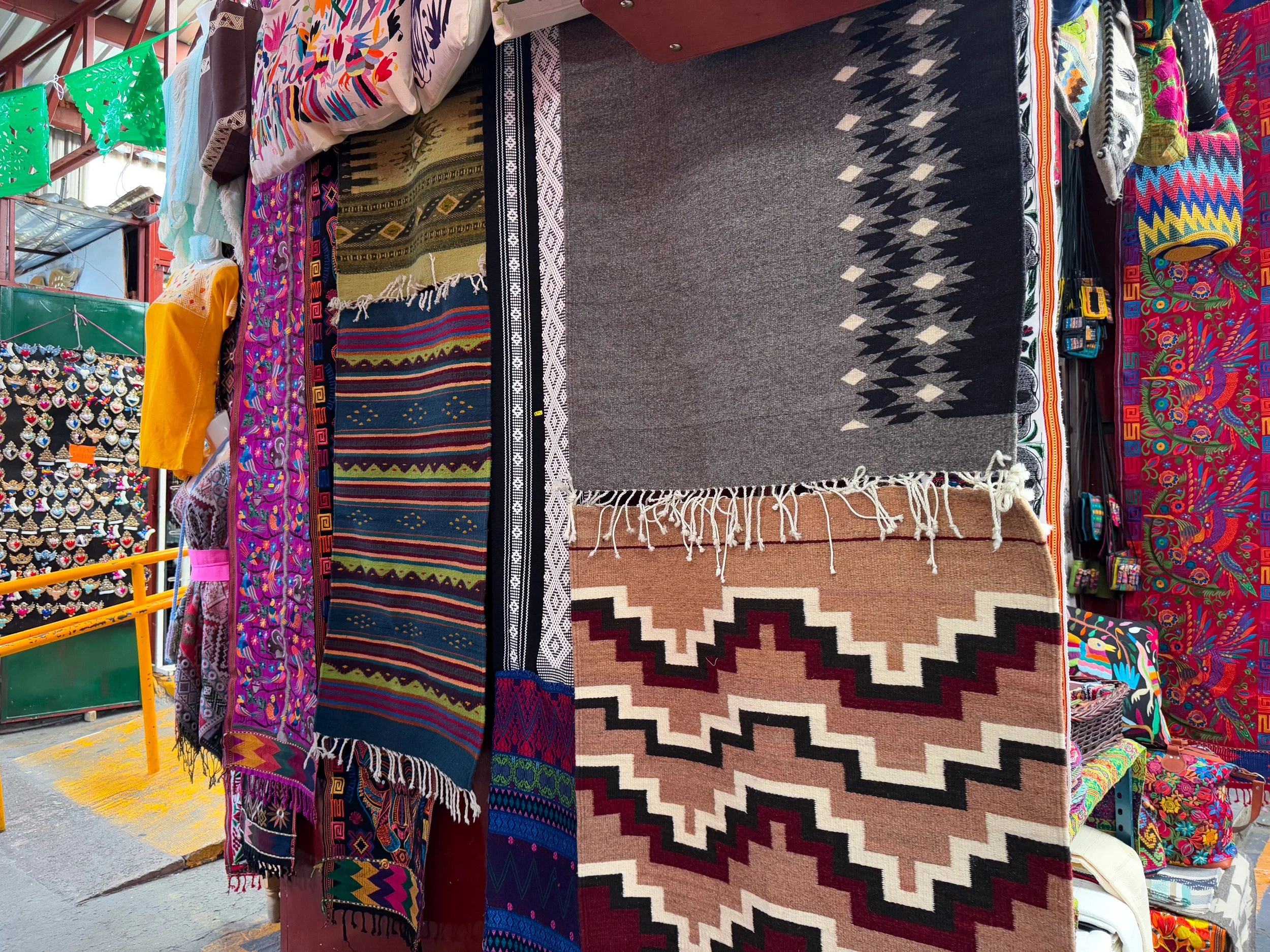
Mercado de Artesanías. An artisanal market attached to Ignacio Ramirez with locally made leather goods, textiles, pottery and jewelry. Vendors sell everything from cowboy boots and hats, leather shoes and belts, silver and beaded jewelry, woven rugs and blankets, hand embroidered pillows and tortilla holders and traditional clay pottery like cafe de olla mugs and cazuelas.
Calle Lucas Balderas. A covered street extending from the Mercado de Artesanías with dozens of silver and craft vendors selling jewelry, sculptures, tableware, paintings and textiles. Like with all markets, prices are negotiable, especially if paying in cash. We bought a minimal silver bangle and ring for less than 40 USD.
Fabrica La Aurora. A former textile factory converted into a high end artisan market and showroom with furniture vendors, art galleries, home good stores, antiques and restaurants.
Places to Eat & Drink
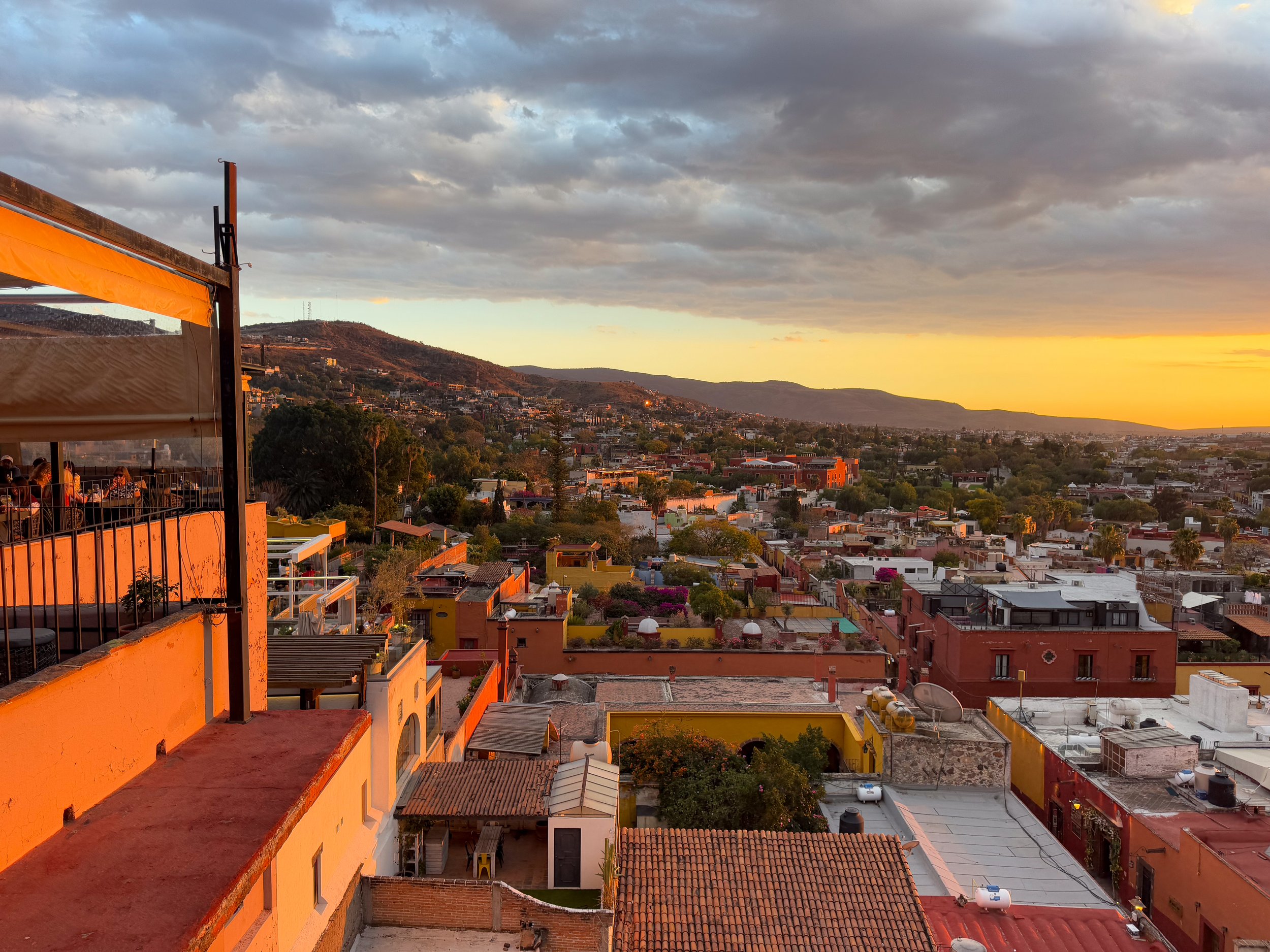
The Rooftop at Selina. A rooftop restaurant and bar with sunset views overlooking the warmly painted buildings and landscape stretching beyond San Miguel. We sipped on cocktails at the bar while the sun set and murmurations of migratory birds flew across the sky.
Don Taco Tequila. A vegan taqueria with a wide range of vegan meat, mushroom and veggie tacos prepared on house made tortilla and paired with homemade salsas ranging in flavor and spiciness. Their bar menu boasts a short list of cocktails and a wider range of sipping tequilas and mezcals. Try the tacos al Pastor, Don Chicharo, Chicharrito and Bigotes for an array of savory flavors.
San Telmo Gastro Pub. A restaurant and bar with a classic yet eclectic interior and stage with nightly singers. We stopped in for a glass of wine while listening to the musicians perform.
Panio Bakery. A Mexican and French style bakery with conchas, croissants, donuts, baguettes and honey bread.
Cerveceria Allende. A craft brewery and tap room with house brewed beers. We tried the Golden Ale, an easy drinking and flavorful classic beer as well as the Brown Ale, a thicker and slightly sweet beer.
La Michoacana del Portón. An ice cream and paleta shop with dozens of water and cream based flavors. We stopped in while walking across town, ordering guava and horchata paletas.

Places to Shop
Other than the artisan markets, the central neighborhood has numerous shops and boutiques with locally made goods. We visited multiple shops and have a few favorites.
Artesanías Alcatráz Loka. A boutique with traditional and contemporary style leather goods including boots, jackets, bags and belts. I found a pair of cowboy boots made from black leather and white leather stars. Unfortunately it wasn’t available in my size.
Casilda Mut. A small boutique with cowboy hats, leather jackets and silver accessories. I found a cropped and studded leather jacket that fit perfectly but the price was well out of reach.
Maison Manhes. A tiny shop with locally made items and art including natural wool ponchos, colorful woven baskets and bags and hand painted ceramic dishes.
Where to Stay
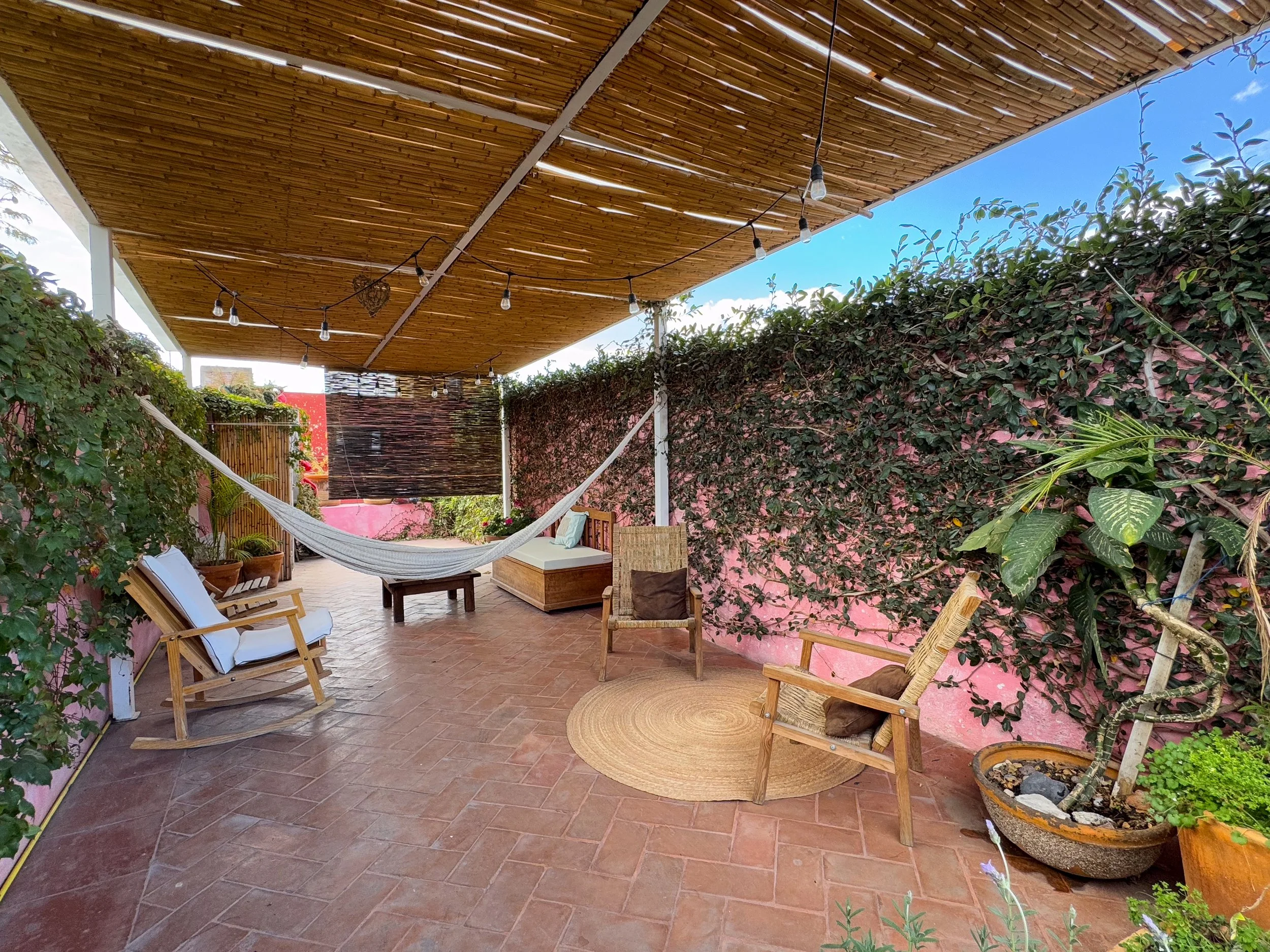
Casa Lool Beh. A beautiful guest house with private rooms and shared commons spaces like a cozy rooftop terrace, kitchen and living room lounge. It’s centrally located, one street away from Jardín Allende. At the same time, it’s very hidden. We entered through, La Cabra Iluminada, a ground floor cafe with a lush courtyard and took the stairs to reach our room.
Location Specifics
Safety. The city is extremely safe both day and night with minimal security concerns or recent issues.
Senior Travel. San Miguel de Allende is a popular destination for senior citizens and retired expats due to its slower pace, walkable streets, temperate climate and affordable costs of living compared to the United States.
Costs. Though costs of living are much less than in the US, the city is a more expensive destination than other cities in Mexico.
Cash vs Card. Most businesses accept cash or card when paying however there is often a cash discount.
Drinking Water. Tap water is not safe for consumption. It’s best to drink filtered or bottled water.
Getting Here and Around
Getting Here by Bus. We took an ETN Busround trip from Mexico City. Ticket prices are significantly costlier than other bus companies like ADO. The bus however is comfortable and reliable with assigned seats, on board restrooms and charging ports for devices.
Getting Around on Foot. The city is best explored and admired on foot. Its historic neighborhoods are easily walkable.
Getting Around by Taxi or Uber. Both taxis and Ubers are readily available and affordable methods for getting around the city, with prices costing 50-100 pesos in town.
Elsewhere in Mexico
From colorful colonial streets to Caribbean beaches, Indigenous traditions and world famous culinary destinations, explore more of Mexico beyond San Miguel de Allende through these travel guides:
Caribbean Mexico
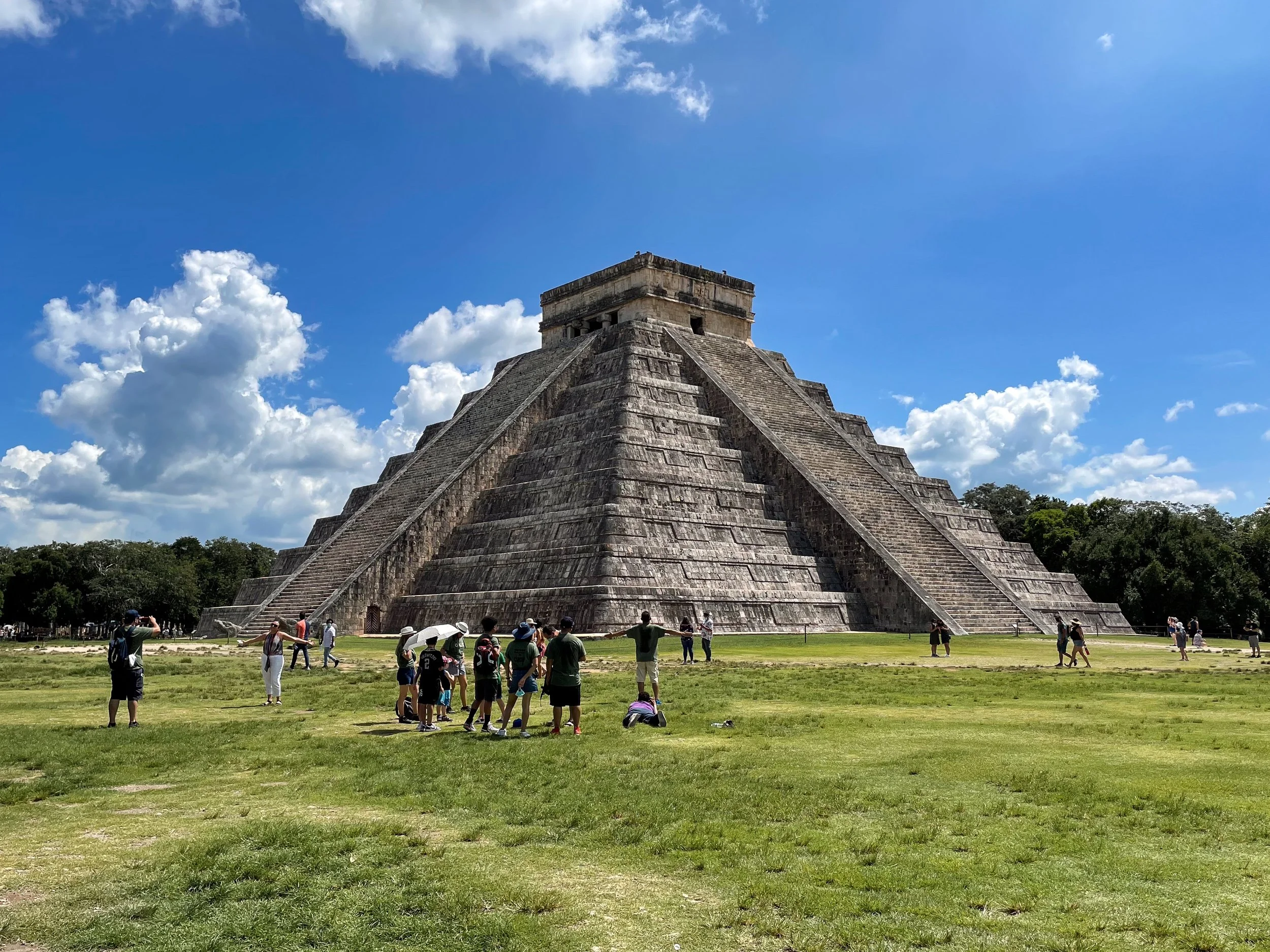
Riviera Maya Travel Guide: Beaches, Cenotes & Mayan Ruins. Discover the Riviera Maya's white sand beaches, turquoise waters, hidden cenotes, ancient Mayan ruins and vibrant culture along Mexico's Caribbean coast.
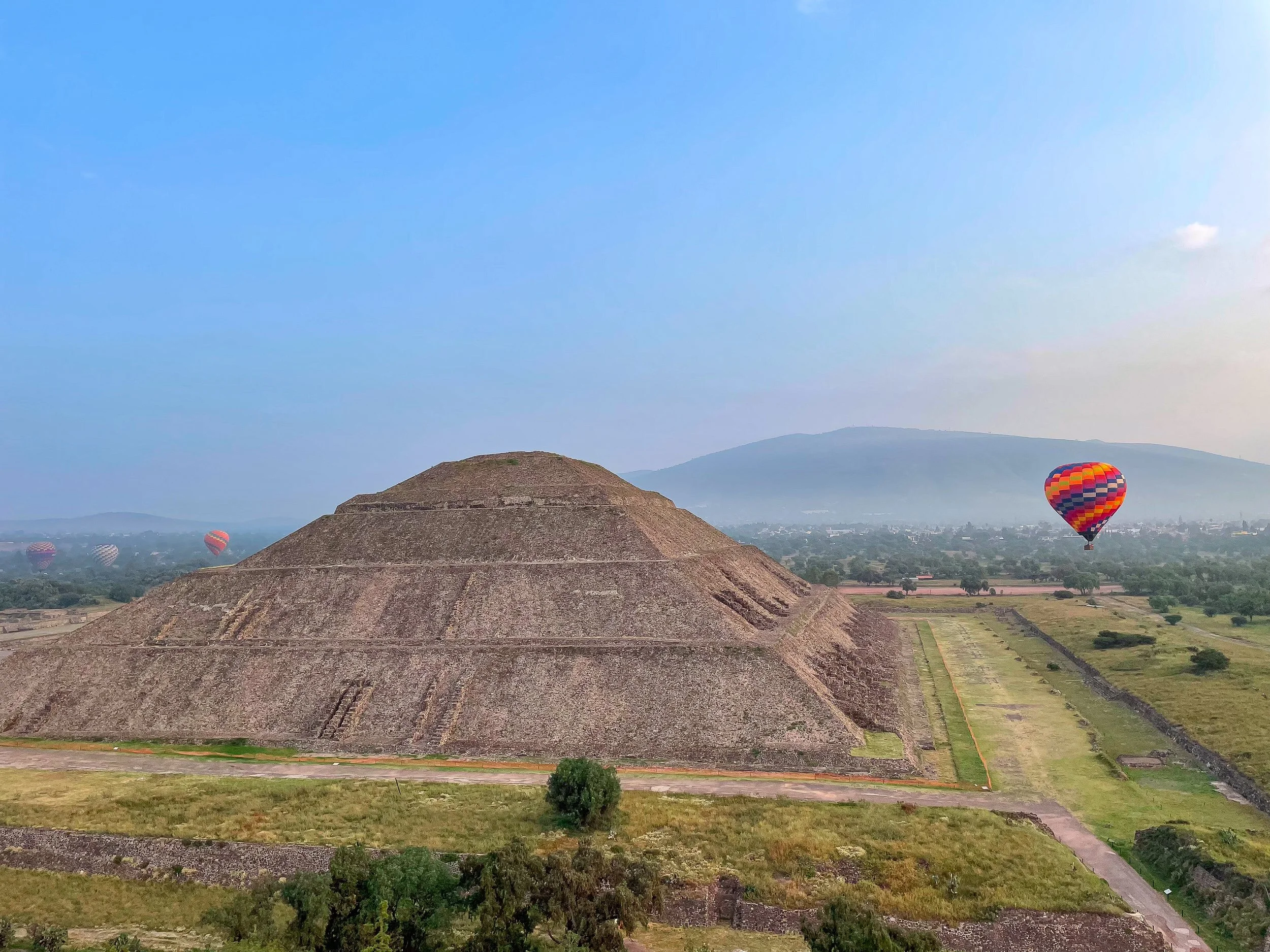
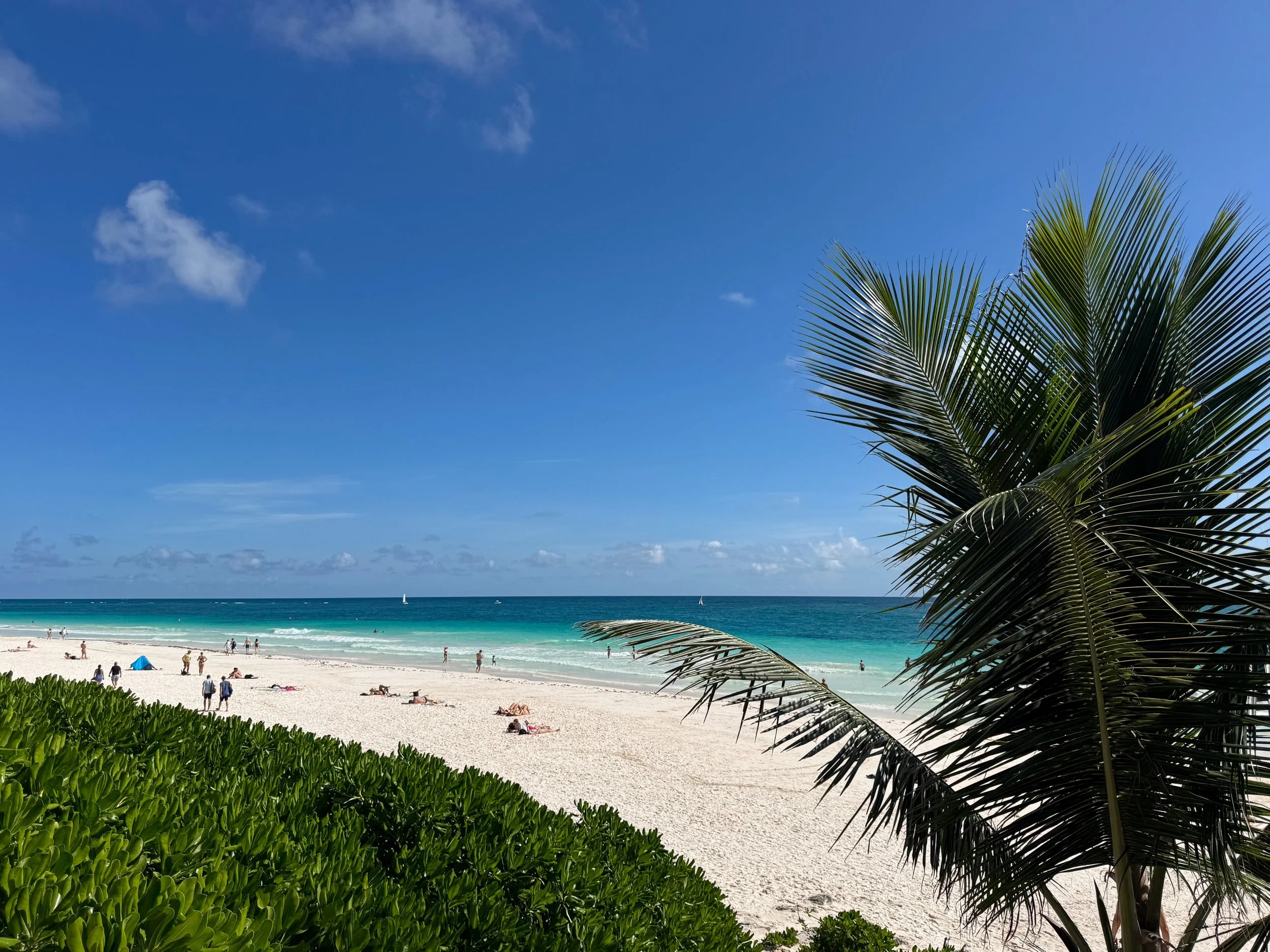
Tulum Travel Guide: Cenotes, Beaches & Mayan Ruins. Explore Tulum's cliffside Mayan ruins, white sand beaches, hidden cenotes and jungle landscapes along Mexico's turquoise Caribbean coast.
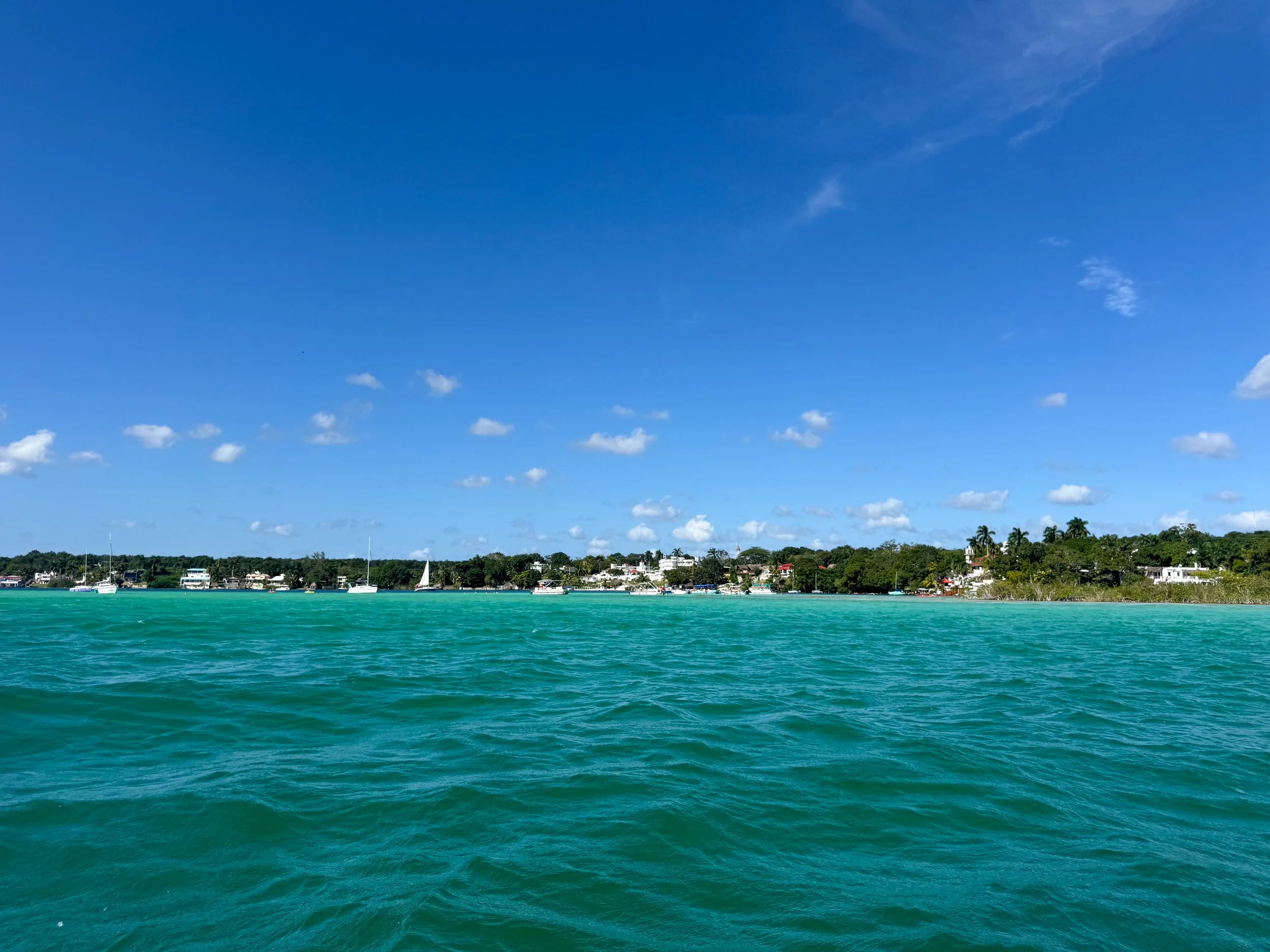
Bacalar Travel Guide: The Lagoon of Seven Colors & Hidden Gems. Discover Bacalar's Lagoon of Seven Colors, where turquoise waters, shallow sandbars and ancient stromatolites create one of Mexico's most remarkable landscapes.
Central Mexico
Mexico City Travel Guide: Neighborhoods, Food & Local Culture. Wander through Mexico City's vibrant neighborhoods, local markets and cultural landmarks where centuries of history, cuisine and modern life converge.
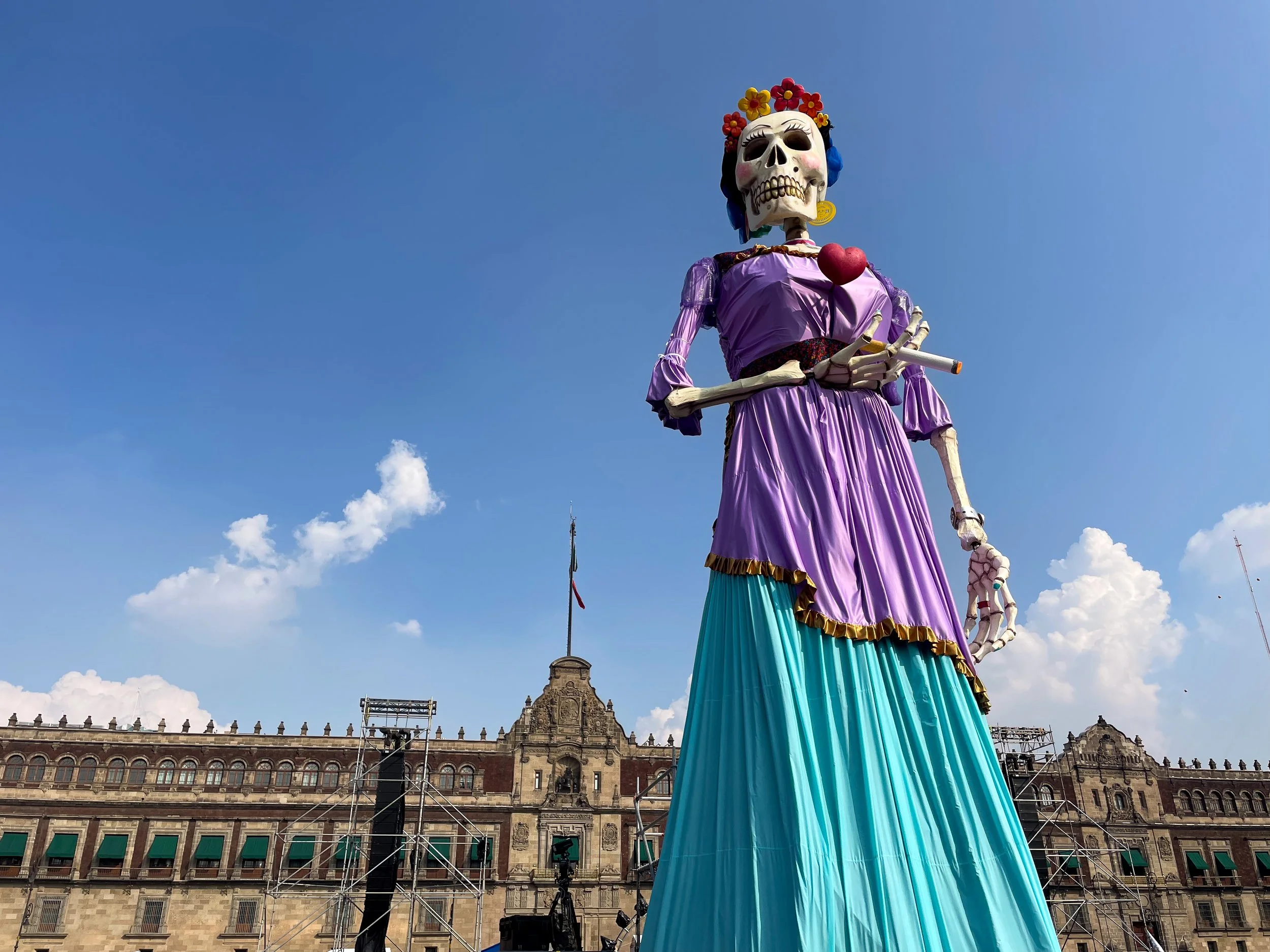
Day of the Dead in Mexico City (Día de los Muertos) Travel Guide. Experience Day of the Dead in Mexico City through cultural traditions, lively celebrations and vibrant ofrendas honoring loved ones and ancestral heritage.
Southern Mexico
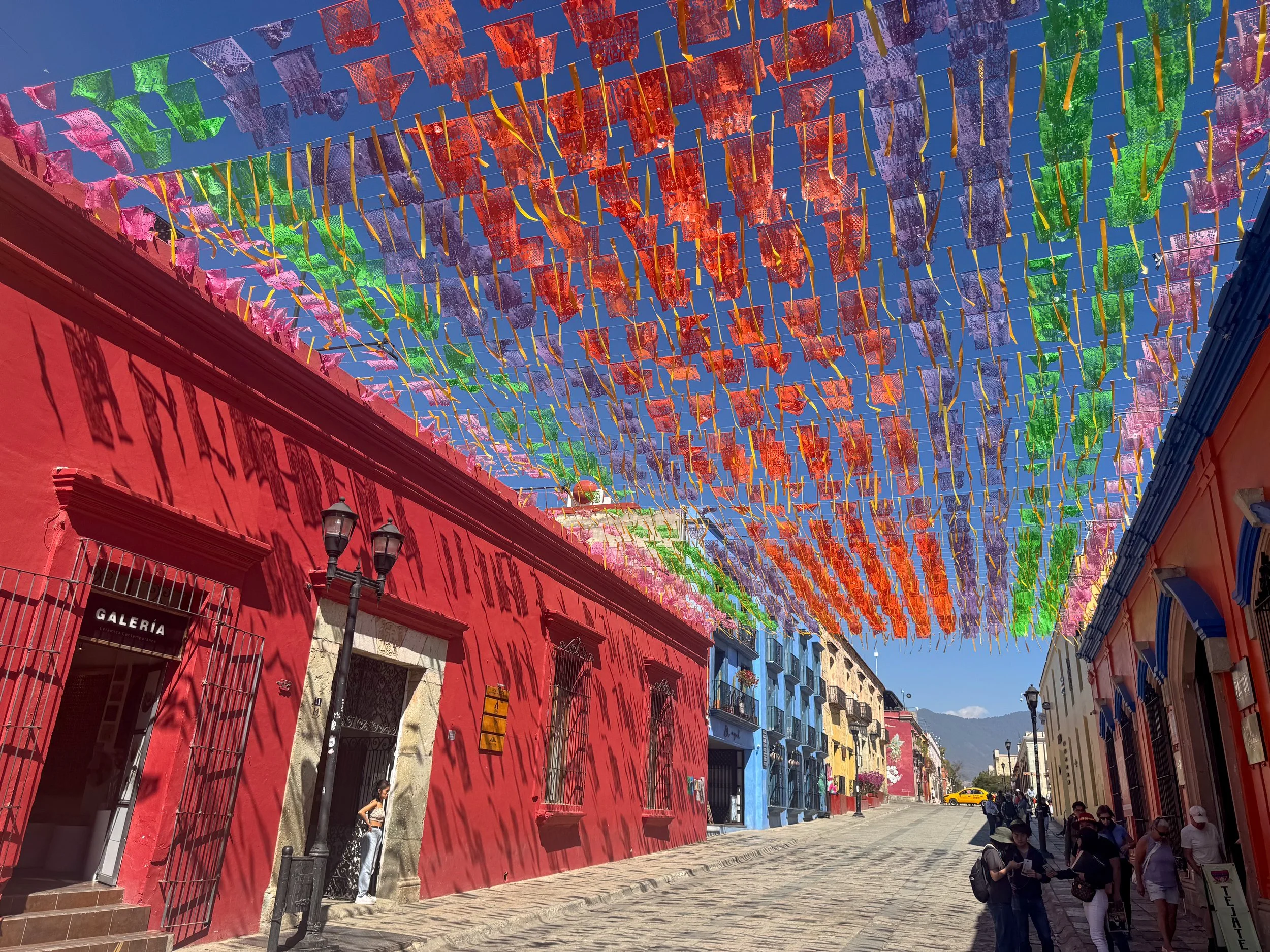
Oaxaca Travel Guide: Food, Mezcal & Cultural Experiences. Immerse yourself in Oaxaca, Mexico's cultural hub for vibrant markets, artisanal mezcal, regional cuisine, scenic landscapes and centuries of tradition.
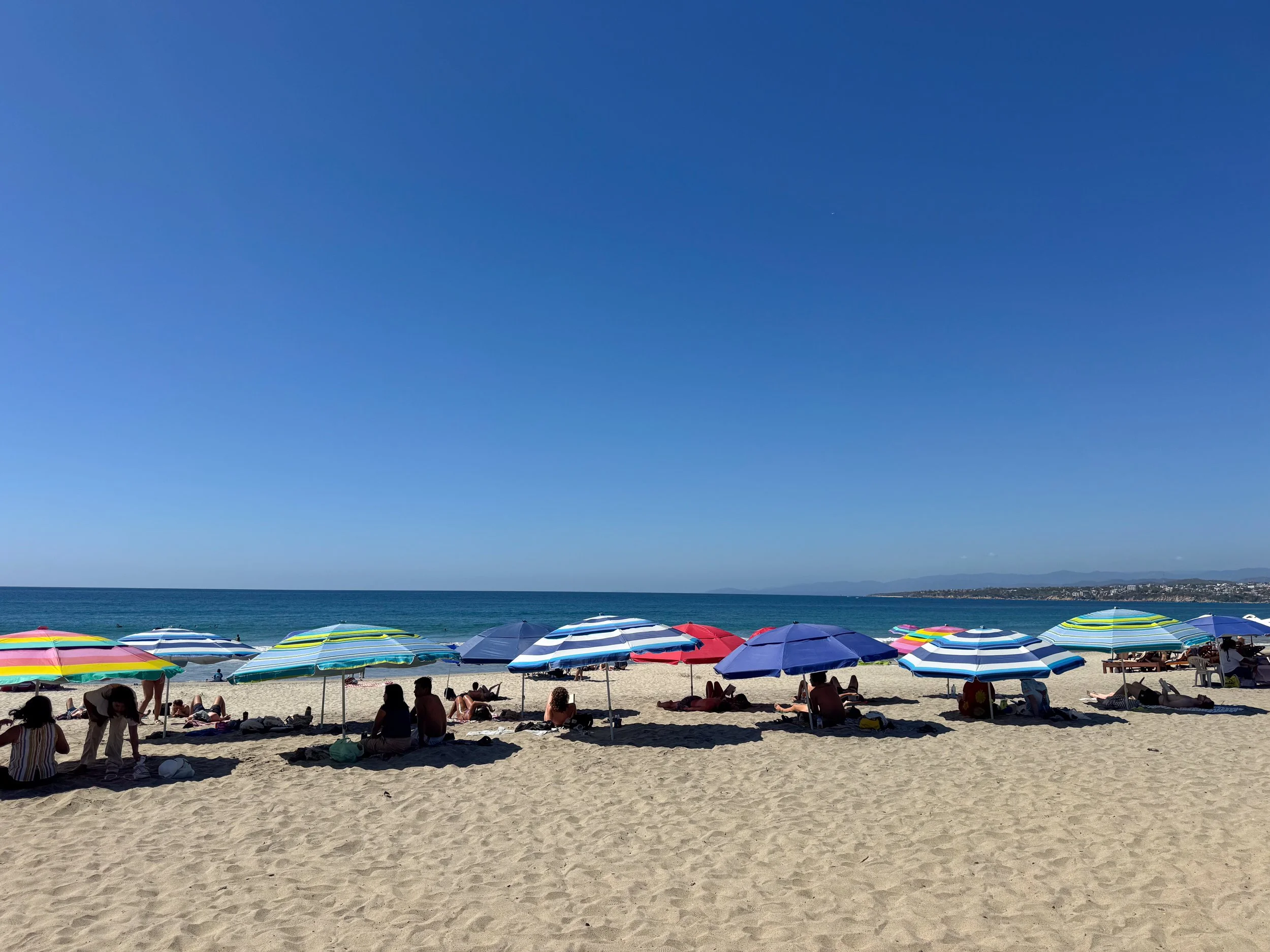
Puerto Escondido Travel Guide: Beaches, Surfing & Coastal Culture. Escape to Puerto Escondido, a laid back surf town on Oaxaca's Pacific coast where palm lined beaches and sandy streets embody coastal culture.
For Next Time…
We only spent a couple of days in San Miguel de Allende but fell in love with this charming city, its desert landscapes and Vaquero style boutiques. We’re sure to return and have a list of things to do, see and buy when we do.
Vaquero Boutiques. We window shopped at several boutiques around San Miguel’s center. We tried on boots, jackets, ponchos and cowboy hats and have a few items in mind to purchase when we return.
Vineyard Tours. The countryside of San Miguel de Allende is one of Mexico’s largest wine producing regions with vineyards and winemakers. While here we were able to sample a couple wines.
Hacienda San Miguel. A vineyard outside of the city with bottles labeled in Mexican banderas. We tried their mid bodied red blend made from Shiraz, Tempranillo and Cabernet.
Casa Madero. Though not near San Miguel, it’s the oldest vineyard in the Americas, dating back to 1597. We tried their Merlot, a full bodied and flavorful red wine.
Horseback Riding. Various companies offer horseback riding tours around the city and countryside ranging from half day to overnight. Short on time, we weren’t able to gallop across the desert landscape into the sunset but are keeping a couple of well reviewed providers in mind for next time, San Miguel Parque de Aventuras and Coyote Canyon Tour.
Plaza de Toros San Miguel de Allende. A coliseum in the historic center used for rodeos, bullfighting and Mexican opera. Though we don’t agree with bullfighting, seeing a rodeo or opera would be a special experience.
Cañada de la Virgen. A nature preserve and archeological site with Otomi pyramids and ruins located about 20 minutes by car from the city center.