

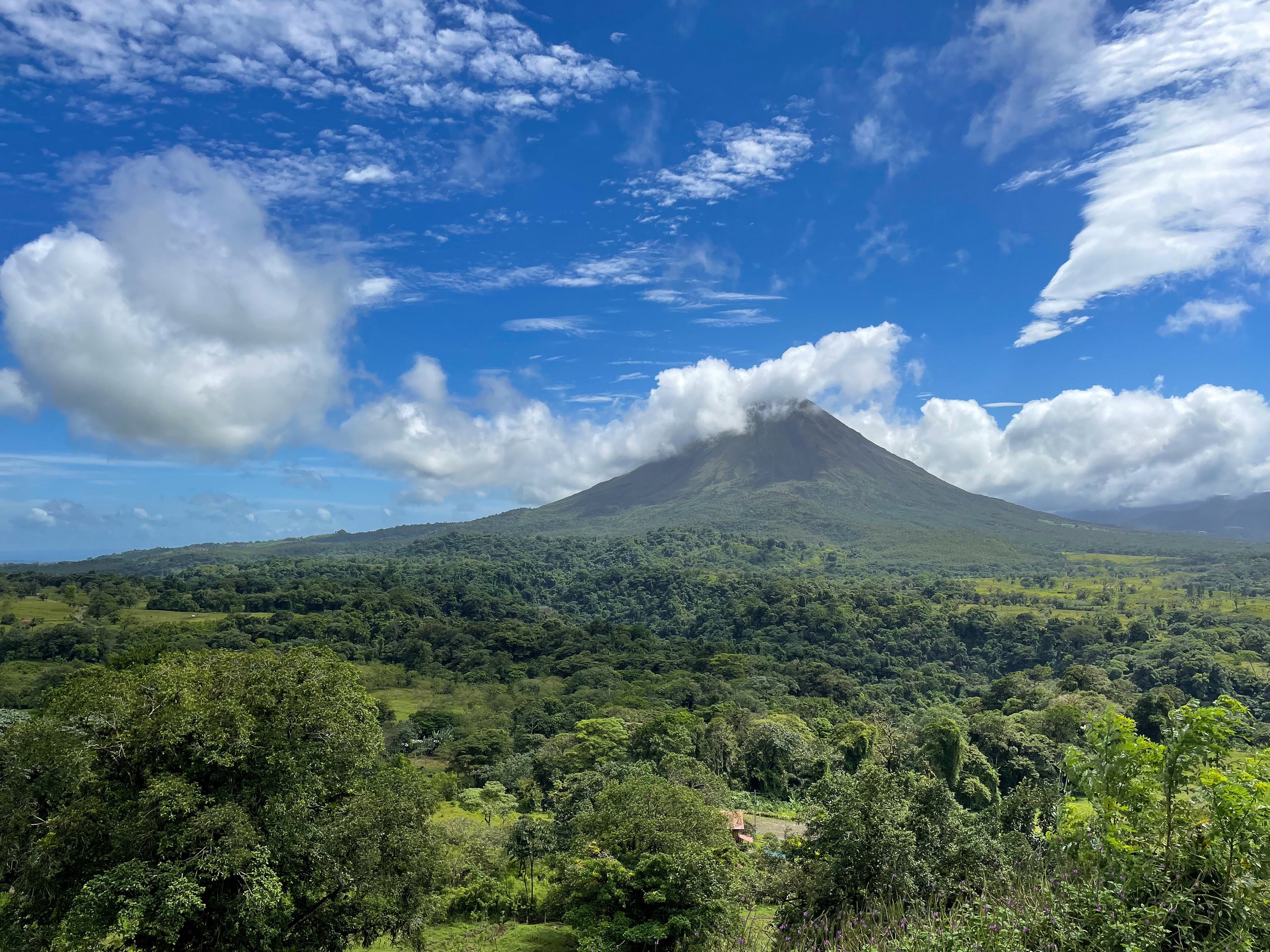
Costa Rica Road Trip Guide: Arenal Volcano, Manuel Antonio & Wildlife Adventures
Road trip across Costa Rica through lush rainforests, active volcanoes, wildlife reserves and tropical beaches from Arenal to Manuel Antonio.
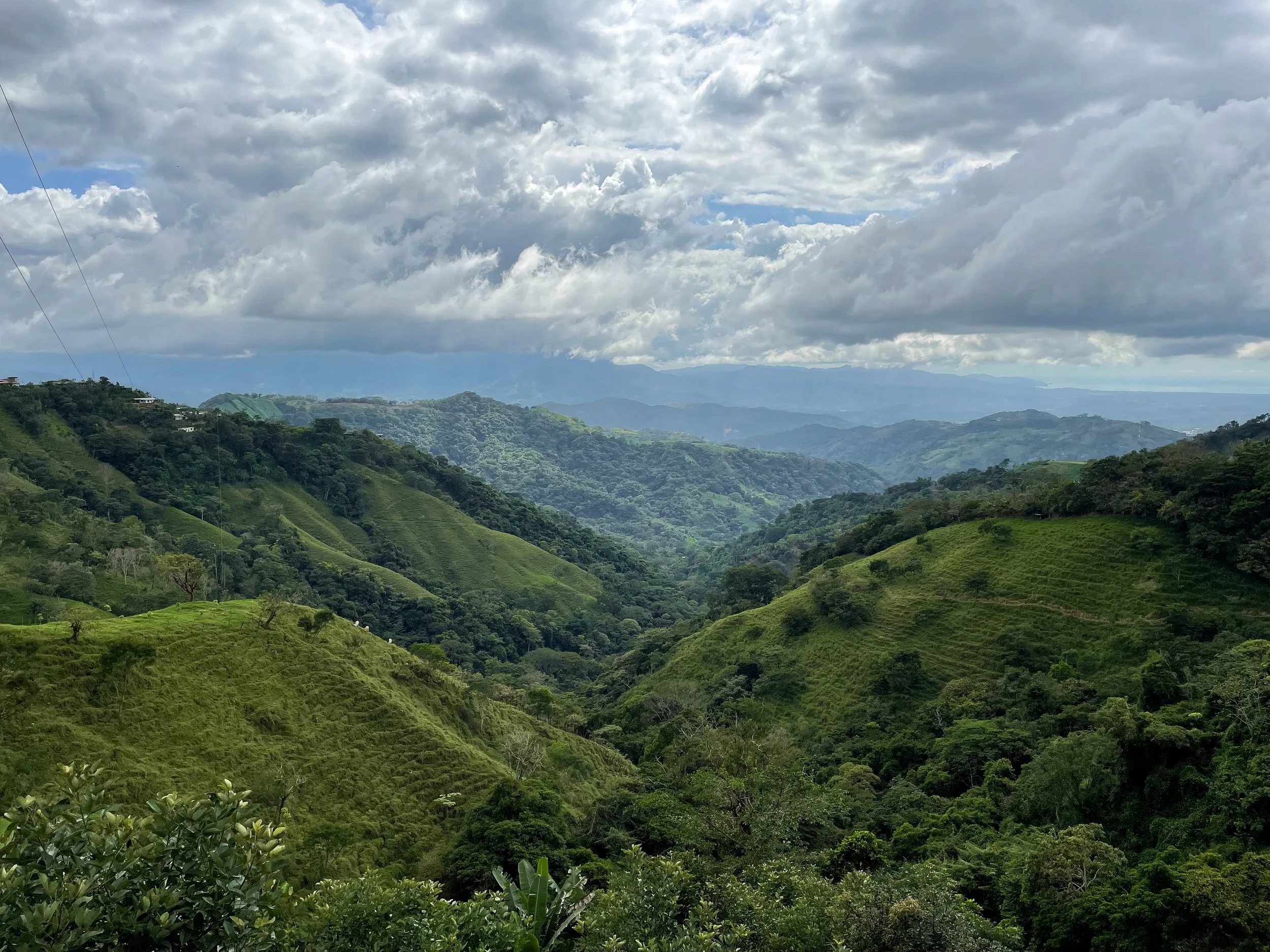
Costa Rica, Nature & Biodiversity
Costa Rica is a lush and biodiverse country in Central America known for its tropical rainforests, active volcanoes, nature reserves and exotic wildlife. We spent a week road tripping across the country, splitting our time equally between the Arenal Volcano in the mountains and Manuel Antonio Park on the Pacific coast.
San José, The Gateway to Costa Rica
San José is the capital city and gateway to Costa Rica. Located in the center of the country, it’s an easy point to begin and end any road trip from. We flew in around midnight and spent the evening at the nearby Hotel Mango before beginning our road trip the following morning. Reserve a rental car with Sixt.
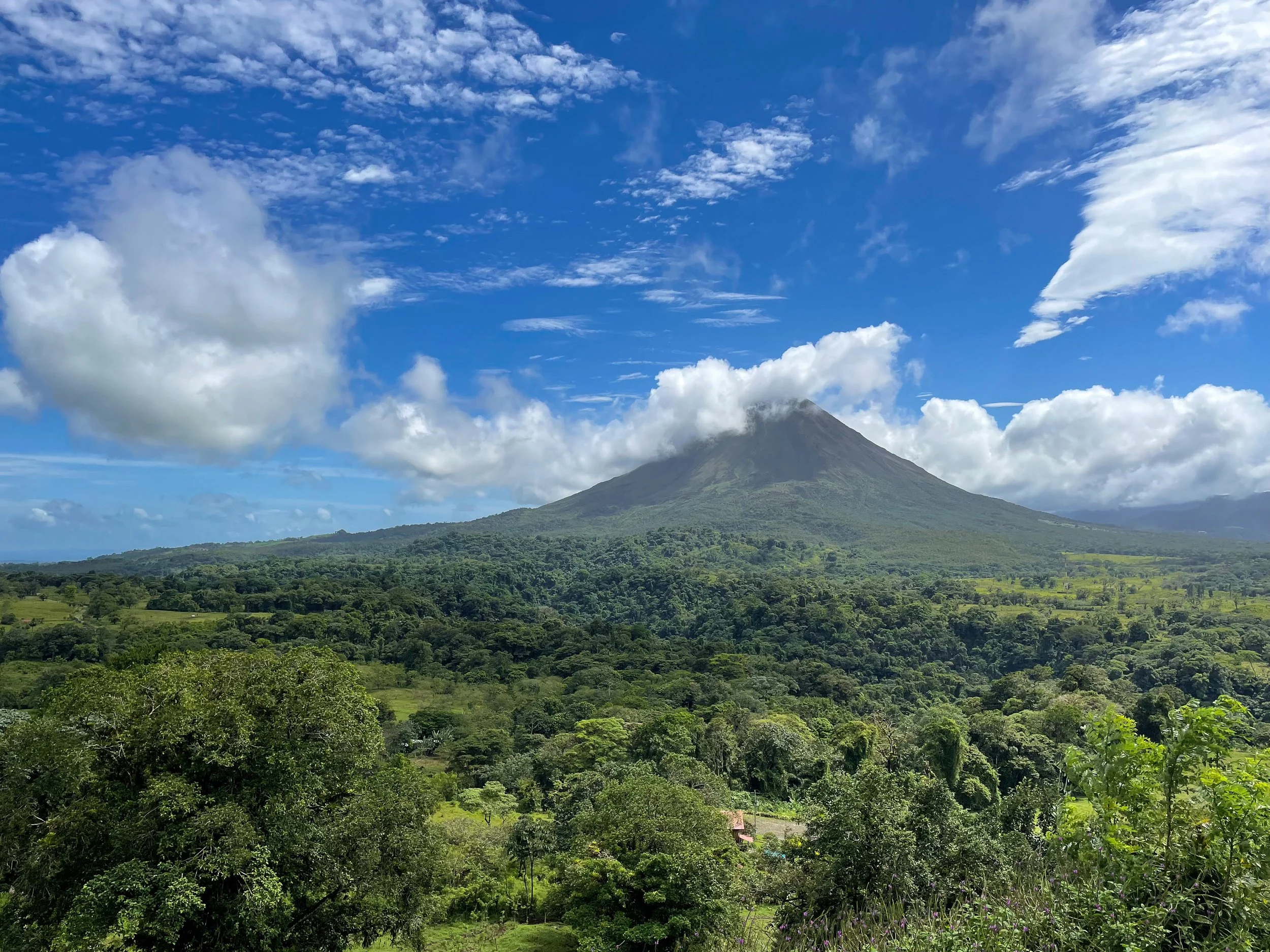
Volcán Arenal
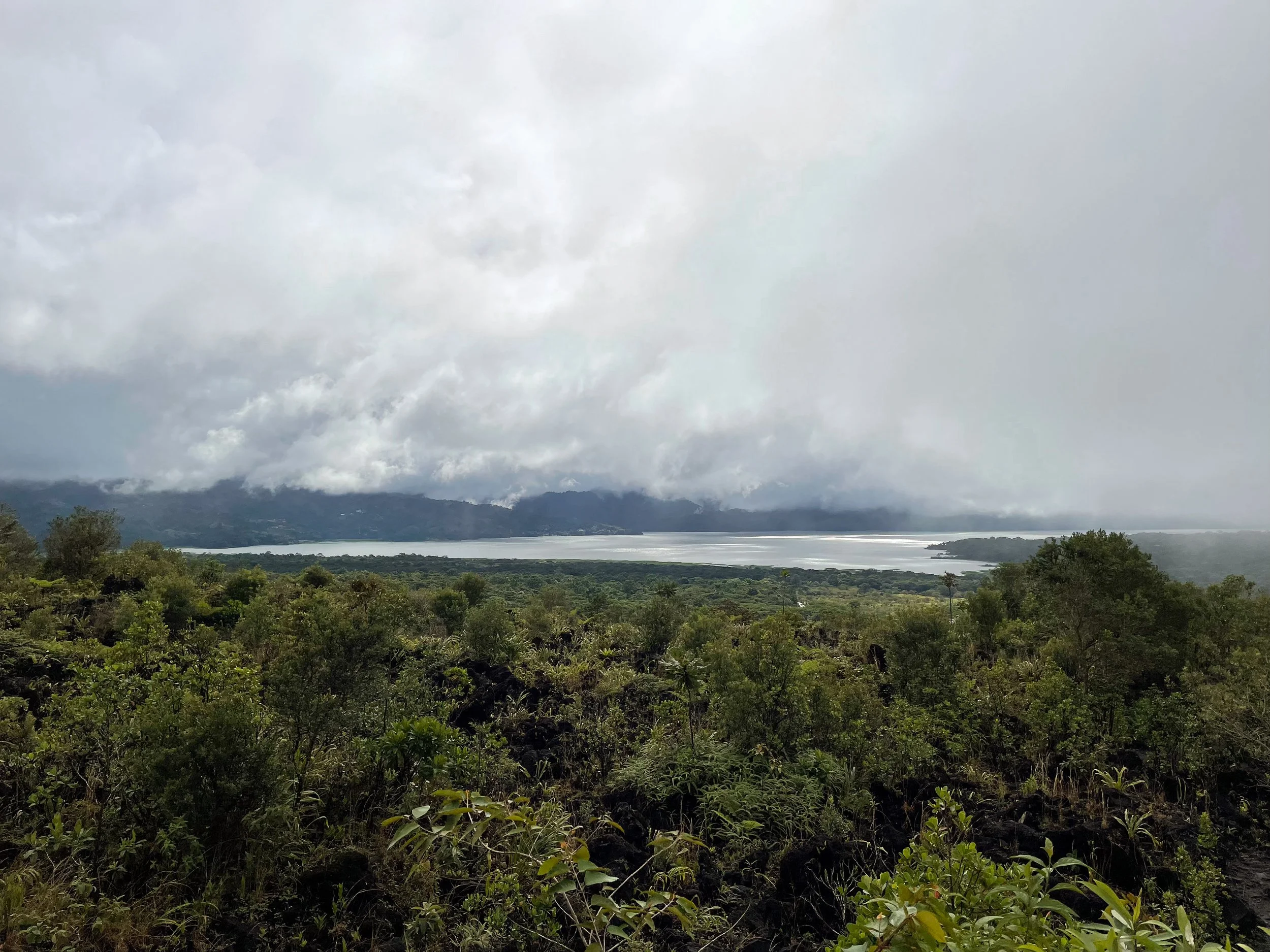
The Arenal Volcano is known for its symmetrical cone shape, hardened lava fields, hiking trails and large lake. We drove here from San José and arrived by early afternoon then hiked for about 3 hours.
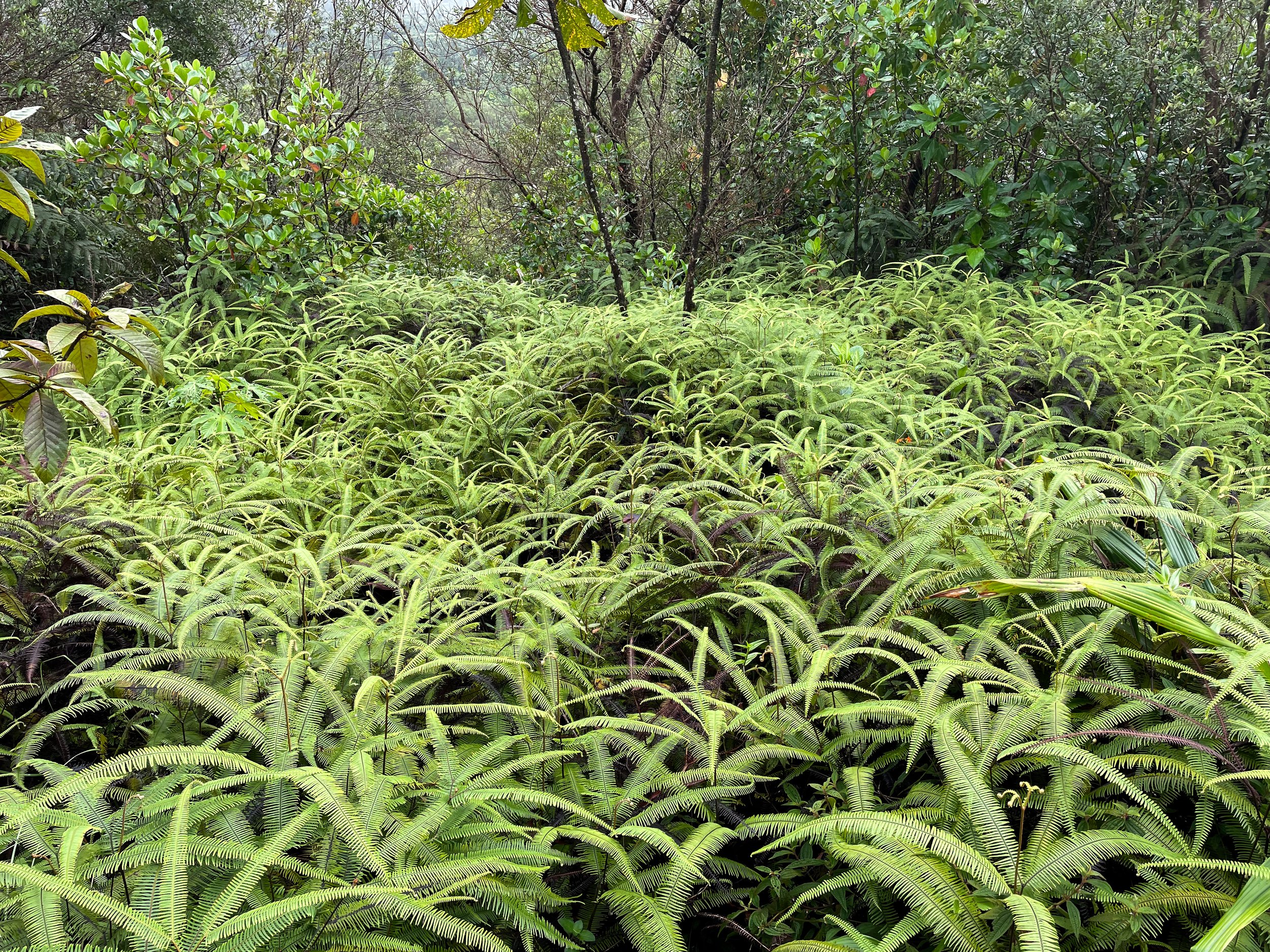
Parque Nacional Volcán Arenal
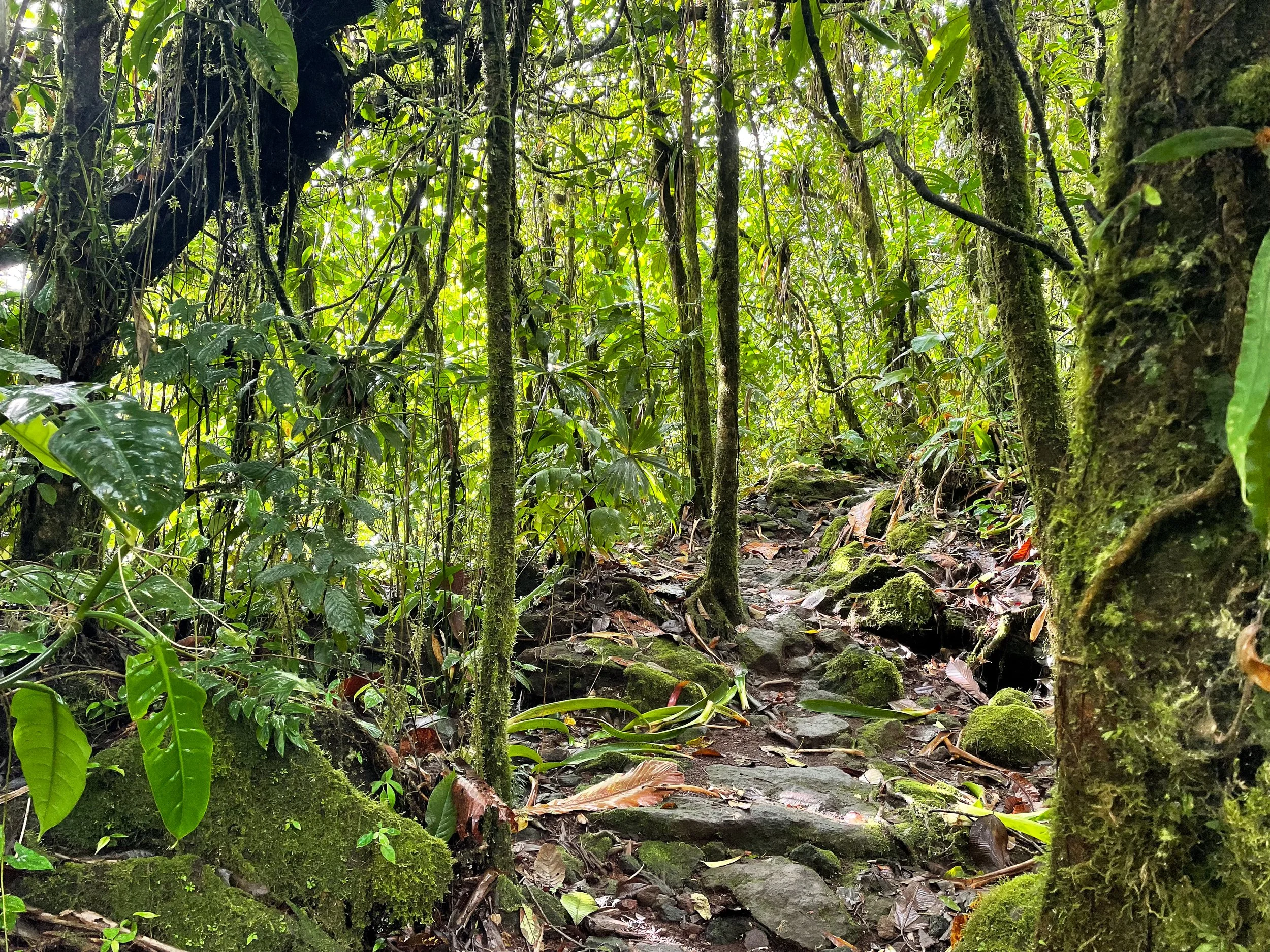
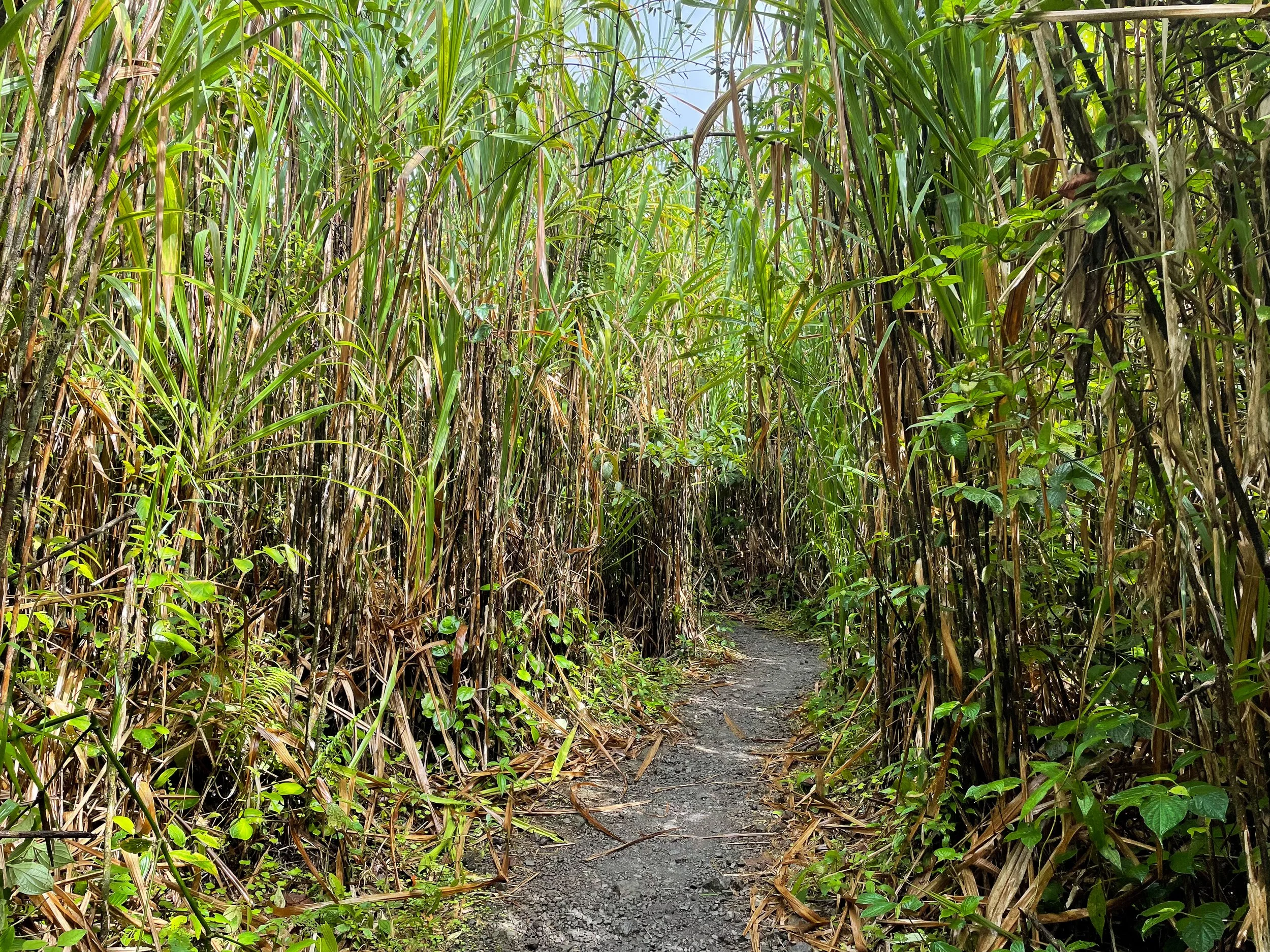
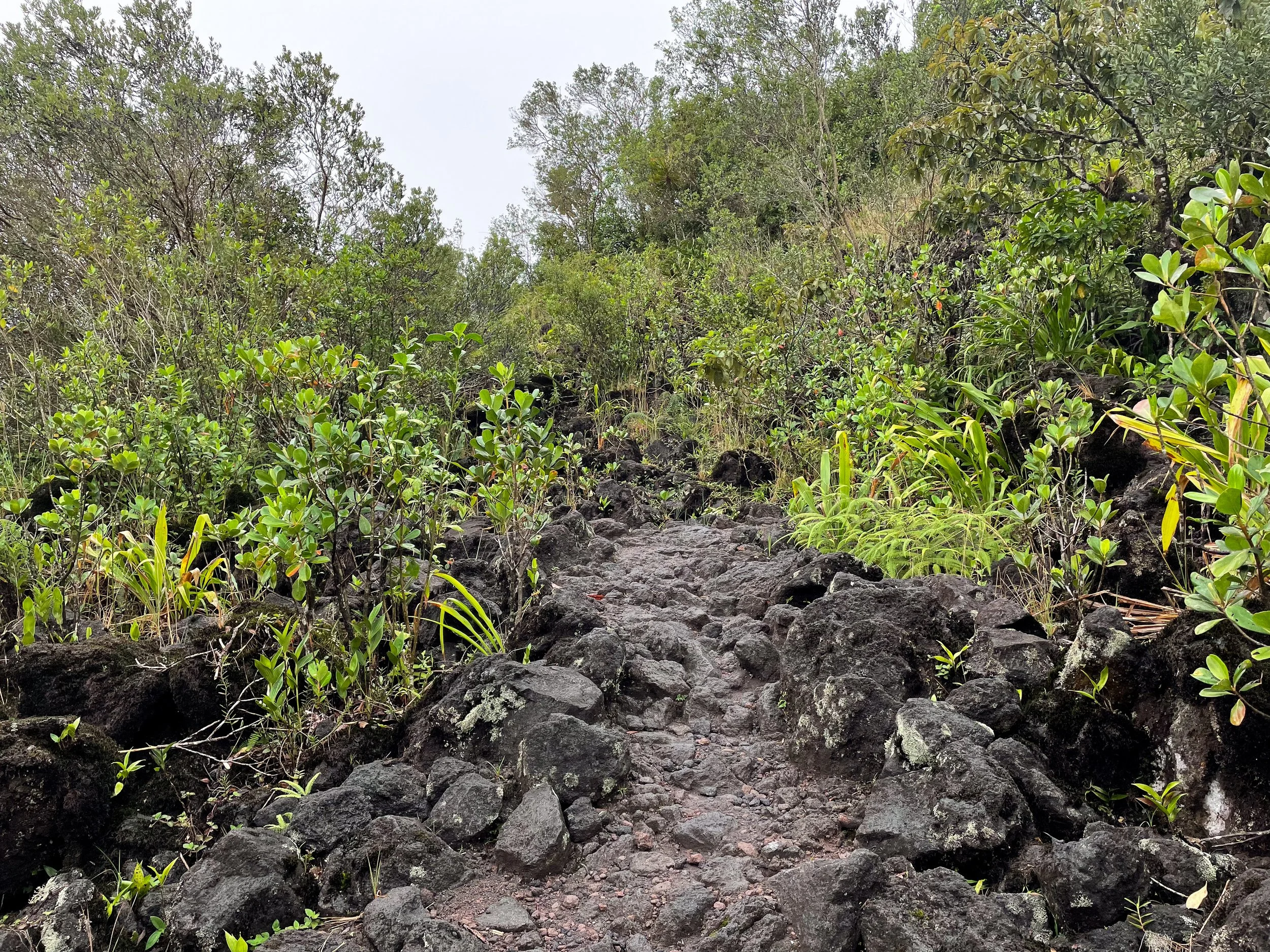
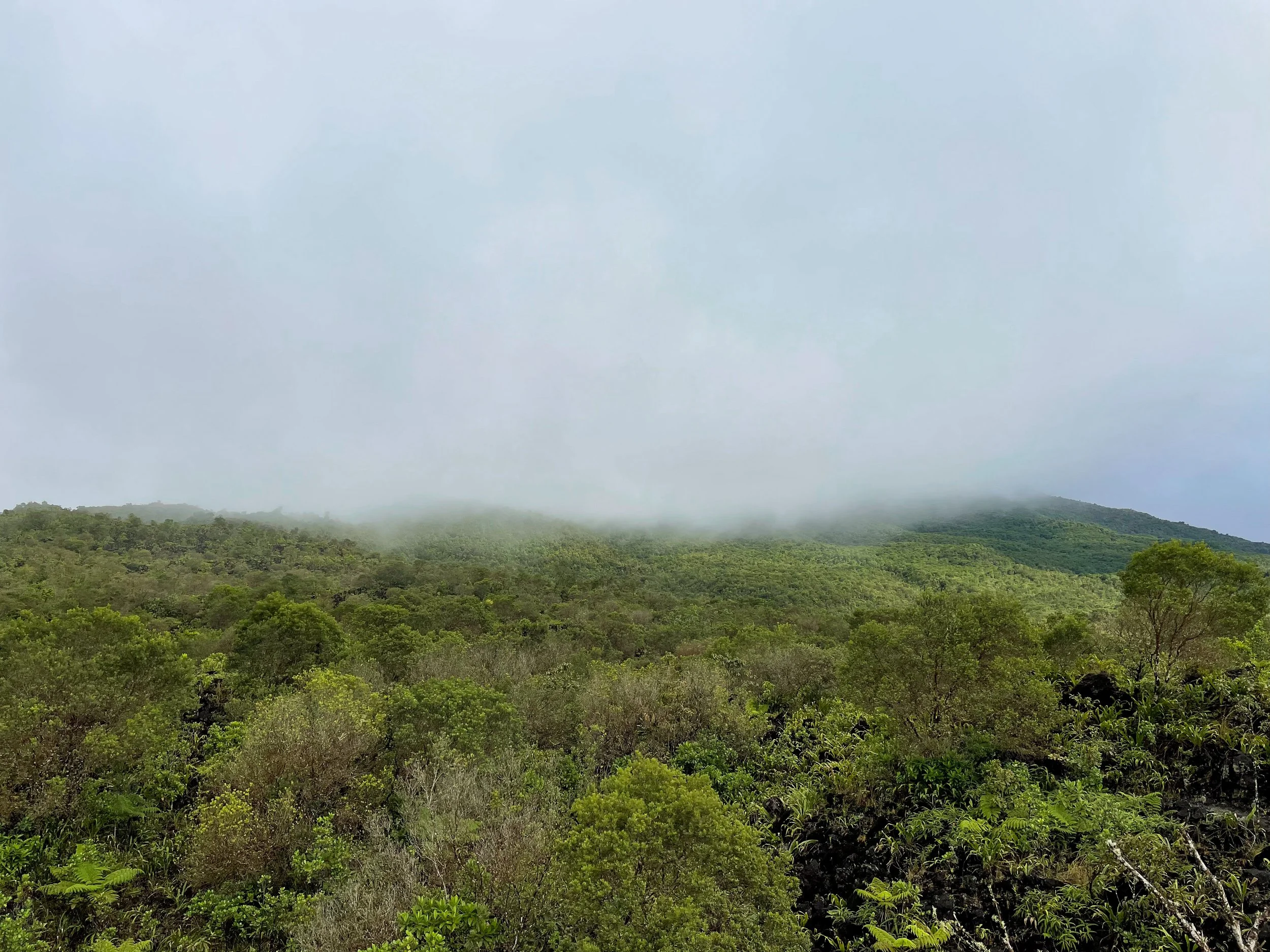
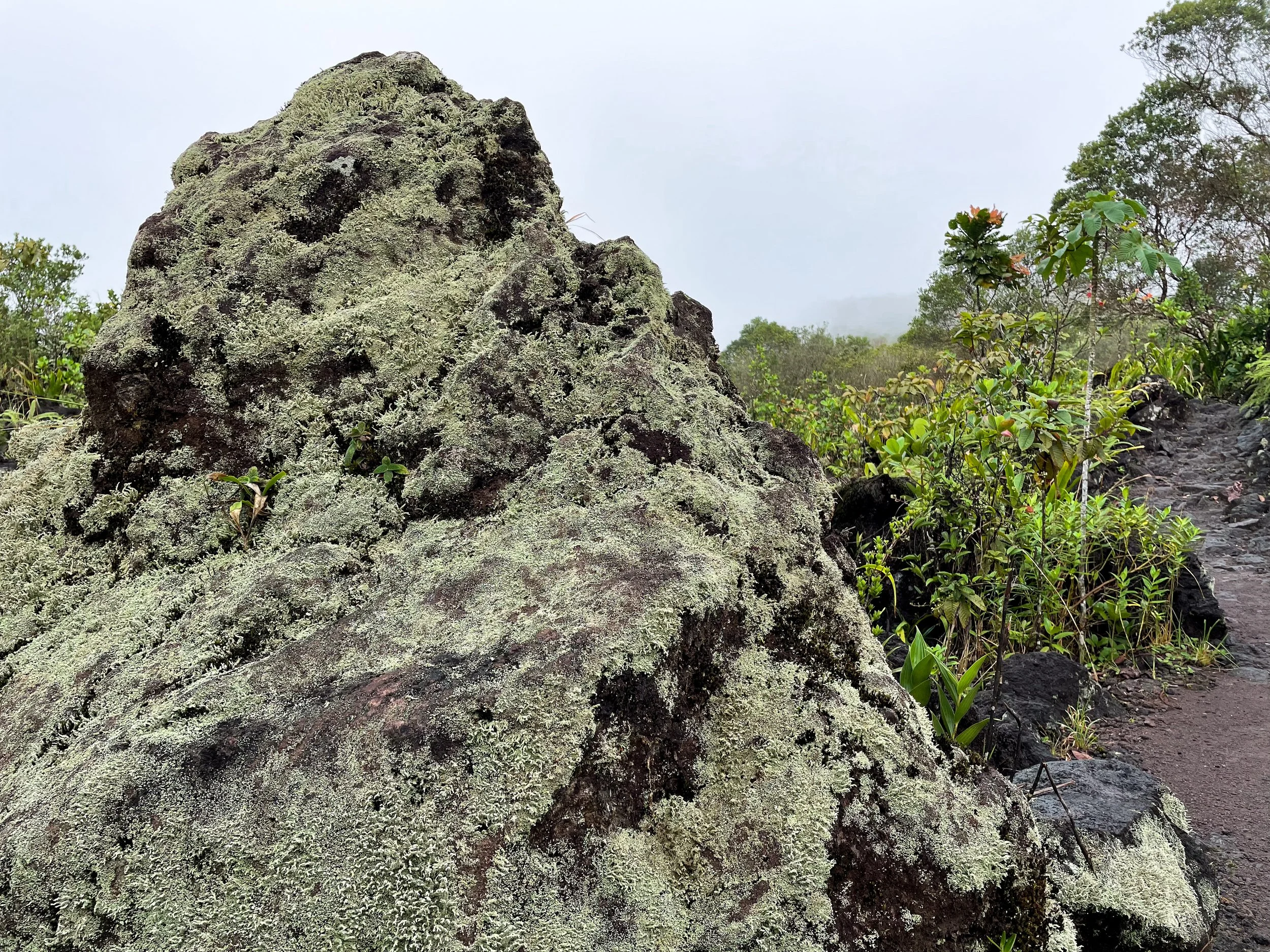
We hiked the Reserva Mirador el Silencio Loop at the Arenal 1968 Park, the site of a 1968 eruption. It connects multiple trails through lush secondary forest, hardened lava fields and dense primary forest around a lagoon. At the end of the hike is a small restaurant with snacks and beverages.
Arenal Hot Springs
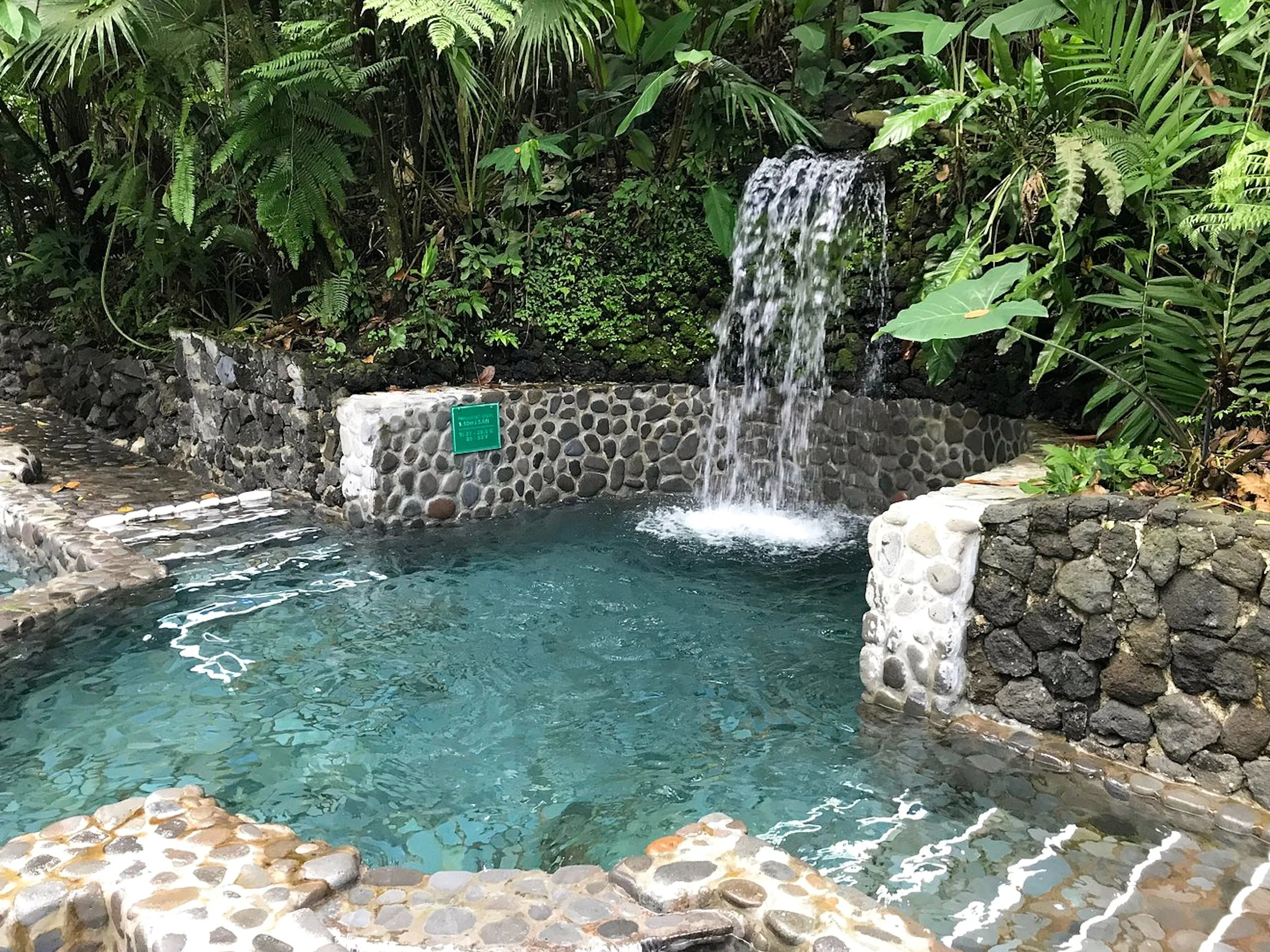
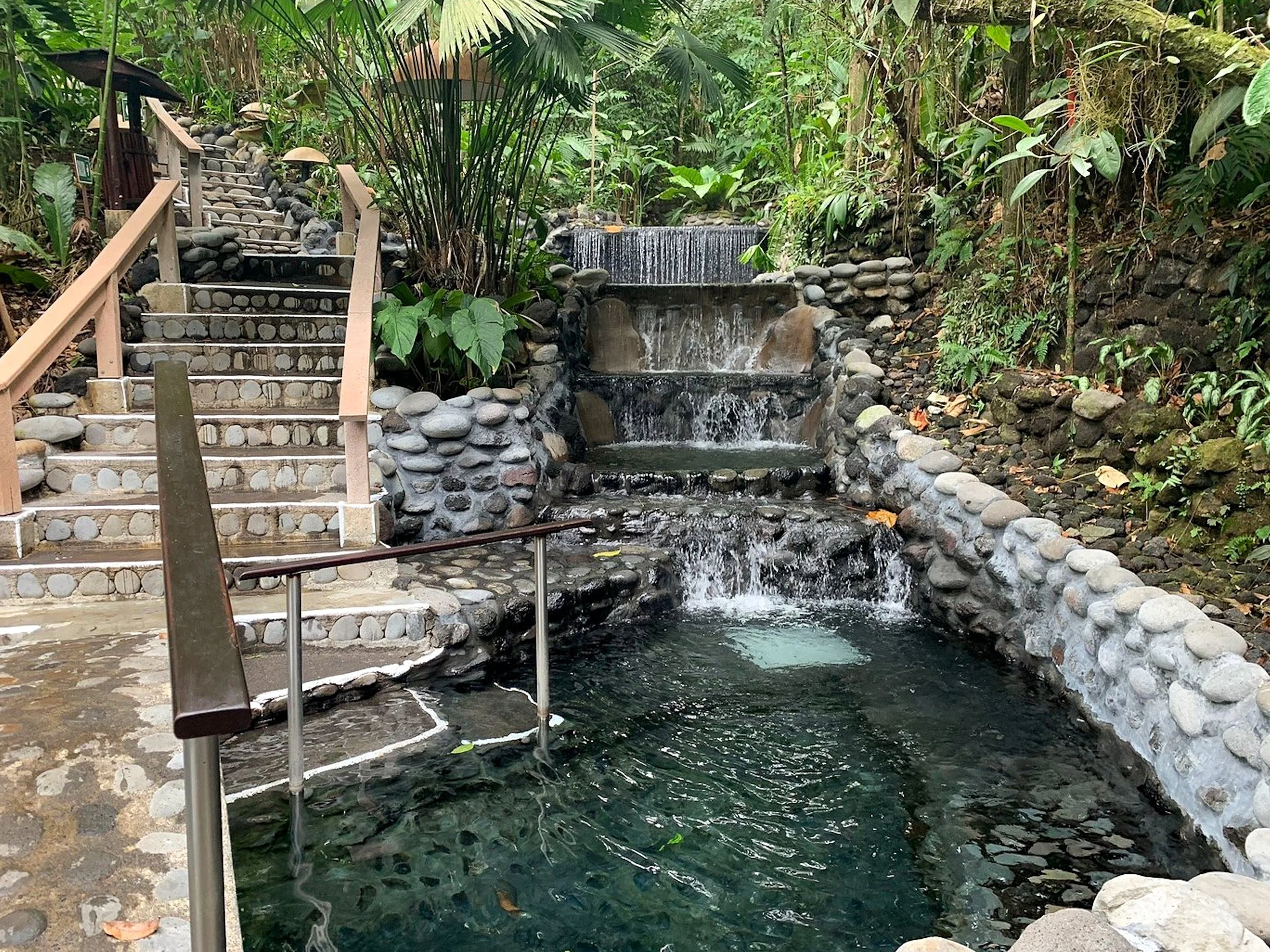
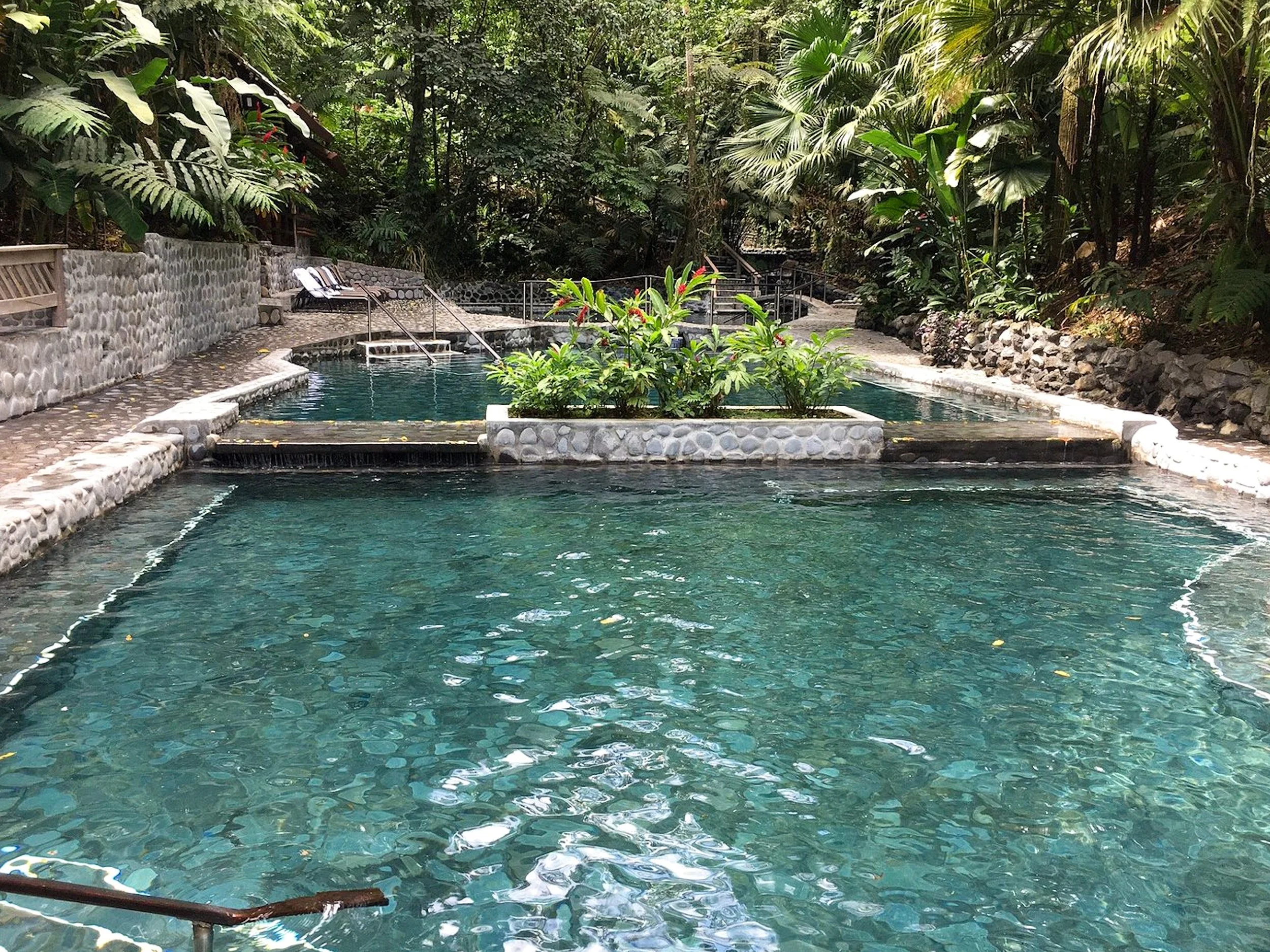
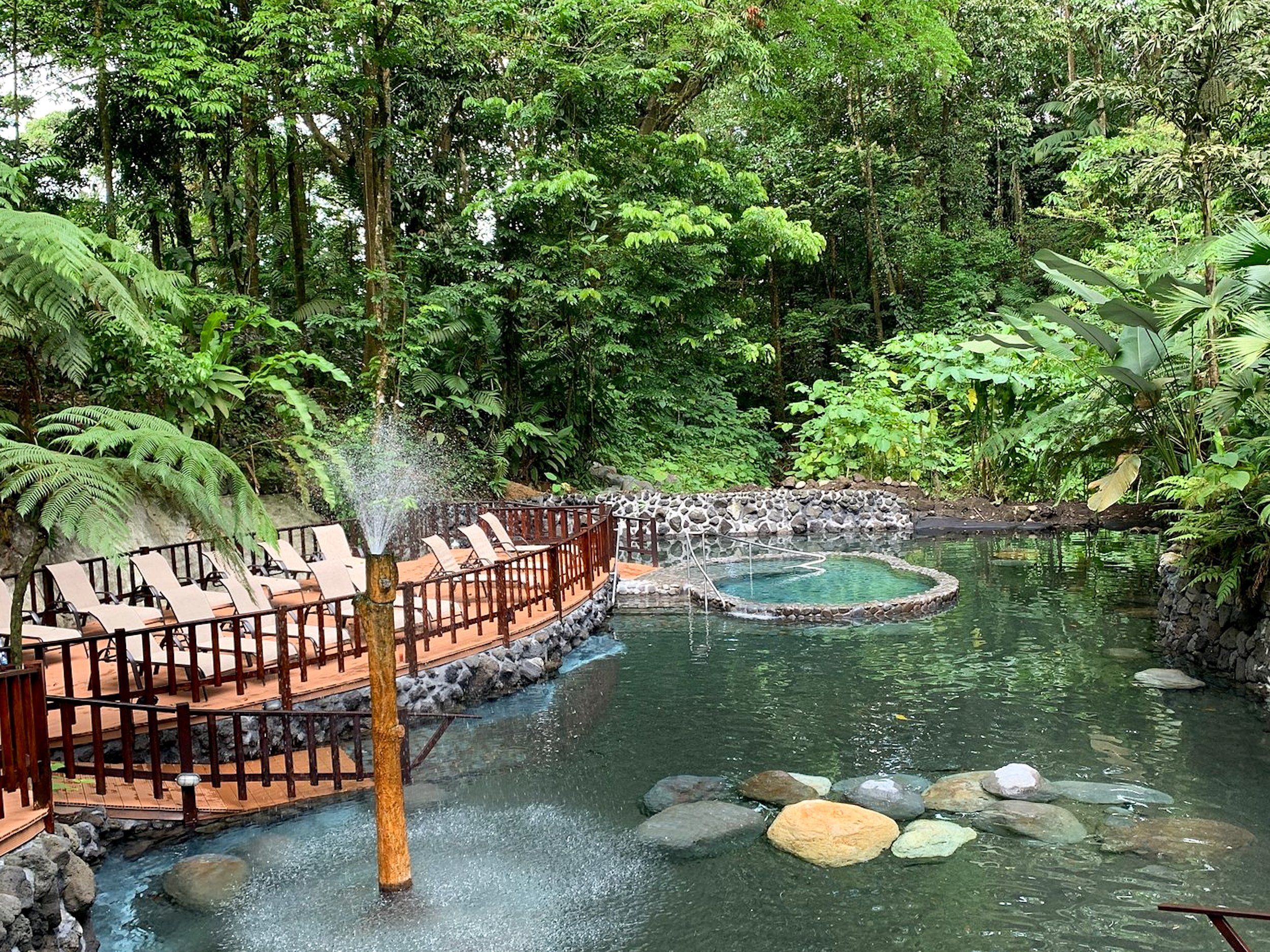
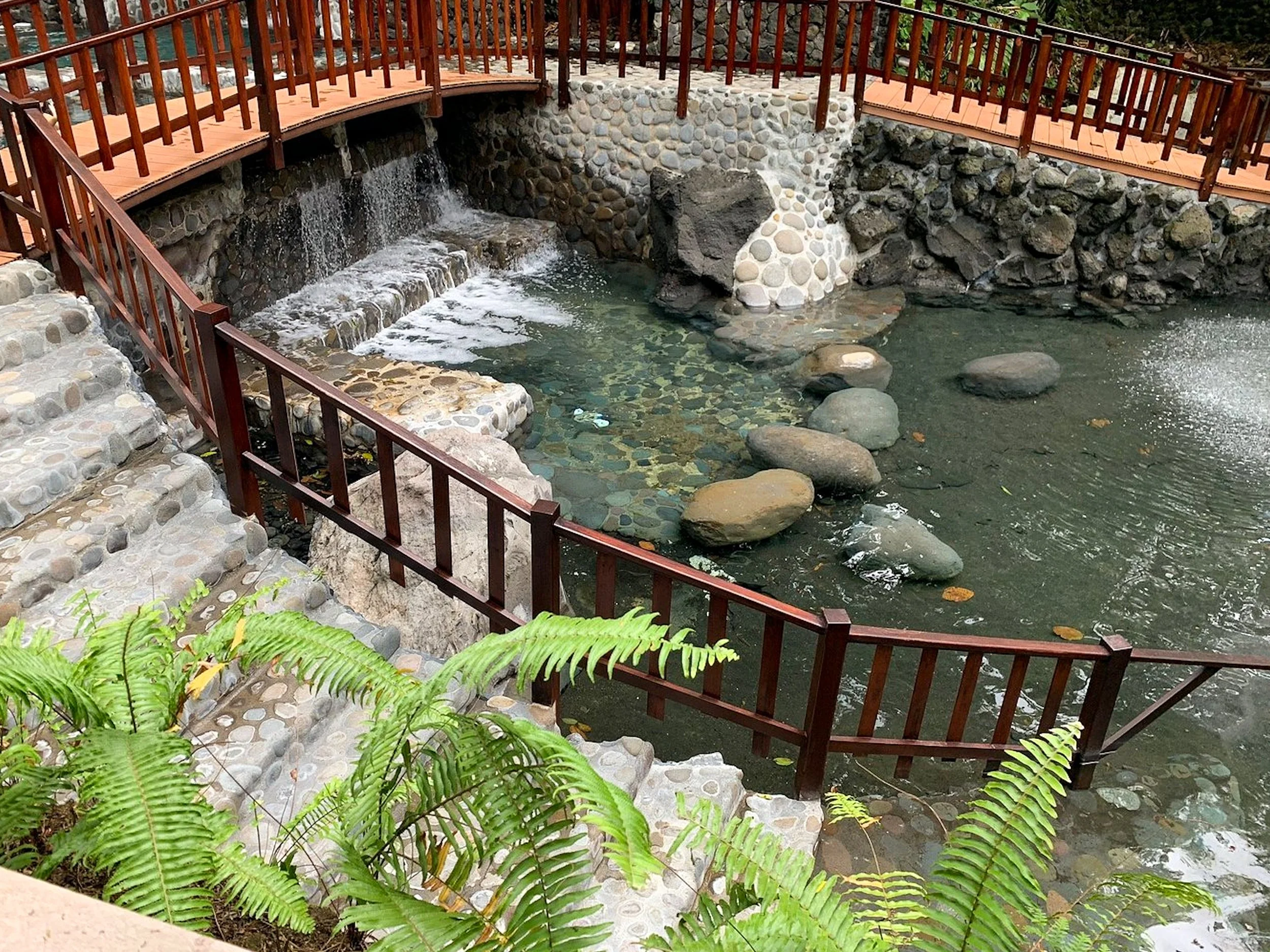
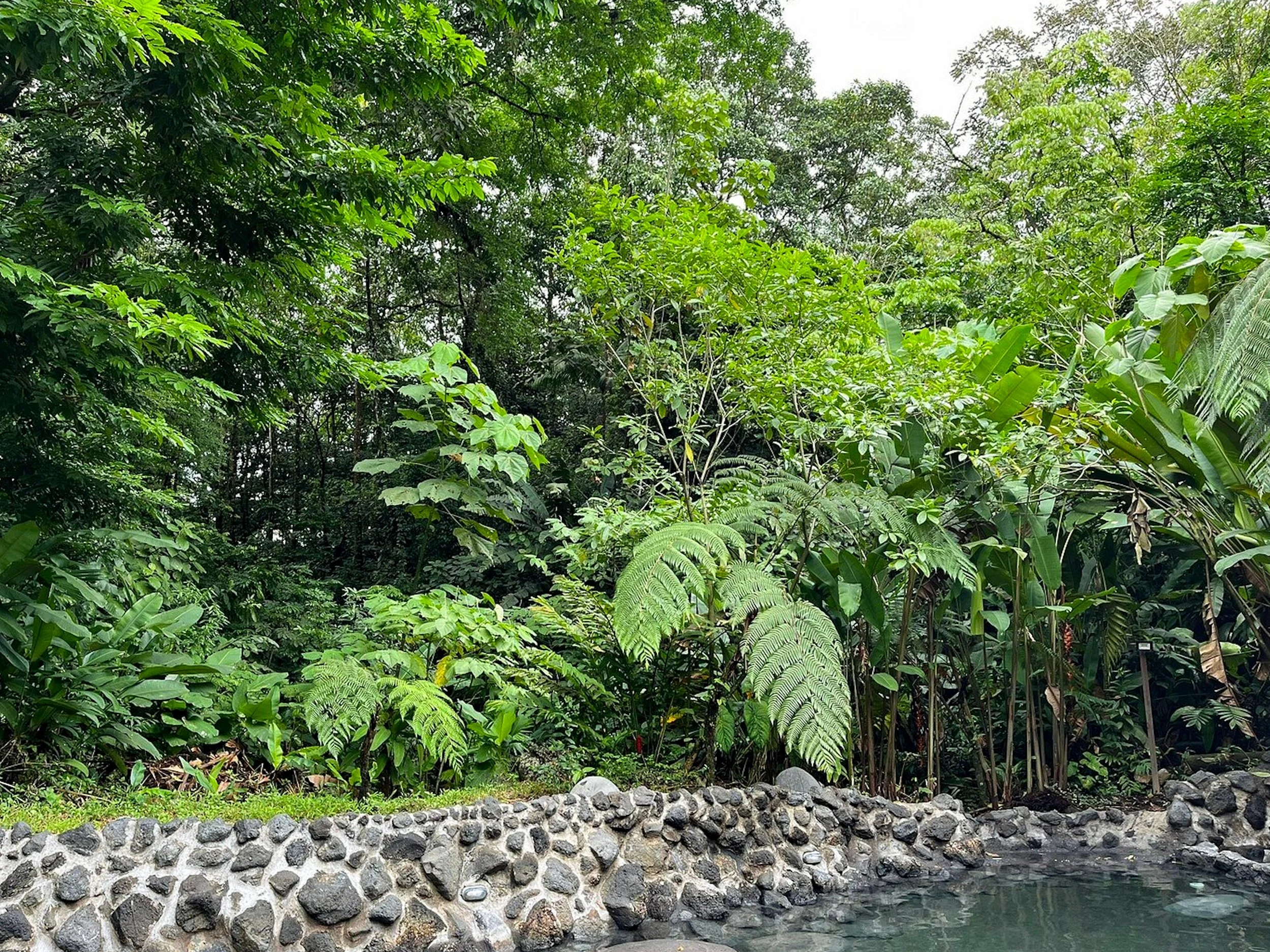
The area around the Arenal Volcano has several hot springs and resorts. We visited the Ecotermales Hot Springs for a relaxing evening after our hike. The hot springs consist of several cascading thermal pools ranging in temperature from hottest at the top to coolest at the bottom. The upper pool has a steamy waterfall that feeds into lower pools. A second waterfall flows into the bottom pool with seats below it. The resort offers Costa Rican cuisine like rice and beans, yucca, fish in a coconut sauce and sweet plantains. Photo credit to Trip Advisor.
Mistico Arenal Hanging Bridges Park
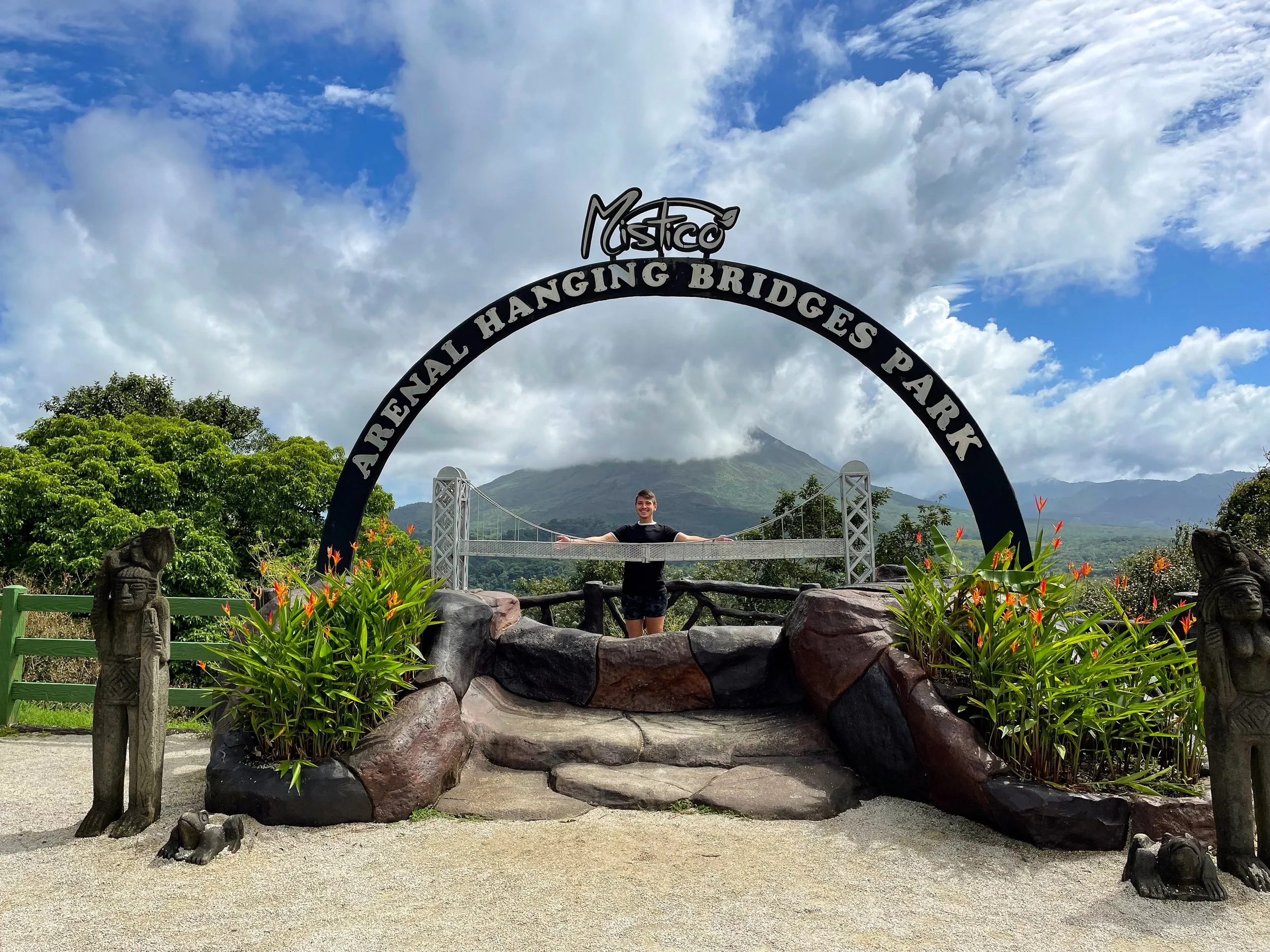
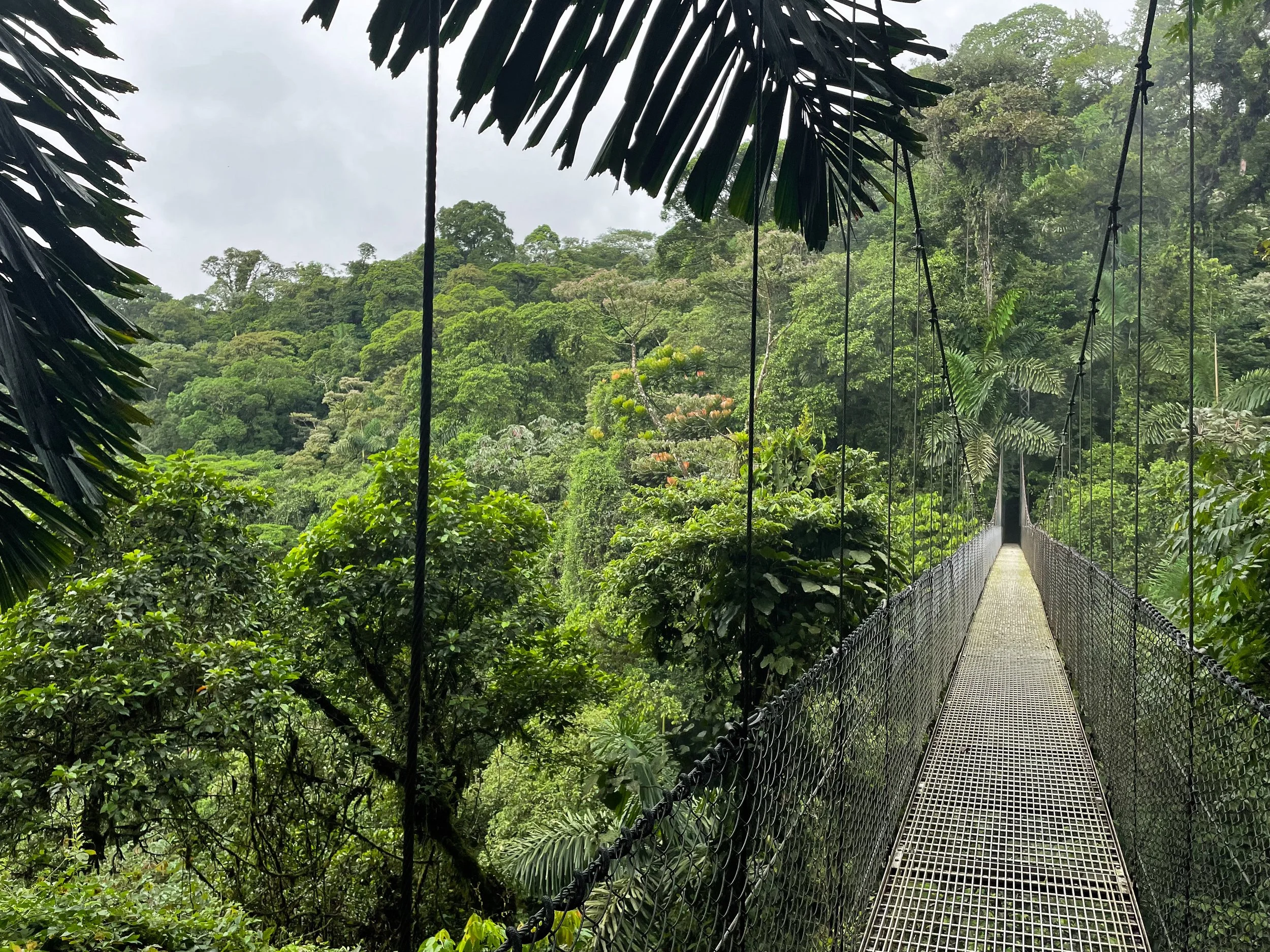
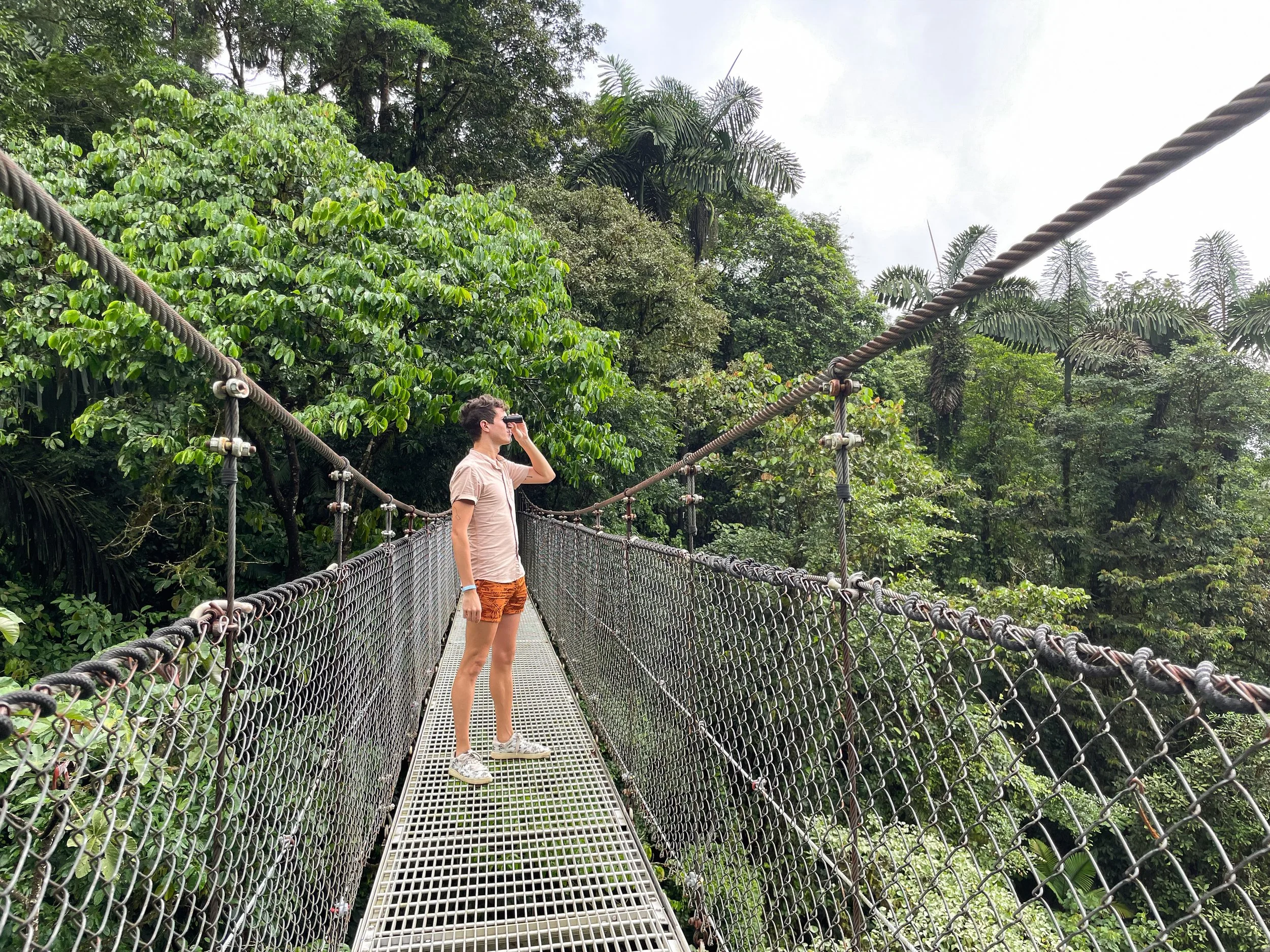
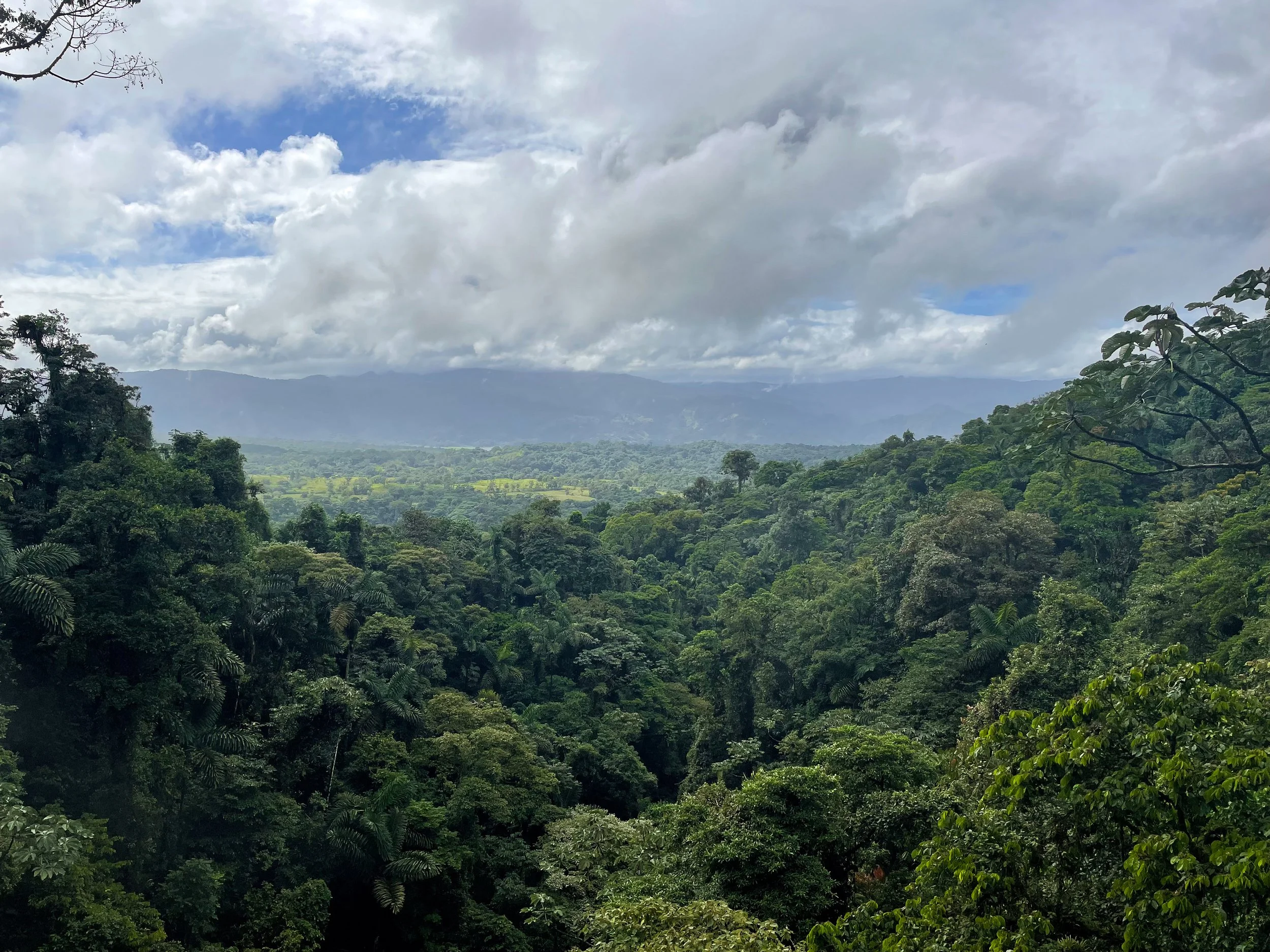
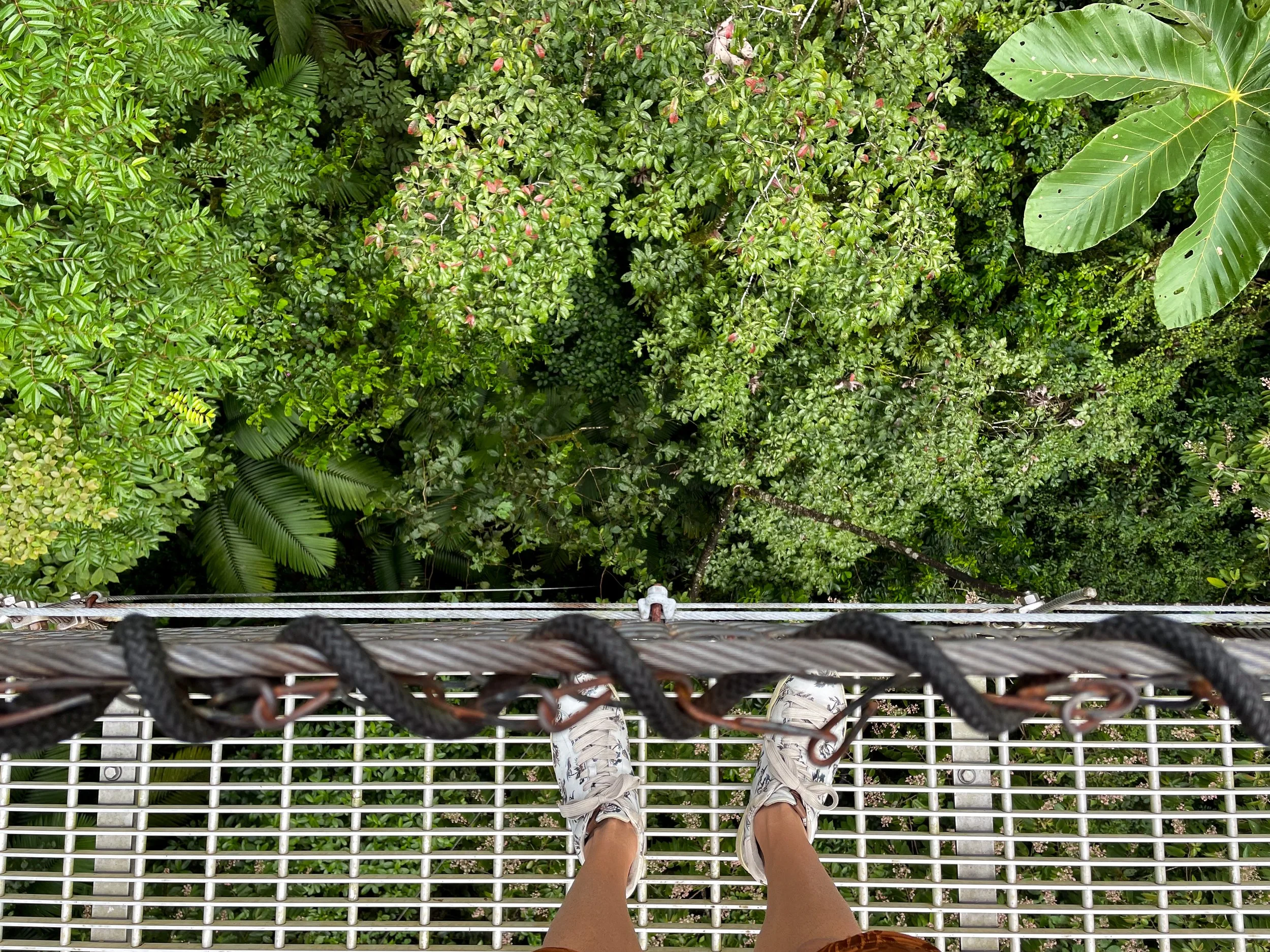
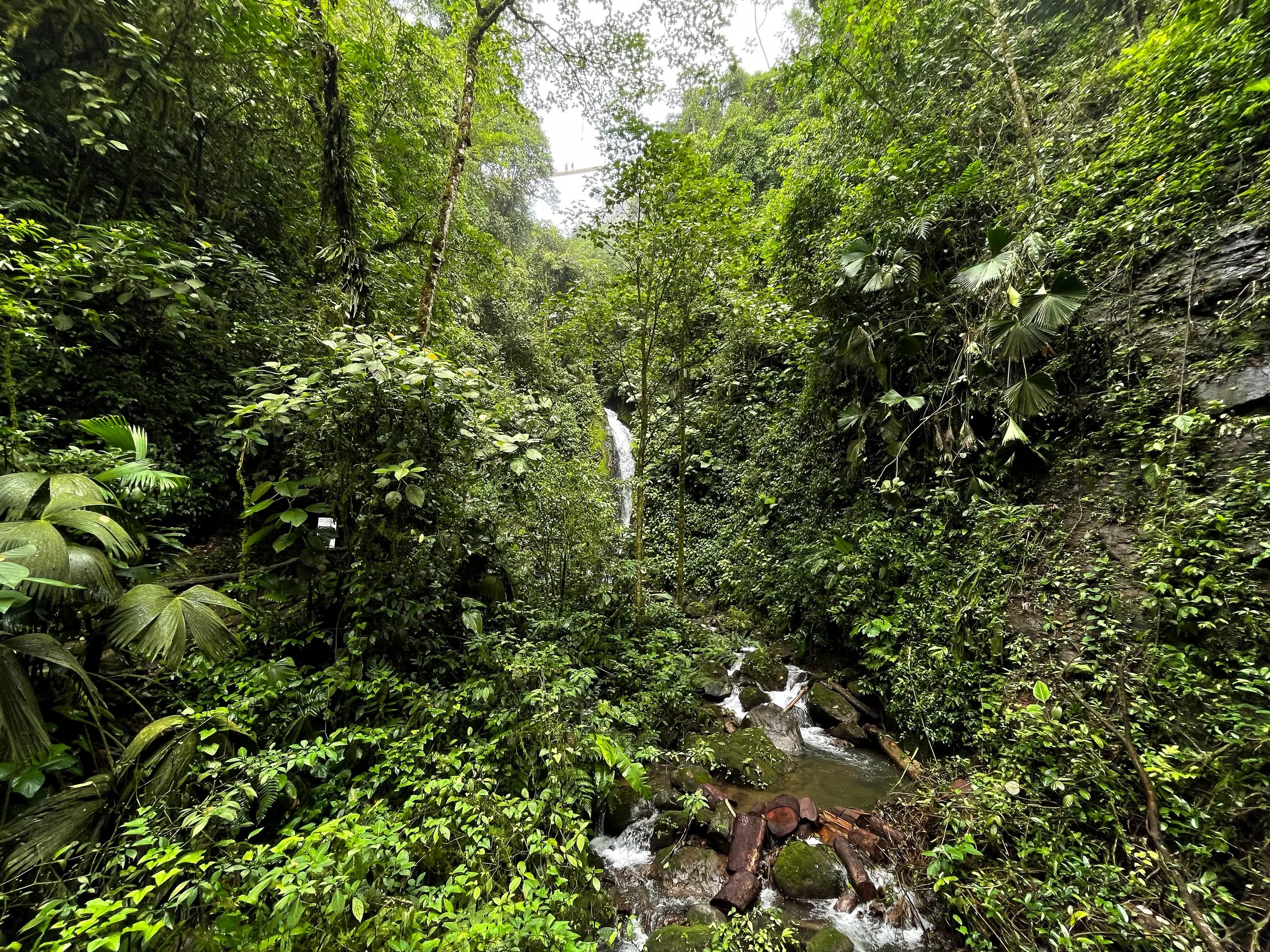
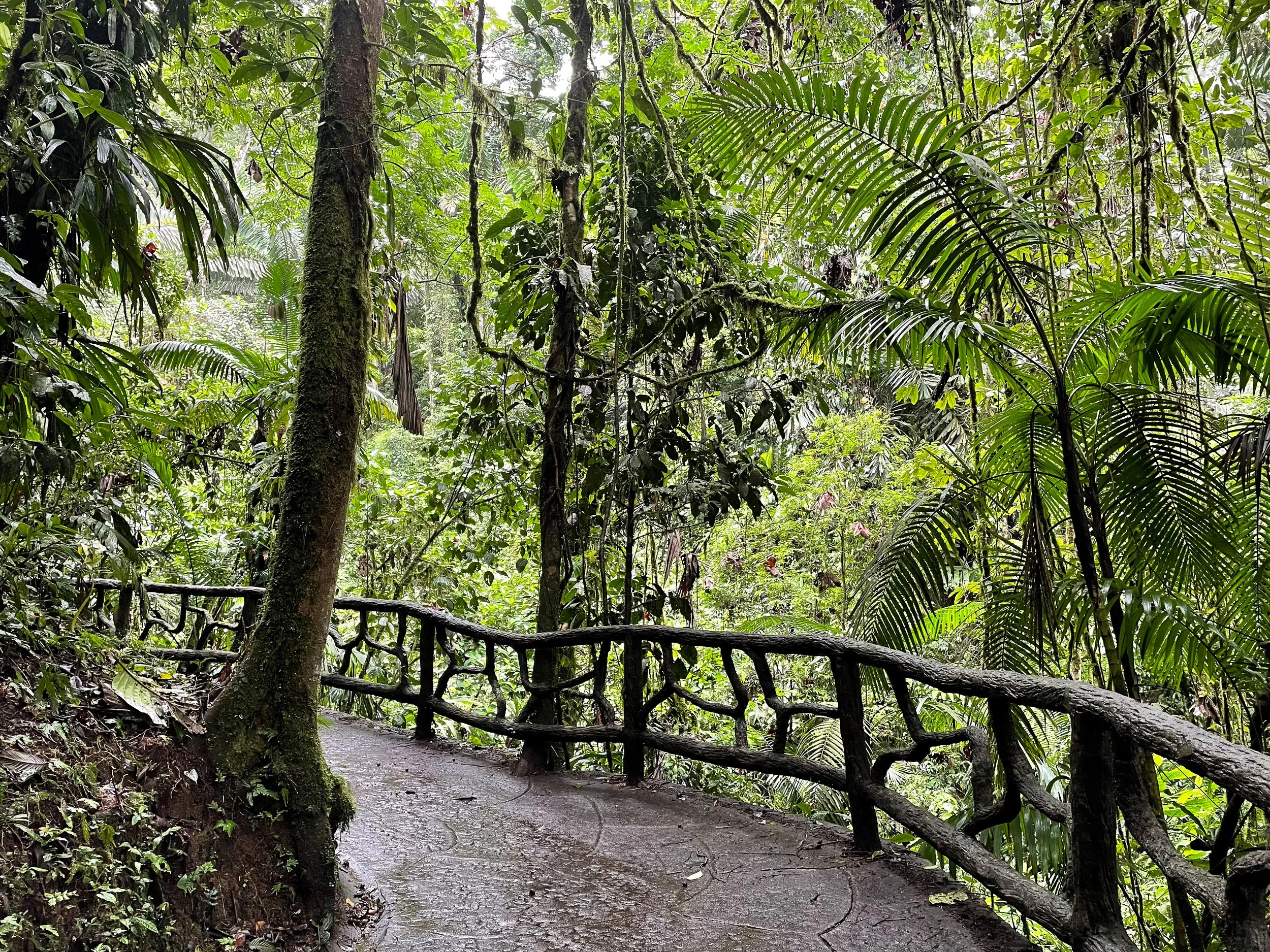
The Mistico Arenal Hanging Bridges Park is an eco park with 16 suspension bridges and nature trails weaving through the rain forest. The largest bridges are suspended over ravines and cut through the tree top canopy. The smallest bridges cross narrow streams and crevices. Massive trees, some hundreds of feet tall, line the trails alongside vibrant flowers and a small waterfall. The nature walk takes up to 3 hours at a leisurely pace while watching for wildlife and animals. The eco park has a restaurant overlooking the Arenal Volcano and verdant landscape.
Pro Tips. Arrive at 8am before the large tour groups to experience the trails and bridges mostly on your own. We bought tickets online and ahead of time to secure the earlier time slot. Book here.
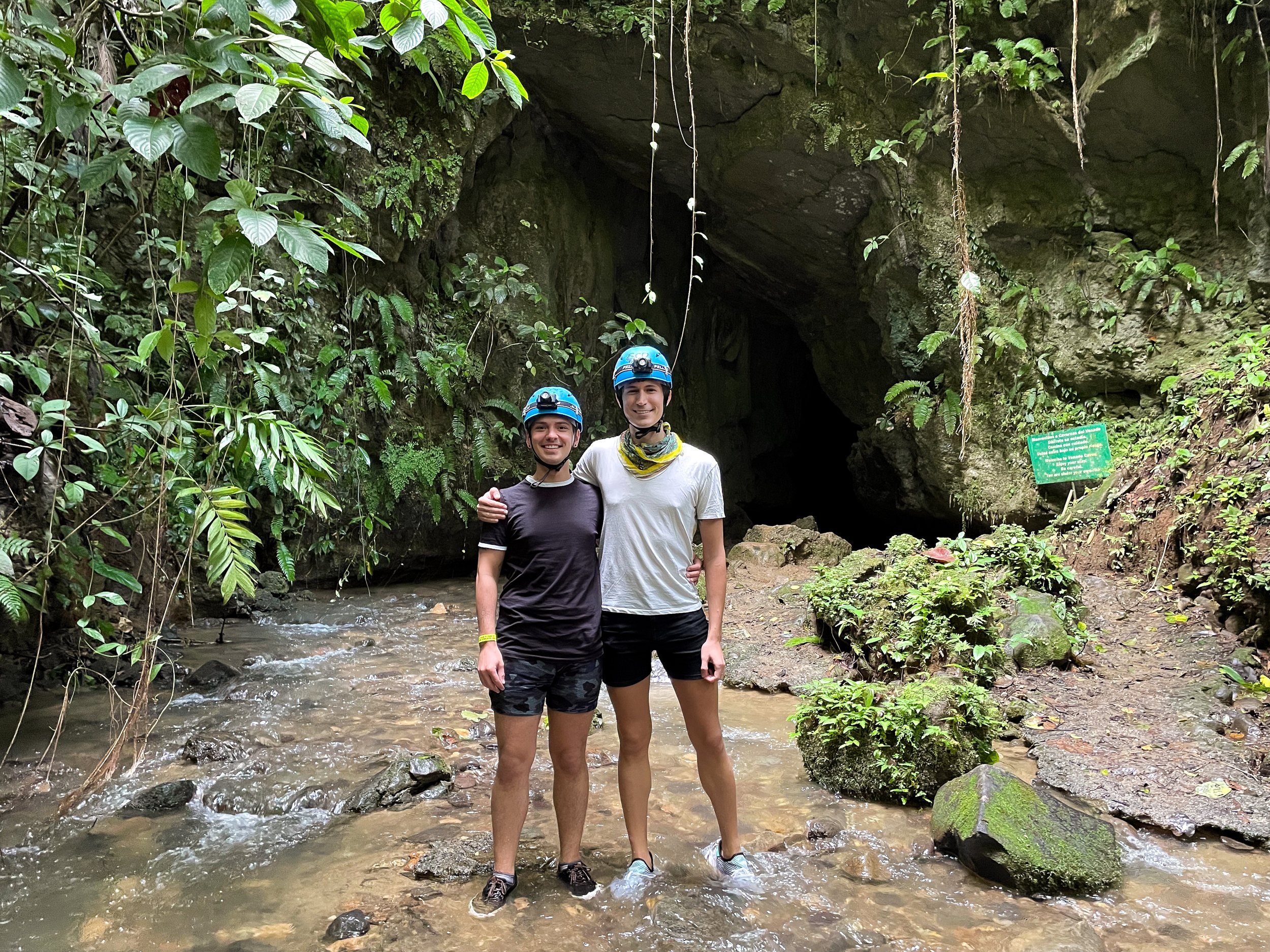
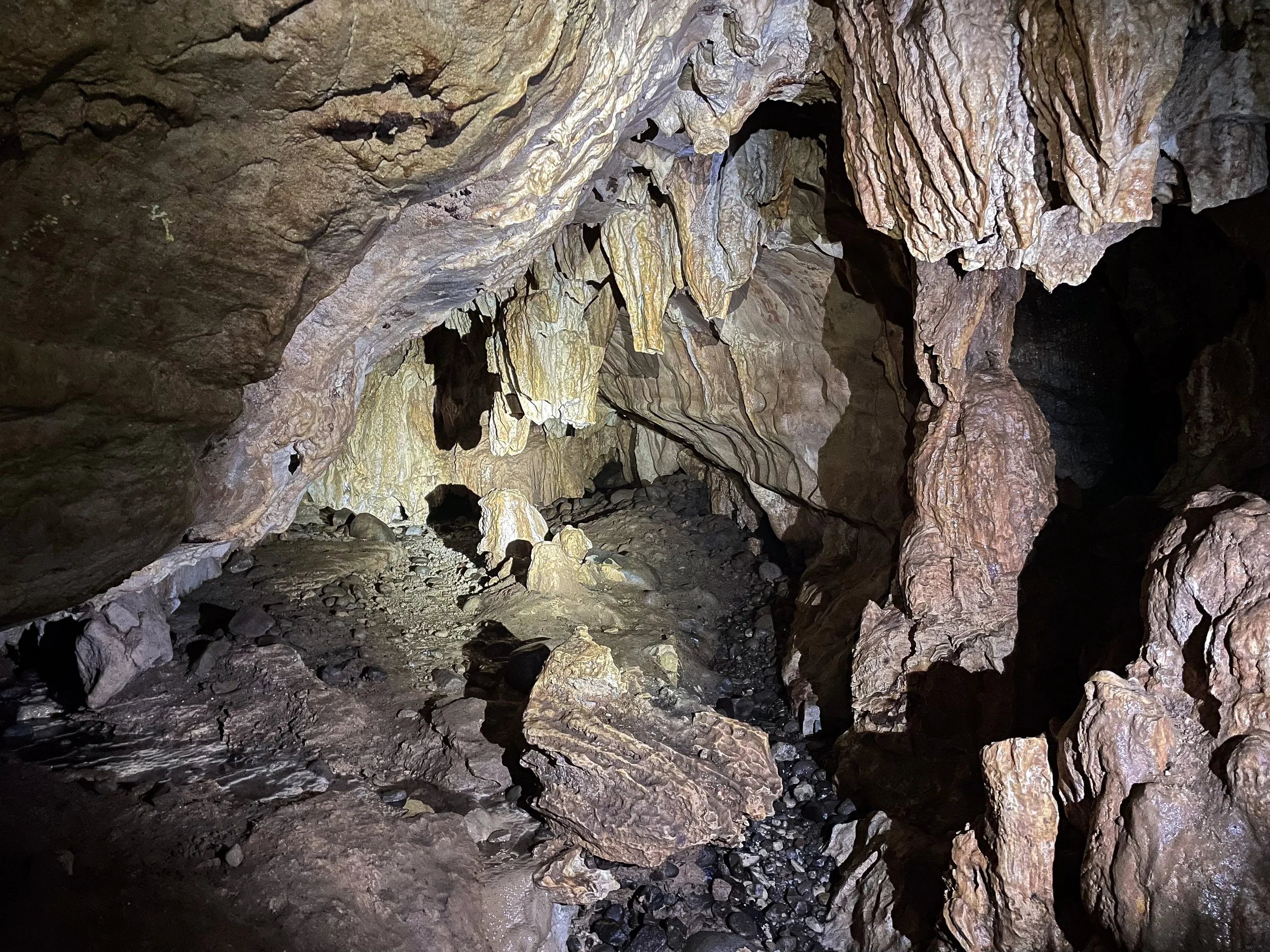
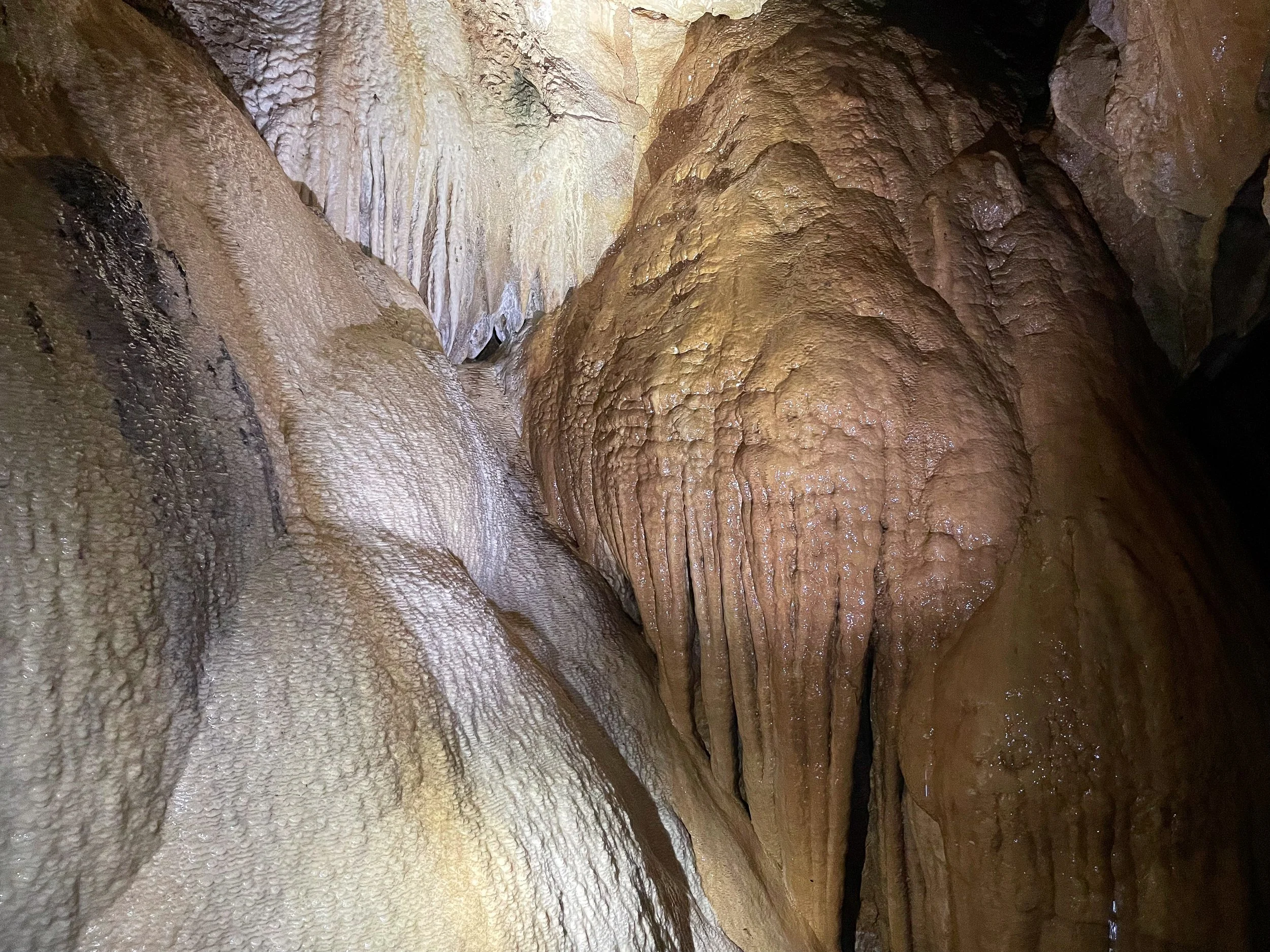
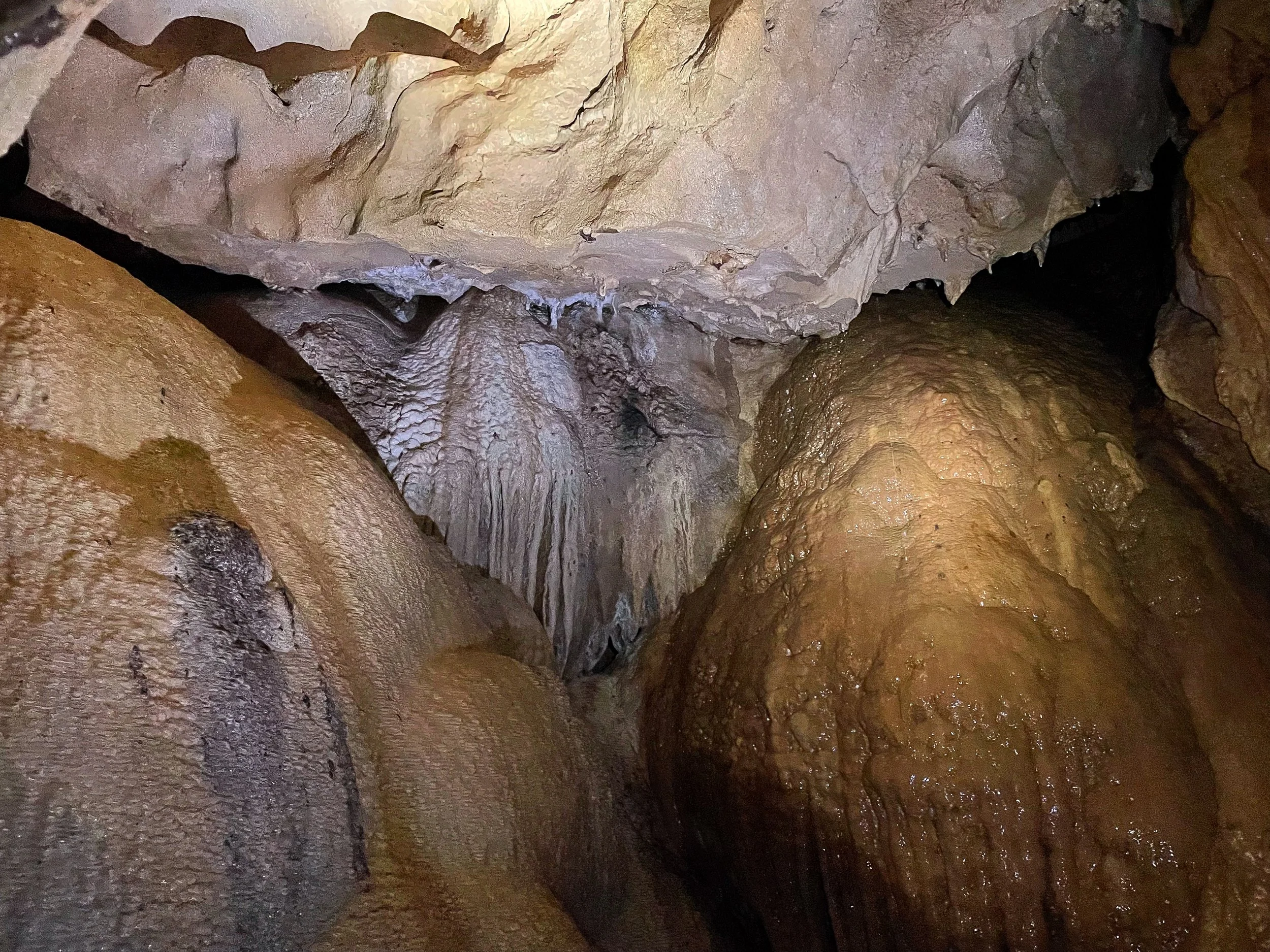
Venado Caves
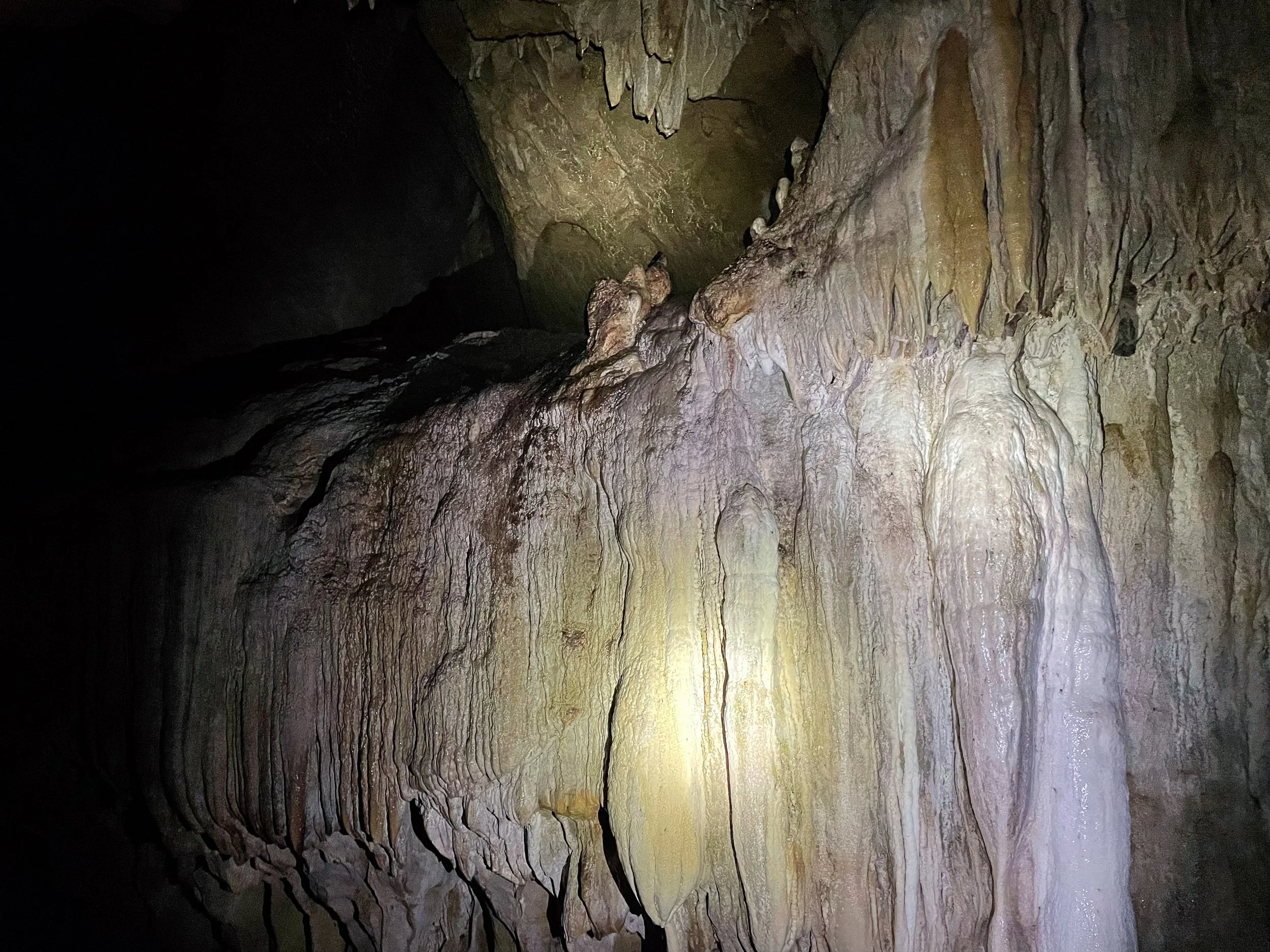
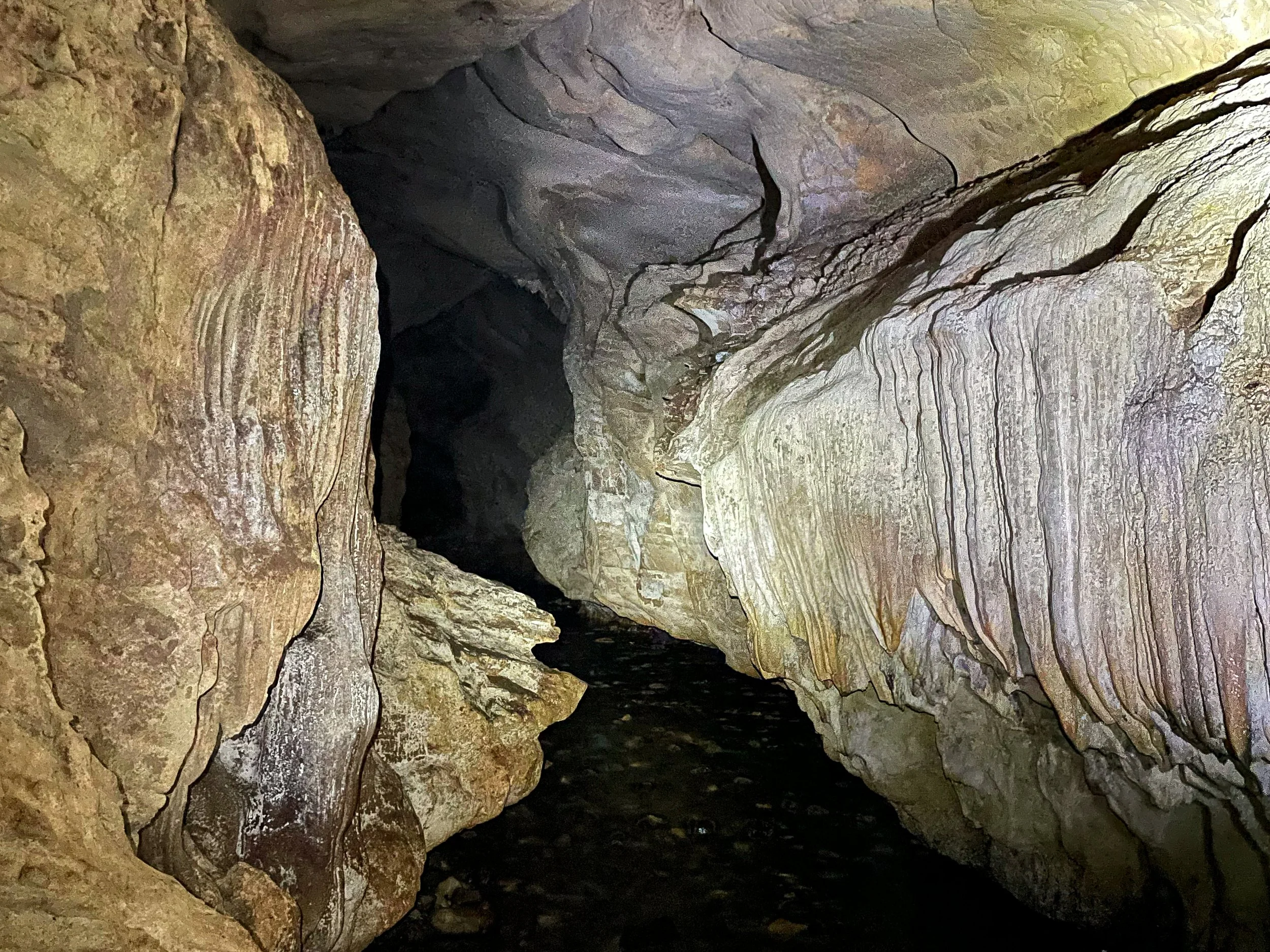
The Venado Cave system is an underground network of dark chambers, flooded passageways and crystalline rock formations. Fitted with headlamps and helmets, a guide led us into its depths of its main chamber and sub chambers. Book with Ecoterra Costa Rica on Viator.
The Main Chamber. A river leads upstream into the mouth of the cave and its main chamber. The underground river continues deeper into the cave and its numerous sub chambers.
The Raining Room. A narrow passageway led through an 18 inch wide crevice to the “Raining Room.” Water dripped from the ceiling and down the chamber walls as if raining underground. We shimmied and climbed 10ft vertically back into the main chamber.
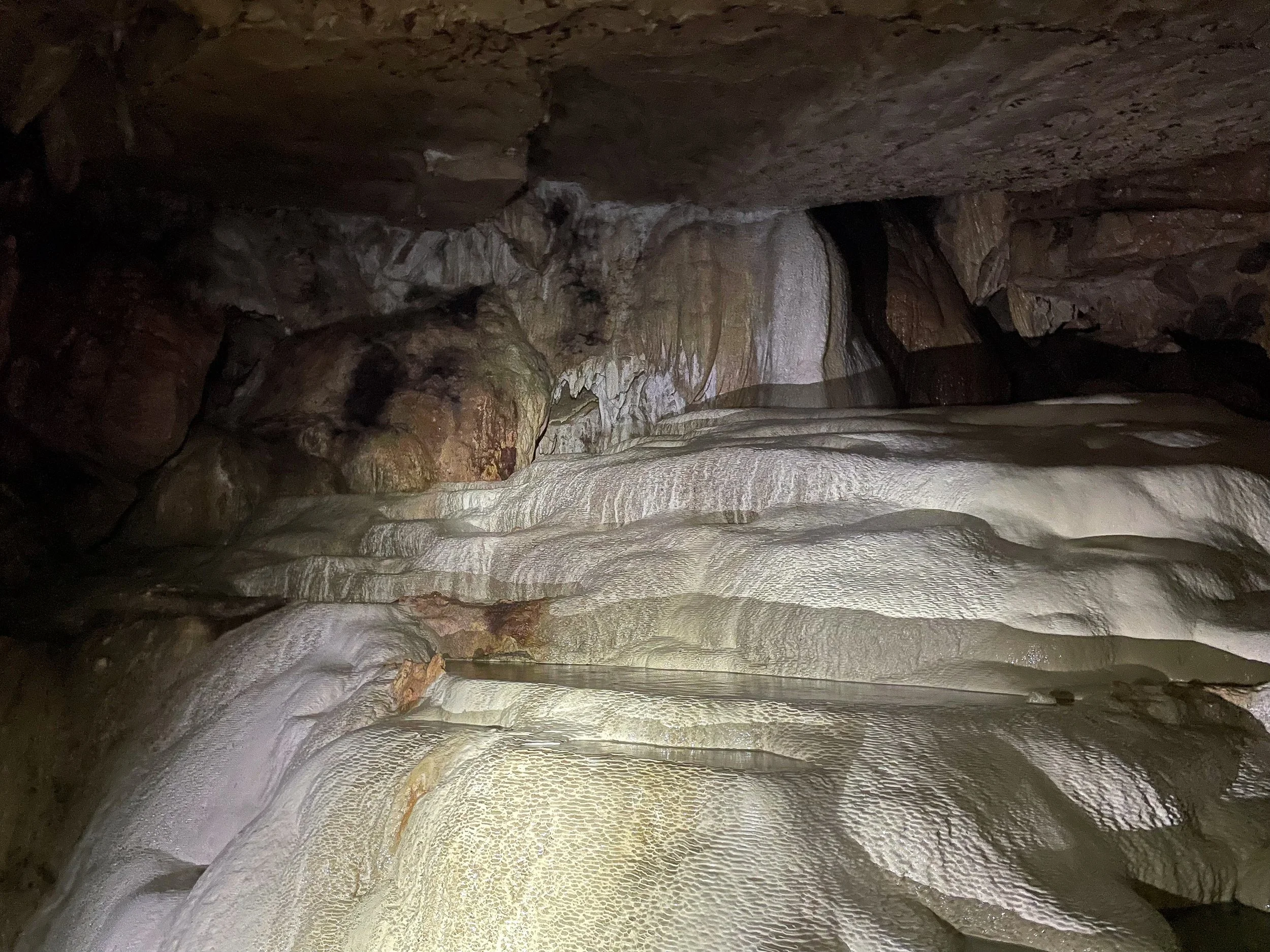
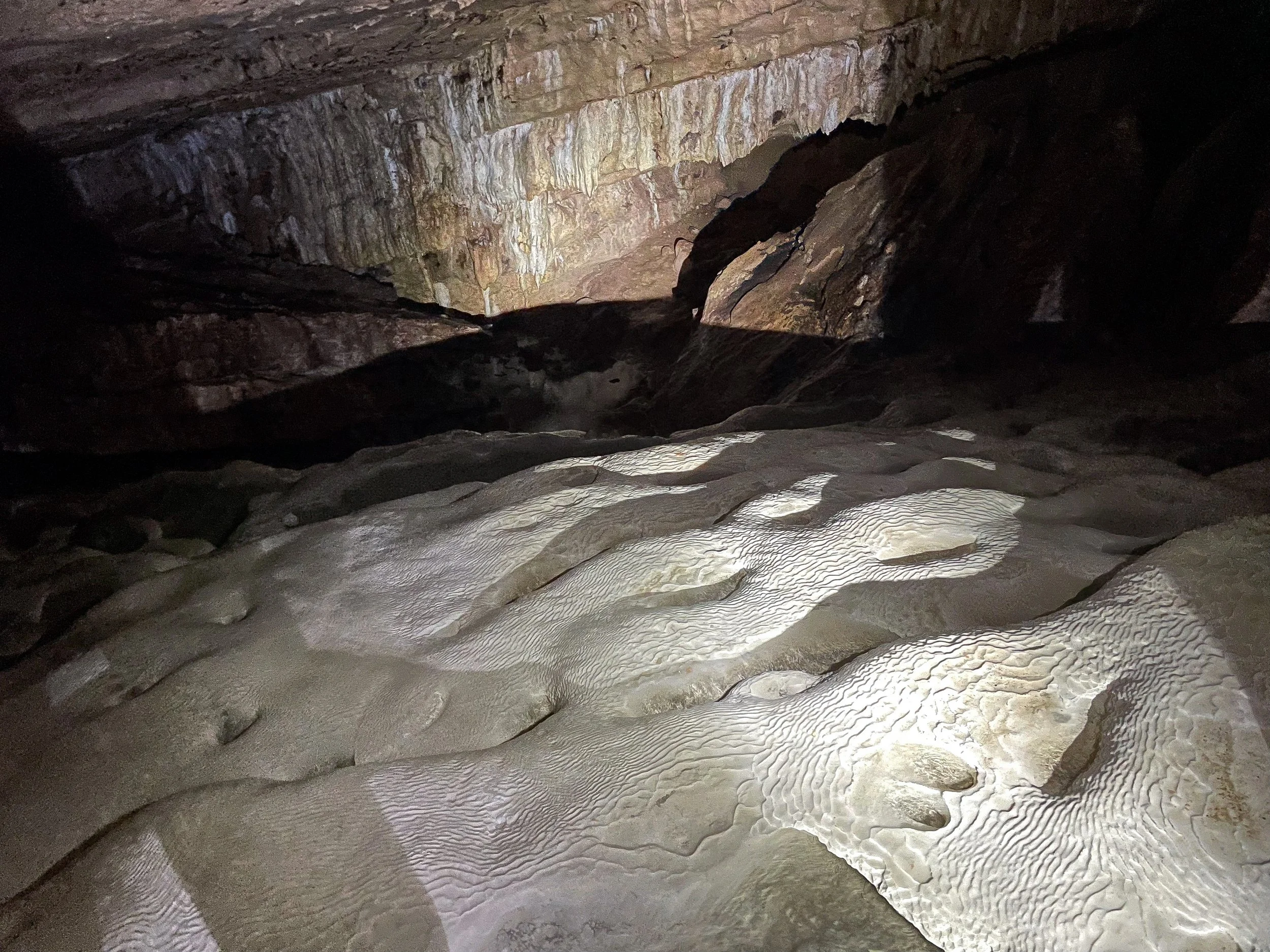
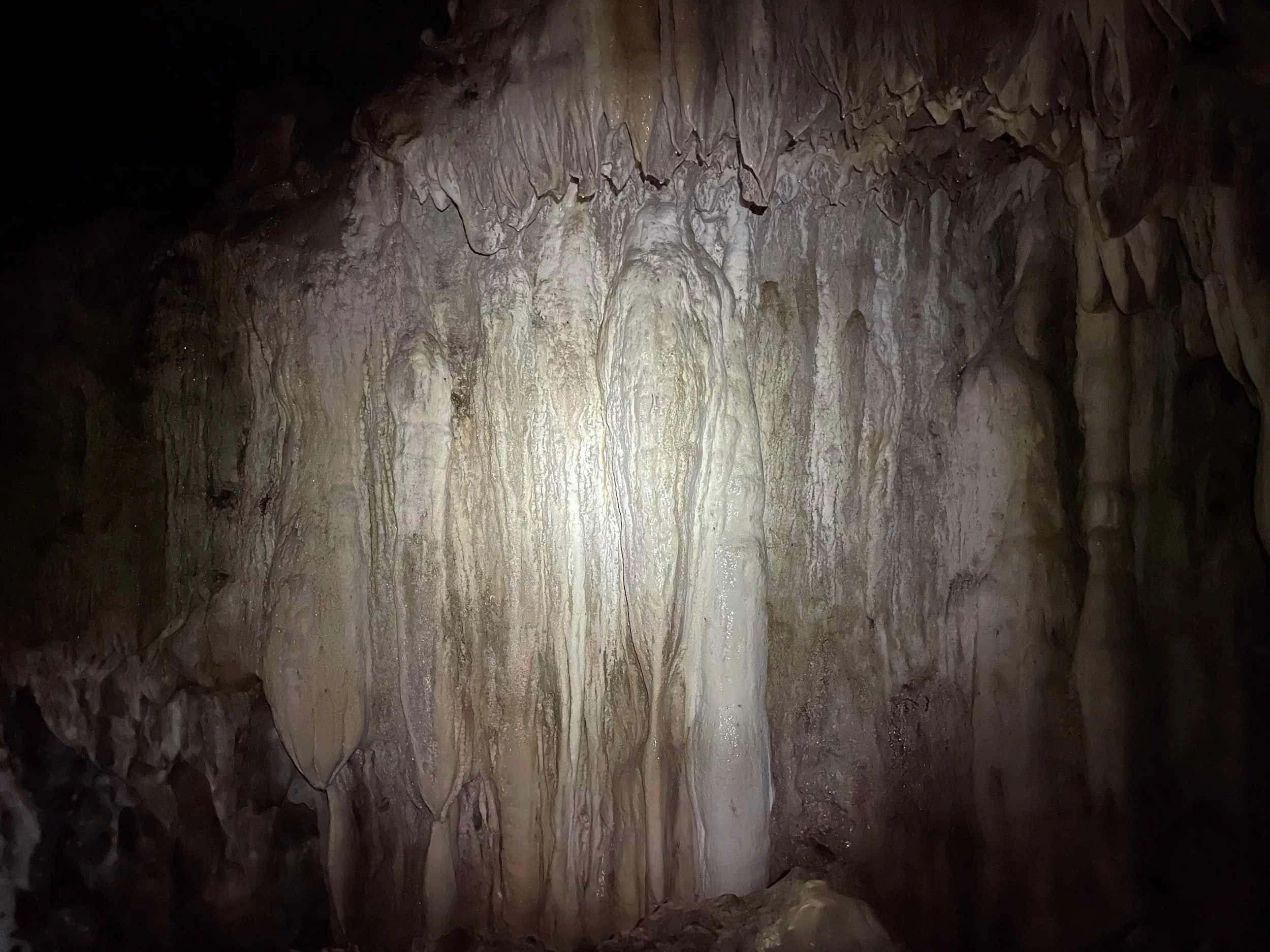
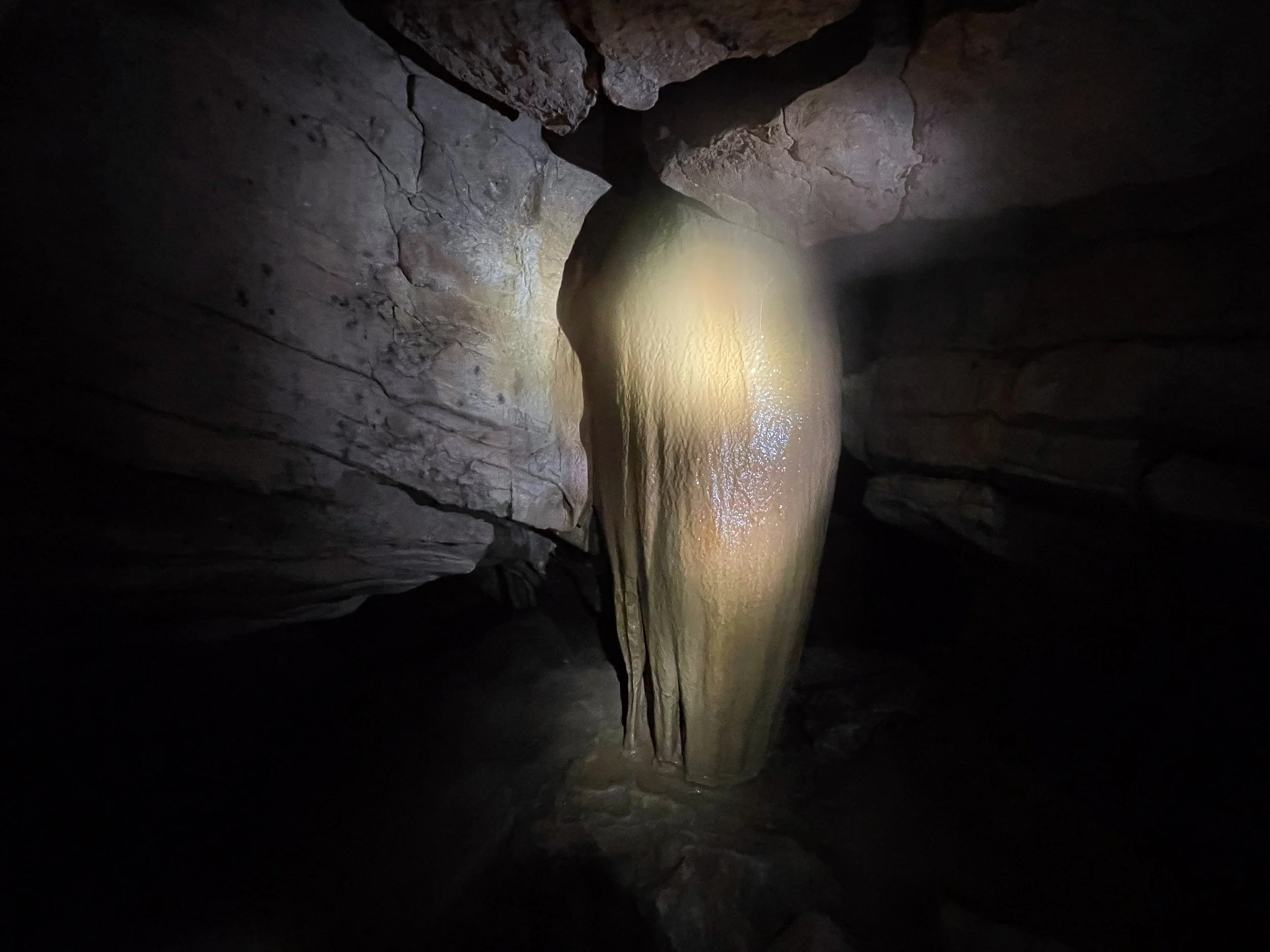
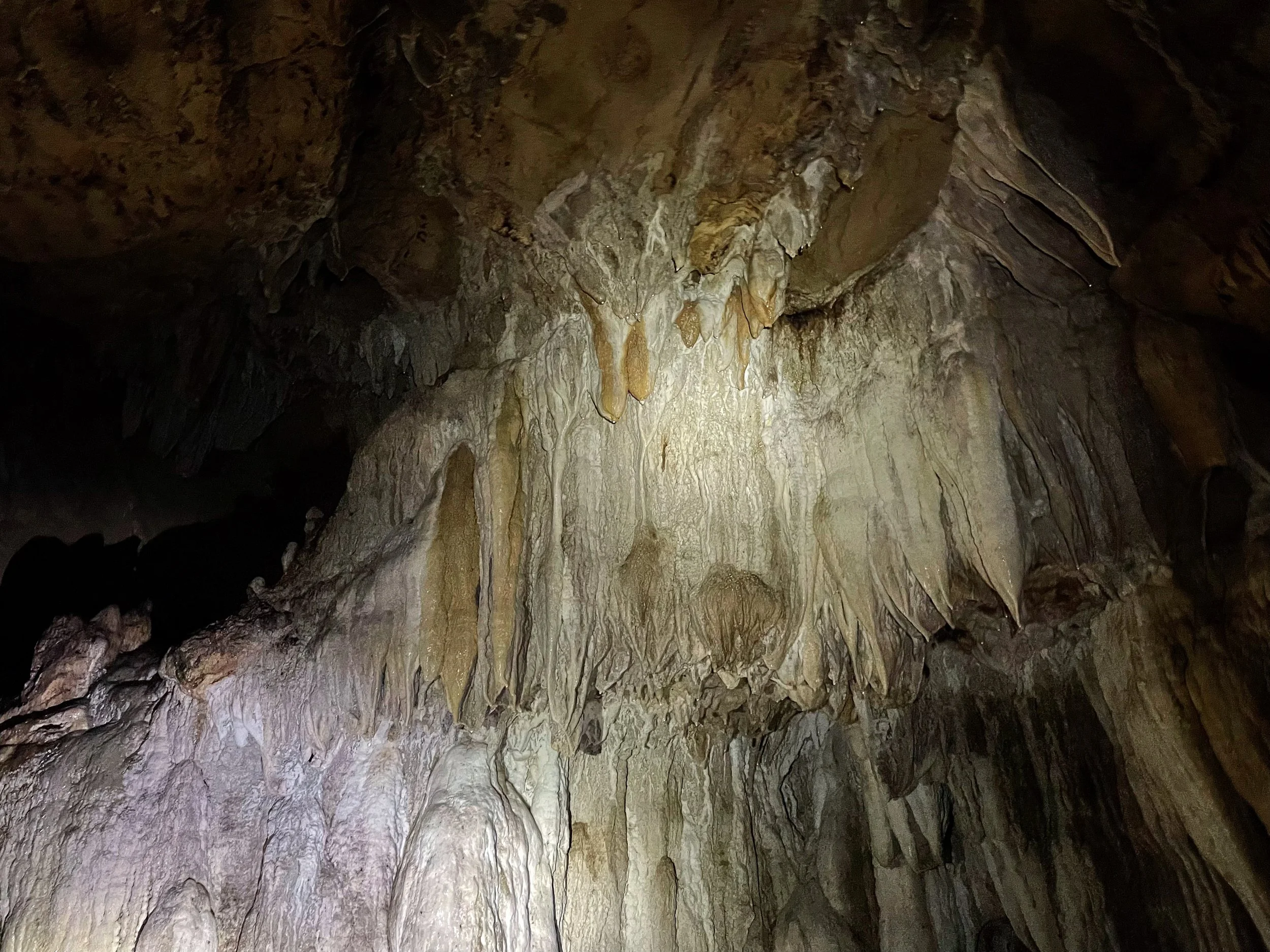
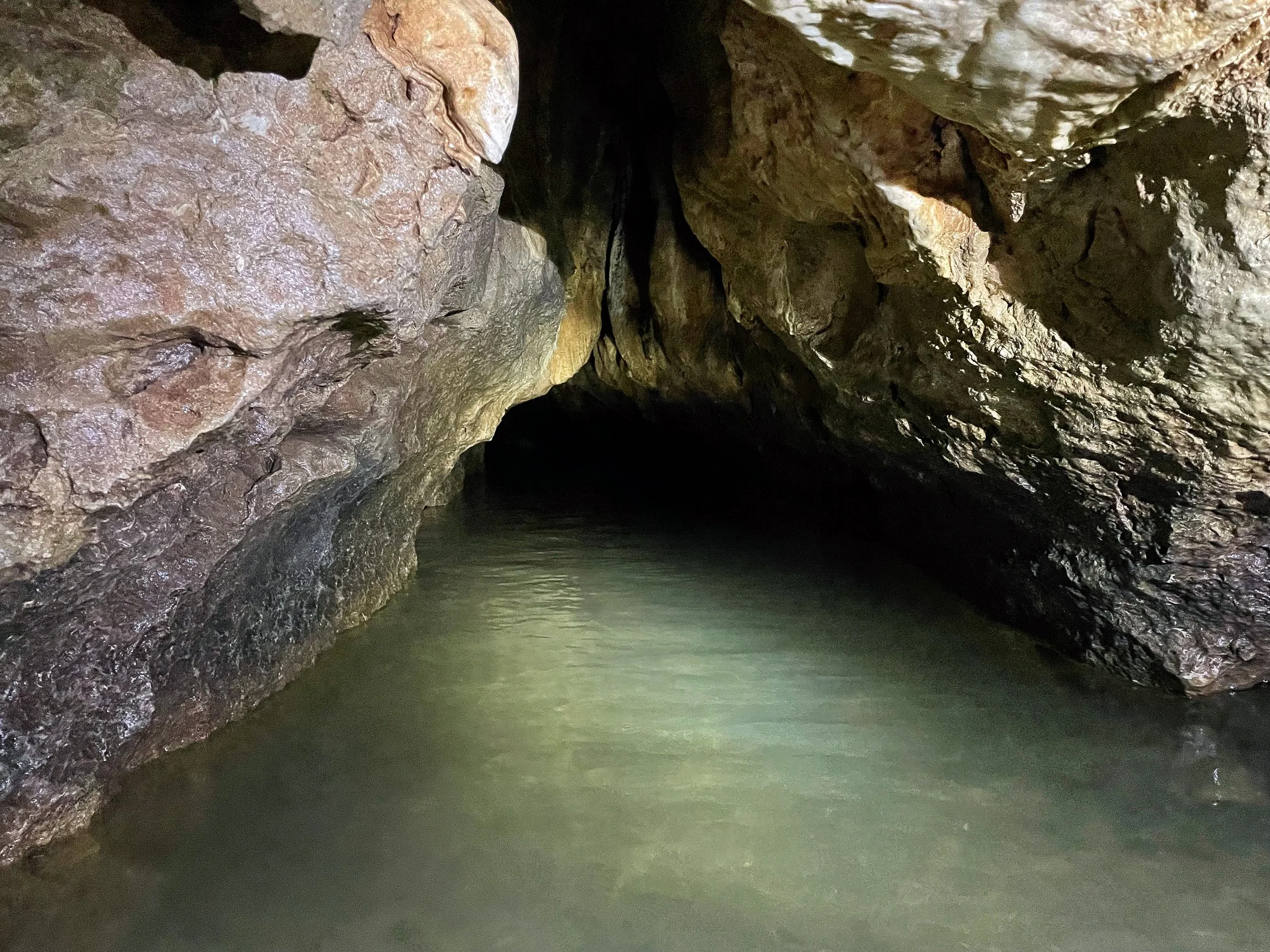
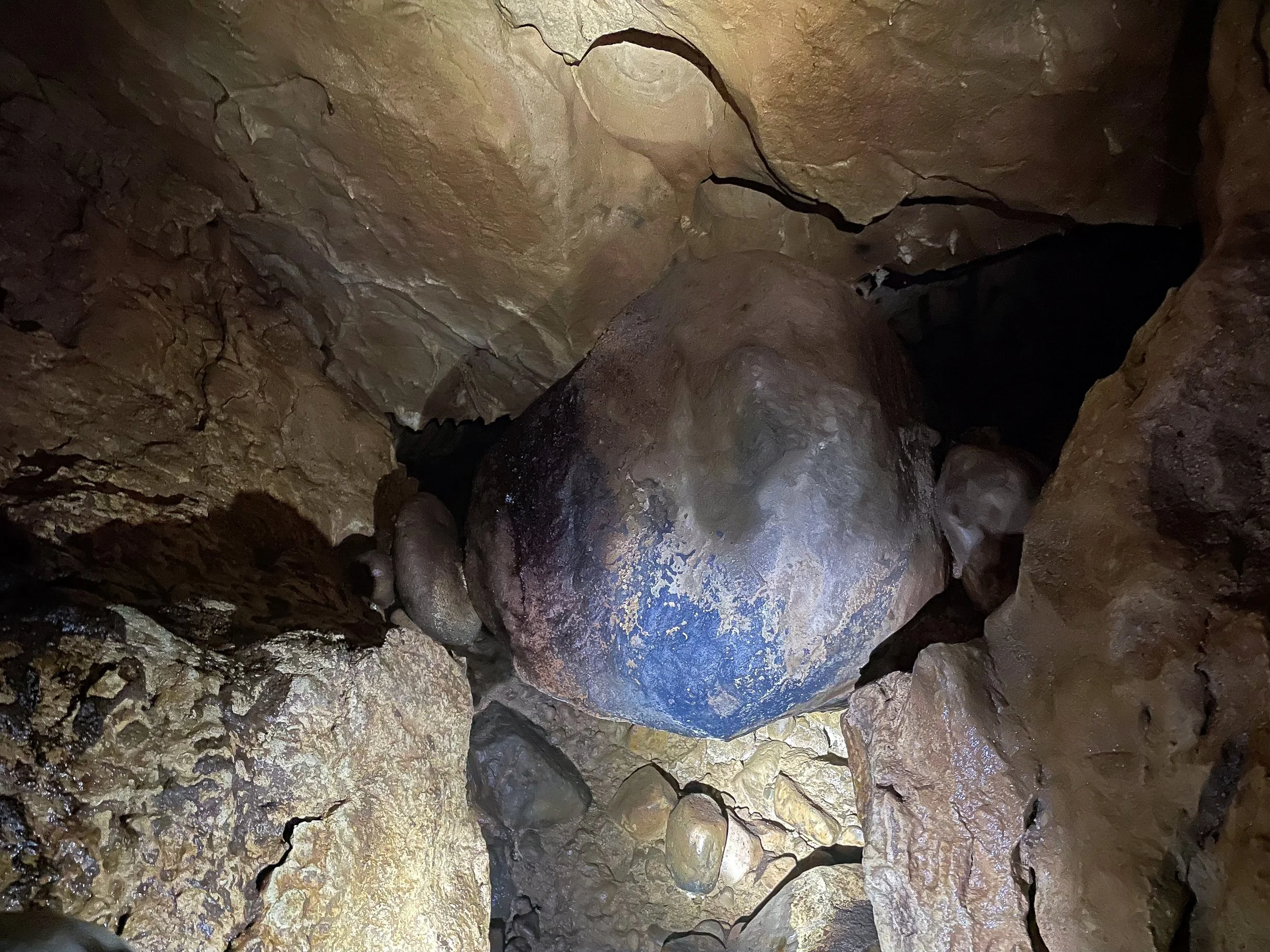
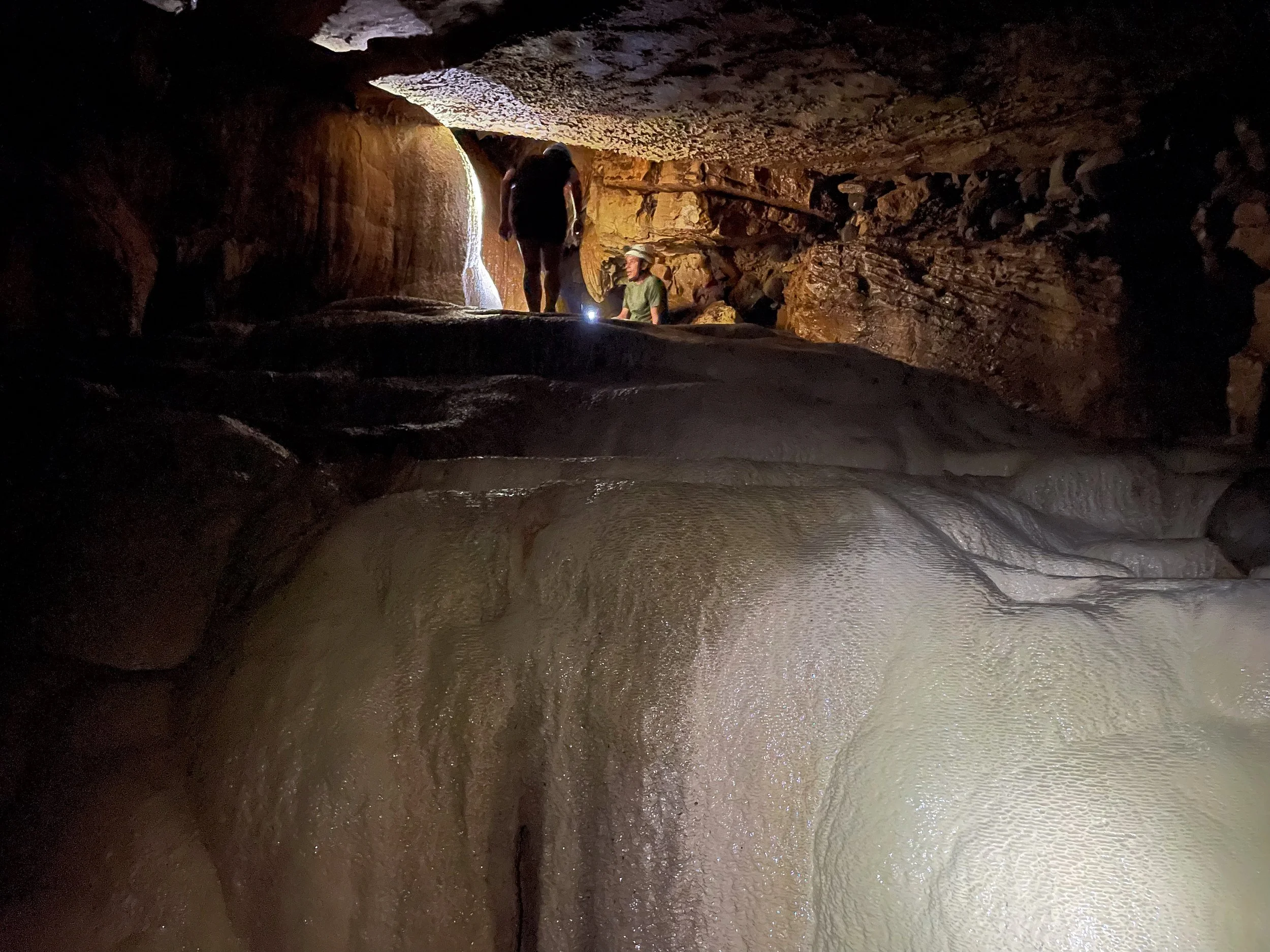
The Waterfall Room. The main chamber led to an underground waterfall with a secondary chamber hidden behind it. The room beyond is covered in a tiered flow stone comprised of sparking and rippled layers of sediment.
The Papaya Room. A chamber accessible by ladder from the “Waterfall Room” with a several million year old flow stone that resembles the shape of a papaya.
The Flooded Tunnel. The sub chambers continued deeper into the cave past stalactites and stalagmites to a “Flooded Tunnel,” only large enough to crawl through with our heads above the surface of the water.
The Indiana Jones Room. The “Flooded Tunnel” continued into a narrow crevice only wide enough to fit through sideways. It led to the “Indiana Jones Room,” a chamber with a rushing waterfall and round boulder suspended between two rocks.
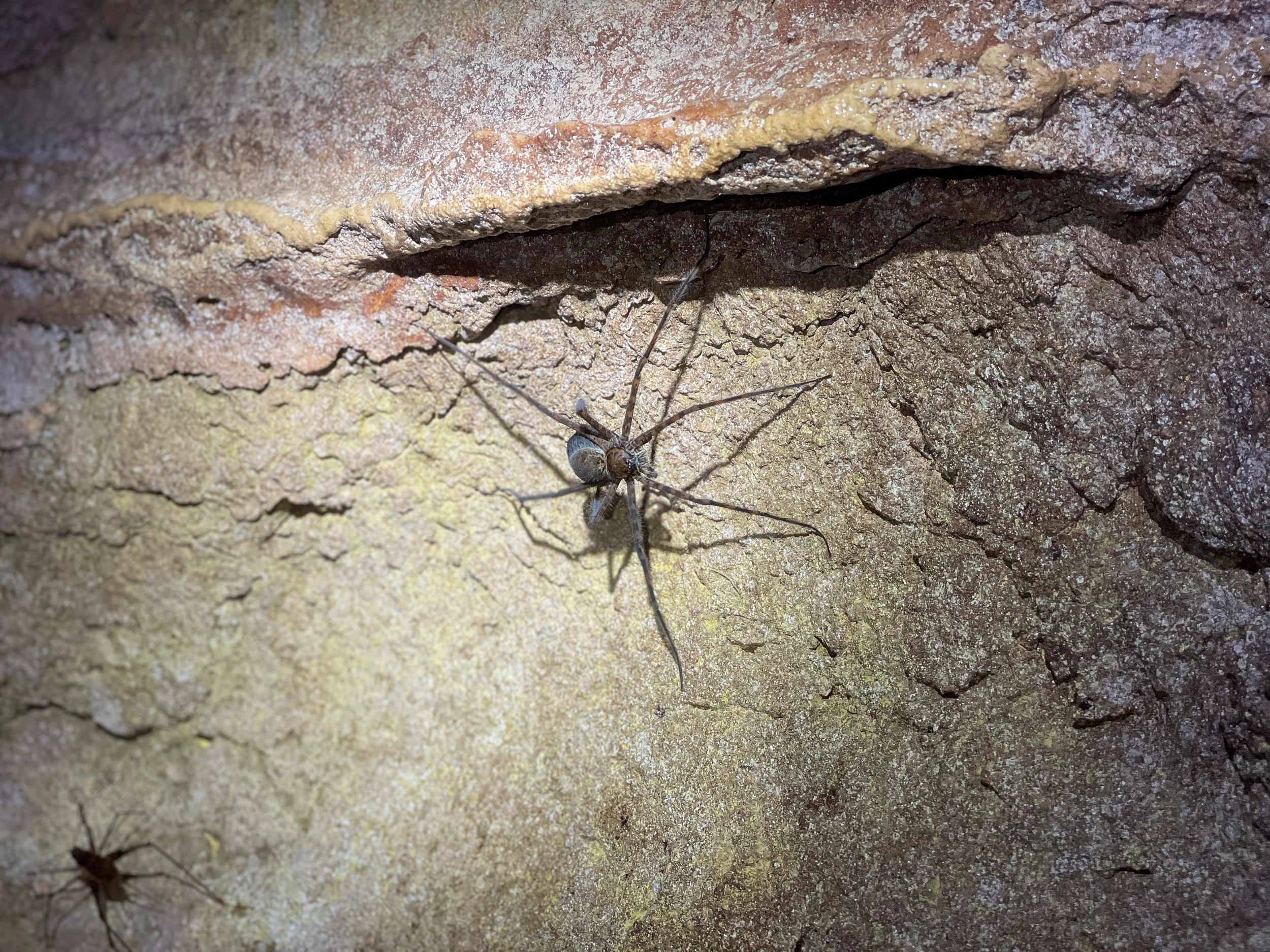
An Underground Ecosystem. The cave is home to an underground ecosystem of cave dwelling creatures. Fruit and vampire bats hung from the ceilings and fluttered around its chambers. Large cave crickets, cockroaches and scorpion spiders lurk on cave walls. Catfish swim downriver and between chambers.
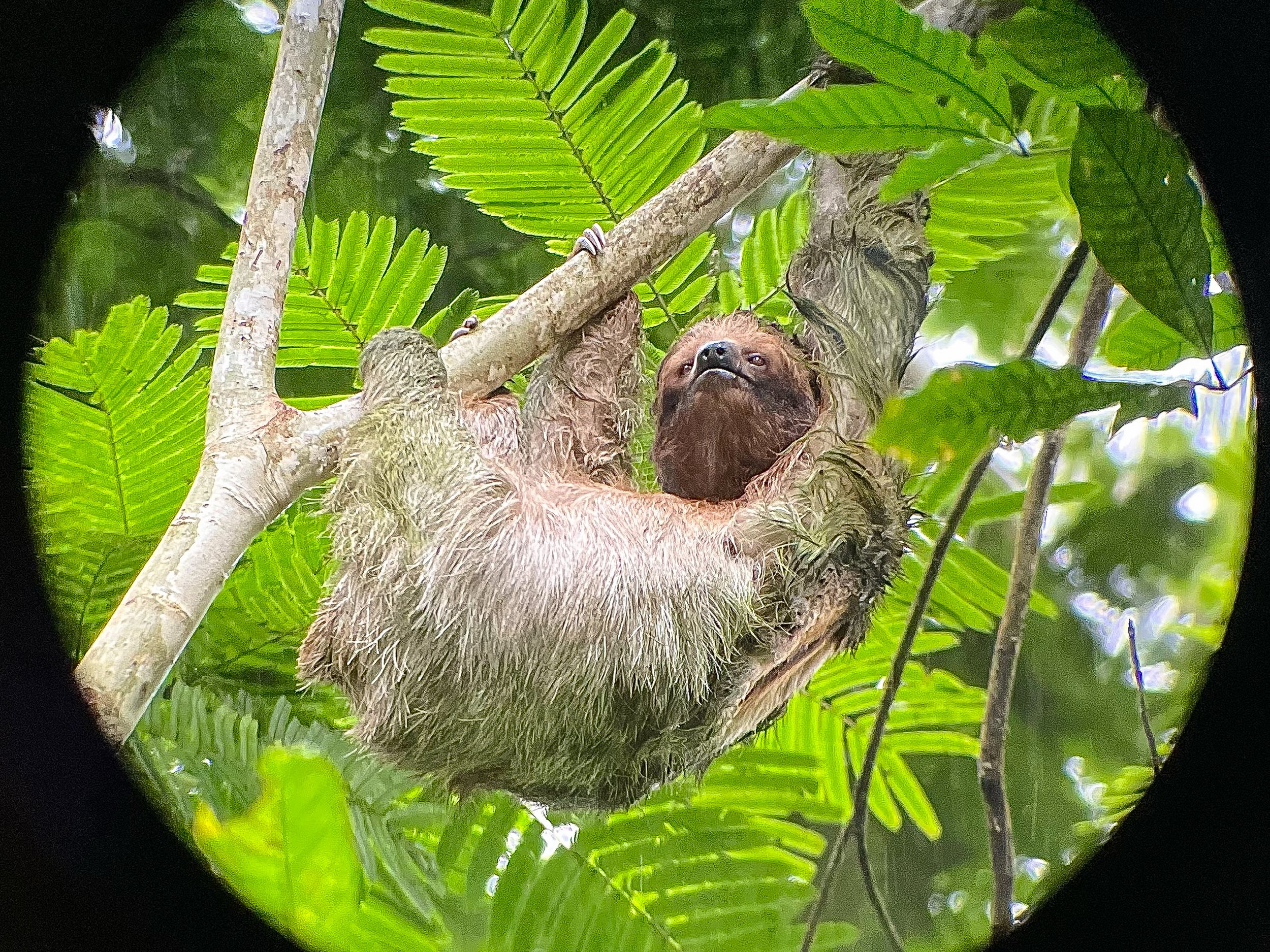
Sloth’s Territory
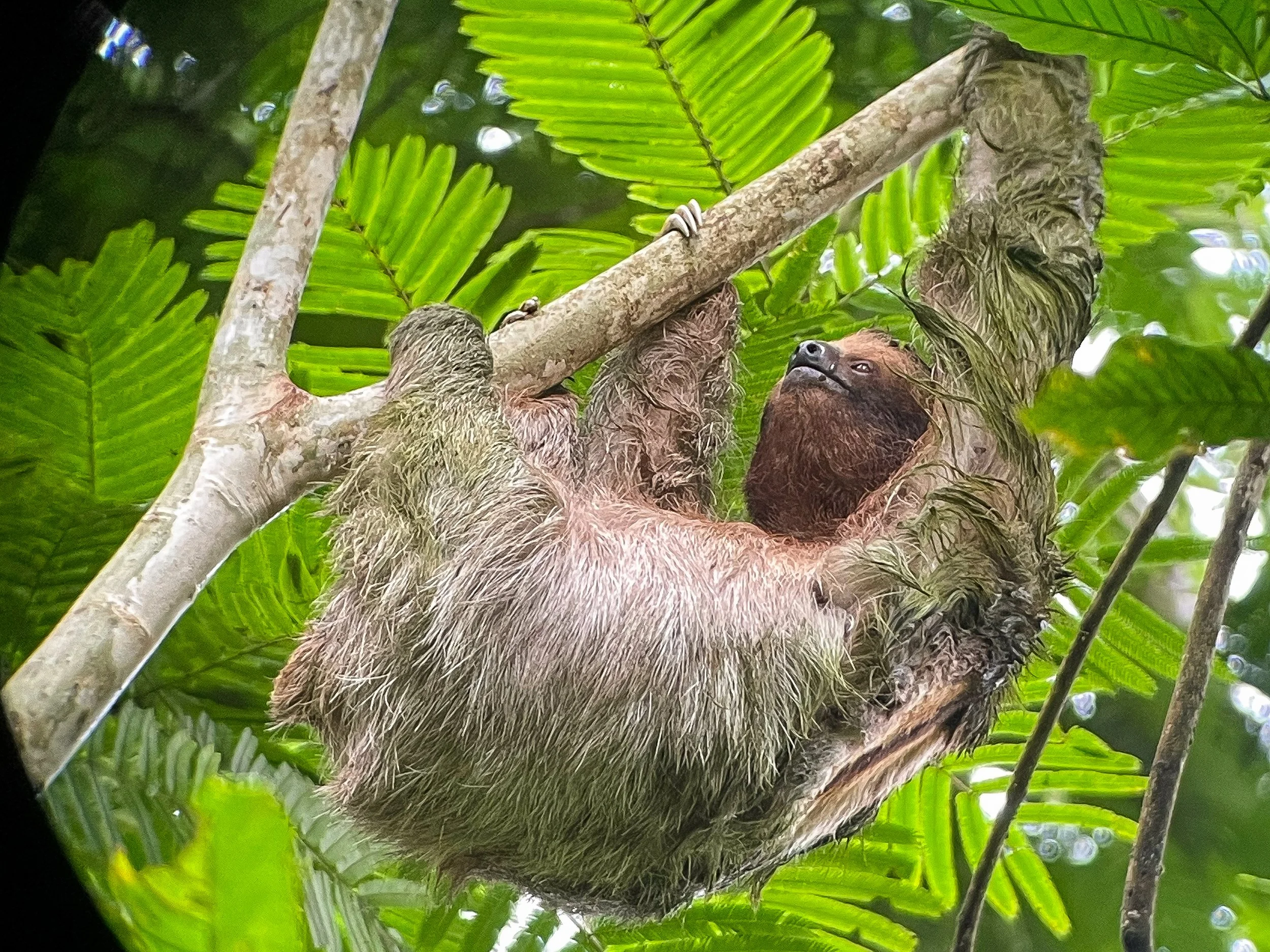
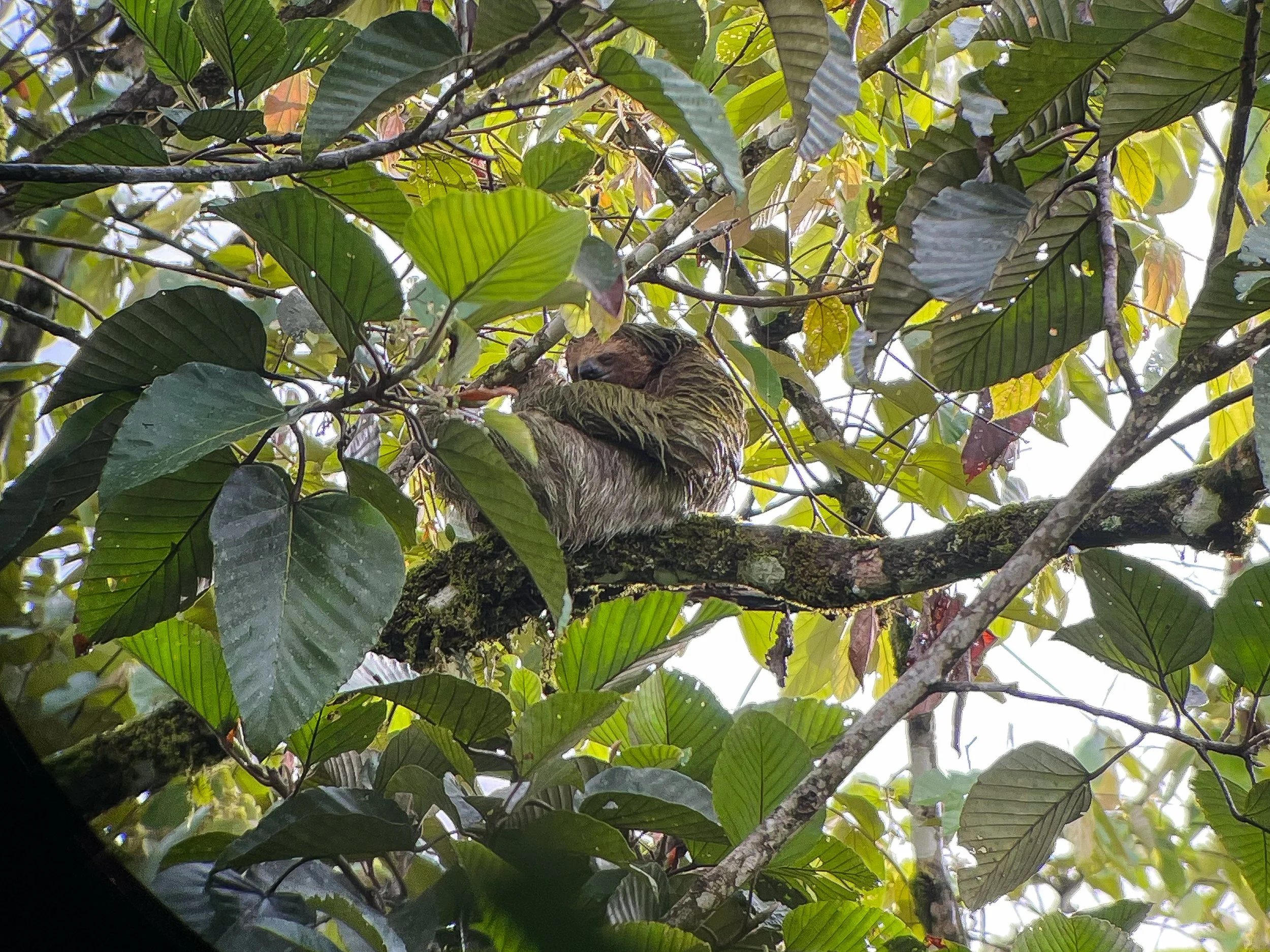
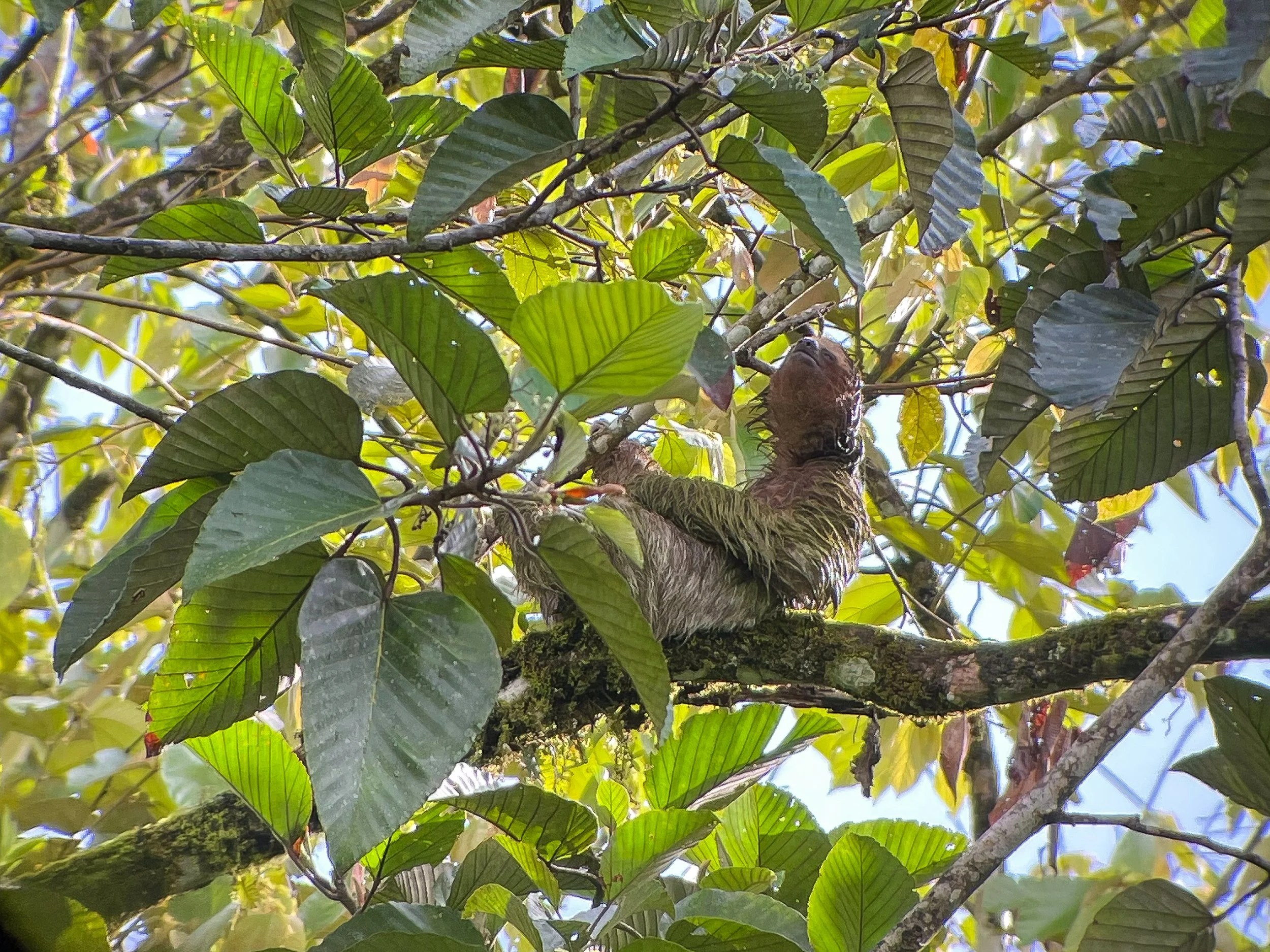
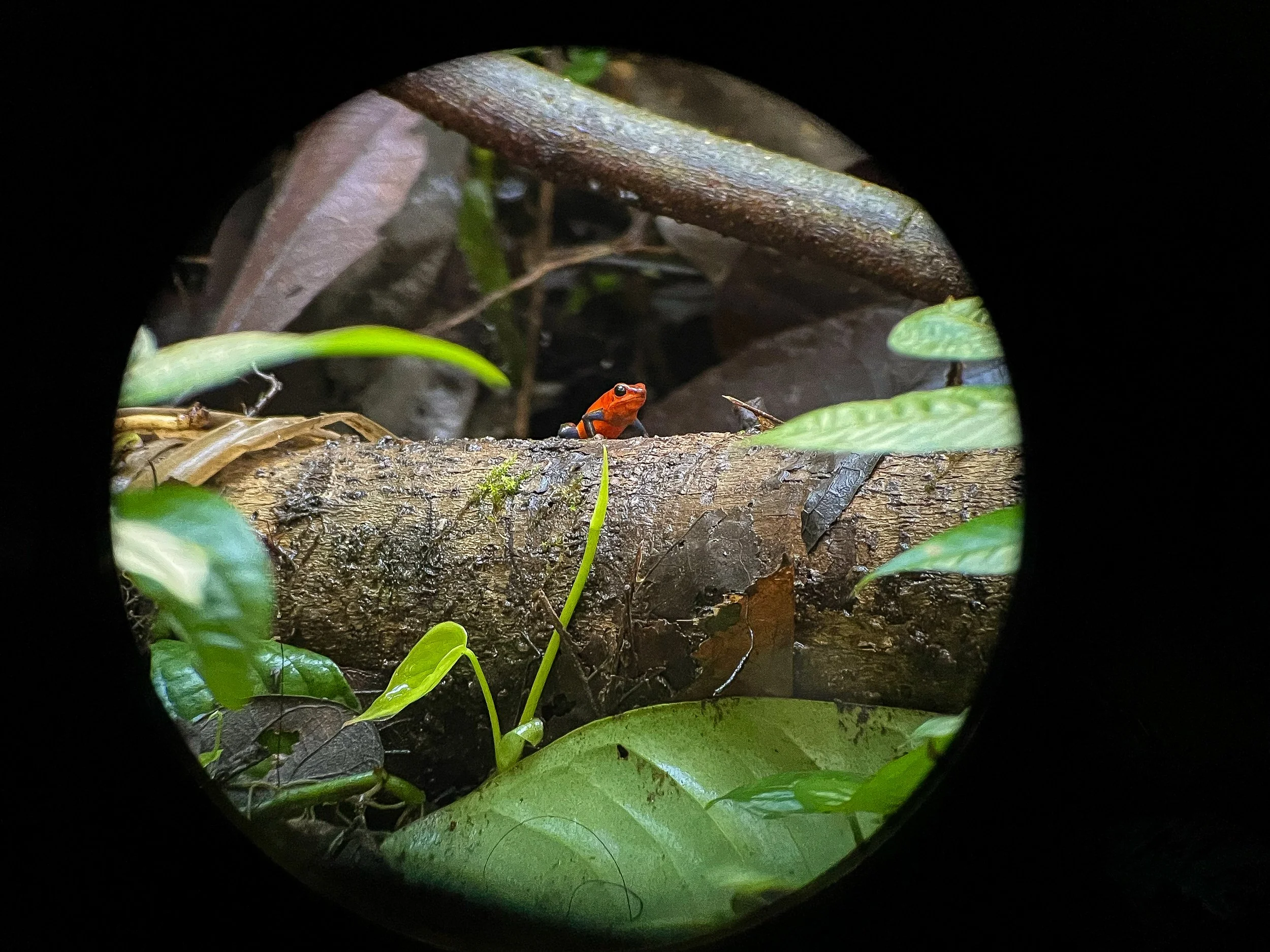
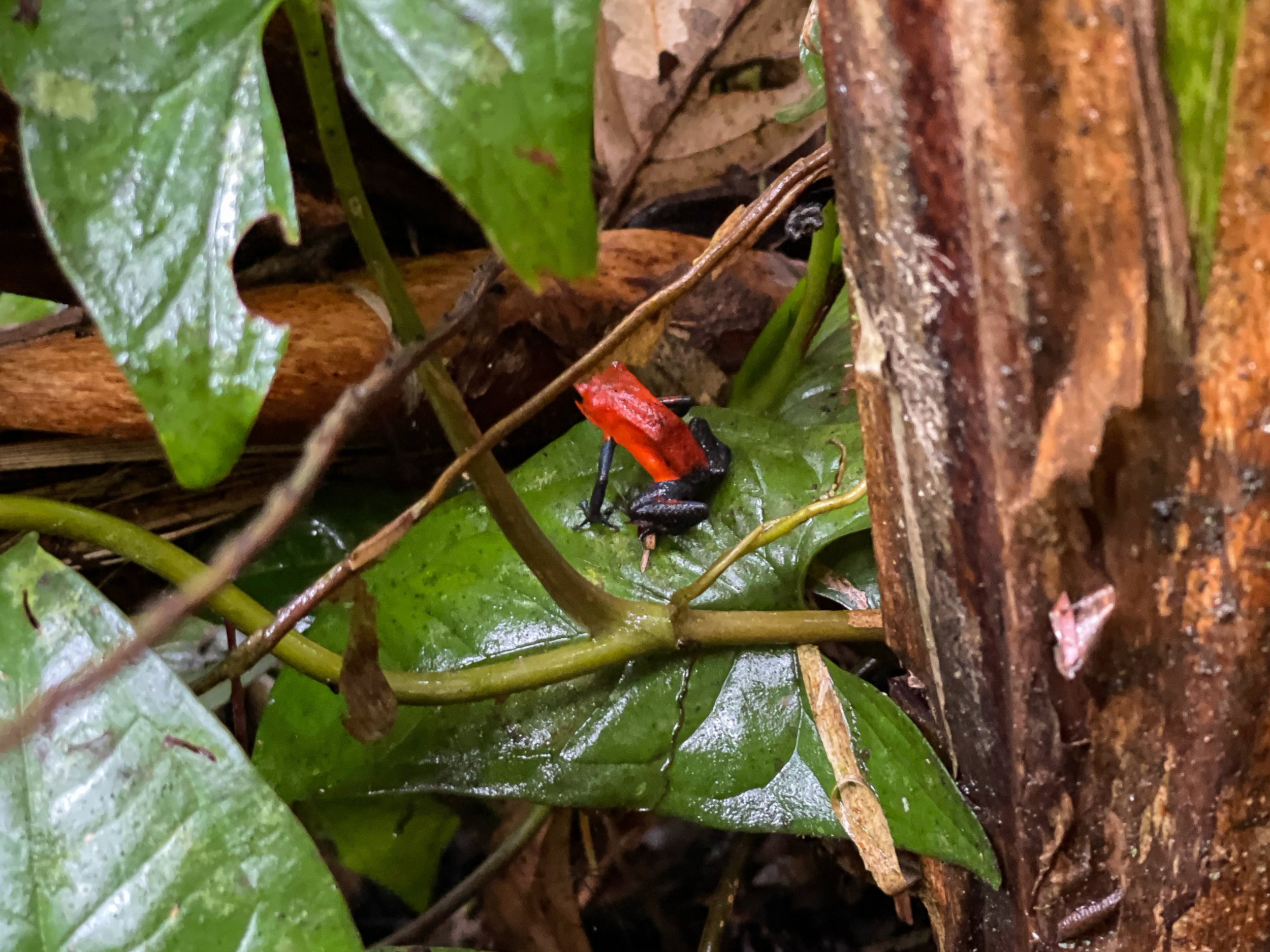
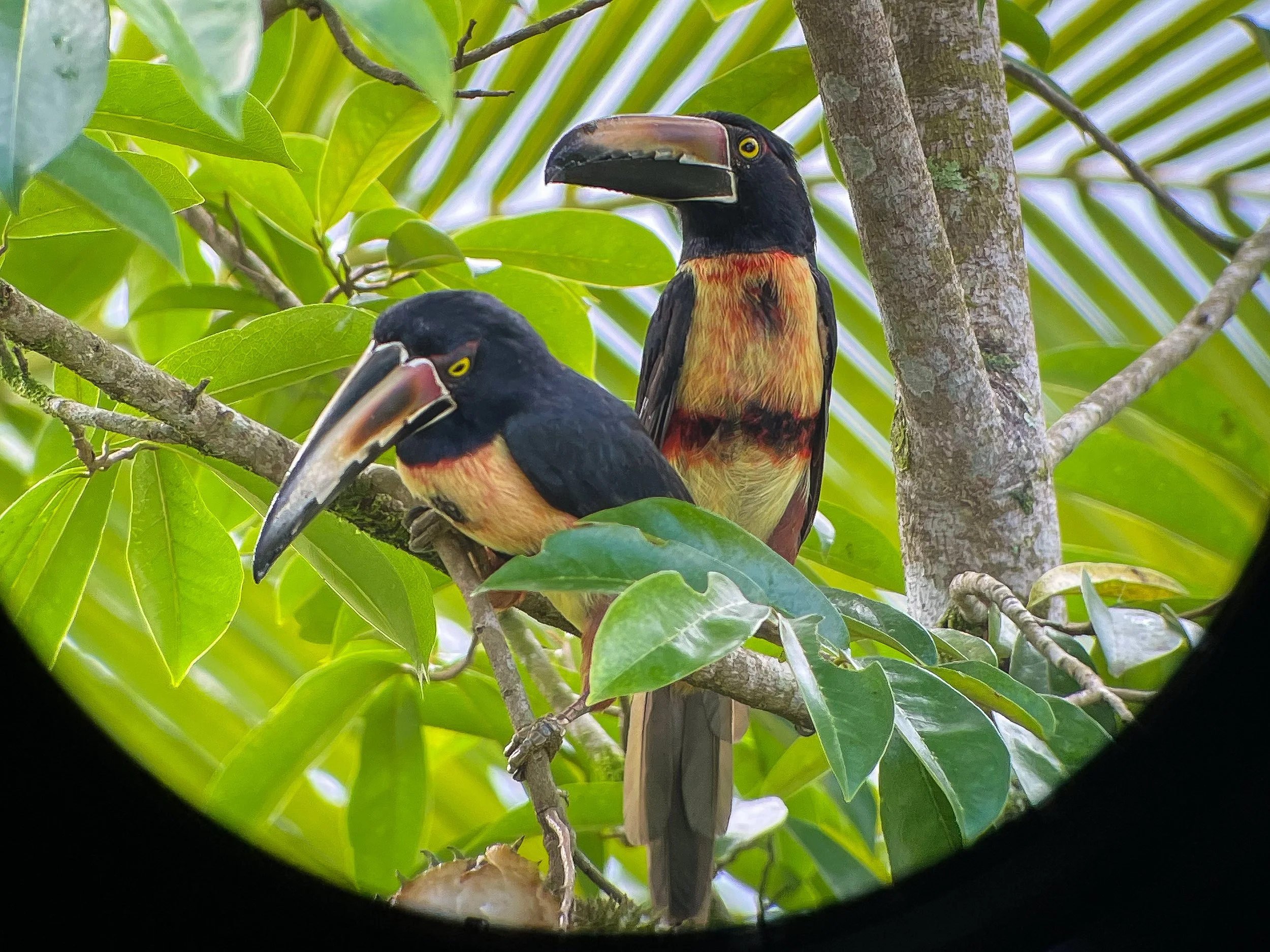
Sloth’s Territory is a nature preserve and protected habitat where sloths freely roam. Led by a guide, we walked through the preserve’s trails spotting several sloths climbing trees, sleeping in the sun and eating leaves. We even spotted a baby sloth slowly climbing alongside its mother. In addition to sloths, we spotted toucans and tiny red and blue poison dart frogs.
Sloth Spotting Tips. Look for trees with large 5 pointed leaves that resemble stars. These trees are tall and thin with white and brown bark. Look for dark masses sitting on tree branches. They are often sloths curled up and sleeping.
La Fortuna
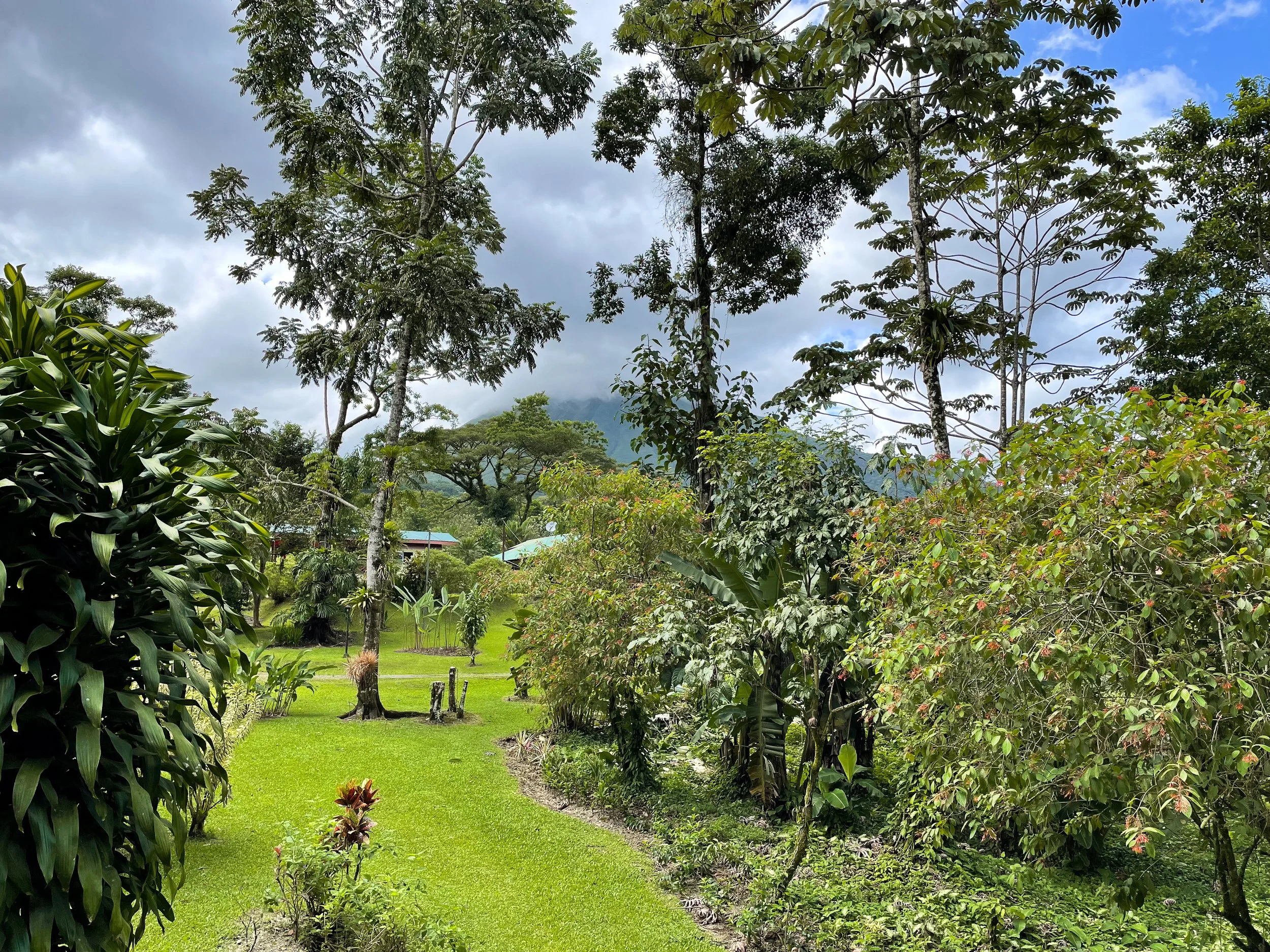
A small town at the base of the Arenal Volcano with restaurants, hotels and souvenir shops. We stayed here while exploring the nearby sights.
Brisas Arenal Hotel. An eco-hotel with individual wooden cottages, nearby nature trails and views of the Arenal Volcano. The main guest house has a restaurant that delivered us fruit bowls and coffee for breakfast and a fridge to buy beers from during the evening. Book here!
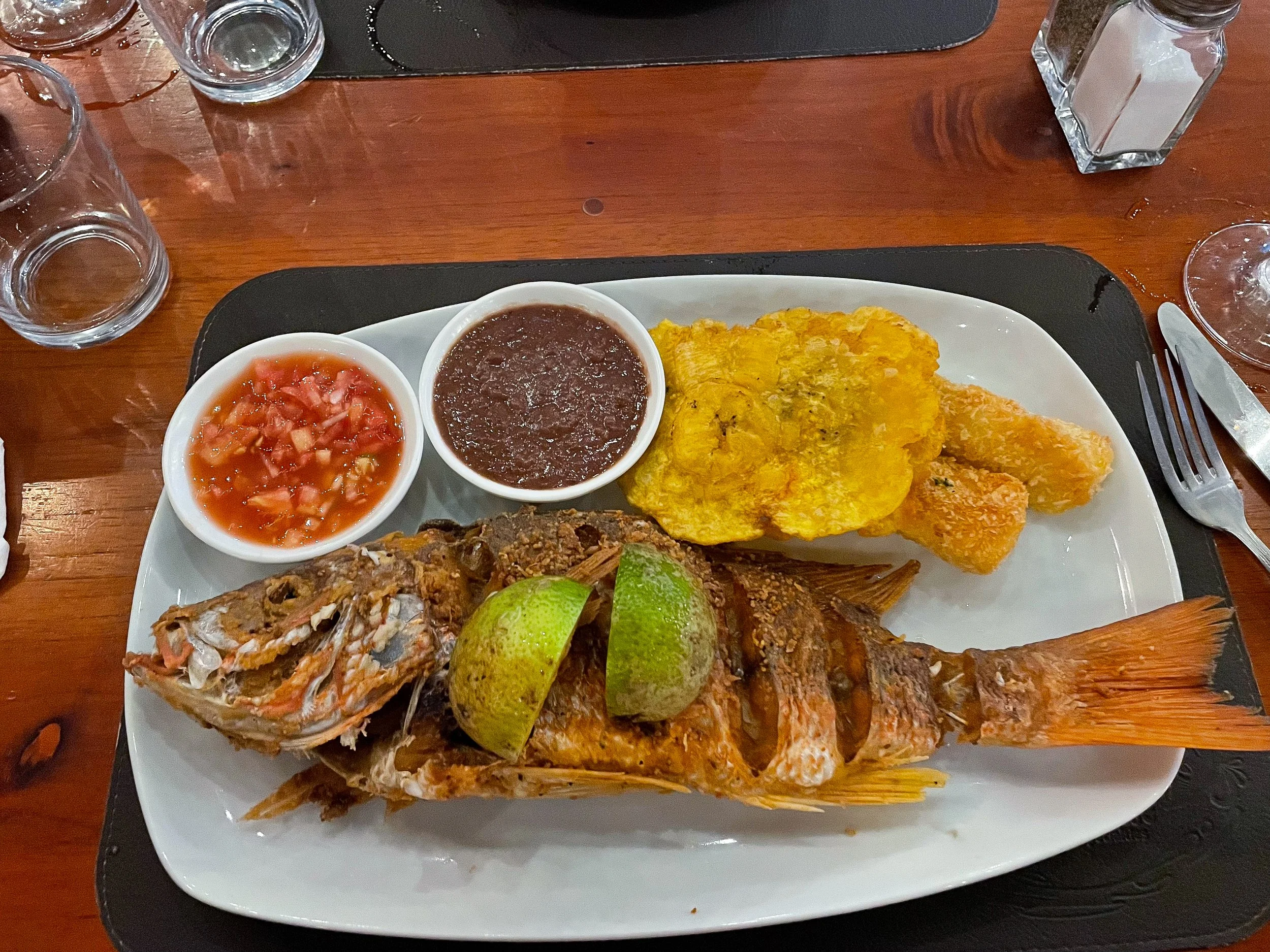
Snapper. A seafood restaurant with a tasty menu. We ordered volcano margaritas (spicy margs), seared tuna, baby shrimp arepas, a whole fried snapper, coconut seafood stew and tres leches.
On The Road
After leaving La Fortuna, we began our drive to Manuel Antonio stopping at a scenic overlook for lunch, to see a crocodile infested river and for a sunset dinner on the beach.
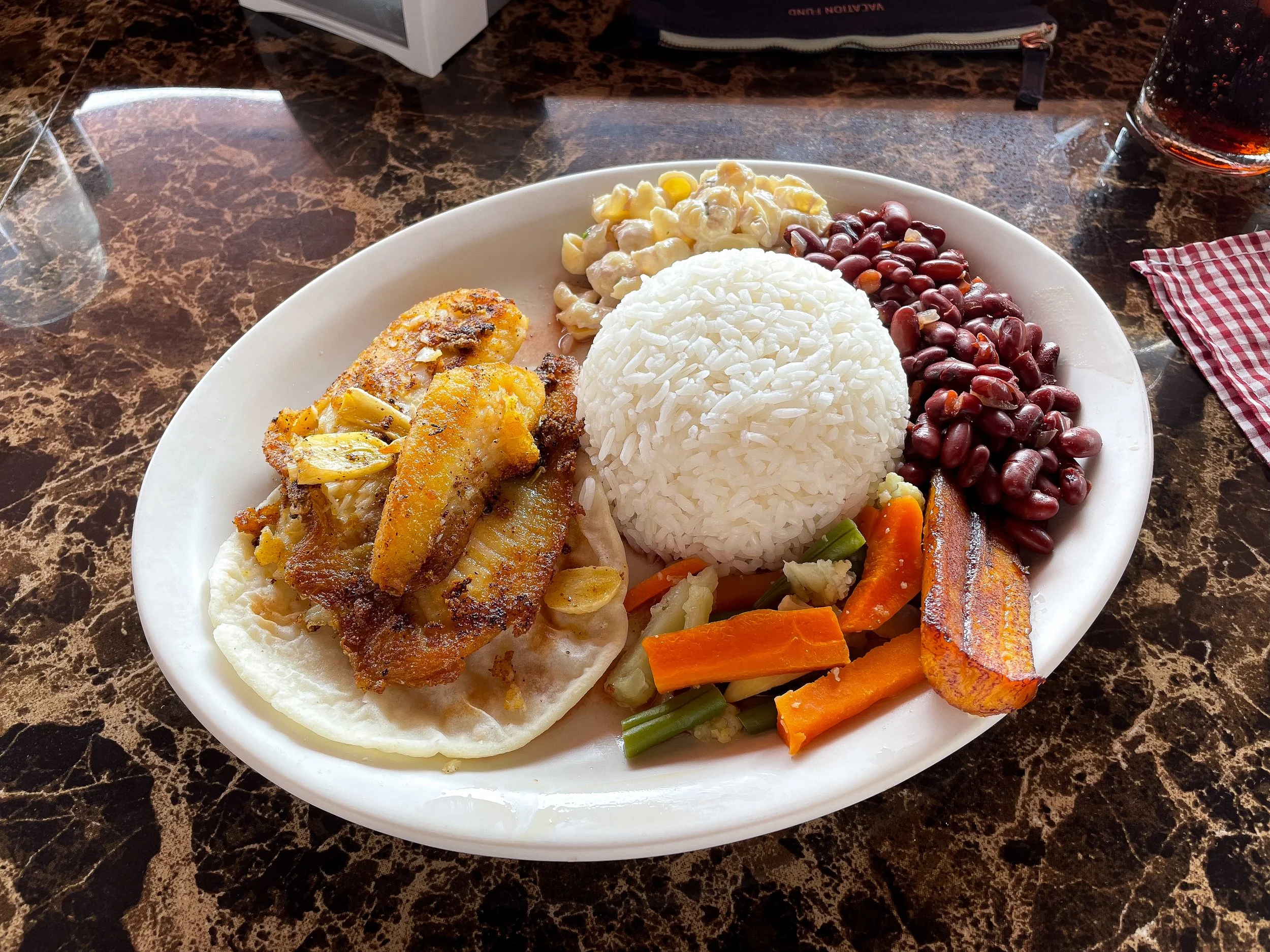
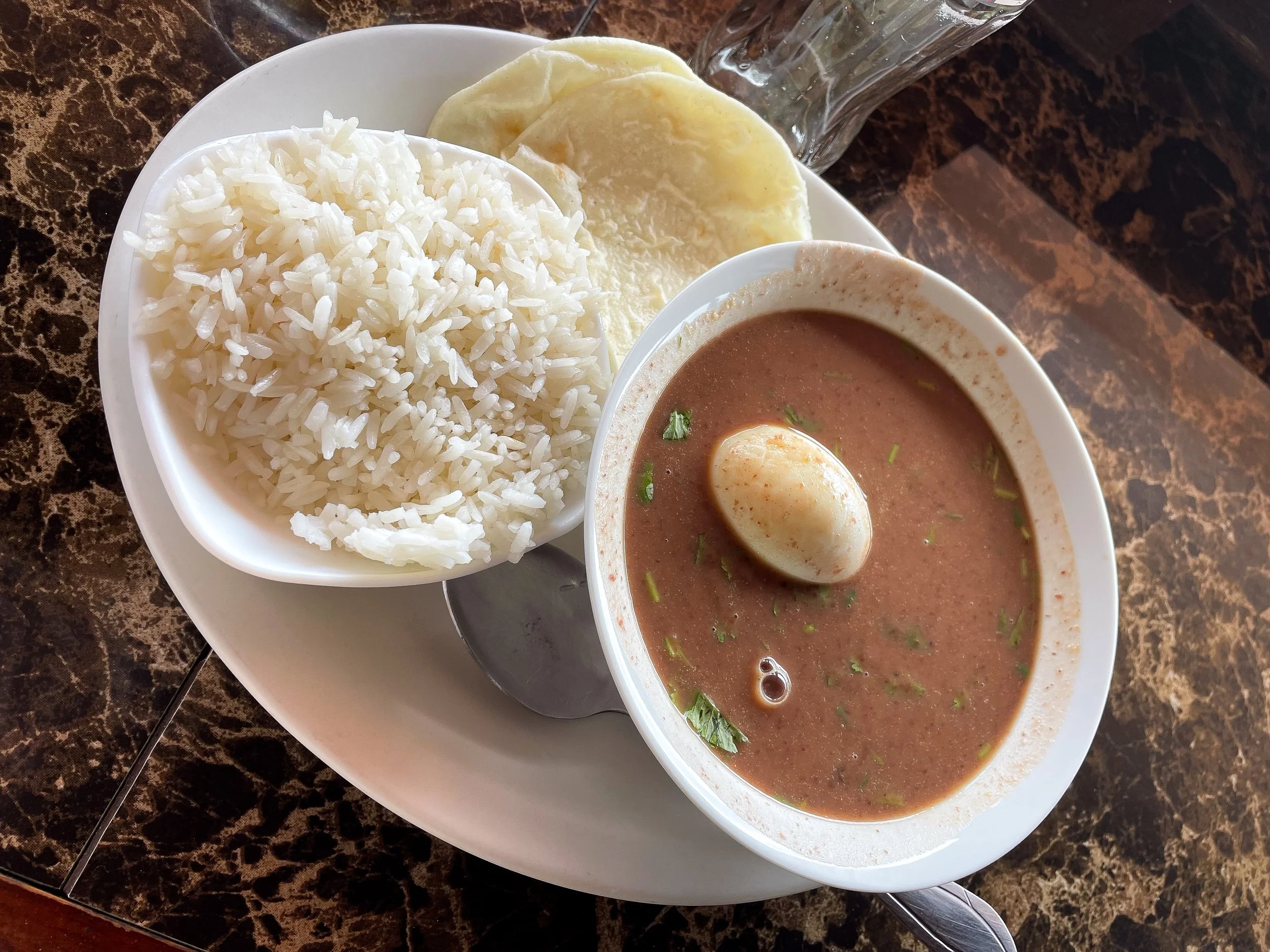
La Casita del Café. A roadside restaurant perched on a cliff with panoramic views of the lush and rugged mountainous landscape. We shared two common Costa Rican dishes, Sopa Negra and Casado.
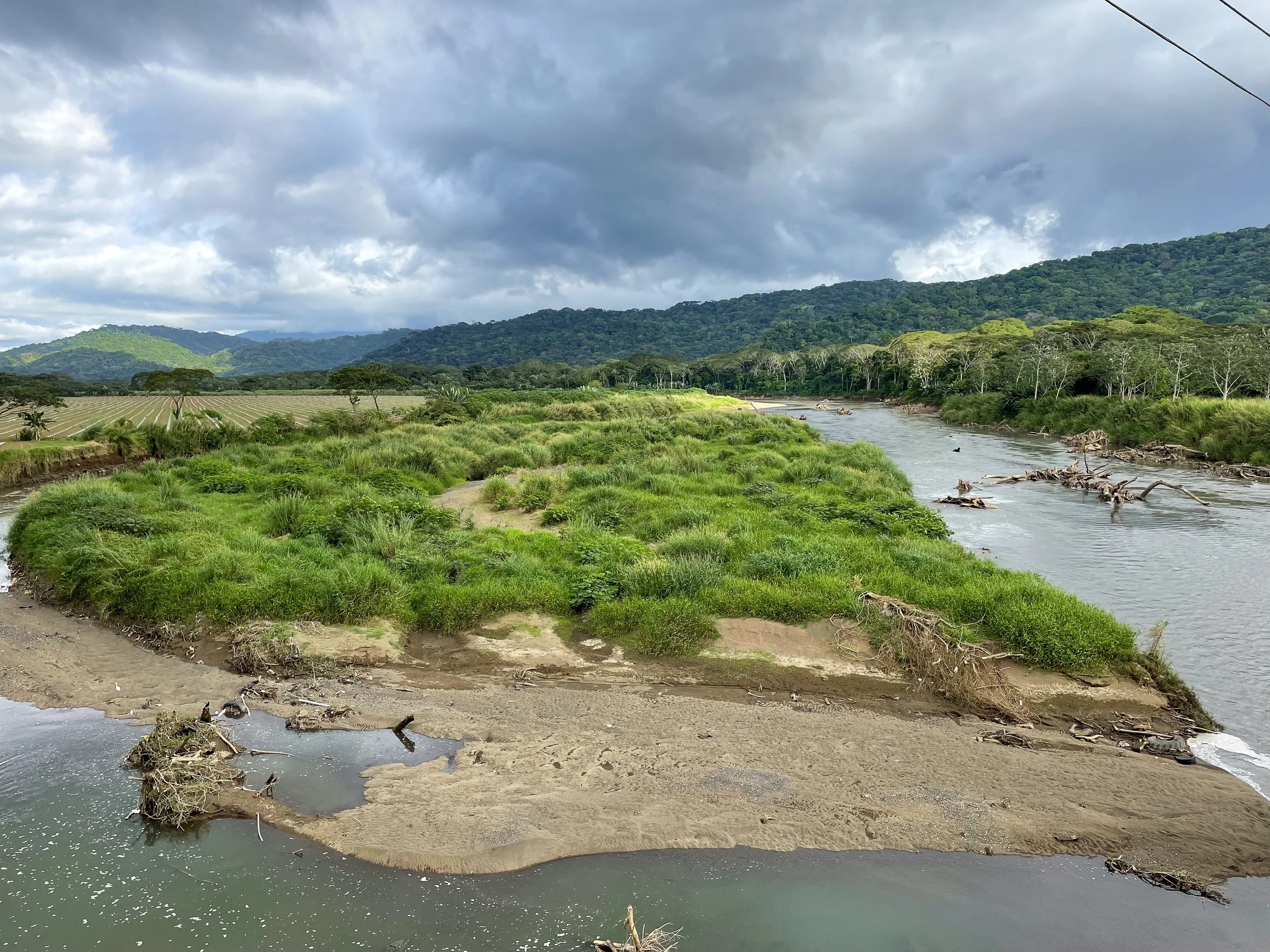
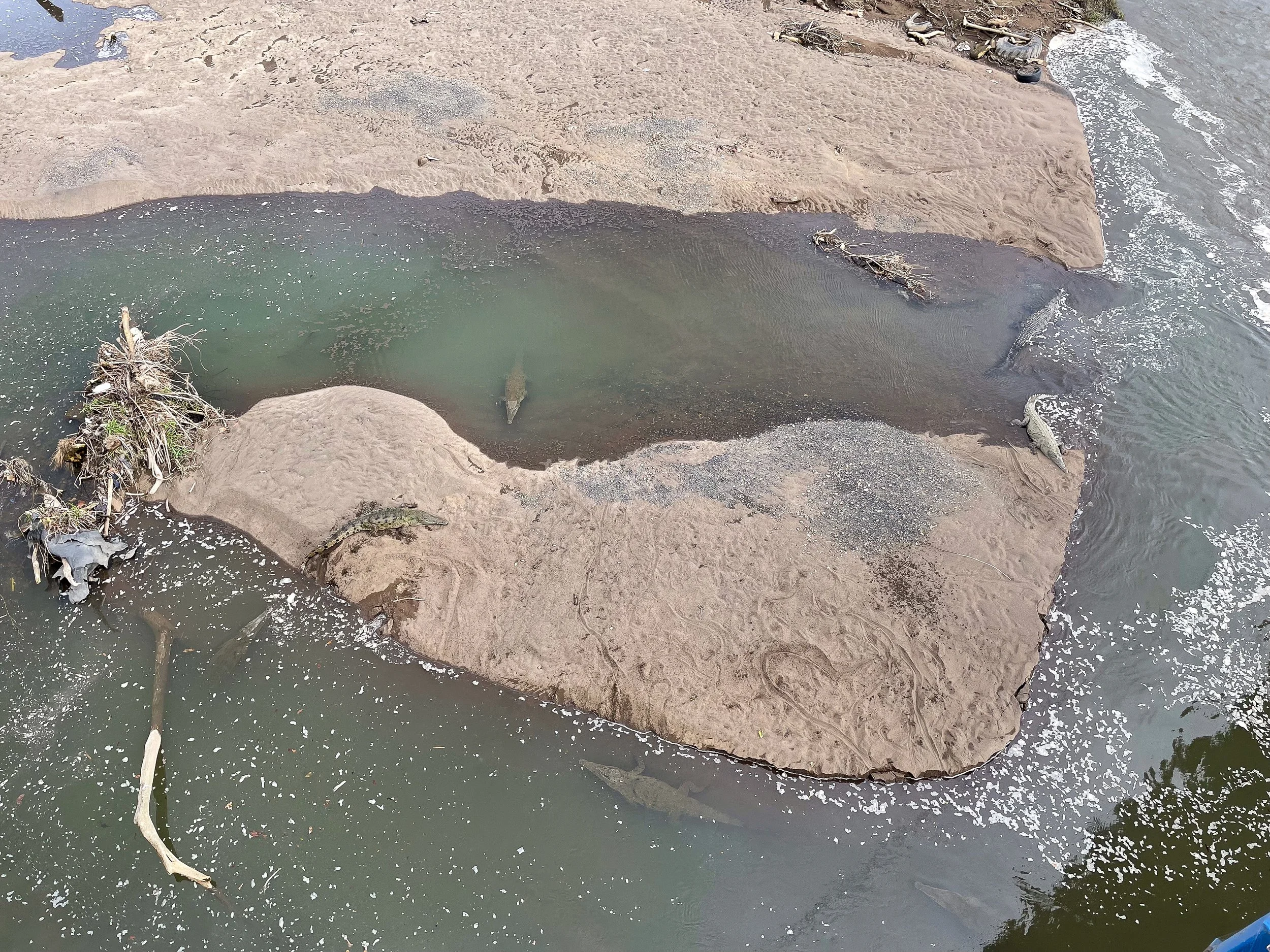
Río Tarcoles. A river on the route to Manuel Antonio known for its massive crocodiles. We parked at a souvenir stand and walked to the bridge overlooking the river. From here we saw dozens of 12ft long crocodile swimming and resting along the islands and banks of the river.
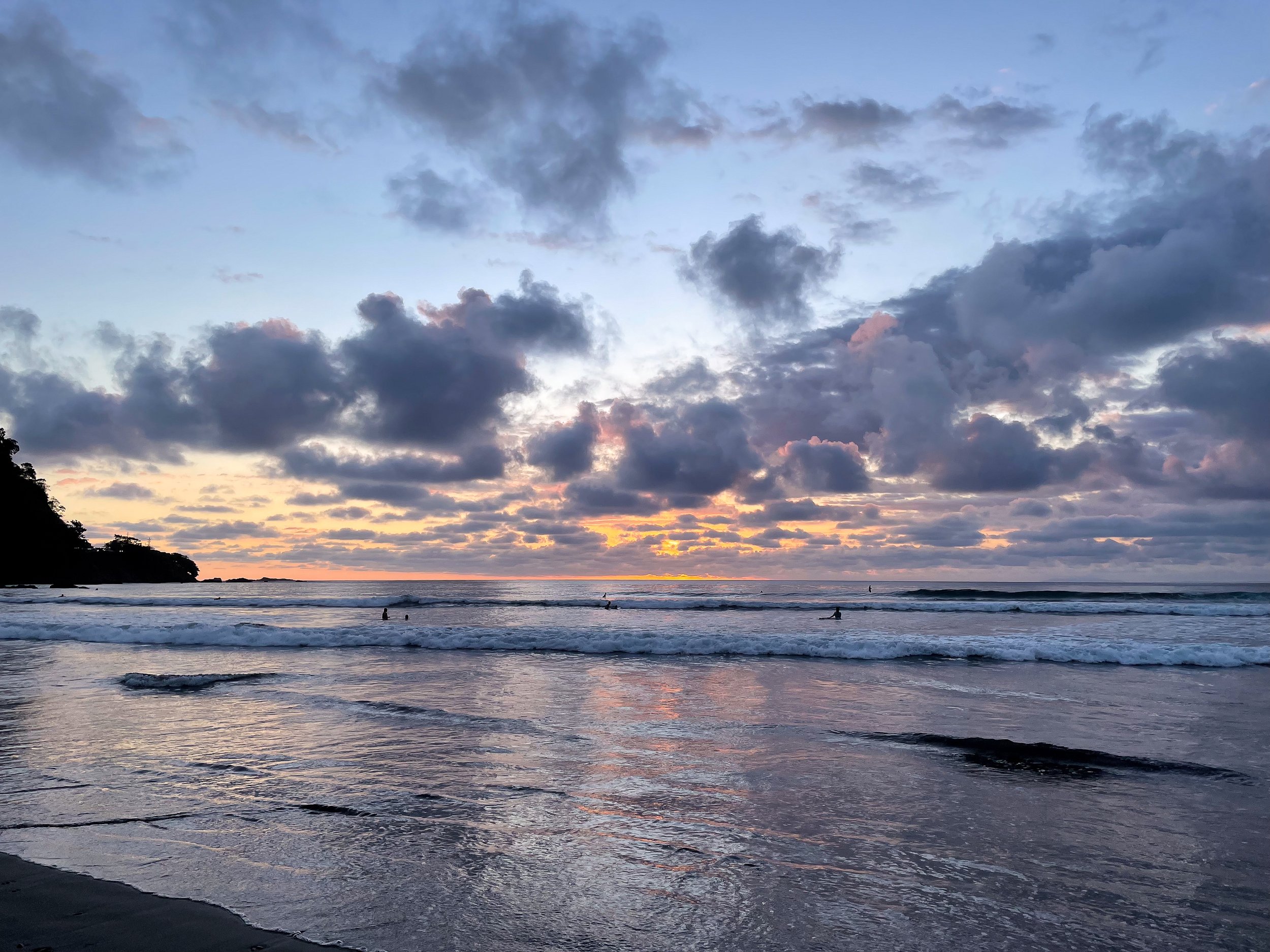
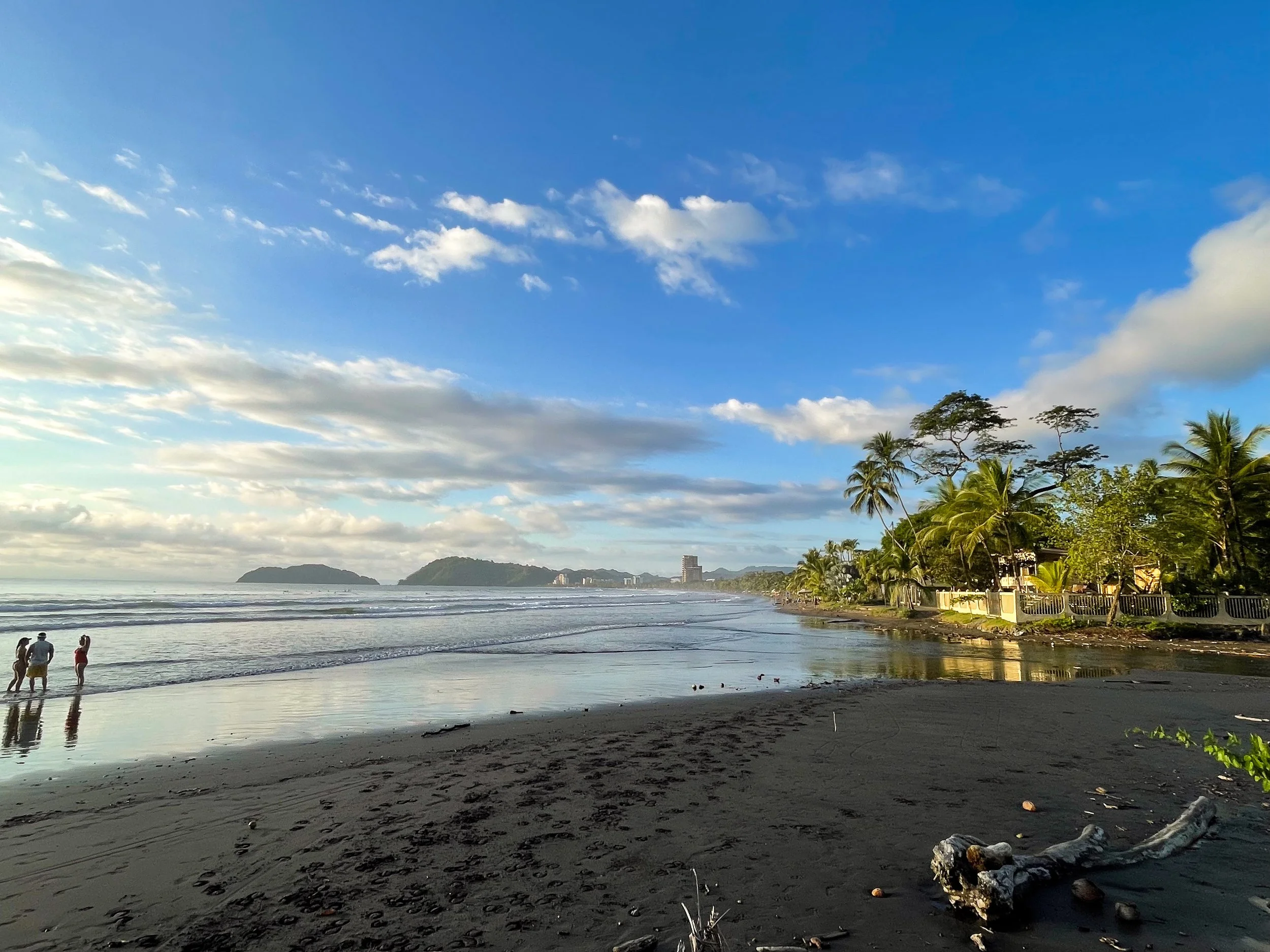
Jacó Beach. A beach town with a lengthly palm lined beach with a dark sandy shore, surf schools and waterfront restaurants. We enjoyed a sunset dinner at a spot called Tiki Bar. Come for the fish tacos, shrimp skewers and tropical cocktails.
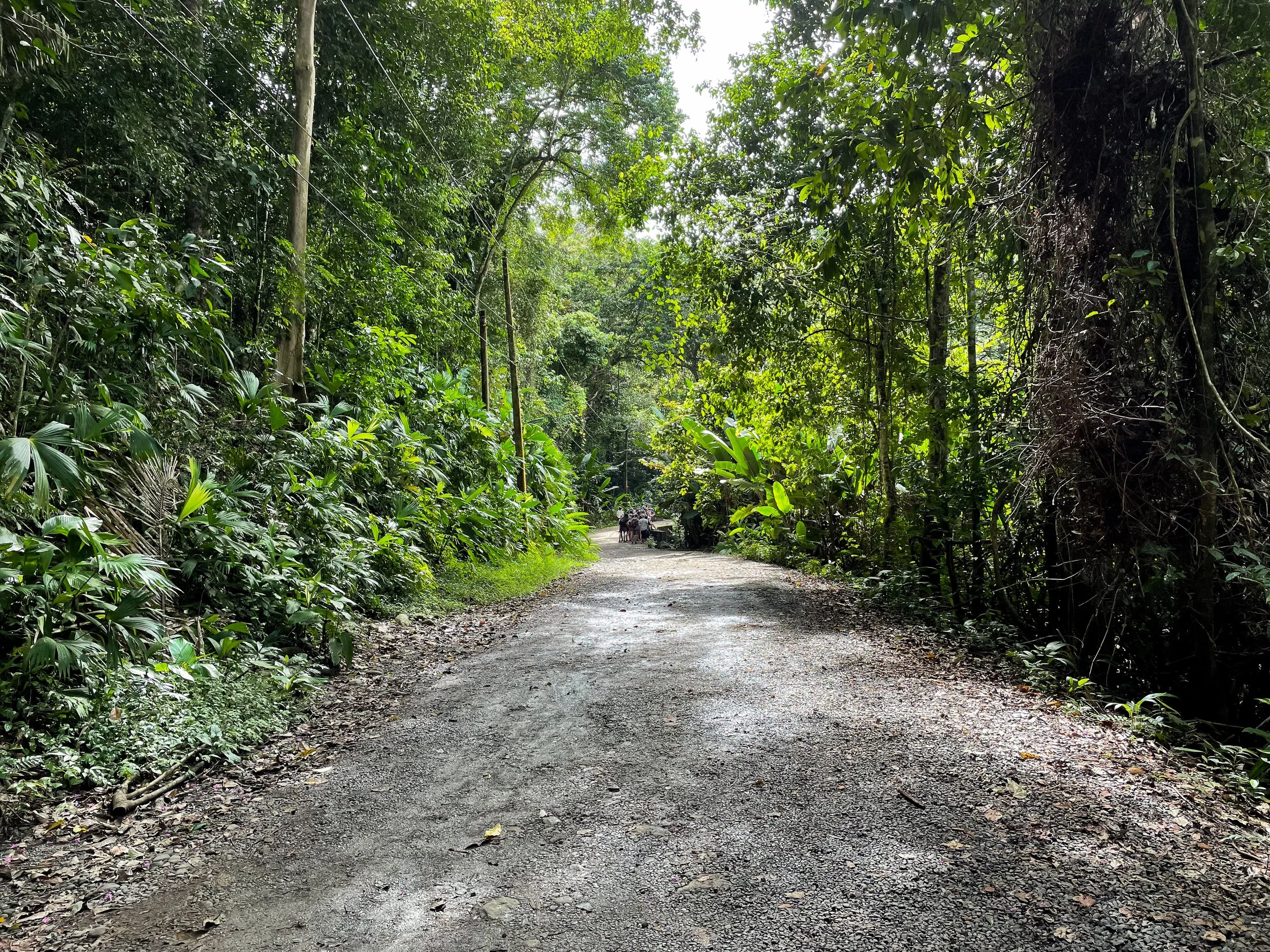
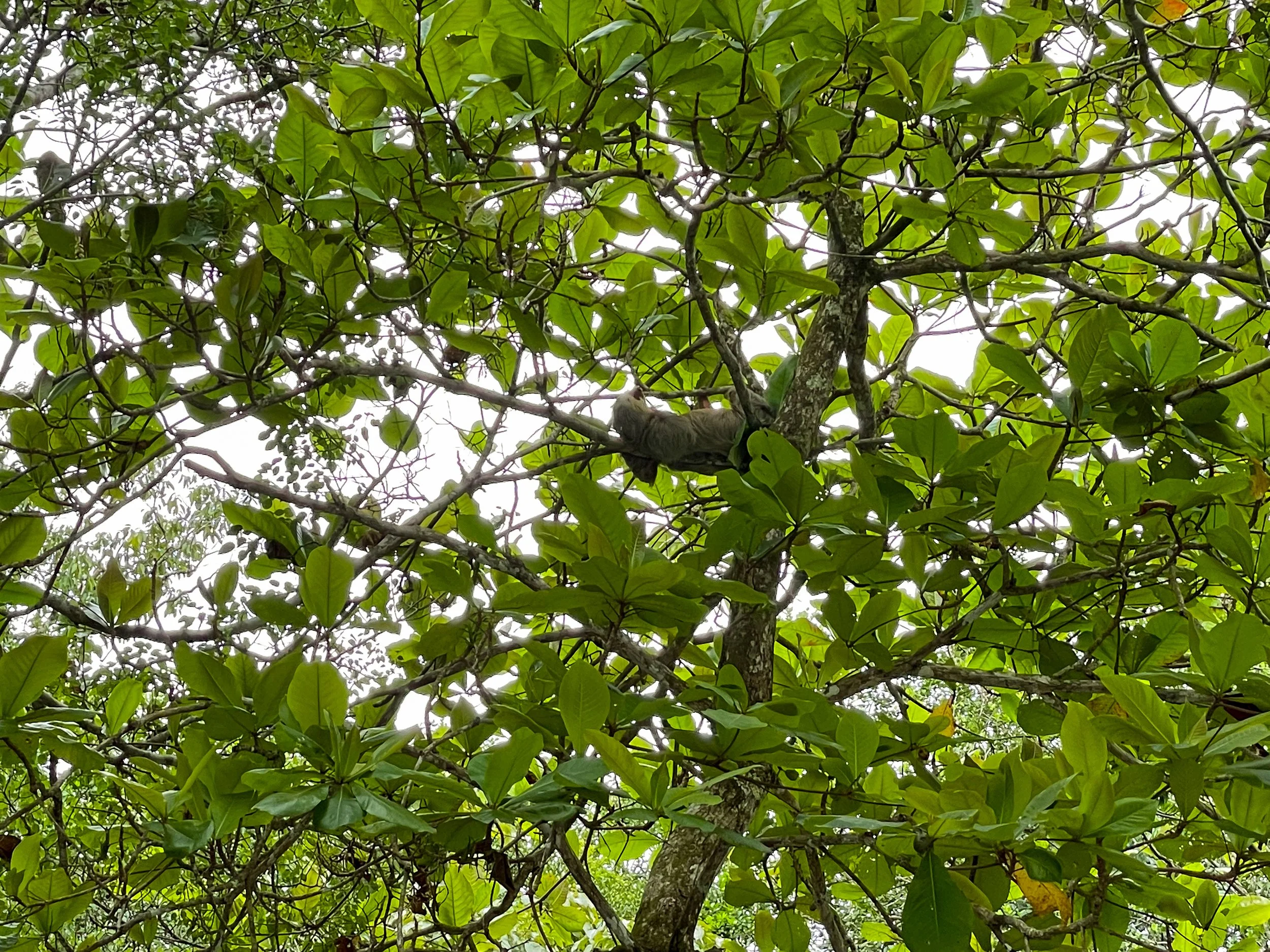
Manuel Antonio National Park
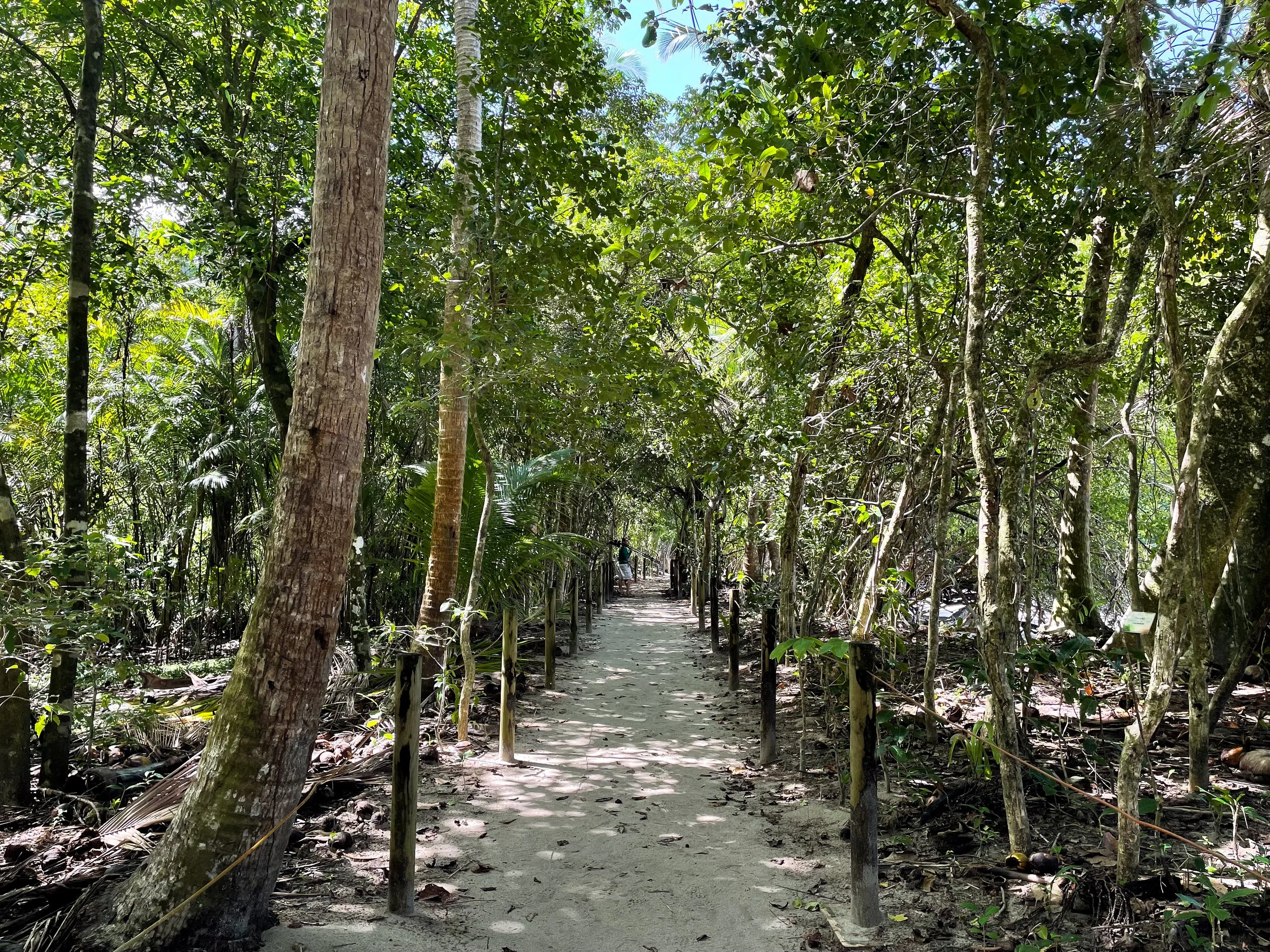
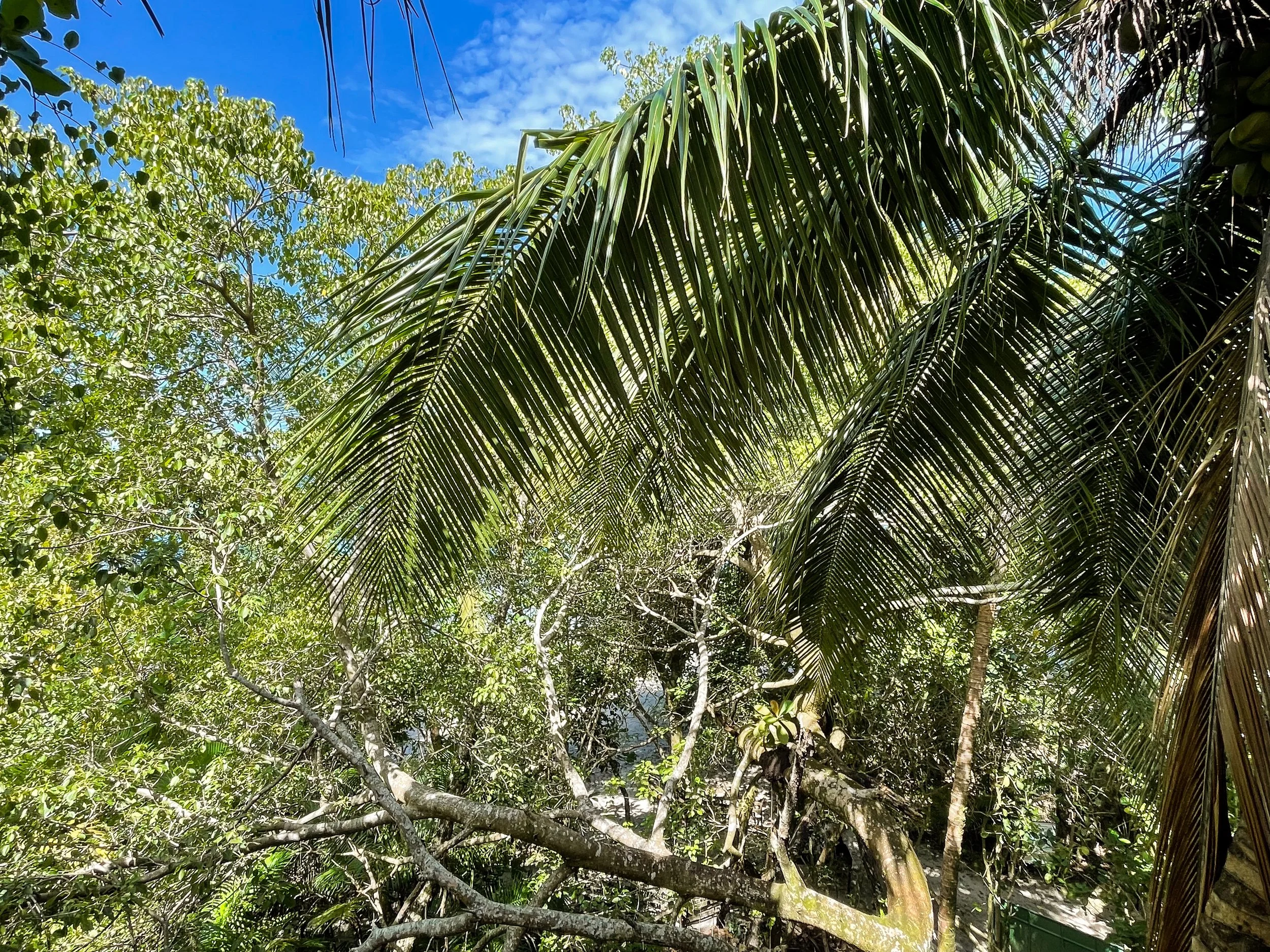
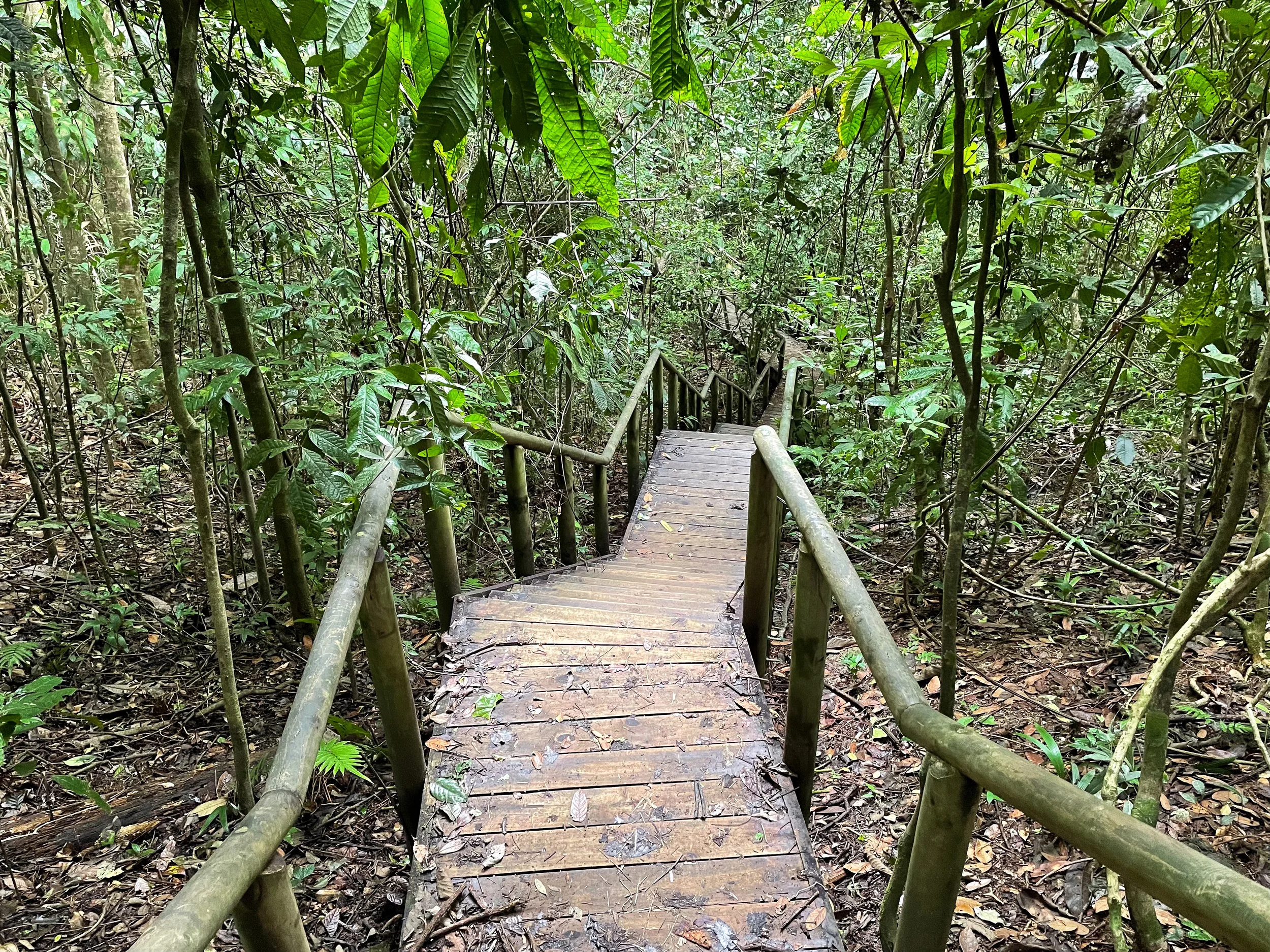
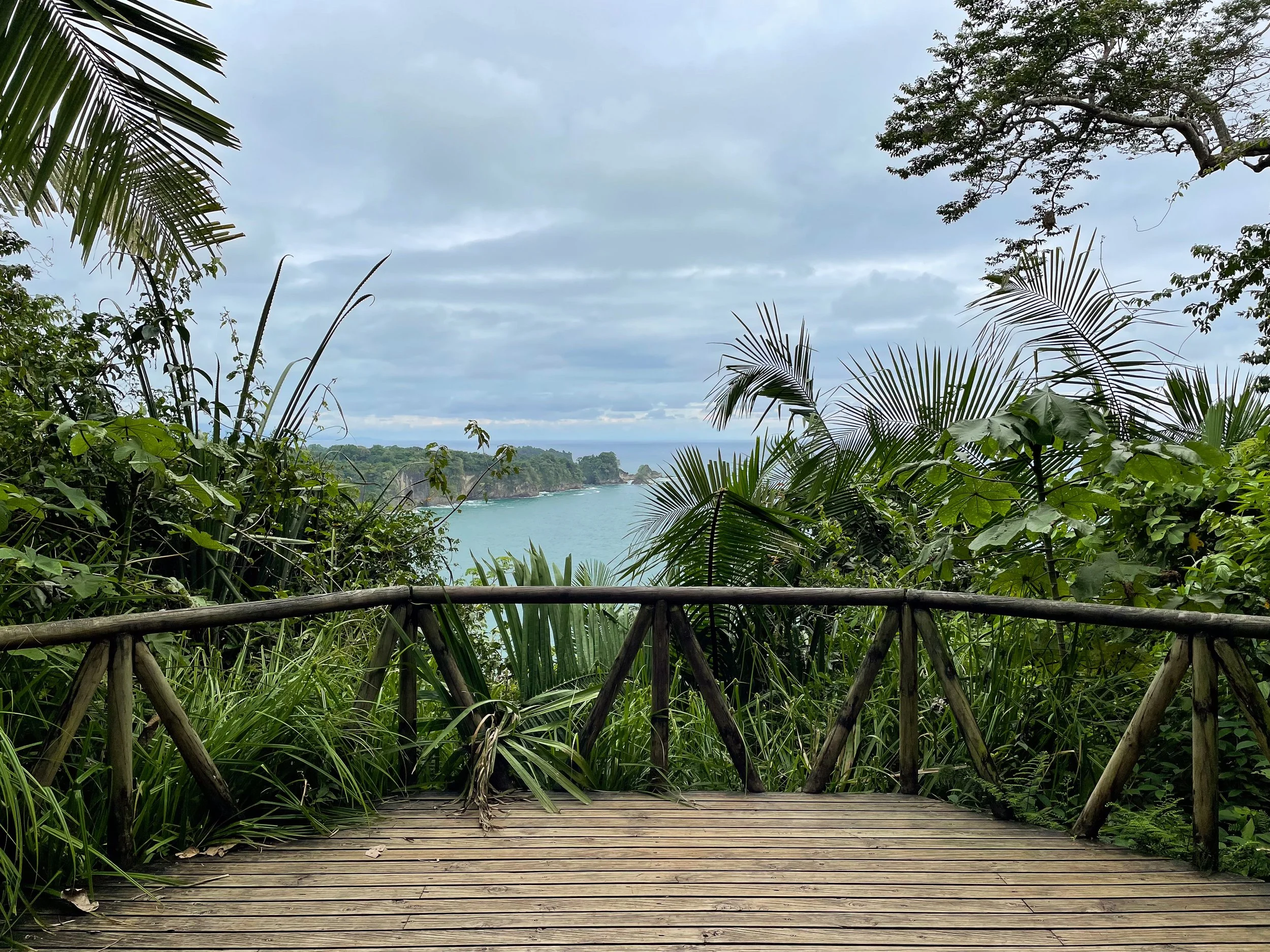
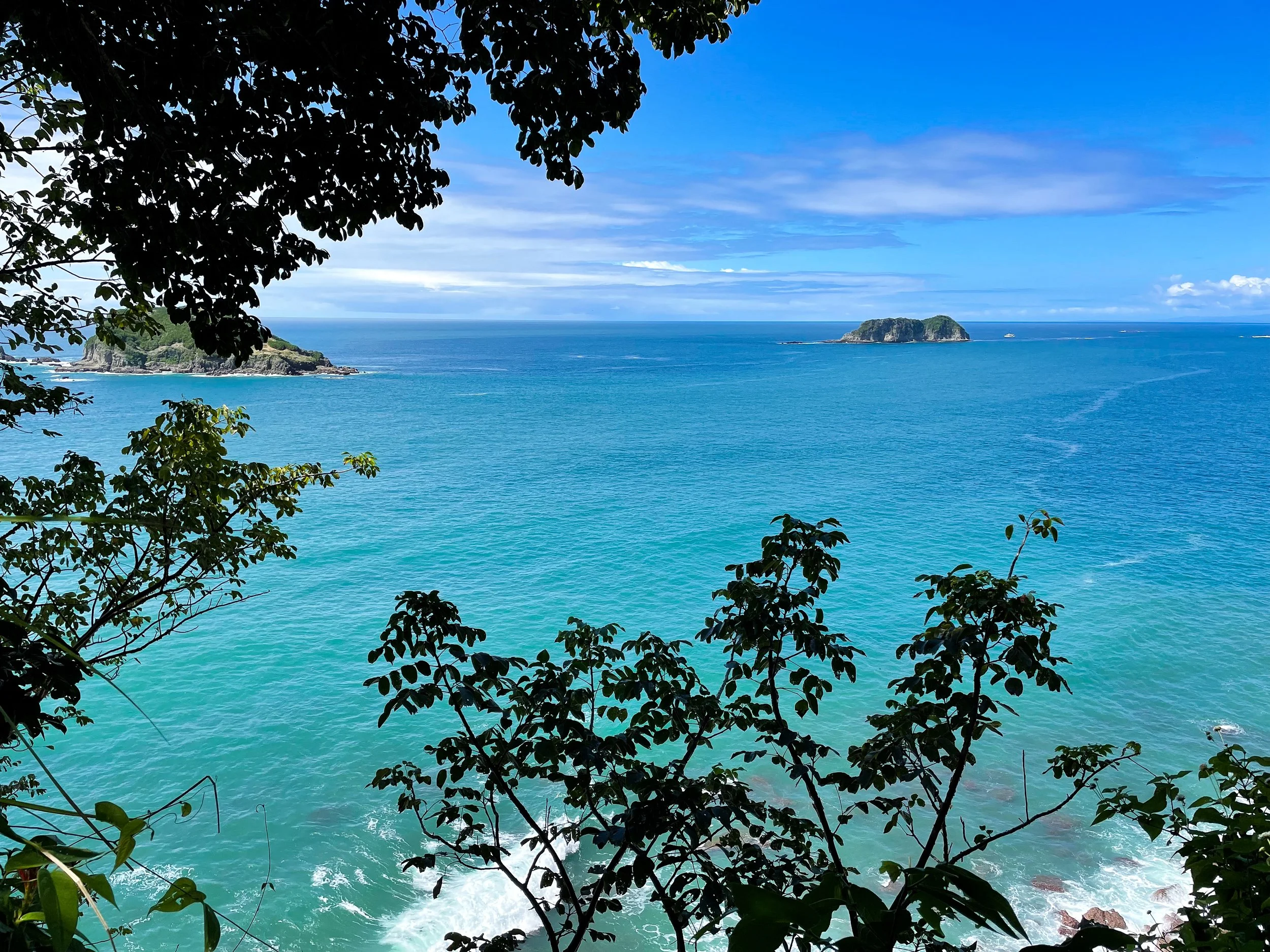
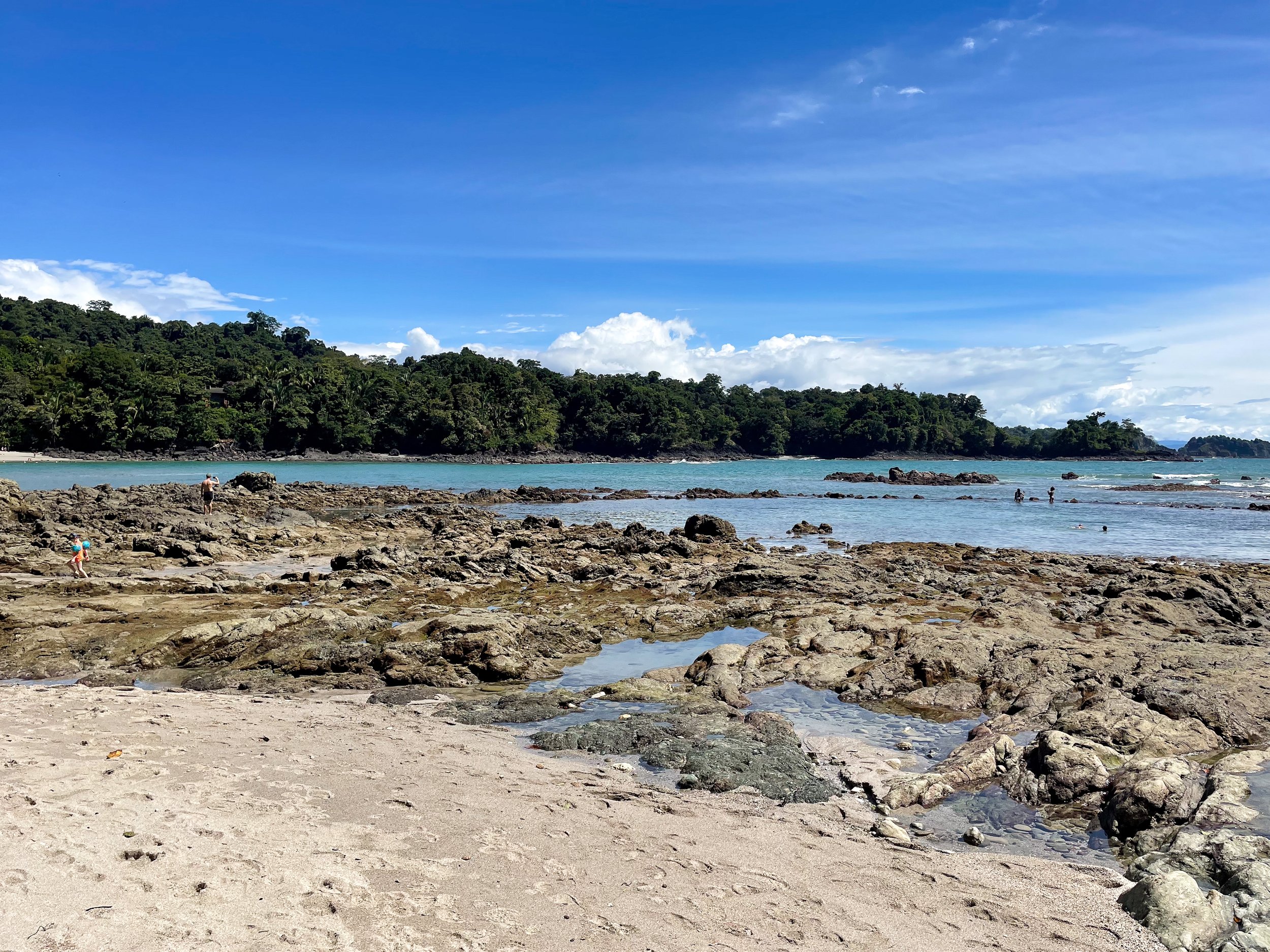
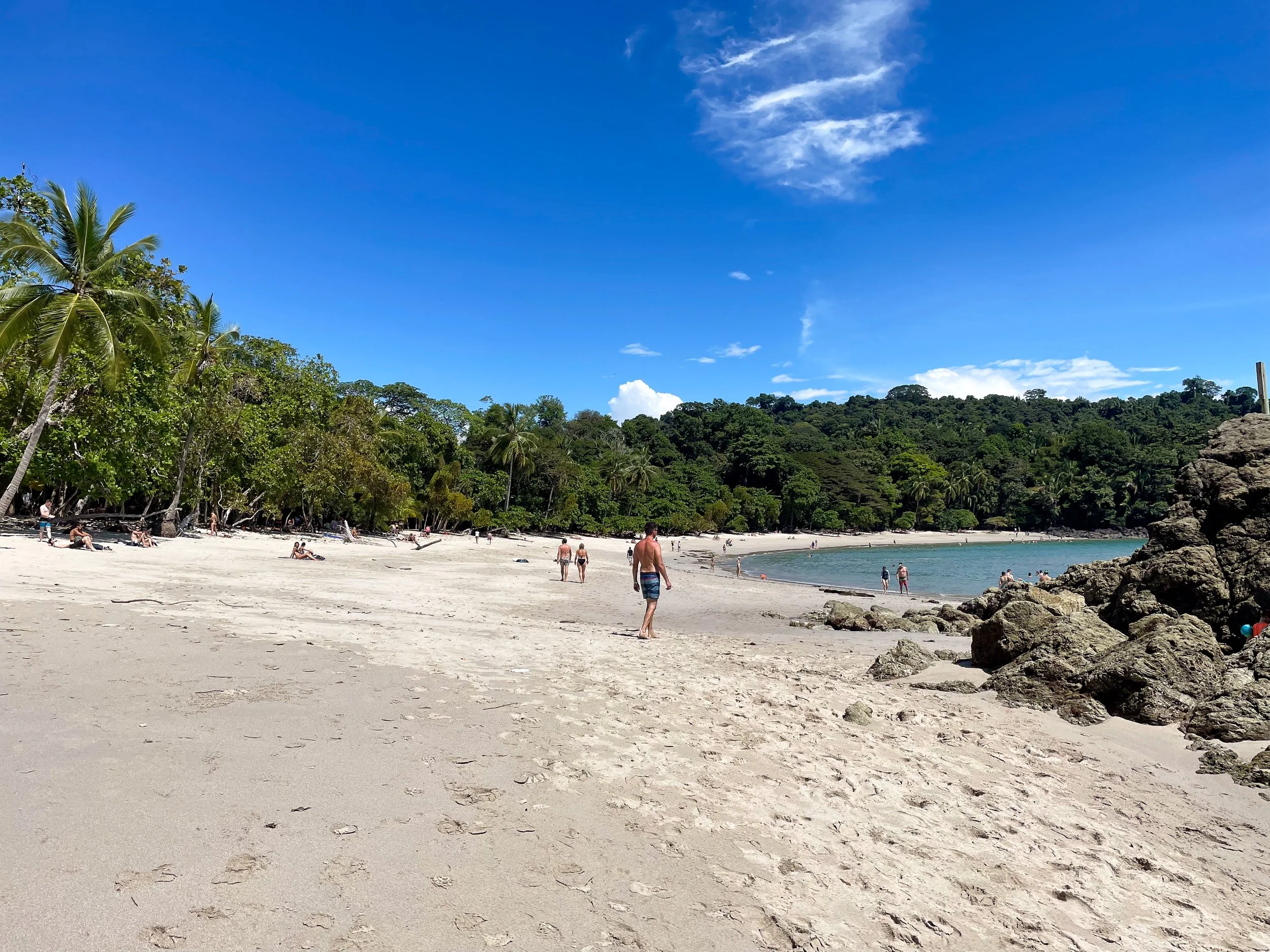
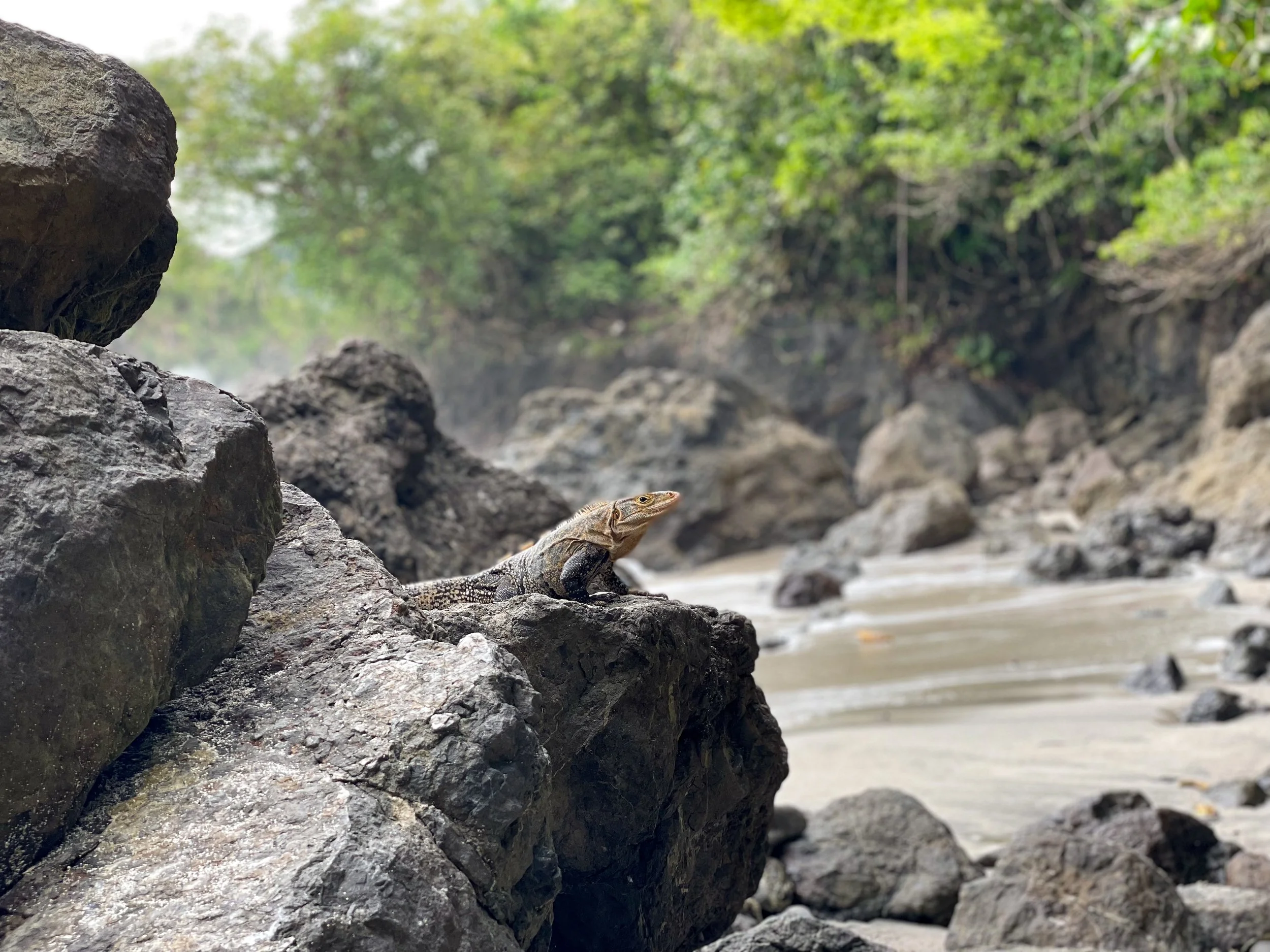
Manuel Antonio National Park is a nature preserve known for its biodiversity, rainforest, beaches, coral reefs, sloths, iguanas, spider monkeys, howler monkeys and hermit crabs. We spent an entire day in the park from opening until close hiking through the trails, visiting the beaches and spotting wildlife.
Manuel Antonio Trails
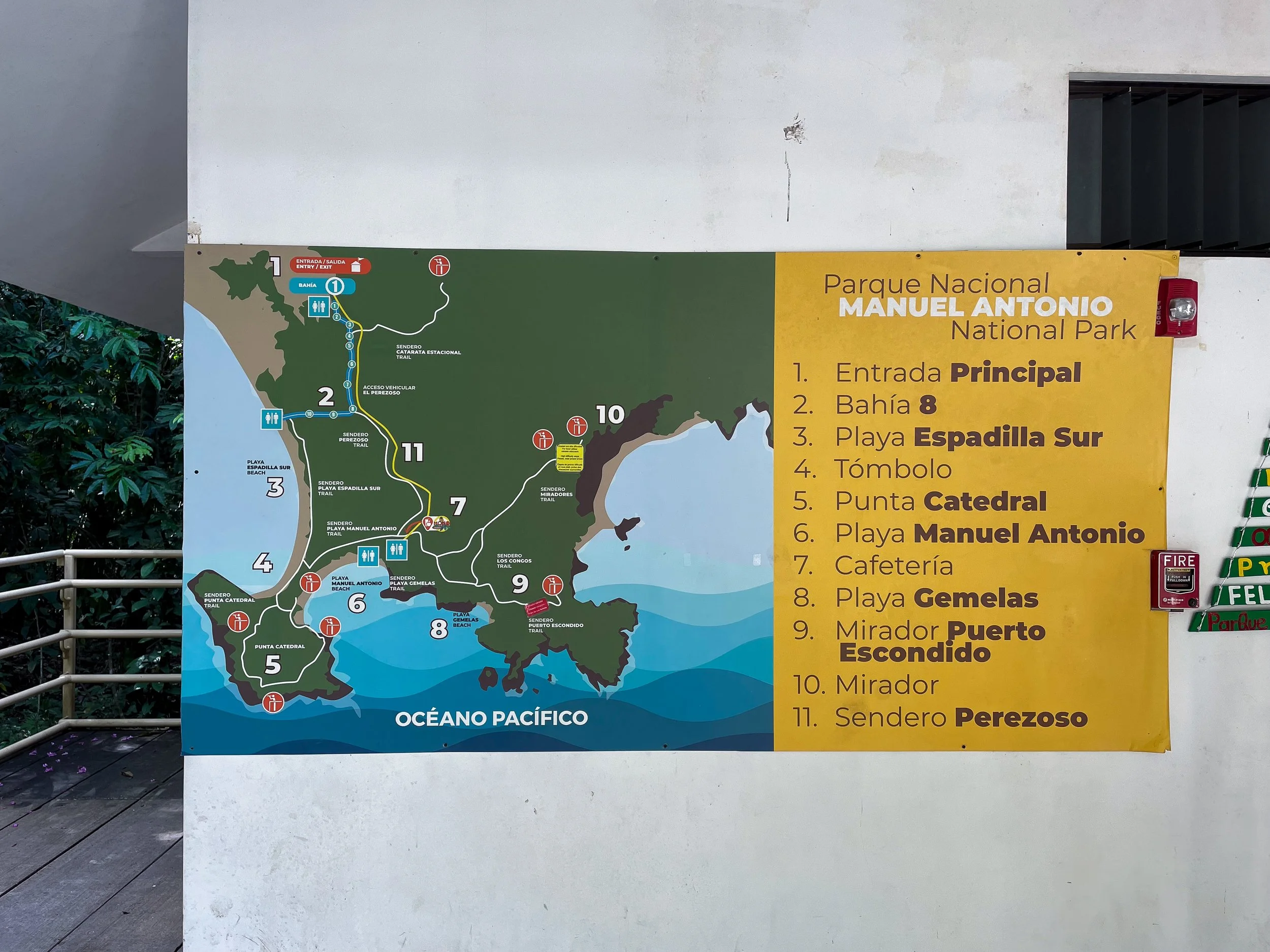
Sendero Principal. The park’s main trail. A 2.2km path that leads from the park entrance to Manuel Antonio Beach. Many guides spot sloths from here.
Sendero Perezoso (Sloth Trail). A 1.2 km trail that leads into the rainforest alongside Sendero Principal. It’s a good place to spot 2 and 3 toed sloths.
Sendero Punta Catedral. A 1.4km loop along the Tómbolo land bridge leading to the Punta Catedral Point lookout. We heard and spotted several howler monkeys here.
Sendero Playas Gemelas (Gemelas Beach Trail). A 1.6km trail off of Sendero Principal that leads to Gemelas Beach and the Escondido Beach lookout.
Sendero Mirador. A 1.3km cliffside trail that leads to Escondido Beach. It is an extension of Sendero Playas Gemelas. We couldn’t finish the trail because the boardwalk was badly damaged.
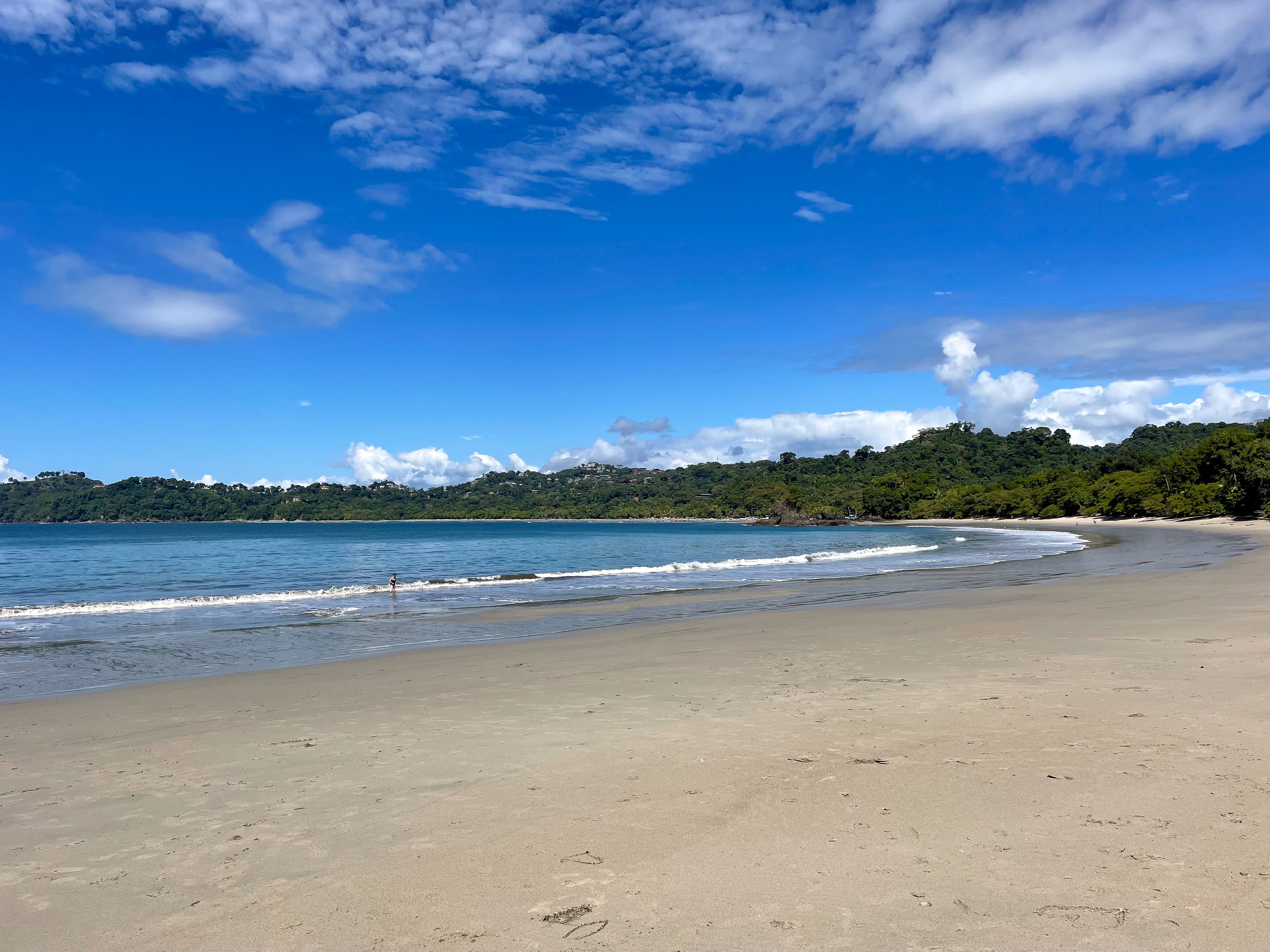
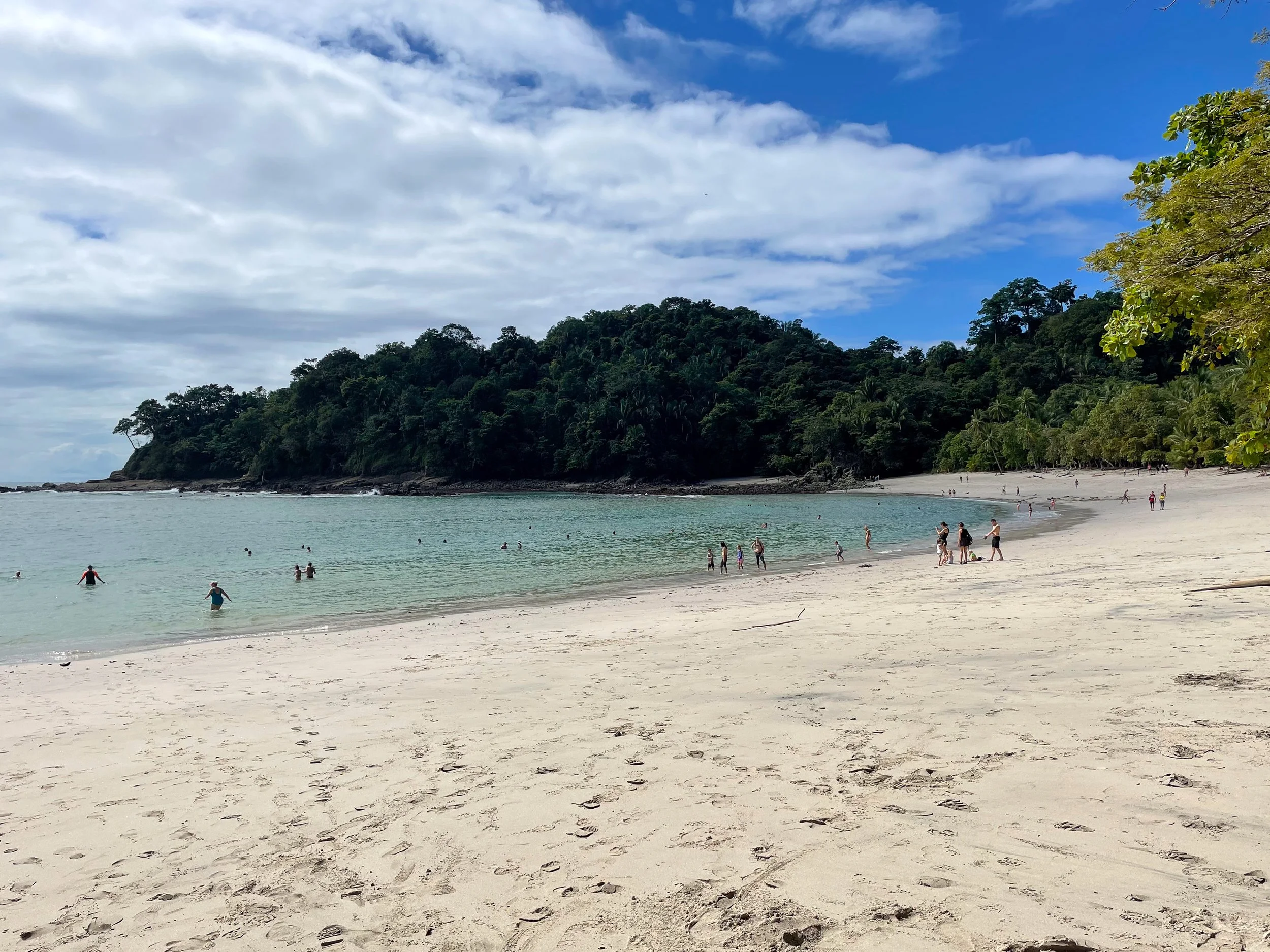
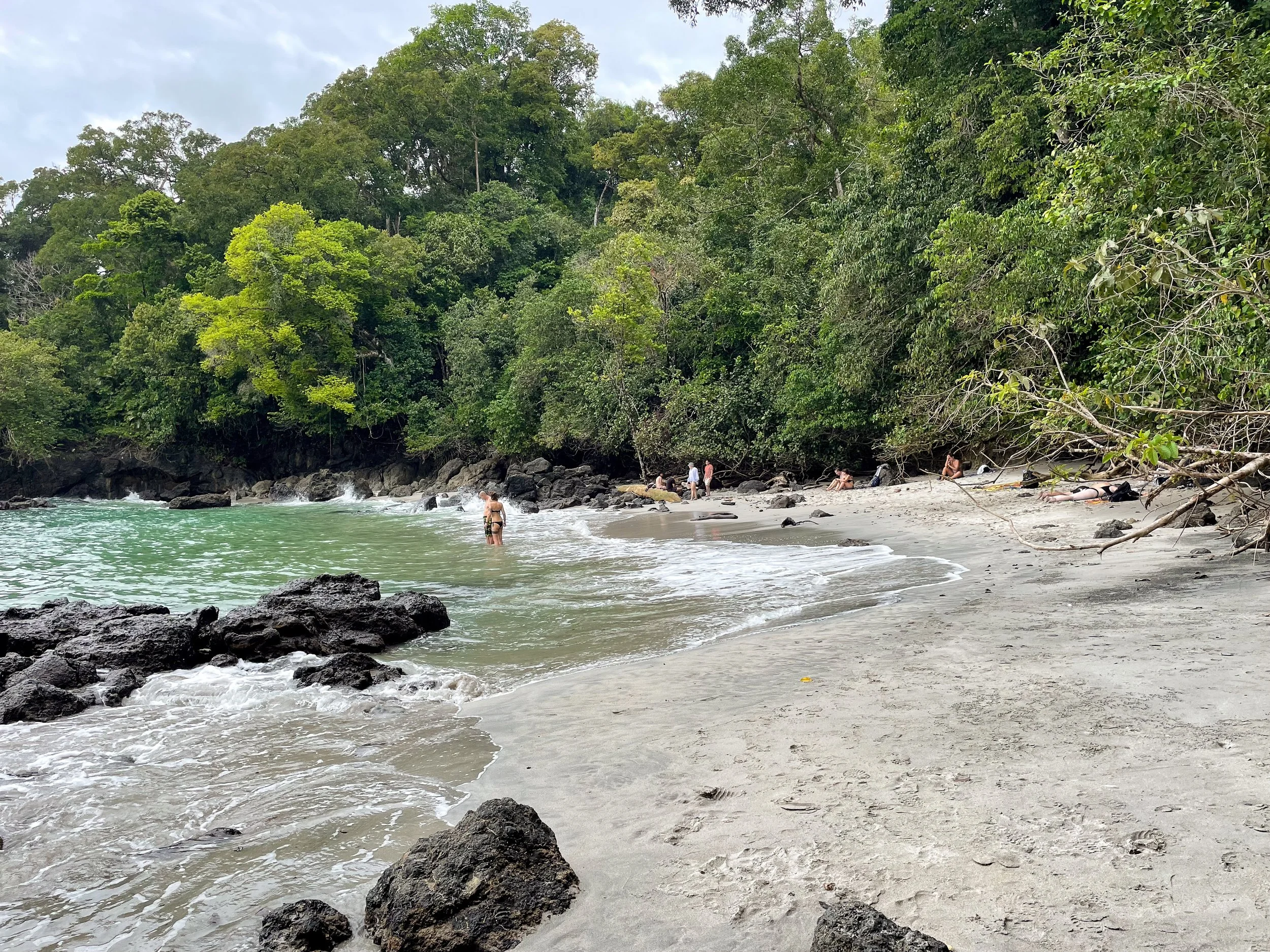
Manuel Antonio Beaches
Espadilla Beach South. A long bow shaped beach with a narrow shoreline in Manuel Antonio Park. It’s a continuation of the city beach.
Manuel Antonio Beach. The park’s main beach with a white sand shore hugging the tree line of the lush rainforest.
Playa Gemelas. A small natural beach reachable by the Sendero Playas Gemelas.
Hiring a Guide or Not?
Hiring a naturalist guide guarantees you will spot a sloth in Manuel Antonio however, it’s not necessary. Guides will stay along the main road because it’s easier to spot sloths and other animals from. We opted out of hiring one and walked the Sloth Trail adjacent to the main road. It’s less traveled and equally as easy to spot sloths. We created a rag-tag group with other travelers on the trail and used our combined eyesight to spot sloths, monkeys, toucans, crabs and poison dart frogs.
Pro Tip 1. Guides can be hired at the entrance to the park for a negotiable fee depending on the length of hire.
Pro Tip 2. If without a guide, do not trail too closely behind them. They can get aggressive if they hear you listening in or watching sights they point out.
Pro Tip 3. If you don’t hire a guide, bring a good pair of binoculars view wildlife with.
Helpful Park Information
Hours. The park is open from 7am - 4pm daily (closed on Tuesday).
Tickets. You need to book tickets online ahead of time.
No Plastic or Food. Single use plastic, alcohol or food is forbidden in the park, except at park restaurants.
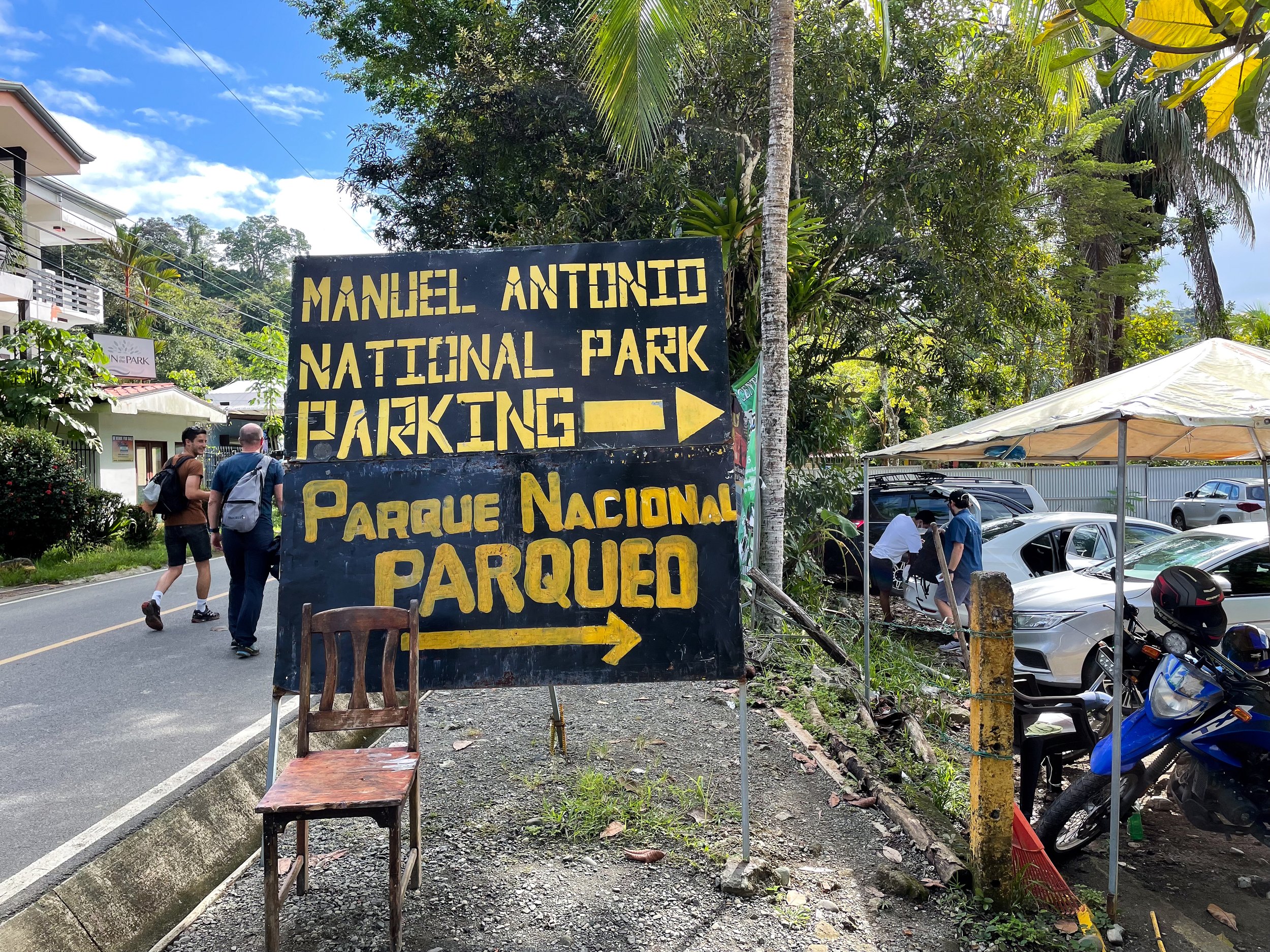
Parking. Arrive early and look for parking at the park entrance past all the scammers pretending to be park staff along the roadside. Parking should cost no more than 5,000 Colones.
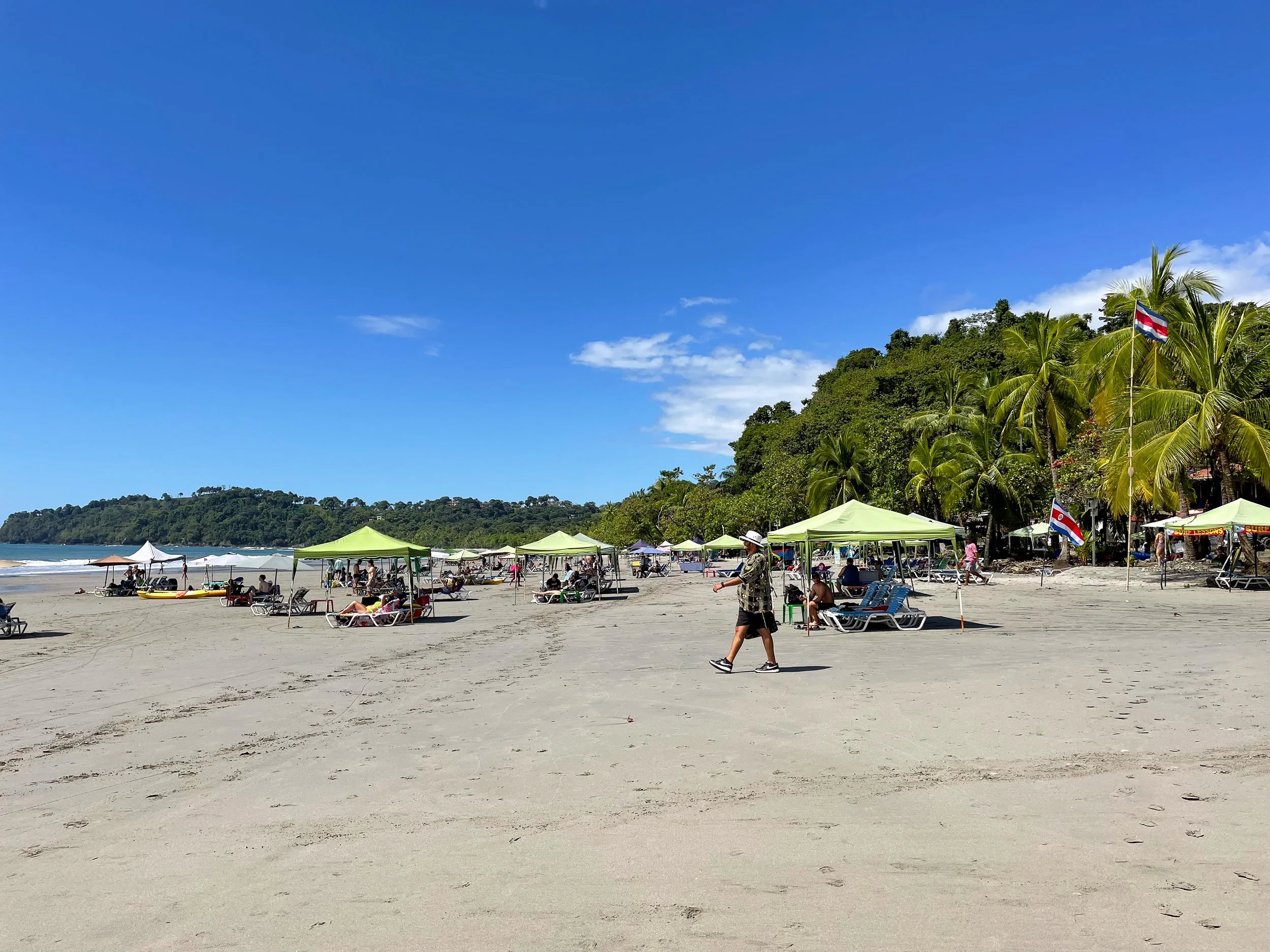

Espadilla Beach North
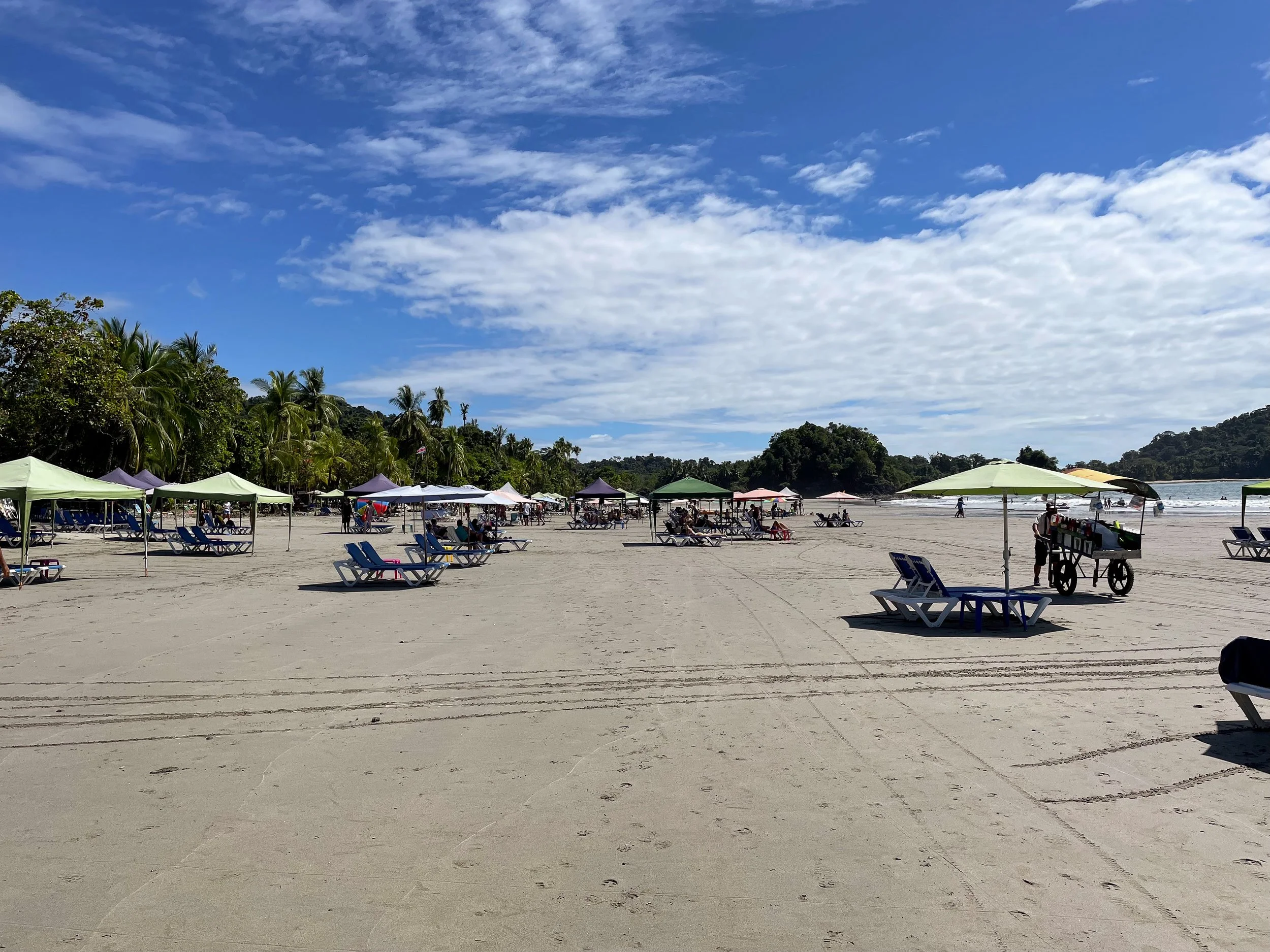
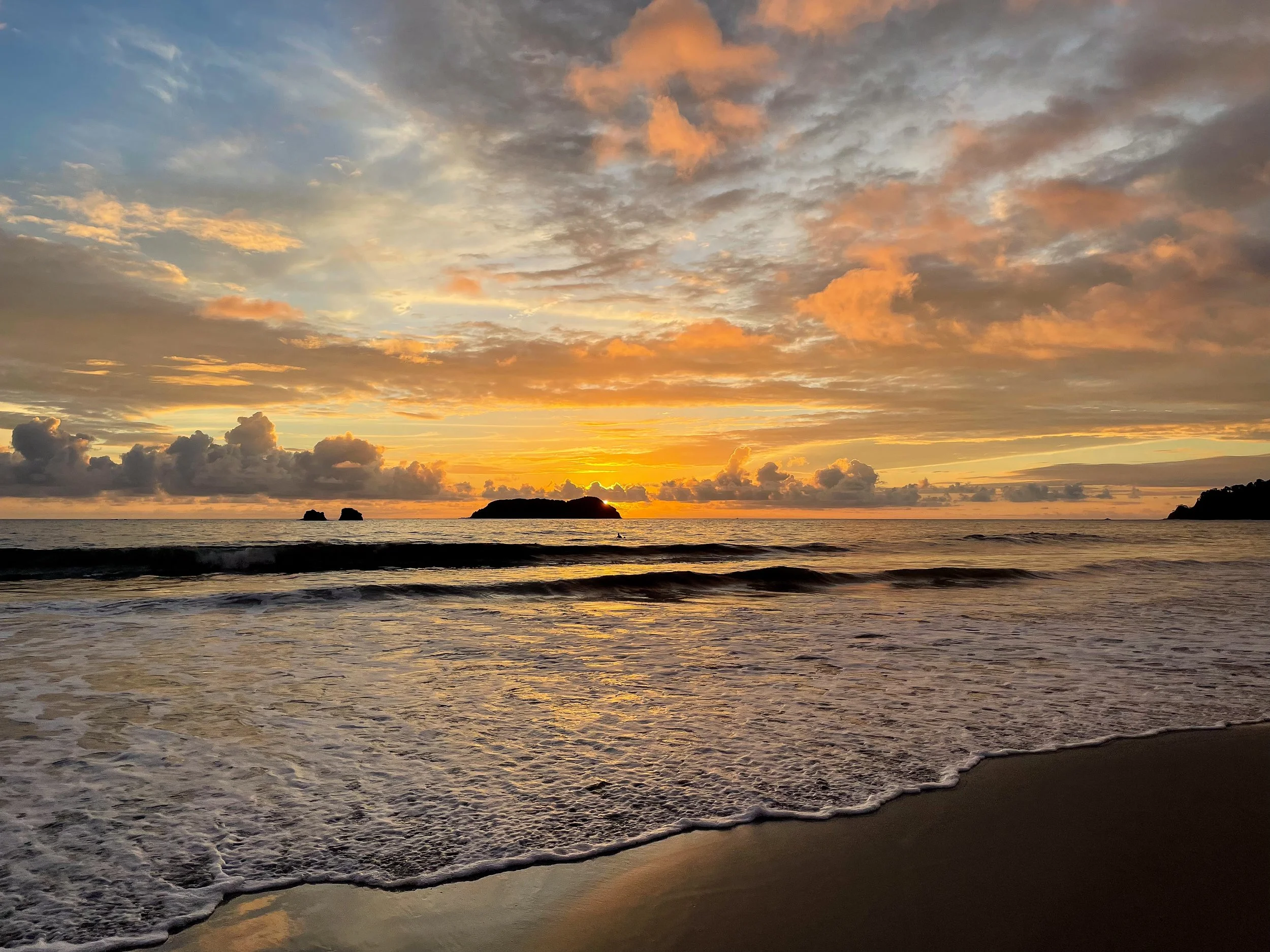
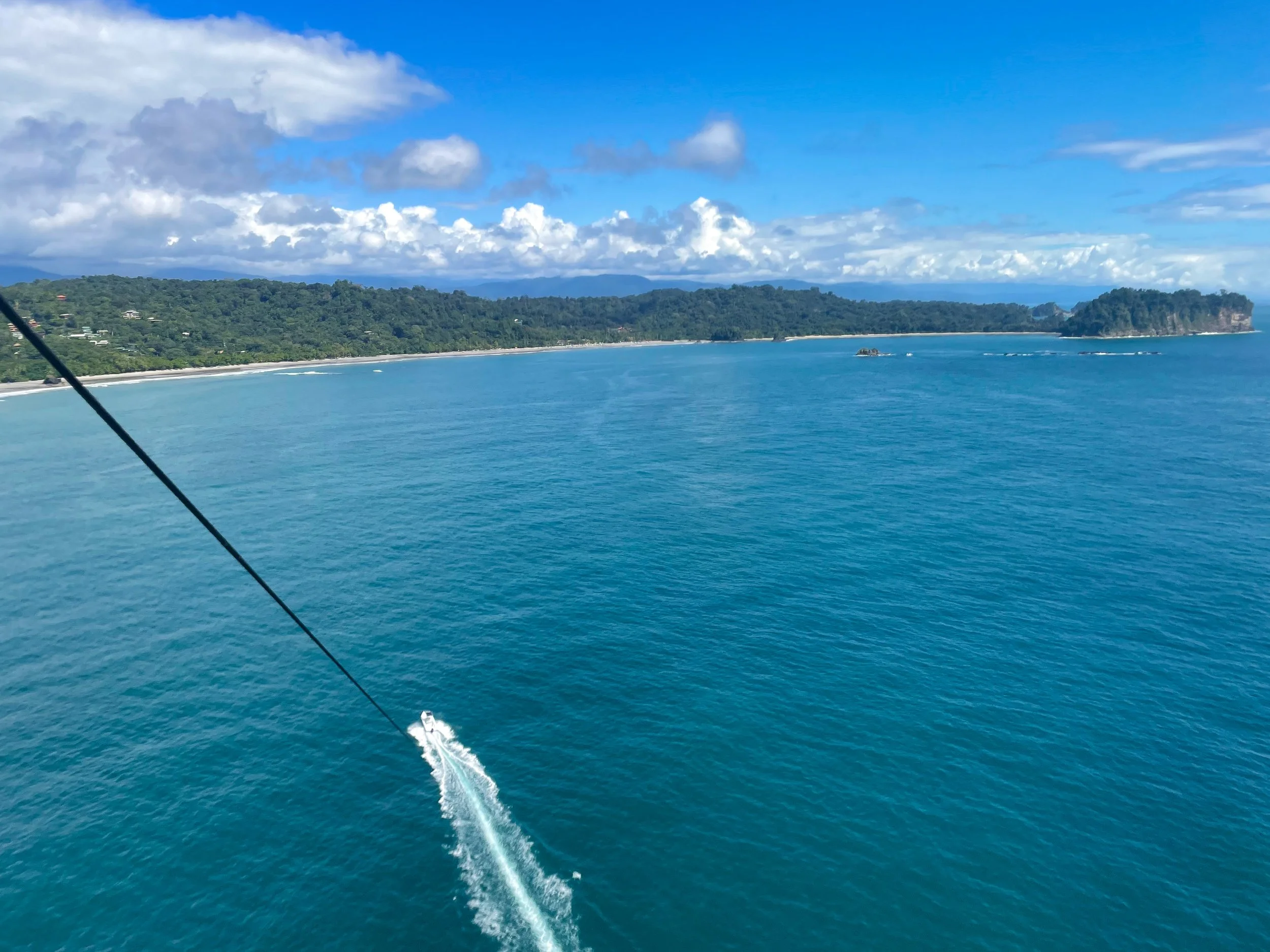
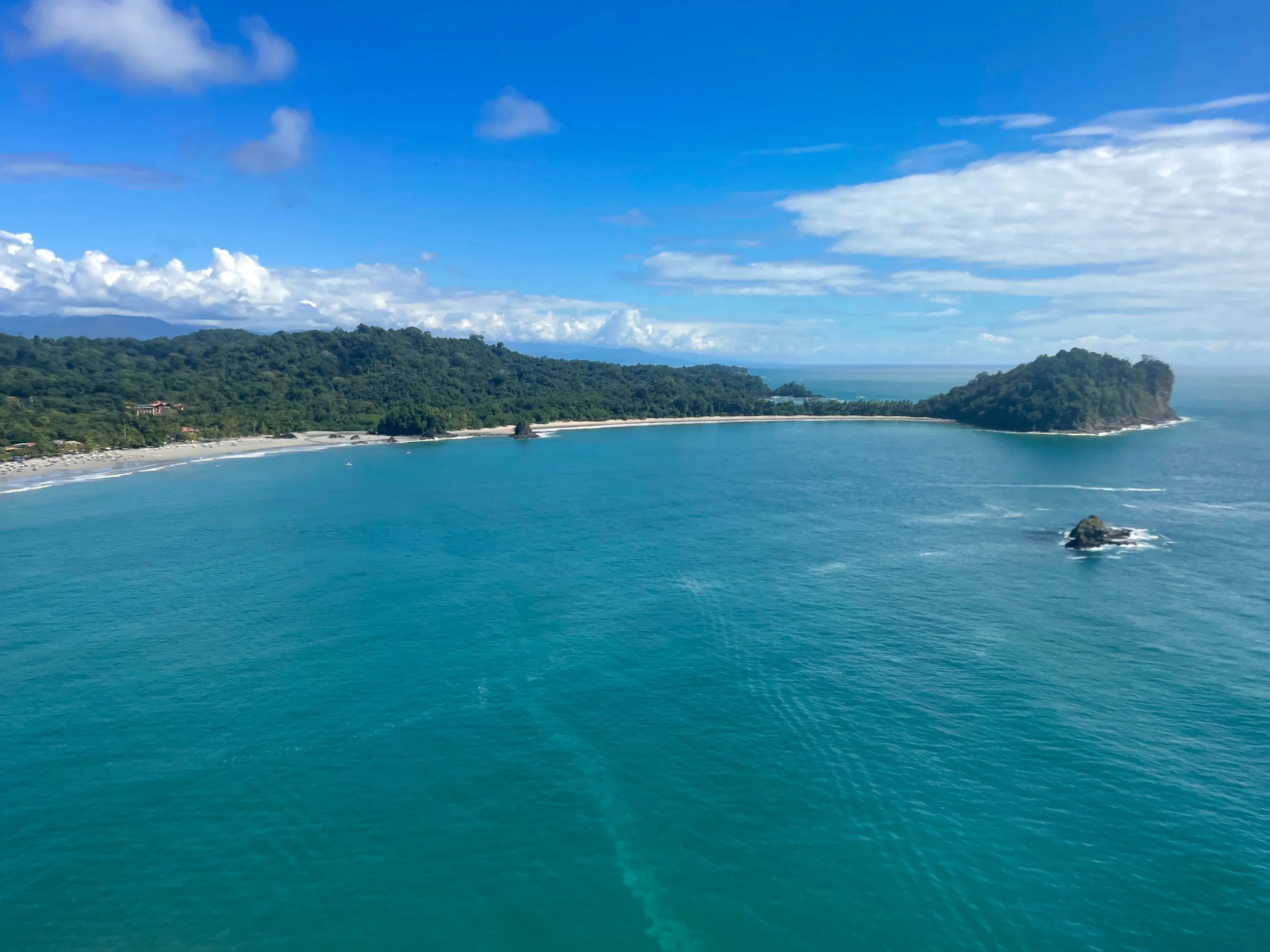
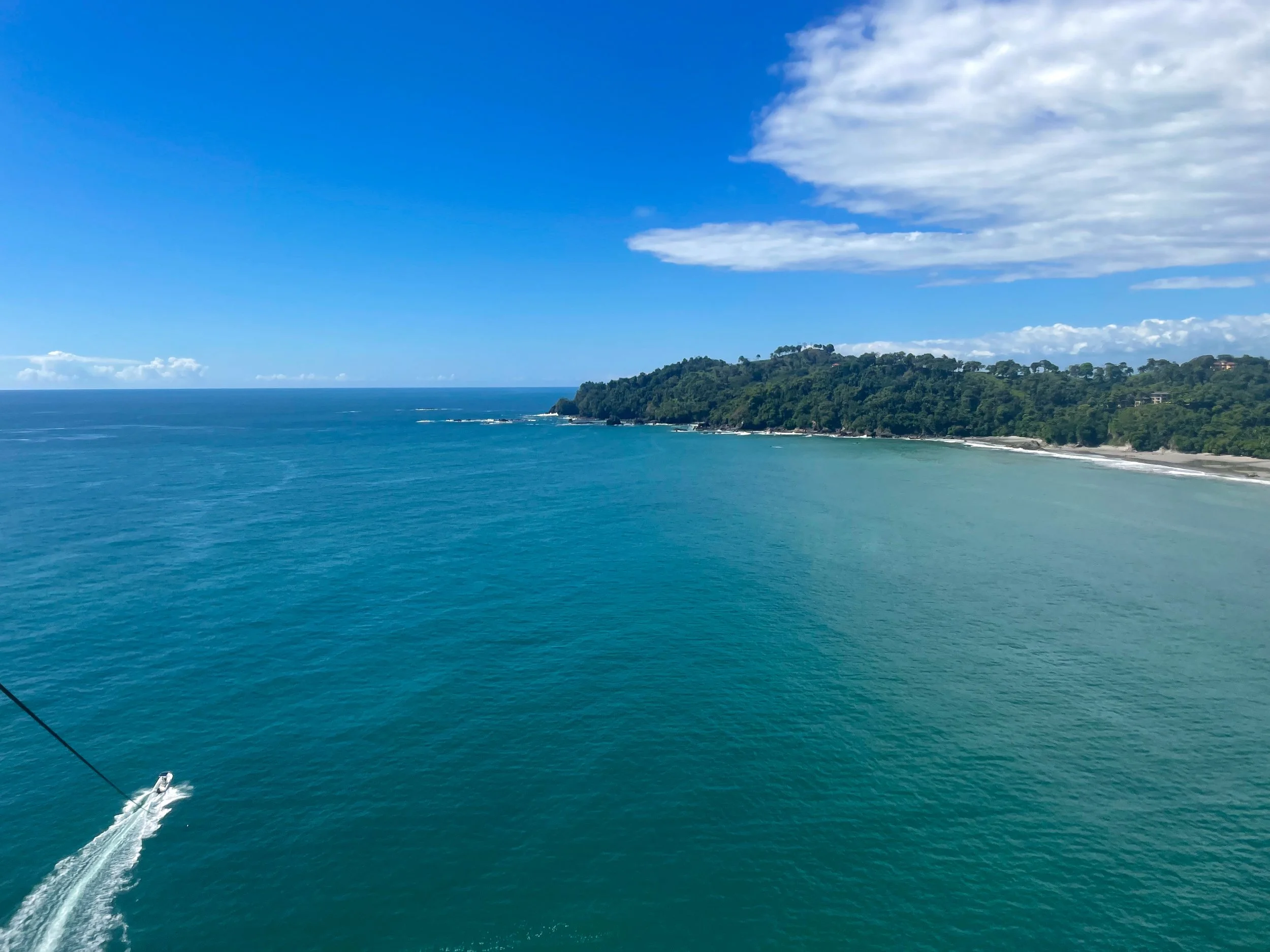
A lengthy beach extending outside of Manuel Antonio park with soft sandy shores and swimmable waters. There are nearby restaurants, beach bars, souvenir shops, surf schools and chair & umbrella rentals. Visit Aguas Azules for parasailing tours above Manuel Antonio’s deep blue bay, sandy coastline, rocky outcrops and lush jungle.
El Santuario Canopy Adventure Tour
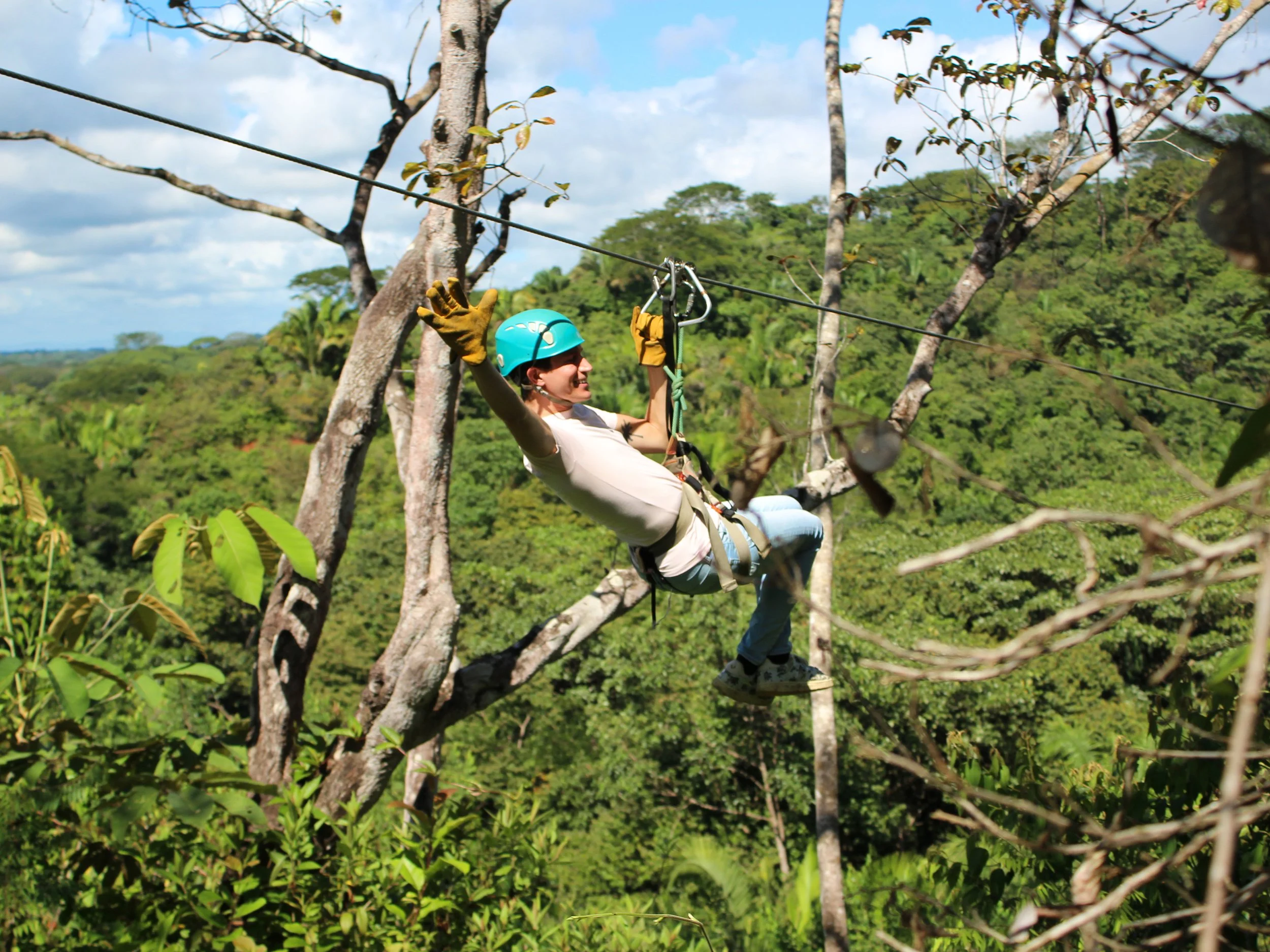
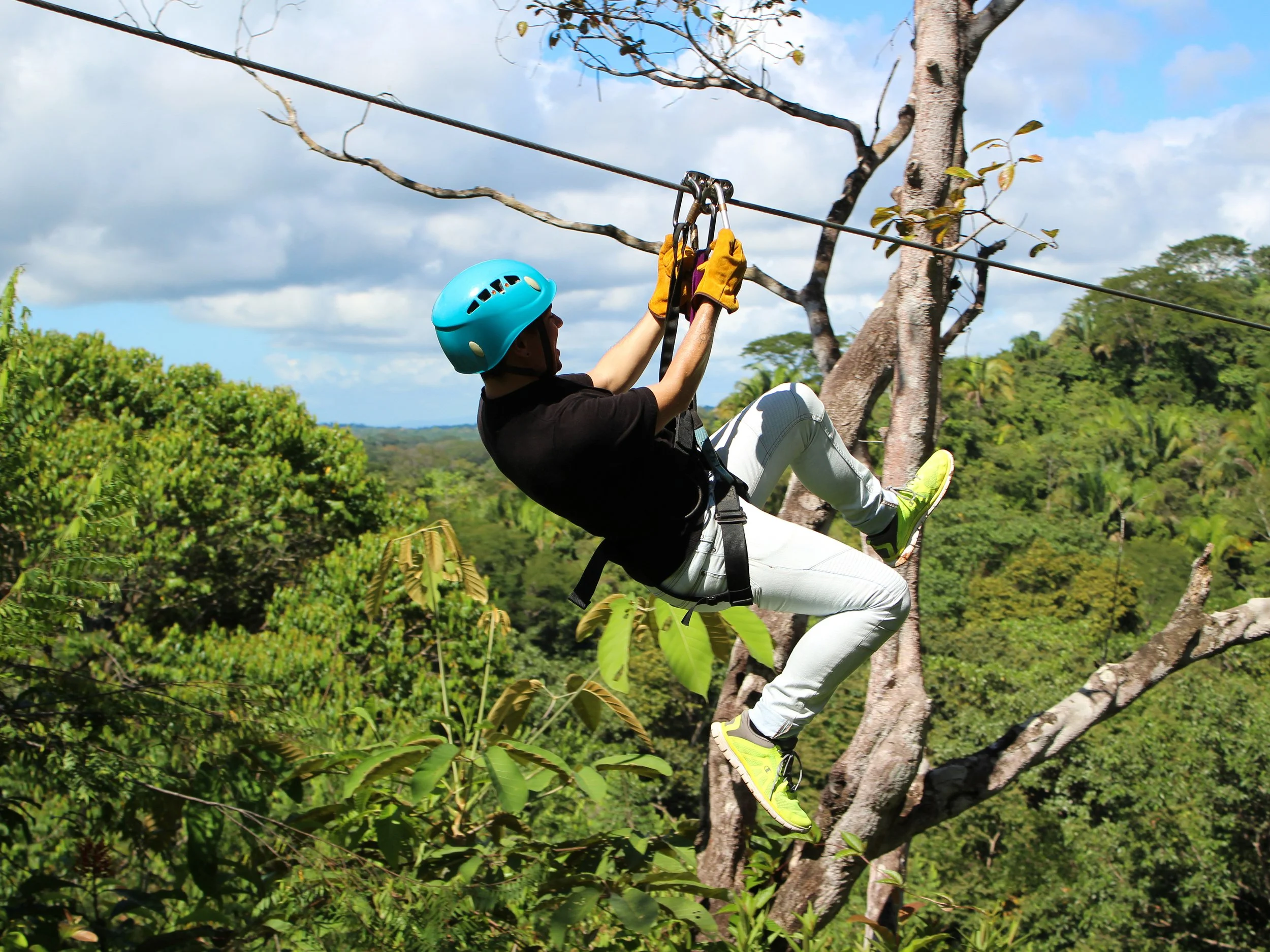
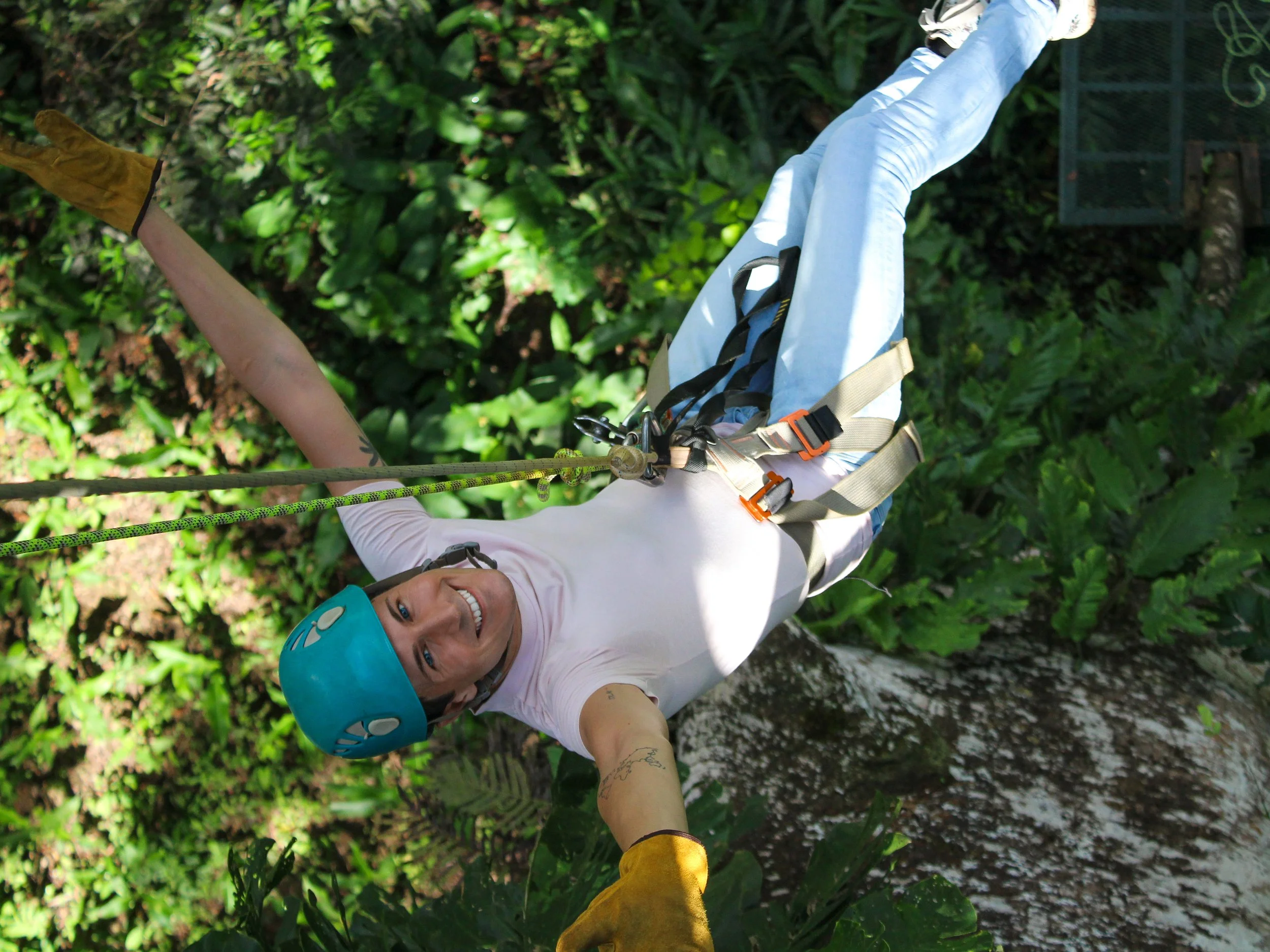
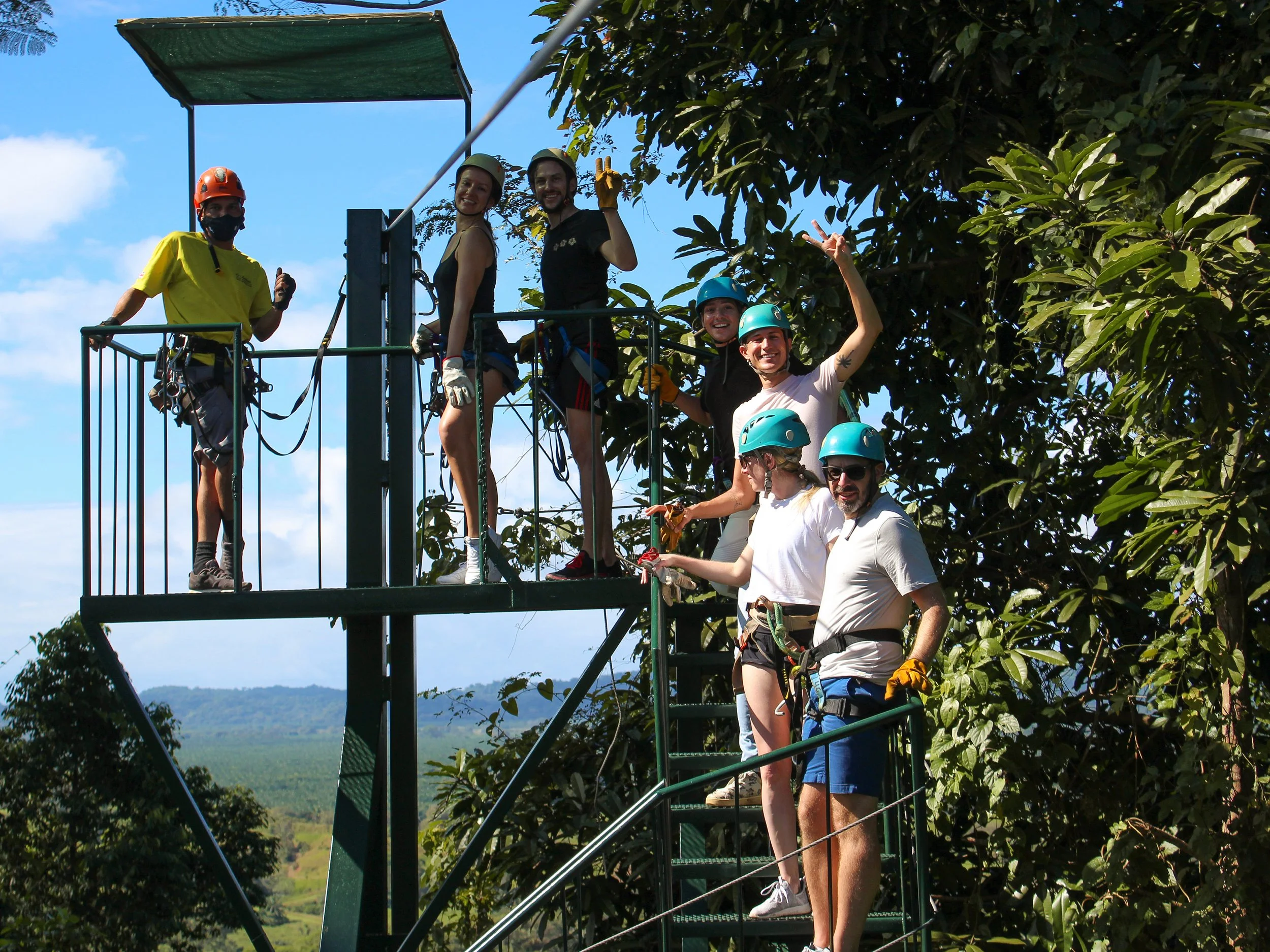
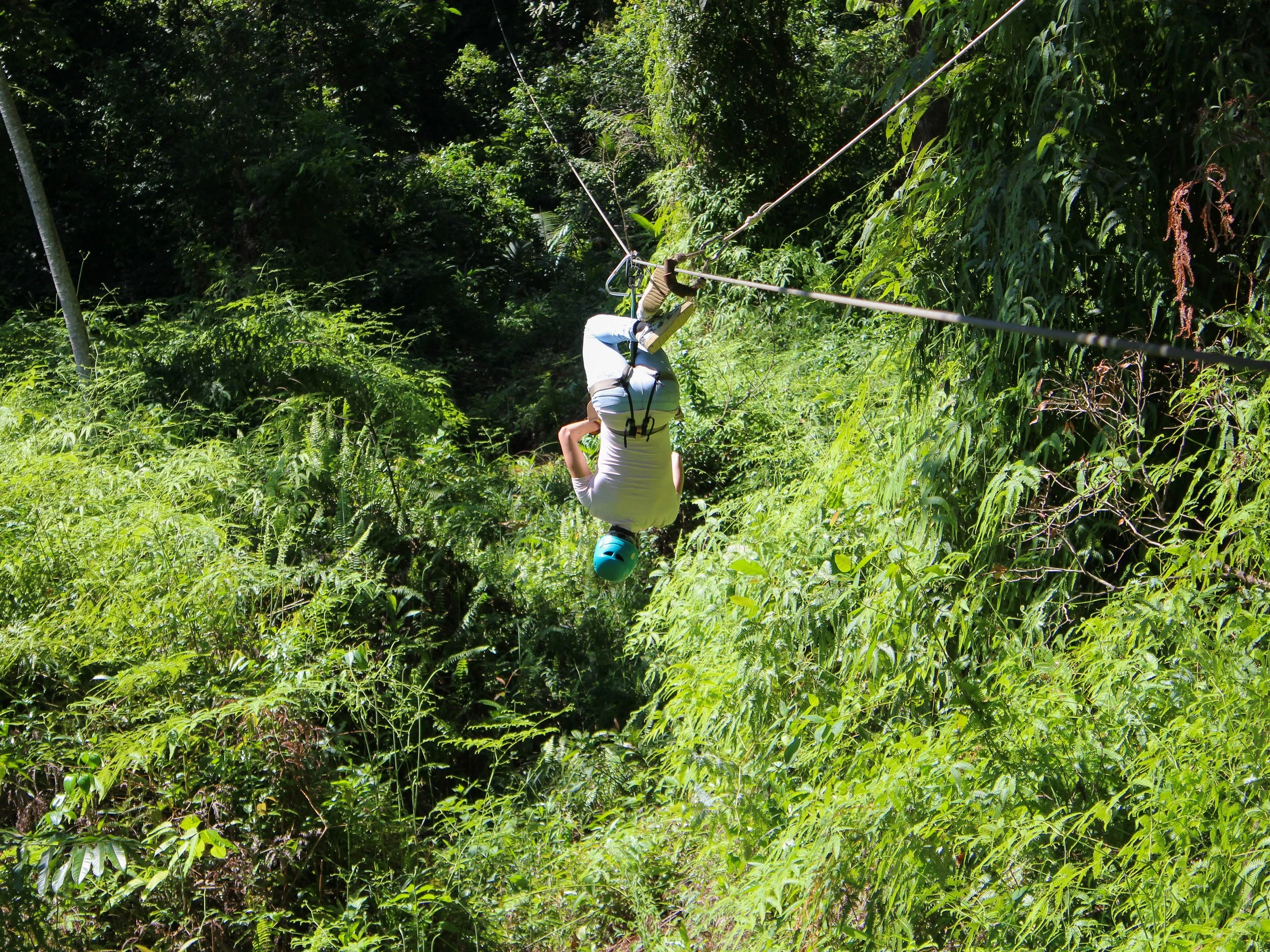
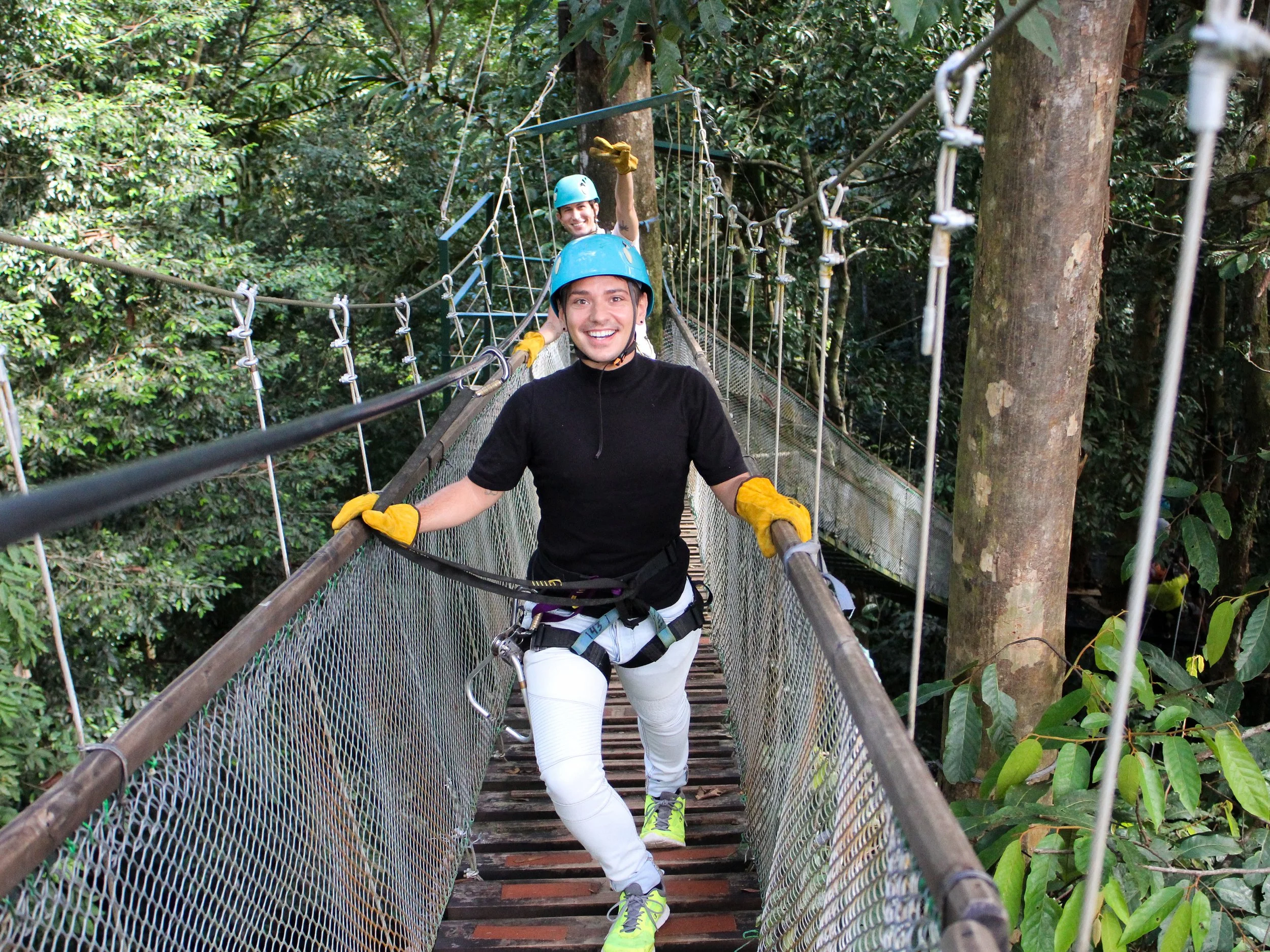
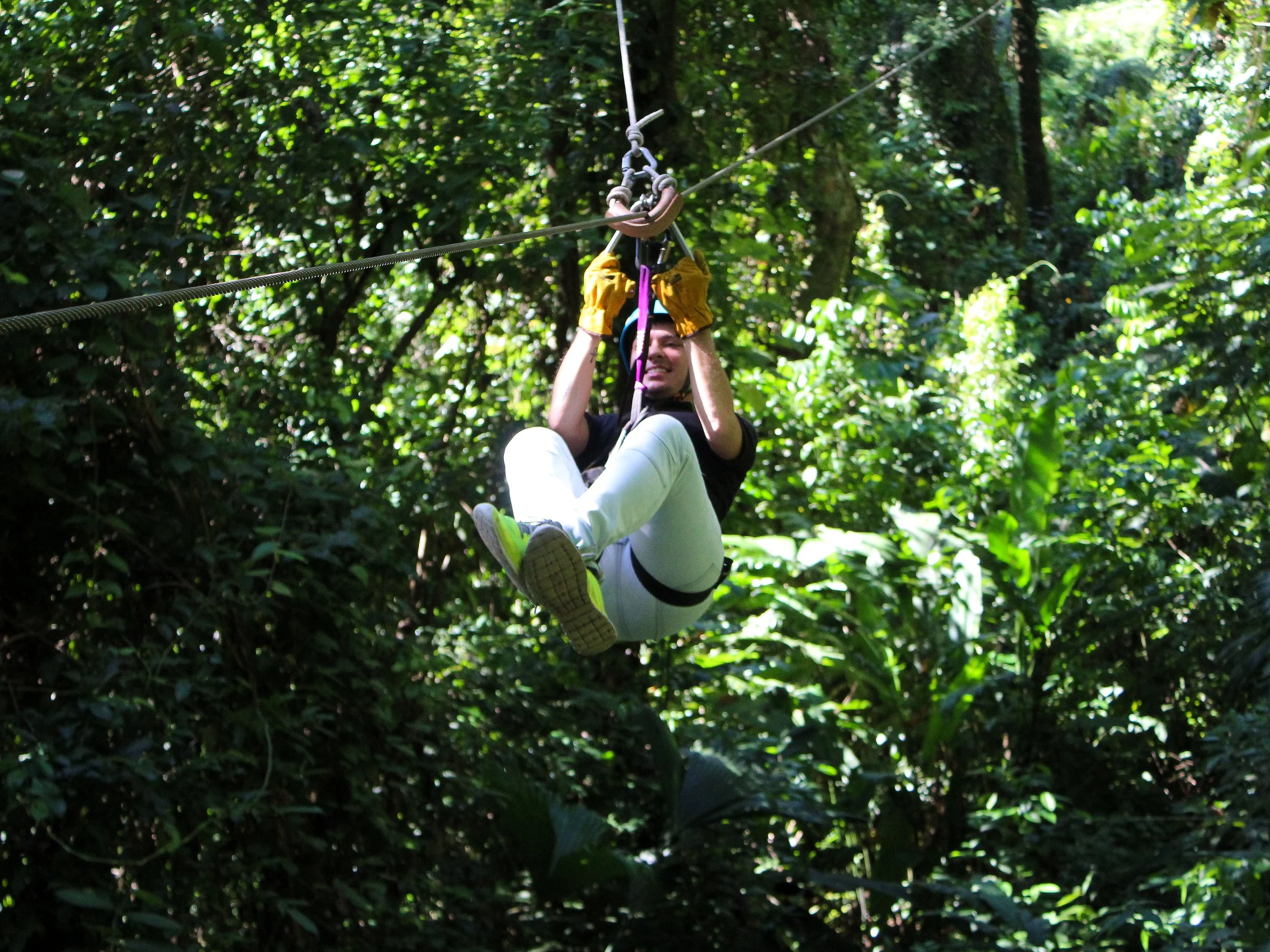
A semi-remote adventure park nearby Manuel Antonio. The course includes 10 zip-lines, 6 canopy bridges, 3 nature walks and 1 rappelling challenge through the forest. It includes Costa Rica’s longest zip-line at 4,300 ft. We got to ride a shorter one upside down. They offer two morning tours lasting about 4 hours each. Both include a fruit breakfast and lunch. Pictures cost $20 extra. Book here!
Manuel Antonio Finca
A town located outside of the Manuel Antonio National Park on the Pacific Coast. It’s a jungly beach town with hotels, restaurants, bars and nearby adventure activities.
Places to Eat & Drink
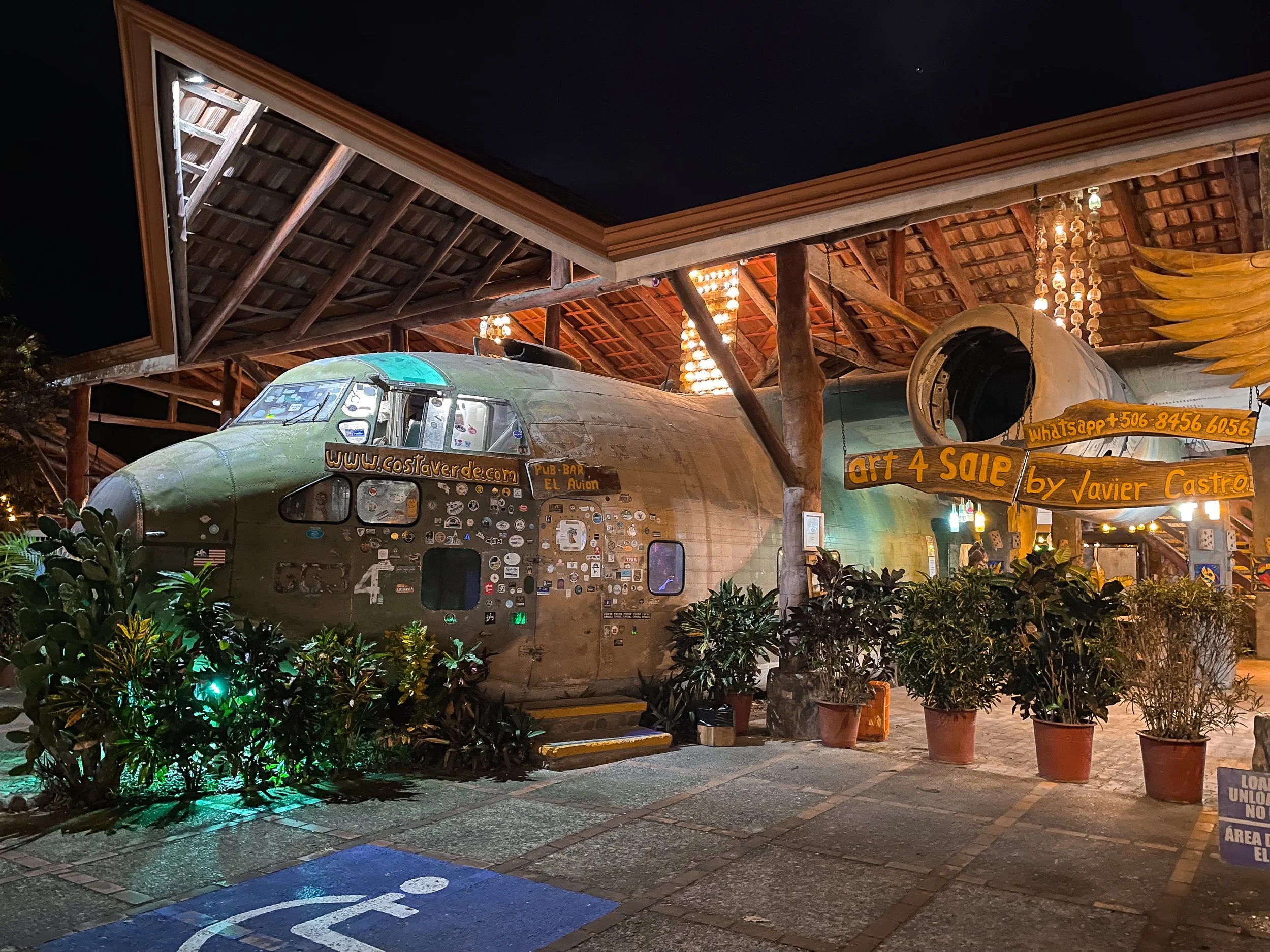
El Avión. An open air restaurant with wooden furniture built around an abandoned US military cargo plane. We ordered the crispy fried whole red snapper.
Contra Bar. A bar within the cargo plane at El Avión. We ordered a round of drinks and enjoyed them in the cockpit.
Café Milagro. A cafe in a tropical garden with house roasted coffee and breakfast dishes like guava and cheese crepes, banana pancakes and fresh fruit.
Restaurante Buru Seaside Manuel Antonio. Stop here for 2 for 1 happy hour cocktails from 3-6pm and sunset views after spending the day in Manuel Antonio park.
Meduza Restaurant. A hotel restaurant with a limited menu. We ordered and shared the seafood rice with a bottle of Imperial, Costa Rica’s most popular beer.
Where to Stay
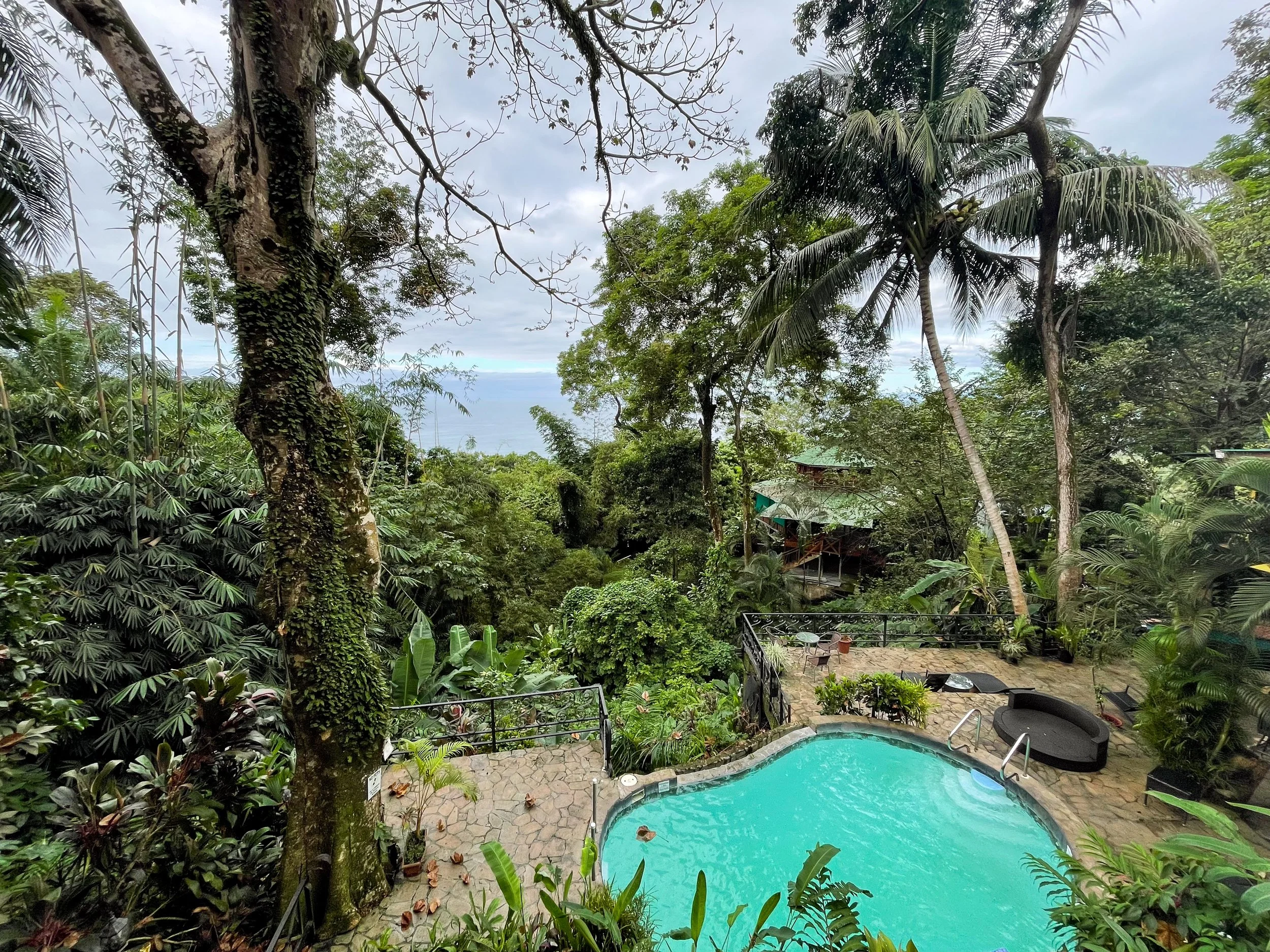
We stayed at Mango Moon Villa, a boutique hotel located near Manuel Antonio National Park. The hotel has views overlooking the Pacific Ocean. We stargazed in the evening and watched toucans and monkeys move between trees during the day. It includes a restaurant and bar with breakfast and dinner service.
Costa Rican Cuisine
When it comes to cuisine, Costa Rica is the land of tropical fruit, rice and beans.
Tropical Fruits. Tropical fruits are grown, sold and served across the country. Fresh papaya, watermelon, pineapple and banana are regularly served for breakfast alongside a glass of freshly squeezed orange juice.
Gallo Pinto. A rice and bean mixture served with a slice of fried plantain, scrambled eggs, queso palmito (fried cheese) and tortilla. It’s a common breakfast dish.
Sopa Negra. A black bean soup with cilantro and a hard boiled egg. Typically served for lunch or dinner.
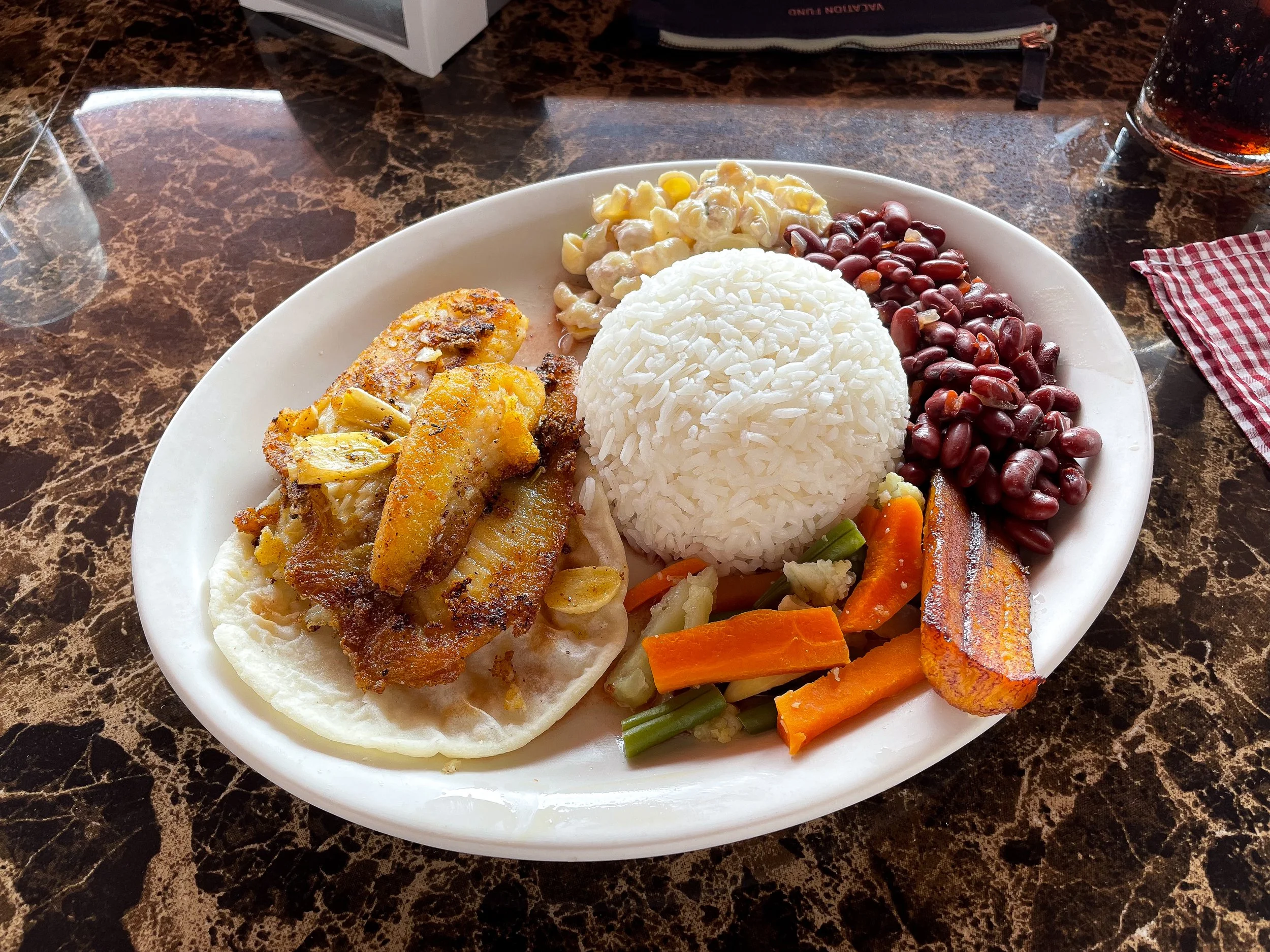
Casado. The national dish, a plate with rice, beans, grilled veggies, pasta salad, fried fish (or any meat protein), tortilla and sweet plantain. It’s typically served for lunch or dinner.
Imperial. Costa Rica’s national beer served almost everywhere. Order one at a bar or a bucket at the beach.
Driving in Costa Rica
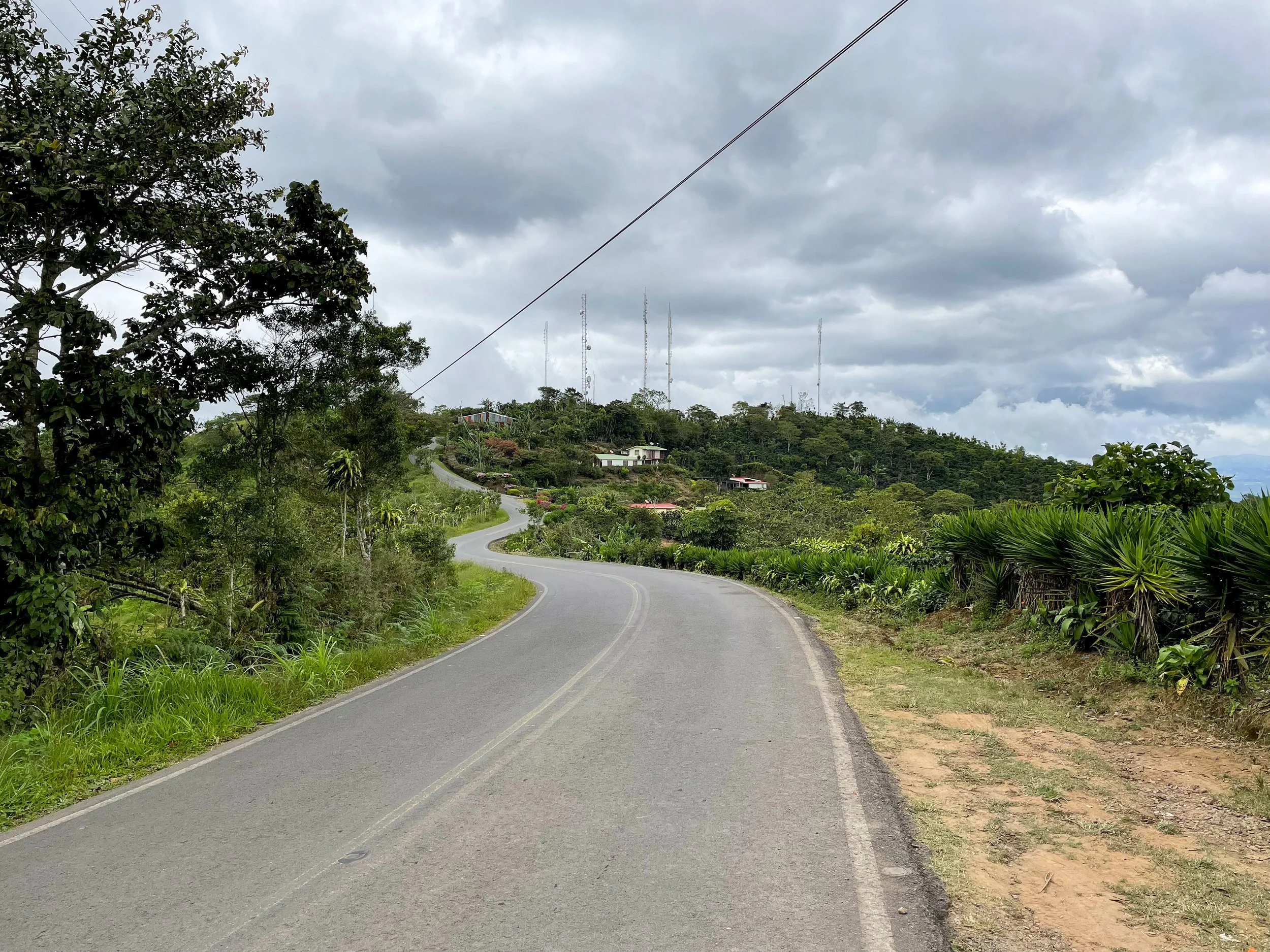
Driving in Costa Rica is very scenic and one of the best ways to explore the country. Curvy roads snake through valleys and along mountain ridges with steep sections and roadside lookouts.
Visibility. Rain and fog drastically reduce visibility the higher we drove in altitude.
Road Conditions. Main roads are well maintained while back roads are often unpaved or in need of repair.
Rent a 4WD. A 4 wheel drive is necessary to navigate the roads.
Narrow Lanes. Many roads outside of the cities are 2 lanes wide with the occasional 1 lane bridge.
Traffic Jams. Traffic within and into San José was congested.
Refueling. Gas station attendants pump gas for you.
Speed Bumps. There are speed bumps in towns often with vendors set up selling snacks, fruit and juice.
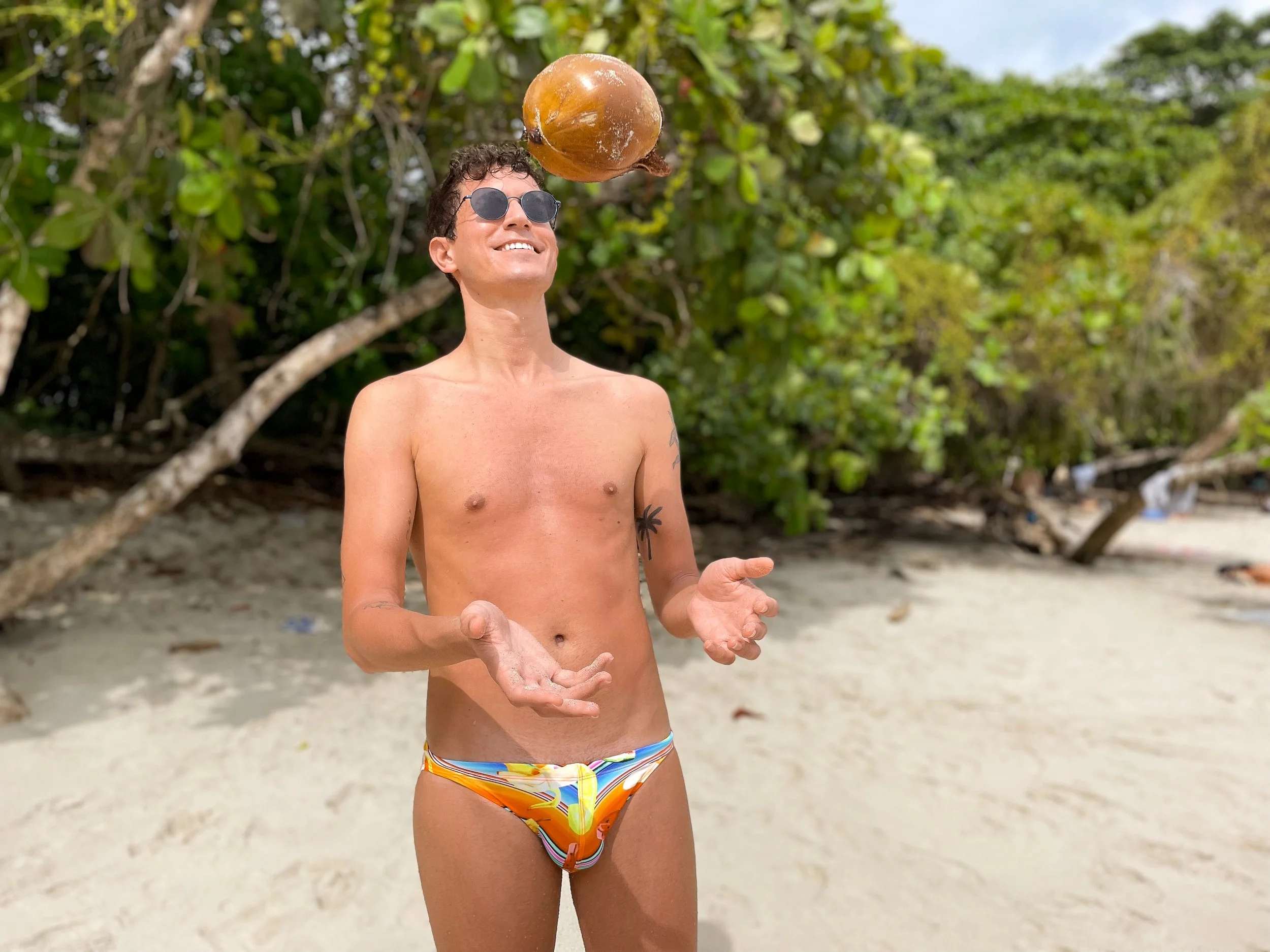
Falling Fruit. Don’t park under any fruit trees. Coconuts, papaya or other falling fruit can badly damage your car. This is often not covered by rental insurance.
For Next Time…
Costa Rica is one of the most incredible places we’ve had the pleasure to travel to. From its biodiversity to breathtaking landscapes, it’s a destination that has left us wanting to return and explore more. When we do, some locations at the top of our list are:
Poás Volcano National Park. The largest and most active volcano in Costa Rica with a gaseous crater, hot springs and hiking trails.
Guanacaste. A Province in the northwest of the country with surfing beaches, nature reserves, volcanoes, hot springs, waterfalls and wildlife.
Refugio Nacional Gandoca-Manzanillo. A marine reserve on the Caribbean side of the country with white sand beaches, coral reefs, mangrove forests and wetlands.
Maya Ruins Travel Guide: Jungles, Temples & Ancient Cities
Journey through ancient Maya cities, temples and archaeological wonders across Belize and Guatemala while exploring dramatic jungle landscapes.
Exploring the Maya Jungle
Deep within the lush jungles of Belize and Guatemala are some of the Mayan civilization’s most sacred sights. Ancient acropolises reside at the center of lost cities while overgrown ruins and towering pyramids rise from the dense jungle canopy. Sacred caves and their vast chambers entomb sacrificial remains and historic artifacts. Remote towns offer places to taste local cuisine, meet other travelers and reenergize in nature.
Caracol Mayan Ruins
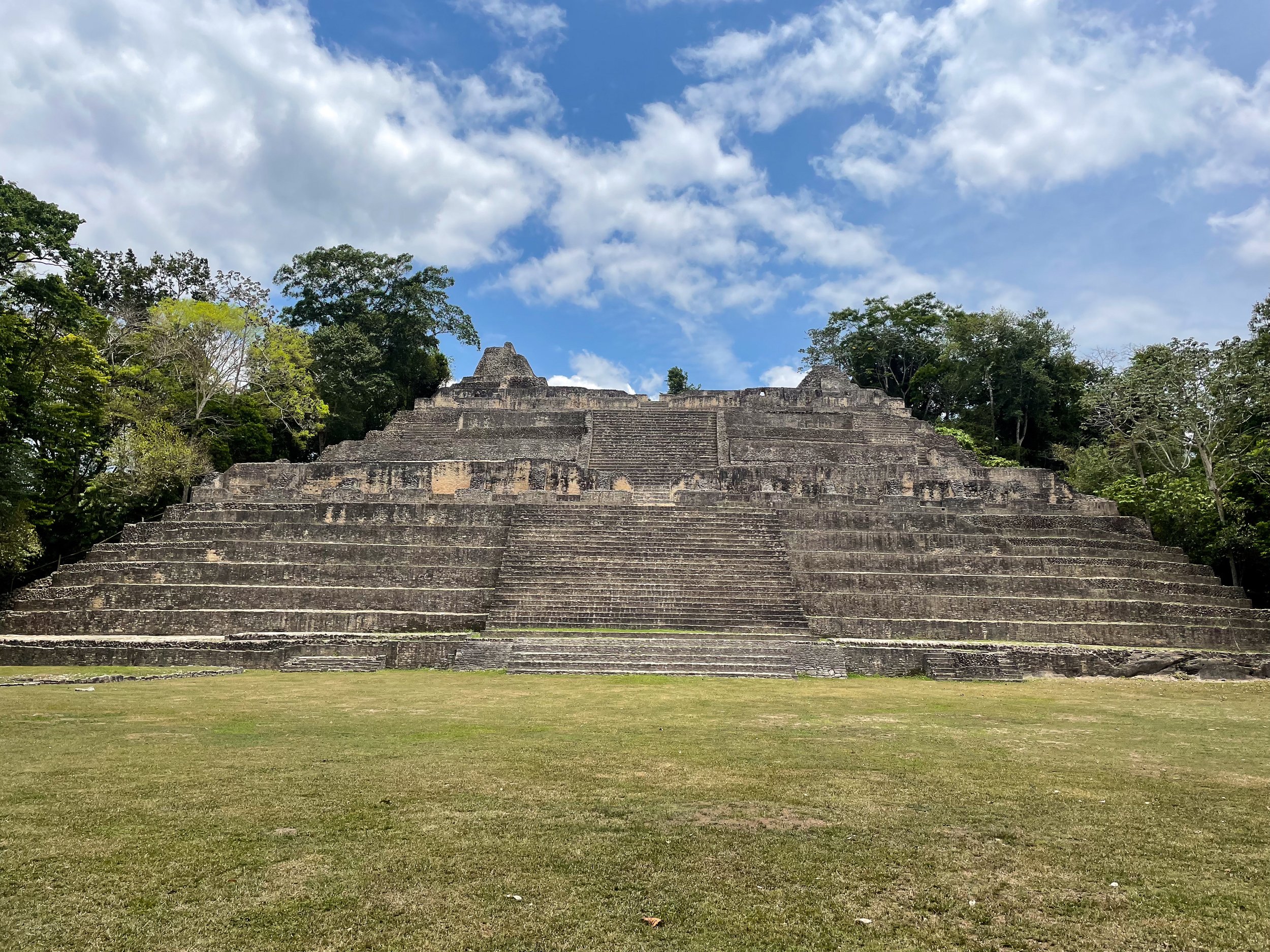
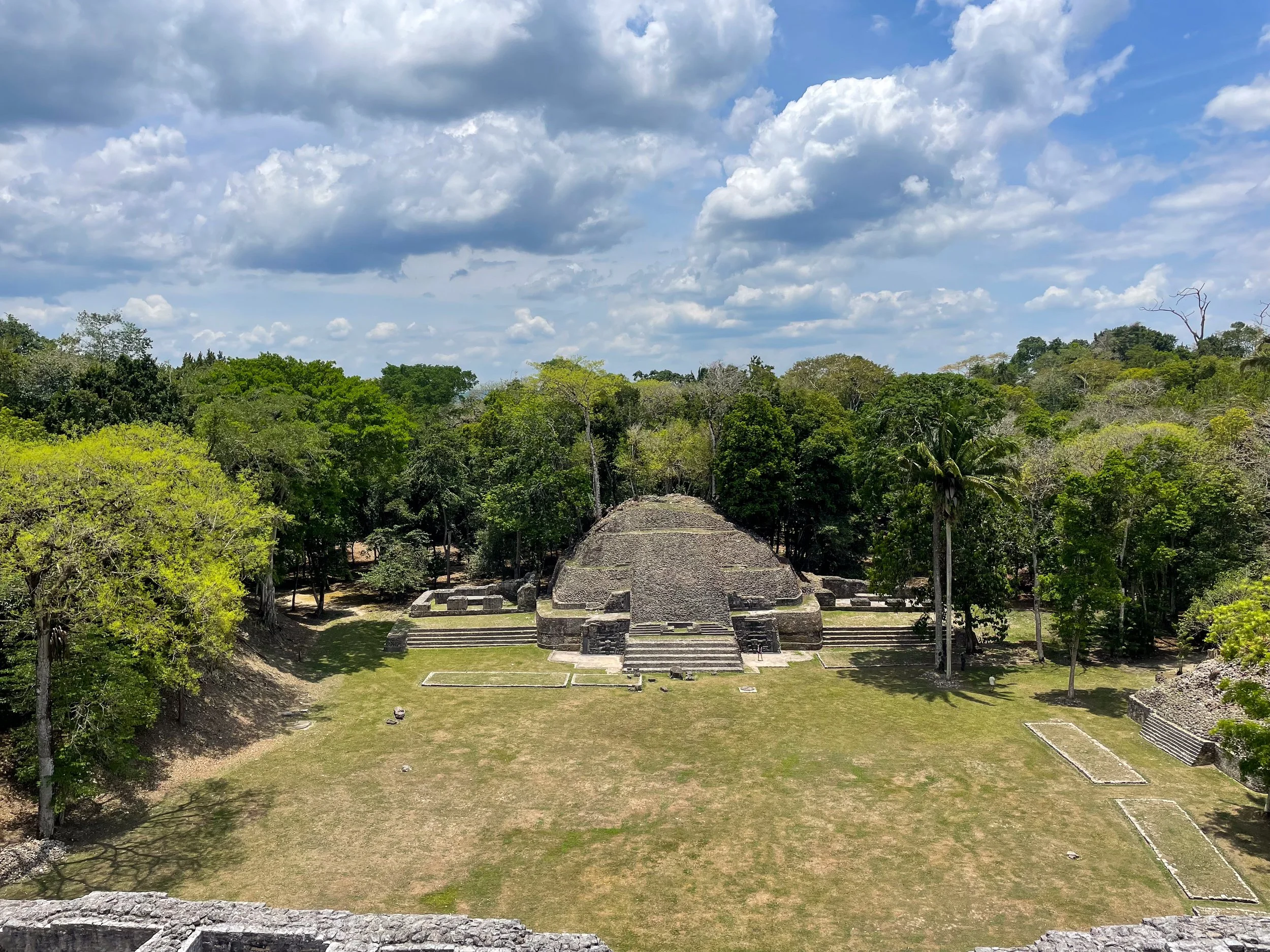
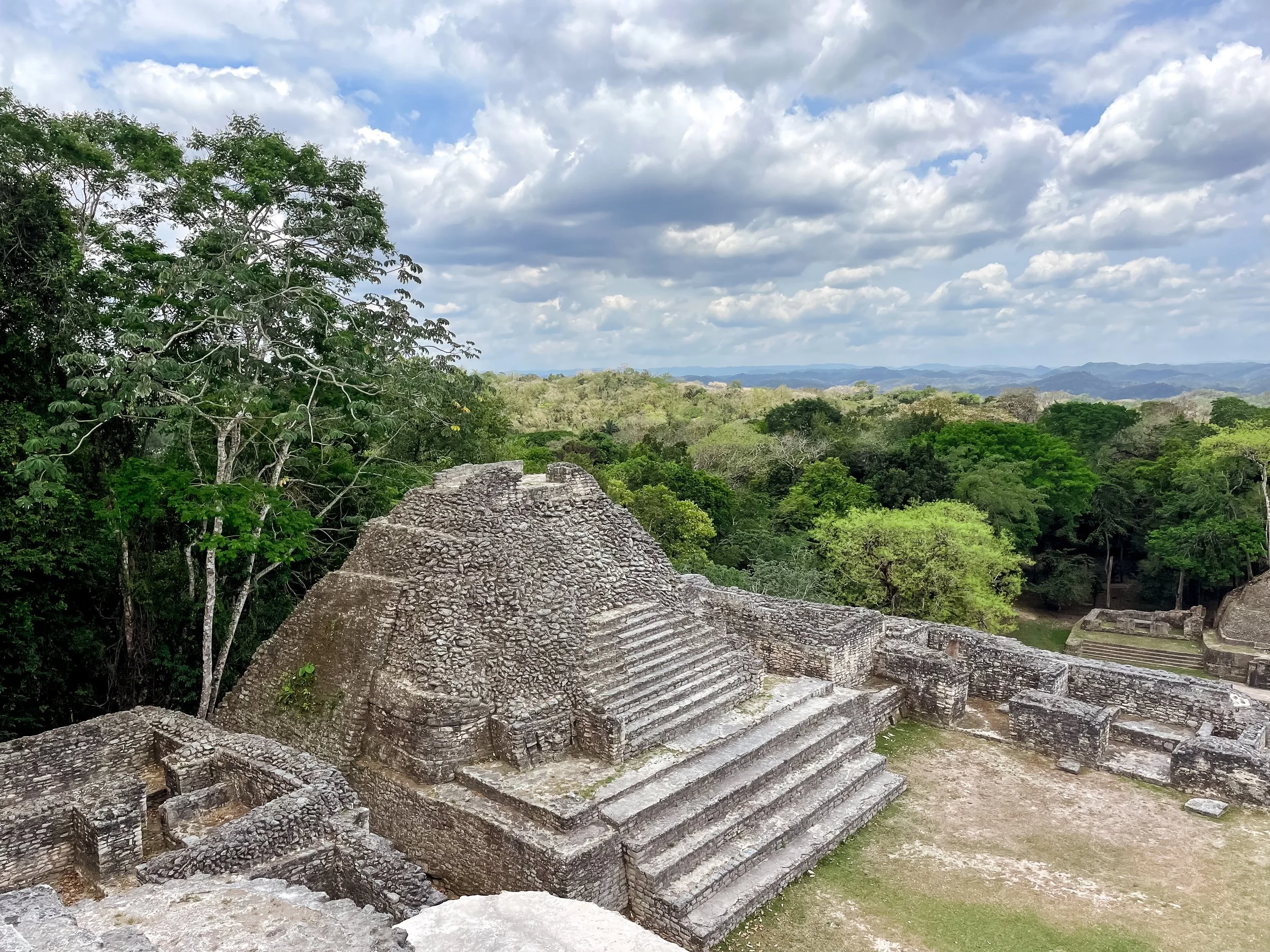
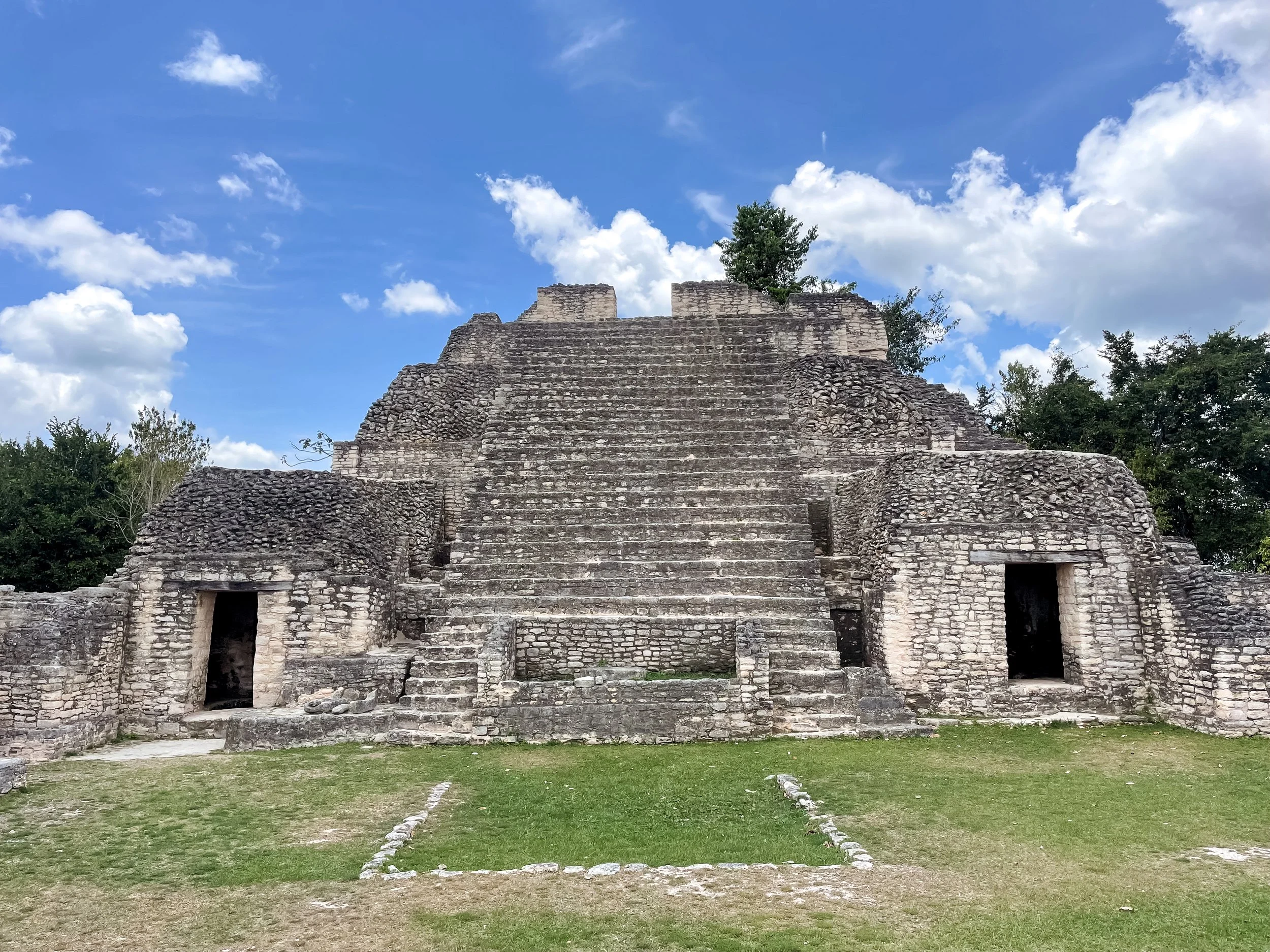
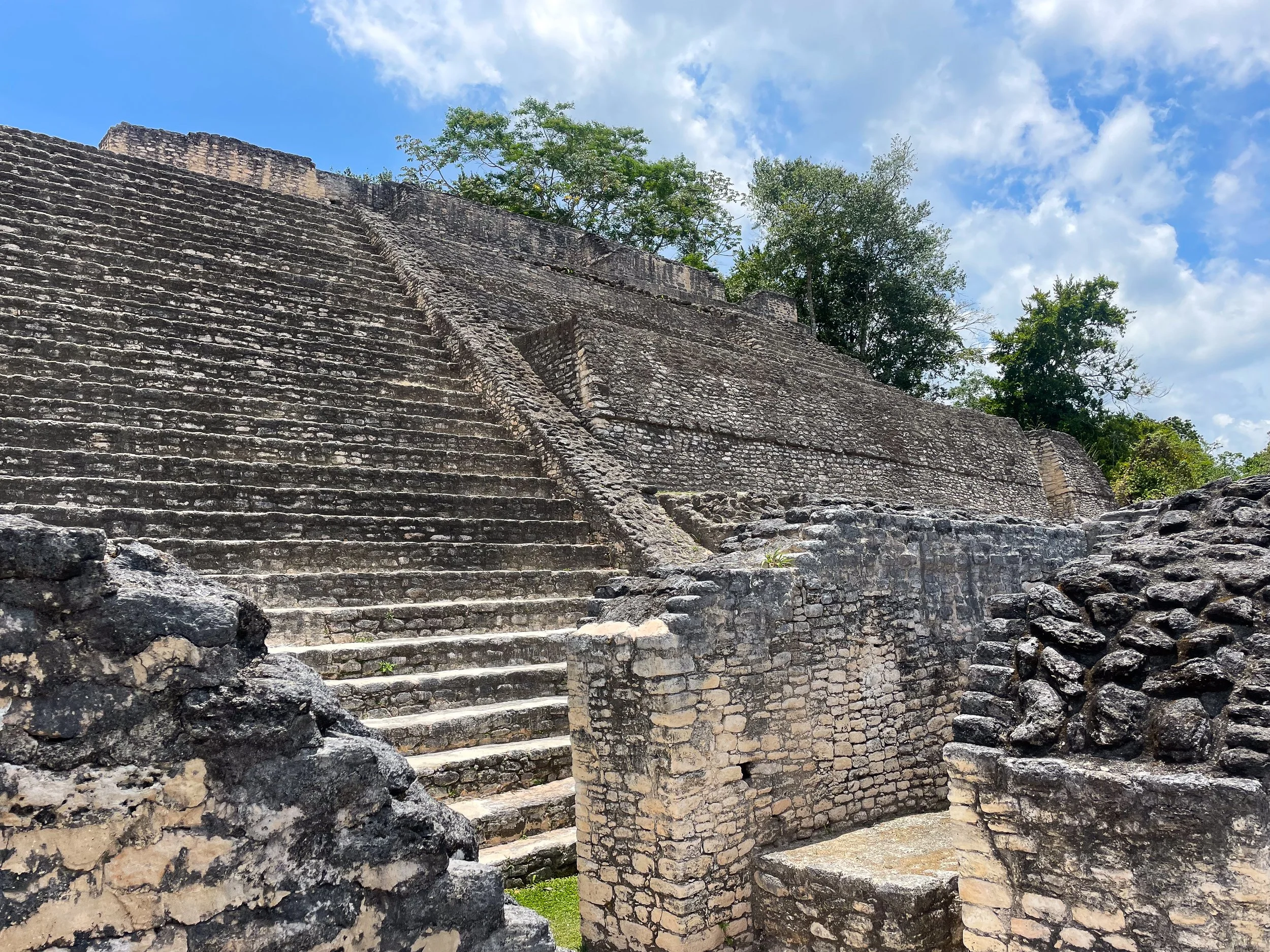
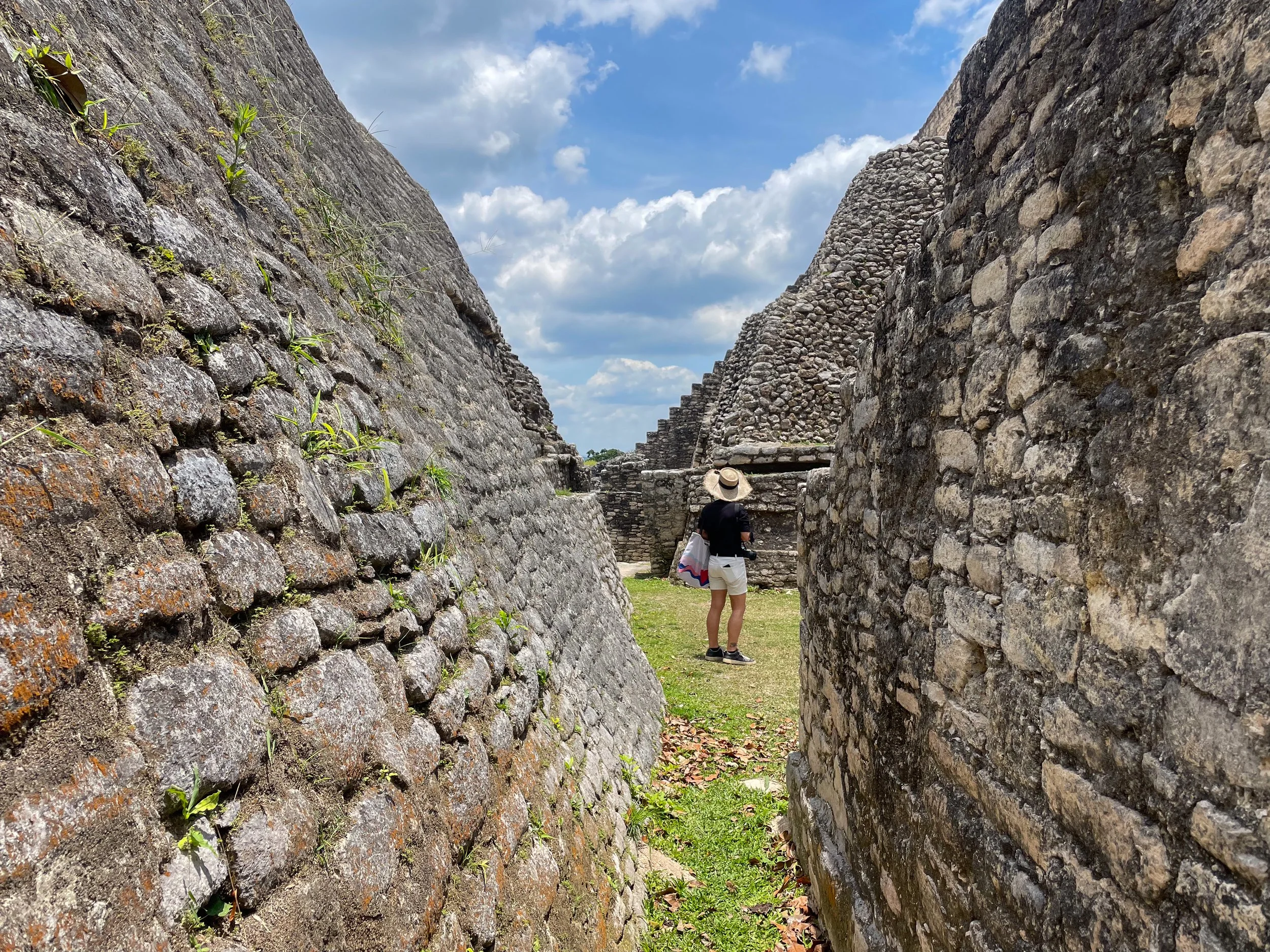
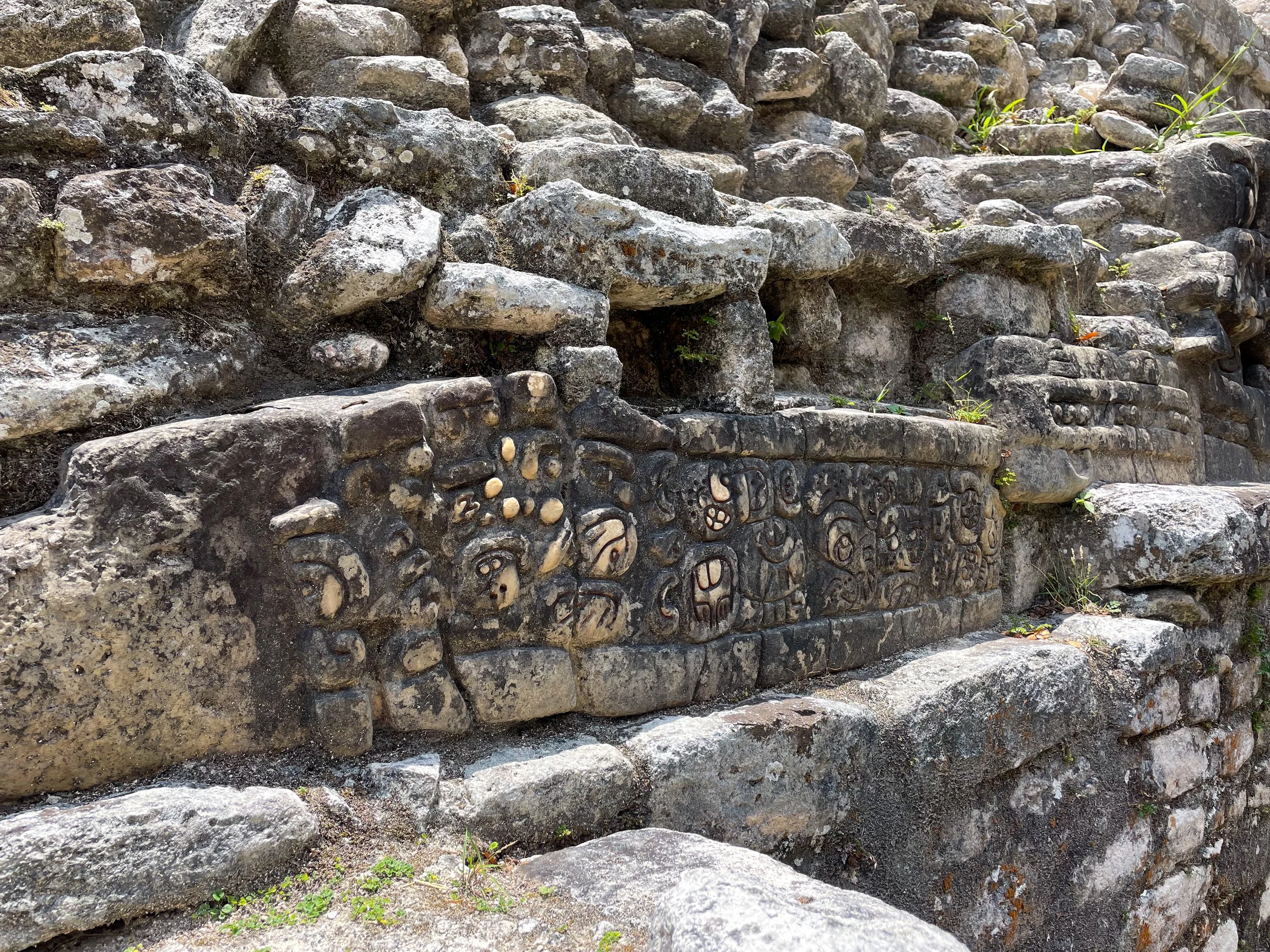
Caracol is an ancient Mayan city within the Belizean jungle. Its ruins and acropolises are comprised of pyramids, ball courts, astronomic observatories, royal tombs, reservoirs and hieroglyphs.
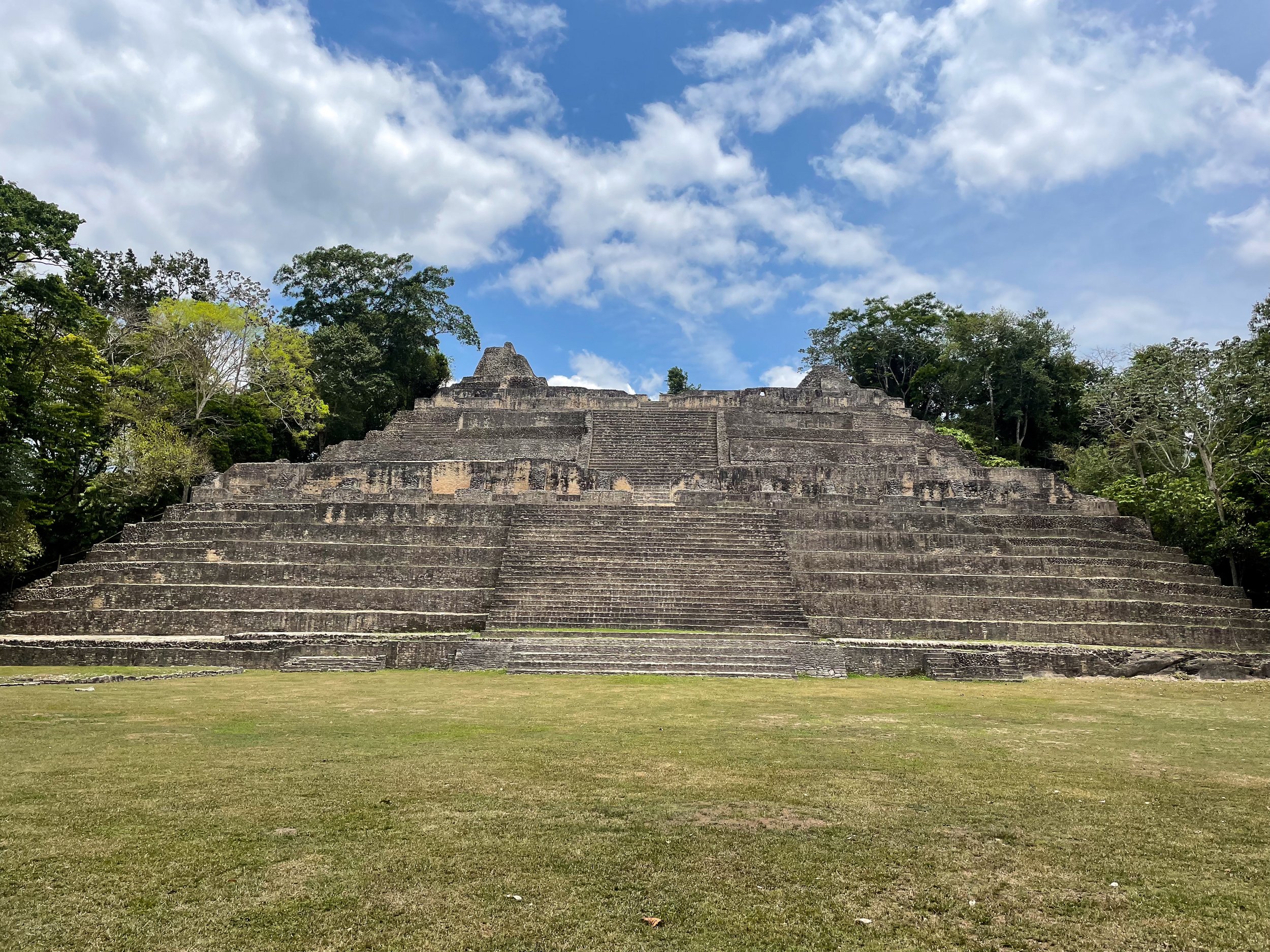
The Sky Palace. A three tiered pyramid named Caana, which translates to “Sky Palace.” It has remained the tallest built structure in Belize for over 3,000 years! We climbed steep stone steps to its upper level, explored its rooms, crawled into a royal tomb and looked across Belize and into Guatemala from above the jungle canopy.
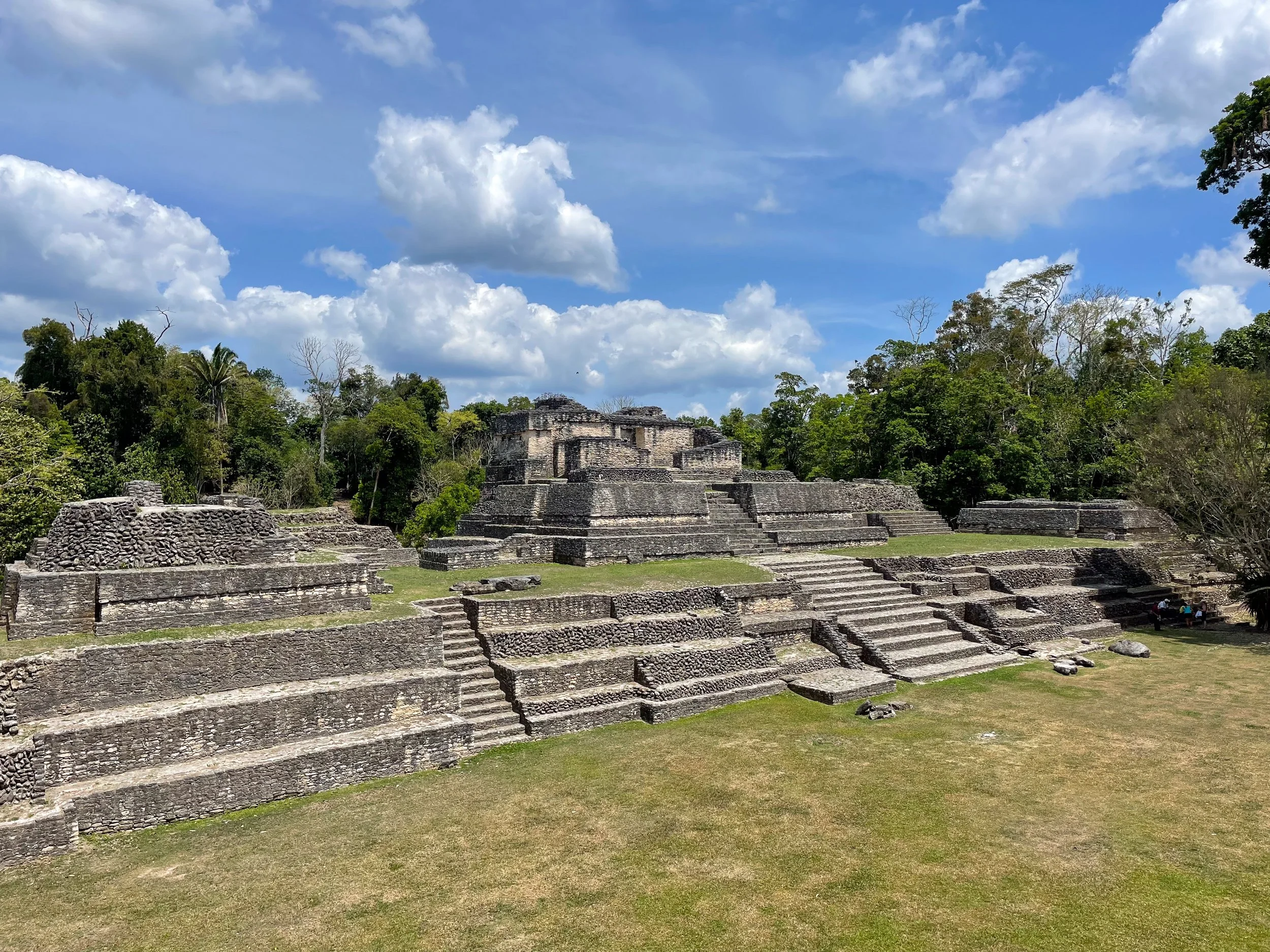
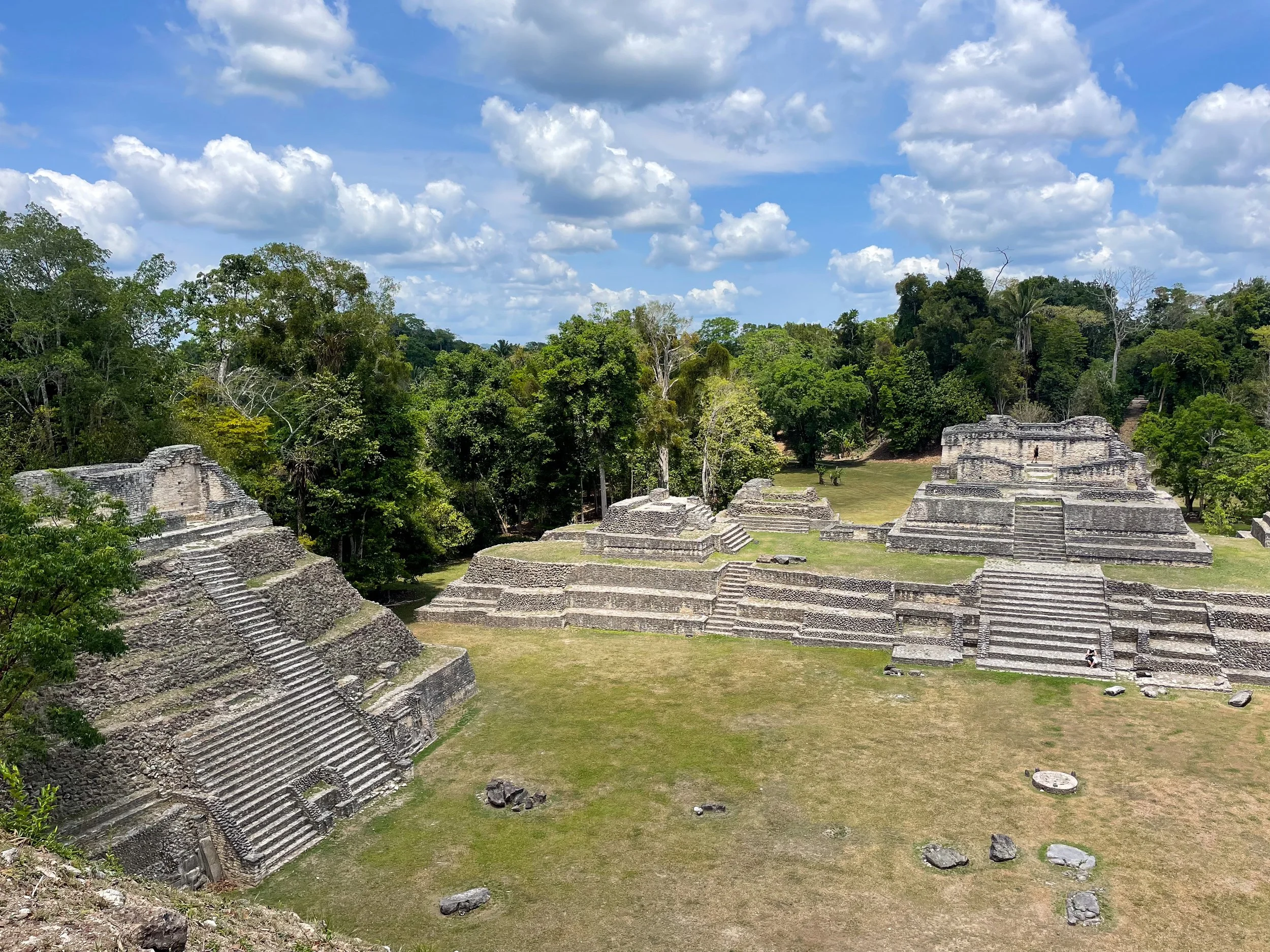
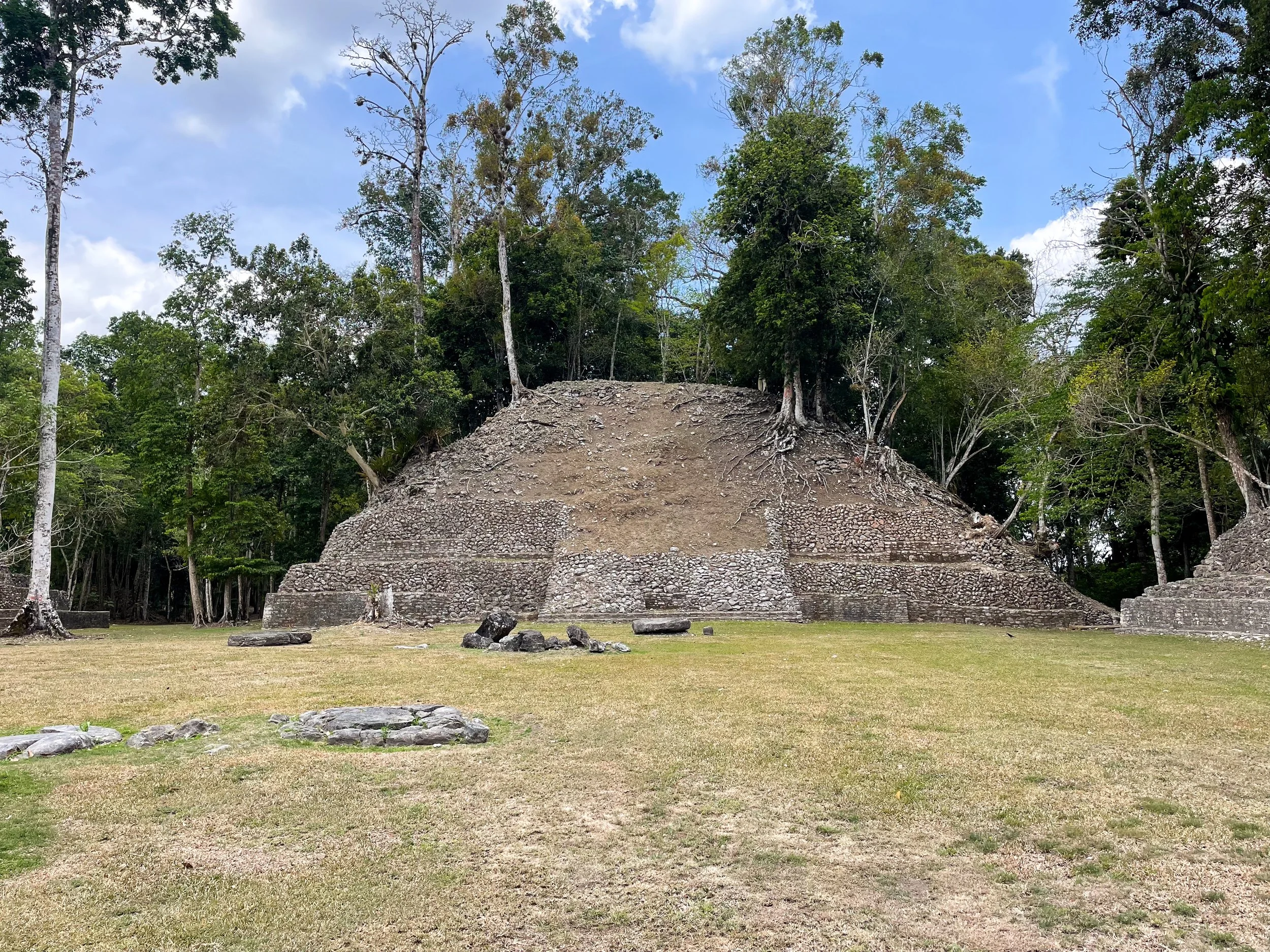
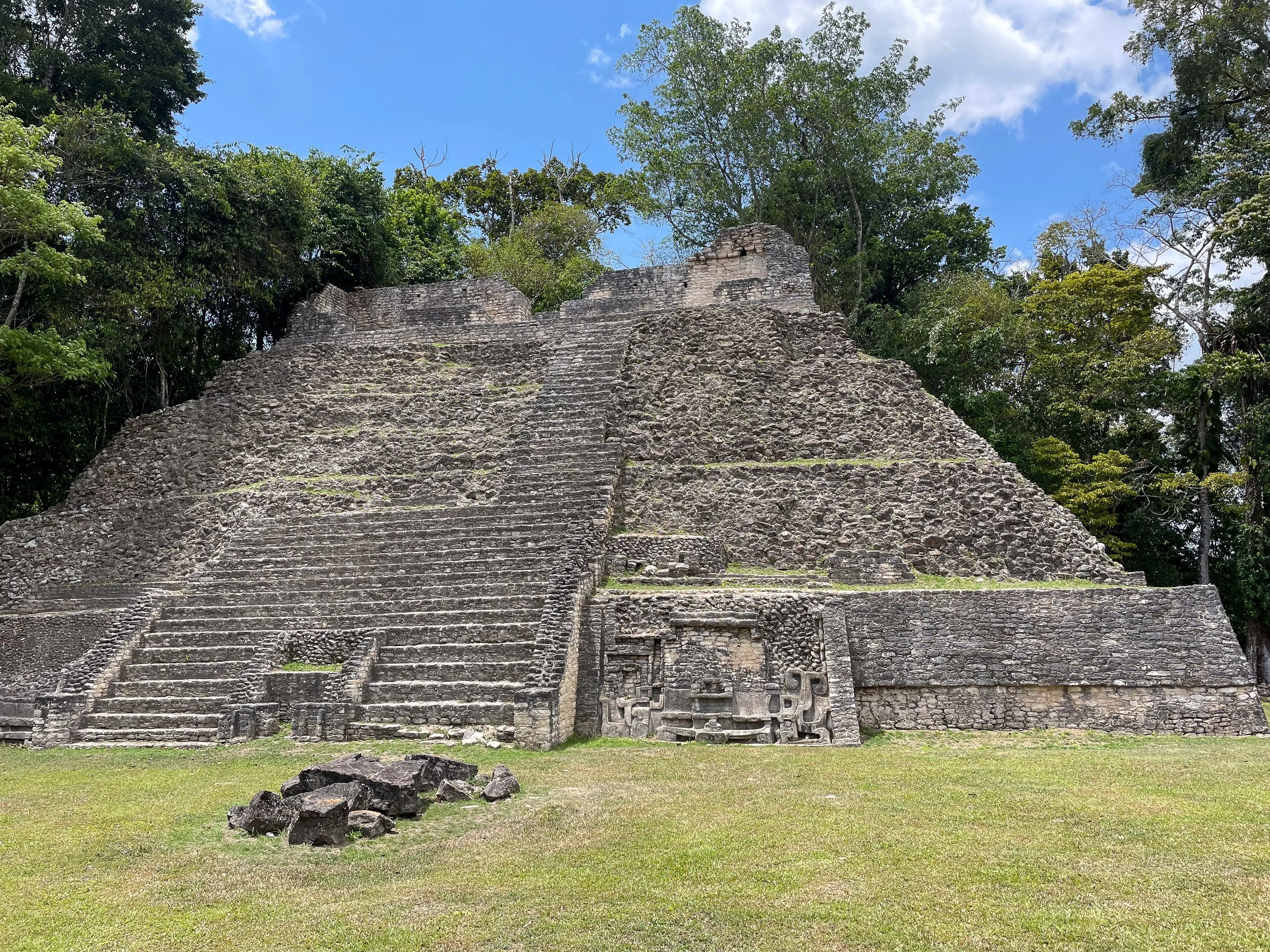
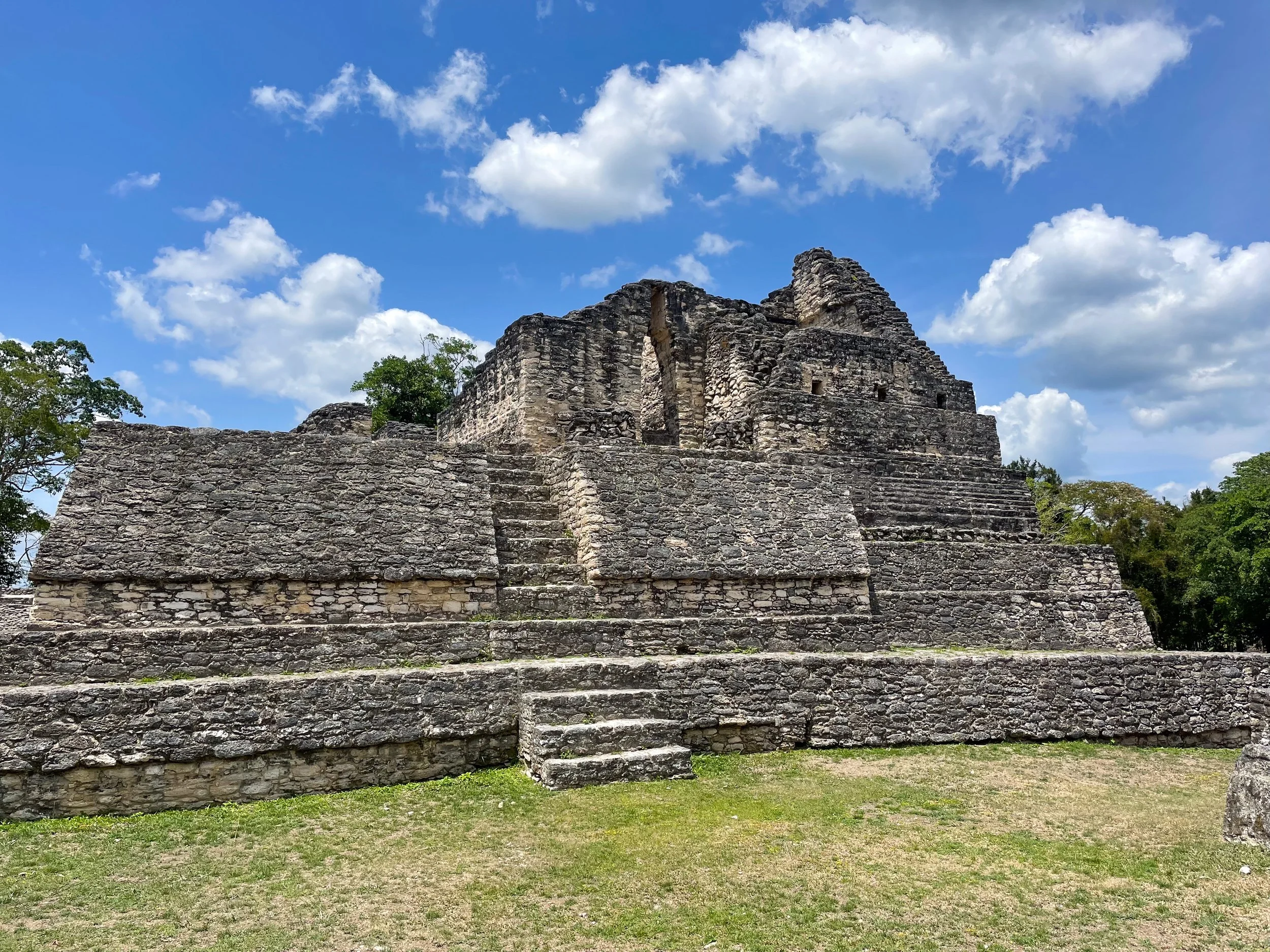
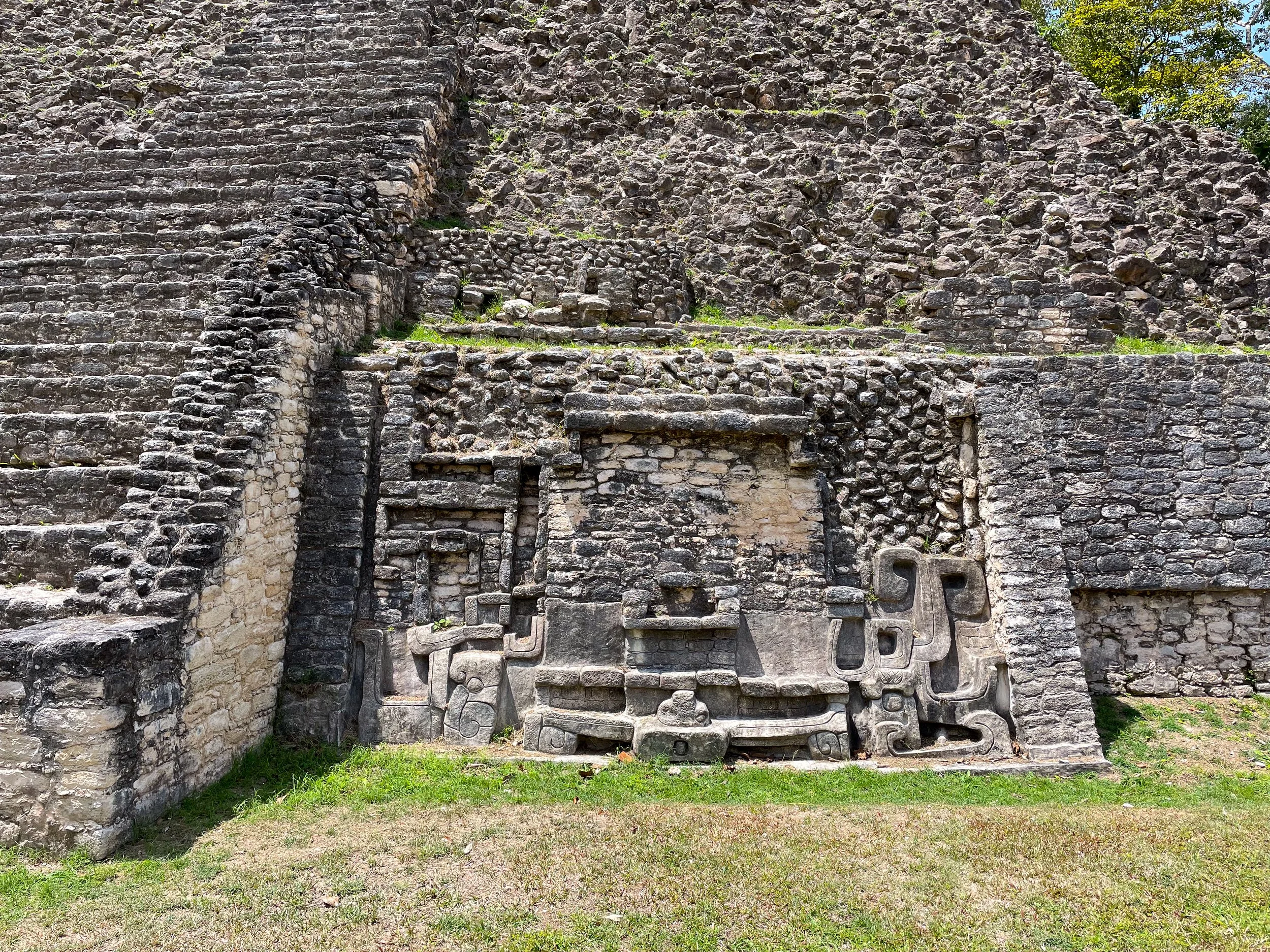
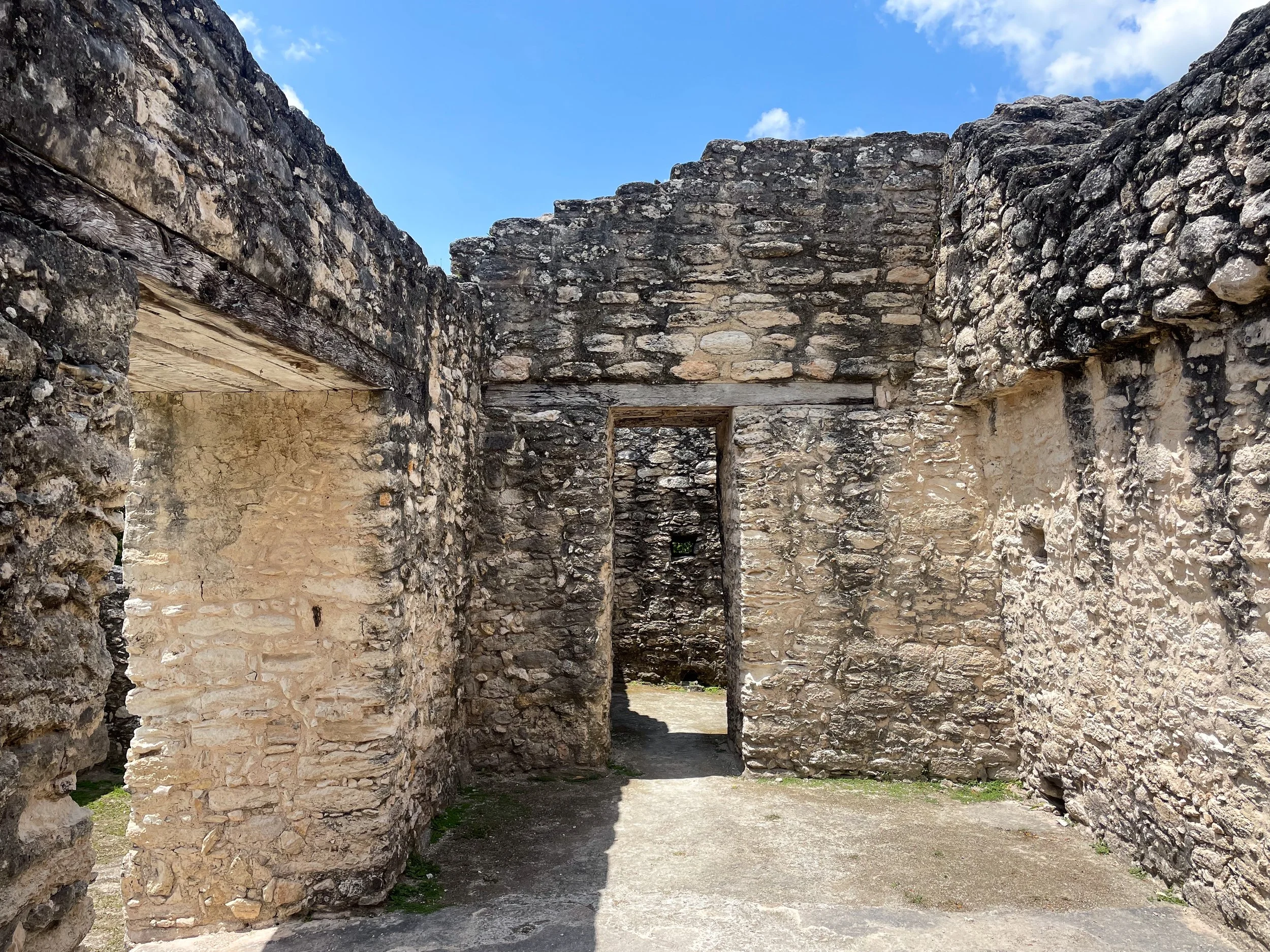
Astronomical Acropolis. Astronomy was one of the cornerstones of the Mayan civilization. They built structures to track the solstices, study the stars and connect to their gods. The astronomical acropolis at Caracol is one of the most significant to be discovered. It’s flanked by temples, pyramids and a ball court.
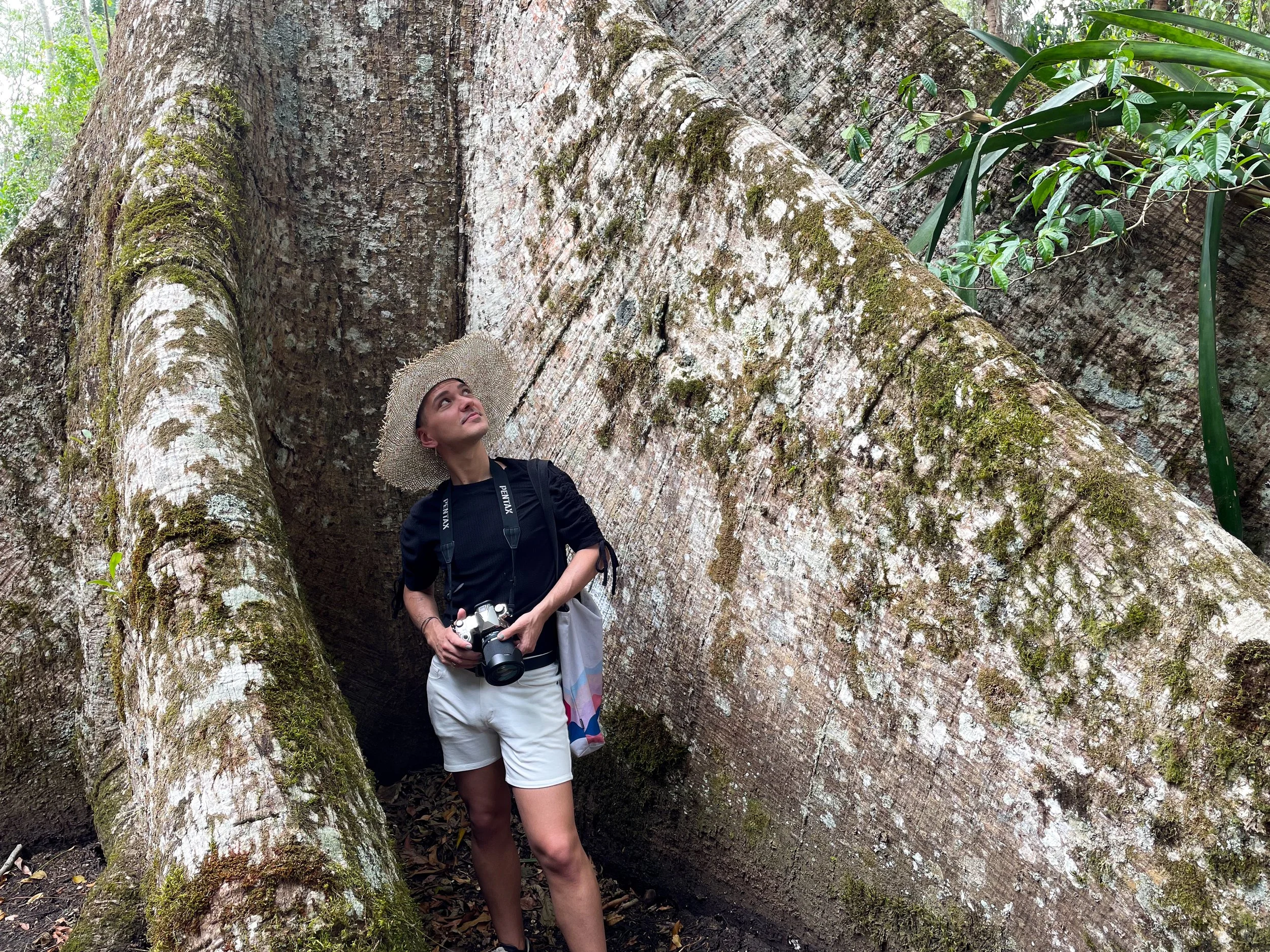
Wildlife Spotting. The remoteness of the archeological park emphasizes the ancient and abandoned nature of the site. As we explored, we heard the billowing grunts of howler monkeys and spotted the reclusive Quetzal, Guatemala’s national bird.
Caracol Tour. We visited Caracol on a small group tour from San Ignacio, traveling about two hours along back roads through dense jungle to reach the ruins. The tour included a local lunch of rice and beans, fried plantains, spiced & stewed tofu and rum punch. We booked with Maya Walk Tours through Viator.
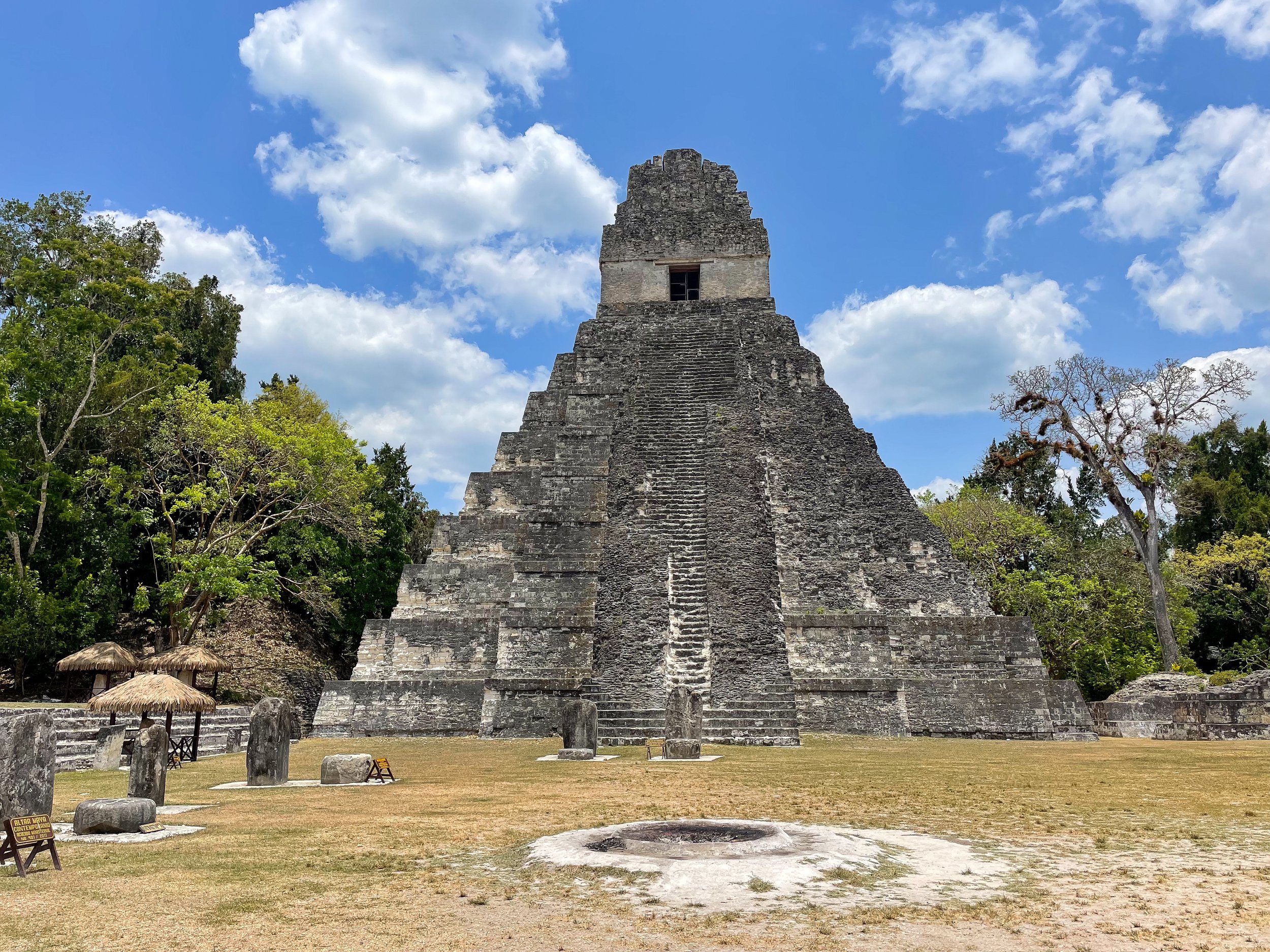
Tikal National Park
Once the epicenter of the Mayan civilization, Tikal is the largest Mayan city ever constructed. Formerly home to 150,000 people and more than 2,000 structures, it’s now dramatically reclaimed by nature. Its ruins reveal the achievements, ceremonies and eventual collapse of the ancient Maya. Nature trails link towering temples, buried mounds and ongoing excavations while wildlife such as toucans, parrots, spider monkeys, and foxes roam the surrounding forest. We explored the ancient wonder on a cross border day trip from Belize to Guatemala.
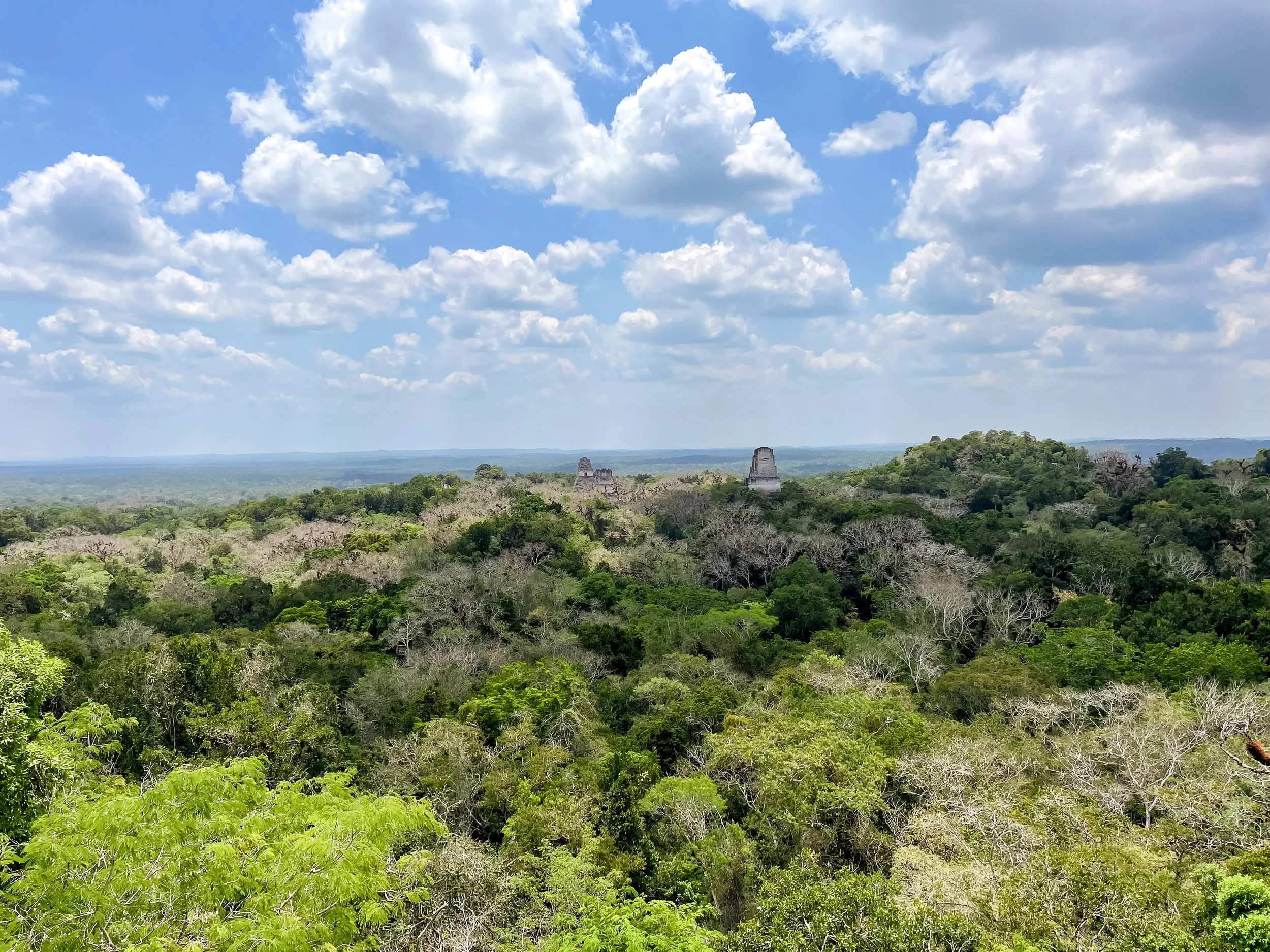
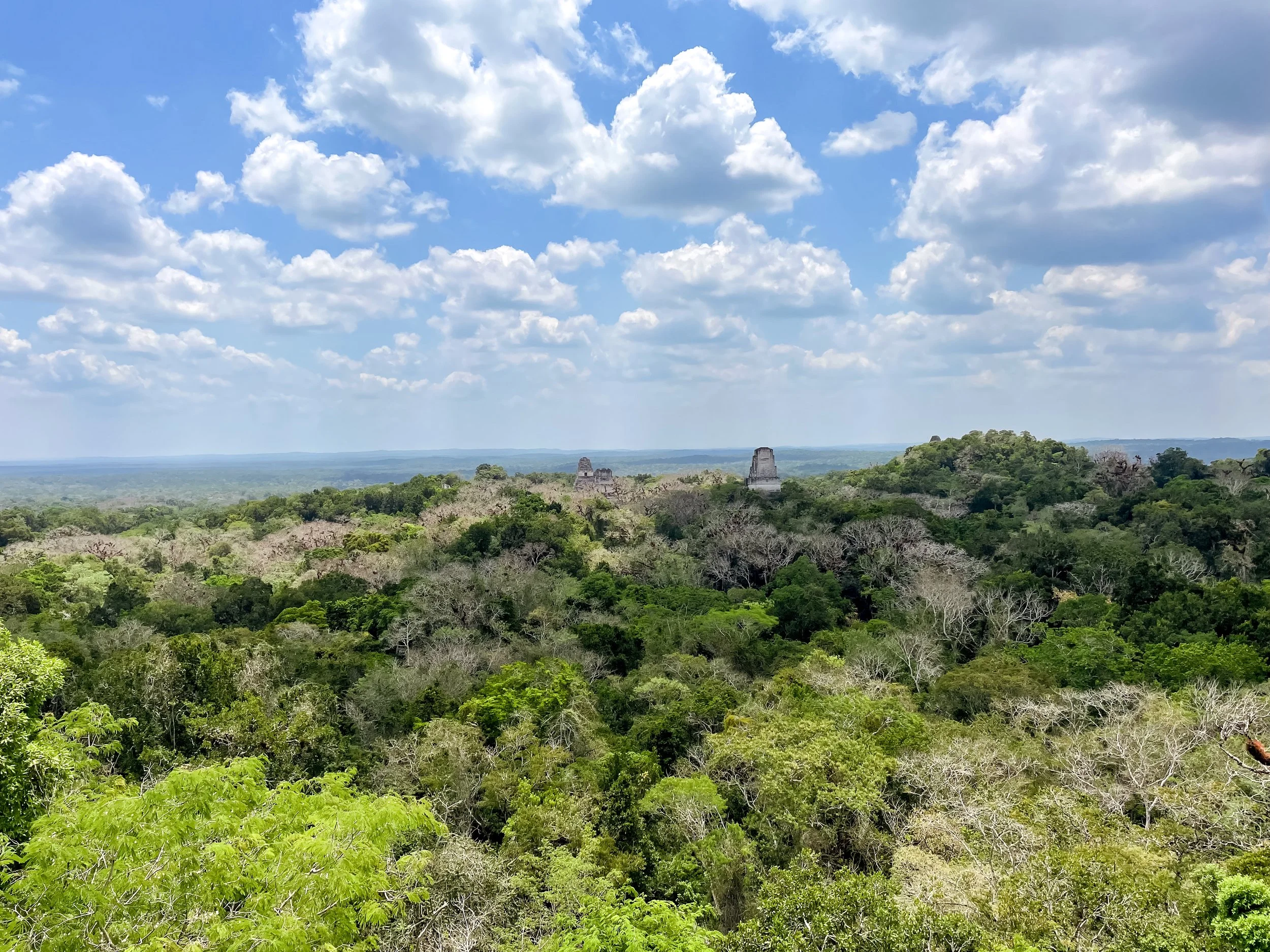
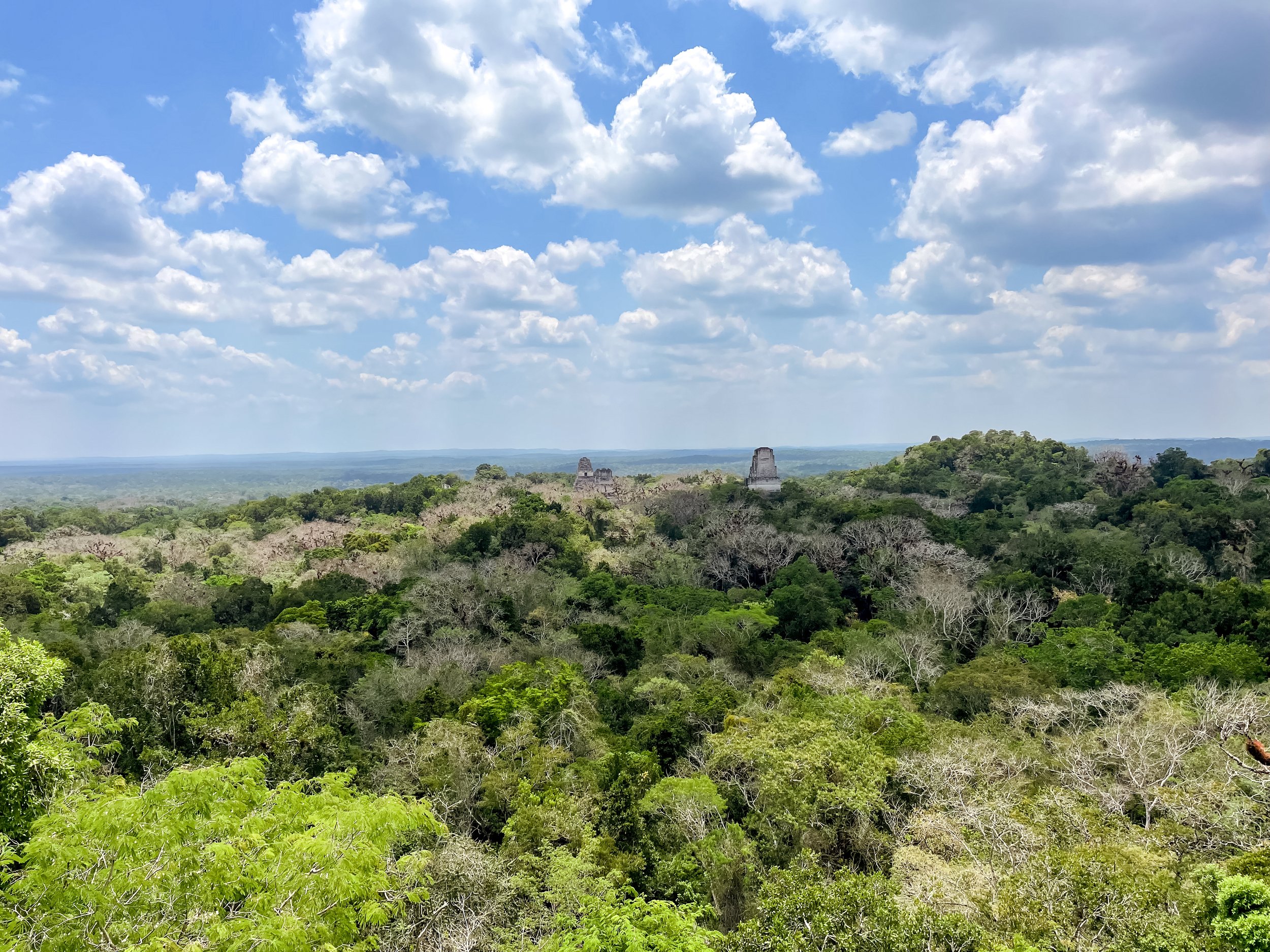
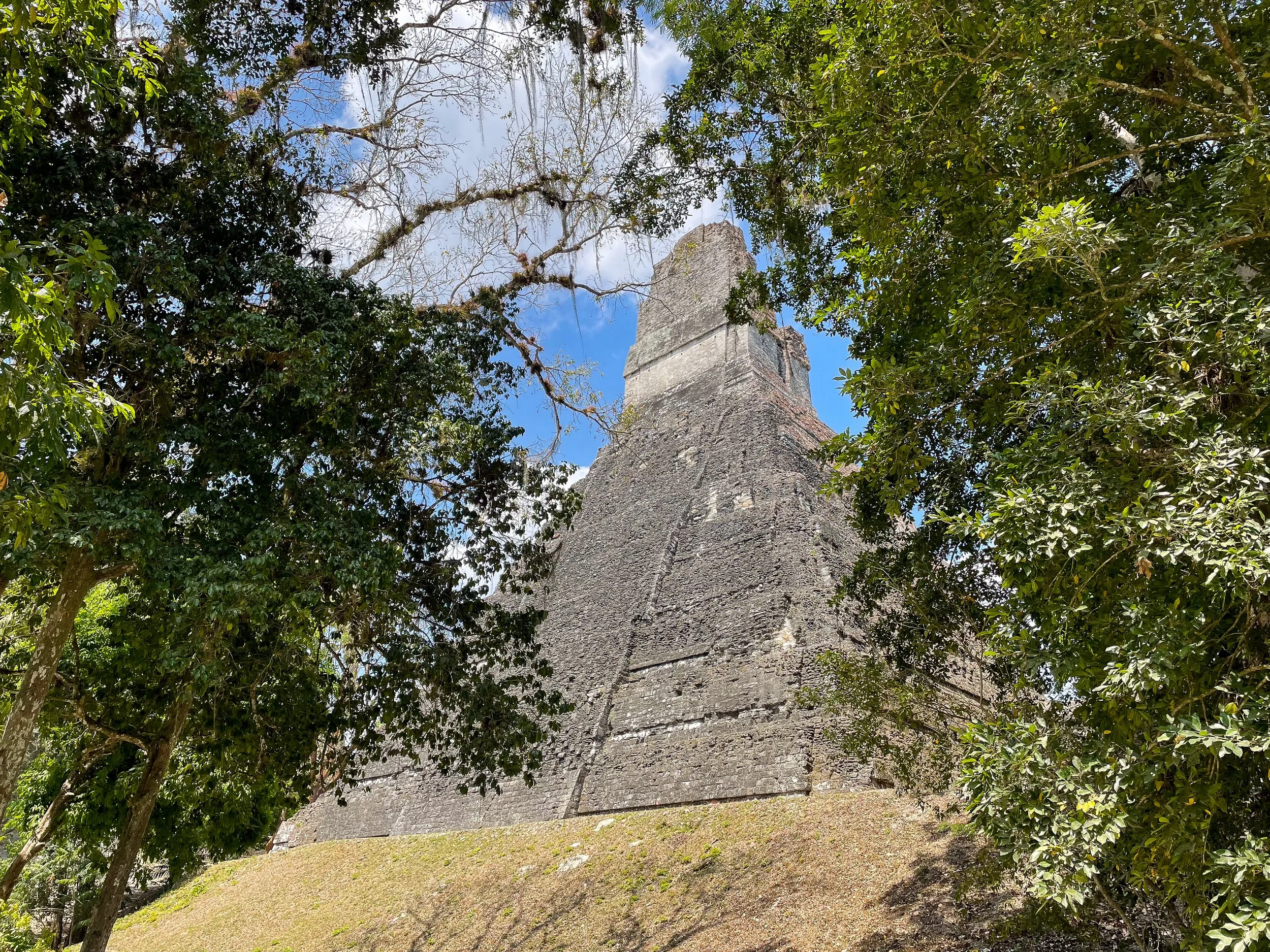
Temple of the Double Headed Serpent. A ceremonial temple and the largest at Tikal. Its crumbling ruins rise 70 meters from the jungle canopy. Stairs lead to its upper levels with views of the expansive jungle canopy and distant temples protruding from it. We imagined what the city must have looked like from this vantage point during its peak.
Fun Fact. The view from this temple is made famous by a scene in Star Wars when the Millennium Falcon landed on the rebel moon base of Yavin 4.
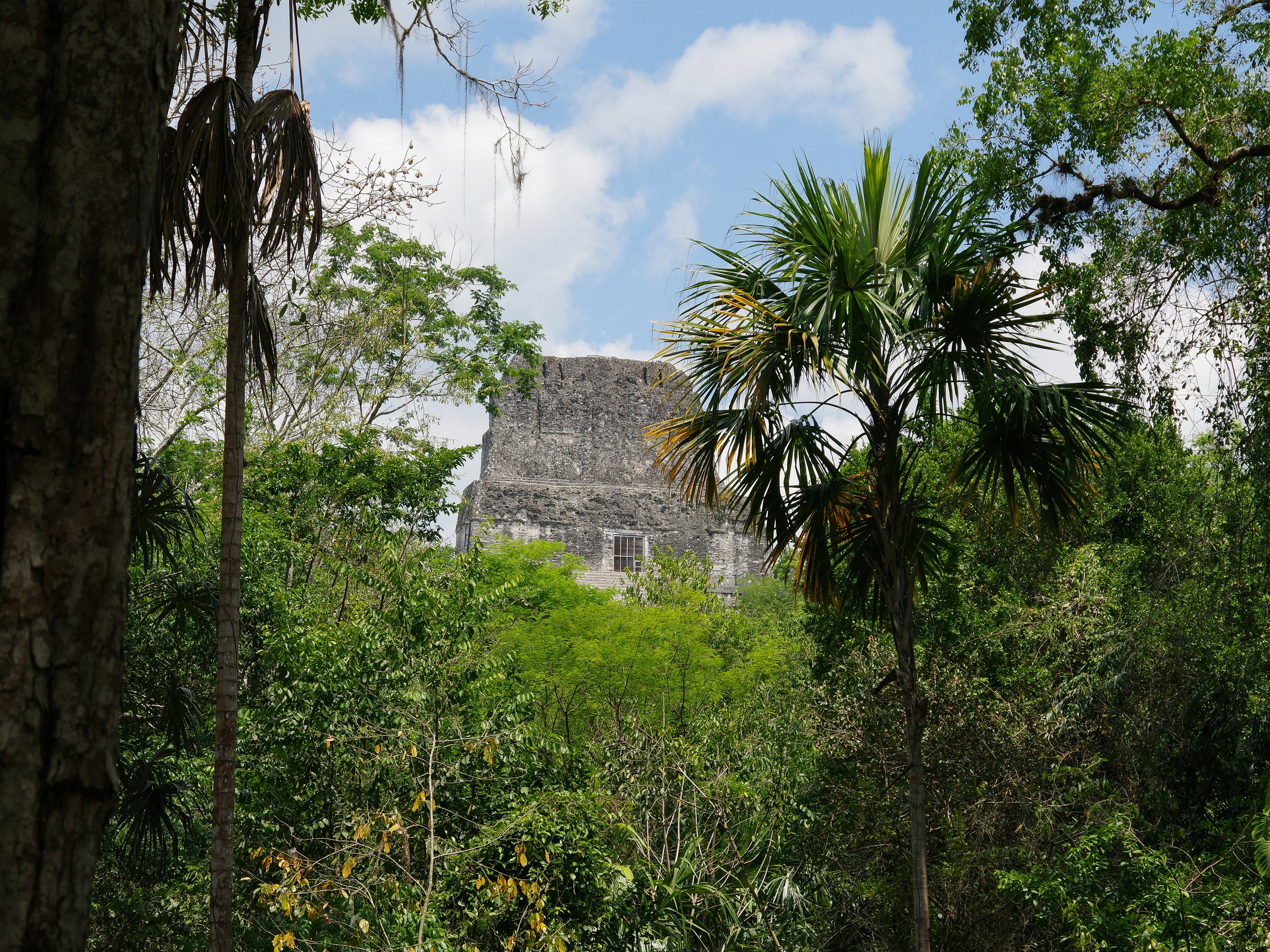
Temple of the Jaguar Priest. One of the tallest temples at Tikal. Its upper levels rise from the jungle canopy while its base is overgrown with vegetation. The temple is not accessible but can be viewed through the trees below and from Temple IV.
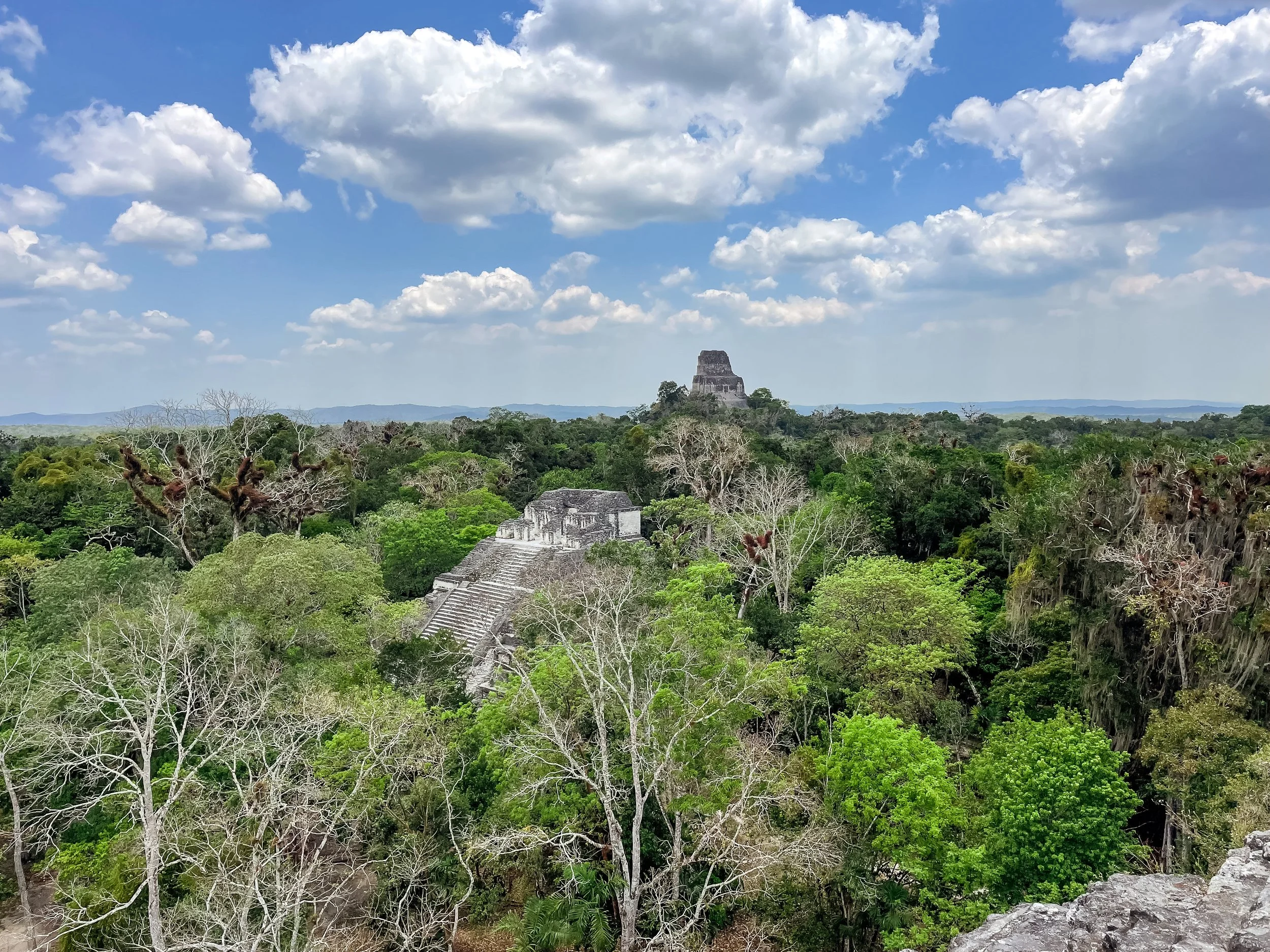
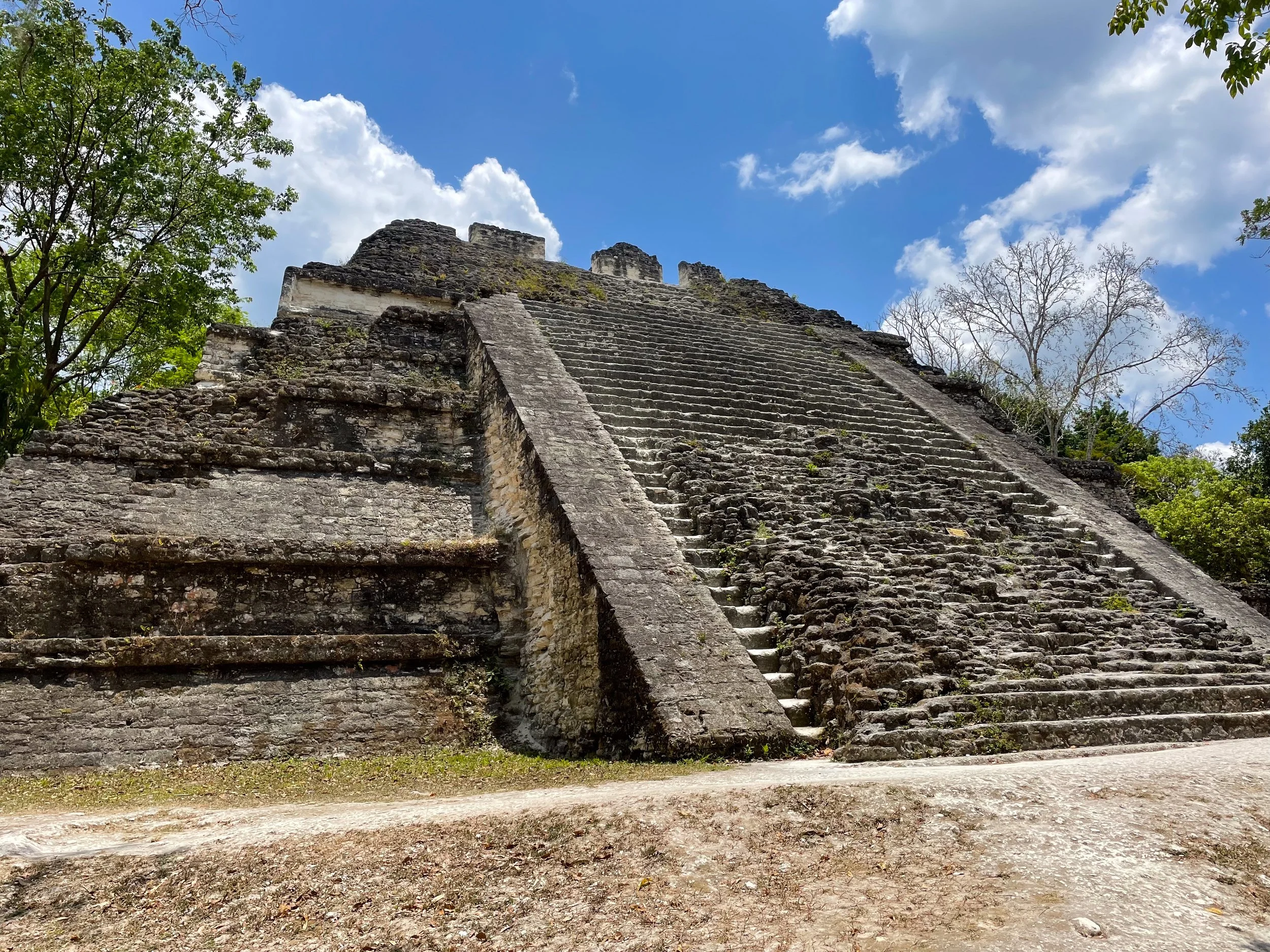
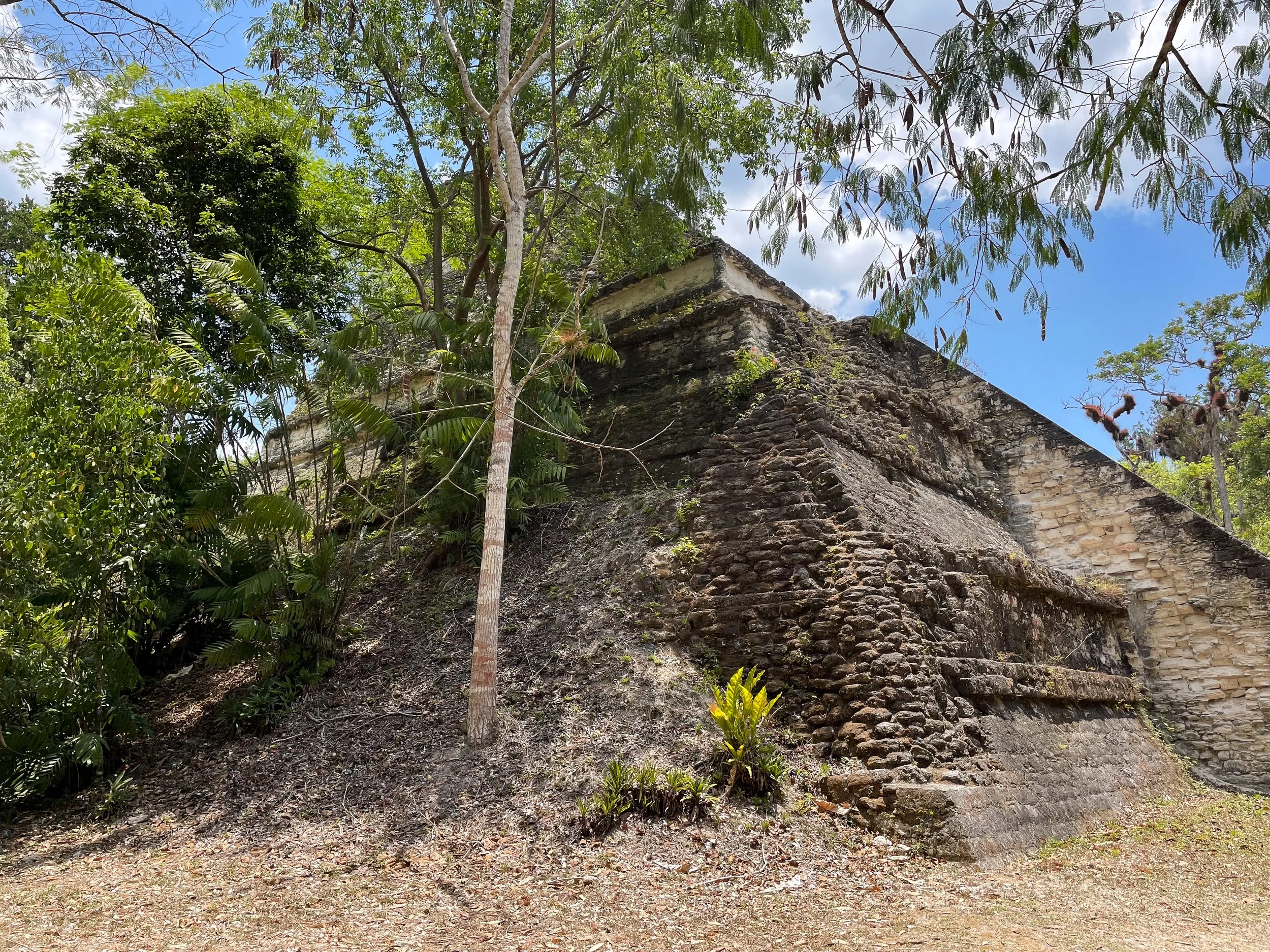
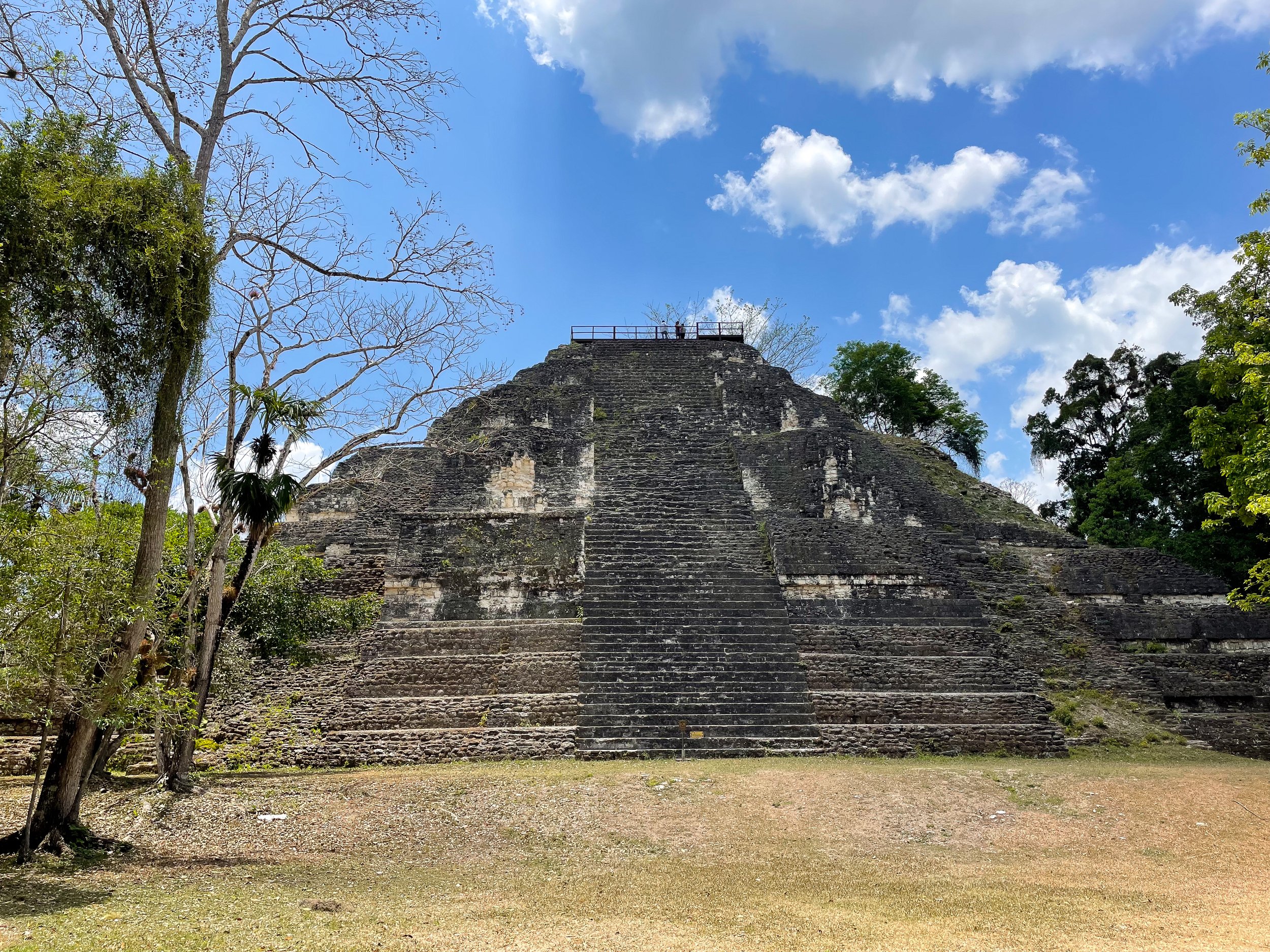
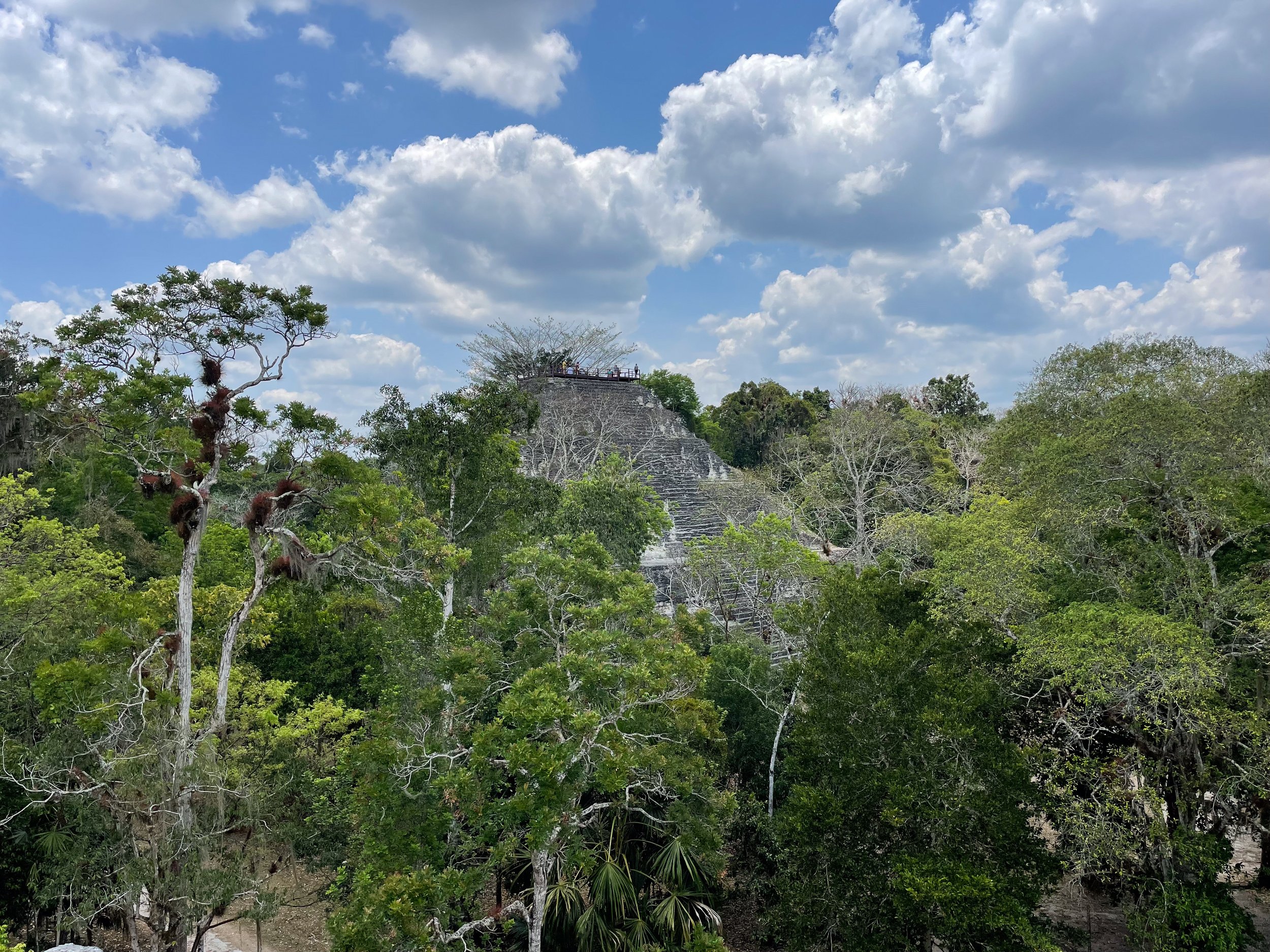
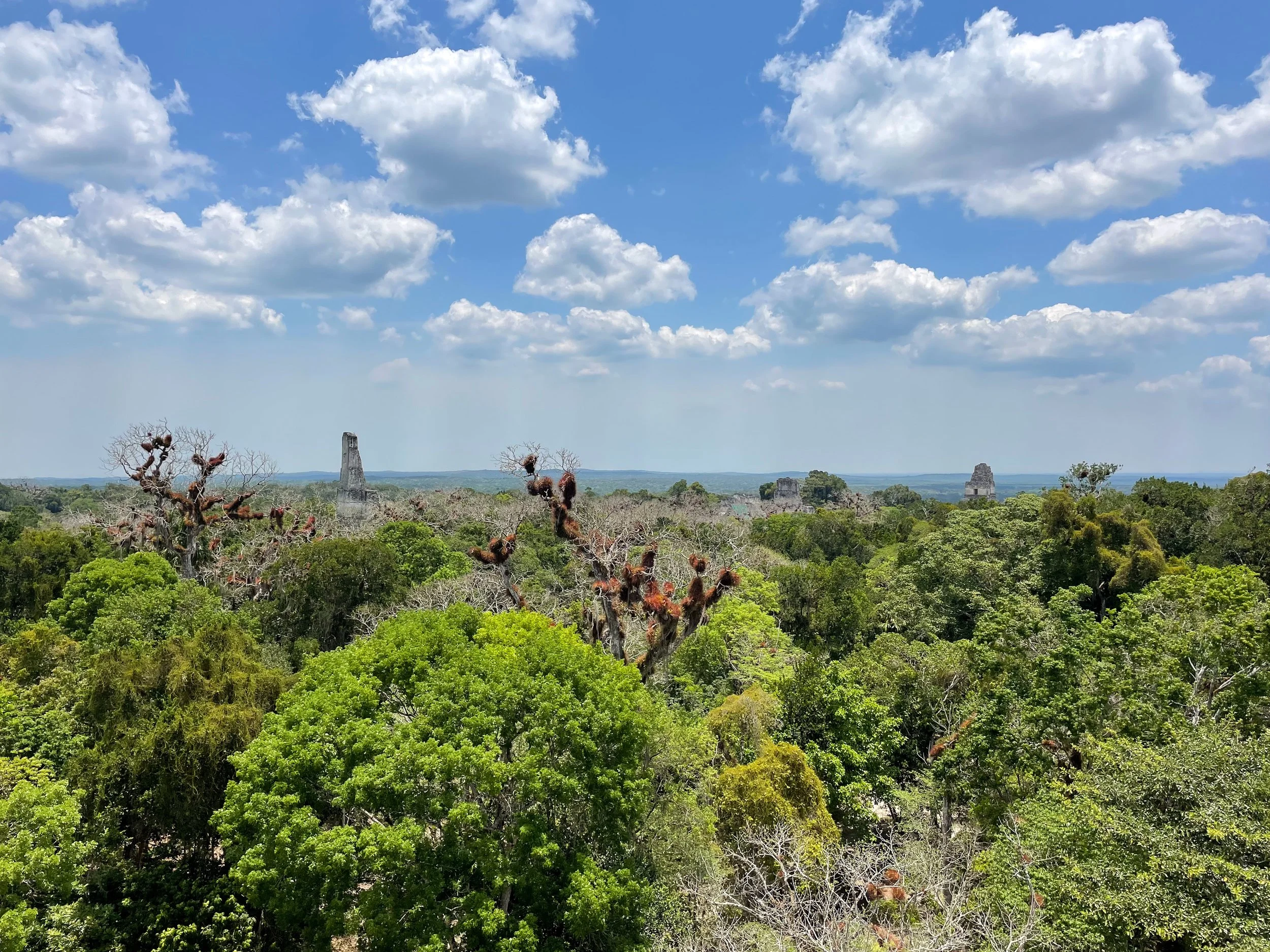
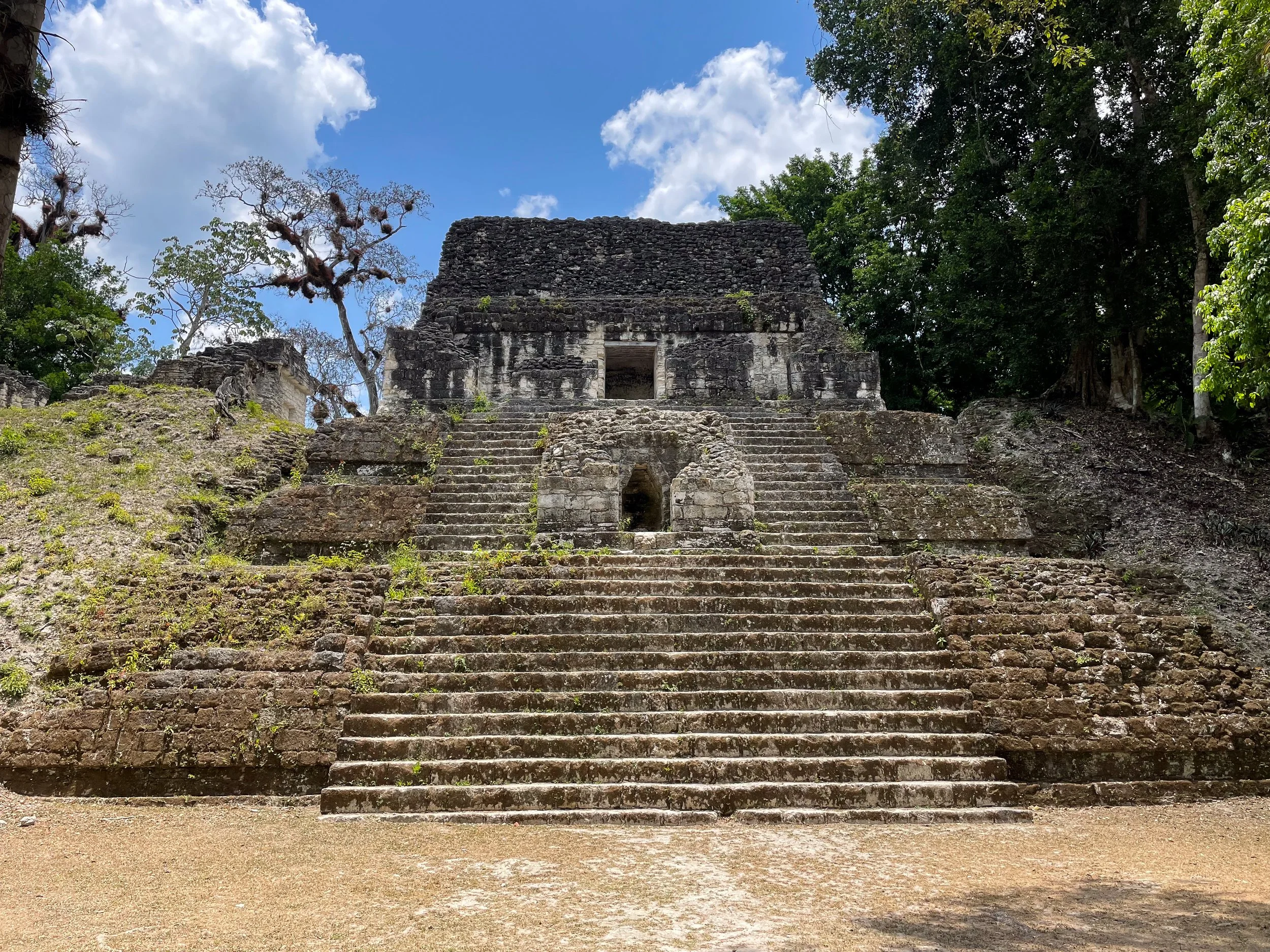
The Lost World Complex. A large ceremonial complex with multiple temples, pyramids and an astronomical acropolis. Its largest pyramid has an observation deck overlooking several nearby temples and pyramids across Tikal.
The Talud Tablero Temple. A temple within The Lost World complex featuring architectural influences from the Teotihuacan civilization. Climbable steps lead up its wide base and sloped levels to an exposed room at its top.
Plaza of Seven Temples. A linear astronomical acropolis with seven pyramids and temples designed to track the solstices and study the stars. Many of the structures remain overgrown and only partially exposed.
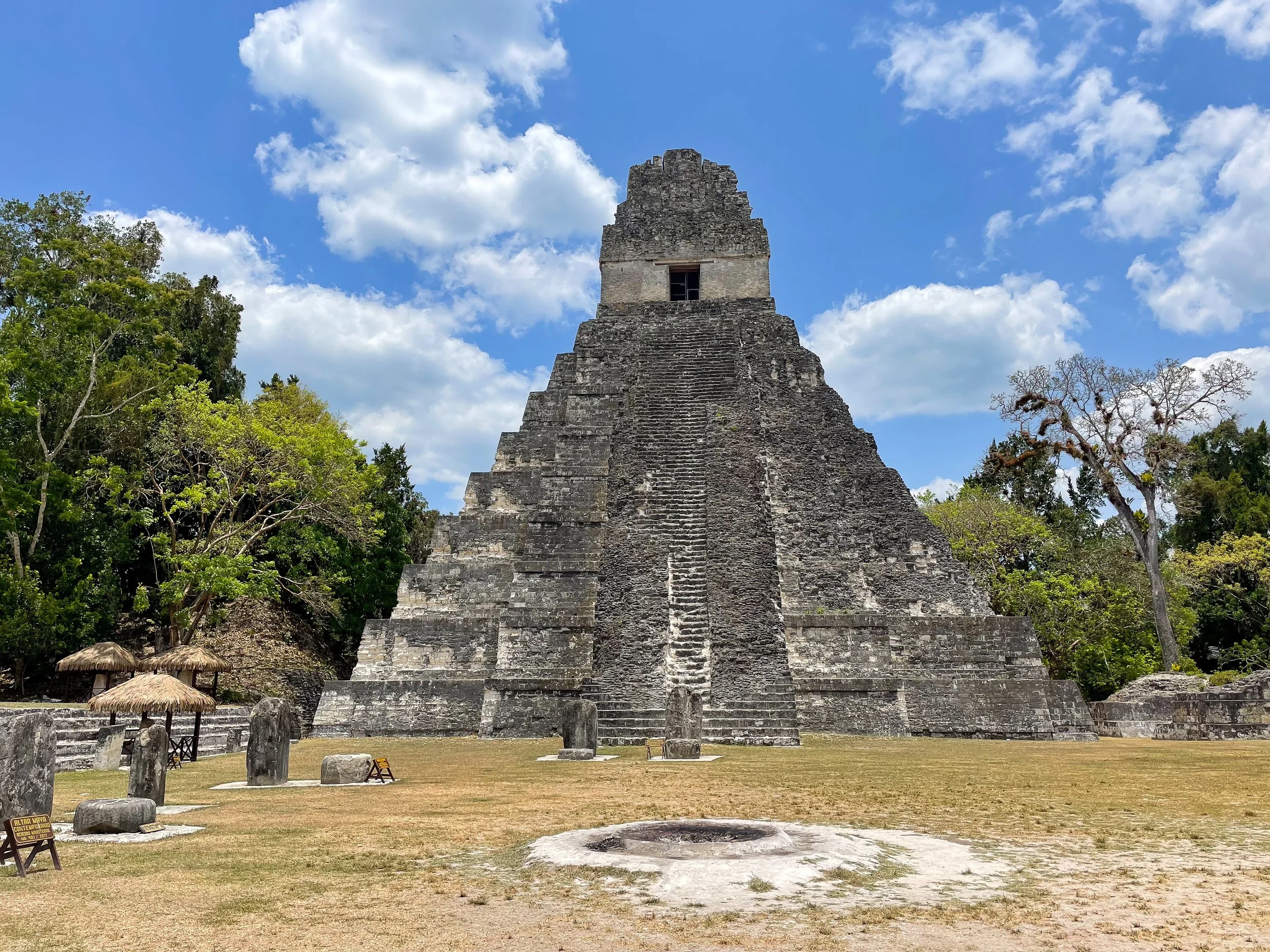
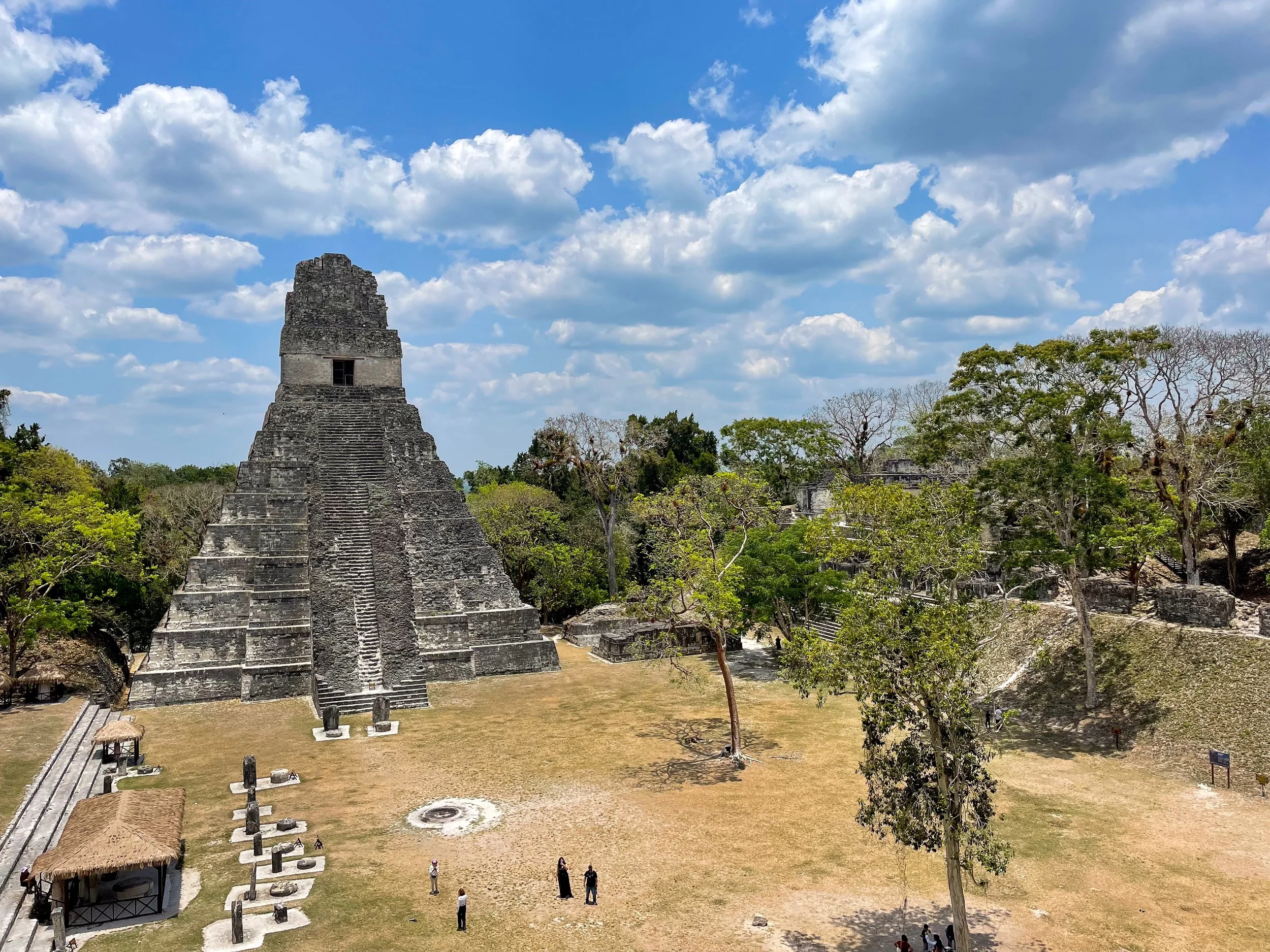
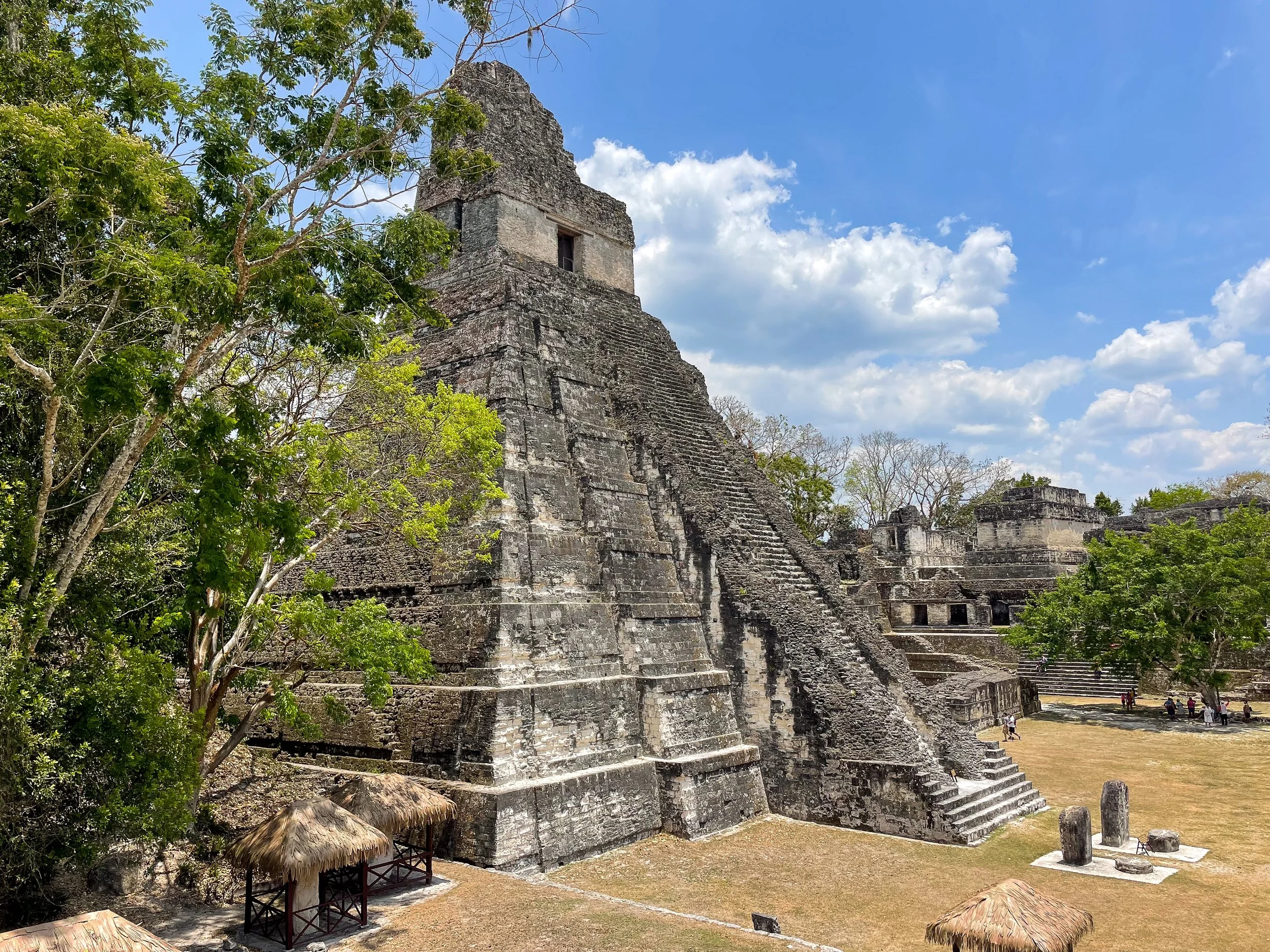
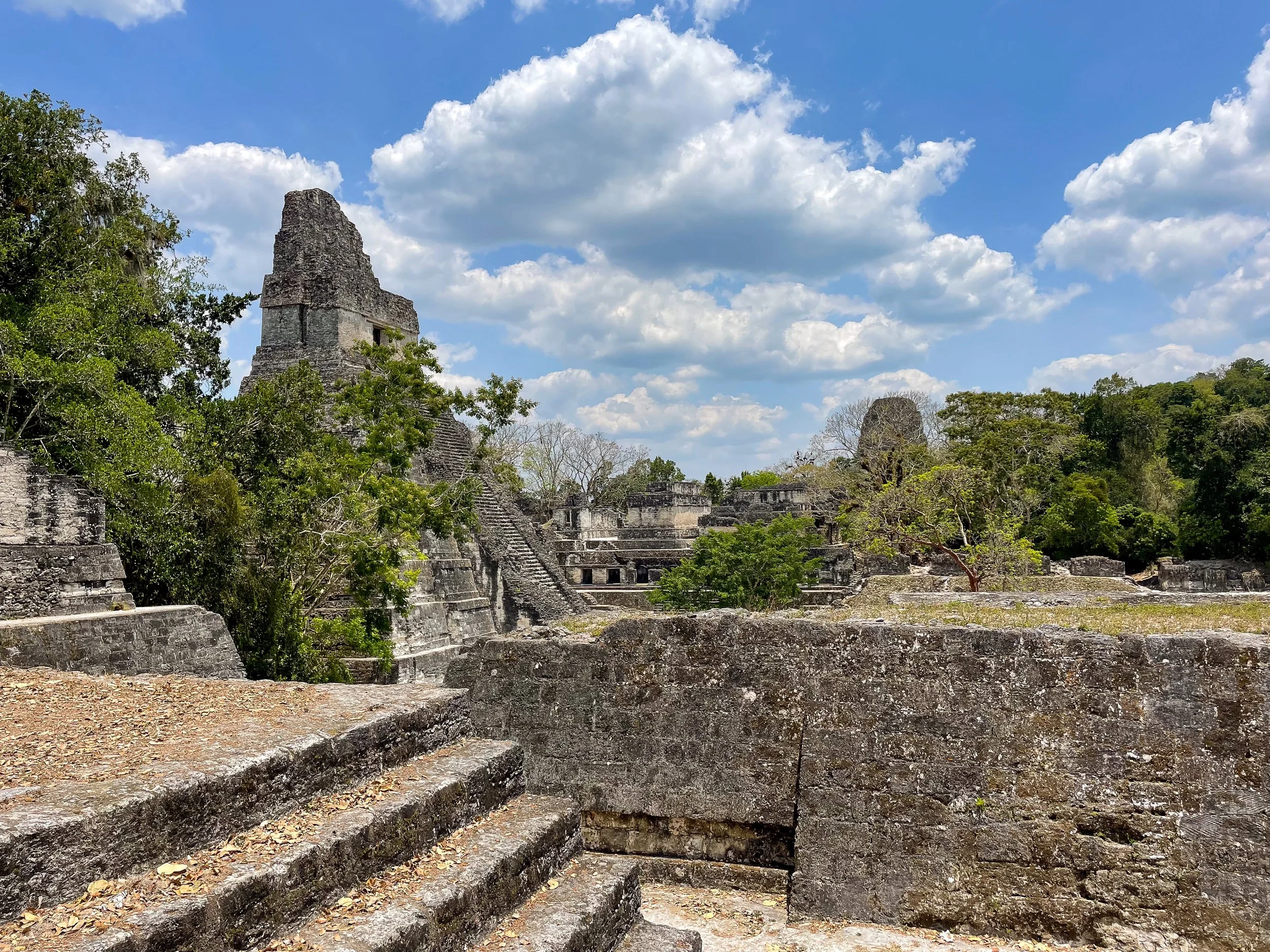
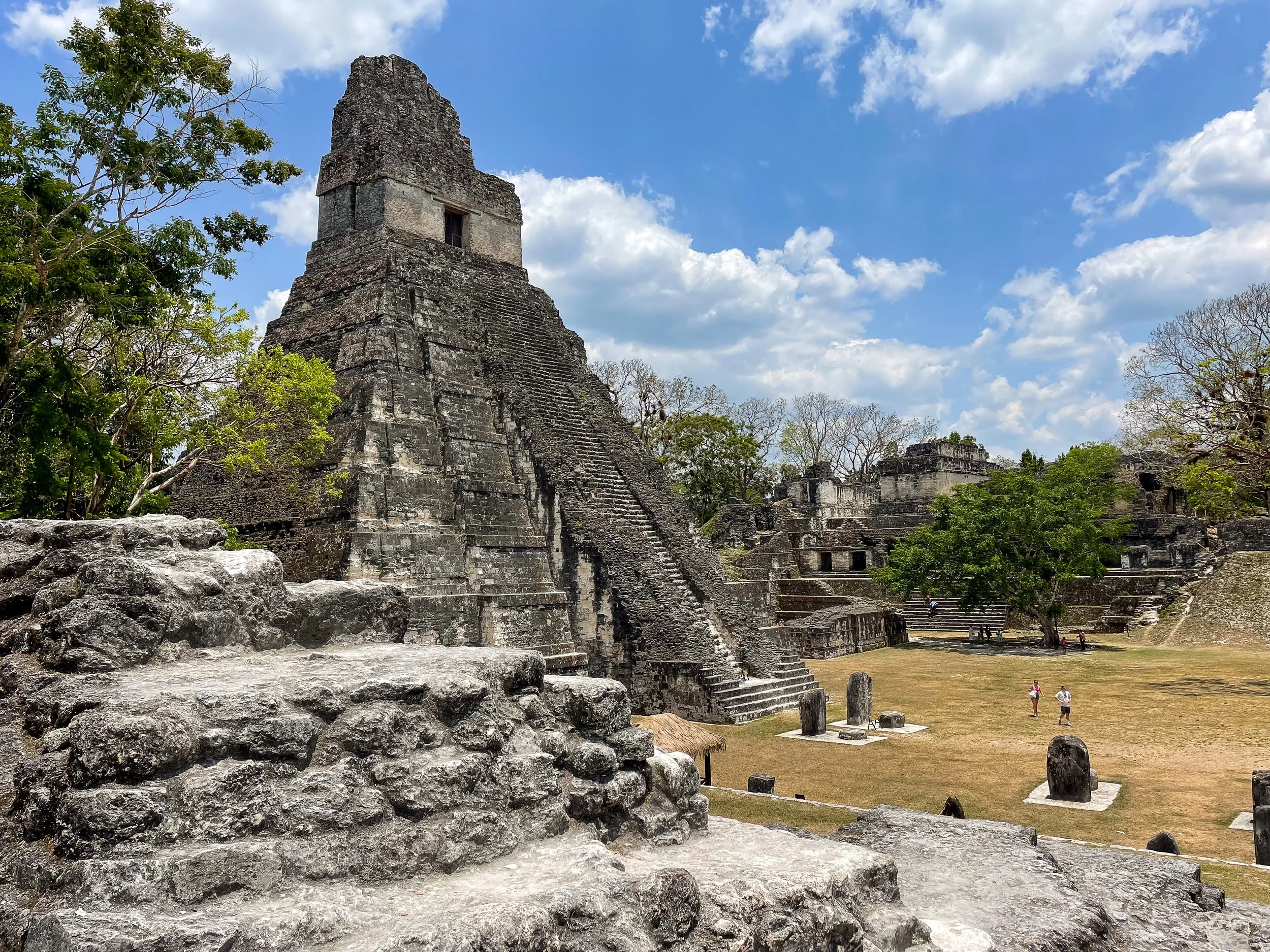
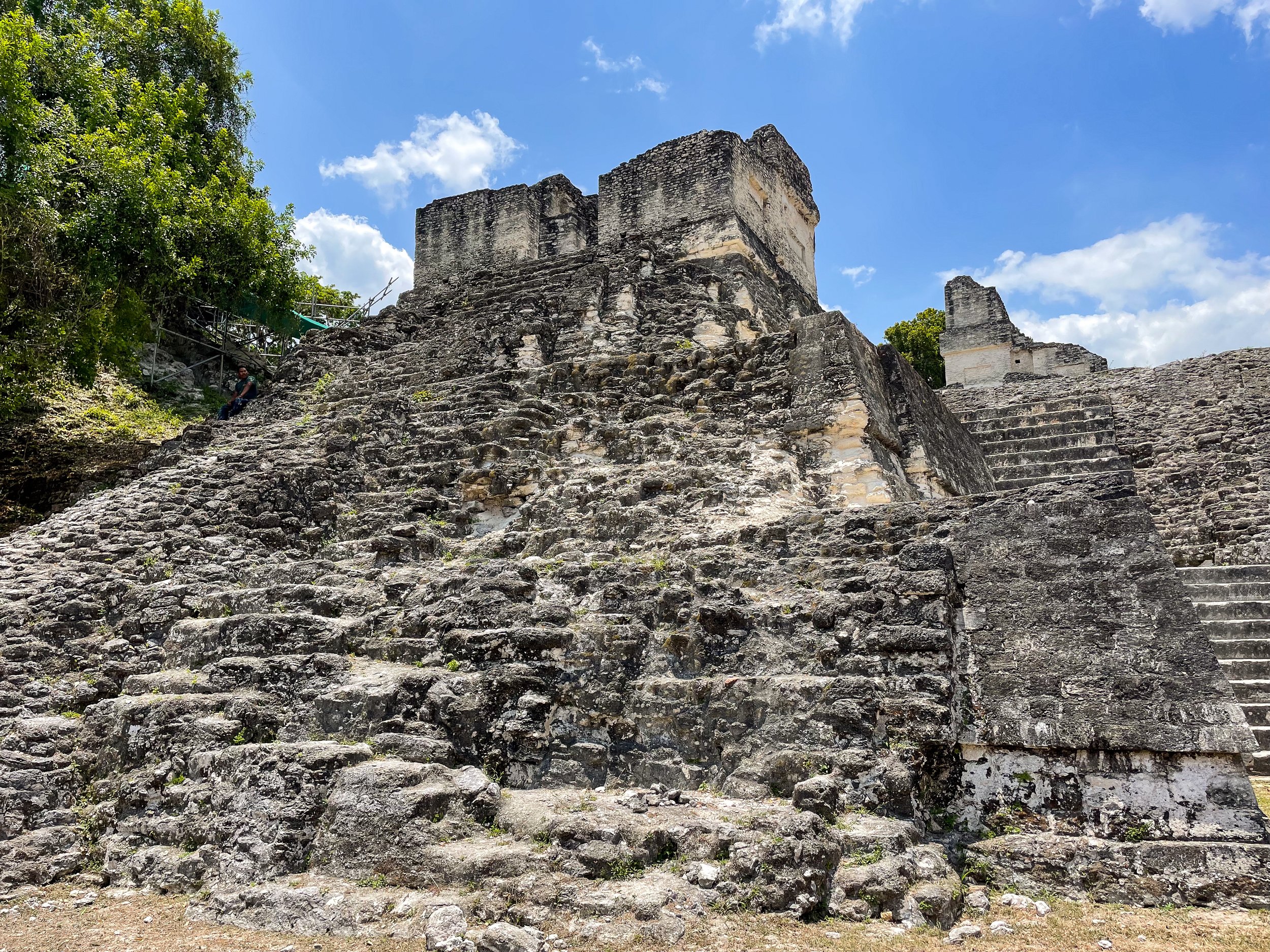
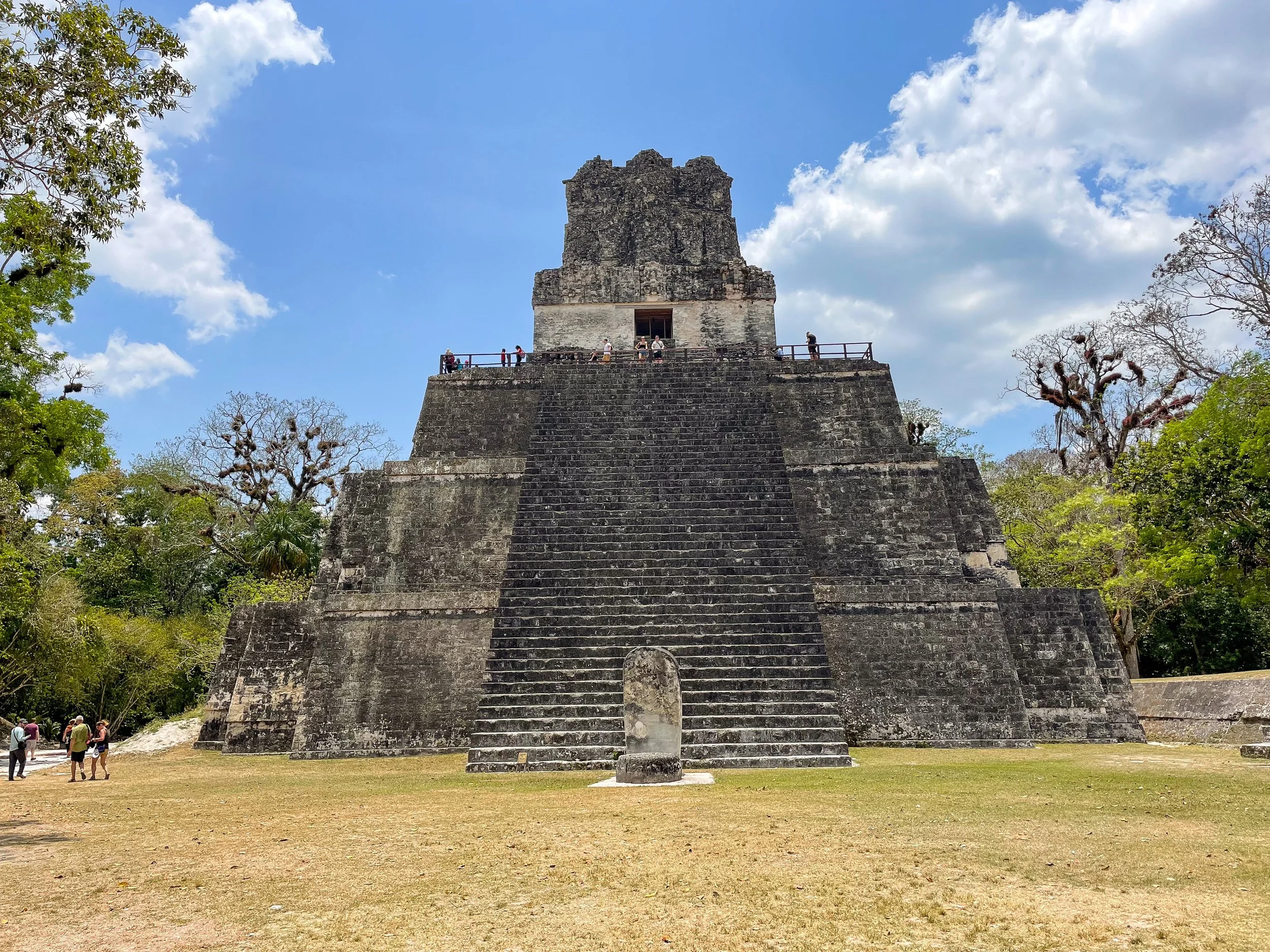
The North Acropolis. The most well preserved and recognizable acropolis at Tikal. Its central plaza is framed by multiple pyramids, residential structures and a ball court. Once home to Mayan royals and the burial site of past rulers, it features tombs and stelae. The complex is largely free to explore, including the opportunity to climb two of its pyramids for sweeping views of neighboring structures and close-up looks at their detailed carvings and hieroglyphs.
Temple of the Great Jaguar. The most picturesque pyramid at Tikal residing at the center of the North Acropolis. Its ten level stepped sides lead to a throne room at its top. Though non-accessible, the temple can be viewed from the plaza and Temple II.
The Temple of Masks. A large stepped pyramid with a shrine at its upper level featuring eroded carvings of two masks. It offers the best views of the North Acropolis and the Temple of the Great Jaguar.
Getting Here. We visited Tikal with Belize Family Excursions on a day trip from San Ignacio. Our tour included transportation across the border of Belize and Guatemala, free time to explore the ruins and lunch at a local restaurant in Guatemala.
Actun Tunichil Muknal Cave
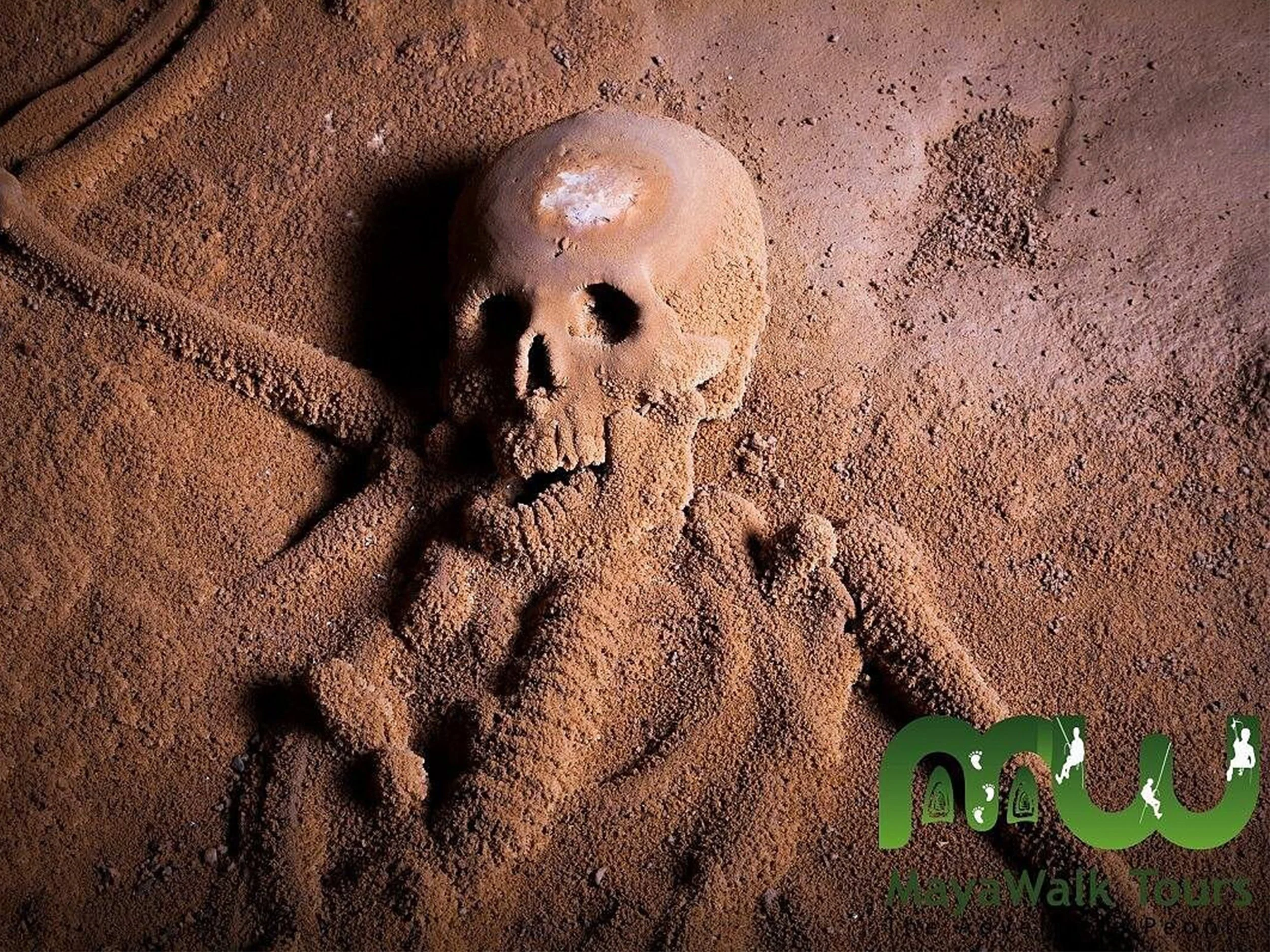
Actun Tunichil Muknal (ATM) is one of the most sacred places to the ancient Mayans, considered the entrance to the underworld. The sprawling cave system features an underground river and breathtaking rock formations. The chambers of the cave contain sacrificial human remains and Mayan pottery. The cave is well protected, with only a limited number of visitors permitted to enter per day.
The Entrance of the Underworld
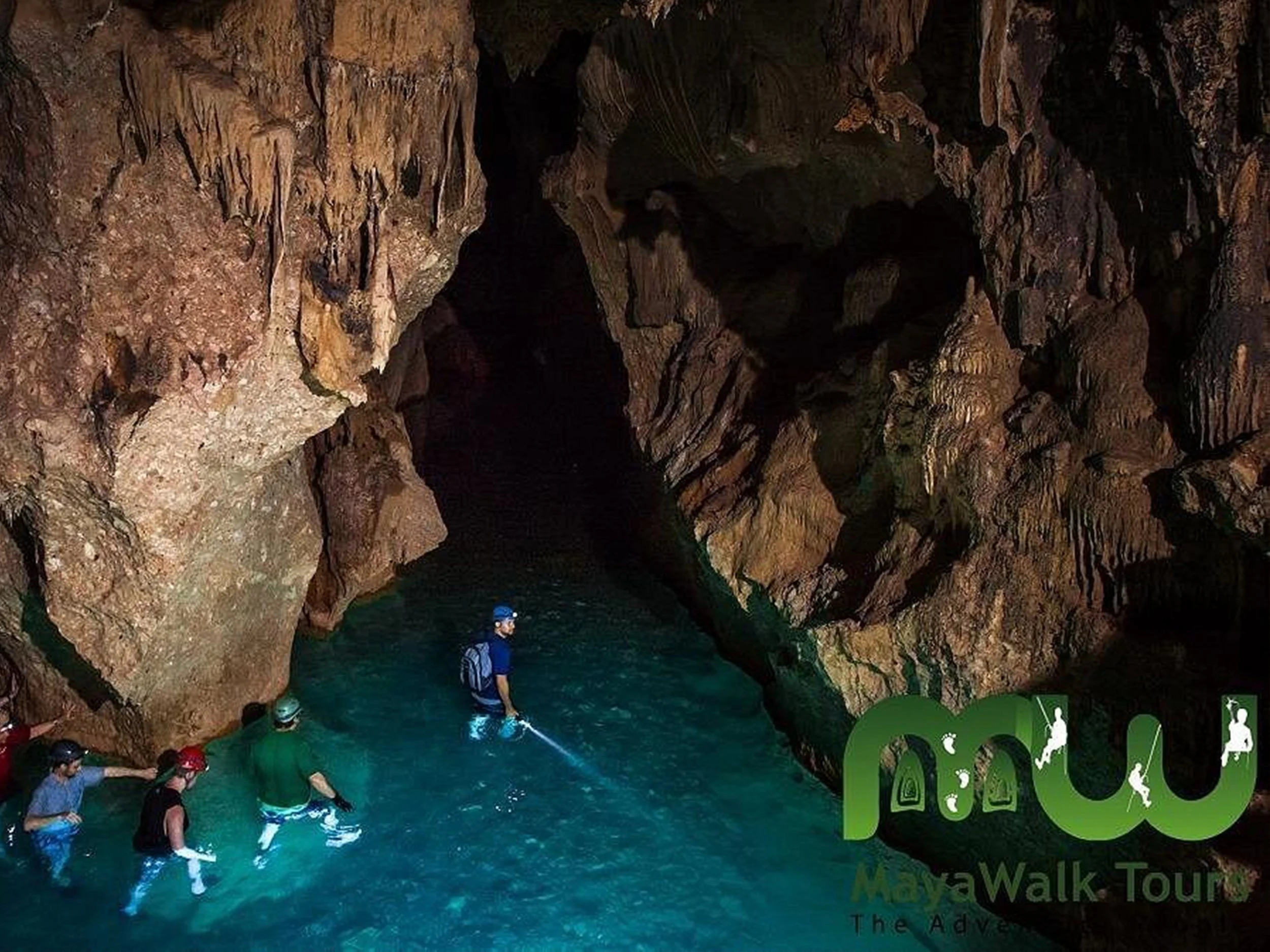
A hike through the jungle and across three shallow rivers leads to the entrance of the cave. A striking blue river flows from the darkness of its mouth. We swam inside with headlamps lighting the way. We squeezed through tight crevices and water filled passages before entering wider chambers and climbing over rocks as the river moved around us. Along the way, we admired clusters of stalactites and stalagmites used as musical instruments, like a xylophone, by the ancient Maya when tapped on. We scrambled up to a cliff to access the cave’s vast second half.
Ceremonial Chambers
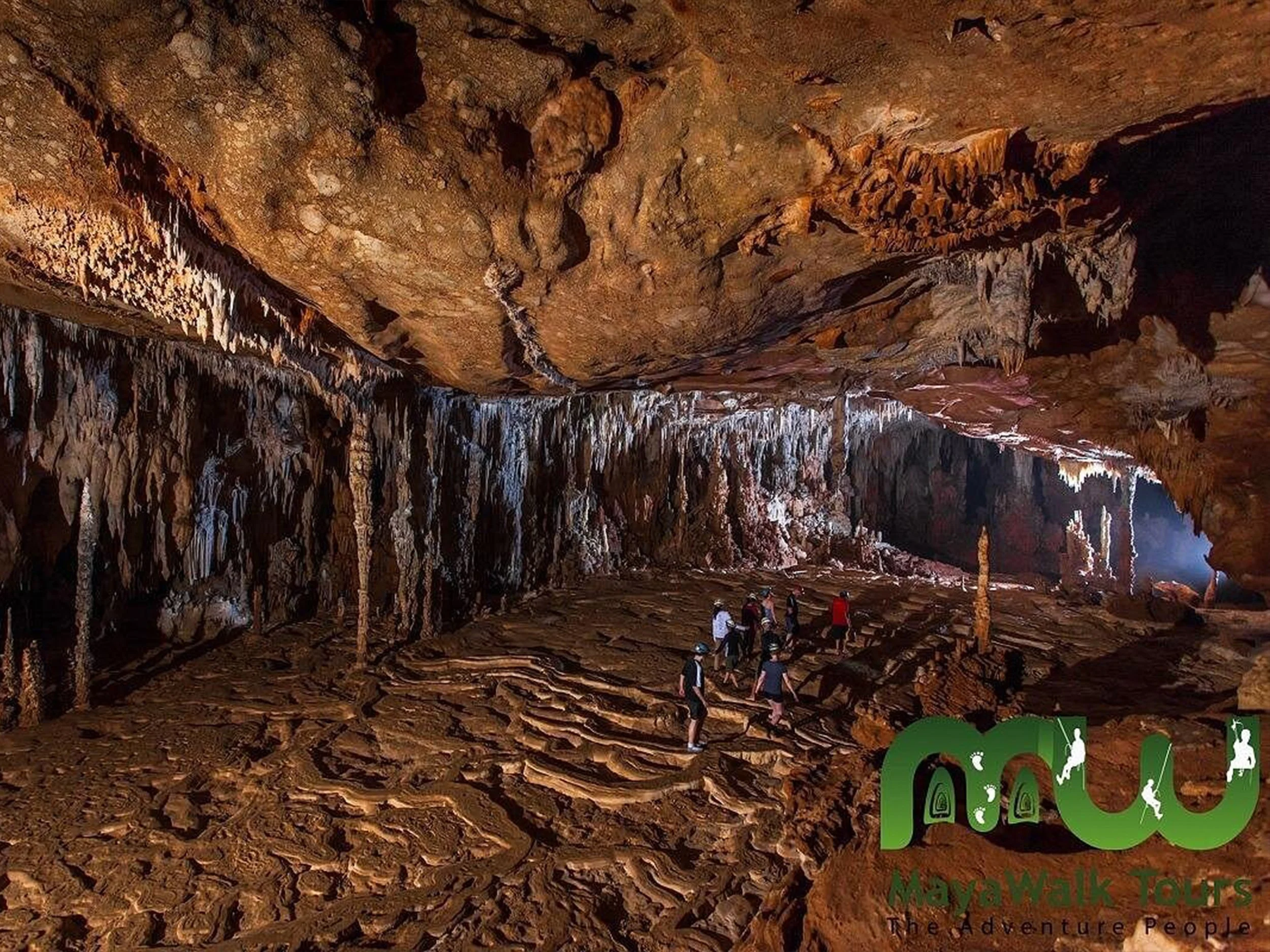
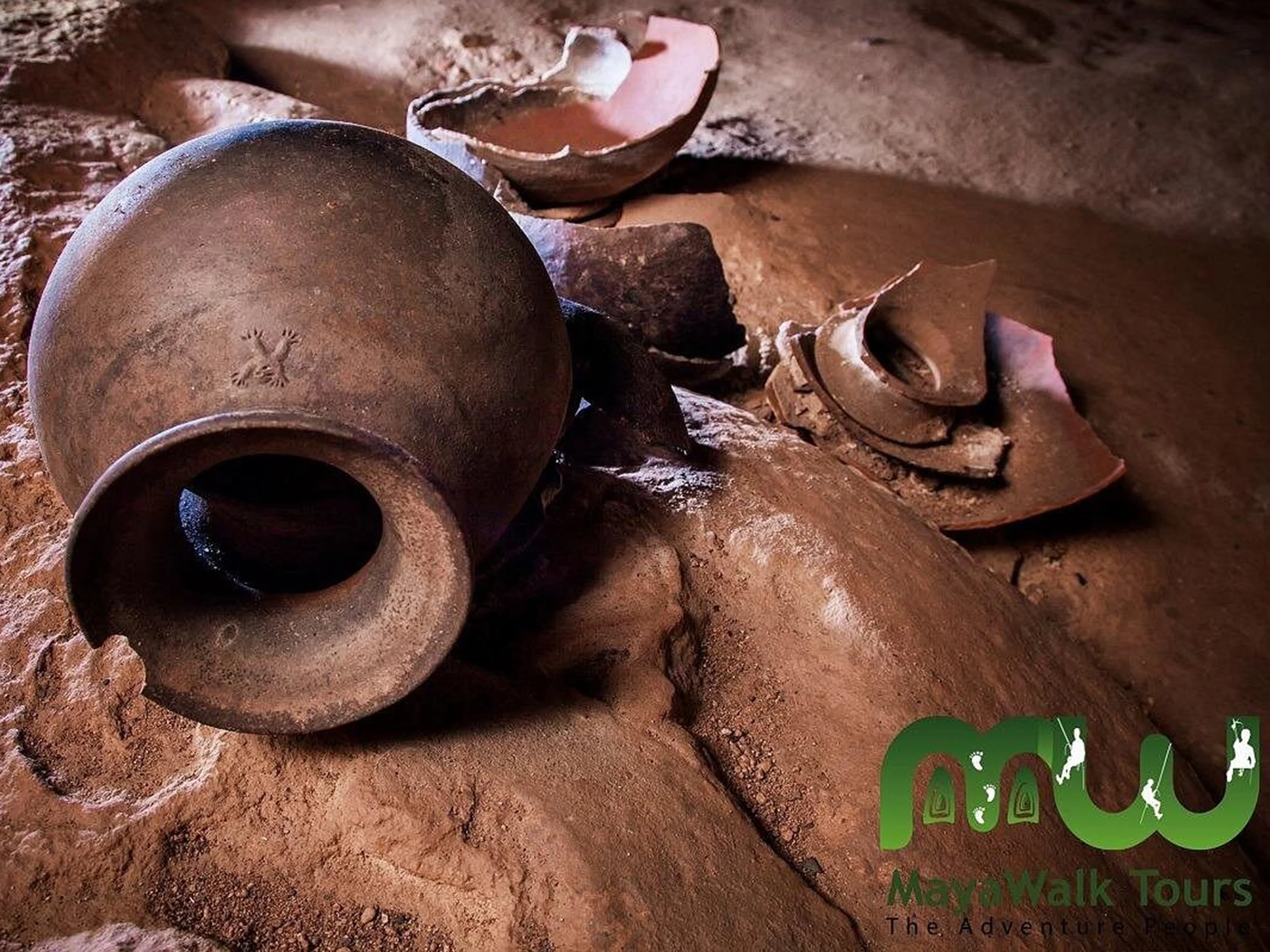
At this point, we removed our shoes and continued in our socks out of reverence of what awaited. We stepped into a massive cathedral like chamber with columns of rock, sparkling stalactites and mineral pools. Countless pieces of 1,000 year old pottery lay all around us, many of which remained mostly intact. Carved stalagmites cast shadows said to depict stories of Mayan gods. As we moved deeper, we encountered skeletal remains of sacrificial victims, including skulls and the bones of infants, culminating in the haunting sight of two calcified and exceptionally well preserved skeletons at the chamber’s furthest reach.
Mayan History
The ancient Mayans visited Actun Tunichil Muknal to make sacrifices in hopes the gods would provide water and end an extensive drought. When the rituals failed, the Mayans abandoned many parts of Belize and Guatemala leaving behind the ruins of their ancient cities.
Tips for Visiting Actun Tunichil Muknal:
Less than 200 people are allowed in per day. We booked ahead of time with Maya Walk Tours on Viator.
Phones, cameras, food and water bottles are prohibited. Photos provided are courtesy of Maya Walk Tours.
The trailhead to ATM is located over an hour from San Ignacio by car.
Like our tour of Caracol, it included a similar lunch.
You will get wet! Bring an extra pair of clothes and shoes to change into.
Rio Frio Cave
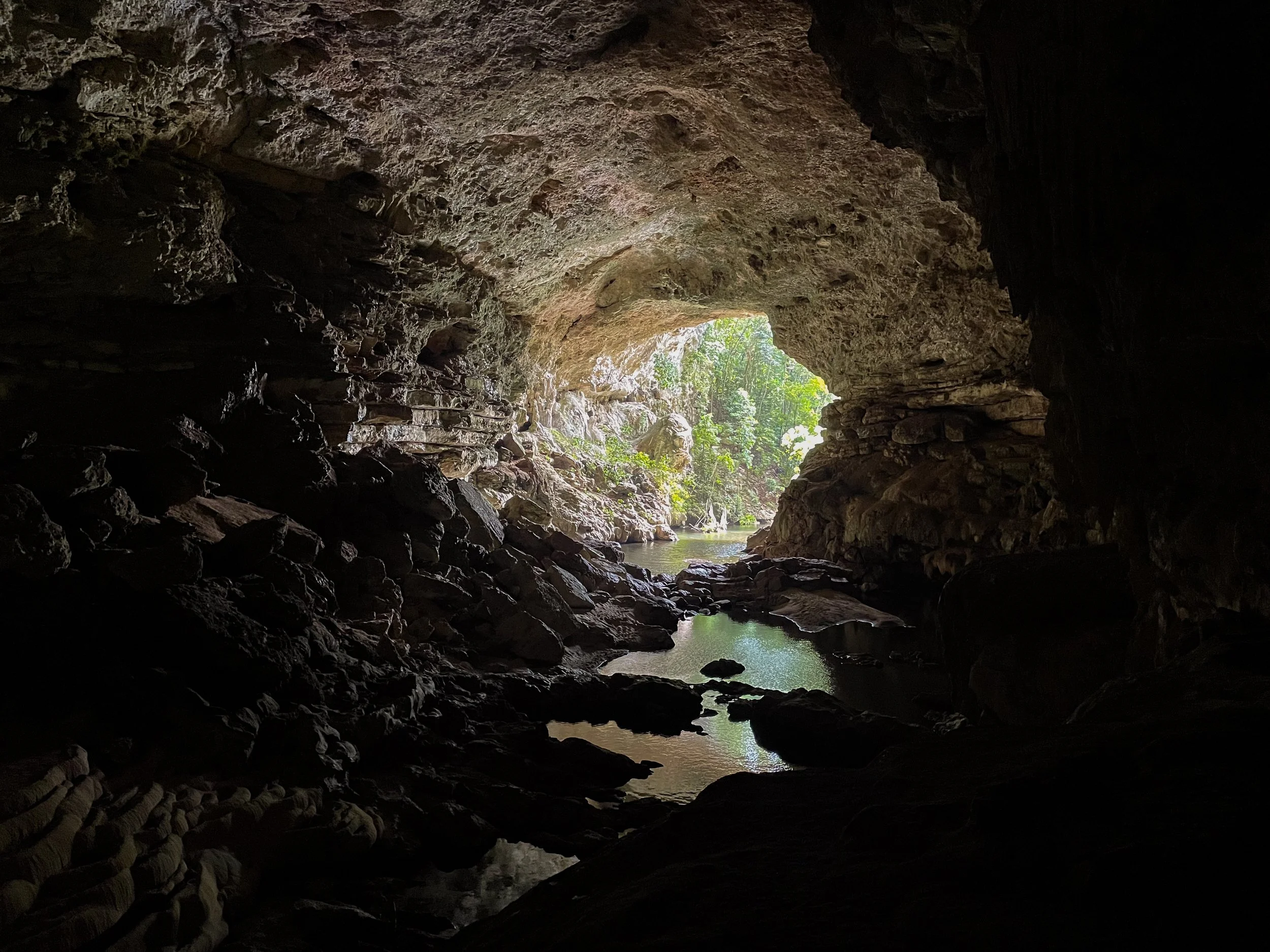
A sacred cave with a massive entrance, chamber and series of rock formations, including one resembling the profile of a monkey. The ancient Maya believed the god of rain, Chacc, resided here, often appearing as a cloud of mist exiting the cave in the early morning. Visits are usually included on excursions to Caracol.
Rio on Pools
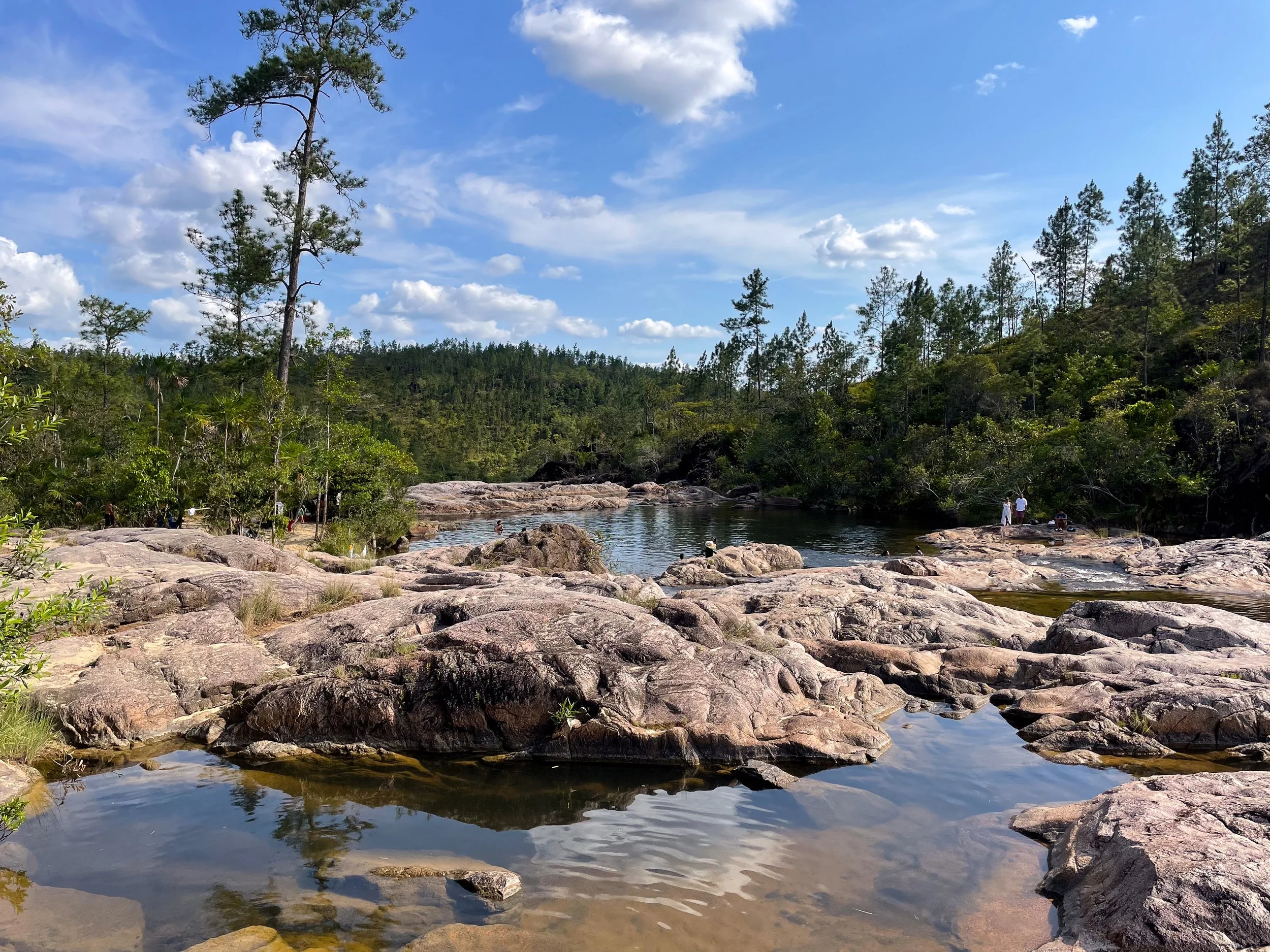
Relaxing in Belize’s mountain rivers is a popular local pastime. The Rio on Pools are natural river pools formed in the bedrock of the Rio Frio. Contrary to the name, the pools are not cold but quite tepid. They are surrounded by a pine forest known as the pine ridge mountain.
Western Belize
Even in more remote areas of Western Belize are small towns and cities with thriving local culture, markets, restaurants and festivals.
Cayo District. A jungleous region of Belize on the west side of the country bordering Guatemala. It is home to lush terrain, underground rivers and most notably, Mayan ruins and temples.
San Ignacio. The main city in the Cayo District with local and backpacker vibes. It’s a hub for eco activities and excursions on both sides of the Belize and Guatemalan borders.
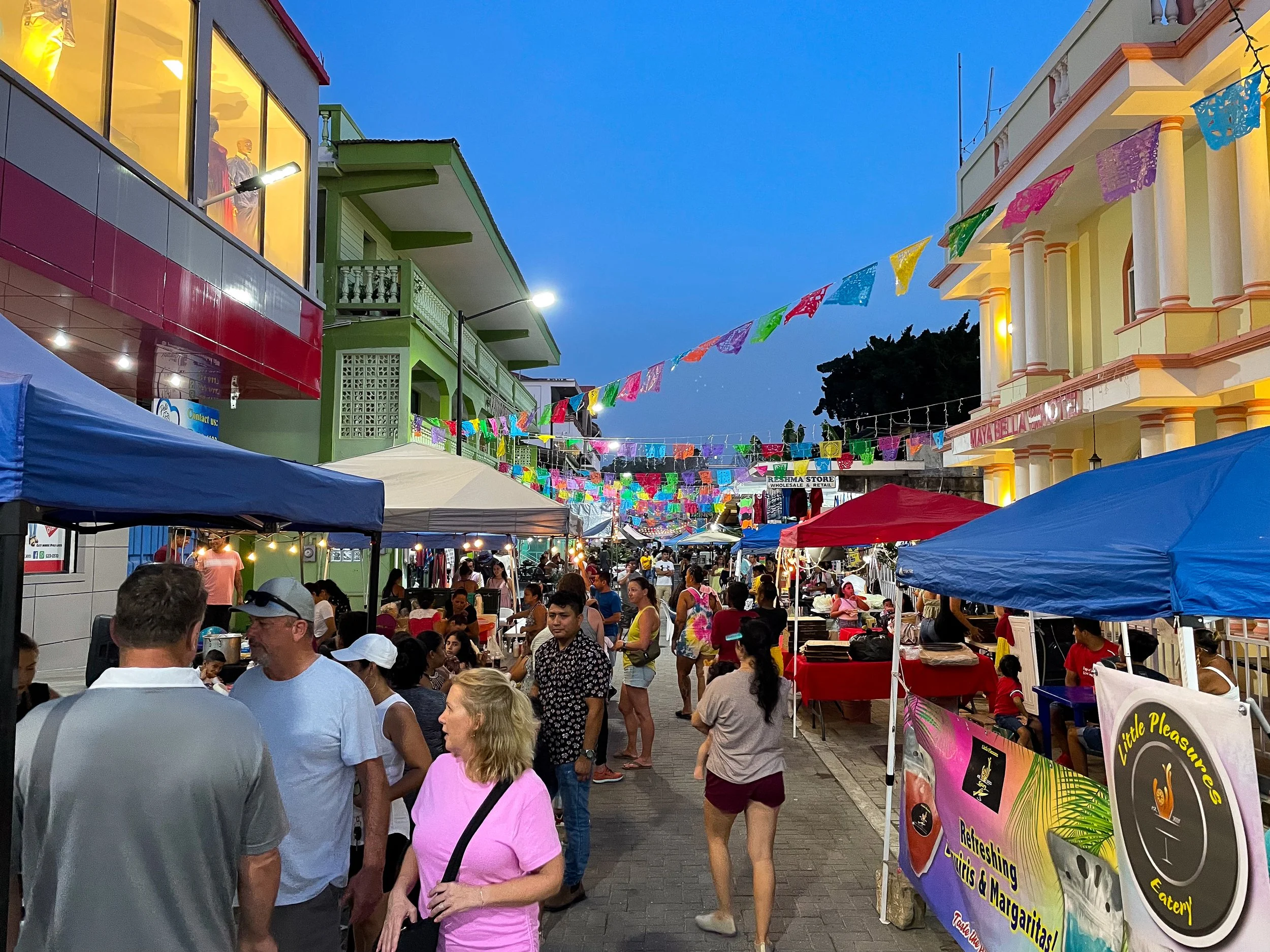
Burns Avenue. A pedestrian street in the center of San Ignacio with hostels, shops, restaurants, bars and tour operators. We visited in early May during the Cinco de Mayo Festival. The street was decorated with colorful banderas and came to life at night with music, fireworks and vendors selling street food. We ate pupusas, tortas, and sambusas while sipping on margaritas and the local beer, Belikin.
Bullet Tree Falls. A remote town 5km from San Ignacio in the middle of the jungle only accessible by dirt road. We stayed here at the Mahogany Hall.
Places to Eat & Drink
Lola’s Restaurant and Bar. An outdoor patio perched on the hill overlooking San Ignacio. The menu was heavily seafood based. We ordered the herbed fish, blackened fish, conch and octopus ceviche as well as a few cocktails.
Ko Ox Han Nah. A popular restaurant for Belizean cuisine made from local ingredients, mostly sourced from the San Ignacio Market. We ordered the whole fried red snapper and garlic rum shrimp with sides of coconut rice.
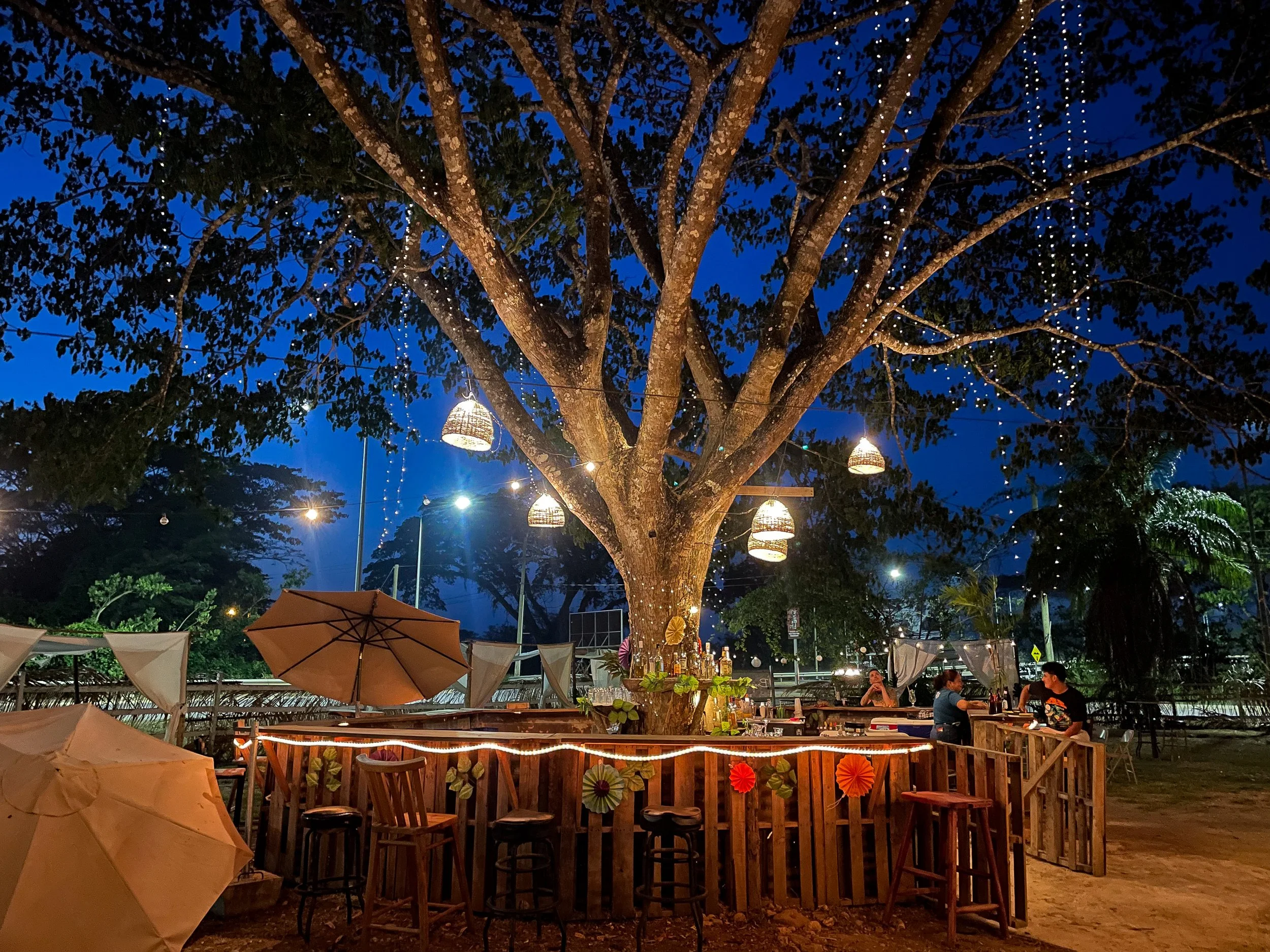
Booze and Branches. An open air bar circling a large tree with twinkle lights and linen draped pergolas made from branches. They offered classic cocktails like margaritas, mojitos, sangria and rum-ritas.
Guava Limb. A locally recommended restaurant on Burns Ave with a fusion of foods from Belize and South East Asia as well as brick oven pizza. We spent hours here chatting with a new friend, Jacob, who we met during our excursion to Actun Tunichil Muknal.
Coffee de los Mayas. A coffee shop with a walk-up counter located on Burns Ave.
San Ignacio Market. A daily farmers market held near the center of town from 6am to 5pm. Local vendors set up stands selling vegetables, fruits, honey, souvenirs and street food. Come here for breakfast at Magaly’s Fast Food, sorrel (hibiscus juice) and horchata (sweetened rice milk).
Belizean Cuisine
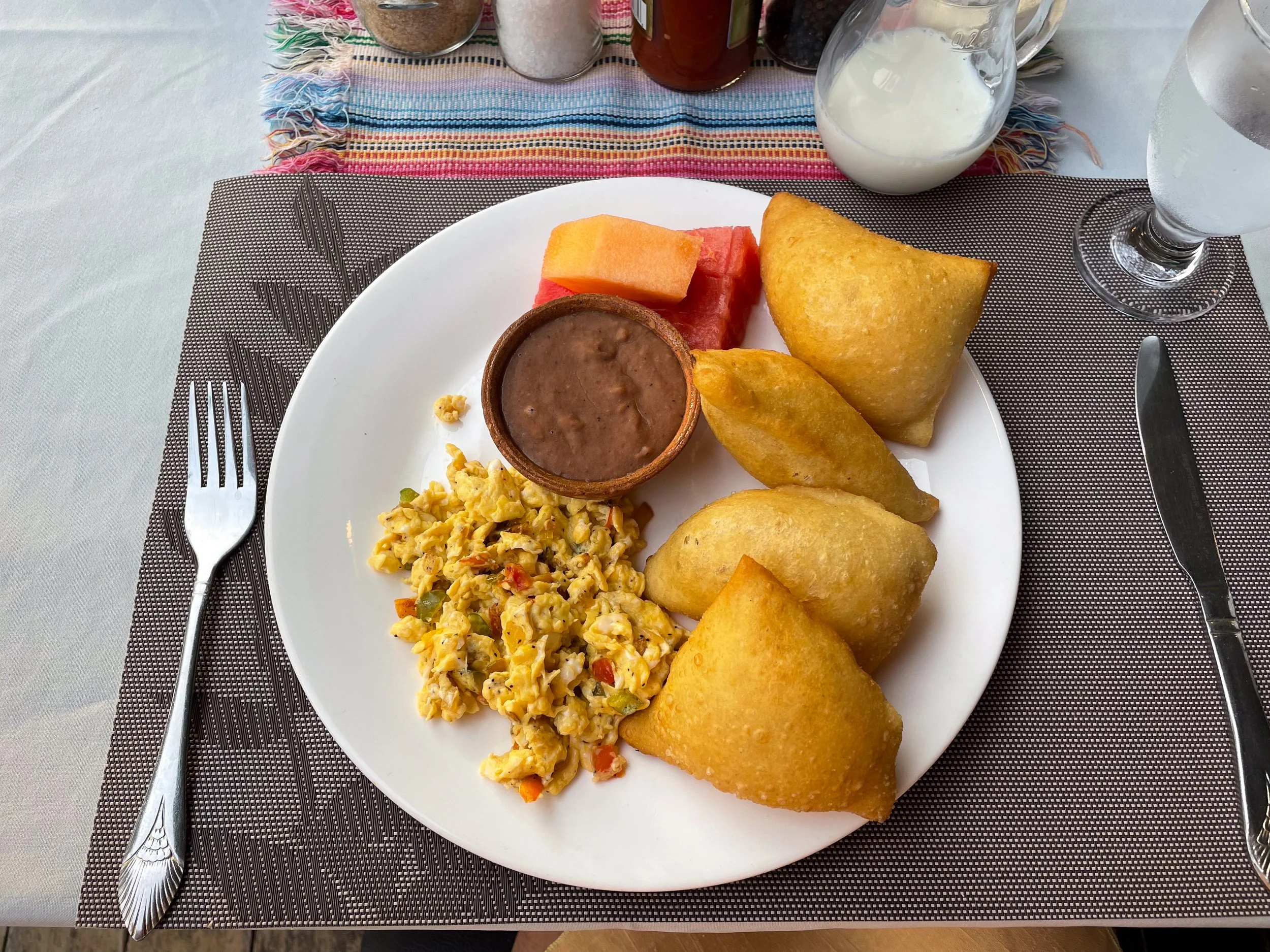
Fry Jacks. Deep-fried pieces of dough served with refried beans and tropical fruit.
Salbutes. Deep fried corn tortillas topped with veggies or meat.
Pupusas. A white corn arepa stuffed with various fillings or toppings. We had the bean and cheese pupusas.
Escabeche. Chicken and onion stewed in a curry sauce. We were offered a vegetarian version made with tofu during lunches on our excursions.
Sorrel. Hibiscus juice.
Marie Sharps. A popular habanero hot sauce seen on nearly every dining table throughout Belize.
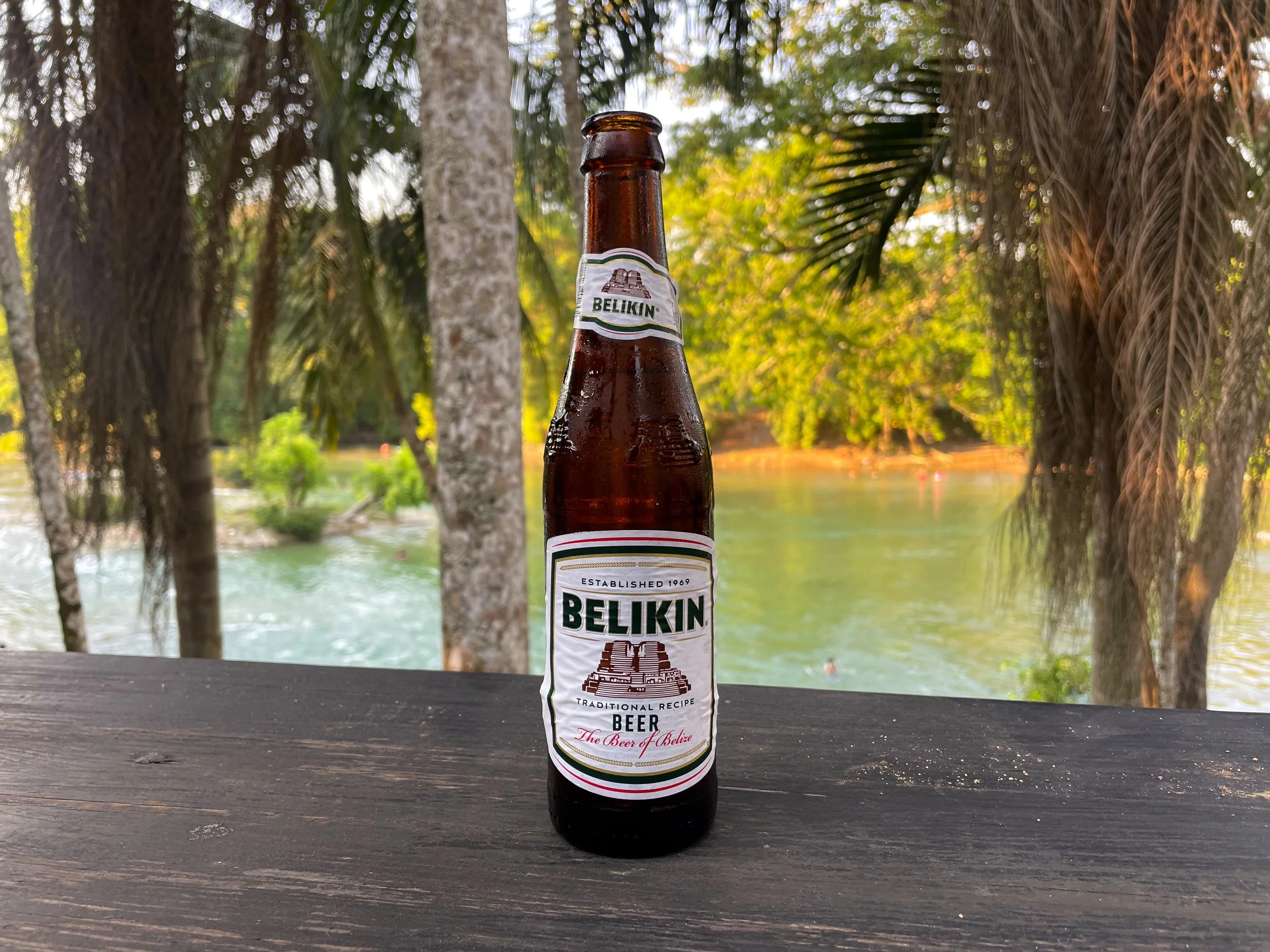
Belikin. Belize’s national beer with a Mayan temple on its label.
Where to Stay
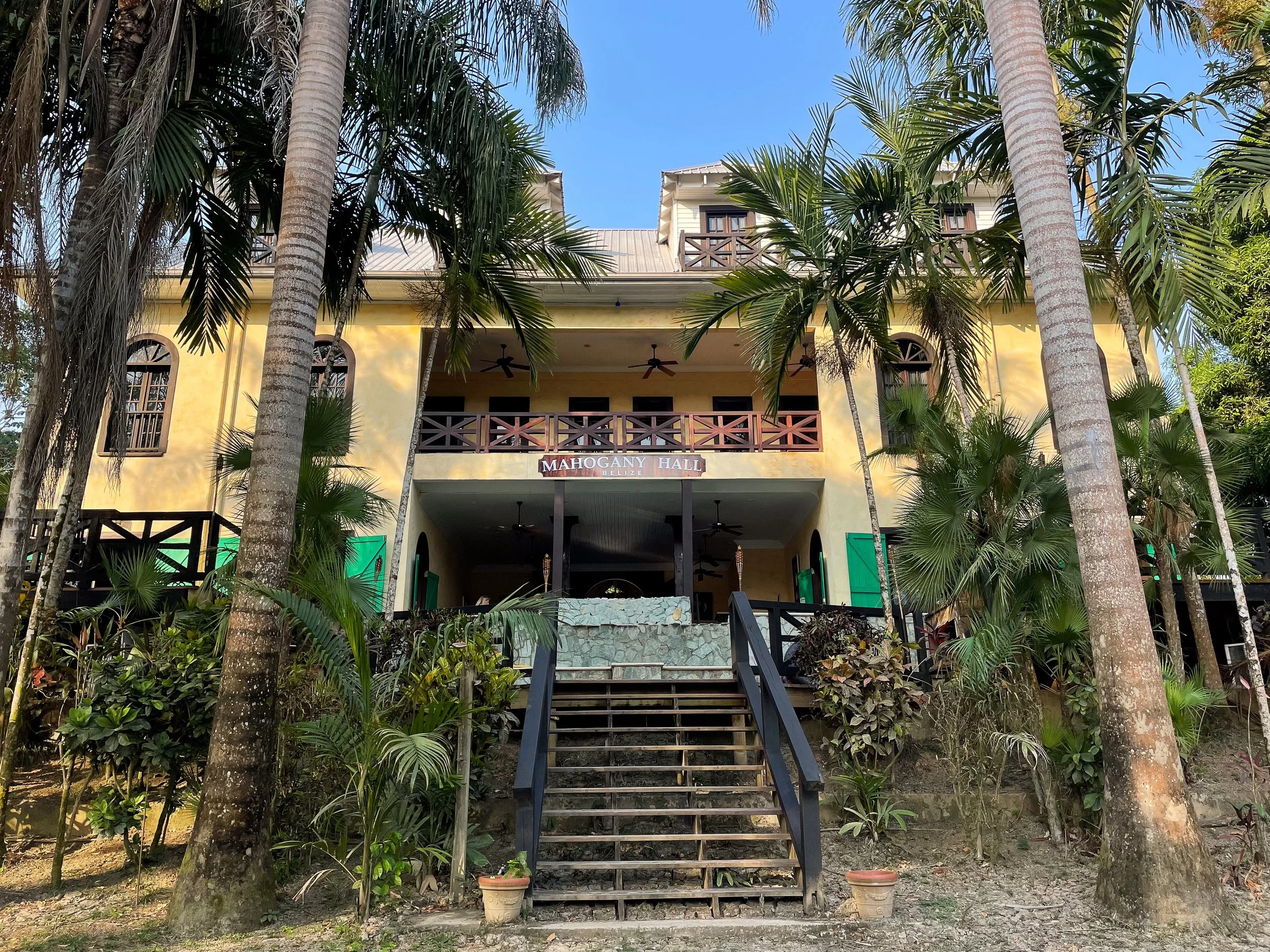
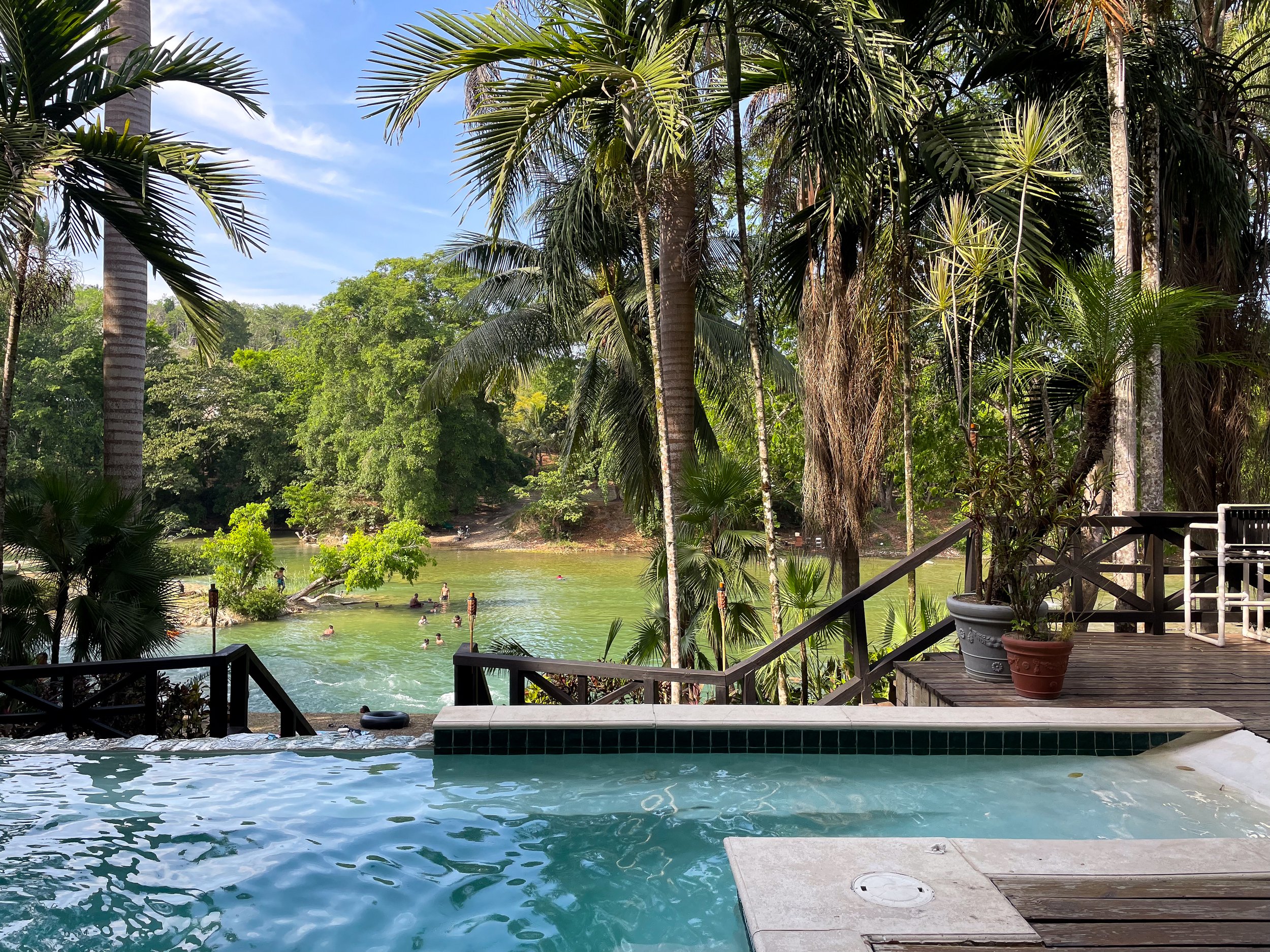
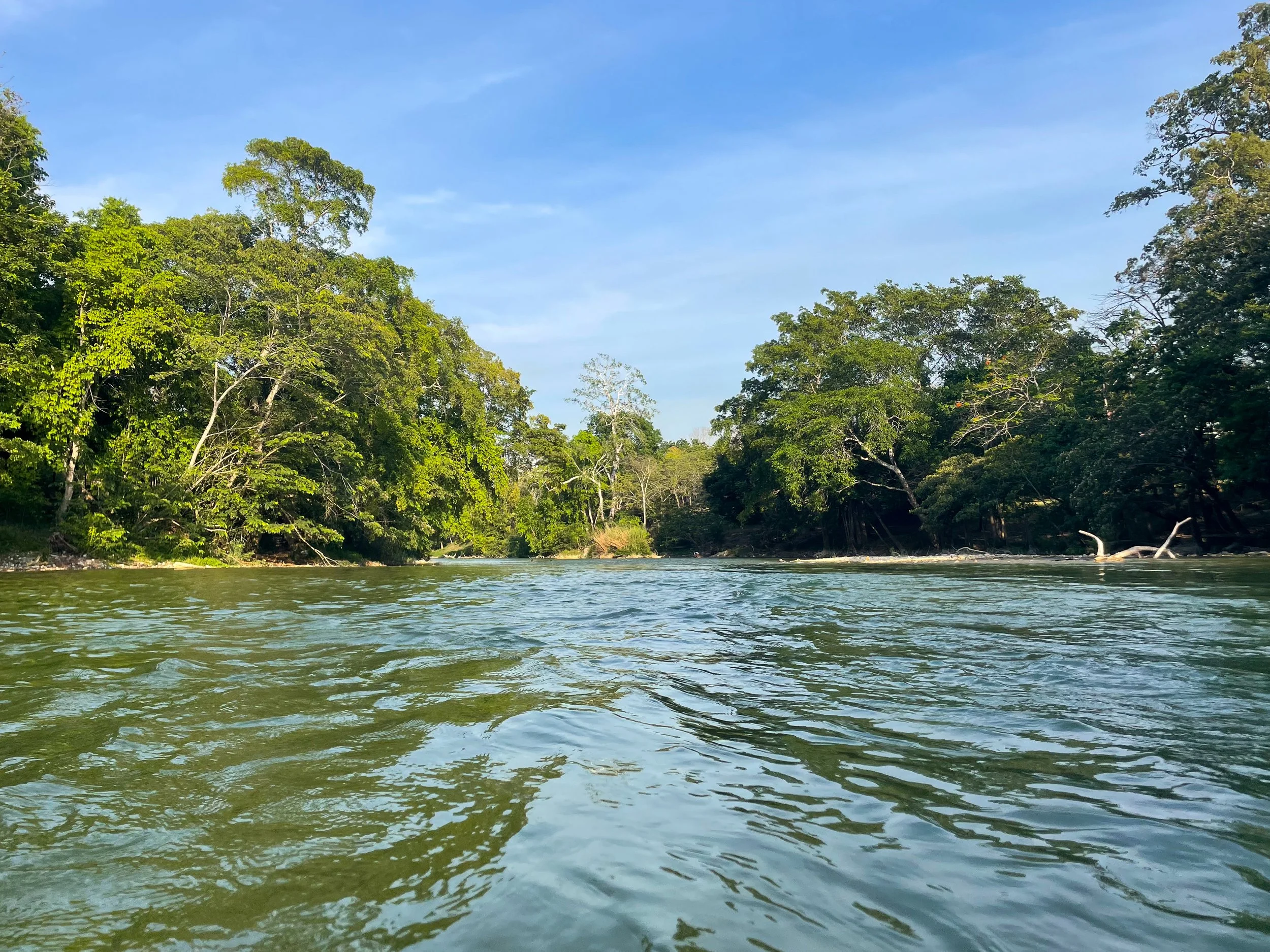
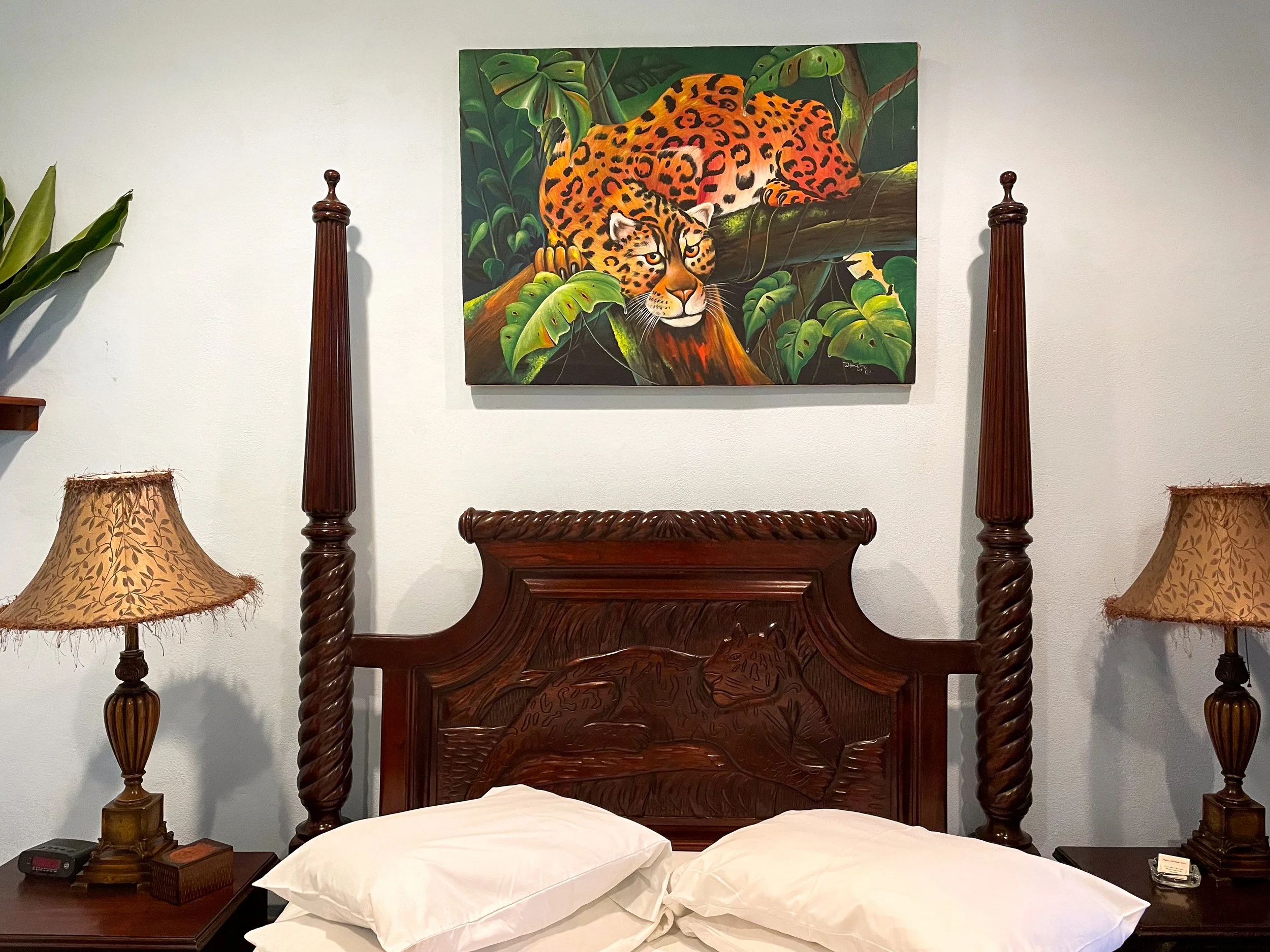
We stayed at Mahogany Hall, an eco hotel along the banks of the Mopan River in the town of Bullet Tree Falls. It was a peaceful location in the middle of the tropical jungle. Our room was accented with mahogany furniture with carvings of jaguars, toucans and tropical plants. The hotel has a restaurant, bar and infinity pool. We enjoyed breakfast here most mornings and a Belikin by the pool during the evenings.
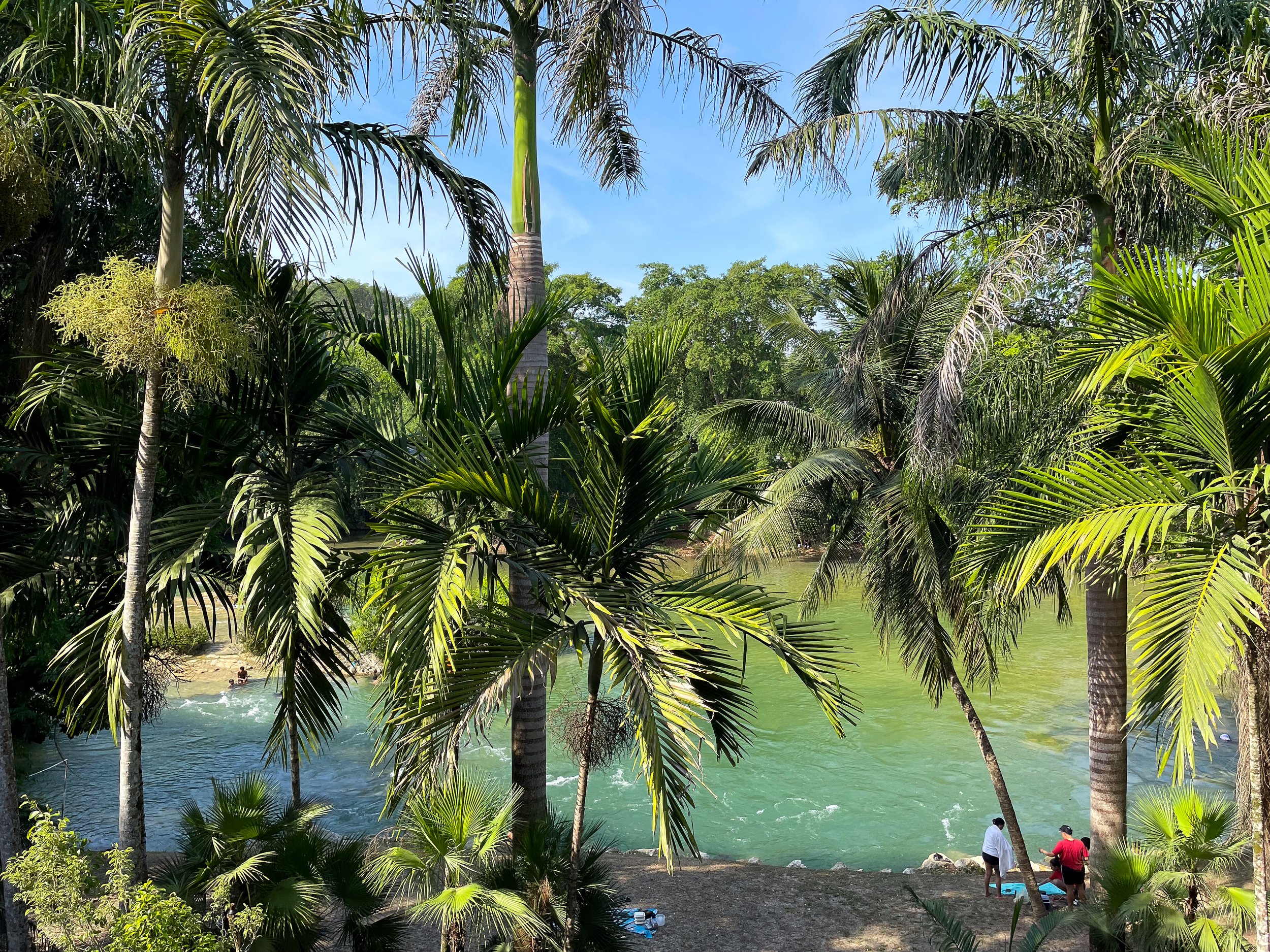
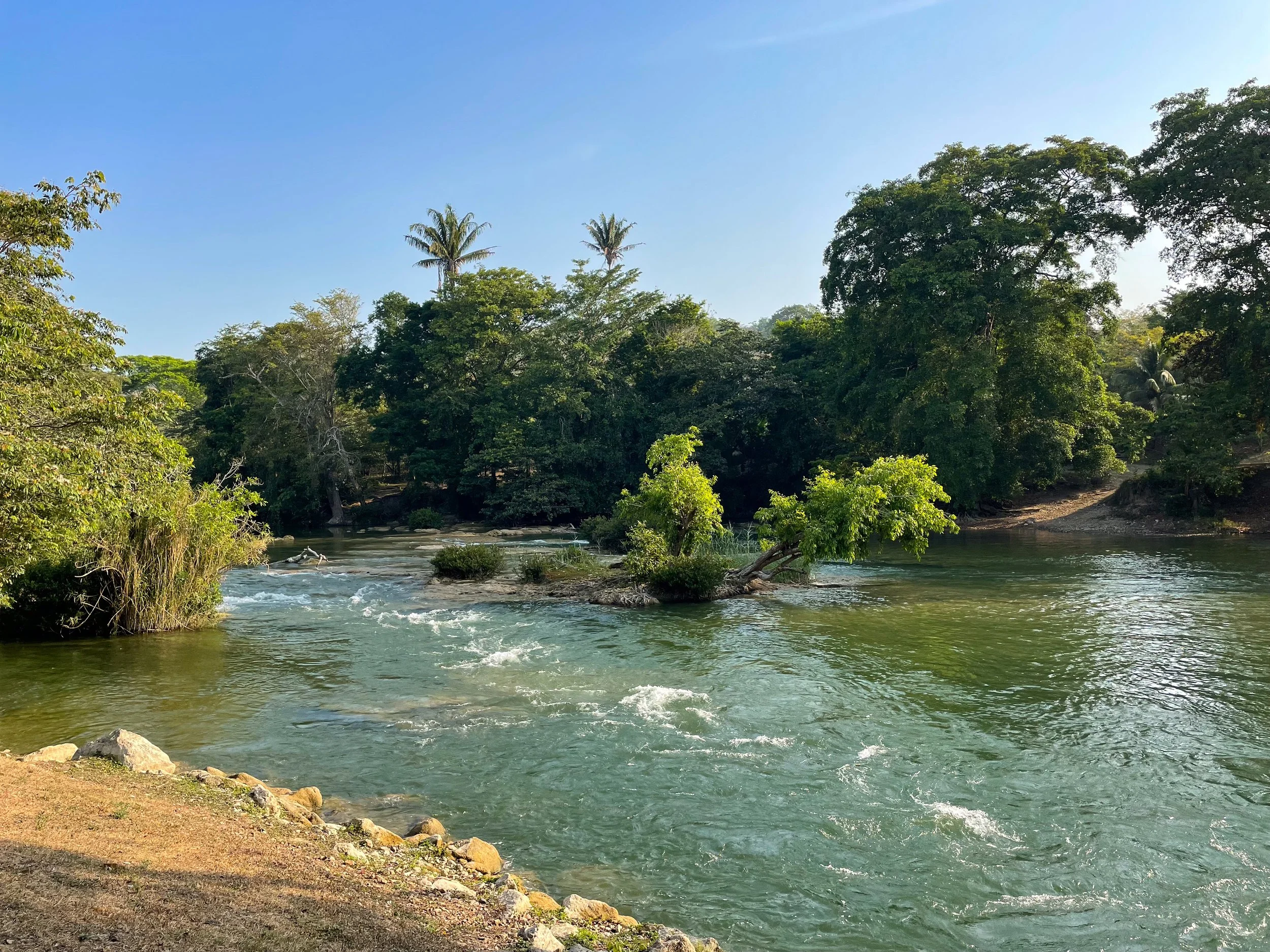
The Mopan River. While here, we joined locals and waded in the Mopan River to cool off from the afternoon heat. We lounged on the shallow river bed as the current gently passed by and tropical birds chased each other overhead.
Getting Around
Airport Shuttle. We shuttled to and from the airport and our hotel in Bullet Tree Falls with Belize Family Adventure through Viator. Transportation took less than two hours and was a good way to see the countryside.
Excursions. All of our excursions included transportation. We were either picked up from our hotel or at the operator’s office before being shuttled to our destination.
By Taxi. In San Ignacio, taxis were easy to find and would more than often find us. They’re identifiable by their green license plates with white letters. We took the number of one taxi driver, Apellio, who quickly became our driver while in town. Taxis cost $20-25 Belize Dollars ($10-$12.50 USD) between Bullet Tree Falls and San Ignacio.
On Foot. San Ignacio is a relatively small town and can be easily walked on foot.
Location Specifics
Currency. The Belizean Dollar and US Dollar are used interchangeably across the island. At the time, the exchange rate was 1 USD to 2 BZD, making conversions and transactions easy.
Cash vs Card. Carry cash for taxis, snacks and tips.
Language. English is the most commonly spoken language in Belize. Spanish is most commonly spoken in Guatemala.
Drinking Water. Tap water is not safe for consumption due to risk of contamination. Only drink filtered or bottled water.
Elsewhere in Belize & Guatemala
From colonial architecture to lakeside villages beneath towering volcanoes and Caribbean coral reefs, discover more of Guatemala's and Belize’s rich history and landscapes.
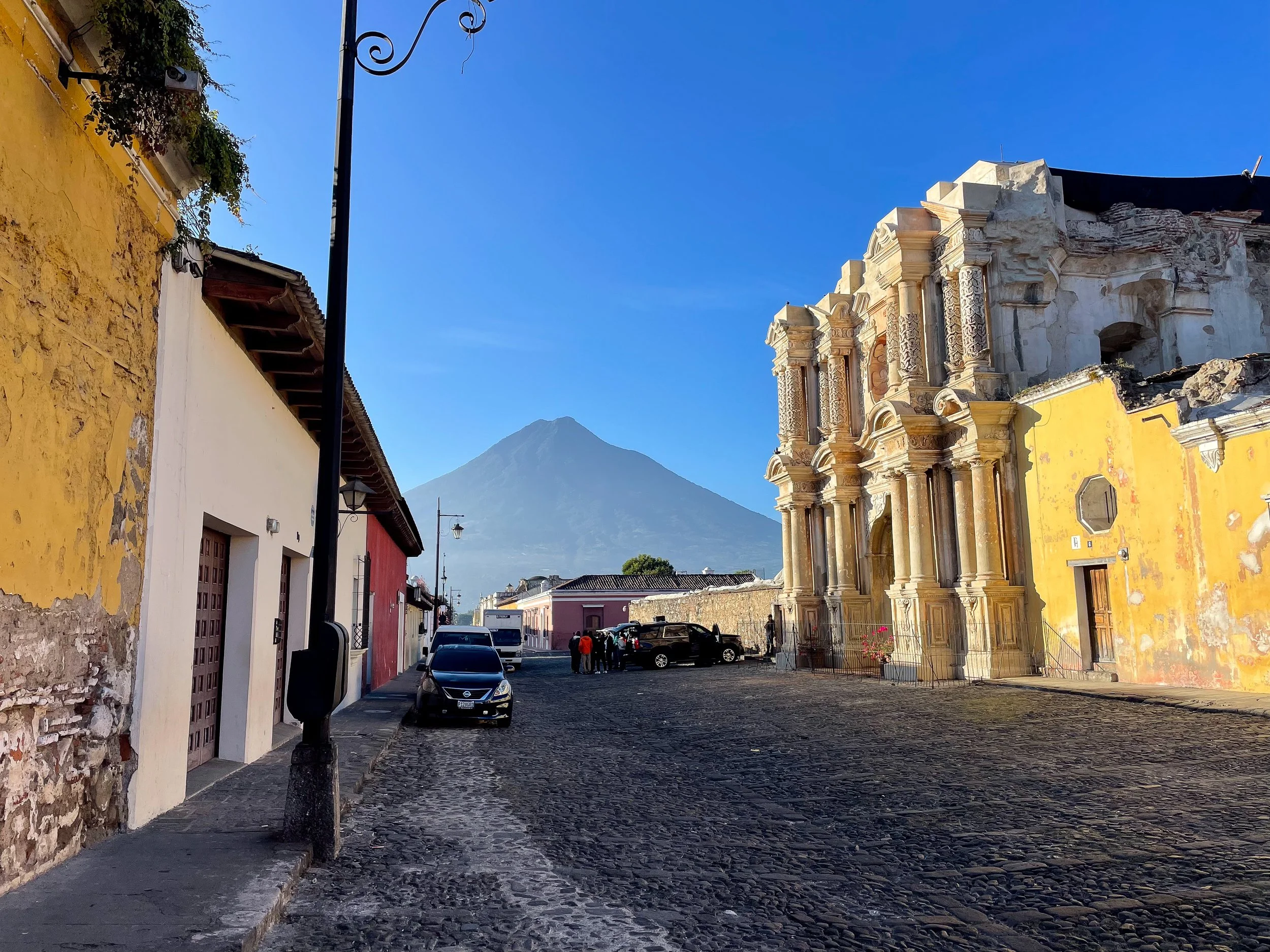
Antigua Guatemala Travel Guide: Acatenango, Colonial Charm & Local Cuisine. Explore Antigua Guatemala's cobblestone streets, colonial architecture and local cuisine beneath towering volcanoes, including the iconic hike to Acatenango and Fuego.
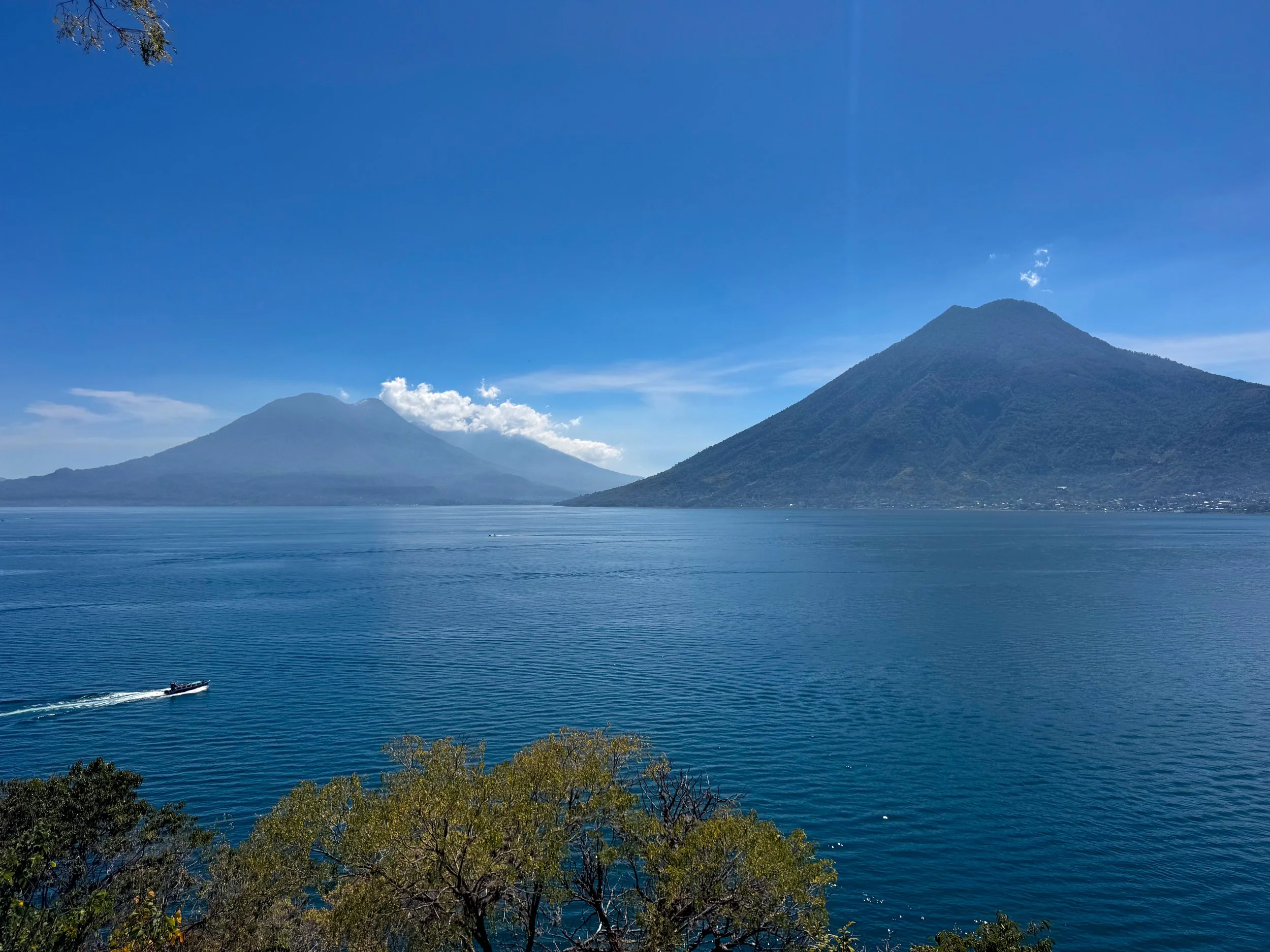
Lake Atitlán Travel Guide: Villages, Volcanoes & Mayan Culture. Navigate between Lake Atitlán's lakeside villages where volcanic landscapes and living Mayan culture shape one of Guatemala's most remarkable destinations.
Caye Caulker Travel Guide: Snorkeling, Belize Barrier Reef & Island Life. Dive into Caye Caulker's turquoise waters for world class snorkeling in the Belize Barrier Reef while embracing the island's tropical spirit and Go Slow motto.
For Next Time…
We fell in love with the jungle, Mayan ruins and culture of Belize and Guatemala. We will certainly be back one day and have plans to visit more locations across both countries.
Altun Ha. A Mayan acropolis with pyramids, temples, ball courts and platforms on the mainland north of Belize City.
Tikal Sunrise Hike. An early morning hike in Tikal to watch the sunrise from the top of the famed pyramids. We saw photos of the colorful sunrise, layers of morning mist and dramatic ruins peek from jungleous canopy below.
Flores, Guatemala. A picturesque island city on Lago Petén Itzá known for its colorful architecture and proximity to Mayan ruins.
Caye Caulker Travel Guide: Snorkeling, Belize Barrier Reef & Island Life
Dive into Caye Caulker's turquoise waters for world class snorkeling in the Belize Barrier Reef while embracing the island's tropical spirit and Go Slow motto.
Caye Caulker, Belize
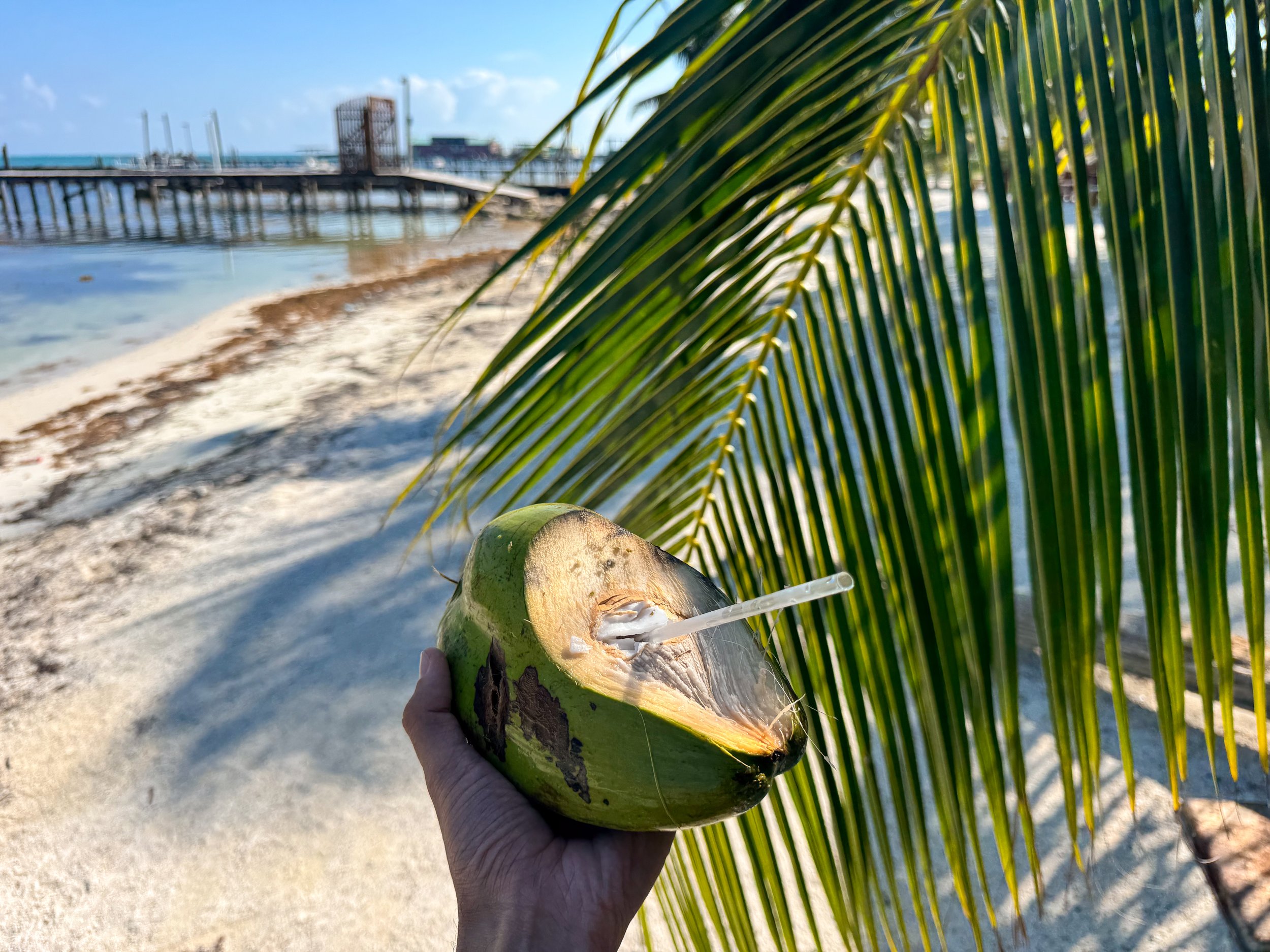
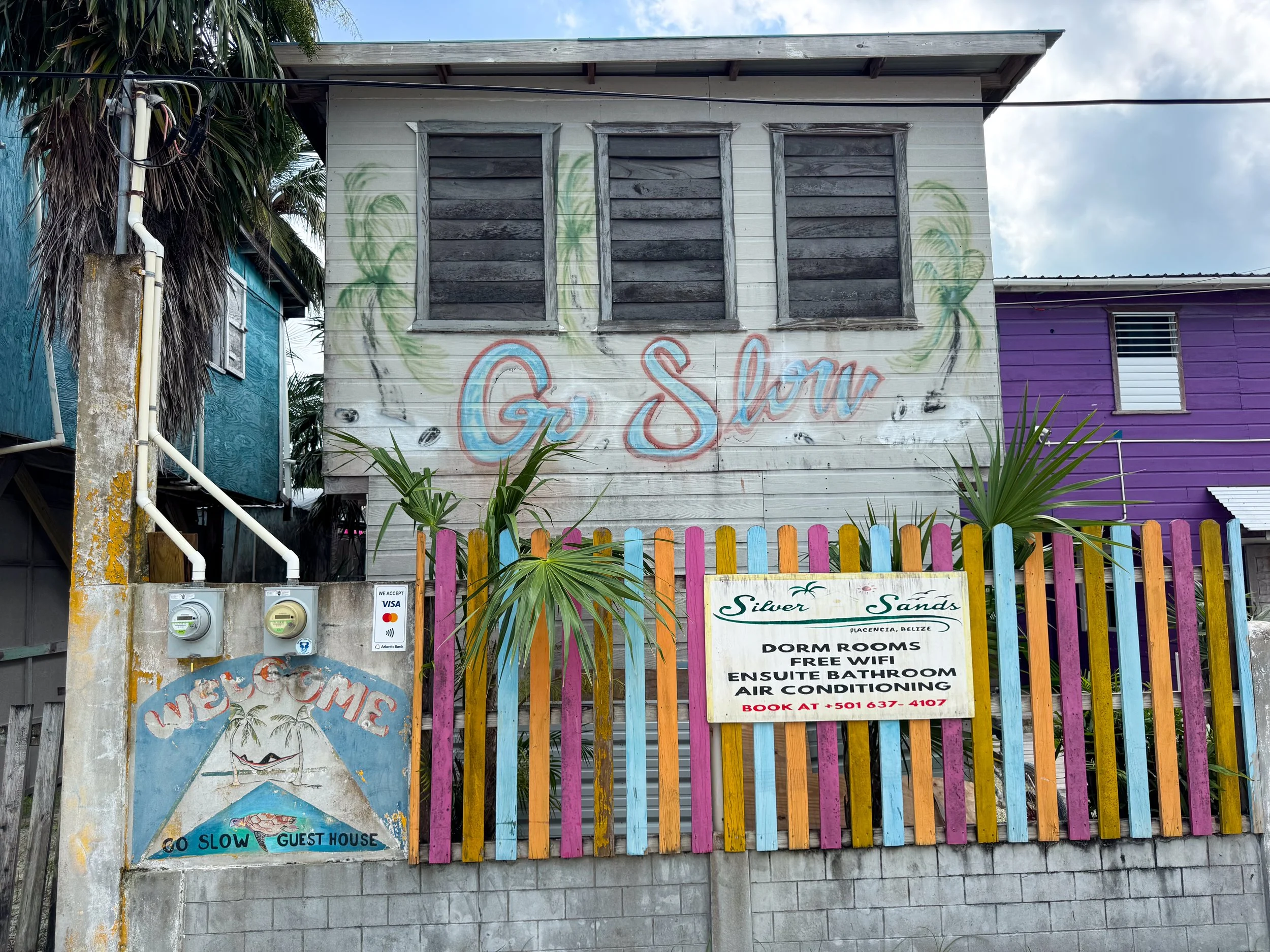
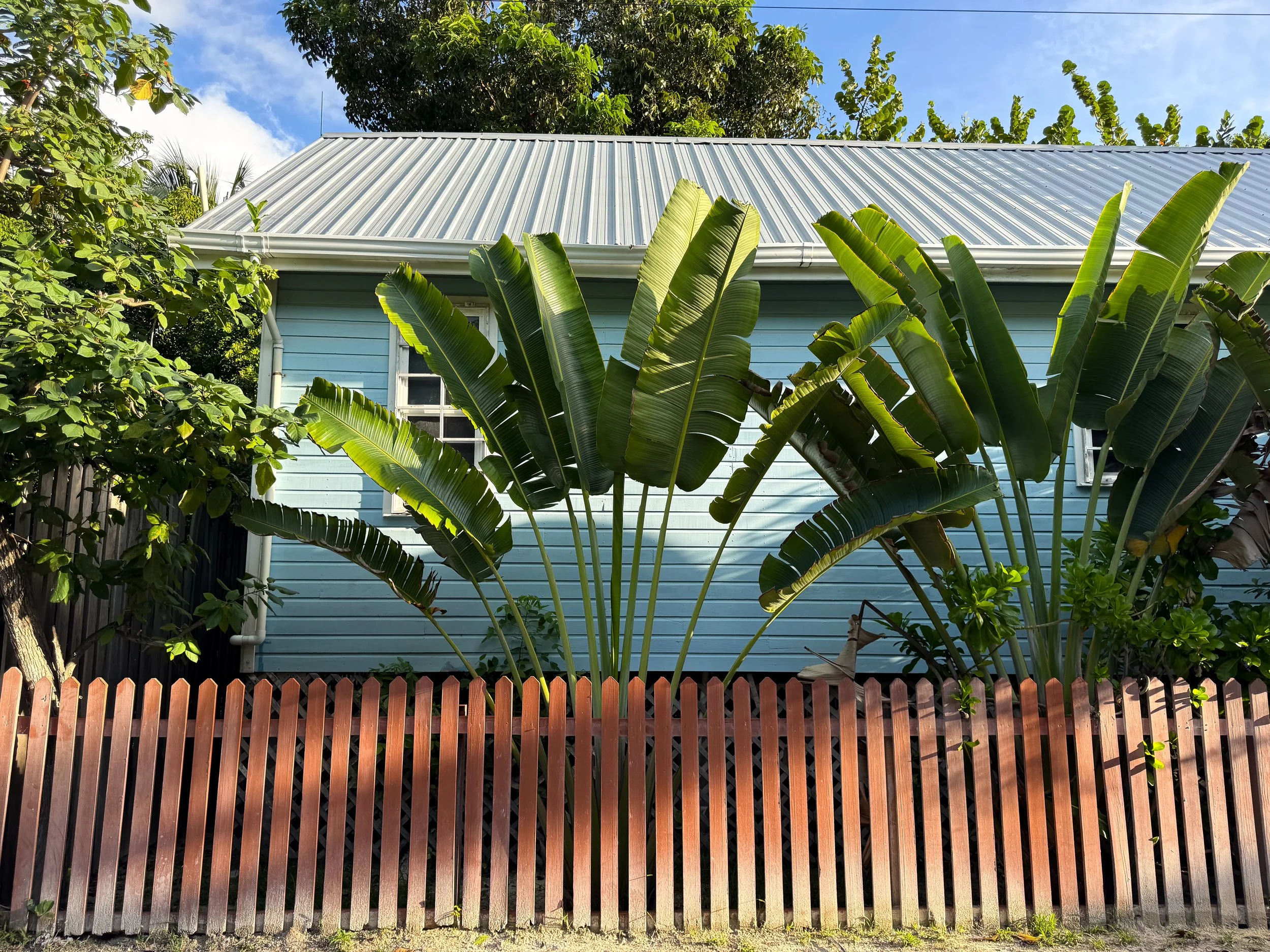
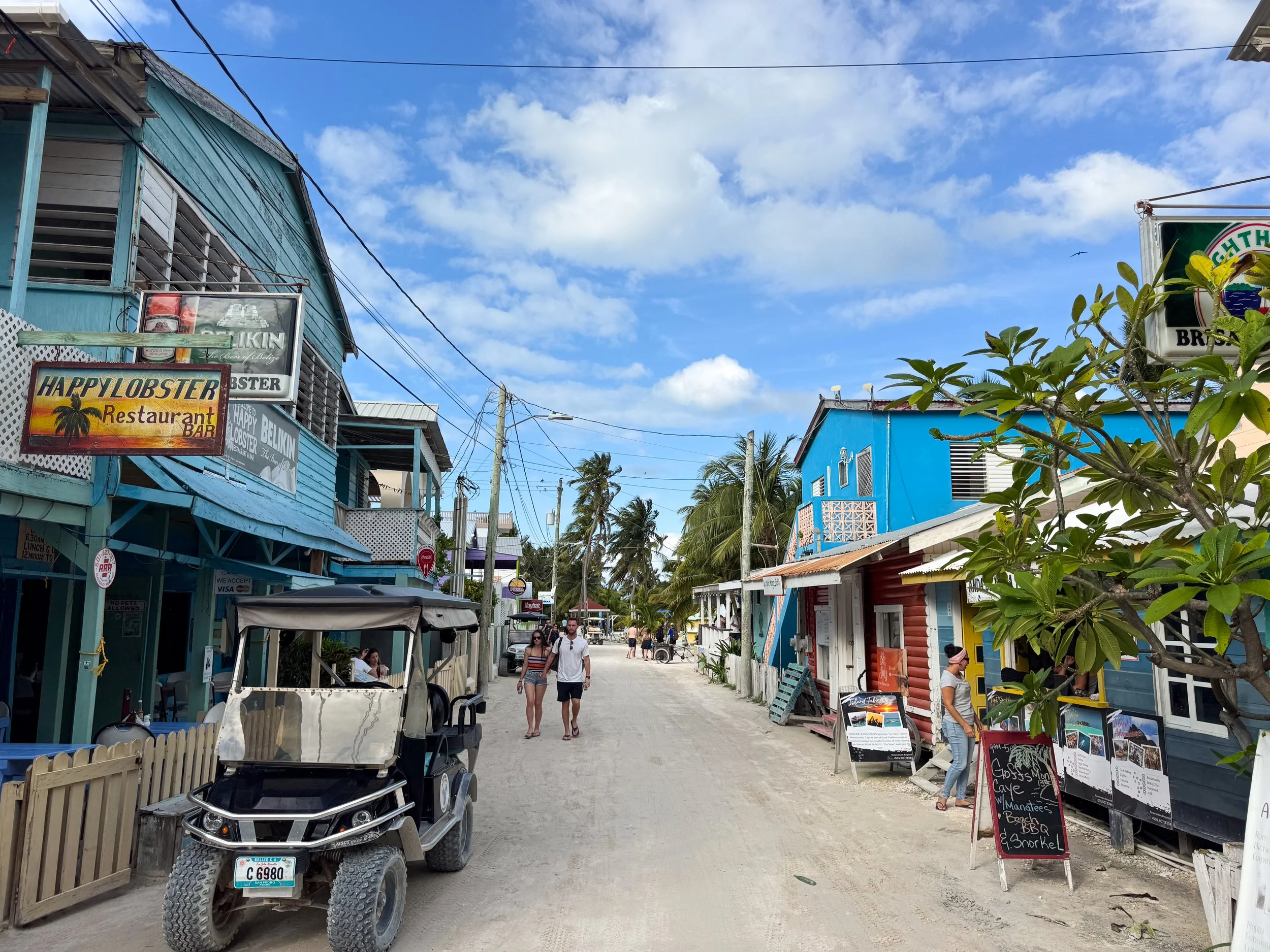
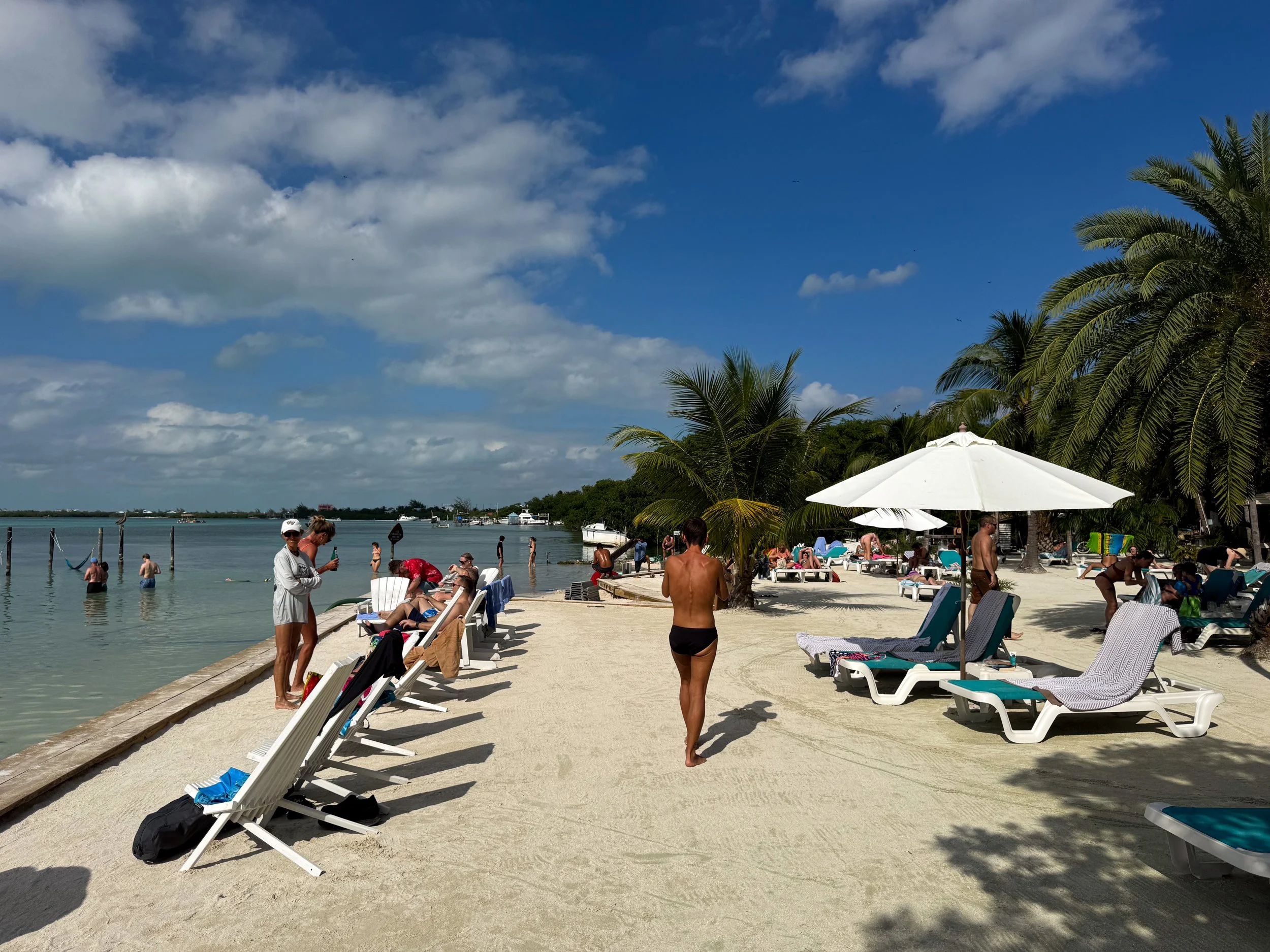
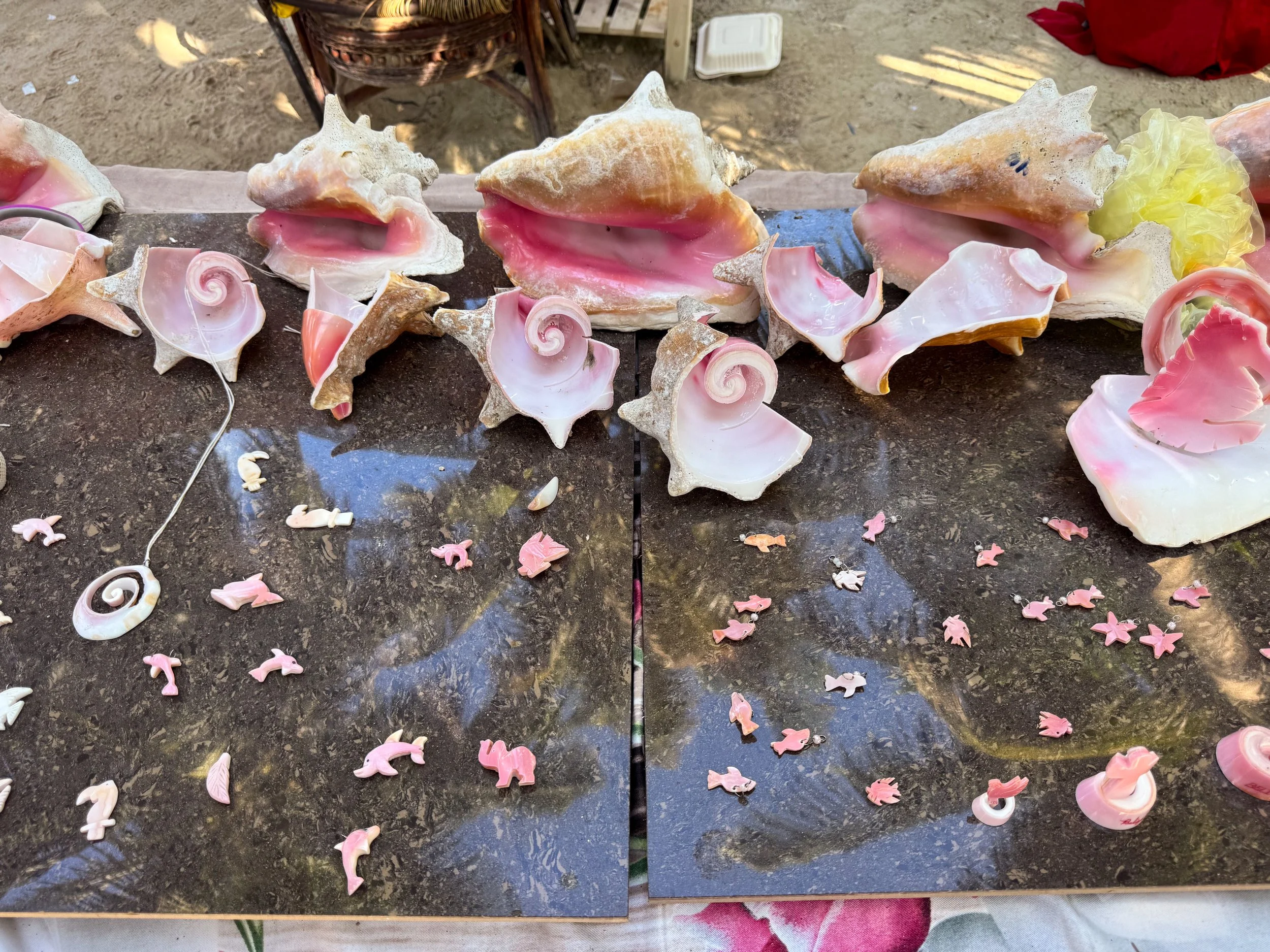
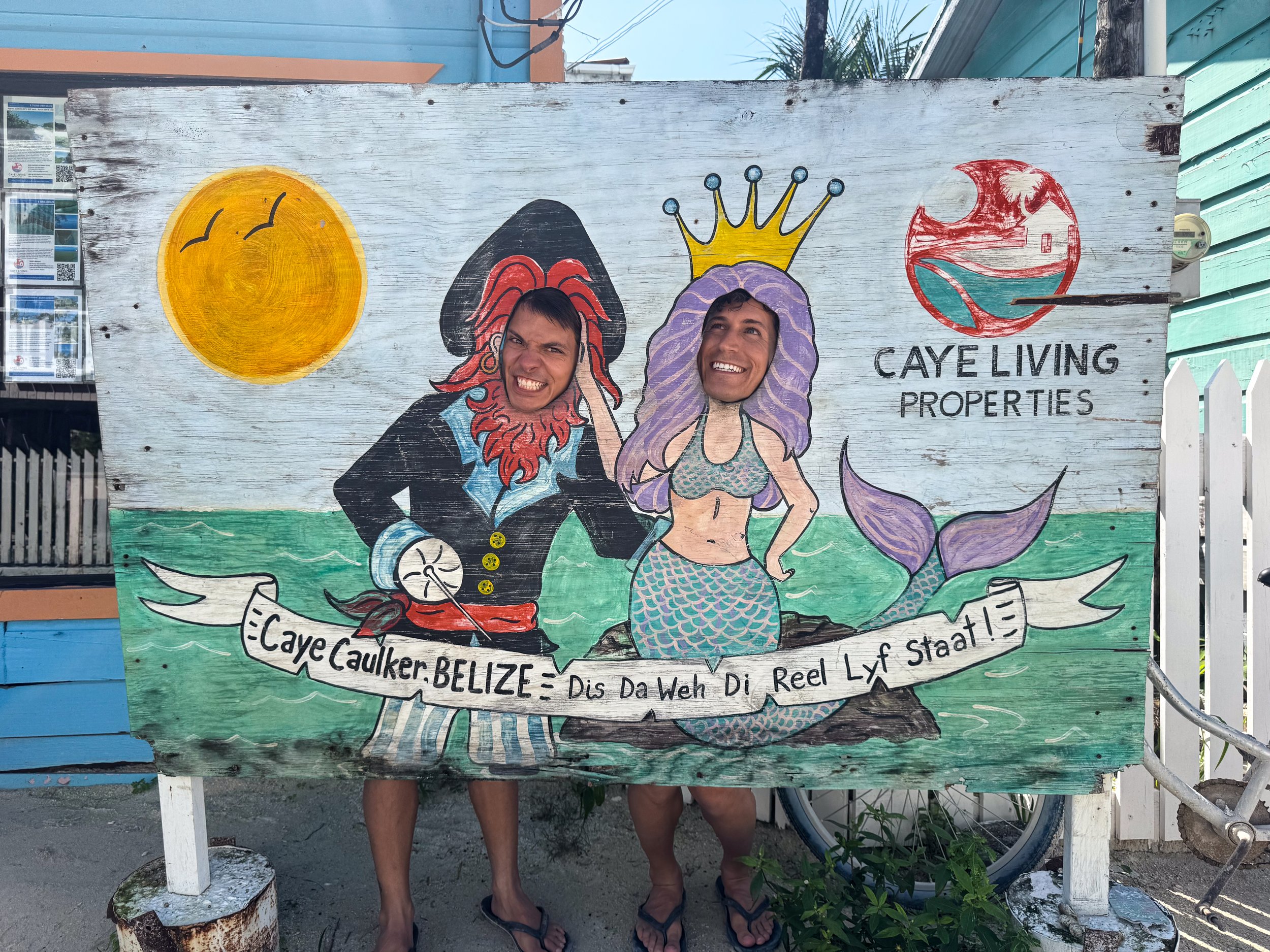
Caye Caulker, Belize is a small Caribbean island with a tropical atmosphere and laid back way of life. The slow and sleepy vibes are emphasized by the island's motto “Go Slow.” Its sand covered streets, named after marine life, are lined with colorful wooden buildings, many of which are elevated on stilts. Conch shells decorate yards as palm trees sway above and pelicans flock overhead. Reggae beats play from beachfront bars, tours depart for the Belize Barrier Reef and locals sell handmade shell jewelry. The island is touristy but not overly developed, allowing it to retain its character.
The Belize Barrier Reef
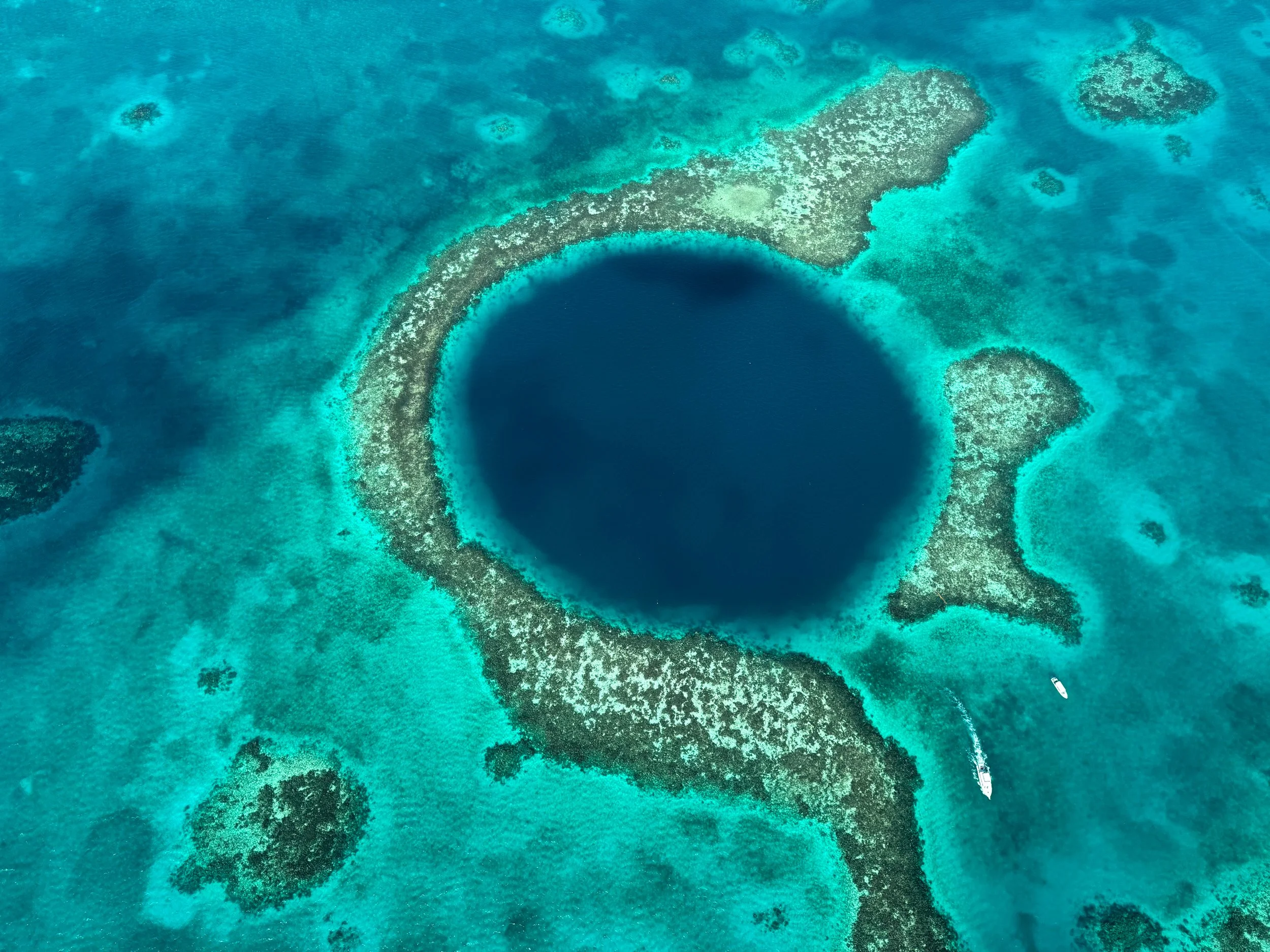
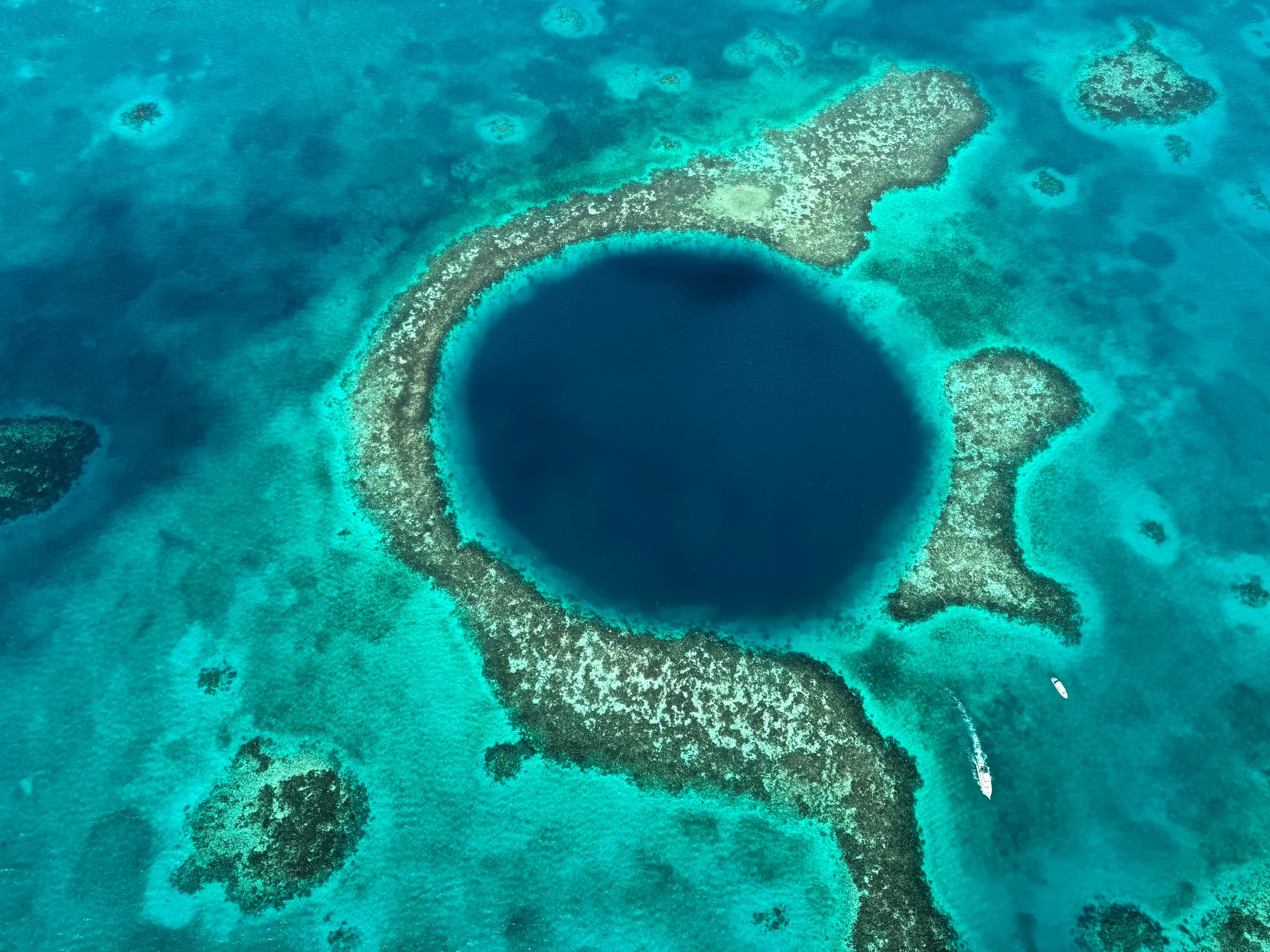
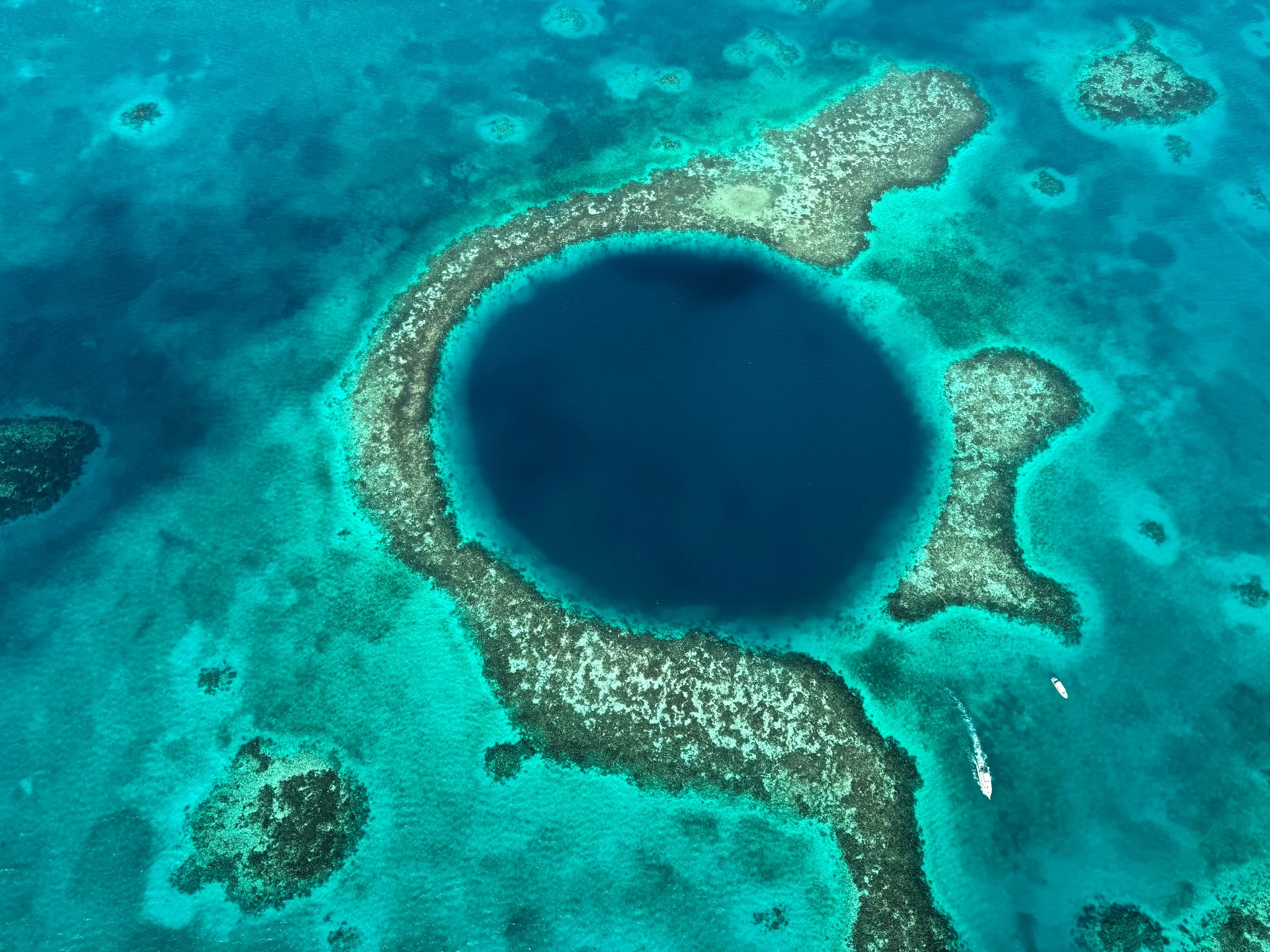
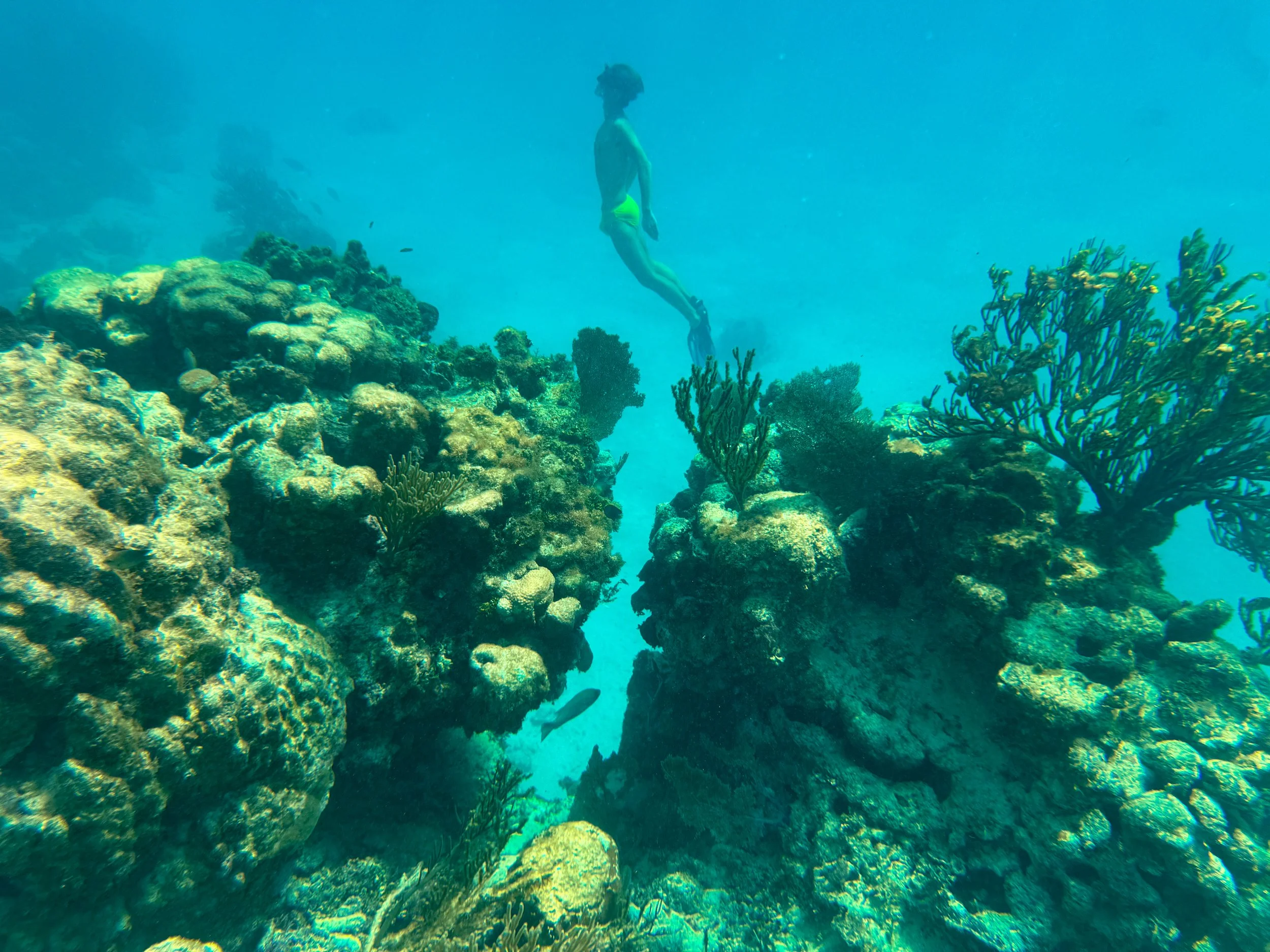
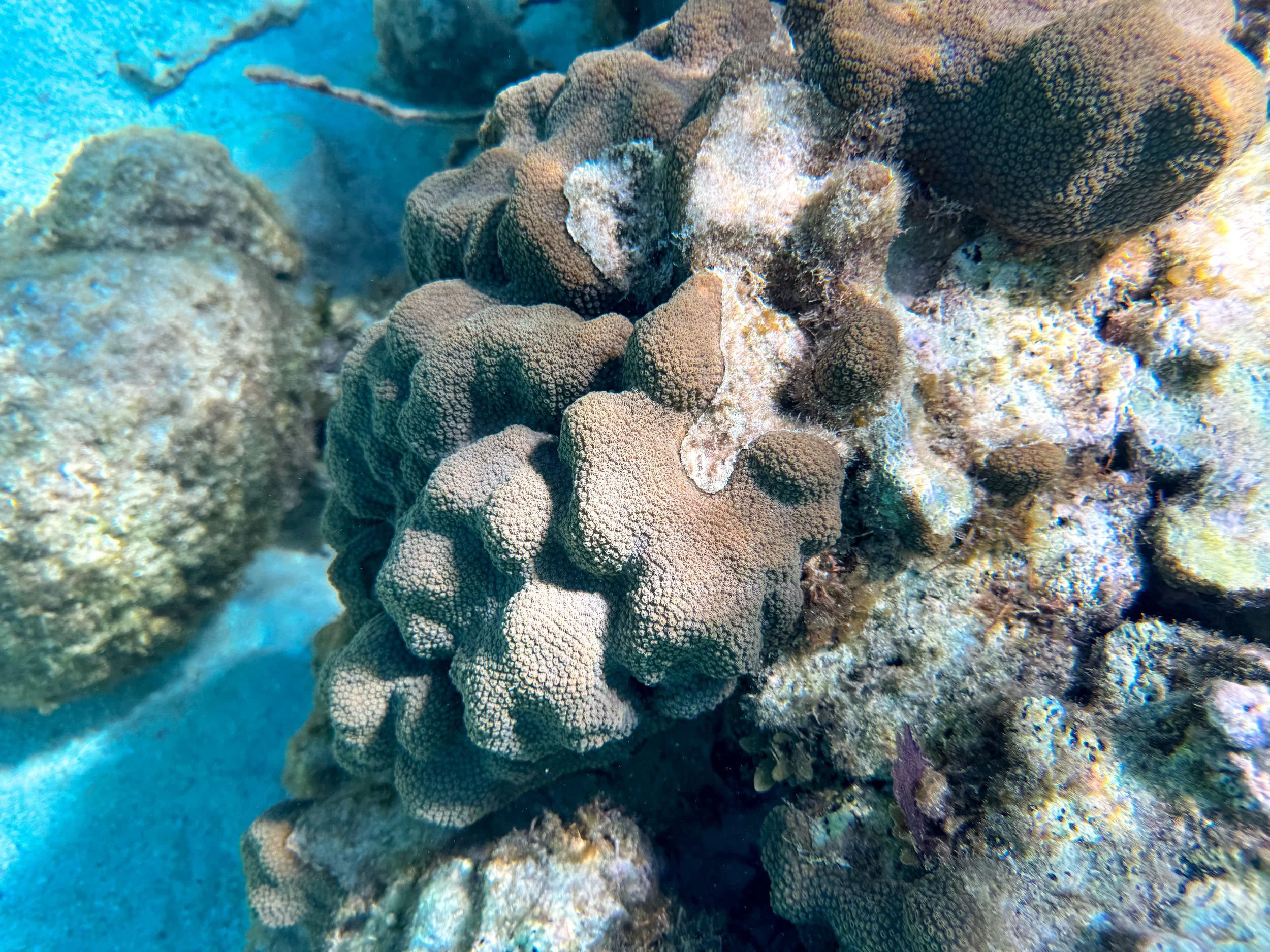
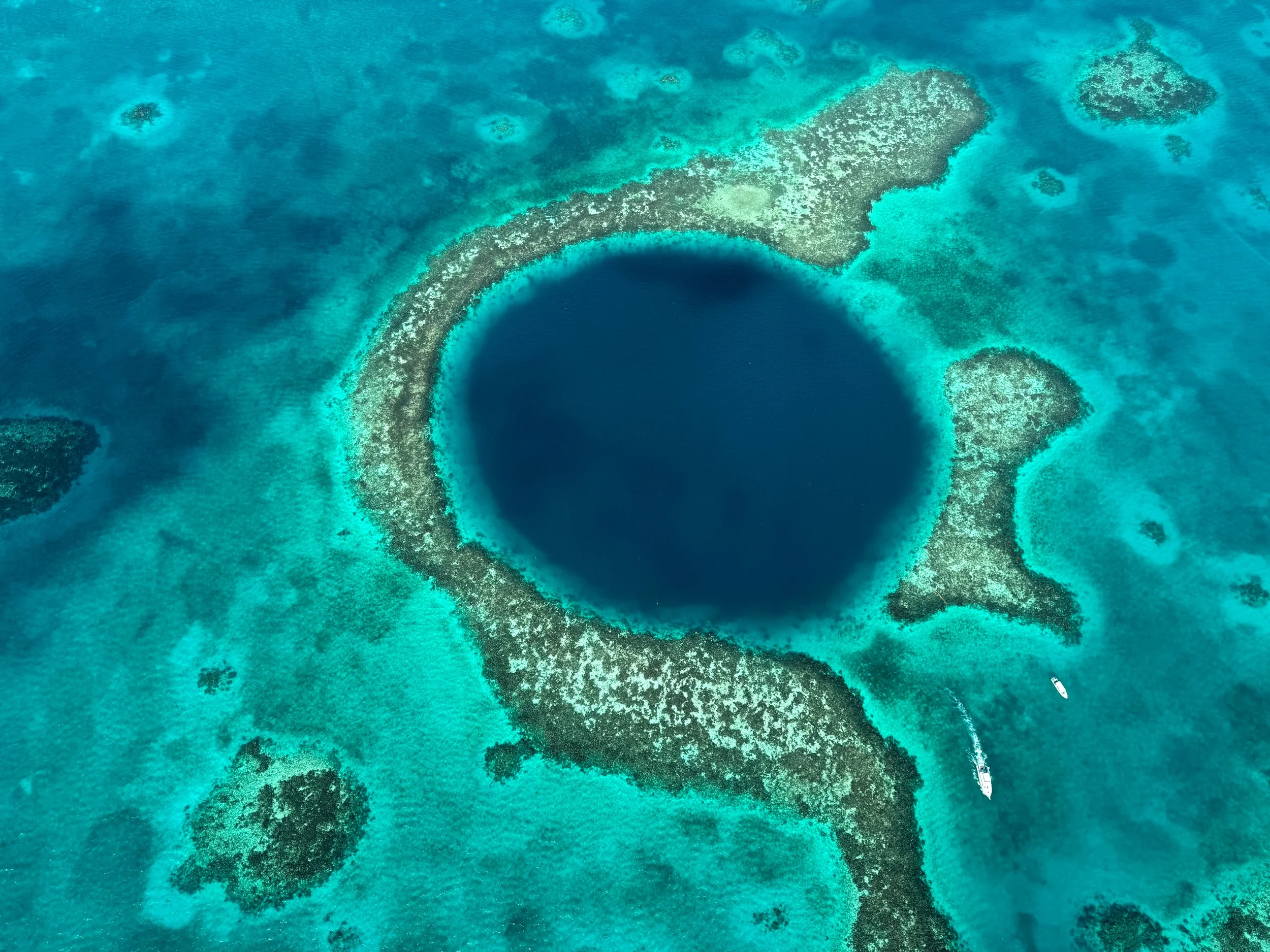
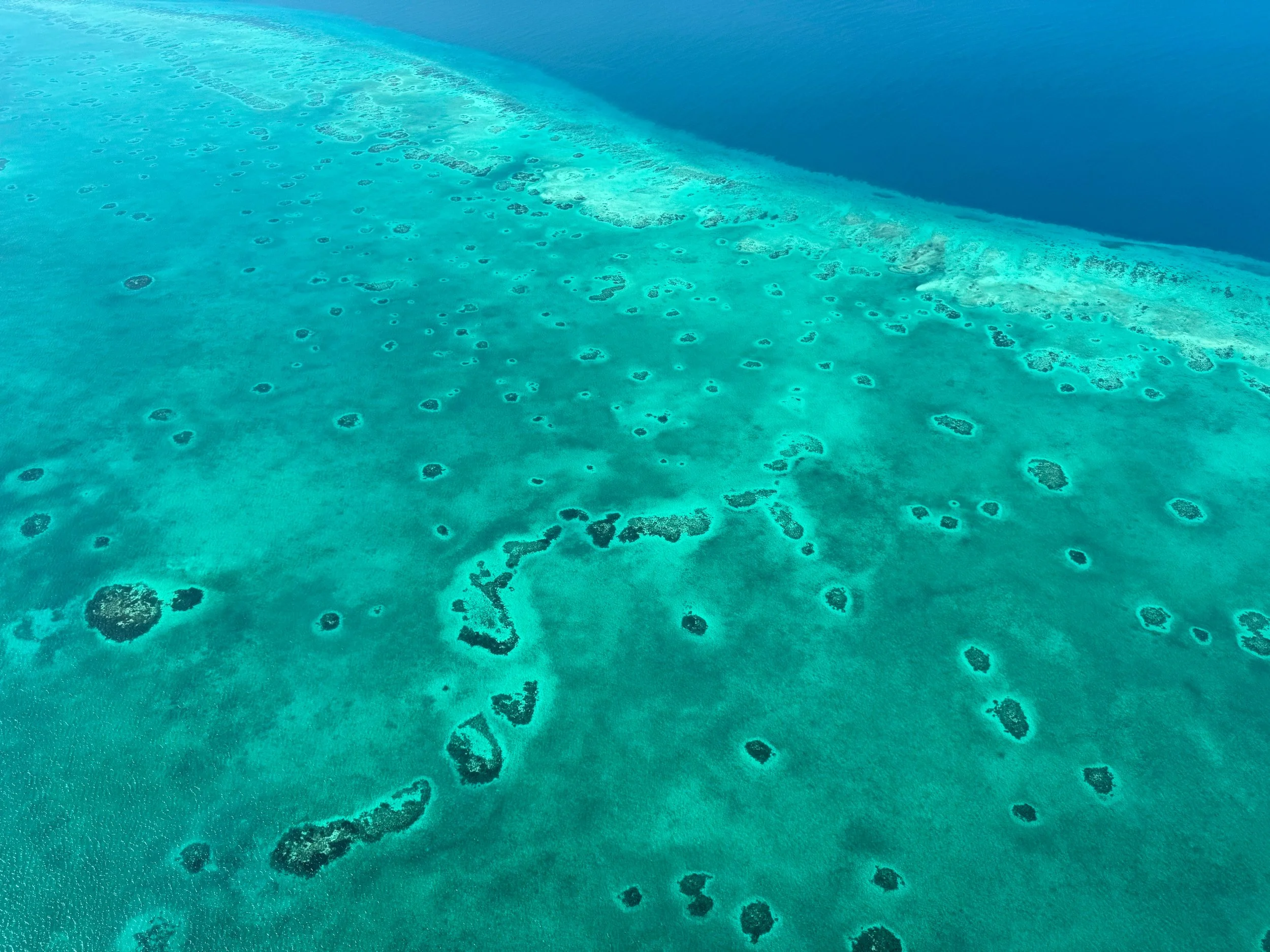
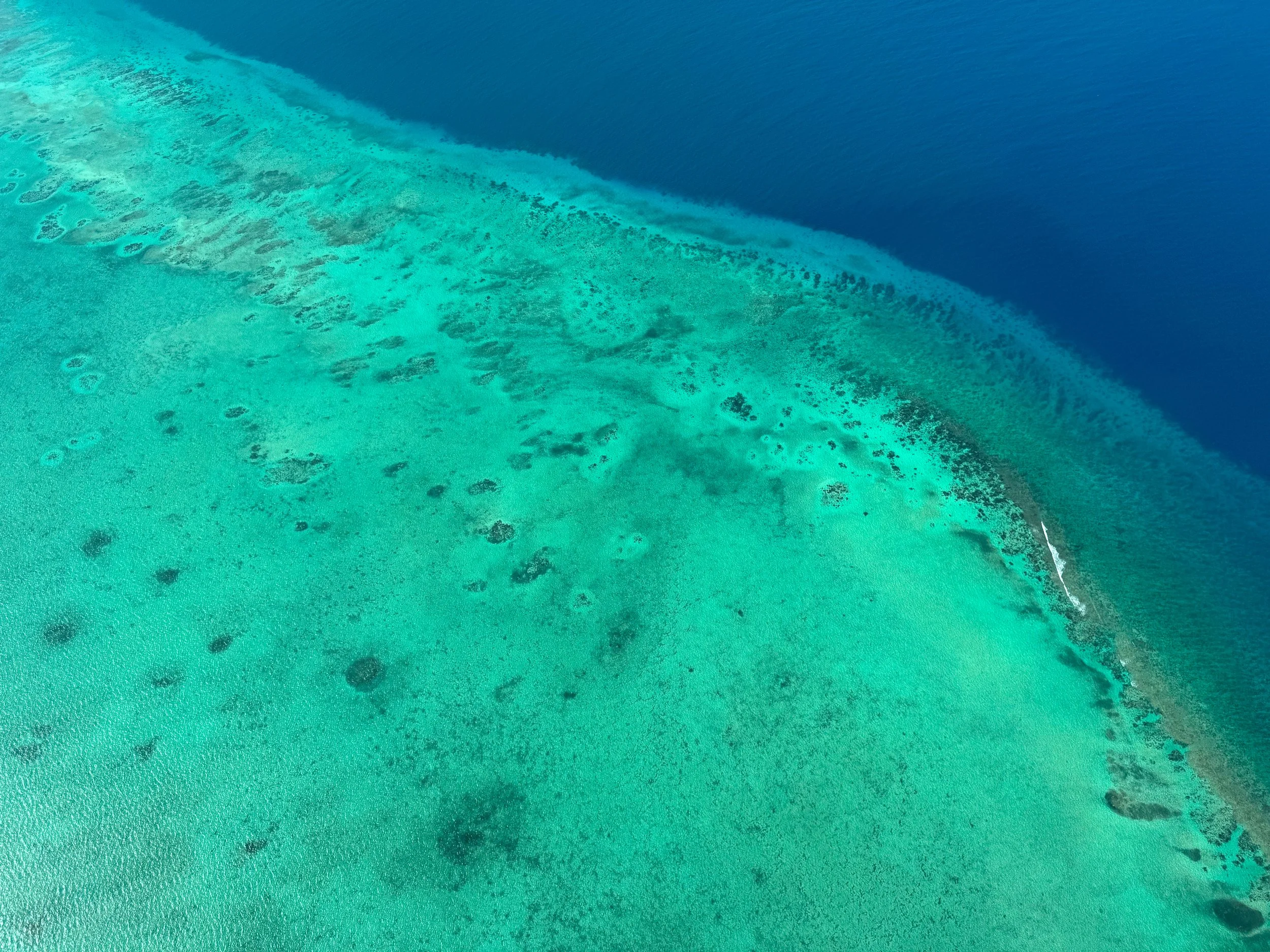
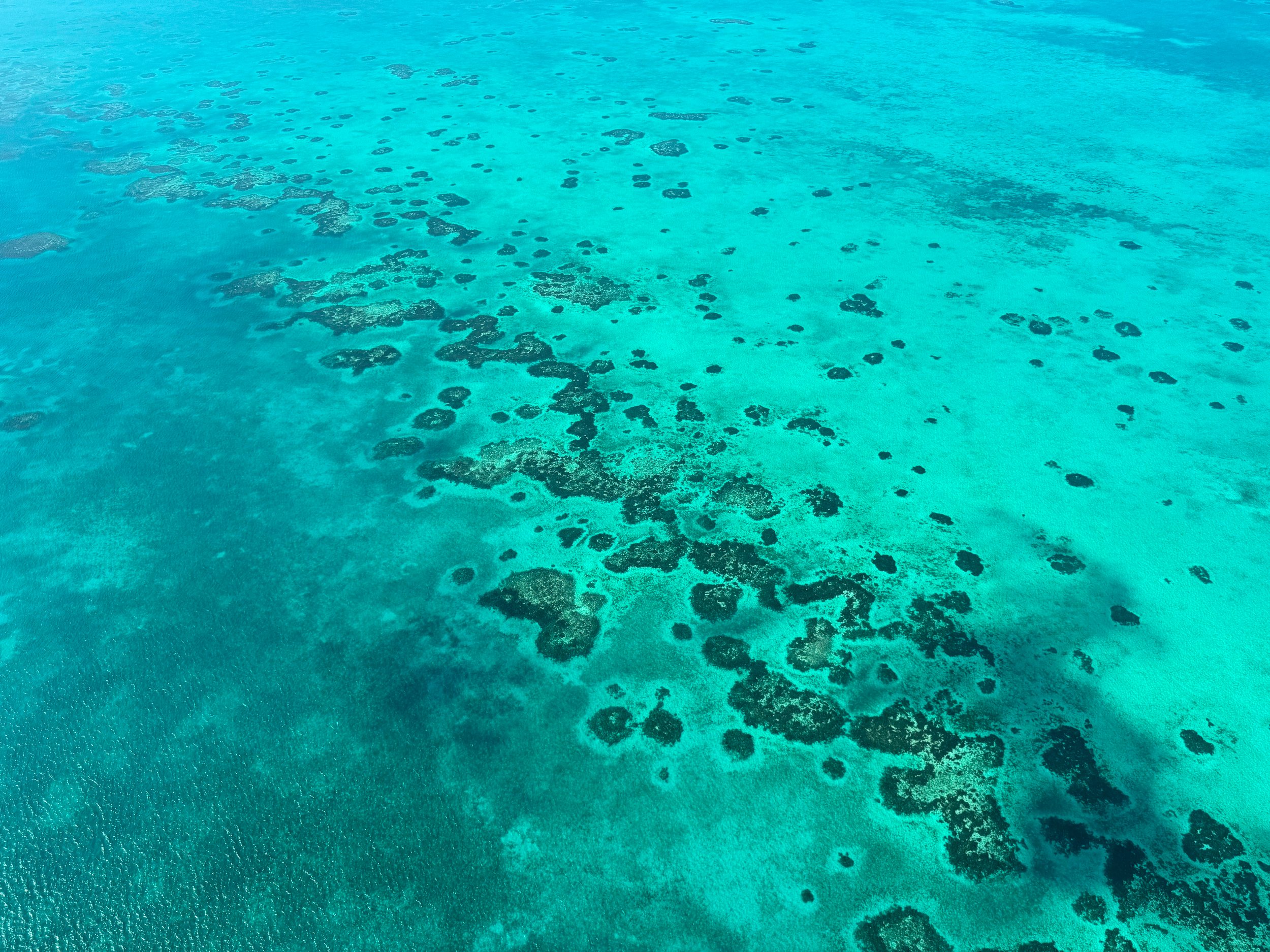
The Belize Barrier Reef is the second largest coral reef in the world, stretching hundreds of miles along the Caribbean shores of Belize. The reef’s multi-hued blue waters are home to vast coral formations, low lying atolls, mangrove islands and tidal sand bars. The reef is teeming with all manner of marine life, making it a popular spot for snorkelers like us as well as divers, fishers and sailors. We were able to experience the reef from above and below, flying over parts of its expanse to The Blue Hole and snorkeling in the Hol Chan Marine Reserve.
Seven Spot Snorkeling Tour
We booked a snorkel tour stopping at seven points around Caye Caulker and The Great Belize Barrier Reef, including Shark Ray Alley and the Hol Chan Marine Reserve.
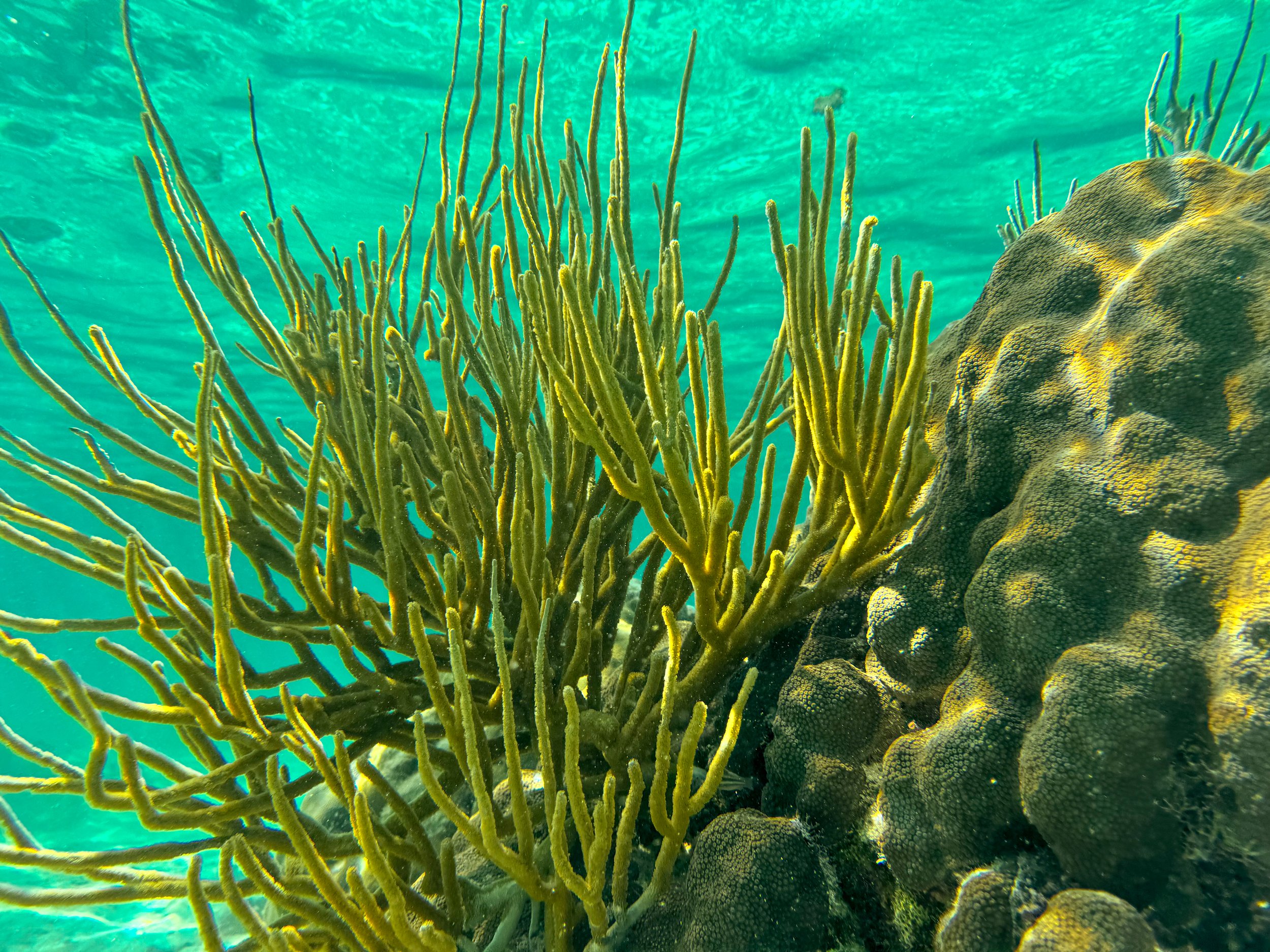
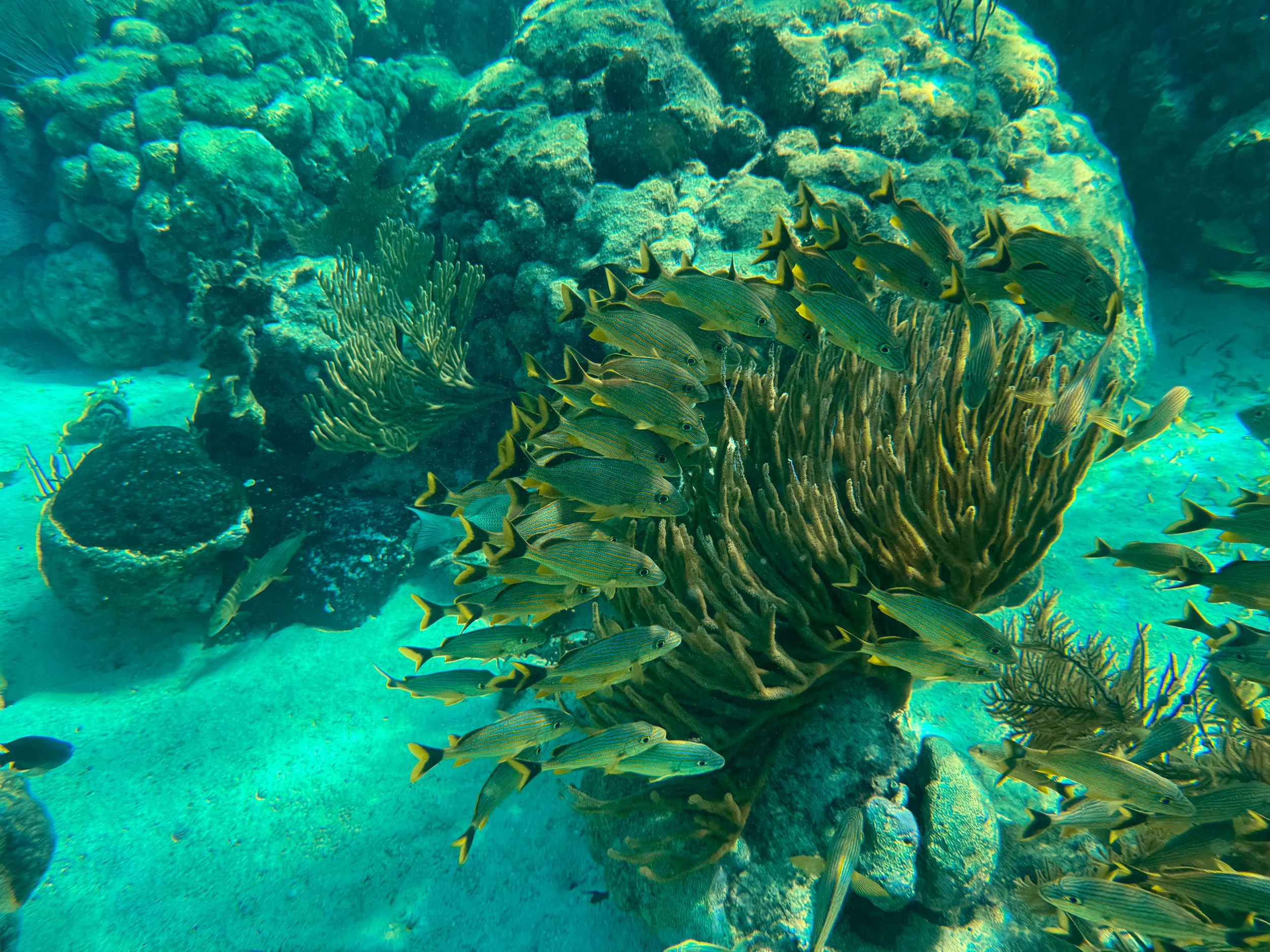
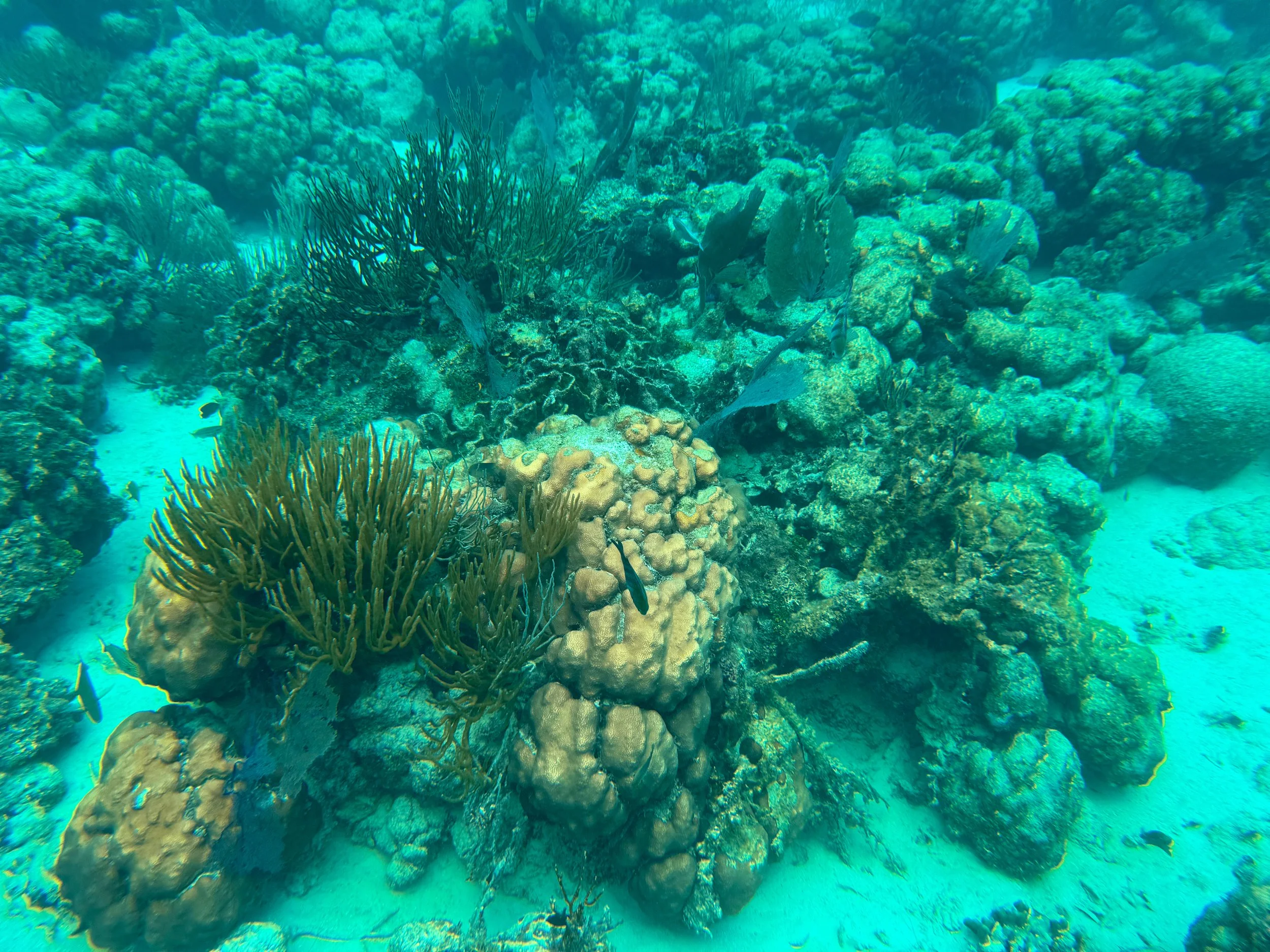
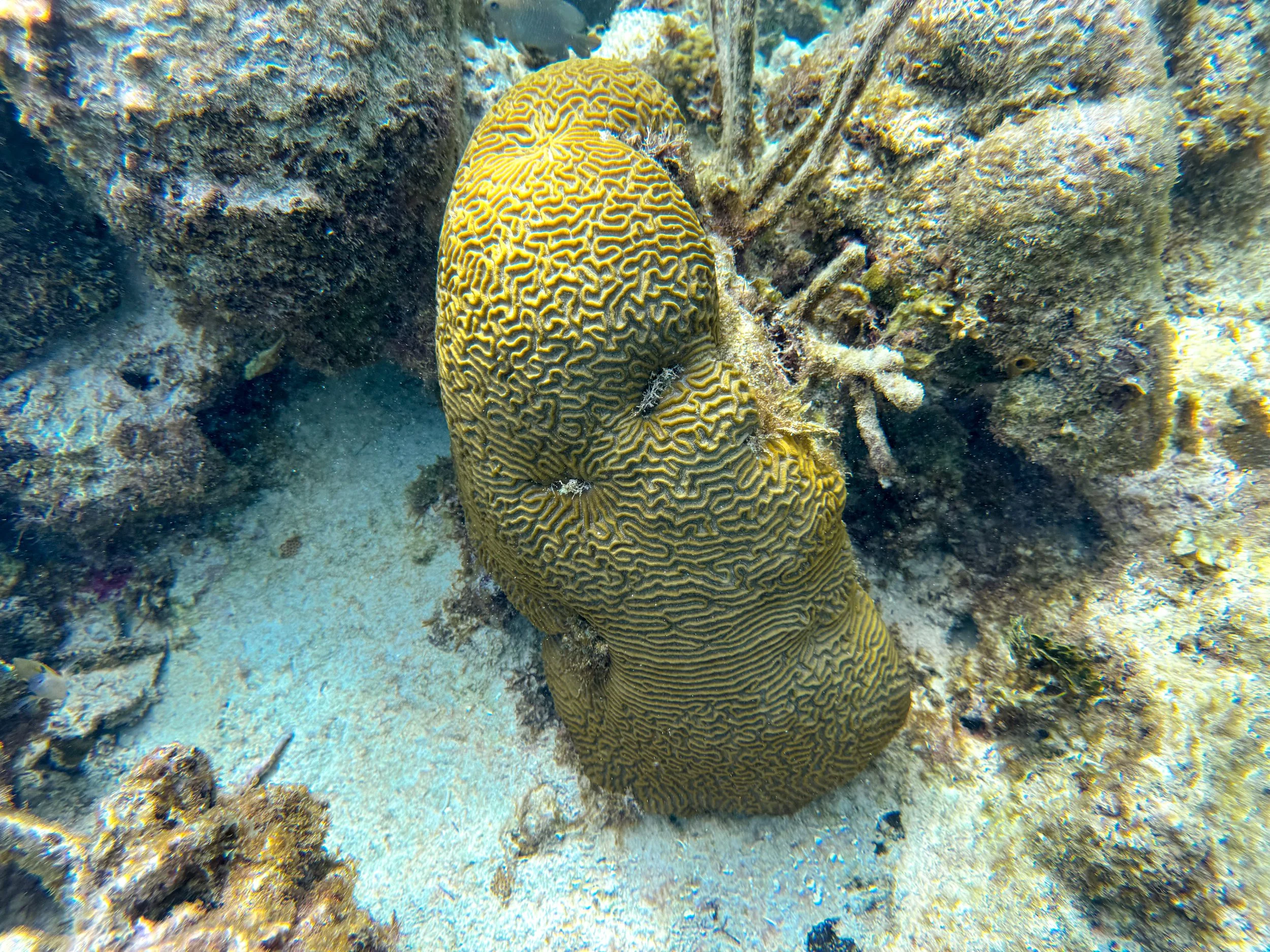
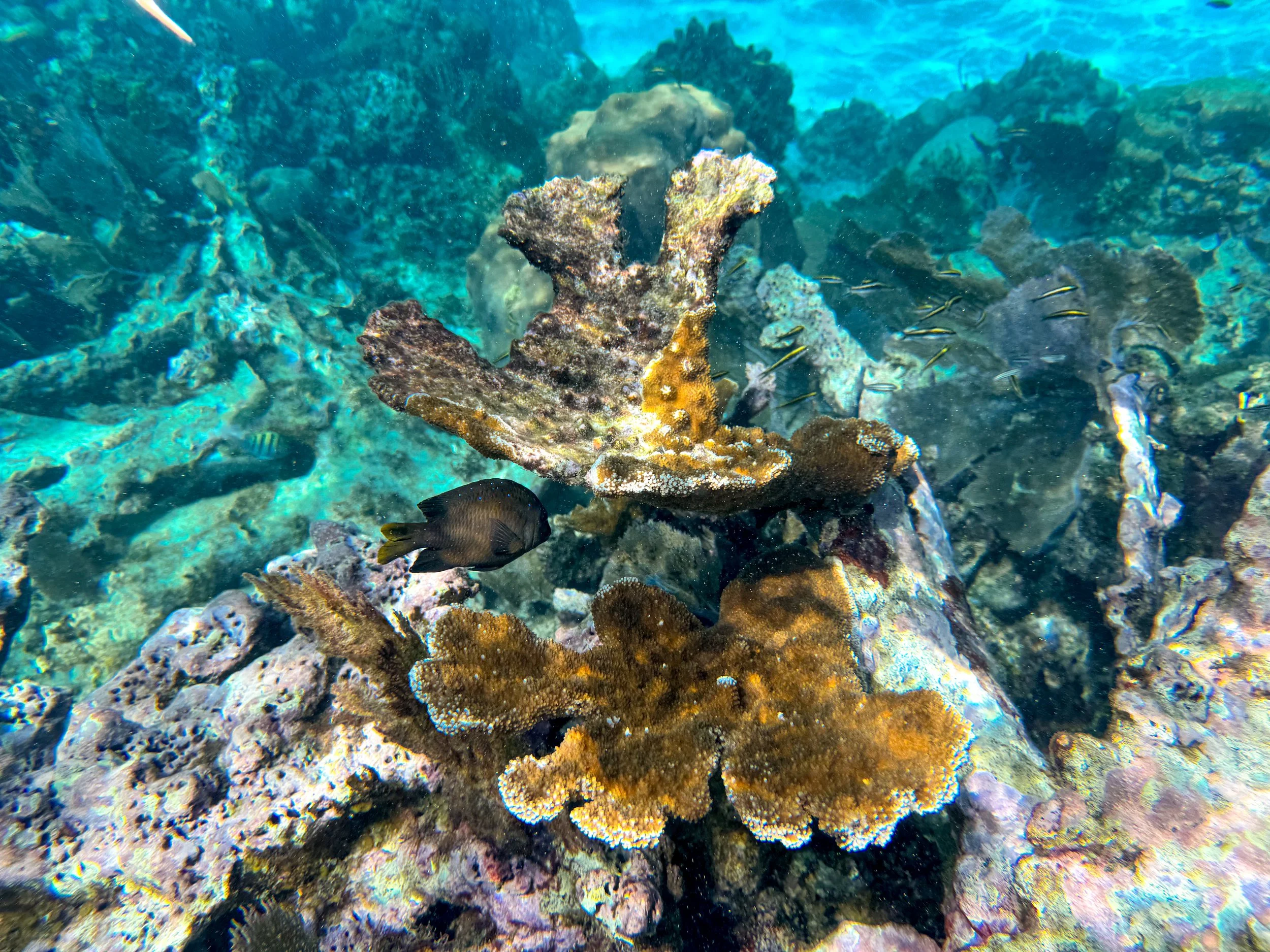
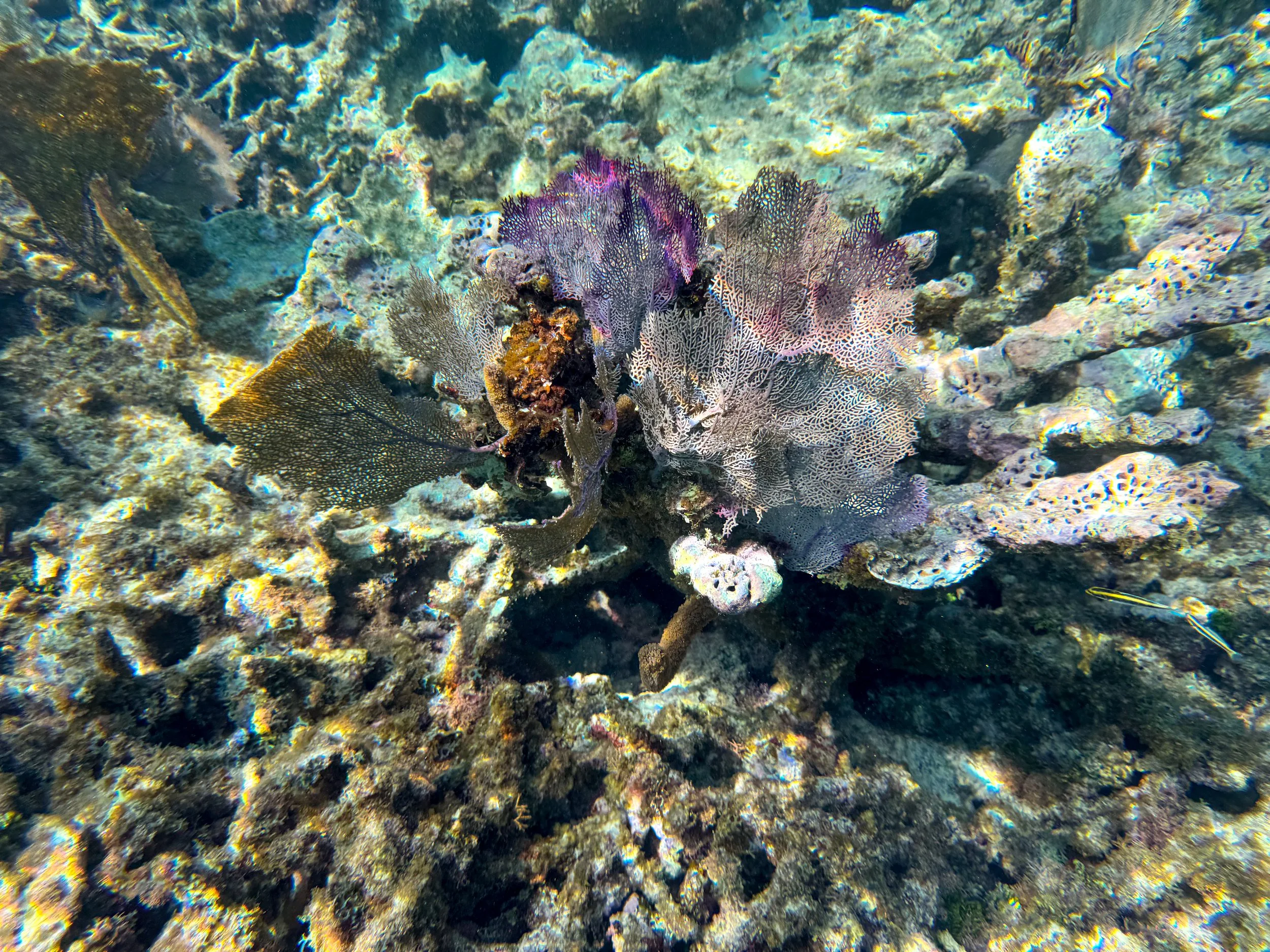
The Coral Gardens. A healthy reef home to a variety of colorful coral formations. Corals sway in the gentle currents as schools of tropical fish swim past.
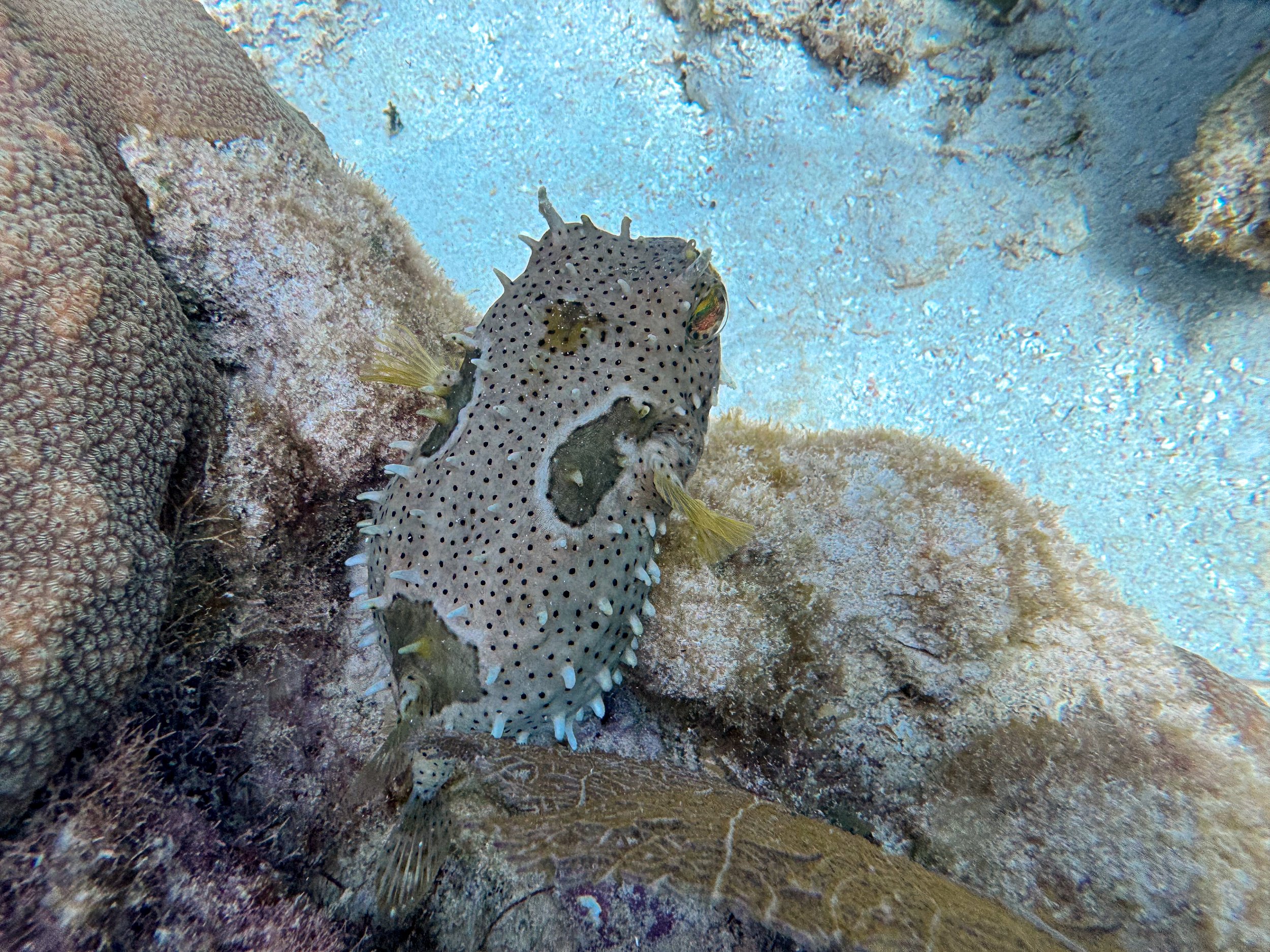
Hol Chan Marine Reserve. A protected marine reserve with a vast array of biodiversity and sea life. Our guide led us through an underwater “snorkel trail” to spot some of the reserve’s best sights. Between the giant coral formations, he pointed out countless species of marine life including a moray eel, barracudas, parrotfish, angelfish, blue striped grunts, horse eye jacks, sea fans, giant anemones, conches, Christmas tree worms, sea urchins, sand dollars and a puffed up pufferfish with the scariest green eyes.
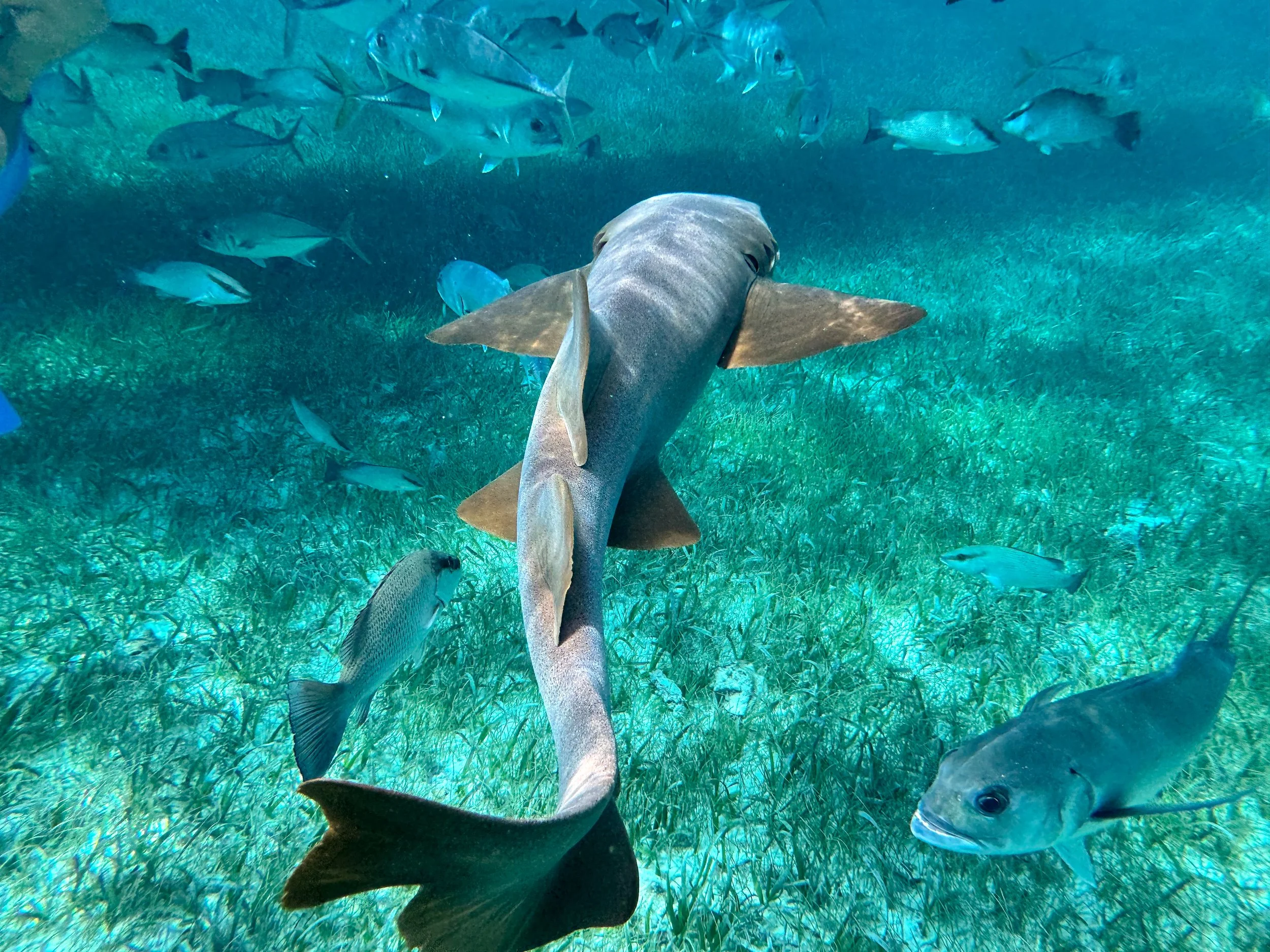
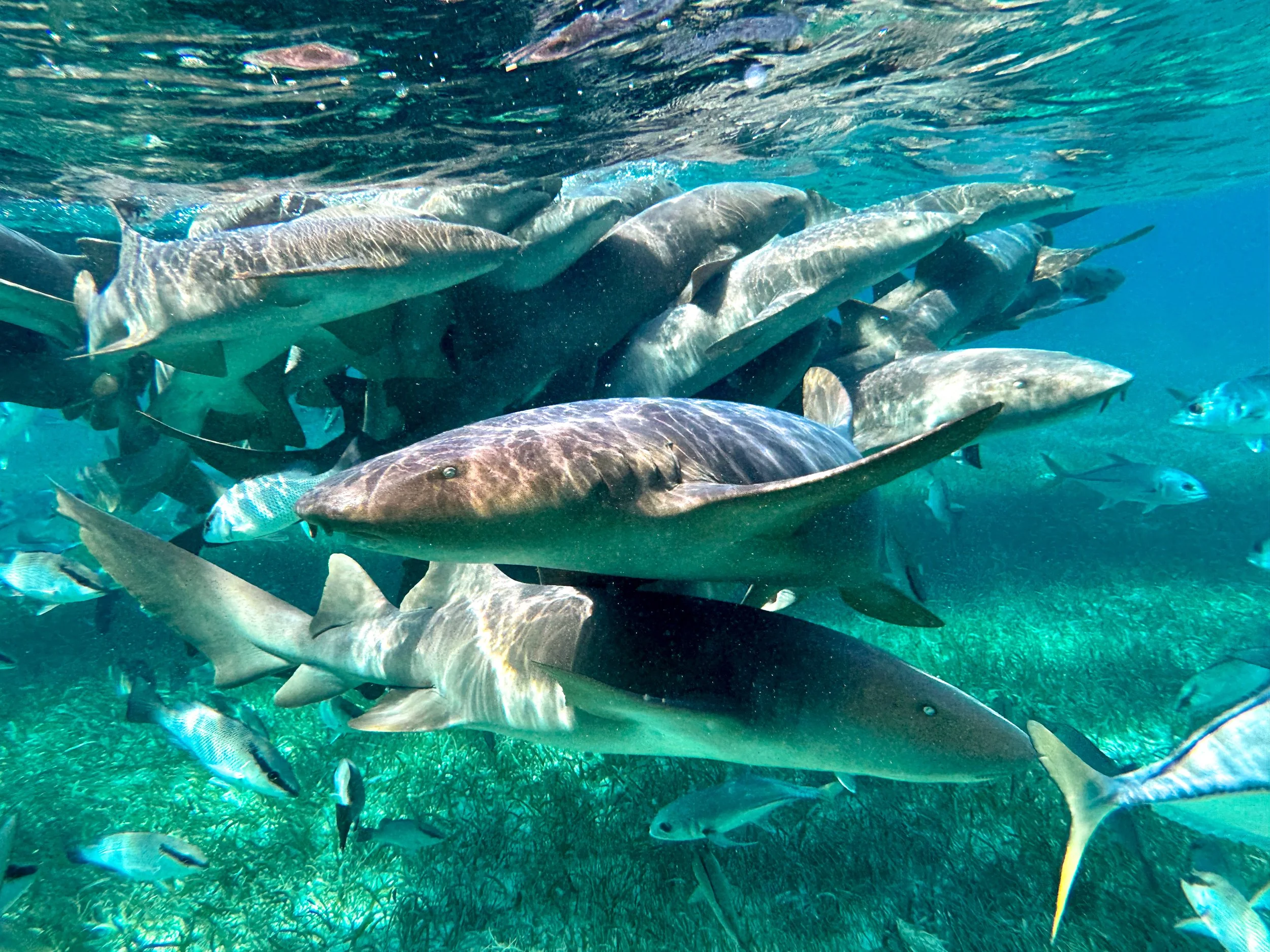
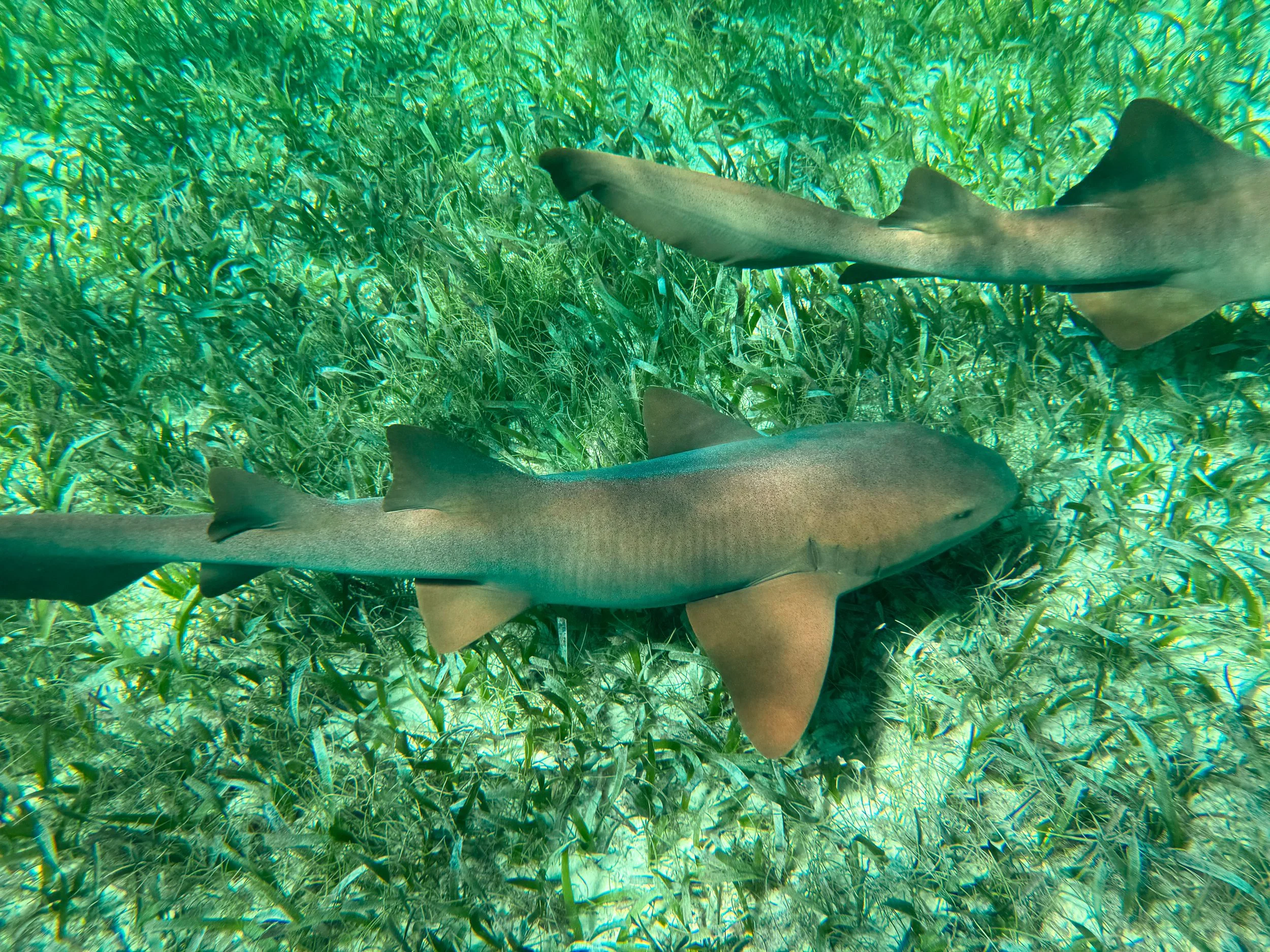
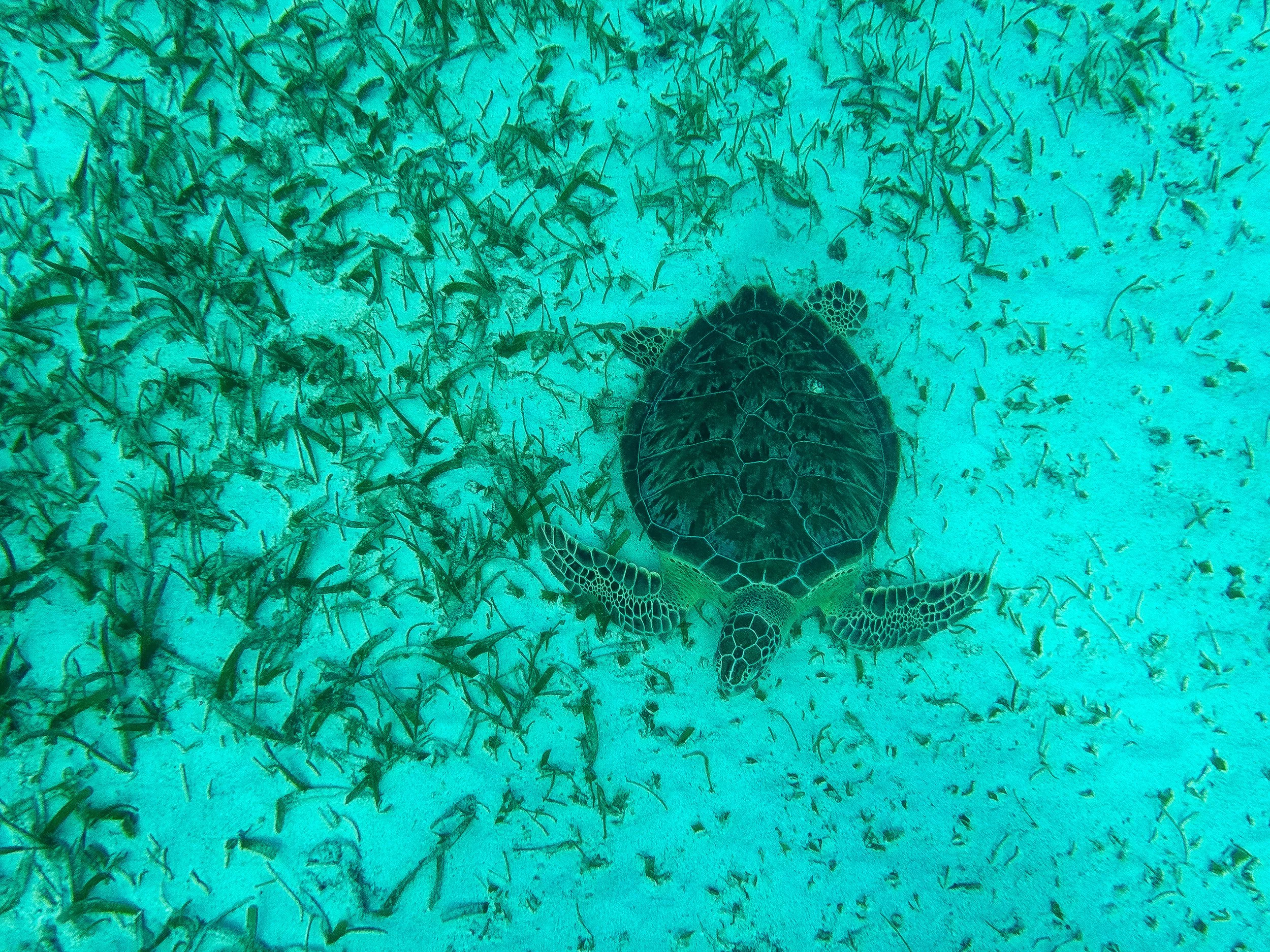
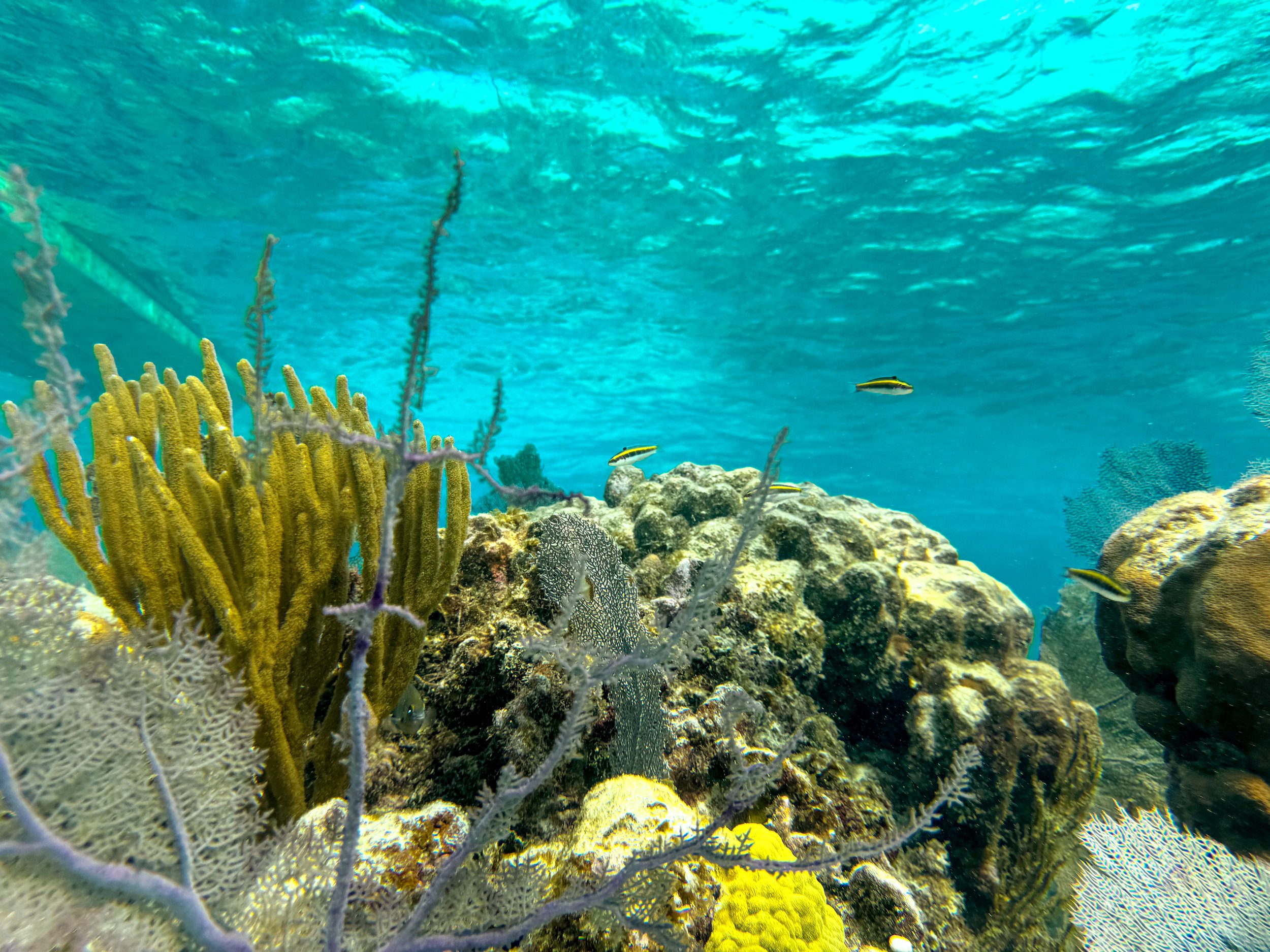
Shark Ray Alley. A grassy sandbar and feeding area with dozens of nurse sharks. We snorkeled and swam alongside them as they circled the boat and came within feet of us. Green sea turtles grazed in the open field of seagrass while small fish swam around pockets of corals.
The Sunken Barge. An underwater wreck now overgrown with lively corals and schools of colorful, striped and tropical reef fish. We snorkeled above the wreck and watched as fish swam in and out of holes in the ship.
On our return to Caye Caulker, we stopped at Manatee Point, Tarpon Cove and Stingray Beach to spot manatees, tarpon, stingrays and seahorses. The full day tour included fresh fruit, lunch, rum punch and snorkel equipment. We booked with Salt Life Eco Tours on Get Your Guide.
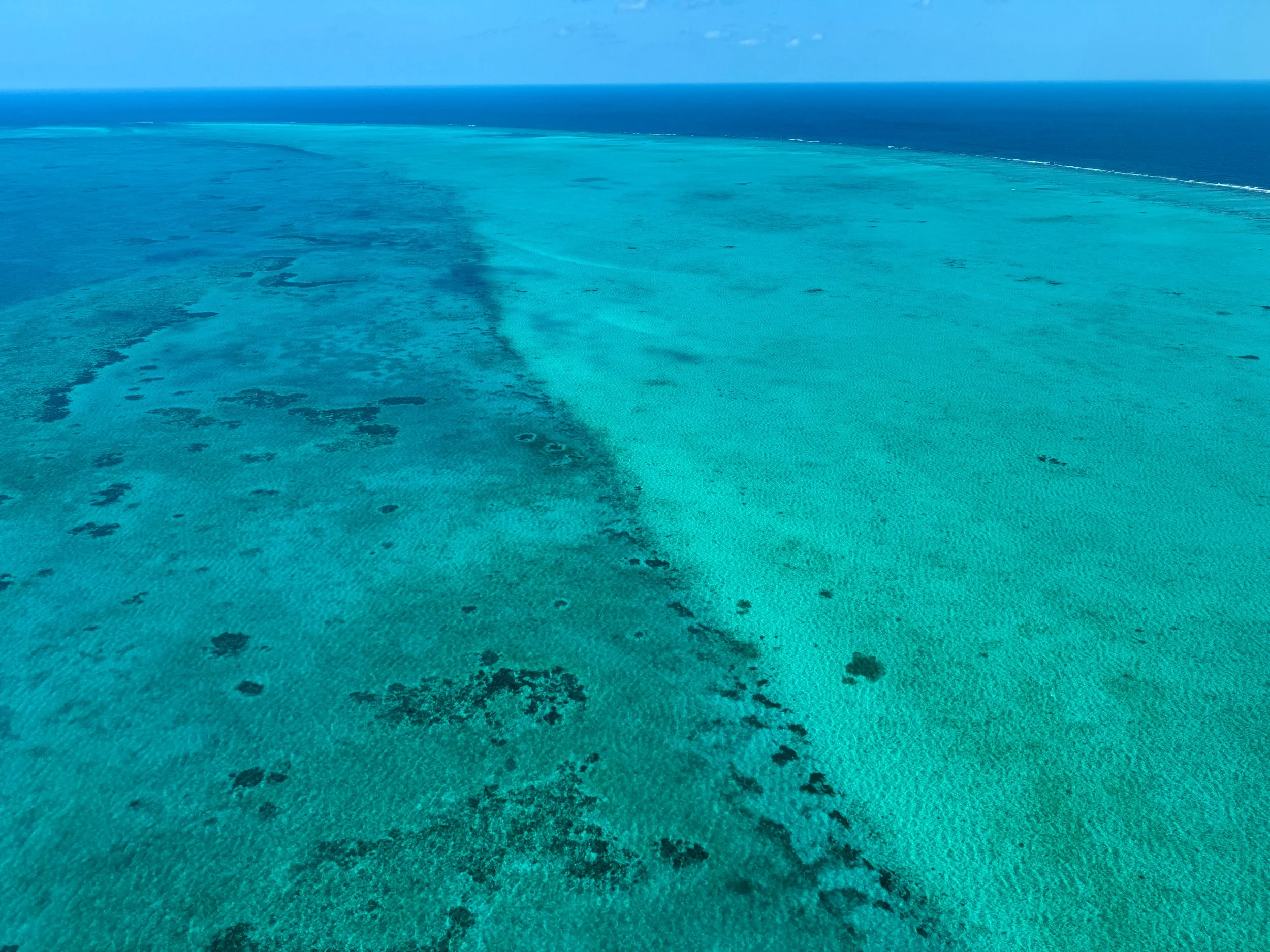
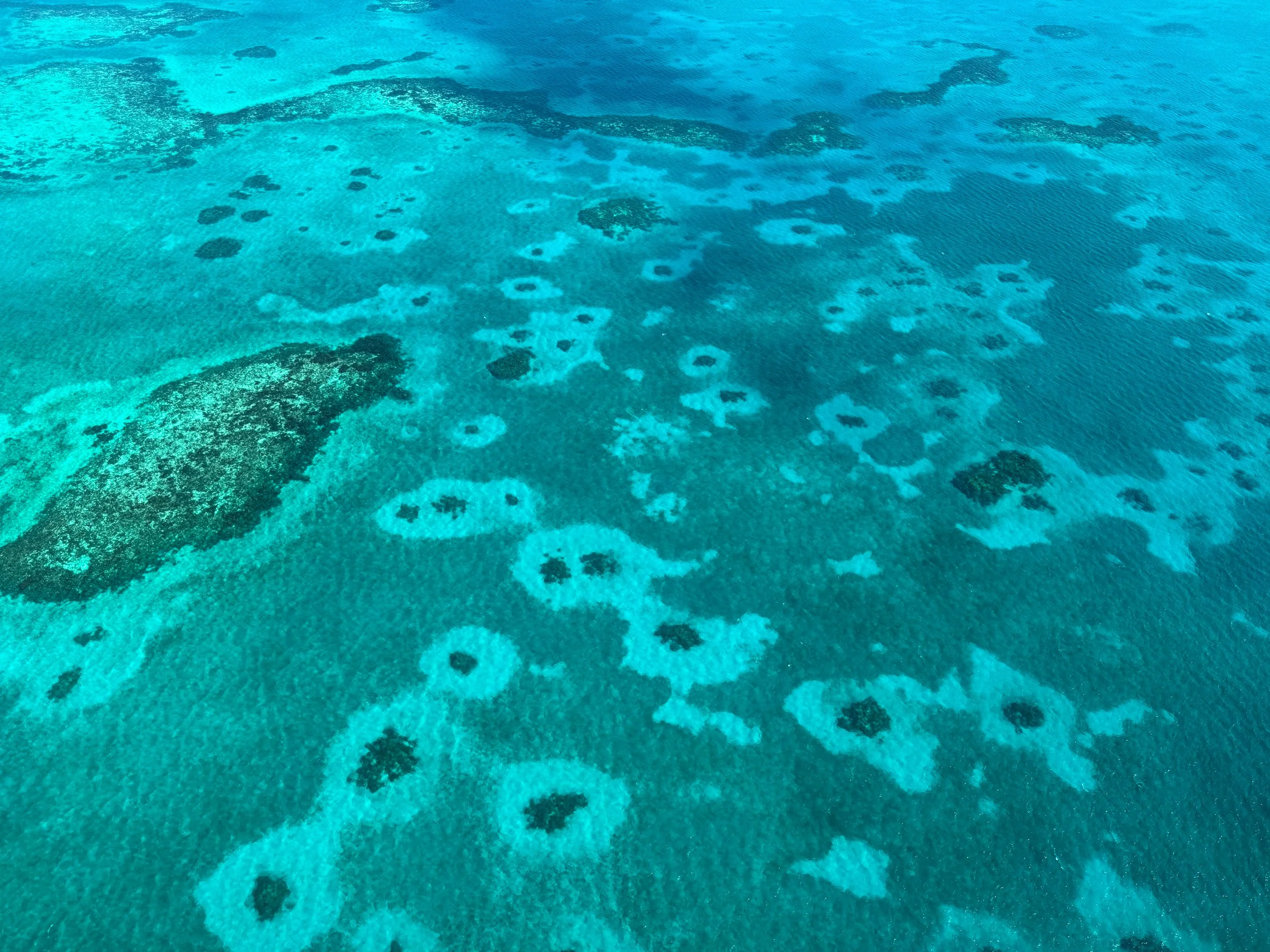
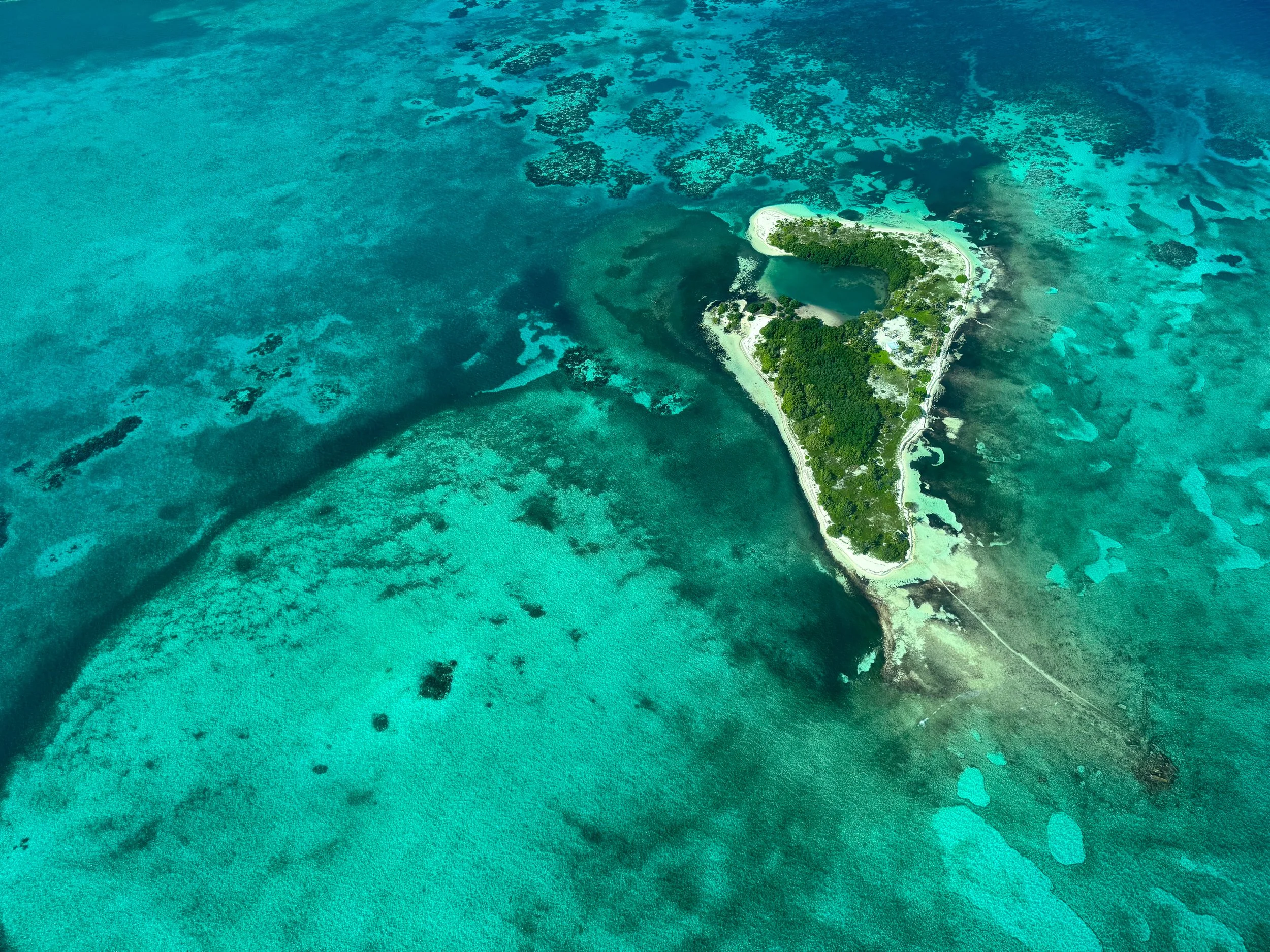
The Great Blue Hole Fly Over Tour
The Great Blue Hole is a perfectly round geological formation famed for its deep blue color contrasted by lighter blues of the surrounding shallows. It was created by an underwater sinkhole that collapsed and filled with seawater, giving it its color. We flew over it as if in a trance, circling from different altitudes on both sides of the airplane. En route, we flew over cayes, small islands, atolls, coral reefs and drop offs that created an intense spectrum of blue hues ranging from aquamarine to bright blue, turquoise, deep blue and navy. Looking out the windows, we were mesmerized by the blue beauty of the Caribbean and Belize Barrier Reef. The flight lasted about an hour. Though expensive, it is a sight worth seeing! We booked directly with Maya Island Air.
Things to Do
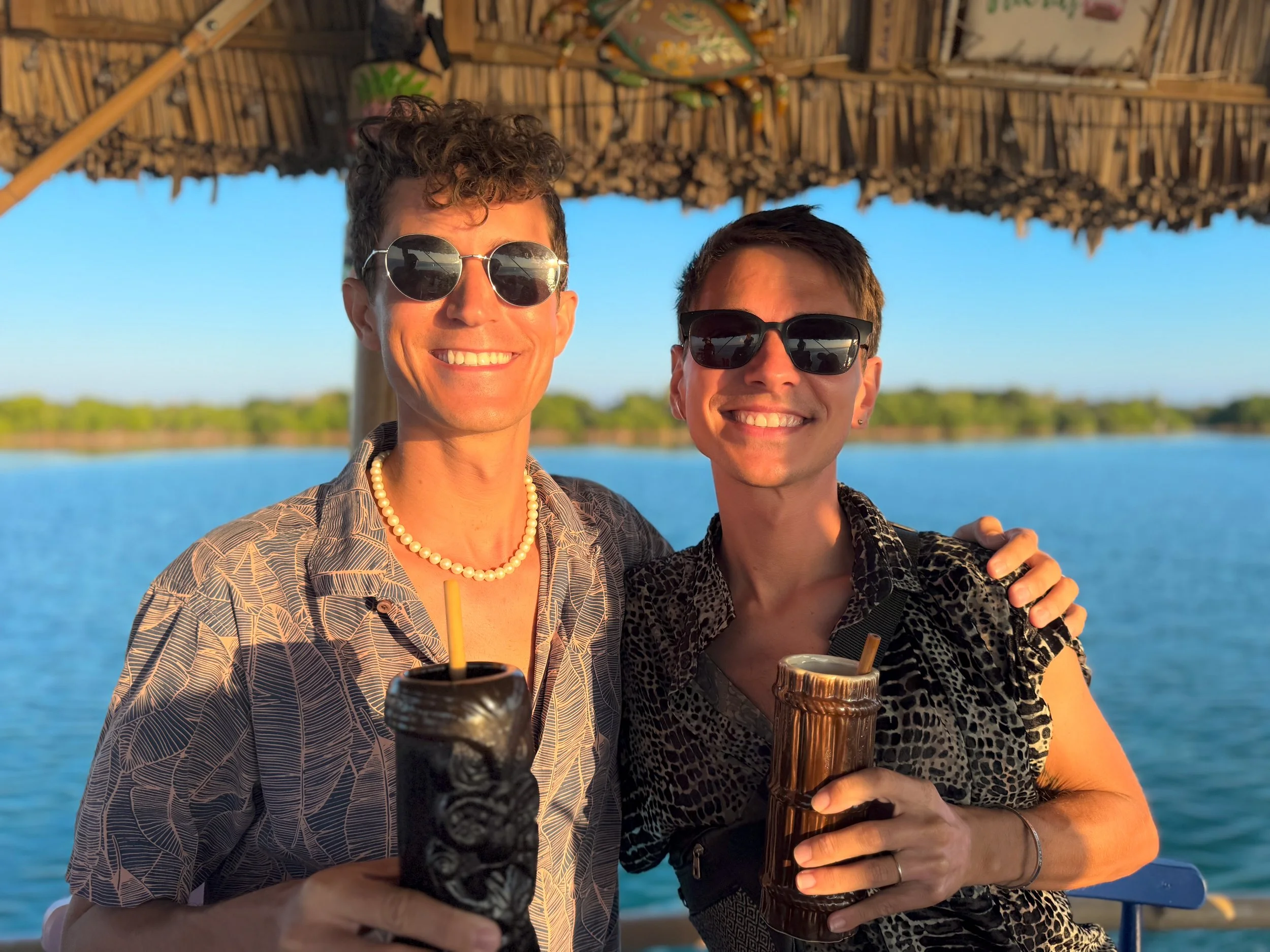
Sunset Tiki Bar Cruise. In love with all things tiki, we joined several others aboard the “Pontiki,” a pontoon boat converted into a floating tiki bar with a palm thatched roof and side skirt, bamboo railing, kitschy tiki decor, one of a kind tiki mugs and bamboo straws. Most importantly, the cruise included the booziest rum punch made with Belizean rums. For nearly two hours, our captain boated us around the Caye, refilling our tiki mugs and bringing us to the perfect spot for a Caribbean sunset. We booked with Nina’s Pontiki Cruises on Viator.
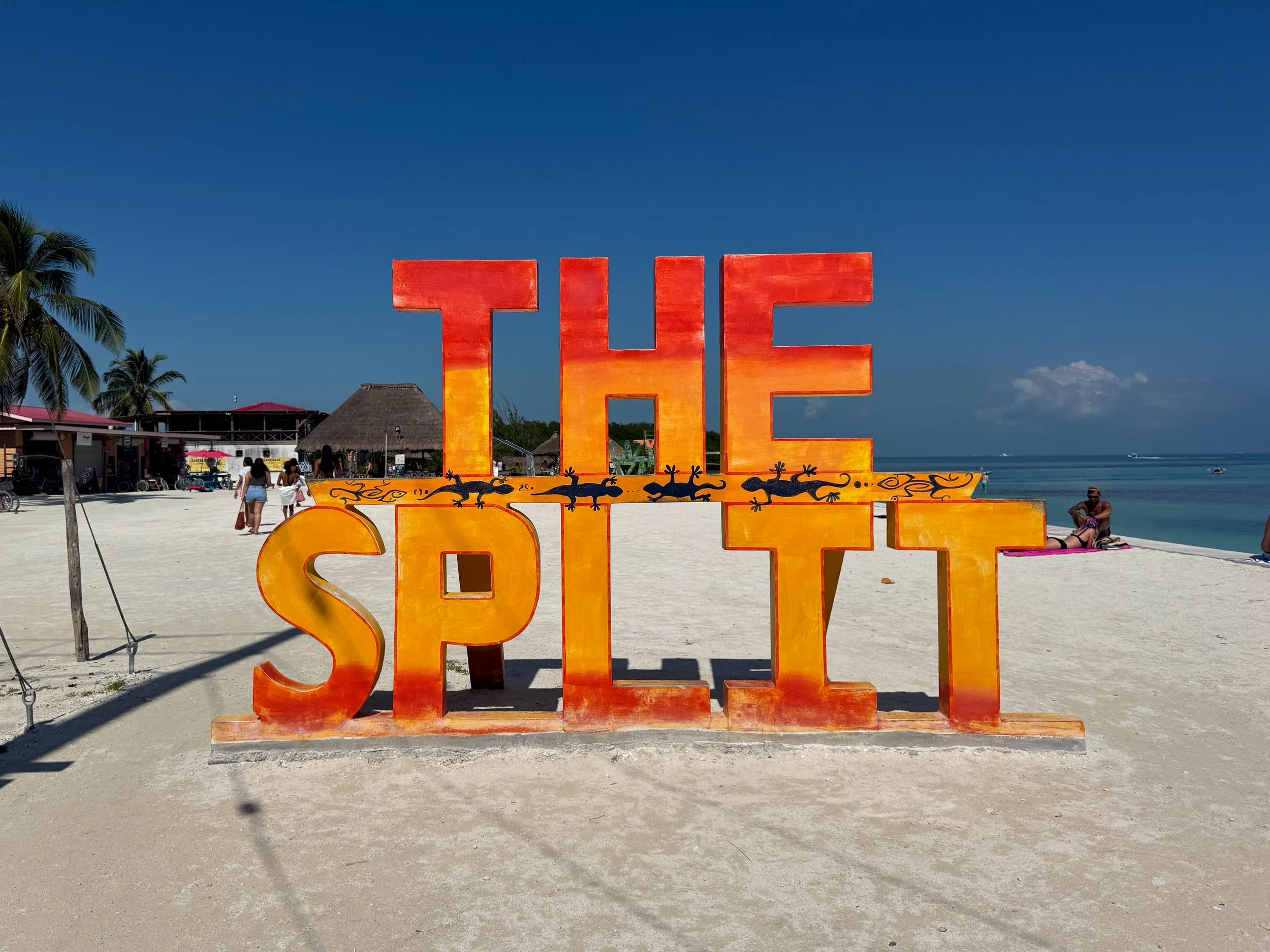
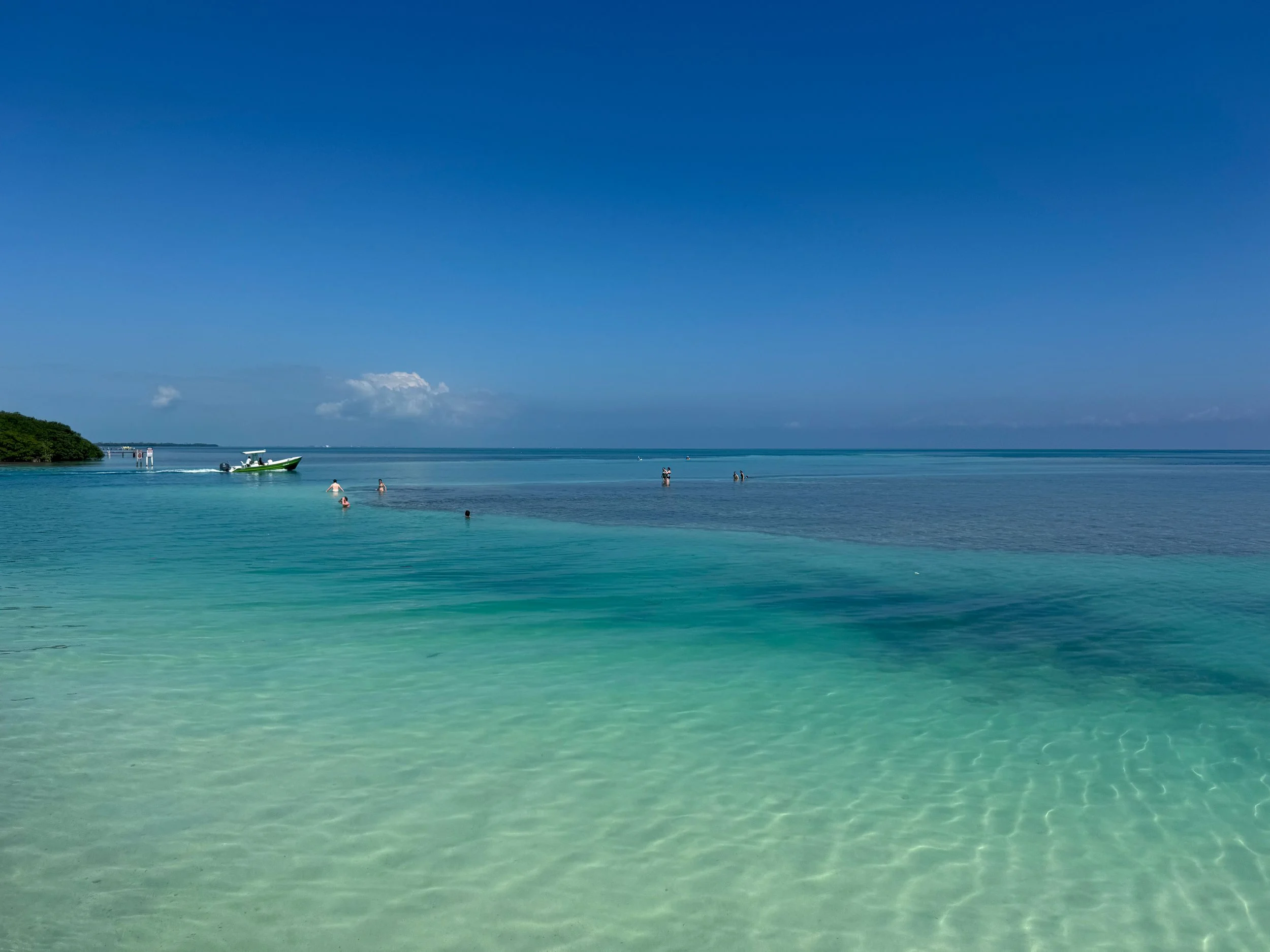
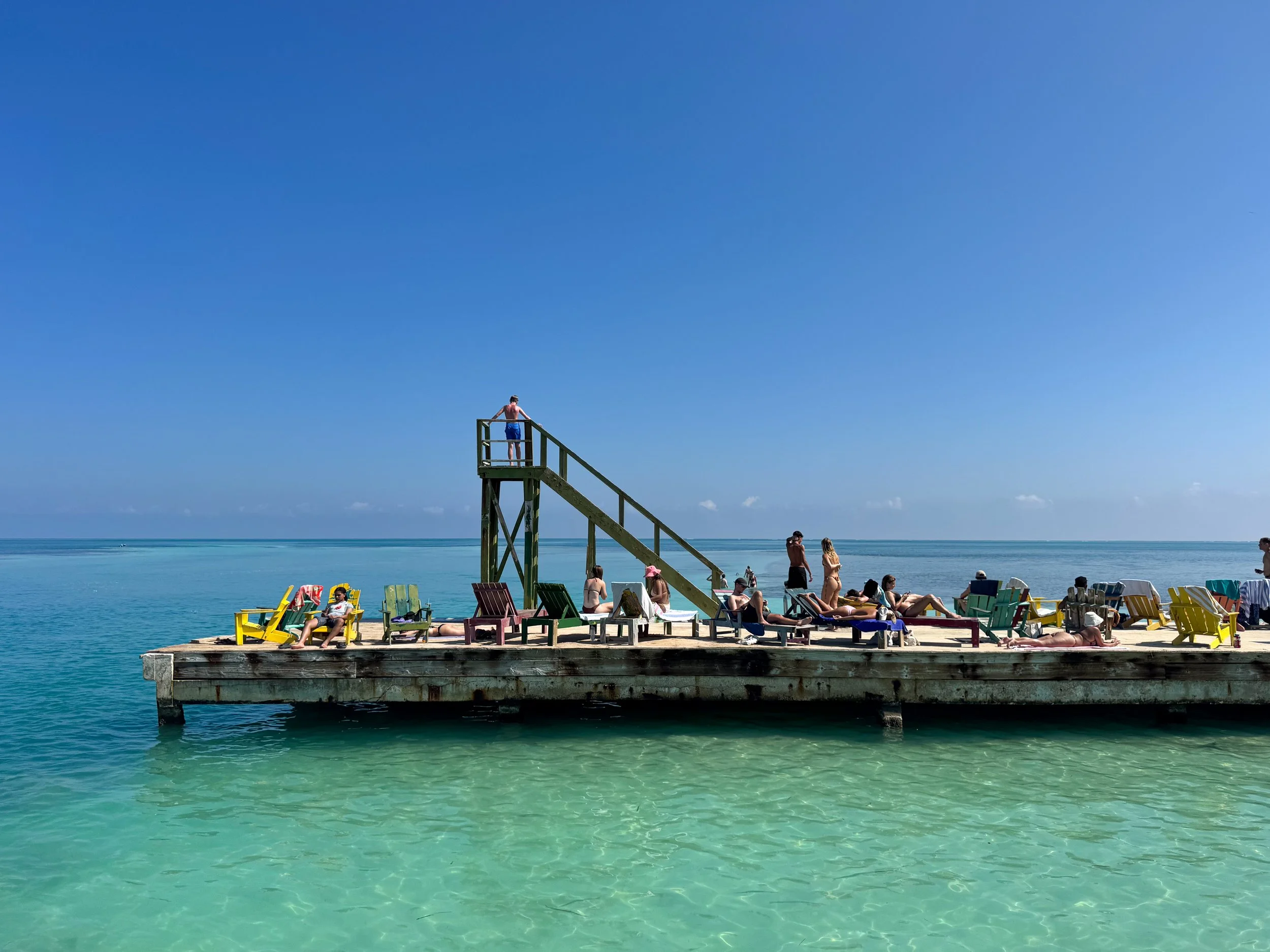
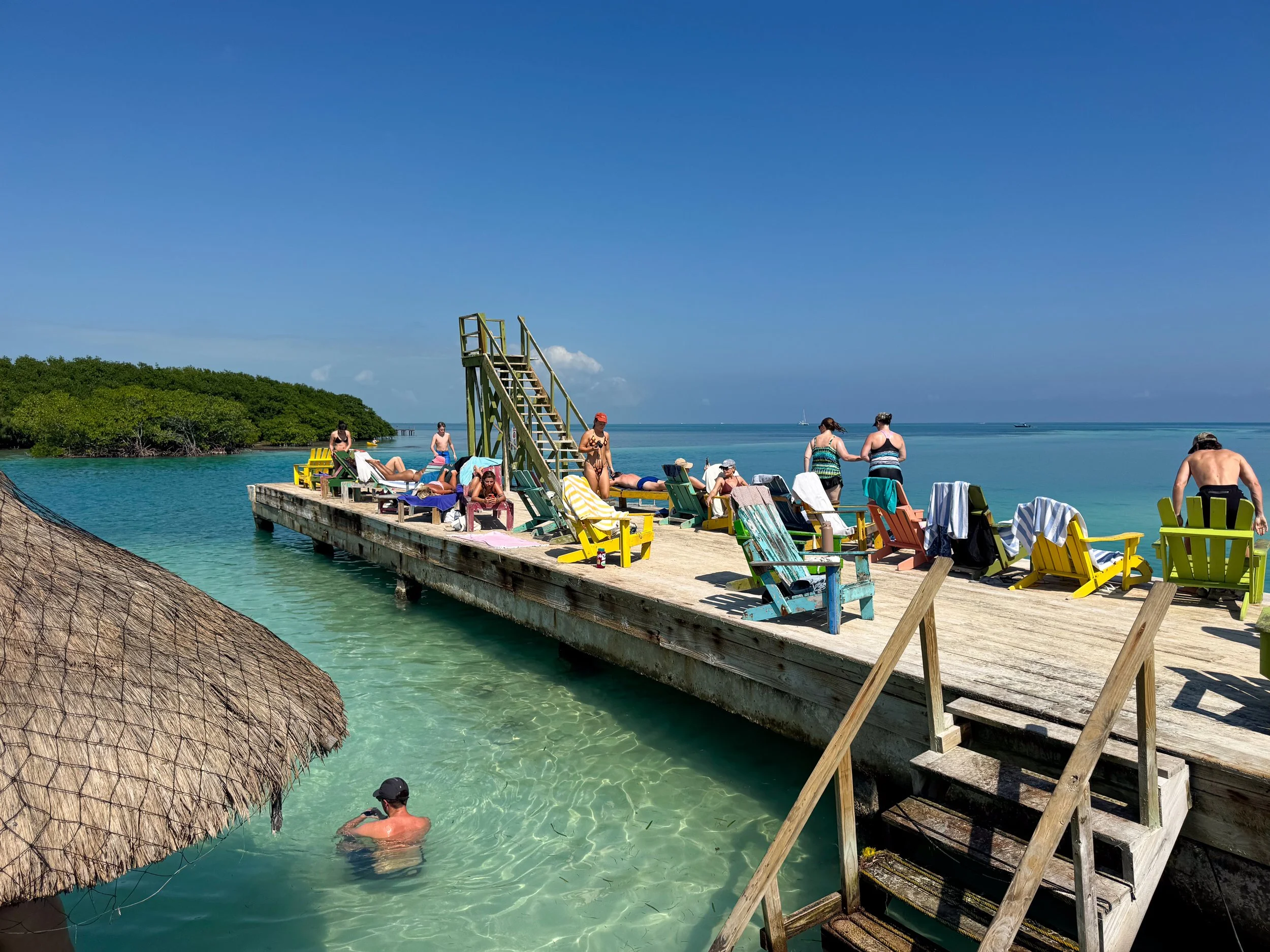
Visit The Split. The Split is a narrow channel separating the north and south sides of Caye Caulker. It is the informal center of the island and a common departure point for tours. Visit The Lazy Lizard, a beach club with an outdoor restaurant, expansive bar and music venue. Their pier is lined with colorful wooden lounges, tables shaded by thatched umbrellas and a ladder with a diving platform.
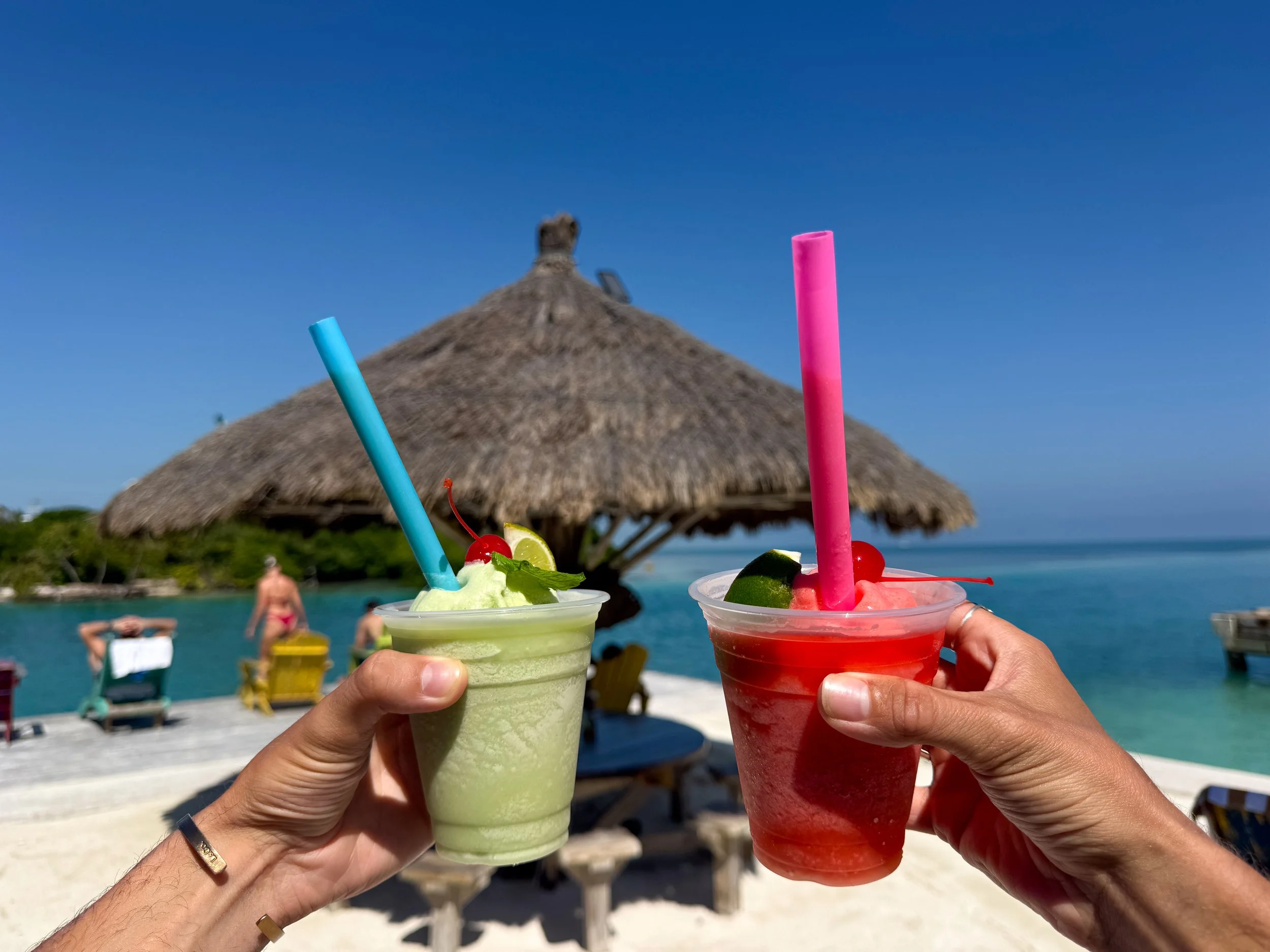
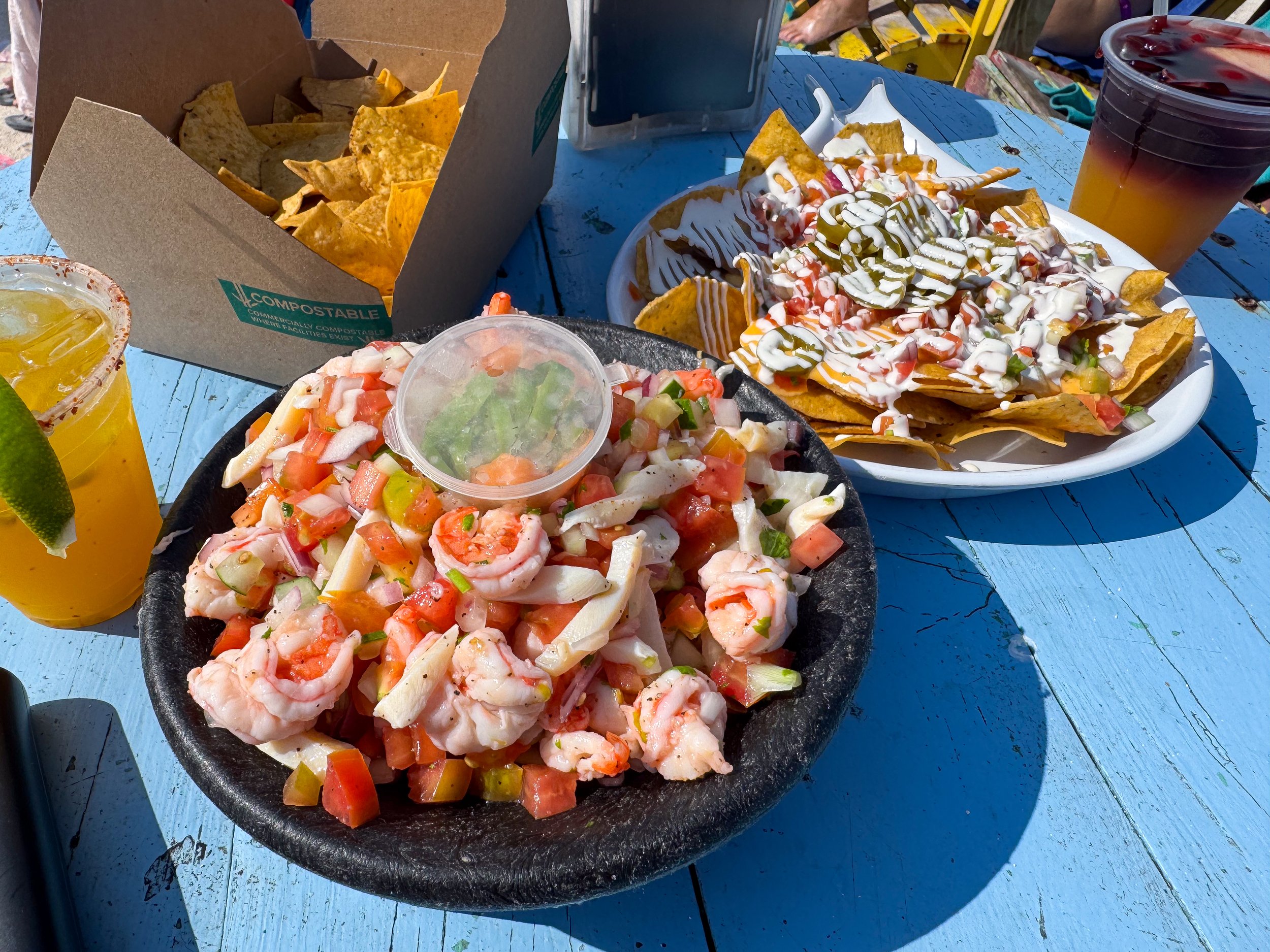
We spent an afternoon lounging along the pier with tropical cocktails and lunch. Try the frozen coconut mojito and spicy margarita. After working on our tan, we swam around and snorkeled in the aquamarine waters, spotting stingrays, conch and starfish. At night, we returned for their Full Moon Party where we danced in the sand and howled at the full moon as live DJs spun House and Reggae music.
Feed or High Five a Tarpon. Tarpon are giant ”bone fish” that grow up to several feet in length. On the west side of the caye is a small boardwalk where they swim around waiting to be fed. For $5 BZD, buy some bait, hold it above the water and wait for one of the giant fish to quickly jump out and snatch it from your hand. Alternatively, hold your hand just above the water and wait for one of the tarpon to “high five” your hand. It’s a common stop on snorkel tours.
Spot Stingrays & Seahorses at Stingray Beach. A small beach at the Iguana Reef Inn with palm shaded lounges, a thatched bar and a habitat for stingrays and seahorses. We stopped in for rum cocktails and took our pick of the many lounges set up along the shore before relaxing in the overwater swings and hammocks. While here, we spotted yellow and brown seahorses slinking alongside the pier and giant stingrays fluttering through the shallows near shore. It’s a common stop on most snorkel tours.
Belizean Cuisine
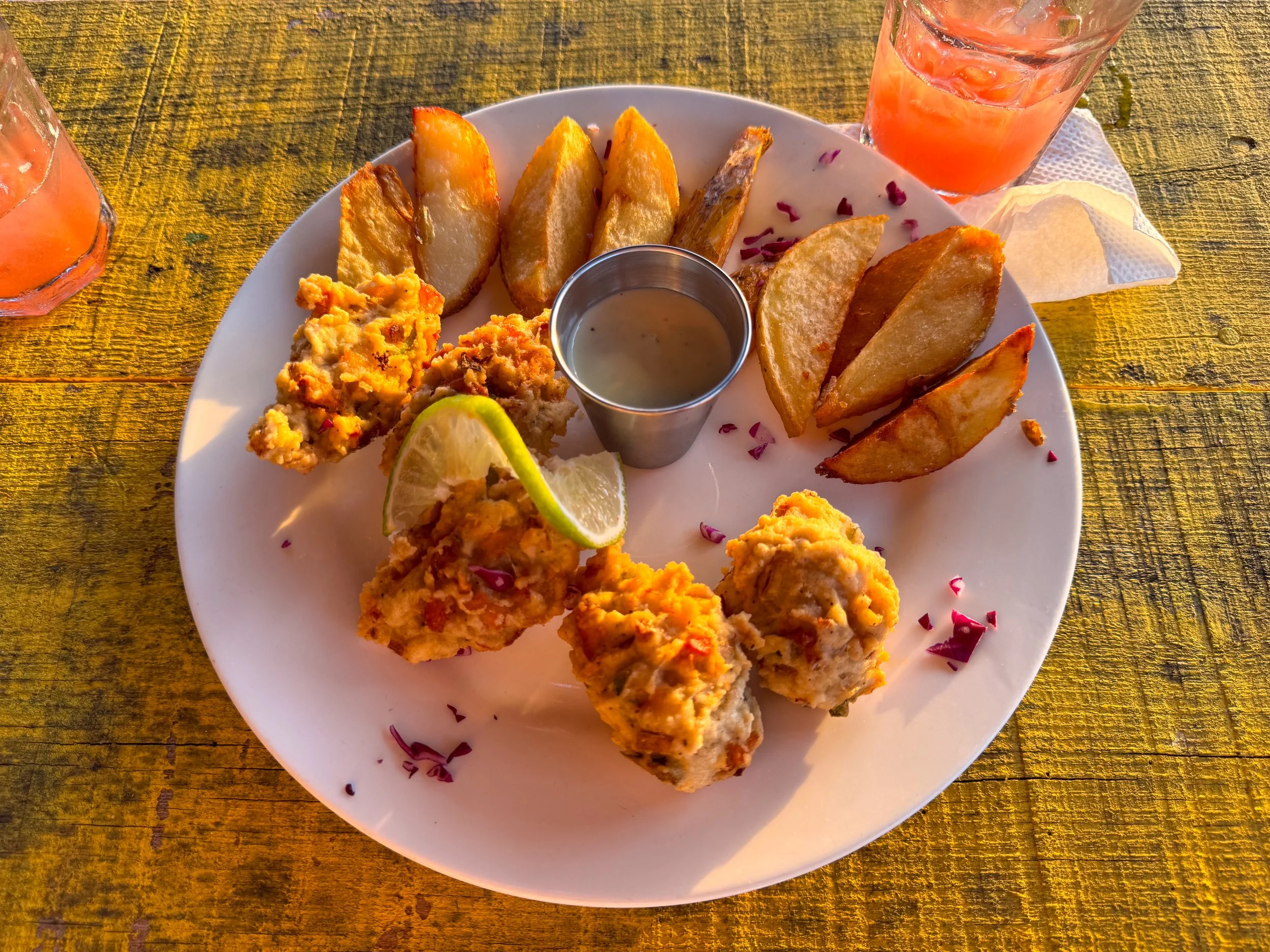
Belizean cuisine on Caye Caulker is influenced by Caribbean and West Indies flavors. Restaurants barbecue the day’s fresh catch on street side grills while beach shacks serve savory fried foods. Many meals are flavored with jerk seasonings, coconut, curry and spicy hot sauces. Dishes to try are jerk and coconut shrimp, whole fried and grilled red snapper, grilled Caribbean lobster, conch fritters, conch and shrimp ceviche, coconut rice and curried seafood.
Fry Jacks. Deep-fried pieces of dough typically stuffed with refried beans served at breakfast.
Pupusas. A corn masa arepa stuffed with various fillings like black bean and cheese, topped with a pickled cabbage and carrot slaw.
Johnny Cakes. Sweet coconut and vanilla biscuits.
Marie Sharps. The national hot sauce made with habanero and carrot. It’s available everywhere.
Places to Eat & Drink
For a tiny island, there is no shortage of places to eat and drink! We visited several spots during our week on the Caye for local cuisine and island bites.
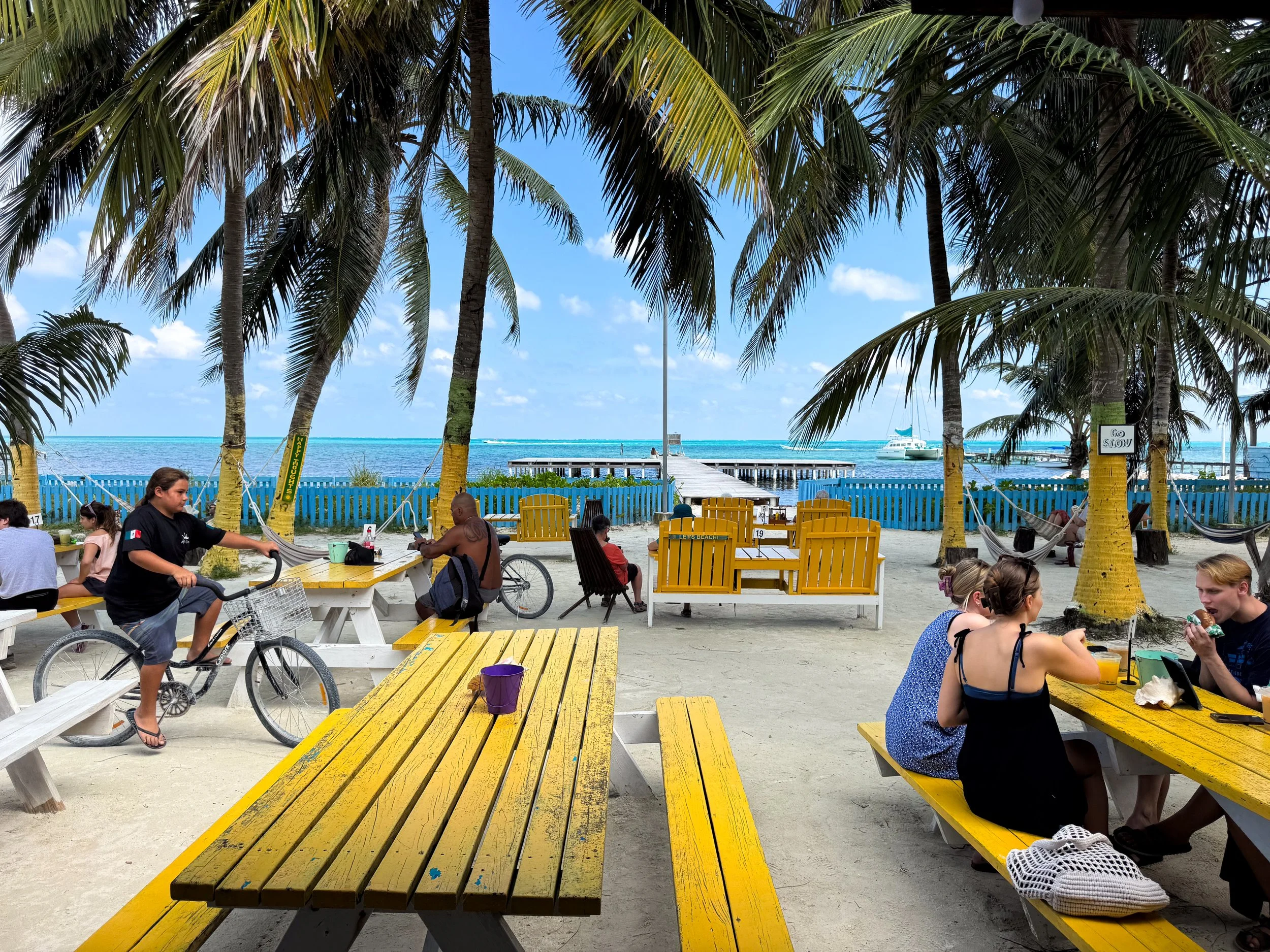
Ice n’ Beans. A coffee shop and cafe with breakfast sandwiches, fresh baked banana bread, rum balls and mini donuts. We quickly became regulars here during our week on the Caye, sitting at the yellow picnic tables under the palm trees with seaside views of the Caribbean.
Errolyn's House Of Fryjacks. A popular breakfast spot to try Belizean Fryjacks. Order any combination stuffed with refried beans, eggs, bacon, chicken, ham and cheese. Don’t forget to top it with house made green salsa!
Pelican Sunset Bar. The spot to watch the sunset, enjoy rum cocktails and feast on Caribbean seafood! We saw the sun set as leopard rays fluttered through the water, sipped on happy hour rum punches and ordered the island’s best conch fritters, whole fried red snapper and grilled lobster. Arrive an hour before the sunset to claim a table or sit along the dock with your feet dangling in the water.
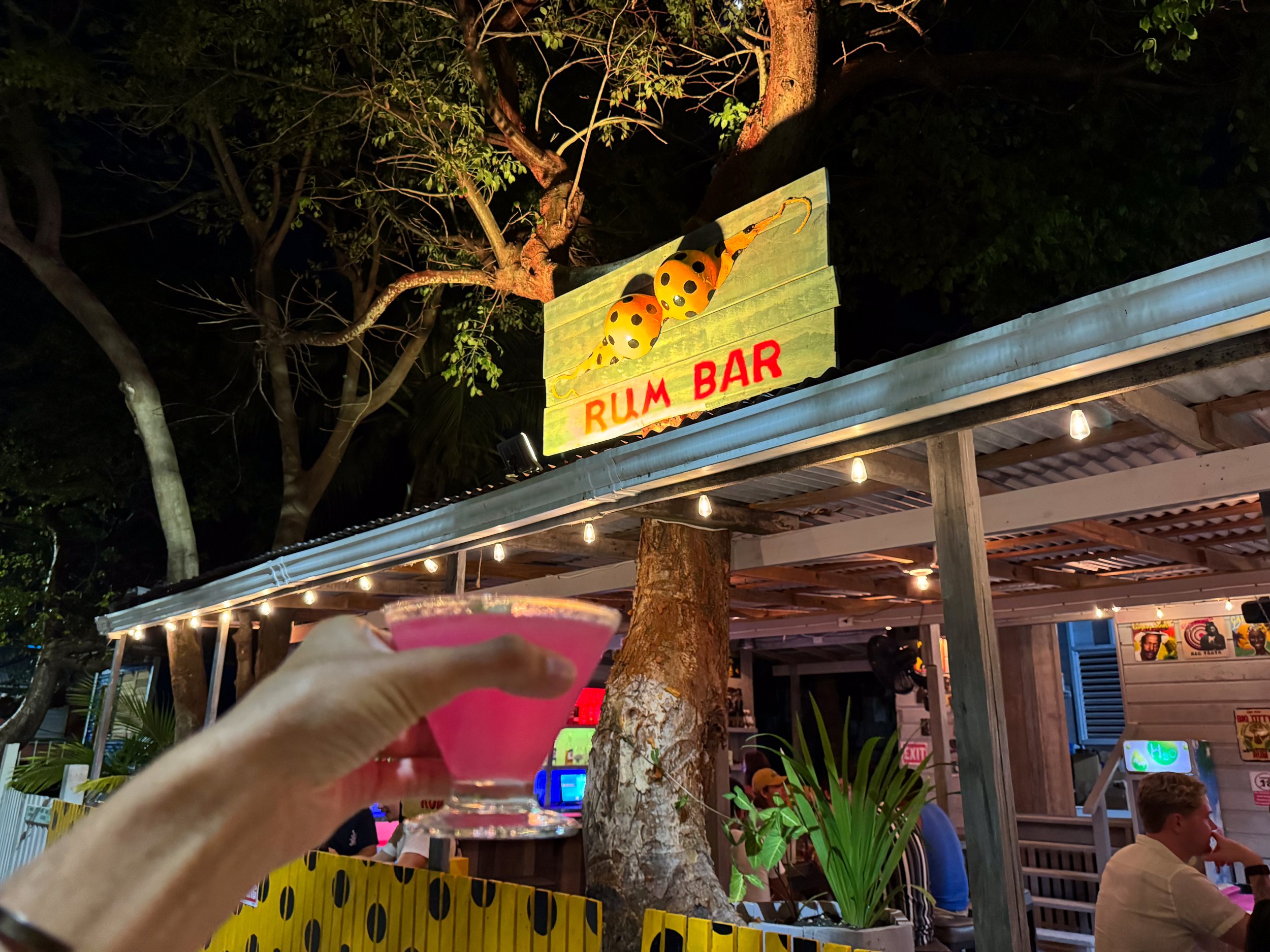
Big Titty Rum Bar. A rum bar with a variety of house made and infused rums. With friends, we ordered a spread of daiquiris from classic, habanero, tamarind and grapefruit coconut. We came back near nightly for a final drink or shot of rum.
Las Palapas. A higher end restaurant with surf and turf dishes and a full wine menu. It has a beachy and romantic vibe with a sand floor, wooden furniture and warmly lit chandeliers all under a thatched roof. We ordered the curry seafood and snapper filet. We came here for our friend’s engagement dinner and we were not disappointed by quality of the food nor the service.
Reina's. We were lured in on our first night in town by a street side barbecue with fresh lobsters, red snapper and shrimp sizzling on its grates. We sat on rickety wooden furniture inside the beach style shack with sand below our feet while sipping on a Belikin as our food grilled. The restaurant is first come first serve but is worth the wait. Arrive just after opening to get first pick of the day’s fresh catch.
Roy’s Blue Water Grill. One of the many seafood bar and grills on the Caye. We came here for dinner in hopes of tasting their well reviewed lionfish. Though they were sold out, we enjoyed fried cod fritters, snapper filets and coconut curry veggies.
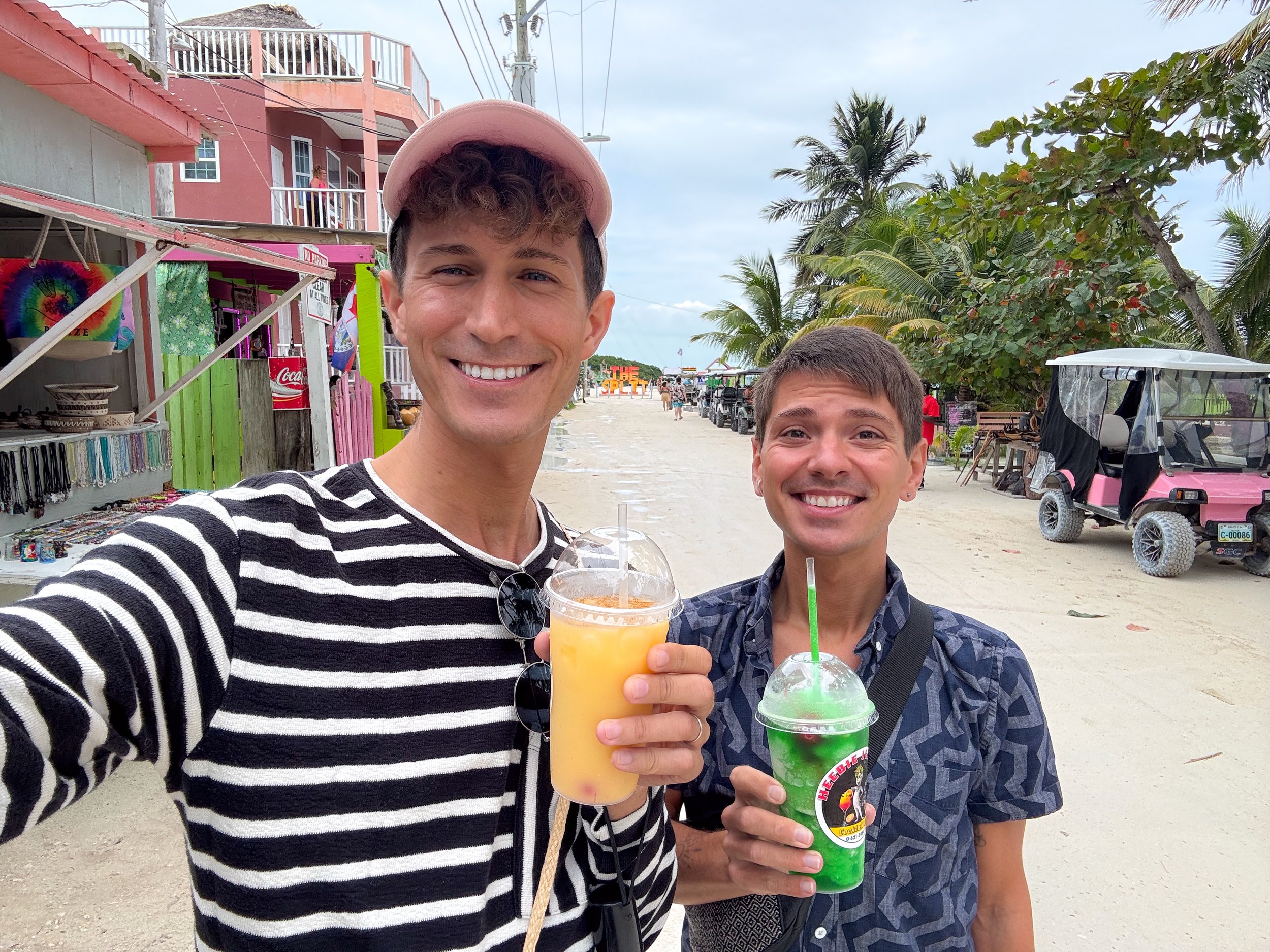
Hebbie Jeebies. A street side bar with a menu of tropical rum cocktails like the rum runner, painkiller, mojito, piña colada or island favorite, Lizard Juice, made with Caribbean rum, pineapple juice and neon green Curaçao. Cocktails are served frozen or on the rocks. For an extra cost, they can be served in a coconut or pineapple!
Nicco’s Ice Cream. An ice cream parlor with Belizean flavors like coconut, chocolate, tequila rose and sweet corn.
Belize Chocolate Company. A chocolate shop with Belizean chocolates including artisan truffles, brownies, cookies, chocolate bars, hot chocolate and cocoa nib tea.
Caye Caulker Bakery. A bakery famed across the Caye for their cinnamon rolls. We stopped in on our last day for two of the spiraled and glazed cinnamon pastries.
Belizean Rums & Beers
Belizean rums and beers are popular across the country and often very affordable compared to anything imported. The most popular Belizean rum is Caribbean Rum. It’s available in clear, amber and coconut flavored varieties, all perfect for mixing in cocktails. The two most popular Belizean beers are Belikin and Land Shark.
Belikin. Belize’s national beer, bearing the country’s most famed Mayan ruin, Caracol, embossed on its bottle. Its flavor is light but very bready.
Land Shark. A very easy drinking light beer with a slightly citric flavor.
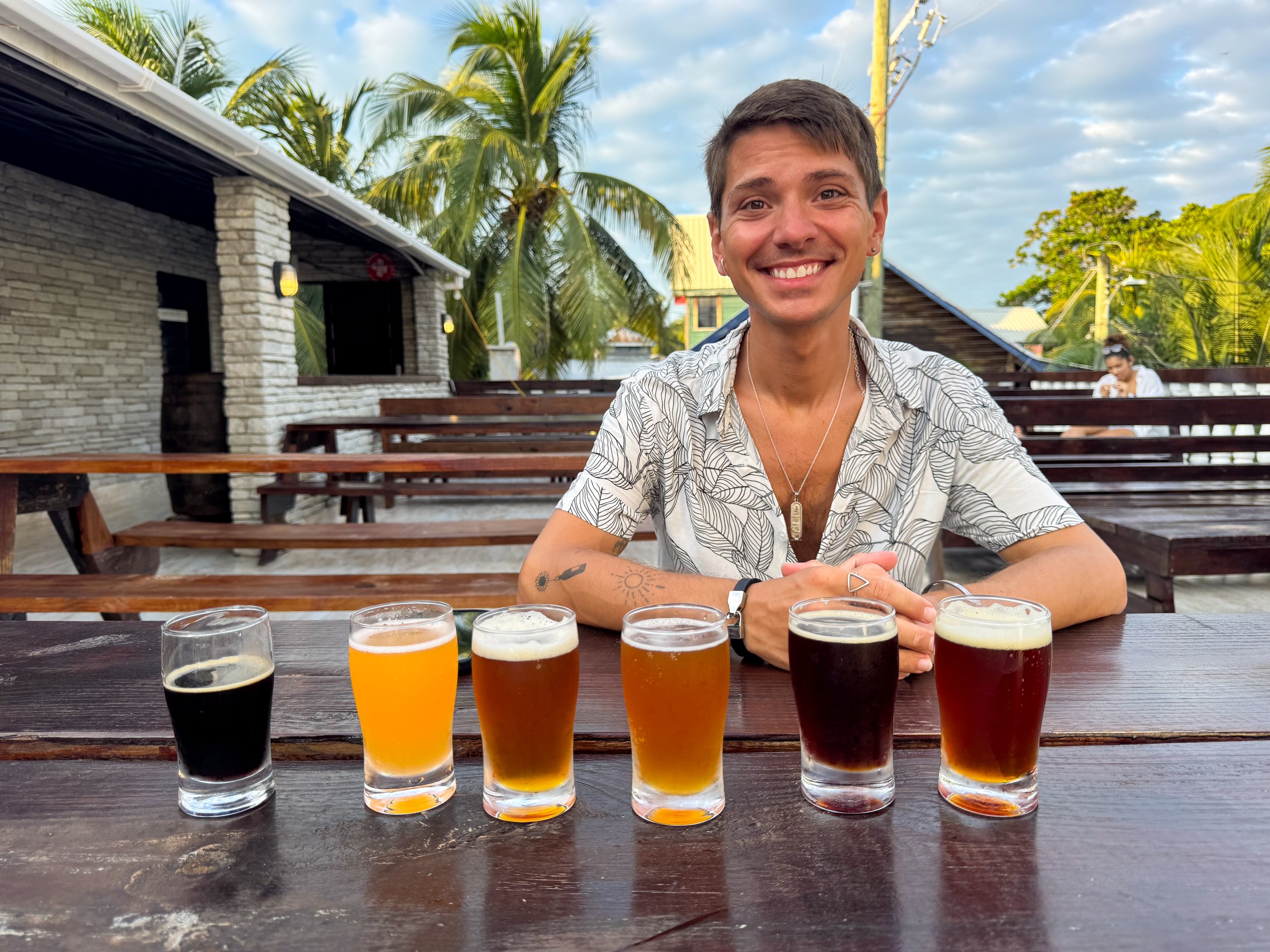
Caribbean Fusion Brewing Company. The island’s only brewery with brews influenced by the flavors of the island. We visited their second floor taproom and ordered a flight:
Tropical Seltzer. The house spiked seltzer made in a variety of tropical flavors like lime, fruit punch and pineapple.
Pale Ale. A classic beer with a rye forward flavor.
Belgian Ale 1. An ale with a slightly sour flavor close in flavor to a hefeweizen.
Belgian Ale 2. An ale with a darker color and molasses flavor.
IPA. An IPA with a very lightly hopped flavor and sweet finish.
Stout. A coconut flavored stout made with coconut water.
Where to Stay
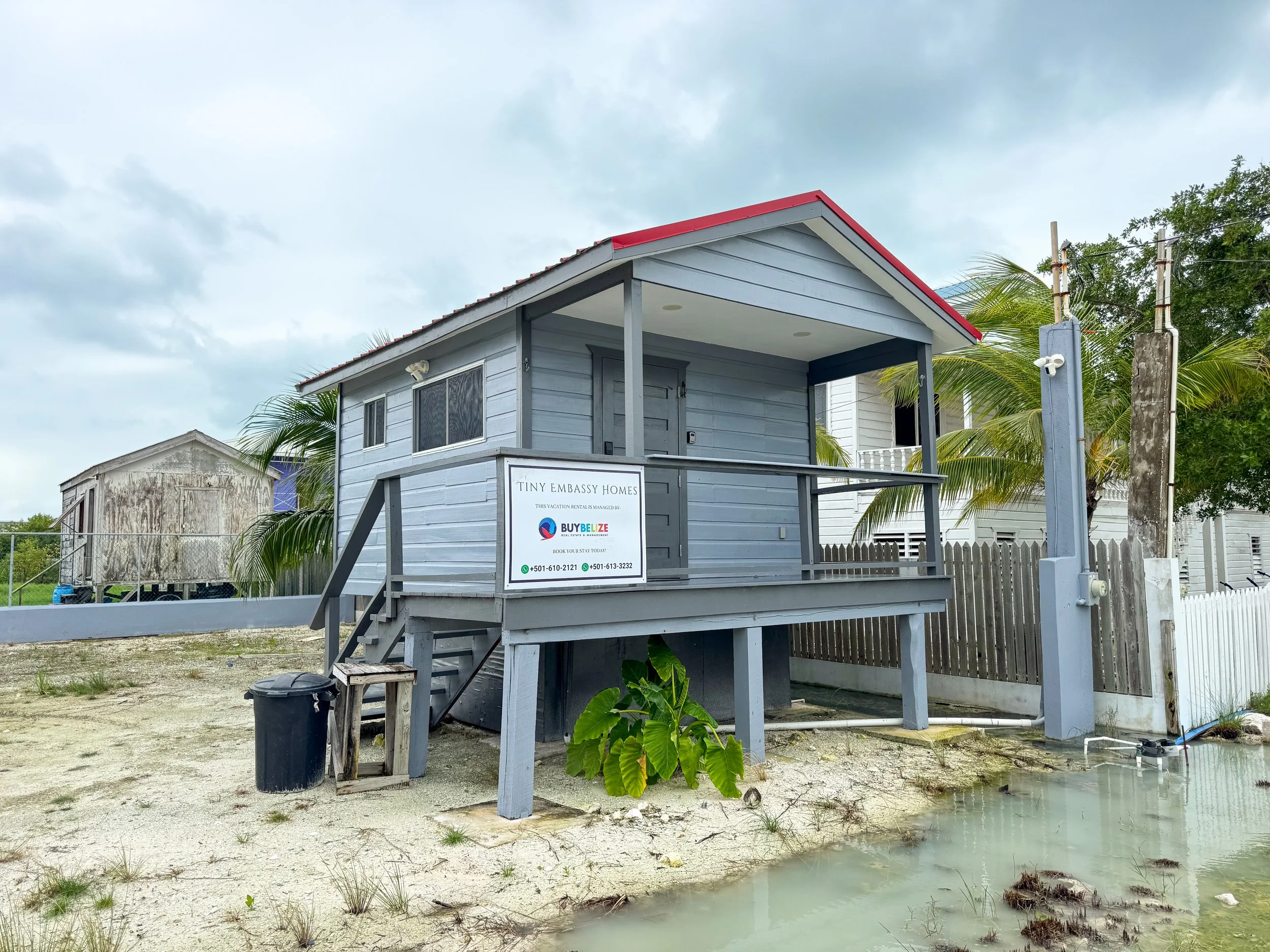
Rik's Getaway Cabin. We stayed at the most perfectly appointed tiny house on the south side of Caye Caulker in a very local area of the island. Perched on stilts, the tiny house included a full kitchen, queen sized bed, spacious bathroom with washer & dryer, board games, a tv and an outdoor deck with a ledge for dining. Book on Airbnb.
The Treetops Hotel. A boutique hotel with spacious apartment style rooms equipped with full kitchens. The property has its own private beach, a rooftop patio, outdoor pool and free bike rentals. We visited our friends staying here to cook together, lounge on the beach and sip on rooftop cocktails.
Getting Here
The only way to reach Caye Caulker is by ferry or airplane. Ferries and flights operate between Caye Caulker, San Pedro, Belize City and Chetumal, Mexico.
San Pedro Belize Express. Ferries depart daily at frequent times between 6am and 5pm. We booked tickets online arriving in Caye Caulker from Chetumal, Mexico with a stop in San Pedro for customs. We departed from Caye Caulker, arriving in Belize City where the ferry operator shuttled us to the international airport.
Pro Tip. Don’t worry about missing your scheduled ferry time. As long as tickets remain unused, they’re valid for up to three months at any time slot.
Maya Island Air & Tropic Air. The two main airlines with a fleet of puddle jumpers operating flights between Belize City, Caye Caulker, San Pedro and The Blue Hole. Flights are often fast and scenic but expensive.
Getting Around
There are very few cars on the island. Golf carts and bikes are the main form of transportation on the island; however, it’s also easily walkable.
On Foot. It takes 30 minutes on foot to travel between the caye’s furthest points, the airport and “The Split.” Wear flip flops or sandals to walk through large puddles and pools of water after rain.
By Bike. Bikes are an easy way to get around the island. Most hotels offer free bikes, though there are some rentals in town for around $10 USD per day.
By Taxi (Golf Cart). It takes 10 minutes by golf cart to travel between the island’s furthest points, the airport and “The Split.” Taxis only cost a few USD and are commonly available.
Location Specifics
Currency. The Belizean Dollar and US Dollar are used interchangeably across the island. At the time, the exchange rate was 1 USD to 2 BZD, making conversions and transactions easy.
Cash vs Card. About half of the island is cash only, especially at smaller restaurants, bars and cafes.
Language. English is the most commonly spoken language. Spanish and Creole are frequently spoken between locals.
Drinking Water. Tap water is not safe for consumption due to risk of contamination. Only drink filtered or bottled water.
Happy Hours. Most bars have happy hour from 4-7pm, perfect timing after returning from a tour.
Dinner Hours. Most restaurants and kitchens close between 9-10pm nightly.
Toilets. Like most places in Central America, the plumbing is not the greatest. Used toilet paper is not flushed but put in a bin next to the toilet.
Reef Safe Sunblock. Only use reef safe sunblock on the island or in the water to avoid harming the corals and marine life.
Safety. Caye Caulker is extremely safe! The locals are some of the friendliest and most down to earth people we have ever met.
Drugs. Locals commonly offer and sell drugs on the streets. They’re not pushy about it. Simply tell them no thank you if not interested.
Elsewhere in Belize
From snorkeling the Belize Barrier Reef to exploring ancient Maya cities hidden beneath the jungle canopy, discover another side of Belize beyond island life.
Maya Ruins Travel Guide: Jungles, Temples & Ancient Cities. Journey through ancient Maya cities, temples and archaeological wonders across Belize and Guatemala while exploring dramatic jungle landscapes.
For Next Time…
This was our second trip to Belize and we’re already dreaming of returning to this beautiful country to experience more of its culture, nature and history! When we return, we plan to visit some of the coastal cities and Mayan ruins.
Hopkins. A seaside village home to the Garifuna, the indigenous and Afro-Caribbean people of Belize with a rich culture.
Placencia Peninsula. A fishing village and beach town with white sand beaches.
Altun Ha. A Mayan acropolis with pyramids, temples, ball courts and platforms on the mainland north of Belize City.
Lamanai. The ruins of a Mayan temple only accessible by boating deep into the jungle.
Antigua Guatemala Travel Guide: Acatenango, Colonial Charm & Local Cuisine
Explore Antigua Guatemala's cobblestone streets, colonial architecture and local cuisine beneath towering volcanoes, including the iconic hike to Acatenango and Fuego.
Antigua, Guatemala
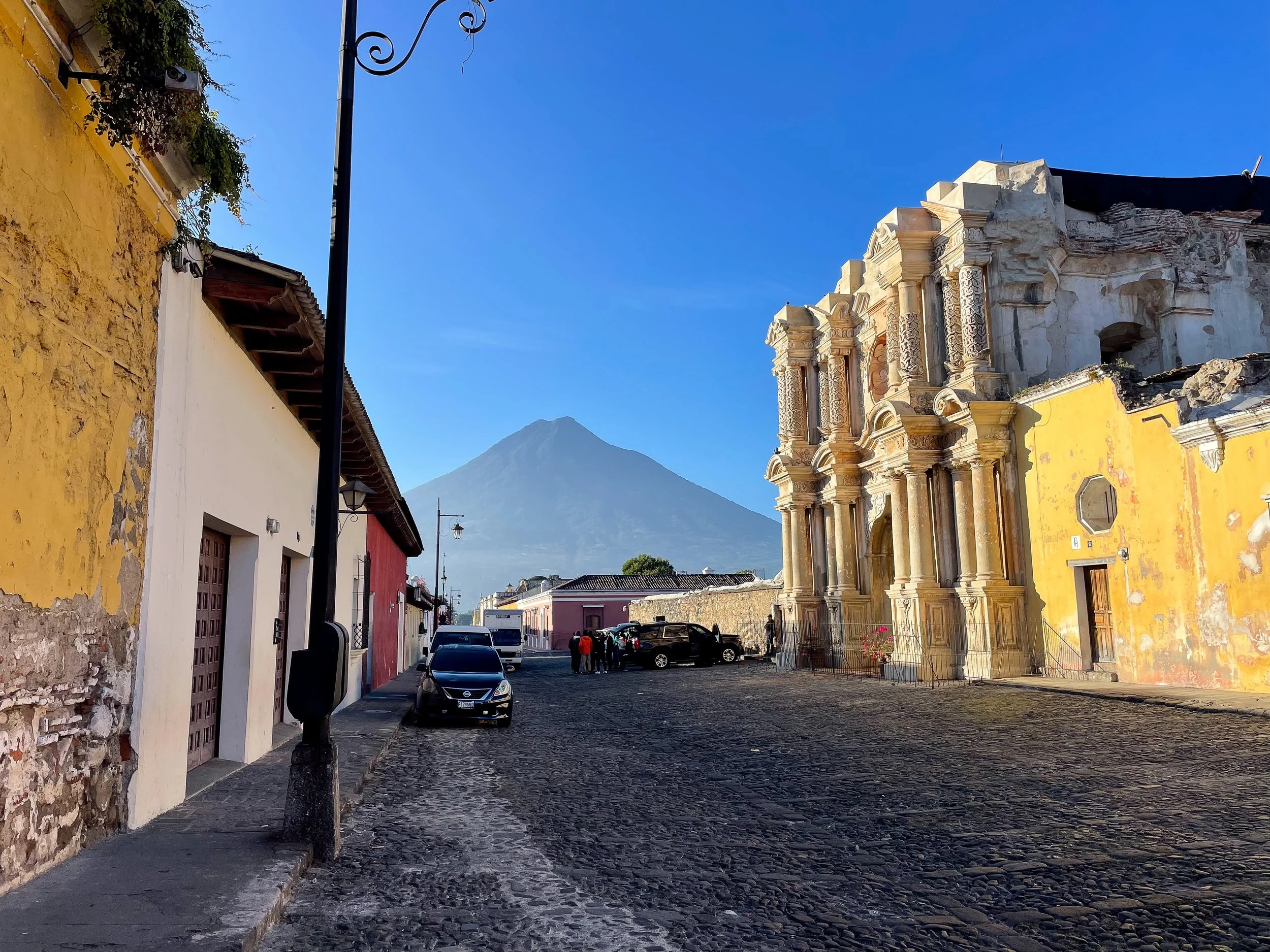
Antigua is a picturesque and historic city with colonial era streets, a lively cultural scene and views of imposing volcanoes. The city’s charm invites travelers to admire its Spanish colonial architecture and explore the remains of crumbling ruins. The bustling food scene and cafe culture make Antigua a wonderful place to taste traditional Guatemalan dishes and coffee. Vendors at artisan markets sell handmade crafts, colorful textiles and vibrant ceramics. Backpackers stay at local hostels and study at Spanish language schools. Overnight hikes lead to the summit of nearby volcanoes including the explosive Volcán de Fuego.
A Colonial Gem
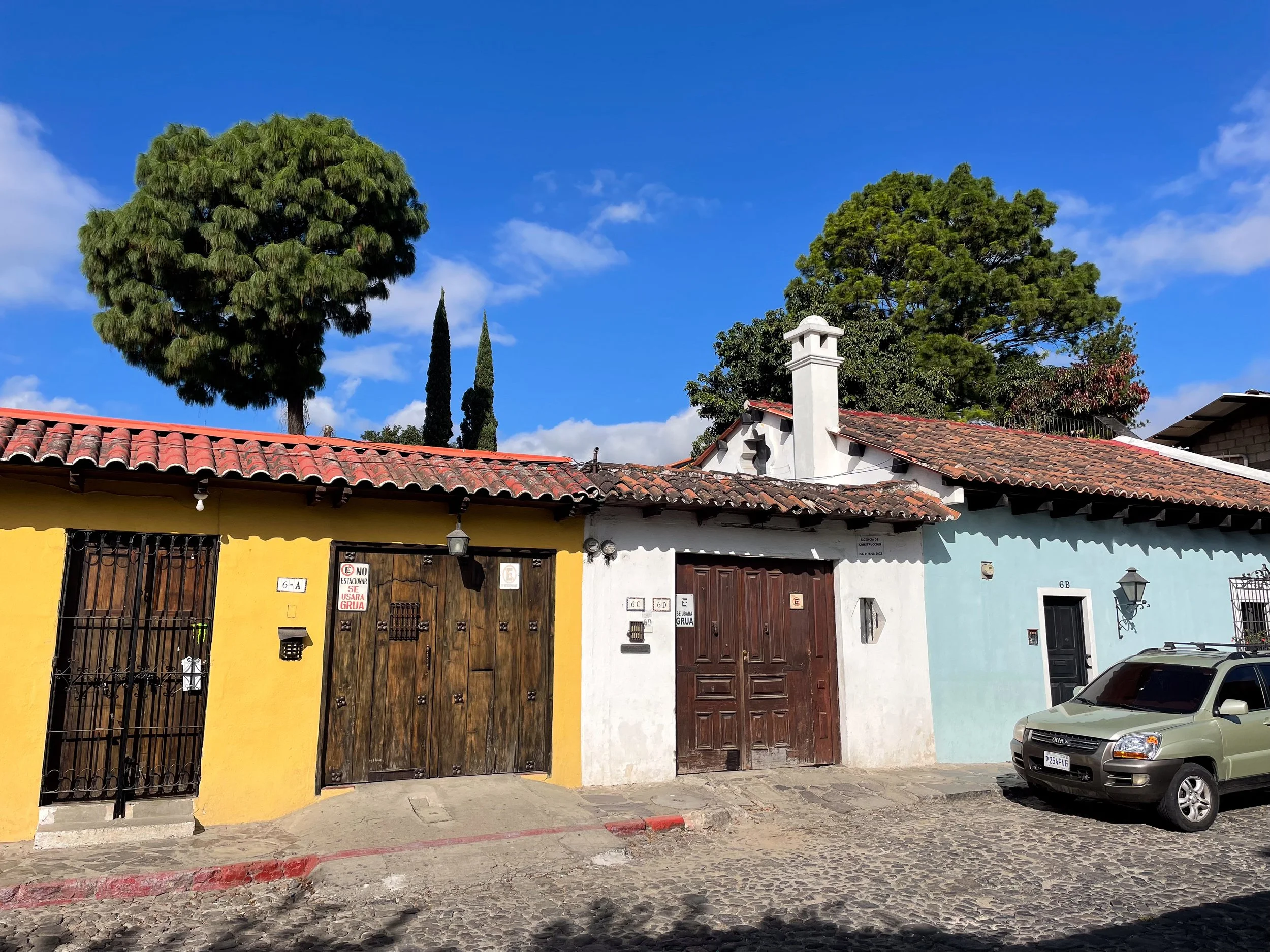
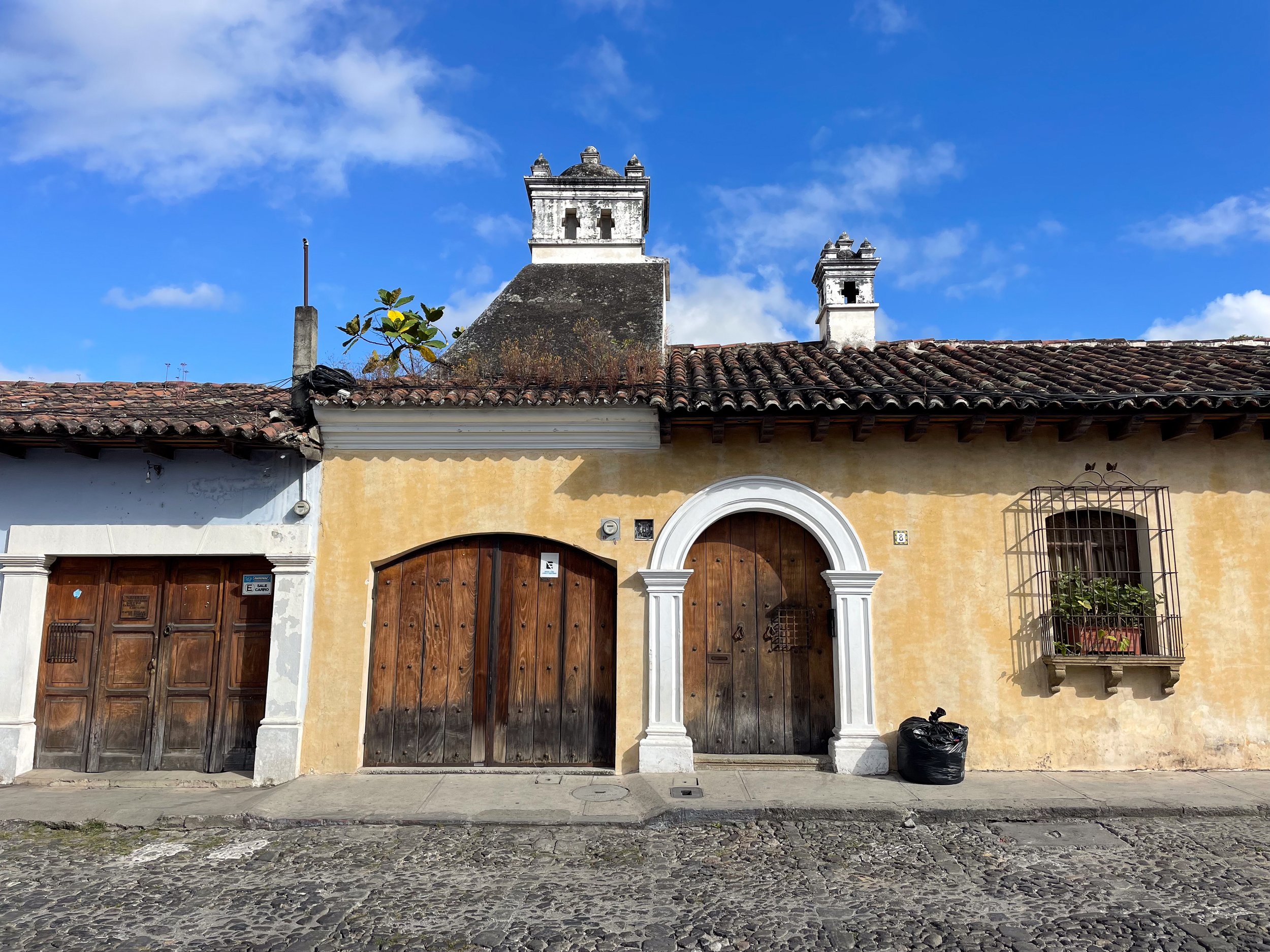
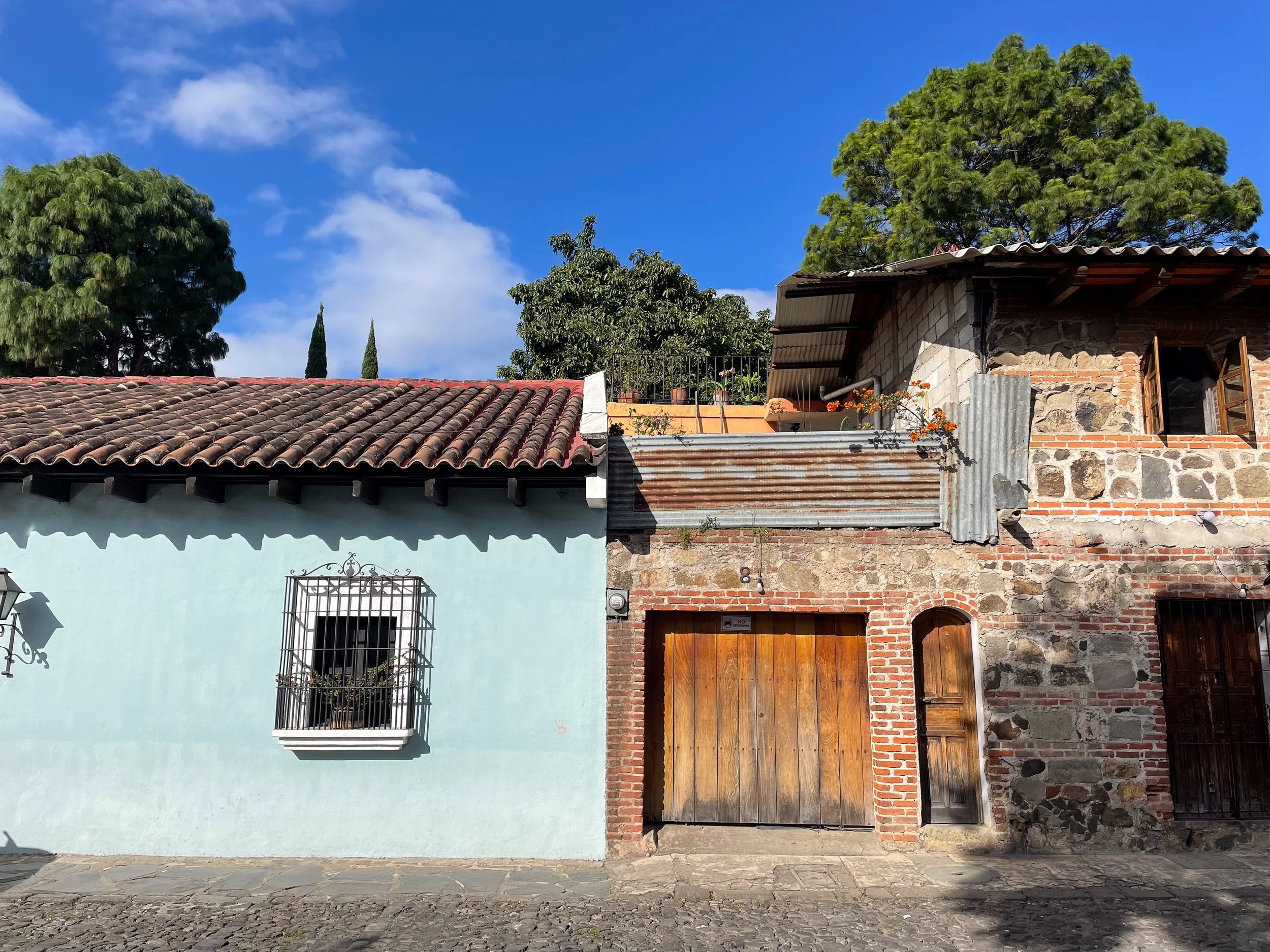
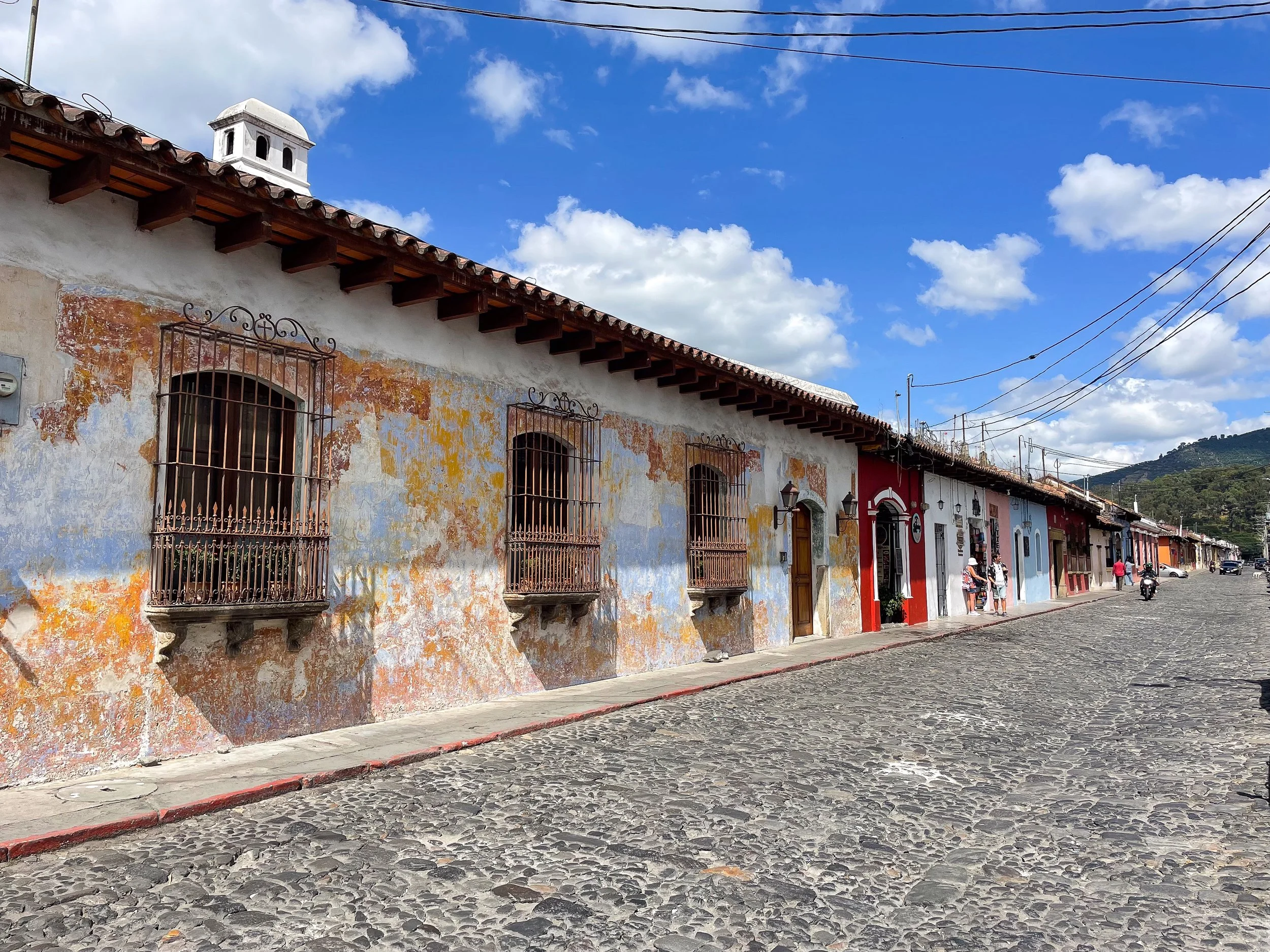
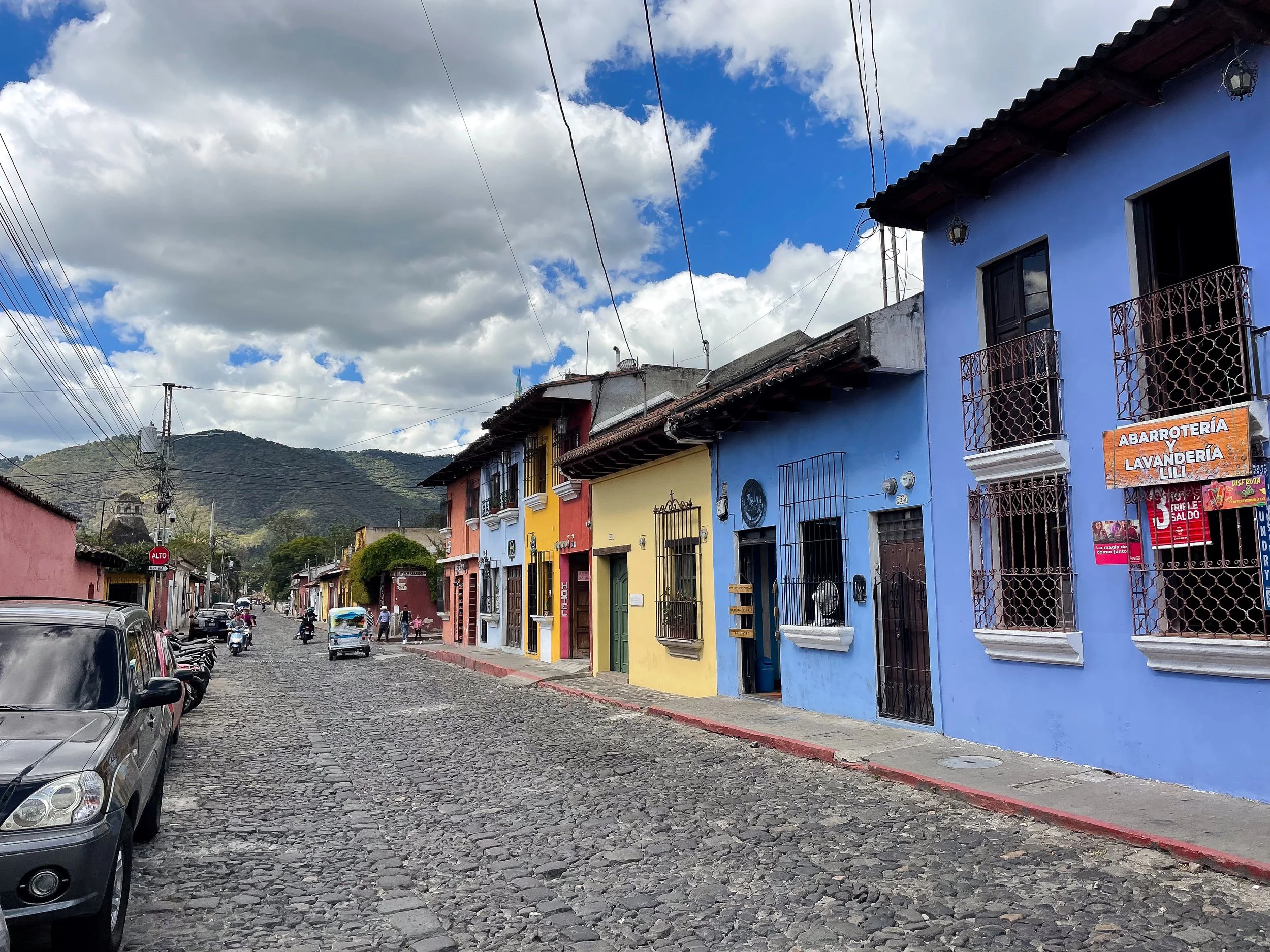
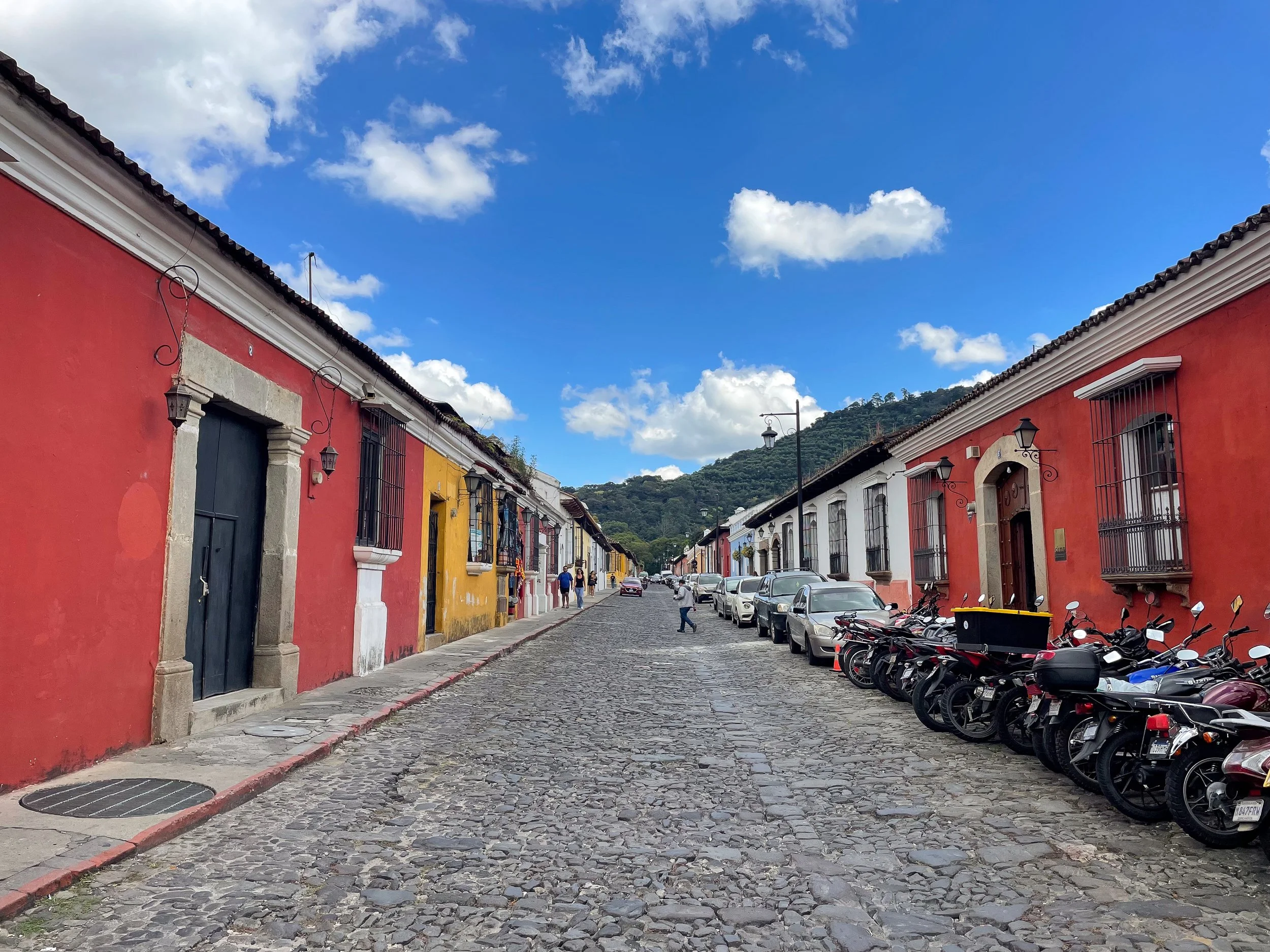
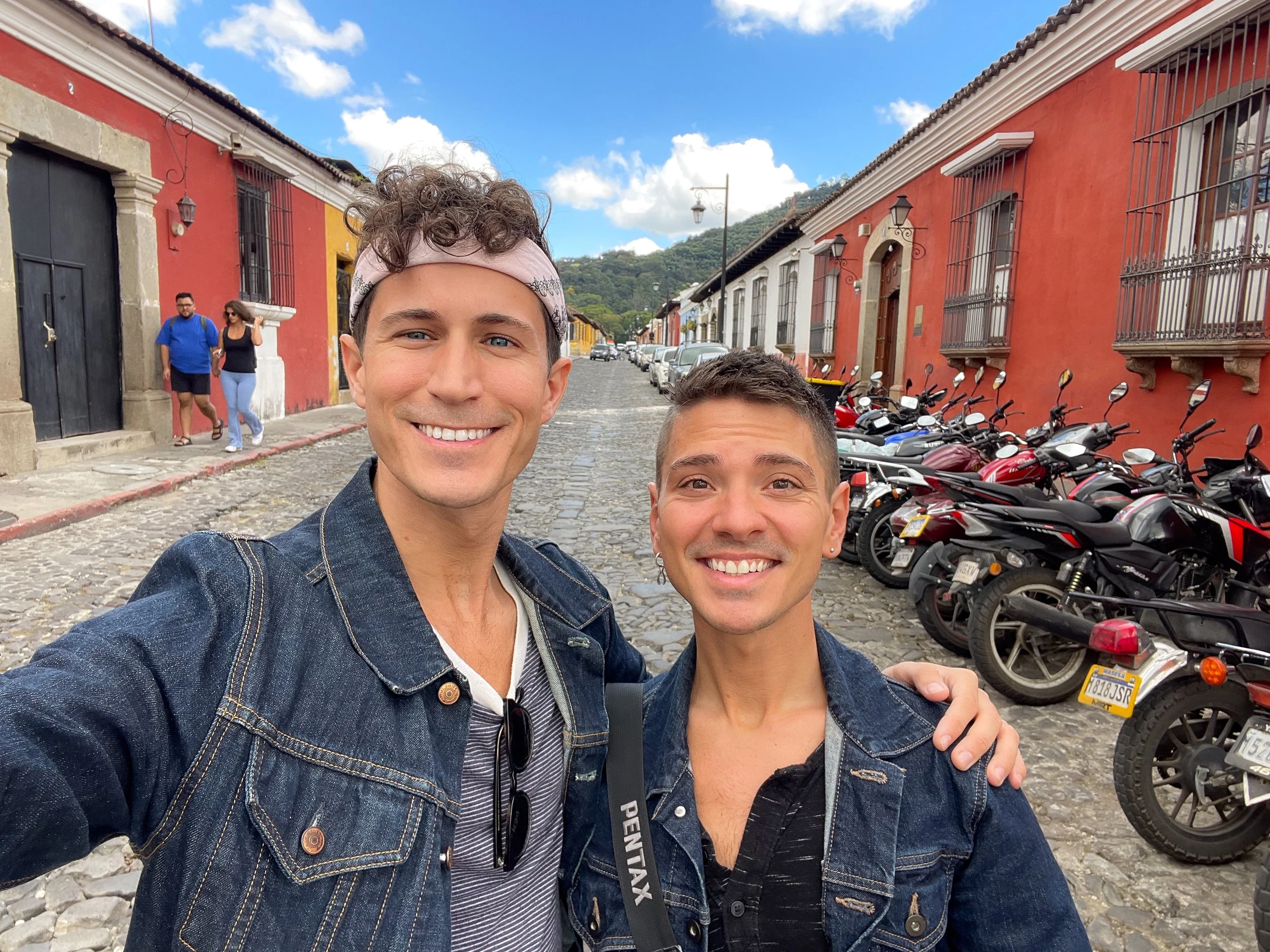
Dating back nearly 500 years, Antigua is the Spanish colonial gem of Guatemala. Landmark sights, museums, ornate cathedrals and crumbling ruins built of stone, brick and plaster line Antigua’s grid of cobblestone streets. Warmly painted facades ranging in tones of red, ochre, yellow and cream alternate from building to building. Carved wooden doors often lead to lush shaded courtyards occupied by restaurants and cafes. Popular terraces boast views overlooking the clay tiled roofs, cathedral spires and imposing volcanoes.
Colonial Sights
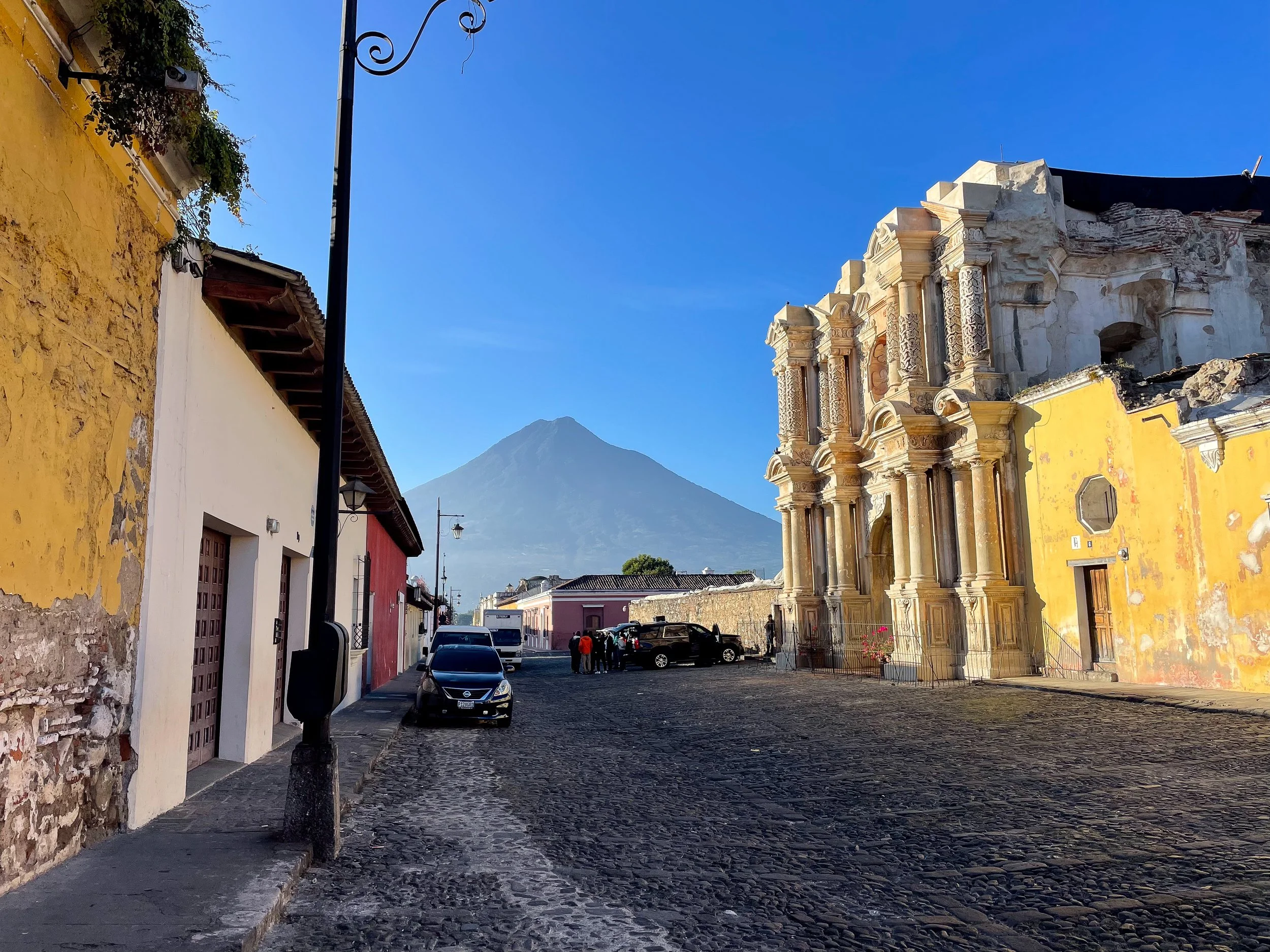
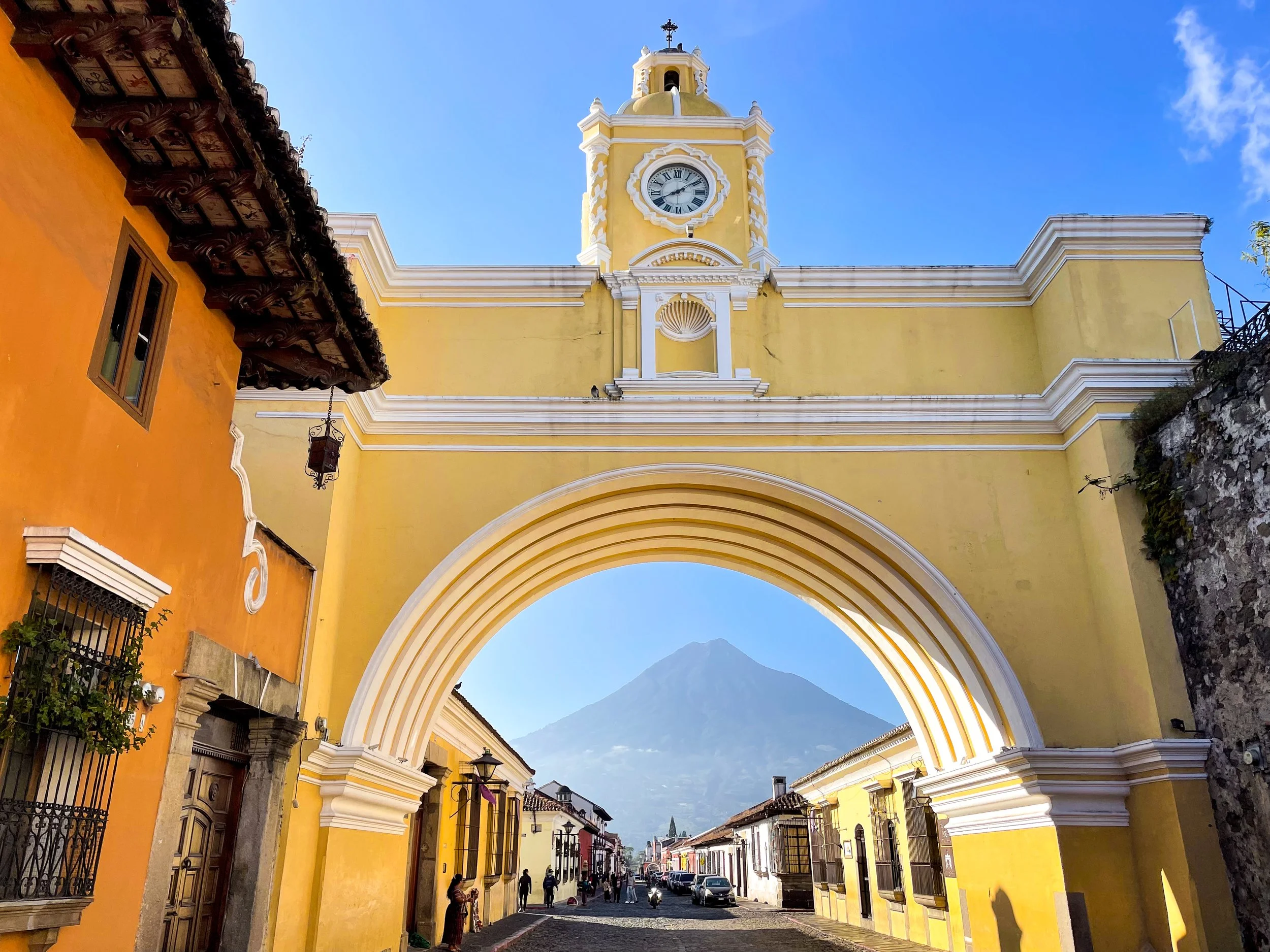
Santa Catalina Arch. A famous yellow arch and clock tower stretching over the cobblestone street and framing Volcán de Agua. Come just after sunrise for the best view without groups of people.
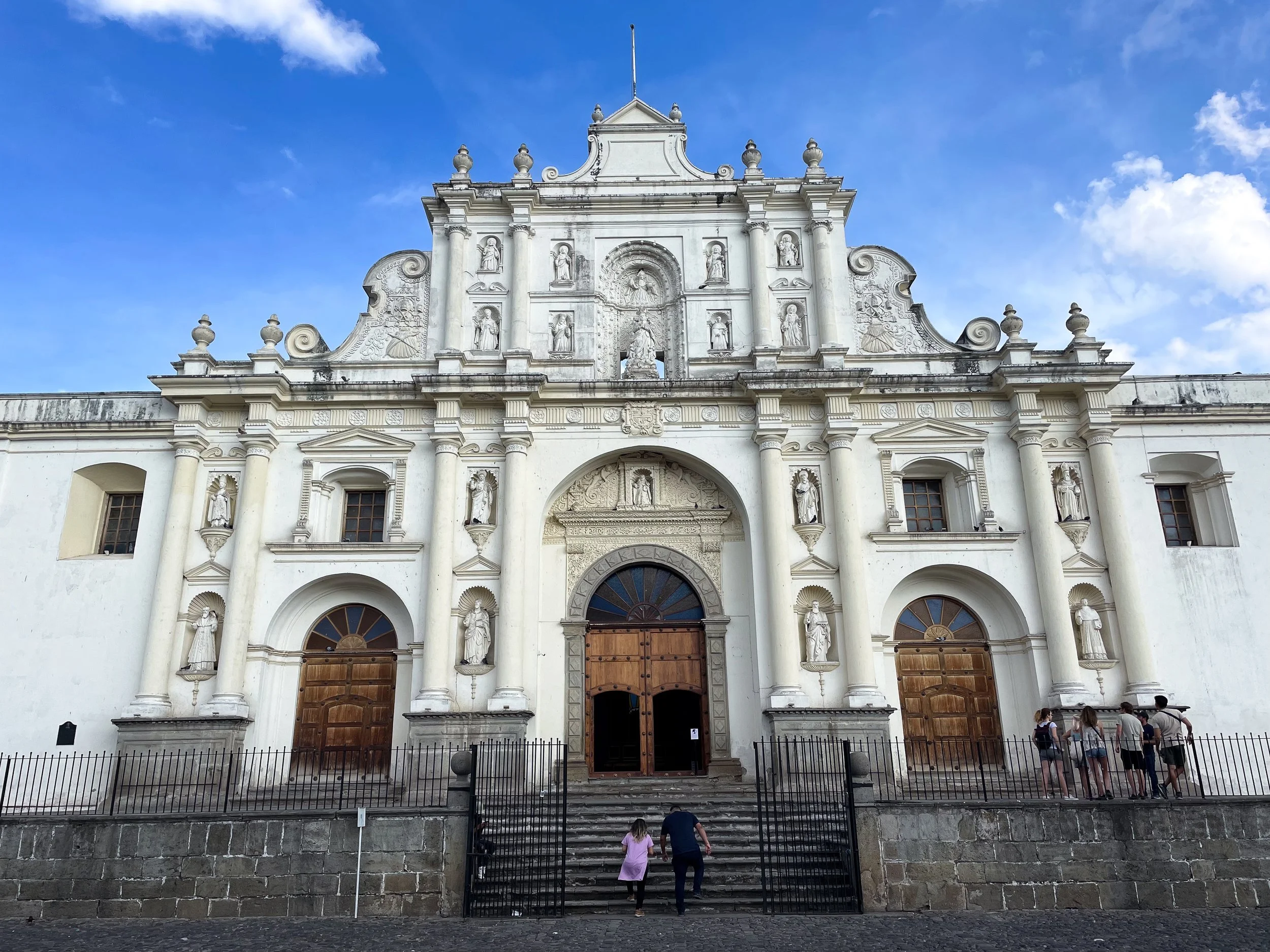
Catedral de San José. A cathedral built into the ruins of Catedral de Santiago. Its grand white facade with intricate plaster work, niches containing statues and large wooden doors spans the eastern width of Parque Central.
Parque Central. A park and plaza at the center of Antigua with benches, trees, gardens and a mermaid fountain with water spraying from her breasts. Locals come to relax with their families, vendors sell ice cream cones, guides offer walking tours and shoeshiners polish boots. It’s surrounded by restaurants, cafes, shops and colonial landmarks.
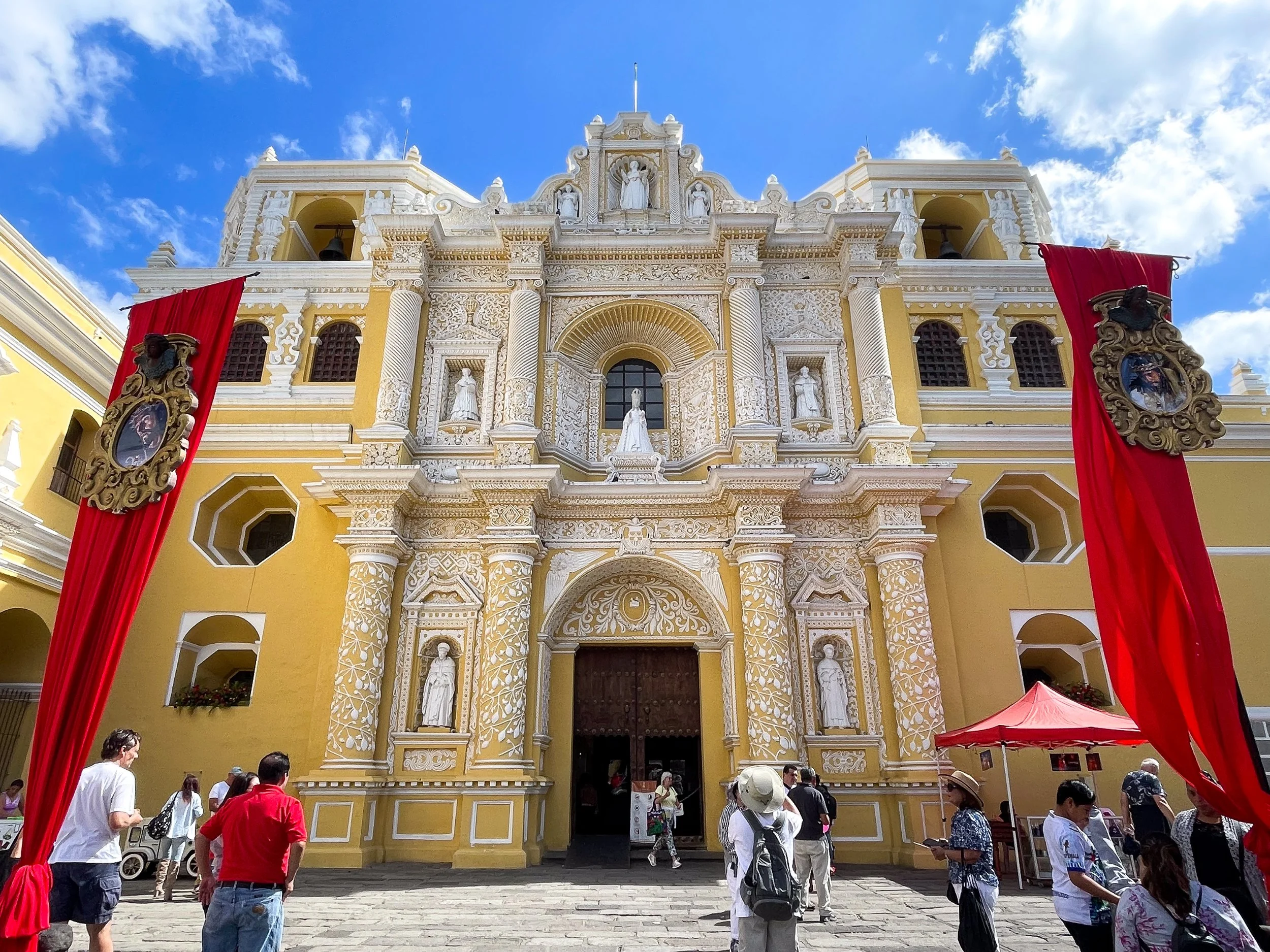
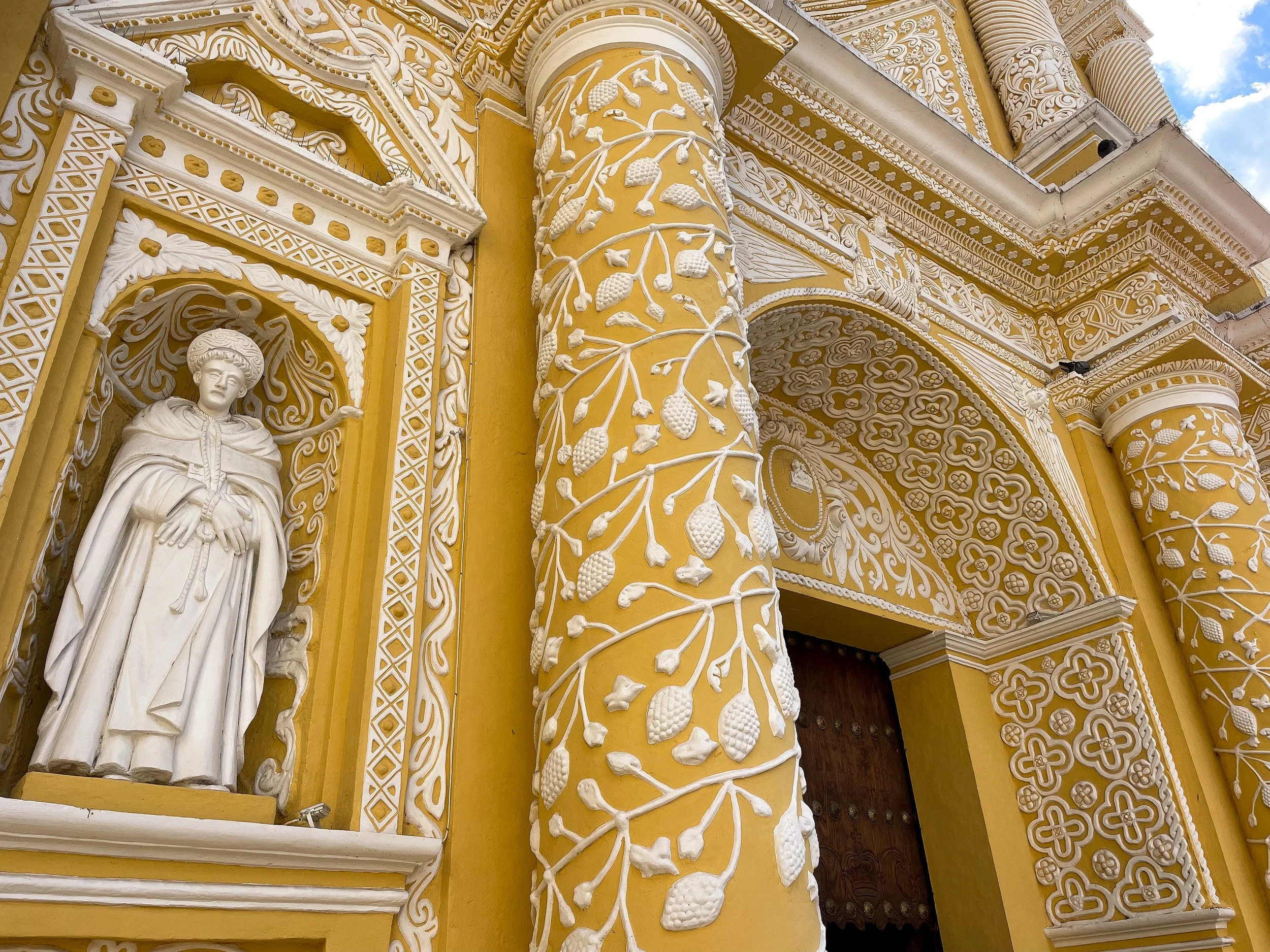
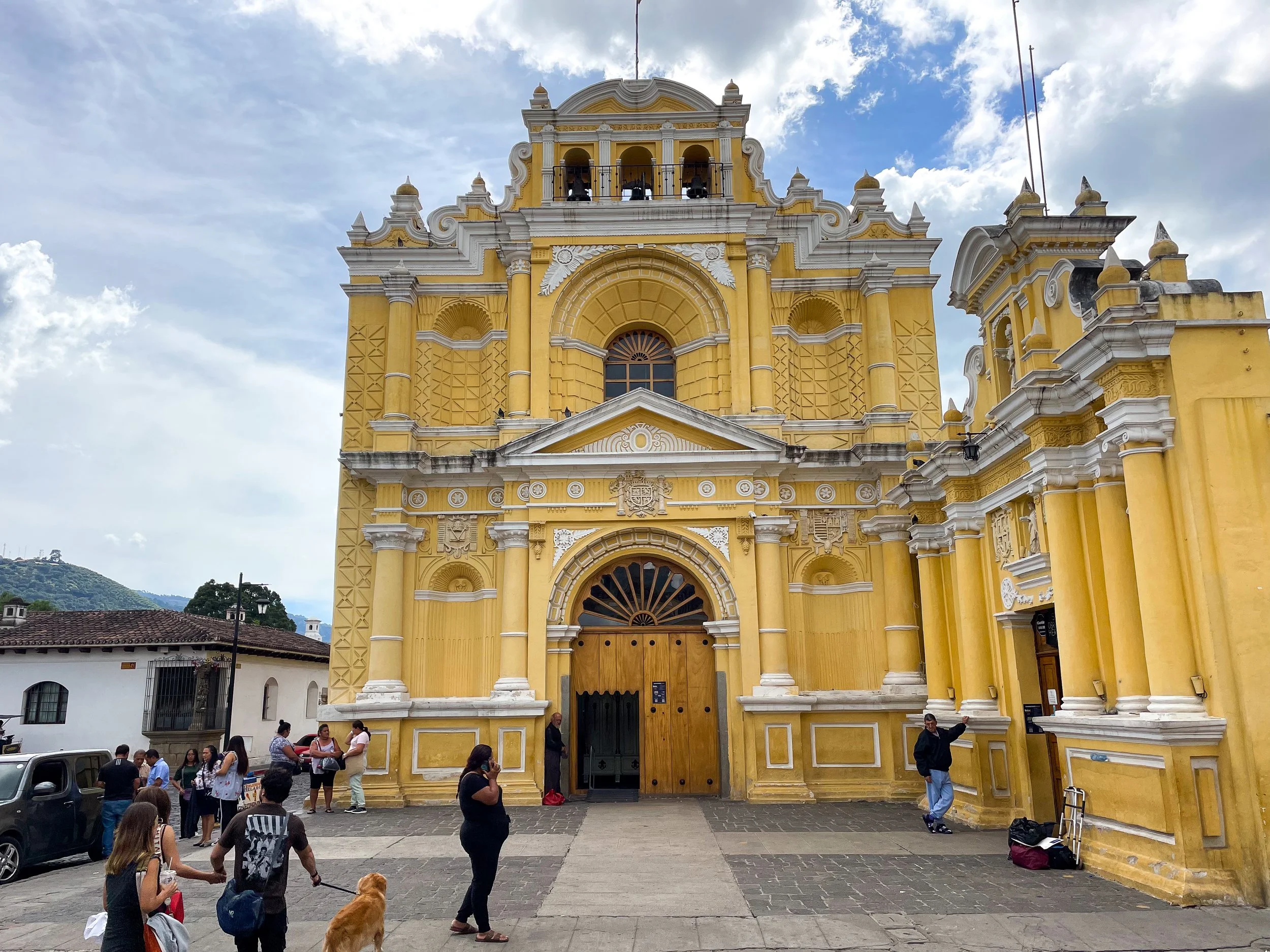
La Iglesia de Merced. A baroque style church with a yellow facade decorated in finely detailed white stucco ornamentation of grape vines and bunches. La Merced remains one of the few undamaged churches to survive from the centuries of earthquakes.
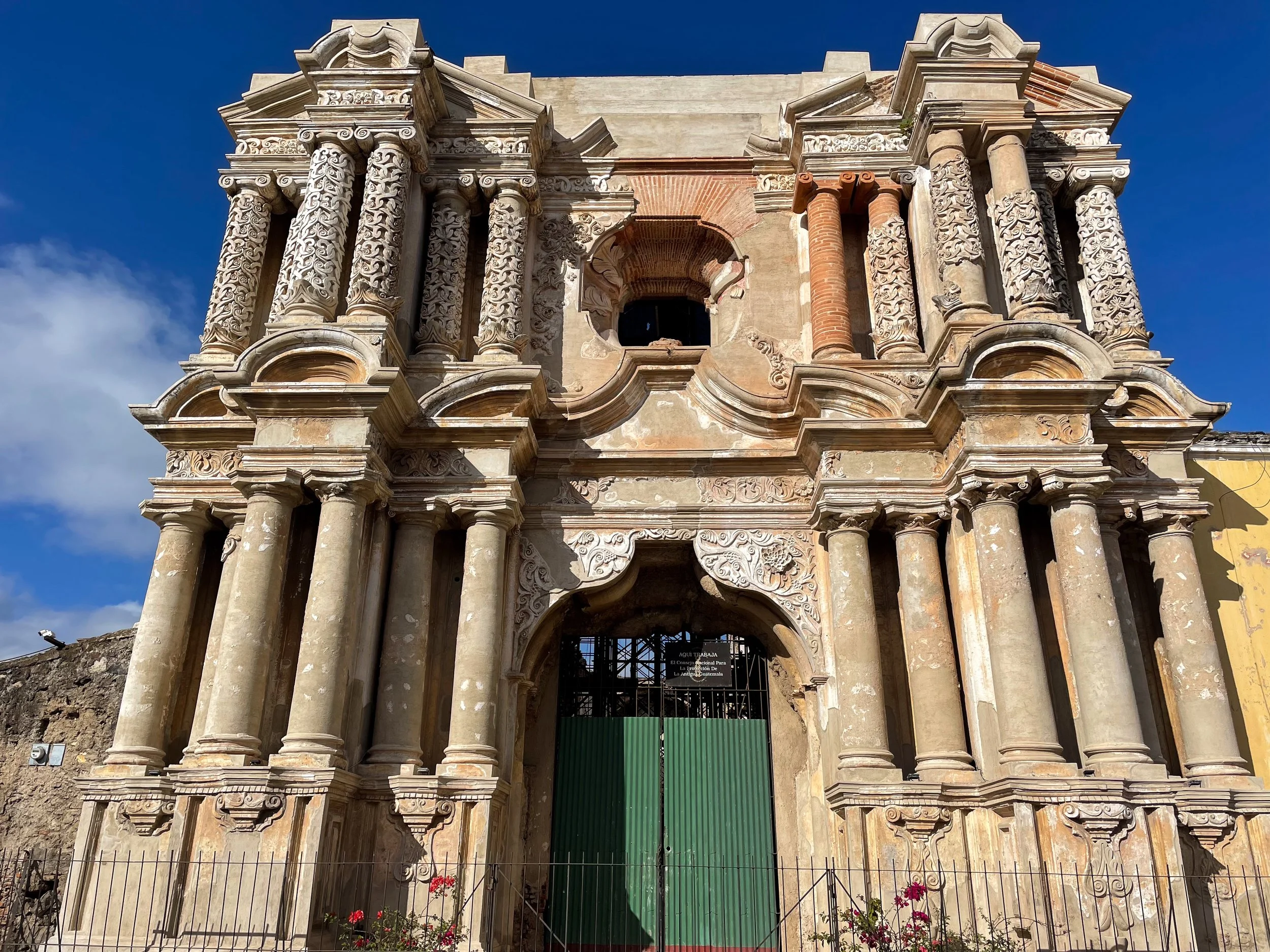
Iglesia del Carmen. The crumbling ruins of a church held together by supports and scaffolding. It’s inaccessible but can be admired from out front of its baroque facade.
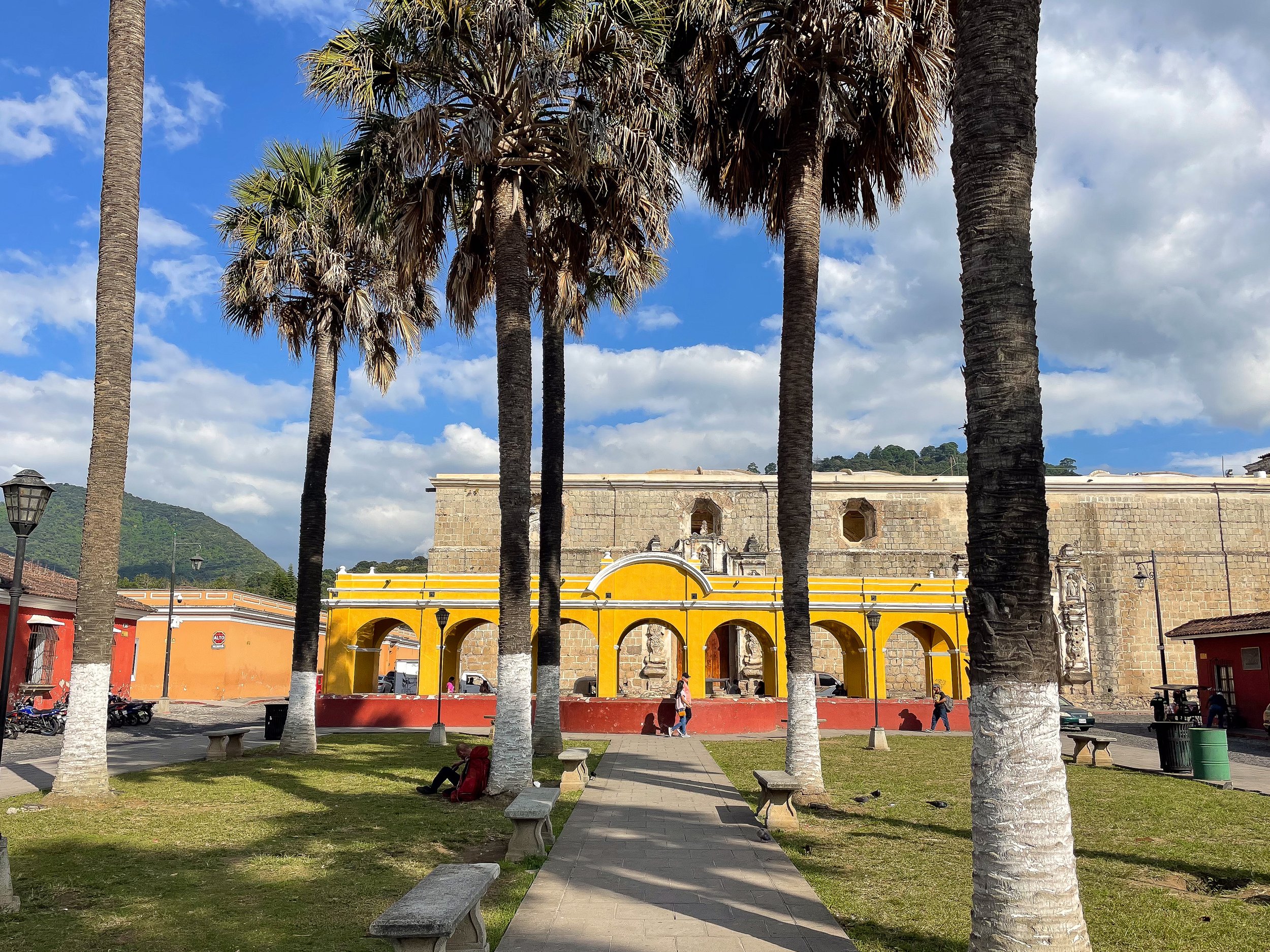
Tanque la Unión. A yellow arched pavilion and former colonial laundry well turned into a public fountain and park.
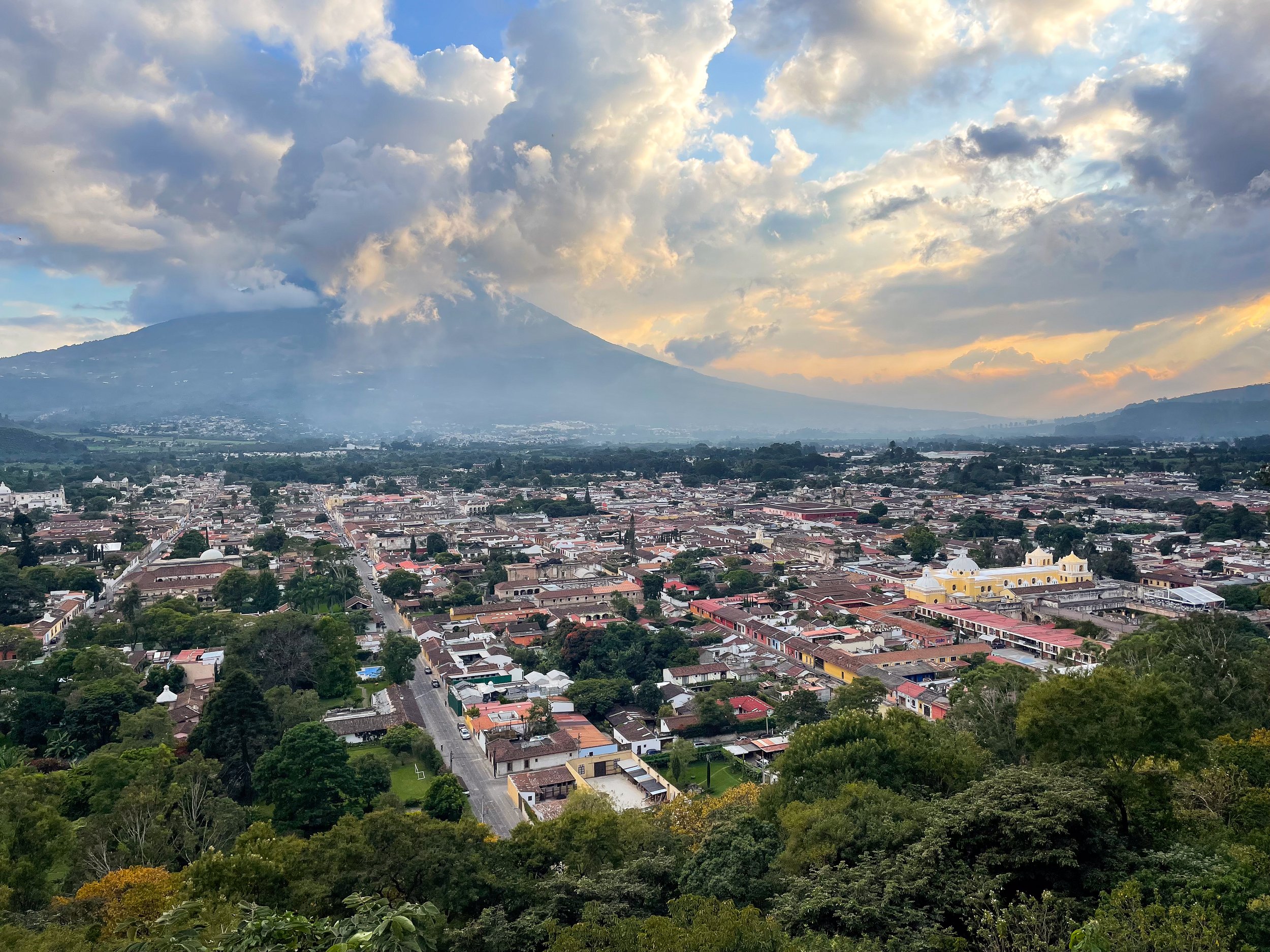
Cerro de la Cruz. A hilltop hike to a viewpoint overlooking Antigua, the volcanoes, mountains and valley. It’s popular at sunset or the early morning. The hike takes 10-15 minutes from the entrance guarded by police.
Crumbling Ruins
Antigua is an architectural and archeological playground with ruins of colonial buildings and churches destroyed during centuries of earthquakes.
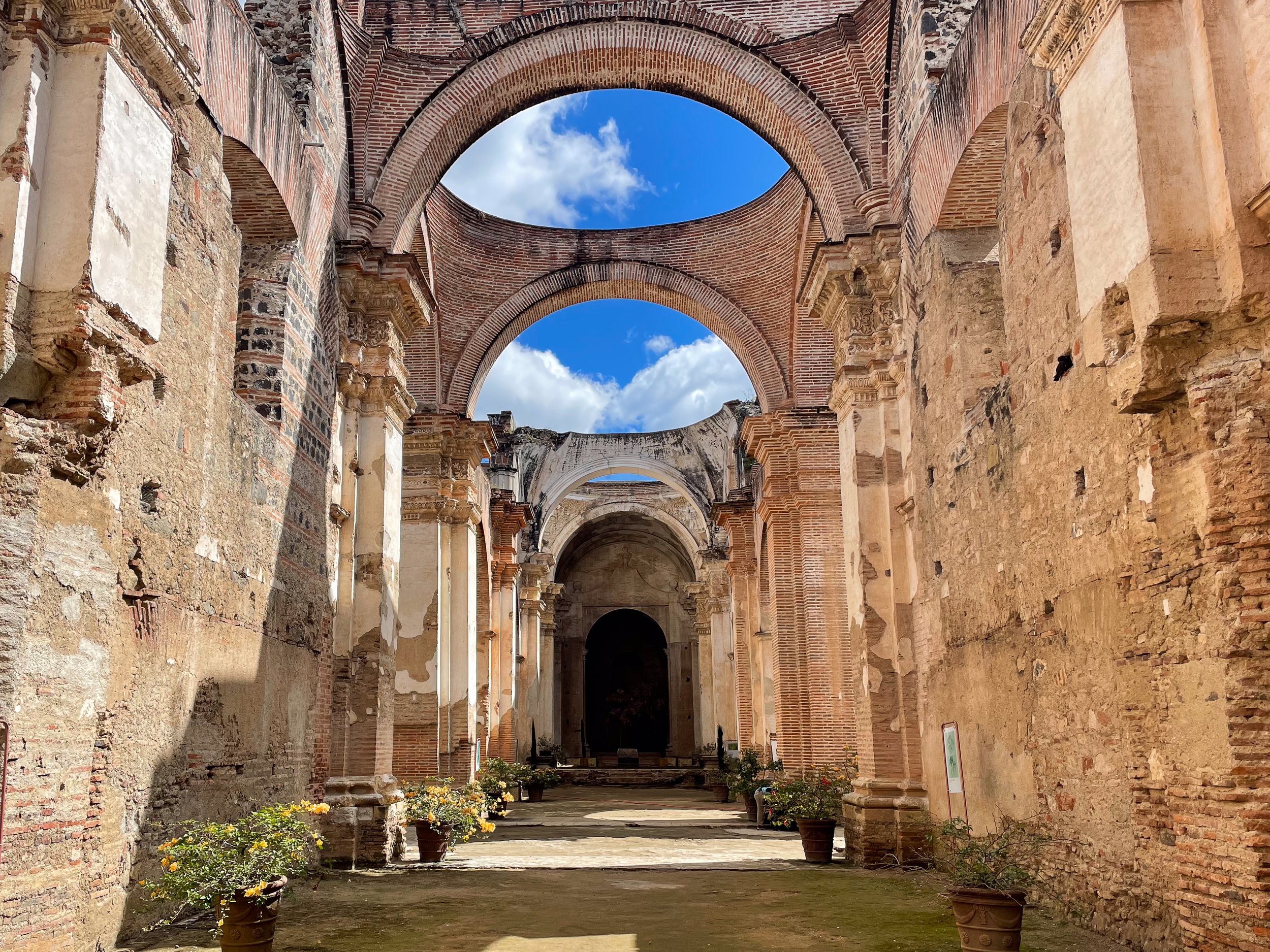
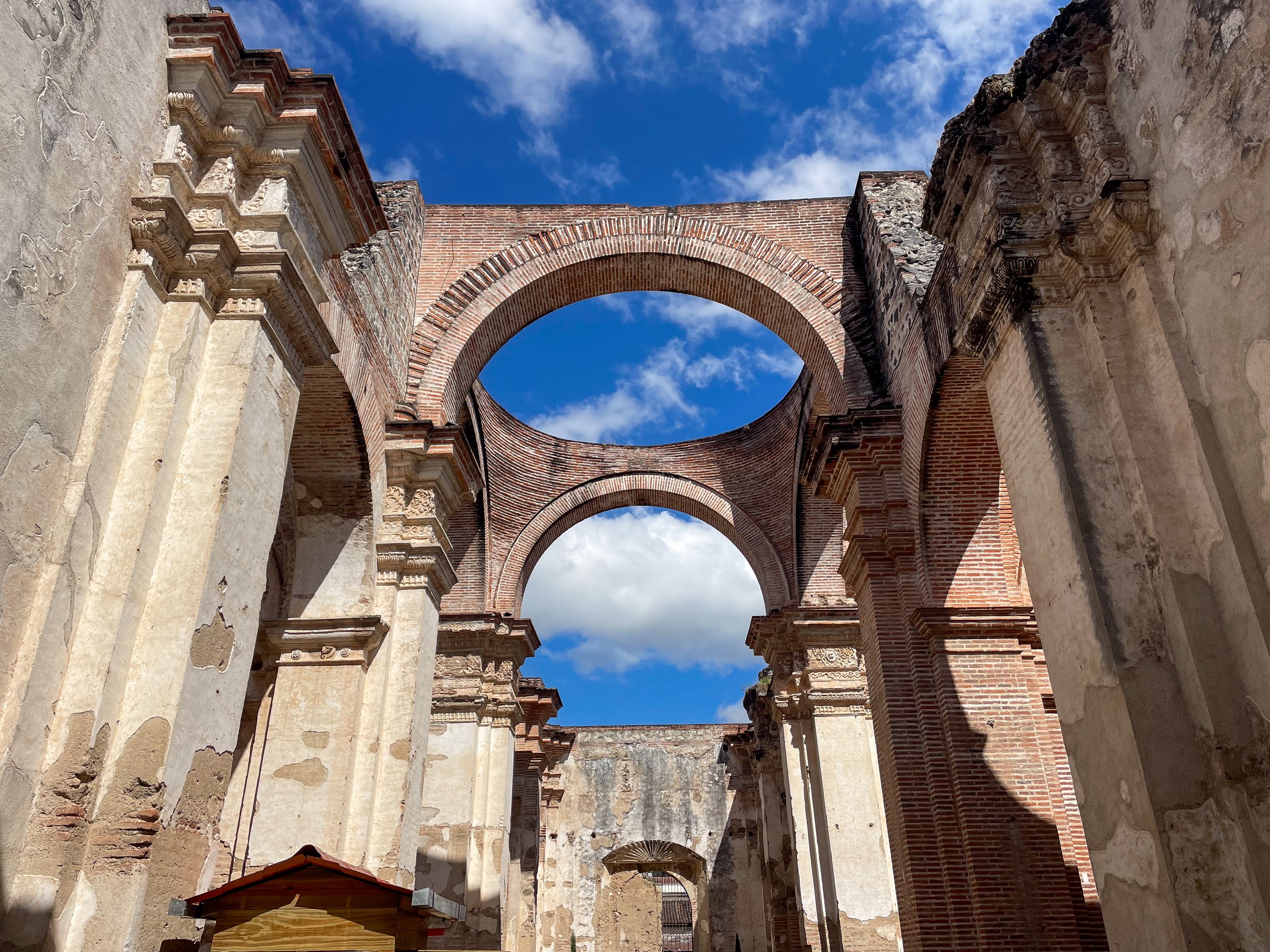
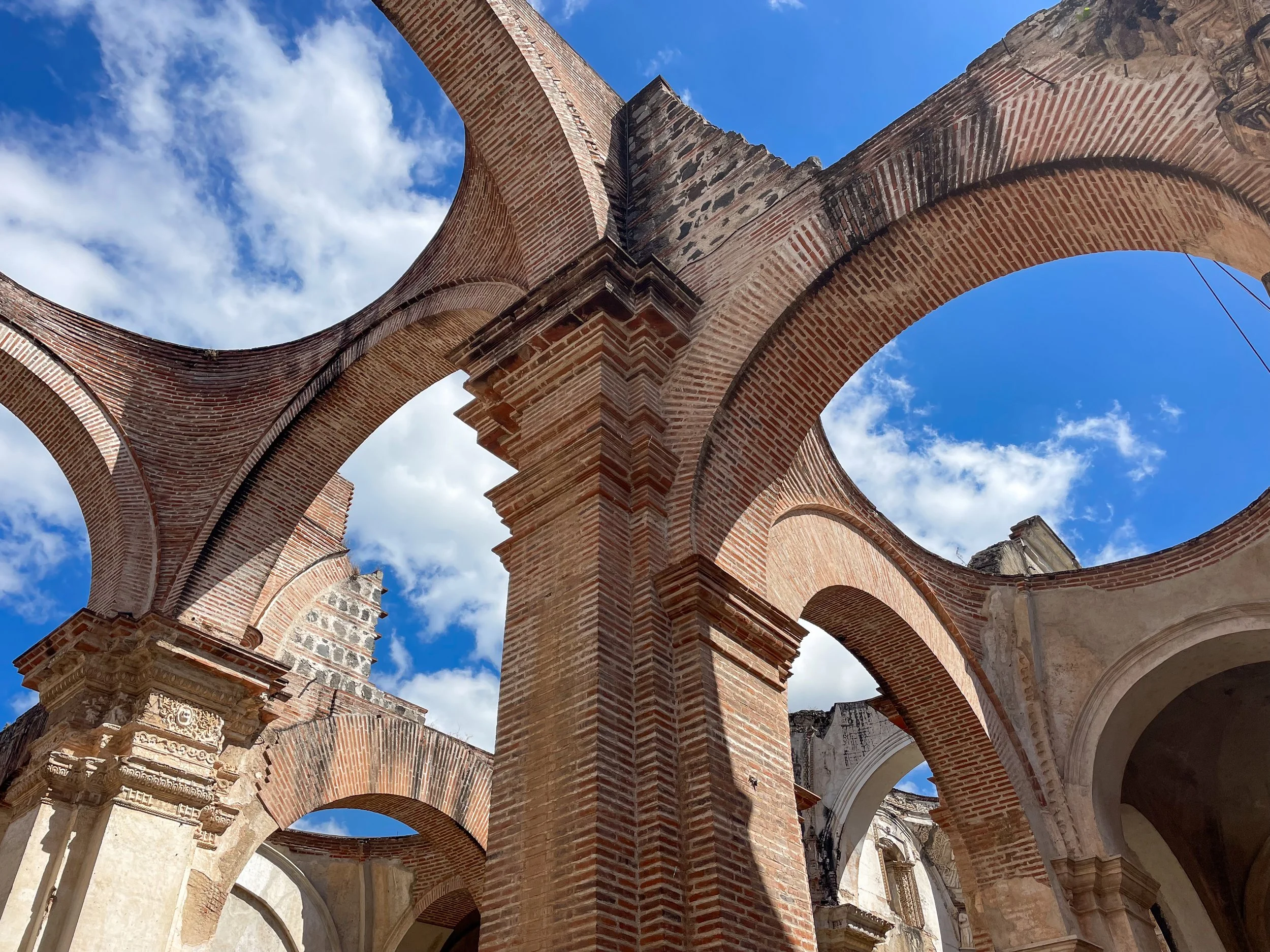
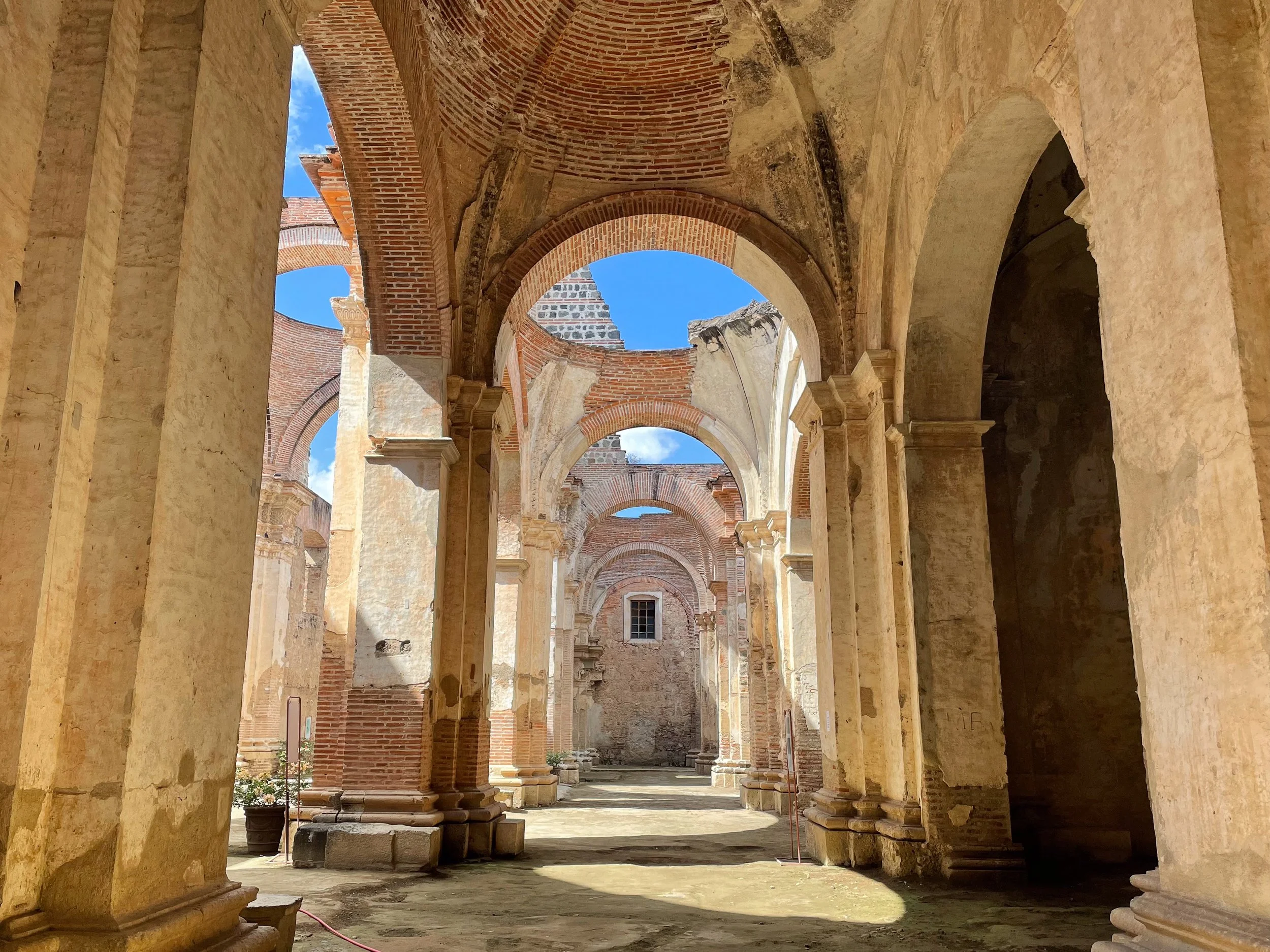
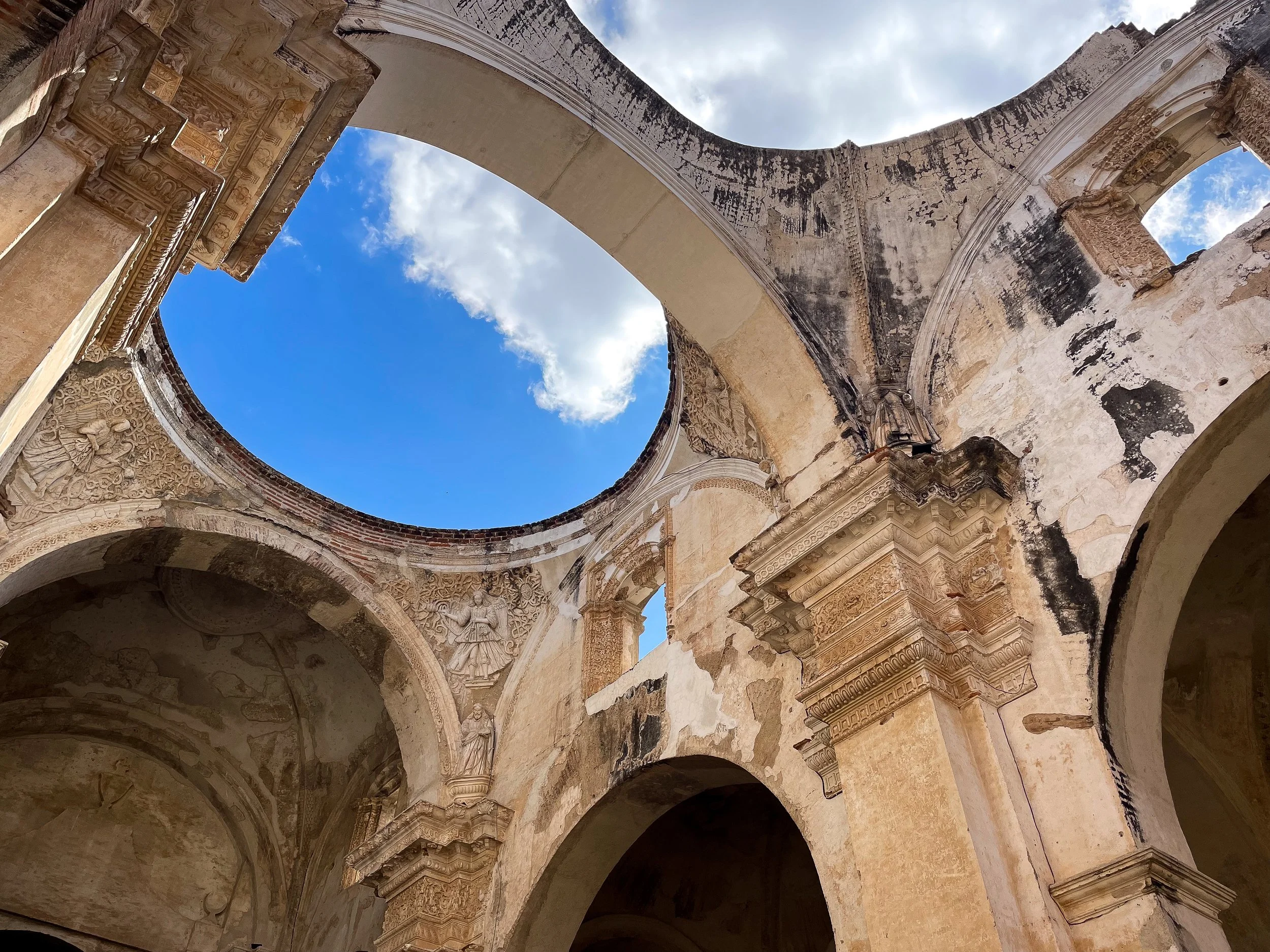
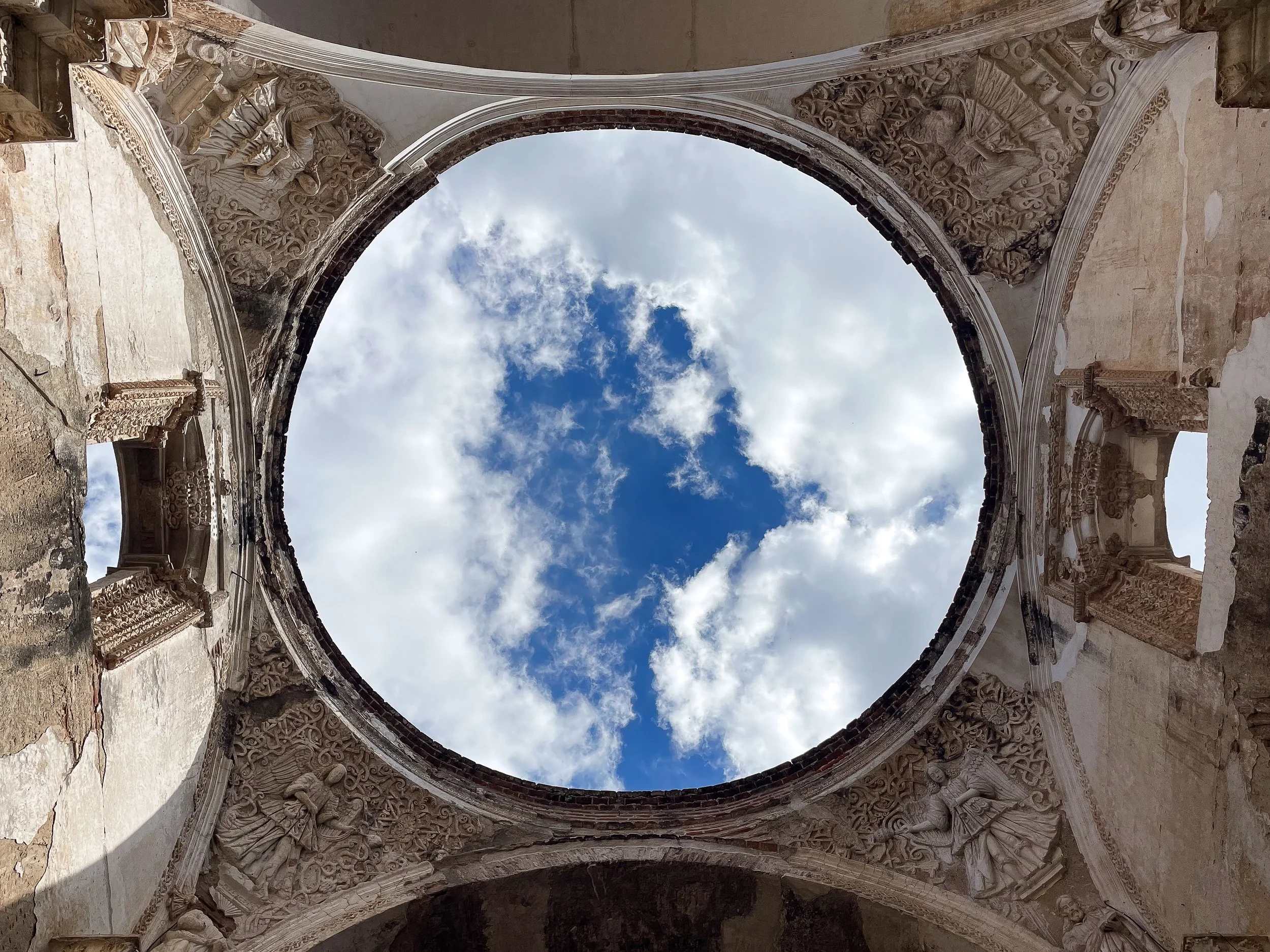
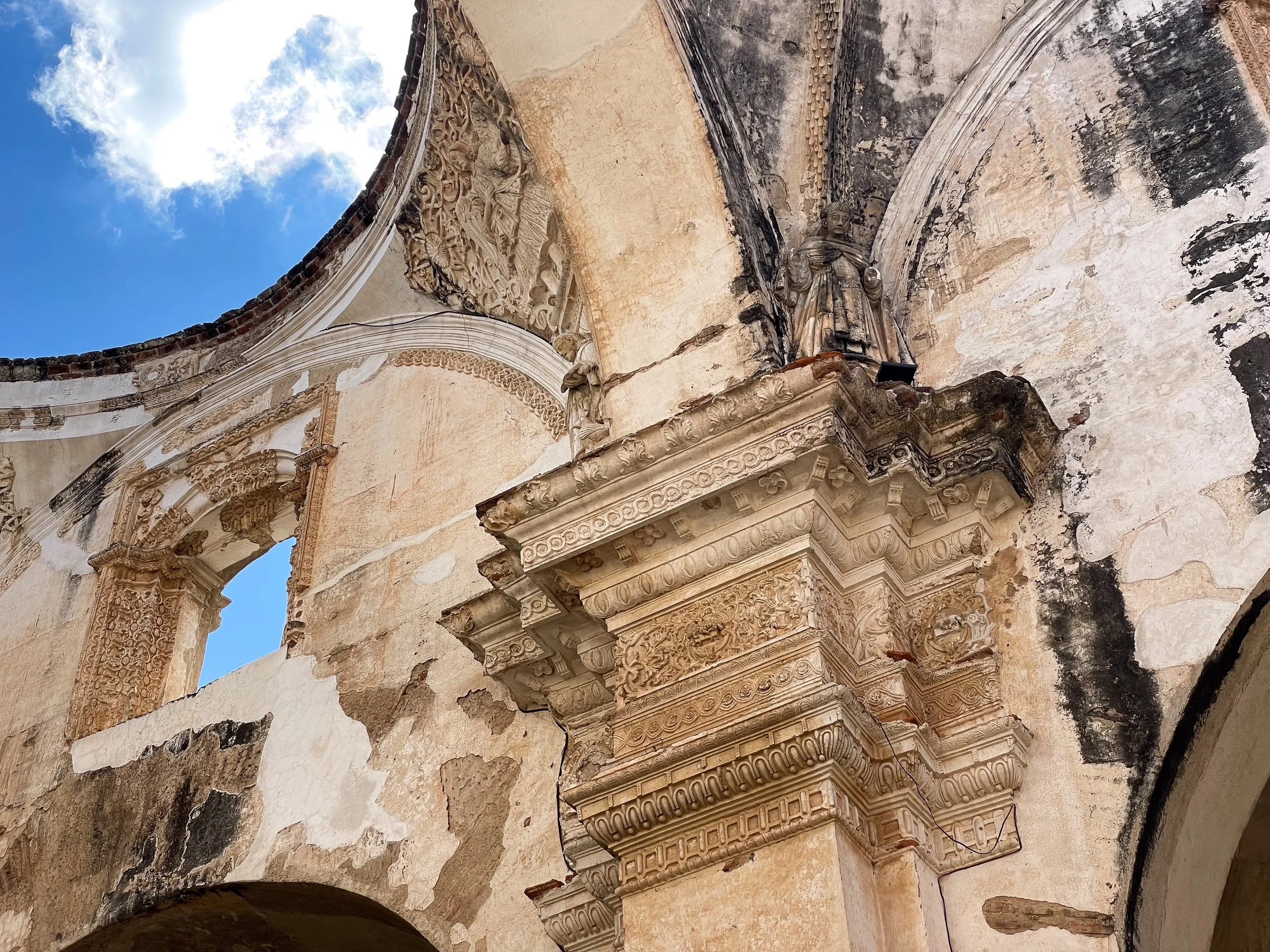
Catedral de Santiago. The ruins of a massive cathedral characterized by its collapsed domed ceiling revealing the sky above. Many arches of the domed ceiling remain, held up by towering brick and stone columns, some of which are still embellished in delicate plaster moldings and flourishes.
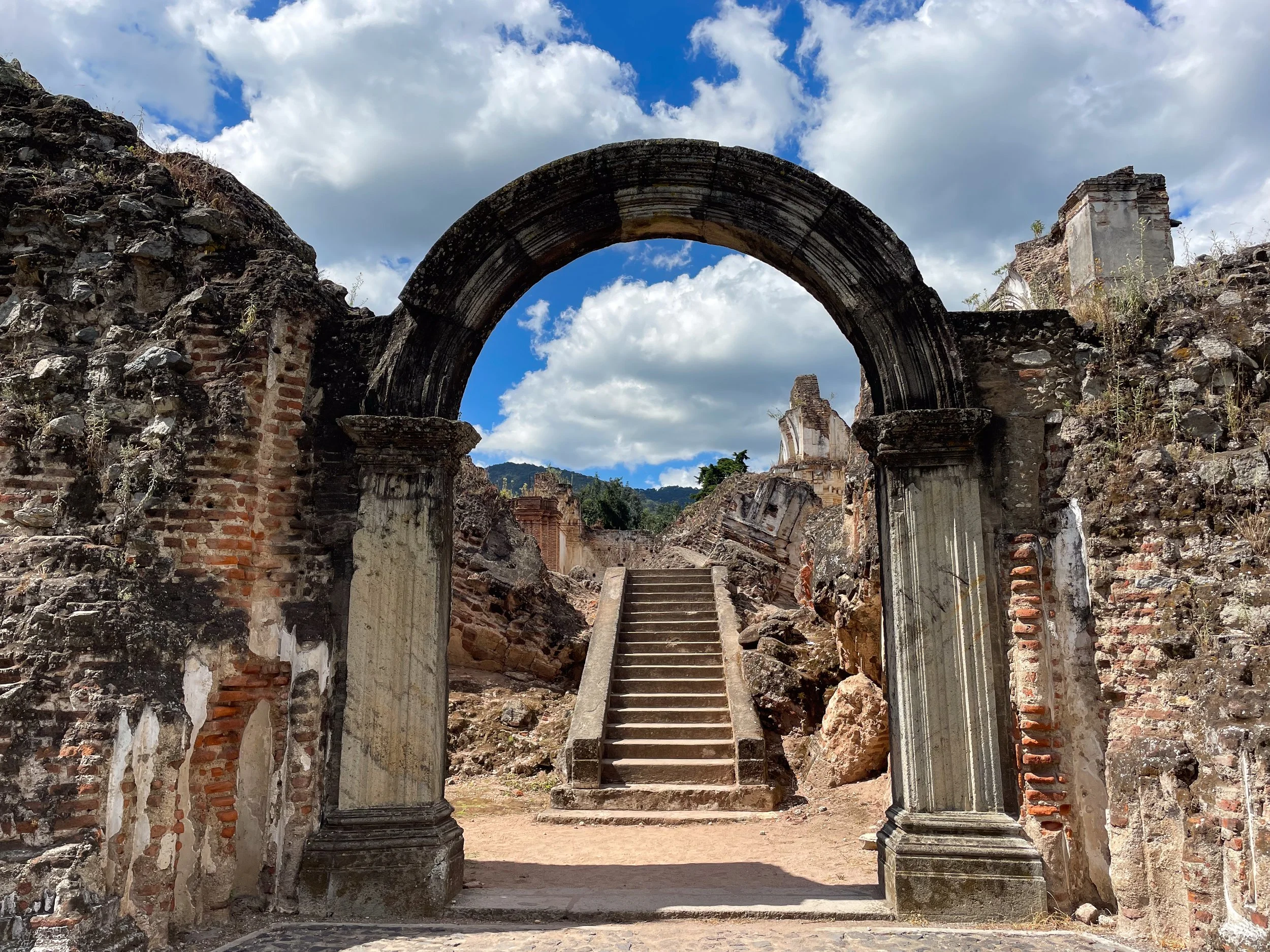
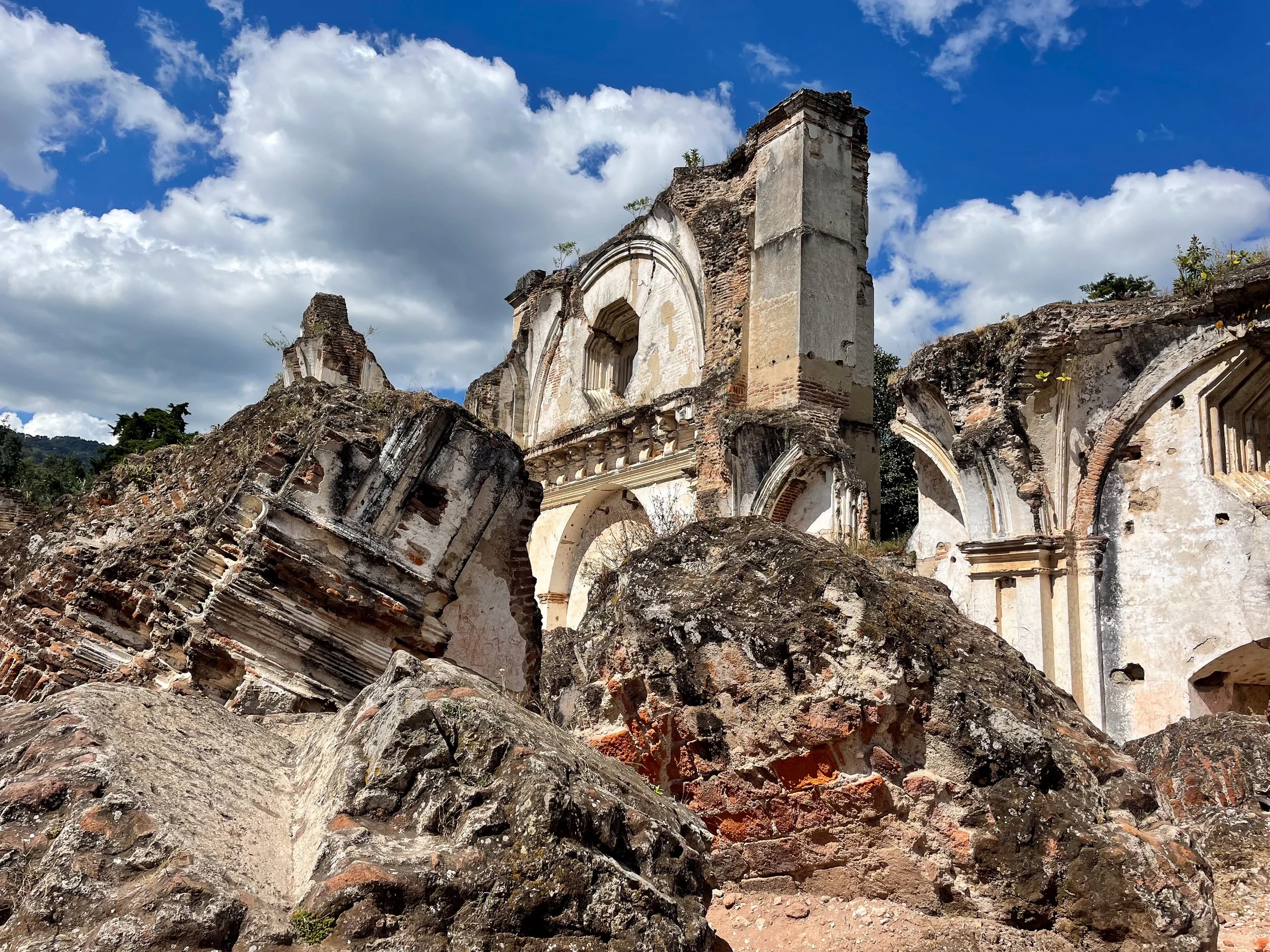
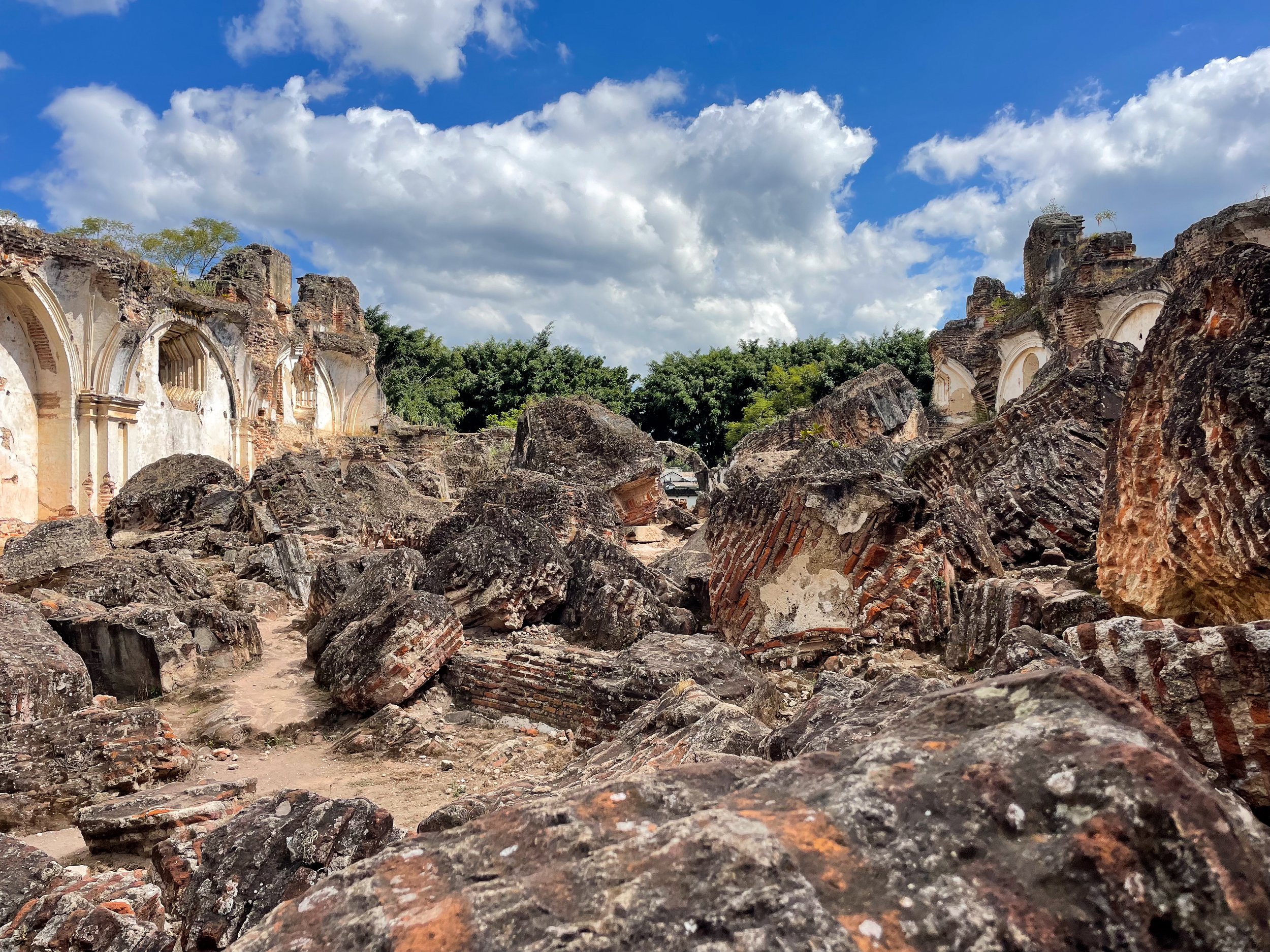
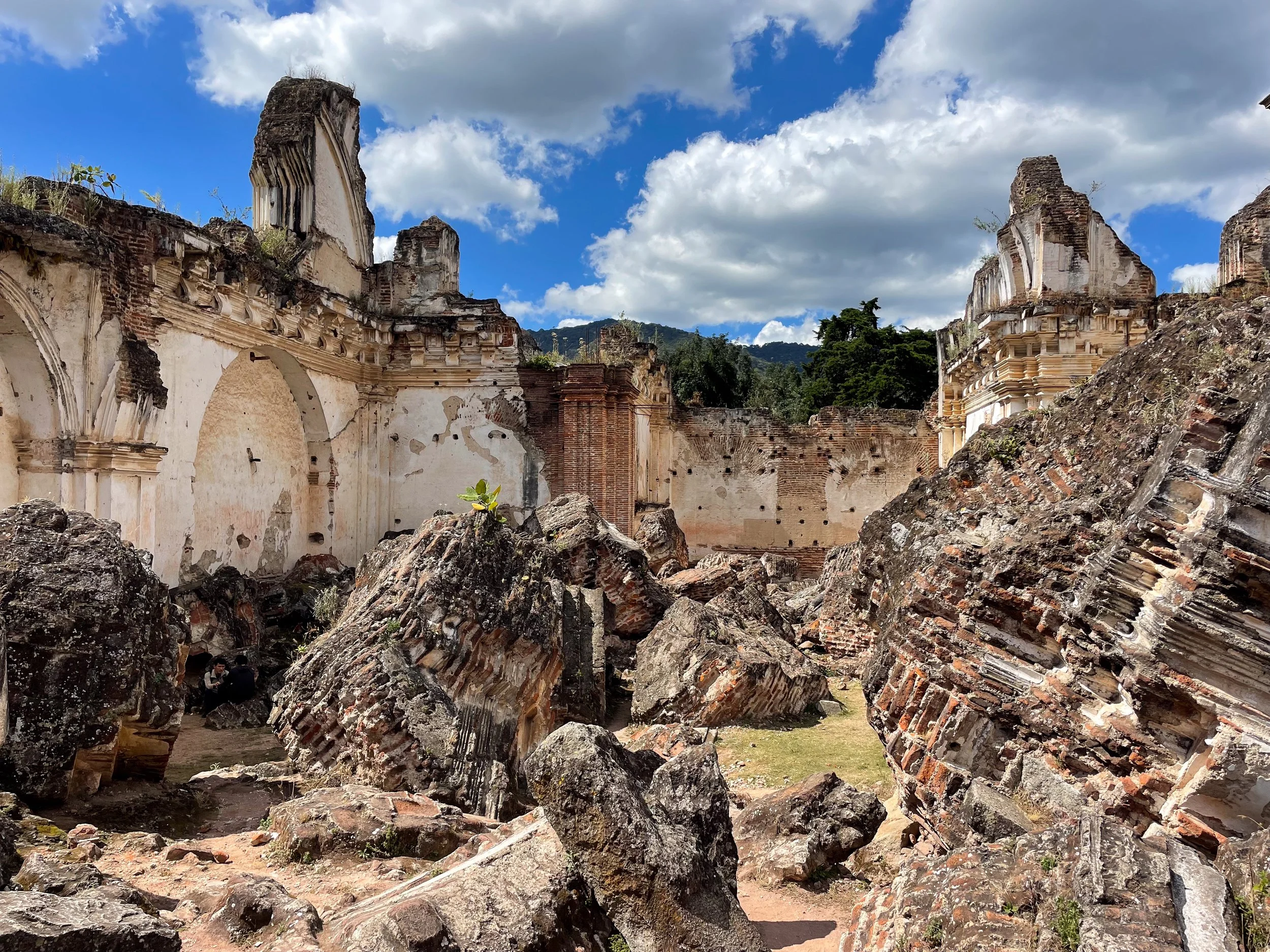
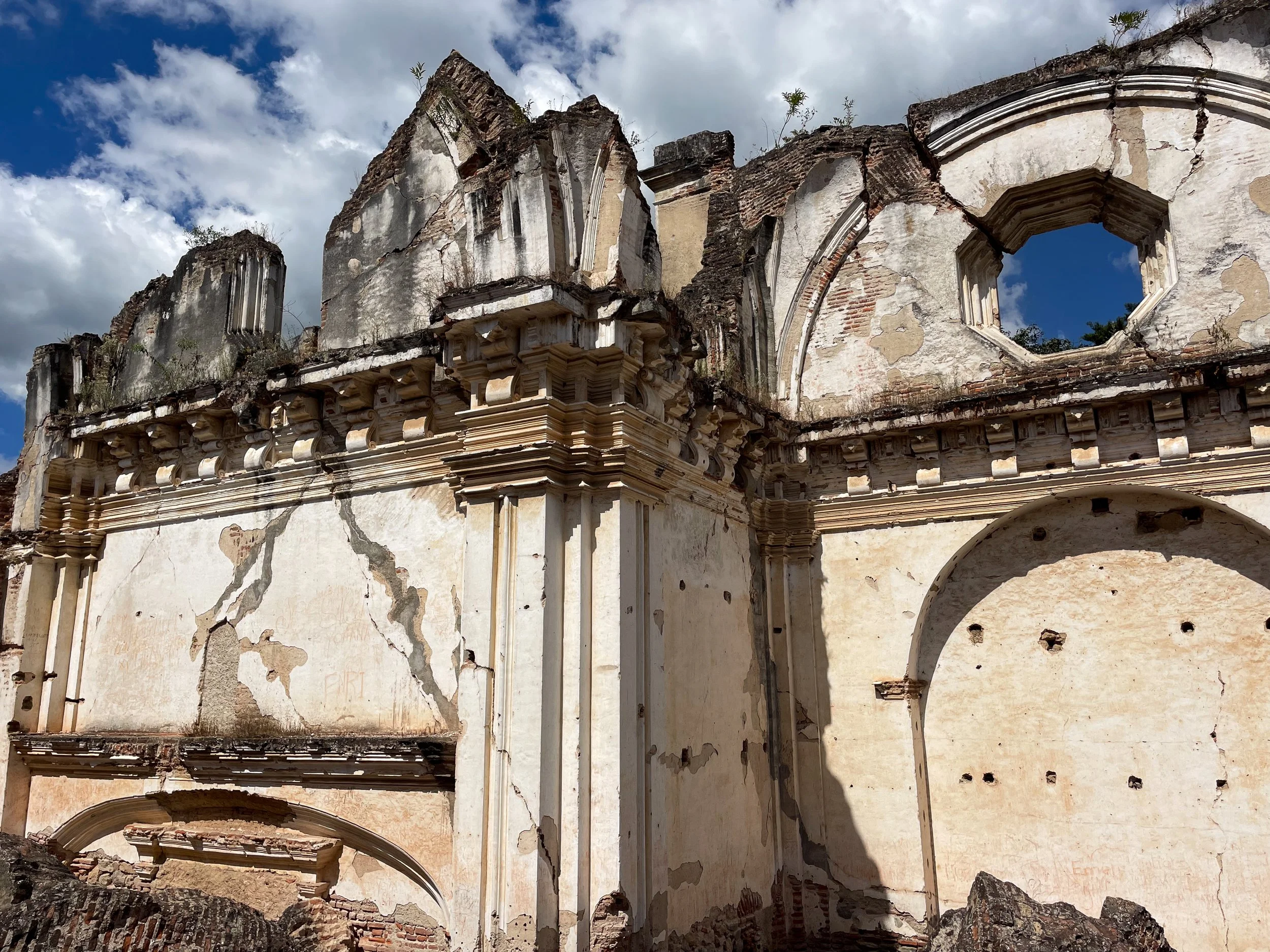
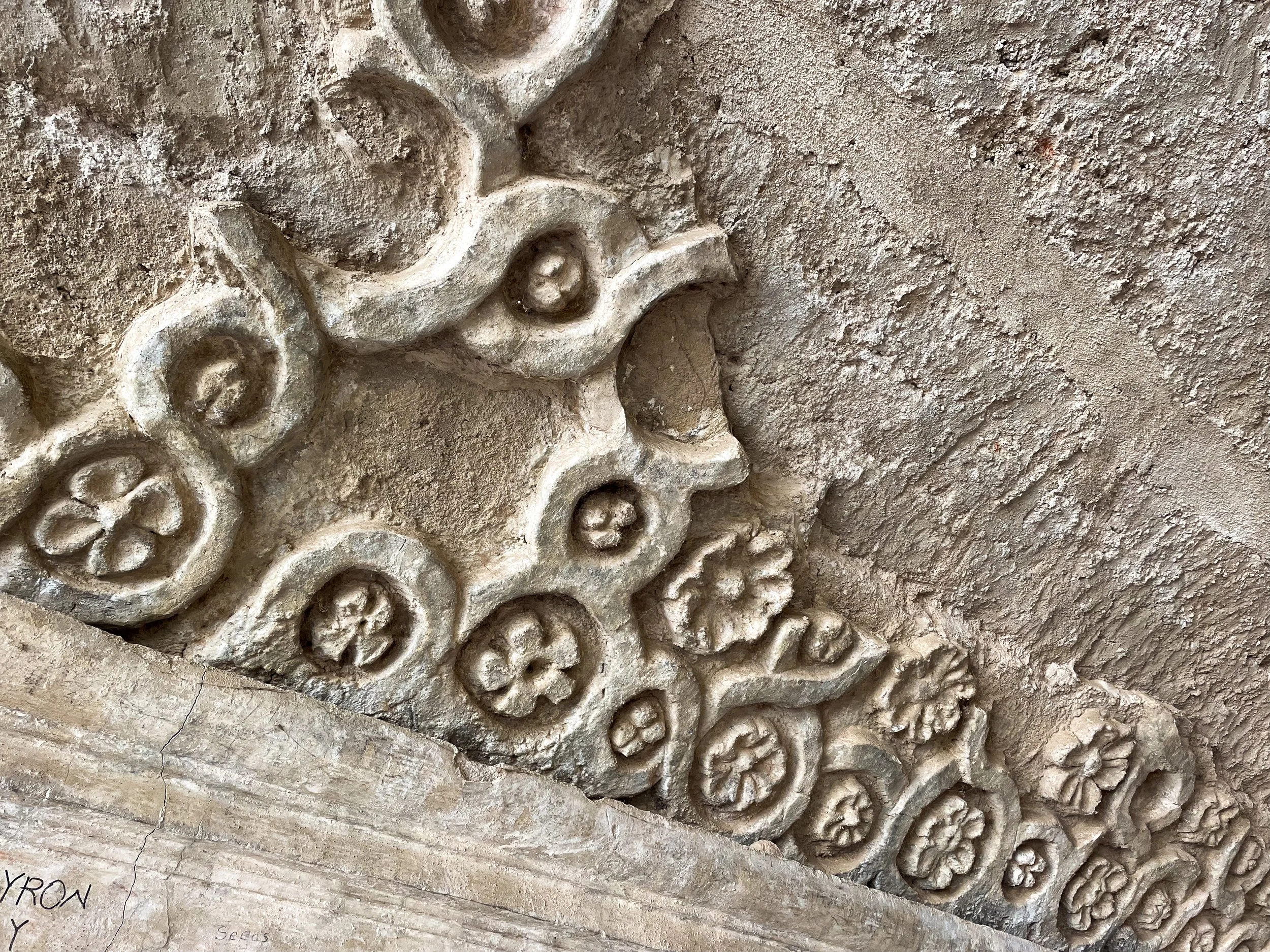
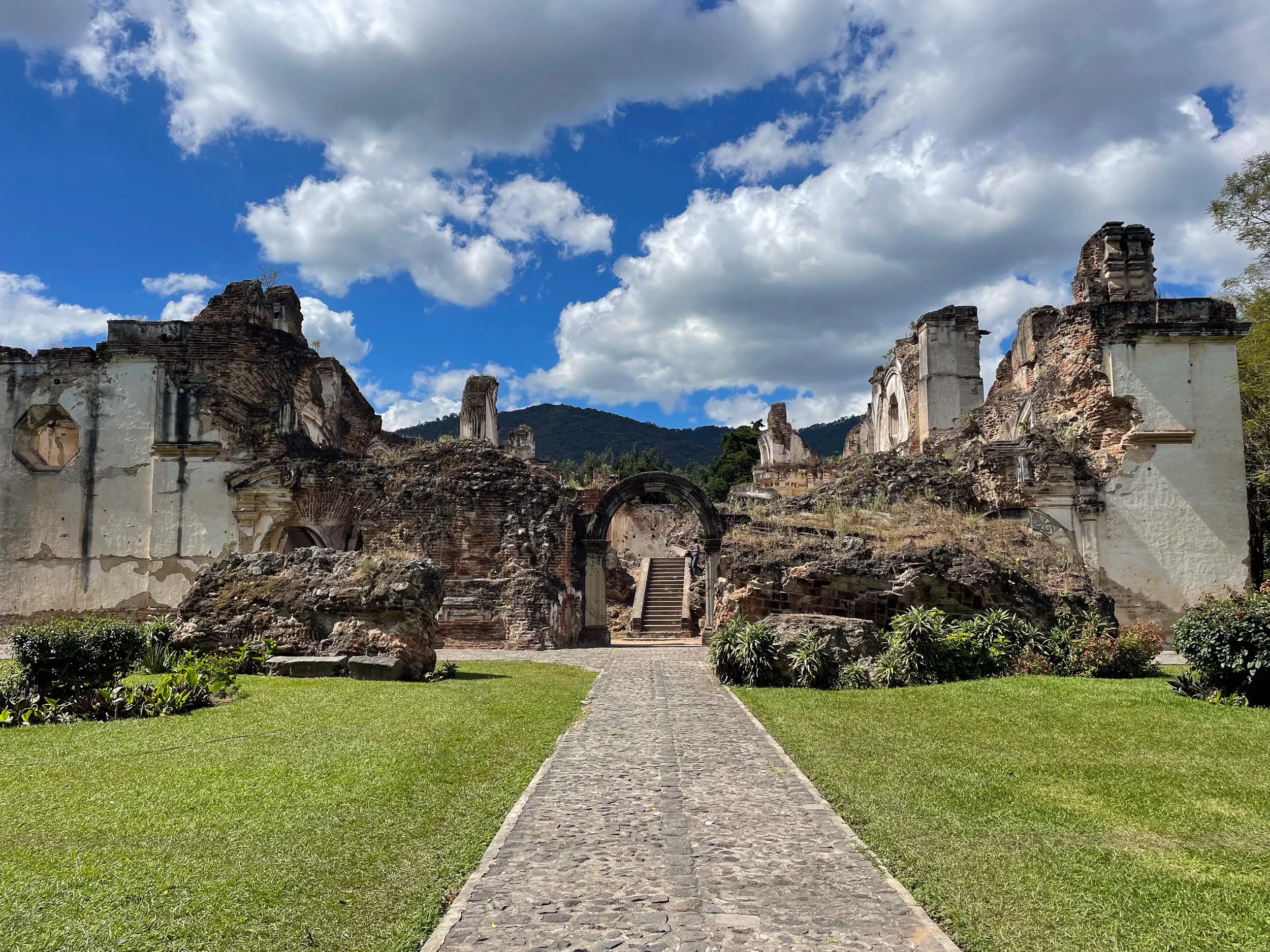
Iglesia La Recolección. Destroyed beyond repair, a lone arch and set of stairs lead to this former church where only the walls remain standing. Within its sanctuary are toppled columns, massive pieces of brick masonry and plaster debris. The ruins can be explored and even climbed on, making for a photogenic picture. The remaining grounds encompass two courtyards with the ruins of a convent.
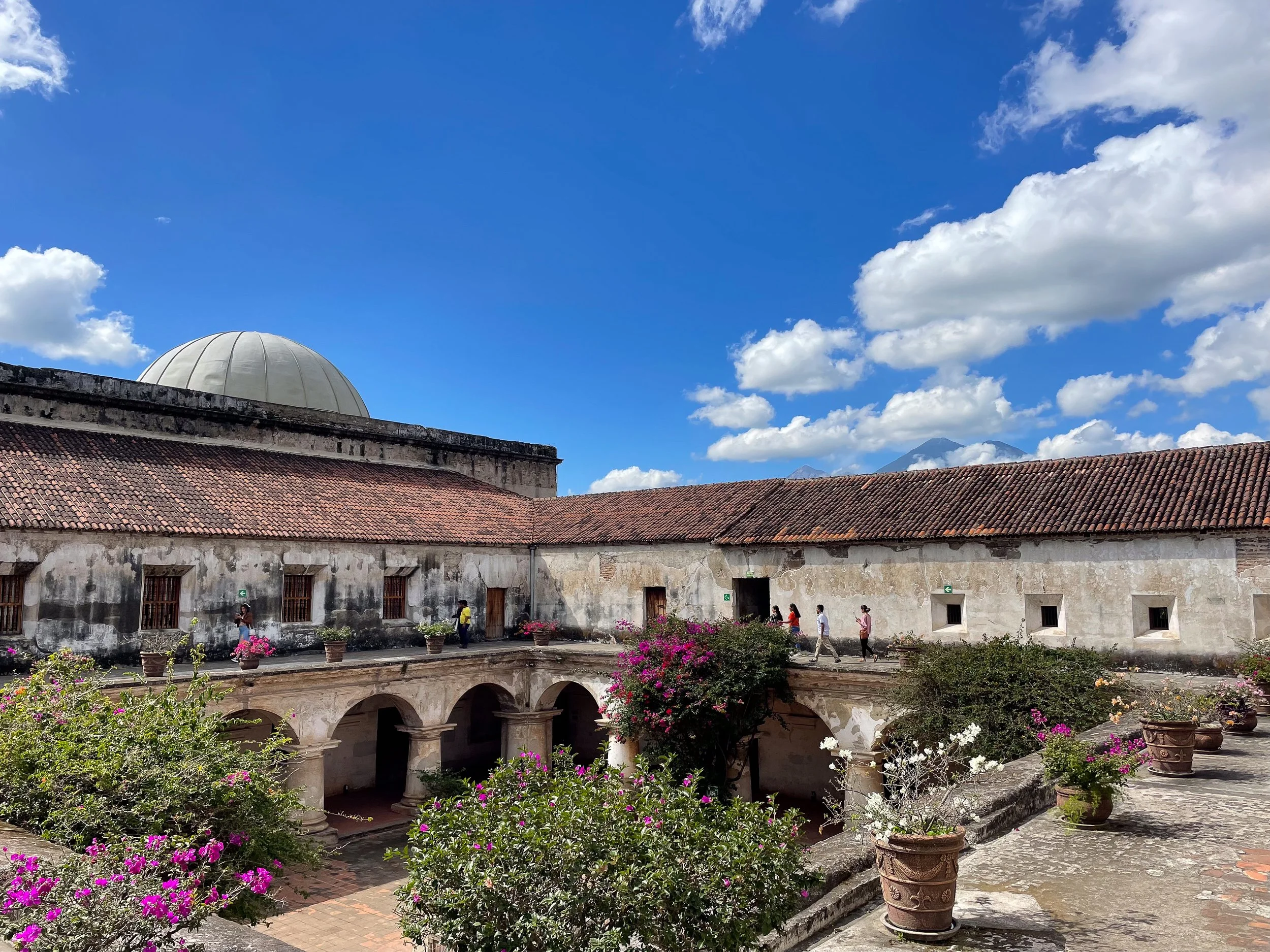
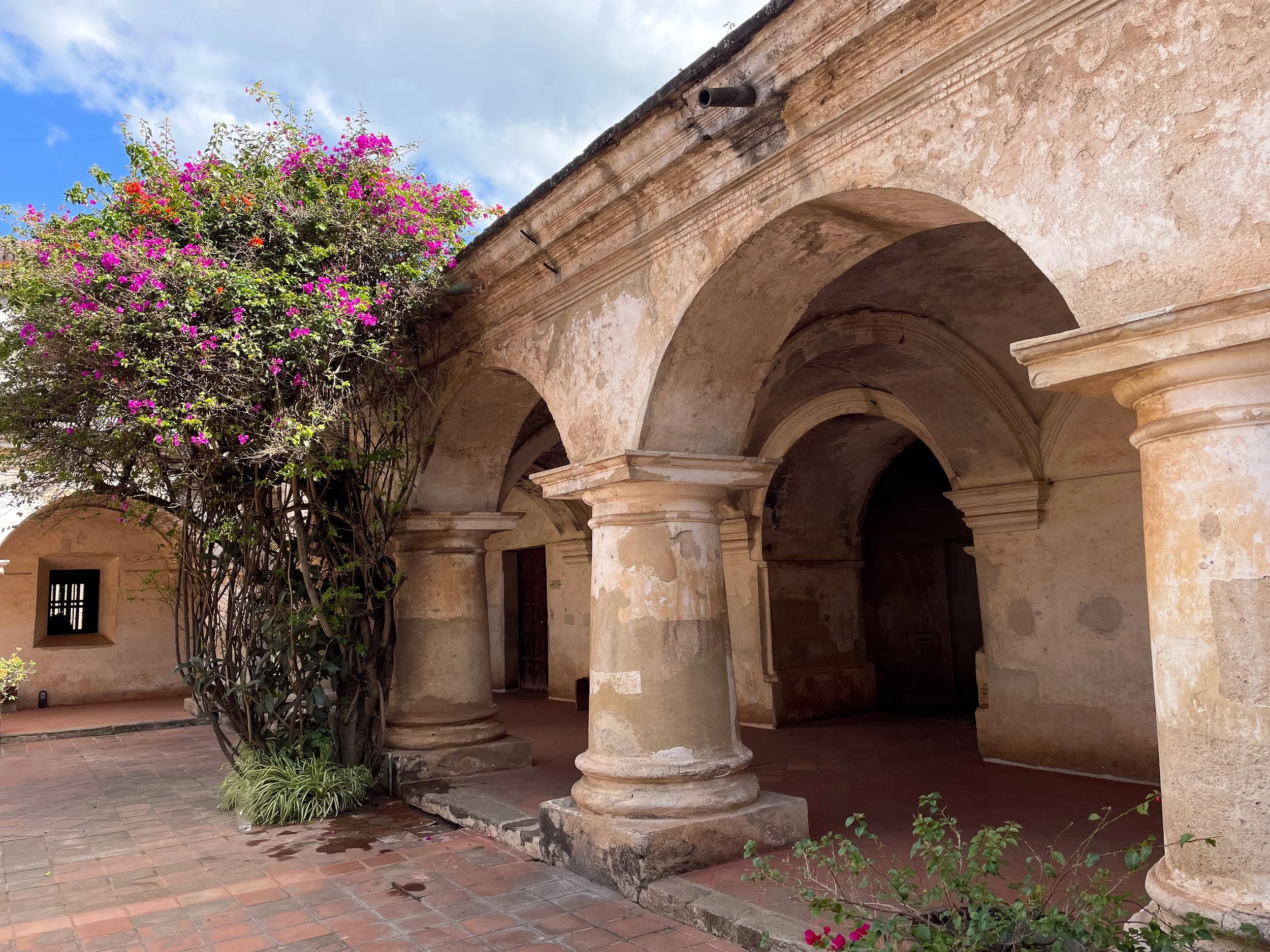
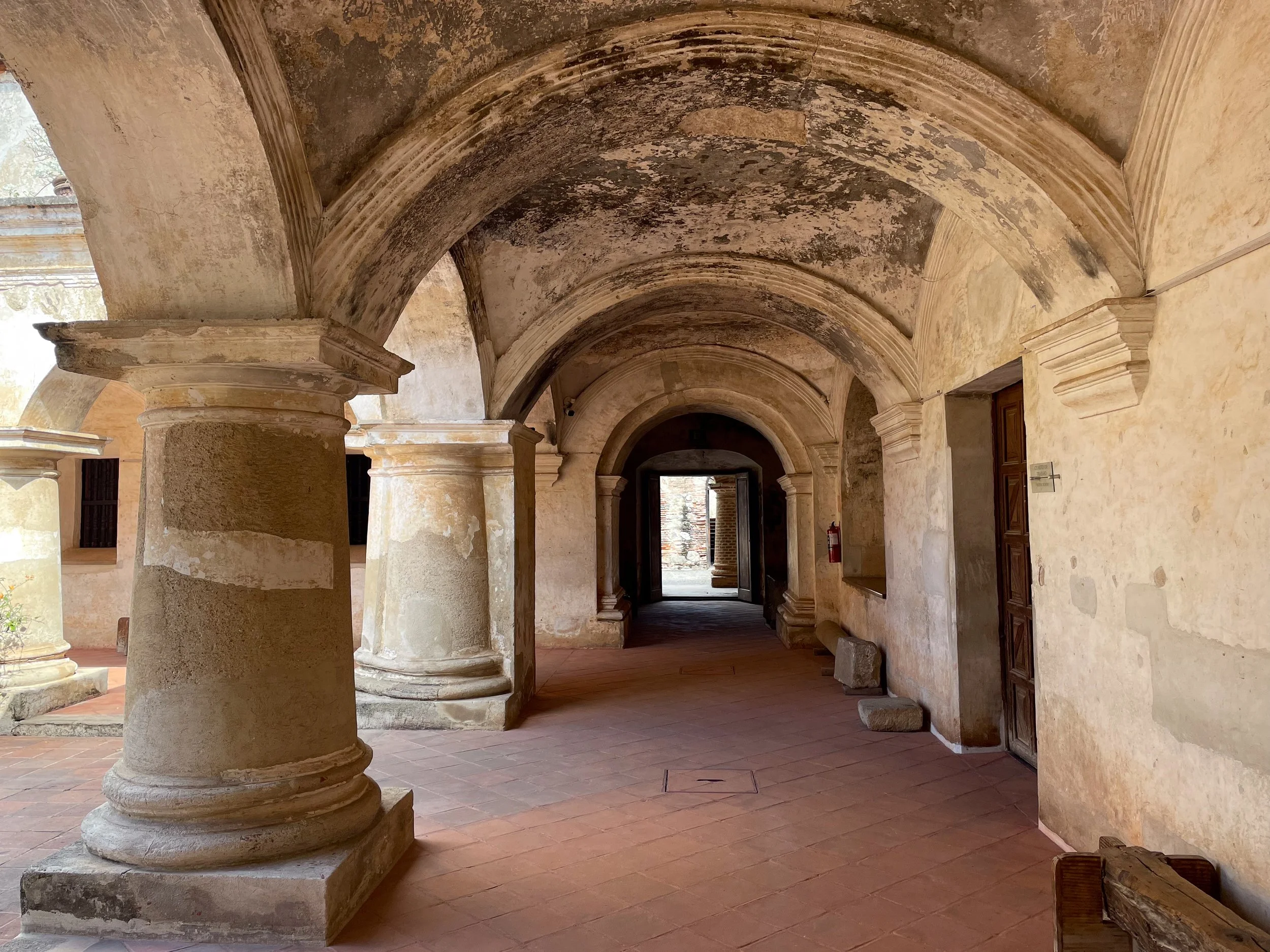
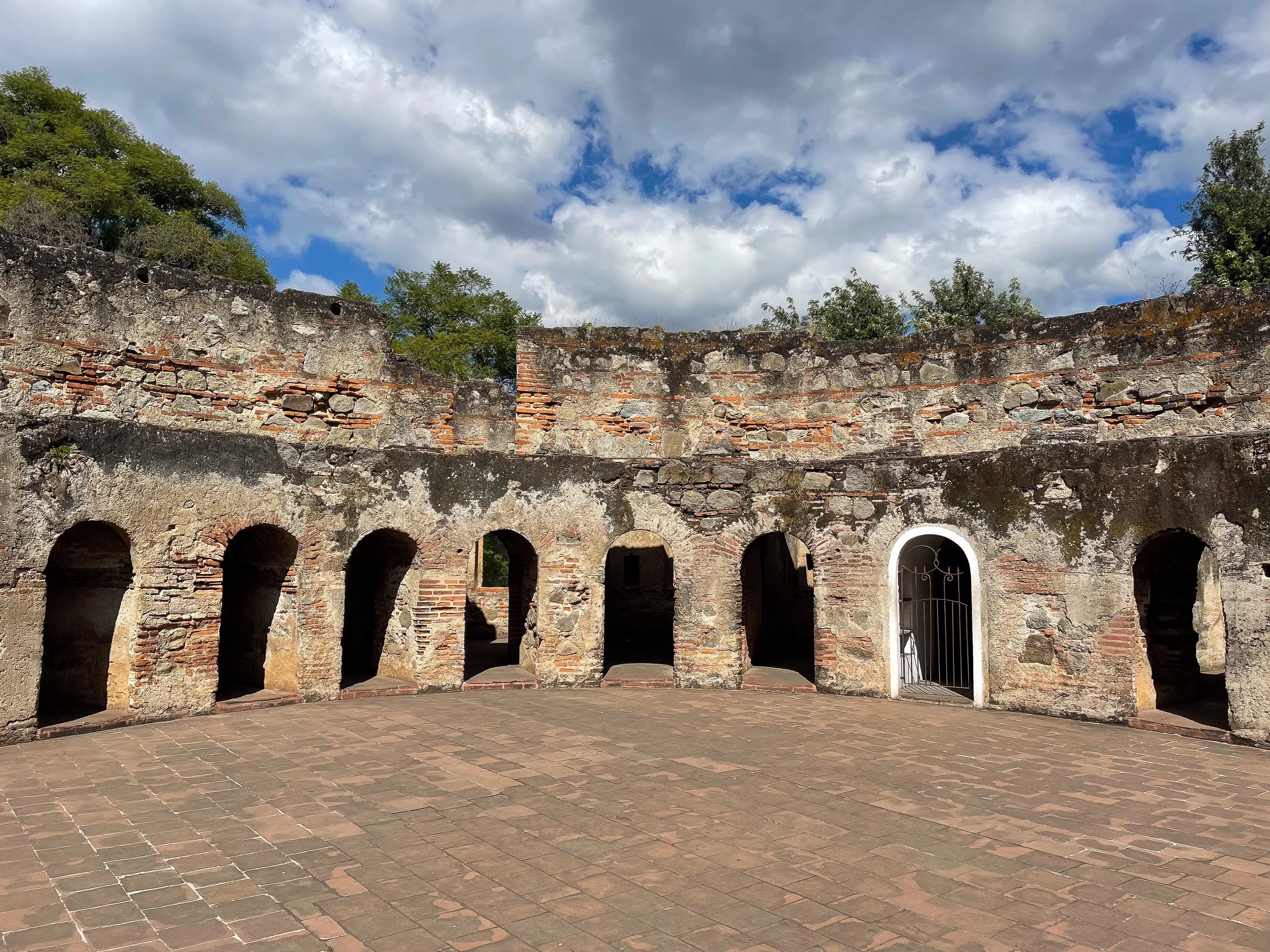
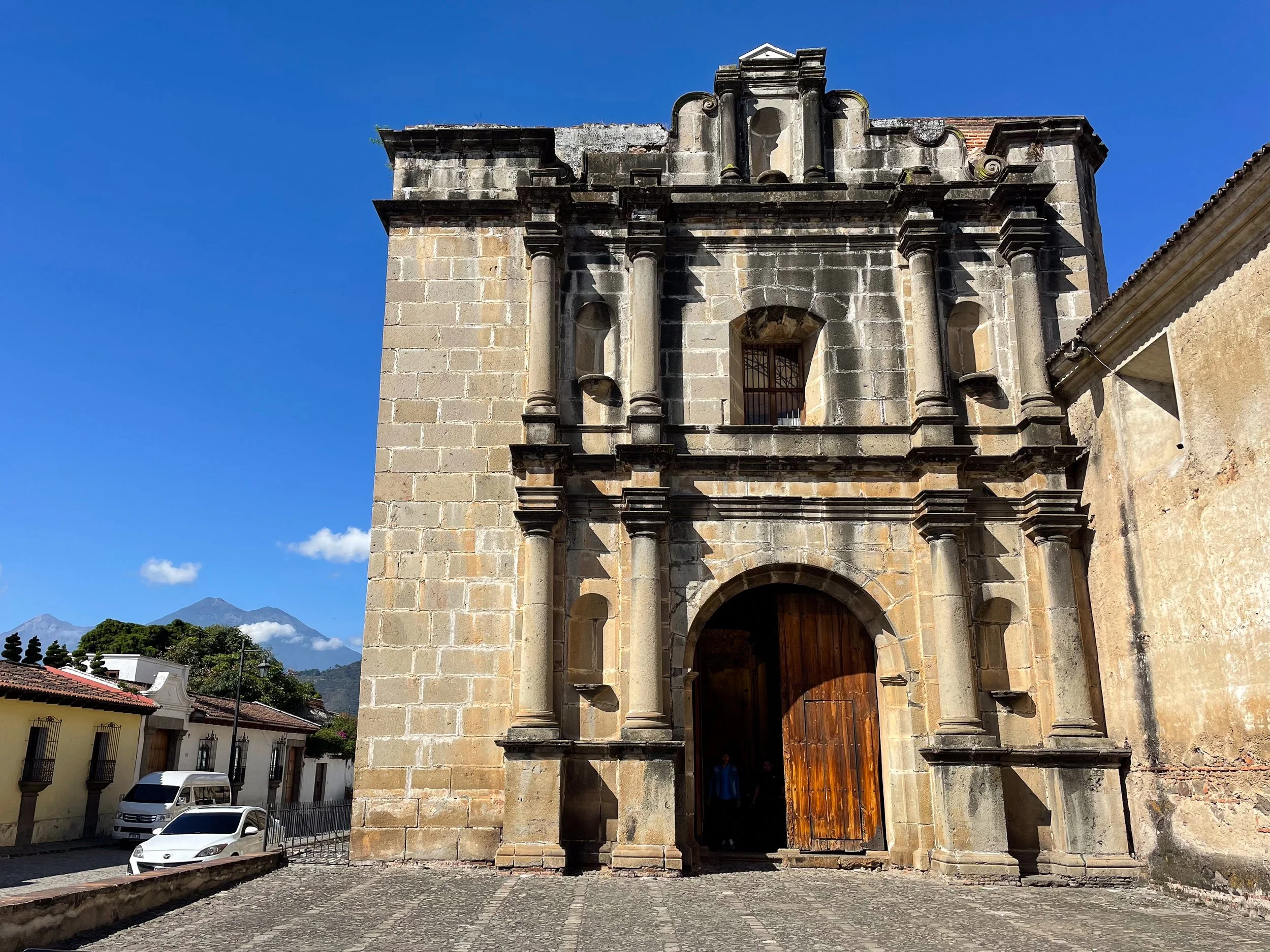
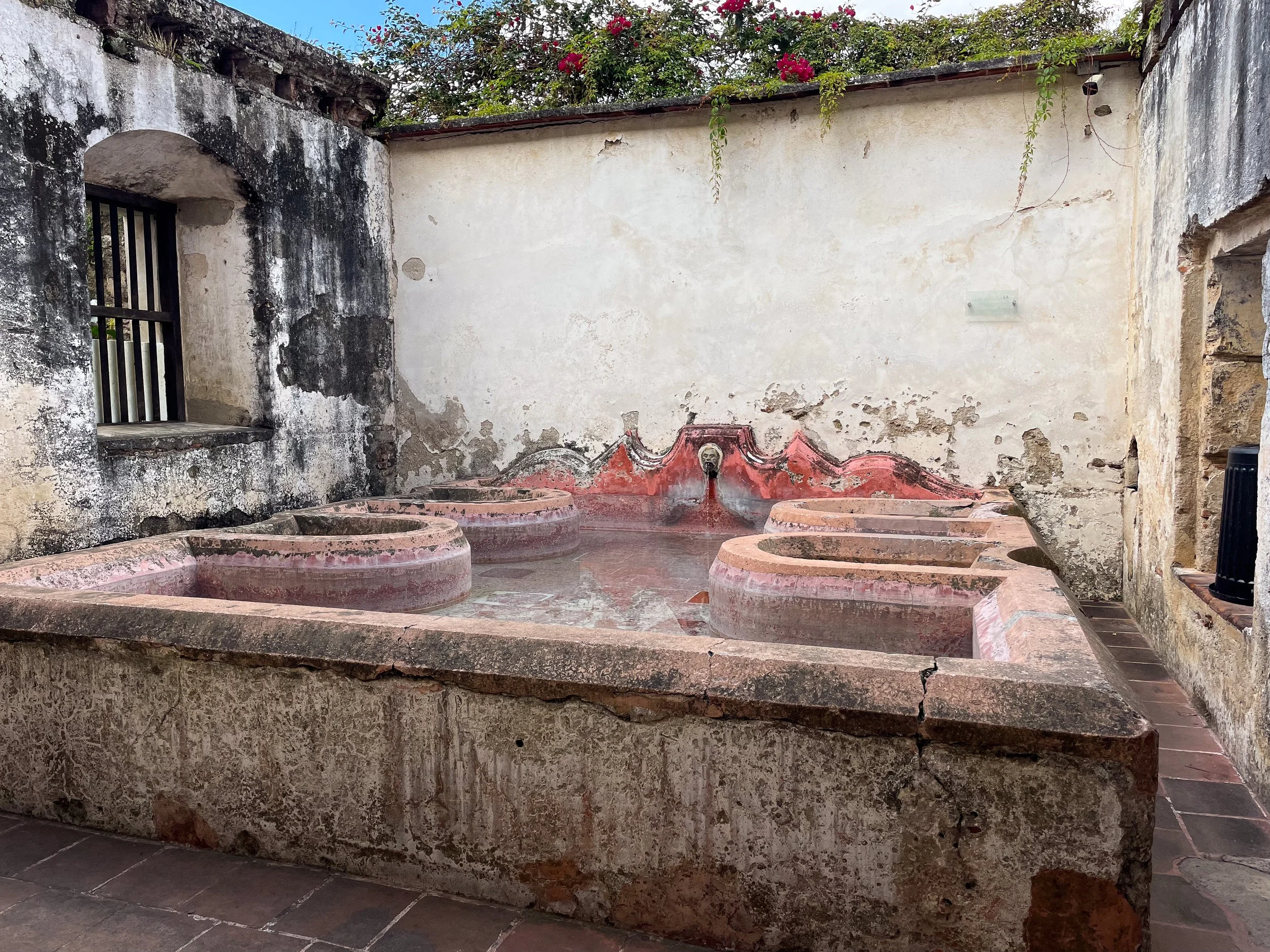
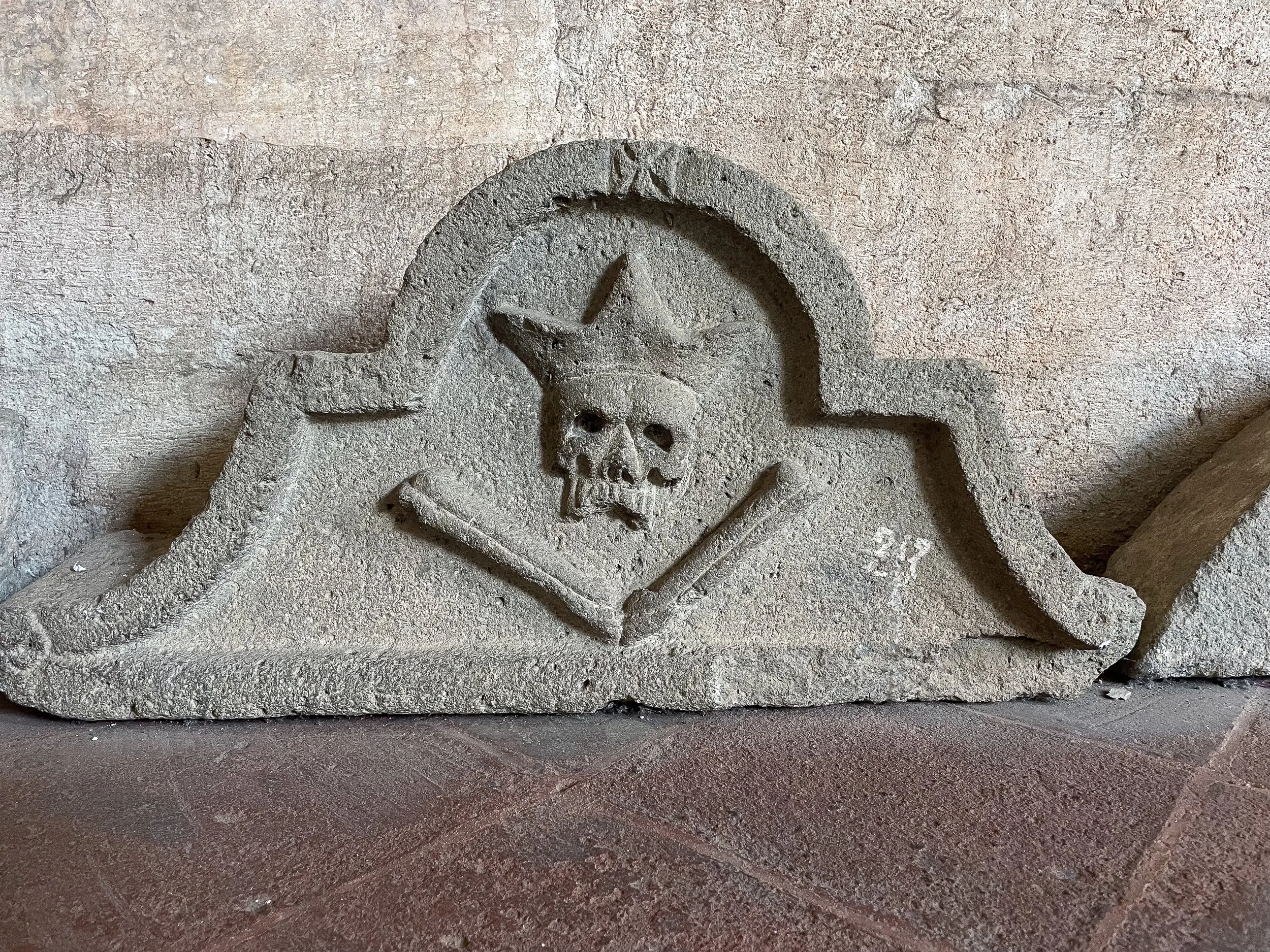
Convento de San Capuchinas. A former convent turned into an art museum. The grounds contain an interior courtyard, the ruins of a church, a butterfly garden and a circular building of nuns' cells complete with creepy nun mannequins. Exhibits display a collection of religious artwork, pre-colonial artifacts, broken statues and stone masonry.
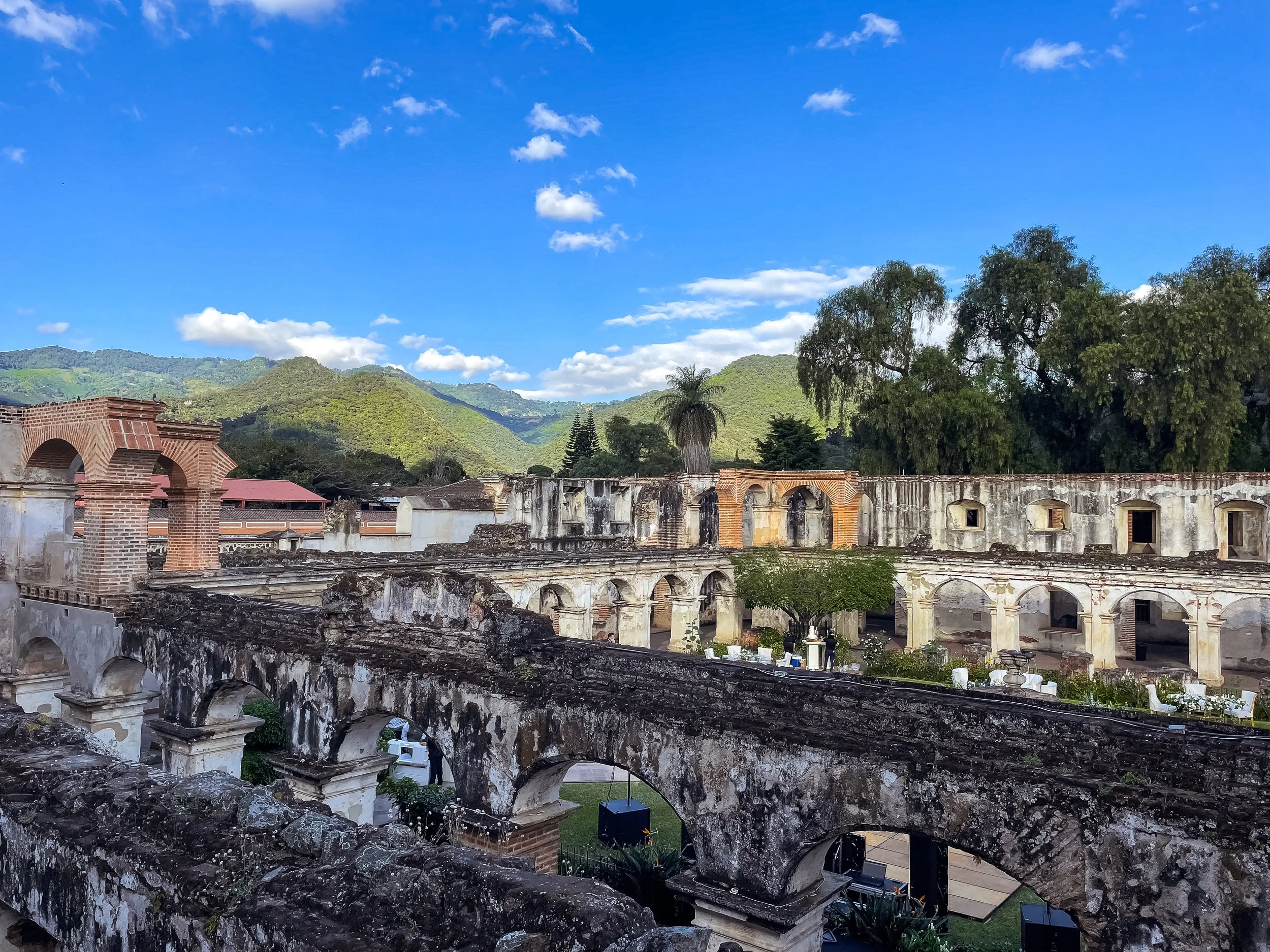
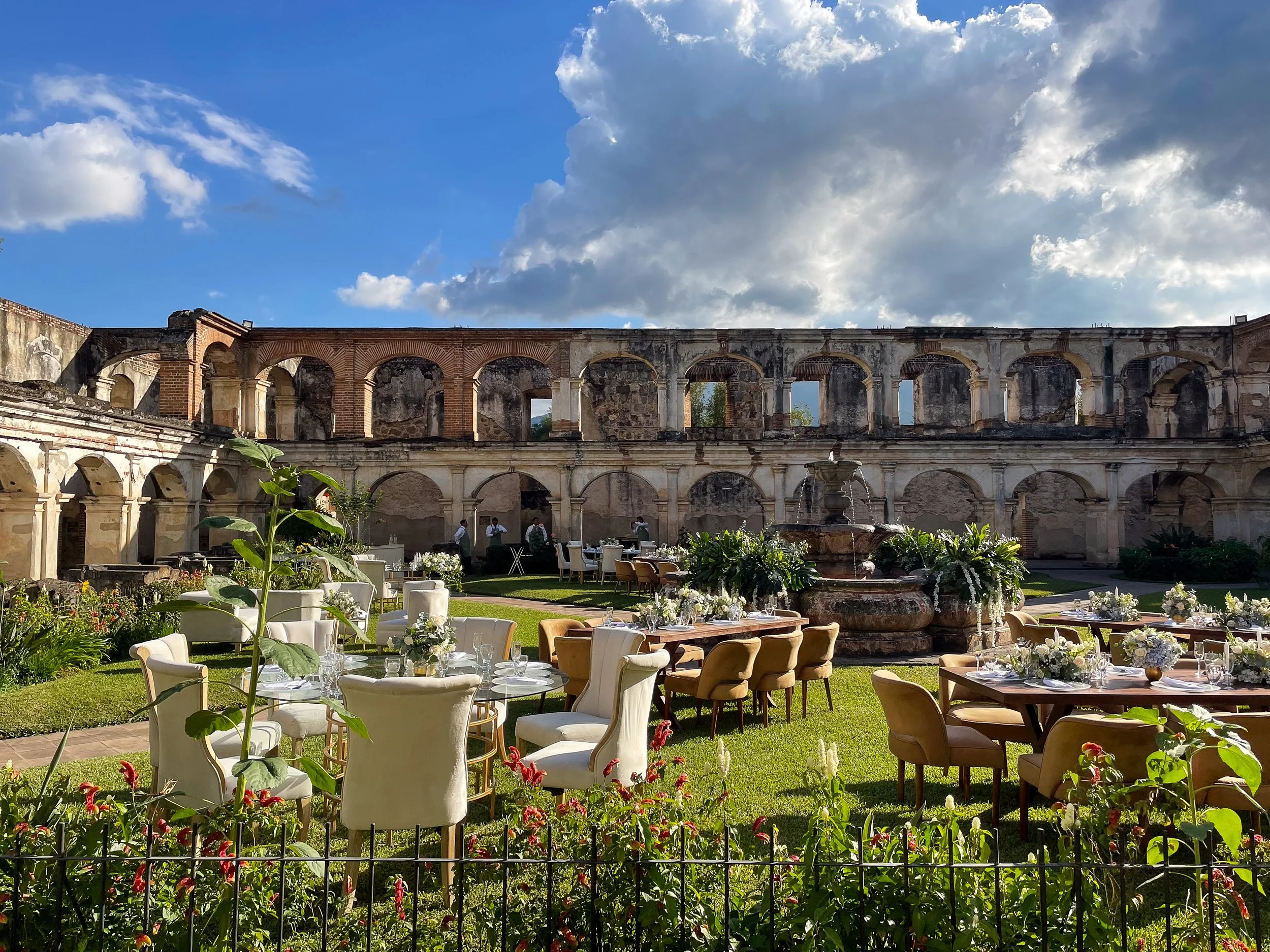
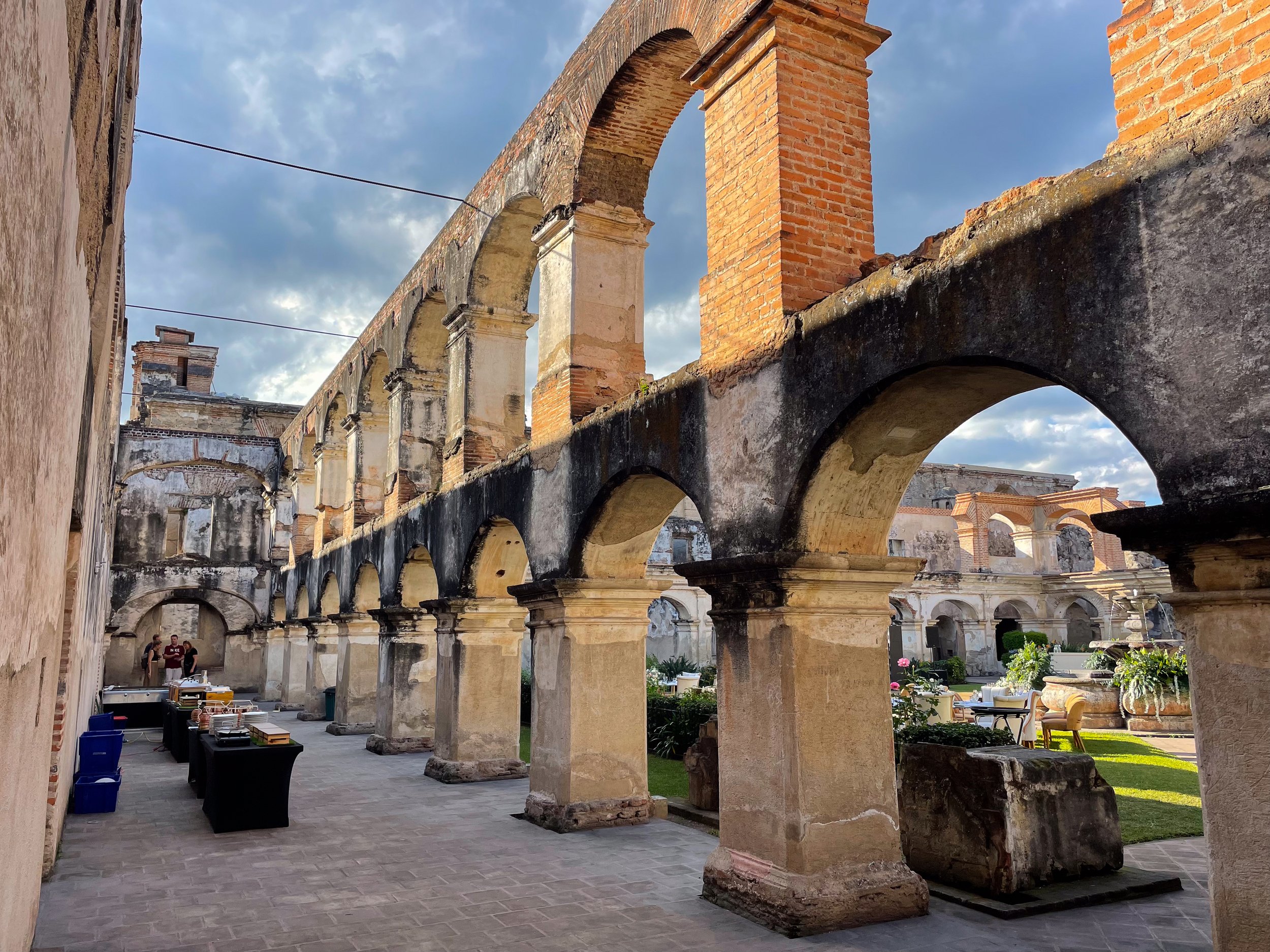
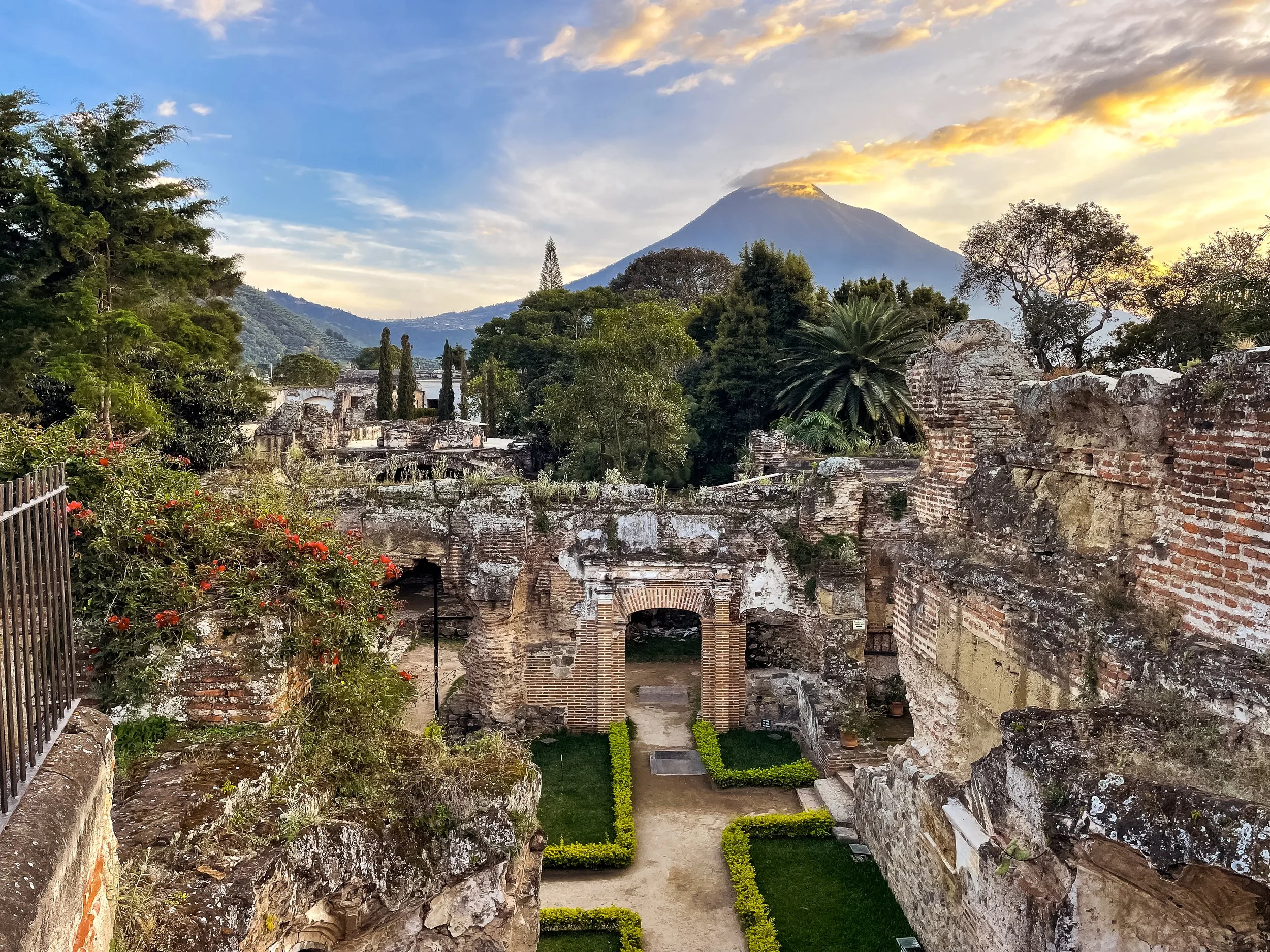
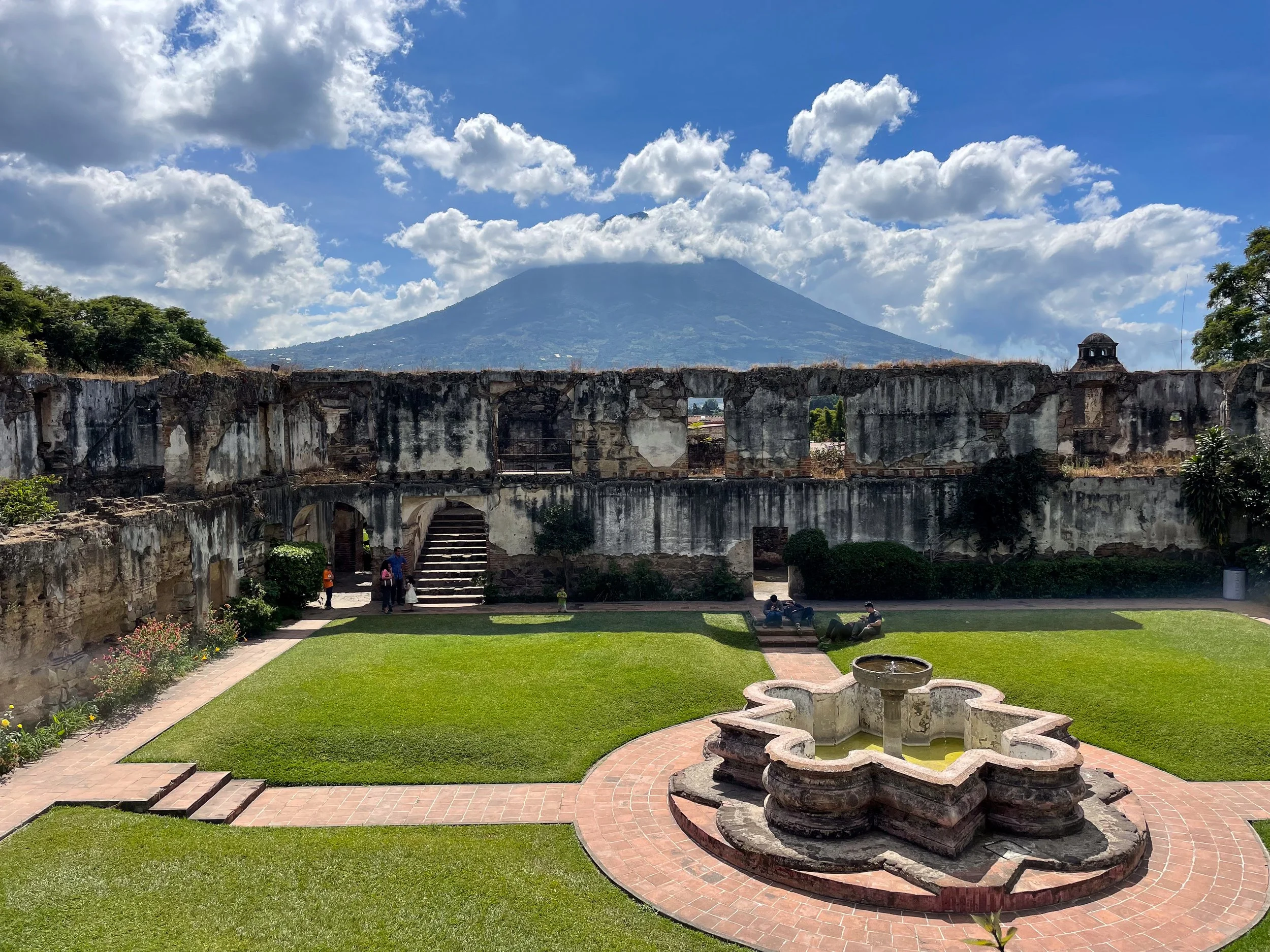
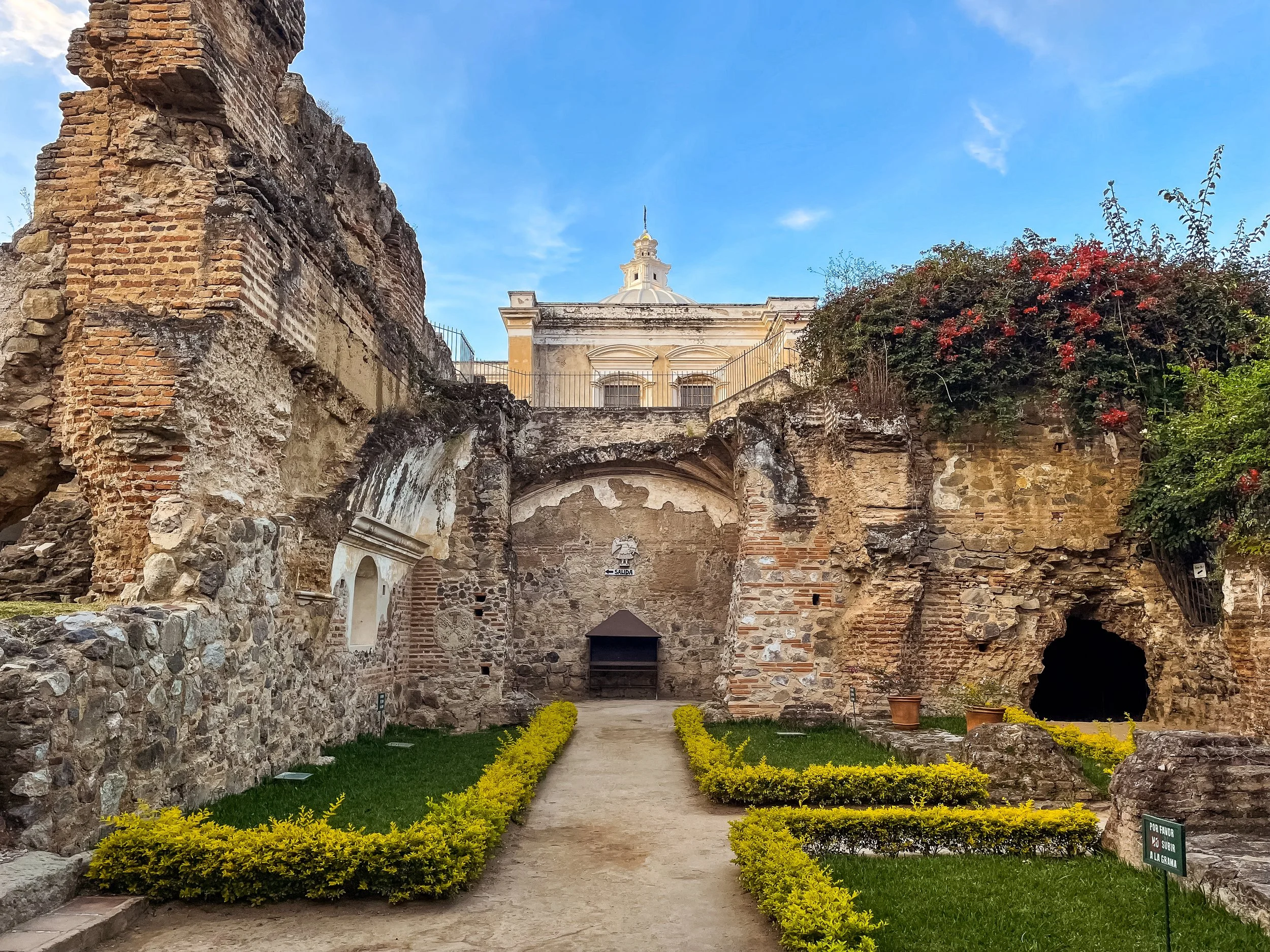
Convento Santa Clara. The ruins of a church and convent with an ornate stone facade and crumbling cloisters surrounding a lush garden courtyard. The beautiful setting doubles as an event space for dreamy weddings.
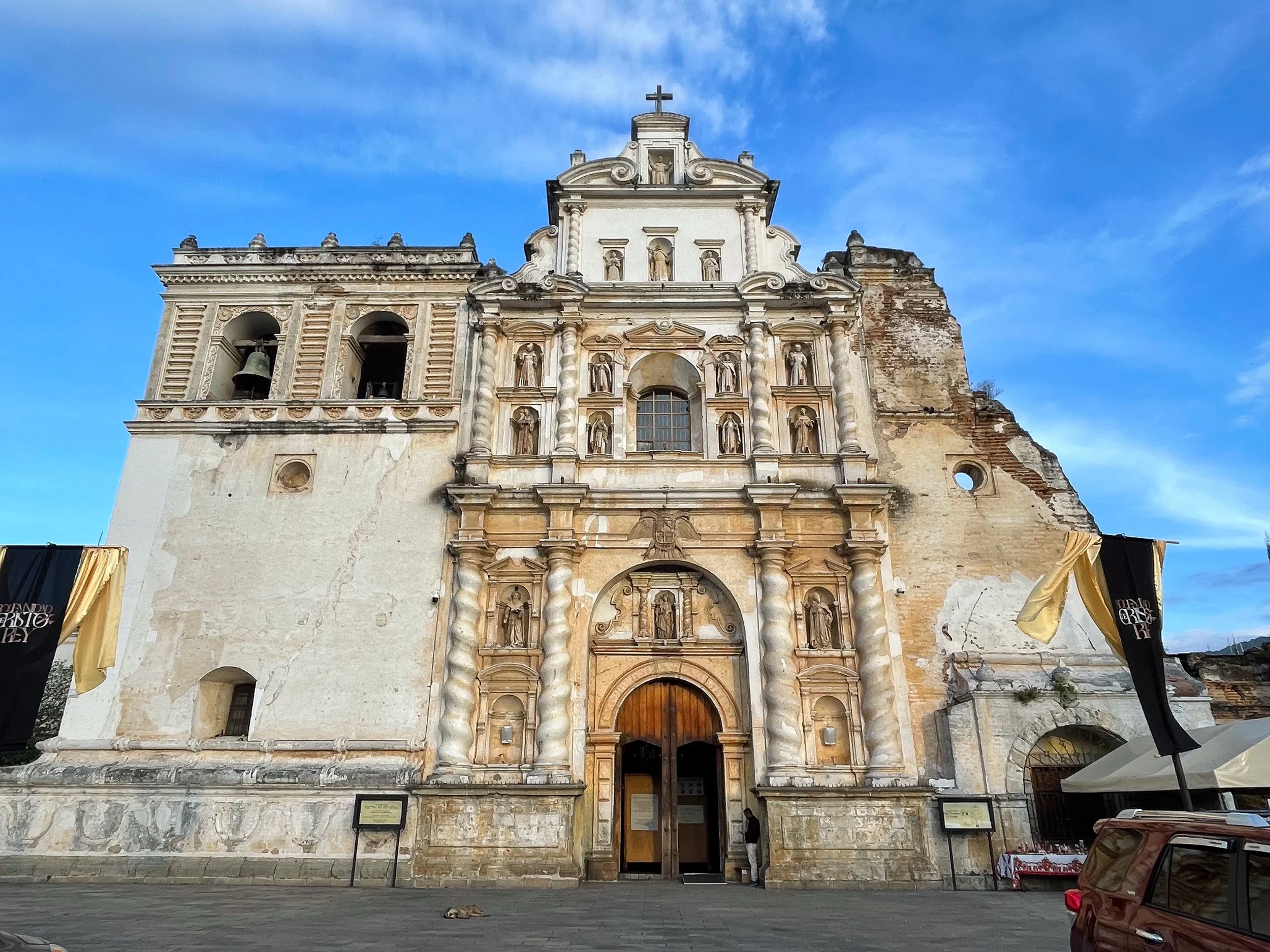
Iglesia de San Francisco. A restored church with a partially collapsed facade and grounds with the crumbling ruins of a former monastery used by the friars. Within the grounds are lush gardens home to nesting green parrots and walkways leading to a second floor with views of the volcanoes.
Iglesia San Jerónimo. The ruins of a former church. All that remains is a grassy courtyard with a restored fountain and some accessible cloisters.
Visit the Museums
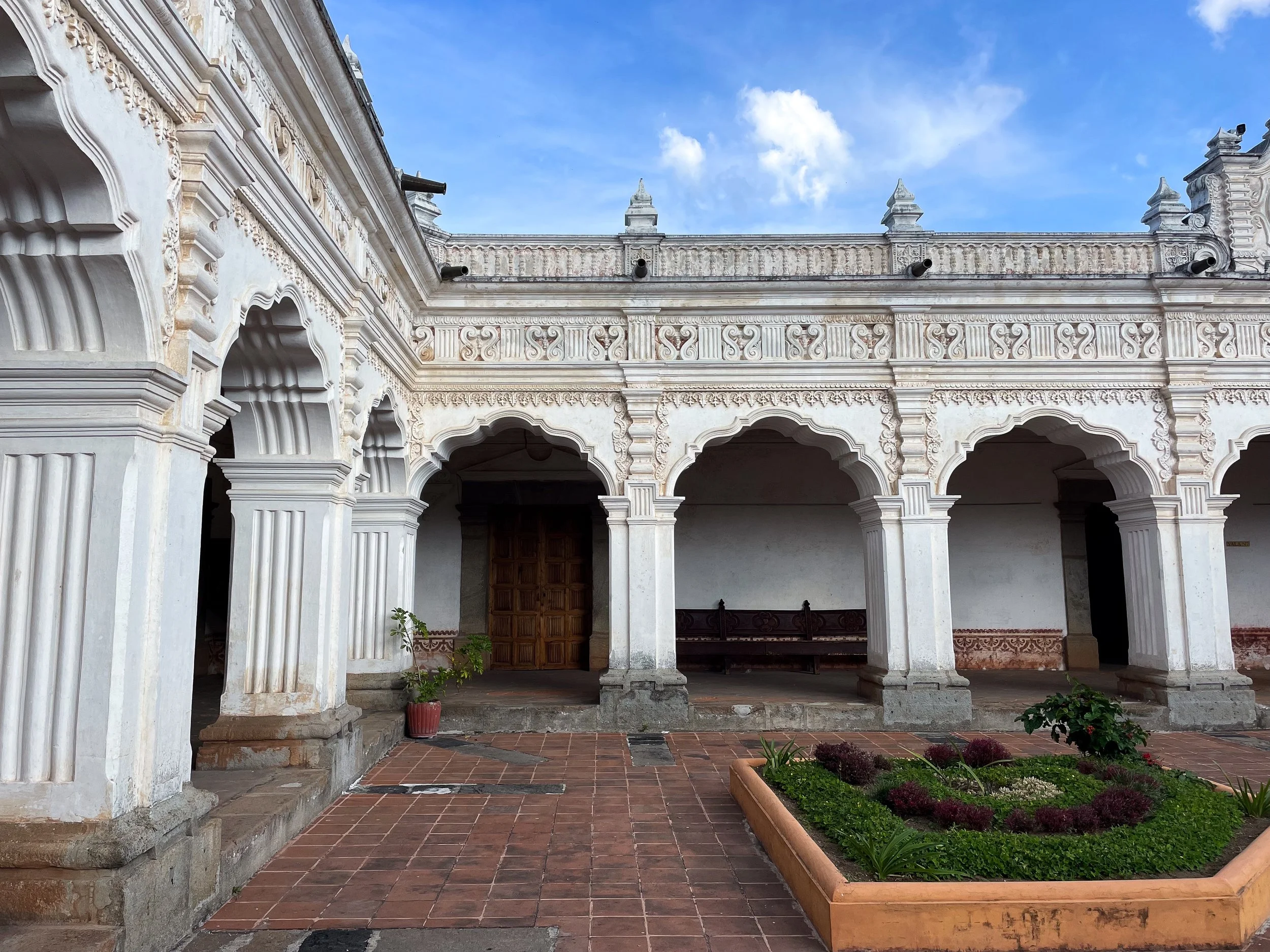
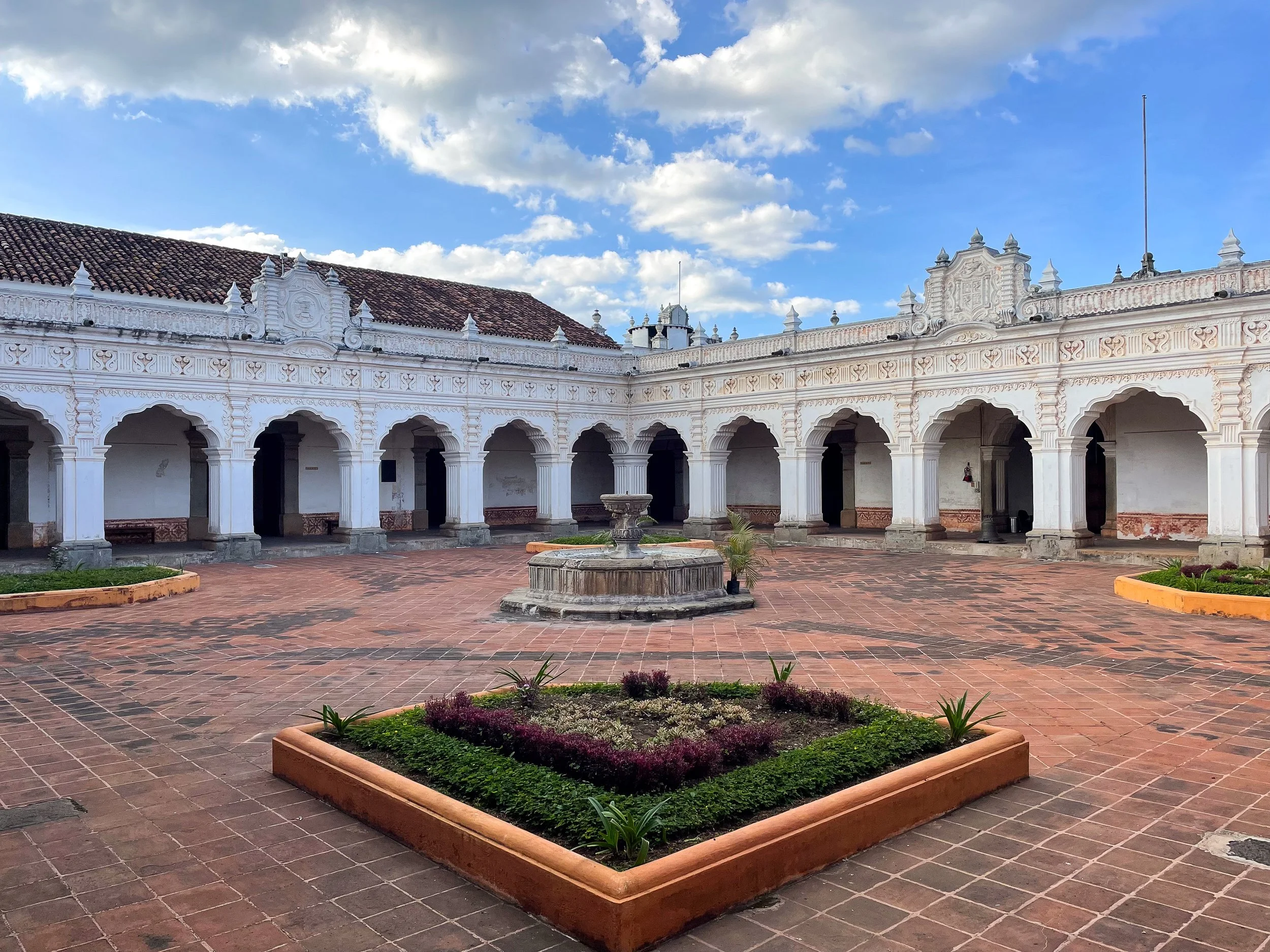
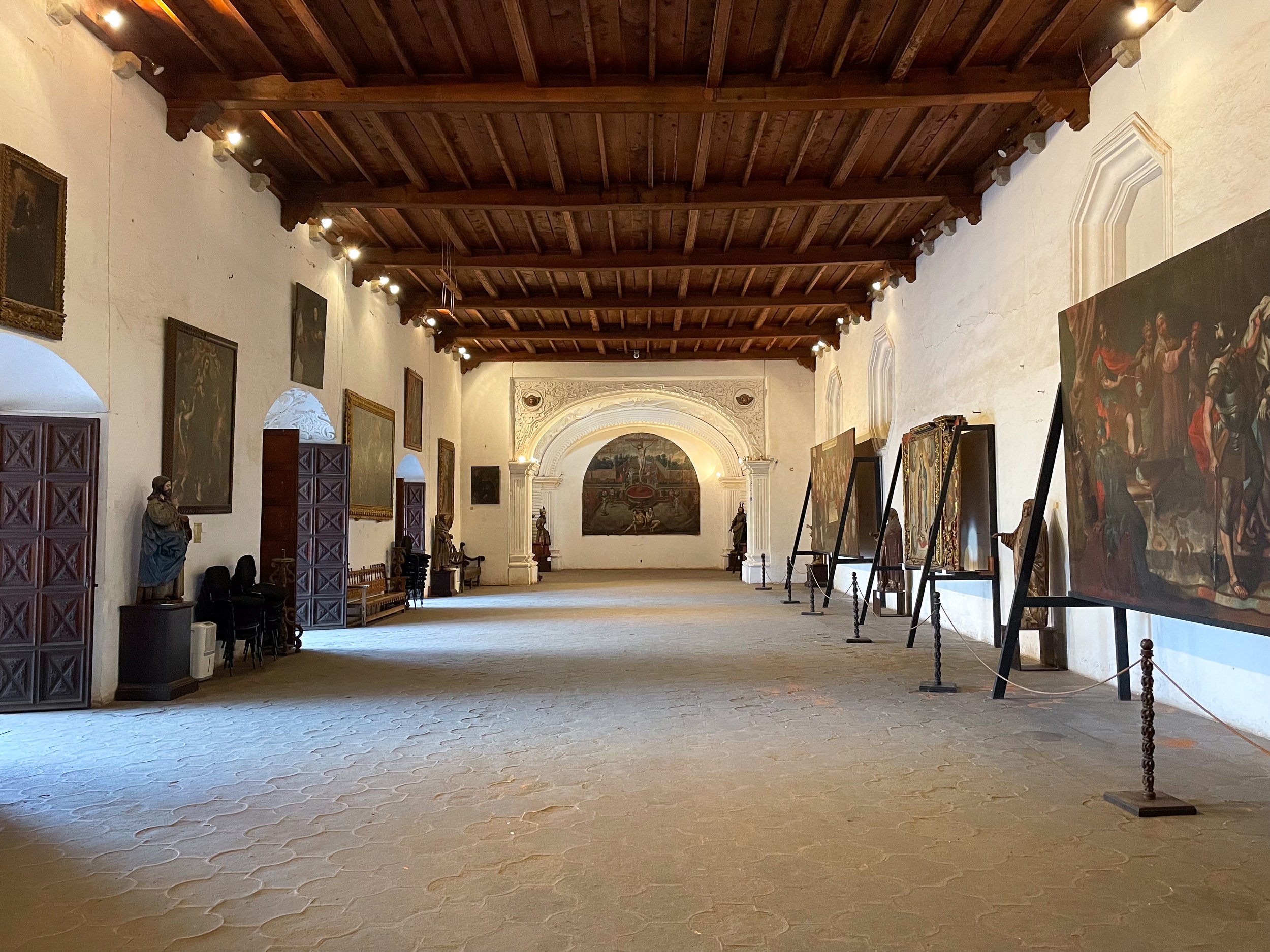
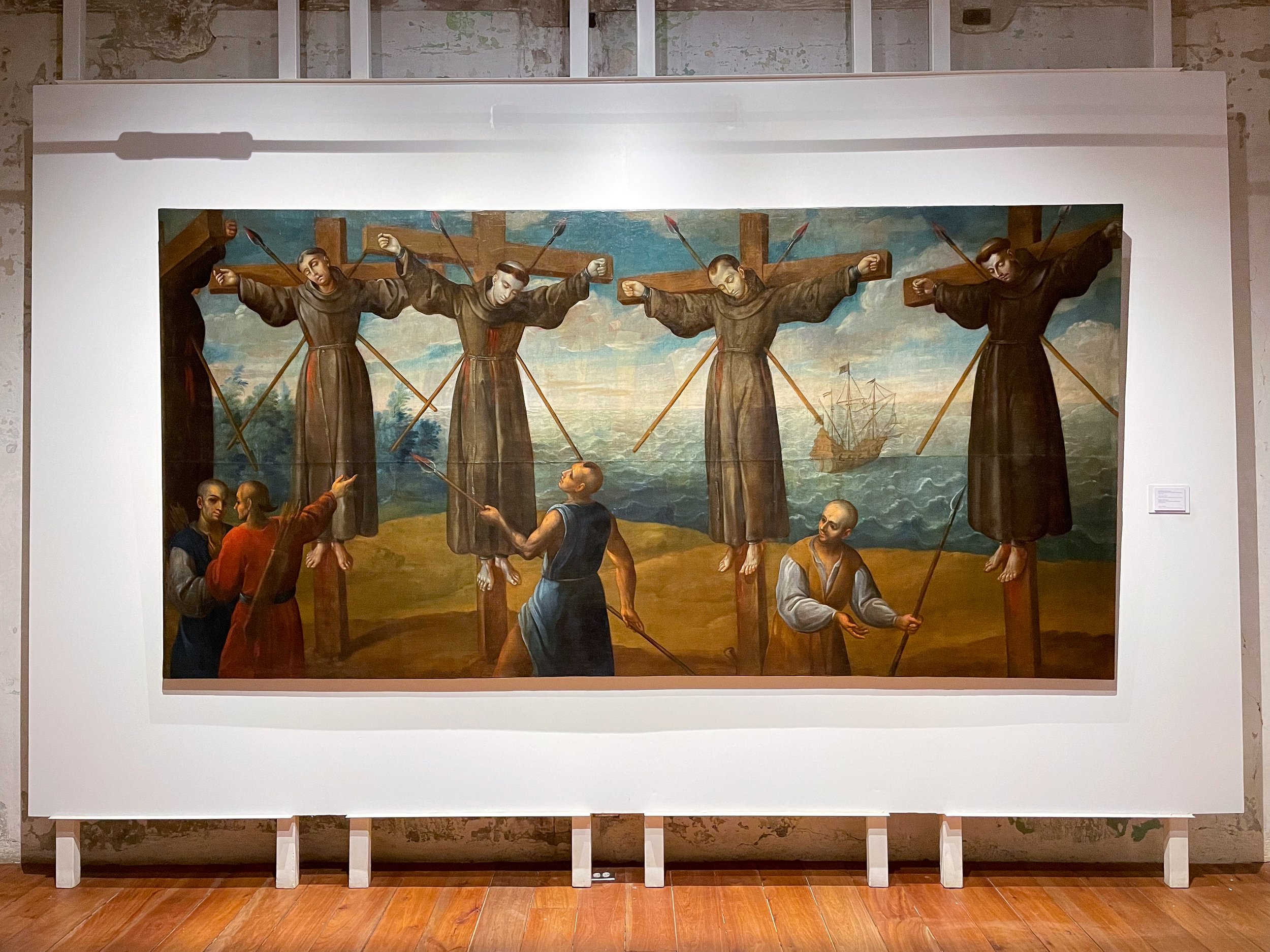
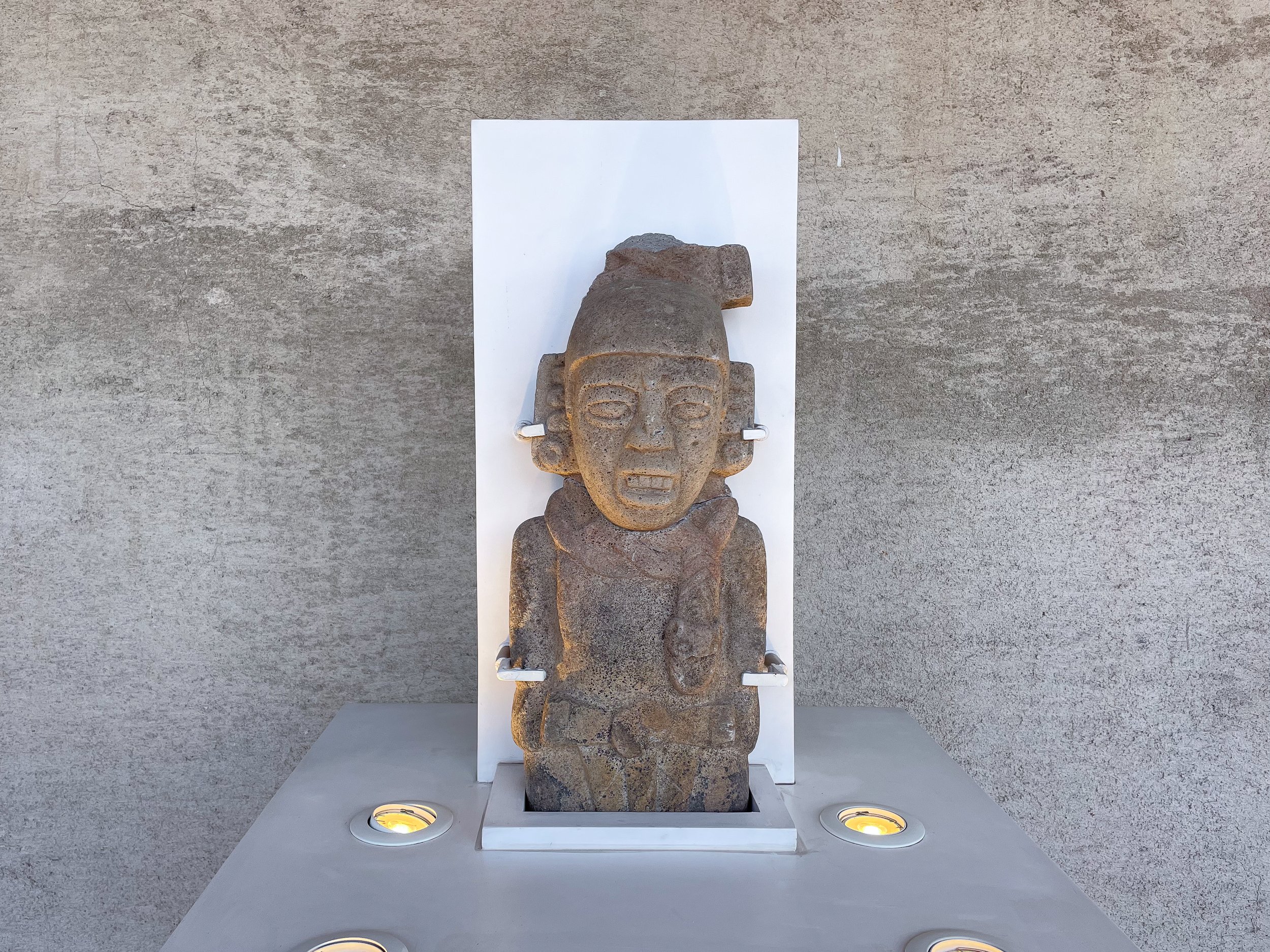
Museo de Arte Colonial. A colonial art museum with galleries of religious paintings and artifacts. The museum is one of the few buildings not destroyed during the 1773 earthquake and featured on the 100 Quetzal bill.
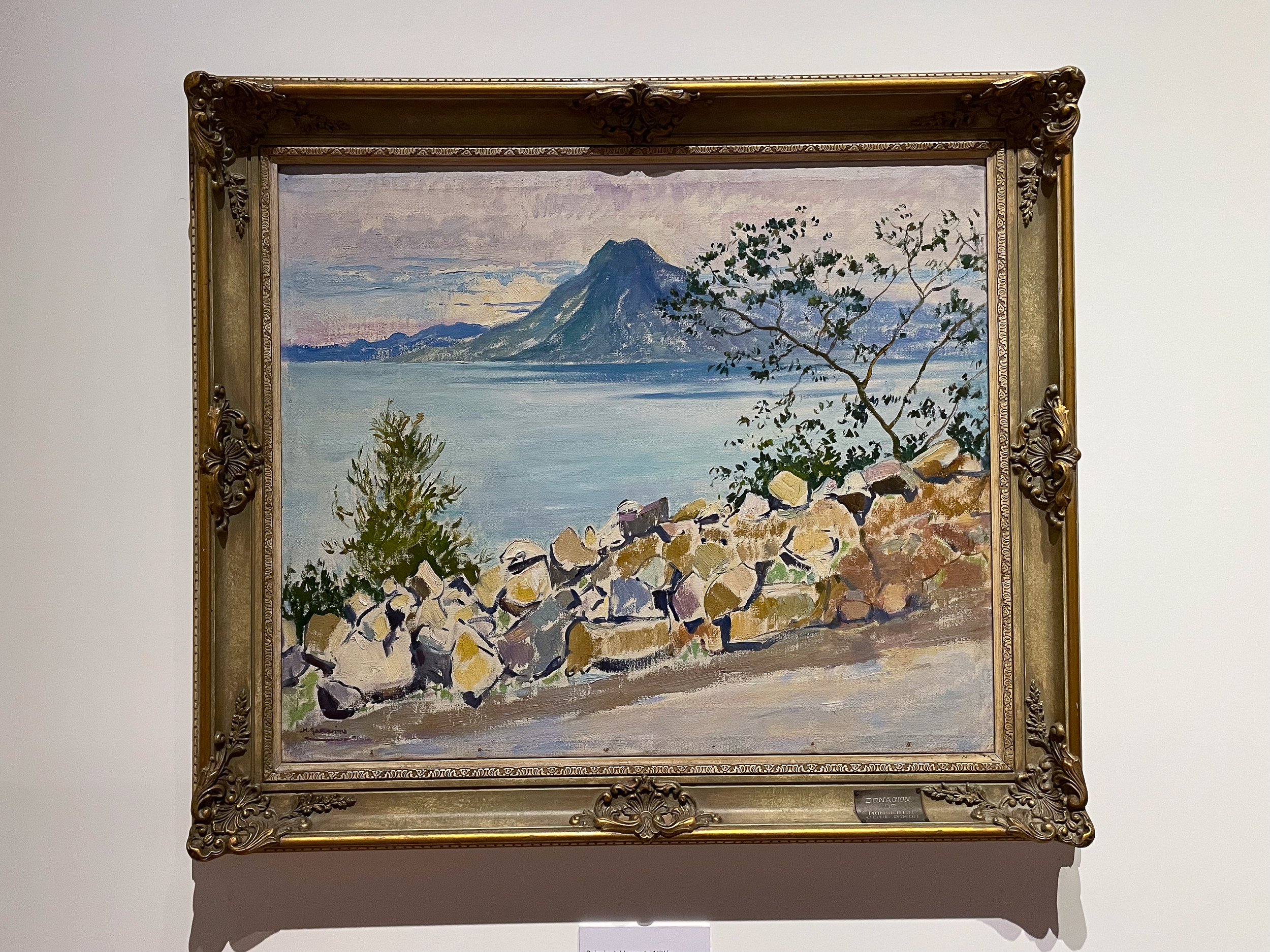
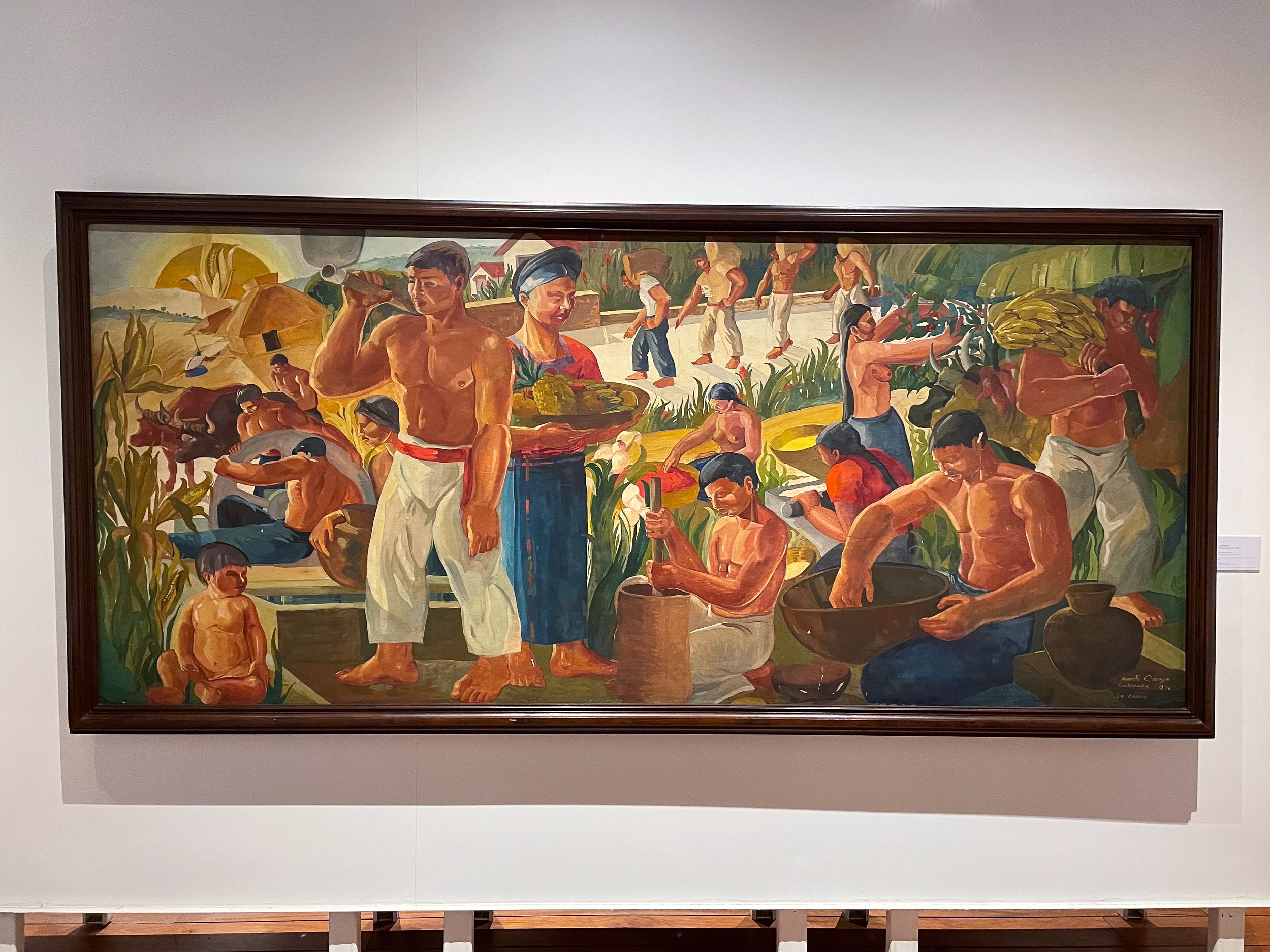
Museo Nacional de Arte de Guatemala (MUNAG). A Guatemalan art museum adjacent to the Parque Central. It includes paintings of the country’s landscapes, Mayan people, Guatemala’s declaration of independence, iron cannons, religious artwork and pre-Colombian artifacts.
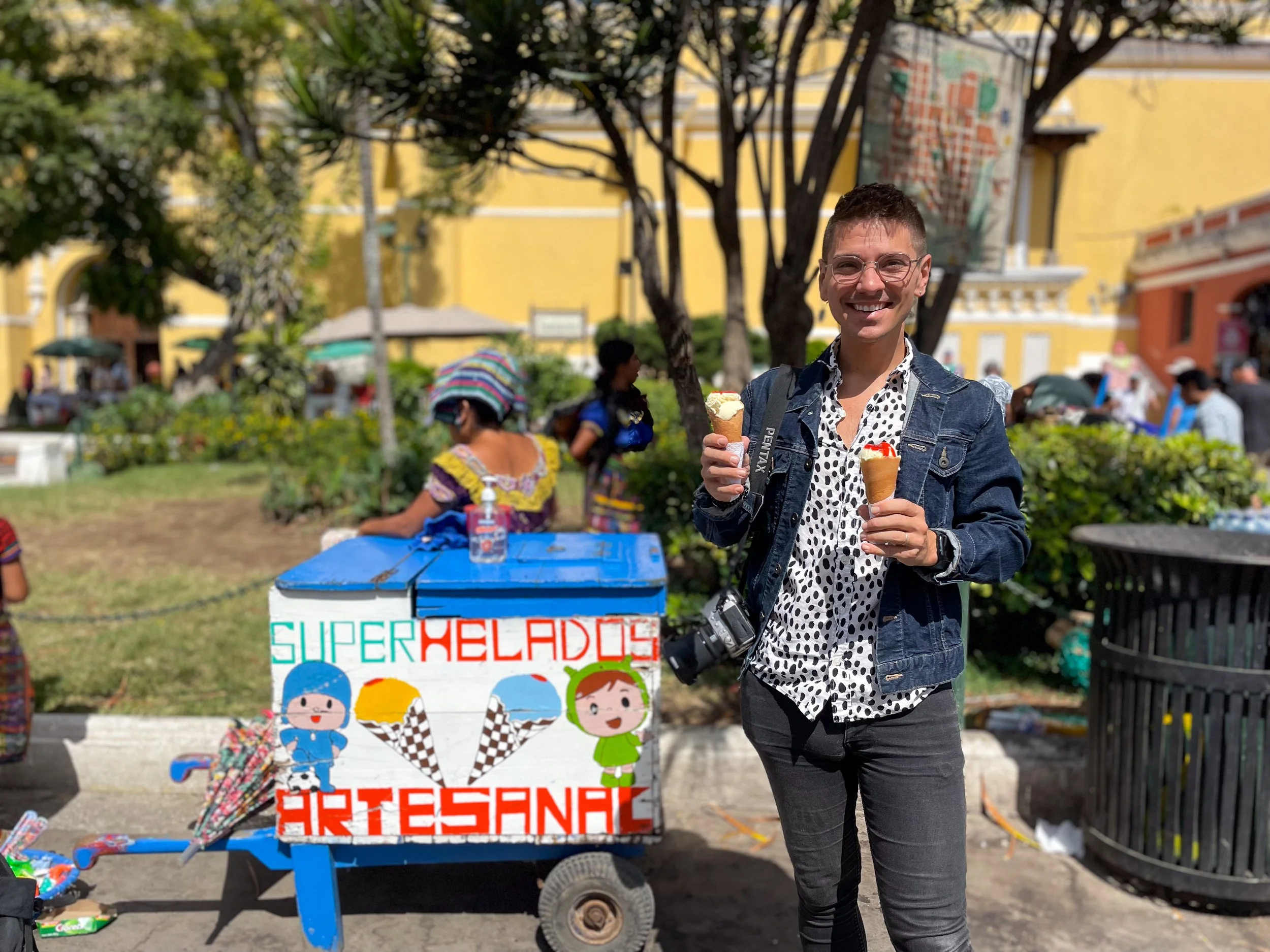
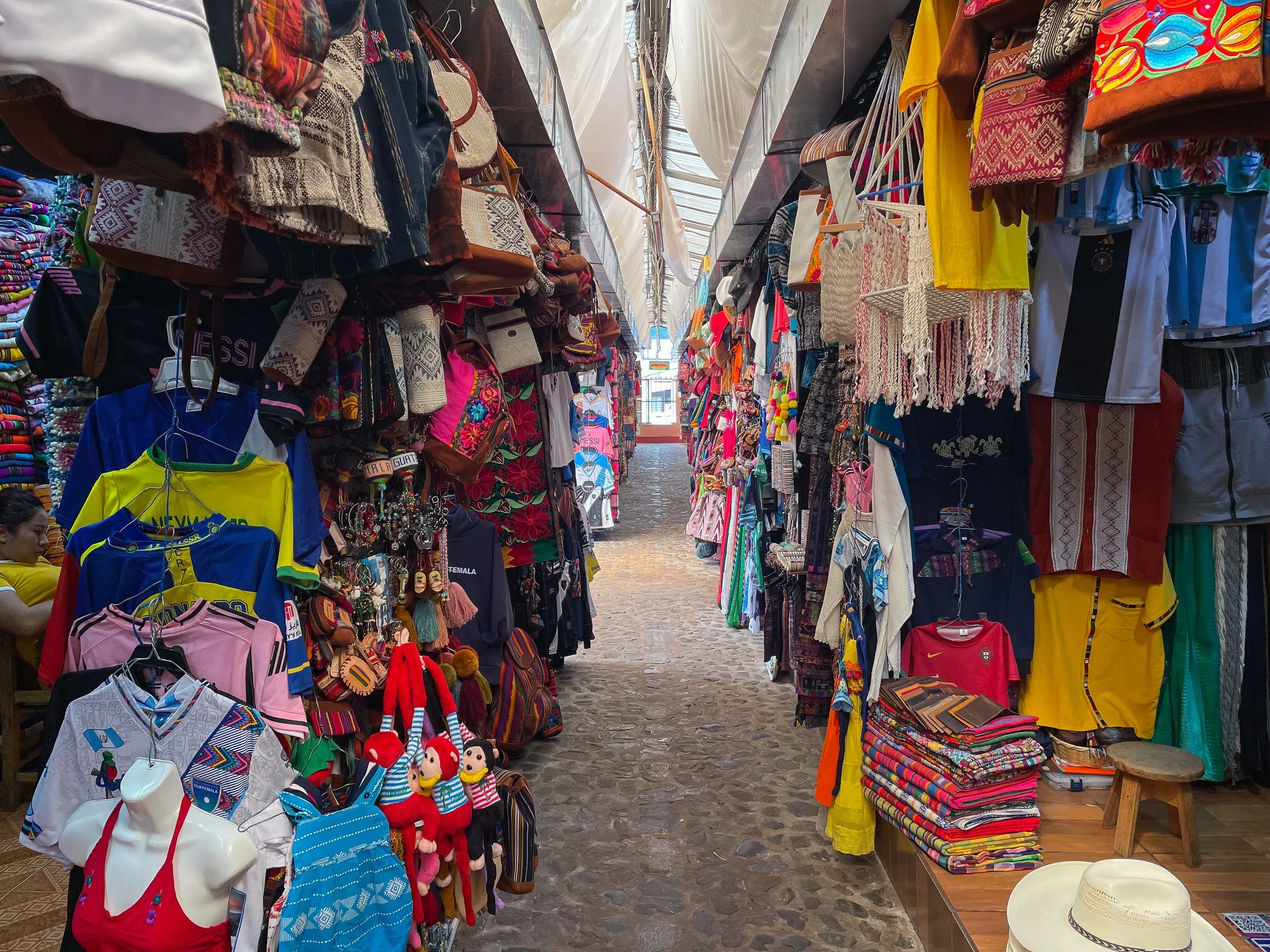
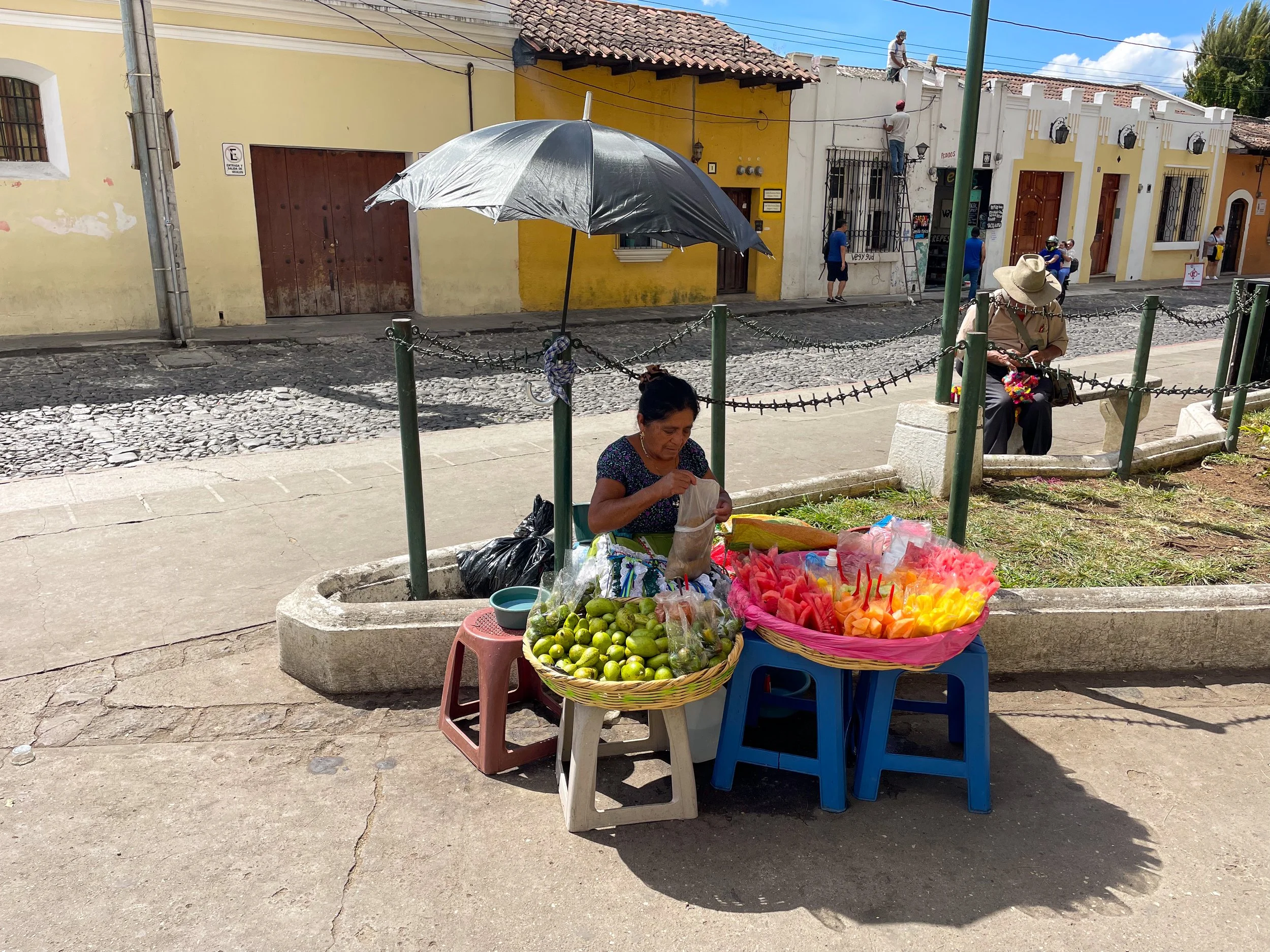
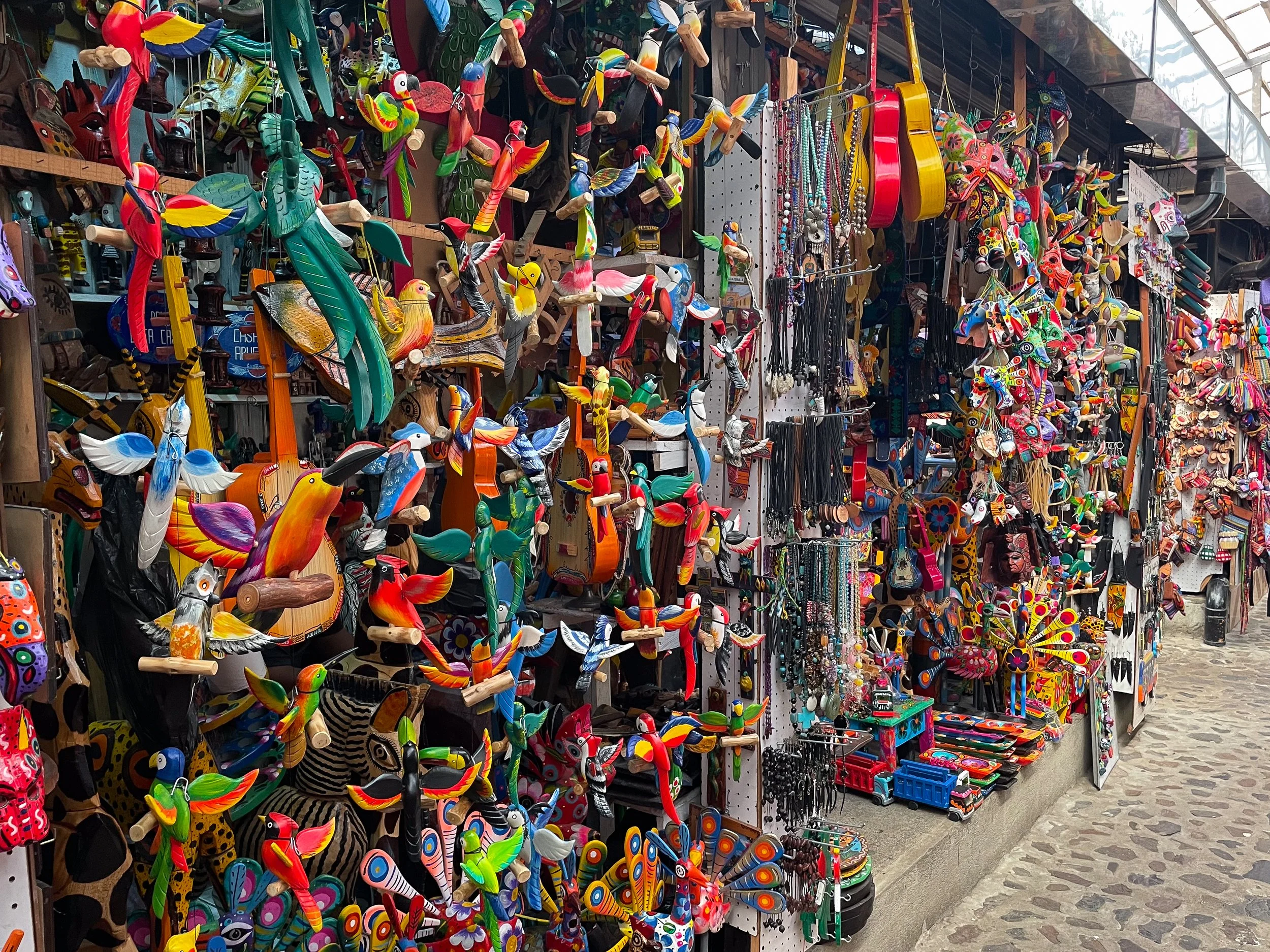
Shop the Artisan & Local Markets
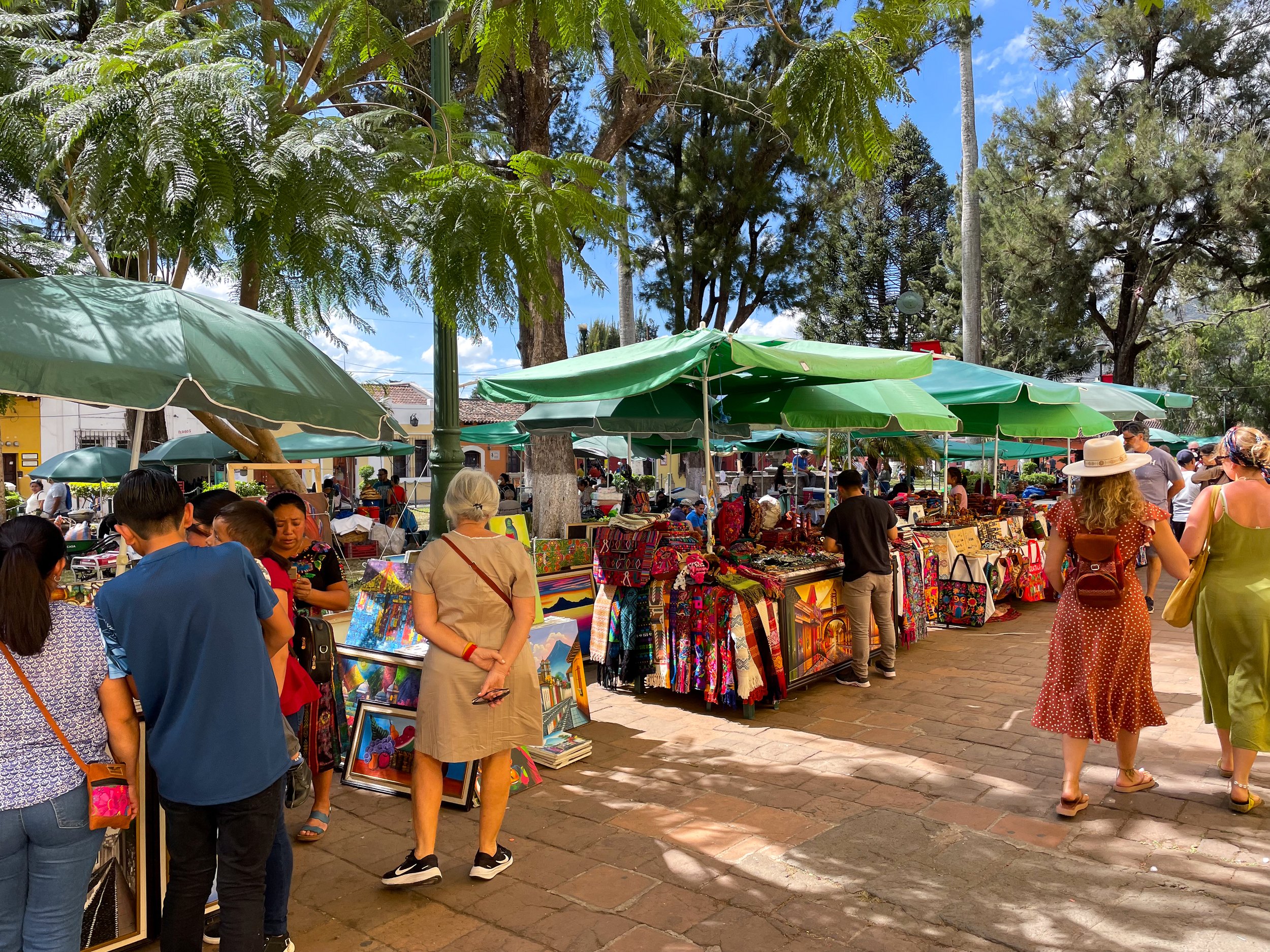
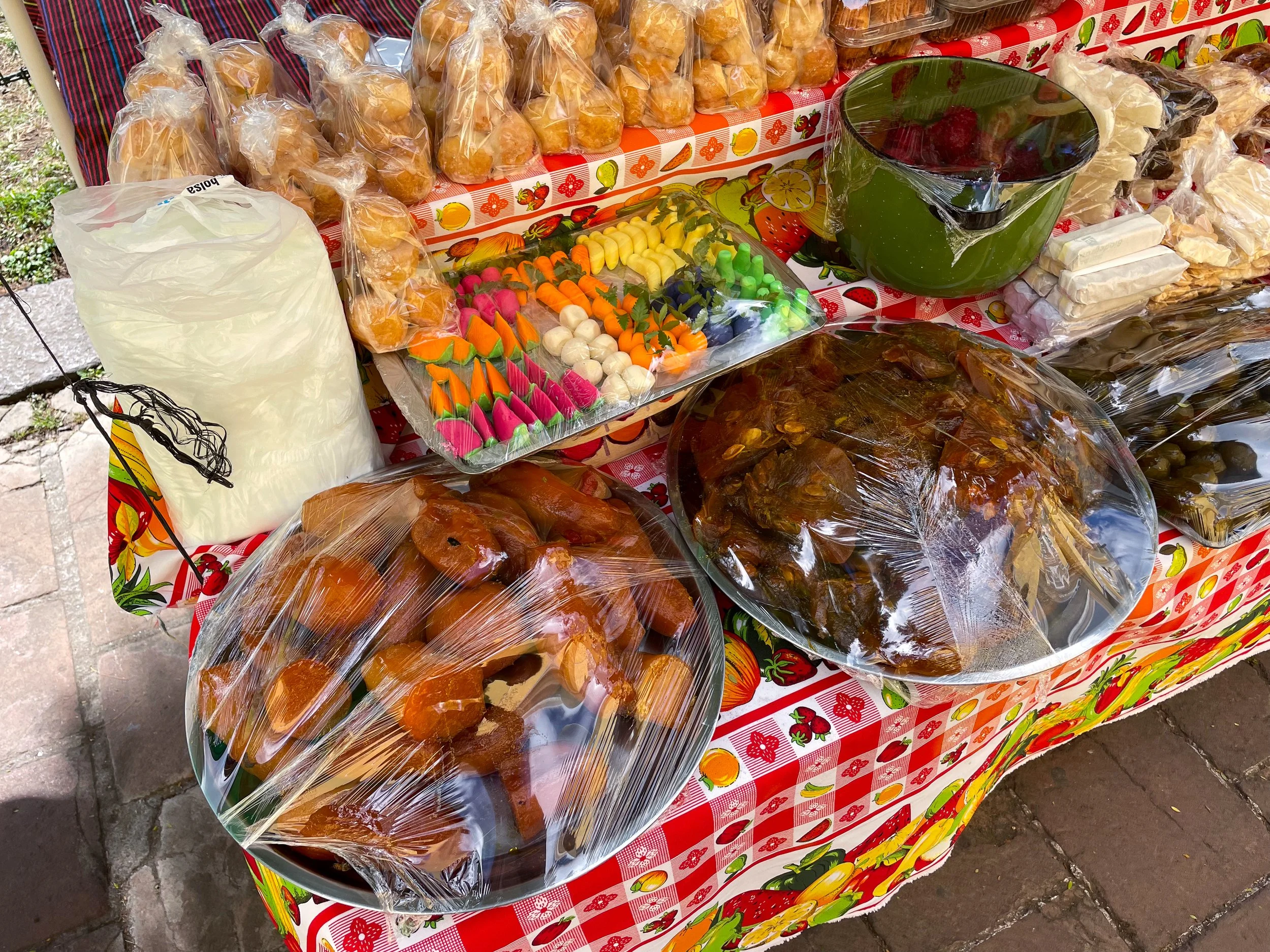
Parque la Merced. Located outside of La Iglesia de Merced, this park is brimming with food and craft vendors. It’s one of the best places in the city to find every kind of Guatemalan street food or sweet imaginable. A fountain with fish reliefs relocated from Iglesia de San Francisco is located here.
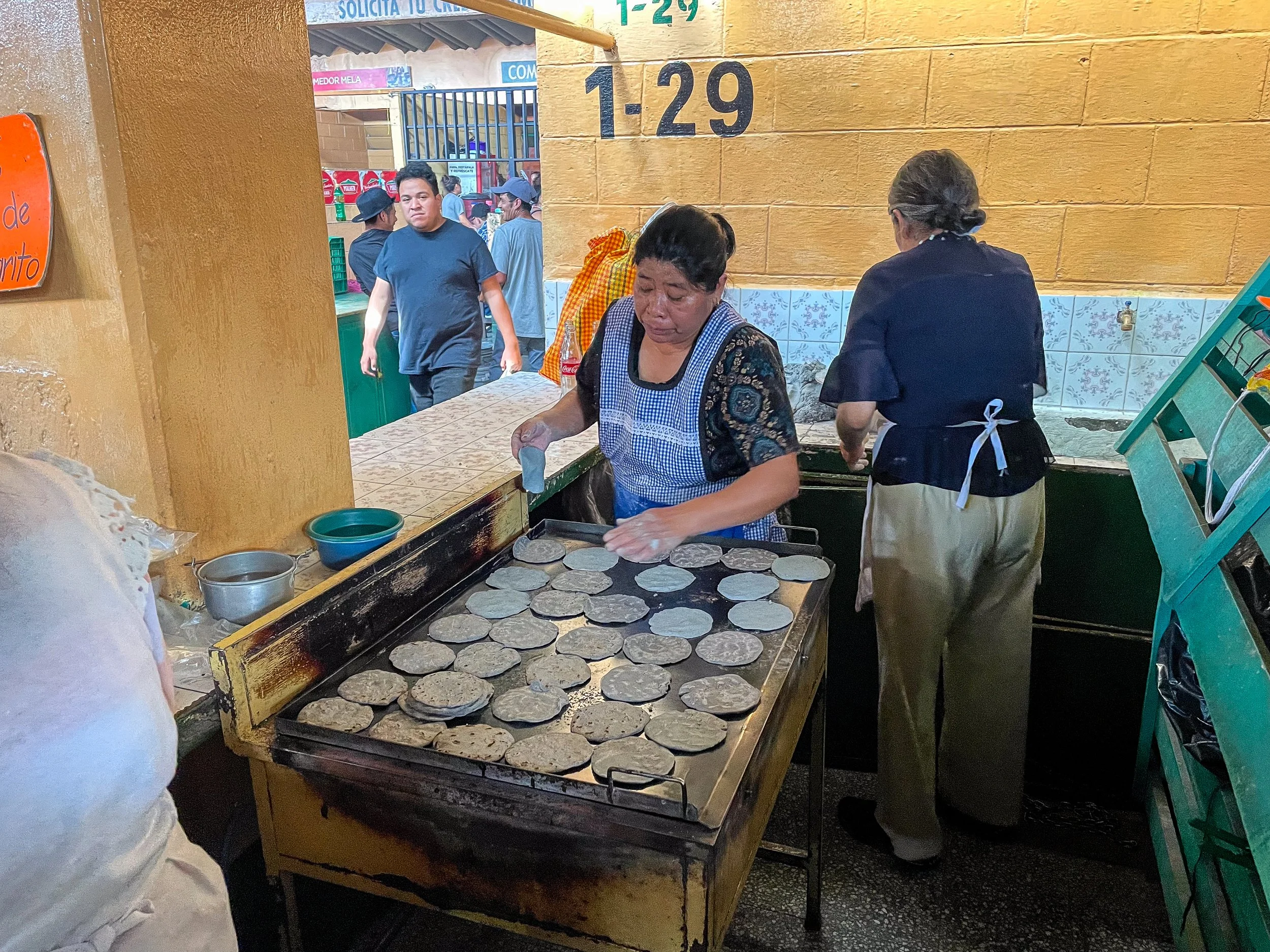
Mercado Central. A large market with a maze of aisles and booths under a patchwork tin roof. Locals come here for everyday necessities including produce, meats, flowers, shoes, clothes, electronics, appliances, toys, etc. There are restaurant stalls in a food court style pavilion. We brought home fresh purple corn tortillas from here.
Mercado de Artesanias. A beautiful handicrafts market with vendors selling colorful textiles, painted ceramics, wooden objects, jade jewelry and souvenirs. Come here to haggle and buy something locally made. We bought mugs, a tortilla blanket and an ornament.
Mercado de Artesanias El Carmen. A handicrafts market with aisles of vendors selling locally made items and souvenirs. It’s located next to the ruins of Iglesia El Carmen.
Volcanic Landscapes
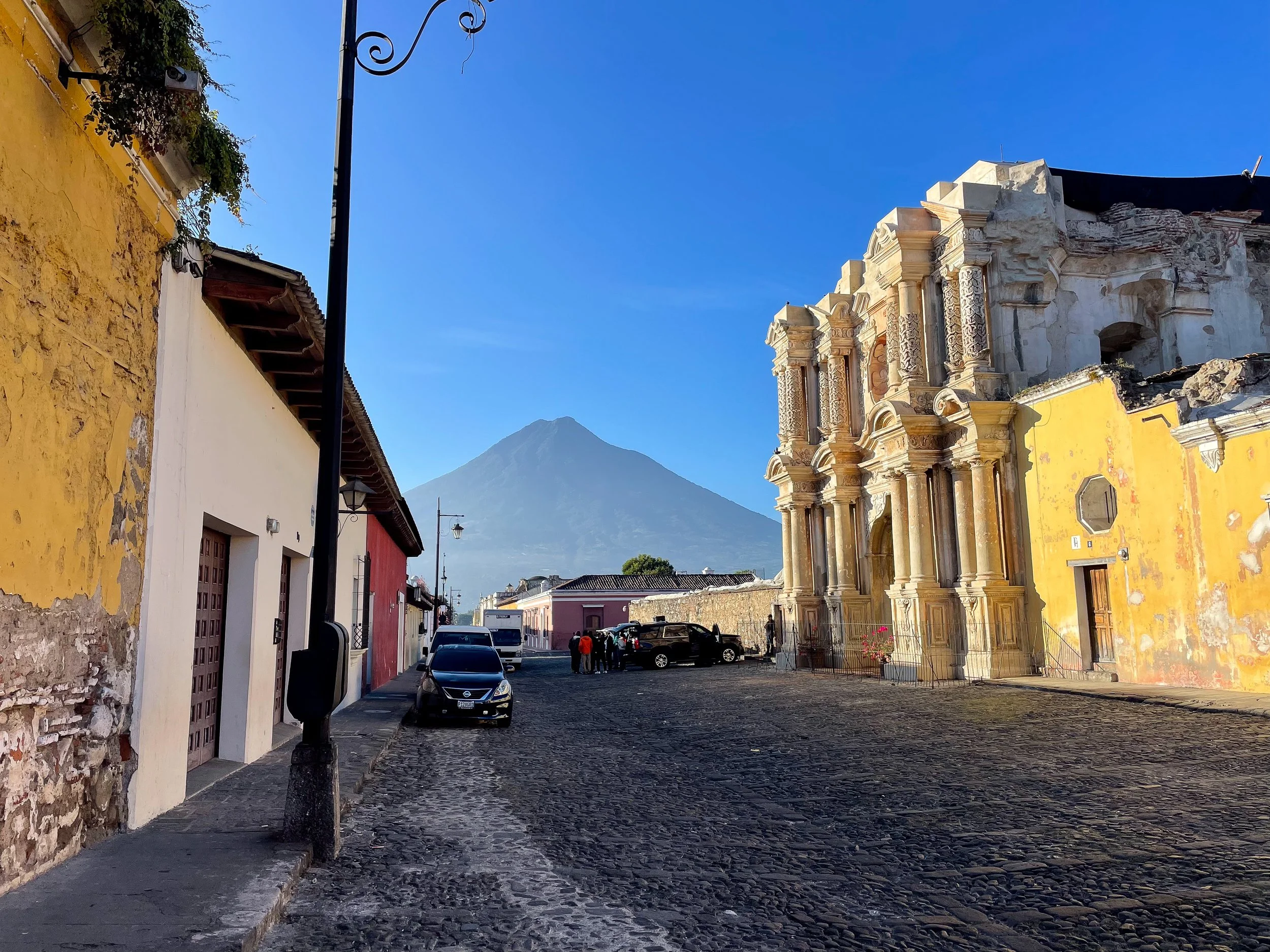
Antigua is flanked by dormant and active volcanoes providing a breathtaking landscape that creates a postcard style backdrop to the city’s colonial era streets.
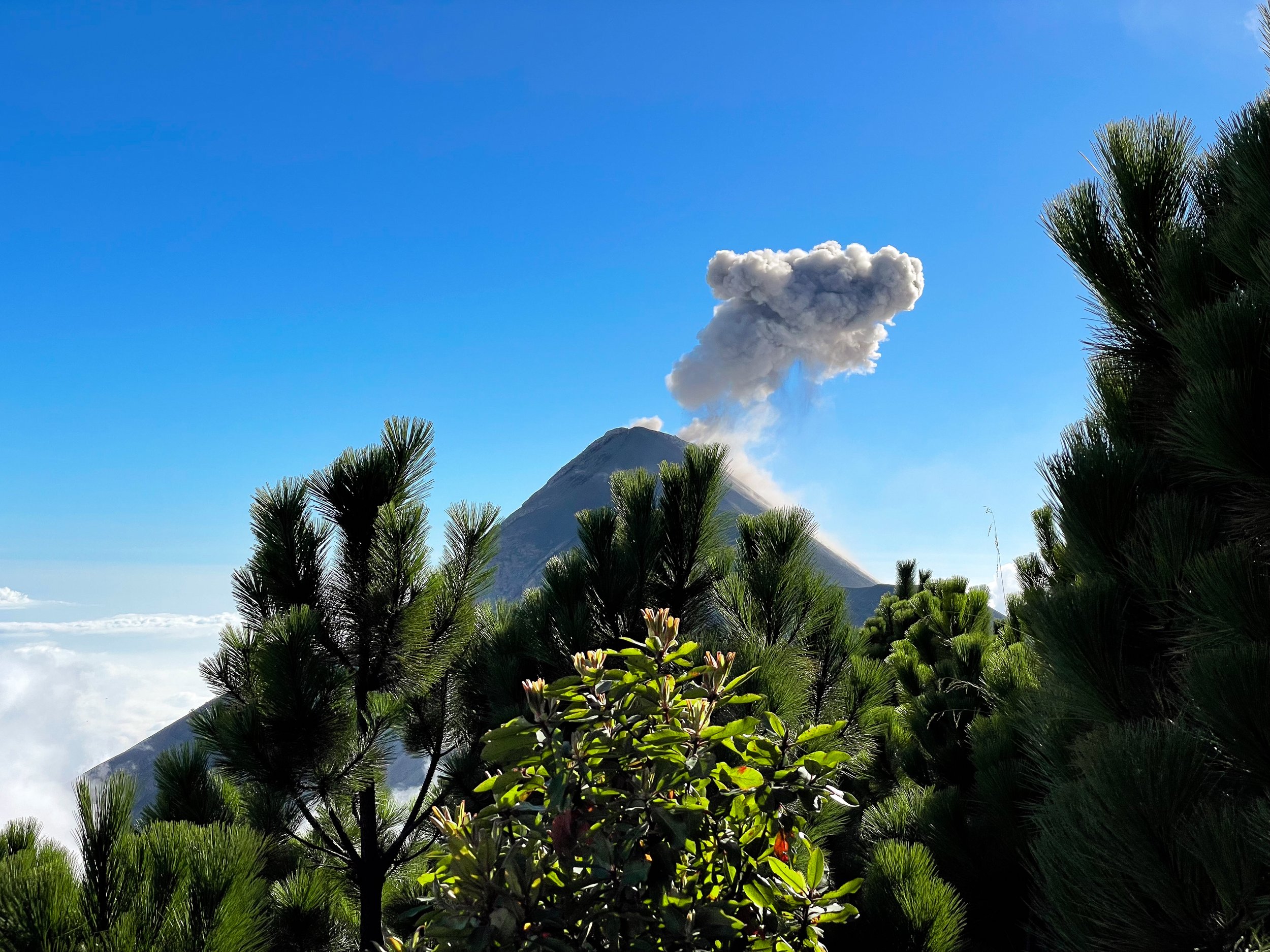
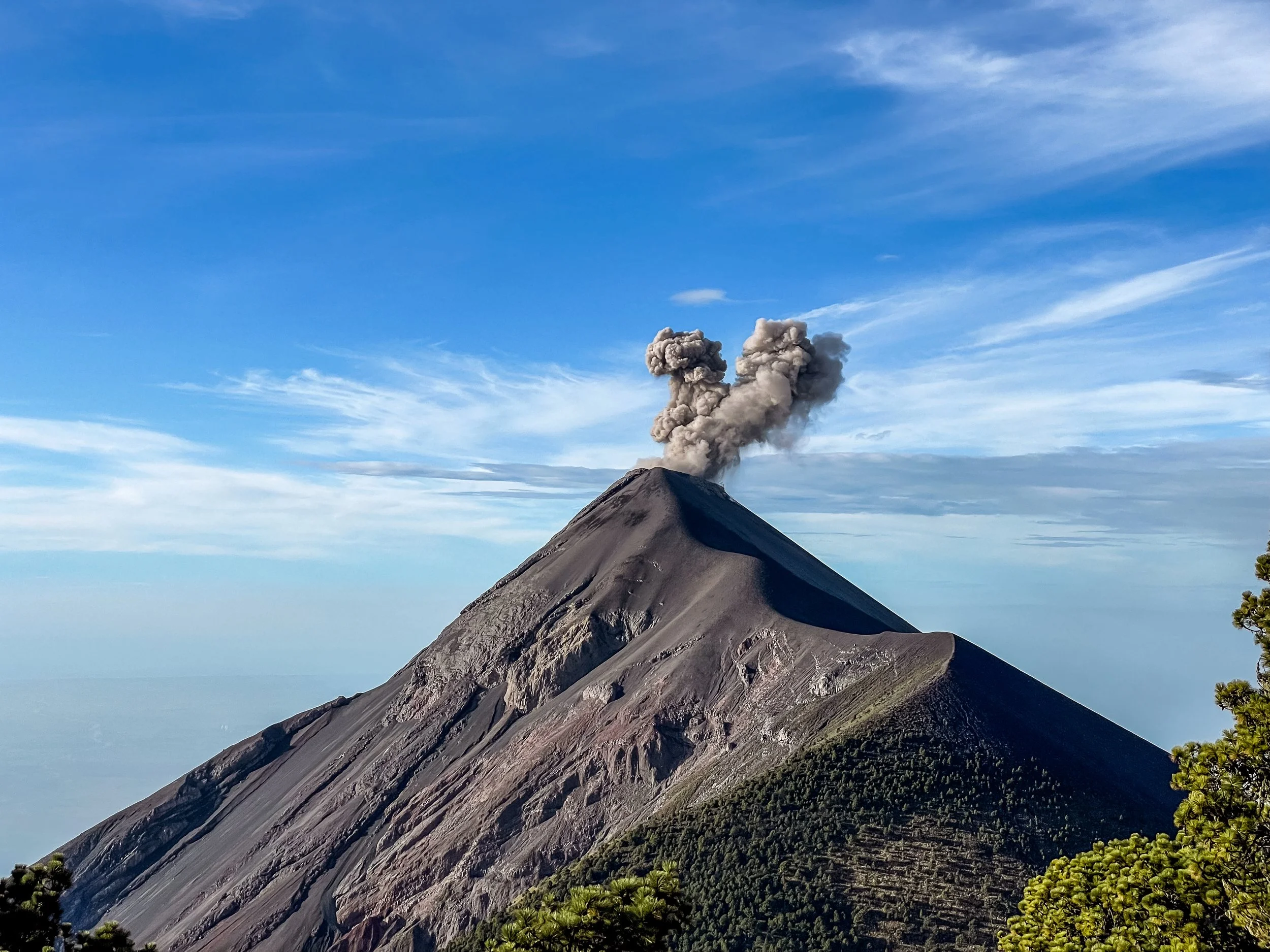
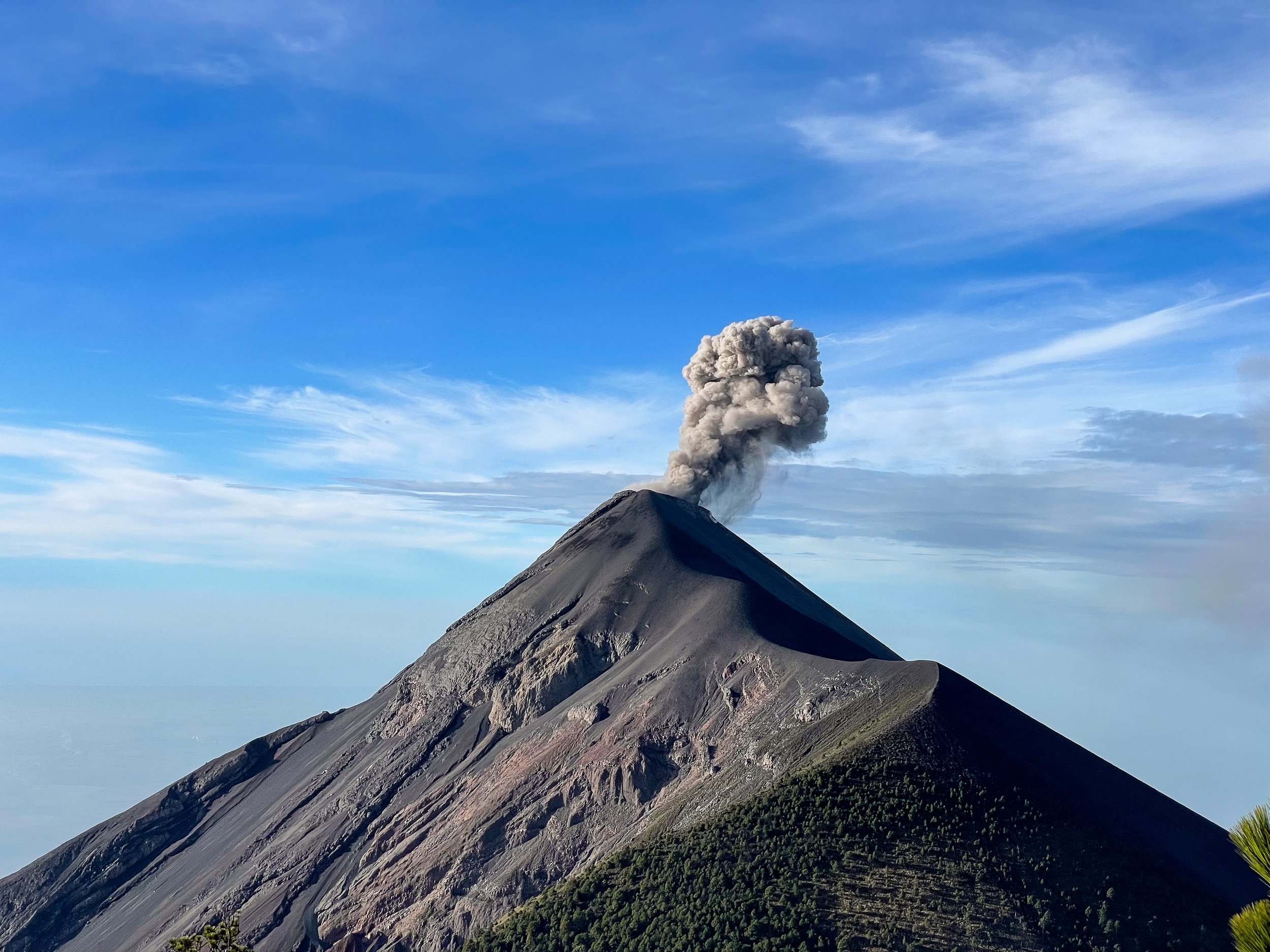
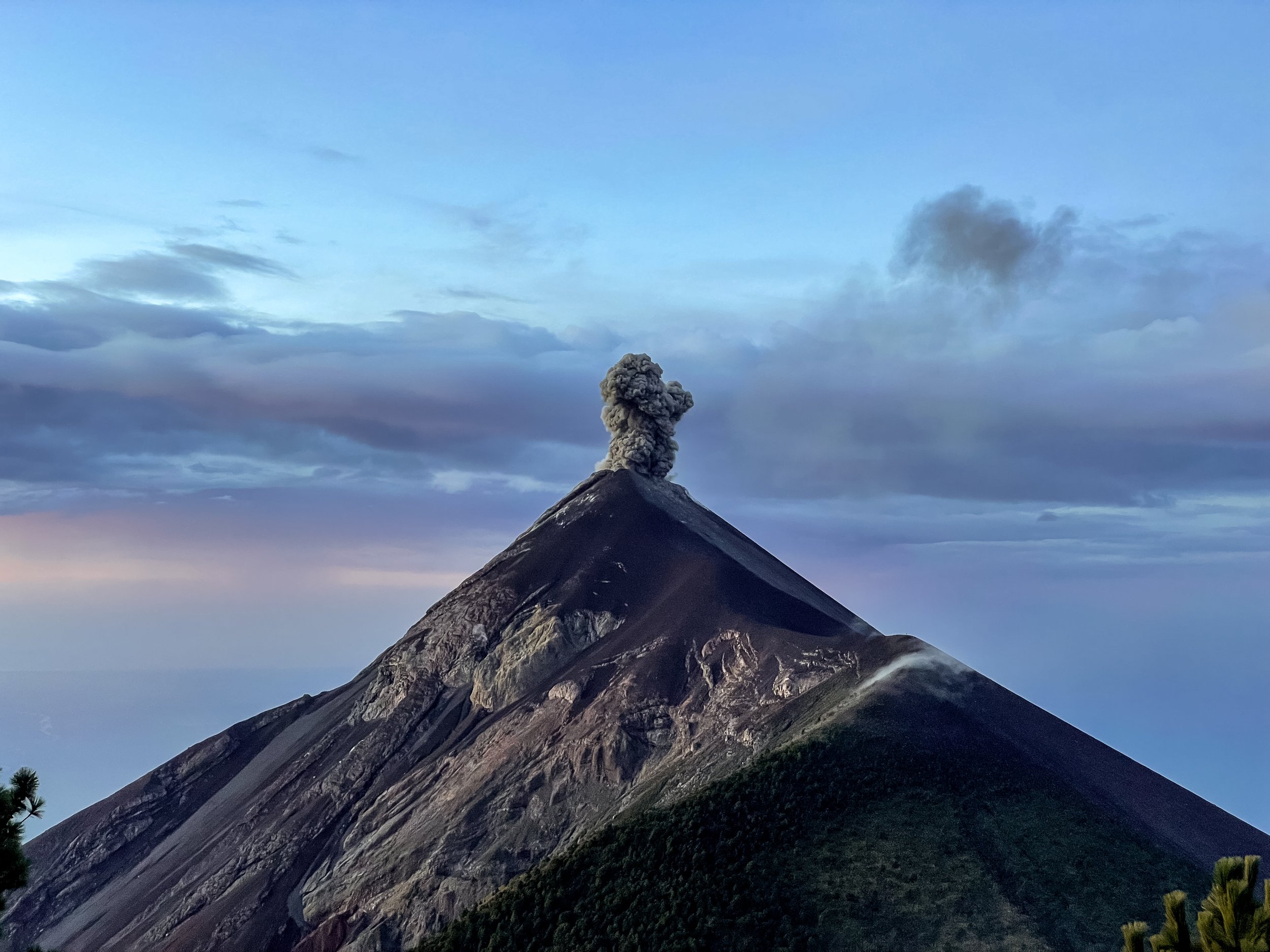
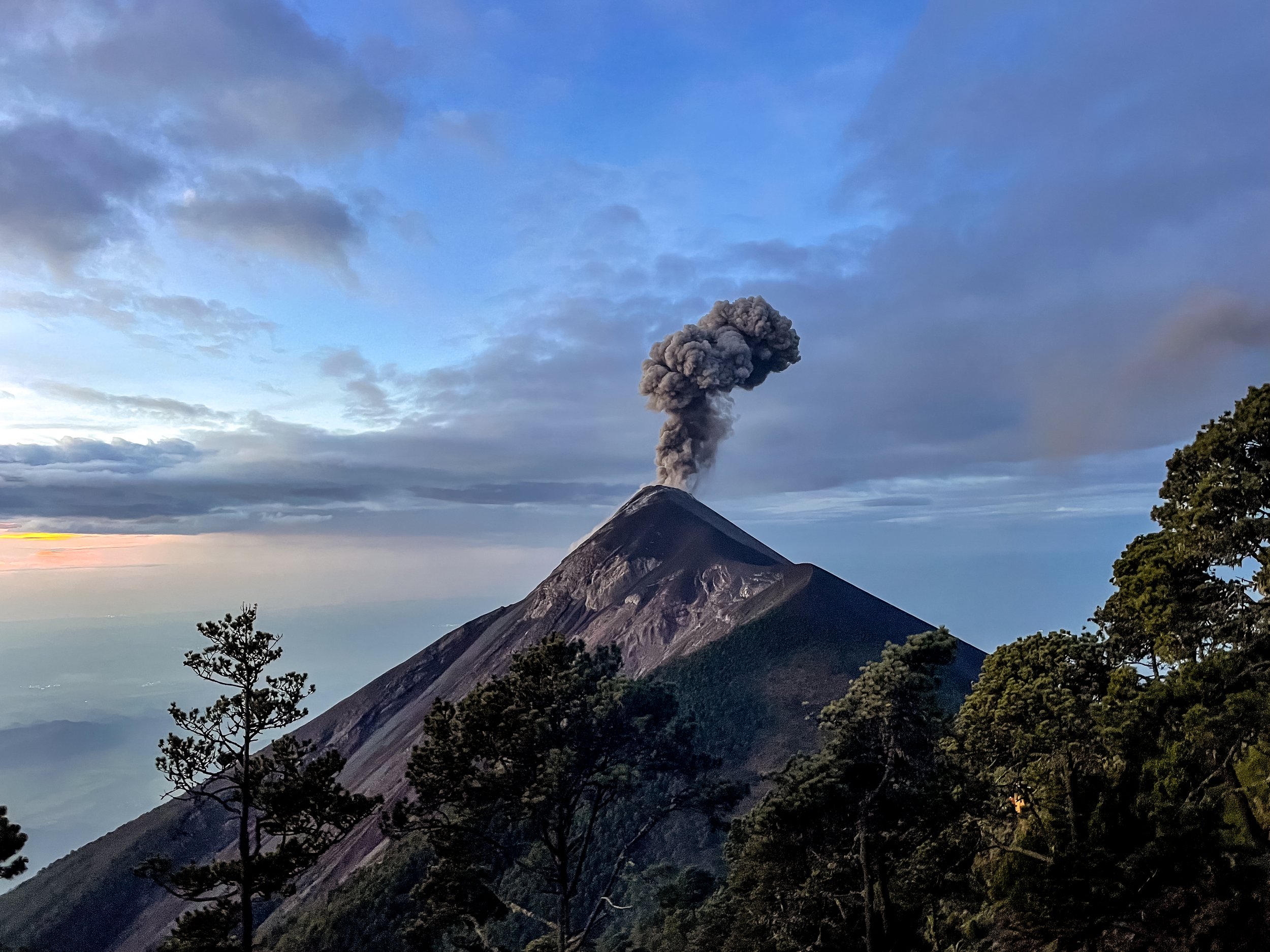
Volcán de Fuego. Known as “The Volcano of Fire,” Fuego has been continuously erupting since 2002 with bursts of lava and clouds of ash spewing from its summit every 15 to 30 minutes. Views of its eruptions can be regularly seen from Antigua both day and night.
Volcán Acatenango. The twin volcano to Fuego and tallest of the 3 surrounding Antigua. Many backpackers hike and camp overnight on its slopes to witness Fuego’s eruptions up close.
Volcán de Agua. A dormant cone shaped volcano to the south of Antigua. The best views of its summit are during the early morning before clouds settle in.
Overnight on Acatenango
Volcán de Acatenango should be on every backpacker’s wish list! We joined a guided group to hike its slopes, camp overnight, witness unclose eruptions of Volcán de Fuego and watch a beautiful sunrise. It was one of the most physically exhausting things we’ve done but equally rewarding.
Hike to Basecamp
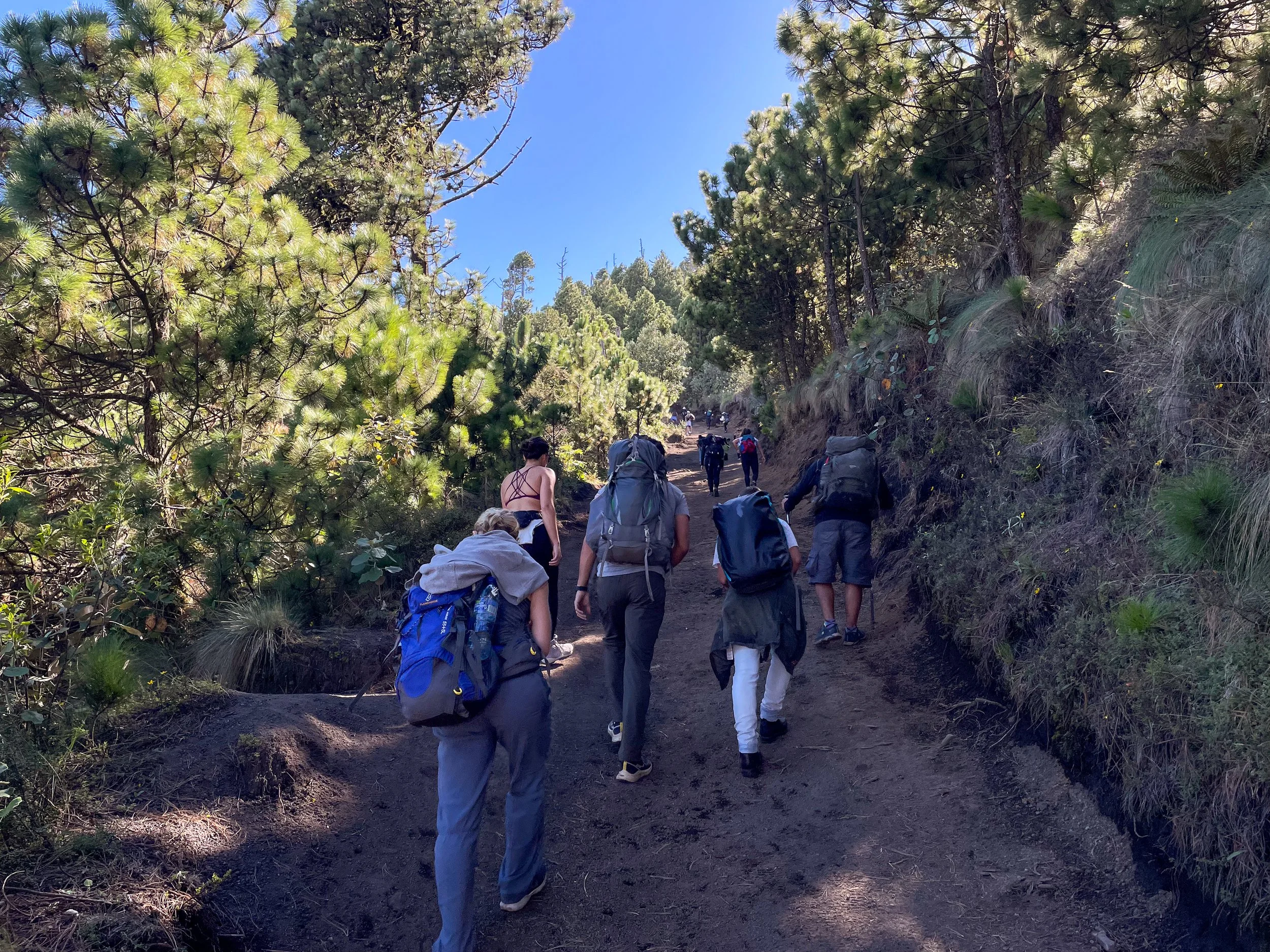
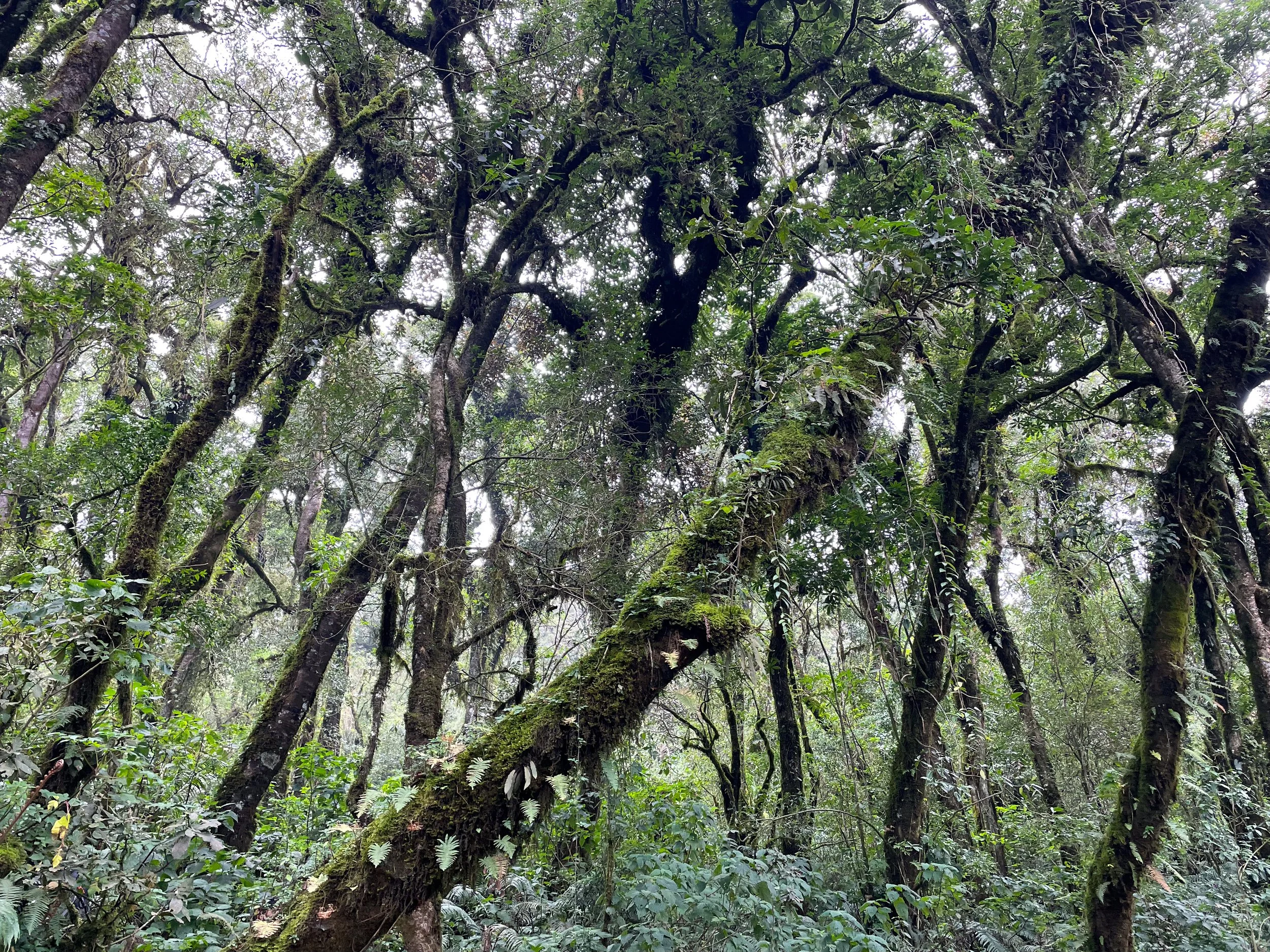
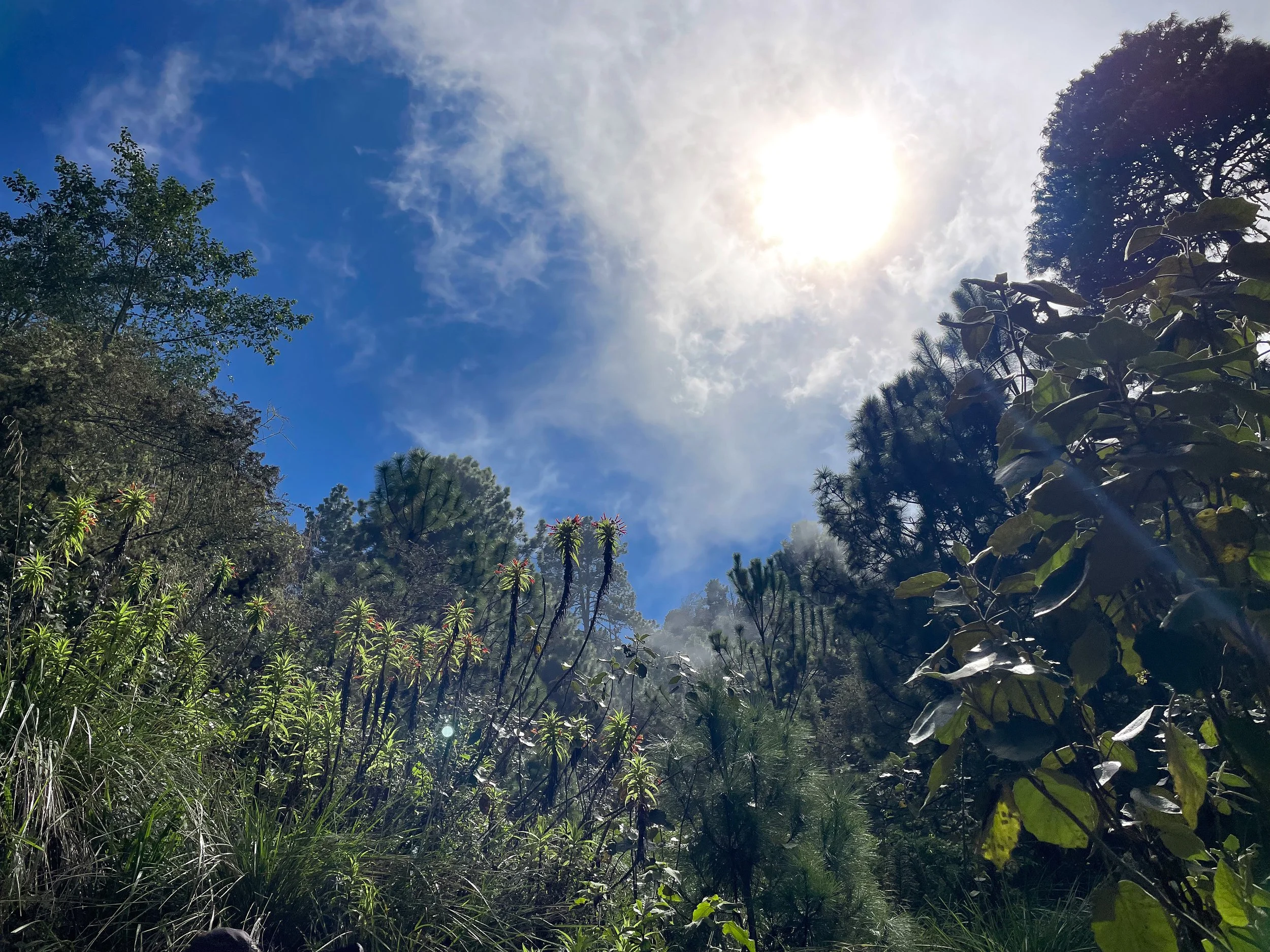
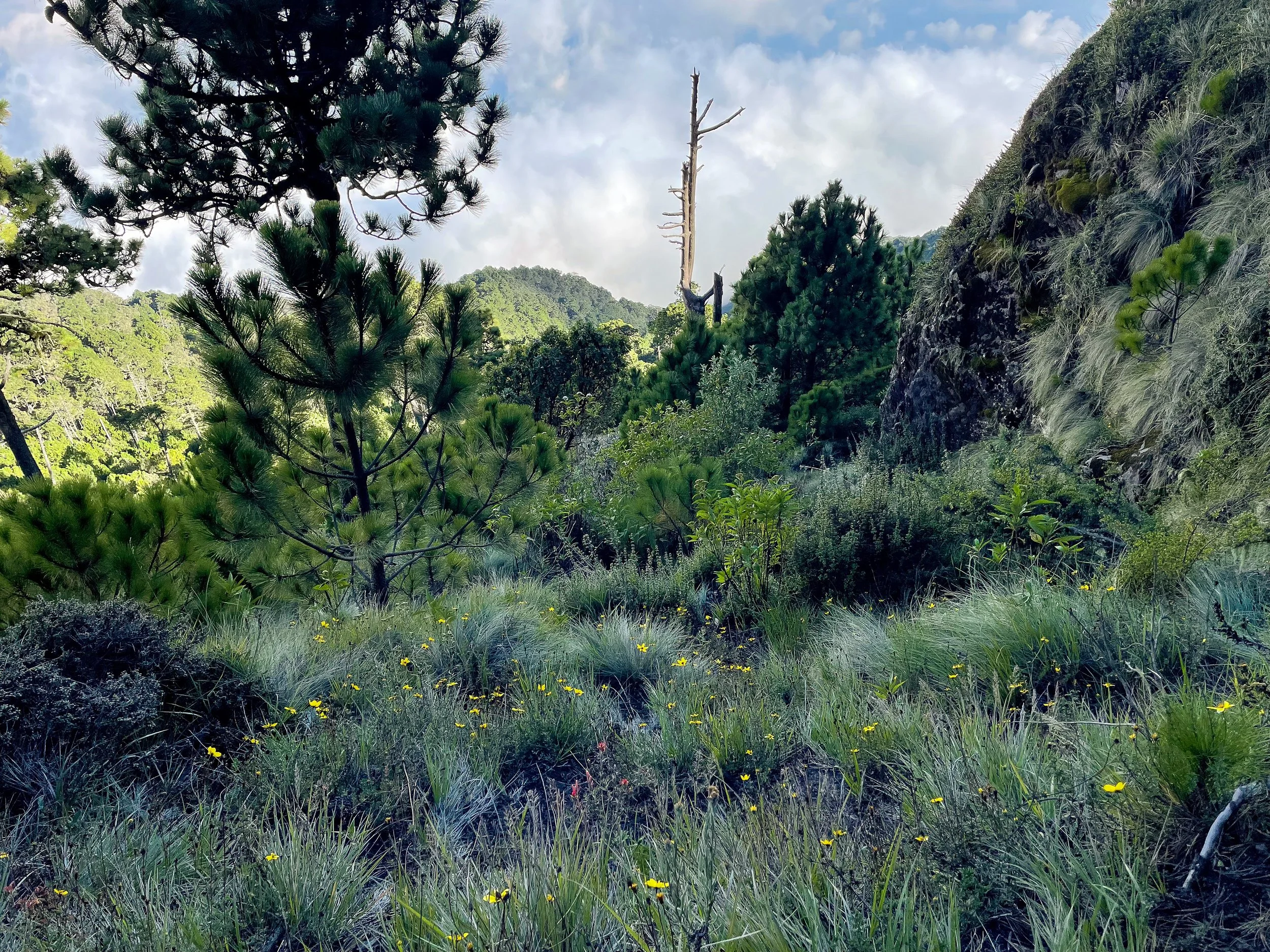
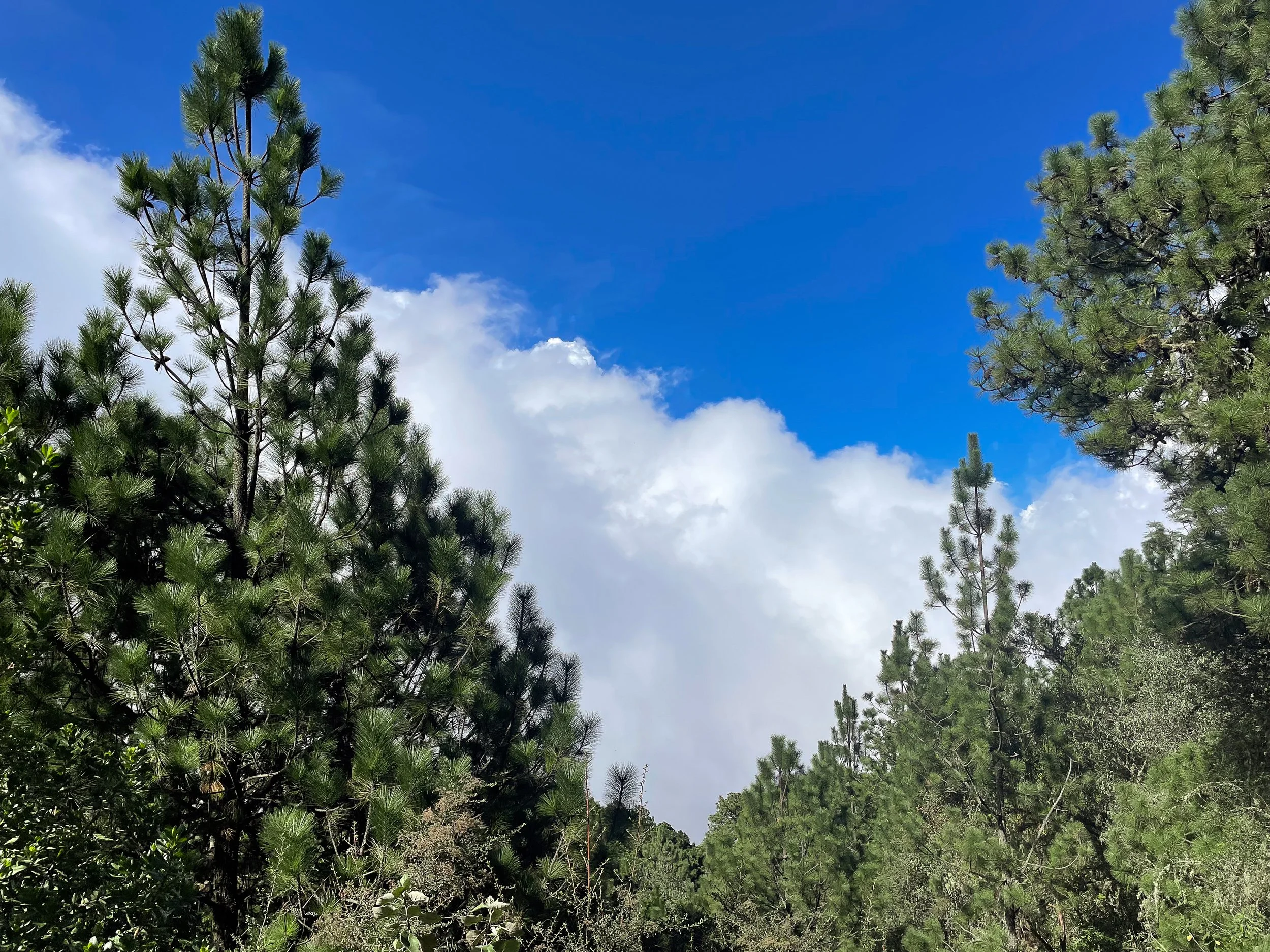
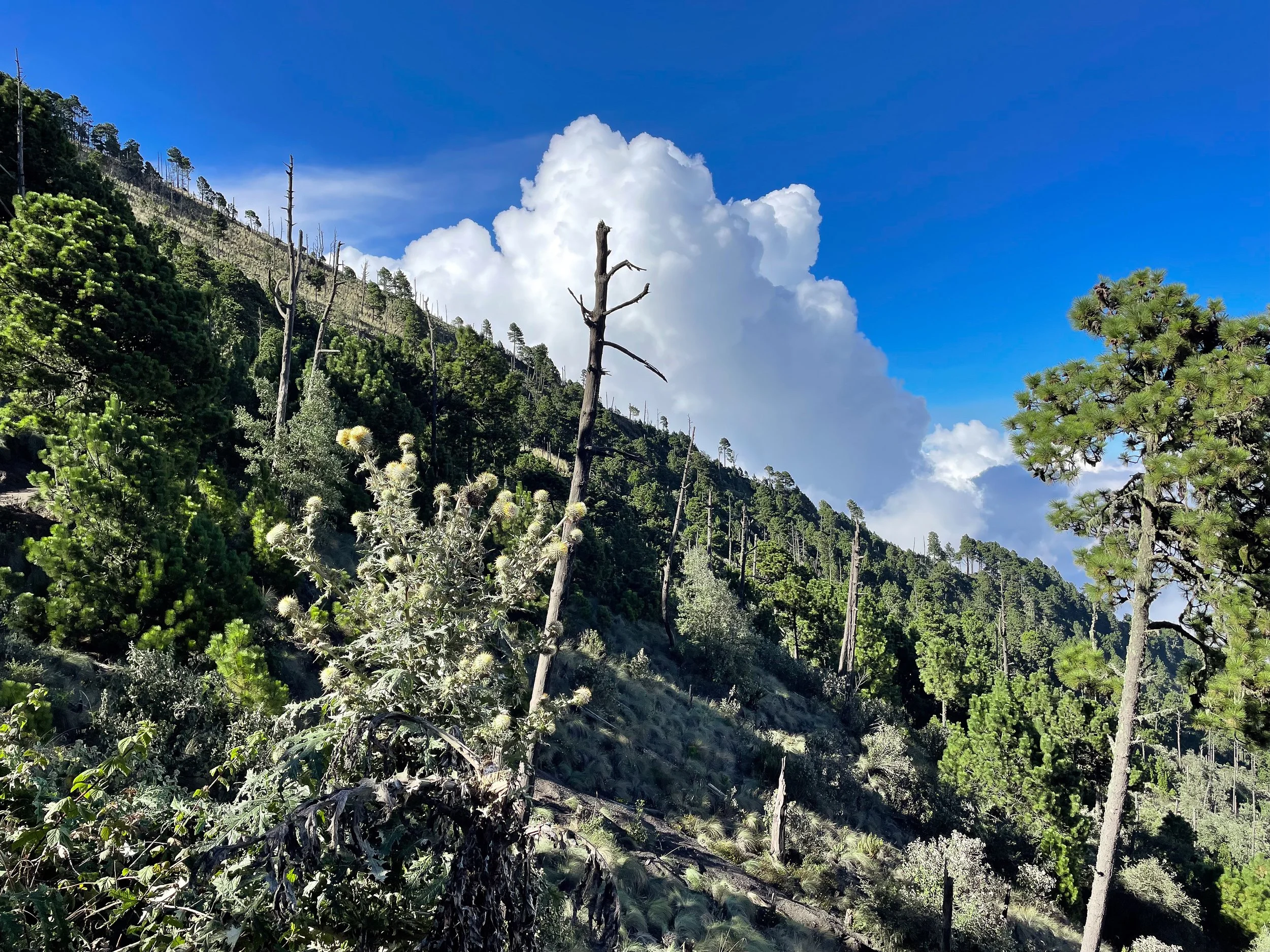
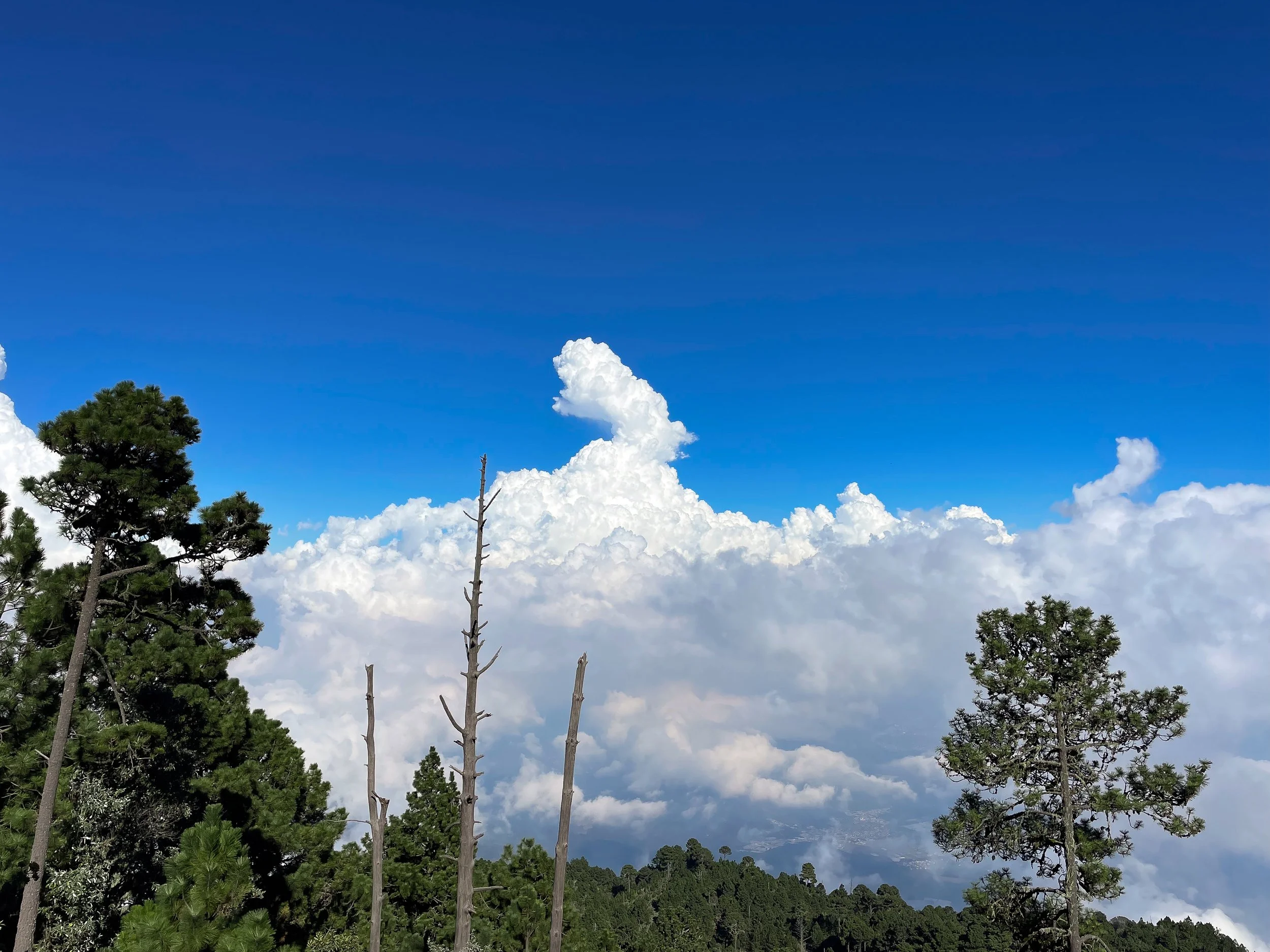
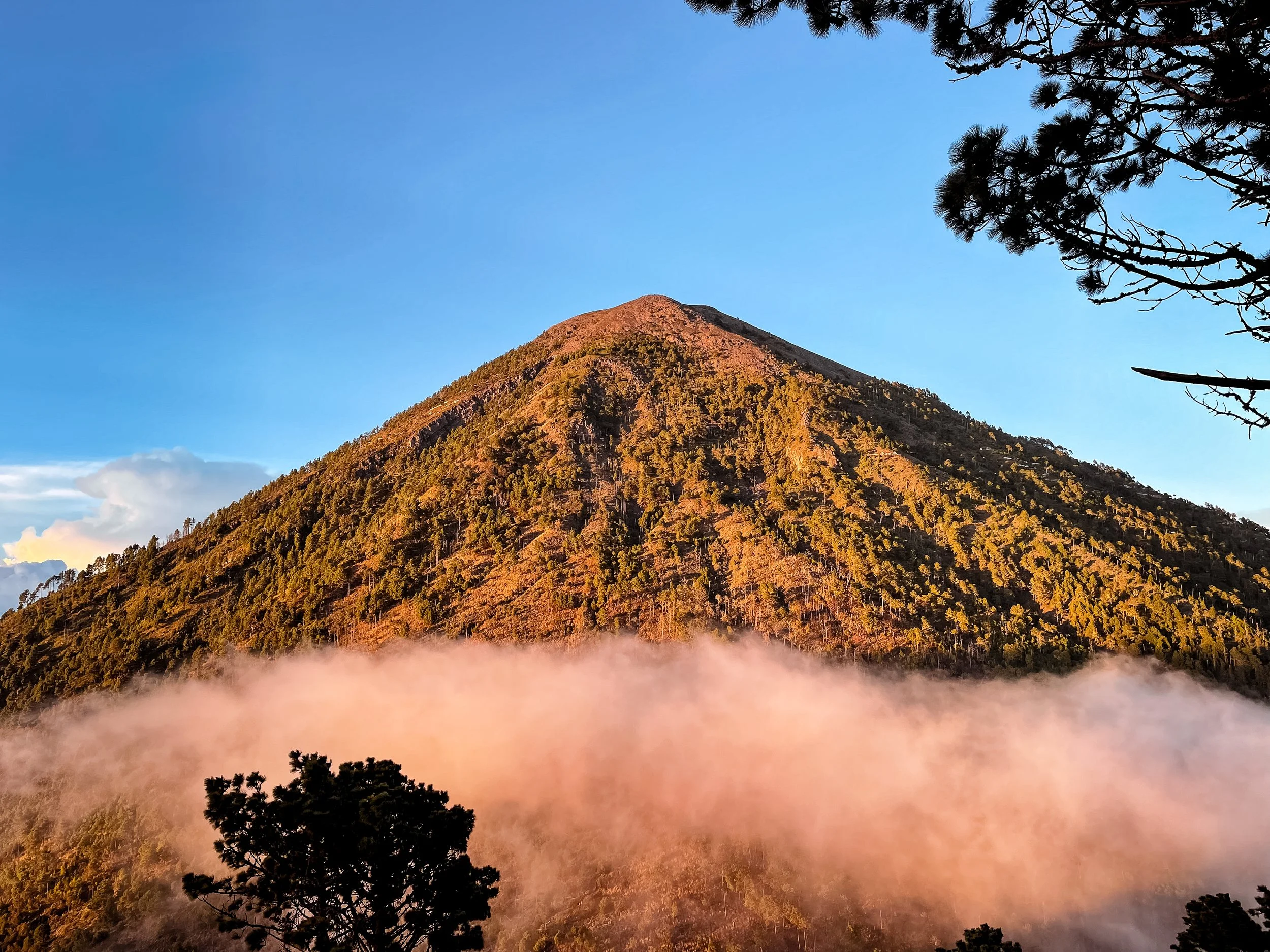
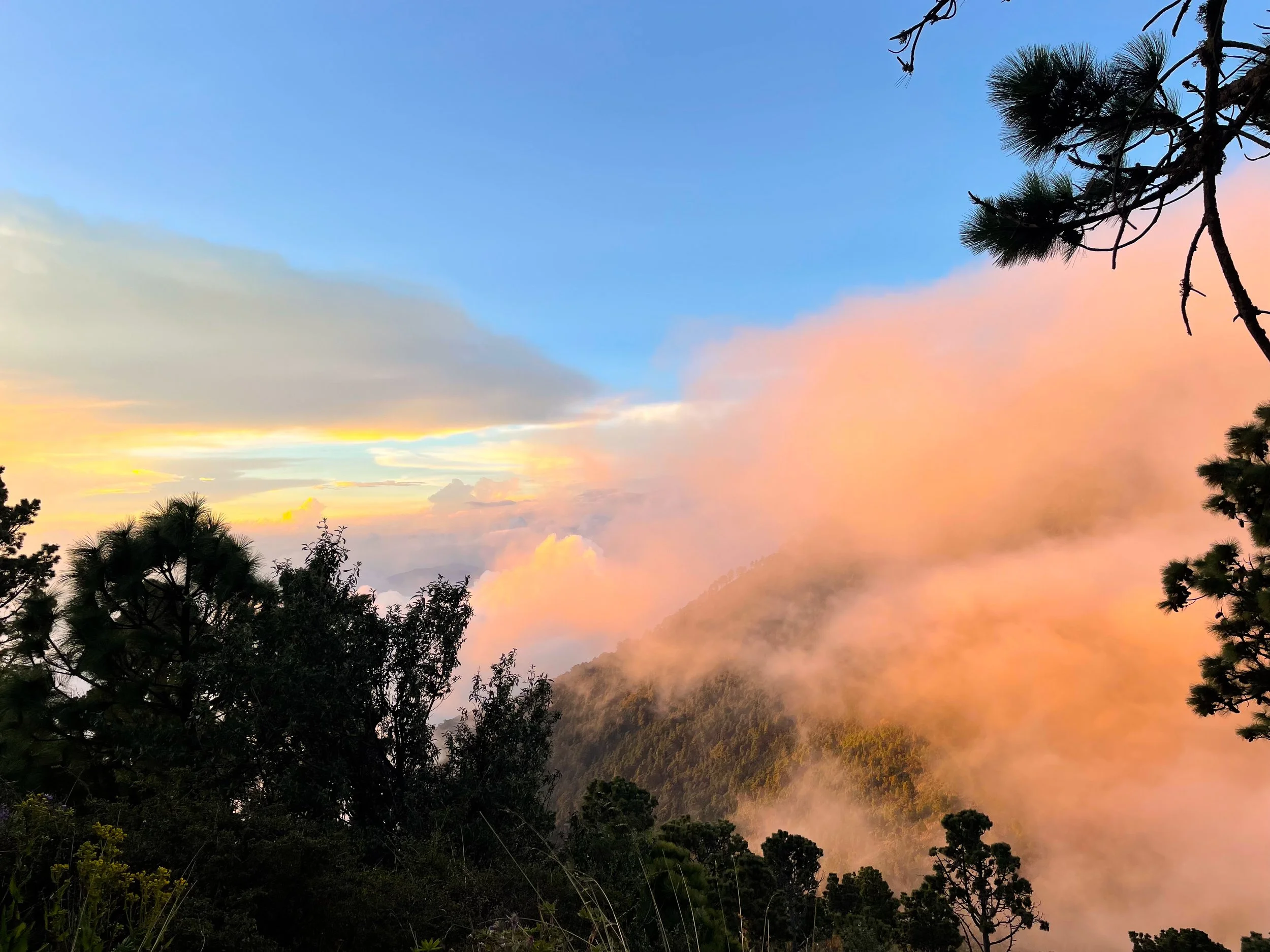
The hike to basecamp started at Aldea la Soledad, a small village an hour outside Antigua. It marks the trailhead of La Ruta de Acatenango. It brought us through different terrains and micro climates. We began our ascent on a trail through farmland and steep dirt stairs. Climbing in altitude, we reached the cloud forest, a wooded area with tall moss covered trees, ferns, slippery trails and constant fog. The fog began to lift the further we hiked, completely clearing by the time we reached the pine forest. This forested area is covered in pine trees, tall grasses and colorful wildflowers. The hike took 5 hours to reach basecamp.
Acatenango Basecamp
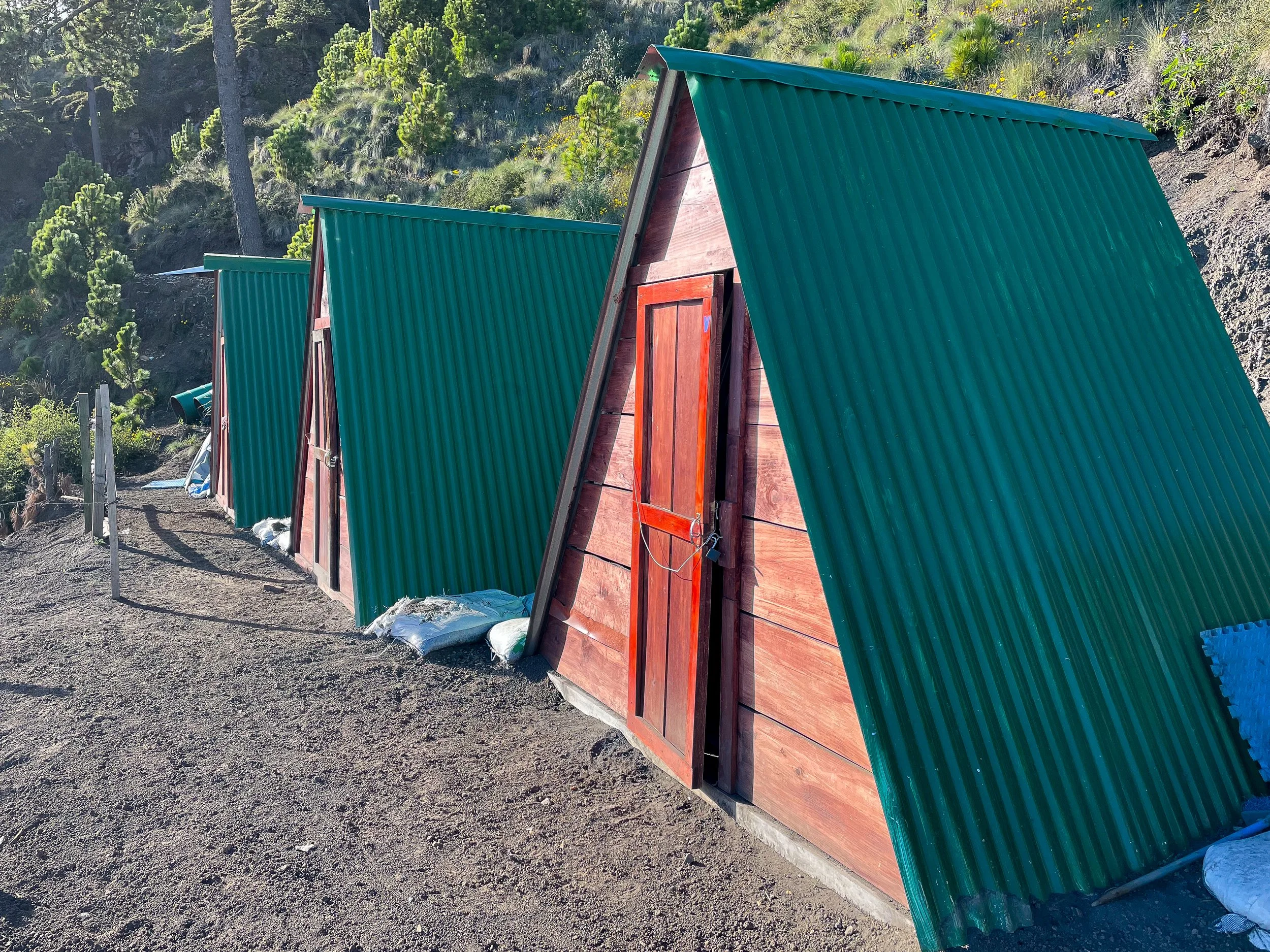
Basecamp was our home for the night and starting point for our hike to the crest of Fuego and the summit of Acatenango. We “slept” in a small A frame style shack, cuddled up to keep warm. The guides kept a small fire lit for warmth and to prepare camp meals.
The Volcano of Fire
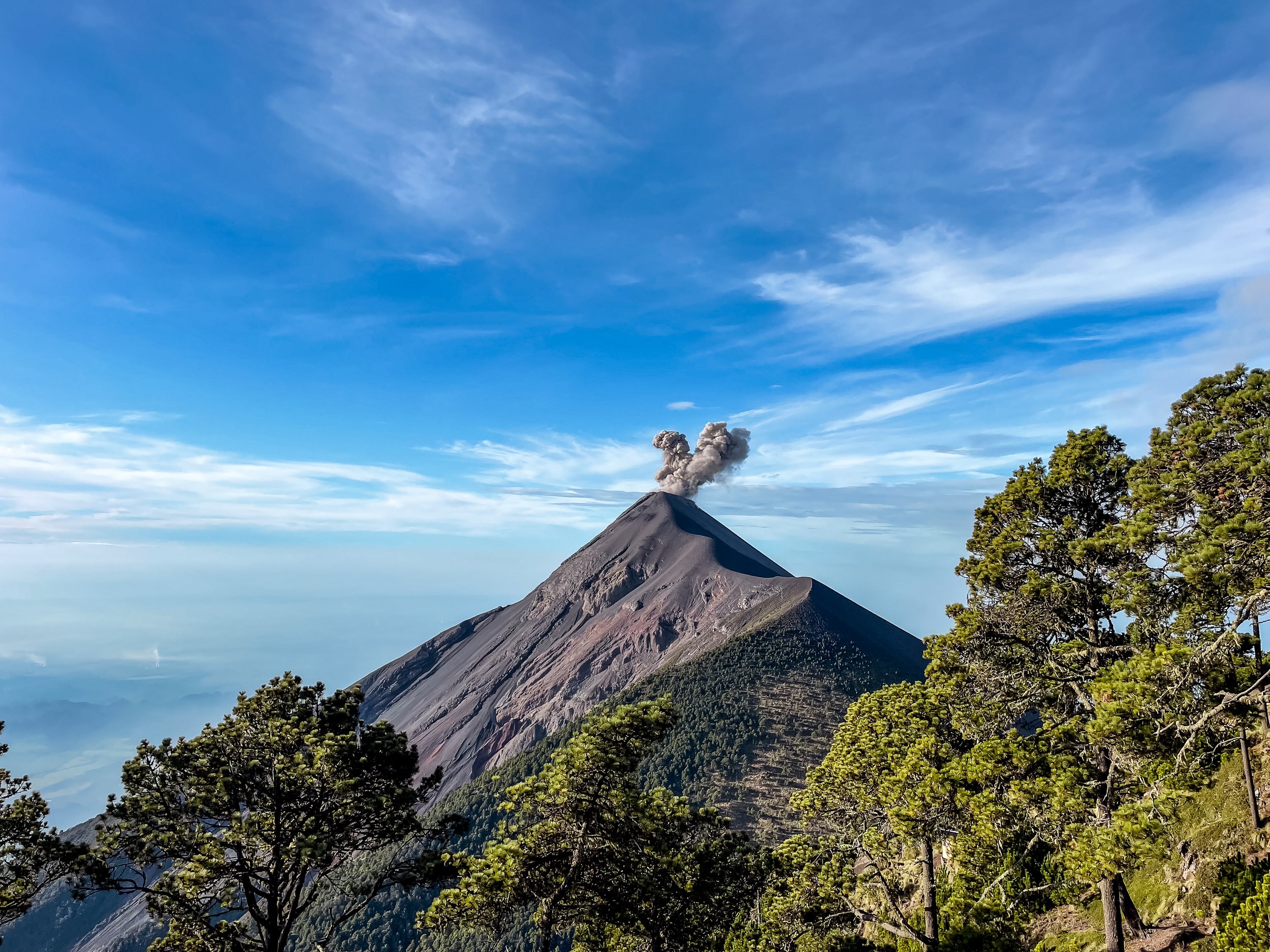
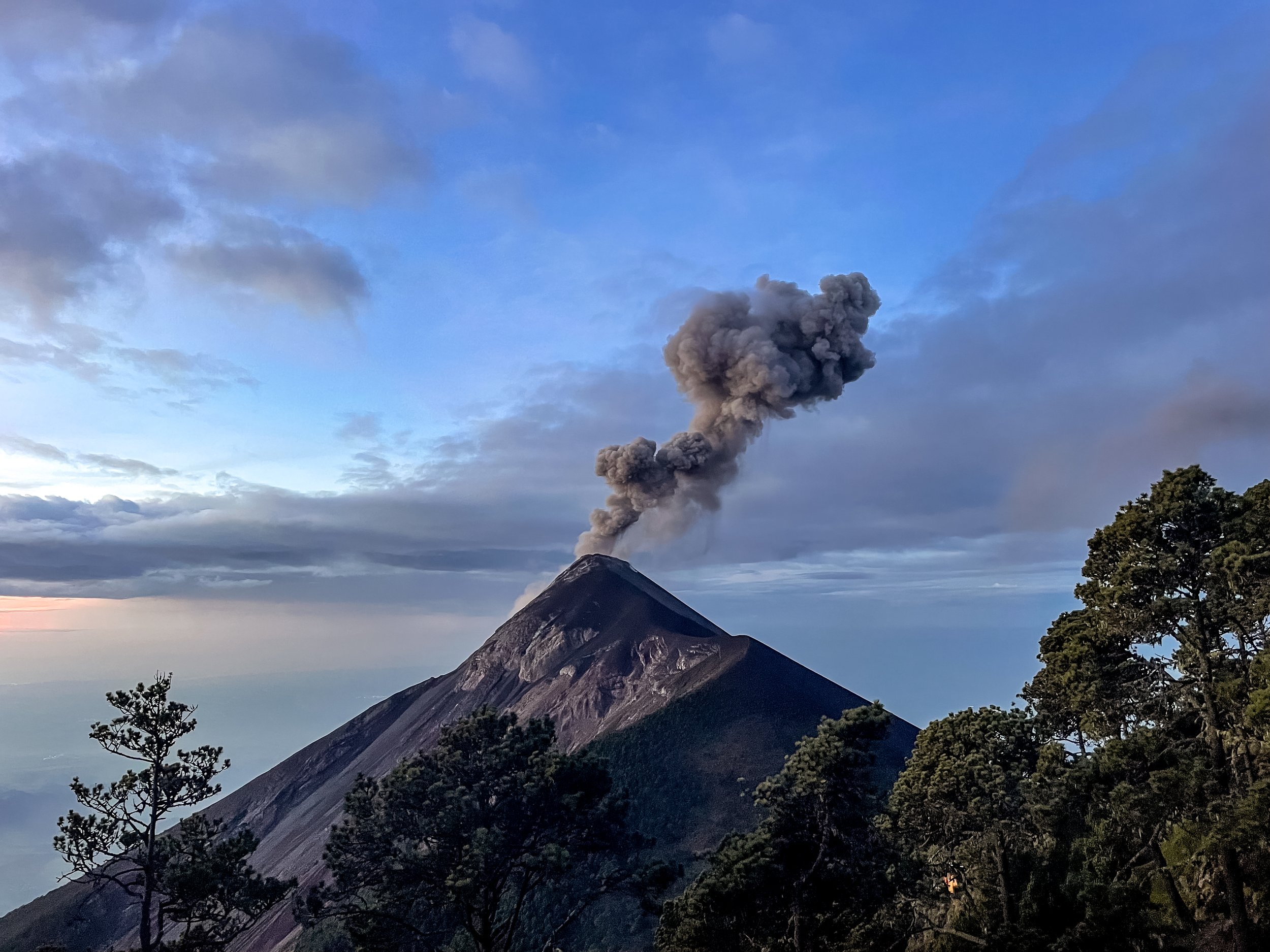
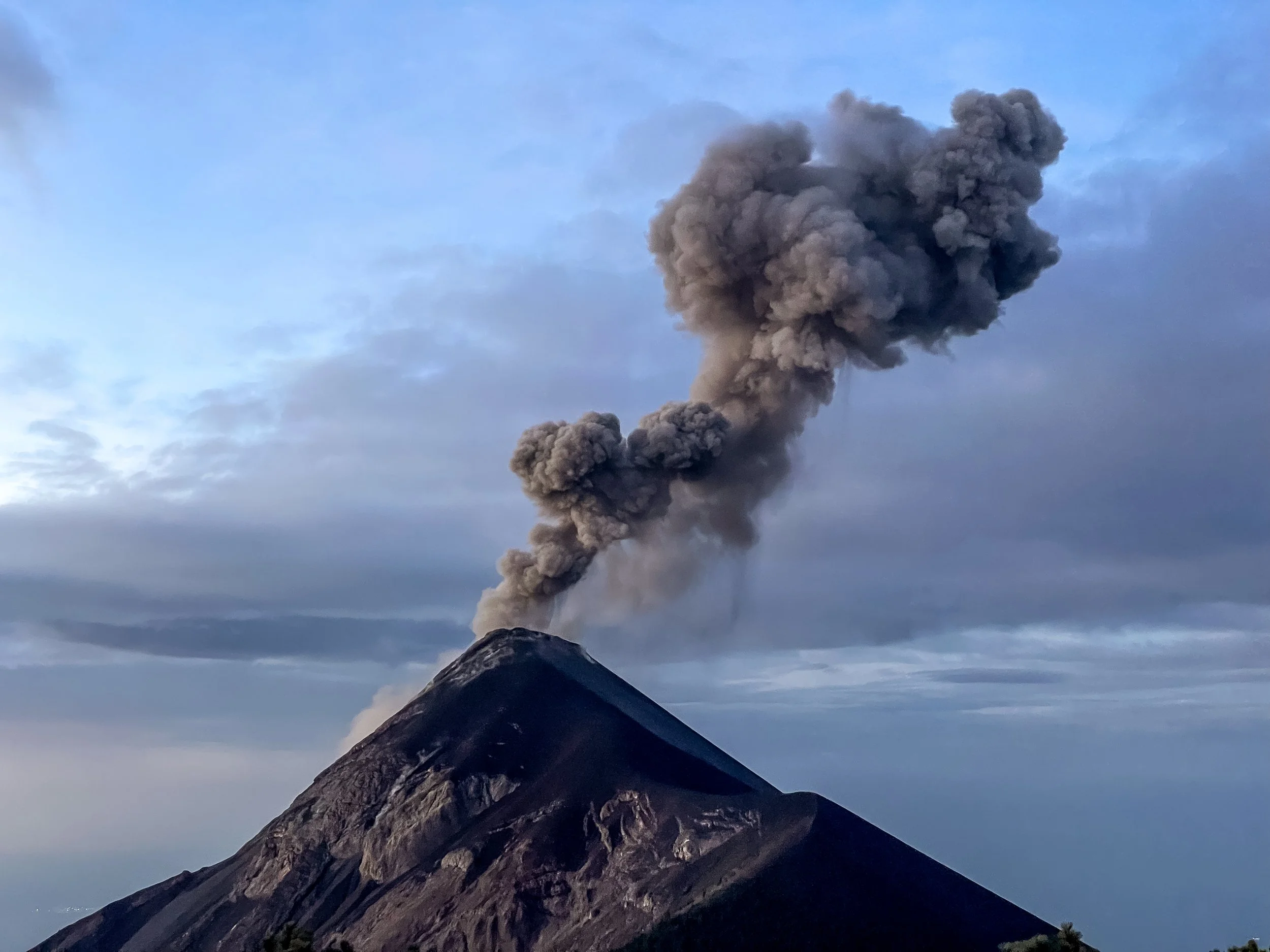
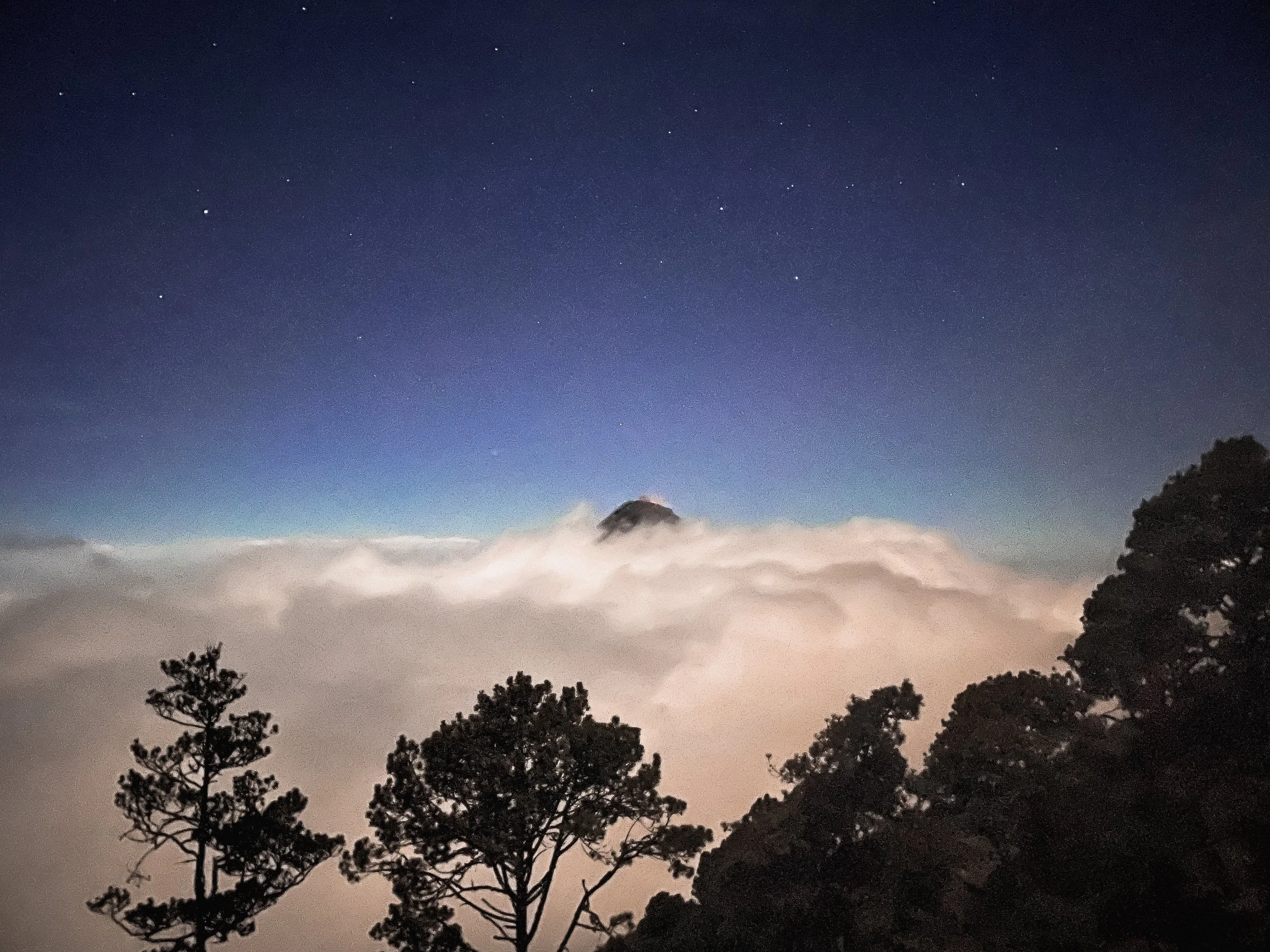
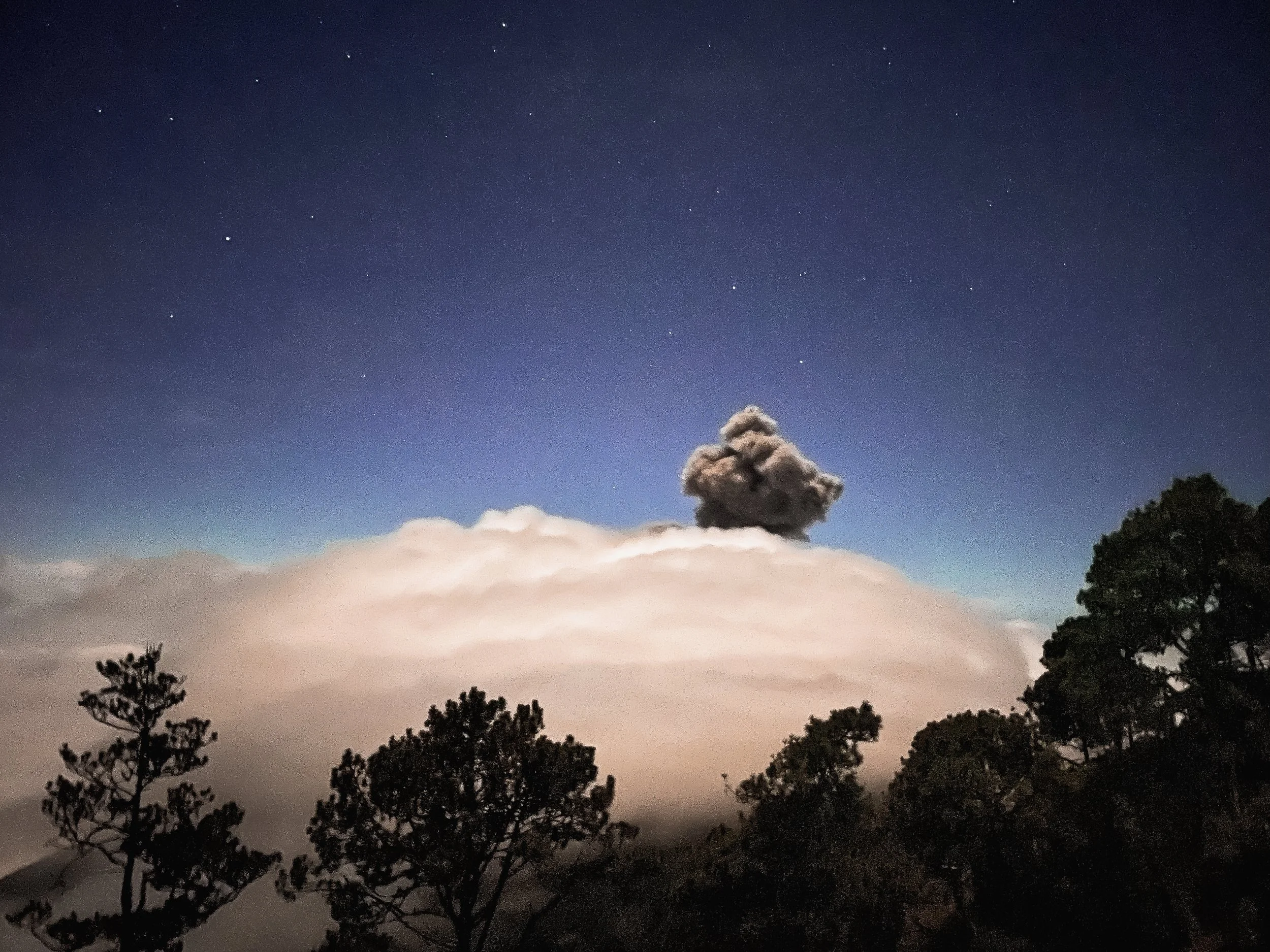
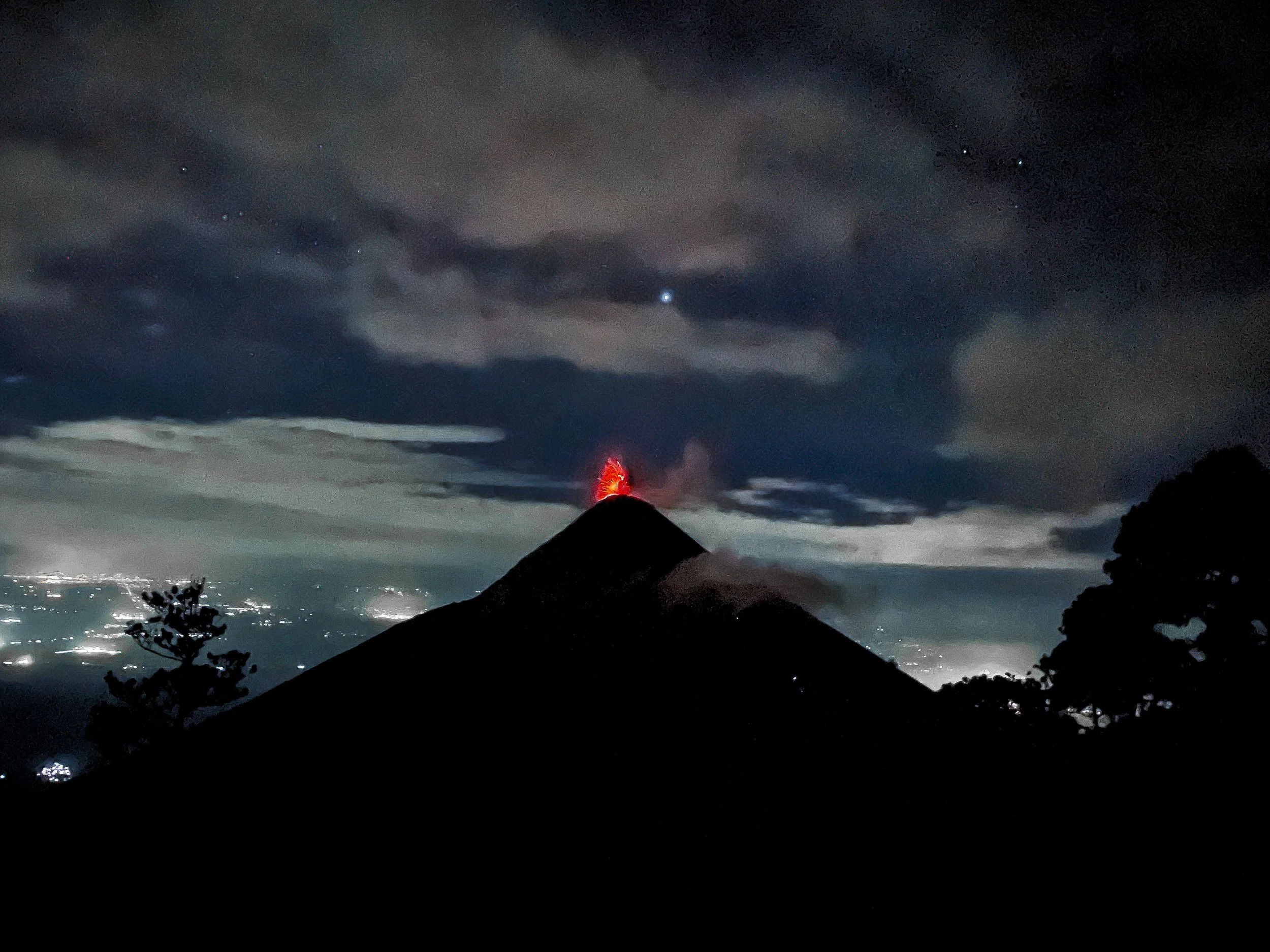
The campsite offered direct views of Volcán de Fuego and its frequent eruptions. During the day, the volcano billowed grey clouds of ash into the blue sky. At night, the red glow of lava rocketed through the air followed by a deep boom and crackling as it spilled down its slopes. Shockwaves from larger eruptions could even be felt in our chests!
Hike To the Crest of Fuego
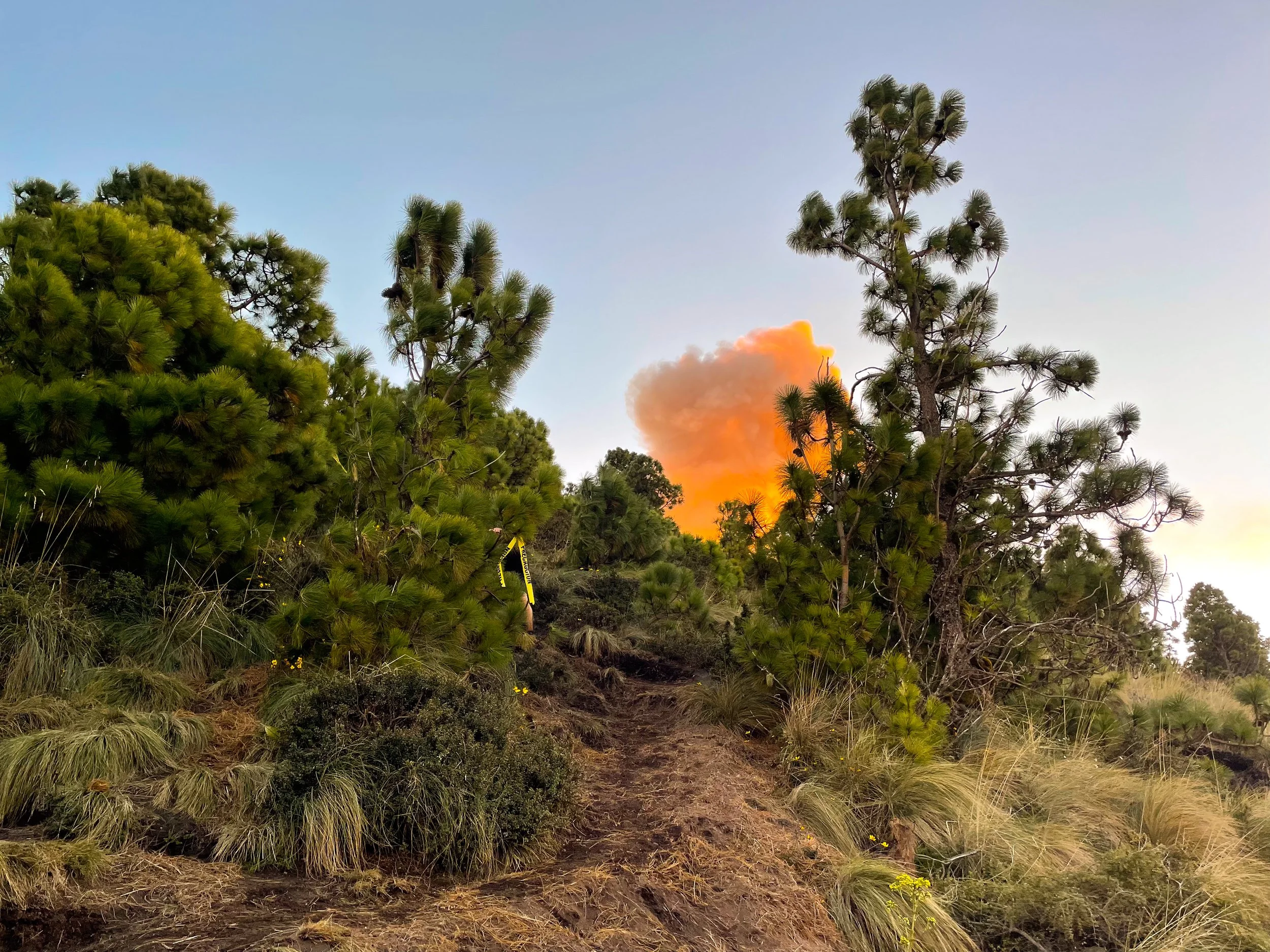
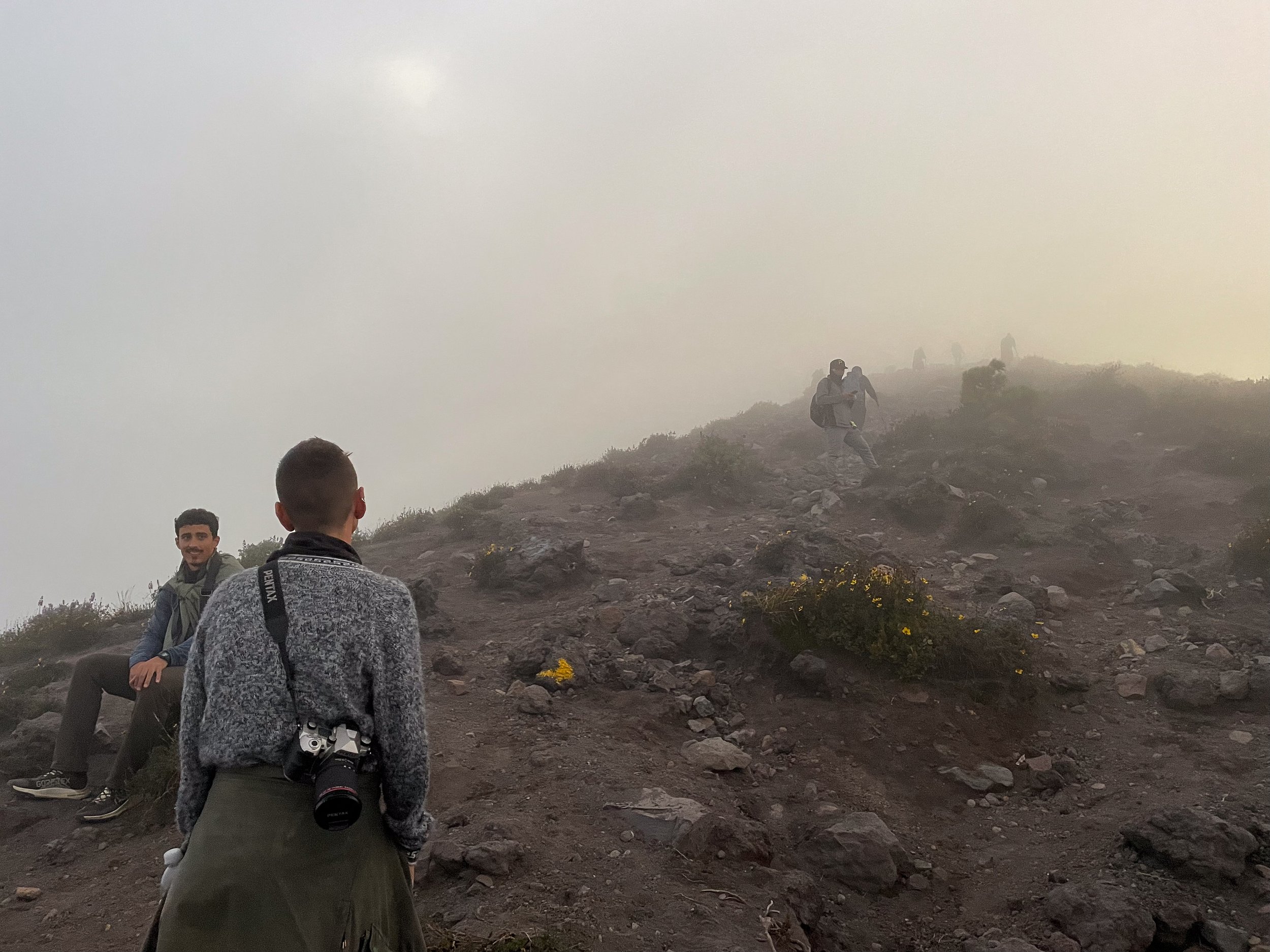
The hike to the barren and black crest of Fuego began from basecamp, passing through pine forest to the saddle between both volcanoes. Beyond that point, the ascent grew steep and unstable, with loose gravel and exposed roots. Clouds began to settle as the sun set, blocking views of the summit. After waiting in cold, wet and windy conditions without a clearing, we returned to basecamp, stopping for brief rests in order to glimpse eruptions of ash, lava and embers pierce the clouds.
Summit Sunrise
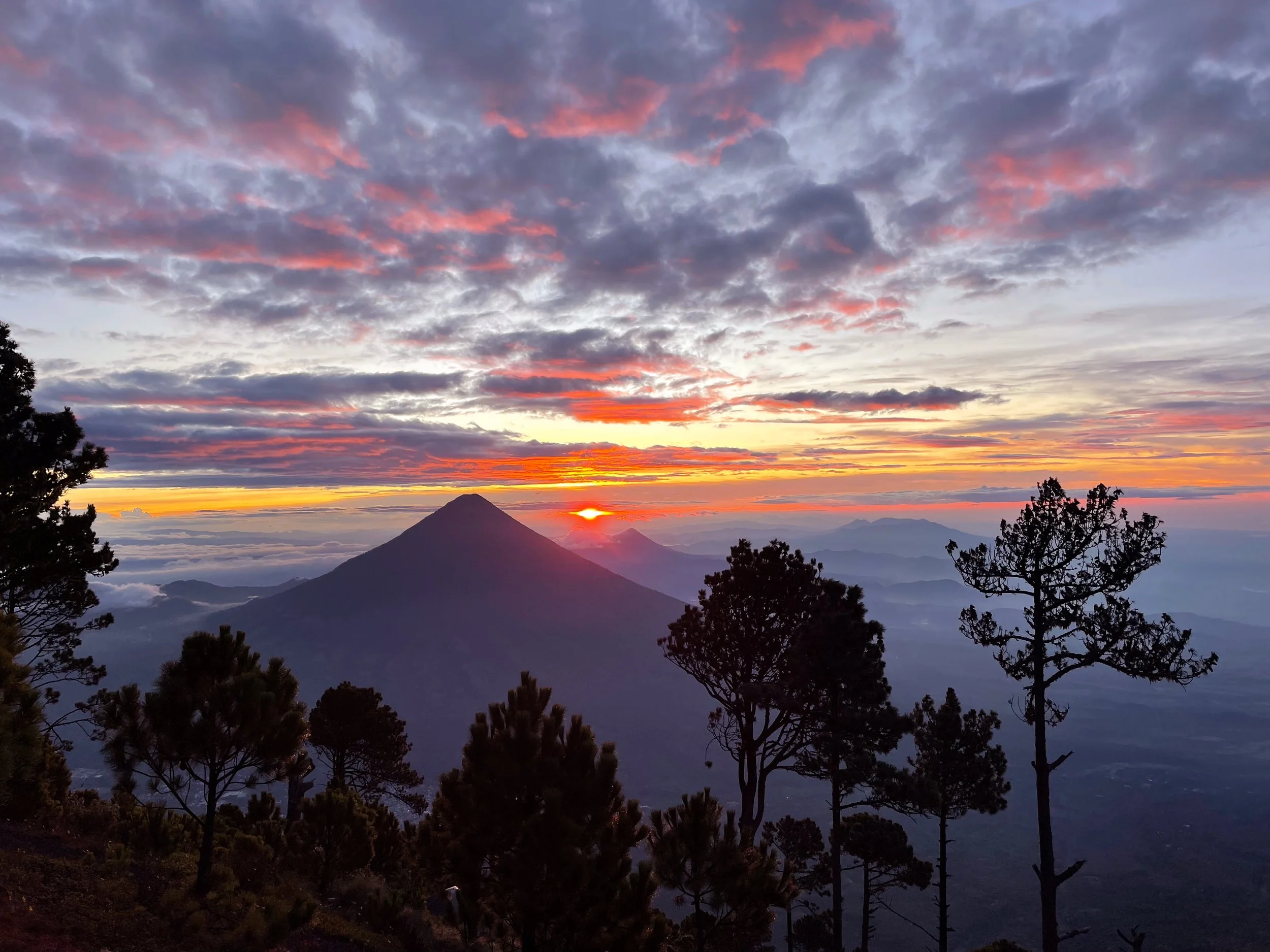
The hike to the summit of Acatenango began at 4am. The sun rose quickly afterwards, illuminating the cloud dappled sky and volcanic landscape in brilliant colors of purple, red and orange. Soon after, we began our descent and return to Antigua.
Things to Keep in Mind
Hire A Guide. Guides are not required to hike Acatenango but are helpful when navigating the route. We joined a guided group through a local operator on Viator.
Porters. There are options to hire a porter to carry your equipment and gear.
Vendors. There are vendors along the trail before the pine forest selling snacks and beverages.
Cash. Bring plenty of cash for the additional hikes, snacks, beverages and tips
Gear to Pack. Bring your own gear or rent equipment from your guide.
A 30 to 40 liter backpack
Hiking shoes/boots
Warm clothes and layers (thermals, sweaters, scarves, gloves, hats, puffer, waterproof outer layer)
2-3 liters of water
Trail snacks
Sleeping bag and pillow
Headlamp or flash light
Sunblock
Toilet paper
Hand sanitizer
Sunglasses
A power bank
Volcanic Farmland
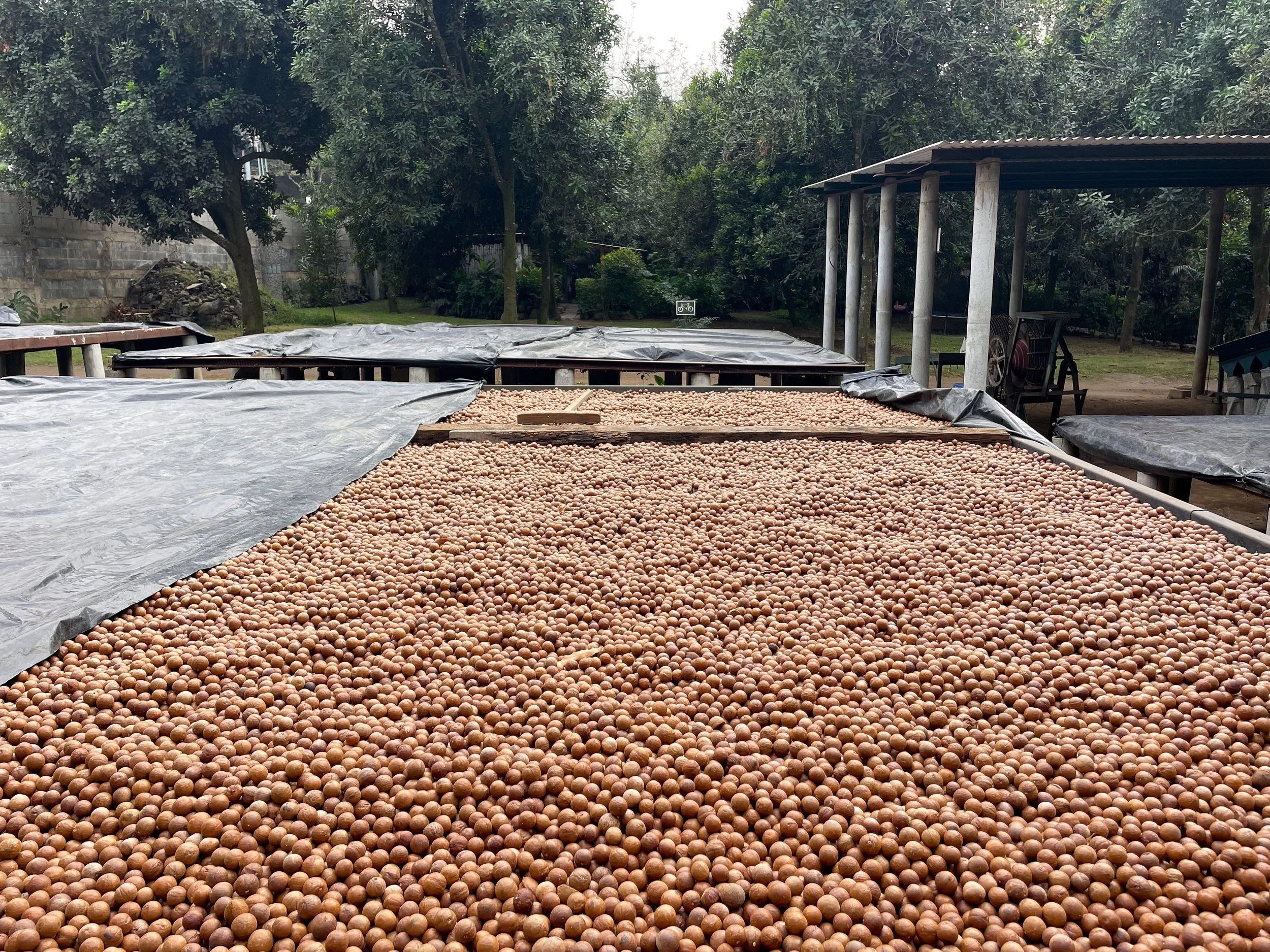
Antigua’s fertile volcanic valleys make it ideal for growing a range of crops including coffee, cacao and macadamia nut. We visited Valhalla Farm, a sustainable and organic macadamia nut farm with free tours, tastings, a restaurant and spa. We came here for a full body macadamia nut oil massage after our overnight hike to Volcán de Fuego. It was so relaxing and therapeutic! The farm tour included a walk around the grounds to see the macadamia nut trees, learn how they’re harvested and processed. Afterwards, we sampled macadamia nut products like roasted nuts, chocolates, baked goods and oils.
Cafe Culture
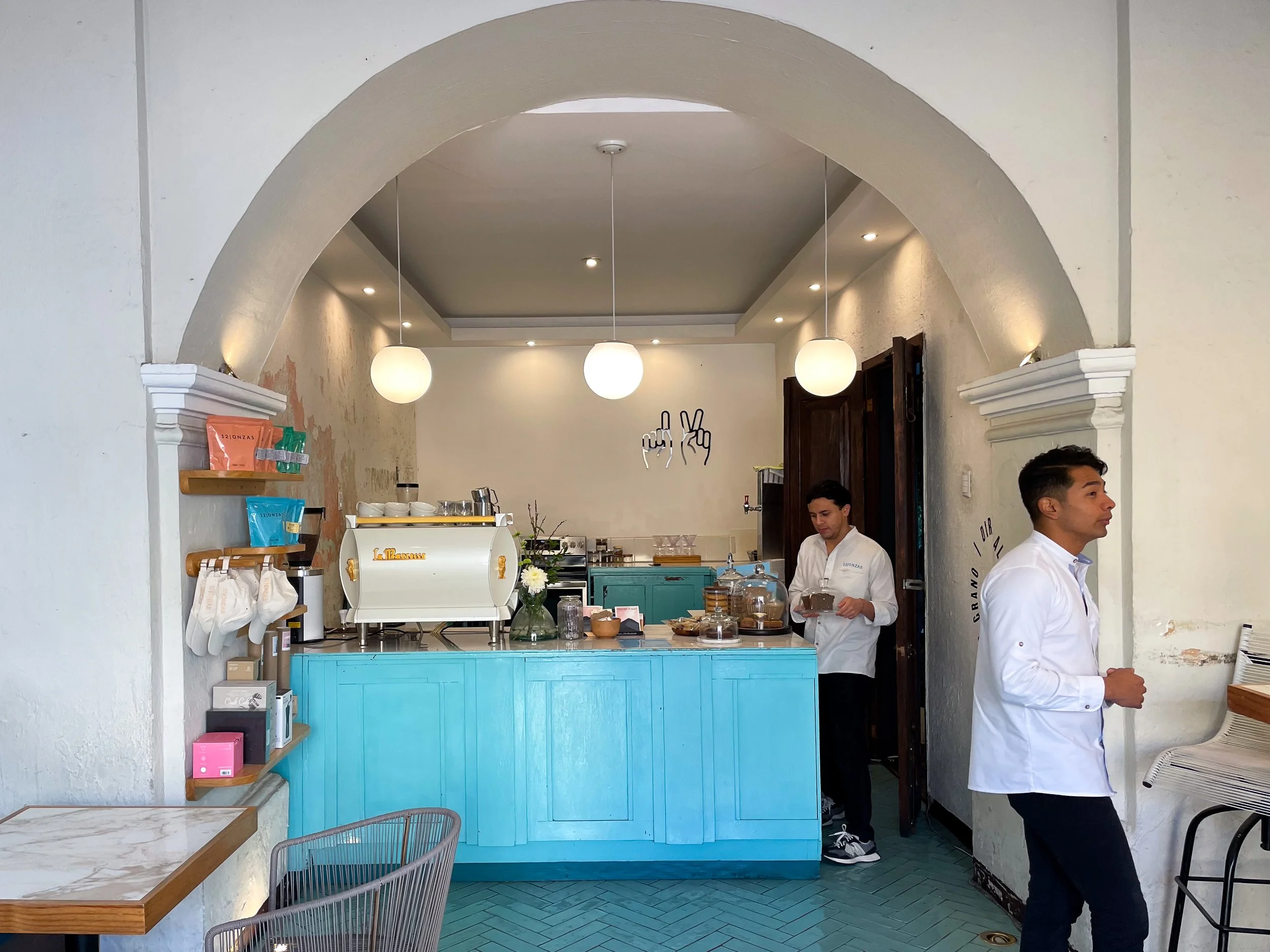
Antigua has a bustling cafe culture with many small cafes, coffee shops and breakfast spots brewing Guatemalan grown and roasted coffee beans.
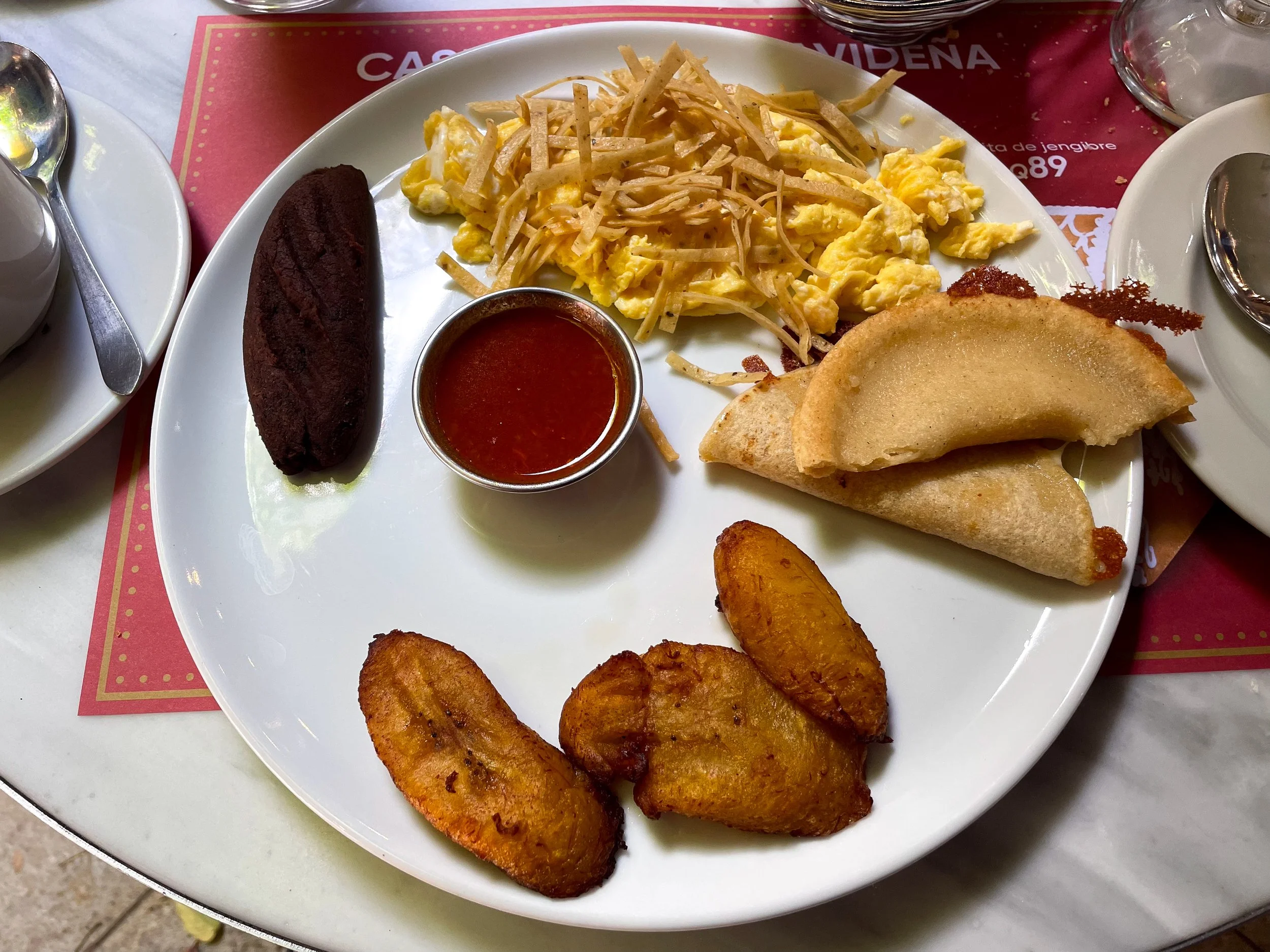
Bakery San Martin. A cafe and bakery with fresh breads, cookies, and carafes of French pressed Guatemalan coffee. Come for the “Desayuno Antigüeño,” which includes scrambled eggs with onion and tomato, breads, fried sweet plantains, refried beans and tortilla with cheese.
El Gran Cafe. A small coffee shop for Guatemalan coffee and light pastries. We brought home two bags of whole beans.
12 Onzas. A cafe for Guatemalan pour over coffee, light pastries and classic breakfast dishes.
Places to Eat
We quickly learned that Antigua has a thriving food scene with restaurants serving traditional and contemporary Guatemalan dishes, authentic street food and vegan or vegetarian options. Most restaurants in Antigua have a garden courtyard, rooftop or terrace and interior dining room.
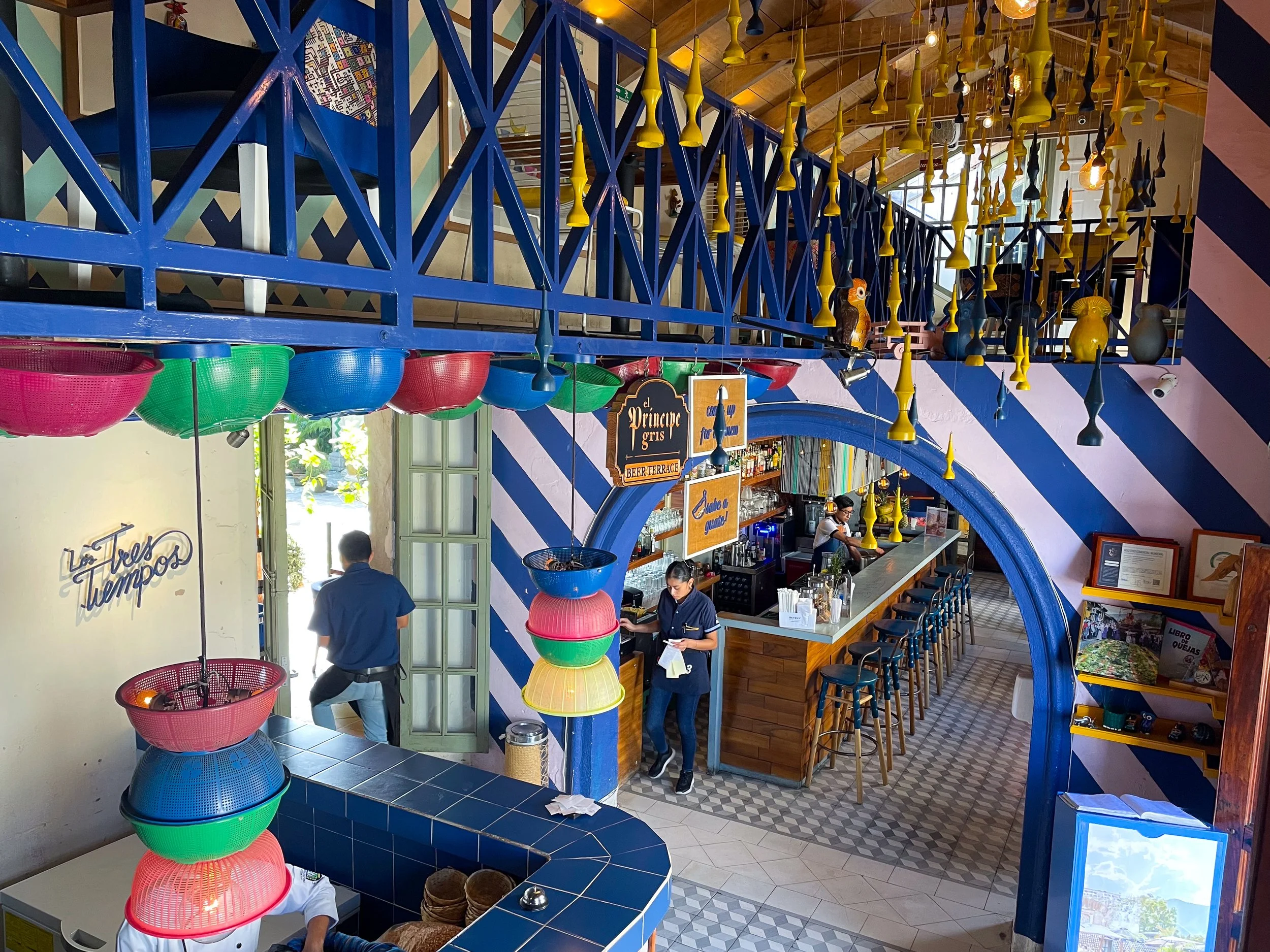
Los Tres Tiempos. A colorfully decorated restaurant with a lush outdoor terrace and menu including traditional brunch dishes. Try the sweet corn pancakes covered in a creamed corn sauce, the chilaquiles with white & blue corn chips and red & green sauce or the fruit platter with pineapple, papaya and watermelon.
27 Adentro. A restaurant with a modern take on Guatemalan and Latin dishes. It has a garden courtyard and rooftop with views of Volcán de Fuego. We saw a large eruption with lava from here. There are many vegetarian options including pepián, sopa de maíz, tostone cups and sangria.
La Fonda Calle Real. Around lunch time, the smell of pan fired masa wafting from the store front comal invites passersby in. The romantic interior has an open air courtyard with a canopy of flowering vines. The menu consists of traditional Guatemalan dishes. We tried the vegetarian pepián, chile relleno and plantains con mole.
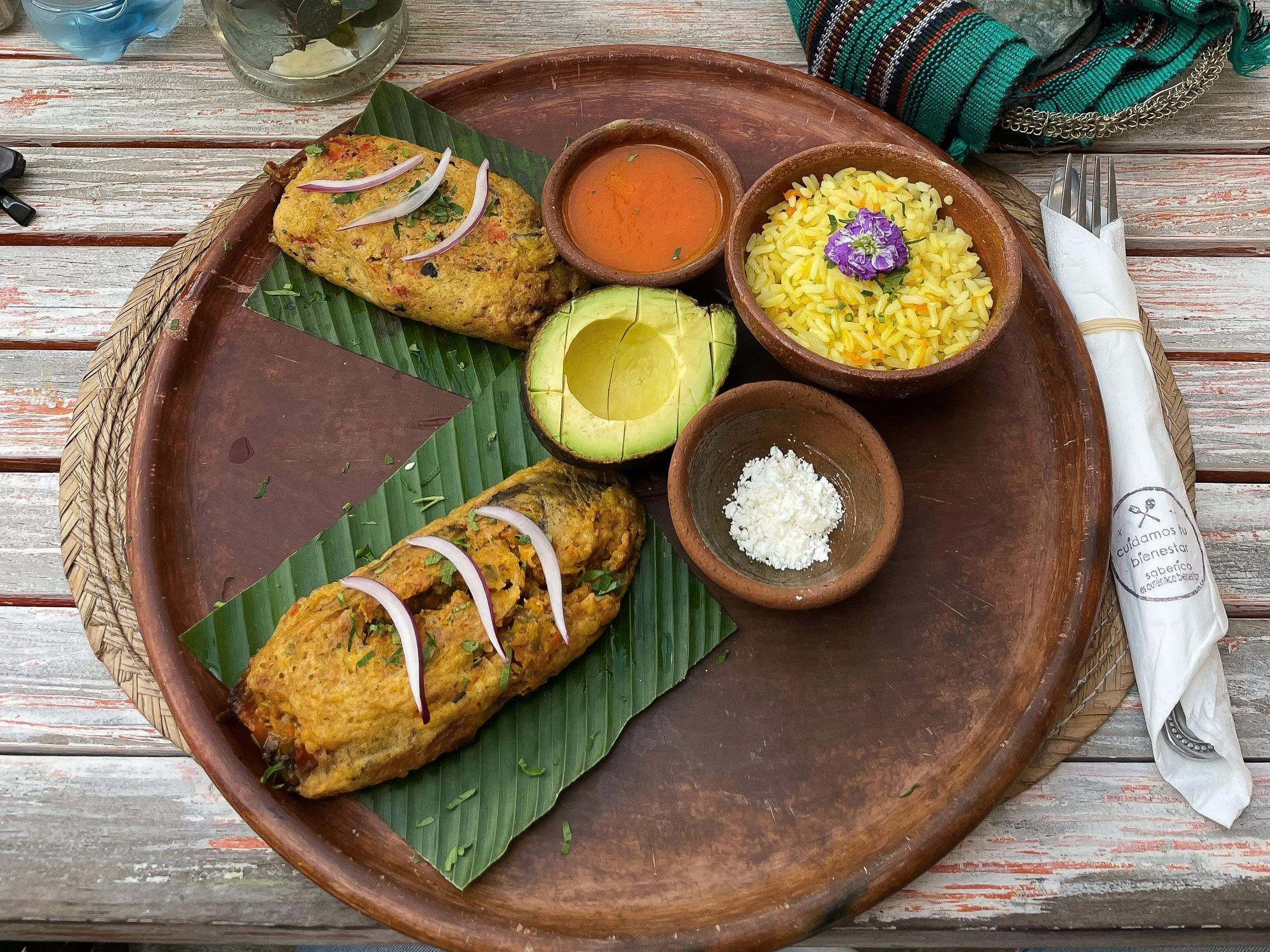
Saberico. A vegetarian friendly garden restaurant with a sprawling outdoor patio and menu of contemporary Guatemalan dishes. We ordered the beet & cabbage tostadas, chile relleno and kombucha cocktails.
Antojito Salvadoreño. An unofficial restaurant specializing in pupusas. Call ahead to order and wait outside of the Condominio Arcadas for pick up. We ordered cheese and bean pupusas with a canoa de platano.
Frida’s. A Mexican style restaurant themed after Frida Kahlo with portraits of the artist pictured throughout. The menu specializes in tacos and margaritas. We tried the veggie tacos, crispy broccoli in poblano mole and seitan al pastor tacos with pineapple. For drinks, try the spicy mezcal margarita and hibiscus mezcal margarita.
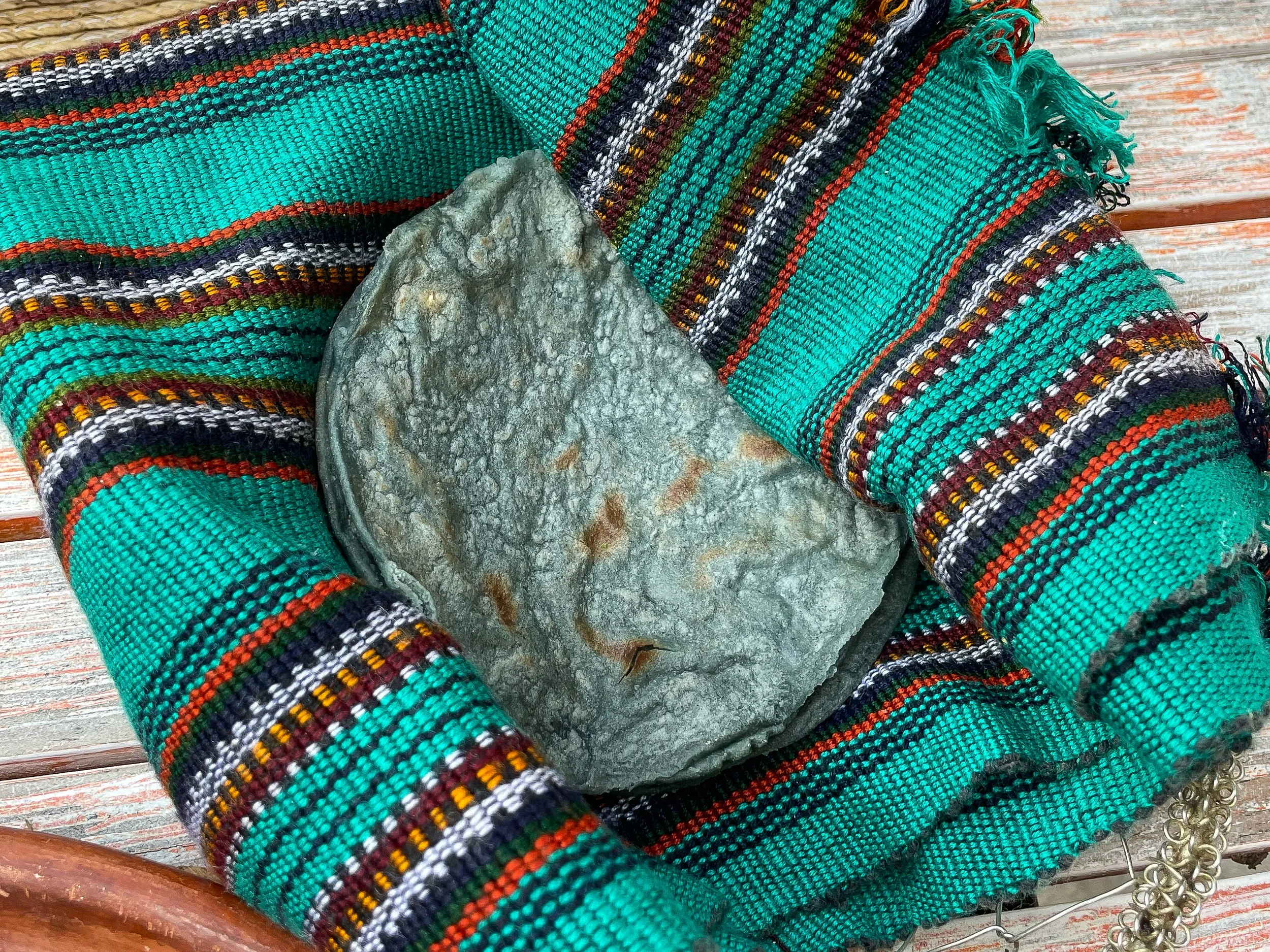
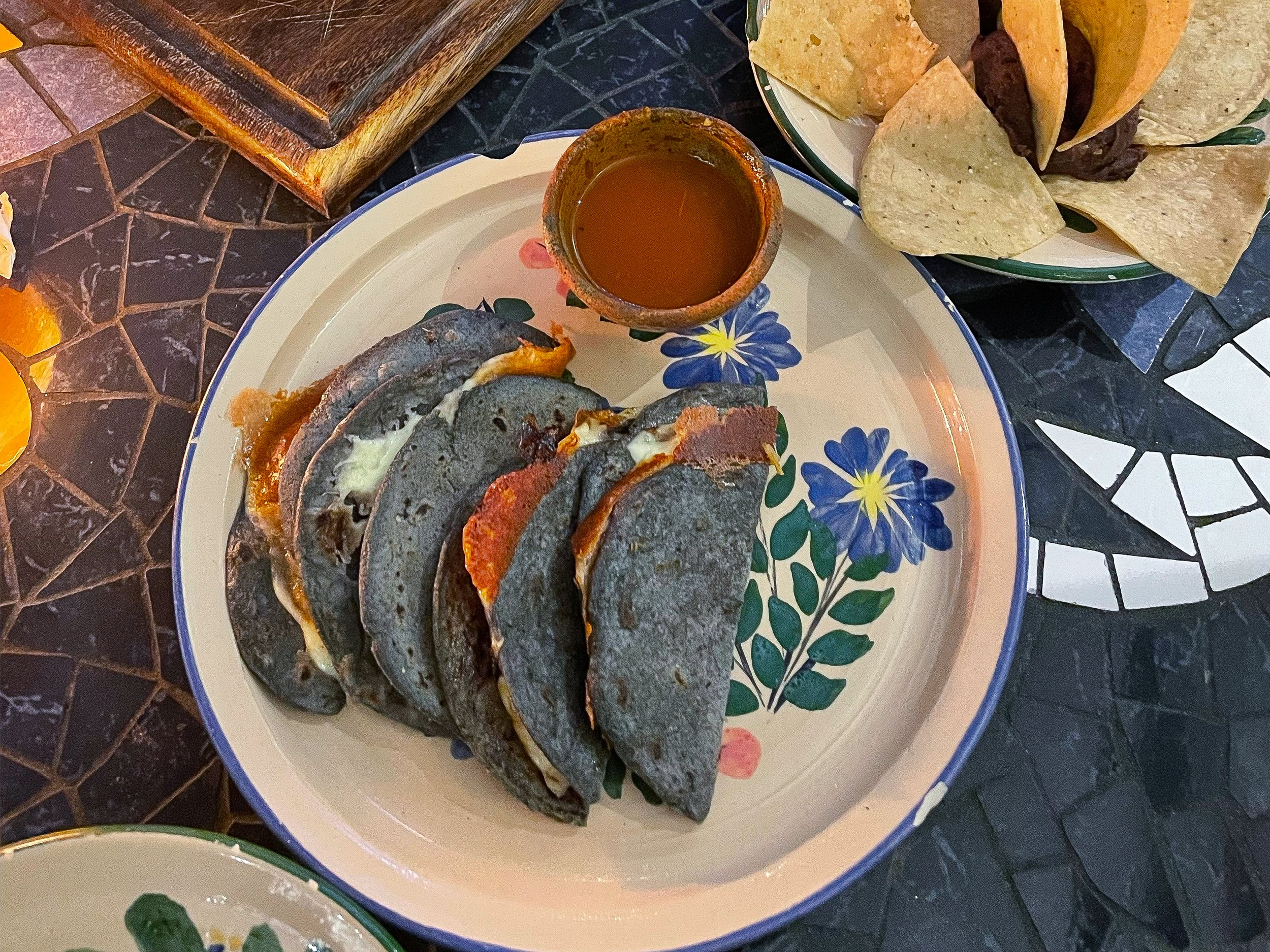
El Adobe. The eye-catching entry with a display of colorfully painted Guatemalan wooden masks invites passersby in for a look at the menu. The restaurant serves traditional Guatemalan and Mayan inspired dishes. We ordered the blue corn tortillas with cheese and salsa, fried black beans and a whole fried fish called Mojarra.
Places to Drink
Together with a brewery, speakeasy, dive and rooftop bar, there is no shortage of places to find a drink in Antigua.
Antigua Brewing Company. A brewery with local beers and city views from their terrace. We sampled a flight of beers. Two favorites are the Fuego IPA, a very hoppy brew, and the Canchona Blonde Ale, a refreshing and slightly nutty ale.
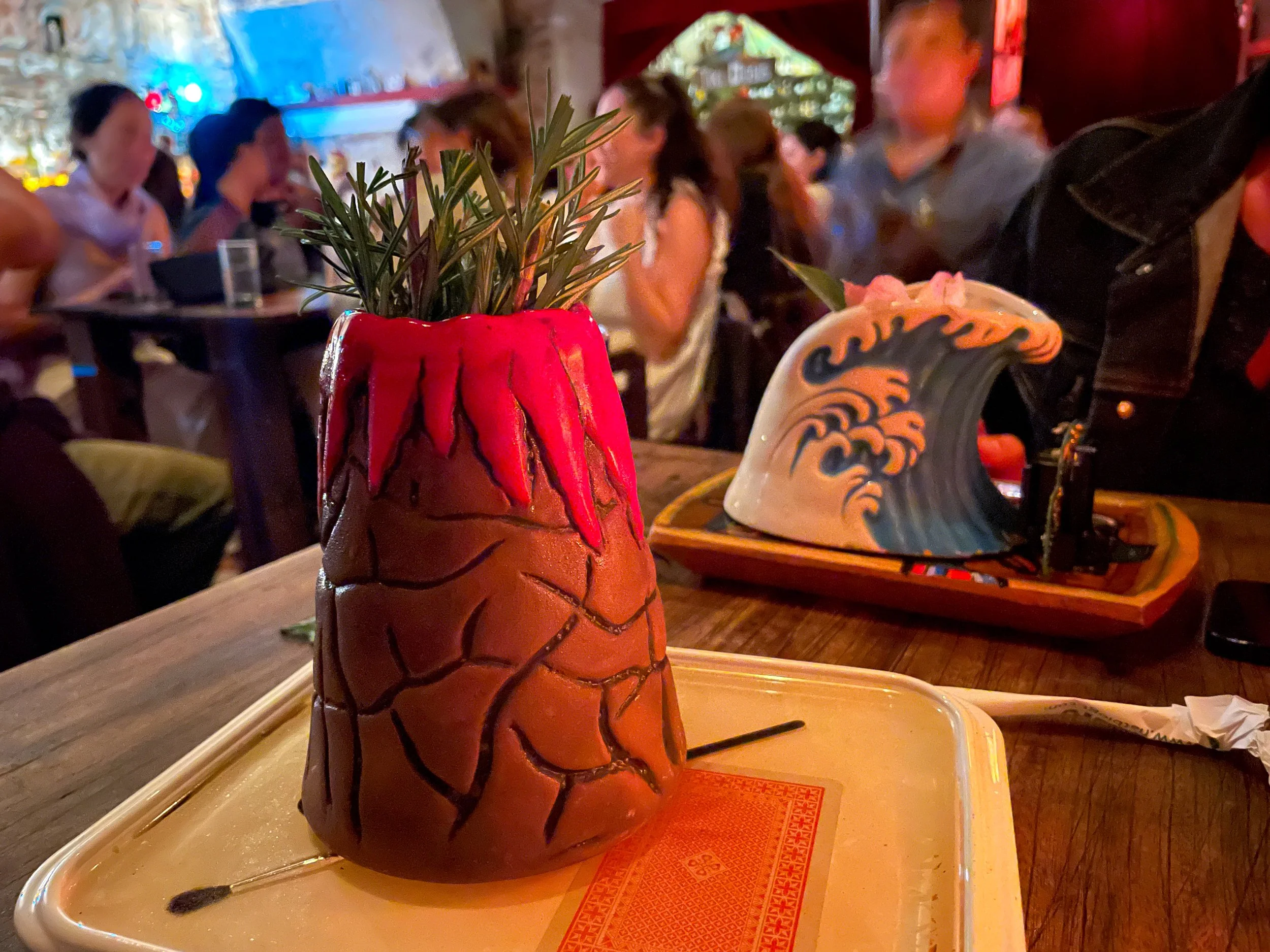
Ulew. A dimly lit speakeasy with a stone and brick interior located behind a phone booth in the Antigua Brewing Company. Mixologists make drinks based on your flavor preference. We ordered spicy but balanced tiki style drinks that came out in a volcano and wave mug.
Cafe No Se. A dive bar for beer and mezcal. The menu is handwritten on cardboard, candles dripping in wax light the interior and the walls are covered in signatures and stickers. We drank and played chess at a table in the corner.
Adra Hostel. Come to their energetic courtyard and rooftop for local beers, cocktails and live DJ.
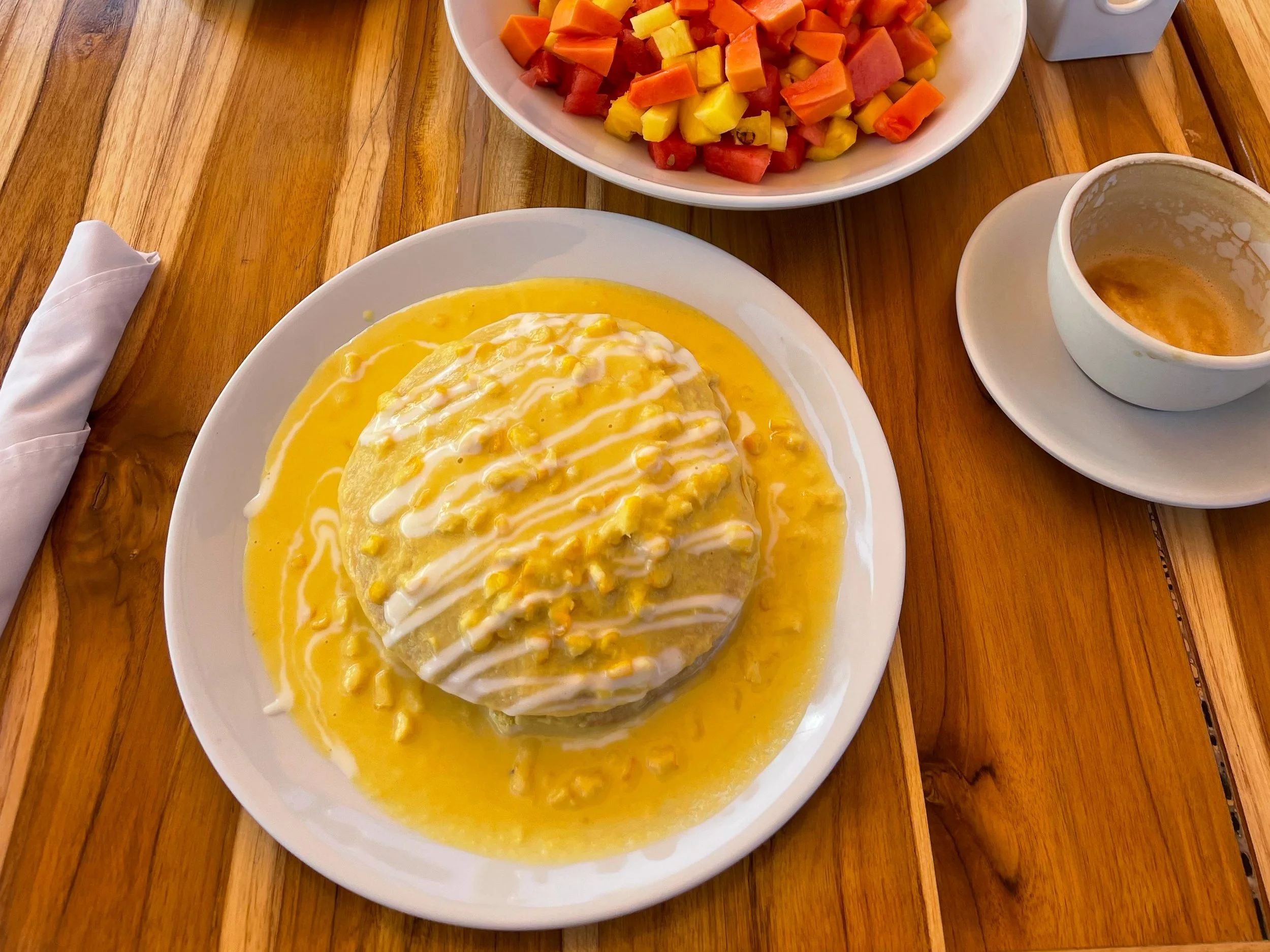
Guatemalan Cuisine
There are so many authentic dishes to try when visiting Antigua. Some of our favorites include traditional ingredients like corn masa and plantain.
Pupusas. A griddle fried masa patty filled with beans and cheese or meat.
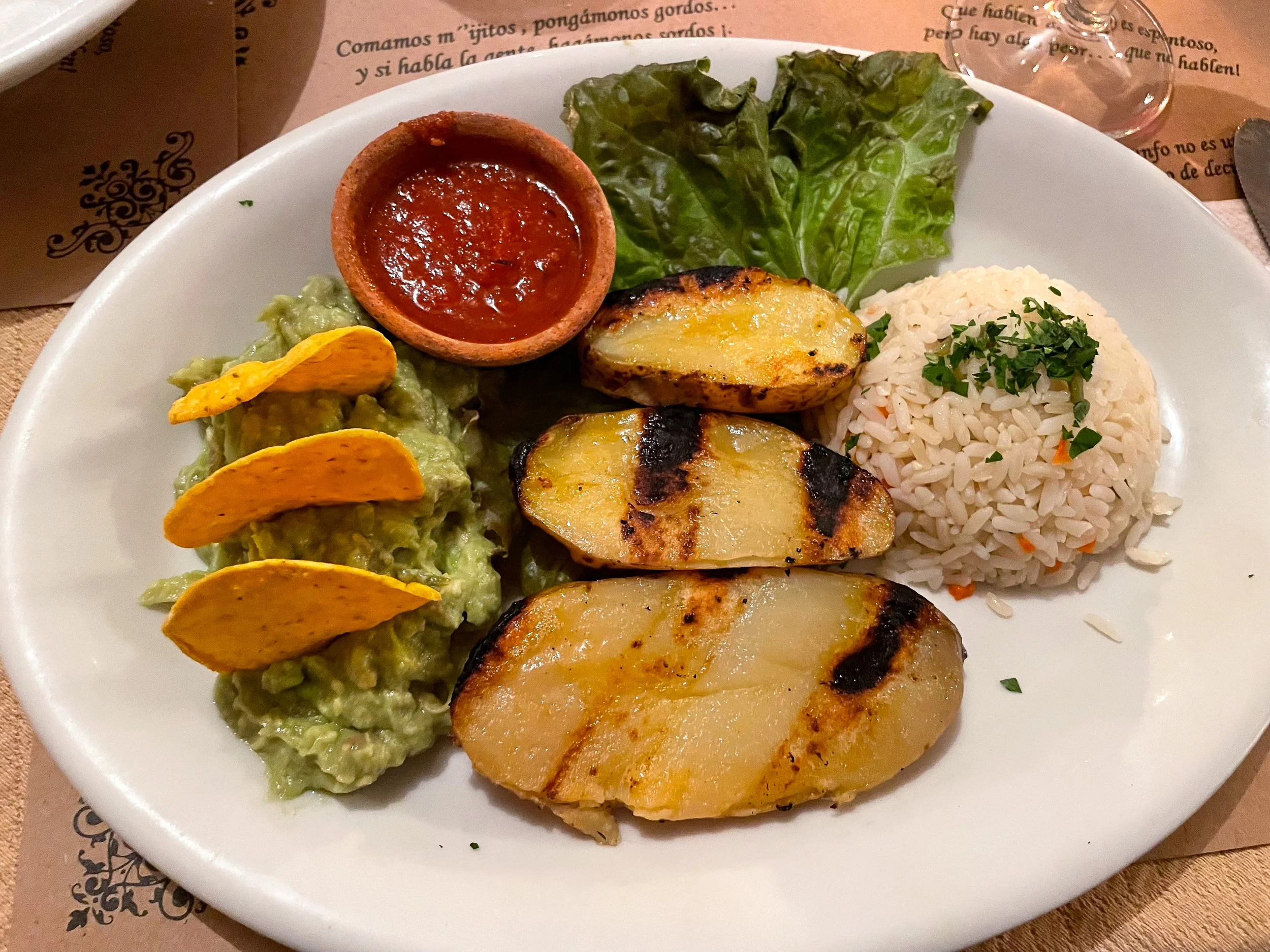
Chile Relleno. A stuffed poblano pepper that’s been breaded and deep fried. It's common to be stuffed with cheese or rice, beans and vegetables.
Pepián. A spiced stew made with a base or green or red tomatoes. It can be vegetable or meat based.
Sopa de Maíz. A creamy corn soup.
Tostones. Twice fried and smashed green plantains, often served with a salsa.
Purple Corn Masa. Purple corn used to make any corn based dish like tortillas or pupusas.
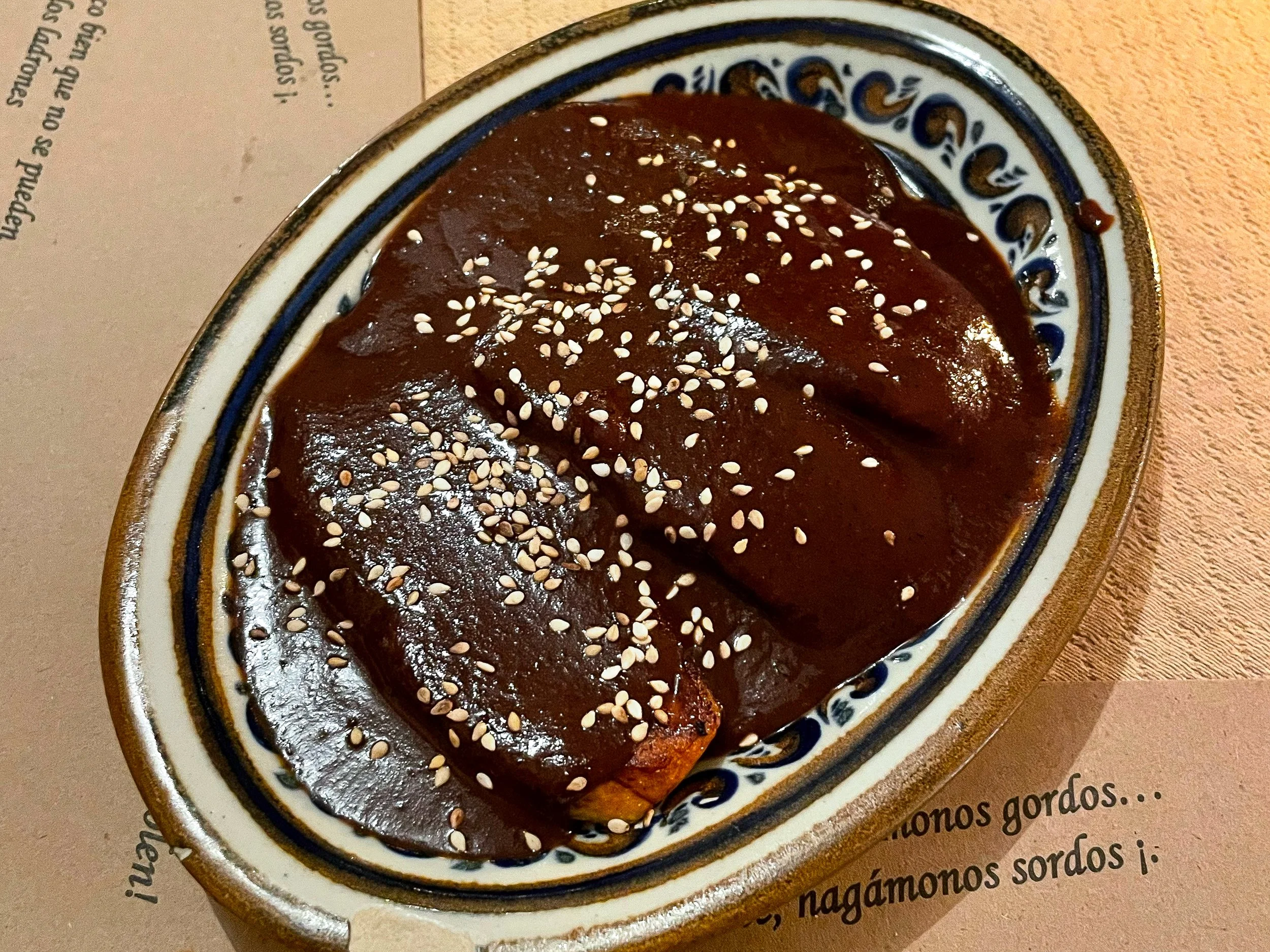
Platano con Mole. A sweet plantain that’s been fried and covered in a savory sweet mole sauce.
Canoa de Platano. A whole sweet plantain that’s been deep fried, cut open like a canoe and filled with a sweet cream sauce.
Mojarra. A popular Central American fish. It’s commonly served whole fried with lime.
Gallo. A lager and the beer of choice across Guatemala, recognizable by its label picturing a rooster.
Nispero. Popular at fruit stands and in dishes at restaurants. Small orange fruits with a citrus peachy flavor, a thin skin and pit. Try them fresh, jammed, canned or in a sauce.
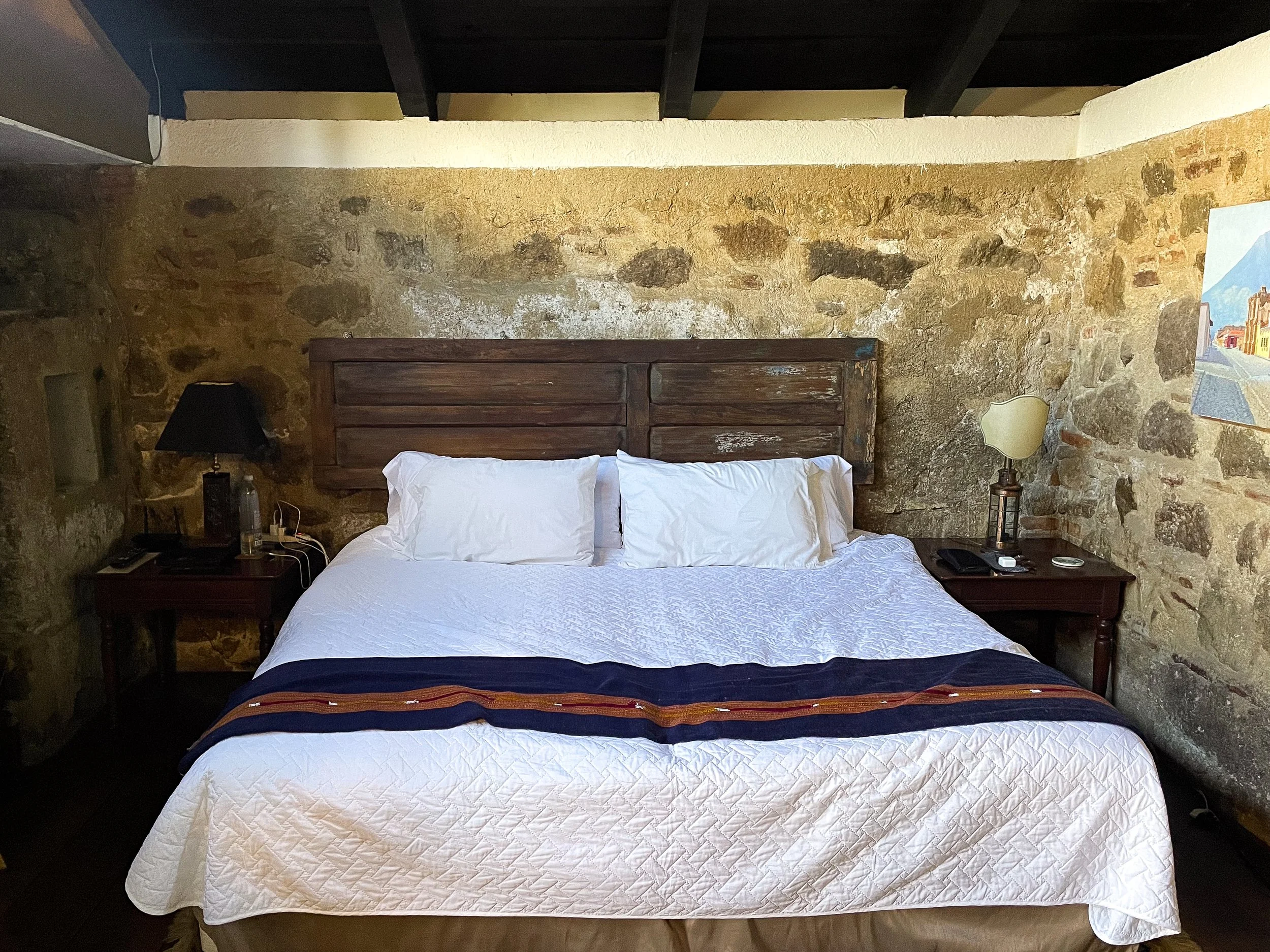
Where to Stay
Antigua is a large backpacker destination with apartment rentals and hostels throughout the city. We stayed in a centrally located Airbnb at the El Solar Apartments. The apartment was a renovated ruin with exposed brick, stone walls, wooden beams and artwork of the city.
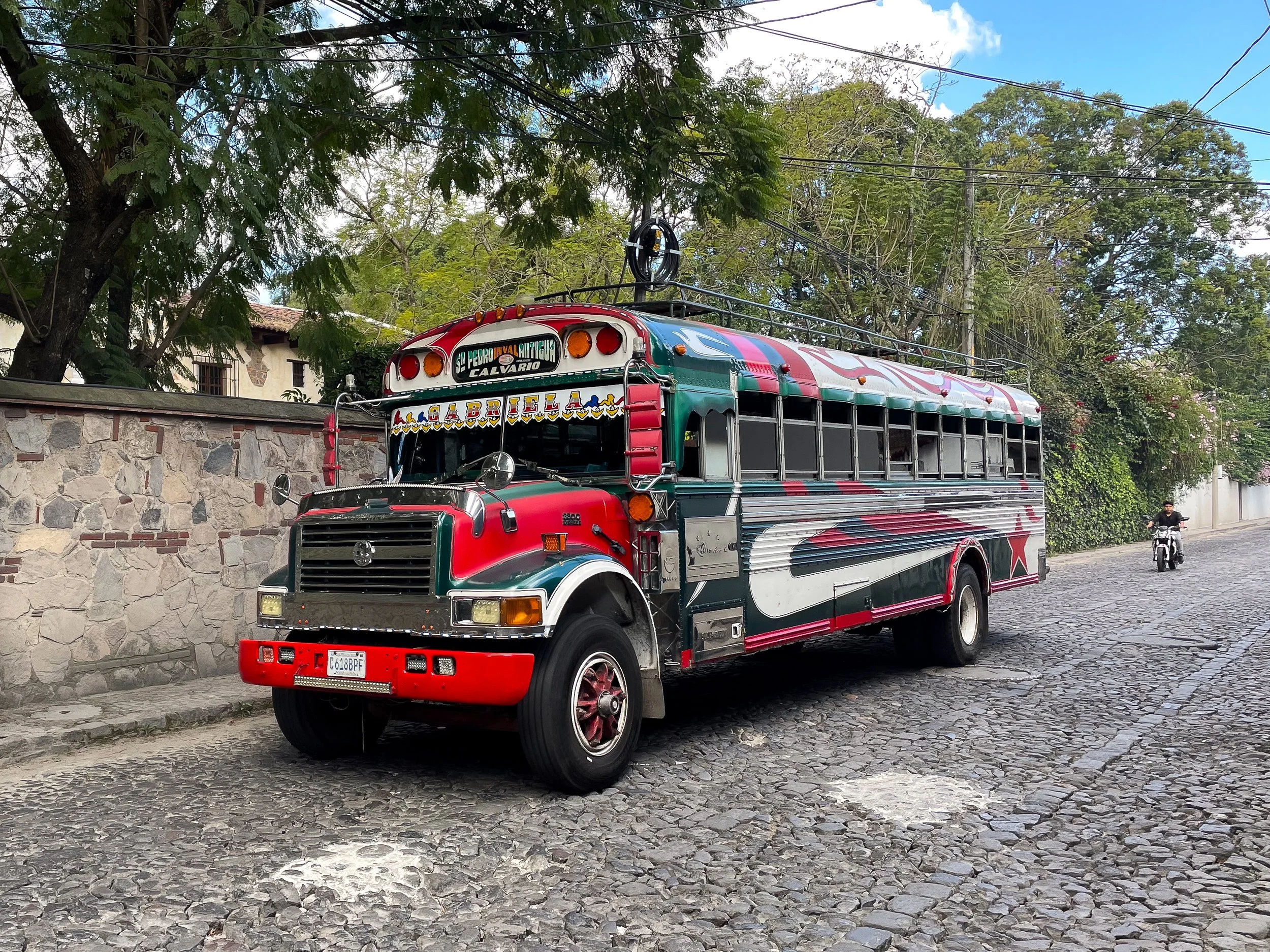
Getting Around
Guatemala City to Antigua. Book a transfer between Guatemala City and Antigua with a reputable local agency like Due South Travels. They safely shuttled us between the airport and our stay in Antigua during late night hours.
On Foot. Antigua is a very walkable city. Exploring it on foot is the best way to see the colonial sights, crumbing ruins and volcanic views.
By Taxi. Yellow cabs and Ubers are readily available in Antigua. They’re an affordable way of reaching nearby locations. Always confirm the price and destination before getting into the taxi.
Location Specifics
Drinking Water. Tap water is not drinkable. Only drink bottled or filtered water.
Cash vs Card. Many businesses are cash only. Carry USD to exchange or the local Quetzal.
Safety. We found the Antigua to be very safe. The locals tend to be welcoming and friendly.
Language. Spanish is widely spoken, many people speak English and some speak Mayan.
UV Protection. Wear sunblock. The higher altitude makes the sun’s UV stronger.
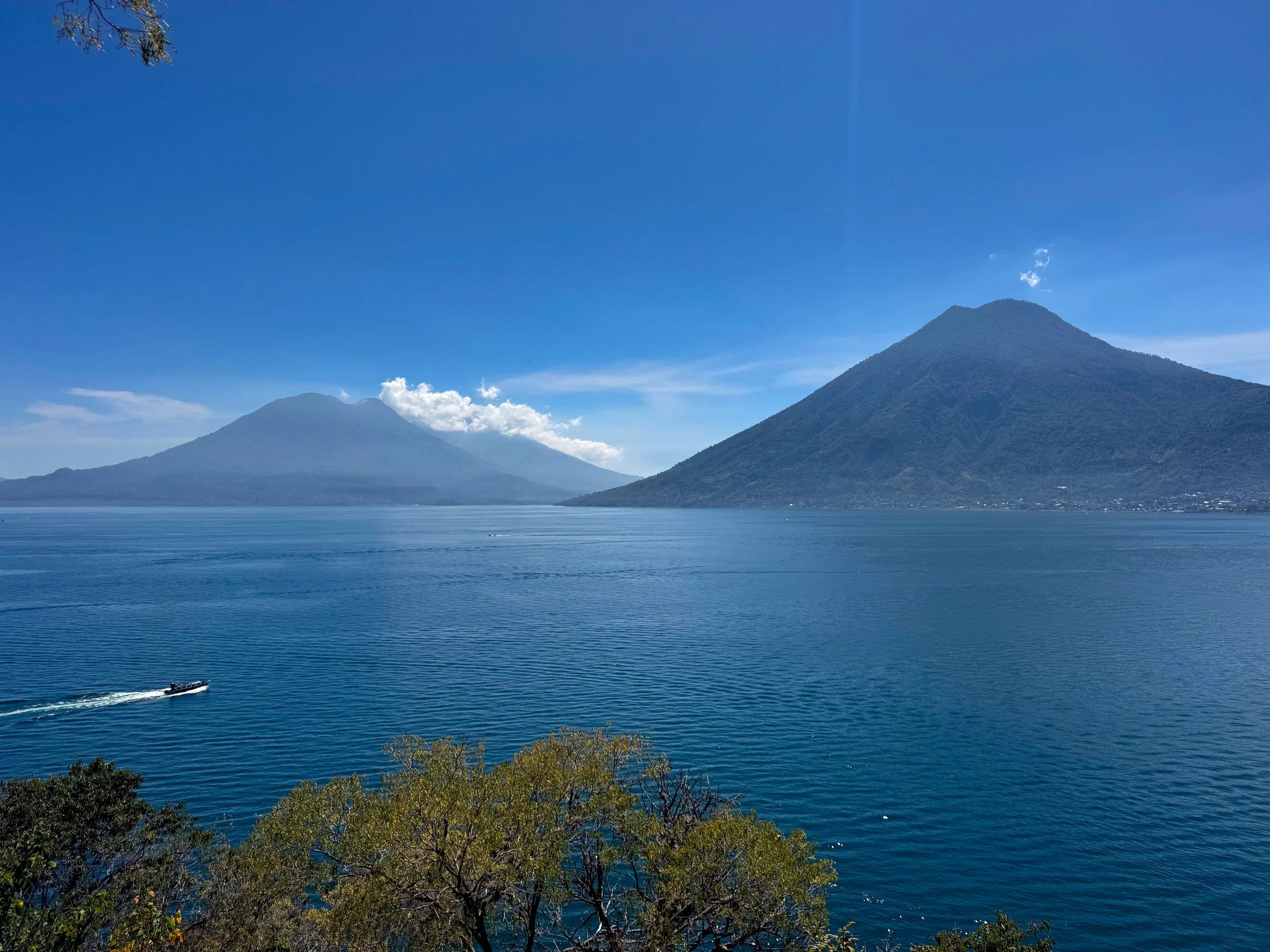
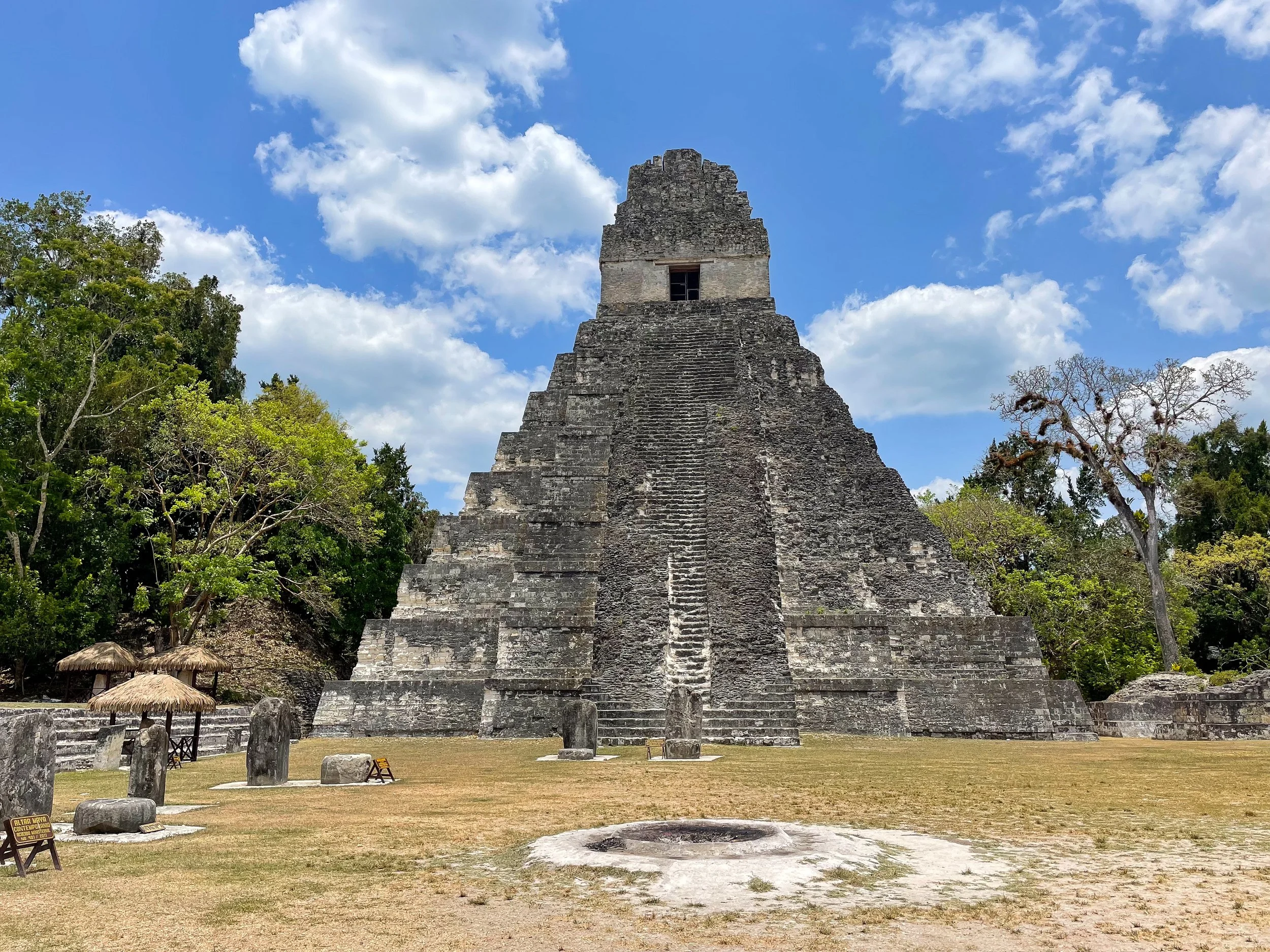
Elsewhere in Guatemala
From volcanic lakes to ancient Maya cities, continue exploring Guatemala's diverse landscapes and cultural heritage.
Lake Atitlán Travel Guide: Villages, Volcanoes & Mayan Culture. Navigate between Lake Atitlán's lakeside villages where volcanic landscapes and living Mayan culture shape one of Guatemala's most remarkable destinations.
Maya Ruins Travel Guide: Jungles, Temples & Ancient Cities. Journey through ancient Maya cities, temples and archaeological wonders across Belize and Guatemala while exploring dramatic jungle landscapes.
For Next Time…
Flores, Guatemala. A picturesque island city on Lago Petén Itzá known for its colorful architecture and proximity to Mayan ruins.
Monterrico. A beach town along Guatemala’s Pacific Coast known for its black sand beaches and annual sea turtle migrations.
El Paredón. A sleepy surf town along Guatemala’s Pacific Coast with black sand beaches and great year round surf conditions.
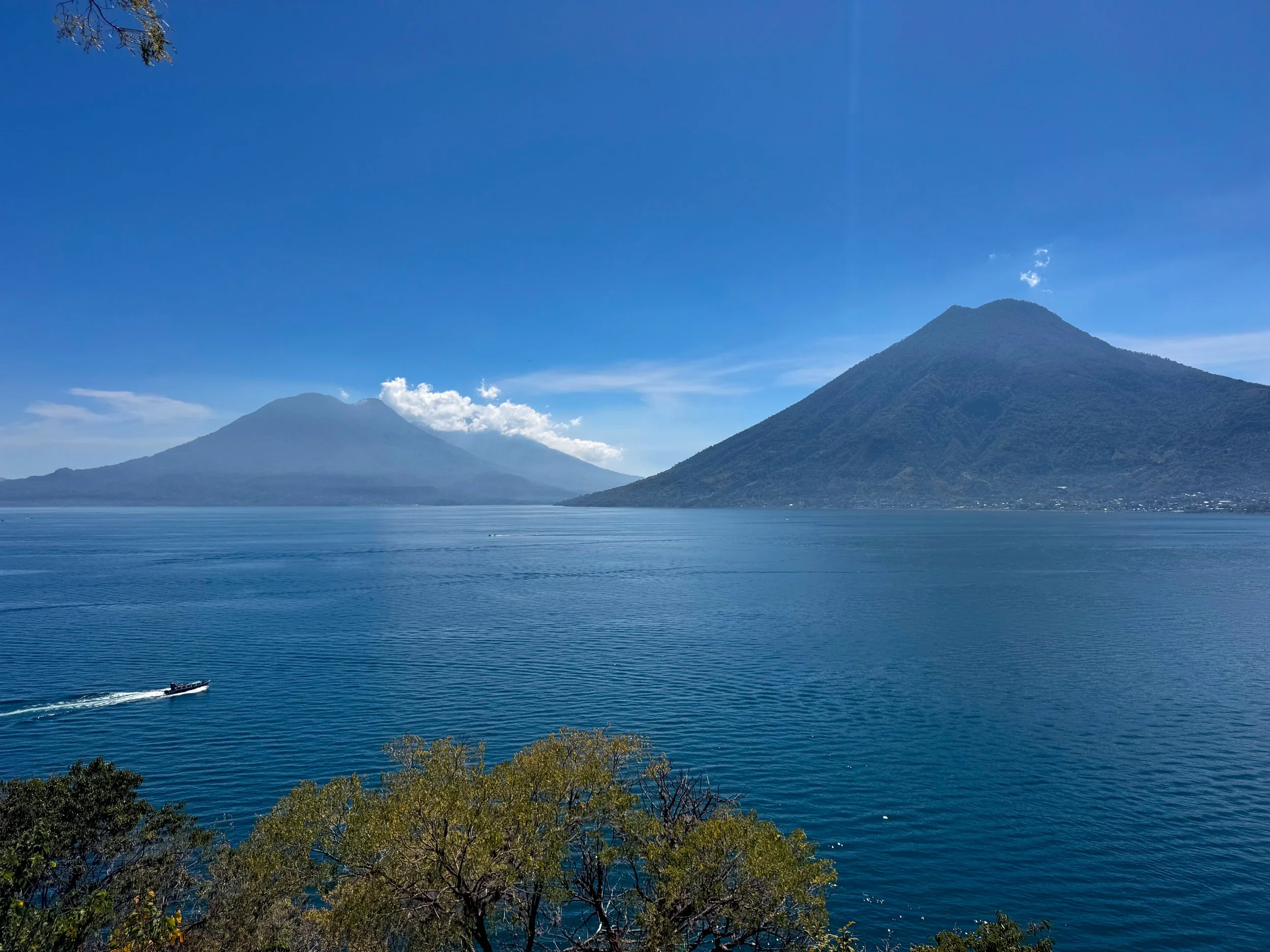
Lake Atitlán Travel Guide: Villages, Volcanoes & Mayan Culture
Journey between Lake Atitlán's lakeside villages where volcanic landscapes and living Mayan culture shape one of Guatemala's most remarkable destinations.
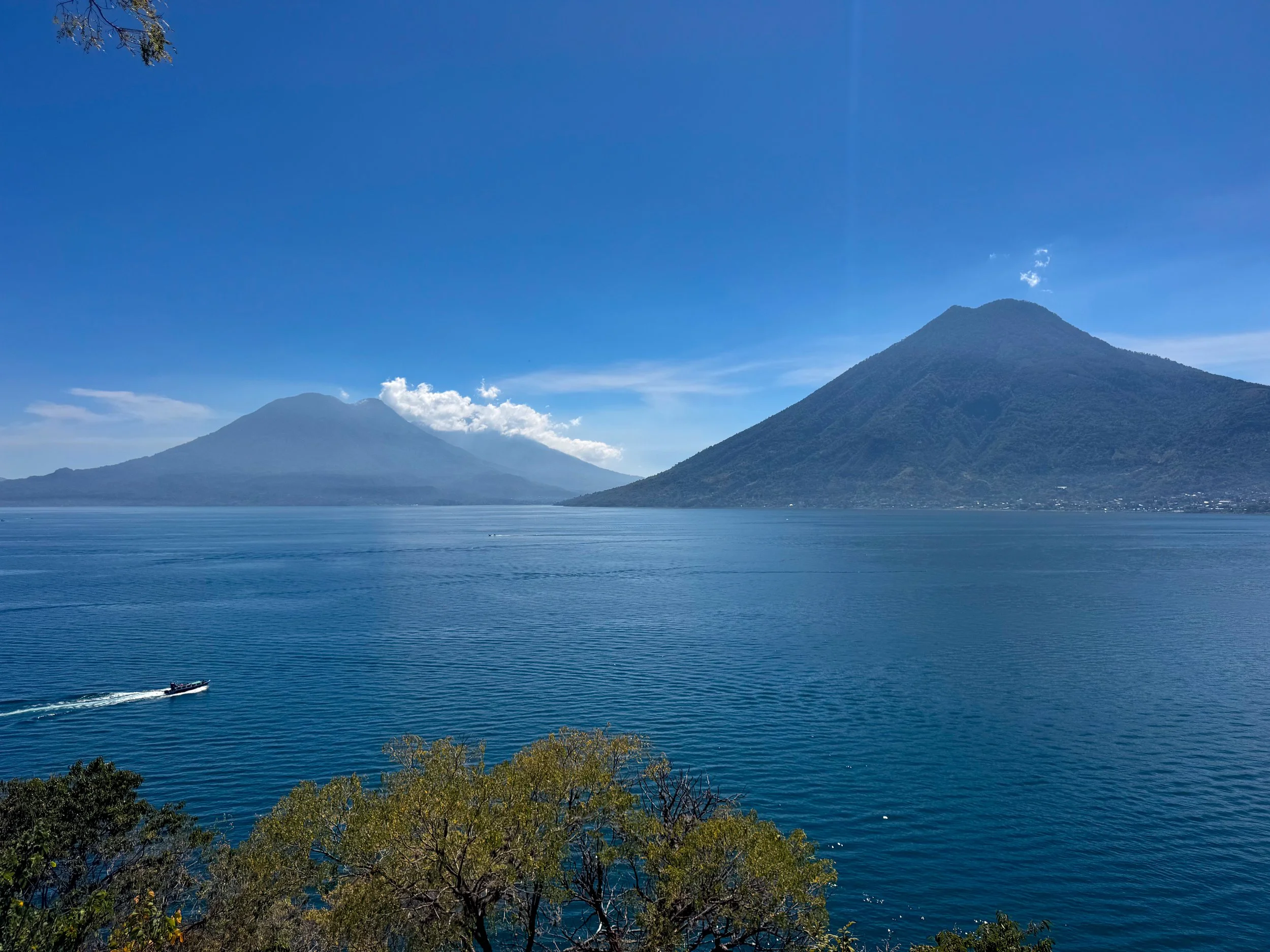
Lake Atitlán, Guatemala
Lake Atitlan is a fresh water lake in a volcanic crater of Guatemala’s lush and rugged highlands. Its shores are surrounded by conical volcanoes, nature preserves, coffee farms and small pueblos home to Mayan cultures, indigenous peoples and backpackers.
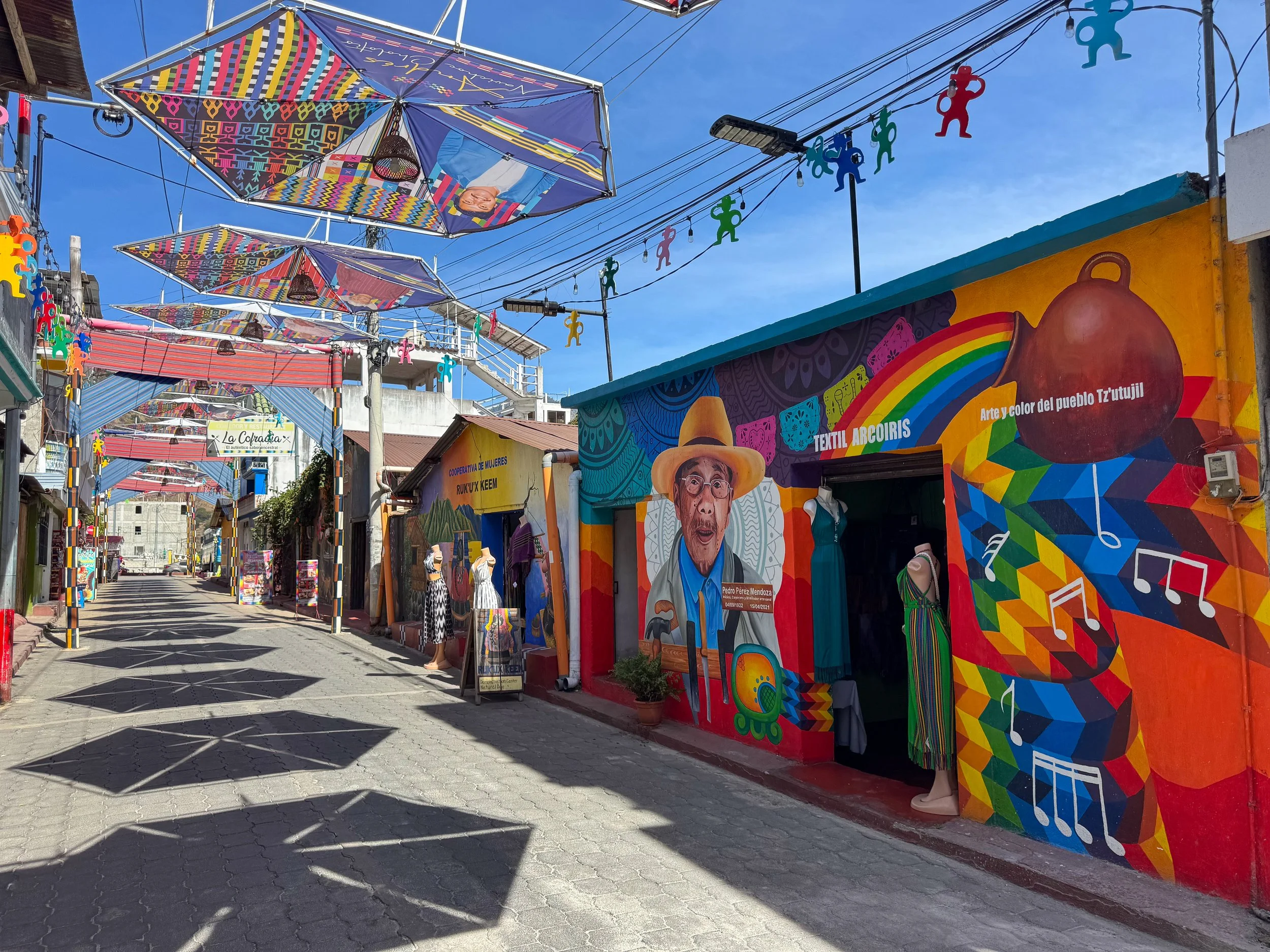
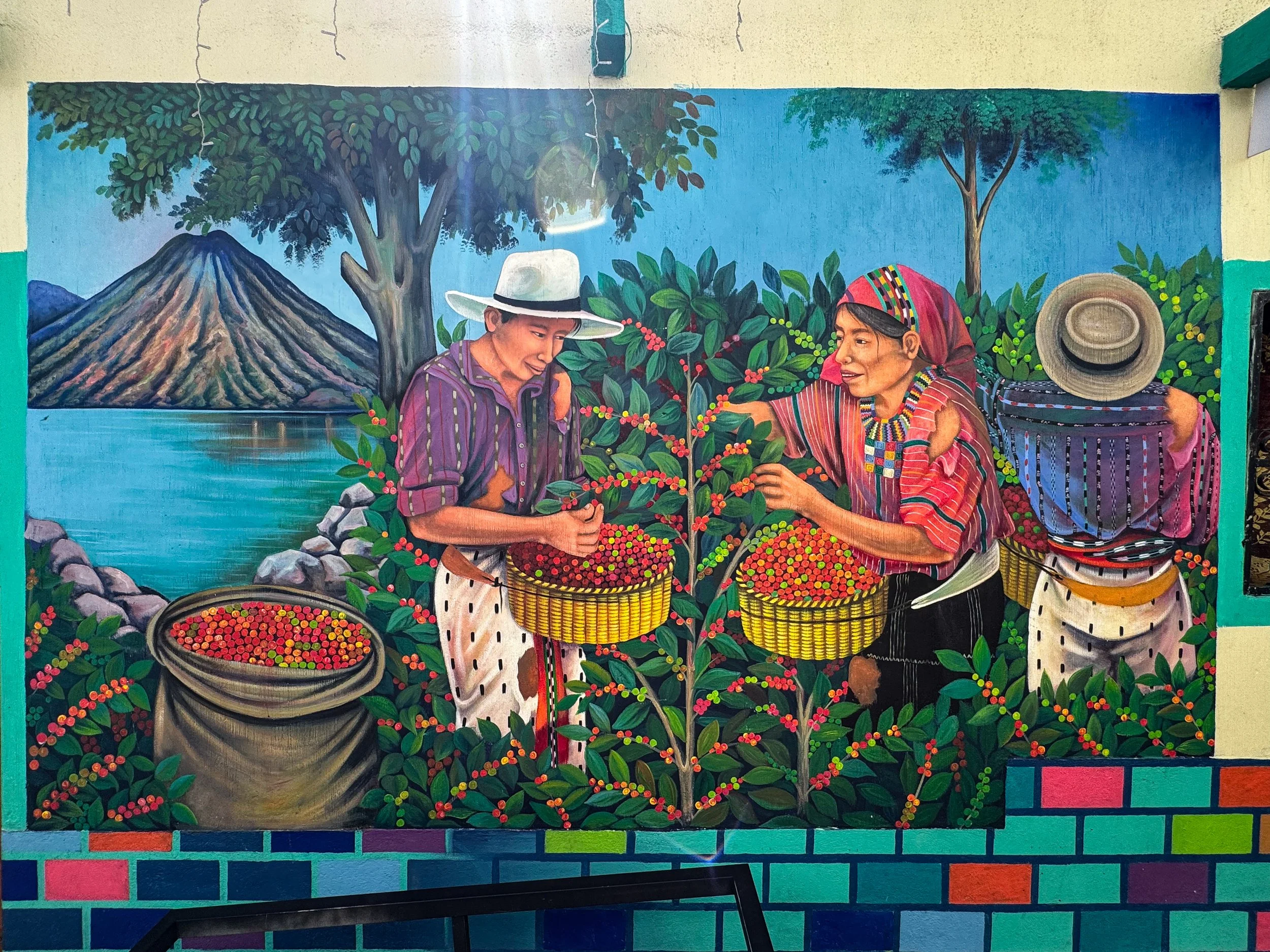
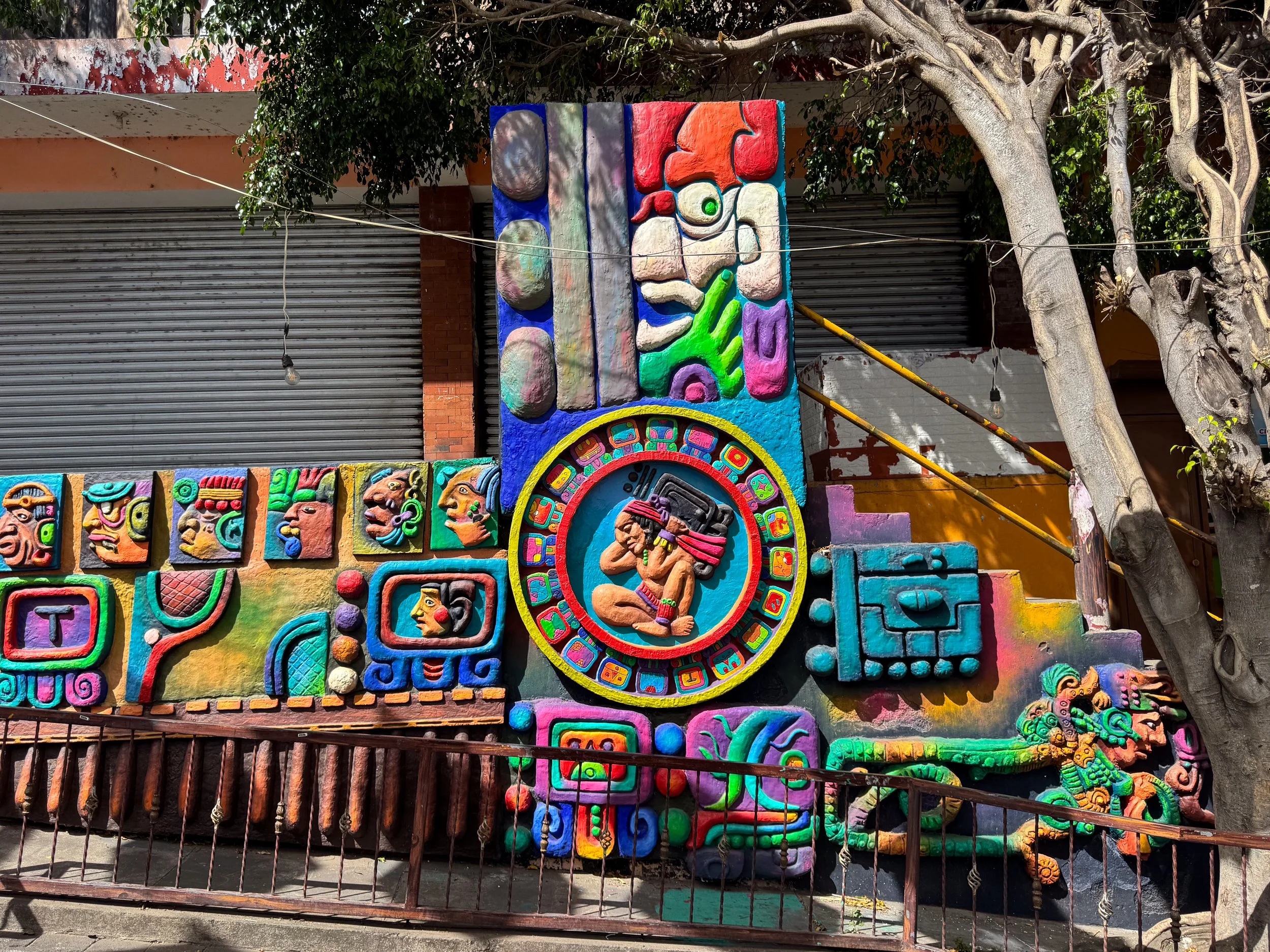
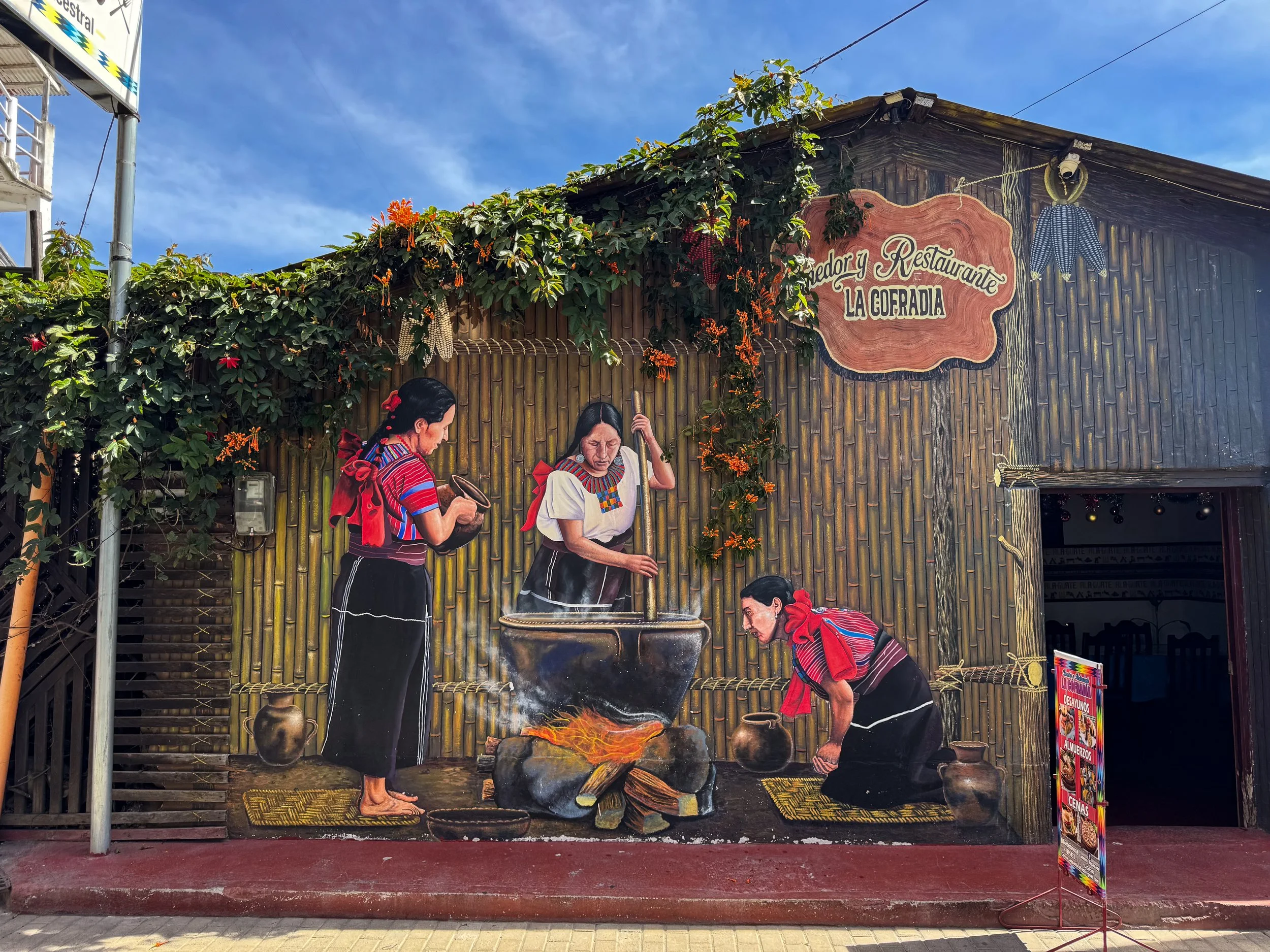
San Juan de la Laguna
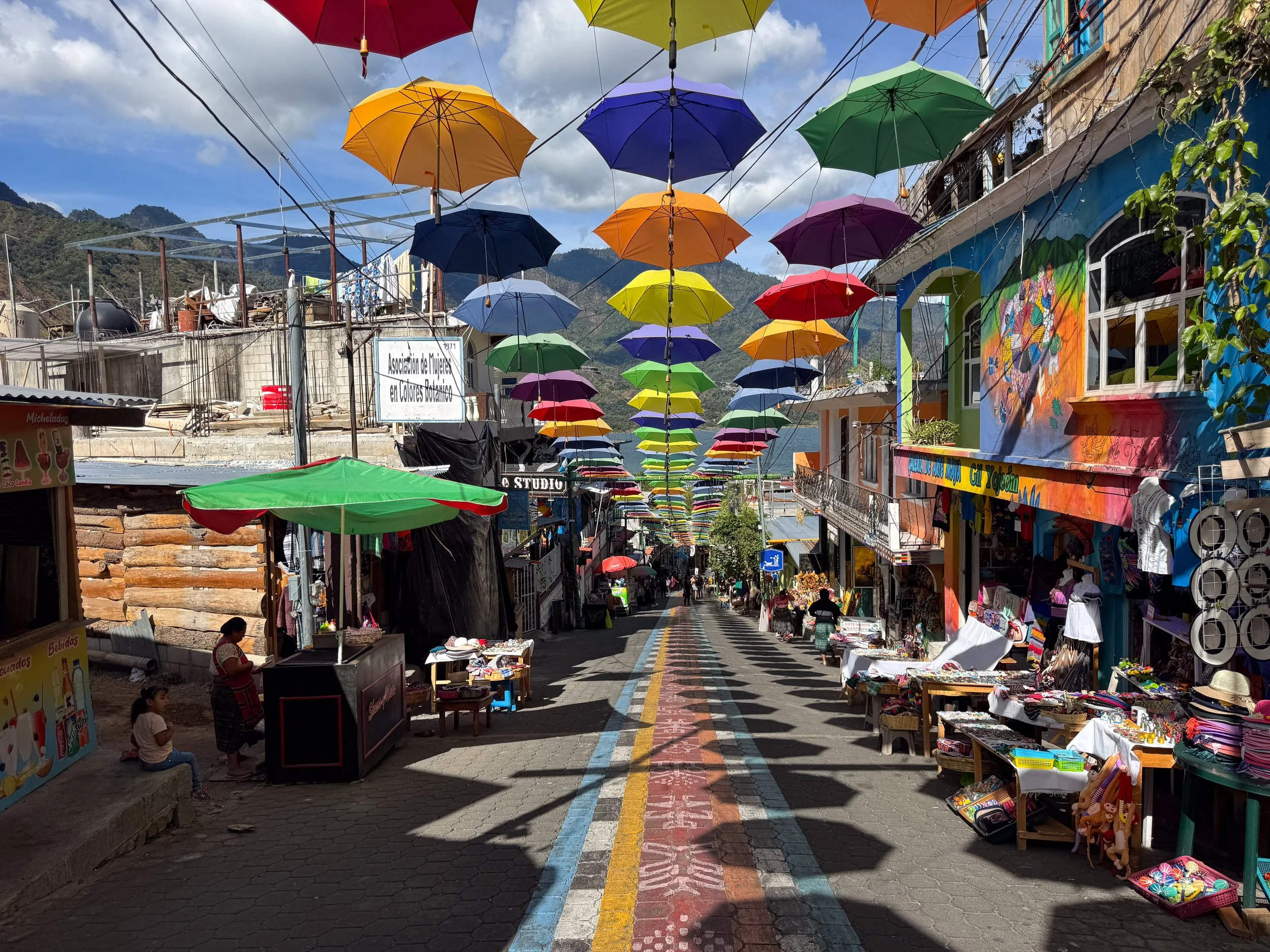
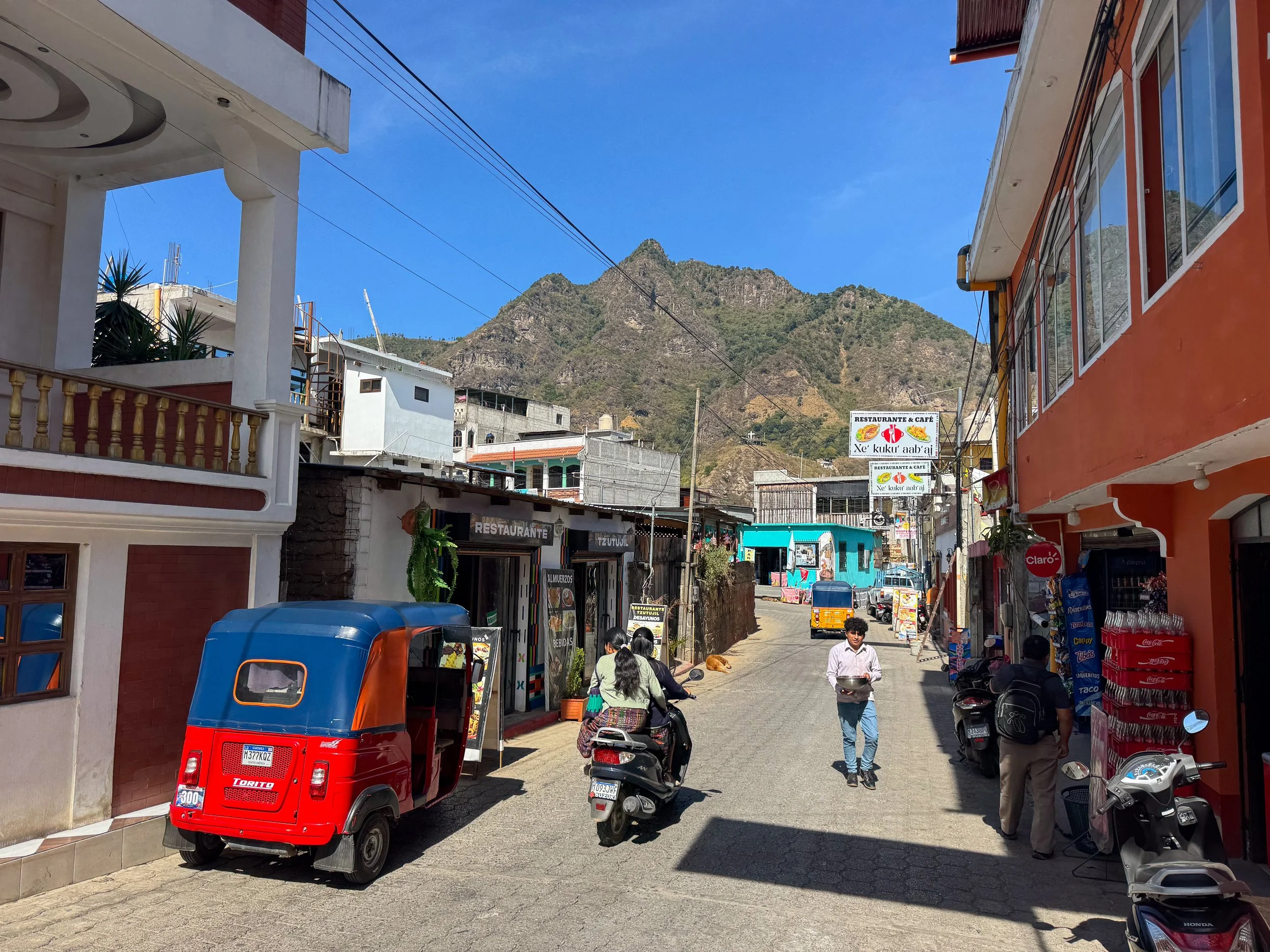
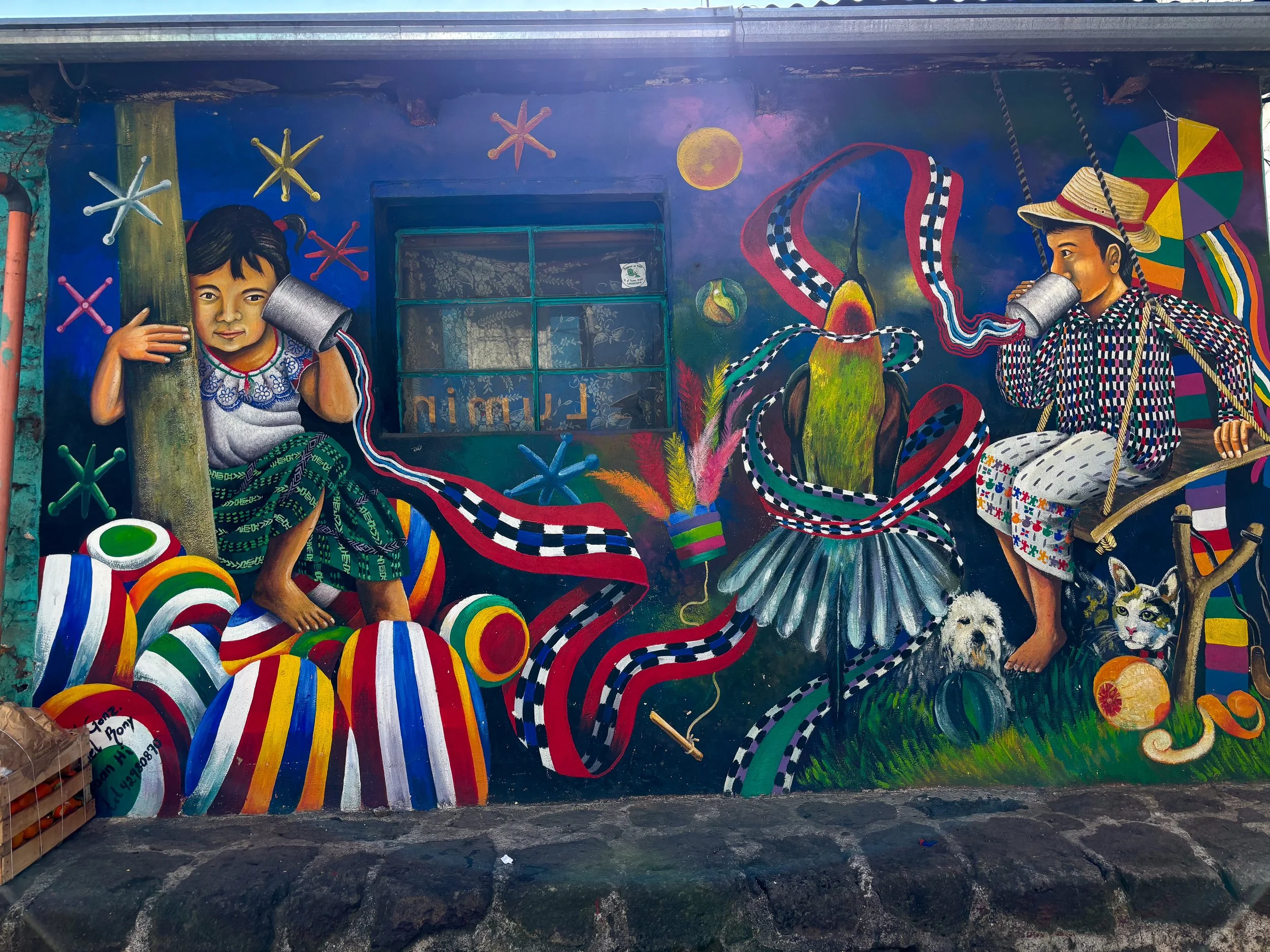
San Juan de la Laguna is a pueblo with an authentic and vibrant local culture known for its handicrafts and artistic traditions preserved by indigenous women. Buildings throughout town are painted with colorful murals depicting the women and their artistry. The main streets are decorated in canopies of umbrellas, banderas and string lights. Cafes, bakeries, textile shops, art galleries and roof top restaurants with views of Lake Atitlán are common places to taste the local culture.
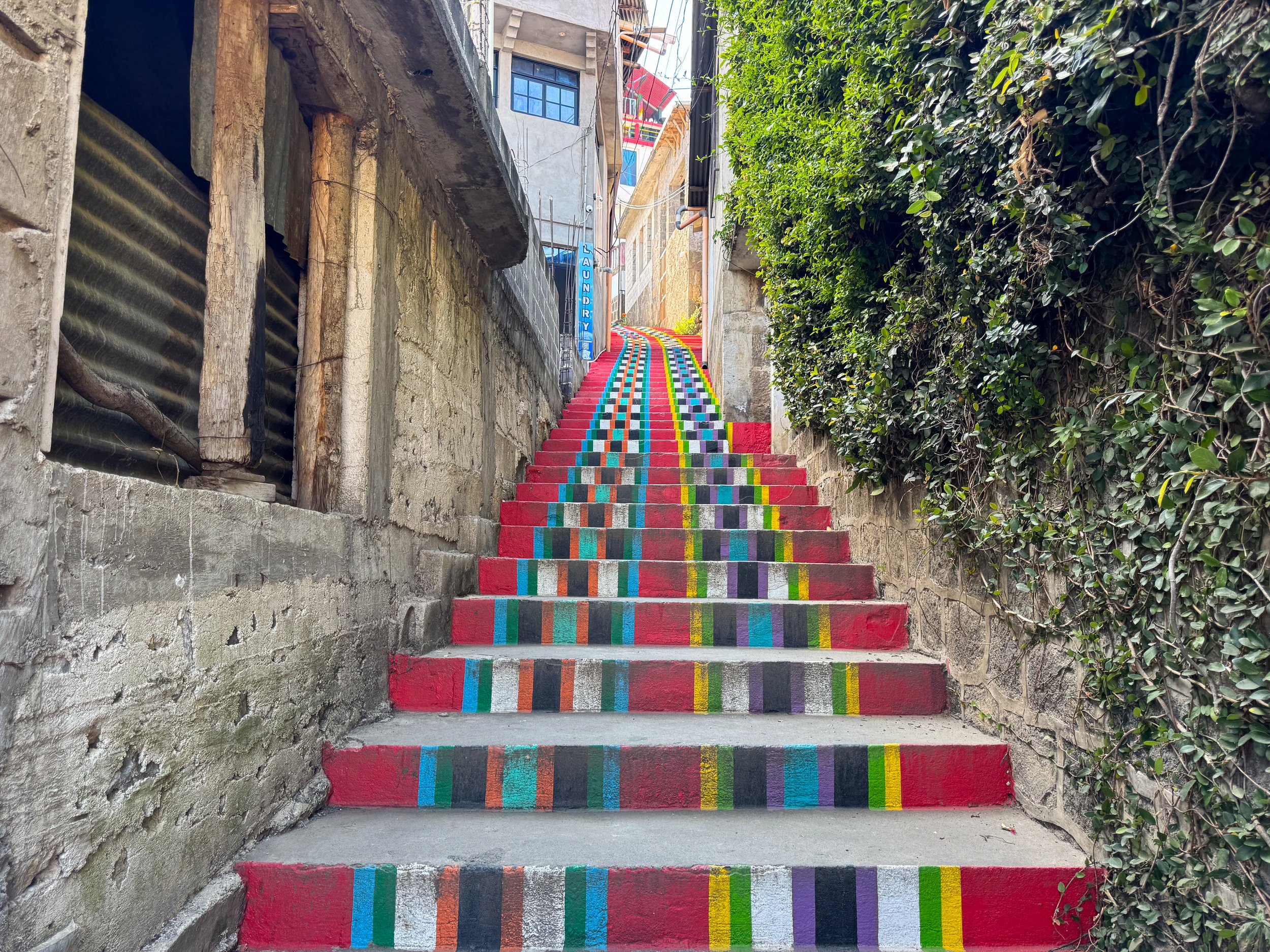
Los Calles de las Sombrillas. A series of painted streets throughout the pueblo with a canopy of colorful umbrellas, banderas and string lights hanging overhead. The most vibrant street leads from the ferry dock into town, passing craft and souvenir stores, cafes serving Guatemalan coffee, galleries selling colorful paintings and walls painted with vibrant murals depicting the local culture.
Market Municipal. A small produce market along La Calle de las Sombrillas with vendors selling fresh vegetables, produce, dried peppers, eggs, herbs and lake fish. We bought groceries for the week to cook Guatemalan meals in our hotel’s traditional kitchen.
SOL 4. The main road that passes through San Juan. After the last ferries leave for the day, this road becomes the epicenter of activity for locals. Whole families gather for dinner as street food vendors fill the air with aromas of grilled meats, fresh made tortillas and burning charcoal. Brightly illuminated chicken buses roar past, announcing their presence with the honk of a train horn.
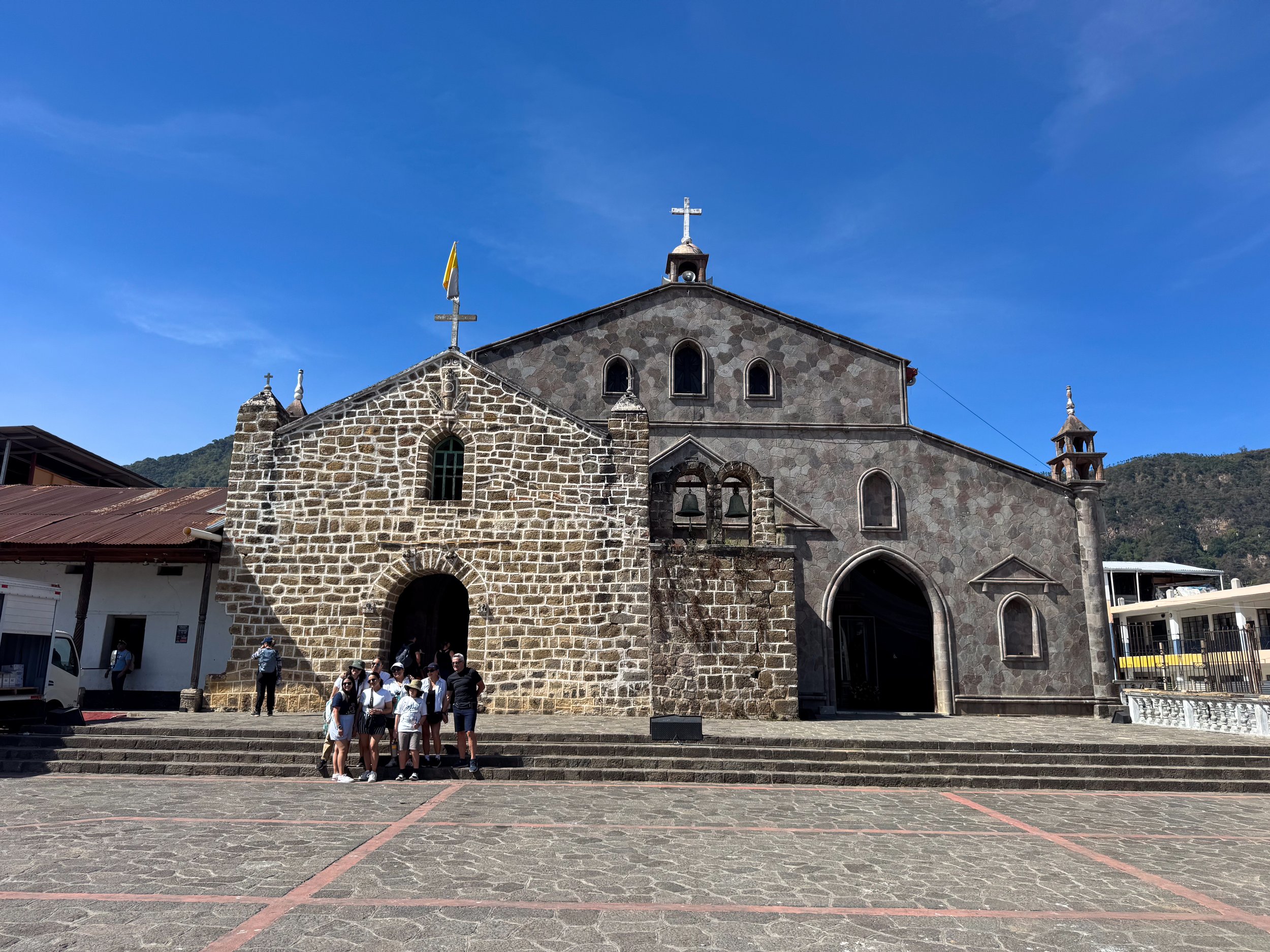
Iglesia Católica San Juan La Laguna. A historic but simple stone church in the center of town with dual bells. The plaza in front of it is a popular spot for street food vendors selling pollo con papas (chicken with fries), choco-fruitas (chocolate covered fruits), pan dulces (sweet breads) and micheladas.
Traditions & Crafts
Indigenous women keep Mayan traditions and crafts alive. Throughout the pueblo, women are seen wearing colorful handwoven textiles, often seen making tortillas on streets and weaving inside shops and collectives.
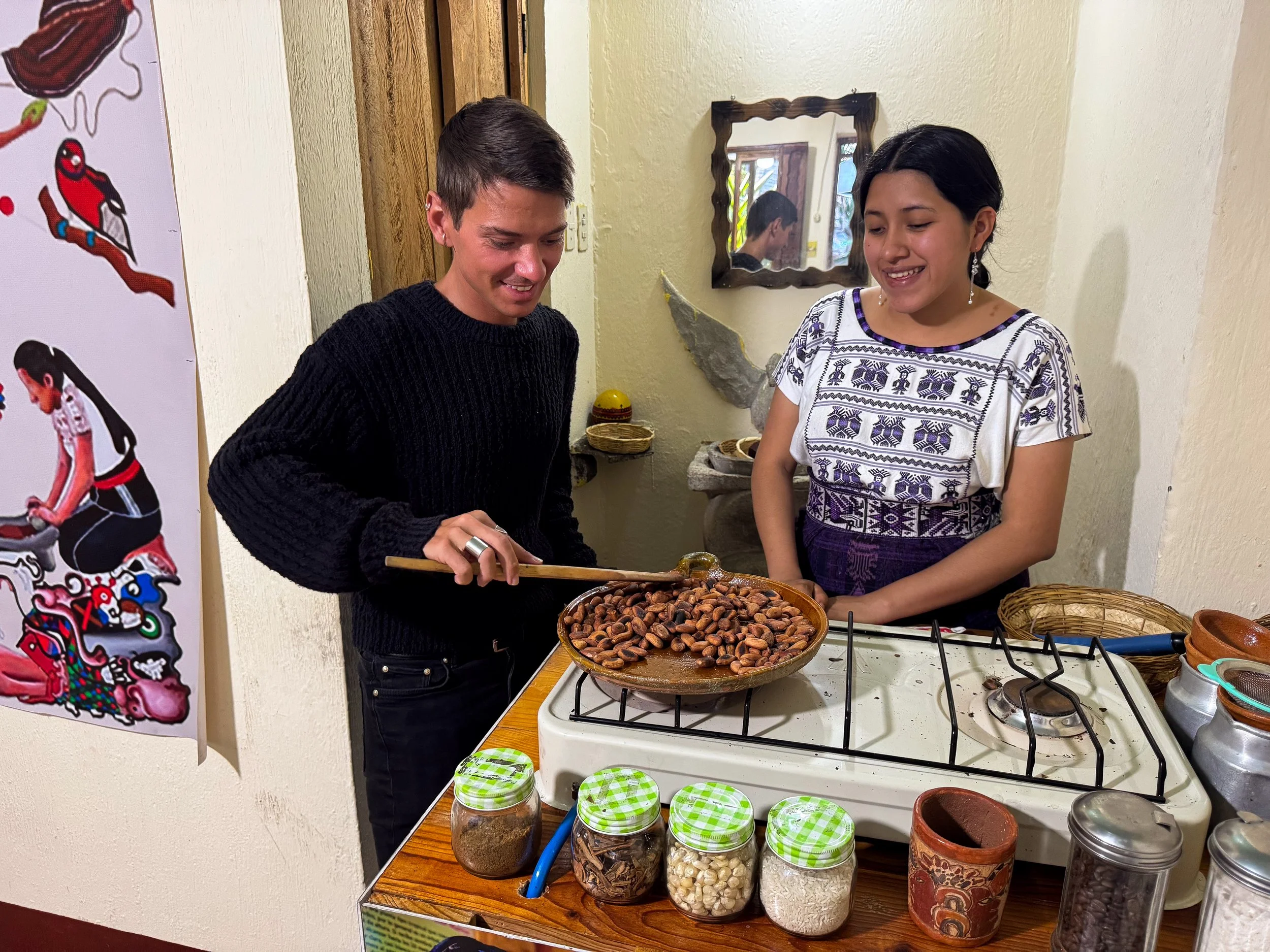
Licor Marron Chocolate. A Guatemalan chocolatier with traditional chocolate making classes, tastings and history lessons about cacao's importance to the ancient Mayans. During an hour long class, we began by separating hundreds of dried cacao beans by size to roast in a traditional clay comal (frying pan). An intoxicating chocolate aroma wafted from the beans as they popped and cracked under the heat. Once fully roasted, we separated the husks by hand and pulverized the beans on a traditional grinding stone. We tasted tea made from the husks and ancestral hot chocolate made from the cacao grounds mixed with molasses sugar, cinnamon and cardamom. We bought a few hand pressed bars and a large pellet of ancestral chocolate used to make our hot chocolate at home.
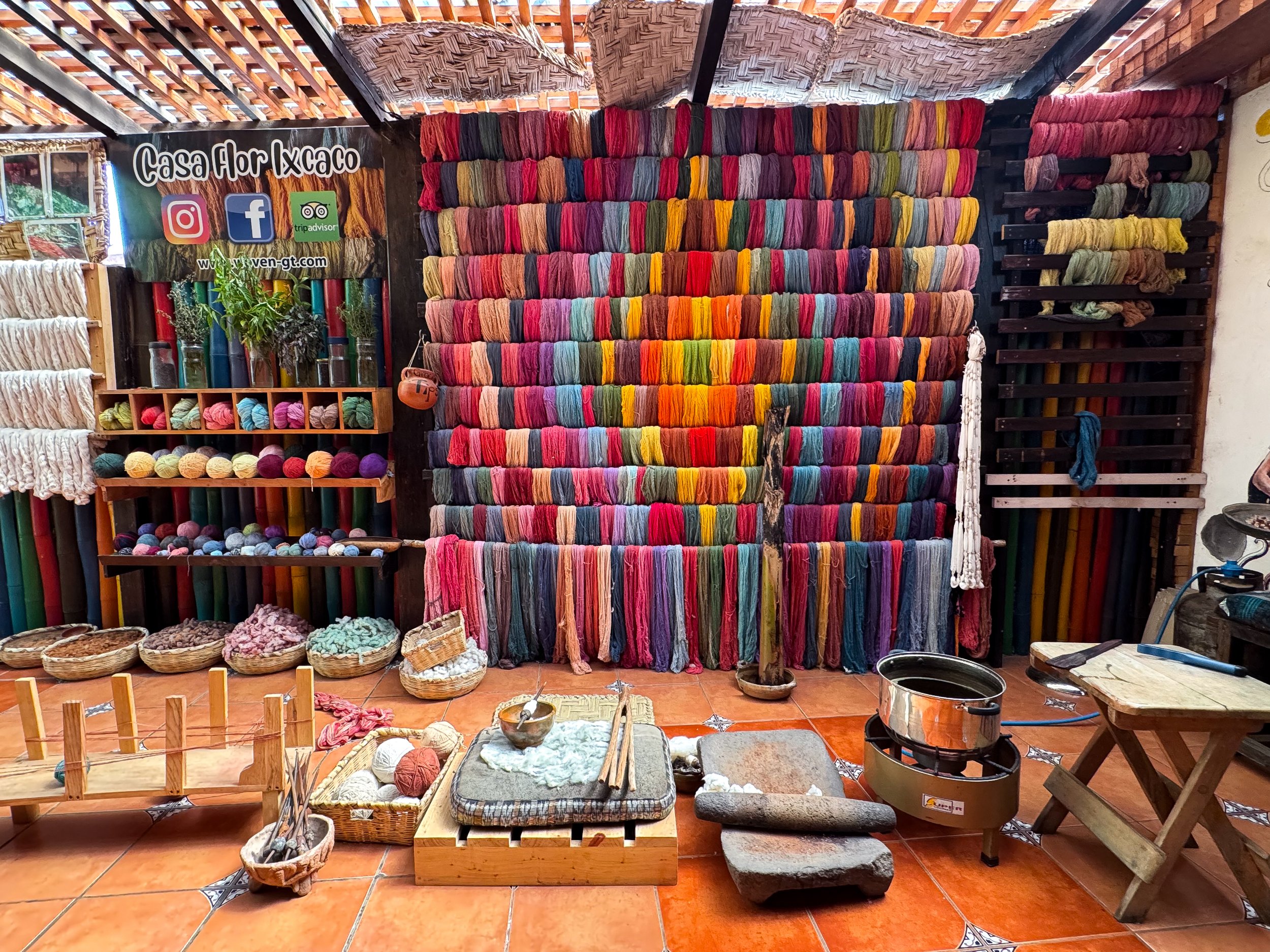
Casa Flor Ixcaco Weaving Cooperative. A female owned weaving cooperative with demonstrations of the textile making process. During the demo, a weaver began by separating seeds from raw cotton, beat the cotton fibers to soften them, spun them into yarn and dyed them in a turmeric bath. Using a back strap loom, she continued weaving a piece that was weeks in the process. The cooperative has a store with textiles made by the women, including clothes, bags, home decor and blankets. Each piece has a tag with a photo and name of the woman who made it, the type of cotton it’s made from, the dyes that were used and how long the item took to make.
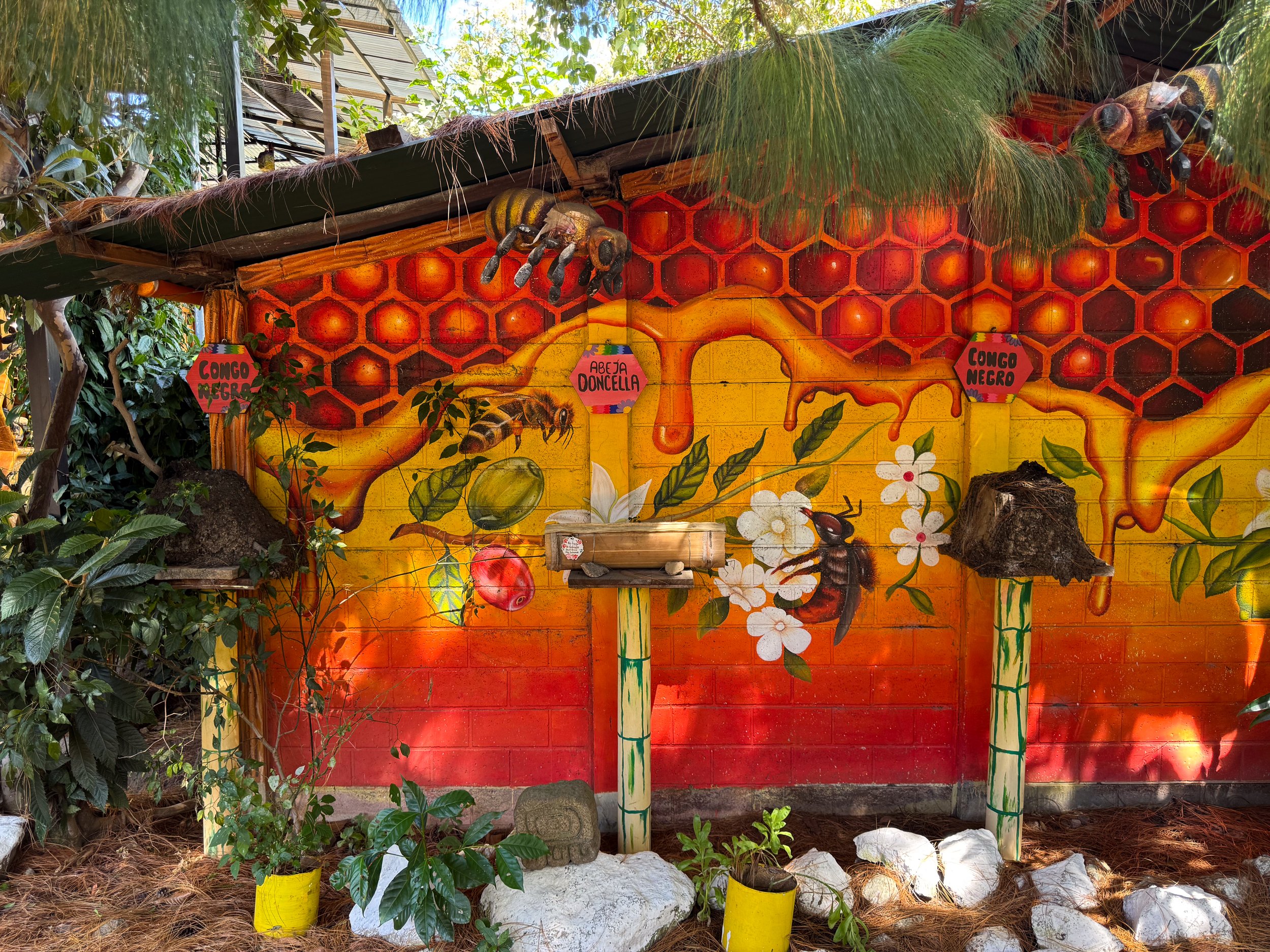
Mundo de Abejas Mayas. A bee farm and honey producer with an interactive garden home to hives of various species of stingless bees. We visited and tasted over a dozen types of pure and infused honeys made from local ingredients. We bought a jar of crystallized honey spread to smear on toast and sweeten herbal tea. Their shop sells all types of bee products including candles, honeys, pollen, raw honey combs, royal jelly, bee venom, honey wine and soaps. Despite its name, the bee farm has nothing to do with Mayan culture. It’s focused on the sustainable harvesting of honey and preservation of bees endemic to Guatemala.
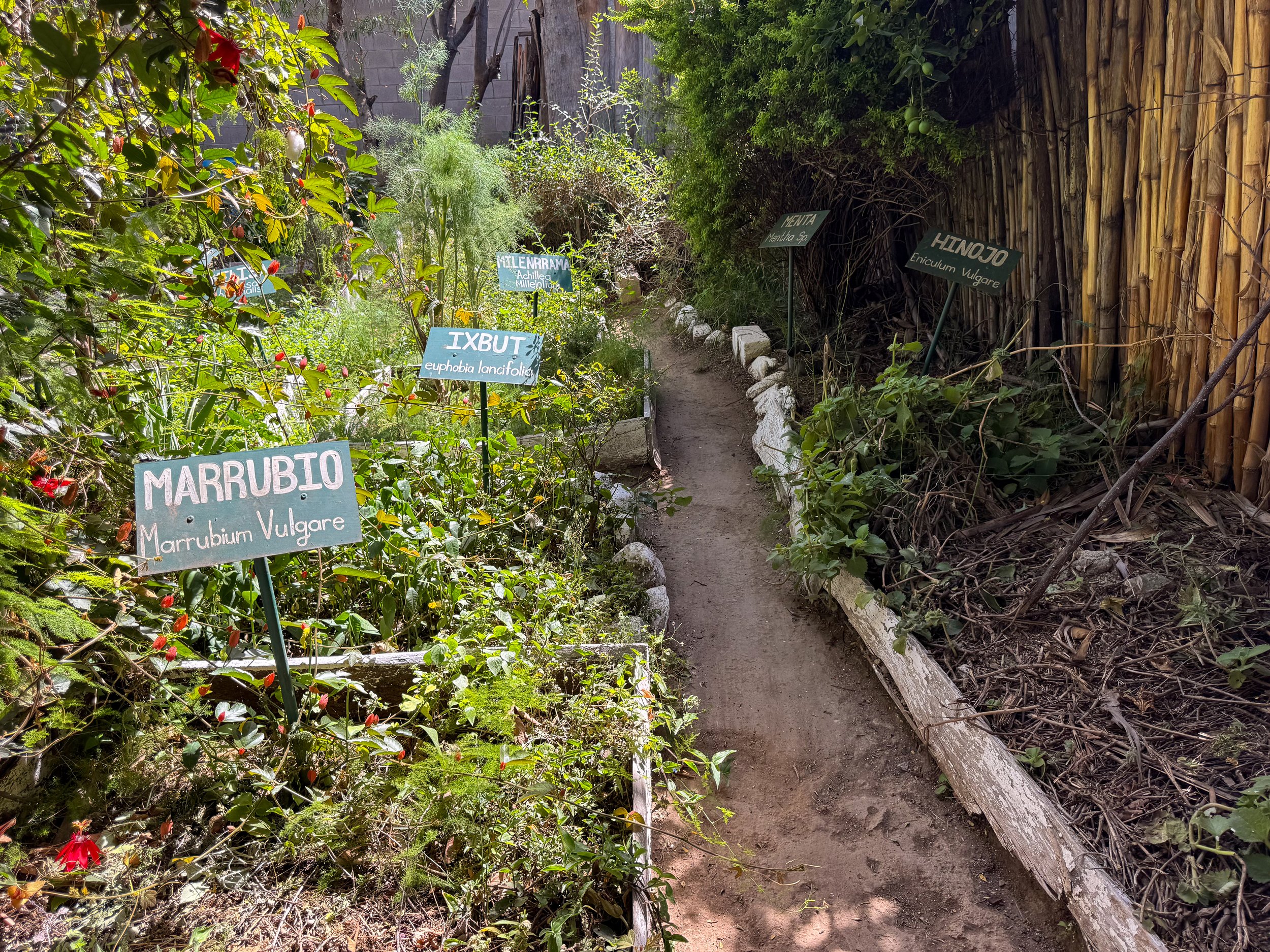
Asociación Q’omaneel. A traditional medicinal garden commonly grown by Guatemalan women at home and used to make teas, soaps and oils to treat various ailments from stomach aches, joint pain, burns, stress, etc. We bought a tea that’s supposed to help with sleeping made from dried stems, leaves and flowers. We steeped it nightly and mixed it with our crystallized honey from Mundo de Abejas Mayas.
Hiking & Lookouts
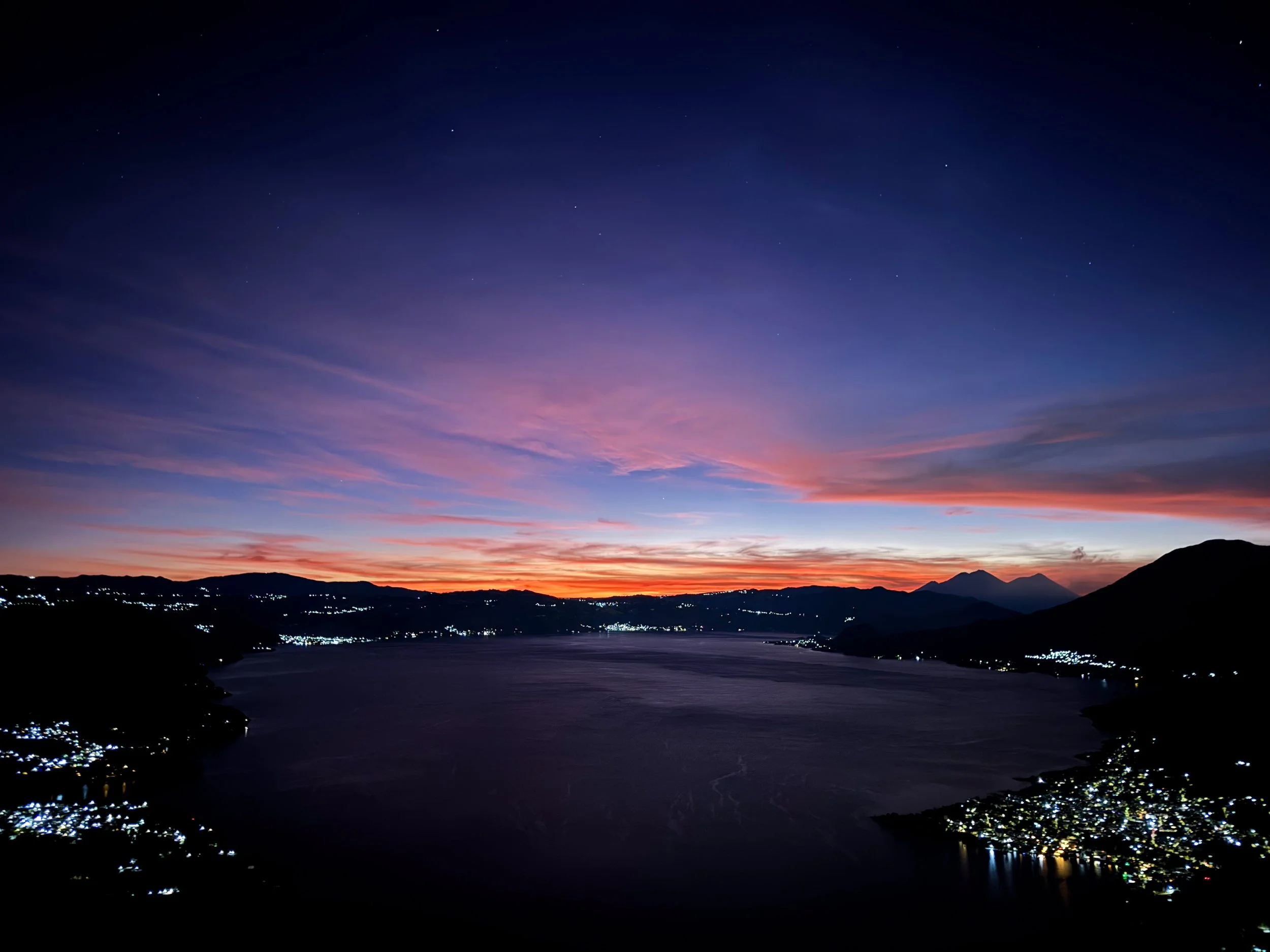
Cerro Cristalino (Nariz del Rostro Maya). A mountain peak popular for its sunrise hike overlooking Lake Atitlán, the surrounding volcanos and pueblos. Starting at 4am, we hiked with a local guide from the trail head to the summit. We passed through farmland with avocado trees, coffee plants, black beans and corn stalks, reaching the lookout 30 minutes later. Surprised to be the first to arrive, we took front row seats to watch the sunrise!
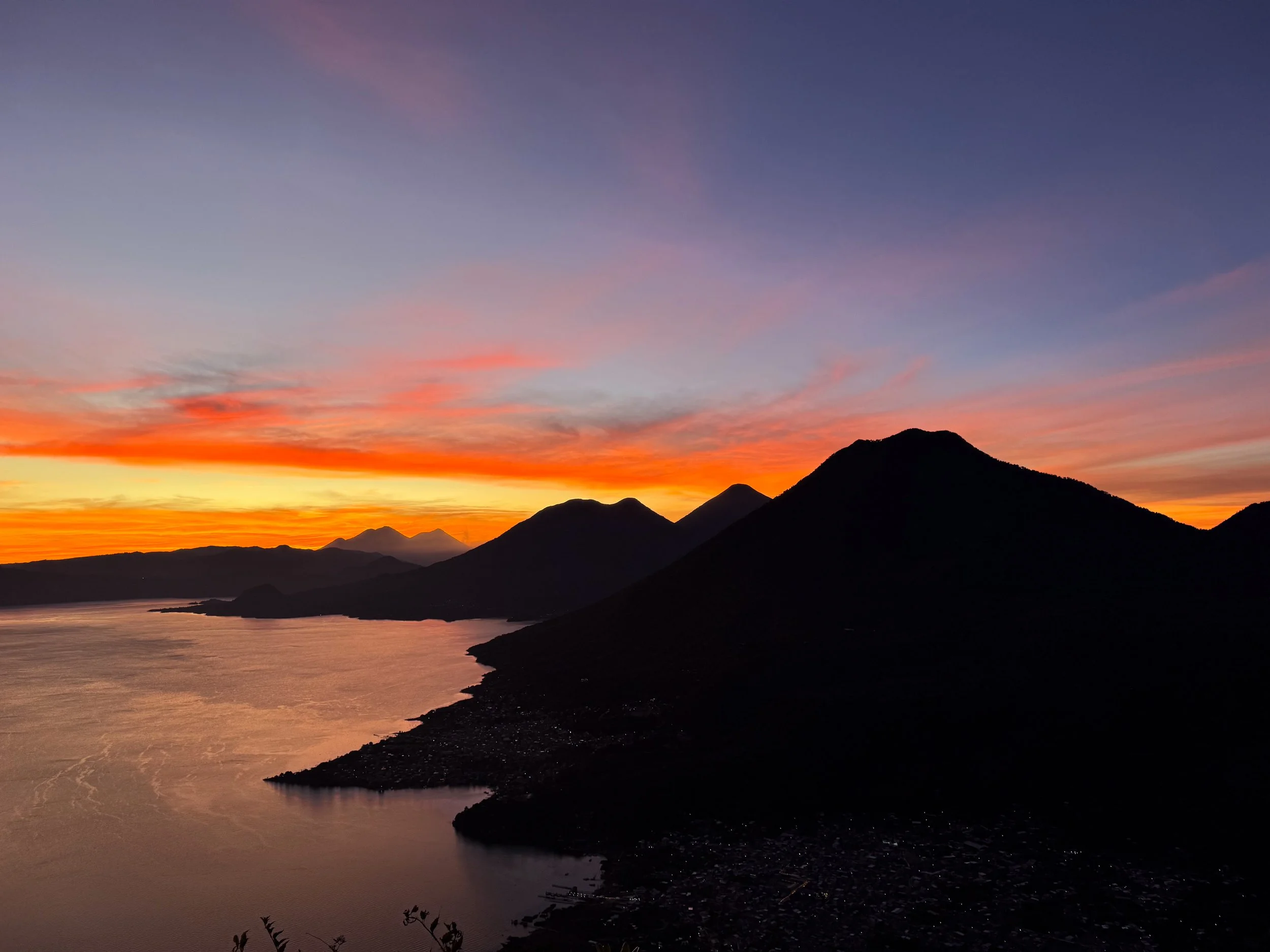
The San Pedro, Tolimán and Atitlán Volcanos create a silhouette set against the dark blue and purple star covered sky. Below, twinkling lights from the pueblos dot the lake. Further in the distance, the volcanic chain continues with Agua, Acatanango and Fuego. Every several minutes, we saw the red glow of lava erupting from Fuego and giant plumes of ash rising above it. First light appeared with dim reds, turning to oranges, pinks and yellows as the sun rose above the volcanic landscape and reflected in calm the lake. As the sun rose, we were served coffee in clay mugs and conchas for breakfast. The tour included a round trip transfer from our hotel in San Juan to the trail head. We booked with Tours with Vick on Viator.
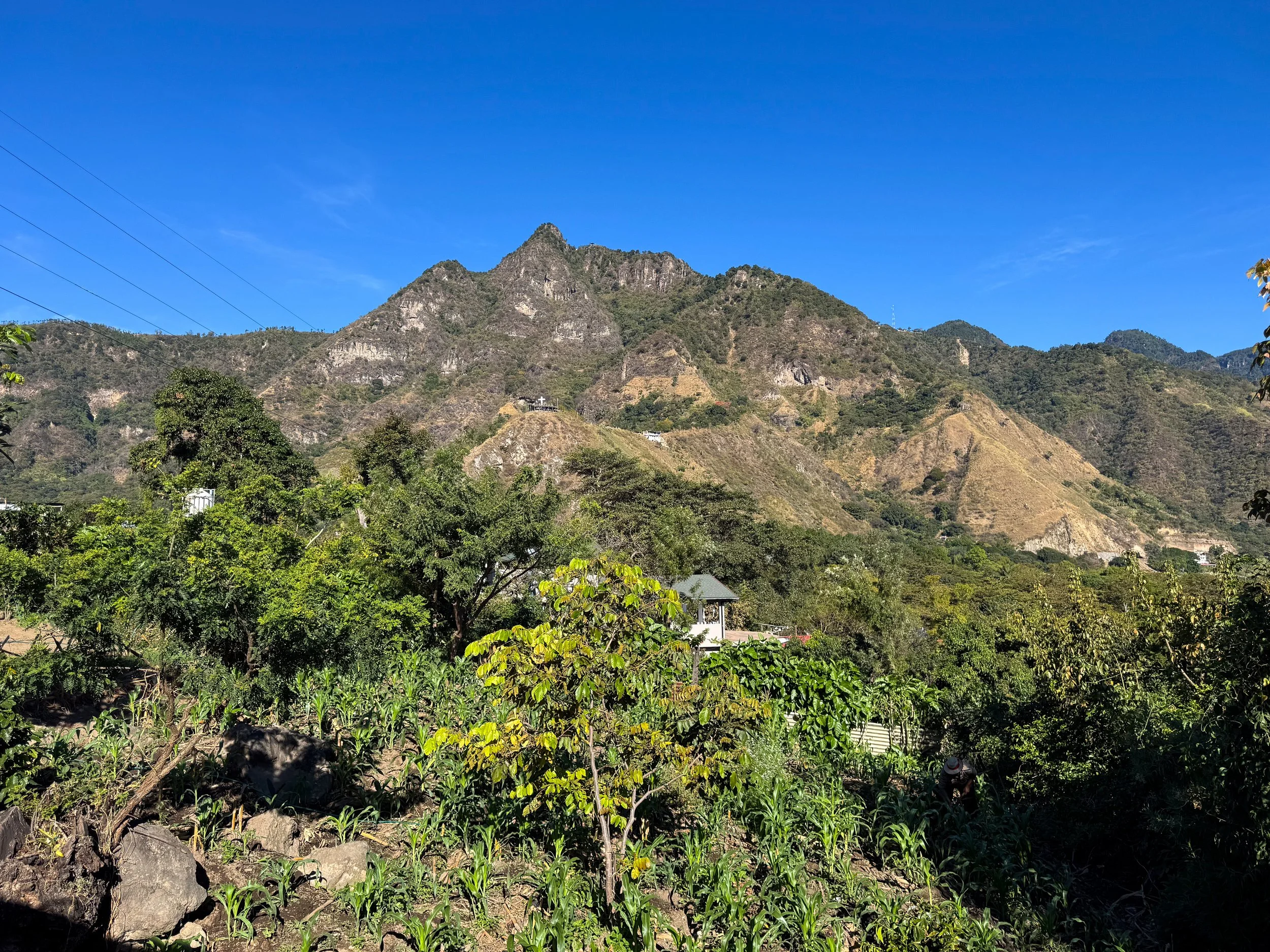
Good to Know. From San Juan, the mountain crest looks like the profile of a face looking upwards. It’s named after a beloved Mayan woman and local legend. Tourists commonly call the mountain, “The Indian’s Nose.” This is considered disrespectful to locals and best avoided.
Places to Eat & Drink
Cafe Las Marias. A tiny coffee roaster with a cafe on its second floor serving bold brews of Guatemalan coffee prepared in various styles including drip, aeropress and Turkish. The cafe is semi-hidden in an alley. Once finding it, ring a bell to be let in. The intimate cafe only has two tables and boasts views of Cerro Cristalino. They offer full breakfasts and do occasional coffee roasting demonstrations but there’s no set schedule.
Jaque. A second floor restaurant above a gallery with an outdoor patio overlooking Lake Atitlán and the San Pedro Volcano. The menu features a range of pizzas, seafood and vegetarian dishes. We ordered a Mojarra Frita (whole fried fish) and garlic shrimp with fresh made tortillas and two bottles of the local beer, Gallo.
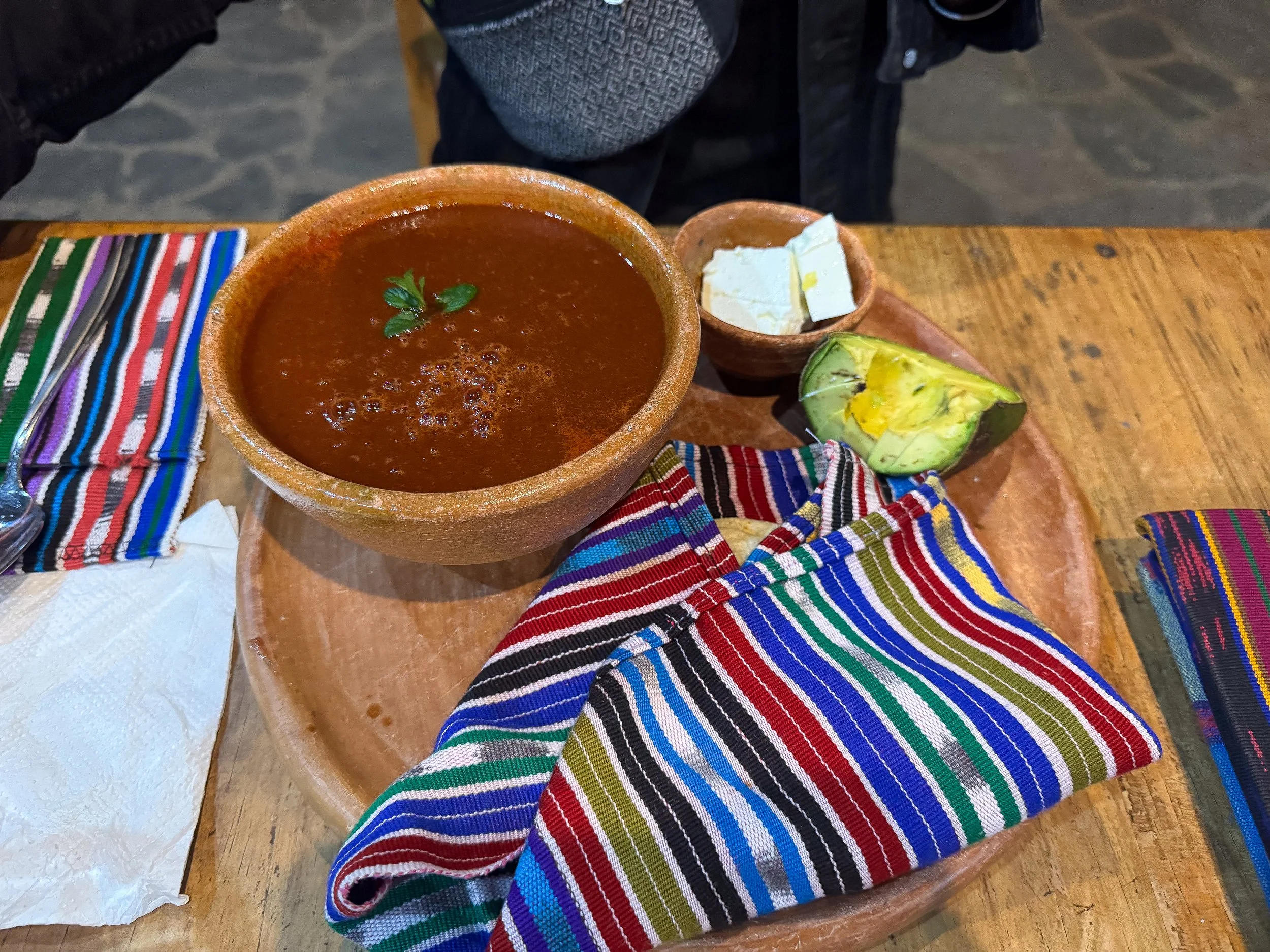
Restaurante MayAchik’. An eco hotel and restaurant on the outskirts of town with homemade vegetarian and vegan dishes. We ordered the Tacos de la Casa made with hibiscus flowers and Chapín, a local soup made from chile peppers, tomato and cilantro. Both were served with locally grown avocado and handmade tortillas. For dessert, we shared a plate of fried plantains covered in a spicy and chocolaty mole with a garnish of toasted sesame seeds.
Santa Catarina Palapó
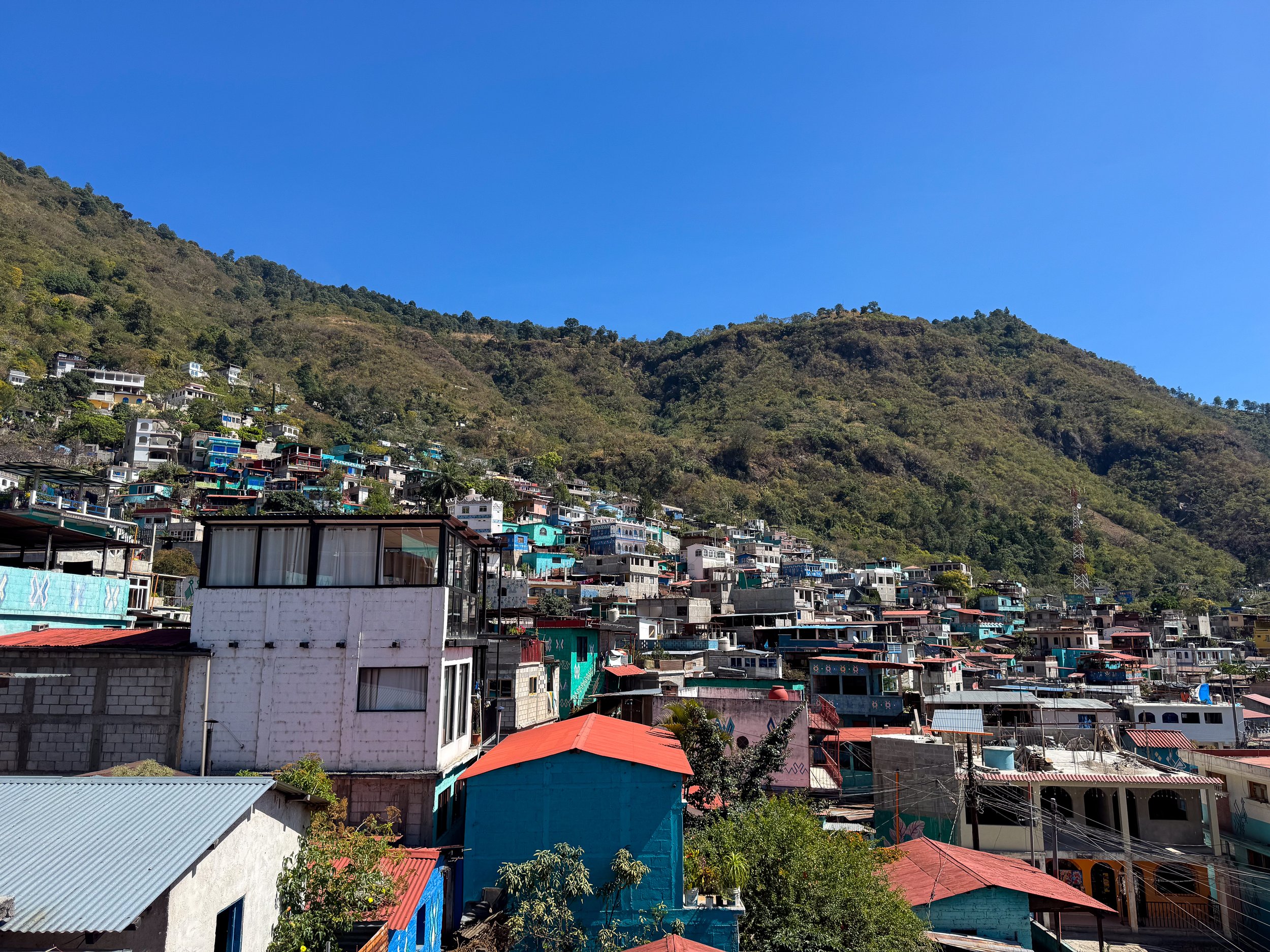
A small pueblo known locally for its traditional handicrafts and patterned buildings painted in shades of blue. It’s lesser visited and nearly untouched by tourism, allowing it to maintain a strong sense of authenticity. We followed a combination of cultural routes leading through town past various sights including viewpoints, museums and artisan shops. Similar to San Juan, many of the shops are women owned cooperatives used to keep the local traditions alive and to allow them to earn an independent livelihood.
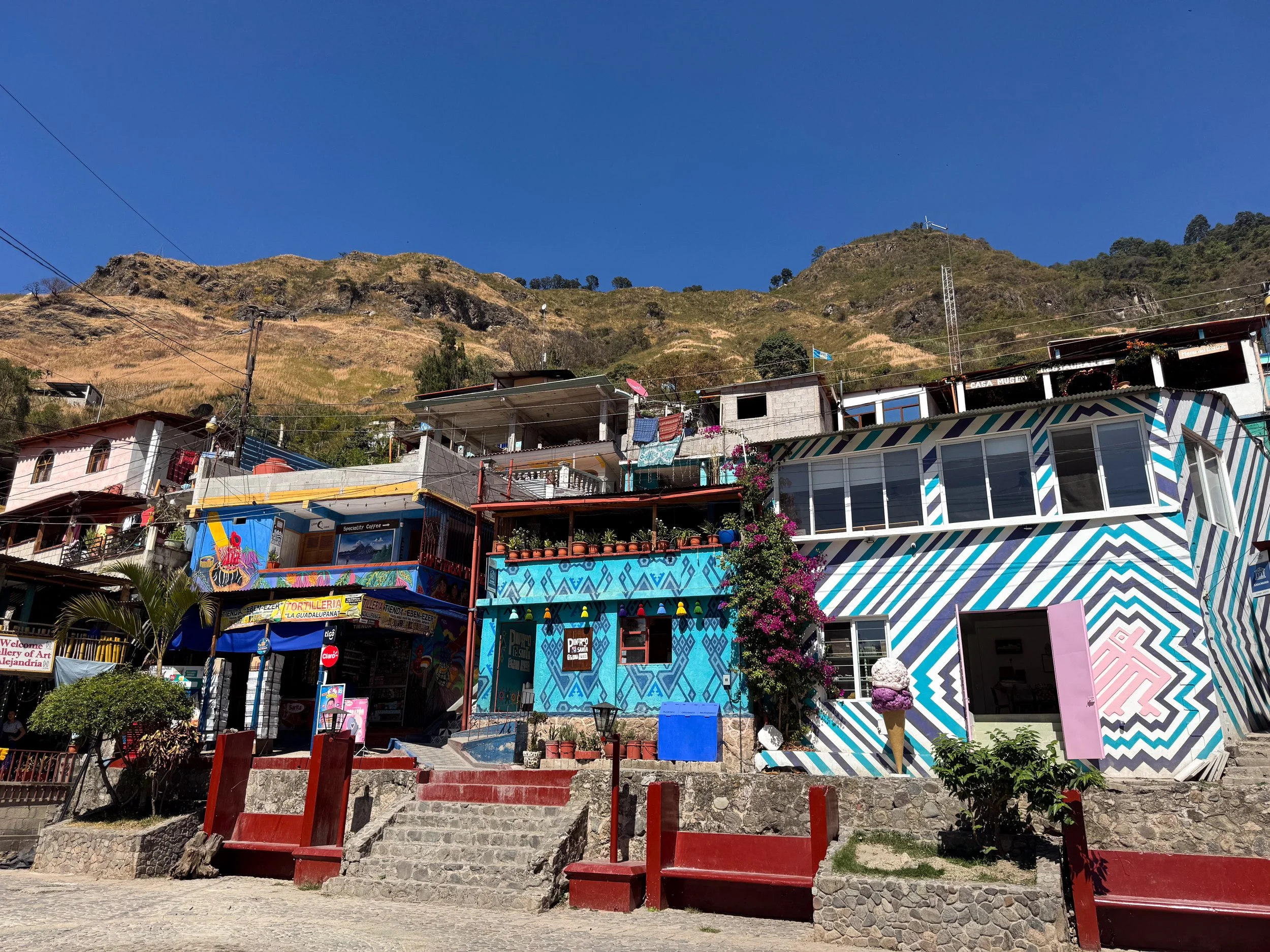
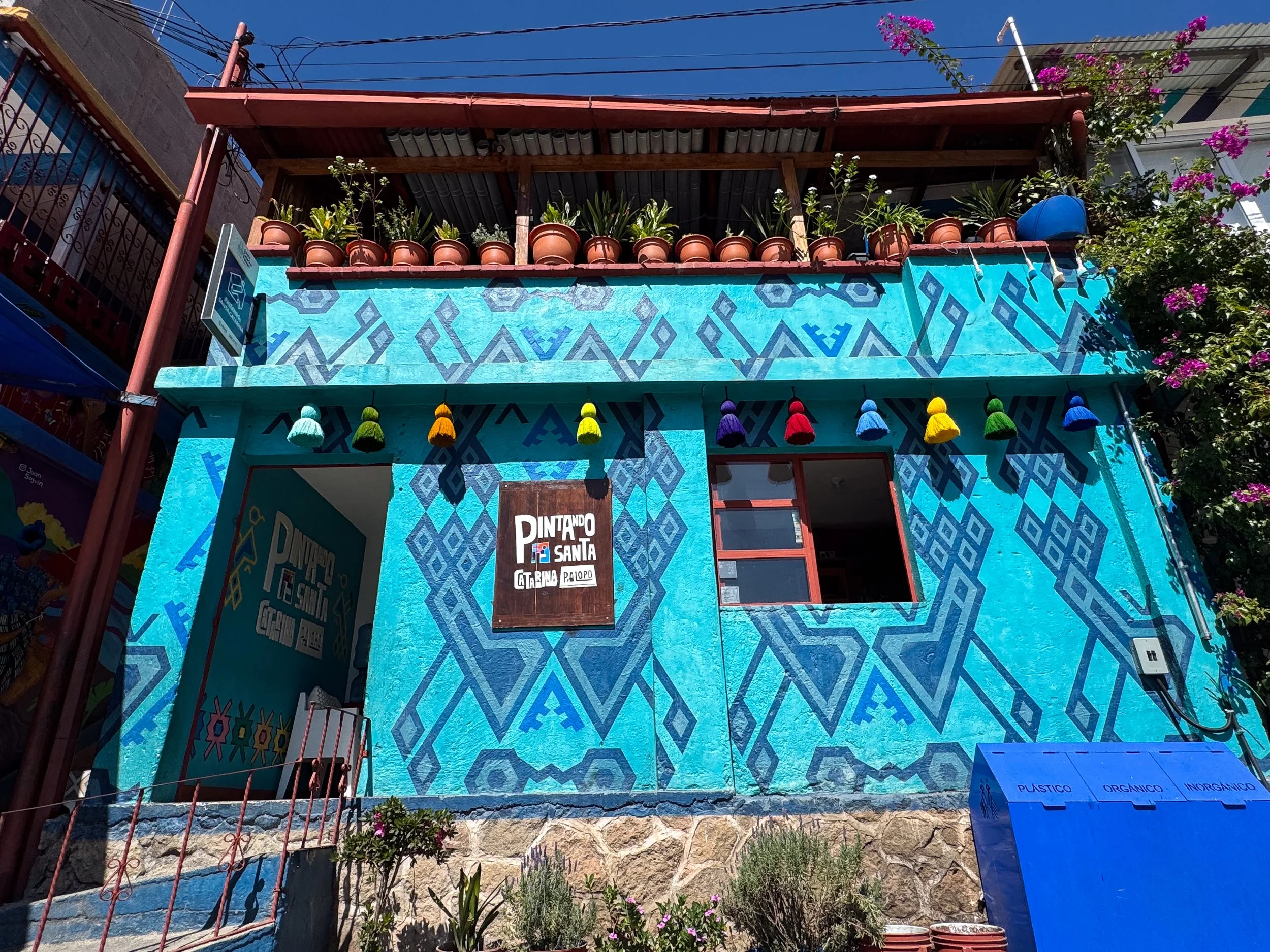
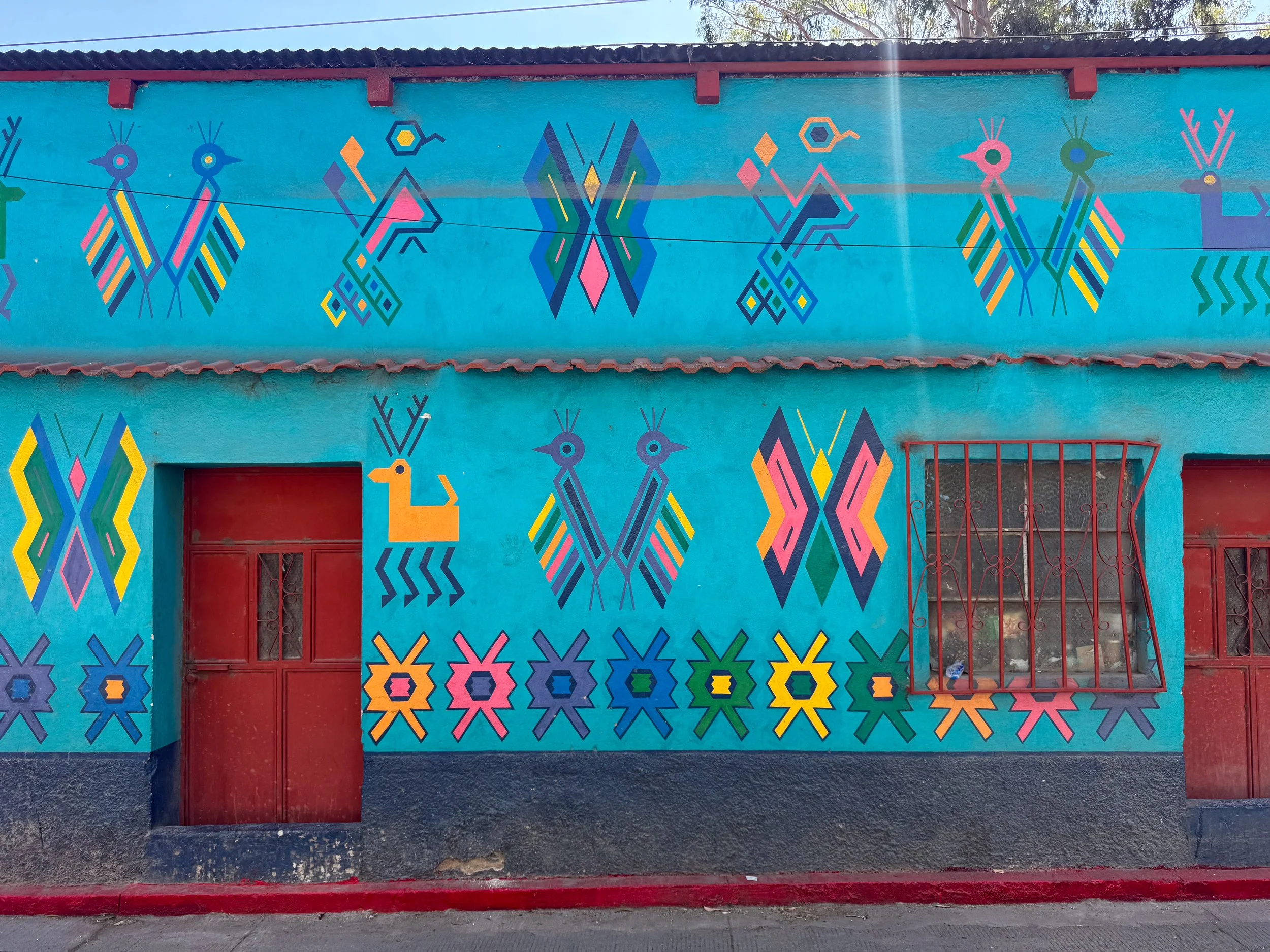
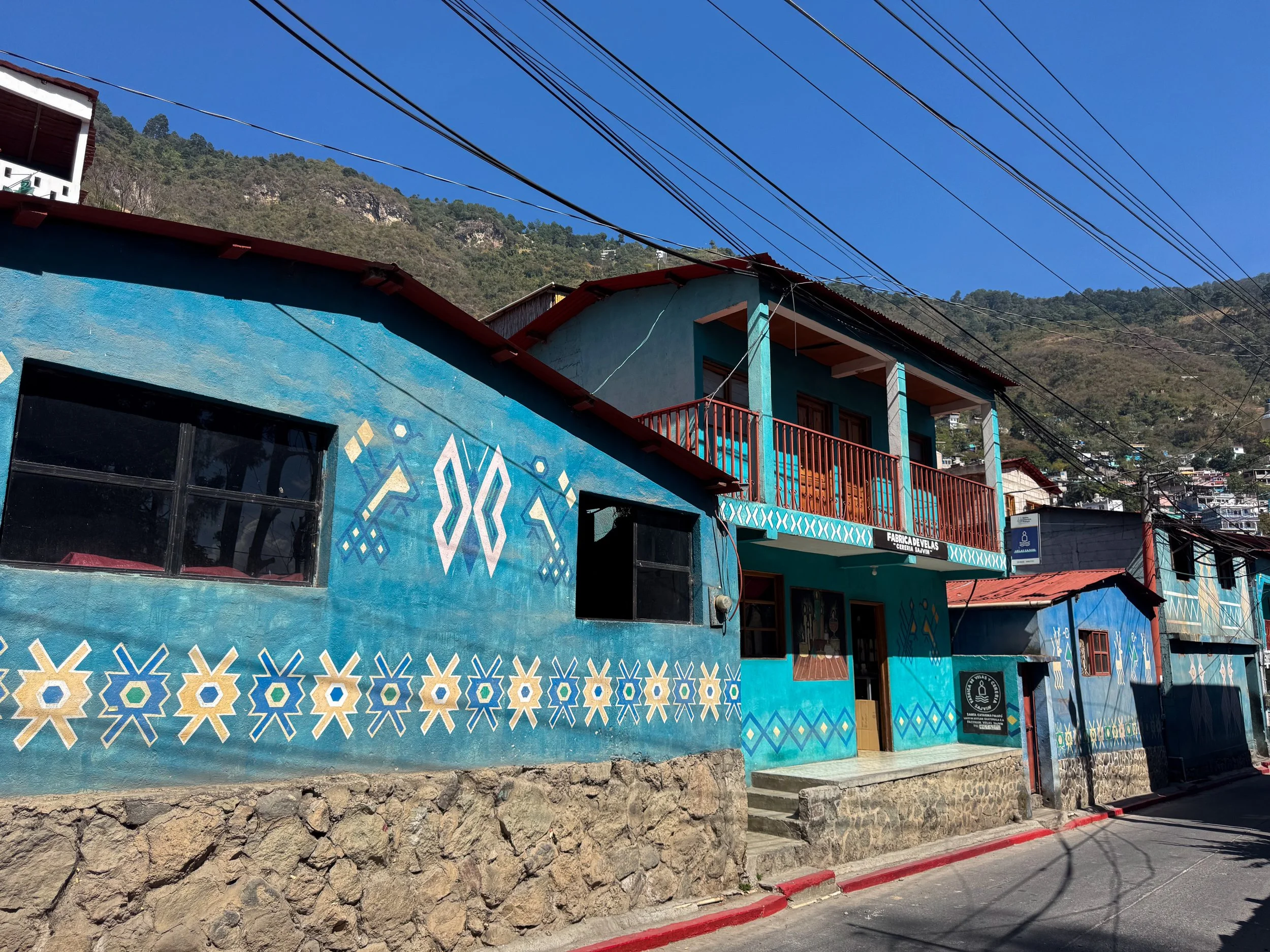
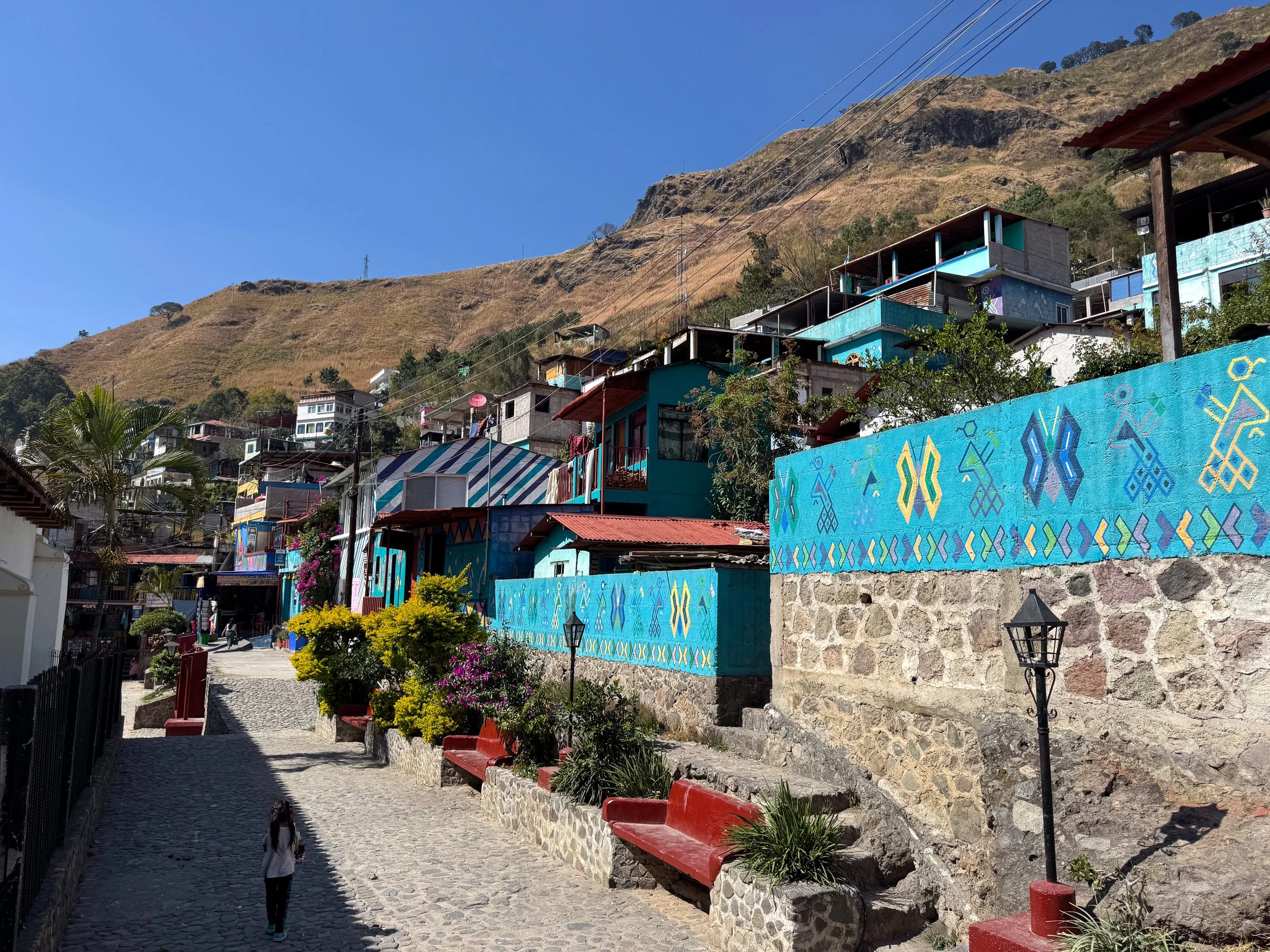
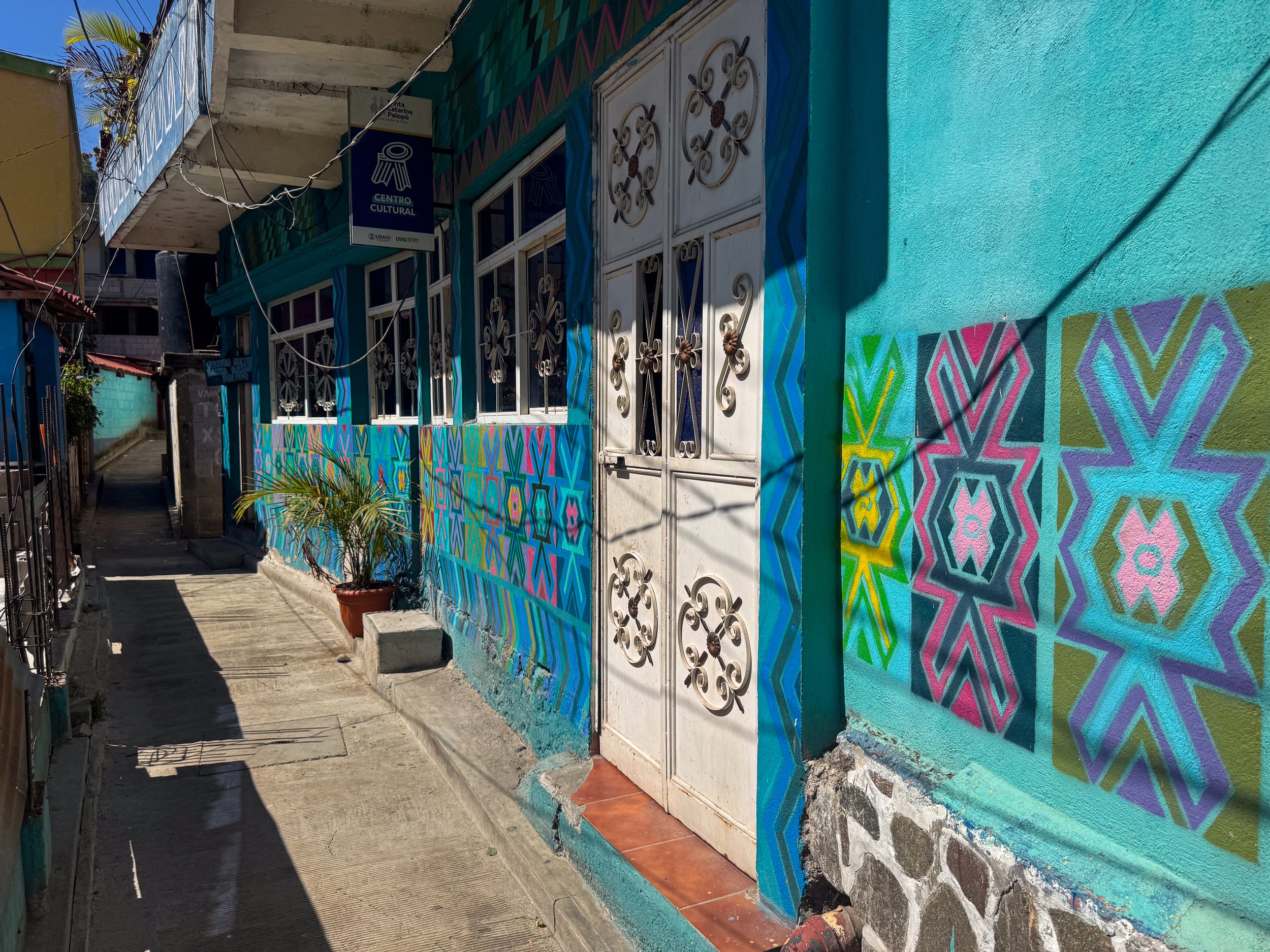
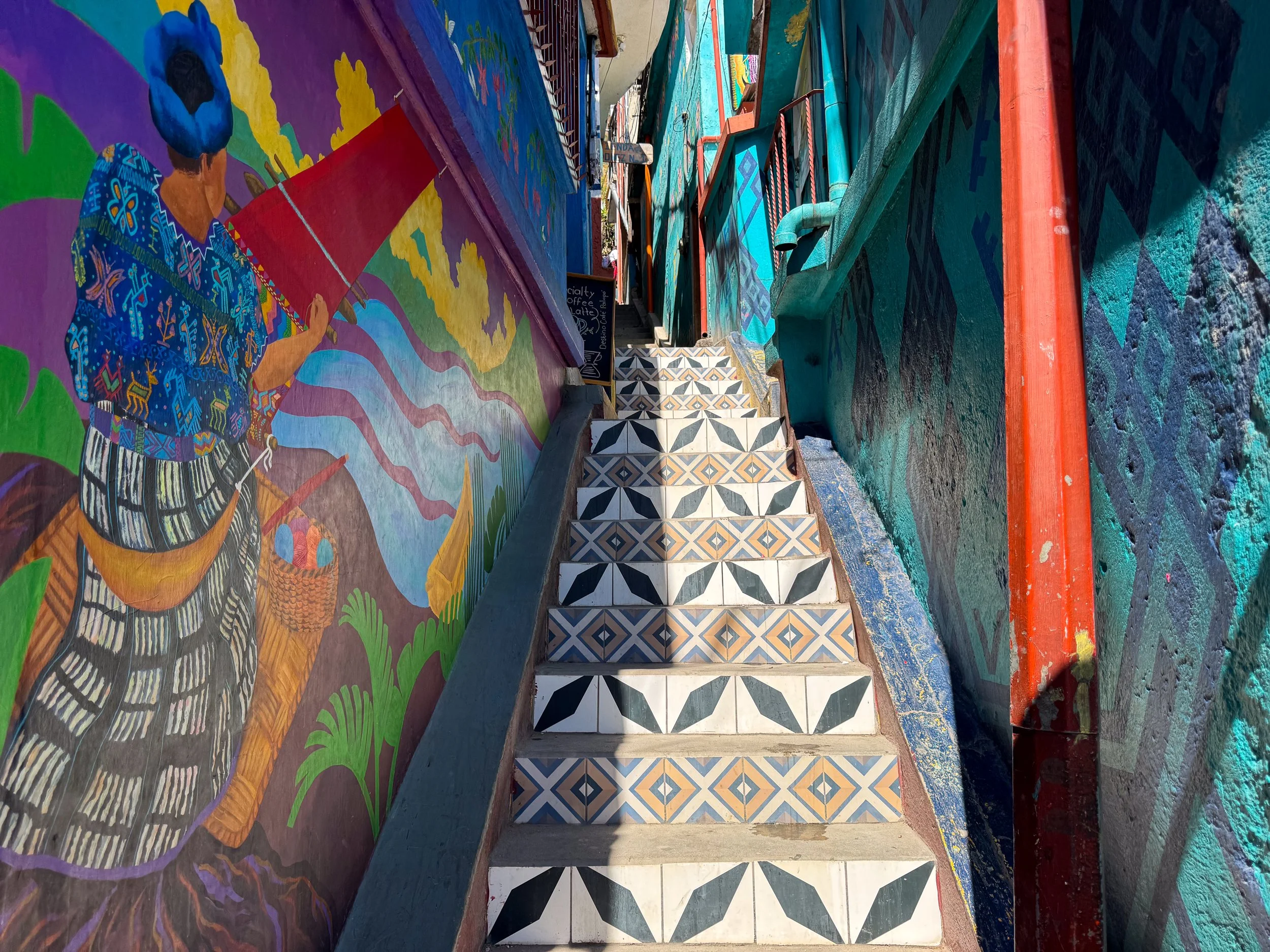
Proyecto Pintando Santa Catarina Palapó. A small but fascinating cultural center dedicated to the town’s efforts of painting all of its buildings in a range of blue hues and patterns reflective of the local Mayan people. Blue represents the primary color of the local textiles and the symbols represent nature including birds, butterflies, fish, corn, the volcanos and lake. We bought a clay Christmas ornament painted to look like a local house.
Casa Museo. A simple museum dedicated to the town’s cultural history and way of life with four small exhibits. One discusses the history, traditions and legends of the communities in Santa Catarina. The second is a replica ancestral home adorned with artifacts, furnishings and personal belongings. The third is a mock Temascal, a traditional Mayan sauna and bath. The fourth is a Mayan betting game named Patolli. Filed down beans are used as dice and rolled to move a token twenty-some places forward before the other player. The museum has a rooftop restaurant and cafe with views of the town’s center, built up hillside and lake flanked by volcanos.
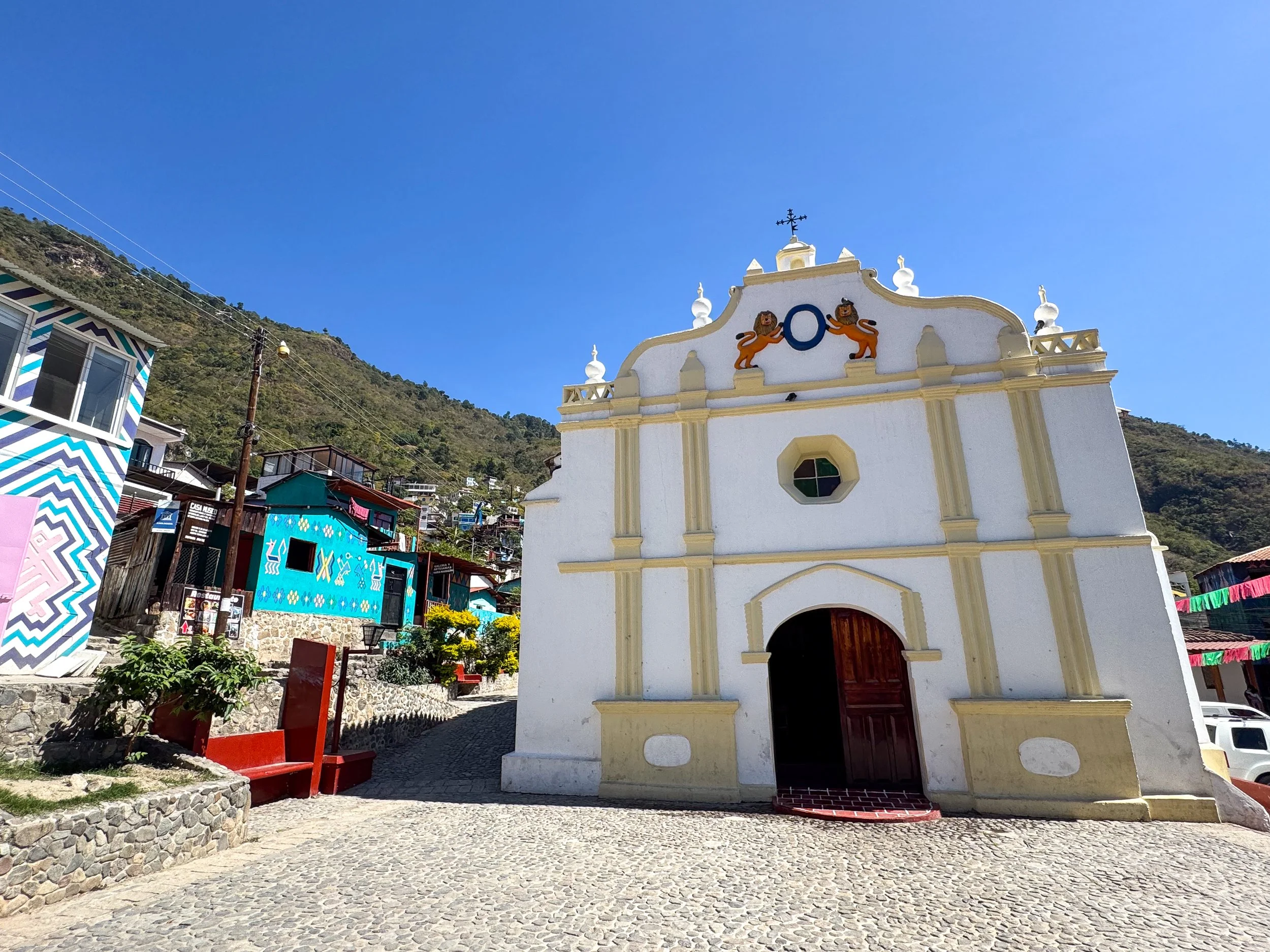
Iglesia Santa Catarina Palapó. A small windowless church in the center of the pueblo with a white painted facade, wooden doors, clay tiled roof and a motif of two lions holding up a blue circle.
Centro Cultural Santa Catarina Palapó. A small museum dedicated to the textiles of the community. It’s explains the history, colors and meaning behind the traditional textiles worn by the locals. Red colored textiles were the most traditional. Shades of blue later became popular. Today, it’s a mix of those colors and many others that represent the individual weavers’ own style. There is a textile shop on the second floor with women weaving on back strap looms.
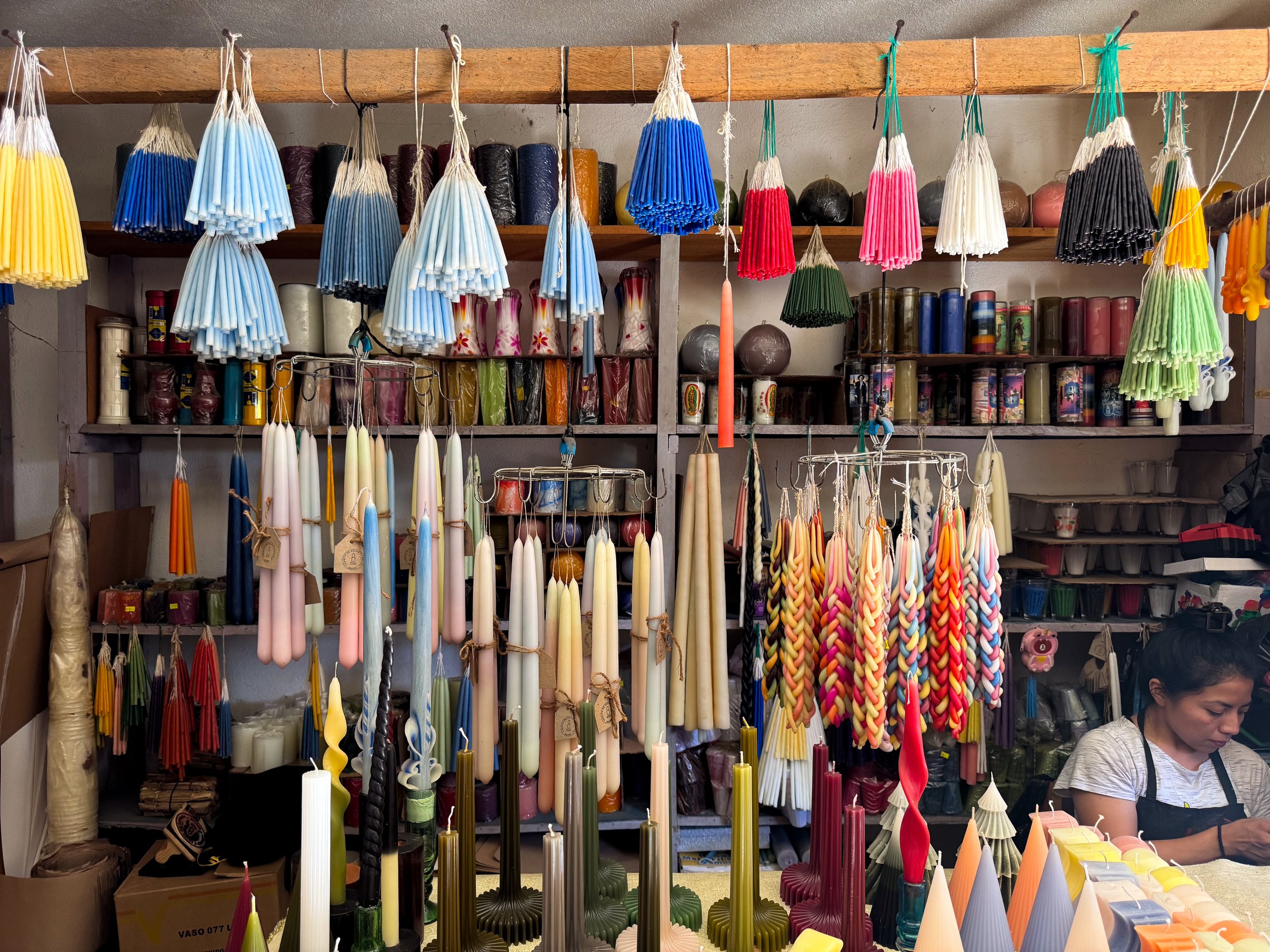
Fábrica de Velas y Cerería Sajvin. A traditional candle maker with various styles and colors of handmade candles. The shop owner explained the process of how the candles are dipped, colored and molded using bees wax and paraffin wax. We bought strings of pink and blue candles for 15Q each.
San Pedro de Atitlán
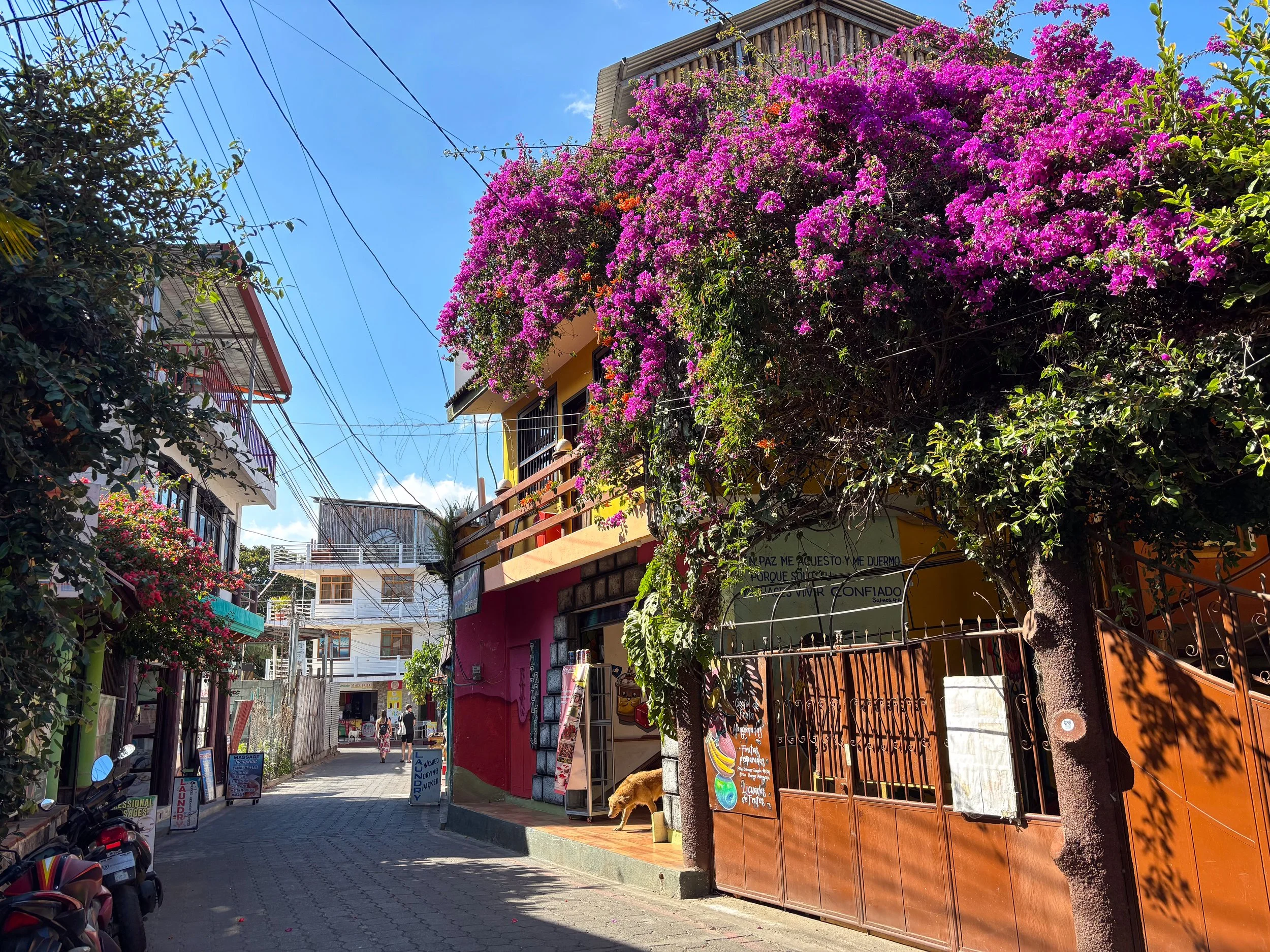
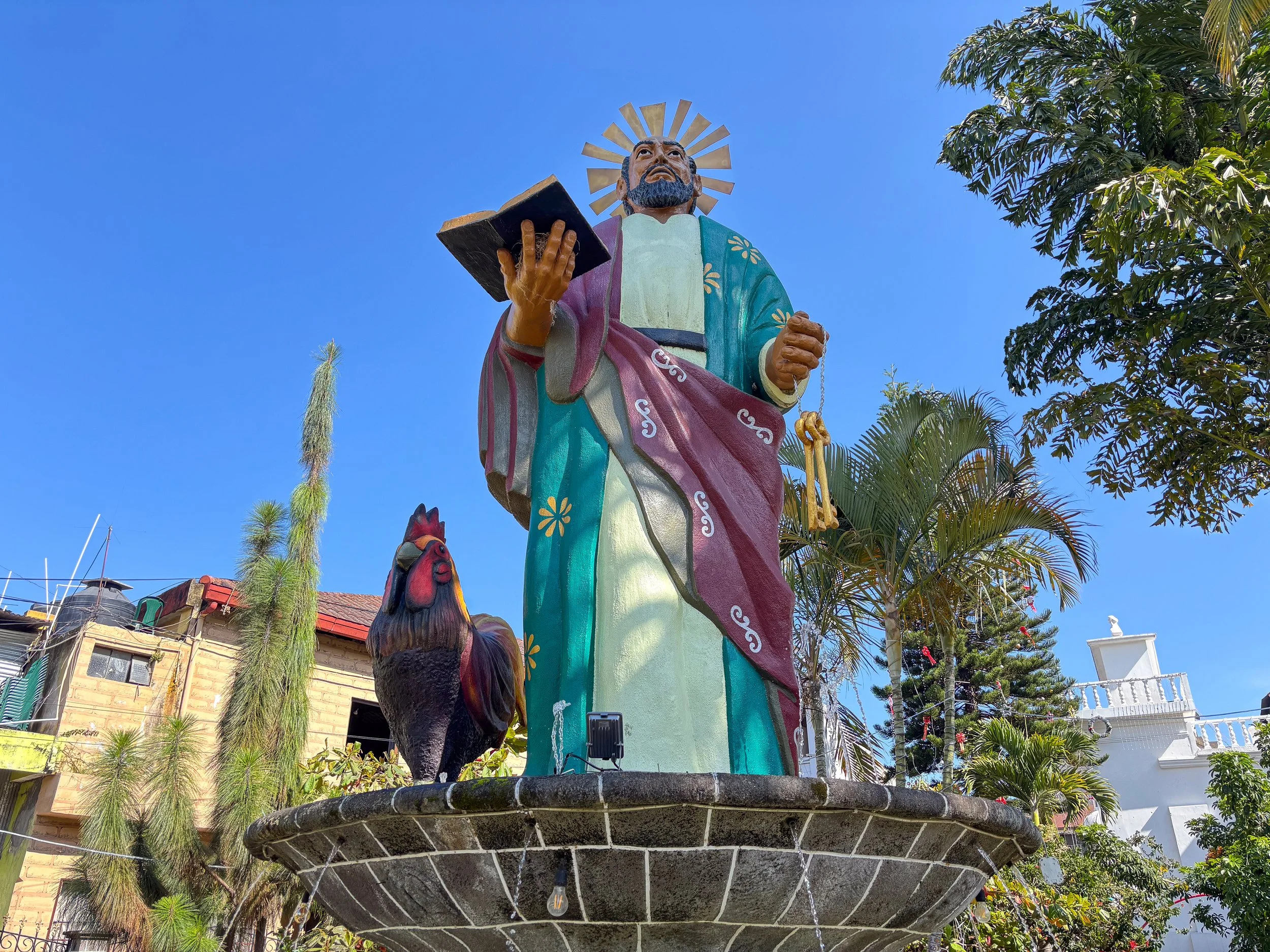
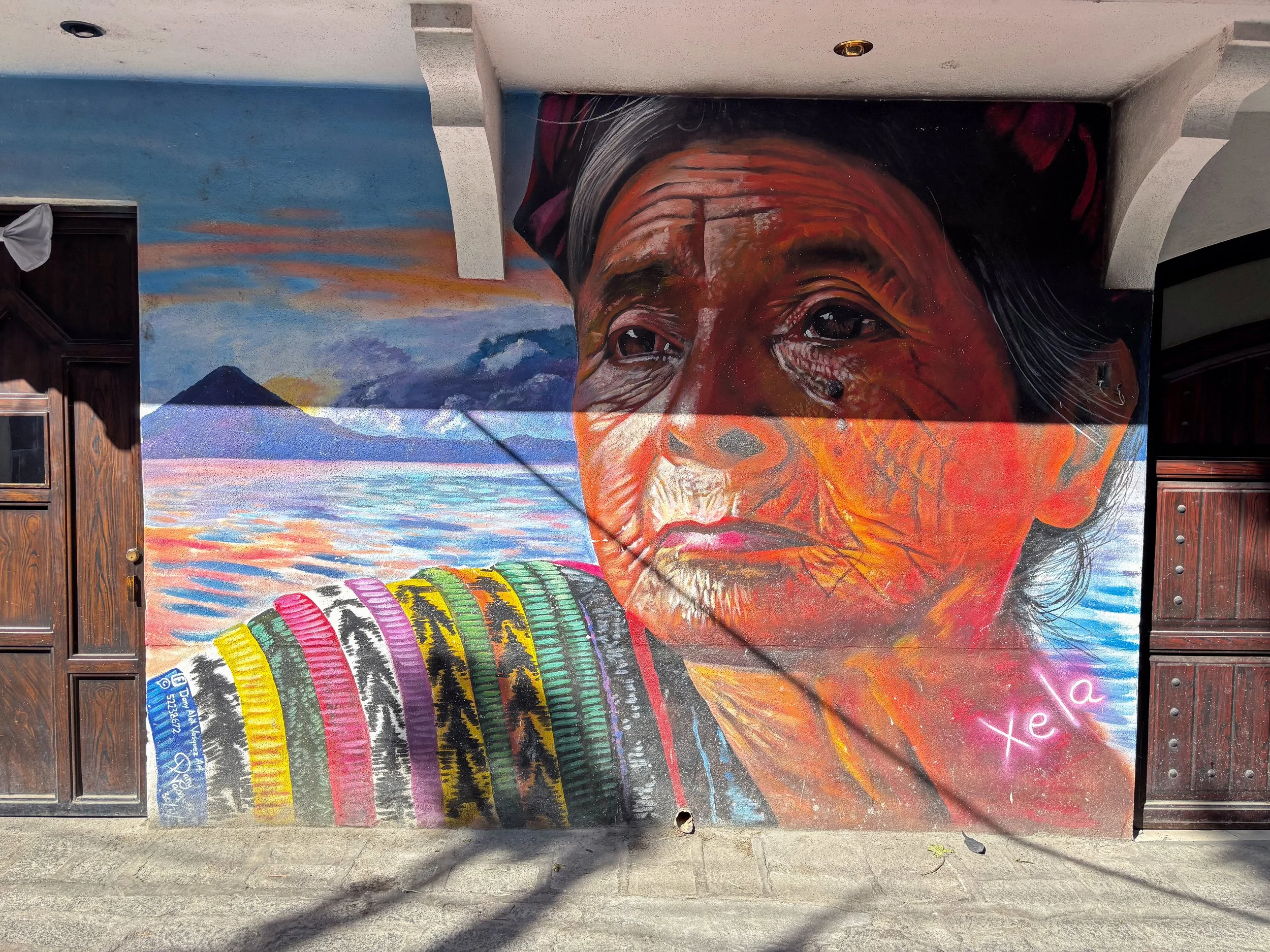
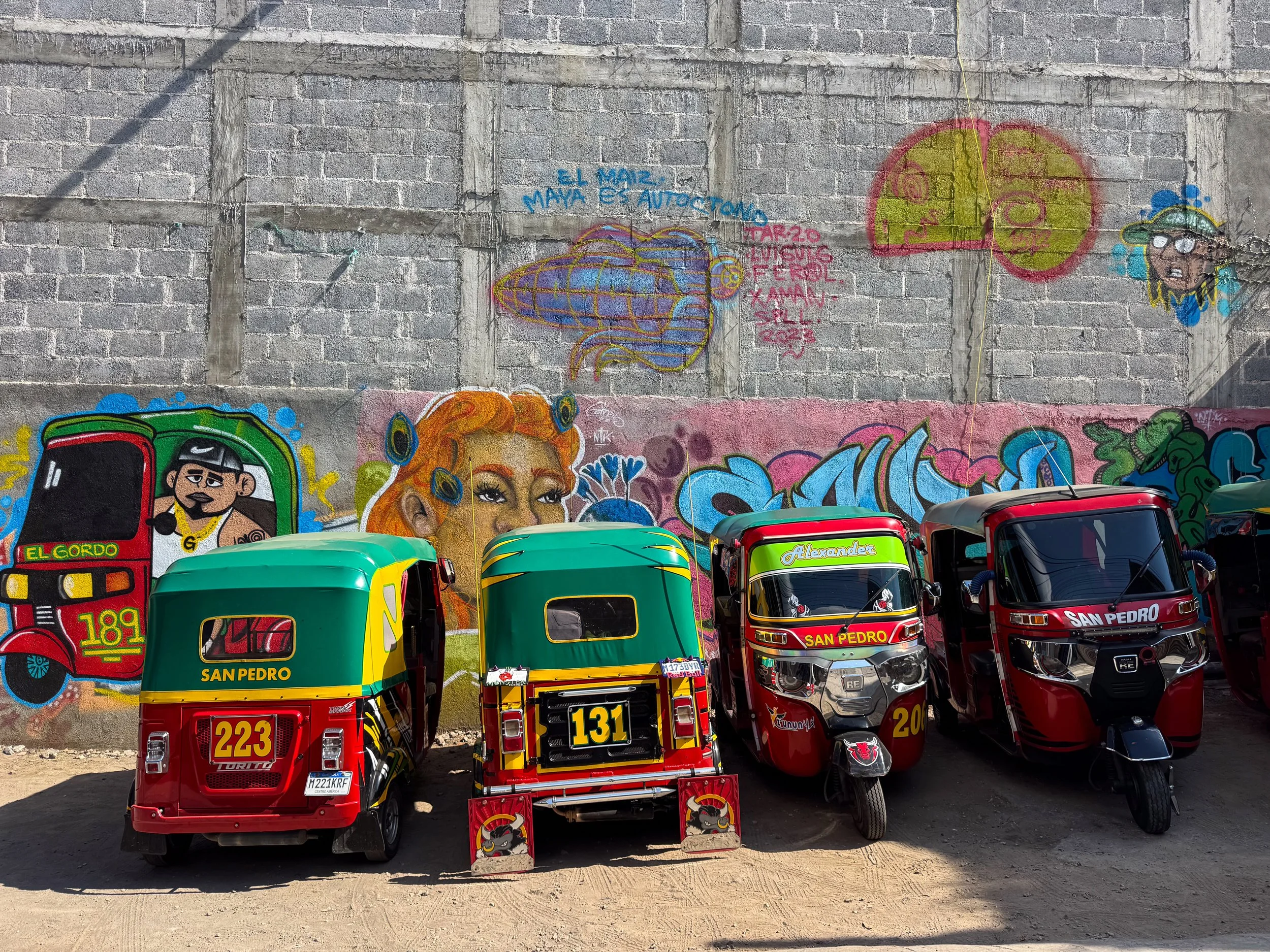
San Pedro is a larger pueblo at the base of the San Pedro Volcano. It’s locally known as a backpacker destination and for its nightly party scene. The roads parallel to the lake are busting with expats, travelers, hostels, restaurants, cafes and bars making it a popular place to visit and stay. Further into the pueblo, we discovered the local side of town. We walked along the quiet winding streets listening to locals speaking Mayan and watched as they mixed masa to make tortillas. The pueblo is more Catholic than many of the others we visited. Simple murals of bible verses are contrasted by colorful ones depicting Mayan and indigenous culture.
Tzunun' Ya'. A museum dedicated to the history and people of San Pedro as well as Lake Atitlán’s geological formation and volcanic past. One of the most interesting parts of the exhibit was a black and white film from 1941 of life in the pueblo. Several aspects remained the same including women wearing traditional clothes and carrying objects on their heads as well as men fishing from small wooden boats and carrying heaps of firewood on their backs.
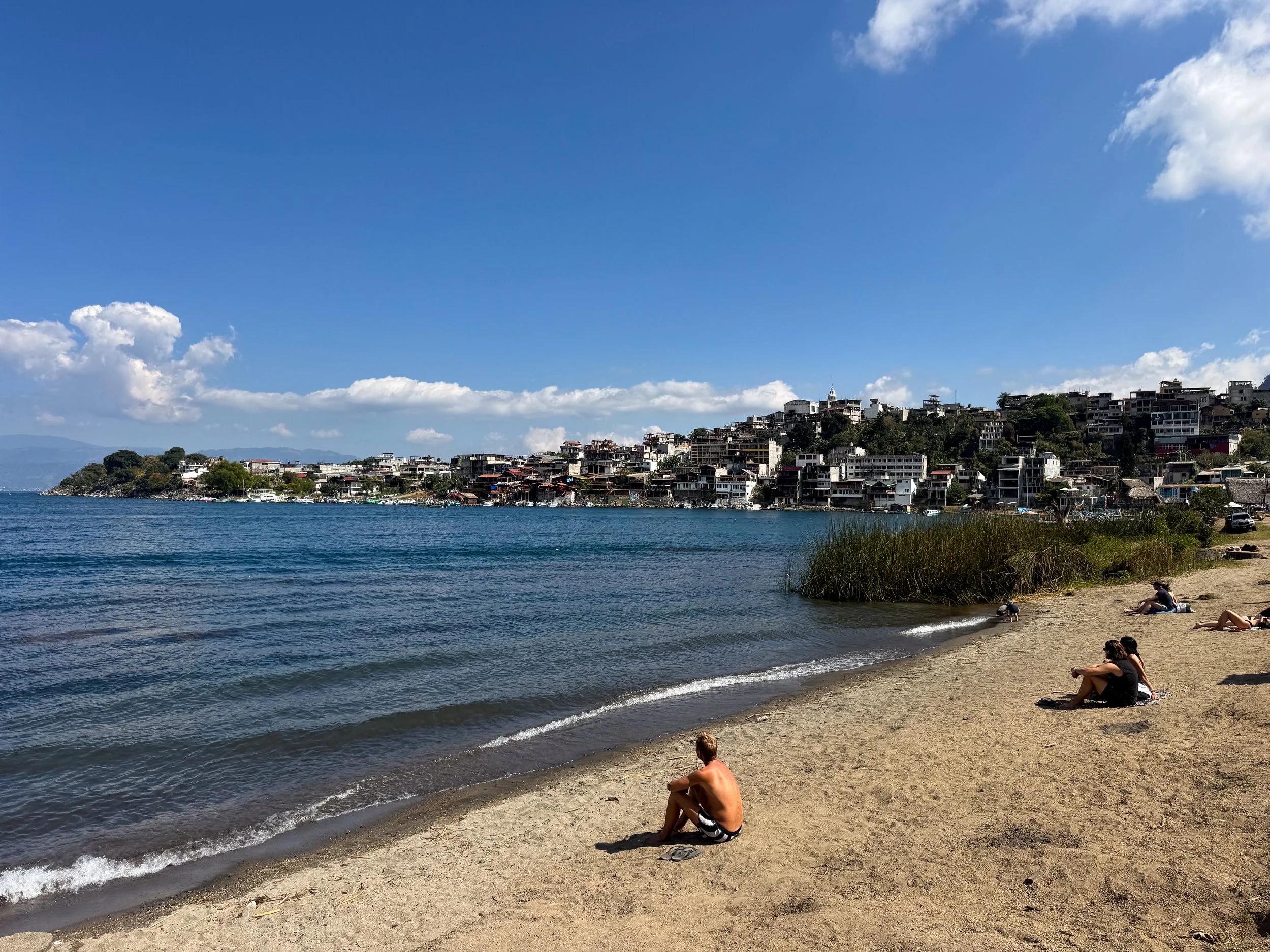
San Pedro Playa Pública. A public beach looking over the lake, skyline and volcano. It’s a simple beach popular with locals and backpackers. We came here to layout, listen to the waves and picnic.
La Ventana del Lago. An elevated lake view restaurant with seafood dishes and Guatemalan cuisine. It’s a little out of place for a backpacker’s town which inadvertently made it a quiet spot for a date night. We dined by candle light, ordering the Mojarra Frita (whole fried fish) and Caldo de Mariscos (seafood soup).
Backpacker Bars
Sublime. A large bar overlooking the lake with nightly events, daily happy hours, well made cocktails, local beers and simple but tasty dishes like vegetarian nachos. We ordered the watermelon mojito and pineapple sunrise.
420 Reggae Bar. A local bar with a backpackers vibe along the main road displaying a well curated wall of spirits used to make classic cocktails all for 25Q.
Shanti Shanti. A restaurant and bar overlooking the lake. We stopped in for spiked fruit smoothies made with pineapple, muskmelon, watermelon, rum and vodka.
San Pedro Volcano
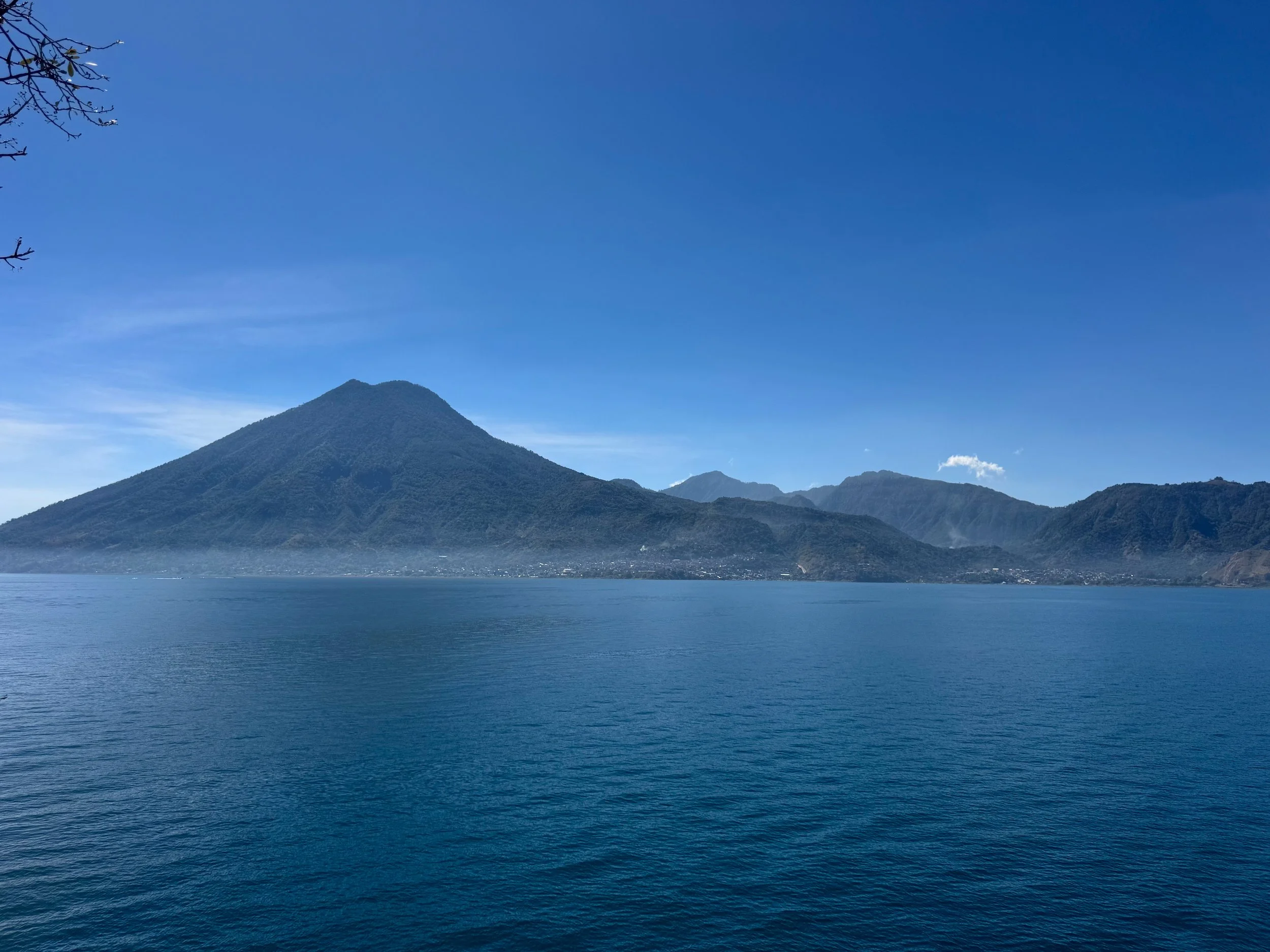
A 3,000 meter high conical shaped volcano covered in farmland and lush forest on the shores of Lake Atitlán beyond the pueblo of San Pedro.
Hiking the Volcano
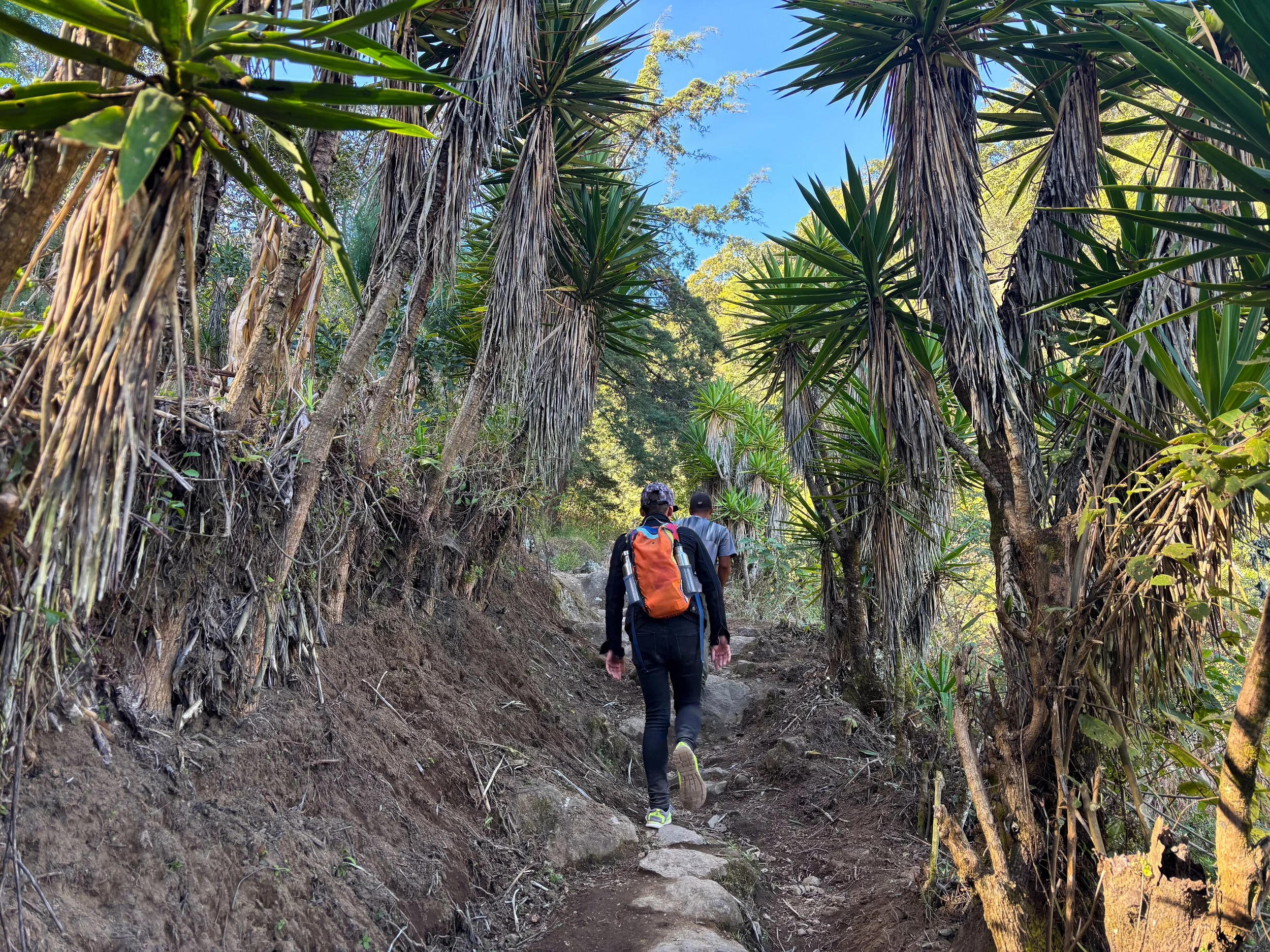
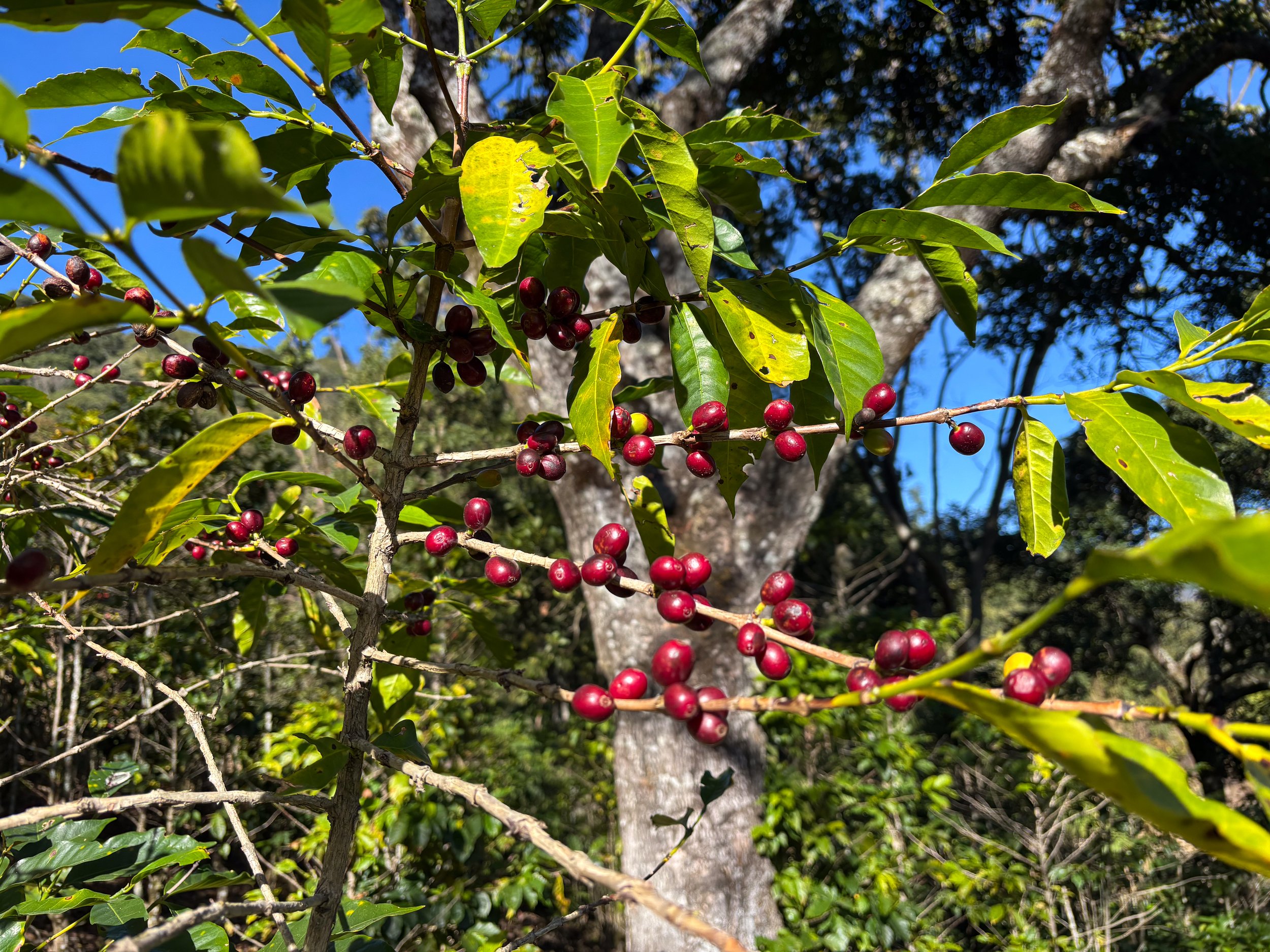
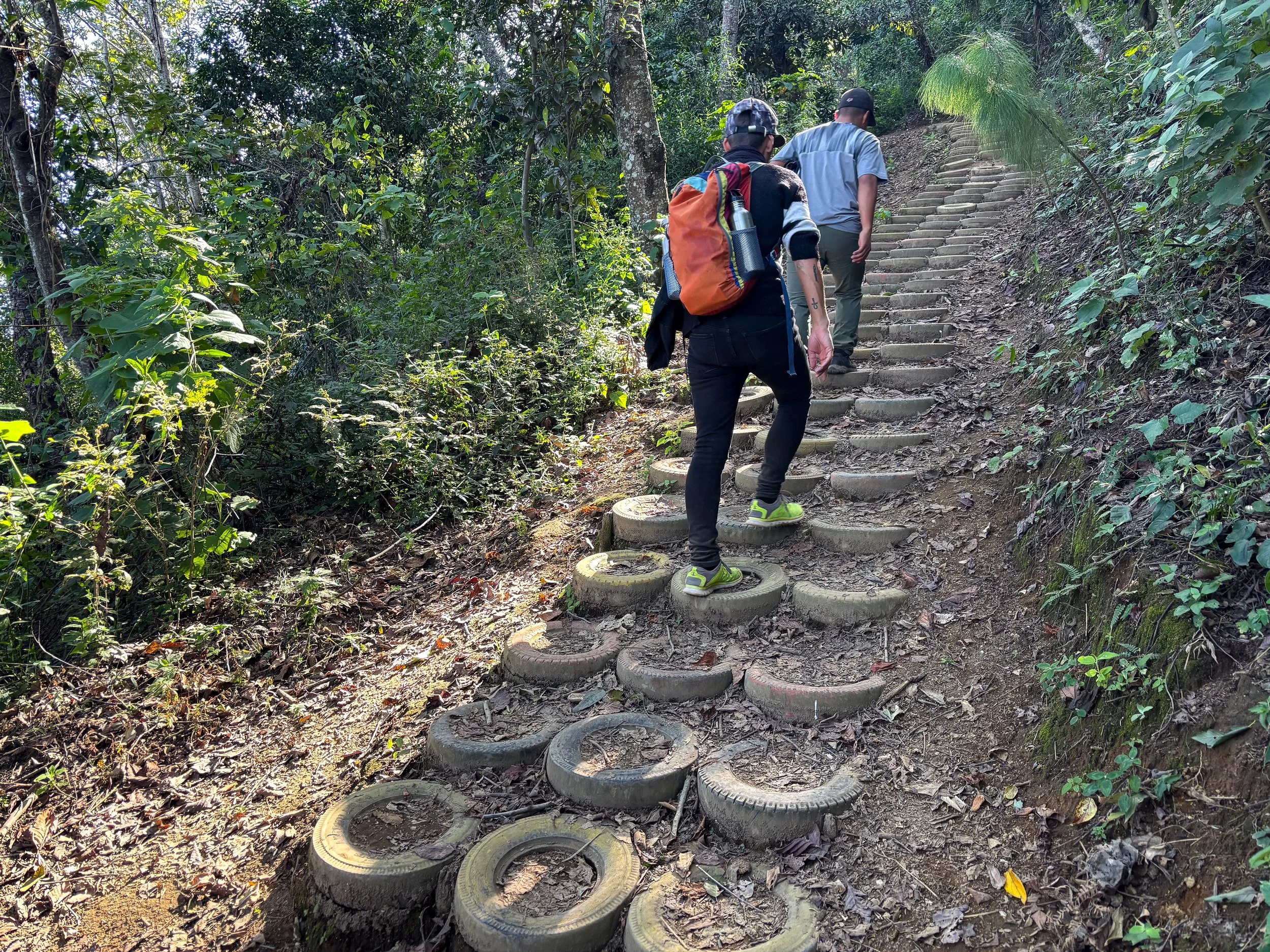
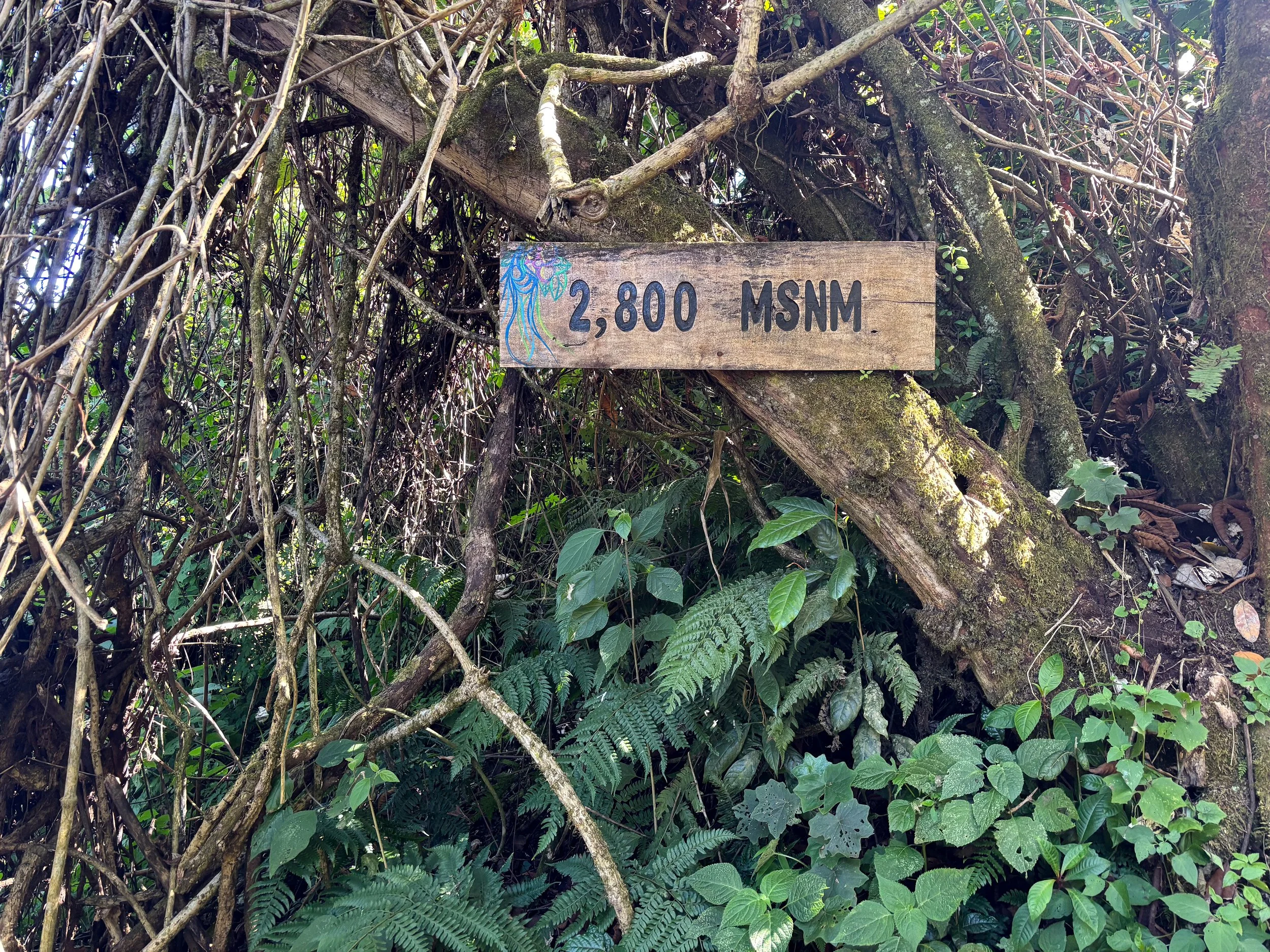
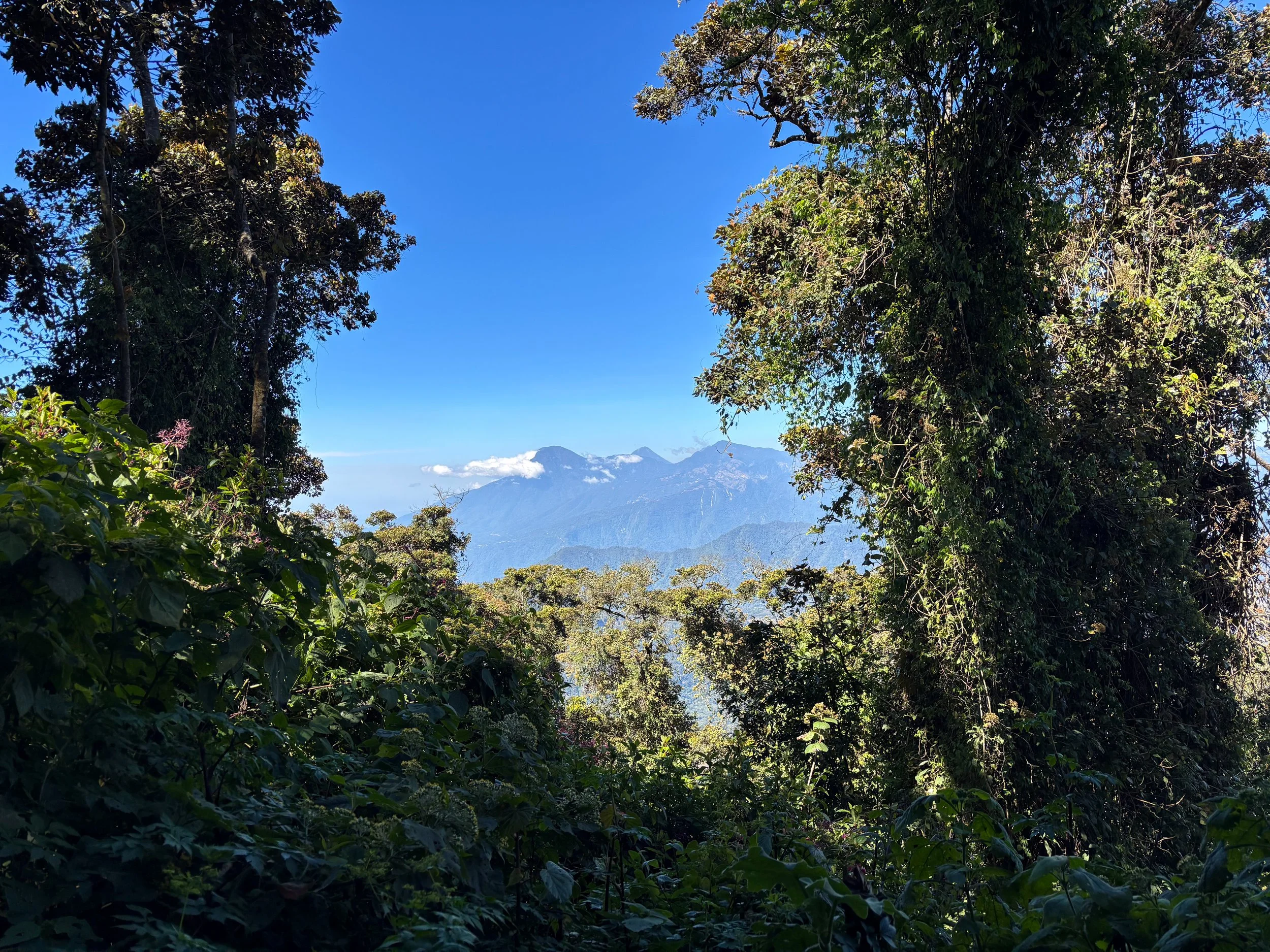
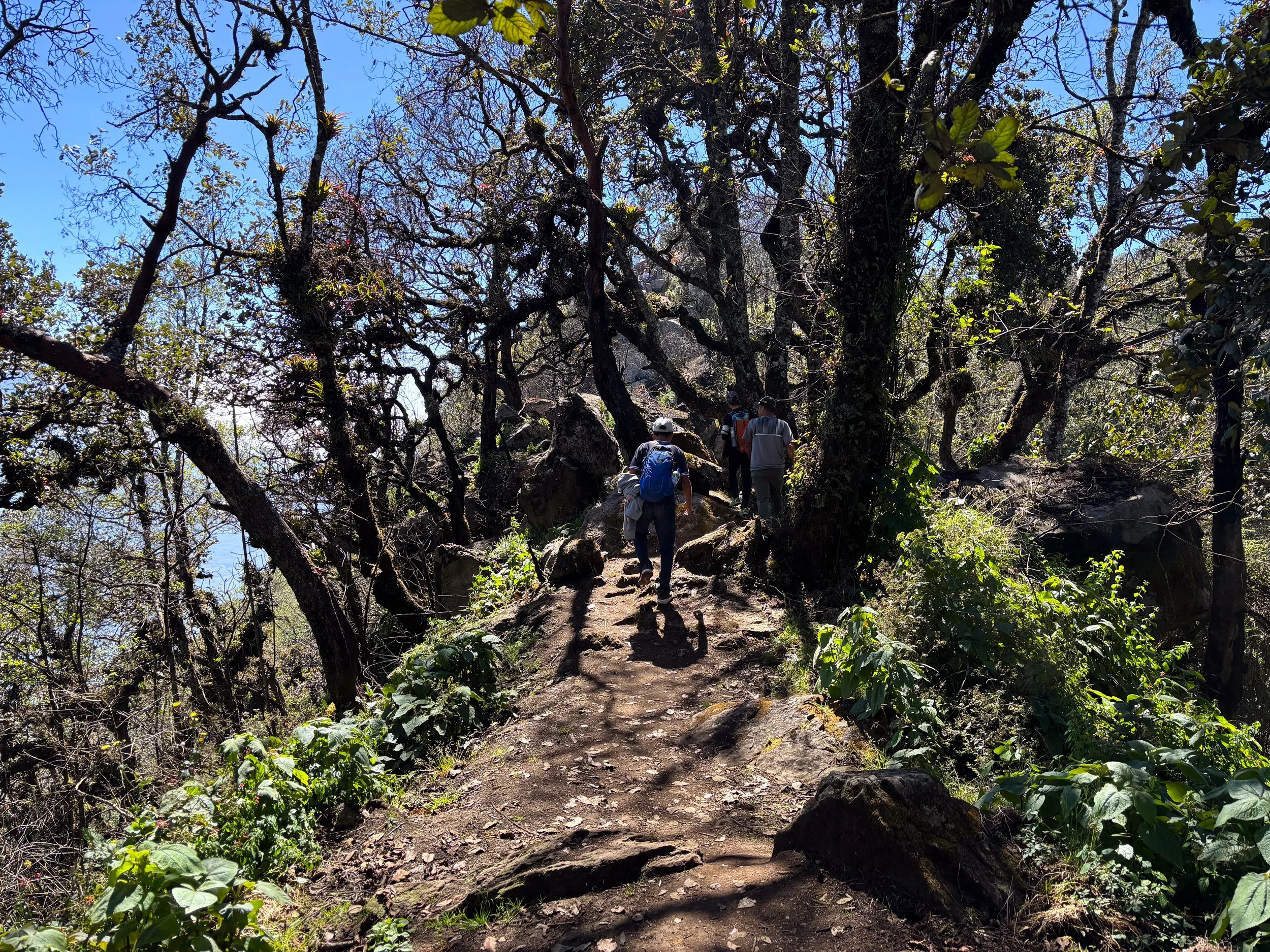
A trail leads from the welcome center through farmland with crops of coffee, avocado, corn and squash. As we hiked up, farmers harvested firewood, carrying large bundles down on their backs. Beyond the farmland, the trail passed through forest, providing shade most of the route up. The path is well maintained, paved in occasional sections with cement stairs, wooden log steps and stacked rubber tires. The trail climbs steadily uphill with altitude markers every 100 meters and occasional points of interest along the way.
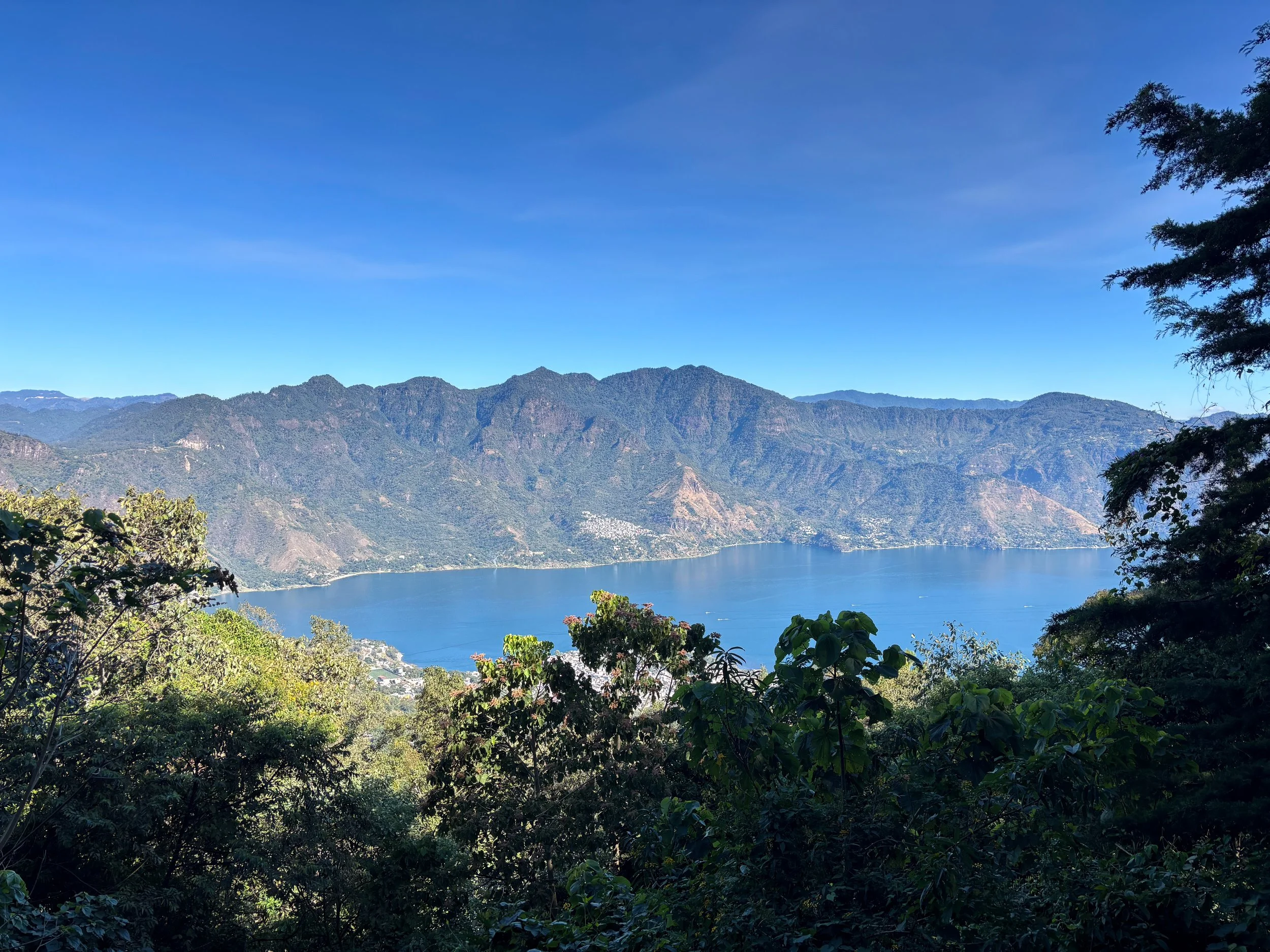
Mirador Tz'unun Ya'. A lookout over San Pedro La Laguna and Lake Atitlán at 2,173 meters.
Area de Descanso. A rest area and lookout with a tire swing overlooking the lake at about 2,300 meters.
Arbol Anciano Quercus. A fallen 400 year old tree at 2,600 meters.
Tronco de Arbol Aijlamam Gran Abuelo. A sacred Mayan tree believed to be the reincarnation of a powerful Mayan wizard. It’s located around 2,750 meters.
Area de Acampar. A campground with a graffitied wooden cabin and restroom at 2,867 meters.
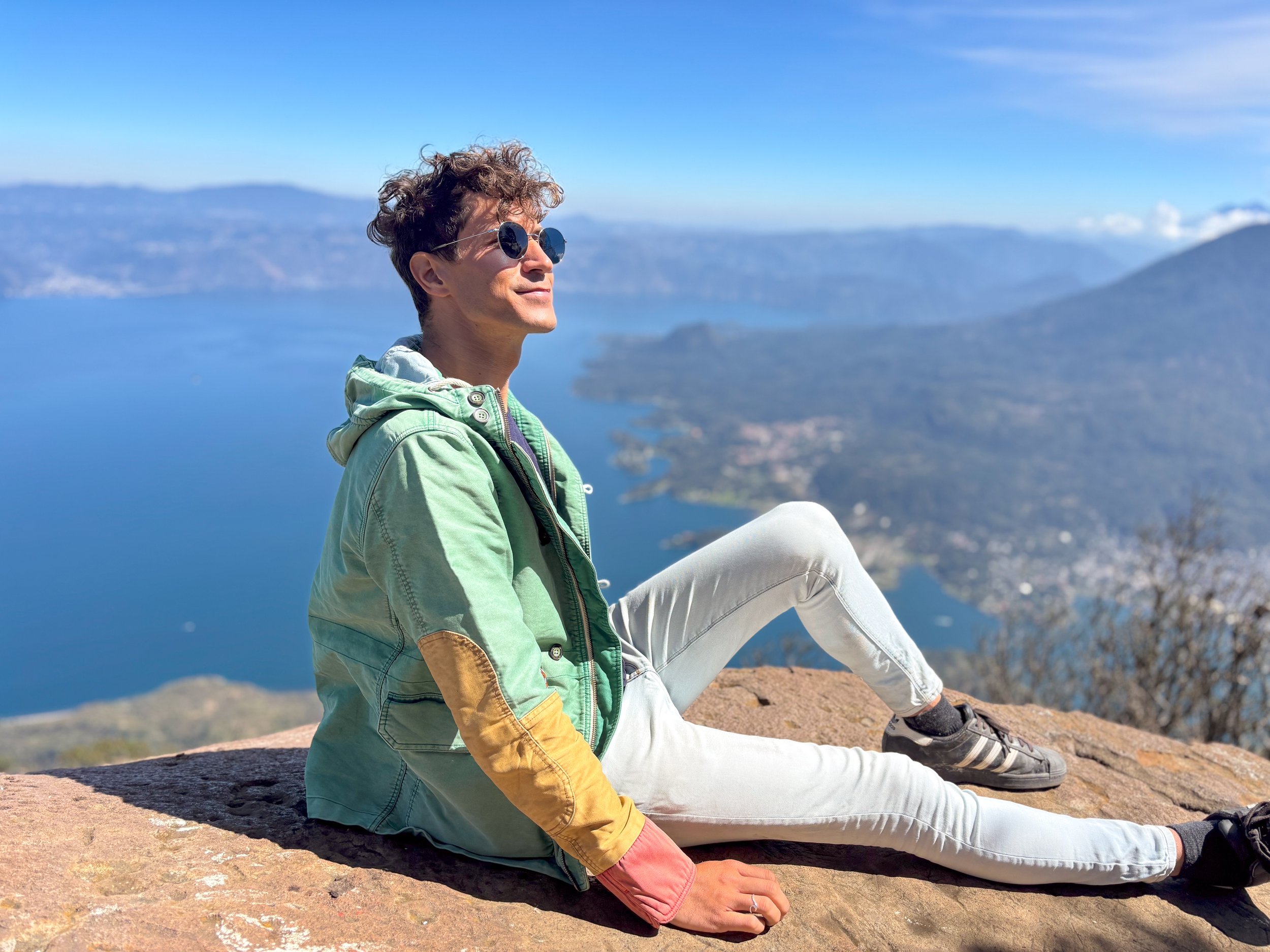
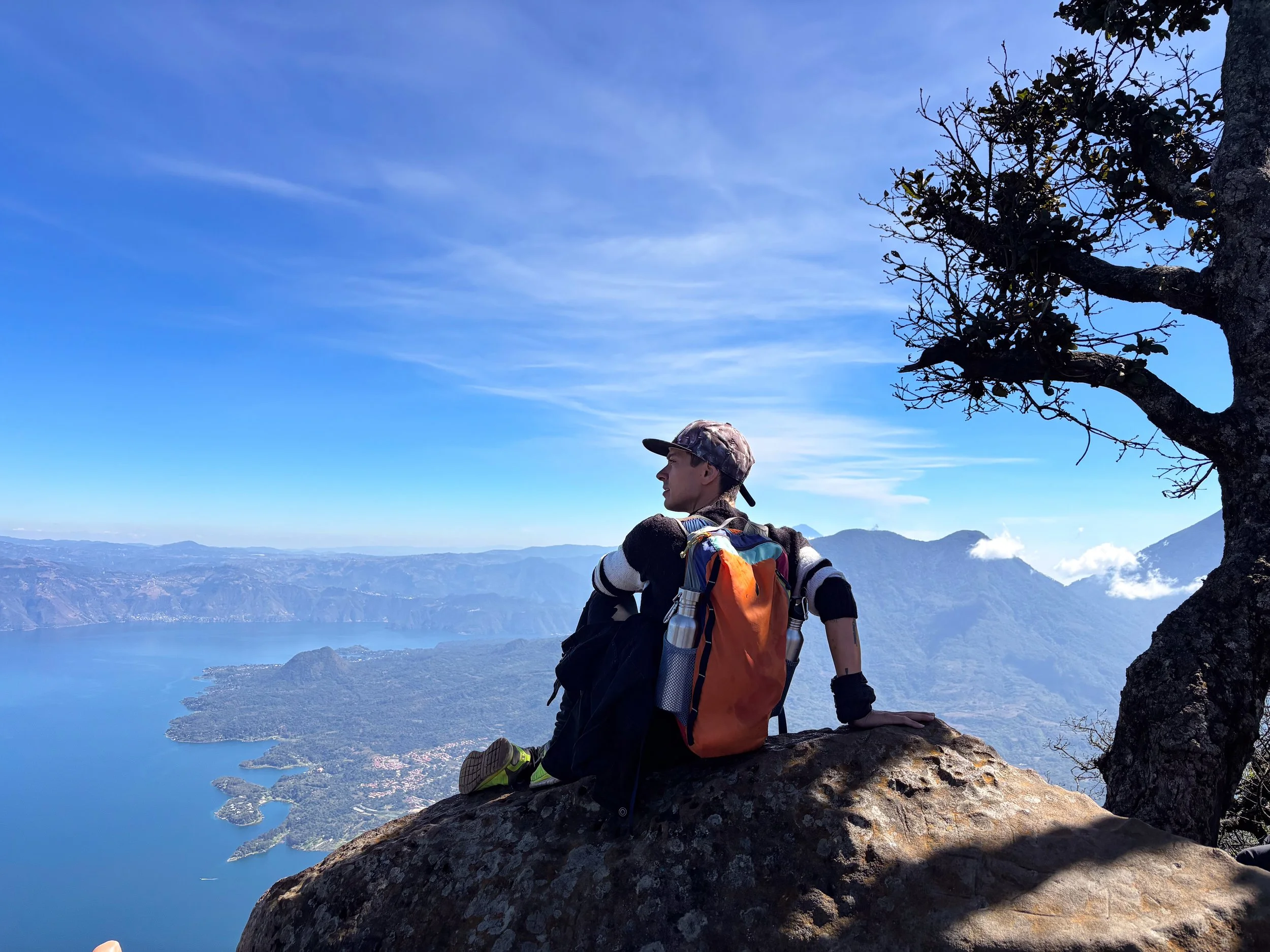
The Summit
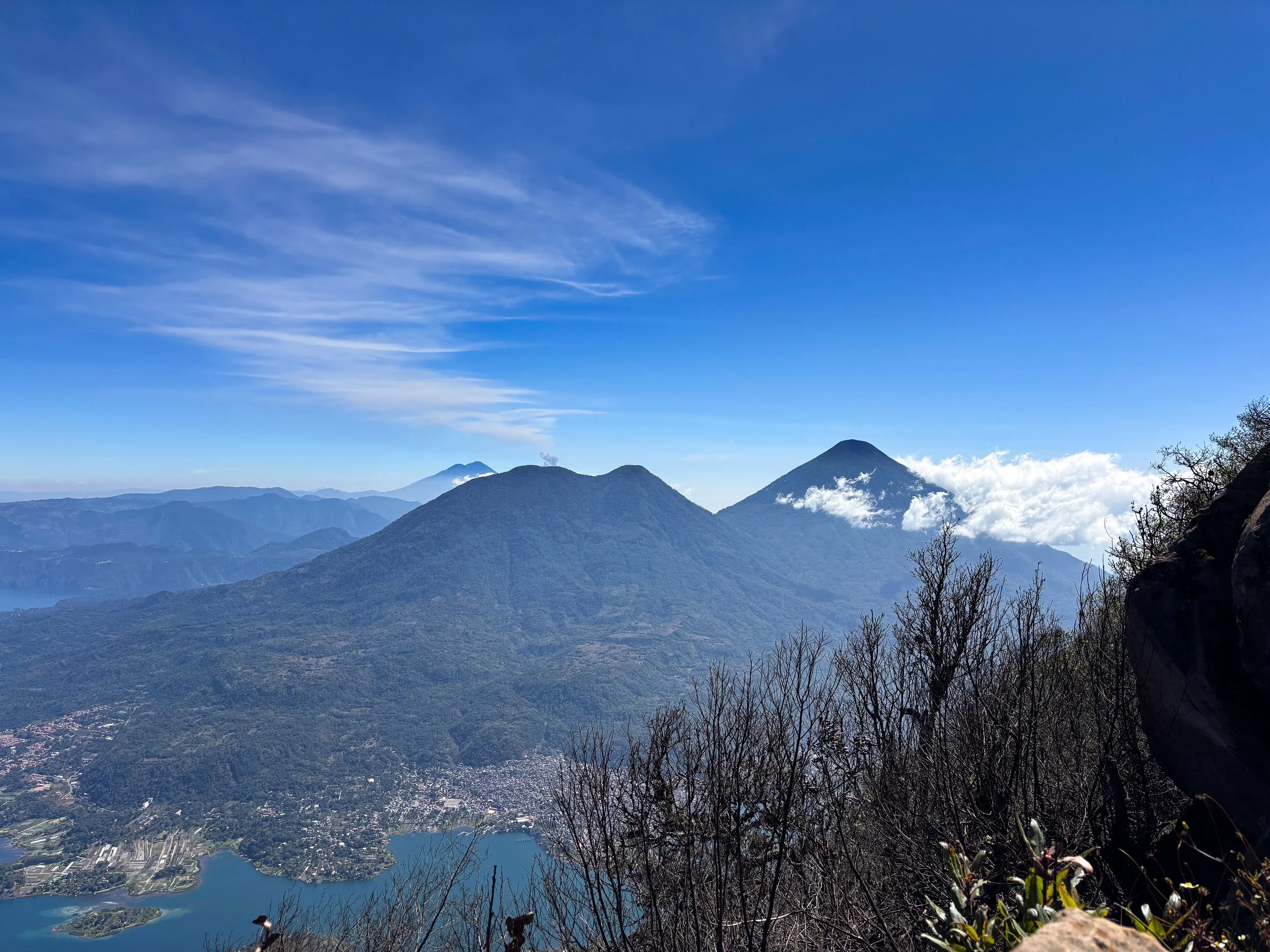
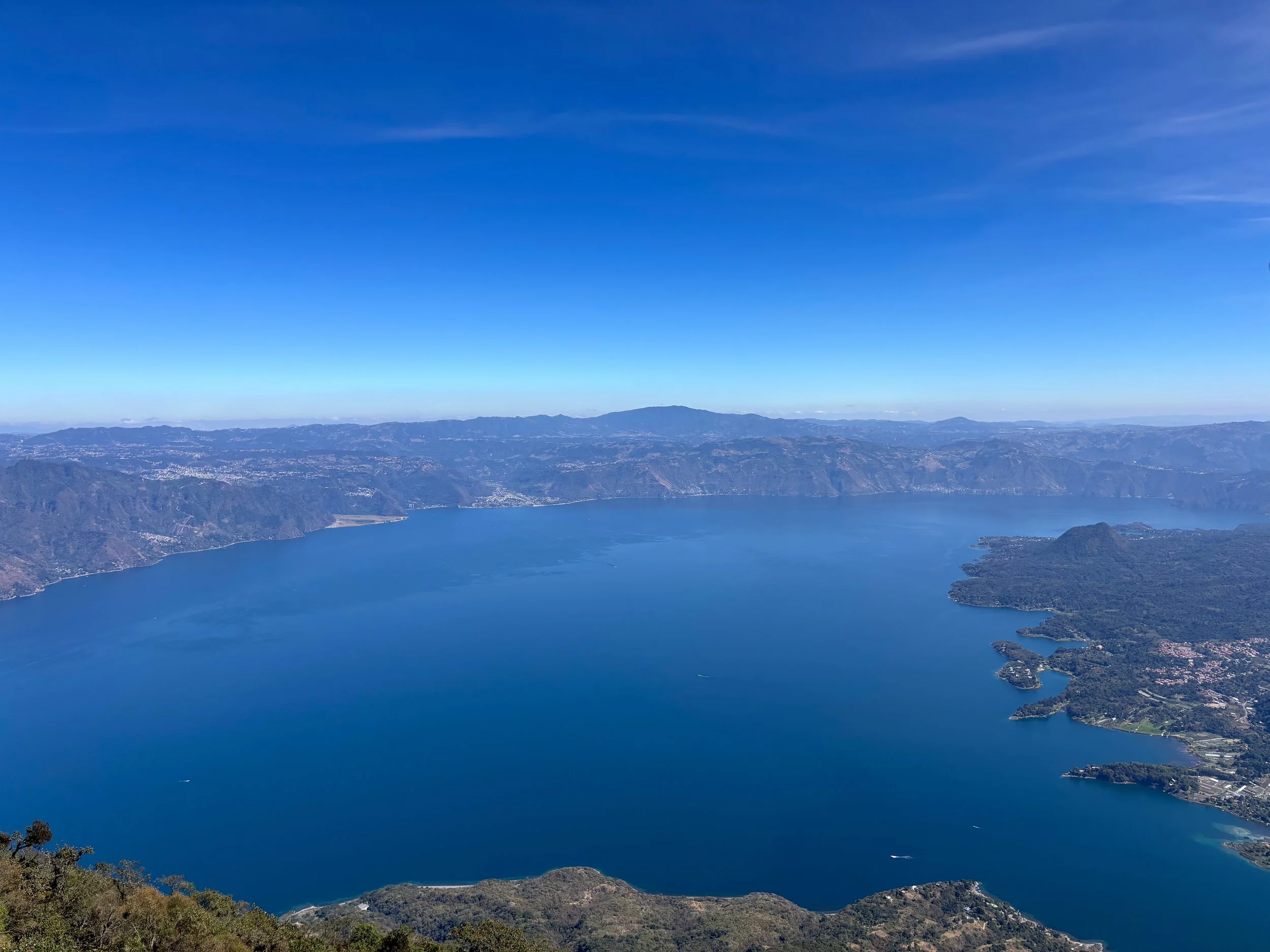
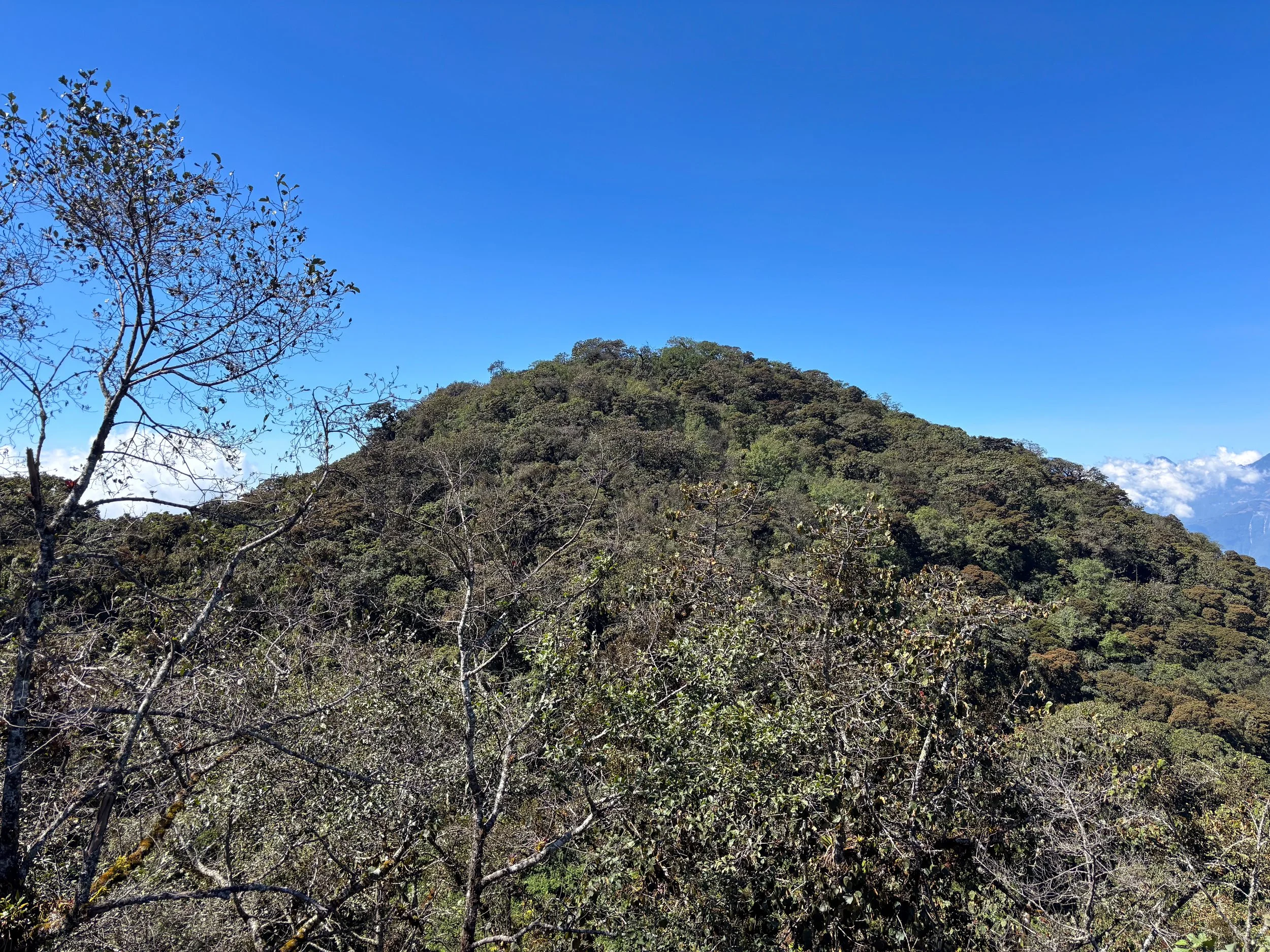
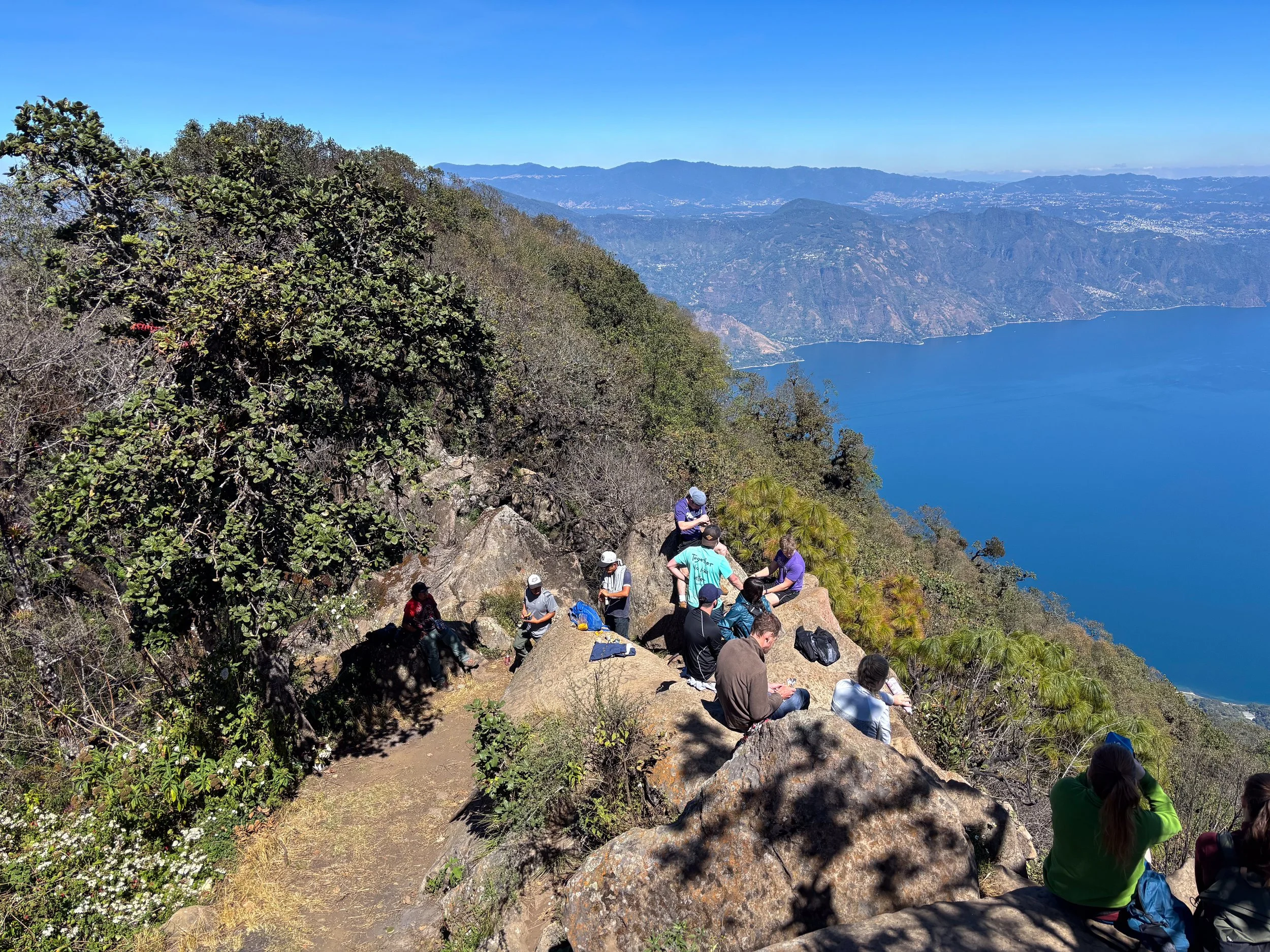
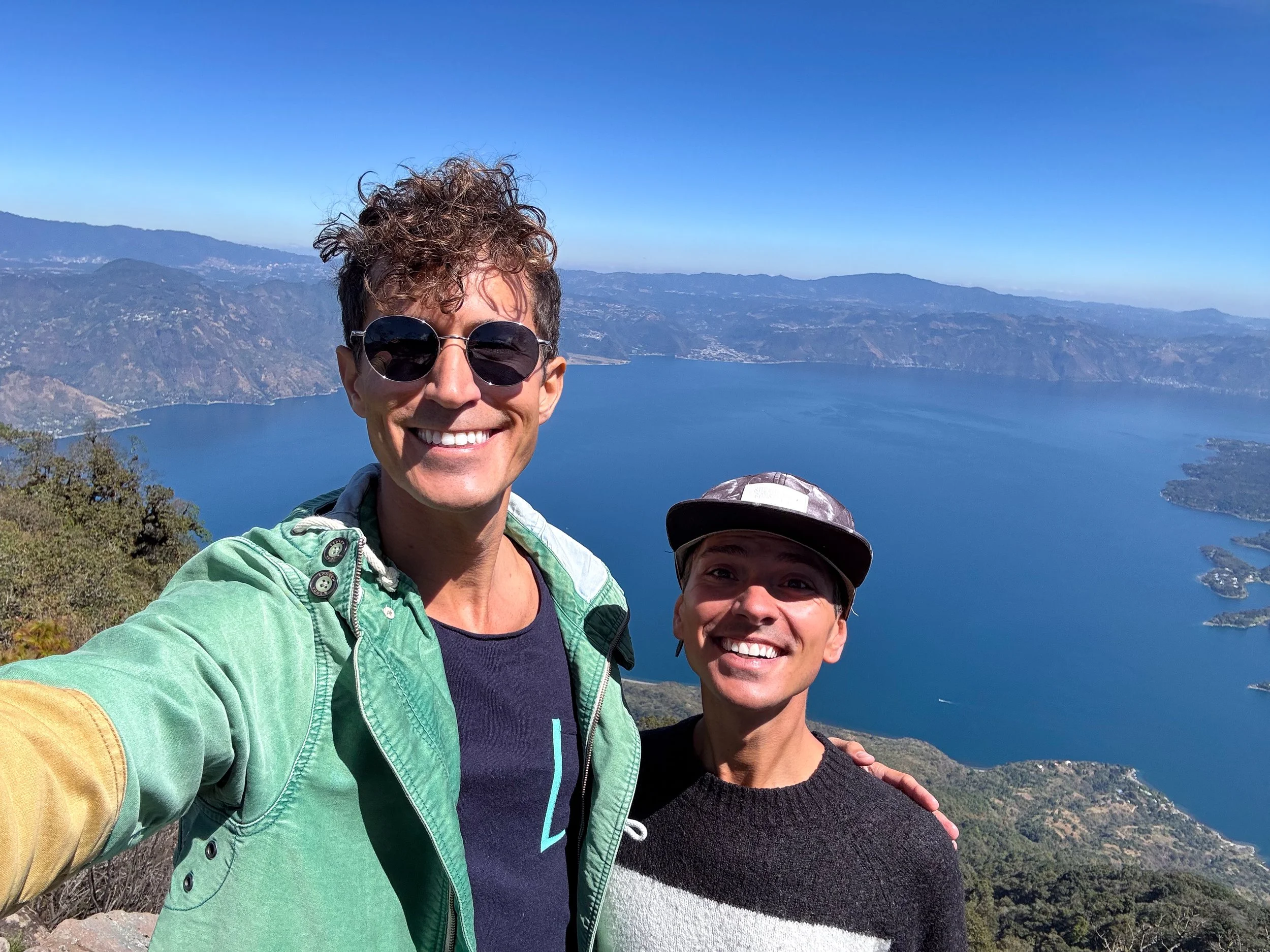
After 2 hours 30 minutes of hiking, we reached the summit at an altitude of 3,000 meters. We walked the crater rim lined with moss covered trees to a rocky outcrop with views of the deep blue lake, its pueblos and the chain of volcanos. From above, boats looked like small dots as they crossed the lake leaving a rippled trail behind them. In the distance, Volcan de Fuego let out continual eruptions of smoke and ash high into the sky. We spent about an hour at the summit, eating our lunch and enjoying the views.
Tips for Hiking the San Pedro Volcano
Hire a Guide. We hired our guide, Vic, from the Cerro Cristalino (Nariz del Rostro Maya) Sunrise Hike. He organized transportation, safely guided us to/from the summit, shared stories about Mayan legends and info about the local nature and landscape. Book his tour here!
Timing. We began hiking at 9am and reached the summit at 11:30am. It took us under 2 hours to hike down.
Safety. Having read the warnings about armed bandits online, we were apprehensive about going on the hike. Beforehand, we read recent reviews, spoke to others that had safely completed the hike and confirmed the current safety situation with our Airbnb host and guide. We only carried enough cash for the hike. We left our wedding rings, all but one cell phone and one credit/debit card at our hotel.
Popularity. The San Pedro hike is not as popular others in Guatemala. We met about a dozen hikers at the summit, some solo and others in pairs. Along the route down, we passed a few groups, one led by two armed police officers.
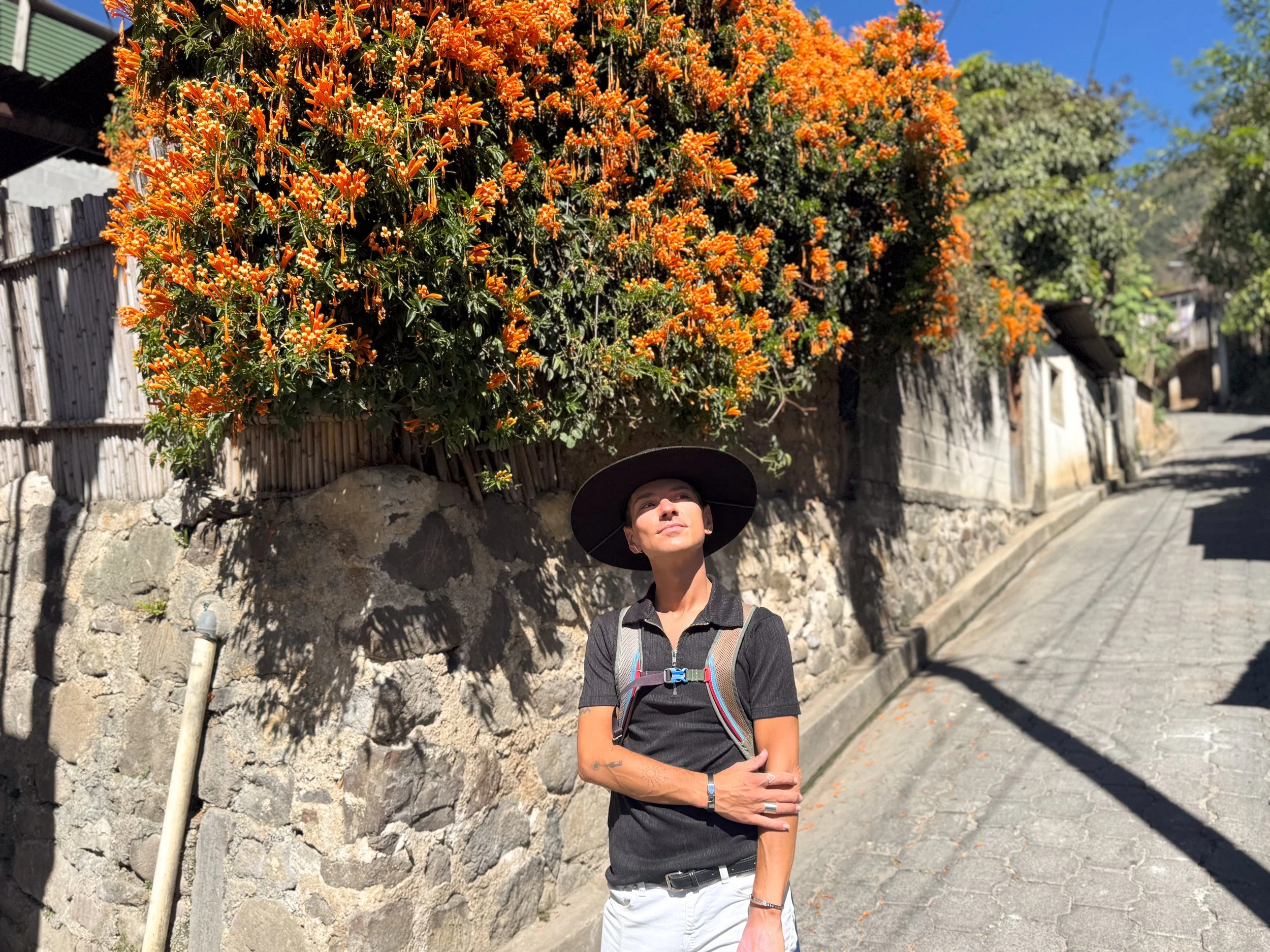
San Marcos
San Marcos is a very small pueblo with bohemian vibes, winding pedestrian walkways, a peaceful nature reserve and the best views of Lake Atitlán and the volcanos.
The Hippie Highway. The narrow street leading from the ferry dock into town is locally called the “Hippie Highway.” The street is appropriately named for all of the health food cafes, fruit and vegetable farm stands, tins of smoldering incense, shops with bohemian style clothes, vendors selling feather and wire jewelry, long haired expats, stick and poke tattoo shops, wellness studios with crystal healers, spiritual massages and yoga classes.
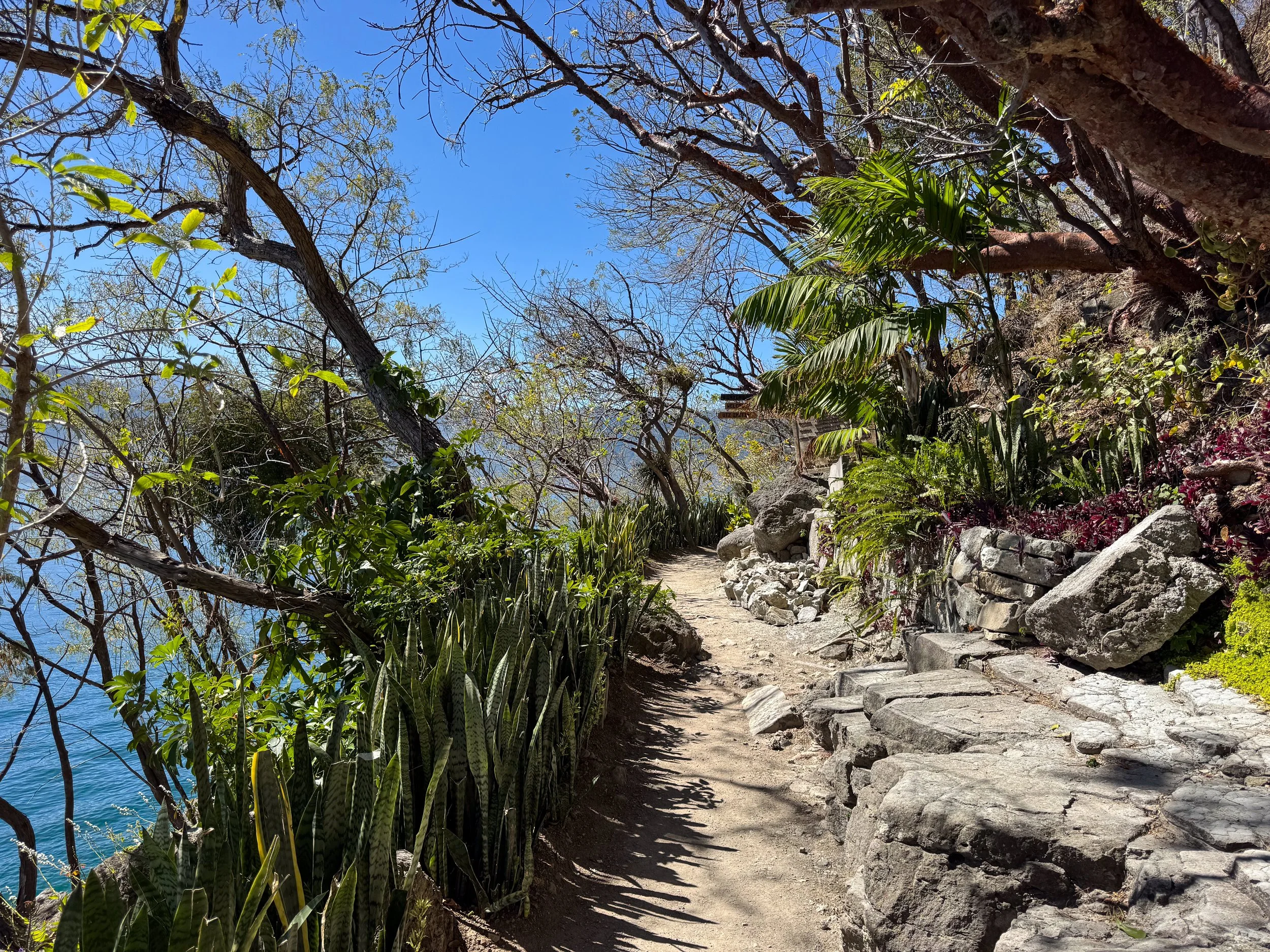
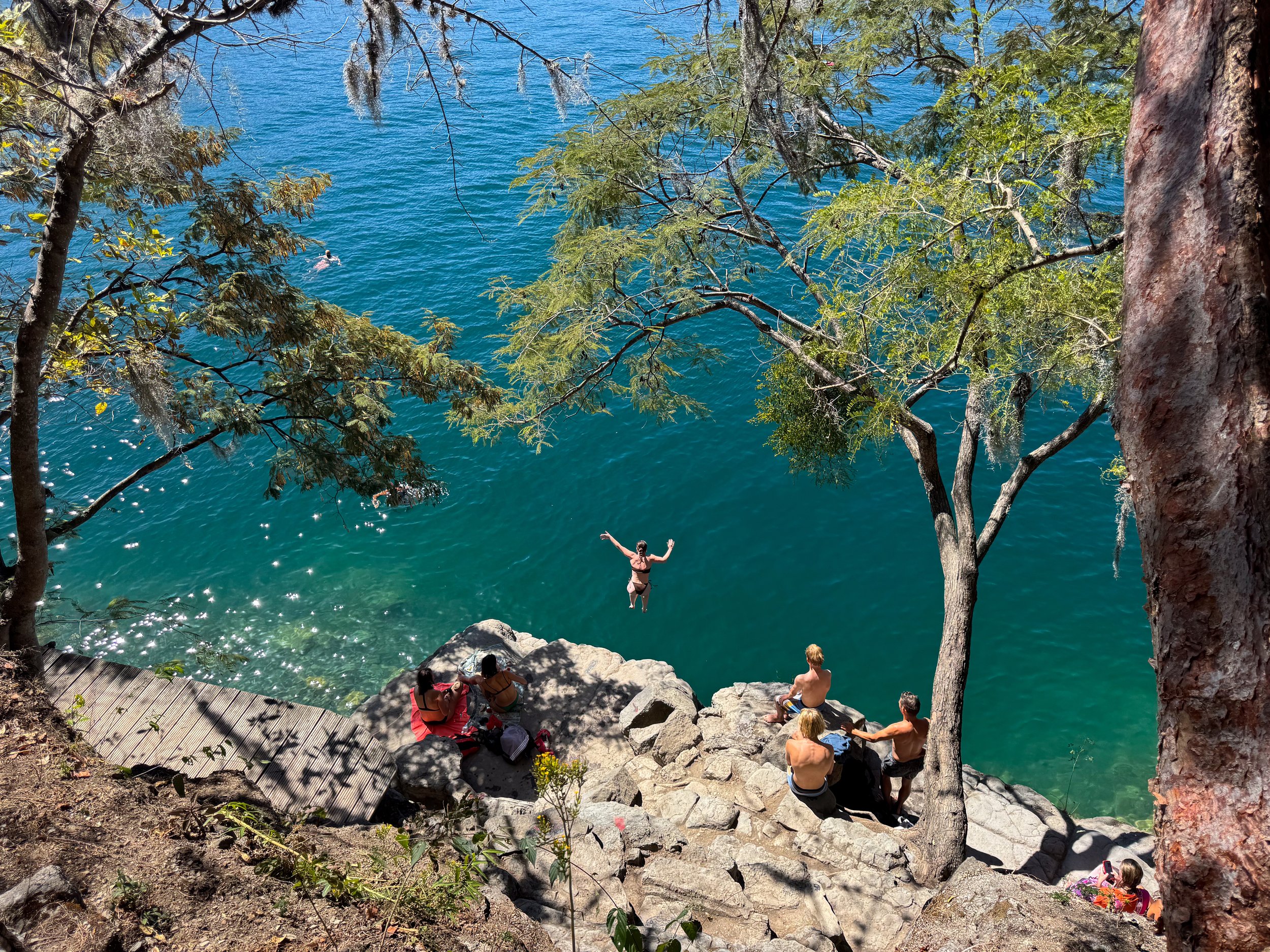
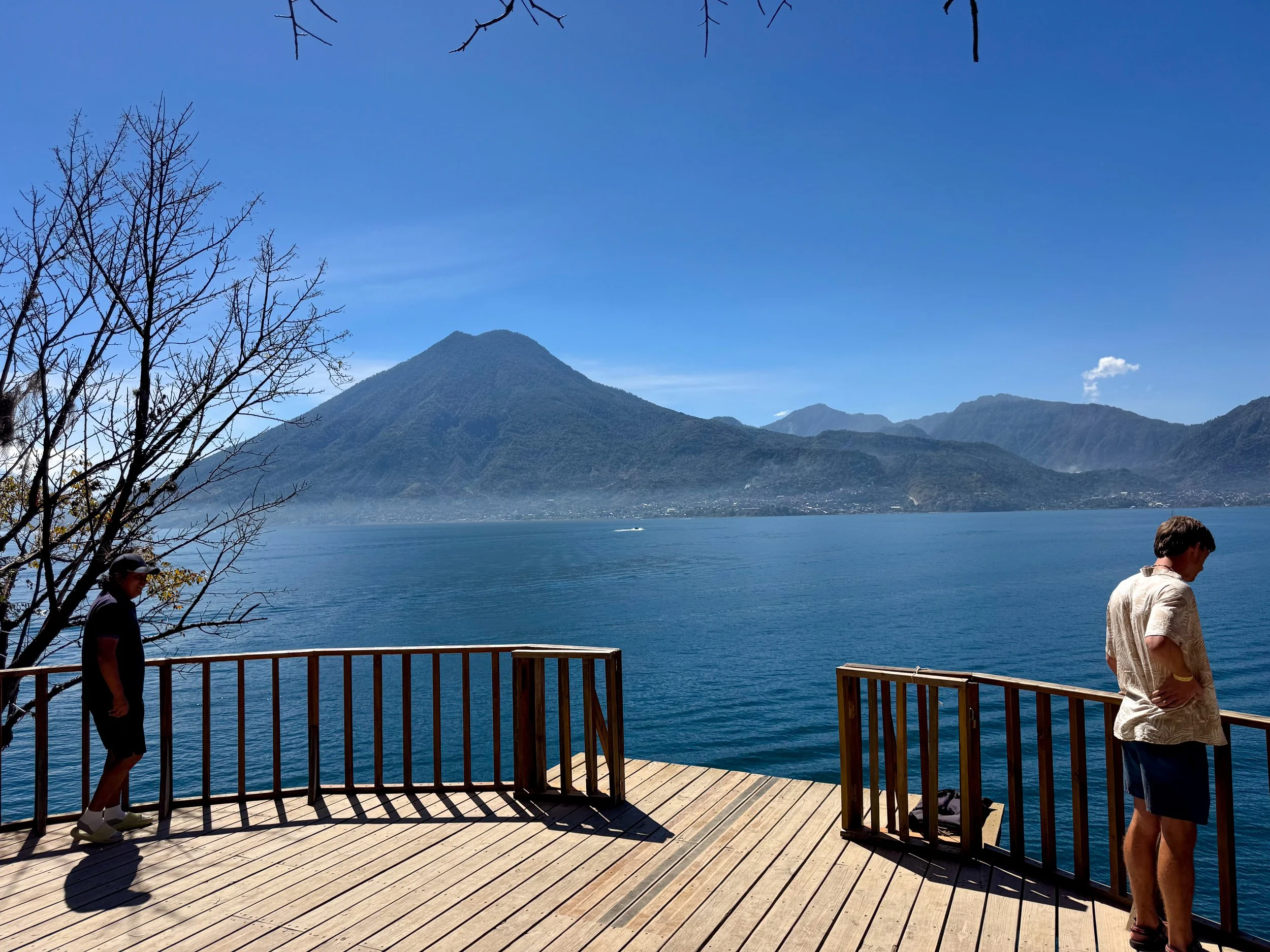
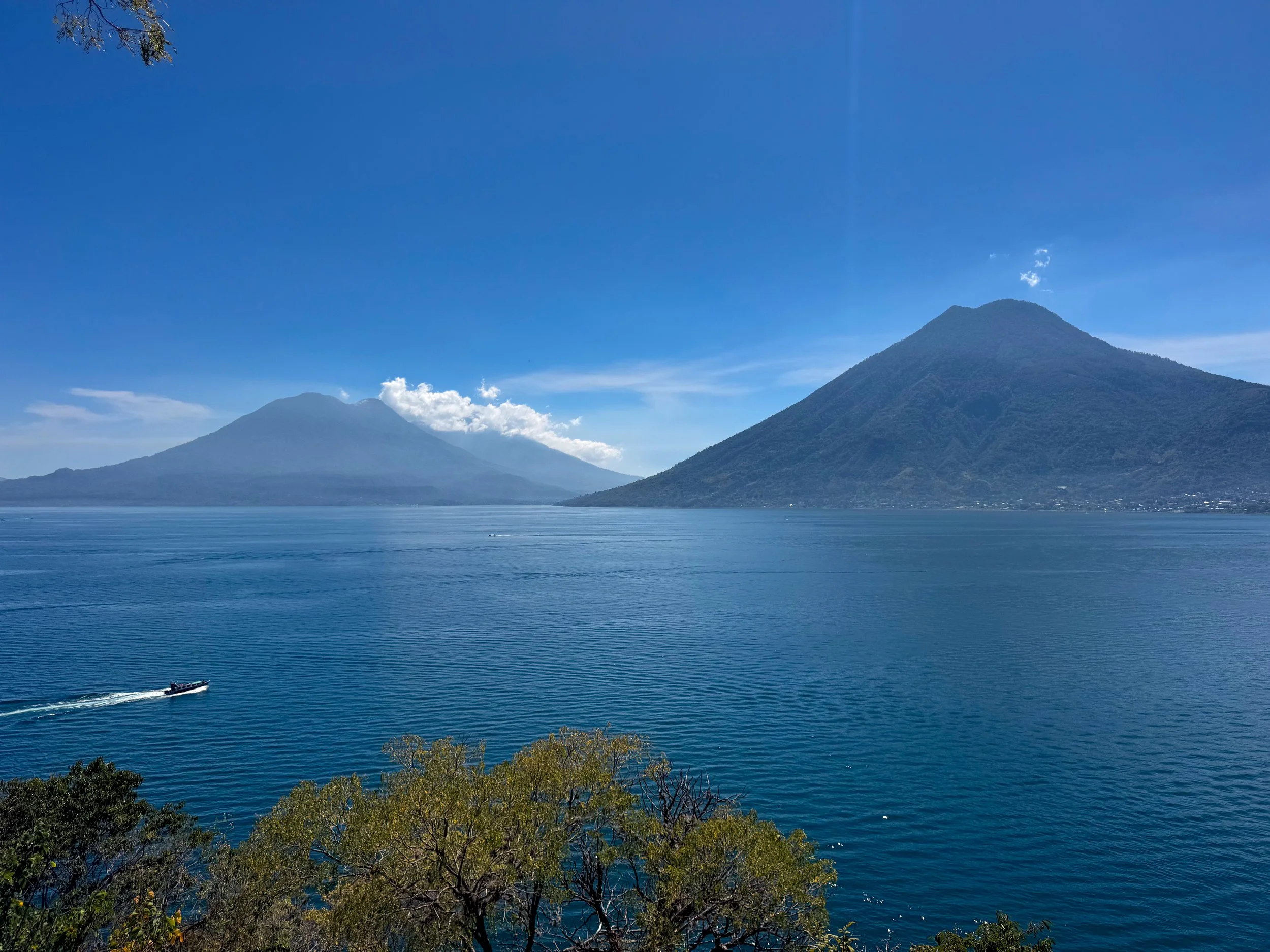
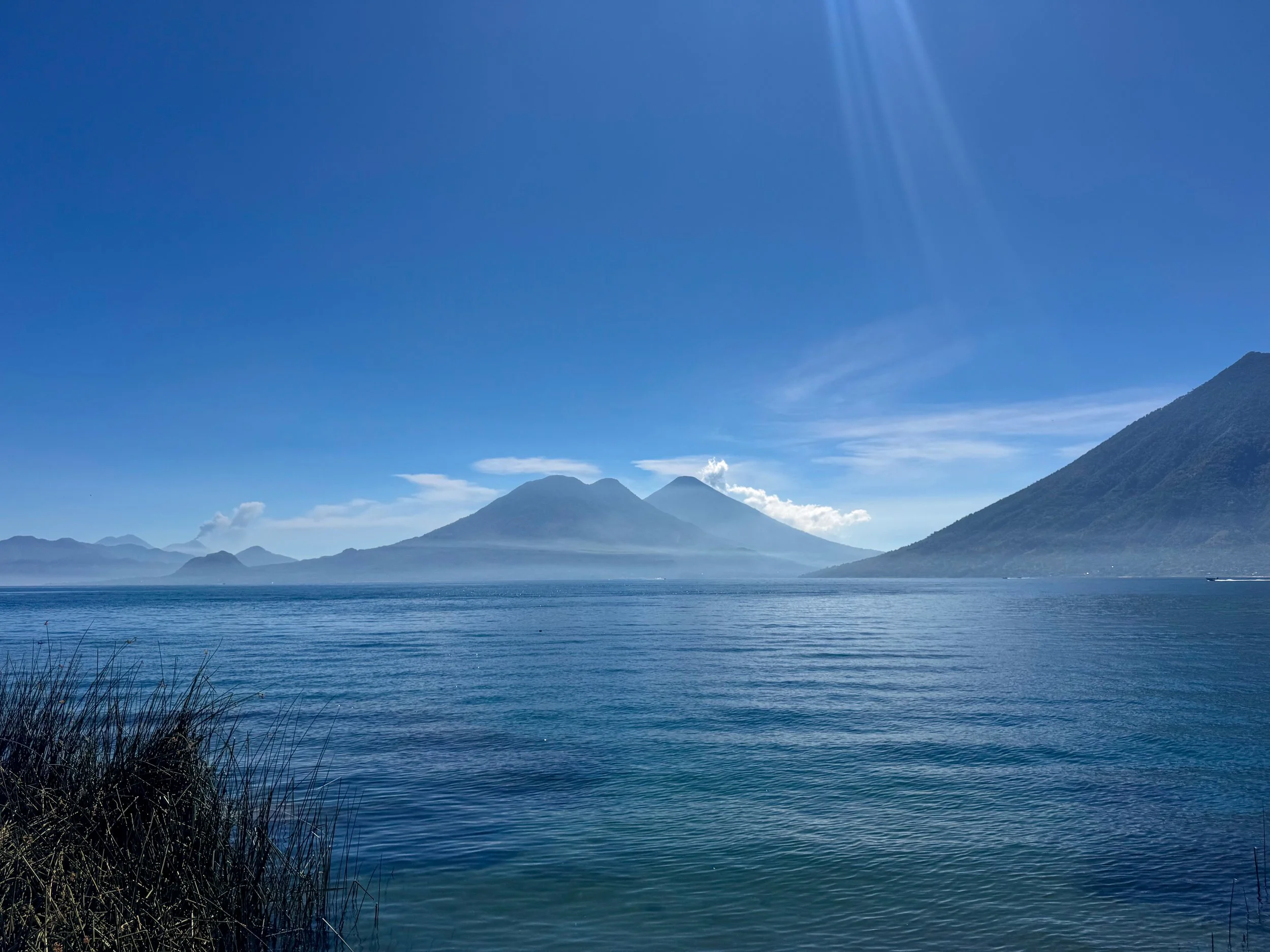
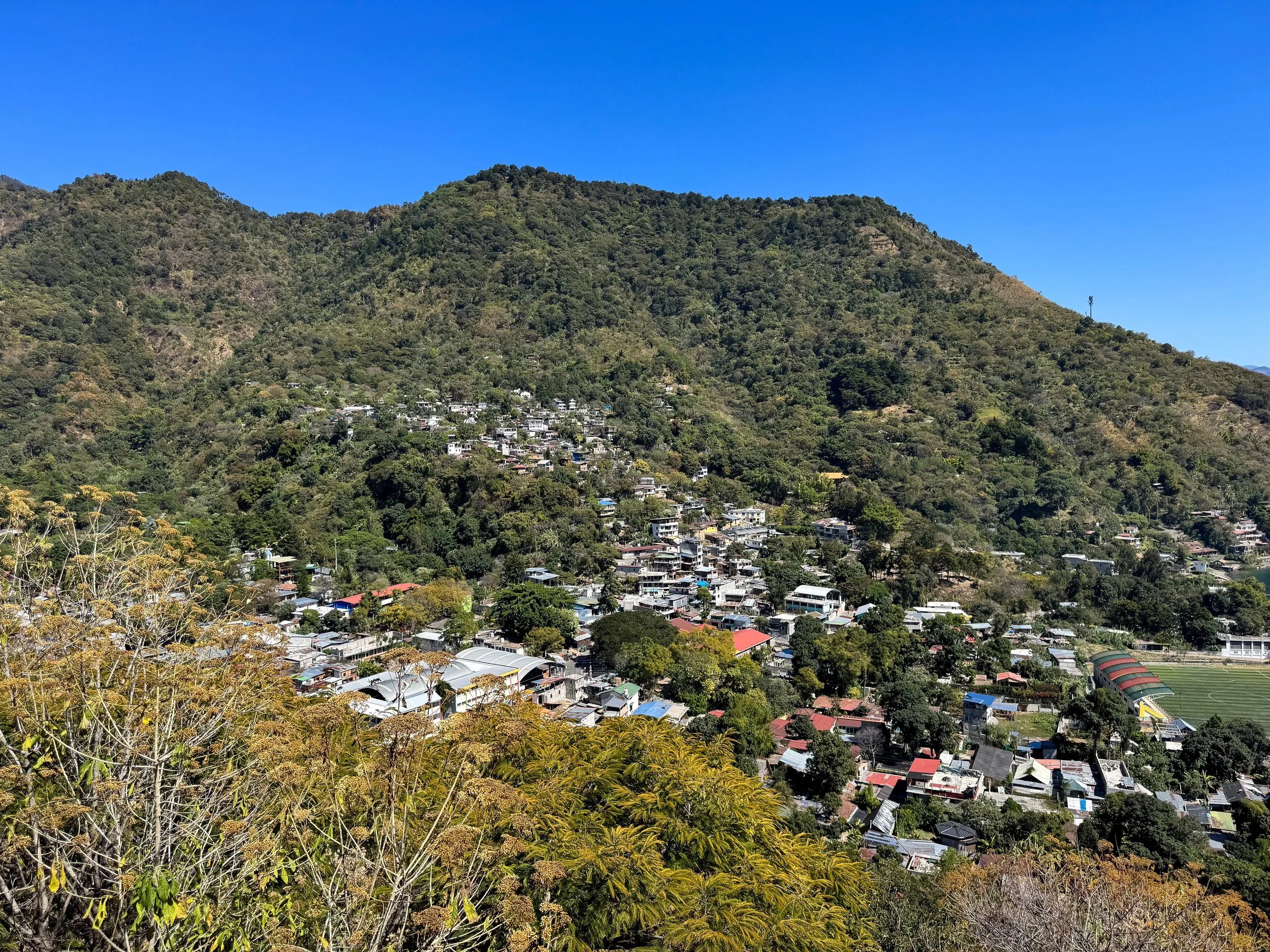
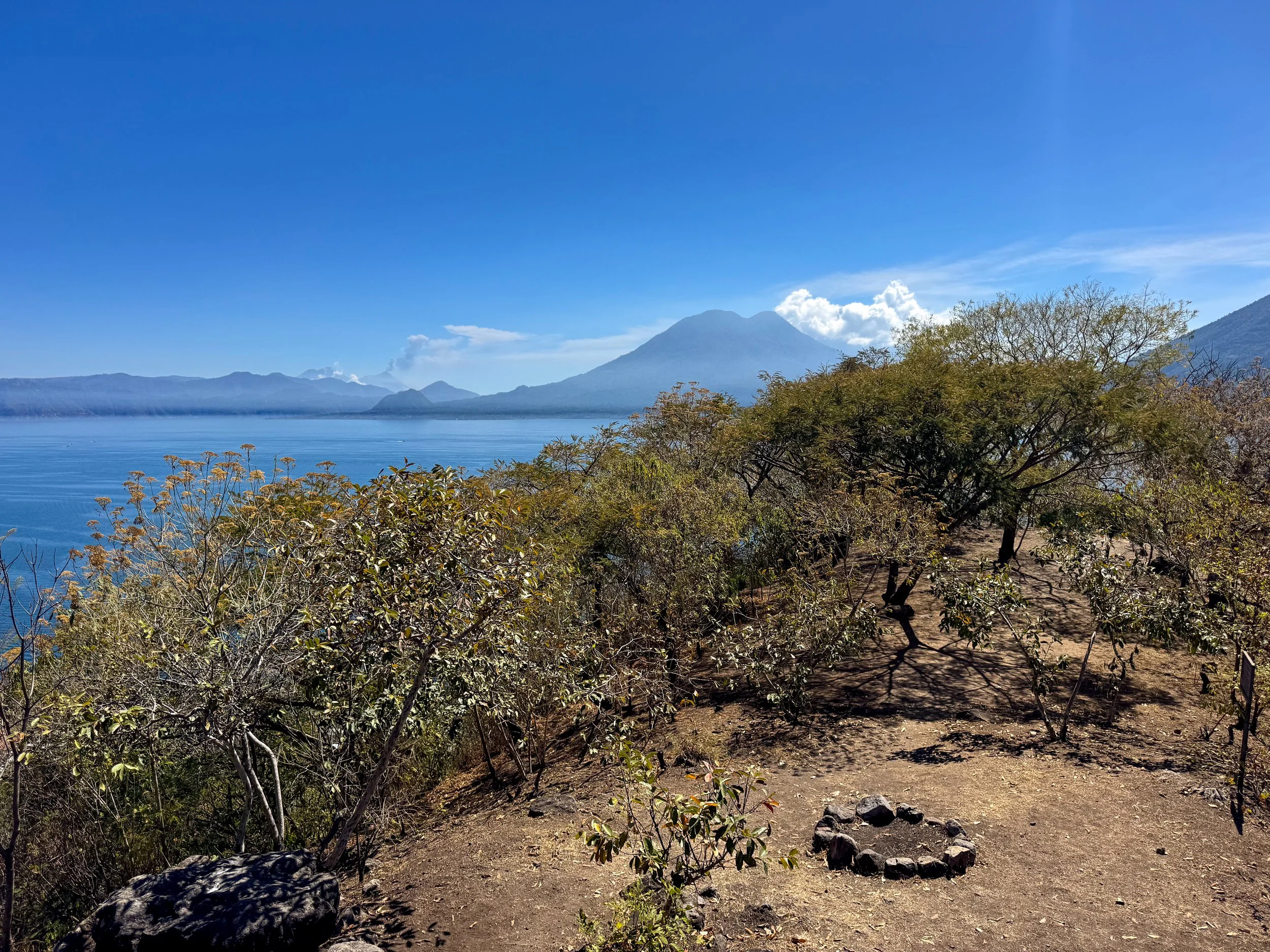
Cherri Tzankujil Nature Reserve. A peaceful nature reserve with trails leading to Mayan ceremonial altars, bathing areas and lookouts over the lake, volcanos and town. We spent an entire afternoon here, surrounded by breathtaking nature, hiking the trails, sunbathing and picnicking along the rocky cliffs and swimming in the cool refreshing water. From one of the overlooks, we watched as adrenaline seekers jumped from The Trampoline, a 12 meter jump into the lake below.
Circles Cafe & Bakery. A bakery and cafe with Guatemalan coffee, sourdough breads, rustic pastries, sandwiches and pizzas.
Mi Vida Bar. A two floor open air bar with views of the lake and volcanos, local beers and classic cocktails.
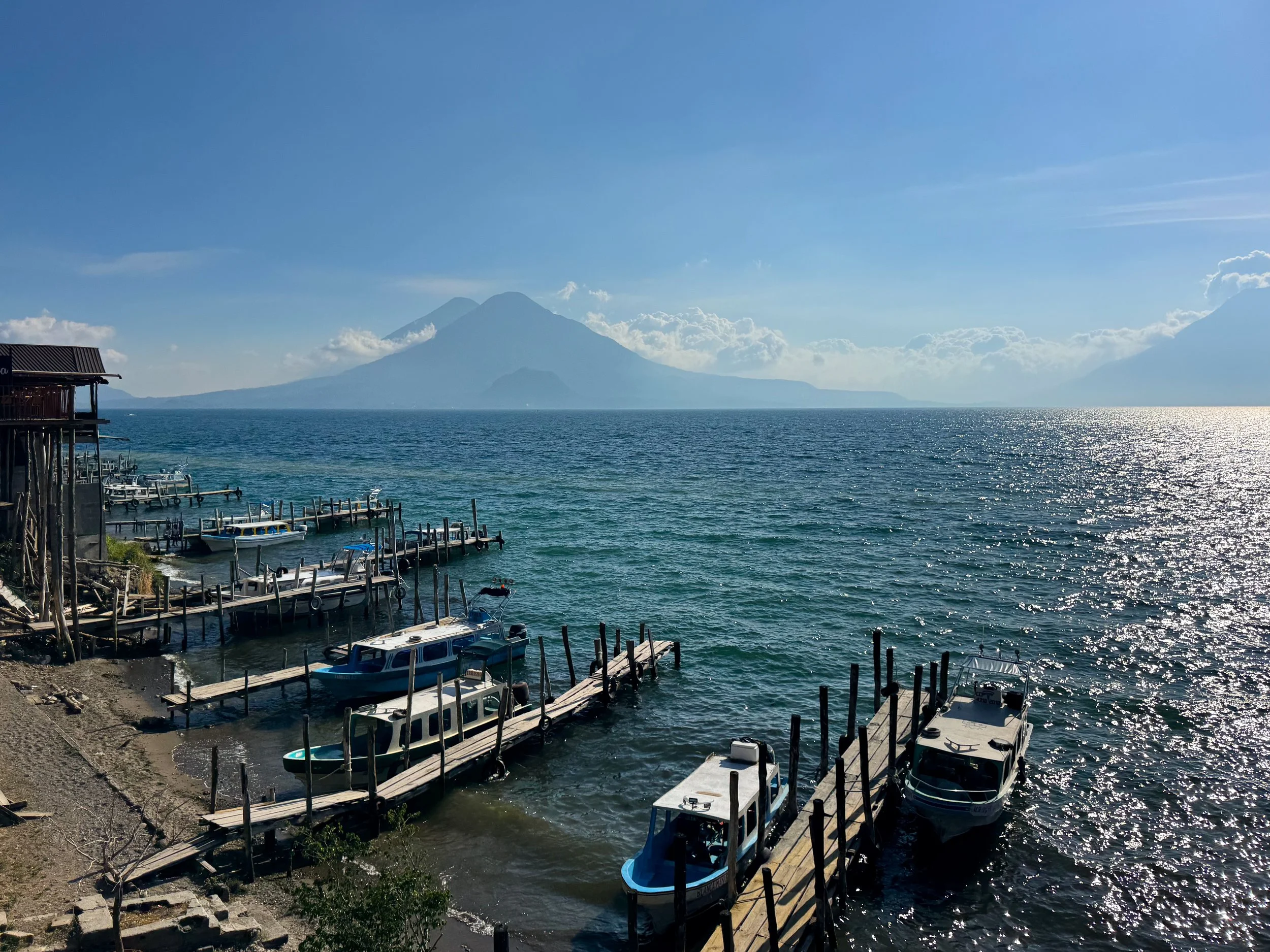
Panajachel
Panajachel, also called Pana, is the most developed and commercial pueblo on Lake Atitlán. It’s home to multitudes of Guatemalan craft shops, cafes and lake front restaurants. It’s a branching off point and hub to reach the other pueblos around the lake.
Calle Santander. Panajachel’s main tourist street lined with shops and vendors selling all types of handmade leather goods, colorful woven textiles, beaded jewelry and hammocks. The road follows the lake front and leads further into the pueblo. Along the lake, restaurants share similar menus with views of it and the volcanos. Further in town, cafes serve Guatemalan coffee. Overhead, twinkle lights and banderas crisscross the street as tuk tuks and moto bikes zip by.
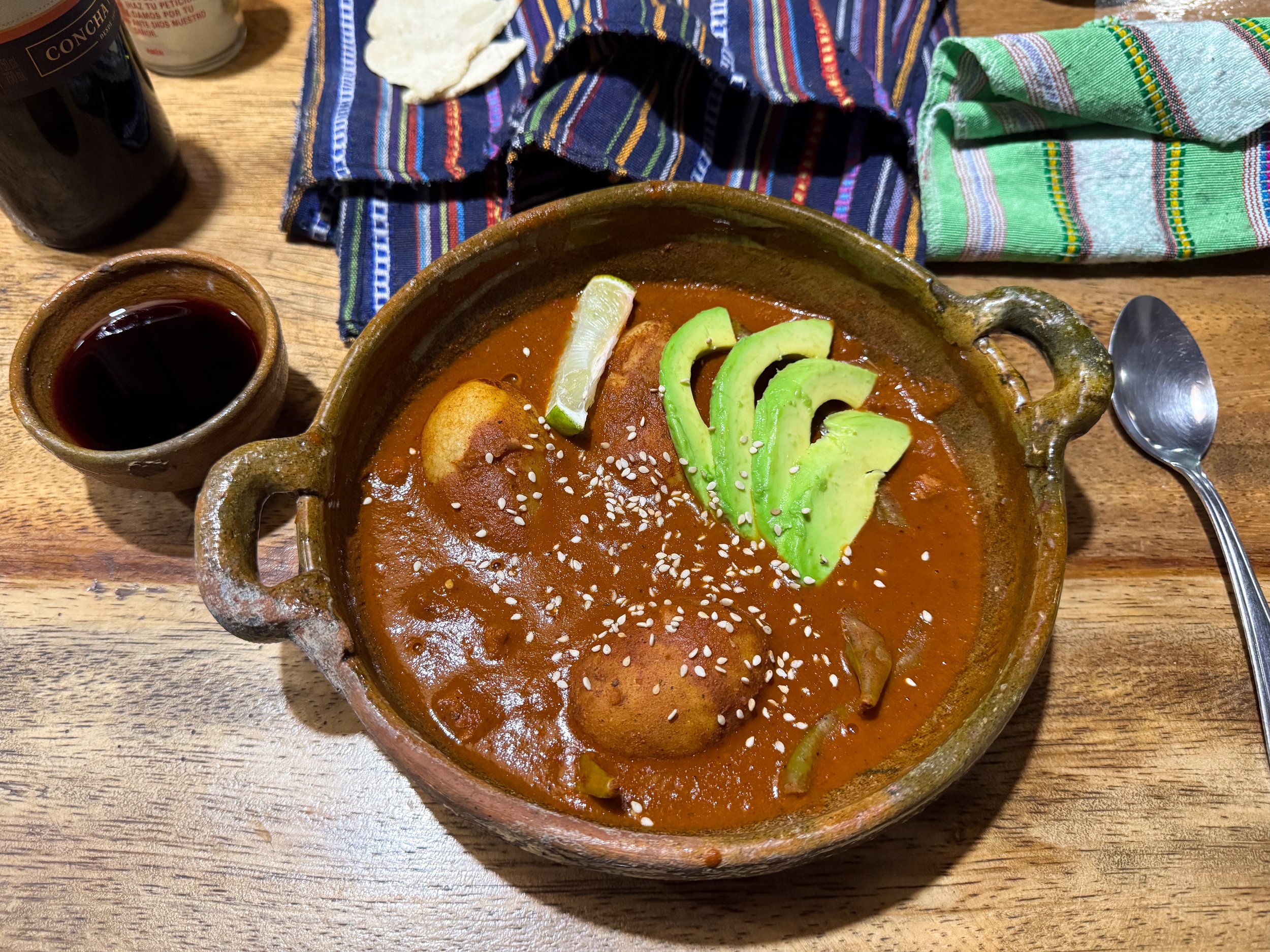
Guatemalan Cuisine
Chapín. A local soup made from chile guajillo, tomato and cilantro served with avocado and tortilla.
Pepián. A very traditional Guatemalan stew made from a mixture of peppers, veggies, spices, seeds and meats.
Corn Tortillas. A common base or accompaniment to nearly every dish in Guatemala. The tortillas are often made fresh from yellow, white and sometimes blue corn masa.
Pupusas. A corn masa arepa stuffed with various fillings like black bean and cheese.
Desayuno Typical. A typical breakfast dish comprised of eggs, tortilla, refried beans, sliced avocado, cheese and fried plantains.
Mojarra Frita. A whole fried white fish with a spiky spine found in the lakes, rivers and shores of Central America.
Caldo de Mariscos. A clay pot or bowl with a base of spicy seafood broth and a range of fish, crustaceans and shellfish.
Choco Fruita. Chocolate dipped fruits like banana, coconut, papaya and watermelon sold by street vendors. They’re popular in San Juan.
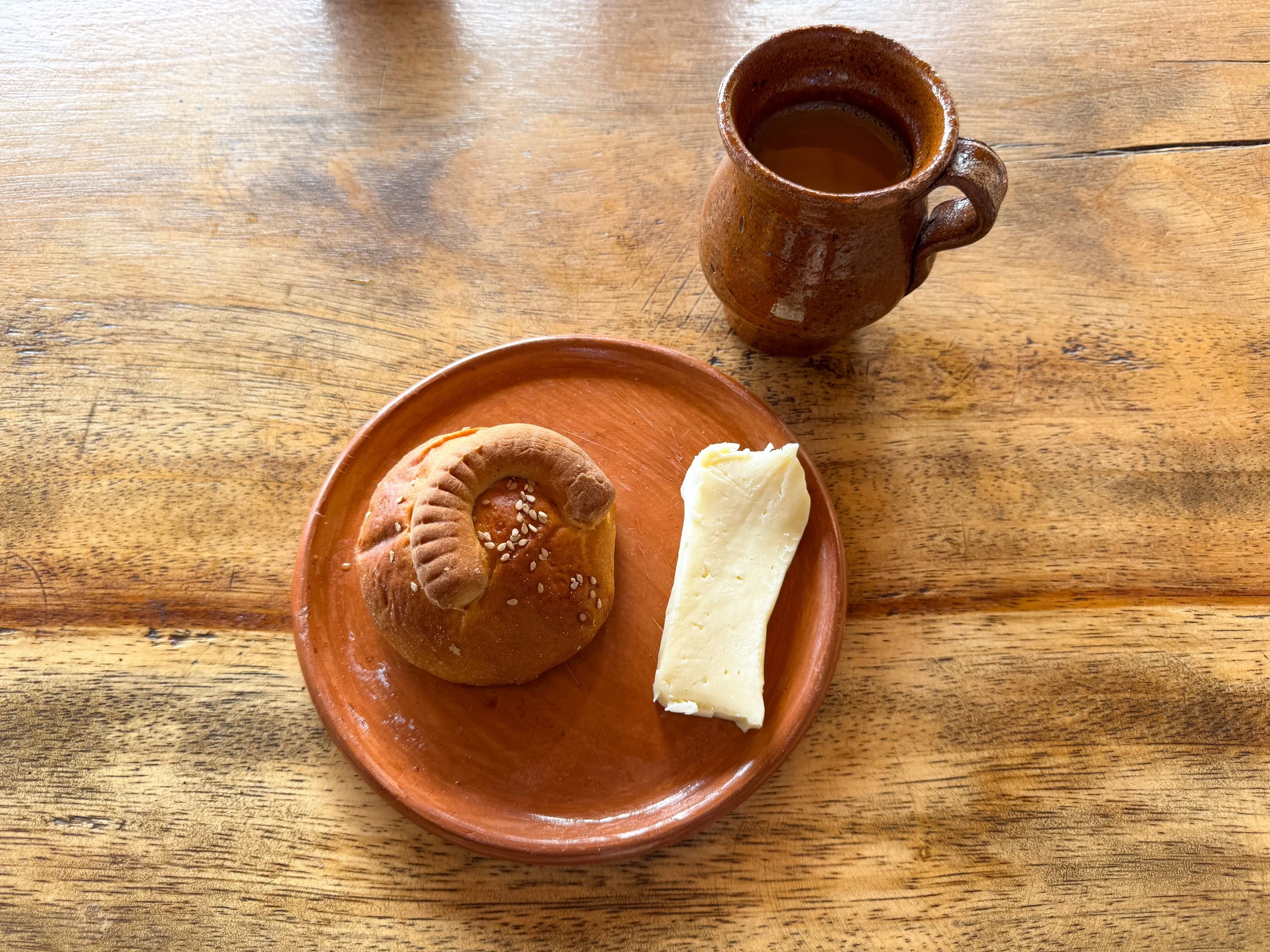
Guatemalan Drinks
Ancestral Hot Chocolate. A traditional Mayan method of making hot chocolate from pure cacao mixed with cinnamon and raw sugar then mixed with creamy milk.
Guatemalan Coffee. Guatemala is one of the most prosperous coffee producing regions in the Americas. Locally grown and roasted beans are brewed into a full bodied, rich and chocolaty flavored cups of coffee and espresso at cafes and homes around the country.
Gallo. Guatemala’s national beer, recognizable by its green bottle and the logo of a rooster on its label. It has a classic light beer flavor and is sold everywhere across the country.
Michelada. A cocktail made from beer, tomato juice, lime and spices with a salted rim. They’re commonly made with Gallo and sold at bar carts by street vendors.
Quetzalteca. A local spirt sold in small bottles with flavors like tamarind, hibiscus, strawberry, pineapple, watermelon and mulberry. It’s often prepared at bars over ice with lime juice and tajin.
Zacapa. Guatemala’s national rum. With our Priority Pass, we visited Casa del Ron, the brand’s lounge at the La Aurora International Airport. For free, we ordered two cocktails, the Zacapa Sour and Zacapa Express as well as a glass of Zacapa XO neat, a blend of 10-25 year aged rum.
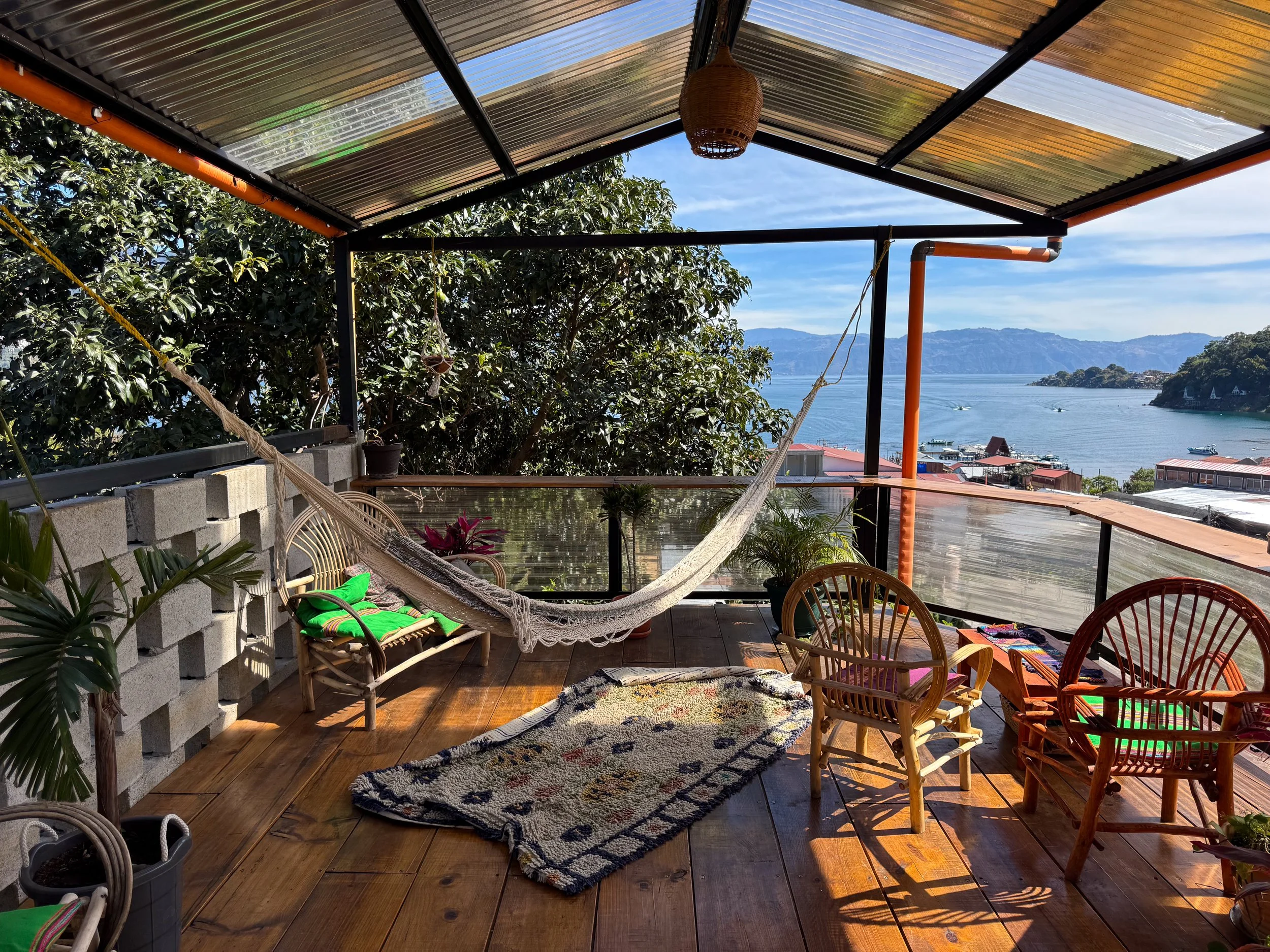
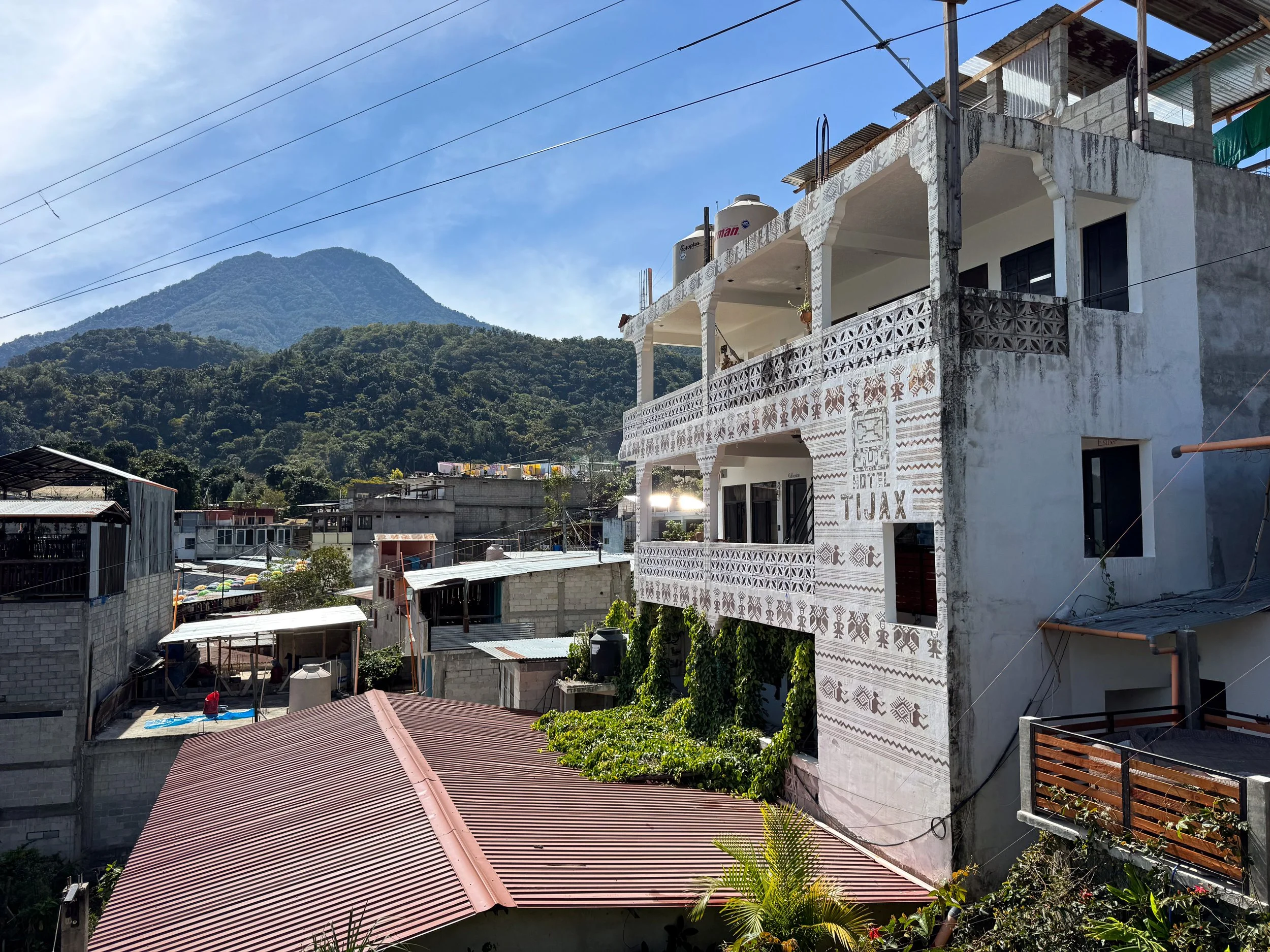
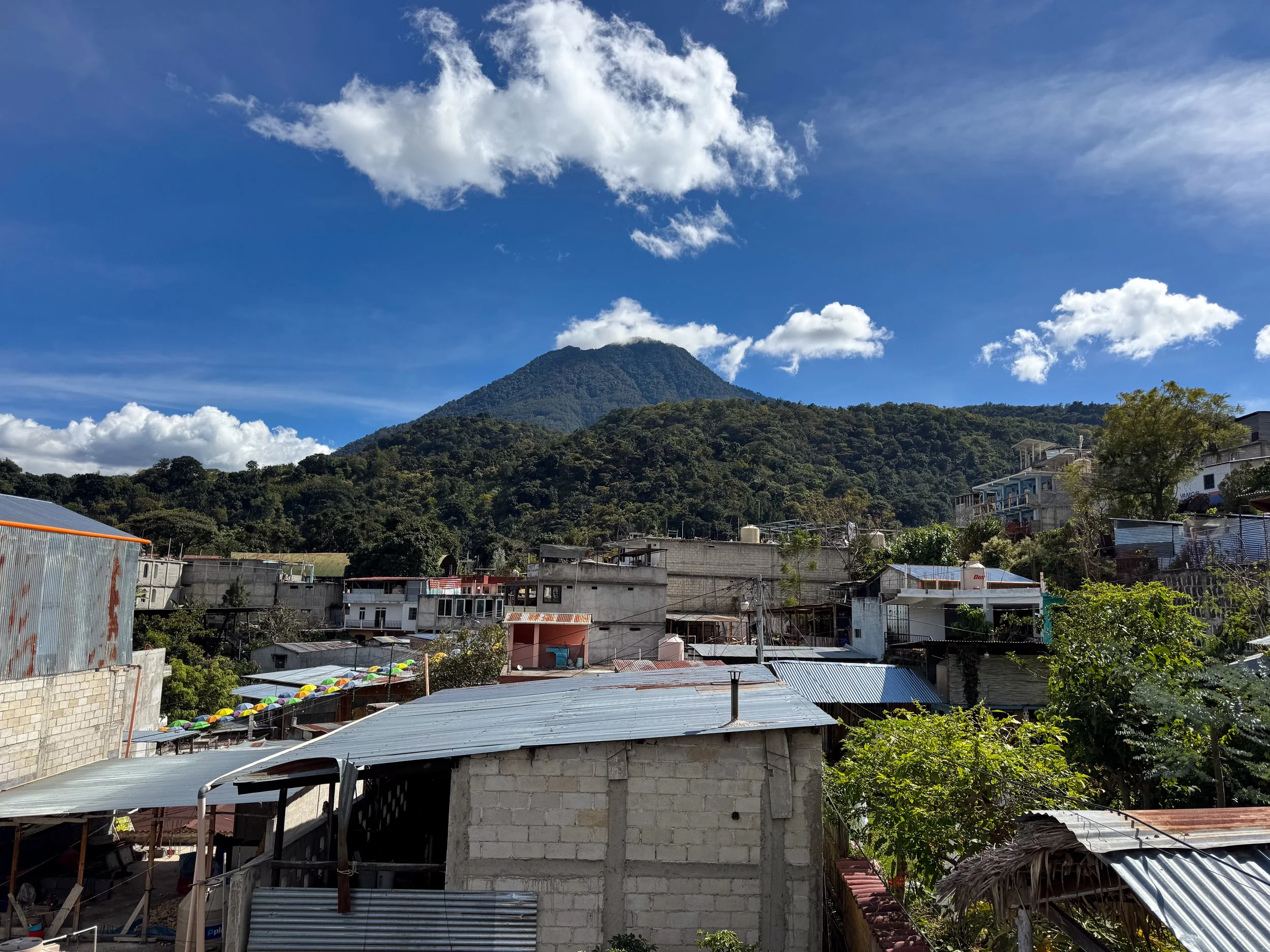
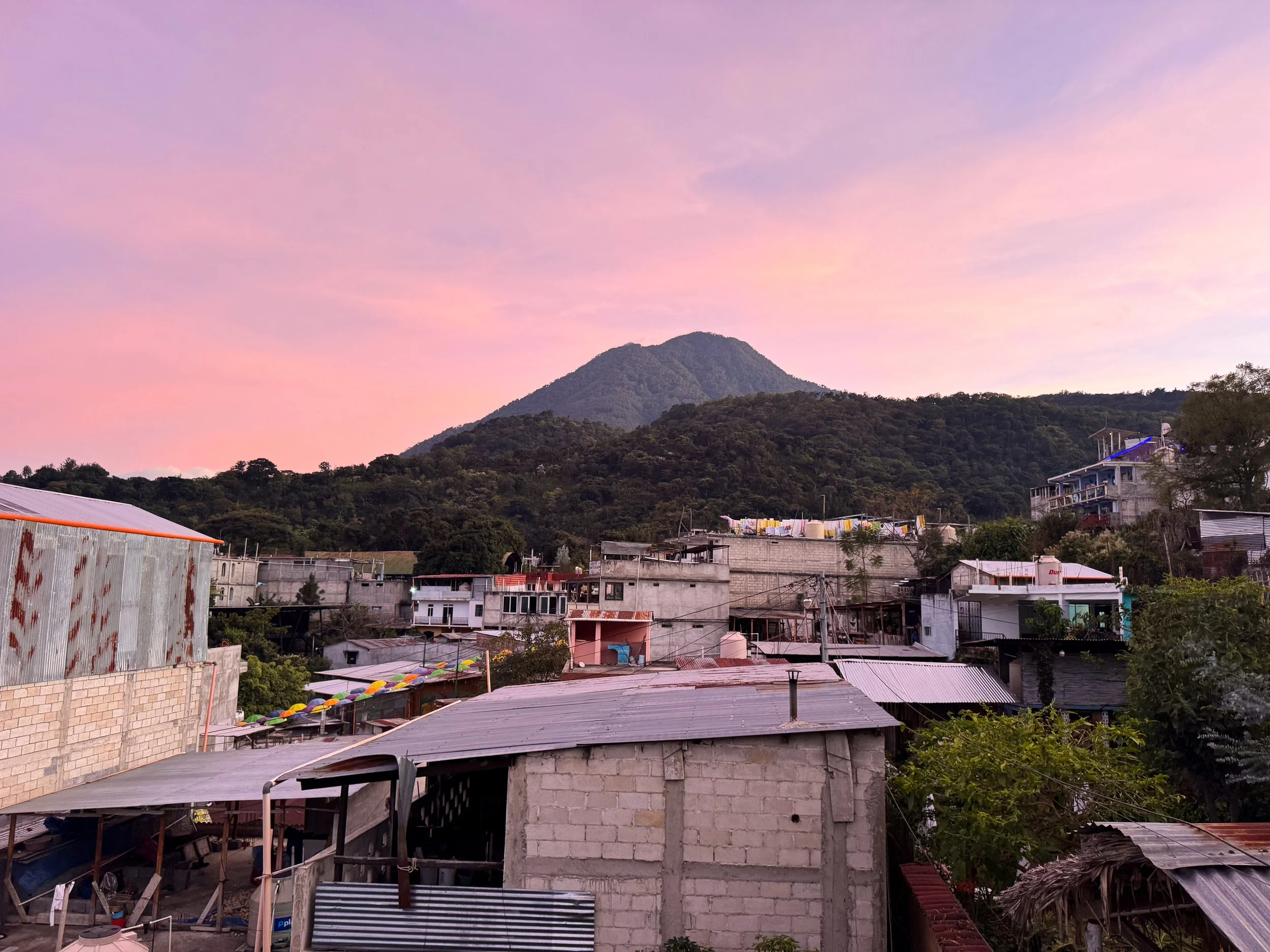
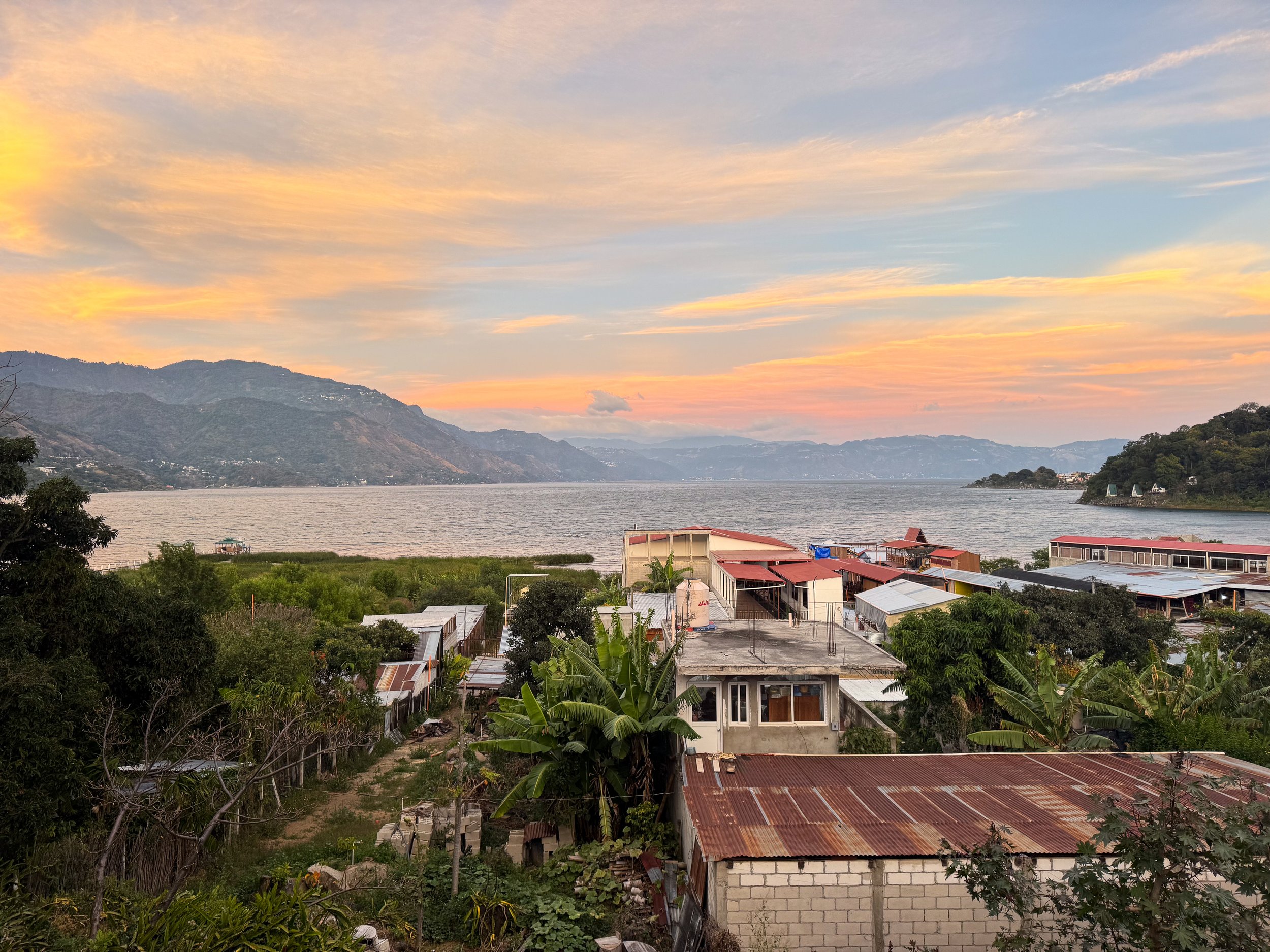
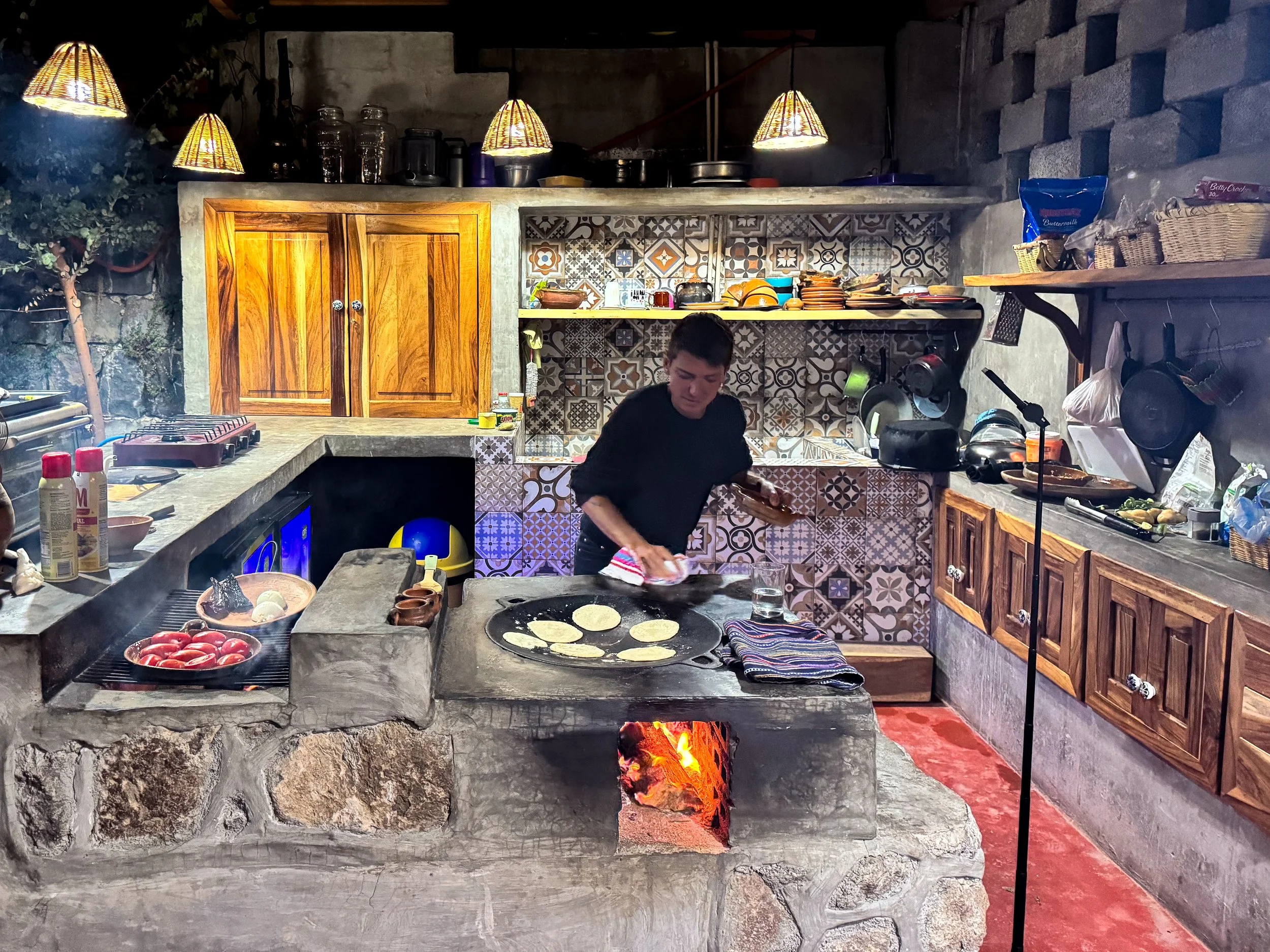
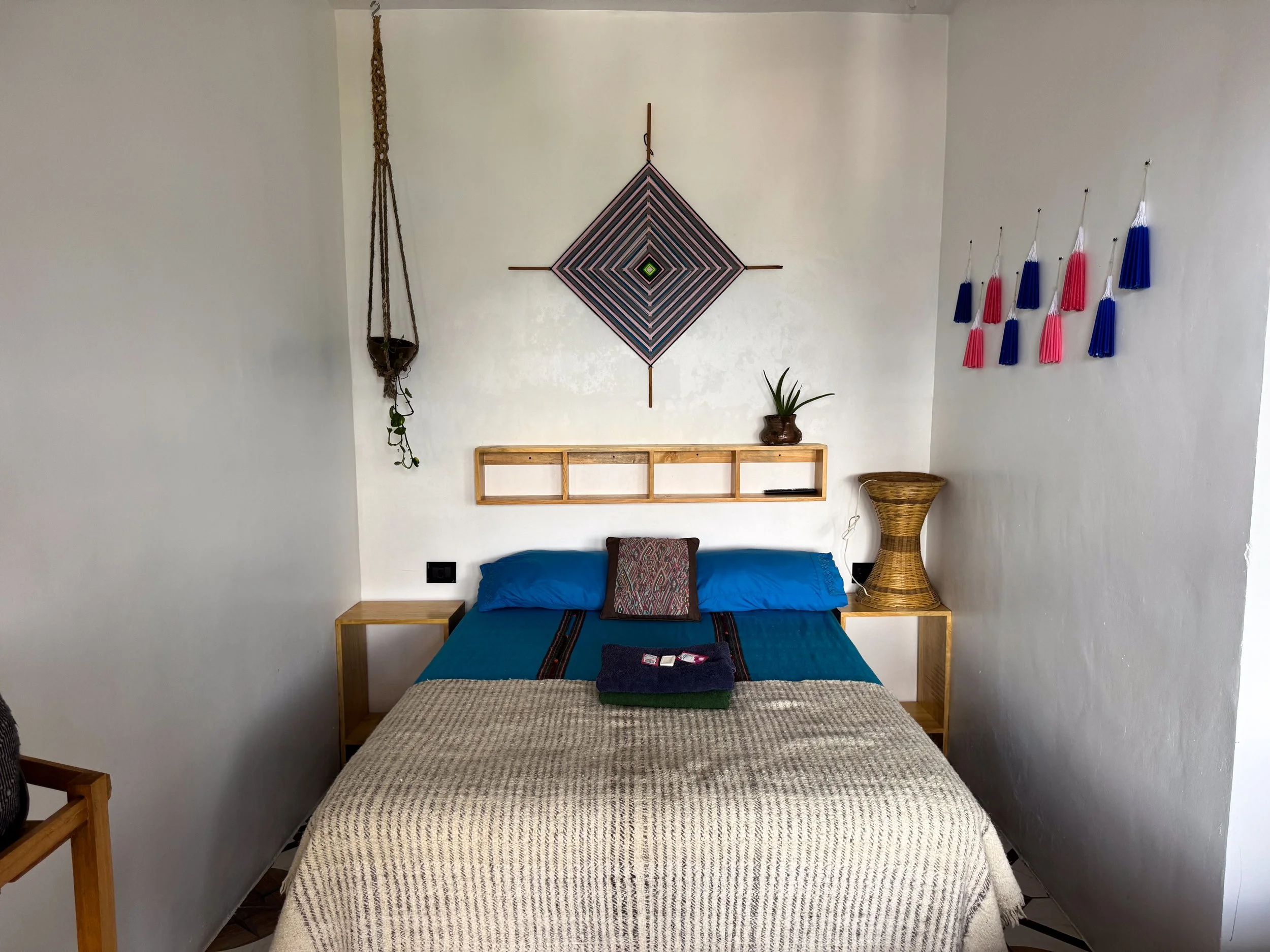
Where to Stay
Hotel Tijax. We stayed at a boutique hotel in San Juan de La Laguna with balcony views overlooking Lake Atitlán and the tin clad roofs of the pueblo. The rooms are decorated in local products including textiles, paintings, ceramics and candles. One of the best aspects of the hotel was the outdoor kitchen! It’s equipped with a wood burning comal, grill and traditional clay dish-ware. The space is decorated with a colorful tiled backsplash, basket lights and live edge dining table. The owners provide clean drinking water and freshly brewed coffee from Cafe Las Marias up the street. Book on Airbnb.
Getting to Lago Atitlán
We hired a transfer ahead of time from the airport in Guatemala City to bring us to Panajachel. The trip took 4 hours due to traffic. We hired the same company to transfer us from San Juan back to the airport. The trip took 3 hours. We booked on Viator.
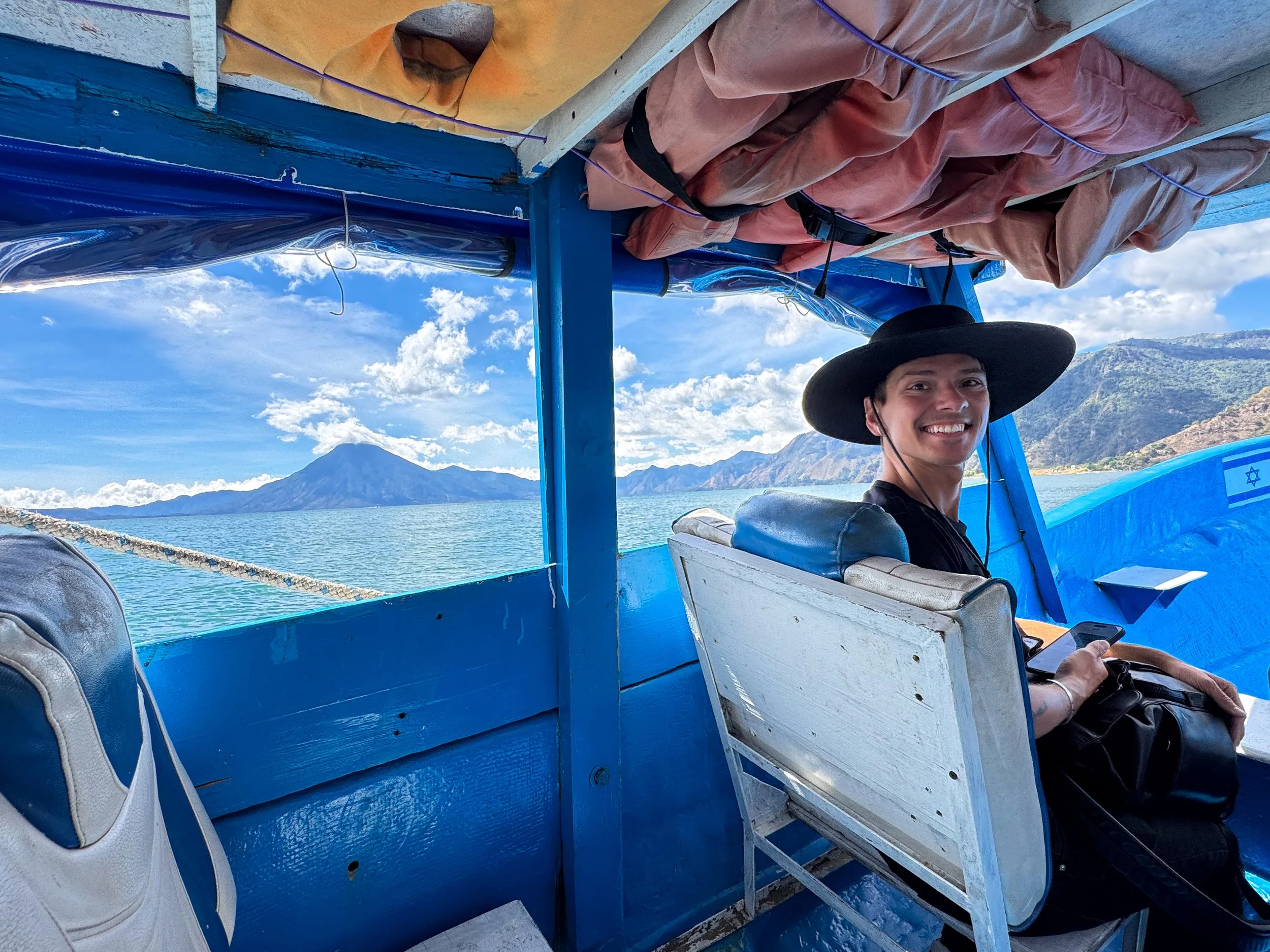
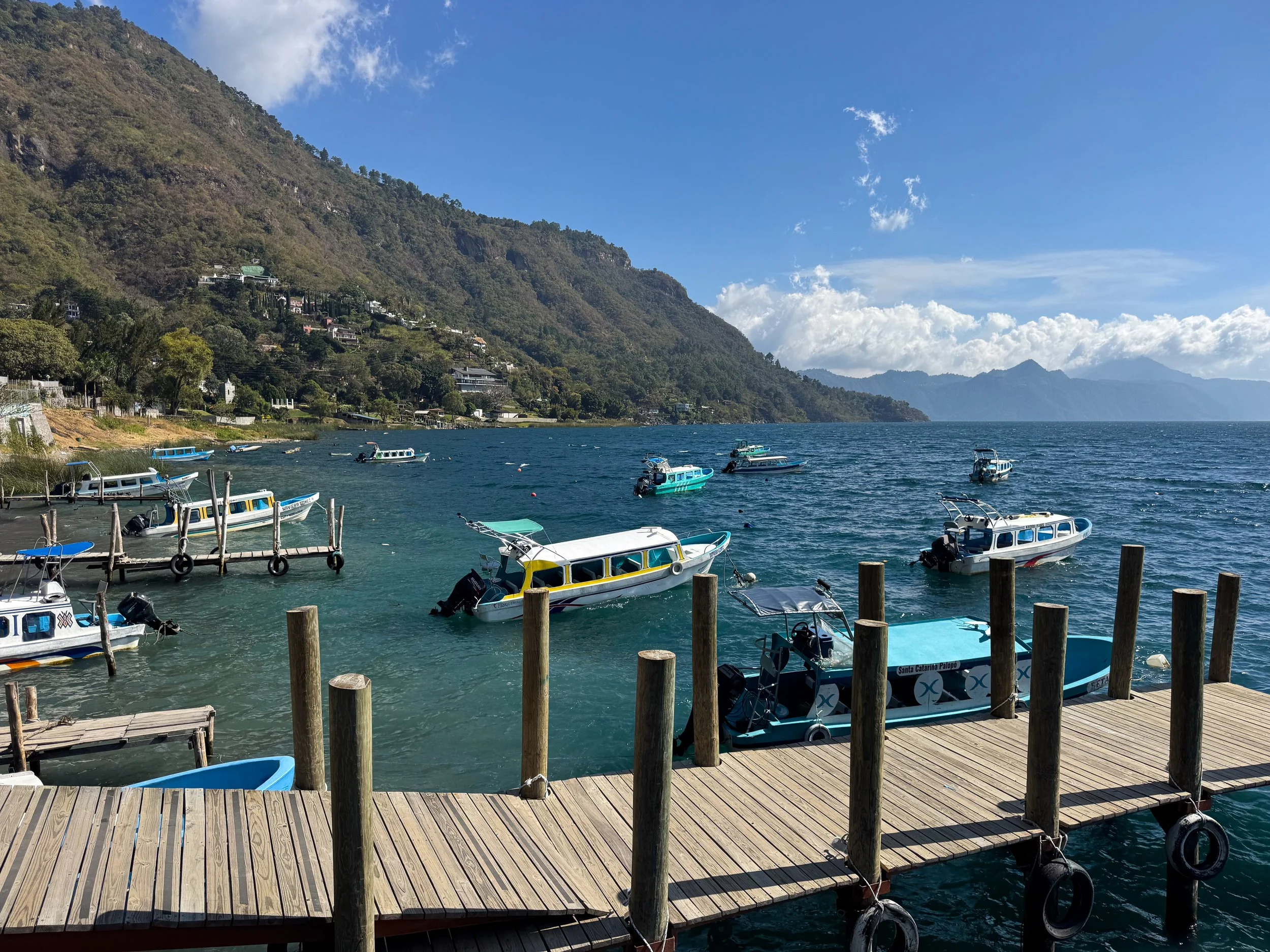
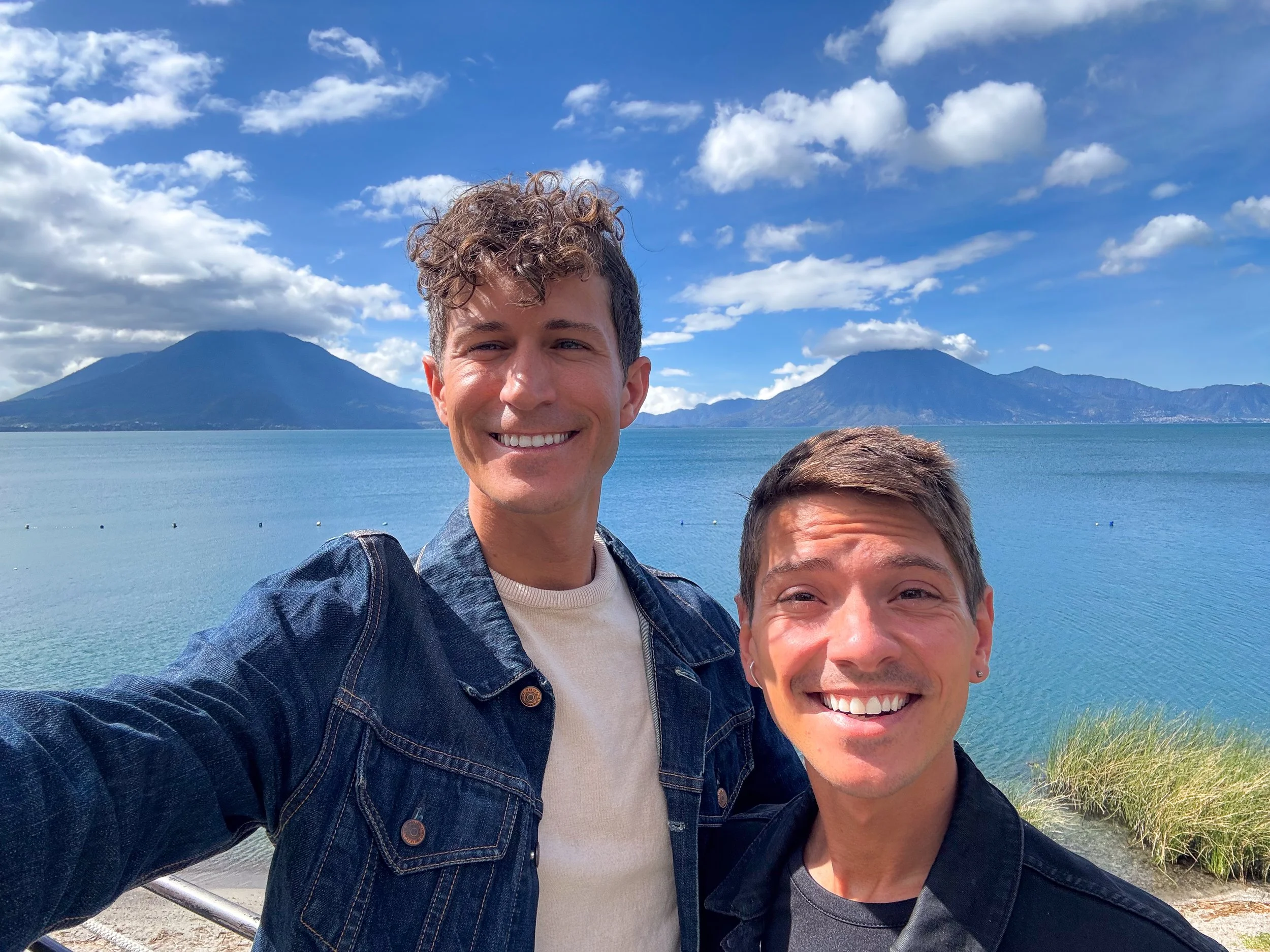
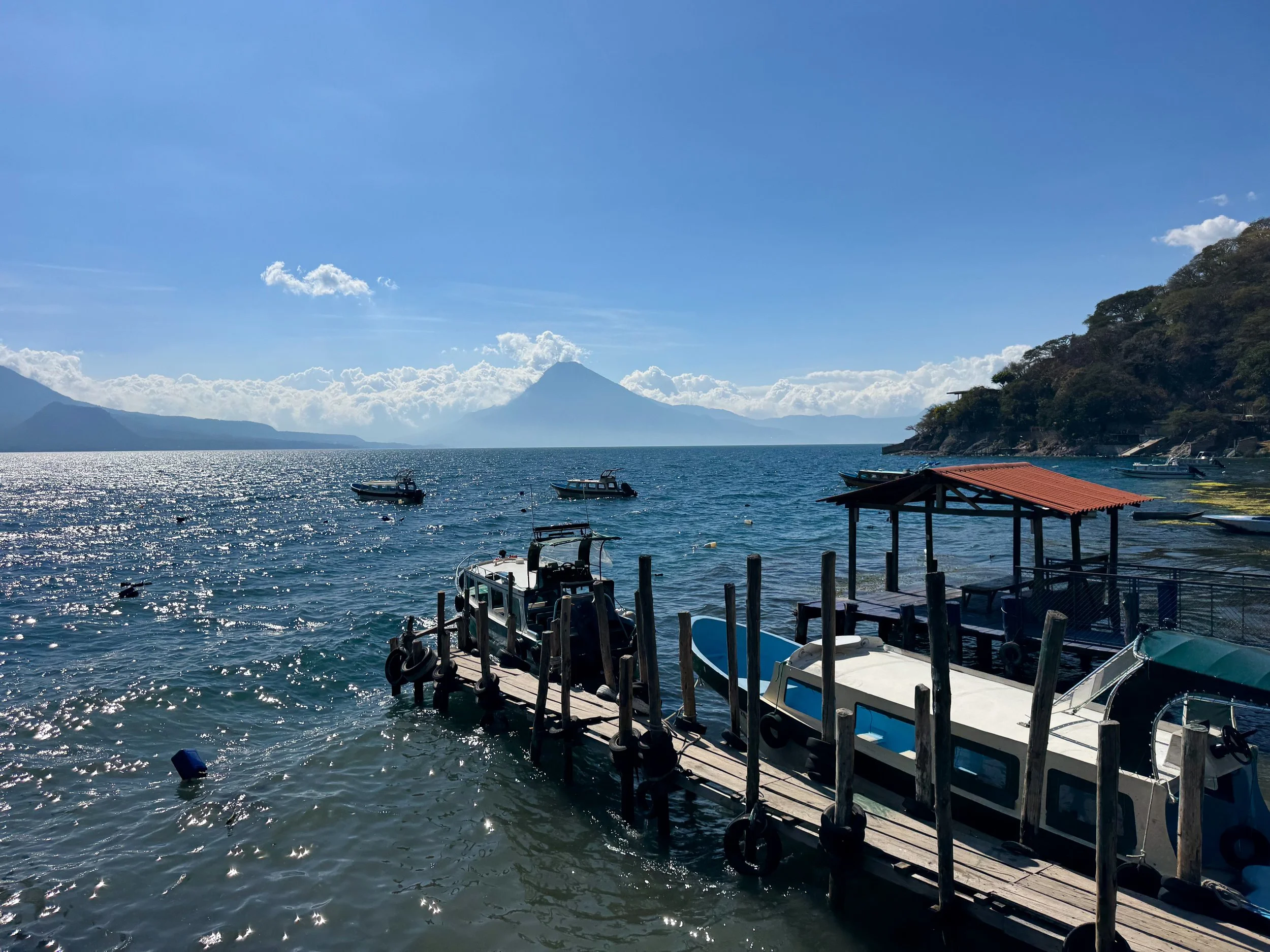
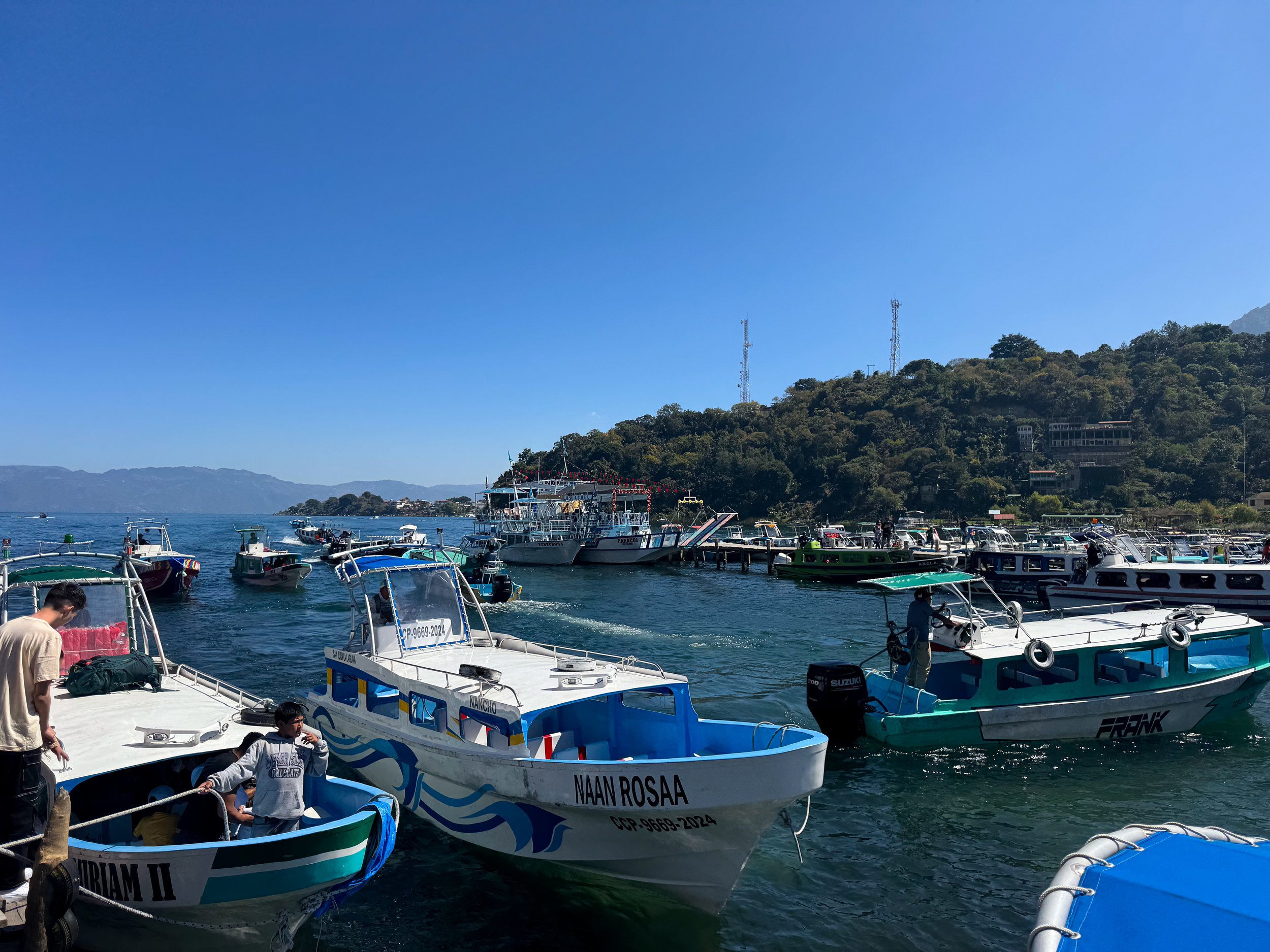
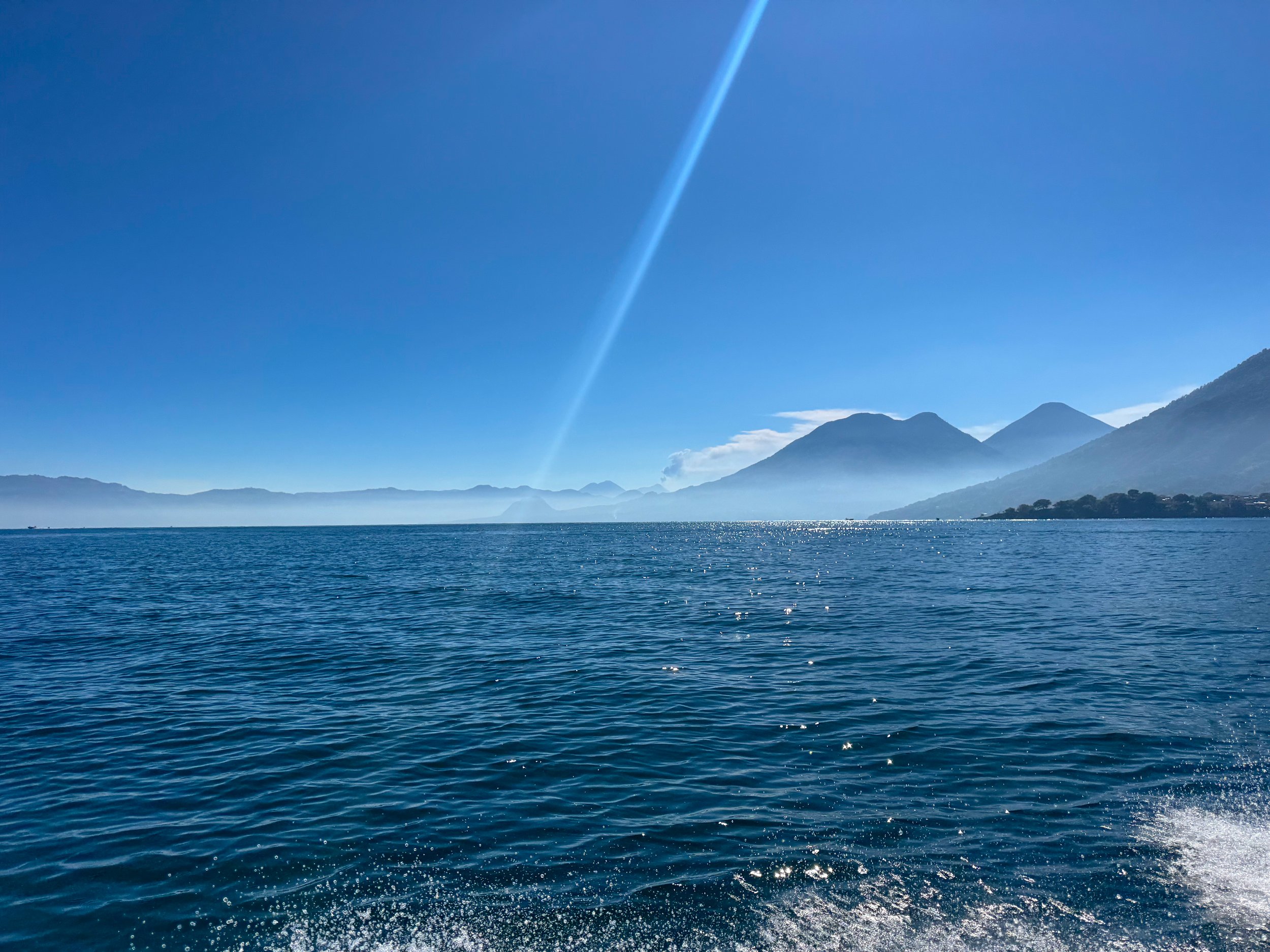
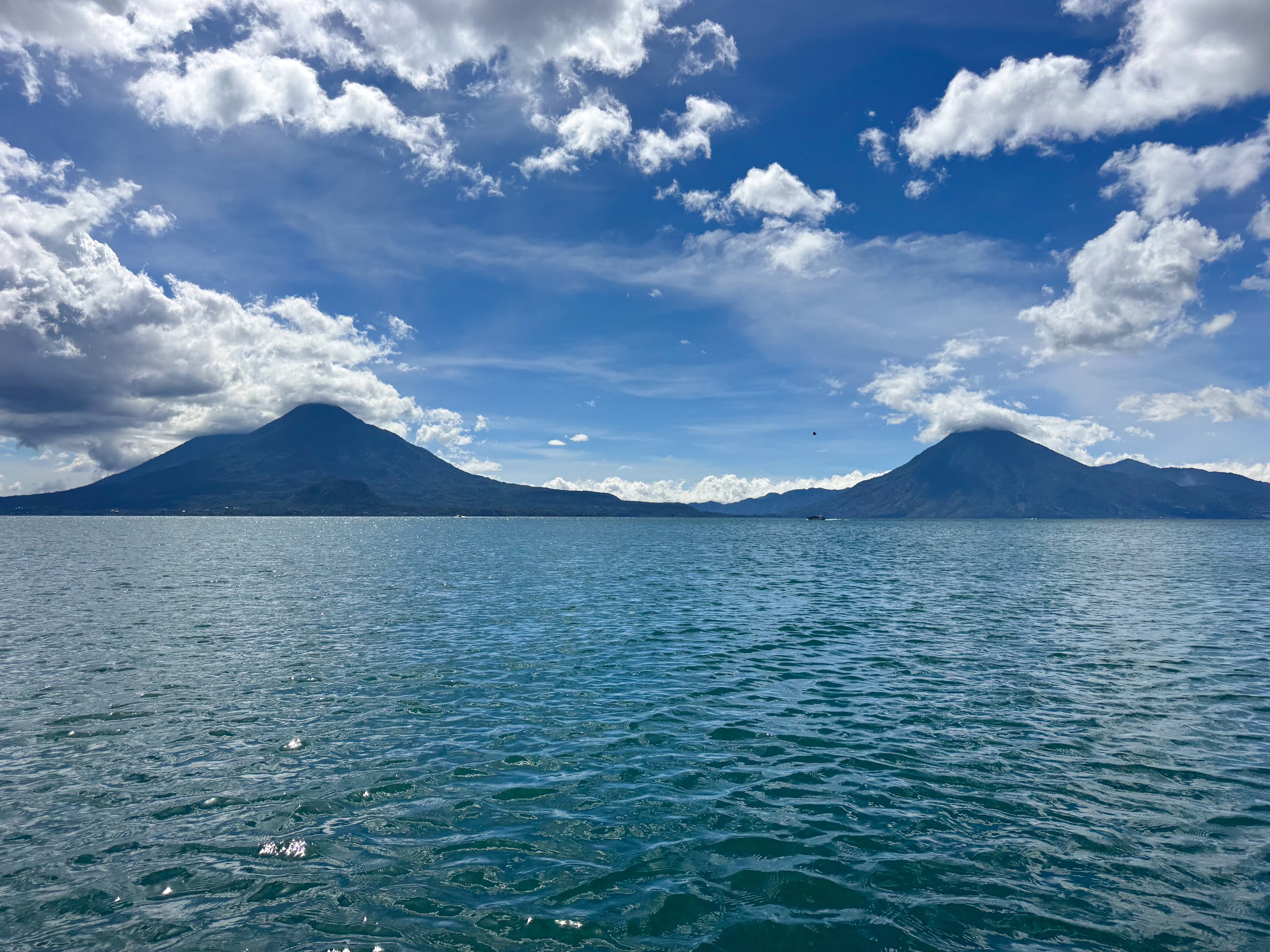
Getting Around Lago Atitlán
Public Ferries (Lanchas). Public ferries are an enjoyable way to sightsee and happen to be the most affordable method to visit towns along Lake Atitlán. Ferries operate from docks in town, starting at 6:30am until 5:30pm. They travel in a circuit around the lake stopping at most towns between Panajachal and San Pedro, including Santa Cruz, Jaibalito, Tsununa, San Marcos, San Pablo and San Juan.
Ferry Prices. Tickets cost 15-25Q per person depending on the distance between towns. There is typically an authorized price chart at the ferry dock with the latest prices. Anything more than what’s listed is a scam.
Beware of Scammers. People at the docks can be scammy telling you there are no public ferries to your destination and the only option is a private boat. This is not true if traveling between the hours of 6:30am to 5:30pm. Ignore them and keep asking around for the public ferry.
Good to Know. Ferries don’t depart until there are at least a dozen passengers on board. We never waited longer than 15 minutes. The water gets increasingly bumpy and wavy in the afternoon due to wind.
Tuk-Tuks. Tuk-tuks are readily available to get around town at all hours. Prices typically cost between 5-10Q per person. Tuk-tuks can travel between towns but drop off on the edge of the next town. The price varies depending on the distance between towns.
On Foot. If you’re okay walking uphill, most of the towns are easily walkable. It’s a great way to see the local culture, murals and views of the lake.
Location Specifics
Fireworks. Fireworks are regularly set off in all pueblos of Lake Atitlán, day and night. The echoes sound like a volcanic eruption!
Safety. We felt safe in all of the cities we visited along Lake Atitlán and kept aware of our surroundings. We followed common recommendations like hiring a guide when hiking and didn’t walk between towns, especially at night.
Toilets. Like most places in Central and South America, used toilet paper is thrown in the bin, not the toilet.
Drinking Water. Tap water is unsafe to drink in Guatemala due to contamination. Stick to bottled or purified water.
Cash vs Card. Most businesses only accept cash. Carry enough for the day. There is at least one ATM or currency exchange in all of the major towns around the lake.
Stray Dogs. Stray dogs are common around the pueblos of Lake Atitlán. They’re rarely aggressive but best left alone.
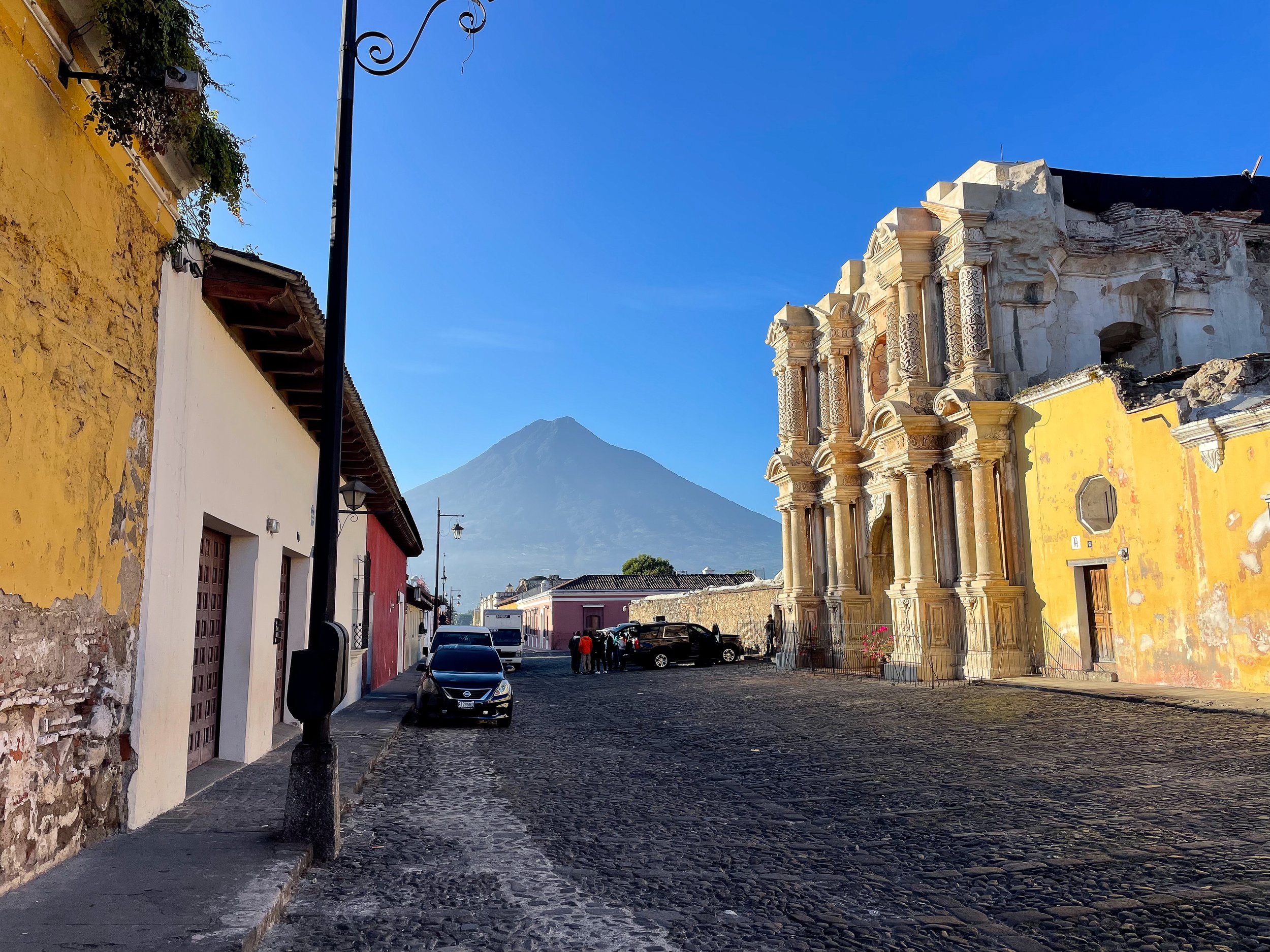
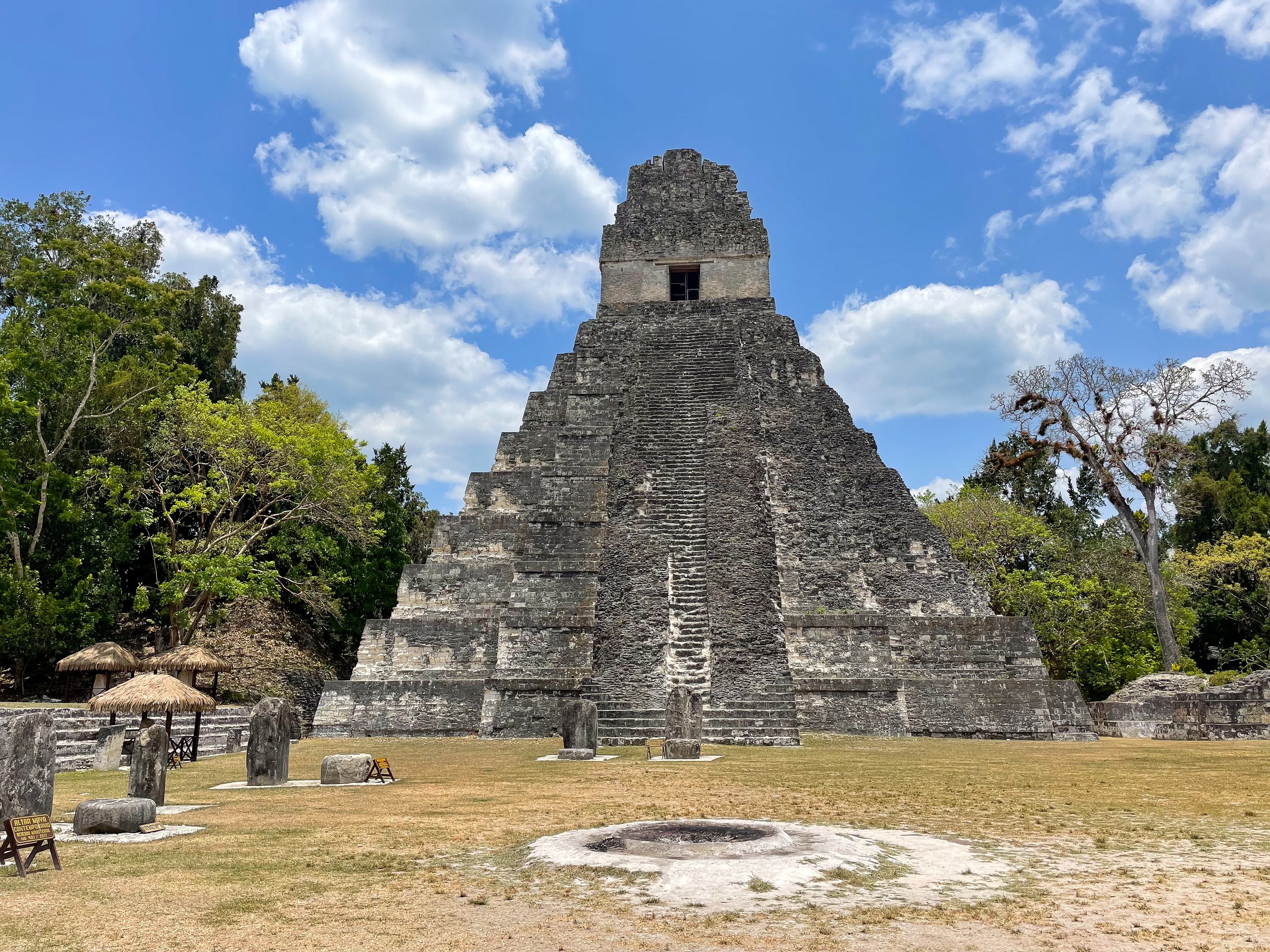
Elsewhere in Guatemala
From colonial cities to ancient jungle temples, discover more of Guatemala beyond the shores of Lake Atitlán.
Antigua Guatemala Travel Guide: Acatenango, Colonial Charm & Local Cuisine. Explore Antigua Guatemala's cobblestone streets, colonial architecture and local cuisine beneath towering volcanoes, including the iconic hike to Acatenango and Fuego.
Maya Ruins Travel Guide: Jungles, Temples & Ancient Cities. Journey through ancient Maya cities, temples and archaeological wonders across Belize and Guatemala while exploring dramatic jungle landscapes.
For Next Time…
Having been to Guatemala three times, we’re certain to return! There are a few things high on our list next time we visit this magical country.
Flores. A colorful colonial island town on one of Guatemala’s mountainous lakes. We were teased seeing the city from above on a layover from Belize to Guatemala City.
Tikal Sunrise Hike. An early morning hike in Tikal to watch the sunrise from the top of the famed pyramids. We saw photos of the colorful sunrise, layers of morning mist and dramatic ruins peek from jungleous canopy below.
Chichicastenango. Latin America’s largest outdoor market known for its handicrafts, textiles and jewelry. If we make it back to Lake Atitlán, we’ll take a day trip here from Panajachel.
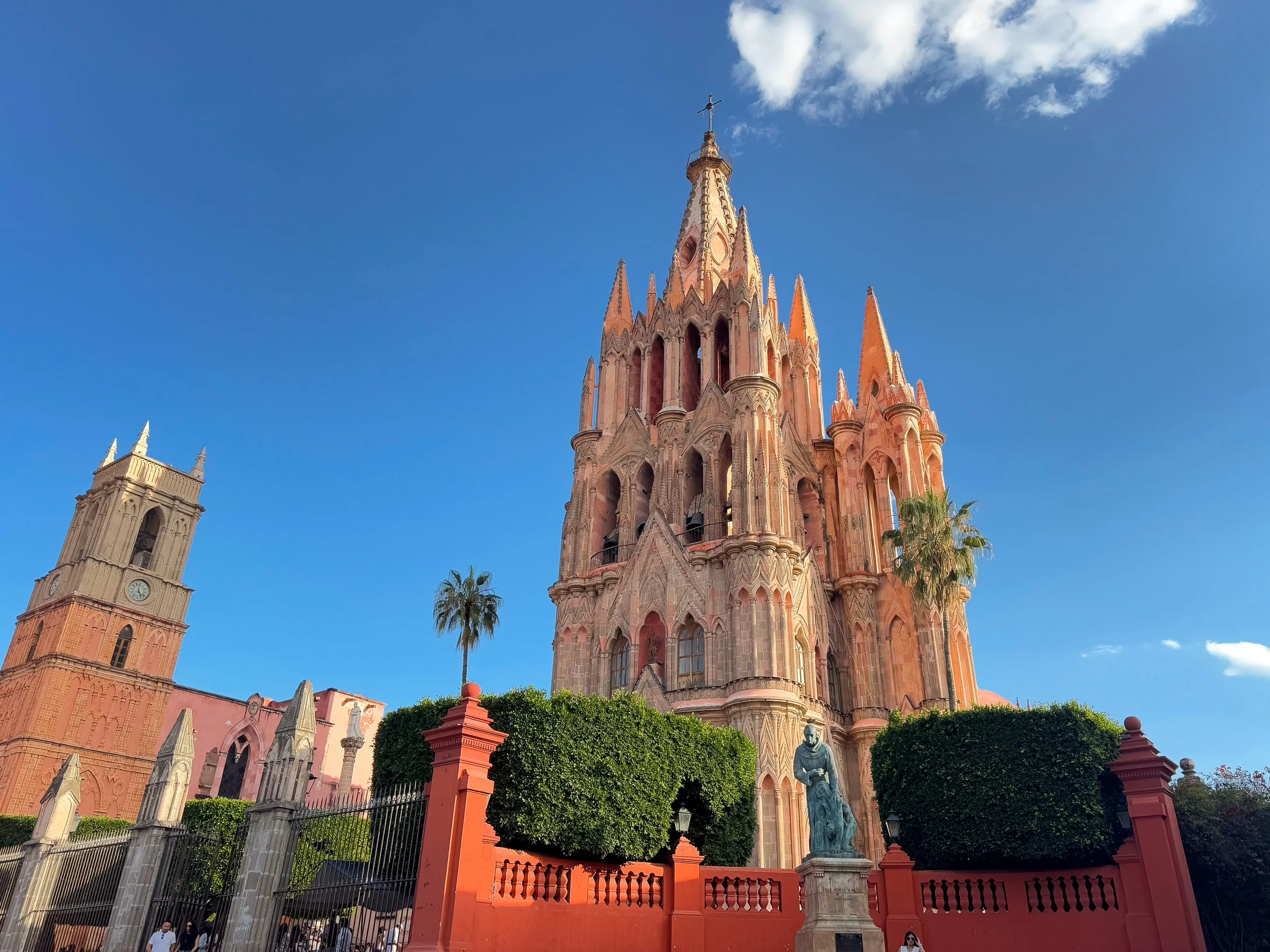
San Miguel de Allende Travel Guide: Food, Art & Colonial Charm
Stroll through San Miguel de Allende's cobblestone streets and historic plazas where cuisine, art and music bring one of Mexico's most charming colonial cities to life.
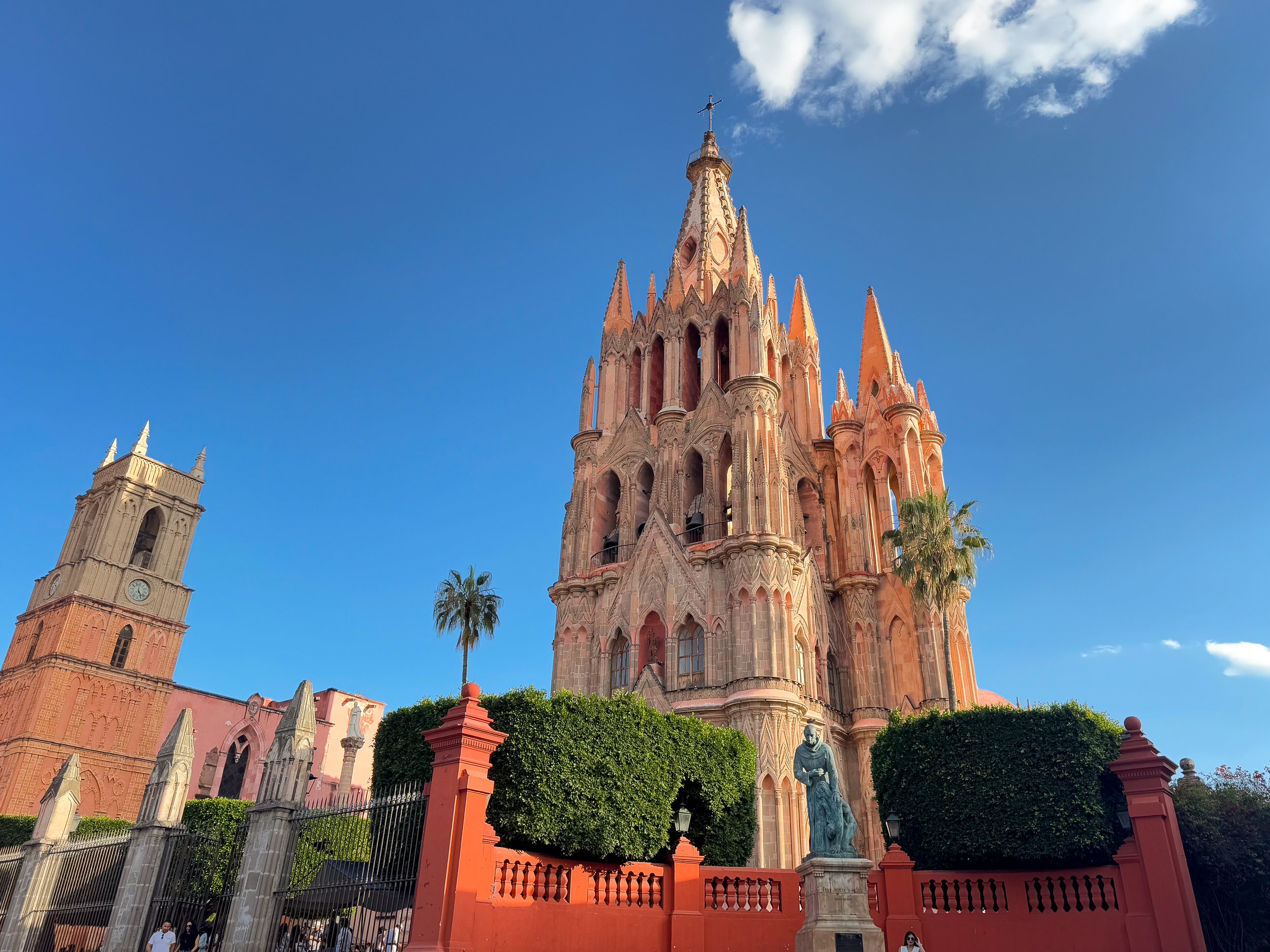
San Miguel de Allende, Mexico
San Miguel de Allende is a charming and historic pueblo famed for its unique architecture, vaquero lifestyle, desert landscapes and vineyards.
A Historic Pueblo
The town is best explored on foot. The stone paved streets exude warmth as painted buildings alternate in tones of tan, amber, orange, red and ochre. At night, street lanterns illuminate the city in an incandescent glow. Ornate Neo-gothic and Baroque style cathedrals with grand spires tower above rooftop terraces offering sunset views of the pueblo. Locals, tourists and expats are styled in silver jewelry, leather boots, cowboy hats and woolen ponchos sold by vendors at artisan markets and boutiques.
Despite its dry surroundings, it’s a verdant place with potted cacti, blossoming plants, sculpted trees and tall shrubs competing with the height of the cathedral spires. Church bells ring out regularly as mariachi bands perform in plazas adding music to the already lively ambience. Unsurprisingly, San Miguel de Allende is listed as one of Mexico’s Pueblos Magicos and recognized as a UNESCO Heritage Site.
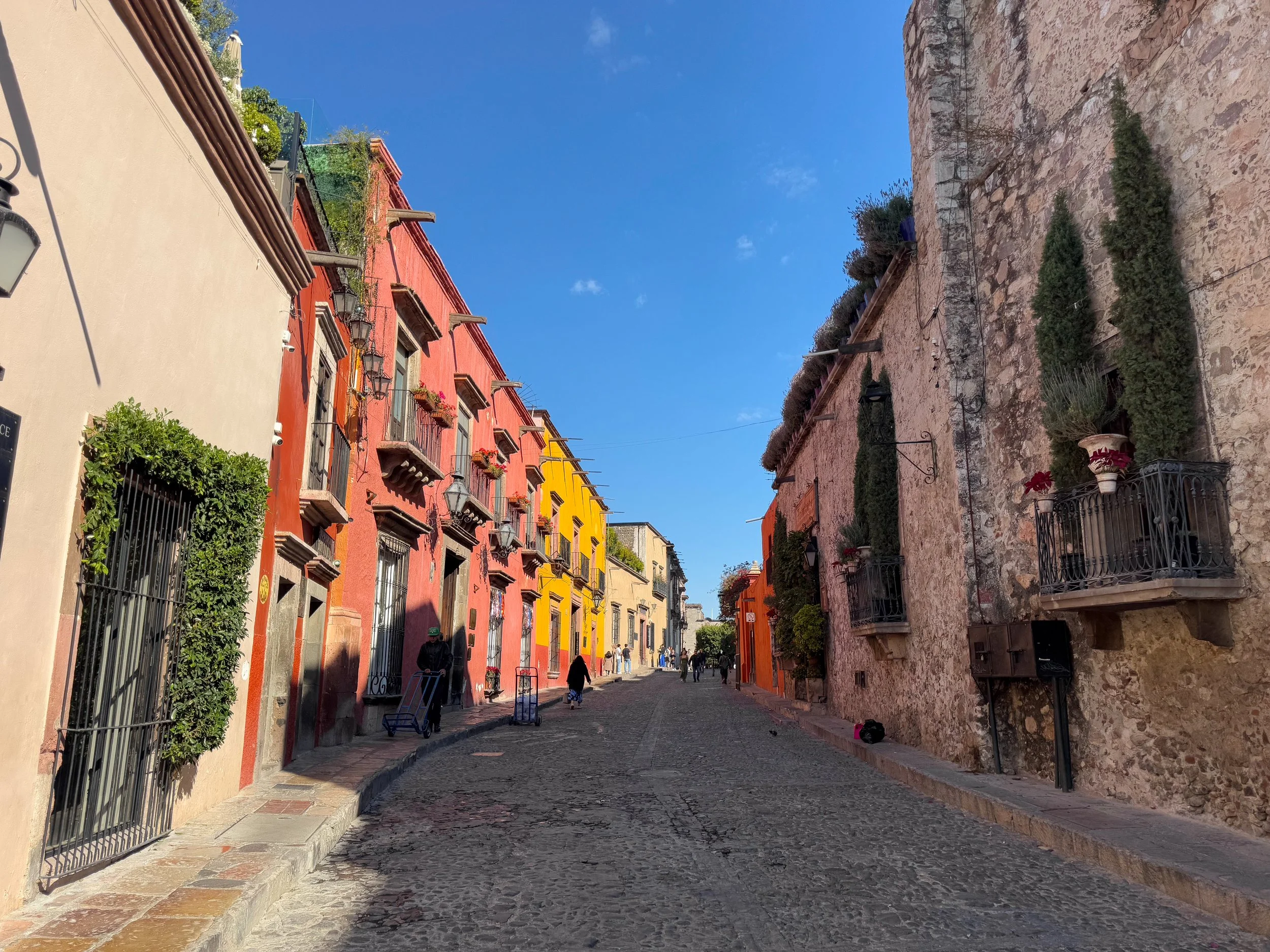
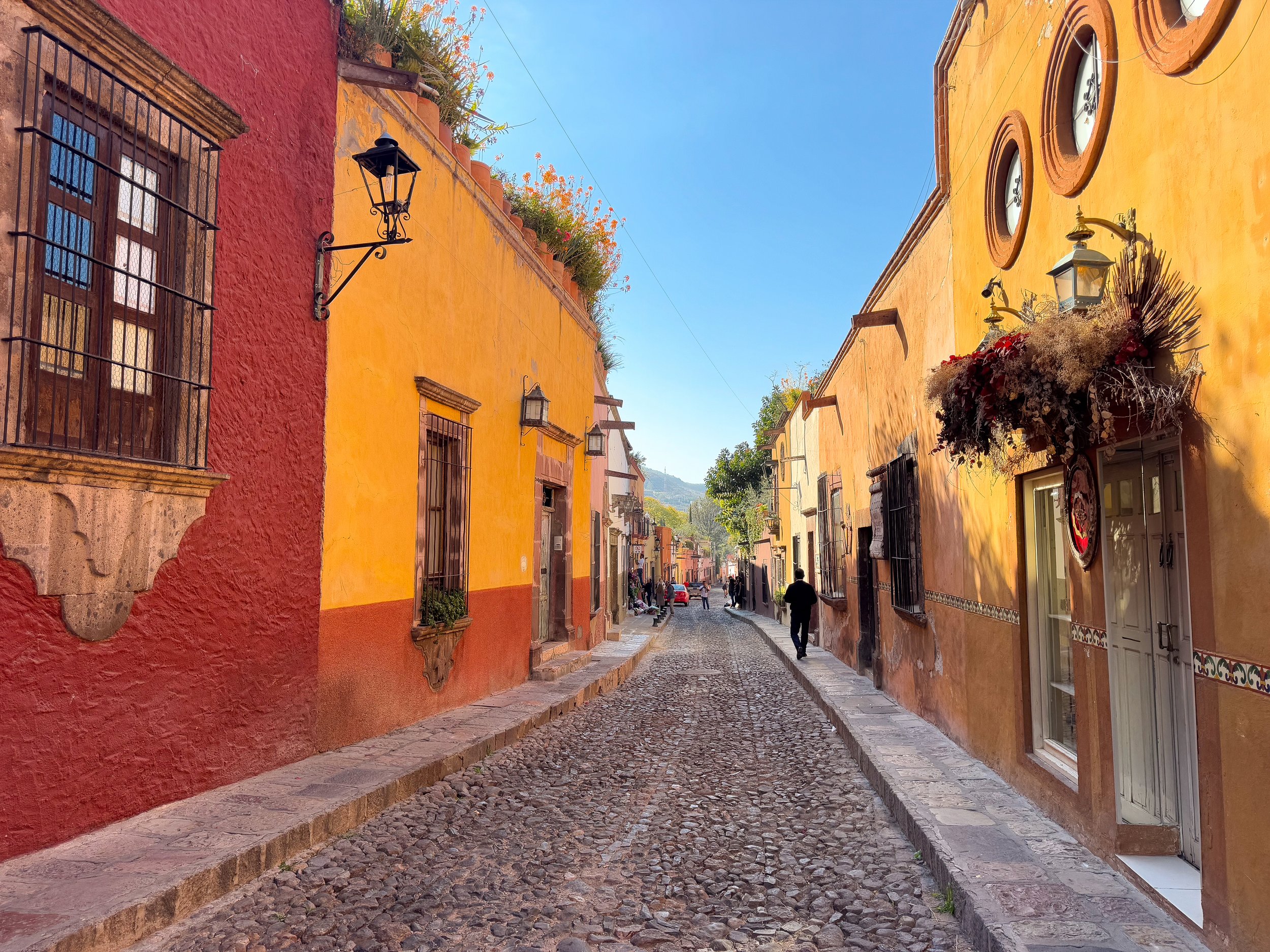
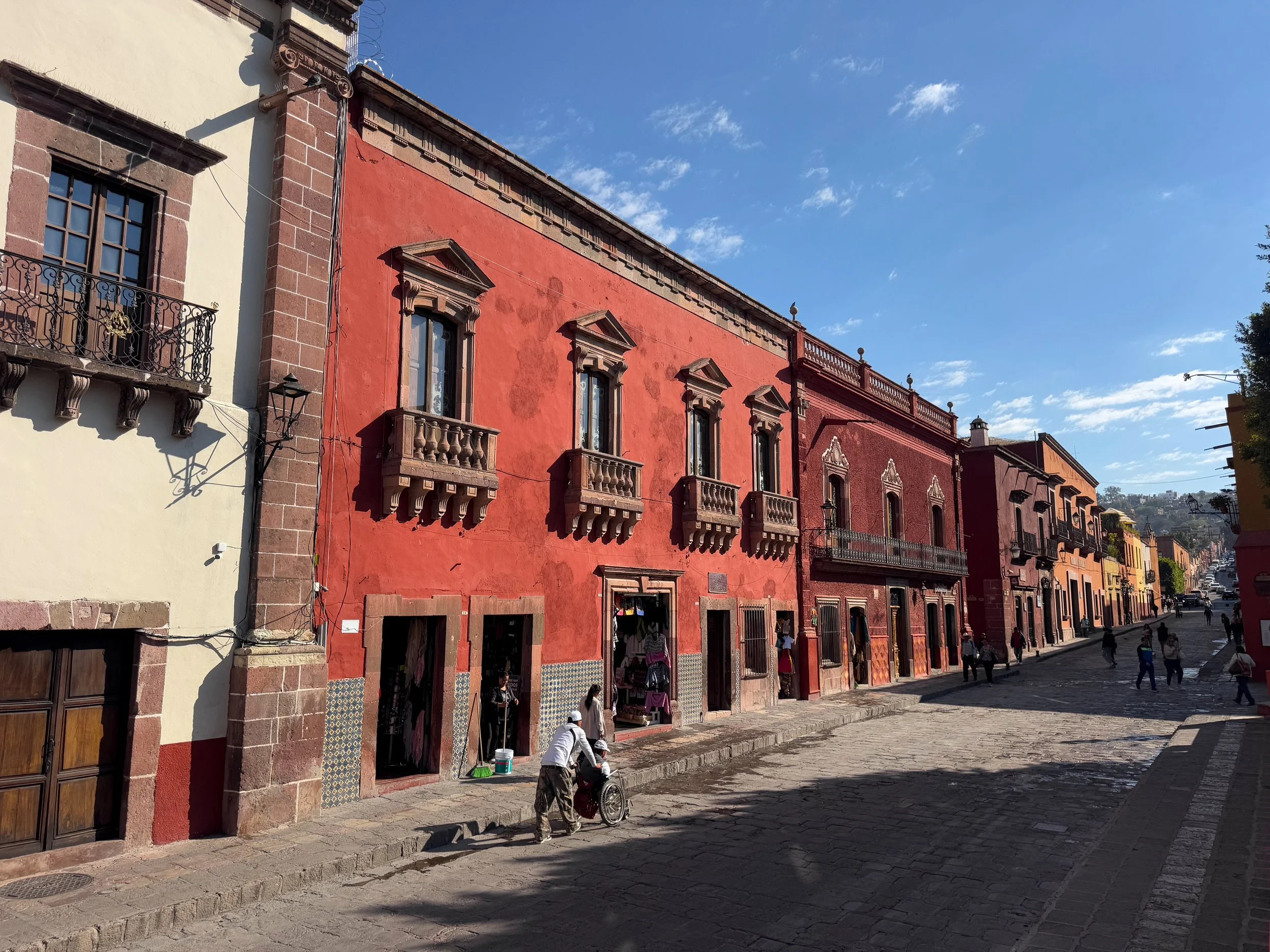
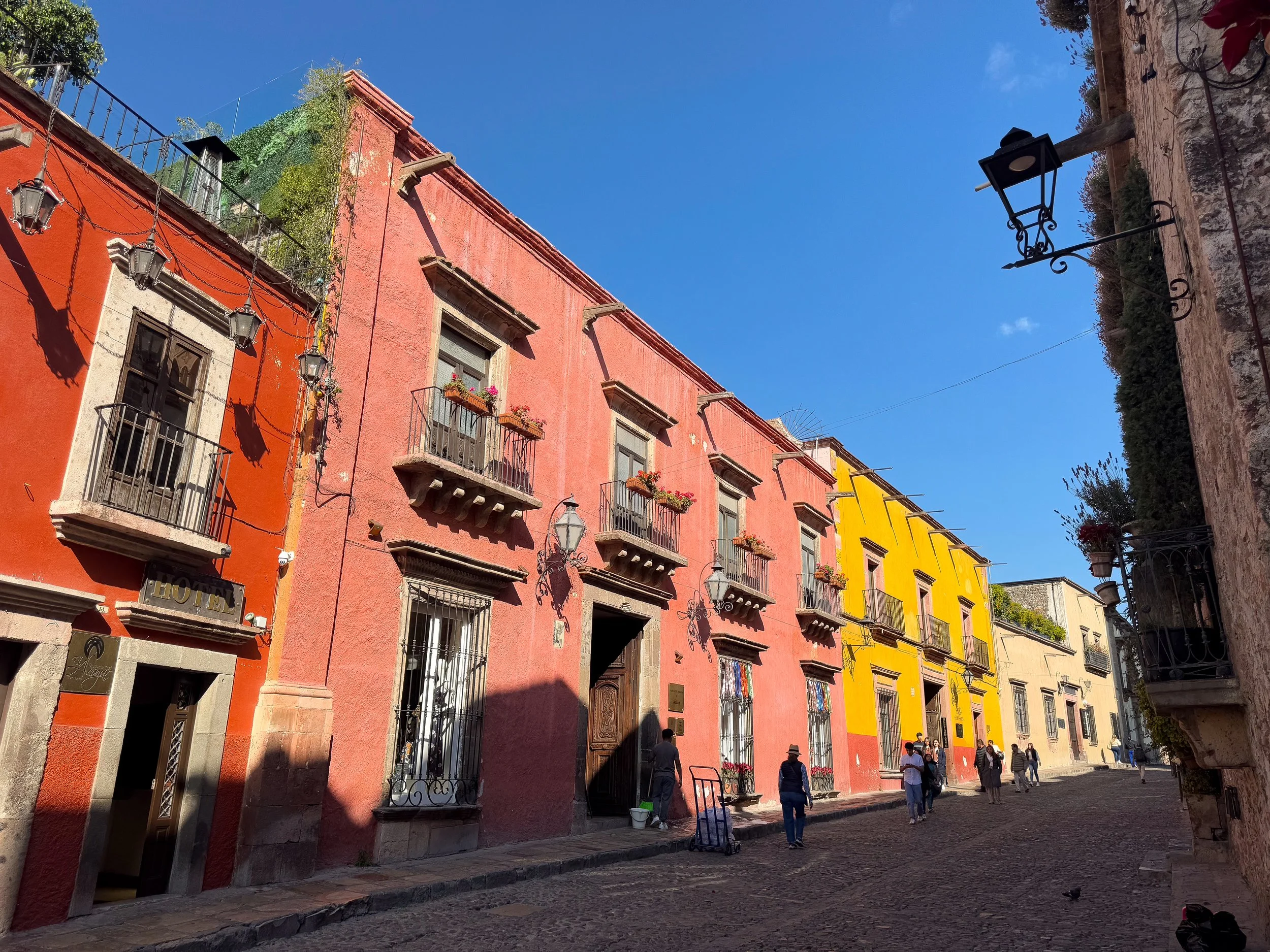
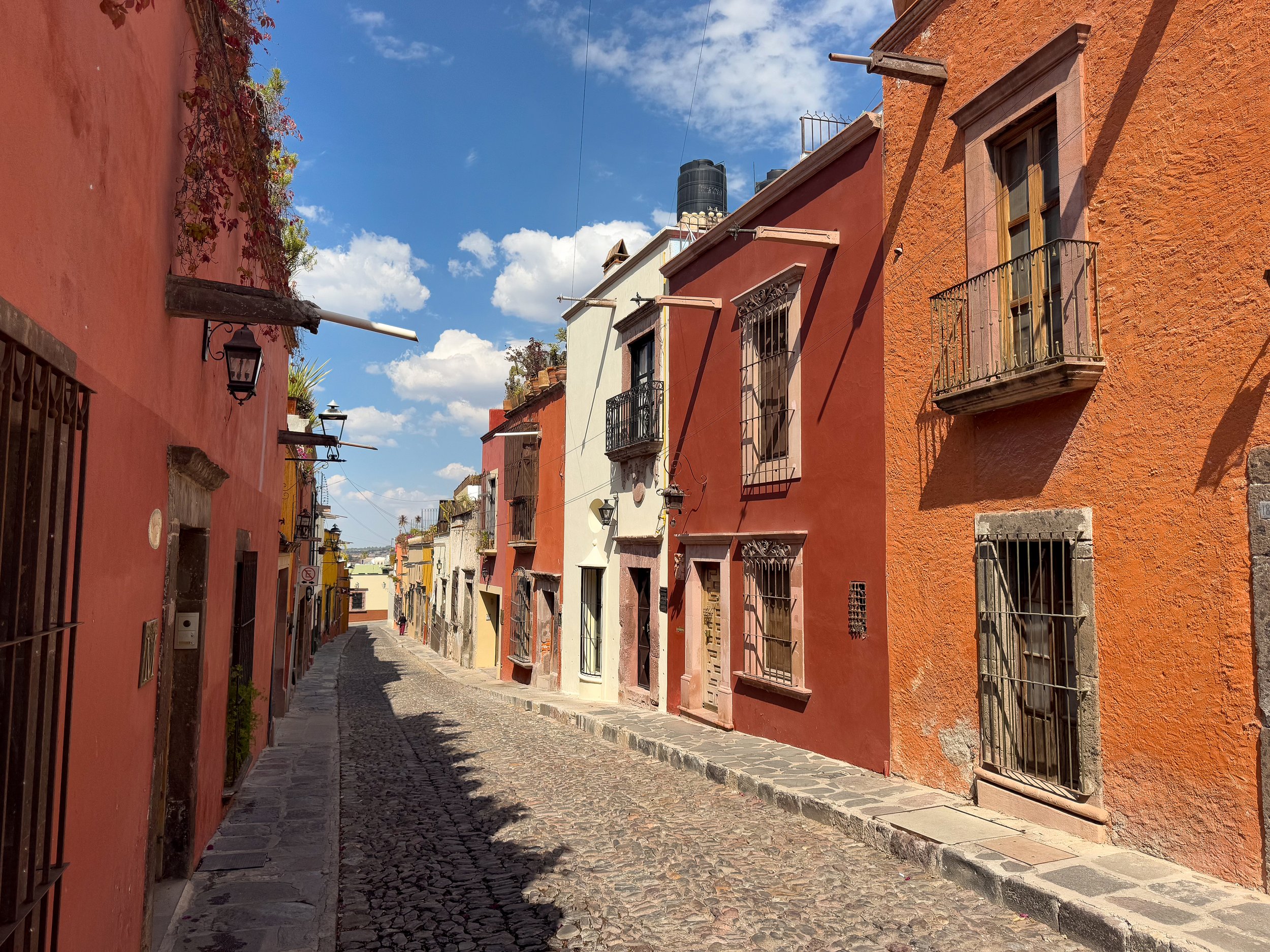
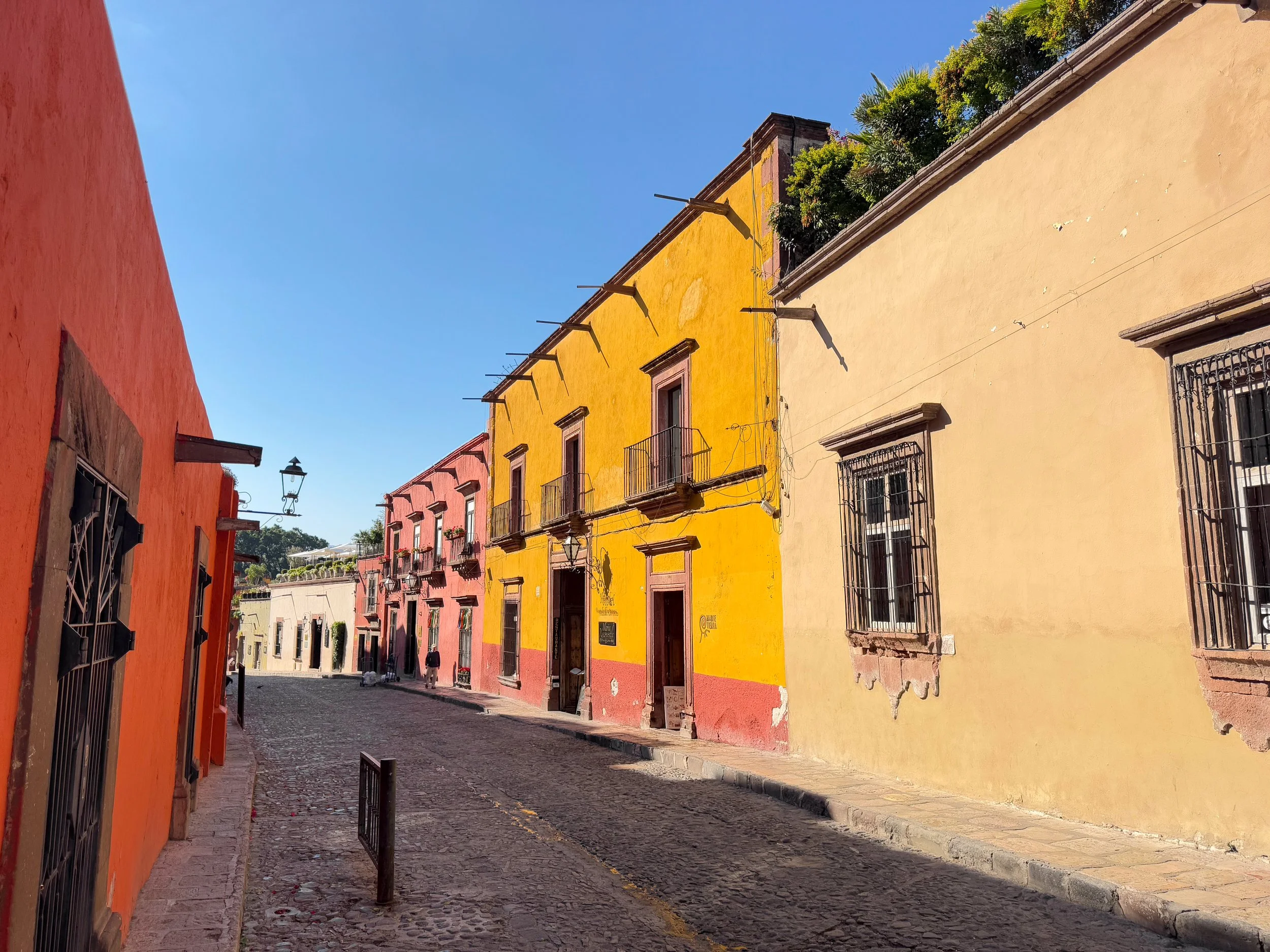
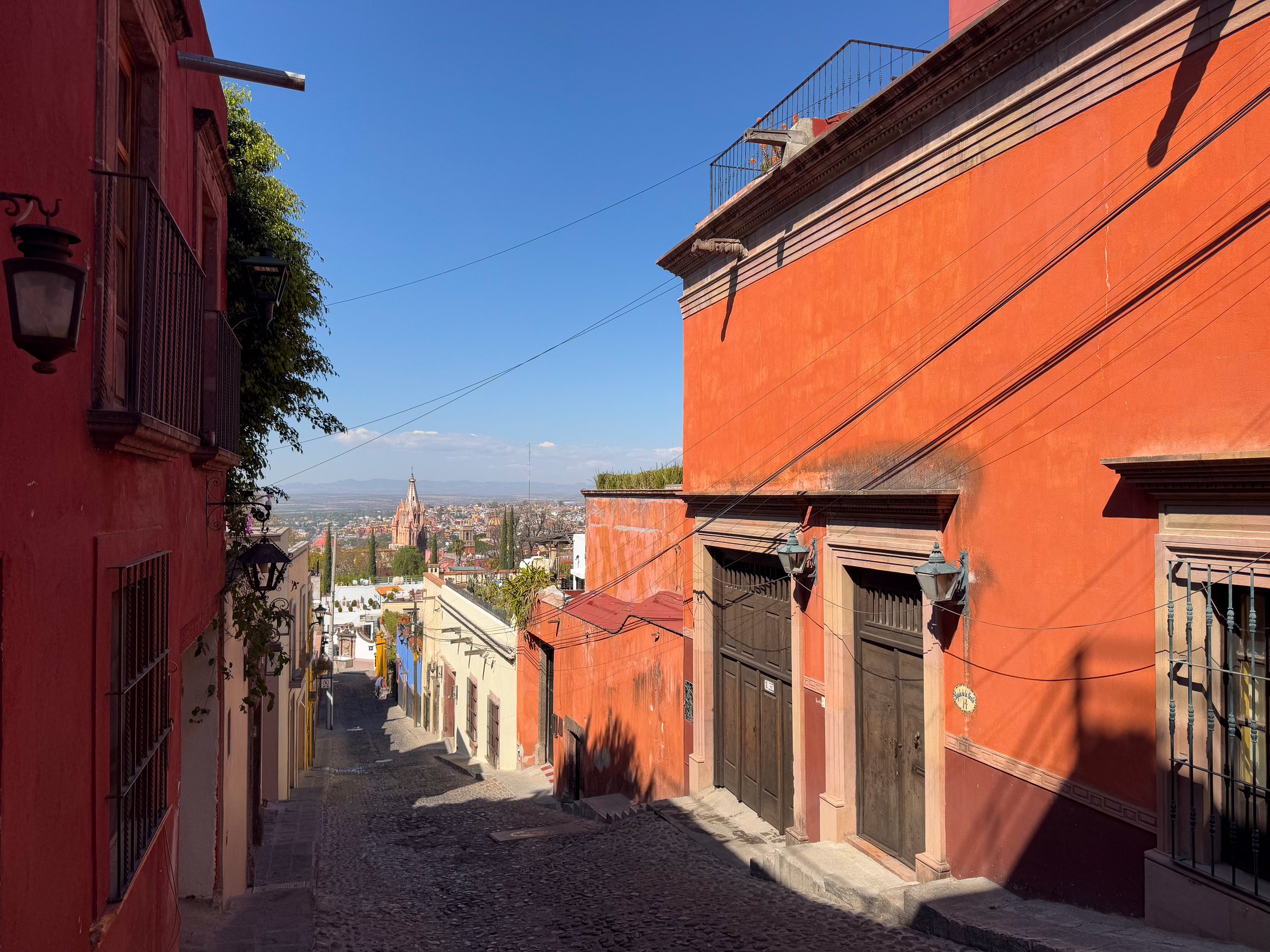
Neighborhoods & Streets
Zona Central. The neighborhood at the city center with a high concentration of warmly painted historic buildings, monumental cathedrals, treelined plazas, artisan markets, boutique shops, hotels, restaurants and rooftop bars. It’s the ideal neighborhood to stay in and explore on foot while visiting San Miguel.
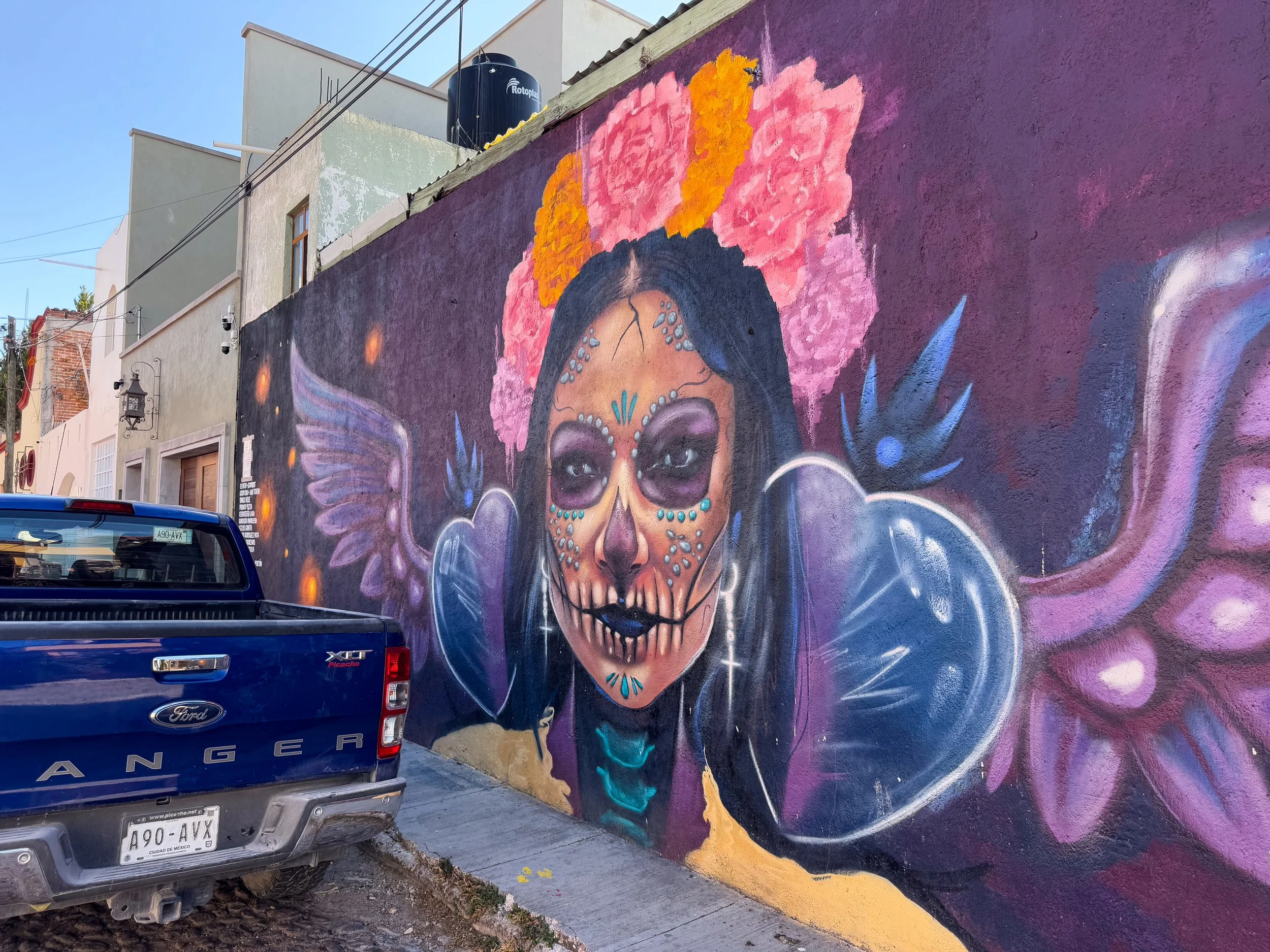
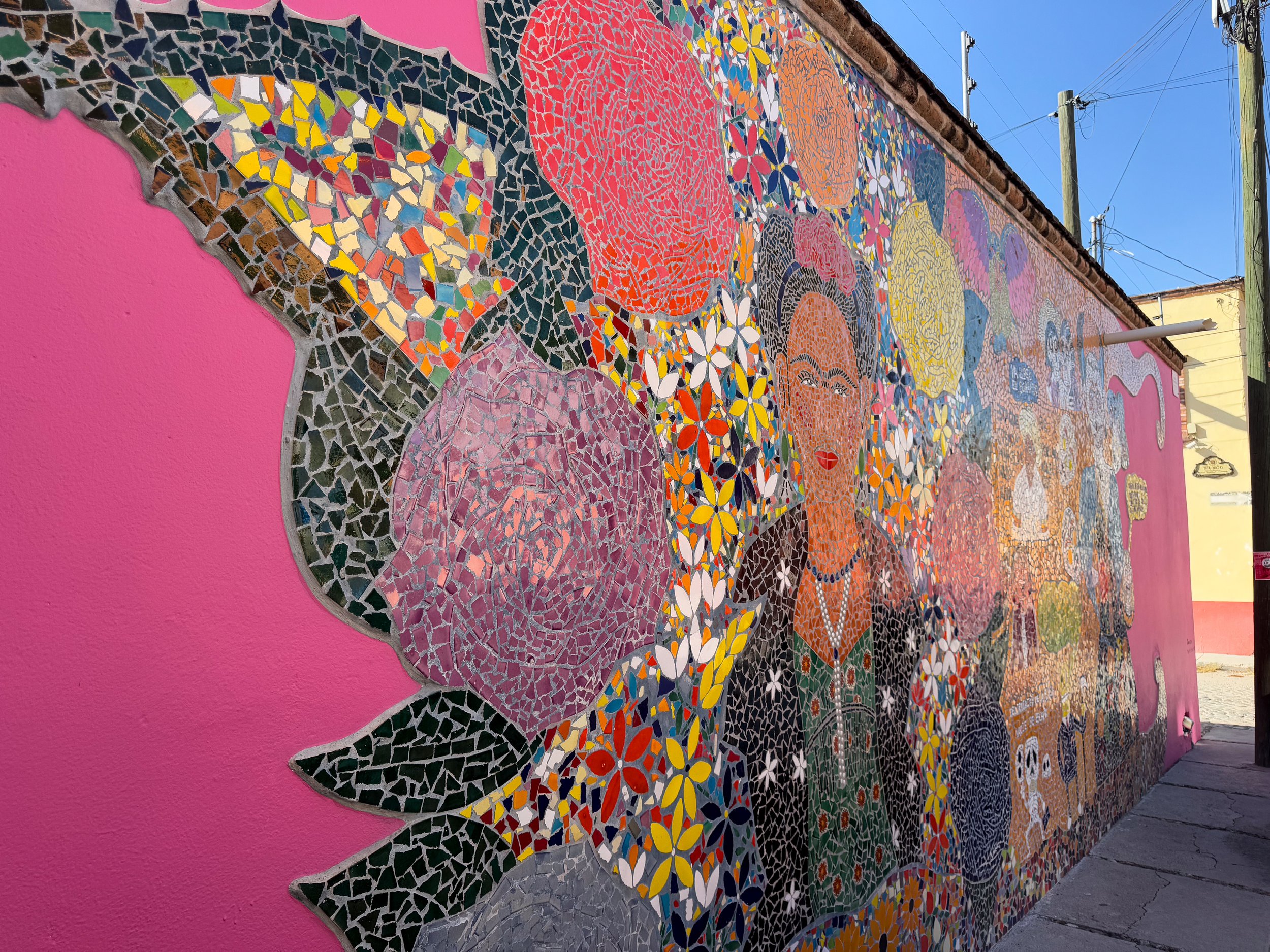
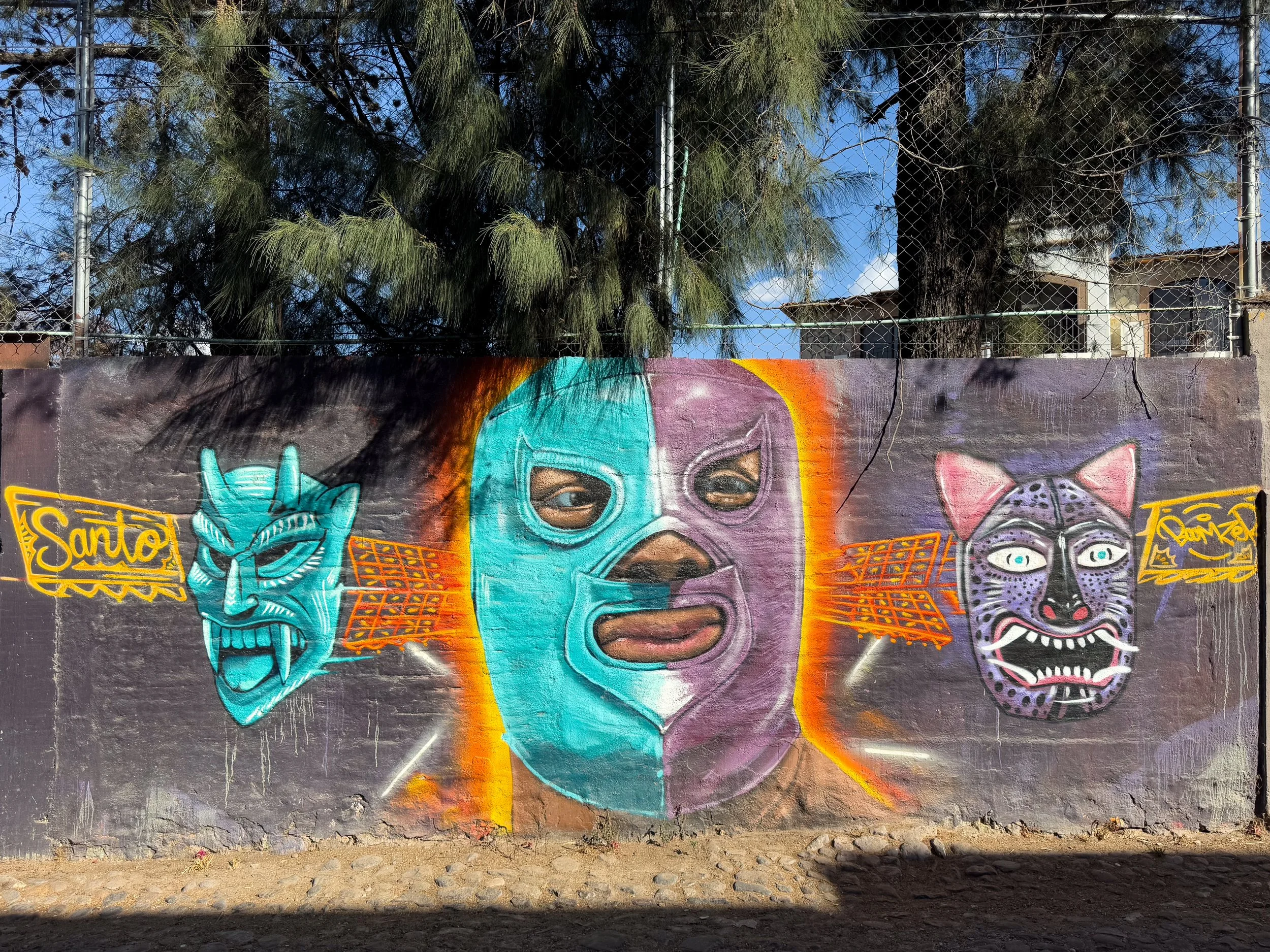
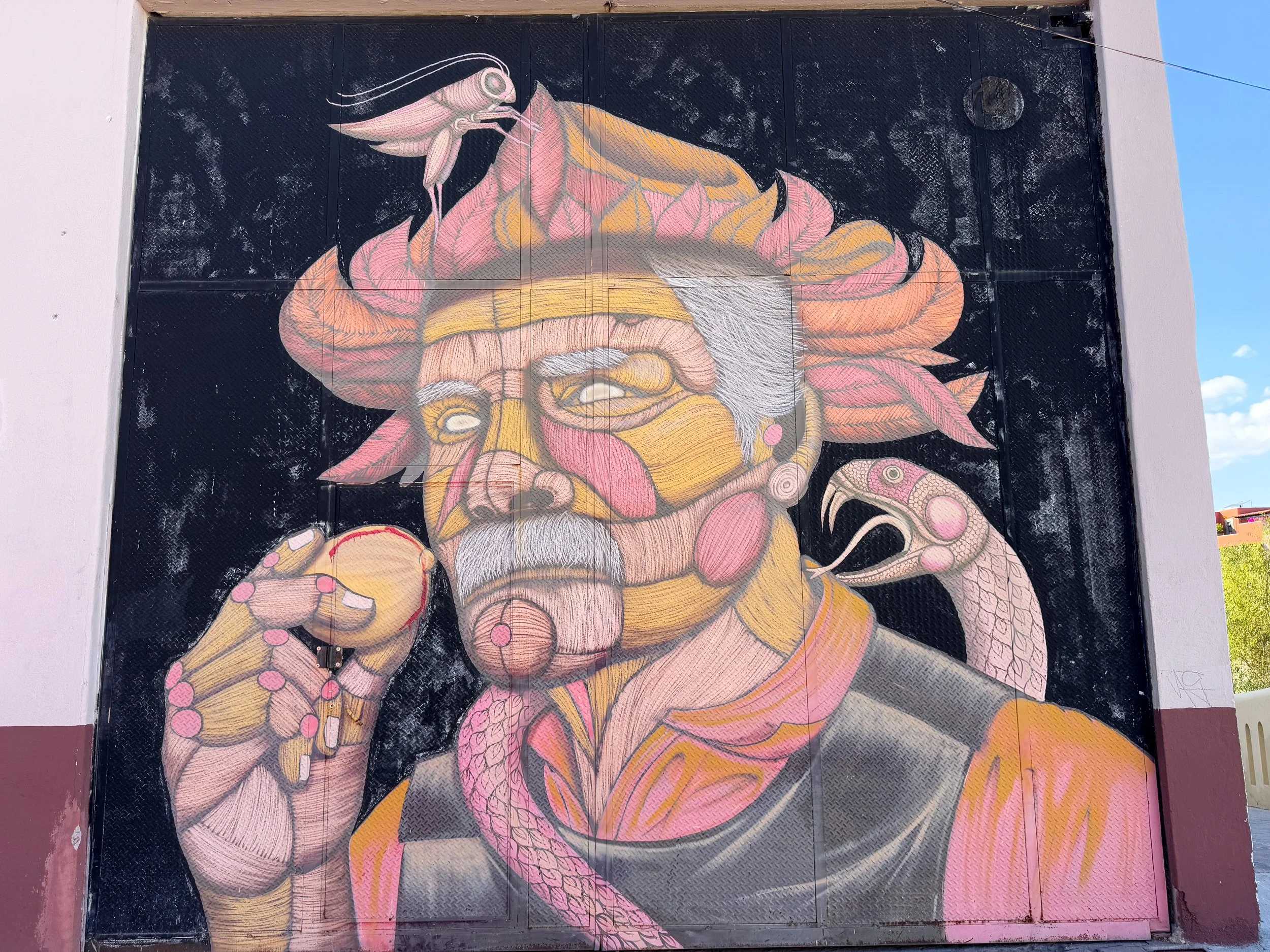
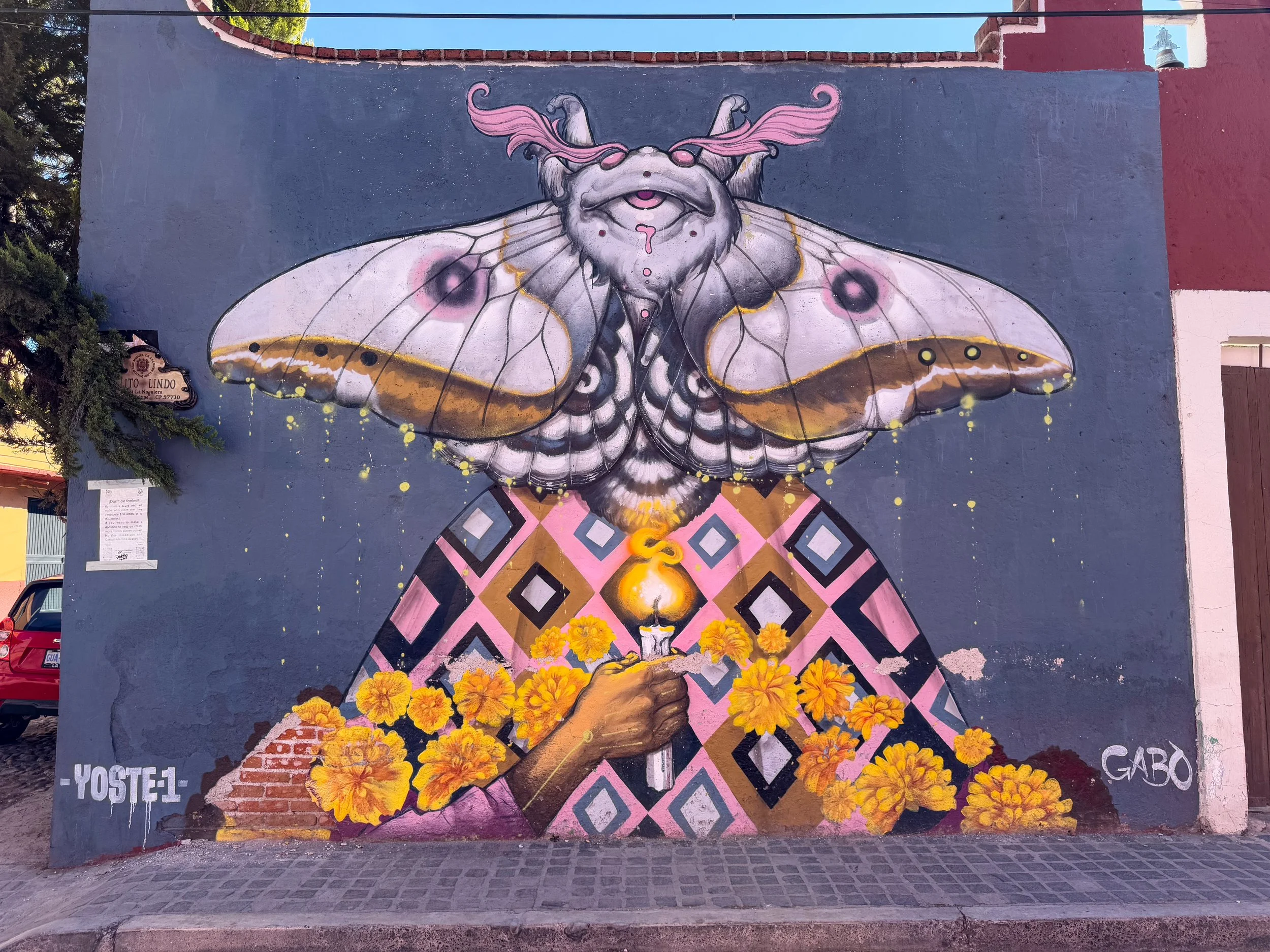
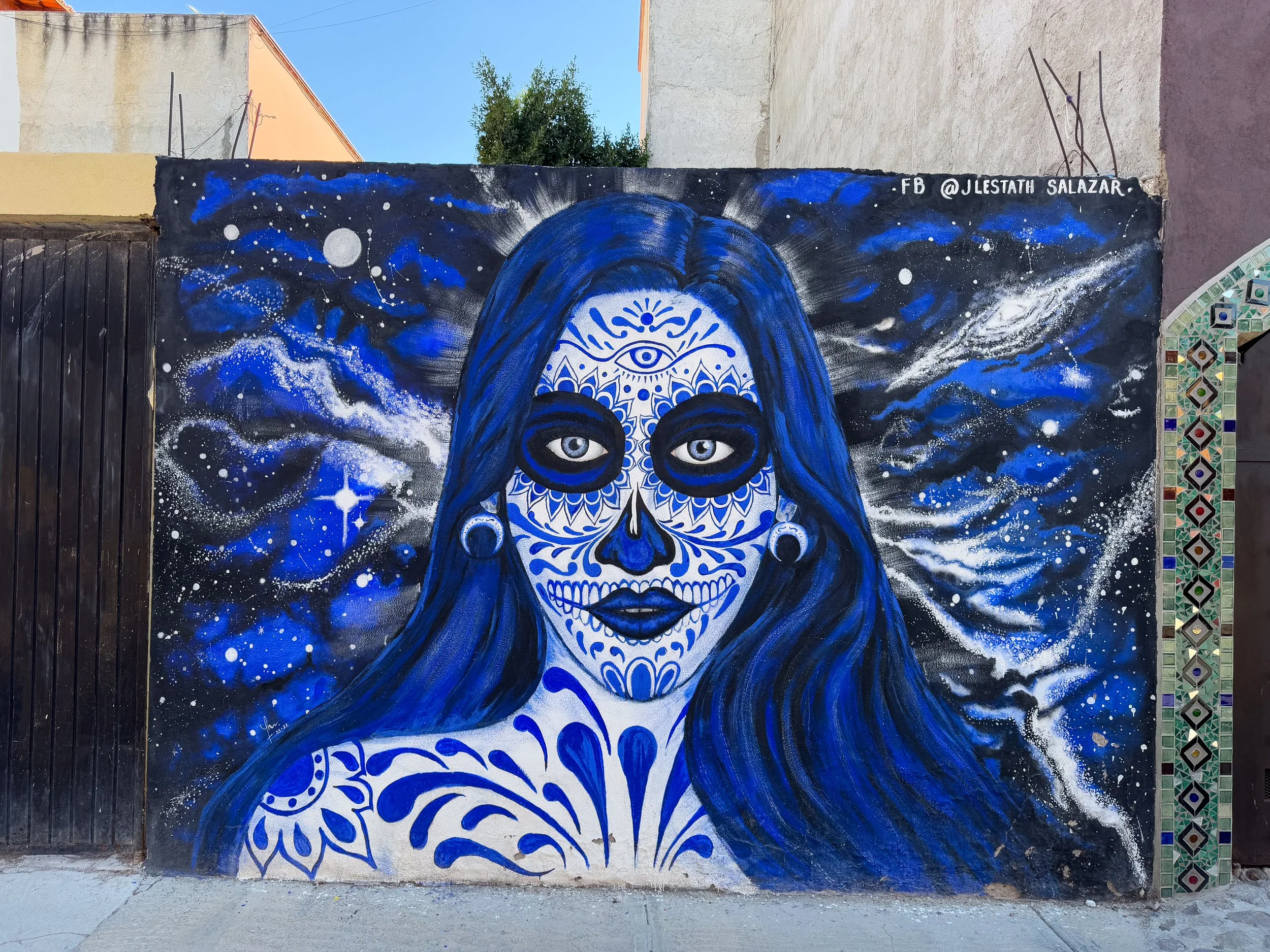
Barrio de Guadalupe. A residential neighborhood north of the city center with walls decorated in mosaics and murals of Mexican culture. We spent time wandering the open air gallery of streets admiring the works. Some of our favorites were mosaics of Frida Kahlo, Dia de los Muertos Catrinas, and a masked Lucha Libre wrestler.
Calle Aldama. A photogenic street with historic and warmly painted buildings centered on the gothic spires and domes of Parroquia de San Miguel Arcángel.
Callejon de Chorro. A winding and hilly street surrounded by landscaped gardens, historic public laundries, stepped walkways and red painted colonial architecture in the oldest area of the city. It reminded us of Lombard Street in San Francisco.
See the Sights
La Parroquia de San Miguel Arcángel. A towering neo-gothic cathedral located in the city center with pointed spires and vaulted arches constructed from pink stone. It's the Disney castle of cathedrals and beautiful to view both day and night.
Torre del Reloj. A pink, orange and tan stone neo-gothic clock tower attached to the cathedral.
El Jardín Allende. A popular tree covered plaza in front of the cathedral with views of its pink spires and the adjacent clock tower. It has a lively and cultural atmosphere. Well dressed Mariachi bands walk through the plaza performing for visitors both day and night while Mojigangas, giant painted paper-mache puppets, walk around posing for photos. The sides of the plaza are flanked by buildings with ground floor restaurants and shops.
El Mirador. A hilltop lookout with views of the city center, cathedral spires, white domed roofs and desert landscape. We visited in the morning when the city was well lit however it’s also a popular sunset viewpoint.
Plaza de la Soledad. A plaza in front of the Templo de Nuestra Señora de La Salud with sculpted trees and bushes. Vendors walk around selling sombreros and ice cream.
Templo del Oratorio de San Felipe Neri. A pink, orange and red stone cathedral with an ornate baroque style facade and multilevel bell tower.
Templo de San Francisco. A historic cathedral with an intricately carved stone facade and bell tower. Visitors gather in a beautiful park with sculpted trees and bushes in front.
Templo de Nuestra Señora de La Salud. A historic church with recessed stone facade capped with an inverted shell design.
Parque Benito Juarez. A quiet and peaceful city park with well landscaped gardens, lush tree covered walkways, small fountains and sculptures.
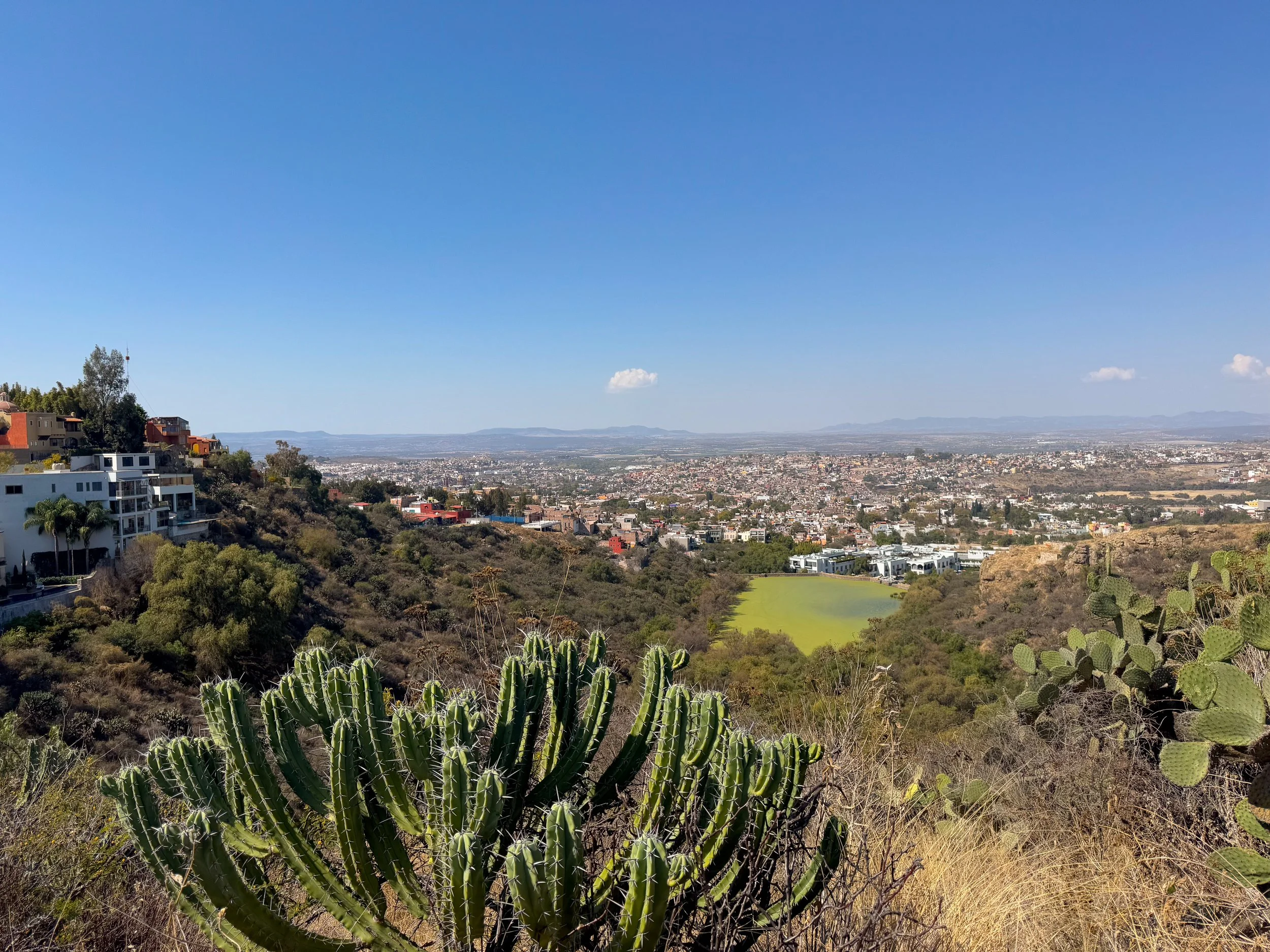
Charco del Ingenio. A dry and arid botanical garden with trails leading through the landscape past thorny bushes, cacti and maguey plants. The park is divided by a steep volcanic canyon and dam holding back a lake with different sections and sights speckled throughout.
The Canyon Trail. A narrow trail following the canyon’s edge with views of its volcanic stone walls. Shout into it to hear your echo reverberate back.
The Birdwatching Trail. A trail following the reservoir home to migratory and aquatic birds.
Sculpture Garden Trail. A trail leading from the welcome center towards the western viewpoints with several sculptures along the way.
Regional Plant Trail. A trail leading between the conservatory and welcome center with native plants and cacti.
The Western Viewpoints. A series of overlooks along the western park trails with panoramic views of San Miguel de Allende, the canyon and Guanajuato Mountains.
Pollinator’s Garden. A garden with hummingbirds and honey bees buzzing around, pollinating the budding and flowering flora.
Conservatory of Mexican Plants. A glass building home to all types of prickly and thorny native plants and cacti.
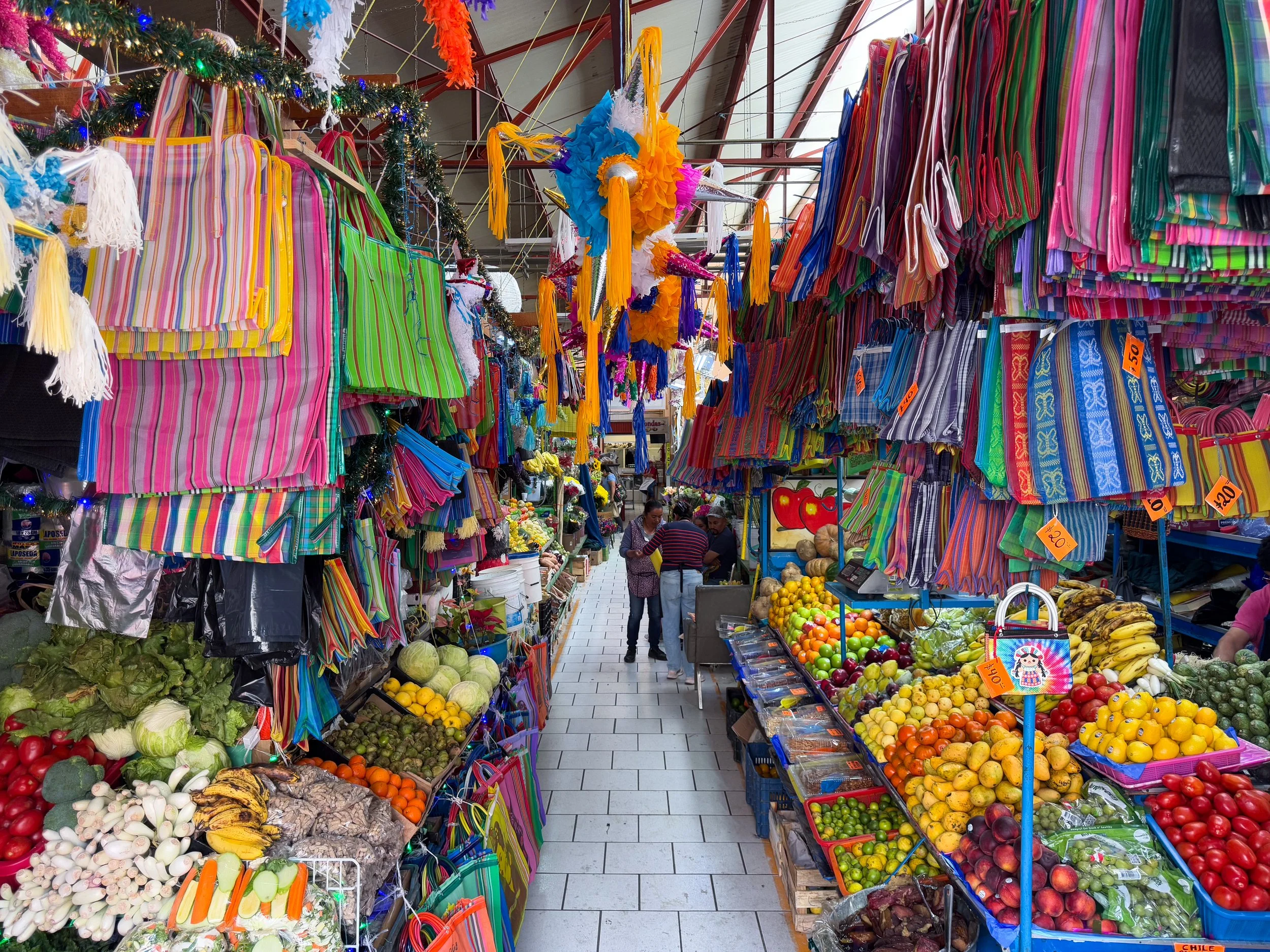
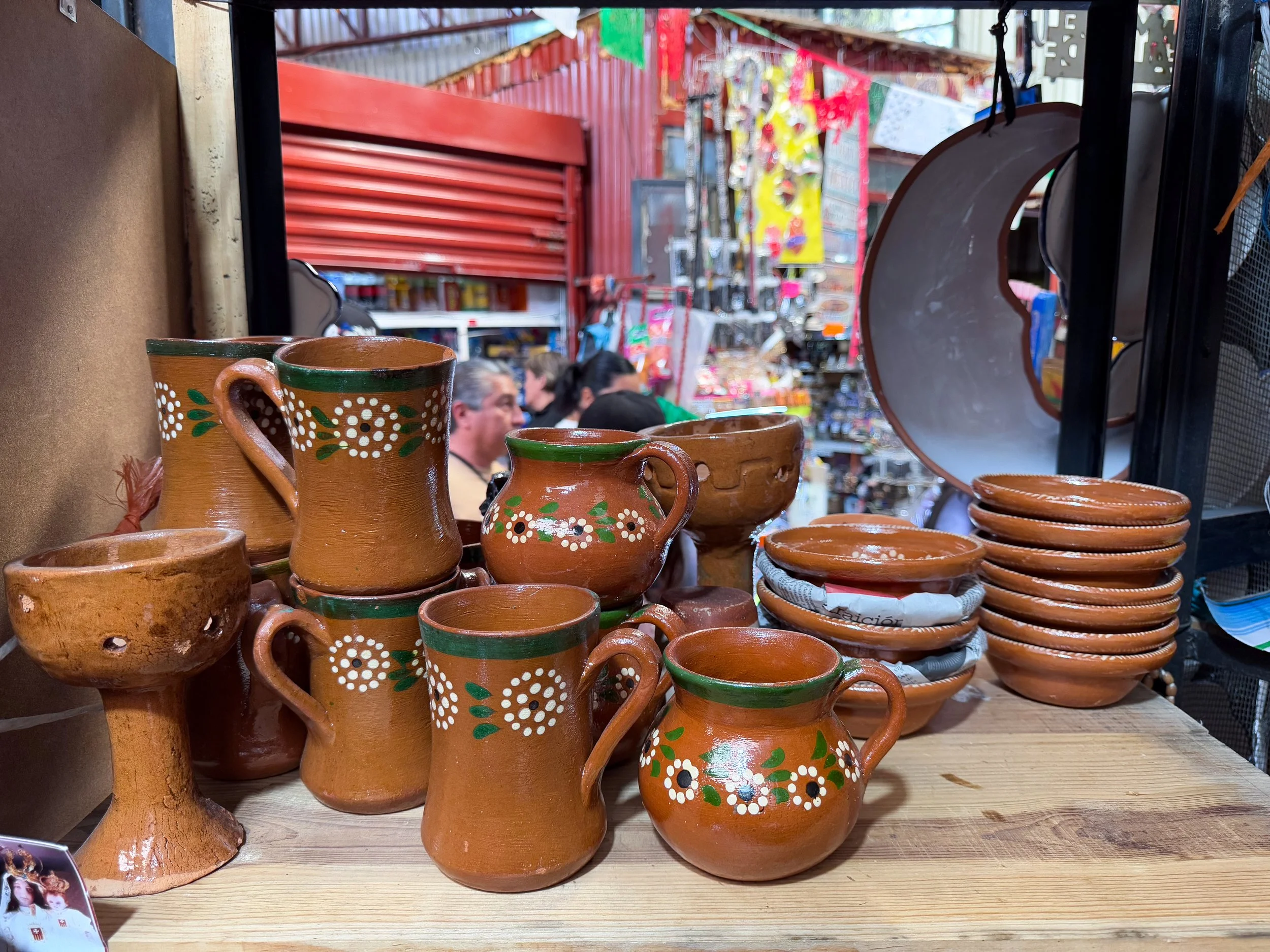
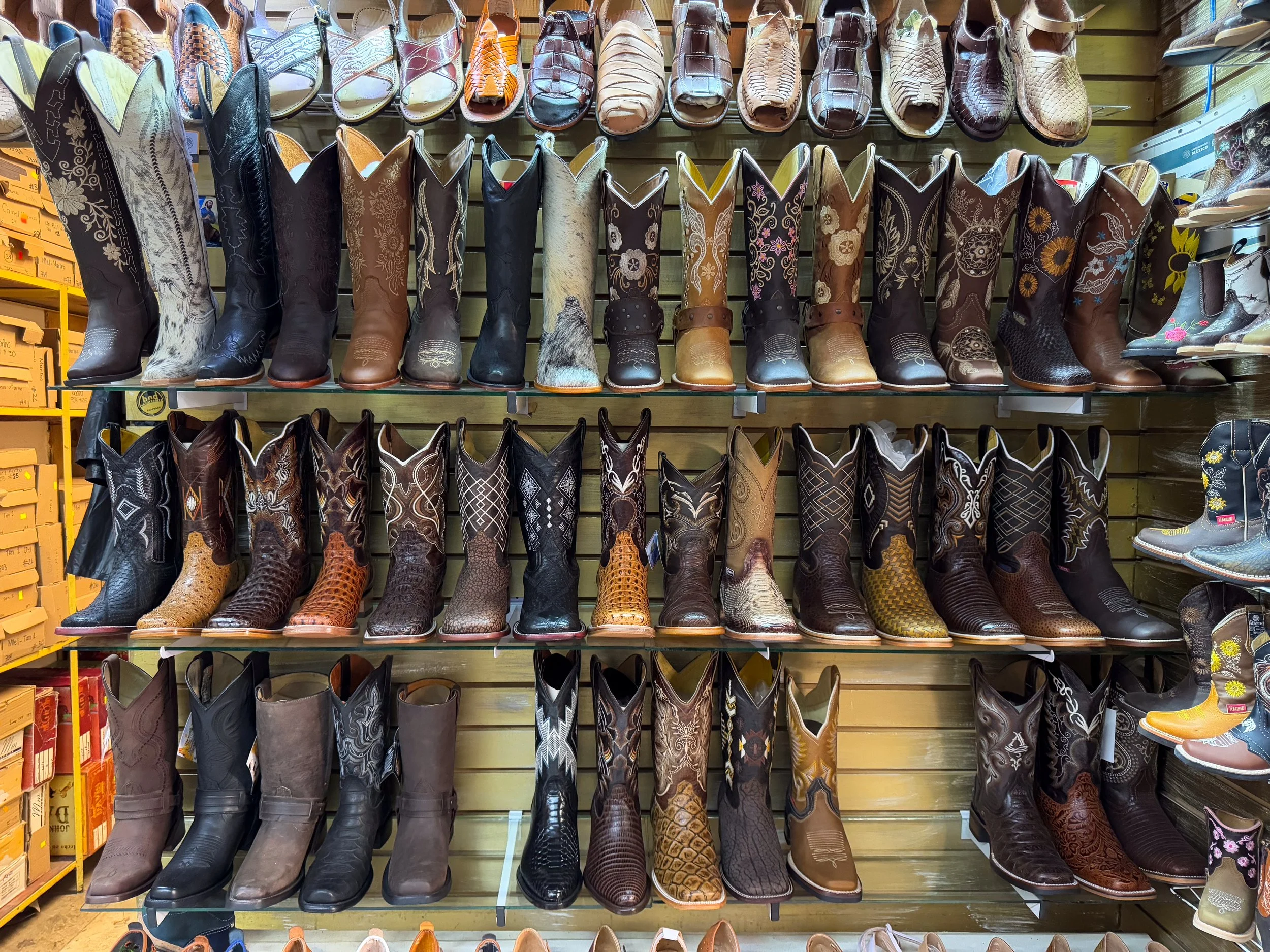
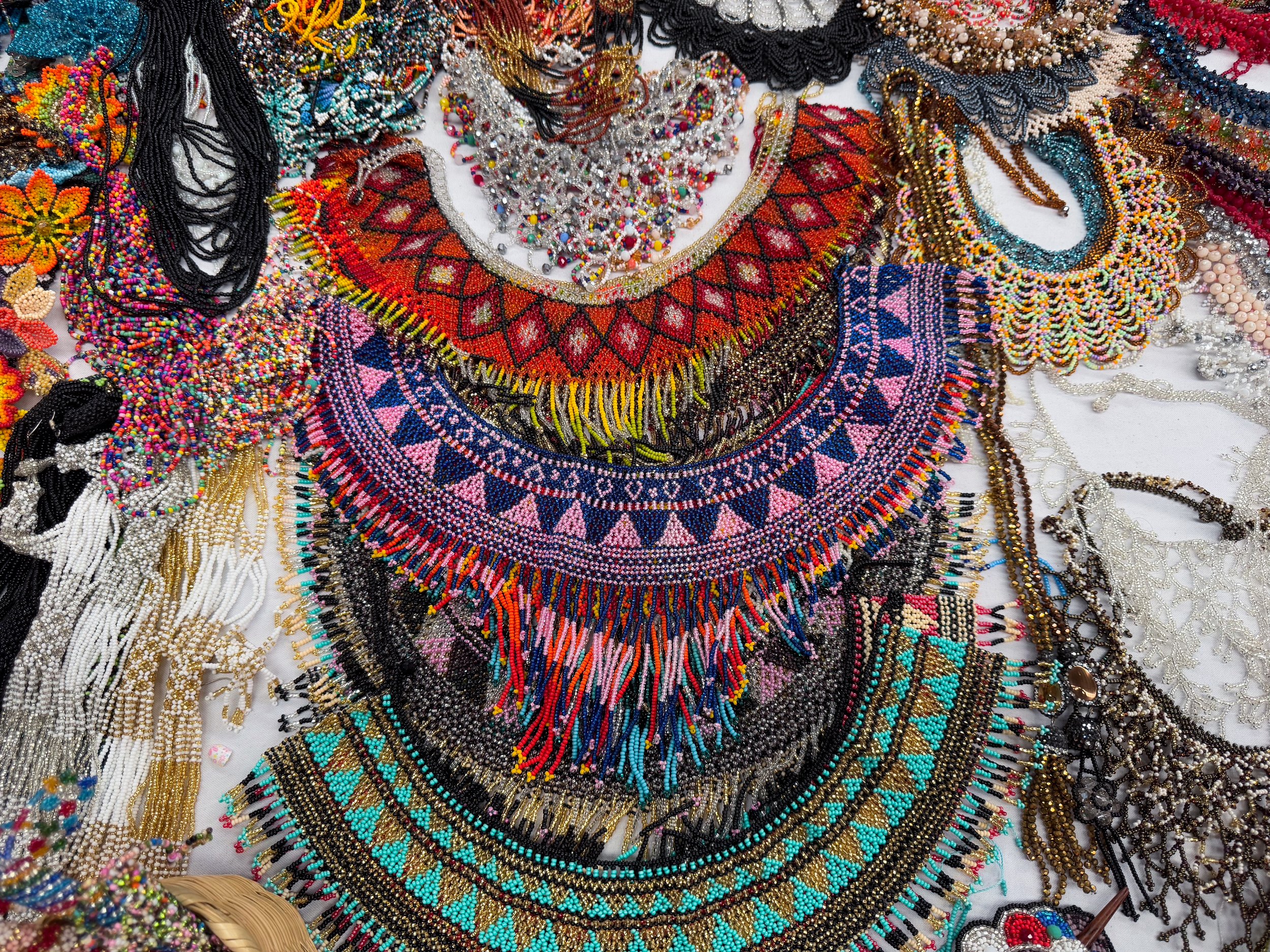
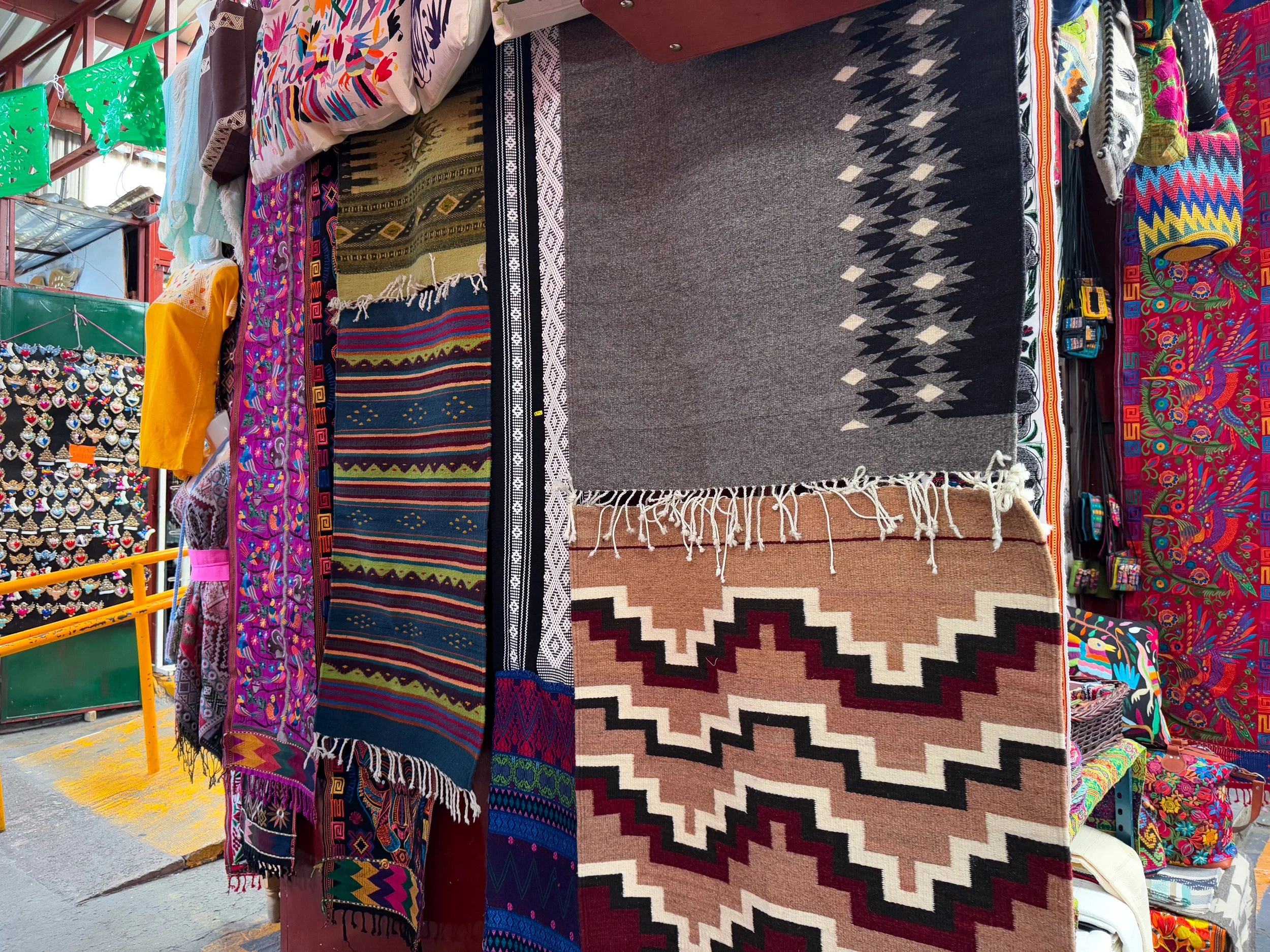
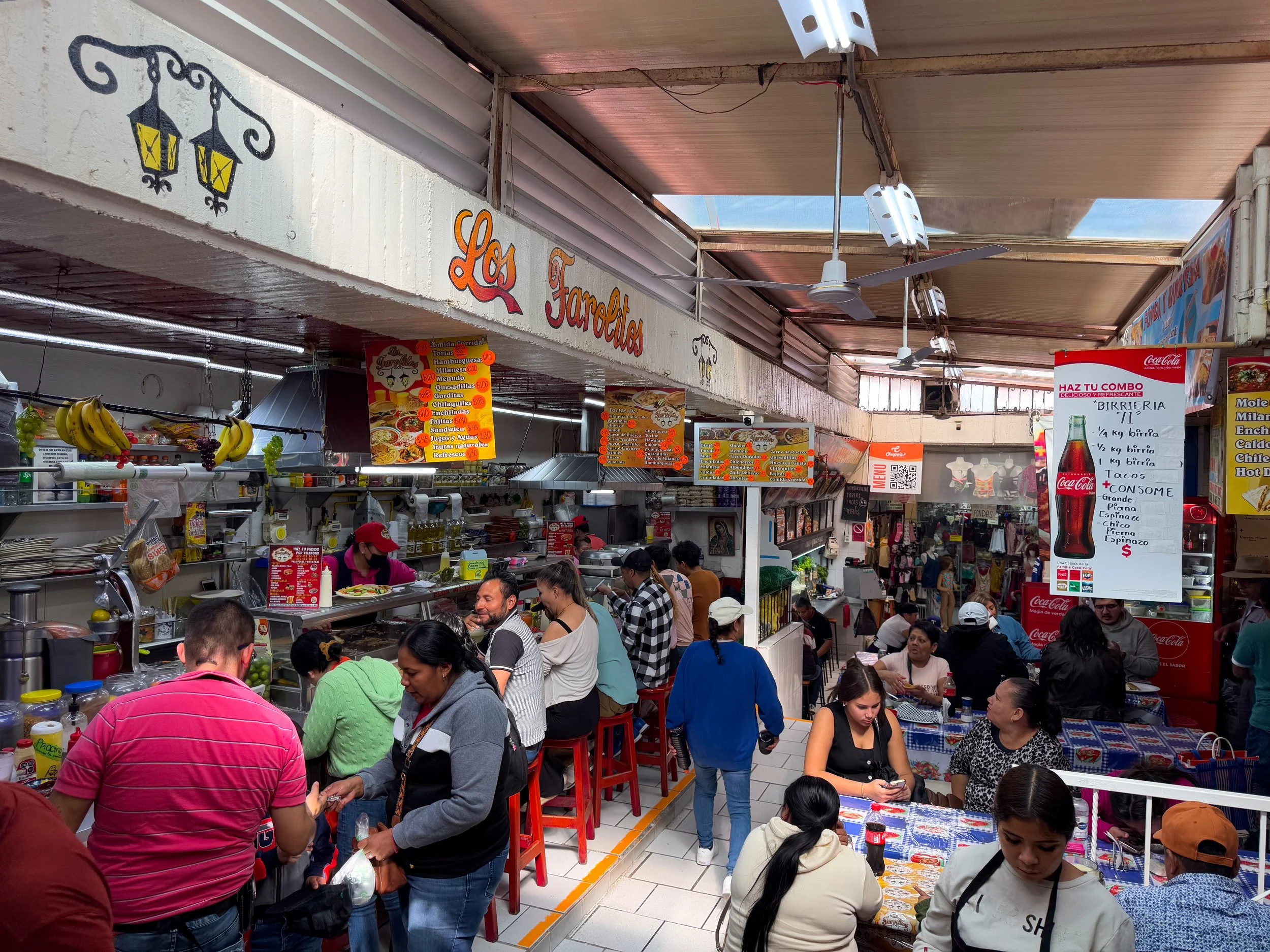
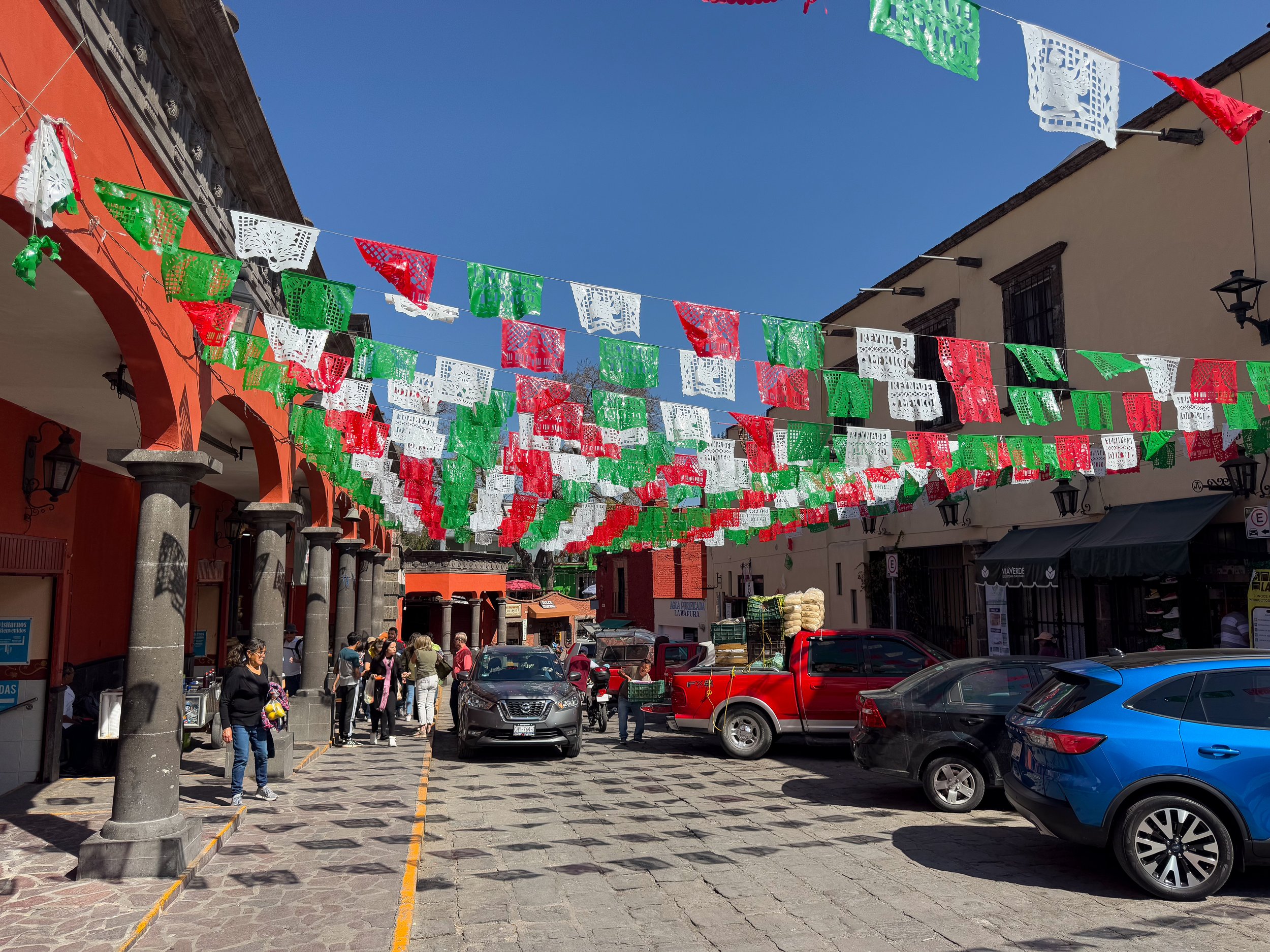
Shop the Markets
Ignacio Ramirez Market. A colorful market with aisles of vendors selling fruits, vegetables, flowers, piñatas and miscellaneous dry goods like beans, corn husks and tostadas. A section with restaurants serves affordable Mexican classics like quesadillas, gorditas, molletes and flautas. We ordered lunch from Los Farolitos spending less than 200 pesos.
Mercado de Artesanías. An artisanal market attached to Ignacio Ramirez with locally made leather goods, textiles, pottery and jewelry. Vendors sell everything from cowboy boots and hats, leather shoes and belts, silver and beaded jewelry, woven rugs and blankets, hand embroidered pillows and tortilla holders and traditional clay pottery like cafe de olla mugs and cazuelas.
Calle Lucas Balderas. A covered street extending from the Mercado de Artesanías with dozens of silver and craft vendors selling jewelry, sculptures, tableware, paintings and textiles. Like with all markets, prices are negotiable, especially if paying in cash. We bought a minimal silver bangle and ring for less than 40 USD.
Fabrica La Aurora. A former textile factory converted into a high end artisan market and showroom with furniture vendors, art galleries, home good stores, antiques and restaurants.
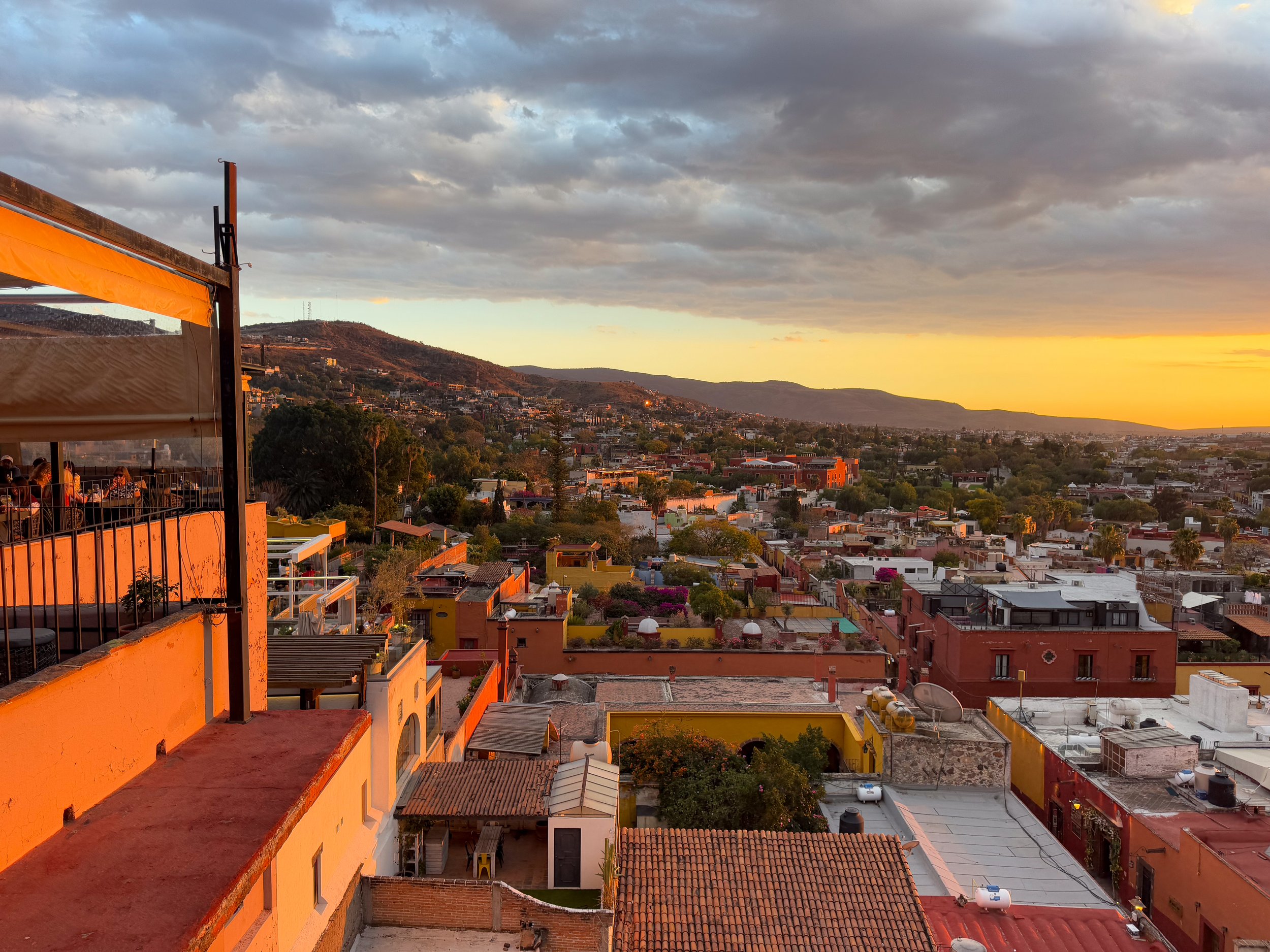
Places to Eat & Drink
The Rooftop at Selina. A rooftop restaurant and bar with sunset views overlooking the warmly painted buildings and landscape stretching beyond San Miguel. We sipped on cocktails at the bar while the sun set and murmurations of migratory birds flew across the sky.
Don Taco Tequila. A vegan taqueria with a wide range of vegan meat, mushroom and veggie tacos prepared on house made tortilla and paired with homemade salsas ranging in flavor and spiciness. Their bar menu boasts a short list of cocktails and a wider range of sipping tequilas and mezcals. Try the tacos al Pastor, Don Chicharo, Chicharrito and Bigotes for an array of savory flavors.
San Telmo Gastro Pub. A restaurant and bar with a classic yet eclectic interior and stage with nightly singers. We stopped in for a glass of wine while listening to the musicians perform.
Panio Bakery. A Mexican and French style bakery with conchas, croissants, donuts, baguettes and honey bread.
Cerveceria Allende. A craft brewery and tap room with house brewed beers. We tried the Golden Ale, an easy drinking and flavorful classic beer as well as the Brown Ale, a thicker and slightly sweet beer.
La Michoacana del Portón. An ice cream and paleta shop with dozens of water and cream based flavors. We stopped in while walking across town, ordering guava and horchata paletas.

Places to Shop
Other than the artisan markets, the central neighborhood has numerous shops and boutiques with locally made goods. We visited multiple shops and have a few favorites.
Artesanías Alcatráz Loka. A boutique with traditional and contemporary style leather goods including boots, jackets, bags and belts. I found a pair of cowboy boots made from black leather and white leather stars. Unfortunately it wasn’t available in my size.
Casilda Mut. A small boutique with cowboy hats, leather jackets and silver accessories. I found a cropped and studded leather jacket that fit perfectly but the price was well out of reach.
Maison Manhes. A tiny shop with locally made items and art including natural wool ponchos, colorful woven baskets and bags and hand painted ceramic dishes.
Where to Stay
Casa Lool Beh. A beautiful guest house with private rooms and shared commons spaces like a cozy rooftop terrace, kitchen and living room lounge. It’s centrally located, one street away from Jardín Allende. At the same time, it’s very hidden. We entered through, La Cabra Iluminada, a ground floor cafe with a lush courtyard and took the stairs to reach our room.
Location Specifics
Safety. The city is extremely safe both day and night with minimal security concerns or recent issues.
Senior Travel. San Miguel de Allende is a popular destination for senior citizens and retired expats due to its slower pace, walkable streets, temperate climate and affordable costs of living compared to the United States.
Costs. Though costs of living are much less than in the US, the city is a more expensive destination than other cities in Mexico.
Cash vs Card. Most businesses accept cash or card when paying however there is often a cash discount.
Drinking Water. Tap water is not safe for consumption. It’s best to drink filtered or bottled water.
Getting Here and Around
Getting Here by Bus. We took an ETN Busround trip from Mexico City. Ticket prices are significantly costlier than other bus companies like ADO. The bus however is comfortable and reliable with assigned seats, on board restrooms and charging ports for devices.
Getting Around on Foot. The city is best explored and admired on foot. Its historic neighborhoods are easily walkable.
Getting Around by Taxi or Uber. Both taxis and Ubers are readily available and affordable methods for getting around the city, with prices costing 50-100 pesos in town.
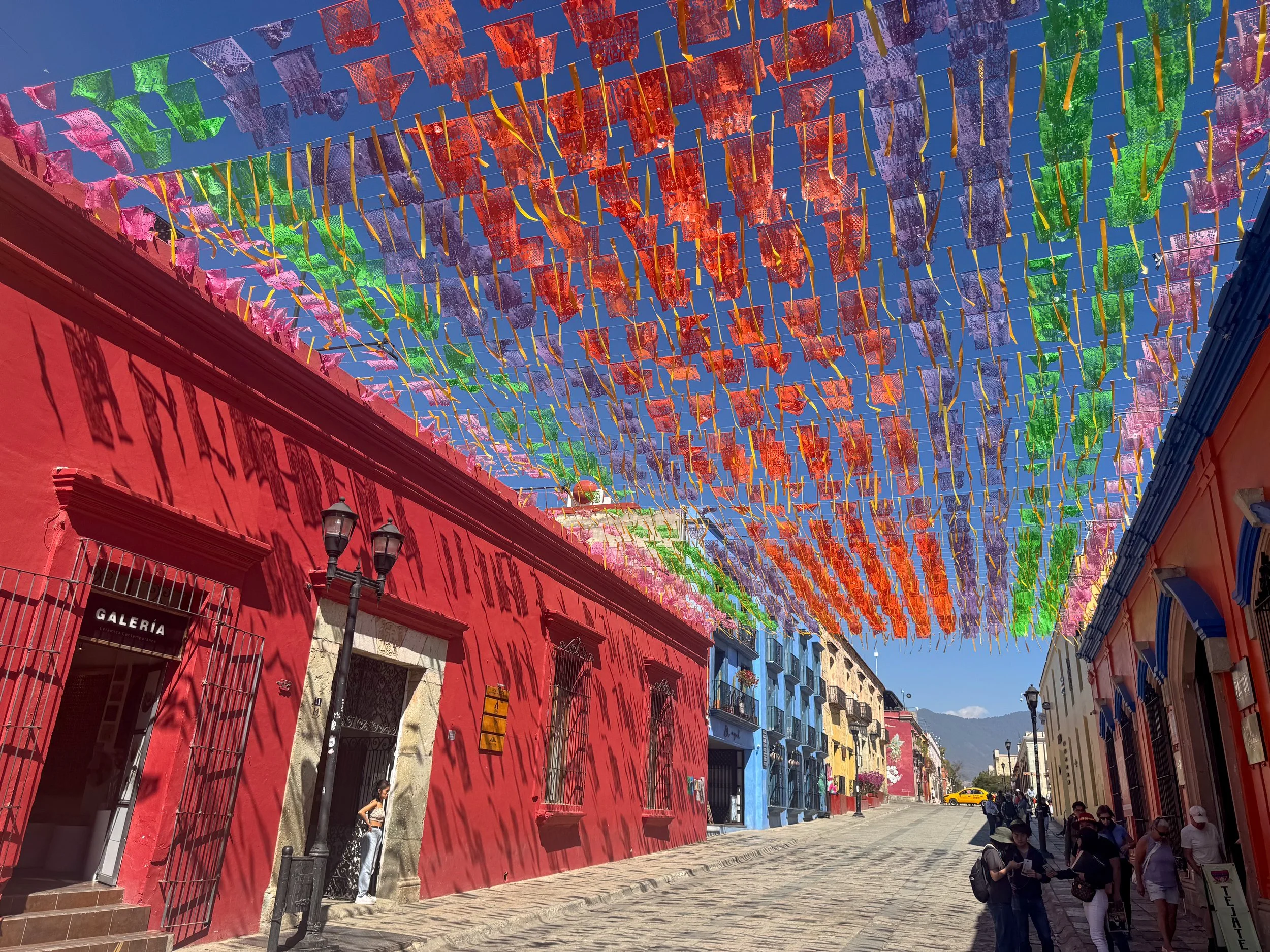
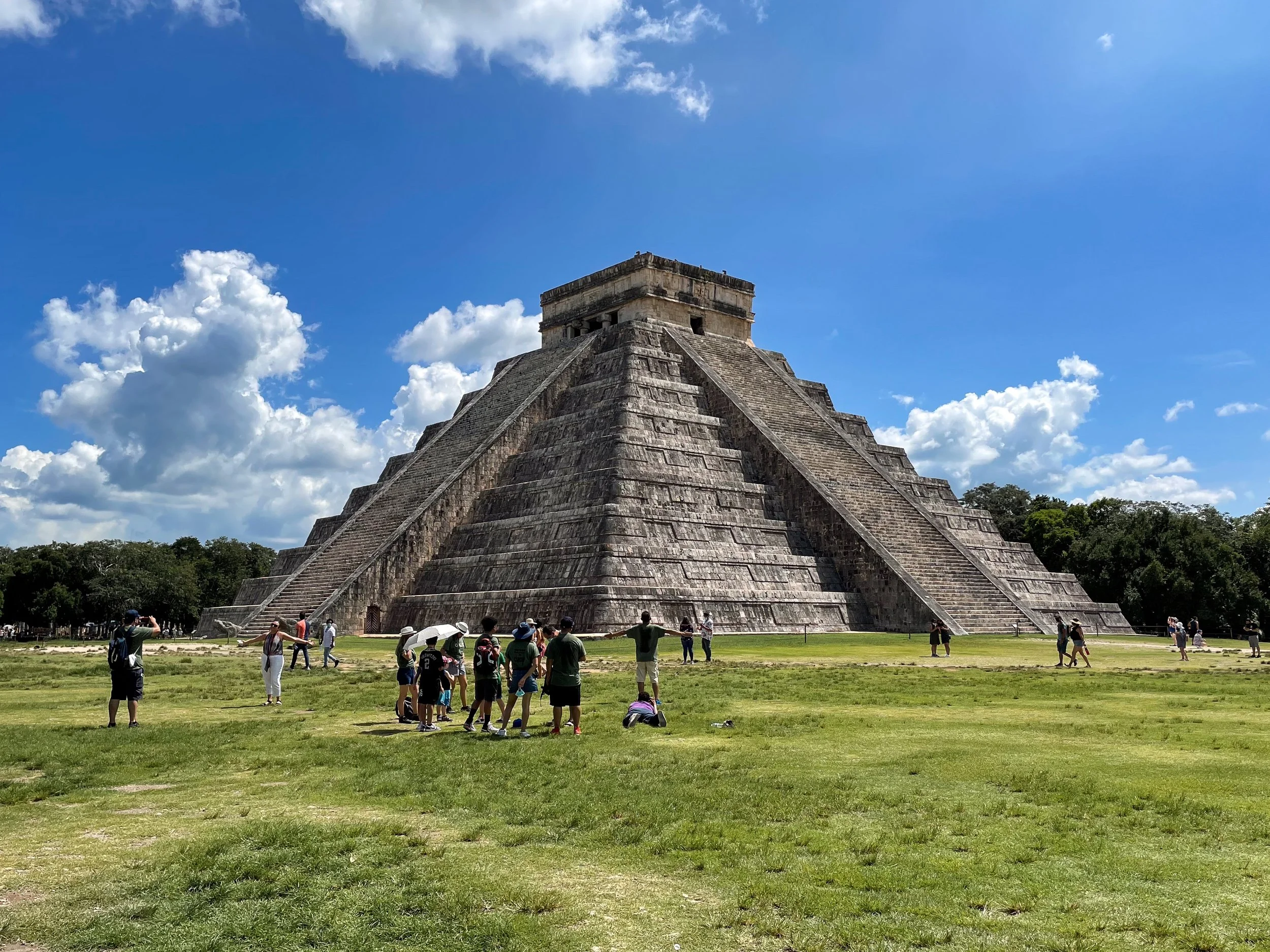
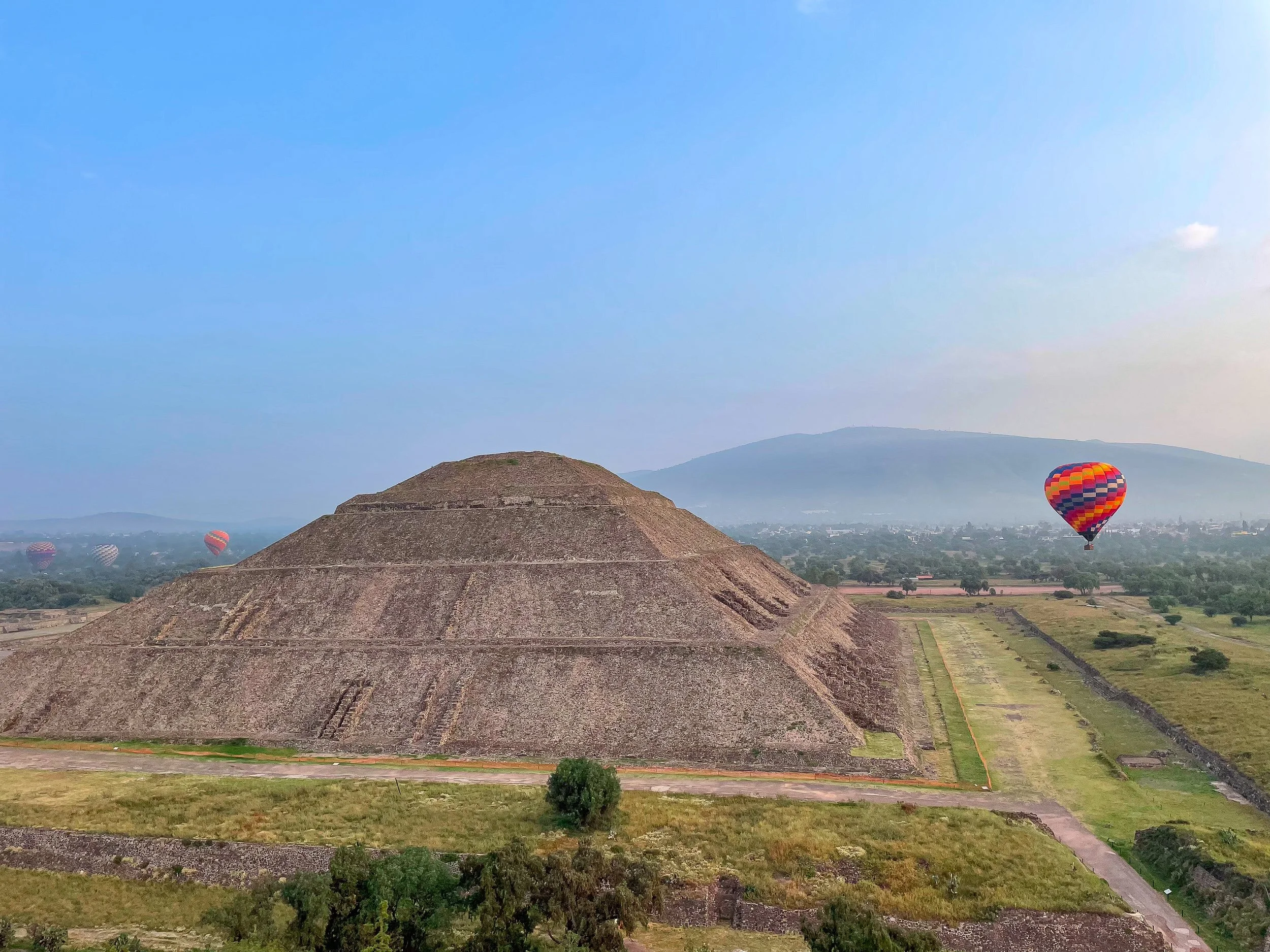
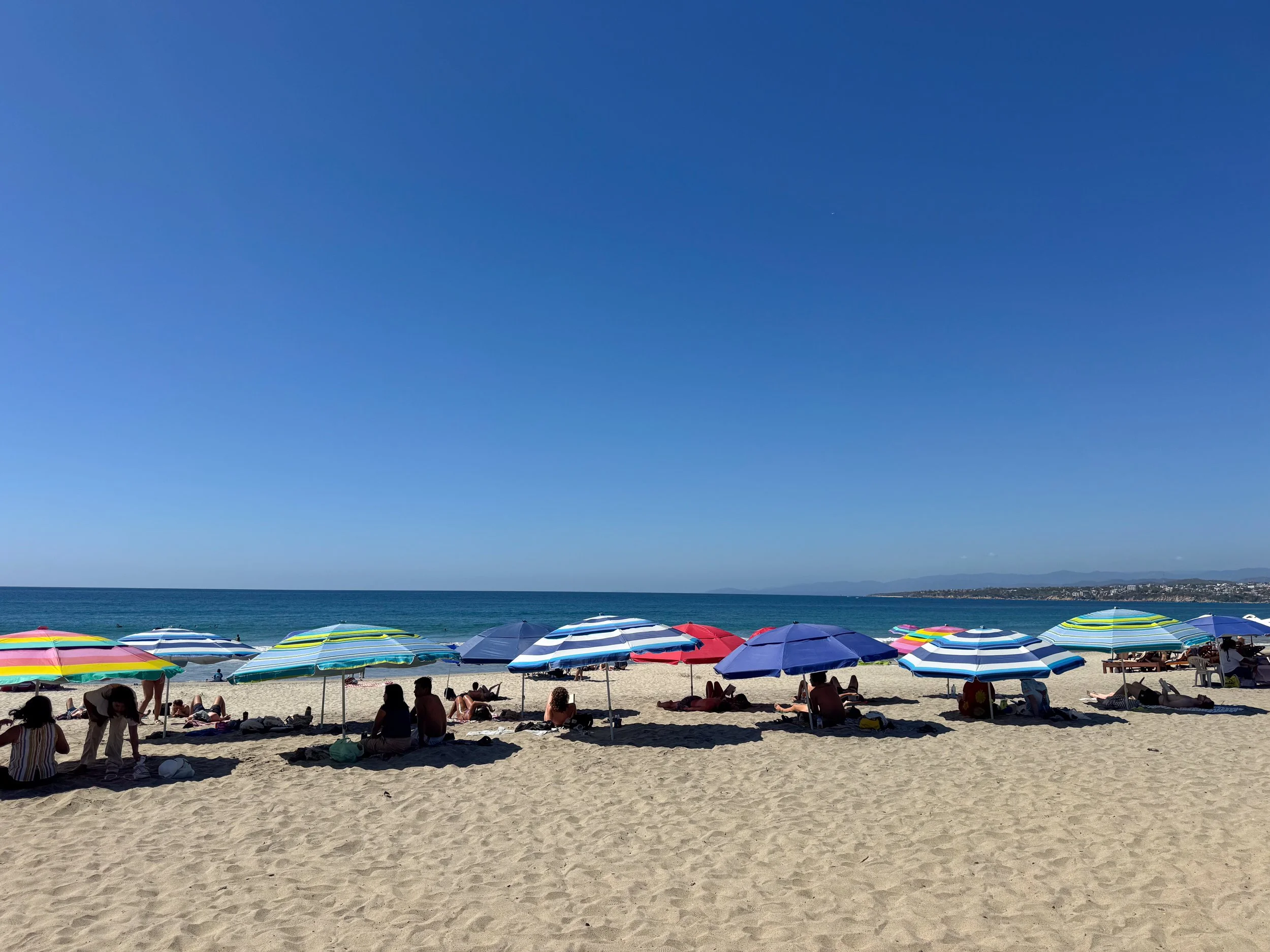
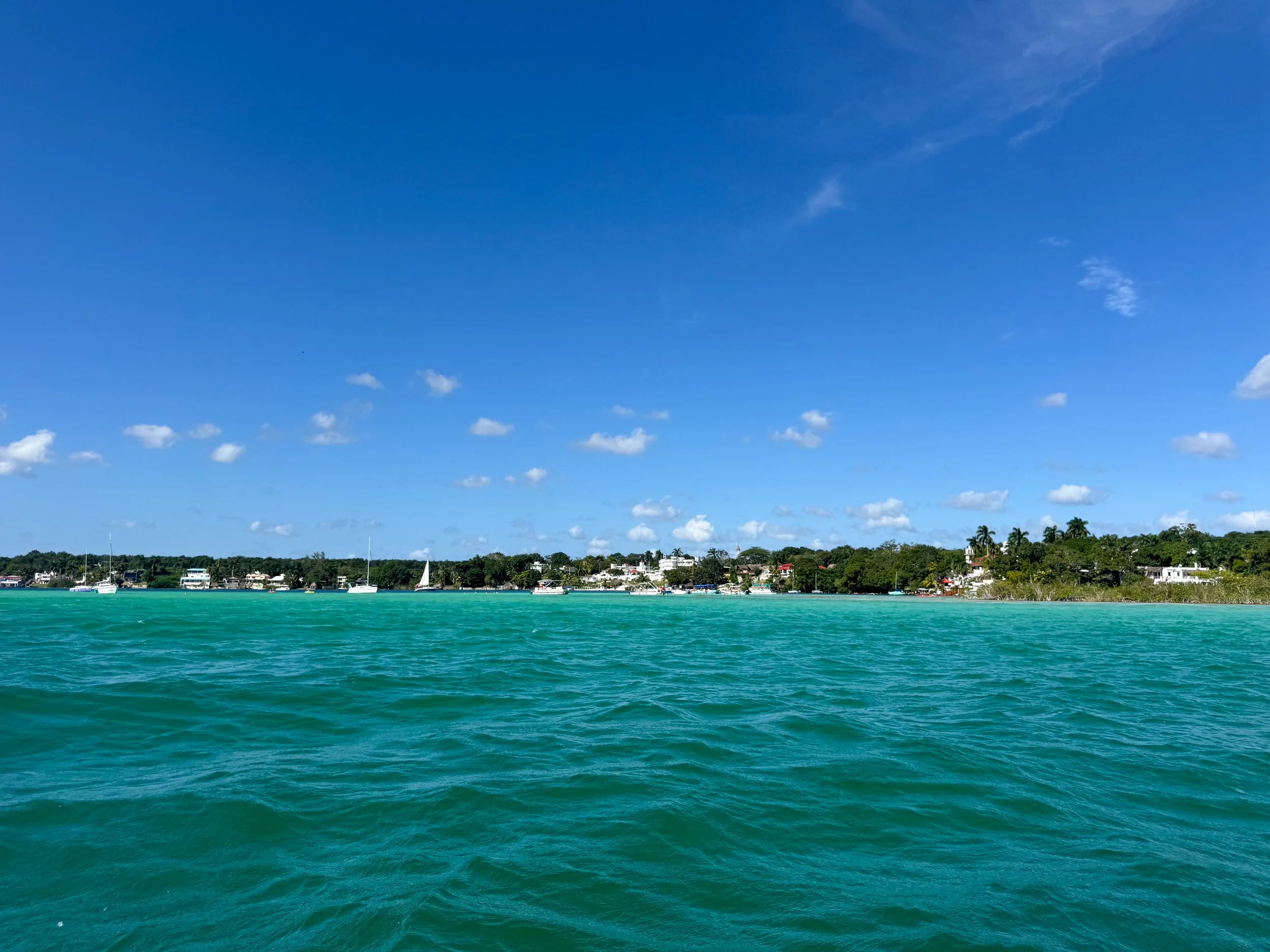
Elsewhere in Mexico
From colorful colonial streets to Caribbean beaches, Indigenous traditions and world famous culinary destinations, explore more of Mexico beyond San Miguel de Allende through these travel guides:
Caribbean Mexico
Riviera Maya Travel Guide: Beaches, Cenotes & Mayan Ruins. Discover the Riviera Maya's white sand beaches, turquoise waters, hidden cenotes, ancient Mayan ruins and vibrant culture along Mexico's Caribbean coast.
Tulum Travel Guide: Cenotes, Beaches & Mayan Ruins. Explore Tulum's cliffside Mayan ruins, white sand beaches, hidden cenotes and jungle landscapes along Mexico's turquoise Caribbean coast.
Bacalar Travel Guide: The Lagoon of Seven Colors & Hidden Gems. Discover Bacalar's Lagoon of Seven Colors, where turquoise waters, shallow sandbars and ancient stromatolites create one of Mexico's most remarkable landscapes.
Central Mexico
Mexico City Travel Guide: Neighborhoods, Food & Local Culture. Wander through Mexico City's vibrant neighborhoods, local markets and cultural landmarks where centuries of history, cuisine and modern life converge.
Day of the Dead in Mexico City (Día de los Muertos) Travel Guide. Experience Day of the Dead in Mexico City through cultural traditions, lively celebrations and vibrant ofrendas honoring loved ones and ancestral heritage.
Southern Mexico
Oaxaca Travel Guide: Food, Mezcal & Cultural Experiences. Immerse yourself in Oaxaca, Mexico's cultural hub for vibrant markets, artisanal mezcal, regional cuisine, scenic landscapes and centuries of tradition.
Puerto Escondido Travel Guide: Beaches, Surfing & Coastal Culture. Escape to Puerto Escondido, a laid back surf town on Oaxaca's Pacific coast where palm lined beaches and sandy streets embody coastal culture.
For Next Time…
We only spent a couple of days in San Miguel de Allende but fell in love with this charming city, its desert landscapes and Vaquero style boutiques. We’re sure to return and have a list of things to do, see and buy when we do.
Vaquero Boutiques. We window shopped at several boutiques around San Miguel’s center. We tried on boots, jackets, ponchos and cowboy hats and have a few items in mind to purchase when we return.
Vineyard Tours. The countryside of San Miguel de Allende is one of Mexico’s largest wine producing regions with vineyards and winemakers. While here we were able to sample a couple wines.
Hacienda San Miguel. A vineyard outside of the city with bottles labeled in Mexican banderas. We tried their mid bodied red blend made from Shiraz, Tempranillo and Cabernet.
Casa Madero. Though not near San Miguel, it’s the oldest vineyard in the Americas, dating back to 1597. We tried their Merlot, a full bodied and flavorful red wine.
Horseback Riding. Various companies offer horseback riding tours around the city and countryside ranging from half day to overnight. Short on time, we weren’t able to gallop across the desert landscape into the sunset but are keeping a couple of well reviewed providers in mind for next time, San Miguel Parque de Aventuras and Coyote Canyon Tour.
Plaza de Toros San Miguel de Allende. A coliseum in the historic center used for rodeos, bullfighting and Mexican opera. Though we don’t agree with bullfighting, seeing a rodeo or opera would be a special experience.
Cañada de la Virgen. A nature preserve and archeological site with Otomi pyramids and ruins located about 20 minutes by car from the city center.
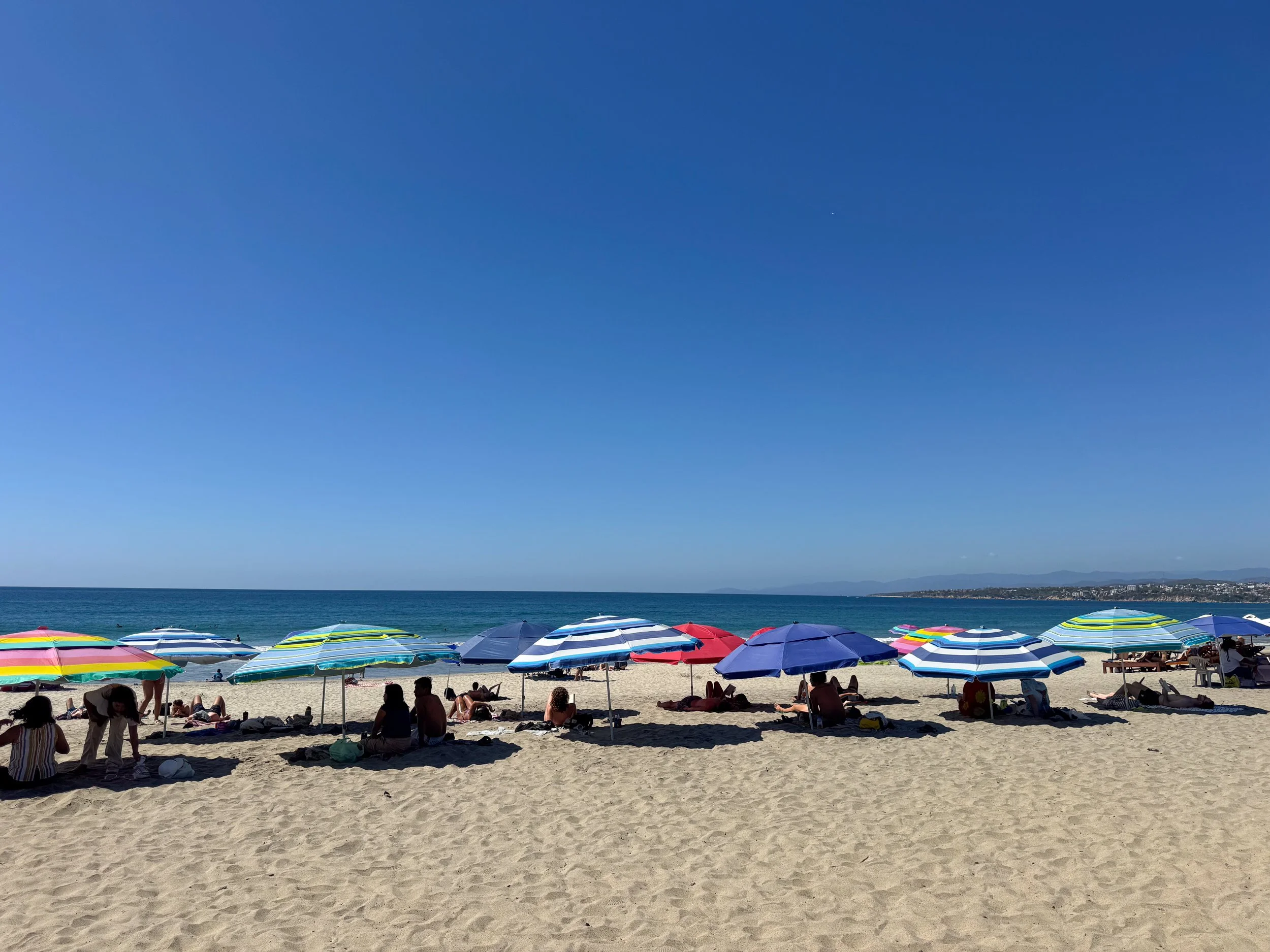
Puerto Escondido Travel Guide: Beaches, Surfing & Coastal Culture
Escape to Puerto Escondido, a laid back surf town on Oaxaca's Pacific coast where palm lined beaches and sandy streets embody coastal culture.
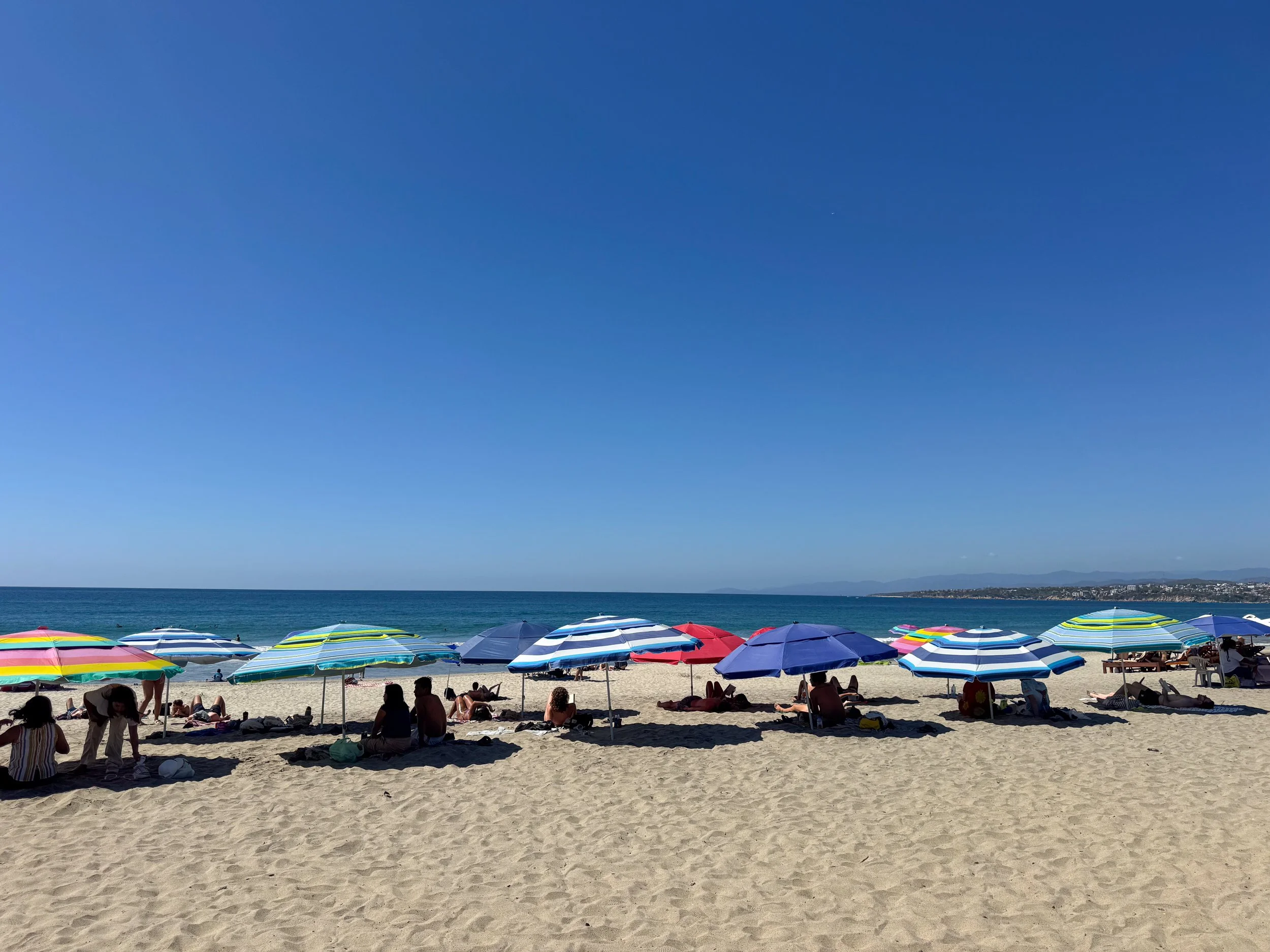
Puerto Escondido, Oaxaca
Puerto Escondido is a tropical surf town on Oaxaca’s Pacific coast. Relaxing days on palm lined beaches make way to lively evenings along sandy streets.
A Tropical Escape
There are few better things than the sand between our toes and salt in our hair. We sat on the beach for three days, sunbathing, surfing, drinking tropical cocktails, eating seafood tacos and getting tattoos.
La Punta
La Punta is a neighborhood on the far eastern end of Playa Zicaleta. It’s popular with surfers, digital nomads, expats and young travelers. Under the bamboo and palm thatched buildings are shops selling beach attire, tropical jewelry and surf boards. Coffee shops, taquerias and cocktail bars line the neighborhood’s sand covered streets and dirt roads. Posters advertising nightly parties are displayed at hostels and tattoo parlors.
Beaches
Playa Zicaleta. A long tan sand beach stretching across a large expanse of Puerto Escondido’s shoreline.
Playa Punta. The most eastern section of Playa Zicaleta. The beach is a surfer's paradise with lessons, board rentals and surfers riding waves from first light until sunset. Tanned and tattooed beach goers relax under umbrellas, walk along the shore and frolic in the ocean waves. Beachfront restaurants rent umbrellas and lounges, serve seafood dishes, tropical cocktails and inexpensive local beers. It’s a popular spot to watch the sunset over the ocean. We were even lucky enough to witness the green flash as the last of the sun dipped below the horizon.
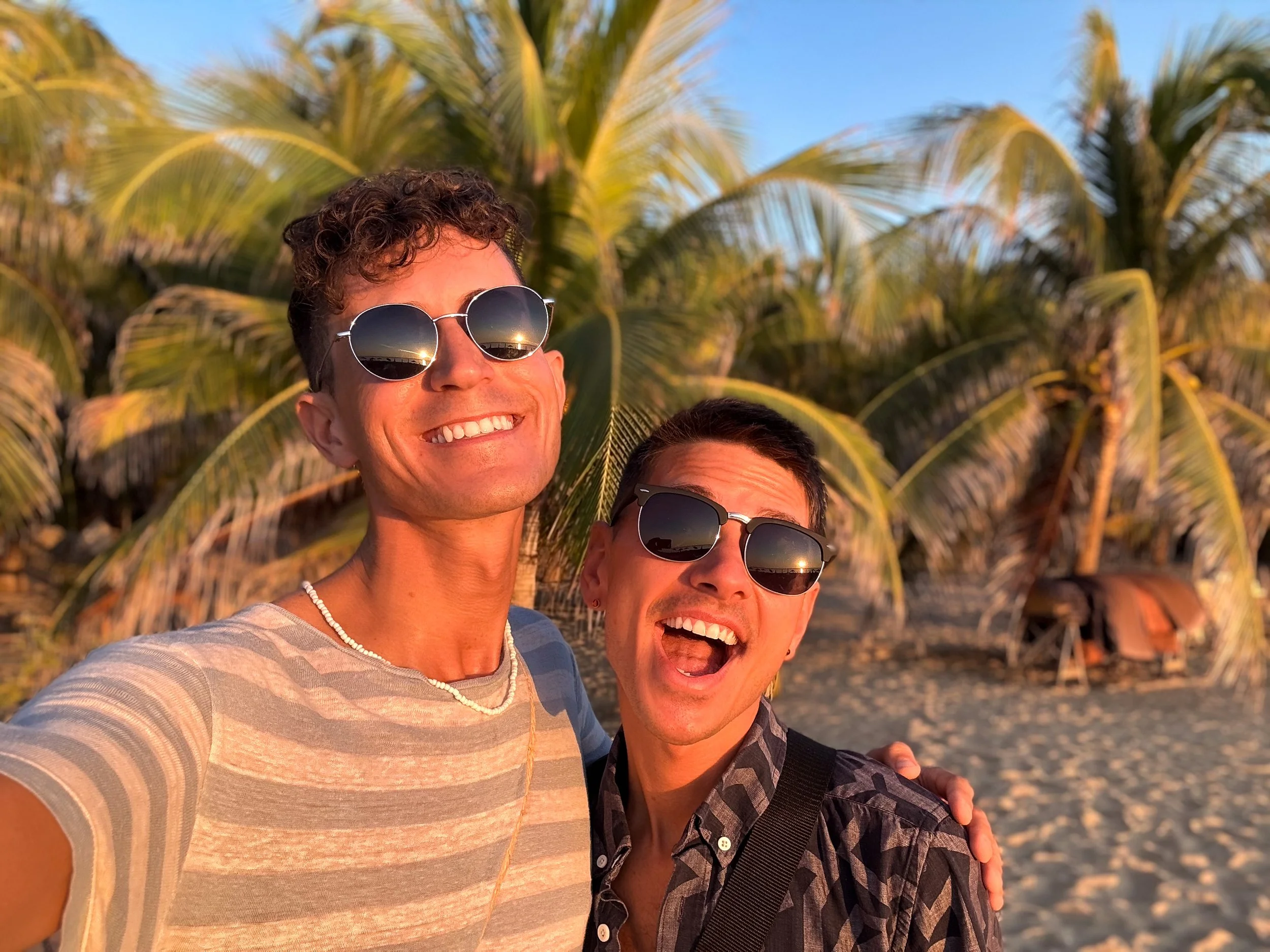
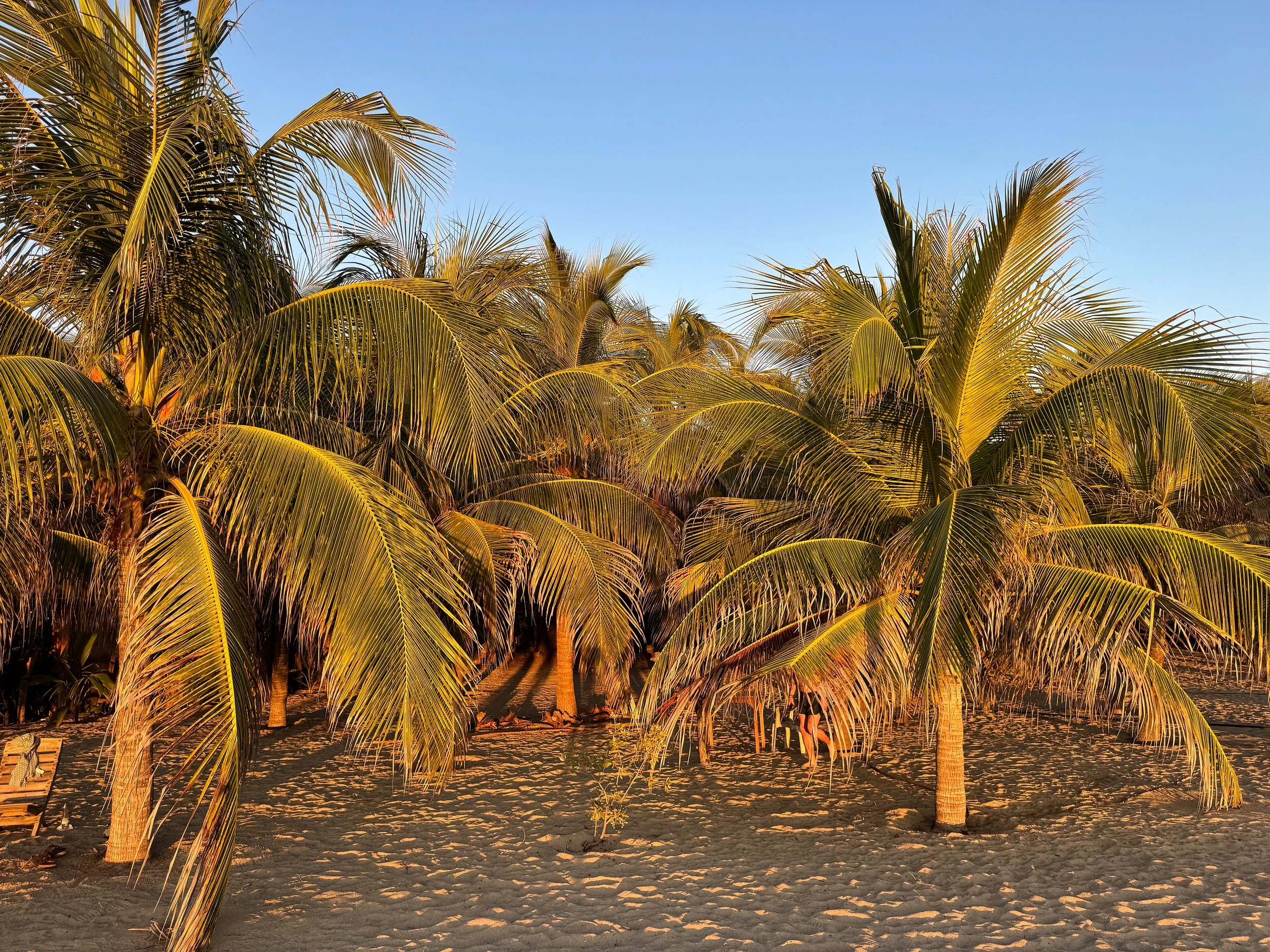
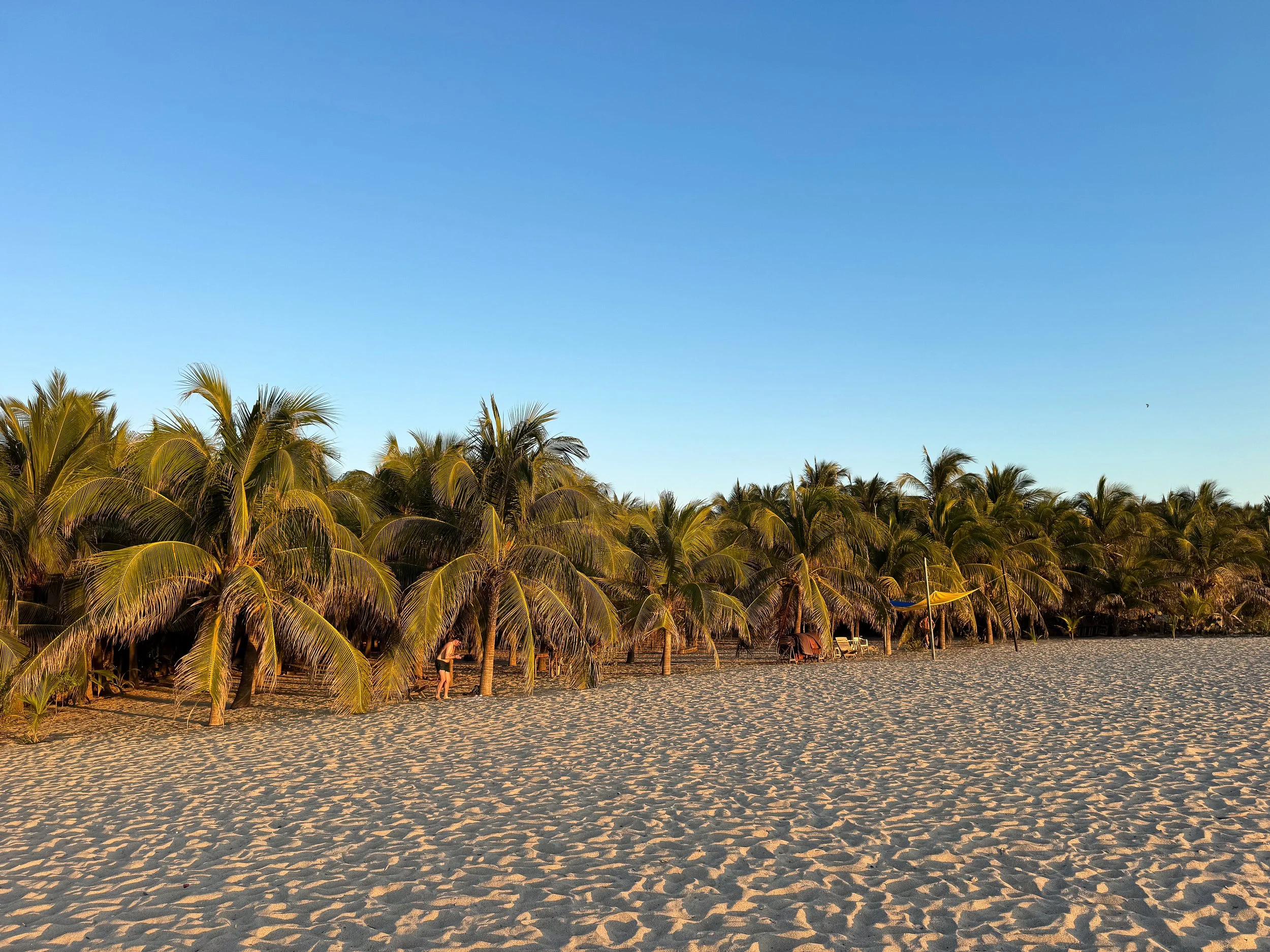
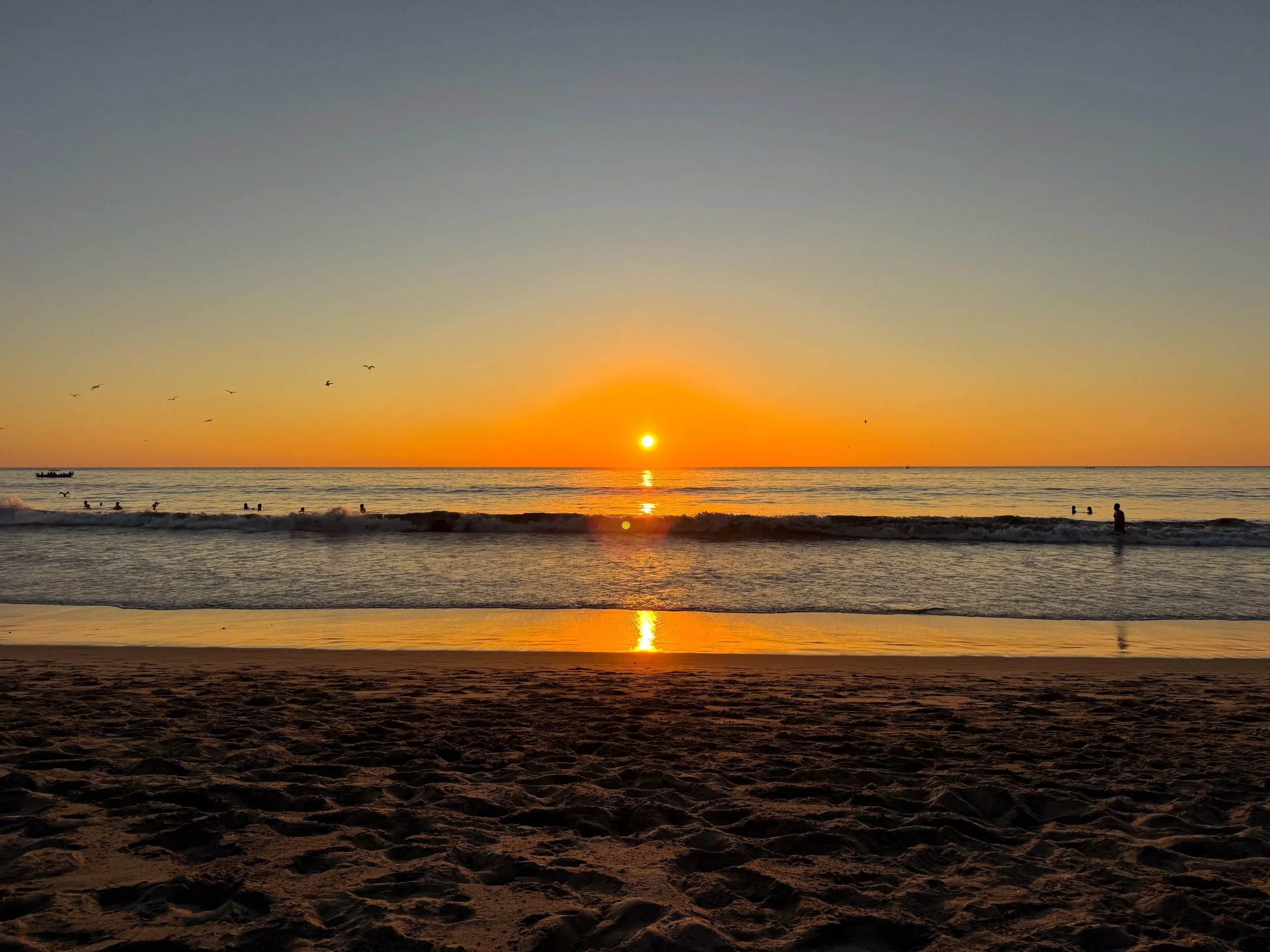
Things to Do
Lounge on the Beach. Visit Punta Puerto on Puntas Beach, an ocean front restaurant and bar with rentable sun lounges and umbrellas. At the time, prices cost 200 pesos for a lounge and umbrella for the full day with no minimum spend. This was significantly less than any of the other spots nearby. Service and drinks were great, the food was a little bland but for the price, it was absolutely worth it.
Take a Surf Lesson. Puerto Escondido is a surfer’s haven with plenty of waves for beginners to experts. I booked a two hour group lesson with Silva Surf School, meeting the instructors at 7am and catching the morning’s first waves as the sun was rising. The instructors were very helpful providing a push to catch waves and pointers on how to “pop up,” balance on the board, ride and safely fall off. They provided a 9ft fiberglass surfboard that glided through the water with plenty of stability, making it easy to catch every 3 to 5 foot wave that came in.
Places to Eat & Drink
Armonía Café. A small cafe with smoothie bowls, juices and strong coffees. We stopped in after surfing ordering the açaí bowl, made with mixed berries and banana as well as the spirulina bowl, made with greens and banana.
La Punta Restaurant & Bar. A beachfront restaurant and bar with sun lounges and cold Mexican beers.
La Ola Taquería. A taqueria along a narrow and sandy alleyway leading to the beach with a vast menu of seafood tacos and dishes. We ordered multiple dishes a la carte including the coconut shrimp tacos, fish tacos, tamarind ceviche and octopus tostada!
Fish Shack La Punta. A seafood shack preparing fish tacos, baskets and sandwiches. It’s the perfect lunch spot after spending time on the beach! Come for their fried fish sandwich or shrimp po’boy paired with a Mexican beer.
Helados Palma Negra. A shop serving tropical flavored ice cream and paletas. Try the mango passion fruit, mango tajin or chocolate coconut.
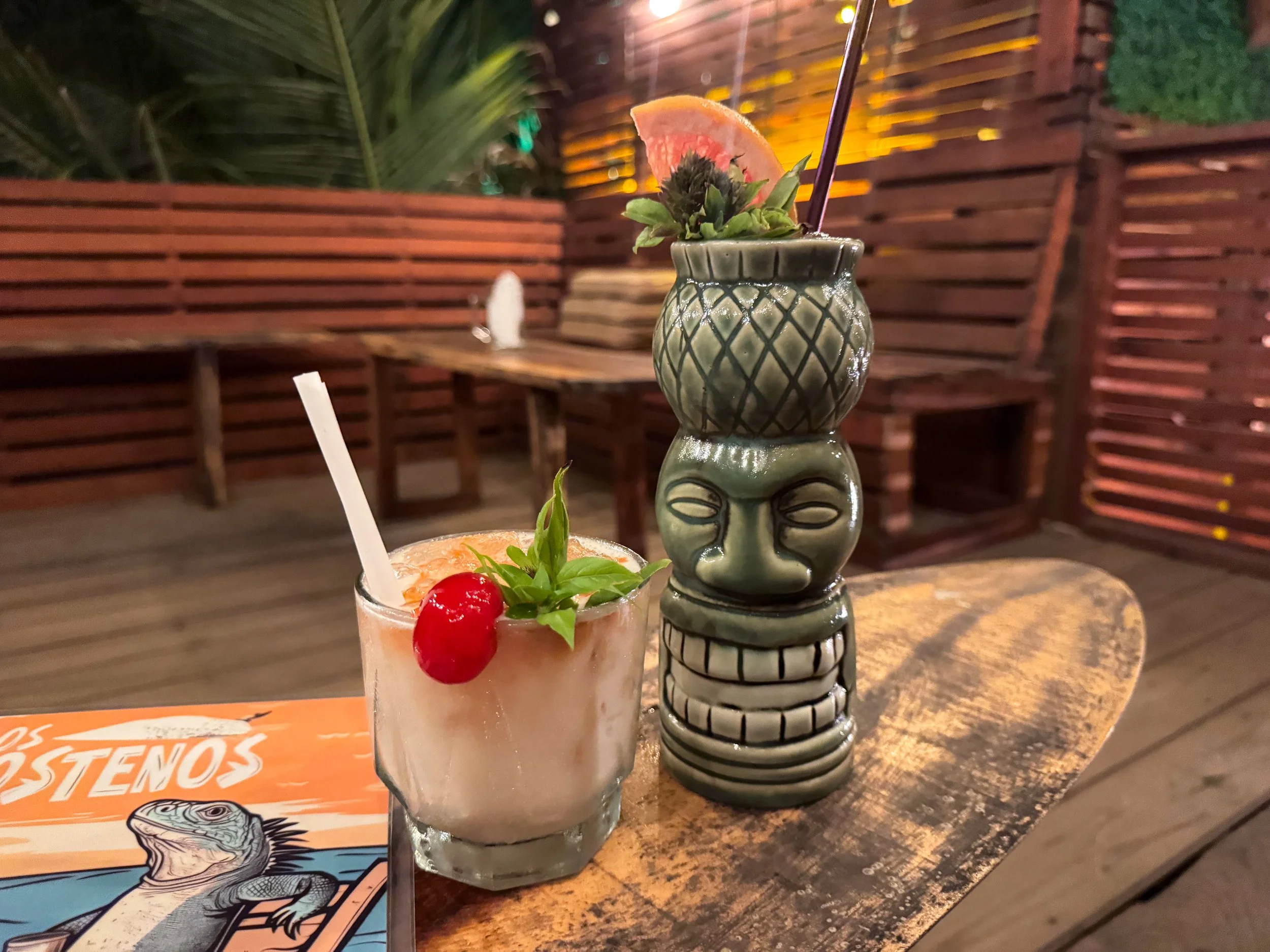
Terraza Los Costeños. A cozy oceanfront terrace nestled between the swaying fronds of verdant palm trees with tiki, tropical and mezcal cocktails. Try the Tropical, a mezcal, rum and passion fruit cocktail or the Tiki Taka, a floral gin and strawberry cocktail.
Bikini Cocktail Bar. A tropical beach shack style bar with bamboo walls, wooden swings for seats and Mexican inspired tiki cocktails. We quickly became regulars here, sampling half the menu. Try the Boo Loo, a mezcal, passion fruit and pineapple cocktail or the Elderflower Tiki, a mezcal, St. Germain and kombucha cocktail.
Juana Mezcala. A mezcal cocktail bar with shareable bites and nightly live music. To drink, try the Hibiscus Mezcalita or Santa Juana made with mezcal, chartreuse and hoja santa. To share, order the grilled pineapple and shrimp skewers cooked in mezcal or jalapeño poppers.
Where to Stay
Punta Bungalows. A boutique hostel a few streets from the beach with private rooms, a large shared kitchen, an outdoor pool, comfy hammocks and a tropical garden. We loved waking up to the scent of the plumeria trees, wearing fallen flowers above our ears each morning. Reserve on Airbnb.
Getting to Puerto Escondido
We took an ADO Bus from Oaxaca City to Puerto Escondido. The ride took 3 hours through mountain roads and tunnels. The roads winded as we came down from the mountains and approached the coast. The desert landscape transitioned into a verdant paradise.
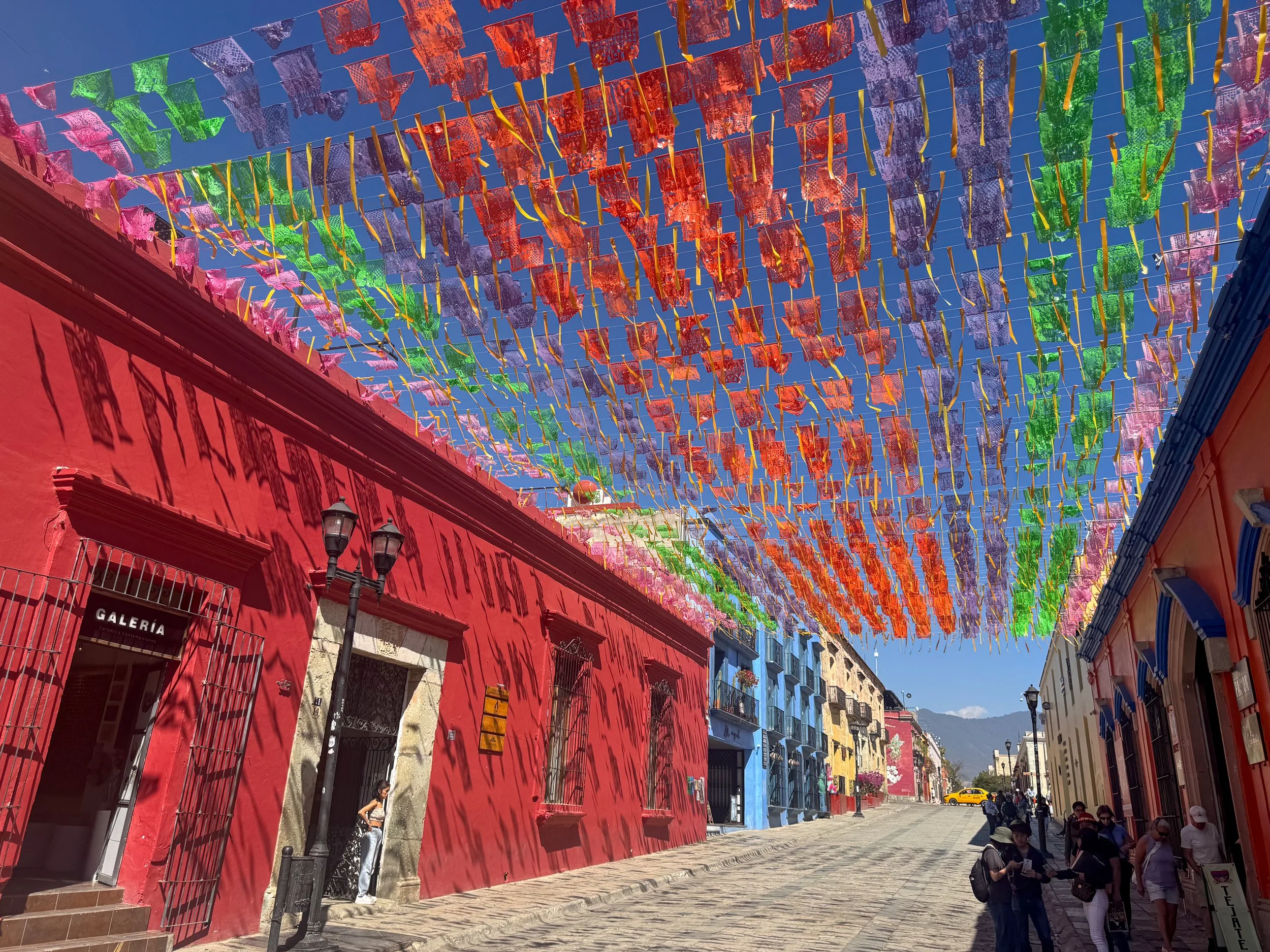
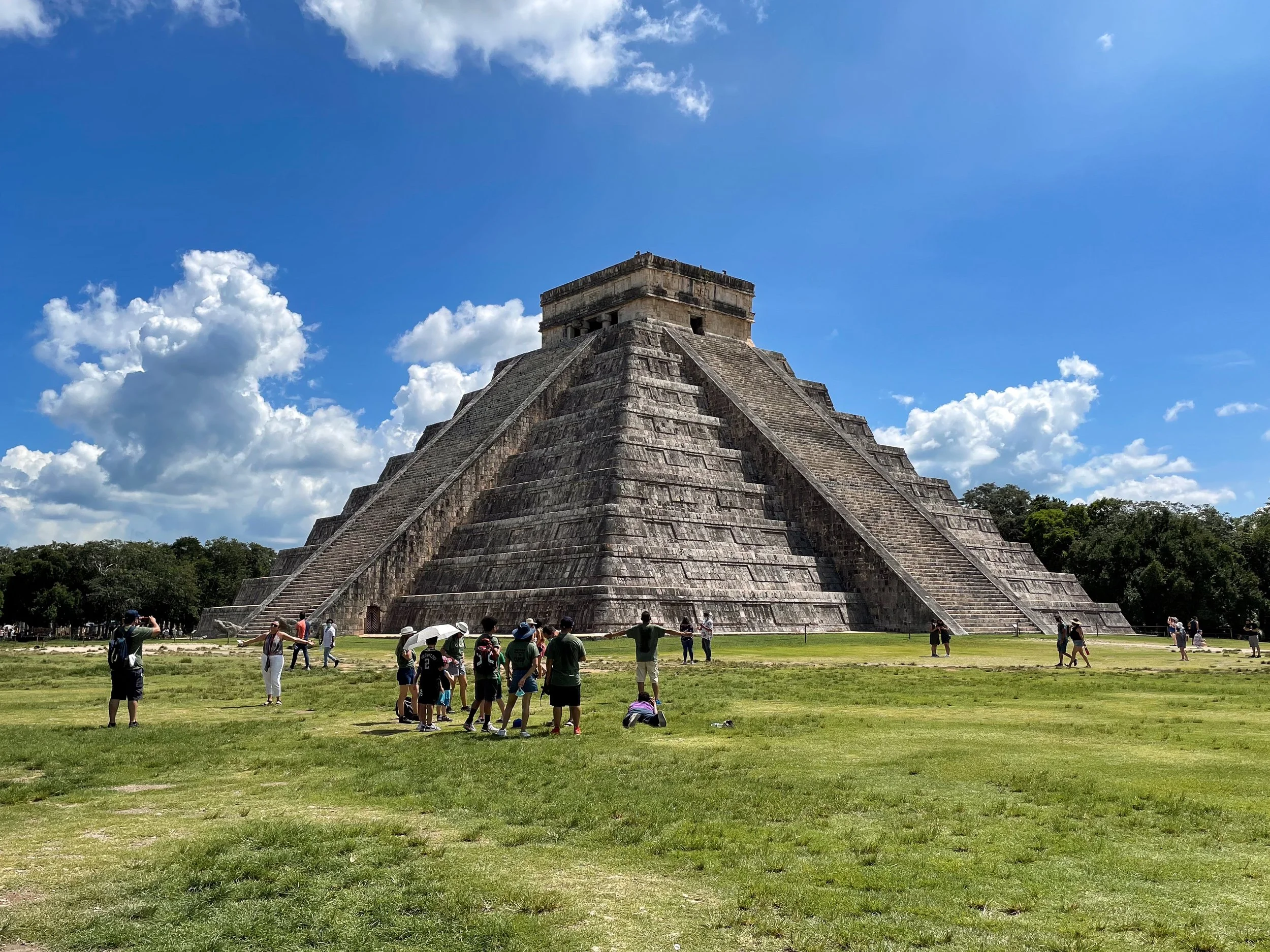
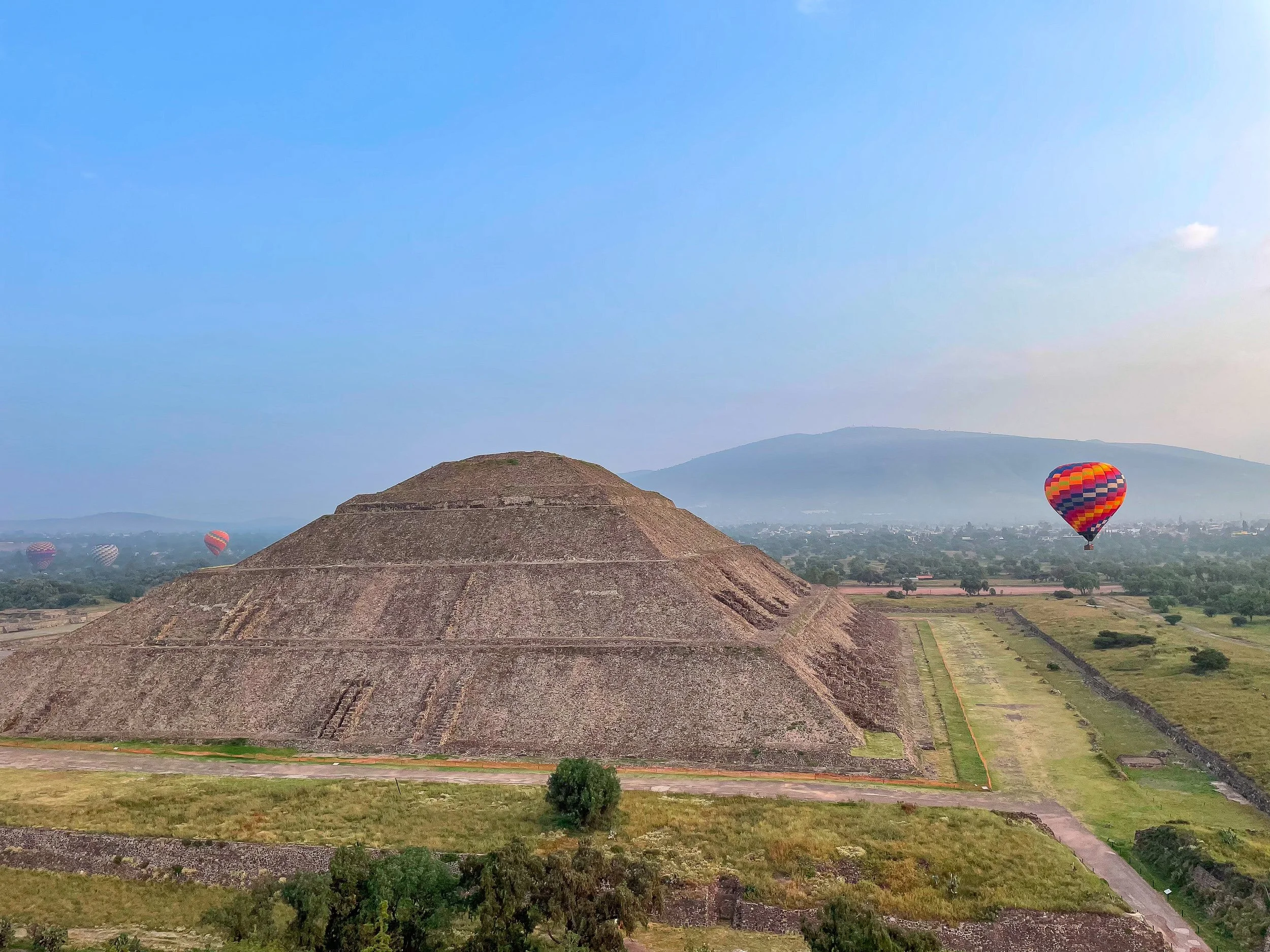
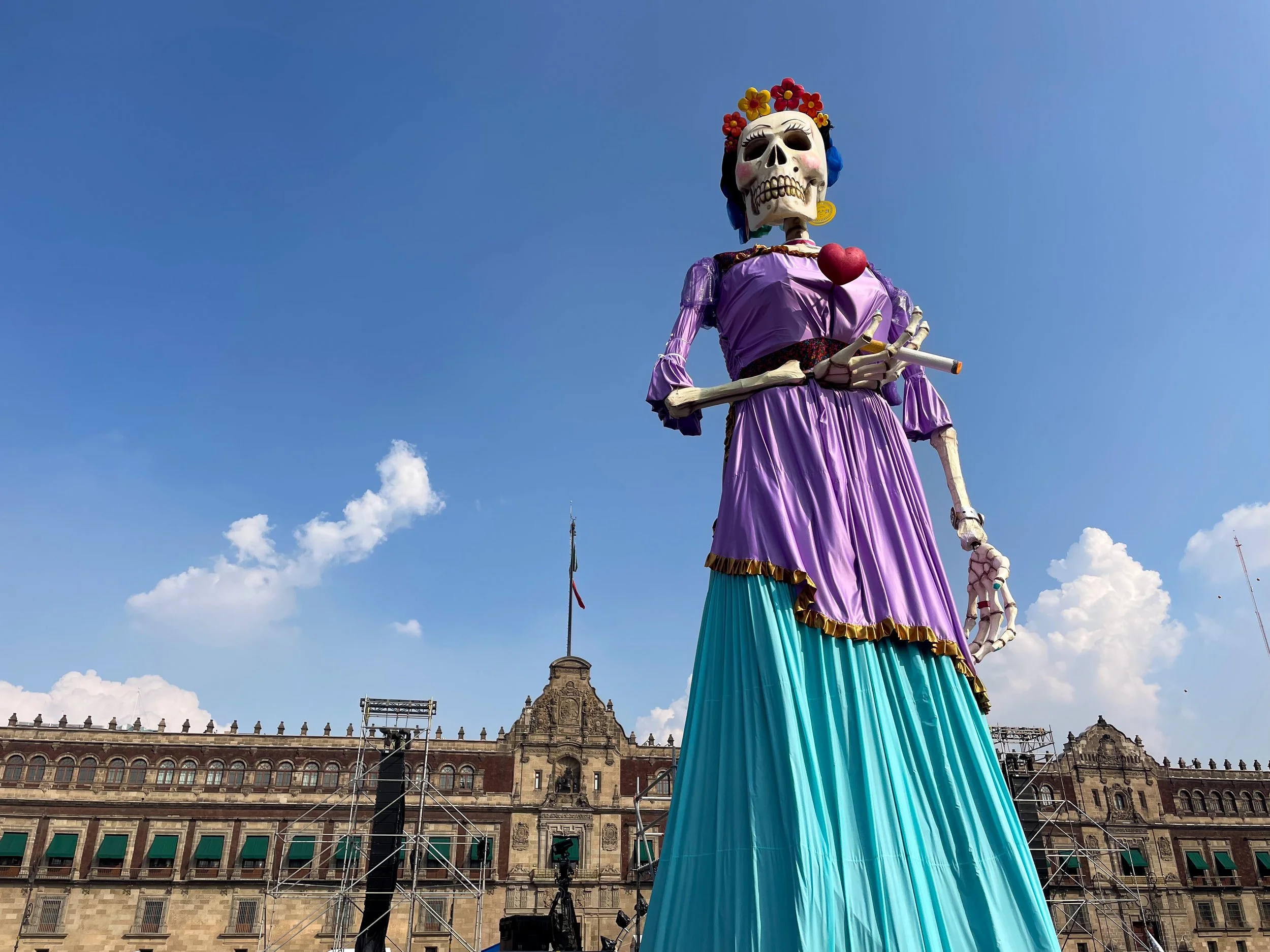
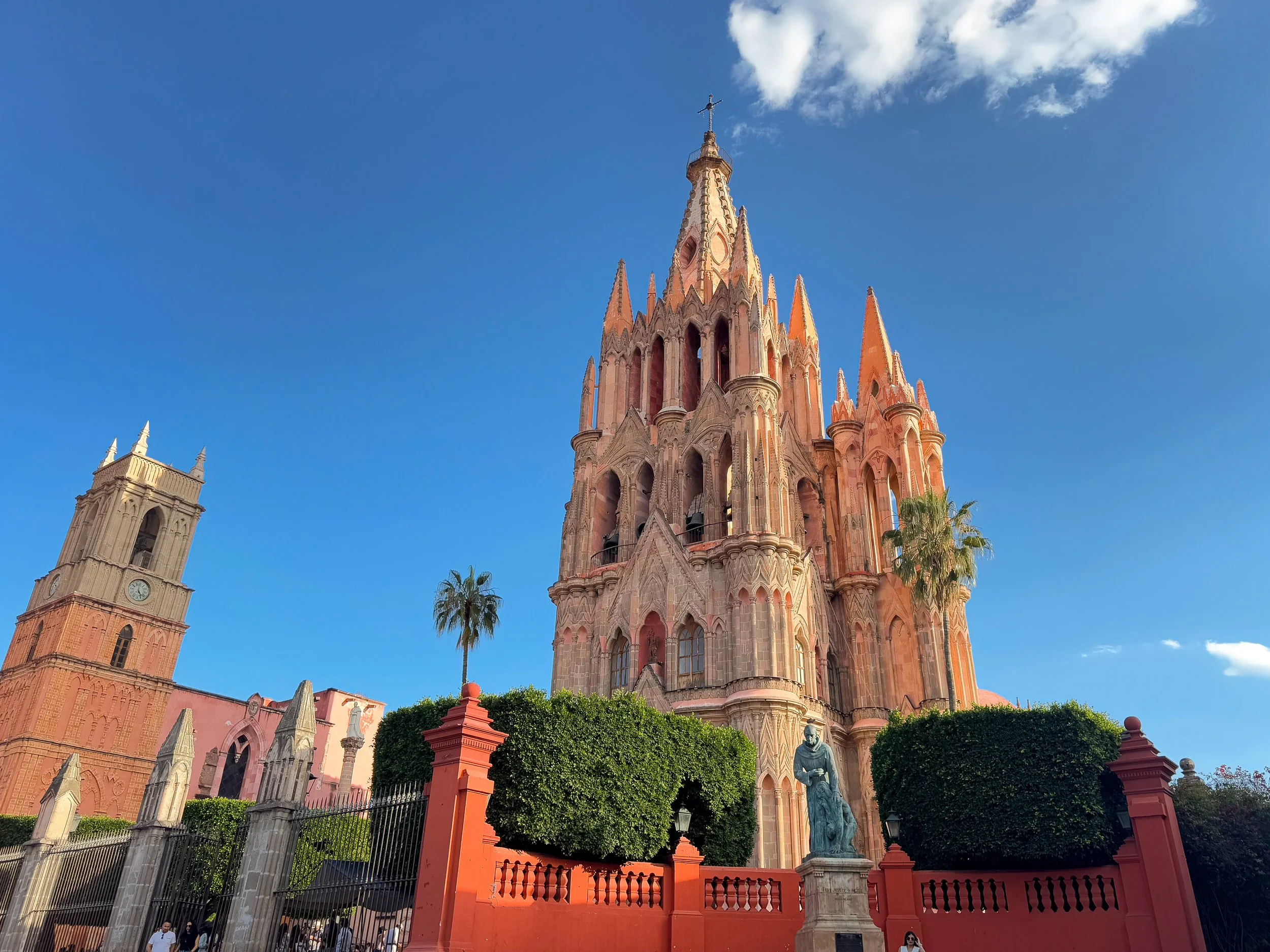
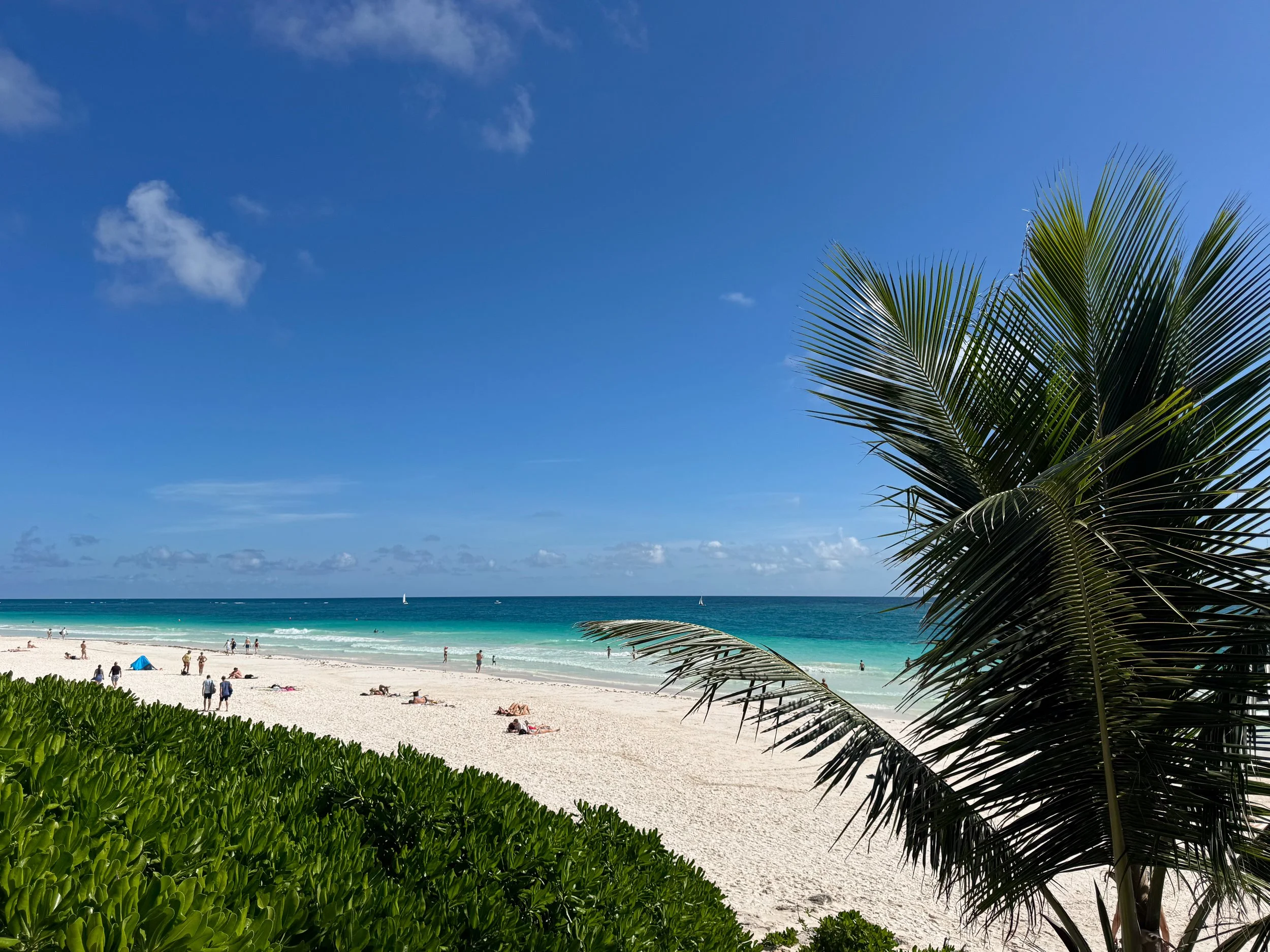
Elsewhere in Mexico
From Pacific surf breaks and coastal villages to colonial cities, ancient ruins and the turquoise waters of the Caribbean coast, discover more of Mexico through these travel guides:
Caribbean Mexico
Riviera Maya Travel Guide: Beaches, Cenotes & Mayan Ruins. Discover the Riviera Maya's white sand beaches, turquoise waters, hidden cenotes, ancient Mayan ruins and vibrant culture along Mexico's Caribbean coast.
Tulum Travel Guide: Cenotes, Beaches & Mayan Ruins. Explore Tulum's cliffside Mayan ruins, white sand beaches, hidden cenotes and jungle landscapes along Mexico's turquoise Caribbean coast.
Bacalar Travel Guide: The Lagoon of Seven Colors & Hidden Gems. Discover Bacalar's Lagoon of Seven Colors, where turquoise waters, shallow sandbars and ancient stromatolites create one of Mexico's most remarkable landscapes.
Central Mexico
Mexico City Travel Guide: Neighborhoods, Food & Local Culture. Wander through Mexico City's vibrant neighborhoods, local markets and cultural landmarks where centuries of history, cuisine and modern life converge.
Day of the Dead in Mexico City (Día de los Muertos) Travel Guide. Experience Day of the Dead in Mexico City through cultural traditions, lively celebrations and vibrant ofrendas honoring loved ones and ancestral heritage.
San Miguel de Allende Travel Guide: Food, Art & Colonial Charm. Stroll through San Miguel de Allende's cobblestone streets and historic plazas where cuisine, art and music bring one of Mexico's most charming colonial cities to life.
Southern Mexico
Oaxaca Travel Guide: Food, Mezcal & Cultural Experiences. Immerse yourself in Oaxaca, Mexico's cultural hub for vibrant markets, artisanal mezcal, regional cuisine, scenic landscapes and centuries of tradition.
For Next Time…
Explore El Centro. We made the most of our time in the Puntas neighborhood. When we return, we plan to explore the beaches, markets, restaurants, cafes and bars of the city’s central neighborhood.
Playa Zipolote. Mexico’s only official nude beach located an hour and a half down the coast. It’s popular for swimming, surfing and sunbathing. Unlike most nude beaches, it has beachfront bars and restaurants.
Playa Del Amor. A queer friendly nude beach at the east end of Zipolote Beach. We can’t wait to return to Oaxaca’s coast for this alone.
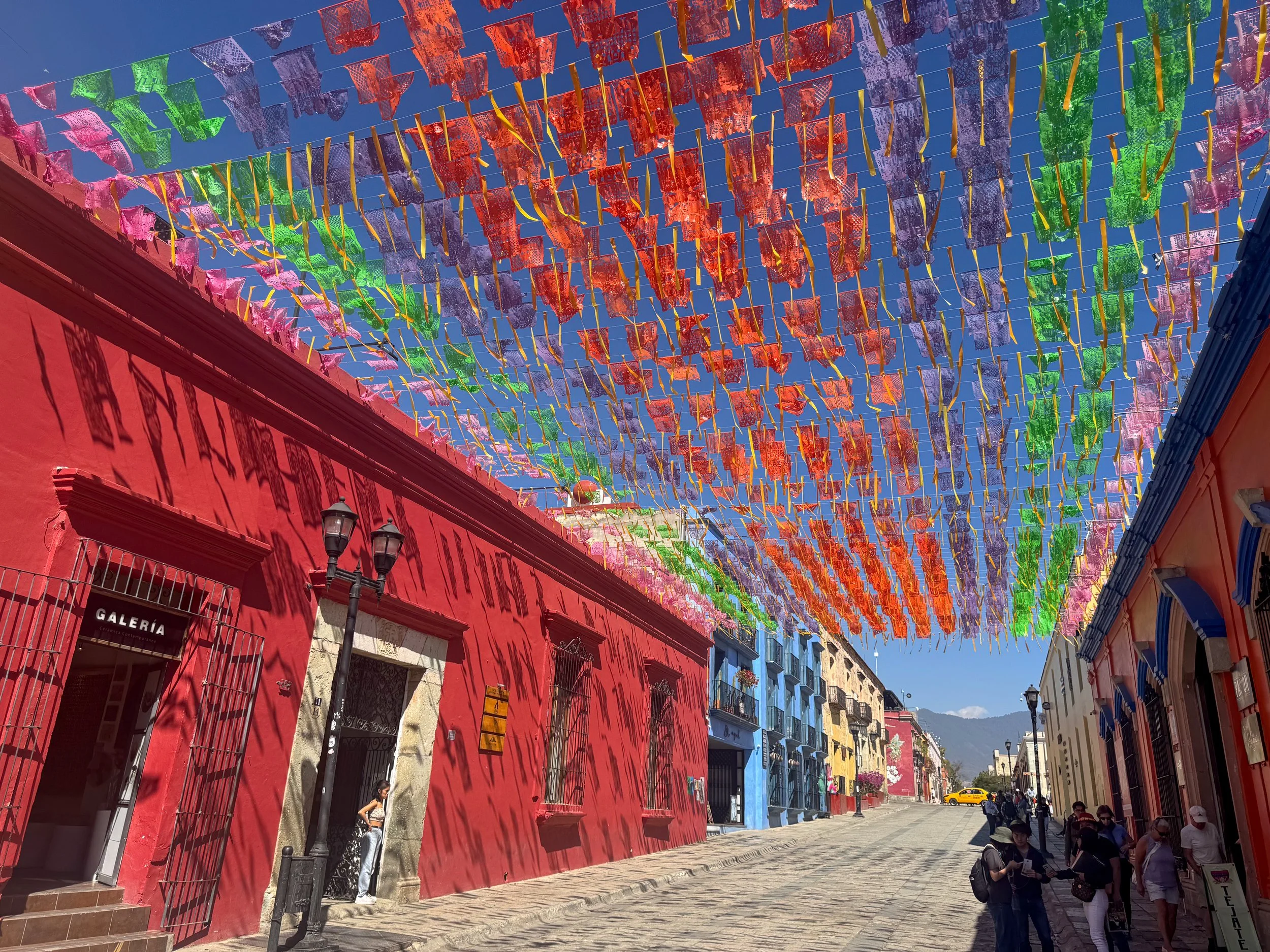
Oaxaca Travel Guide: Food, Mezcal & Cultural Experiences
Immerse yourself in Oaxaca, Mexico's cultural hub for vibrant markets, artisanal mezcal, regional cuisine, scenic landscapes and centuries of tradition.
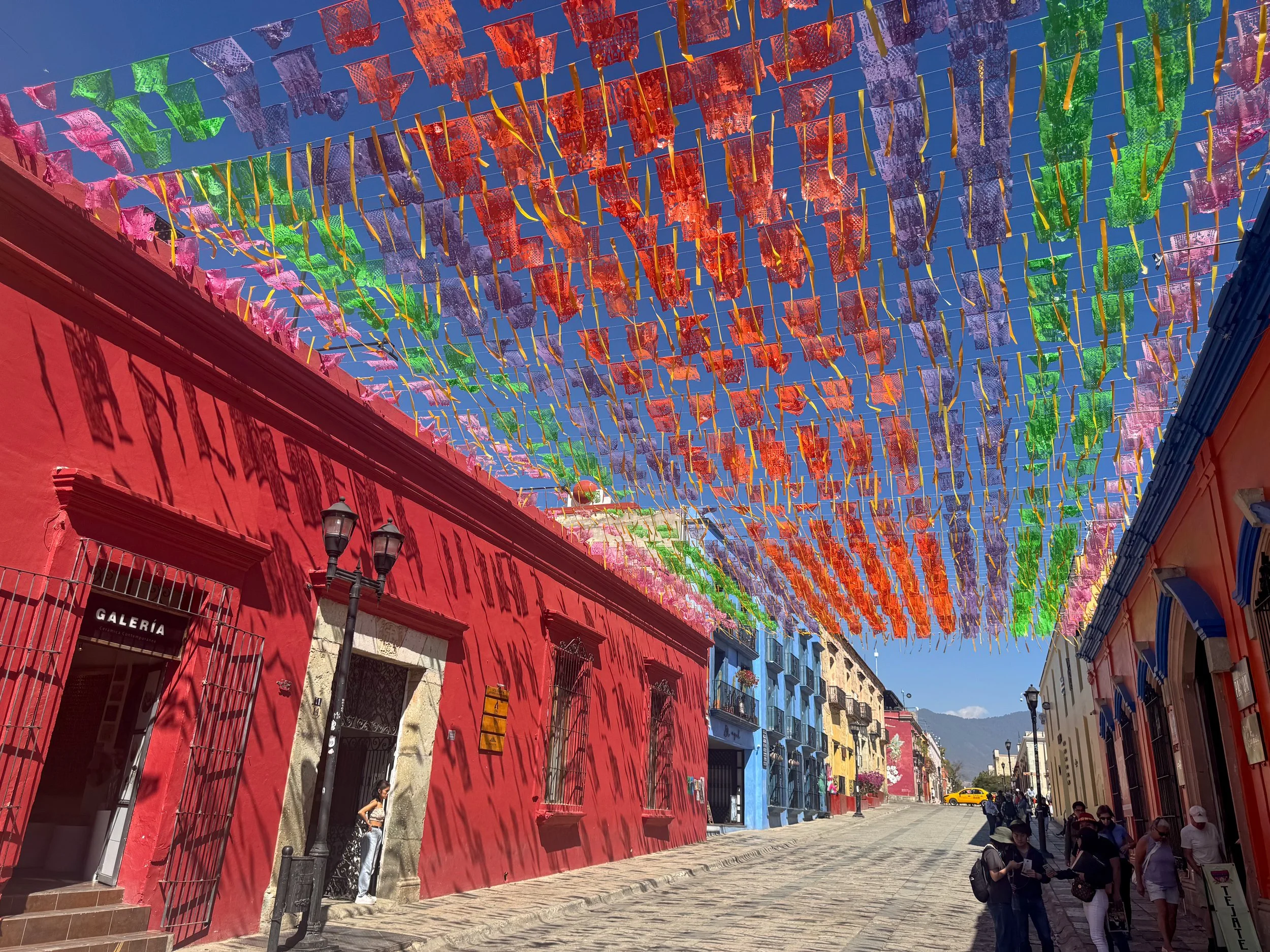
Oaxaca, Mexico
Oaxaca is the cultural hub of Mexico famed for its cuisine, artisan goods, ancient ruins, colonial pueblos and scenic landscapes. Across the region, traditional dishes are prepared by street food vendors, in restaurants and at markets. Generations of artisan makers produce patterned textiles, vibrant alebrijes, wood block prints, leather goods and traditional ceramics. Archeological sights and museums display ruins and artifacts from the Zapotec civilization. The mountainous desert landscape is covered in fields of maguey plants and Mezcal distilleries. Tropical beaches and surf towns line its Pacific coast. At its center, an energetic and colorful capital city is where the best of everything in Oaxaca comes together. We spent over a week here, meeting up with friends and exploring the region together.
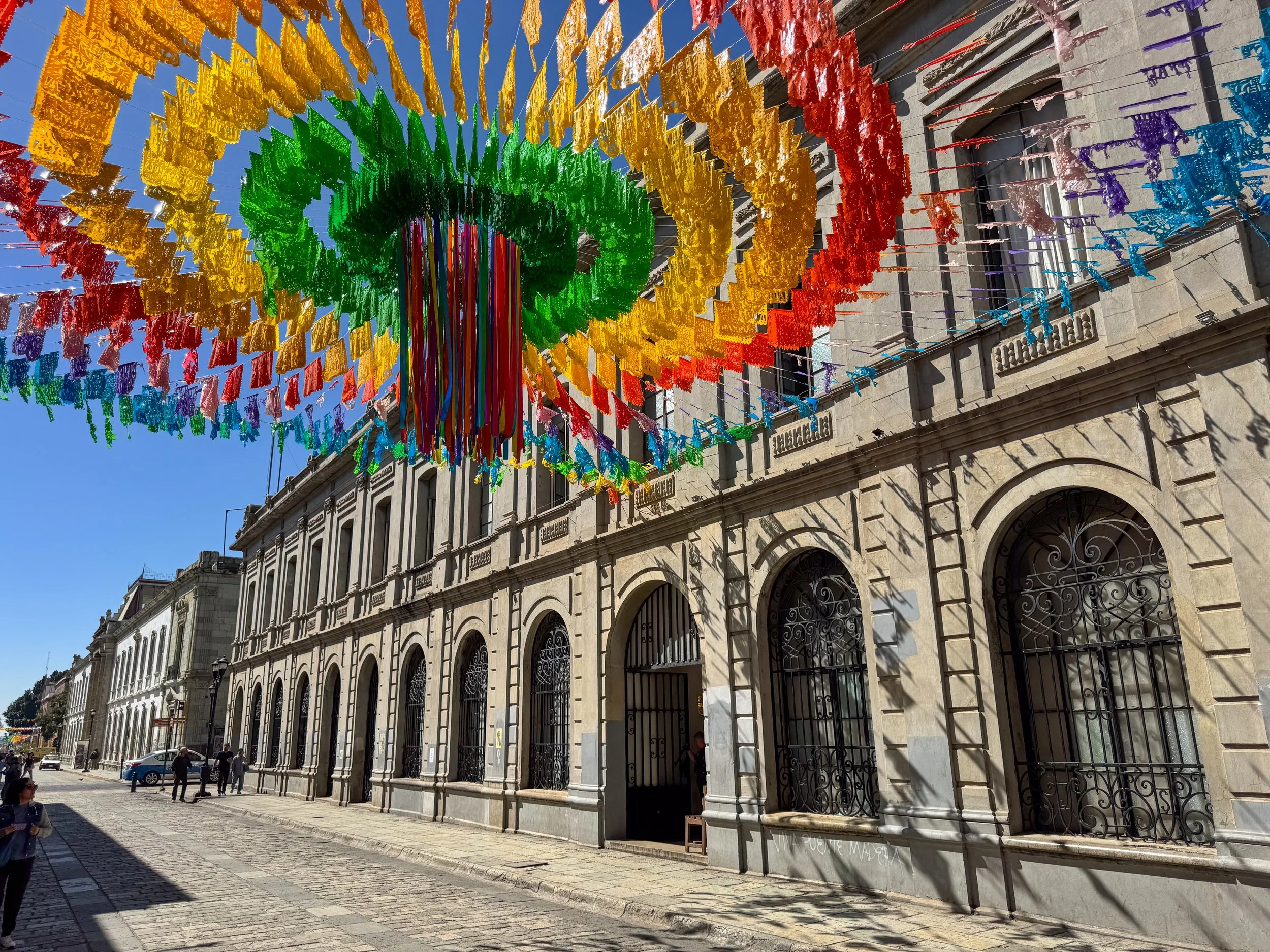
Bienvenidos a la Oaxaca!
We arrived after midnight in Oaxaca. On our first morning, we were woken up by the sounds of the Tamale Lady listing off her tamales over a loudspeaker. “Tamales de amarillo, tamales de raja, tamales de salsa verde, tamales de pollo, tamales de cebolla, tamales de elote, tamales de chipilín.” The list went on and on! We were in Oaxaca!
Oaxaca de Juarez
Oaxaca de Juarez is the metropolitan center of Oaxaca. Its cobblestone streets are lined with historic colonial buildings, draped with colorful Mexican banderas and decorated with street art and murals. Around town, the vibrant culture is experienced through cuisine and artistry. Local dishes are served at Oaxacan style restaurants, food markets and from street carts. Artisan goods produced in pueblos across the region are sold in shops and displayed in galleries and museums.
Barrios de Oaxaca
Centro Historico. The historic center of Oaxaca is an architectural gem home to numerous cultural sights, markets, hotels, artisan shops, restaurants and cafes. Its photogenic streets are a sight to wander. Adobe facades are painted in a spectrum of vibrant hues and large murals. Ornate stone buildings and cathedrals overlook lush plazas. Flowering trees and potted cacti rest on rooftop ledges and decorate courtyards.
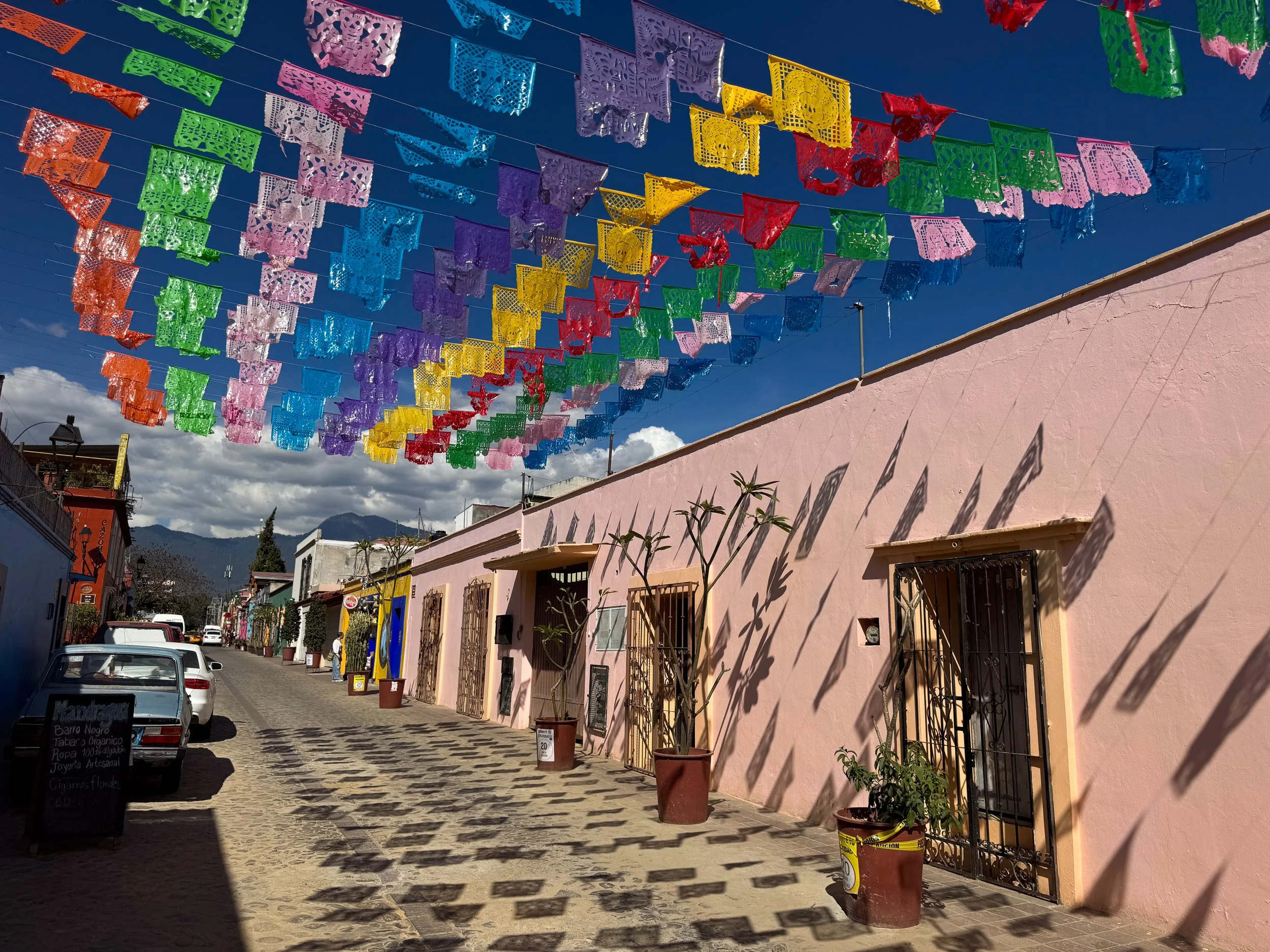
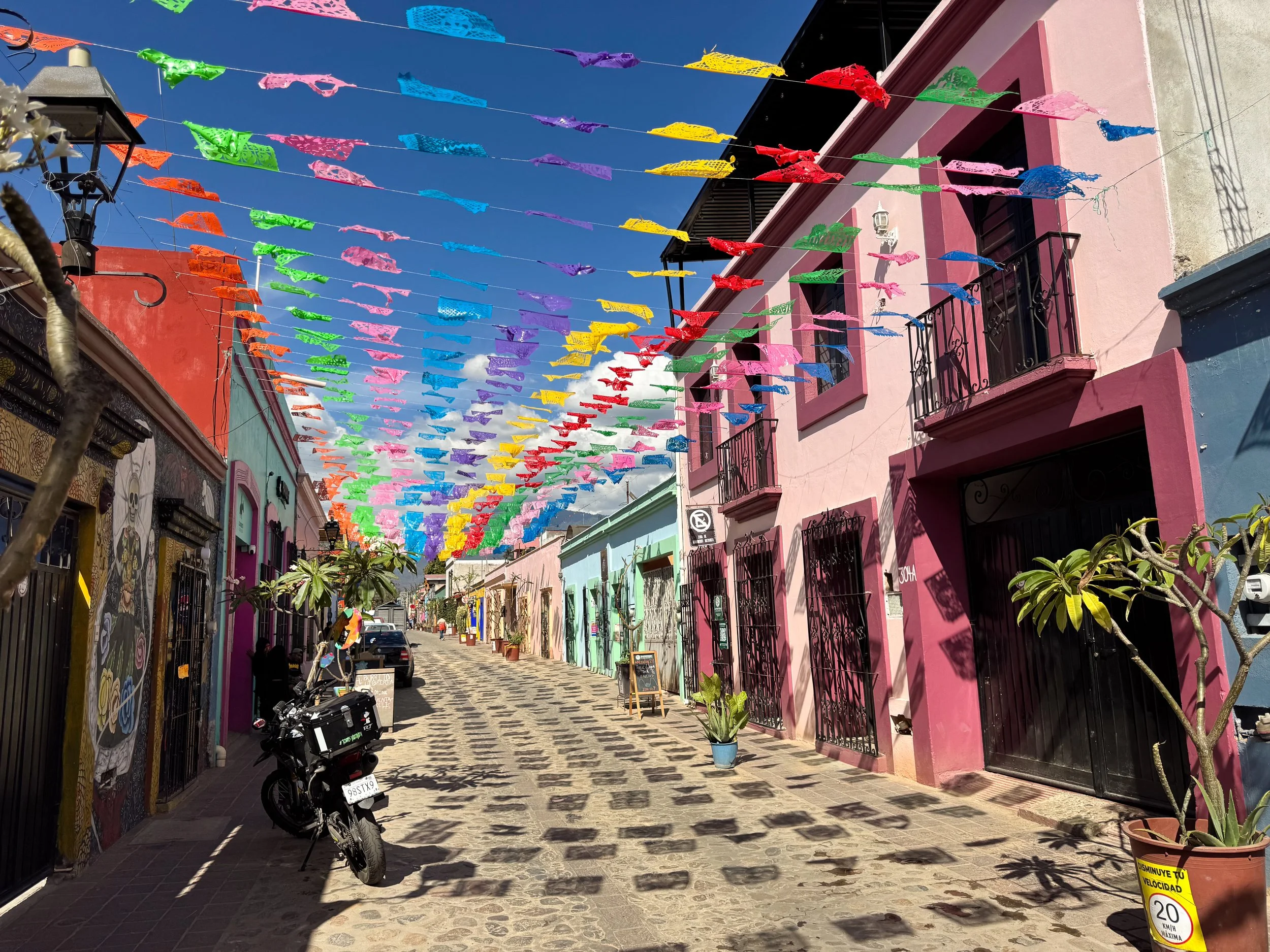
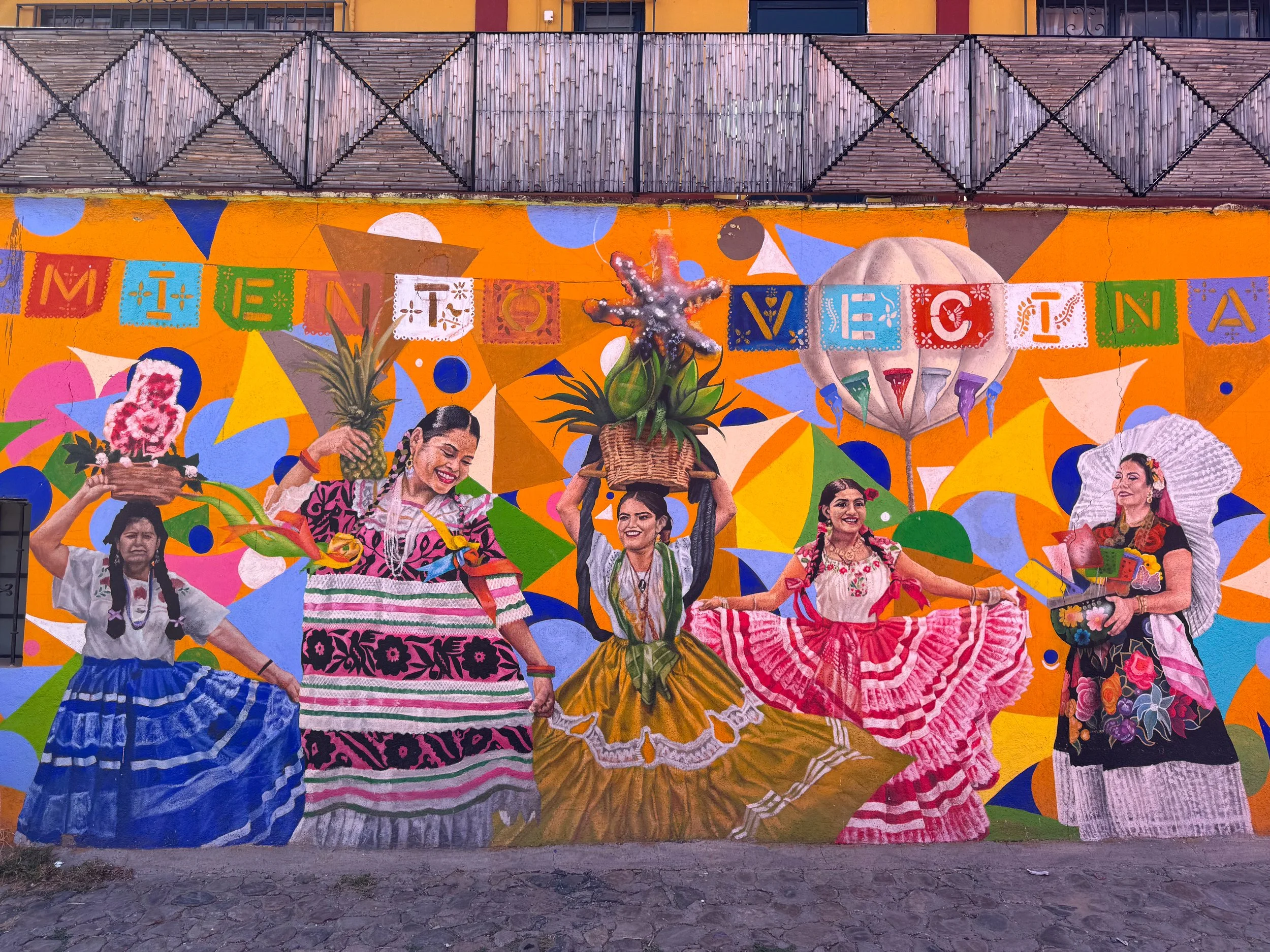
Barrio de Jalatlaco. A small and invitingly youthful barrio with indie vibes, print studios, thrift shops, used book store, hostels, digital nomad friendly cafes and mezcal bars. Much like the city center, the cobblestone streets are decorated with strings of colorful banderas and vibrantly painted buildings. Paper graffiti and murals depicting cultural scenes and traditions like dancing, piñatas and Día de los Muertos celebrations cover walls.
Visit the Plazas & Squares
El Llano. A large plaza with fountains, walkways and gardens with cacti, palms and yellow flowering trees. The perimeter is lined with food carts selling agua frescas, griddled hamburgers, candies, pan dulces, coffee and tortas. We ordered iced coffees and cococada, essentially a hay stack of sweetened and baked coconut. We wandered around, people watched and posed in a photo booth.
Plaza de la Danza. A plaza dedicated to restaurants serving dozens of flavors of Nieves, a creamy and icy frozen treat similar to a sherbet. Visiting with a group of friends, we ordered a range of scoops combining several regional flavors like mamey (creamy fruit), elote (sweet corn), leche quemada (burnt milk), tuna (prickly pear), tequila and mezcal.
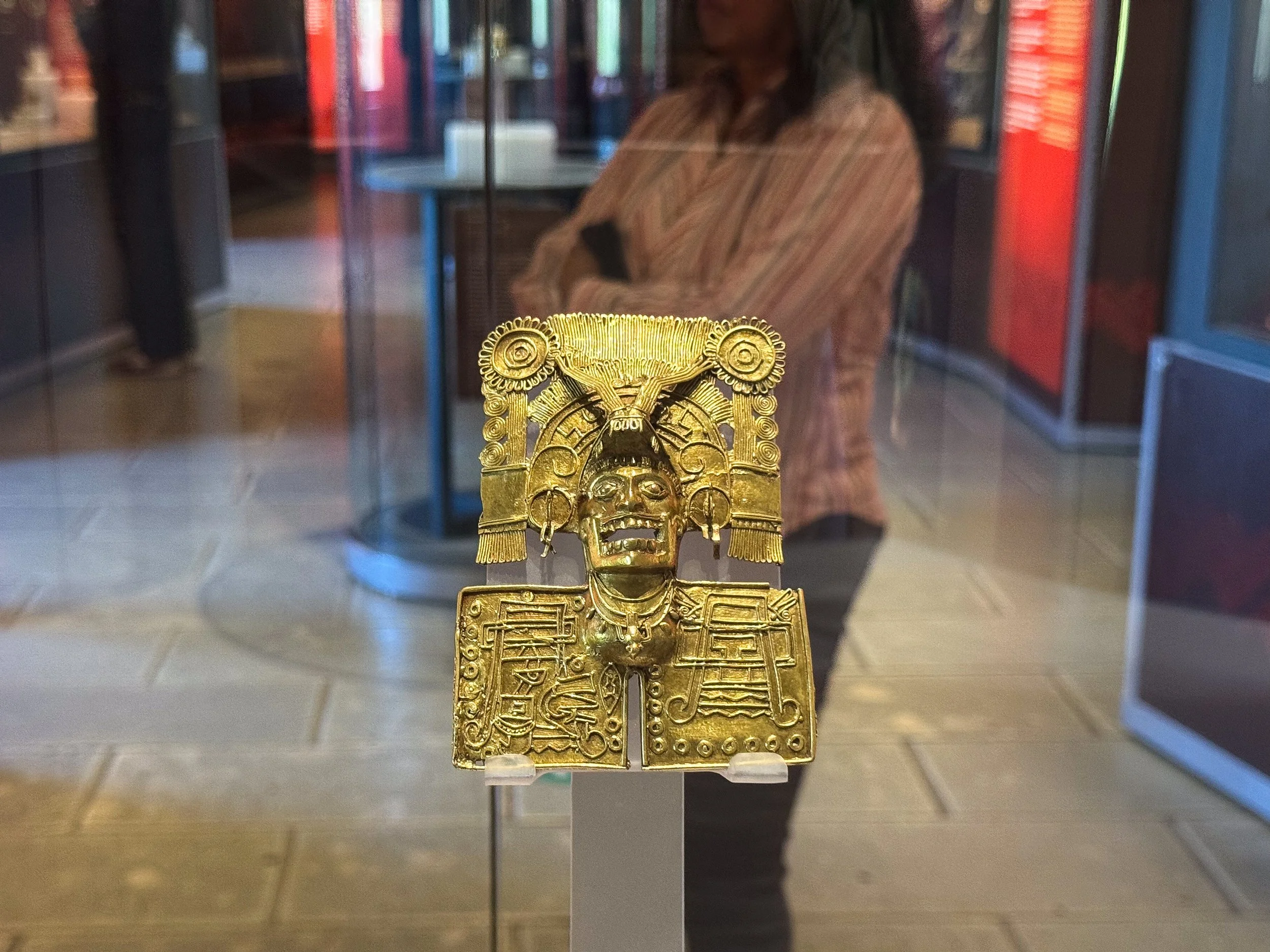
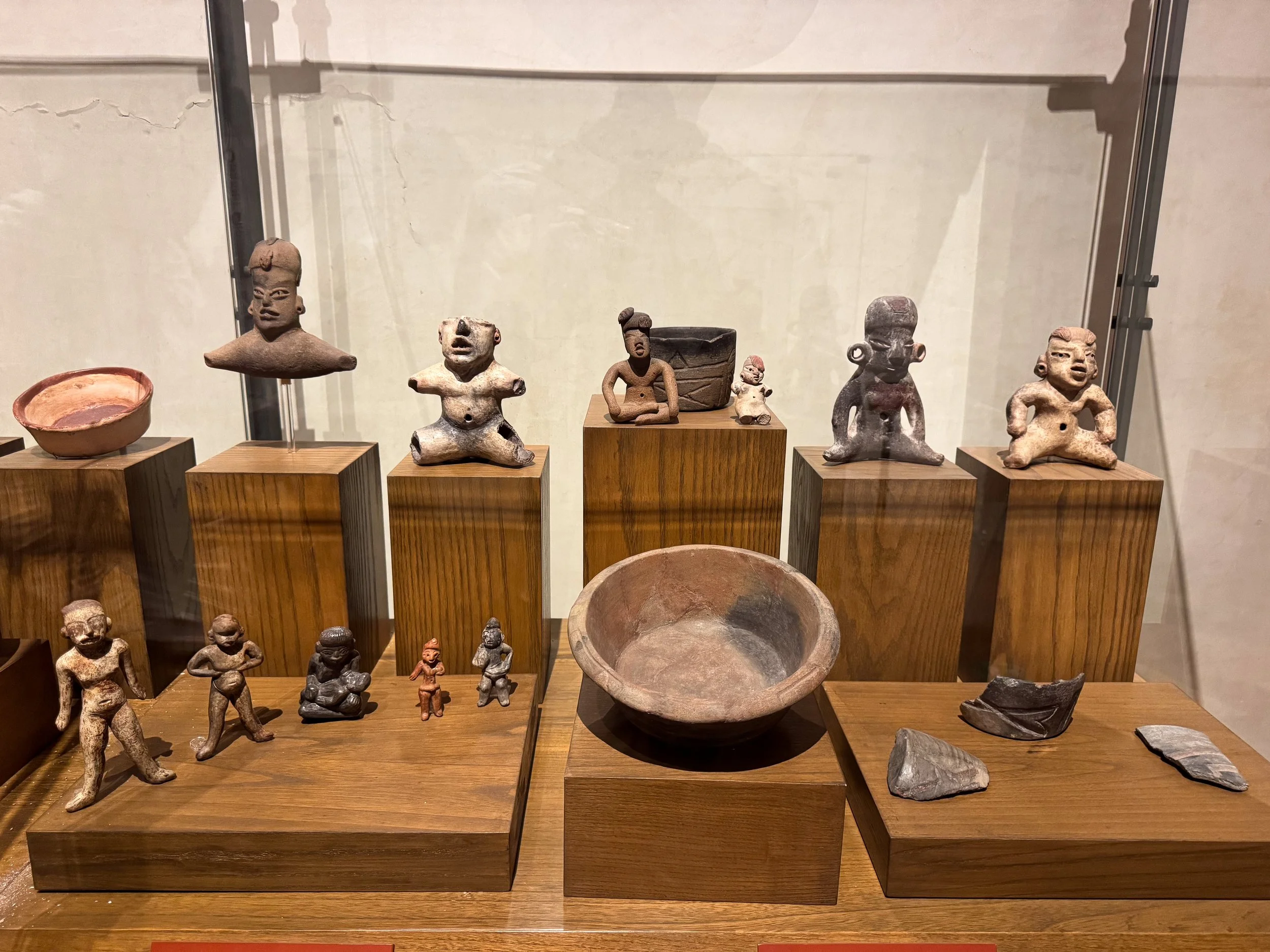
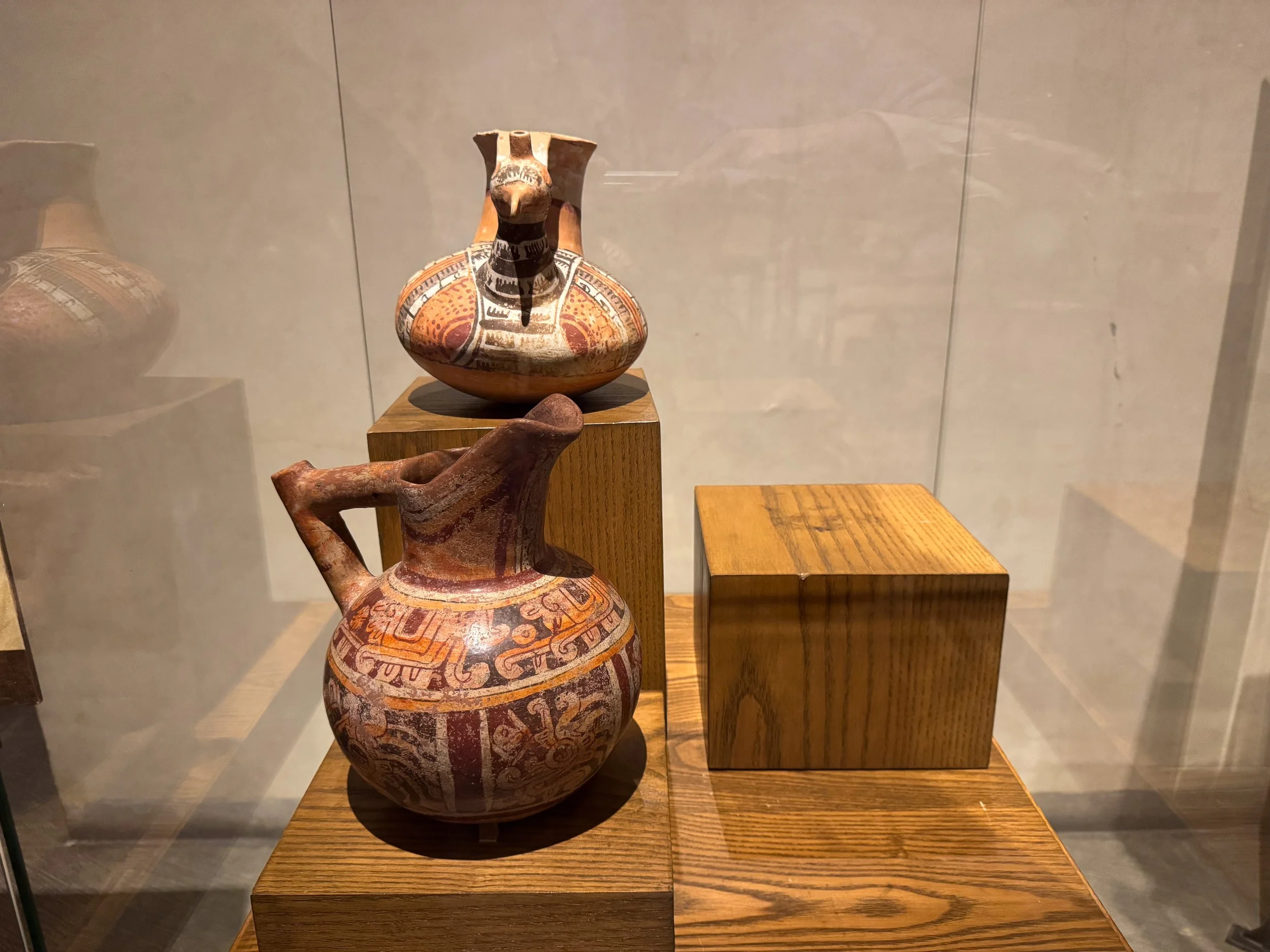
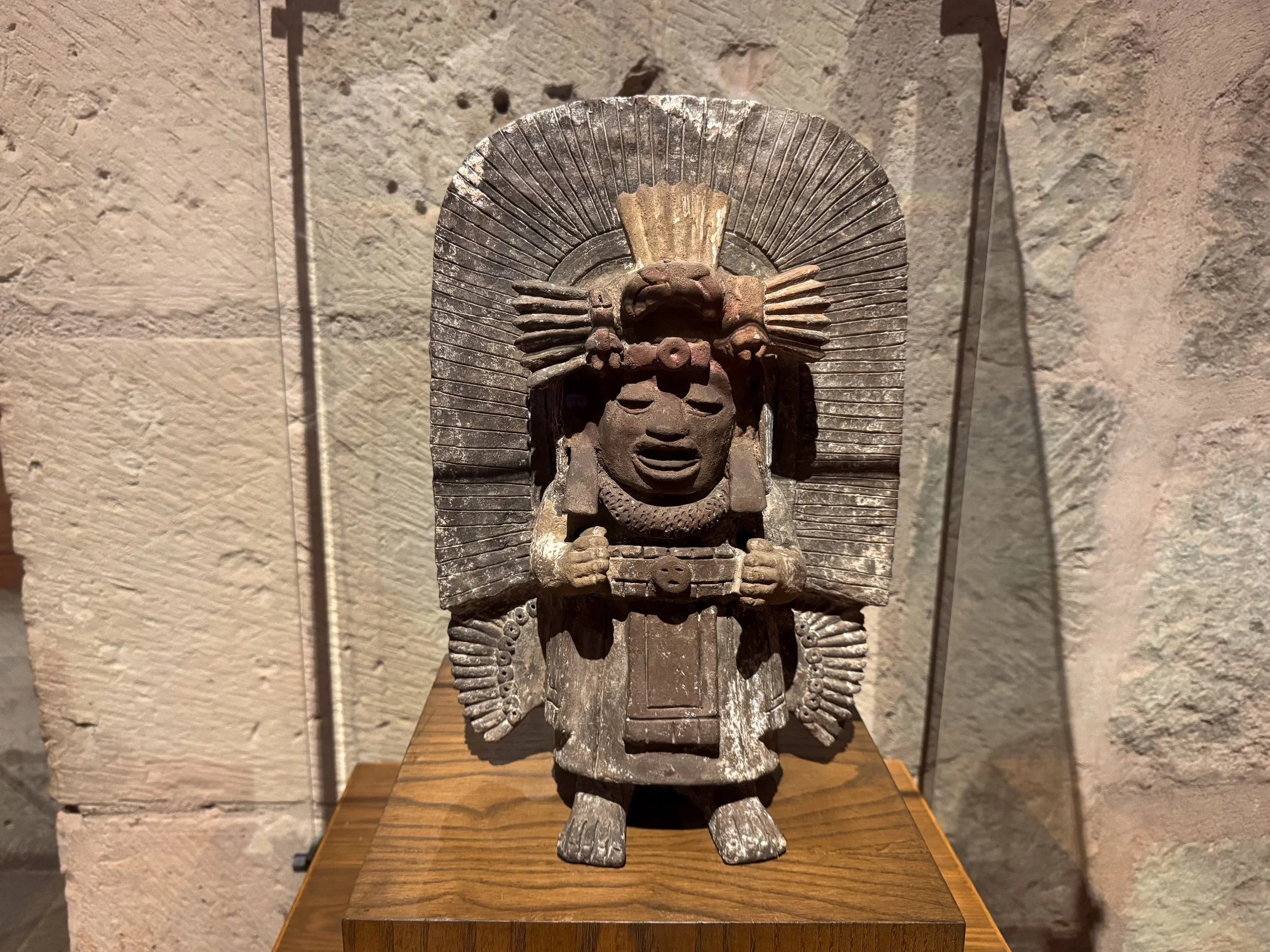
See the Sights & Museums
Museum of Cultures of Oaxaca. A former convent converted into a cultural museum built from Cantera, Oaxaca’s iconic green tinted volcanic stone. The museum houses artifacts from Monte Albán including ceramics, stone stelas and most notably, the Mixtec treasures once buried in Tomb 7 at the ruins. The tomb’s treasures include intricate gold masks, beaded jewelry made from a range of precious materials, elaborate ceramic figures, intricately carved bones and most notably, a skull with cranial deformations decorated in a fine mosaic of turquoise. Other exhibits include a historic library, artifacts from the colonial period and artwork of Oaxacan artists.
Catedral Metropolitana. A nearly 500 year old cathedral with symmetrical bell towers and a baroque style facade carved from stone blocks.
Museo Textile de Oaxaca. A small museum with textiles from the Oaxaca and across Central America featuring traditional designs and contemporary pieces. It’s free to enter.
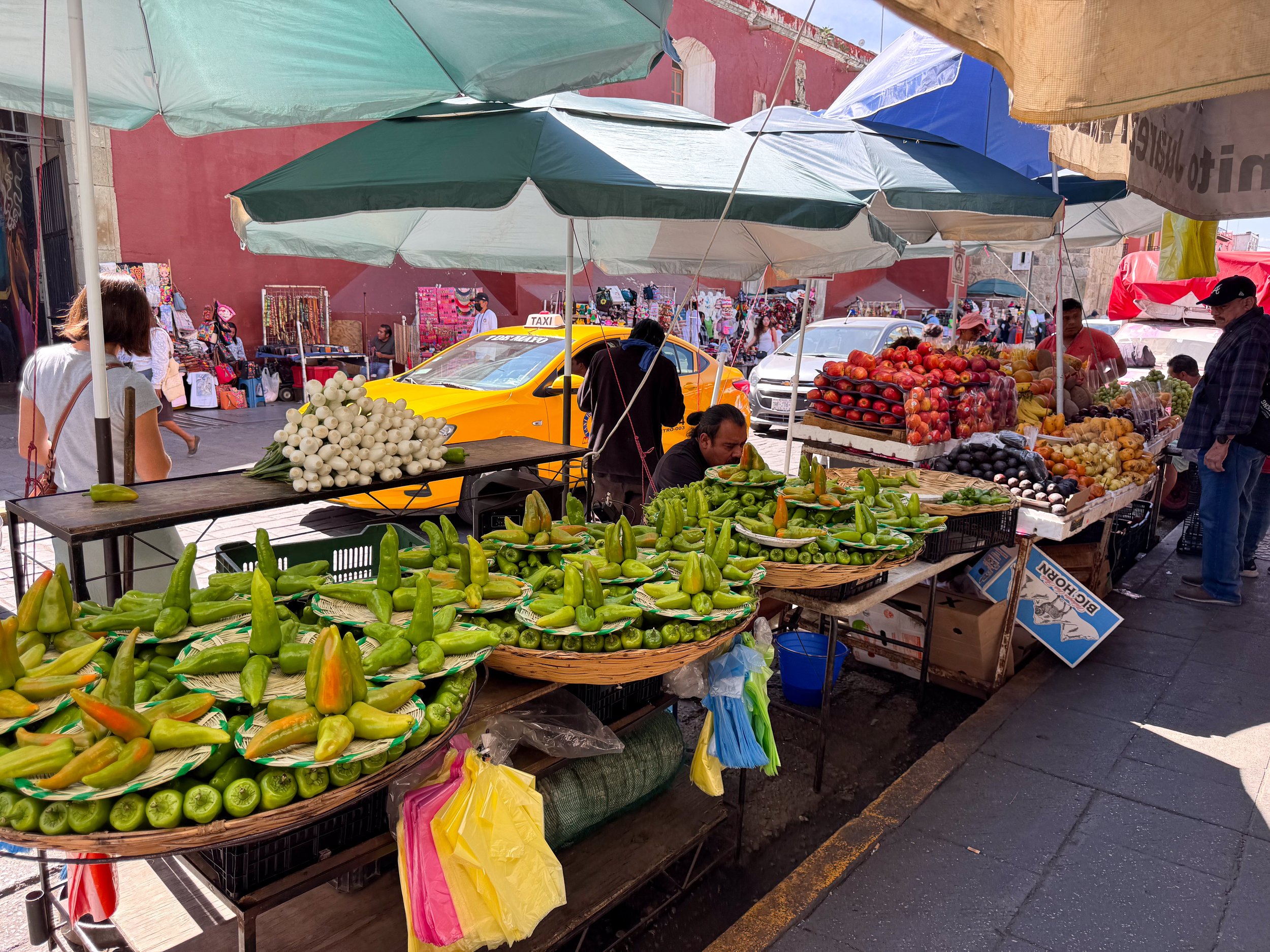
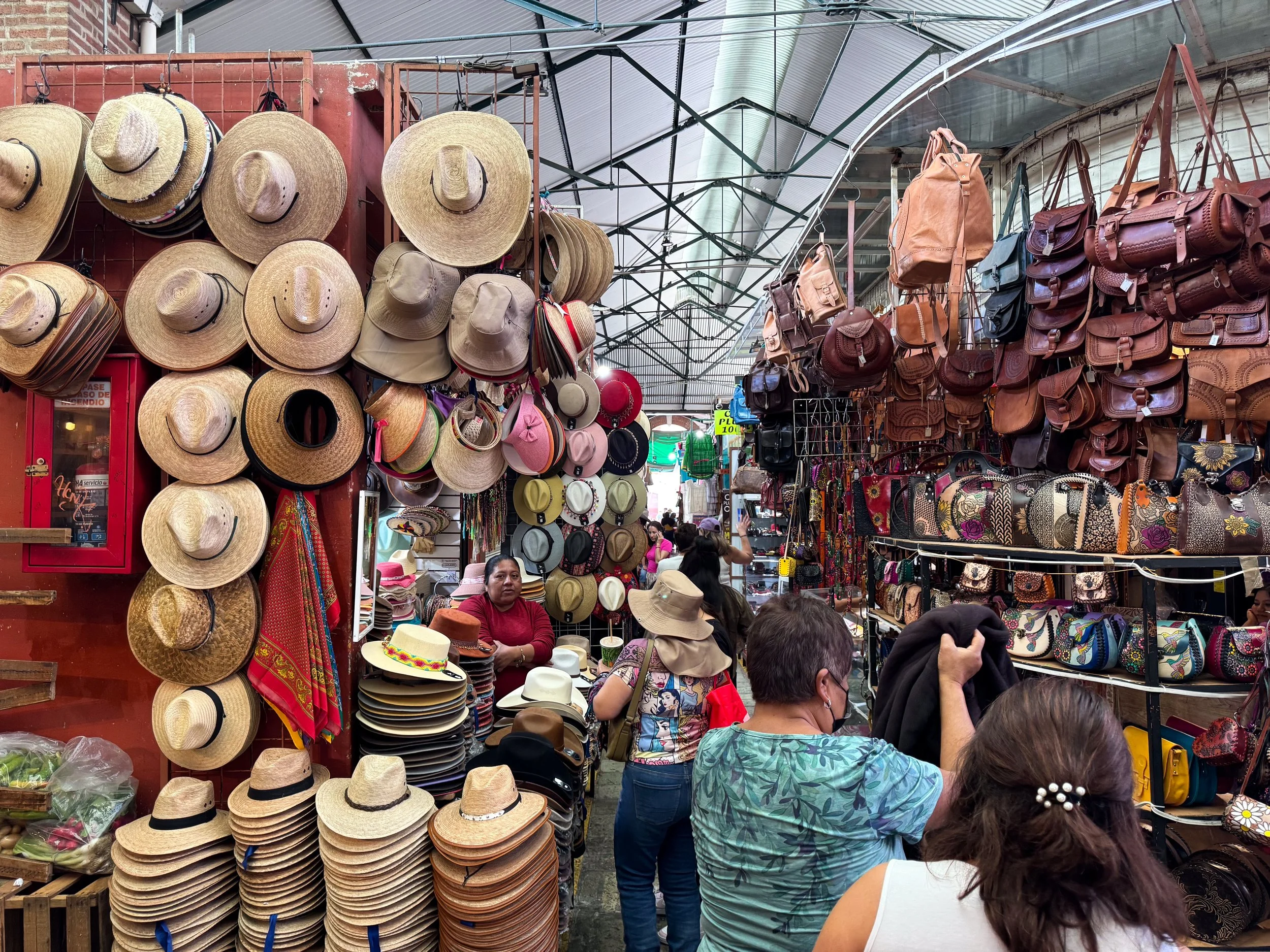
Shop the Markets
Mercado Benito Juarez. A vast market with all manner of vendors selling fruits and vegetables, meats, seafood, mounds of mole pastes, bottles of mezcals, Oaxacan cheese, corn tostadas, dried chile peppers, barrels of spiced chapulines (grasshoppers), fresh cut flowers and handmade items. We shopped here for groceries, snacks and mezcal.
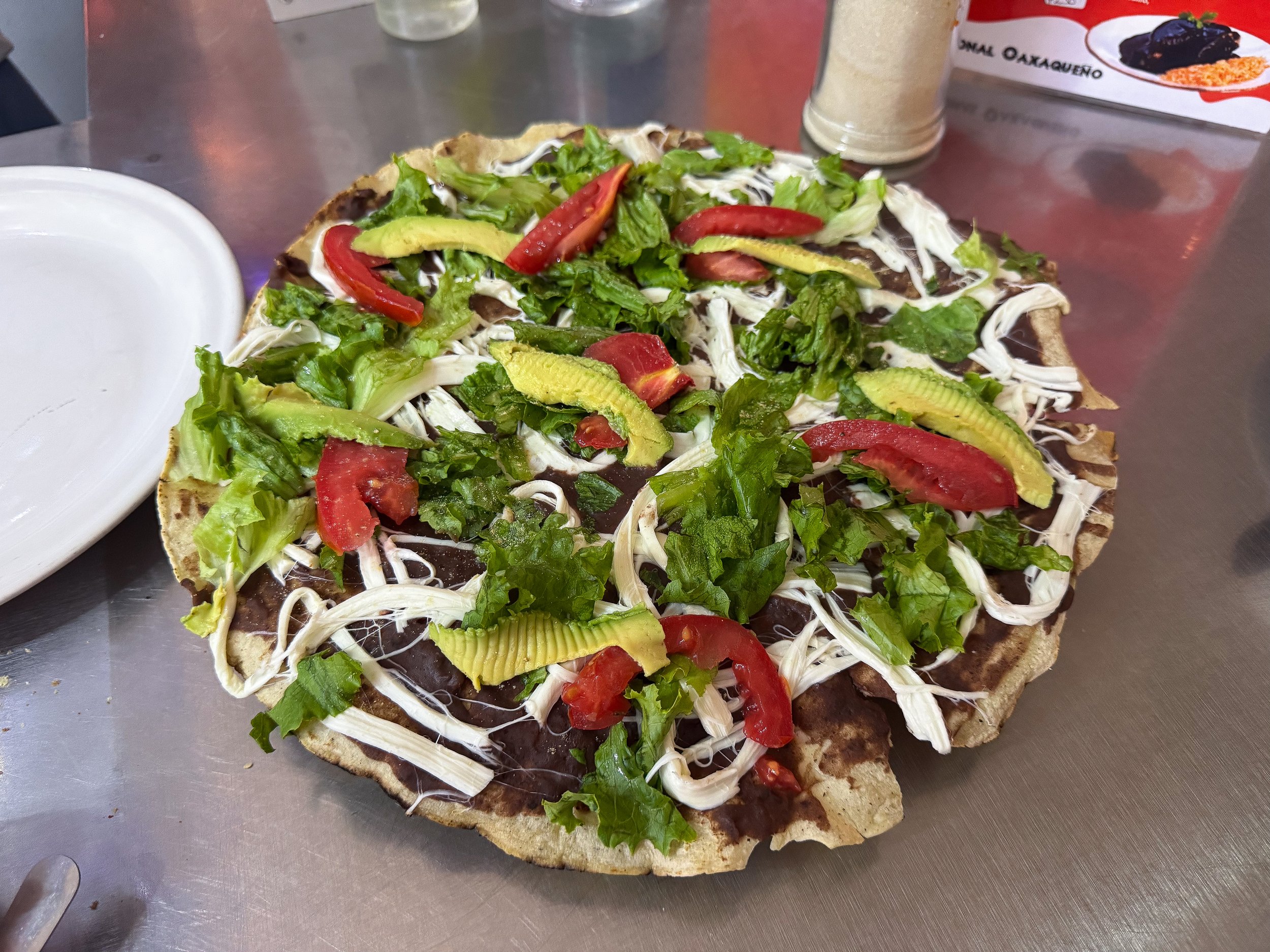
Mercado 20 de Noviembre. A large food market with aisles of vendors selling breads, traditional Oaxacan dishes and grilled meats. The intoxicating smell of freshly baked breads wafts from dozens of panaderías selling Pan de Yema, Mollettes de Panela, Pan Amarillo and various Pan Dulces. From kitchens within the maze of restaurant stands, cooks shout out their menu offerings, typically including Oaxacan staples like tlayudas, mole y pollo and chiles rellenos. Wafts of heat, smoke and the sizzling smell of grilled meats and sausages radiate from Pasillo de Humo, a passageway with coal and wood fired grill stations. We ate here for breakfast and lunch visiting two restaurant stands.
Fonda Lupita for tlayudas and pan de yema served with a mug of cafe de olla.
La Abulita for tlayudas, horchata and freshly squeezed orange juice. We shared a vegetarian tlayuda prepared with a large cracker thin tortilla and covered in puréed black beans, bright orange squash flowers, Oaxacan cheese, lettuce, tomato and avocado.
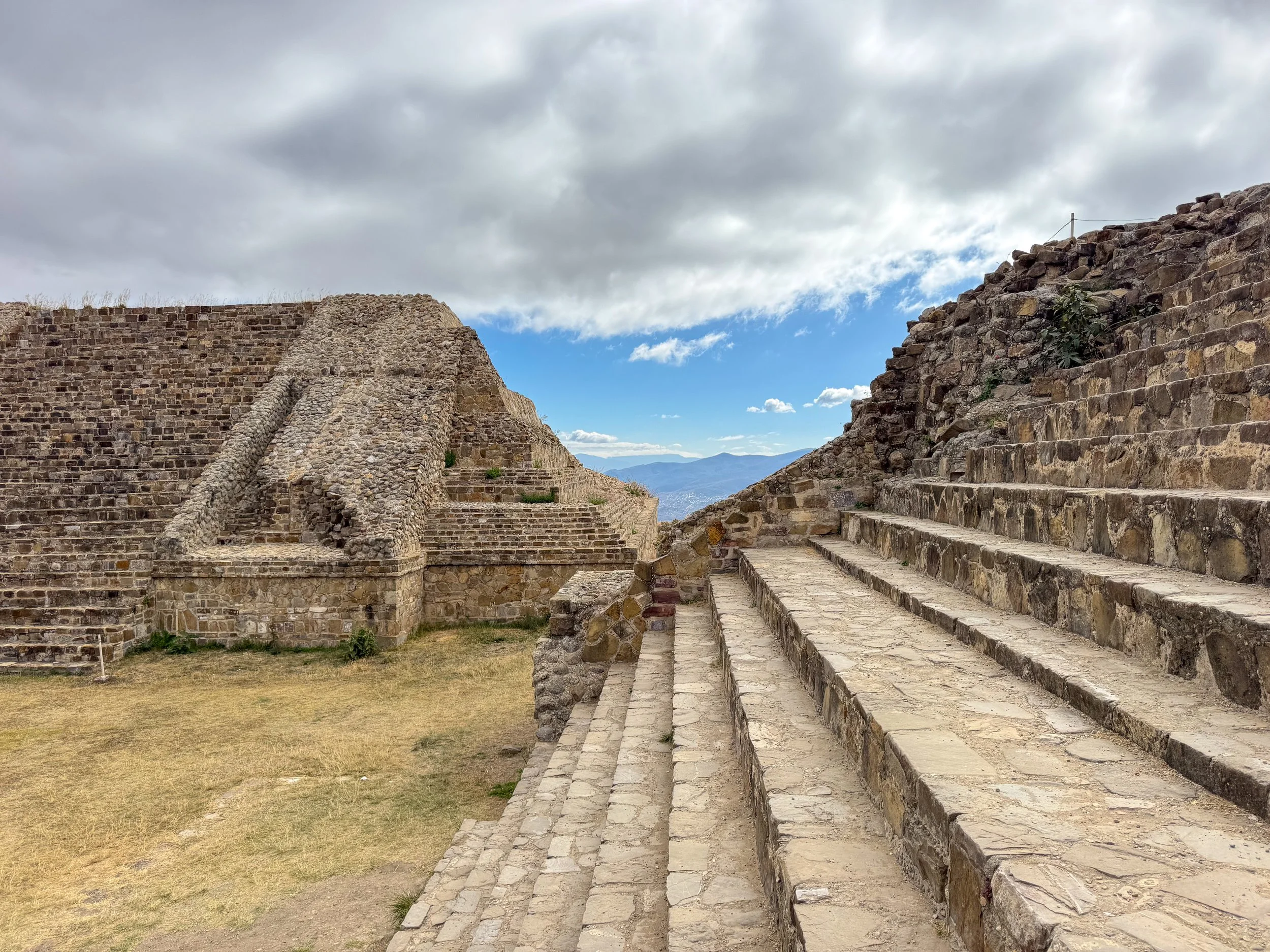
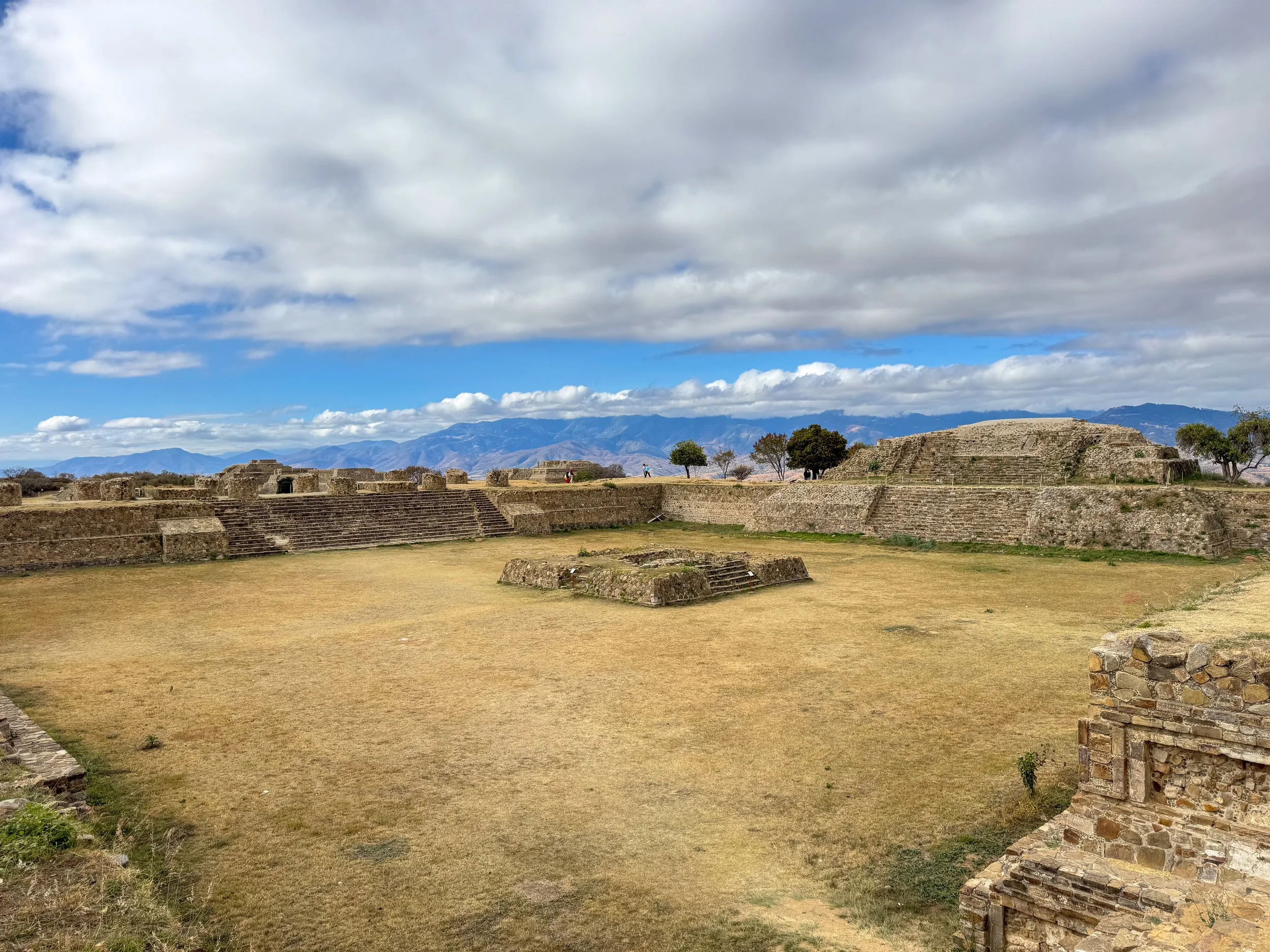
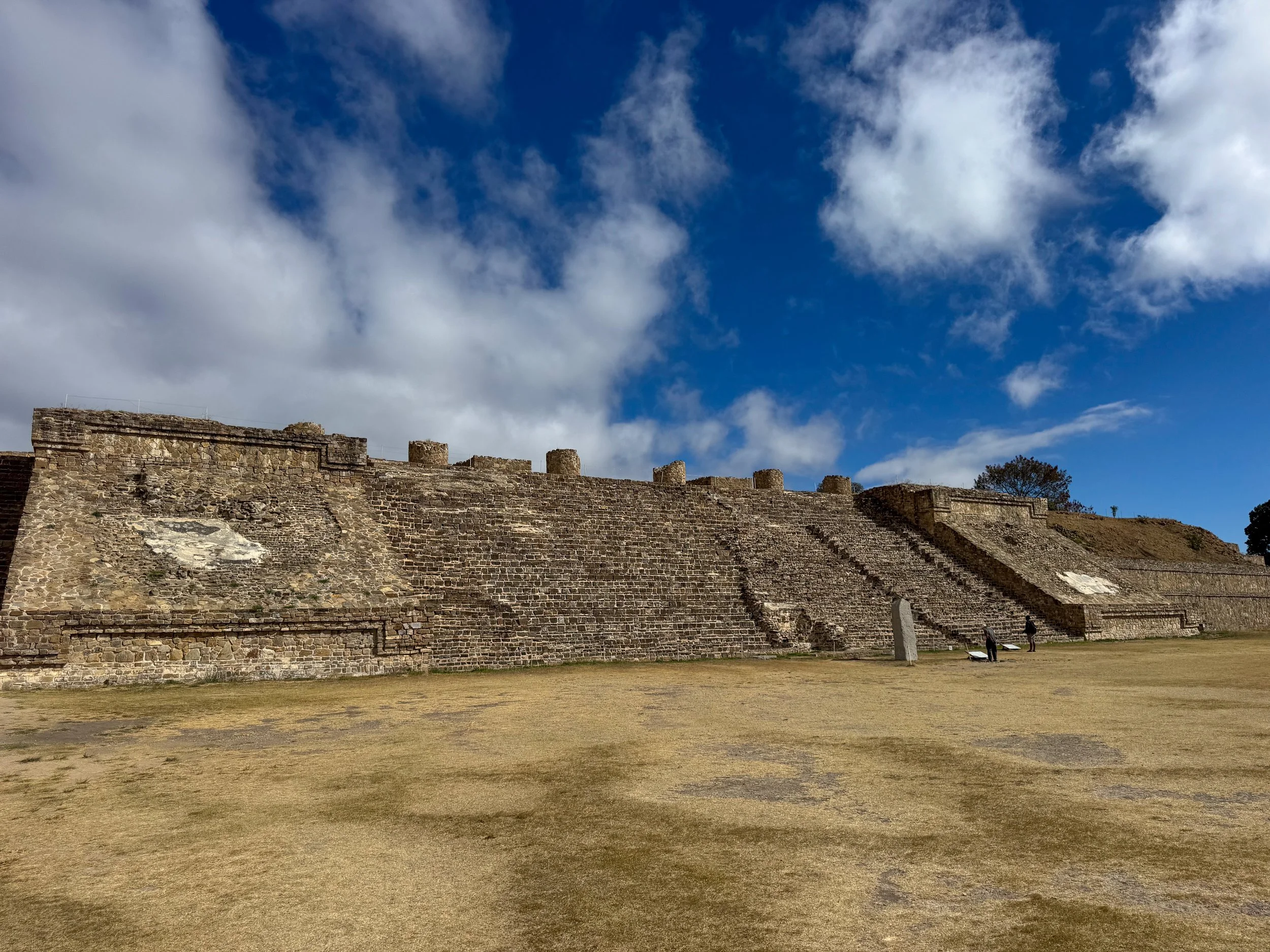
Monte Alban
Monte Alban is an ancient Zapotec hilltop acropolis with stepped pyramids, ball courts, astronomical temples, grand plazas, platforms, palaces and tombs. We spent four hours exploring the ruins, reading the plaques and contemplating life during the ancient times of the Zapotec.
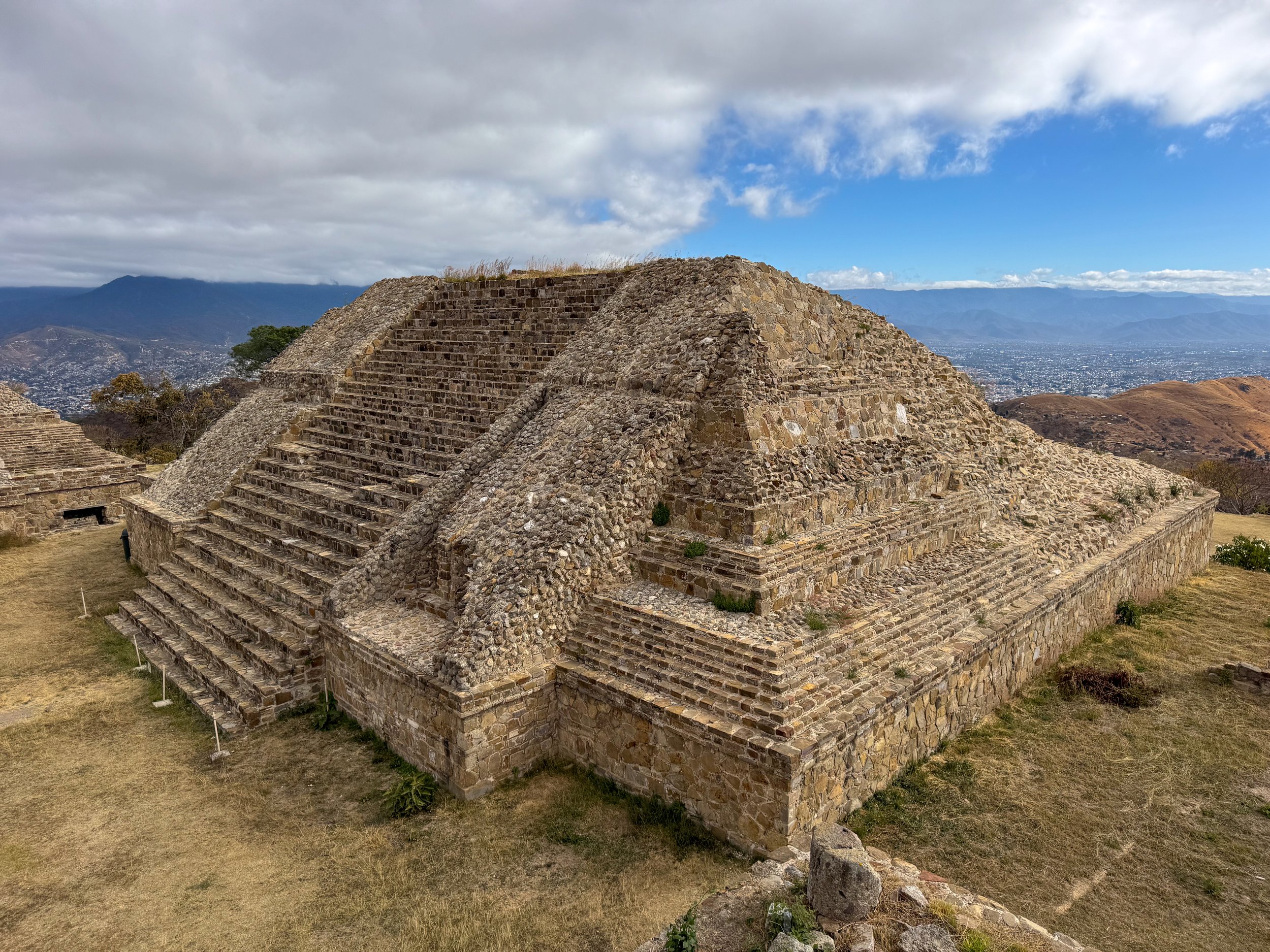
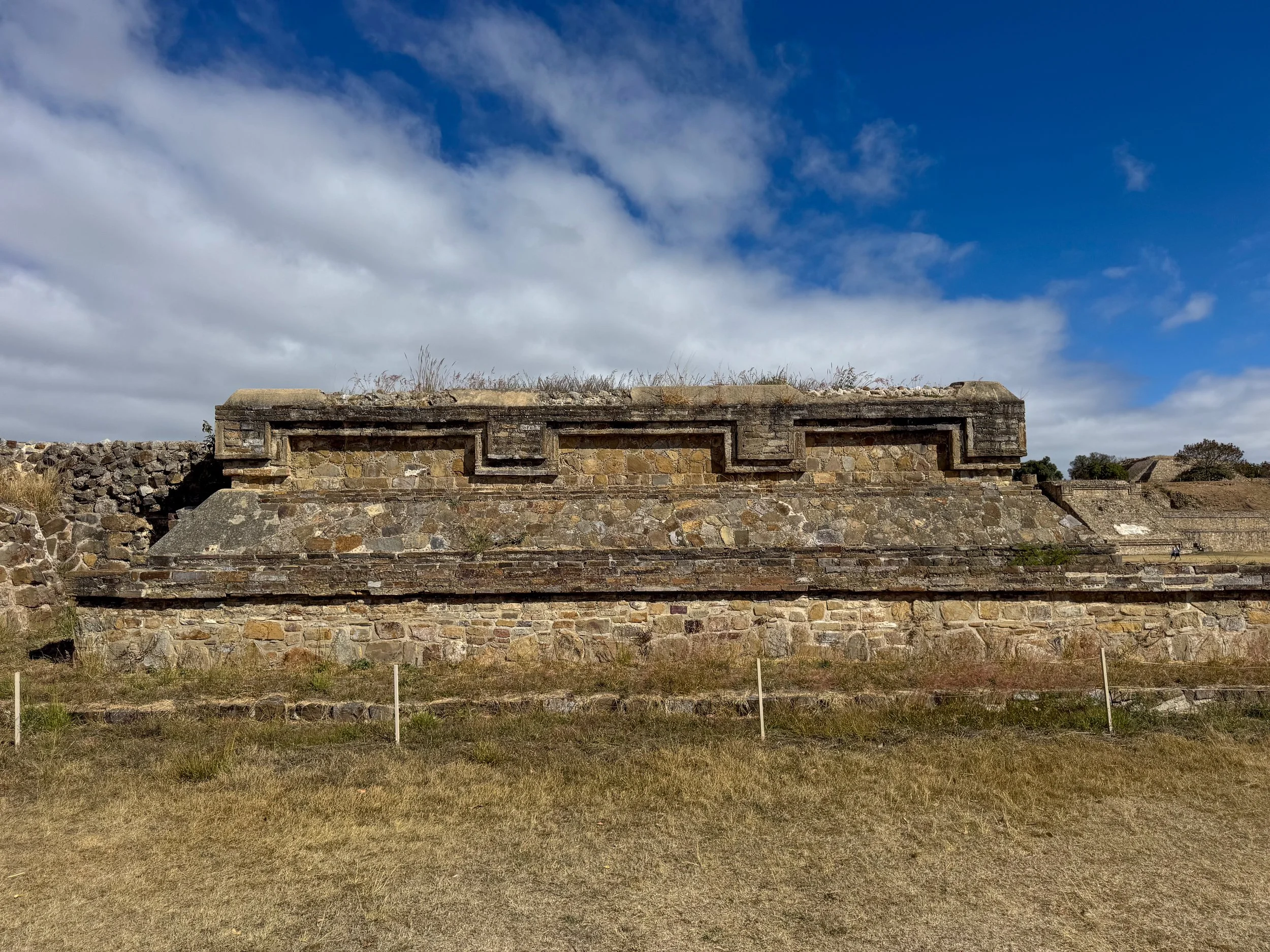
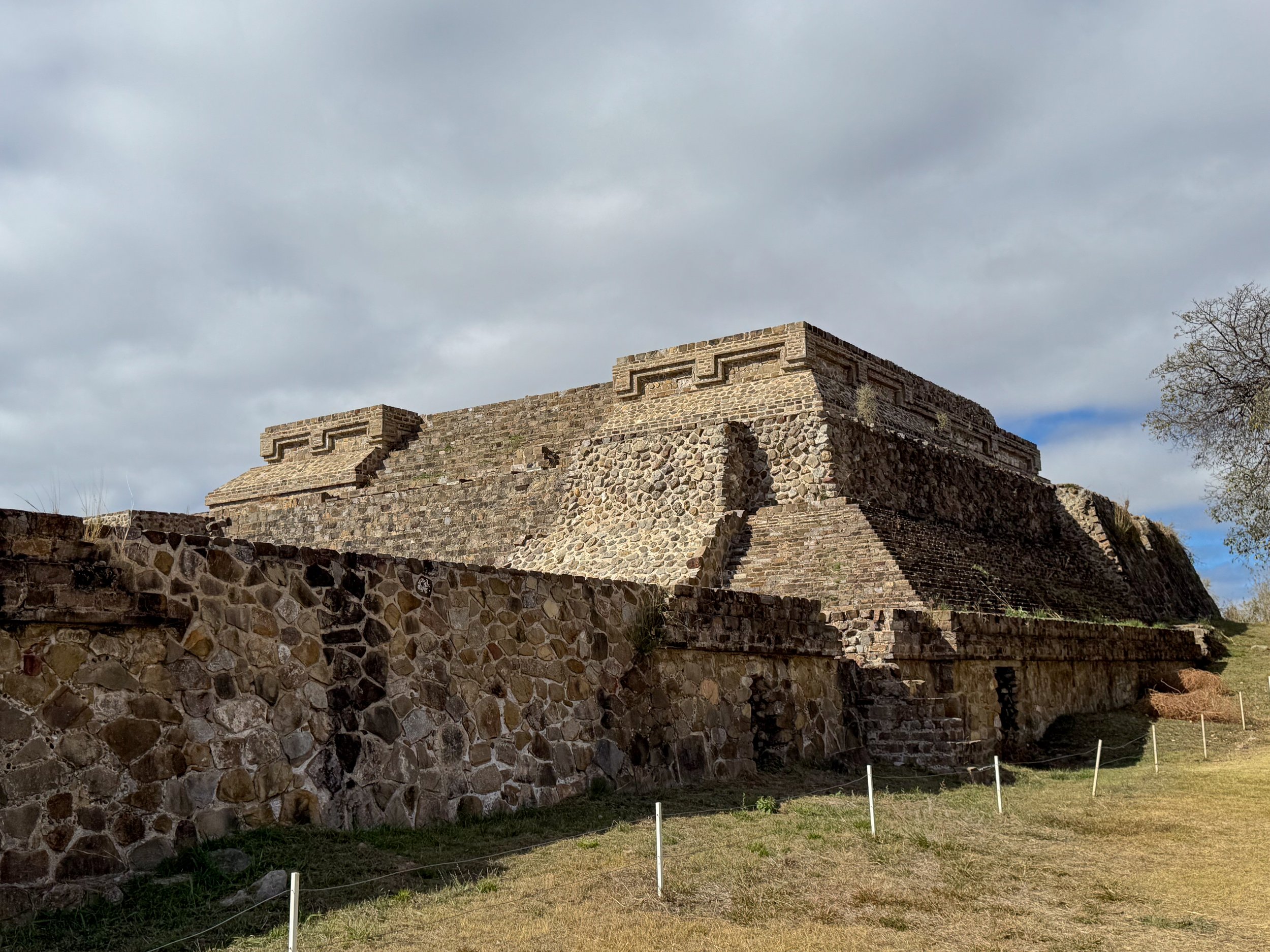
Galería de Los Danzantes (Gallery of The Dancers). A stone wall adorned with over a dozen carvings of castrated male figures depicting a blood sacrifice or fertility ritual.
Plataforma Sur (South Platform). The tallest platform and pyramid of the entire acropolis located at its most southern point.
Edificio 1 (Building 1). The only building of the entire acropolis that does not align with the cardinal points. It is thought to have been used as an astronomical observatory by Zapotec priests. It’s adorned with a series of conquest stones depicting Zapotec battles and victories.
Platforma Norte (North Platform). The largest platform of the entire acropolis with several well preserved pyramids buildings and structures featuring geometric designs and monumental stelas.
El Patio Hundido (The Sunken Patio). A prominent feature of the North Platform, a sunken patio with an altar at its center used for ceremonies and rituals.
Juego de Pelota (Ball Court). A large ball court with sloped stone sides and a goal marker on the floor of its center. Contrasted with Mayan ball courts, the Zapotec did not sacrifice players but used the game for religious celebrations and to settle disputes.
Monte Alban Museum. A museum with ornate stelas, well preserved ceramic pottery and human remains found in the tombs of Monte Alban.
Getting Here. We took a round trip shuttle from the Centro Historico with Lescas Co Tours. The ride took 20 minutes through the city and winding hillside. Pick up was every hour.
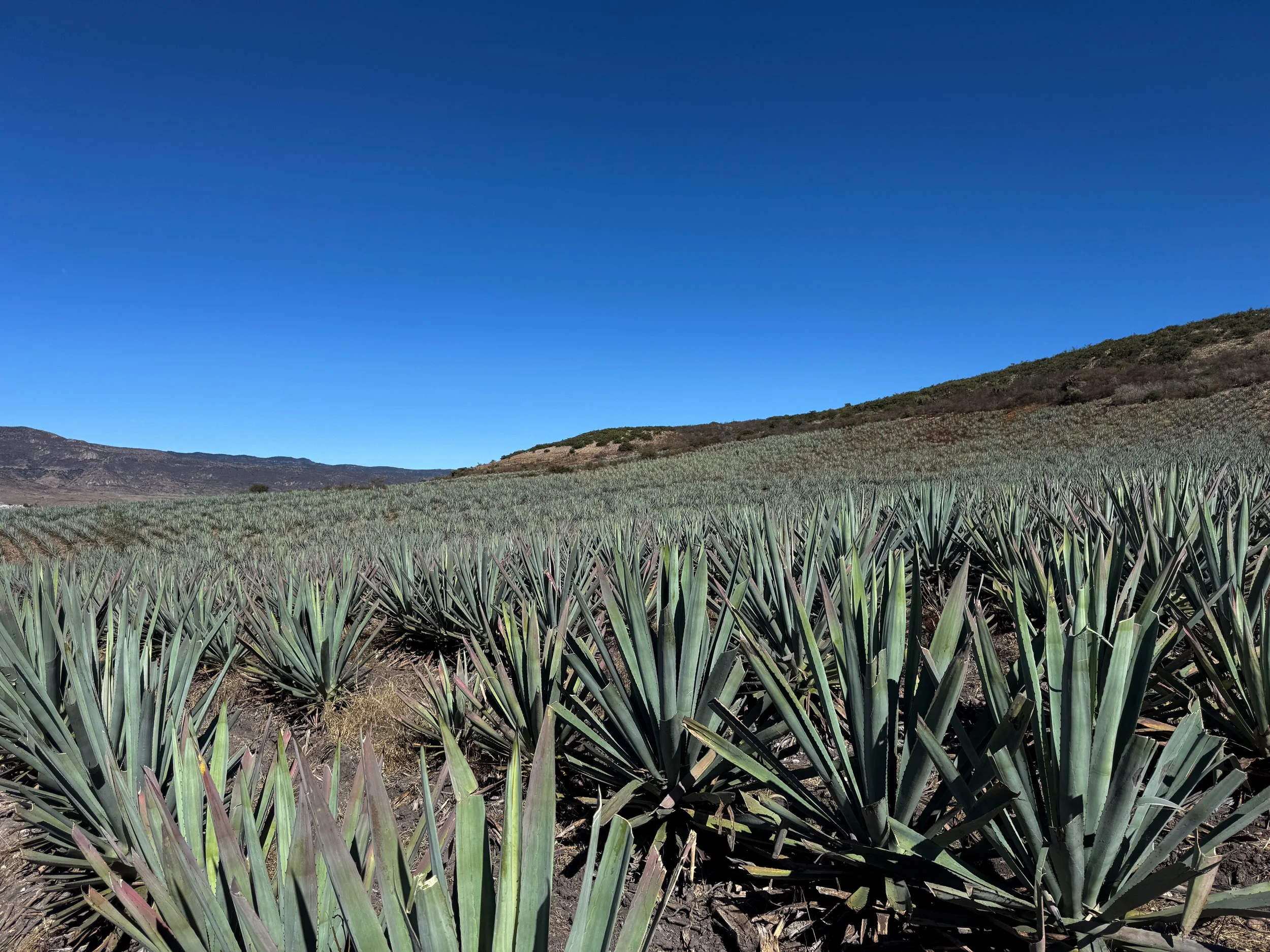
Mezcal Tour
Oaxaca is the birthplace of Mezcal, a smoky spirit distilled from the maguey plant. We toured two Palenques, distilleries where mezcal is produced and a maguey field where the plant is grown.
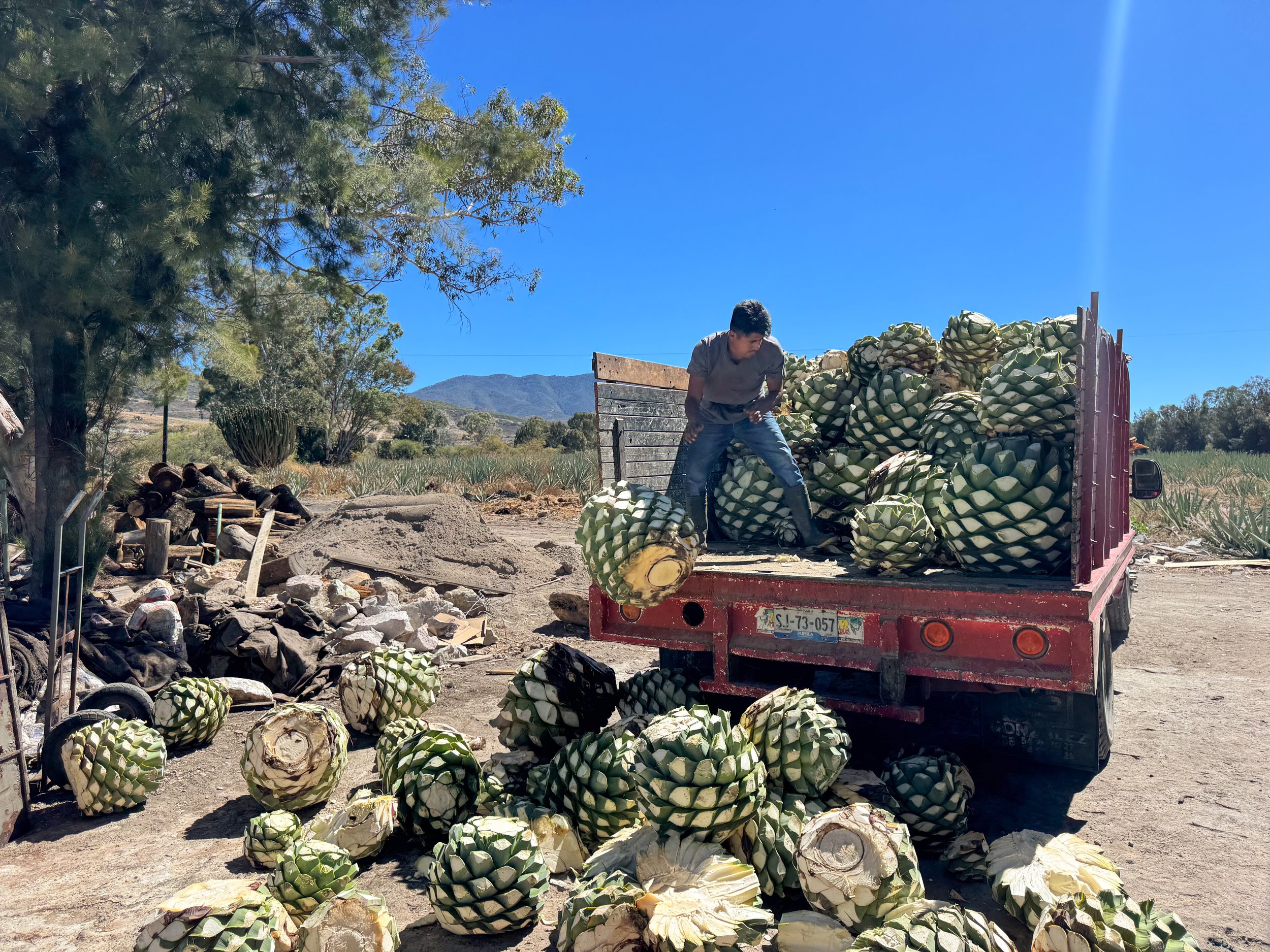
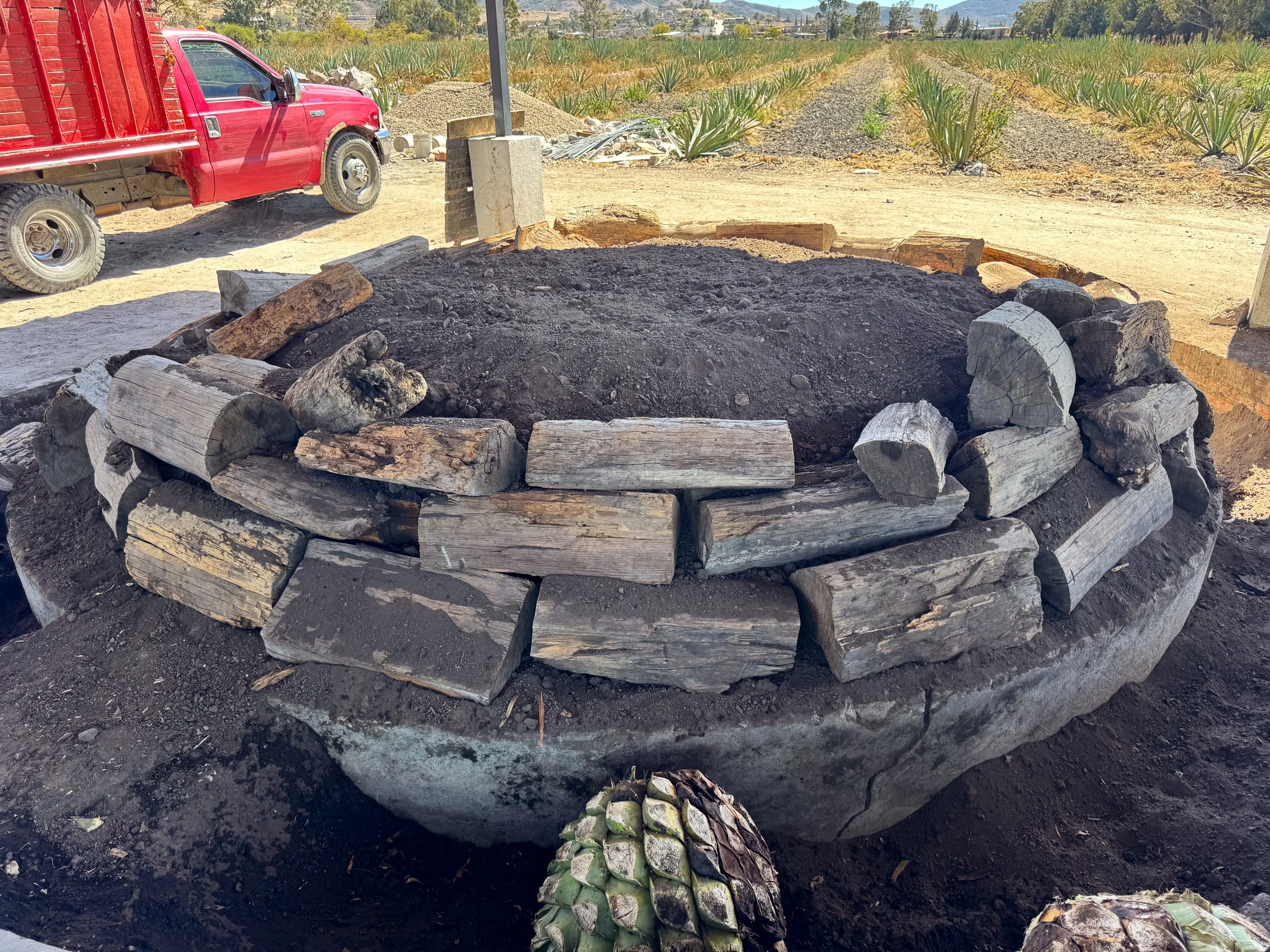
Palenque de Rosaluna. A small batch mezcal distillery where we saw, smelled and tasted every aspect of the mezcal production. As we toured the palenque, a truck load of harvested maguey cores, also called piñas, were being delivered. In an underground oven, roasting piñas filled the air with a smoky and sweet scent. An empty pit lined with lava rocks waited to be used next to it. We tasted the raw bitter piña and molasses like roasted piña for comparison. Inside the fermentation warehouse, the smoky and sweet scents intensified. A large pile of roasted piña was being chopped up and pressed into pulp by a stone wheel. The pulp was transferred to huge pine barrels where it fermented before being pressed and distilled. We tasted mezcal dripping straight from the distilling copper drums and finally terracotta shot glasses of the bottled spirit.
Palenque Mal de Amor. A historic mezcal distillery that follows traditional production methods. Underground ovens are used to roast the cores of the maguey. Horses pull large stone wheels to grind the roasted maguey into pulp. Pine barrels are used to ferment the pulp. Wood burning ovens are used to heat and distill the pressed pulp into mezcal. Brands like Illegal Mezcal, Mal de Amor and Ve Lua are produced here. We tasted over a dozen types of mezcal in fluted glasses repurposed from prayer candles. Flavors were always smoky with sometimes sweet, spicy and even funky notes.
Maguey Fields. The Oaxacan landscape is covered in fields of maguey plants used to produce Mezcal. Under a cloudless blue sky, we visited one to learn about the agricultural and harvesting process. Machete in hand and several mezcals in, we practiced chopping off blades from the maguey before sipping on mezcal poured down one of the plants severed arms.
Hierve de Agua
Hierve el Agua is a “petrified waterfall” formed over thousands of years by mineral rich cold springs. As water flows down the mountainside, it deposits calcite, creating white rippled terraces, natural pools and stunning white rock formations that look like frozen waterfalls. Trails lead to cliff edge swimming pools, waterfall overlooks and small geysers with bubbling springs of cool salty water. It’s one of only two petrified waterfalls in the world.
Vendors. There is a path with vendors selling coconuts, swimsuits, sweaters, Oaxacan hot chocolate and Mexican dishes between the parking lot and trail head. For lunch, we ordered tacos, quesadillas, memelas and hot chocolates cooked over a wood burning stove.
Pro Tip. It gets very cold and windy in the late afternoon. Bring layers to keep warm.
Getting to Hierve el Agua
Getting to Hierve el Agua is an adventure! We took a series of colecticos here and back from Oaxaca City.
Step 1 - Oaxaca to Mitla. Hire a colectivo from Oaxaca City to Mitla. Colectivos wait at the corner in front of the Eduardo Vasconcelos Stadium. Colectivos are the burgundy colored shared taxis with a white side strip. It should cost no more than 500 pesos total (less per person). The ride takes under an hour to reach Mitla.
Step 2 - Mitla. In Mitla, walk down the main road, Avenida Internacional, until finding the “colectivo trucks” to Hierve el Agua. Trucks leave every 30 minutes for 900 pesos total. Trucks typically leave with a minimum of 12 people, meaning the cost per person is at least 75 pesos. It costs more per person if less than 12 people.
Step 3 - Mitla to Hierve el Agua. Hop in the back to the covered truck and ride over an hour through the mountain roads to reach Hierve el Agua. There is a 15 peso toll per person when leaving Mitla.
Step 4 - Getting Back to Oaxaca City. The last truck from Hierve el Agua to Mitla leaves at 6pm. Ask the driver to be dropped off at the bus station where colectivos wait. Hire a colectivo to Tule for 200 - 300 pesos total or back to Oaxaca City Centro for 500 pesos.
Places to Eat & Drink
Catrina de Alcalá. A hotel restaurant in an atrium flanked by stone columns with large colorful piñatas decorating the space. The restaurant serves traditional Oaxacan breakfasts, coffee and conches. We ordered spicy eggs dishes including Huevos a la Oaxaqueña Molcajete y Quesillo Gratinado and Chilaquiles en Salsa de Molcajete con Huevos.
Cafe Brújula. A cafe with locations around the Centro Historico brewing extremely strong coffees, espressos and cold brews. It’s the perfect spot to get a caffeine kick and cool down from the mid afternoon heat. Order one with a shot of mezcal!
Santo de Mi Devocion. A moody mezcal cocktail bar with a blackened interior and skull decor. The mixologists shake and stir Oaxacan mezcals with regional ingredients like hibiscus, passion fruit, ancho reyes, tamarind, agave honey, pineapple and chile serrano.
Armadillo Negro. A cocktail bar and restaurant with tapas style Oaxacan dishes, mezcal cocktails and live music in an outdoor patio.
Donas y Churros El Vega. The best churros in all of Oaxaca! The sweet and sugary smell lured us in from down the street to their display of stacked churros, glazed donuts and cream filled pastries. 20 pesos buys a paper bag with four churros, either covered in sugar, dipped in chocolate or mixed.
Chocolate Mayordomo. An incredibly popular Oaxacan cafe chain known for their chocolatey drinks. Recommended by multiple locals, we ordered the Choco Mio, a cold chocolate milk spiced with cinnamon and vanilla. It pairs well with a fresh baked concha from their bakery.
Levadura de Olla Restaurante. A Michelin starred restaurant serving traditional, ceremonial and contemporary Oaxacan cuisine. All dishes are prepared with seasonal ingredients and served on locally made clay pottery. Try the guacamole topped with chapuline, creamy corn soup garnished with squash flowers and Oaxacan tomato salad.
Mundo Ceiba AC. A late night restaurant, bar and bike rental shop with inexpensive meals, beers and mezcals. Come for the vegetarian burritos and tlyudas.
Vaca Marina. A high end seafood and beef restaurant with a rooftop terrace and views of the Templo de Santo Domingo. We came here for a glass of Mexican wine at golden hour, watching the sunset and illuminate the cathedral.
Con Vista Al Mar. Affordable and authentic Mexican tacos, snacks, beers and mezcals. We stopped in for an afternoon happy hour, ordering doubles of mezcal, guacamole and calamari.
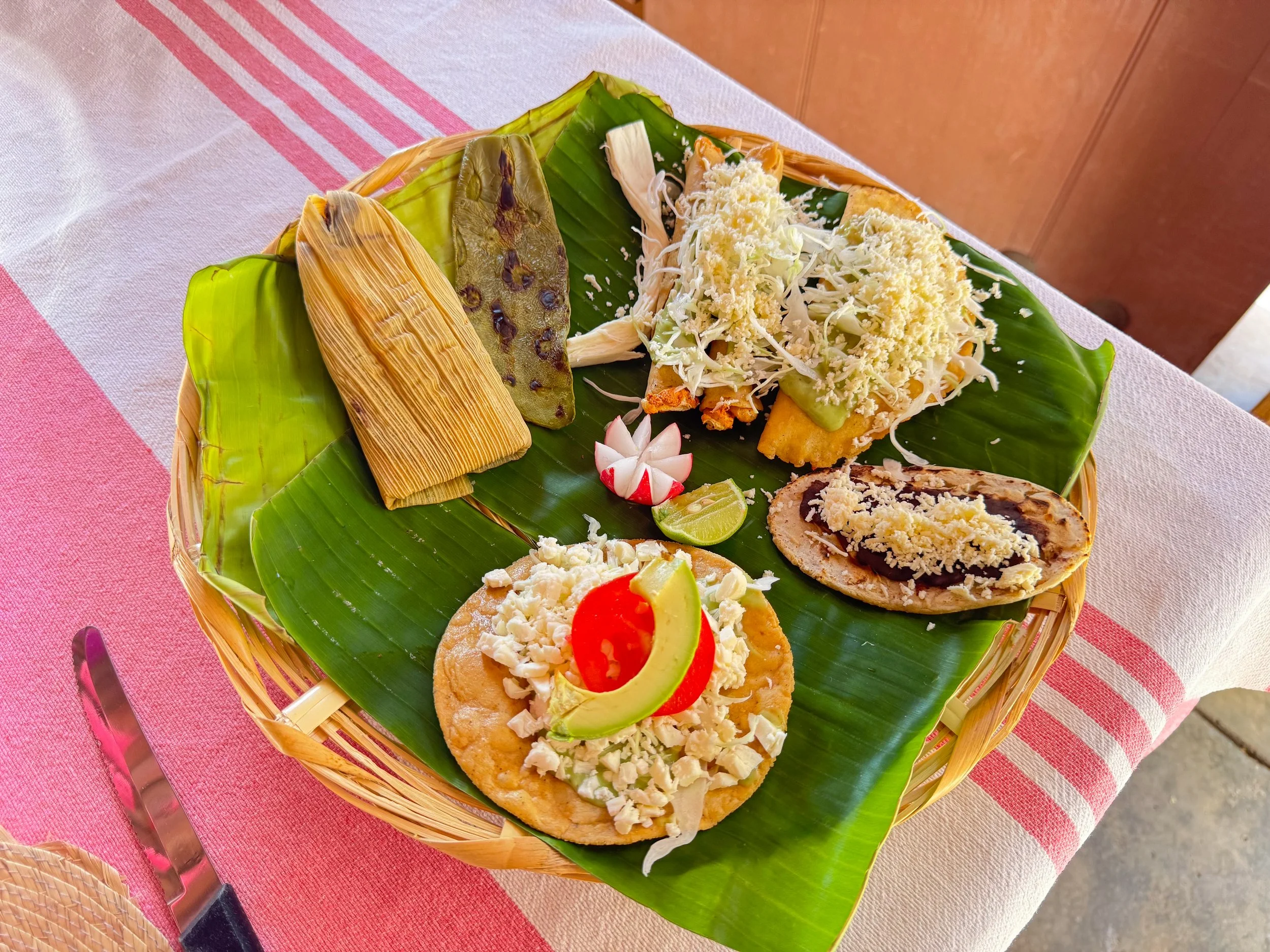
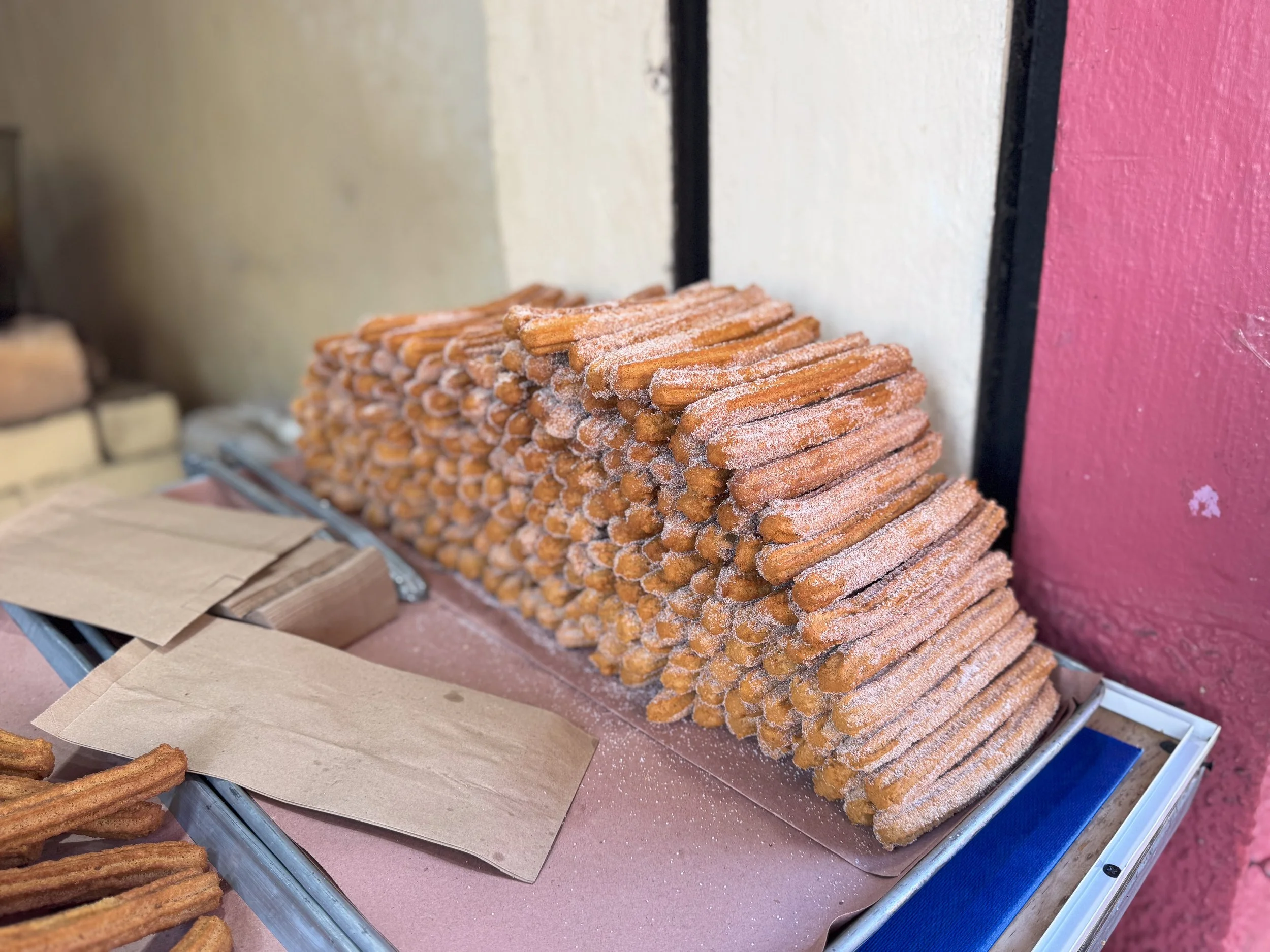
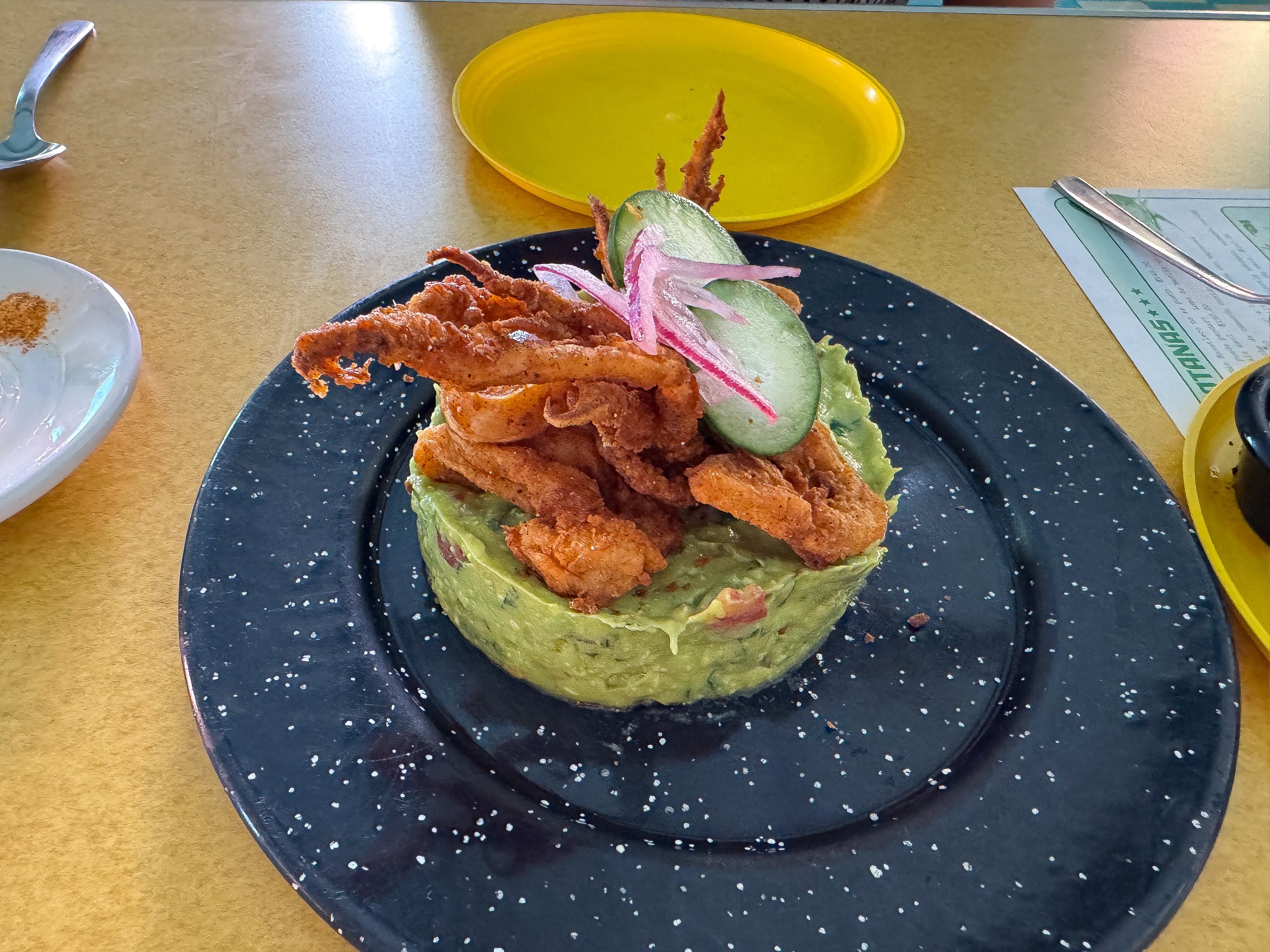
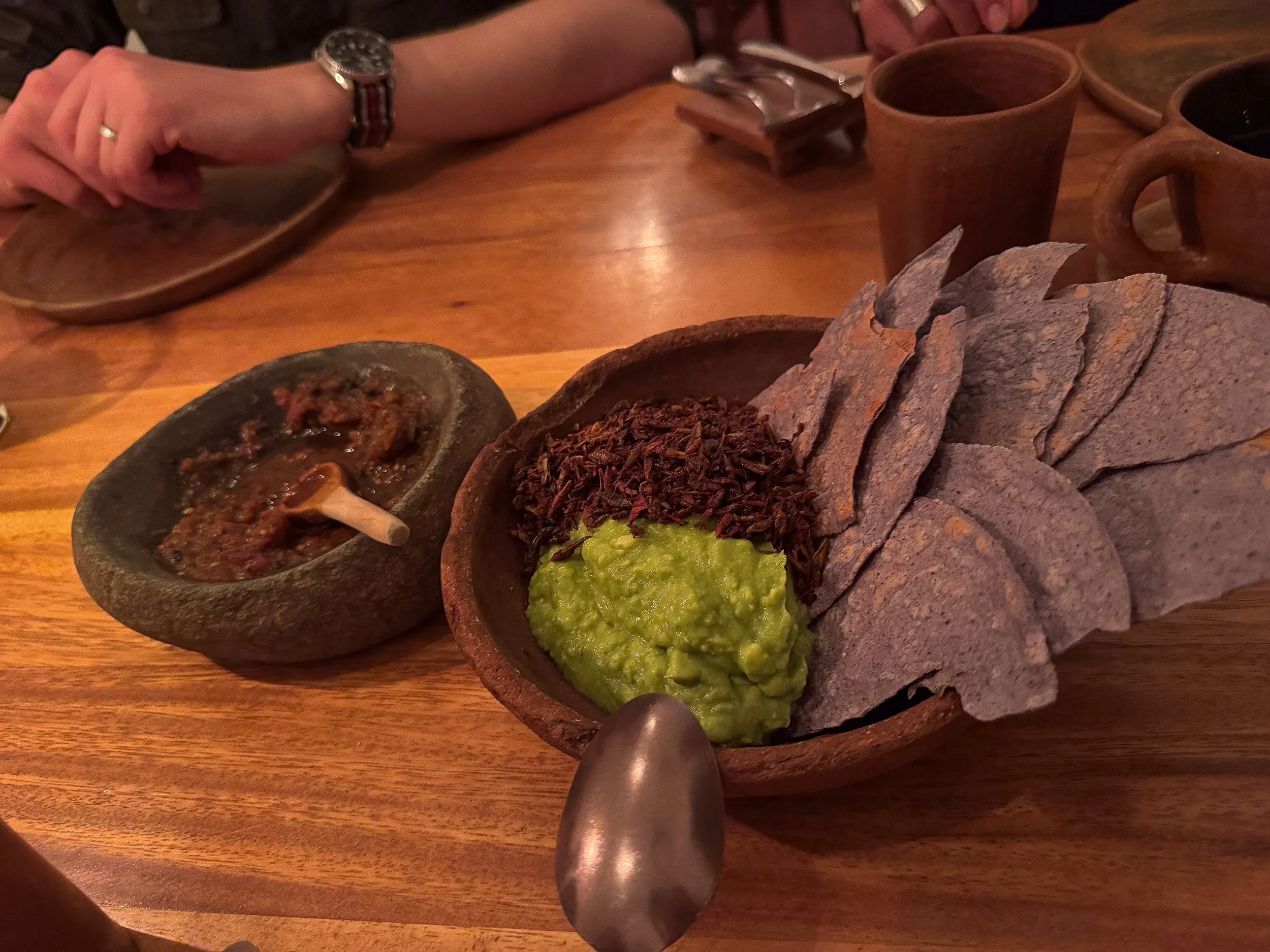
Oaxacan Cuisine
Oaxaca is the gastronomic hub of Mexico home to many of the country's most iconic and traditional dishes and drinks. We tried as many as possible while here to taste them in their most authentic form.
Tejate. A traditional Oaxacan chocolate drink made from ground corn, cacao and the flower of the cacao blossom.
Enmoladas. Any type of taco served or covered with mole sauce.
Cocoa Caliente. Spiced traditional hot chocolate drink made with cocoa, cinnamon, sugar and milk. It’s often mixed with a wooden spindle called a Molinillo.
Tomato Salad. A salad made from sliced tomatoes, tomatillos, onions, radish, cilantro and lime.
Tlayudas. Large grilled crunchy tortillas topped with ingredients like beans, avocado, tomato and cheese.
Tamales. Warm packets of steamed and cooked masa stuffed with any number of fillings wrapped in dried corn husks and often served with a spicy chile sauce or mole.
Atole. A hot chocolaty and warm spiced drink thickened by rice flour.
Chipilín. A Central American herb with a flavor similar to spinach.
Chapulines. A local delicacy, roasted grasshoppers often cooked with spices or chile lime. They have a tangy and grassy flavor. The larger ones are crunchy snacks while the smaller ones are perfect for garnishing all types of dishes. They’re sold in barrels by size and flavor at the markets and by street food vendors.
Mole. A savory and spicy sauce used to envelop countless Oaxacan style dishes. It comes in multiple varieties, made from nearly two dozen ingredients, including dried chile peppers, warm spices, nuts, seeds, berries, day old tortillas, chocolate and typically lard. It’s sold as a paste or powder in mounds at the local markets.
Tacos Dorados (Taquitos). Rolled tortillas filled with cheese, meats or veggies and deep fried.
Molotes (Empanadas). Half circular corn masa pockets often filled with cheese, meats or veggies and deep fried.
Memelas. A thick ovular tortilla grilled on comal topped with beans and cheese.
Tacos. Corn tortillas folded in half with meats, beans, cacti, insects, veggies, cheese and spicy sauces.
Tetelas. Triangular folded tortillas filled with beans and cheese.
Quesillo. A stringy Oaxacan cheese with a savory and salty flavor.
Tortilla Soup. A tomato soup blended with chips or tortillas to give it a think and creamy texture.
Mamey. A brown tropical fruit that looks like a large kiwi. Inside it has the texture of an avocado and flavor of strawberry ice cream.
“Buen Provecho,” a kind way of telling someone to enjoy their meal. It’s often said when passing by someone who is eating or preparing food. It’s commonly said to your neighbor at a restaurant when their food arrives or once you finish dining.
Places to Stay
Oaxaca Apartment. We stayed in a cute apartment about 20 minutes on foot from the city center. It was the perfect spot with a comfy bed, small kitchen, spacious bathroom and rooftop terrace. We shared the space with a group of friends, cooking Oaxacan style food and enjoying it together on the roof! Book on Airbnb.
Hotel Azucenas. A bed and breakfast in the Centro Historico with comfy rooms surrounding a small courtyard and fountain. Breakfast is served on the rooftop terrace lined with potted cacti and flowering trees. We stayed here our last night in Oaxaca City after returning from the coast. Book online or call for reservations.
Getting Around
From the Airport. Head to the “Sitio de Taxi” kiosk in the airport after baggage claim. From here, hire a taxi or collectivo (shared taxi van) to bring you into town. Prices vary by zone. Our collectivo dropped us off 3 blocks from our accommodation.
On Foot. The central neighborhood is very walkable on foot and the best way to explore the historic and colorful streets.
By Taxi. Yellow cabs. Negotiate the fare before getting in and confirm the cost is not per person. We found most cab drivers to be very honest.
By Collectivo. Shared taxis or burgundy cabs with a white stripe. Can also double as taxis and are often cheaper, especially for longer distances.
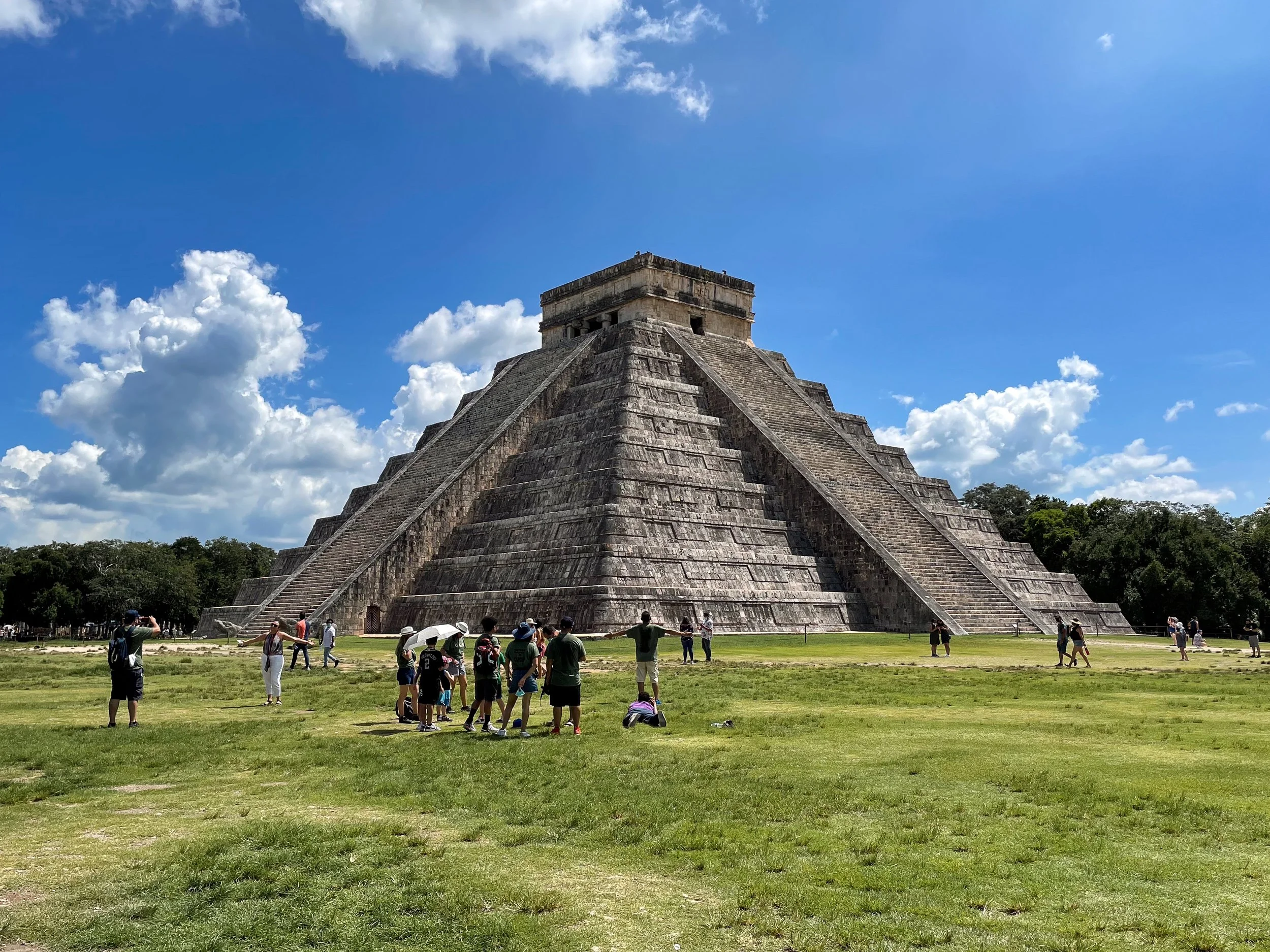
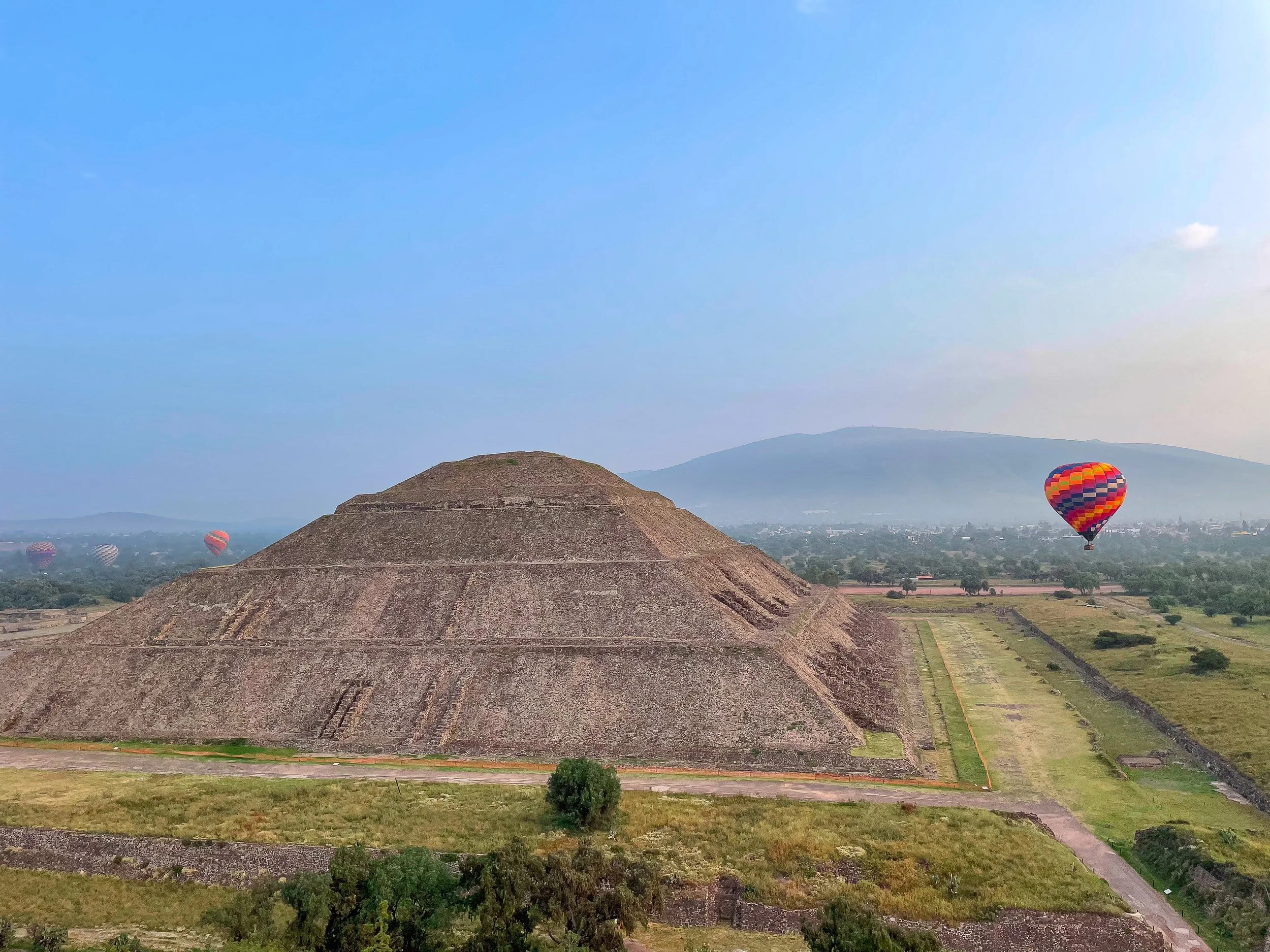
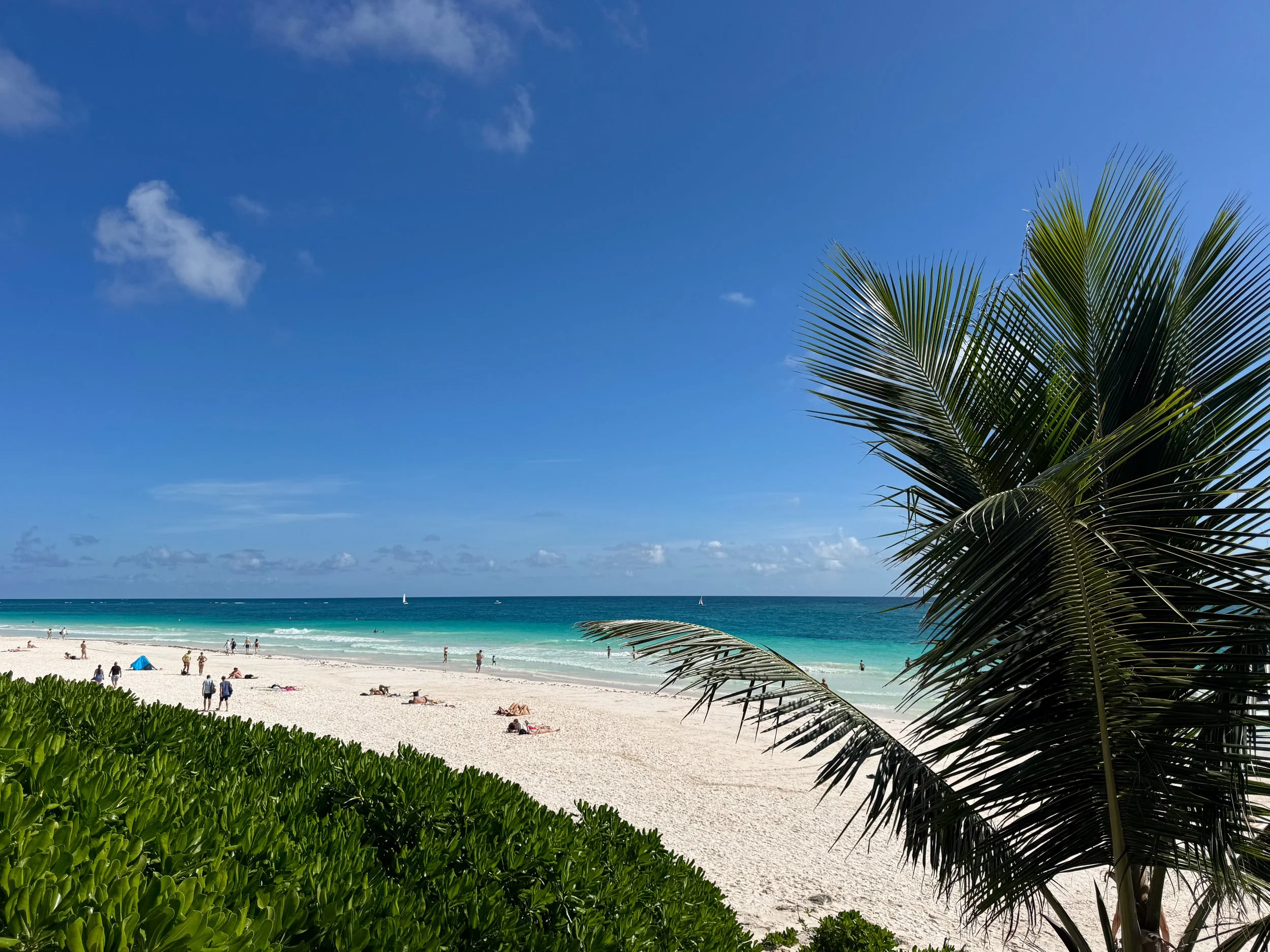
Elsewhere in Mexico
From Oaxaca's markets and mezcalerías to ancient Maya sites, Caribbean lagoons and surf towns along the Pacific coast, discover more of Mexico through these travel guides:
Caribbean Mexico
Riviera Maya Travel Guide: Beaches, Cenotes & Mayan Ruins. Discover the Riviera Maya's white sand beaches, turquoise waters, hidden cenotes, ancient Mayan ruins and vibrant culture along Mexico's Caribbean coast.
Tulum Travel Guide: Cenotes, Beaches & Mayan Ruins. Explore Tulum's cliffside Mayan ruins, white sand beaches, hidden cenotes and jungle landscapes along Mexico's turquoise Caribbean coast.
Bacalar Travel Guide: The Lagoon of Seven Colors & Hidden Gems. Discover Bacalar's Lagoon of Seven Colors, where turquoise waters, shallow sandbars and ancient stromatolites create one of Mexico's most remarkable landscapes.
Central Mexico
Mexico City Travel Guide: Neighborhoods, Food & Local Culture. Wander through Mexico City's vibrant neighborhoods, local markets and cultural landmarks where centuries of history, cuisine and modern life converge.
Day of the Dead in Mexico City (Día de los Muertos) Travel Guide. Experience Day of the Dead in Mexico City through cultural traditions, lively celebrations and vibrant ofrendas honoring loved ones and ancestral heritage.
San Miguel de Allende Travel Guide: Food, Art & Colonial Charm. Stroll through San Miguel de Allende's cobblestone streets and historic plazas where cuisine, art and music bring one of Mexico's most charming colonial cities to life.
Southern Mexico
Puerto Escondido Travel Guide: Beaches, Surfing & Coastal Culture. Escape to Puerto Escondido, a laid back surf town on Oaxaca's Pacific coast where palm lined beaches and sandy streets embody coastal culture.
For Next Time…
Mitla. The religious center of the Zapotecs and second most important archeological site in Oaxaca. It was a sacred burial site and is famous for its unique mosaic patterns not seen in any other part of Mexico. Wrap your arms around column, it tells you how much life you have left.
Yagul. An archeological site with courtyards, tombs and ball courts.
Prehistoric Caves of Yagul and Mitla. A cave with paintings dating back 12,000 years.
Teotitlán del Valle. A town known for weaving intricate and colorful textiles made from natural dyes. Shop at the market for rugs, table runners, blankets and clothes.
San Martin Tilcajete. A town outside of Oaxaca known for its Alebrijes and the inspiration for Coco.
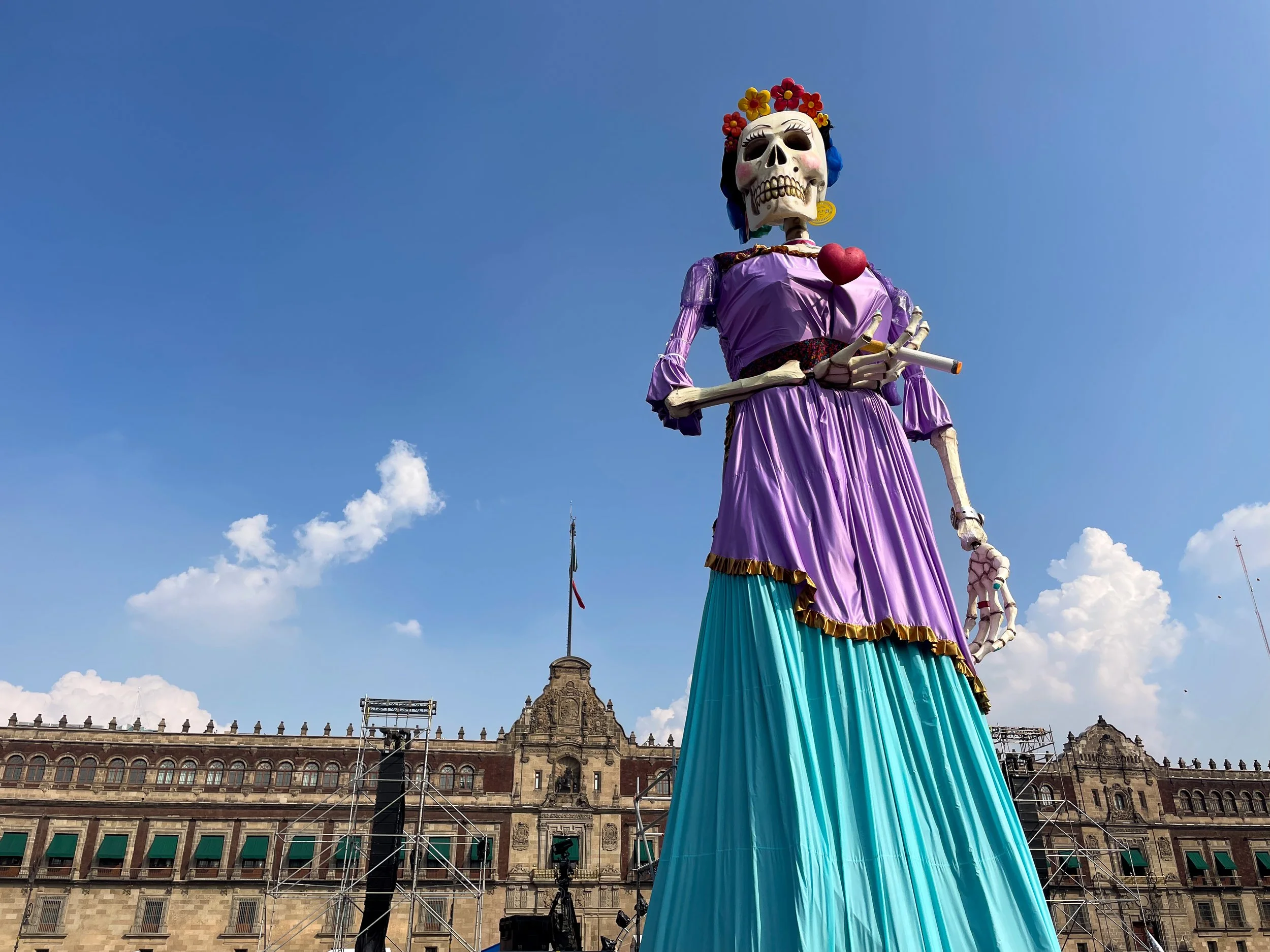
Day of the Dead in Mexico City (Día de los Muertos) Travel Guide
Experience Day of the Dead in Mexico City through cultural traditions, lively celebrations and vibrant ofrendas honoring loved ones and ancestral heritage.
Día de los Muertos
Día de los Muertos is one of Mexican culture’s most important holidays and traditions. It is a day to remember those that have died and to celebrate life. The holiday is officially celebrated on November 1st with a week of festivities leading up to it including parades, ofrendas, markets, food and decorations.
Elements of Día de los Muertos
Multitudes of symbols and decoration make up many elements of Día de los Muertos. Many of which are symbolic of the joy of life, life after death and honoring the deceased.
Alebrijes. Ornately designed and colorfully painted representations of animals and mythical creatures that act as spirit guides to the dead. They’re seen all across Mexico, especially around Day of the Dead.
Papel Picado. Strings of colorful paper flags with beautiful and lively images of skulls, skeletons and marigolds cut out of them. They’re a common sight, often displayed in restaurants and above ofrendas.
Calaveras. Colorfully painted smiling skulls intended to laugh at death. People’s faces are commonly painted as Calaveras during the Día de los Muertos festivals and parades.
Cempasuchil. The Aztec word for marigold. These orange flowers and their petals decorate ofrendas, homes and public spaces during Day of the Dead.
Ofrendas. Altars to honor the dead decorated with a photo of the dead surrounded by Cempasuchil, candles, paper marché skeletons, painted sugar skulls, pan de muerto, wax models of food a bottled drinks. Some ofrendas even go as far as to honor their lost pets. Ofrendas range in size from small ones at people’s homes to large ones in public squares. The most notable of which is the Mega Ofrenda, Mexico City’s largest ofrenda located in Zocalo Square. It consists of 32 ofrendas, one for each state in Mexico, flanked by a Catrina dressed in the traditional clothes and colors of the state it represents.
La Catrina. The classic and elegantly styled skeleton costume typically featuring a dress and large sombrero. Catrinas are common costumes worn by people during the Día de los Muertos festivals and parades.
Calacas. Skeletal figures commonly seen during Day of the Dead. They’re a common costume by many, including us, to celebrate the parade day festivities.
Pan de Muerto. The sugar dusted dome of bread with two pieces of dough made to look like crossed bones. They’re made specifically by bakeries during Day of the Dead.
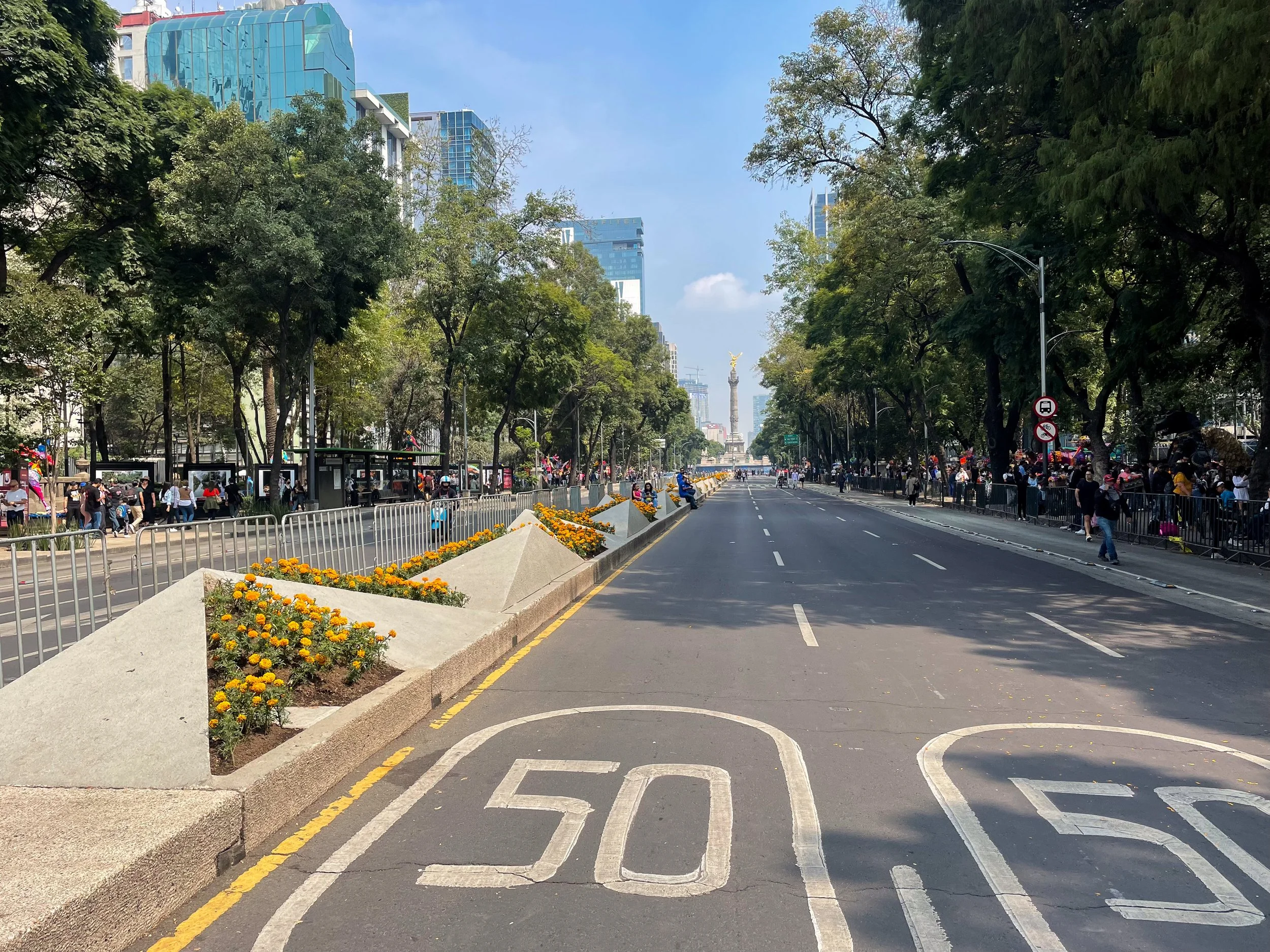
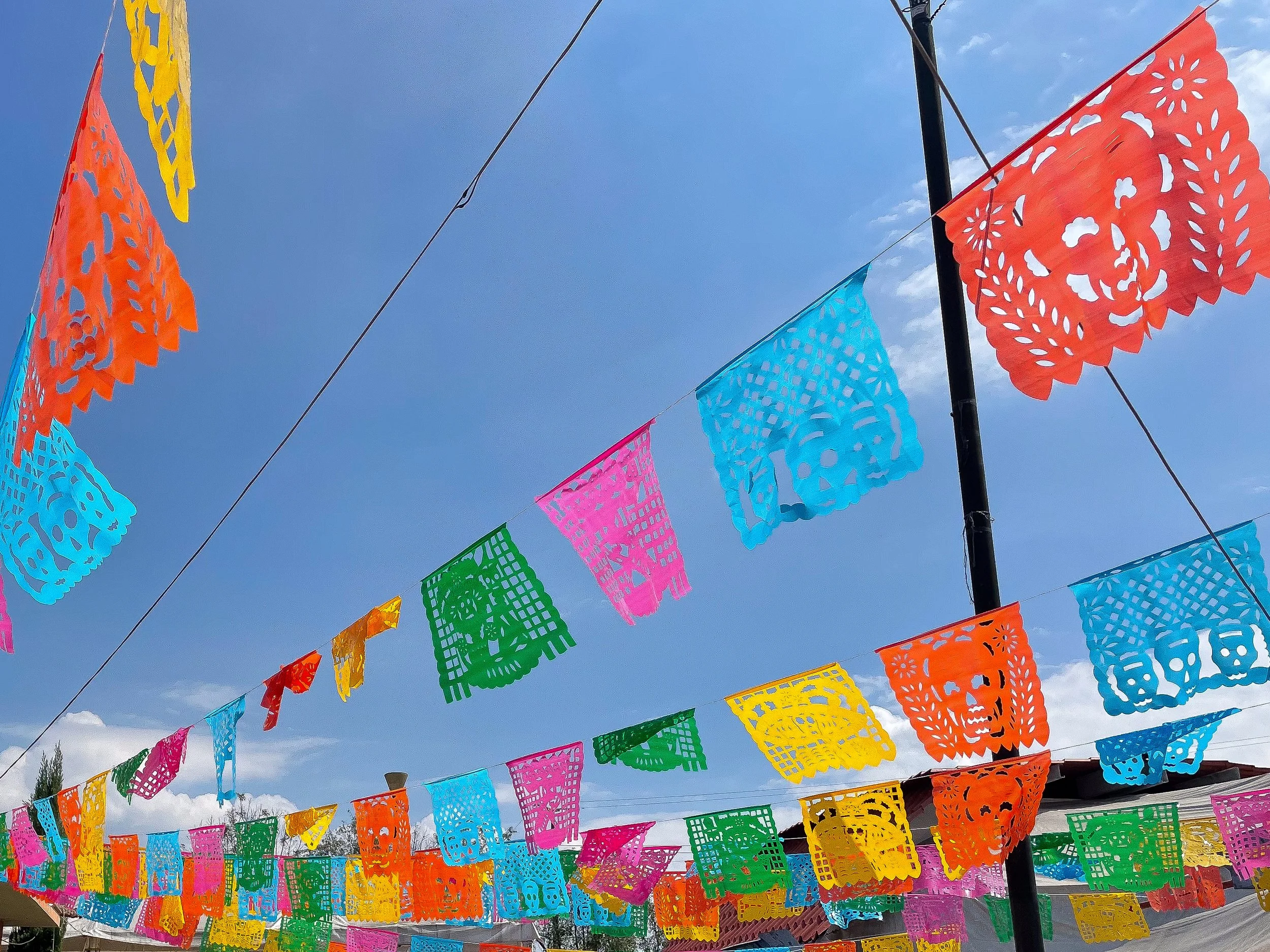
Paseo de la Reforma
Paseo de la Reforma is a long diagonal avenue that stretches across Mexico City. It’s a hub for many activities during Día de los Muertos, most notably being the Parade. The median is planted with marigolds while the avenue is lined with spectators, makeup artists painting faces, vendors selling street food, decorations, souvenirs, ofrendas and exhibits including:
Marigold Festival. A tented section of the avenue with sculptures and structures decorated in different colored marigolds and vendors selling potted marigolds.
Mexicaneos Exhibition. An exhibit of 50 large Calaveras displayed along the avenue.
Alebrijes Exhibition. An exhibit with hundreds of large and intricately designed Alebrijes displayed along the Paseo de la Reforma.
Face Painting. On the parade day, there are makeup artists set up along the parade route painting faces. You can choose from a book of designs or show the artist a design. Face painting typically costs $100 Pesos ($5) and takes 10-15min.
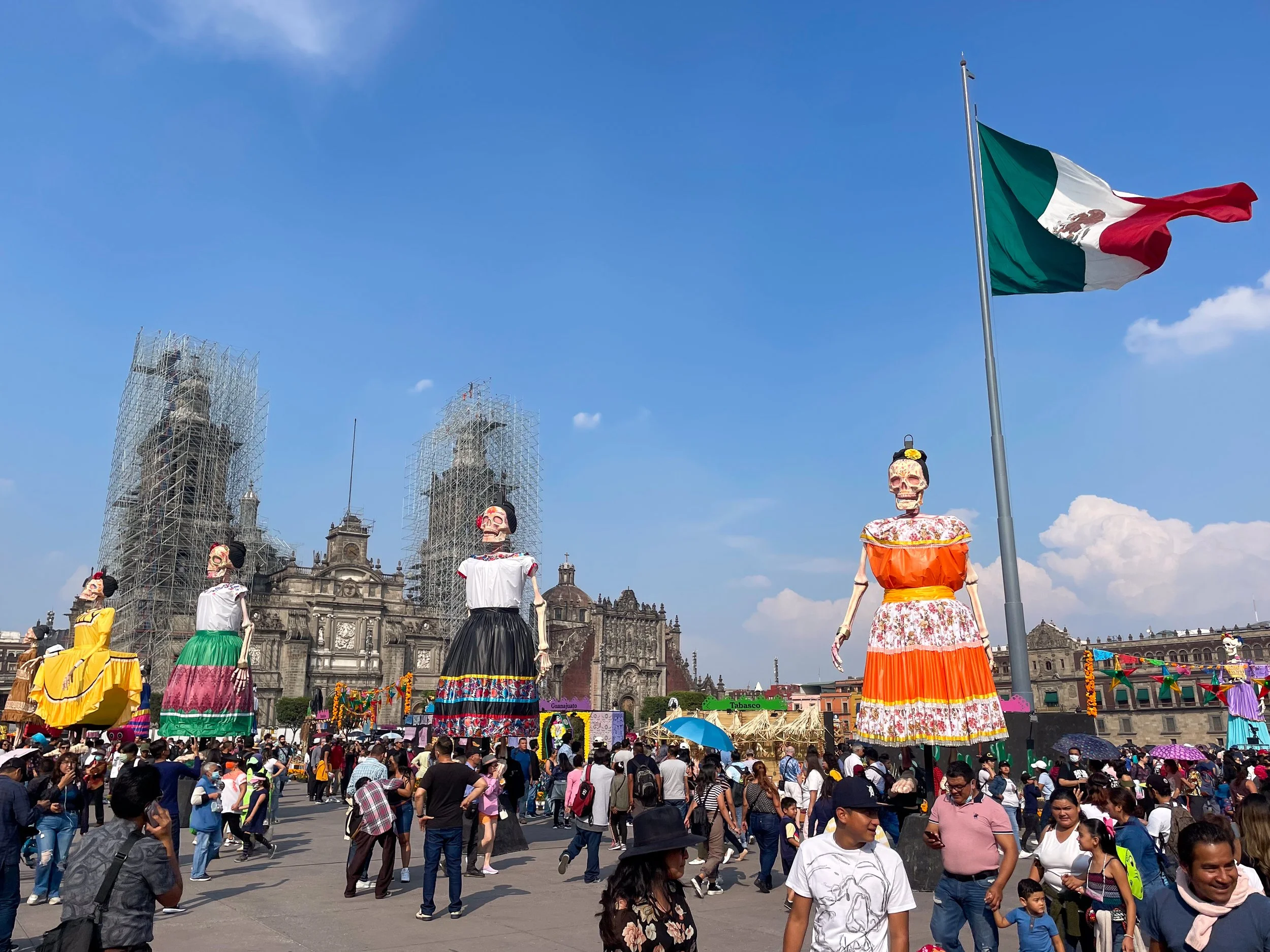
Zocalo Square
A massive public square in the Centro Historico and hub for Mexico City’s Day of the Dead festivities. The square is decorated in towering catrinas and ofrendas each representing a different state of Mexico. It’s the site of many street food vendors and performances including the parade day’s “Grand Closing Ceremony.”
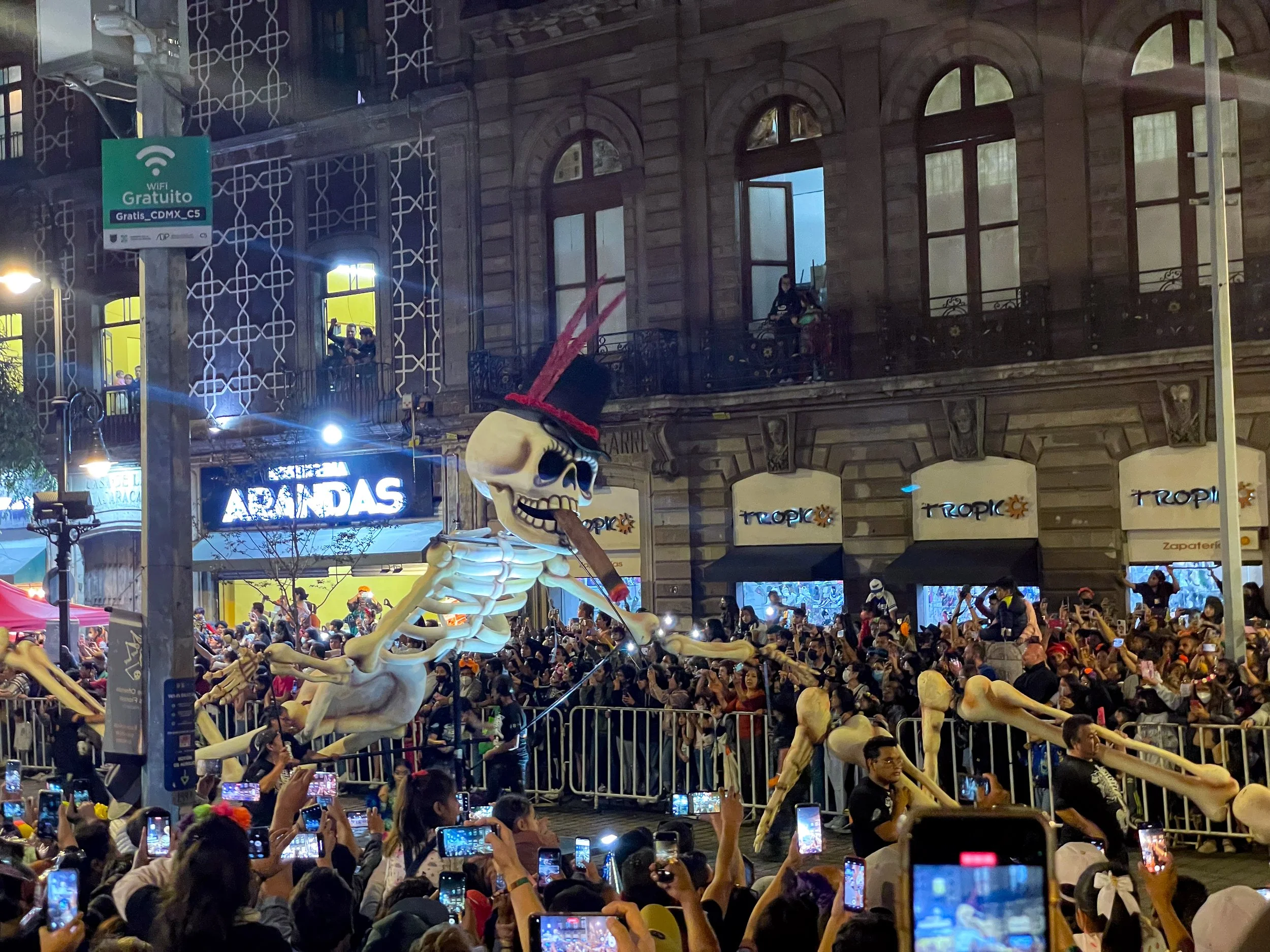
The Parade
The parade is one of the largest public festivities in Mexico City leading up to Dia de los Muertos. It travels across the city ending with a grand closing ceremony in the historic center. Over a million spectators from all over Mexico and the world line the streets to celebrate. Many people arrive in costume while others get their faces painted by artists set up along the route.
The parade includes floats with giant skeletons, others dedicated to Frida Kahlo and alebrijes. There were marching bands dressed in the colors of the Mexican flag, dancers dressed as Catrinas, monarch butterflies and La Llorona as well as performers in Aztec ceremonial outfits.
The Parade Route
The parade traveled down Paseo de La Reforma starting from the Estela de Luz at the corner of Bosque de Chapultepec to Avenida Hildago passing Alameda Central and onto Avenida Cinco de Mayo before ending in Zócalo Square.
The parade is a relatively new addition to the Día de los Muertos celebrations. The official route, date and time were only announced two weeks before the celebrations took place. We had to monitor Mexico City’s government website to stay up-to-date with the Official Announcements.
Where to Watch the Parade
From the Street. Arrive a couple of hours early and claim a spot along the metal barricades lining the parade route for the best view. It gets very busy and difficult to see if you’re further into the crowd.
From a Restaurant or Bar. We watched the parade in Centró Historico at a bar called Pata Negra. Though we didn’t have a front row view, we were elevated above the crowds, had a seat to sit on, restroom to use and bar to order cocktails from.
The Grand Closing Ceremony
The grand closing ceremony ended in Zócalo Square with a concert featuring Ángela Aguilar where she performed La Llorona and two other songs as choreographed fireworks lit up the sky in front of the grand cathedral.
Festival de Coyoacán
One of the largest festivals held during the two weeks leading up to Día de los Muertos with celebrations and ofrendas. The streets surrounding the Centro de Coyoacán are lined with food vendors, mobile panaderias, handicraft booths, makeup artists, fair games and carnival rides. People from all over the neighborhood and city come here to celebrate.
Mercado Artisanal. A two level market with stalls of vendors and artists selling alebrijes and calaveras as well as the Mexican handicrafts like textiles, books, leather goods and home decor.
Restaurants in Coyoacán
Restaurant Ave Maria. A higher end restaurant serving classic Mexican meals like enchiladas in mole, chile relleno with queso and tres leches served on traditional clay dishes.
Los Danzantes. Oaxacan style and traditional Mexican dishes, located in Coyoacán.
Cabo Coyote. A restaurant and bar in Centro Coyoacán. We came here for pre-dinner cocktails.
Boicot Café Coyoacán. A multilevel coffee shop in Coyoacán. We came here for an afternoon caffeine fix.
Lecaroz. A bakery specializing in Mexican pastry and breads. Visiting during Día de los Muertos, they had an endless supply of Pan de Muerto in multiple sizes.
Mexican Street Food
Street food is popular all across Mexico City, especially around Day of the Dead. Look out for vendors selling gorditas, tlayudas, elotes, chapulines and churros.
Gordita. Thick corn masa tortillas cooked until puffy, cut open and stuffed with filling. We ordered them from a street vendor on Paseo de la Reforma who stuffed them with beans, cheese and salsa.
Tlayuda. A cracker thin tortilla topped with various garnishes. Our favorite was from a street vendor in Zócalo Square. It was spread with refried beans and topped with nopales, Oaxacan cheese and hot sauce.
Elote. A grilled ear of sweet corn served on a stick. It’s covered in Mexican crema and garnished with cotija cheese, chili powder, and lime juice.
Chapulines. Crispy fried grasshoppers. We had them on tacos, as a garnish to dishes, in bars mixed with peanuts and saw them sold in barrels as snacks with a squeeze of lime.
Churros. Fried sticks of ridged dough covered in cinnamon sugar and served with dulce de leche, chocolate sauce or sweetened condensed milk.
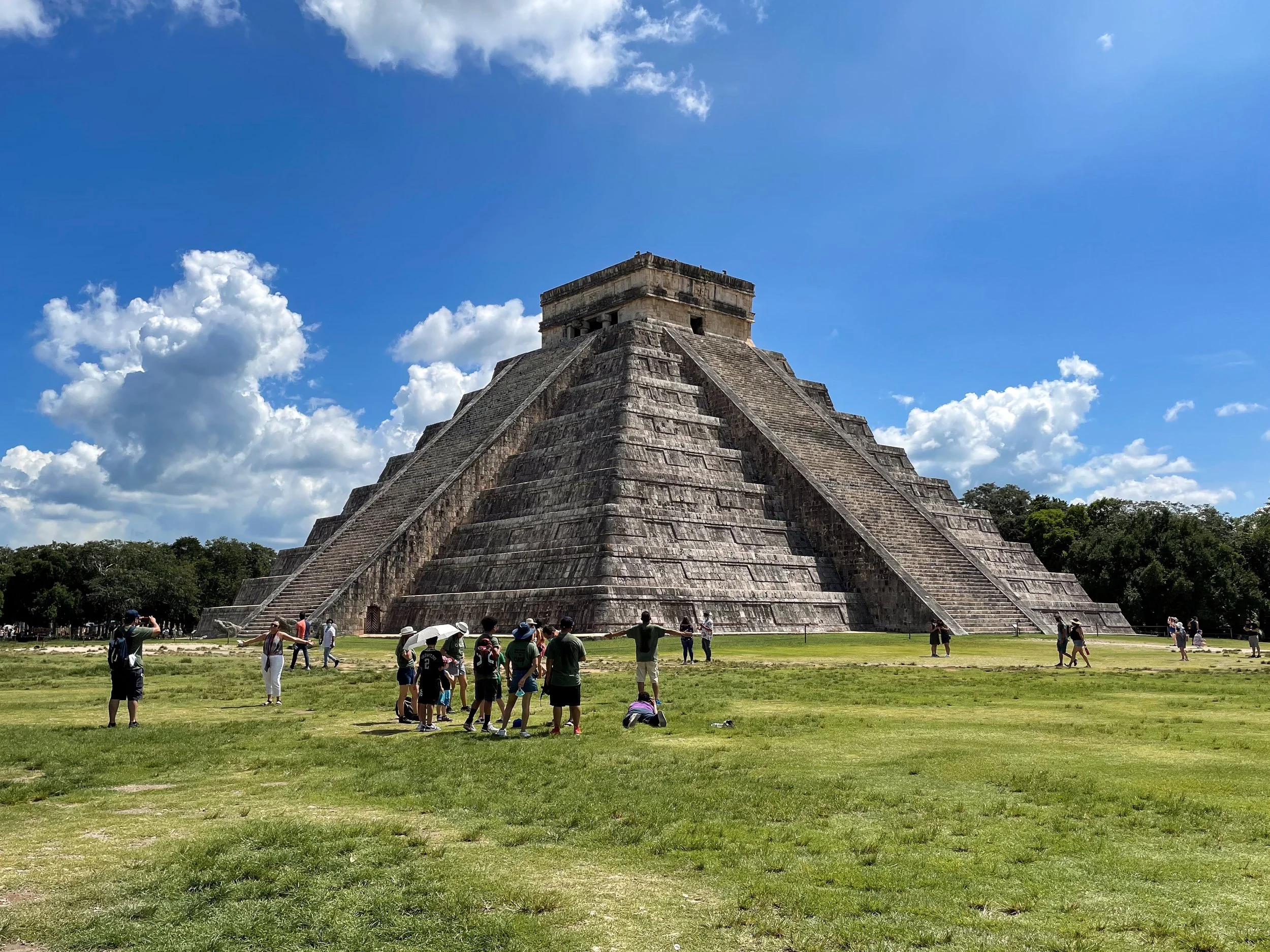
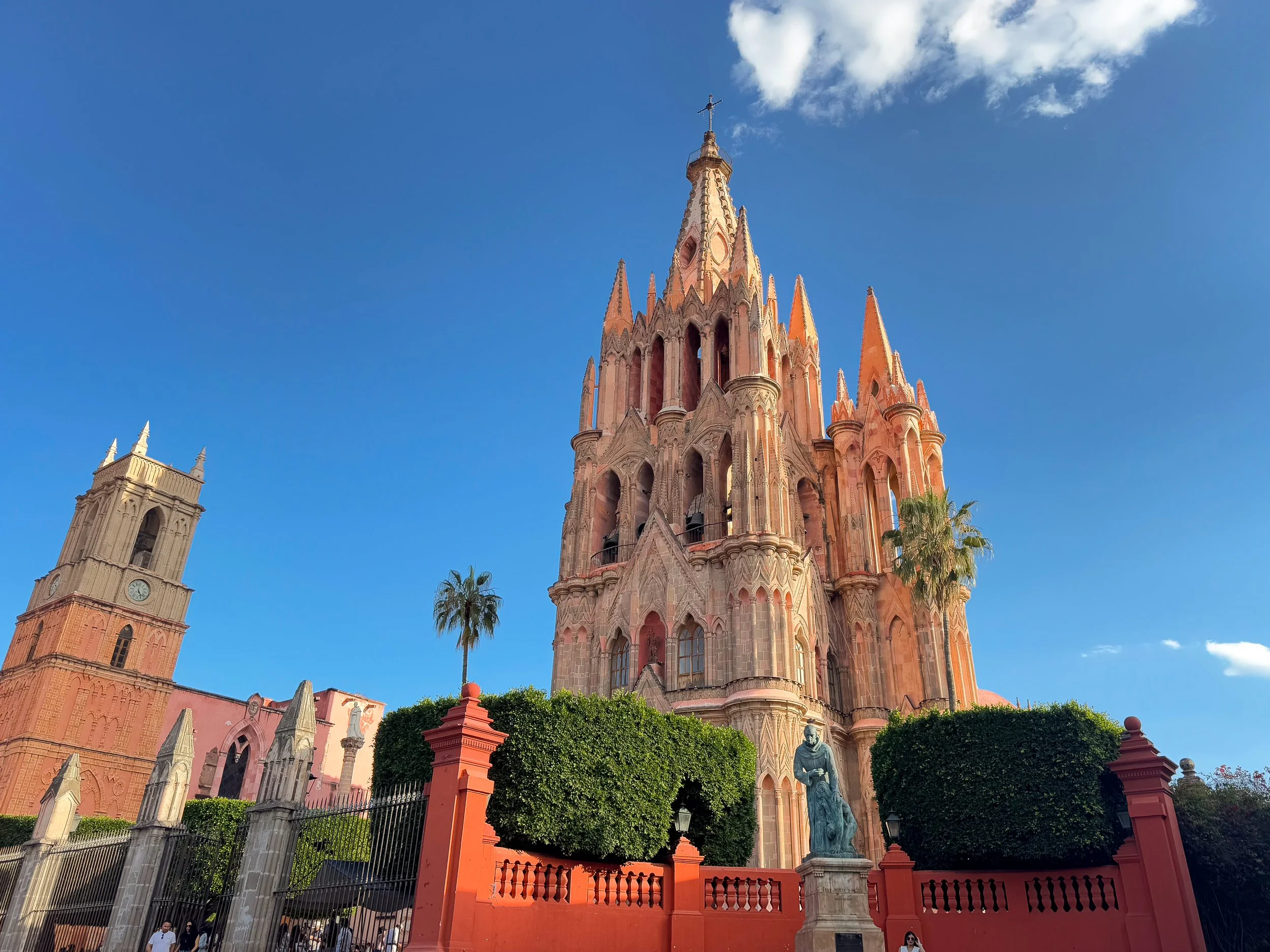
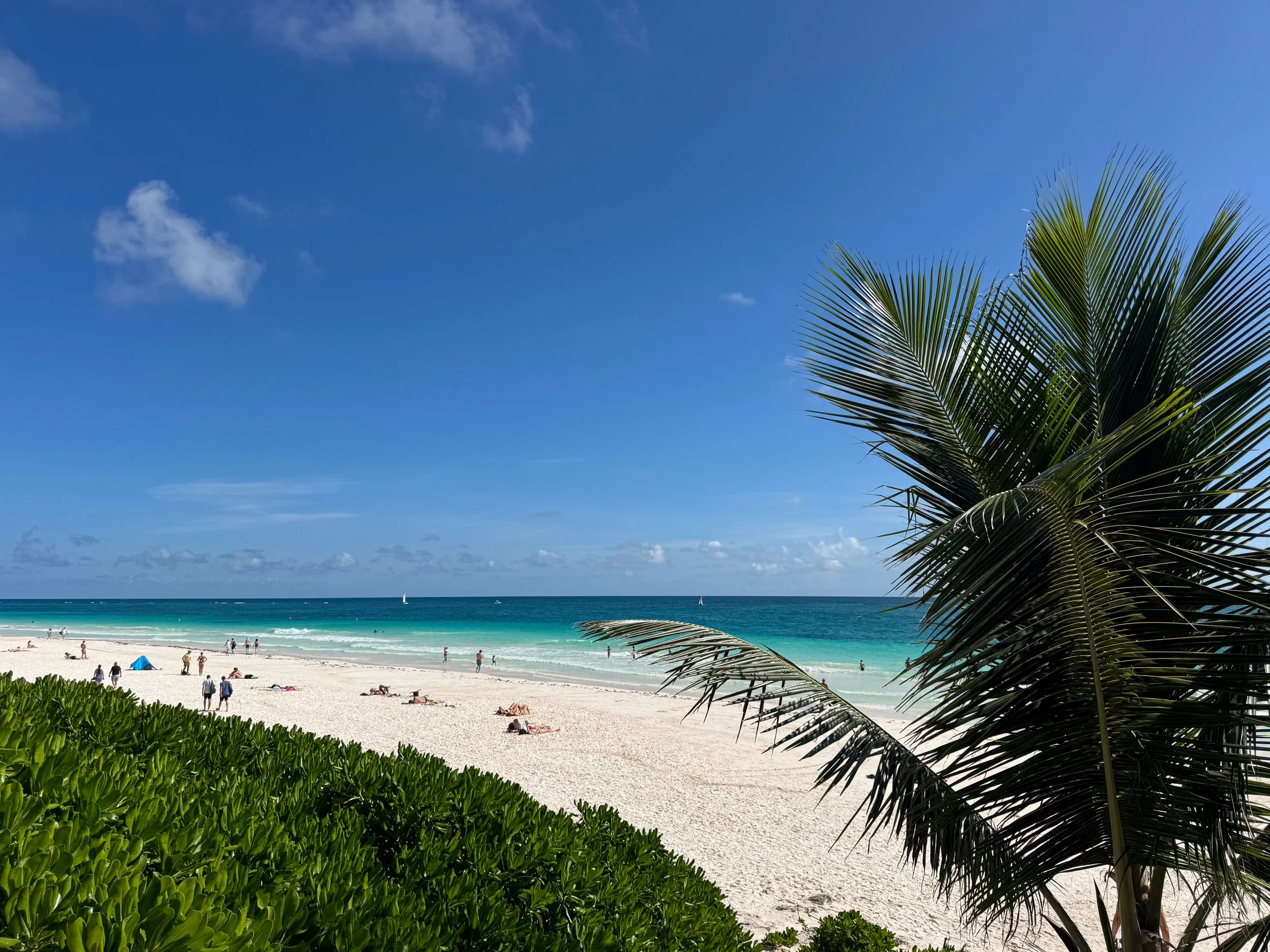
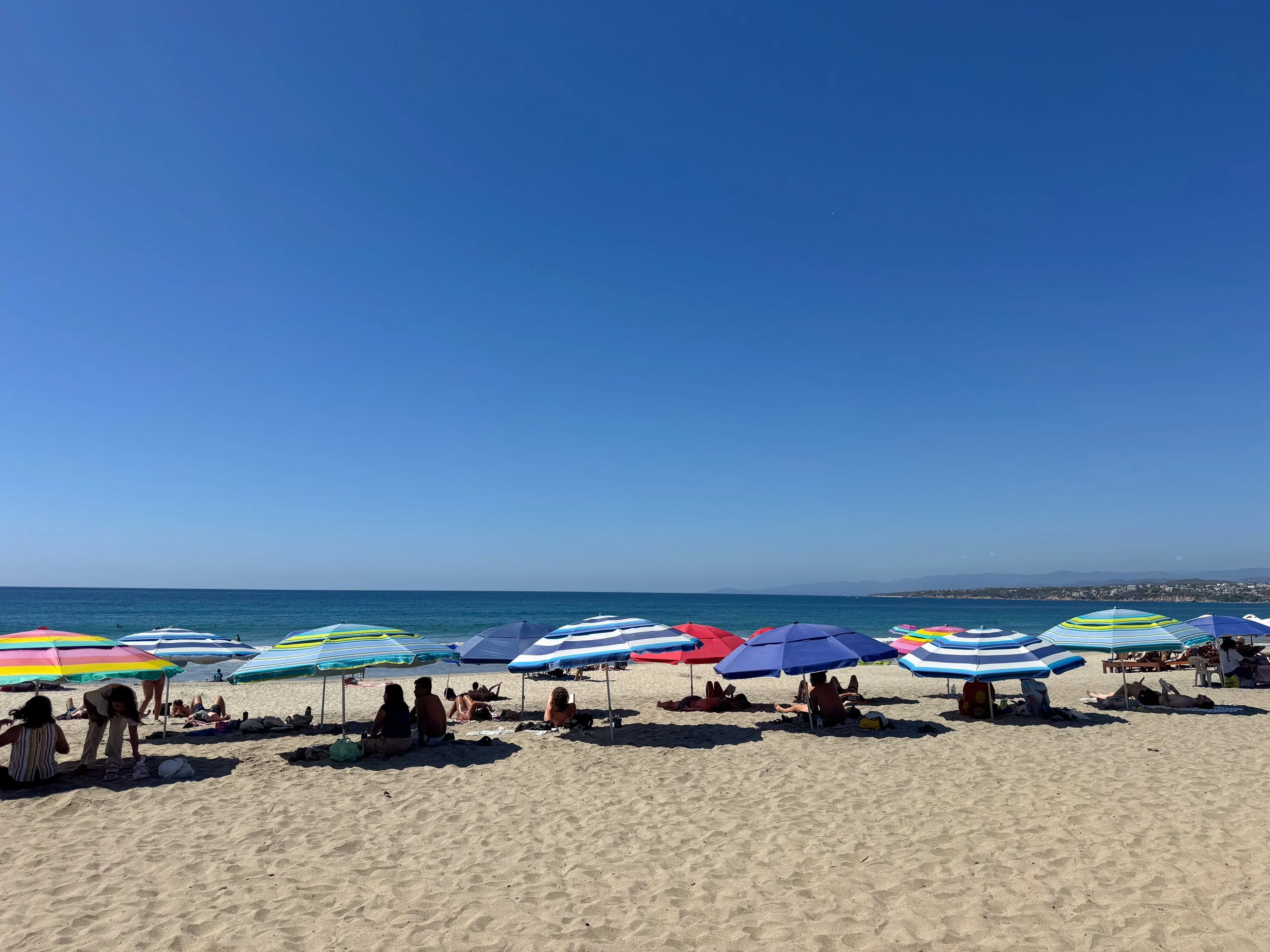
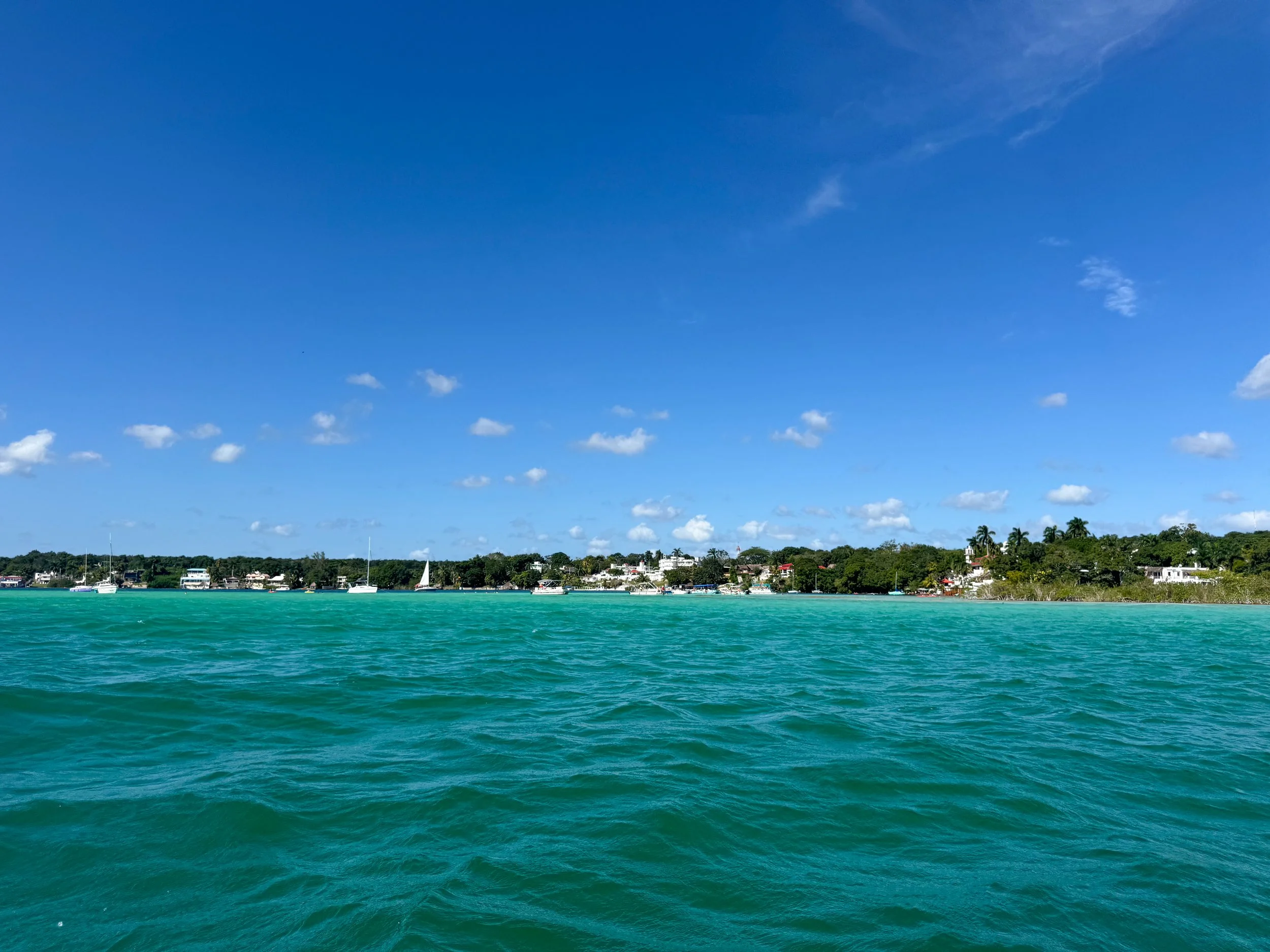
Elsewhere in Mexico
From Mexico City's Día de los Muertos celebrations to Caribbean coastlines, colonial cities and Oaxaca's rich traditions, discover more of Mexico through these travel guides:
Caribbean Mexico
Riviera Maya Travel Guide: Beaches, Cenotes & Mayan Ruins. Discover the Riviera Maya's white sand beaches, turquoise waters, hidden cenotes, ancient Mayan ruins and vibrant culture along Mexico's Caribbean coast.
Tulum Travel Guide: Cenotes, Beaches & Mayan Ruins. Explore Tulum's cliffside Mayan ruins, white sand beaches, hidden cenotes and jungle landscapes along Mexico's turquoise Caribbean coast.
Bacalar Travel Guide: The Lagoon of Seven Colors & Hidden Gems. Discover Bacalar's Lagoon of Seven Colors, where turquoise waters, shallow sandbars and ancient stromatolites create one of Mexico's most remarkable landscapes.
Central Mexico
Mexico City Travel Guide: Neighborhoods, Food & Local Culture. Wander through Mexico City's vibrant neighborhoods, local markets and cultural landmarks where centuries of history, cuisine and modern life converge.
San Miguel de Allende Travel Guide: Food, Art & Colonial Charm. Stroll through San Miguel de Allende's cobblestone streets and historic plazas where cuisine, art and music bring one of Mexico's most charming colonial cities to life.
Southern Mexico
Oaxaca Travel Guide: Food, Mezcal & Cultural Experiences. Immerse yourself in Oaxaca, Mexico's cultural hub for vibrant markets, artisanal mezcal, regional cuisine, scenic landscapes and centuries of tradition.
Puerto Escondido Travel Guide: Beaches, Surfing & Coastal Culture. Escape to Puerto Escondido, a laid back surf town on Oaxaca's Pacific coast where palm lined beaches and sandy streets embody coastal culture.
For Next Time…
Having visited Mexico City for Día de los Muertos, we would love to return one day to celebrate the festivities in Oaxaca or some of the smaller pueblos around the country.
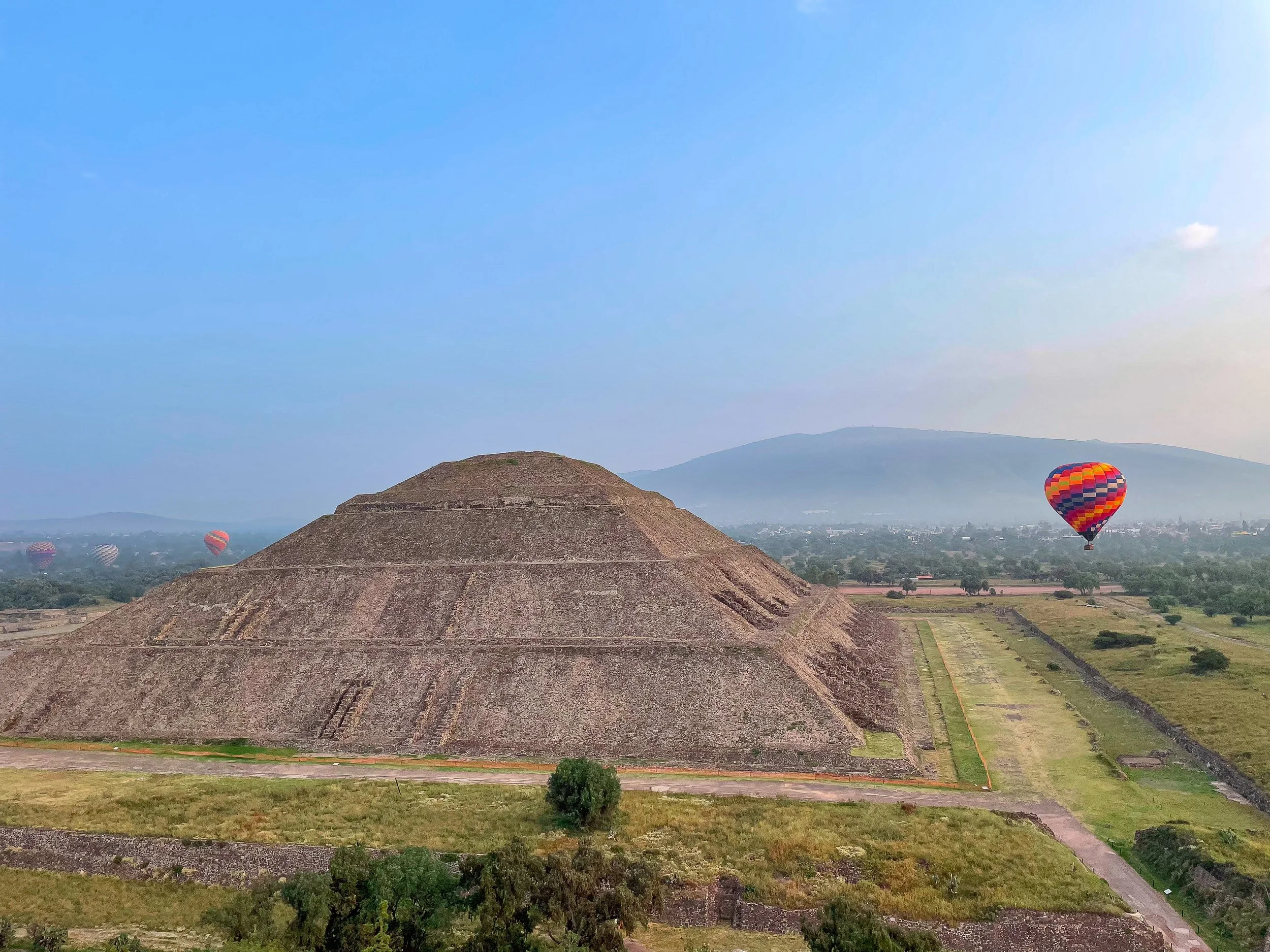
Mexico City Travel Guide: Neighborhoods, Food & Local Culture
Wander through Mexico City's vibrant neighborhoods, local markets and cultural landmarks where centuries of history, cuisine and modern life converge.
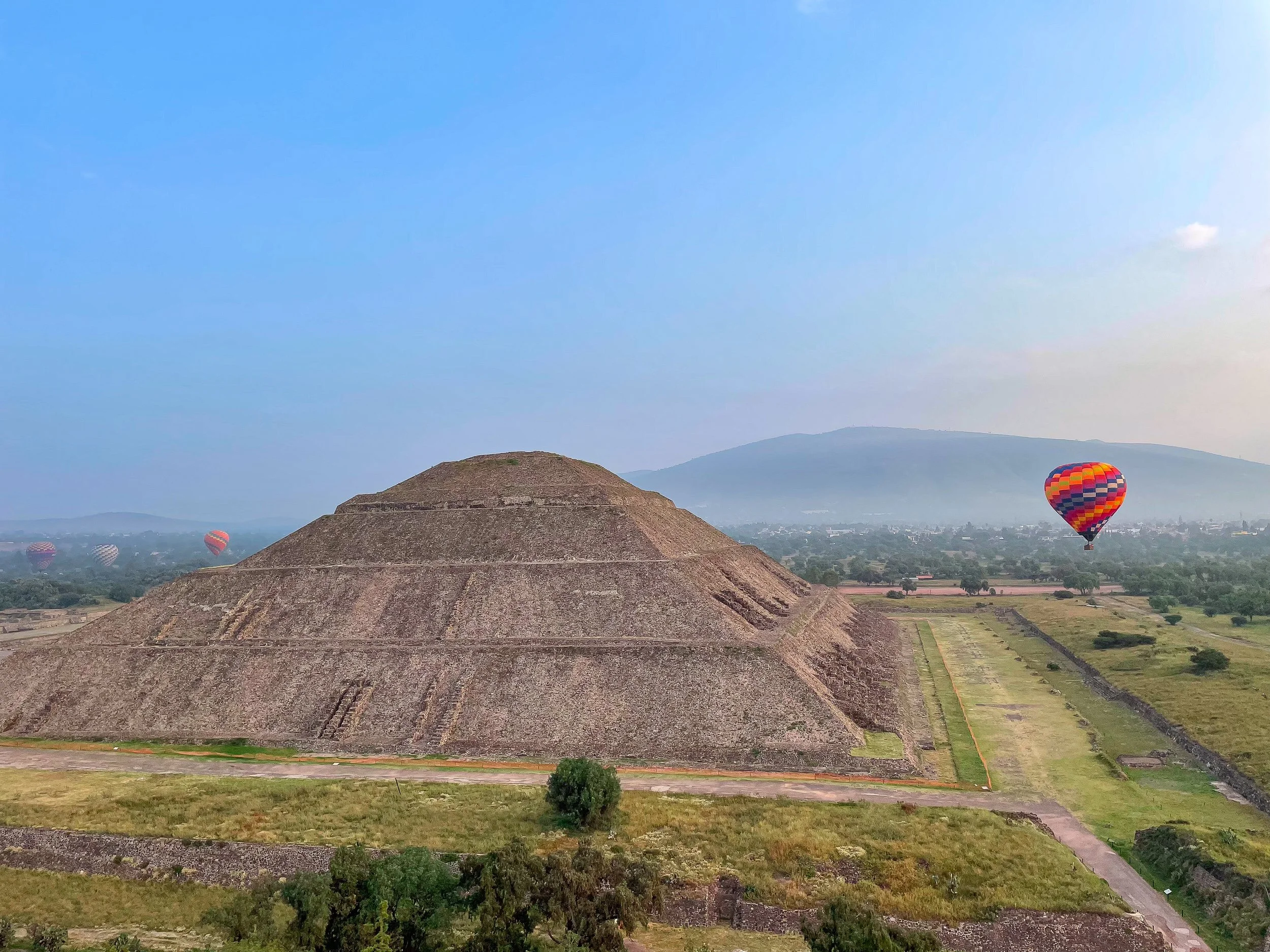
A Mexican Metropolis
Mexico City is a sprawling metropolis where old meets new. It’s a vibrant cultural hub shaped by both contemporary Mexican influences and Mesoamerican heritage. Trendy barrios and historic centers are home to celebrated landmarks and world class museums. The city is a paradise for cuisine from street food vendors, bustling local markets and restaurants that celebrate Mexico’s rich culinary traditions.
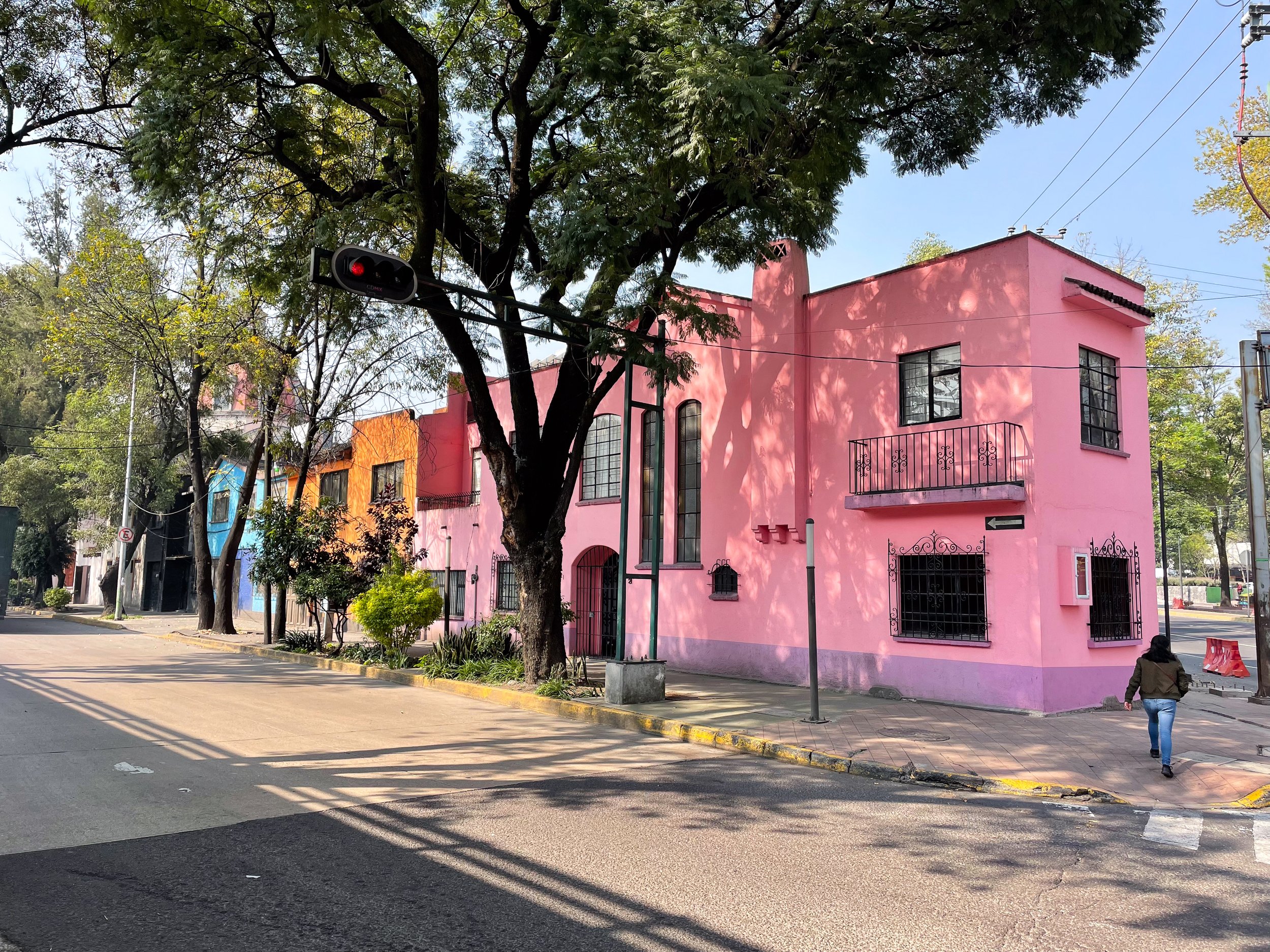
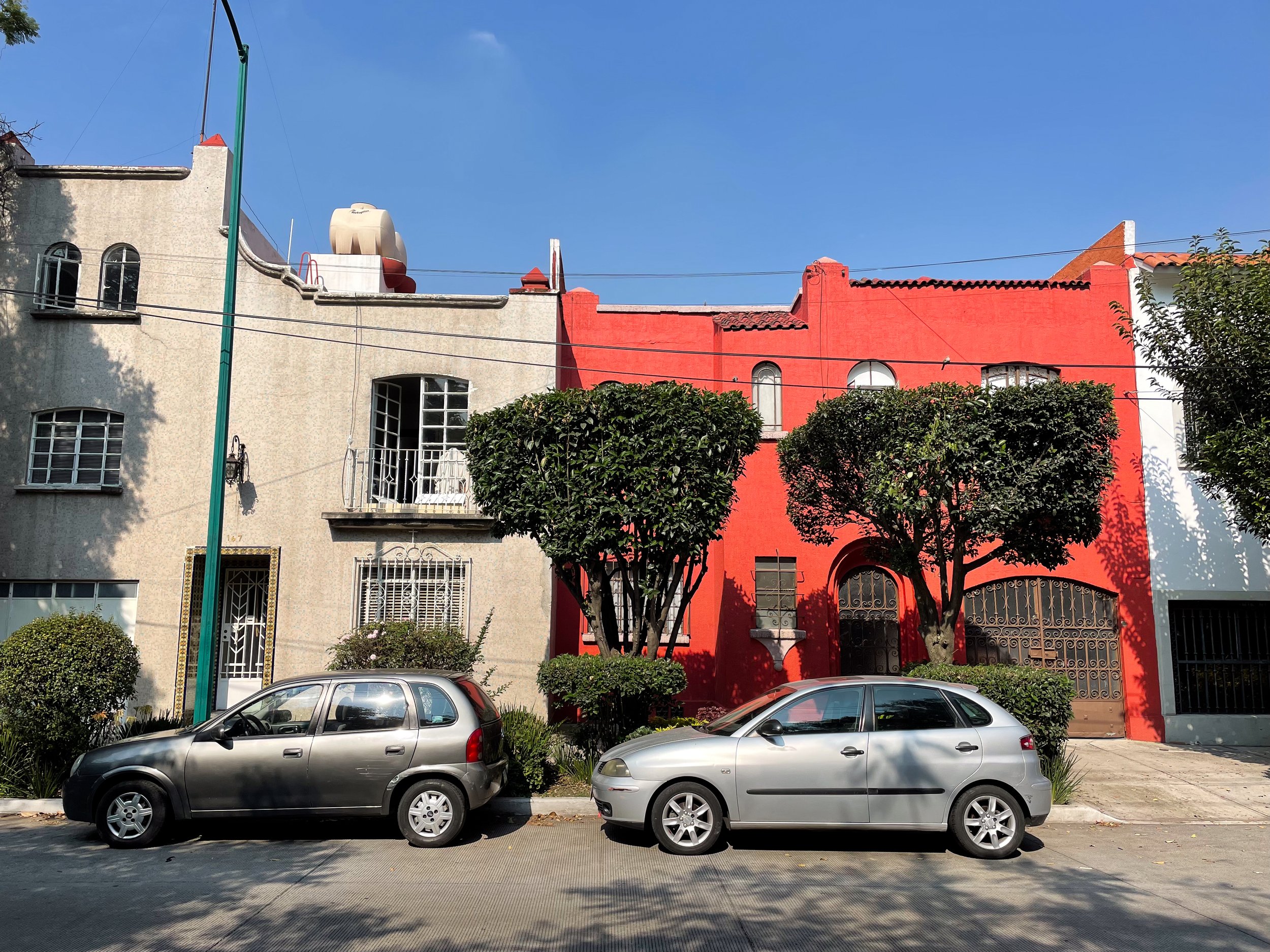
La Roma
La Roma was our home both times we visited in Mexico City. The neighborhood is lush with tree lined streets, tropical plants and blossoming flowers. Architecturally, it shares a mix of styles including Art Deco, Spanish Colonial and Contemporary. It’s a trendy area with boutique hotels, cute shops, cafes selling pan dulce, mezcalerias and a wide range of restaurants. It’s home to millennials, American expats and dog owners.
Parque Mexico. An ovular shaped park in the heart of La Roma. Between the tall trees and Art Deco fountains, couples can be spotted romantically kissing on park benches, pet owners letting their well behaved dogs play freely and families enjoying long afternoons together.
Avenida Amsterdam. An ovular avenue offset from Parque Mexico. We spent our mornings walking along the central boulevard admiring the nature, architecture and dogs while window shopping and looking for cafes and restaurants to eat at.
Mercado Medellin. A traditional Mexican market in Roma with restaurants and aisles of vendors selling produce, seafood, meats, flowers, mole and more. We visited in the morning for breakfast and to shop for groceries. In the produce section, we bought nopales, squash flowers, poblanos, tomatillos, plantains, papaya and mangos. We walked through the seafood section admiring the fresh and exotic catches like red snapper, parrot fish and whole shark sitting on beds of ice. Further in, we watched butchers slice and tenderize hunks of beef as whole chickens laid along the counters and large pork rinds hung from racks. The edge of the market is a fragrant section with vibrant floral displays, colorful arrangements and potted succulents.
La Abuelita. A restaurant in Mercado Medellin with traditional Mexican breakfast dishes. We’ve come here twice on separate trips to Mexico City and tried their huaraches, huevos rancheros, chilaquiles and cafe de olla.
Centro Historico
Centro Historico is the oldest neighborhood in Mexico City. We came here to sightsee along the narrow roads, visit landmarks and immerse ourselves in Mexican culture.
Zocalo Square. A massive public square in the Centro Historico and common place for cultural events, performances and street vendors. It’s flanked by the Catedral Metropolitana, Palacio Nacional and Grand Hotel. At its center is a large flag pole supporting the Mexican flag.
Catedral Metropolitana. A historic cathedral at one end of the Zocalo Square built on top of and from the stones of Aztec temples and pyramids. Its facade has a symmetrical design with two grand bell towers, religious motifs and ornate patterns carved into the stone. An elaborately designed church with a terracotta tiled dome is attached to one side. Its interior is adorned with golden altars and sacristies, Catholic statues, a massive organ system and sections with wooden pews.
Palacio de Bellas Artes. An art museum with an ornate stone exterior and gilded with a golden domed roof. Its interior is an Art Deco masterpiece with Aztec inspired ornaments, marble clad surfaces, geometric & organic elements. The museum features a multilevel atrium with frescos and murals, painted by Mexican artists. The most famous is El Hombre Controlador Del Universo, painted by Diego Rivera. A large fresco depicting the opposition of Capitalist and Socialist societies and the exploration of the planet. It was originally commissioned to grace the walls of Rockefeller Center in NYC but was destroyed due to its depiction of Lenin. Several temporary galleries branch off from the atrium with works created by Mexican artists.
Alameda Central. The oldest public park in Mexico City just outside of the historic center along Paseo de la Reforma. There are often street performers and festivals held here.
Pyramid of Ehecatl. An Aztec temple unearthed during the construction of Mexico City’s subway. The ruins are visible in the Pino Suárez station with an exhibit of its discovery and preservation.
Gran Hotel Terraza. A rooftop terrace at the grand hotel overlooking Zócalo Square, Catedral Metropolitana and Palacio Nacional. We watched the presidential guard lower the flag at sunset while sipping on mezcalitas. The hotel lobby is equally as impressive with one of the largest Tiffany glass ceilings in the world, creating a beautiful mosaic of colors.
Templo Mayor. The ruins of Tenochtitlán, the Aztec city destroyed by the Spanish to build colonial Mexico City. A pathway leads through the ruins past several periods of its expansion to its center with a sunken pyramid, with two shrines on top, several ceremonial altars and a museum housing artifacts discovered in Templo Mayor. Plaques tell the story of its ceremonial purposes, expansion, destruction and preservation.
Temple Entrance. A platform featuring statues of snakes with well preserved heads, still bearing red paint.
The Shrine of Huitzilopochtli. A shrine at the top of Templo Mayor dedicated to the Mexica god of war. The platform was believed to have been used for human sacrifices and funerals.
The Shrine of Tláloc. A shrine at the top of Templo Mayor dedicated to the Mexica god of water. A painted statue of Tláloc holding a bowl for offerings is preserved at the front of the shrine.
The House of Eagles. A platform and temple used by elite Mexicas to perform ritual ceremonies. Protected under a pavilion, the ceremonial site features stone “banquettes” with bases decorated in ornately carved and painted hieroglyphs.
Altar Tzompantli. An altar building with its sides covered in stone carved skulls, dedicated to the god of death.
Red Temple. A small temple with walls built from red stone circles and painted in various designs.
Templo Mayor Museum. A museum housing artifacts discovered at Templo Mayor including carved stone reliefs, statues, the remains of human sacrifices, stone masks, obsidian blades and jewelry. Some of the most important artifacts on display are:
Monolith of Tlaltecuhtli. A giant stone monolith of one of the Aztec’s most important gods. Viewed as source of life, the god was often appeased with blood sacrifices and human hearts.
Coyolxauhqui Stone. A giant round monolith of a dismembered Aztec goddess. It’s one of the largest intact artifacts discovered.
Mictlantecuhtli God of Death. A clay statue of the skeletal looking Aztec god, with its arms extended and claw like hands.
Eagle Warrior. A clay statue of a warrior dressed like an eagle found in The House of Eagles.
Turquoise Disk. A small disk made with over 15,000 turquoise pieces depicting warriors.
Bosque de Chapultepec
Bosque de Chapultepec is the city’s largest park and green space with forested areas and tree covered walkways. At is center is a lake with paddle and row boats, surrounded by vendors selling snacks, street style food, luchador masks and children’s toys. The park acts as a cultural hub with numerous museums and a historic hilltop castle.
Museo de Arte Moderno. A modernist and surrealist art museum with painting and pieces depicting Mexican heritage, culture and landscapes by artists like Frida Kahlo, Diego Rivera, Rufino Tamayo and José Clemente Orozco. One of Frida’s most famous works, Los Dos Fridas (The Two Fridas), is prominently on display. Some pieces, including Diego’s, Velorio o Dia de Muertos, are paired with a wooden orb containing an aroma of what’s pictured.

Museo Nacional de Antropología. An anthropological museum dedicated to the ancient civilizations and cultures of Mexico. Exhibit halls are dedicated to each group including the Mexica, Aztec, Mayan, Zapotec and Teotihuacan. Artifacts on display include sacrificial stones, statues of gods, carved stelae, ball court rings, jade masks, golden breast plates, painted pottery, human remains and temple reproductions. Some of the most important artifacts on display are:
The Aztec Sun Stone. One of the most famous and recognizable Aztec artifacts discovered, prominently displayed in the Mexica Hall. The complexly carved 12ft diameter stone monolith is often referred to as the “Aztec Calendar.” Bearing elements of the calendar, it was used as a sacrificial altar for blood sacrifices.
Montezuma’s Headdress. A replica of the Aztec ruler’s magnificent headdress made from turquoise, red and iridescent green feathers adorned with gold medallions. It’s located in the Mexica Hall.
Colossal Olmec Head. One of the few colossal stone heads of an Olmec ruler discovered. It’s located in the Gulf Coast Hall.
The Funerary Remains of Pakal The Great. Referred to as one of the Mayan Empire’s greatest rulers. His funerary offerings including an elaborate mask, beaded jewelry and skeletal remains are displayed in a replica sarcophagus. It’s located in the lower level of the Maya Hall.
Tlaloc "Señor de la Lluvia." A massive stone sculpture of the Aztec god of water surrounded by a fountain outside of the museum.
Coyoacan
Coyoacan is an authentic and historic neighborhood with a lively center, traditional markets, beautiful colonial era homes and many restaurants. It’s famous as the birthplace and home to Frida Kahlo.
Centro de Coyoacan. The central plaza and park is the heart of the neighborhood. It’s a place for all ages and generations to gather, where street performers put on a show, mariachis serenade diners and vendors sell handicrafts, street food, cotton candy and firework poppers. In the middle of the park is a fountain with coyotes playing; they are the symbol and namesake of the neighborhood. Flanking the center is a handicrafts market, a historic cathedral and many restaurants serving traditional Mexican cuisine.
Mercado Artisanal. A two level market with stalls of vendors and artists selling alebrijes, calaveras, textiles, books, leather goods and home decor. There are even a few stalls to get tattoos and piercings.
Mercado San Juan. A market, very similar to Mercado de Medellin in La Roma, albeit slightly larger in size. Locals come here to shop for produce, meat, spices and home goods, tourists for souvenirs and everyone comes for its food stalls and restaurants.
Casa Azul. Coyoacan is the birthplace and home to many renowned artists, most notably Frida Kahlo. We visited her family home, Casa Azul, named after its vibrant blue painted exterior. While here, we toured her gardens, art studio and many rooms within her house. The museum displayed her artwork, clothes, diaries and braces while explaining the story of her life. Purchase tickets ahead of time on Viator in order to secure a reservation. Once inside, purchase a photography sticker for $30 Pesos.
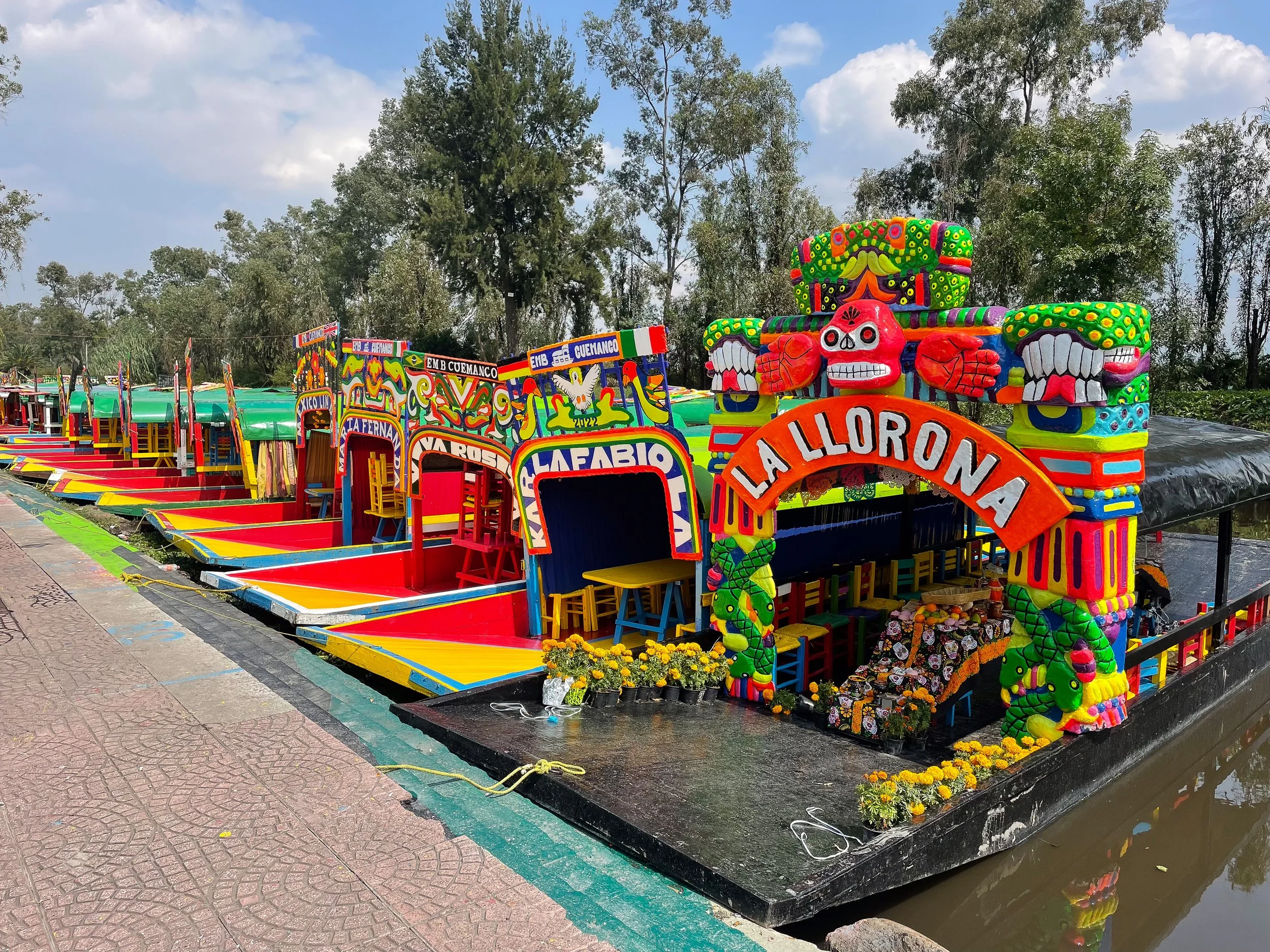
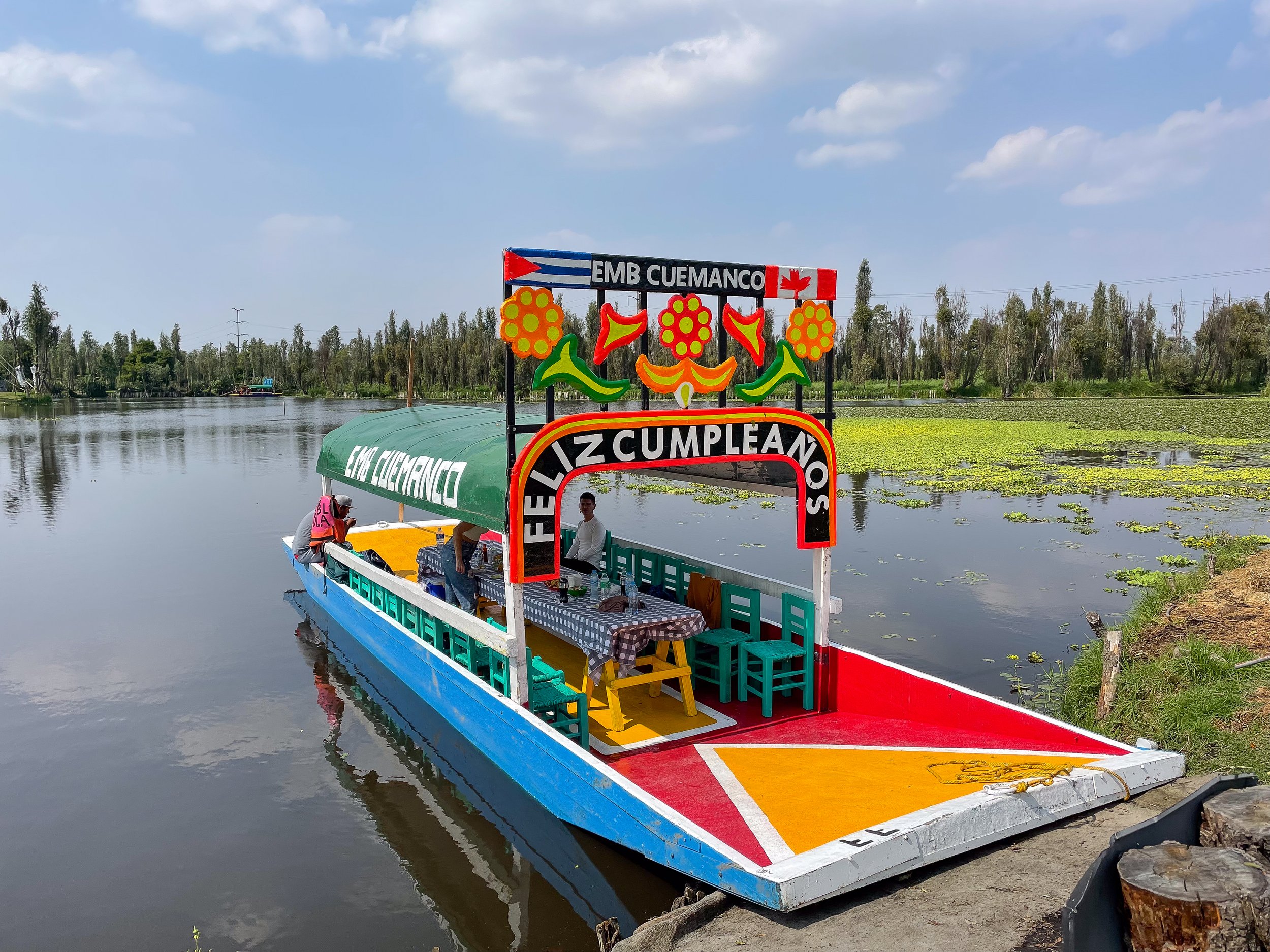
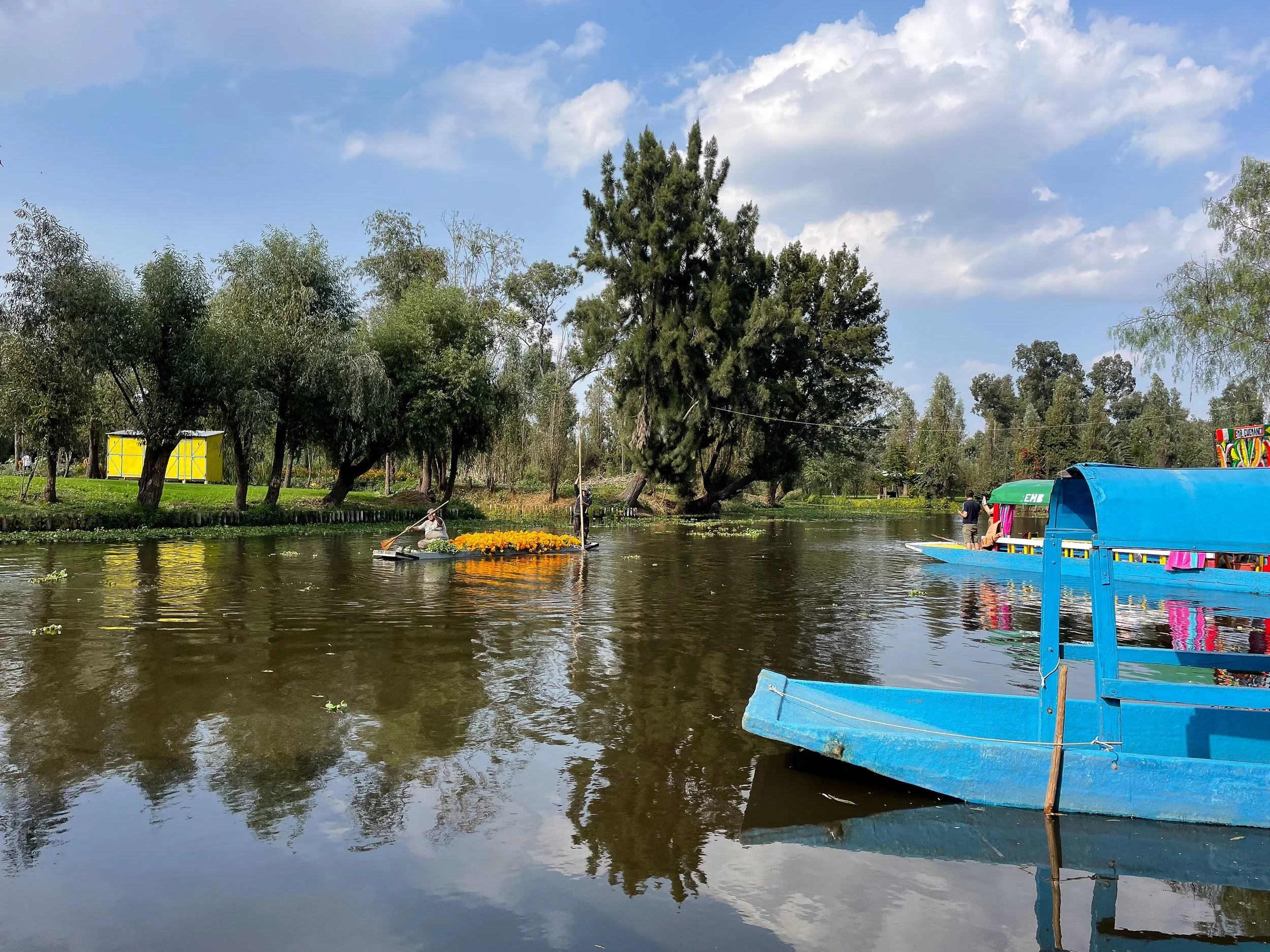
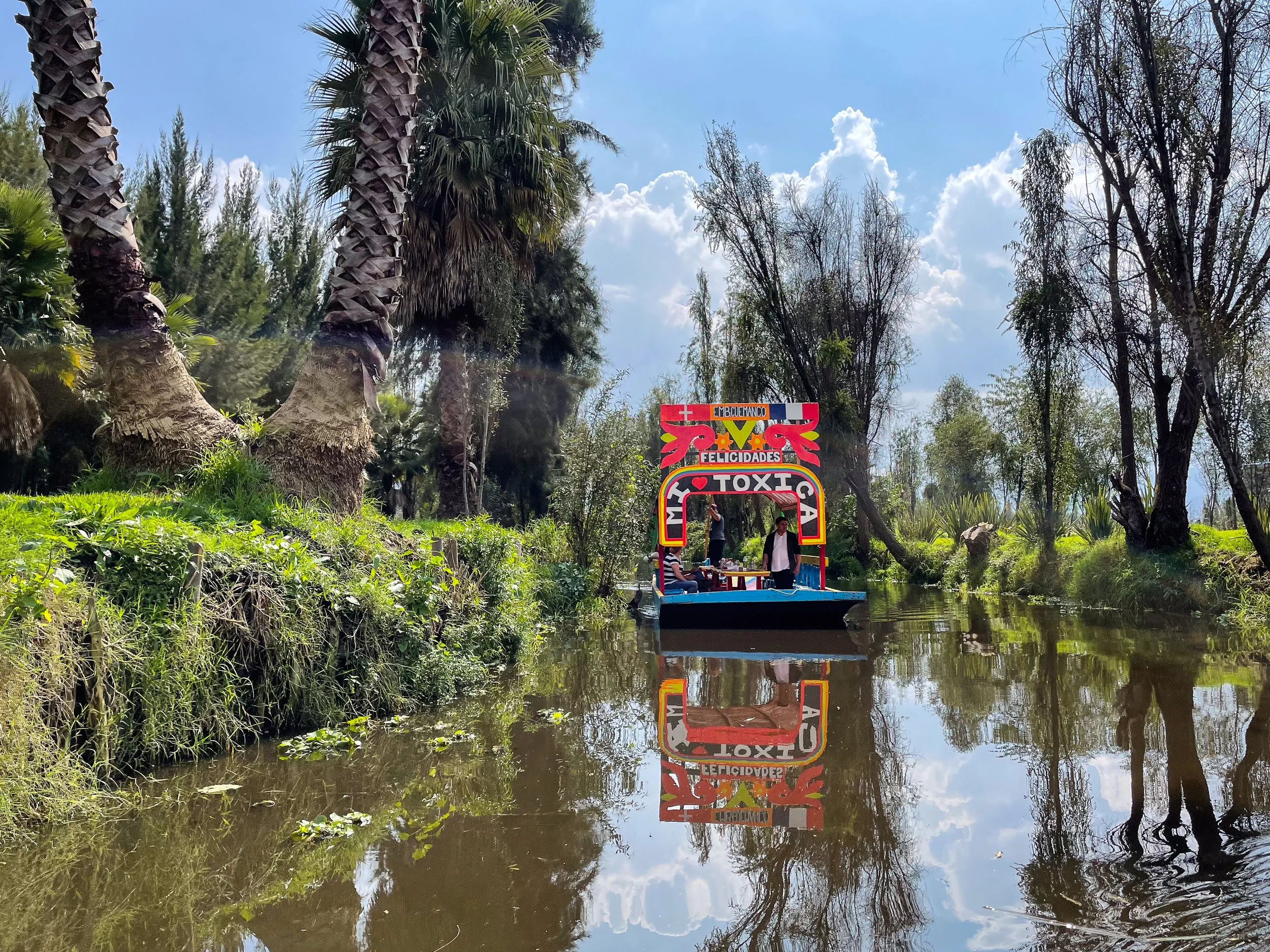
Xochimilco
Xochimilco is an ancient Aztec canal system built around floating gardens. It’s best known today for its narrow waterways, colorful gondolas and lively atmosphere. The canals are a place to fiesta and enjoy a leisurely afternoon while learning about Aztec culture and the haunting legend of La Llorona.
A Fiesta on the Canals
We started our tour at Embarcadero de Cuemanco, one of the main canals in Xochimilco. The canal was lined with dozens of colorful and vibrant gondolas, called Trajineras, and surrounded by a market of shops, restaurants and bars. Before embarking, we picked up cervezas and snacks for our journey. We then met our guide, Maria, at our Trajinera named Feliz Cumpleaños, fitting for Devin’s birthday. Maria and our rower were ready for us with snacks, music, mezcal and tequila!
Rest Stops along the Canals
As we set off, the rower gradually navigated us through the canals using a long wooden stick with occasional stops at various bars for cocktails and restroom breaks. We made 3 stops:
First at Don Pino, a bar and snack shop. We of course had margaritas.
Second at Chinampa Onkali, where we saw axolotls (cute amphibious salamanders) and had lunch including blue corn quesadillas and tacos.
Third at Micheladas el Yogui, an excellent bar with cocktails and shots served in clay pottery. We even brought the pottery home.
Mezcal & Mariachis
Throughout the tour, not only did we get a little tipsy but we got to see beautiful nature and learn about the Aztec history and construction of the canals. Our rower even let us try guiding the Trajinera! Maybe it was the alcohol but we soon after drifted off course. Towards the end, a Trajinera with a Mariachi band pulled up and serenaded our group with a few songs!
Tips for Visiting Xochimilco
Hire a Guide. Guides can be hired from any of the docks in Xochimilco, however wanting to be a part of a group, we booked ahead of time through Airbnb Experiences with several other travelers.
Pronunciation. Xochimilco is pronounced: So-Chee-Mill-Co.
Traffic. Plan for traffic if booking a tour. It took us an hour and a half to reach Xochimilco from La Roma.
Buy Snacks. Buy food and drink to enjoy on the boat from the nearby market. Timing. The best time to come is between 12-1pm when it’s busy and most festive. Plan to tour the canals for a minimum of 2 hours.
Cash Only. Everything in Xochimilco is cash only. This includes:
Cerveza: 20 Pesos
Cocktails: 50-100 Pesos
Bathrooms: 5-10 Pesos
Mariachi Band: 200-400 pesos (dependent on negotiation, quantity of songs and number of people on board)
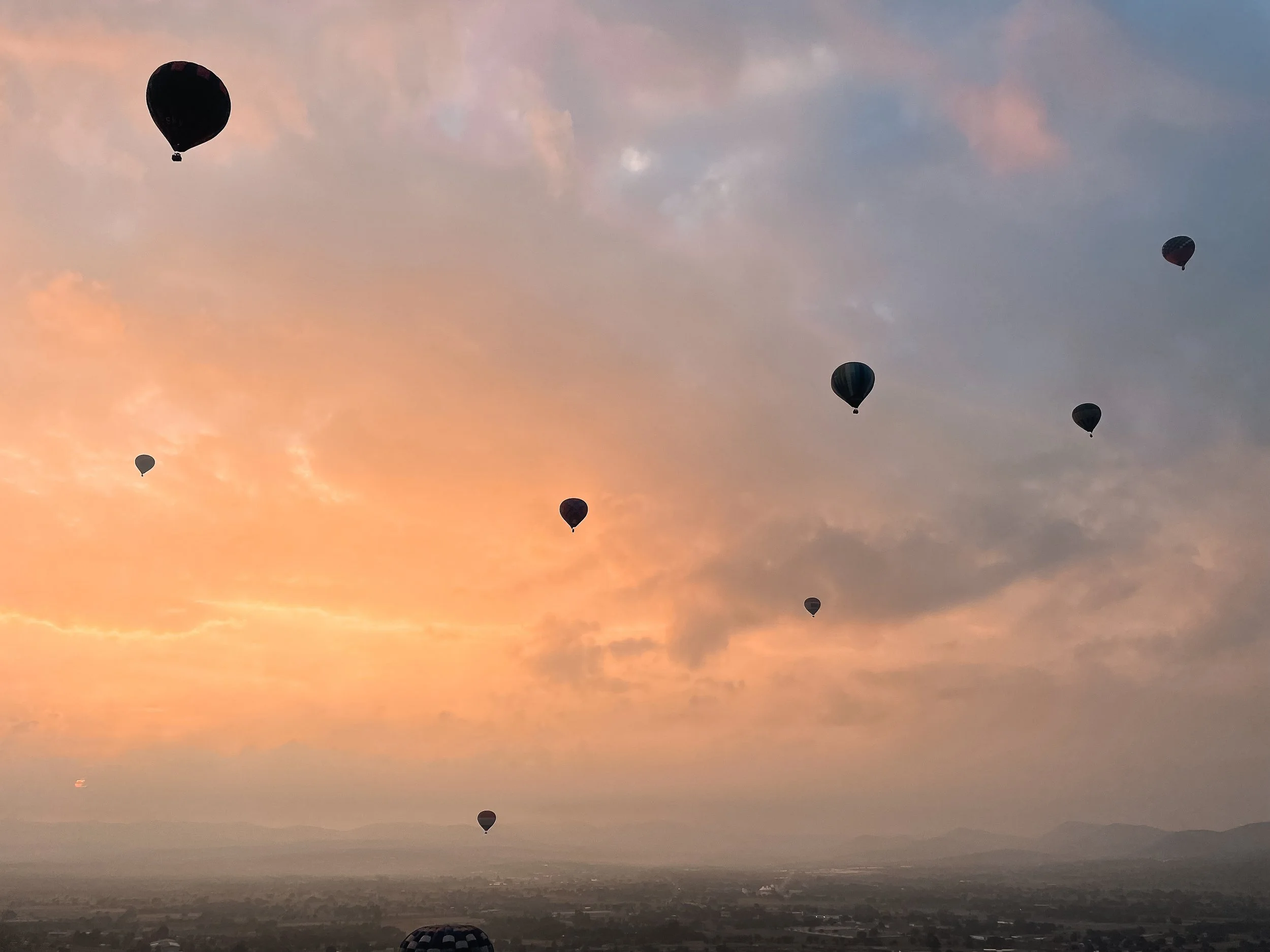
Teotihuacán
Teotihuacán is an ancient city with pyramids, ruins, murals and artifacts that predate the Aztecs by over 1,000 years. One of the most popular ways to view the ruins is by hot air ballooning overhead as the sunrises followed by exploring them on foot.
Sunrise Over Teotihuacán. We booked a sunrise hot air balloon tour from Mexico City to Teotihuacán, a longtime dream that began with a 4am pickup and an early arrival at Sky Balloons Mexico.While checking in, we sipped hot cocoa and watched dozens of vibrant balloons inflate and ignite in the dark. As dawn approached, balloons lifted off one by one. Soon after, we climbed into our basket, drifting gently upward as the sun rose over the hazy landscape, glowing like a brilliant balloon in the sky.
Ballooning Over Teotihuacán. Floating toward Teotihuacán, we shifted altitudes above the Pyramid of the Sun as colorful balloons filled the air. From above, the Avenue of the Dead and surrounding ruins slowly came into focus, entirely empty and eerily serene before the park opened. We descended over the avenue toward the Pyramid of the Moon and landed softly in a nearby field, celebrating with a champagne toast. Back on the ground, we enjoyed chilaquiles and tropical fruit while overlooking the ruins and balloons floating overhead.
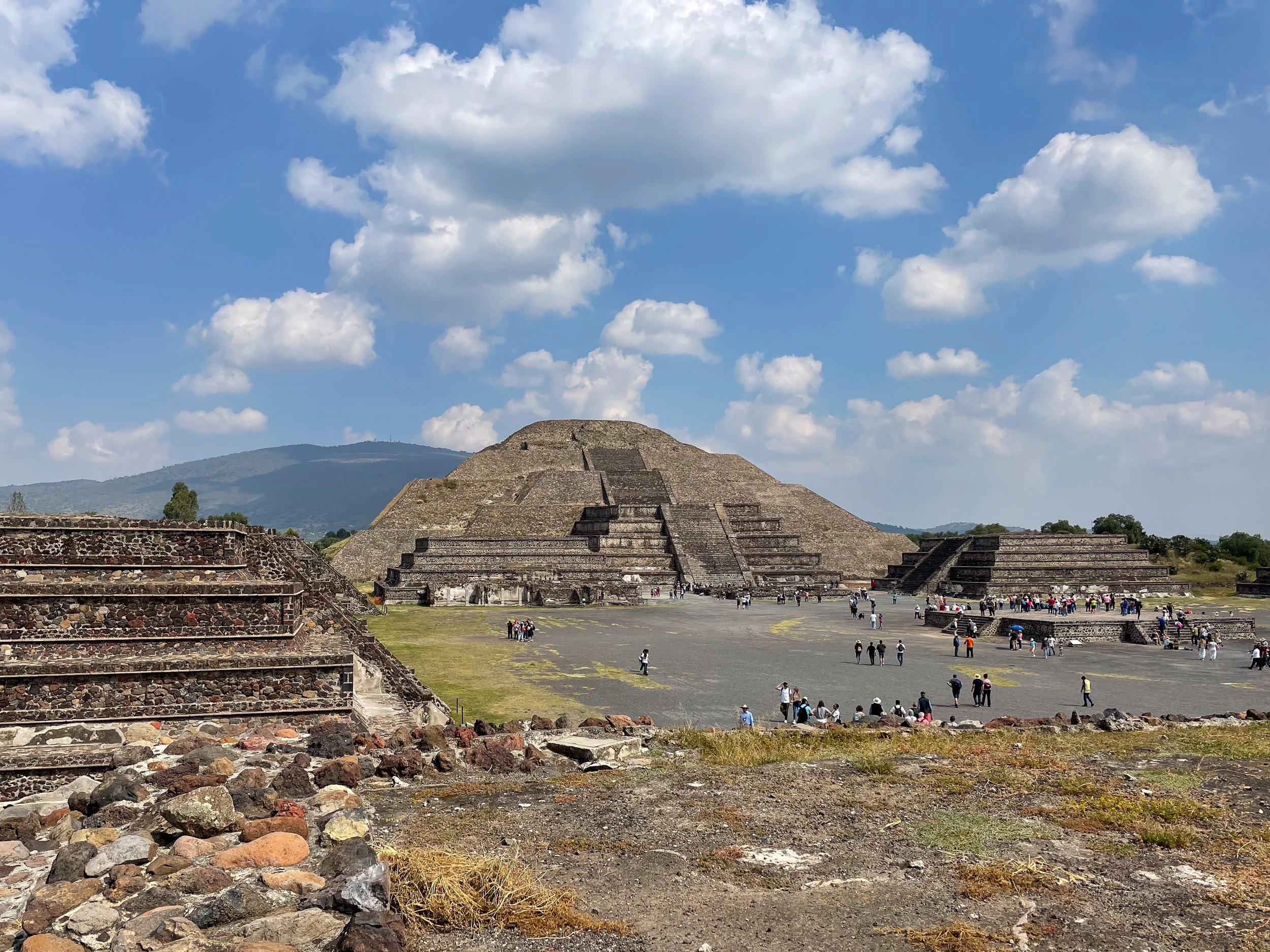
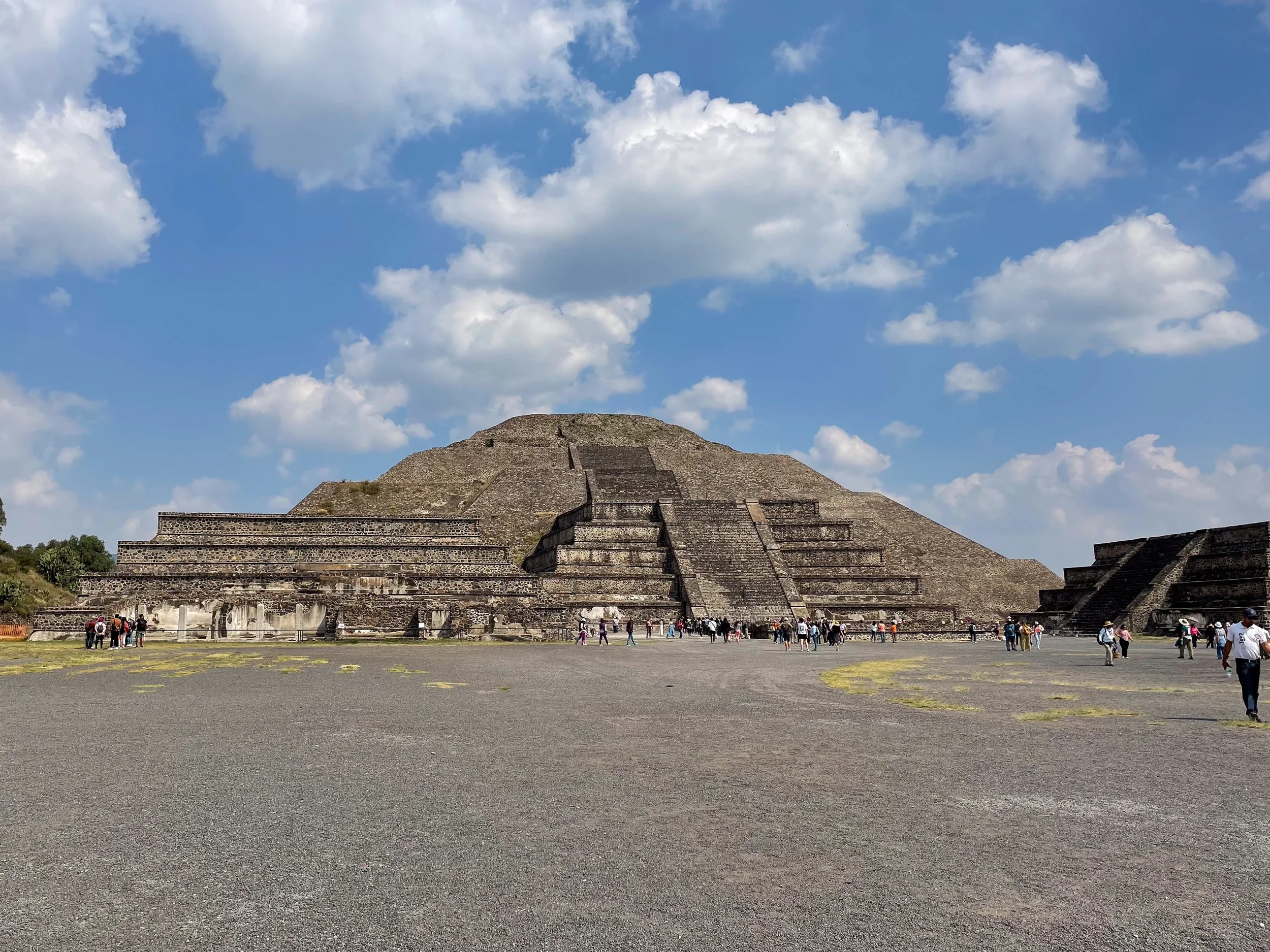
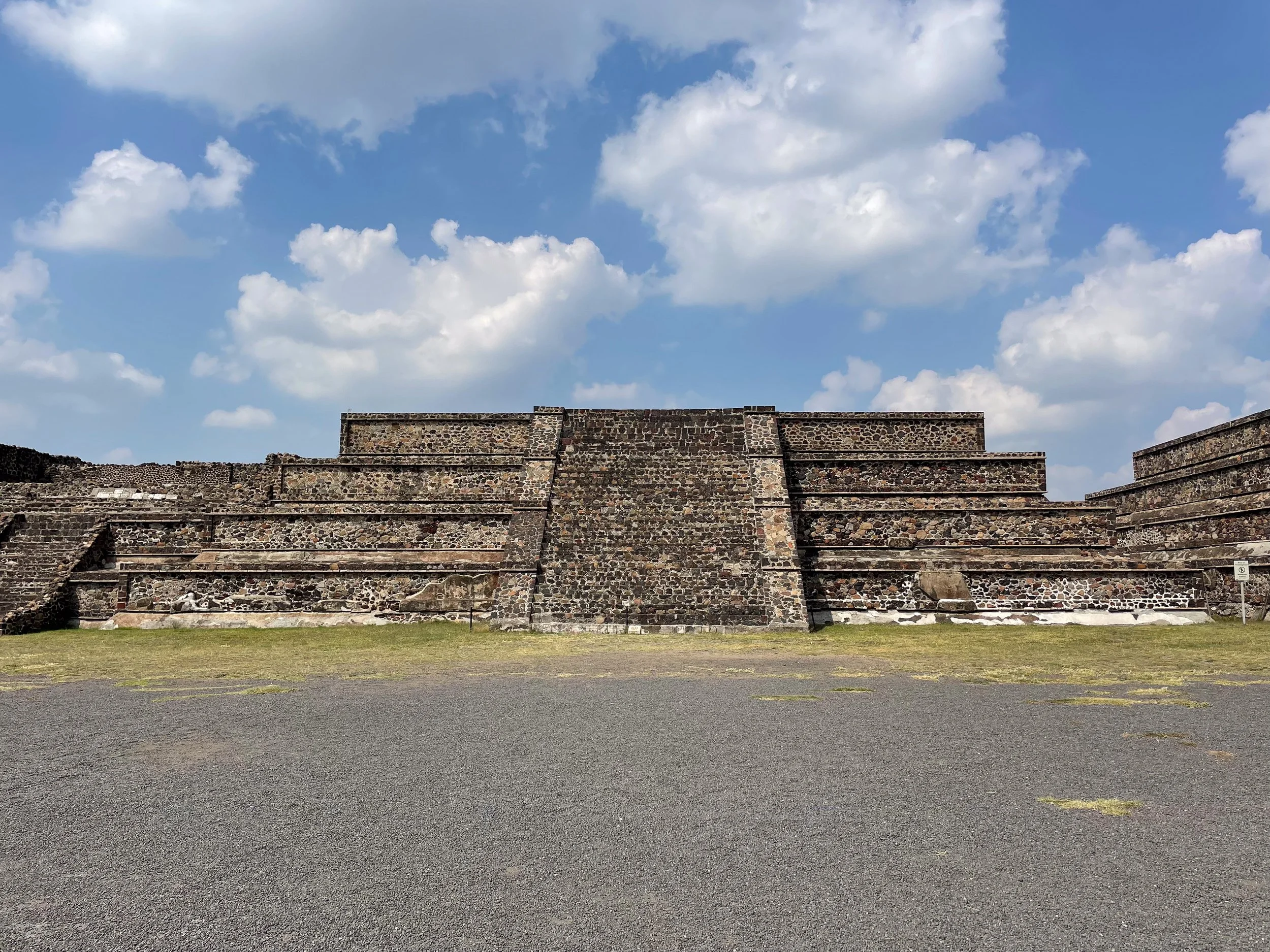
Exploring Teotihuacán
There are many notable sights to see throughout the ancient city. We were able to explore several of them throughout our visit:
The Avenue of the Dead. A 1.5 mile long plaza flanked by the Pyramid of the Sun and the Pyramid of the Moon as well as many smaller pyramids and stone platforms. Many vendors line up selling obsidian sculptures, howling noise makers and other items.
The Pyramid of the Sun. The largest pyramid at Teotihuacán located along the center of the Avenue of the Dead. It faces west overlooking the north and south ends of the avenue.
The Pyramid of the Moon. The second largest pyramid at Teotihuacán located at the north end of The Avenue of the Dead. It faces south looking down the entire avenue.
Palacio de Quetzalpapaloti. A well preserved palace with stone carvings, painted walls and ruins of ancient rooms.
Mural del Puma. A well preserved mural of a cougar on the east side of the Avenue of the Dead halfway between the pyramids of the sun and moon.
Plaza Oeste. A plaza along the south west end of the Avenue of the Dead with underground layers of a stepped pyramid, serpent heads and ruins of multiple temple buildings.
Tips for Visiting Teotihuacán
Getting Here. Teotihuacán is 1 hour 30 minutes from Mexico City. The best way to get here is with a tour group or by renting a car. The advantage of booking with a tour group is that it takes away the hassle of transportation; the disadvantage is that your time is limited. We booked on Get Your Guide.
Wear Layers. It’s chilly when arriving before sunrise but quickly heats up during the afternoon.
Climbing. The pyramids have been closed for climbing on since 2020.
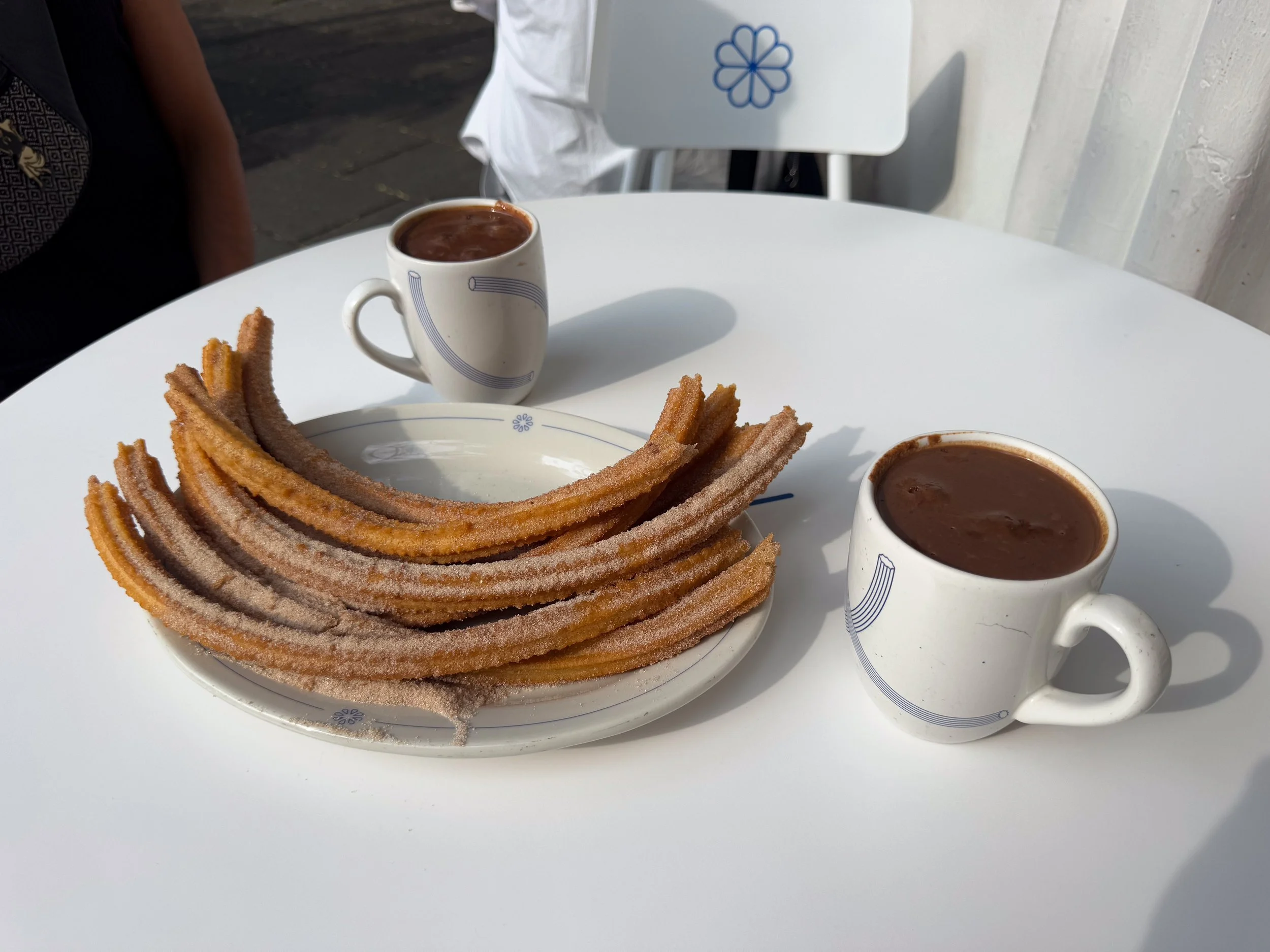
Mexican Cuisine
Mexican cuisine is one of our favorites in the world. While in Mexico City, we made sure to try as many authentic dishes and flavors as we could.
Chapulines. Crispy fried grasshoppers. We had them on tacos, as a garnish to dishes, in bars mixed with peanuts and saw them sold in barrels as snacks with a squeeze of lime.
Tlayudas. A cracker thin tortilla topped with various garnishes. Our favorite was from a street vendor in Zócalo Square. It was spread with refried beans and topped with nopales, Oaxacan cheese and hot sauce.
Gordita. Thick corn masa tortillas cooked until puffy, cut open and stuffed with filling. We ordered them from a street vendor on Paseo de la Reforma who stuffed them with beans, cheese and salsa.
Churros. Fried sticks of ridged dough covered in cinnamon sugar and served with dulce de leche, chocolate sauce or sweeten condensed milk.
Molcajete. A traditional stone mortar heated over fire and filled with protein like steak, chicken or chorizo. In our case, seitan, tofu or shrimp. The protein is topped with salsa, radish, avocado, cheese and draped in grilled nopales.
Chilaquiles. Fried corn tortillas simmered in salsa verde or salsa rojo and topped with fried eggs, avocado, onion, cheese, cream and cilantro.
Mole. One of Mexico’s most famous and traditional sauces. It’s typically dark brown and made from a mixture of chili peppers, nuts, dried fruits and spices like cinnamon, star anise and cumin. We had this over cheese enchiladas in Coyoacan.
Café de Olla. Coffee brewed with cinnamon and star anise. It’s typically sweetened with raw cane sugar and served in a clay mug.
Tequila. The famous liquor made from the sap of the blue agave cactus. We tried it neat and in cocktails.
Mezcal. A smoky version of tequila. Drink it neat from a prayer candle vase typically seen in churches.
Pulque. A yeasty and fermented drink made in the dying core of the agave cactus.
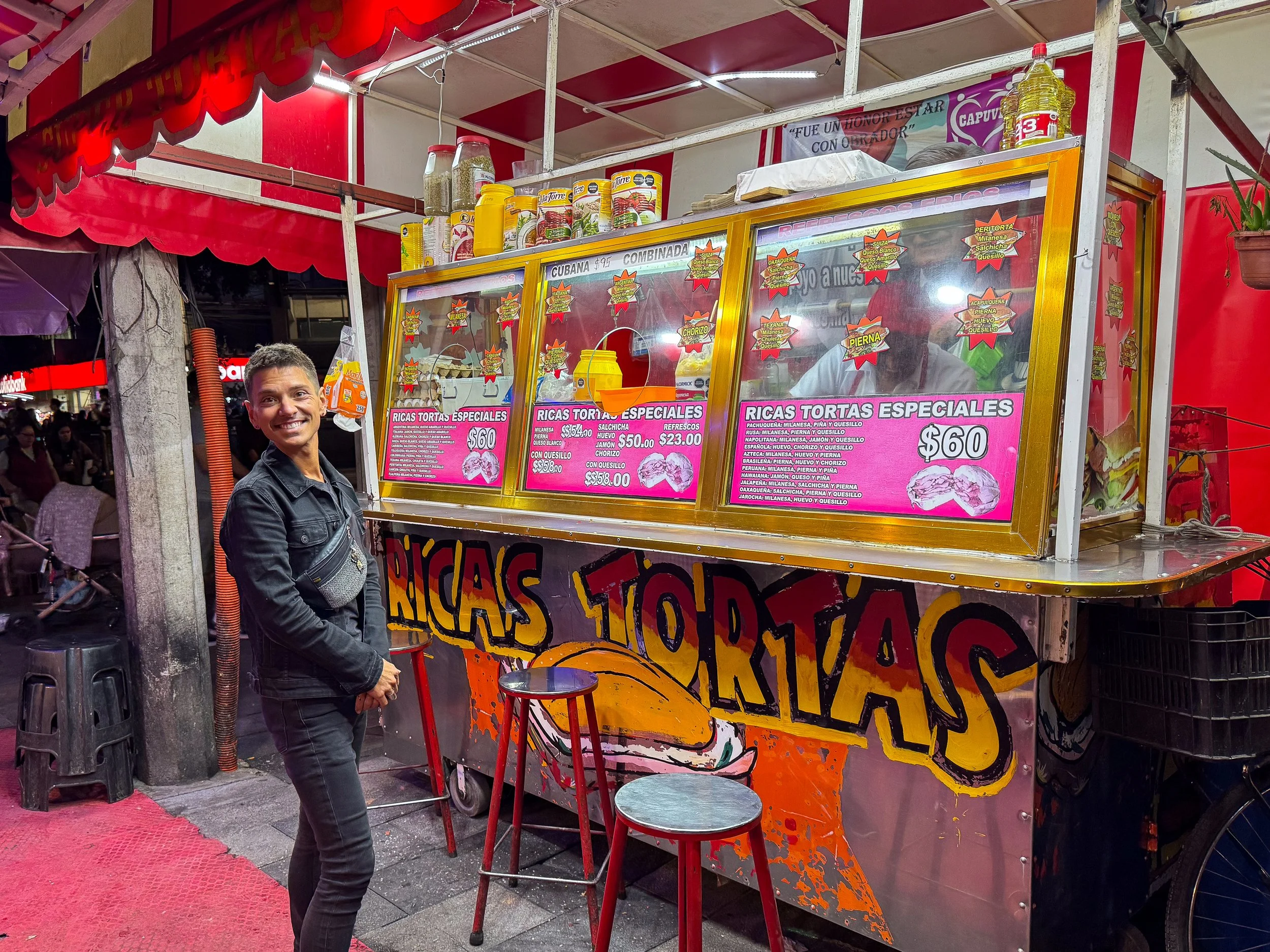
Places to Eat & Drink
We ate and drank at a range of restaurants, cafes and bars across the city, enjoying Mexican cuisine, cocktails, snacks and street food.
Café de Tacuba. An elevated restaurant in the Centro Historico popular amongst locals. Stop in for mid afternoon coffees and fresh pastries.
SOM. A cocktail bar with exclusively Mexican spirits like mezcal, tequila and pulque. We ordered the piñacati & pulquerita.
Matuche. A mezcal bar with mezcals from all across Mexico. Order a flight to sip on or let the bartender make recommendations.
Tlachiquero. A dive bar specializing in mezcal. Join locals in sipping on mezcal from miniature clay jugs and bowls garnished with tajin and orange slices.
Taqueria Orinoco. A popular taqueria for a Mexico City staple, midnight tacos! Open until the early morning hours, we stopped in late at night after a few drinks for avocado tacos and cheese quesadillas accompanied by a spread of salsas. The food is simple, delicious and inexpensive.
Churrería el Moro. A cafe on the corner of Parque Mexico serving churros and chocolaty drinks. Order the warm “Español” for dipping or cold “Mexicano” for sipping.
Pasillo de Humo. A restaurant serving traditional Oaxacan cuisine including: smoky homemade salsas, charred tortillas, cricket tacos, a caramelized pumpkin dessert and a cart with a variety of mezcals.
Fonda Fina. We came here for Devin’s birthday dinner. The restaurant makes classic Mexican dishes with a contemporary twist and creative cocktails.
Veganion. A fully vegan restaurant offering Mexican staples traditionally made with meat like a molcajete, tacos al pastor, carne asada and a sope.
Restaurant Ave Maria. A higher end restaurant serving classic Mexican meals like enchiladas in mole, chile relleno with queso and tres leches served on traditional clay dishes.
Los Danzantes. Oaxacan style and traditional Mexican dishes, located in Coyoacán.
Degú Condesa. A brunch spot with bold coffee and dishes with Mexican flavor like scrambled eggs cooked in salsa verde or a grilled nopal with a fried egg surrounded by a poblano crema sauce.
Chiquitito Café. We learned about this cafe from a Duolingo Podcaston Mexico City. It’s a dog friendly cafe with a range of light pastries, breads and coffee.
Tips for Dining Out
Reservations. Make reservations at restaurants ahead of time to guarantee a spot.
Tipping. Tipping 10% is standard. Tip anything more for exceptional service.
Cash. Carry cash, especially for street food and at the markets.
Restrooms. Carry small coins to use public restrooms, which usually cost 5 pesos. As with many toilets in Central America, don’t flush used toilet paper. It often clogs the plumbing.
Tap Water. Avoid drinking tap water due to risk of contamination unless it’s been boiled or filtered.
Clothing. Avoid wearing shorts or sandals. This is seen as beachwear and out of place.
Mezcal. Mezcal is much more popular than tequila.
Where to Stay
Roma Art Deco Apartment. A private two bedroom Airbnb in the heart of La Roma steps from Parque Mexico. The home is a cozy spot to relax after a full day exploring the city.
Casa Aimee. A guest house with several rooms in a family’s home in Roma Sur. The hosts were wonderful and accommodating, allowing us access to their shared kitchen, rooftop dining area and washing machine. They even prepared us barista style coffees every morning. Reserve on Booking.
Getting Around
Traffic. Traffic in Mexico City is notoriously congested. The best recommendation is to plan for extra time when getting around.
By Uber. Ubers were our preferred method of getting around because of how inexpensive and consistent they are. We could travel from the airport to La Roma for $20 or across town for $10.
By Metro. The city also has an extensive subway system. Though we didn’t ride it, it looked to be a cheap and effective way of getting around.
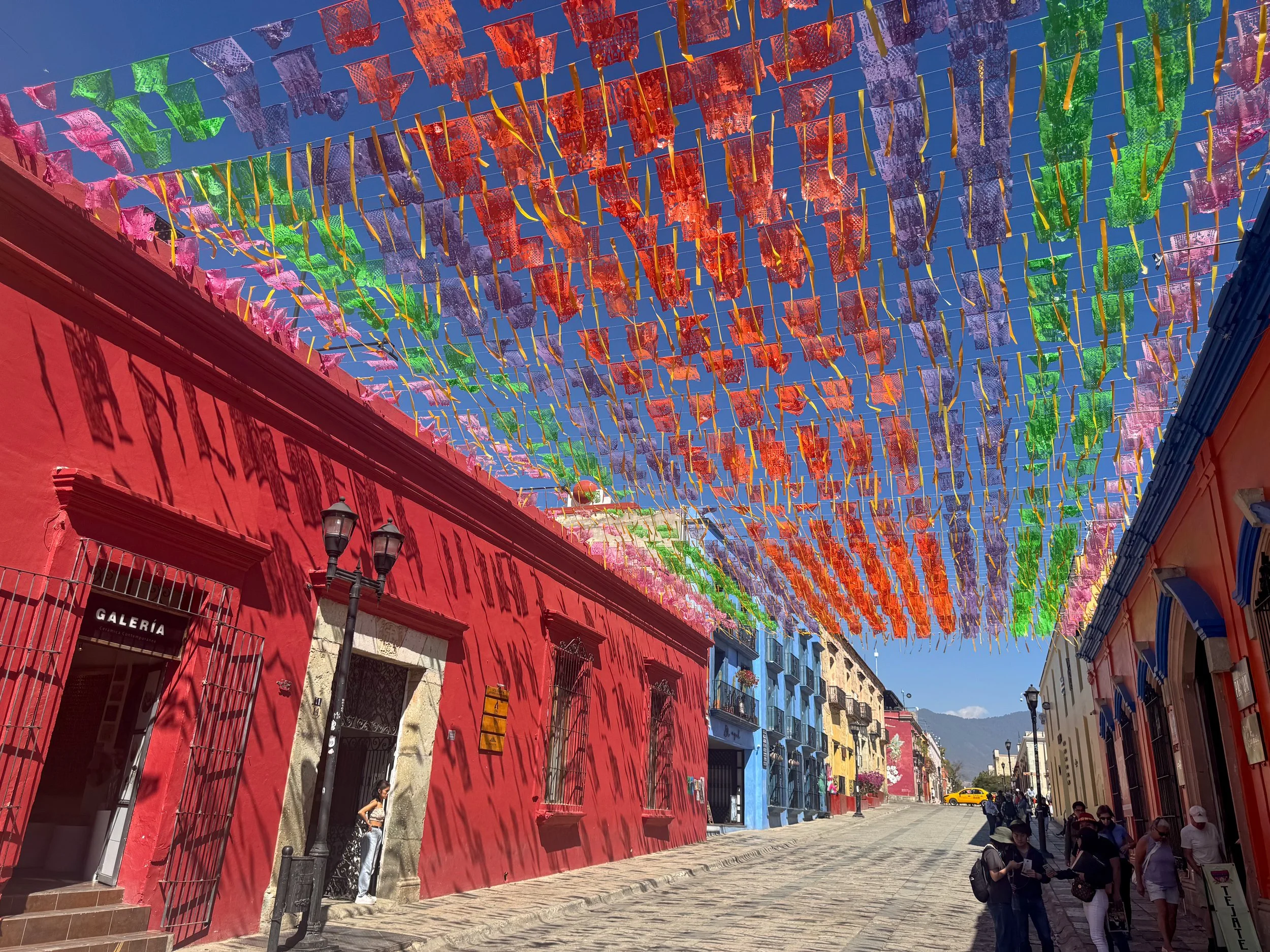
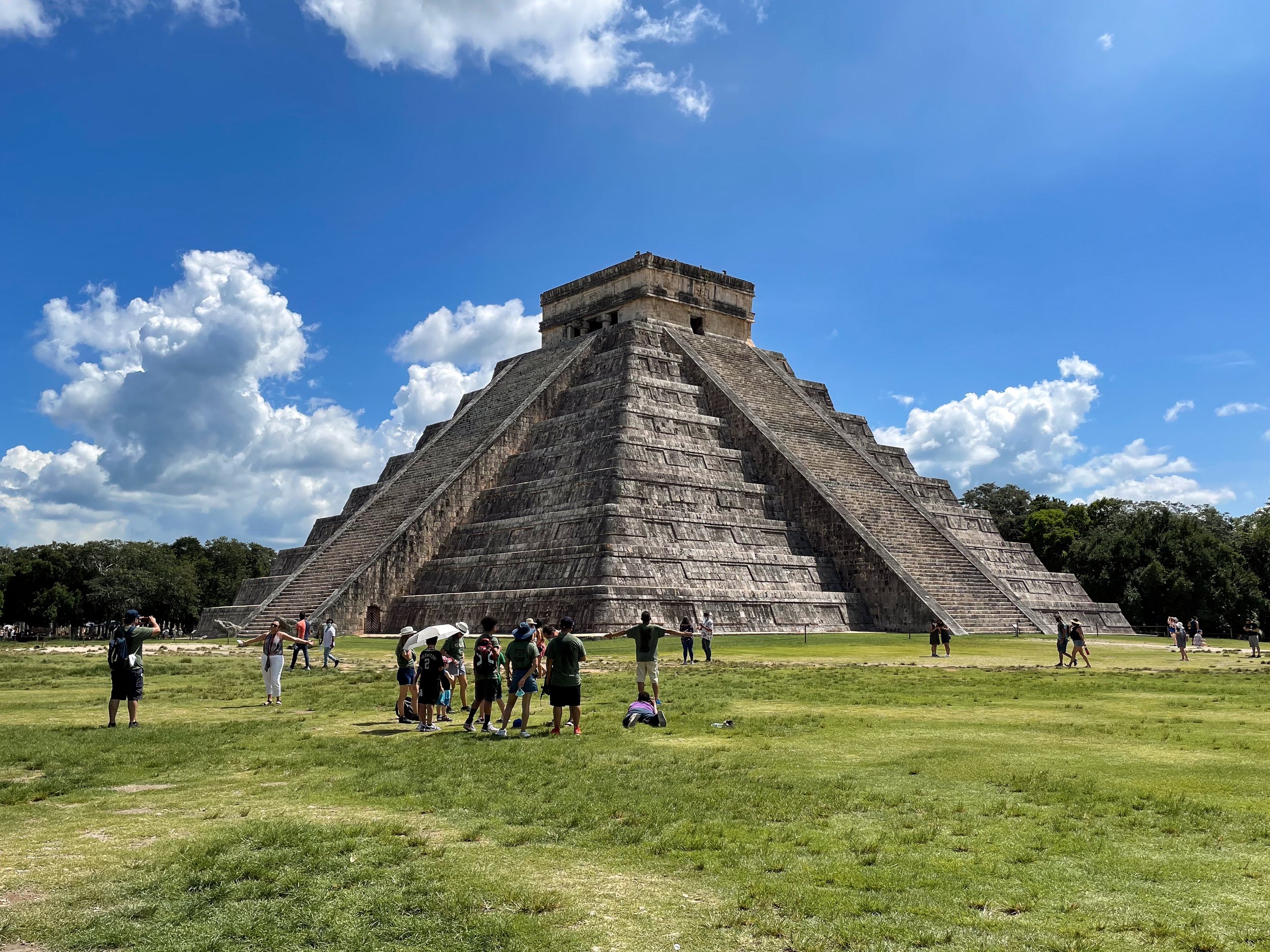
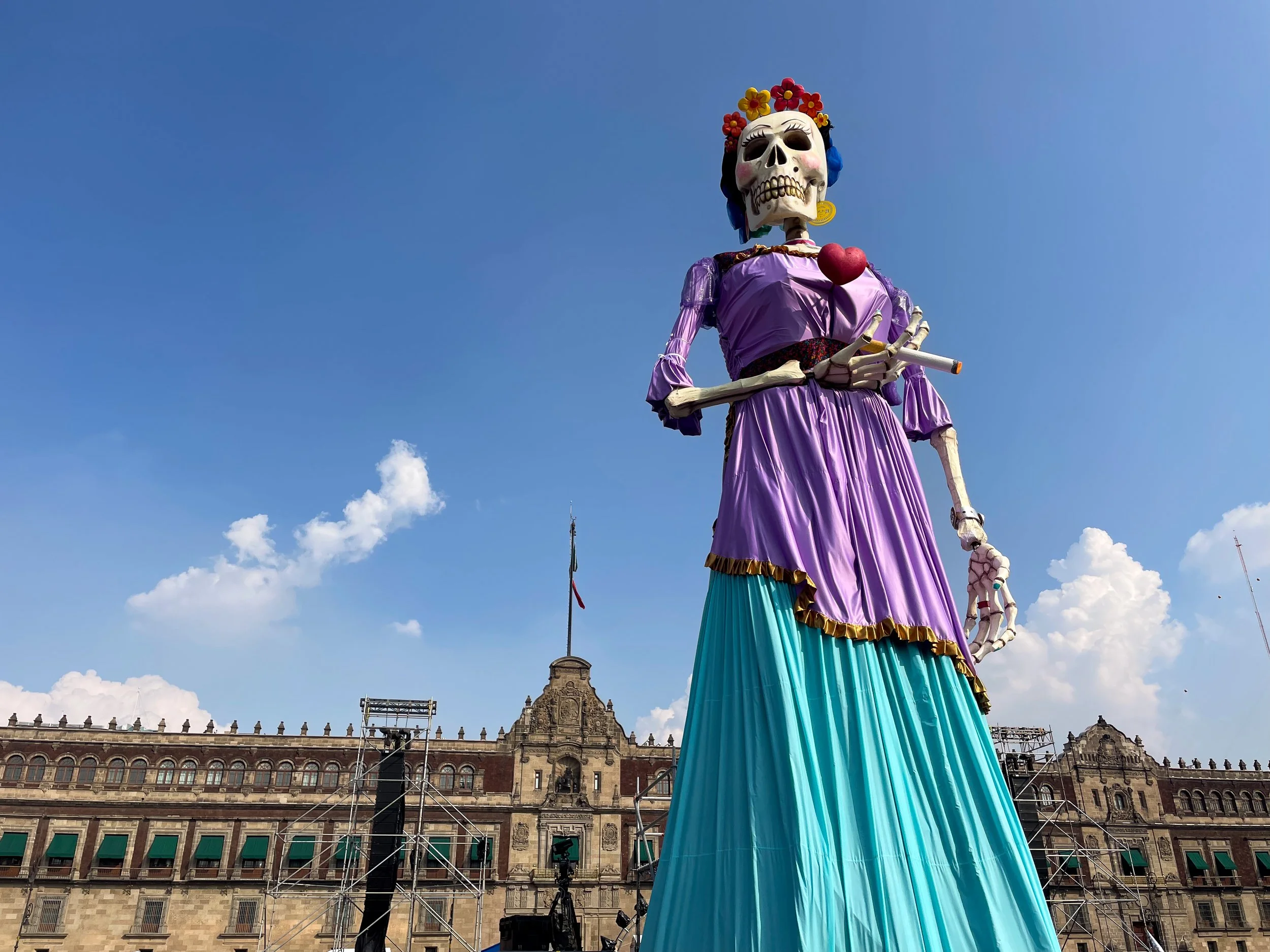
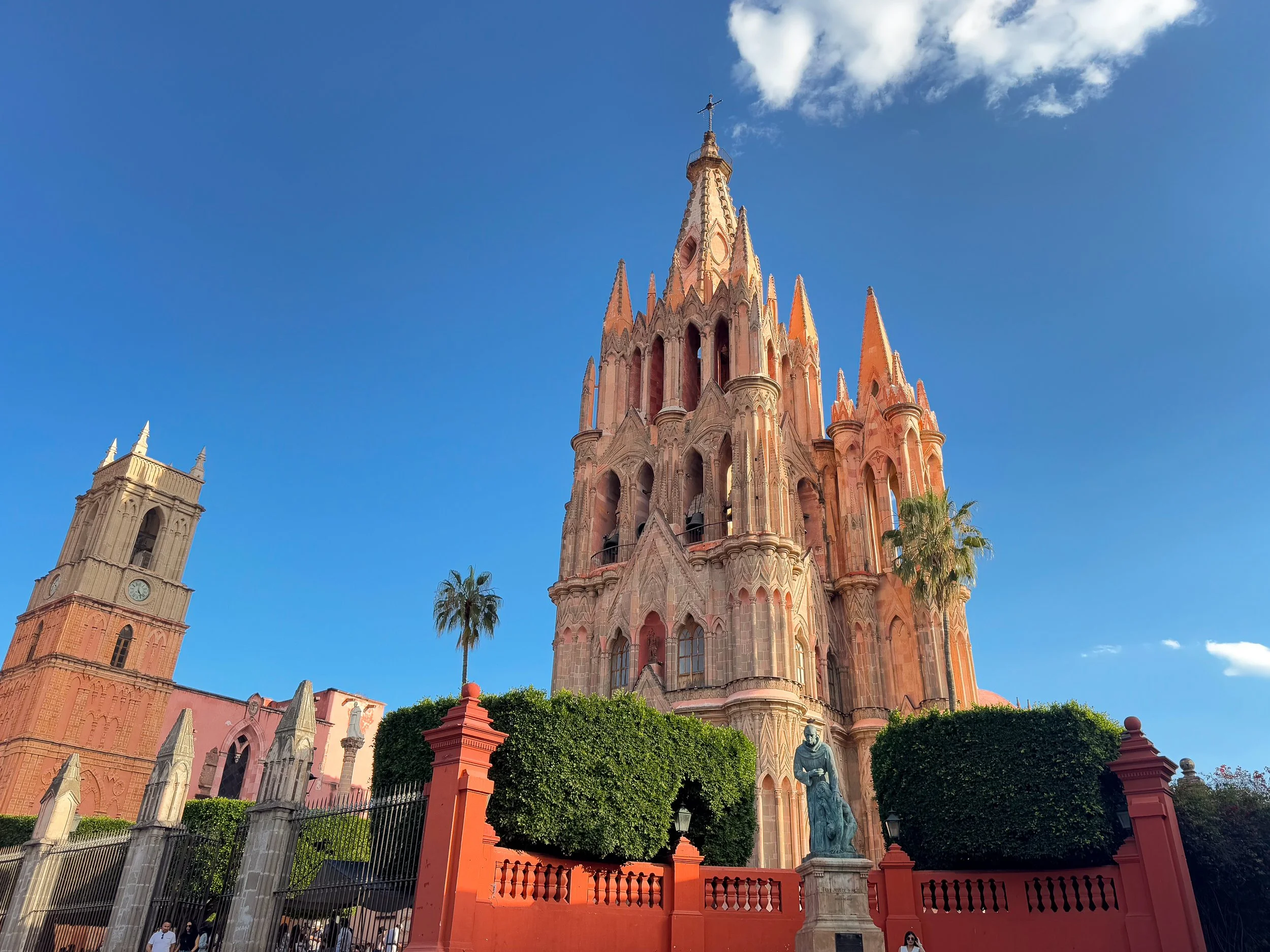
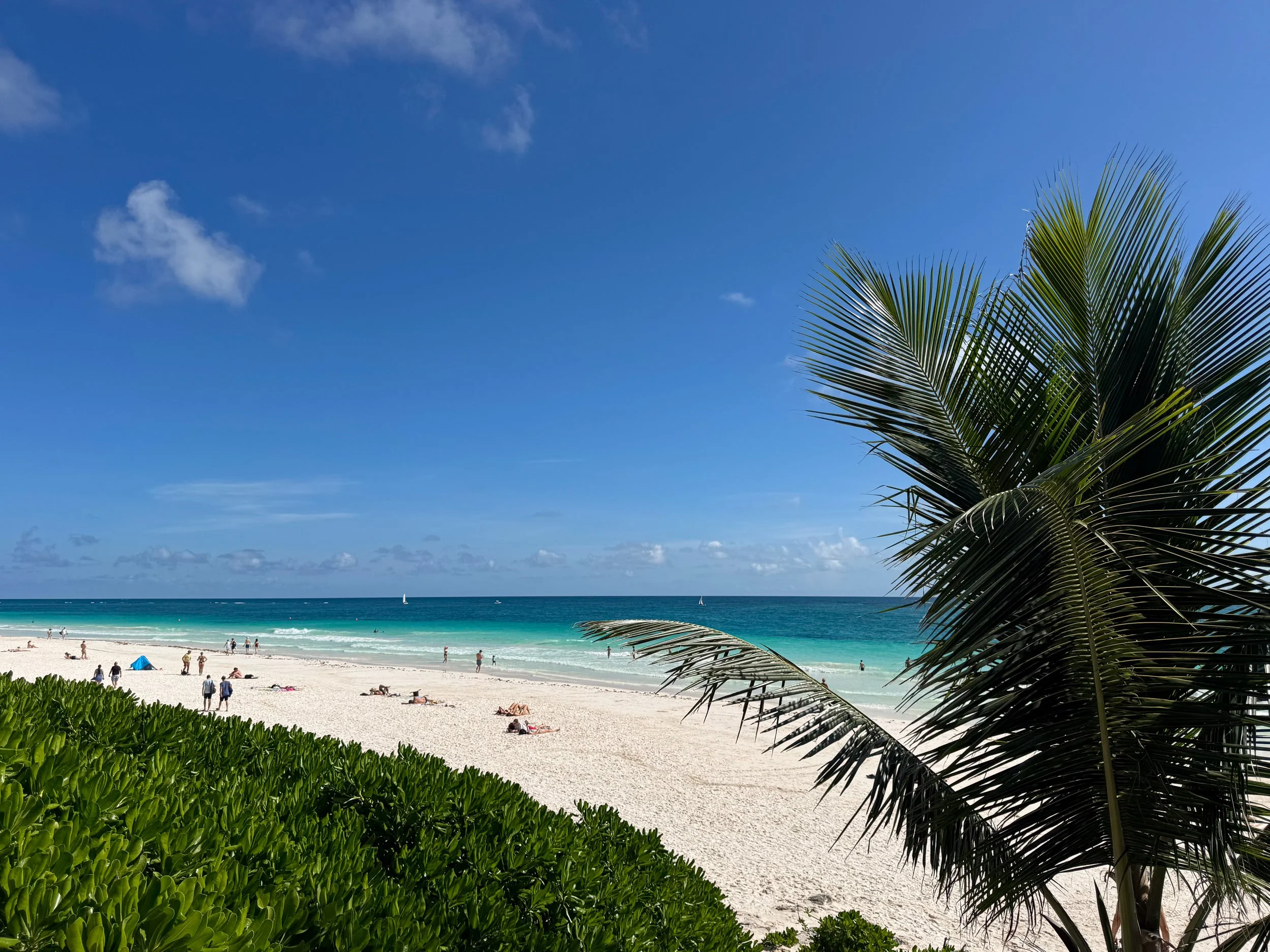
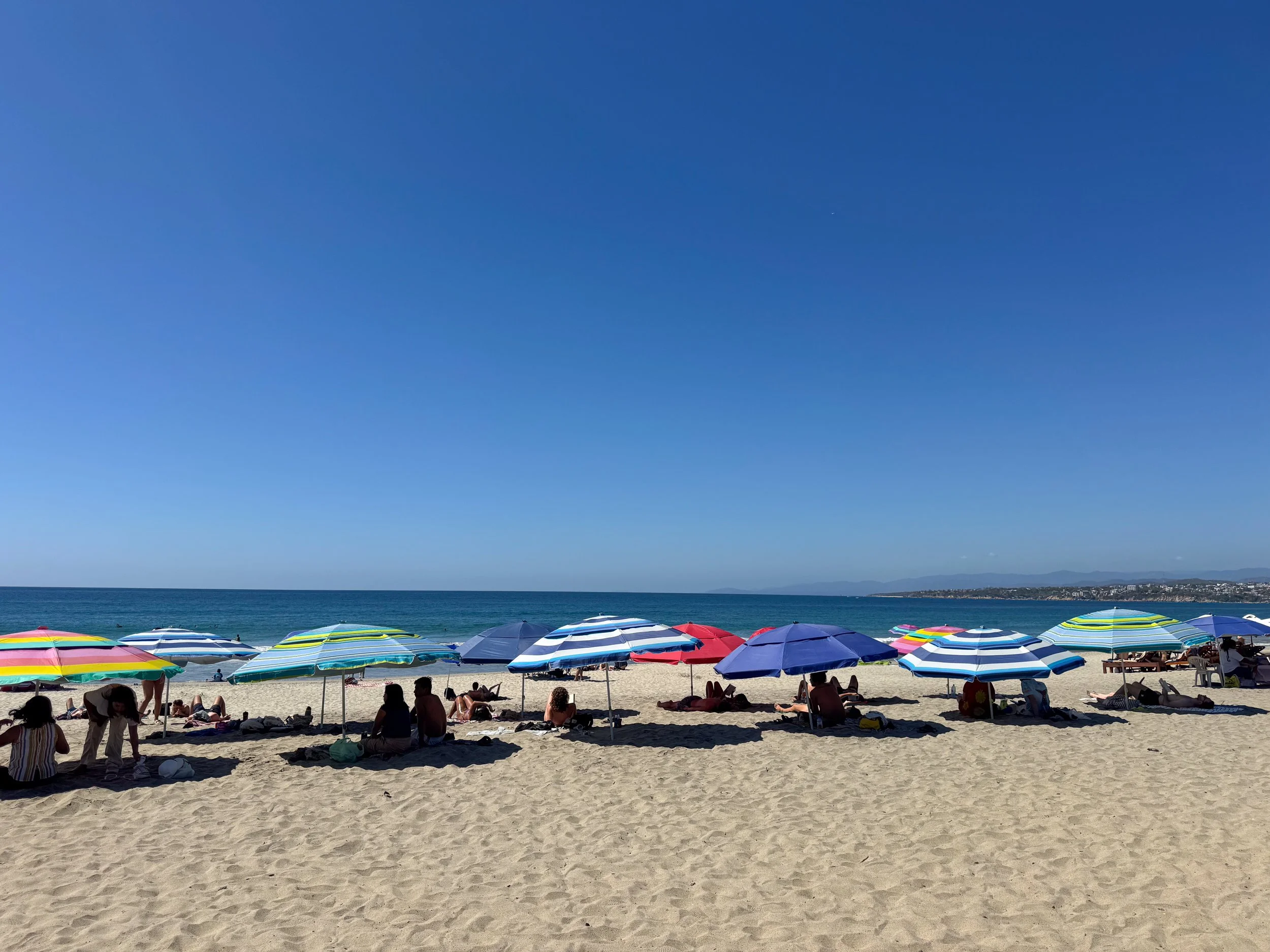
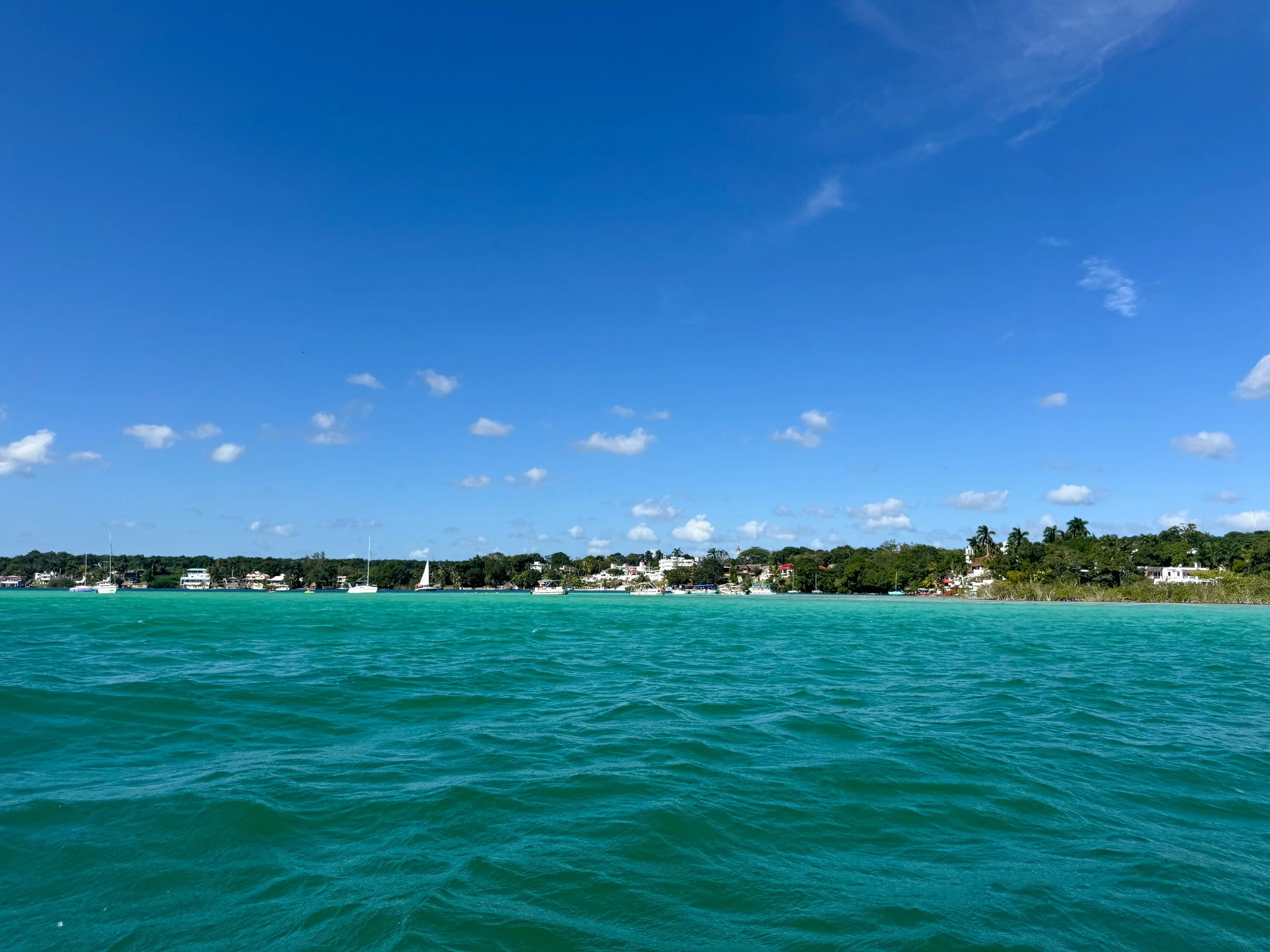
Elsewhere in Mexico
From ancient ruins and Caribbean beaches to mezcal producing villages and Pacific surf towns, explore more of Mexico beyond the capital through these travel guides:
Caribbean Mexico
Riviera Maya Travel Guide: Beaches, Cenotes & Mayan Ruins. Discover the Riviera Maya's white sand beaches, turquoise waters, hidden cenotes, ancient Mayan ruins and vibrant culture along Mexico's Caribbean coast.
Tulum Travel Guide: Cenotes, Beaches & Mayan Ruins. Explore Tulum's cliffside Mayan ruins, white sand beaches, hidden cenotes and jungle landscapes along Mexico's turquoise Caribbean coast.
Bacalar Travel Guide: The Lagoon of Seven Colors & Hidden Gems. Discover Bacalar's Lagoon of Seven Colors, where turquoise waters, shallow sandbars and ancient stromatolites create one of Mexico's most remarkable landscapes.
Central Mexico
Day of the Dead in Mexico City (Día de los Muertos) Travel Guide. Experience Day of the Dead in Mexico City through cultural traditions, lively celebrations and vibrant ofrendas honoring loved ones and ancestral heritage.
San Miguel de Allende Travel Guide: Food, Art & Colonial Charm. Stroll through San Miguel de Allende's cobblestone streets and historic plazas where cuisine, art and music bring one of Mexico's most charming colonial cities to life.
Southern Mexico
Oaxaca Travel Guide: Food, Mezcal & Cultural Experiences. Immerse yourself in Oaxaca, Mexico's cultural hub for vibrant markets, artisanal mezcal, regional cuisine, scenic landscapes and centuries of tradition.
Puerto Escondido Travel Guide: Beaches, Surfing & Coastal Culture. Escape to Puerto Escondido, a laid back surf town on Oaxaca's Pacific coast where palm lined beaches and sandy streets embody coastal culture.
For Next Time…
Watch a Lucha Libre Match. See the colorfully masked wrestlers perform at the Arena Coliseo.
Visit Puebla. One of Mexico’s “pueblos magicos,” a colonial town with historic buildings covered in tiled walls and bright colors.
See more Sights. The Palacio Nacional, Museo Somaya, Casa Estudio Luis Barragán and Universidad Nacional Autónoma de Mexico.
Hike the Volcanos. Three volcanos with hiking trails outside the city including Iztaccíhuatl, Nevado de Toluca and Popocatépetl.
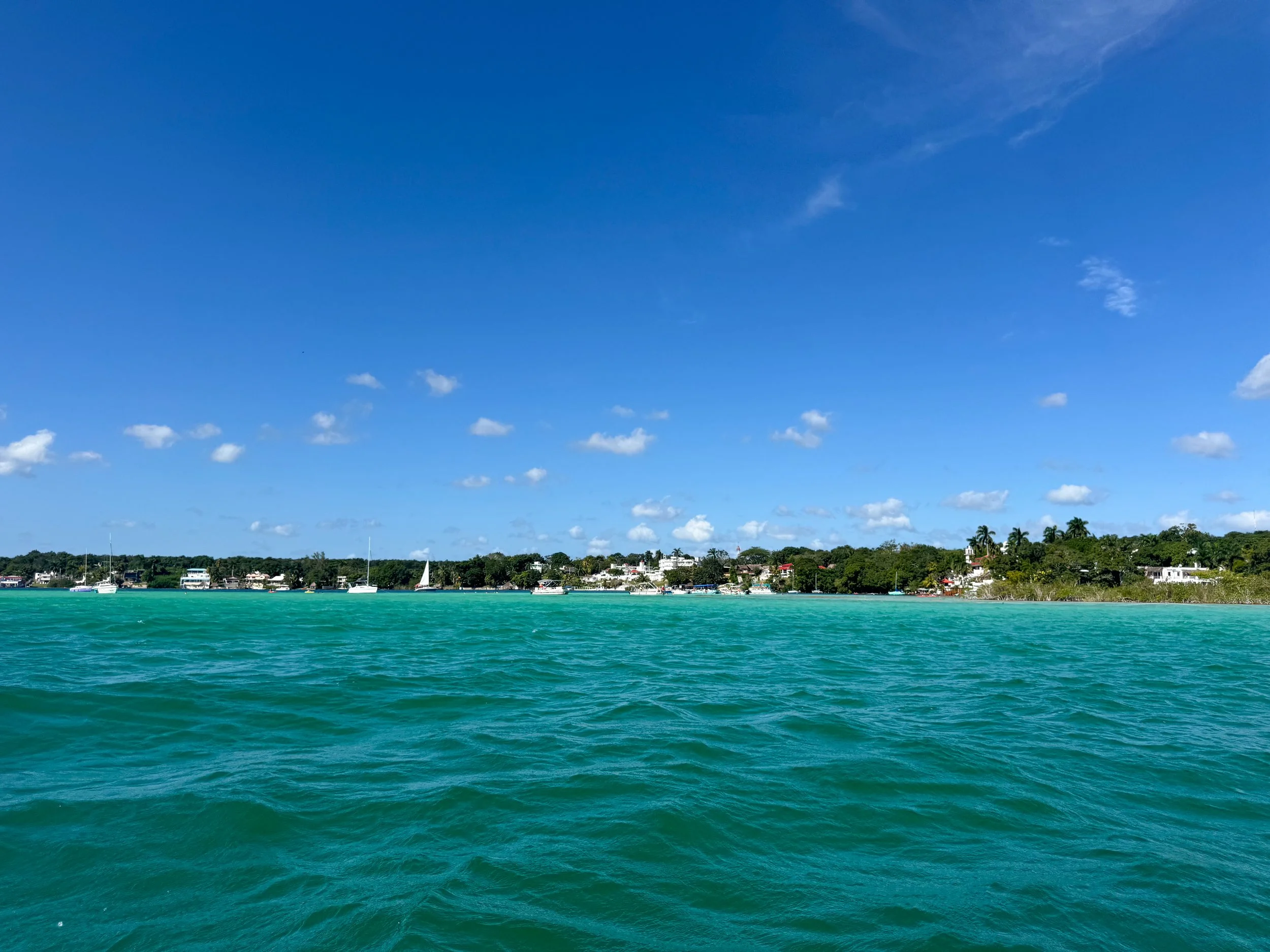
Bacalar Travel Guide: The Lagoon of Seven Colors & Hidden Gems
Discover Bacalar's Lagoon of Seven Colors, where turquoise waters, shallow sandbars and ancient stromatolites create one of Mexico's most remarkable landscapes.
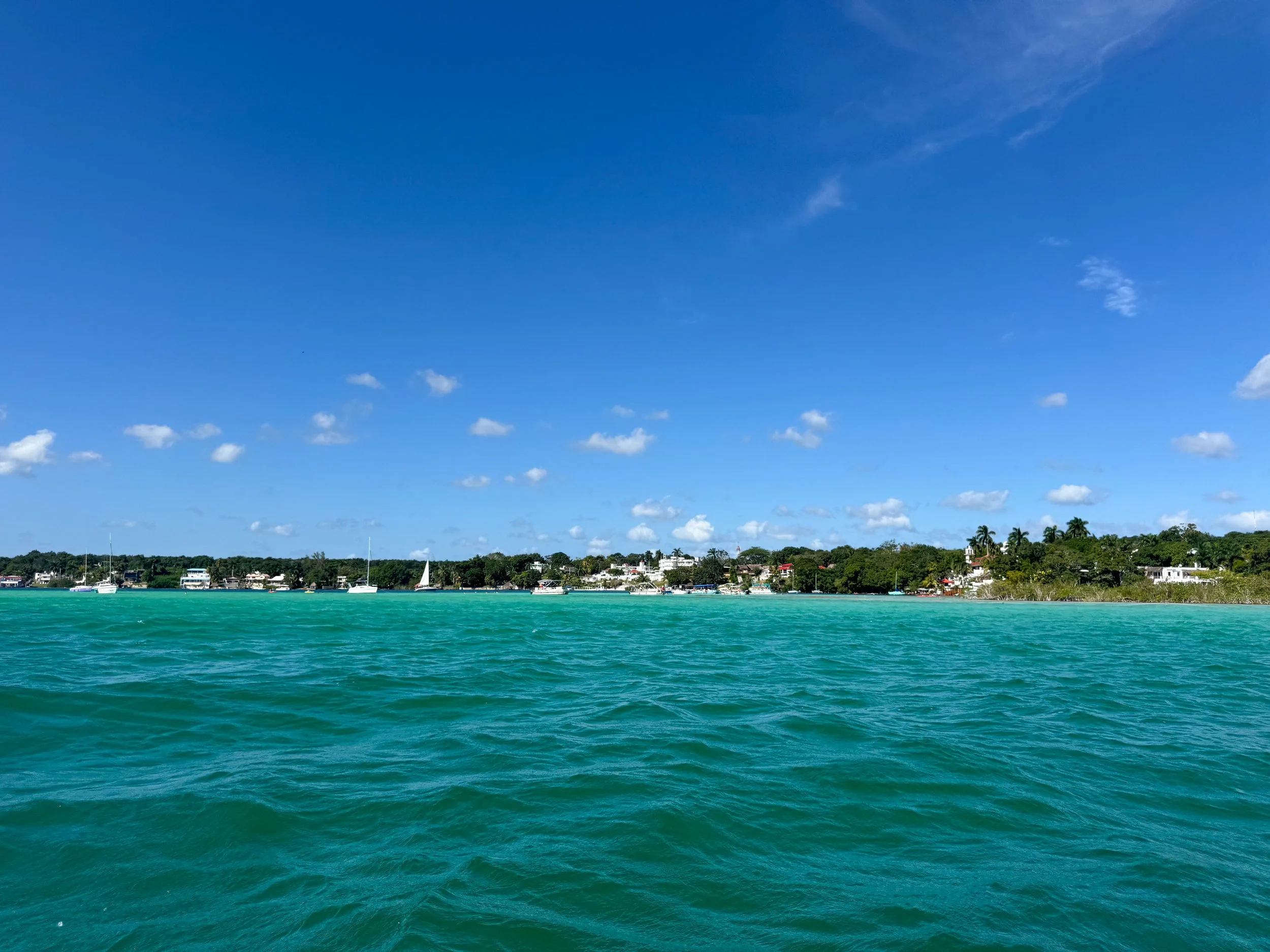
Bacalar, The Lagoon of Seven Colors
The Bacalar Lagoon is a freshwater lake known as the “Lagoon of Seven Colors,” named for the various shades of blue, green, aquamarine and deep navy. The lagoon is home to colonies of stromatolites, islands with migratory birds, narrow waterways, shallow sand bars, deep cenotes and mangrove forests. It’s the main source of drinking water for the region and a beach like retreat for locals and visitors.
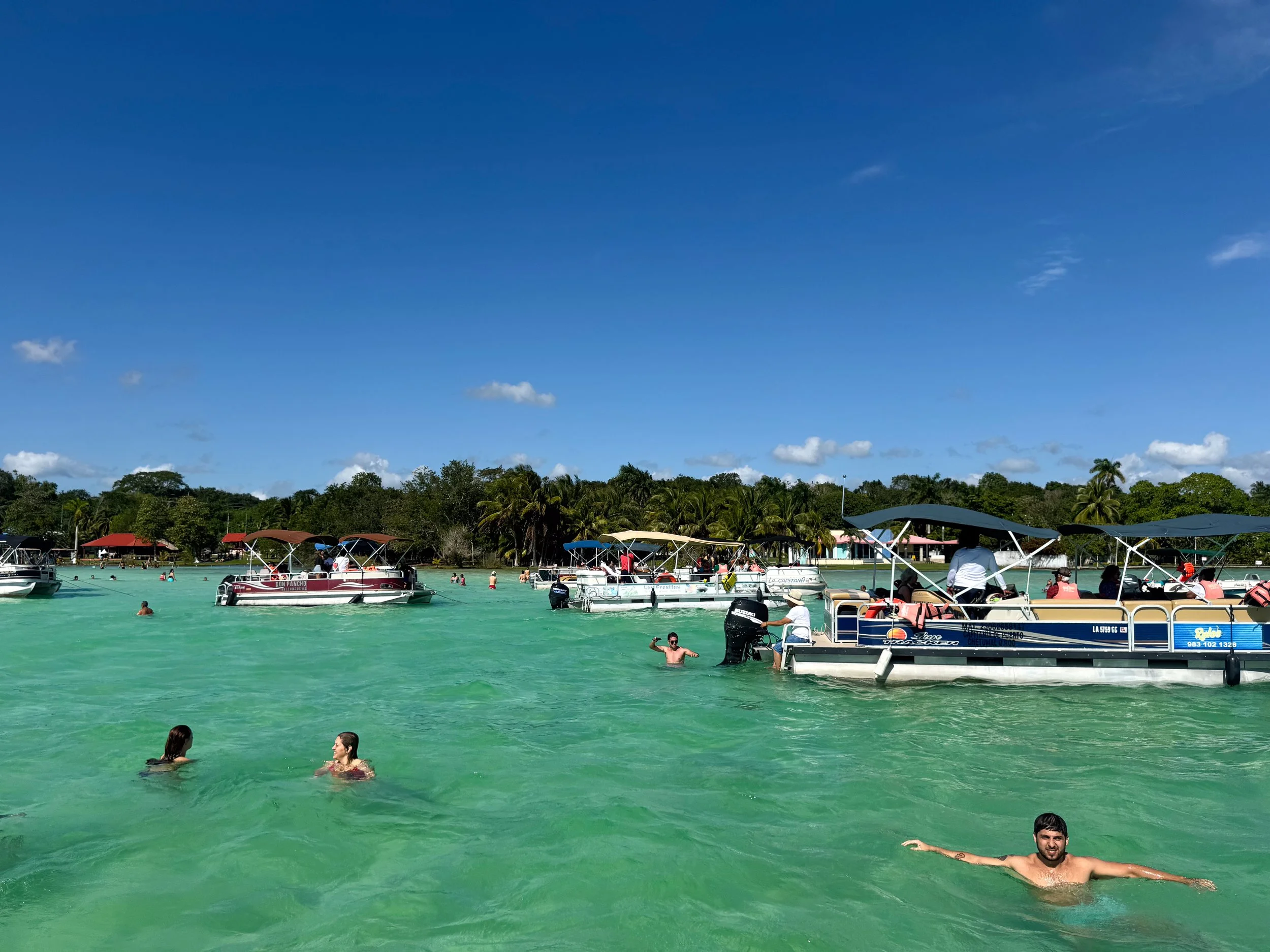
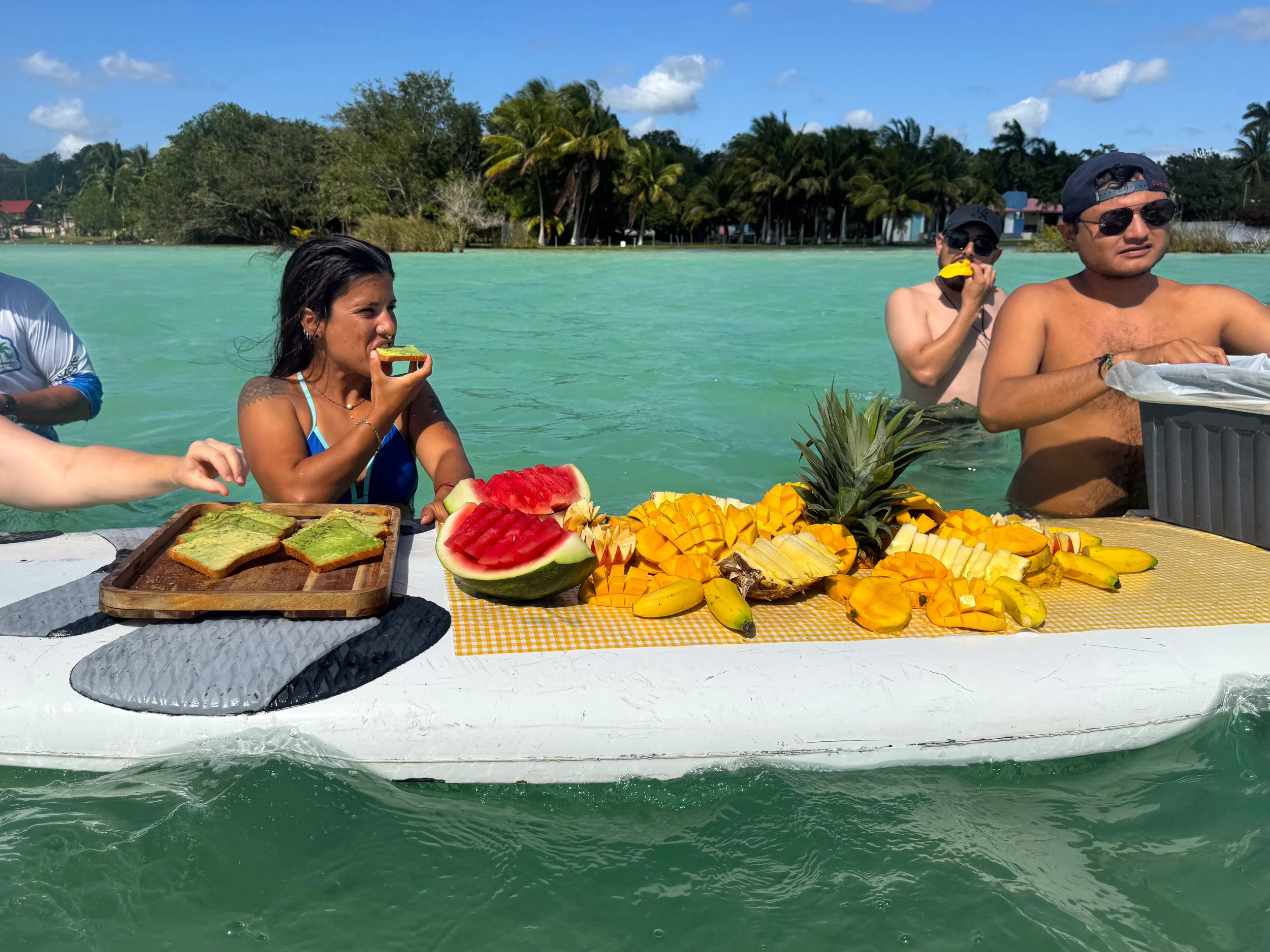
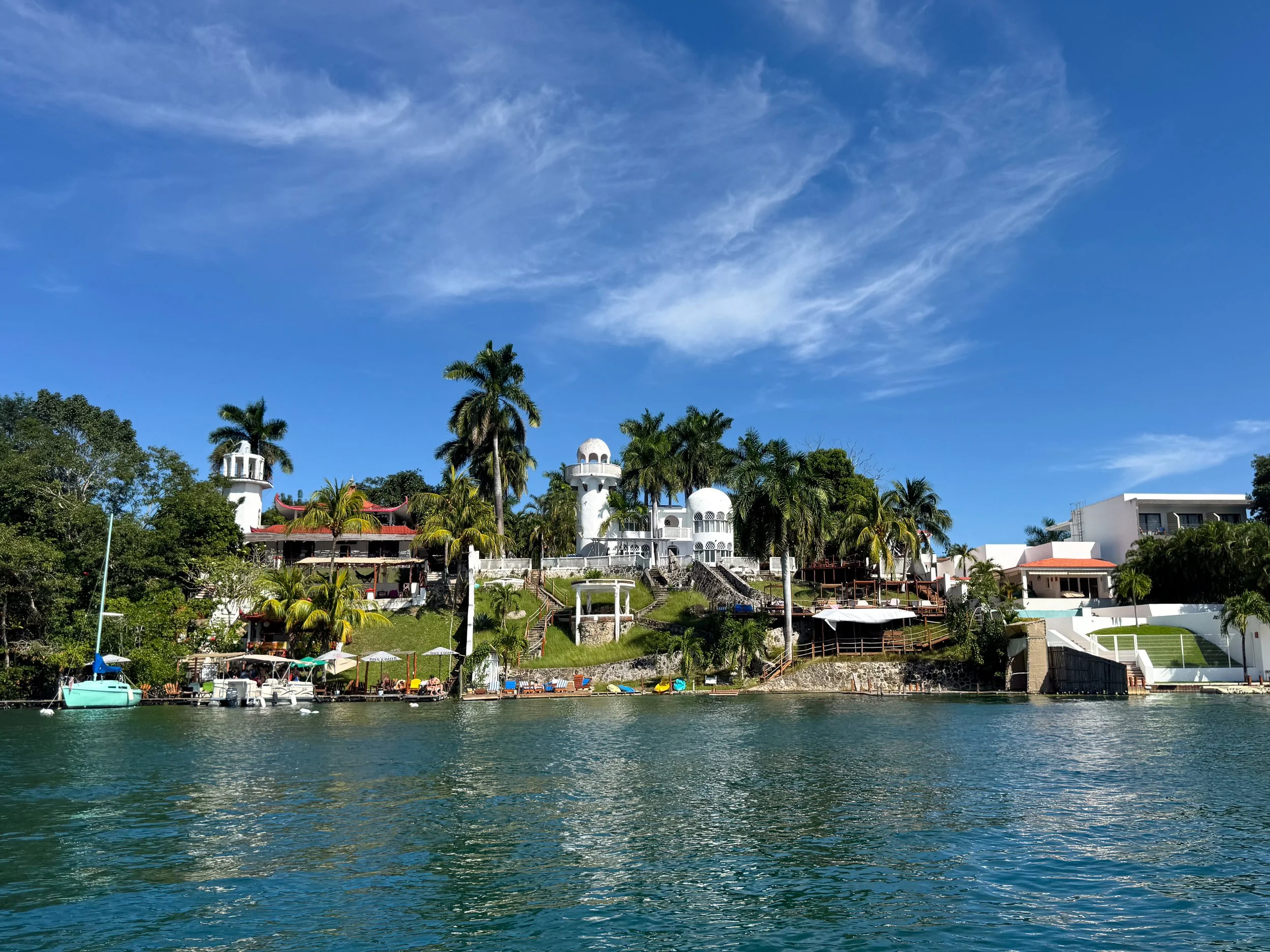
Bacalar Lagoon Tour
The best way to experience the lagoon, its vibrant shades of blue and various sights is by boat. We took a “booze cruise” with Amir Adven Tours Bacalar, visiting three sand bars, tiny islands and deep cenotes. The tour included unlimited beers and tequila cocktails like tequila sunrises, tequila sodas and palomas. Half way through, the crew prepared a floating surfboard with fresh mangos, watermelon, bananas and avocado toast for us to snack on.
Canal de los Piratas. A channel used by the ancient Mayans for trading and by pirates for surprise attacks on Bacalar. The tour brought us to a sandbar at the channel’s delta where we swam and drank in the shallow waters. The canal itself was off limits.
Stromatolites. Also known as living rocks, the lagoon is a habitat for the planet’s earliest life form, stromatolites. These organisms create mud-like mounds and structures throughout the lagoon. Sections are quartered off to protect the nurseries growing within.
Cenote de la Bruja. A cenote measuring over 100 meters deep with jet black water. It’s forbidden to swim in and feared to be cursed by a Mayan woman who was killed during the Spanish conquest.
Cenote Esmeralda. A large cenote along the edge of the lagoon named for its emerald hued water. It’s one of the main sources that fills the lagoon with freshwater. Beautiful hotels and balnearios line its shore while sand bars with anchored boats surround its outer edge.
Island of Birds. A small tree covered island in the middle of the lagoon home to colonies of migratory birds. We visited before many had finished their seasonal migration to the lagoon.
Protecting the Lagoon. The lagoon is a protected reserve home to fragile ecosystems of stromatolites, mangrove forests and migratory birds. It also serves as a major source of freshwater for the region. Sunblock and single use plastic are banned everywhere in the lagoon.
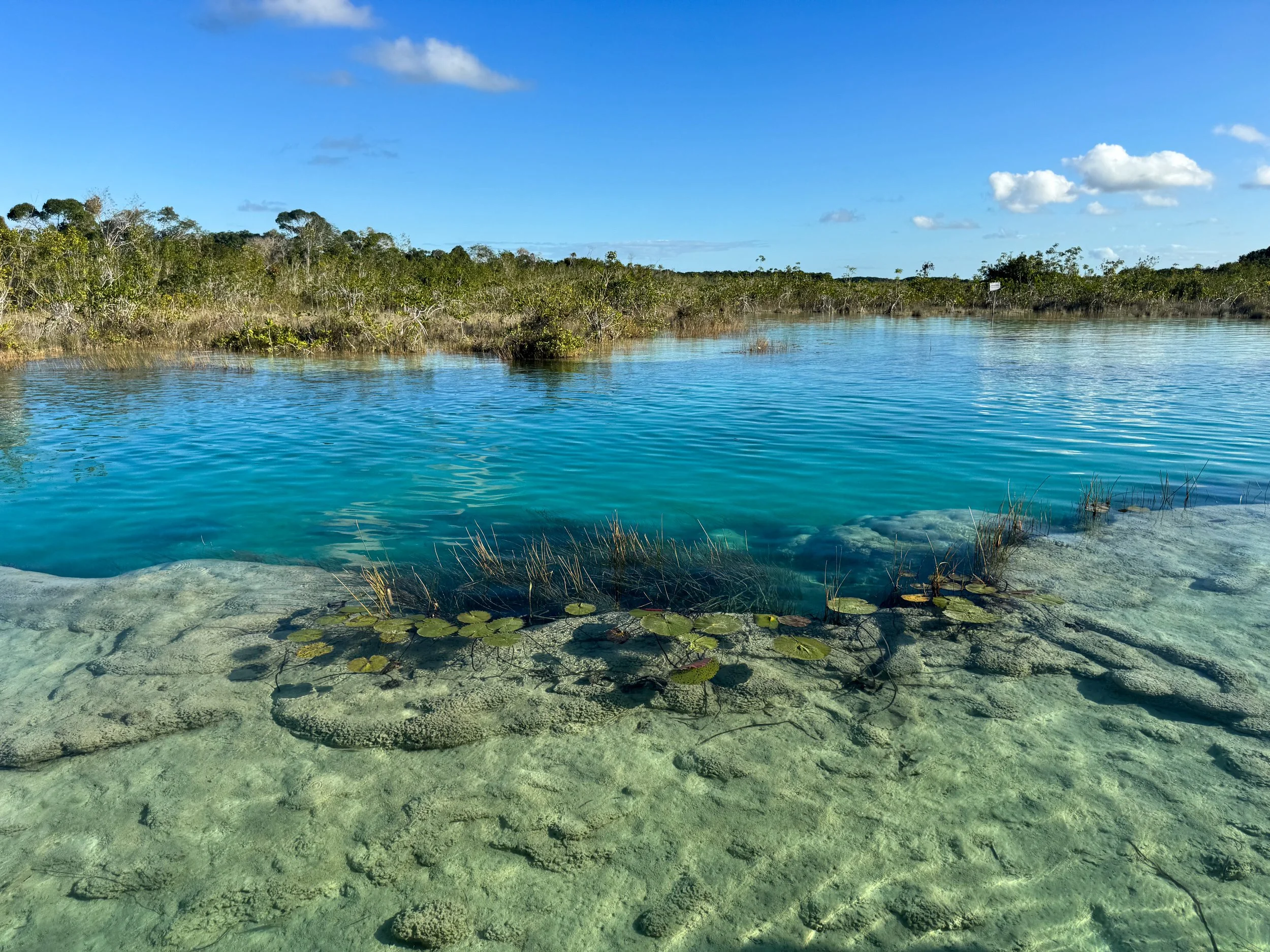
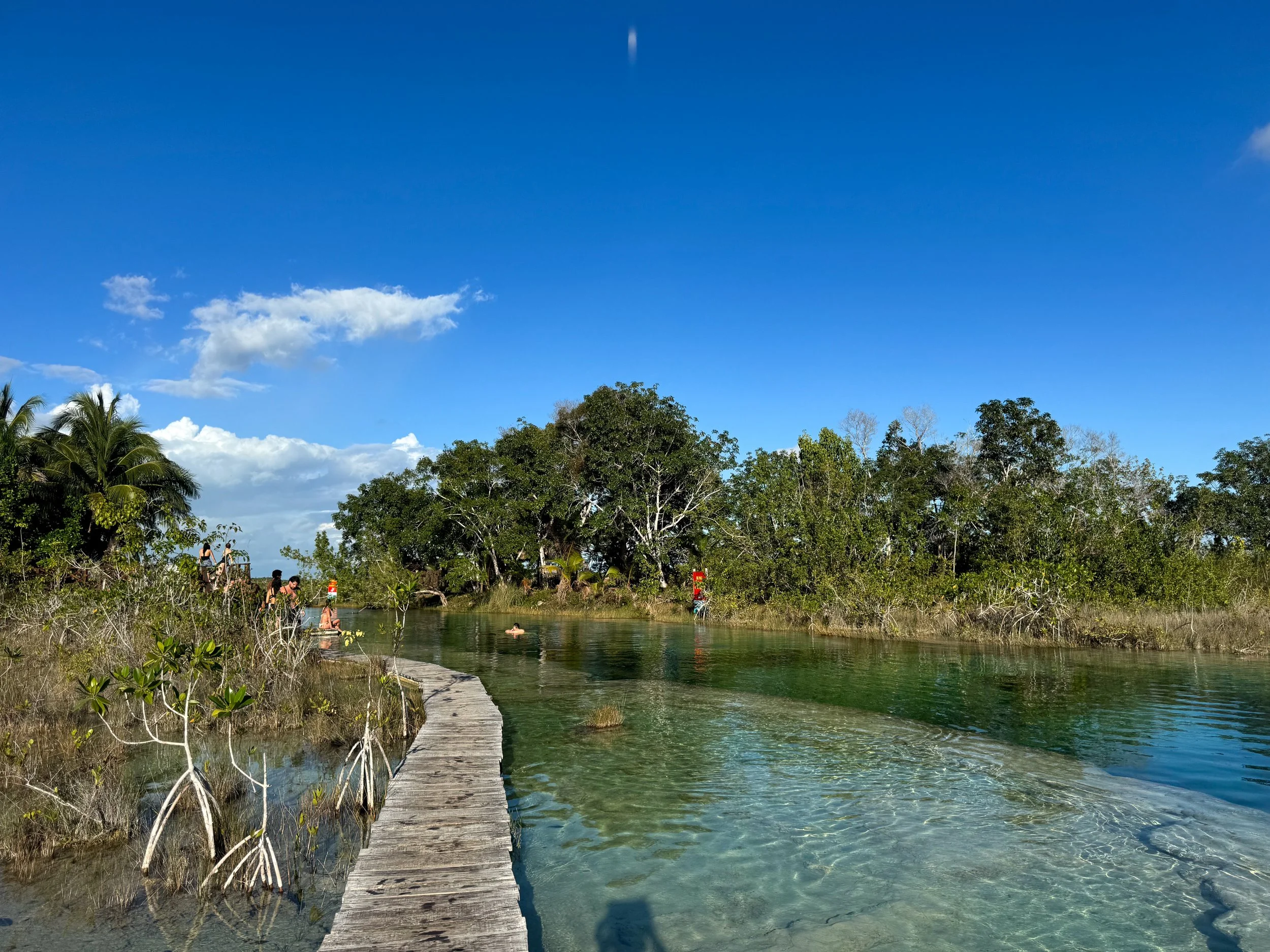
Los Rapidos de Bacalar
The Rapids of Bacalar are a narrow river between the Bacalar and Xul-Ha Lagoons home to stromatolites, mangroves, tiny fish and marine birds. We visited a “lagoon club” with access to the river via a boardwalk and kayaks with a seafood restaurant and tables overlooking it.
Drift Snorkeling. Follow the boardwalk along the river and jump in at its end. Let the current gently carry you downstream. With snorkels, peer underwater to admire the river banks lined with layers of bubbling stromatolites.
Lagoon Kayaking. Rent kayaks and paddle further upstream to a small lagoon. Spend time here floating around and enjoying the peaceful surroundings before lazily paddling back downstream.
Tips for Visiting:
Getting Here. Hire a taxi from the city center, about 20 minutes away. Taxis should cost no more than 200 pesos one way.
Admission. 200 Pesos. It includes access to the boardwalk, river, facilities and use of a life jacket.
Single Kayaks. 200 Pesos for one hour.
Lockers. 50 Pesos + 50 Pesos deposit for the duration of your visit.
Conservation. Do not step on or touch the stromatolites. They may look like rocks but are delicate ecosystems of microorganisms.
Eco Parque Bacalar
Eco Parque Bacalar is an elevated boardwalk leading through a nature park with mangroves, wetlands and access to the Bacalar Lagoon. From the boardwalk, we overlooked the blue hued lagoon, basked in the sunny rays and cooled off in its refreshing water. Admission costs 20 Pesos.
Balneario Ejidal Mágico Bacalar
Balneario Ejidal Mágico Bacalar is a “lagoon club” mostly popular with locals. We bought a day pass and rented sun lounges overlooking the lagoon while sipping on Mexican cerveza. Families of locals picnicked under the thatched picnic tables, children slid down small waterslide, people jumped off docks into the lagoon while others lounged in overwater hammocks.
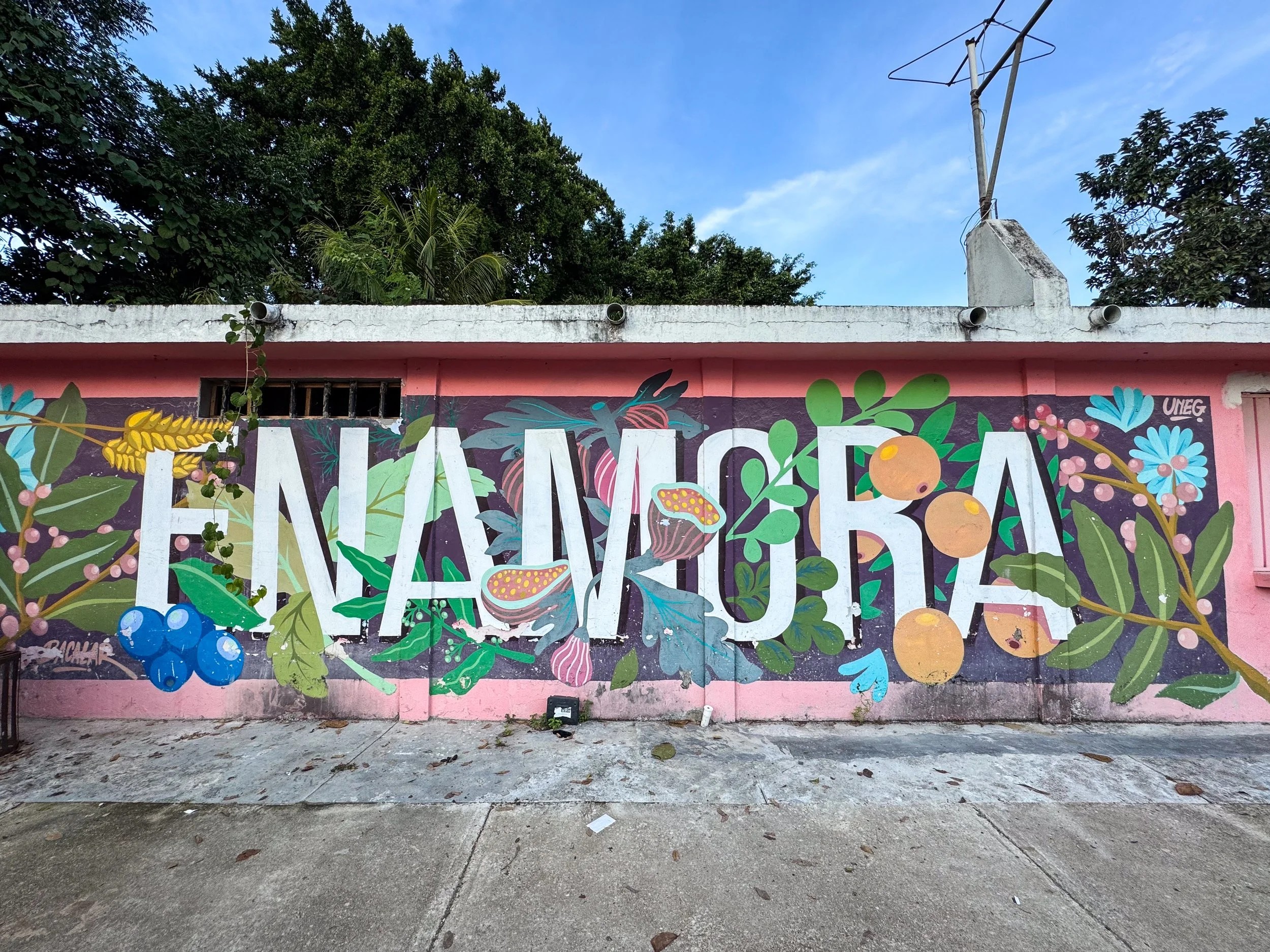
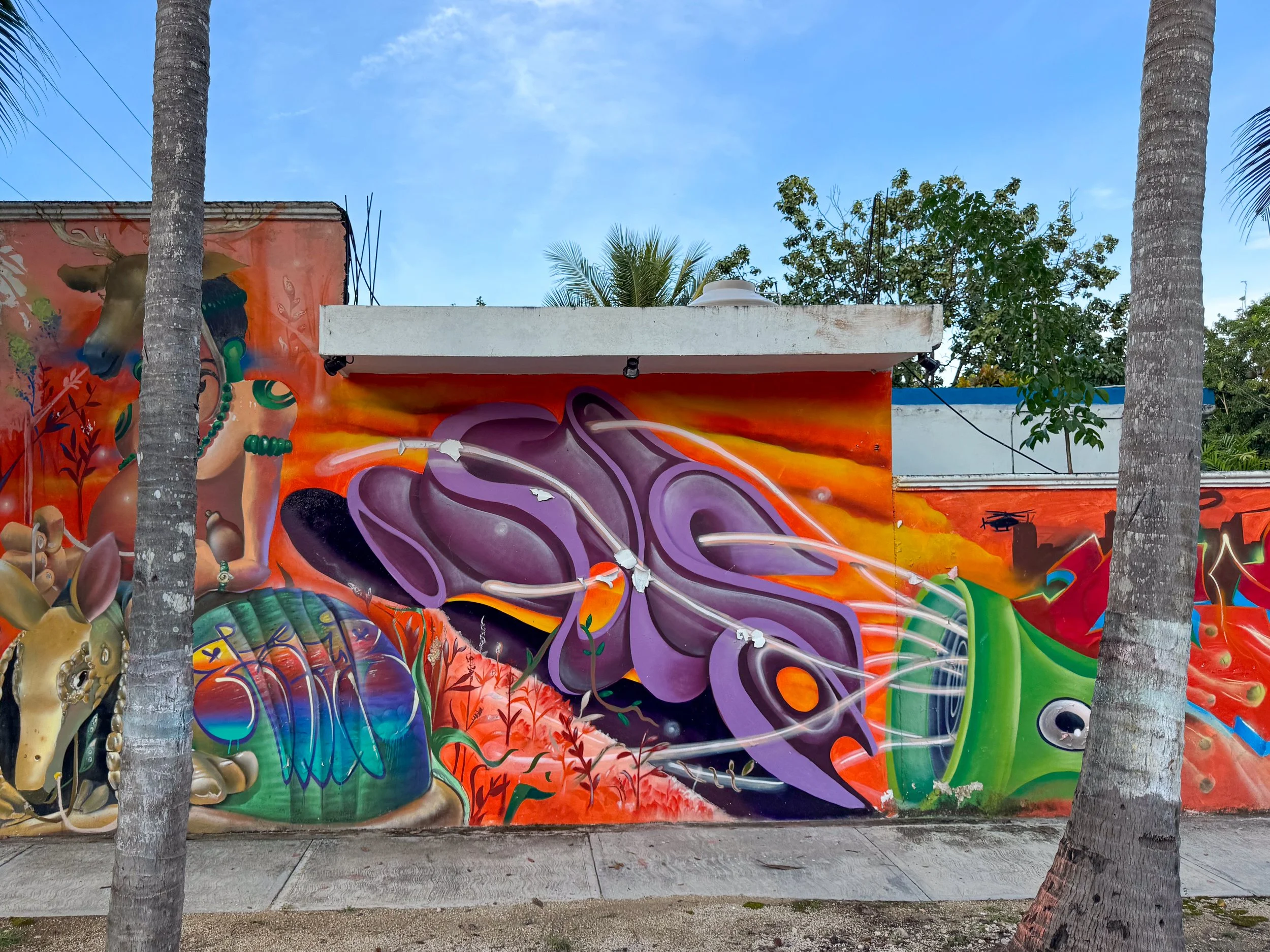
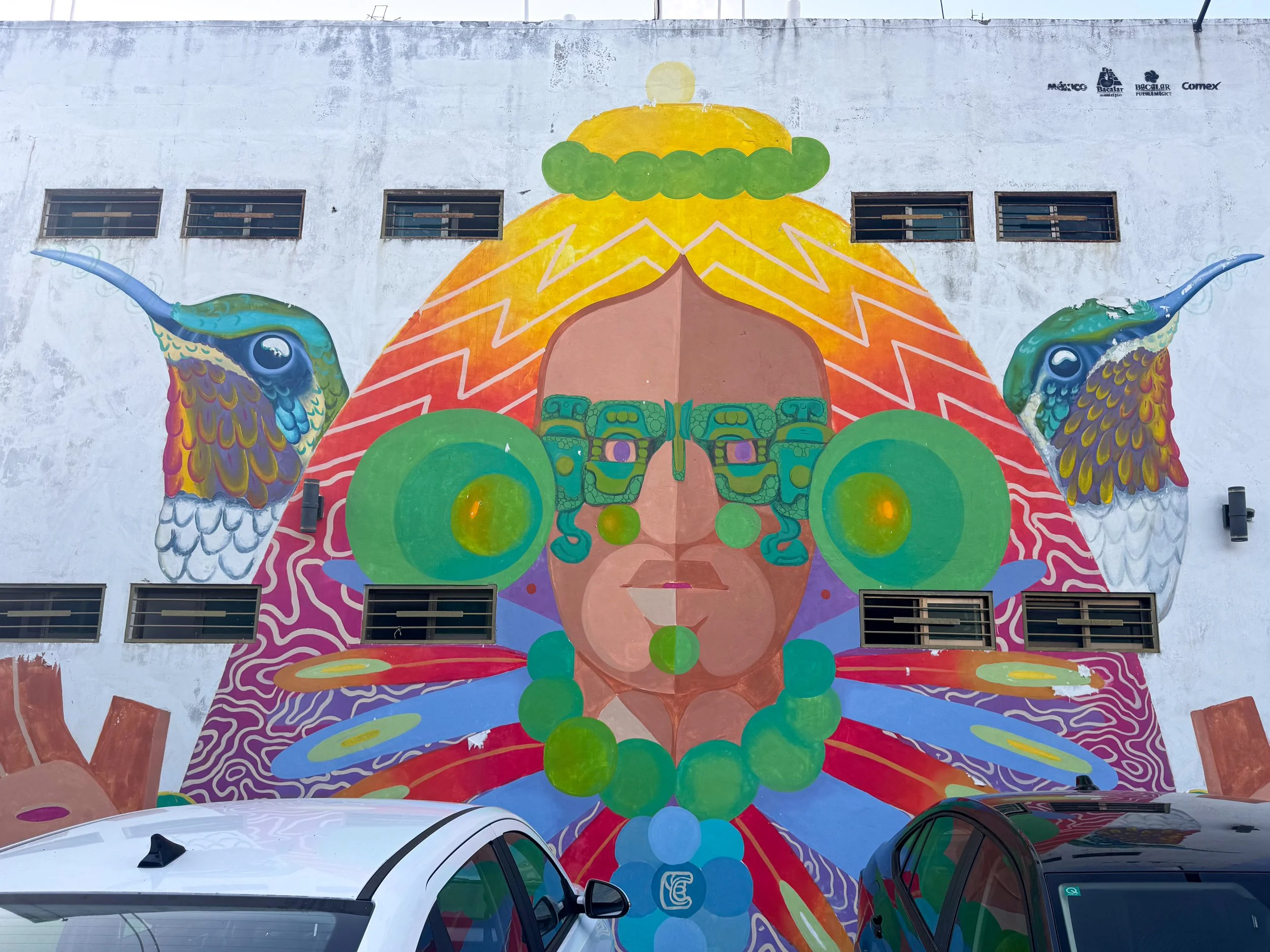
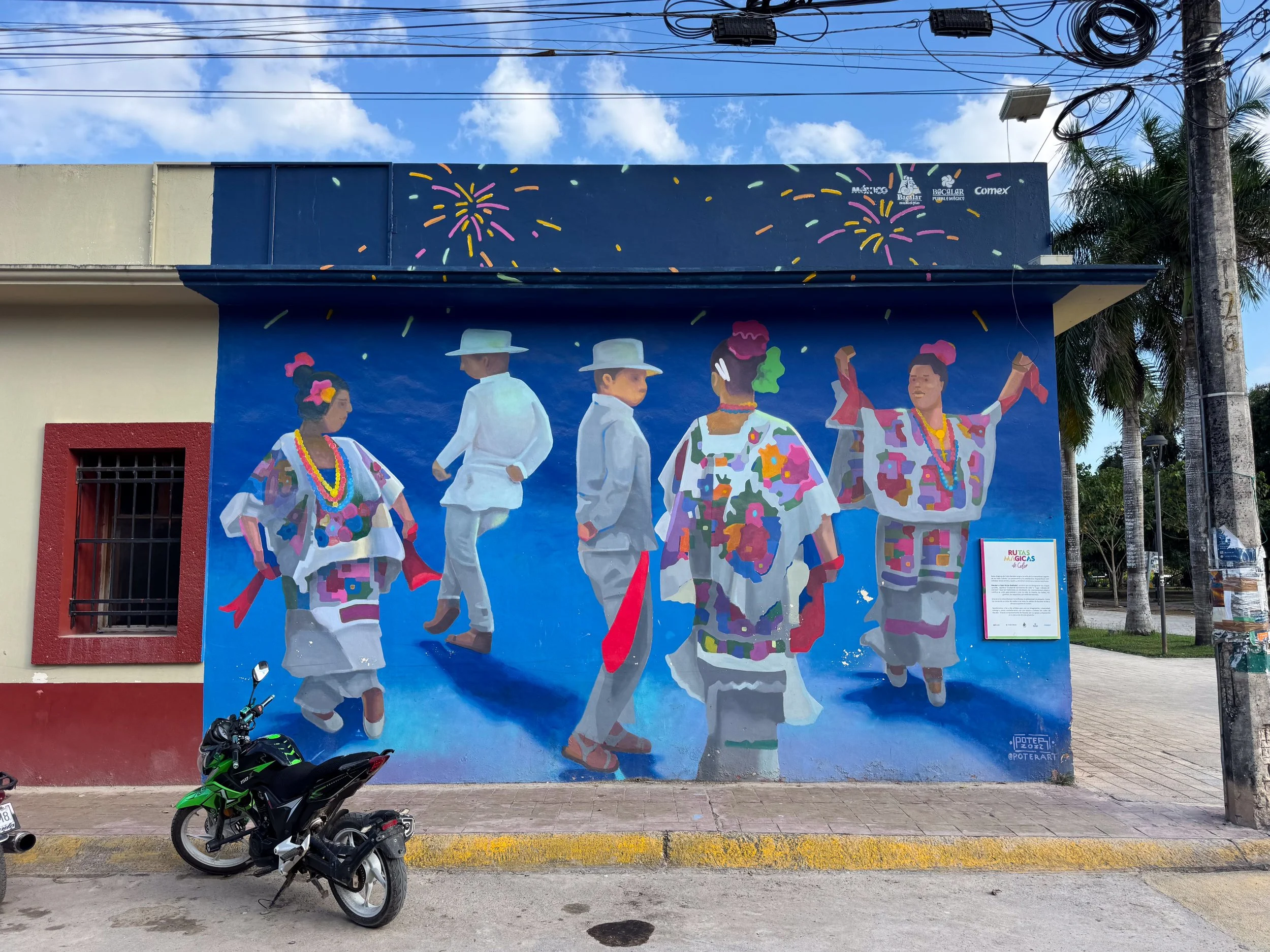
Bacalar Pueblo
Bacalar is a small town centered around the Bacalar Lagoon. The pueblo has a very local atmosphere, less visited than the main tourist hubs of the Riviera Maya. The quiet streets are colored in murals depicting local life and culture. The area has a storied history dating back to the Mayan Empire, Spanish conquest and days of pirate attacks.
Zocalo Square. Bacalar’s main square is paved with stone walkways, small playgrounds, a craft market, verdant trees and bushes cut into the shape of roosters. Its surrounding streets are lined with restaurants, cafes, hostels, municipal buildings and the fort. In the late afternoon, vendors arrive with carts selling ice cream, churros, sliced mangos, grilled meats, elote, juices and coffee.
Marquesitas. A wafer thin crepe-like roll stuffed and topped with a range of sweet or savory toppings. They’re commonly sold at competing food carts in the Zocalo Square.
Fort San Felipe. A historic star shaped fortress with a steep moat and cannons pointing towards the lagoon, built to defend the city against pirate attacks, common during the Spanish colonization. Inside is a small museum dedicated to the history of Bacalar, its importance as a trading post for the Mayans, the brutal Spanish conquest and continual pirate raids.
Places to Eat & Drink
Cafe Arúgula. A cafe with health foods, smoothies, agua frescas, coffees and kombuchas. Its shaded outdoor deck is a comfy spot to spend the morning with floor cushions, hammock chairs and low sitting furniture. It’s a popular place with digital nomads and European expats.
La Burguesía del Pueblo. A second floor restaurant overlooking the Zocalo Plaza. Come here for Mexican appetizers, burgers and cocktails.
Fruta Bar Bacalar. A cocktail bar merging Mexican and Caribbean flavors in a warm and natural space decorated with warm lights, dim candles, tropical plants, dried palm fronds and wooden furniture. It’s connected to a sushi restaurant. We ordered the Spicy Love and The Tiki.
Spicy Love. A cocktail made with tequila, mezcal, habanero and grapefruit juice.
The Tiki. A cocktail made with mezcal, aperol, passion fruit, pineapple and agave honey.
Panaderia La Tataleta. A local bakery with traditional Mexican pastries like conchas, medialunas, orejas and Rosca de Reyes. The latter is a pan dulce served on 3 Kings Day, a bread ring with colorful candied fruits as decoration.
Getting Around
By Bus. Arrive and depart from Bacalar by ADO Bus. Buses regularly connect Bacalar to various destinations along the Riviera Maya and Yucatán. The lagoon is located about 2 hours from Tulum.
On Foot. The city center is walkable with hotels, restaurants and sights all within 20 minutes of each other.
By Taxi. Taxis are fair and affordable in Bacalar. They’re the easiest way to see sights further along the lagoon. Flag one down, negotiate a price and request their WhatsApp for future rides.
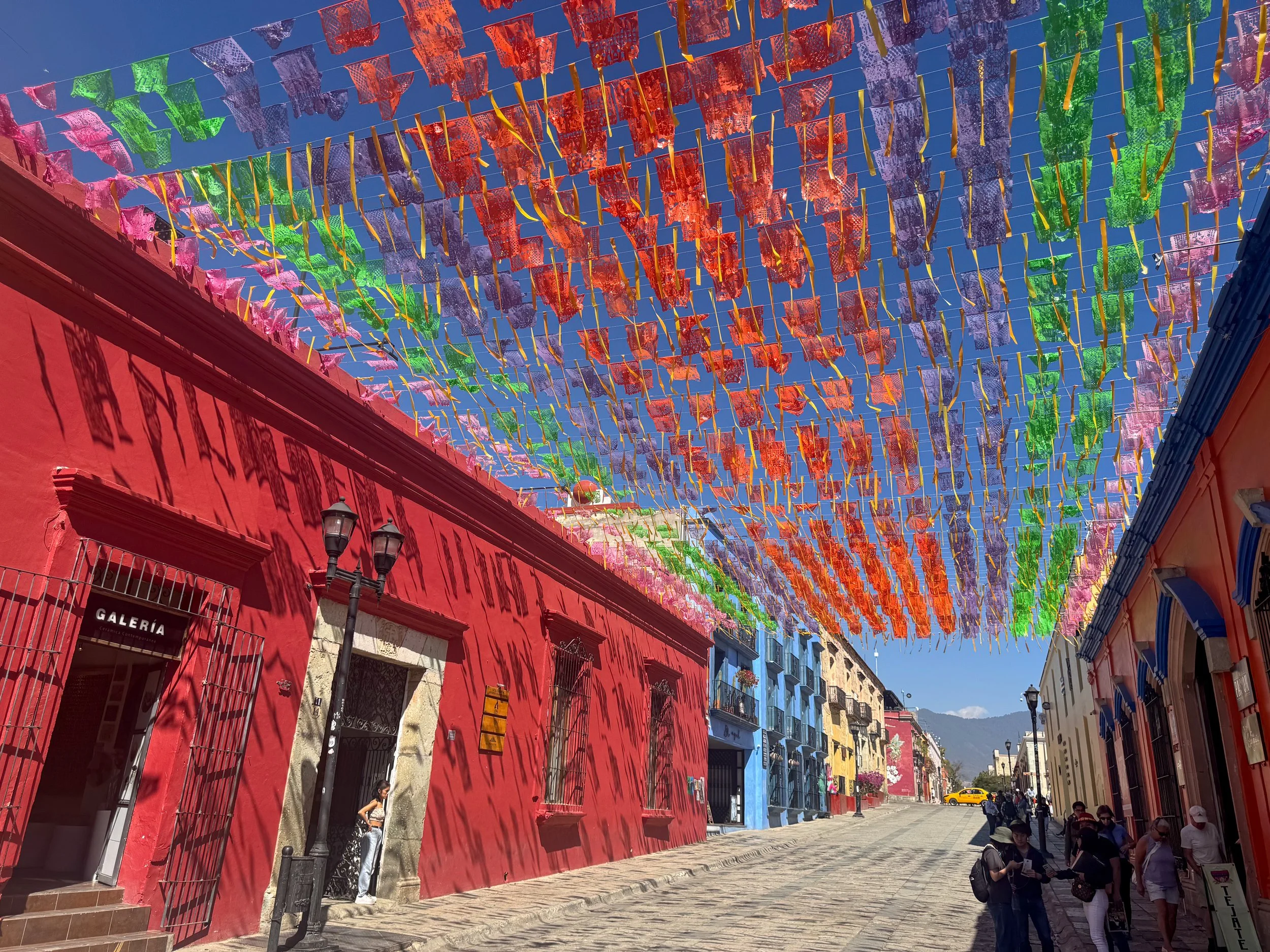
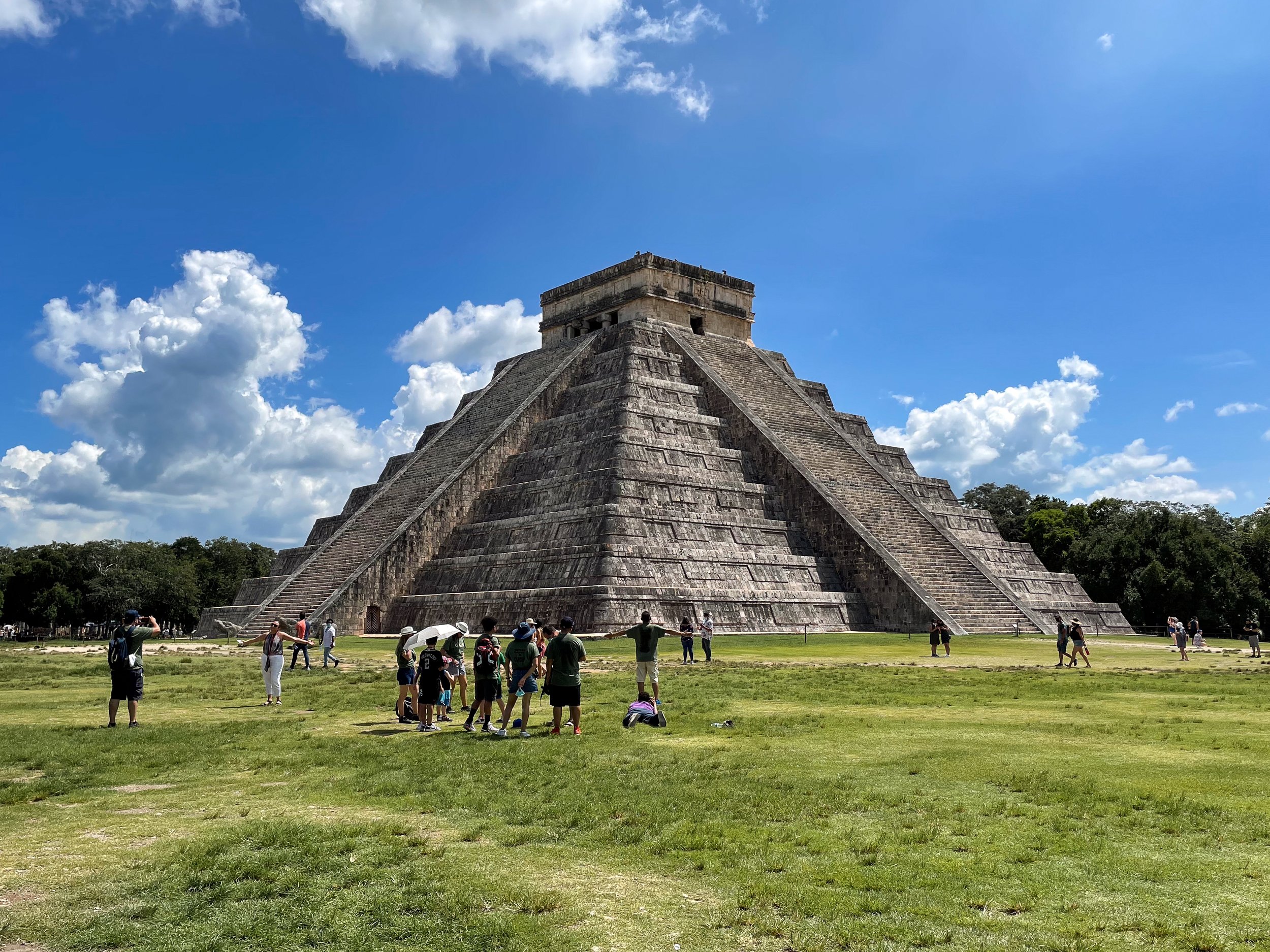
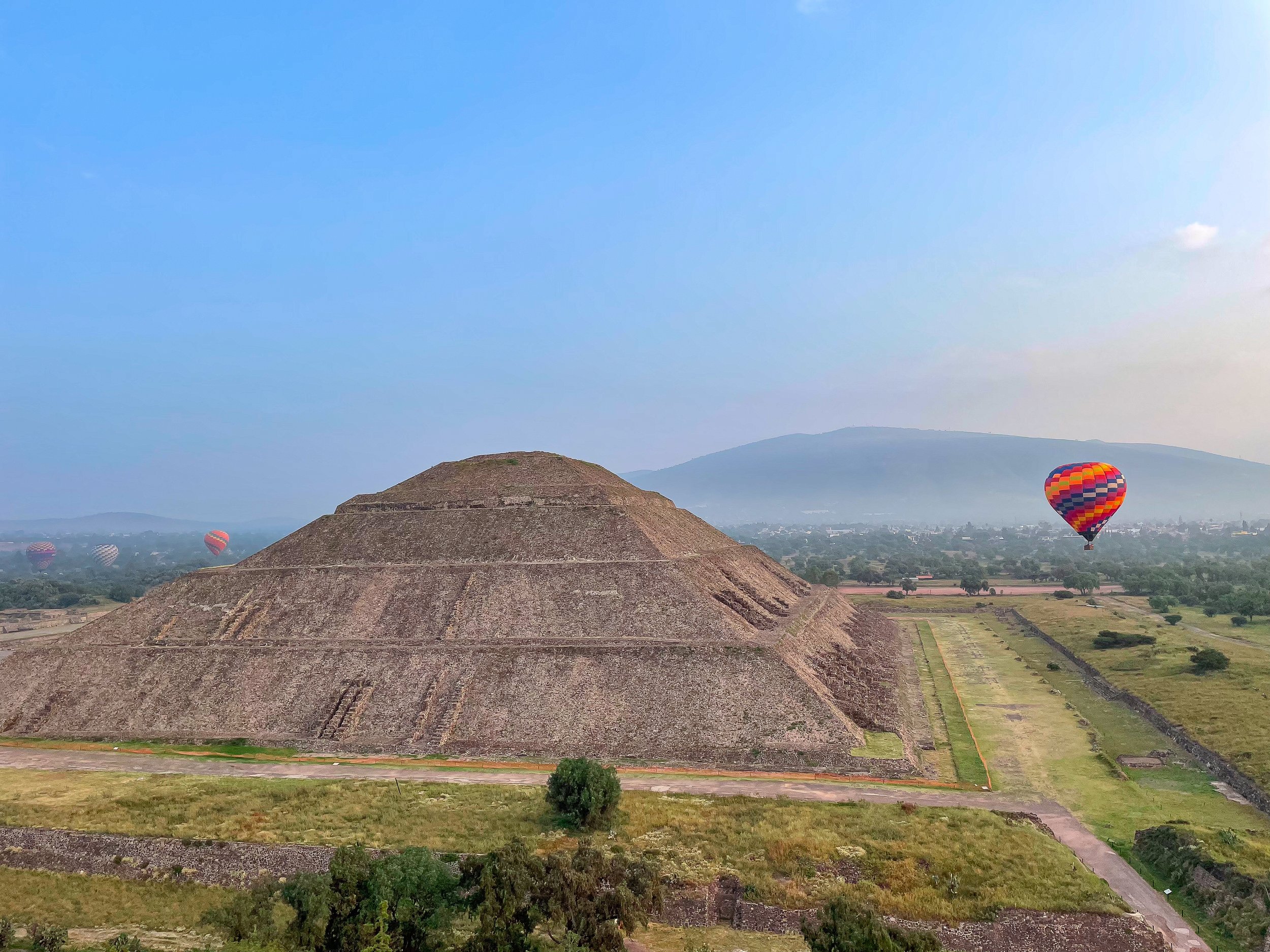
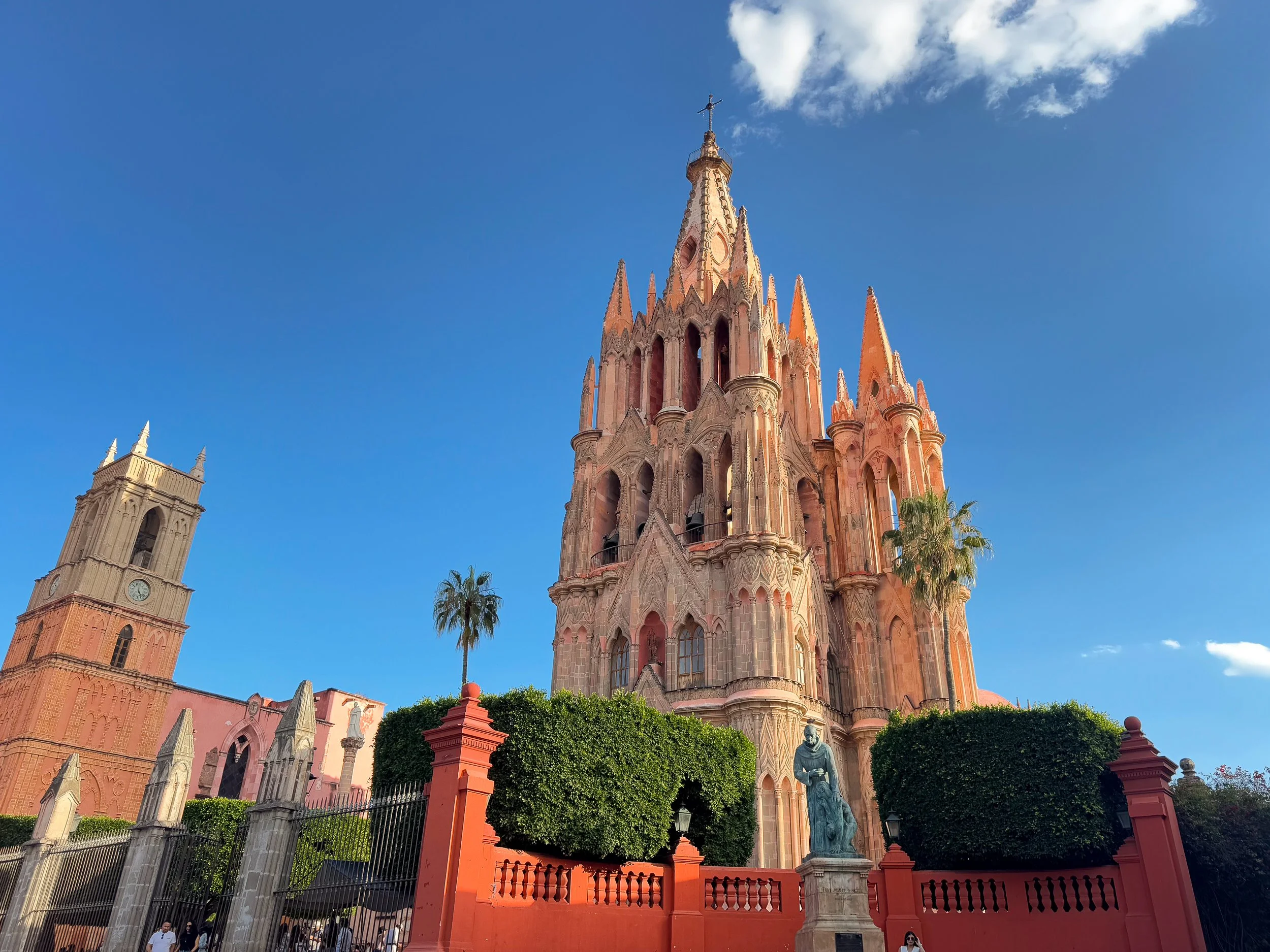
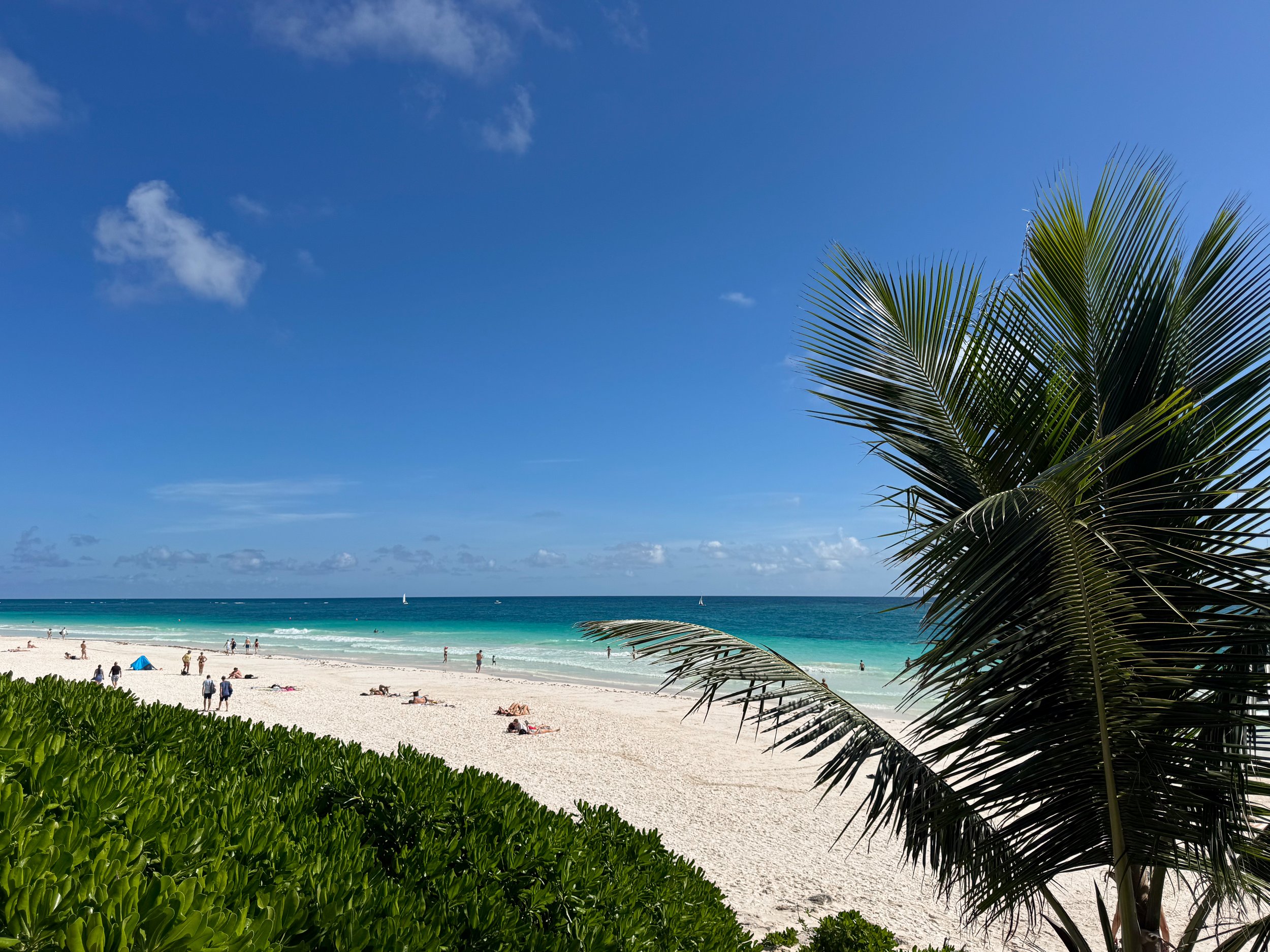
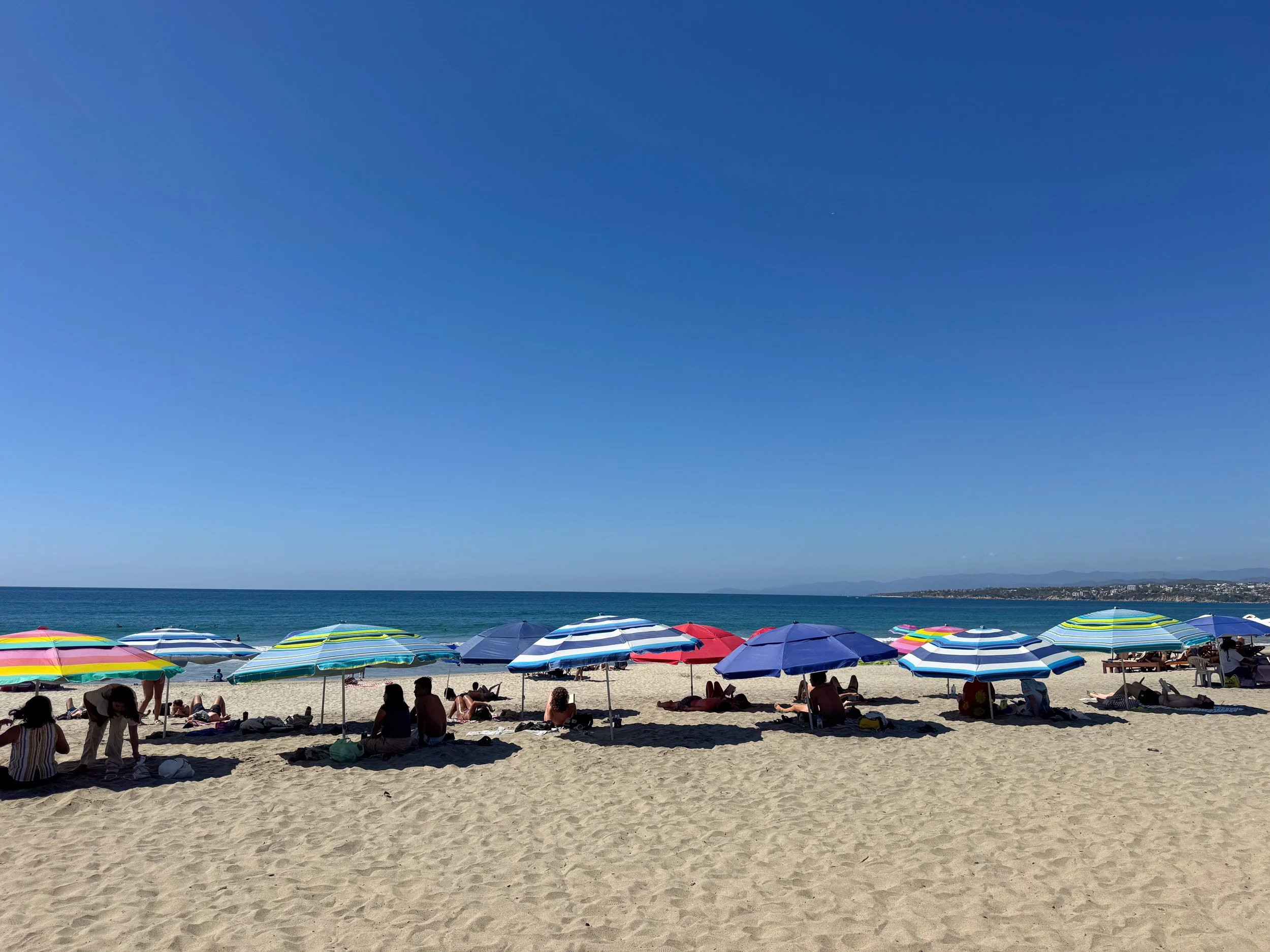
Elsewhere in Mexico
From the tranquil waters of Bacalar to ancient Maya ruins, bustling cities and surf towns along the Pacific, discover more of Mexico through these travel guides:
Caribbean Mexico
Riviera Maya Travel Guide: Beaches, Cenotes & Mayan Ruins. Discover the Riviera Maya's white sand beaches, turquoise waters, hidden cenotes, ancient Mayan ruins and vibrant culture along Mexico's Caribbean coast.
Tulum Travel Guide: Cenotes, Beaches & Mayan Ruins. Explore Tulum's cliffside Mayan ruins, white sand beaches, hidden cenotes and jungle landscapes along Mexico's turquoise Caribbean coast.
Central Mexico
Mexico City Travel Guide: Neighborhoods, Food & Local Culture. Wander through Mexico City's vibrant neighborhoods, local markets and cultural landmarks where centuries of history, cuisine and modern life converge.
Day of the Dead in Mexico City (Día de los Muertos) Travel Guide. Experience Day of the Dead in Mexico City through cultural traditions, lively celebrations and vibrant ofrendas honoring loved ones and ancestral heritage.
San Miguel de Allende Travel Guide: Food, Art & Colonial Charm. Stroll through San Miguel de Allende's cobblestone streets and historic plazas where cuisine, art and music bring one of Mexico's most charming colonial cities to life.
Southern Mexico
Oaxaca Travel Guide: Food, Mezcal & Cultural Experiences. Immerse yourself in Oaxaca, Mexico's cultural hub for vibrant markets, artisanal mezcal, regional cuisine, scenic landscapes and centuries of tradition.
Puerto Escondido Travel Guide: Beaches, Surfing & Coastal Culture. Escape to Puerto Escondido, a laid back surf town on Oaxaca's Pacific coast where palm lined beaches and sandy streets embody coastal culture.
For Next Time…
Ruins of Calakmul. Calakmul was once one of the most populous and powerful Mayan cities in the Yucatán. Its ruins with pyramids, temples, ball courts, plazas and various structures are buried deep within the jungle near the border with Guatemala. We had a full day tour scheduled from Bacalar but had to cancel last minute due to food poisoning. It’s at the top of our list next time we return to the Yucatán. Book here!
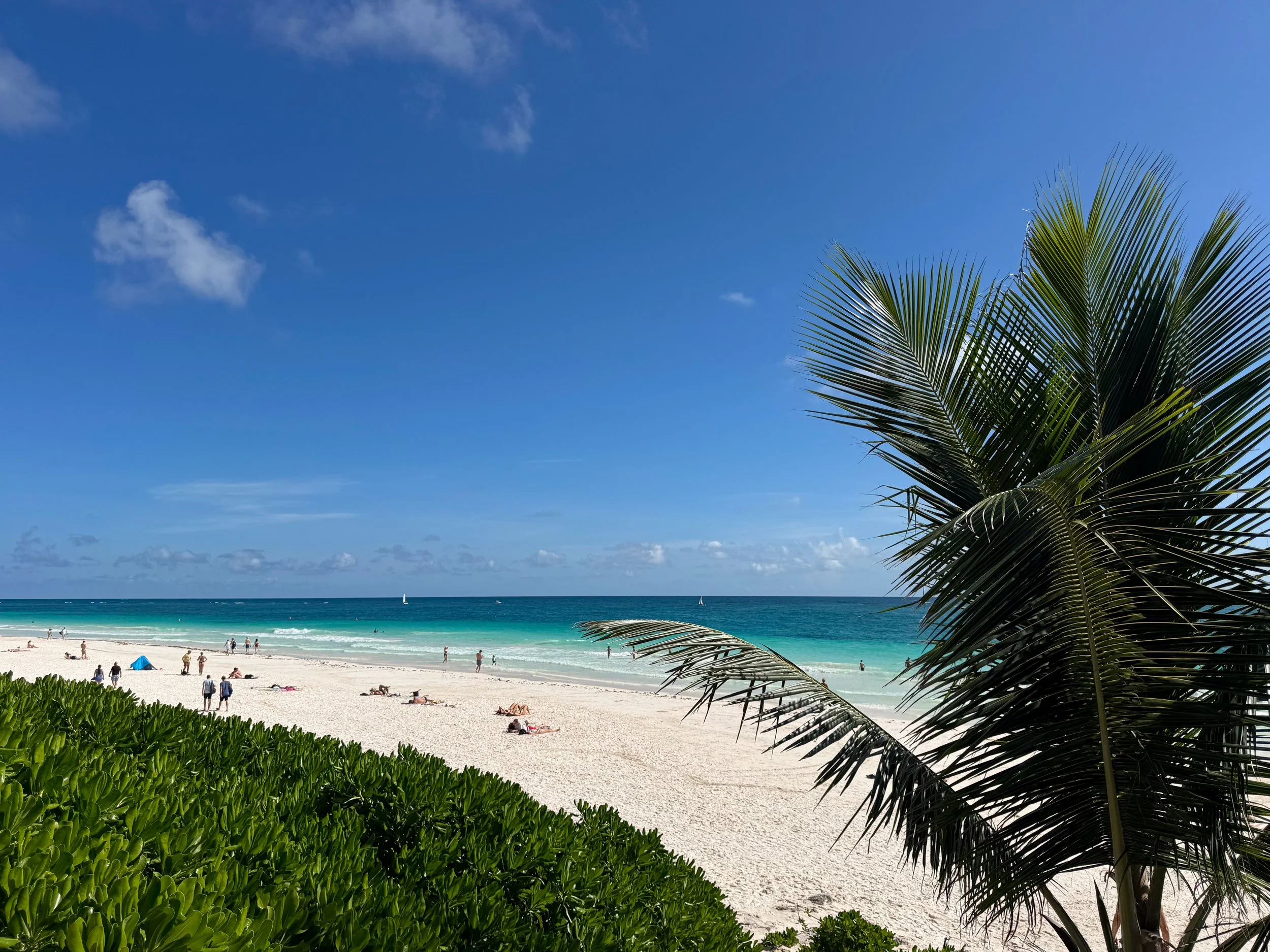
Tulum Travel Guide: Cenotes, Beaches & Mayan Ruins
Explore Tulum's cliffside Mayan ruins, white sand beaches, hidden cenotes and jungle landscapes along Mexico's turquoise Caribbean coast.
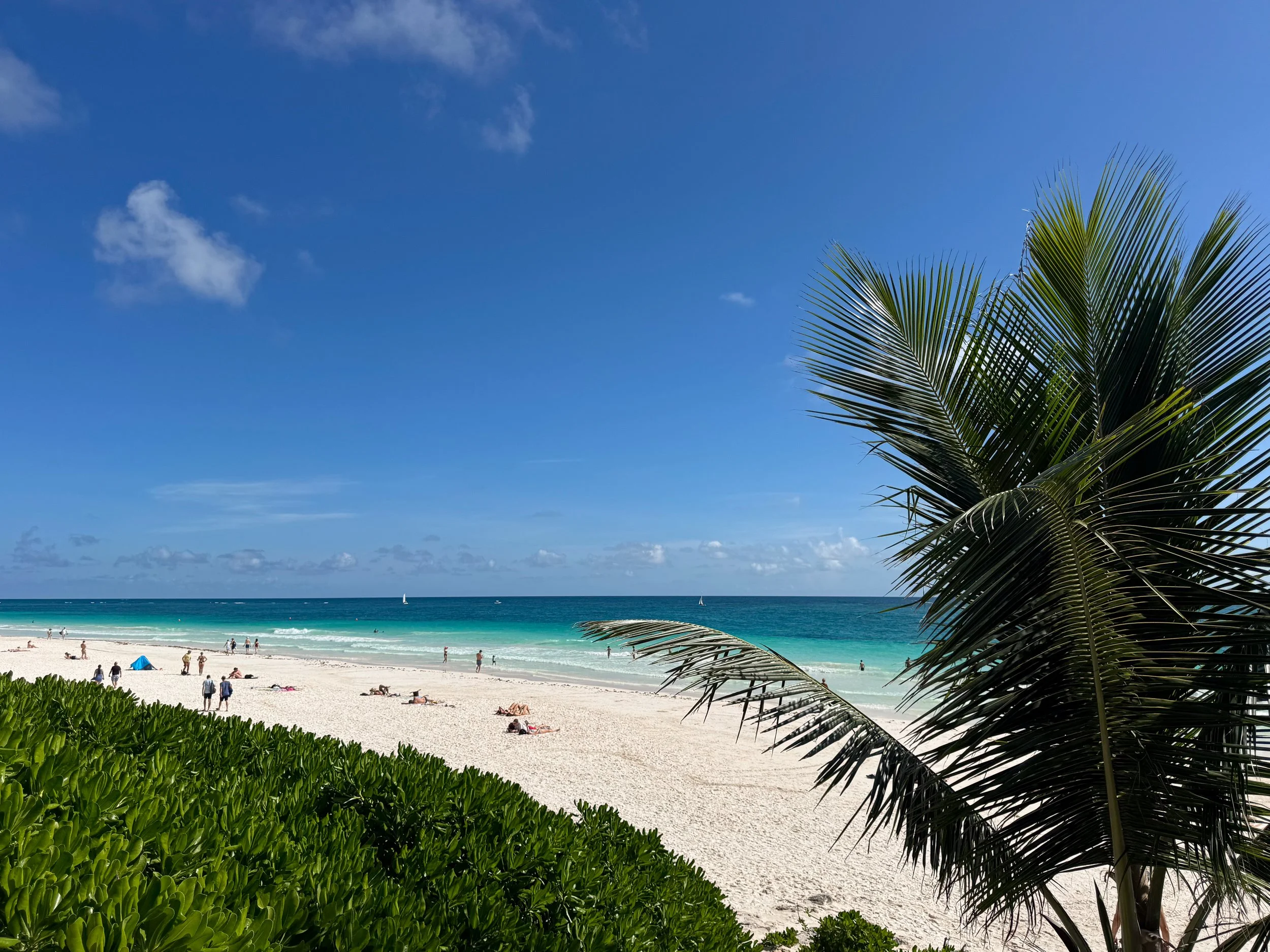
Tulum, Mexico
Tulum is a rapidly growing tourist town with luxury eco resorts, Mayan ruins and access to natural sights like the jungle, cenotes, lagoons and white sand beaches along the Caribbean Sea.
Barrio La Veleta
We stayed in Barrio La Veleta, a jungleous and up and coming neighborhood of Tulum on the edge of town. It was our favorite part of the city with clothing boutiques, bike & scooter rentals, juice bars, co-working spaces, tattoo shops, cafes, restaurants, bars, trendy barber shops, mini markets and several Oxxos.
Places to Eat & Drink
Cafe Si To. A jungleous cafe with tropical plants, a tiny pool and live edge wooden furniture. Their menu offers dishes like chilaquiles, french toast, fresh fruit bowls and avocado toast. Being in Mexico, we each ordered the chilaquiles, one with verde sauce and the other with rojo!
La Pebeta. A cafe and bakery with Mexican breakfast dishes. We tried the green bowl made with cactus, spinach and egg whites cooked in a salsa verde and the “divorced eggs” two eggs served on corn tortillas with beans and cheese, covered in salsa verde and salsa rojo.
Tres Galeones. A Mexican seafood restaurant and taqueria with a lush garden patio and interior that resembles a large wooden ship with portholes, a captain's deck and nautical decor. Come here for a local beer like Corona or Pacifico and the seafood tacos and tostones like octopus, soft shell crab, baja style fish, fish al pastor and shrimp.
Panadería La Delicia y Abarrotes. A local Mexican bakery with over a dozen types of pan dulces (Mexican pastries). We stopped by here twice to buy breakfast and desserts.
Velvet Tulum. A self serve ice cream shop with a mix of classic and unique soft serve flavors like chocolate, vanilla, pistachio, taro and grape + charcoal. The ice cream is sold by weight and can quickly add up in price.
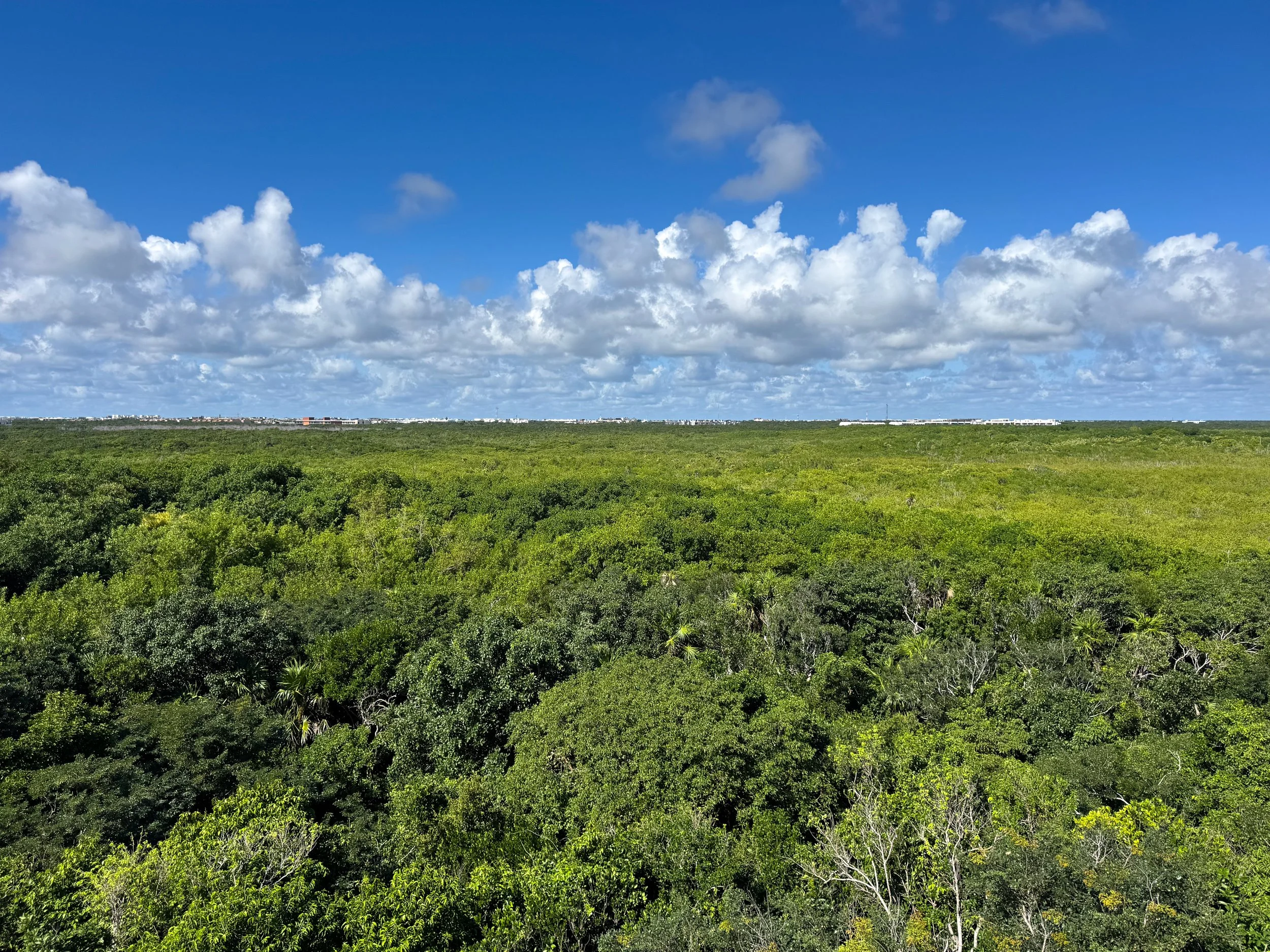
Parque del Jaguar
Parque del Jaguar is a national park and jungle reserve along the Caribbean Sea with access to the Tulum Ruins, multiple public beaches, restaurants, hotels and beach clubs. The park is open daily from 9am-5pm for a small fee. It’s easily navigable on foot, by bike or public shuttle.
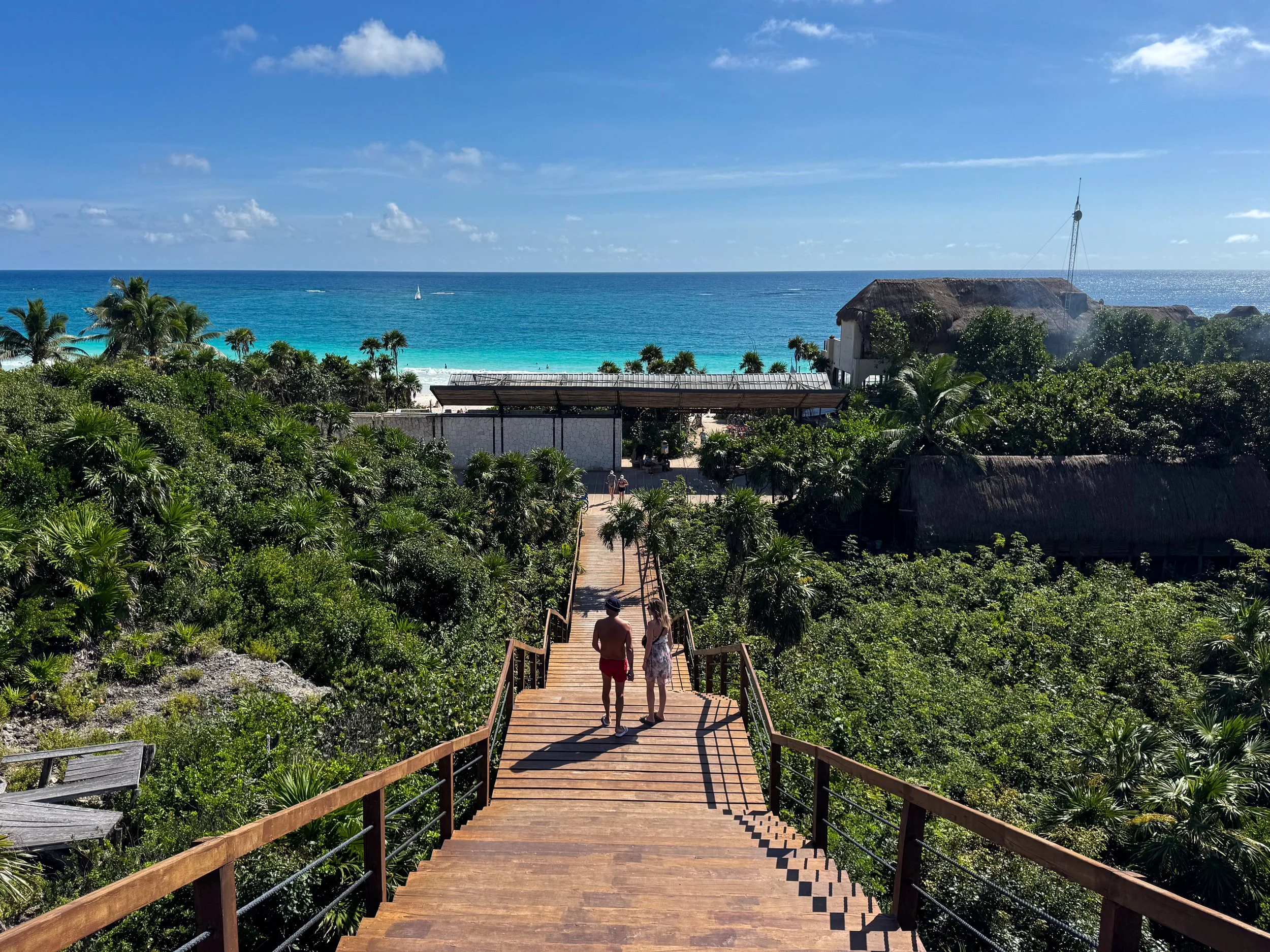
Parque del Jaguar Mirador. A large wooden staircase across from Playa Mangle in Parque del Jaguar with views of the lush jungle reserve and Caribbean Coast.
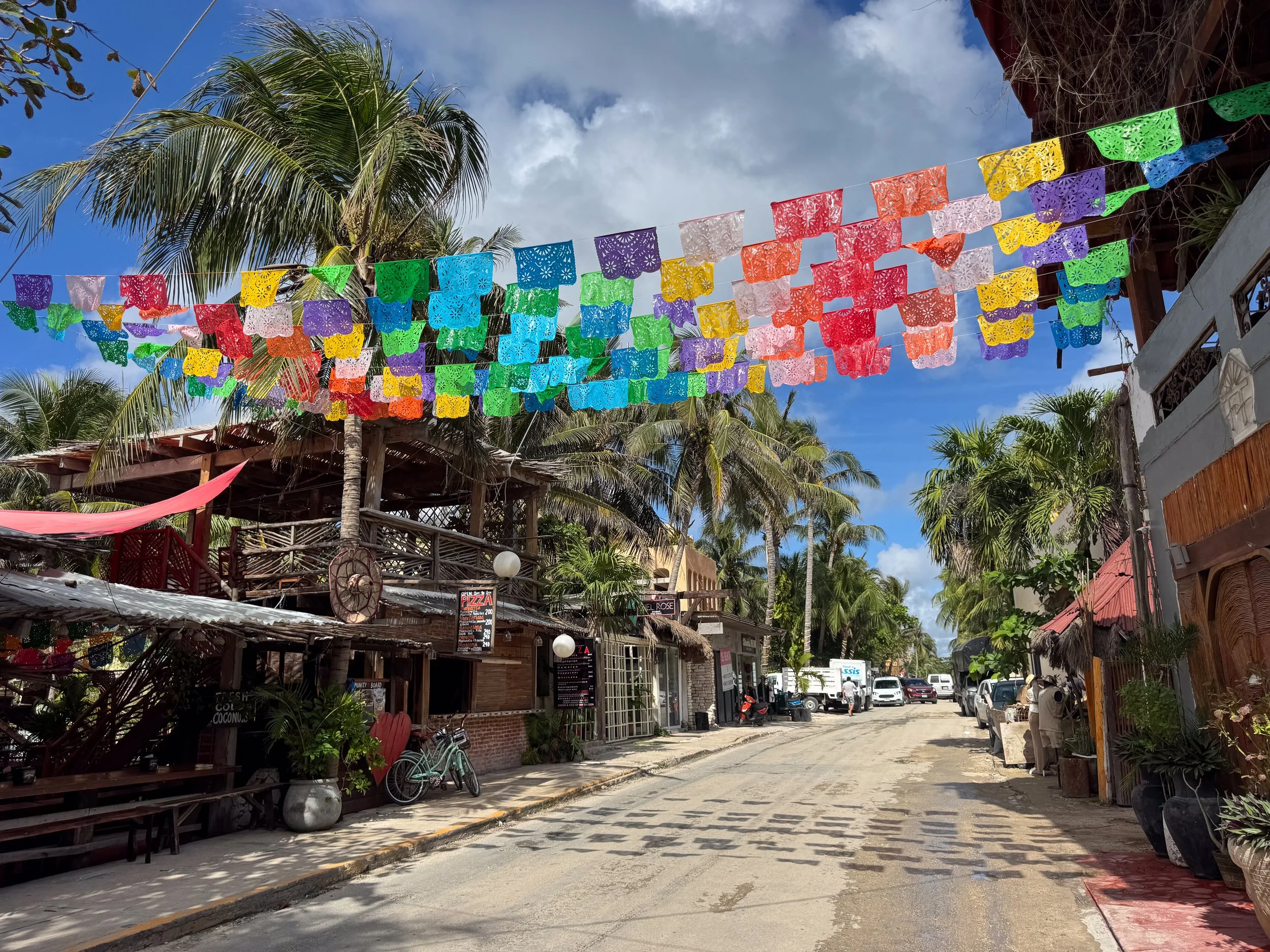
Tulum Hotel Zone
Tulum’s hotel zone is a vibey and tropical neighborhood along the Caribbean with eco-hotels, luxury hostels, beach clubs and nightly outdoor parties. It’s a popular destination with millennial travelers, digital nomads and influencers. Swimsuit clad people ride bicycles and scooters down the palm lined road to white sand beaches and jungleous eco-resorts sculpted from natural materials
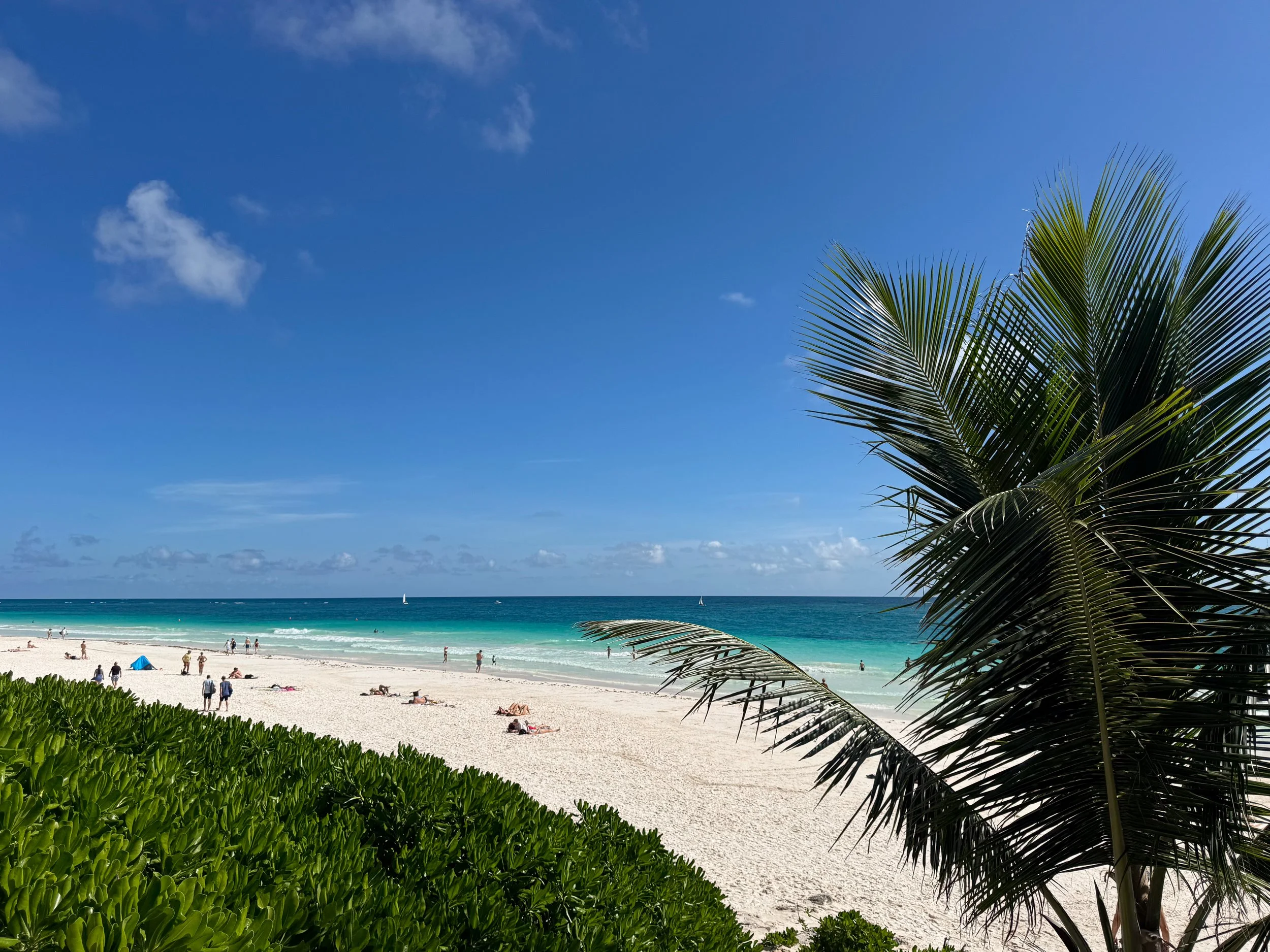
Beaches & Beach Clubs
Playa las Palmas. A powdery white sand beach with shallow aquamarine water perfect for sunbathing, swimming and body surfing. The beach has several restaurants, hotels and bars with lounges and beds for rent. It’s one of the public beaches, accessible through the Parque del Jaguar.
Playa Santa Fe. A white sand beach with access to the Tulum Ruins. Many boat tours with seaside views of them leave from here.
Playa Pescadores. A white sand beach with restaurants, bars and beach clubs. Many snorkeling and fishing tours leave from here.
Playa Mirador. A small beach with a large rocky outcrop. The water is rocky but it’s a fun spot to sunbathe and watch the pelicans dive into the water. It’s nearby several beach front hotels and bars.
Ramon’s at Pocna Tulum. A beachfront restaurant at Playa las Palmas with palm tree shaded beach beds and a sand floor dining room overlooking the beach. Come here for the tropical cocktails like piña coladas or margaritas and Mexican dishes like tacos, ceviche and guacamole.
Club de Playa Zazil-Kin. A palm covered beach club with lounges and tables in the sand at Playa Pesadores. Come here for the grilled seafood, coconut shrimp, ceviche, Mexican beers and tropical cocktails.
Mivida. A beachfront hotel, restaurant and bar with a thatched patio, beach beds and white sand beach.
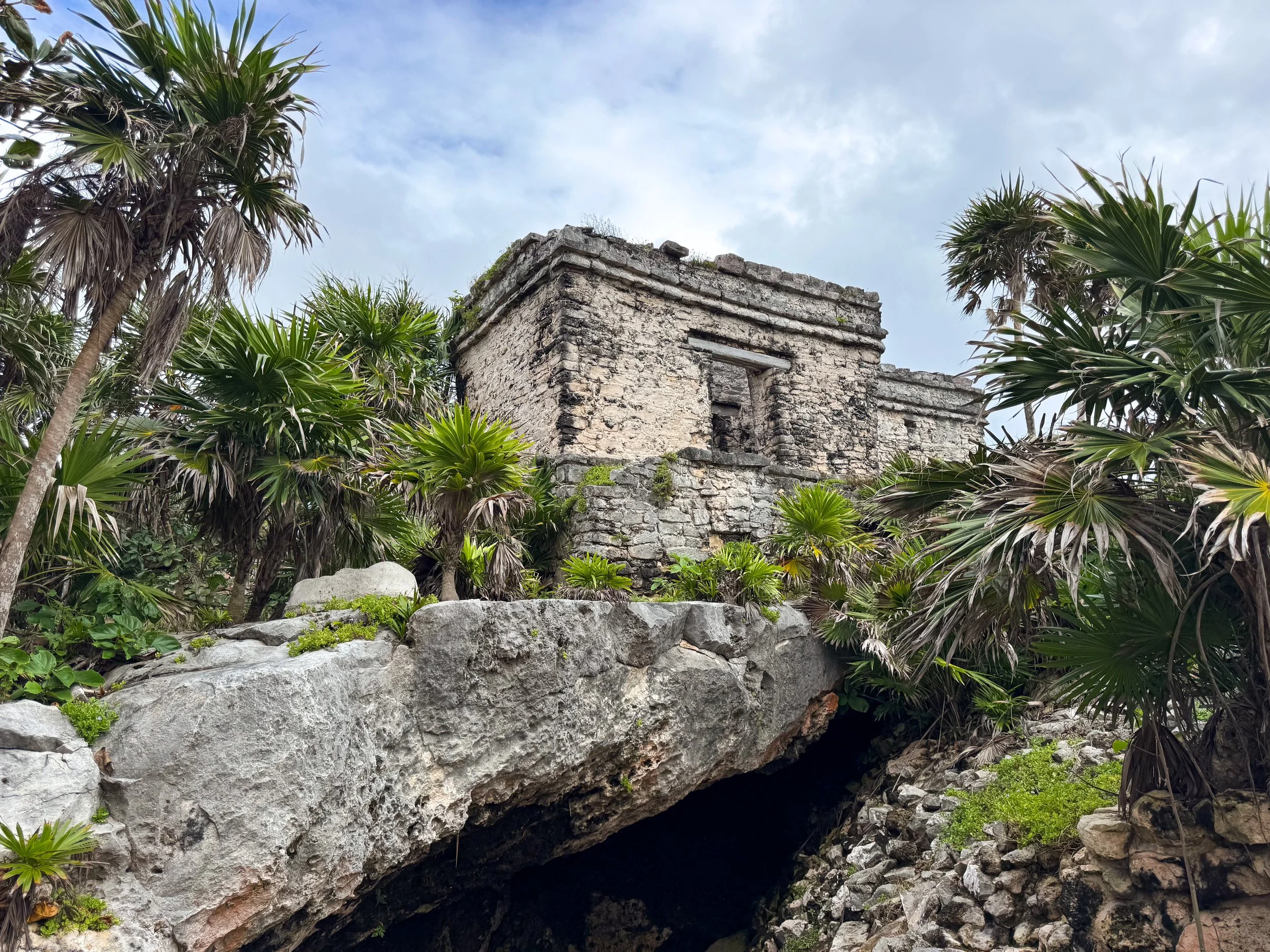
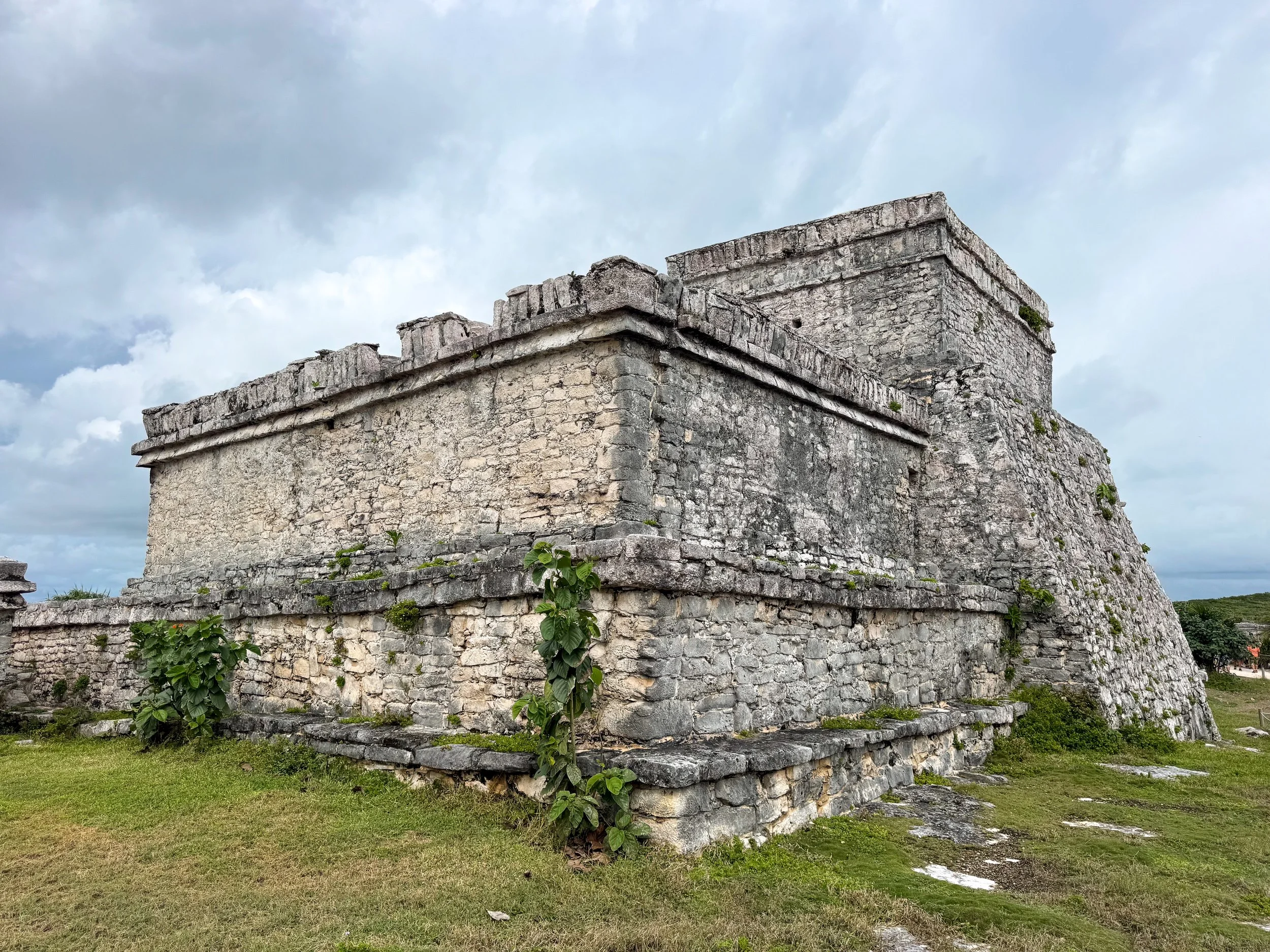
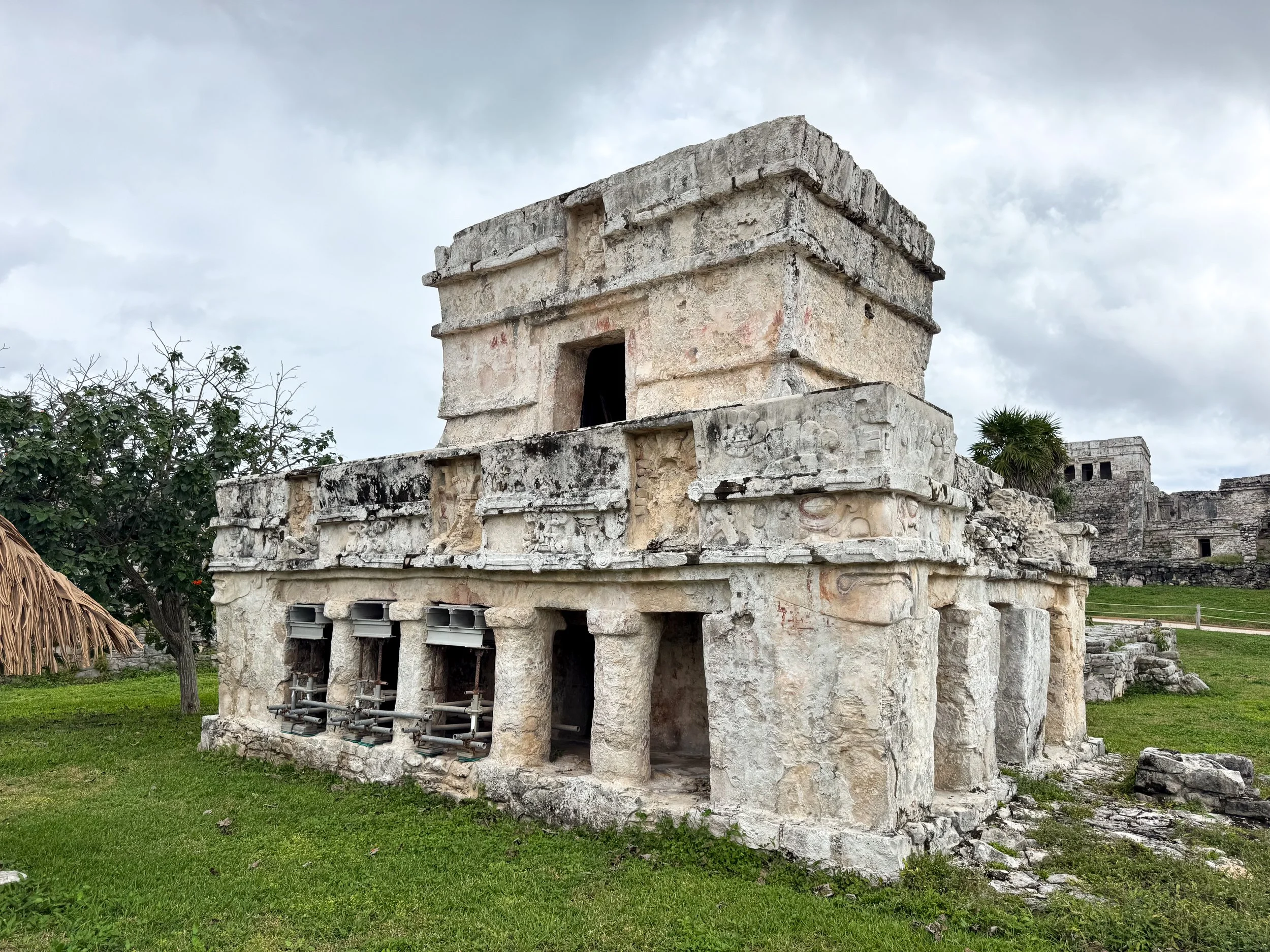
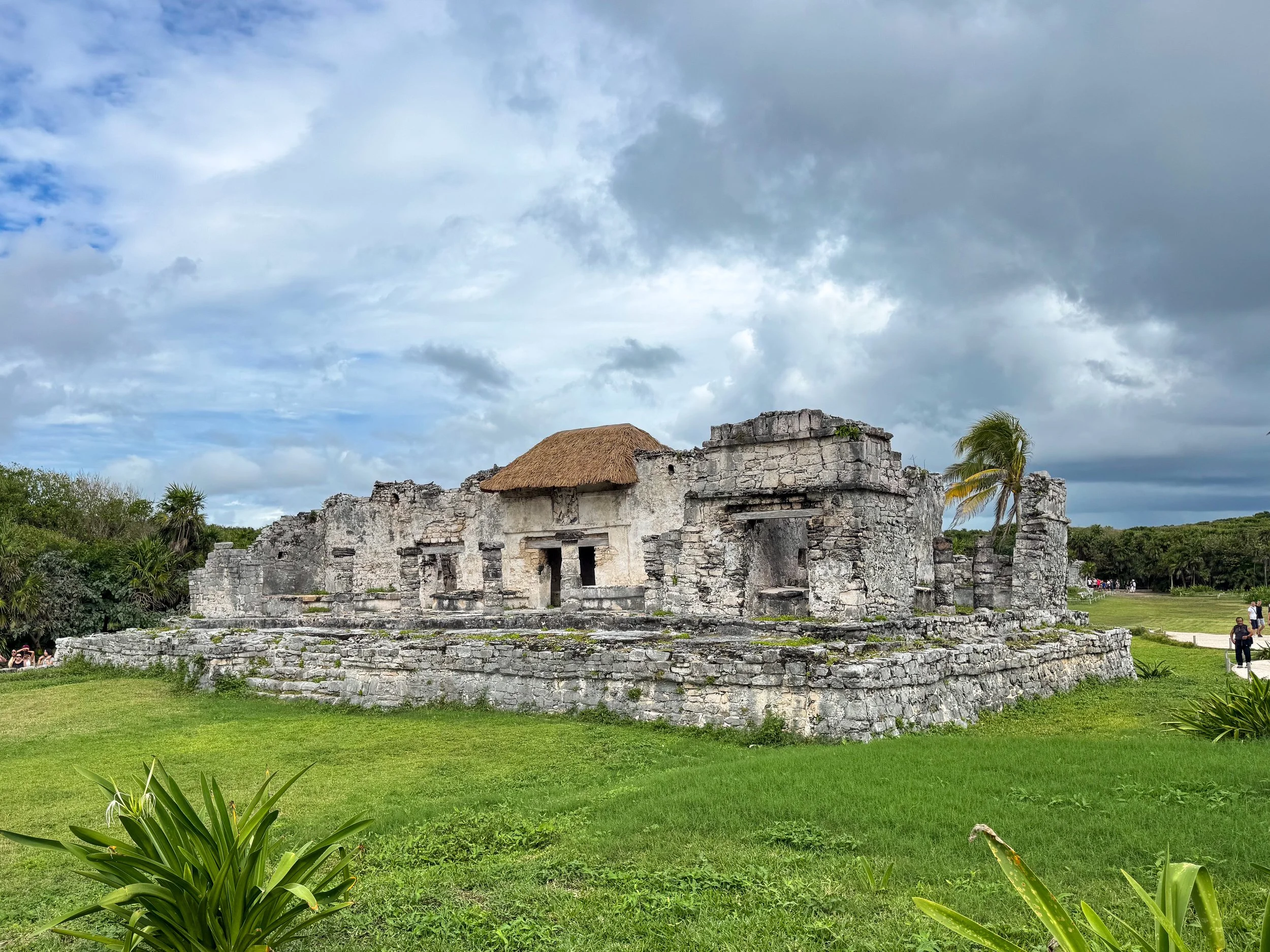
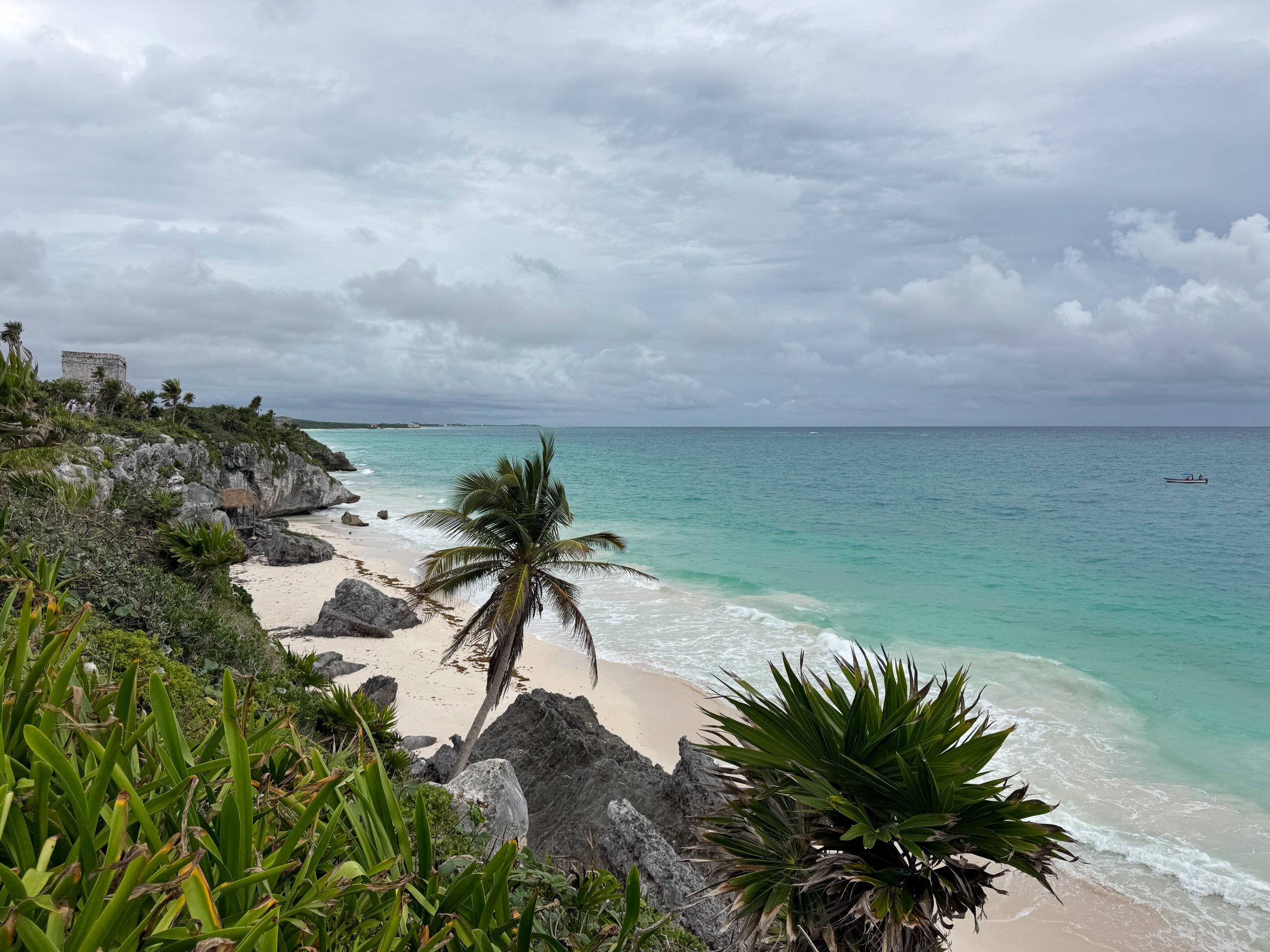
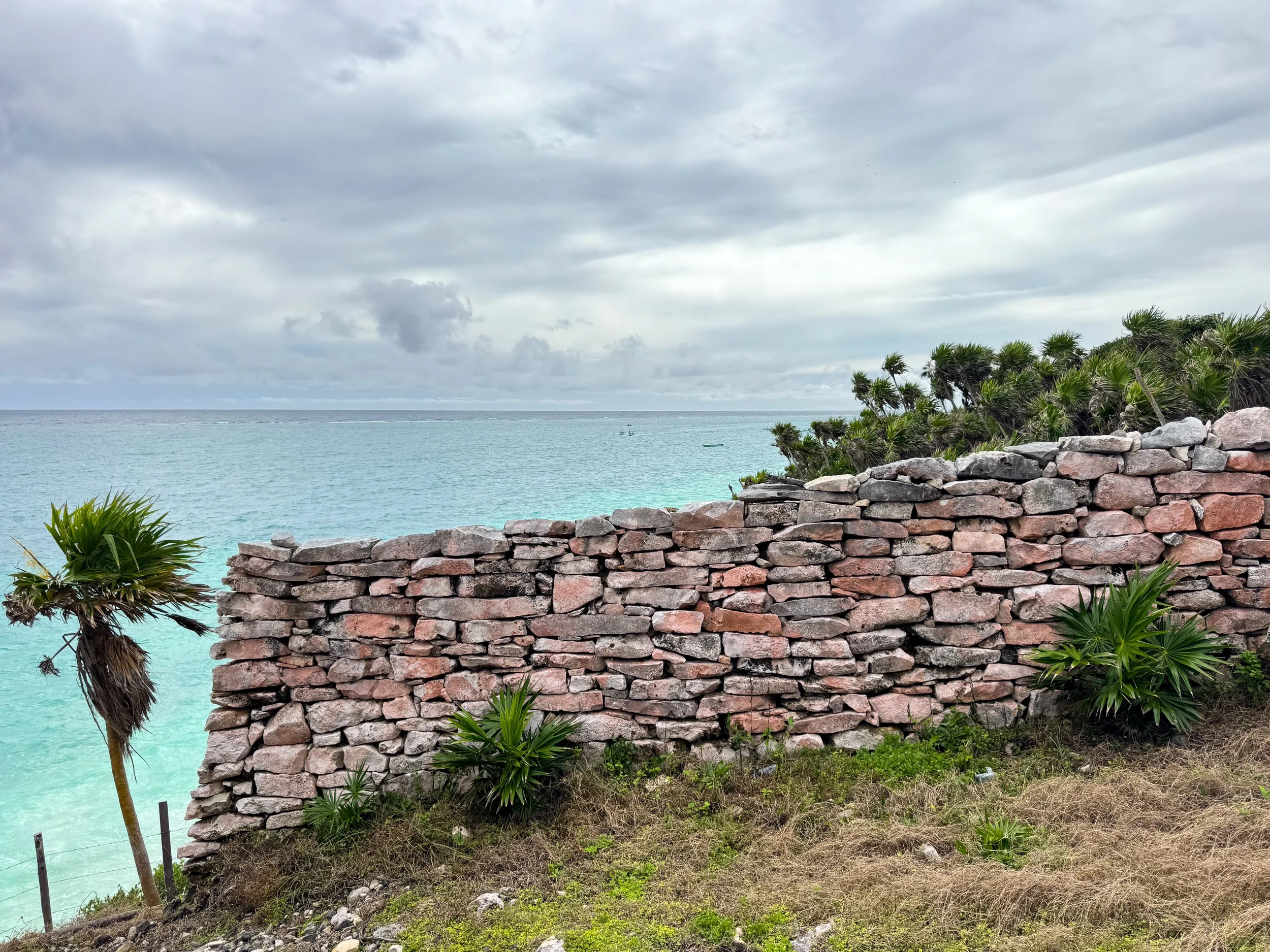
Mayan Ruins
Tulum Ruins. The Tulum Ruins are large archeological site with Mayan structures perched on a cliff overlooking the Caribbean Sea. The complex is surrounded by a stone wall and encompasses multiple well preserved temples and crumbing buildings. The city was thought to be a central trading post for the Mayan empire.
El Castillo. The largest and most grand building of the complex with a temple atop a stone staircase and flanked by two smaller temples. It resides at a high point near the cliff overlooking the Caribbean Sea.
El Templo de los Frescos. An intricately designed temple covered in Mayan carvings, figures of gods and red painted imprints of human hands.
Templo del Dios Del Descendente. A stone temple with angled walls and a motif above the doorway of a god descending from the heavens.
Templo del Dios Del Viento. A stone temple with several altars on a cliff overlooking the Caribbean. The temple is dedicated to Kukulcan, the God of Wind.
Casa del Cenote. A small stone house built on top of a Cenote. It was thought to be the village’s main source of fresh water.
La Muralla Defensa y Límite. The defensive stone wall surrounding three sides of the village with a narrow passageway to enter and exit.
Pro Tip. Arrive early, by 8am, to avoid the massive crowds and large tour groups.
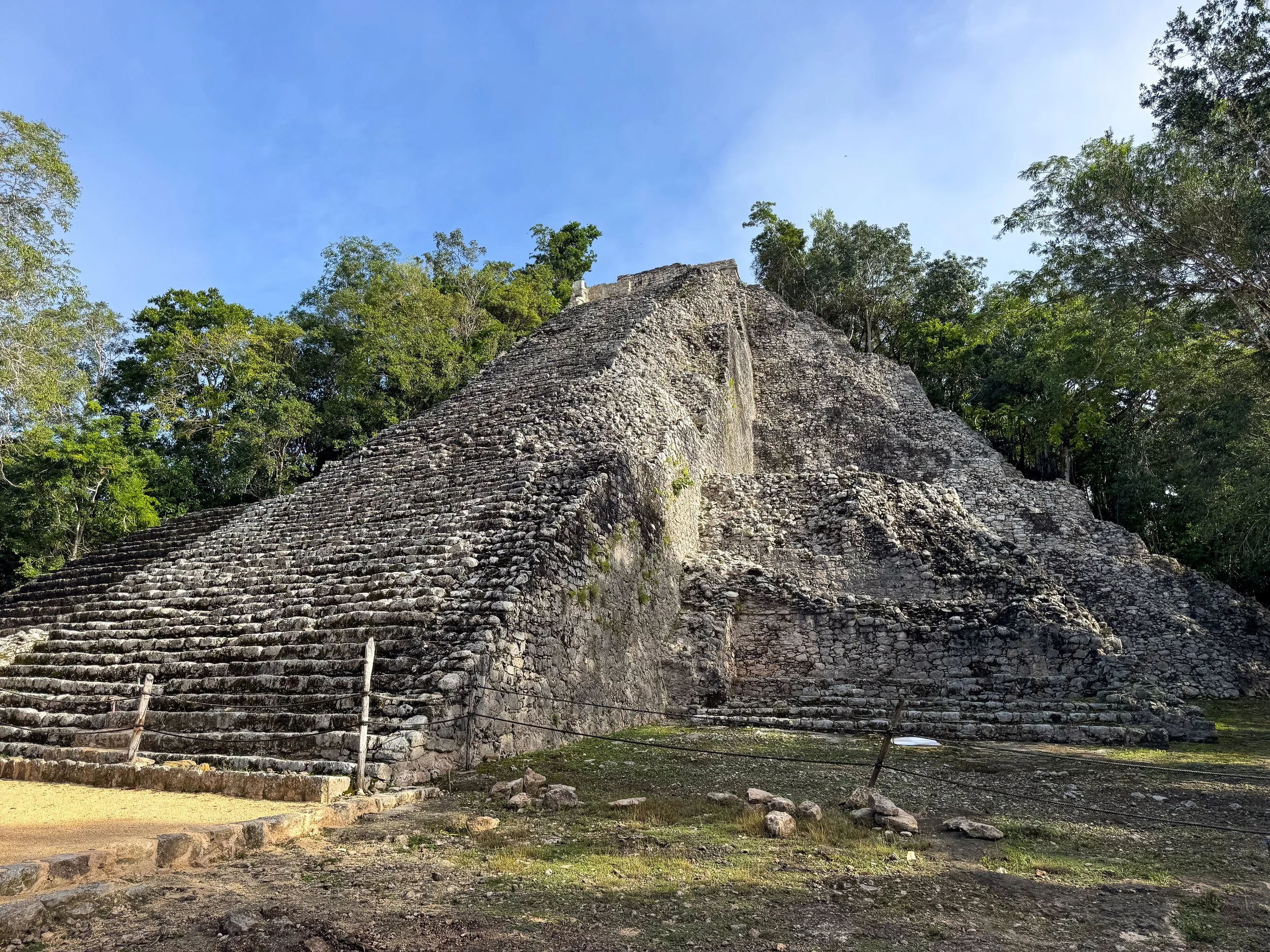
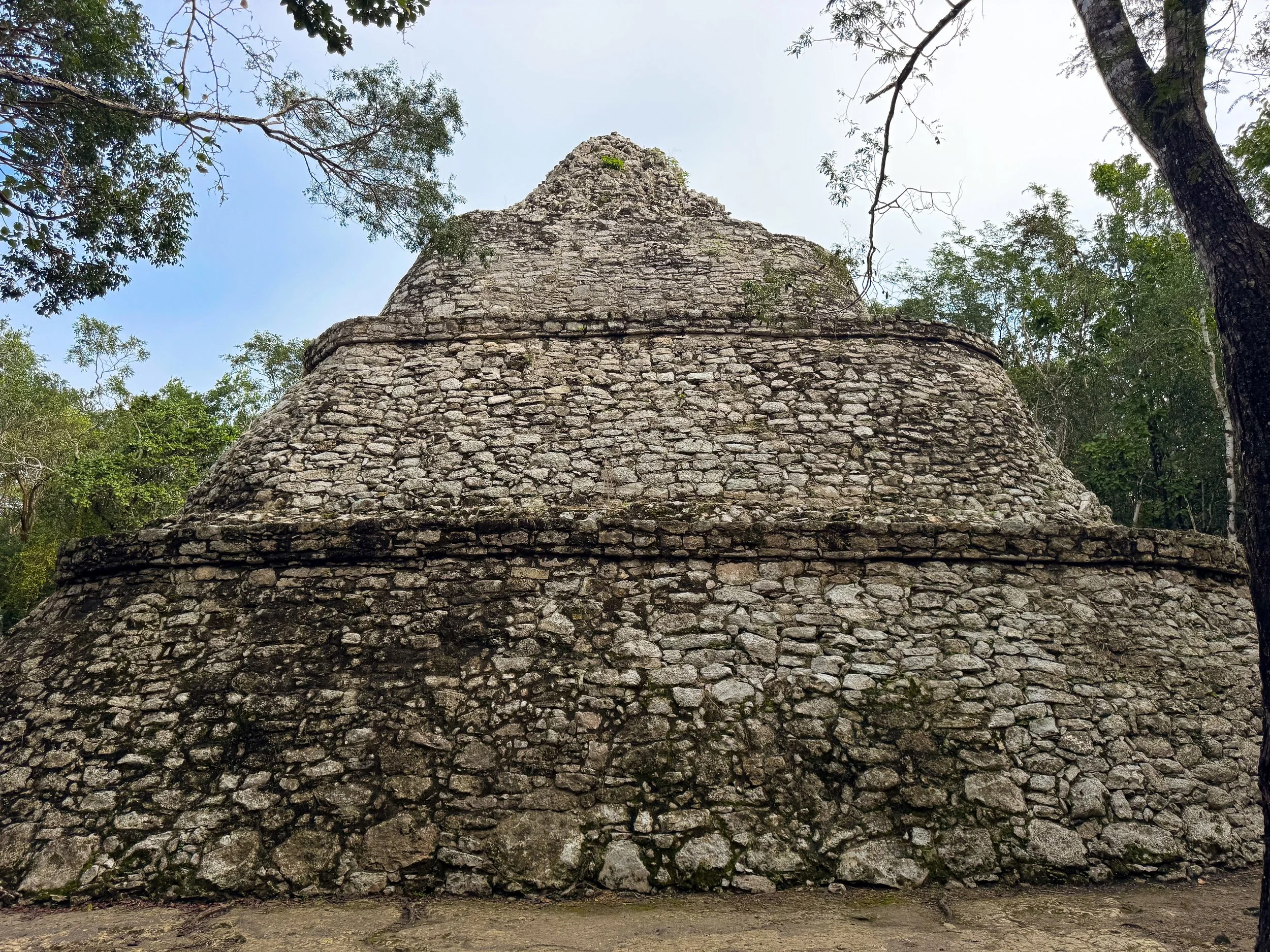
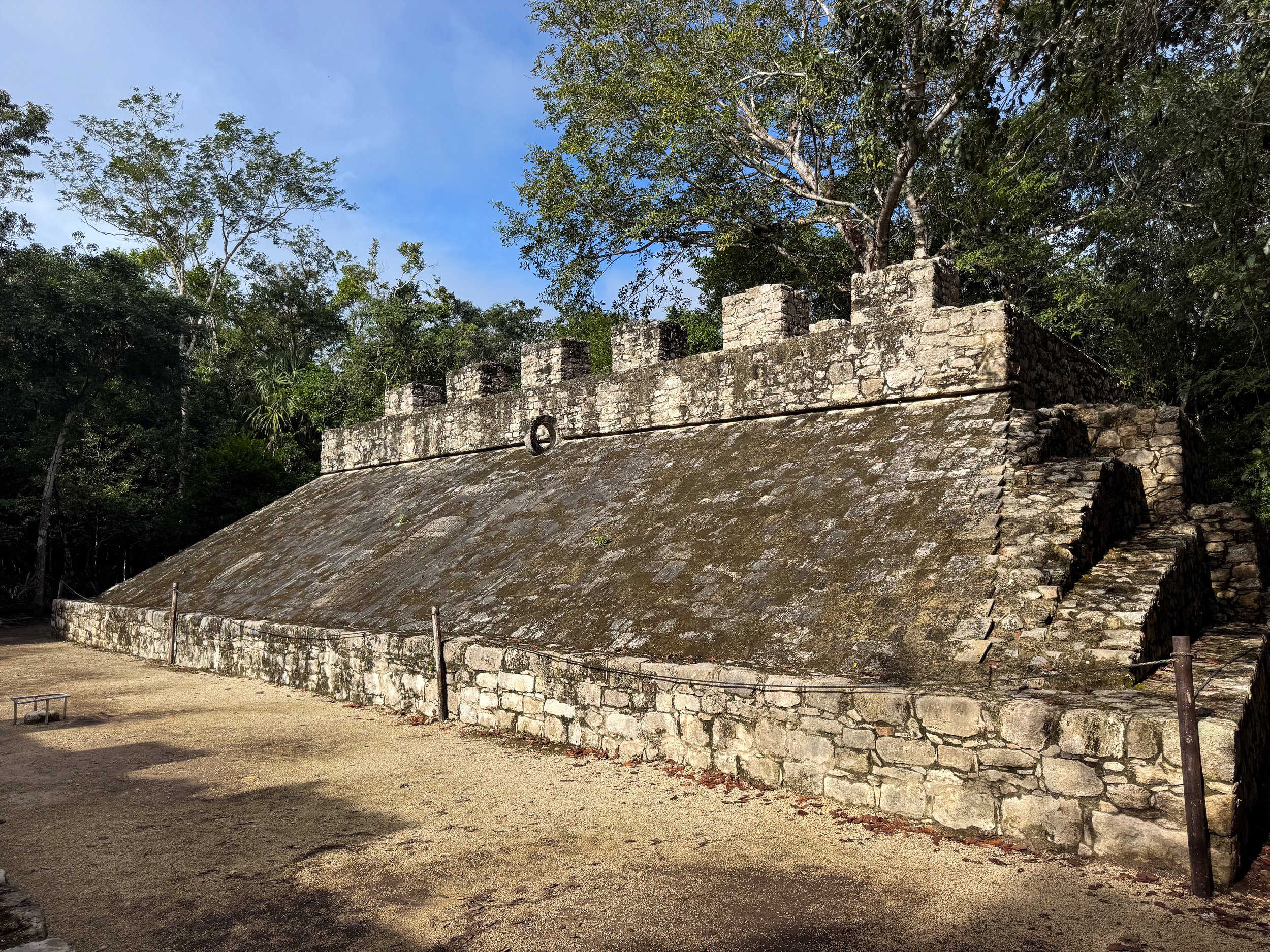
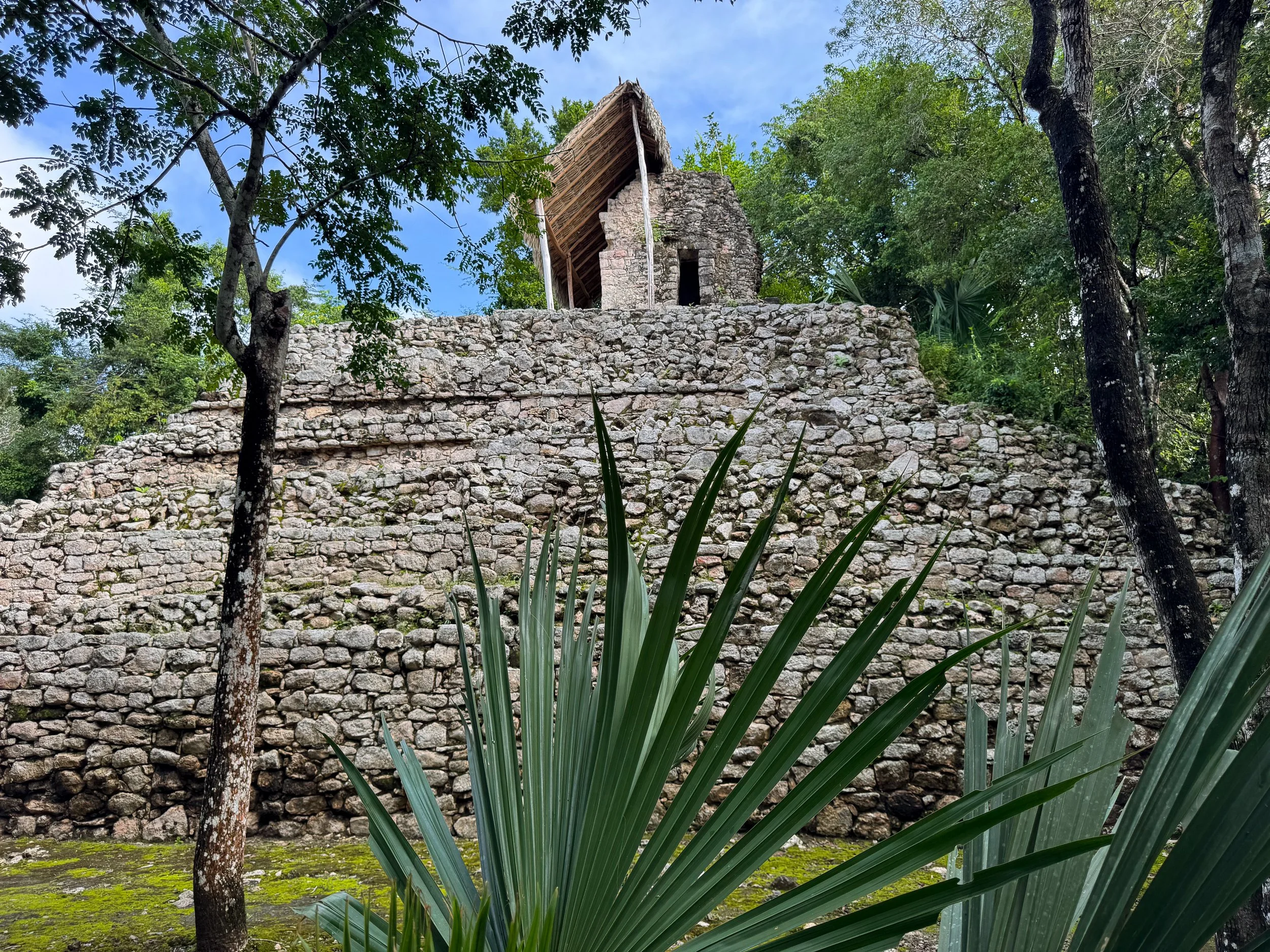
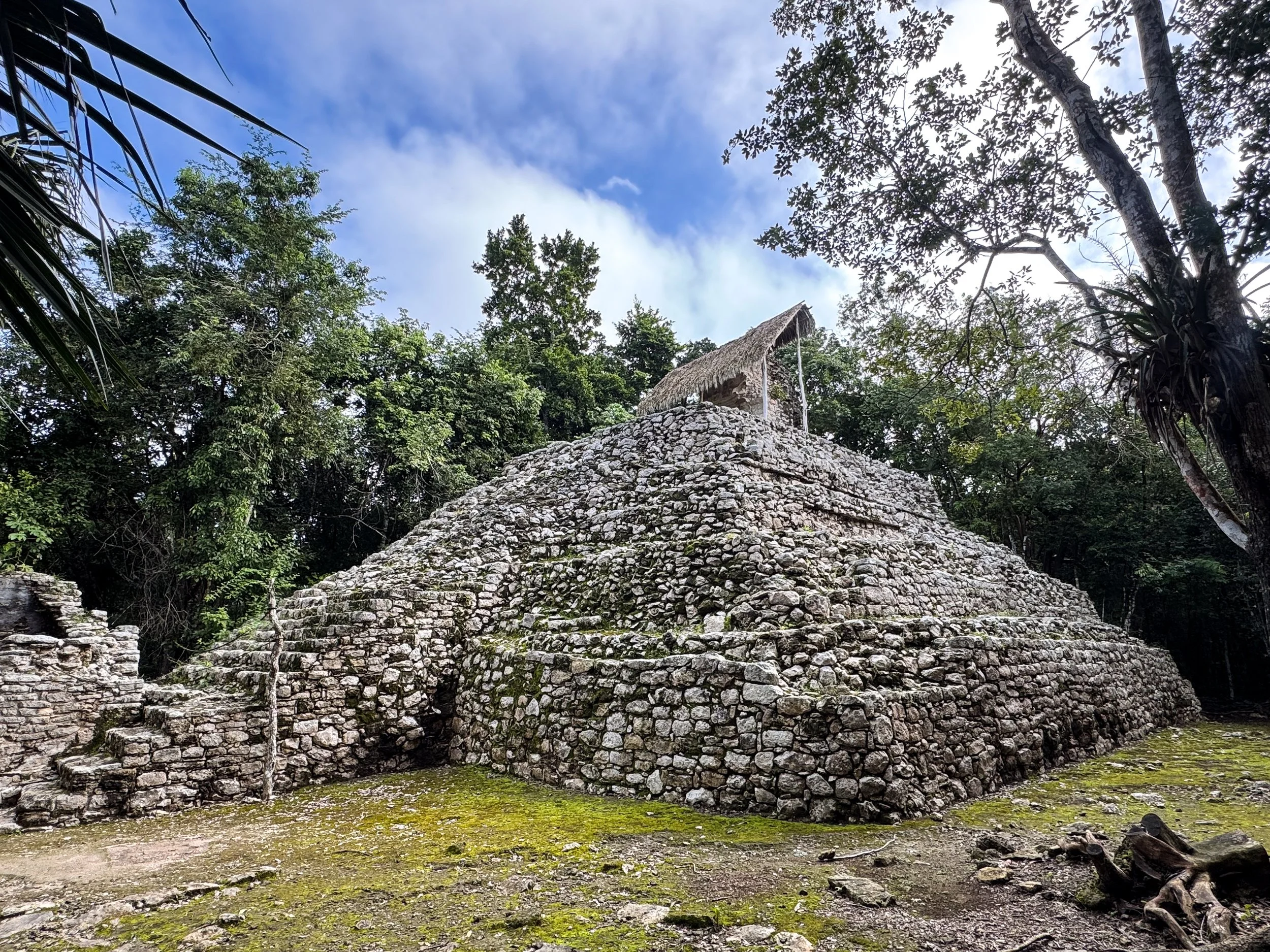
Coba Archaeological Site
Coba is a sprawling Mayan city within the lush jungle comprised of multiple acropolises, stone pyramids, temples, platforms, ball courts and stelae or vertical stone tablets carved in hieroglyphs and depictions of Mayan priests, royalty and warriors.
Group Nohoch Mul. An acropolis with two stepped pyramids, a ball court, several small platforms and unearthed ruins.
Nohoch Mul Pyramid. The tallest pyramid in the Yucatan with stepped sides and a central staircase leading to an alter on top. Its crumbling front is fully unearthed while its other side remains buried beneath lush vegetation.
Observatorio Astronómico de Cobá. A very well preserved astronomical pyramid with rounded sides, four levels and twenty steps representing the Mayan calendar. It’s fully unearthed and can be viewed on all sides.
Juego de Pelota. A well preserved ball court with stone rings centered on two angled walls opposite each other. Each wall has six alters for Mayan royalty to watch from. Inlaid in the floor are carvings of a human skull and beheaded jaguar.
Group D. An acropolis with temples, platforms, a pyramid and overgrown Mayan road.
Structure 5. A stepped platform and small temple with the crumbling remains of rounded columns. It’s one of the few ruins that can be climbed on to explore its construction and ceremonial purposes.
Conjunto Pinturas. A multilevel stepped pyramid with rounded corners and a central staircase leading to an altar at its top. A few smaller temples and platforms with rounded columns and stelae surround its base.
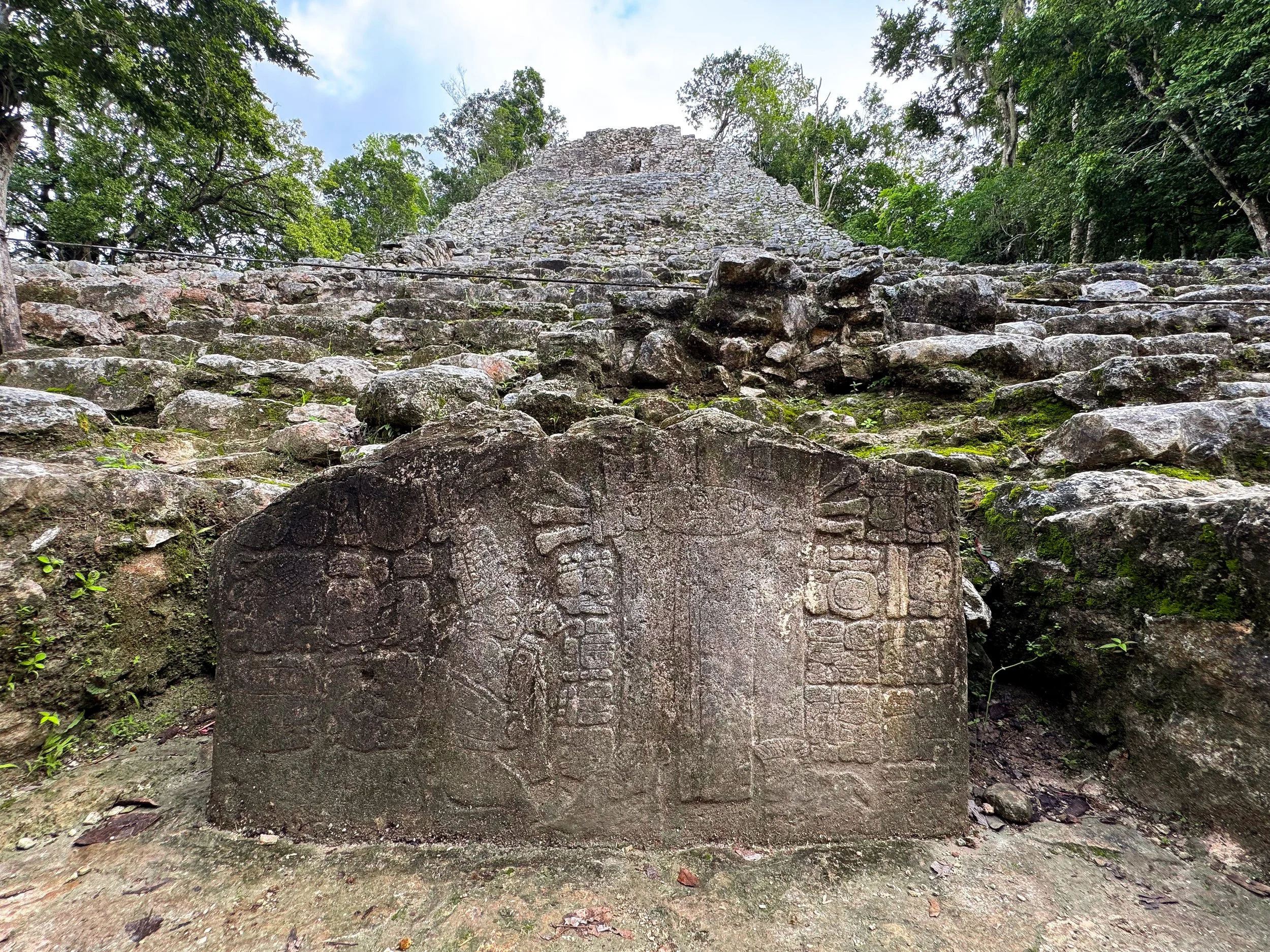
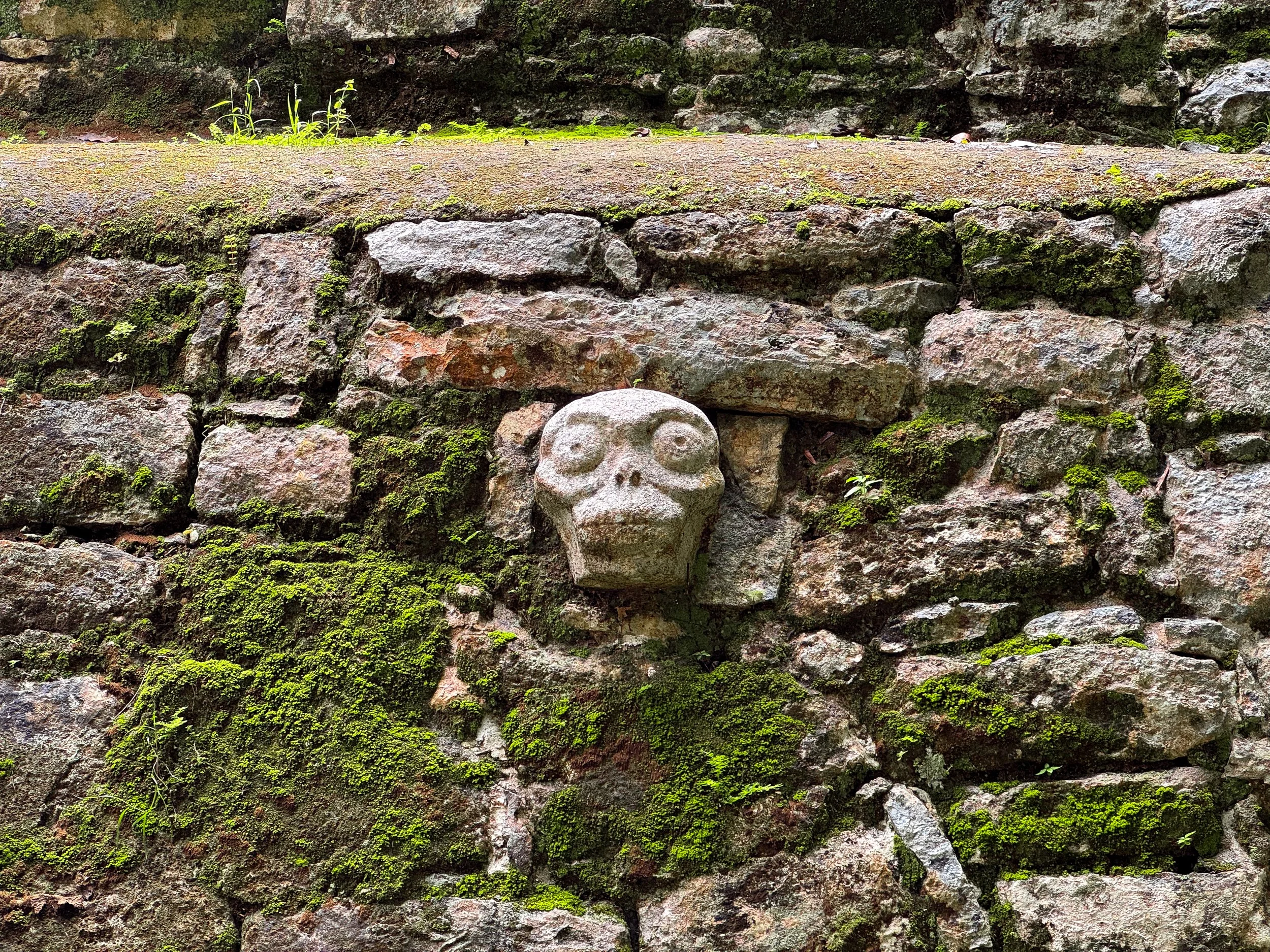
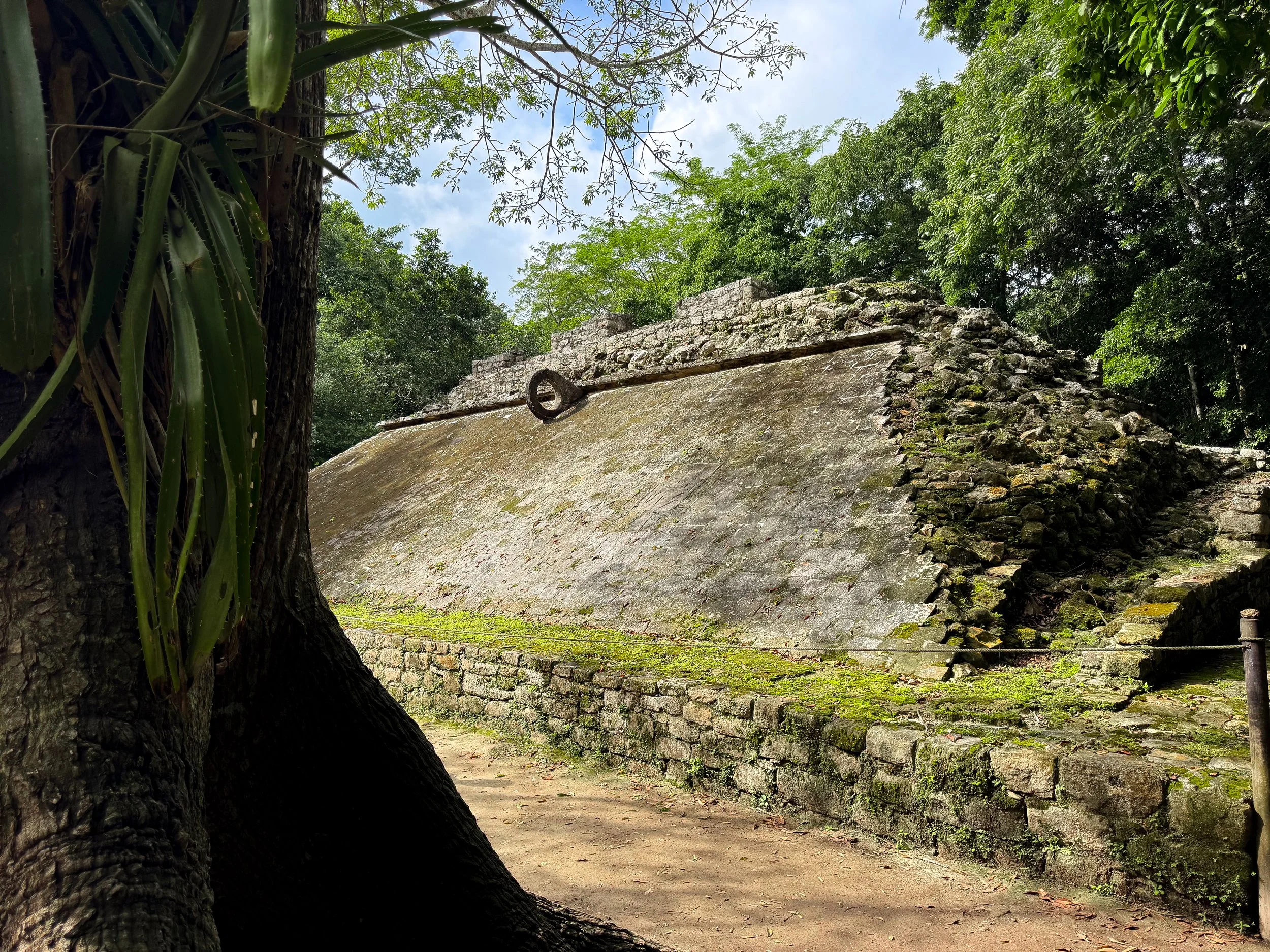
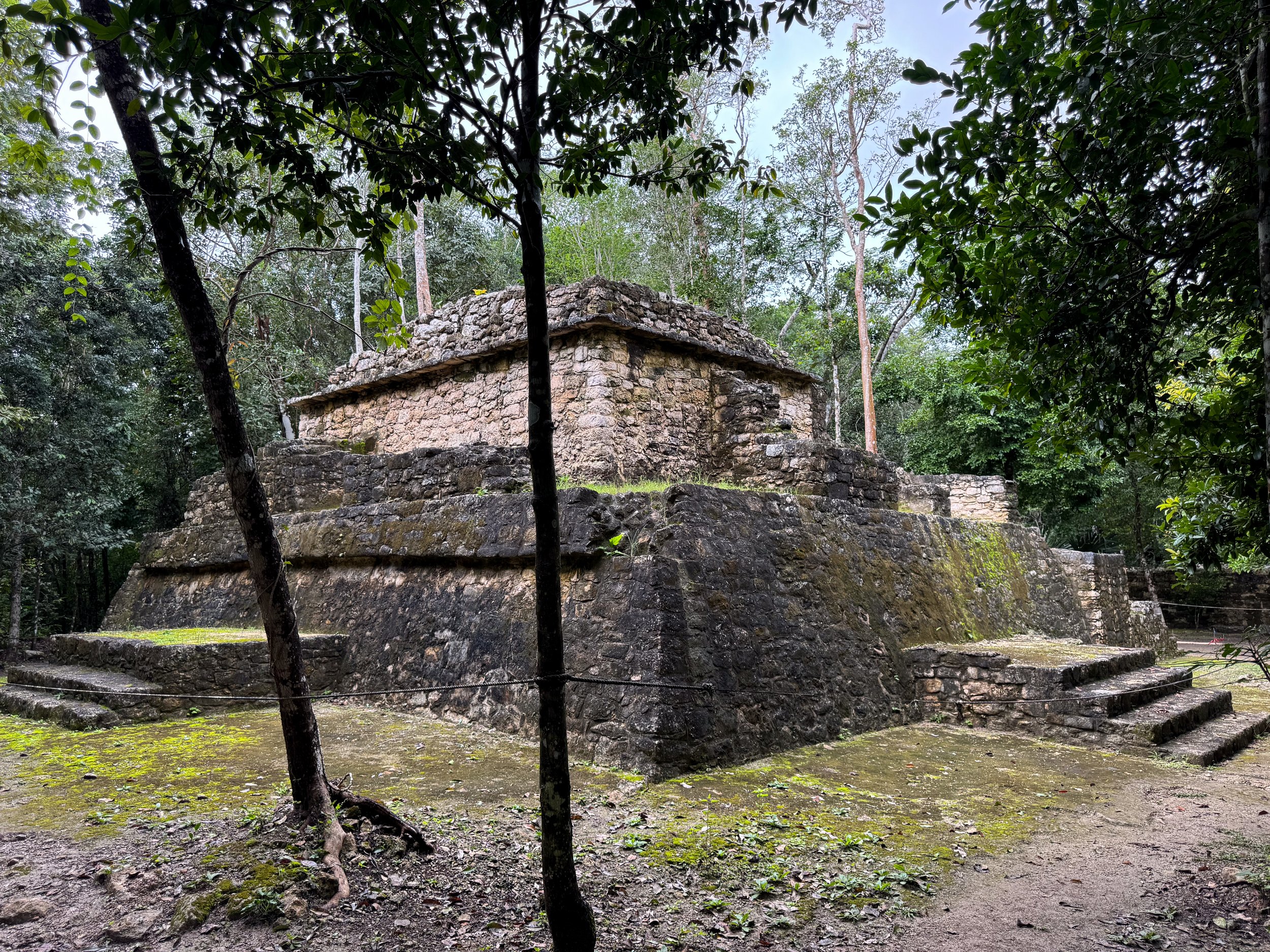
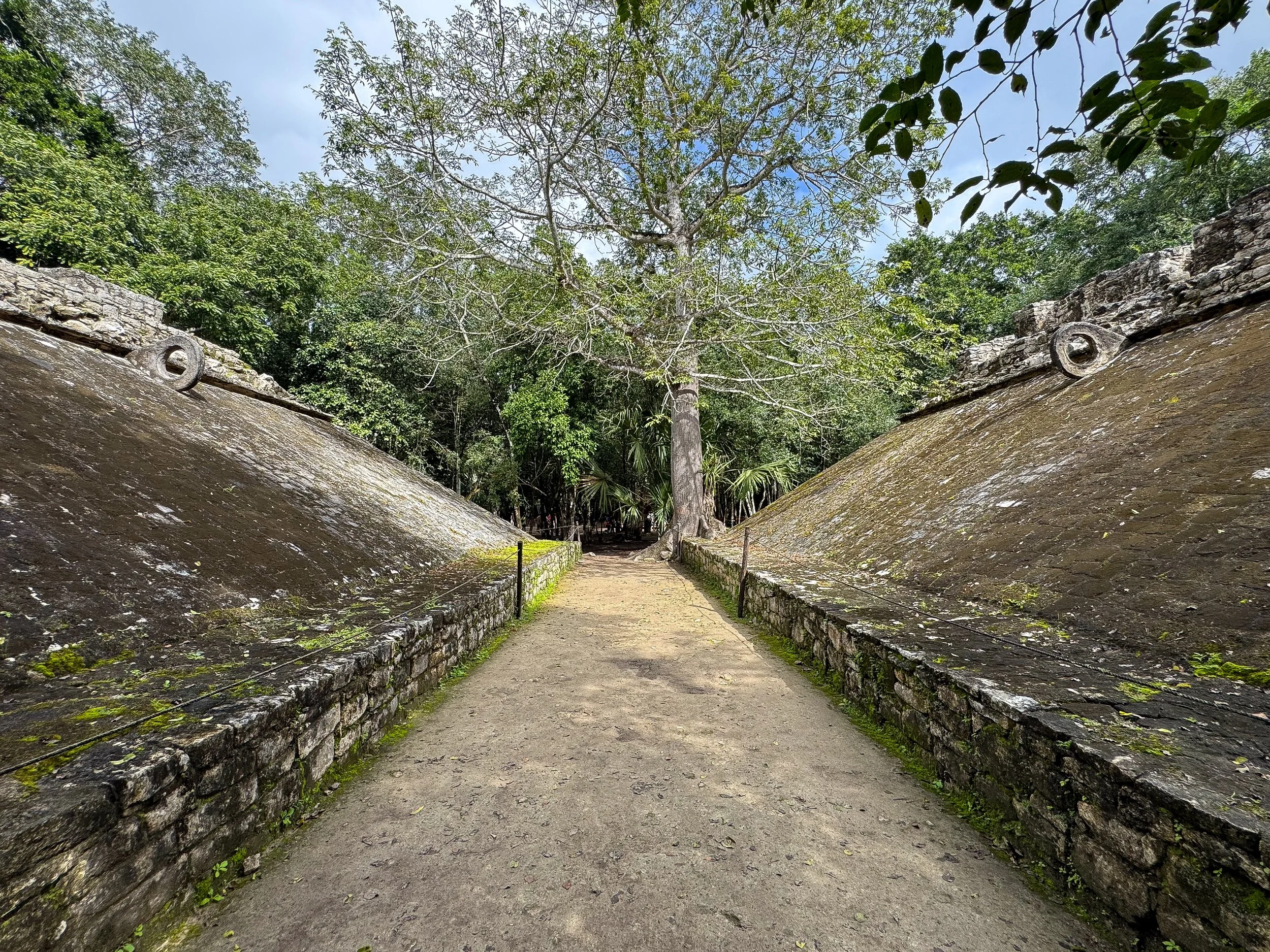

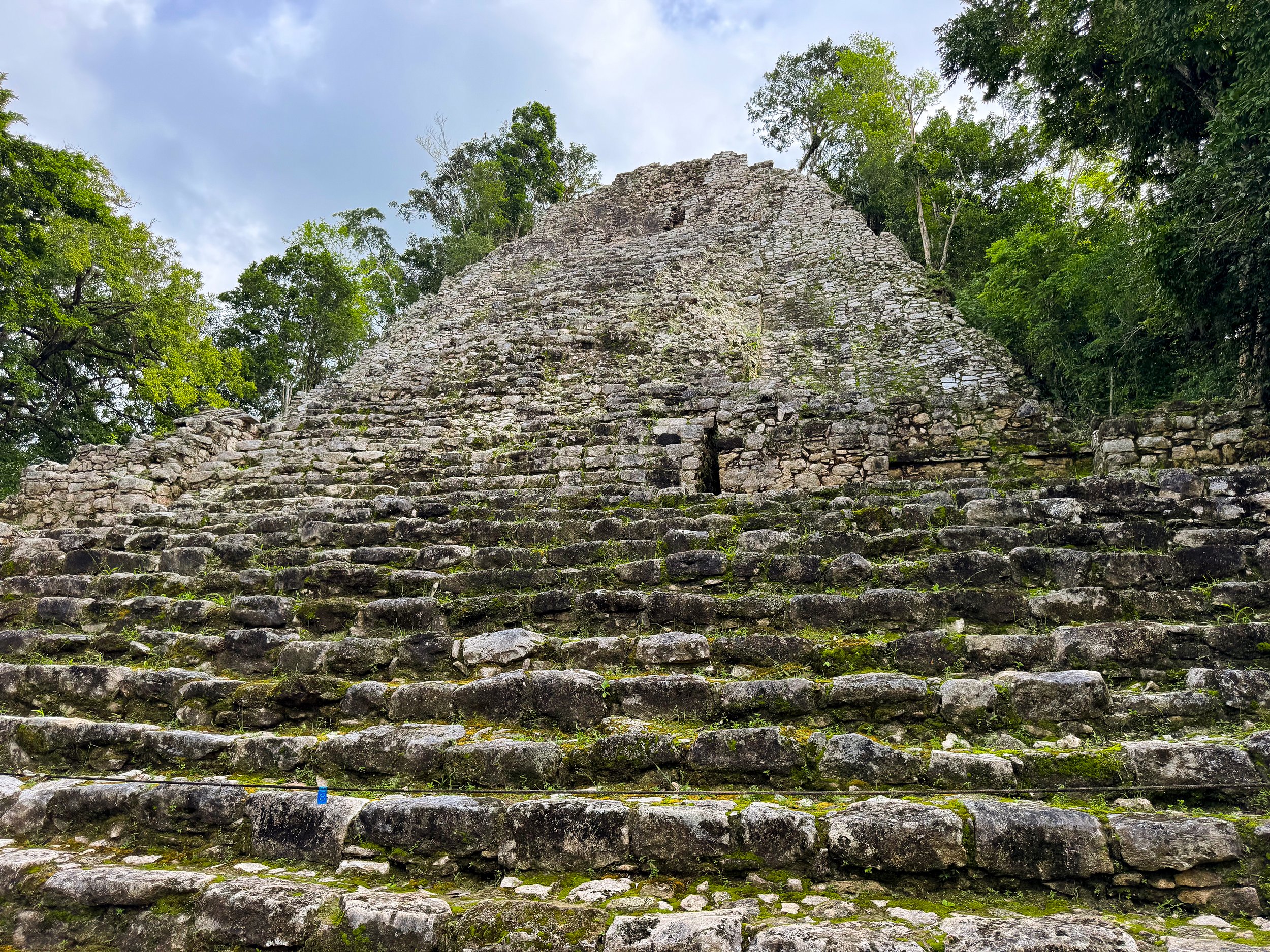
Group Macanxoc. The furthest acropolis in the ancient city with a plaza home the ruins of temples, platforms and stelae.
Nohuch Mul Plaza. A plaza with a walled and stepped temple surrounded by several smaller platforms, temples, altars and stelae.
Macanxoc Temple. A partly uncovered pyramid-like temple that can be climbed onto. Its top half and depth are buried under the jungle. At its base is a covered stelae.
Group Coba. A grand acropolis at the entrance of Coba with a ball court, platform, pyramid and climbable temple.
Juego de Pelota. A Mayan ball court with two intact stone rings centered on its angled walls. Two stone skulls are inlaid into the side of the pyramid at one end of the ball court.
La Iglesia. A massive complex with a platform supporting a towering pyramid that rises above the jungle canopy and a climbable temple with a tunnel beneath its steps and altars at its top. Intricate stelae with Mayan hieroglyphs and images are on display throughout the complex.
Tips for Visiting Coba
Getting to Coba by Oriente Bus. The bus schedule is only confirmed on the day of. Arrive when the bus station opens to buy tickets. Tickets are one way and cash only. It takes less than an hour to reach Coba. The bus stops about 10 minutes on foot from the Coba ticket office.
Getting to Coba by Collectivo. Shared taxis depart from the corner of Calle Osiris Norte and Cancun-Chetumal, a block from the bus terminal. Vans depart between 9-10am. Fares cost 100 pesos per person.
Returning to Tulum by Collectivo. Flag down a collectivo on the main road in the town of Coba. Drivers will depart once the van is full of passengers. The wait can take up to 2 hours. Fares cost 100 pesos per person.
Tickets. If entering on foot, there are two entry tickets. An infrastructure fee costing around 100 pesos and the entrance fee costing around 95 pesos.
Rent Bike. The best way to get around is by renting a bike. With a bike, the entire complex can be seen in about 3 hours. Bikes are available to rent just after entering the park for around 65 pesos.
Restoration Work. Many of the stelae are undergoing restoration and covered in plastic tarps.
Access. No pyramids can be climbed on. Some temples and platforms can be climbed on.
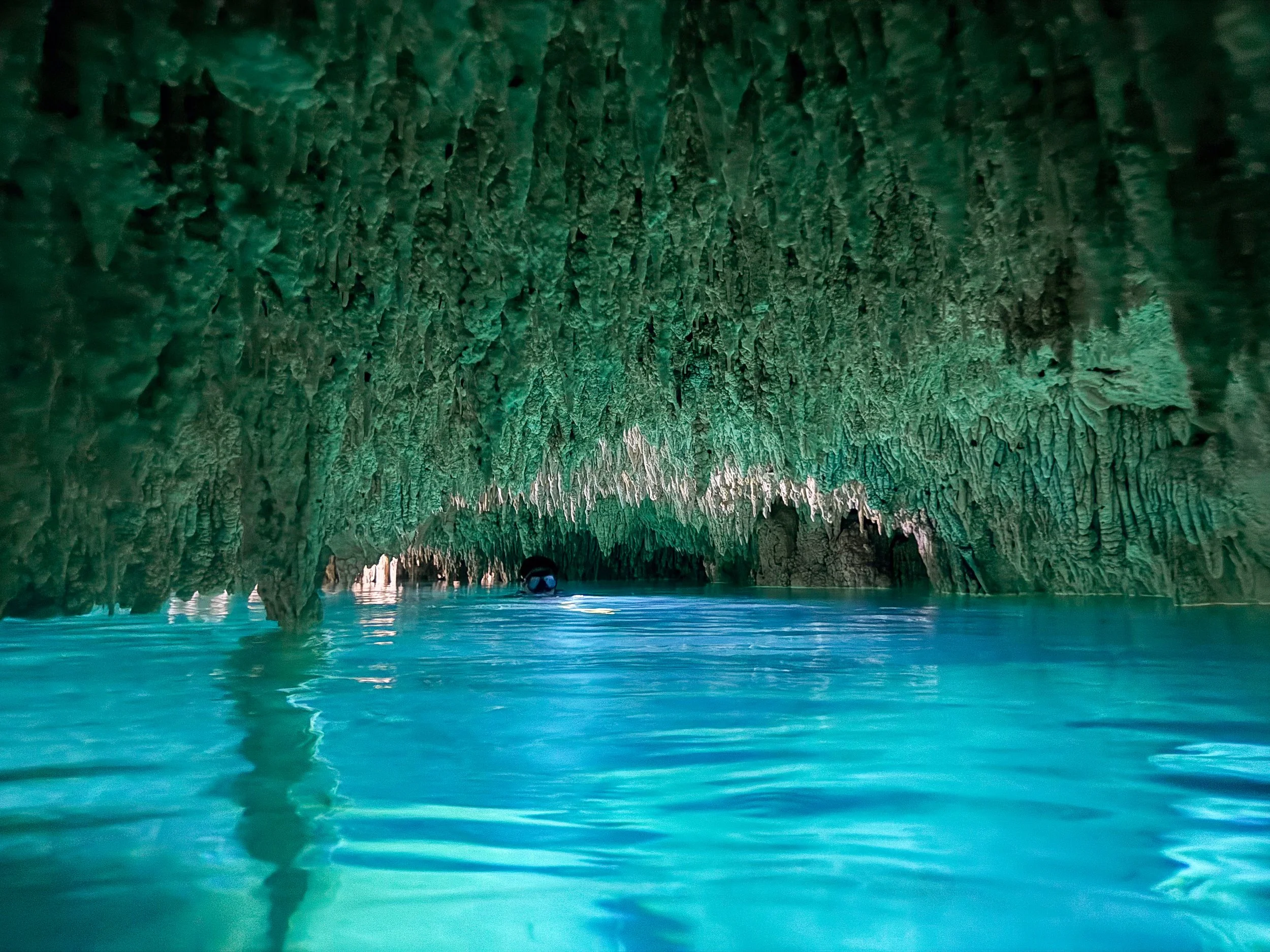
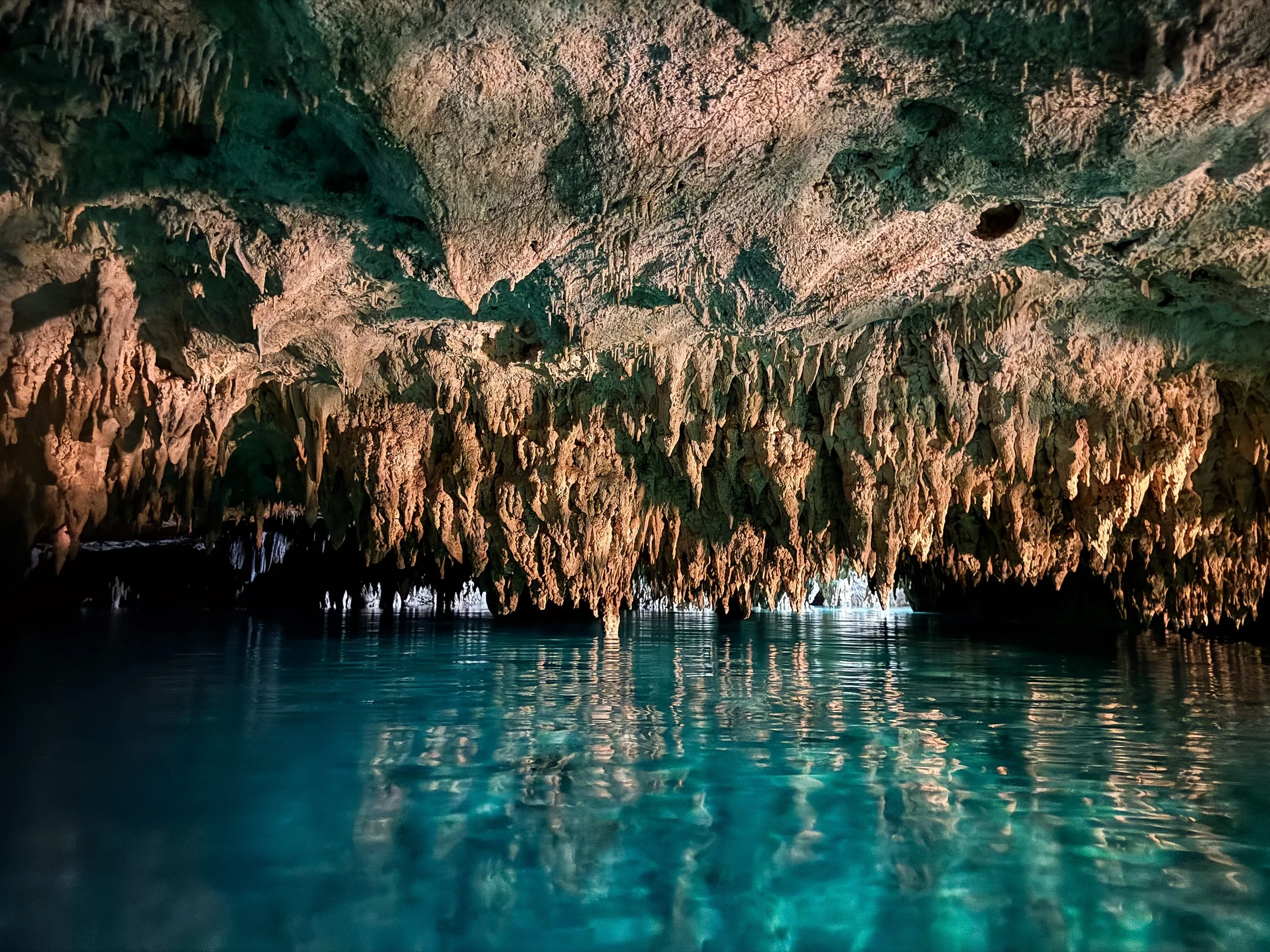
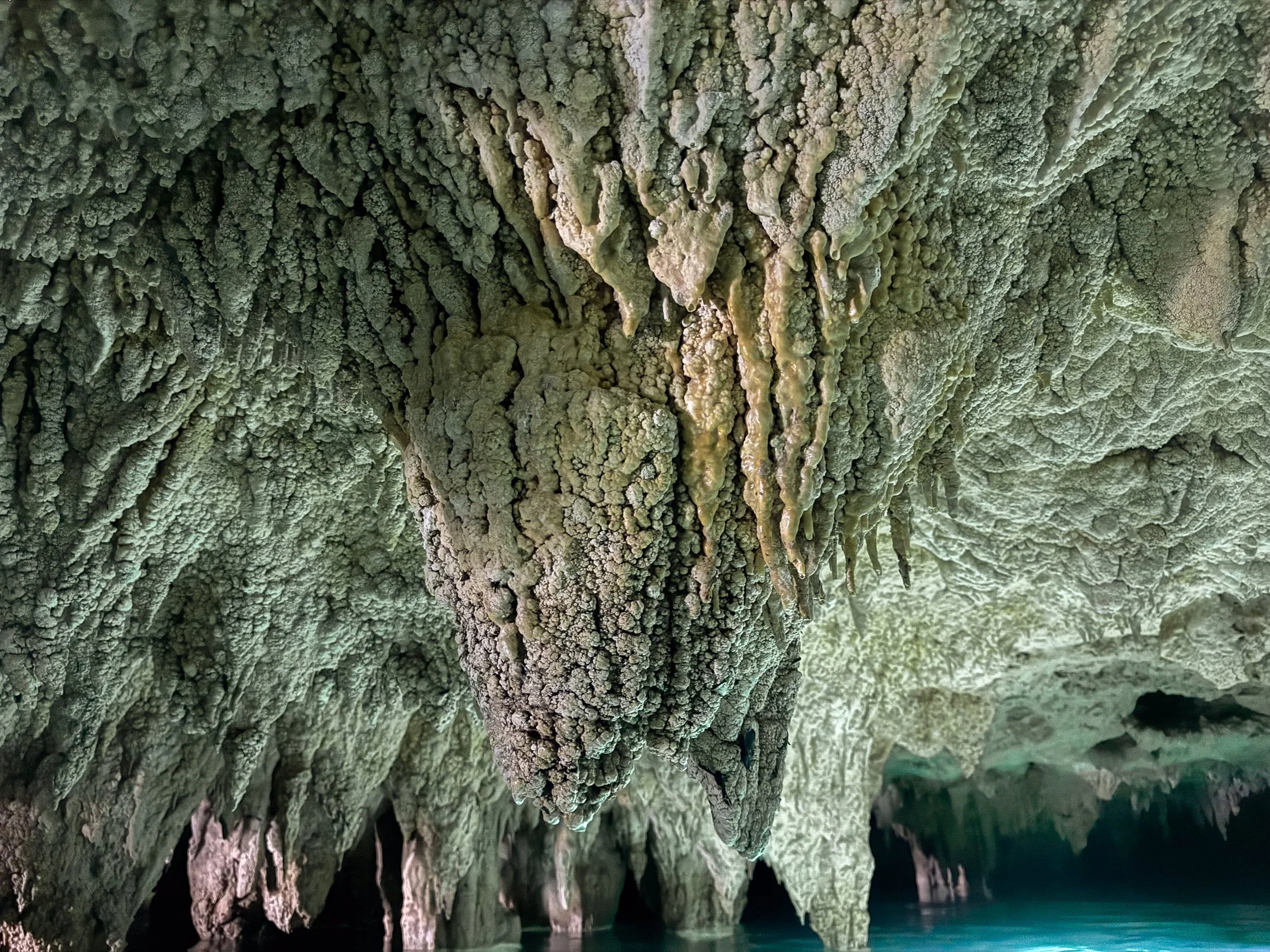
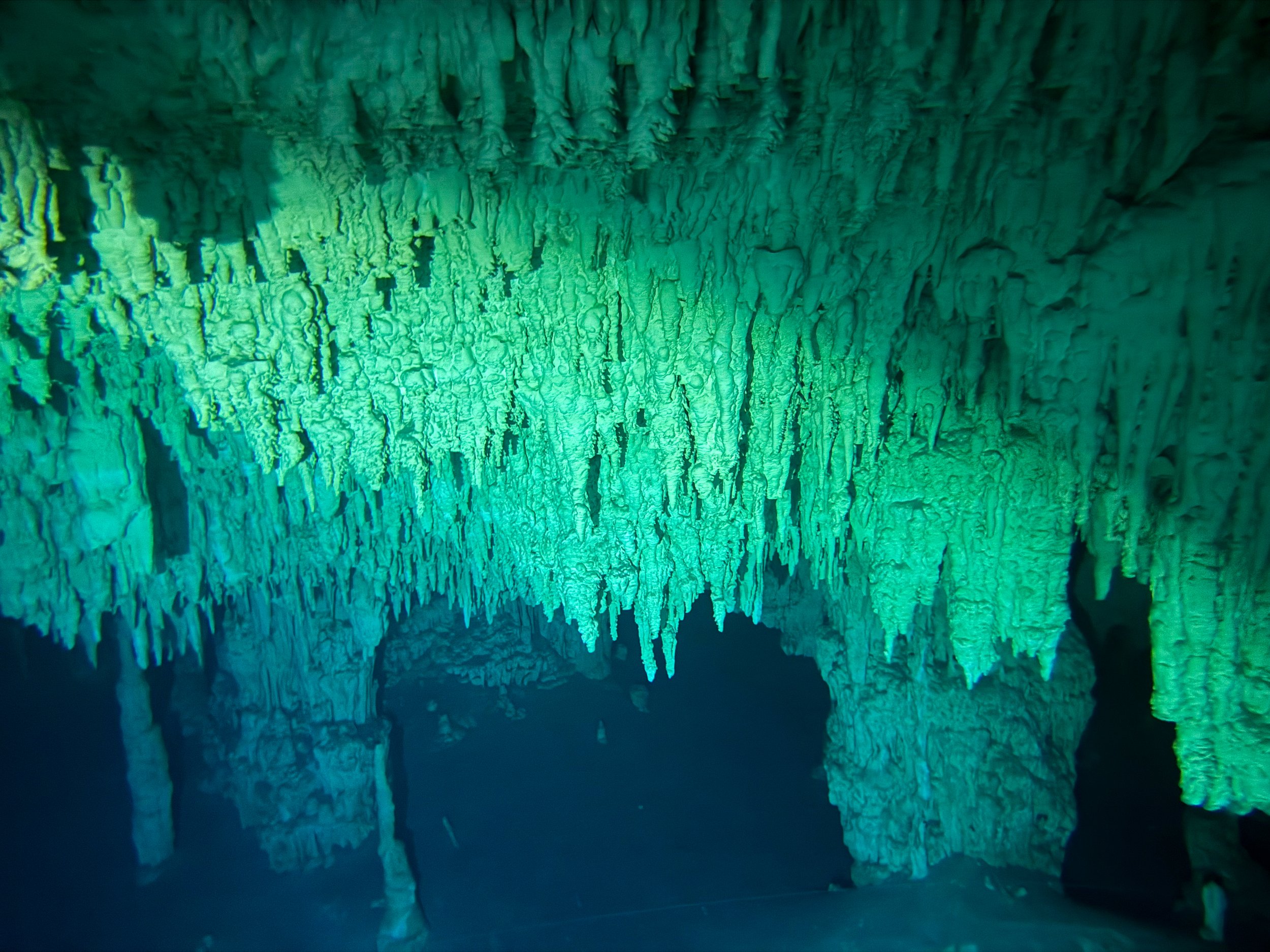
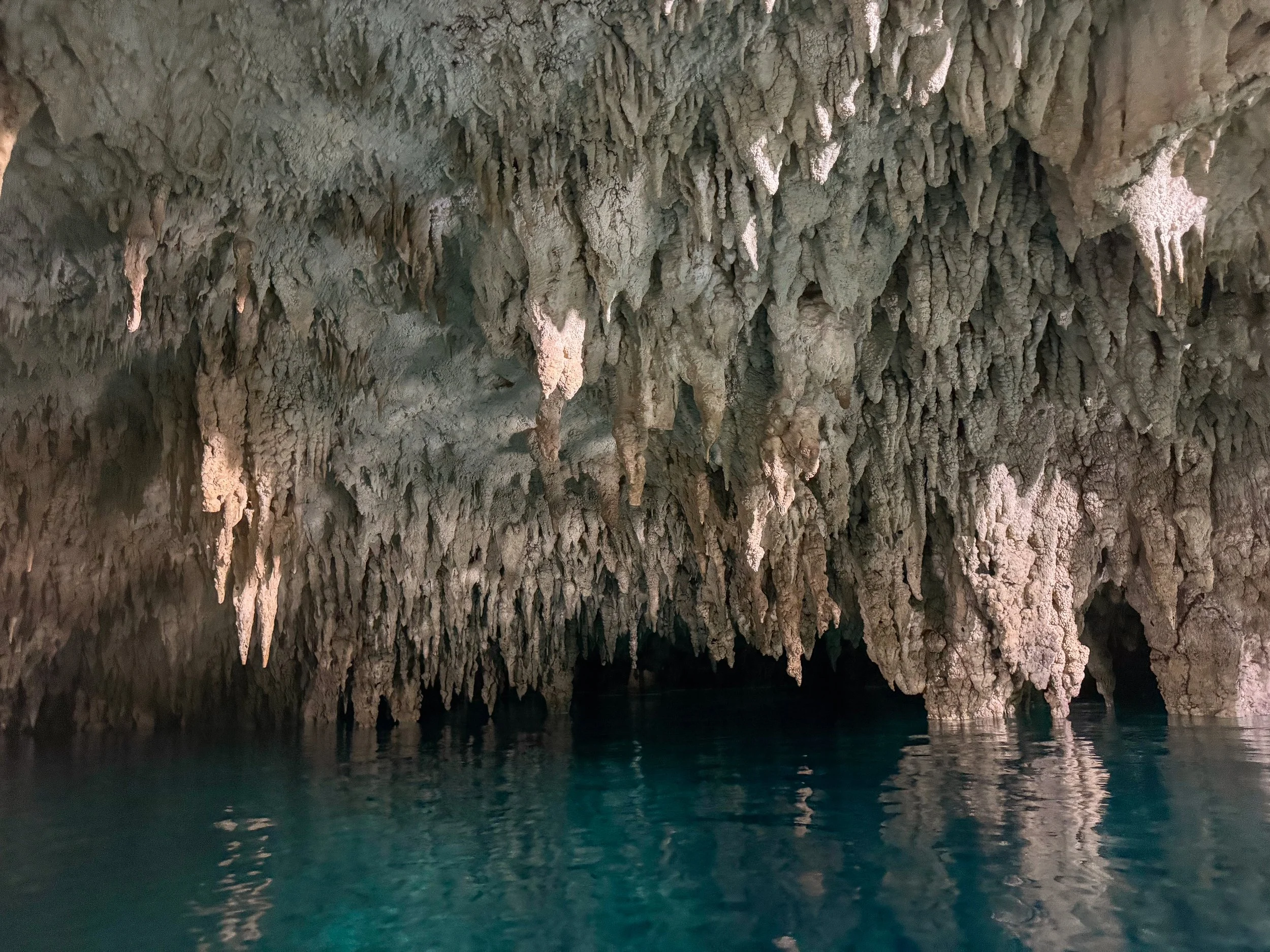
Cenotes
Cenotes de Sac Actún. Sac Actún is the world’s largest known network of underground rivers, caves and cenotes. We snorkeled through 3 flooded cenotes and connecting chambers within the cave system filled with stalactites and stalagmites. As we swam, the subtle current pulled us through the cool fresh water, bats flew overhead and fish swam beneath us.
Open Air Cenote. We descended a wooden staircase and waded into the water of an open air cenote, one without a ceiling. Light streamed in from above as water slowly dripped from stalactites into the clear blue water, echoing off the surrounding stone walls. From here, a series of caves lead deeper into the underground maze.
Semi-Open Cenote. From the first cenote, we swam through a passageway into a semi open chamber with a hole in the ceiling and a tree growing through it. The Mayans referred to this as the tree of life, connecting the underworld to the living world above.
Enclosed Cenote. We snorkeled back to the first cenote and entered a narrow passageway covered in stalactites hanging just above our heads. Looking under water, stalagmites pointed up at us and dark flooded passageways lead deeper into the earth. The main chamber was a truly magnificent spectacle with a fully enclosed ceiling dripping in thousands of stalactites and dangling roots from trees above. It felt like swimming inside of a geode.
Getting Here from Tulum. We looked into biking here (way too far), taking a bus (there is no bus), joining a tour or renting a car (far too expensive). We hired a taxi for a half day, costing 2,000 Pesos, to pick us up, bring us to the cenote, wait for us and drop us off at the beach in Tulum.
Rio Secreto. We descended through a cenote into a flooded cave system, trekking through knee deep water and swimming through deeper sections. Headlamps illuminated the water in a blue glow, revealing tiny shrimp and catfish. The dark, wet cave was mesmerizing, with ever-changing chambers filled with ancient flow stones, marine fossils, spear like stalactites, nubby stalagmites and crystalline columns.
Jungle Adventure. After exploring the caves, we biked along gravel trails through the jungle to a zip-line park, spotting a venomous coral snake and a bright blue butterfly along the way. There, we rode four zip-lines through narrow gaps in the trees and rappelled 10 meters into a cenote.
No Phones or Cameras Allowed. To keep the experience a 'secret' and charge for photos, the operator does not allow phones or cameras in the park. It allowed us to disconnect and take in the beauty of the cave and experience.
Book the Rio Secreto Plus Tour. We booked the full day Rio Secreto Plus Tour. It included a guided tour of the cave system, biking through the jungle, zip lining, repelling, all the gear for the activities, round trip transportation from Tulum and a buffet style taco bar for lunch.
Request the “Supreme Trail”. In order to accommodate the 500 to 1,000 daily visitors, we were divided up into small groups of 12. Each group was staggered and assigned a different trial through the caves. Of the five trials, we were assigned the “Supreme Trail,” allowing us to experience a little of everything within the cave system.
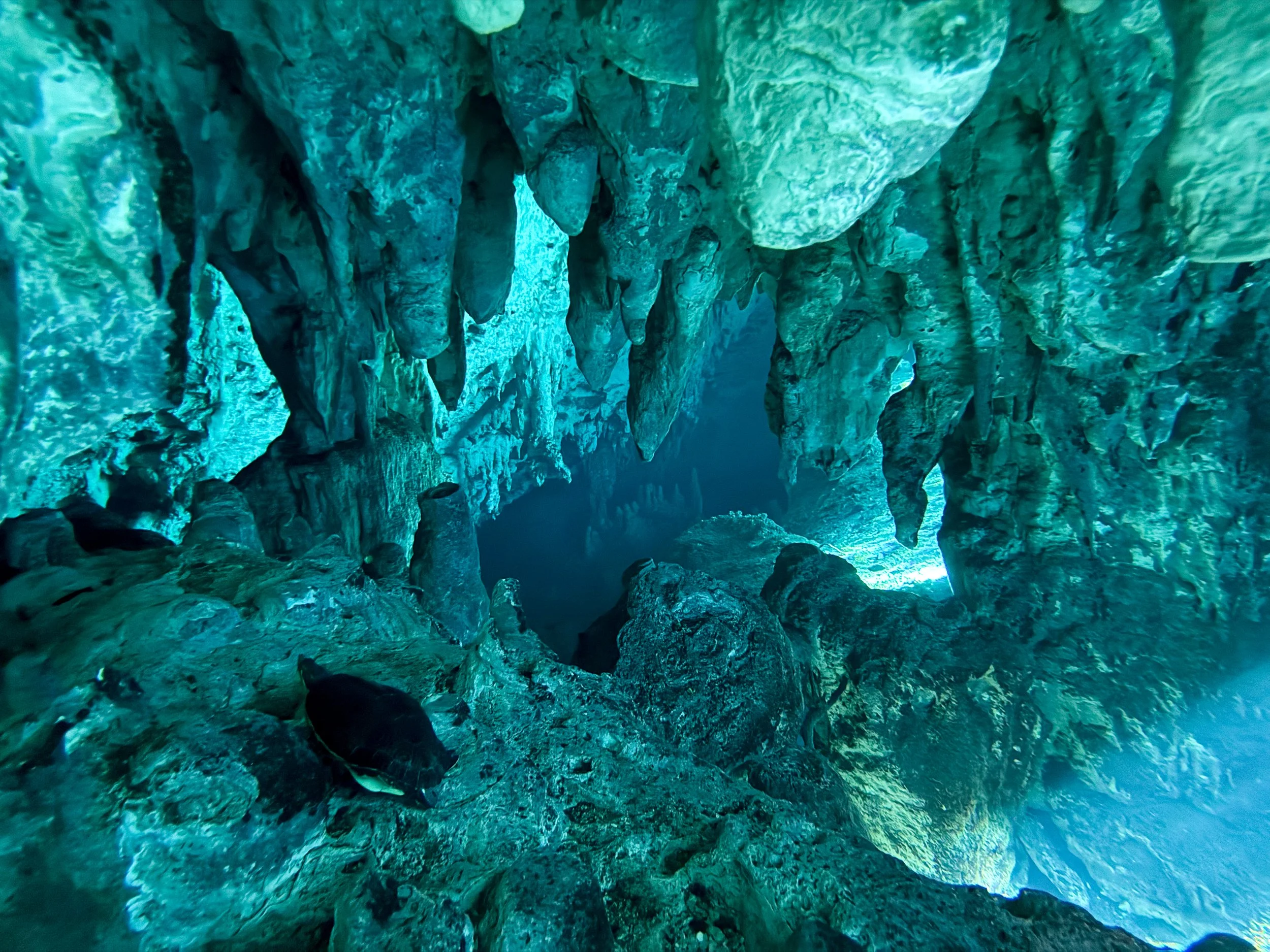
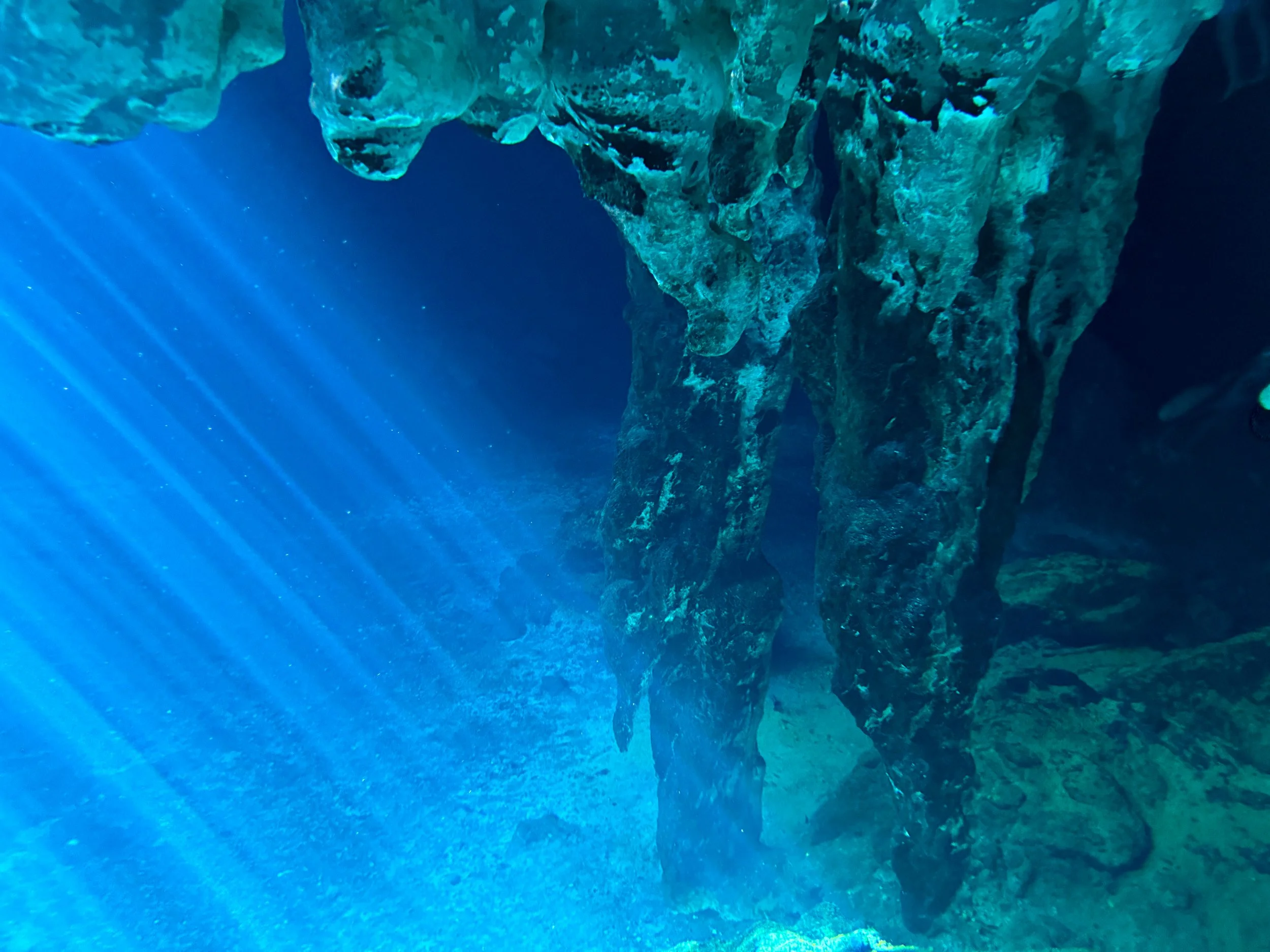
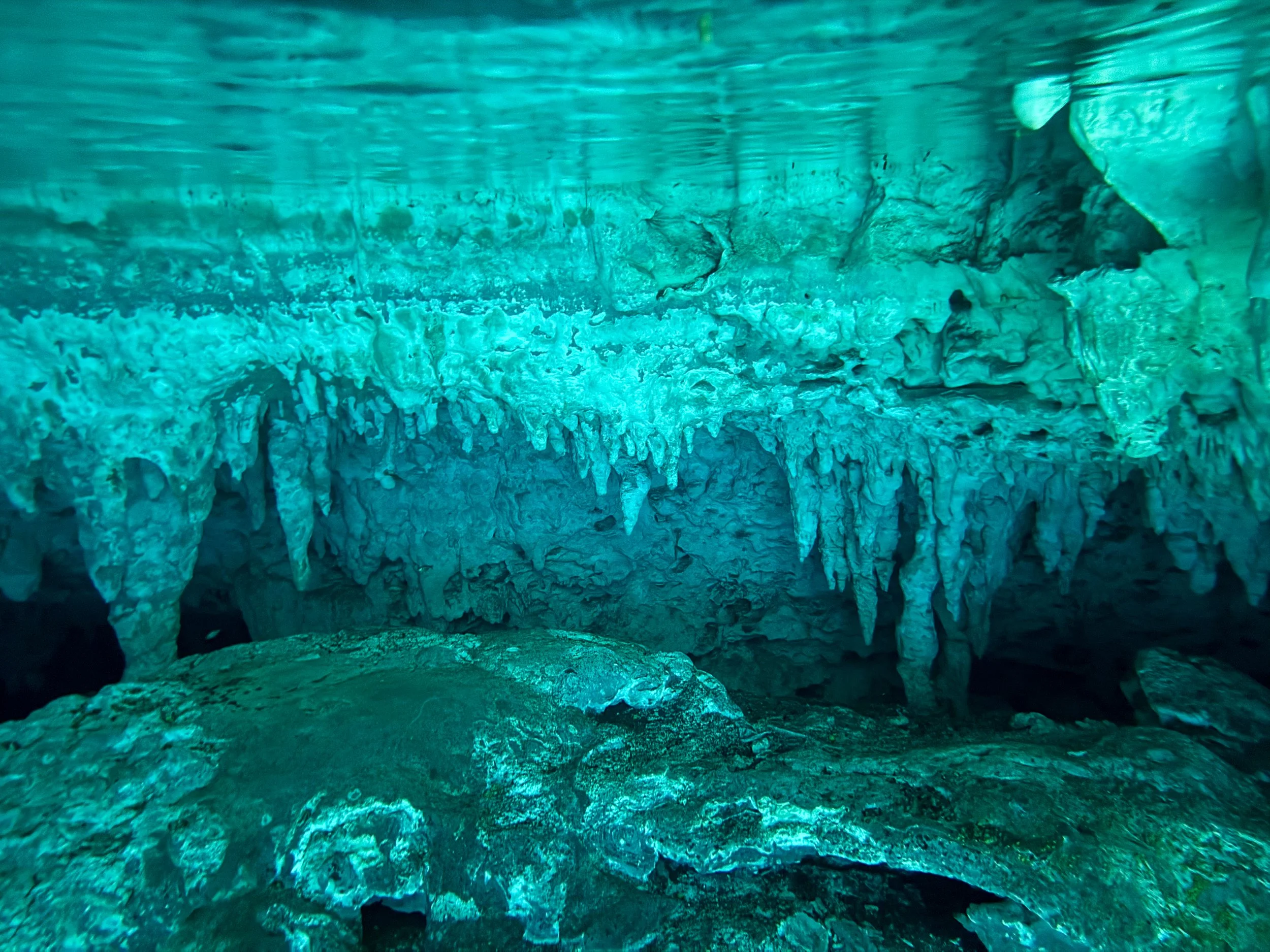
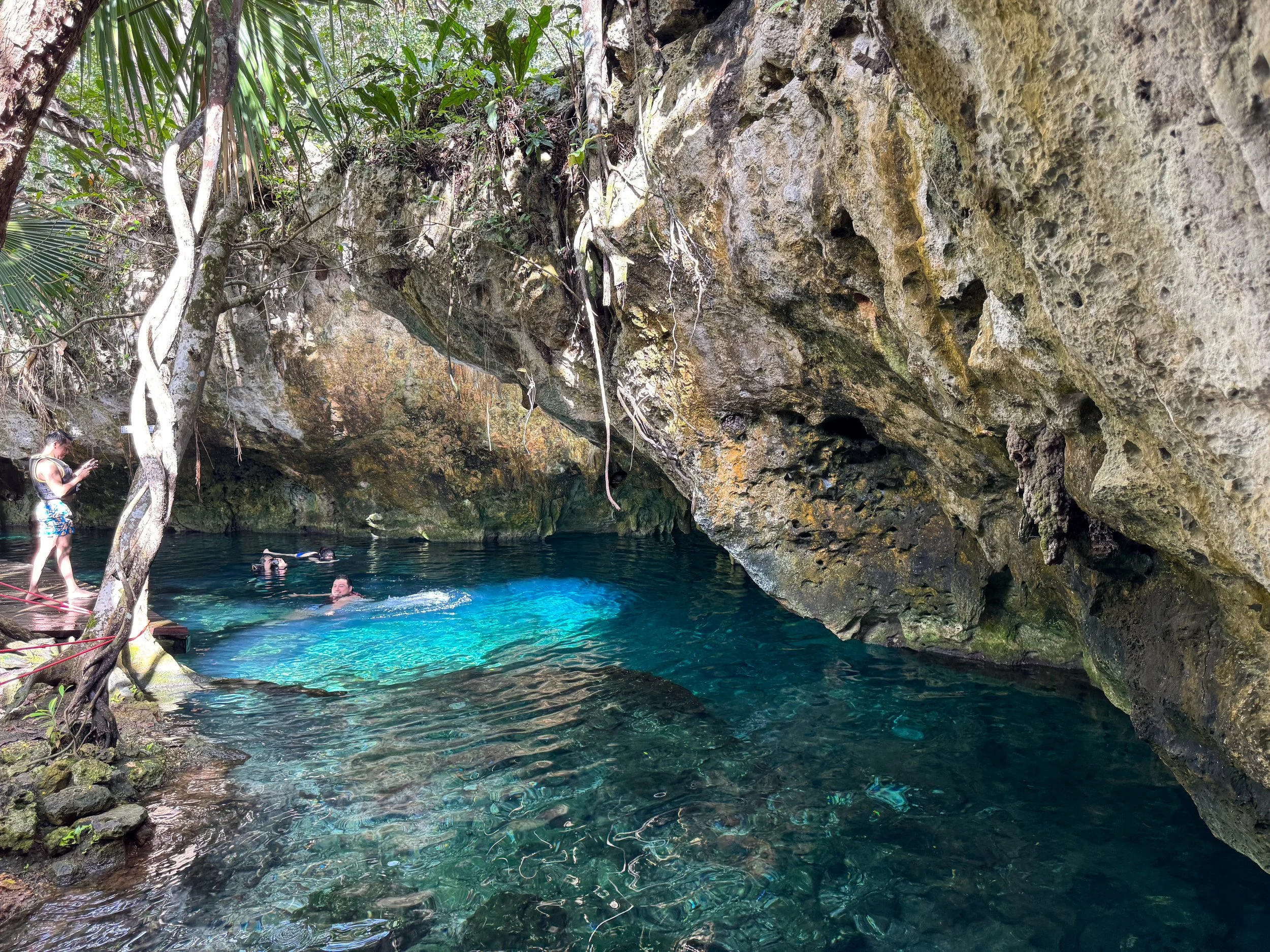
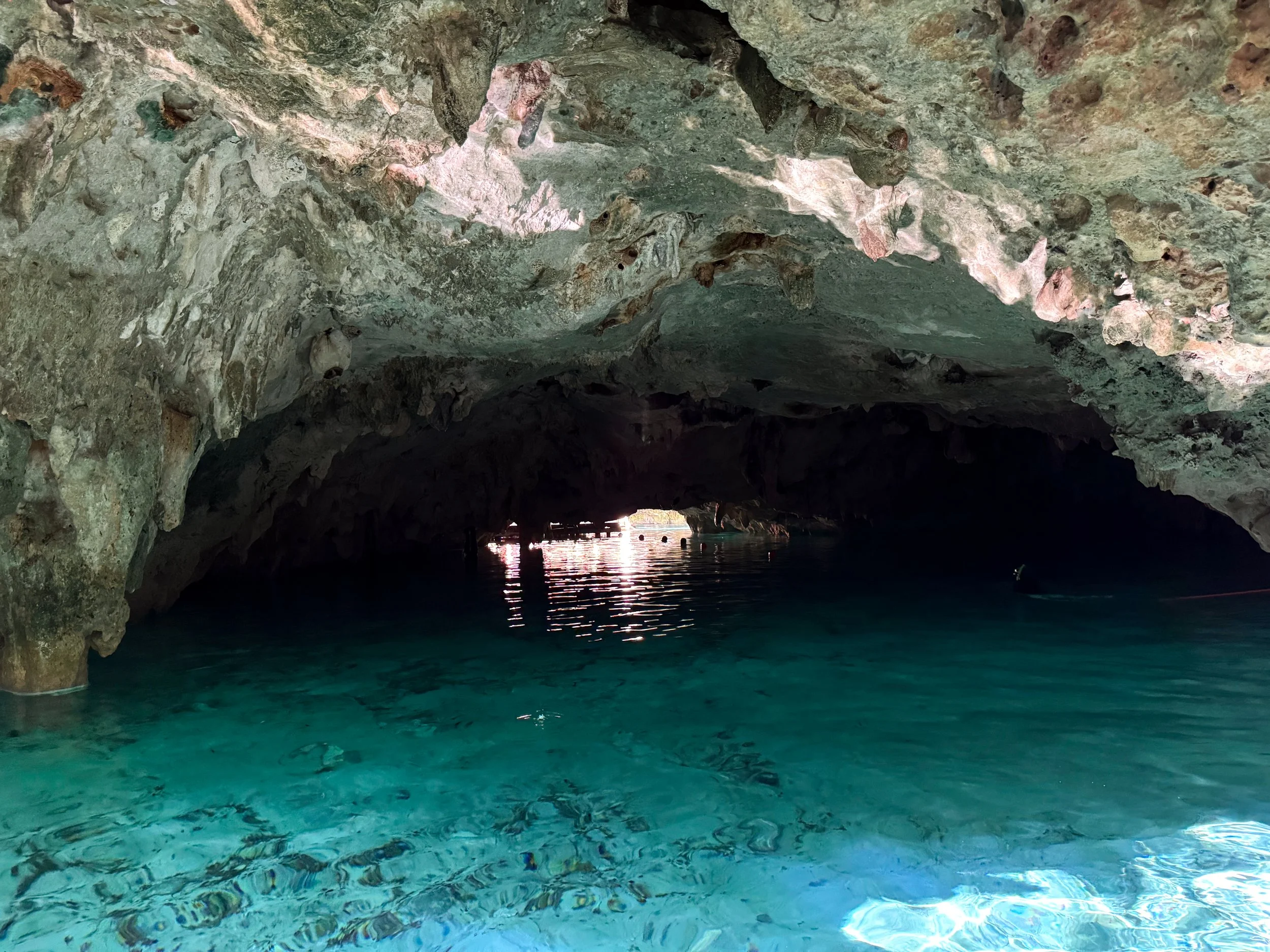
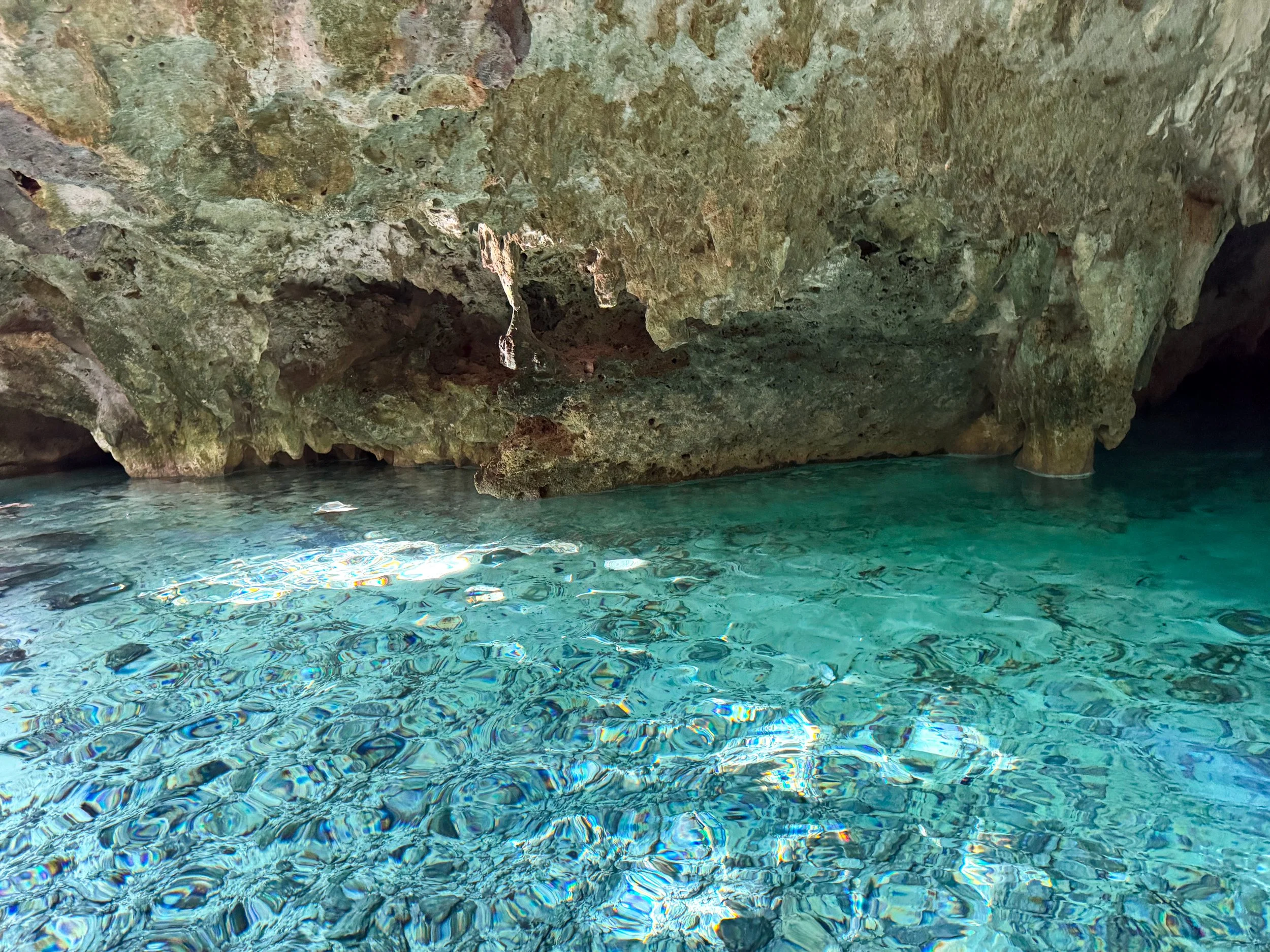
Gran Cenote. A popular open air cenote just outside of Tulum. We swam and snorkeled around the cool fresh water, entering narrow caves and large chambers with massive stalactites and colonies of bats. Light streams through the blue water, illuminating the deep caves extending further into the abyss while families of turtles and tiny fish swim alongside snorkelers. A dark cave connects the Gran Cenote to Baby Cenote, a smaller open air cenote with light blue water and an island in its middle.
Tips for Visiting Gran Cenote
Getting Here. Gran Cenote is located outside of Tulum. It takes 30 minutes to bike to from the city center.
Hours. Entry times fluctuate. Arrive at opening to avoid the crowds.
Tickets. Entry fees cost 500 pesos per person, cash only. Admission includes snorkel masks.
Lockers. Lockers are available for rent for around 30 pesos.
Self Guided. The cenote can be explored without a guide however swimmers are required to wear a life jacket.
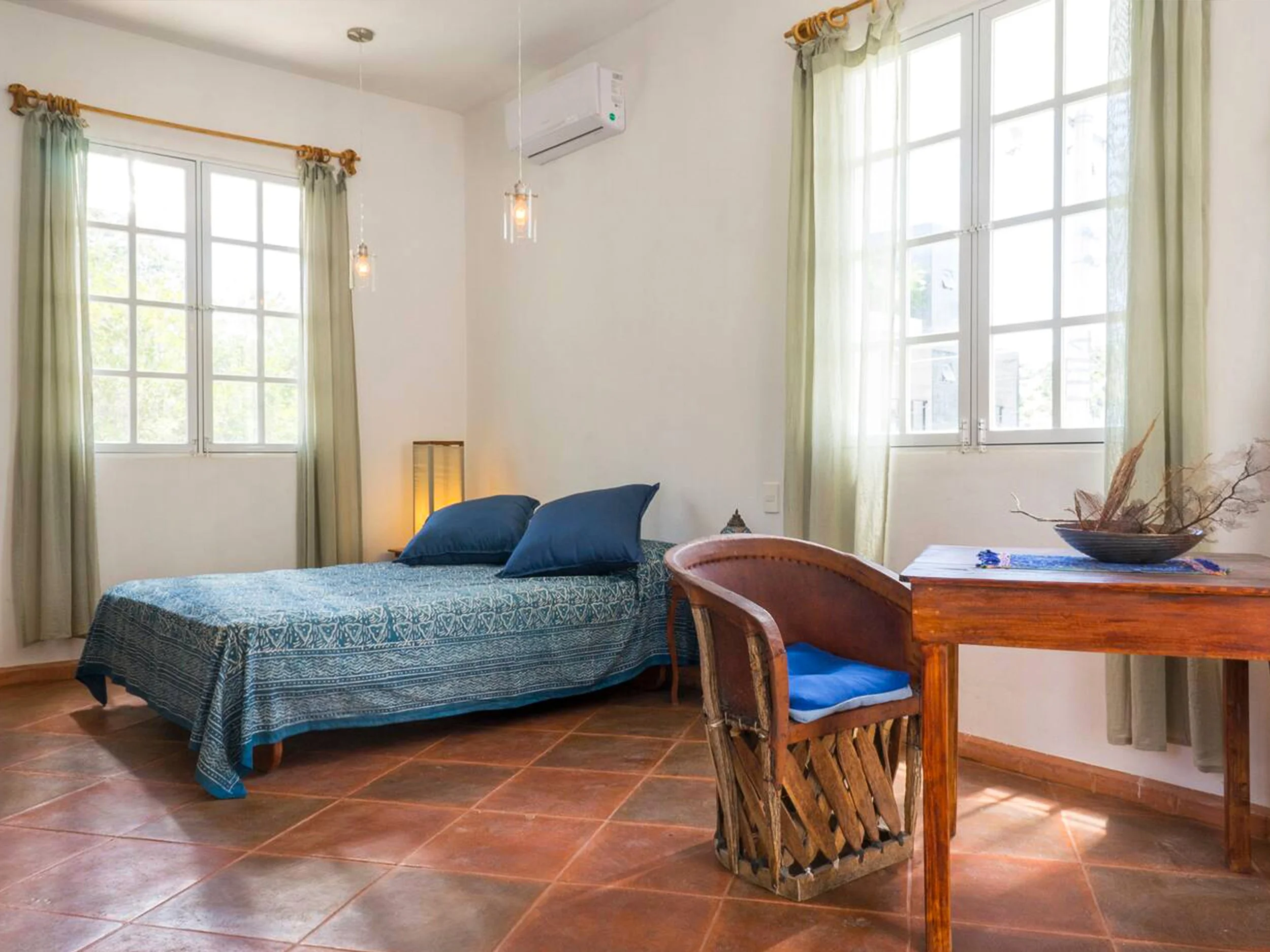
Where to Stay
We stayed at an Airbnb in Barrio La Veleta. We had a second floor condo with a kitchen and private roof deck to ourselves. It was the perfect escape, merging both nature and city.
Getting Around
By Bike. The most affordable way to explore Tulum is by bike! There are rentals across the city charging between 100-200 pesos per day. We rented from La Veleta Rental Bike, charging only 100 pesos per day.
By Taxi. Taxis are available across the city. Rates are around 200 pesos to get across town. The safest location to hire a taxi are street stands called Sitio de Taxi. Always negotiate price before getting in.
By Bus. The ADO Bus is the best way of getting around the Yucatan with routes connecting Tulum to nearby and regional cities. Book tickets online ahead of time.
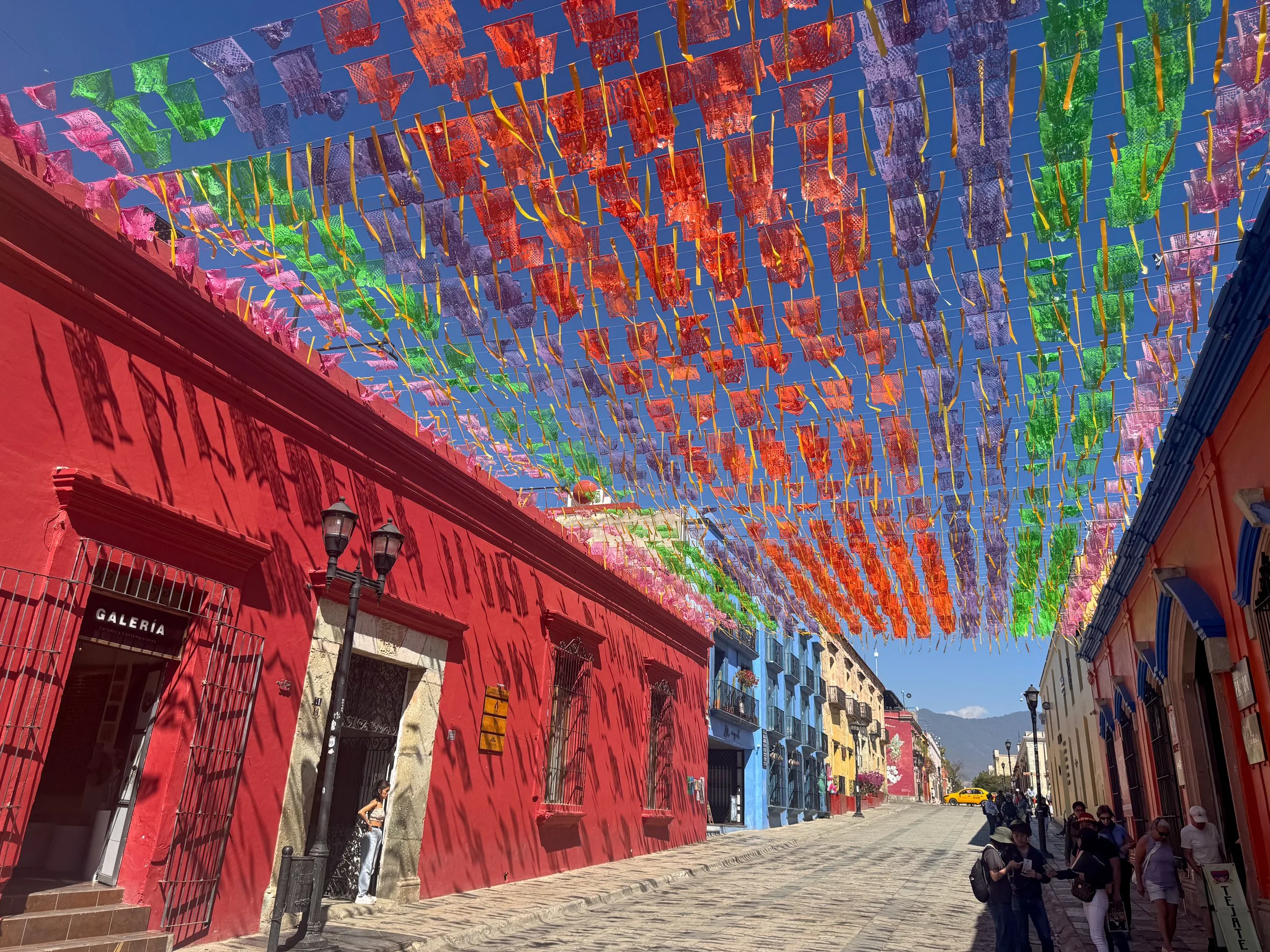
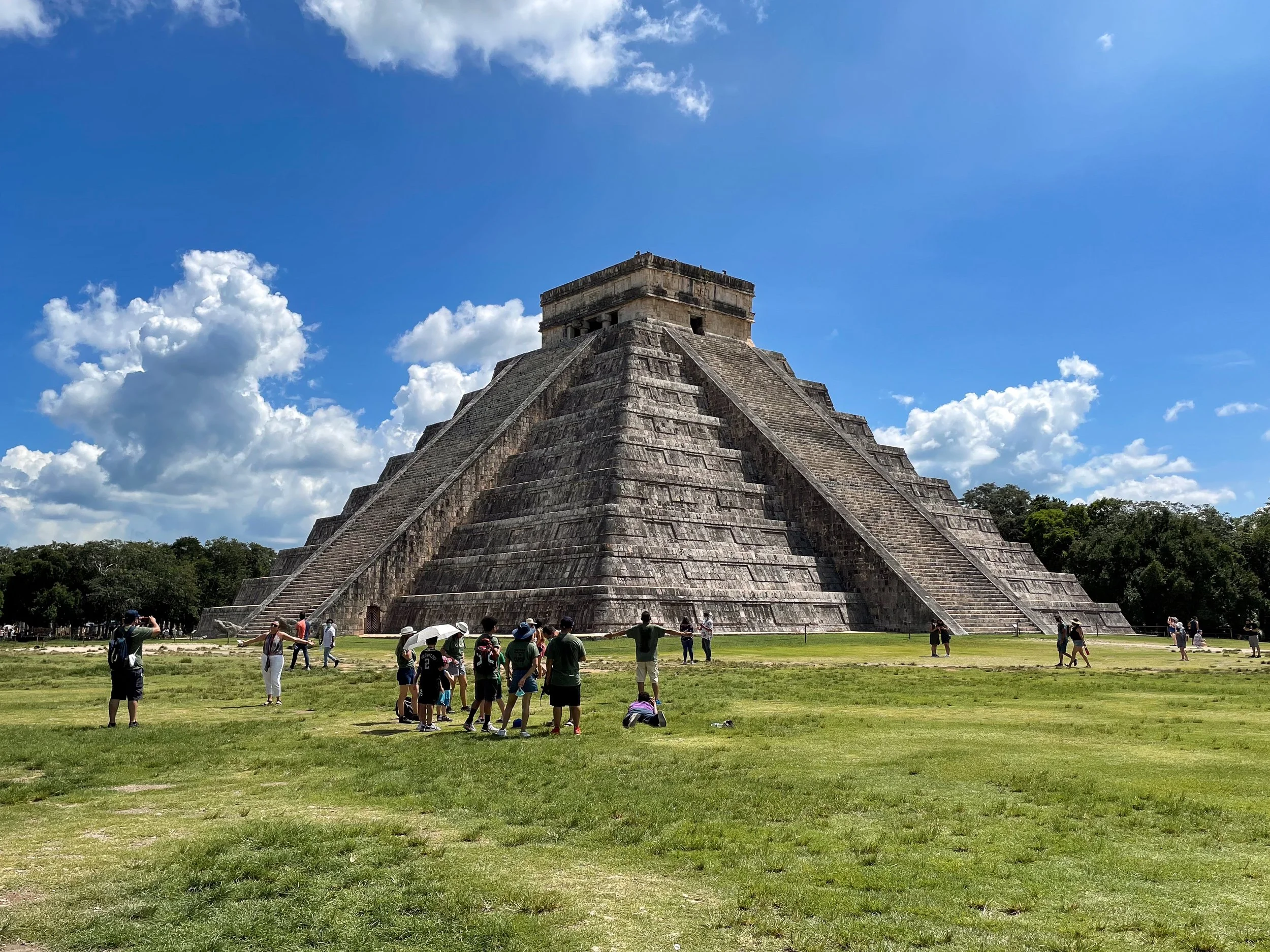
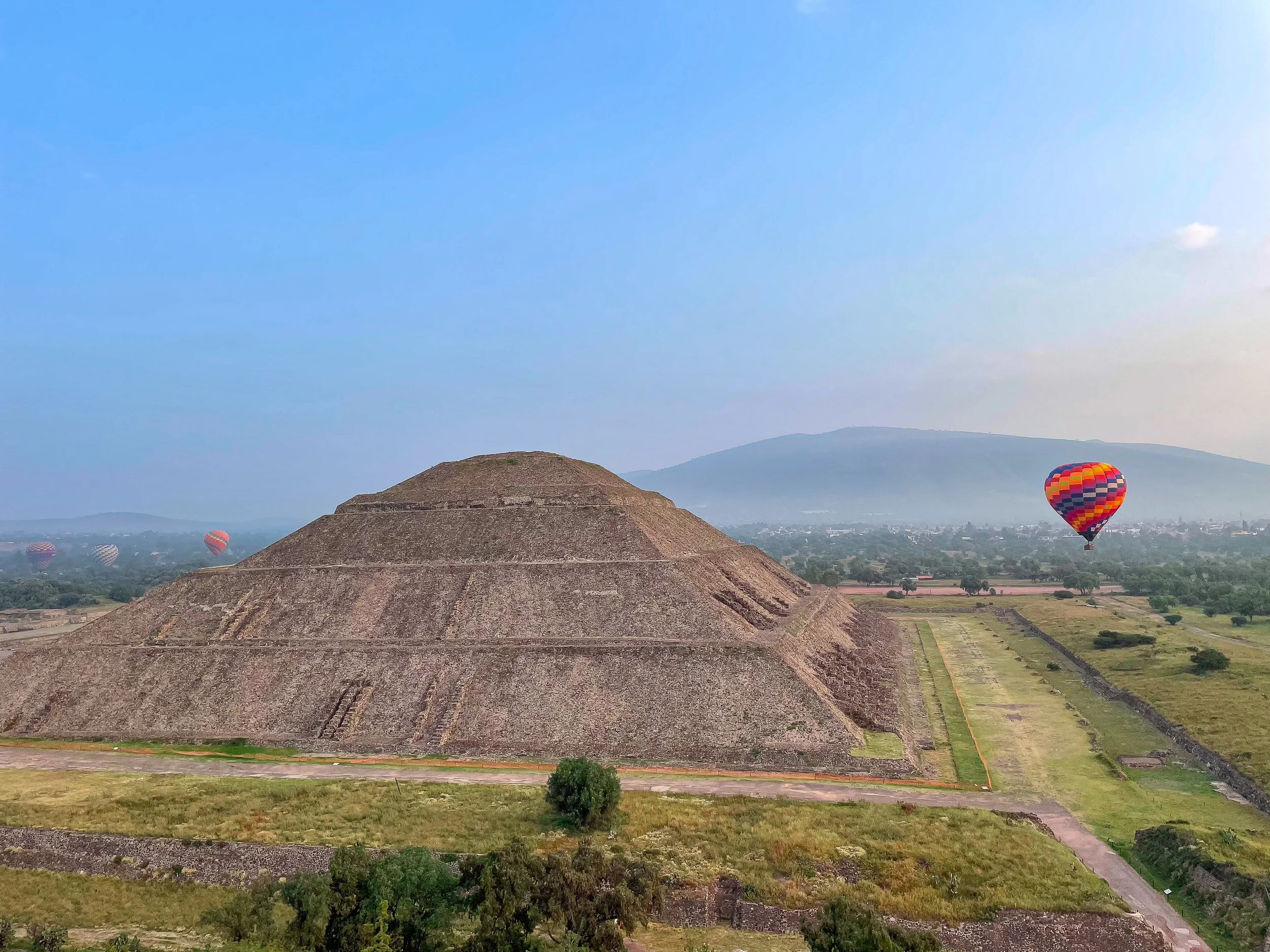
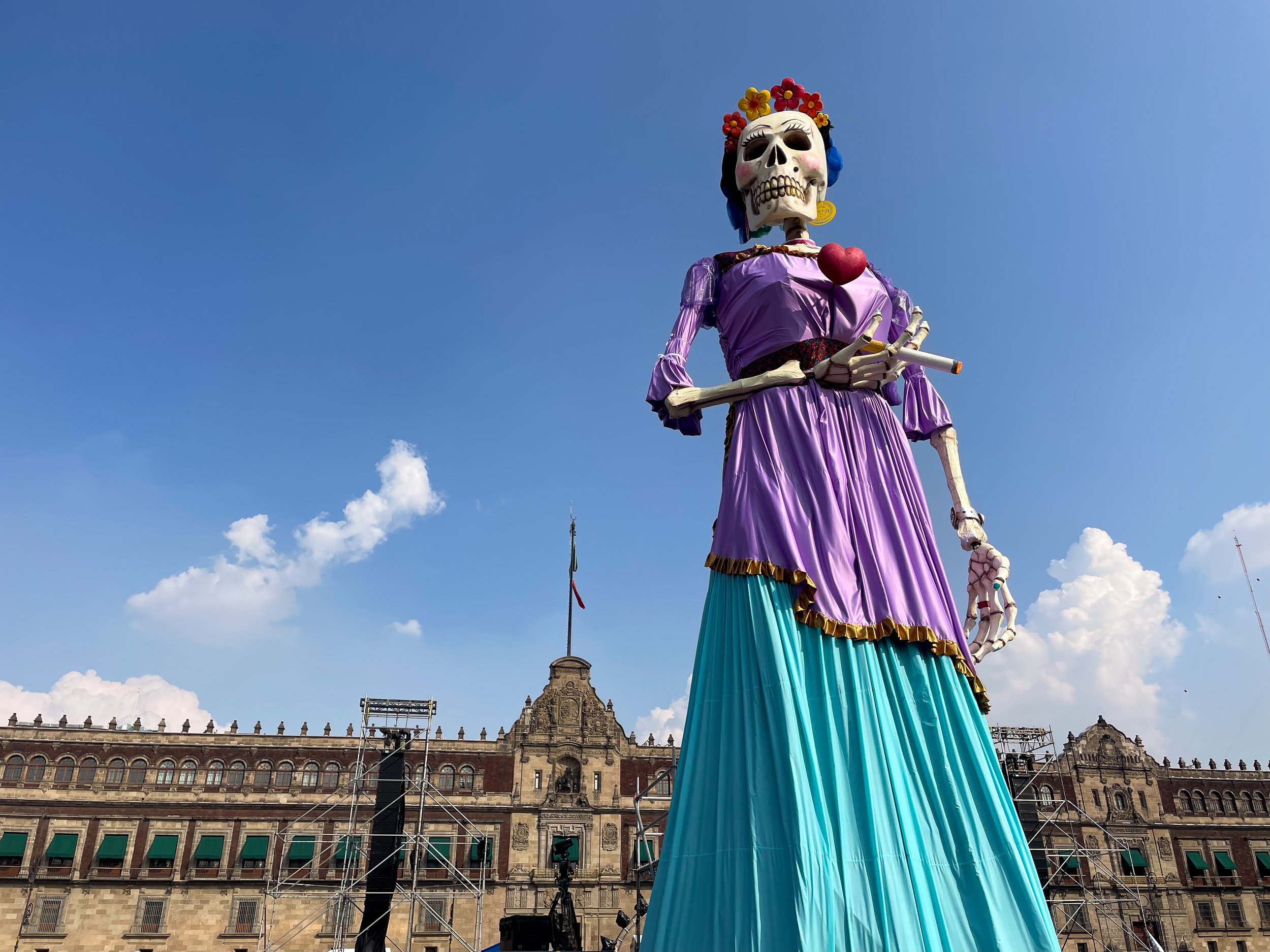
Elsewhere in Mexico
From the turquoise waters of Tulum to Mexico's vibrant cities, culinary capitals and Pacific coast, continue exploring the country's diverse landscapes and cultures through these travel guides:
Caribbean Mexico
Riviera Maya Travel Guide: Beaches, Cenotes & Mayan Ruins. Discover the Riviera Maya's white sand beaches, turquoise waters, hidden cenotes, ancient Mayan ruins and vibrant culture along Mexico's Caribbean coast.
Bacalar Travel Guide: The Lagoon of Seven Colors & Hidden Gems. Discover Bacalar's Lagoon of Seven Colors, where turquoise waters, shallow sandbars and ancient stromatolites create one of Mexico's most remarkable landscapes.
Central Mexico
Mexico City Travel Guide: Neighborhoods, Food & Local Culture. Wander through Mexico City's vibrant neighborhoods, local markets and cultural landmarks where centuries of history, cuisine and modern life converge.
Day of the Dead in Mexico City (Día de los Muertos) Travel Guide. Experience Day of the Dead in Mexico City through cultural traditions, lively celebrations and vibrant ofrendas honoring loved ones and ancestral heritage.
San Miguel de Allende Travel Guide: Food, Art & Colonial Charm. Stroll through San Miguel de Allende's cobblestone streets and historic plazas where cuisine, art and music bring one of Mexico's most charming colonial cities to life.
Southern Mexico
Oaxaca Travel Guide: Food, Mezcal & Cultural Experiences. Immerse yourself in Oaxaca, Mexico's cultural hub for vibrant markets, artisanal mezcal, regional cuisine, scenic landscapes and centuries of tradition.
Puerto Escondido Travel Guide: Beaches, Surfing & Coastal Culture. Escape to Puerto Escondido, a laid back surf town on Oaxaca's Pacific coast where palm lined beaches and sandy streets embody coastal culture.
Riviera Maya Travel Guide: Beaches, Cenotes & Mayan Ruins
Discover the Riviera Maya's white sand beaches, turquoise waters, hidden cenotes, ancient Mayan ruins and vibrant culture along Mexico's Caribbean coast.
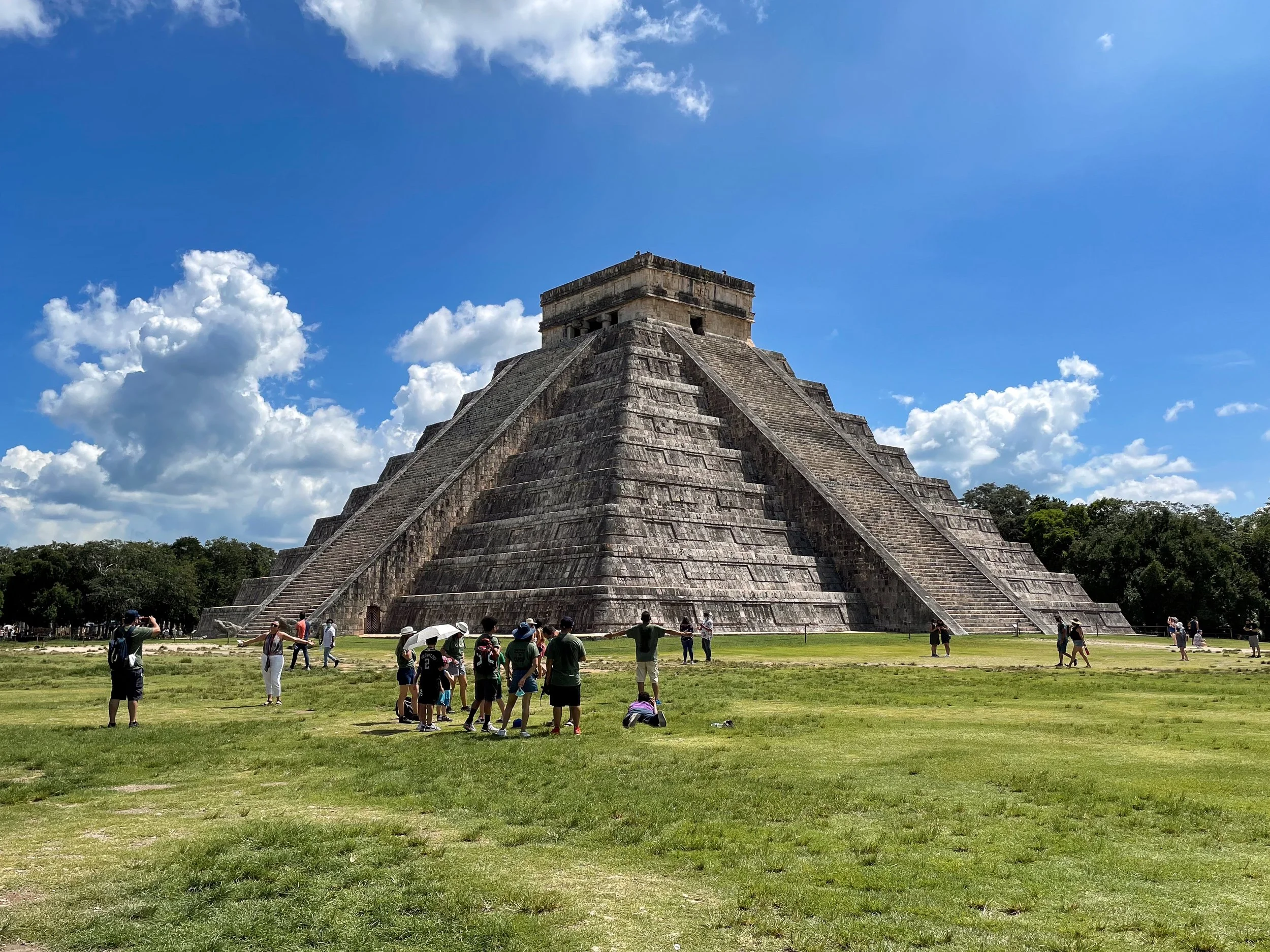
The Riviera Maya
The Riviera Maya is a tropical destination that exudes all around vacation vibes with white sand beaches, warm turquoise water, beachfront hotels & resorts. At the same time, it’s an adventurous destination with jungleous terrain, marine reserves, cenotes and historic sights including Mayan pyramids, temple complexes and colonial old towns.
Cancún
Cancún is a popular tourist town with resorts, cruise docks, late night clubs, white sand beaches and warm turquoise waters. It’s the entry point to the Yucatán Peninsula with easy access to sights and cities along the Mexican Riviera. We’ve visited here a few times over the years for weekend getaways and a wedding.
Cancun Centro. A safe and central neighborhood near the ADO bus station, close to the beach and the ferries to Isla Mujeres. It has less touristy atmosphere than the hotel zone with boutique hotels, high end hostels, Mexican restaurants, tequila bars, cute cafes, small plazas and tropical parks.
Hotel Zone. The hotel zone of Cancun is the most touristy neighborhood of the city with white sand beaches hugging the turquoise sea, craft and souvenir markets, restaurants, bars and nightclubs. As it's name implies, its where many large hotels, resorts and condo buildings are located. Many have access to the beach, offering public access with chair and umbrella rentals.
Things to Do
Visit The Beach. All along the coast of Cancún, powdery white sand shores hug the warm turquoise water. Many hotels, resorts and apartment buildings in the hotel zone have access to the beach front. Most have public access with chair and umbrella rentals. The most accessible beach in the Hotel Zone is Playa Chacmool.
Shop for Handicrafts. Colorful and traditional Mexican handicrafts make for an amazing keepsake. Shop the stalls at Flea Market Cancun in the Hotel Zone for items like alebrijes, luchador masks, maracas, ceramics, beach towels and clothes.
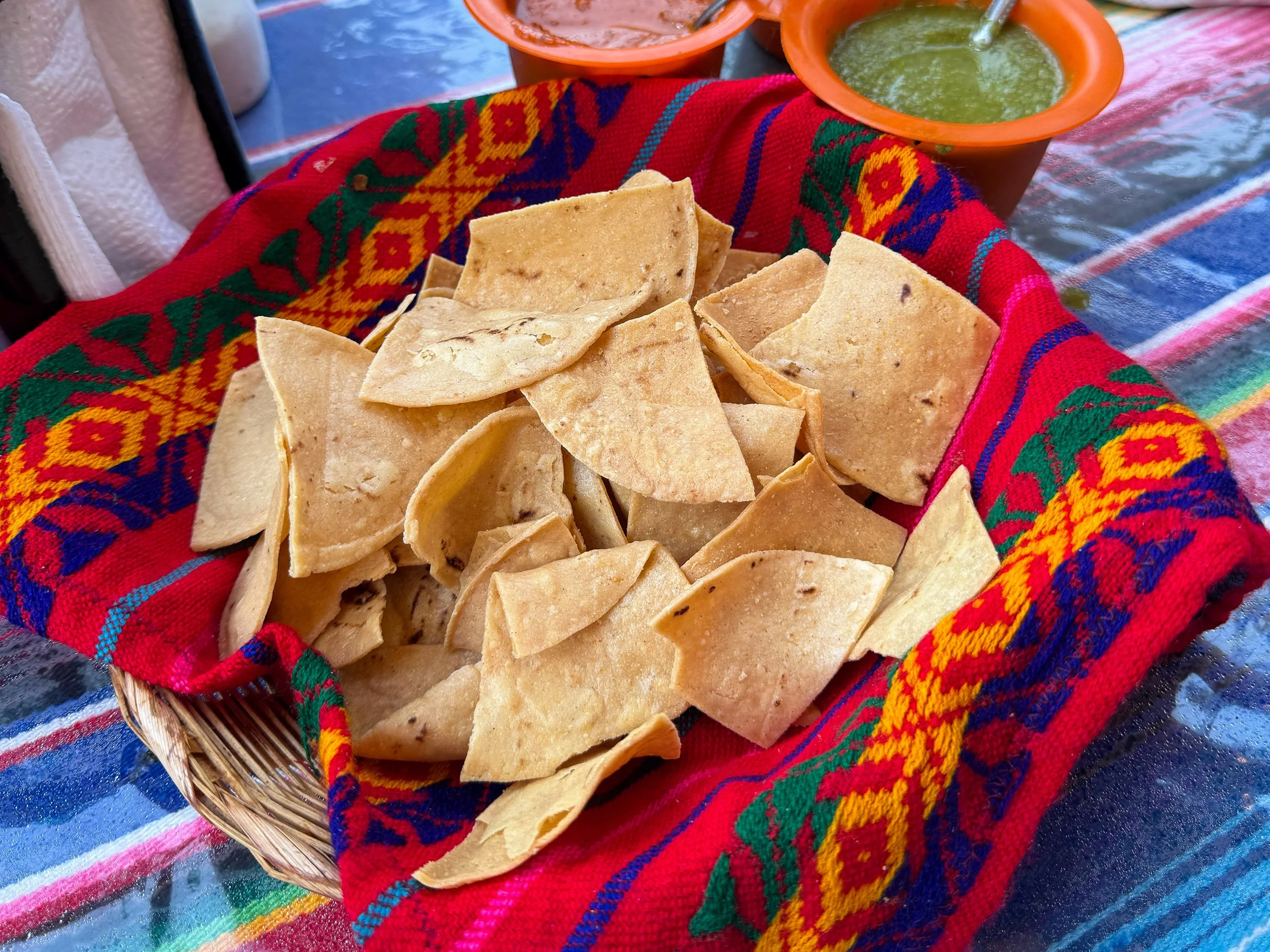
Places to Eat & Drink in Cancún
El Socio Naiz Taquería. A cocktail bar and taqueria with elevated tacos served on blue, yellow or pink corn tortillas with a variety of traditional and exotic toppings. We ordered vegan tacos, the Bob Marley and El Remiks. The first came with sautéed hibiscus flowers mixed with onion and carrot, topped with dollops of chipotle aioli and guac. The second was made with two types of spiced vegan meats topped with an onion jam. We paired these with tequila and mezcal cocktails!
Taqueria El Mexicano. A basic and inexpensive taqueria with Mexican staples like tacos, chips and salsa, guacamole and margaritas.
Lorenzillo’s. A high end restaurant with a beautiful wooden interior and deck overlooking the lagoon. We came here for a lobster dinner.
Restaurante Natura. A vegan breakfast cafe with a lush patio and furniture carved out of tree stumps. Order the huevos rancheros and chilaquiles.
Ah Barbaro. A restaurant specializing in inexpensive tacos. We tried the fish tacos and grilled raja tacos with a Corona and lime.
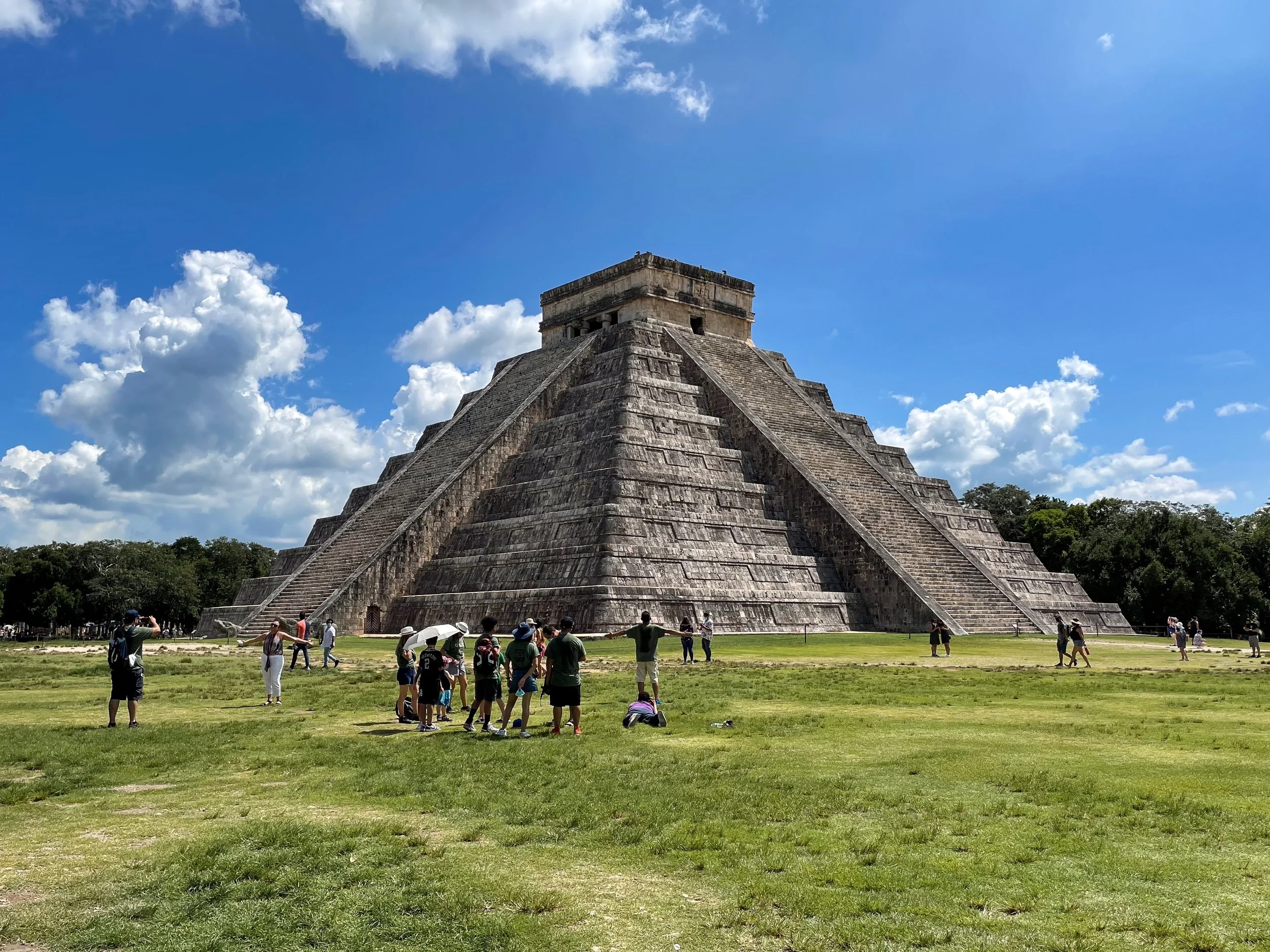
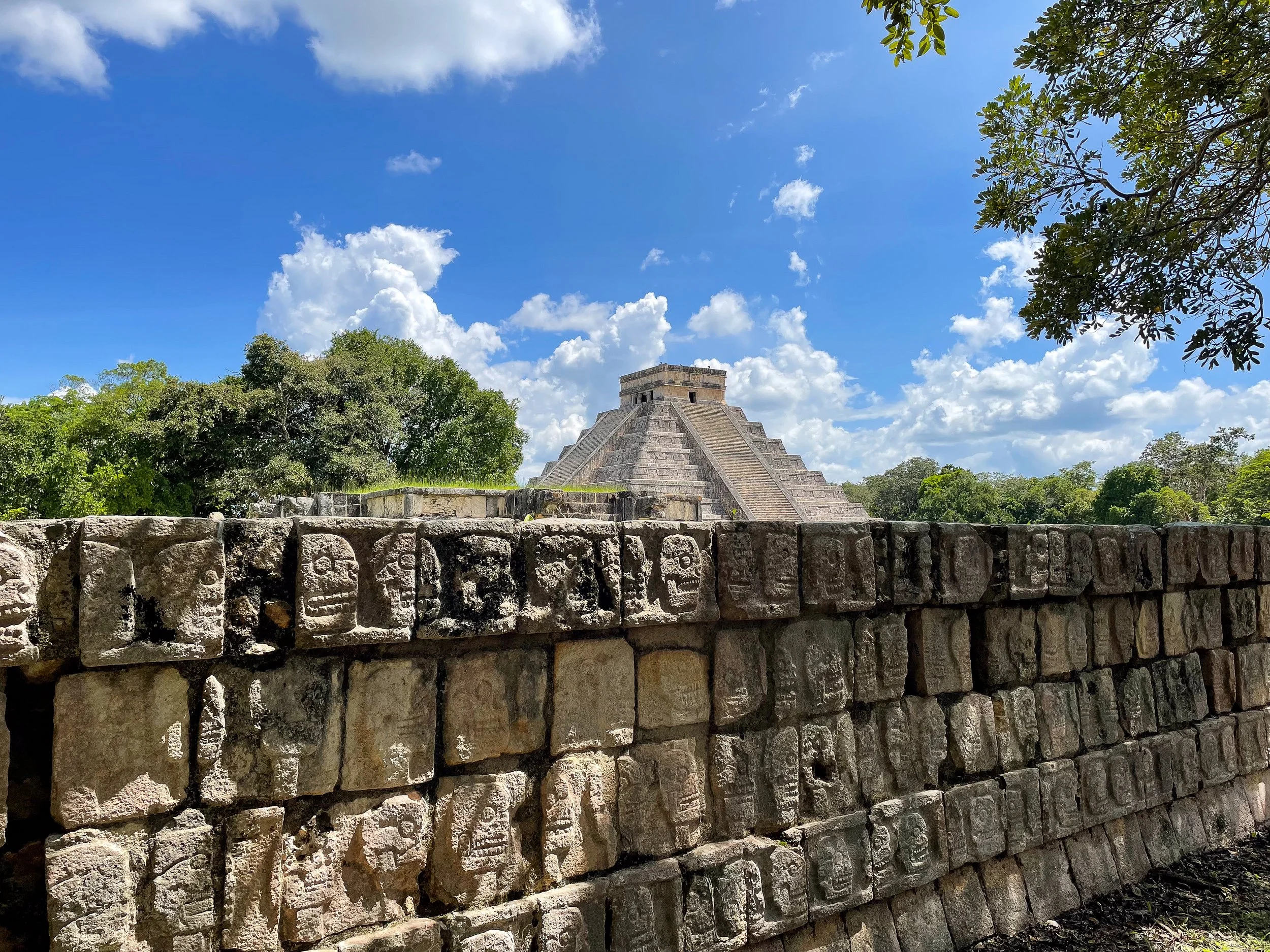
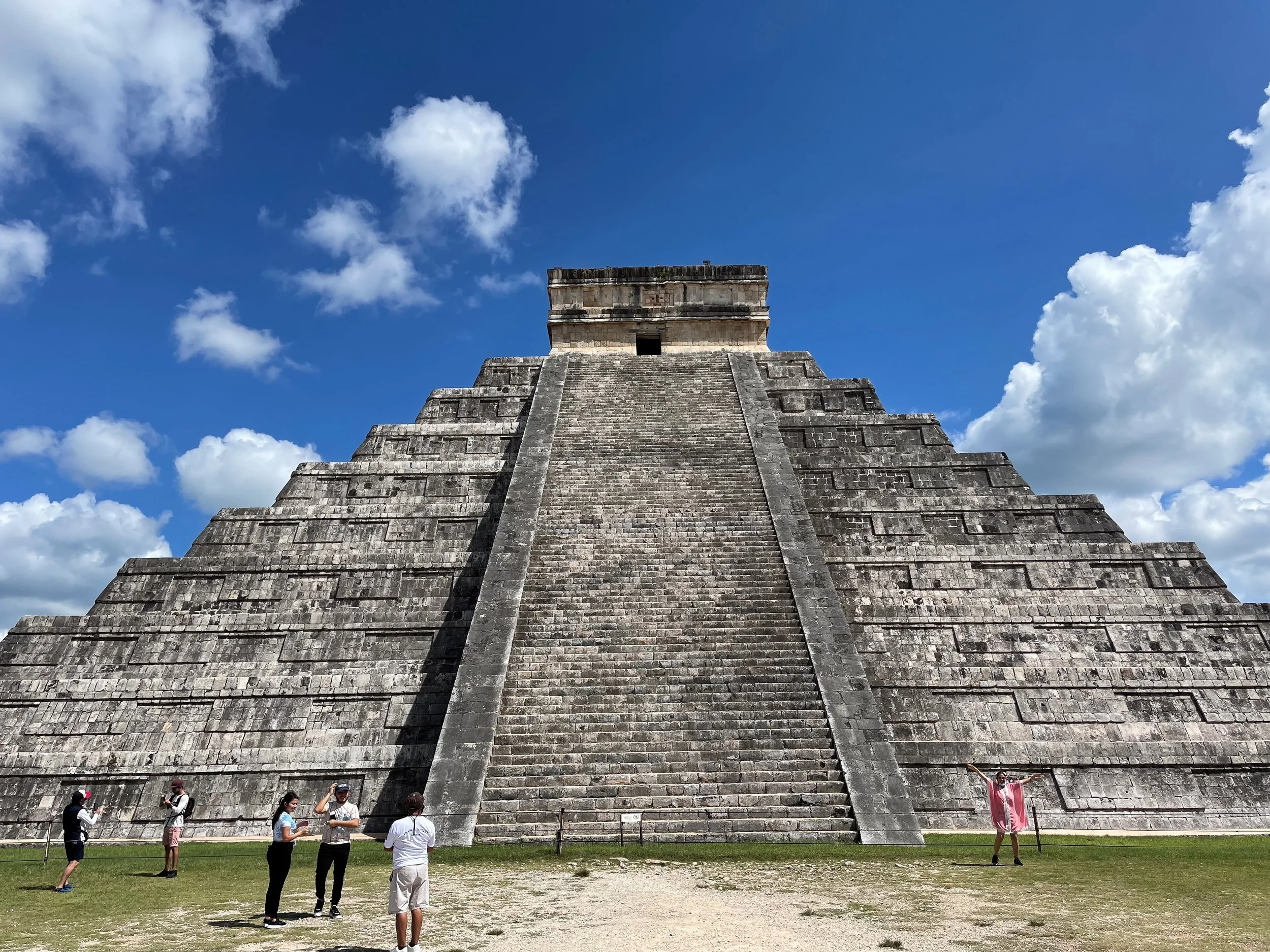
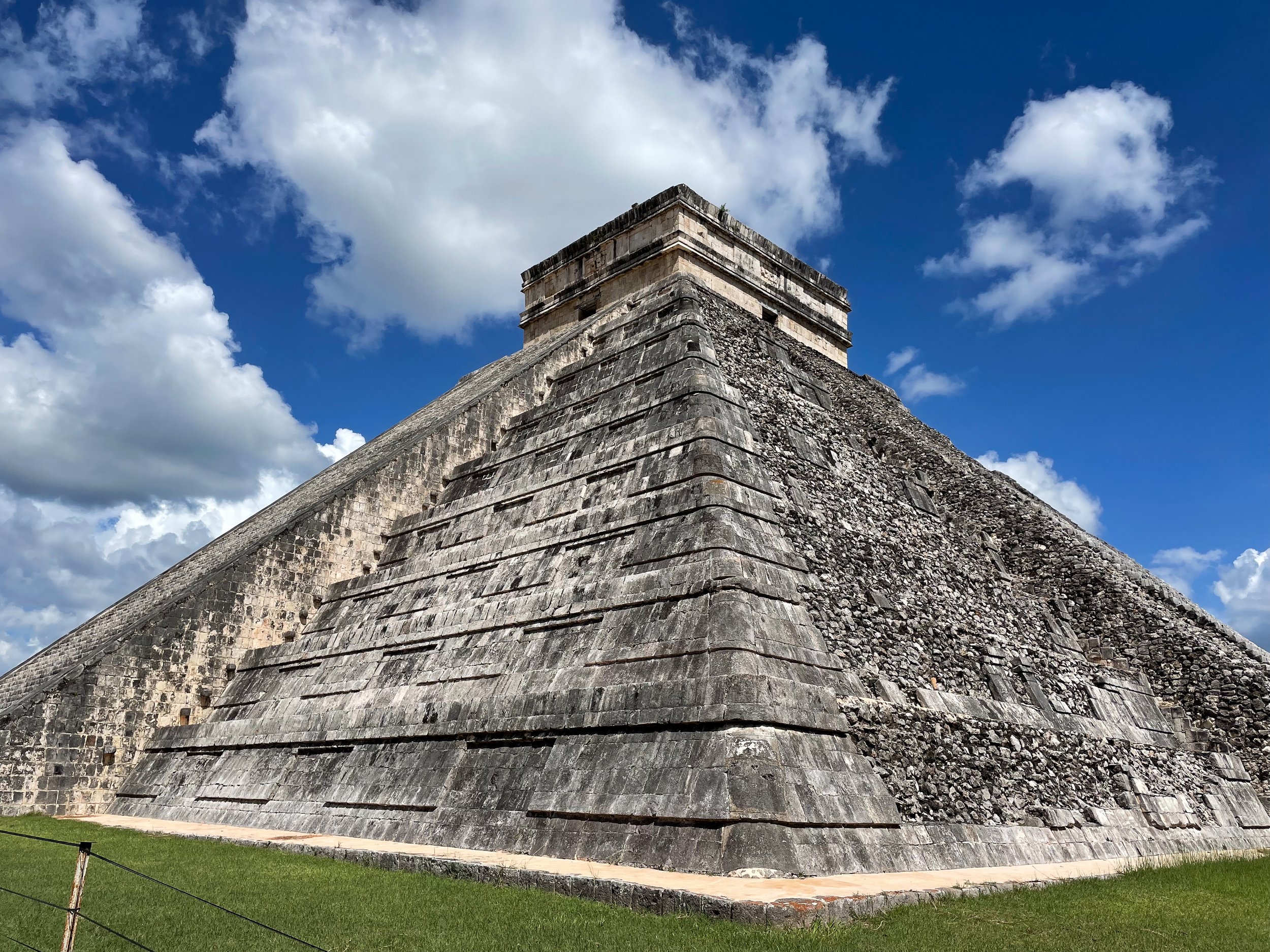
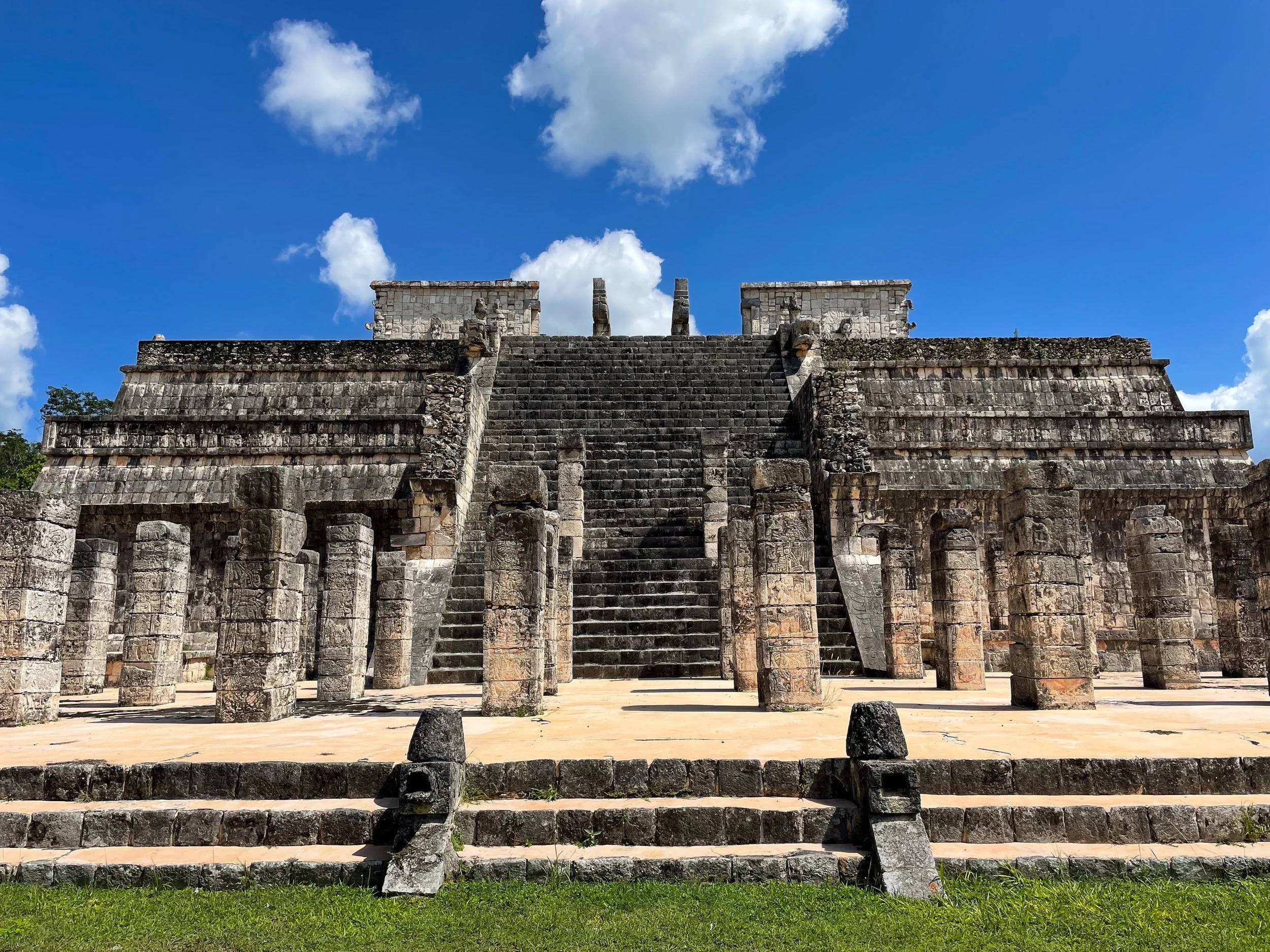
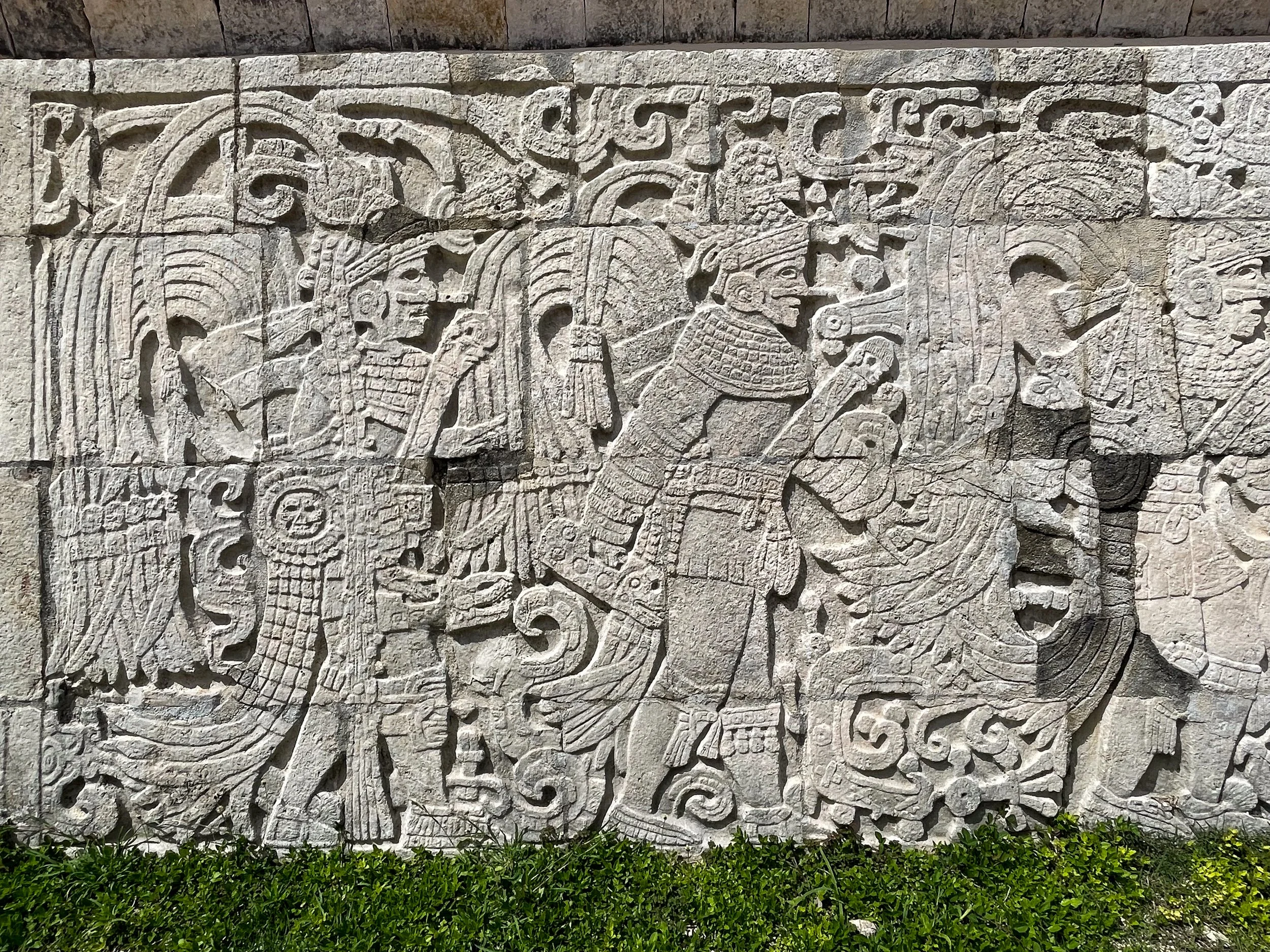
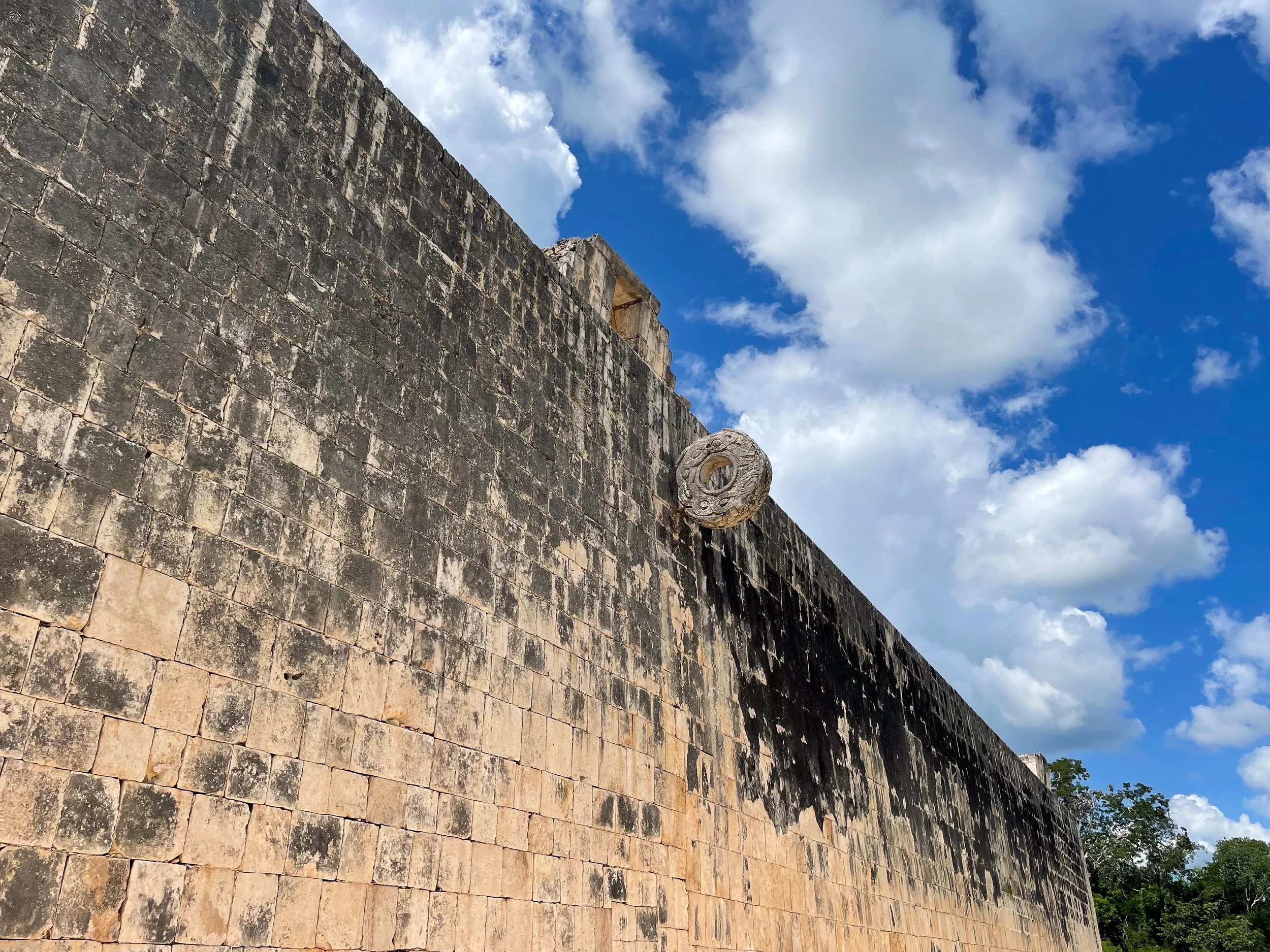
Chichén Itzá
Chichén Itzá is a large Mayan archeological complex with a steeped pyramid, the ruins of temples, a massive ball court, an astronomical observatory and well preserved hieroglyphs.
El Castillo. The massive and well preserved stepped pyramid at the center of Chichén Itzá. We circled all four sides of it, taking in its grandeur and marveling at its intricate designs.
Gran Juego de Pelota. The largest Mayan ball court ever discovered. It’s flanked by two temples and “bleachers” decorated in carvings depicting how the game was played.
Tzompantli. A stone platform designed with walls covered in carvings of human skulls.
Warriors' Temple. The ruins of a large temple with stacked stone columns, overgrown platforms and Mayan hieroglyphs.
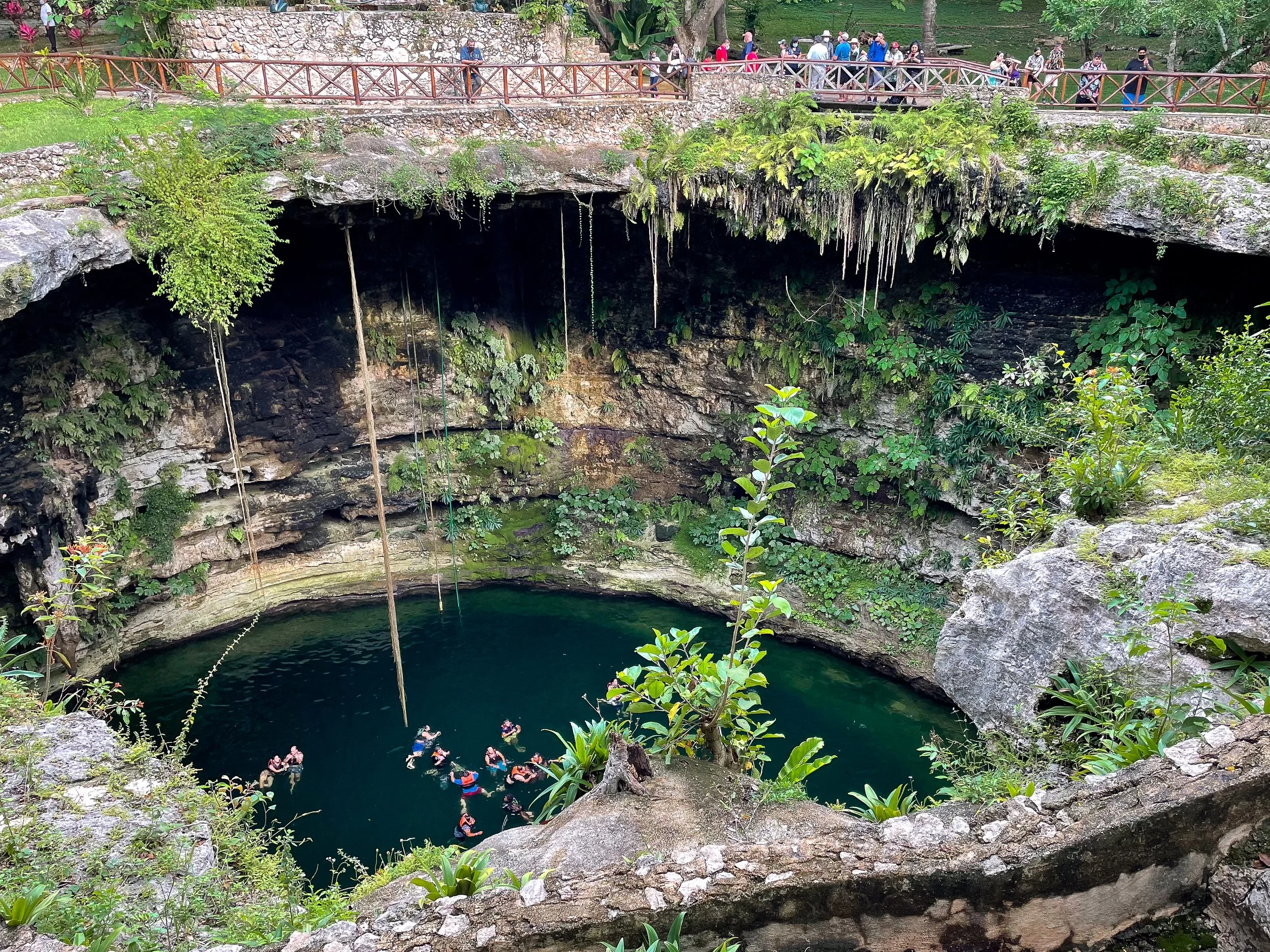
Cenote Ik Kil. A cenote nearby Chichén Itzá with swimmable blue waters. We came here to cool off in the refreshing oasis. Little fish swam around us as we floated in the water listening to the echo of other swimmers bounce off the vine covered stone walls around us.
Tips for Visiting Chichén Itzá
Getting to Chichén Itzá. The ADO Bus is the best way to get to Chichén Itzá. Buses leave from Cancun most mornings, returning in the mid afternoon. The bus takes between 3-4 hours and allows about 4 hours to explore the ruins and nearby cenotes.
Wear Sun Protection. Wear sunscreen or bring an umbrella to protect from the sun.
Stay Hydrated. Bring water to stay hydrated. It gets very hot!
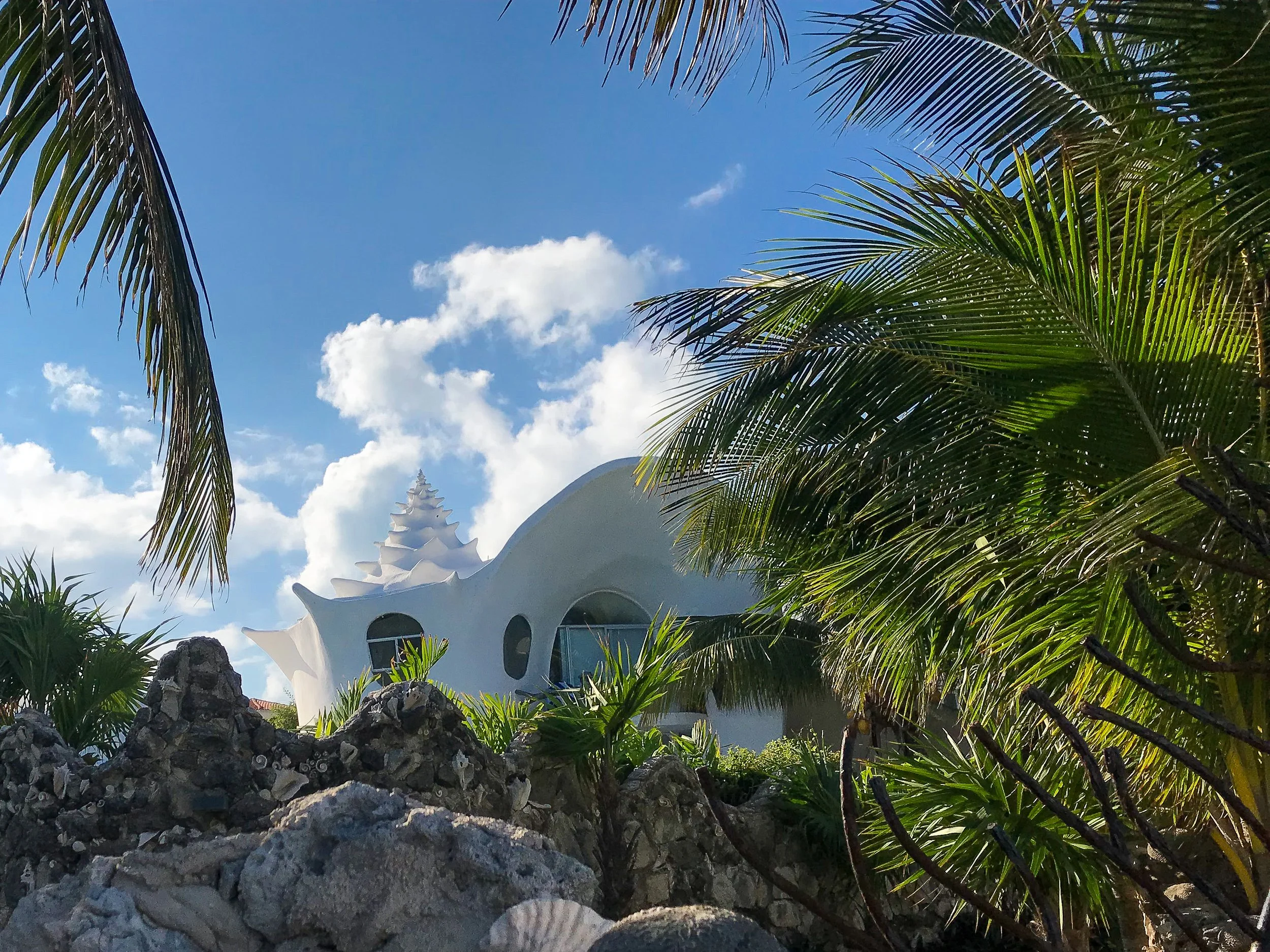
Isla Mujeres
Isla Mujeres is a sleepy island off the coast of Cancun with a small town, hotels, beaches and tour companies offering snorkeling tours. It’s accessible by ferry or boat.
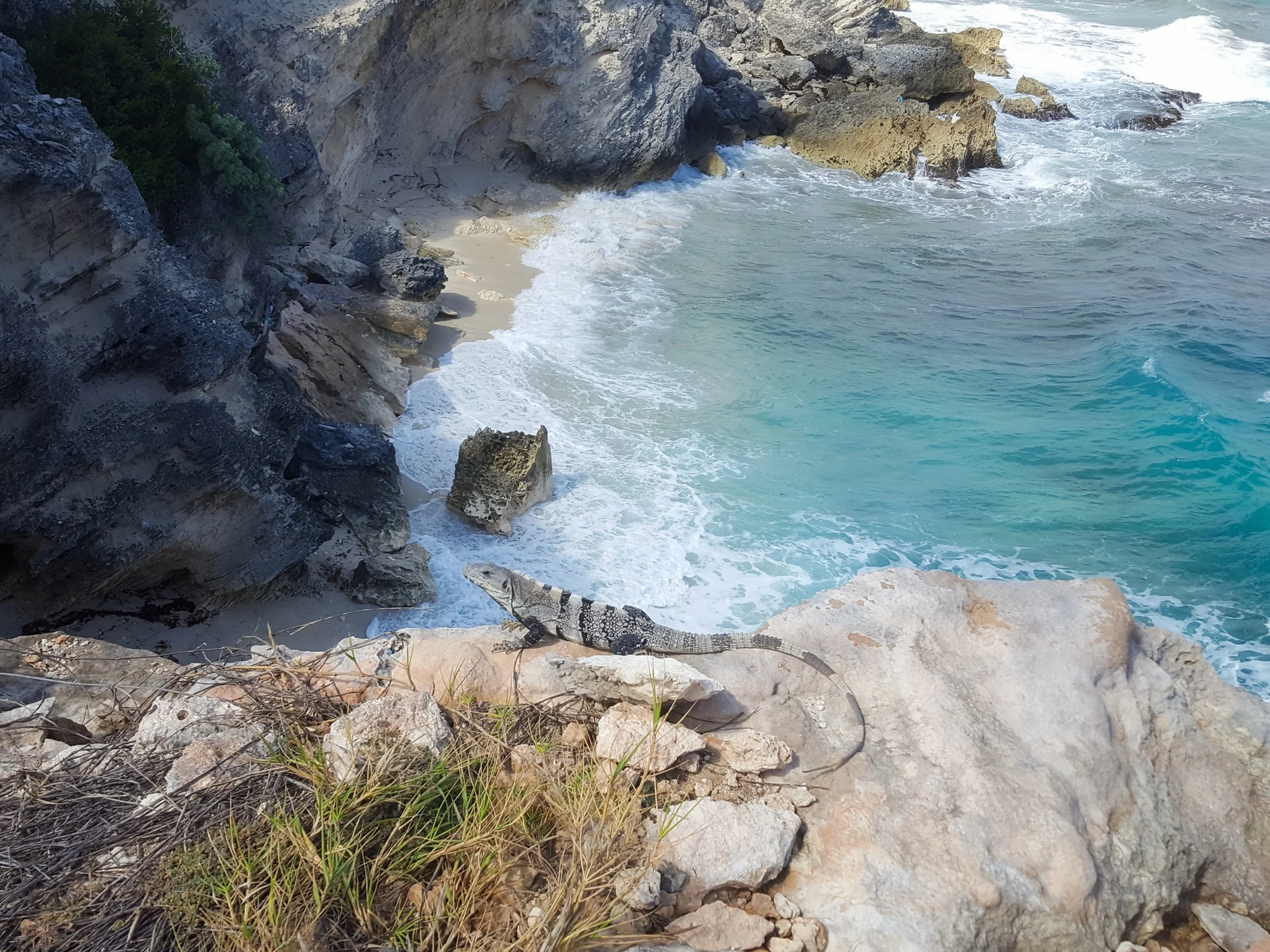
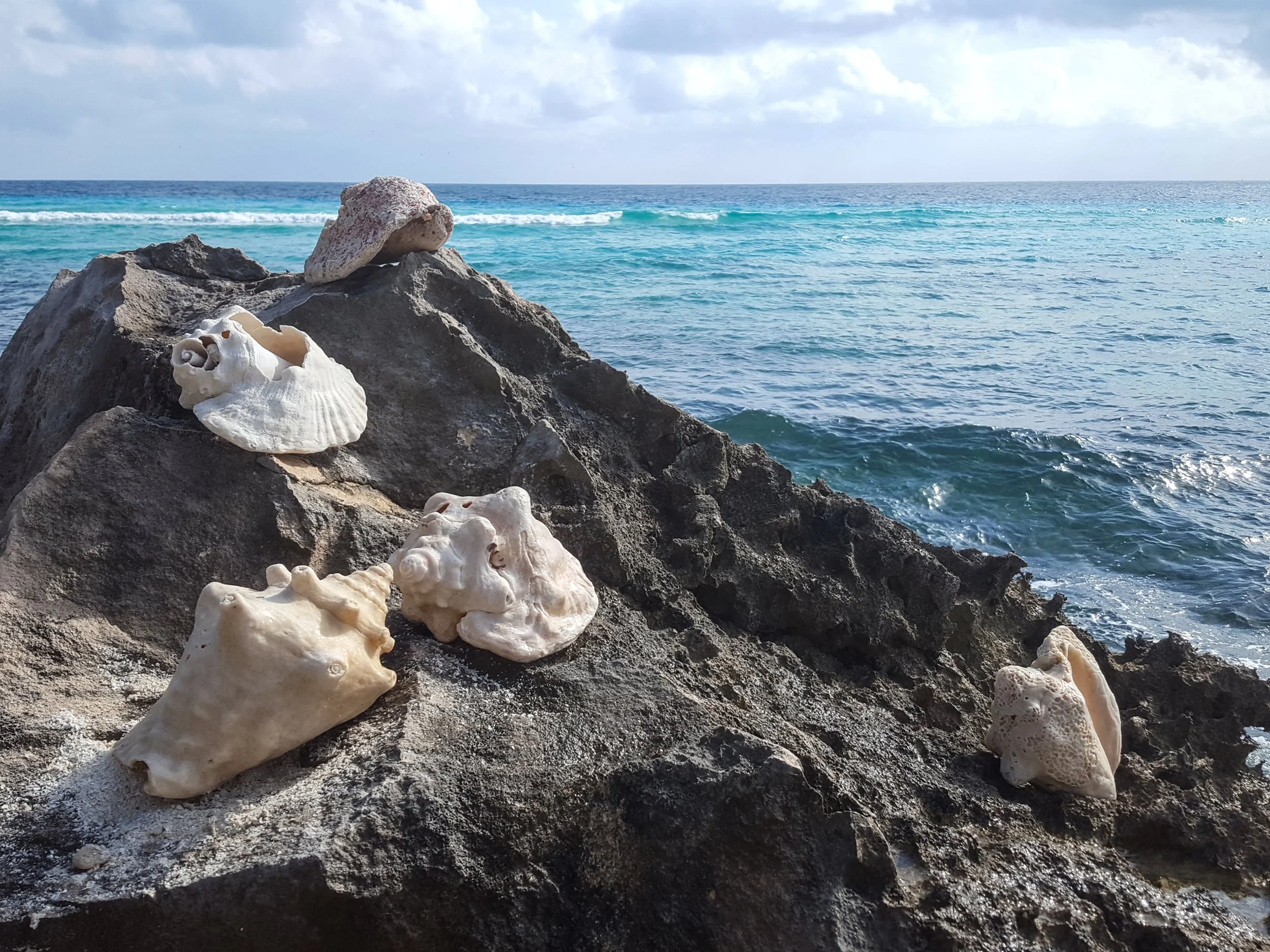
Punta Sur
Punta Sur is the southern point of Isla Mujeres and most eastern point of Mexico. The tip of the island is lined with nature trails, cliffside caves, jagged rock formations and many free roaming iguanas.
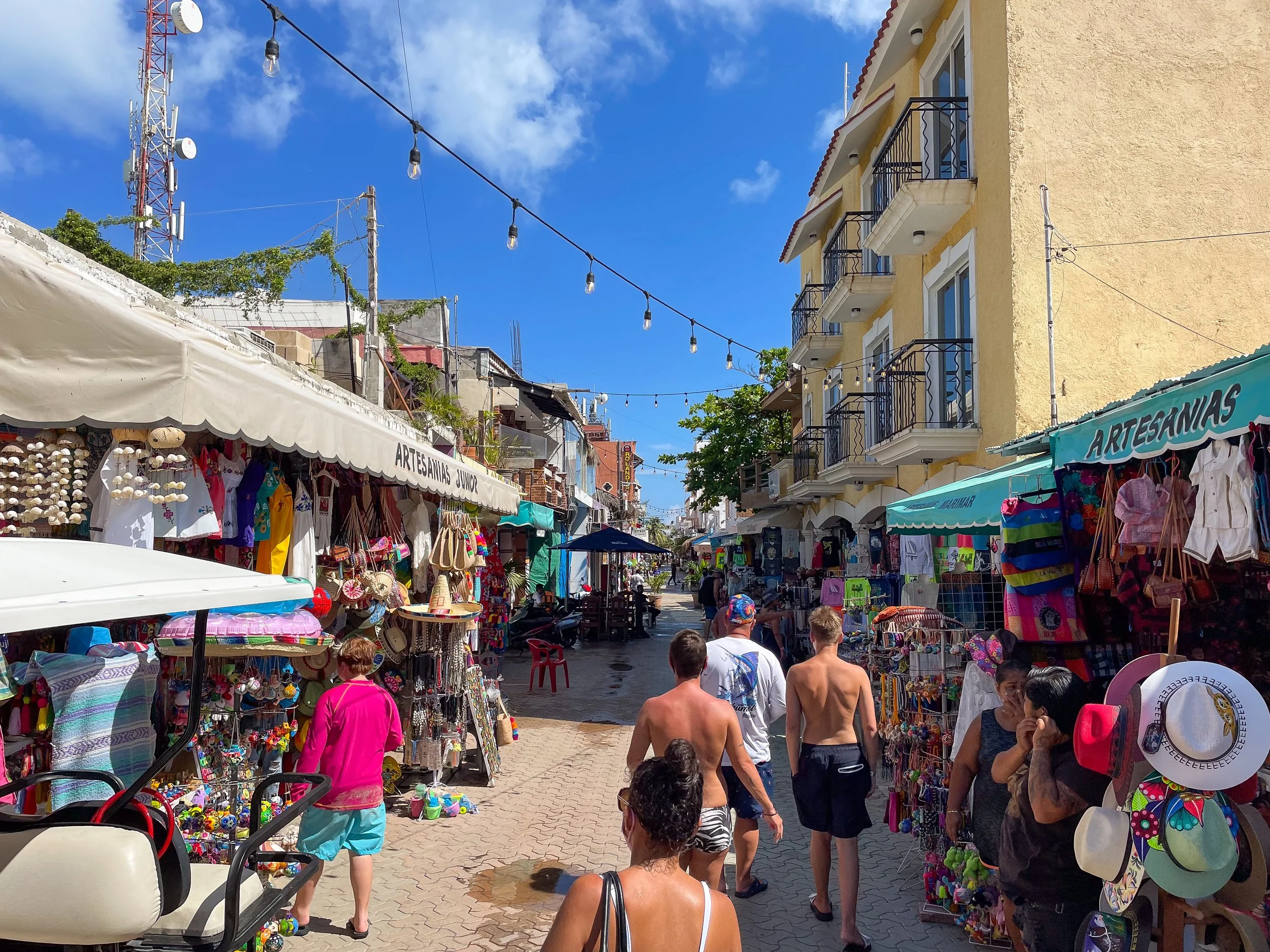
Punta Norte
Punta Norte is a tourist town with restaurants, bars, hotels, souvenir shops, tour companies, street vendors and white sand beaches on the north side of the island.
Miguel Hidalgo. A pedestrian street with restaurants, bars, souvenir shops and tour agencies in Punta Norte.
Playa El Cocal. A sand beach with shallow turquoise water and sand bars stretching hundreds of feet into the water. Come here for snorkeling, swimming and sun bathing. The best snorkeling is beneath the wooden bridge leading to the MIA Reef Hotel.
Playa Centro. A white sand beach in Punta Norte near the ferry terminal with restaurants, hotels, beach rentals and tour companies.
Snorkeling & Island Tour
We booked a snorkeling tour to explore Isla Mujeres and the crystal clear waters surrounding the island. Our first stop brought us to Barquito Hundido, a snorkeling point with many tropical fish and underwater sculpture garden.
From here, we moored offshore near Playa El Cocal on Isla Mujeres where we swam, snorkeled and ventured onto shore. We were given a couple hours for beach time, shopping and exploring the island.
Afterwards, we boated to Playa Tiburon, a beach and restaurant named for the shark that is kept in a fenced area off shore. We ate grilled barracuda and drank margaritas for lunch. Back on the boat, we continued to boat around the island’s vibrant blue waters while jamming out to Bachata music and drinking tequila.
We booked with Isla Mujeres Tours.
Places to Eat & Drink in Isla Mujeres
Coconut Vendors. Having a craving for coconuts, we stopped by a street vendor selling coconut paletas (popsicles) and another selling fresh coconuts. We drank the coconut water then had it husked open and the “meat” prepared with hot sauce and lime juice.
Green Demon. A beach front restaurant with umbrellas, light bites and cocktails.
Lancheros Mexican Seafood. A seafood restaurant in the pier near the ferry terminal. We came here for dinner before catching the last ferry back to Cancun.
Acantilado. A small outdoor restaurant at Punta Sur. We came here for ceviche and cerveza.
Getting Around Isla Mujeres
By Ferry. Take the ferry from the Puerto Juarez Terminal in Cancun. We booked roundtrip tickets with Ultramar for around $25.
By Golf Cart. The easiest way to get around the island is by golf cart. Rent one from Coco Cart Rental near the ferry terminal. Prices are negotiable. A half day rental can cost anywhere from $50 to $100.
Fishing in Puerto Morelos
Visit the seaside village of Puerto Morelos and hire a local fisherman to arrange a fishing tour. Our group boarded a fishing boat for a half day tour and caught several fish including red snapper, bonito, porgie, sea bass and a 44 inch barracuda. The captain filleted the barracuda and mixed it with lime juice, habanero, tomato and cilantro to create one of the freshest ceviches we’ve ever had. Of course, there were Mexican beers and tequila on board.
Playa del Carmen
Playa del Carmen is a very touristy beach town along the Rivera Maya with large resorts, adventure parks, beach clubs and ferries to the island of Cozumel. We took a day trip here to meet family, eating and drinking our way across the city center.
Quinta Avenida. A very touristy pedestrian street in the center of town with tequila shops, t-shirt vendors, silver jewelry stores, souvenir malls with aisles of colorful trinkets, the expected tourist traps, tour operators and chain restaurants. The lengthy street is a hub for activity with thousands of vacationers, live performers, shop owners calling out “hola amigo” and colorful Mexican banderas draped overhead.
Fundadores Beach. A large white sand beach in the city center with restaurants, hotels and beach bars. It’s a popular spot for tourists and locals to enjoy the Caribbean sun and bright blue water.
Parque Los Fundadores. A treelined park between the Fundadores Beach and Quinta Avenida with singing musicians, dancing performers, mariachi bands and Mayan rope swingers.
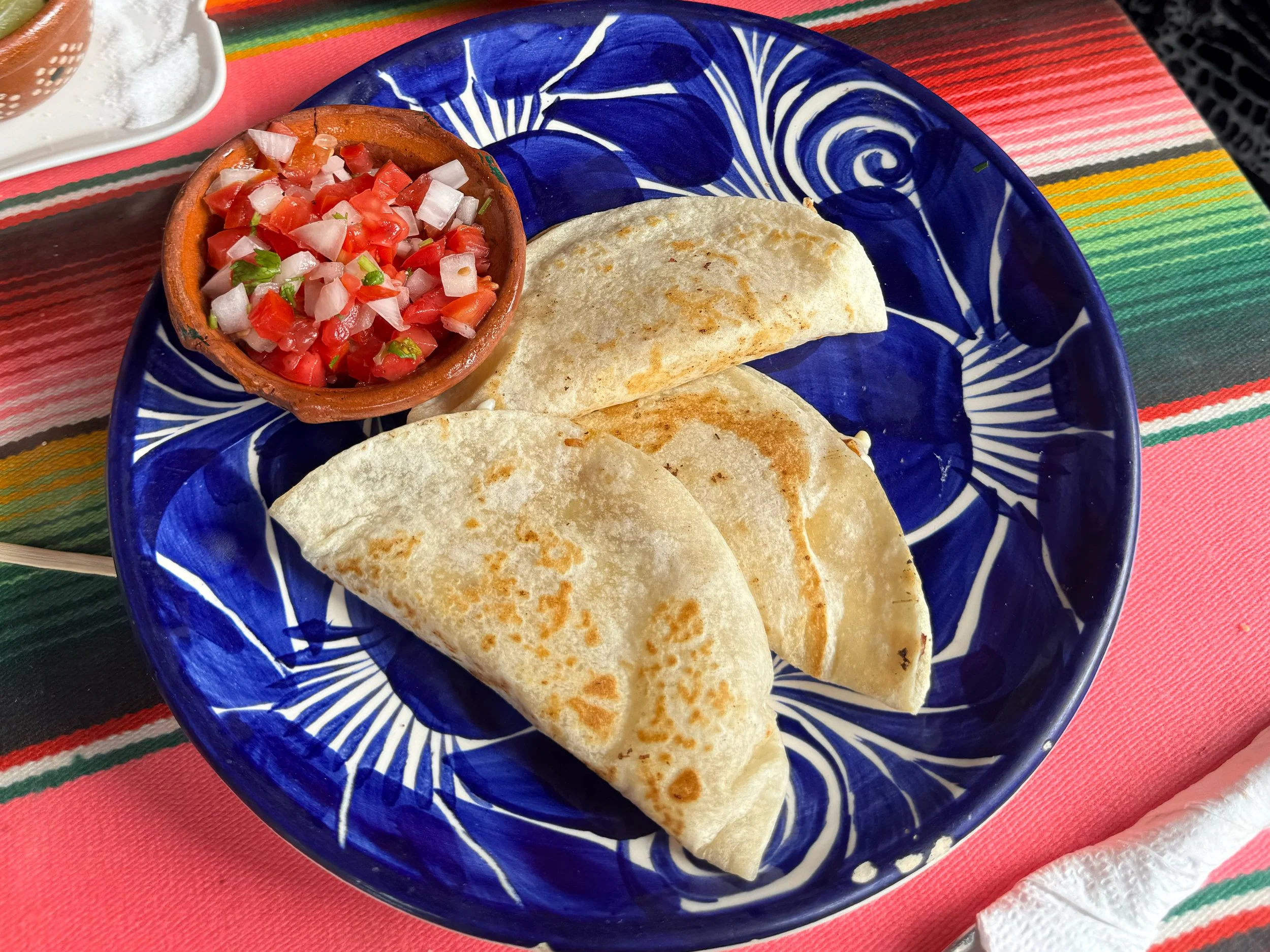
Places to Eat & Drink in Playa del Carmen
Other than visiting the beach and shops, Playa del Carmen has a decent food scene with restaurants, cafes and bars all around town.
Mexico Loco. An authentic and energetic Mexican restaurant in the center of town with dishes like table-side guacamole, mixed seafood ceviche, cheese quesadillas and nachos covered in mole. They serve the largest margaritas we have ever drank, local beers and overflowing shots of tequila. While dining, dancing performers and guitar strumming musicians serenaded us with song.
La Bodeguita del Medio. A restaurant and bar that feels more like Cuba than Mexico. Bottles of Cuban rums line the bar adjacent to a humidor with boxes of Cuban cigars. The walls and warmly lit lights are covered in hand written notes and signatures from years of previous guests. We sat at the long wooden bar sipping on Havana Club while a Cuban brass band performed on stage and couples danced salsa behind us.
El Gober Marisqueria. A seafood restaurant with freshly caught fish, live lobsters and Caribbean dishes. We ordered the patacones and a seafood tower, a poke style dish layered with tuna, shrimp, octopus, white fish, tomato, avocado, cucumber and avocado surrounded by a pool of spicy sauce.
The Lost Tiki. A tiki bar in a thatched restaurant with colorful tiki mugs. To be honest, the drinks weren’t the greatest but the pan fried edamame served in a bowl of umami sauce helped make up for it.
ARCANA. A vibey outdoor cafe surrounded by tropical plants and decorated with pink and green accents. We tried the coconut tahini latte and the rose pedal tea.
Places to Stay in Cancun
Having visited multiple times, we’ve stayed in a beach front apartment, millennial style hostel and resort.
Enigmatic Hotel Experience Cancun. A high end hostel with spacious and comfy private rooms. The hotel has its own restaurant, rooftop bar, co-working space, tattoo parlor, outdoor lounge and pool. They host daily events and activities and have a sister hotel down the street, Nomads Hotel & Rooftop Pool Cancun.
Carisa y Palma Apartments. An apartment complex in the Hotel Zone with vacation rentals. Our room had a balcony overlooking the Caribbean and city. It’s located on Playa Chacmool with beach access. Book here.
Dreams Riviera. An all inclusive resort just outside of the fishing village of Puerto Morales. We’re not usually the resort type but came here for a wedding. The restaurants, facilities and activities made it the perfect place to celebrate and relax. Book here.
Getting Around
Airport Bus. From the Cancun Airport, take an ADO bus to the Cancun Bus Terminal for 140 pesos per person. It's a 10 minute walk from the city center. Take a taxi from here to elsewhere in the city.
ADO Bus. The ADO bus is the best way to get around the Yucatan Peninsula with terminals in most cities and towns with buses departing regularly. They’re safe, affordable and reliable!
Good to Know. Ubers cannot pick up from the airport. Taxis cost an exorbitant amount.
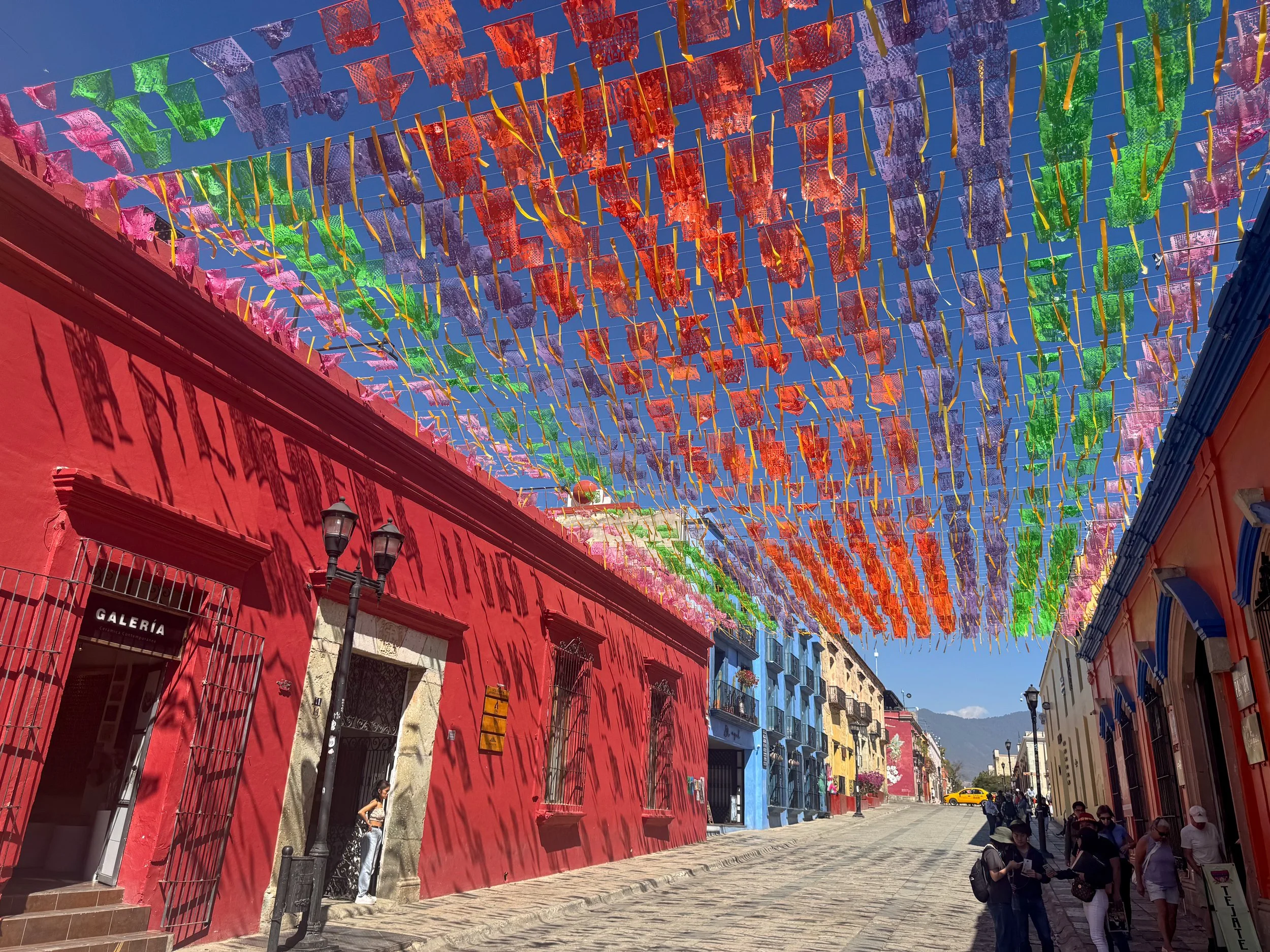
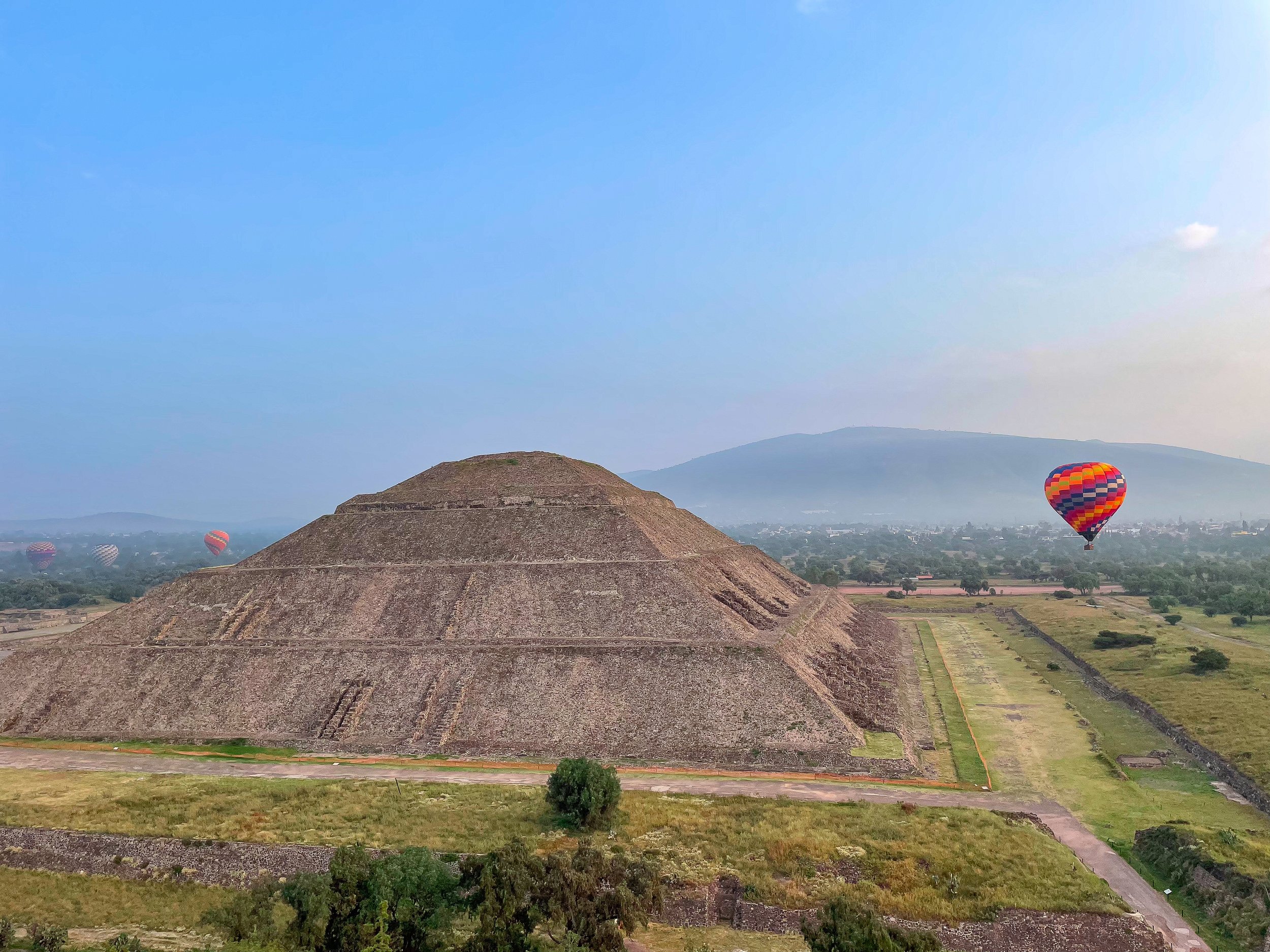
Elsewhere in Mexico
From the Caribbean coastline of the Yucatán Peninsula to colonial cities, Indigenous traditions and Pacific surf towns, discover more of Mexico beyond the Riviera Maya through these travel guides:
Caribbean Mexico
Tulum Travel Guide: Cenotes, Beaches & Mayan Ruins. Explore Tulum's cliffside Mayan ruins, white sand beaches, hidden cenotes and jungle landscapes along Mexico's turquoise Caribbean coast.
Bacalar Travel Guide: The Lagoon of Seven Colors & Hidden Gems. Discover Bacalar's Lagoon of Seven Colors, where turquoise waters, shallow sandbars and ancient stromatolites create one of Mexico's most remarkable landscapes.
Central Mexico
Mexico City Travel Guide: Neighborhoods, Food & Local Culture. Wander through Mexico City's vibrant neighborhoods, local markets and cultural landmarks where centuries of history, cuisine and modern life converge.
Day of the Dead in Mexico City (Día de los Muertos) Travel Guide. Experience Day of the Dead in Mexico City through cultural traditions, lively celebrations and vibrant ofrendas honoring loved ones and ancestral heritage.
San Miguel de Allende Travel Guide: Food, Art & Colonial Charm. Stroll through San Miguel de Allende's cobblestone streets and historic plazas where cuisine, art and music bring one of Mexico's most charming colonial cities to life.
Southern Mexico
Oaxaca Travel Guide: Food, Mezcal & Cultural Experiences. Immerse yourself in Oaxaca, Mexico's cultural hub for vibrant markets, artisanal mezcal, regional cuisine, scenic landscapes and centuries of tradition.
Puerto Escondido Travel Guide: Beaches, Surfing & Coastal Culture. Escape to Puerto Escondido, a laid back surf town on Oaxaca's Pacific coast where palm lined beaches and sandy streets embody coastal culture.
For Next Time…
Having visited pockets of the Yucatán, primarily centered around the Rivera Maya, we plan to venture westwards to the colonial cities of Mérida, Valladolid and Campeche as well as Isla Holbox on the Gulf of Mexico.

Panama City Travel Guide: Casco Viejo, Local Food & Tropical Nature
Explore Panama City's historic Casco Viejo, vibrant culture, local food scene and tropical landscapes where rainforest and skyline meet.

Panama
Panama is a Central American country at the crossroads of North and South America. It’s home to Caribbean beaches, Pacific marine reserves, lush rain forests, an urban metropolis, the Panama Canal and a diversity of cultural backgrounds.
Panama City
Panama City is a sprawling city on the Pacific side of the country with towering skyscrapers, colonial architecture and historic ruins. It’s a starting point to reach many of the country’s nature reserves and a hub for other destinations across Central and South America.
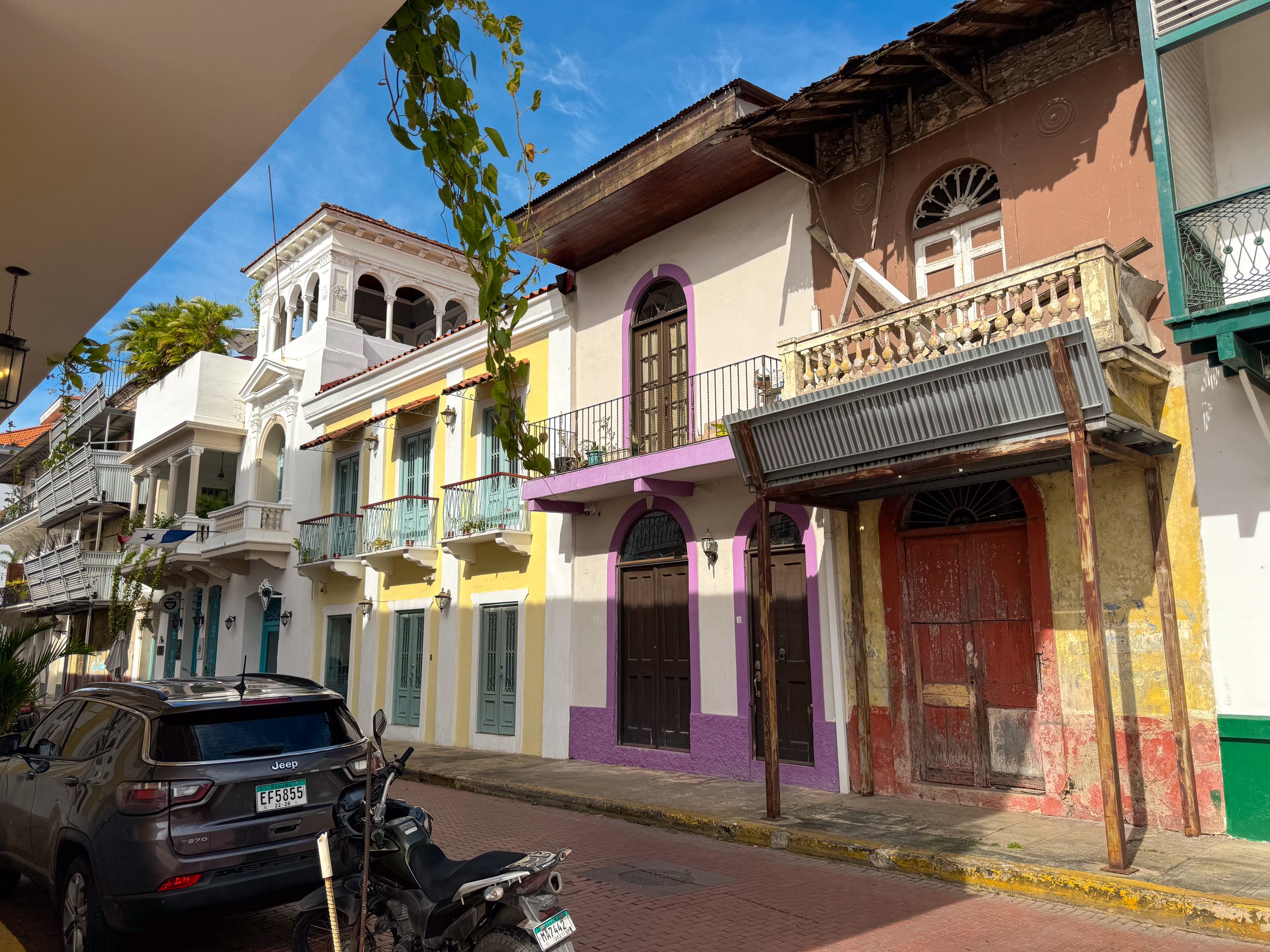
Casco Viejo
Panama City’s old town is a beautiful colonial era neighborhood built on a peninsula overlooking the Panama Bay with walled sections, seafood restaurants, rooftop bars, clothing shops, lush plazas, free museums, beautiful cathedrals and cultural sights.
Elegant Architecture
Walking down the narrow brick streets, with the rails of old street cars still visible, feels like stepping through a time capsule. The neighborhood's elegant buildings feature ornate facades painted in muted neutrals and pops of color, thin balconies decorated with tropical plants, warmly lit antique lanterns and clay-tiled roofs. While some buildings have been beautifully preserved, others sit in contrast as ruins slowly overtaken by nature.
See the Sights
Plaza Herrera. A romantic and scenic plaza surrounded by elegant architecture, luxury hotels, boutiques and restaurants.
Plaza de la Catedral. A brick paved plaza in the center of Casco Viejo with a gazebo, trees and park benches. It’s flanked by the La Catedral de Panama, colonial architecture and museums. Artists often come here in the early morning with sketchbooks to draw the sights around the plaza.
La Catedral de Panama. The city’s main cathedral built with an ornate stone facade, large wooden door and two white bell towers.
Cintra Costera. A road and walkway several miles along the coast from the modern financial center to the old town of Casco Viejo with city views.
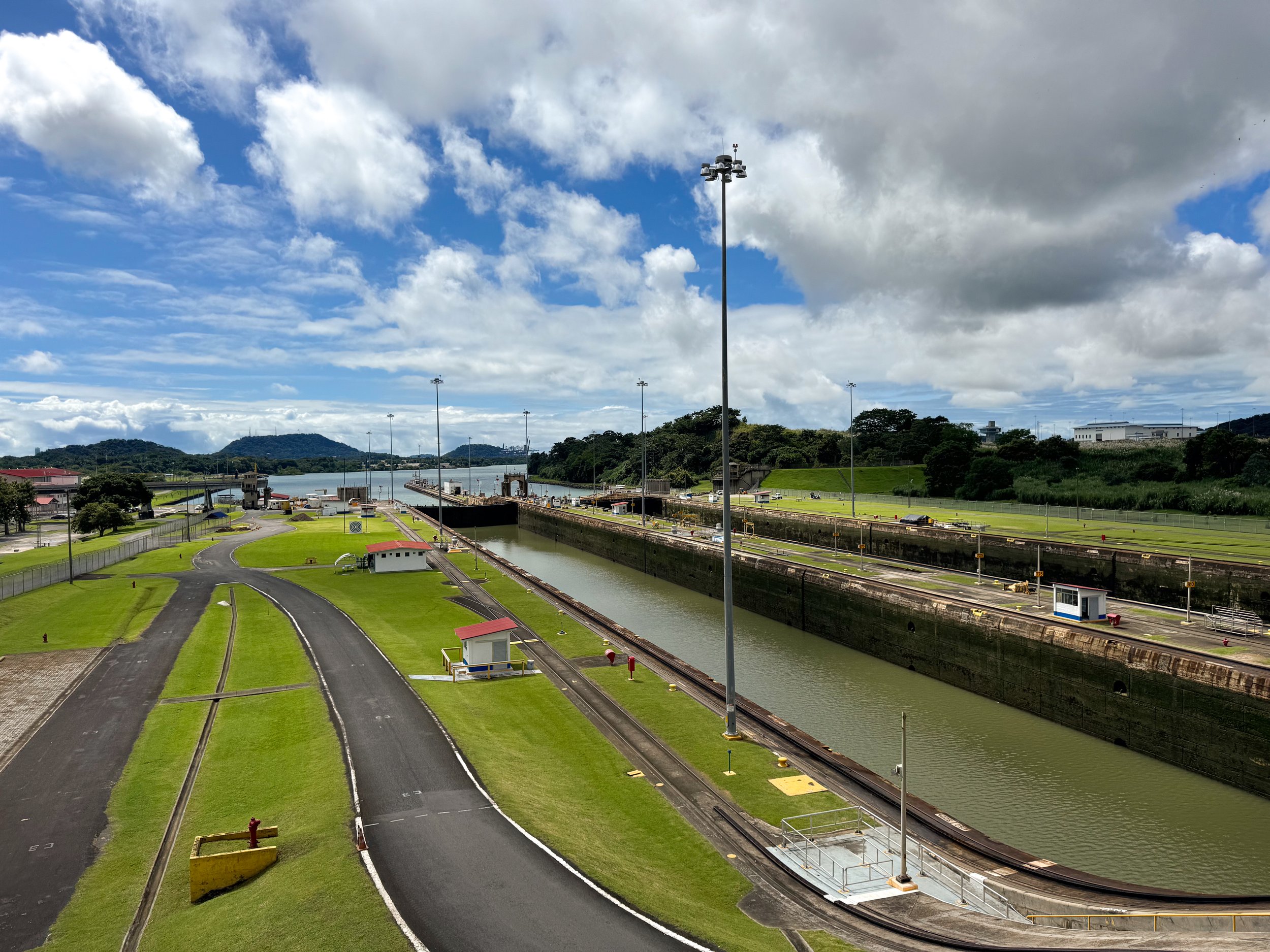
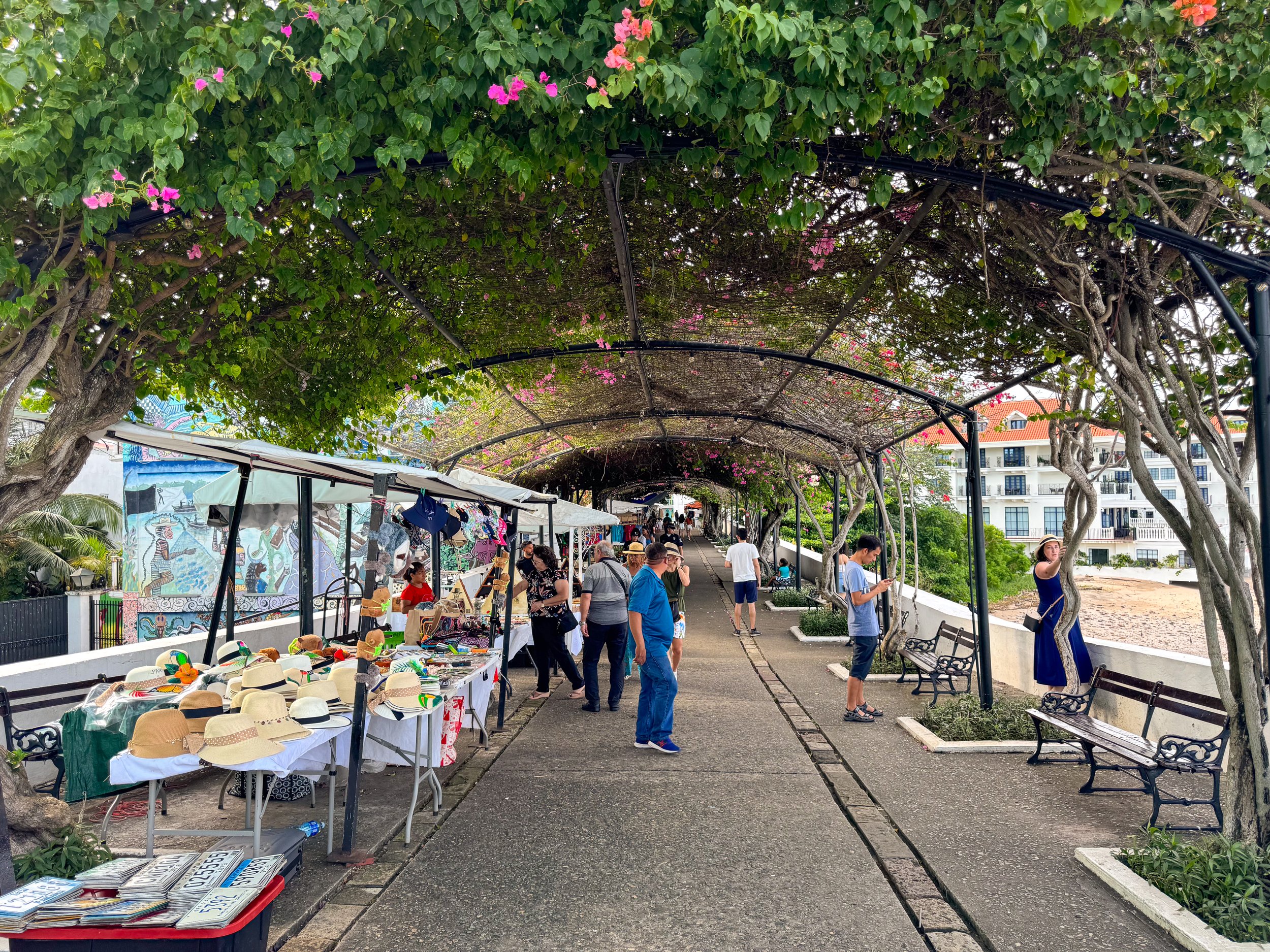
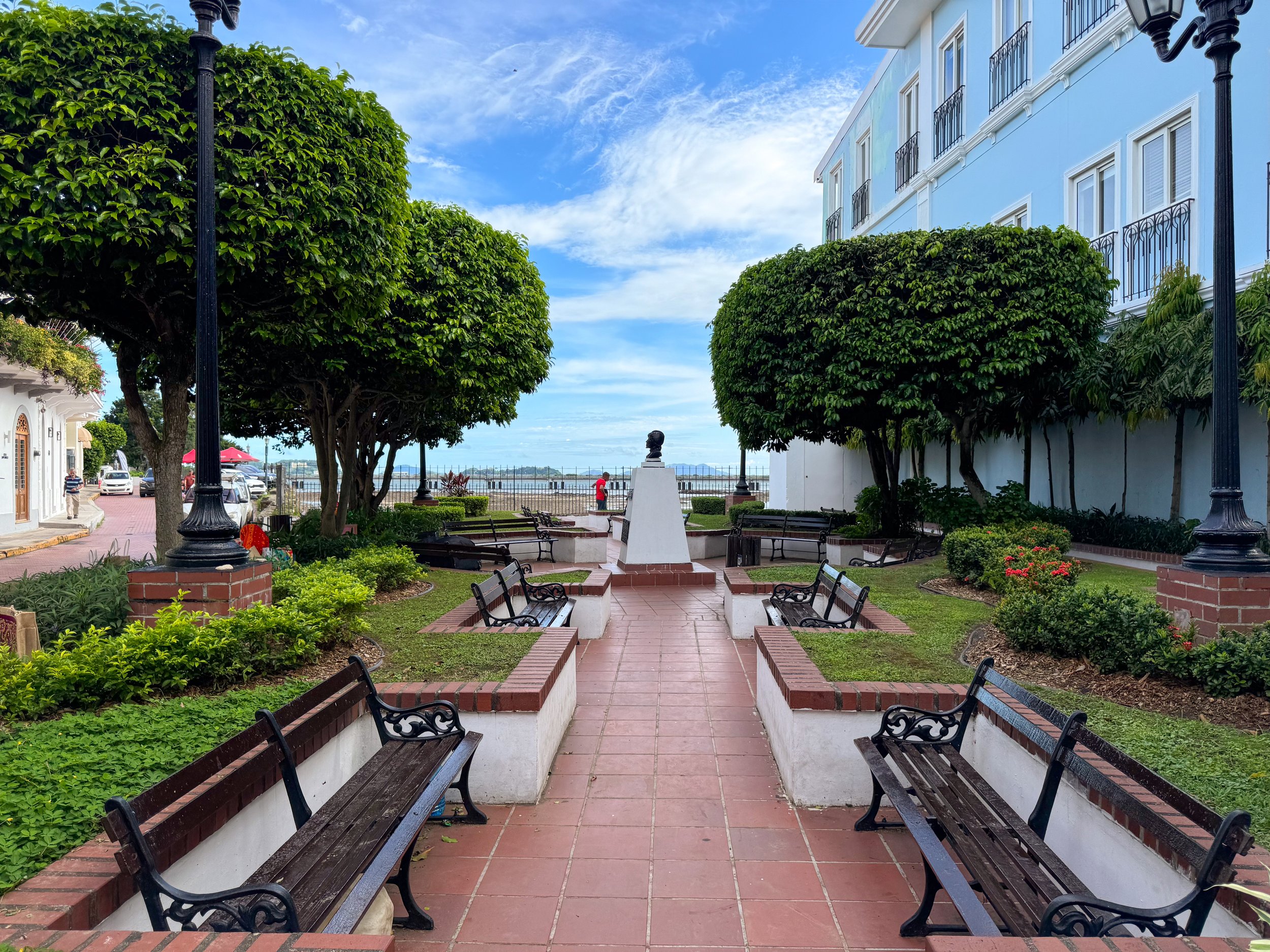
Iglesia de la Compañía de Jesús. The stone and brick ruins of a former church. All that remains is the crumbling facade, walls and interior courtyard.
Convento de Santo Domingo. The crumbling brick ruins of a historic convent and church with an adjacent chapel housing a museum of religious artifacts.
Iglesia Nuestra Señora de La Merced. A stone facade cathedral with two simplistic white bell and clocktowers. We passed by here when the bells were in full swing letting out dongs heard across the old town.
Paseo de las Bovedas. A scenic waterfront walkway along the colonial wall in Casco Viejo. There is a monument dedicated to the history of Panama, views of the modern city and a floral covered walkway with vendors selling handicrafts and souvenirs.
Corridor La Quince. An arts district outside of Casco Viejo with graffiti and murals covering the buildings & string lights draping the streets. Many of the colonial buildings are in disrepair while others have been renovated to modern standards.
Plaza Carlos V. A small garden plaza overlooking the Panama Bay dedicated to one of the first Spanish rulers of Panama credited with the idea of creating the Panama Canal long before its eventual construction. Guna women often sell their Molas and other handcrafted products from here.
Plaza Medio Baluarte. A small but photogenic plaza with colorful colonial buildings, a central fountain and an overlook along the wall. We watched as artists painted the city scenery early one morning.
Plaza Simón Bolívar. A plaza with a large monument dedicated to Simón Bolívar, the leader who led several Central and South American countries to independence from Spain. The plaza is flanked by a cathedral and restaurants.
Amador Causeway. A palm lined road and walkway connecting three islands near the mouth of the Panama Canal. Come here to walk the scenic 3km road, watch ships waiting to enter the Panama Canal and admire views of the city skyline. Along the road are bike rentals, restrooms, overlooks and historical placards. Towards the islands are numerous restaurants, hotels, a marina and cruise terminal.
Miraflores Visitor Center. A lock system and lookout on the Panama Canal. Come watch ships pass through, learn about the canal’s history and watch a movie about it narrated by Morgan Freeman.
Good to Know. Plan your visit around when ships pass through the locks. We hadn't realized ships pass through at infrequent times, and the next one wasn't for over 3 hours.
Getting Here. The visitor center is reachable by bus from Albrook Station or taxi. It can take a little over an hour to reach from Casco Viejo by bus or 20min by car.
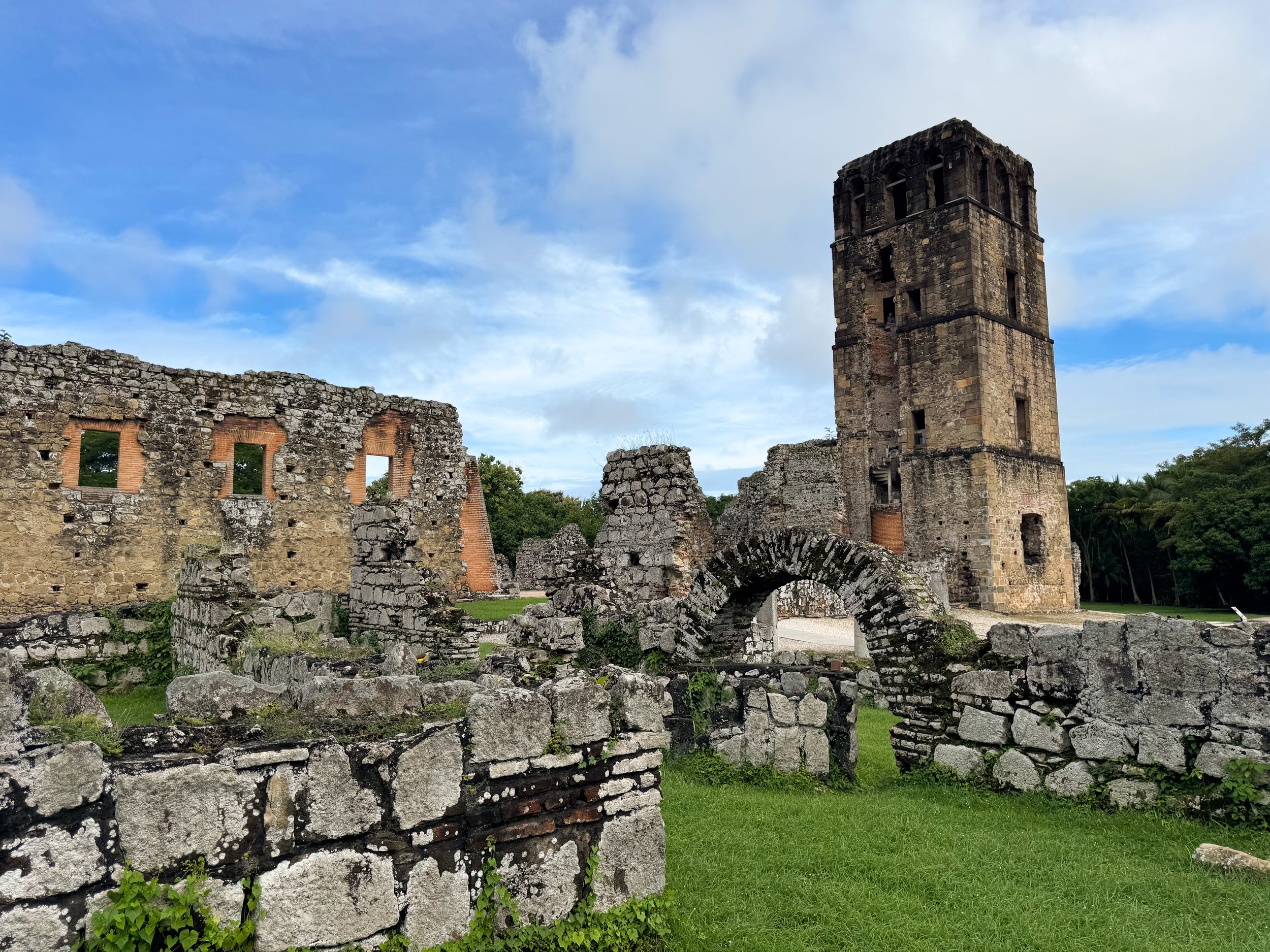
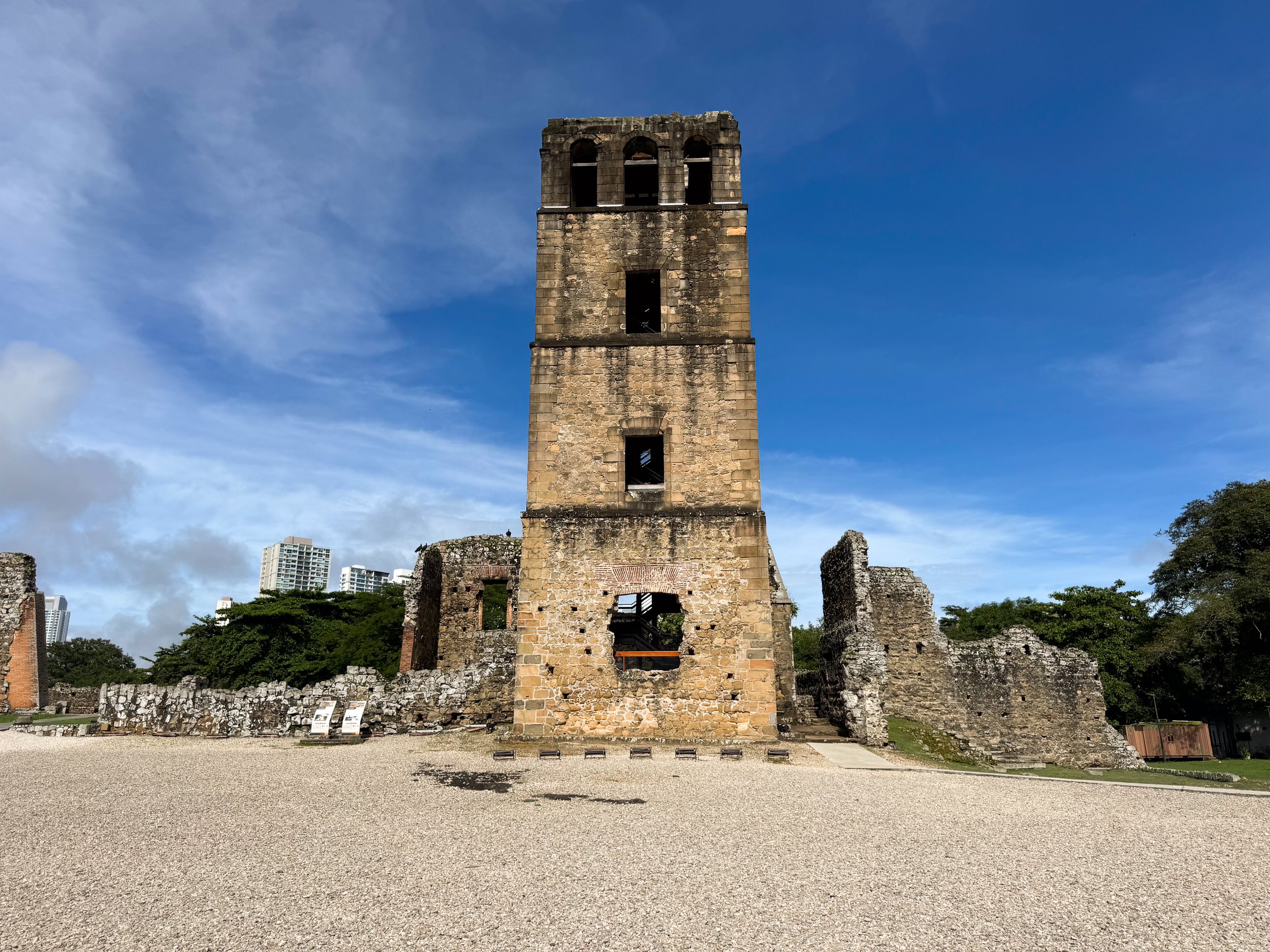
Visit the Museums
Panama Viejo. An archeological park with the crumbling brick and stone ruins of the original colonial Panama City. The city had many houses, multiple churches, roads, a grand plaza, market, cistern, bridge and tall bell tower. It was left to ruin after a major earthquake, multiple fires and pirate attacks. Come here to climb the 116 step tower with lookouts over the ruins, modern day skyline and Pacific Ocean. The view offers a unique contrast to the bustling city surrounding it.
Museo de la Mola. A museum dedicated to the colorful and intricately patterned textiles made by Panama’s indigenous Guna Women. The well curated exhibit explains the cultural importance of the women and their textiles, how they’re handcrafted and the stories behind them. It also features an interactive sound and light exhibit, an origami station and a magnetic wall to add to the museum’s Mola. The museum is free to enter.
Museo de la Historia. A small history museum in Casco Viejo about the founding of Panama and its independence from Spain and Colombia, the diverse cultures that make up Panama and the history of the Panama Canal. Come to see one of Panama’s first ever flags, a constitutional manuscript, and the national anthem. It’s free to enter.
Mi Pueblito. An open air museum set up like small towns with reproductions of colonial buildings and a nature trail with reproductions of thatched structures from Panama’s indigenous tribes. When we visited, there were many food vendors set up selling local dishes and snacks.
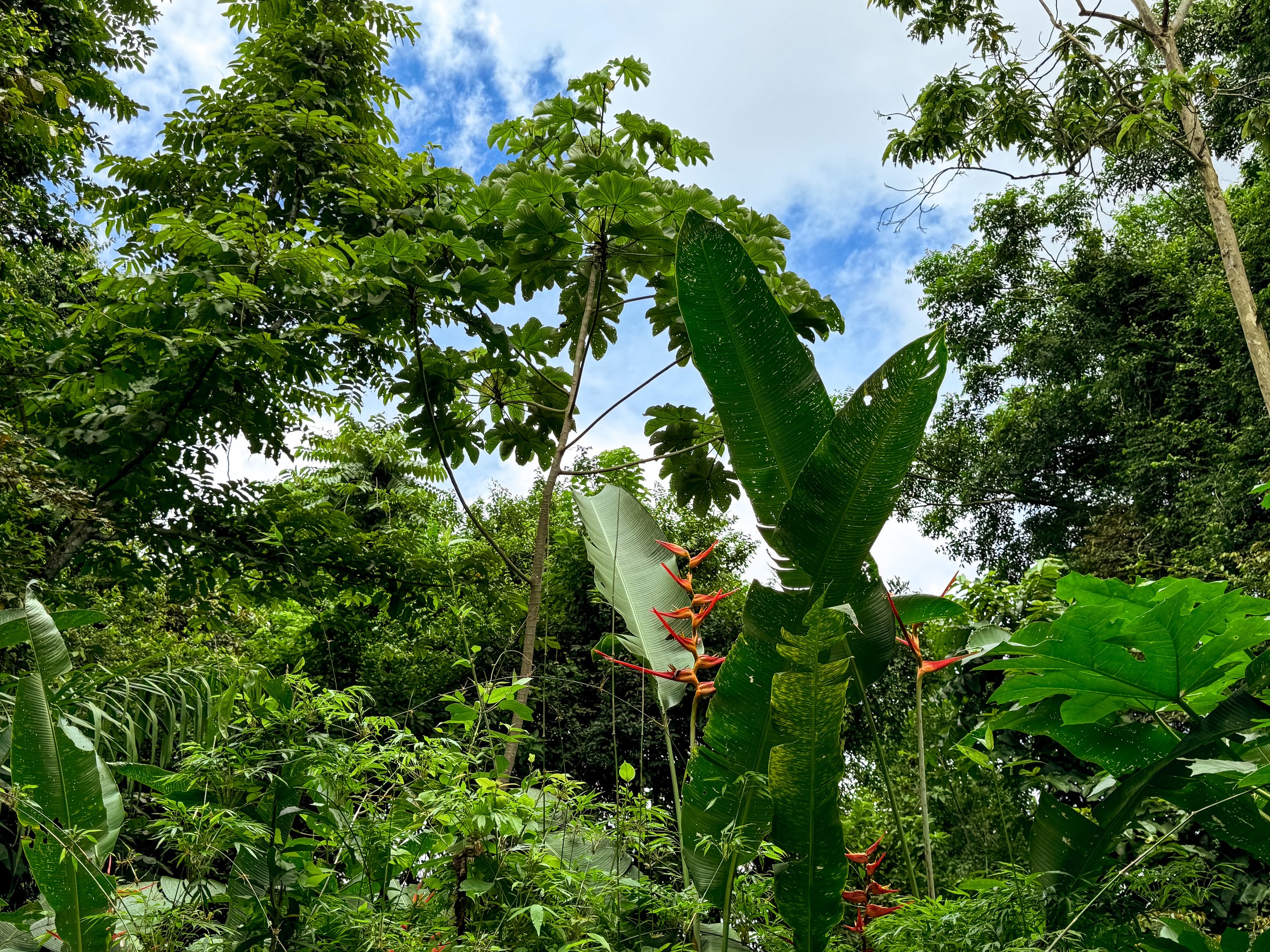
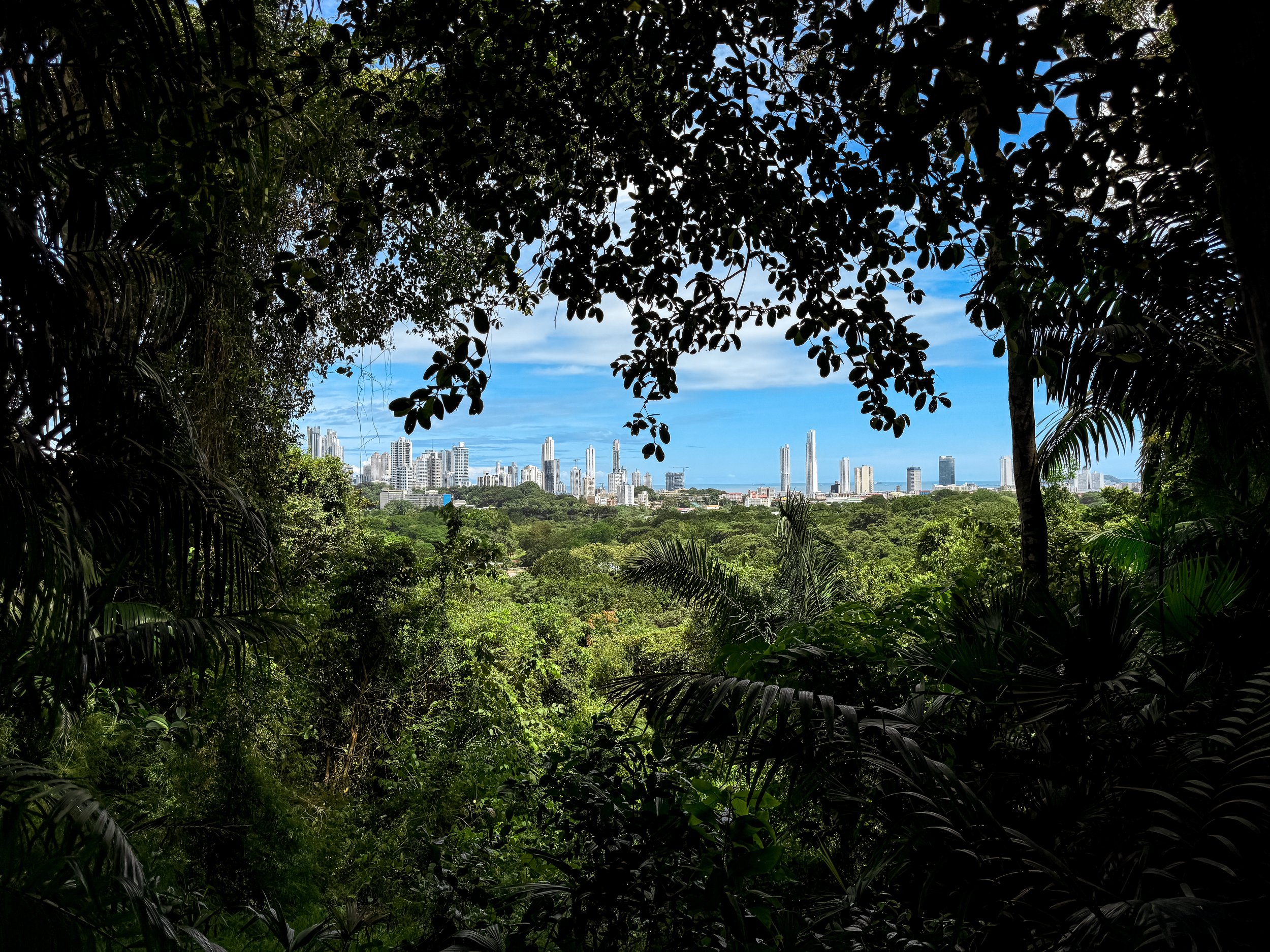
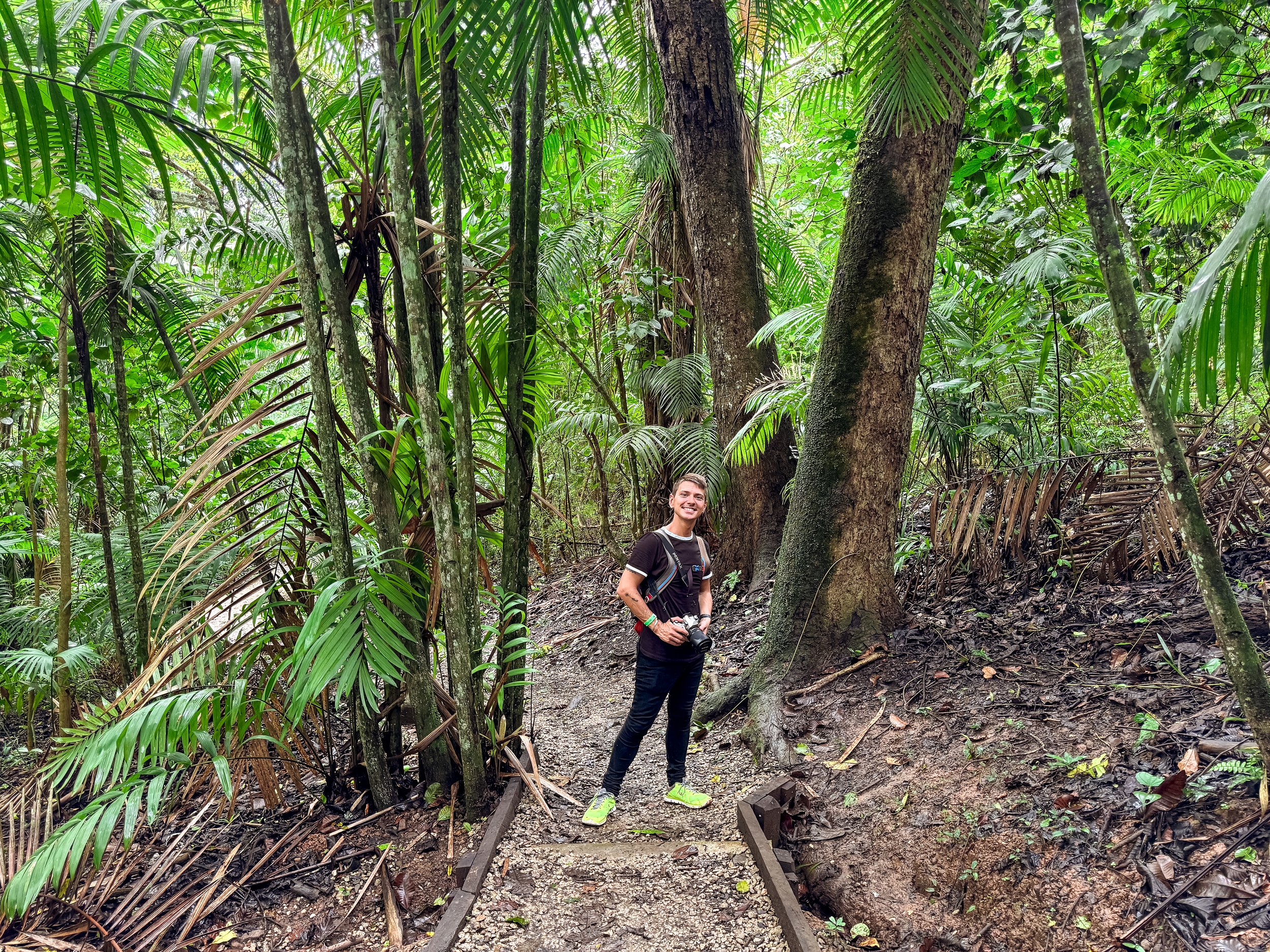
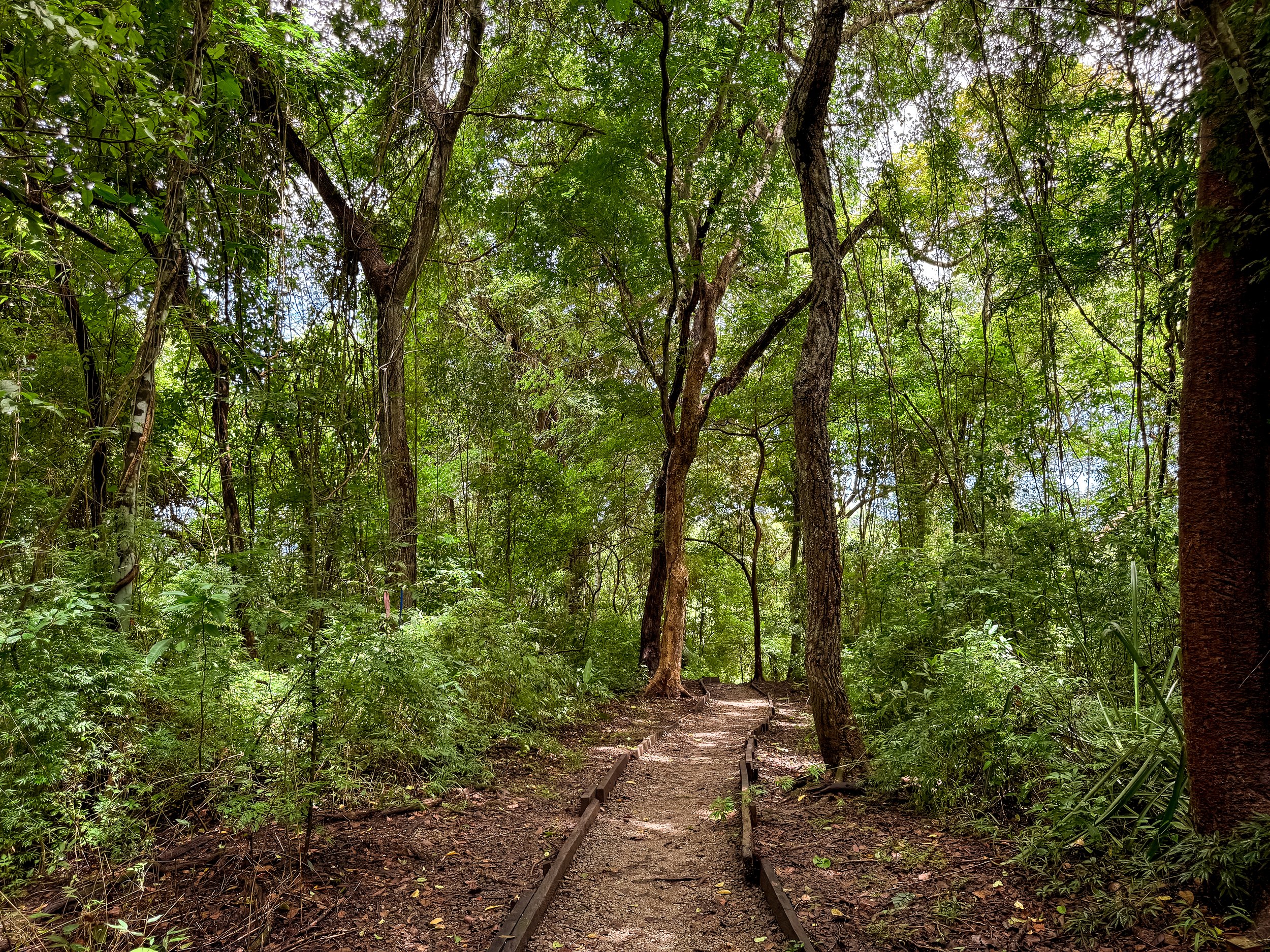
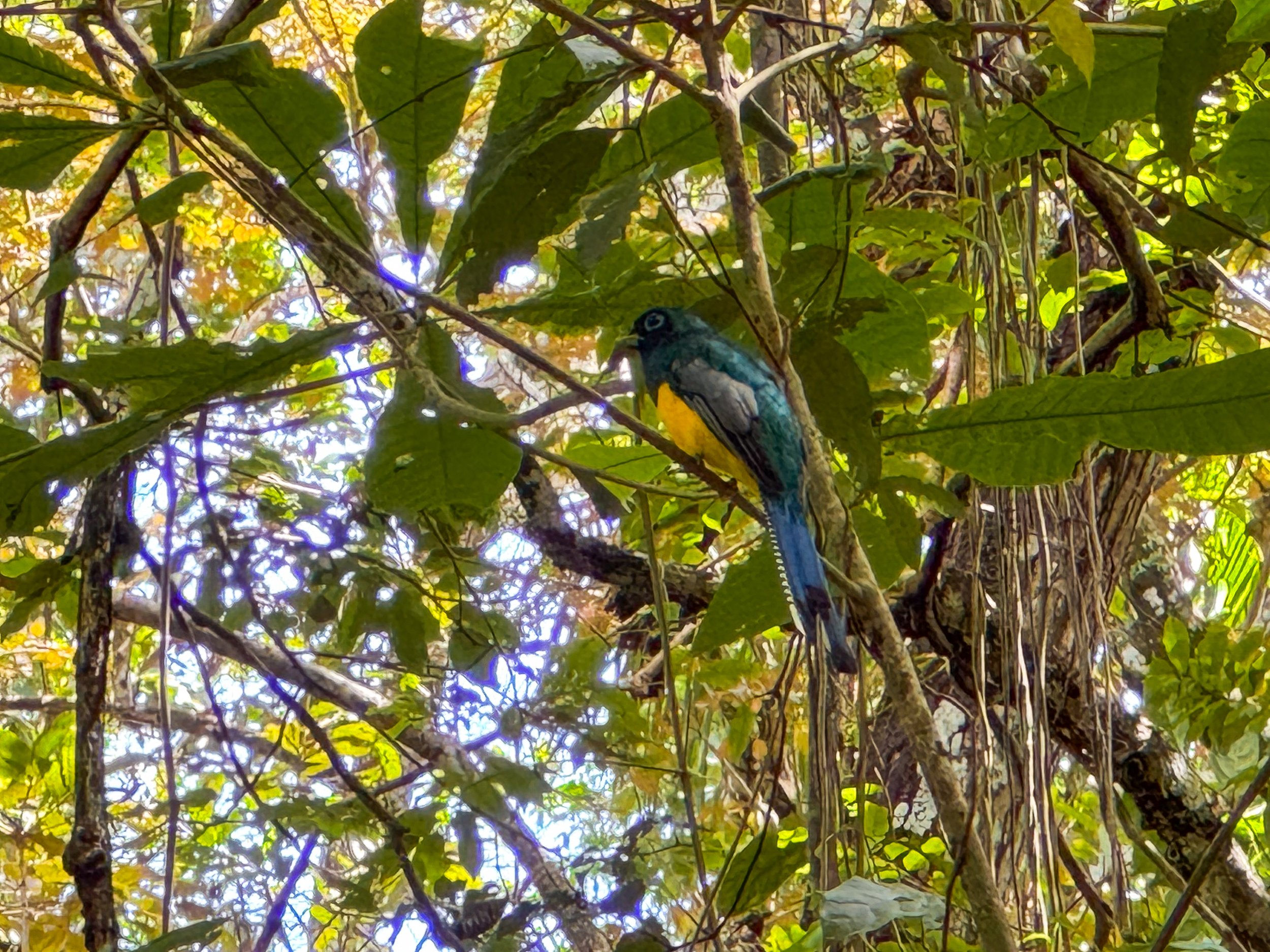
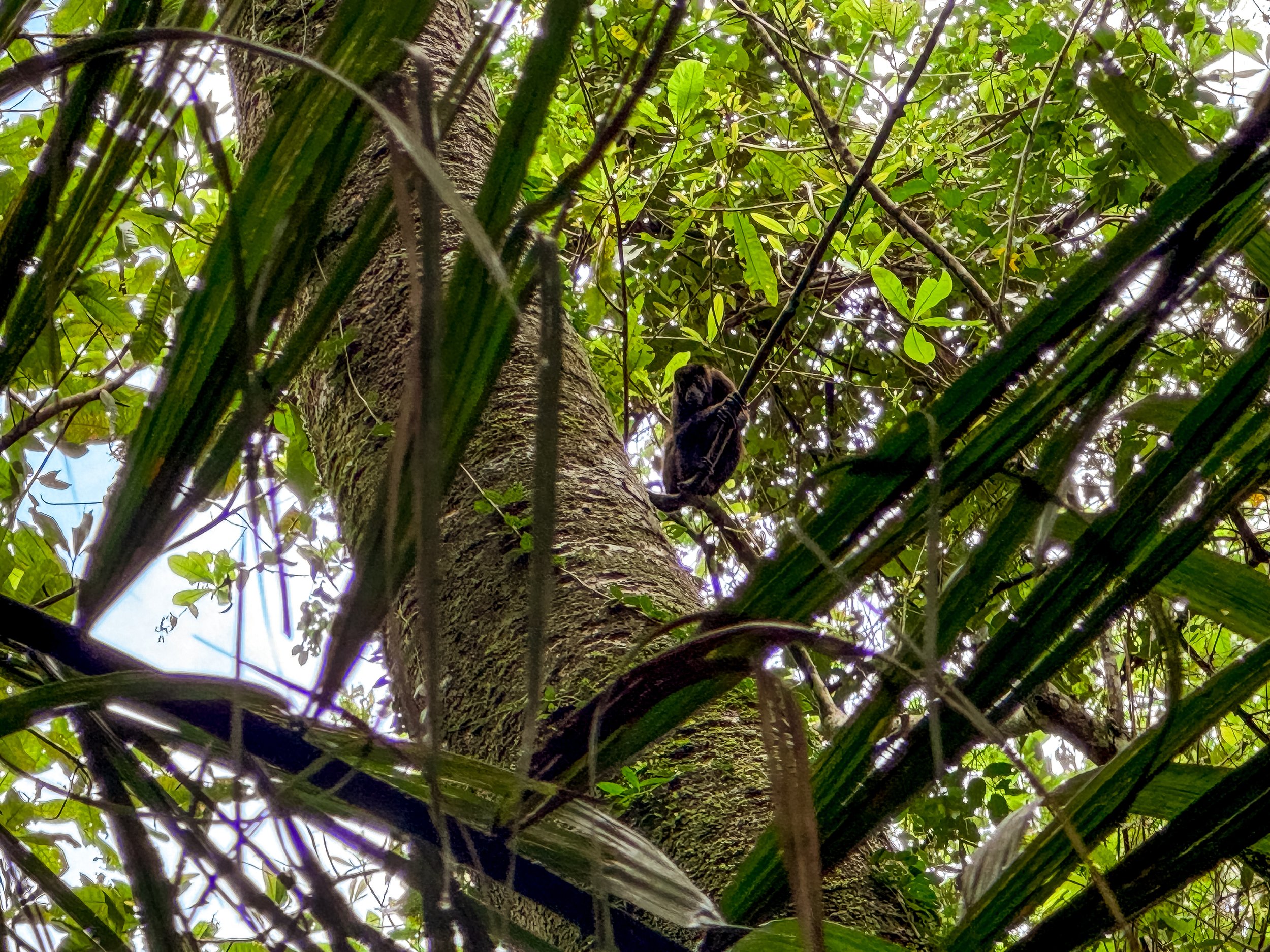
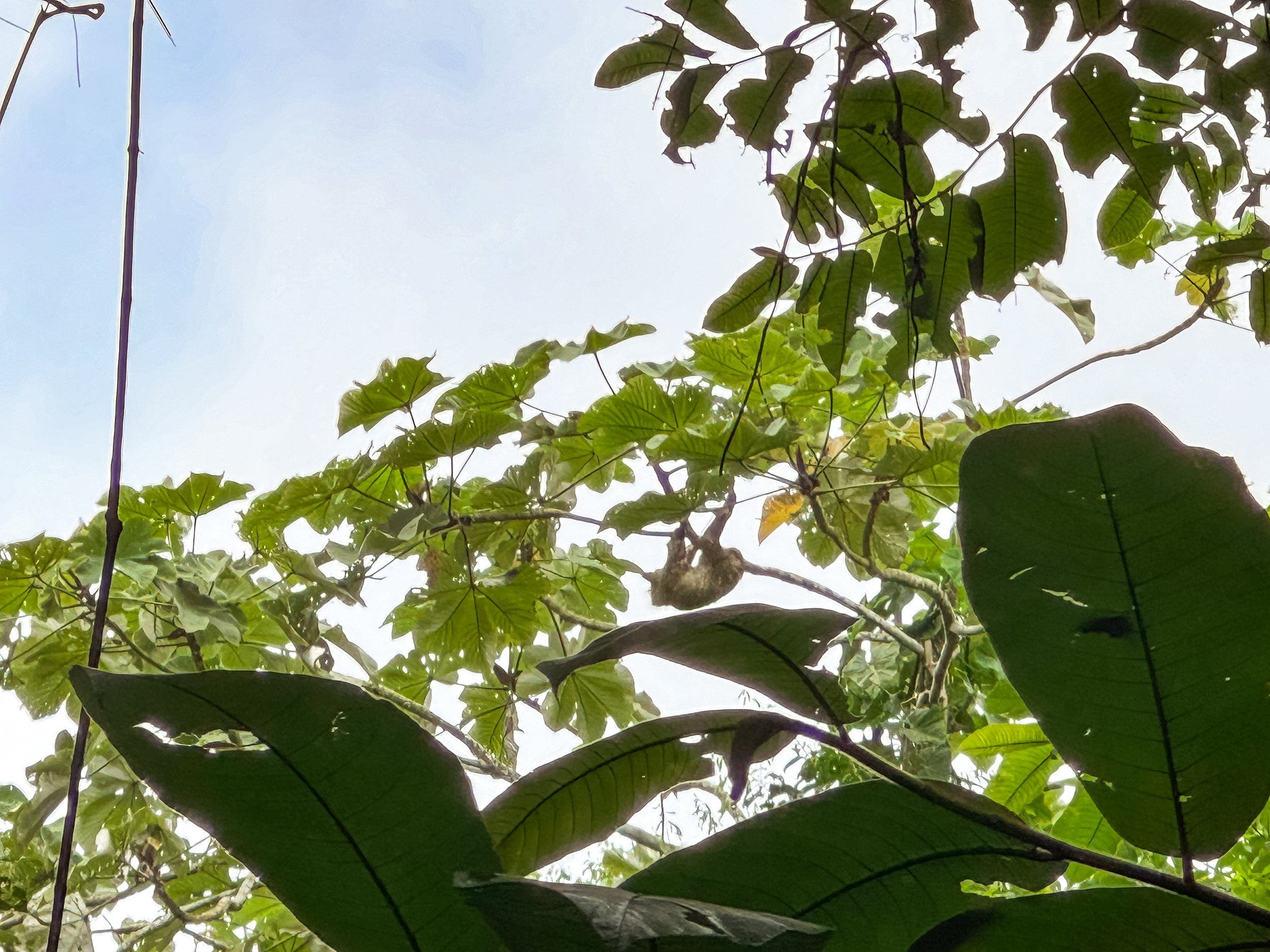
Explore the Parks
Parque Natural Metropolitano. A tropical nature park with hiking trails and scenic overlooks of Panama City’s skyline. Come here to spot monkeys, sloths, agoutis and humming birds. We spent over 3 hours walking the trails and spotting wildlife through our binoculars.
Trails
El Roble. A 0.7km trail and road leading from the visitor center to the Mono Titi trail
Camino de Mono Titi. A 1.2km trail through the forest ending with views of Panama City’s skyline.
La Cienaguita. A 1.1km trail through the lush forest leading from end of the Mono Titi trail back to the El Roble trail.
Los Caobos. A 0.8km trail branching off of the El Roble trail and ending at the Visitor Center. This trail passes through dense forest where we spotted monkeys, a sloth and agouti.
Getting Here. The park is reachable by bus one stop on the bus from Albrook Station. It can take a little over an hour to reach from Casco Viejo.
Cerro Ancon. A paved nature trail leading from Mi Pueblito to the city’s tallest natural point. Come here to overlook Casco Viejo, the city’s modern skyscrapers and ships passing through the Panama Canal.

Soberania National Park. A large national park in the center of the country located along the Panama Canal. We came here hoping to hike, spot wildlife and watch ships on the Canal.
Unfortunately after hours of trying to reach certain sights in the park via bus, on foot and Uber, we learned many of the park’s activities are run by private resorts with high ticket prices, require advance reservation or are inaccessible. Tired and a little defeated, we decided to return to Panama City and make the most of our day.
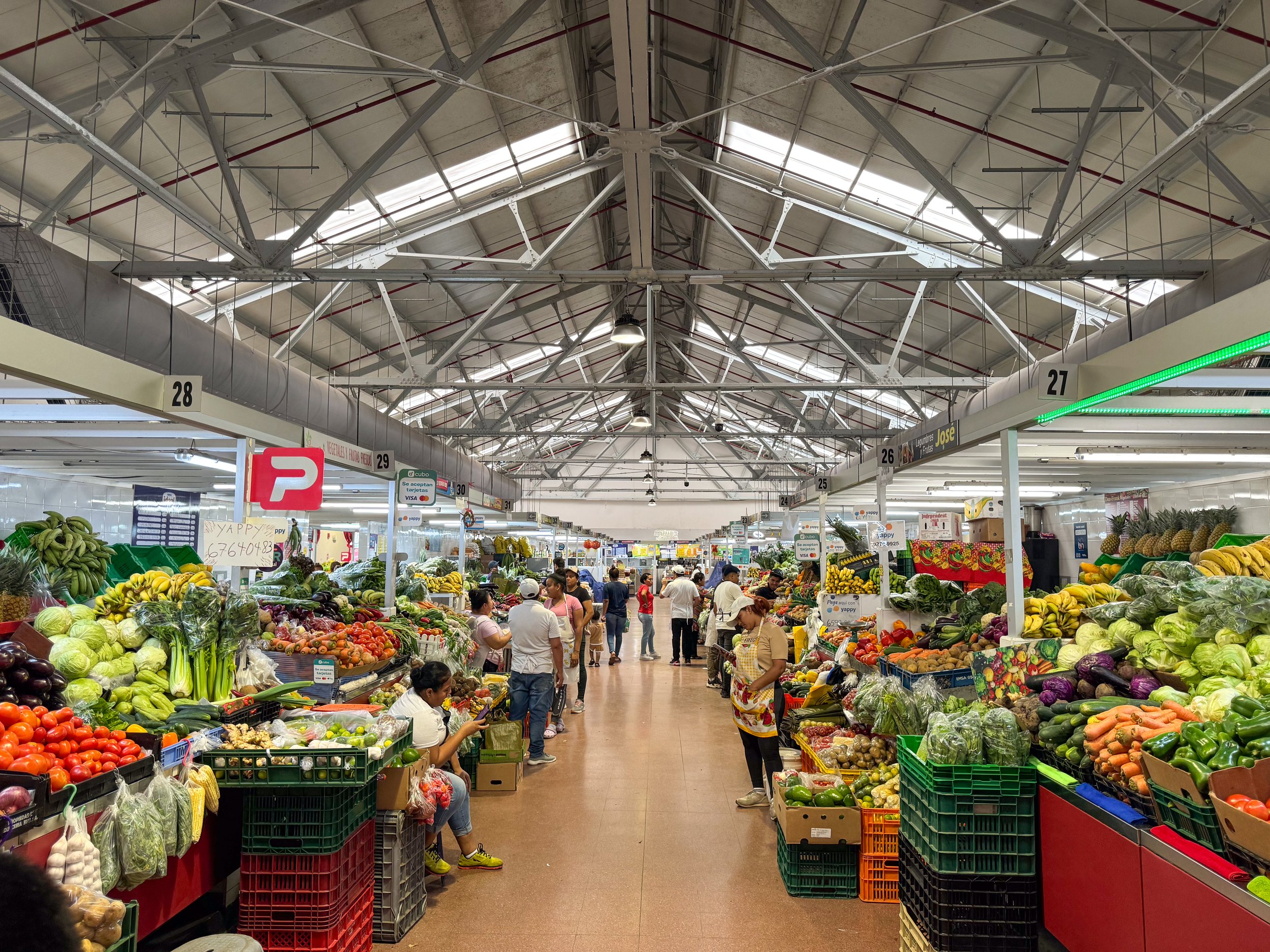
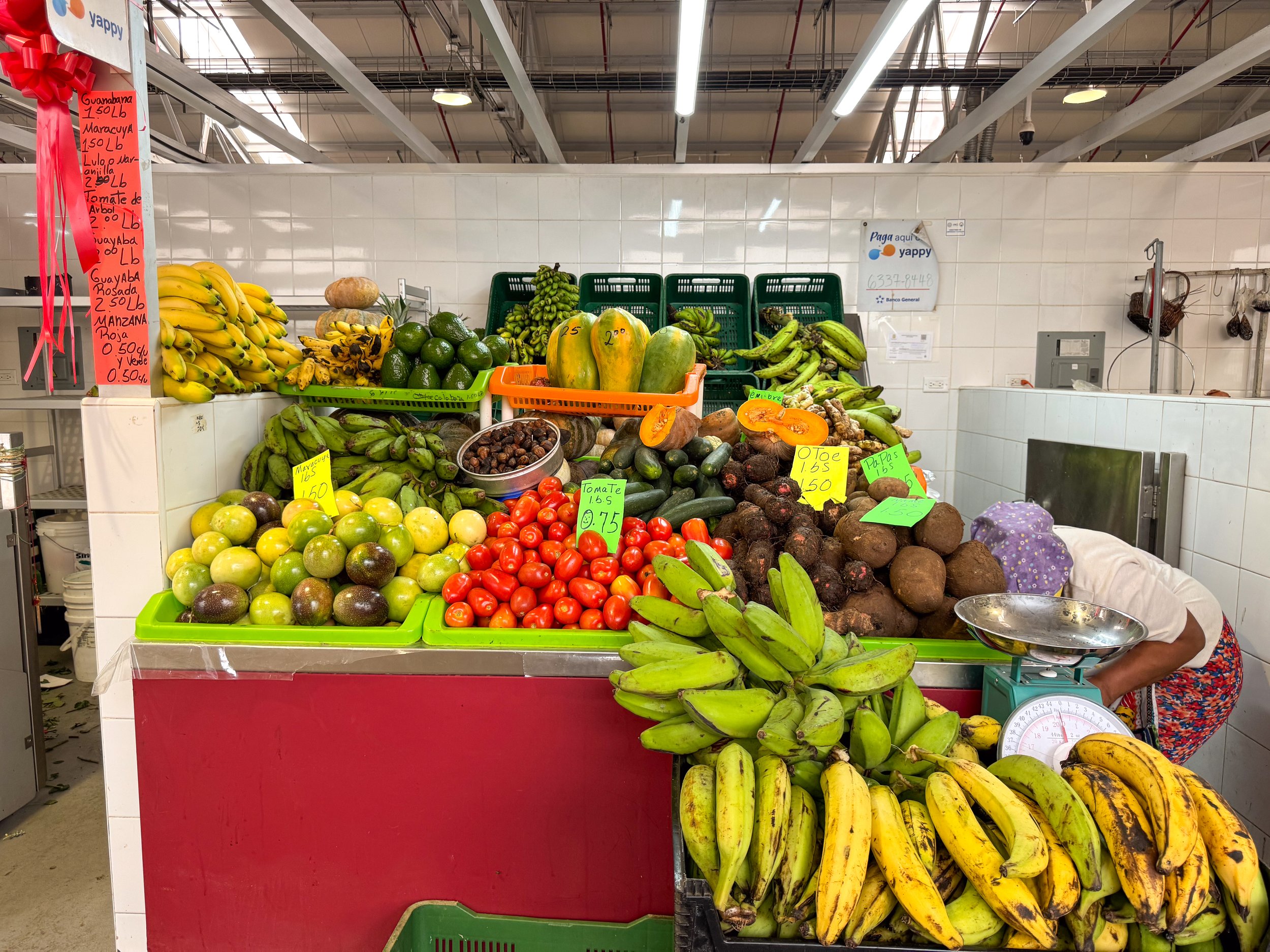
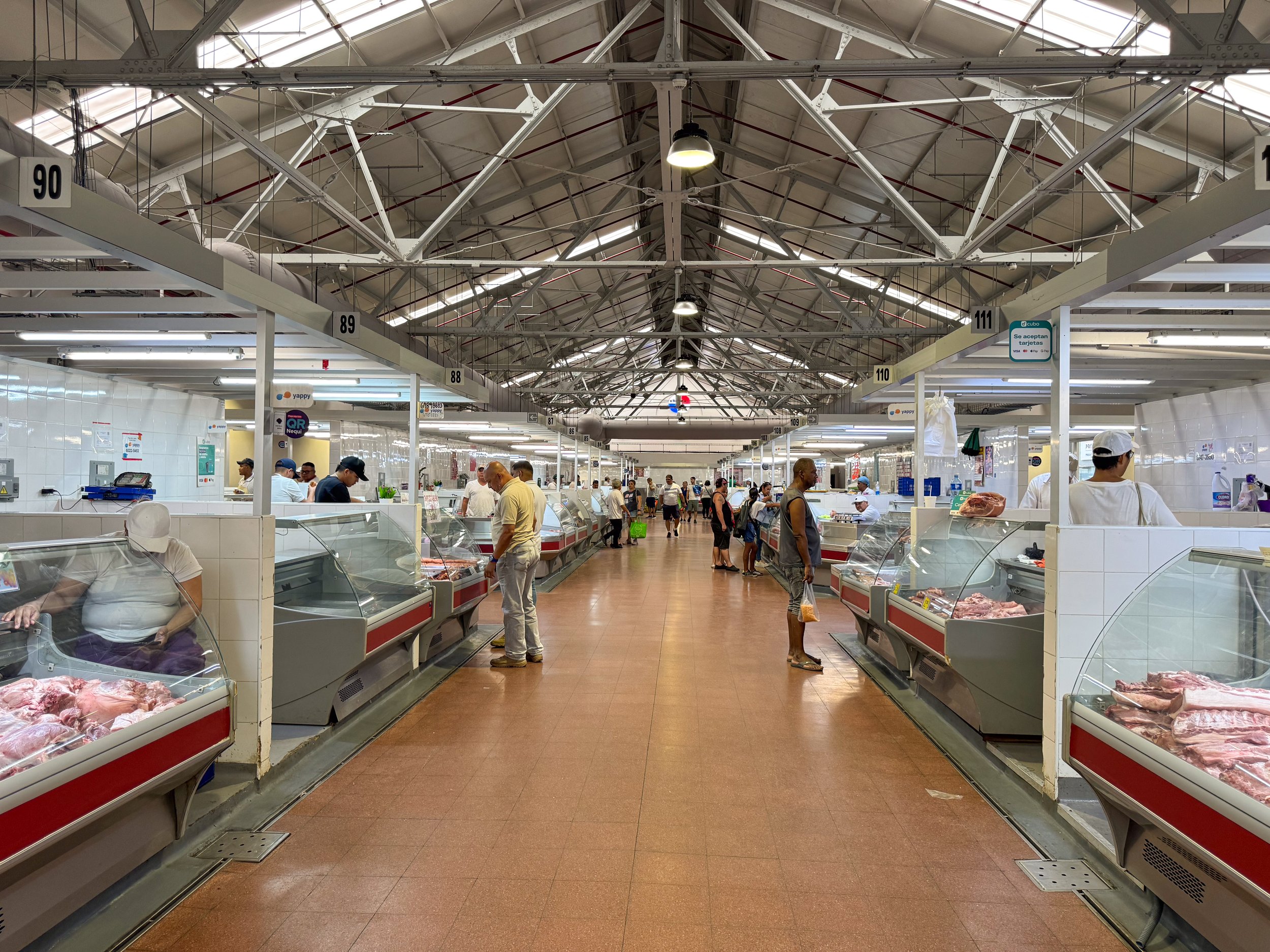
Shop the Markets
Mercado San Felipe Neri. A food market with butchers selling locally farmed meats and vendors selling locally grown produce, fruits, eggs, grains, herbs, oils and juices. We shopped for a week’s worth of groceries to cook with at our Airbnb.
Mercado de Mariscos. A seafood market with vendor selling piles of whole fish on ice, trays of shrimp, live crab and lobster, queen conch and mixed seafood. We bought a 2 lb Corvina, Panama’s favorite fish, and fried it using traditional methods. Opposite the market is a second building with restaurants and vendors cooking up the day’s fresh catch. Here we ordered Caribbean shrimp, coconut rice and local beers from Restaurante Allison.
Avienda Central. A pedestrian street stretching from Cinco de Mayo station to Casco Viejo with commercial shops, grocery stores, restaurants, cafes and street vendors selling produce, especially plantains stacked on tables and pineapples in the backs of trucks.
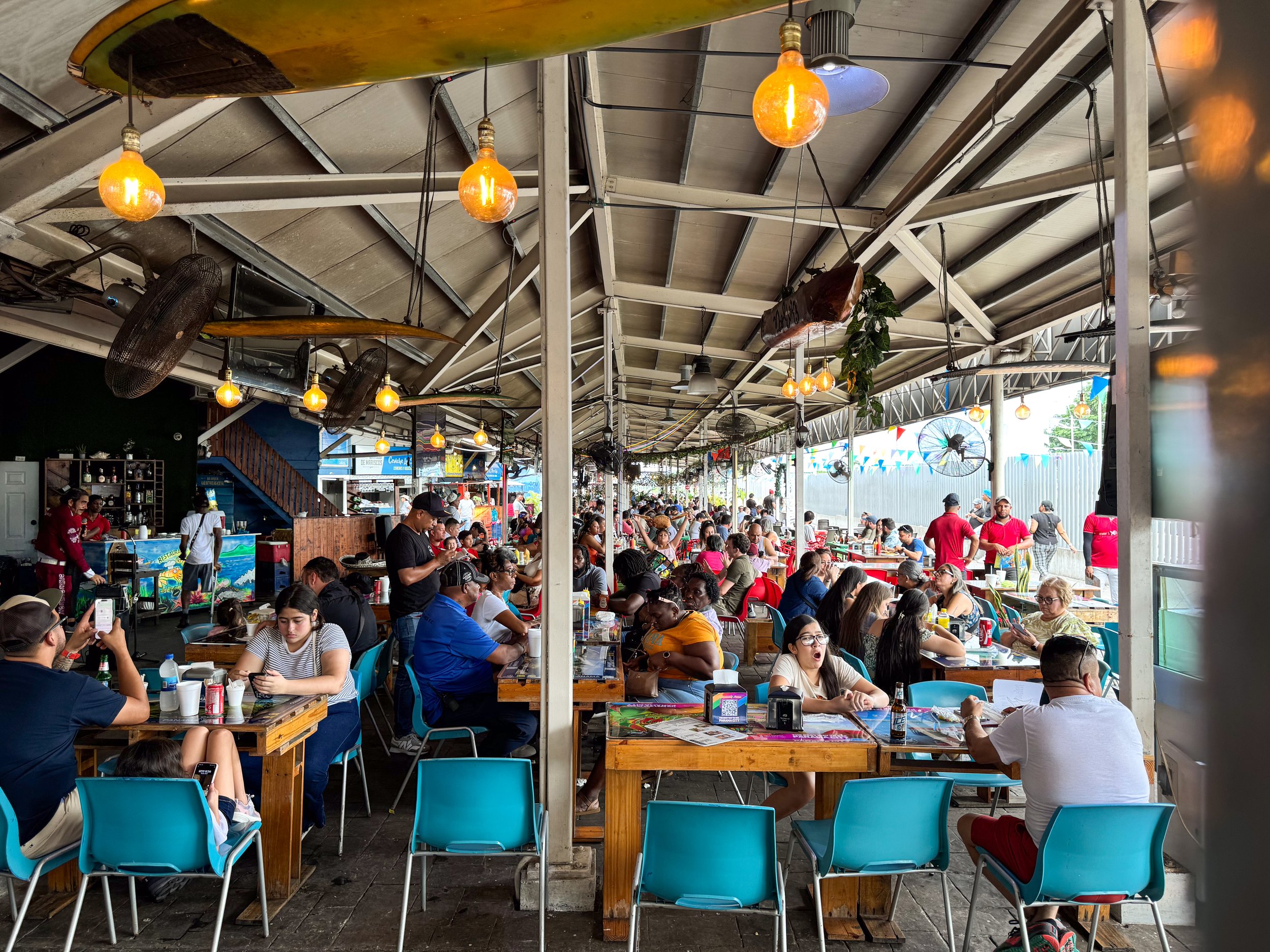
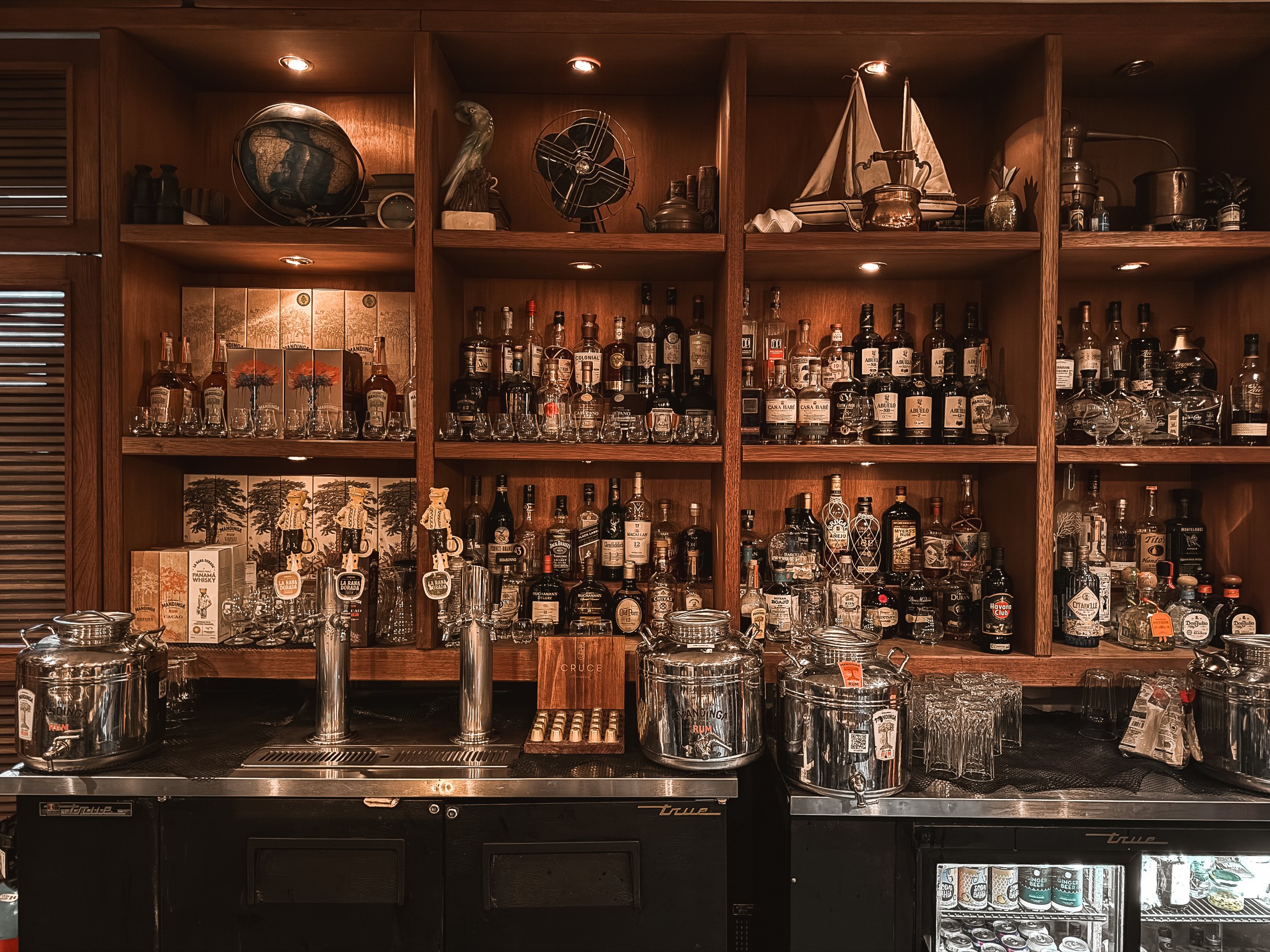
Places to Eat & Drink
Casco Mar. A restaurant along the seaside of Casco Viejo with a Spanish style tapas and paella menu. We sat outside listening to the waves and sounds of the city. To eat, we shared the plantains, passion fruit ceviche, white fish stuffed peppers, coconut flan and the most refreshing mojitos.
El Santuario. A very romantic and higher end restaurant built within the ruins of a former monastery. The interior is defined by its exposed stone walls, brick arches, high ceilings, terracotta tiled and patterned wood floors. The menu specializes in Panamanian and Spanish dishes. We shared a seafood paella with scallops, langoustine, mussels and calamari. To drink, we each ordered a glass of red sangria.
Snack Shack. A beautiful restaurant in Casco Viejo. We ordered a breakfast bowl of tropical fruits (mango, pineapple, banana and papaya) with a coconut cream sauce as well as a traditional breakfast with fried eggs, toast, potatoes and avocado. There is a Tiki Bar in the garden area at the back of the restaurant.
Café Unido Casco Viejo. An old town coffee shop and cafe with Panama grown and roasted beans.
Vista Corona Panama. A tropical rooftop restaurant and bar with palm trees, tiki torches, house music, a bar built from a VW Beetle and views of the old town’s rooftops and spires. We came here to relax with a cocktail after a long day of hiking and busing. Try the rum cocktails like an Old Cuban and Tobaga.
Tantalo Rooftop Bar. A rooftop bar in Casco Viejo with cocktails and local beers. We came here for sunset drinks overlooking the city’s terracotta roofs, cathedral towers and modern skyscrapers across the bay. Fittingly, we ordered a drink called, Noche en el Casco (Night in the Old Town).
Pedro Mandinga Rum Bar. A warmly lit rum bar with a wooden interior and old world charm. The bar features rums from countries across the Caribbean and Central America including Panama and their own distillations. Try a glass neat, order a flight of rums or sip on a classic cocktail.
VIP. A boutique and juice bar connected to Monos con Arte. Order a fresh Pepa Fria (cold coconut) to enjoy while walking around the old town.
Places to Shop
Casco Viejo is a very fashionable place with well dressed locals and tourists, boutiques and clothing shops selling Panama hats, linen clothes, colorful outfits and items made with tropical patterns and natural materials.
Boho Shack. A resort style street wear boutique with patterned shirts, shorts and pants. We bought a palm embroidered linen shirt! We’ve also visited their location in Cartagena where the brand is based.
Bellezas de Panama. A shop selling Panama hats, hand woven Molas and various souvenirs. We found this location to have the best selection and most affordable authentic Panama hats. The typical price is $40-$45 but the shop owner sold ours to us for $30.
Mansion Herrera Clothing Shop. A boutique clothing shop with elegant linen clothes and custom Panama Hats.
Lu Maca Coffee Shop & Store. A cafe and clothing store with tropical shirts, accessories and a small selection of Panama Hats.
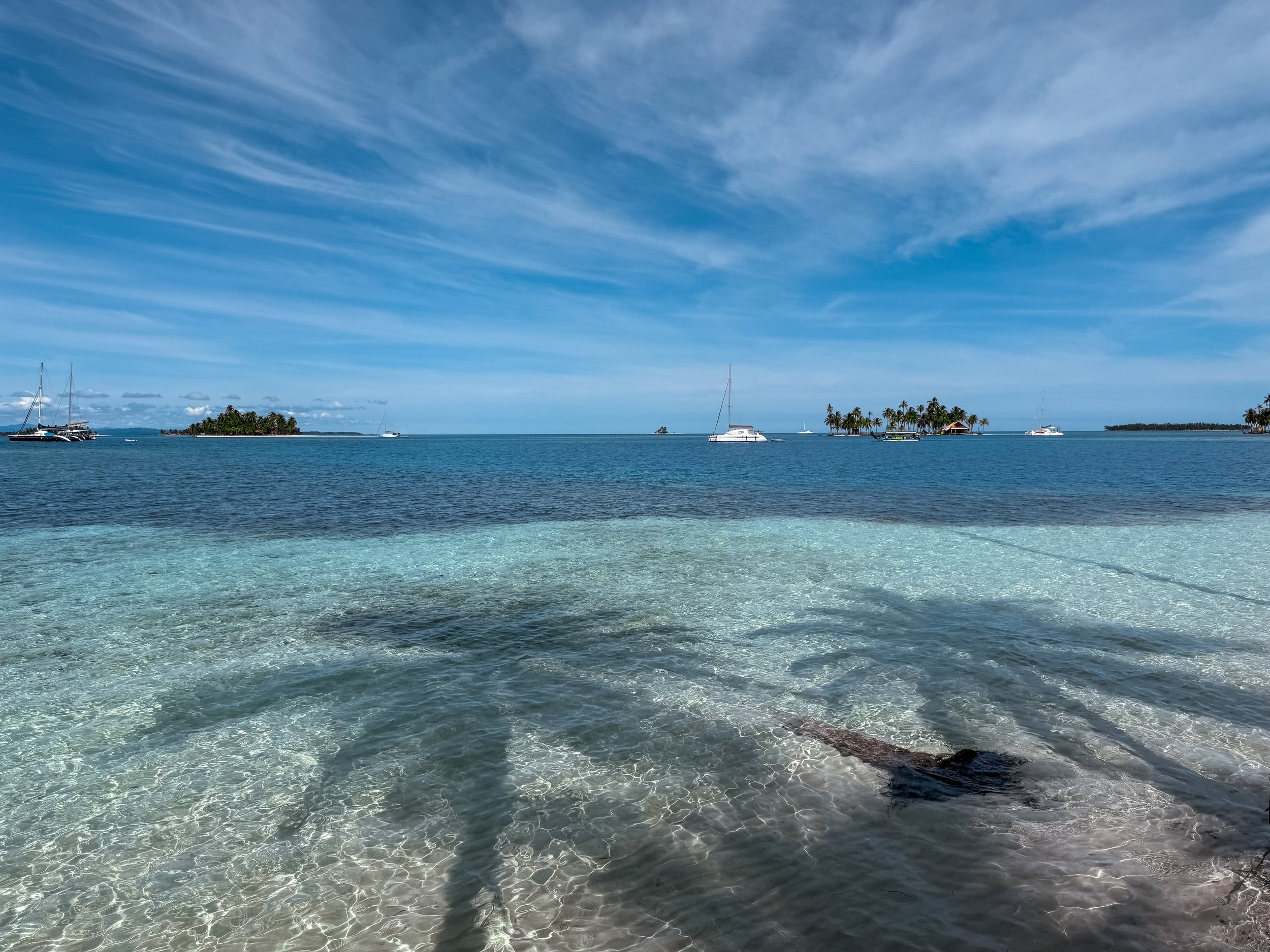
The San Blas Islands
The San Blas Islands are a series of many low lying islands and shoals on the Caribbean side of the country. They are a tropical paradise for beach hopping, snorkeling and learning about the Guna Yala indigenous community.
The Guna Yala Indigenous People. The region is an autonomous zone in Panama home to and managed by the Guna Yala. While here, it’s common to see islands covered in palm reed and thatched houses, women wearing traditional Molas and fishermen paddling between islands in dugout canoes.
Touring the Islands. We voyaged into the sea passing palm covered islands, looking back to see views of Panama’s mountains as the spray of the sea misted across our faces.
Private Island. After a scenic boat ride, we arrived at a beautiful private island covered in palm trees and surrounded by sandy shores with vibrant blue water and patches of seagrass.
Sand Bar. Two hours later, our guides brought us to a shallow sand bar with crystal clear water, star fish and a small coral reef to snorkel above.
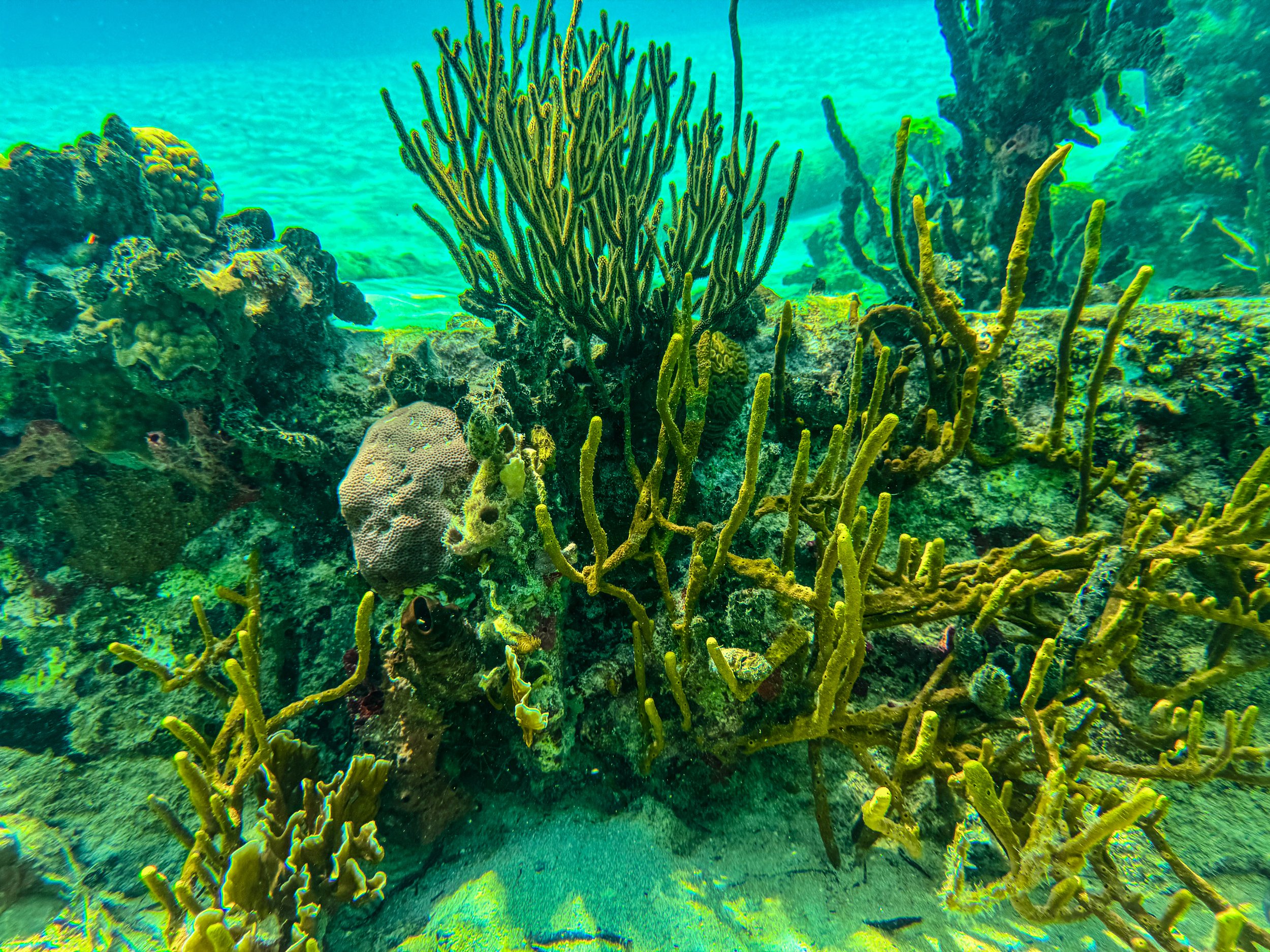
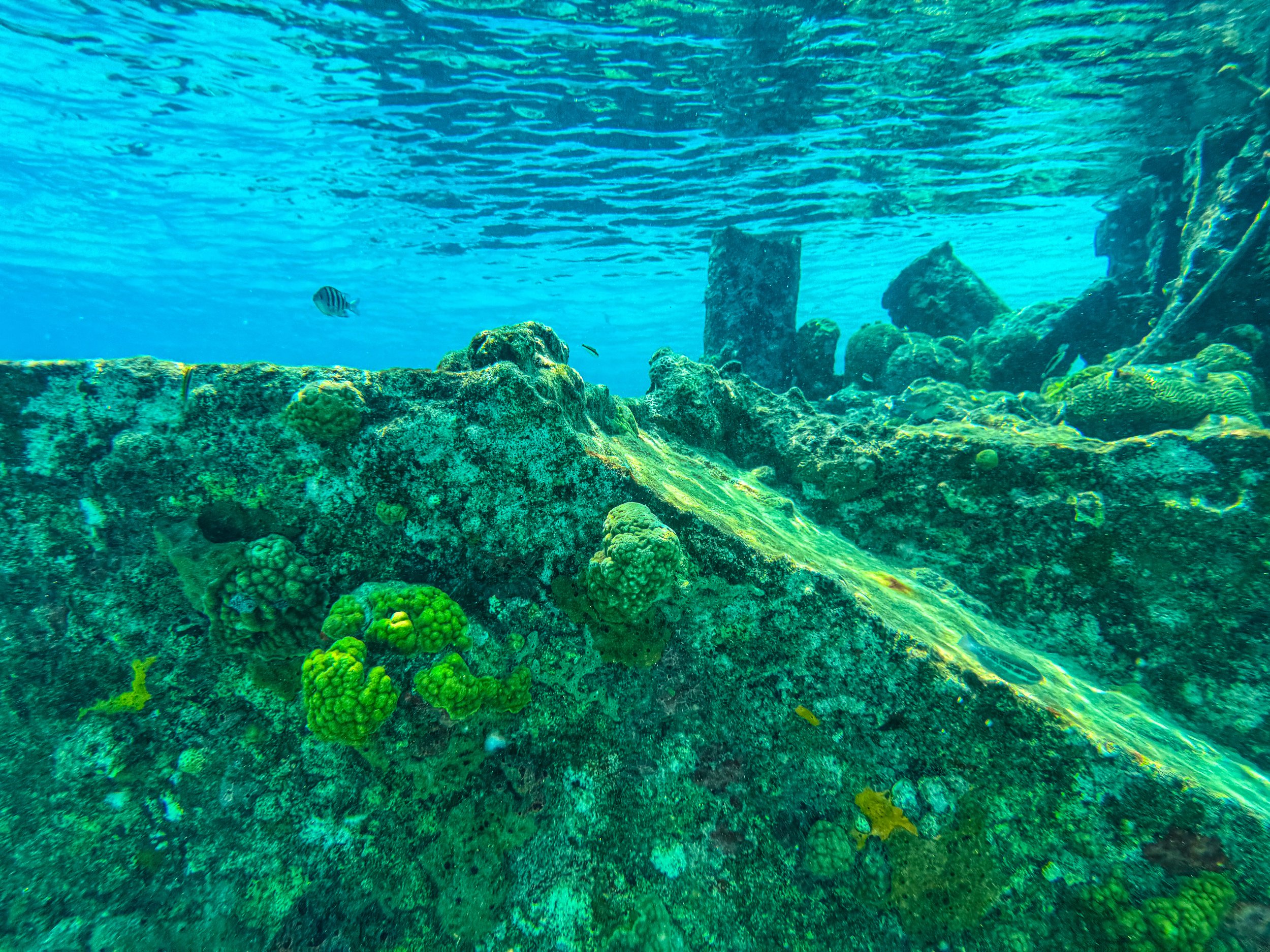
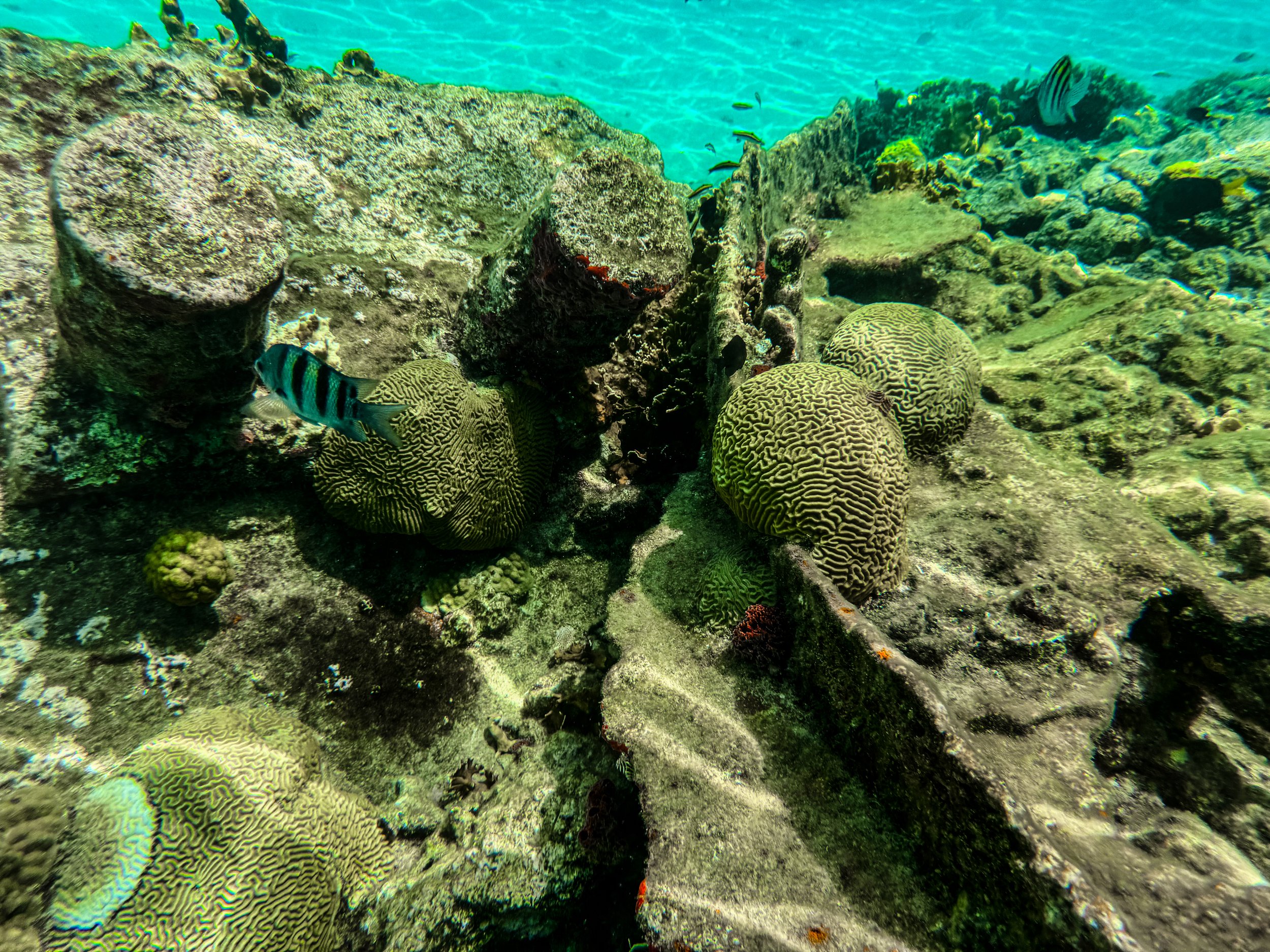
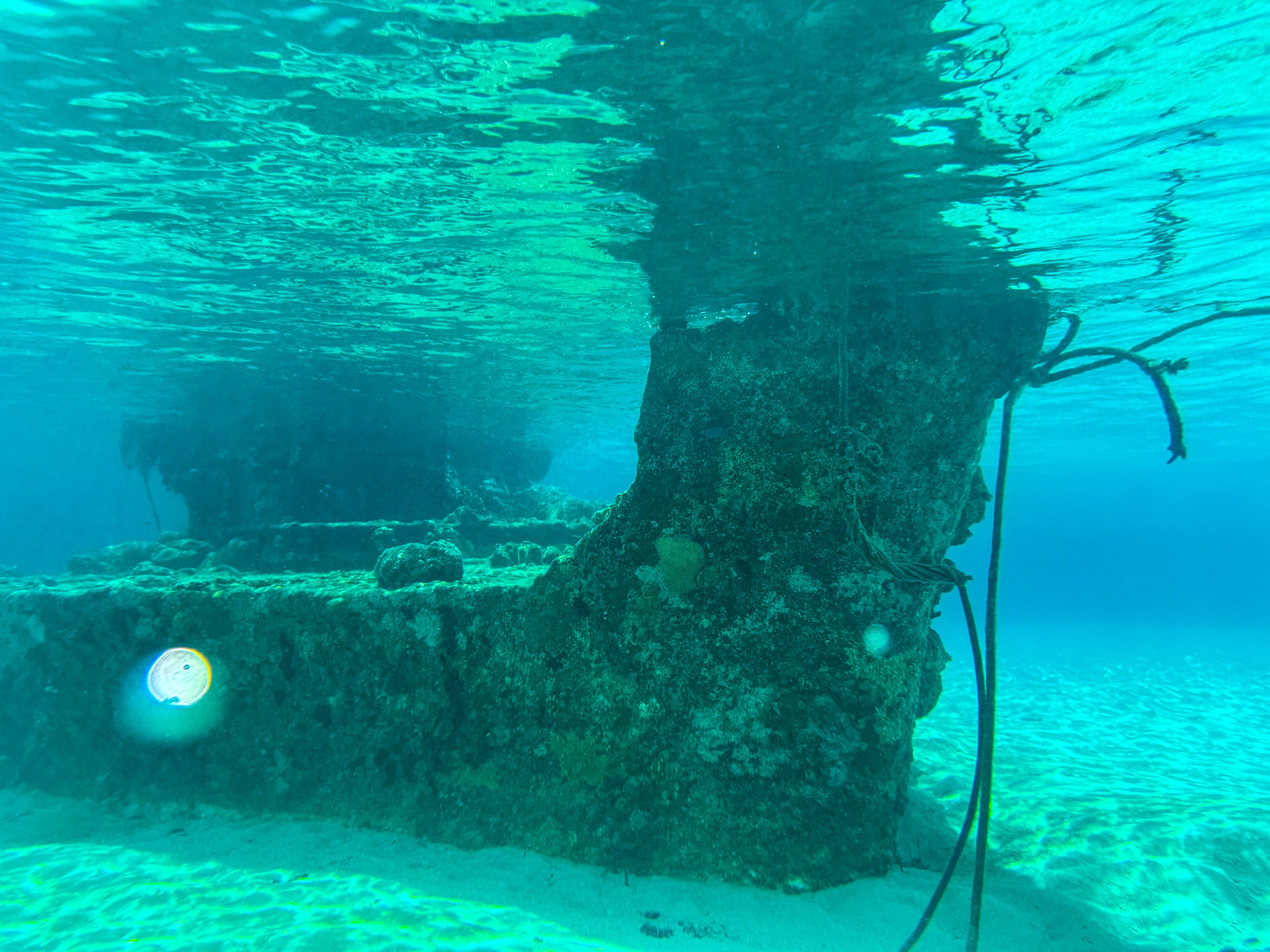
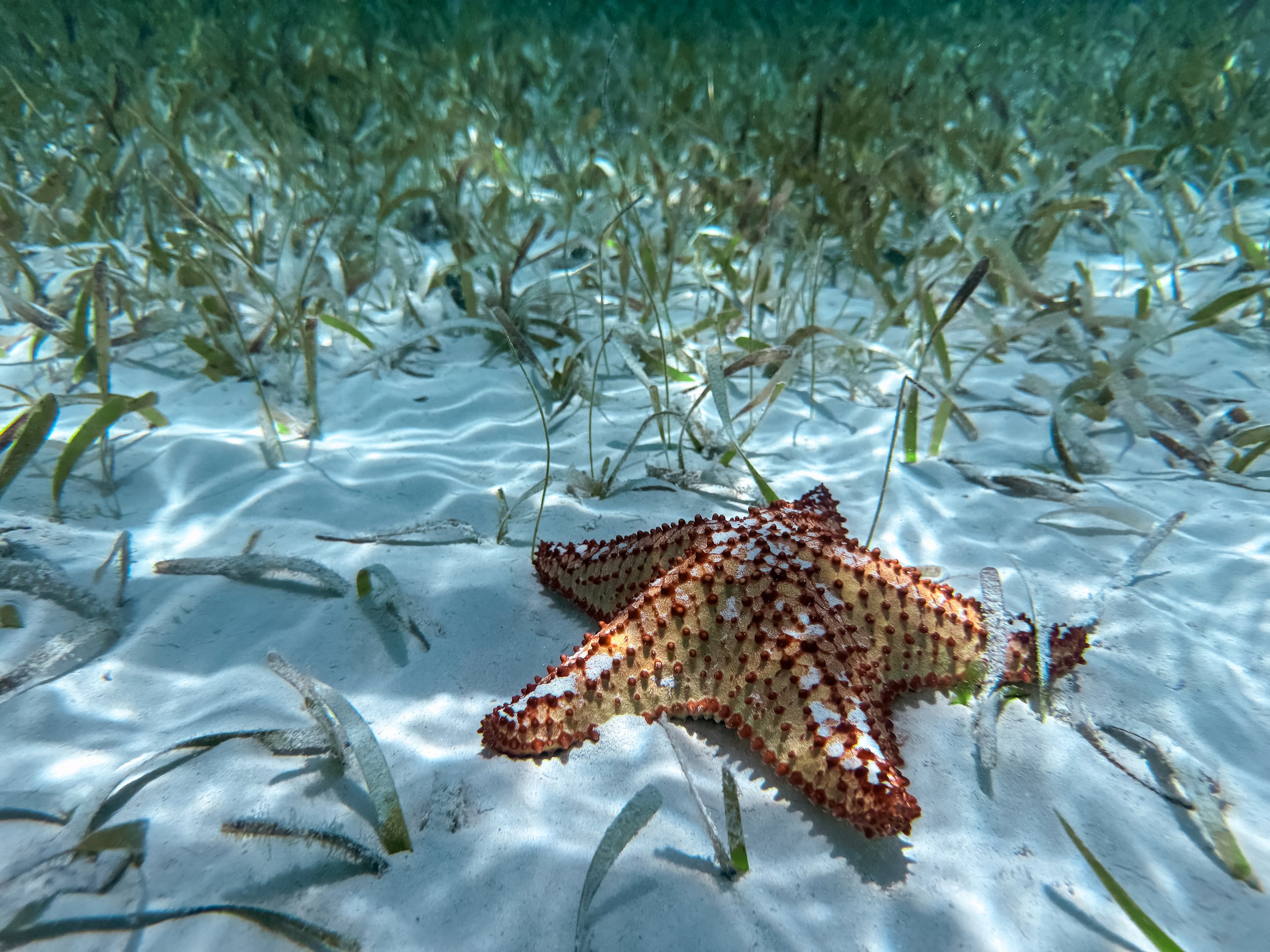
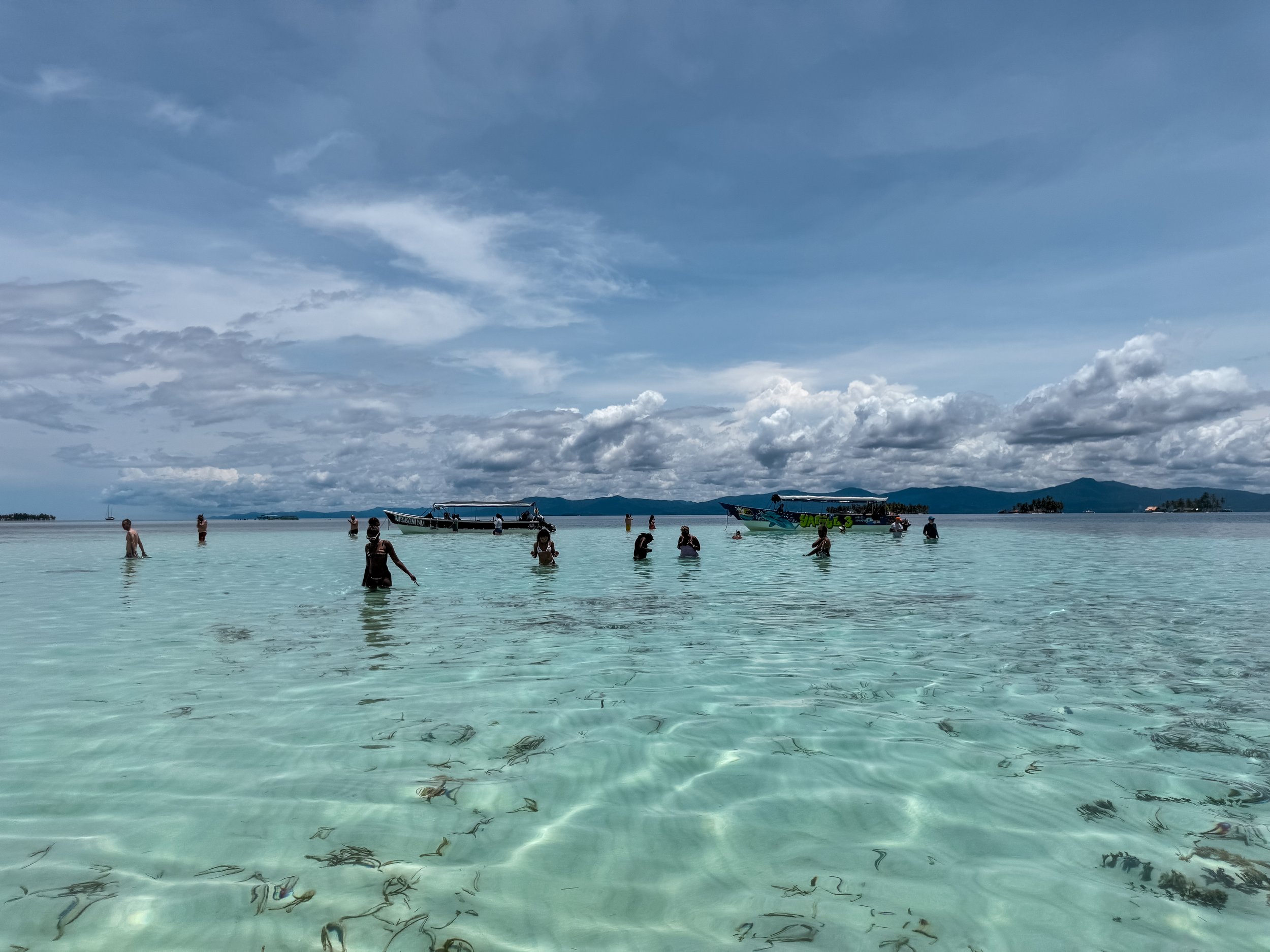
Dog Island. In the early afternoon, we arrived at an island with a sunken ship taken over by a thriving reef with all types of colorful corals and tropical fish. On shore, we were each served a whole fried corvina fish with patacones, fresh fruit and a local beer.
Isla Diablo. Towards the late afternoon, we visited one more island for beach time and tropical drinks before returning to Panama City.
Getting Here. We booked a tour with Panama San Blas Tours through Viator. Our guide picked us up at 5:15am and drove us 3 hours across the country through verdant forest and hilly terrain to reach the Caribbean coast and San Blas Islands. The last 30min of the drive were nauseating and extremely curvy with steep hills. Overall, the full day tour was incredibly memorable, very relaxing and well organized.
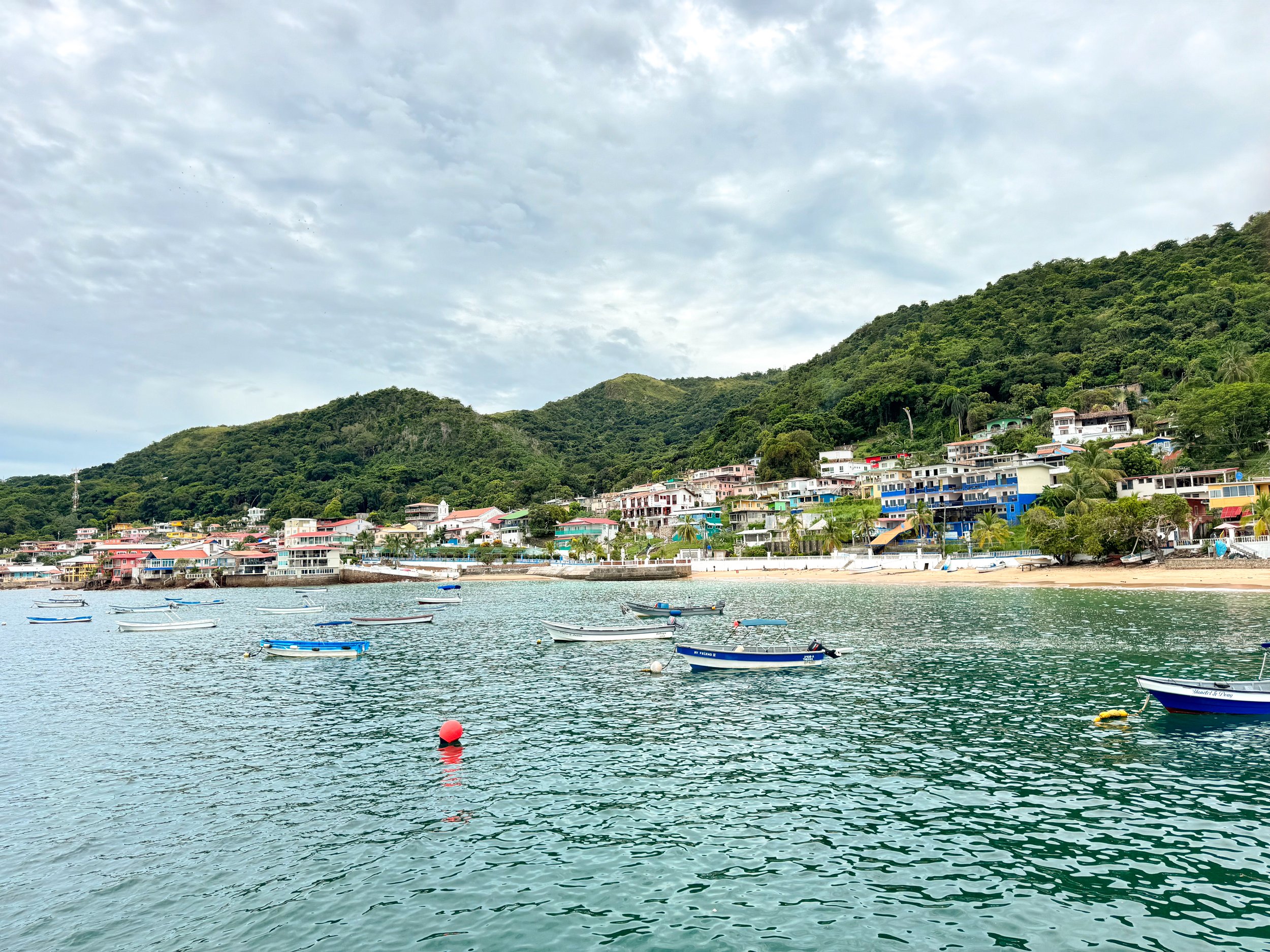
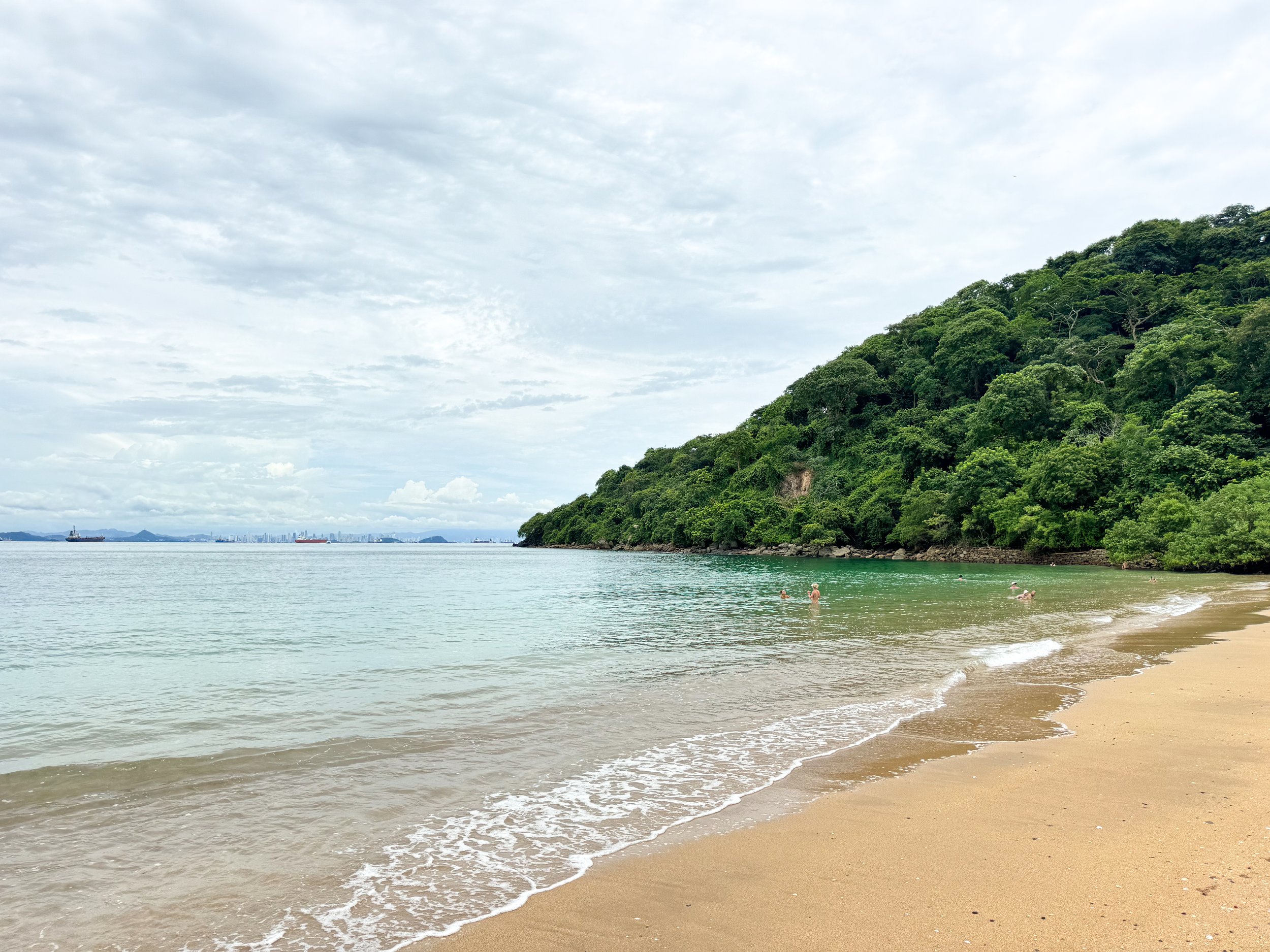
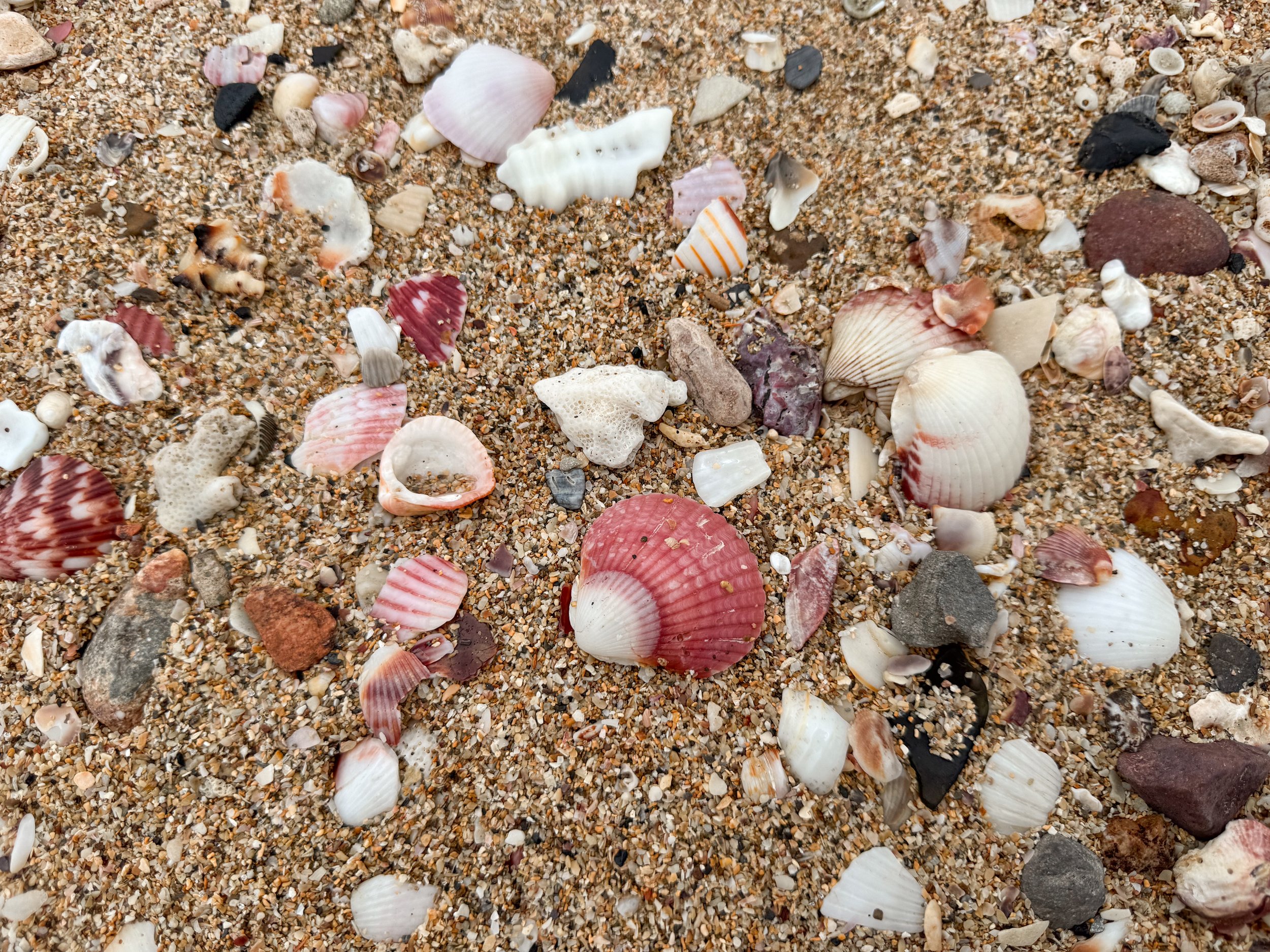
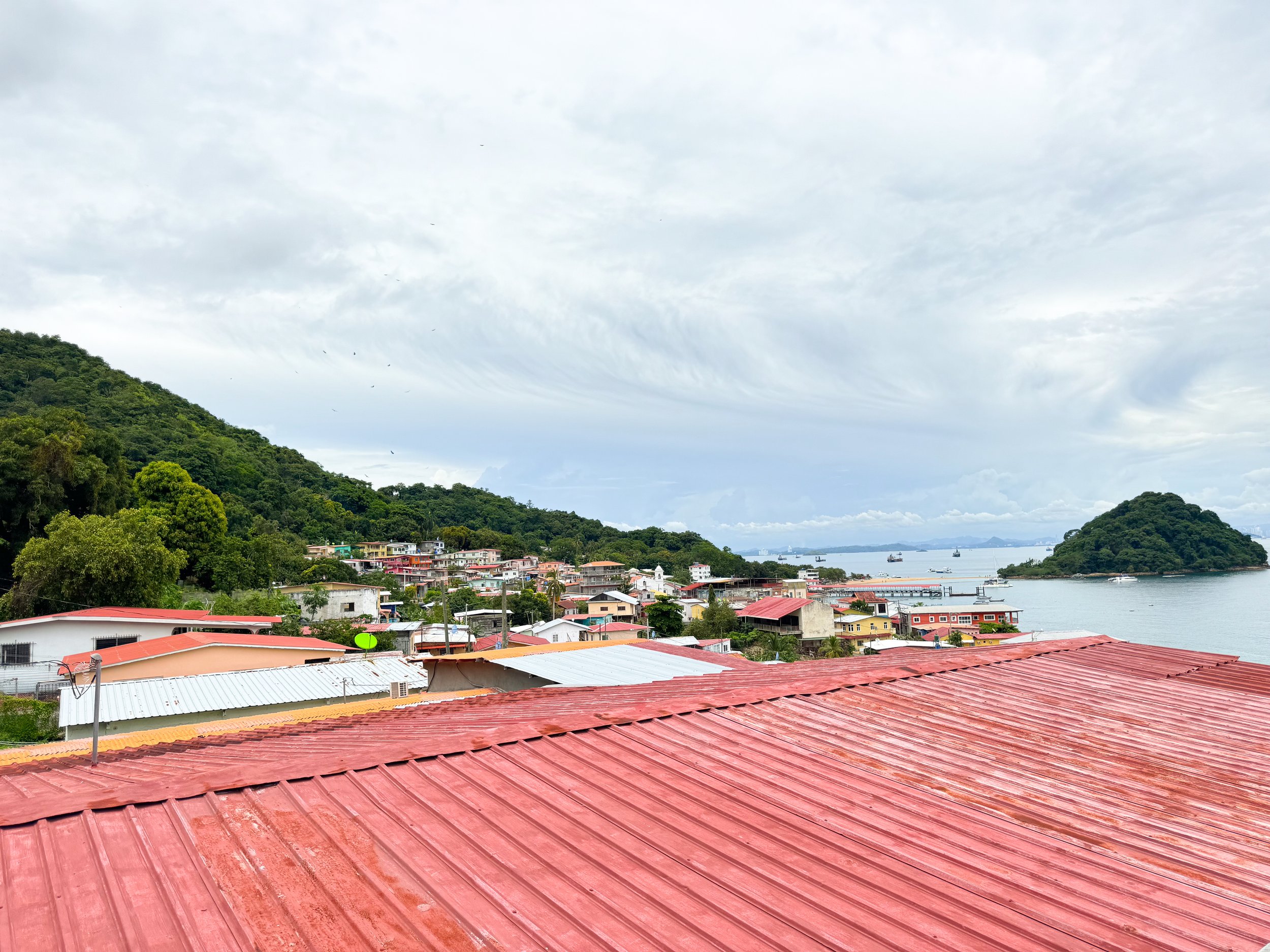
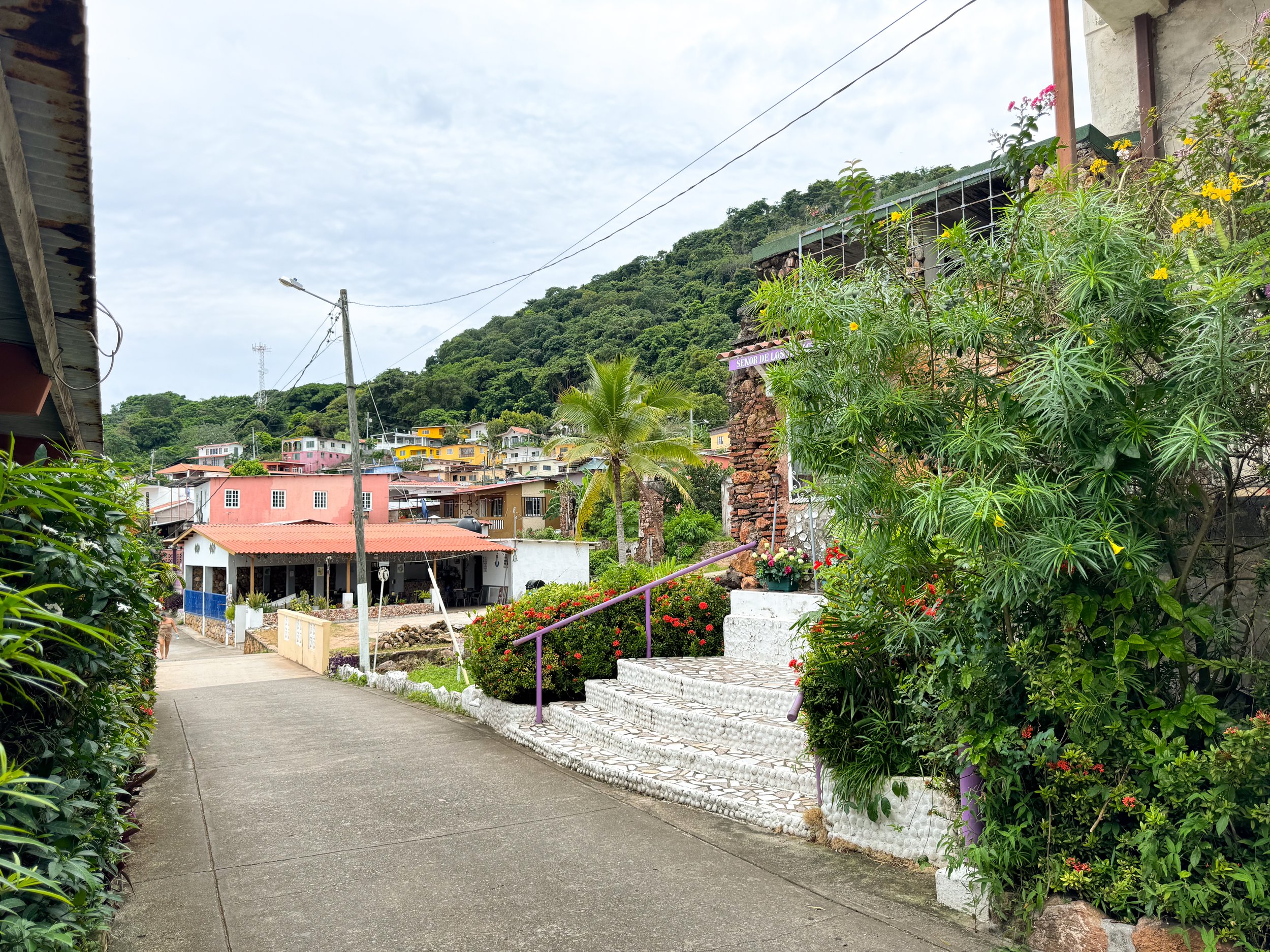
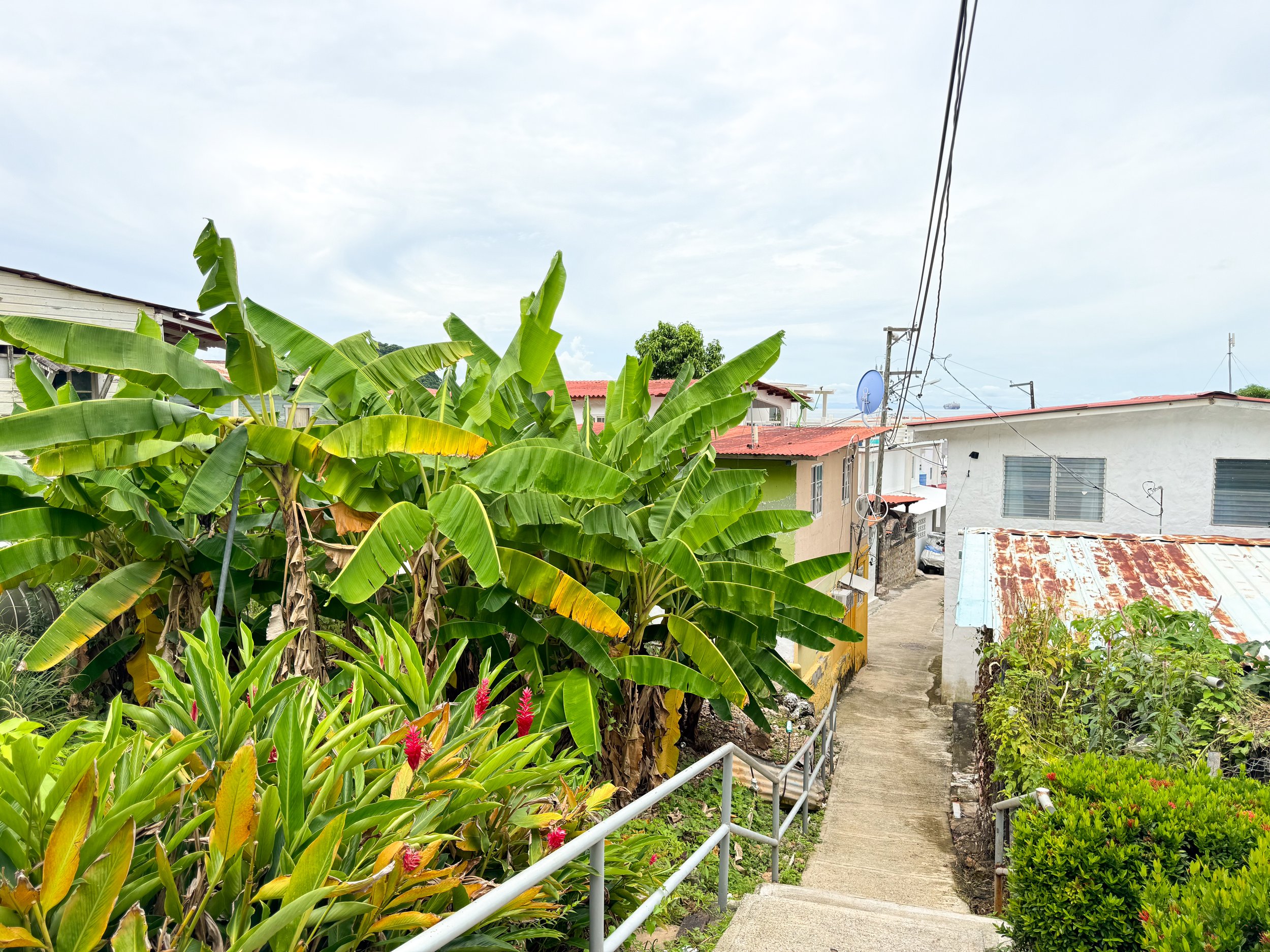
Taboga Island
The City of Taboga. Taboga is a colorful town built into the lush hillside of the island with laidback vibes, beaches and hiking trails. Here, locals drive around on golf carts and say hola (hello) or buenas (short for good day) as they pass by. The narrow streets and alleyways are lined with flowering trees and bushes with many light boxes housing statues of the Virgin Mary.
Playa La Restinga. A clean sandy beach that bridges Taboga and Morro Islands with views of the ship dotted harbor and Panama City skyline in the distance. The shore is covered in pink and white sea shells seen as decor on houses across the island. There are vendors selling beachwear, serving piña coladas in pineapples, preparing fried seafood and renting umbrellas, lounges and boats.
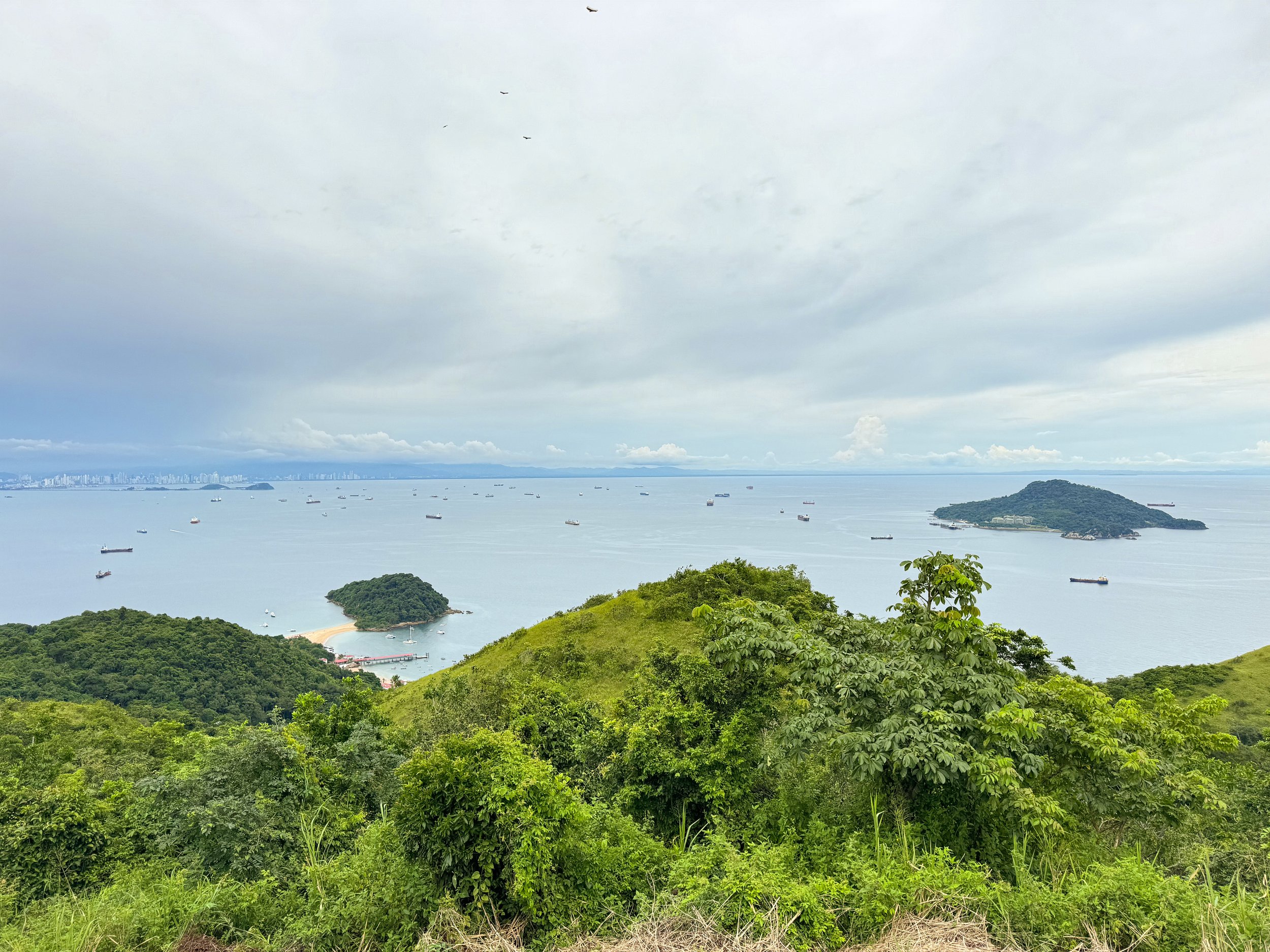
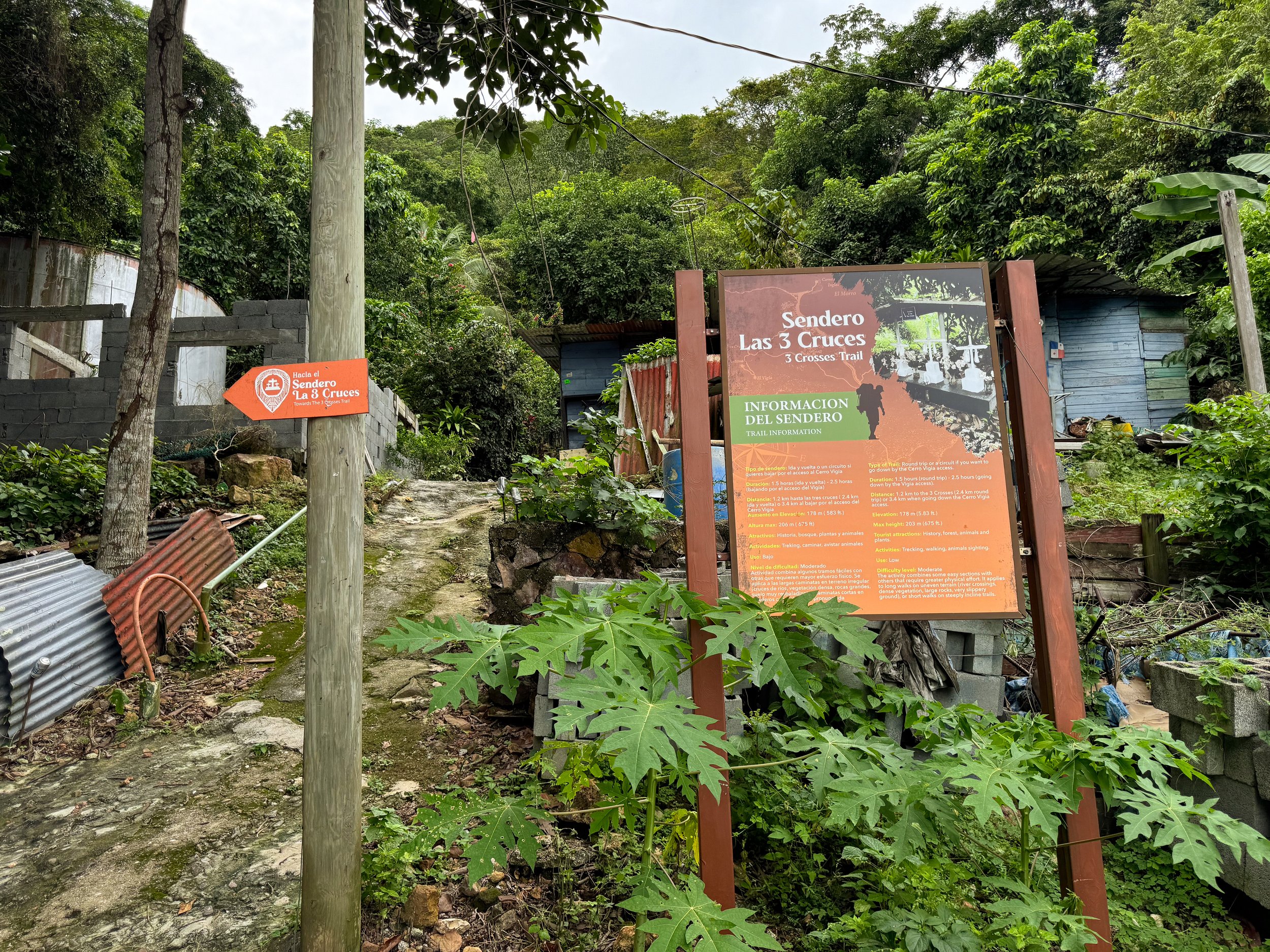
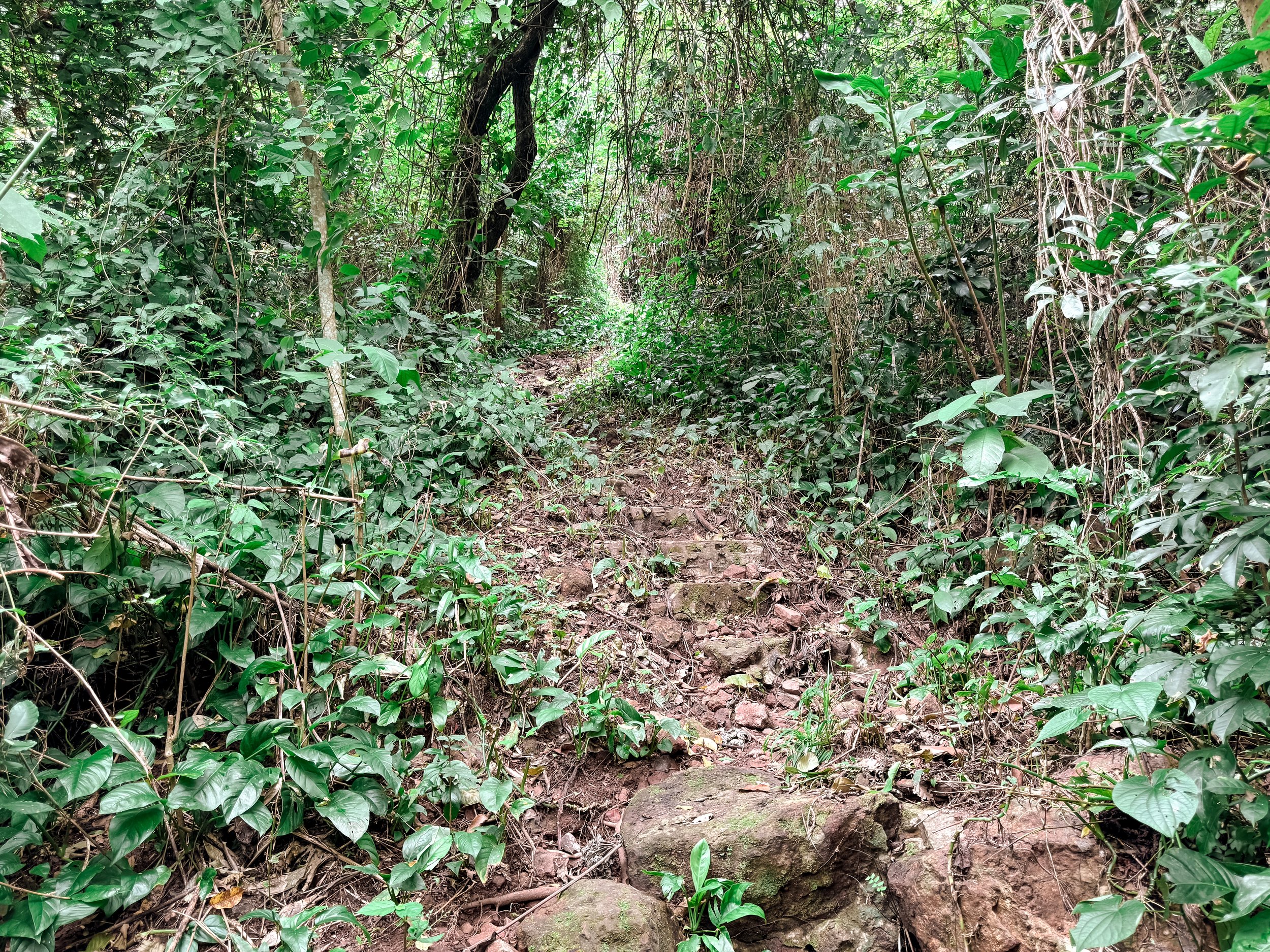
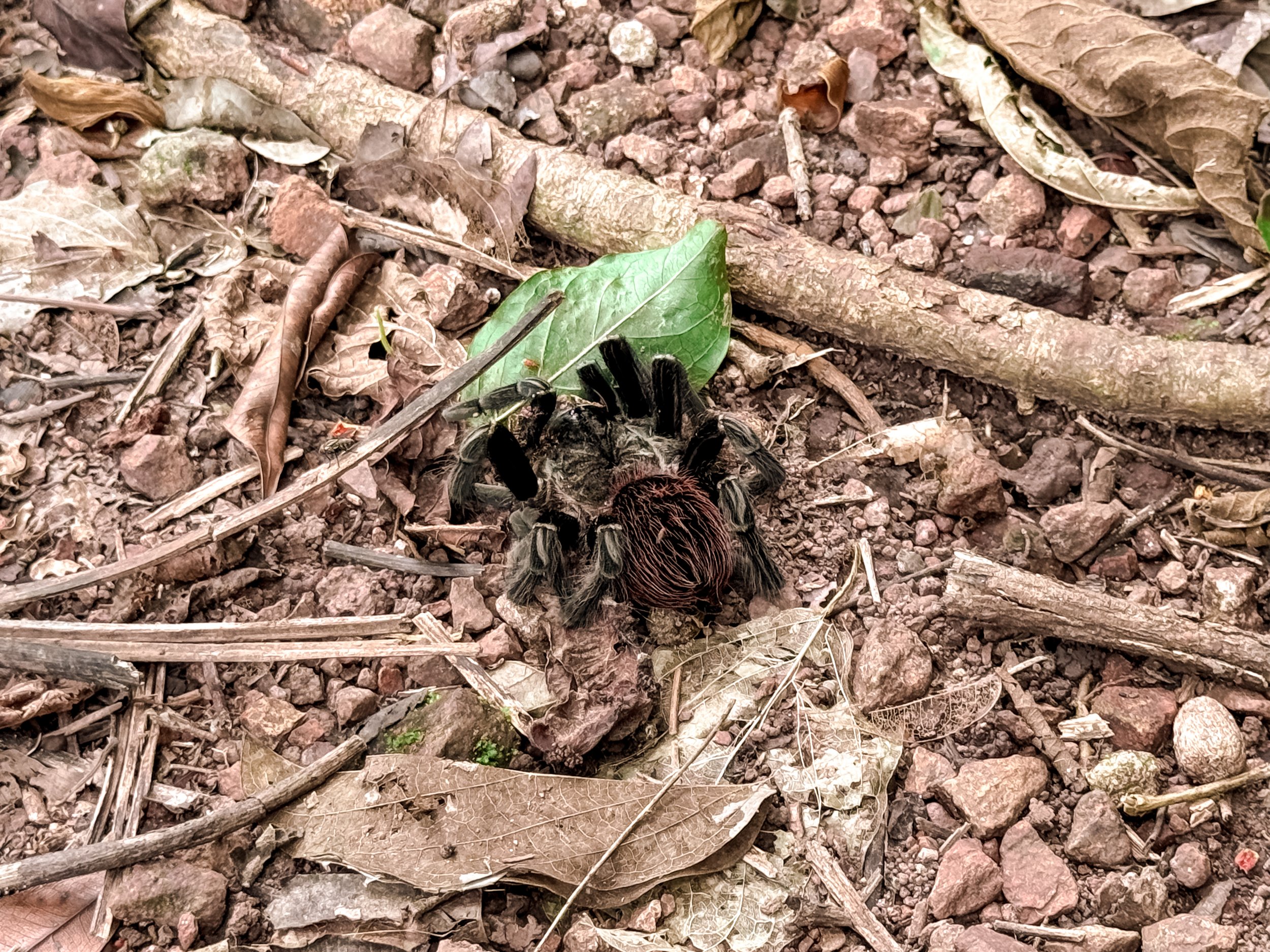
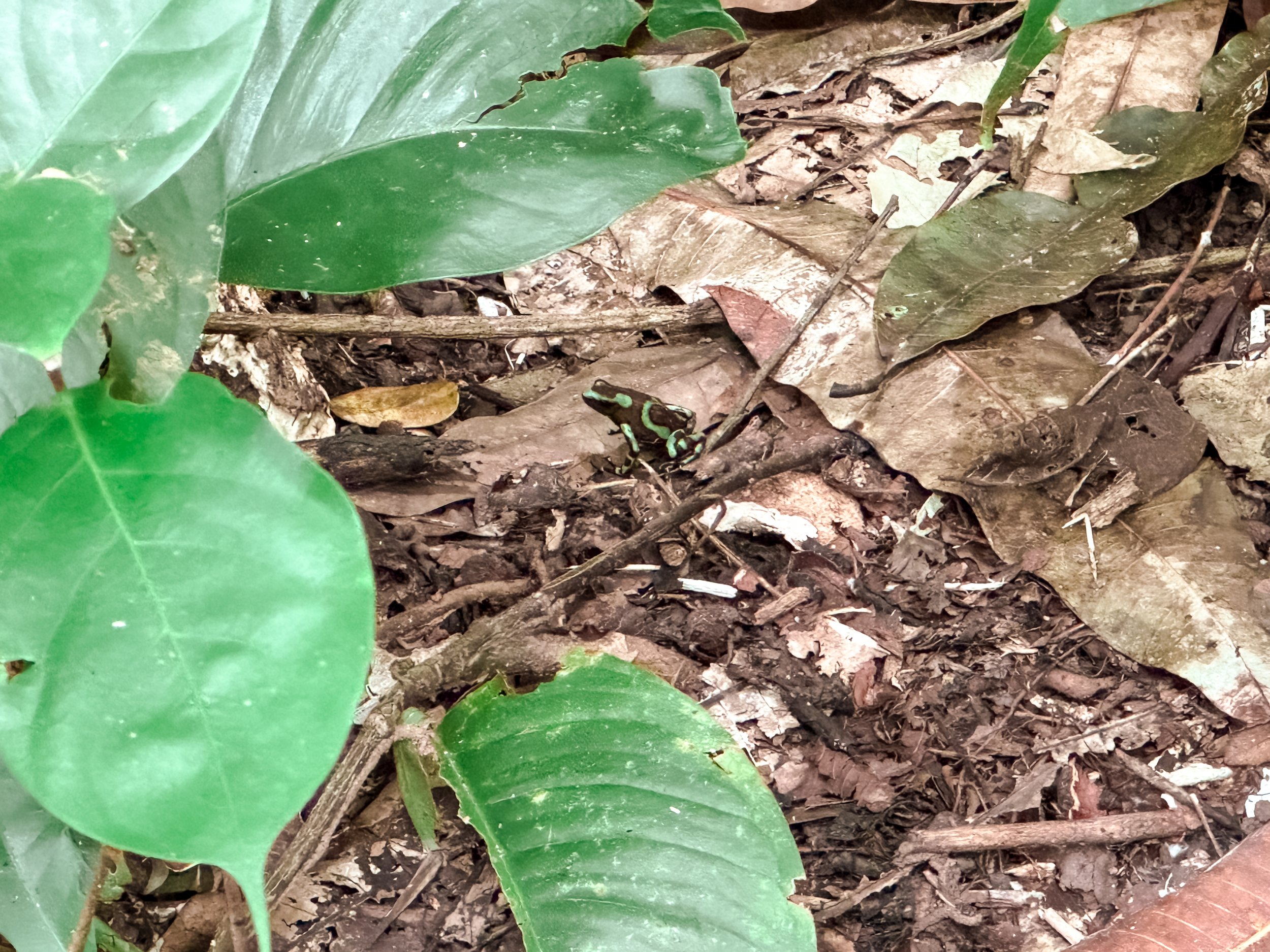

Sendero de Tres Cruces. Following the winding walkways up the hillside, we reached the trail head. The trail leads deep into nature so much so that you forget that a sprawling metropolis is still nearby. As we hiked through the humid forest, we heard the sounds of breaking of branches, the falling of fruit, buzzing insects and squawking birds. Along the way, we spotted tarantulas, numerous neon green and black poison tree frogs, large iridescent blue butterflies, skittish lizards and spiraling vortexes of vultures.
Cerro El Vigía. Sendero de Tres Cruces leads to an uphill but easy to walk road to the island’s summit, Cerro El Vigía. From the summit, the town of Taboga is dwarfed by the panoramic views of the lush island, hundreds of ships anchored in the bay and city beyond.
Getting Here. Visiting Taboga is an easy day trip from Panama City. We took the Taboga Express Ferry from the Amador Causeway. Along the 30min boat ride, the ferry passes dozens of anchored freighters and ships from all over the world waiting to enter the Panama Canal.

Panamanian Cuisine
Ceviche. White fish cured in lime juice with peppers, red onion and cilantro. It’s one of the most popular dishes seen at restaurants across Panama.
Corvina. A white fish popular in Panama. It’s often grilled or fried whole.
Paella. A pan rice dish cooked in a pan with broth, spices, veggies, and meat. It’s also called One Pot on the Caribbean side of the country.
Patacones. Twice fried and smashed plantain.
Rice & Beans. The classic Central American dish made from the two ingredients with spices.
Hojaldra. Fried dough often served at breakfast.
National Beers
Balboa. A semi nutty beer similar to a Modelo.
Panamá. A light beer similar to a Bud Light.
San Felipe. A pretty standard and easy drinking lager.
Where to Stay
La Manzana. A large mixed use building with modern apartment rentals, artist studios and a co-working space. It’s a quick 10 minute walk through the arts district to Casco Viejo. We stayed in a well equipped and well designed studio here during our time in Panama City. Book here on Airbnb.
Getting Around
By Metro. Panama City has a very modern and efficient metro system with two lines crossing town. We took the metro from the airport to just outside of Casco Viejo neighborhood.
By MetroBus. Buses are the most economical way to navigate Panama City, though inefficient. Expect to wait a minimum of 30 to 45 minutes for most lines.
Albrook Station. Panama’s Central Terminal for the metro and buses. City buses from here are generally efficient and affordable. There are routes from here to destinations across Panama.
Tarjeta Recargable Para Metro y Metrobus. Buy a re-loadable card at any metro station for $2. Fares cost around $0.25 to $0.50 for both metro and metrobus.
Yellow Cabs. Taxis are all over the city. Drivers looking for fares will often tap their horn looking for passengers as they drive around the city.
Uber. A secure alternative to taxis. Fares cost $1-$10 to get around the city depending on distance and time of day or $20-$30 to/from the airport.
On Foot. Casco Viejo is very walkable. Any further distances will require public transit or an Uber.
Panama Stop Over
We booked our flights with Copa Airlines taking advantage of their stop over program when transiting through Panama City. The airline paid for our flight to Panama City en route to our final destination. Stopovers can last anywhere from a minimum of 24 hours to a maximum of 7 days. We stayed the full 7 days. This saved us hundreds of dollars on flights and allowed us to visit a country that’s been on our list for years!
Location Specifics
Currency. Panama uses the Panama Balboa and US dollar interchangeably. They are valued equally.
Toilets. Like many places in Central and South America, the plumbing can’t handle toilet paper. If there is a bin next to a toilet, that’s where it’s intended to go.
Language. Spanish and English are widely spoken by most people, restaurant menus and most museums have descriptions in both languages.
Ticket Prices. The costs for foreign tourists at most sights and museums are about 20-30% higher.
Tipping. 10-15% is standard for tipping.
Safety. We found Panama to be a very safe country. People are friendly and helpful. There is a strong tourist police and military presence throughout Casco Viejo, likely due to the location of the president’s residence.
Tourism. We did not come across a single American tourist. Many people visiting came from across Panama and other countries in South America.
LGBTQ+ Safety. Panama is a very welcoming country to the LGBTQ+ community. We saw many other gay couples, travelers and tour operators.
For Next Time…
We loved our time in Panama and with Copa Airline’s Stopover Program, we will certainly be returning. When we do, we hope to visit more areas along the Pacific and Caribbean coasts.
Coiba National Park. A bio reserve with beaches, reefs and rainforest. Come to hike the rainforest, snorkel with marine life, swim with whale sharks, surf pacific waves, spot tropical birds, monkeys and sloths.
Bocas del Toro Archipelago. A chain of 300 plus Caribbean islands with beaches, coral reefs and surfing spots. It’s a hub for Afro-Caribbean cultures with calypso, reggae and soca music and cuisine made from seafood cooked in coconuts and seasoned with spices. Popular islands to visit are Colon, the Bastimentos and Carenero.