Siem Reap Travel Guide: Angkor Wat, Ancient Temples & Cambodian Heritage
Siem Reap, Cambodia
Siem Reap is the ancient capital and cultural hub of present day Cambodia. It’s surrounded by archeological sites, historic temples and ancient ruins, most notably, Angkor Wat. The city itself is home to Buddhist temples, local markets, lively nightlife and a royal residence.
Angkor Wat
Angkor Wat is a mysterious and historic complex comprised of overgrown and crumbling structures, towering stupas, jungleous pyramids, rectangular lakes and sprawling temples decorated in intricate details, carvings and statues. Many sites date back well over 1,000 years and some remain active Buddhist temples today. It takes multiple days to explore the vast complex to truly appreciate its grandeur and history. We passed by ruins in our tuk tuk, watched sunrises beyond them, walked through their ancient chambers and climbed their steep steps. Angkor Wat is a true world wonder that connects the ancient past and modern day.
Getting Around Angkor Wat
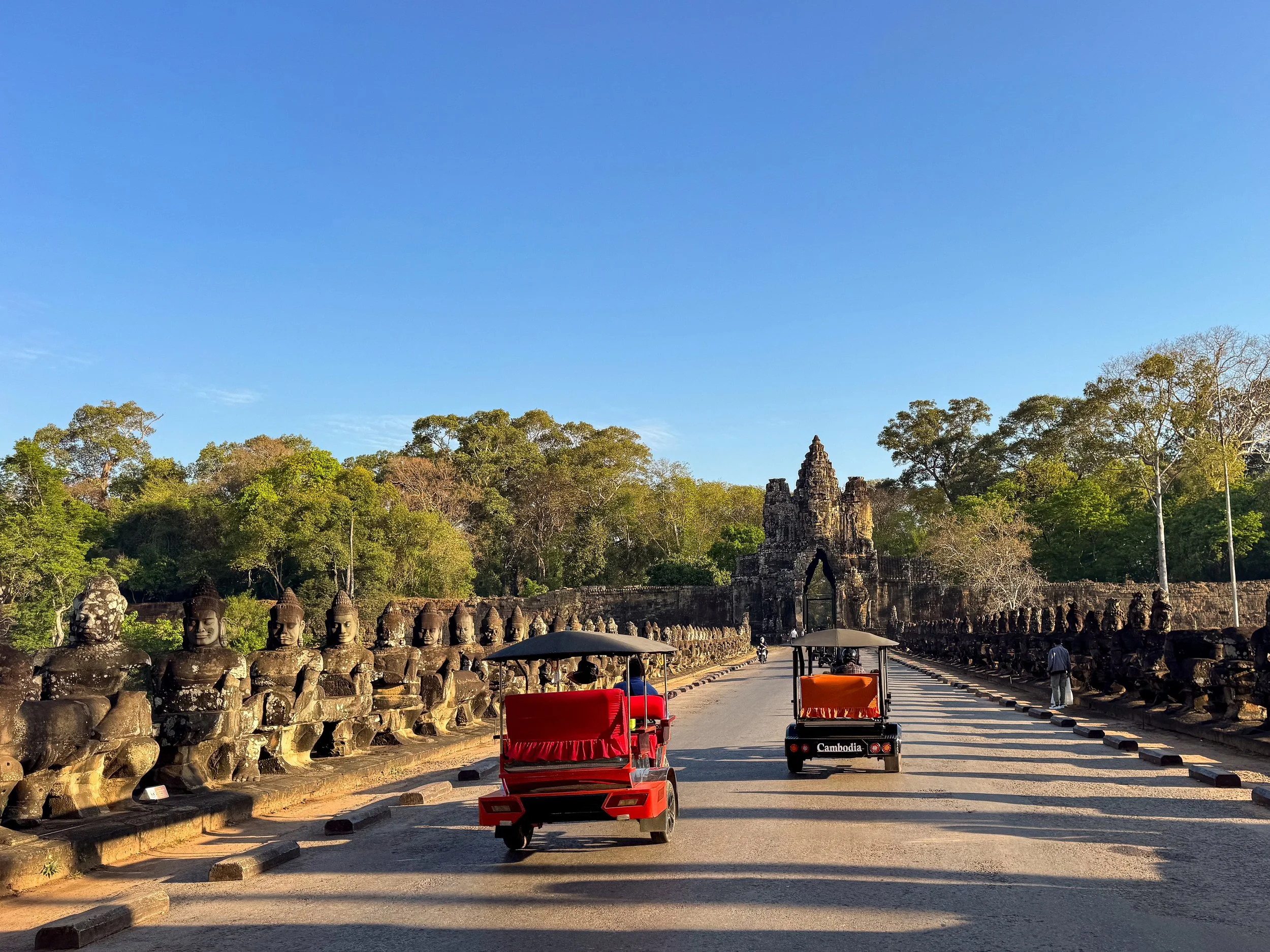
The best way to visit Angkor Wat is by hiring a tuk tuk for the day. Drivers charge $25-$30 USD per day including a return trip to the city during the afternoon for lunch, rest or to escape the heat. Our driver gifted us Cambodian scarfs, supplied ice water and cold towels scented with lemongrass. We found our driver at the bus station but they can also be booked on Trip Advisor.
Three Day Self-Guided Tour
Angkor Wat Tickets. Single day, three day and seven day tickets are available to visit Angkor Wat. They should be purchased ahead of time from the Official Website. Keep a digital or printed copy on you at all times for guards to scan at each temple. We visited Angkor Wat over three days, planning our route to maximize time in the mornings, avoiding peak visiting hours and the harsh afternoon heat.
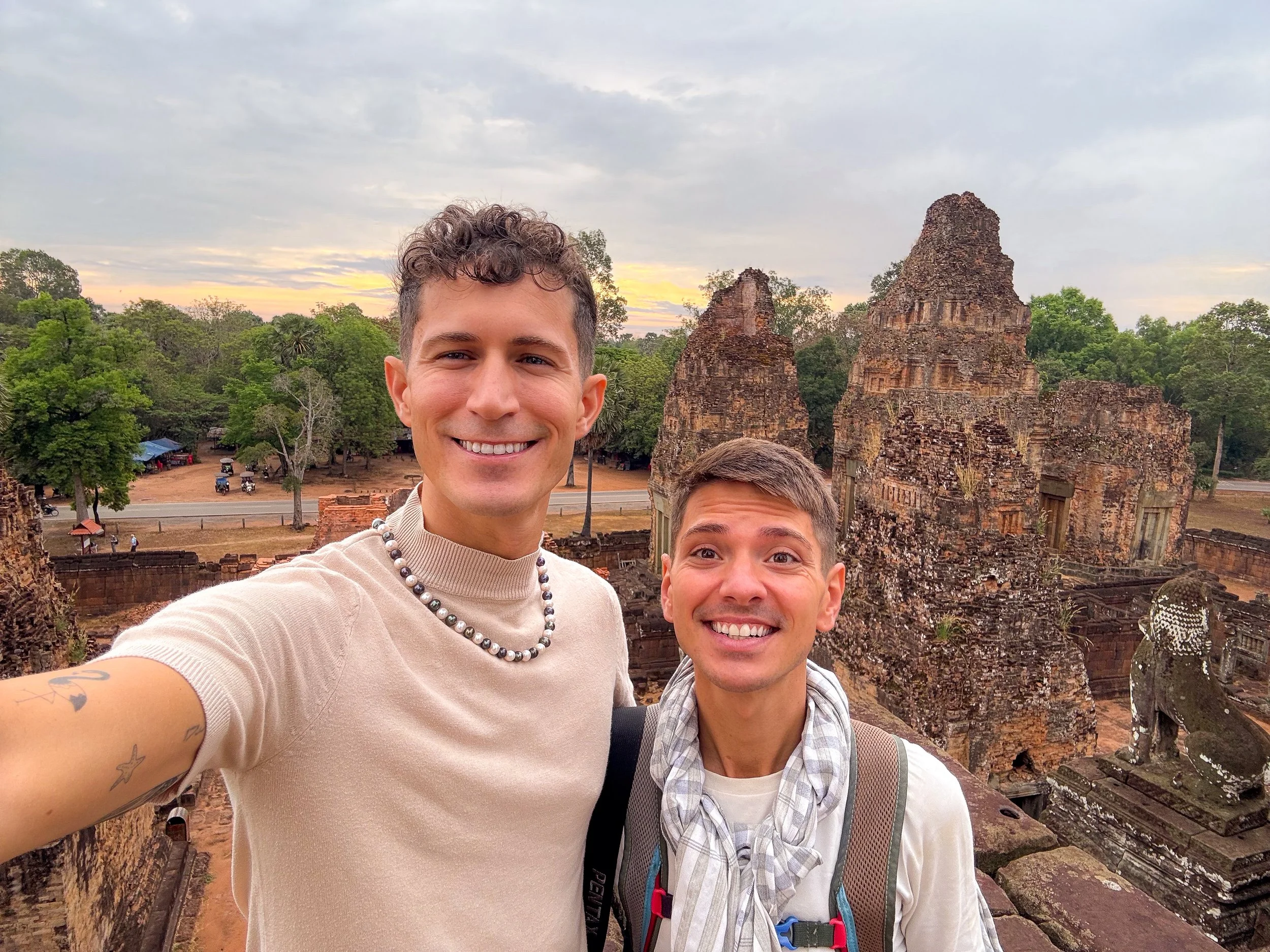
Day One. We visited Eastern Me Bon for the sunrise at 6am followed by Pre Rup, Ta Prohm and Banteay Kdei. We left at noon, returning at 3:30pm to visit the main temple of Angkor Wat for sunset.
Day Two. We visited Angkor Wat for the sunrise at 5am followed by Angkor Thom South Gate, Bayon, Baphuon, the Terrace of the Elephants and the Terrace of the Leper King. We left Angkor Wat at 11am, returning at 2:30pm to visit Preah Khan Temple and Neak Pean Temple.
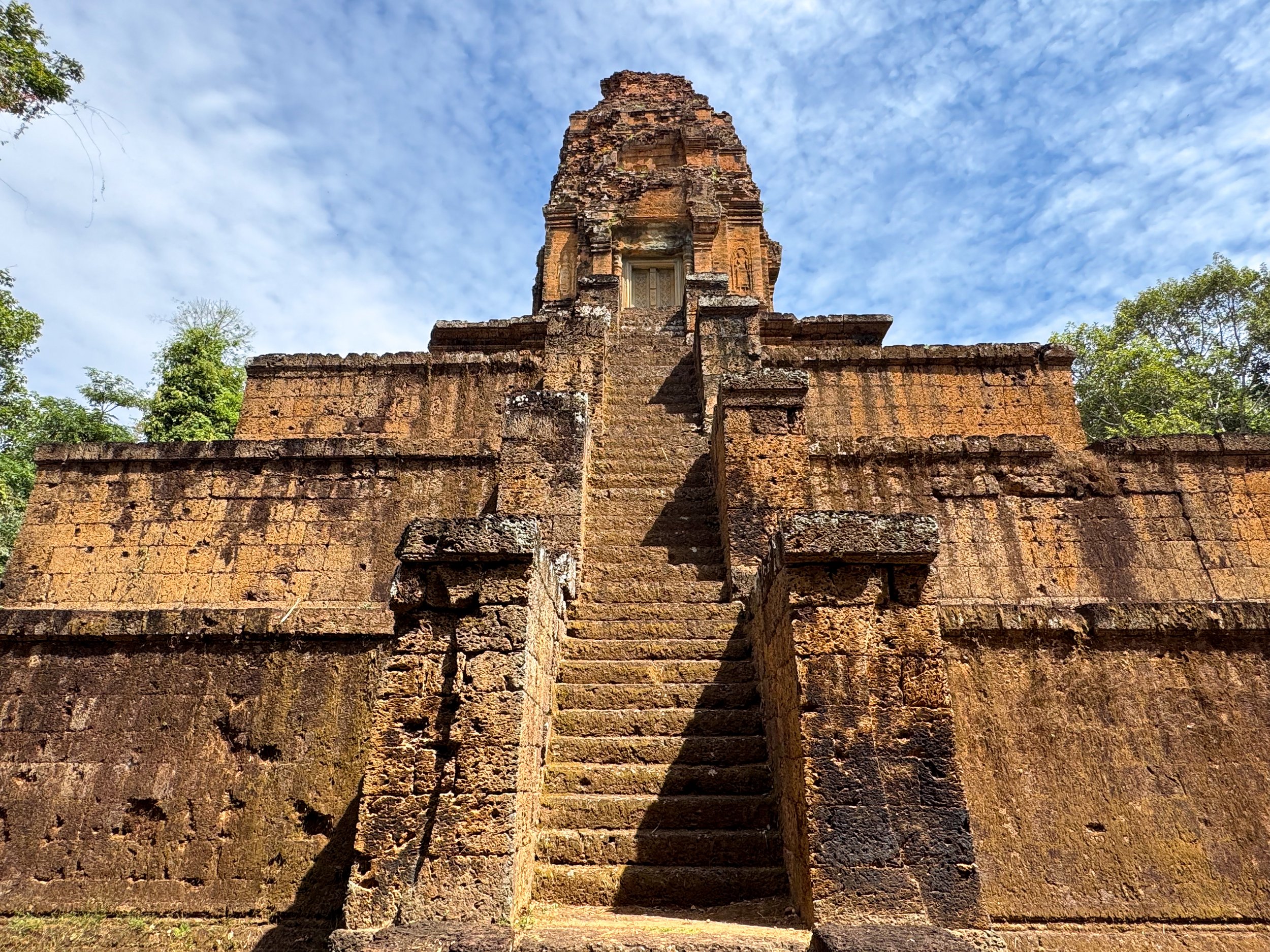
Day Three. We visited the Banteay Srei and Baksei Chamkrong in the morning, returning to Siem Reap by noon, ending our tour of Angkor Wat.
Angkor Wat Sights
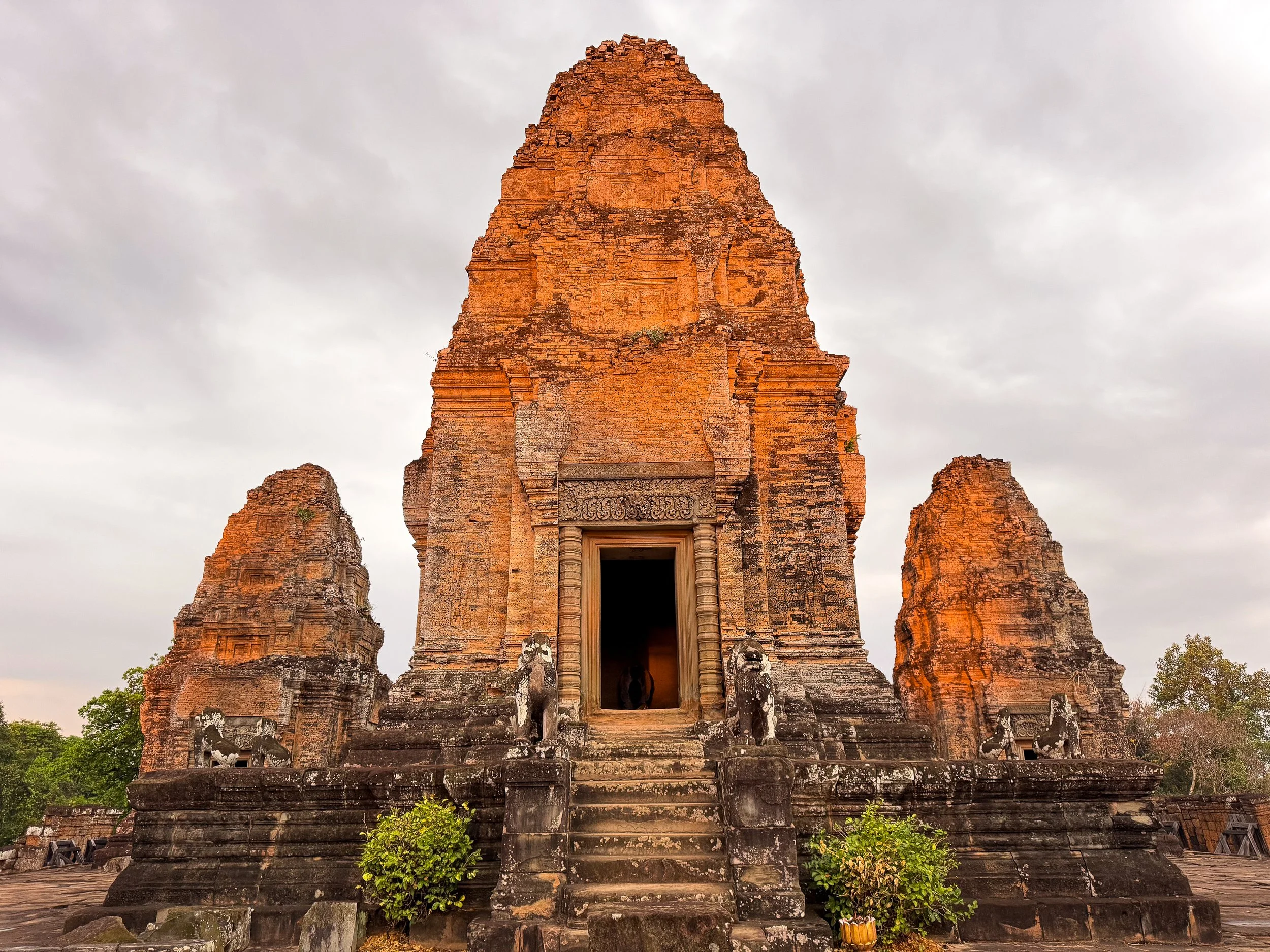
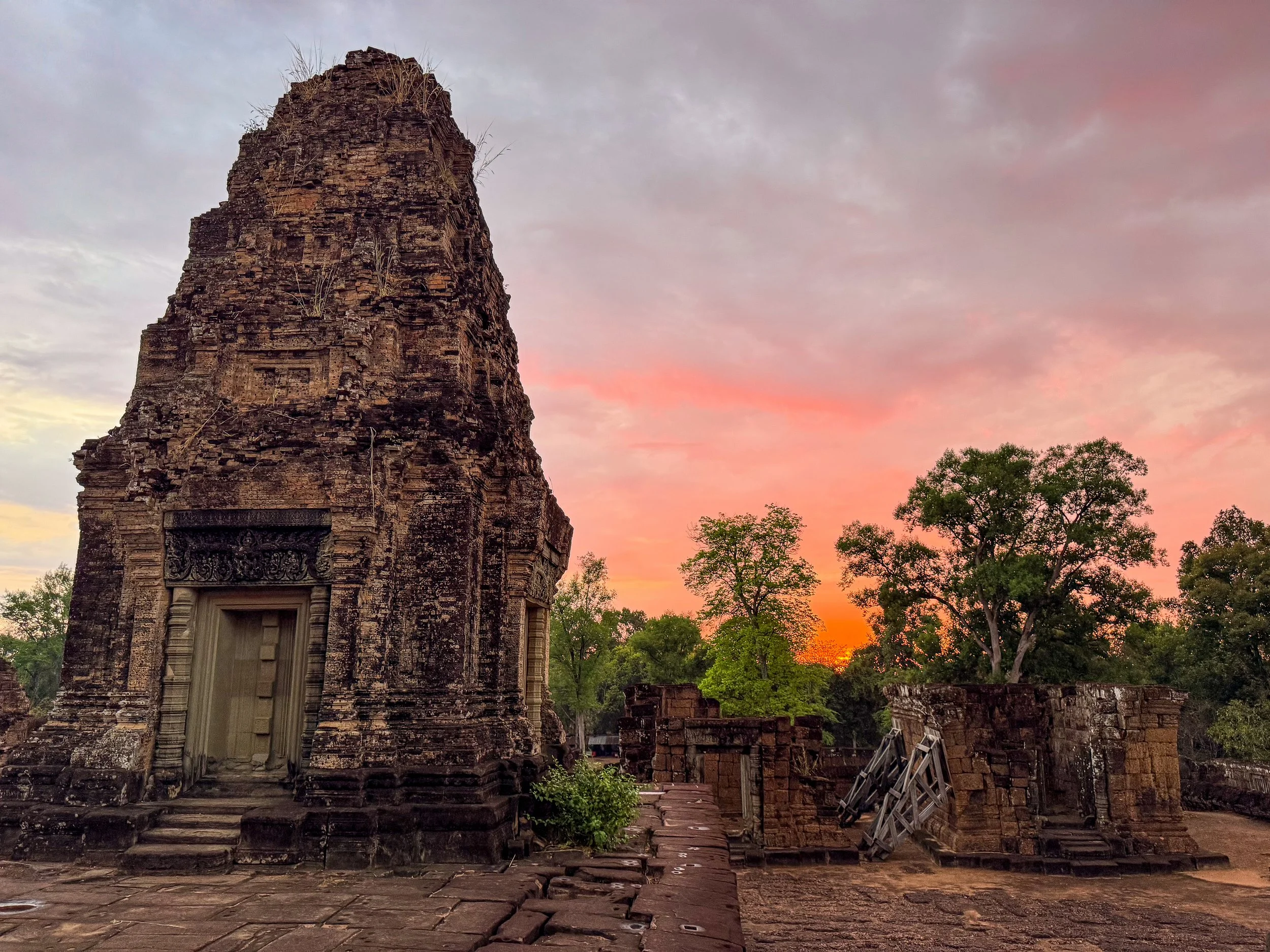
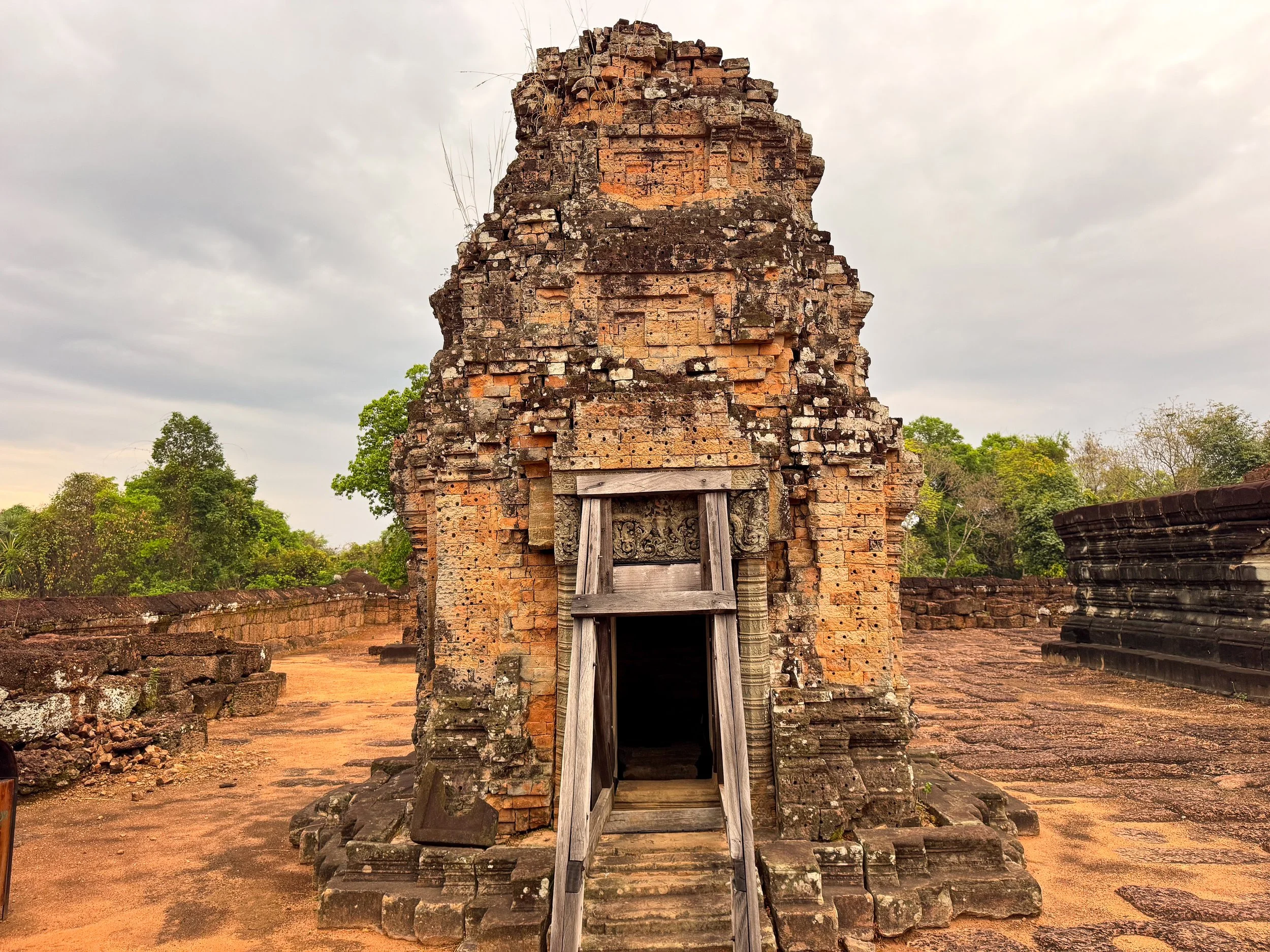
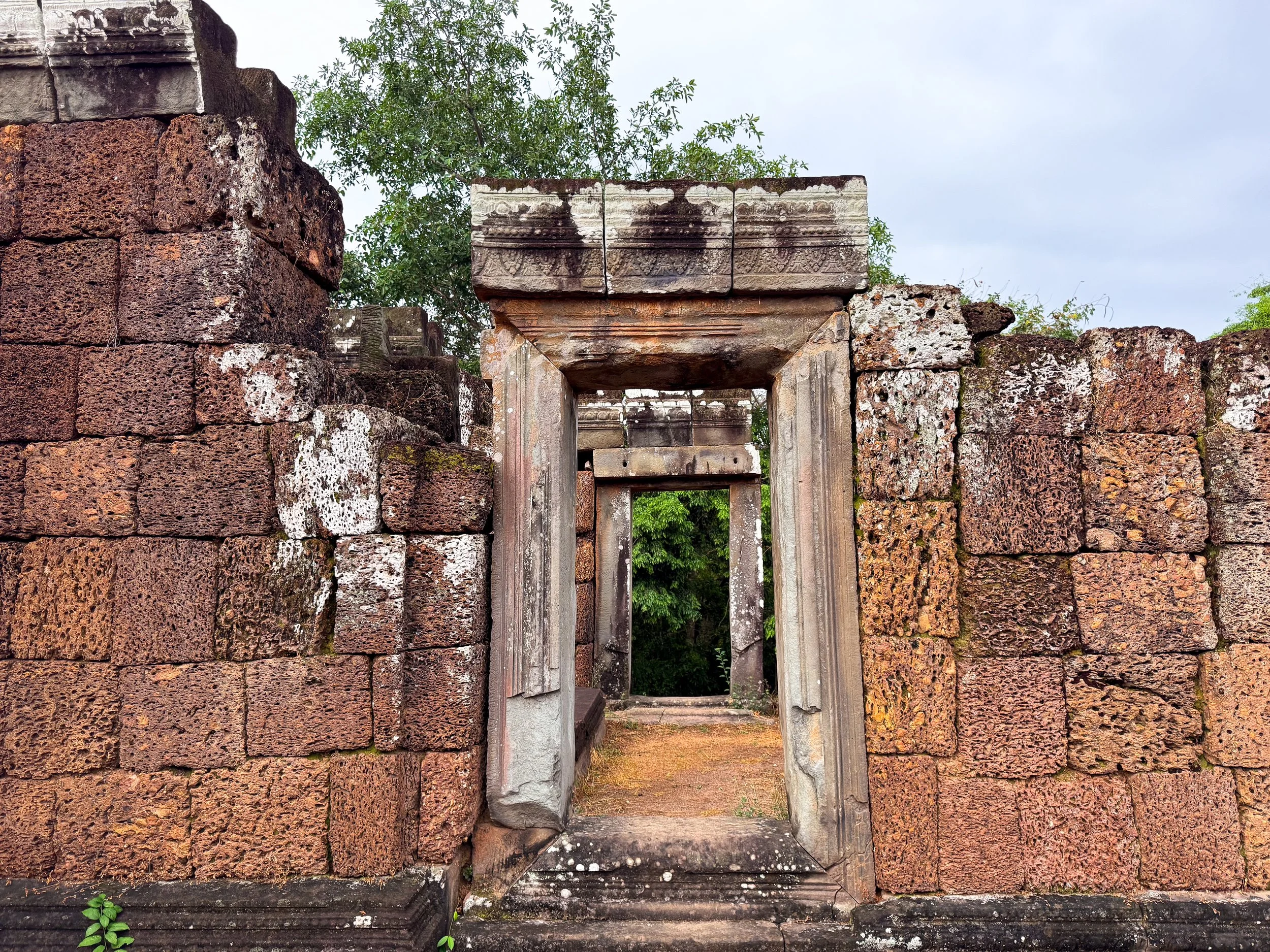
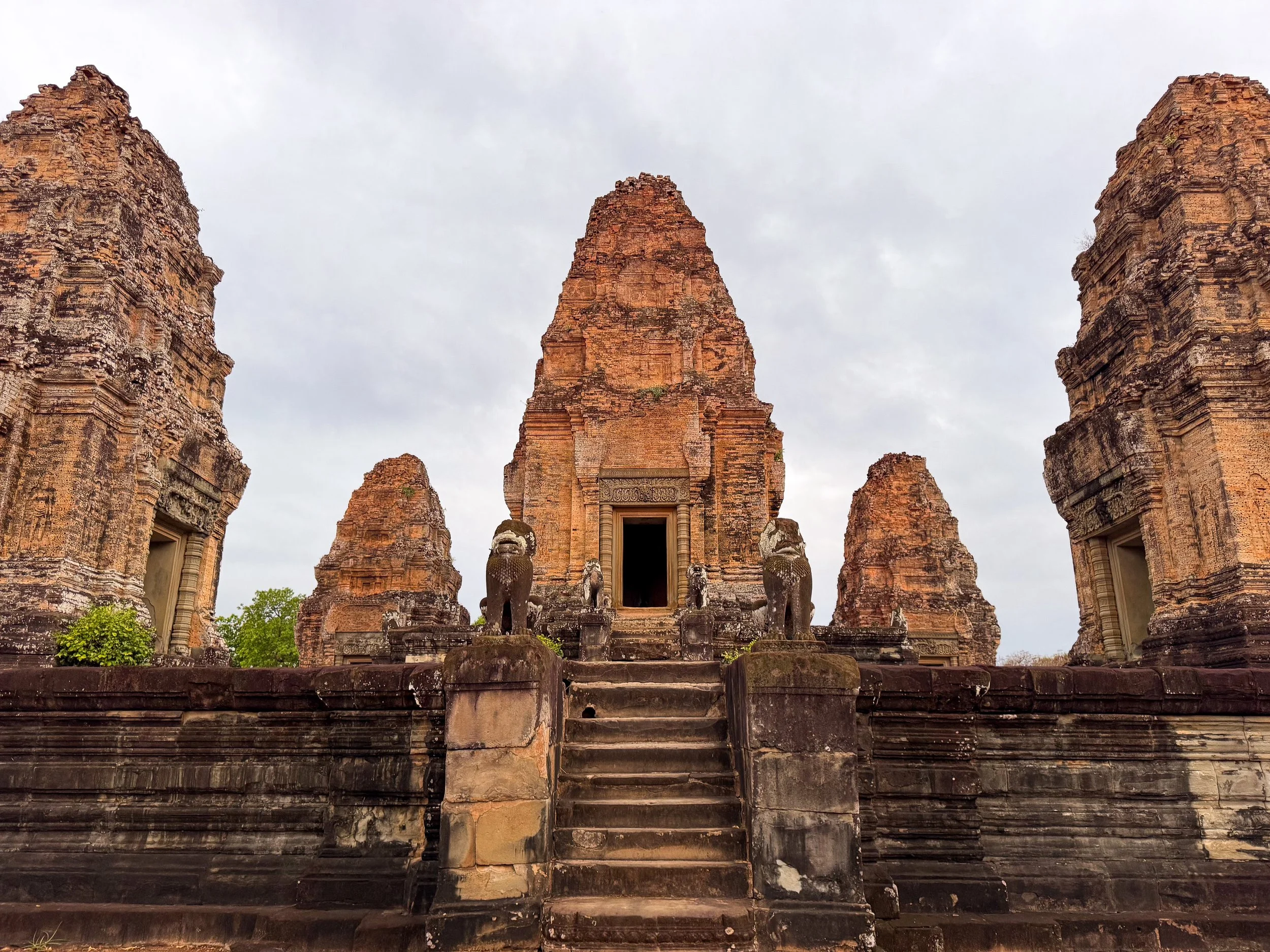
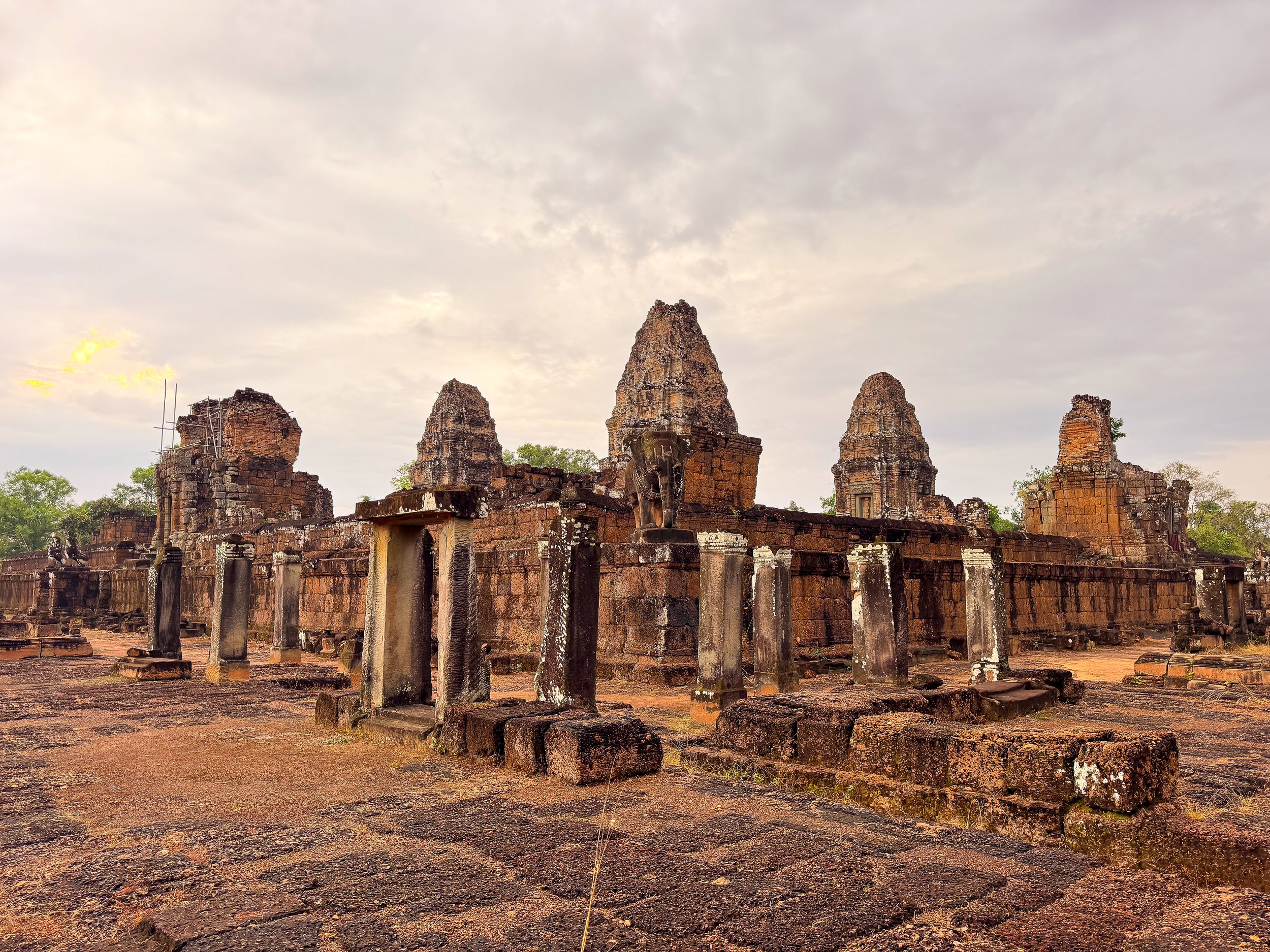
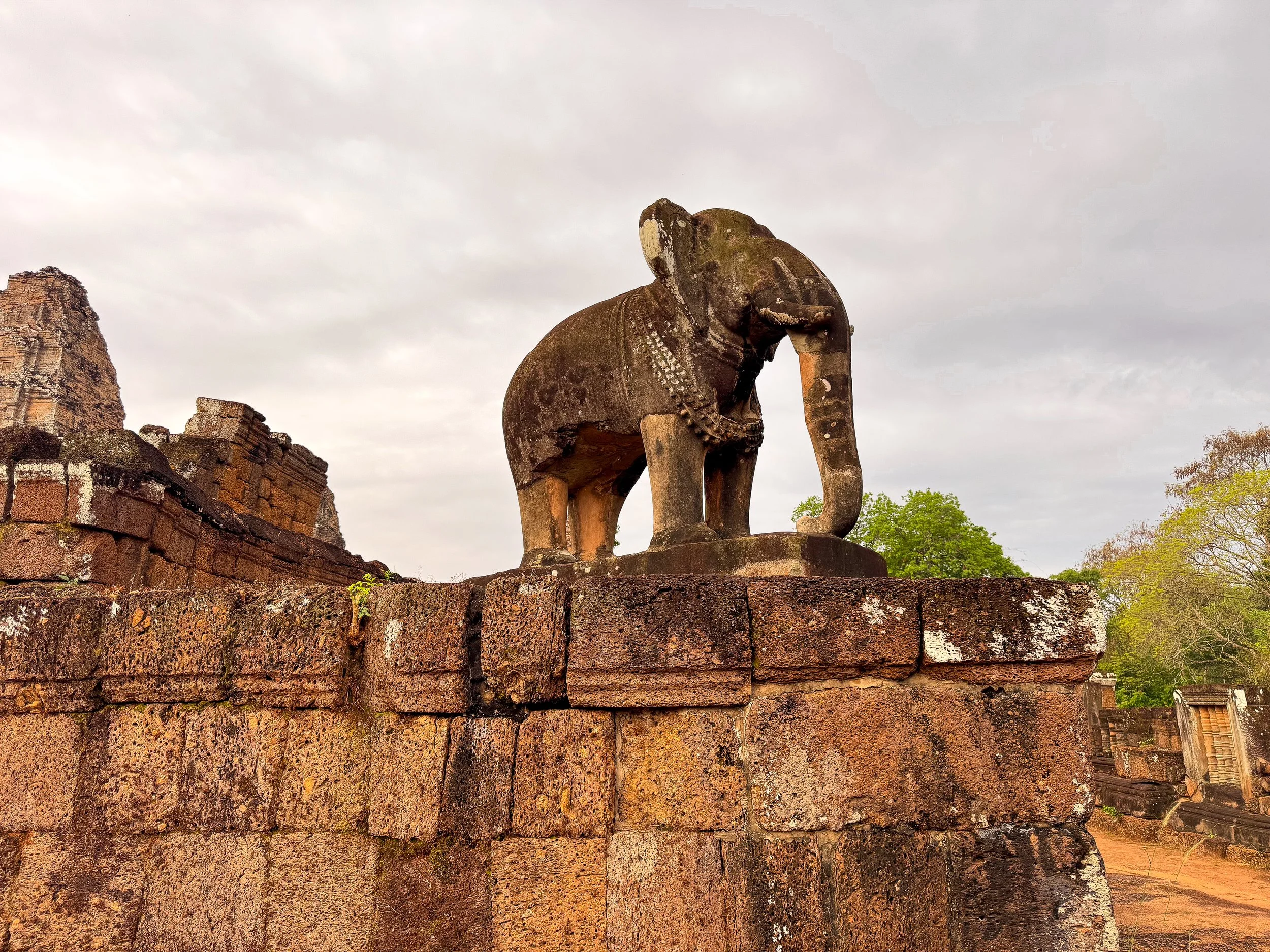
Eastern Me Bon. A Hindu temple built during the 10th century with depictions of Shiva carved into its walls. Steps lead to each level of the temple’s multi-tiered square platforms. The steps are guarded by statues of lions. The four corners of each platform are flanked by statues of elephants. Five pyramid topped towers culminate at its center. The structure is constructed from orange brick and porous orange stone blocks. Crumbling parts of the temple are supported by large wooden braces. We visited at 6am to watch the sun rise and had the entire temple to ourselves. The golden warm glow of the sunrise illuminated the central towers as the sounds of crickets and birds chirping echoed from the surrounding jungle.
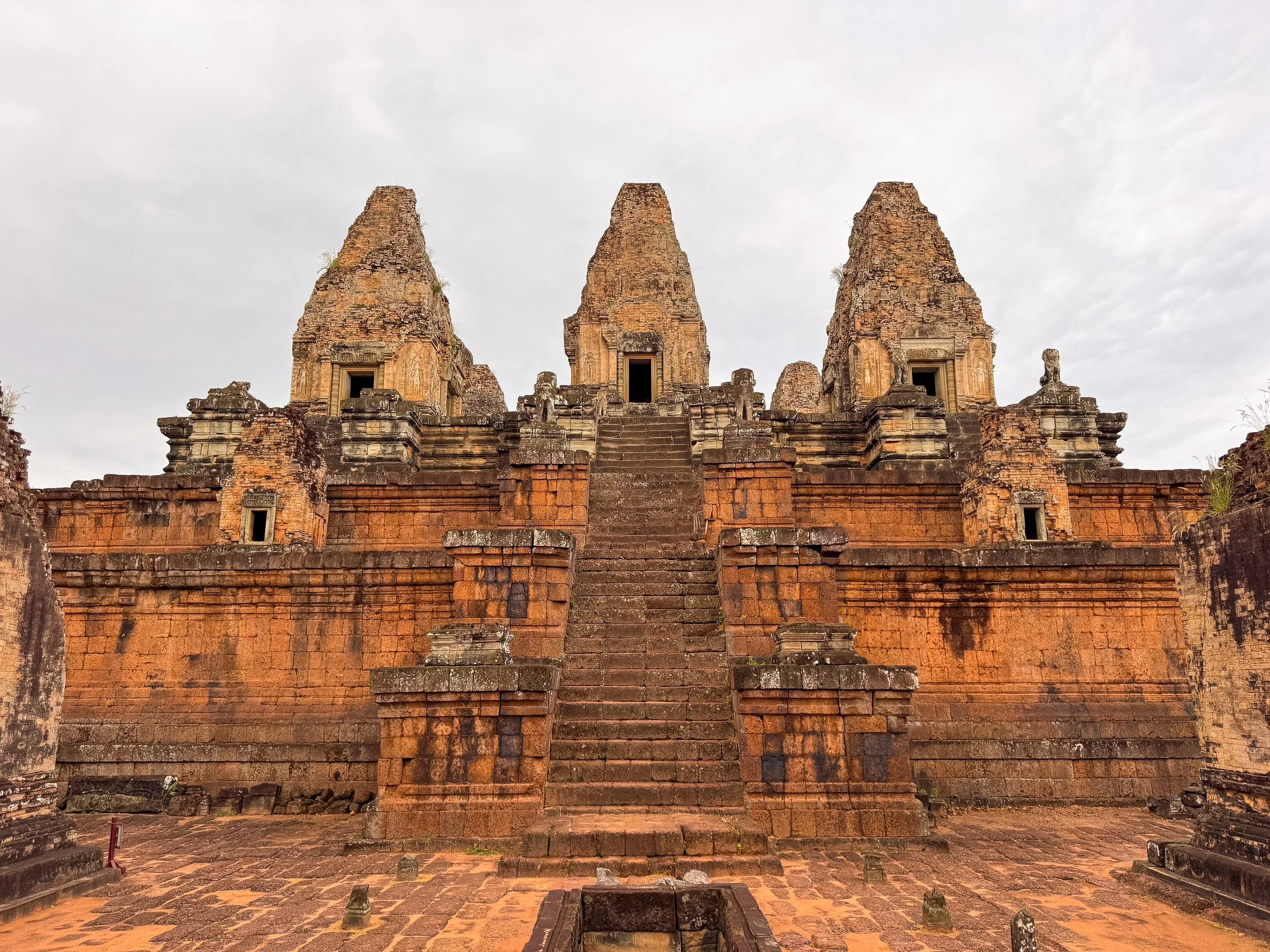
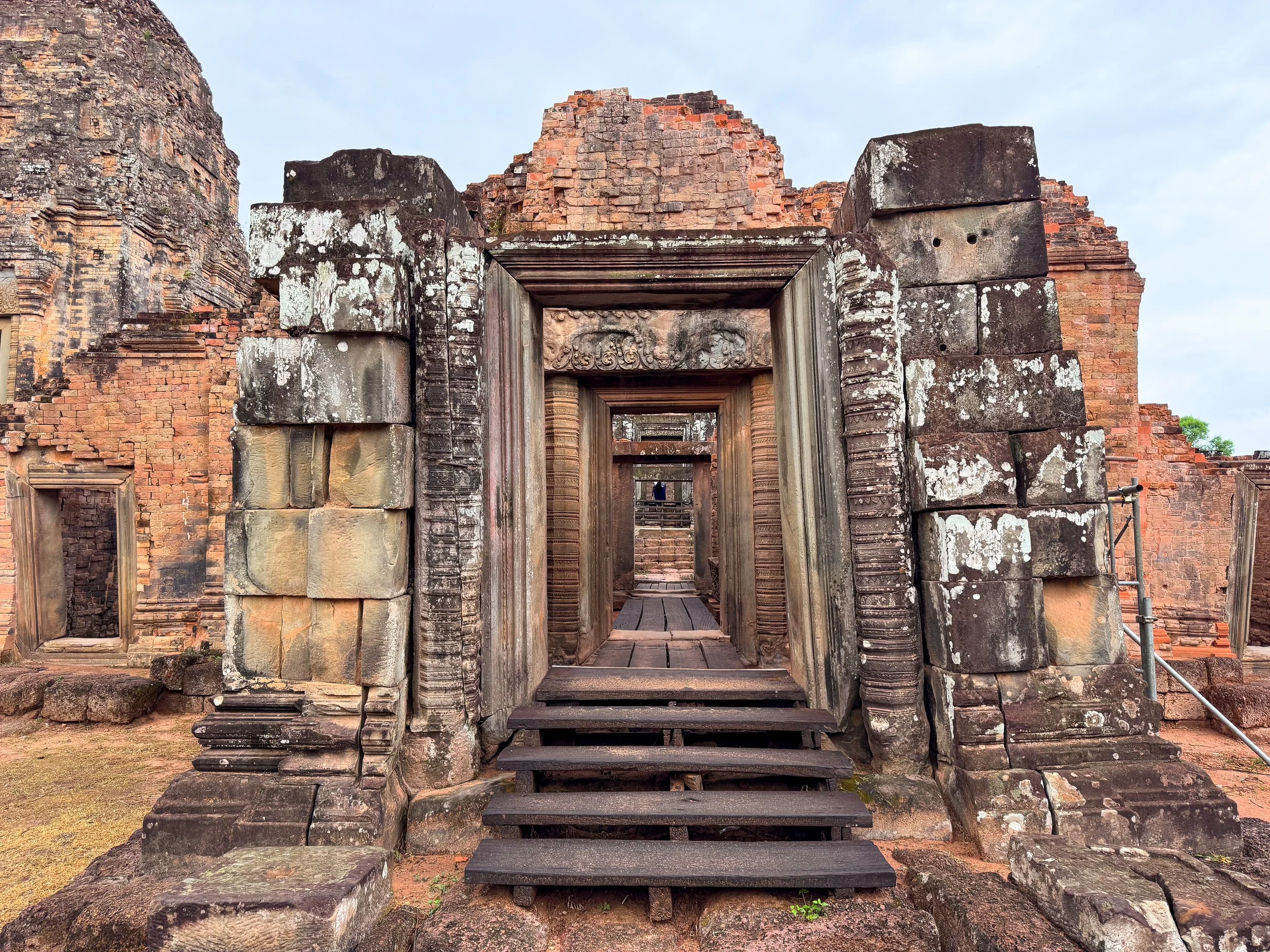
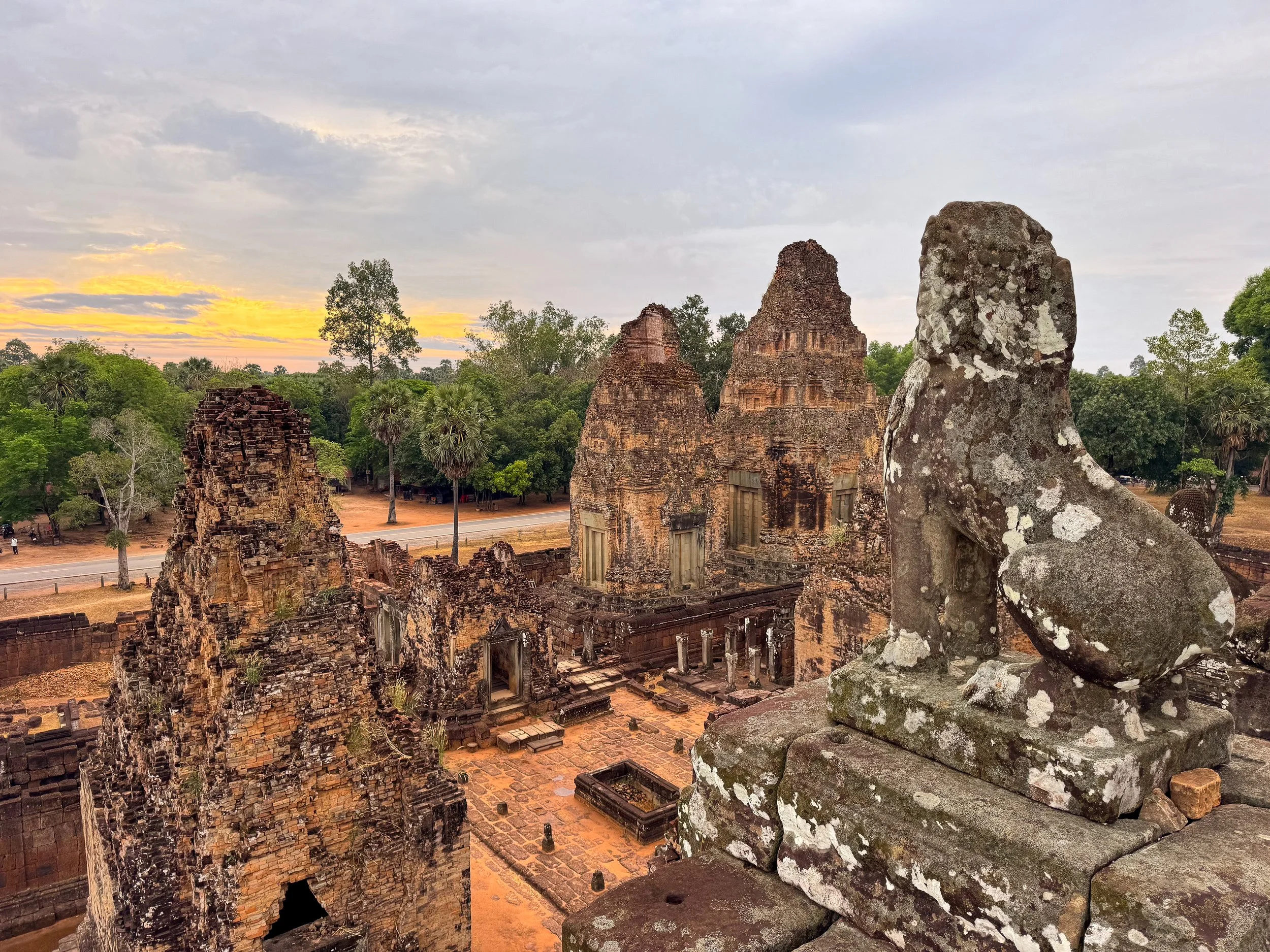
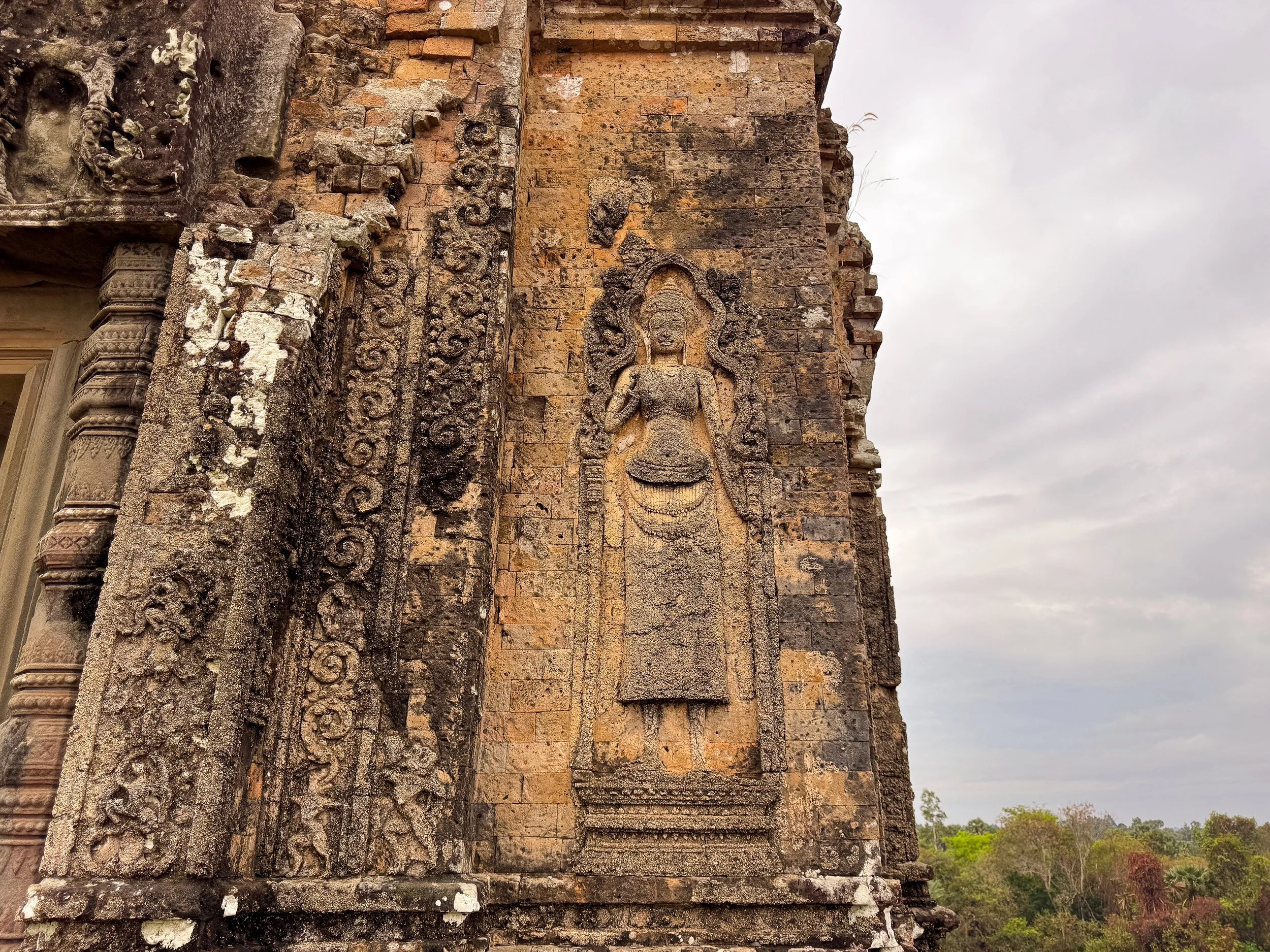

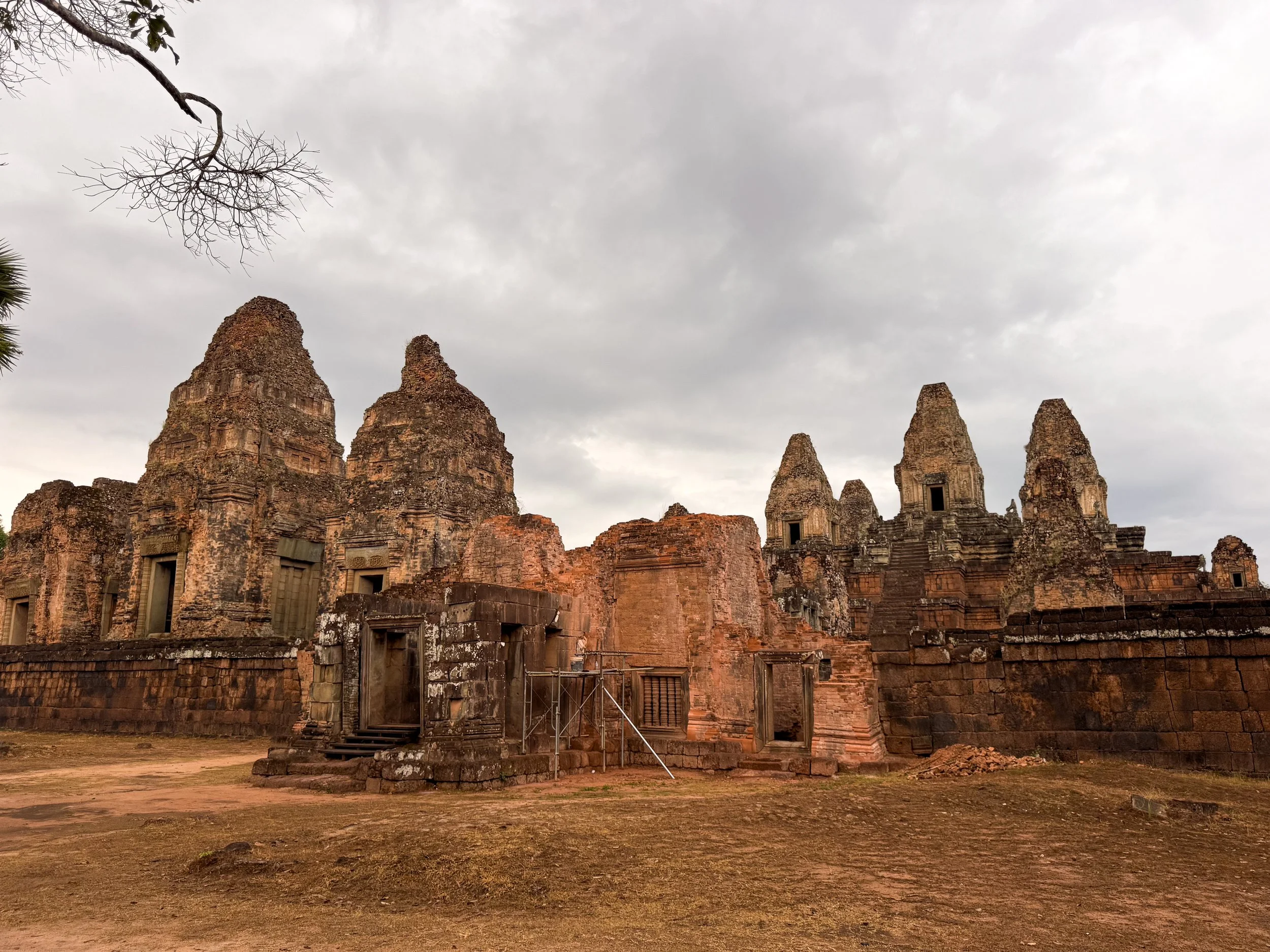
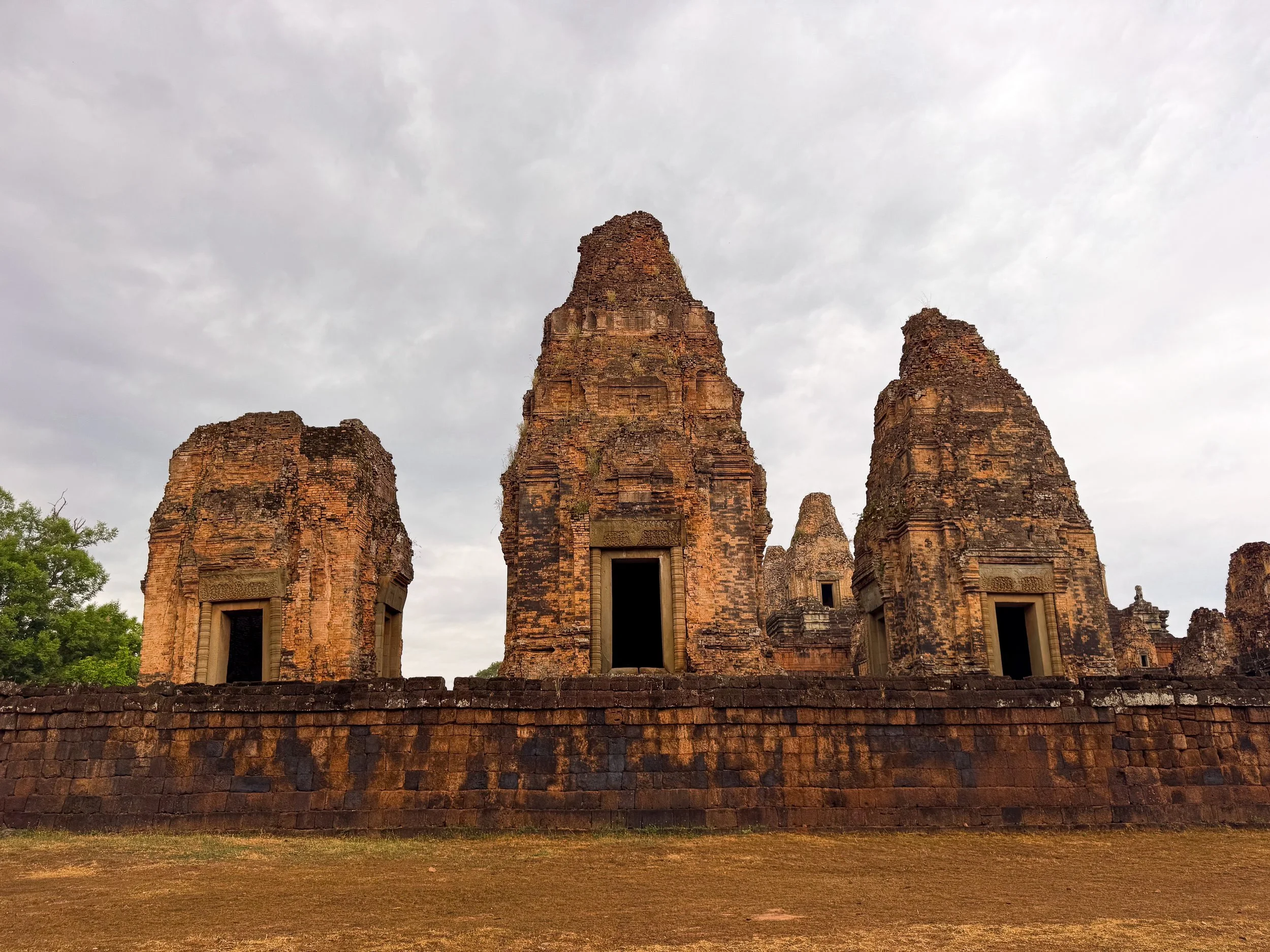
Pre Rup. An ancient Hindu funerary complex dating back over 1,000 years. Steps lead to each level of the ruin’s multi-tiered square platforms. Pyramid topped towers flank its entrance and five more sit at its highest and most central point. Reliefs of Shiva decorate the stone walls and statues of sitting lions guard each level. Treetop views of the jungle can be admired from its upper platform.
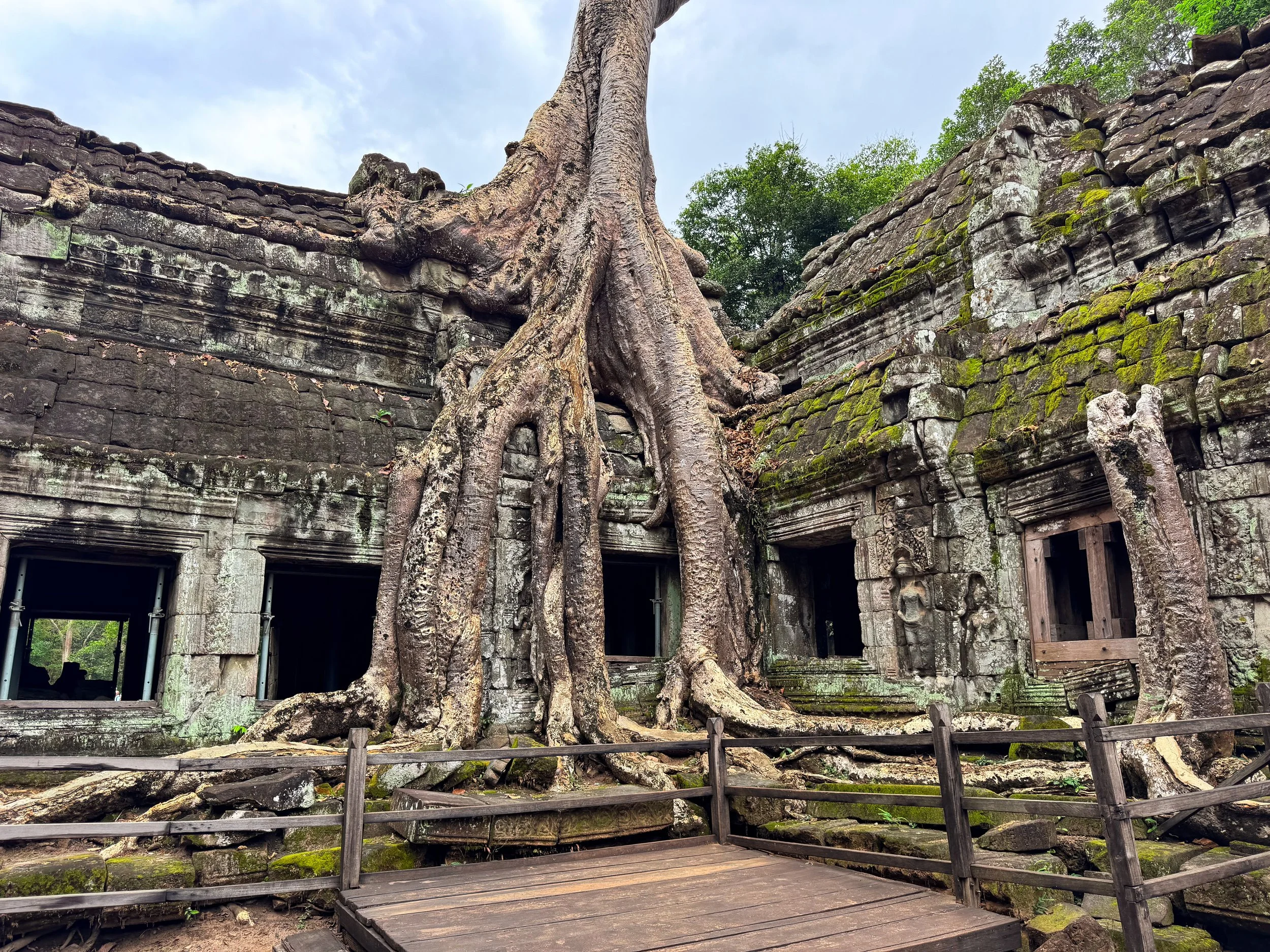
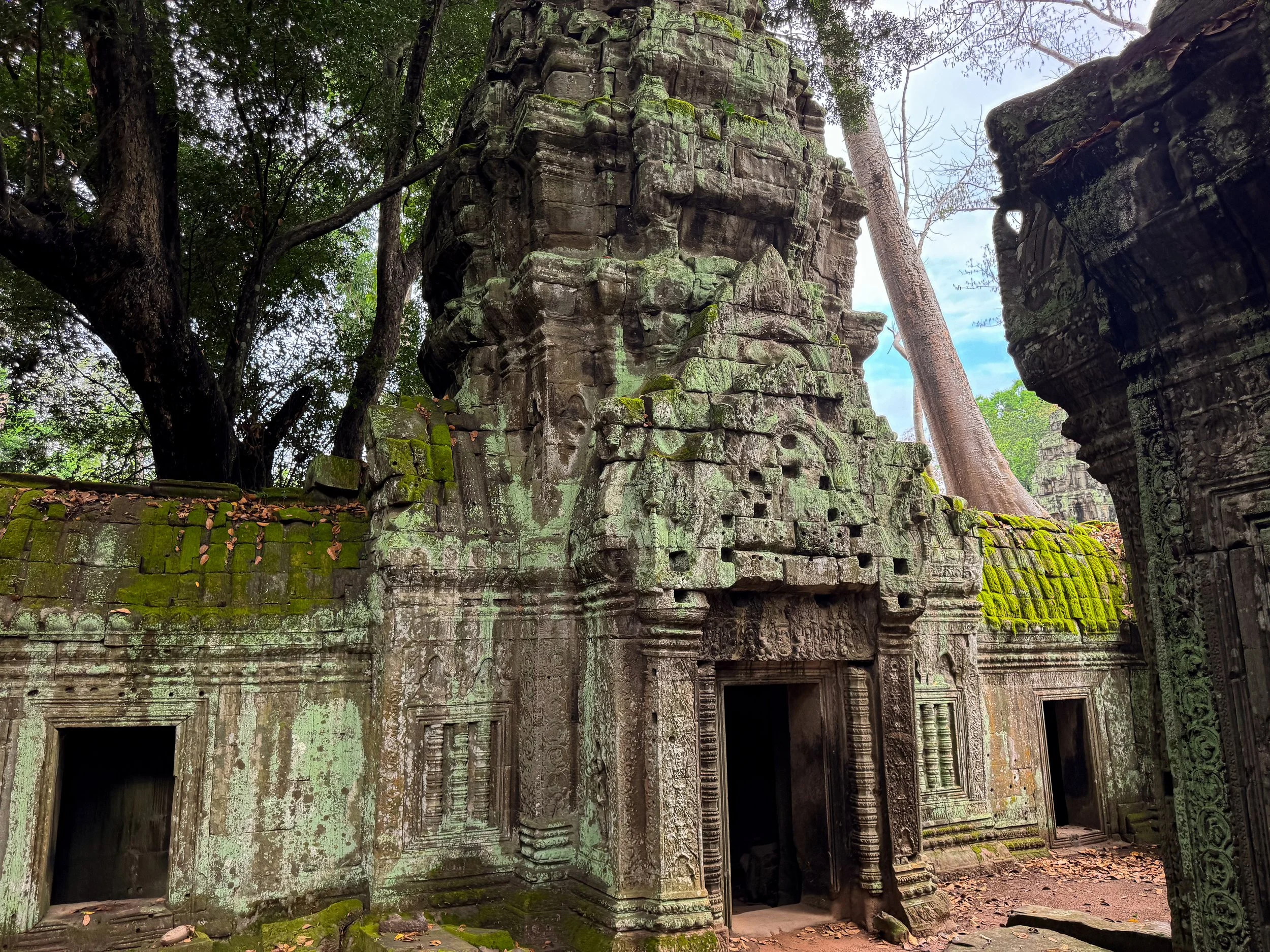
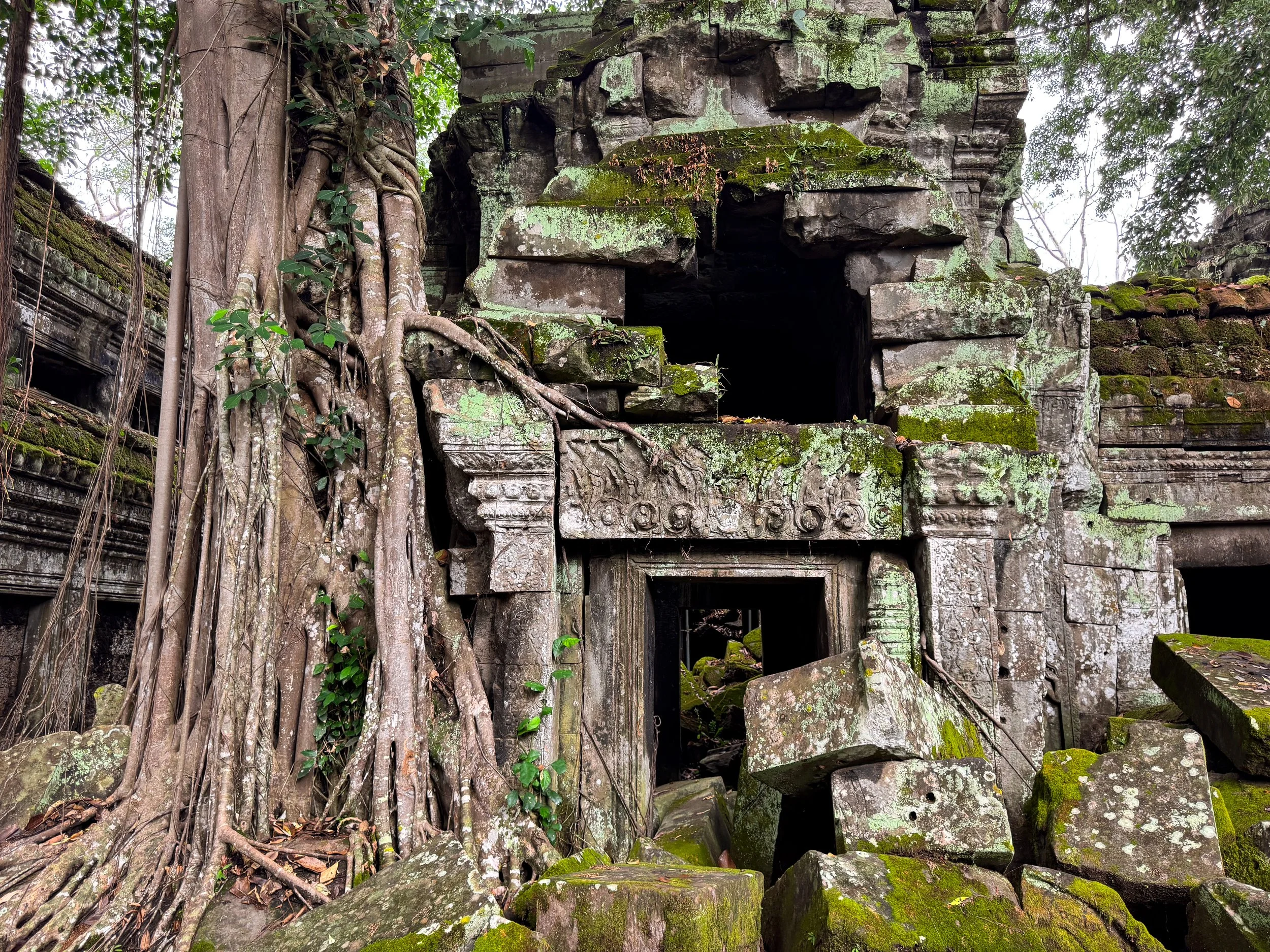
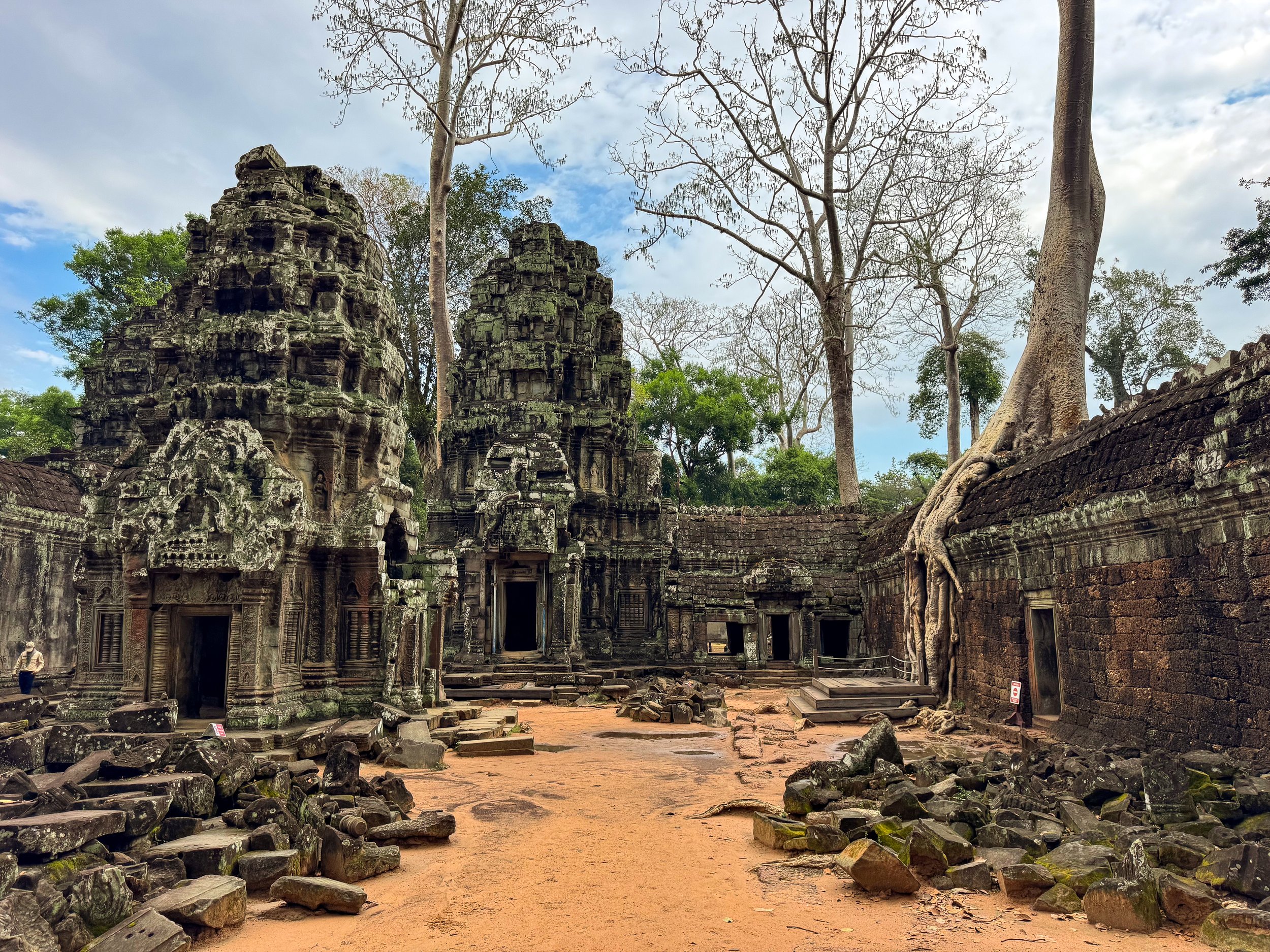
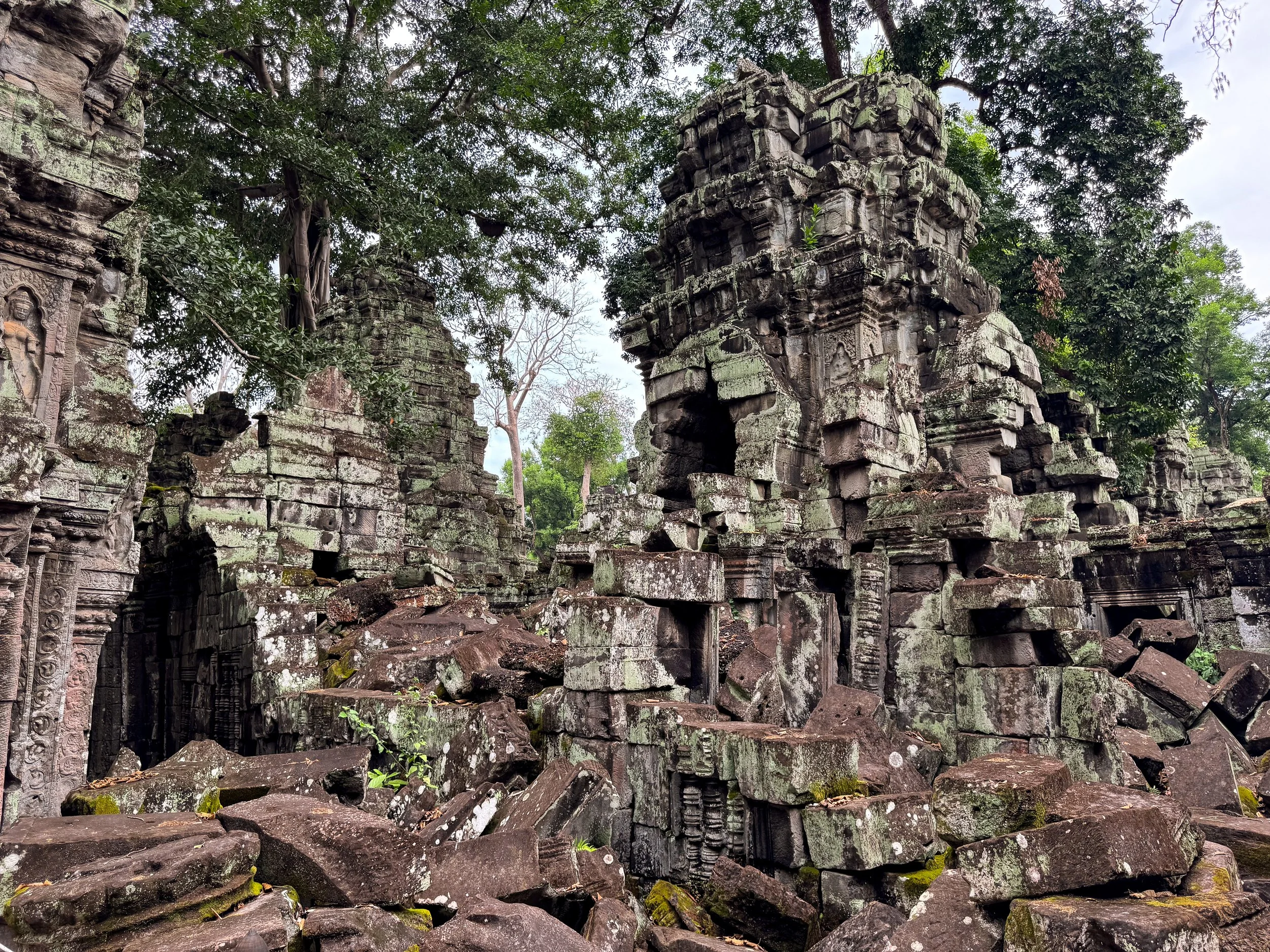
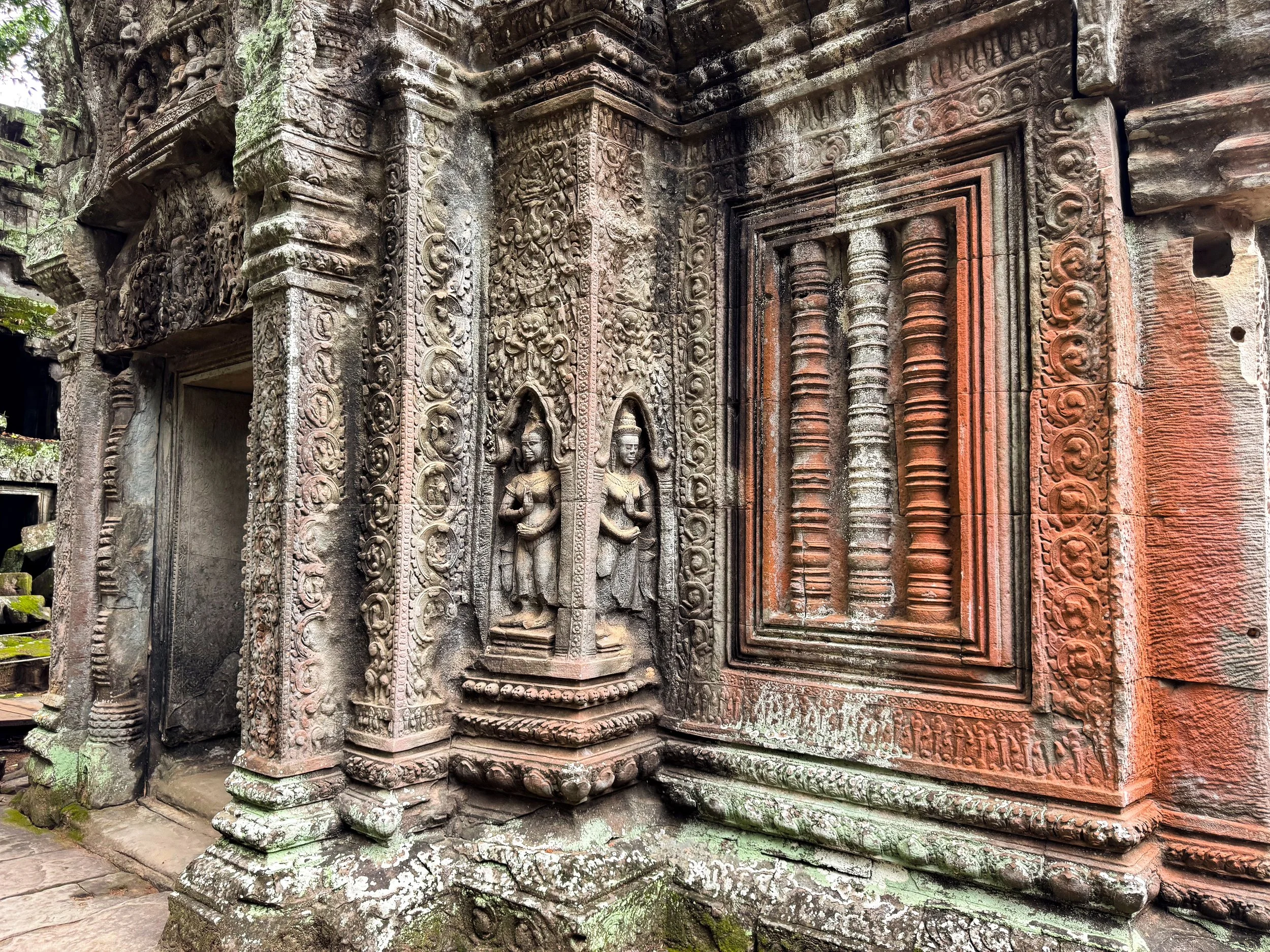
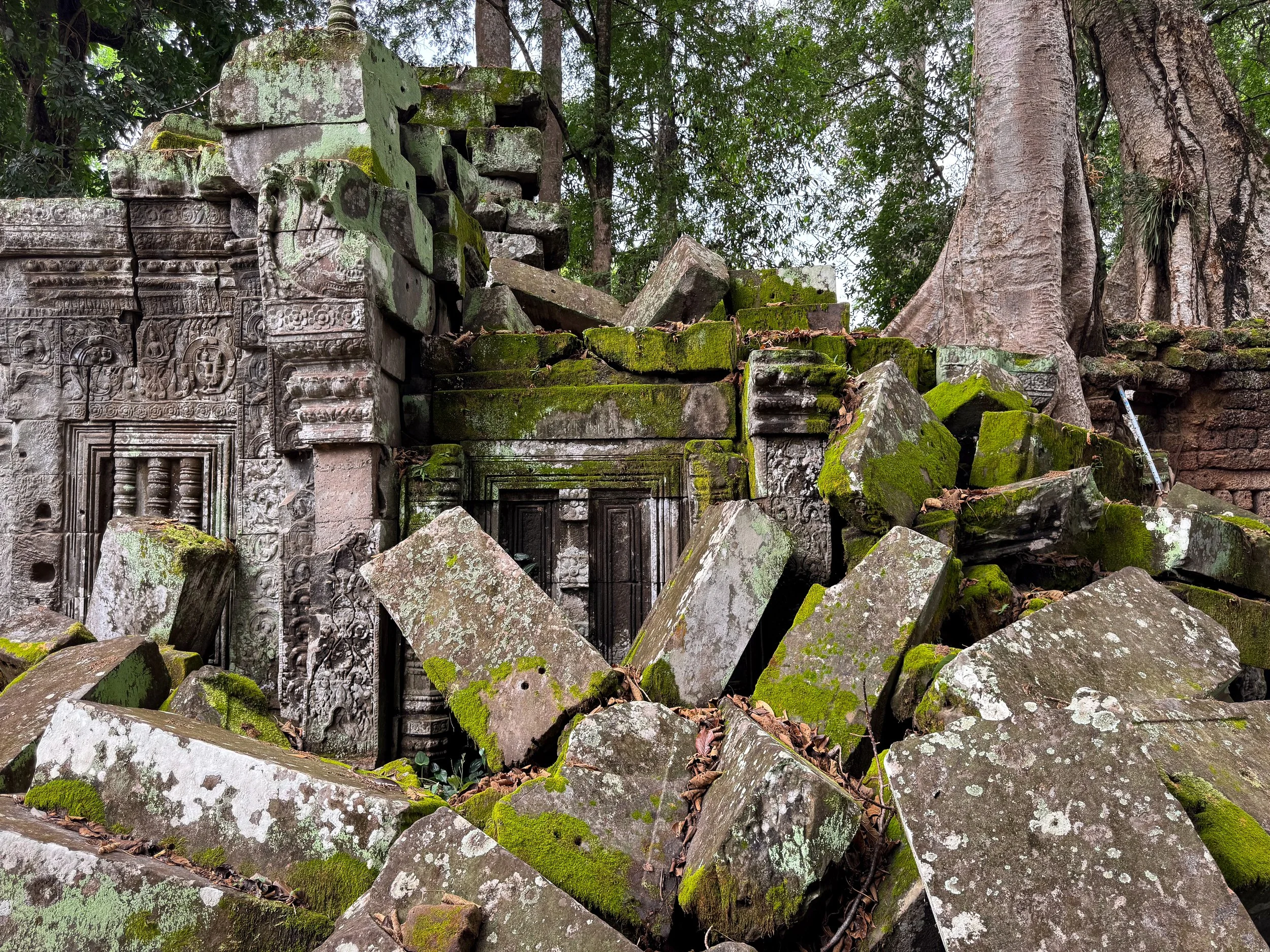
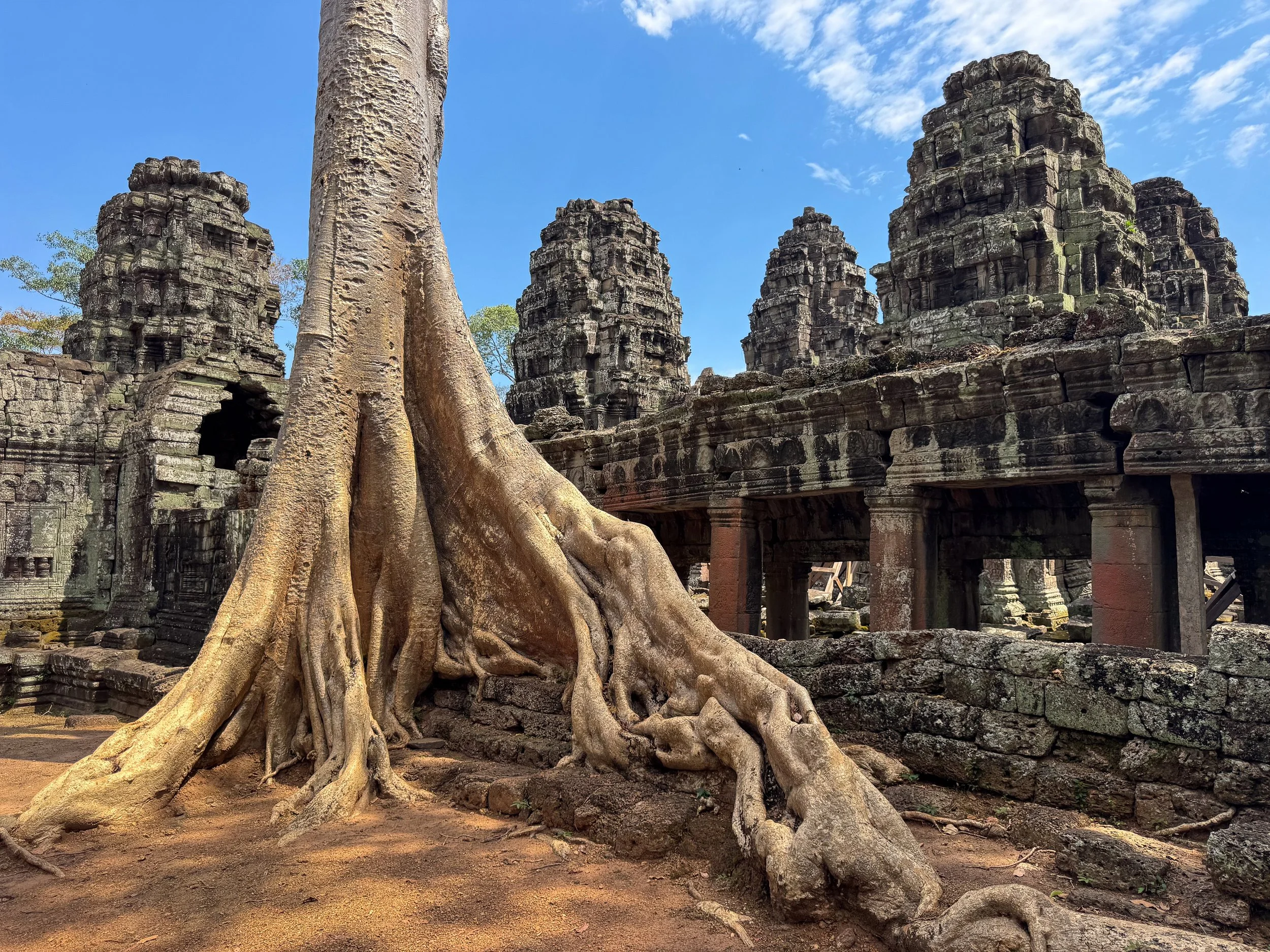
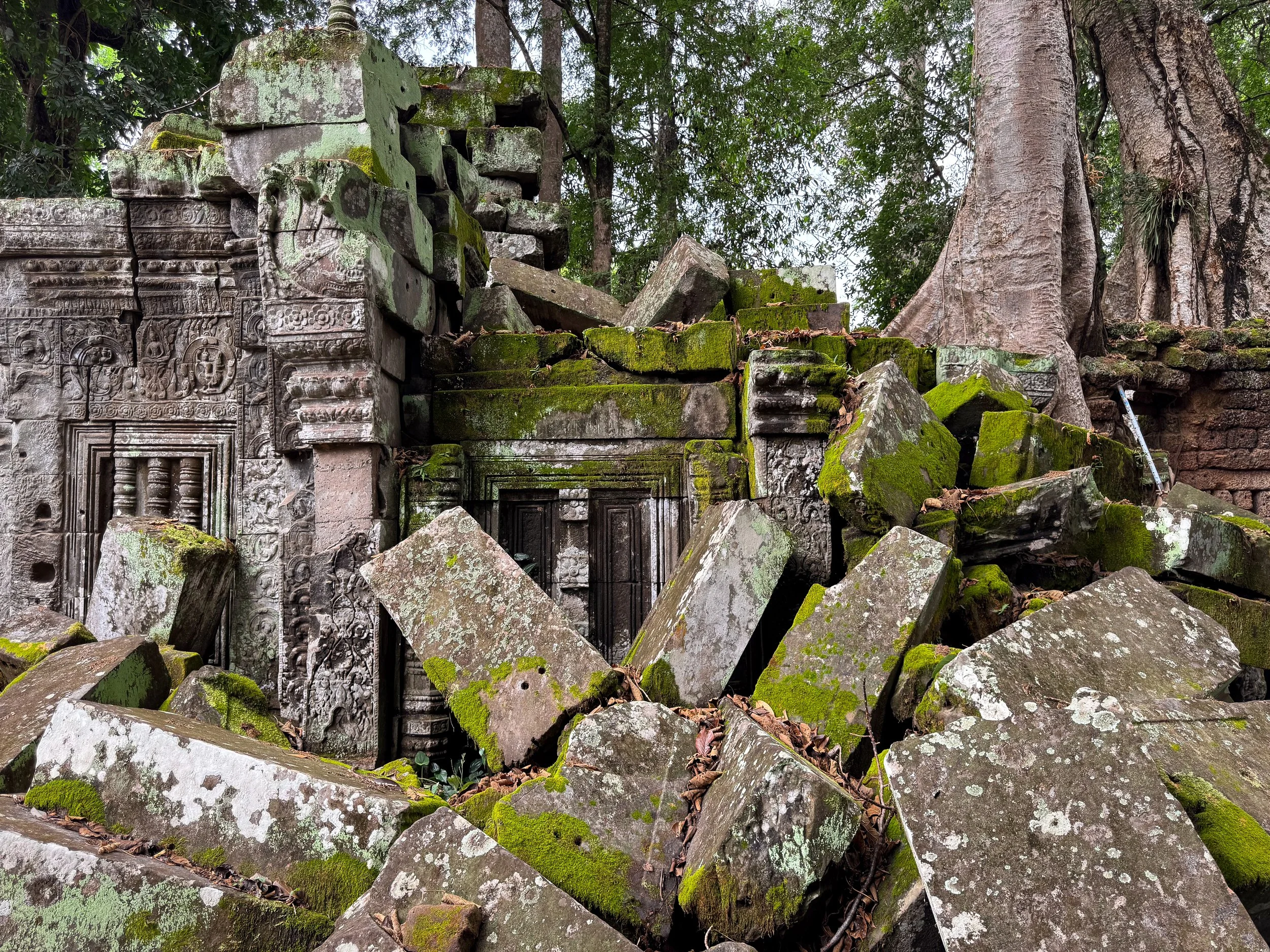
Ta Prohm (Tomb Raider Temple). The overgrown ruins of a Buddhist temple hidden within the lush jungle. Giant trees grow from the temple, their roots cover walls and spider across the ground. Pathways lead through crumbling chambers and former halls to courtyards with piles of rubble and moss covered stones. All manner of birds chirp, squawk and fly overhead. Decaying reliefs and carvings decorate surfaces while statues of Buddha rest in various states of disrepair. It’s one of the most popular temples to visit due to its appearance in “Tomb Raider.” It’s best to visit before 8am to beat the buses full of tourists.
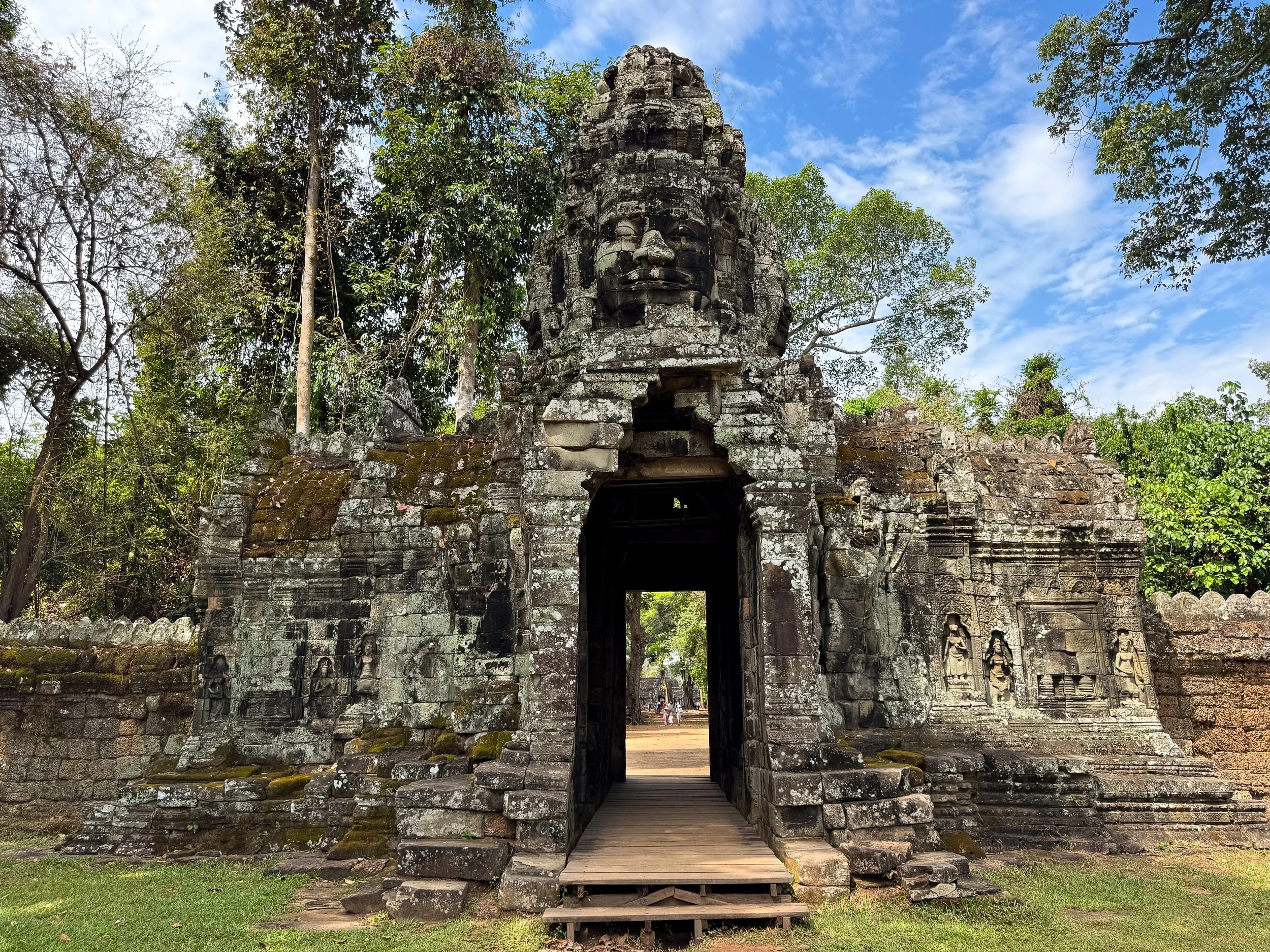
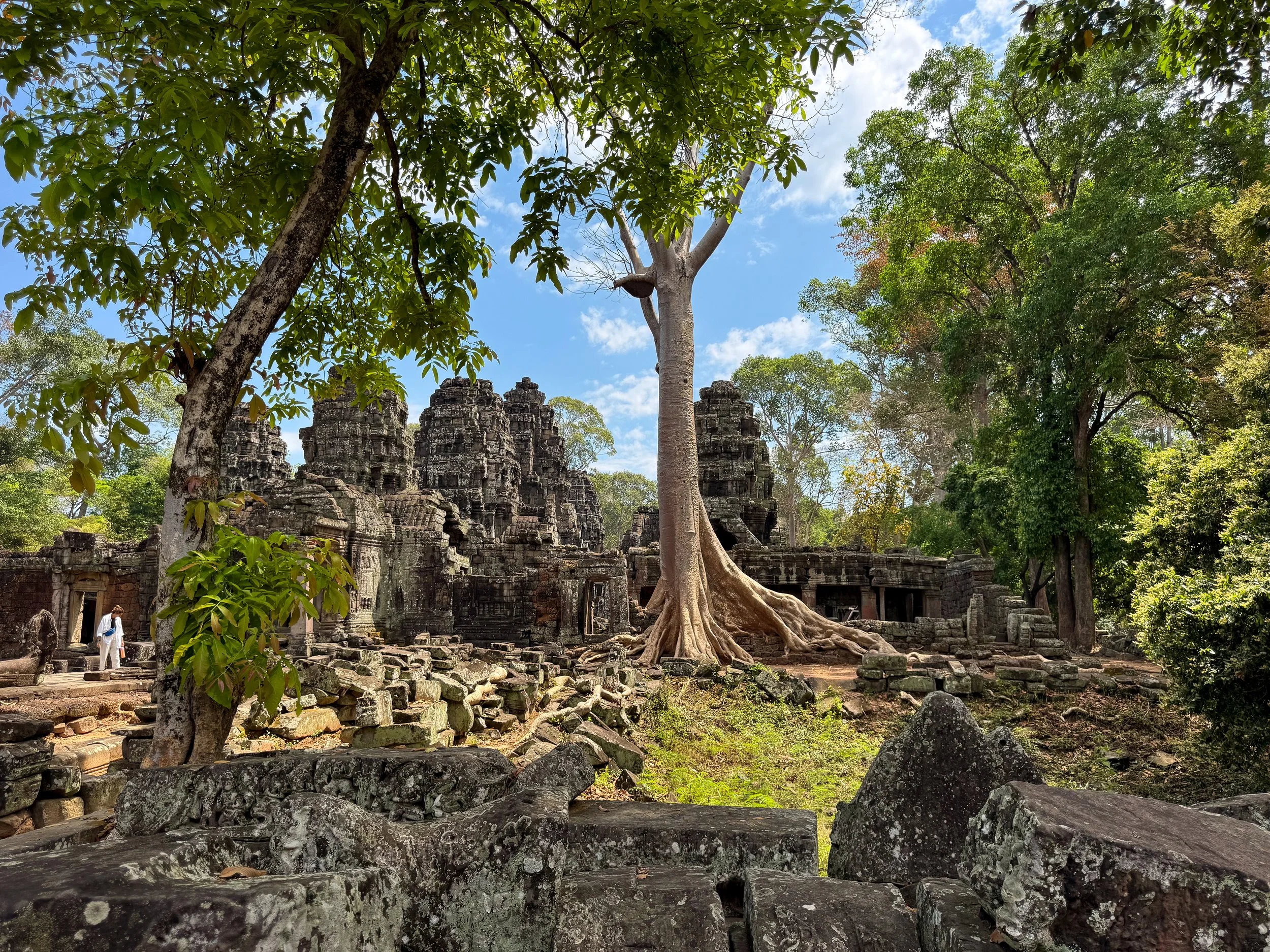
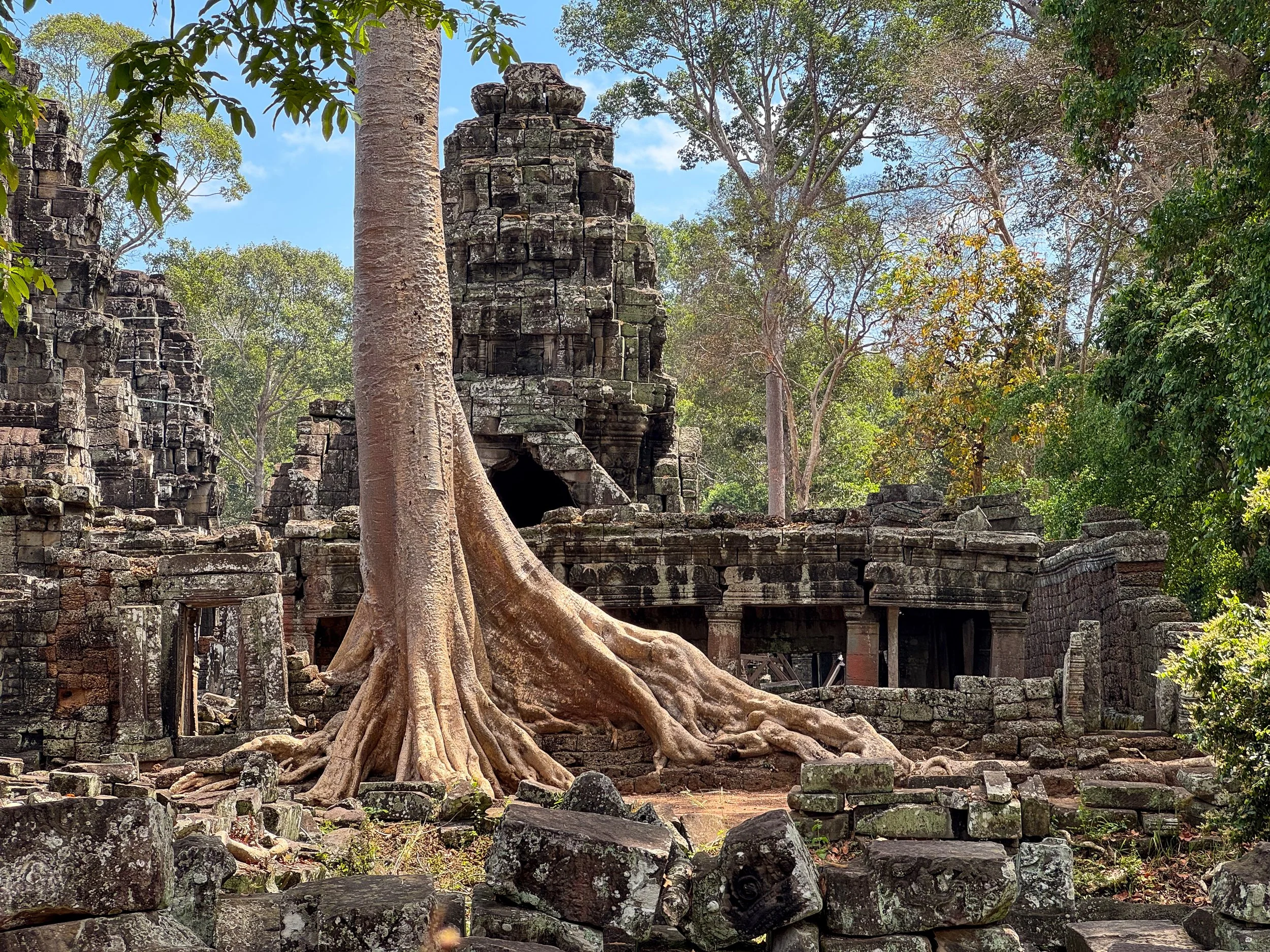
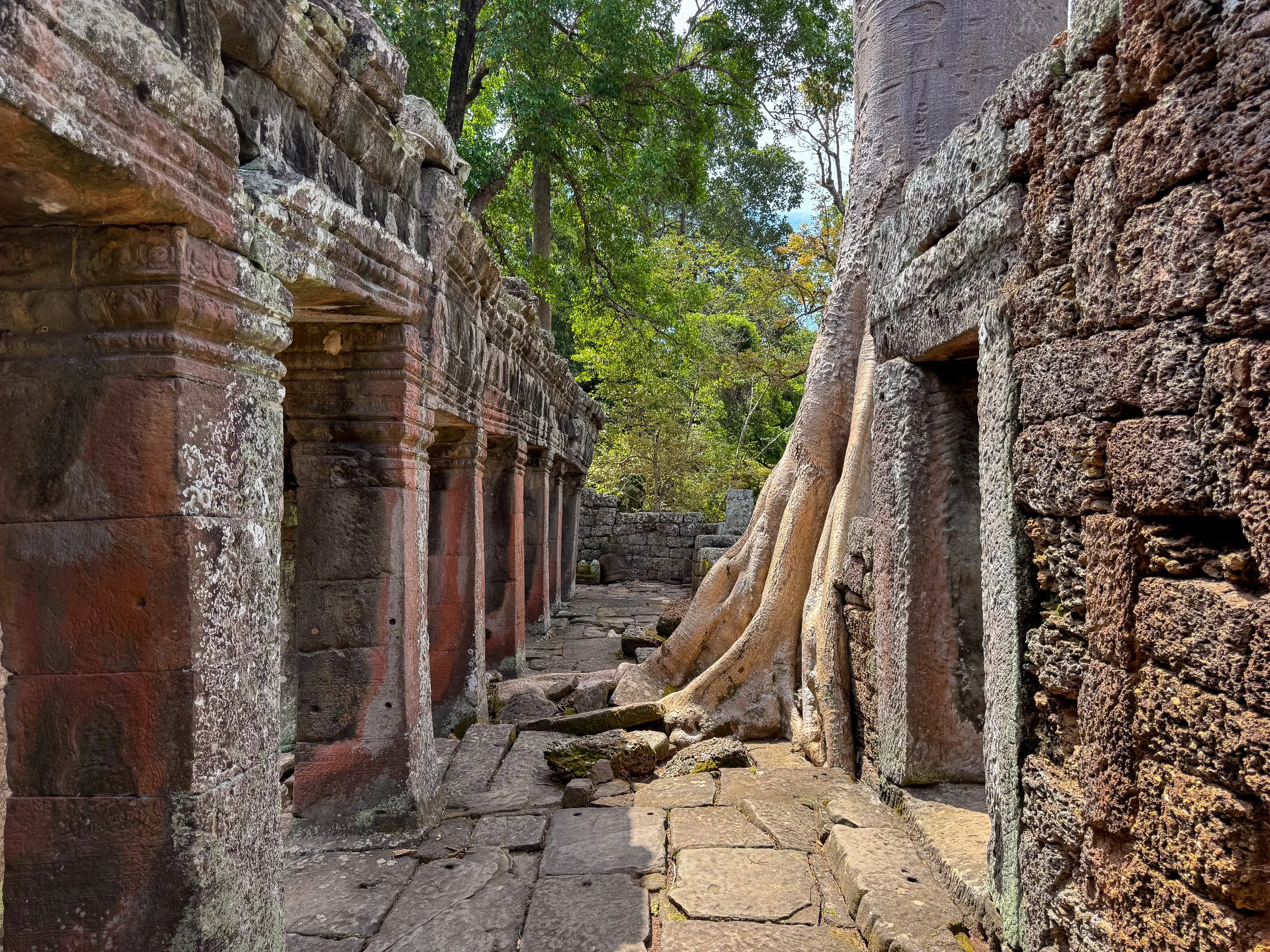
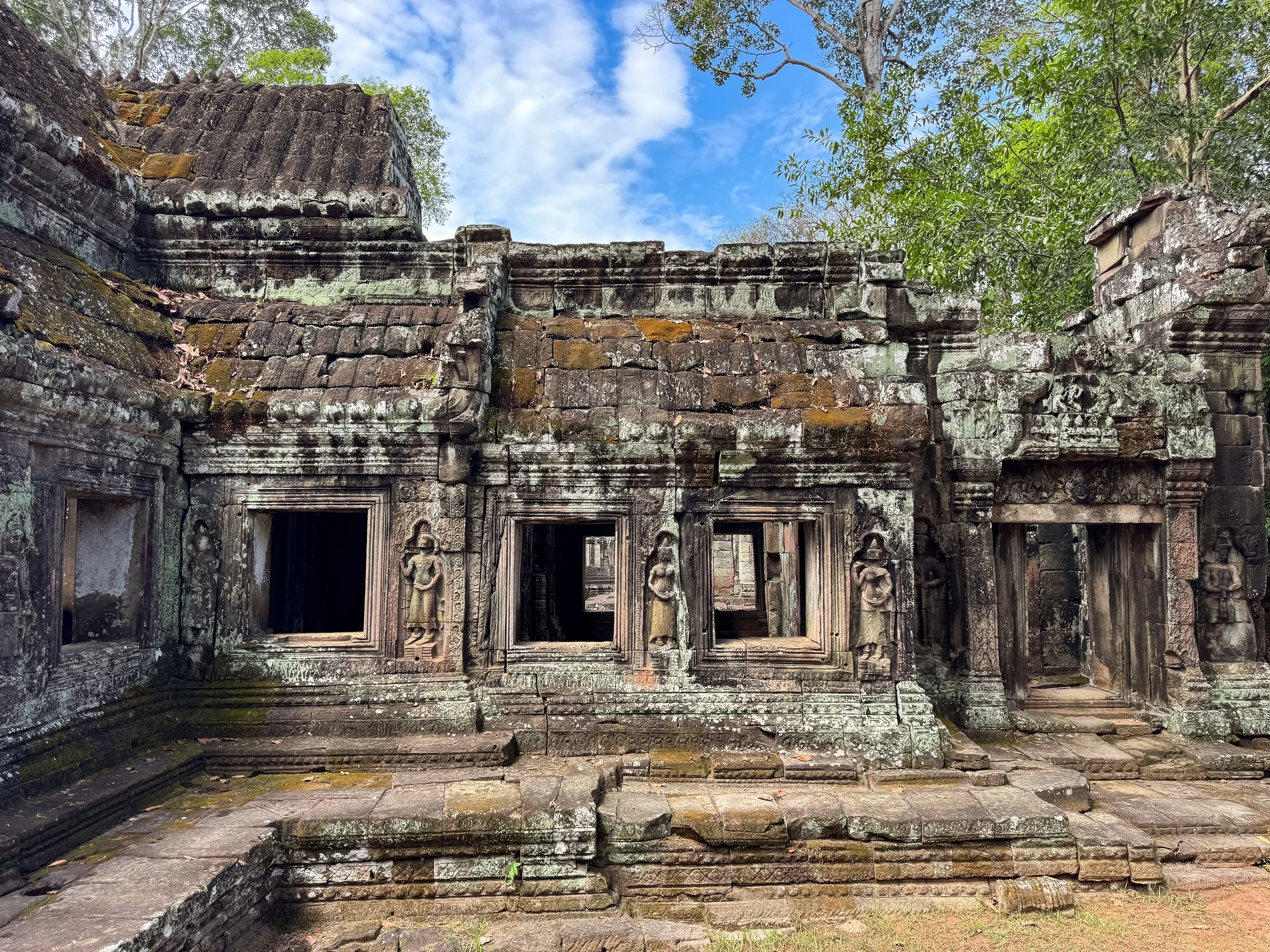
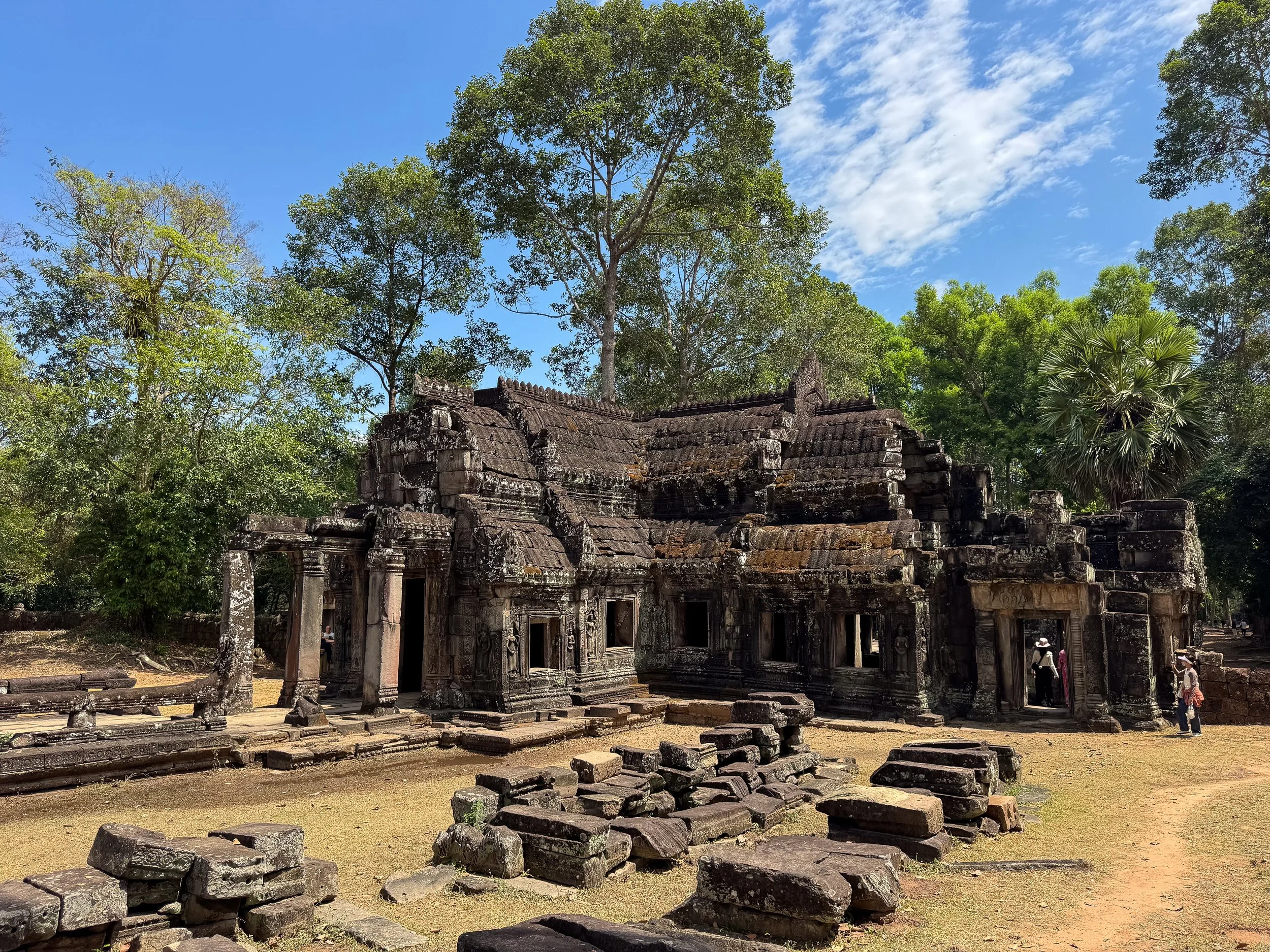
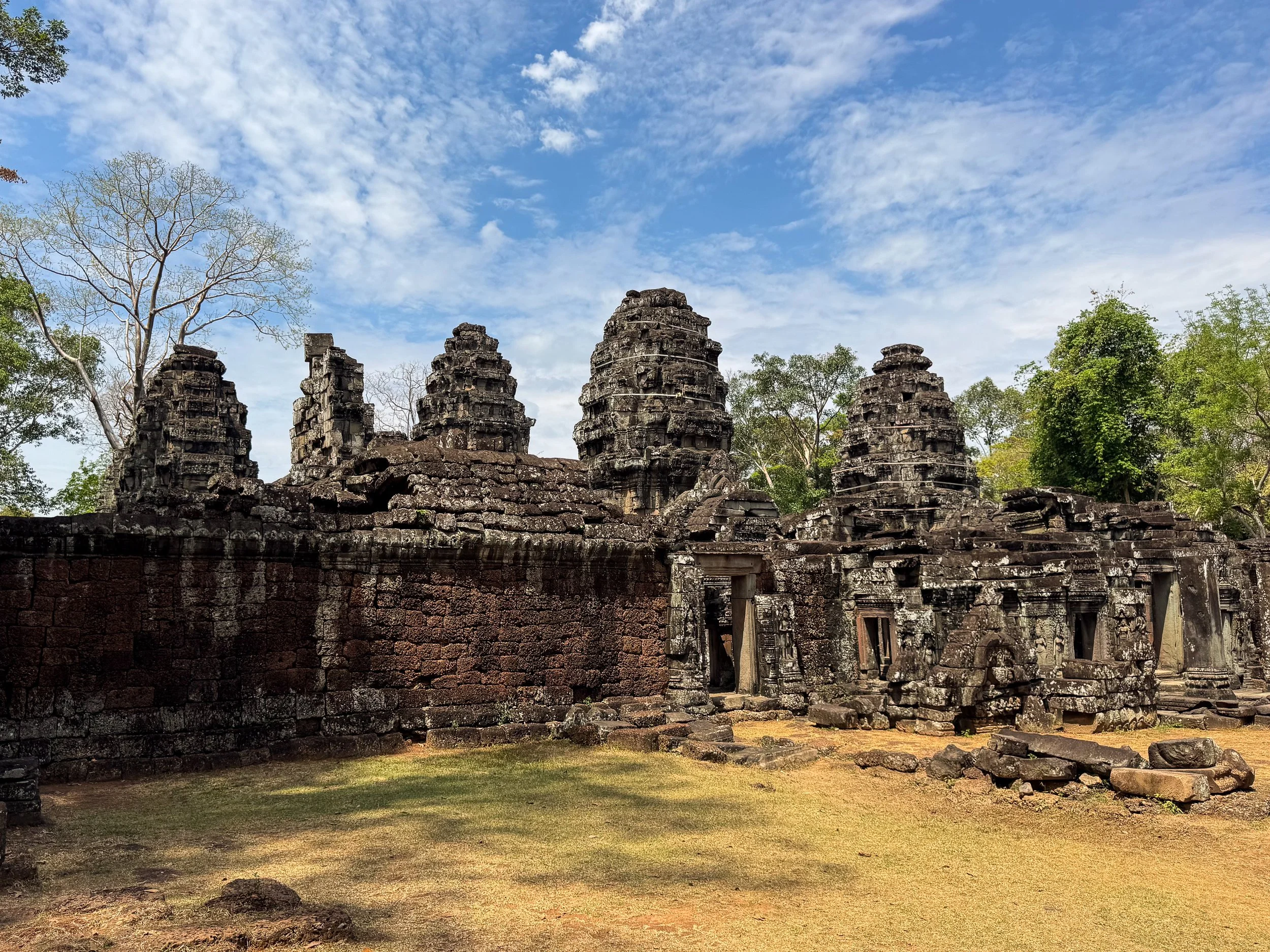
Banteay Kdei. A Buddhist temple dating back to the 13th century. A stone gate with a four faced head of Buddha adorns the temple’s entrance. A stone walkway leads past the ruins of rooms and chambers with walls and columns decorated in carvings of Khmer dancers. Crumbled sections of the temple are overgrown with hundred year old trees home to cicadas and their deafening hum. The temple is still actively visited by Buddhist monks.
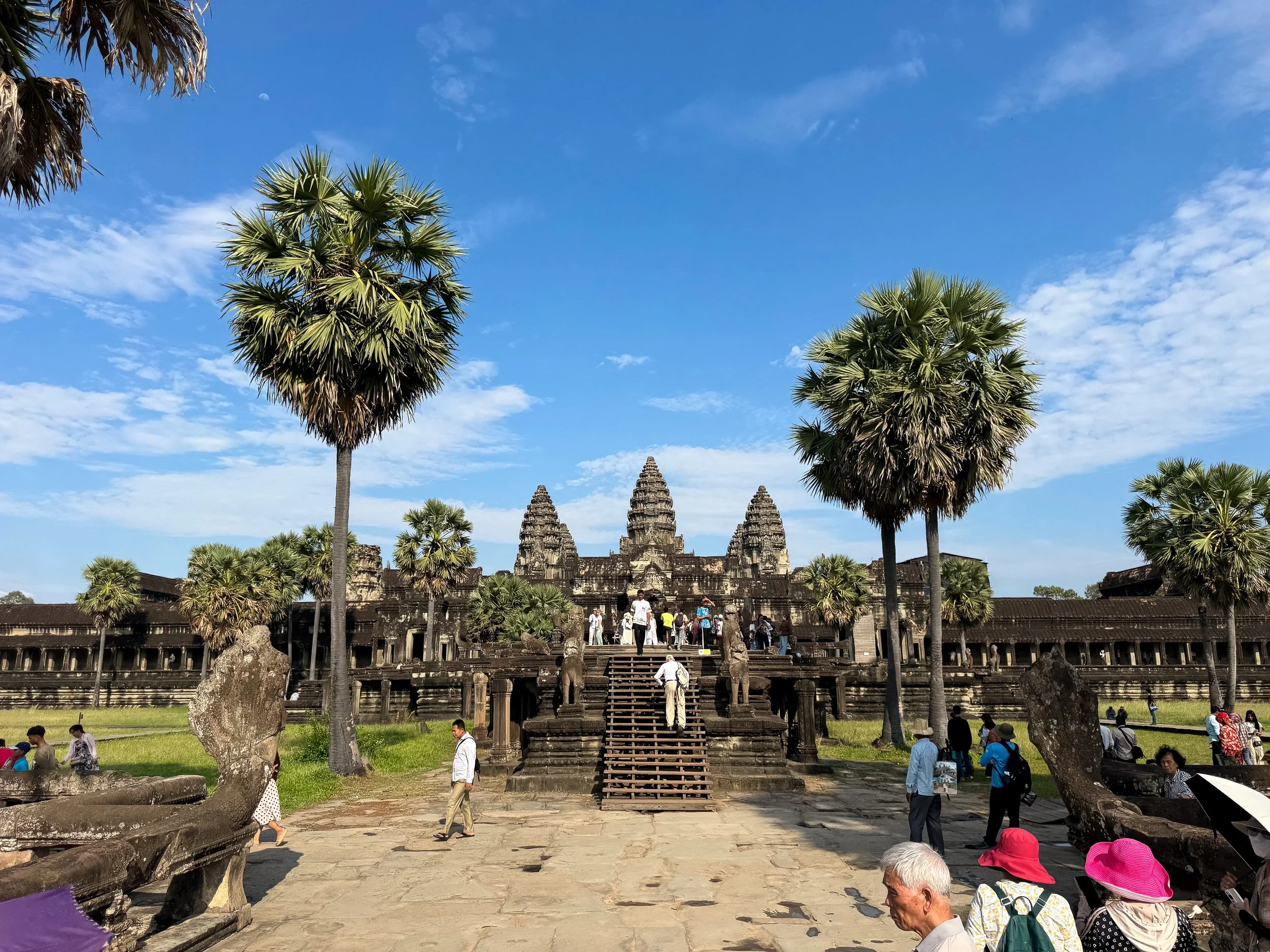
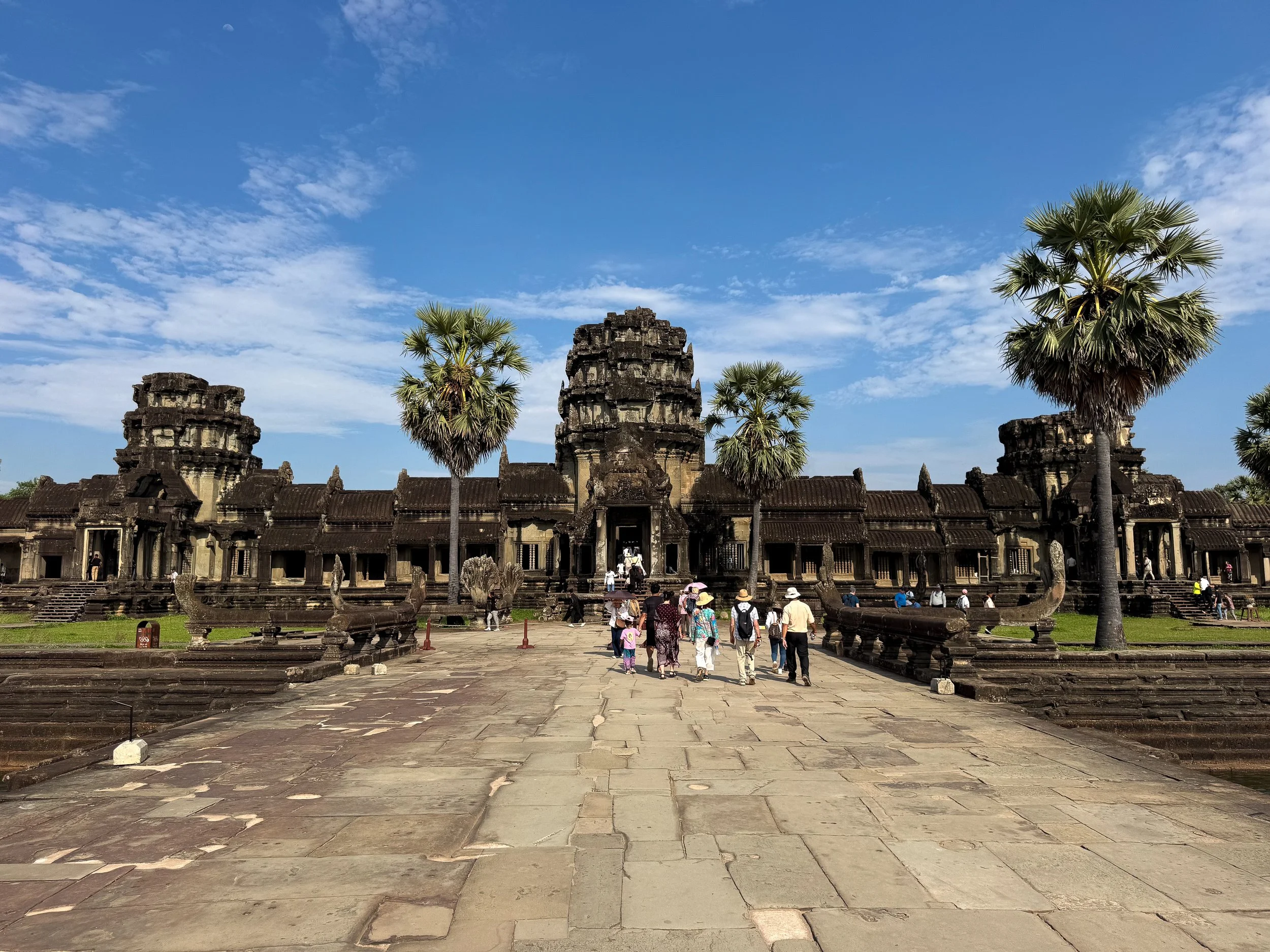
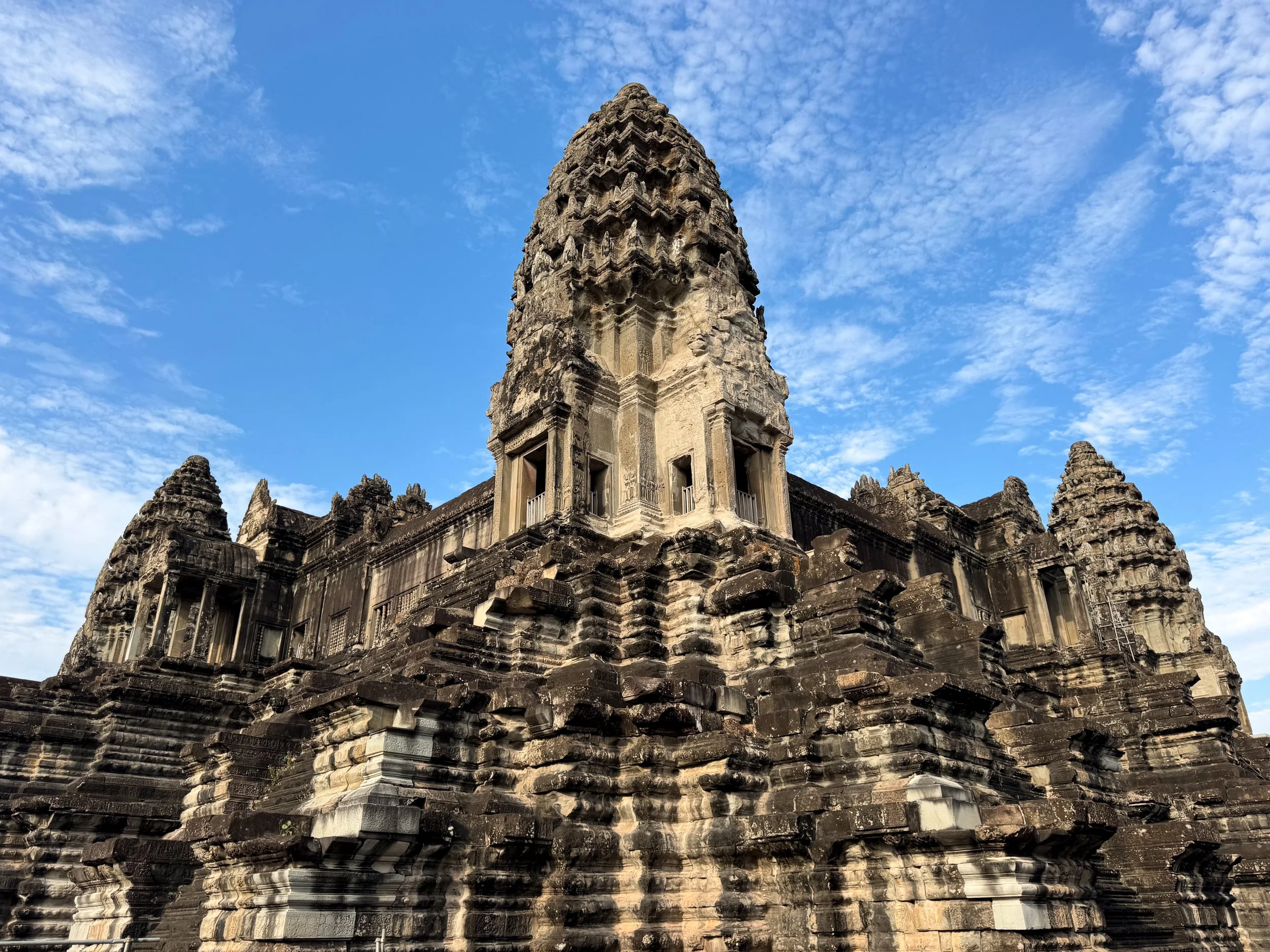
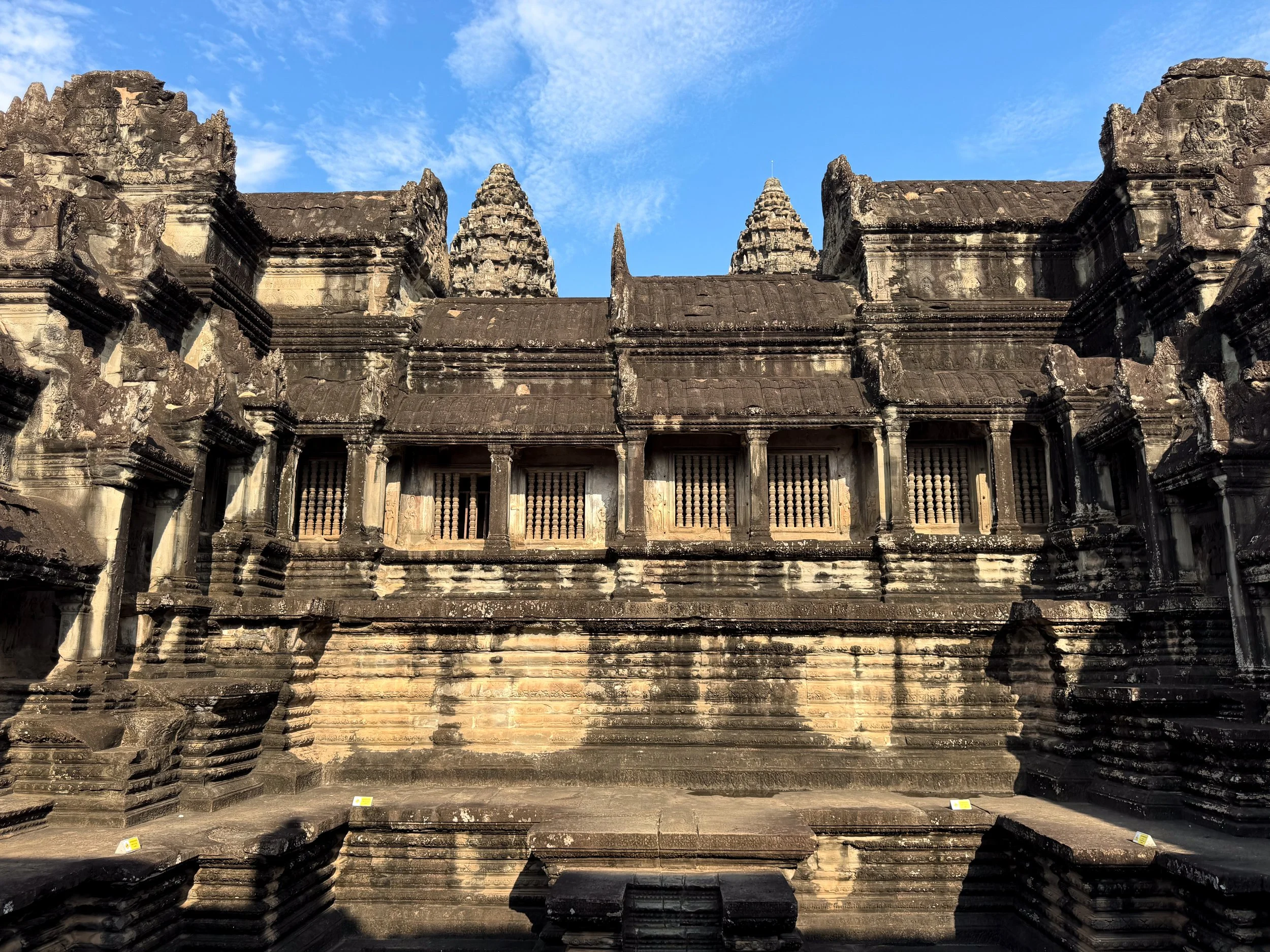
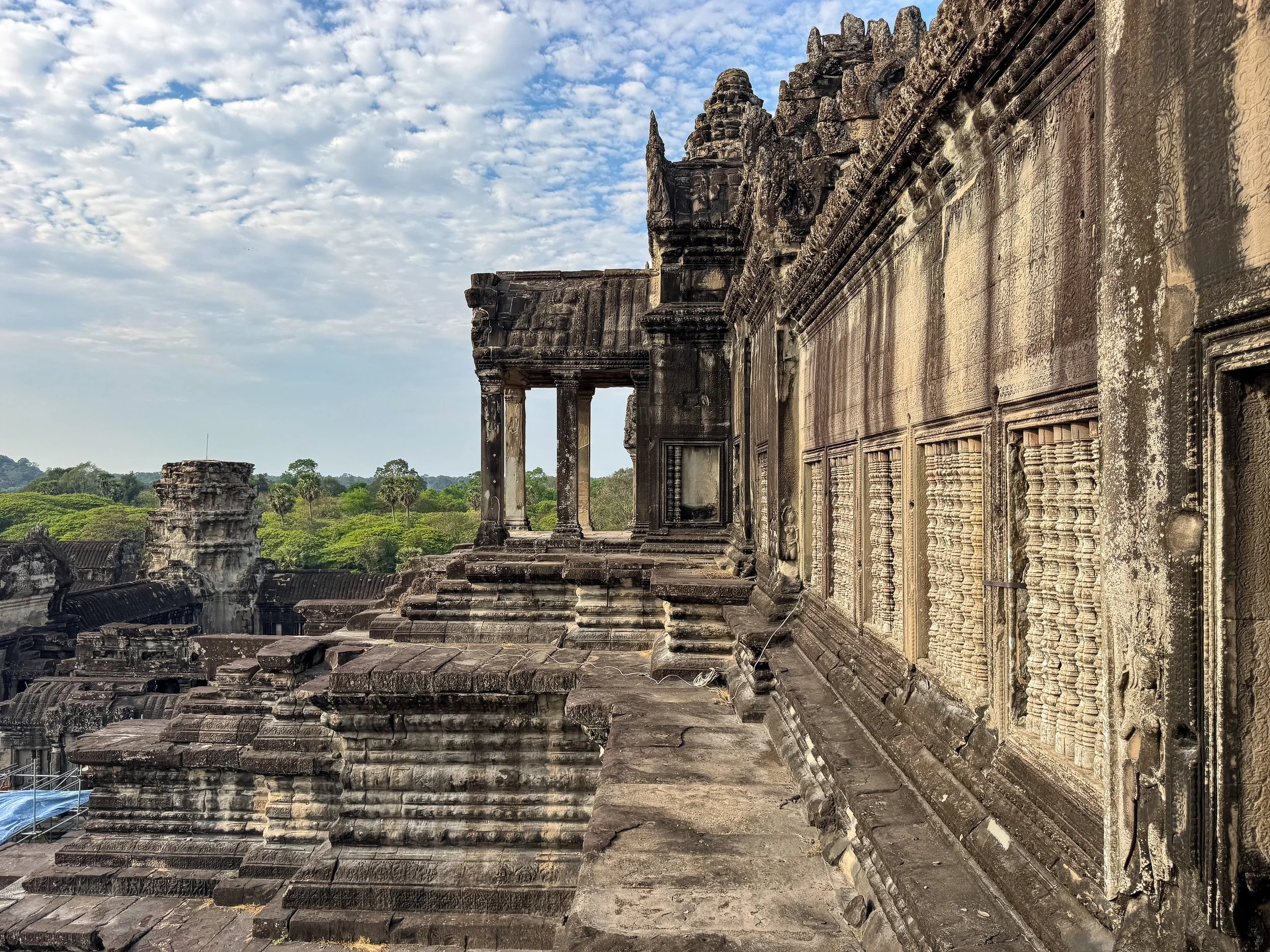
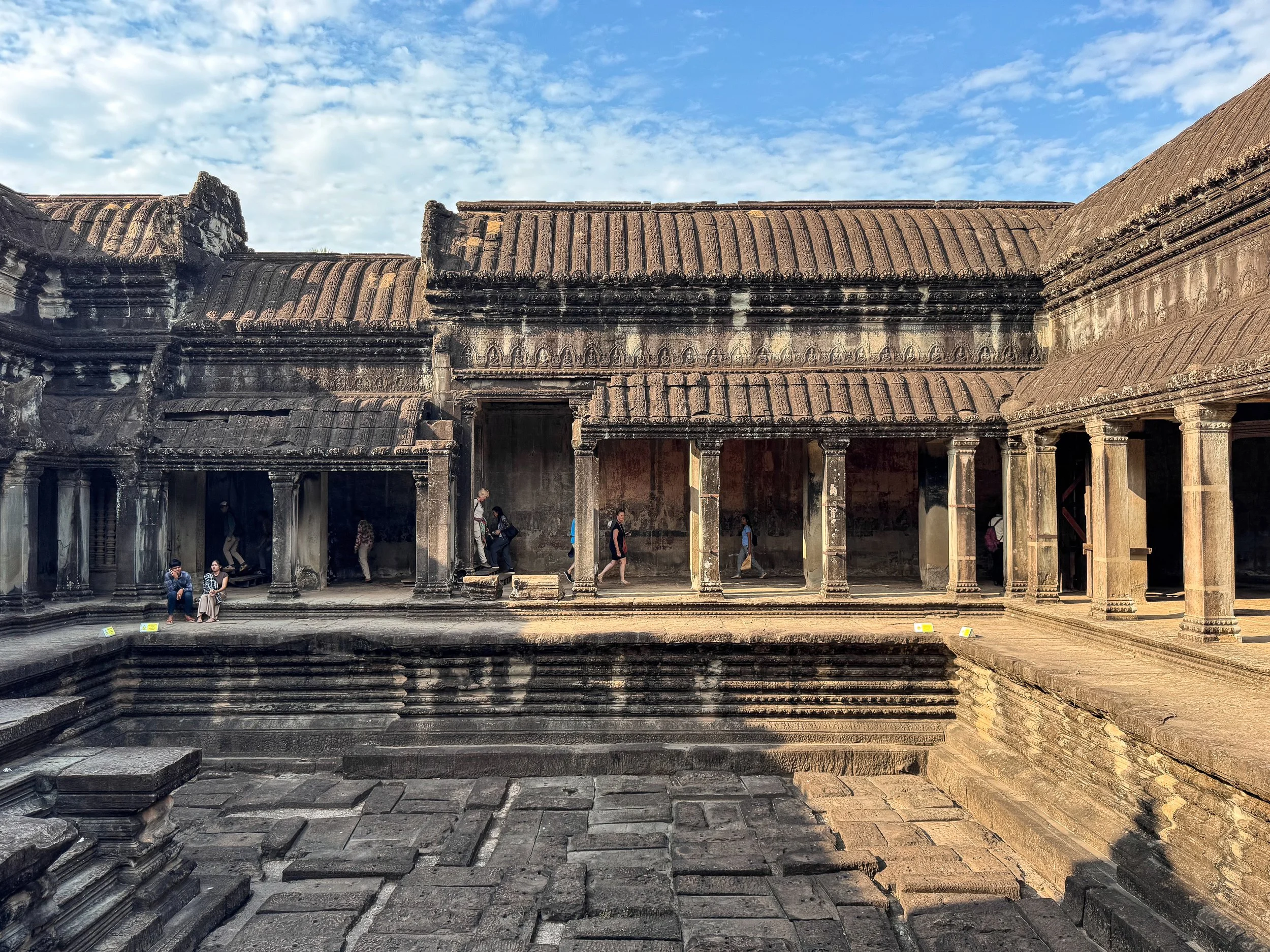
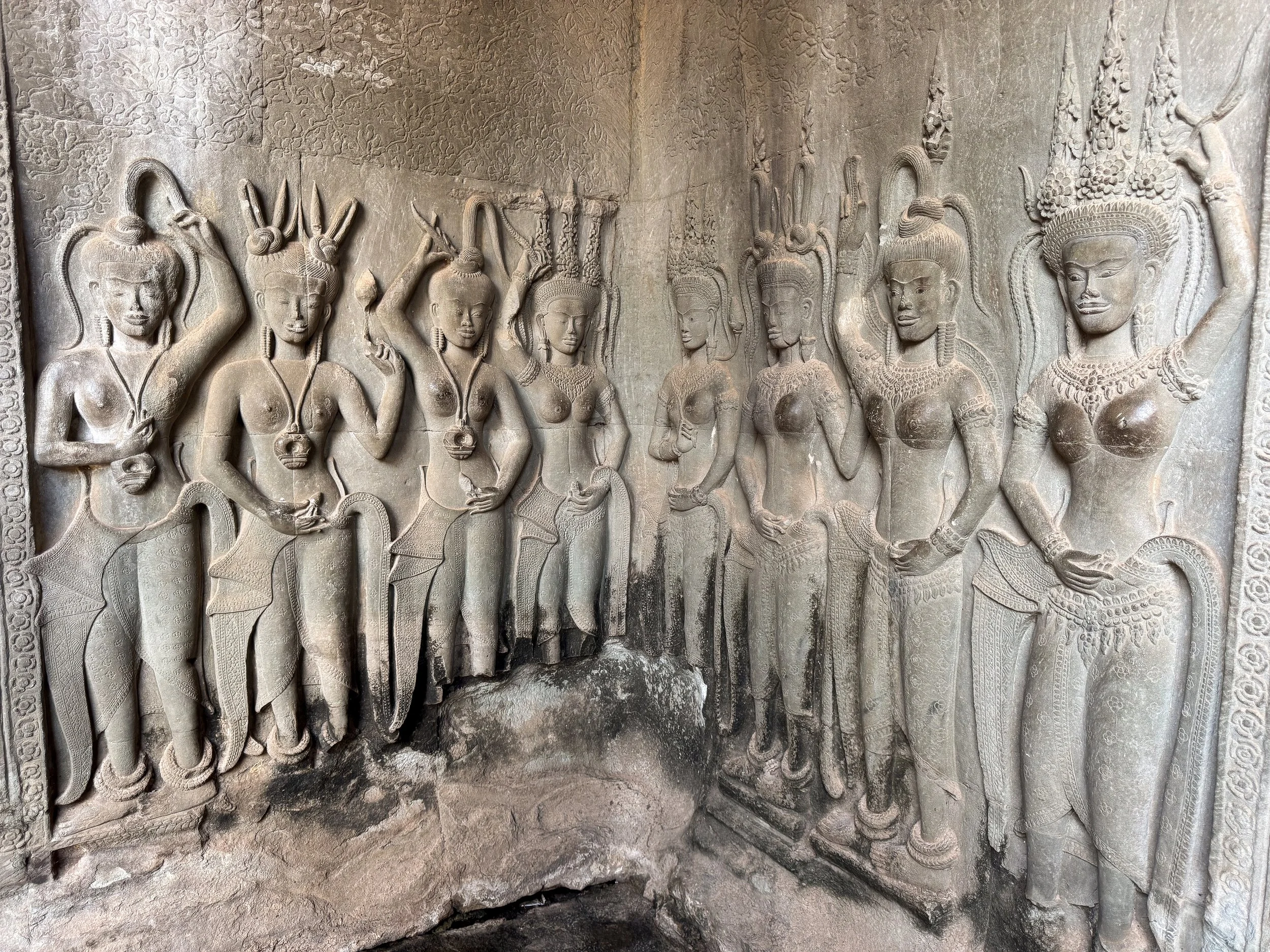
Angkor Wat. The largest religious temple complex in the world, featuring both Hindu and Buddhist motifs. A long bridge crosses a moat to a wide entrance gate lined with stone columns and three symmetrical stupas. Beyond the gate is the iconic image of Angkor Wat. A road flanked by lawns, reflecting pools and small temples leads to the central structure. Its interior is adorned with countless images of Hindu deities and intricately patterned designs. A steep staircase leads to the upper platform and three towering stupas. At its center are Buddhist shrines still used by today’s monks and followers.
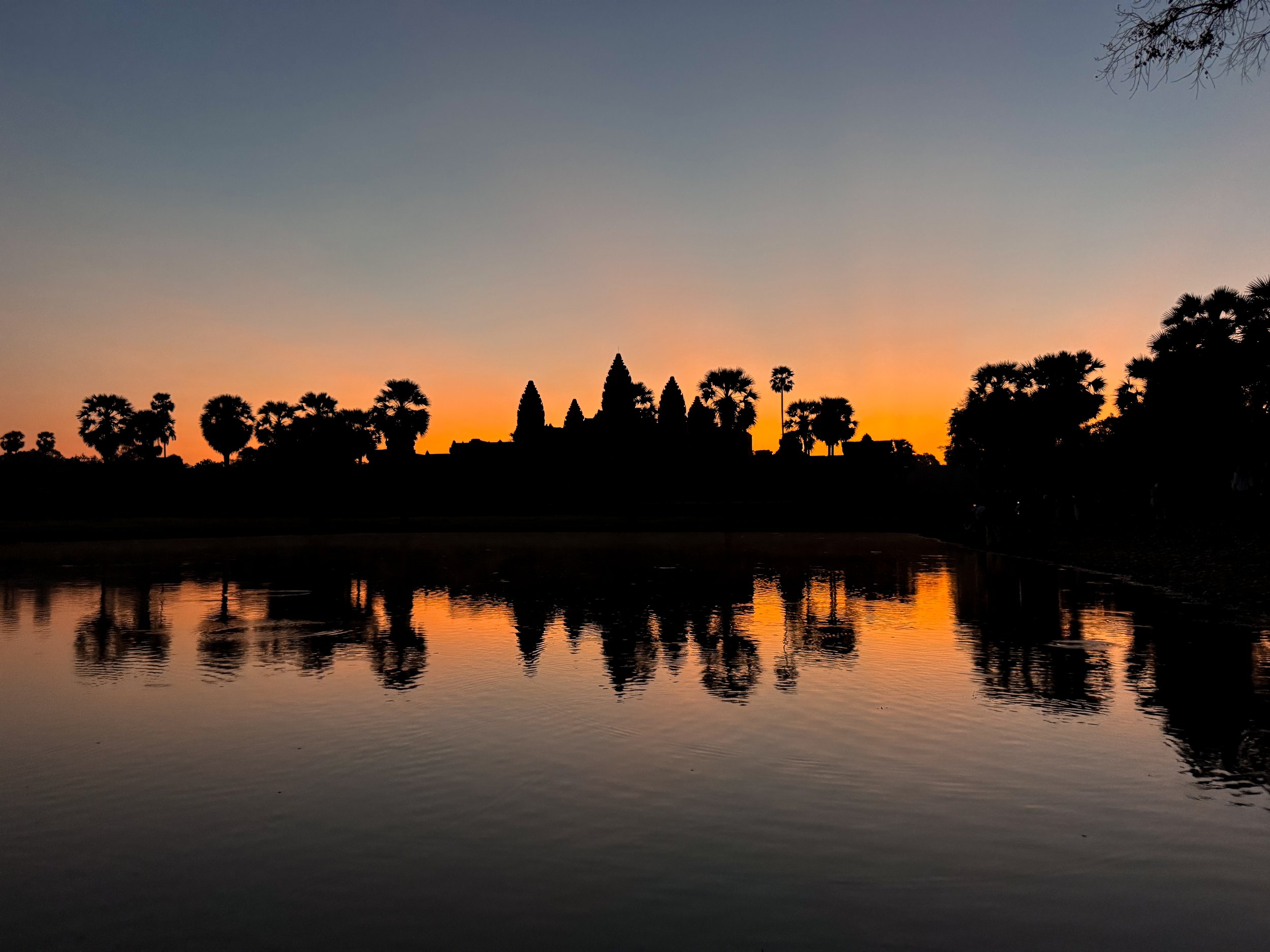
Angkor Wat Sunrise. We arrived just before 5am and were some of the first to enter the temple. We watched from the south reflecting pool and north temple as the sky turned orange and sun rose above the temple.
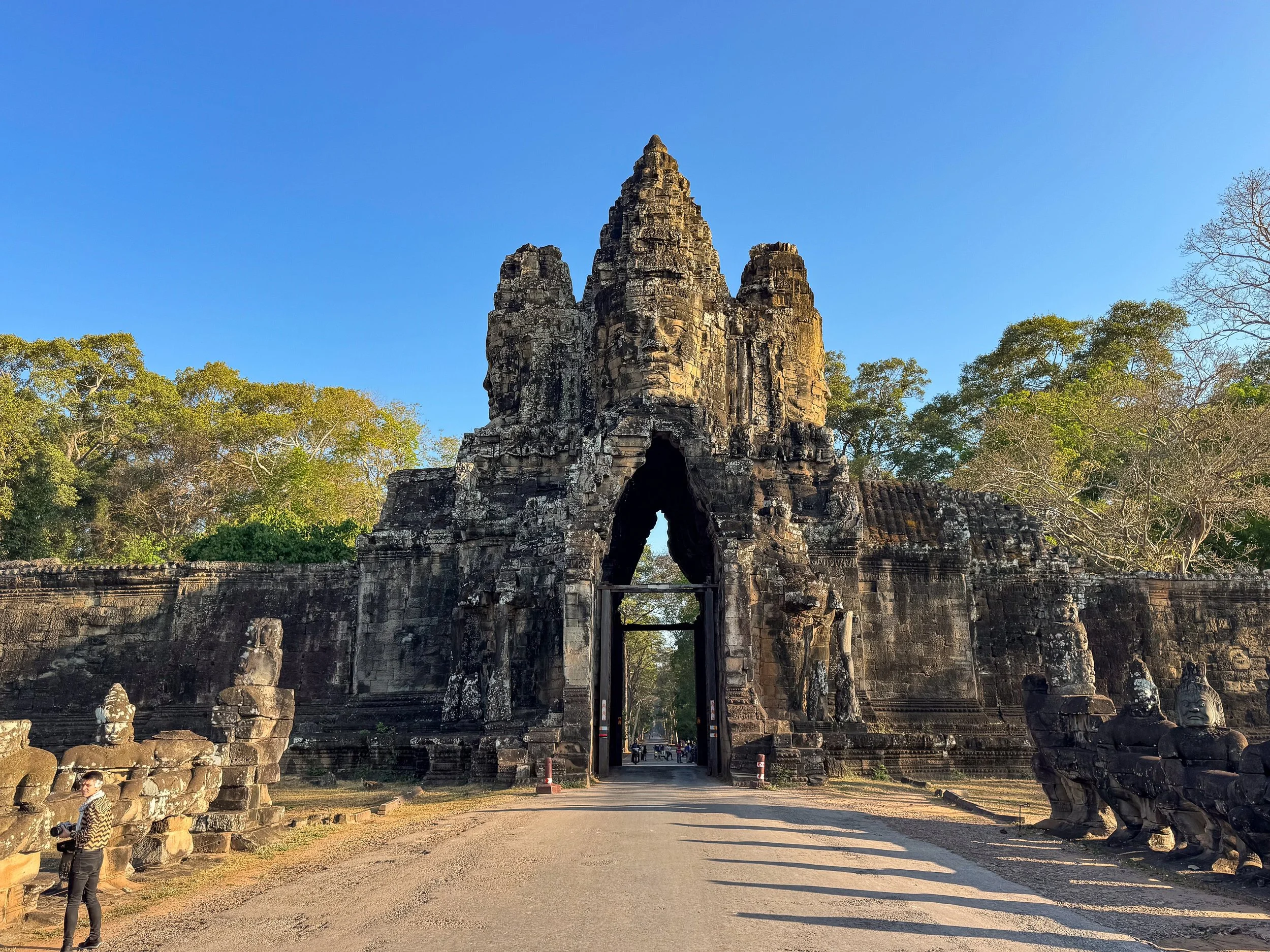
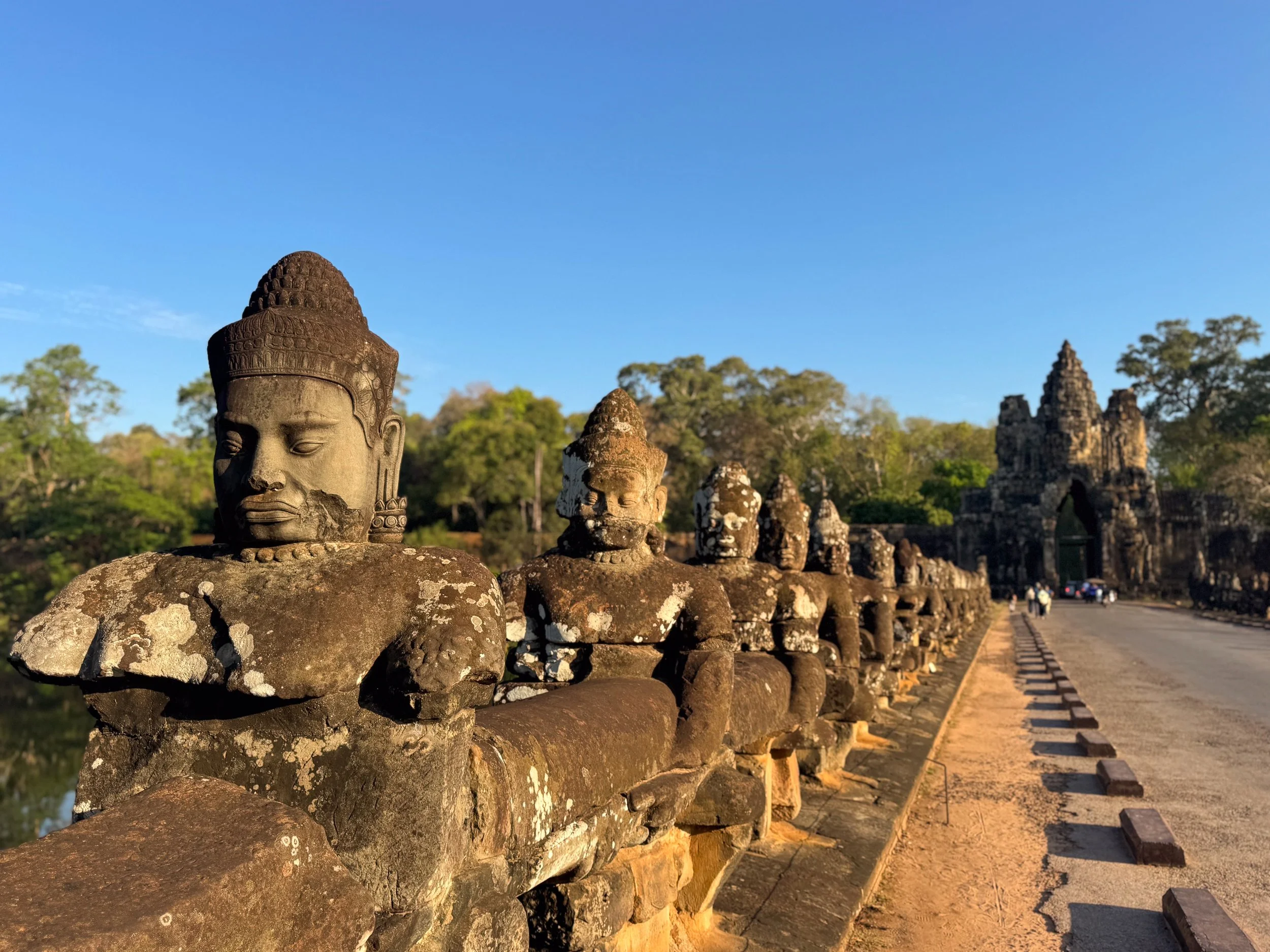
Angkor Thom South Gate. A gate entering the Angkor Thom temple complex. A bridge lined with statues of Buddha crosses over a moat leading to the gate. The gate has a four faced head of Buddha and a narrow road passing through it.
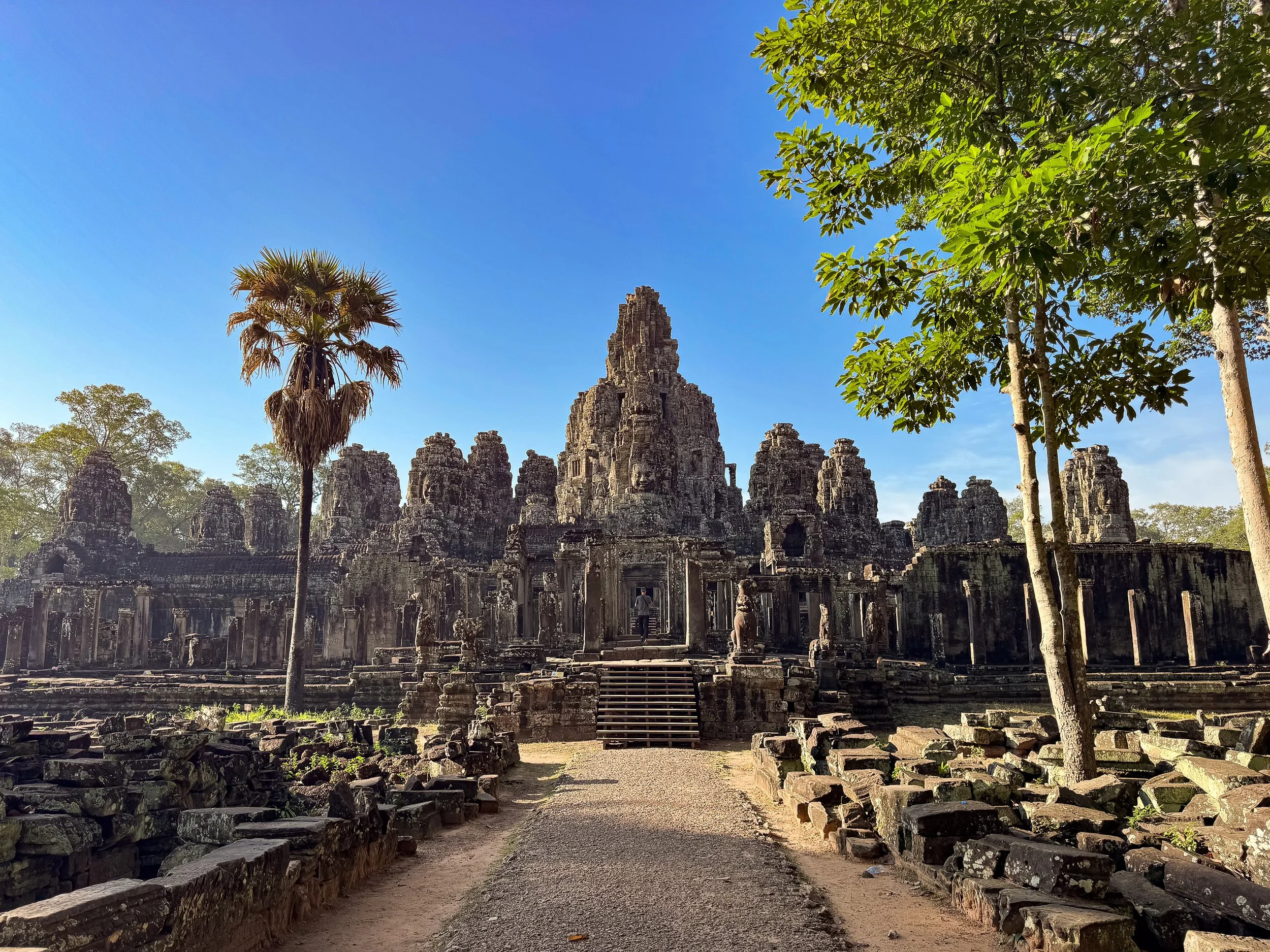
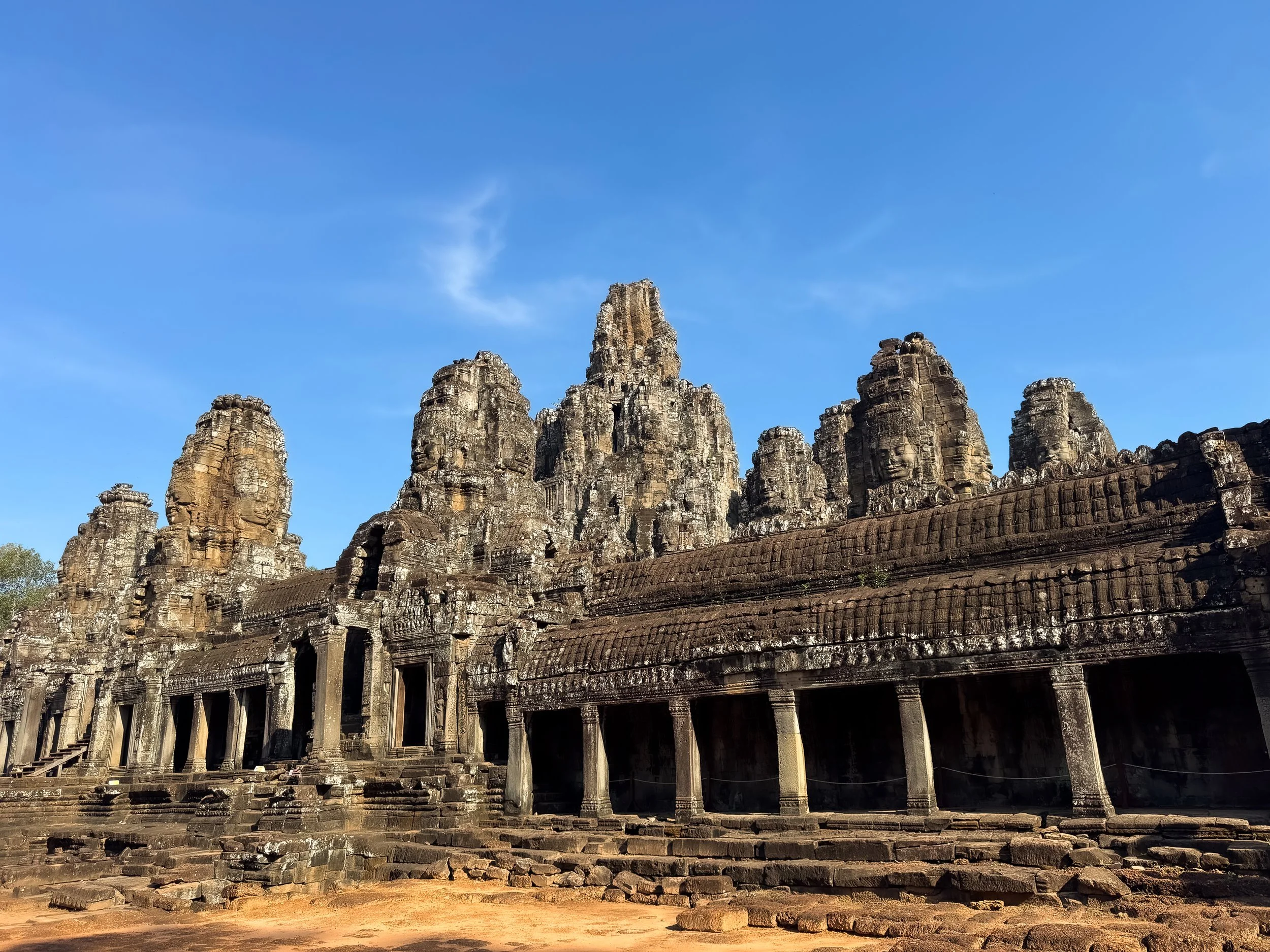
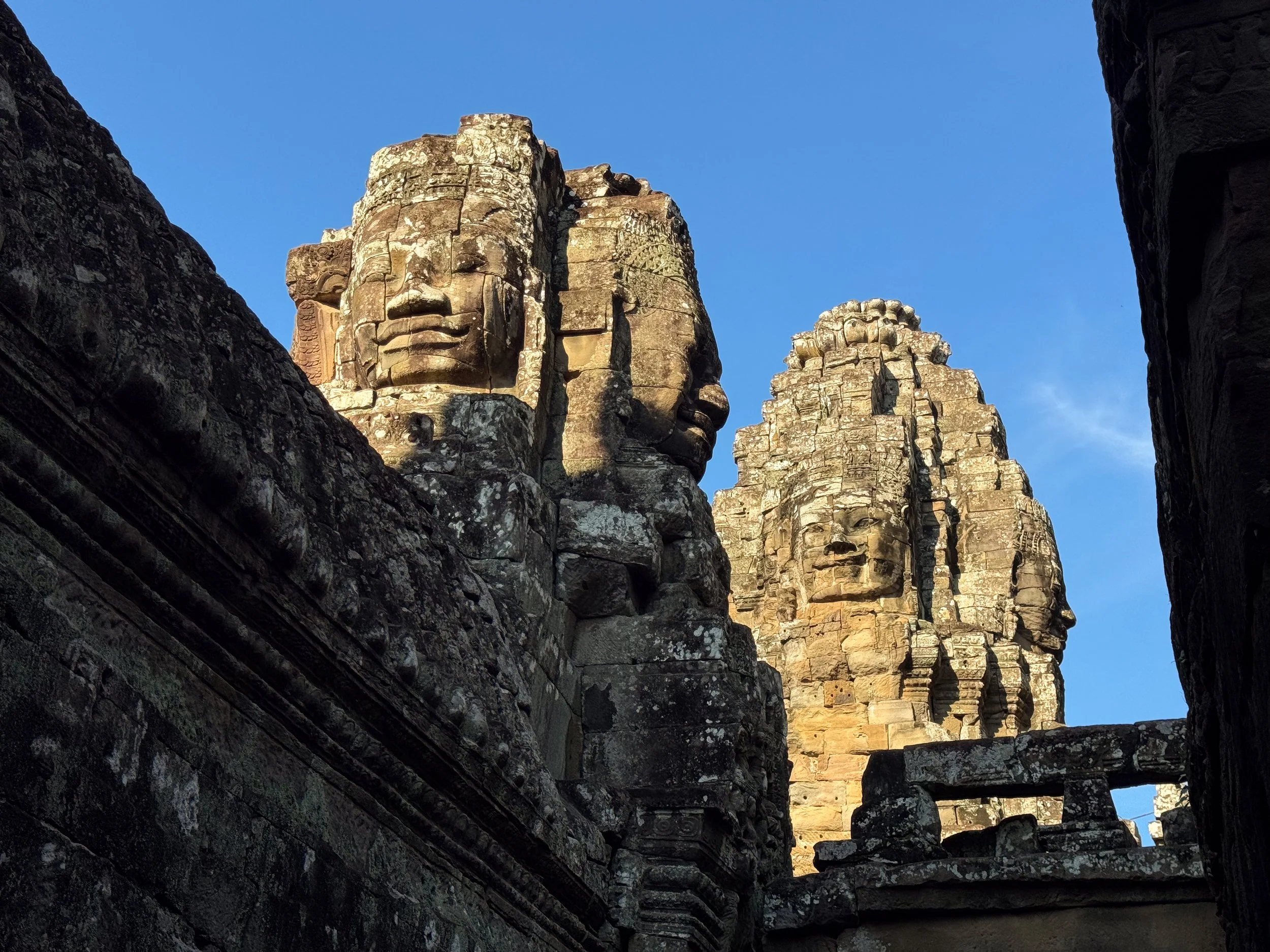
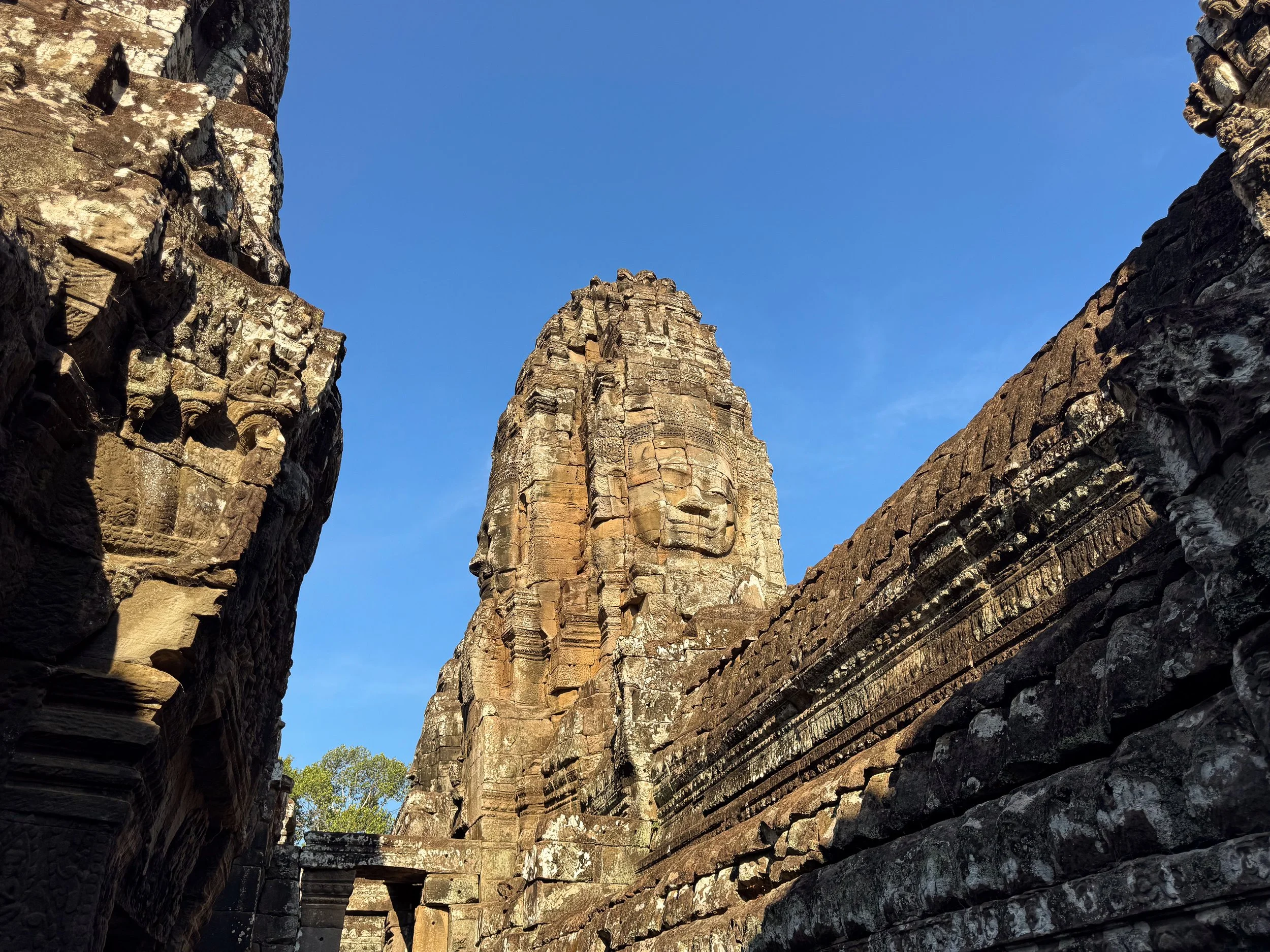
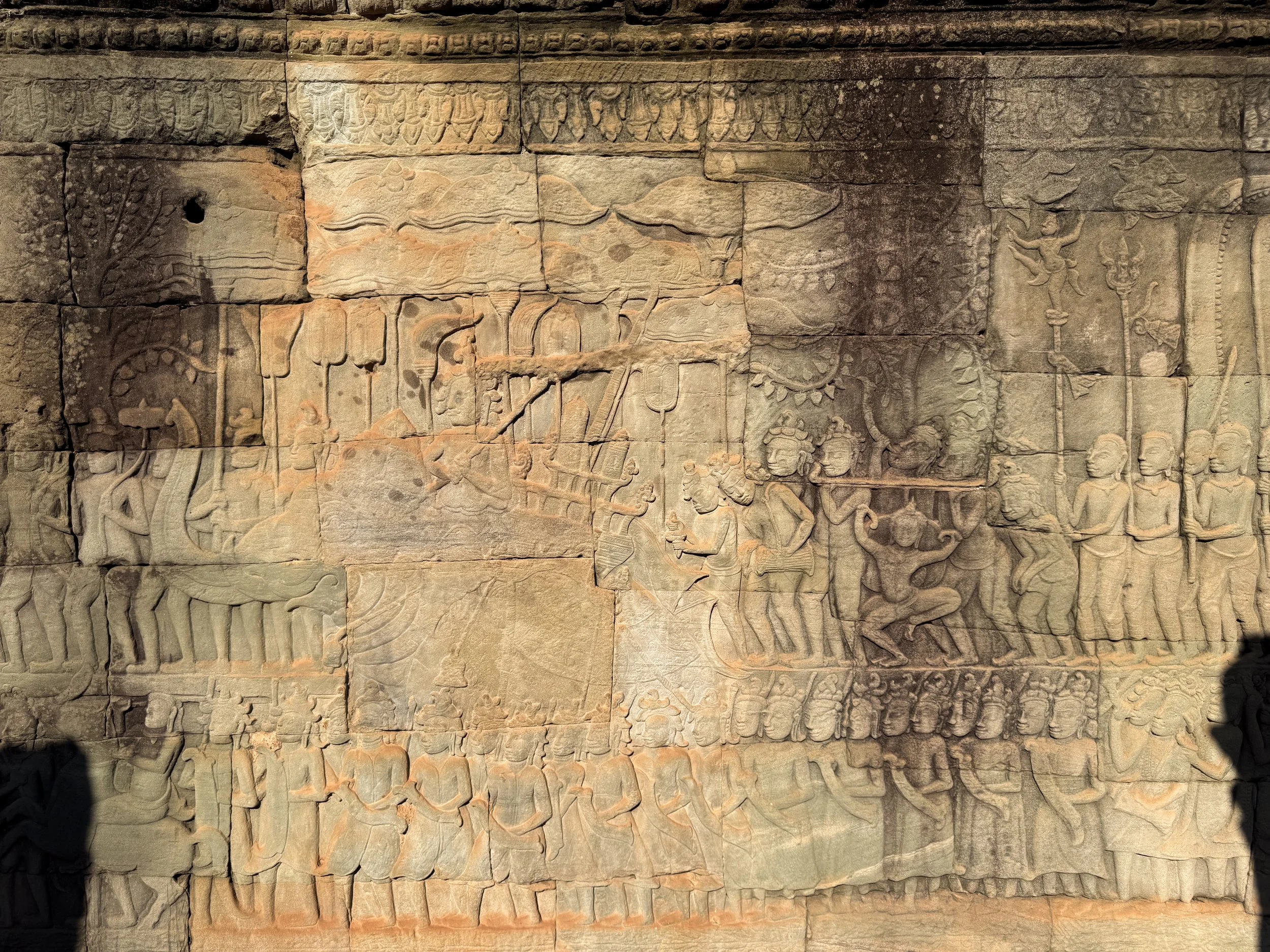
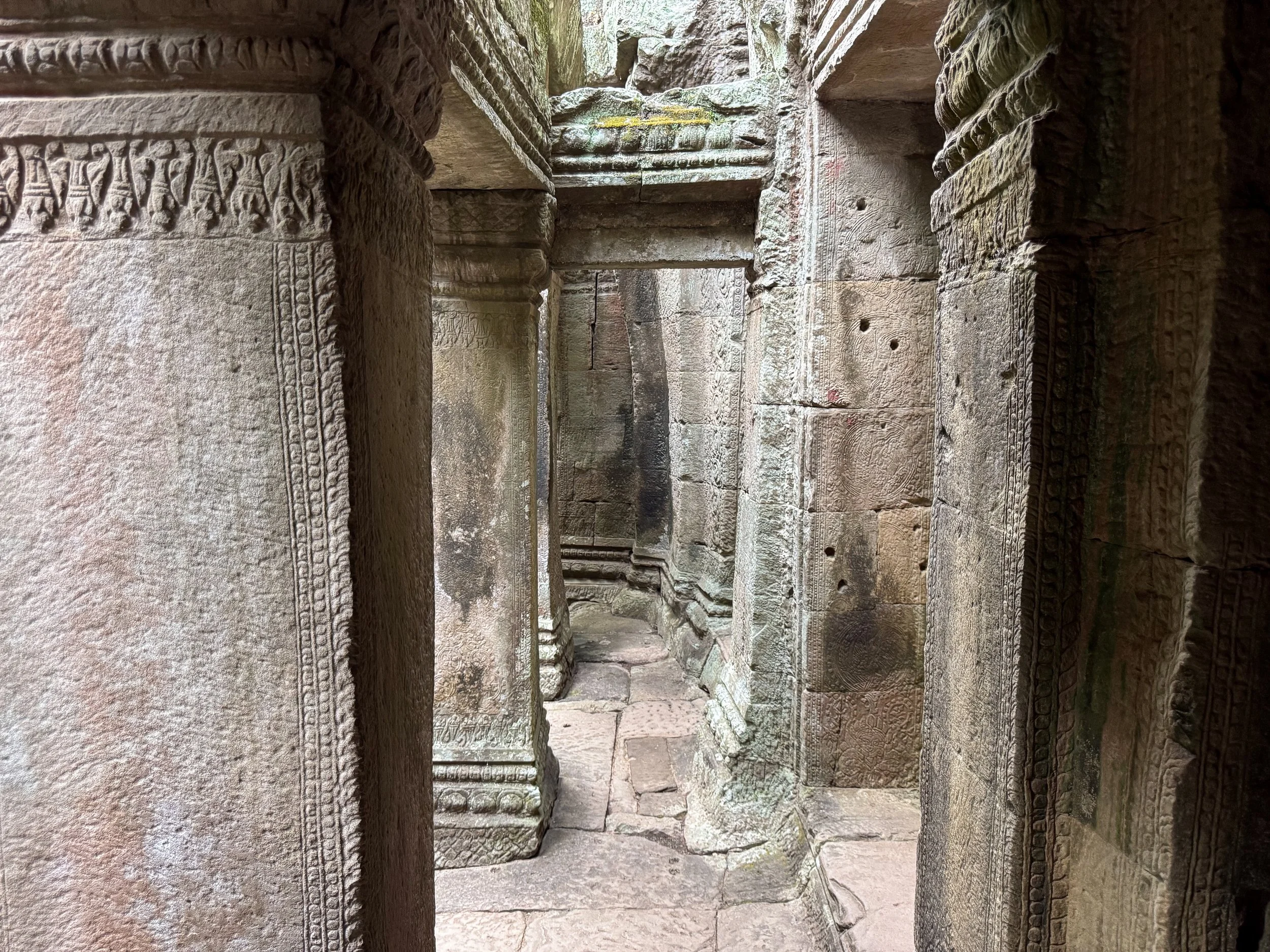
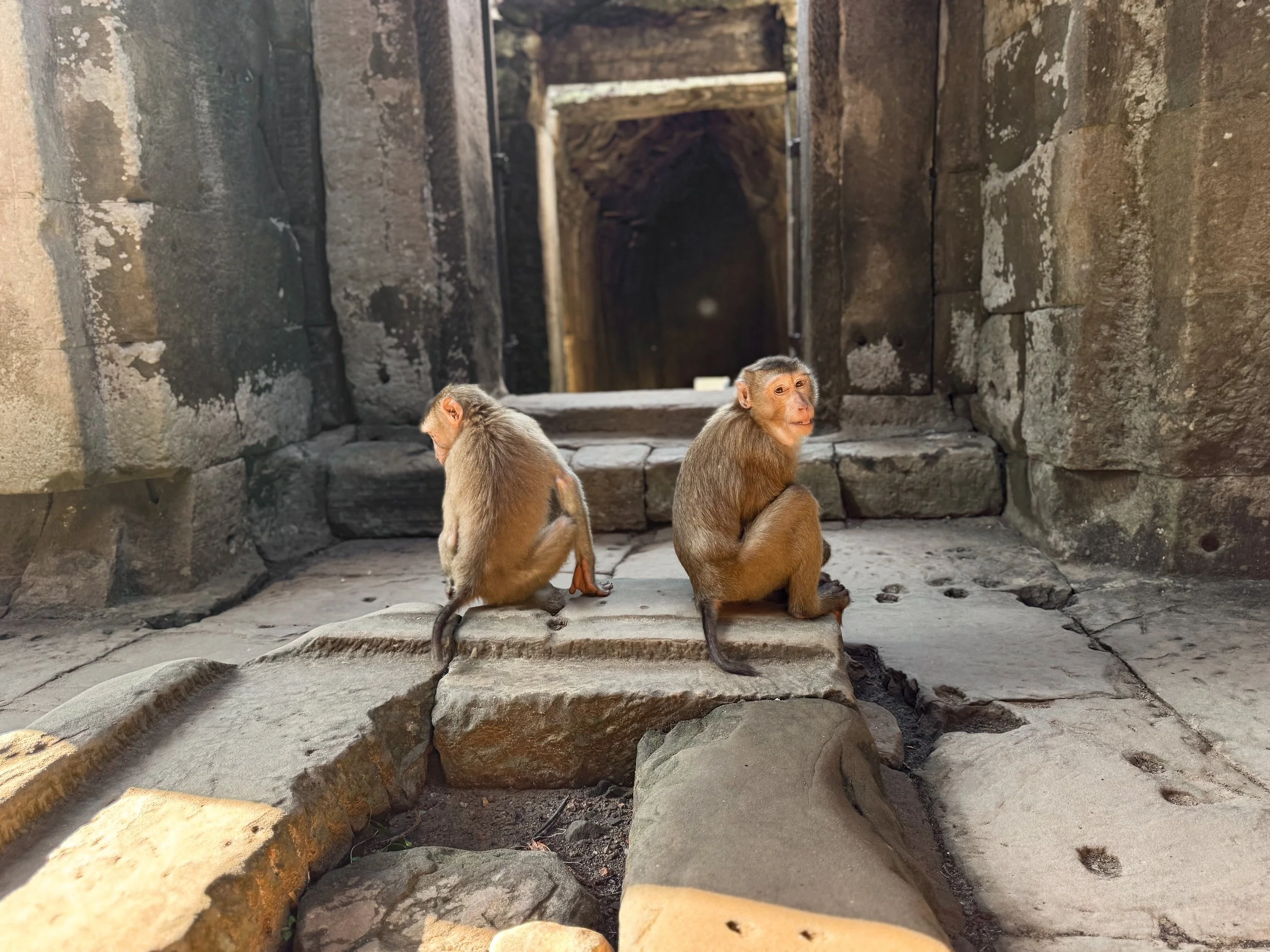
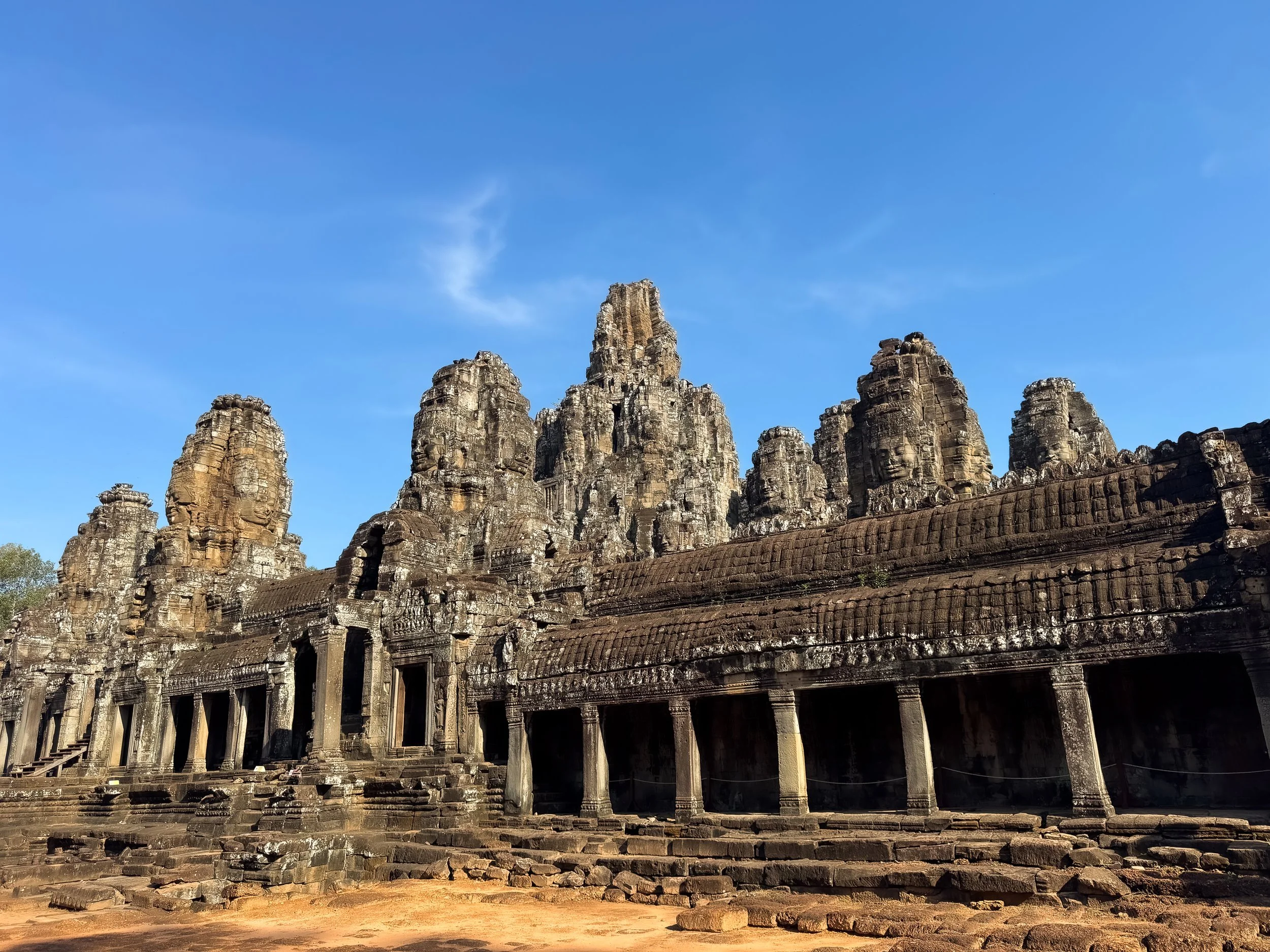
Bayon. A 12th century temple defined by its towers with four faced heads of Buddha looking in the cardinal directions. Stacks of stone and piles of rubble surround the crumbling temple. Detailed stories and pictures are carved into its ancient walls. Stairs lead to its mid-level and inner passageways, some barely wide enough to squeeze through. Colonies of bats live within the dark chambers. Families of wild monkeys roam free with warning signs cautioning people to beware of monkey attacks. Bayon is easily one of the most unique and wild feeling temples at Angkor Wat.
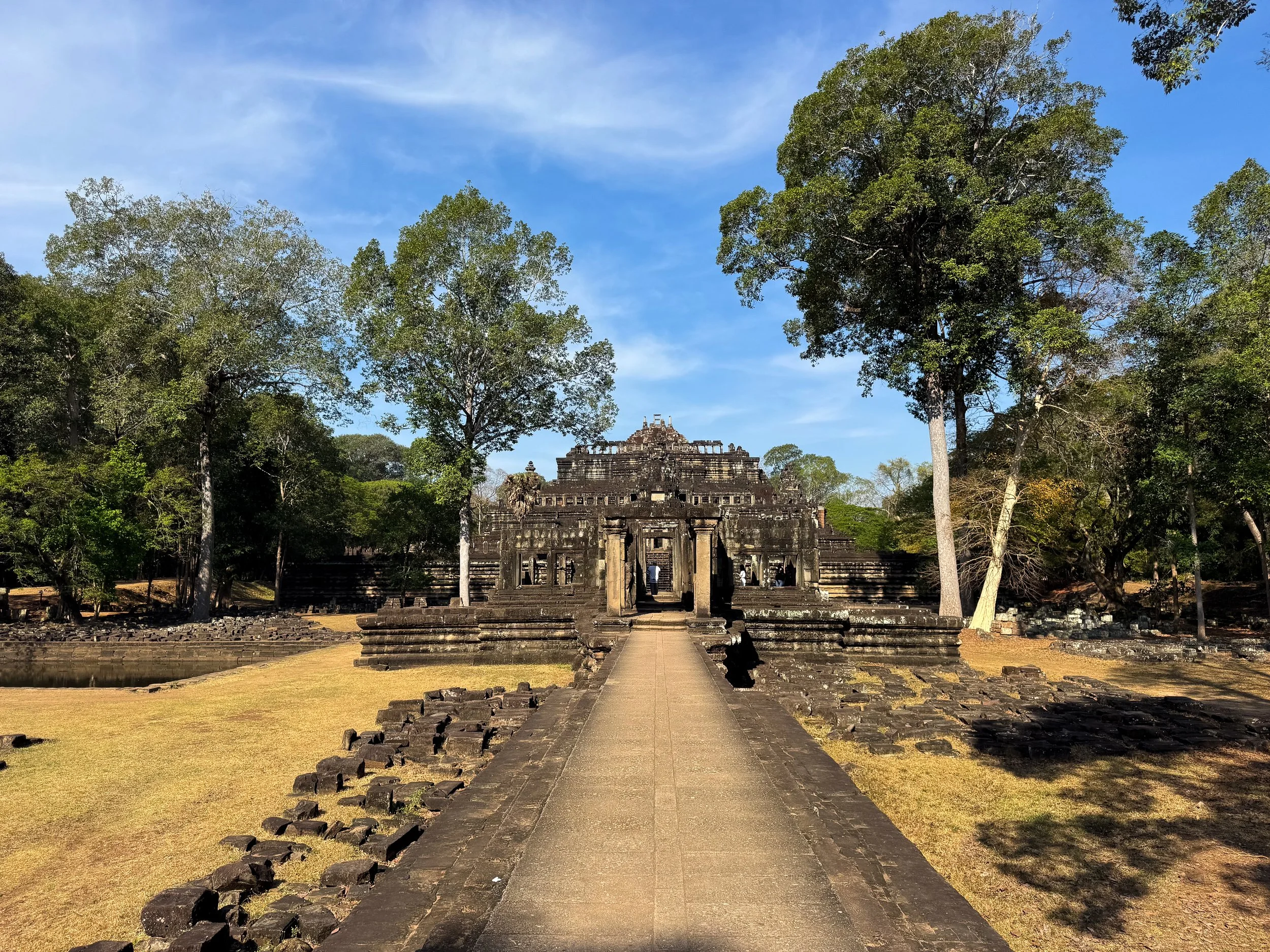
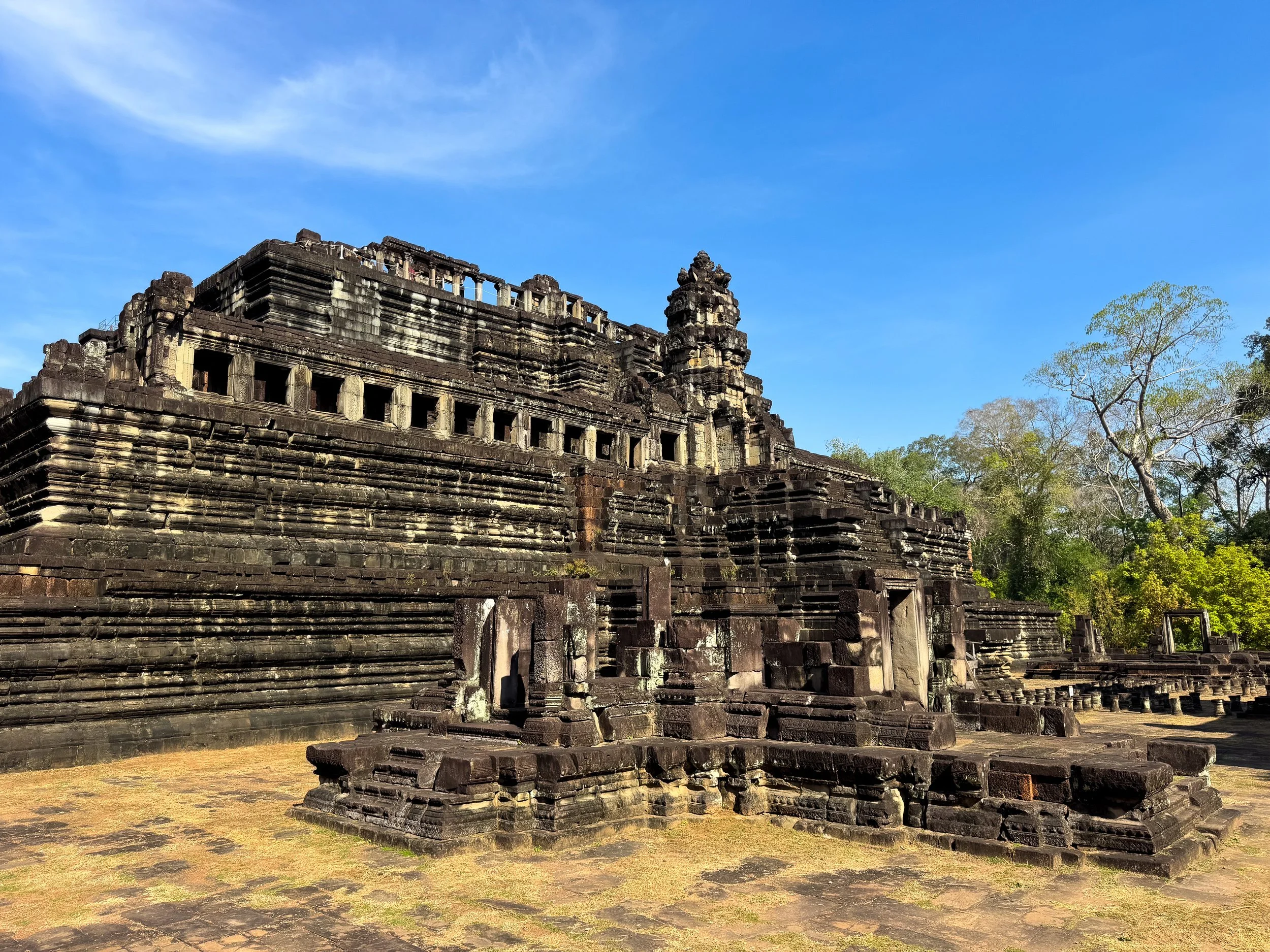
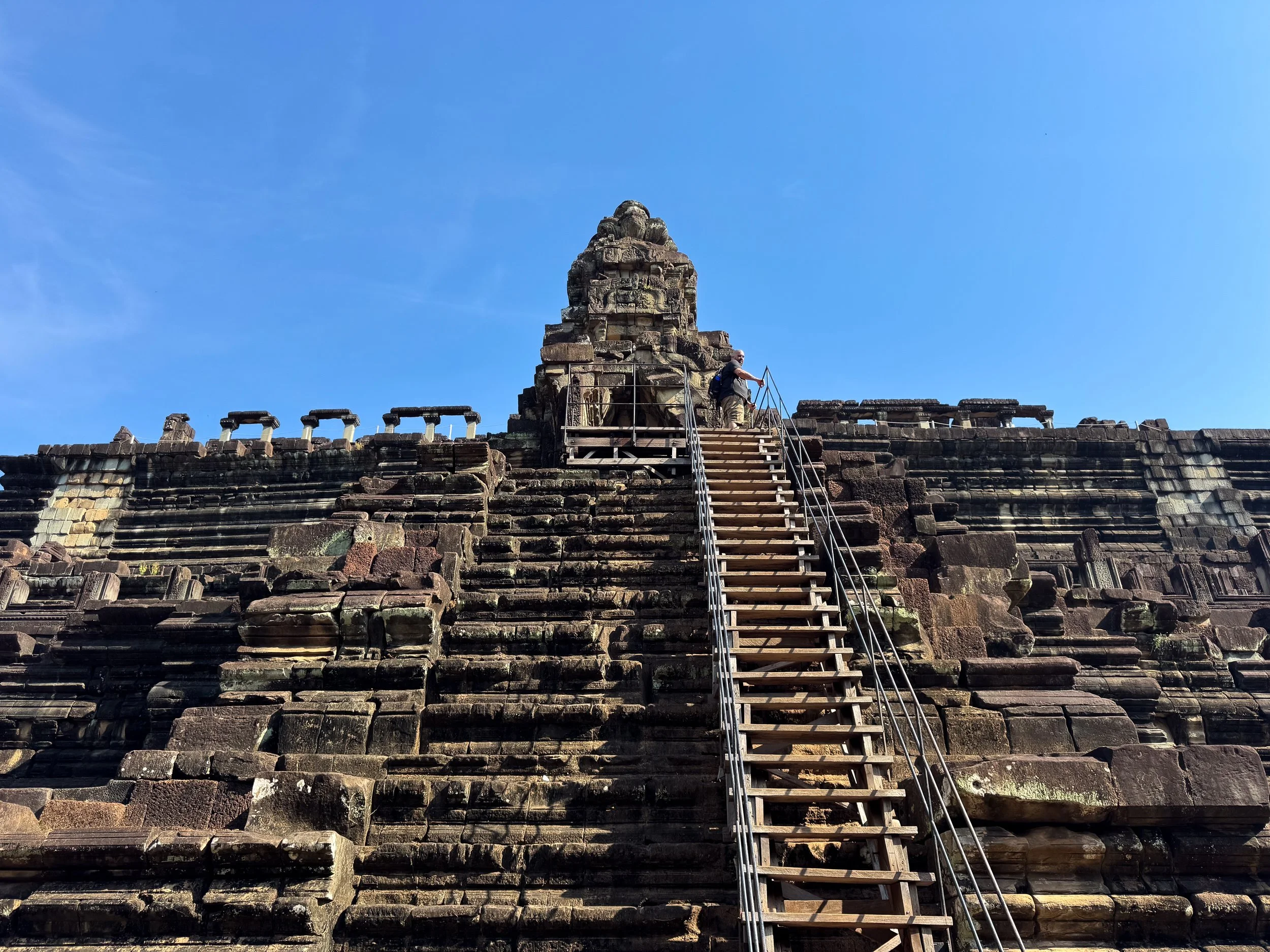
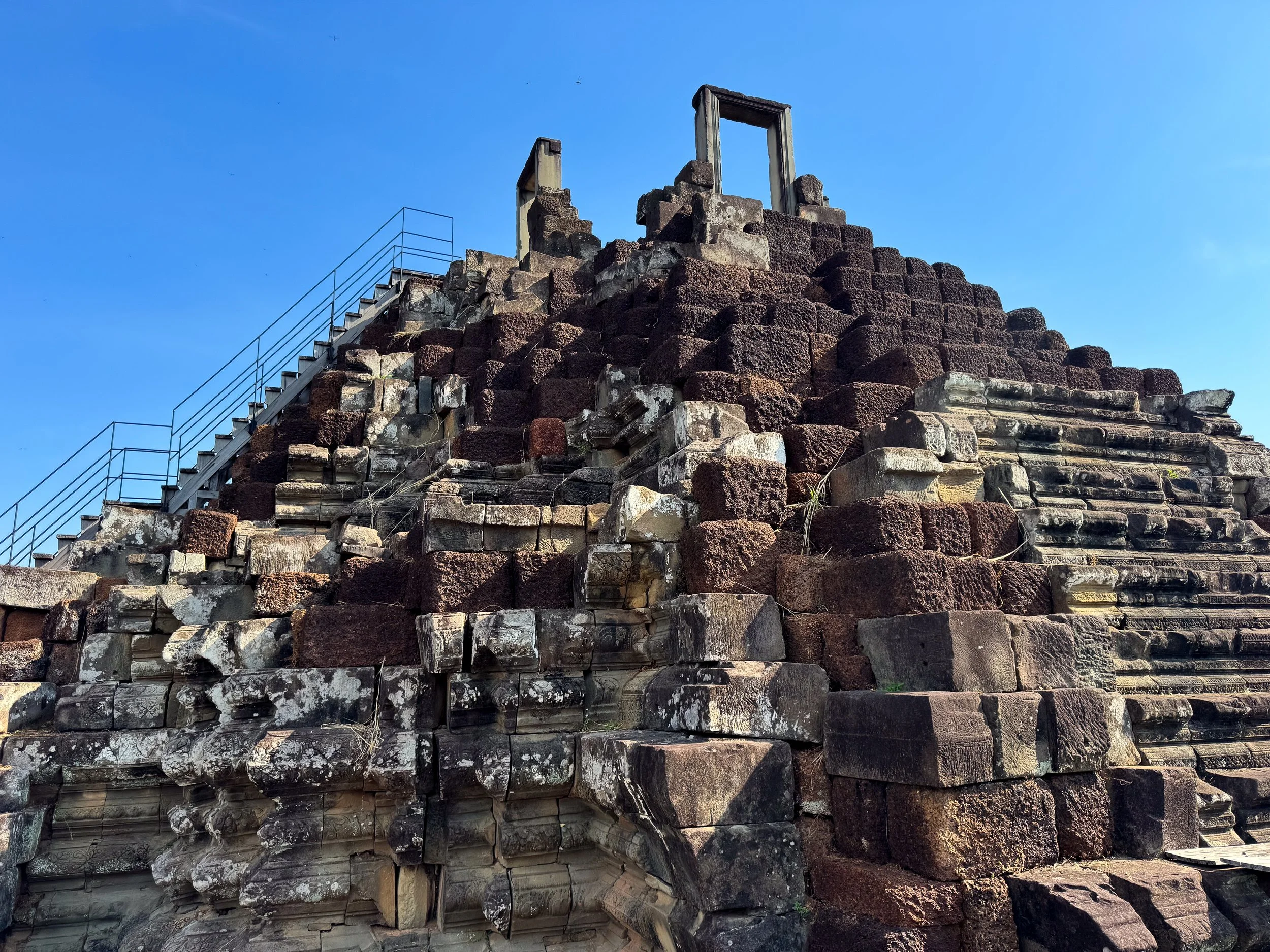
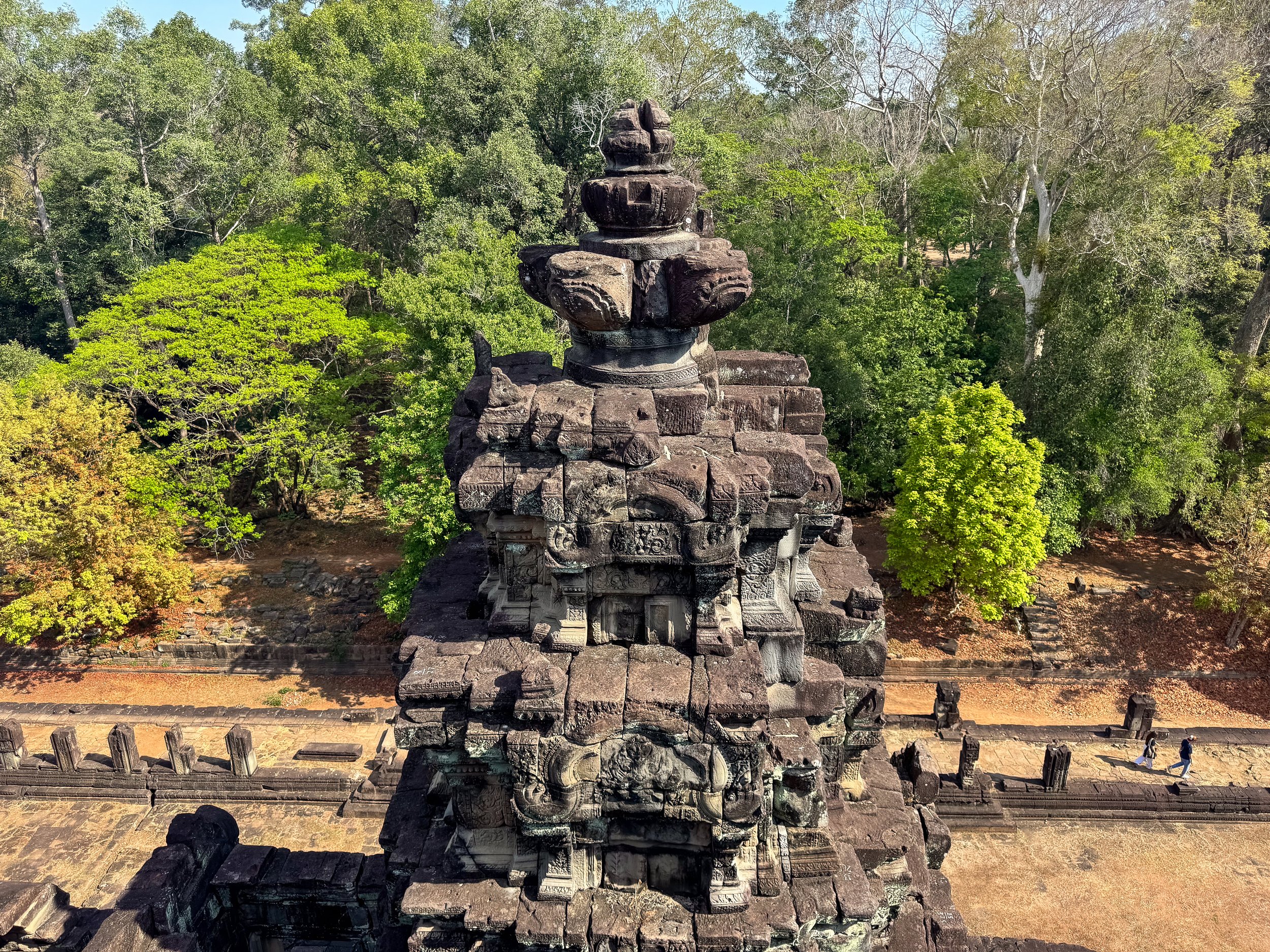
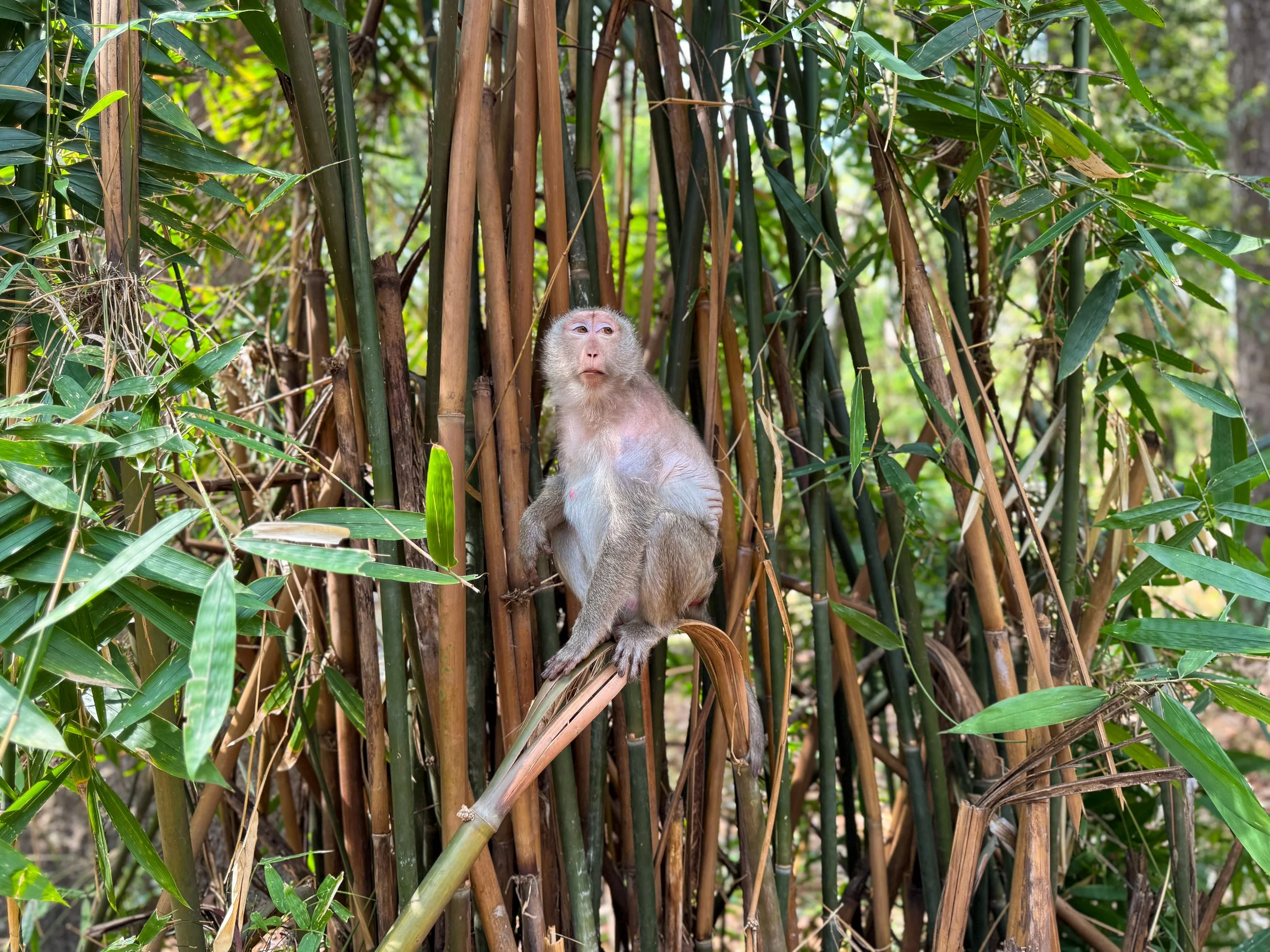
Baphuon. The ruins of a four sided, multi-tiered temple set against the backdrop of the dense jungle. A dried up causeway leads to its base where steep staircases ascend to each level. Minimal details and statues have survived the centuries of decay. Piles of stone and rubble are placed throughout the surrounding grounds. Families of wild monkeys play on the ruins and in the trees.
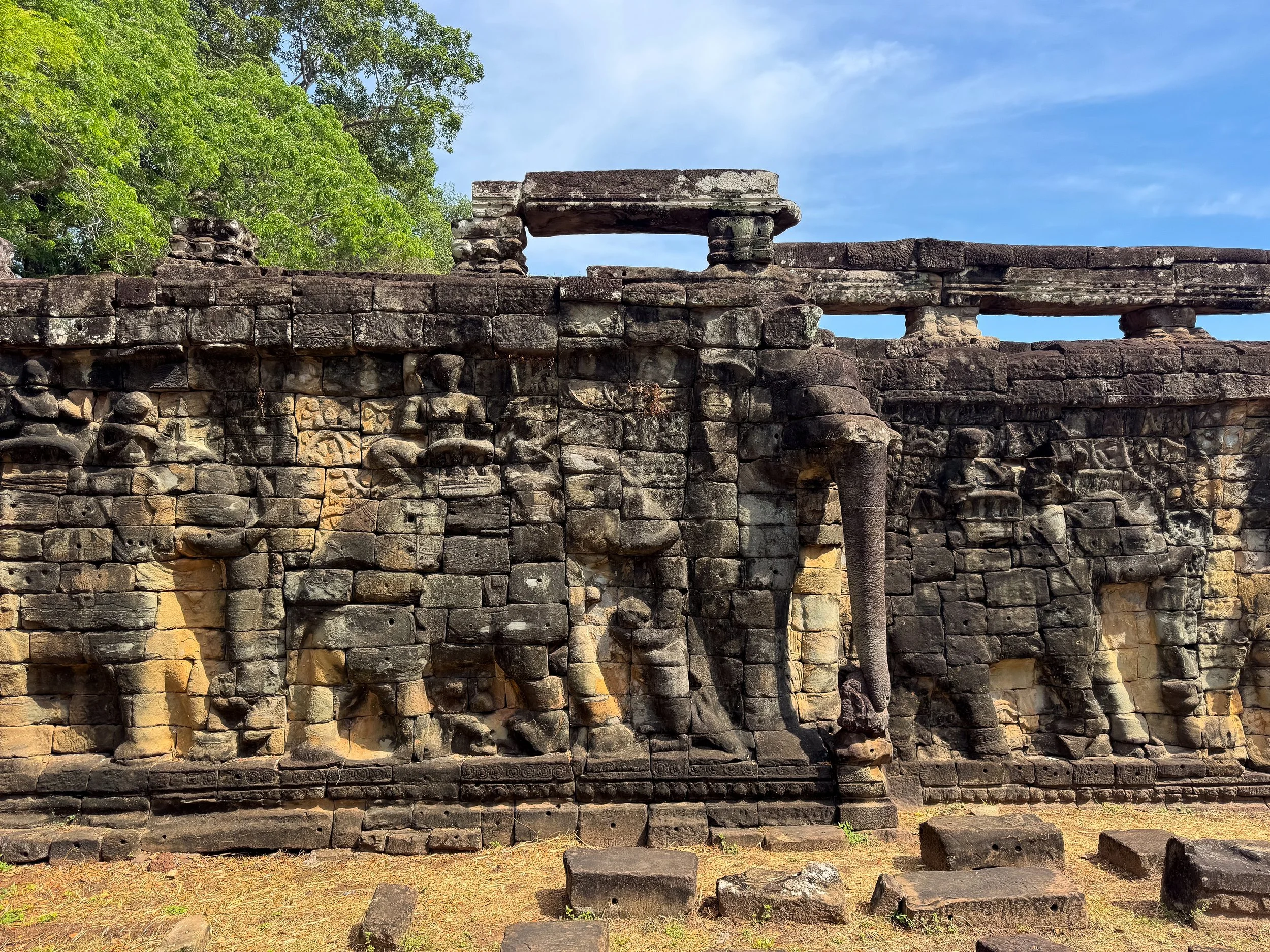
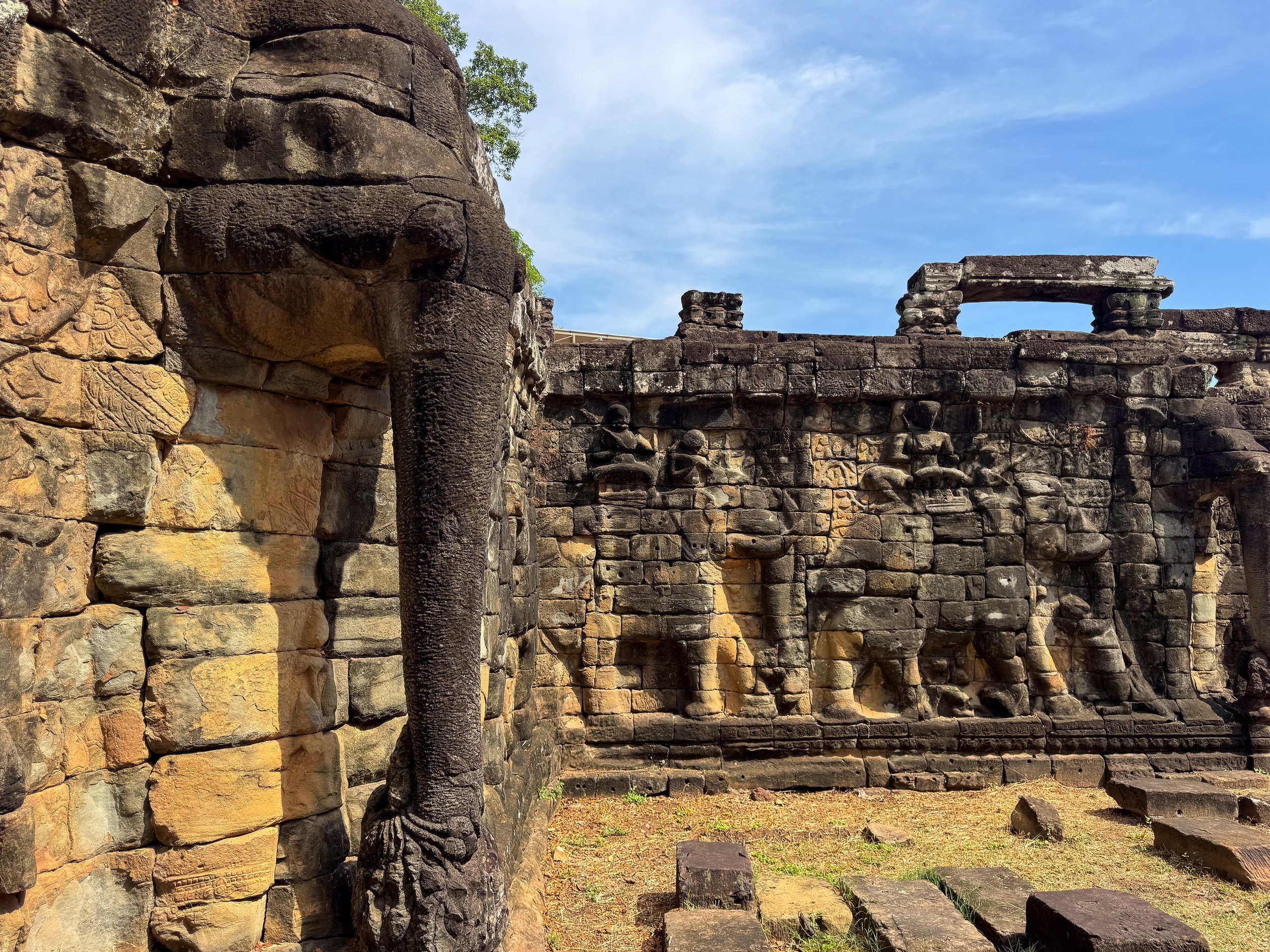
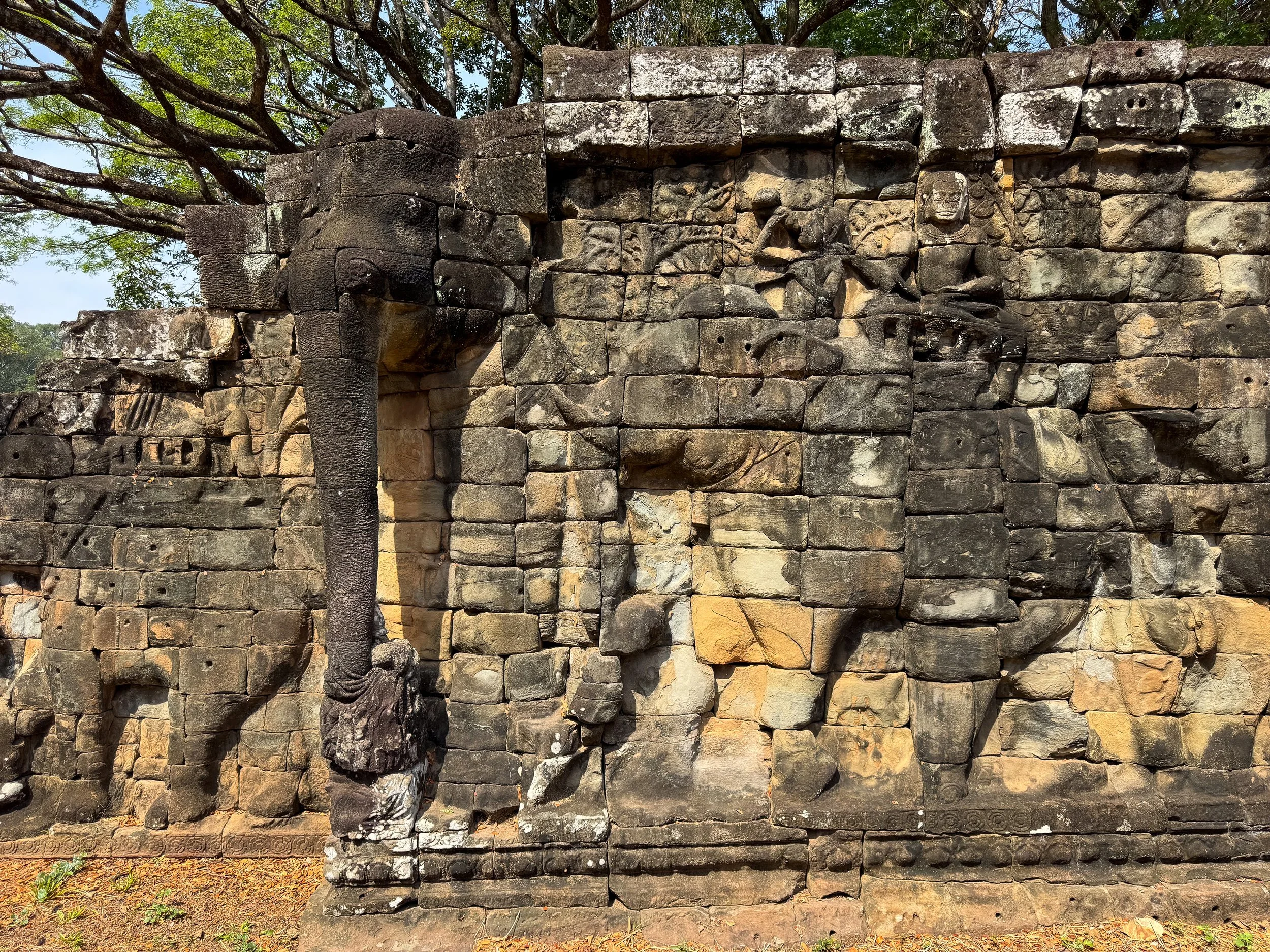
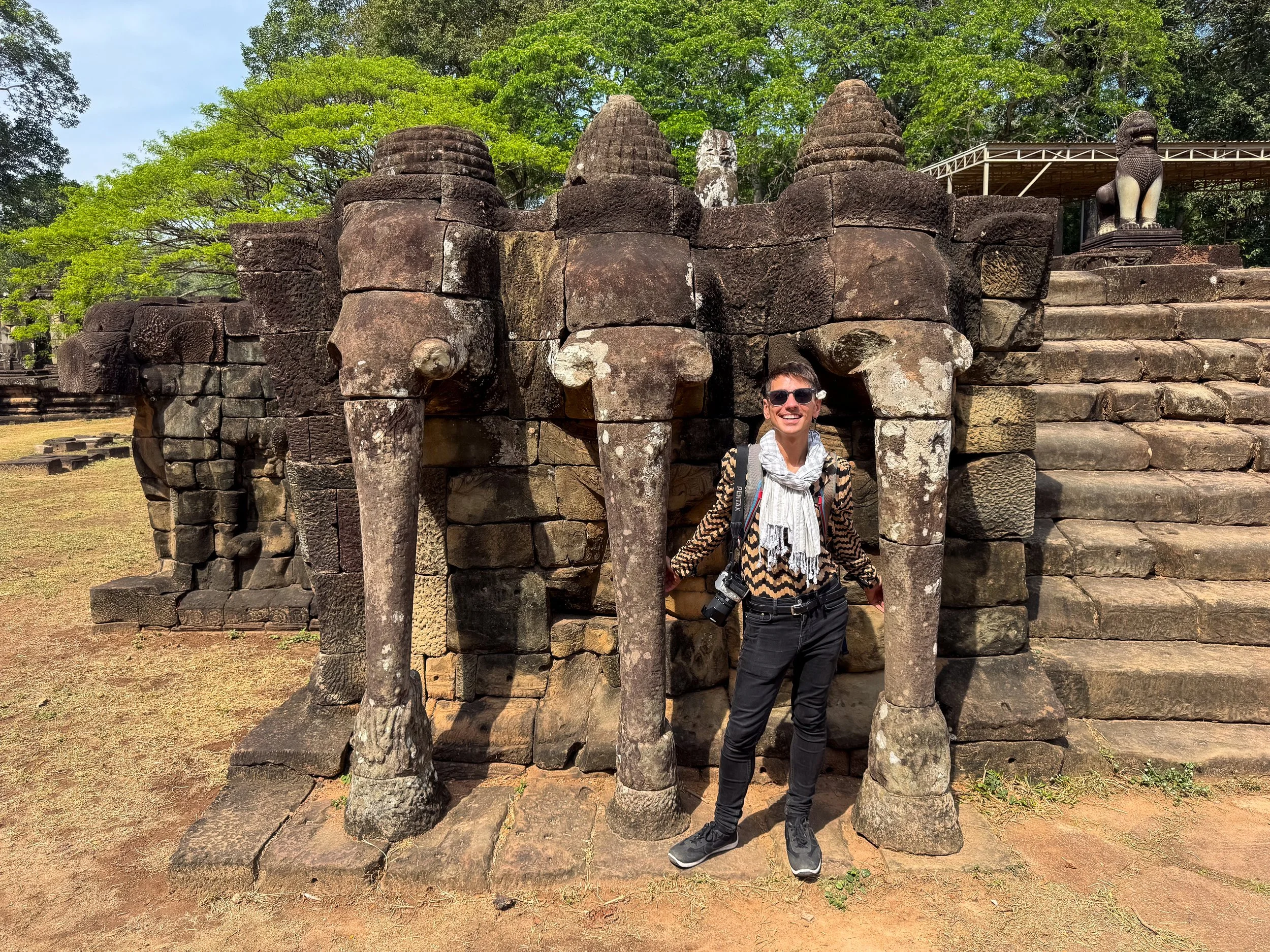
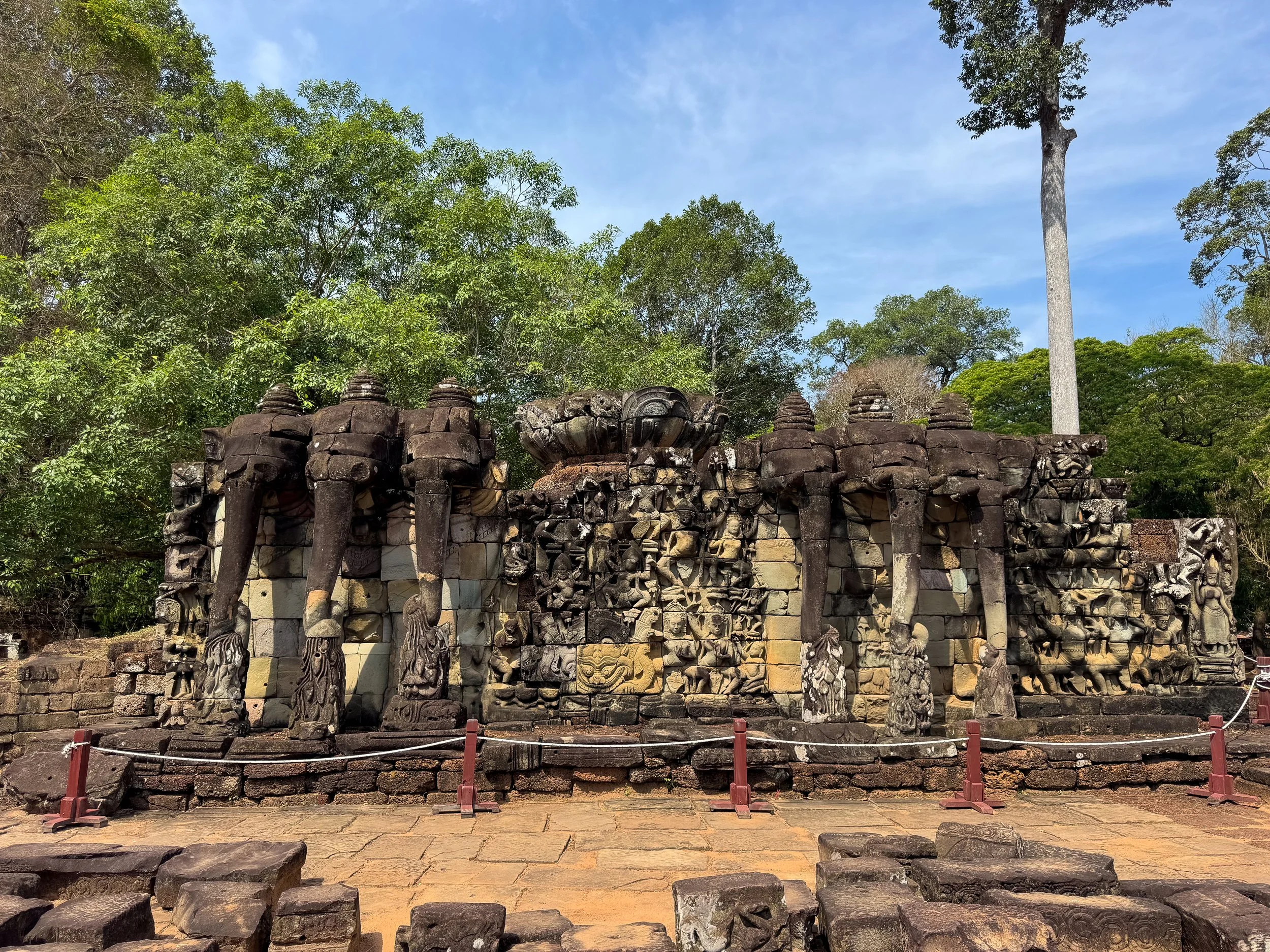
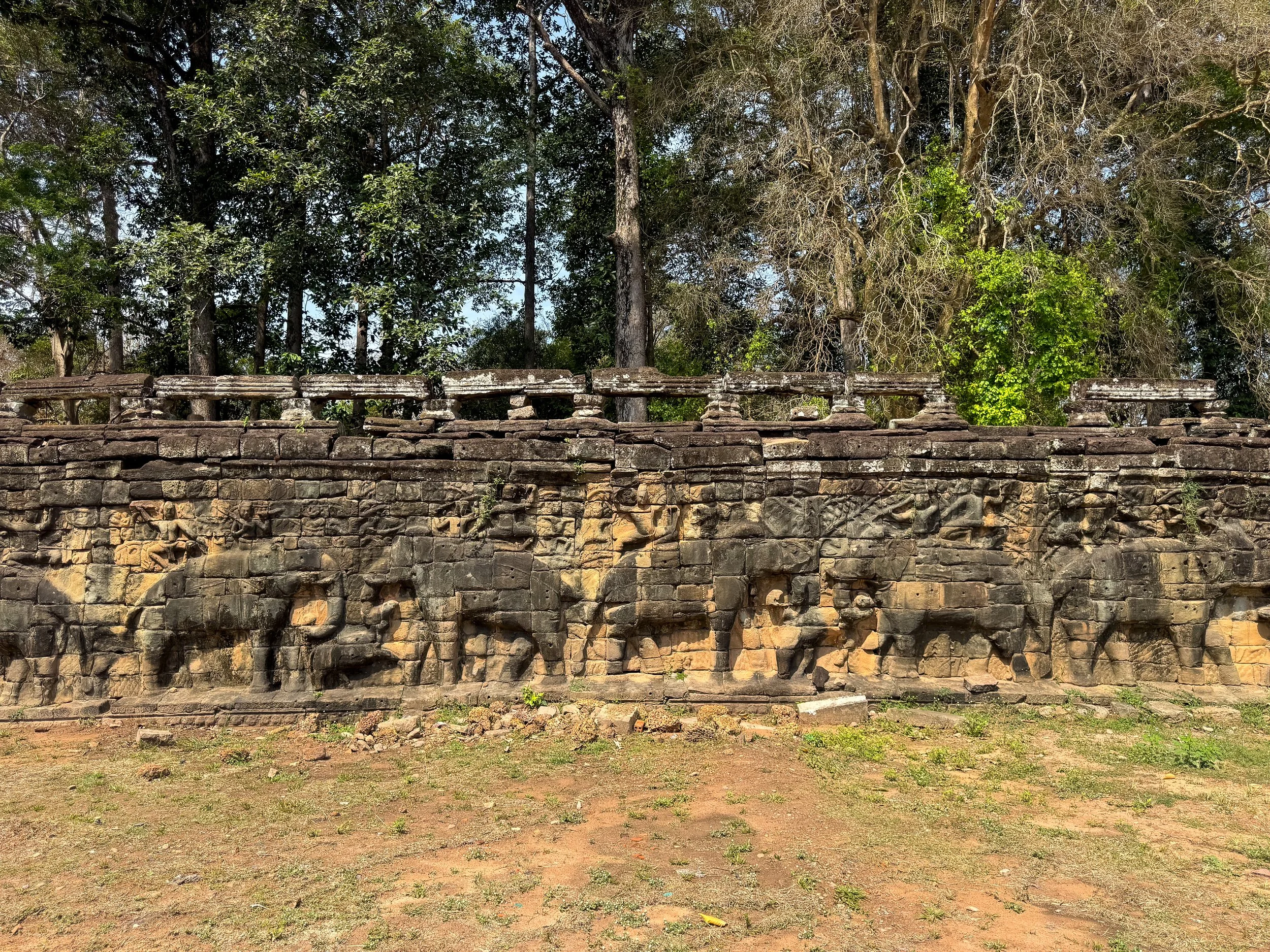
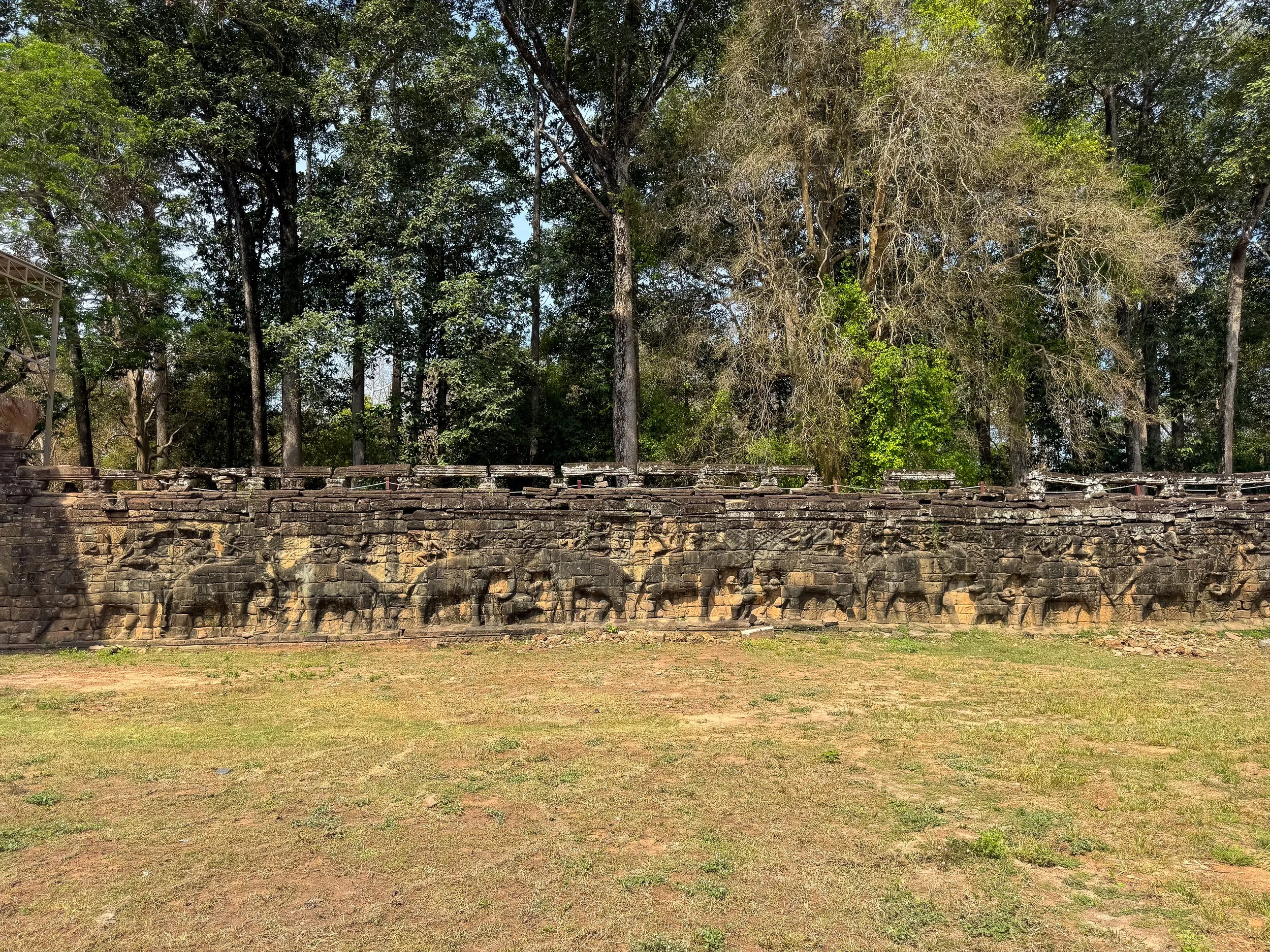
Terrace of the Elephants. A walled platform defined by large reliefs and statues of dozens of elephants carved into it. Their detailed bodies march along the wall while their trunks and faces protrude from its corners. The terrace tells the story of victorious battle and returning warriors. It is believed to have been used as a royal square.
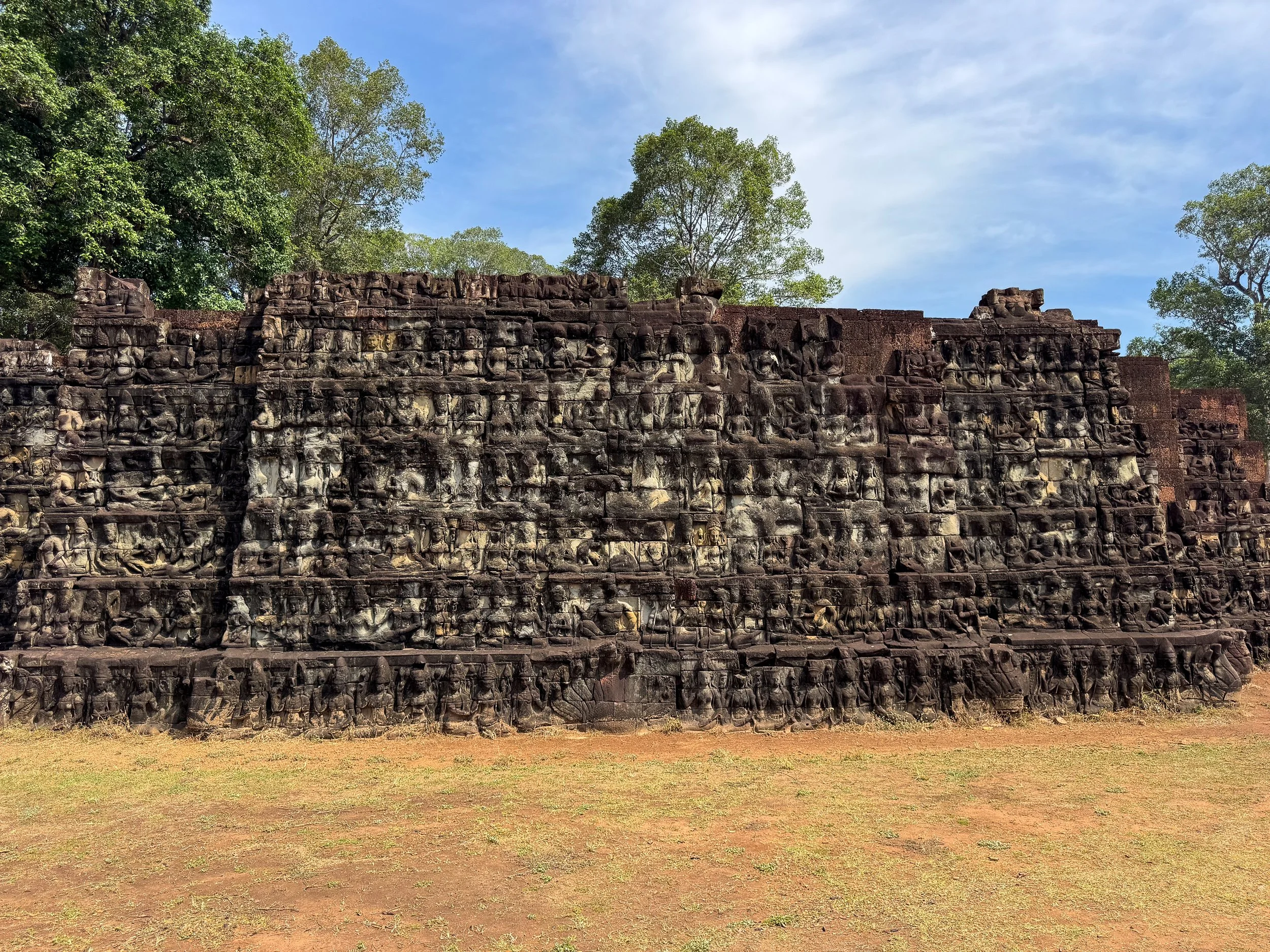
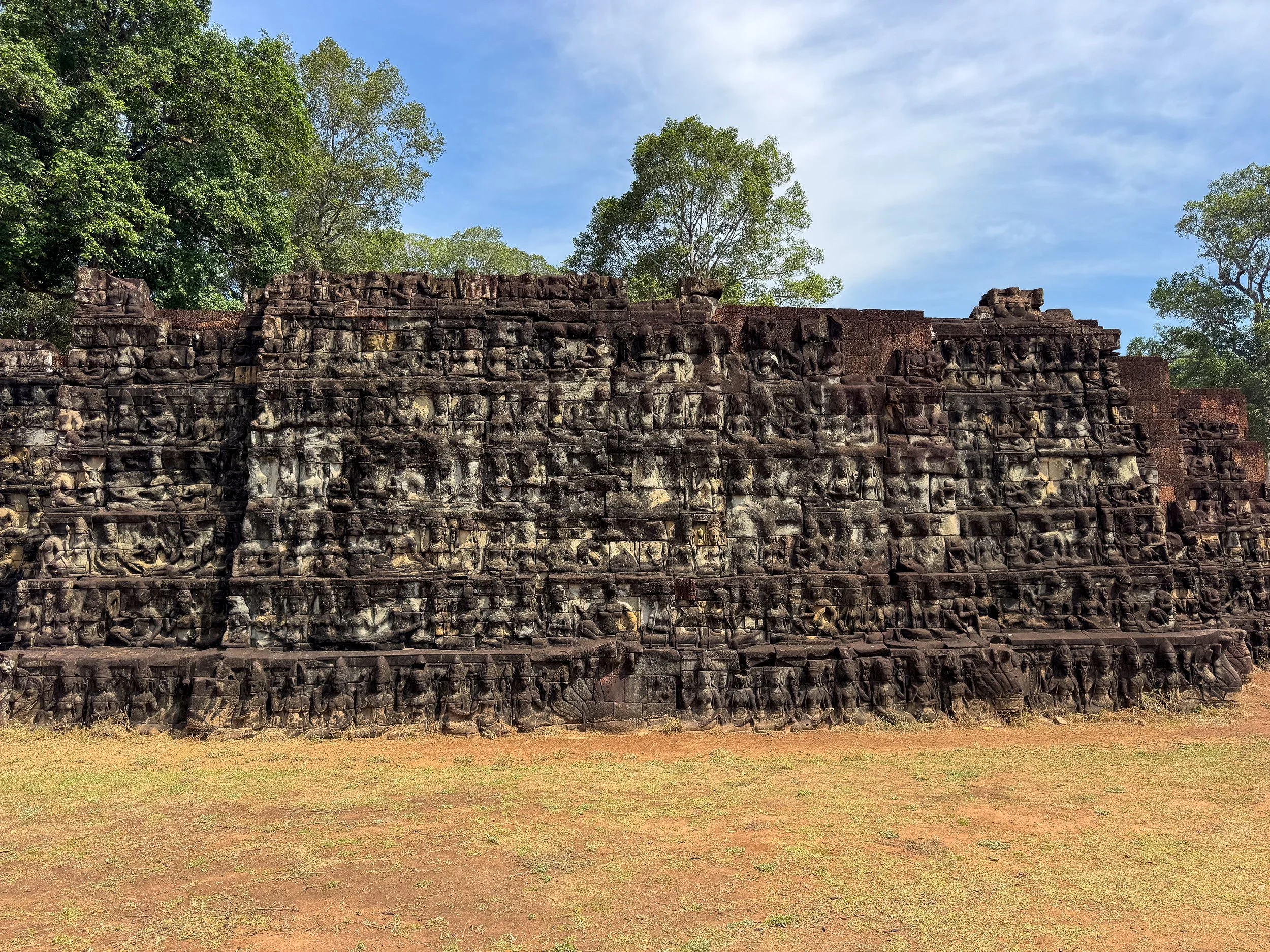
Terrace of the Leper King. A terrace with tall stone walls and narrow passageways covered in thousands of carved figures and dancers. It’s given its name due to the colored moss discovered on the faces.
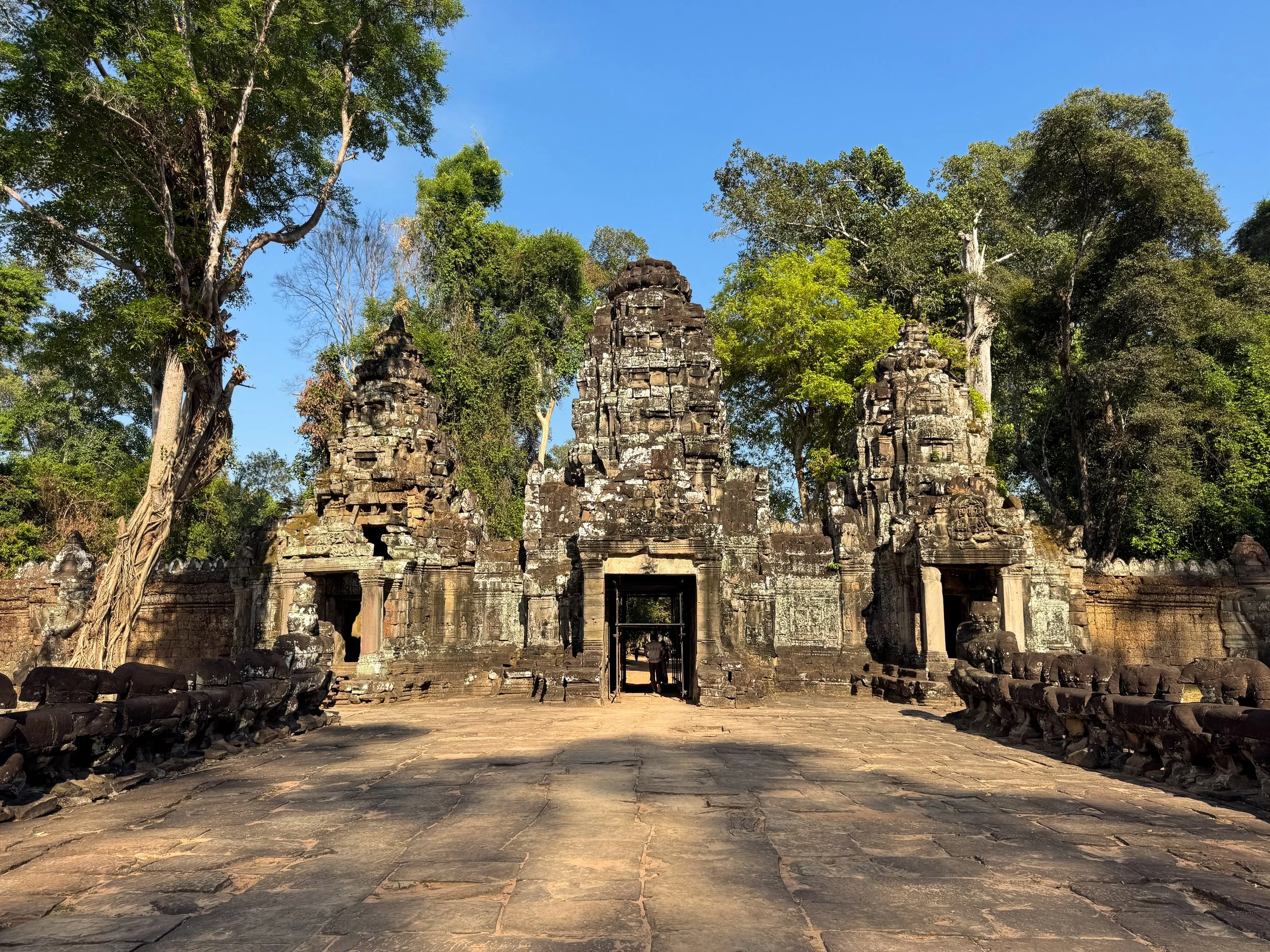
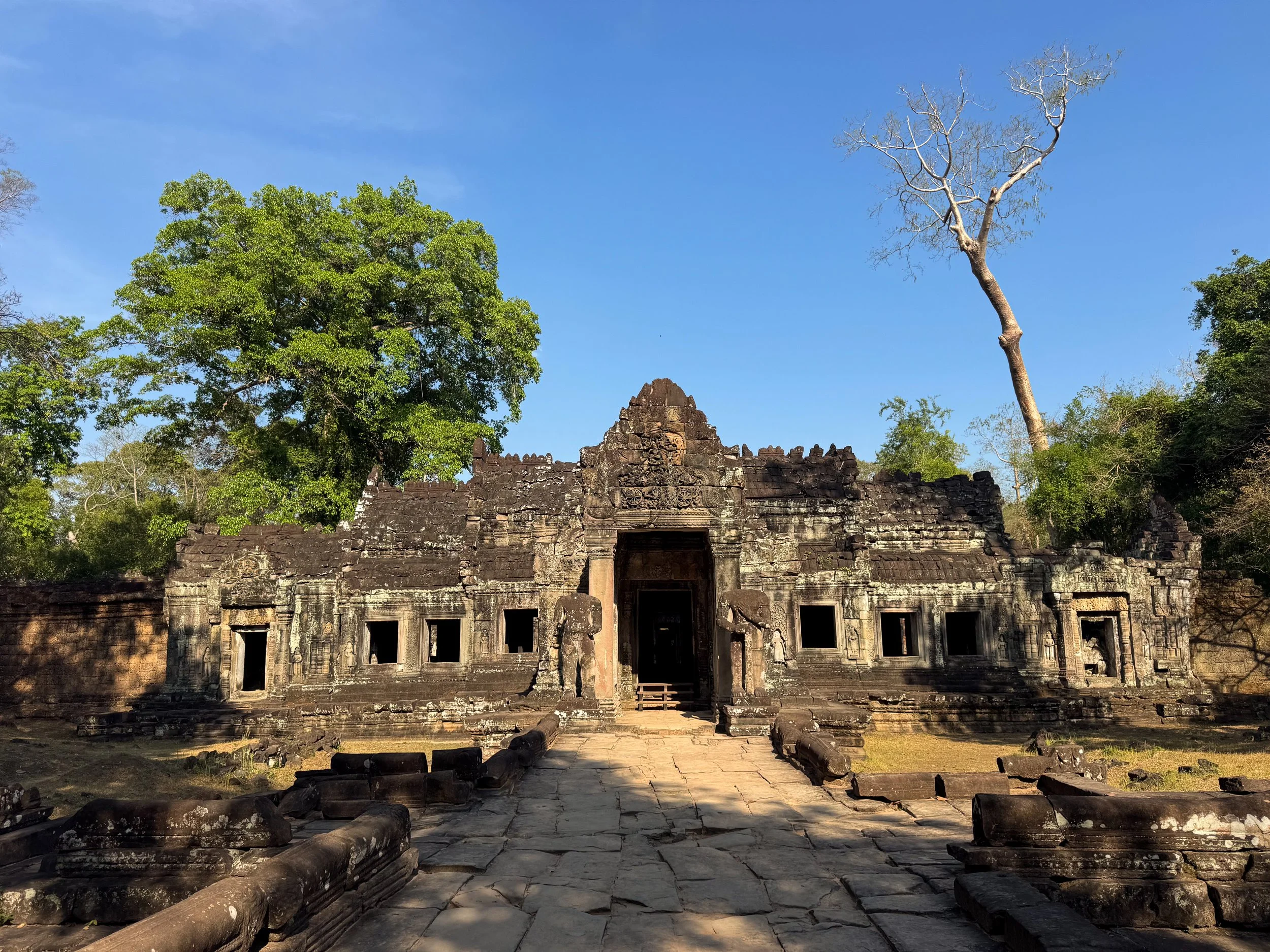
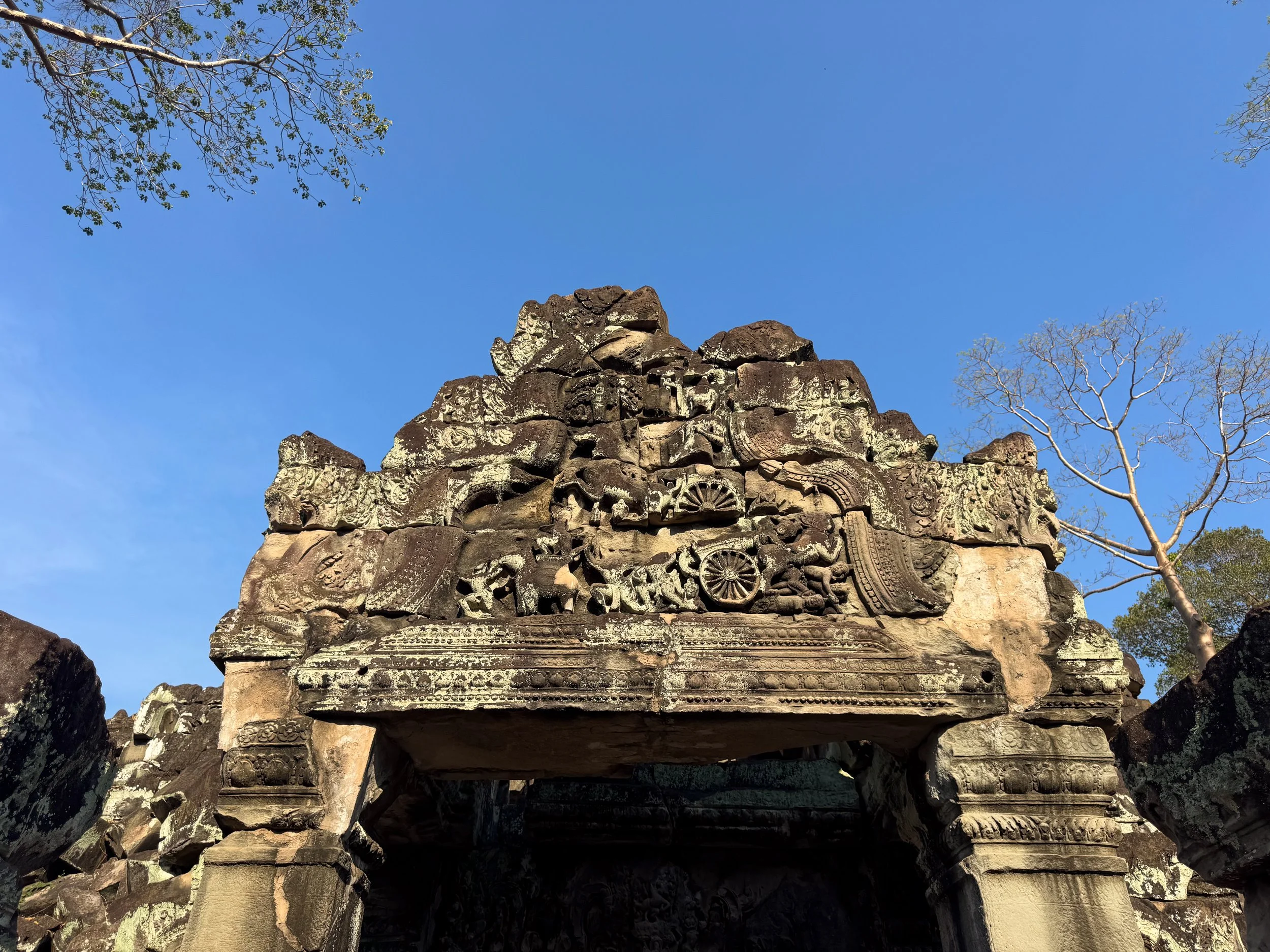
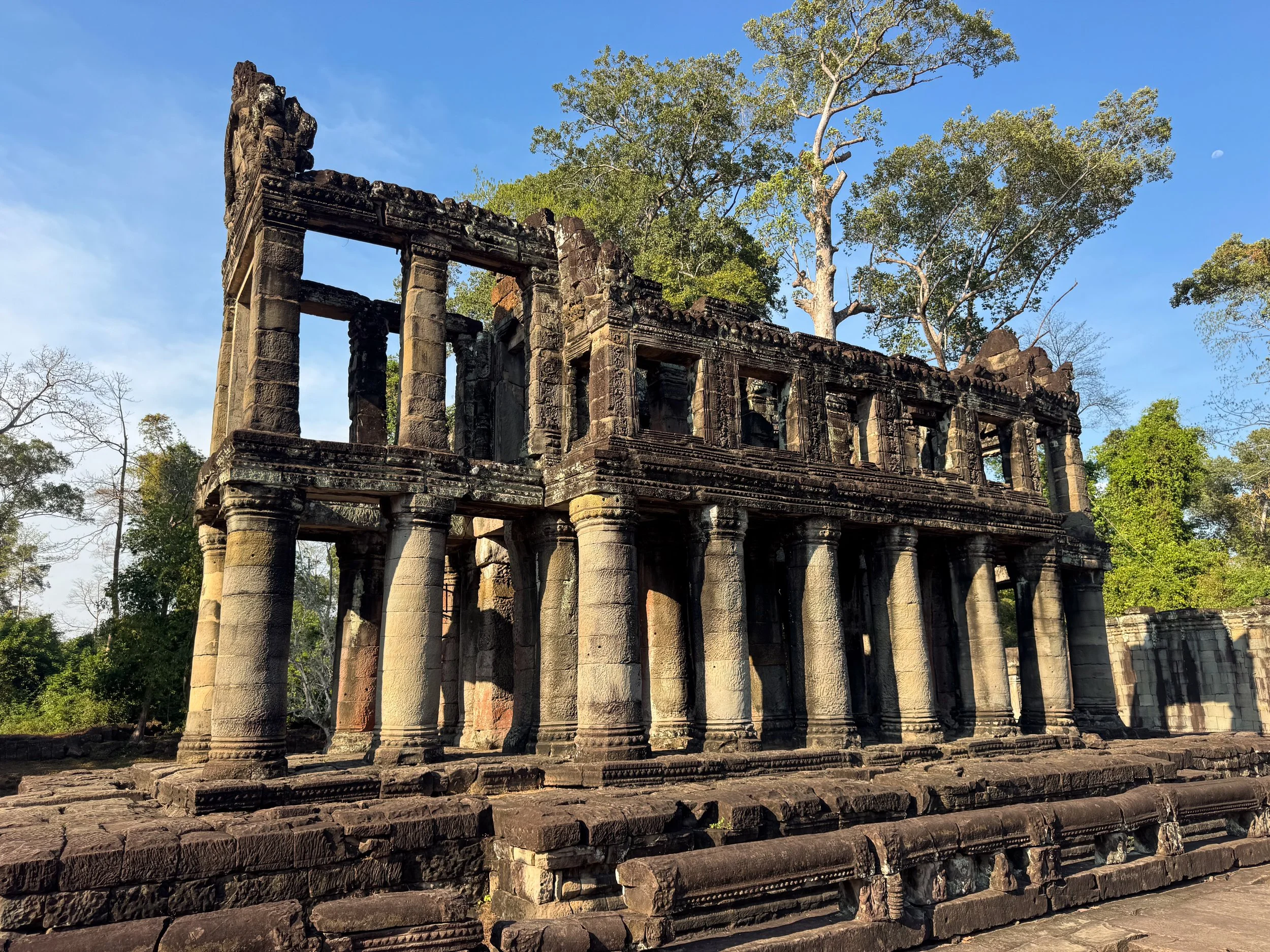
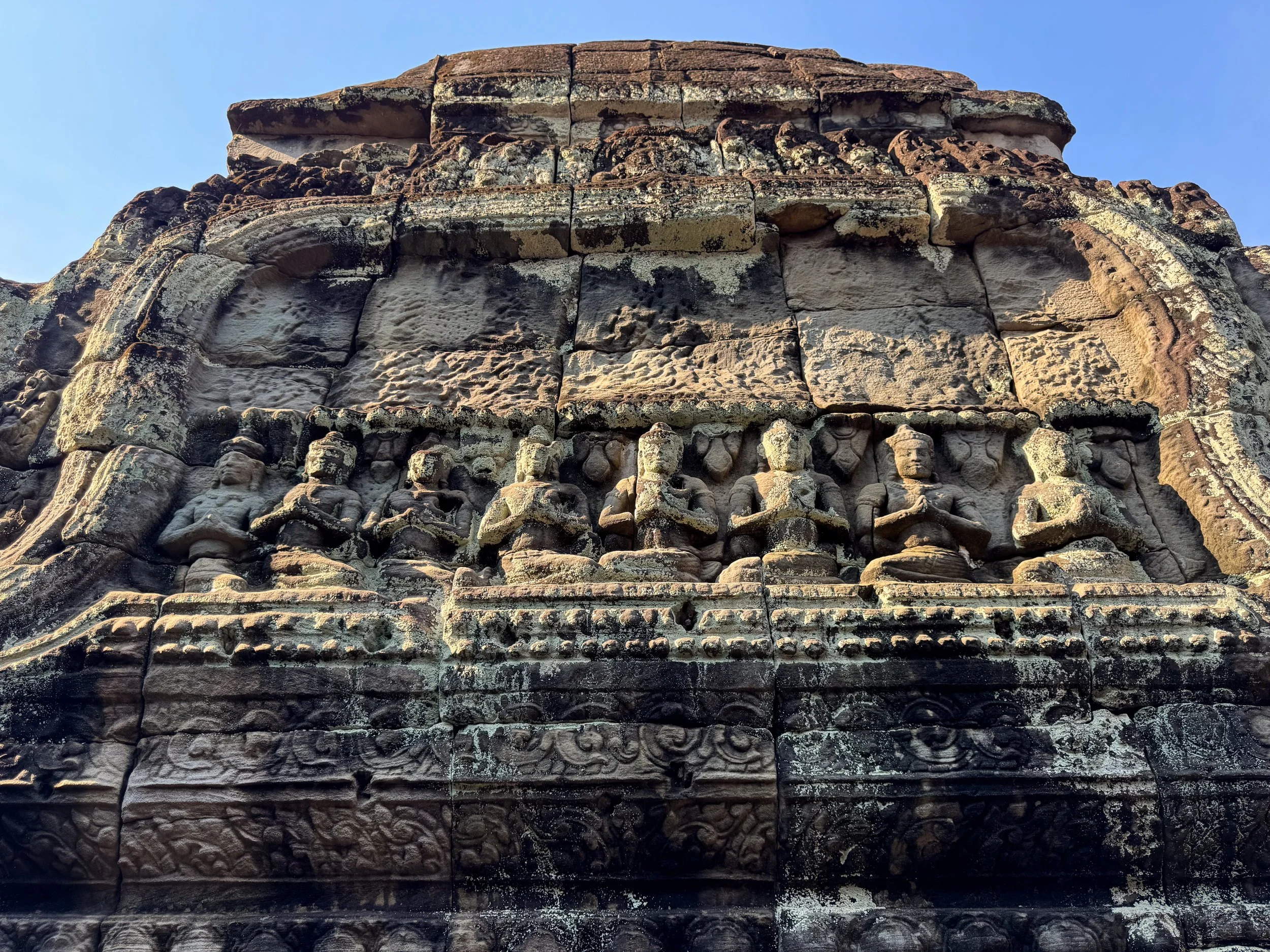
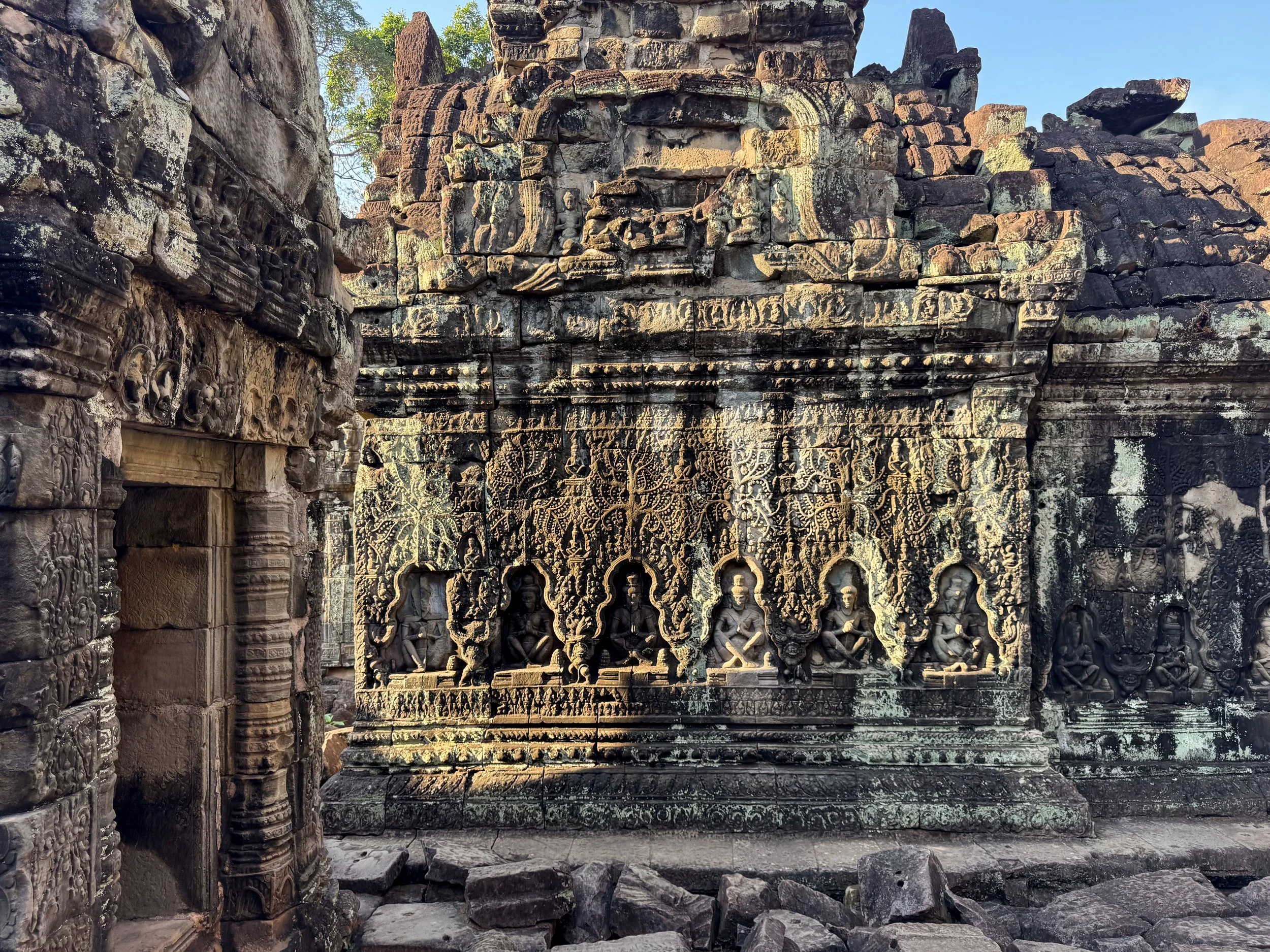
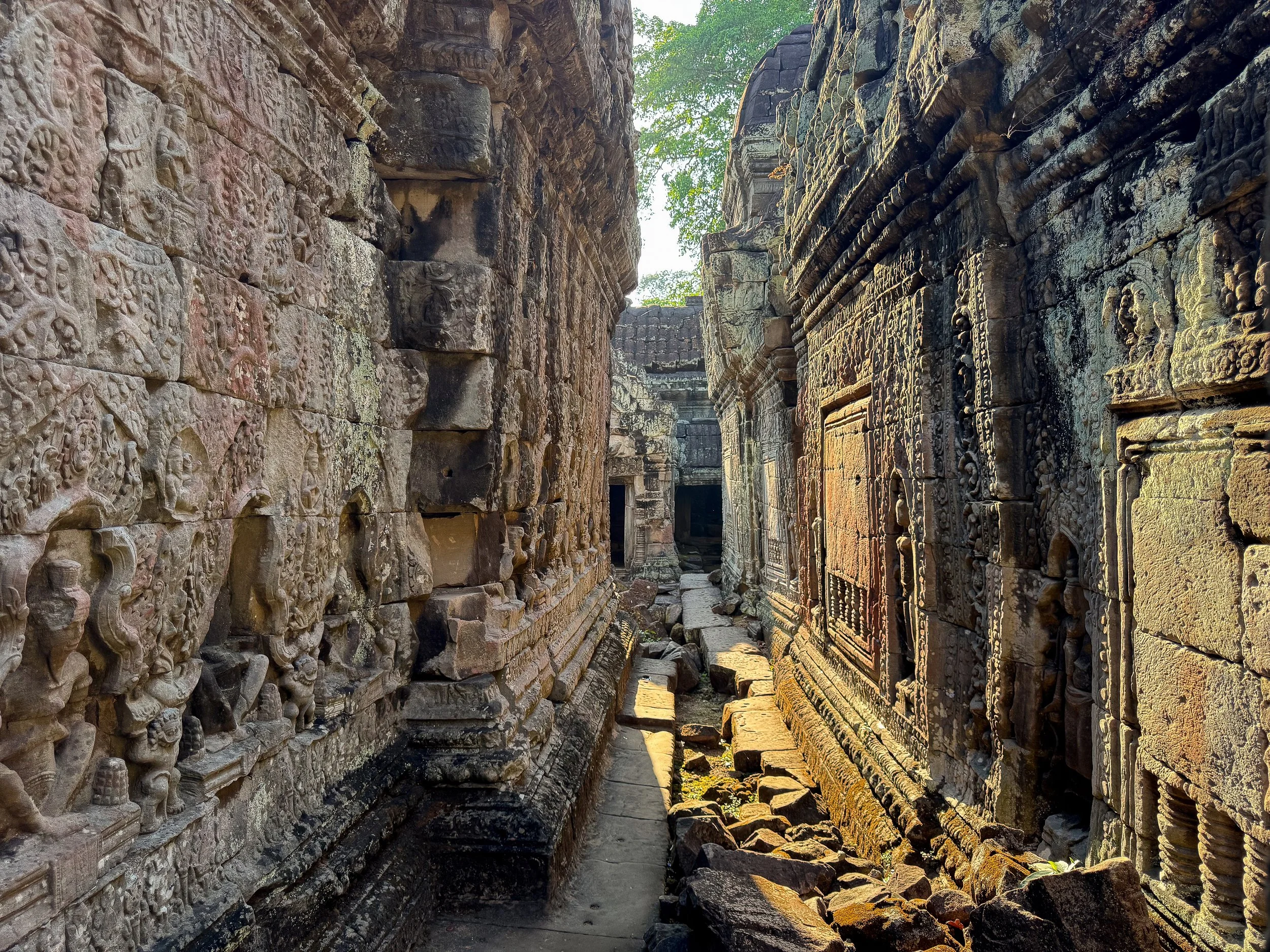
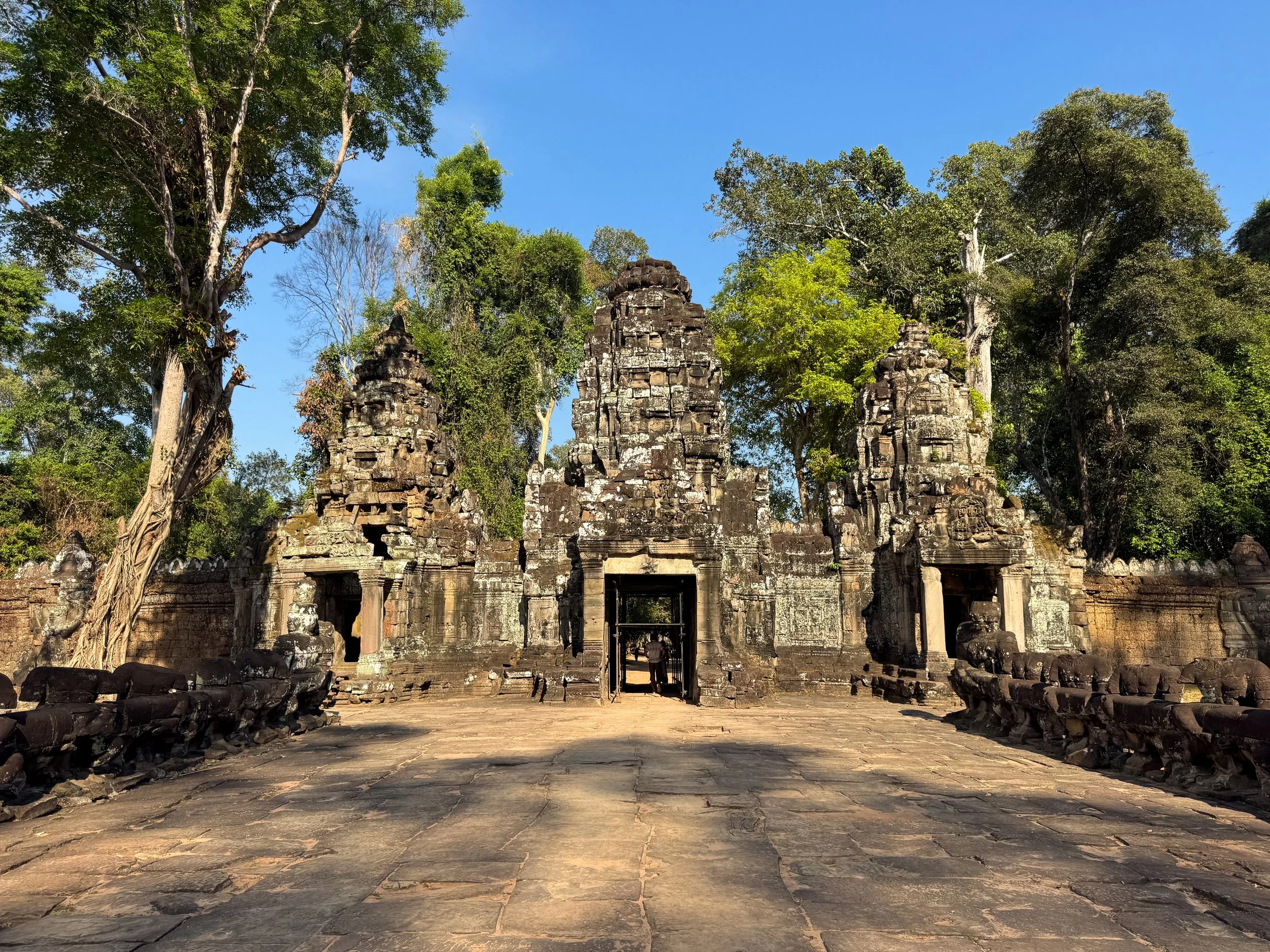
Preah Khan Temple. A former Hindu temple dedicated to the god Shiva and later converted into a Buddhist monastery. At its peak, it’s believed over 100,000 monks lived and studied on its grounds. A bridge lined with Buddha statues crosses a small moat to each of its gate. A corridor leads through the temple past various chambers with hallways branching off from it. In its courtyards are stupas carved with ornate designs and niches where statues of Shiva once stood. Most of the temple has collapsed with large stone boulders and piles of rubble in its place.
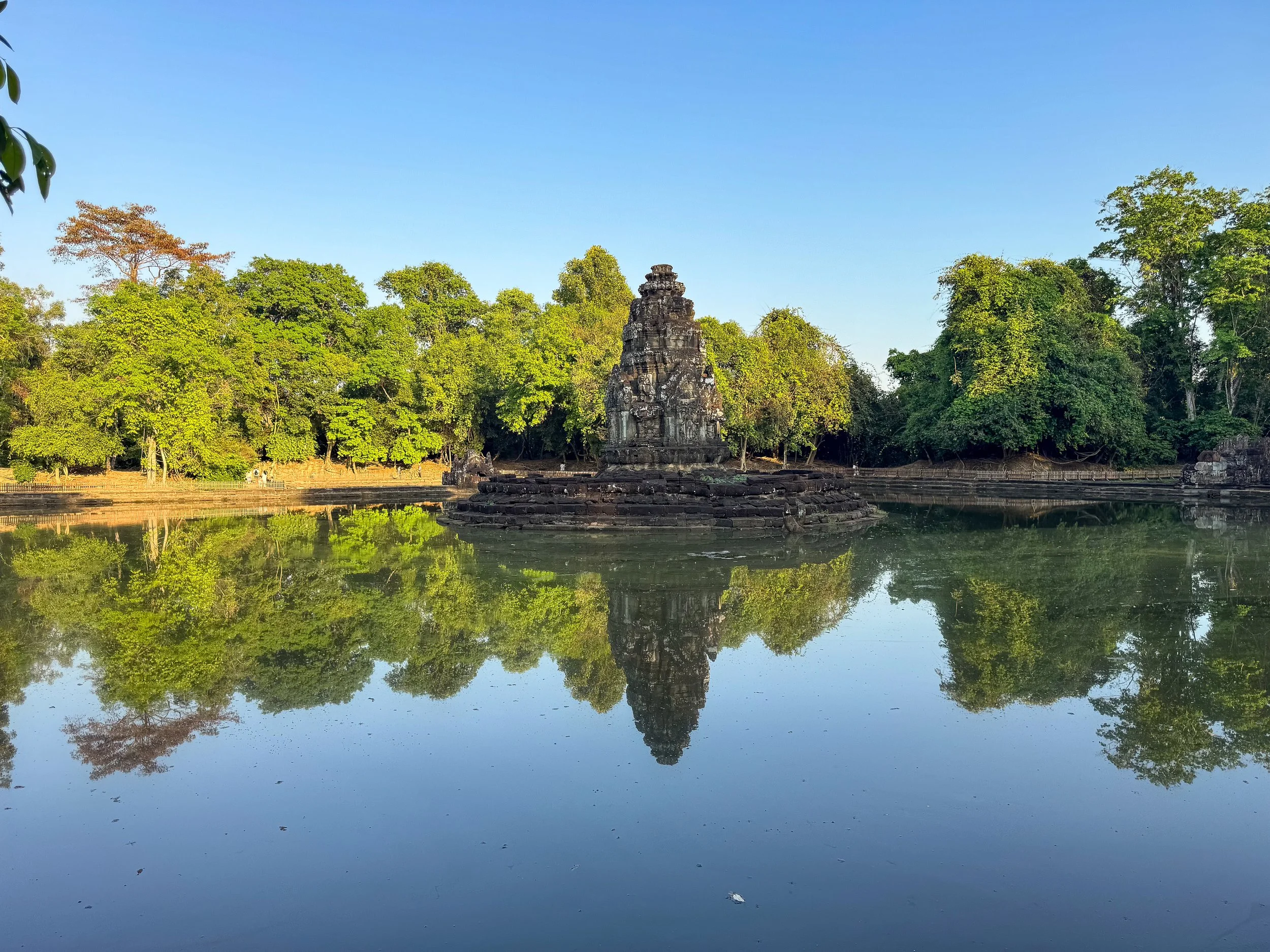
Neak Pean Temple. An island temple surrounded by a large rectangular lake. A boardwalk leads to the island and a trail to the temple. A small stupa sits on a round platform resembling a blooming lotus flower. It’s surrounded by four pools, each used for healing and cleansing in ancient times.
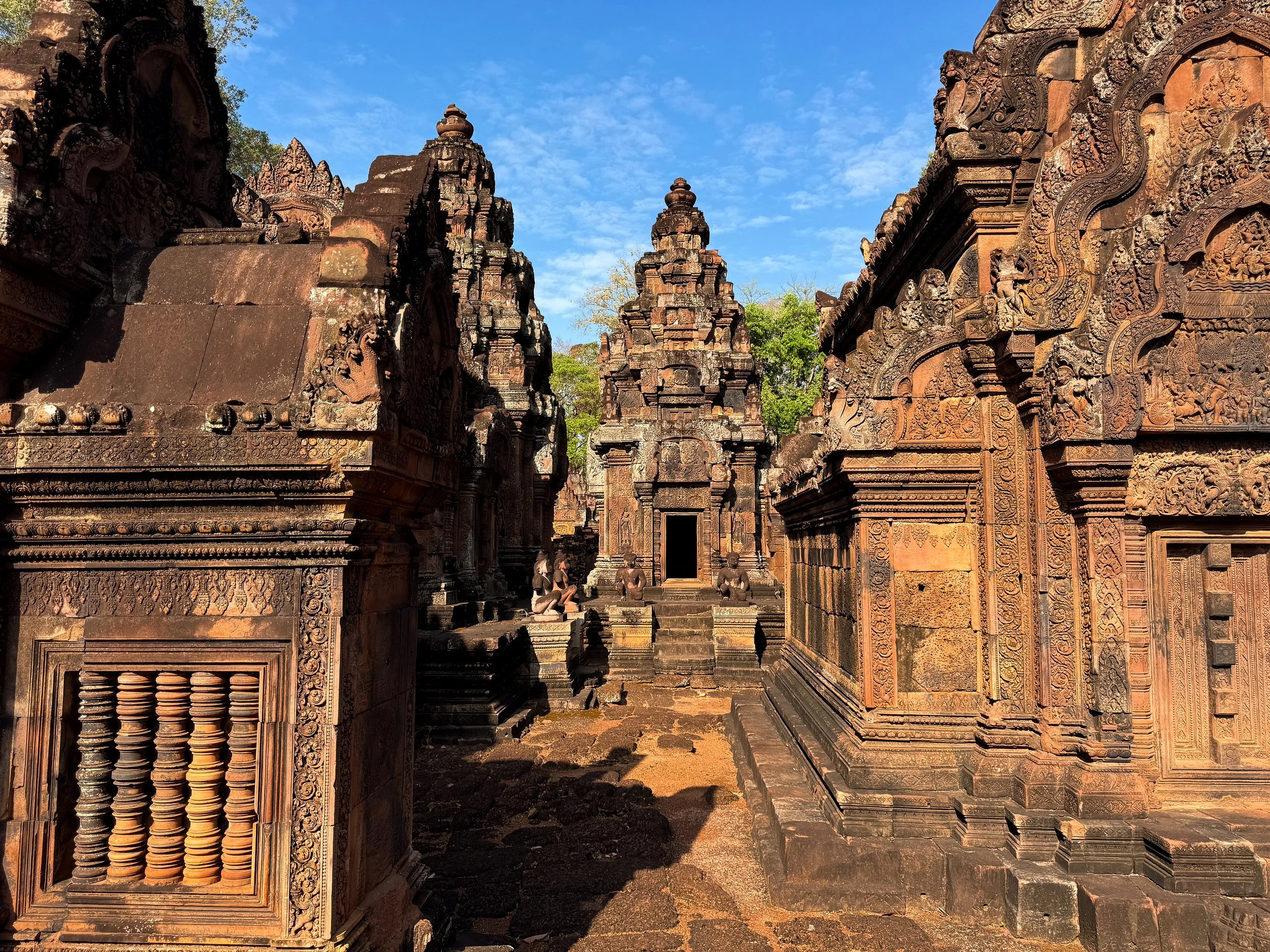
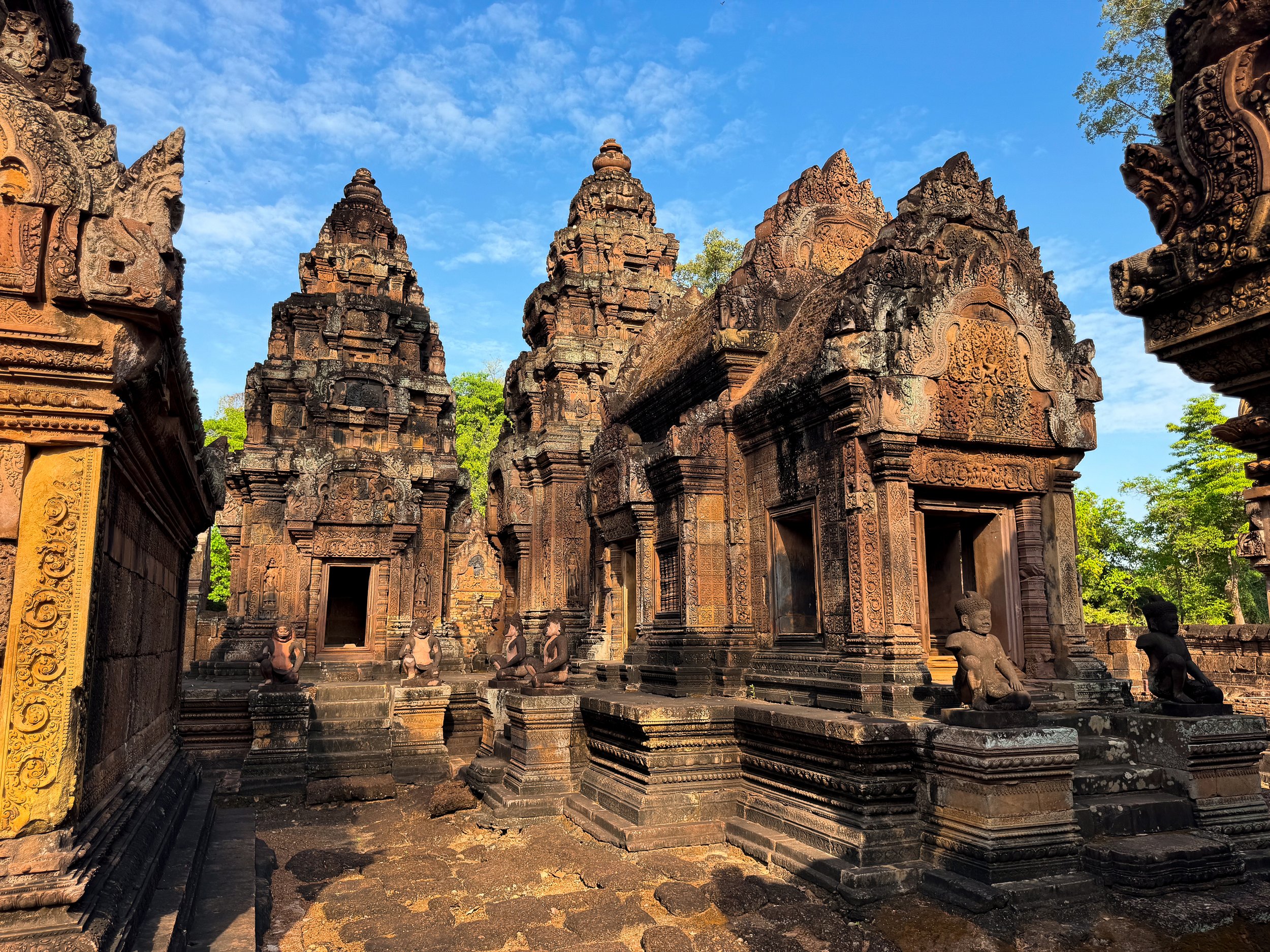
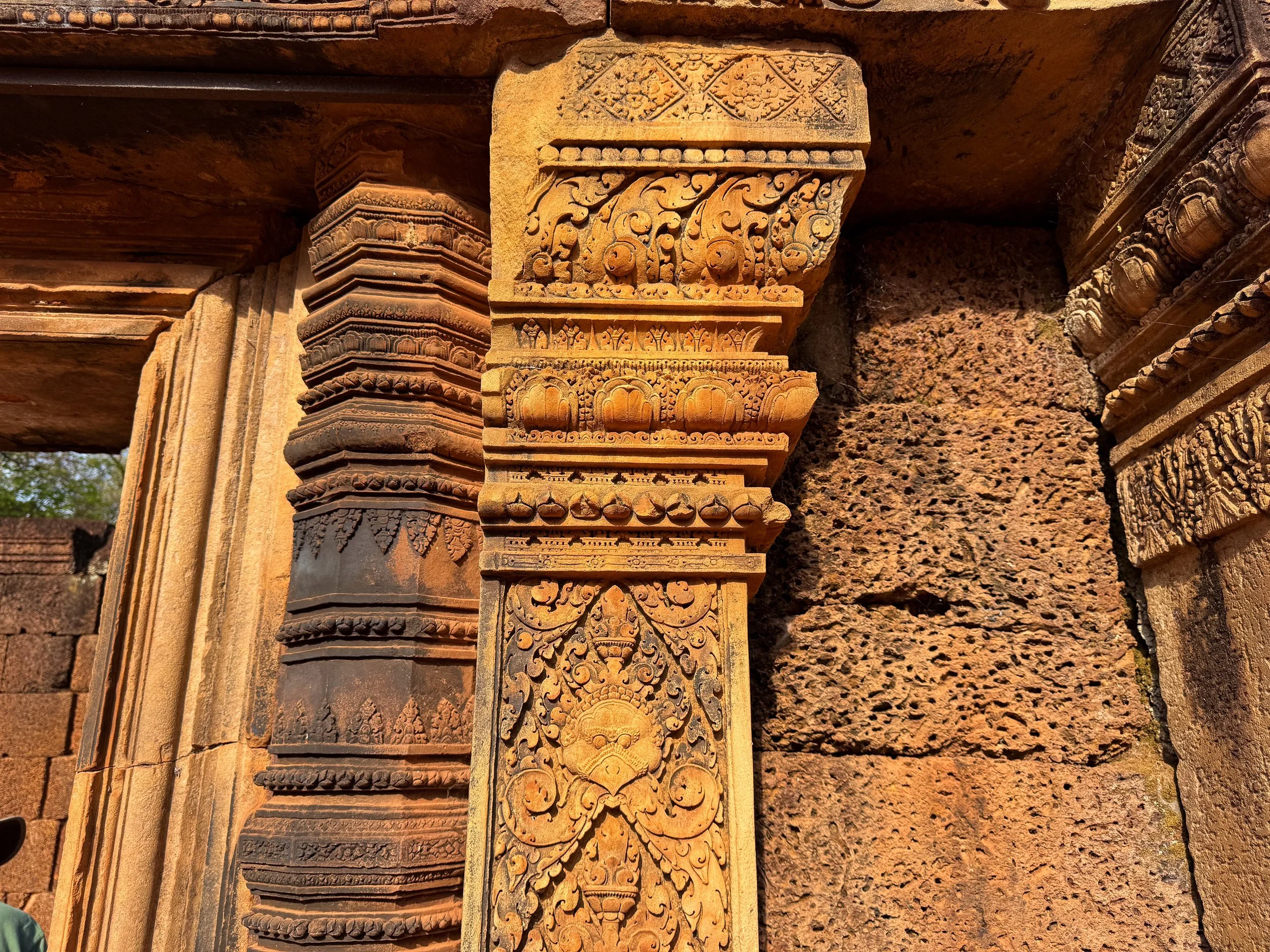
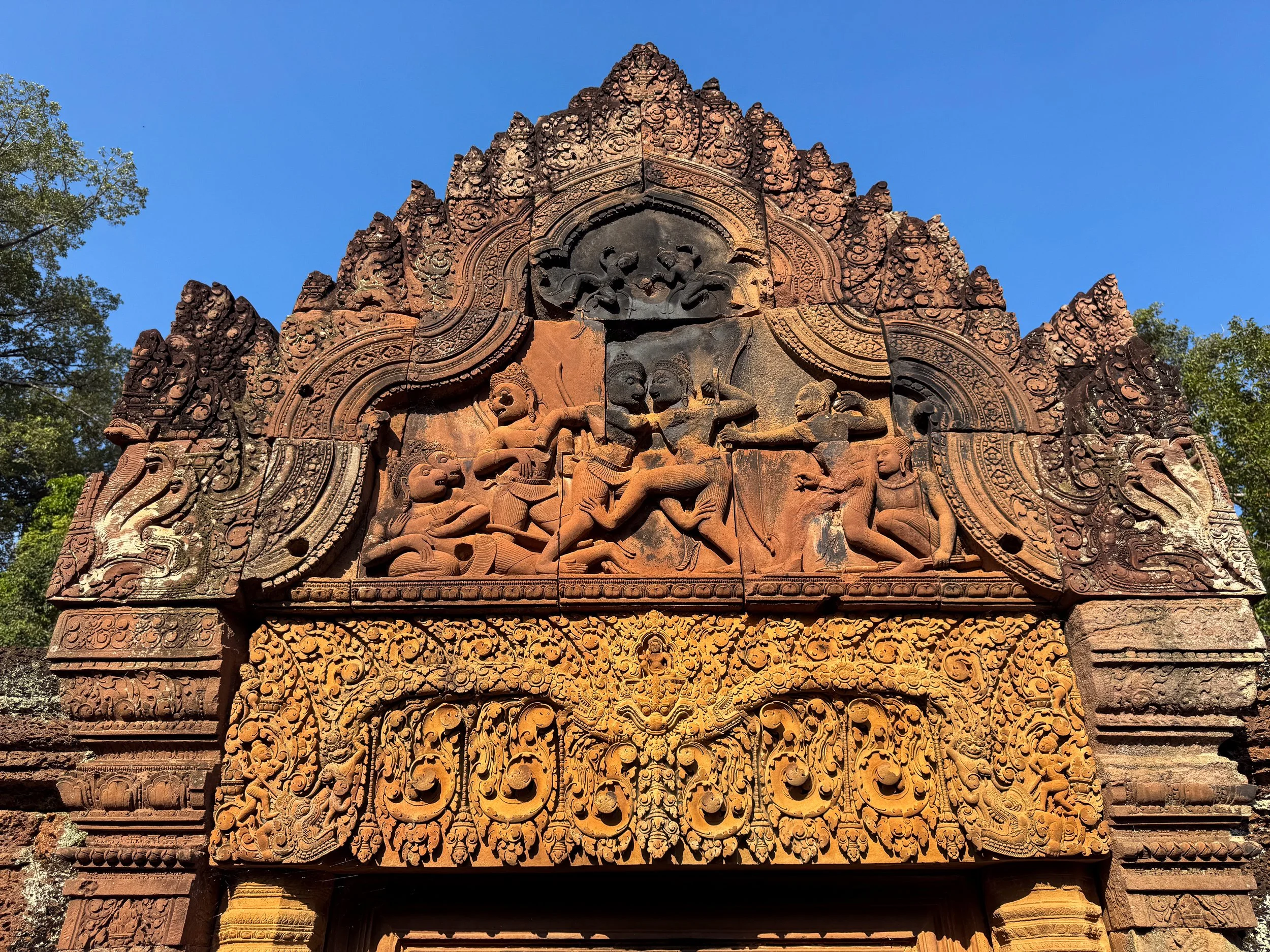
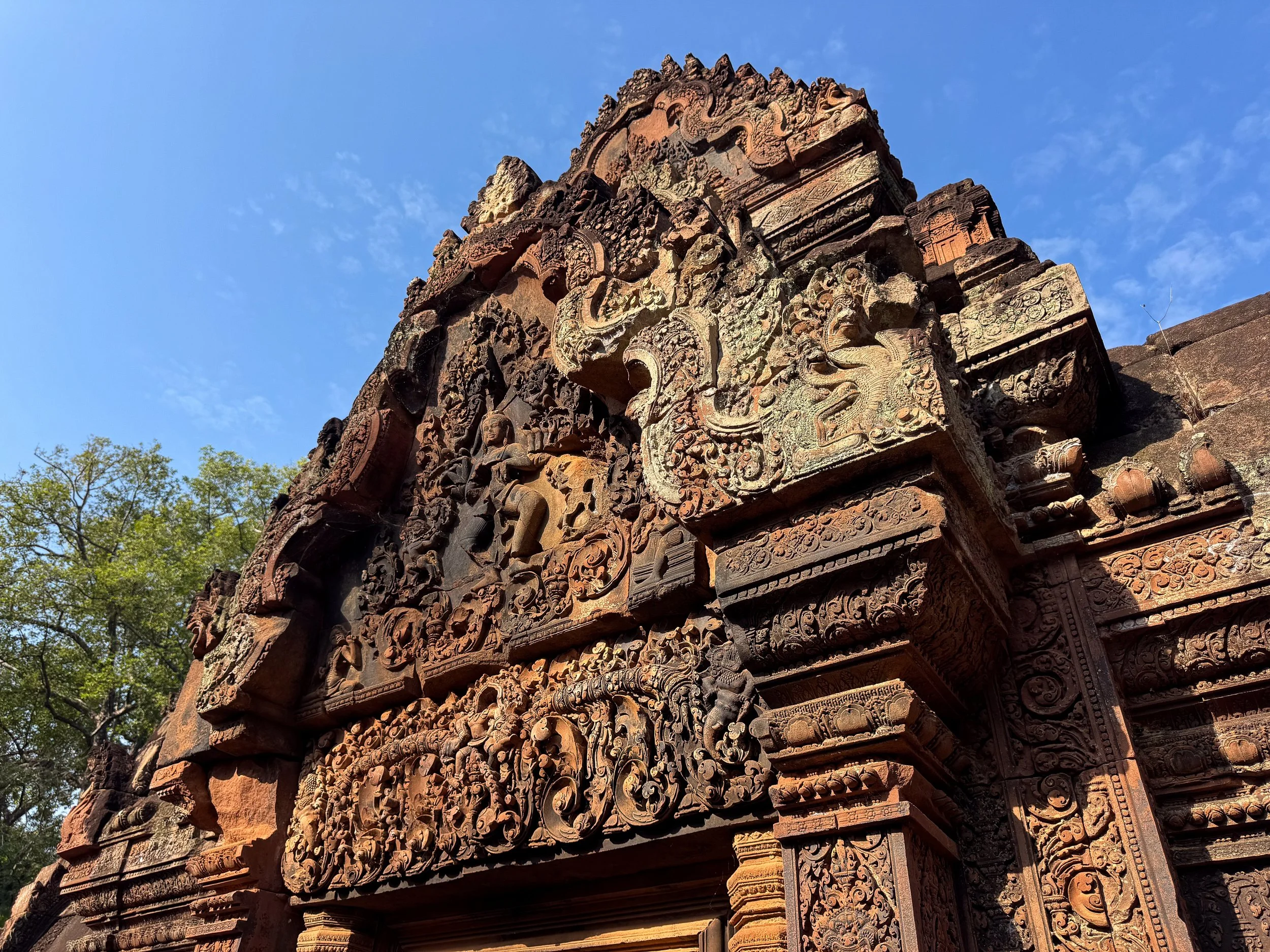
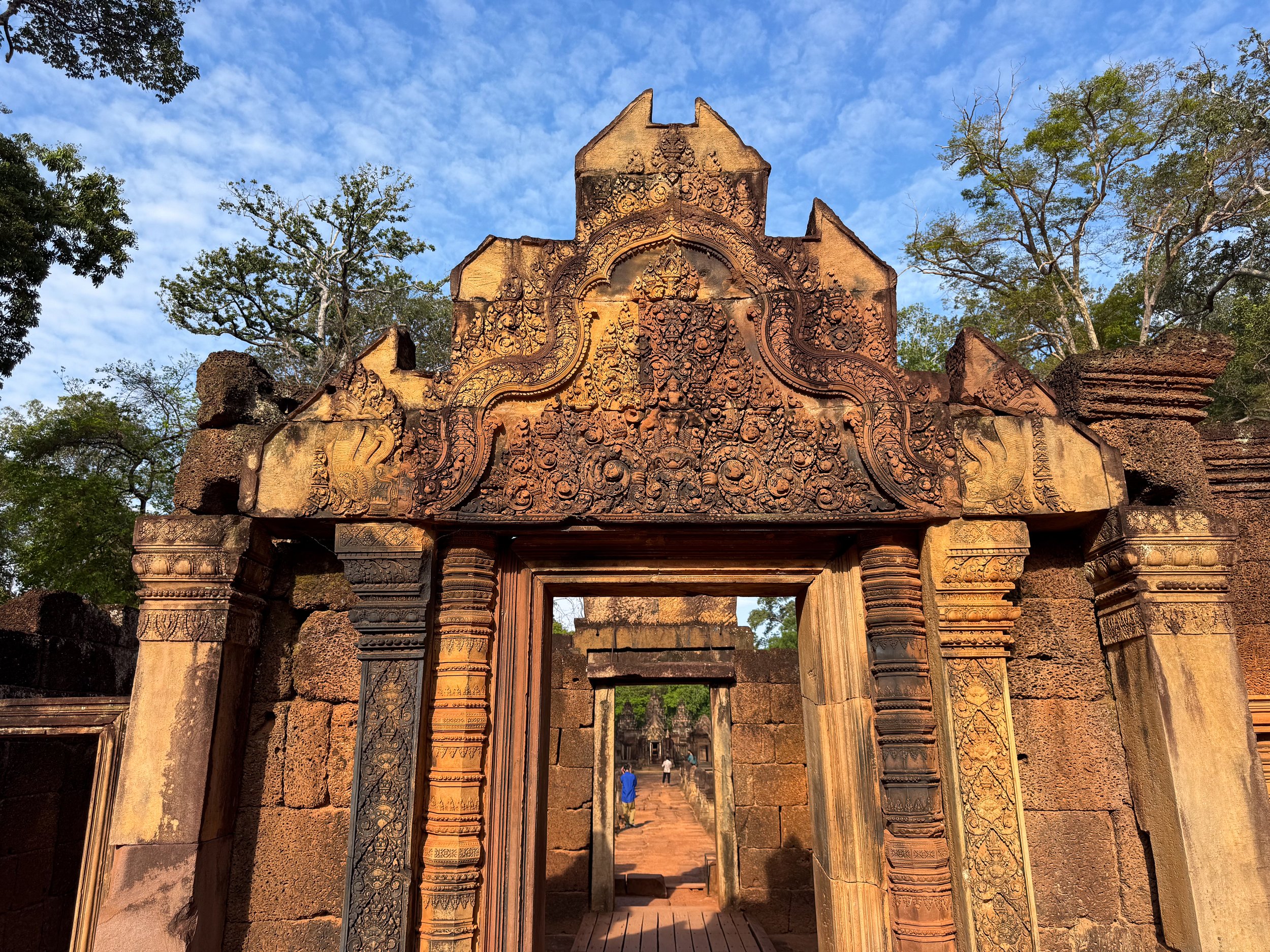
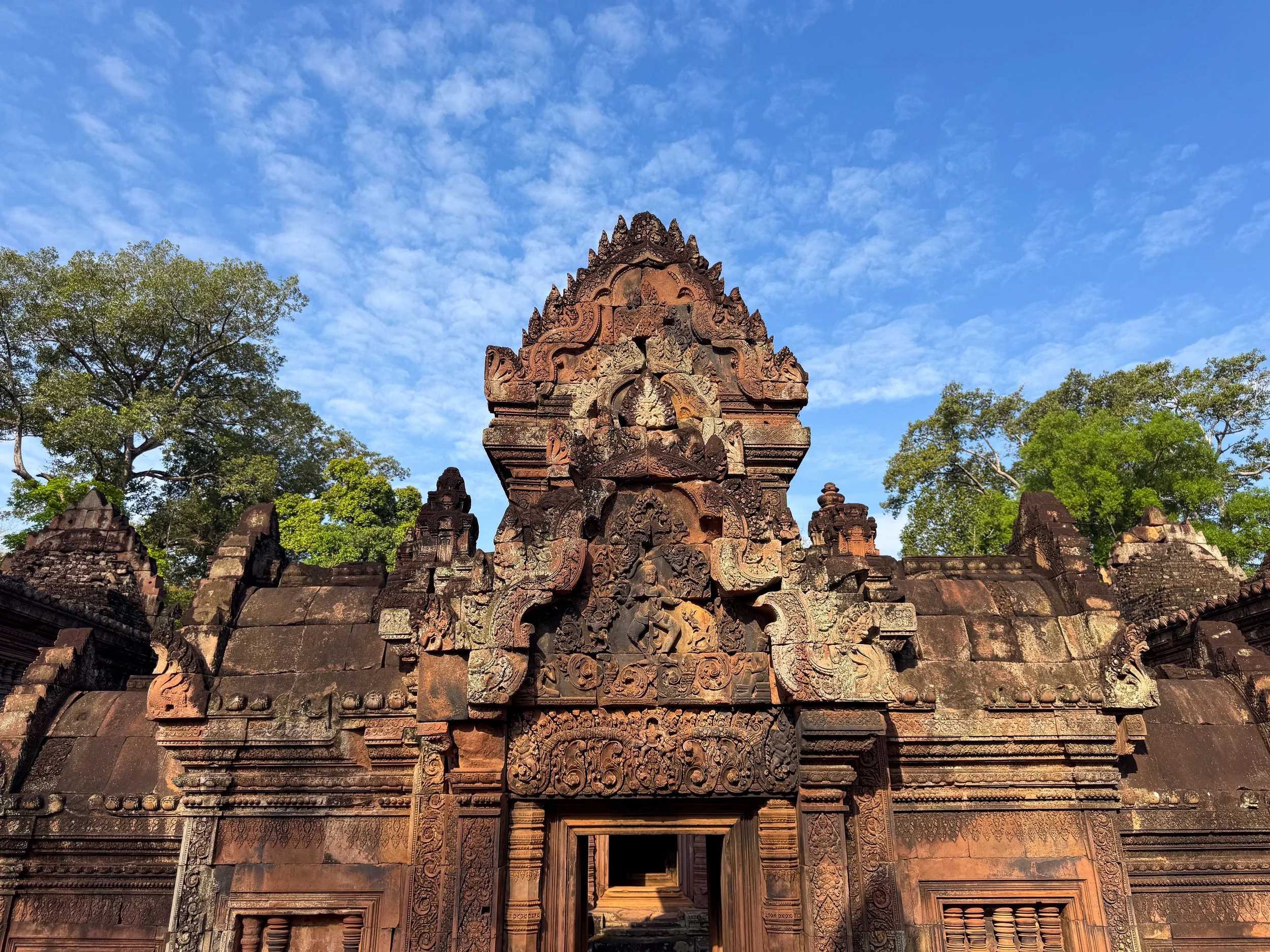
Banteay Srei Temple. A temple described as one of the best surviving examples of Khmer architecture and artistry. Carved from orange and pink sandstone, it’s famed for its fine stonework and highly ornate designs. A wall surrounds several small stupas, each decorated in detailed motifs of Hindu gods and deities. The temple is small compared to many of those across Angkor Wat but no less impressive. It’s located about an hour from the city by tuk tuk.
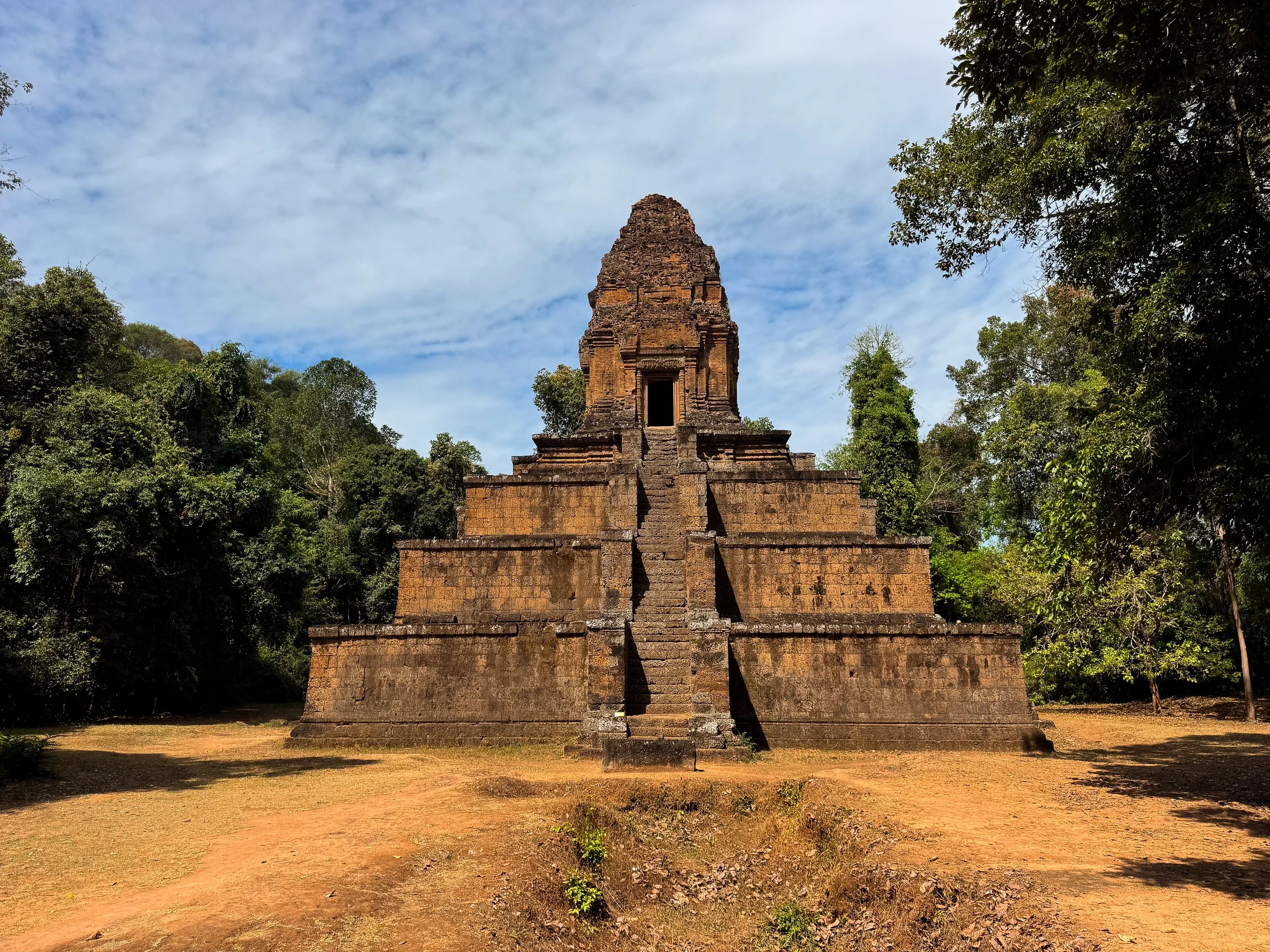
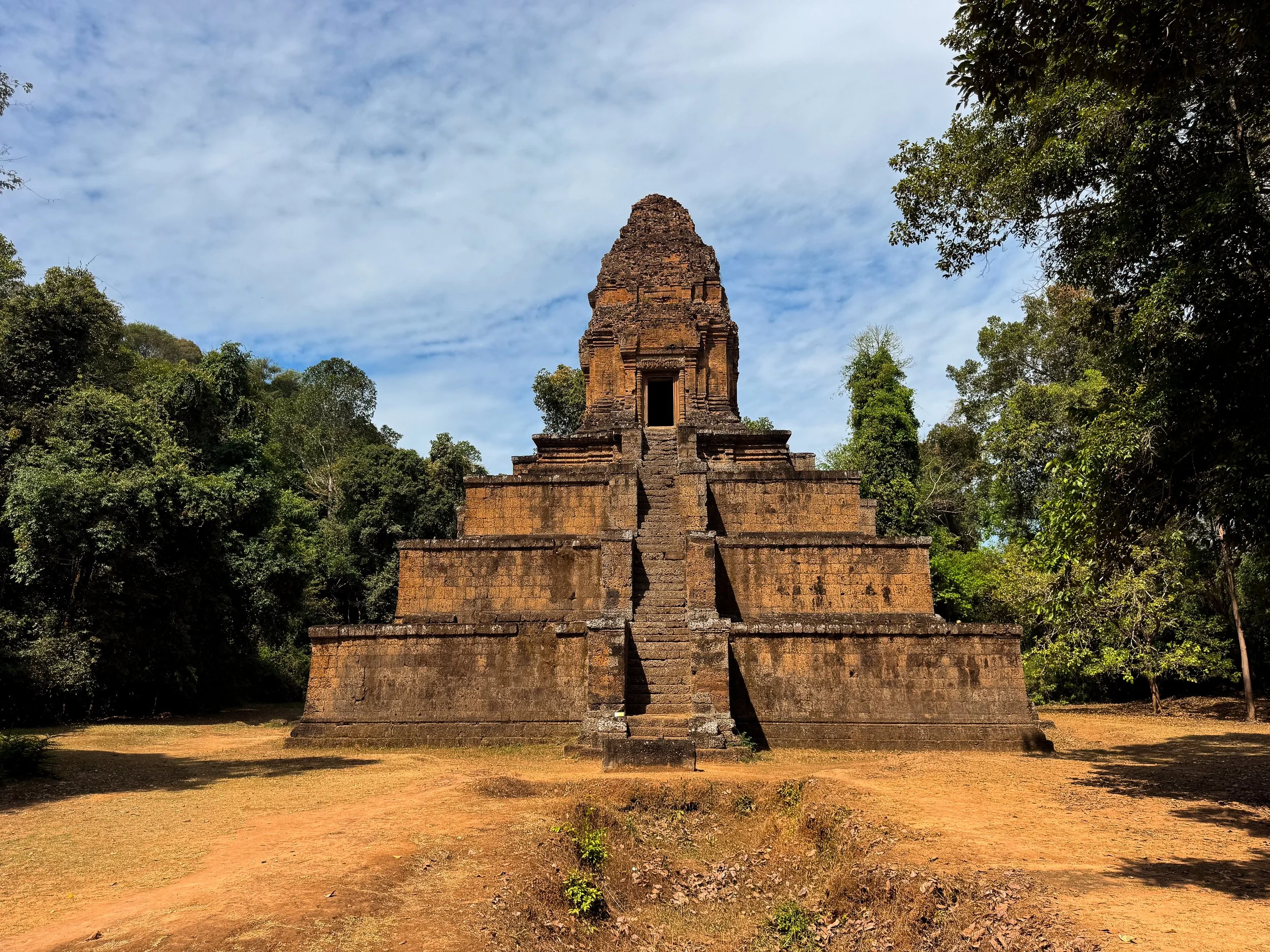
Baksei Chamkrong Temple. A five level and four sided step pyramid built during the 10th century. Steep steps lead to a shrine on top where an ancient legend is recounted in Sanskrit writings. Originally dedicated to the Hindu god Shiva, the temple was later converted into a Buddhist shrine.
Siem Reap City Sights
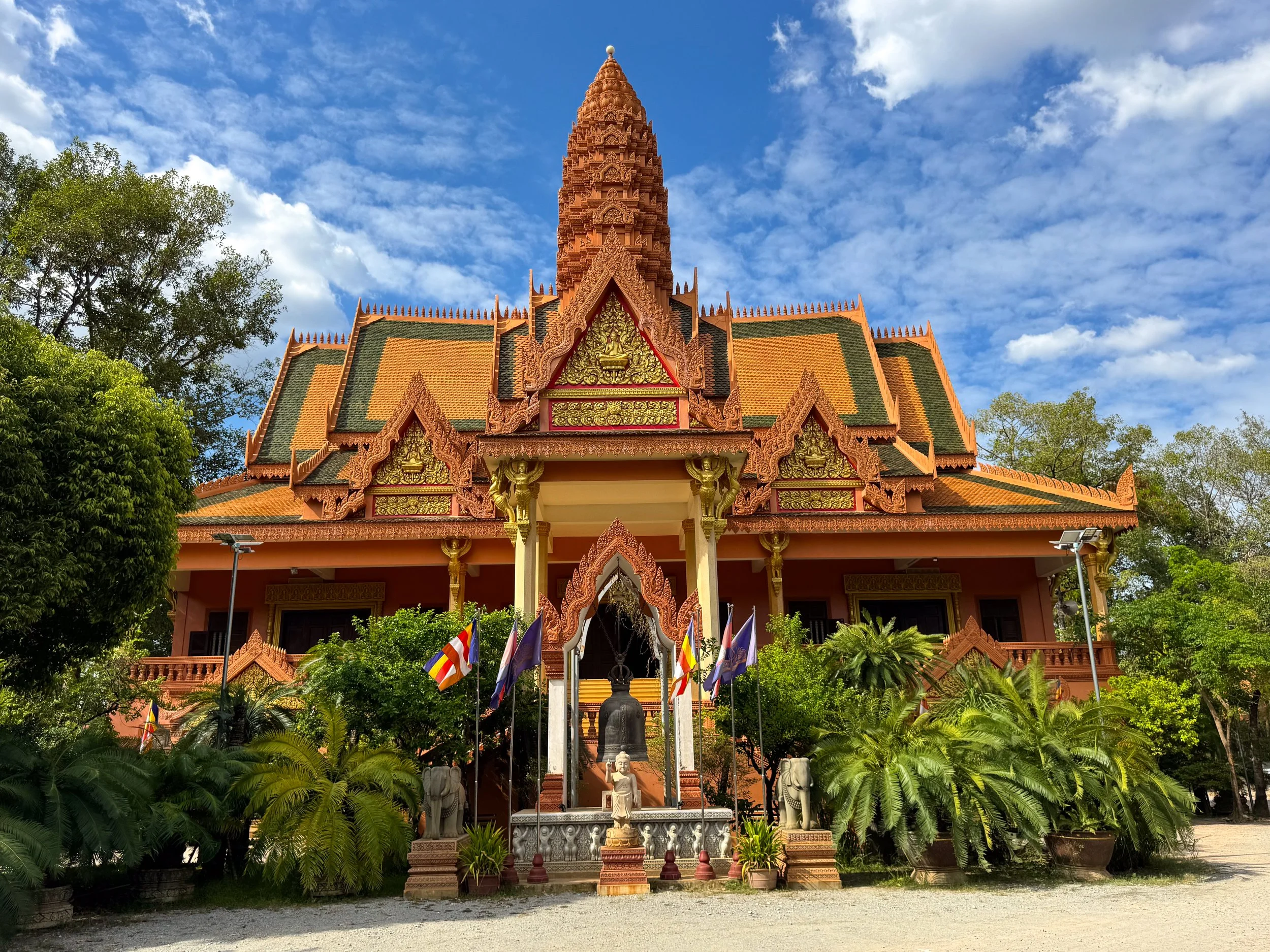
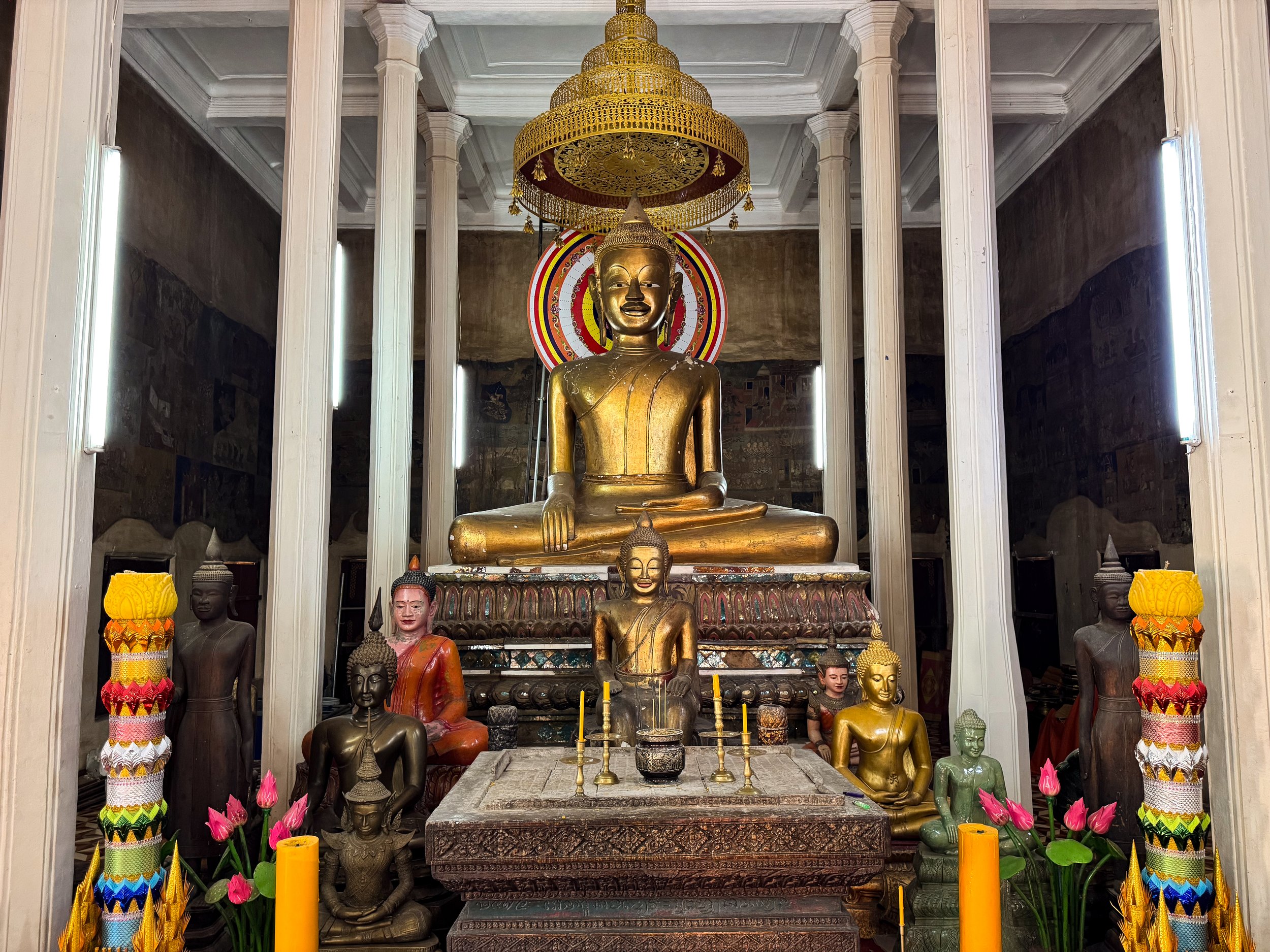
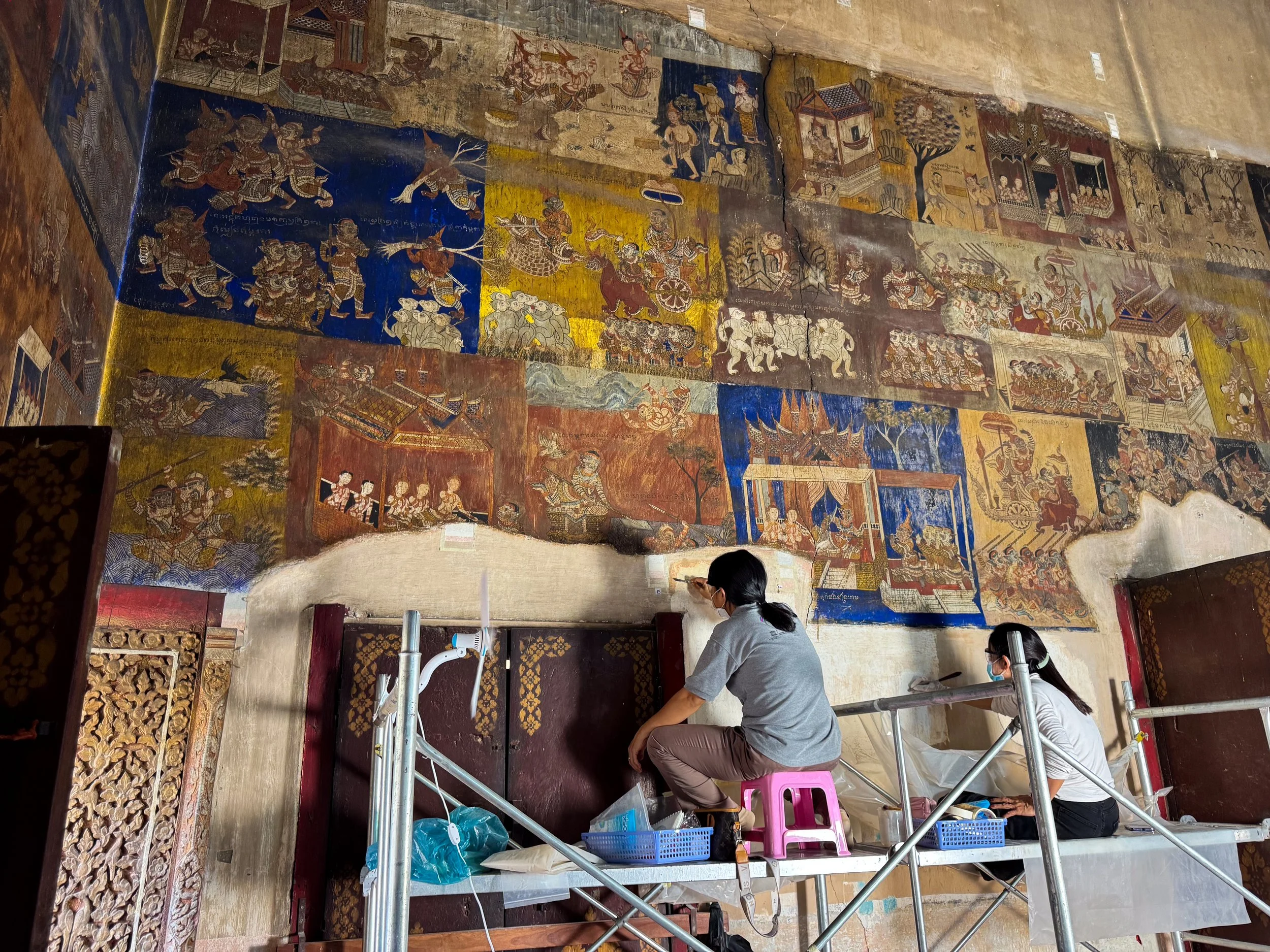
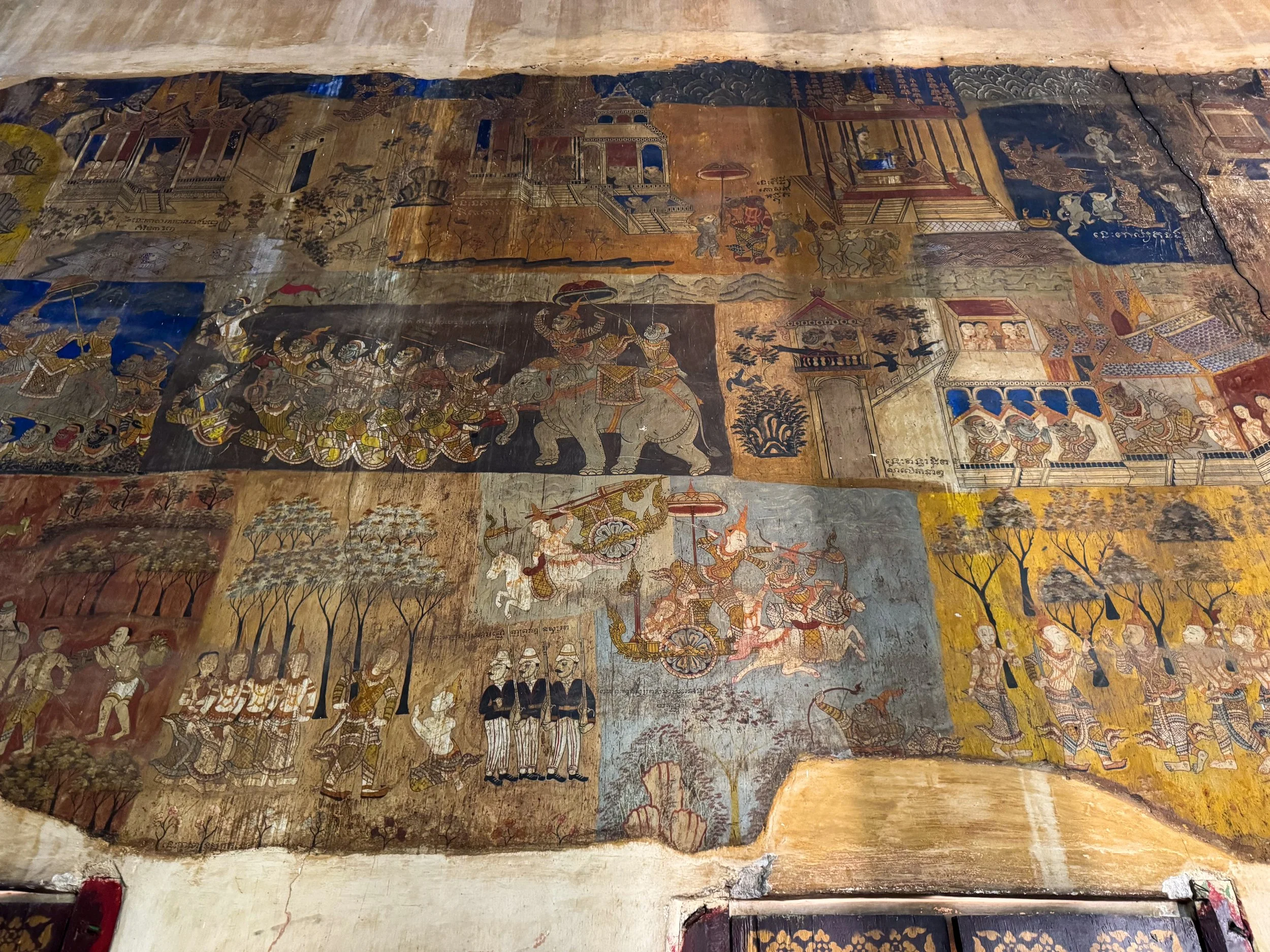
Wat Bo. A functioning Buddhist monastery with temples for monks to mediate and pray, buildings where they live and a school where they study. The main temple dates back to the 19th century. Its interior walls are painted in colorful frescos of prayer, meditation, dance, battle and legends. Several were being restored at the time.
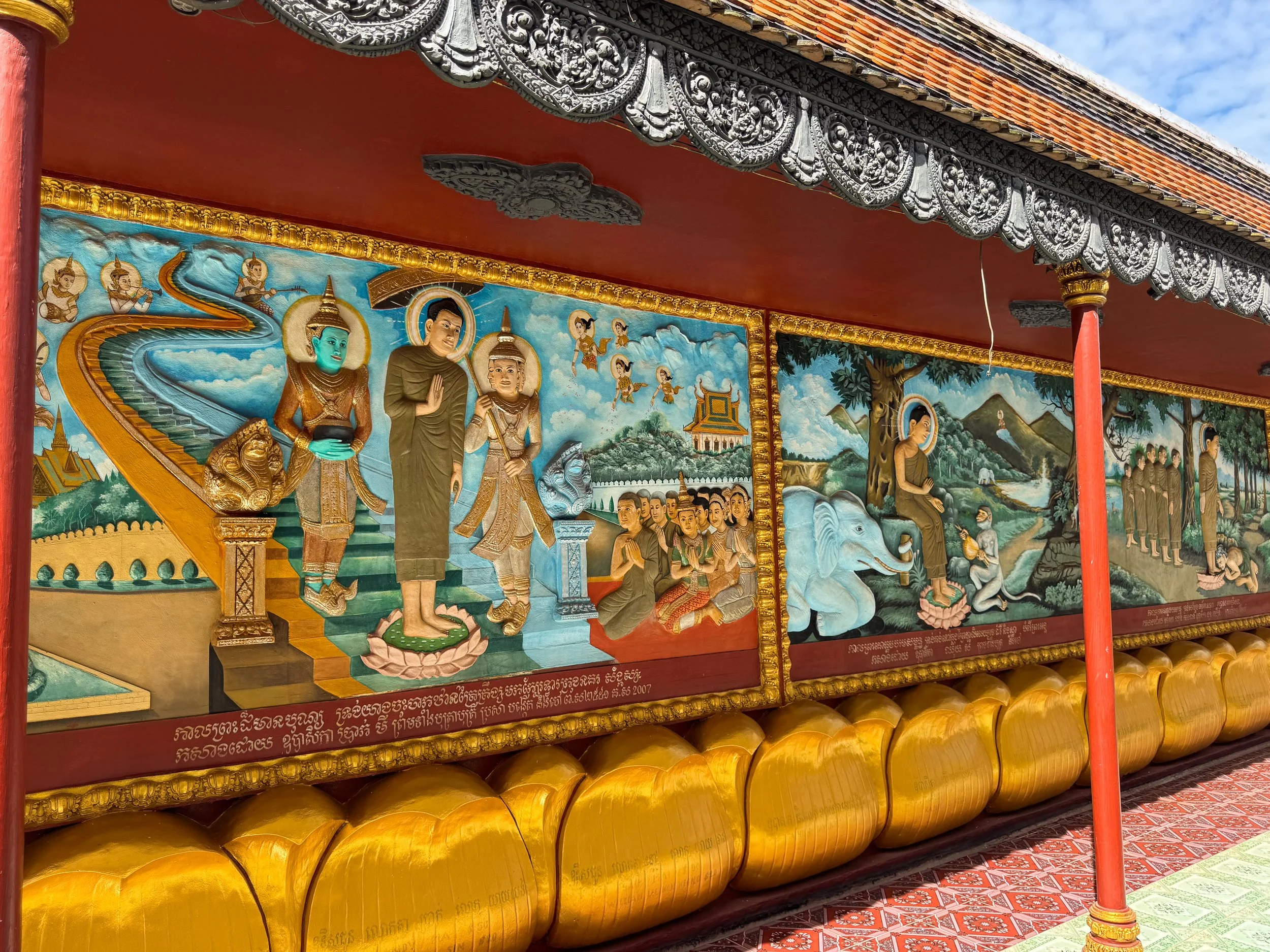
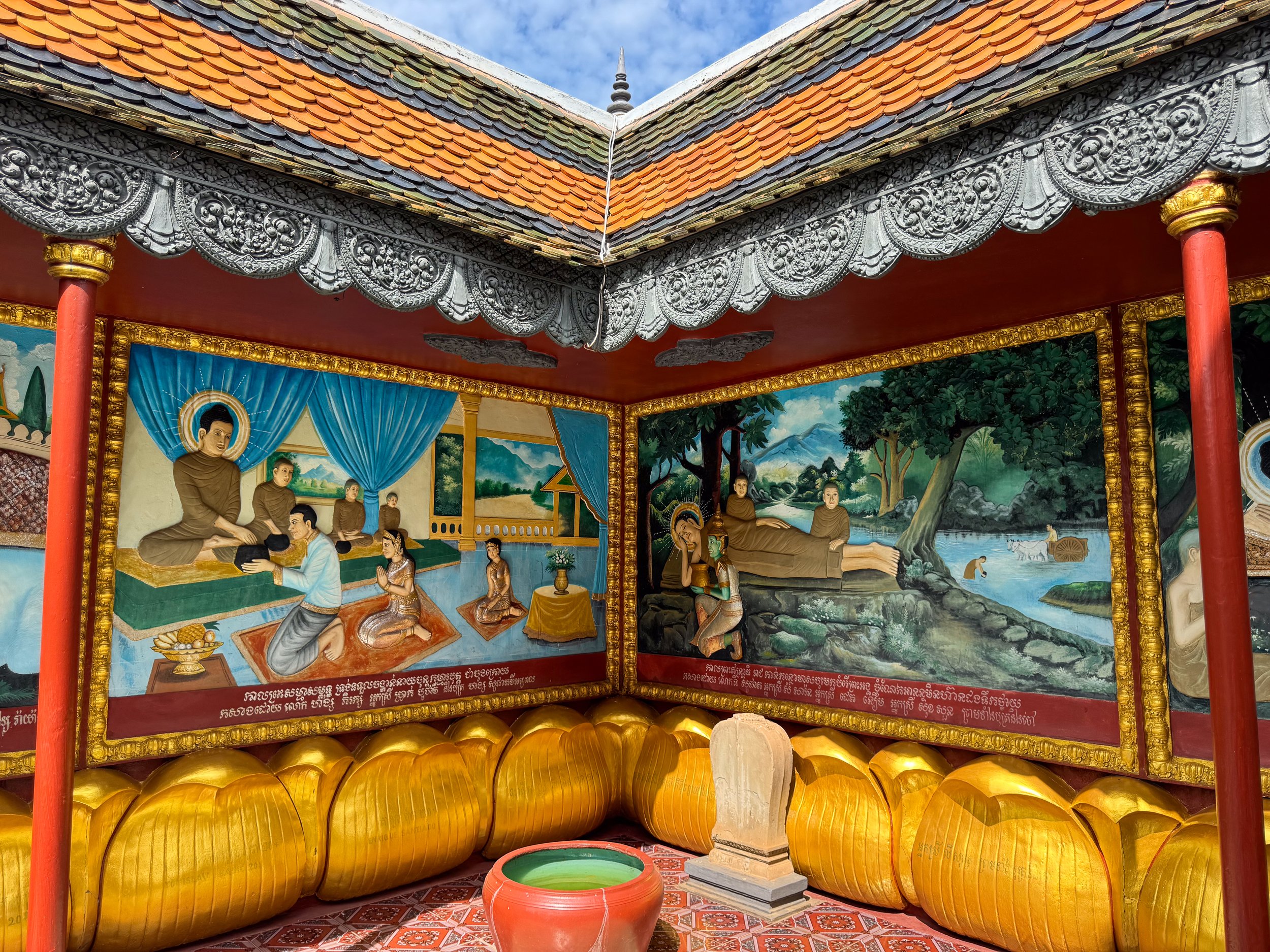
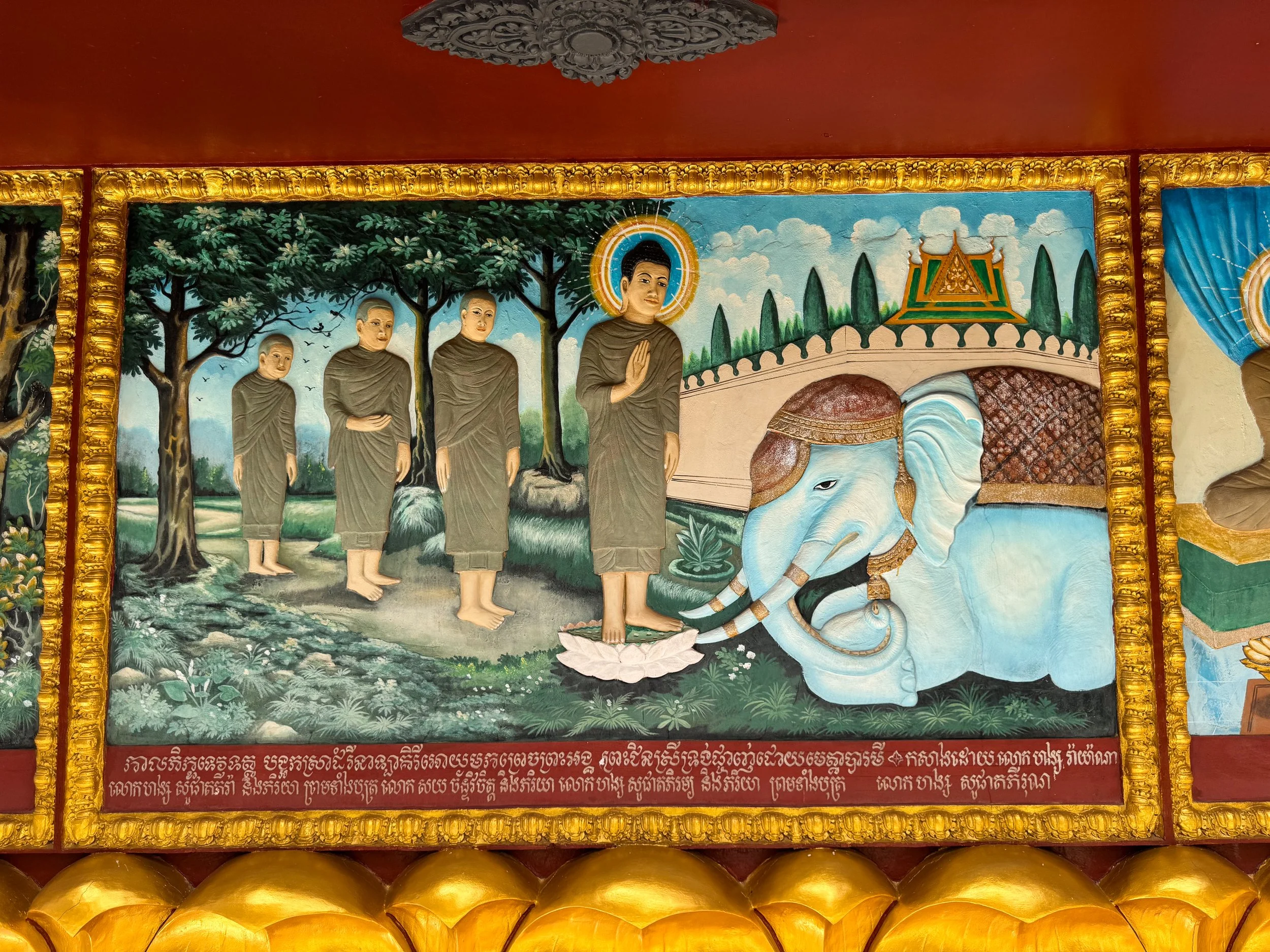
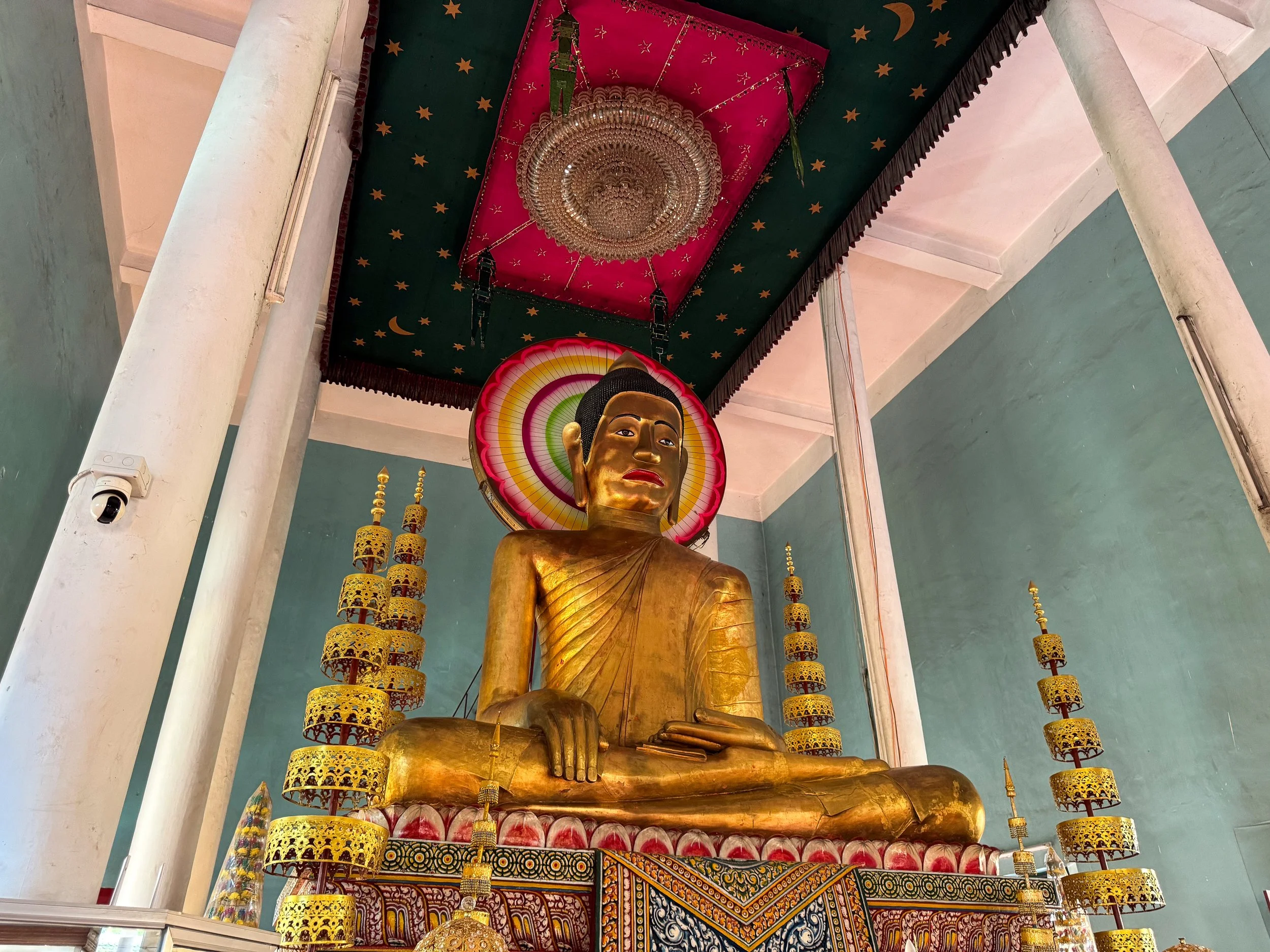
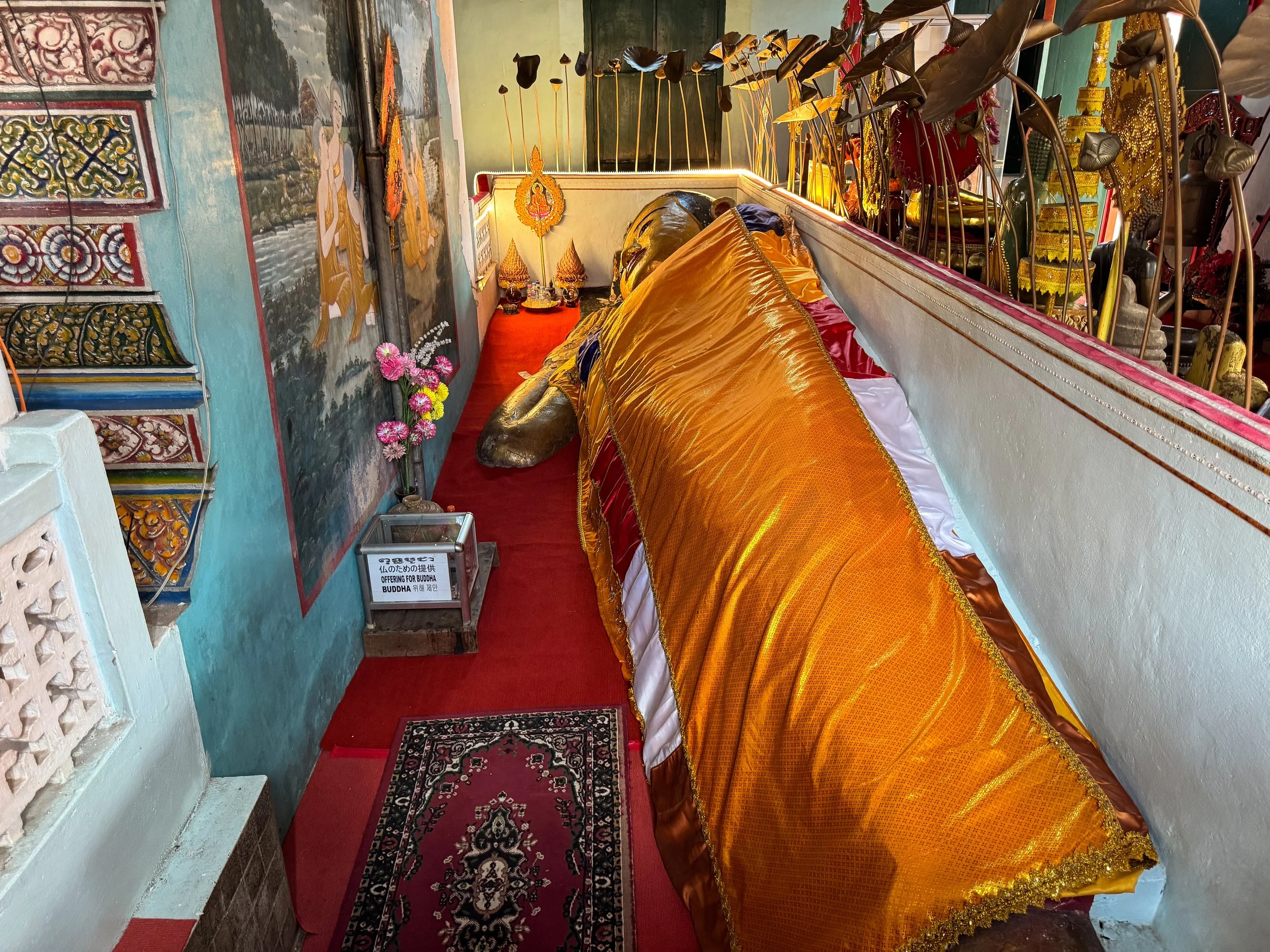
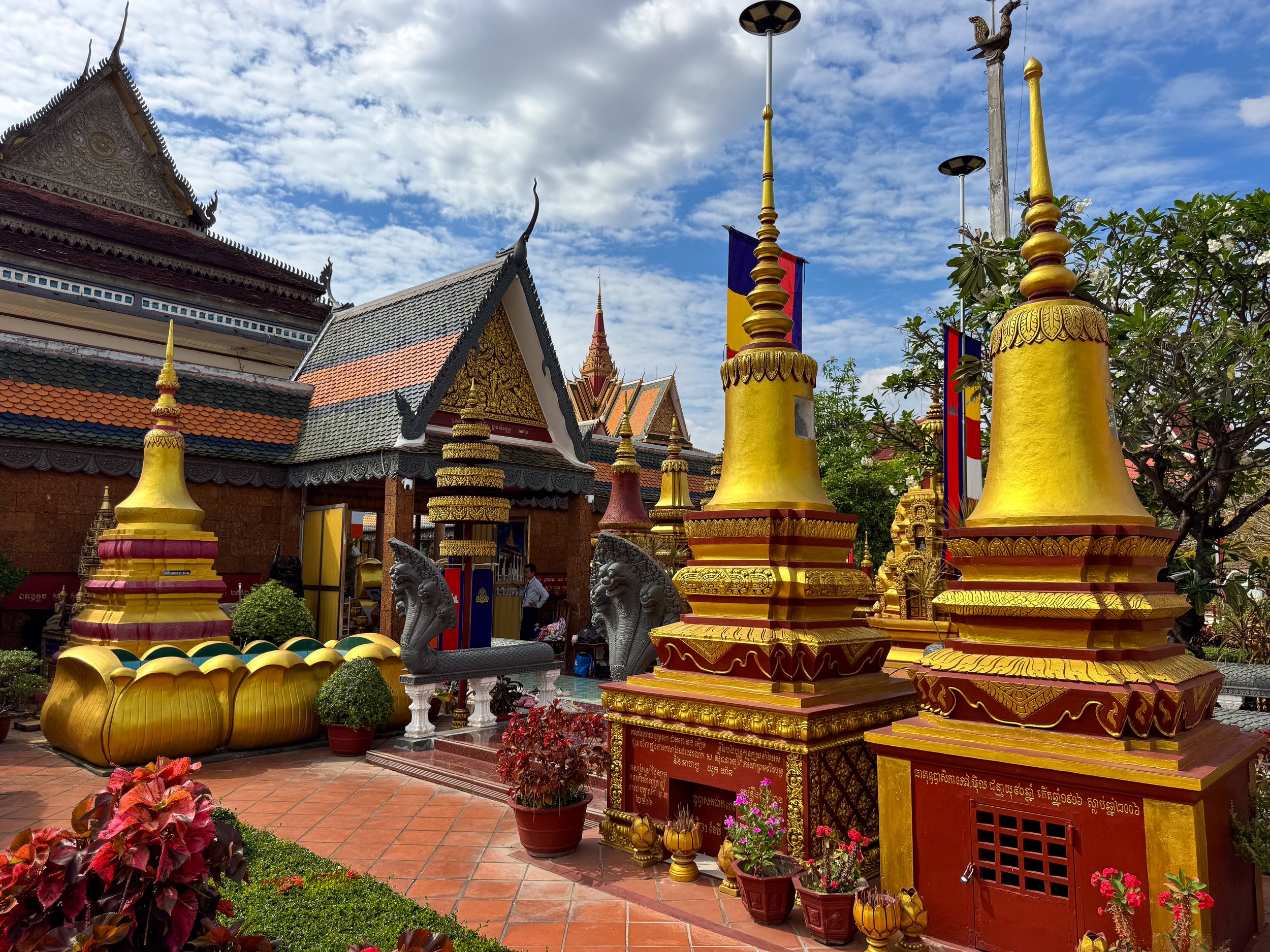
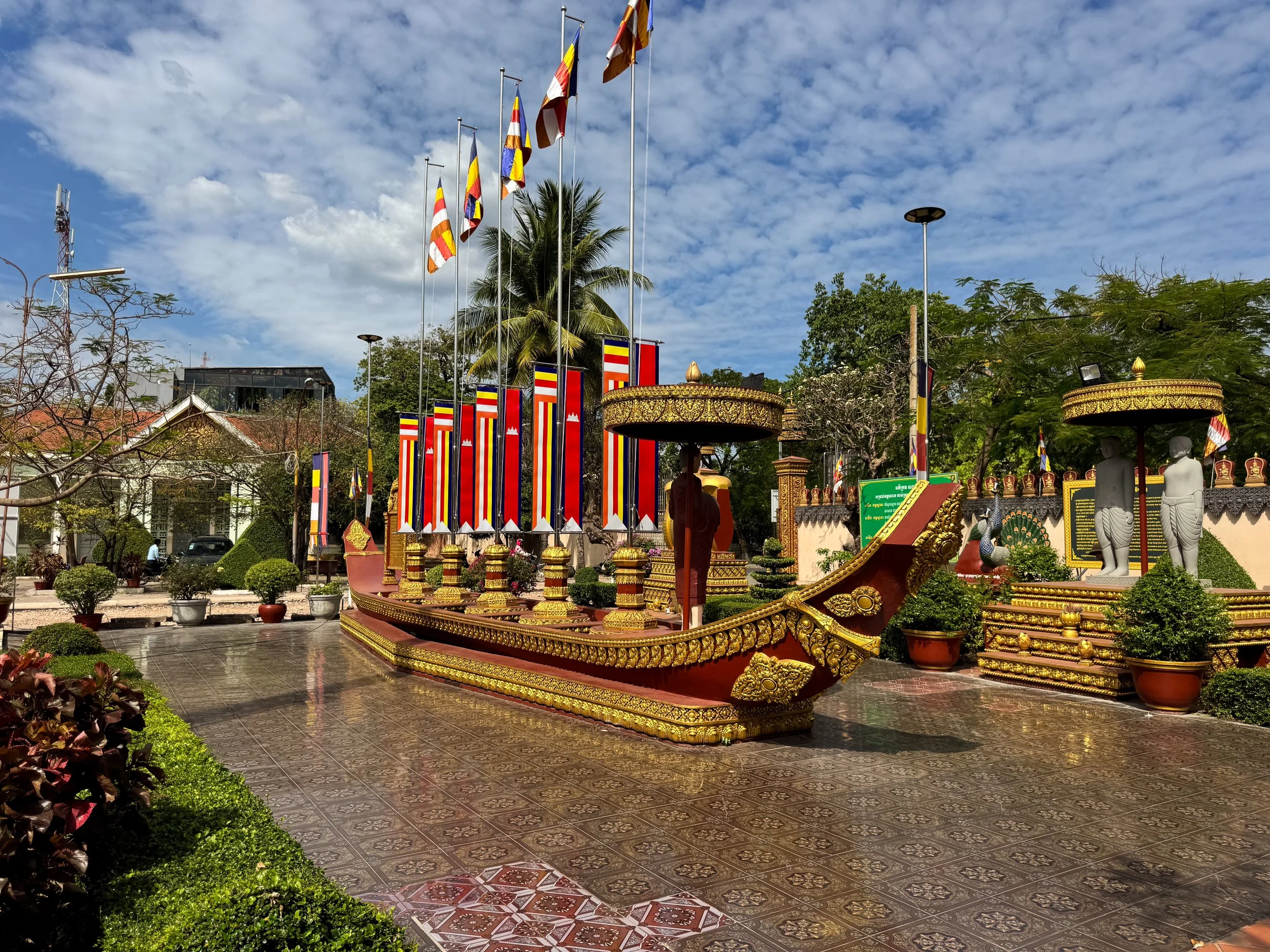
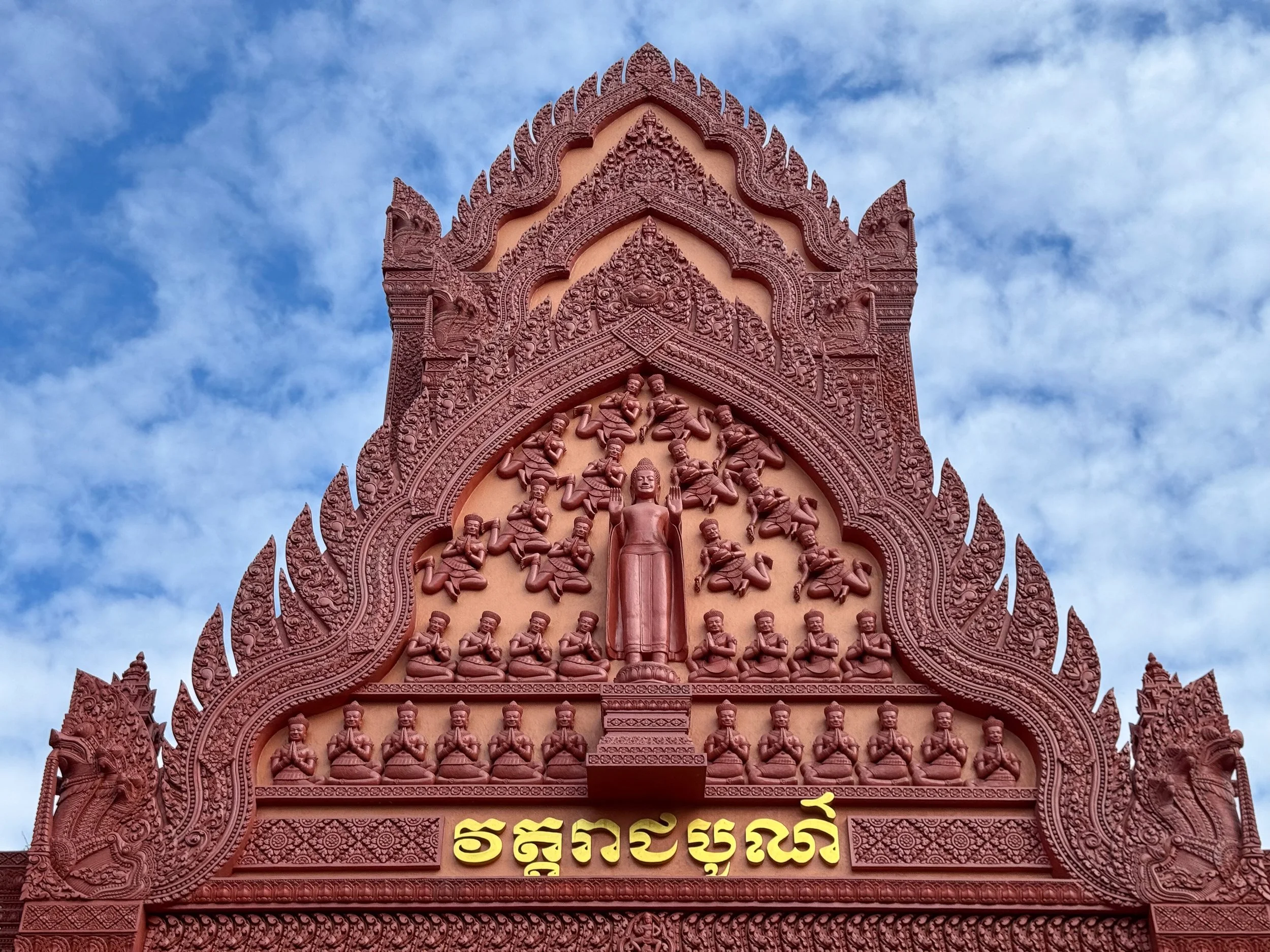
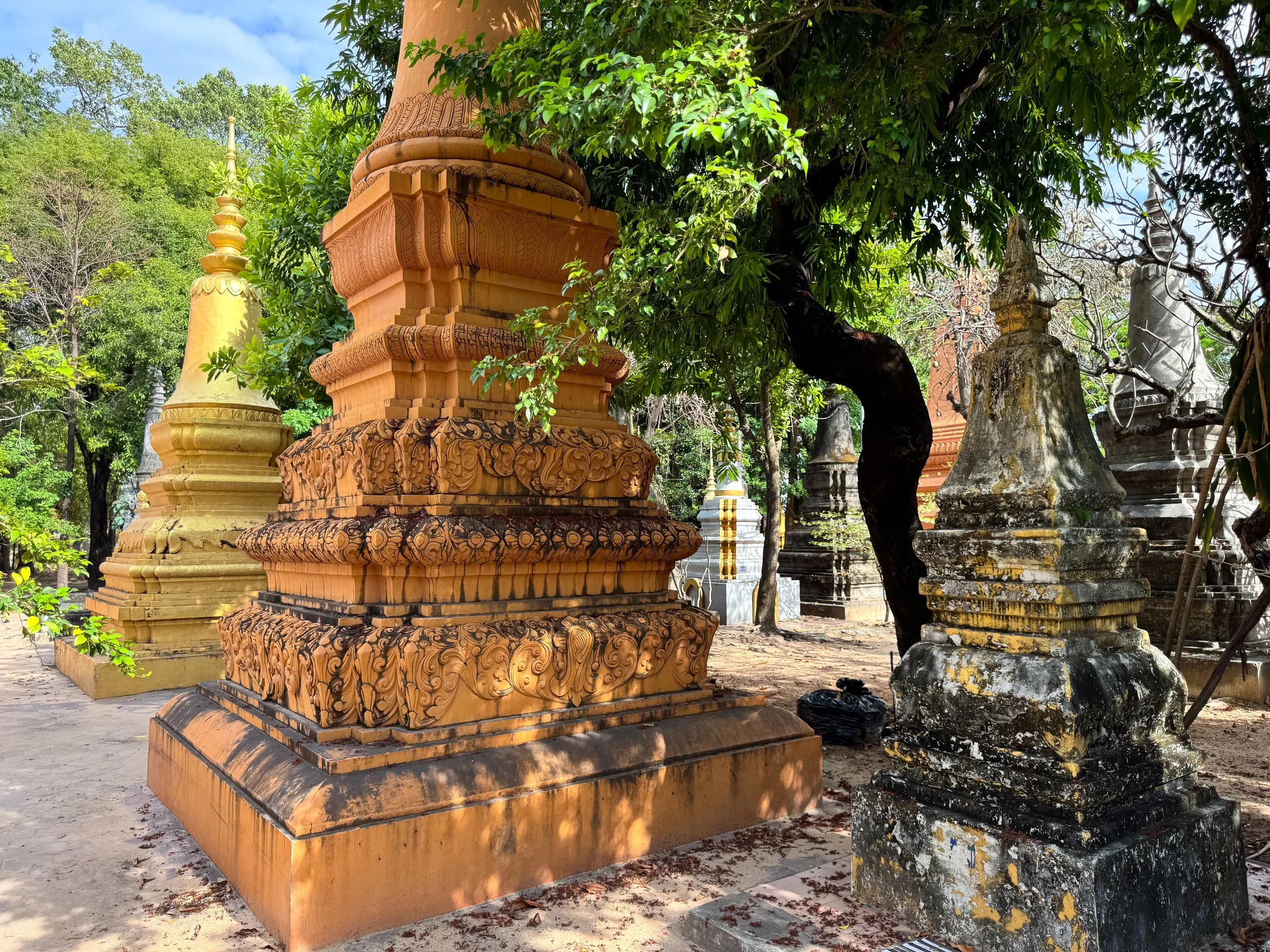
Wat Preah Prom Rath. A very colorful Buddhist temple with Khmer style buildings and golden stupas. The main temple sits on a base of gilded lotus petals surrounded by a courtyard with vibrantly painted reliefs depicting Buddhist stories. Inside is a golden Buddha sitting on an ornate altar and a 500 year old reclining Buddha. Monks wearing orange robes walk around the grounds planted with plumeria trees, sculpted bushes and statues dedicated to the legend of the temple.
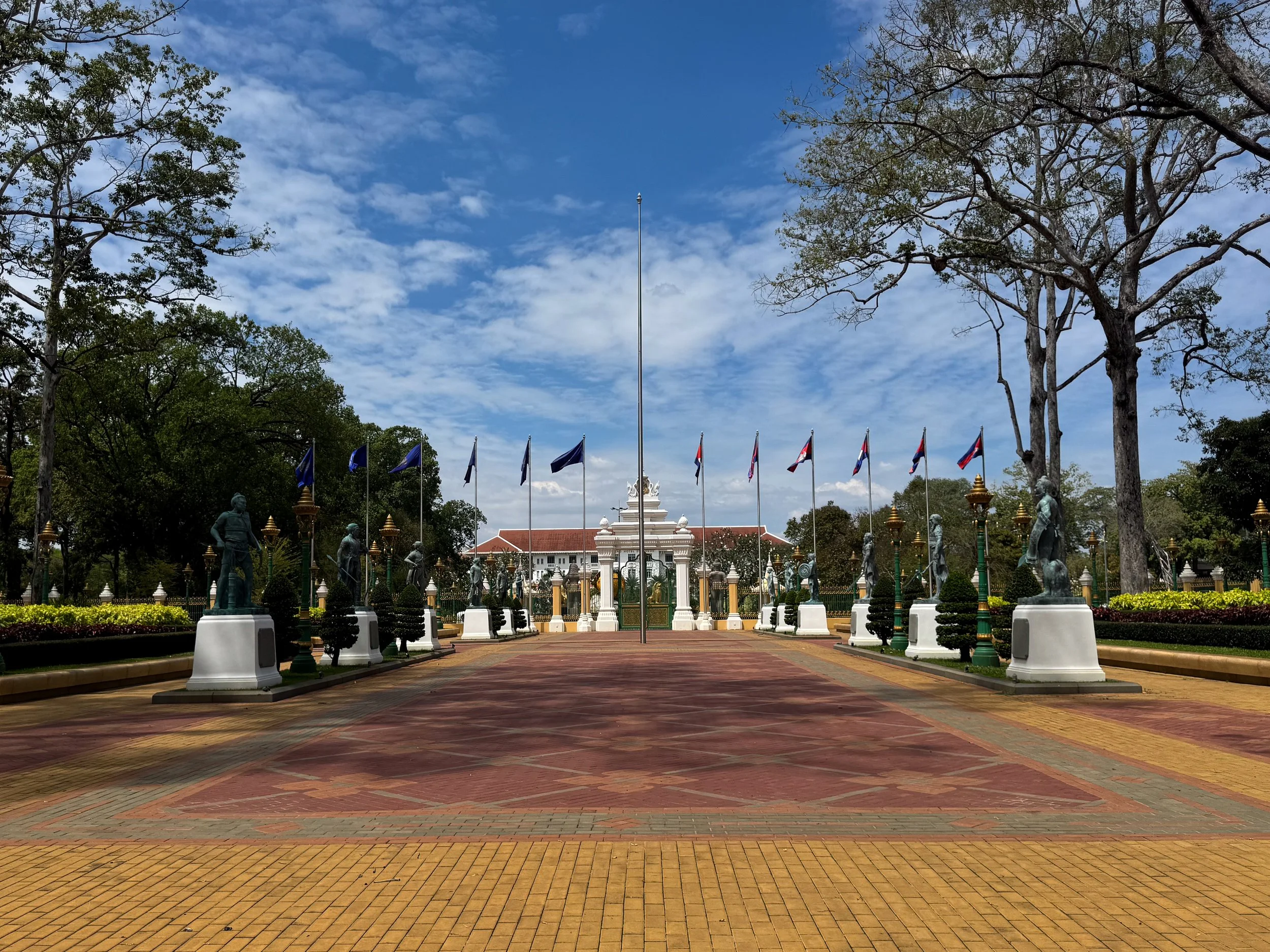
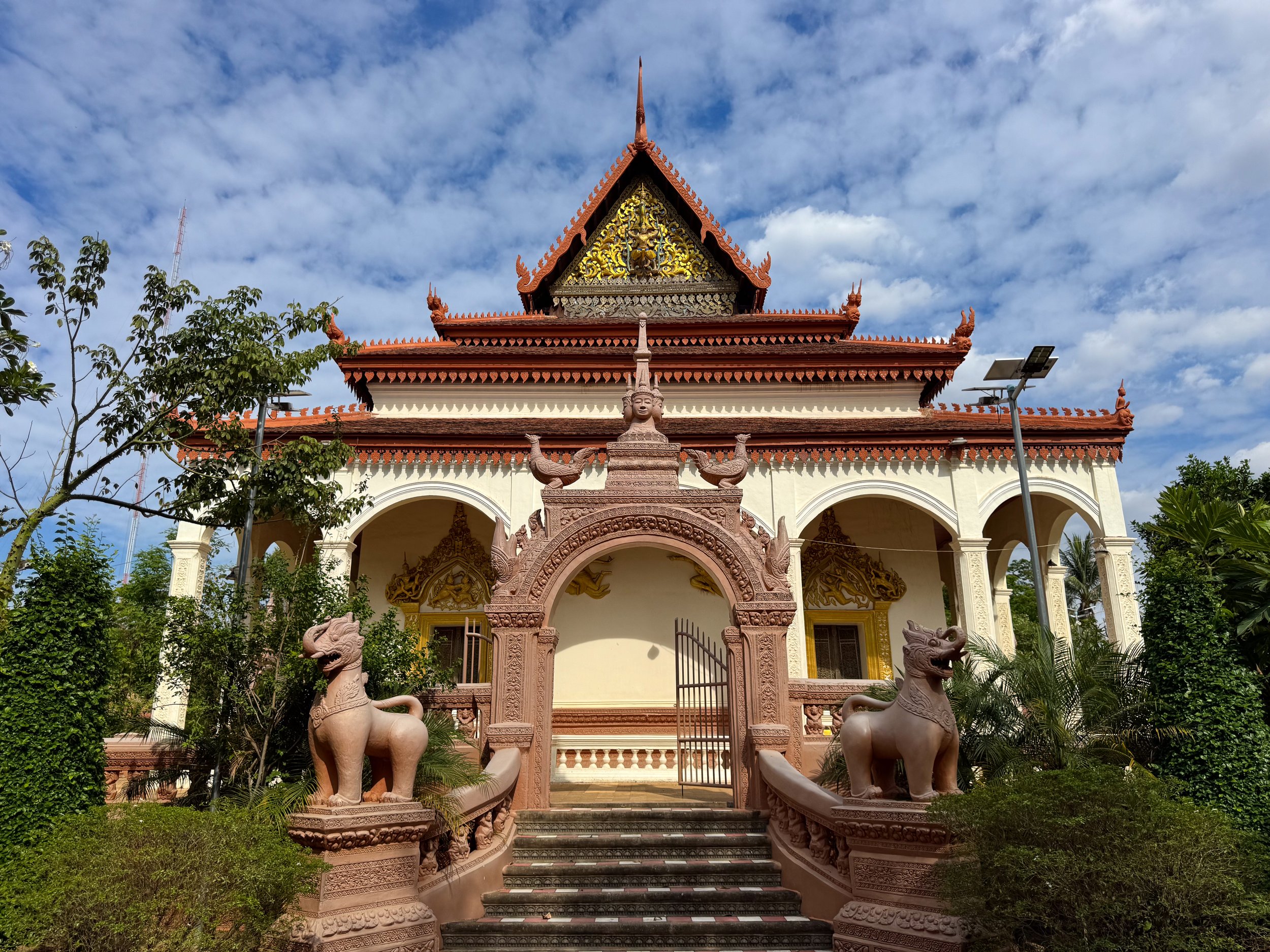
Royal Residence Garden. A residence dedicated to the Cambodian Royal Family when visiting Siem Reap. The surrounding gardens and grounds are open for free to visitors. We walked around the landscaped hedges, trees with large bats and visited a small Khmer style Buddhist temple.
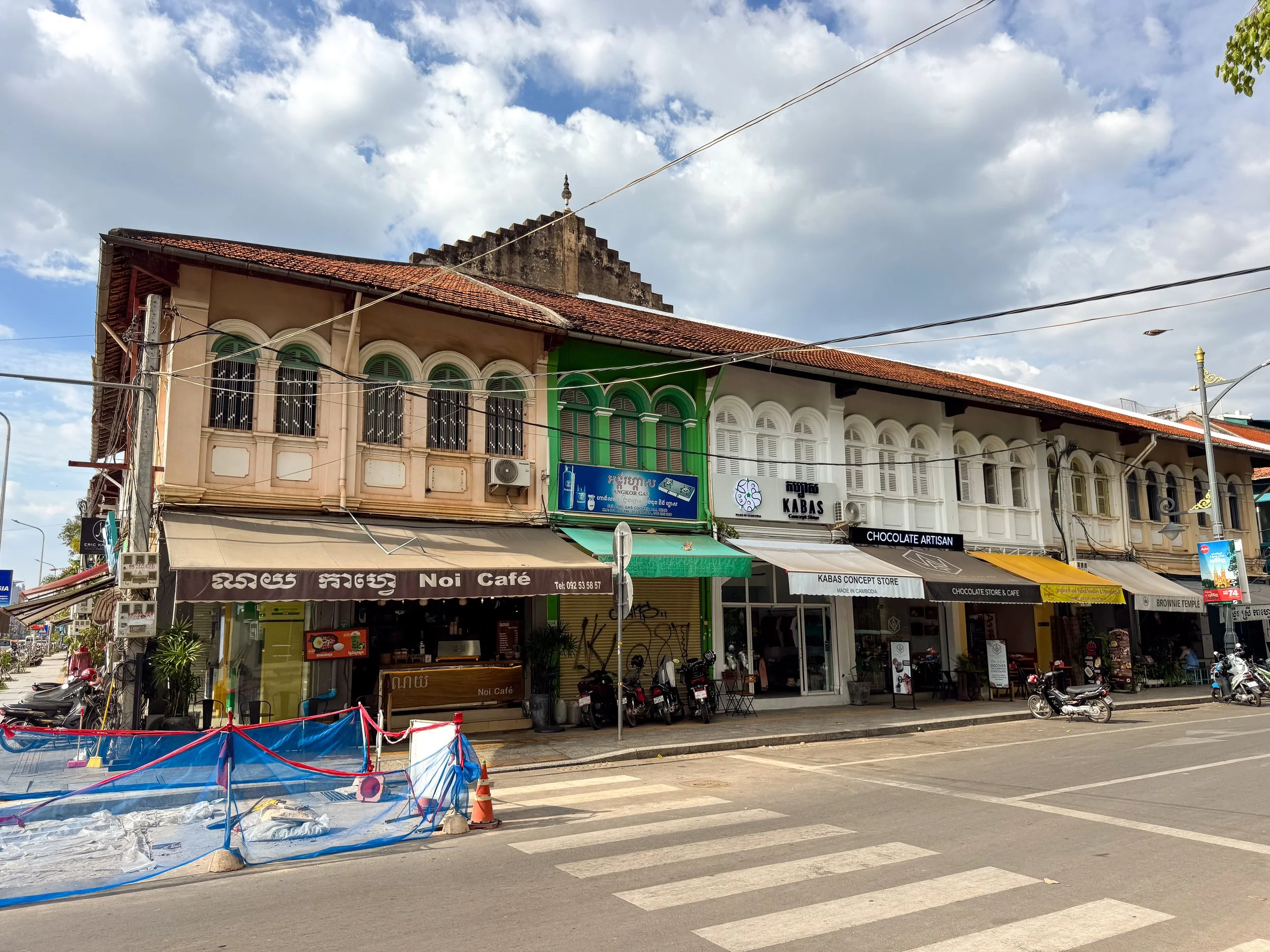
The French Quarter. A historic area of the city with pastel painted French style buildings home to cafés, restaurants, various shops and the Old Market.
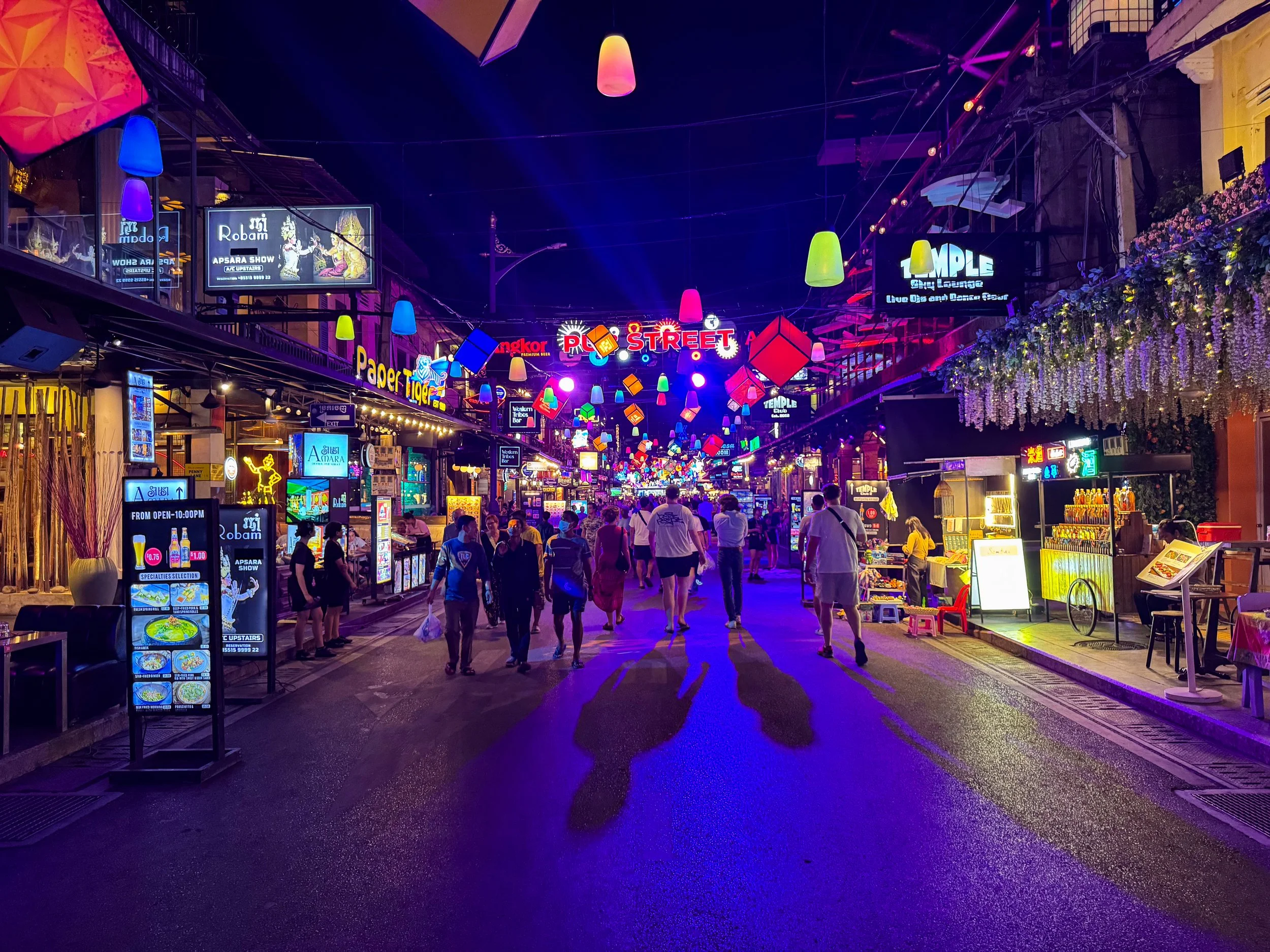
Pub Street. A popular nightlife street in the city center with restaurants and bars, colorful lights, live music, outdoor patios and daily happy hours. It’s a lively spot to enjoy local beers, inexpensive drinks and to meet other travelers.
Siem Reap Markets
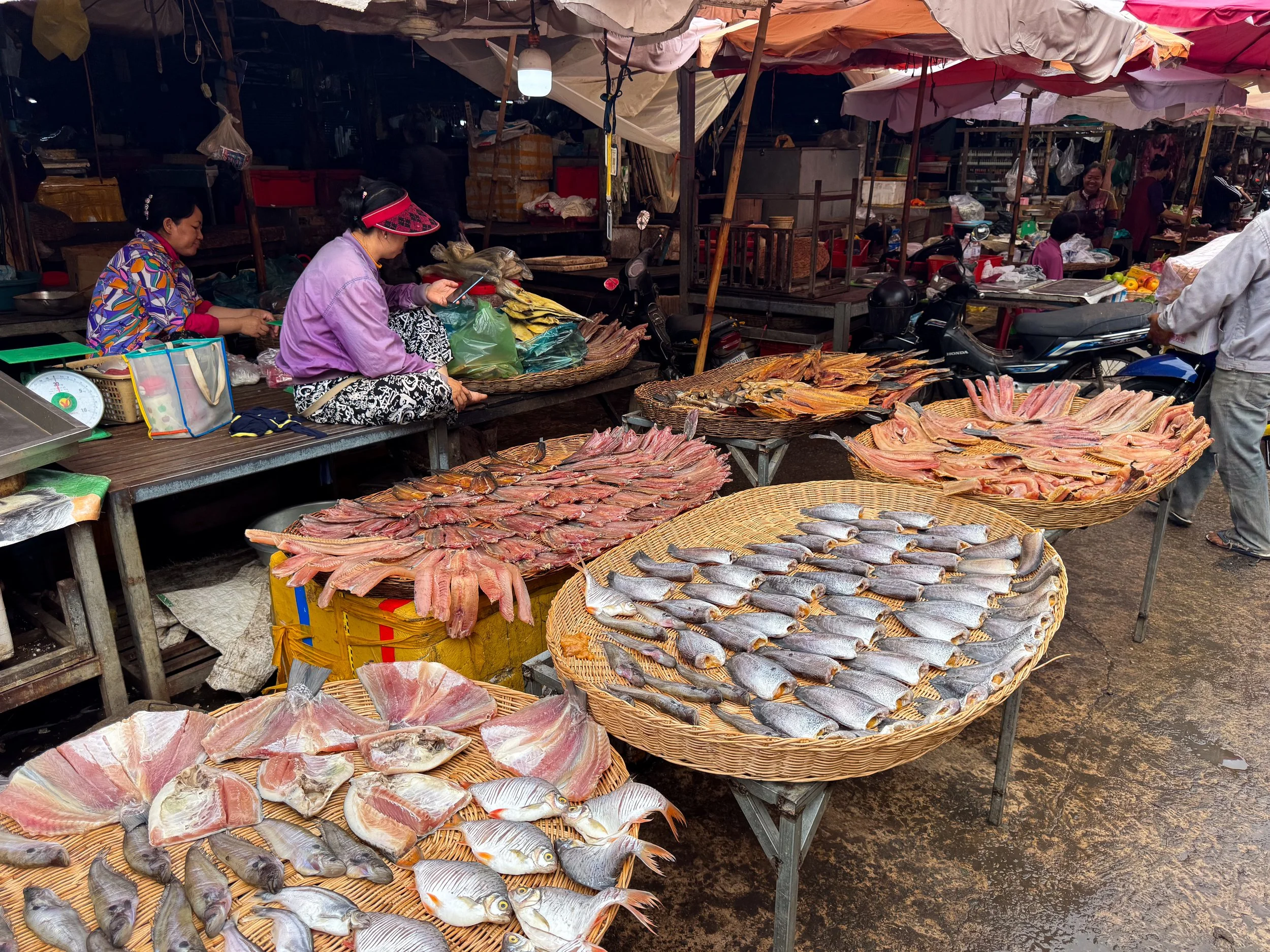
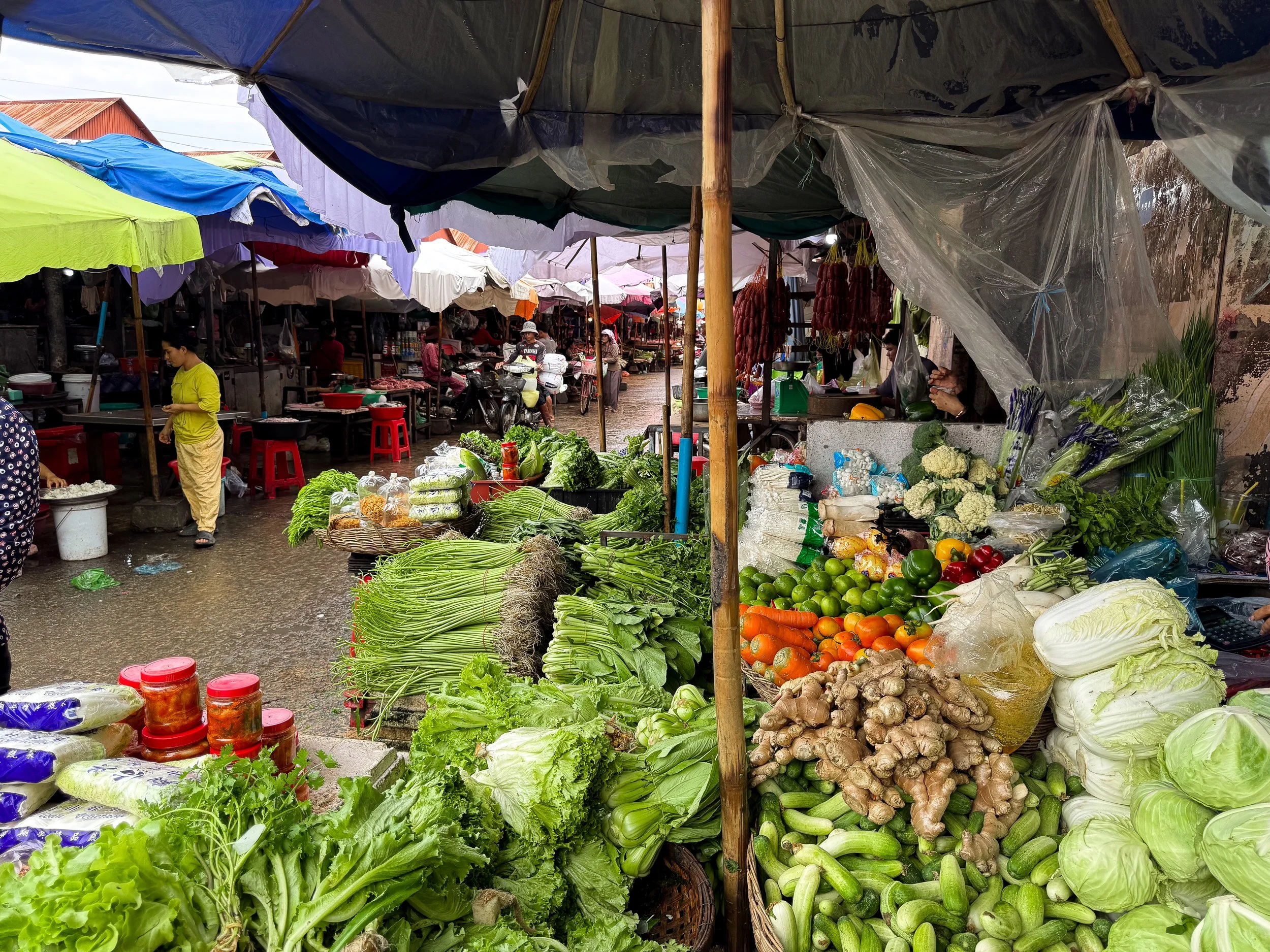
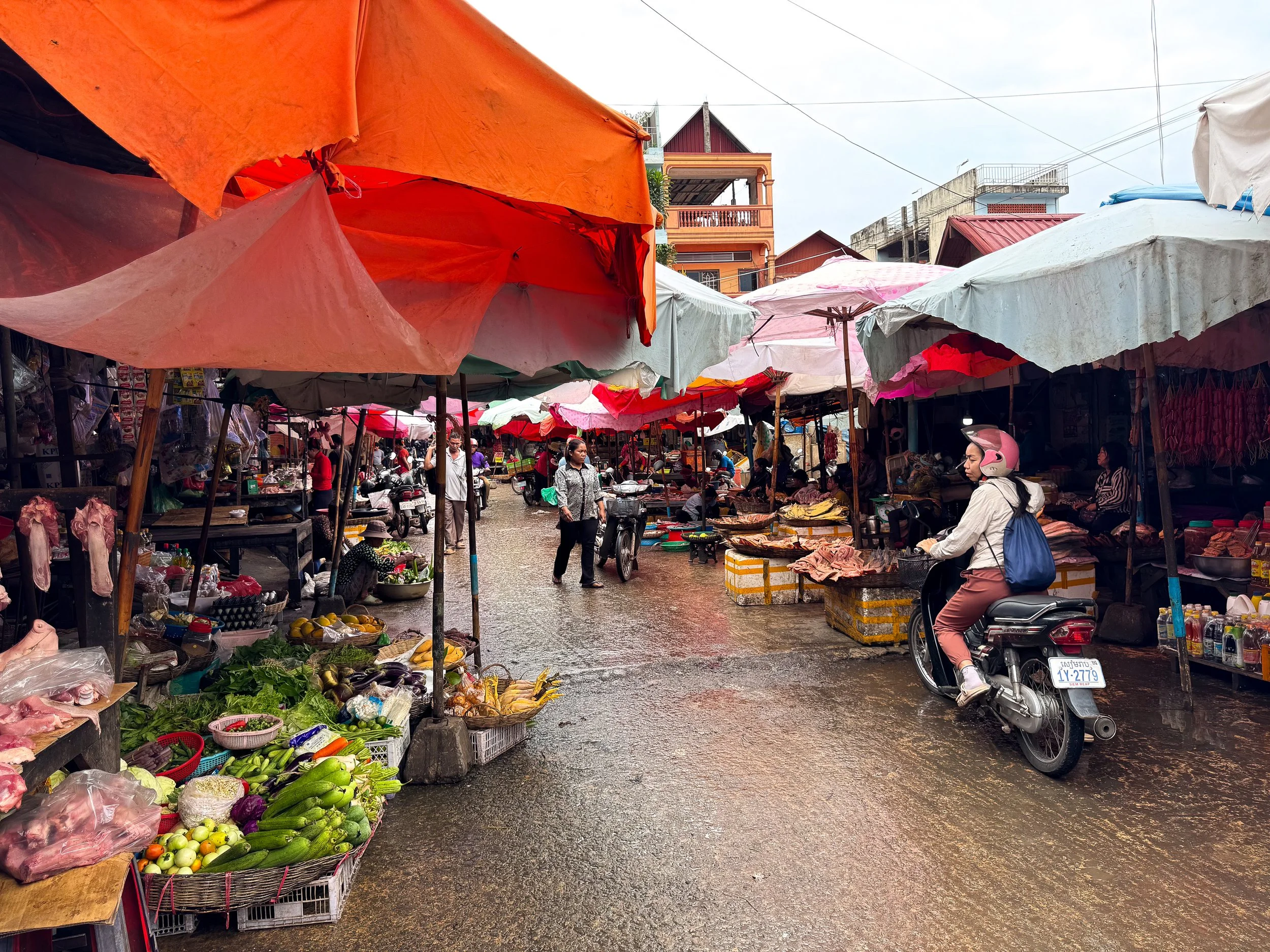
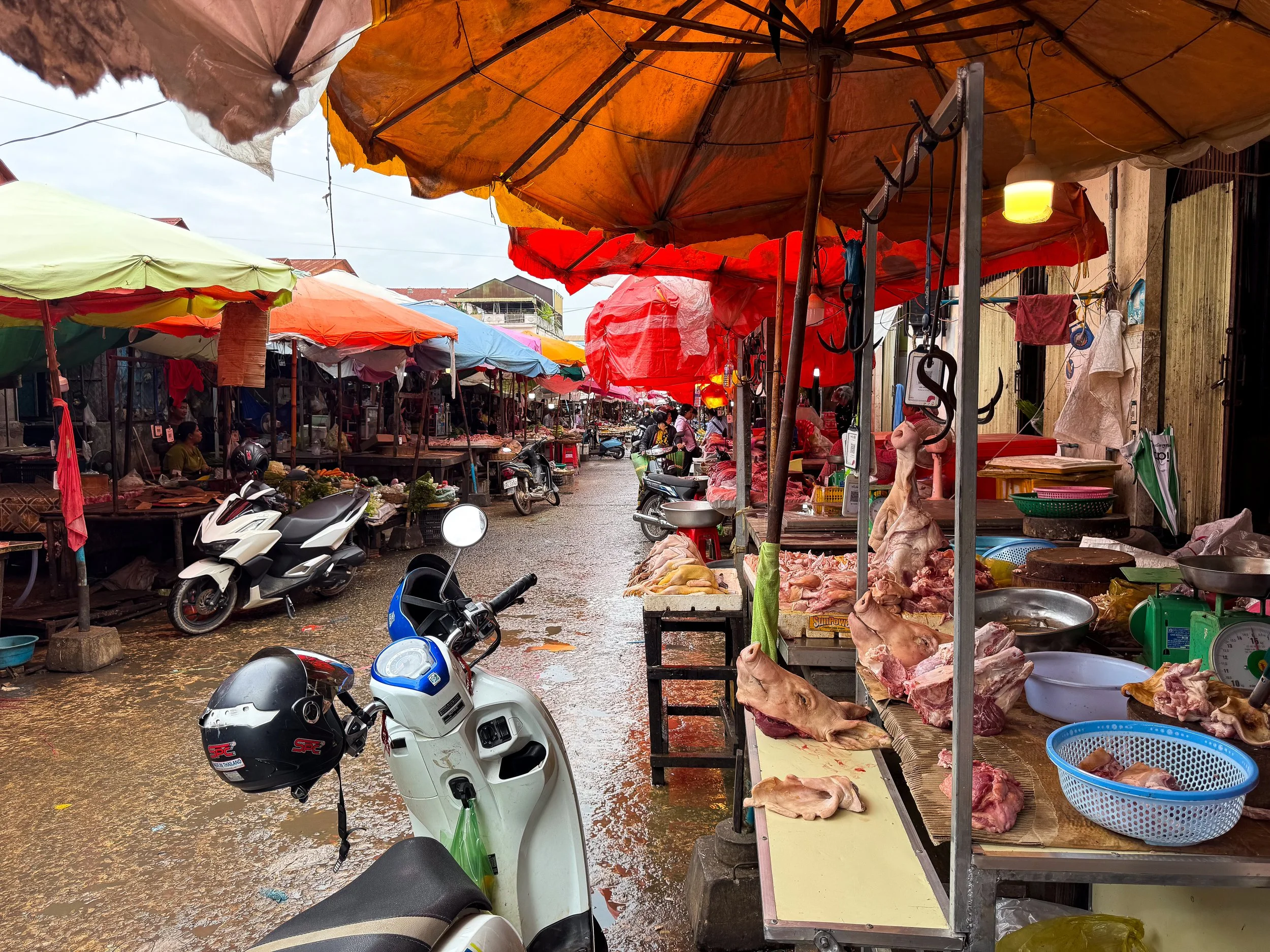
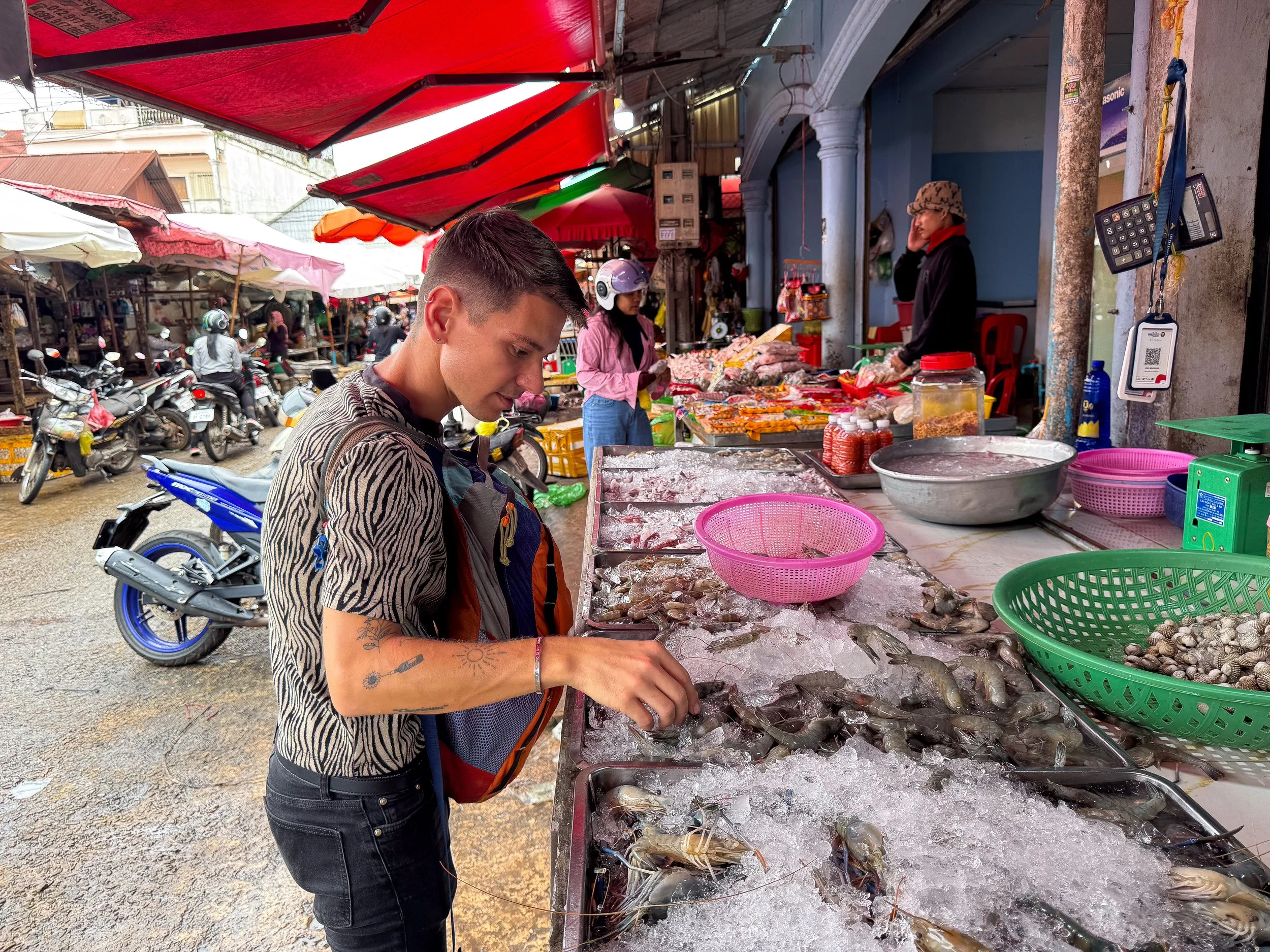
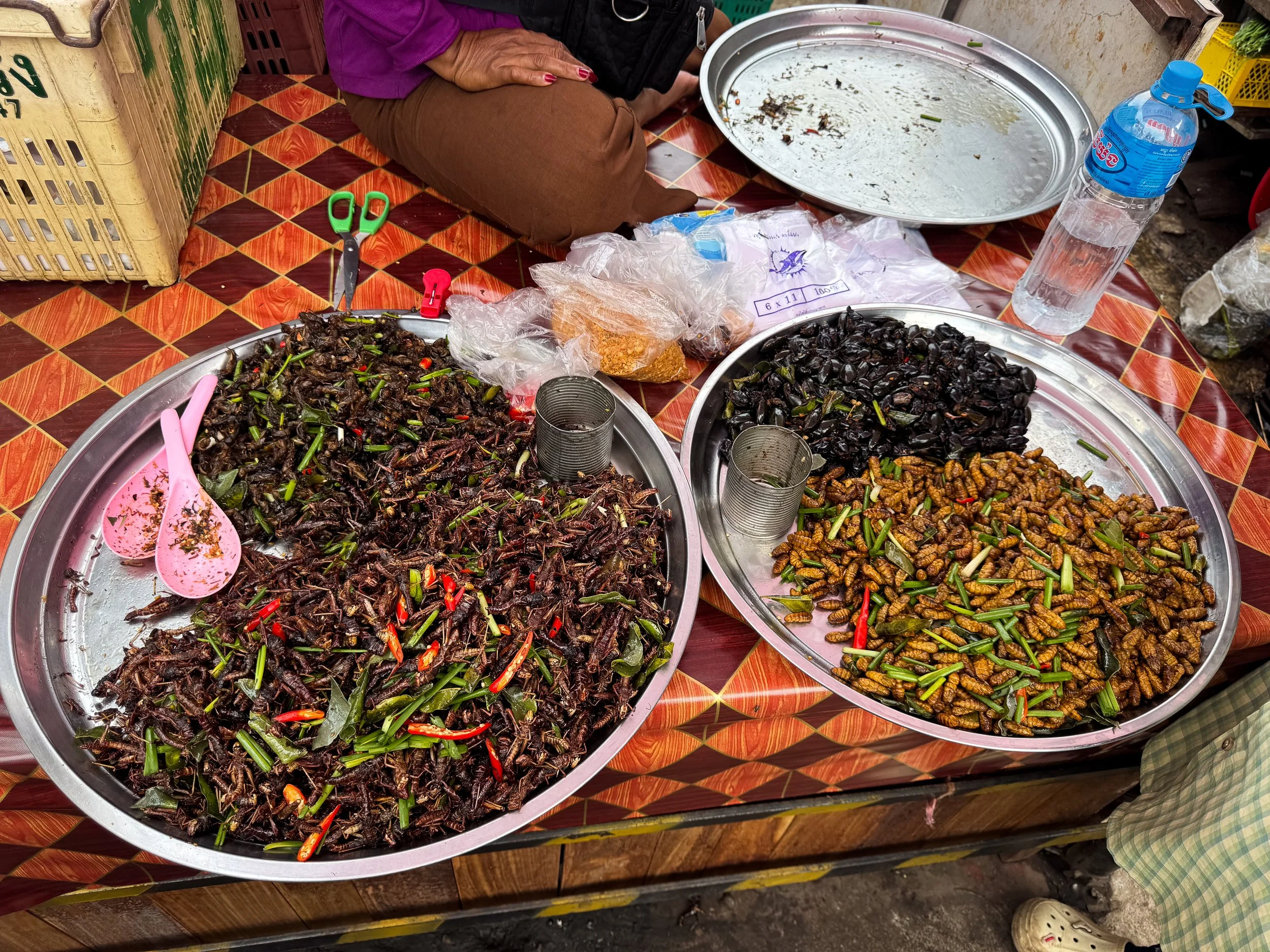
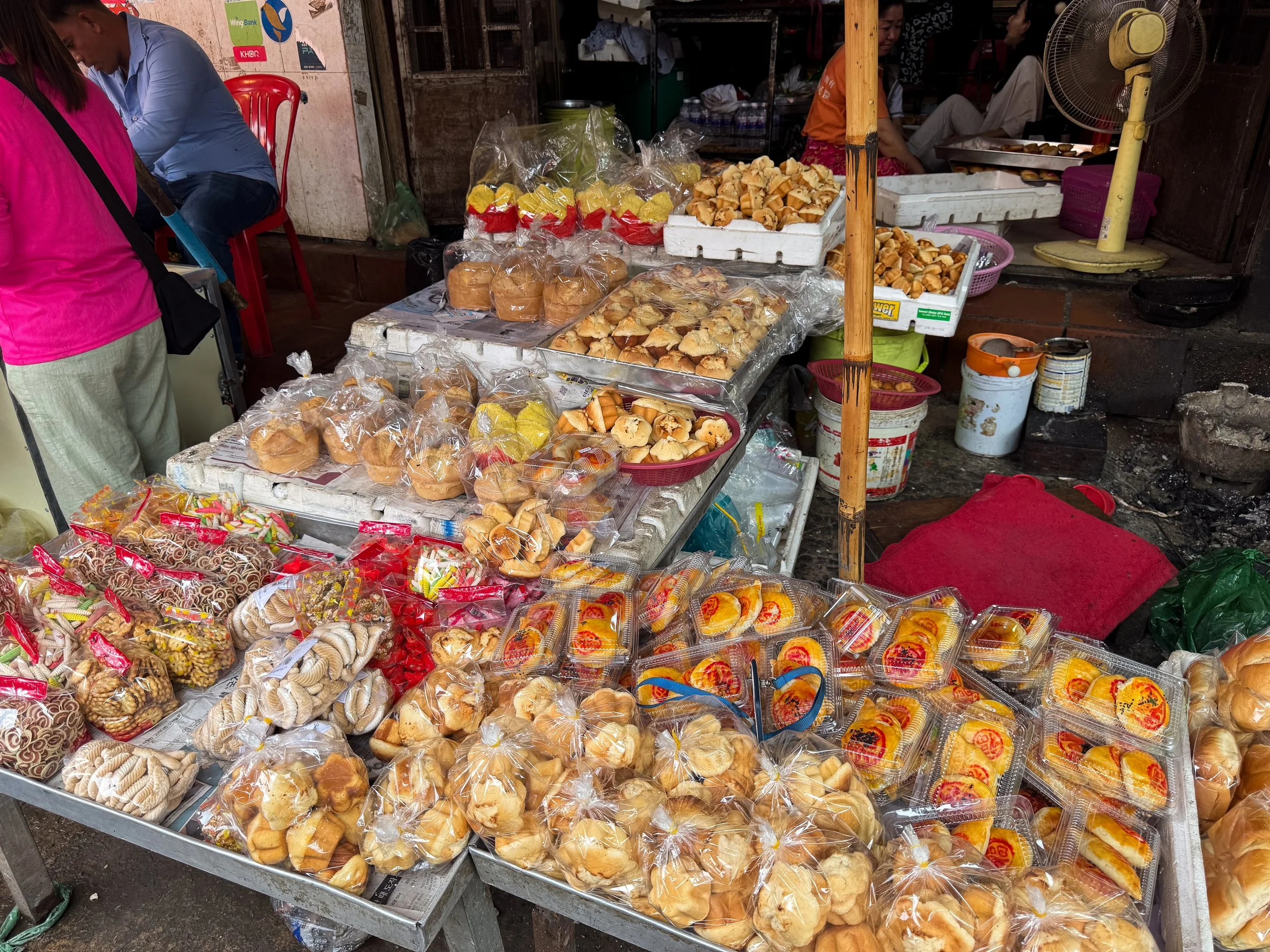
Phsar Leu Thom Tmey. The city’s largest and most traditional market. Inside the complex of aisles are vendors selling clothing, textiles, jewelry, electronics, appliances and basic necessities. Food vendors line the outside of the market selling all types of fresh and local ingredients like fruits, vegetables, exotic meats, lake fish, street food and insects. Like all local markets, visiting is a great way to immerse oneself in the local culture. We bought a week’s worth of groceries for less than $20 USD.
Phsar Samaki Vegetable & Fruit Market. A dimly lit market underneath a shed of roofs with vendors selling vegetables, fruits, butchered meats, dried fish, jars of spices and sauces. It’s not necessarily the cleanest market in the world but has a very local feeling to it, affordable prices and friendly locals.
The Old Market. A historic market in the French Quarter with aisles of vendors selling clothing, bags, jewelry and souvenirs. The center has a farmers market with fresh fruits, vegetables, herbs, seafood, meats, nuts and other locally farmed goods.
Made in Cambodia Market. A craft market with booths of vendors selling locally made items and souvenirs like beaded jewelry, paintings of Angkor Wat, Khmer masks, colorful sarongs, paper fans, woven baskets and aromatic spices.
The Night Market. A popular nighttime market along the Siem Reap River in the city center. It’s known for its street food with cooks serving skewered and fried meats, fish and veggies from mobile kitchens and carts.
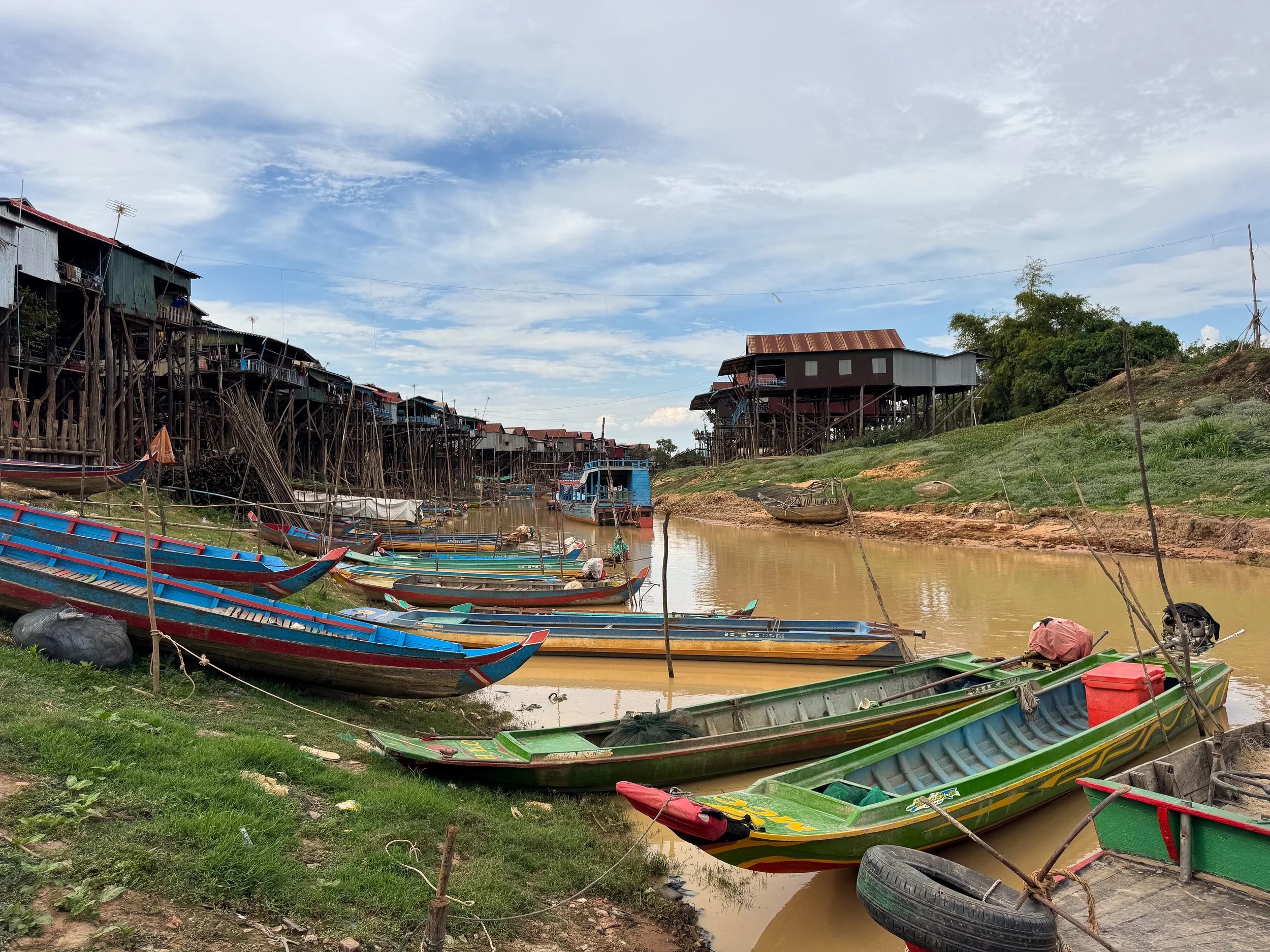
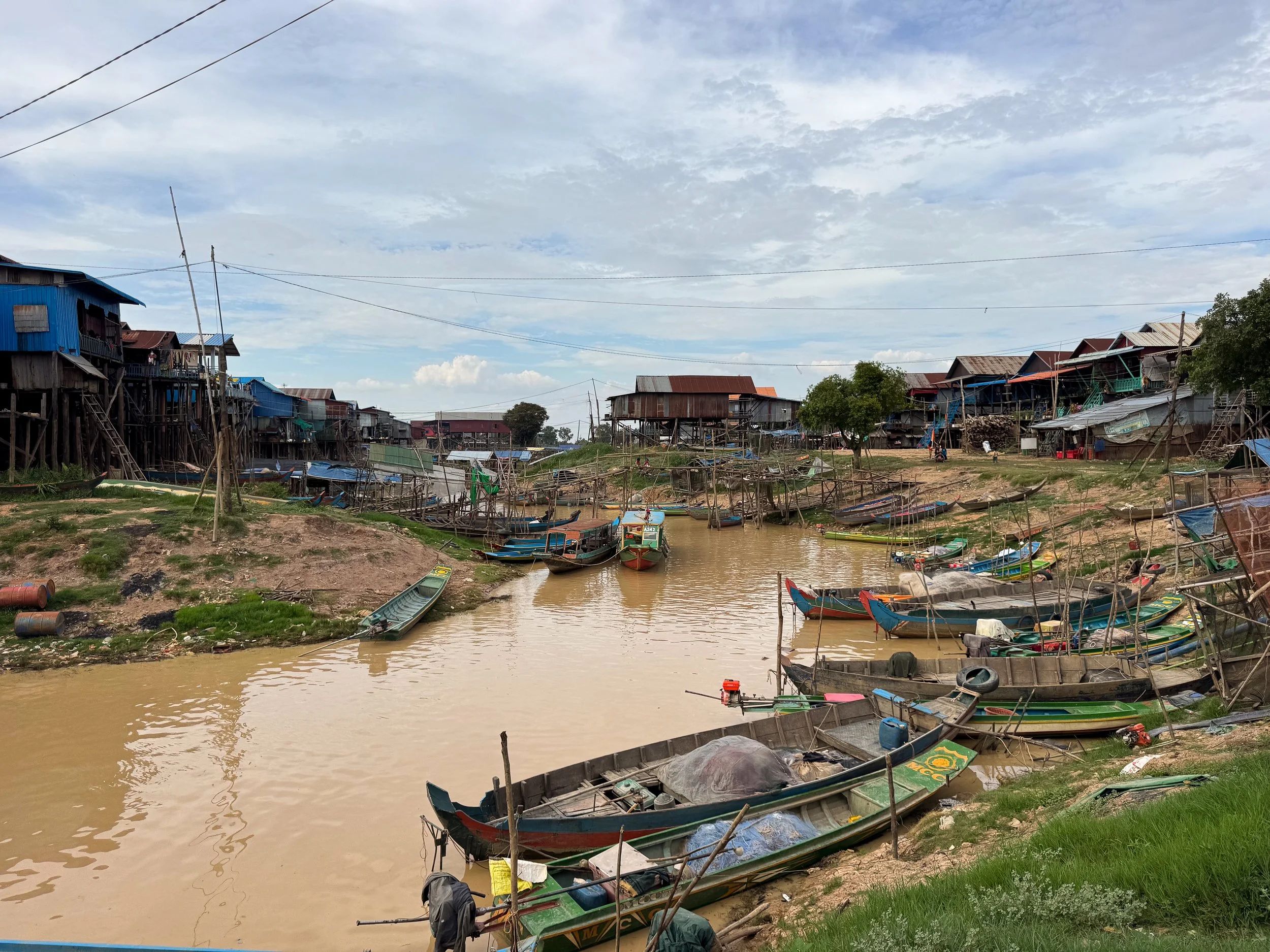
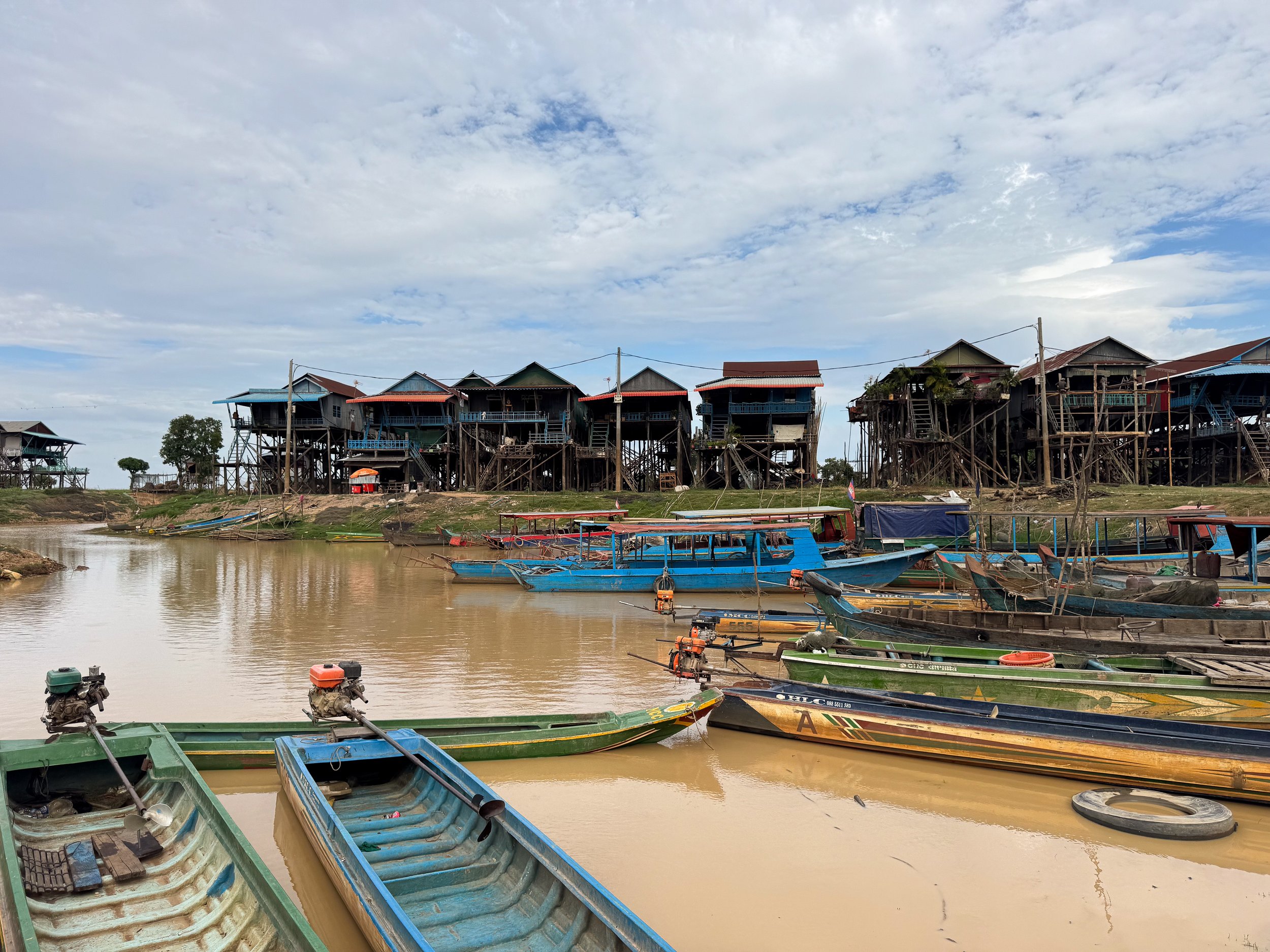
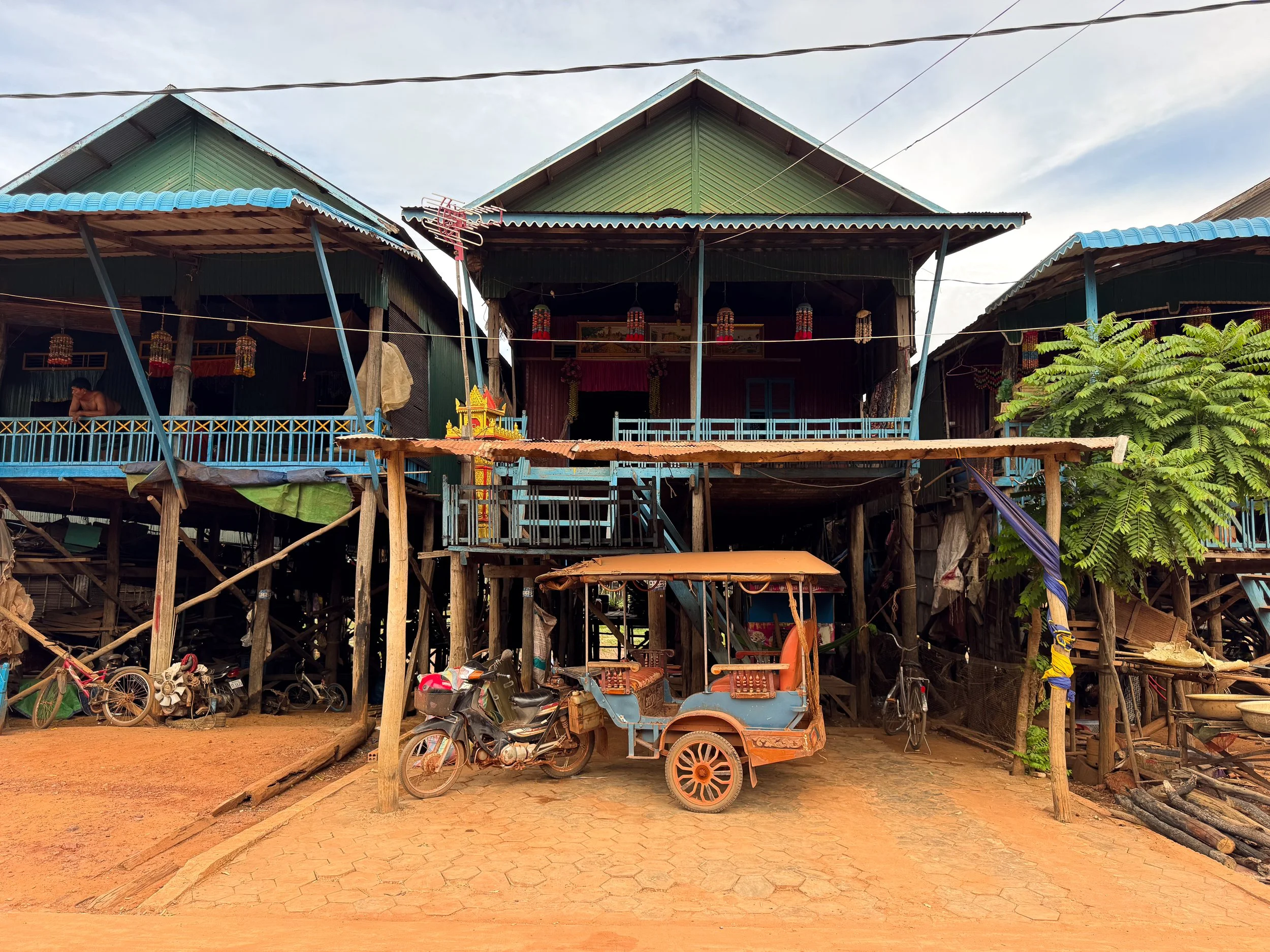

Lake Tonle Sap Stilt Village Tour
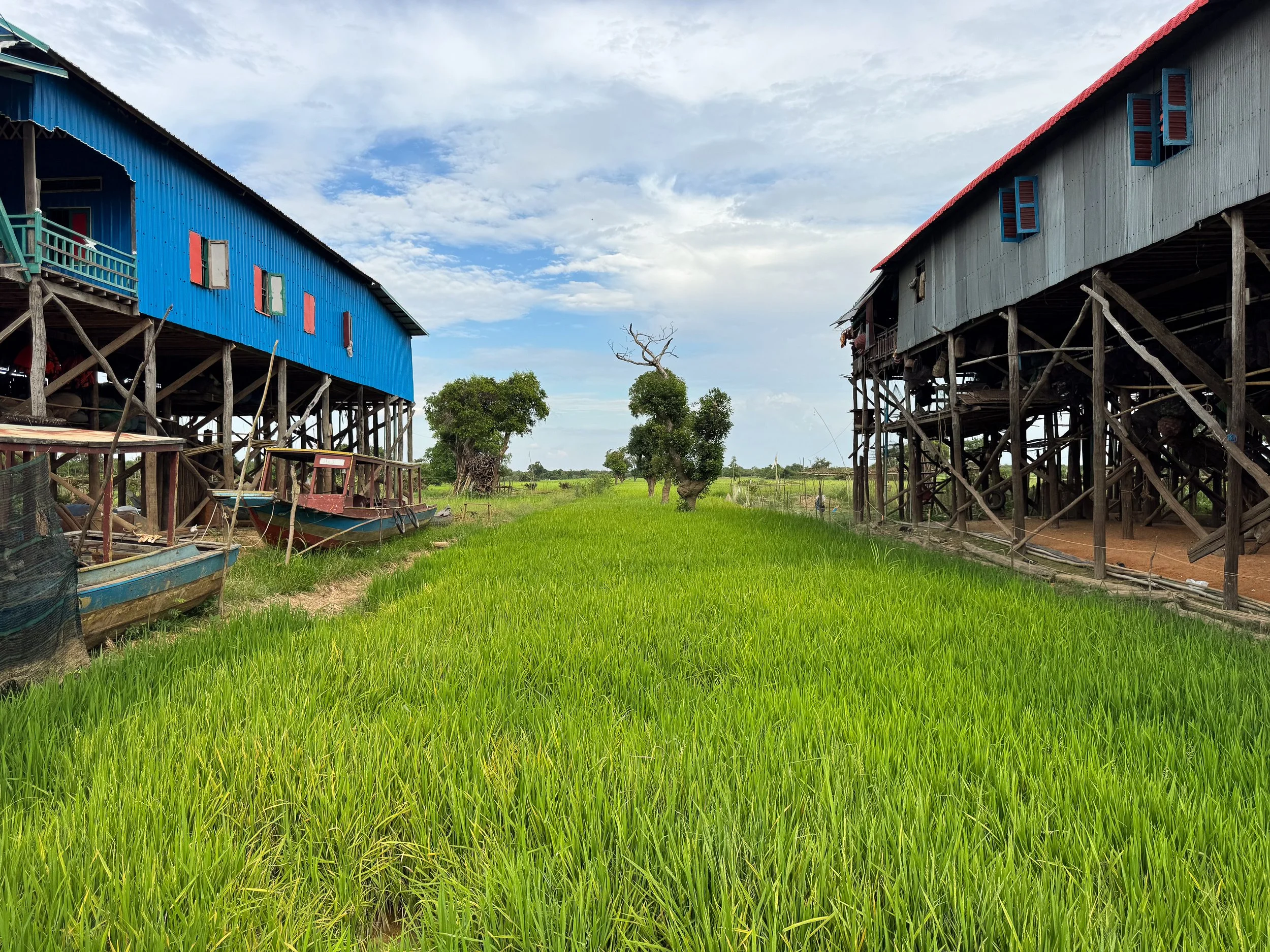
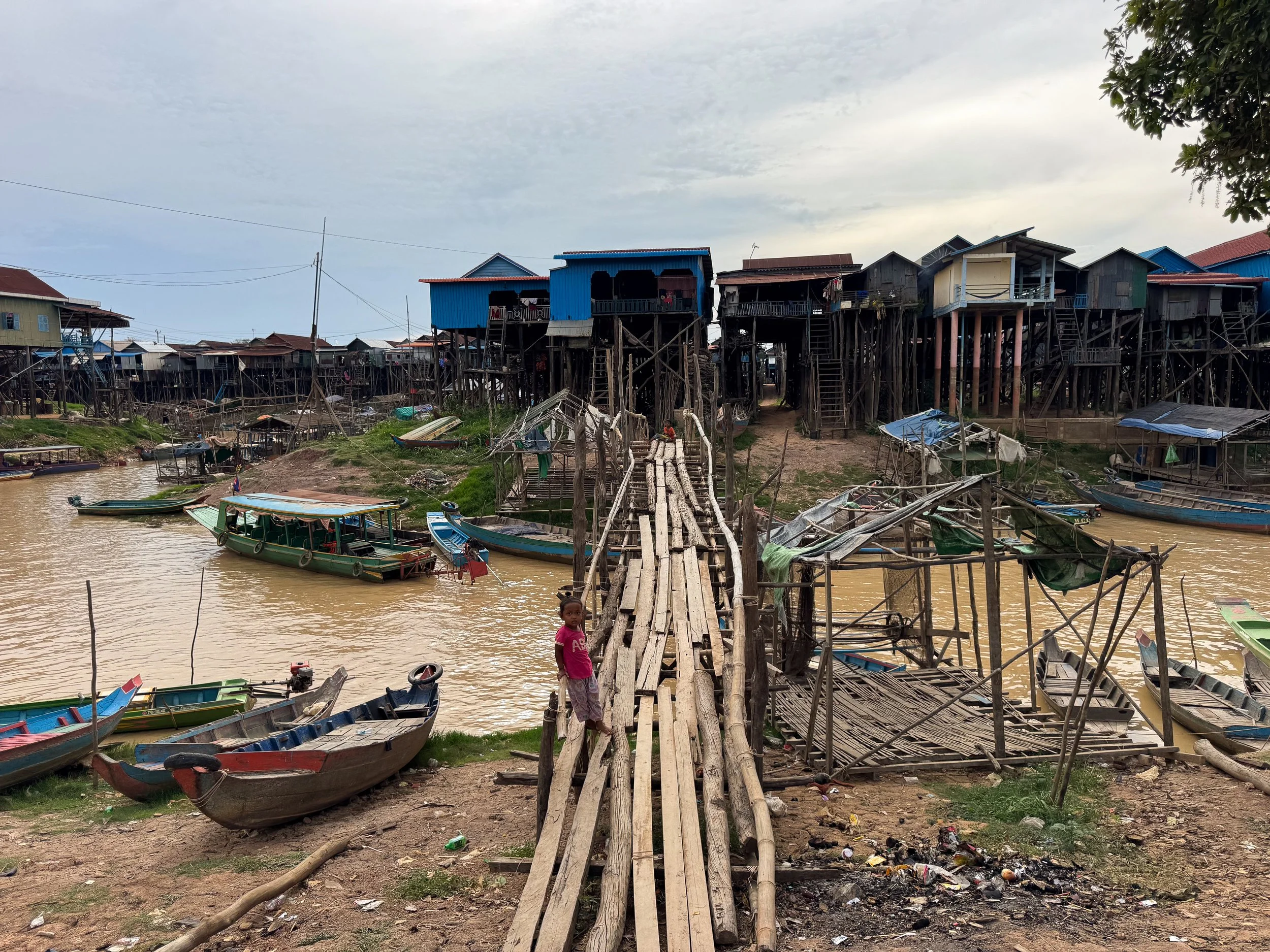
Lake Tonle Sap is the largest freshwater lake in South East Asia. It’s home to fishing communities known as stilt villages. Houses and buildings are raised on 10 meter tall bamboo stilts to accommodate flooding during the rainy season. We visited the village in March during the dry season. We walked underneath stilt houses, crossed makeshift bamboo bridges and followed along a narrow river with colorful long boats. We were continually greeted by locals and small children running out from houses to say hello and give high-fives. After the village tour, we boarded a long boat and rode it to a floating restaurant on the lake where we ate fresh fish, drank Cambodian beer and watched the sunset. We booked our tour with Angkor Wat Shared Tours on Viator. It included round trip transportation from Siem Reap.
LGBTQ+ Scene
We felt very welcomed and accepted all across Cambodia and especially in Siem Reap. The city center has a small but thriving gay scene. We visited two gay bars and met openly gay locals, expats and other travelers.
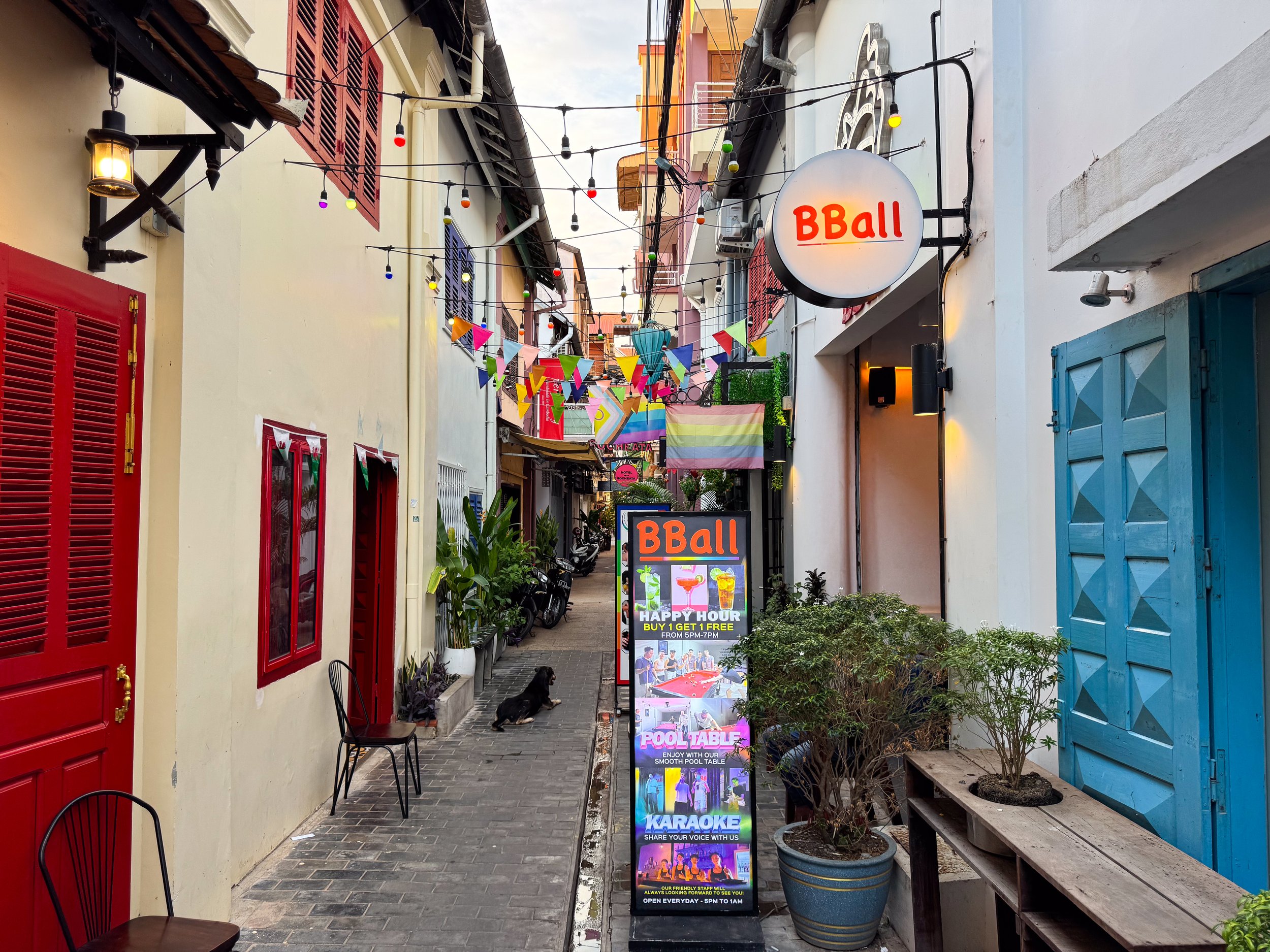
B Ball. A small gay bar on a narrow alleyway decorated in colorful lights, rainbow banners and progress flags. We stopped in for their buy 1 get 1 free happy hour from 5-7pm.
Rendezvous Bar. A small but popular gay bar with stiff drinks, friendly bartenders and a welcoming atmosphere. The bar is popular with older gay men and expats.
Places to Eat & Drink
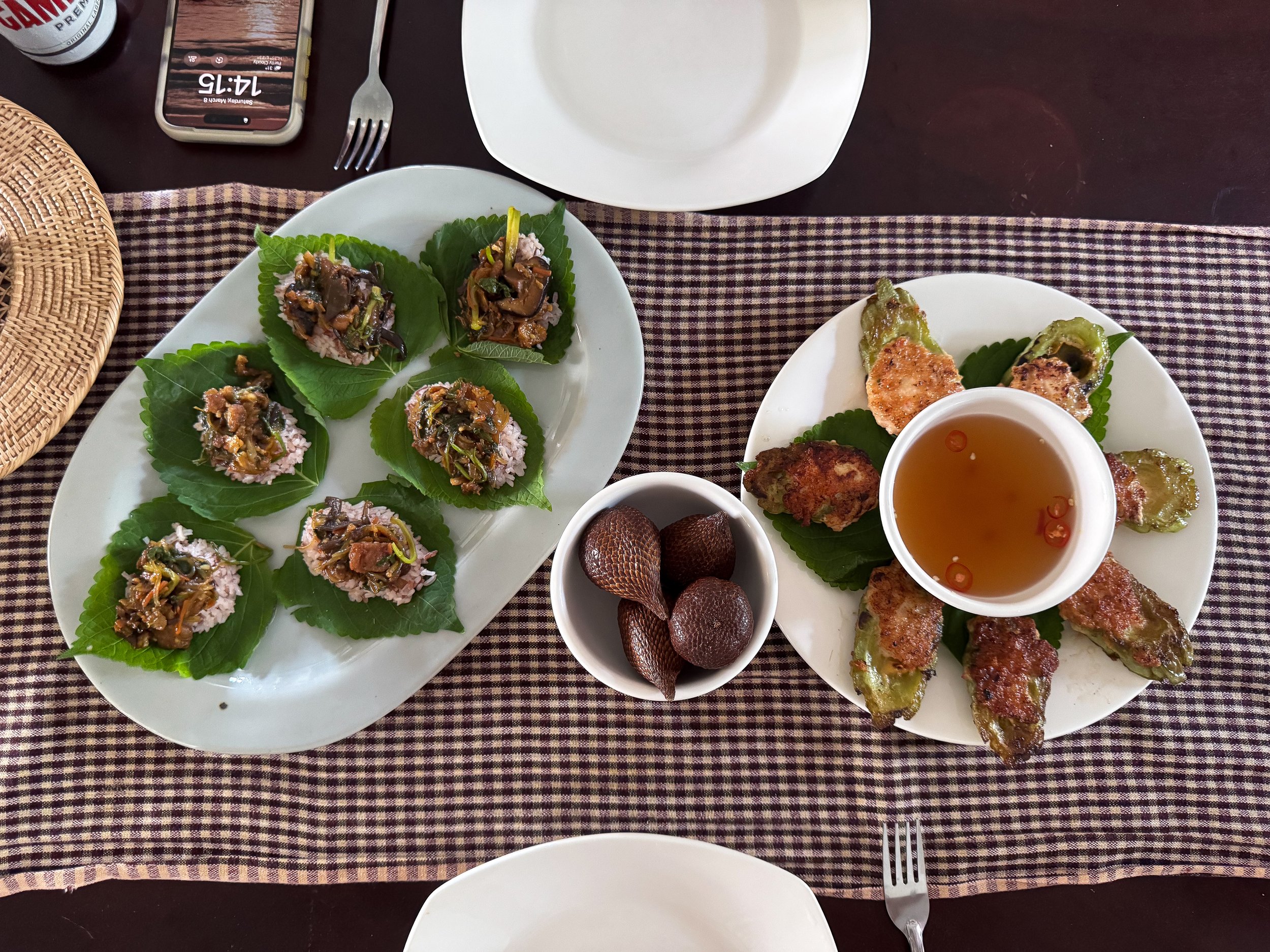
Changkran Khmer. A traditional Cambodian restaurant with a menu featuring local dishes including seafood from Lake Tonle Sap. The ambiance is peaceful with an open air second floor dining room hidden in the middle of a residential neighborhood. We visited multiple times and tasted various dishes.
Fish Amok. Cambodia’s national dish, dating back to the Khmer Empire. It’s made from lake fish wrapped and steamed in coconut milk and curry. We ordered it prepared two ways, served traditionally in a banana leaf bowl and served in a young coconut.
Knorb Trey. Snake head fish stewed with a Khmer curry in a banana leaf bowl.
Clay Pot Fish. Rice noodles and lake fish cooked with warm spices and vegetables in a clay pot.
Angkor Hand-Pulled Noodles and Dumplings. A small restaurant with inexpensive Cambodian noodle dishes and fried dumplings including vegetarian dishes.
The 1961. A café and bar with strong brewed coffee, cocktails and brunch dishes. It’s popular with digital nomads.
Location Specifics
Dress Modestly. When visiting temples and museums, it’s important to dress modestly. Visitors are asked to cover their legs and shoulders as well as remove hats and shoes before entering.
Drinking Water. Tap water is not directly safe for drinking. It’s best to boil or filter it.
Currency. The US Dollar and Cambodian Riel are used interchangeably.
Cash vs. Card. Cash is the preferred method of payment everywhere. Few places accept credit or debit cards.
Language. The official language of Cambodia is Khmer however most people speak a little English. We learned a few Khmer words while here:
Hello = Suostei (so-say-tie)
Thank you = Arkoun (are-kun)
Good bye = Leahaey (lee-hai)
Where to Stay
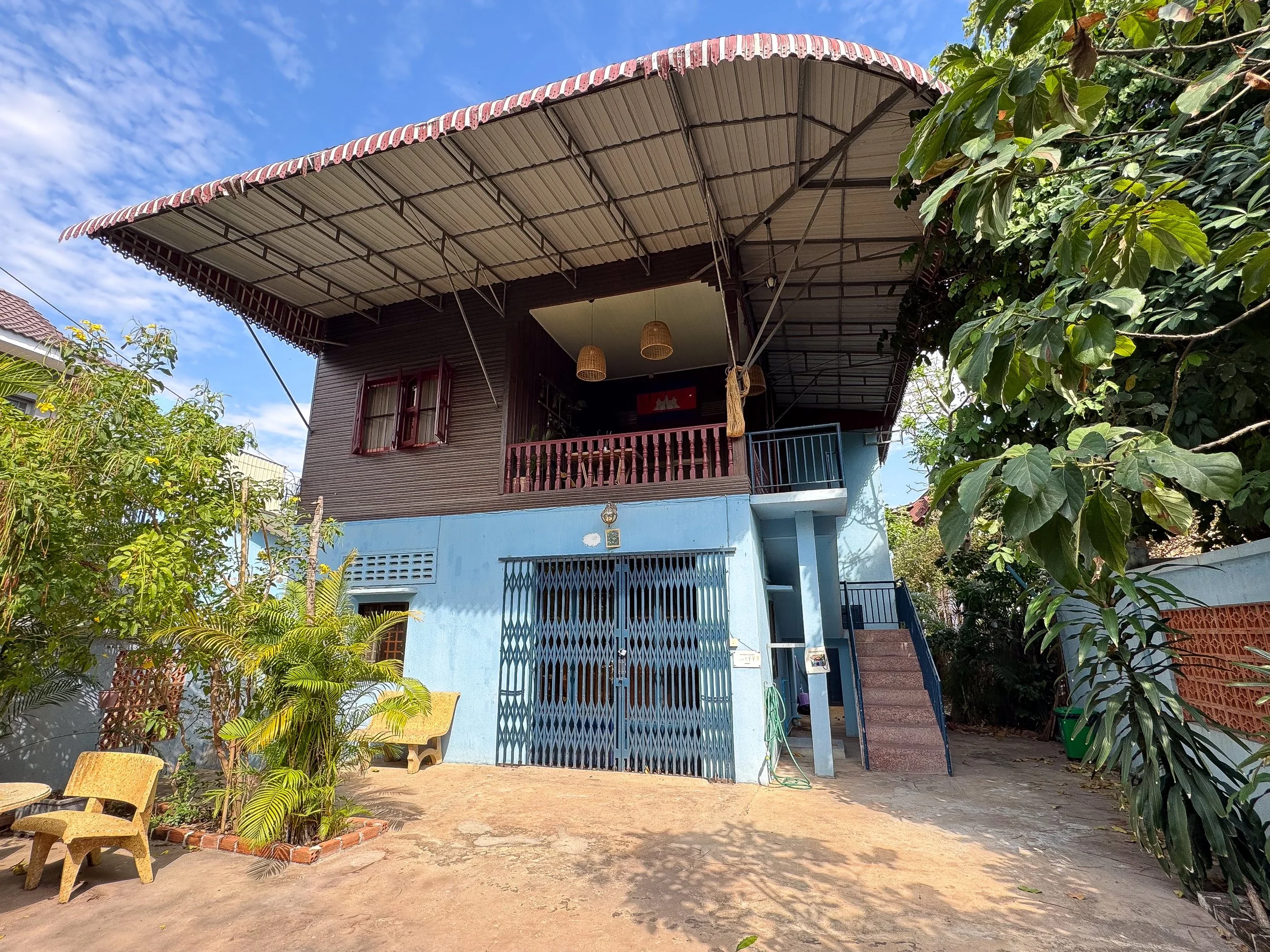
We stayed in a two bedroom house on the north side of the city. It made for a quiet and peaceful retreat with ease of access to Angkor Wat and the city center. The house had a relaxing porch with a hammock, a living room with floor cushions and a kitchen well equipped for cooking our own meals. We booked on Airbnb.
Elsewhere in Cambodia
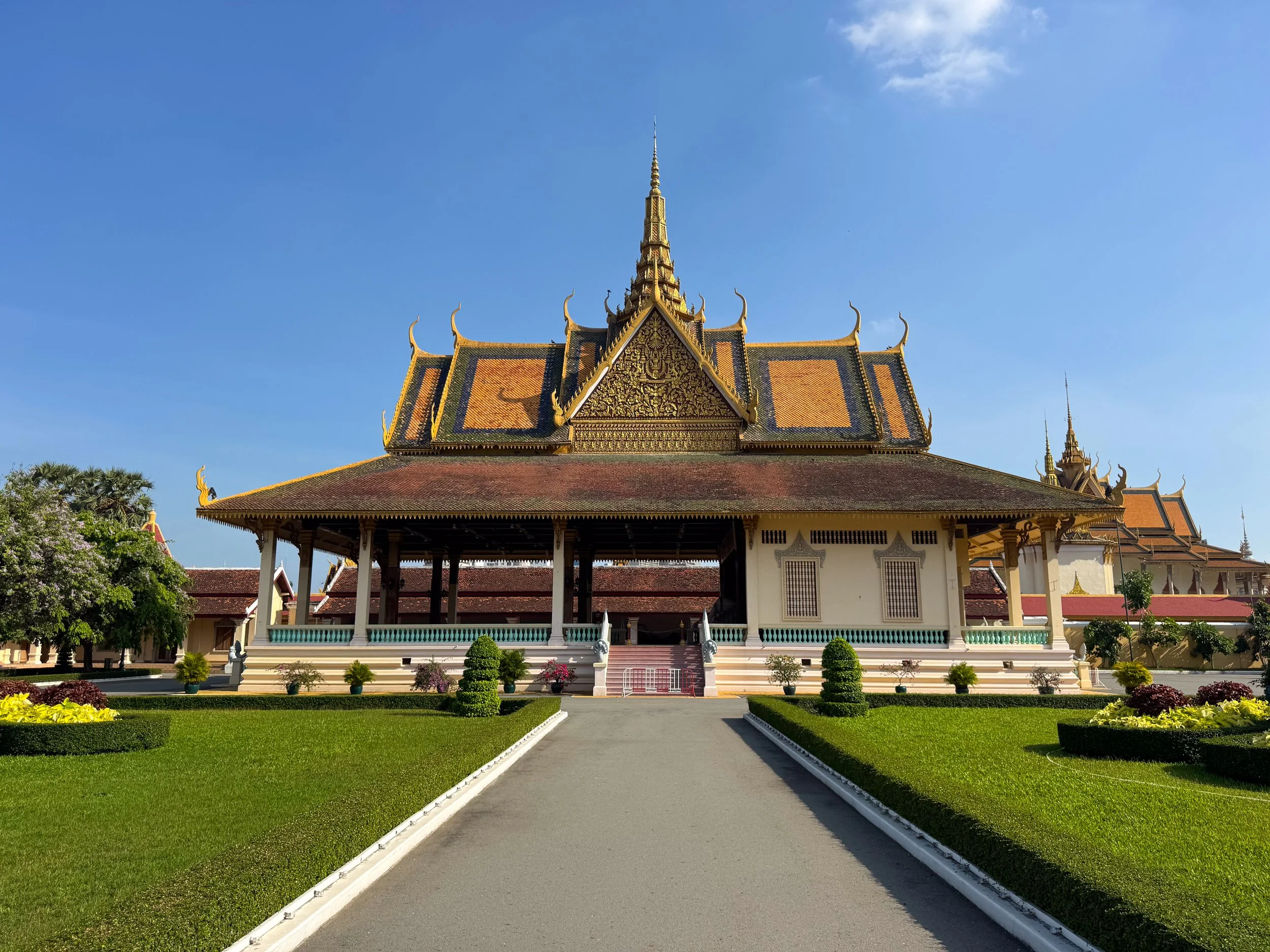
From the ancient temples of Angkor Wat and Siem Reap to Phnom Penh's royal landmarks, markets and cultural attractions, discover more of Cambodia beyond the temple complex.
Phnom Penh Travel Guide: Royal Palace, Markets & Cambodian Culture. Journey through Phnom Penh where gilded temples, Khmer architecture, the Royal Palace, lively markets and museums reveal the character of Cambodia's vibrant capital.