Phnom Penh Travel Guide: Royal Palace, Markets & Cambodian Culture
Phnom Penh, Cambodia
Phnom Penh is the capital city of Cambodia. It’s a cultural destination with Khmer style architecture, gilded temples, a lavish royal palace, sprawling markets, countless tuk tuks and museums recounting the country’s storied past. Built along the banks of the Mekong and Tonle Sap Rivers, it’s an emerging hub for city life with a rapidly expanding skyline and bustling atmosphere both day and night that attracts Cambodians and travelers from all over the world. We stayed in Phnom Penh for just under a week, exploring its many sights, enjoying its exotic food scene and learning about the country’s rich history.
The Royal Palace
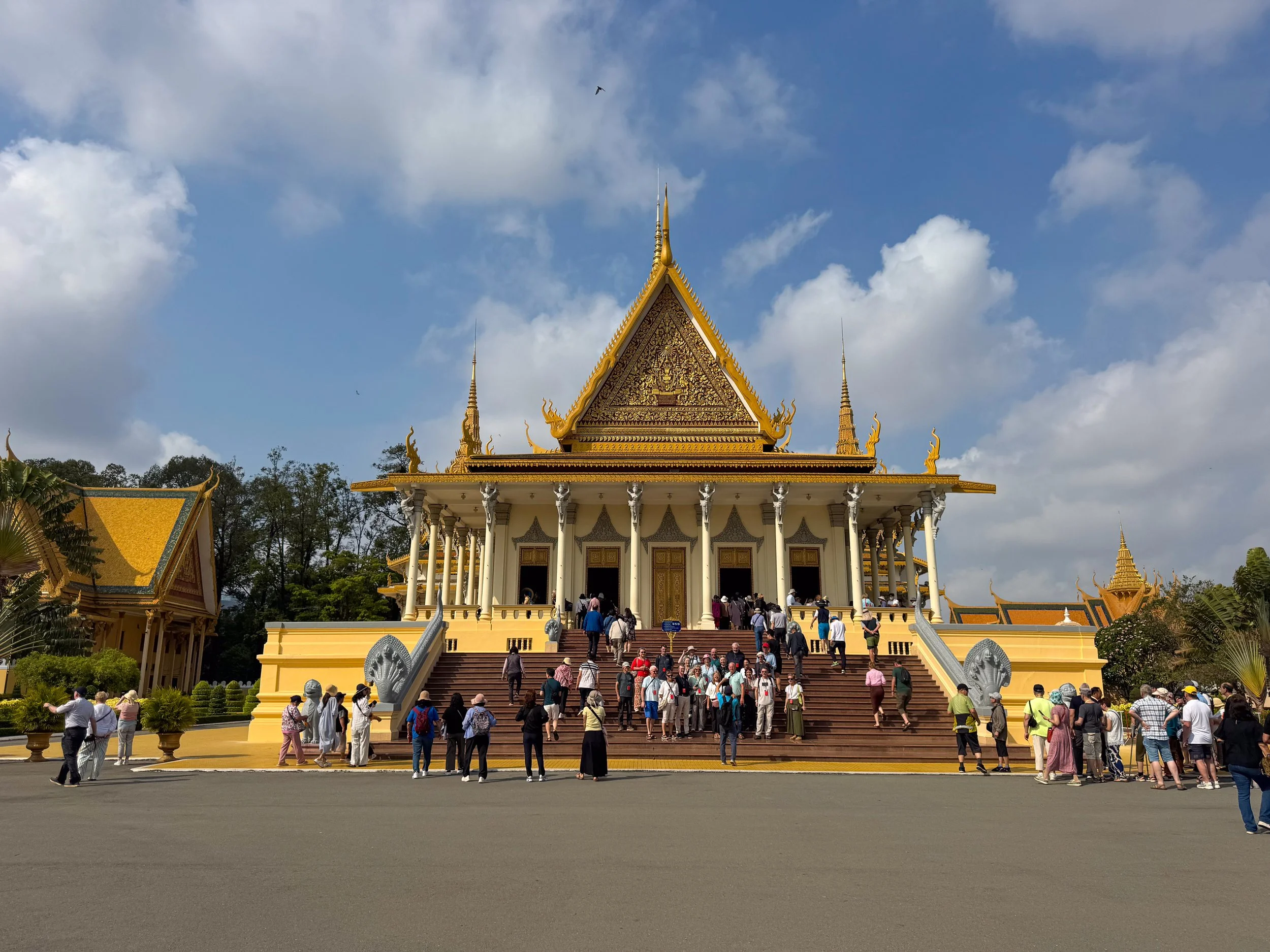
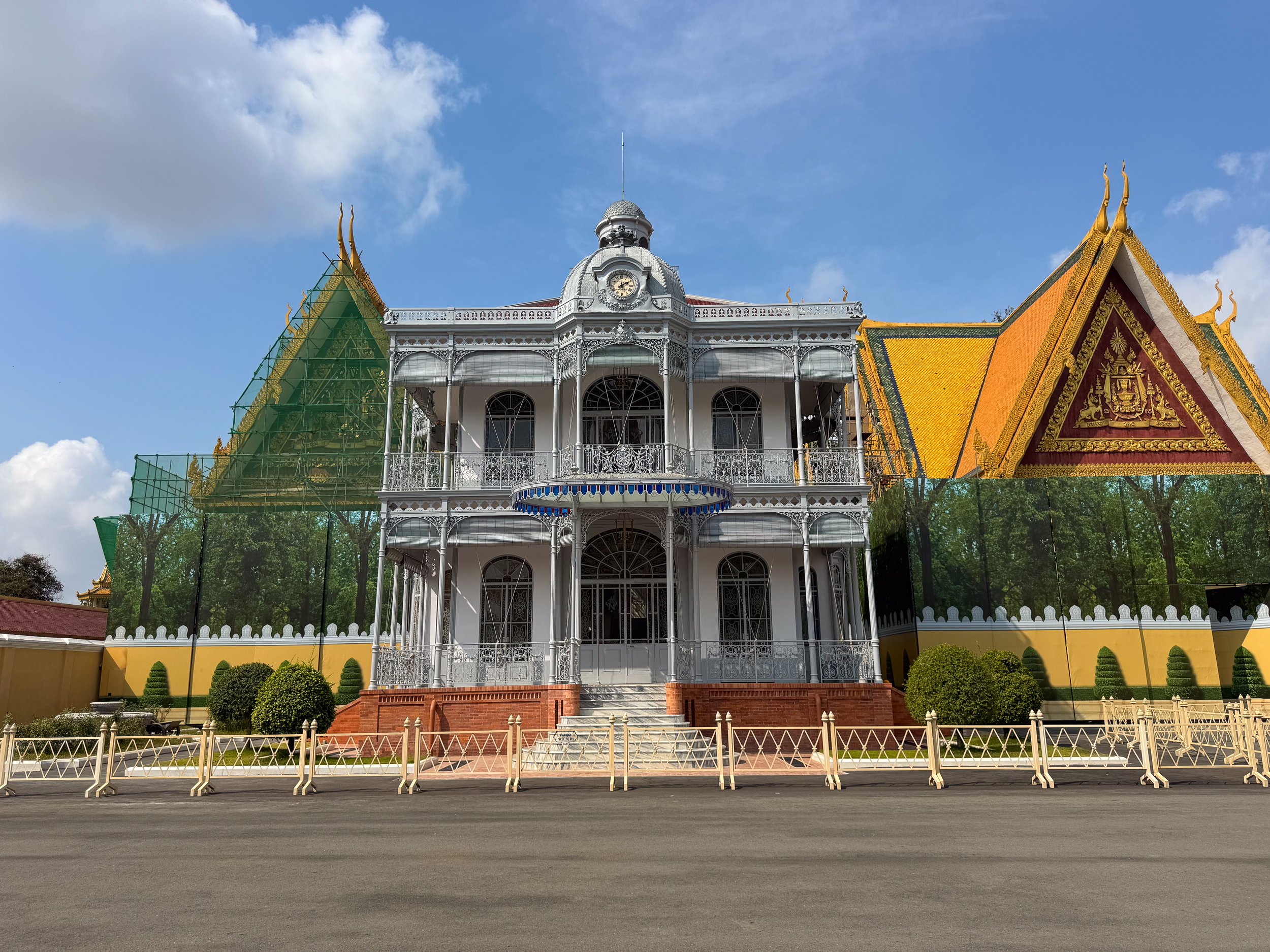
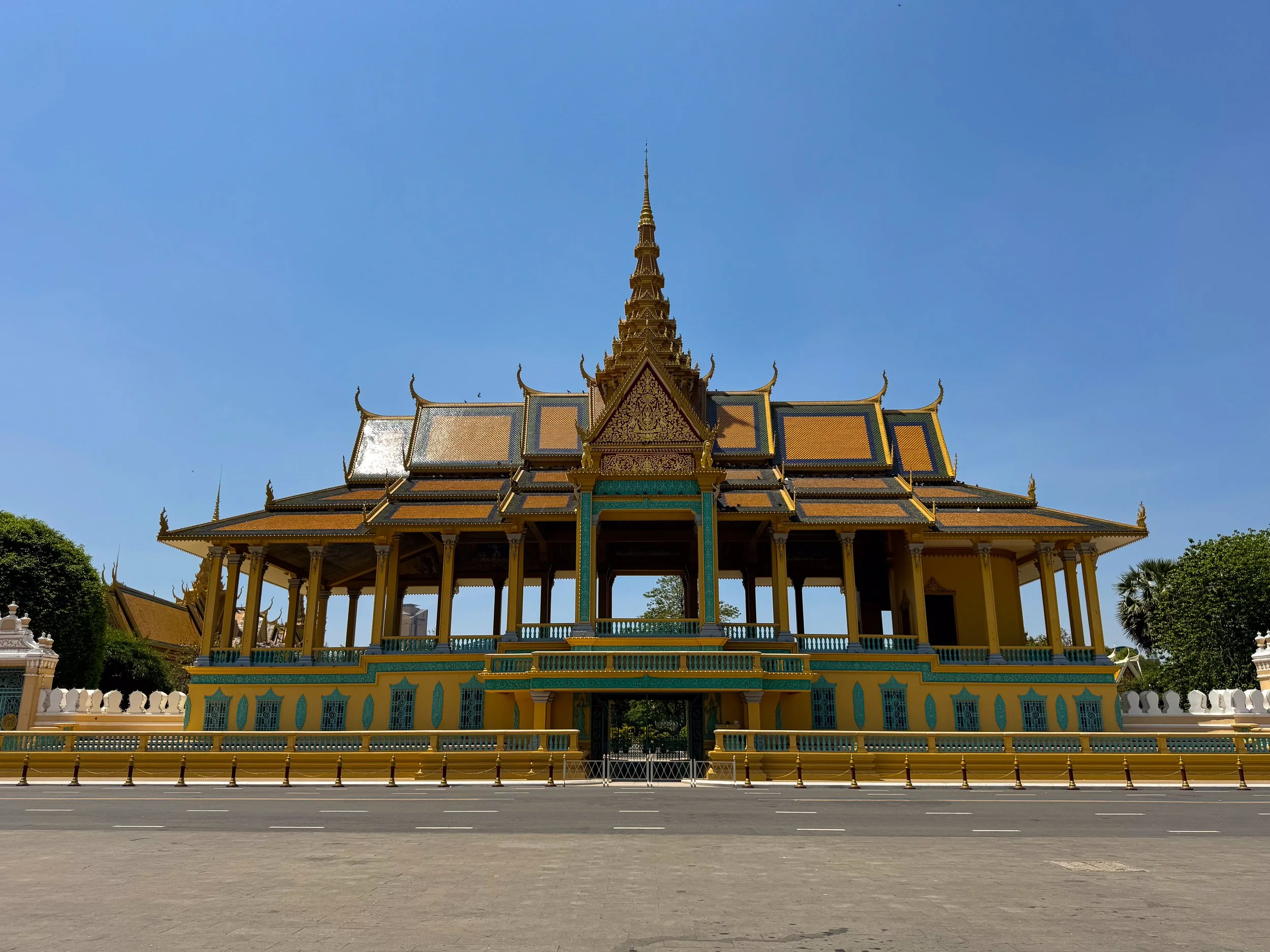
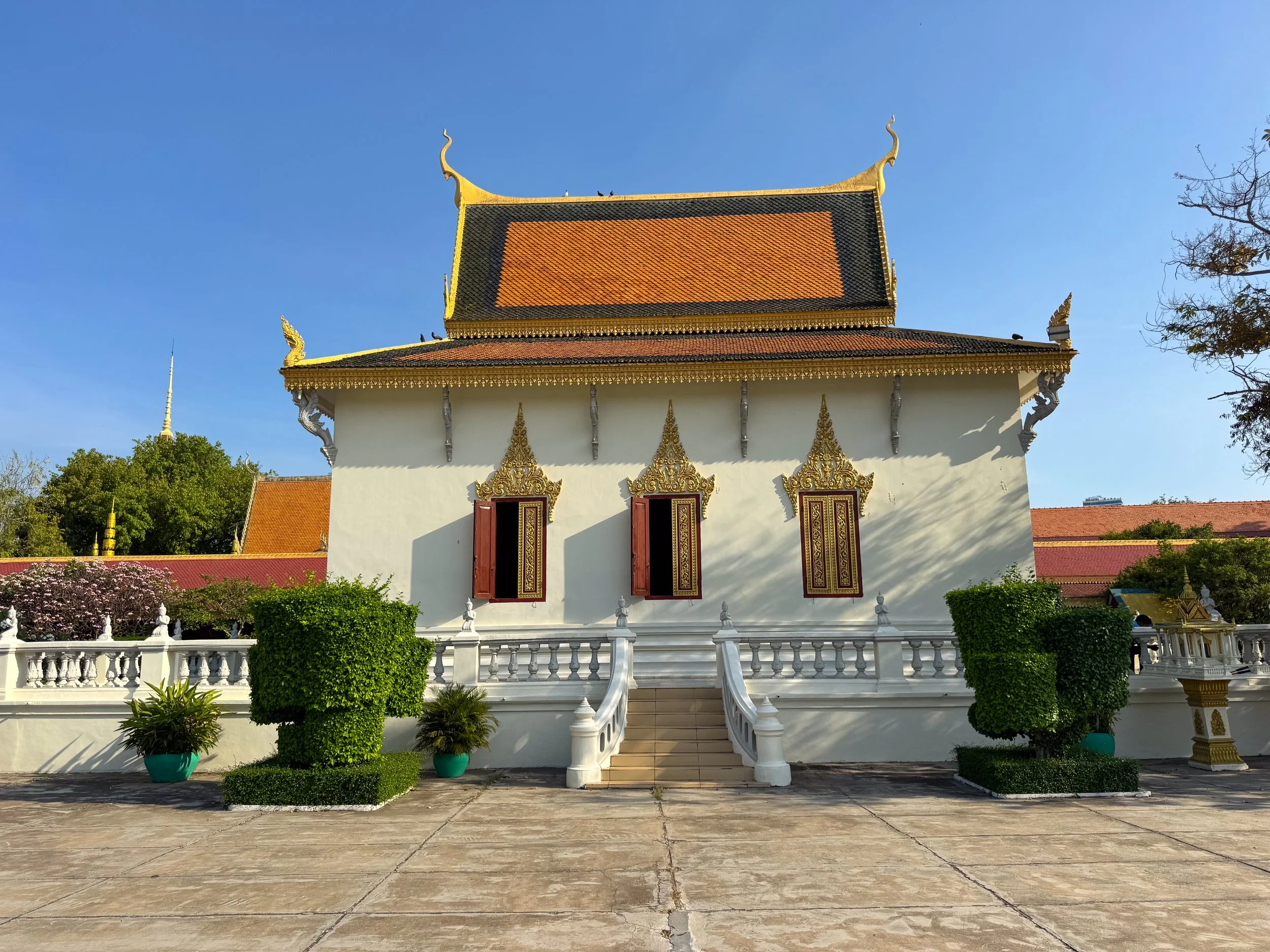
Cambodia’s Royal Palace is an exquisite combination of buildings including the royal residence, throne hall, ceremonial pavilions, Buddhist temples and elaborate stupas. The grounds are comprised of manicured lawns, flowering gardens and sculpted trees.
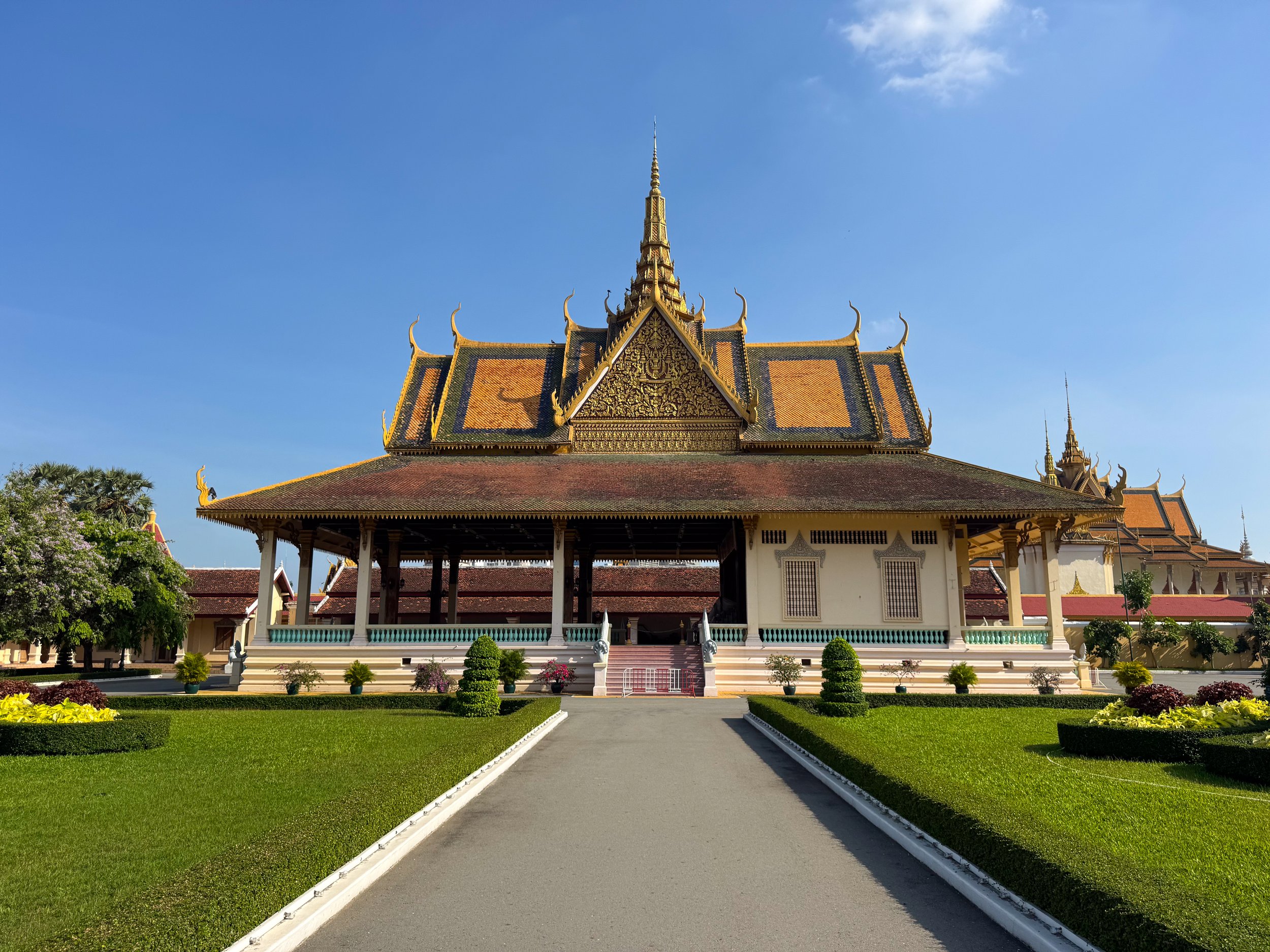
Moonlight Pavilion. A Khmer style pavilion and gate to The Royal Palace used for royal banquets and ceremonies. It’s best viewed from the Royal Palace Park in the morning light.
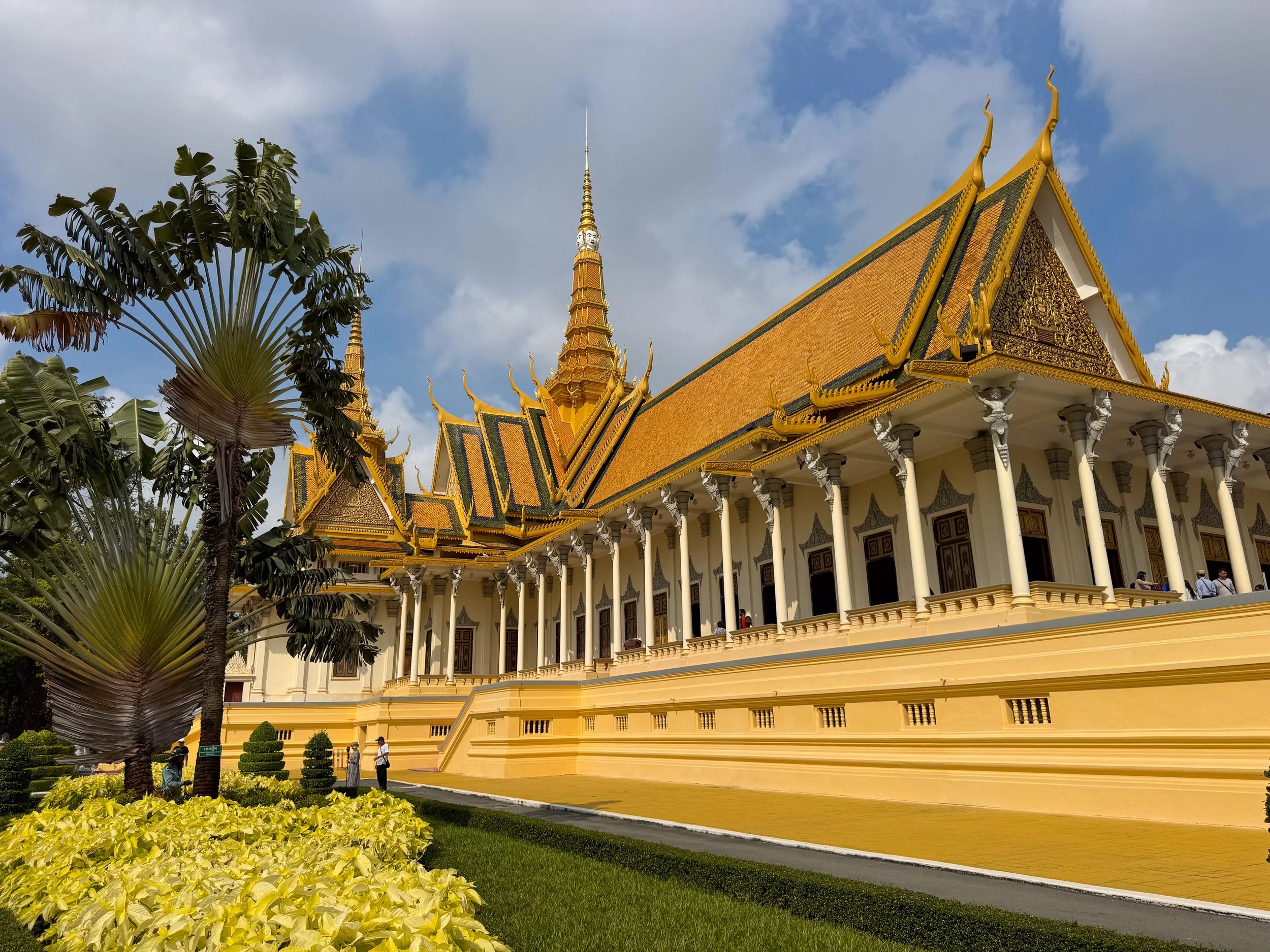
Throne Hall. One of the grandest structures on the royal grounds. The opulent hall boasts stone columns, golden lamps, a silk carpet, crystal chandeliers and a royal throne sitting underneath a golden pagoda. It can only be viewed from the outside and photos are prohibited.
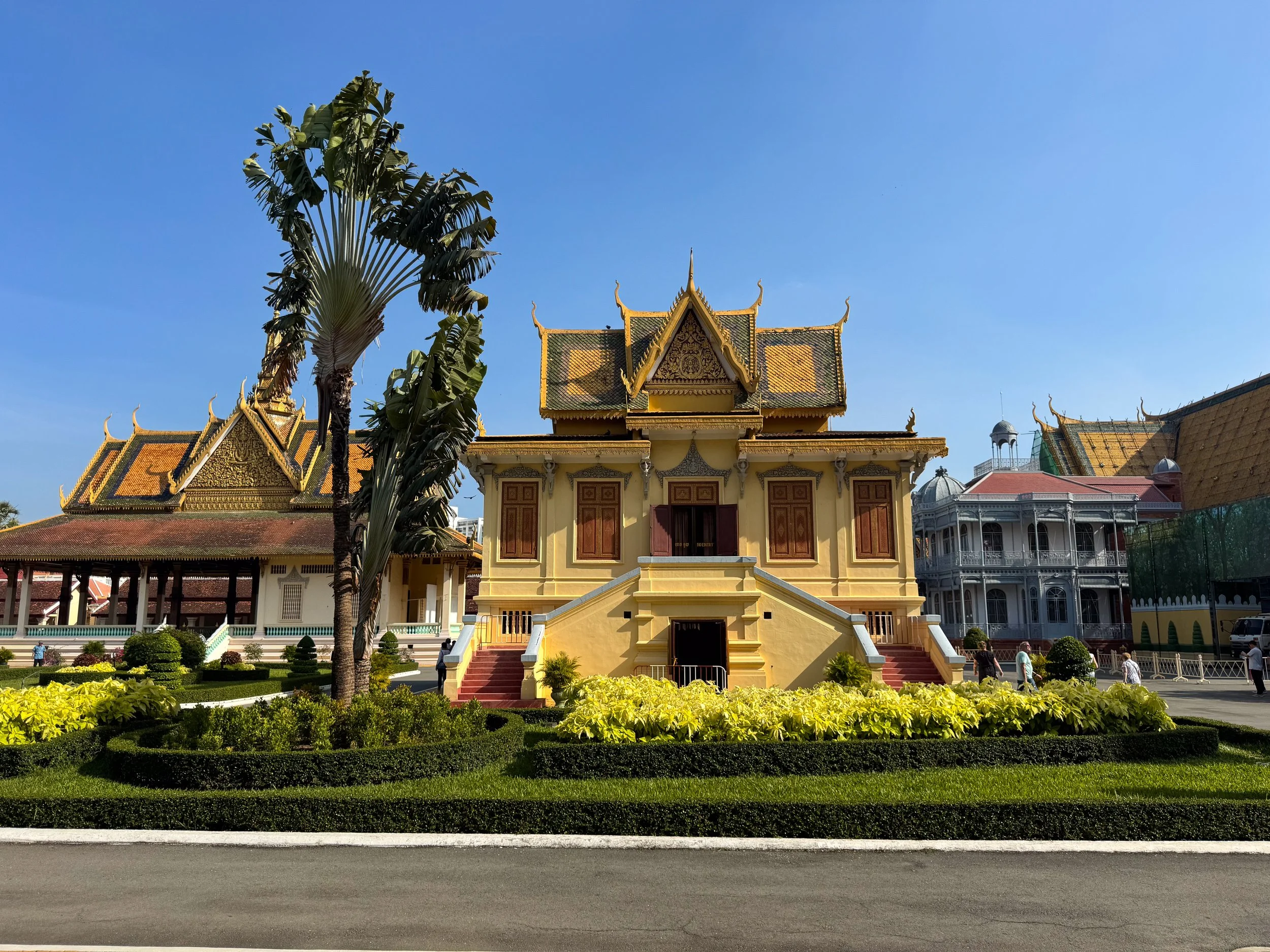
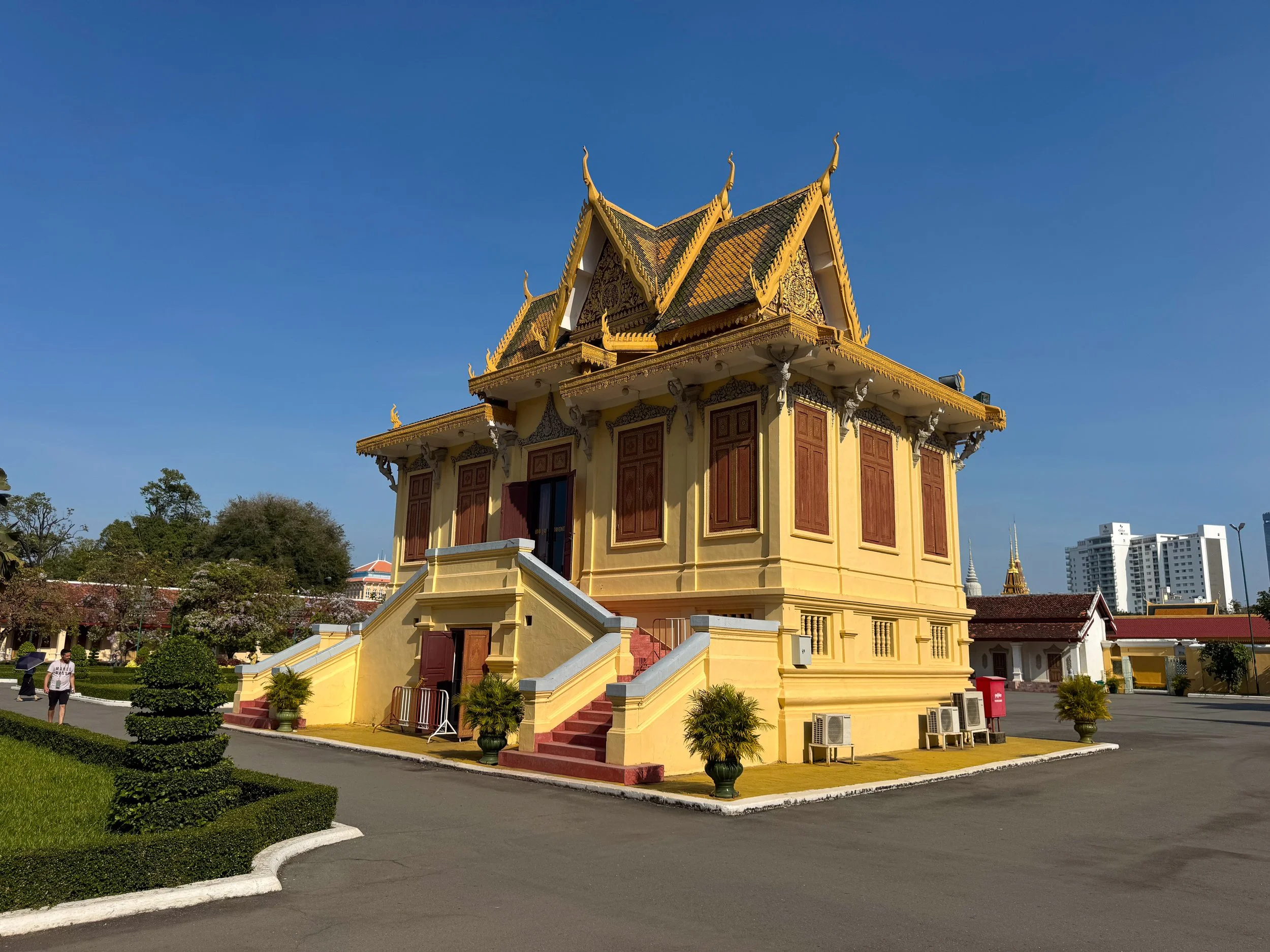
Hor Samritpimean. A Khmer style house with an exhibit featuring royal ceremonial outfits, coronation regalia and ancient artifacts.
Napoleon III Pavilion. A cast-iron French style house with stained glass windows and a small clock tower. It was gifted to Cambodia by Napoleon III.
Dancing Hall. An open air pavilion used for royal dances, celebrations and to host guests.
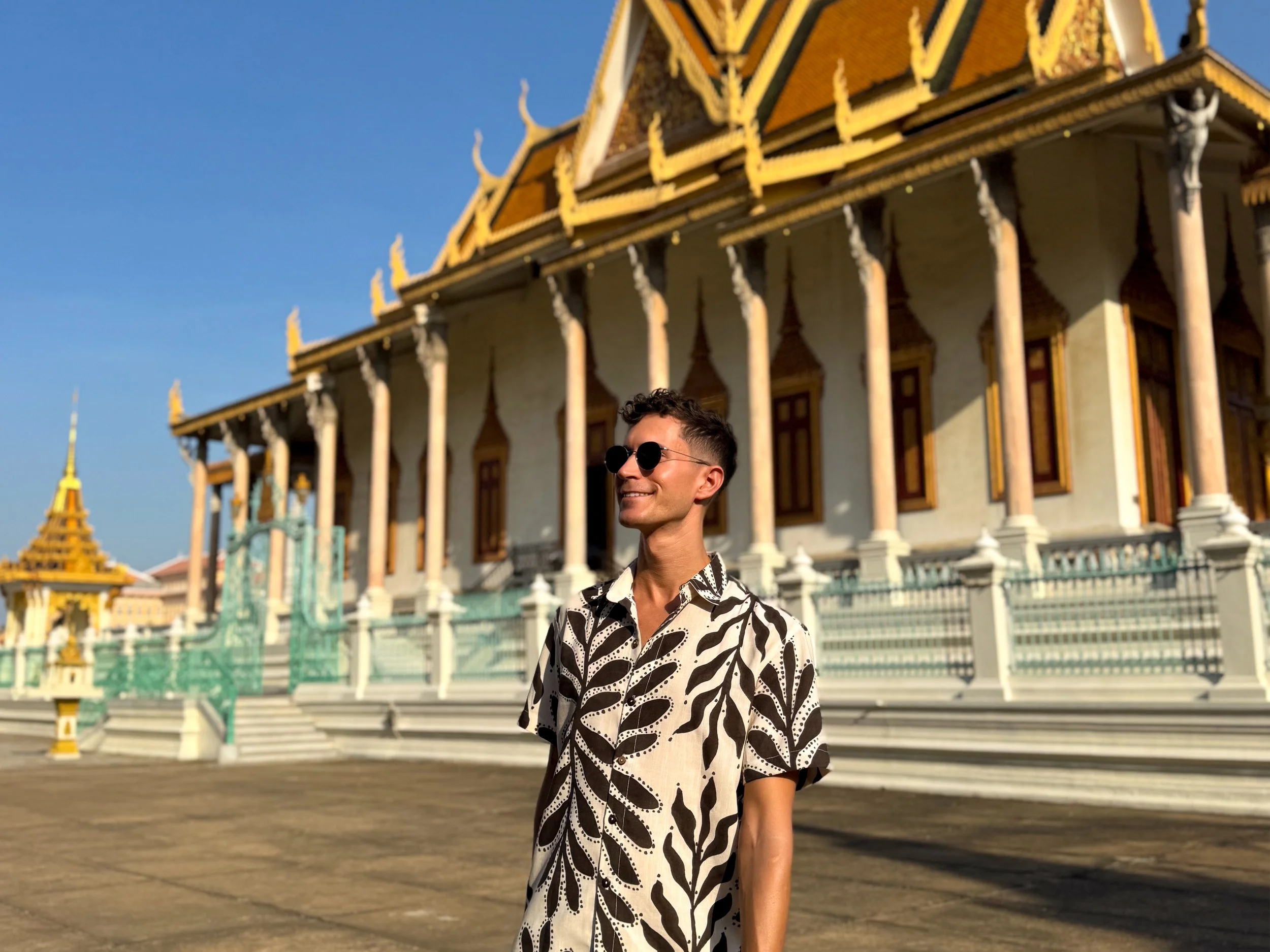
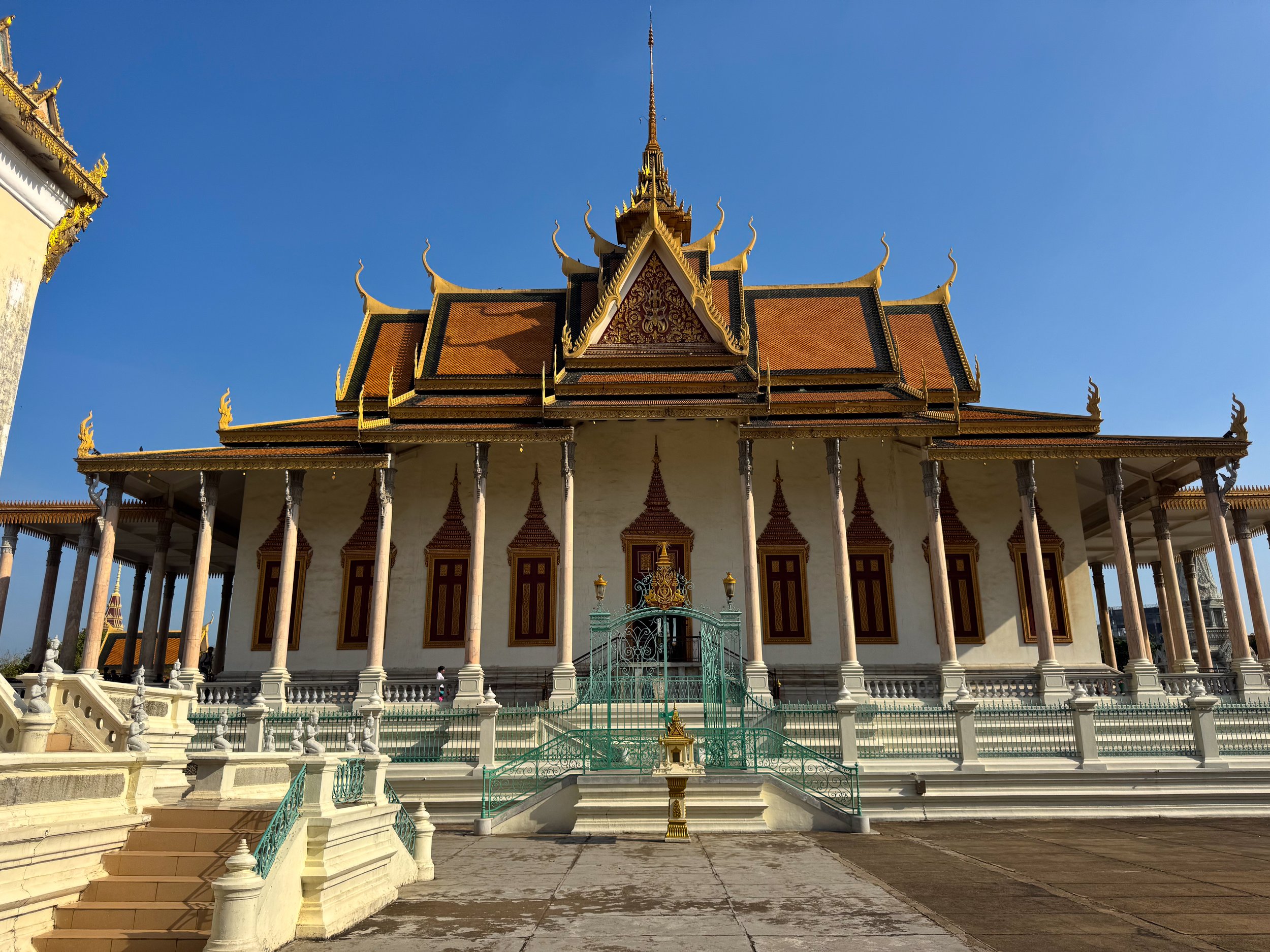
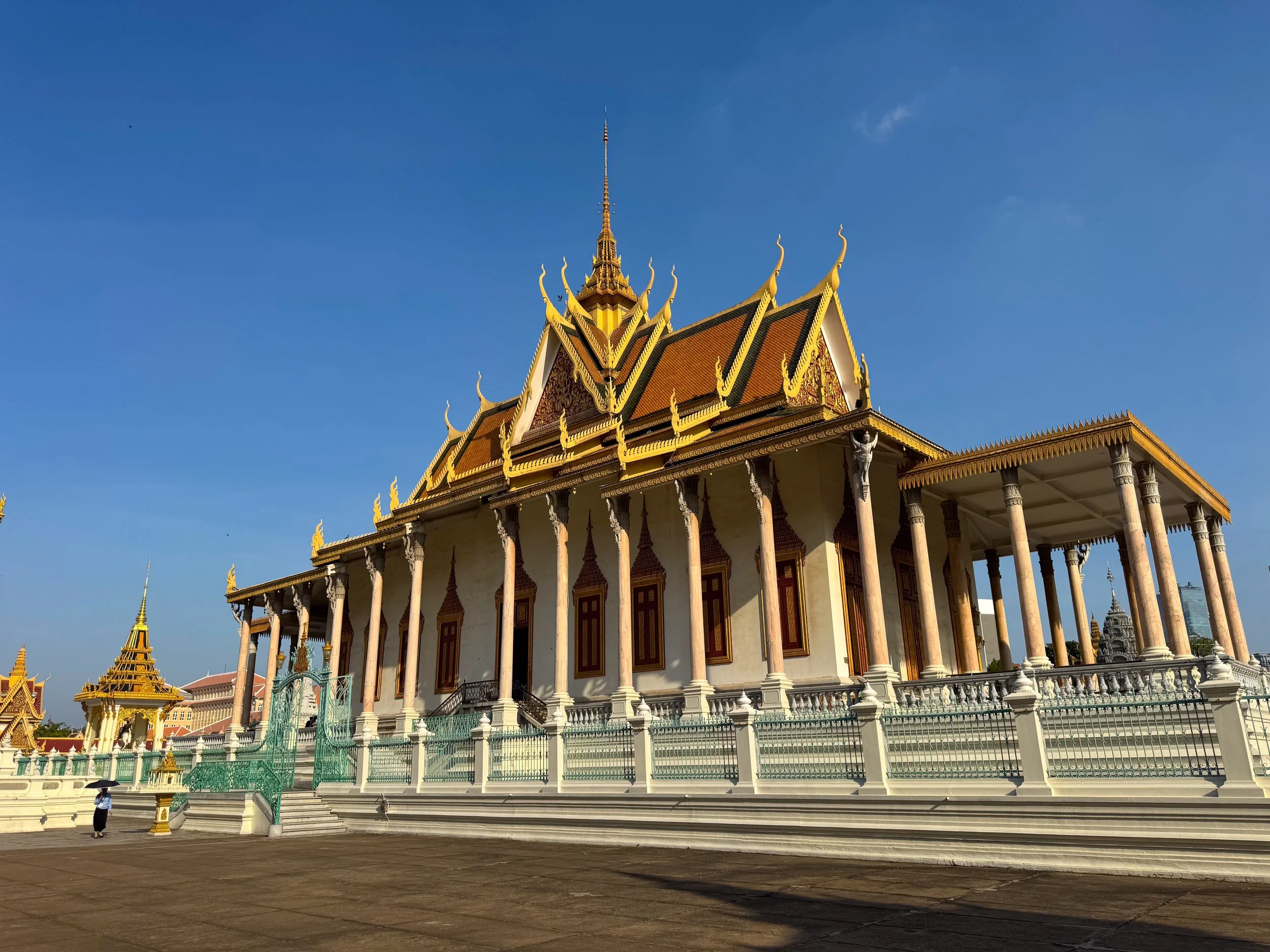
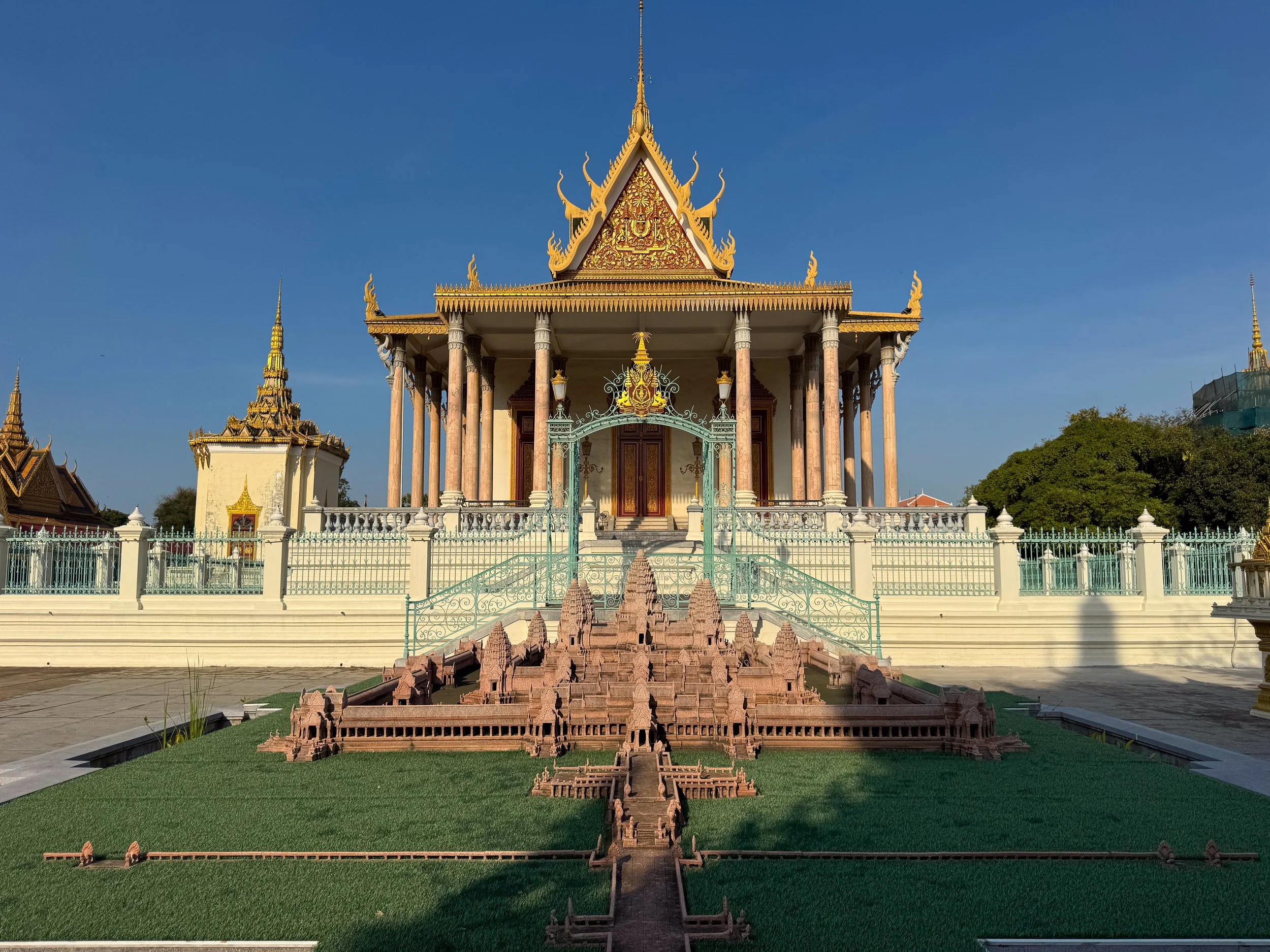
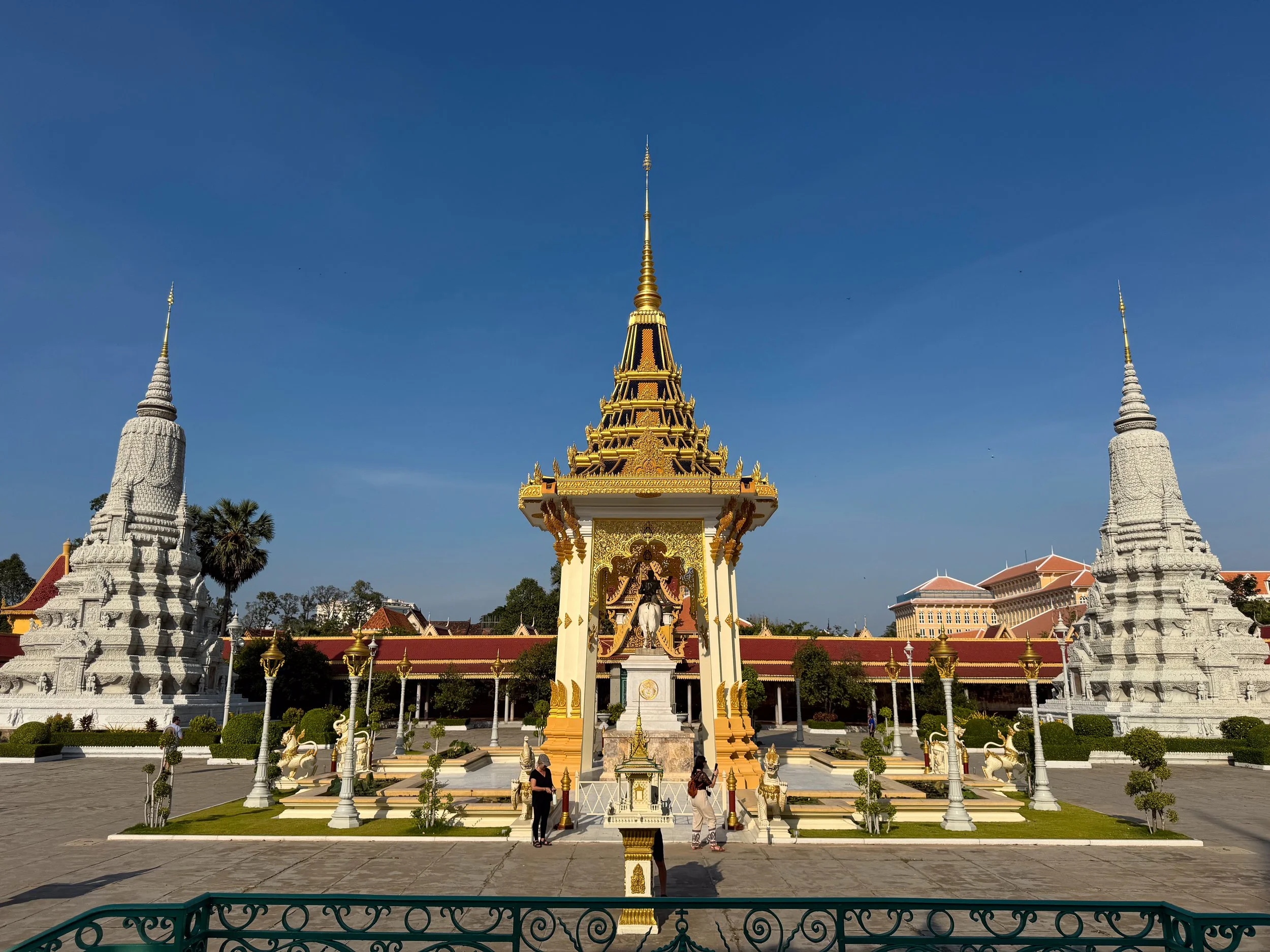
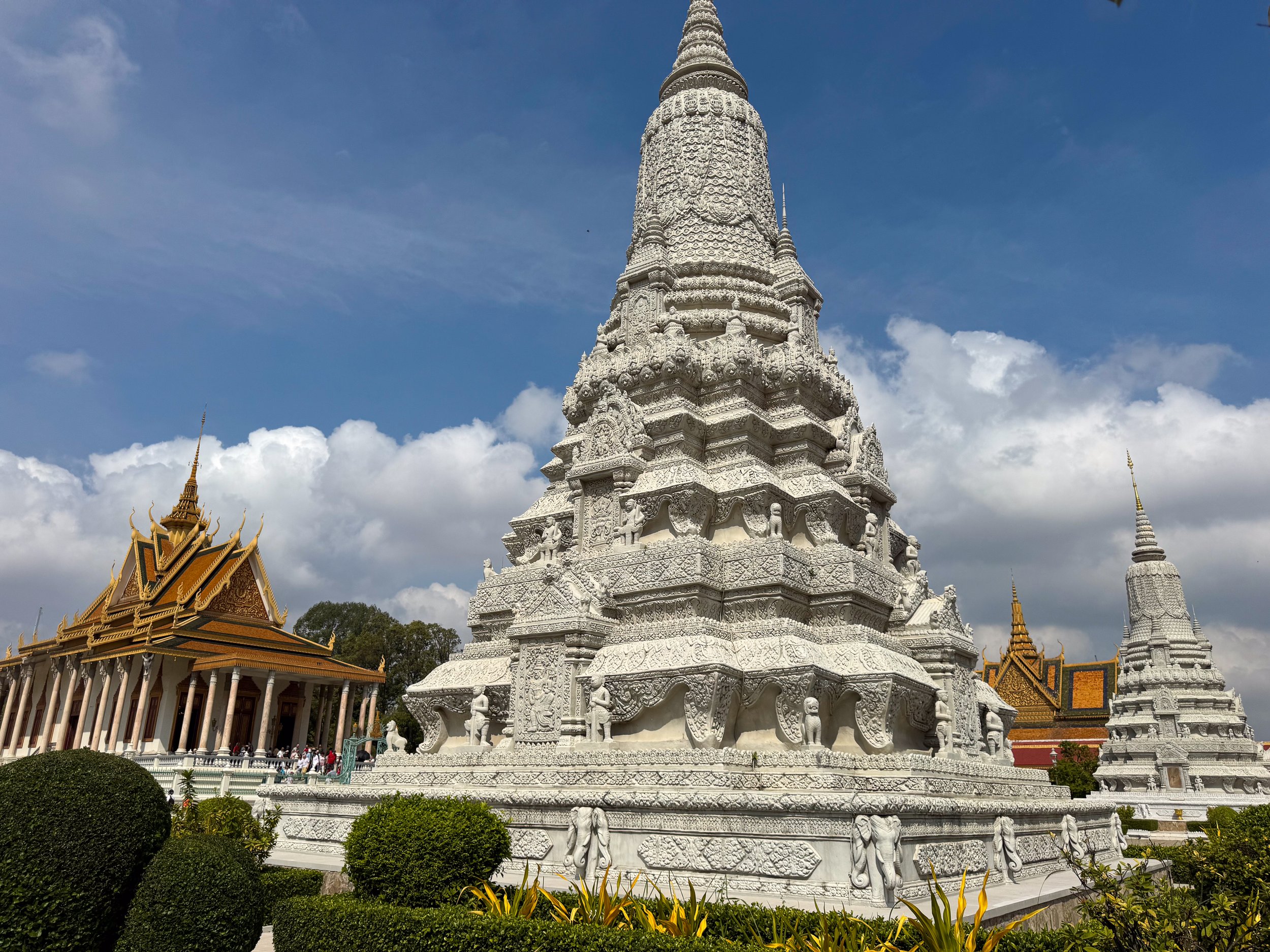

The Silver Pagoda. A walled area of the Royal Palace containing several temples, stupas and monuments.
Temple of the Emerald Buddha. An ornate temple at the center of the Silver Pagoda housing several statues of Buddha made of emerald, gold and encrusted in jewels. The floor is inlaid with silver tiles and the walls painted in elaborate murals. Photos of the interior are prohibited.
The Royal Stupas. The royal stupas are elaborate cone shaped white stone and gold plated structures containing the remains of deceased royalty.
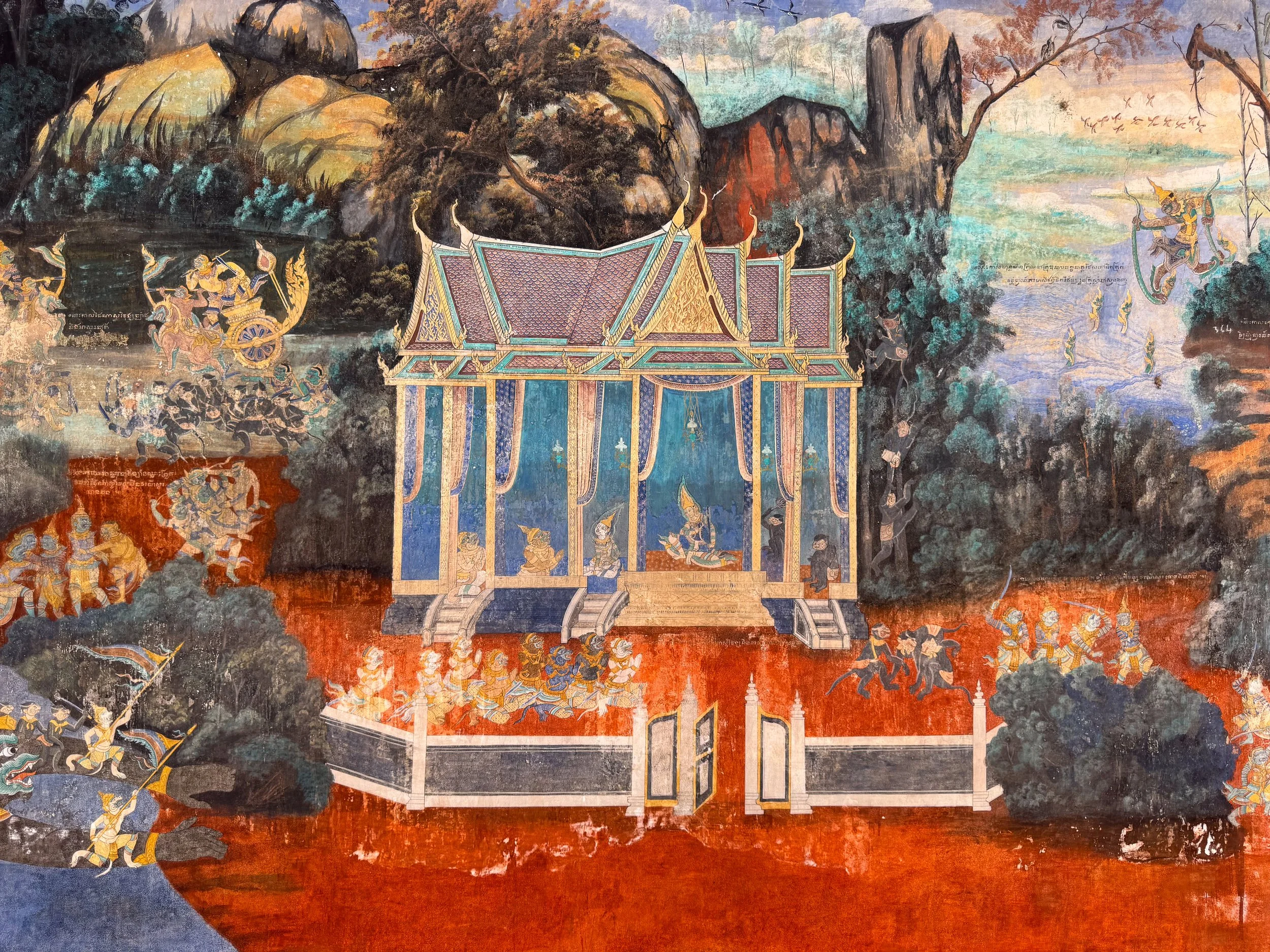
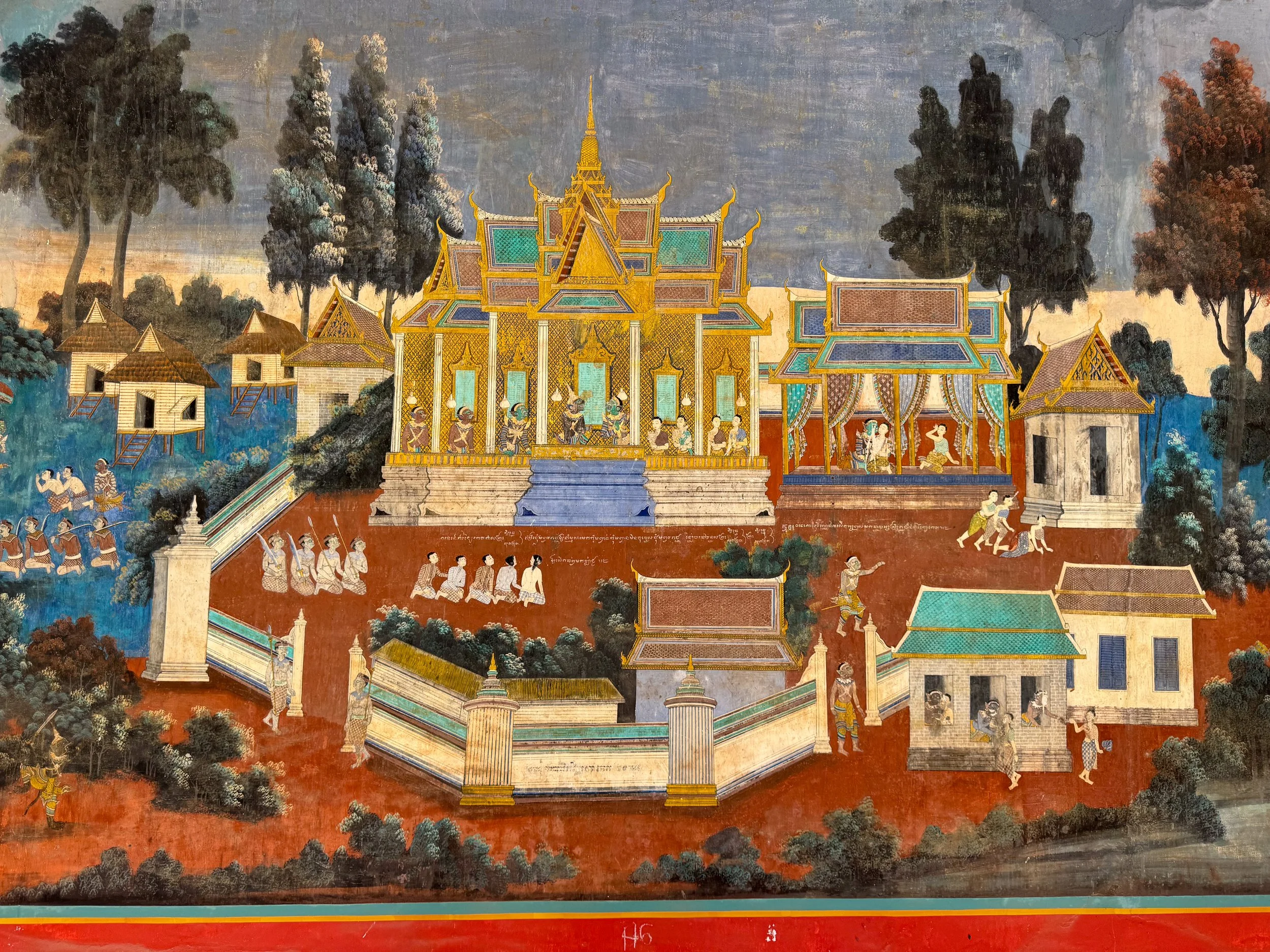
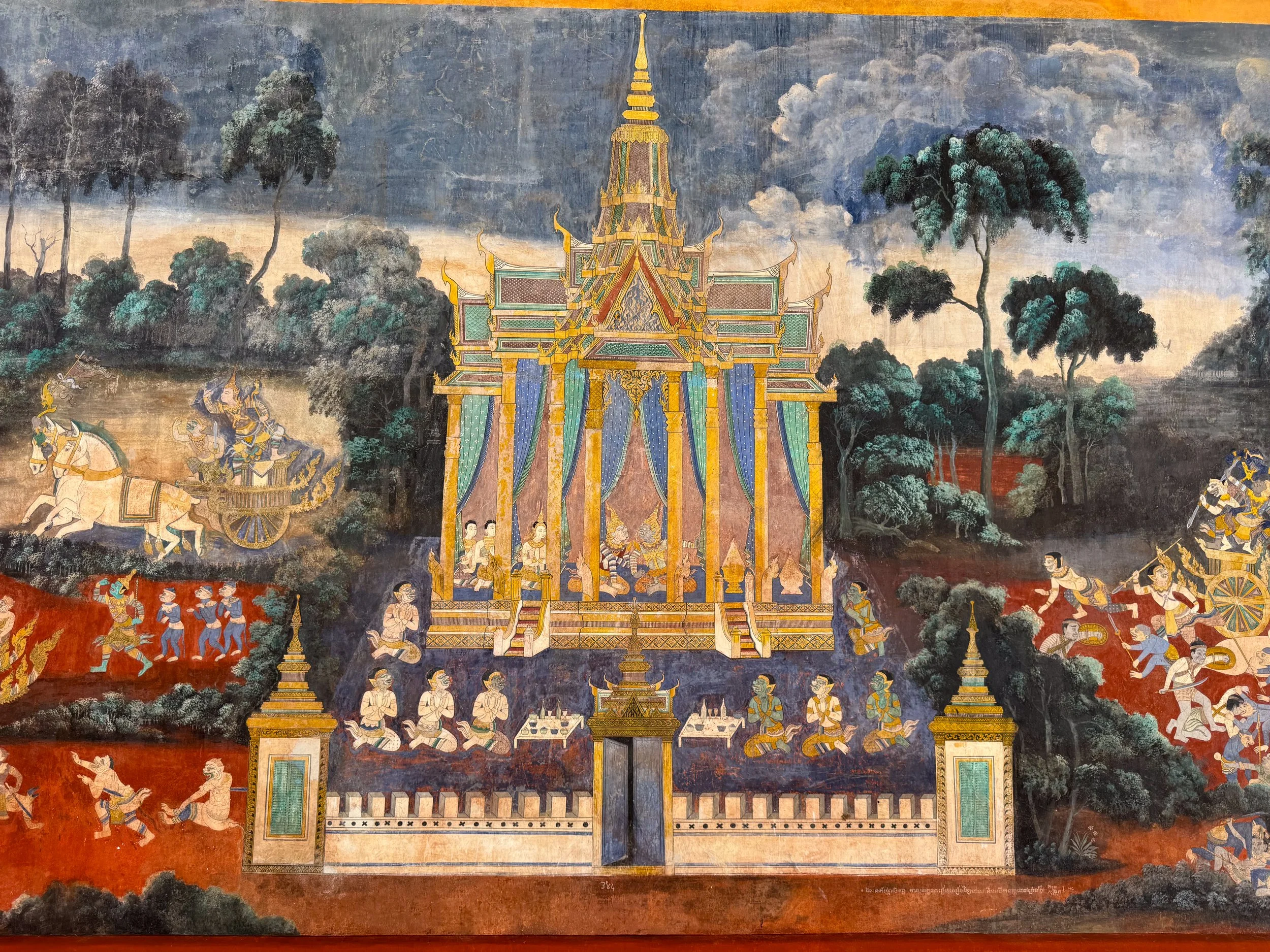
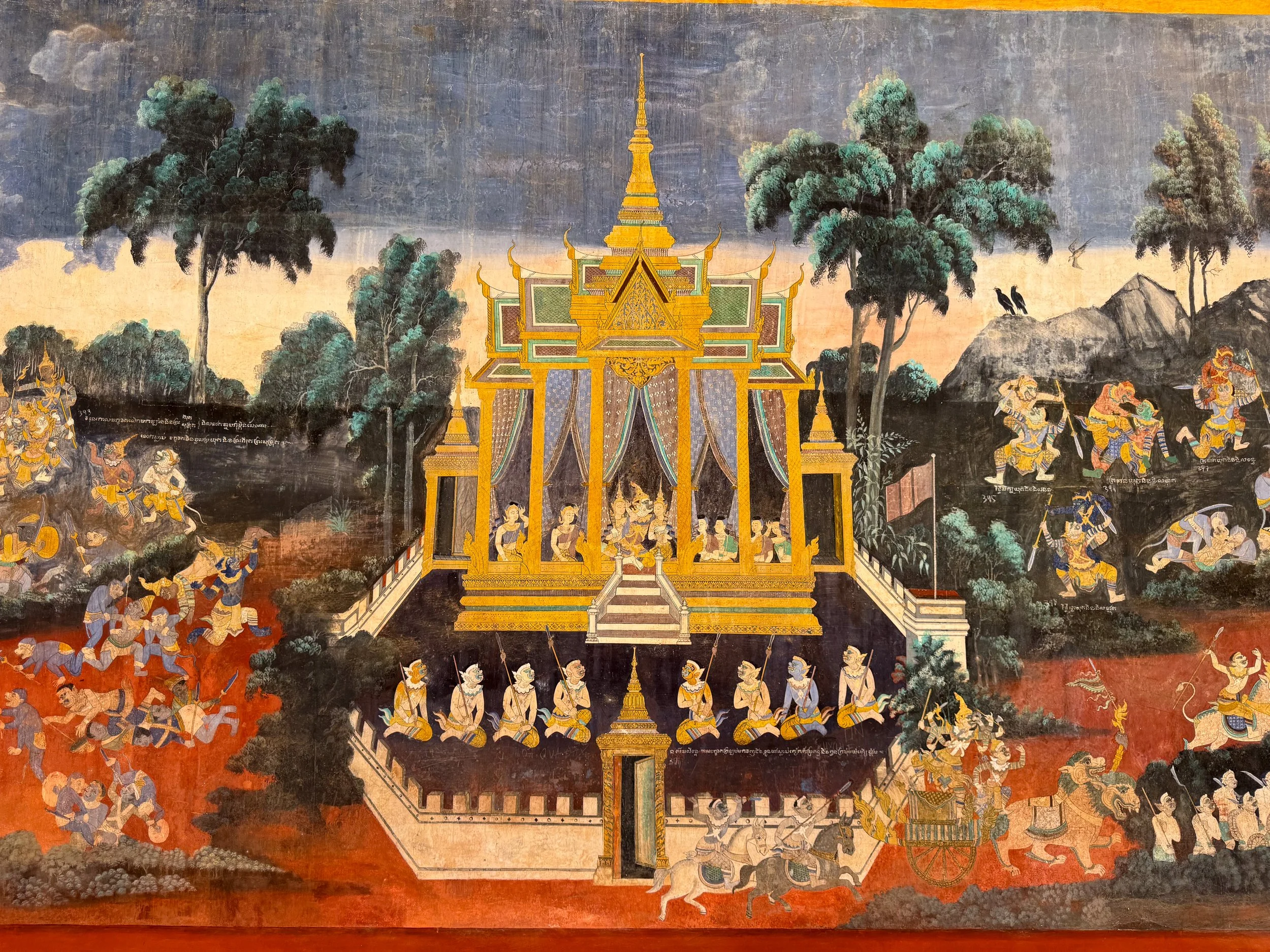
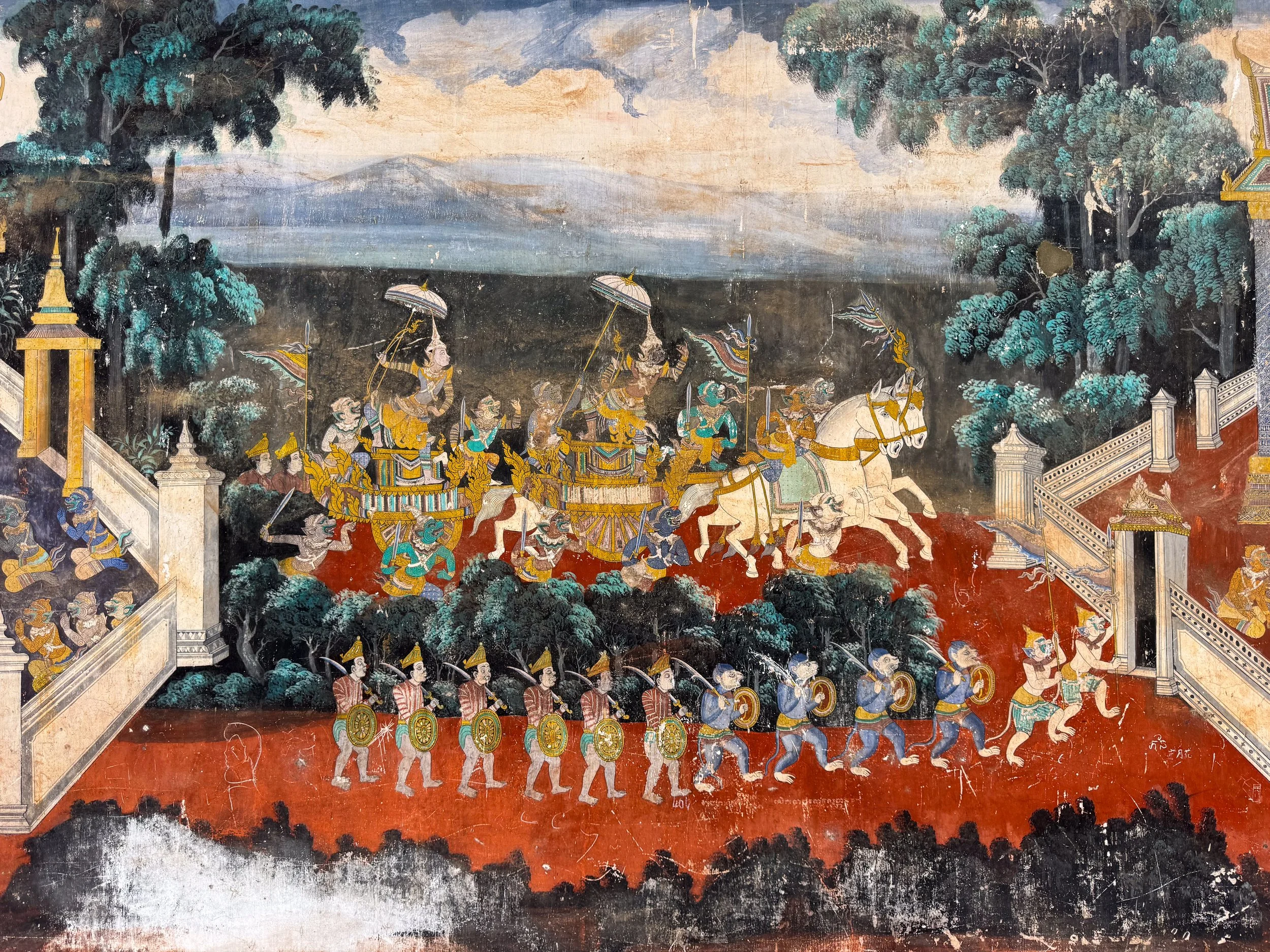
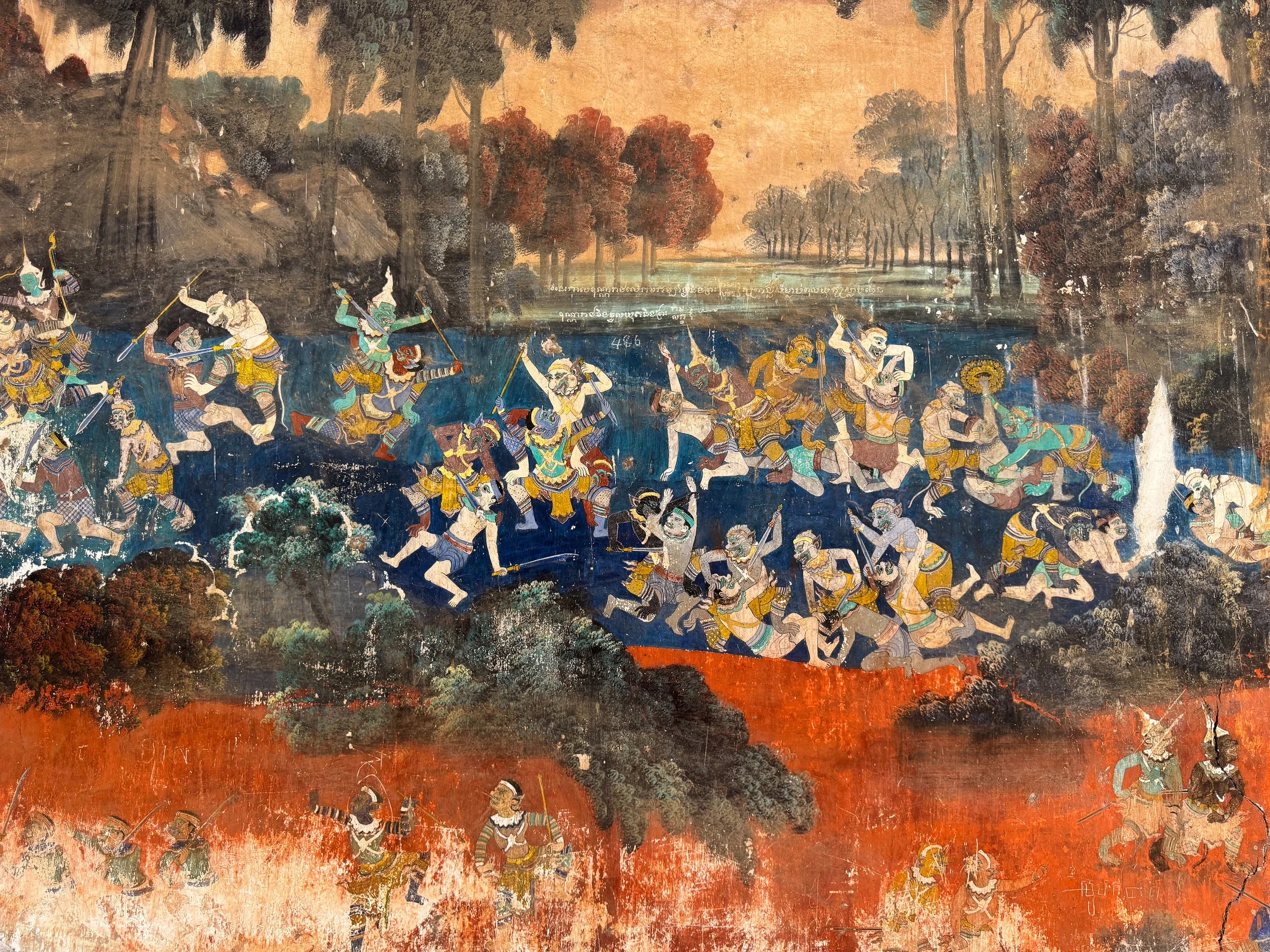
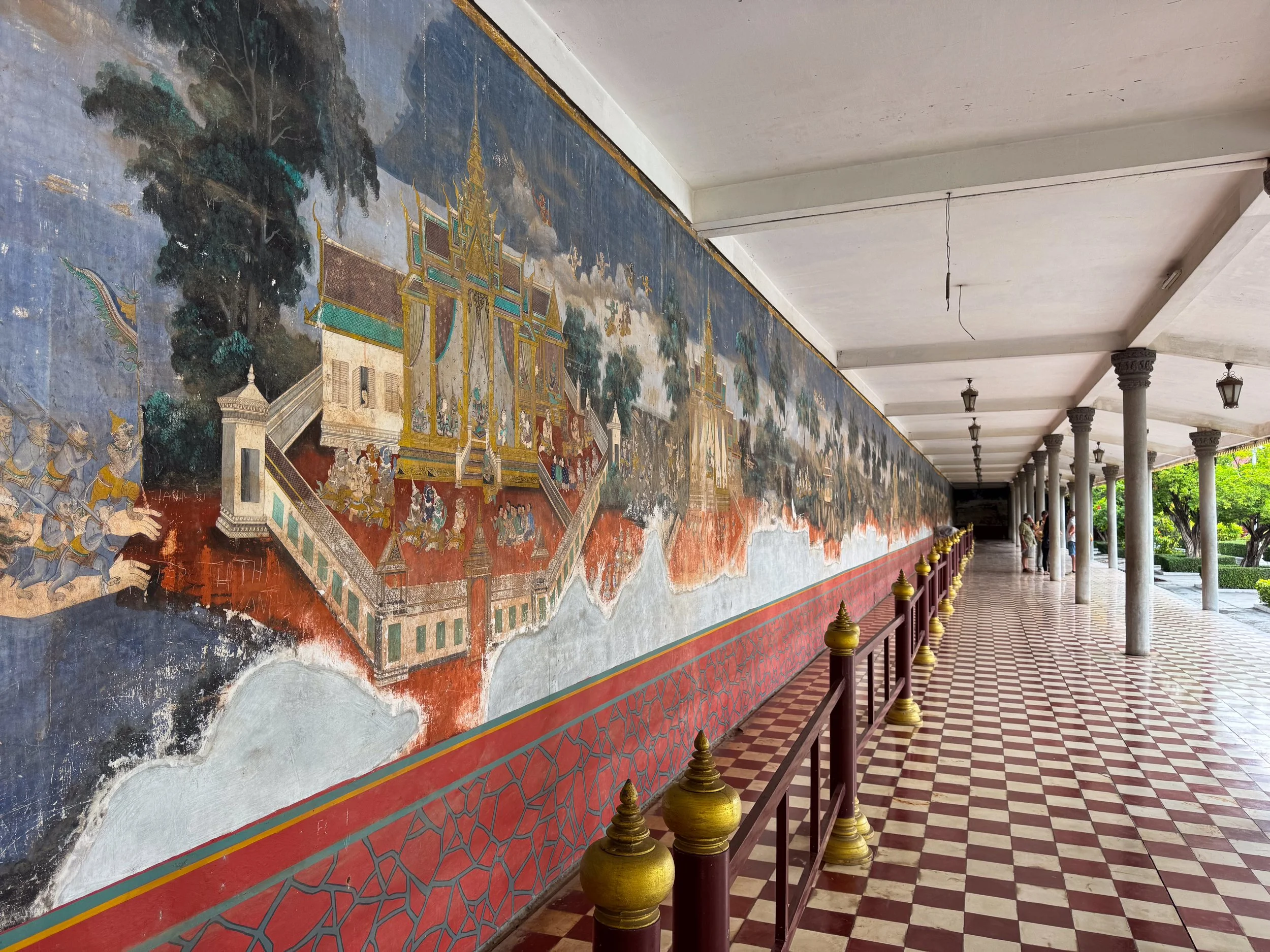
Gallery of the Ramayana Frescos. An open air hallway encompasses the walled area of the Silver Pagoda. On its walls are detailed and colorfully painted frescos of the Ramayana. They recount the Indian epic of the Ramayana.
Temples and Wats
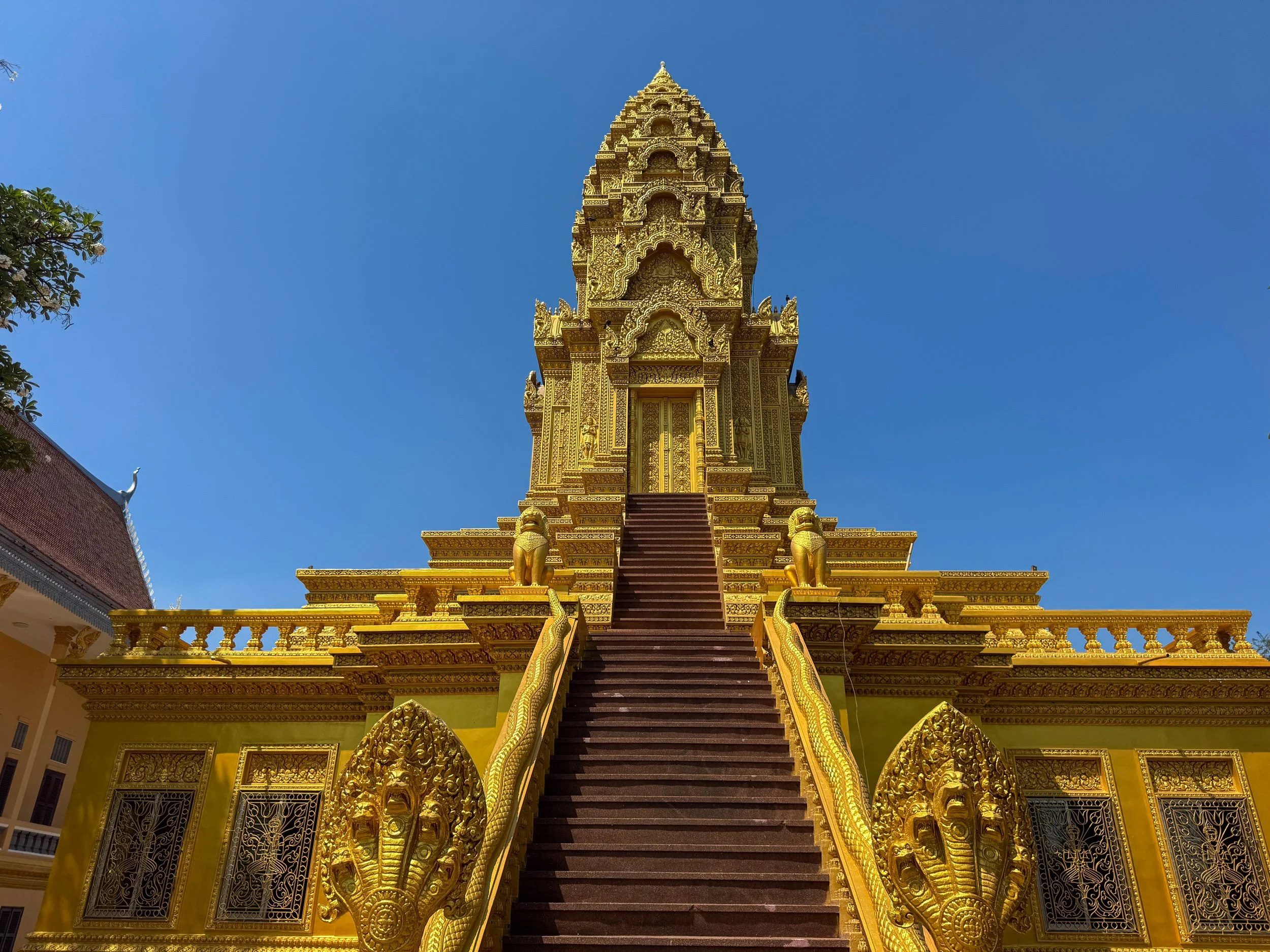
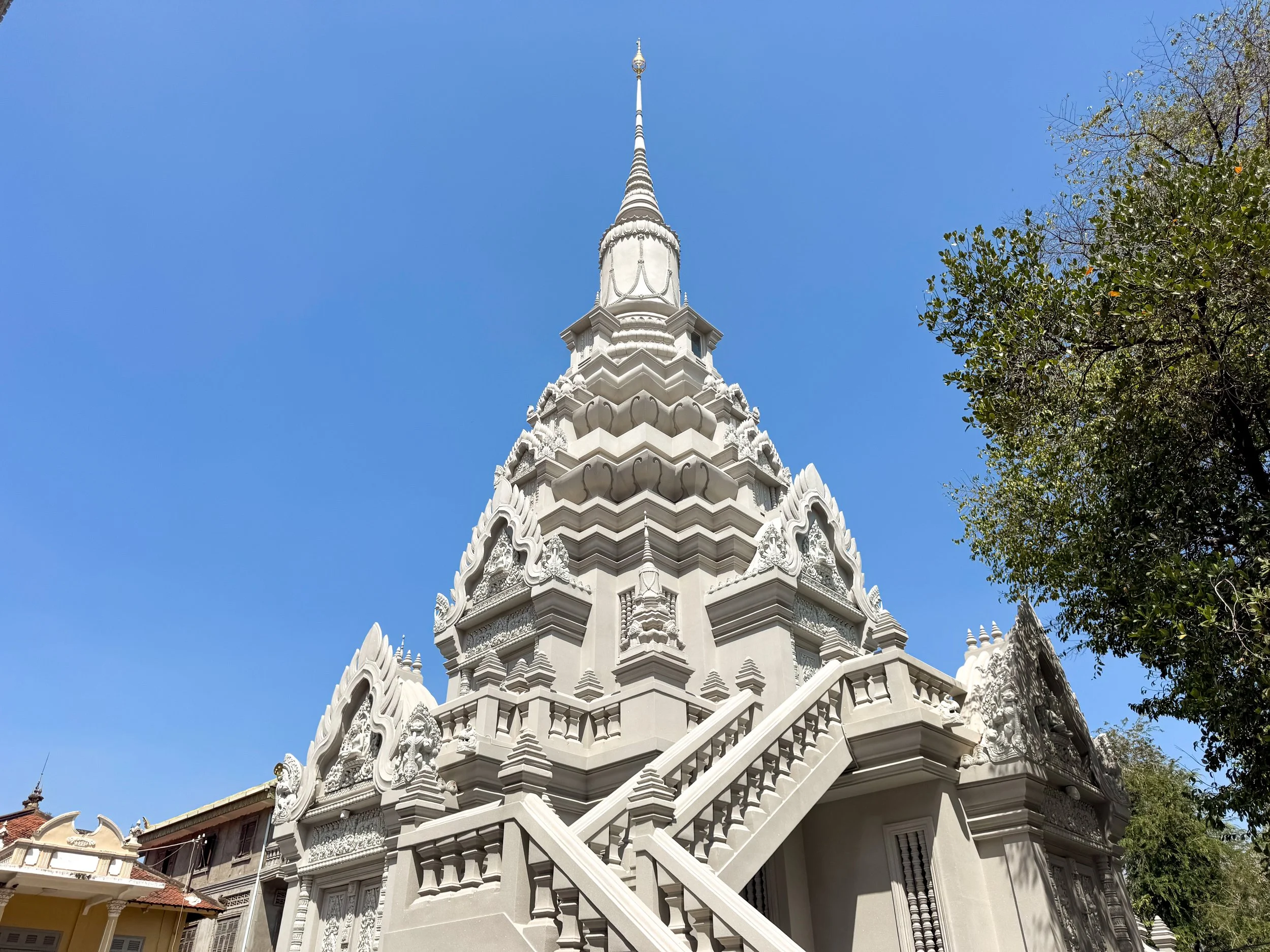
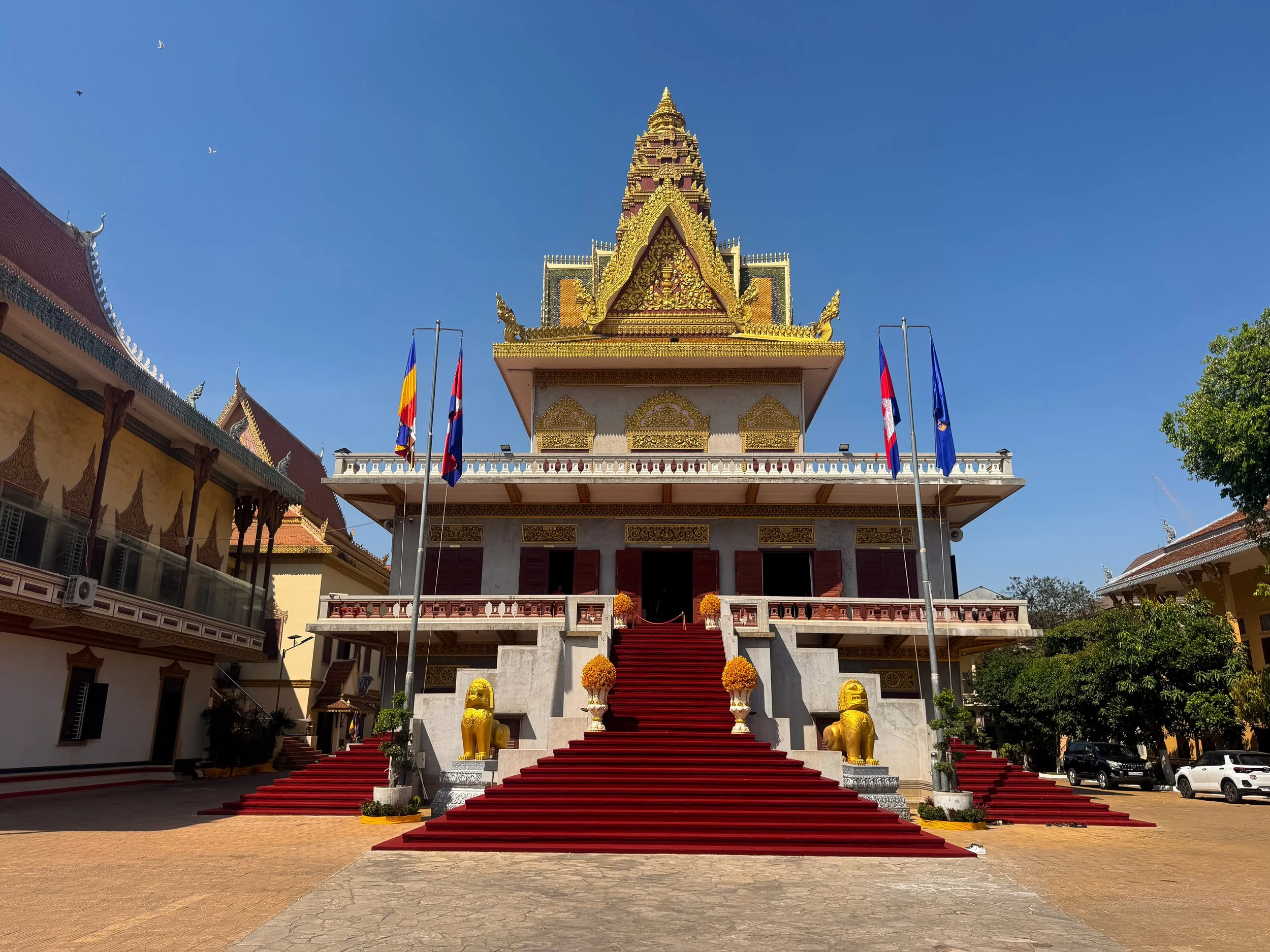
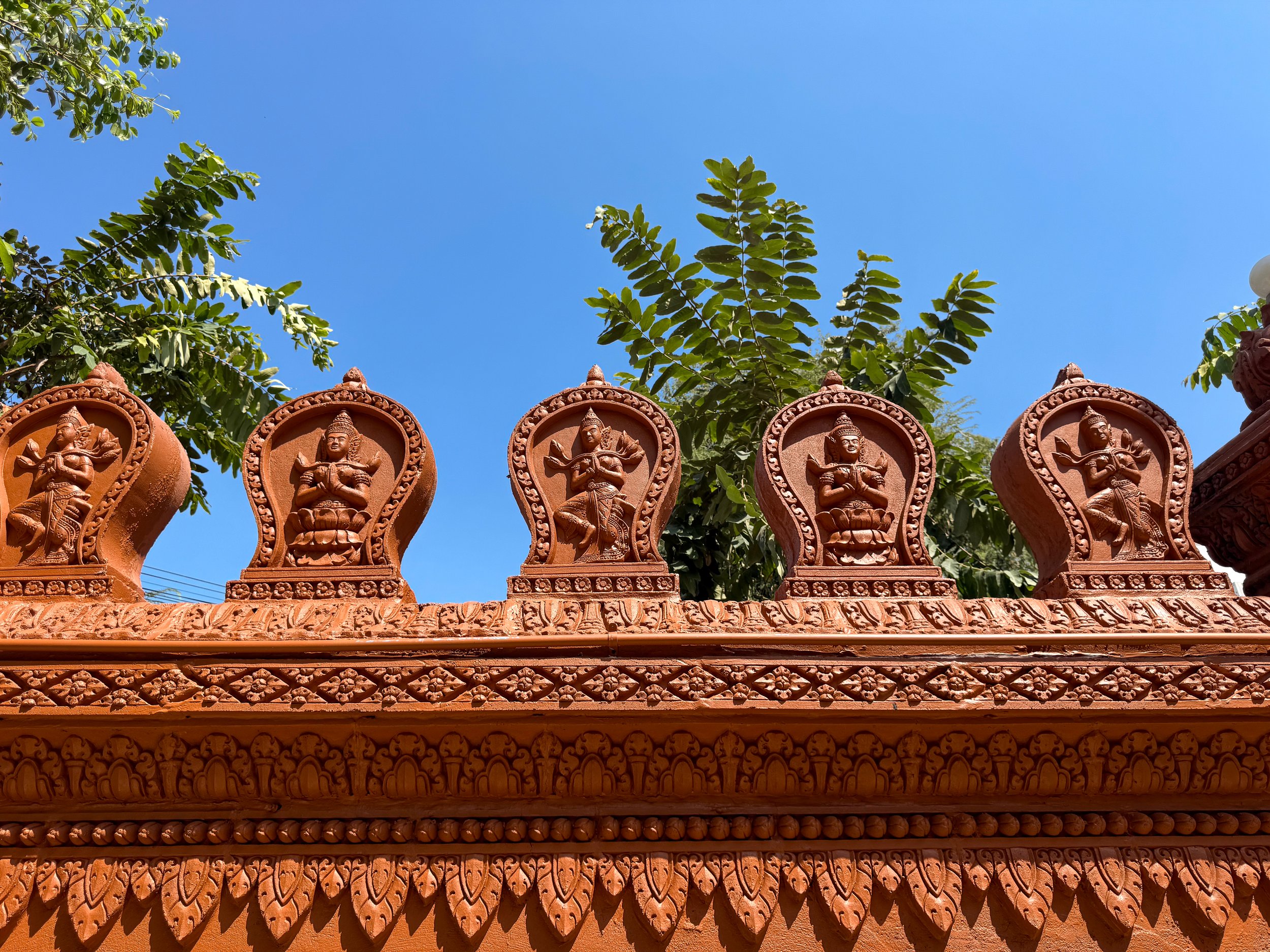
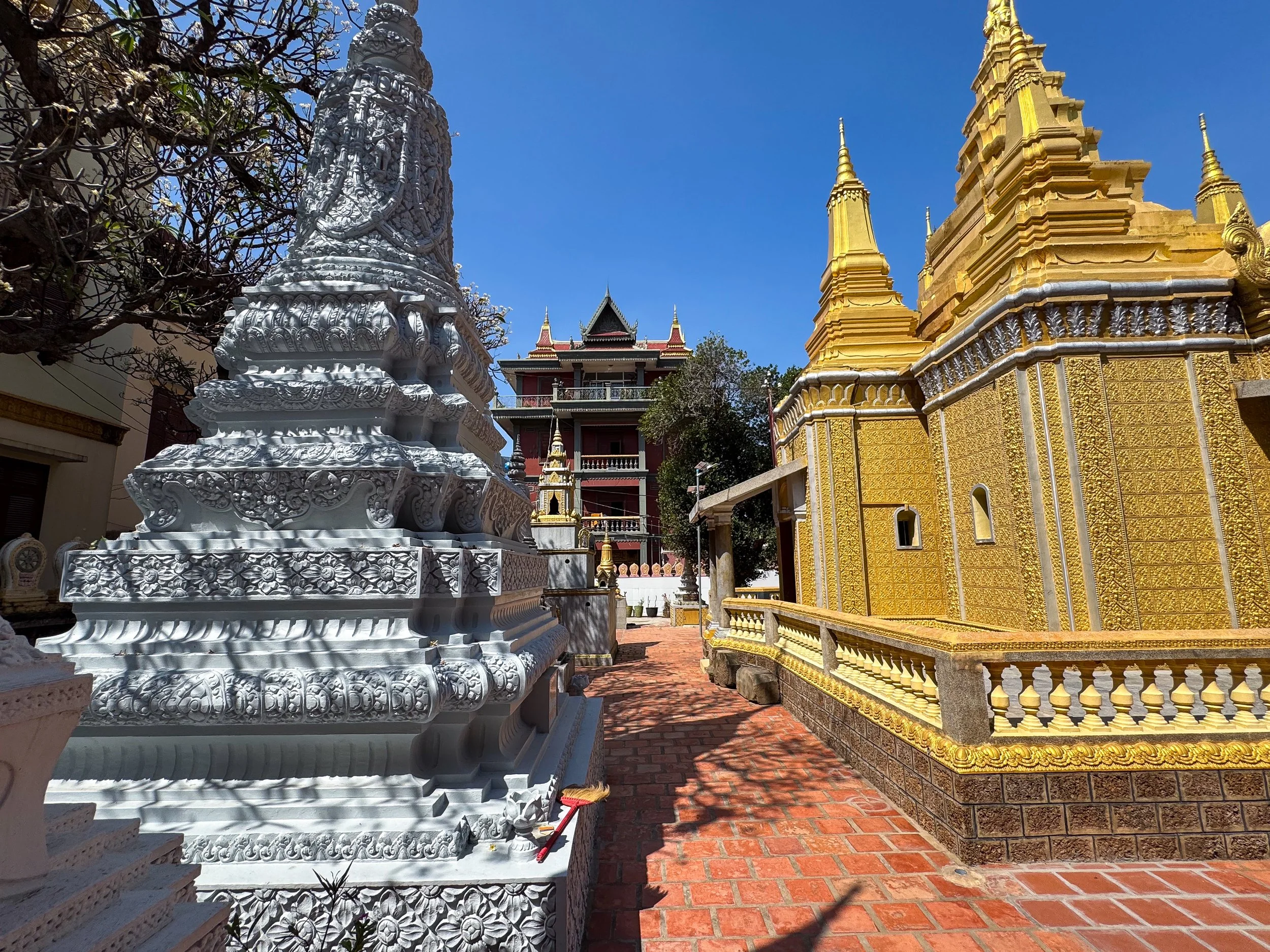
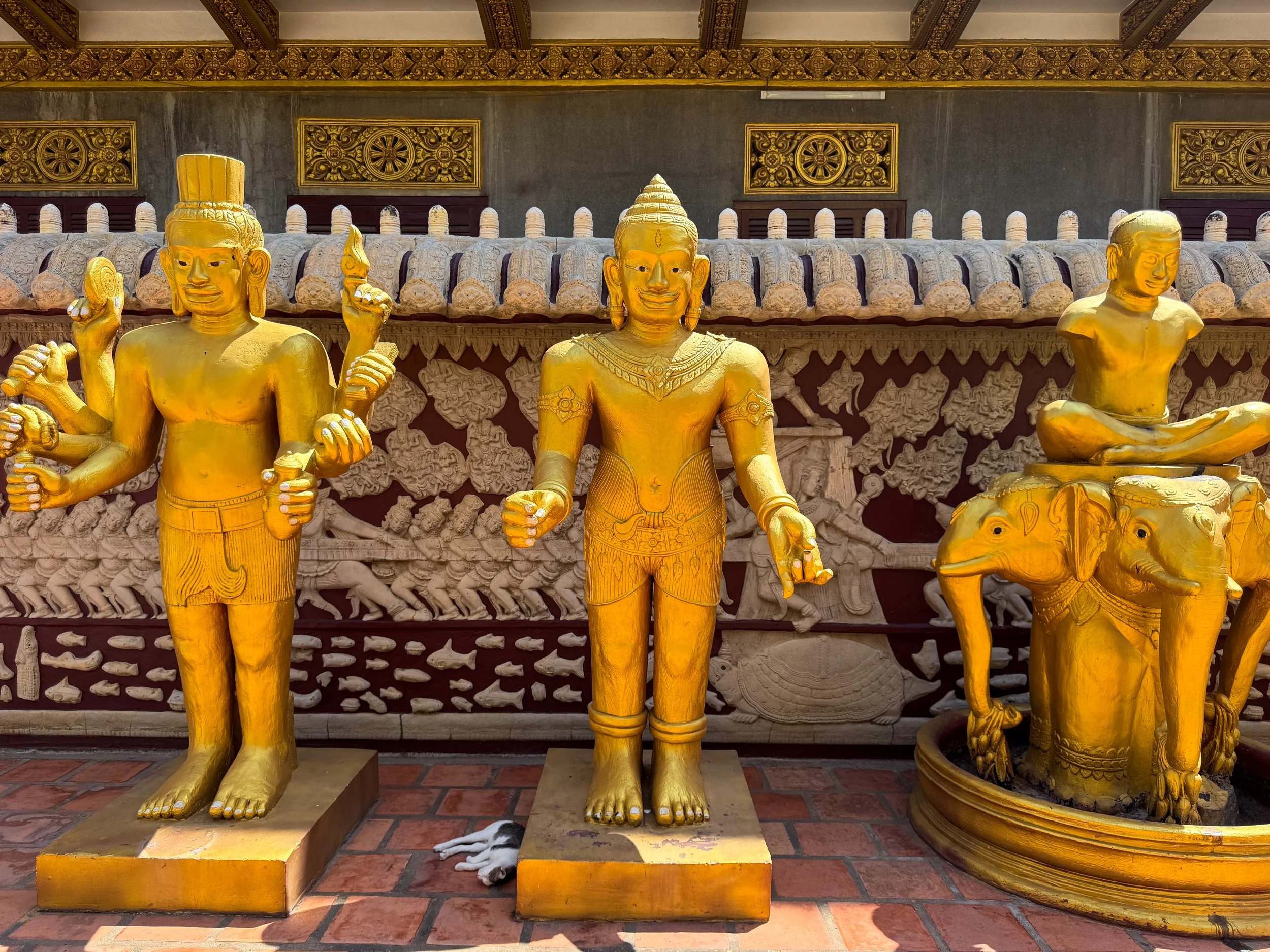
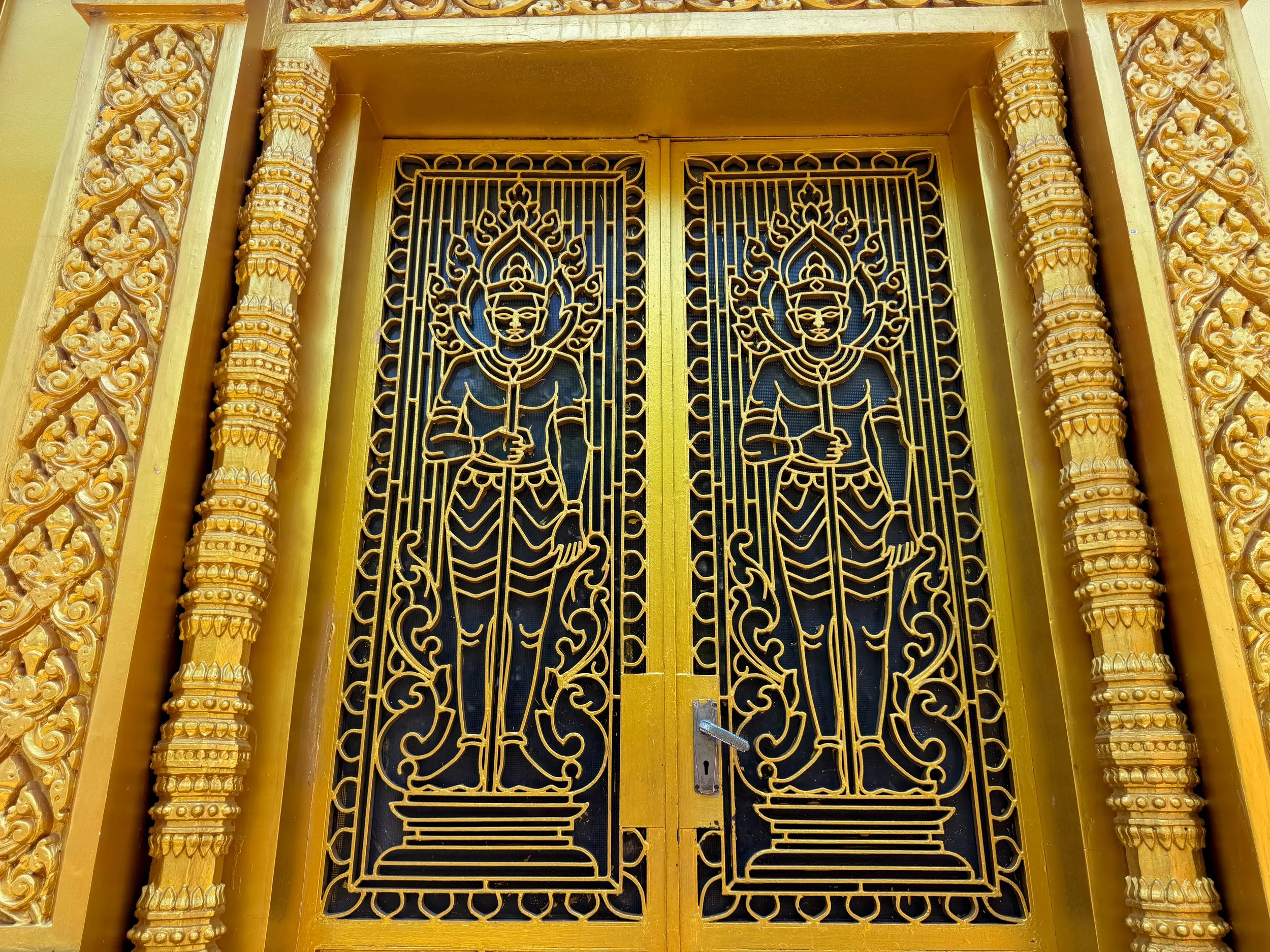
Wat Ounalom Monastery. One of the five original Buddhist temples in Phnom Penh dating back to the 13th century. Dozens of newer structures have been added to it over the years since. Its oldest temple is believed to house an eyebrow hair of the Buddha. Within the monastery’s terracotta walls are temples and meditation halls with Khmer style roofs, statues of Buddha, a golden pagoda and gilded stupa and a cemetery with smaller stupas. Around the monastery we saw Buddhist monks dressed in orange robes mediating, wandering the grounds and gardening.
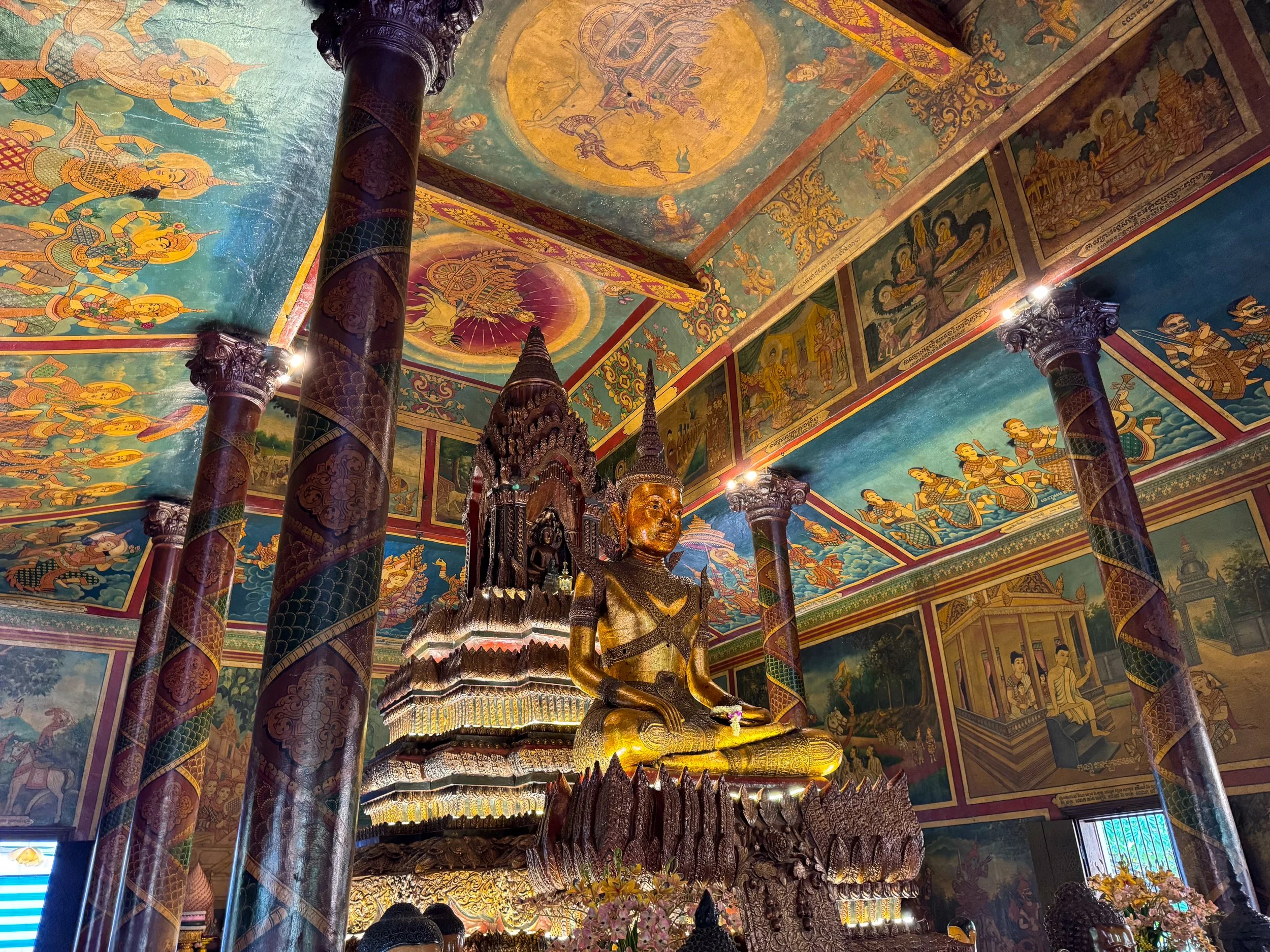
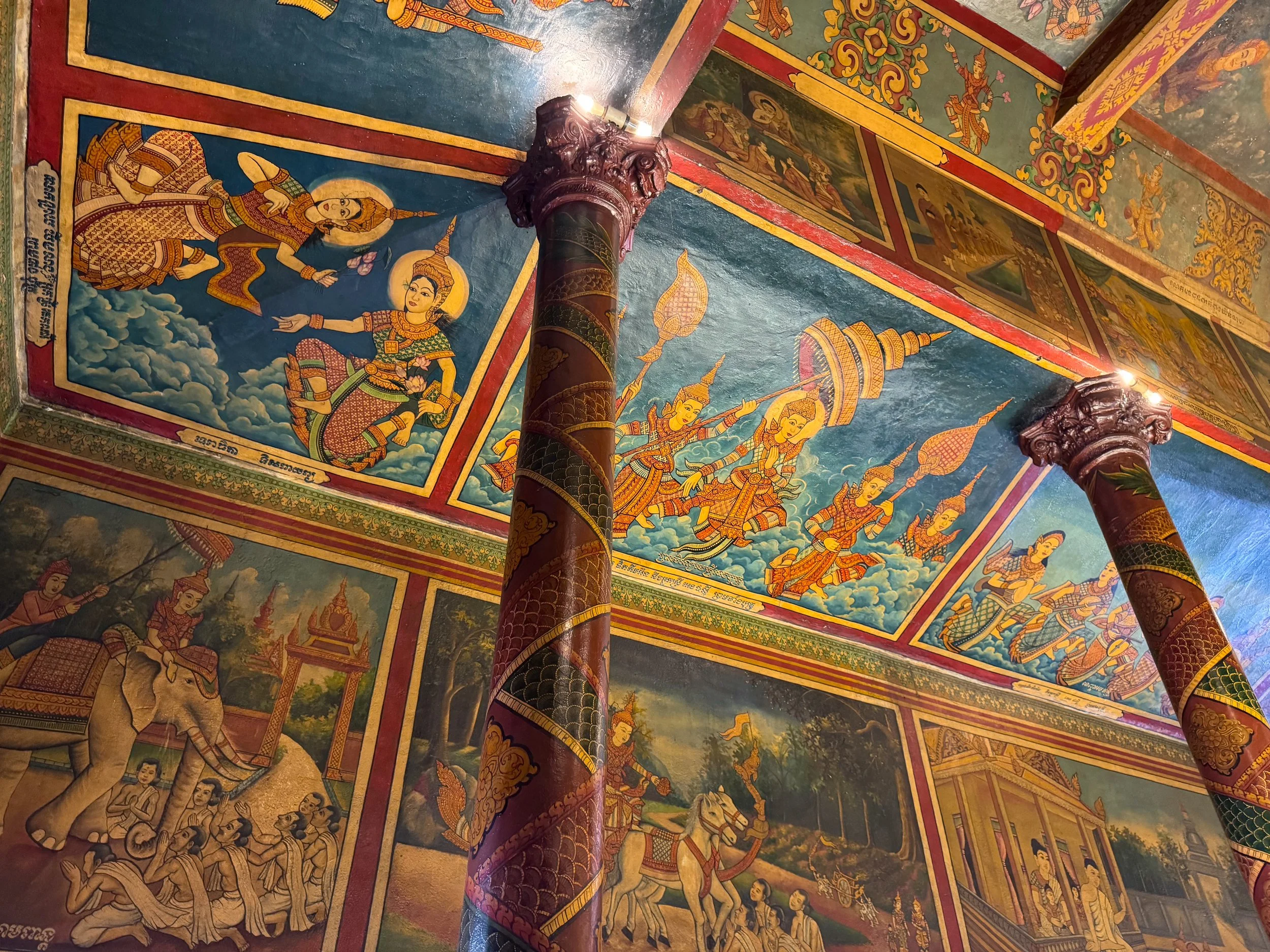
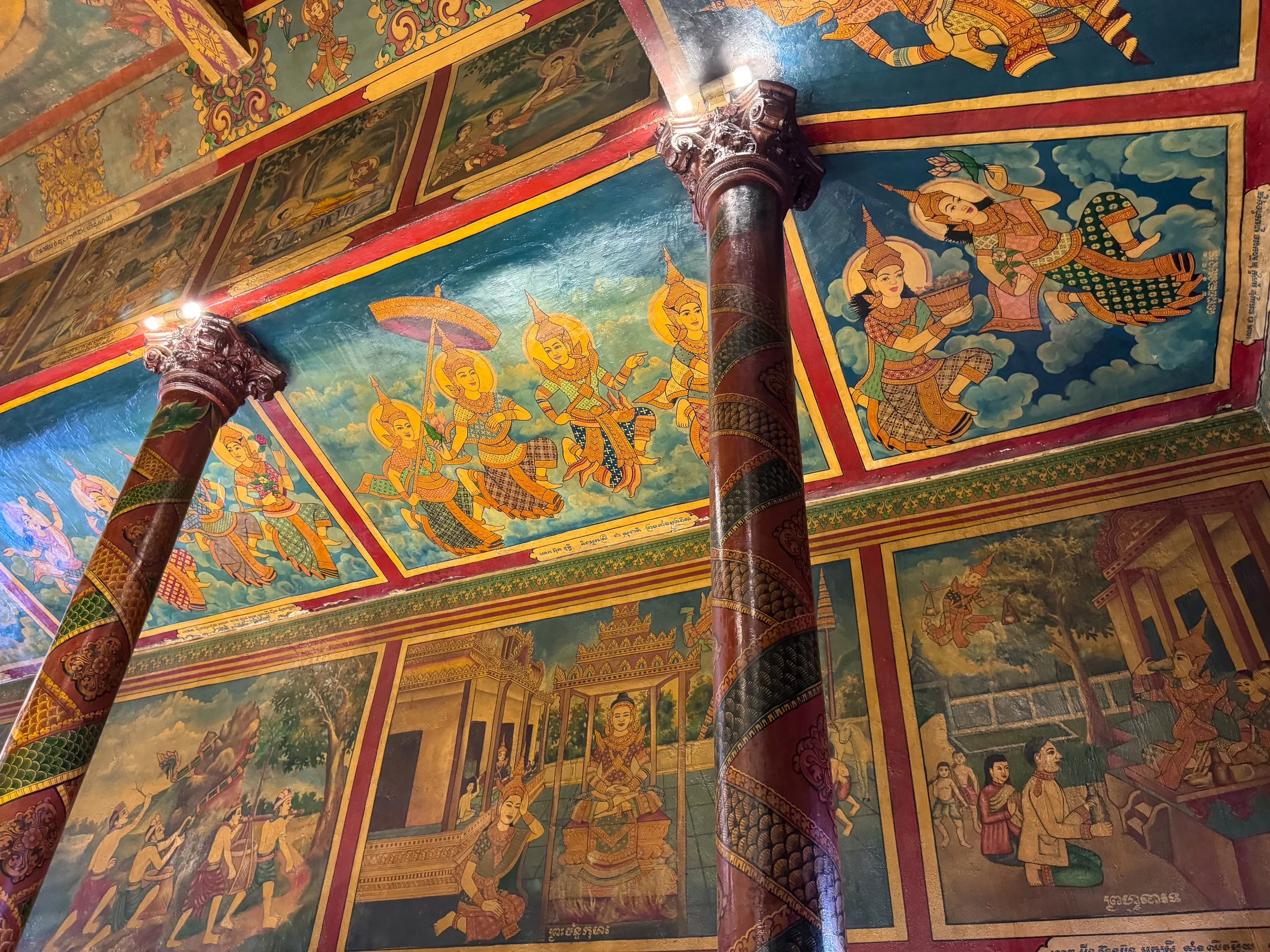
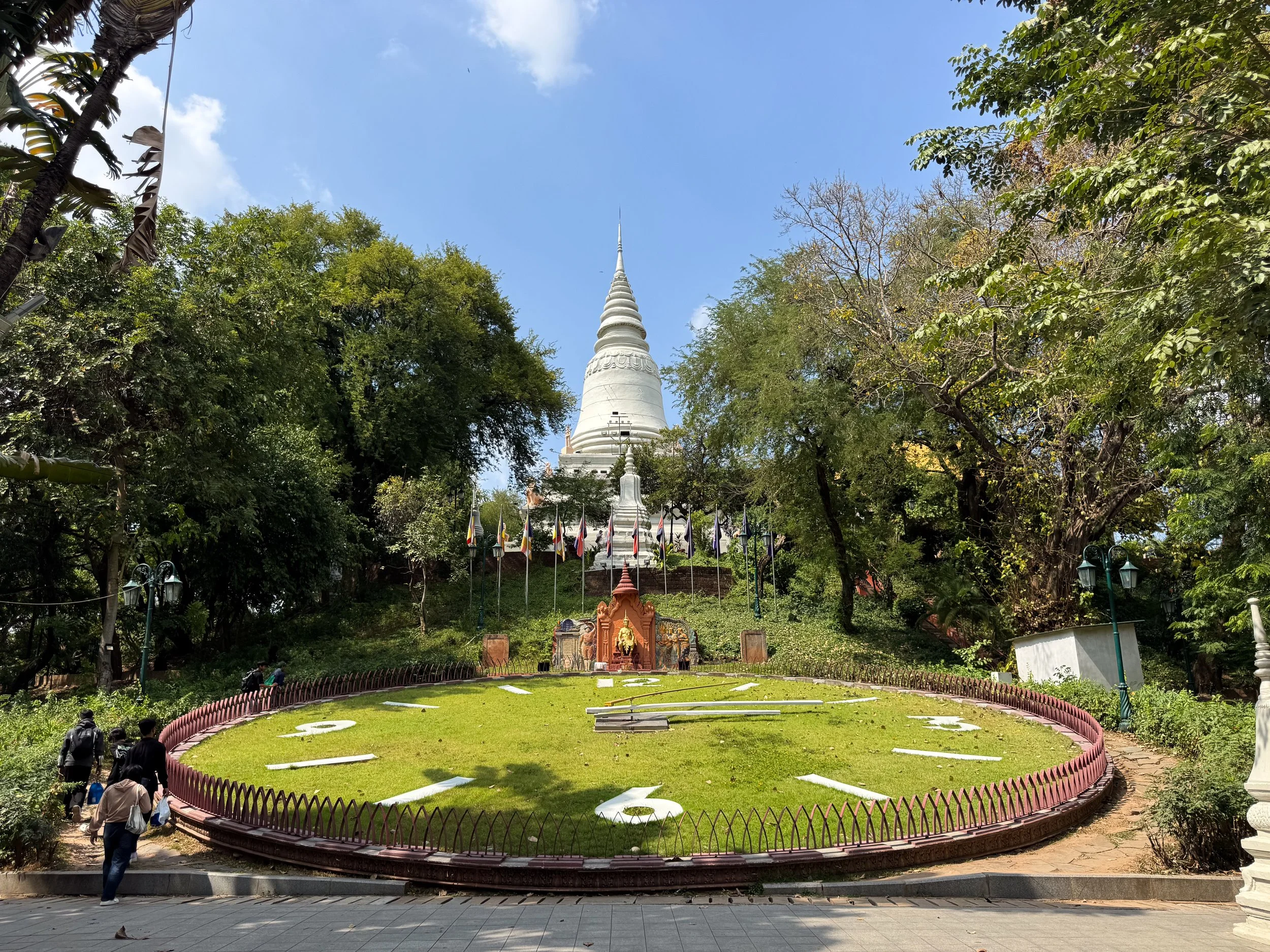
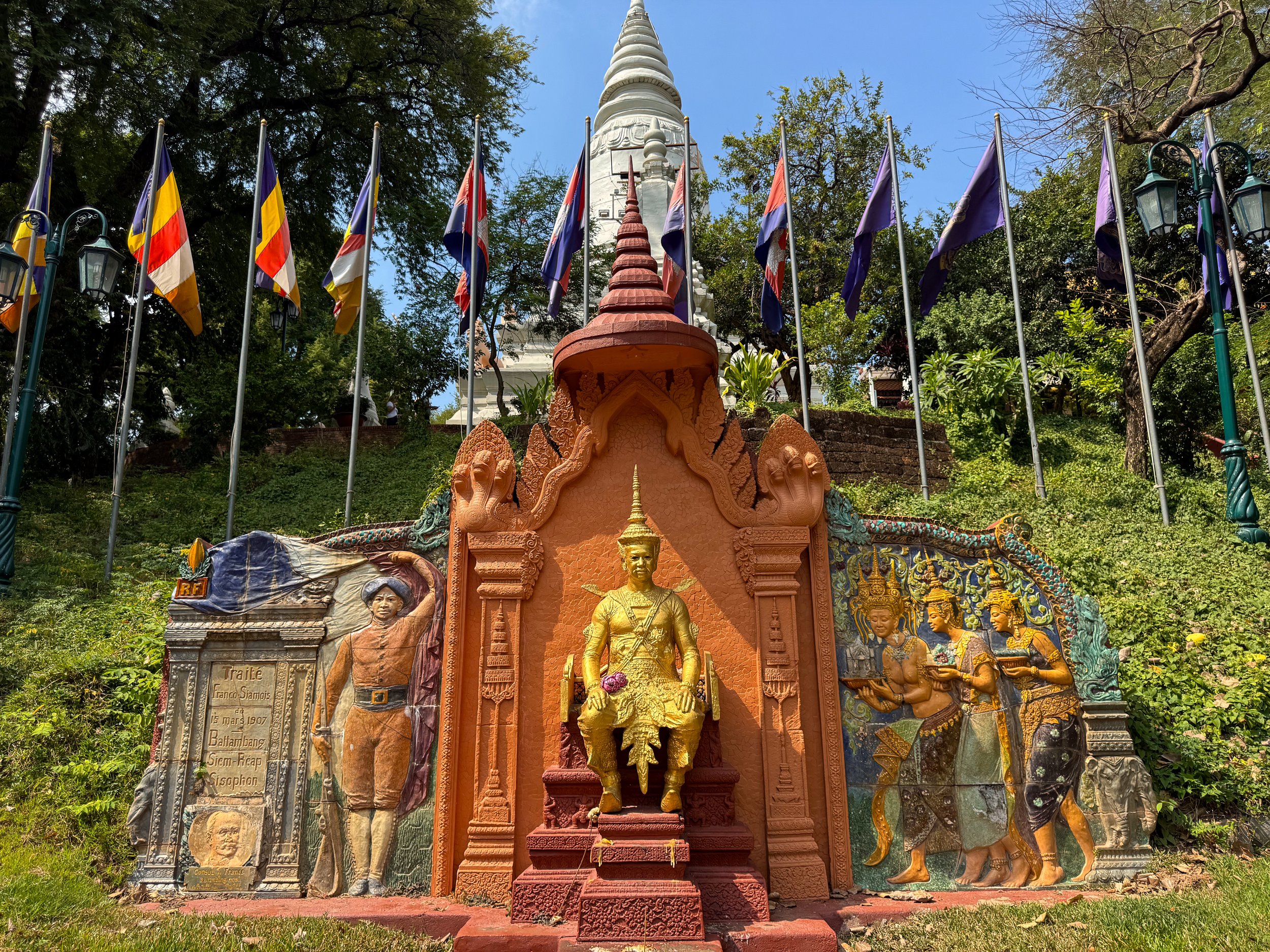
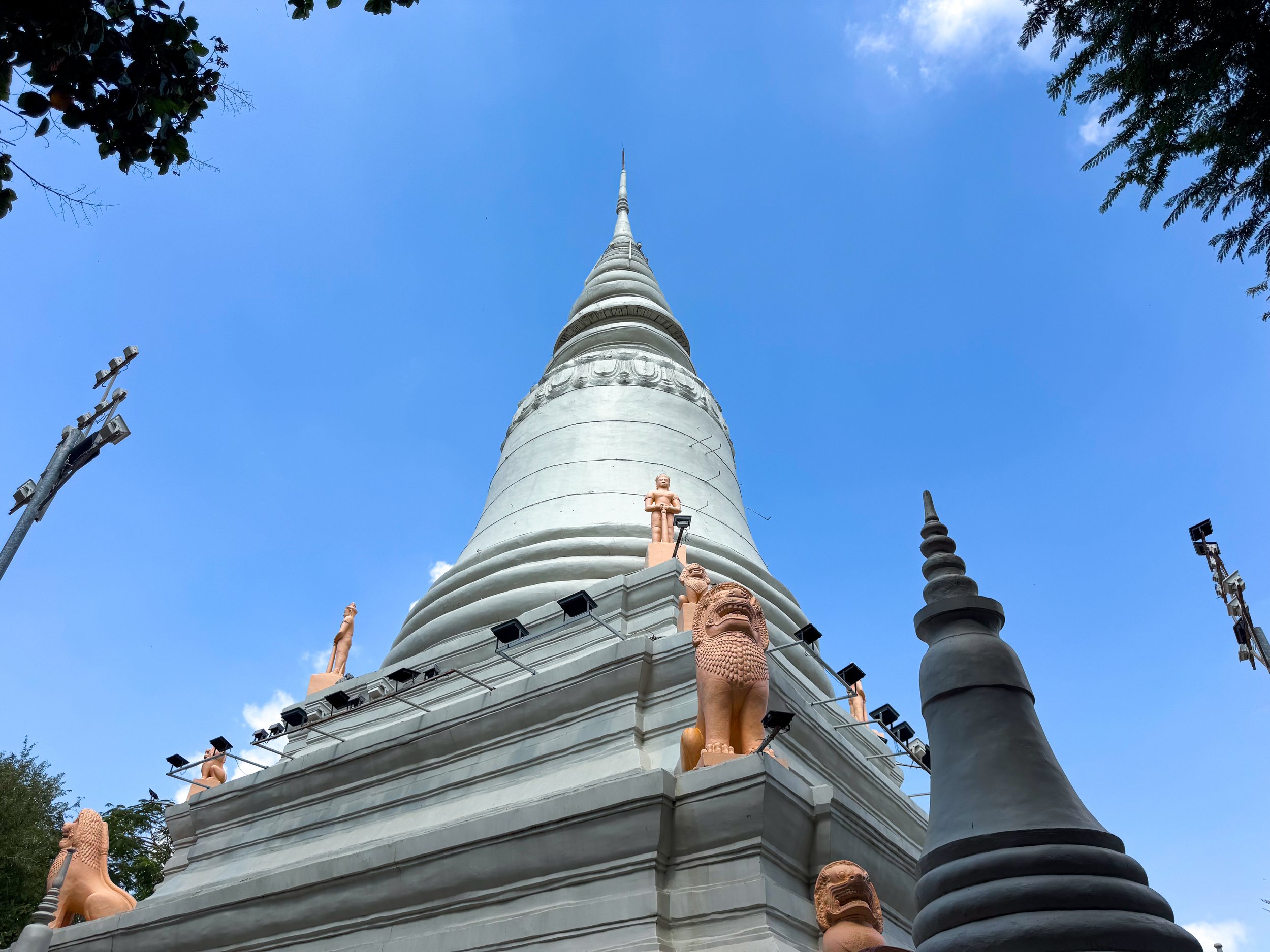
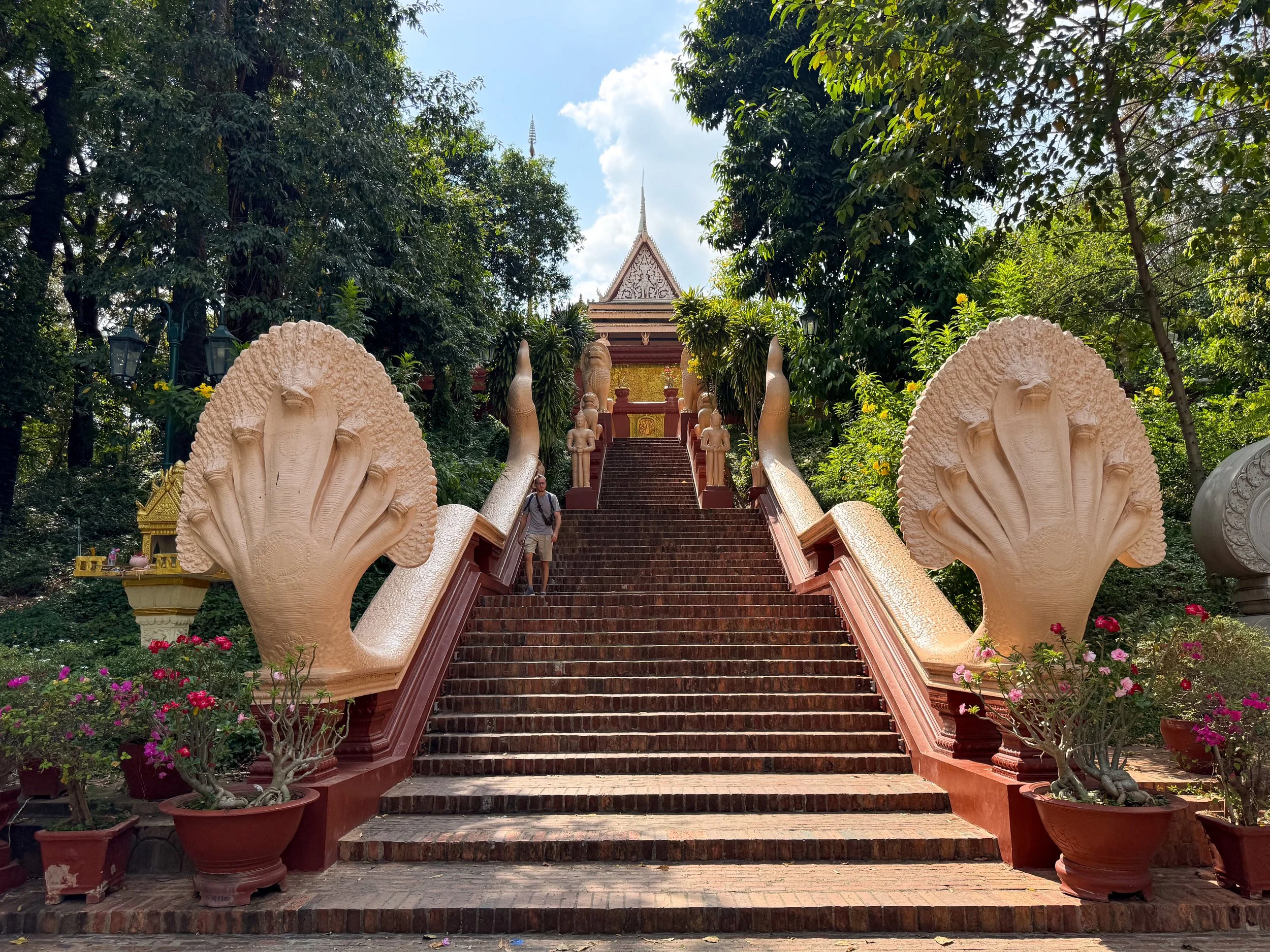
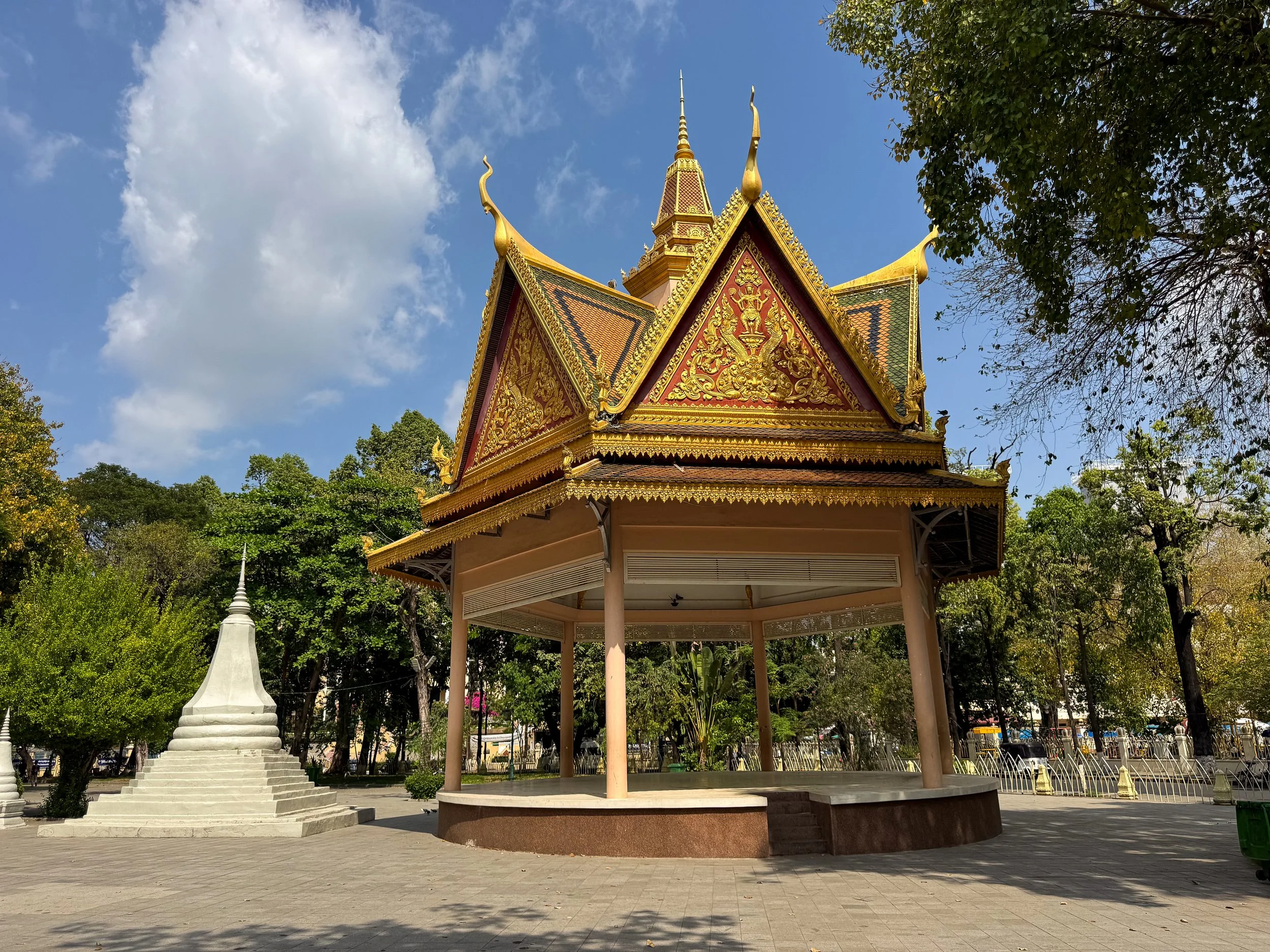
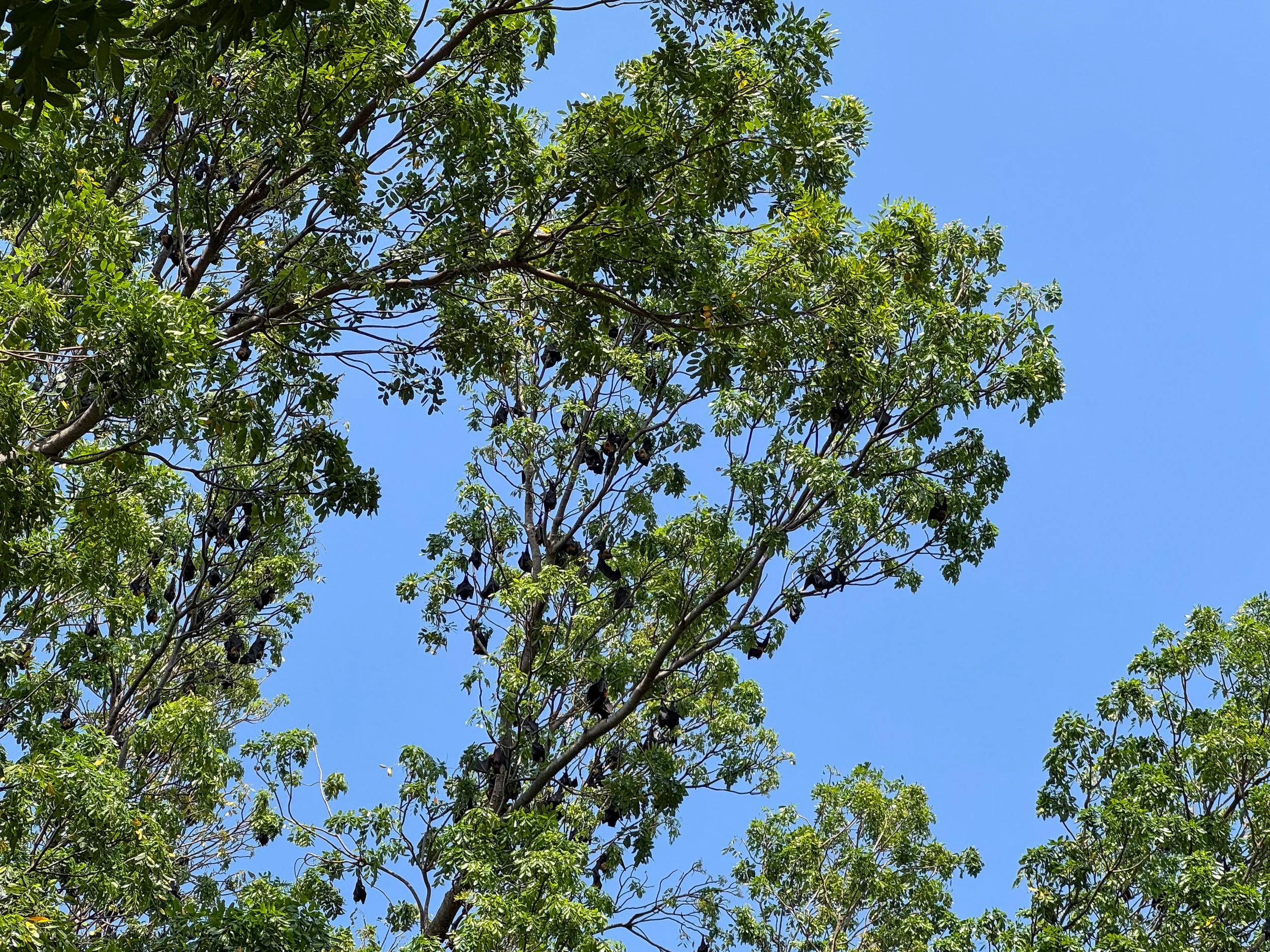
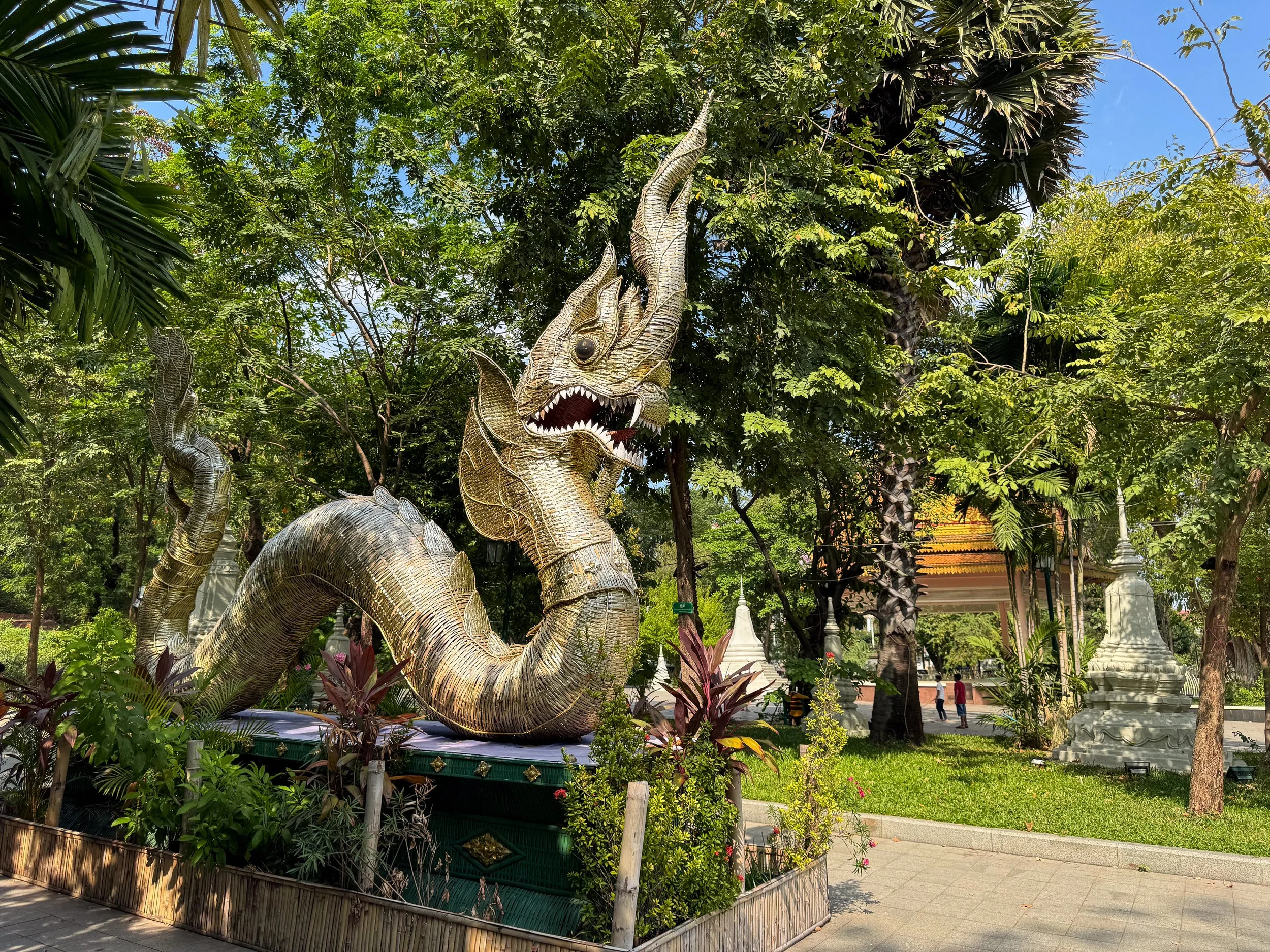
Wat Phnom Daun Penh. A Buddhist temple dedicated to Lady Penh and the legend surrounding her. It’s one of the most important sights in the capital. The temple stands on a hill surrounded by a peaceful city park. It features a large white stupa and a beautiful pagoda. Its interior walls, ceiling and columns are painted in colorful scenes of the Buddha’s previous lives. The temple houses statues of Buddha and Vishnu that legend says Lady Penh discovered inside a tree floating down the Mekong River. The trees in the park are home to a colony of giant bats known as flying foxes. We watched them sway in the trees, crawl along branches and occasionally take flight. There is a $1 USD entry fee to the park and temple.
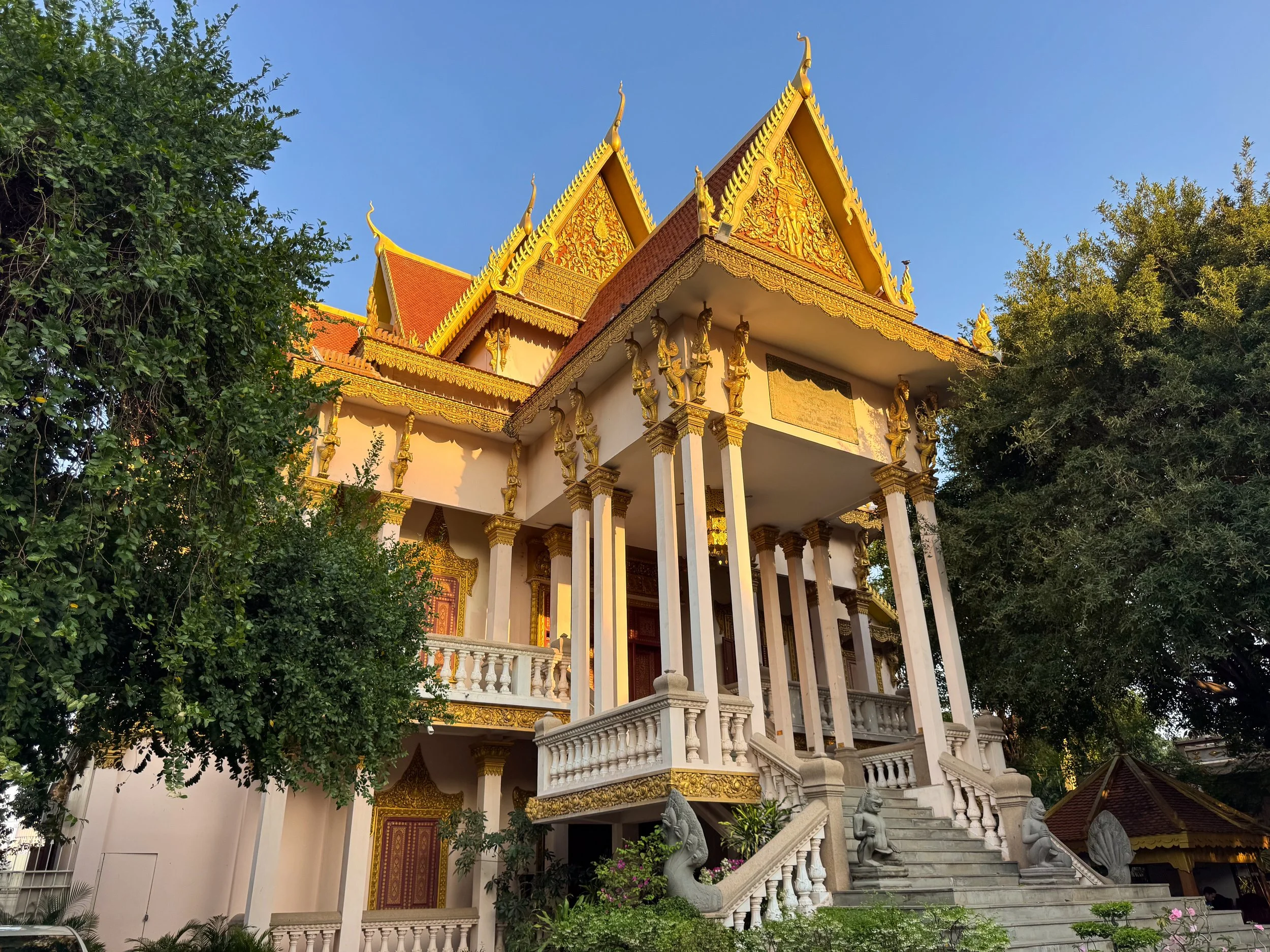
Wat Langka. One of the original five Buddhist temples of Phnom Penh with pagodas and stupas. We visited in the late afternoon and were the only ones here except for a friendly monk gardening. It was very peaceful and meditative to walk around and admire.
Visit the Museums
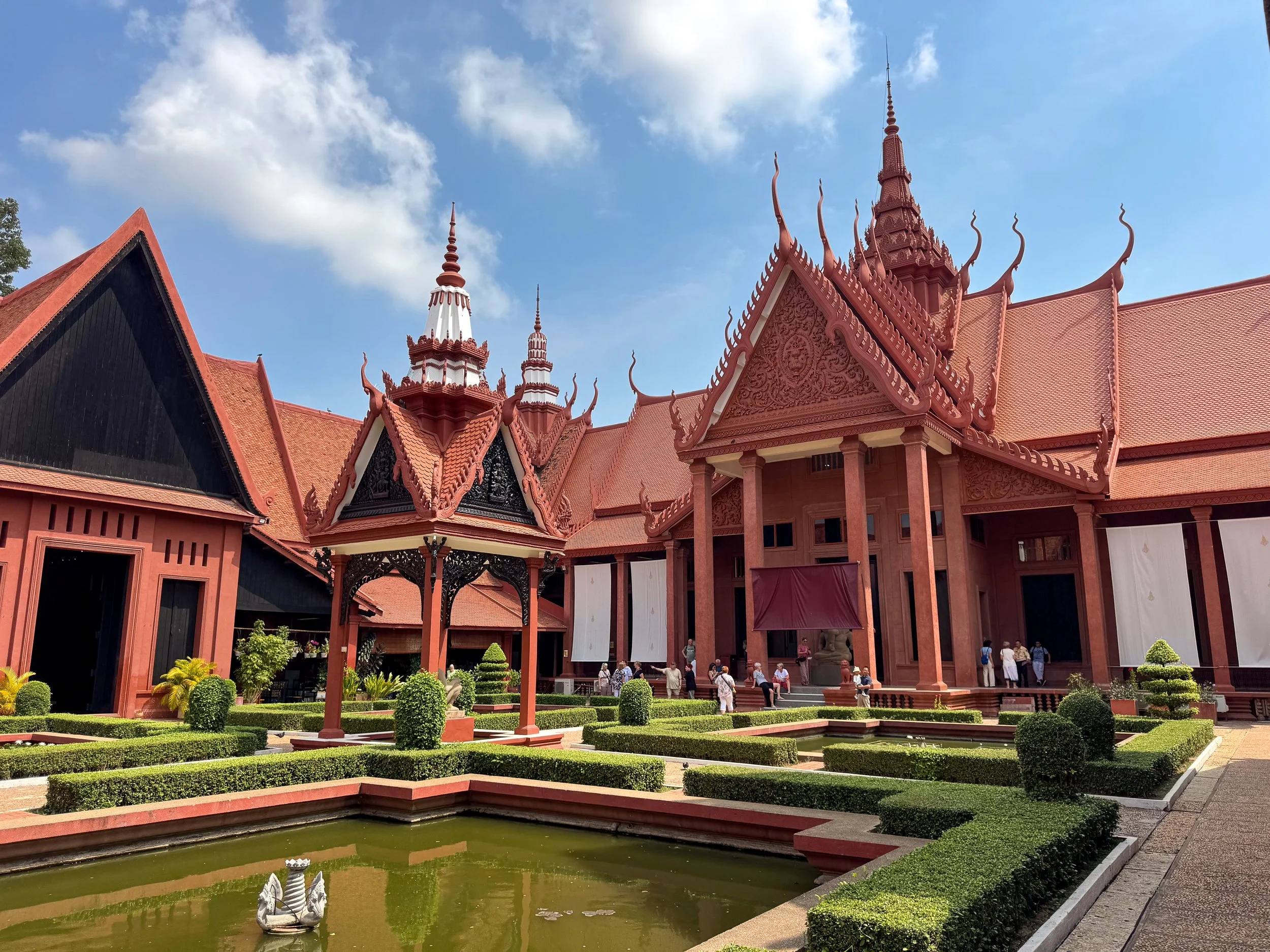
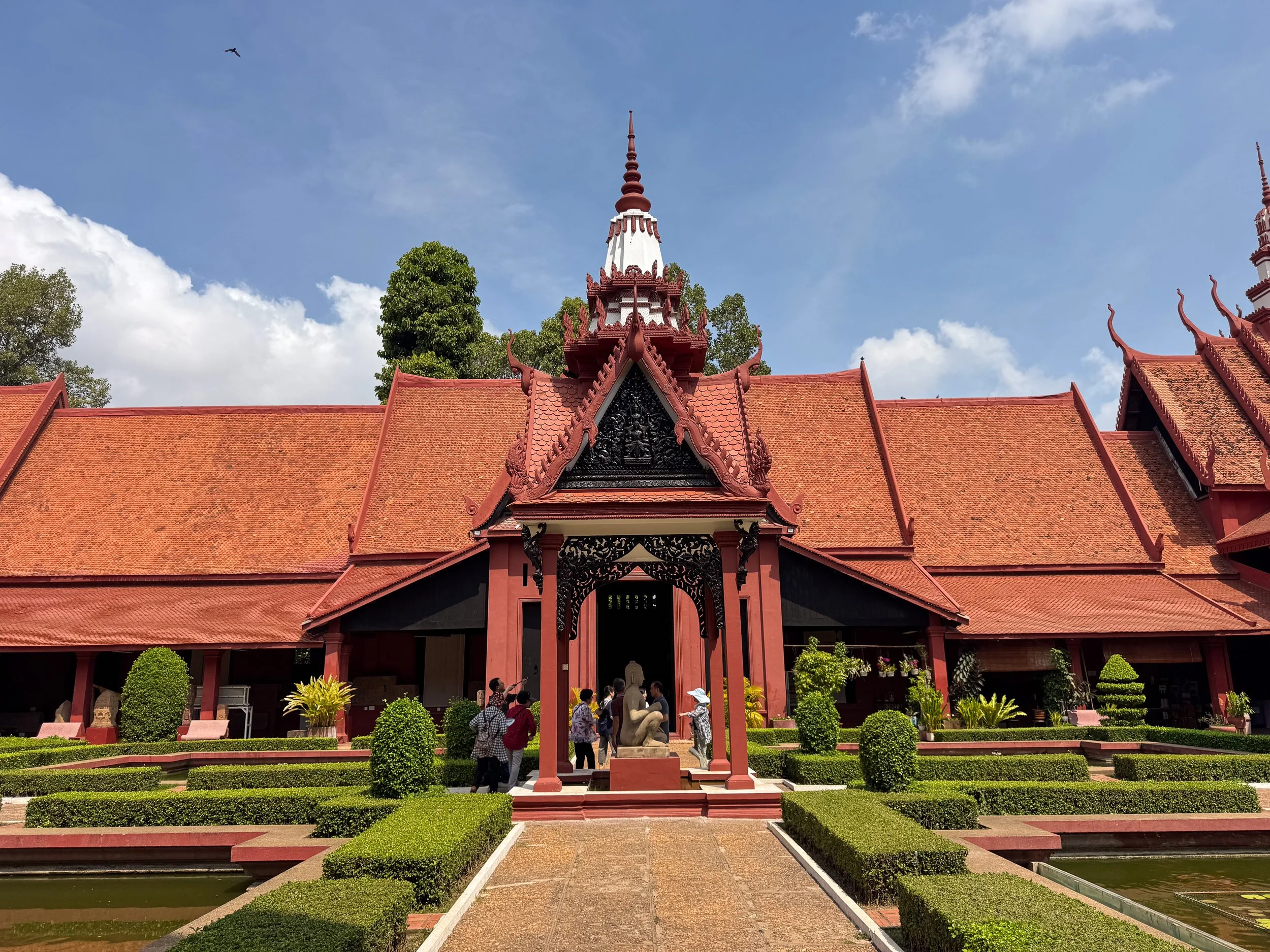
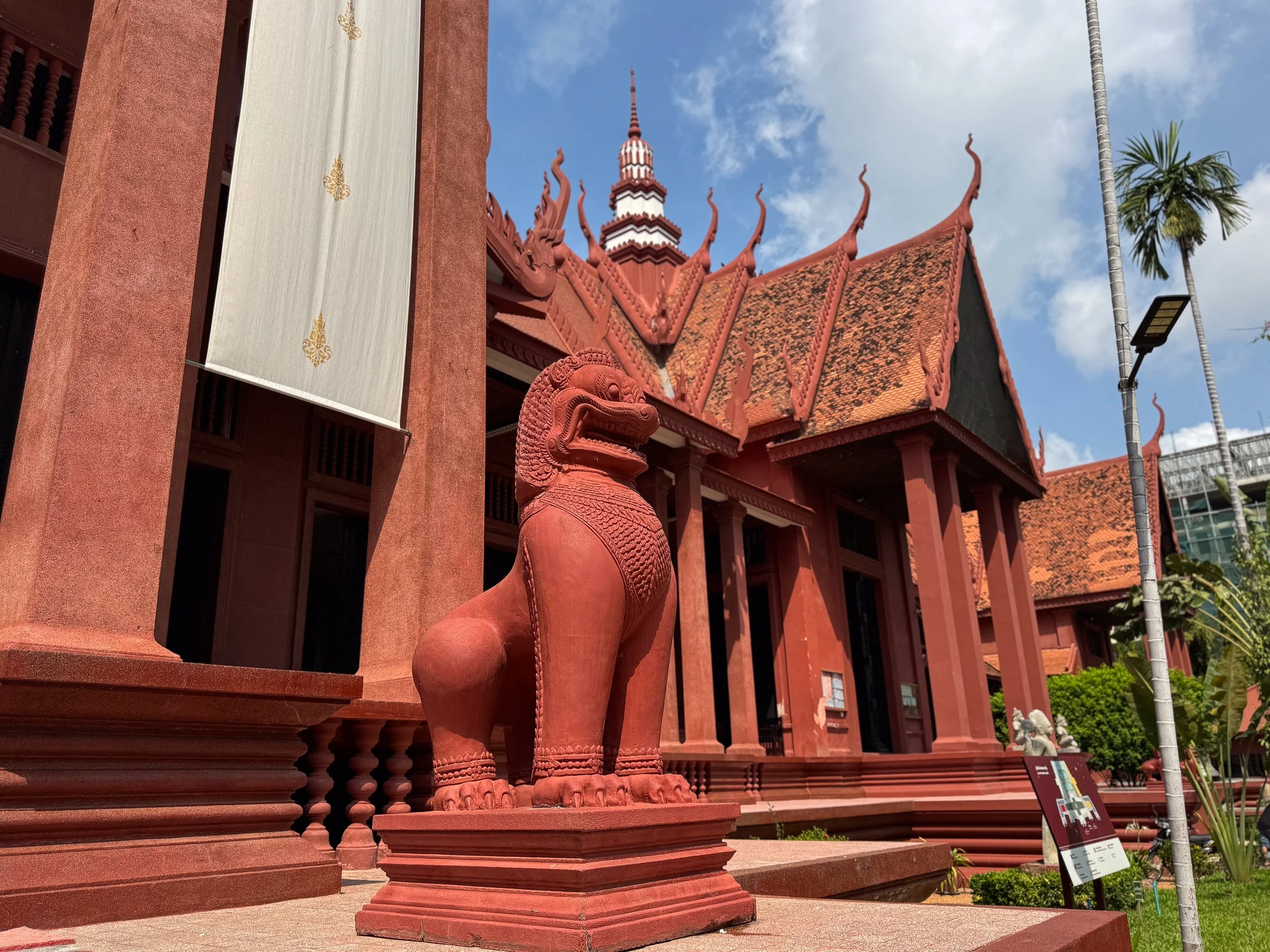
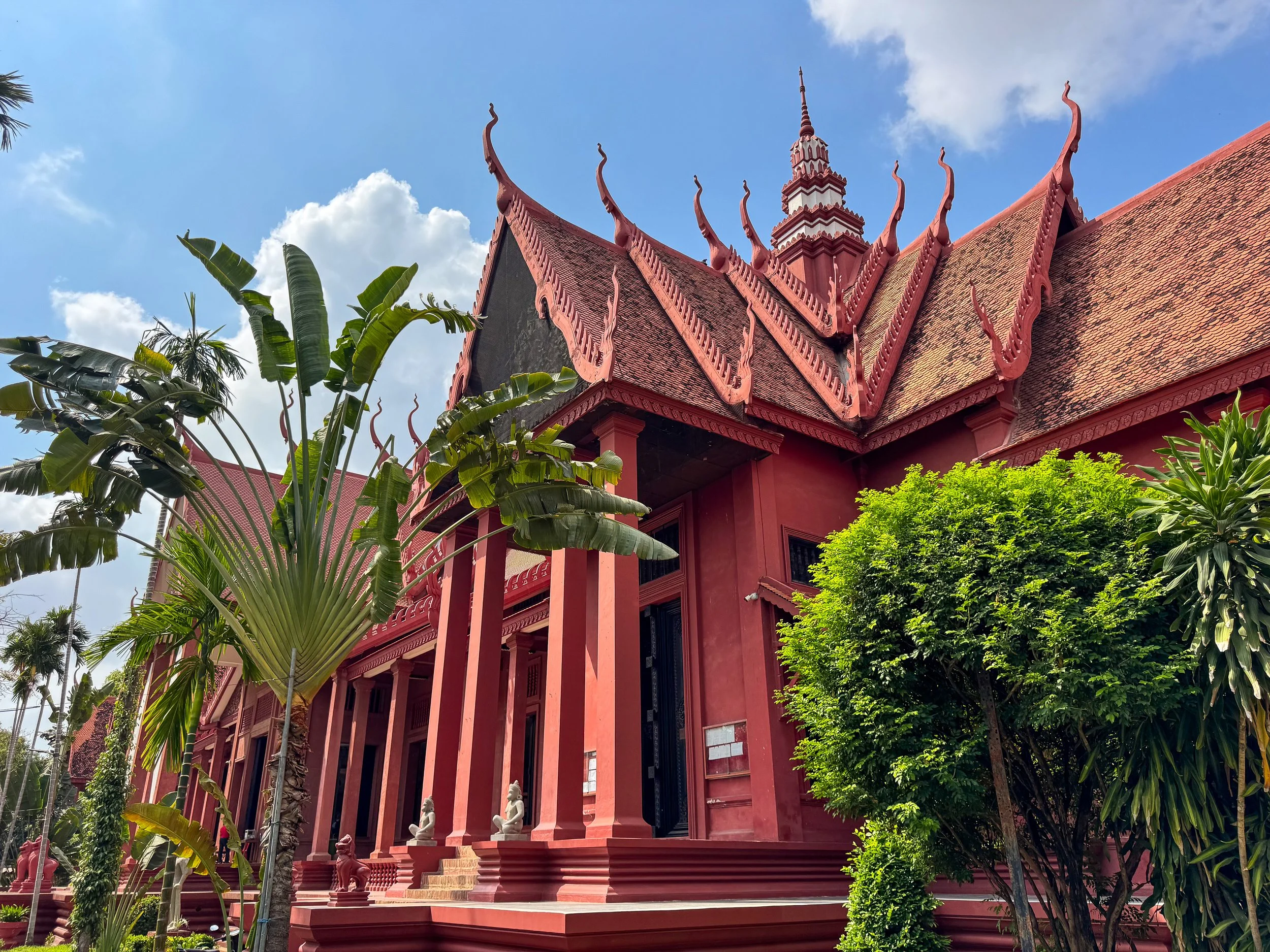
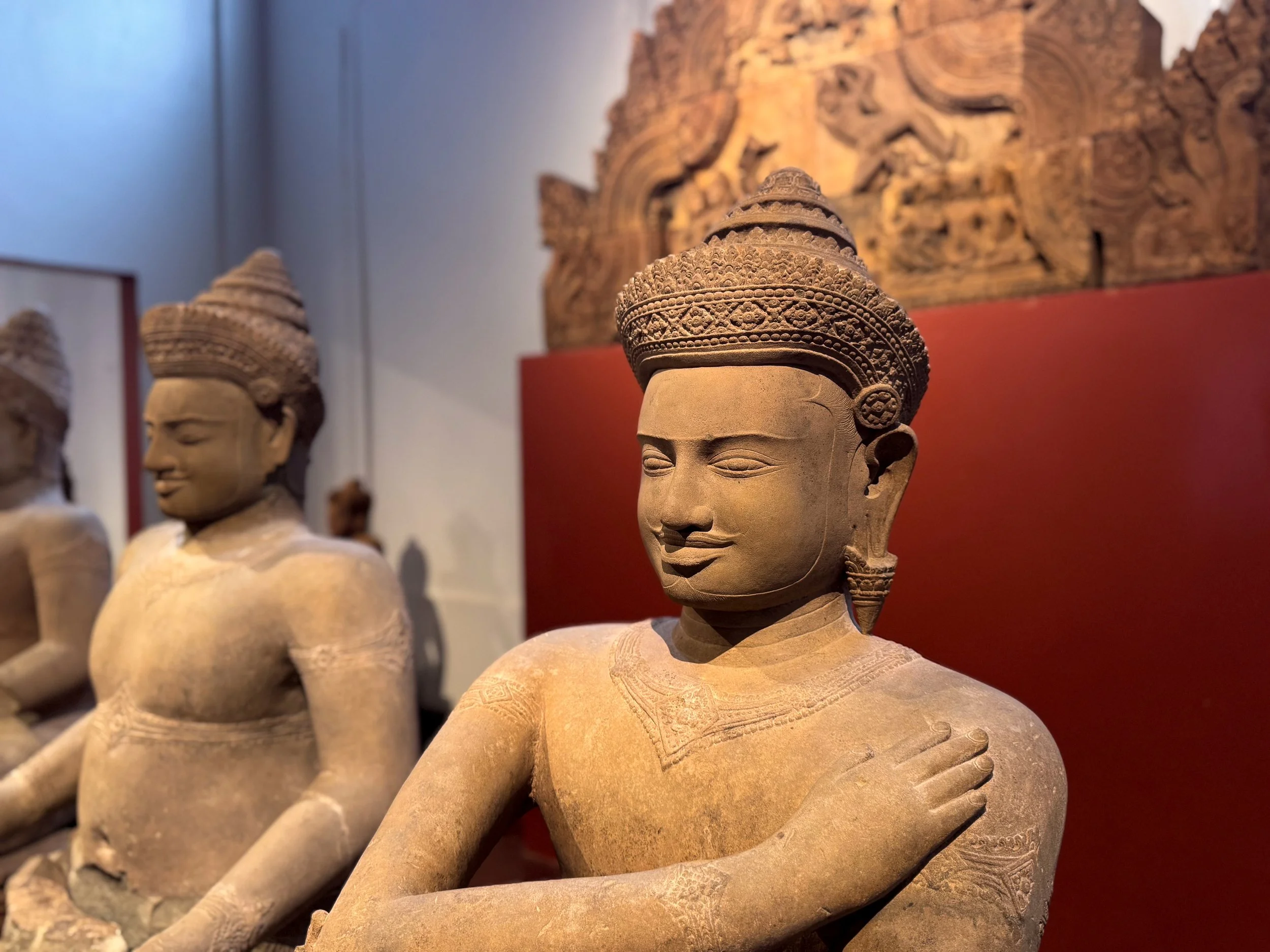
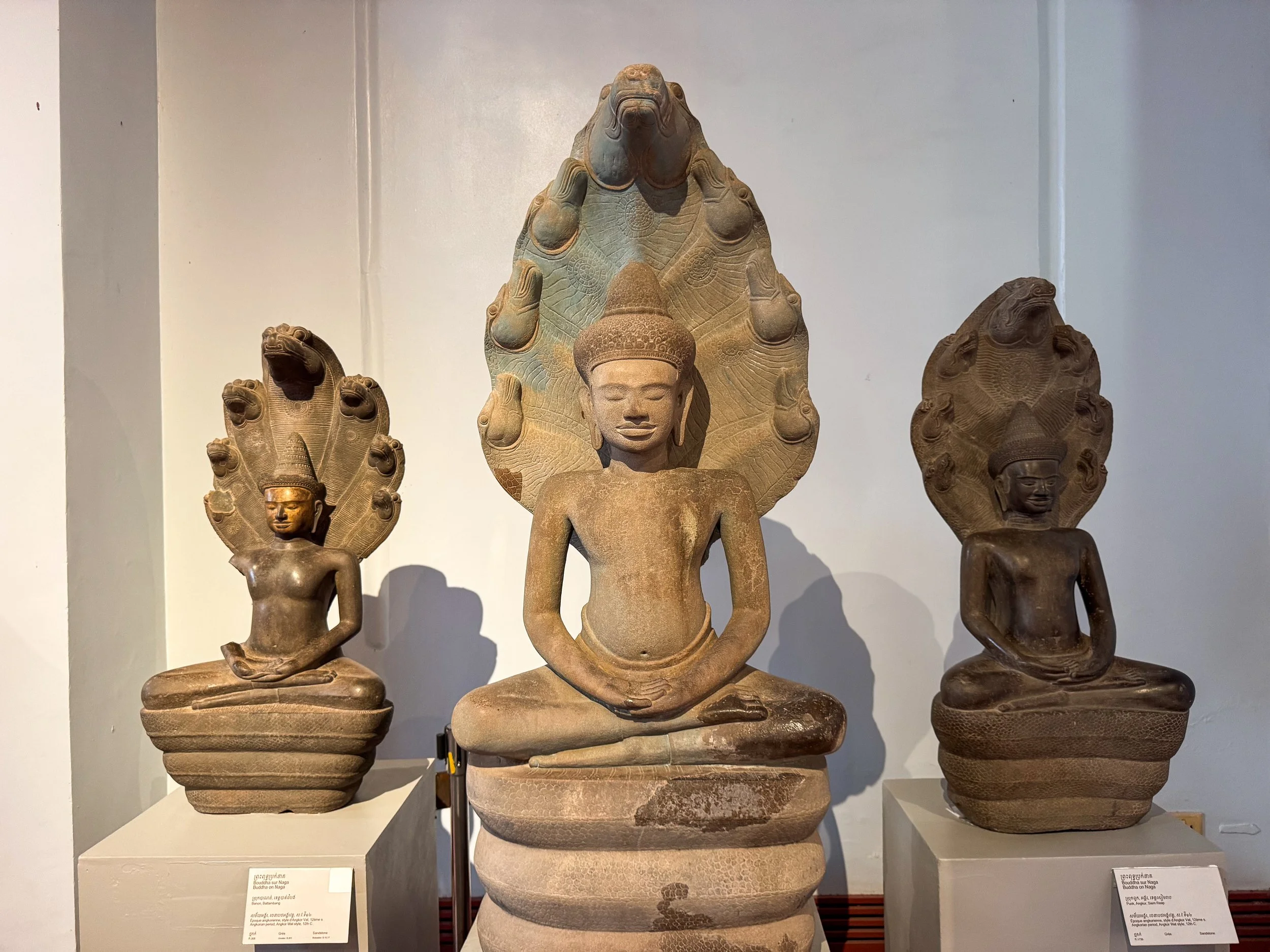
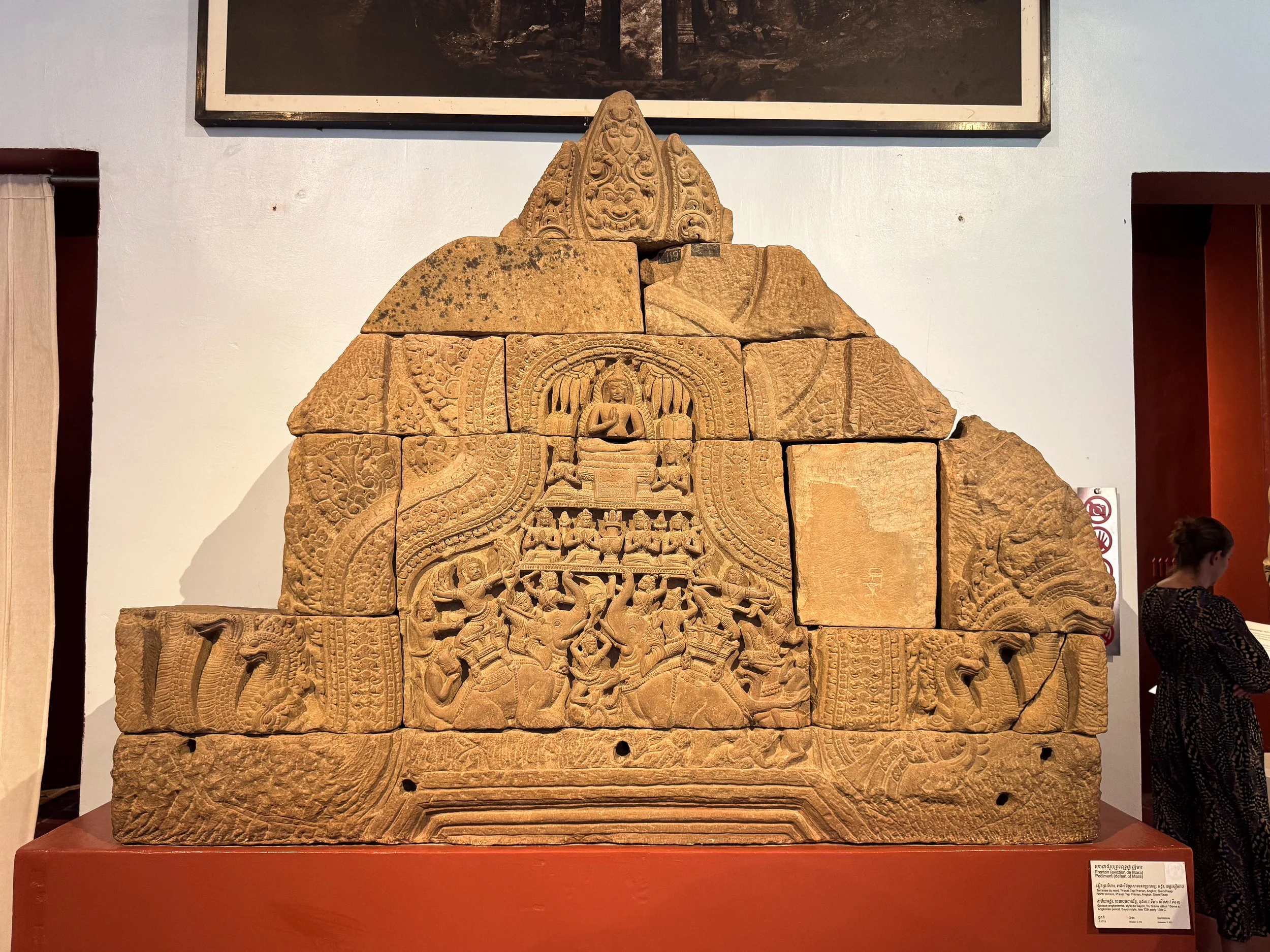
National Museum of Cambodia. A fully red colored Khmer style building housing historical artifacts from across Cambodia. The museum exhibits ancient bronzes, relics from temples, stone sculptures of Hindu gods, Buddha, Khmer royalty and warriors, stolen and recovered objects. At the center of the museum in an outdoor courtyard with koi ponds and walkways to admire the museum’s design.
SOSORO - Preah Srey Museum. A museum dedicated to the role of currency throughout Cambodia’s history from ancient times to modern day. It displays maps, historical records and precious coins from ancient Cambodia and the Khmer Empire. No photos are allowed to be taken inside.
Genocide Museum. Cambodia is a beautiful country that underwent a very dark and tragic past not so long ago. The Khmer Rouge came to power and forcibly displaced, starved, tortured and killed millions of Cambodians throughout the mid to late 1970s. The museum is one of the former prisons used to carry out the atrocities. We listened to the audio guide as we solemnly toured the museum and its former cells. Throughout the cells are thousands of photos of those imprisoned on its grounds, graphic accounts of what happened here and human remains.
See the Parks & Monuments
Royal Palace Park. A park in front of the Royal Palace with views of its grand gate. It’s a popular evening spot where Buddhist monks gather, families relax and people feed pigeons.
Wat Botum Park. A park lined with grassy lawns, fountains, Cambodian monuments and public plazas. It leads from the Royal Palace to the Independence Garden.
Independence Garden. A grassy park in the middle of one of Phnom Penh’s main roads with multiple monuments including a statue of the King of Cambodia and a red fountain featuring a seven headed snake deity.
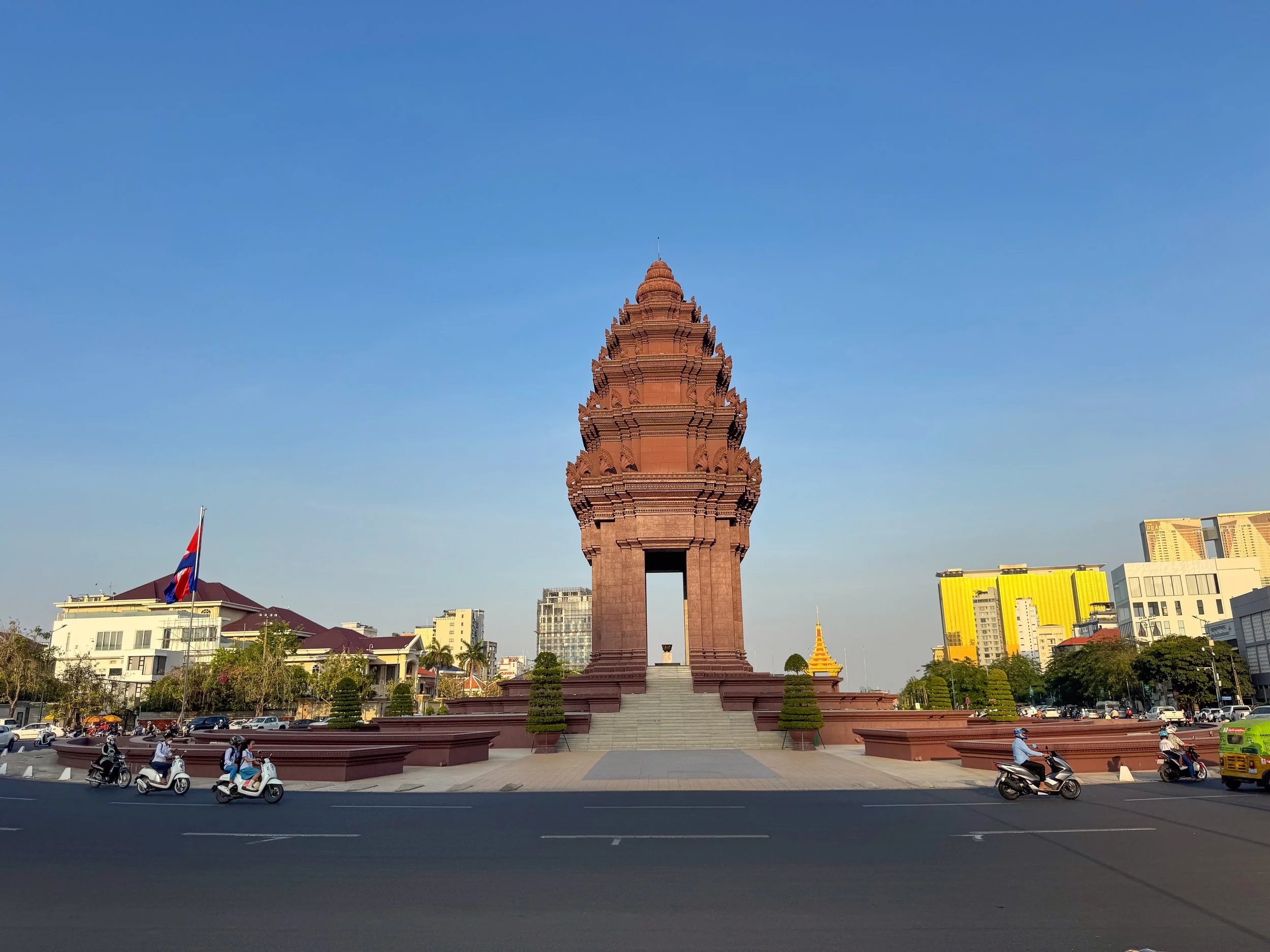
Independence Monument. A red stone stupa in the middle of a roundabout at the end of the Independence Garden commemorating Cambodia’s independence from France.
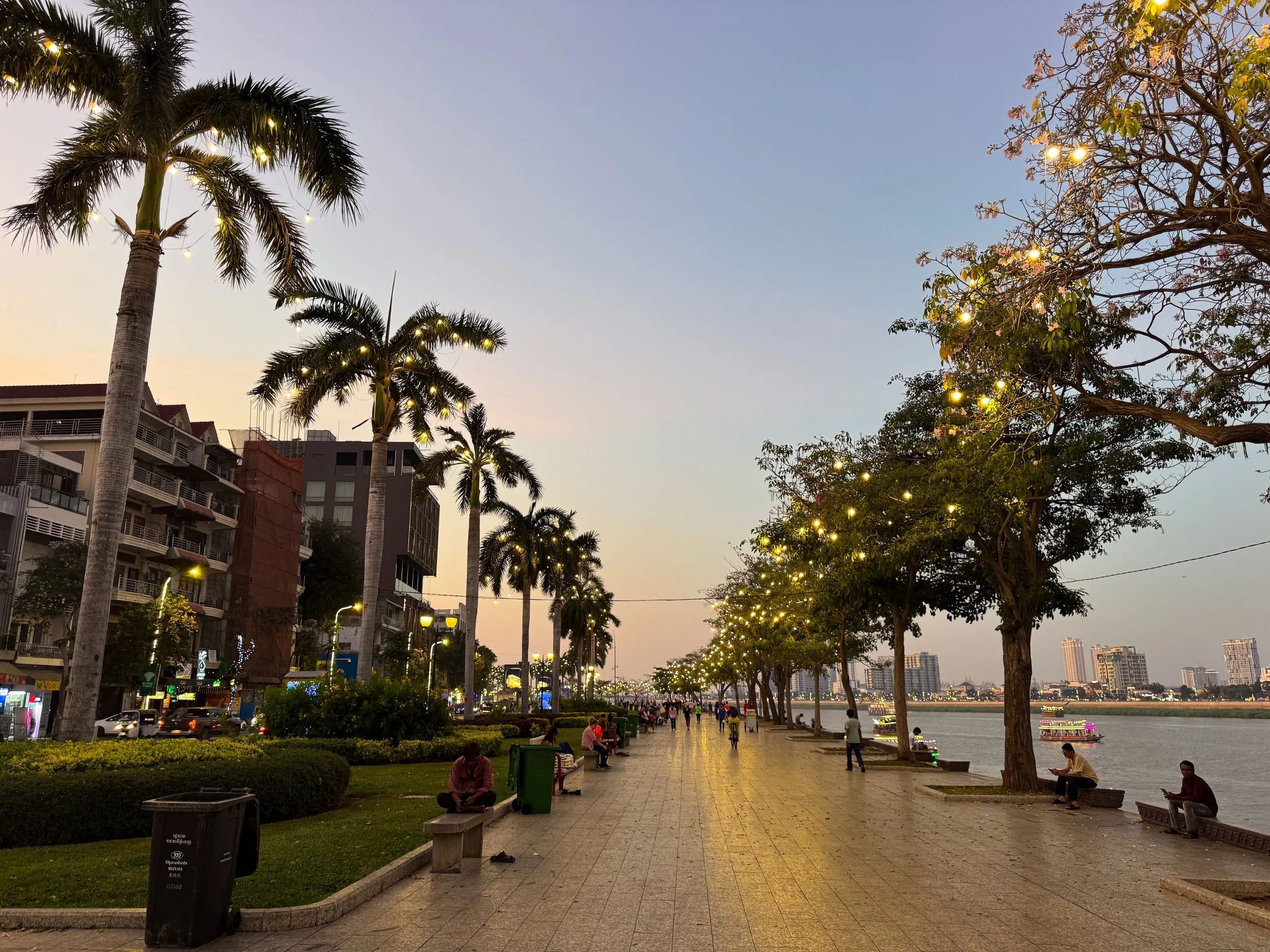
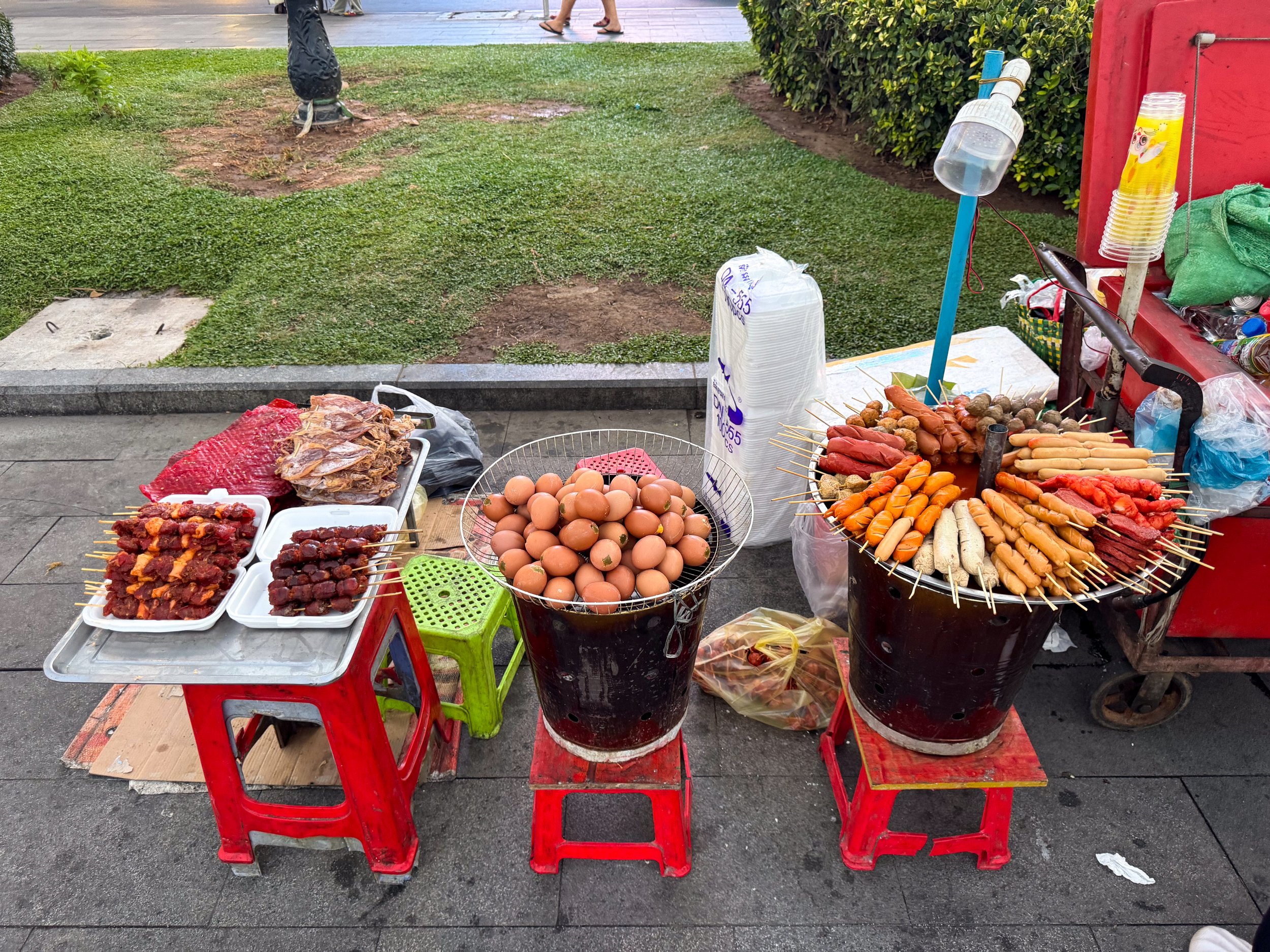
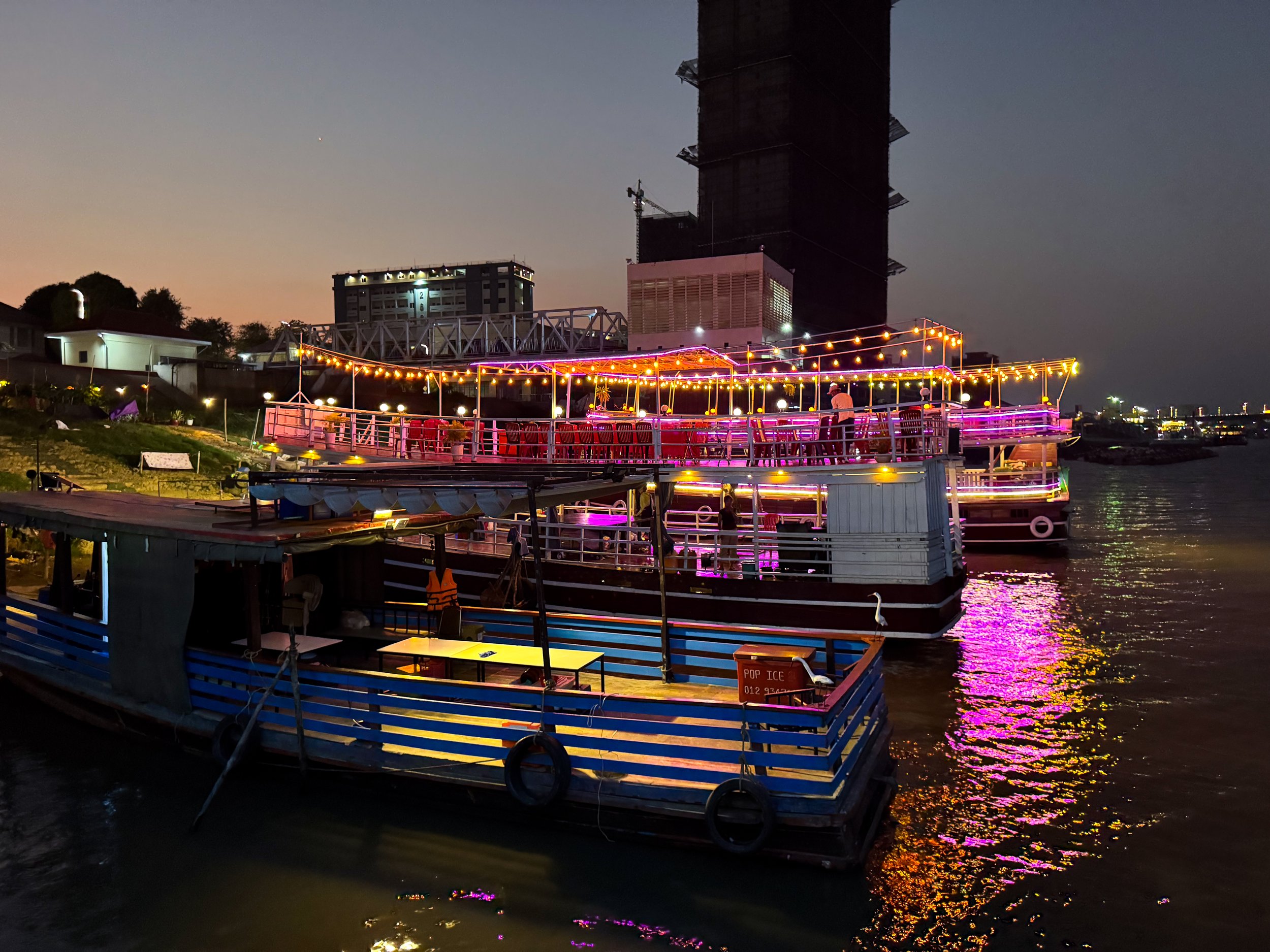
Sisowath Riverside Park. A palm lined promenade along the banks of the Tonle Sap River. It’s a popular spot to walk at night with boat captains selling sightseeing tours and street food vendors. The road across from the park is a popular spot for nightlife with restaurants, bars and clubs.
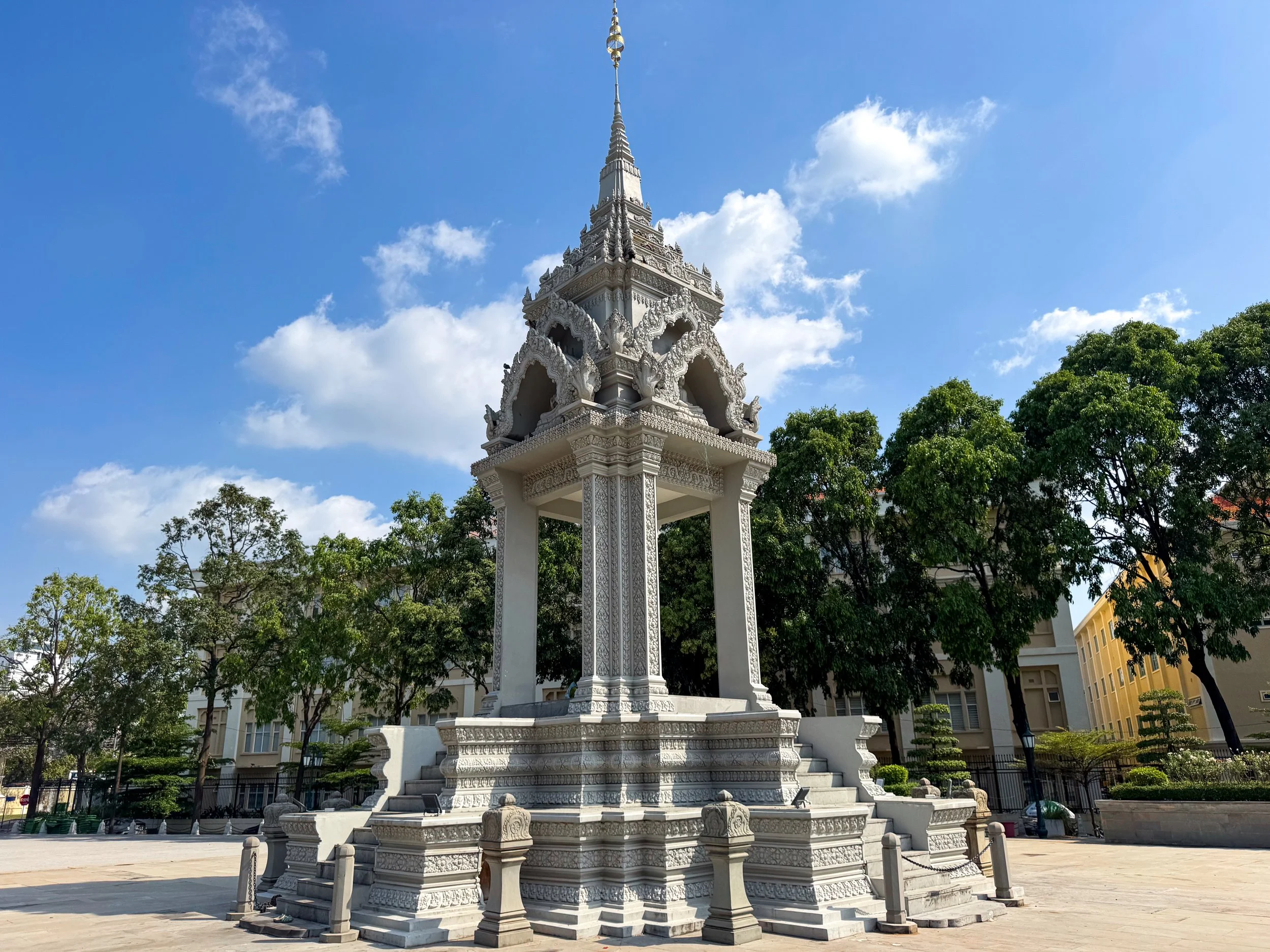
Yeay Penh Statue. A small white monument with ornate Khmer designs housing a bronze statue of Yeay Penh, the founder of the city.
Shop the Markets
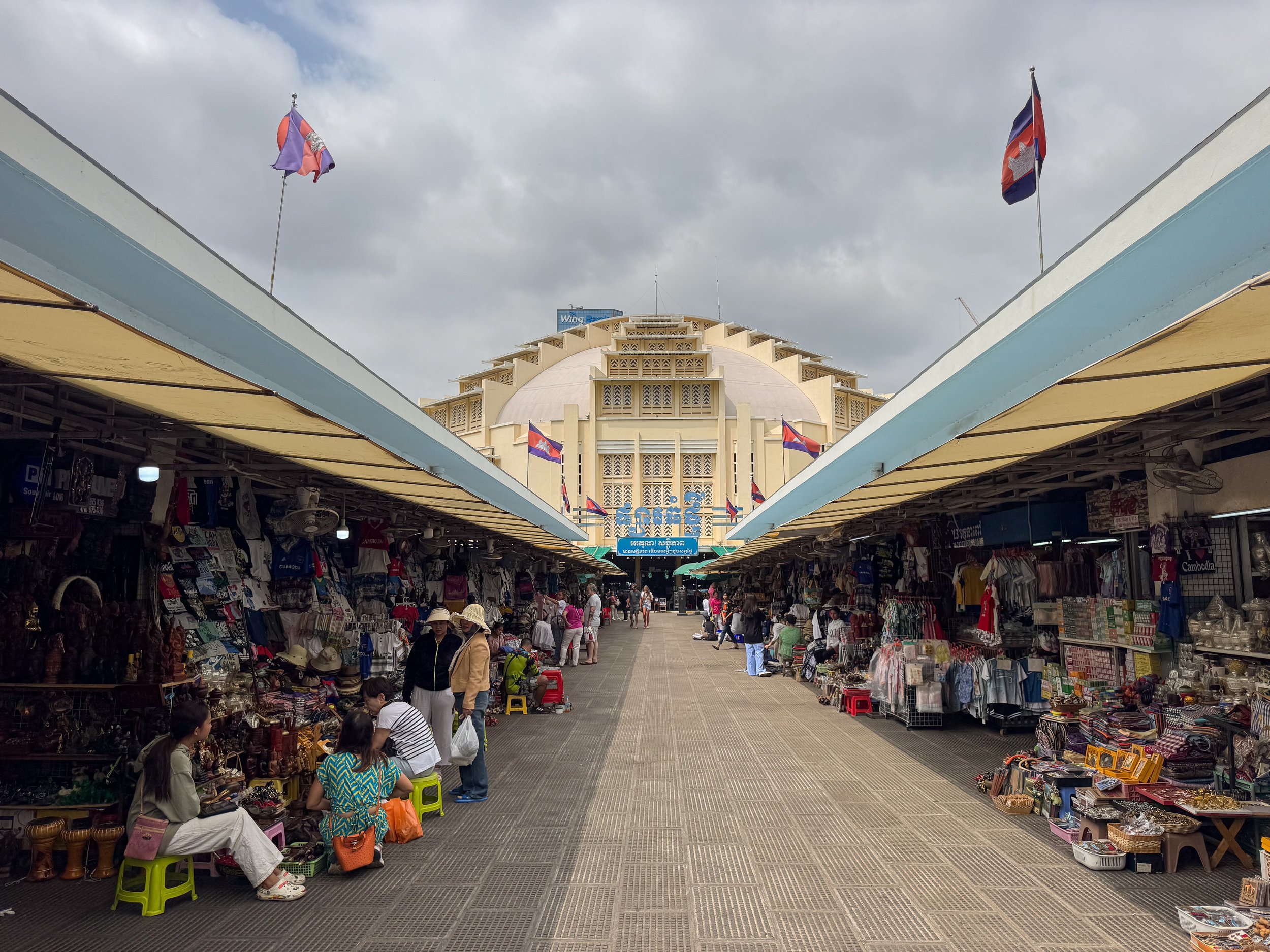
The Central Market. Recognizable by its pale yellow color, art deco windows, large dome and four halls extending from it. Inside, vendors sell all manner of goods including fruits, vegetables, herbs, meats, live seafood and chickens, coffee, clothing, shoes, jewelry, cookware and toys. It’s a place where locals come to shop while welcoming tourists and travelers. Make sure to bring cash and plan to haggle.
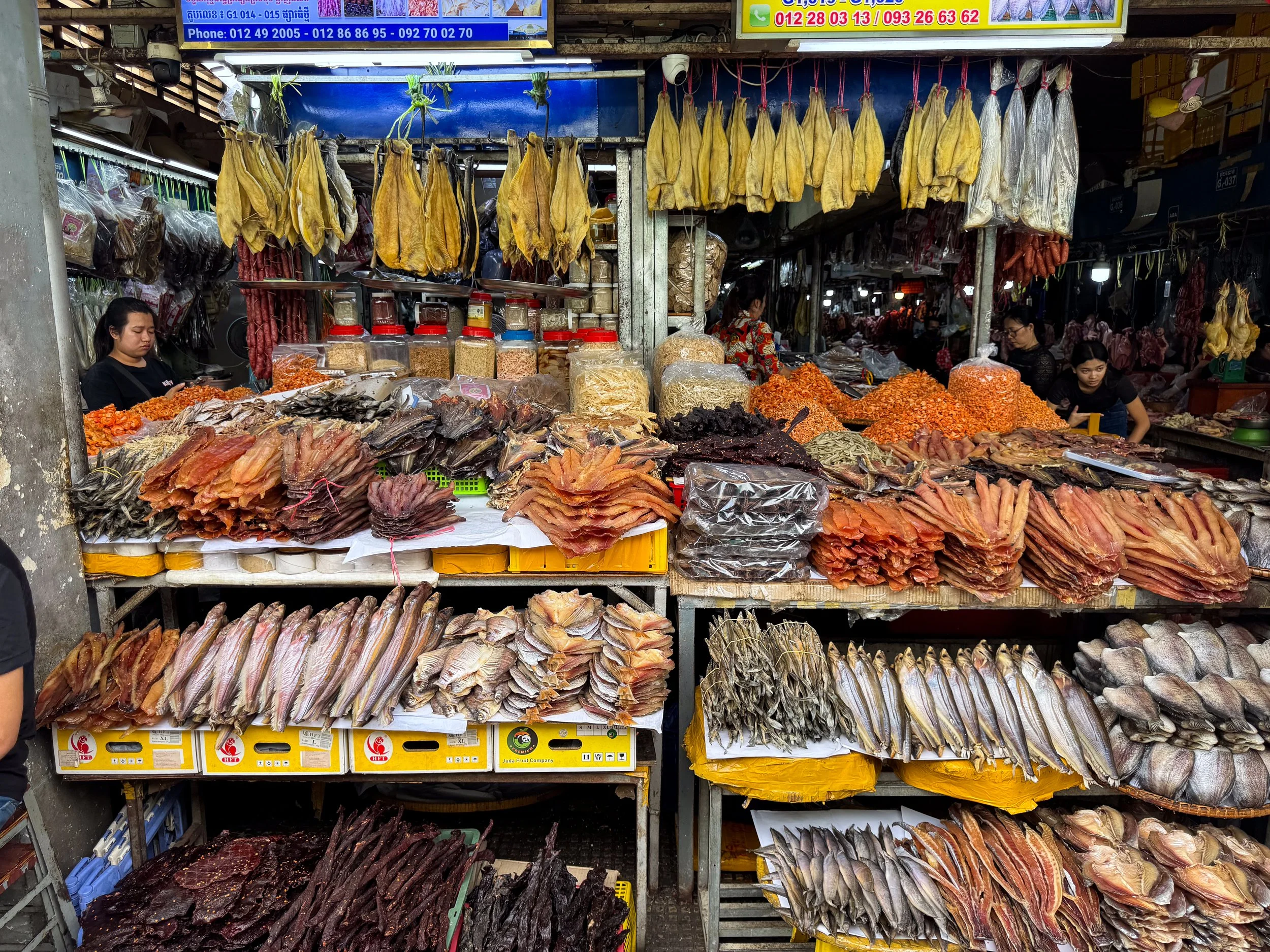
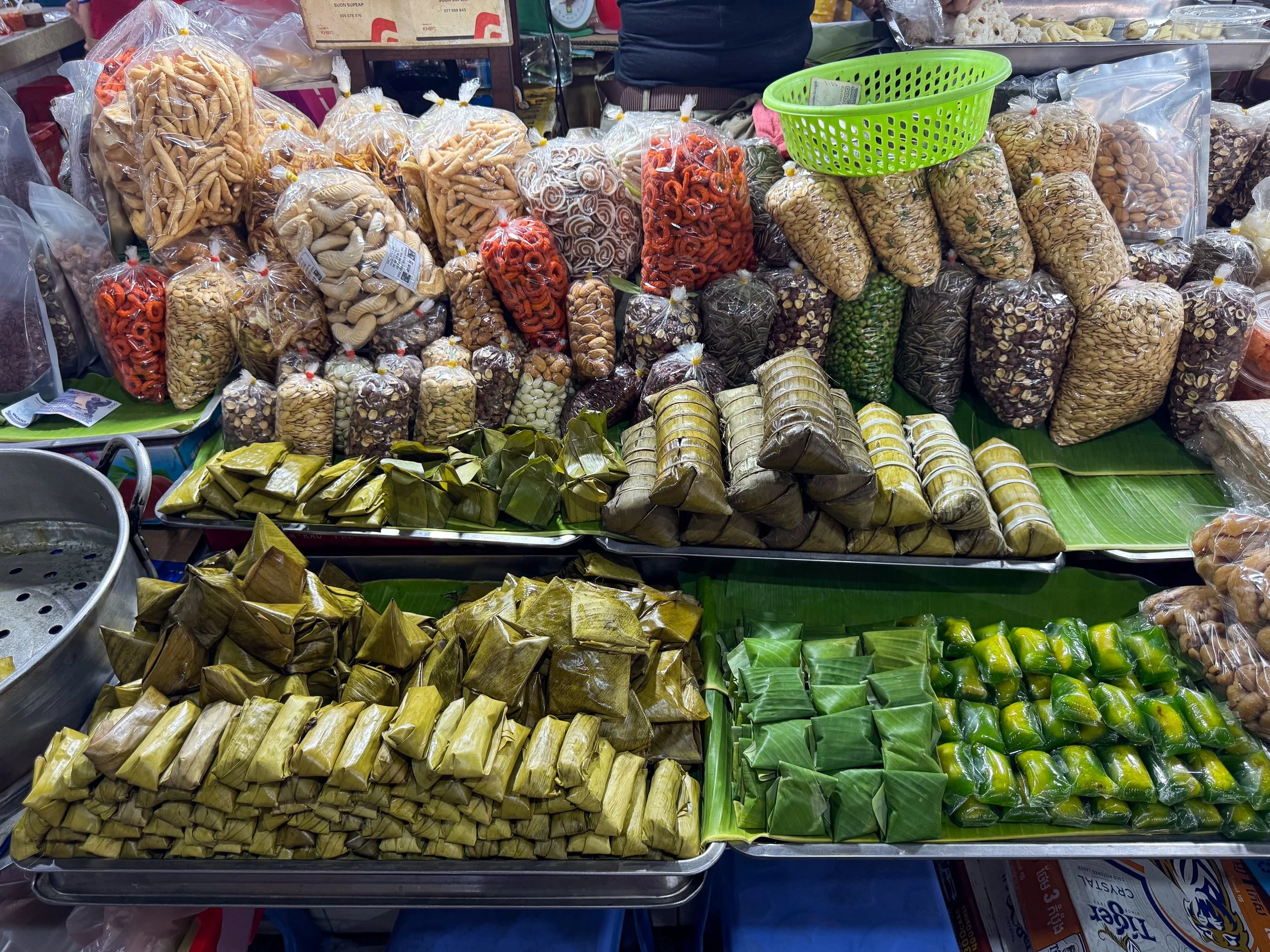
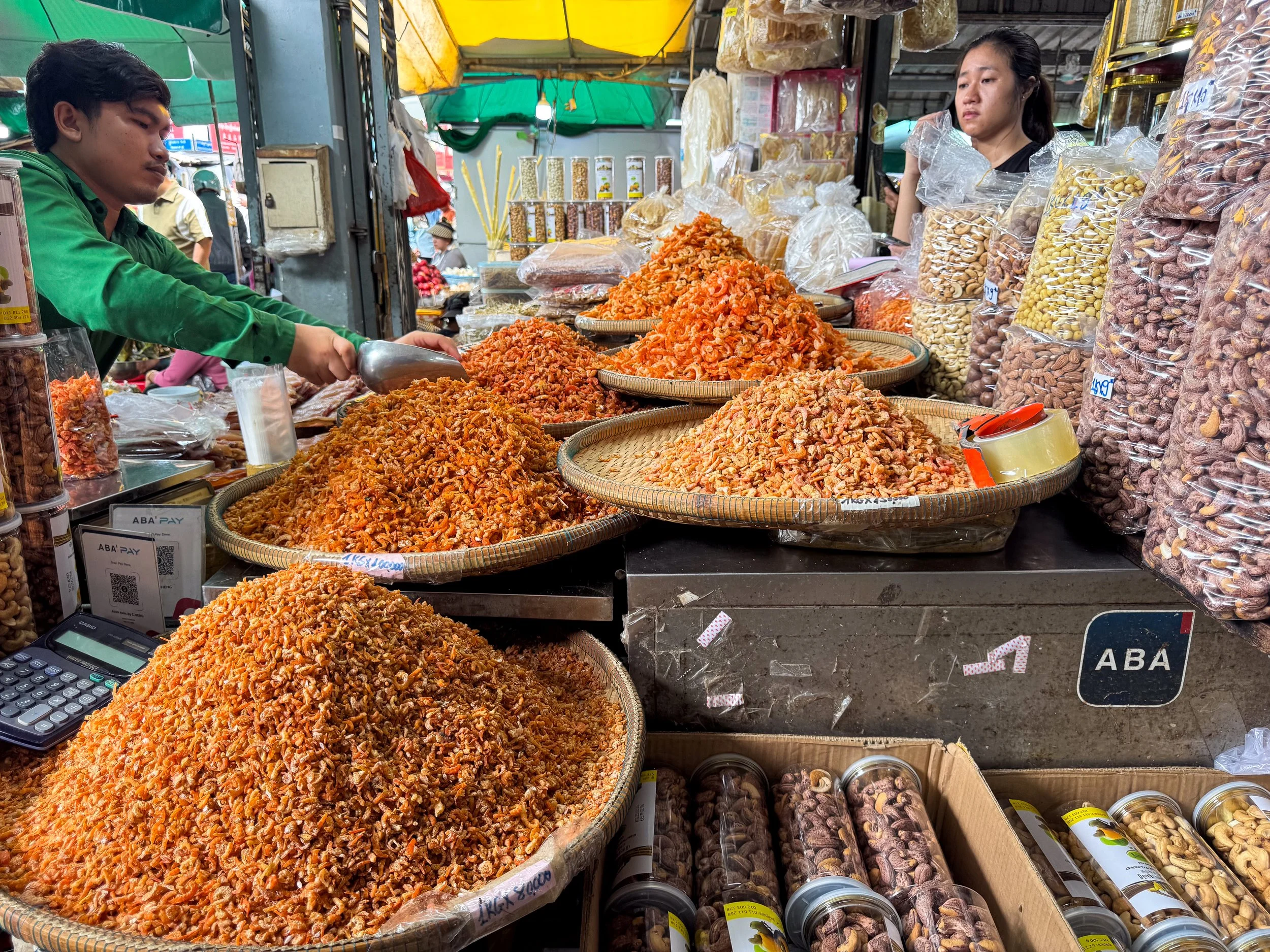
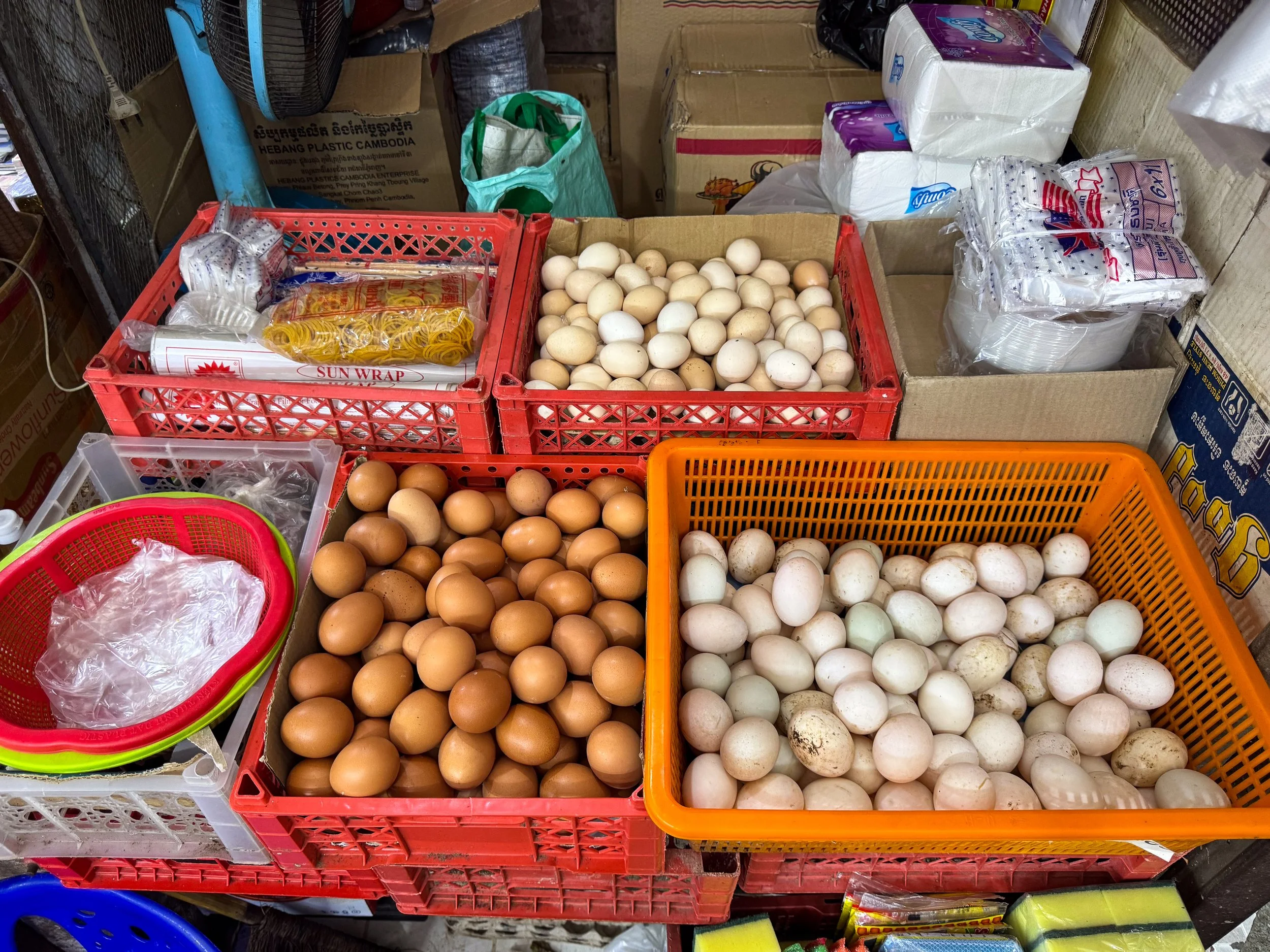
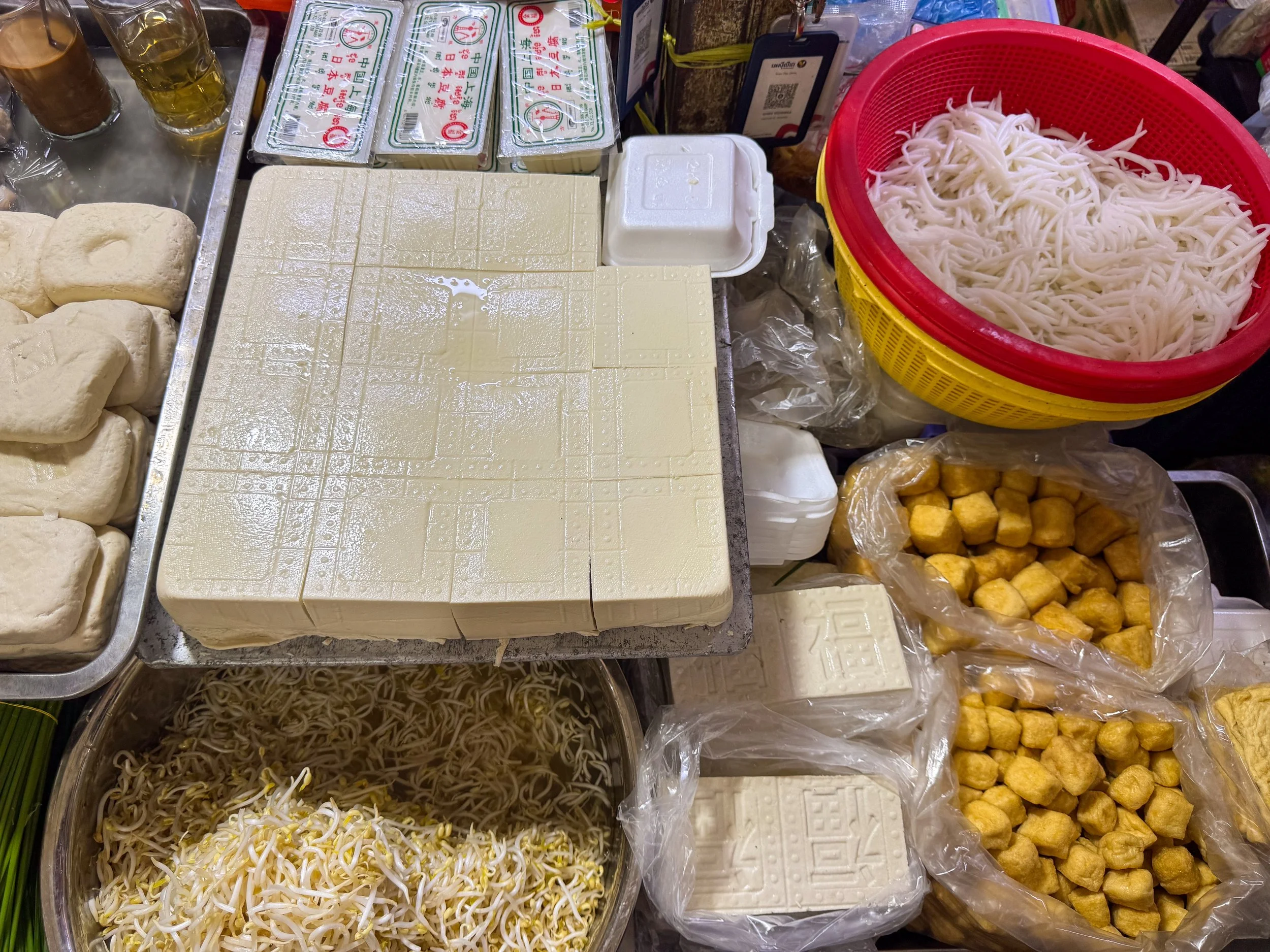
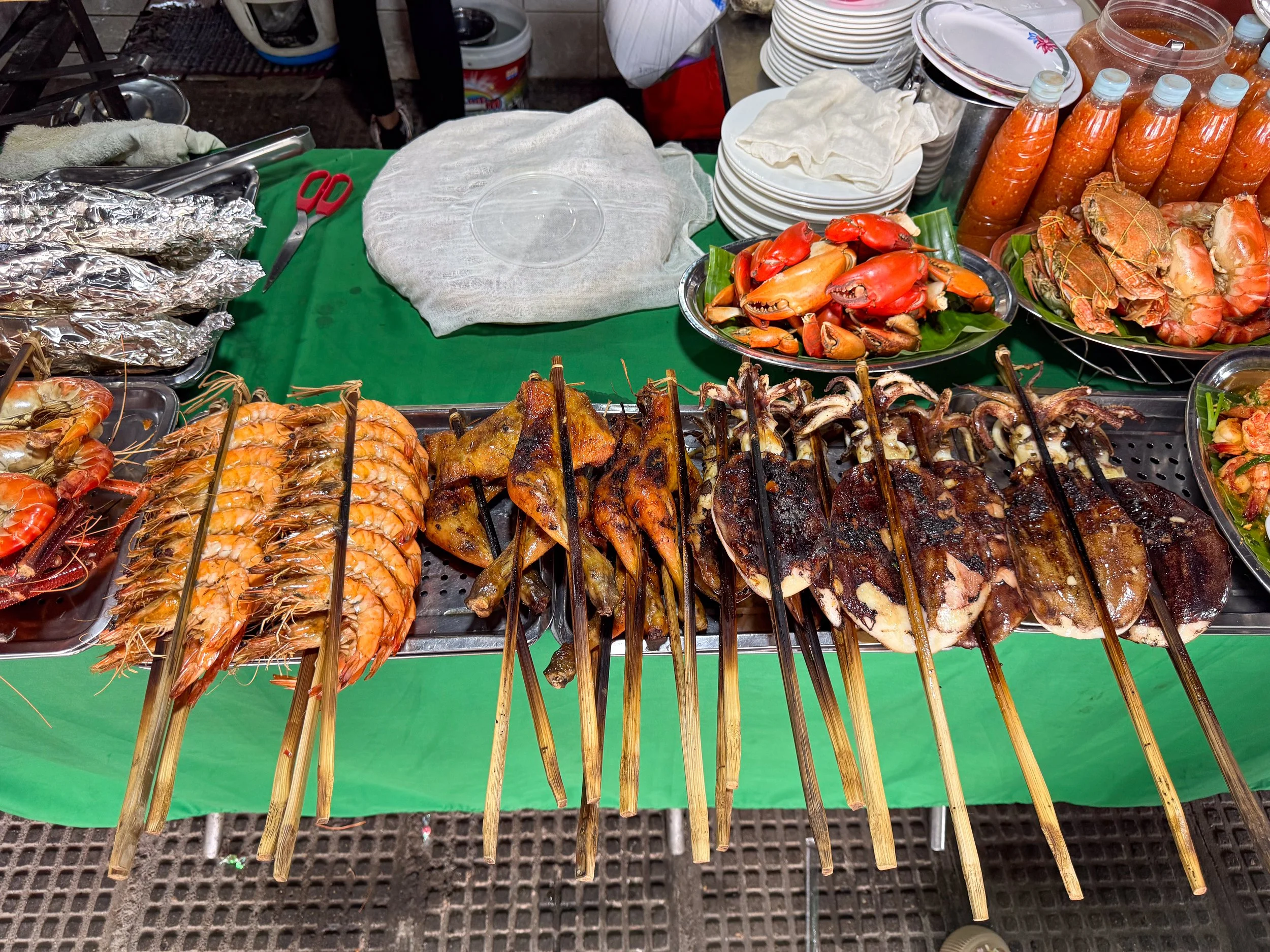
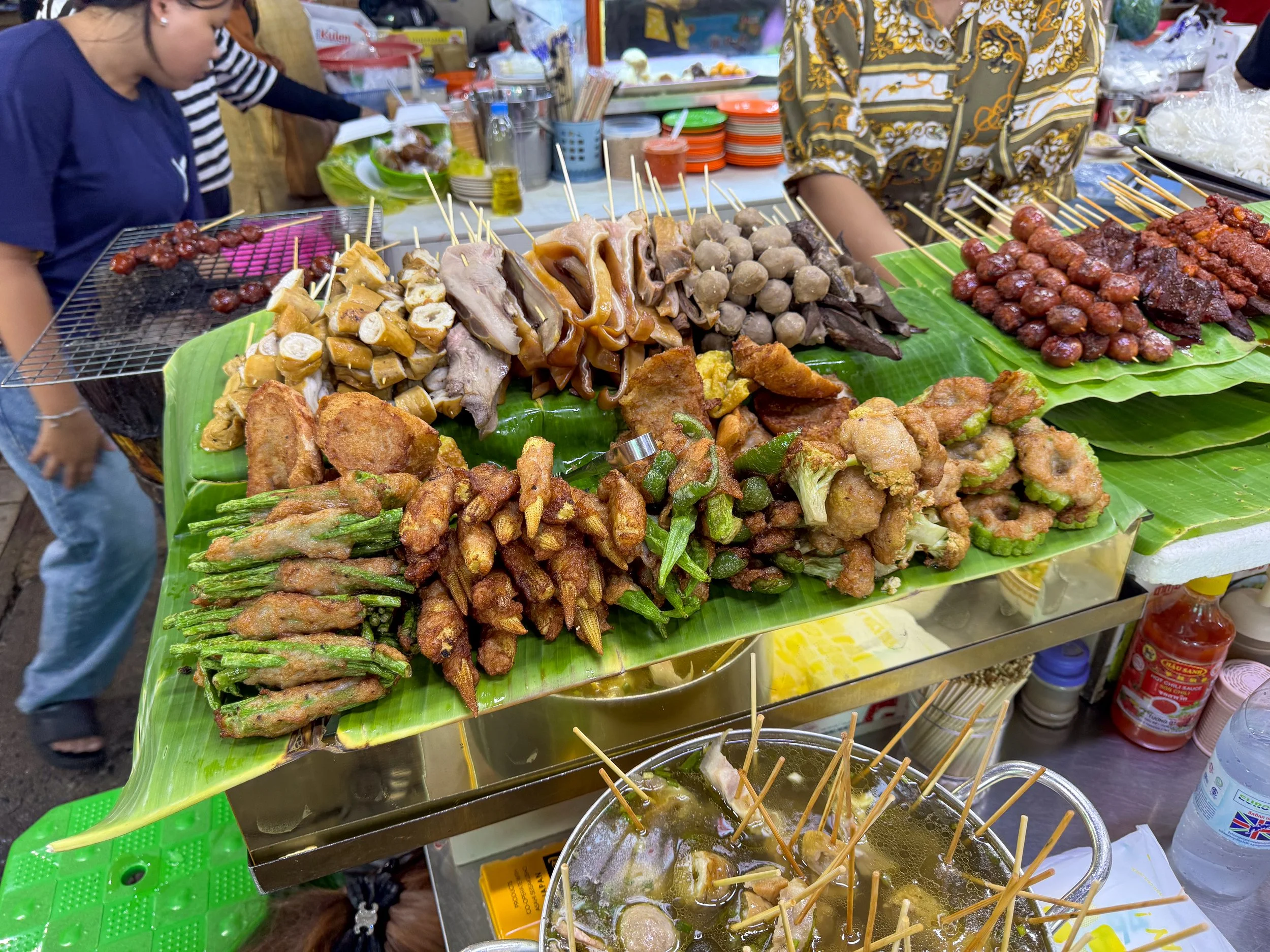
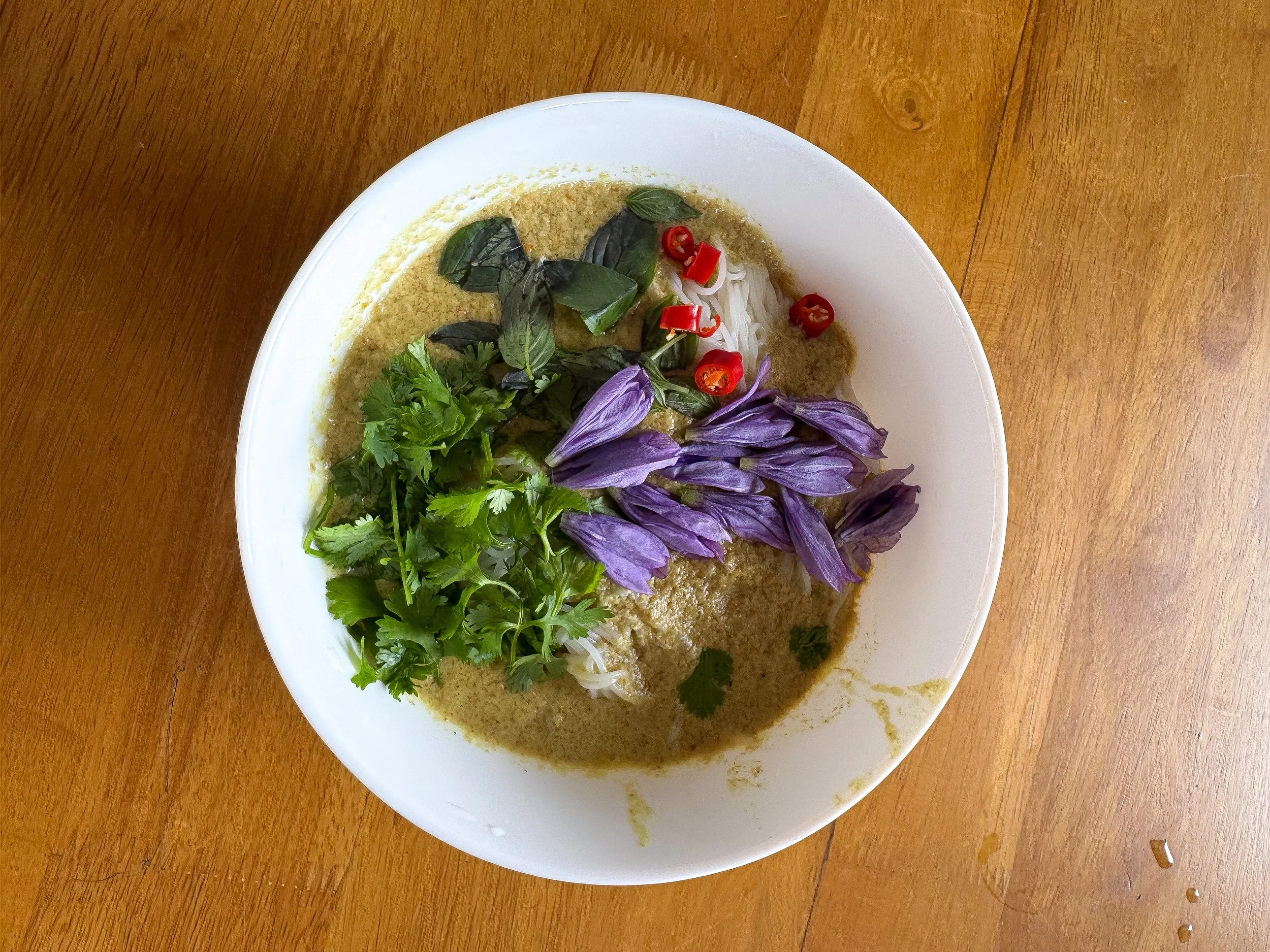
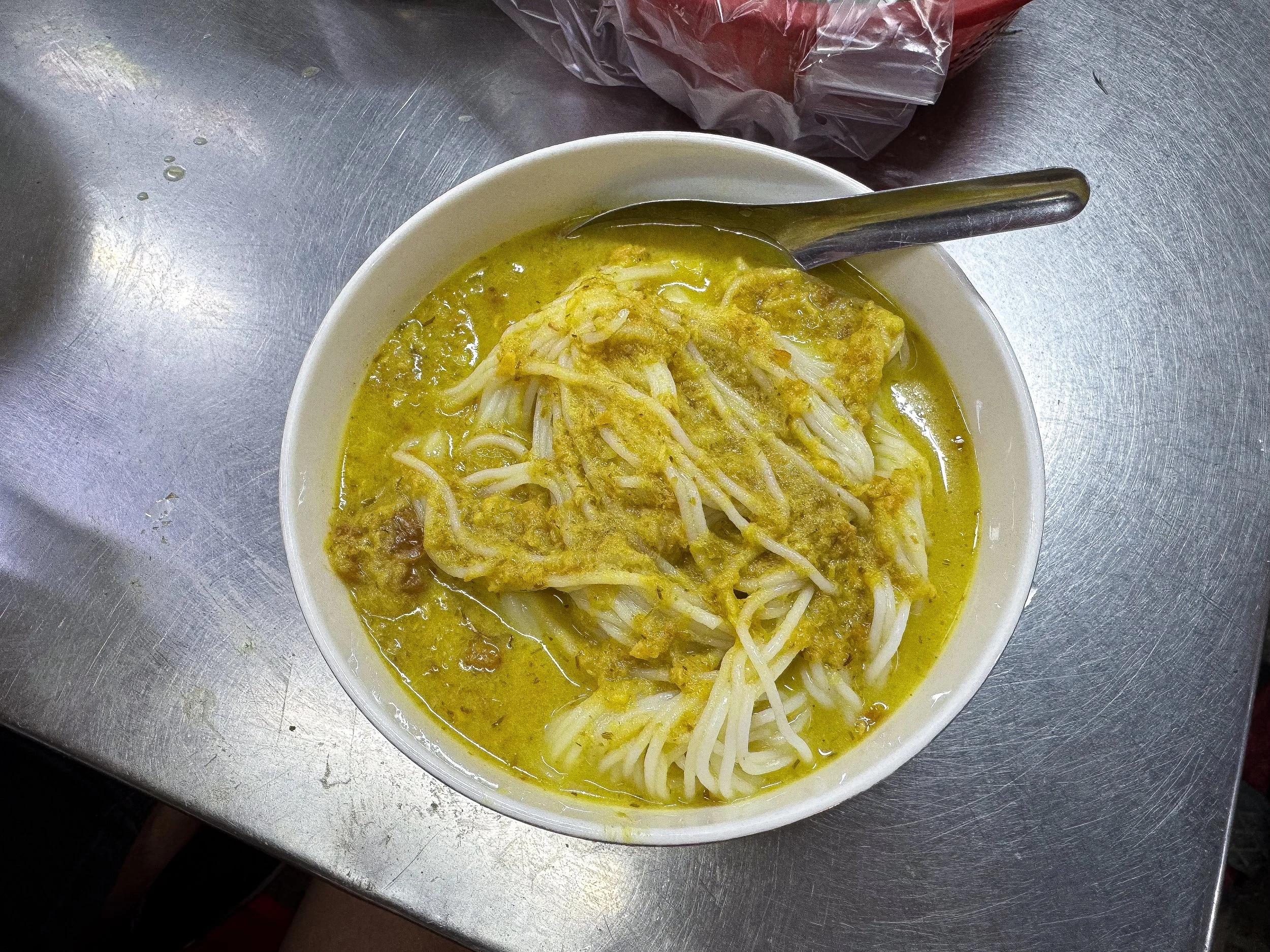
We shopped for groceries, buying local ingredients like banana blossom, tofu, bean sprouts, rice noodles, dragonfruit, bitter melon, lily stems, kampot pepper and coconut milk. Our favorite area of the market is the street food stalls. Cooks served all types of noodle dishes, grilled seafoods, steamed dumplings and fried insects, including tarantula! We ordered a bowl of Nom Banh Chok, a coconut curry with rice noodles and veggies.
The Old Market. A large market with narrow aisles of vendors selling all types of merchandise, fruits, vegetables, meats, seafood, souvenirs, meals and street food. Many locals come here for various services like haircuts and manicures.
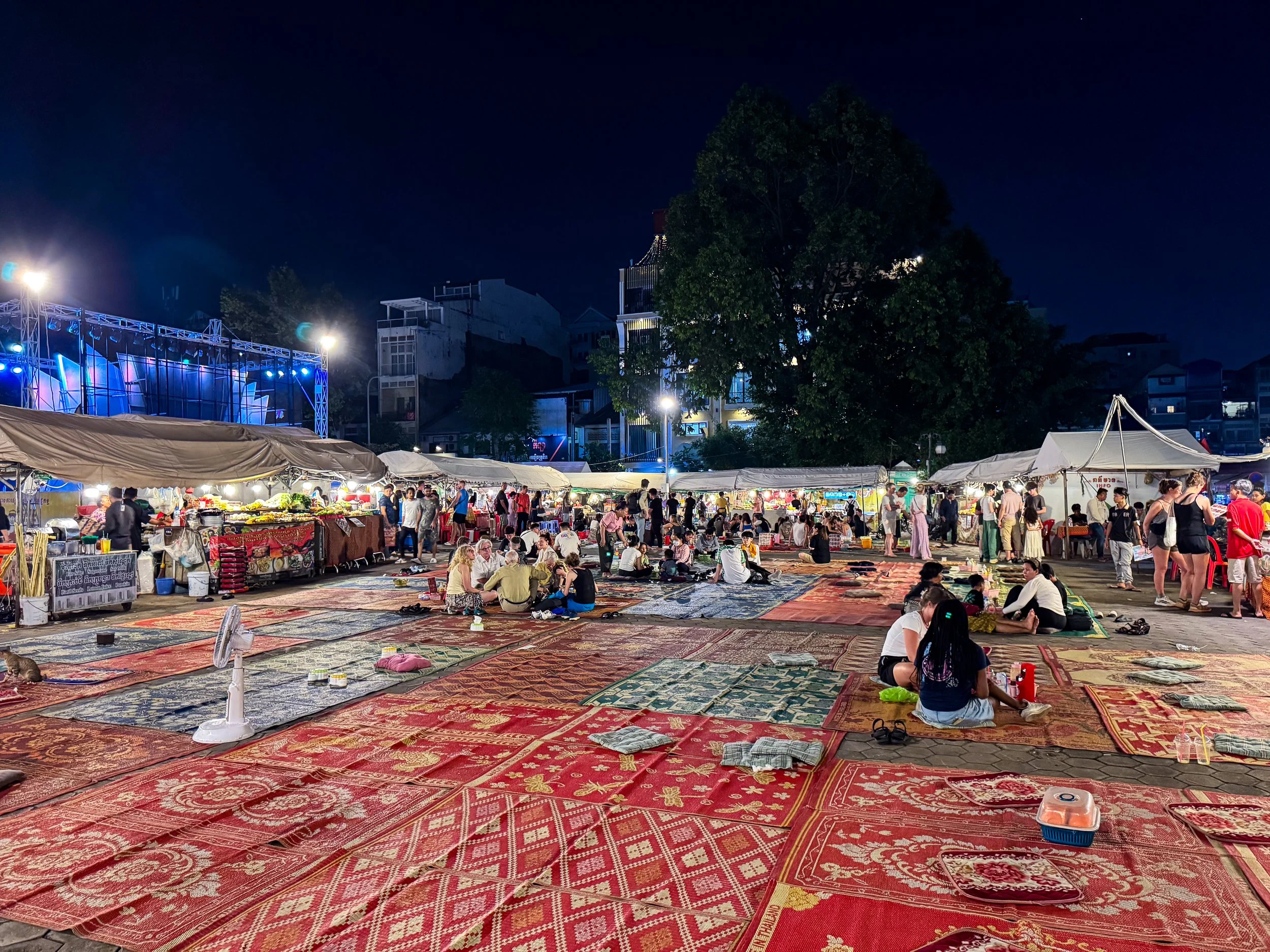
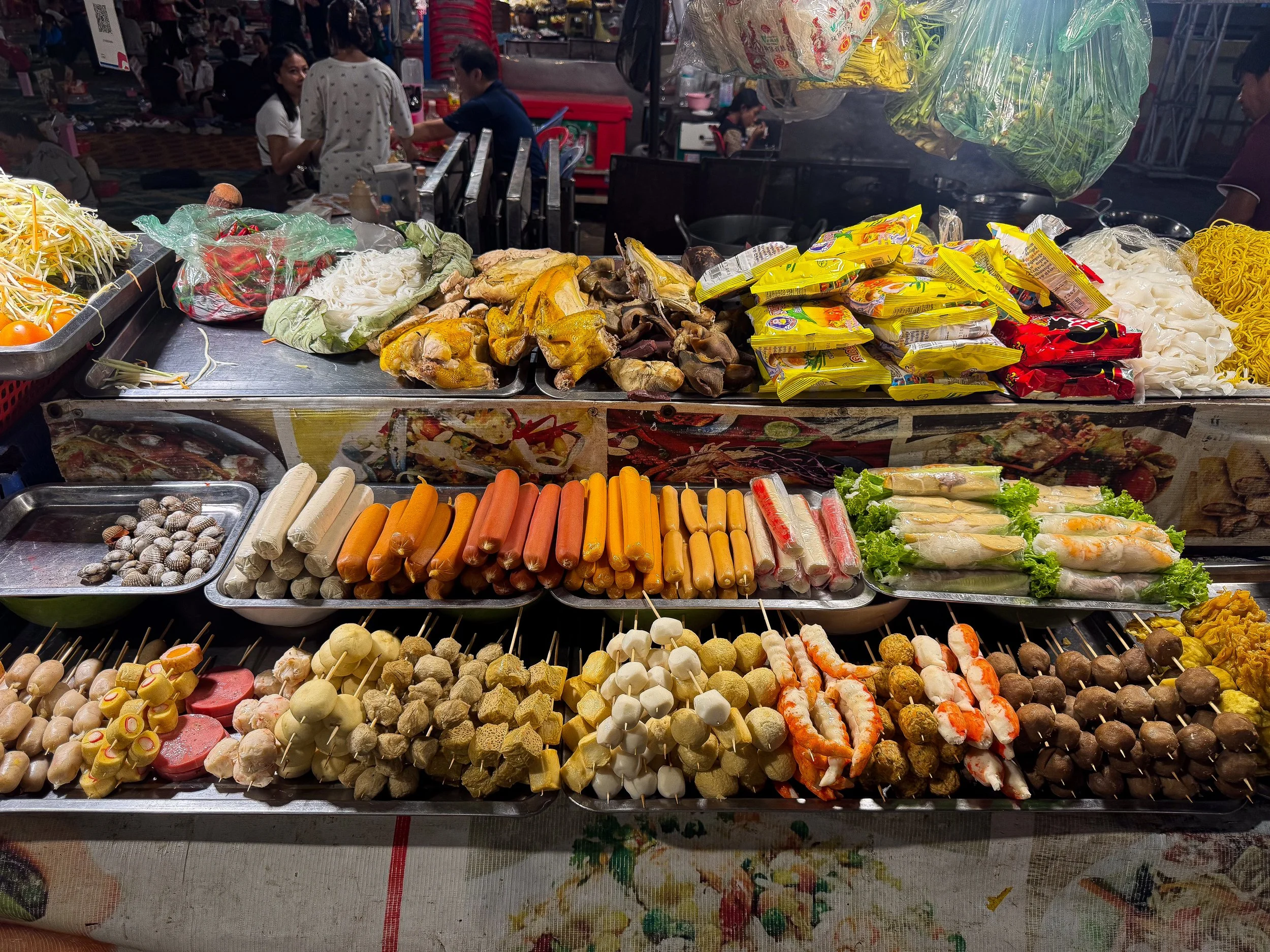
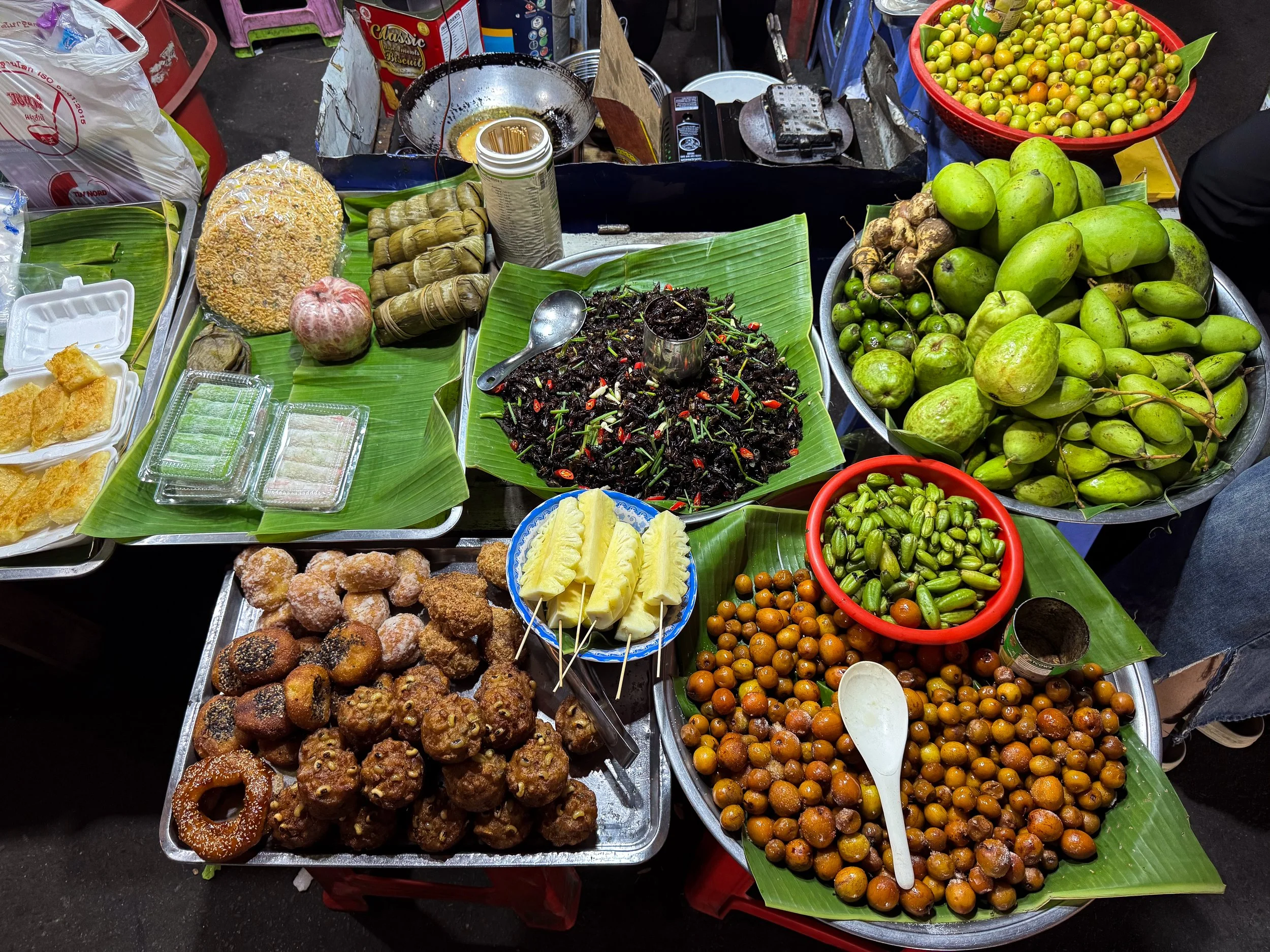
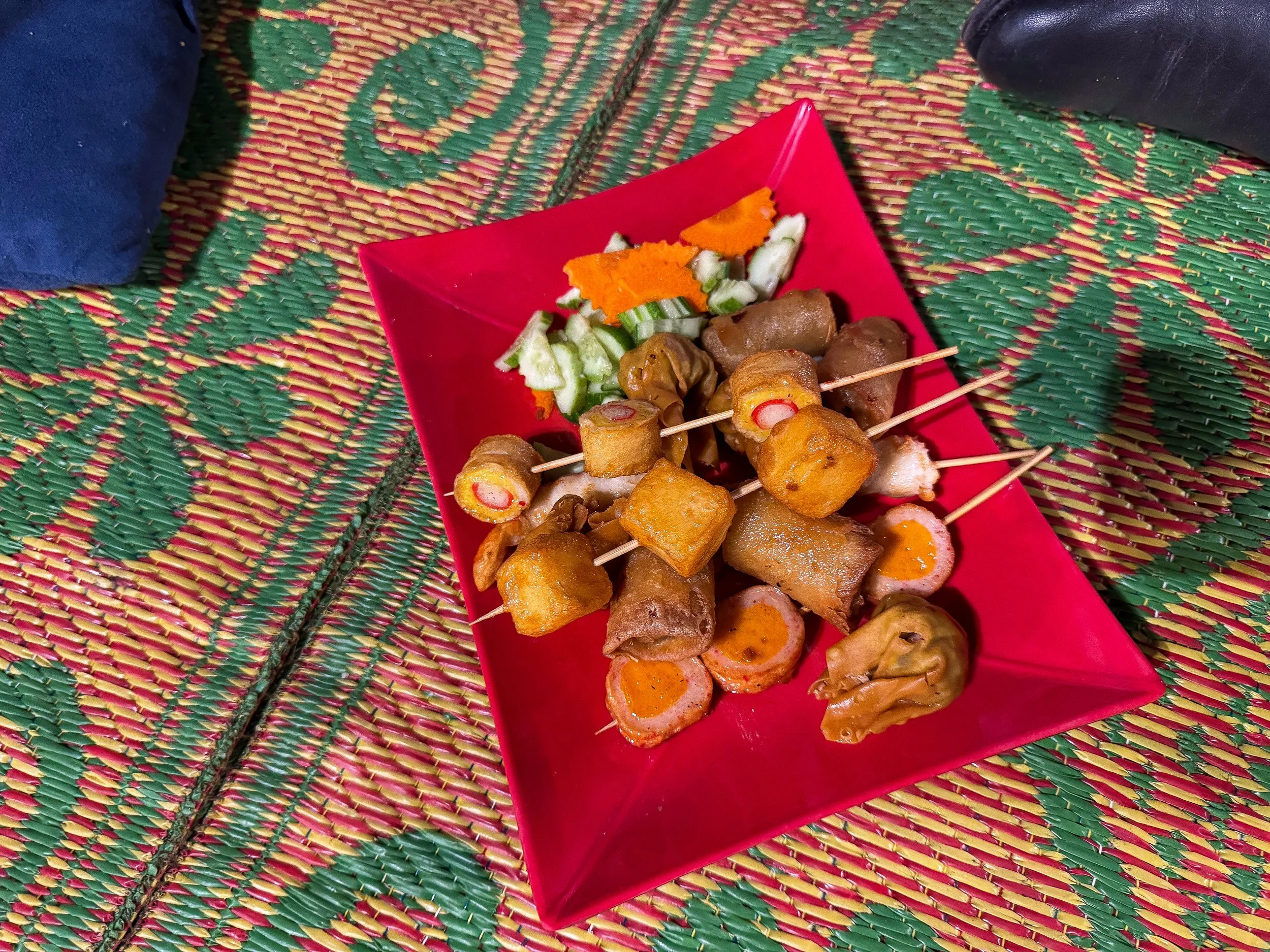
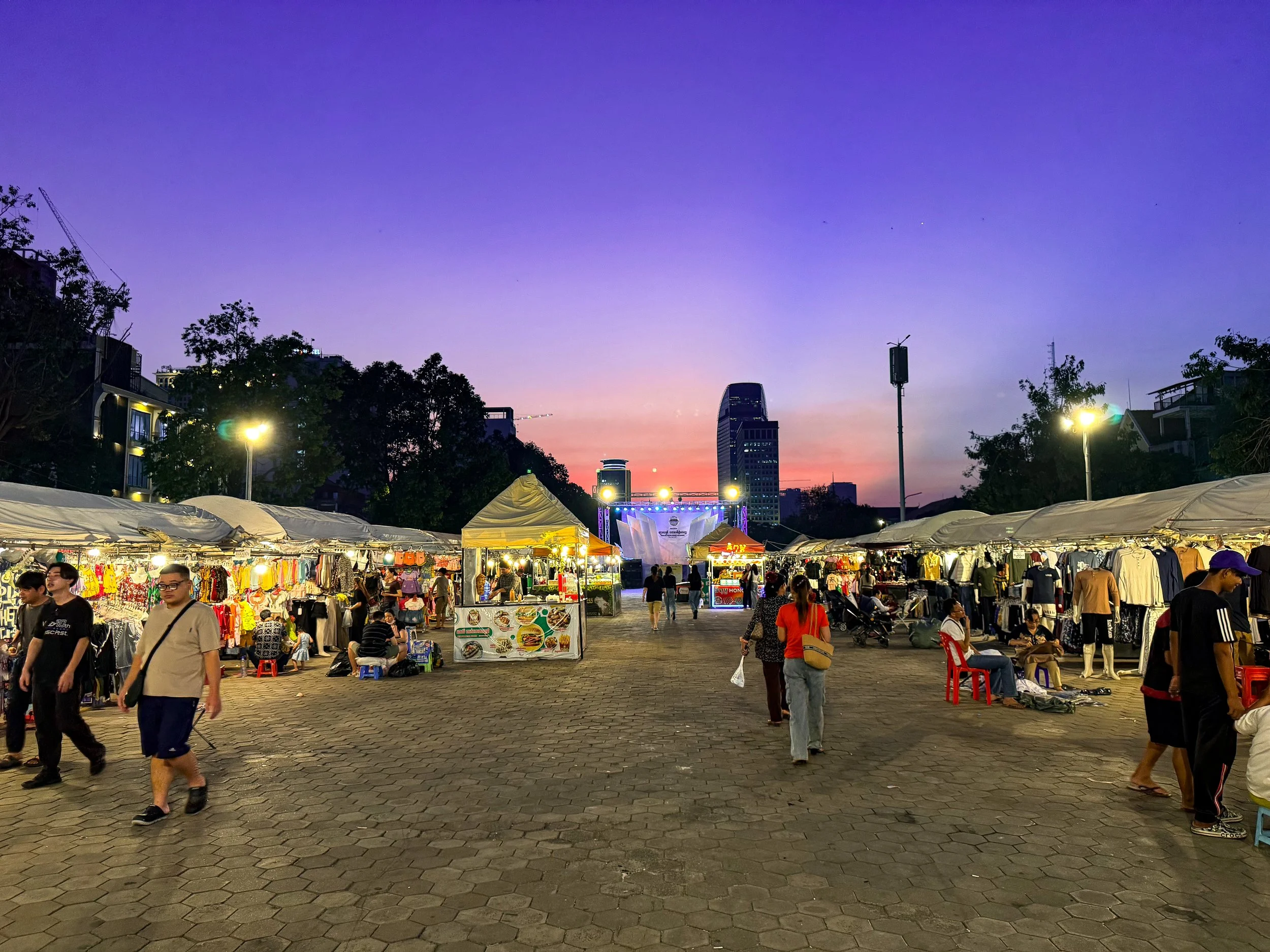

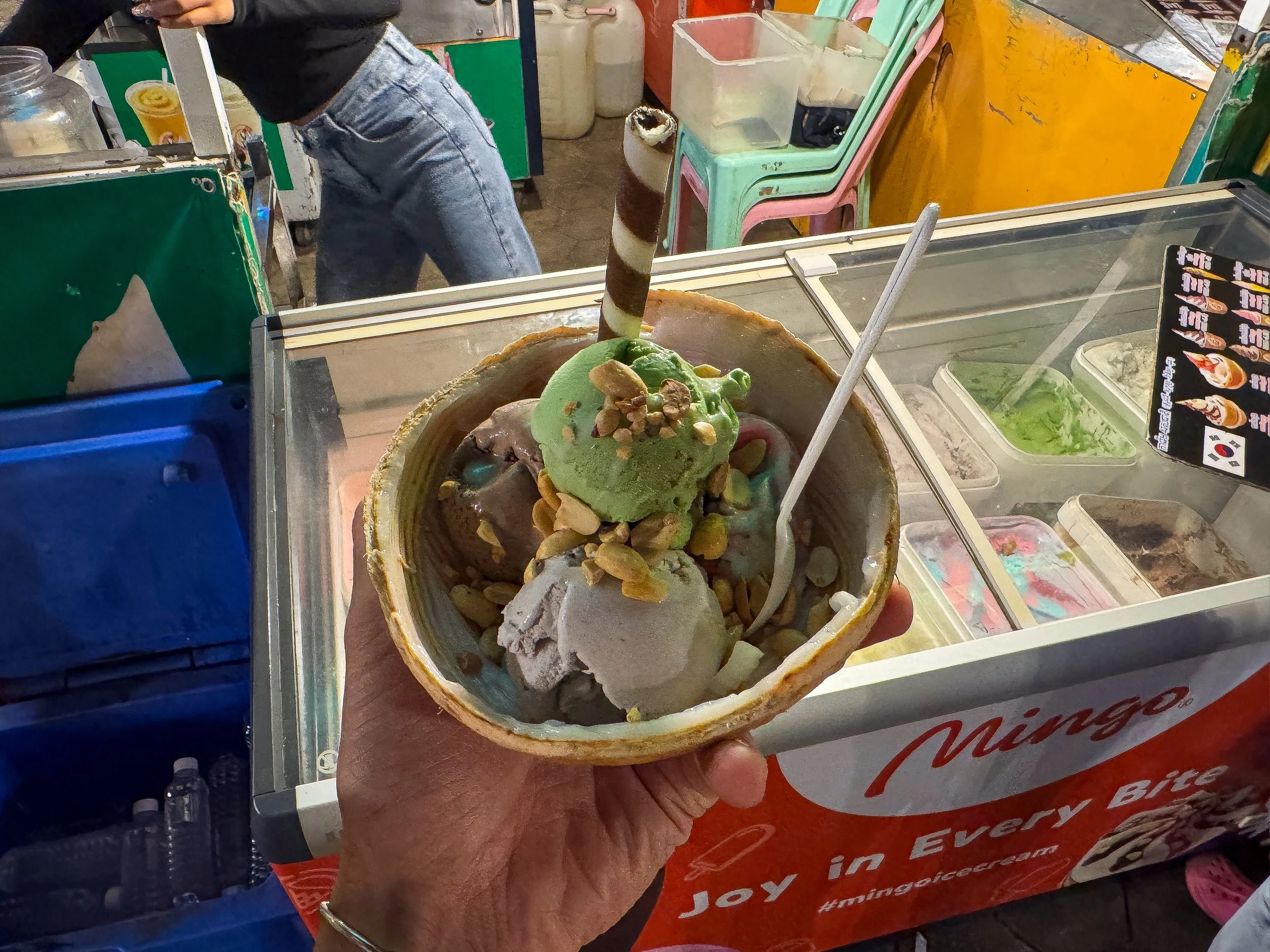
Phnom Penh Night Market. Night markets are a staple of most Asian cities and come to life after dark. The Phnom Penh Night Market is no different. Vendors set up selling clothes, shoes, jewelry, accessories and toys. In the center of it all is a karaoke stage where people muster up the courage to sing out in front of the masses.
One of the best reasons to come here is for the street food! Dozens of food carts surround a plaza blanketed in colorful carpets and cushions. Each vendor sells a vibrant display of fried and barbecued skewers, spring and summer rolls, dumplings, rice and noodle dishes. The food is extremely inexpensive and a fun way to try Cambodian cuisine. We ordered several veggie and seafood skewers then chose a carpeted spot to enjoy dinner.

Things to Do
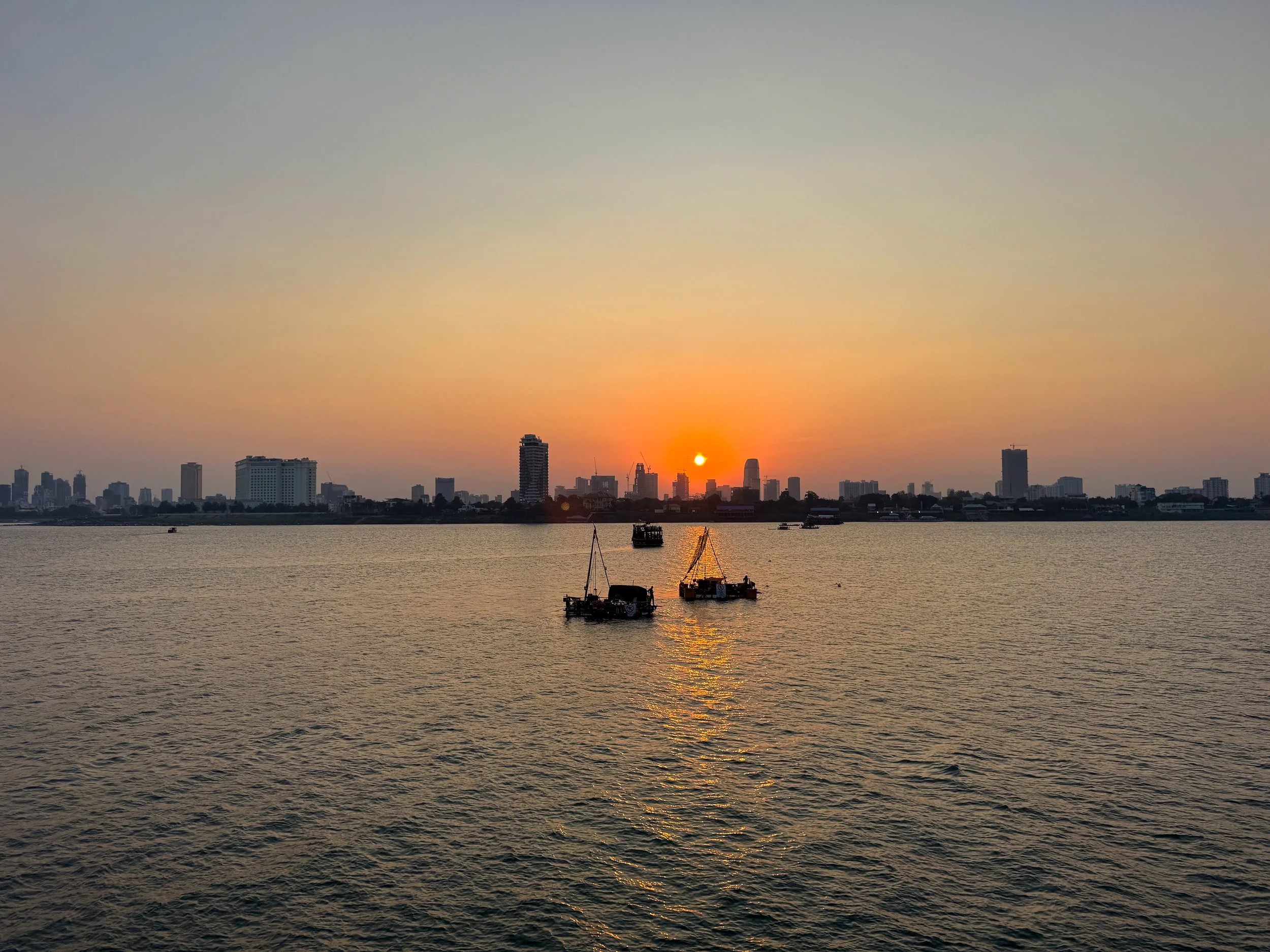
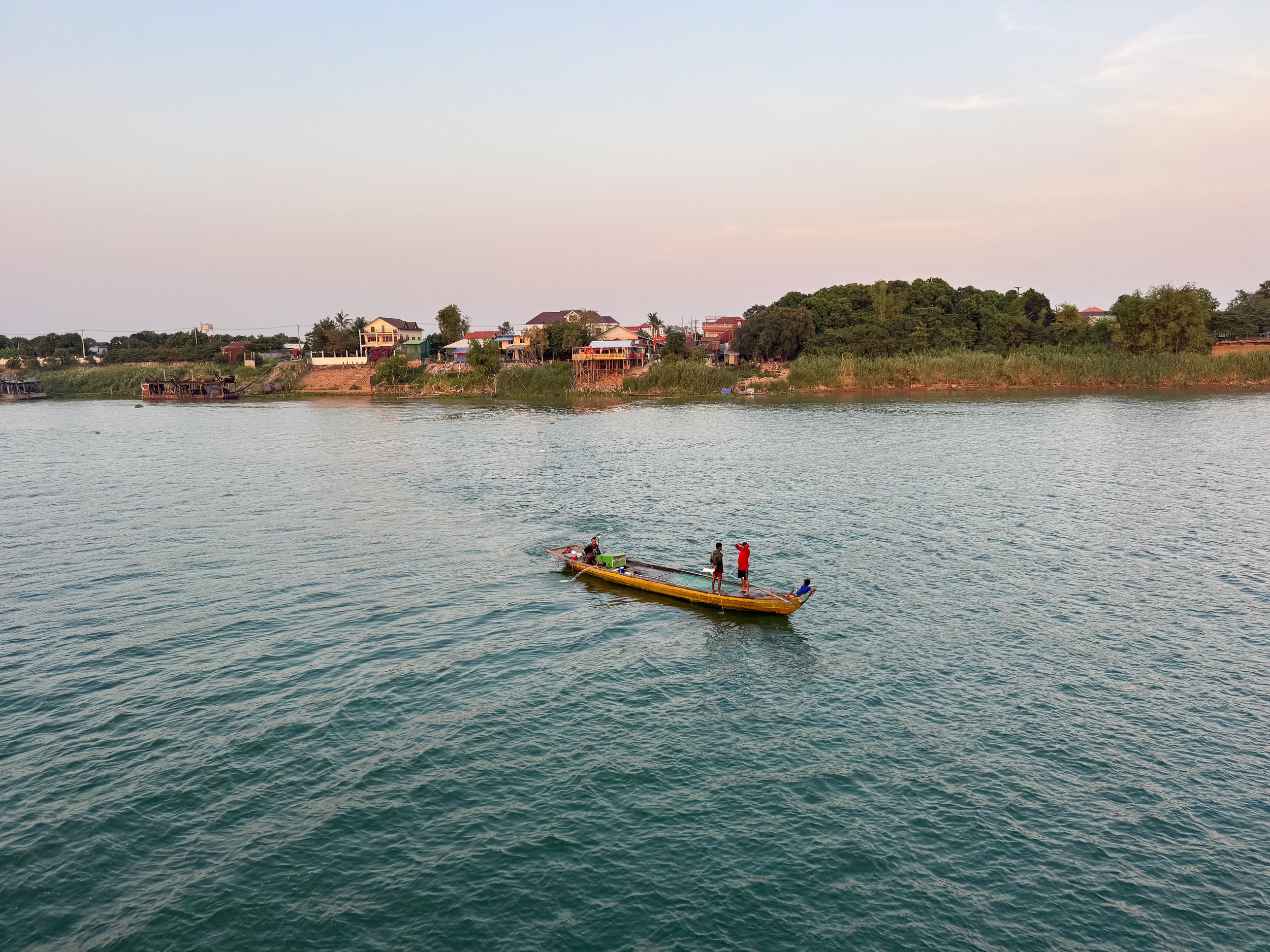
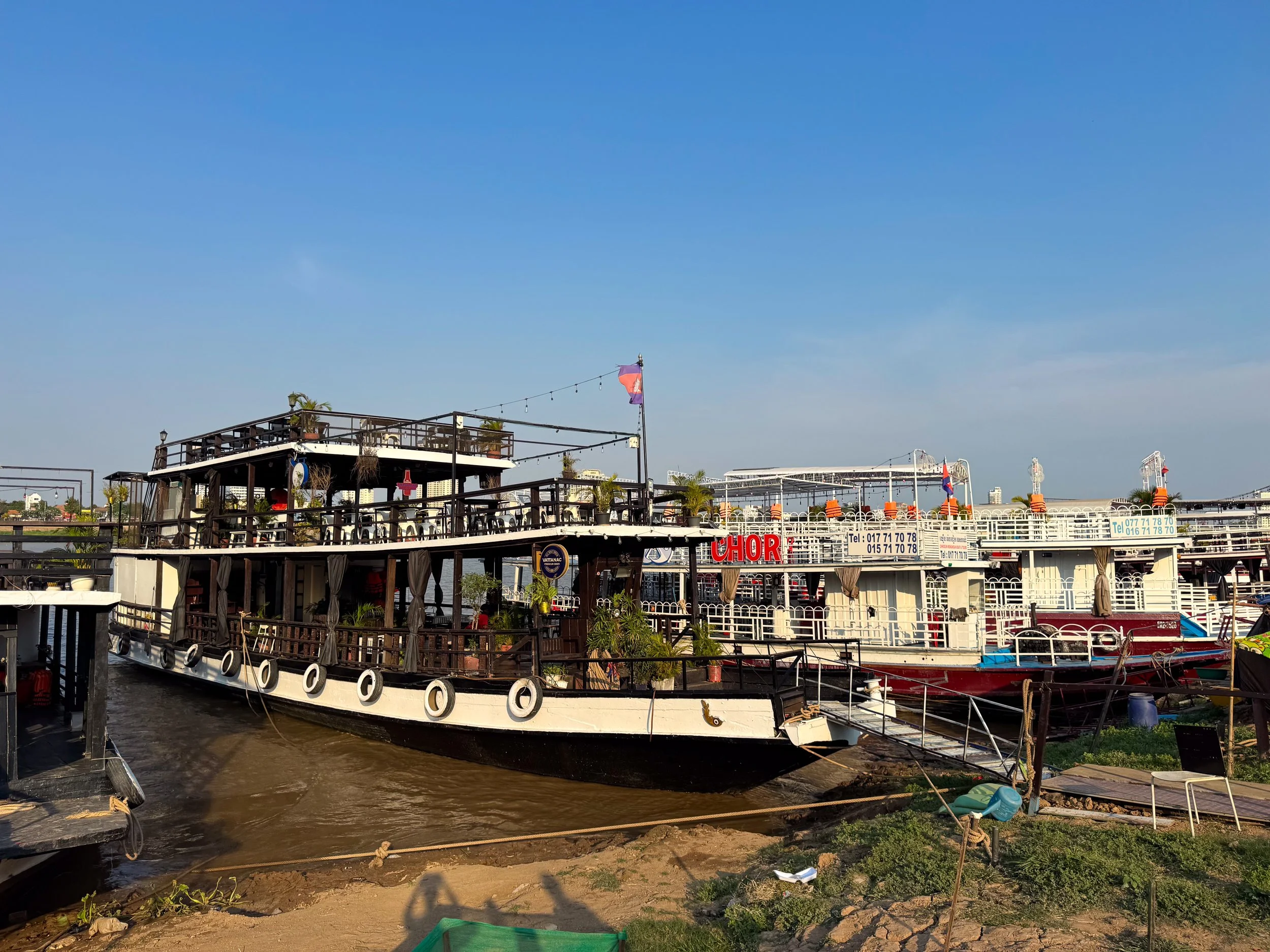
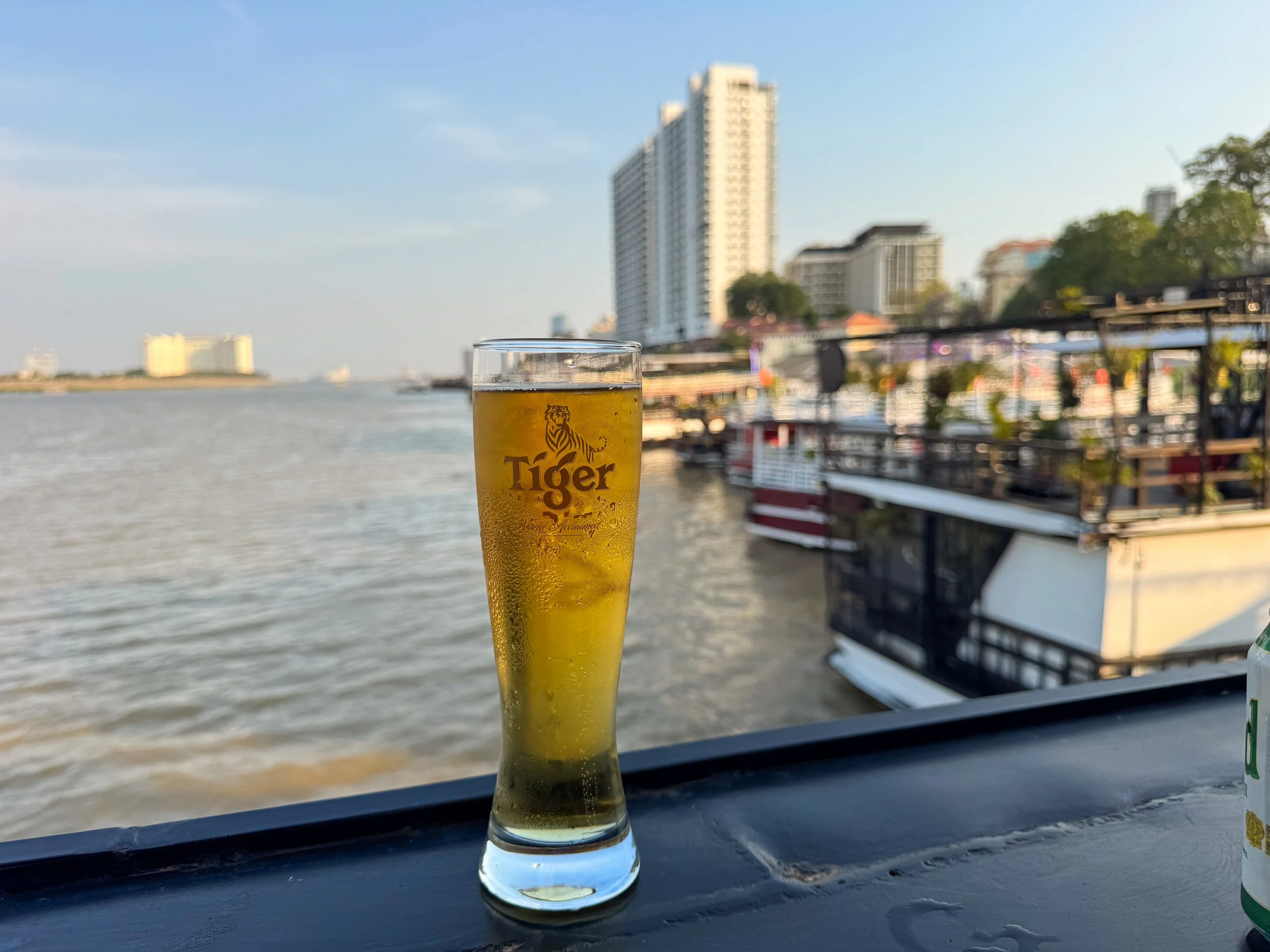
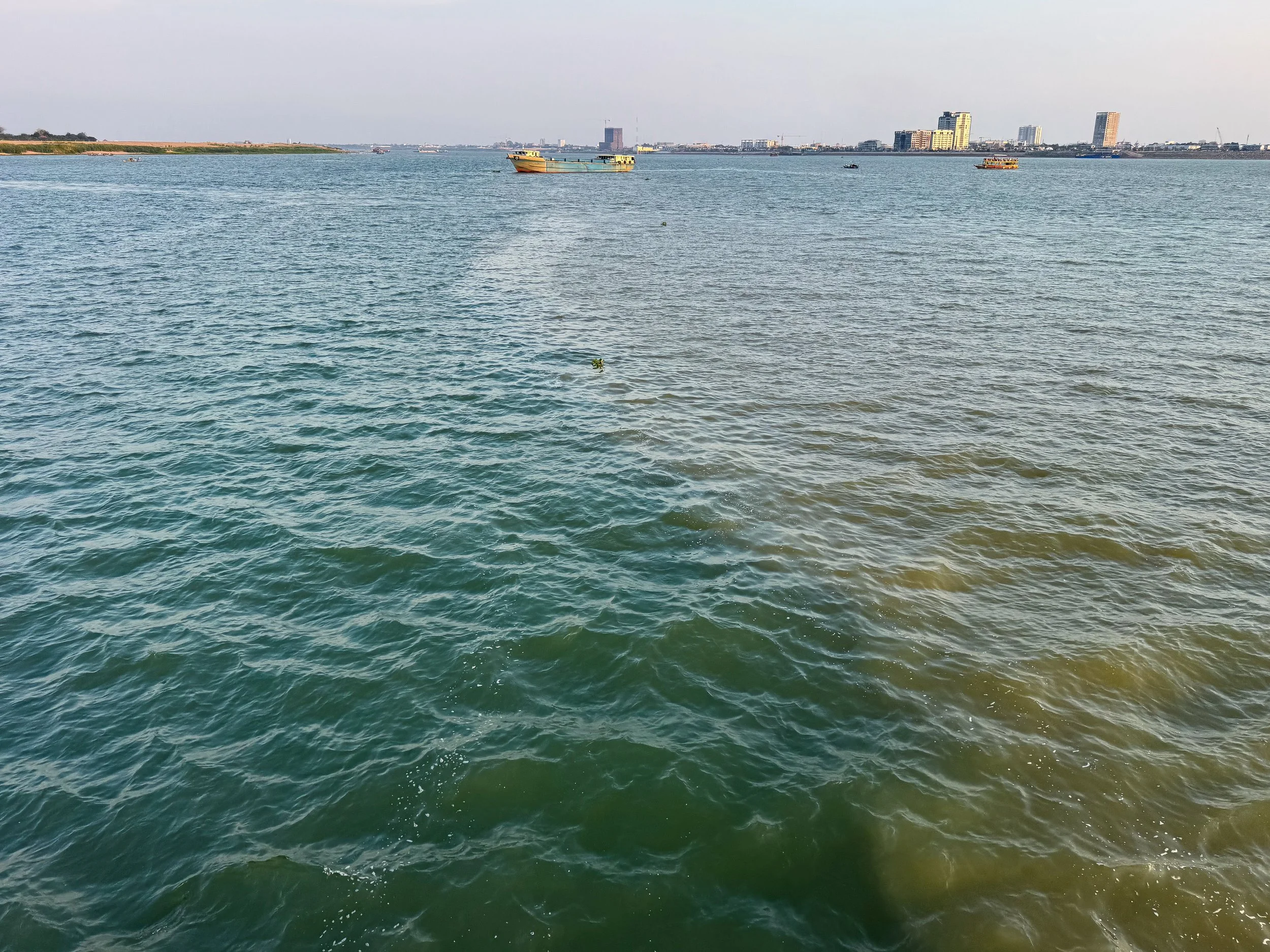
Take a Sunset River Cruise. We took a sunset river cruise down the Mekong & Tonle Sap Rivers. The 90 minute tour included a 40min narration of sights and unlimited local beers! We watched the sun set over the city behind the rapidly growing skyline and golden roofs of Buddhist temples. Along the way, we passed the “meeting waters” where the brown water of the Tonle Sap River and the deep blue water of the Mekong River meet. We boated past a small fishing village made from a colorful cluster of stilt houses and saw fishermen returning with nets full of the day's catch. We booked our tour ahead of time, however it’s not necessary. Boat operators sell tickets for as little as $5 along the riverside park. Reserve here.
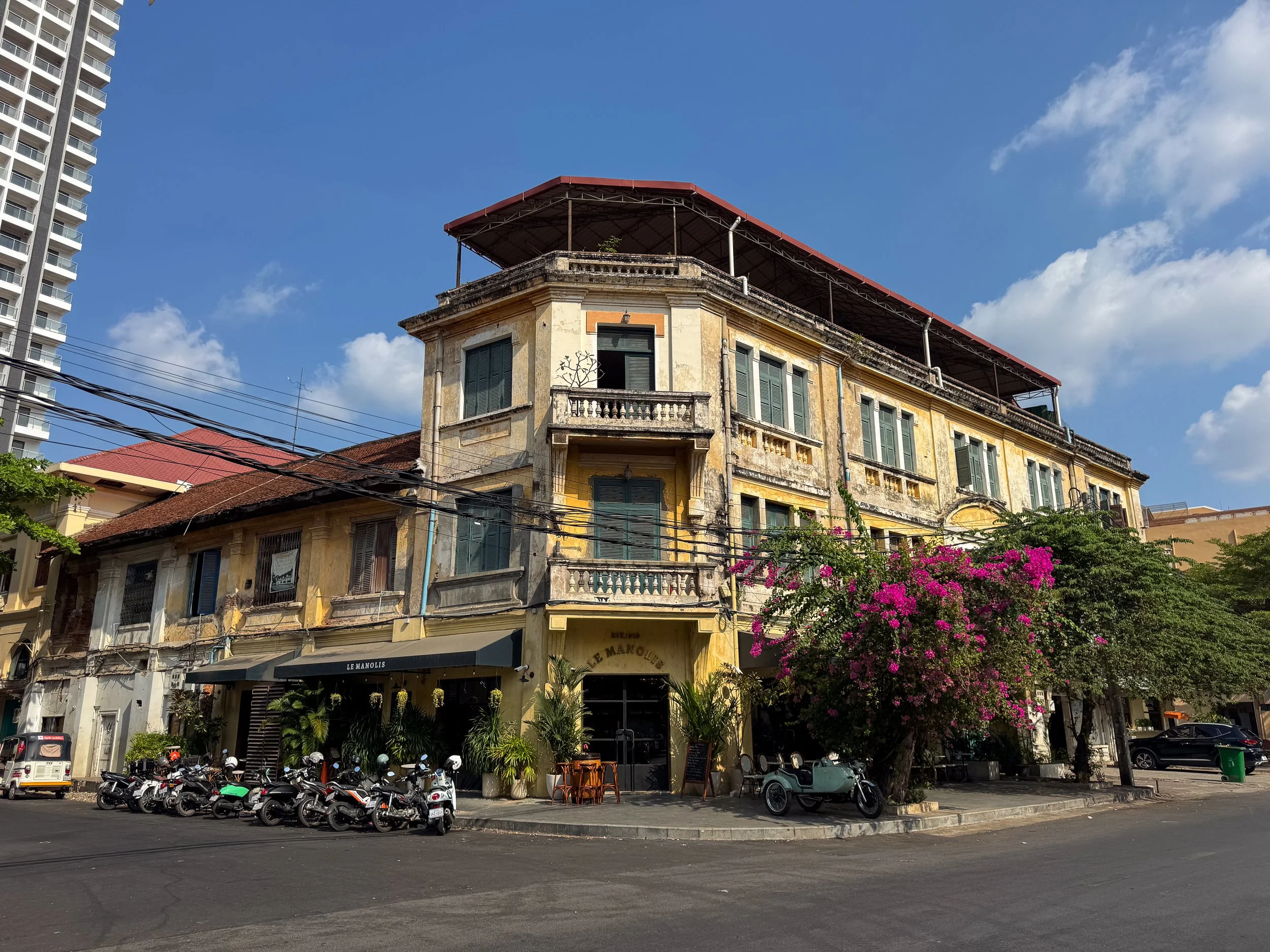
Explore the Old French Quarter. A small neighborhood with historic buildings constructed during France’s colonization of Cambodia. The buildings are in various conditions, painted yellow with olive or blue wooden window shutters and clay tiled roofs.
Places to Eat & Drink
Kravanh Restaurant. A high end restaurant serving a range of traditional Cambodian dishes. We dined in the romantic outdoor courtyard along a colonial house our first night in Phnom Penh. We shared three plates.
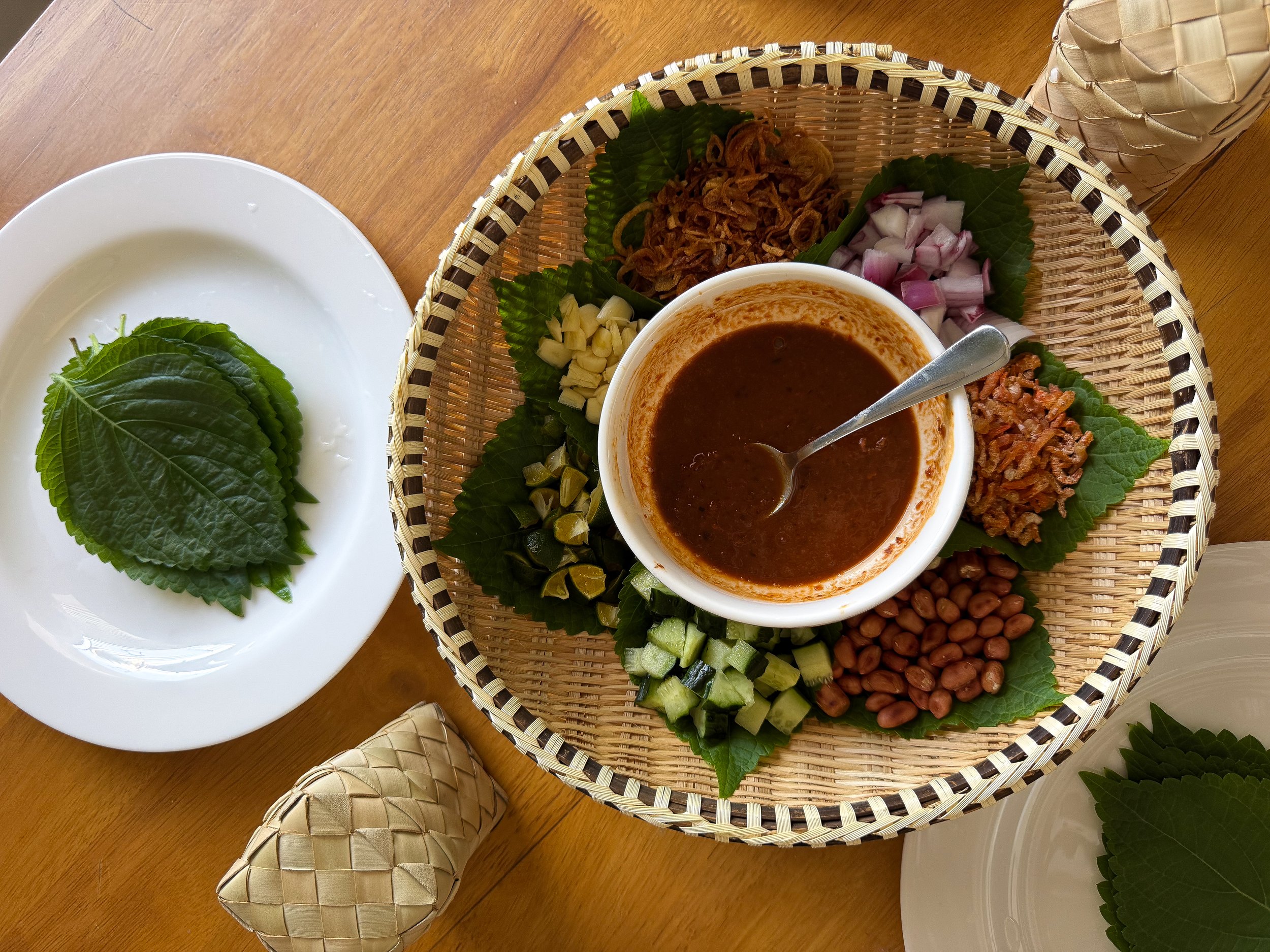
Meang Kham. A platter of Cambodian flavors made from a dozen fixings including dried shrimp, toasted coconut, crispy shallots, diced chilies and sliced limes displayed on rolling leaves. The leaves are folded into a scoop and filled with any combination of fixings, dolloped with spicy tamarind shrimp sauce and eaten whole.
Fish Amok. Cambodia’s national dish, dating back to the Khmer Empire. It’s made from freshwater fish wrapped in a cup of banana leaves steamed in coconut milk and curry.
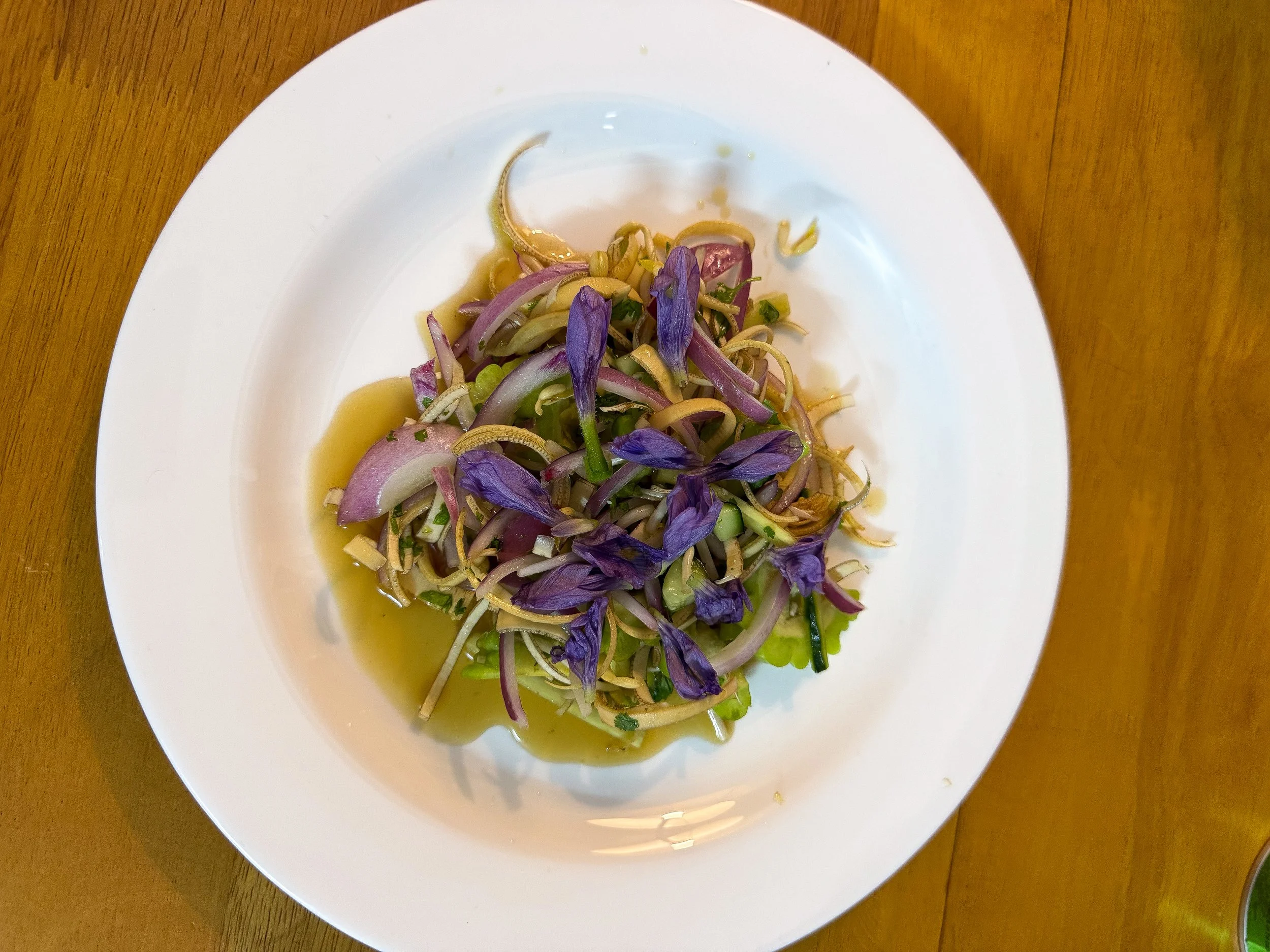
Snake Fish Ceviche. A ceviche made with marinated snake fish prepared alongside galangal, banana blossom, bean sprouts and crispy shallots.
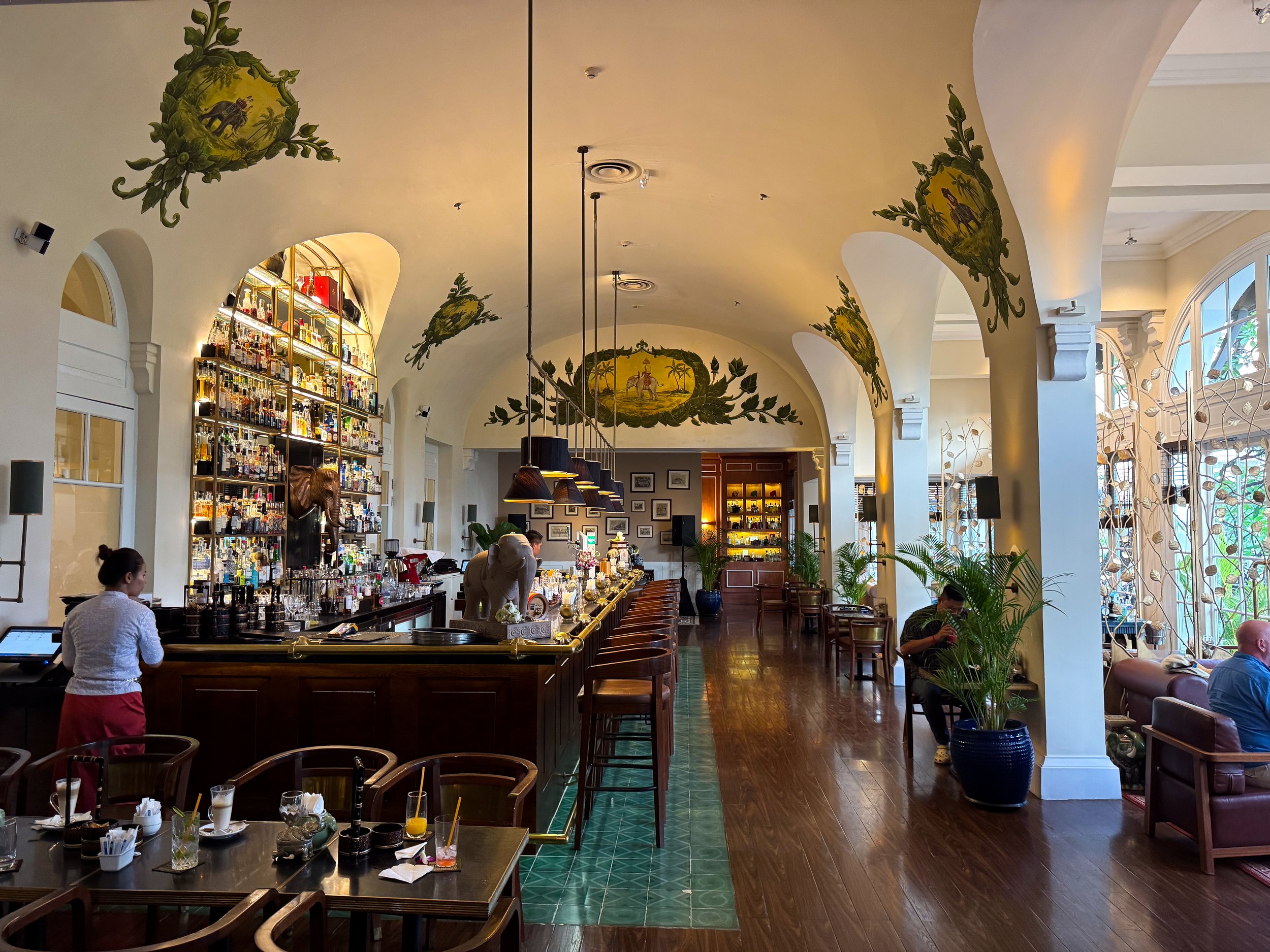
Elephant Bar. An elevated bar at the Raffles Hotel with a gin forward menu and a range of signature and classic cocktails. The bar is a beautiful place for a drink with a vaulted ceiling decorated in paintings of elephants, a dark wooden bar, leather lounges and tropical plants. The prices are outrageous for Cambodia. Come after 4pm for their 40% off happy hour!
Signature G&Ts. A shortlist of gin and tonics made with local gins, classic ingredients and artisan tonic water.
Kampot Pepper. A cocktail made with local gin, cucumber, soda water and kampot peppers.
Phnom Penh Sling. A twist on the Singapore Sling made with house gin, lychee liqueur and guava juice.
SORA. An elevated “sky bar” on the 47th floor of the Rosewood Tower. We sat on the outdoor terrace, sipping on cocktails as the sun set and the city lights turned on. The interior has a very well designed bar, restaurant and cigar lounge. Order from the Anime themed cocktail menu!
Café Chiet. A beautiful café with a natural ambience enhanced by bamboo walls, wooden furniture, tropical plants and stone floors. The baristas prepare a range of coffees and teas served in golden chalices.
Duo Café. A small café with iced drinks like coconut coffee, matcha lattes and Cambodian coffee.
Cambodian Cuisine
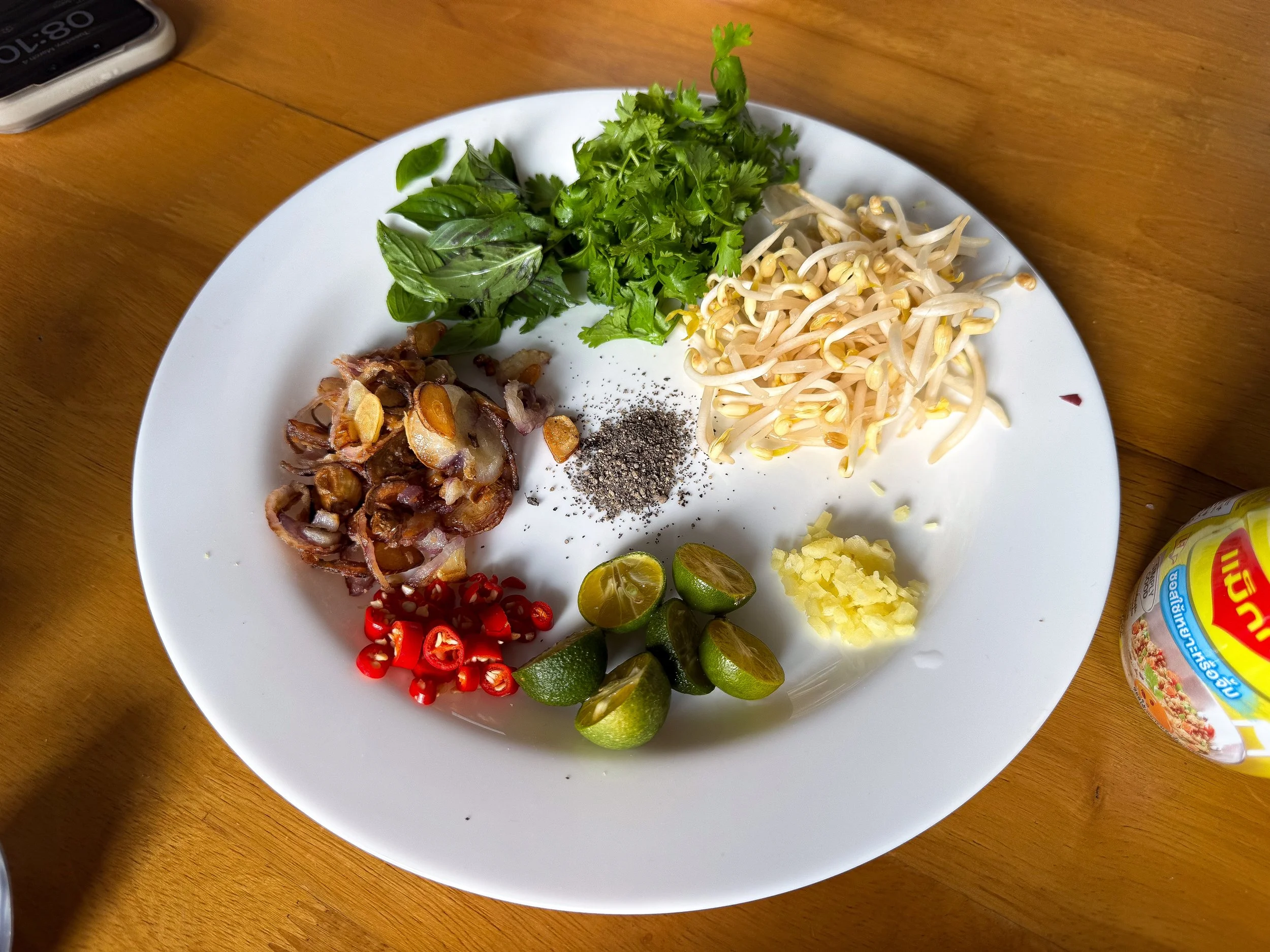
Cambodian cuisine has a range of unique flavors including bitter vegetables, savory sauces, spicy peppers and fresh seafood. In addition to the dishes we tried at restaurants and markets, we cooked a few in our own kitchen.
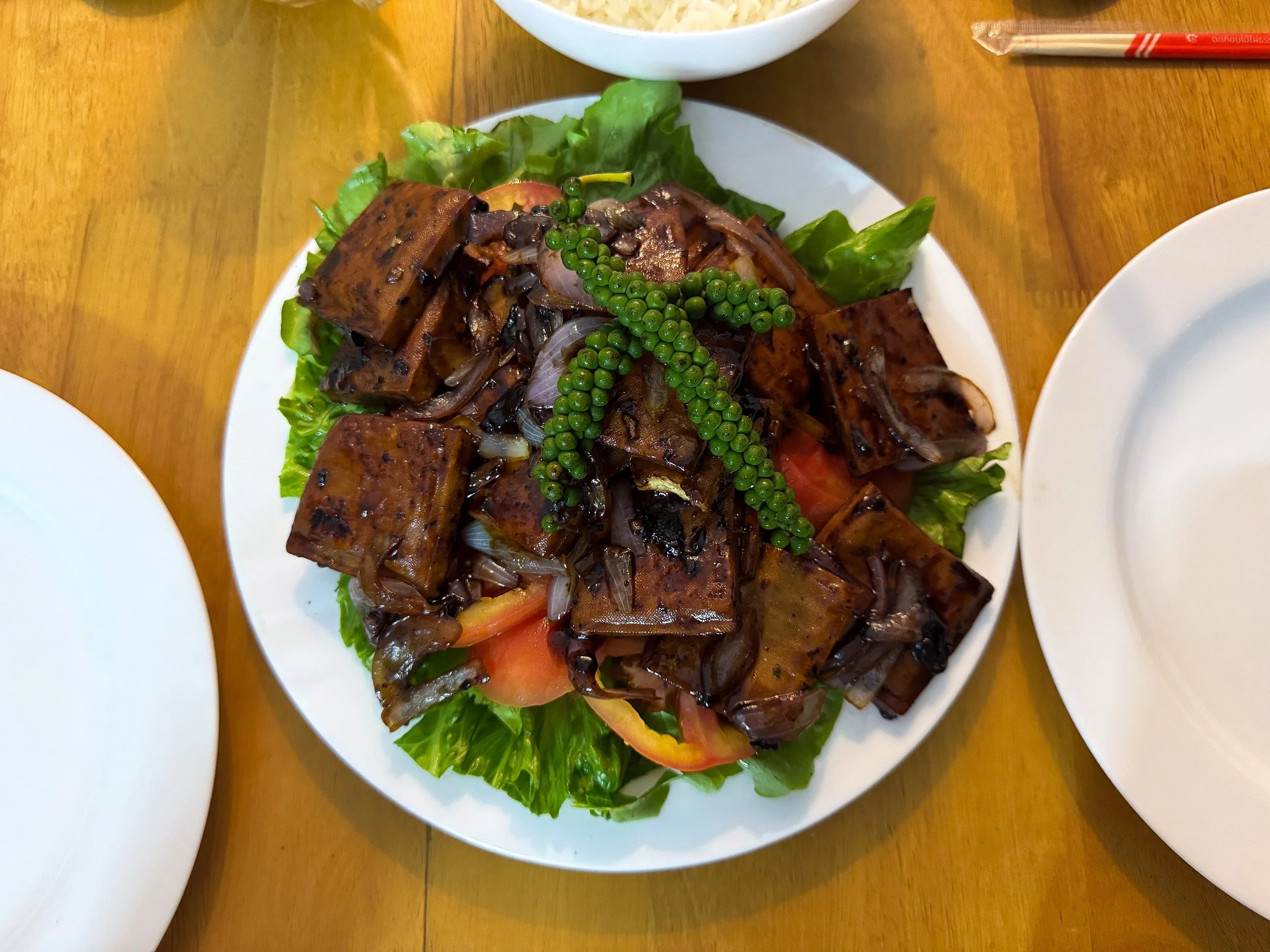
Lok Lak. A dish made with marinated beef or tofu, onions and garlic caramelized in a palm sugar and fish sauce glaze. It’s served with rice.
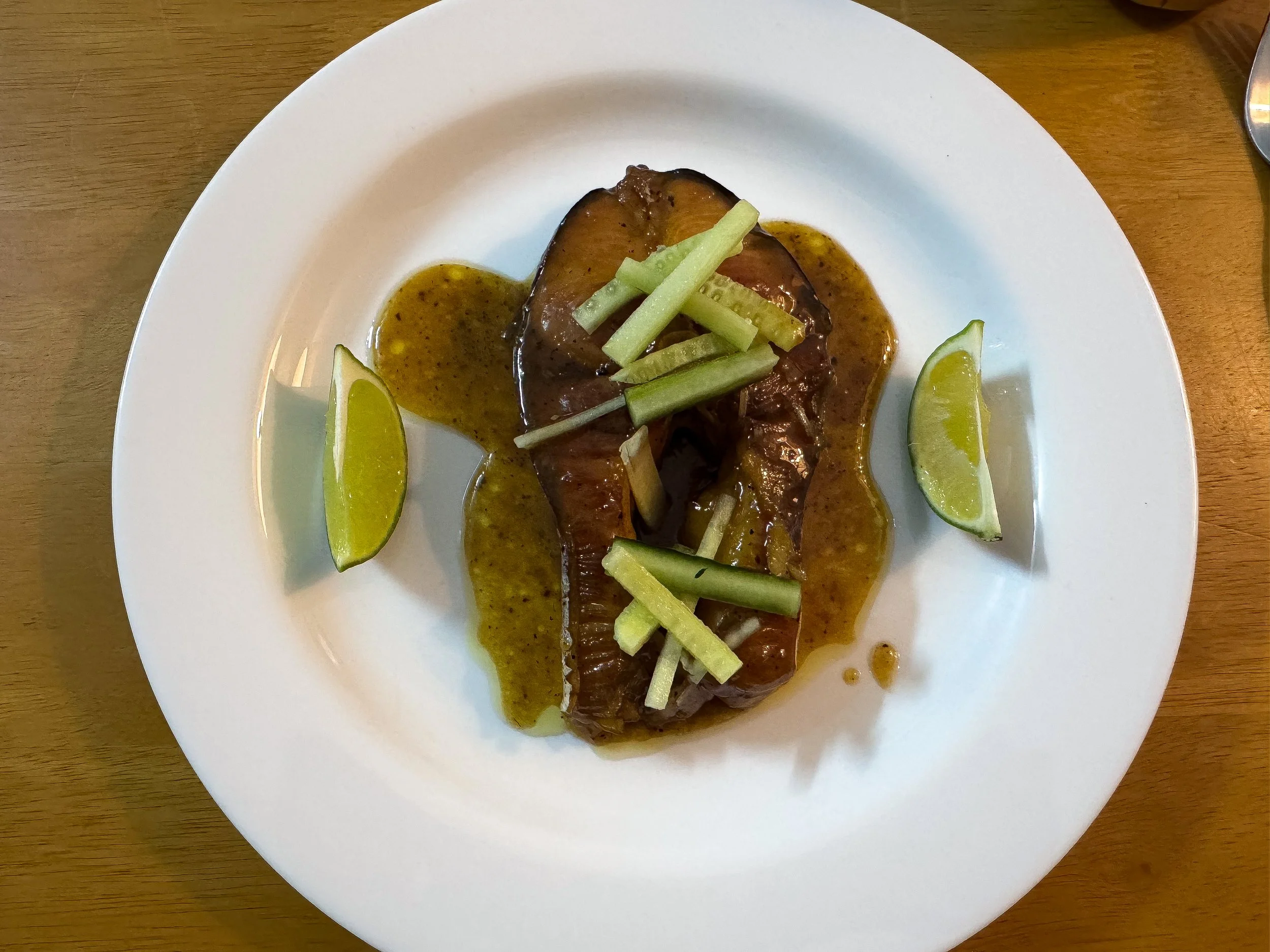
Trey Khor. A very traditional Cambodian dish made with a filet of fatty trout cooked and marinated overnight in a sweet and savory sauce comprised of palm sugar, soy sauce, minced garlic and ginger.
Bobor. Essentially rice porridge or congee but made with broth instead of water and garnished with Cambodian ingredients like cilantro, lotus stems, chili peppers and bean sprouts.
Cambodian Beers
We love tasting the local beers whenever we travel. Cambodia had at least five that we tried during our time here. They all have a light flavor and subtle variances, perfect for the hot days.
Cambodia. The national beer featuring a bold red label with the country and brand’s name.
Angkor. Named after Cambodia’s most iconic sight, its label features a graphic of its famed stupas.
Anchor. A competitor to Angkor, with an anchor on its label.
Hanuman. A beer with a blue label featuring a Hindu monkey deity.
Krud. A popular and inexpensive pilsner with a green logo of its name.
Getting Around
On Foot. The city center is very walkable though chaotic. Sidewalks are often blocked by street food vendors and scooter parking. To cross roads, slowly and fearlessly walk into the flow of tuk tuks, scooters and cars. Traffic will slow down, go around you or stop.
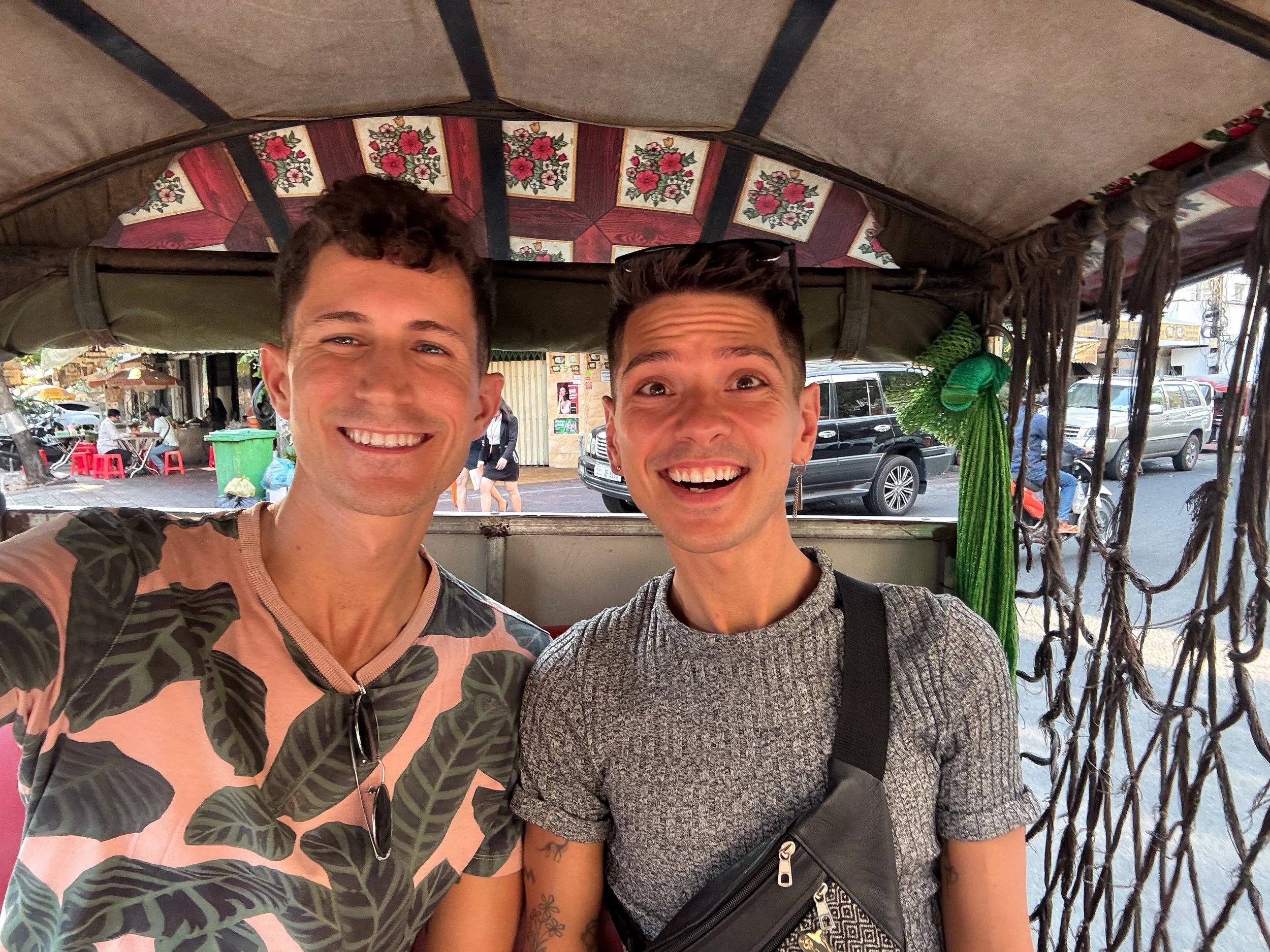
By Tuk Tuk. Three wheeled carts, a kind of hybrid between a scooter and a car. They’re readily available and extremely inexpensive to get around the city. We used Grab, to call one when getting around.
Location Specifics
Dress Modestly. When visiting temples, museums and the palace, it’s important to dress modestly. Visitors are asked to cover their legs and shoulders as well as remove hats and shoes before entering.
Drinking Water. Tap water is not directly safe for drinking. It’s best to boil or filter it.
Currency. The US Dollar and Cambodian Riel are used interchangeably.
Cash vs. Card. Cash is the preferred method of payment everywhere. Few places accept credit or debit cards.
Scams. Beware of scammy tuk tuk drivers. They will ask you where you’re going then tell you the museum, temple, palace, etc. is closed. They’ll then try to convince you to take a city sightseeing tour with them.
Language. The official language of Cambodia is Khmer however most people speak a little English. We learned a few Khmer words while here:
Hello = Suostei (so-say-tie)
Thank you = Arkoun (are-kun)
Good bye = Leahaey (lee-hai)
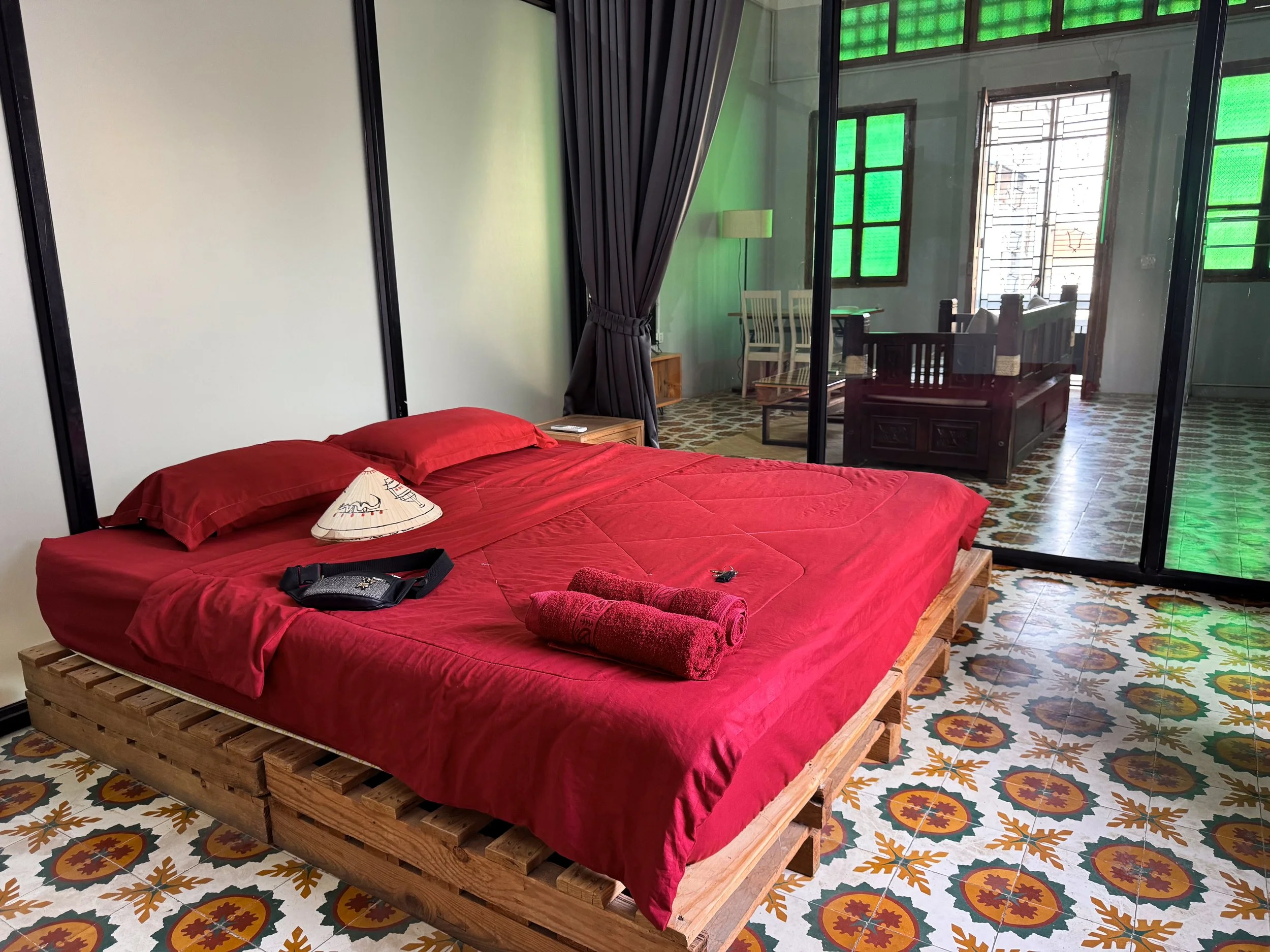
Where to Stay
We stayed in a large two bedroom apartment two blocks away from the Central Market. The apartment has tall ceilings, colorful tiled floors, a full kitchen and balcony overlooking the street. Each bedroom has its own private bathroom and AC. It was the perfect spot to share with a friend traveling with us. We booked on Airbnb.
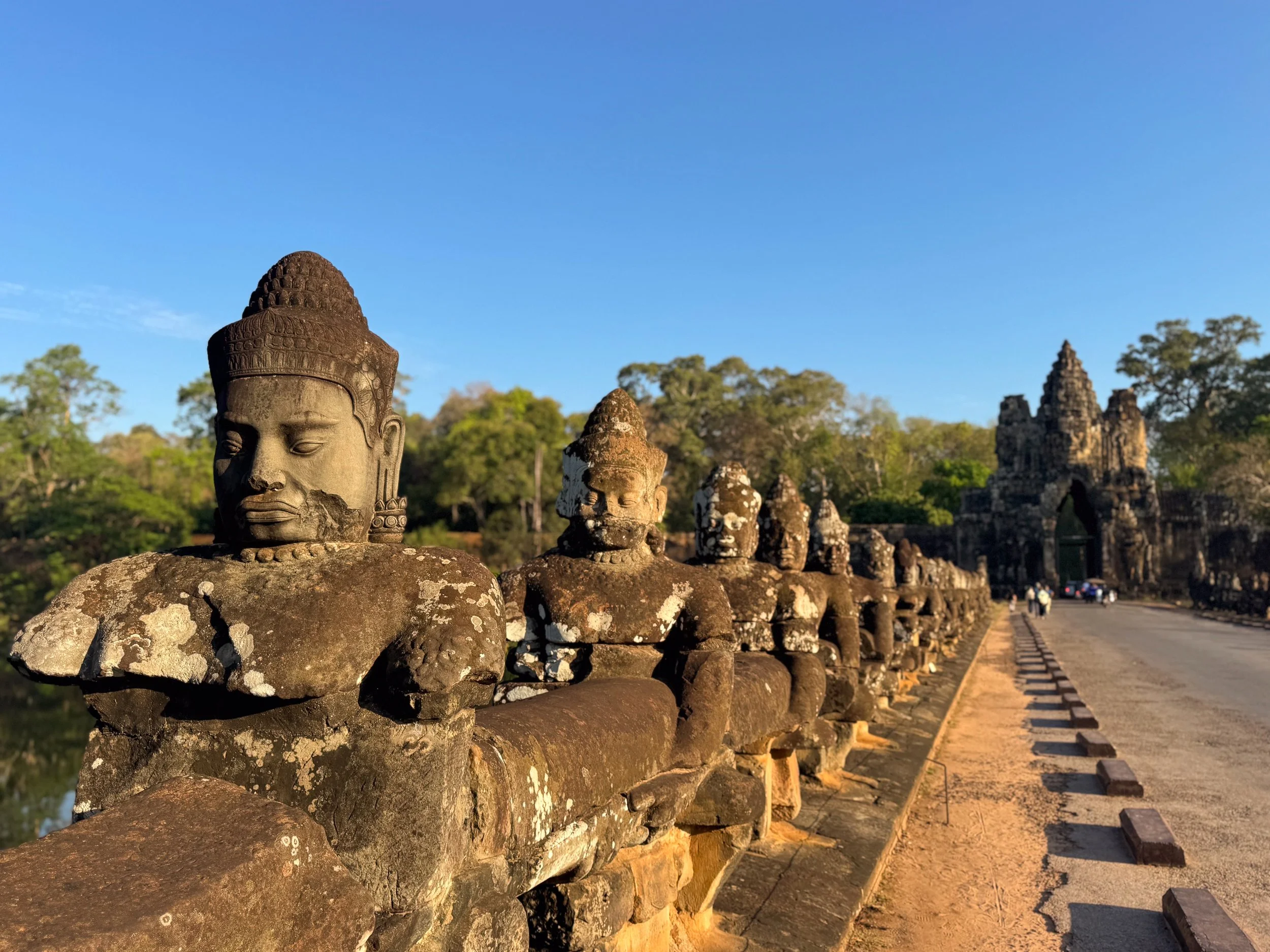
Elsewhere in Cambodia
From Phnom Penh's riverside neighborhoods and cultural landmarks to the ancient temples and Khmer heritage of Siem Reap, continue exploring Cambodia's rich history and culture.
Siem Reap Travel Guide: Angkor Wat, Ancient Temples & Cambodian Heritage. Discover Siem Reap where Angkor Wat, ancient temples and overgrown ruins reveal the legacy of the Khmer Empire and centuries of Cambodian heritage.