

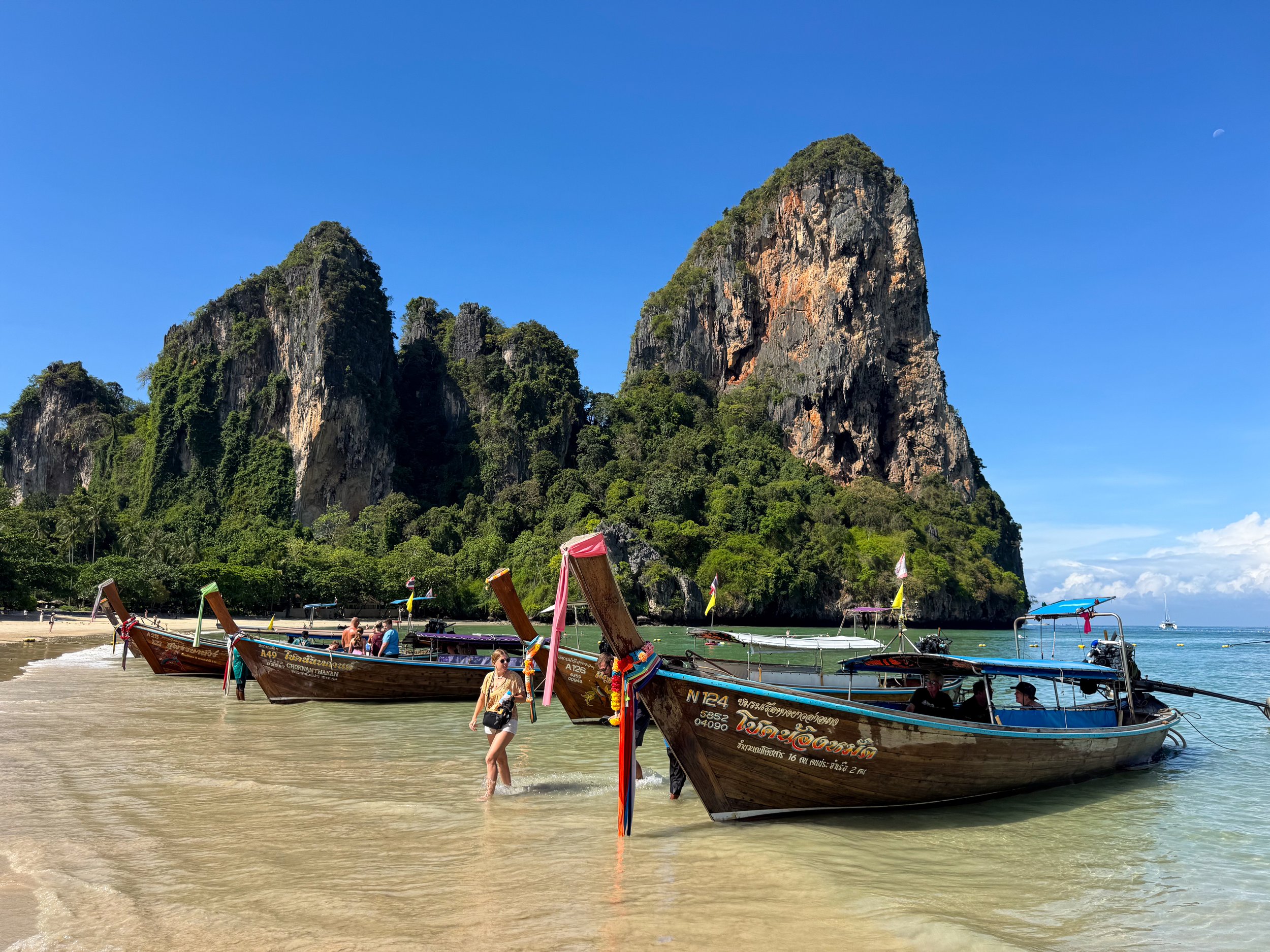
Krabi Travel Guide: Railay Beach, Limestone Cliffs & Tropical Adventure
Adventure through Krabi where Railay Beach, limestone cliffs, turquoise bays, white sand beaches and caves form one of Thailand's most dramatic coastal landscapes.
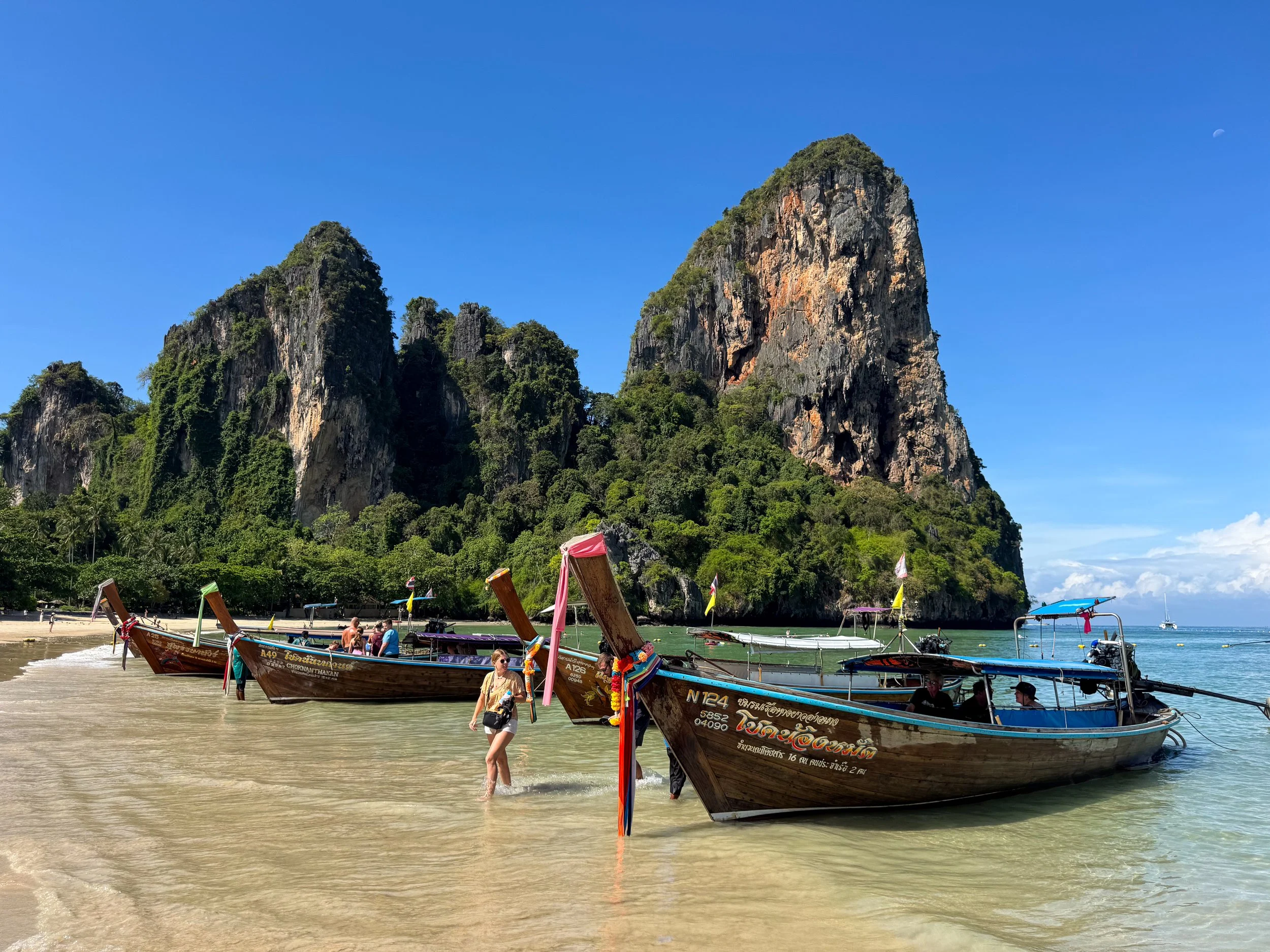
Krabi, Thailand
Krabi is a tropical paradise where adventure and relaxation merge. Between the white sand beaches and verdant palm groves are stunning natural sights. Mountainous trails lead through the jungle to panoramic viewpoints, natural hot springs, blue lagoons and dark caves. The sounds of singing birds and humming cicadas echo across the rainforest. Kayakers paddle by as long tail boats speed across the sea past towering islands and sheer cliffs. Street vendors sell fresh fruits, tropical cocktails and Thai cuisine. The evenings glow with the warmth of the sunset and nightly fire dance performances. We spent a week here in the town of Ao Nang with day trips to Railay Beach and several natural sights.
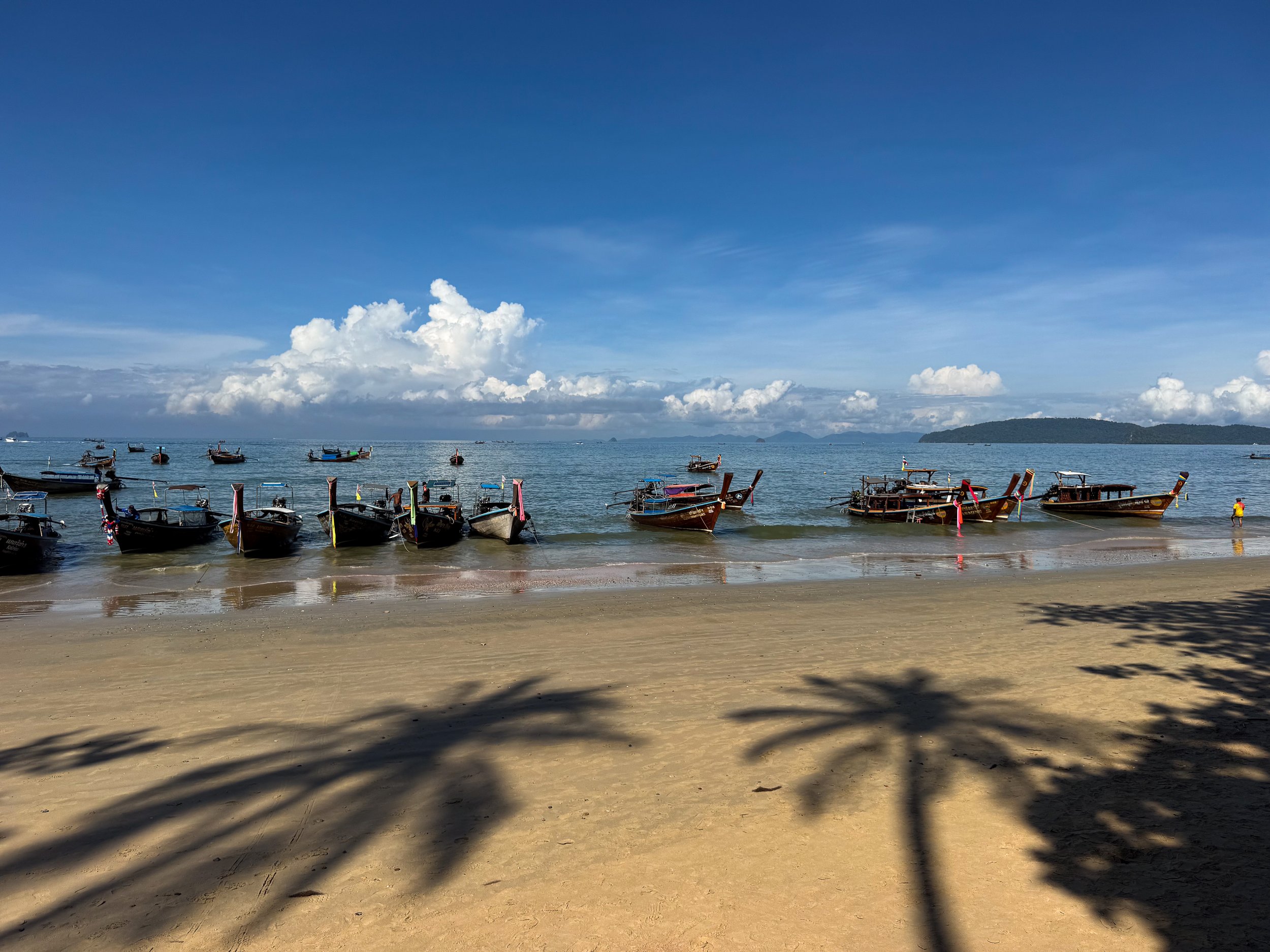
Ao Nang
Ao Nang is a lively beach town in Krabi near many of the peninsula’s best beaches and natural sights. The town’s waterfront boulevard and palm lined streets are home to restaurants, bars, boutique hotels, beachwear shops, spas, daily night markets, tattoo studios, smoke shops and Muay Thai gyms.
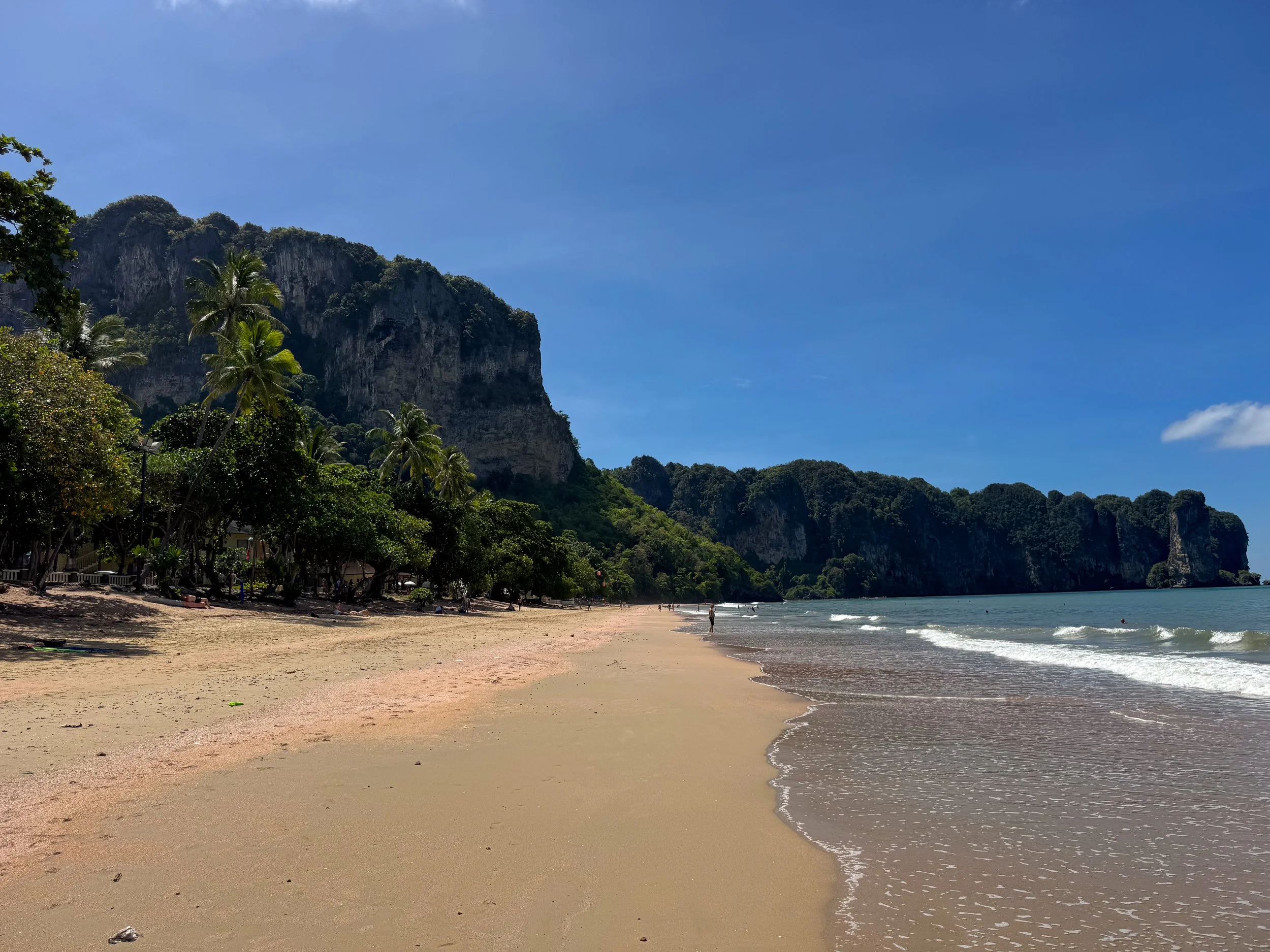
Things to Do
Relax at Ao Nang Beach. A shallow golden sand beach with a palm lined promenade at the center of Ao Nang. It’s a hub for leisurely and relaxing activities like sunbathing, getting a massage, reading books under the shade, sipping on cocktails and watching the sunset. The water is swimmable and warm with vendors offering kayak and stand up paddle rentals. Long boat taxis and tour operators leave from here to reach nearby beaches and nature reserves across the peninsula. The north side of the beach is the most commercial while the south side has several small resorts and higher end restaurants.
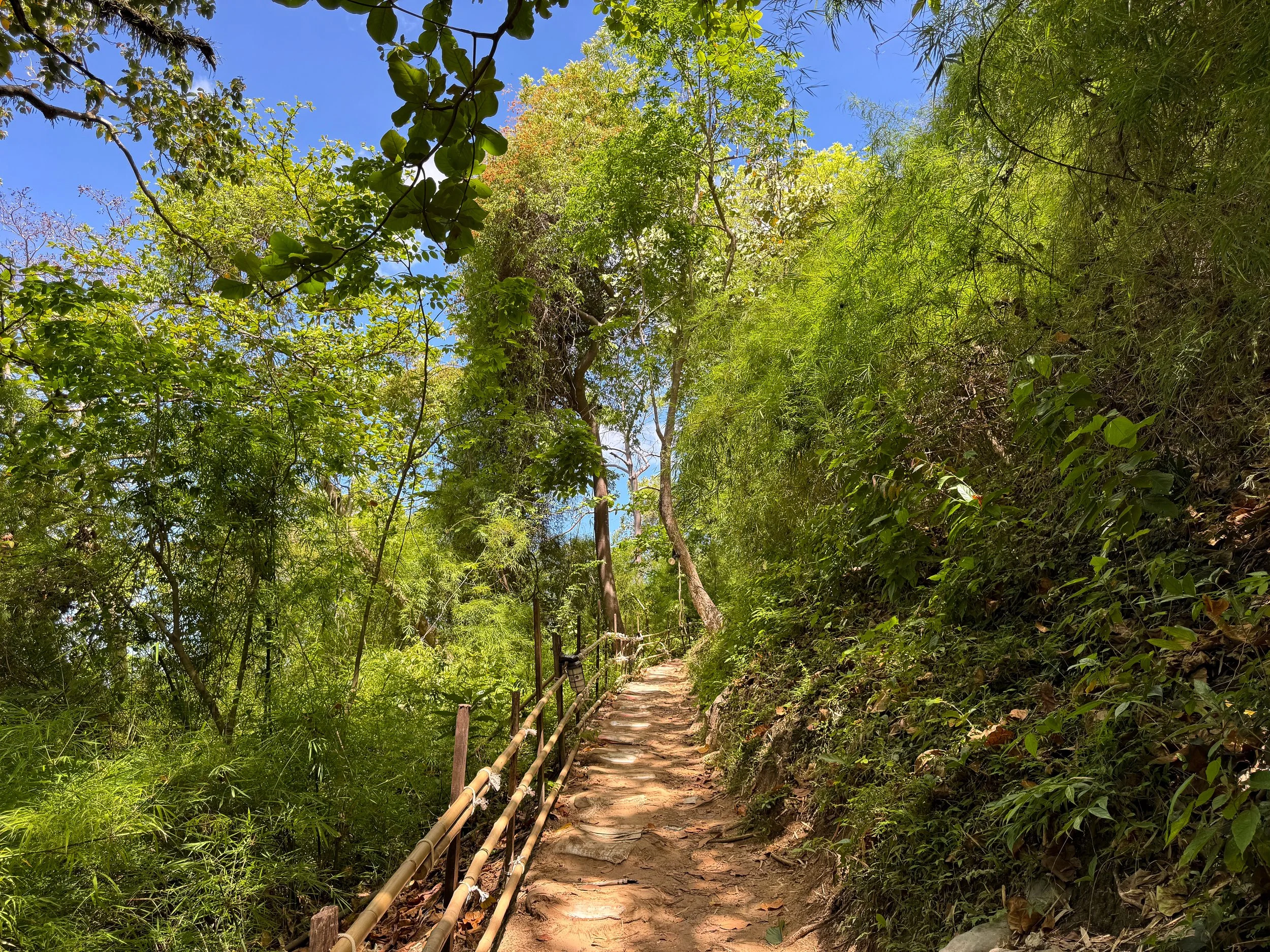
Hike The Monkey Trail. A precarious wooden stepped trail leading through the jungleous hillside between Ao Nang and Pai Plong Beaches. Monkeys are known to lurk along the trail, grabbing people’s water bottles, food, phones and loose belongings. We saw several of them near the Ao Nang side of the trail but avoided any close encounters.
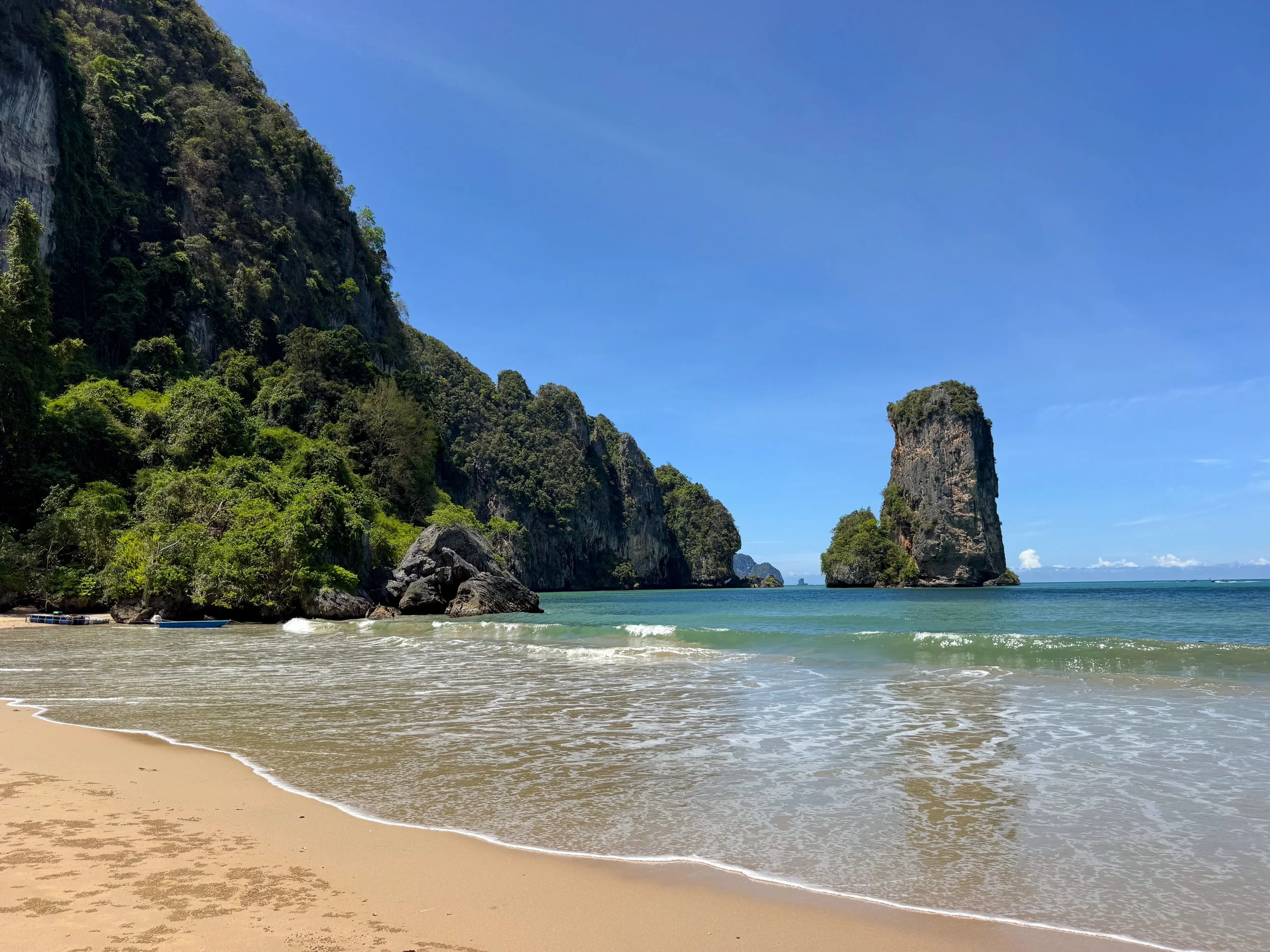
Relax at Pai Plong Beach. A public beach at the end of the Monkey Trail. The beach is maintained by a resort that offers day passes to non guests with access to lounges, pools, kayaks, restaurants and bars. The beach itself is free to use.
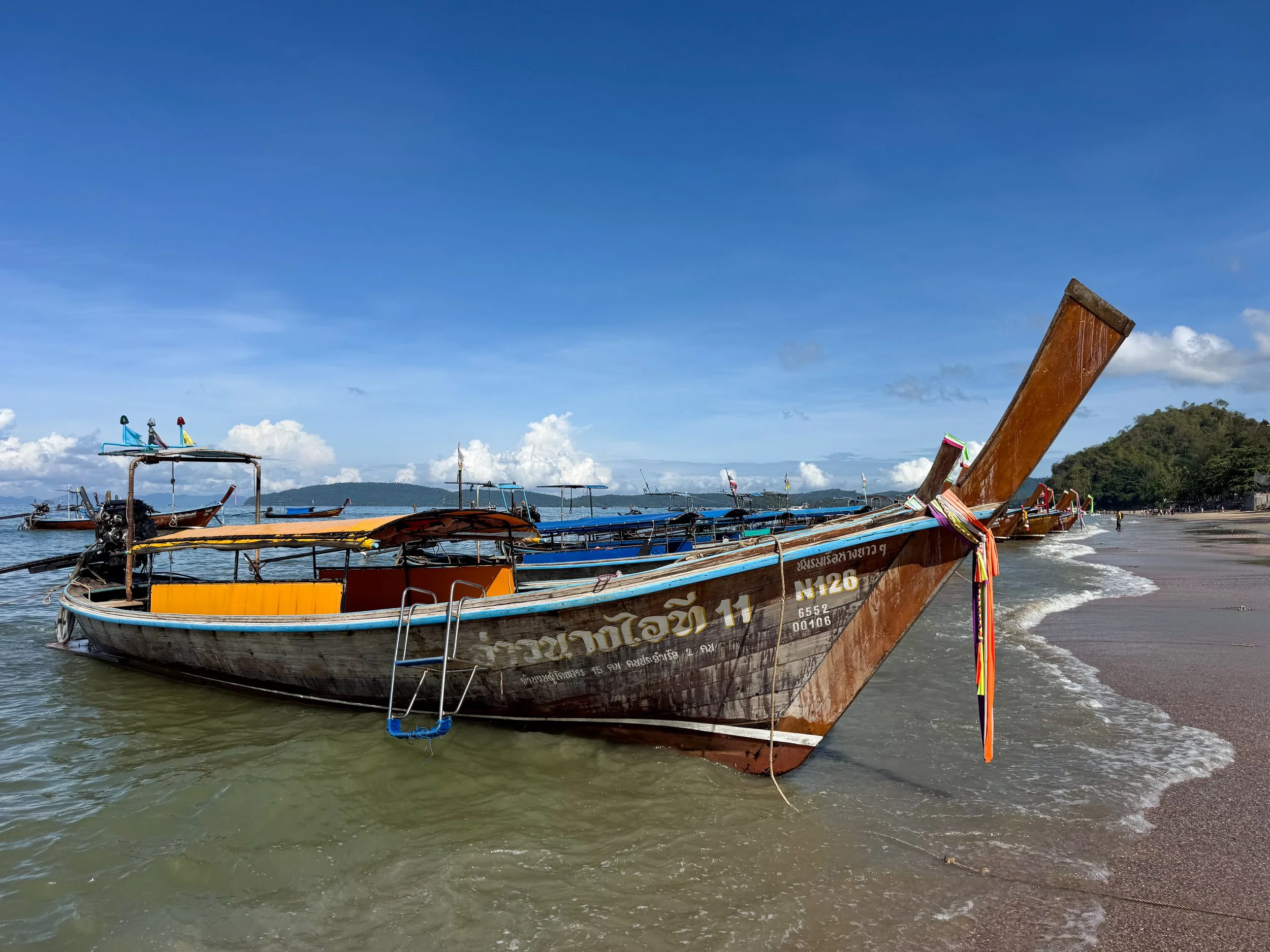
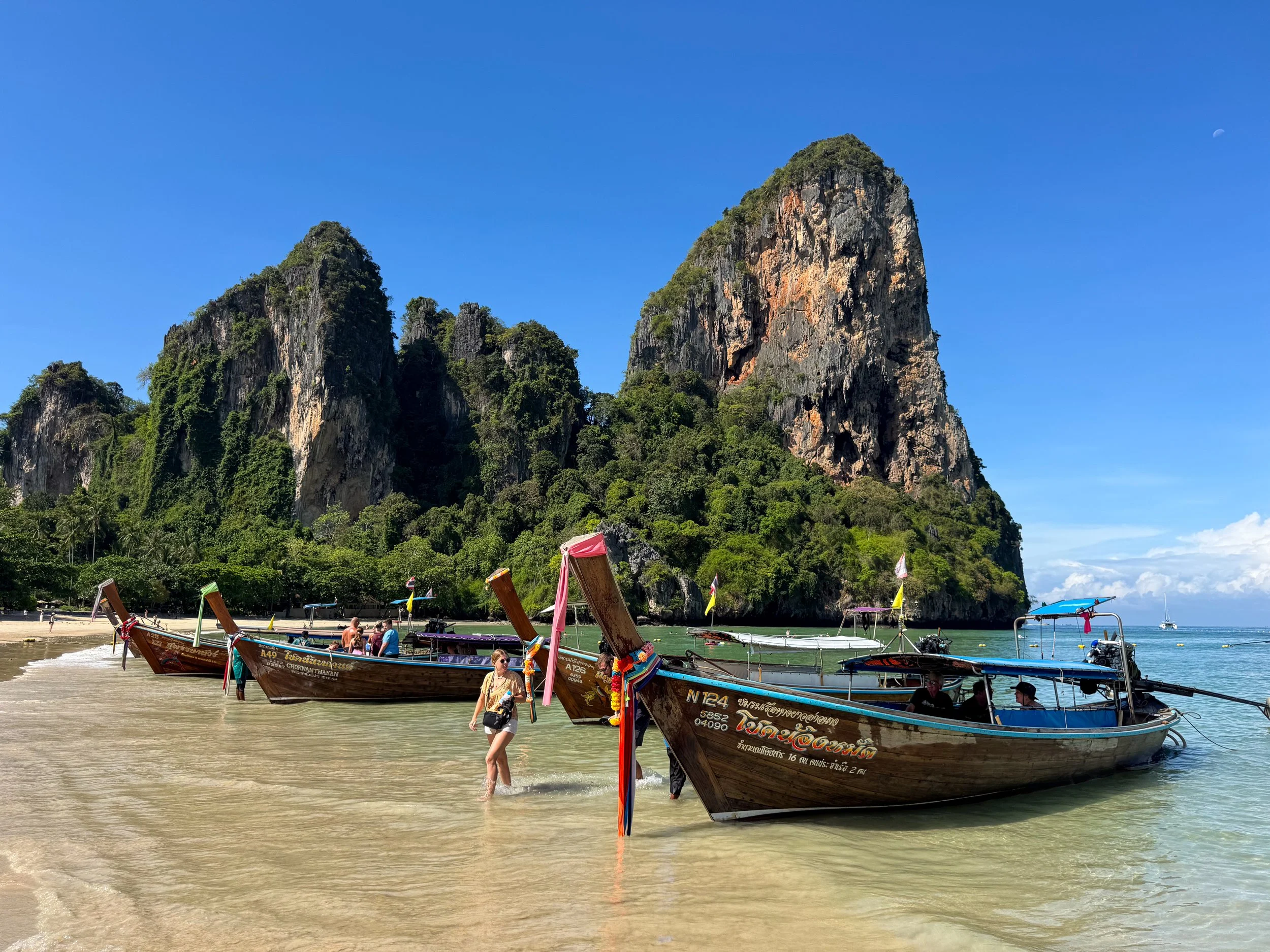
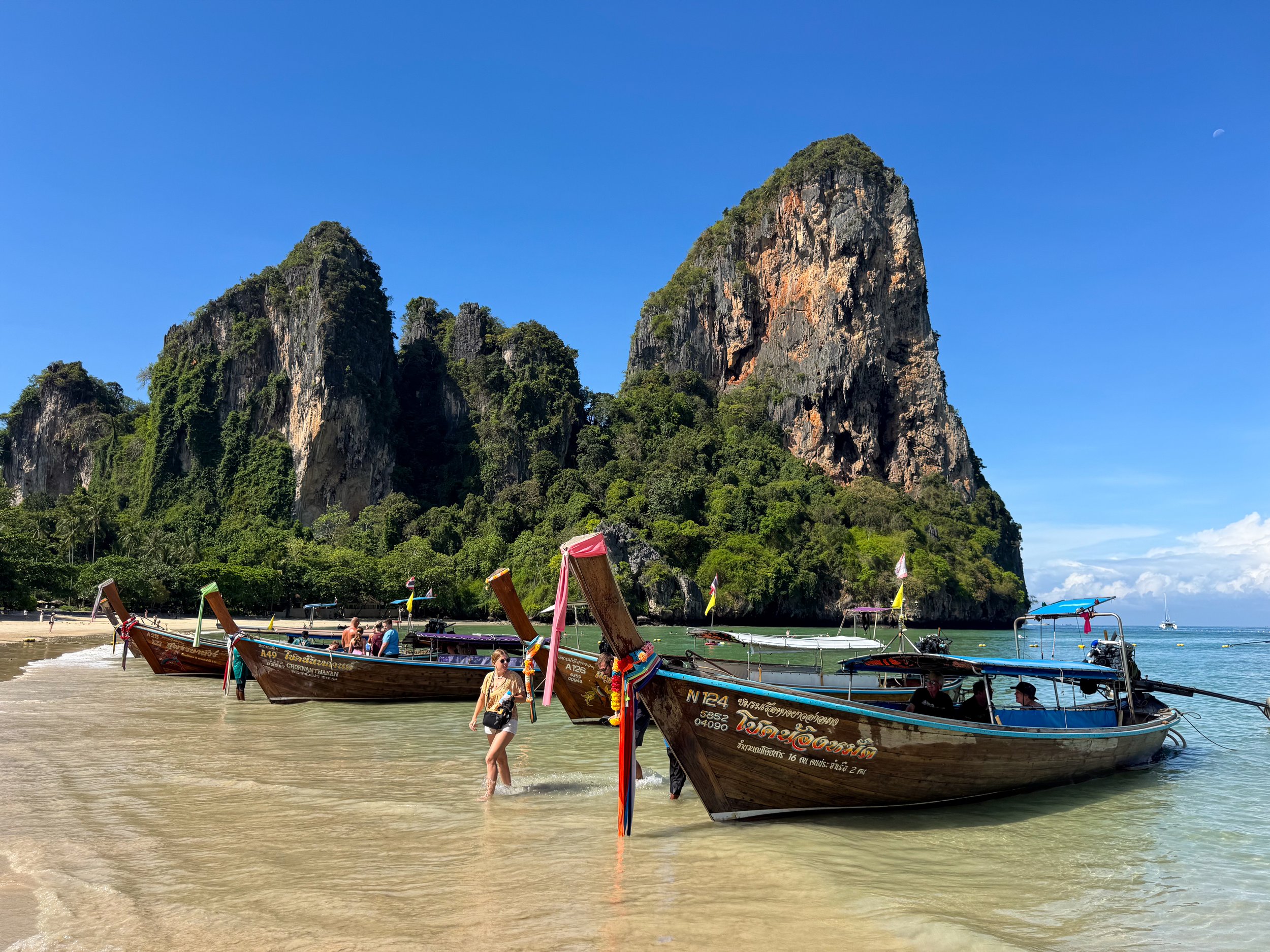
Ride in a Long Tail Boat. Thailand’s iconic long tail boats are the best way to DIY an island hopping experience and get between the beaches of Krabi and the islands in the Andaman Sea. In Ao Nang, the boats depart from Ao Nang Long Tail Boat Service Club at Ao Nang Beach and the Nopparat Thara Pier. Tickets can be purchased from adjacent ticket offices starting at 100 Baht one way, cash only. Public signs regulate rates and hours of operation. Long tail boats are painted wooden boats with a long pole and propeller extending from their engine. The design allows the boats to navigate in shallow waters without damaging coral reefs.
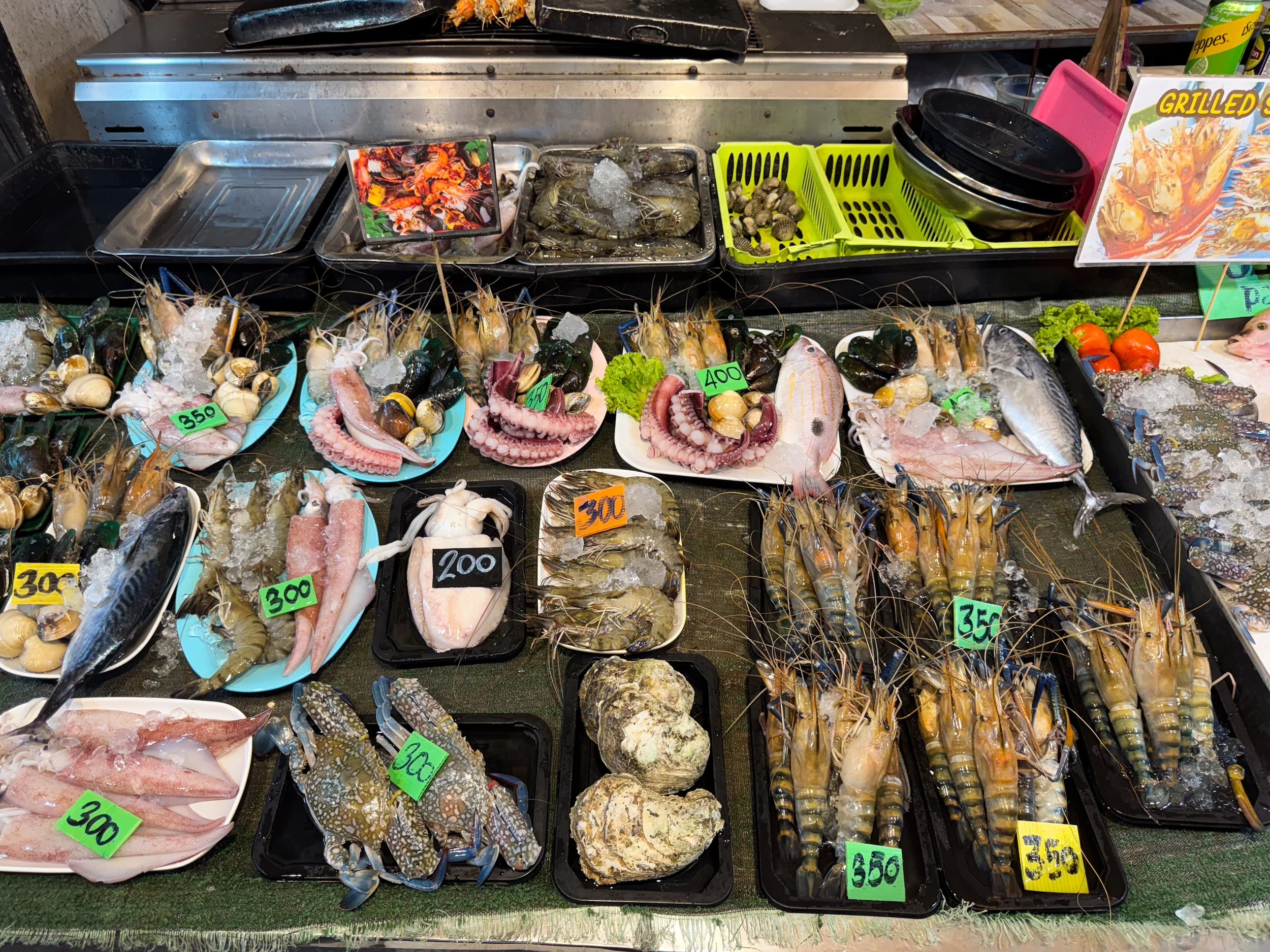
Eat at the Ao Nang Night Market. A sprawling night market with hundreds of food stalls and vendors selling Thai cuisine including noodles and rice dishes, spring rolls, curries, fresh seafood, mango sticky rice and rolled ice cream. A large dining area and beer garden are centered on a stage with live singers and nightly performers. It’s a very popular place to try the local cuisine and should be a stop at least one night while in Krabi.
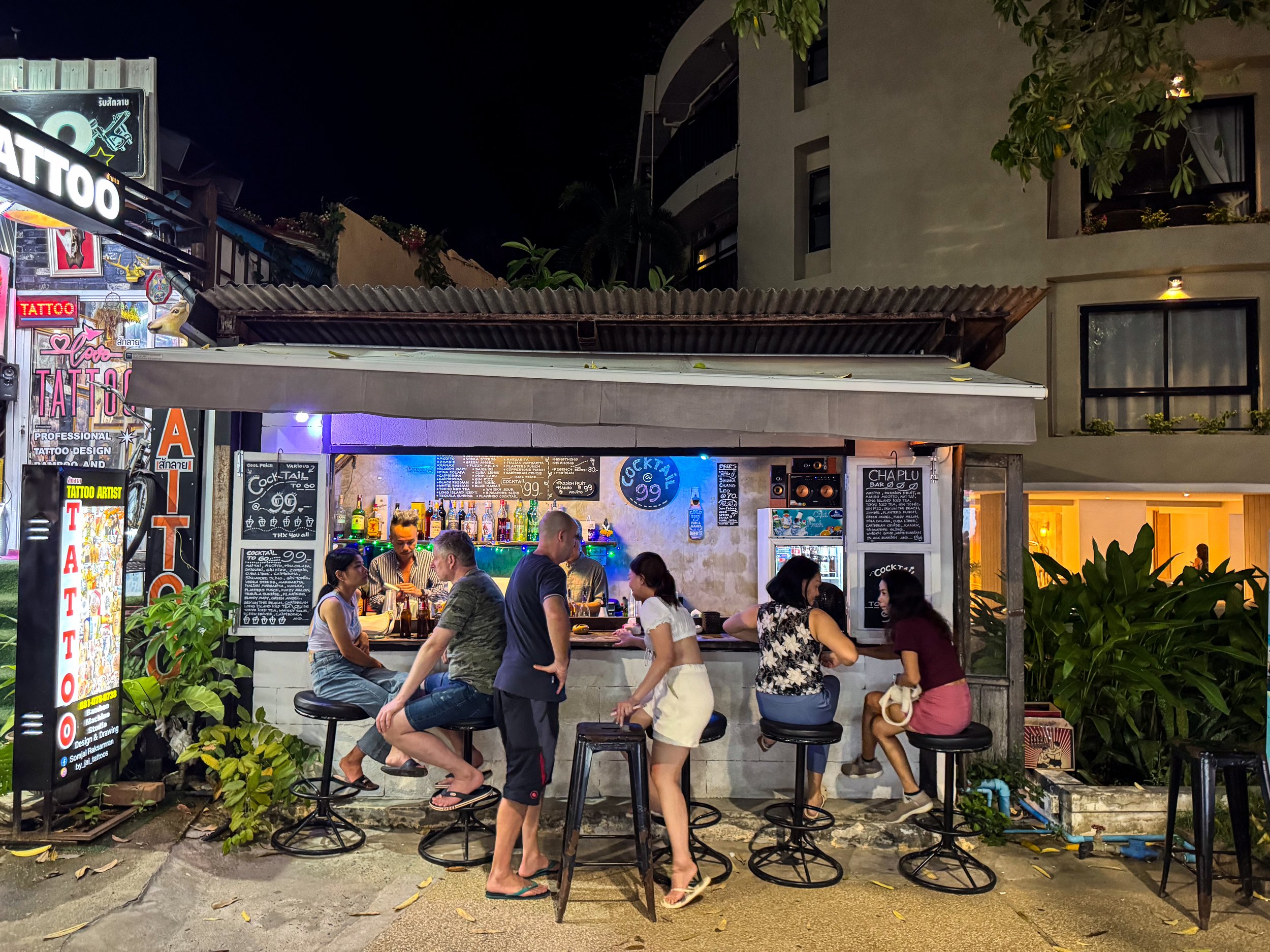
Order To Go Cocktails. Several walk up bars along the beachfront boulevard offer an expansive list of to go cocktails. They’re more affordable than most happy hours, usually costing 100 Baht per drink. We ordered tropical drinks like planter’s punch, mai tais, zombies and rum punch while relaxing on the beach.
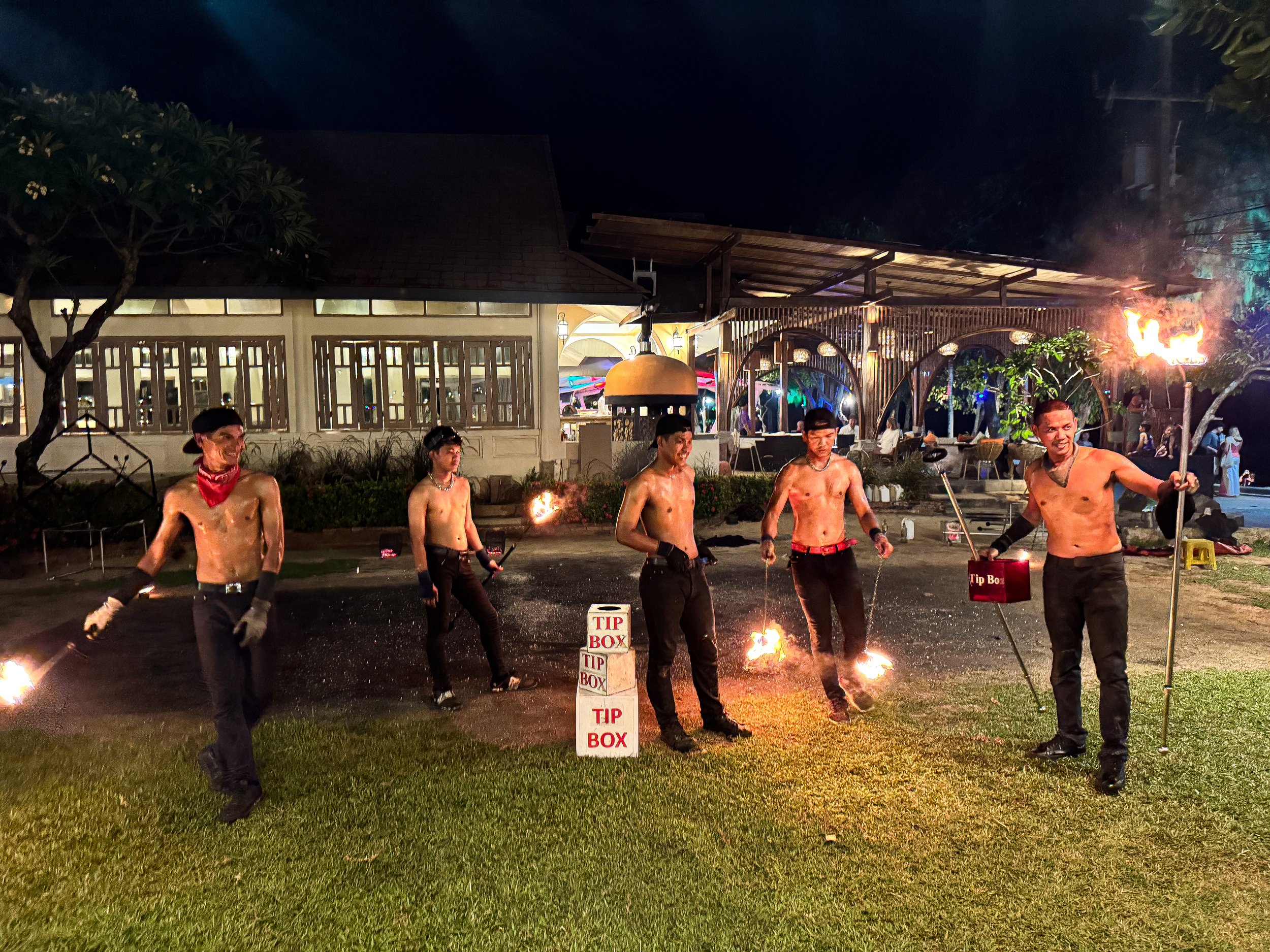
Watch the Fire Dancers. Groups of talented fire dancers put on nightly performances along Ao Nang Beach. We caught one performance on Saturday night at 9pm near the Lan Le Restaurant. The group of dancers spun flaming pinwheels, ropes and cubes, “breathed” fire and scattered glowing embers as they danced beneath. The shows are free but tipping is encouraged at the end.
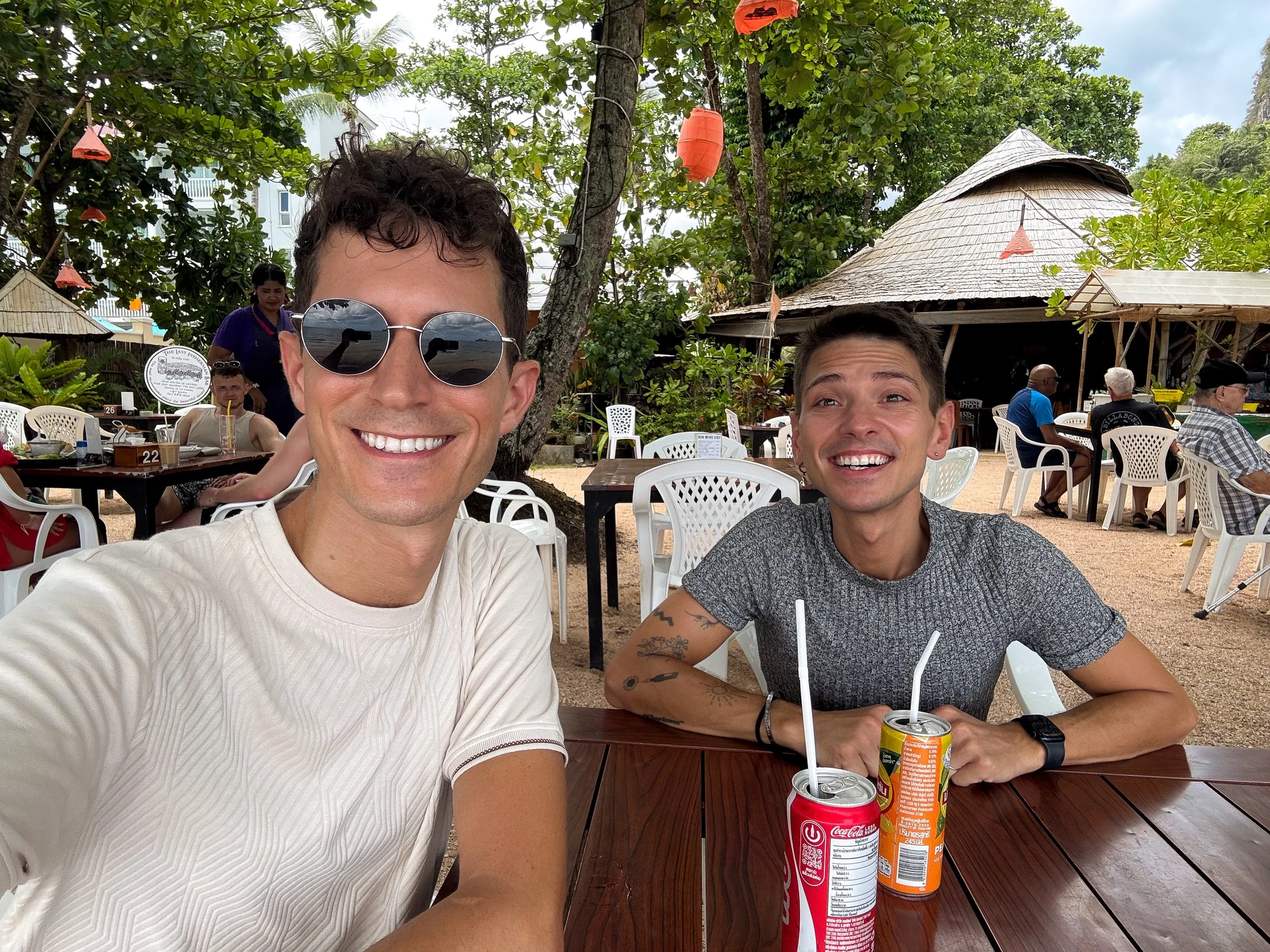
Dine at The Last Fisherman. A beachfront restaurant at Ao Nang Beach serving Thai food and international cuisine. Dining tables are arranged across the sandy patio under the shade of beach trees with hanging basket lanterns. We came here for lunch, enjoying fish burgers while overlooking the sea and sheer rock cliffs of the nearby mountain.
Railay Beach
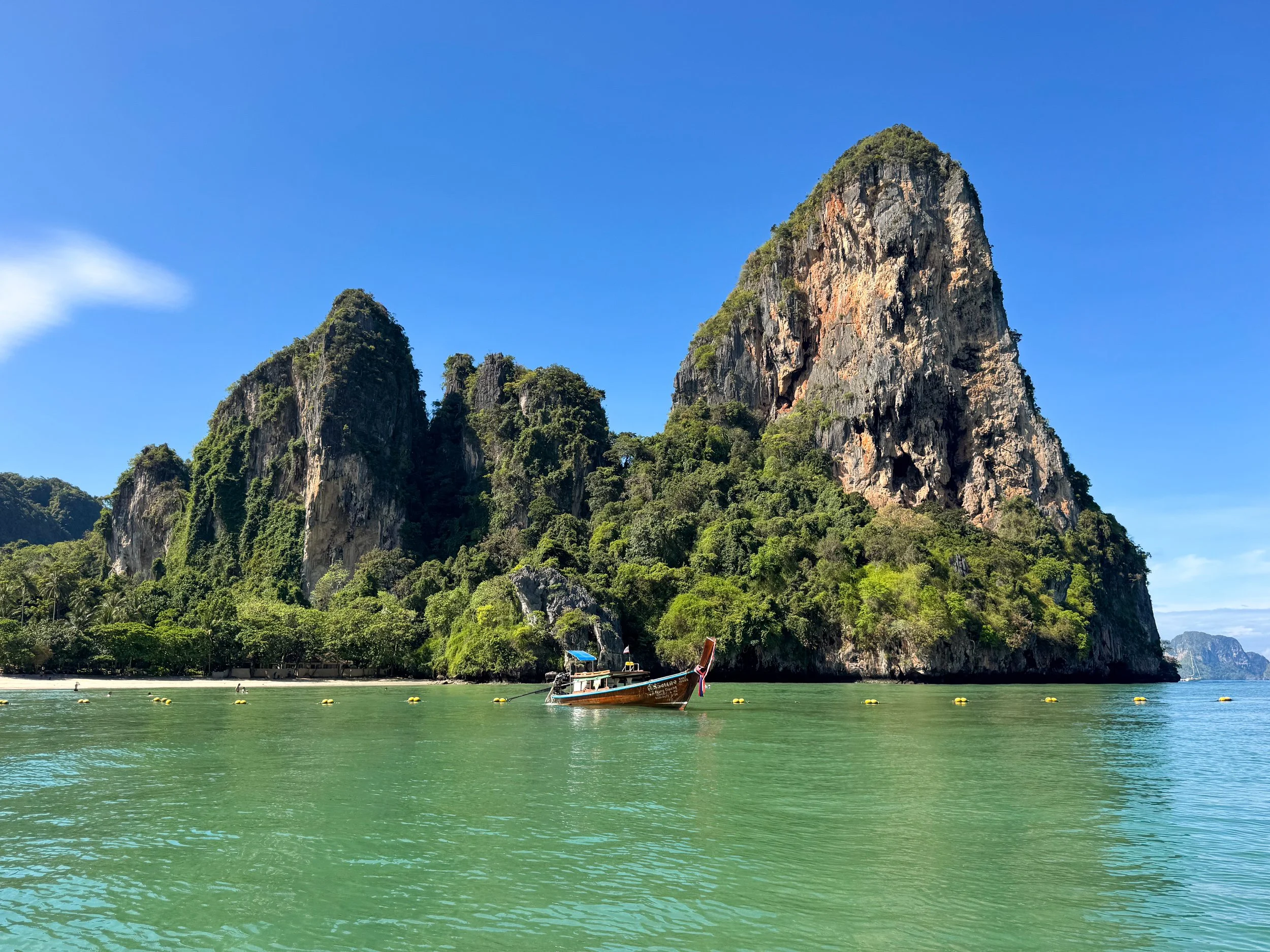
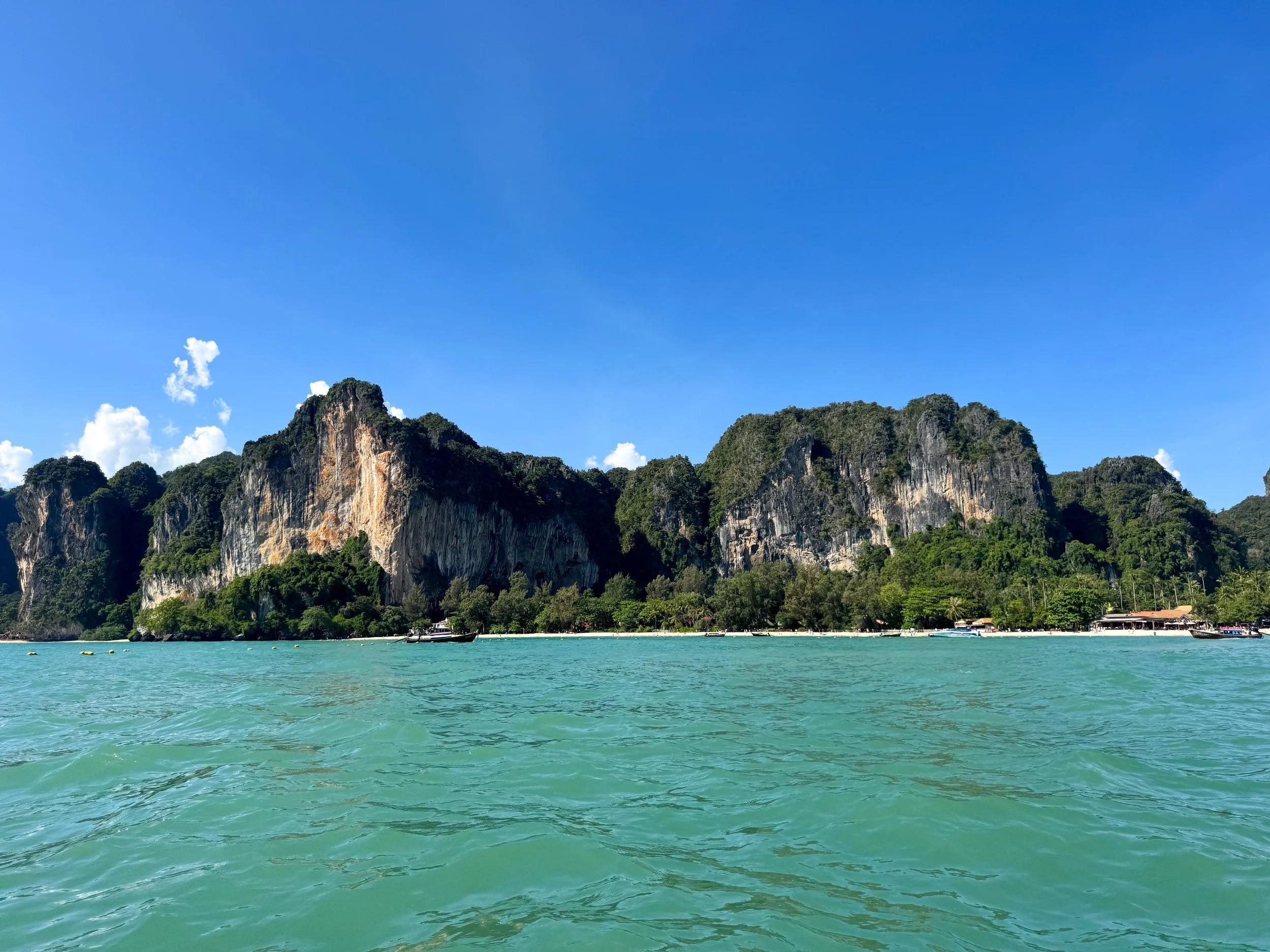
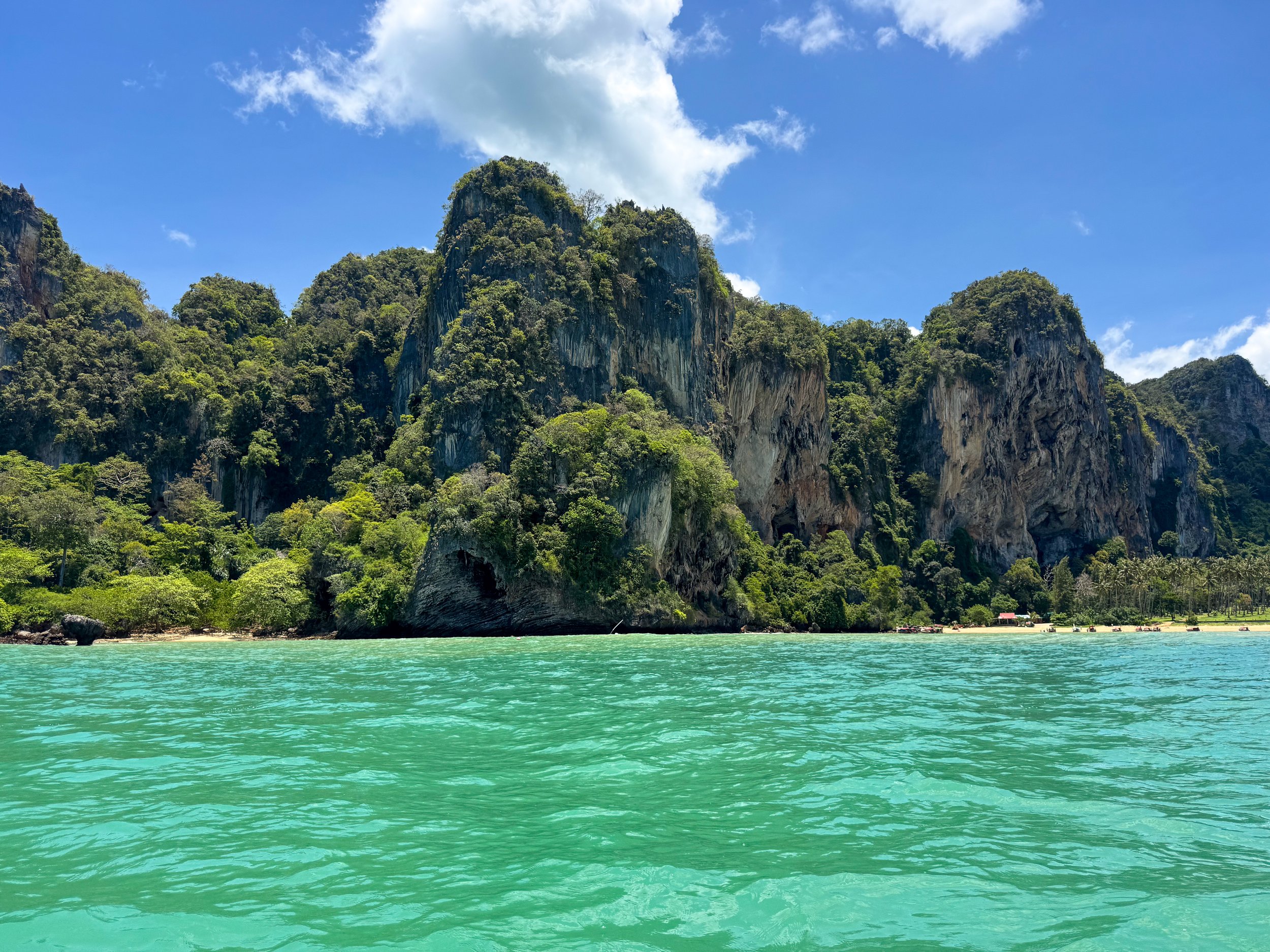
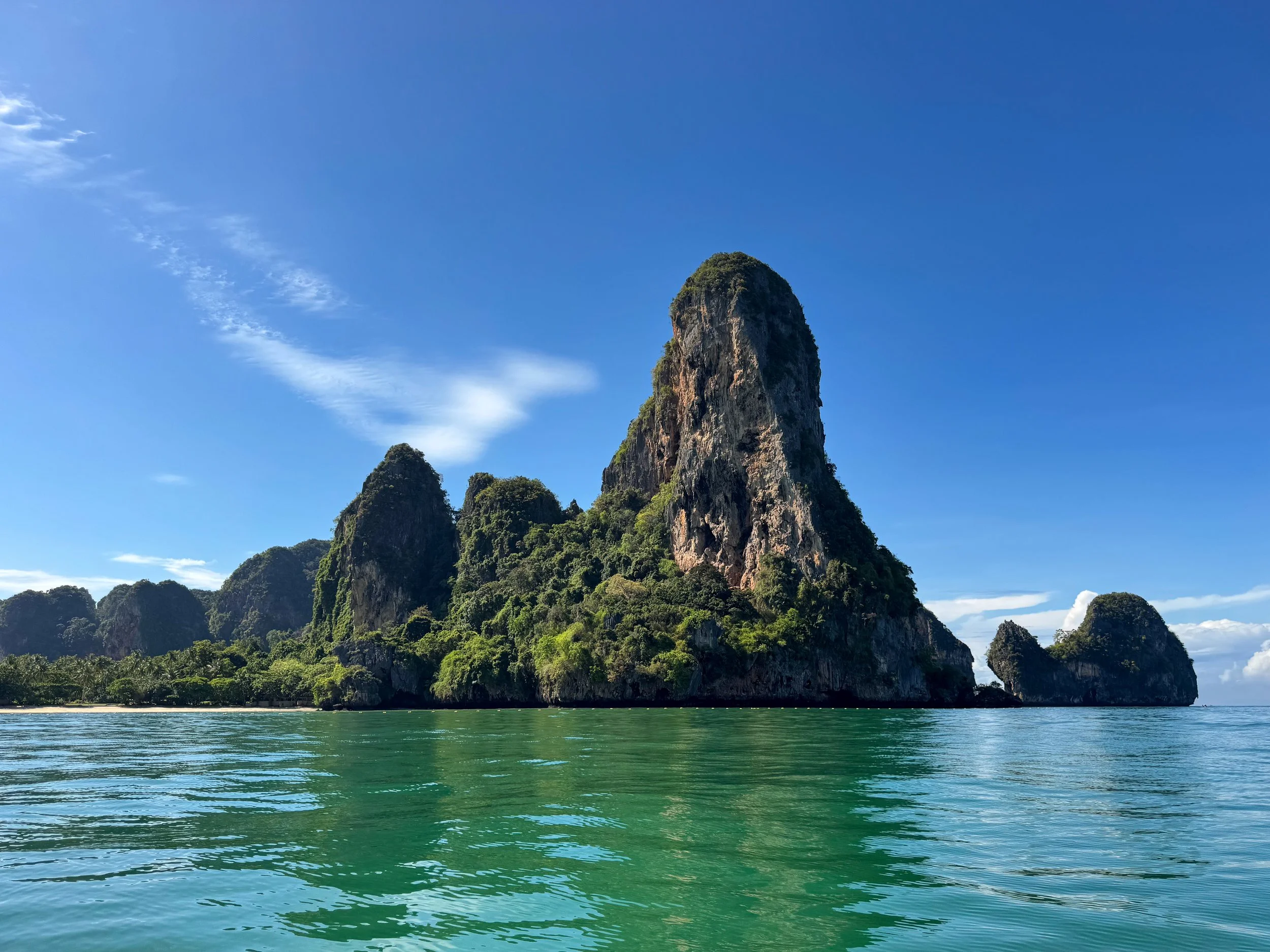
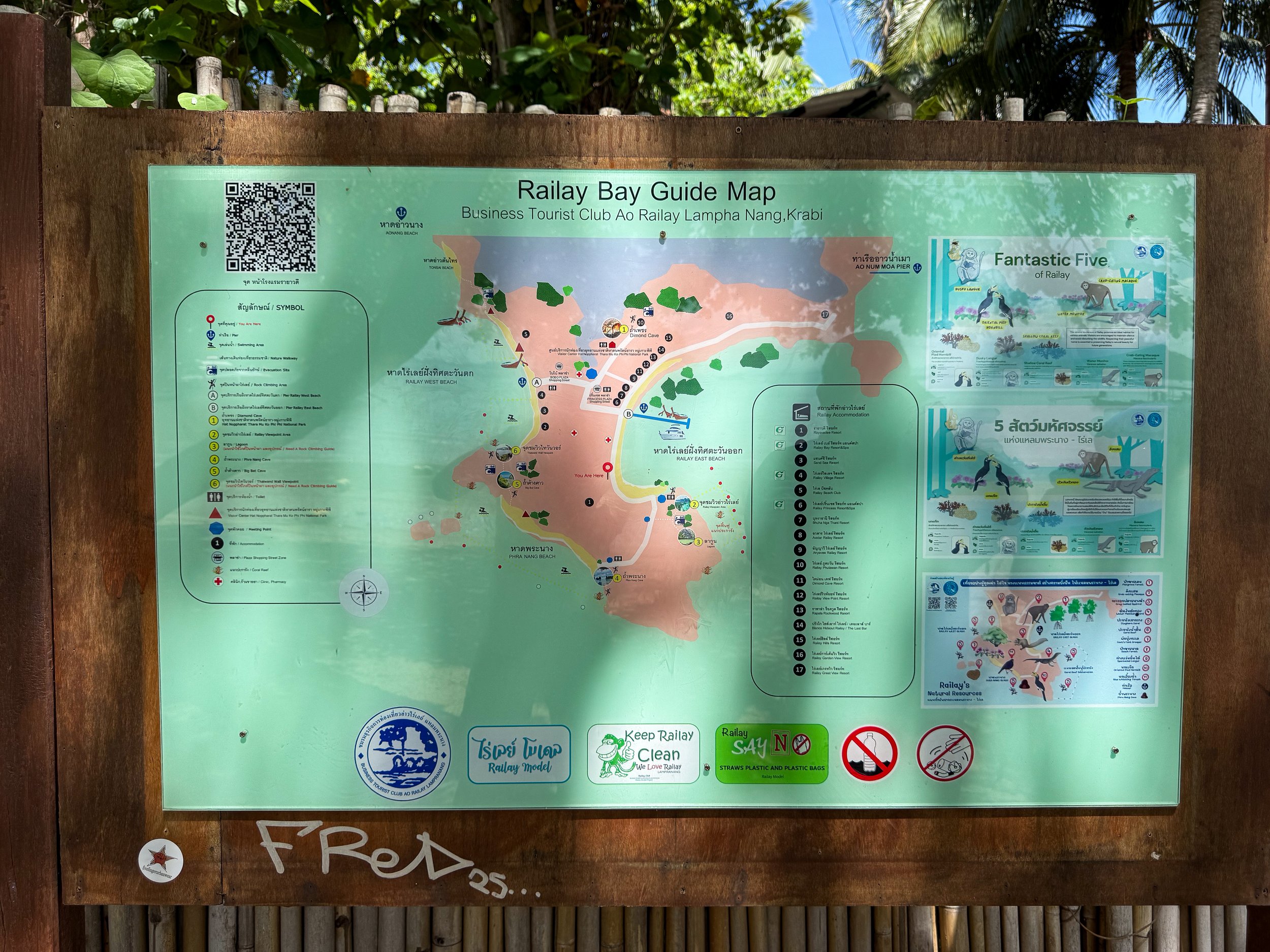
Railay Beach is a peninsula famed for its world renowned beaches, breathtaking natural sights and outdoor activities. Karst mountains with climbable rock cliffs, steep hiking trails and cavernous caves provide daring and adventurous opportunities to explore. Tropical forest, coconut groves and coastal mangroves bathe the peninsula in a sea of green. Picturesque white sand beaches with turquoise hued waters are perfect for sunbathing, swimming, snorkeling and kayaking. The peninsula itself is semi-secluded, only reachable by boat from neighboring beaches. At its center is a sleepy and tranquil town with a youthful vibe. It contrasts the club and party scene found elsewhere in southern Thailand.
Railay Beach West. A crescent shaped white sand beach flanked by towering limestone mountains. Beachfront restaurants, boutique hotels and bars line its shore. Swimmers and kayakers enjoy the beach’s calm turquoise waters. Colorful long boats ferry passengers in and out of the peninsula from here.
Railay Beach East. A shoreline and cove on the eastern side of the peninsula near many of the area’s hotels. Guests often arrive and depart from here by boat. Tractors pull wagons of people and their luggage between the boats and shore. Though scenic and beautiful, there are much better beaches to swim and relax at.
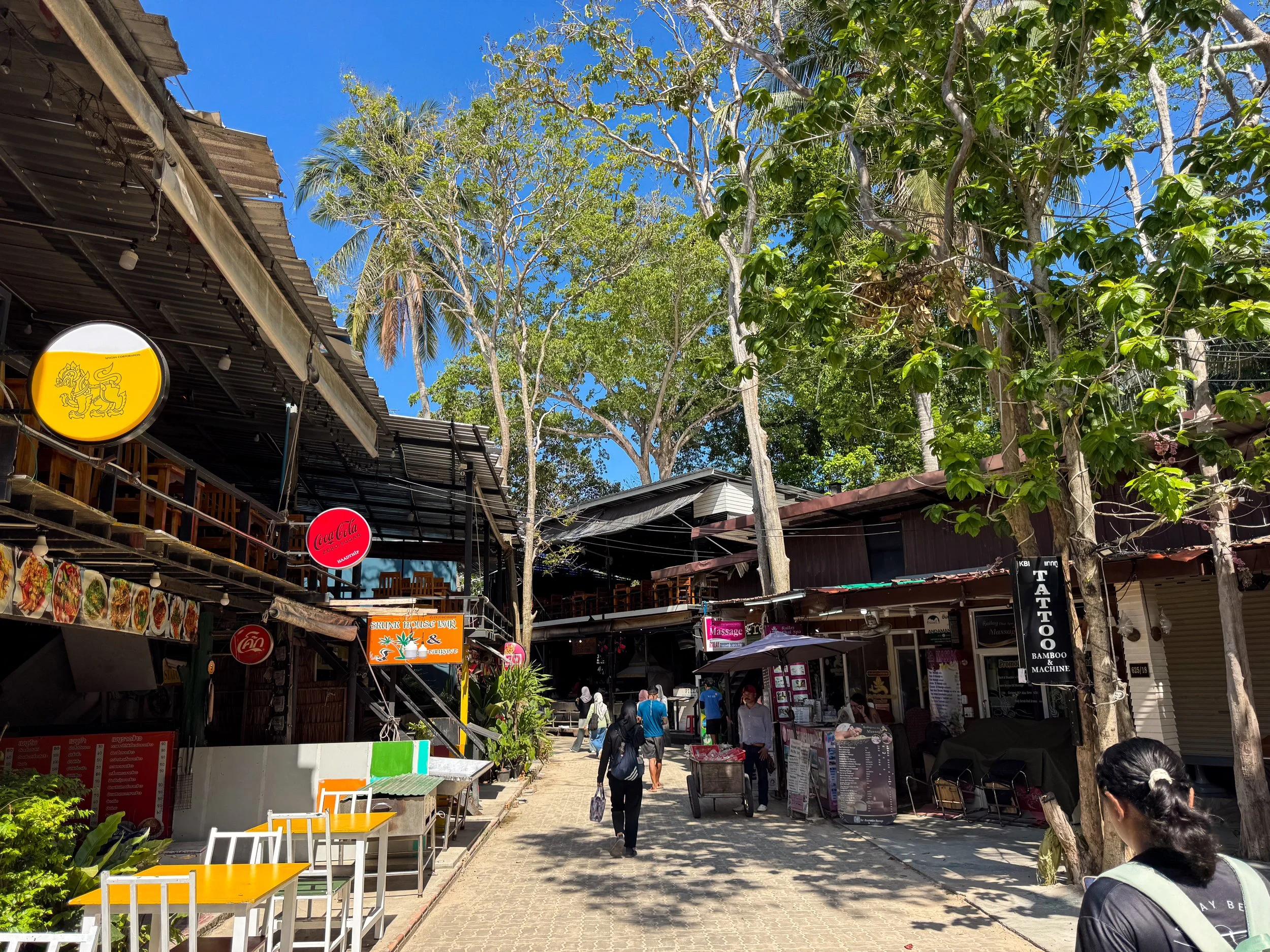
Visit Bobo Plaza. A sand covered pedestrian street connecting Railay Beach West and East. It’s lined with hostels, thai food restaurants, climbing outfitters, massage spas, tattoo studios and smoke shops. It’s a hub for activity but still feels hidden and under developed.
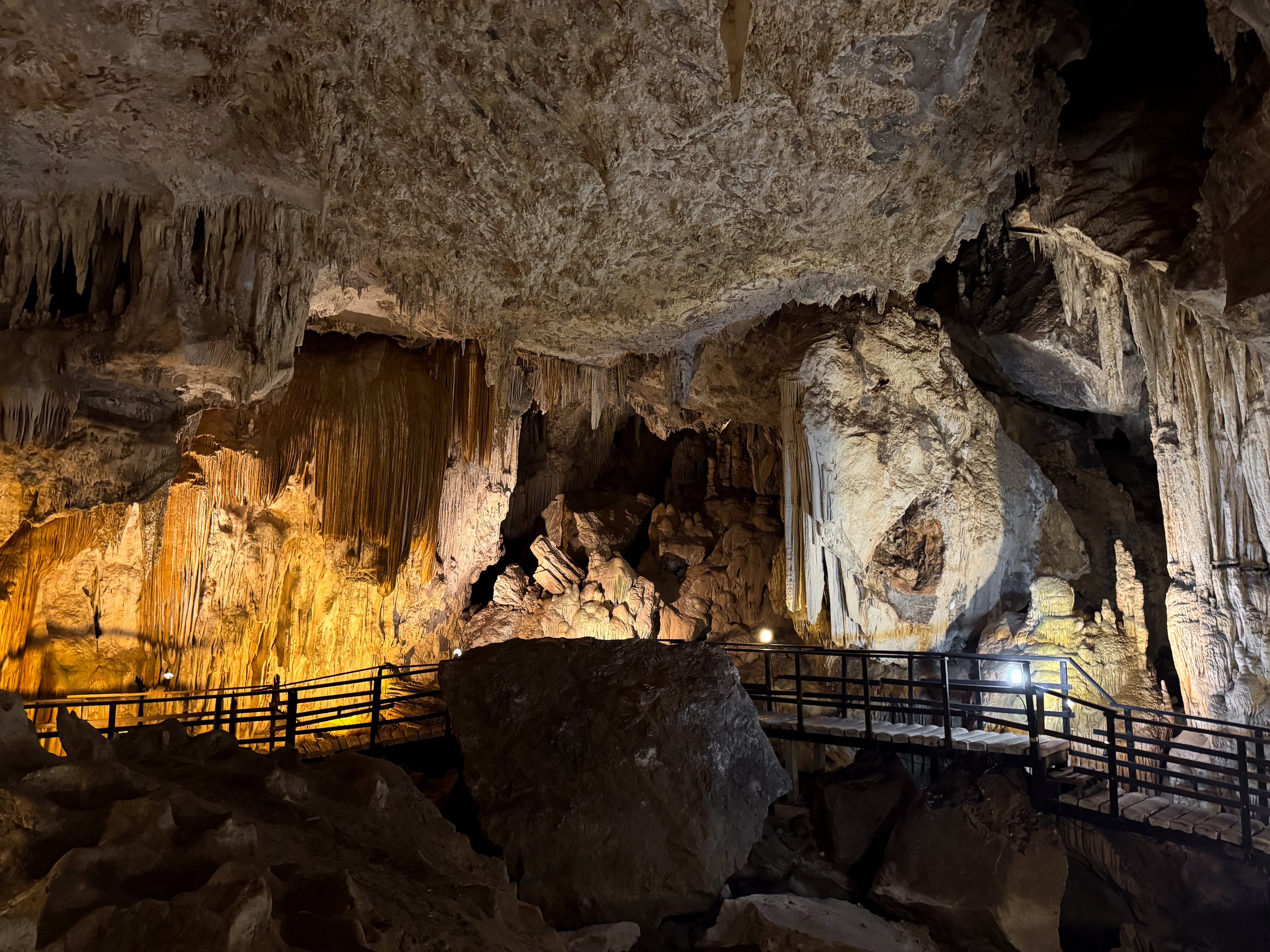
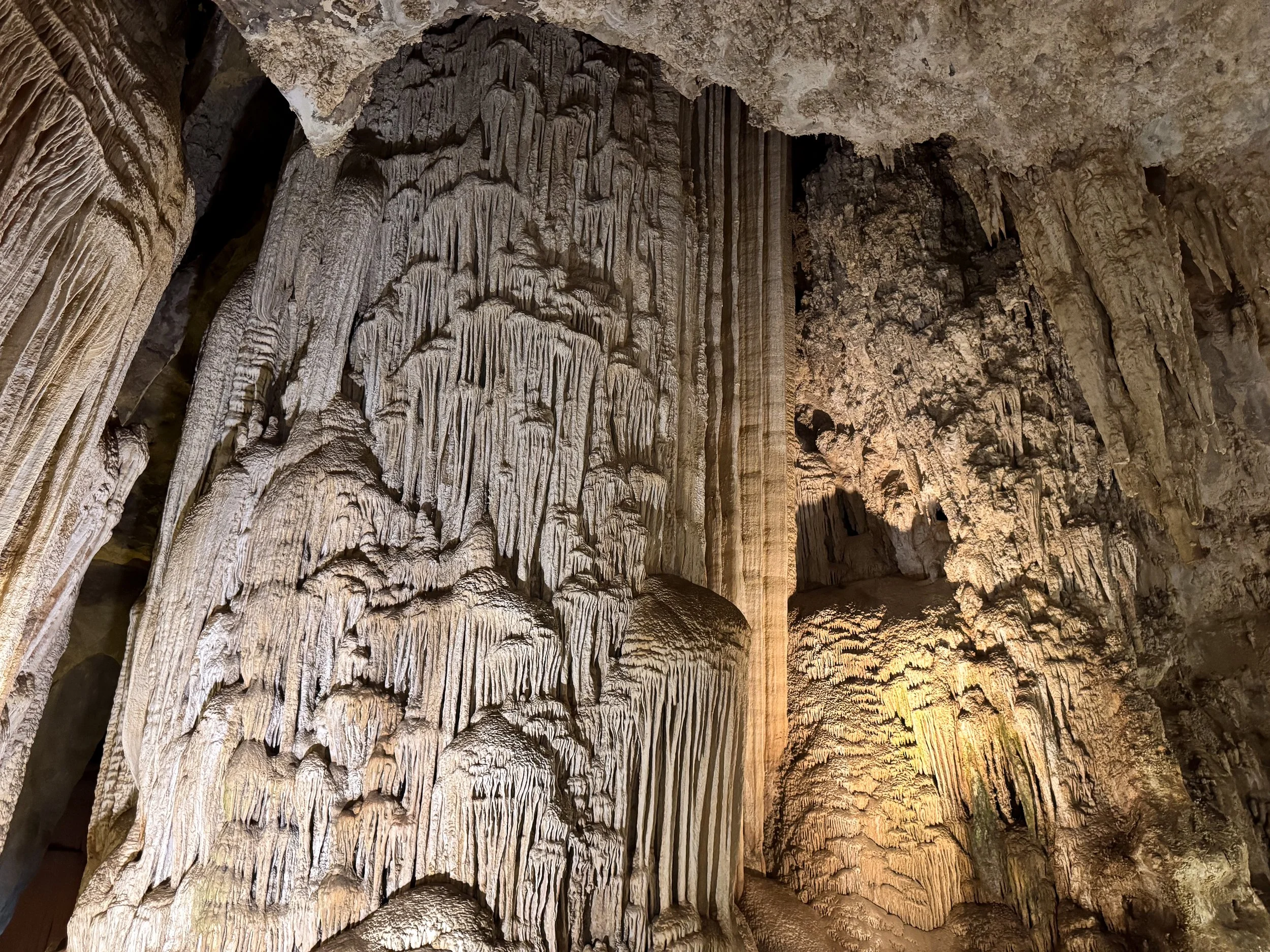
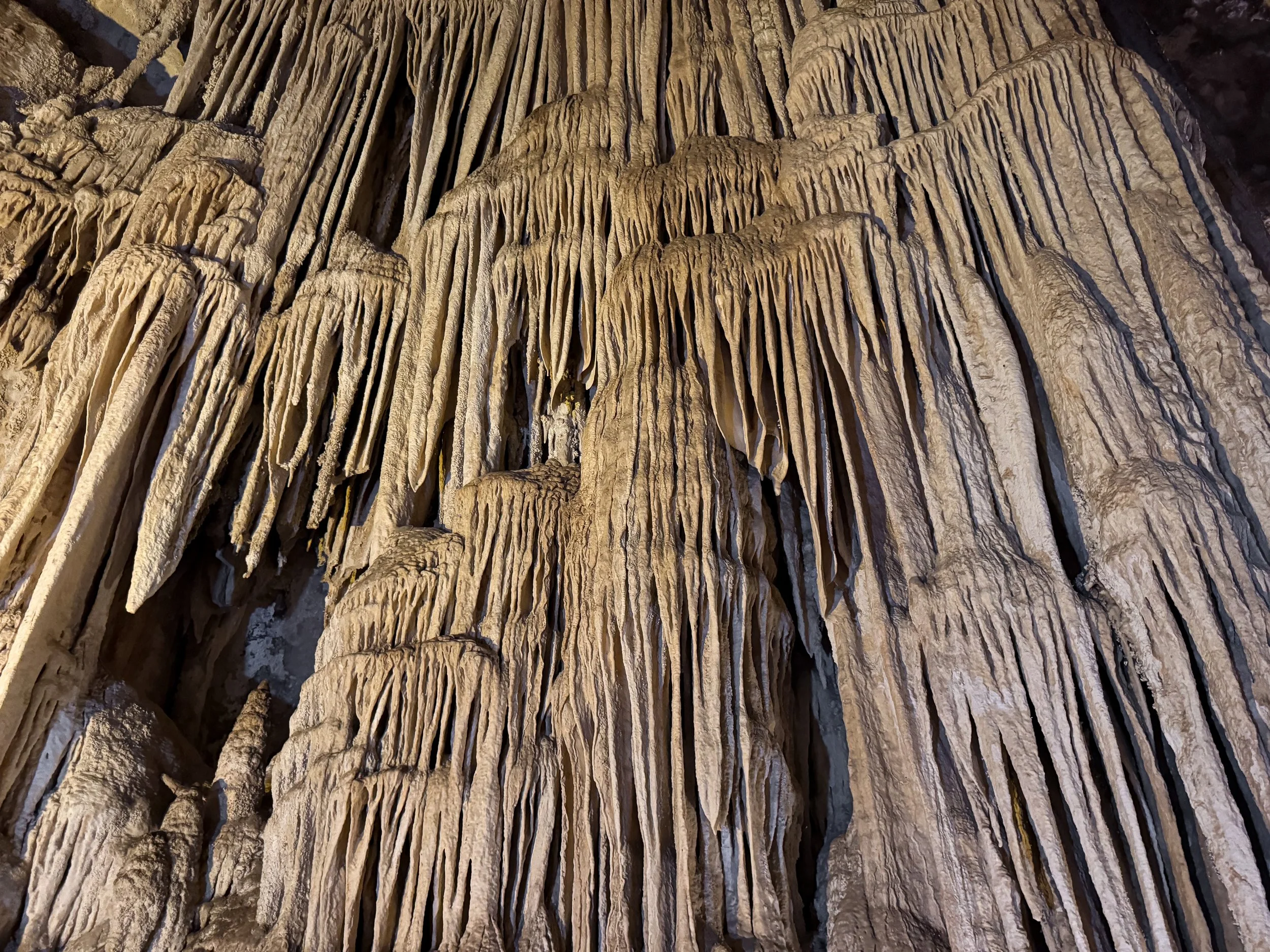
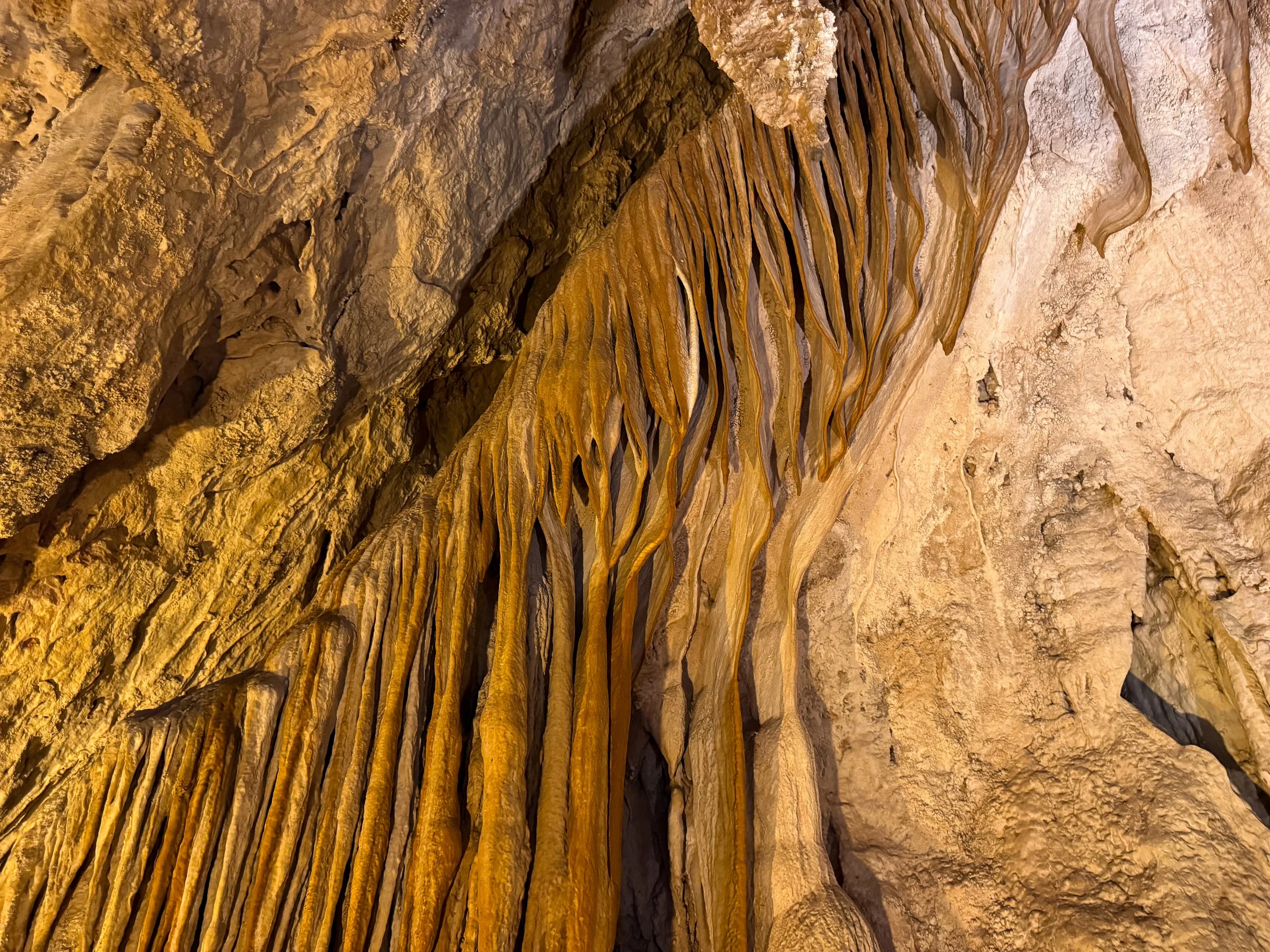
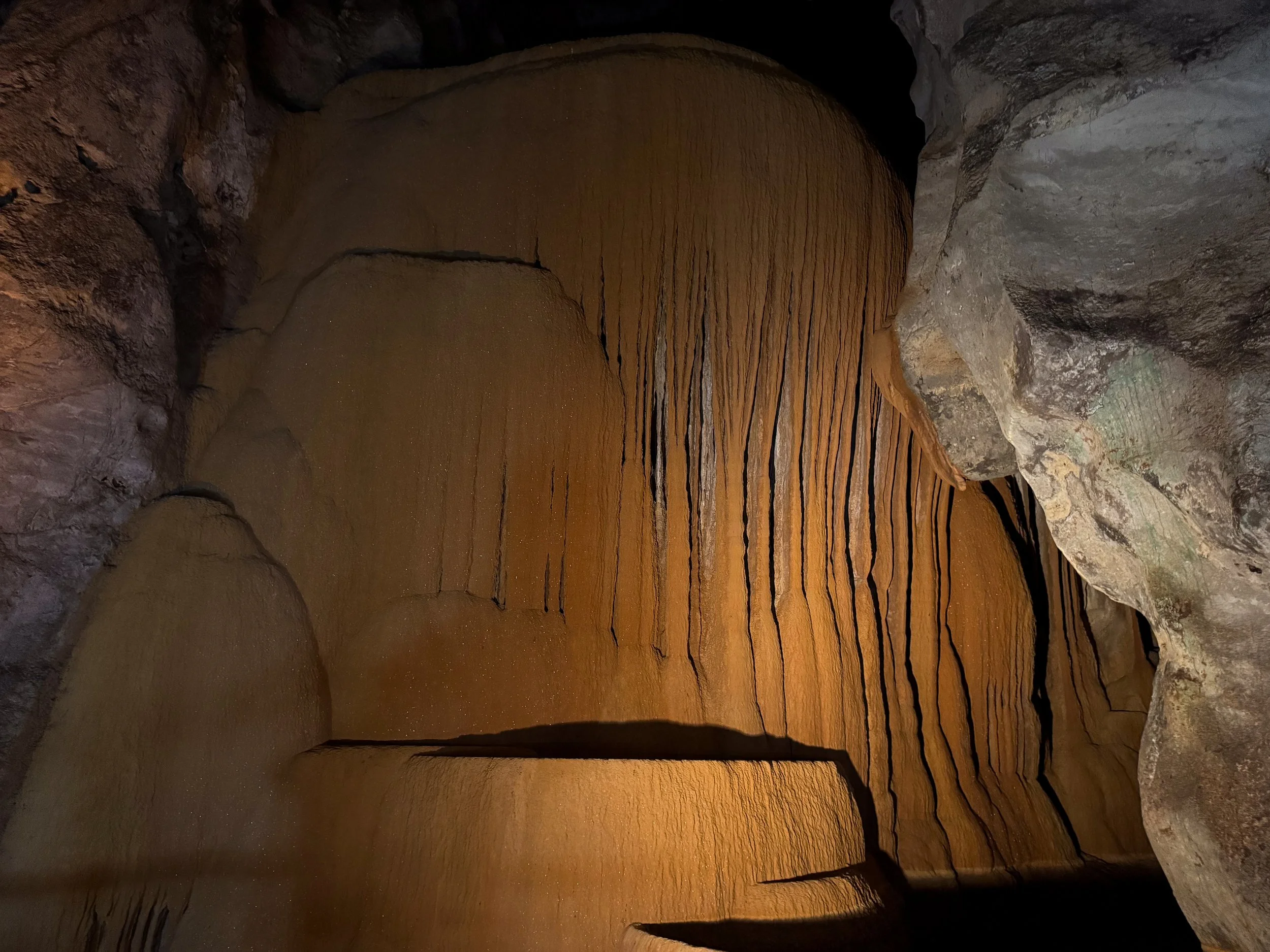
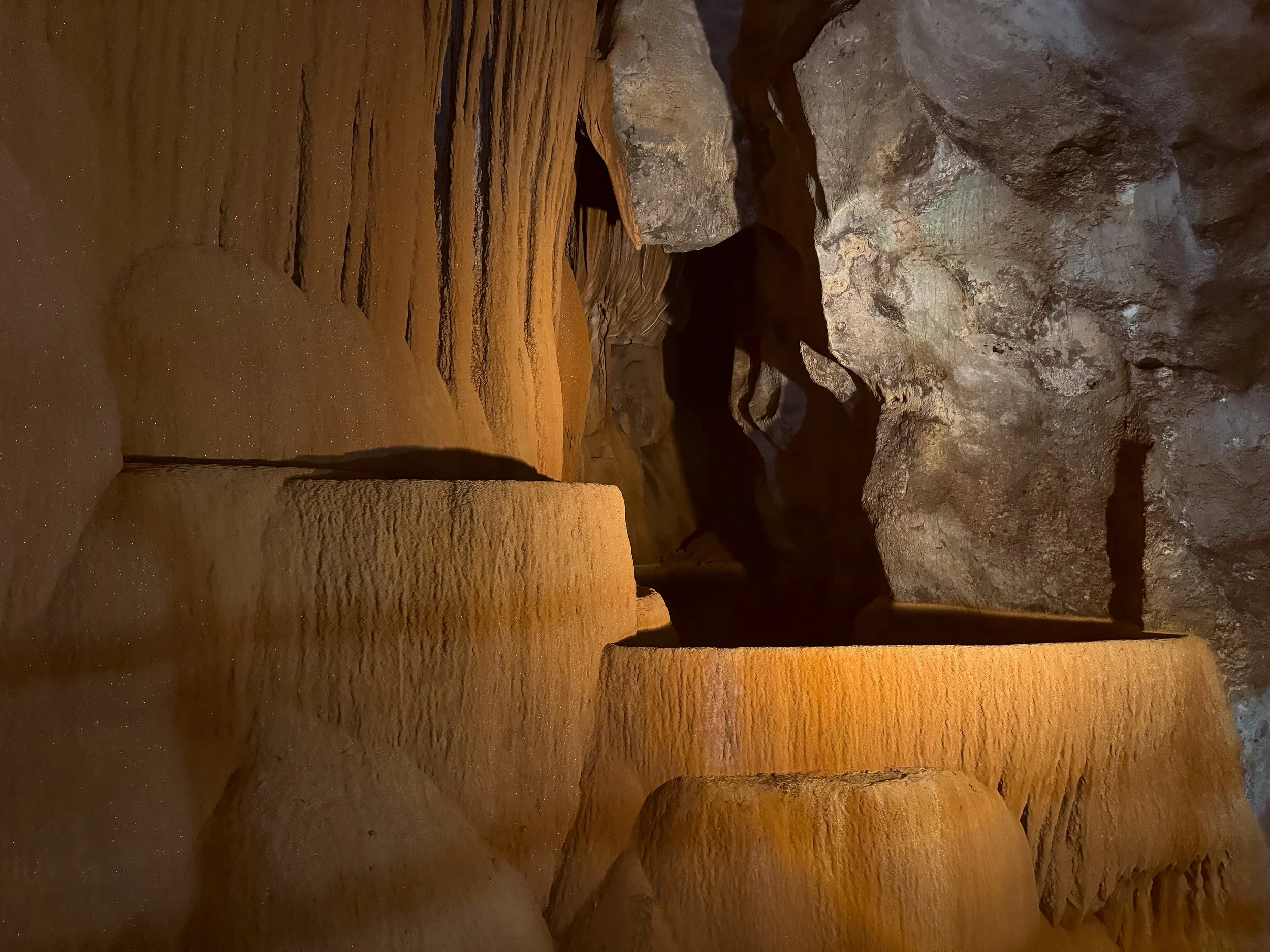
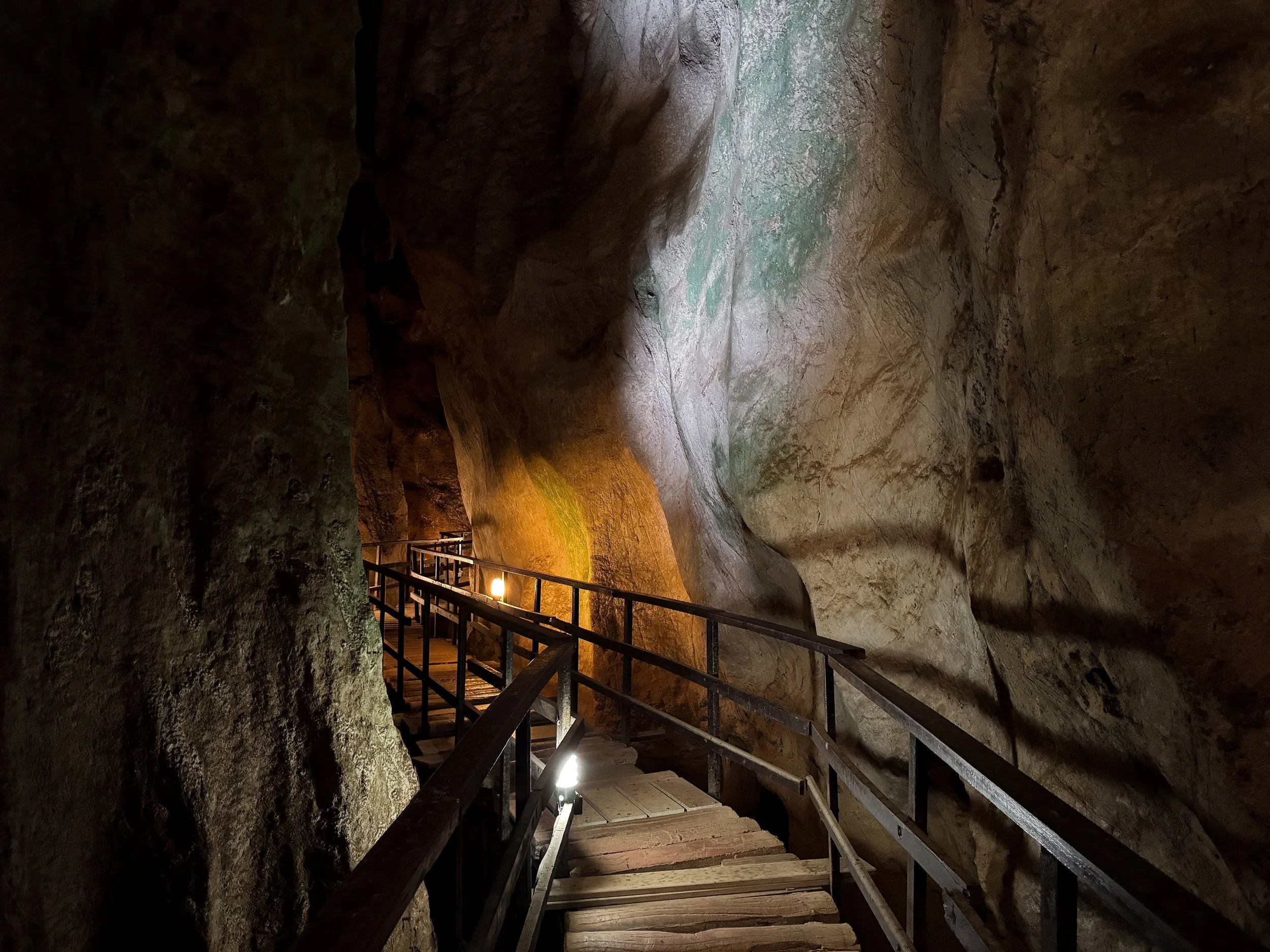
Enter Diamond Cave. A cave named after its glittering rock formations hidden within the karst mountain. A boardwalk leads into the cave through a tall and narrow slit. Once inside, amber colored crystals and stones shimmer in the light. Towering walls and chambers are draped in layers of stalactites and ribbon-like rocks.
Walk The Stalactite Trail. A trail leading from Railay Beach East to Phra Nang Beach. It winds beneath a cliff with dangling stalactites and small caves.
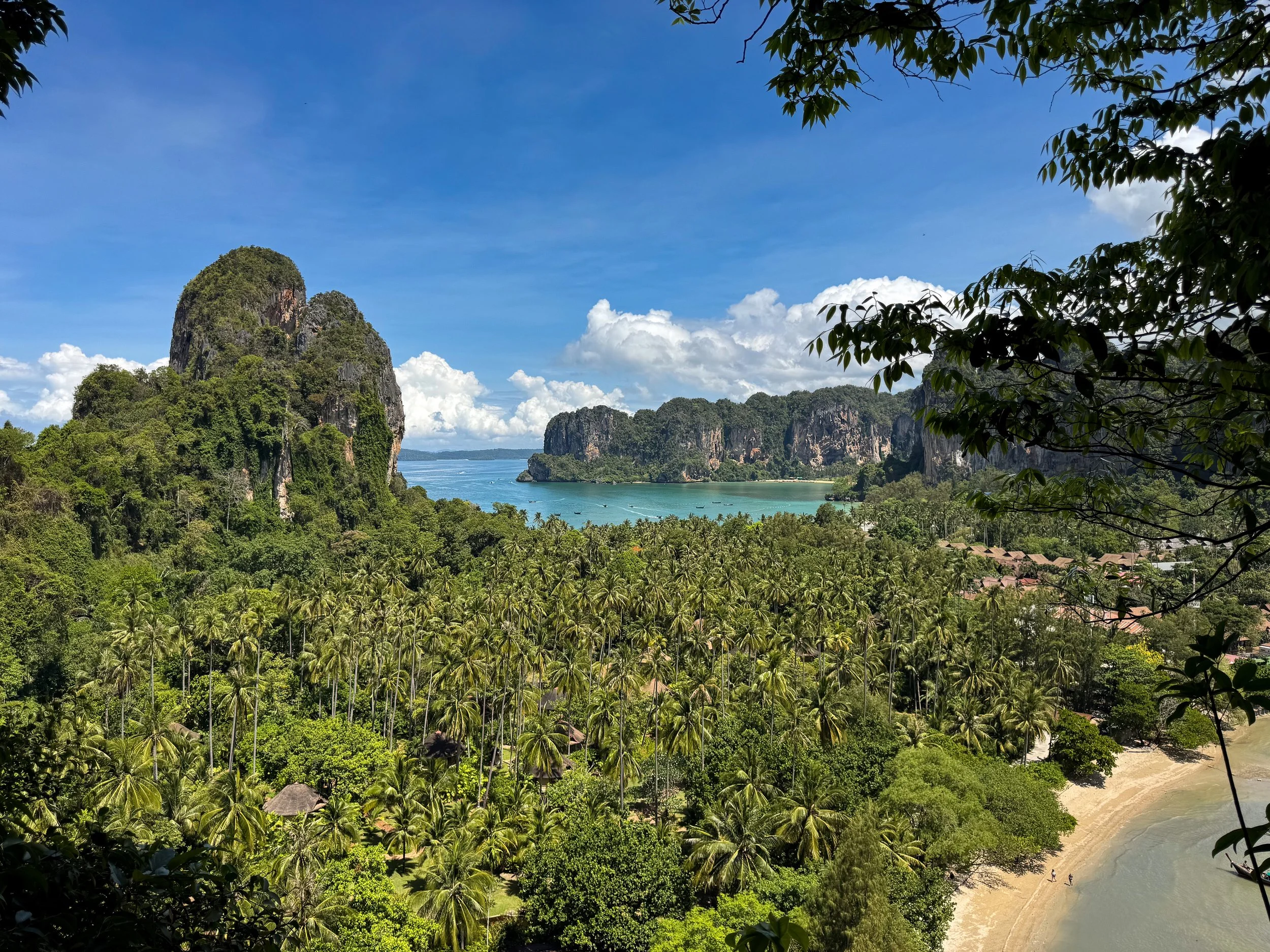
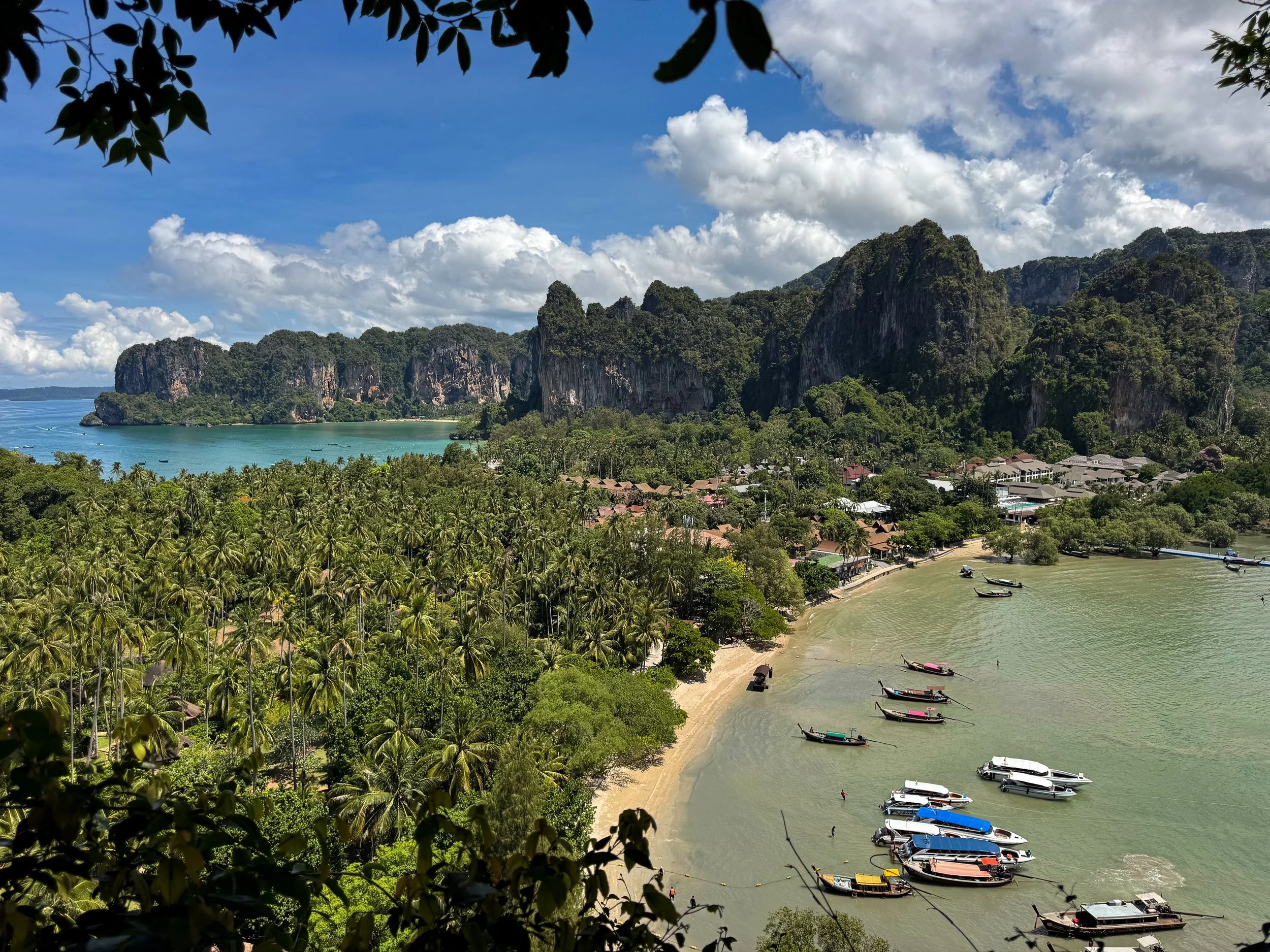
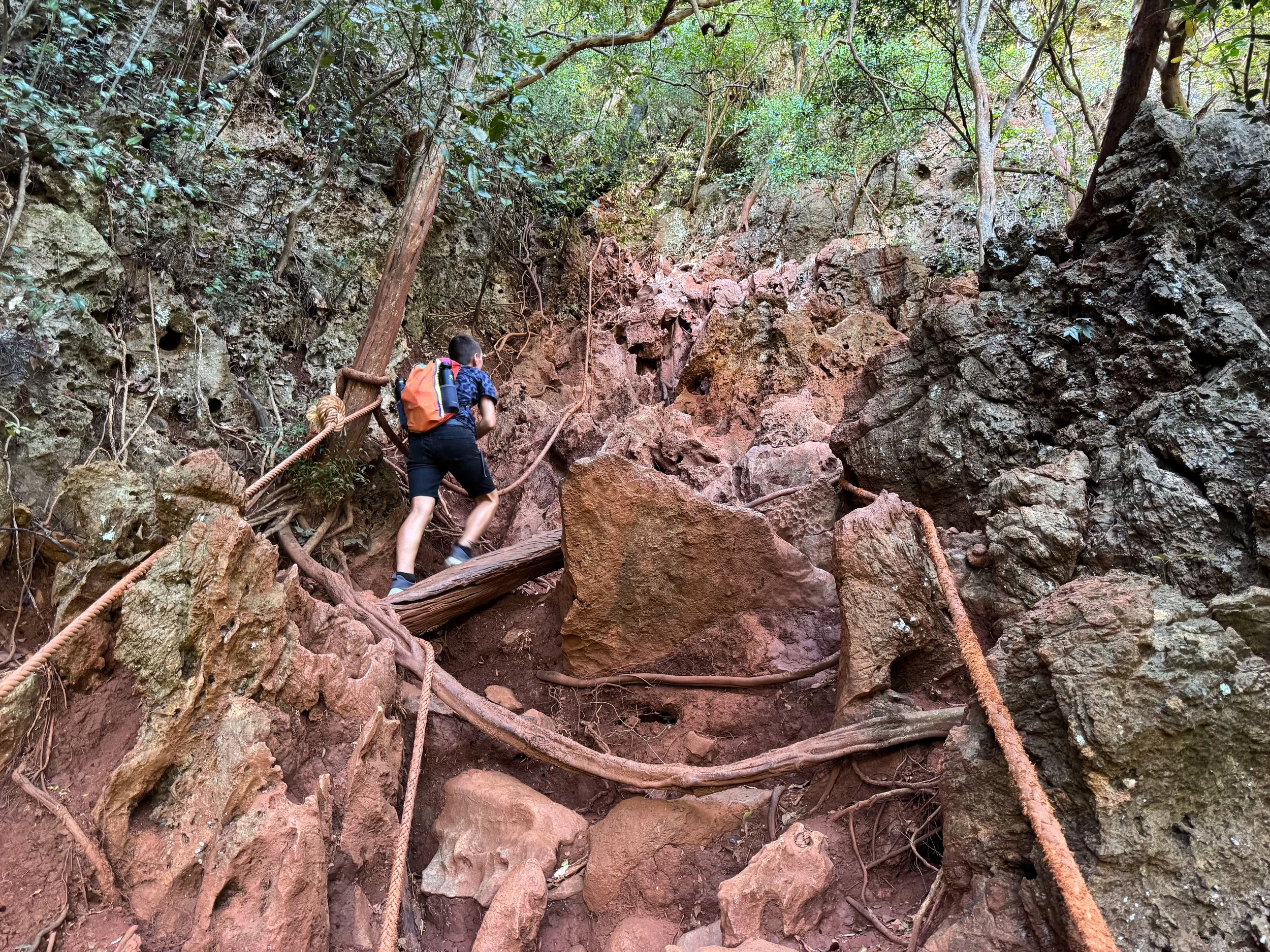
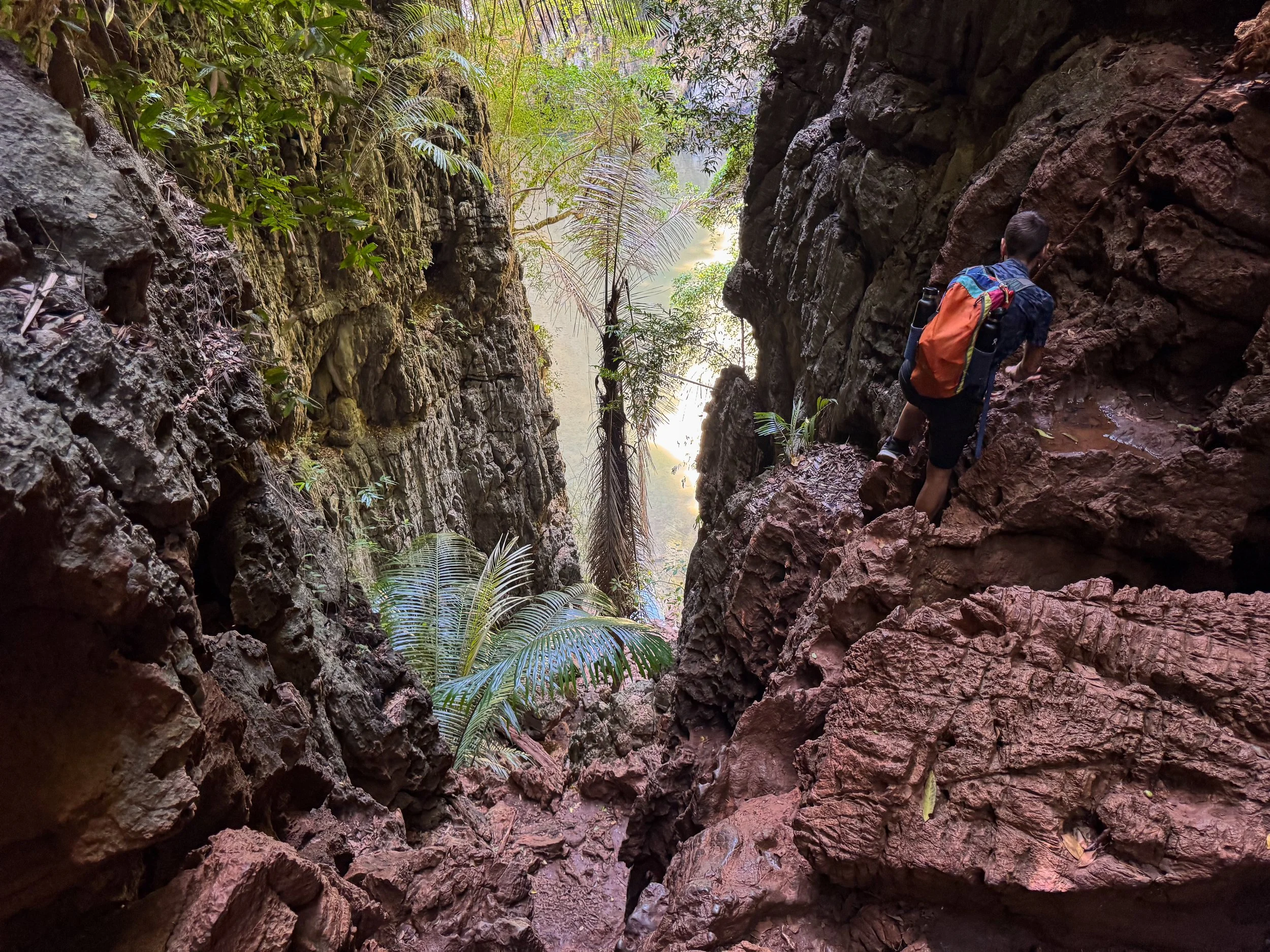
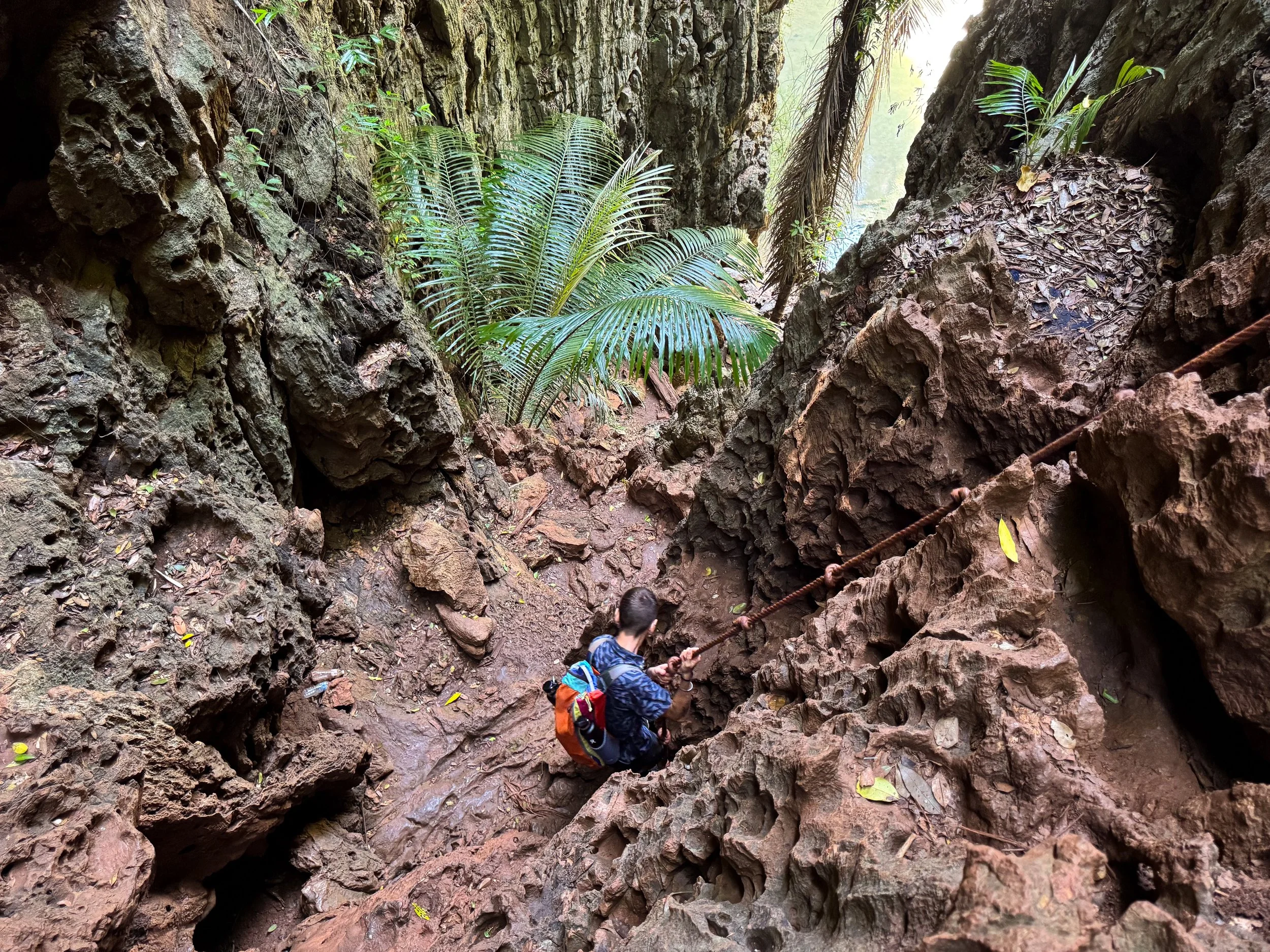
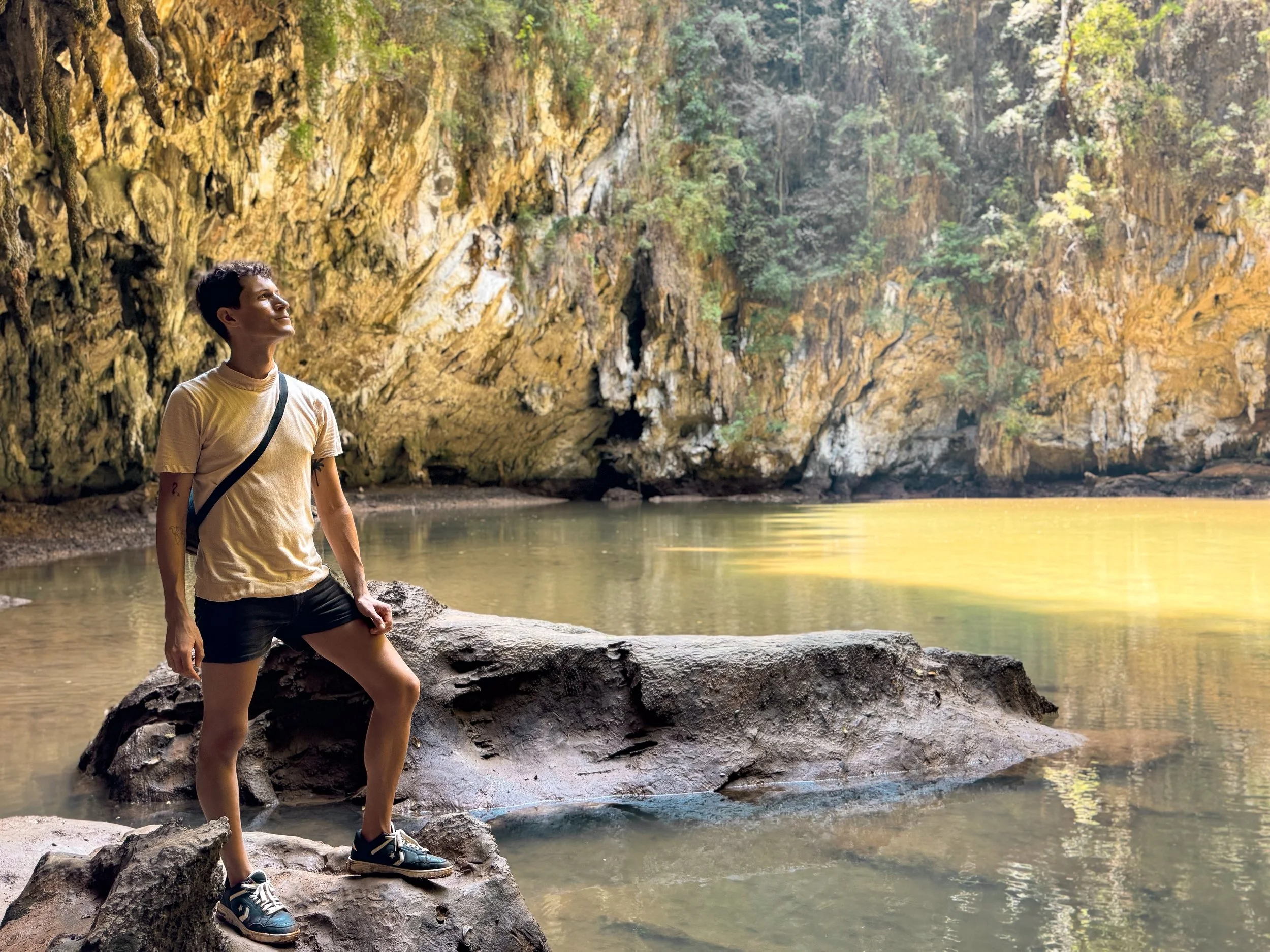
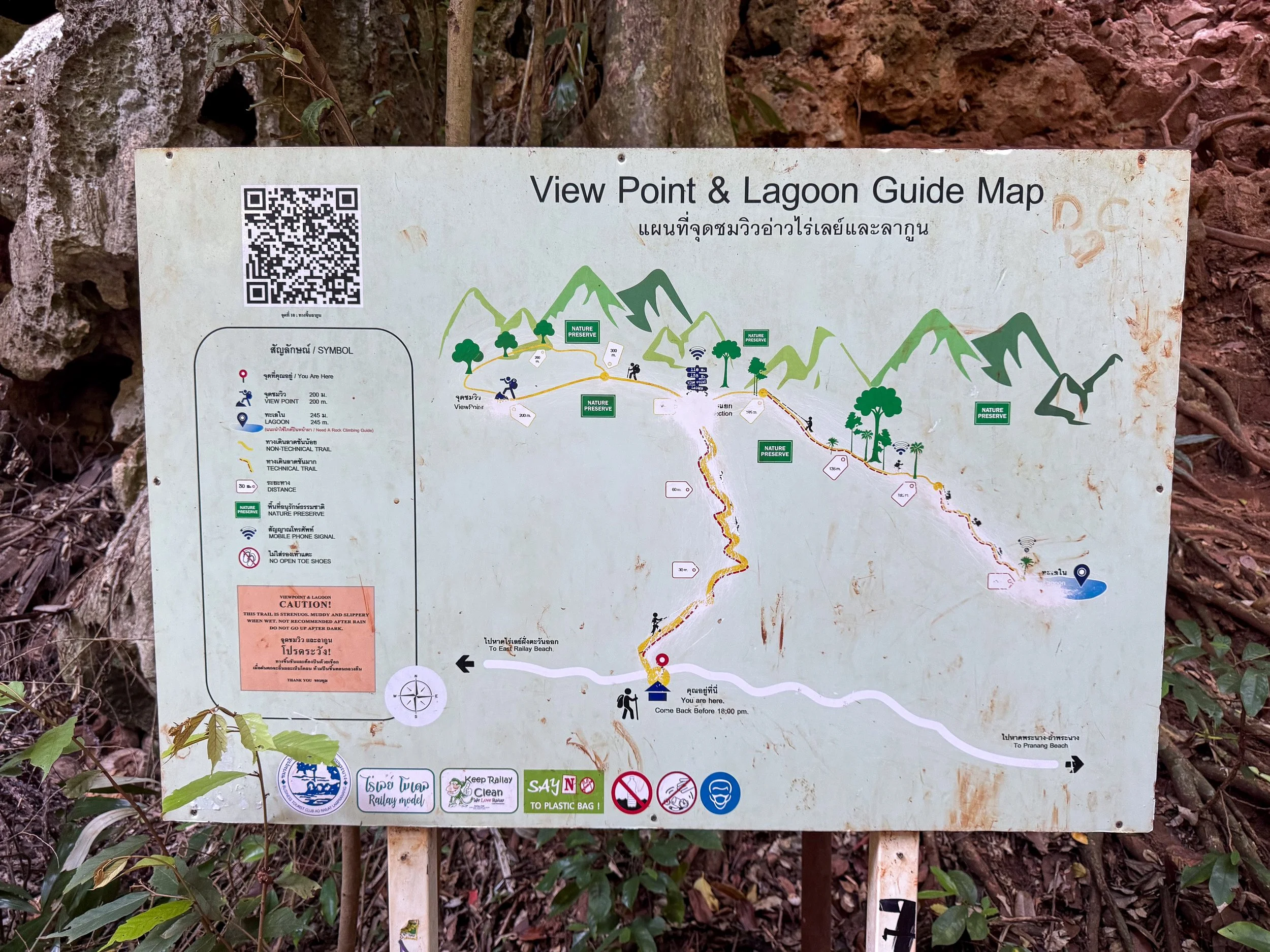
Hike to The Railay East Viewpoint & Lagoon. Midway along the Stalactite Trail is a steep rocky hill covered in tree roots and ropes. The rope guided route leads up the hill to a fork in the trail. Left leads to the viewpoint overlooking Railay Beach East. Right leads to the hidden lagoon.
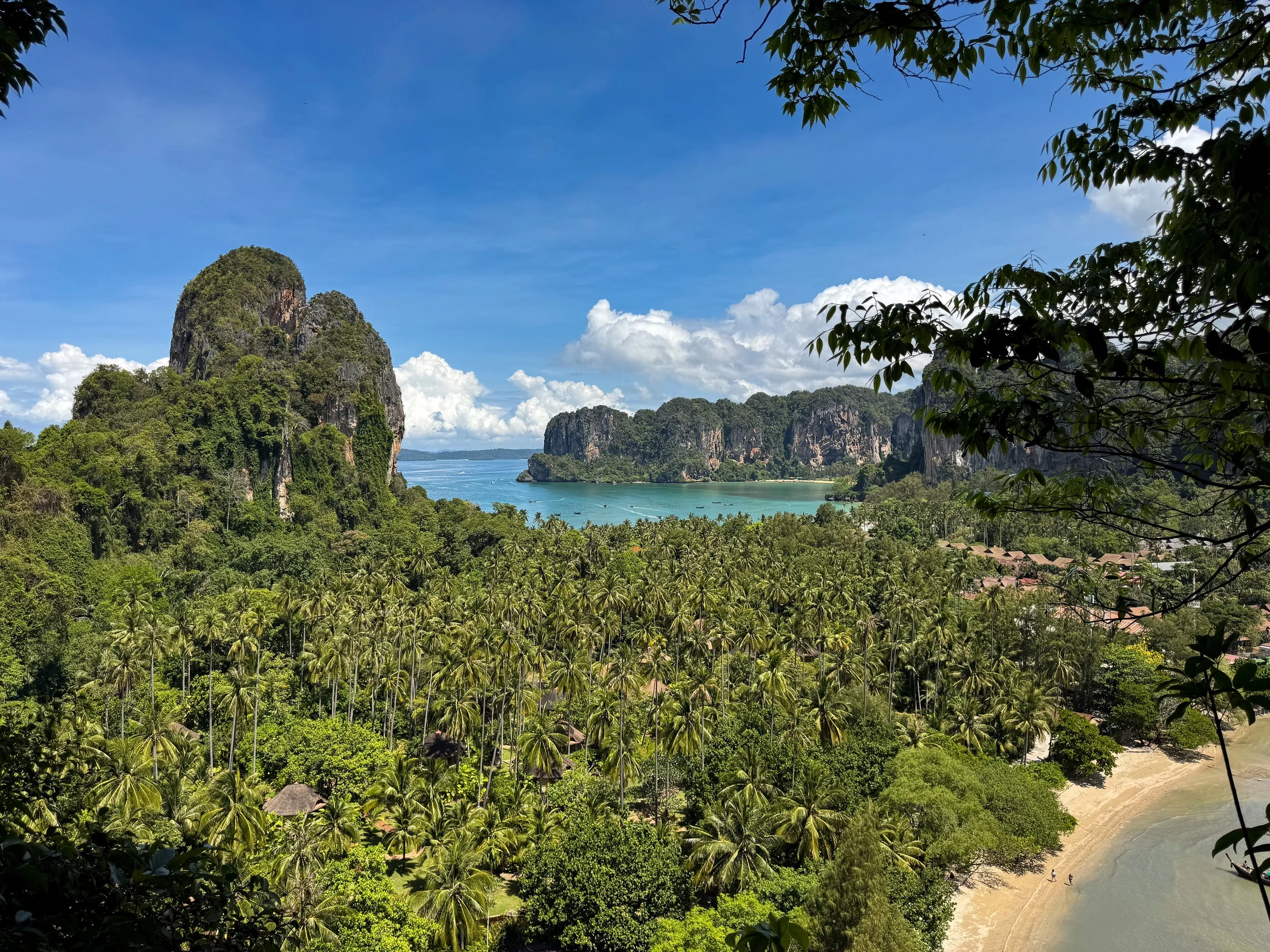
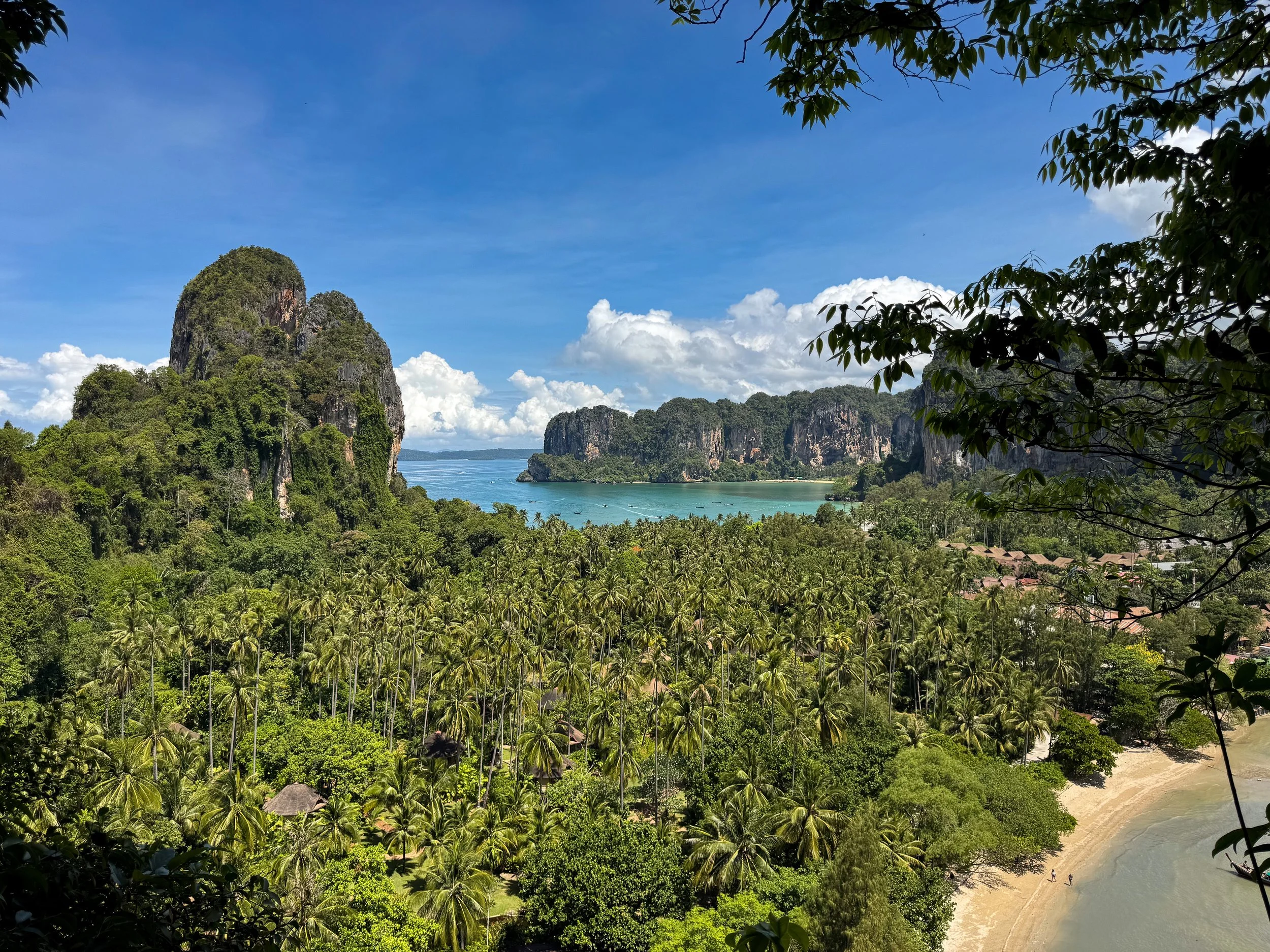
Railay East Viewpoint. Once navigating the steep rope guided trail, hiking to the viewpoint is fairly easy. The small lookout boasts picturesque views of the peninsula’s lush karst mountains, dense coconut groves, the tan sand beach below and turquoise bay dotted with long tail boats.
Hidden Lagoon. A difficult and rigorous trail leads down a series of cascading cliffs to reach the lagoon. It involves a heavy amount of free climbing along steep rocky cliffs with ropes guiding the way for support. The lagoon is surrounded by vertical cliffs covered in foliage. The water rises and falls with the tide. We visited at midday when the lagoon was in direct sun but shallow and muddy.
Pro Tips. Go slow, be conscious of your footing and know your limitations. Wear sturdy closed toe shoes. Shake mud off your shoes before climbing back up the trail to avoid slipping. Wear insect repellent to minimize mosquito bites.
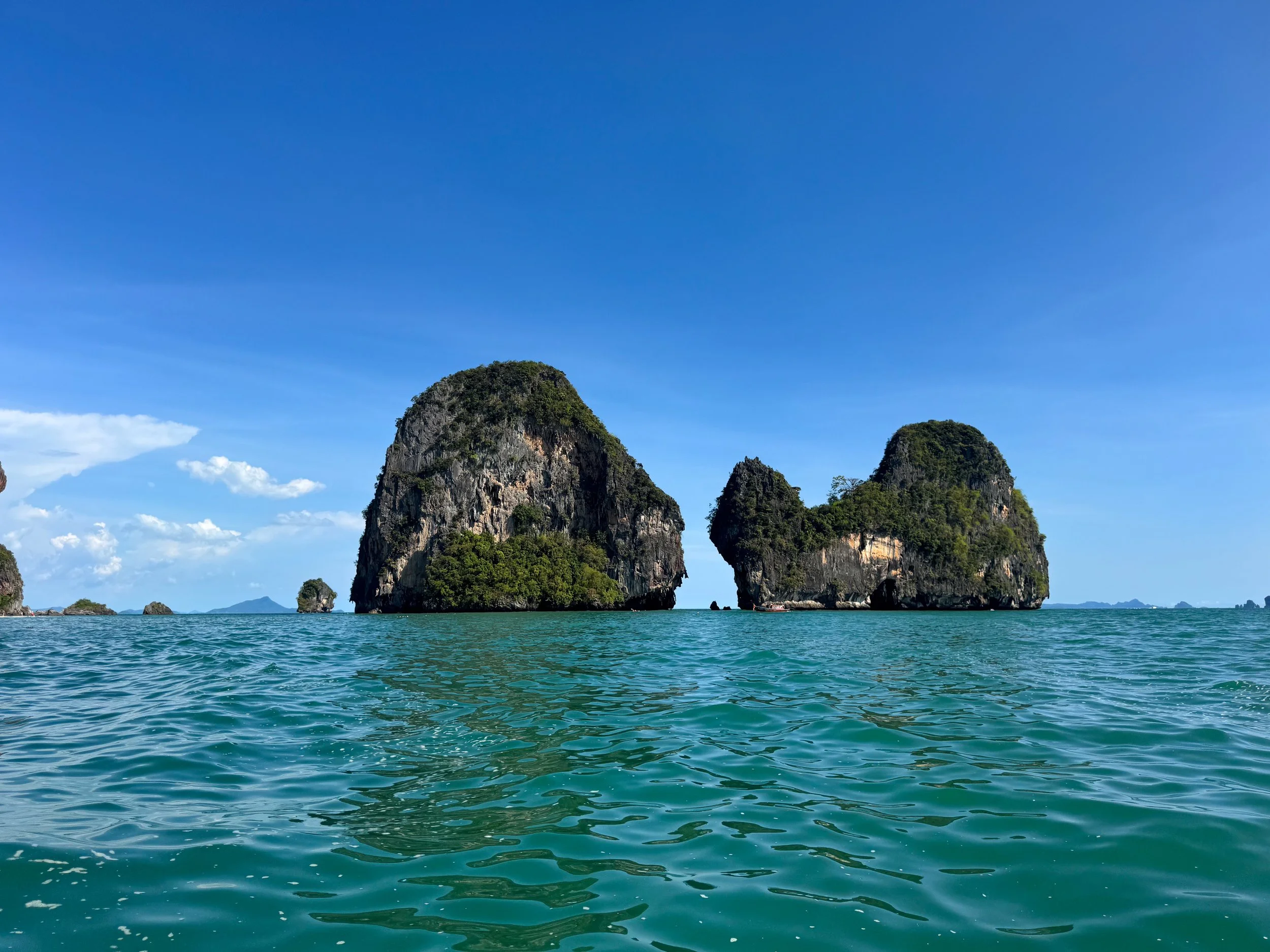
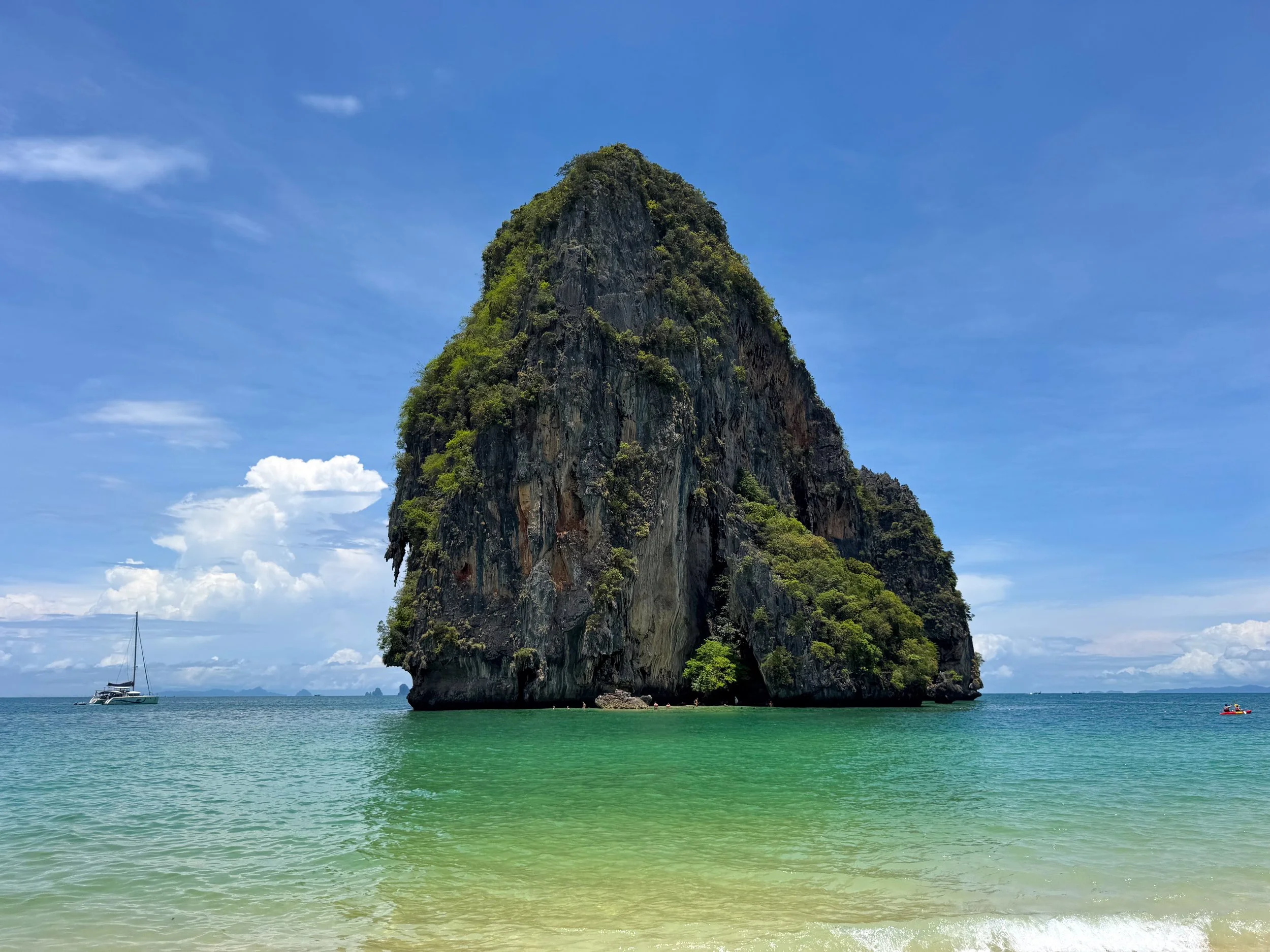
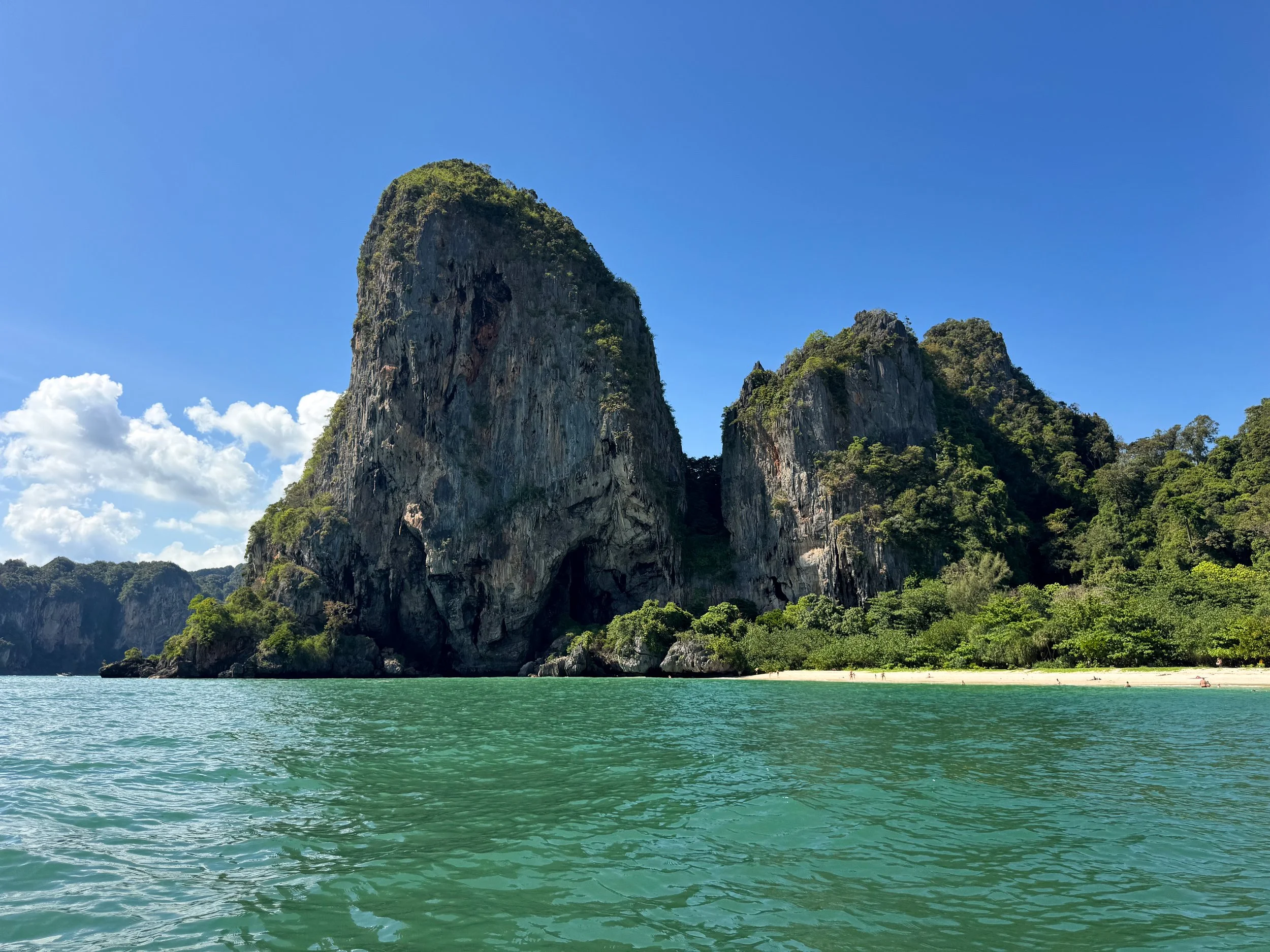
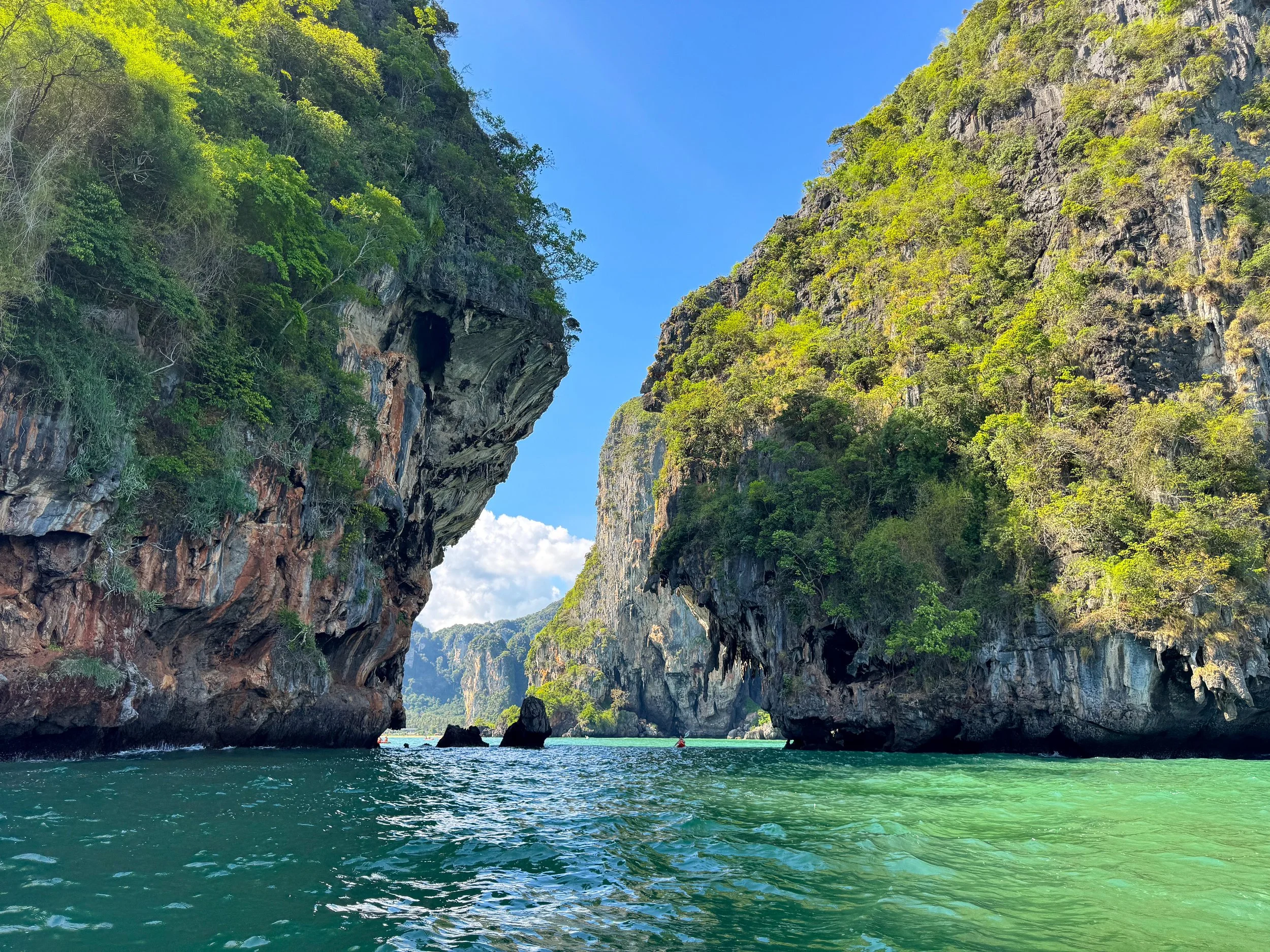
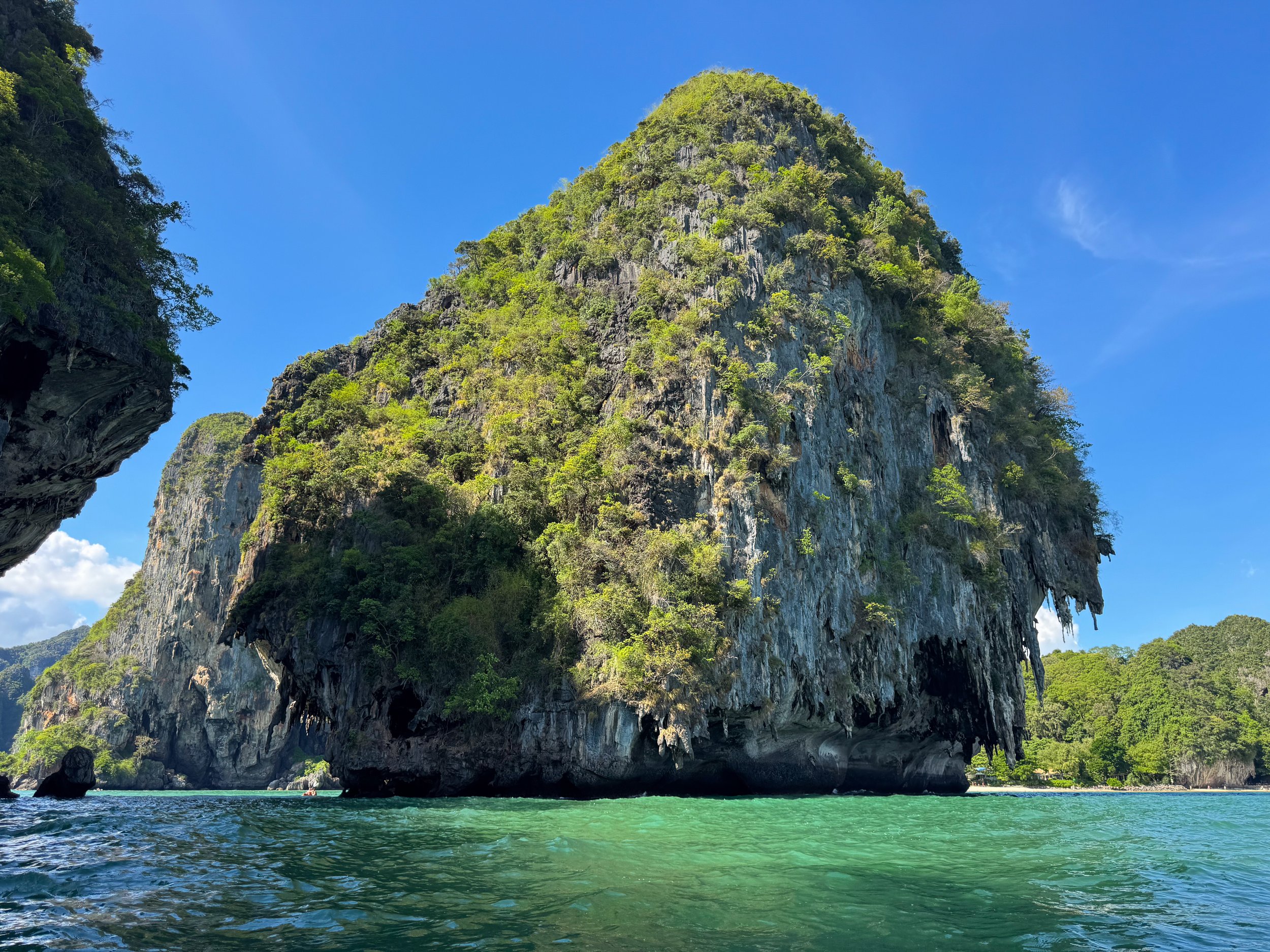
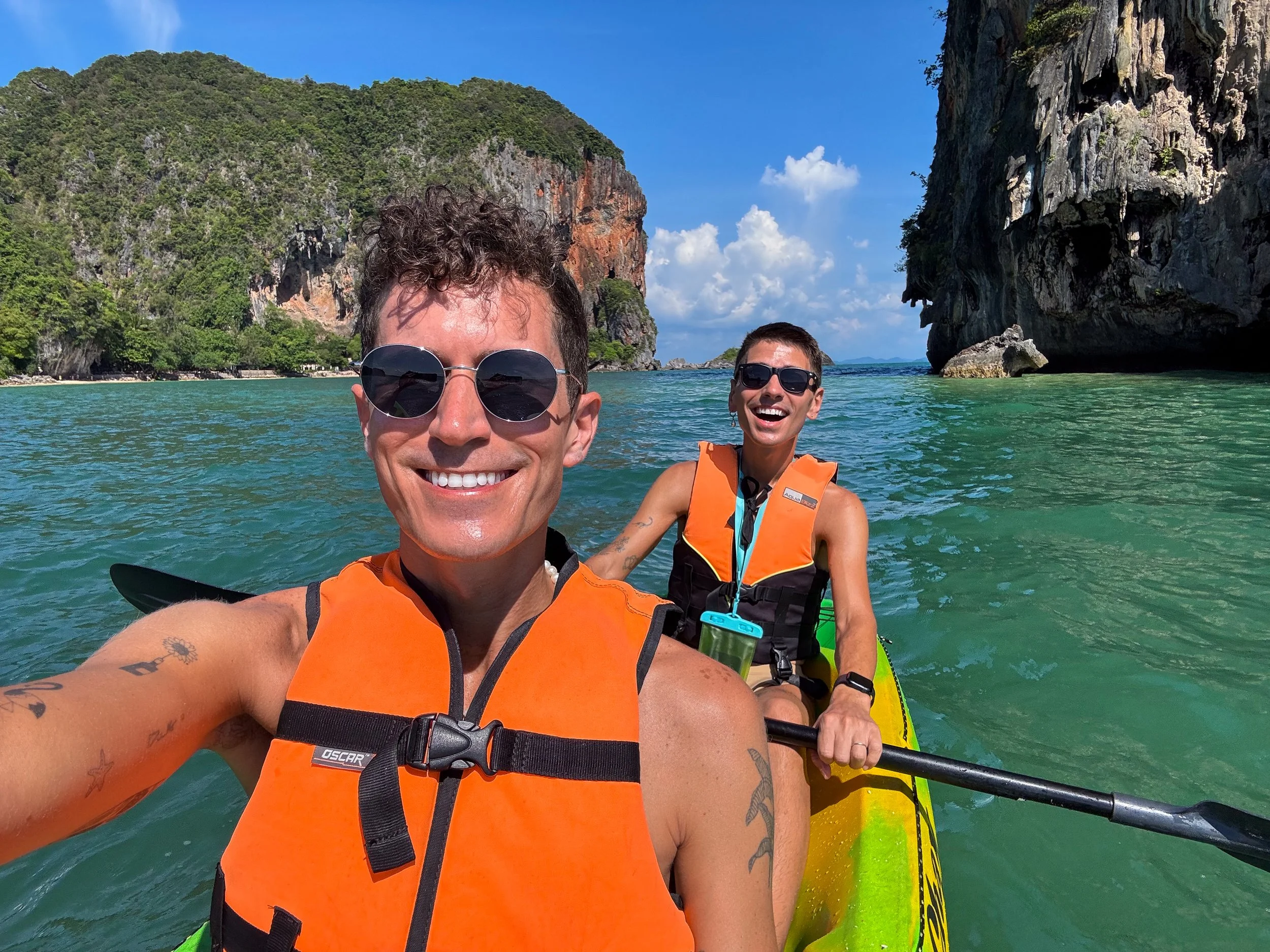
Relax & Adventure at Phra Nang Beach. A gorgeous tan sand beach with aquamarine waters and adventurous activities. The beach is the perfect spot for soaking up the sun, relaxing under shaded trees, swimming in the calm waters, kayaking around offshore islands, exploring caves and learning to climb. It quickly became our favorite beach in southern Thailand!
Phra Nang Kayak Rentals. Single and double kayaks are available for rent at Phra Nang Beach for 300 Baht per hour. We paddled around the bay, rocky islands and to Railay Beach West in under an hour.
The Grotto. An elevated restaurant built along the base of a cliff and a small cave at Phra Nang Beach. It has a romantic and truly unique atmosphere.
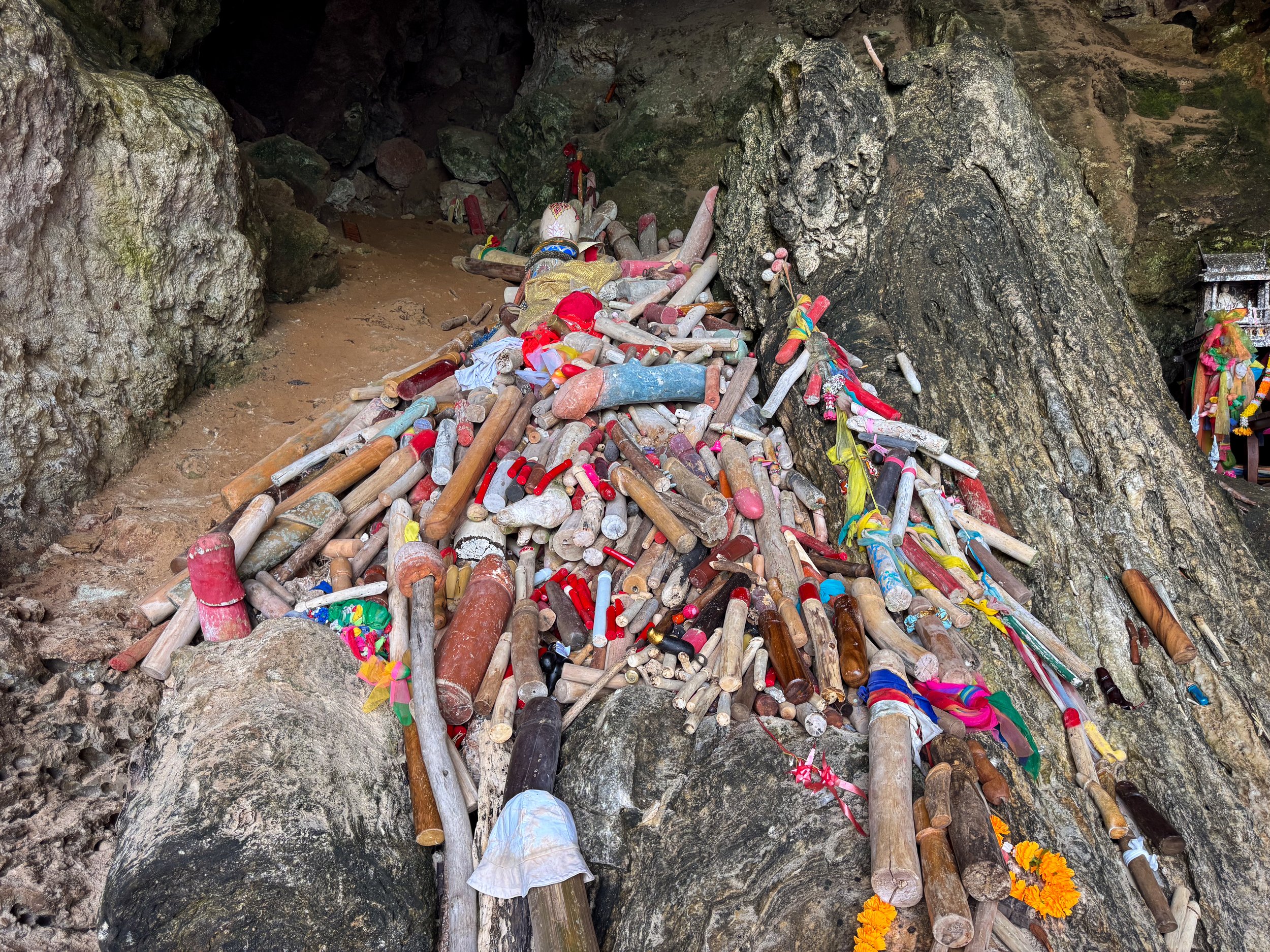
Princess Cave. A cave at Phra Nang Beach with a Hindu altar dedicated to fertility. Hundreds of colorful and wooden phallic statuettes are piled together and placed erect in the cave.
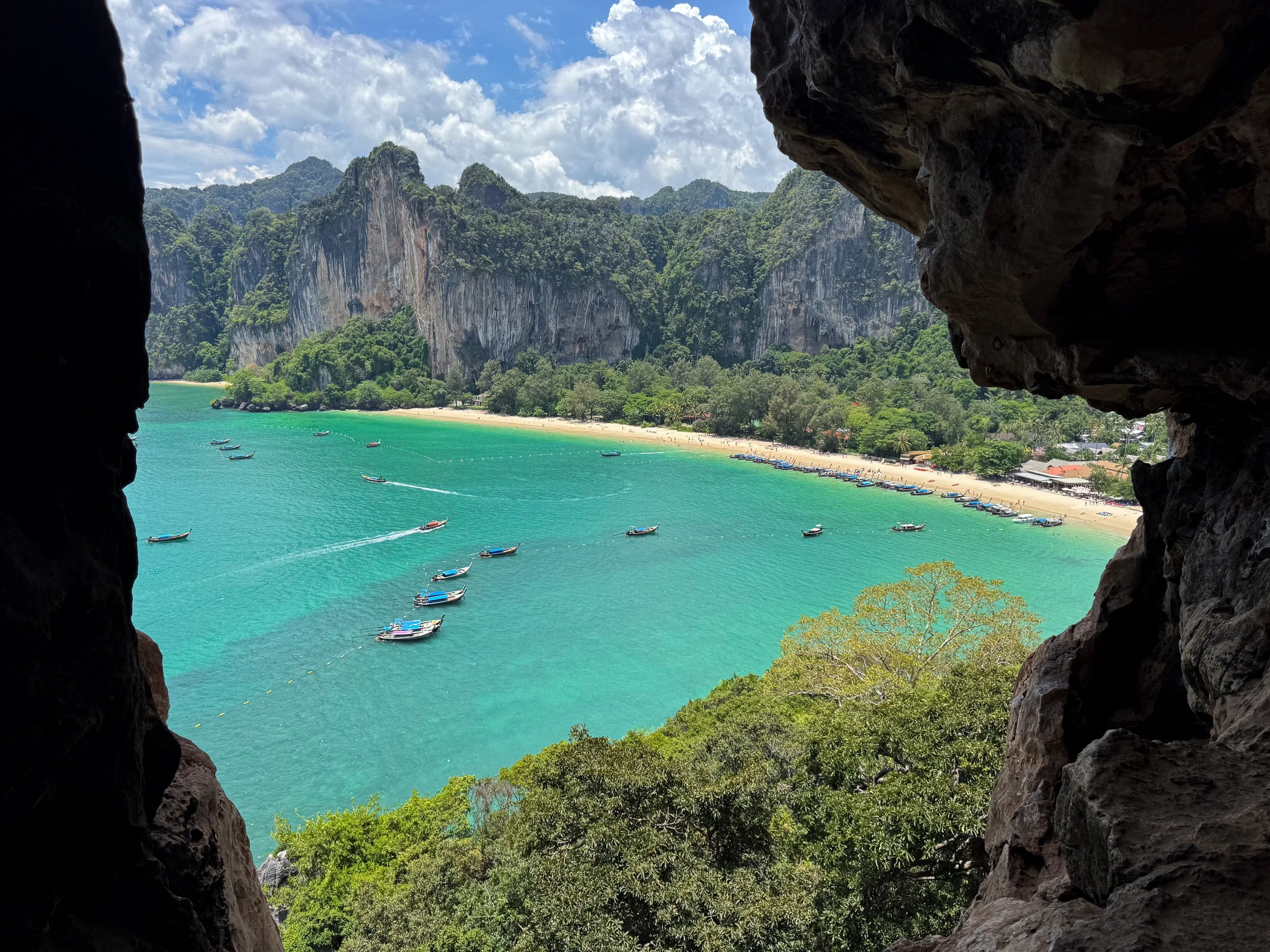
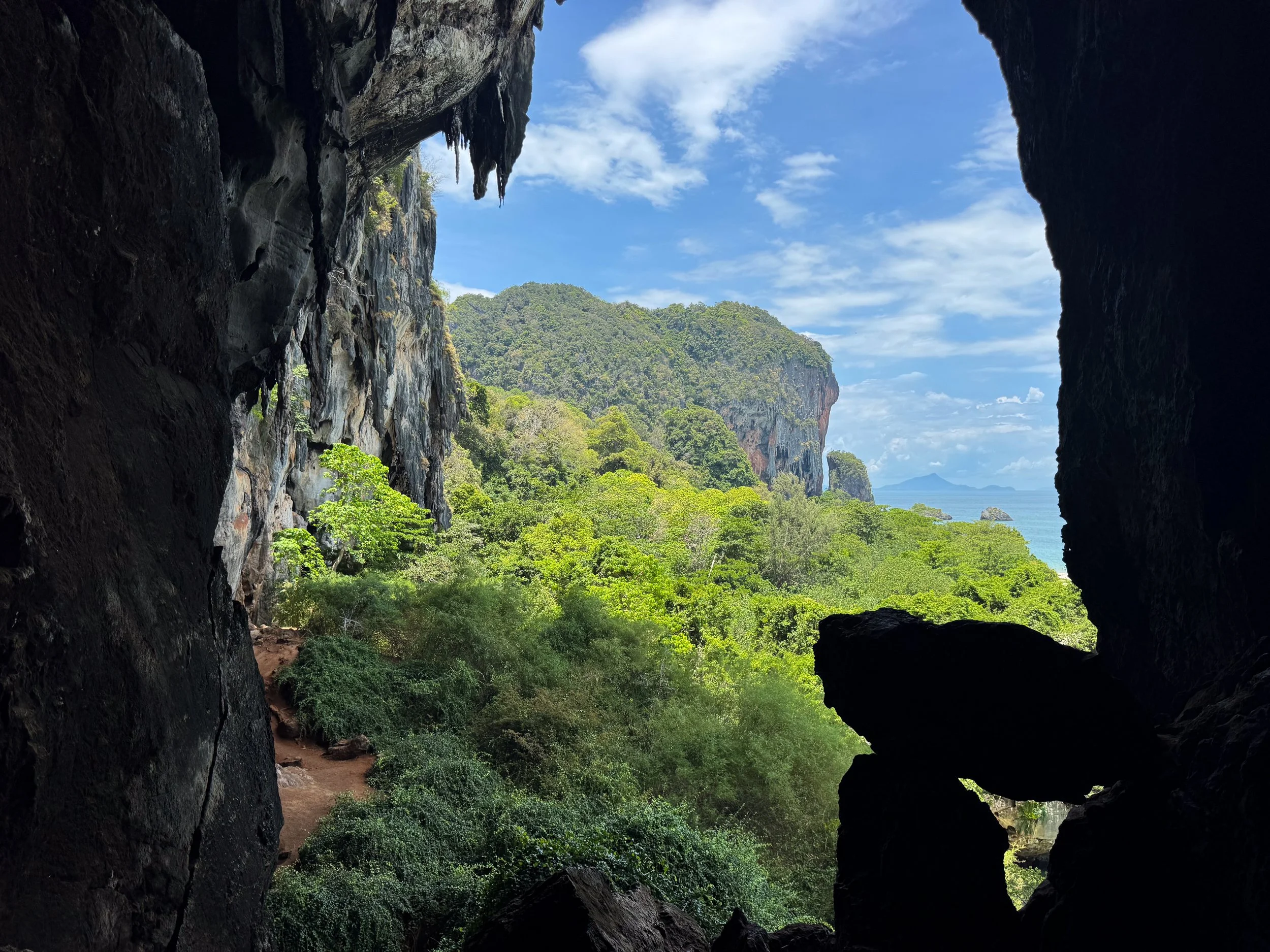
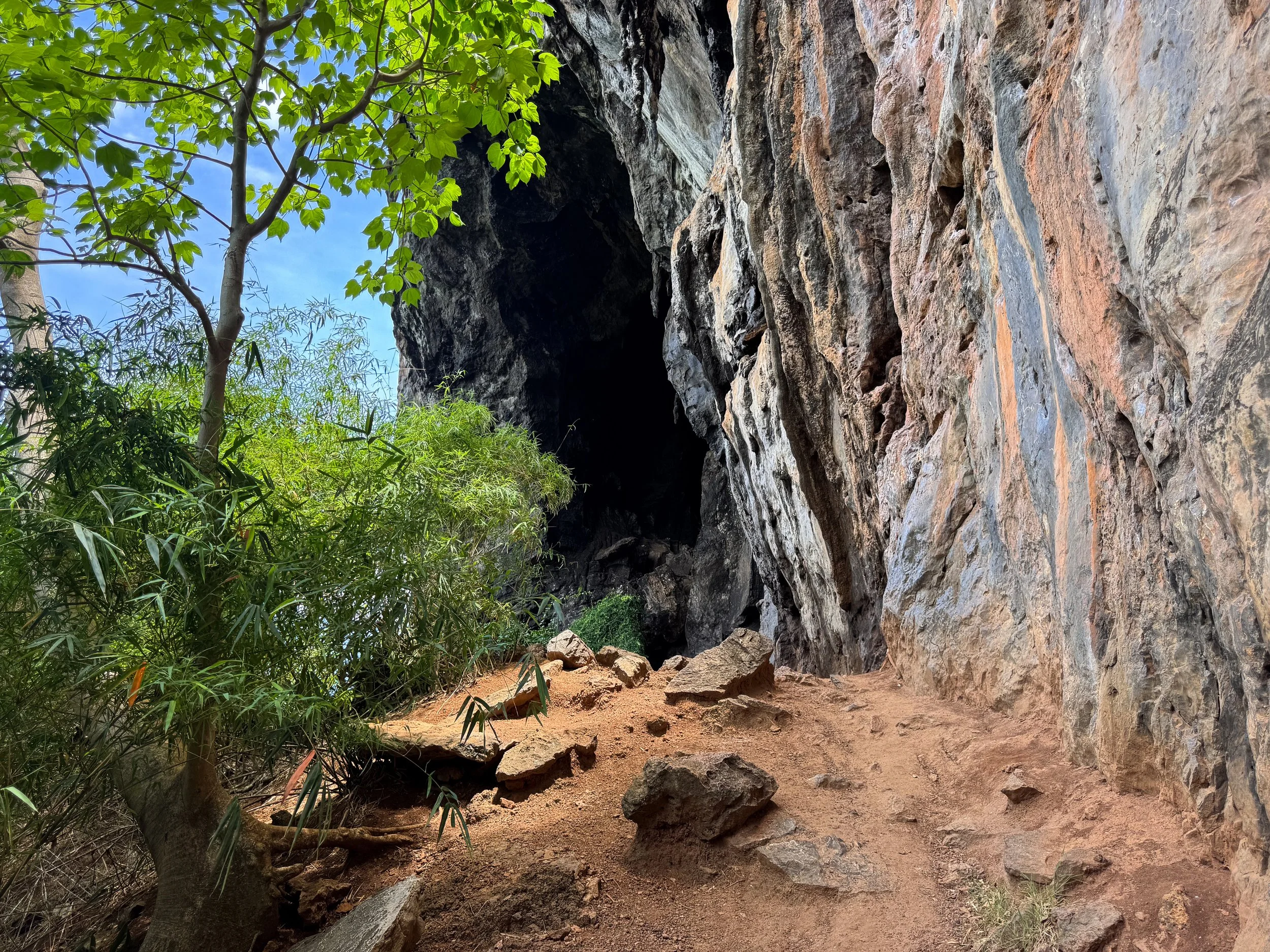
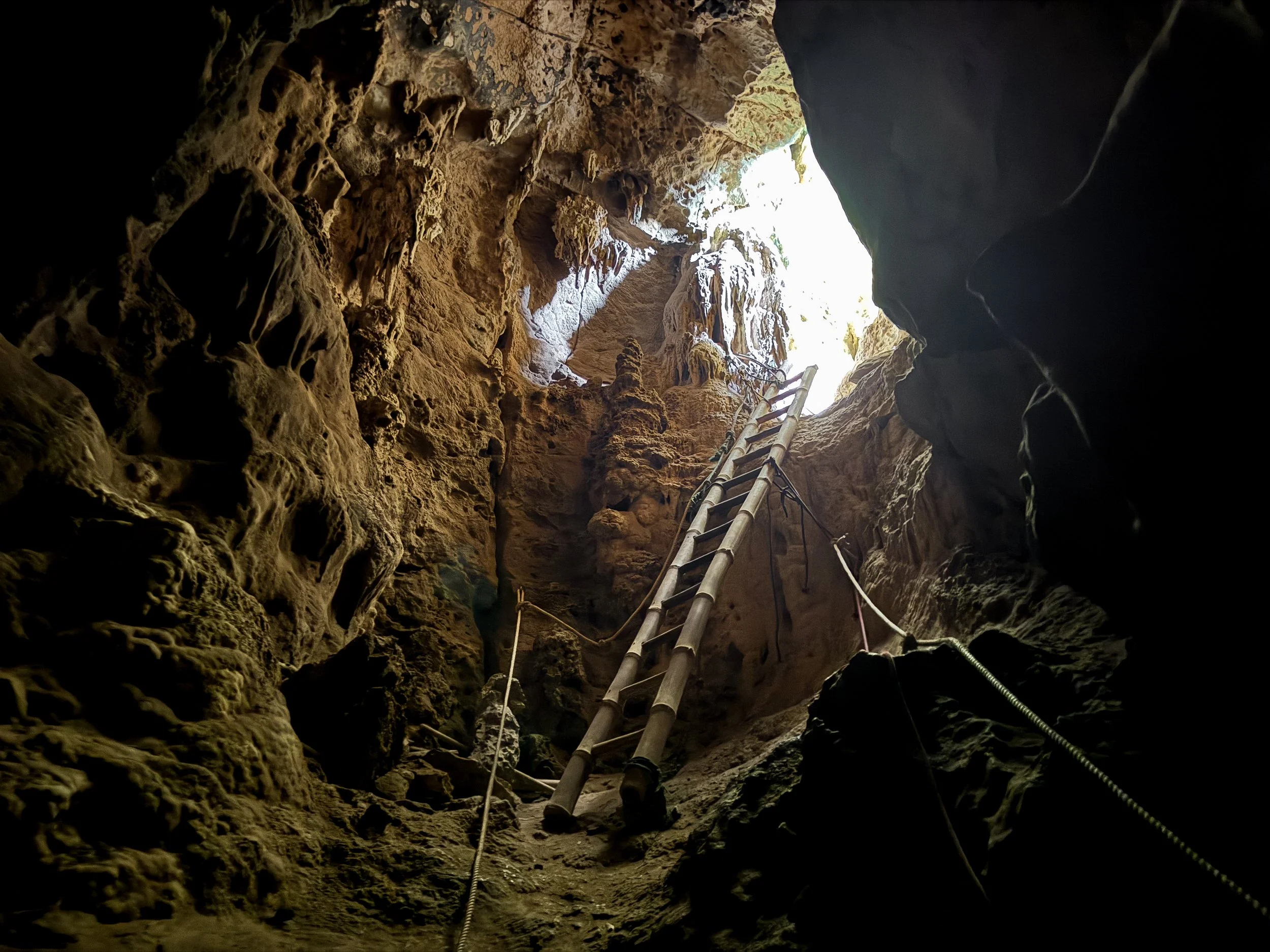
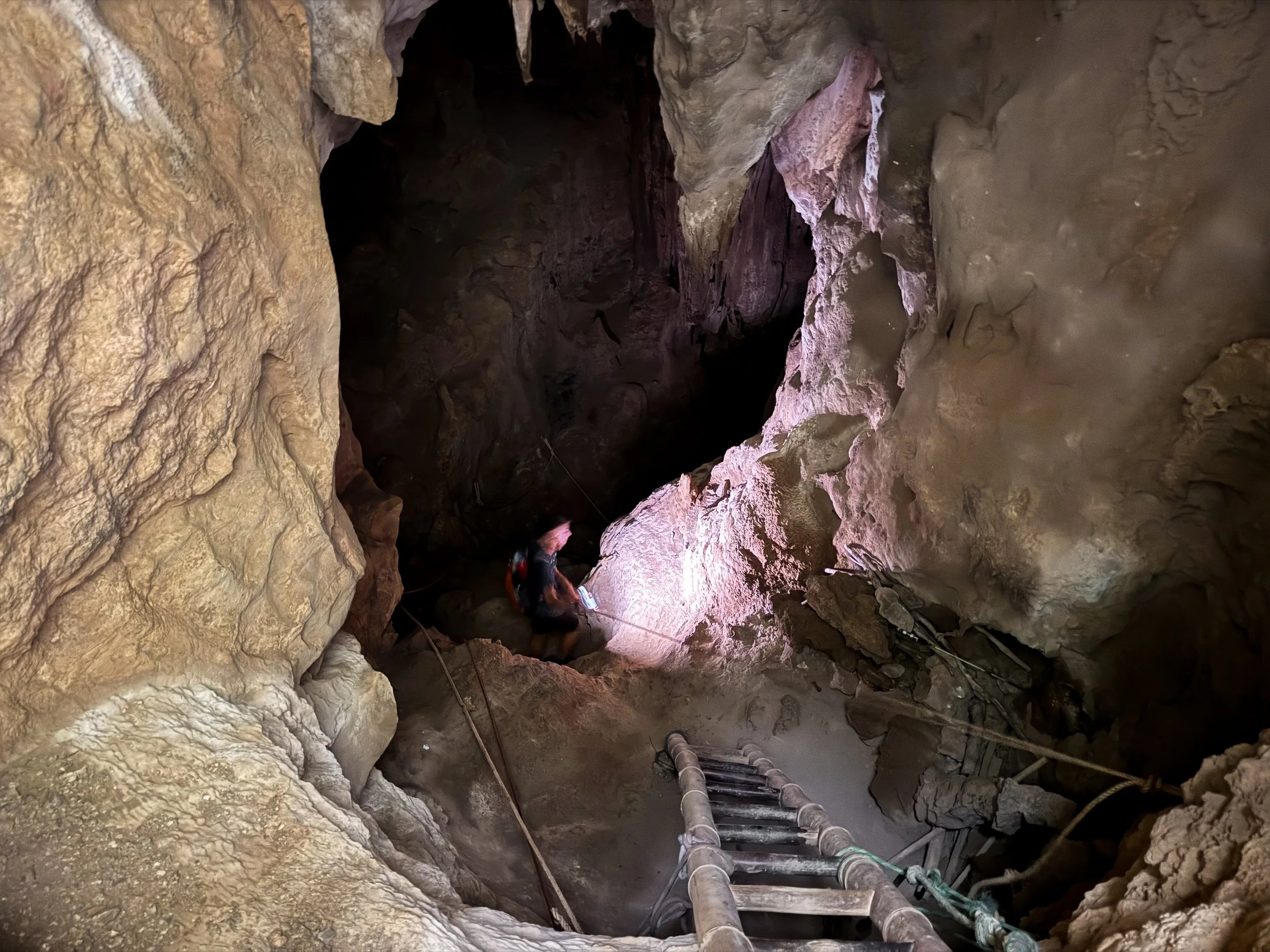
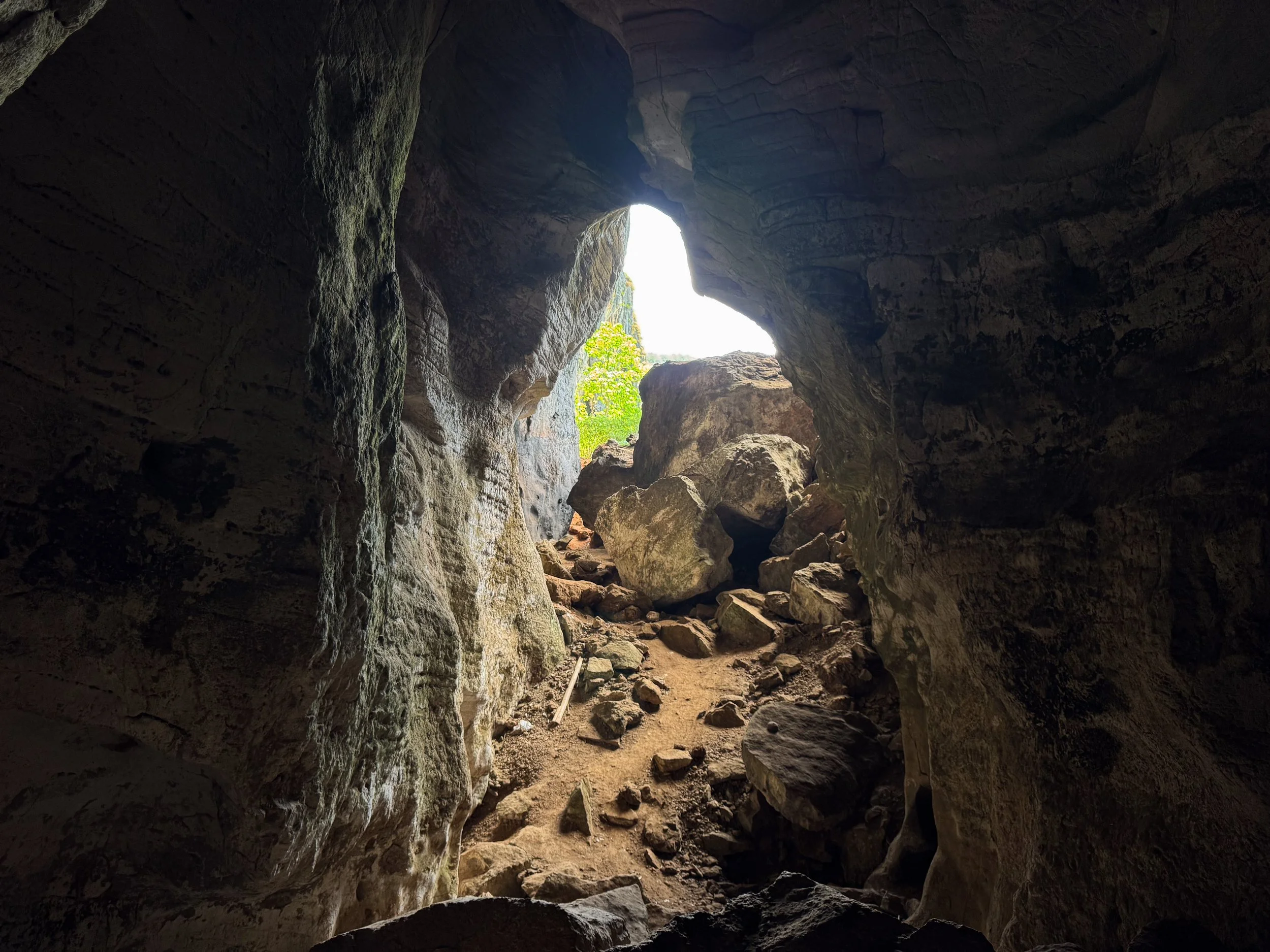
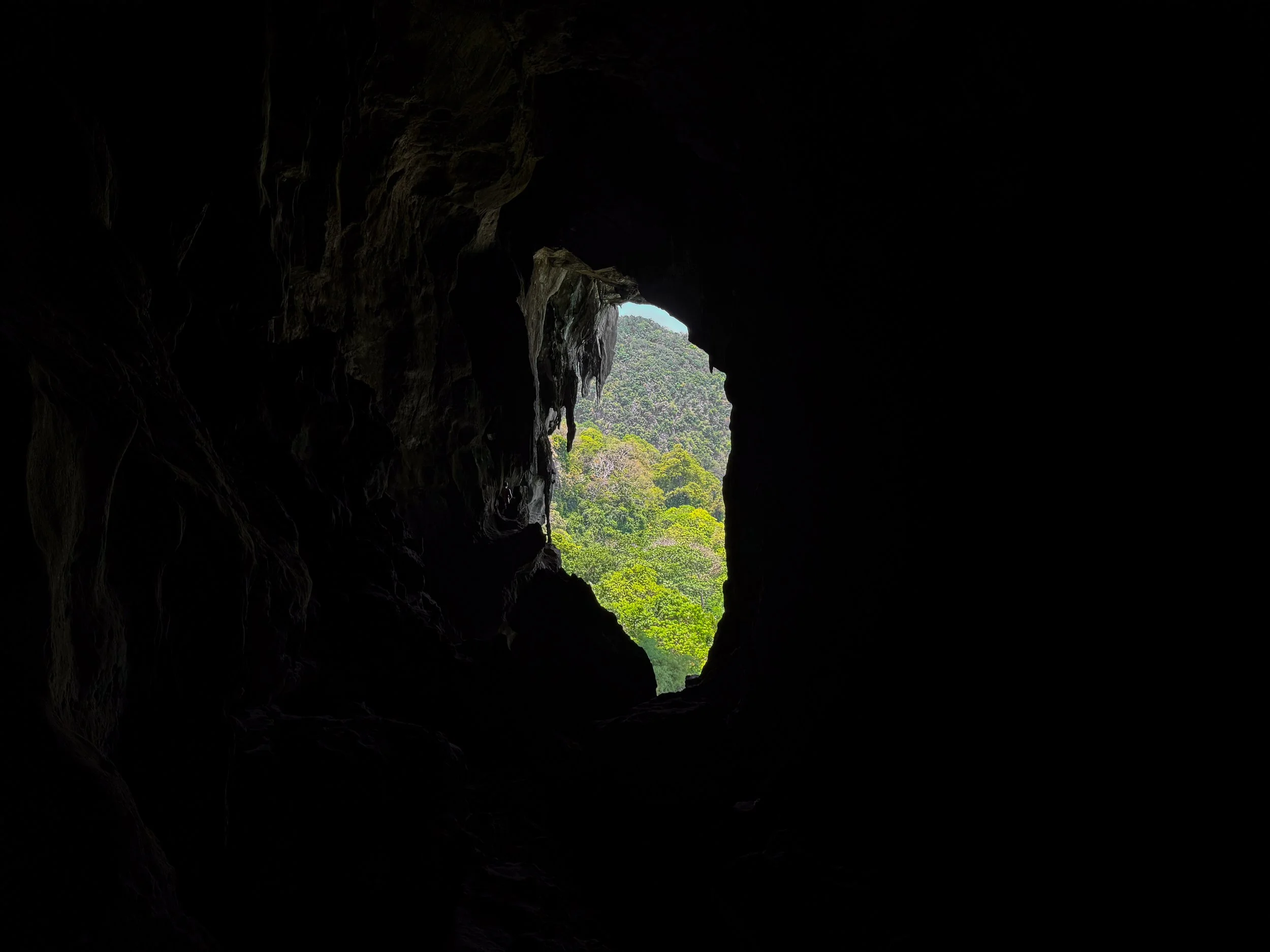
The Bat Cave & Railay Beach West Viewpoint. A vast cave with dark chambers and natural windows looking out towards the sea and Railay Beach West. The cave is reachable via a trail from the far end of Phra Nang Beach. Once inside, unmarked routes continue deeper into the karst mountainside. We followed footsteps, bamboo ladders and a breeze into pitch black chambers, exploring their offshoots and sculptural rock formations. Daylight crept through a point in the distance, opening up to a stunning viewpoint overlooking Railay Beach West. Exploring the cave is very DIY and most people don’t enter further than the mouth. They’re sorely missing out.
Pro Tip. Wear sturdy shoes for hiking and bring a flashlight to see in darkness.
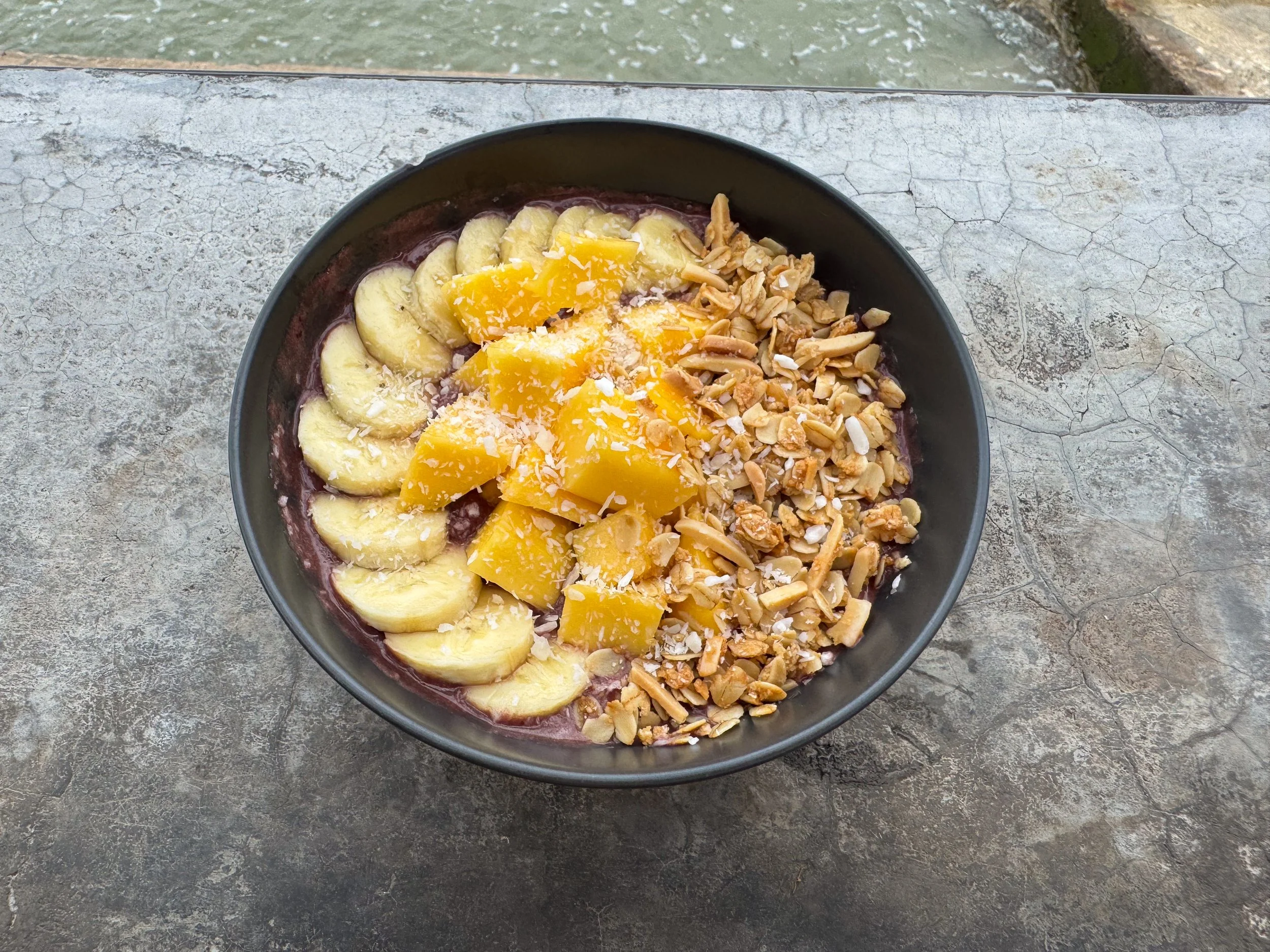
Brunch at D’Oasis Café. A café at Railay Beach East specializing in fresh fruit smoothies and bowls. We ordered a mango smoothie and an açaí bowl while overlooking the beach.
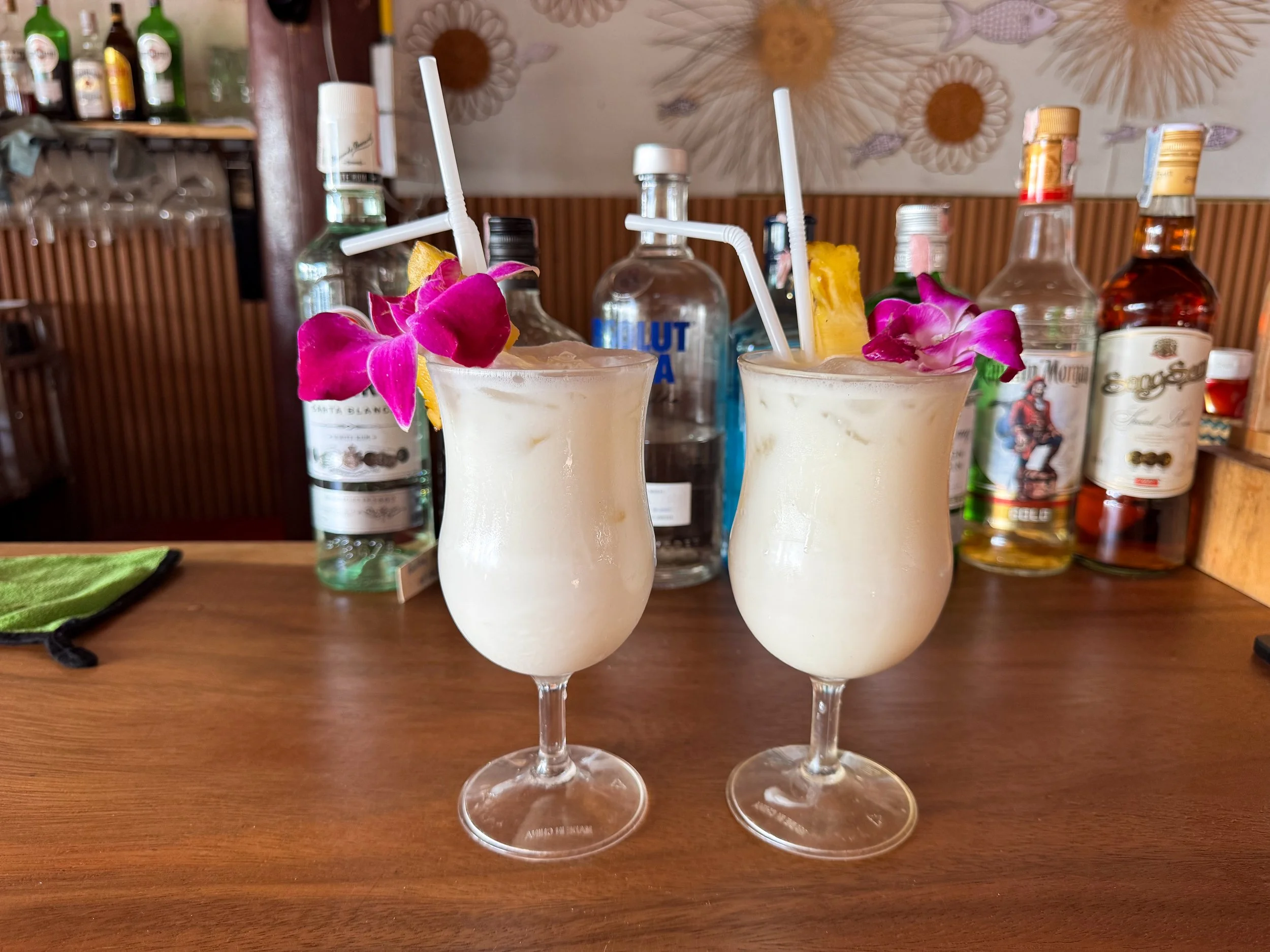
Happy Hour at Hawkeye Thai. A tropical styled beach front restaurant and bar at Railay Beach East. We stopped in for happy hour piña coladas while waiting for our long tail boat back to Ao Nang.
Krabi’s Natural Sights
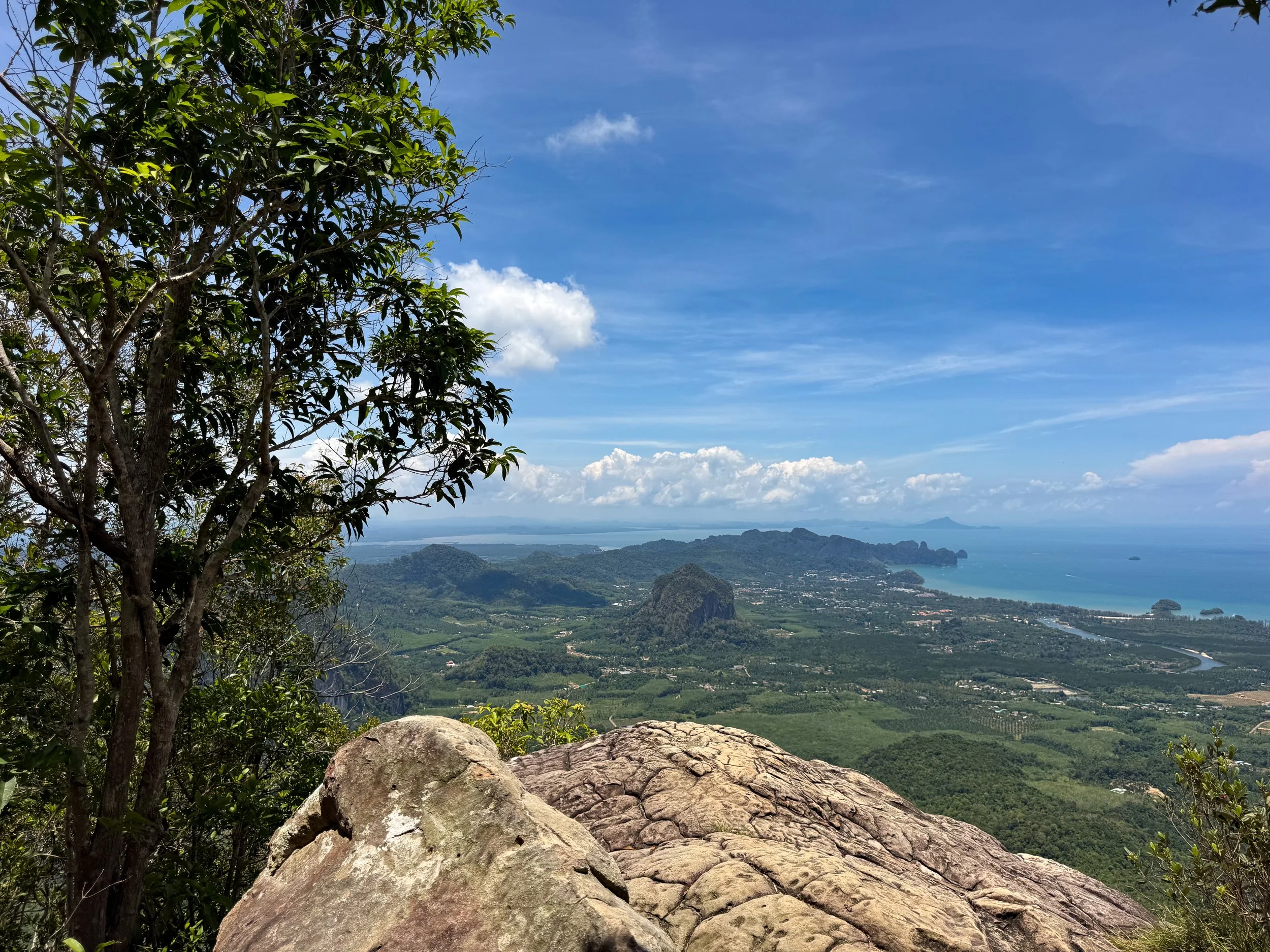
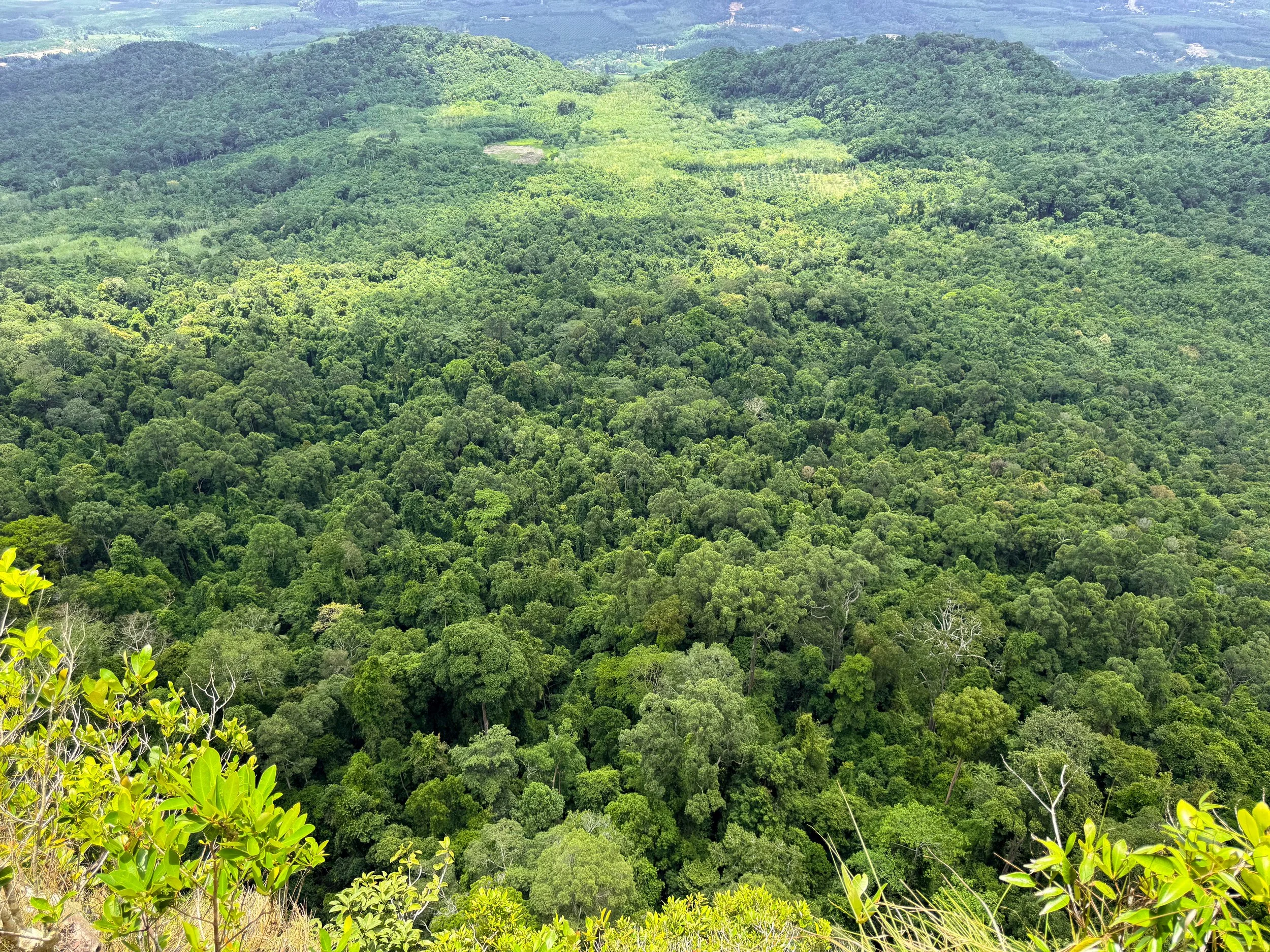
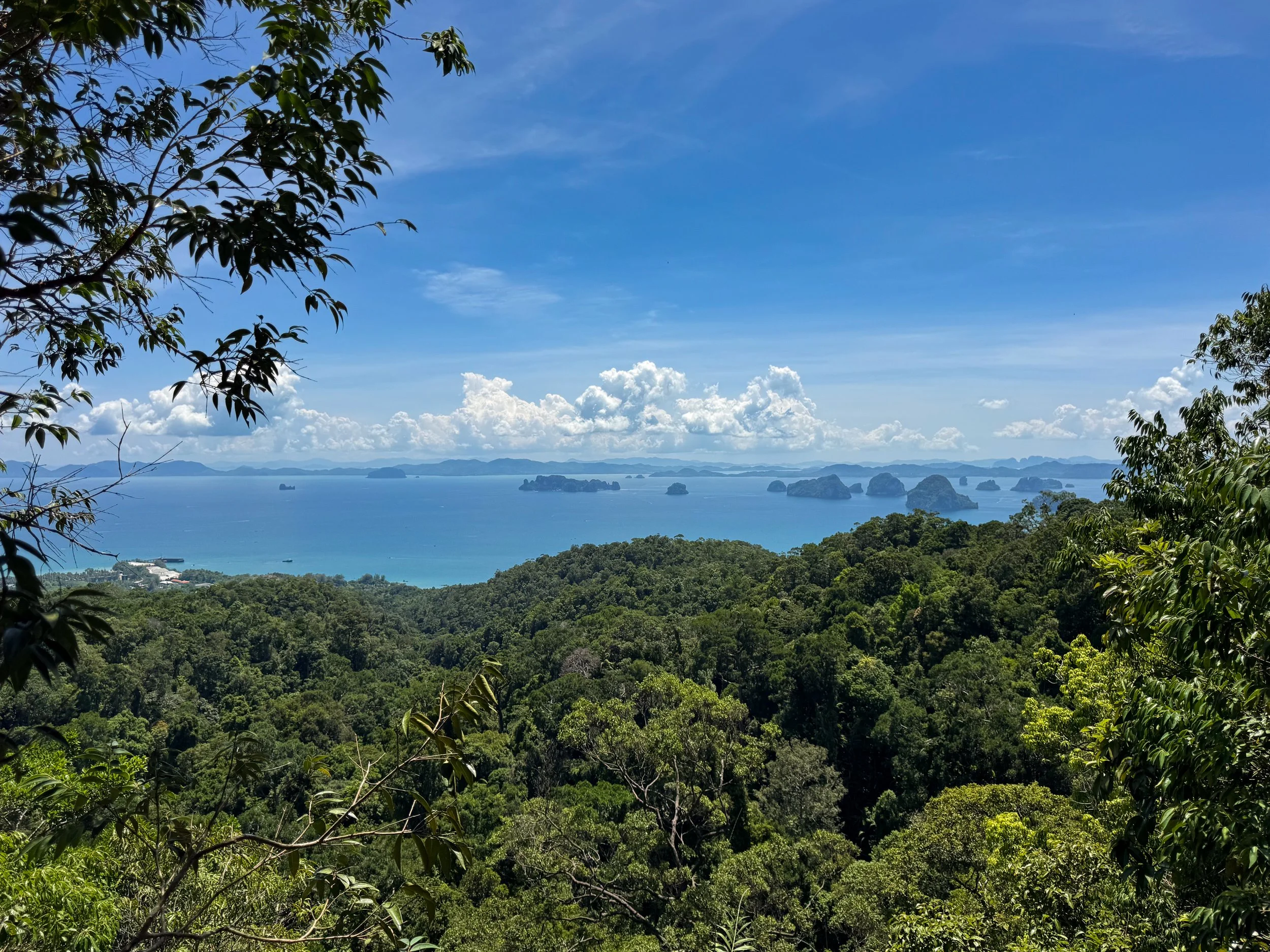
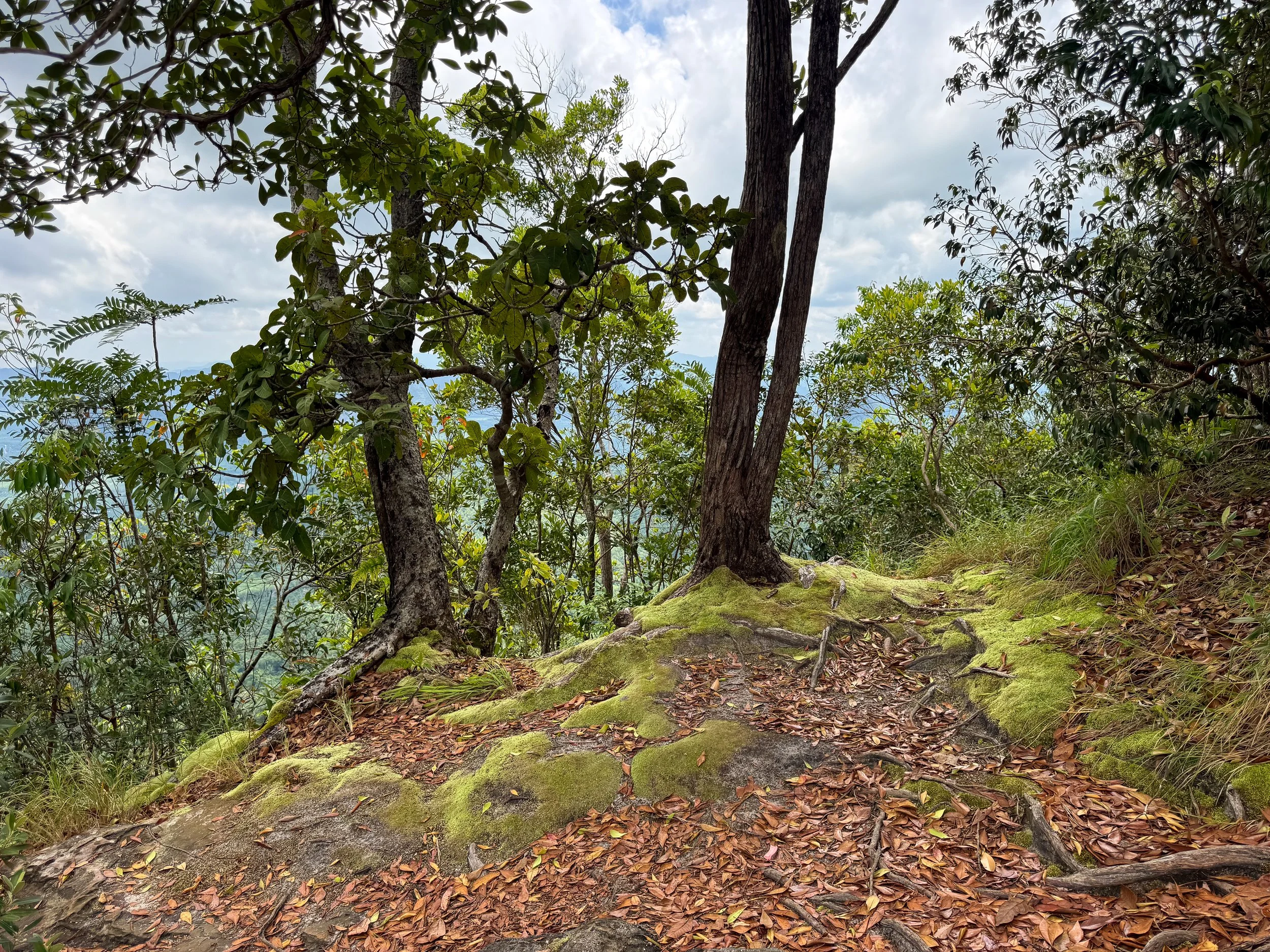
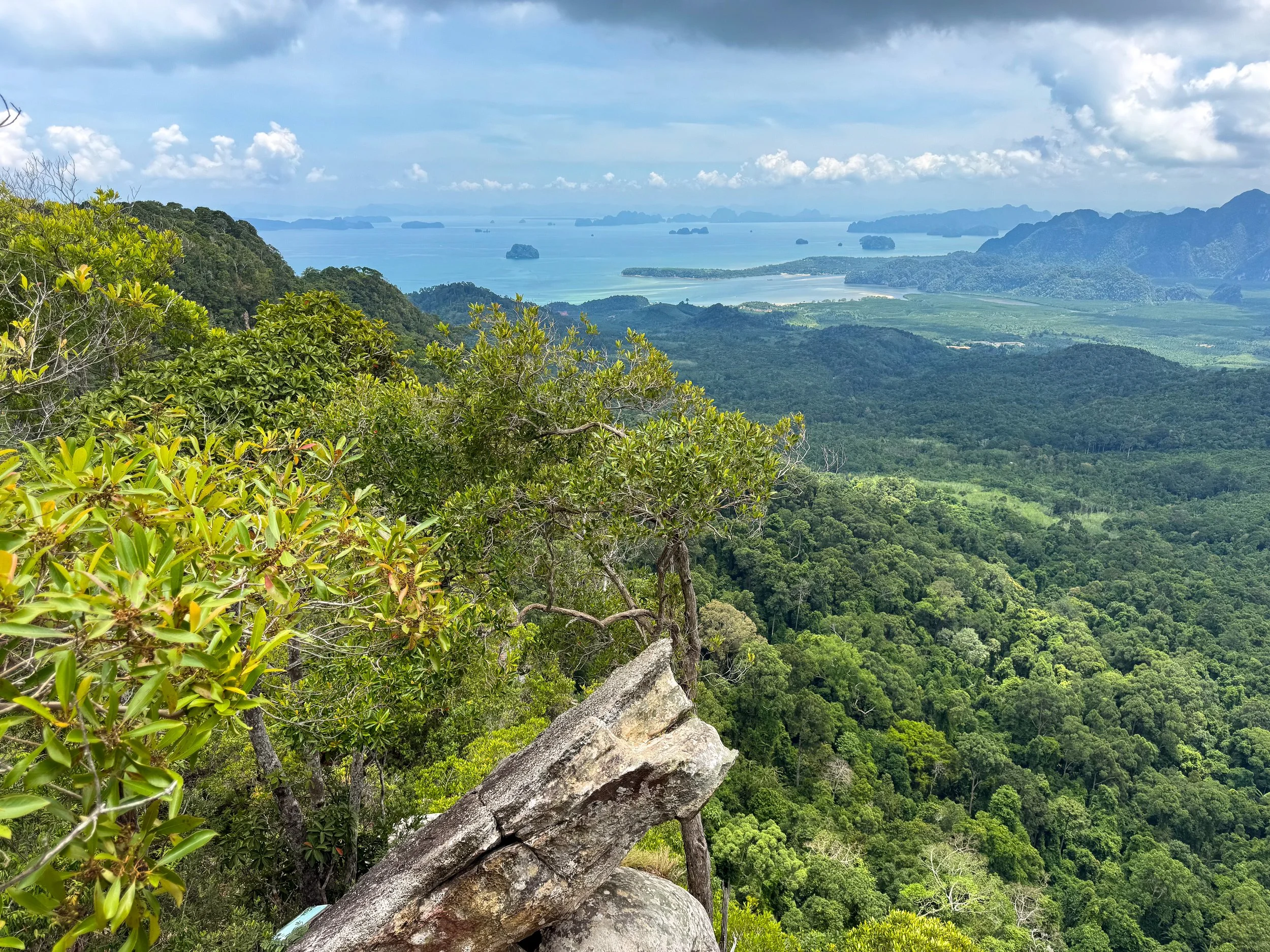
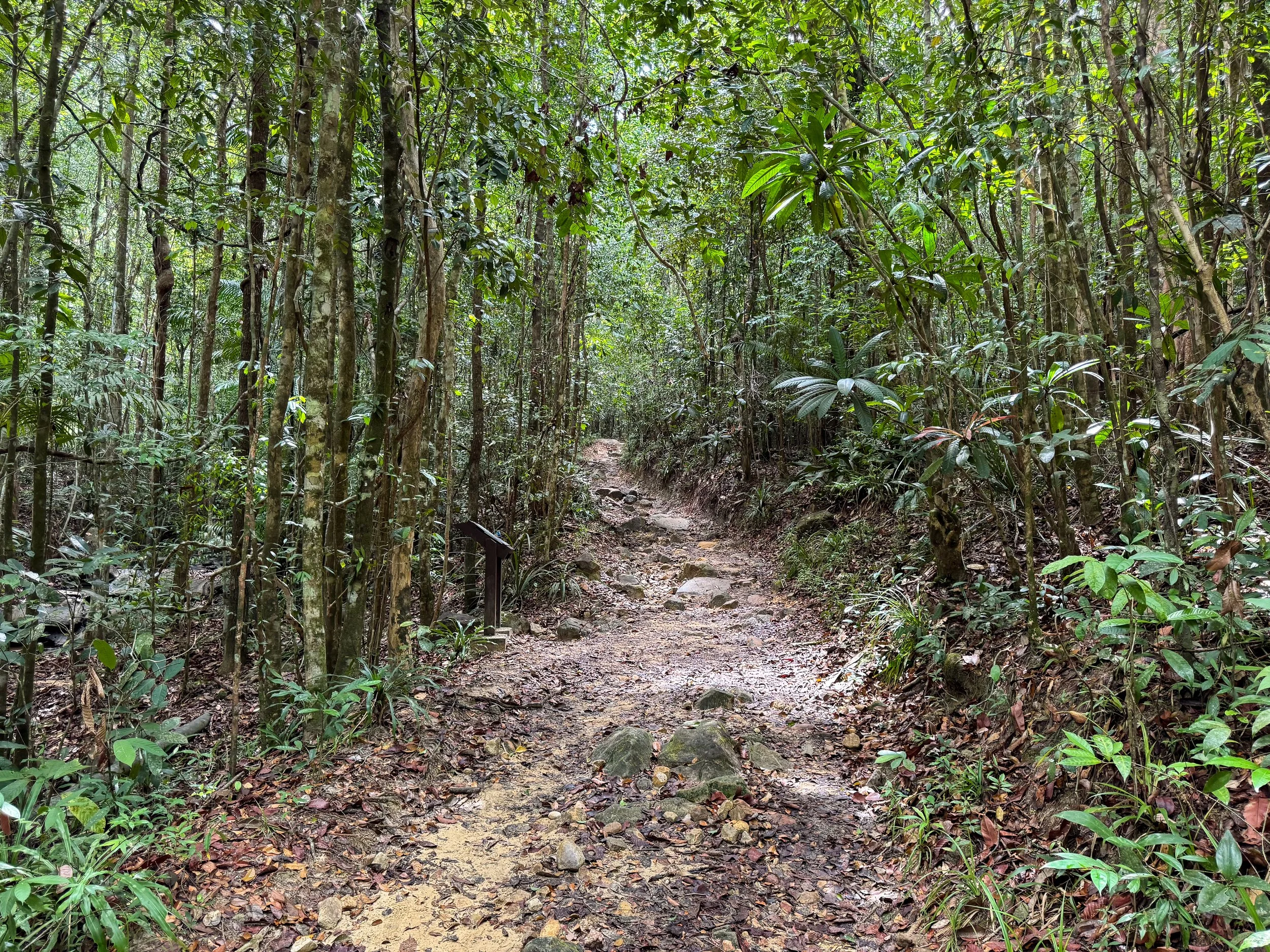
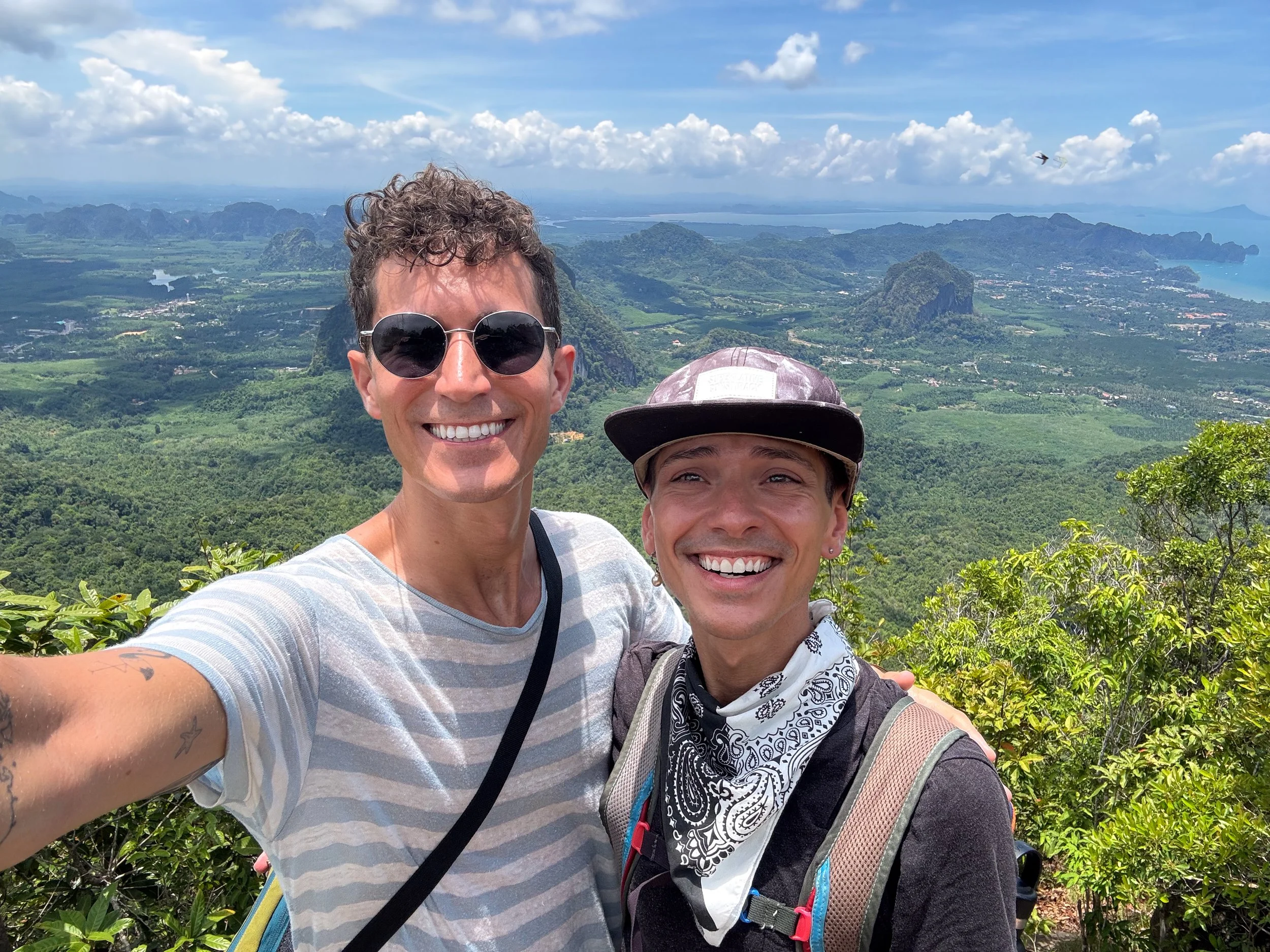
Dragon’s Crest Nature Trail. A lengthy nature trail leading through dense jungle to a mountaintop summit with views of Krabi. The shaded trail is nearly 4km one way with occasional lookouts over the valleys, mountains and Andaman Sea. Near the summit, a clearing called the “stone courtyard” offers sweeping views of the peninsula. From the summit, the landscape comes into full view. Towering rock mountains abruptly rise from the land and sea as farmland and palm groves cover the valleys. Along the trail, we spotted black and blue winged butterflies, monitor lizards and monkeys. The beautiful song of birds contrasts the eerie hum of cicadas, resembling the sound of violins in a horror film.
Good to Know. Arrive before last entry at 2pm. Bring plenty of water for the 8km round trip hike. There’s a ranger station to stock up on more water and snacks before or after the hike. Use the free hiking sticks by the trailhead or rent one at the ranger station.
Getting Here. We took a Grab from Ao Nang to the park entrance and back. It took about 30 minutes before being paired with a return driver.
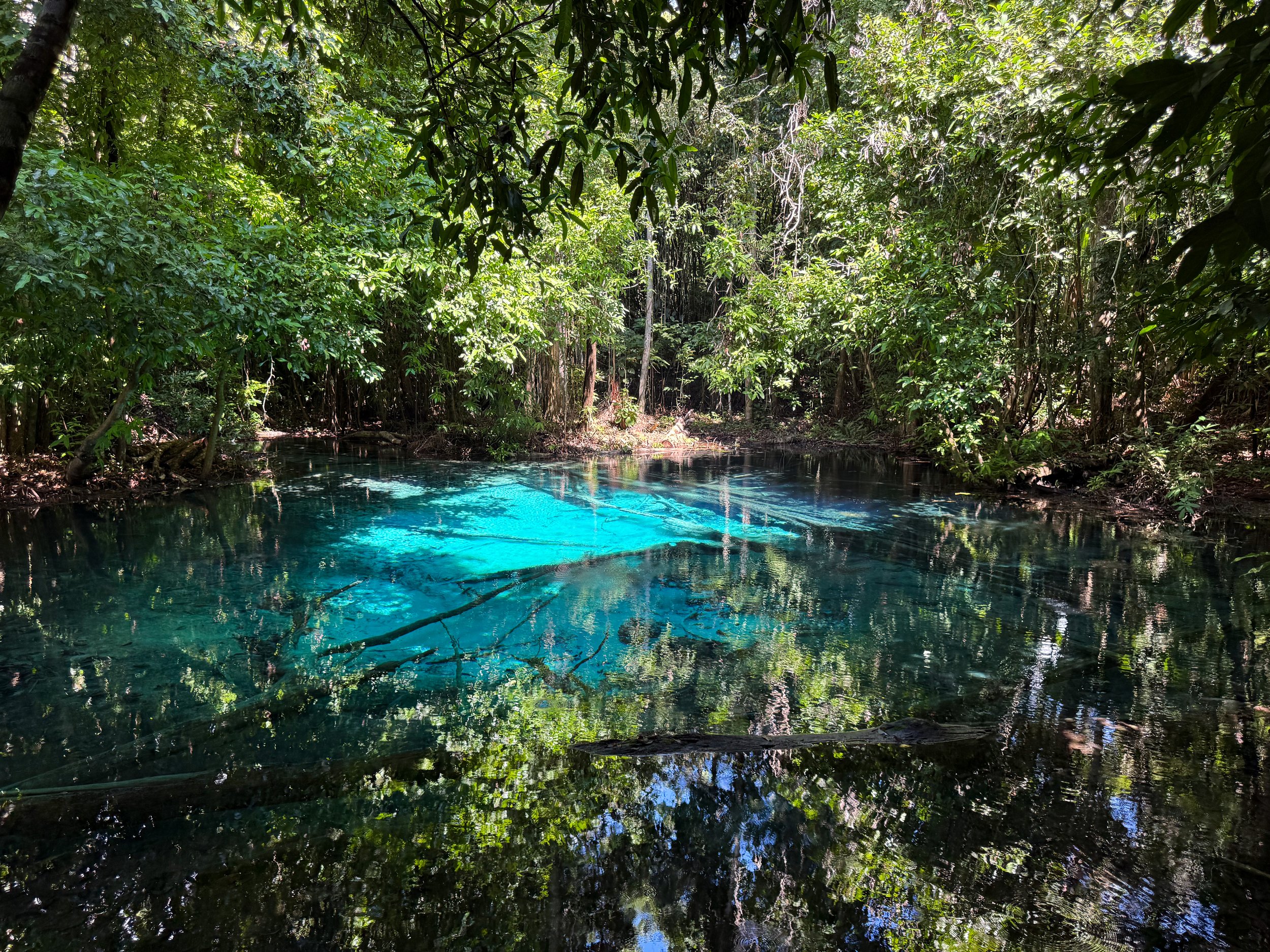
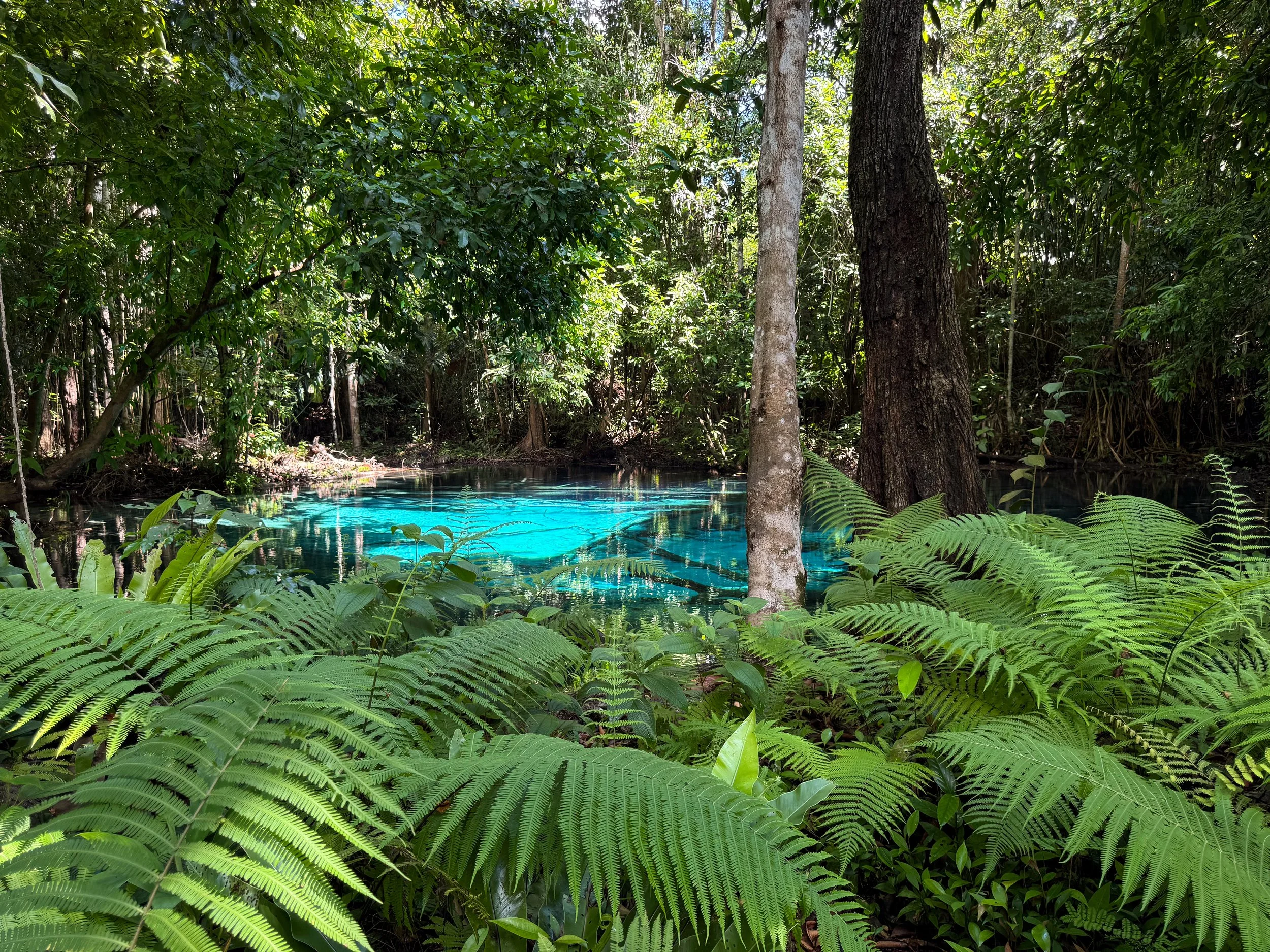
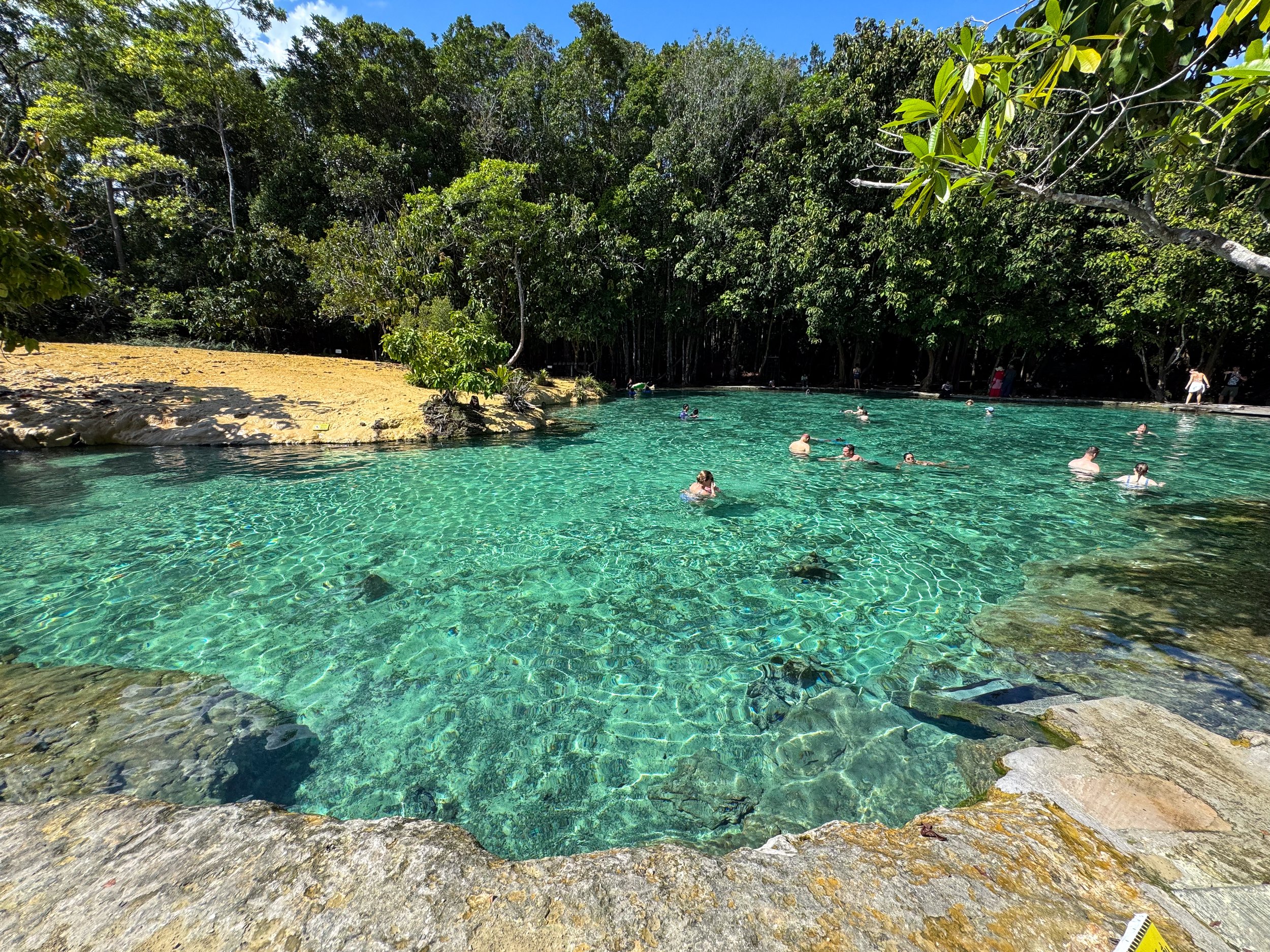
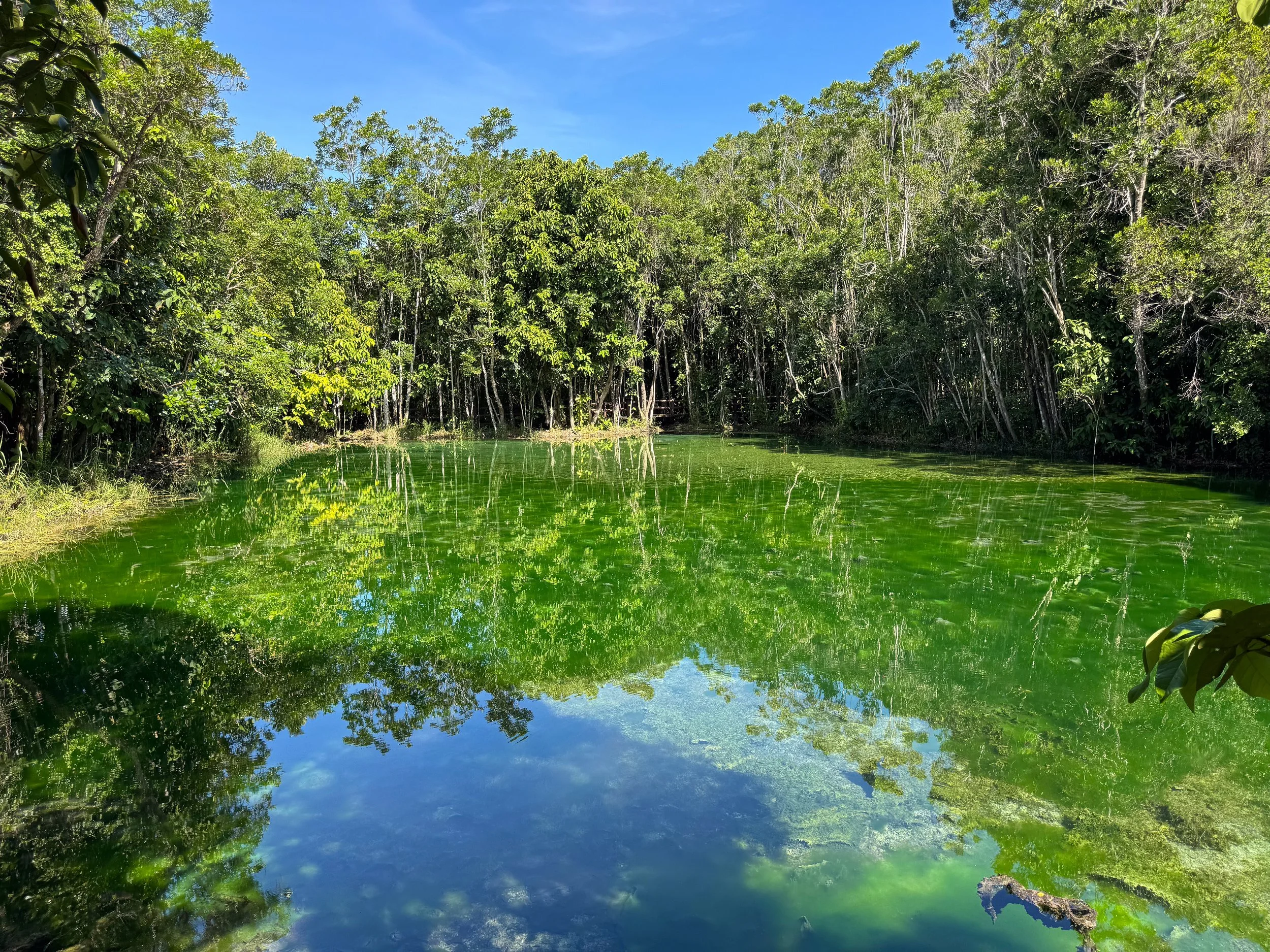
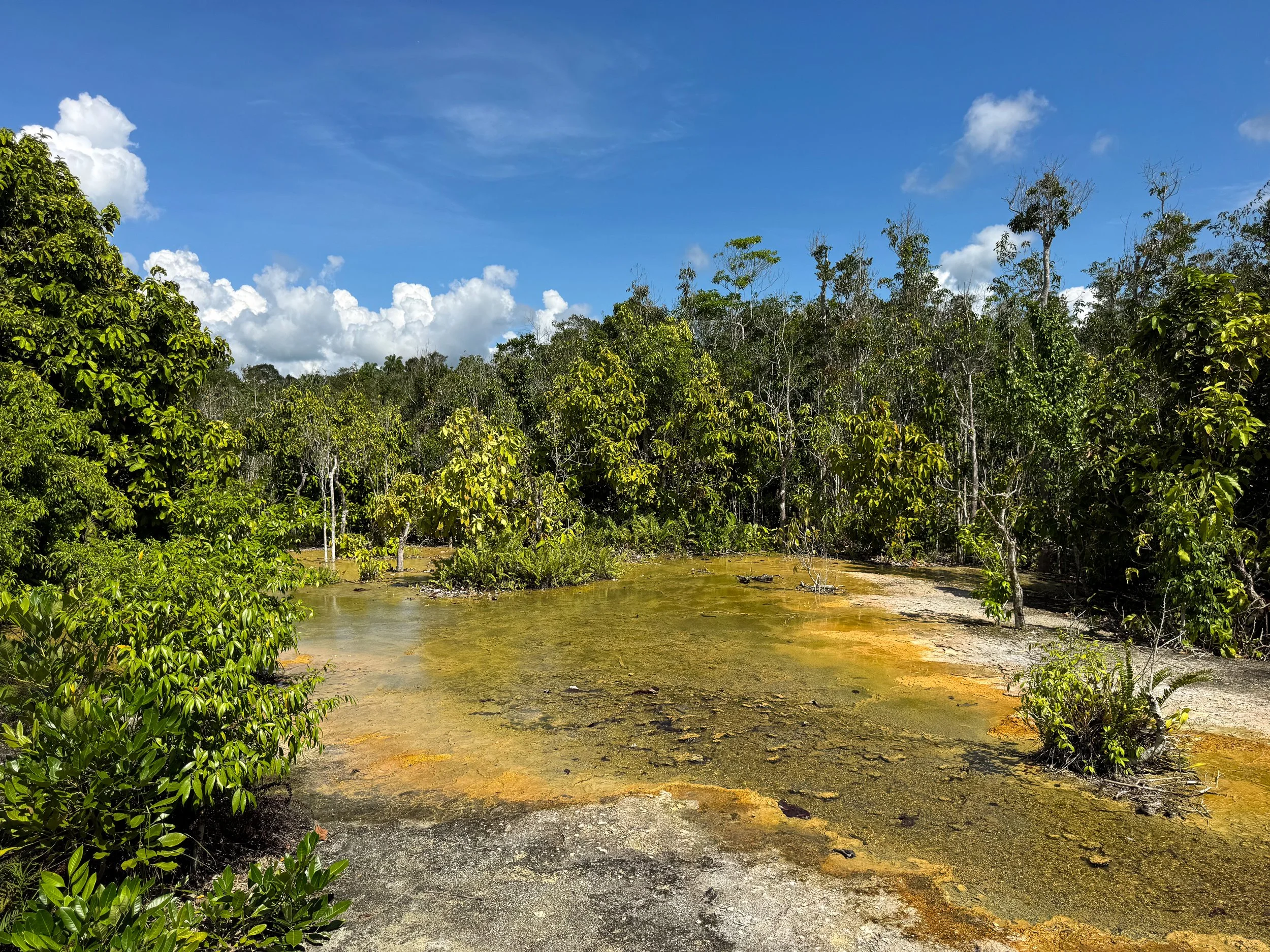
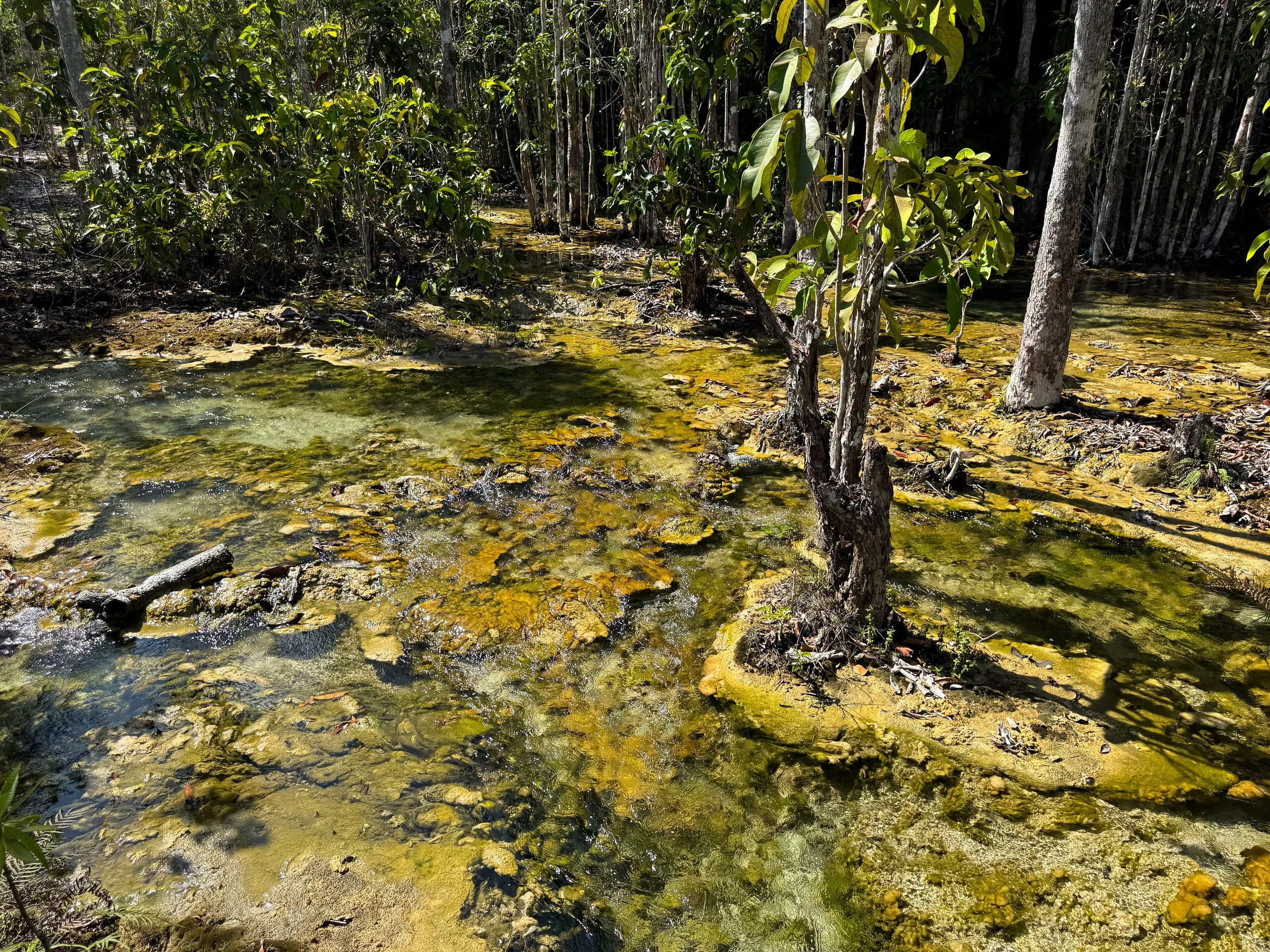
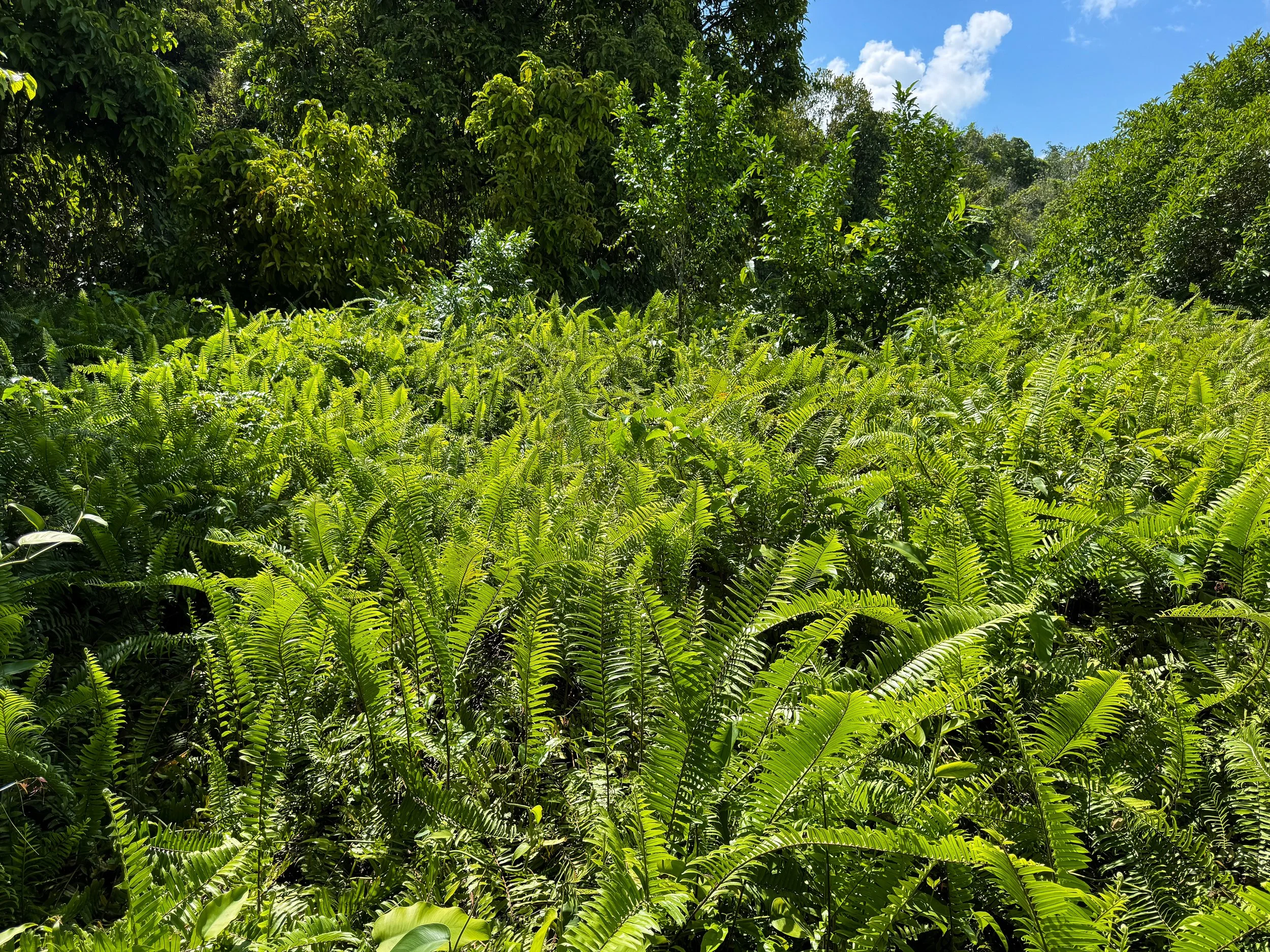
Khao Phra Bang Khram National Park. A protected rainforest with a natural spring and three vibrantly hued pools fed by its flowing waters. A boardwalk leads 1km through the rainforest to reach the series of pools. Water floods across the forest floor creating layers of mineral sediment.
Blue Pool. The small natural spring and source of water for the river and pools. It’s surrounded by dense tropical forest and ferns. From the boardwalk, bubbles are visible in the center of the spring. Under direct sunlight, the crystal clear water glows iridescent blue.
Emerald Pool. A fresh water pool fed by the natural spring with an aquamarine hue. It’s the only pool that can be swum in. The cool and mineral rich water feels refreshing under the hot sun.
Crystal Pool. A vibrant green pool fed by the natural hot spring. It’s home to blooms of algae, small fish and decaying trees.
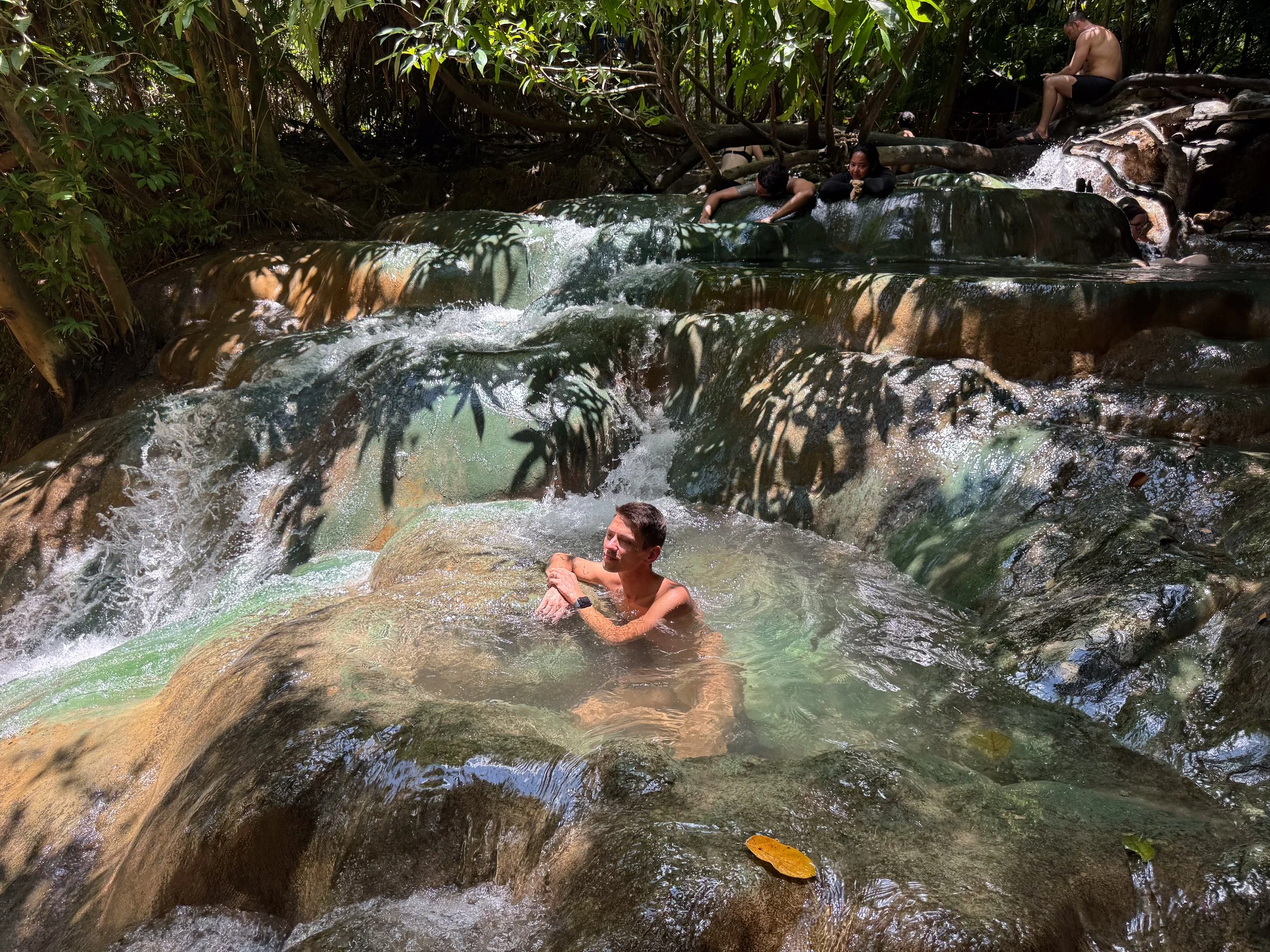
Hot Stream Waterfall. A natural hot spring with mineral rich water that flows over a small terraced waterfall with shallow pools. The pools act as hot tubs as water rushes from one to the next. The water is about 40C (104F). Even on a hot day, sitting in the water feels enjoyable. Time is limited to 20 minutes in the pools.
Pro Tip. Enter the pools barefoot. The rocks offer some traction; however, patches with algae are extremely slippery when wearing shoes or sandals.
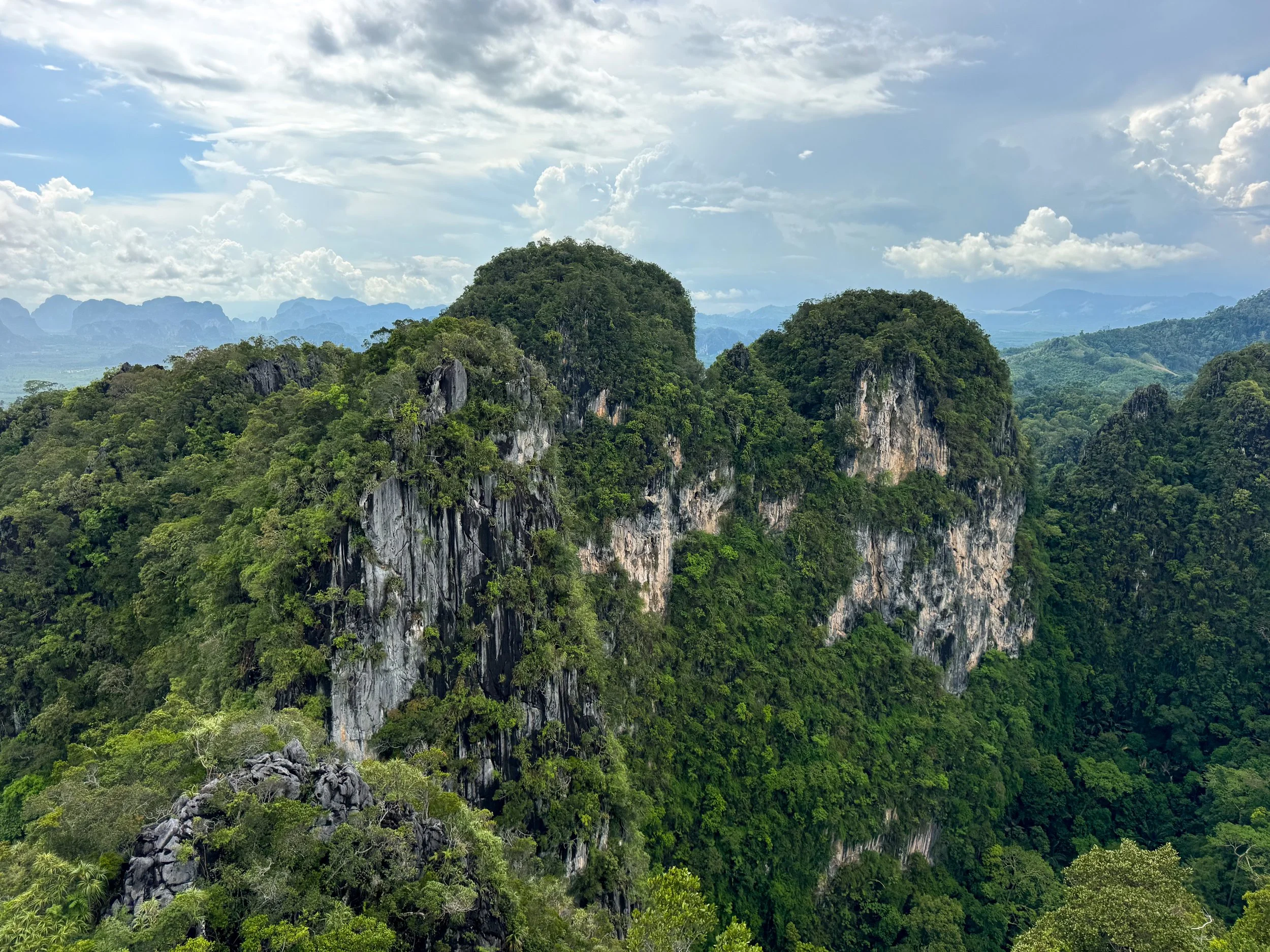
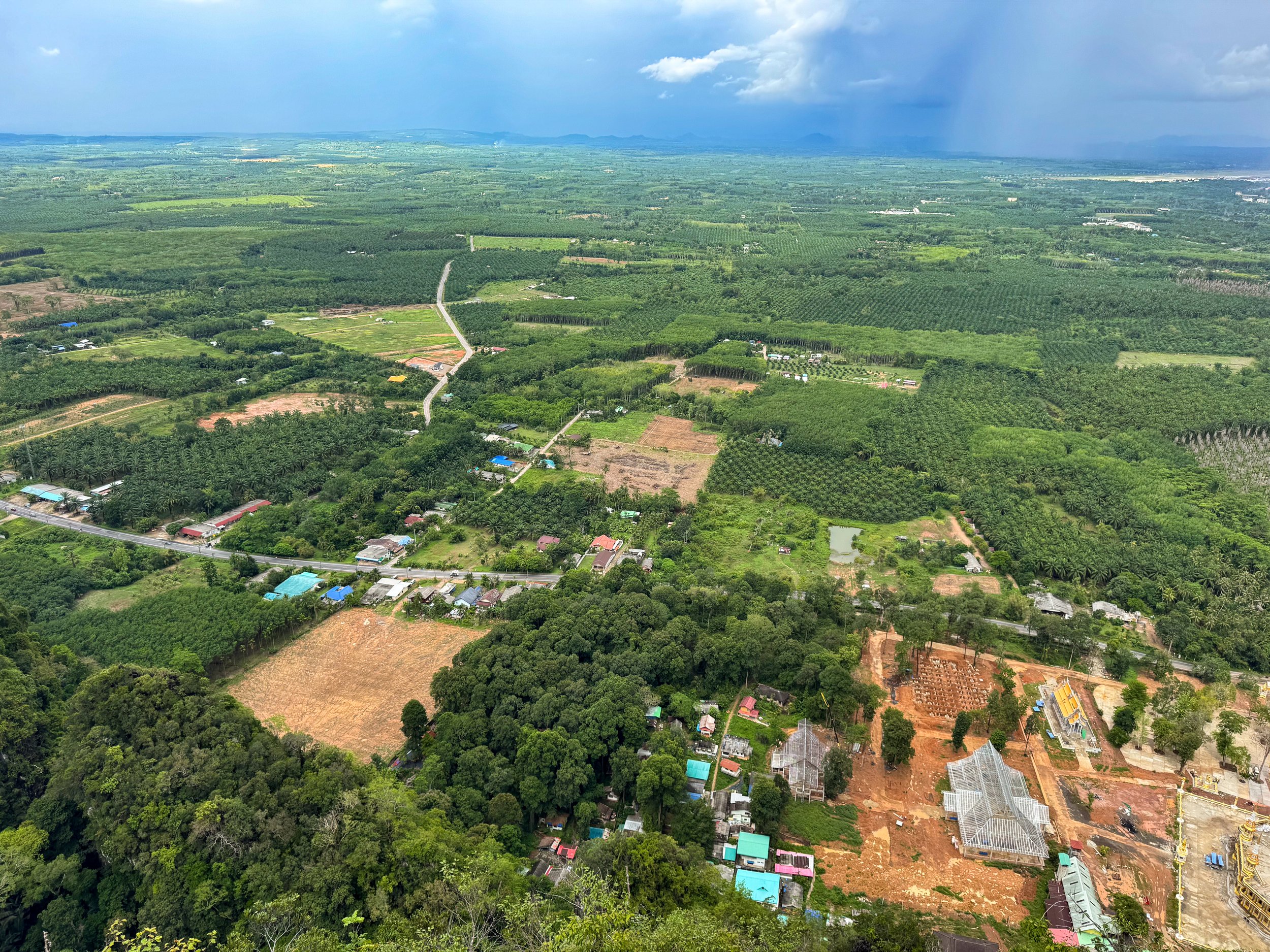
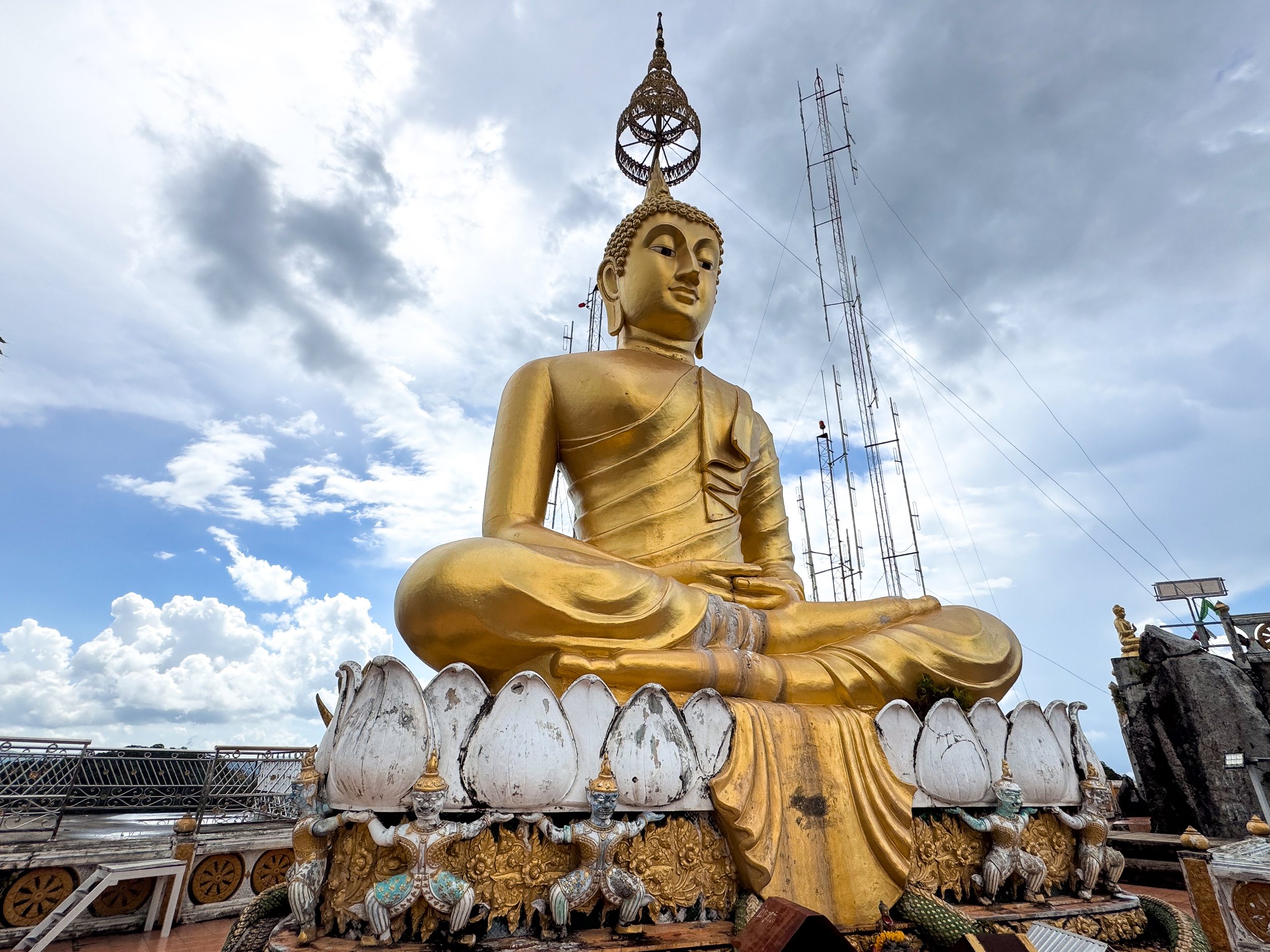
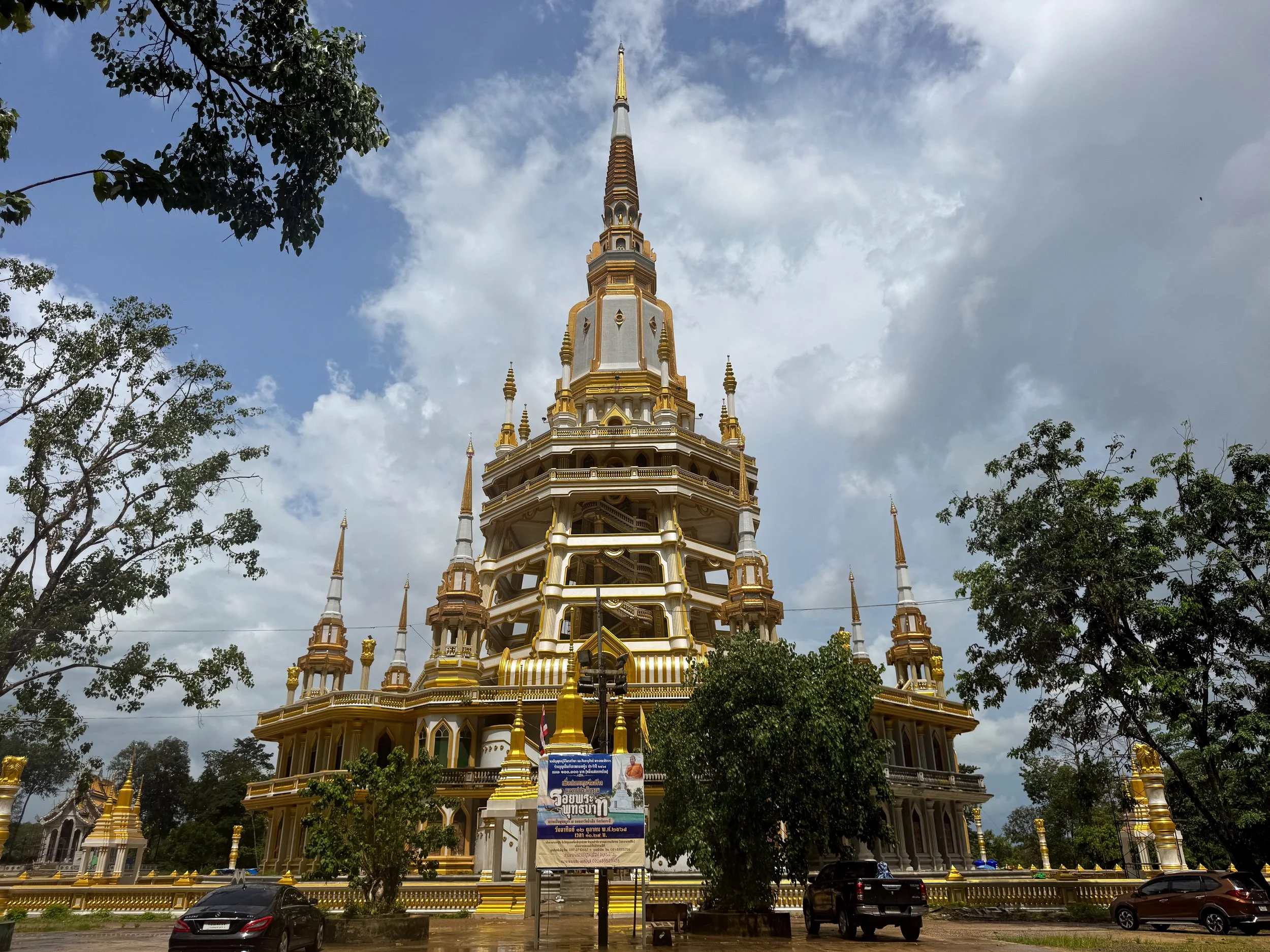
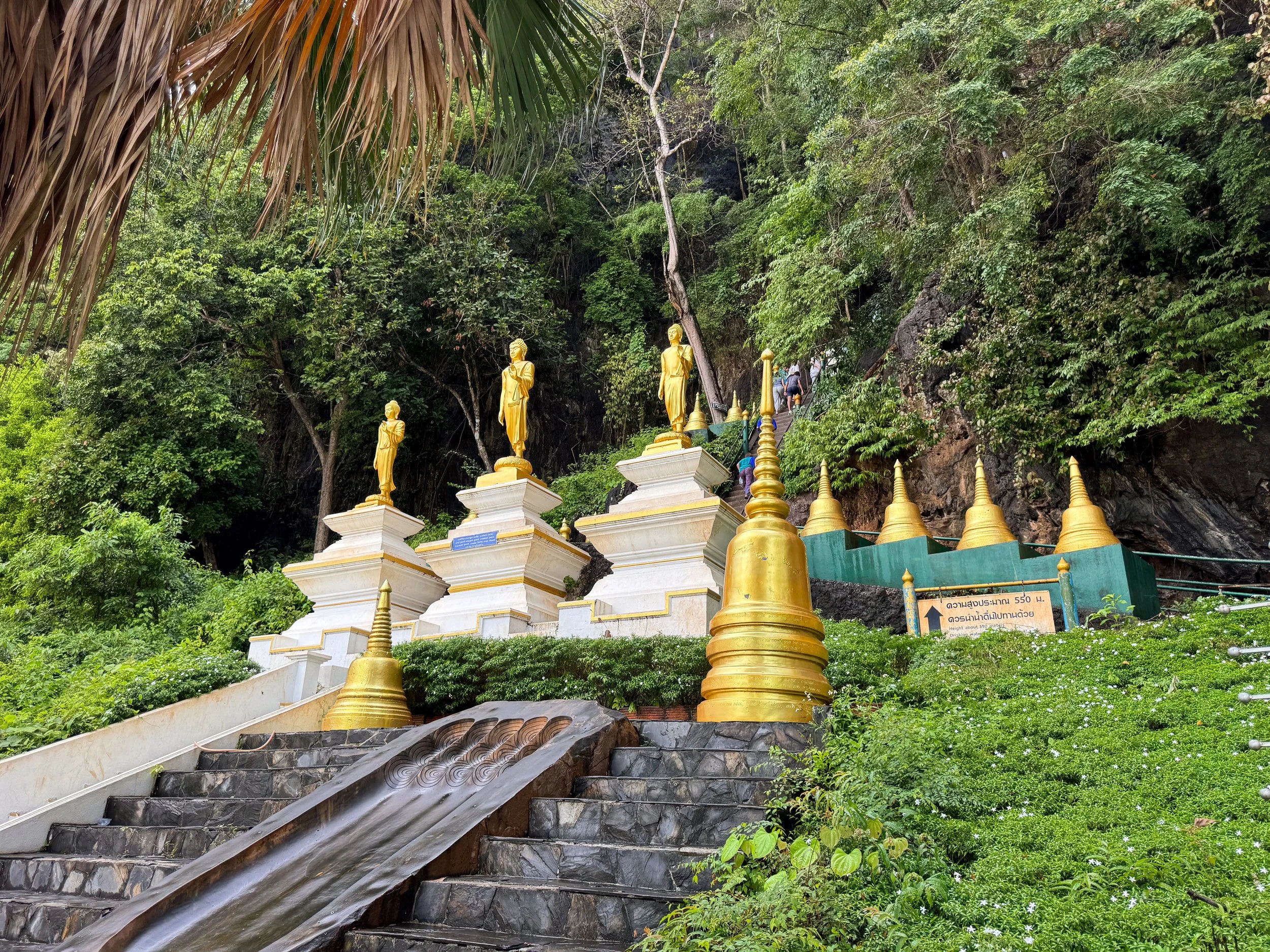
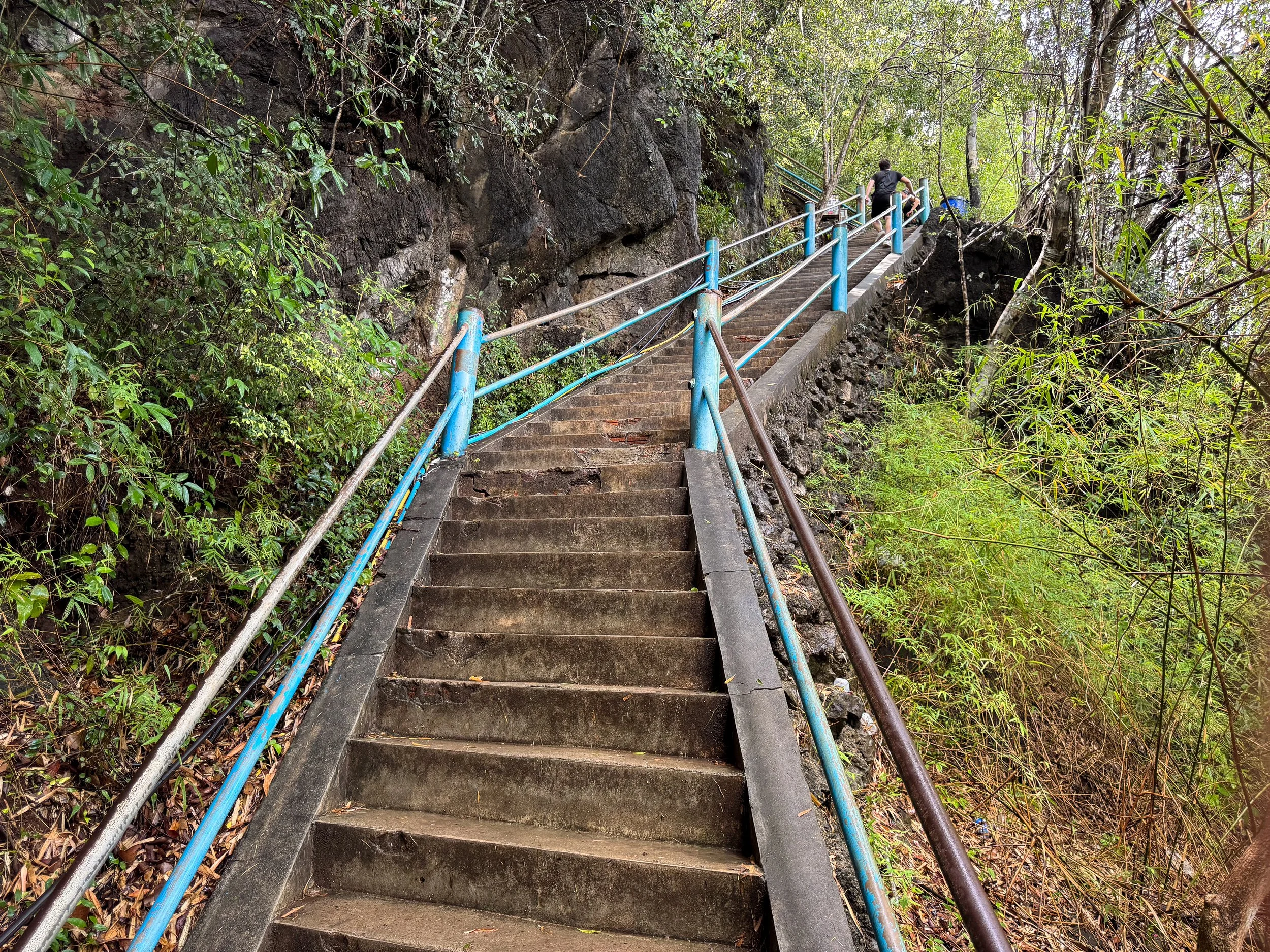
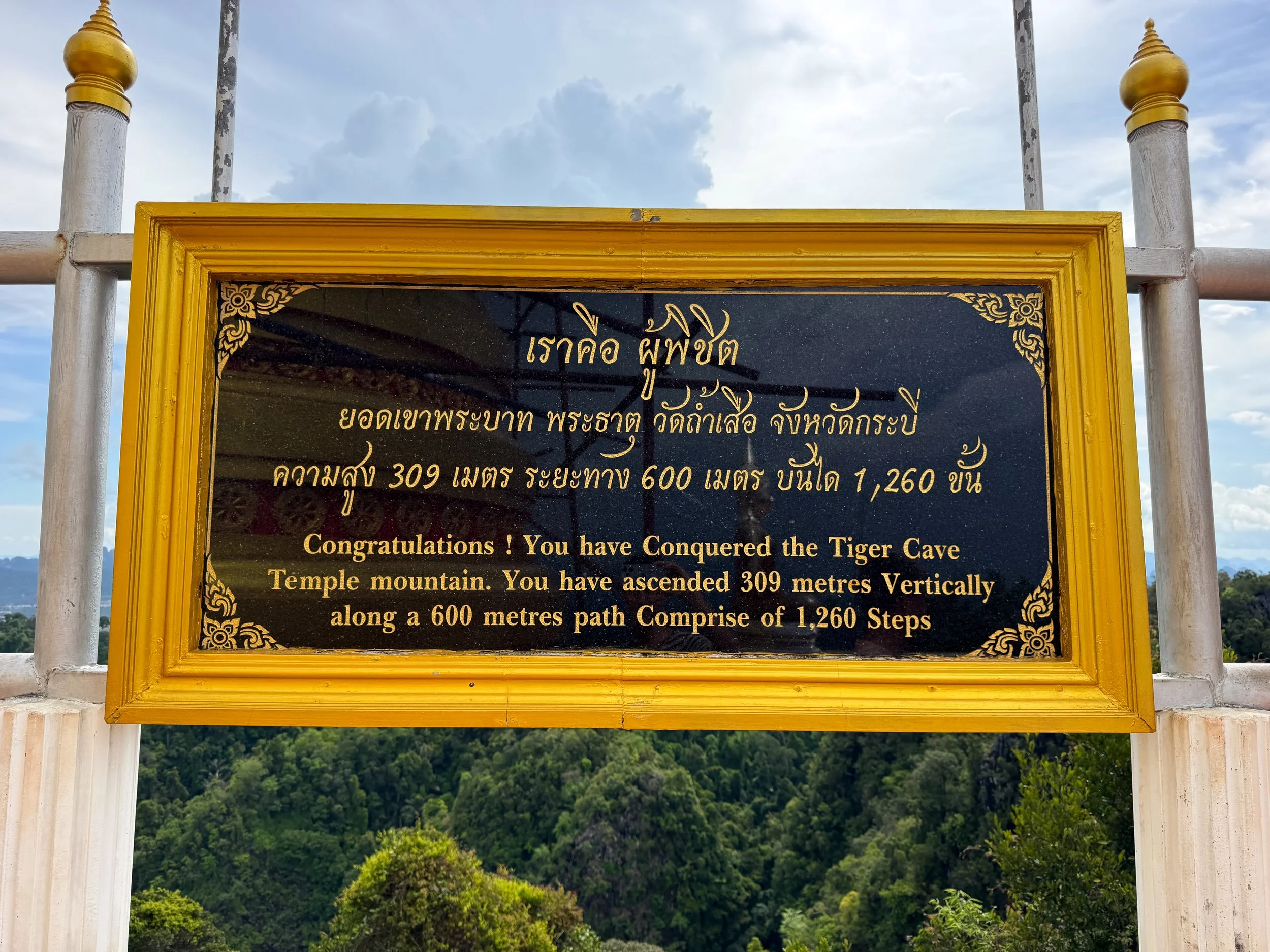
Tiger Cave Temple Mountain. A mountain top Buddhist temple reachable after a series of 1,260 steep steps rising 309 meters vertically. The summit of the mountain has a golden statue of the Buddha, stupa and small shrine. The view from the summit overlooks fields of palm trees, a vast mountain ridge and the distant Andaman Sea.
Getting Here. We visited the pools, hot stream waterfall and tiger cave mountain via a shared transfer with Trip Guru. They provided transportation and free time to explore all of the sights along the full day itinerary.
Where to Stay
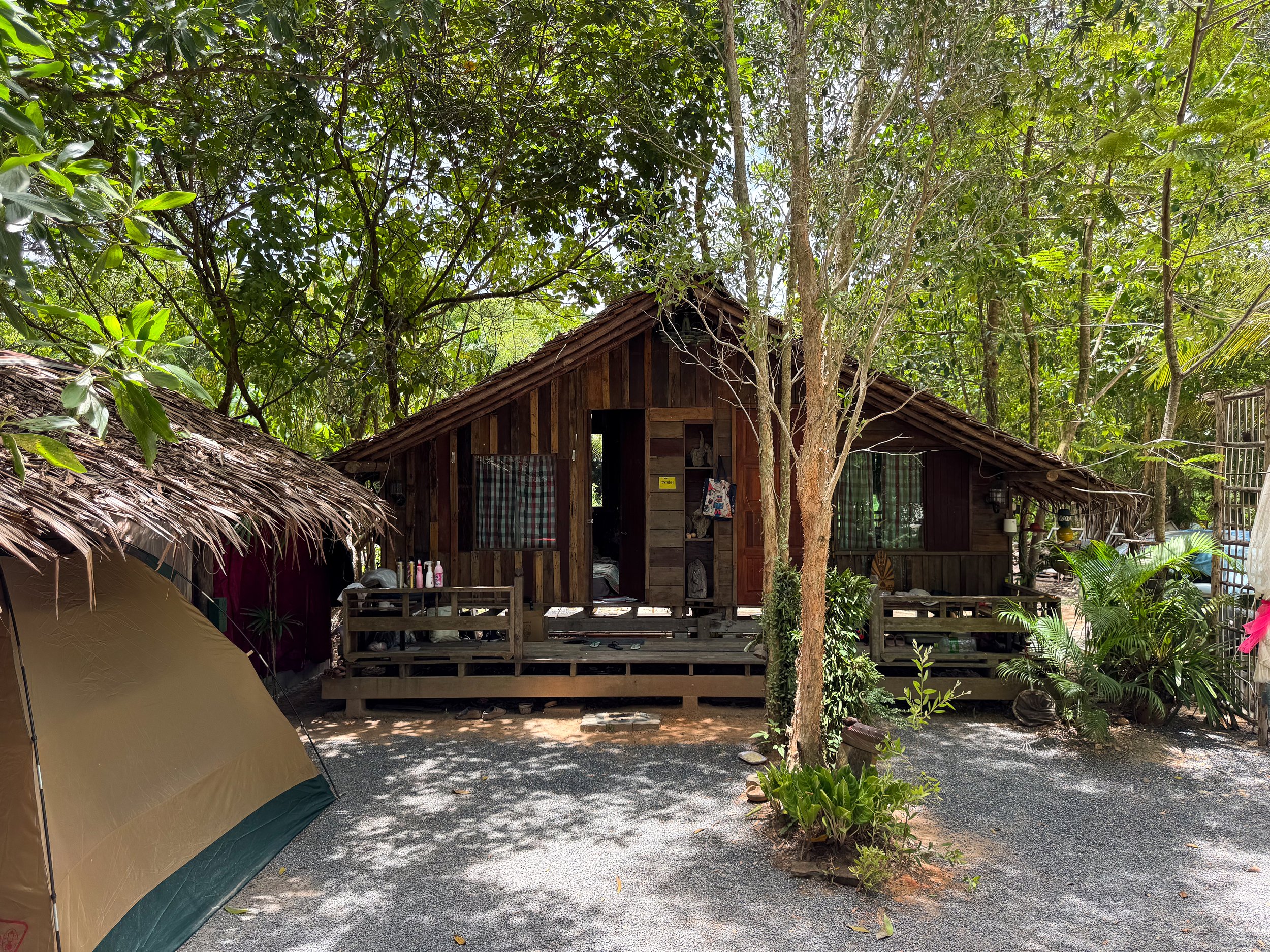
Mr Long Hostel & Restaurant. An inexpensive hostel and campground located in Ao Nang. It’s very much “in the nature” as advertised with rustic cabins and tents occupying the grounds. It gives off hippie and stoner vibes with many long term bohemian guests. The restaurant offers homestyle Thai dishes including a complimentary breakfast comprised of sticky rice wrapped in banana leaves, Thai fried donuts with sweetened condensed milk and fresh fruit harvested on the property. Book on Airbnb.
Getting Around
Phuket Ferry. A ferry company that aggregates boat operators across Phuket, Krabi and the surrounding islands in the Andaman Sea. It’s a beautiful and affordable way to sightsee while getting around. We booked one way tickets from Phuket to Ao Nang in Krabi with Ao Nang Travel and Tour Co. The trip took under 2 hours including a transfer from the pier to our accommodation.
Tuk Tuks. Thailand’s three wheeled carts are available around Krabi’s towns. They’re great for traveling short distances, often costing 50-100 Baht per person.
Grab. Southeast Asia’s popular taxi app is available in Krabi. It’s useful for traveling longer distances to natural sights and the airport. Wait times can be long and prices are more expensive than tuk tuks.
On Foot. Ao Nang is easily walkable, especially along the waterfront boulevard.
Krabi vs Phuket
We spent a week in each Krabi and Phuket. We enjoyed our time in both destinations but can say without hesitation that we love Krabi more!
Krabi, though still touristy, feels significantly more local than Phuket. It’s lesser developed in parts, has a more authentic atmosphere and slower pace. It’s close to untouched natural wonders including islands dotting the Andaman Sea.
Phuket has several developed beach towns but lacks local culture due to the vast number of expats and its clubby environment. There is less access to nearby nature; however, many tours to islands in the Andaman Sea frequently leave from here.
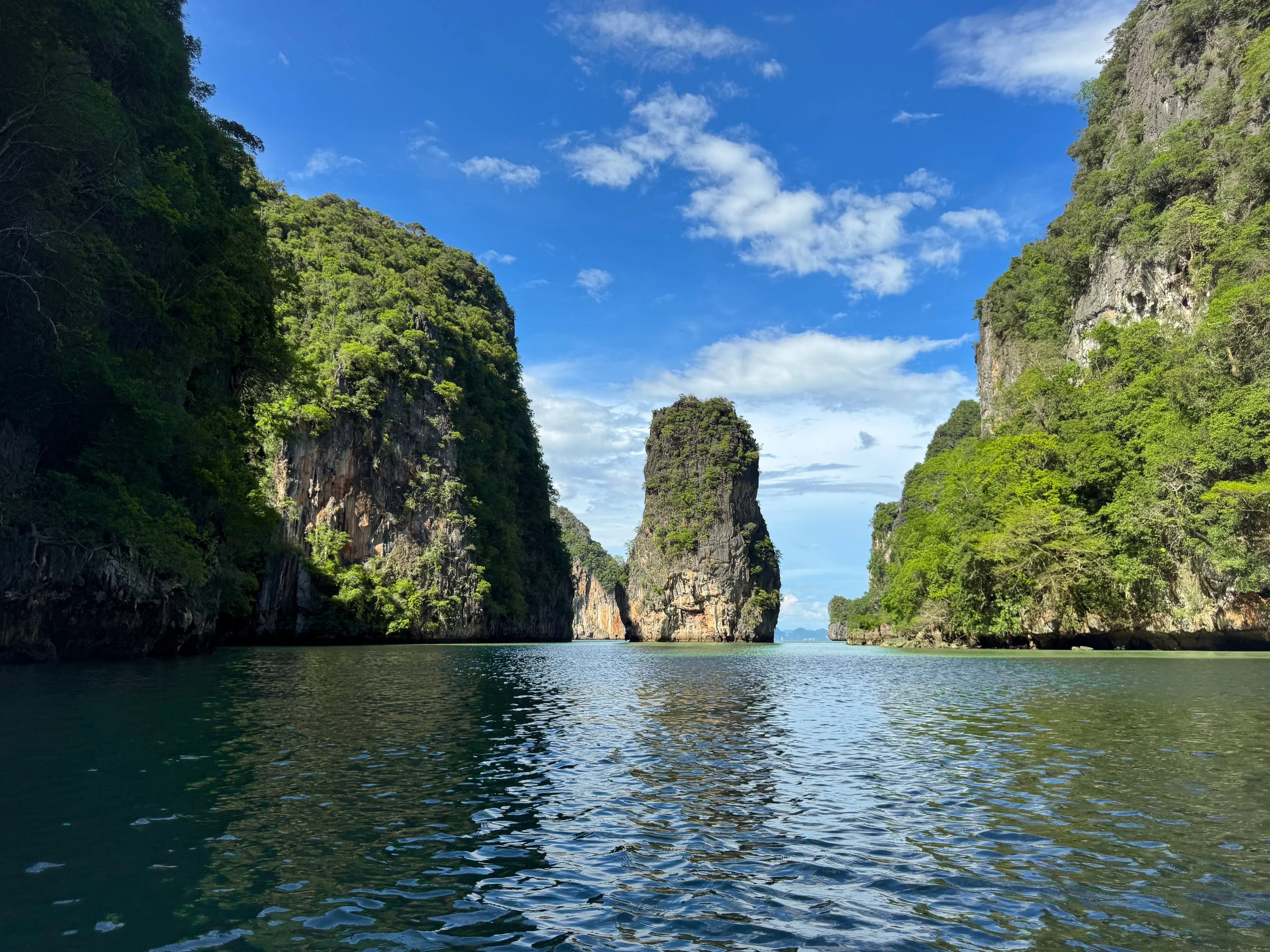
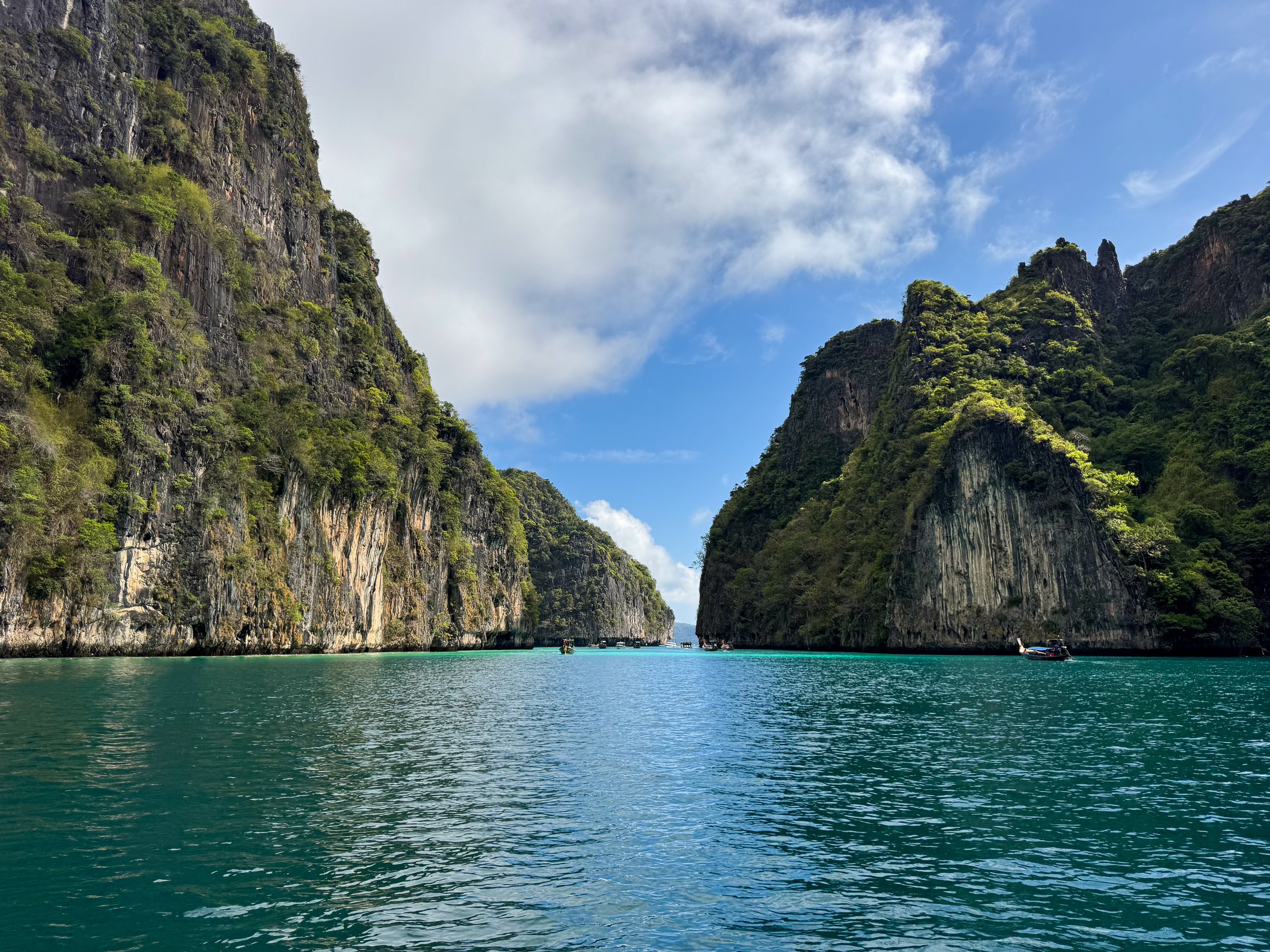
Elsewhere in Thailand
From Krabi's limestone cliffs and tropical beaches to Phuket's island adventures, Chiang Mai's historic streets and Bangkok's vibrant culture, discover more of Thailand through these travel guides:
Bangkok Travel Guide: Temples, Street Food & Thai Culture. Immerse yourself in Bangkok where gilded temples, the Royal Palace, lively night markets and legendary street food reflect Thailand's dynamic blend of tradition and modernity.
Chiang Mai Travel Guide: Old City, Temples & Night Markets. Meander through Chiang Mai's Old City where historic temples and night markets reveal Northern Thai culture, mountain landscapes, waterfalls and elephant sanctuaries.
Phuket Travel Guide: Beaches, Island Hopping & Thai Culture. Escape to Phuket where sandy beaches, turquoise bays, limestone islands, a colorful Old Town & island hopping adventures blend Thai culture with coastal exploration.
For Next Time…
We absolutely loved our time in Krabi and hope this sliver of paradise never changes. When we return, we plan to Stay in Railay Beach to experience the sights and activities we missed.
Rock Climbing at Phra Nang Beach. We missed our opportunity to rock climb and rappel in Railay Beach. Several outfitters offered beginner courses on some of the peninsula’s sheer cliffs, specifically at Phra Nang Beach.
Island Tours. Longboats from the piers and beaches offer day trips to several islands in the Andaman Sea.
4 Islands Boat Day Trip: A long boat tour to the islands of Poda, Tup, Chicken and West Railay.
3 Islands Snorkeling Day Trip: A long boat tour to the islands and reefs of Mae Urai, Yawabon and Yawasam.
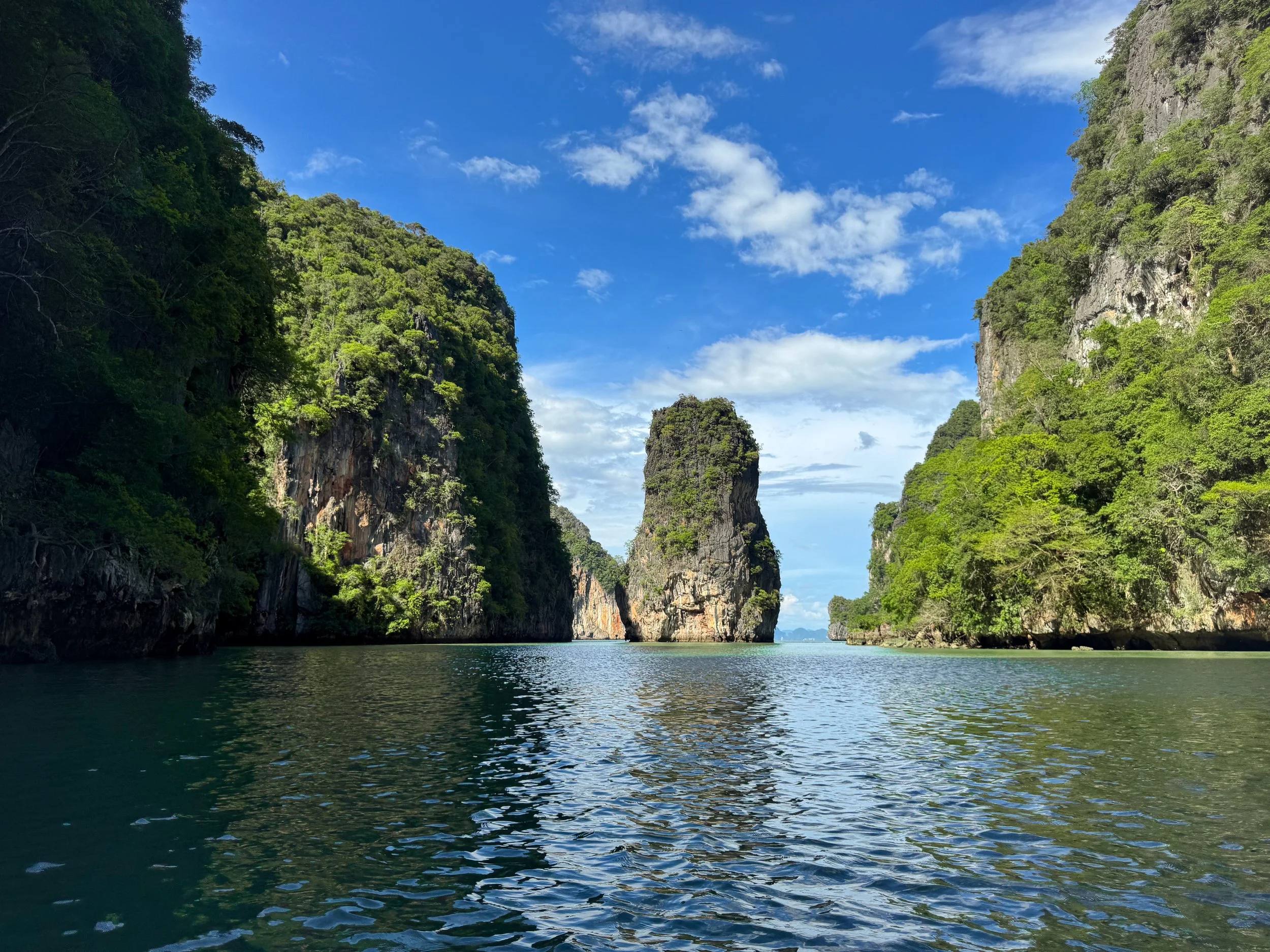
Phuket Travel Guide: Beaches, Island Hopping & Thai Culture
Escape to Phuket where sandy beaches, turquoise bays, limestone islands, a colorful Old Town and island hopping adventures blend Thai culture with coastal exploration.
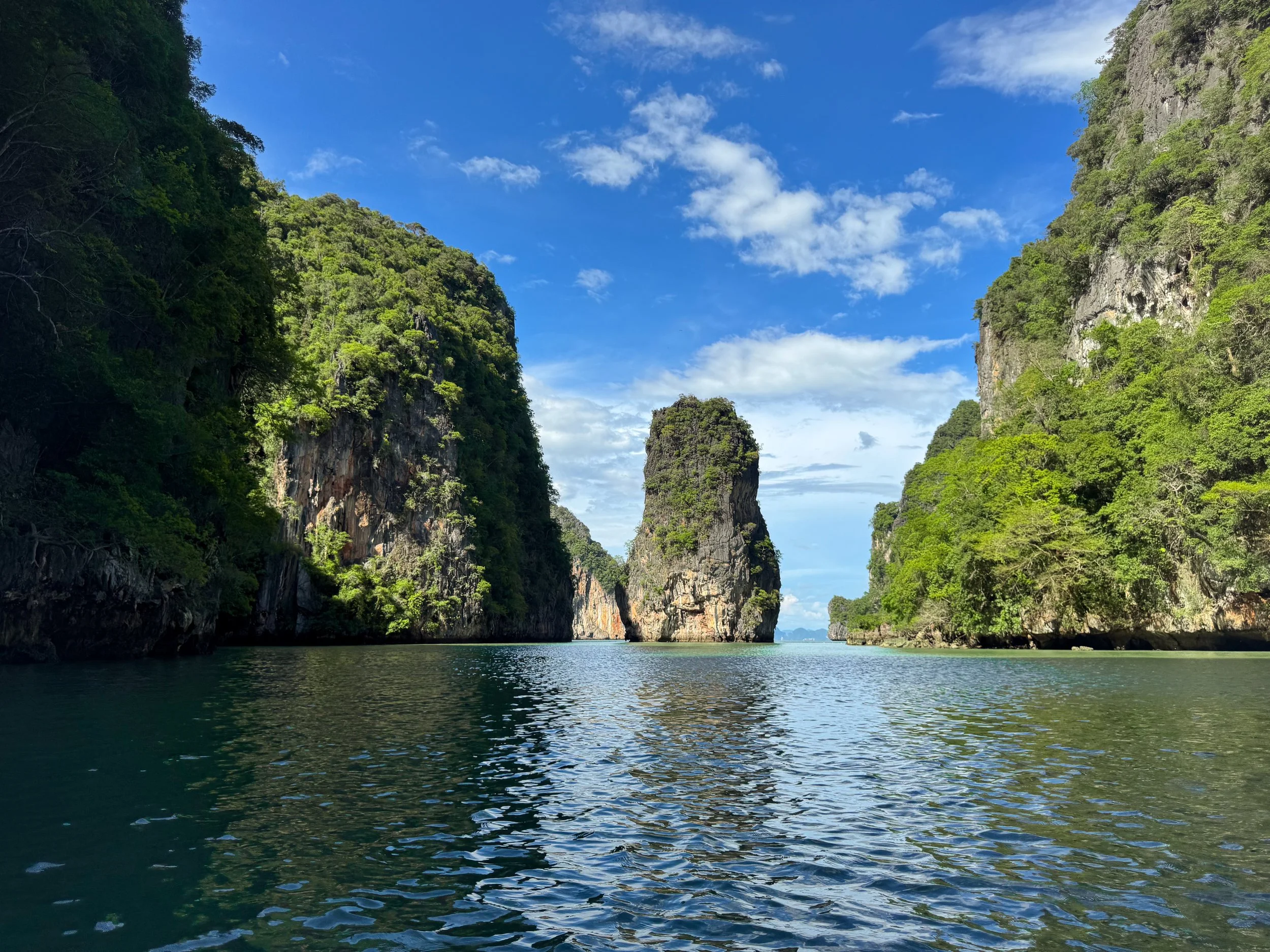
Phuket, Thailand
Phuket is an island in southern Thailand known for its breathtaking landscapes, tropical beaches and vibrant towns. Long sandy beaches line the aquamarine shores of Phuket’s coast. Bays famed for their iconic stone islands are teeming with underwater reserves and marine life. Old Town streets are lined with bright and colorfully painted buildings. Popular beach towns welcome travelers from across the world while floating villages offer a glimpse into the local culture.
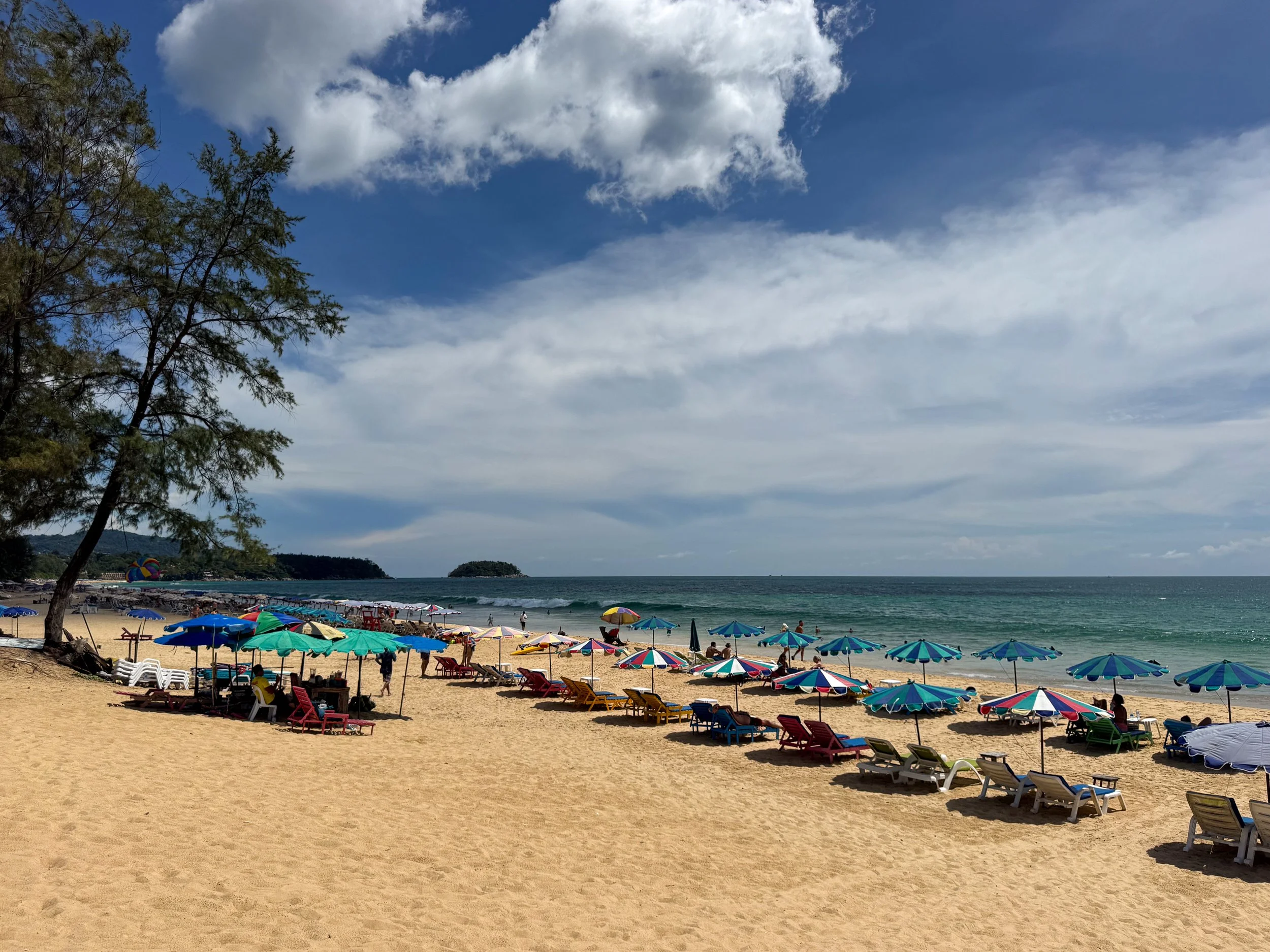
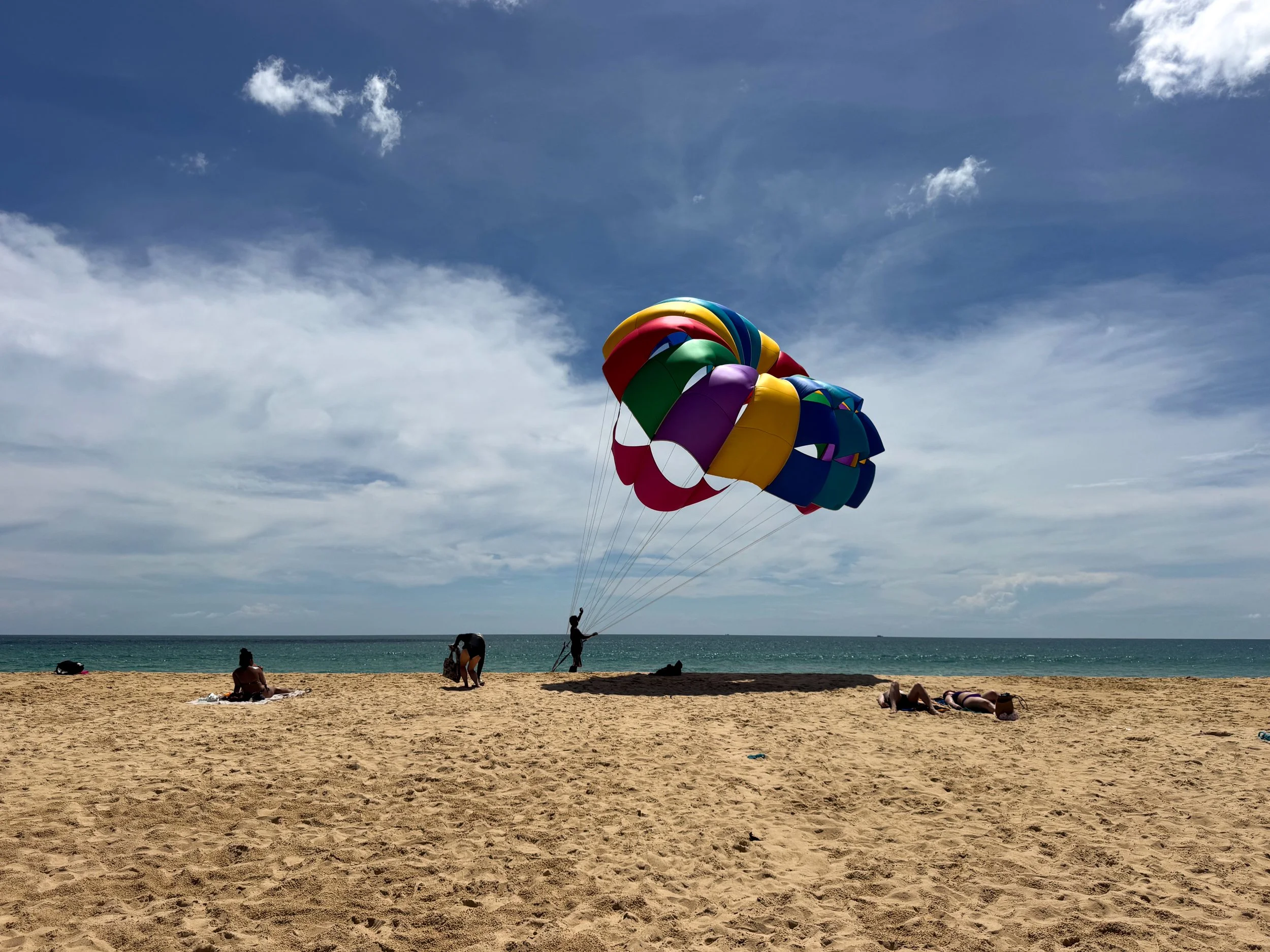
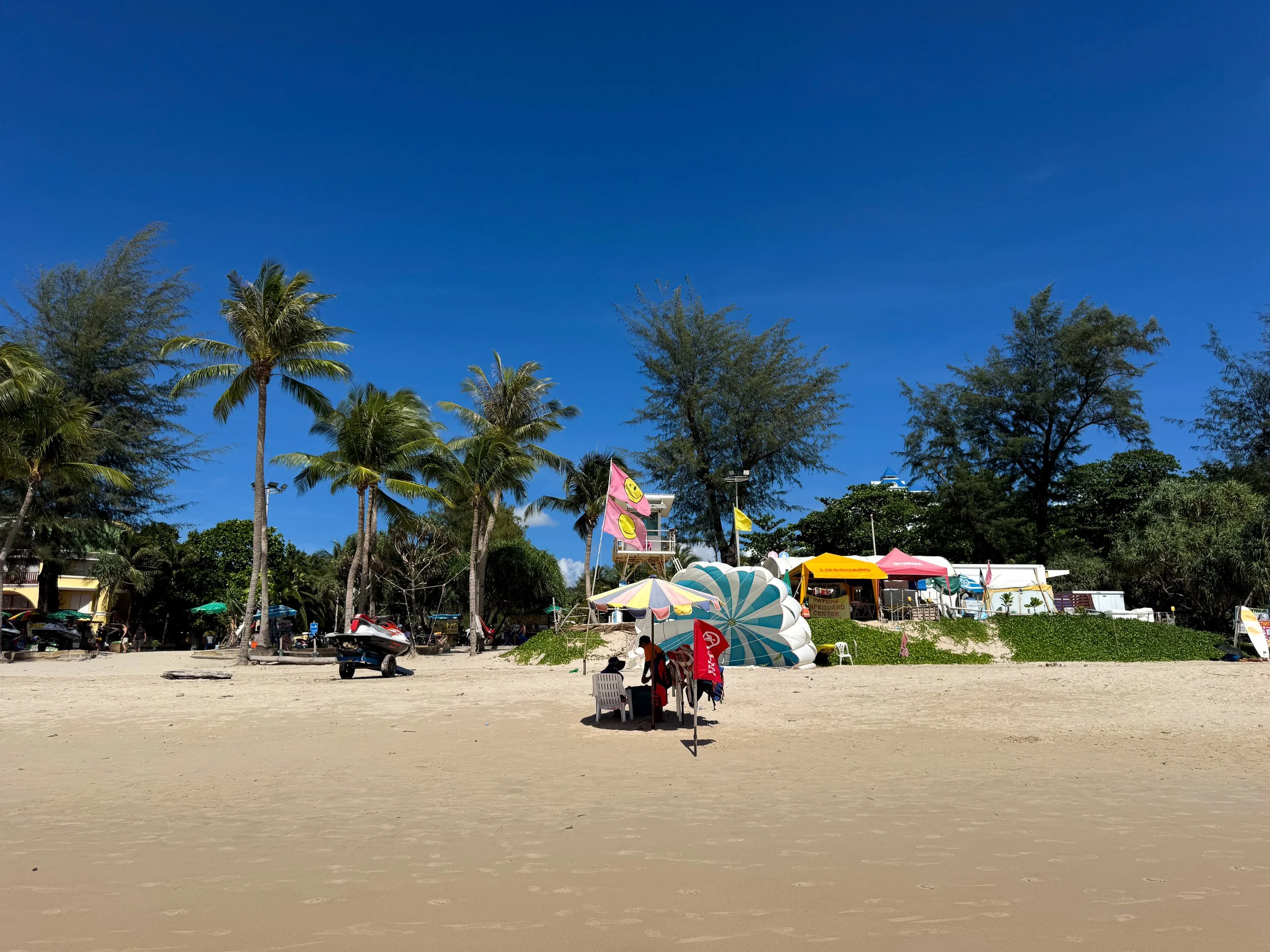
Beaches & Beach Towns
Kata Beach. A small but popular golden sand beach with thousands of lounge rentals, street food stands, boat tour companies and surf board rentals.
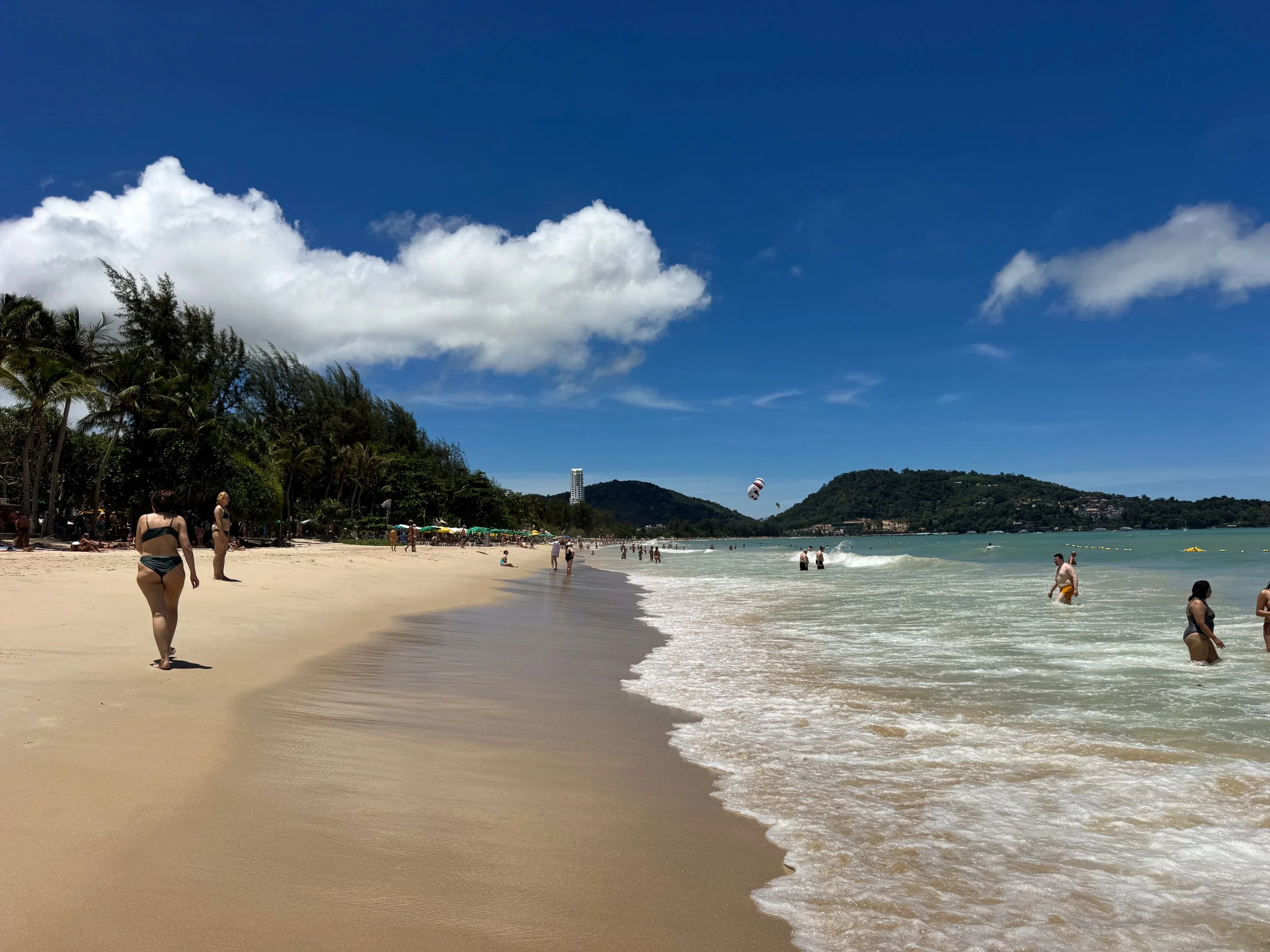
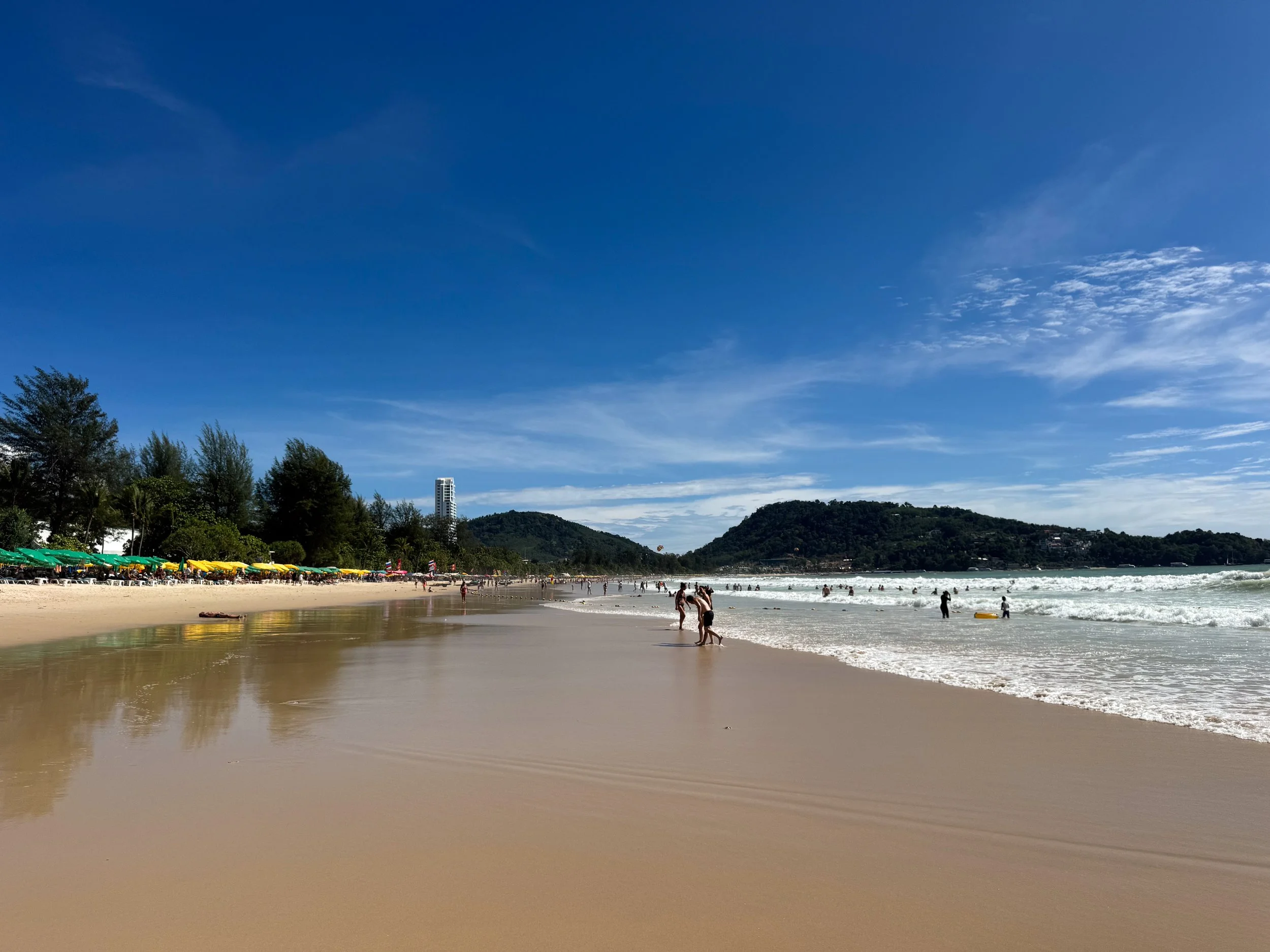
Patong Beach. A large crescent shaped beach with a white sandy shore and aquamarine hued water. Vendors rent sun lounges and umbrellas and sell street food & local beers. Party goers dance at beach clubs while others parasail overhead. We laid out under the palms and rented lounges for the afternoon, swam in the playful waves and walked the length of the beach. The north side is quieter and cleaner than the south side.
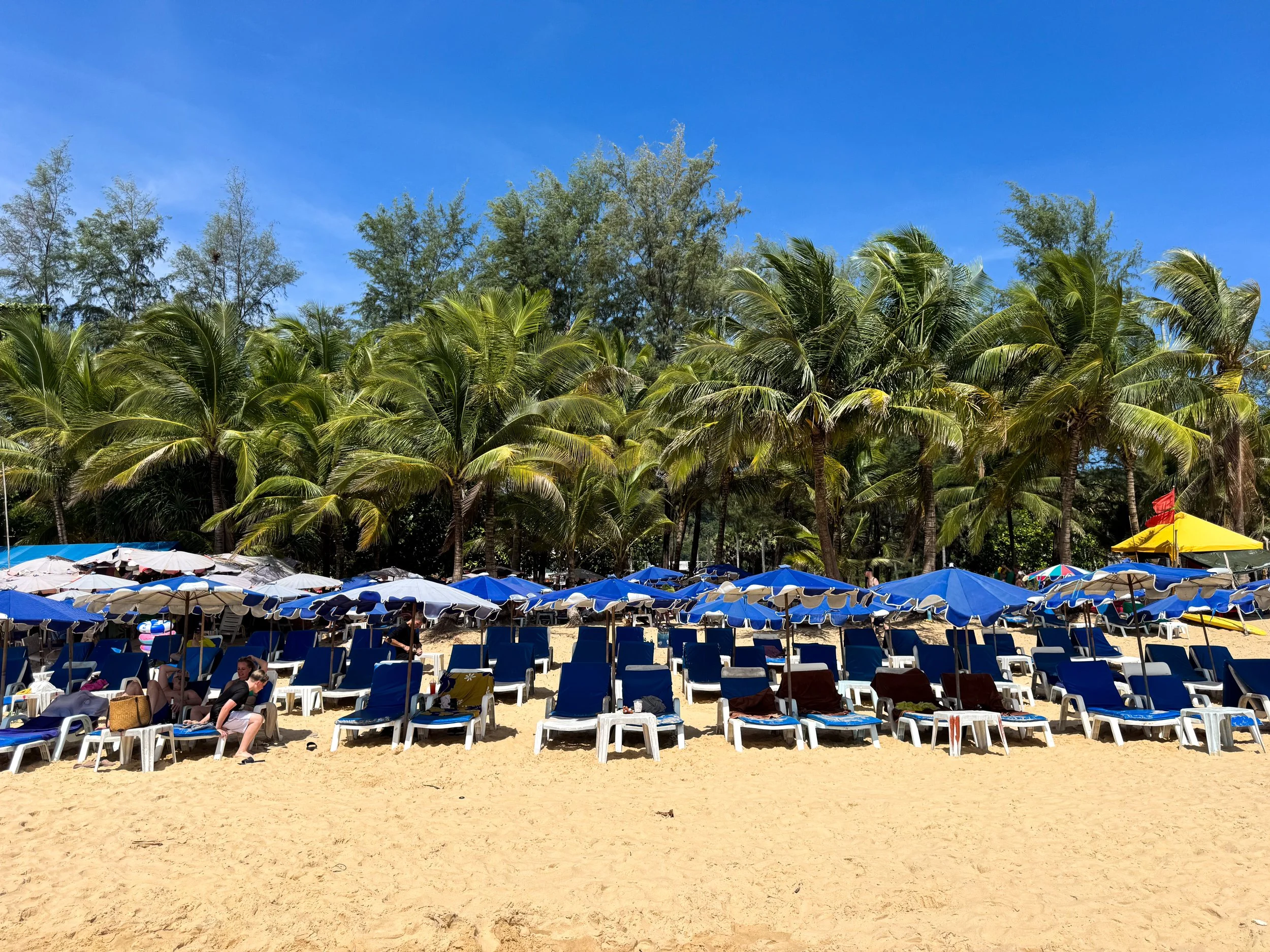
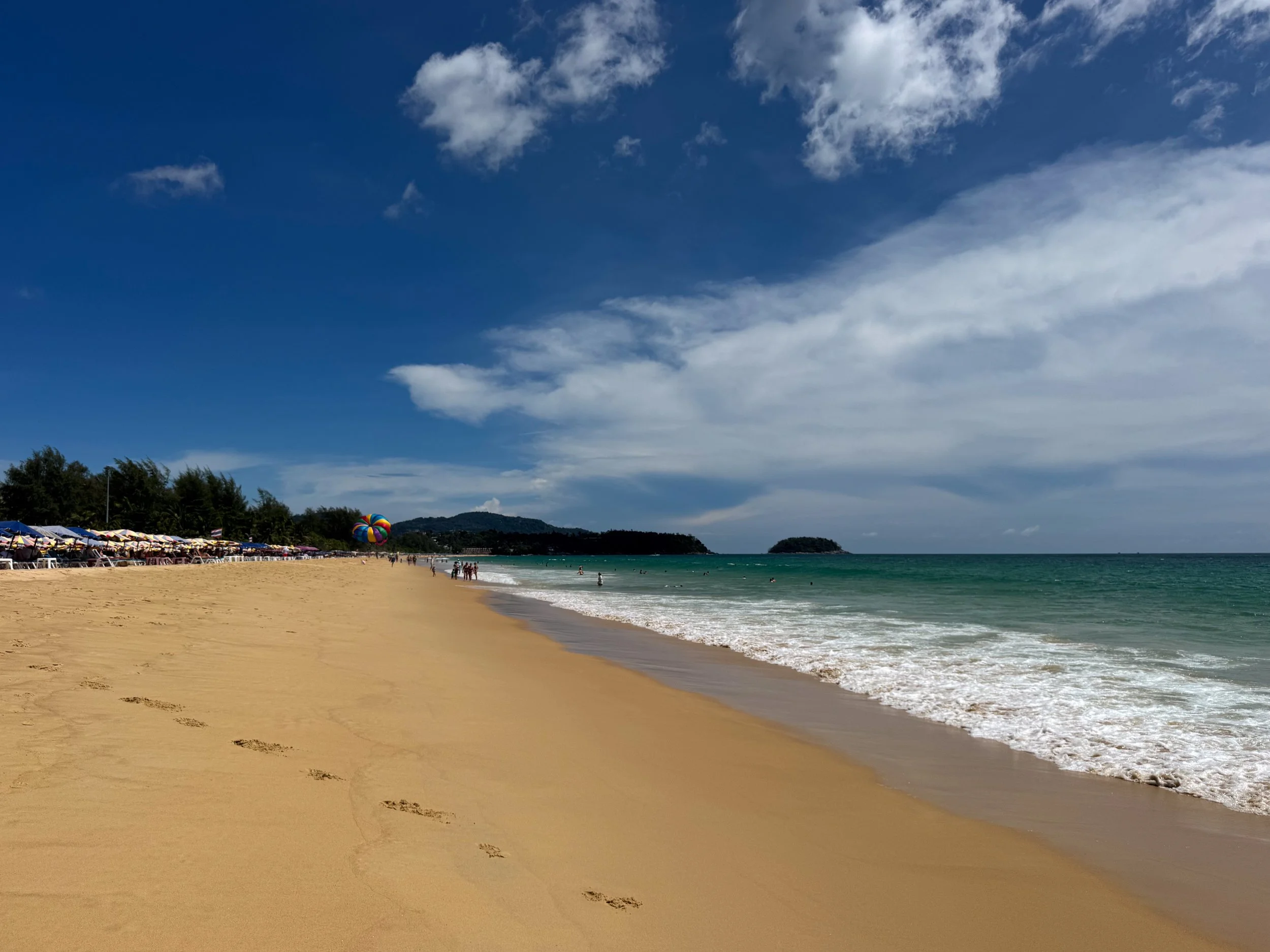
Karon Beach. A beach town with a lengthy yellow sand and palm lined beach with swimmable turquoise water. It’s significantly less busy than Patong Beach and was our favorite of those we visited in Phuket. We spent an afternoon living our best tropical lives under an umbrella with drinks in hand. Between the shore and promenade are beach shacks with fresh juices, smoothies and cocktails. Vendors rent affordable lounges and umbrellas, also offering parasailing and jet ski tours.
Beach Prices. Two lounges and an umbrella cost 200 Baht for the day. Beers cost 60 Baht per bottle. Street food ranges from 40 to 80 Baht per dish.
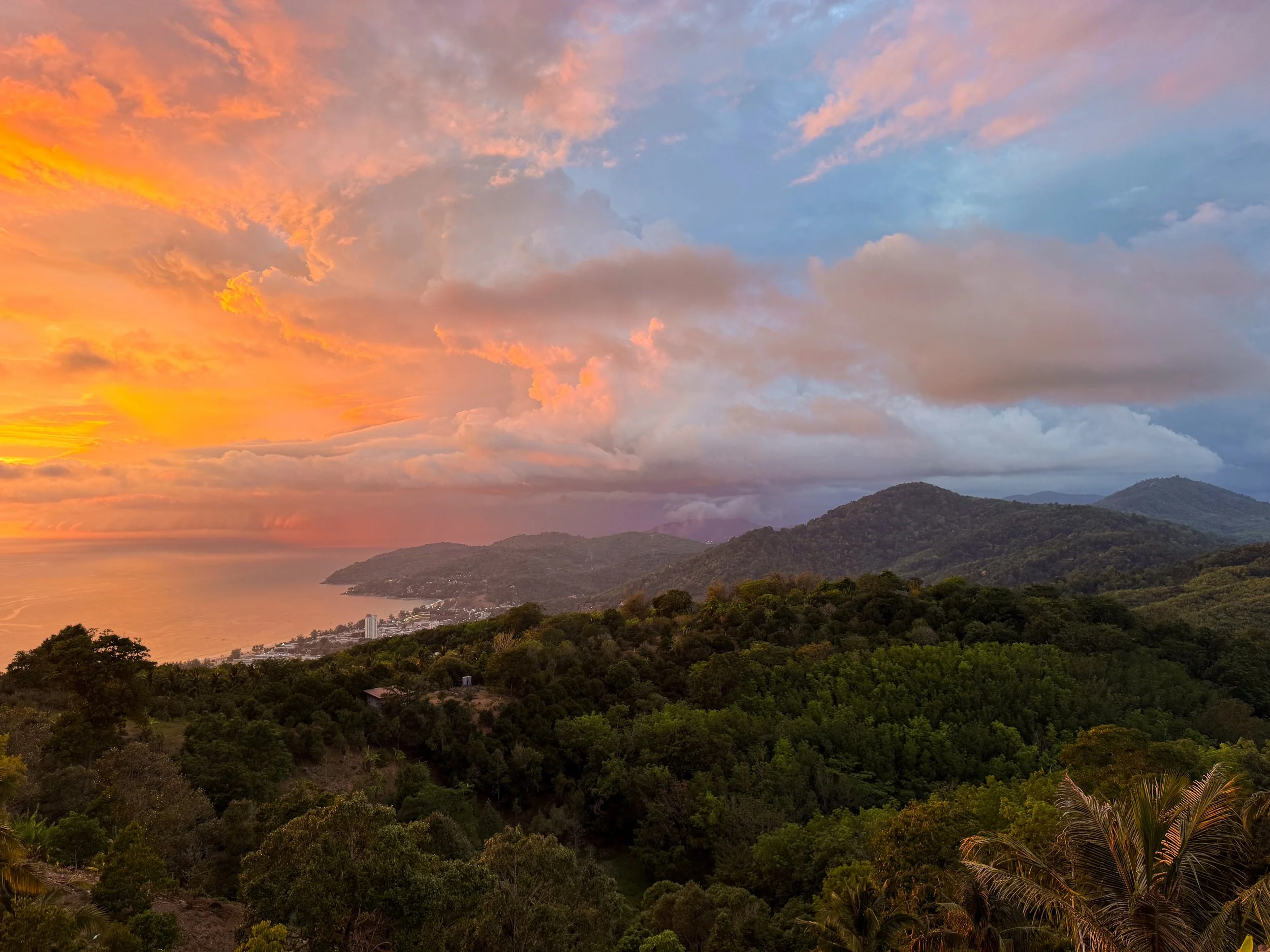
Things to Do
Hike to the Big Buddha Lookout. A hiking trail up the hillside near Karon Beach to the Big Buddha Lookout with sunset views of the island and ocean. The trail is steep with loose gravel and trenches formed by heavy rain. Rope rails are installed throughout to make the hike easier. The trail lets out at a road that continues uphill towards the Big Buddha. It passes a few roadside cafes and small lookouts. The trail takes less than 30 minutes to hike. Wear sturdy shoes and insect repellent.
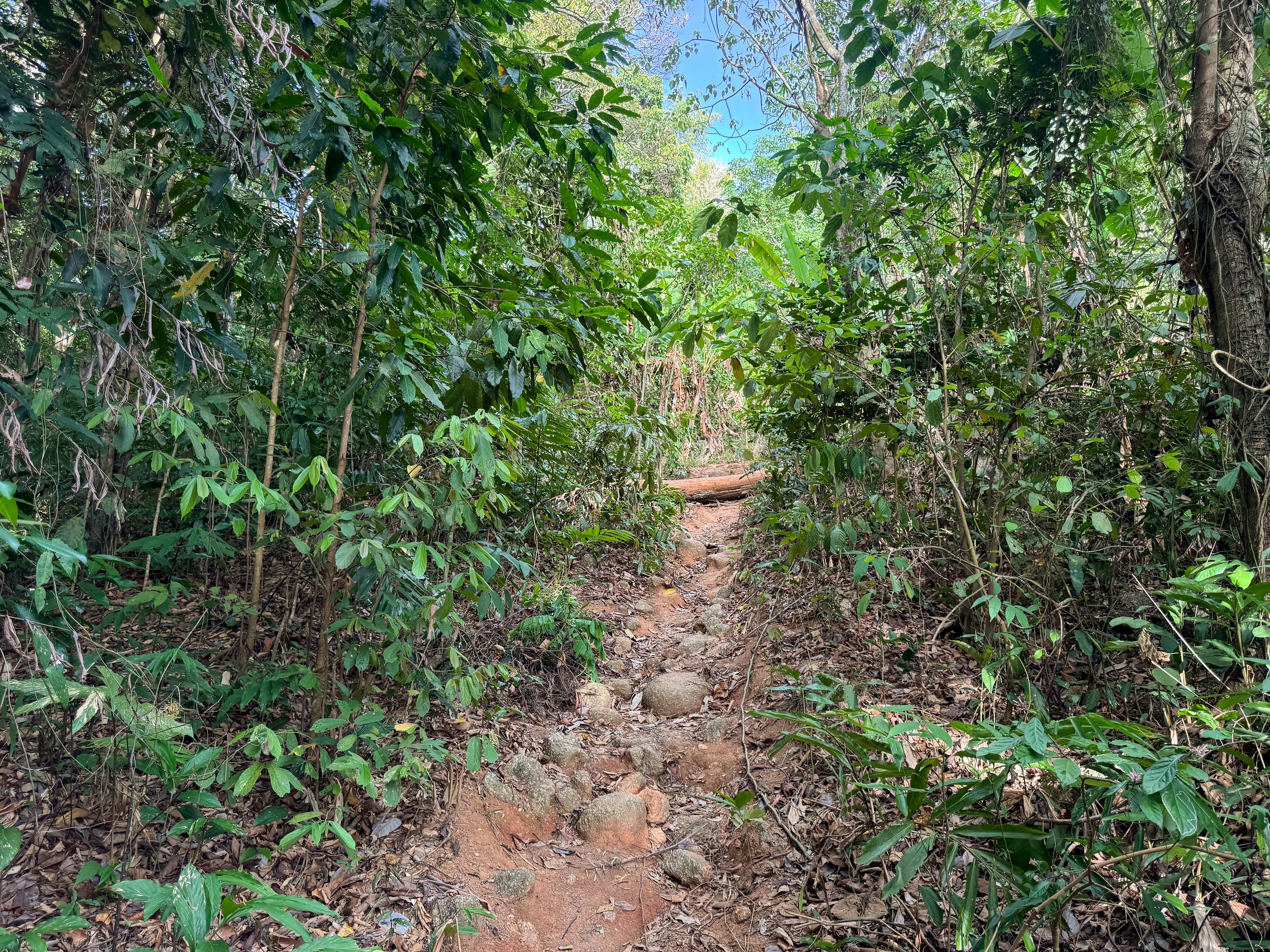
Finding The Trail Head. On Google Maps, look for the pin Trail to Big Buddha or Kata Karon Hiking Trail.
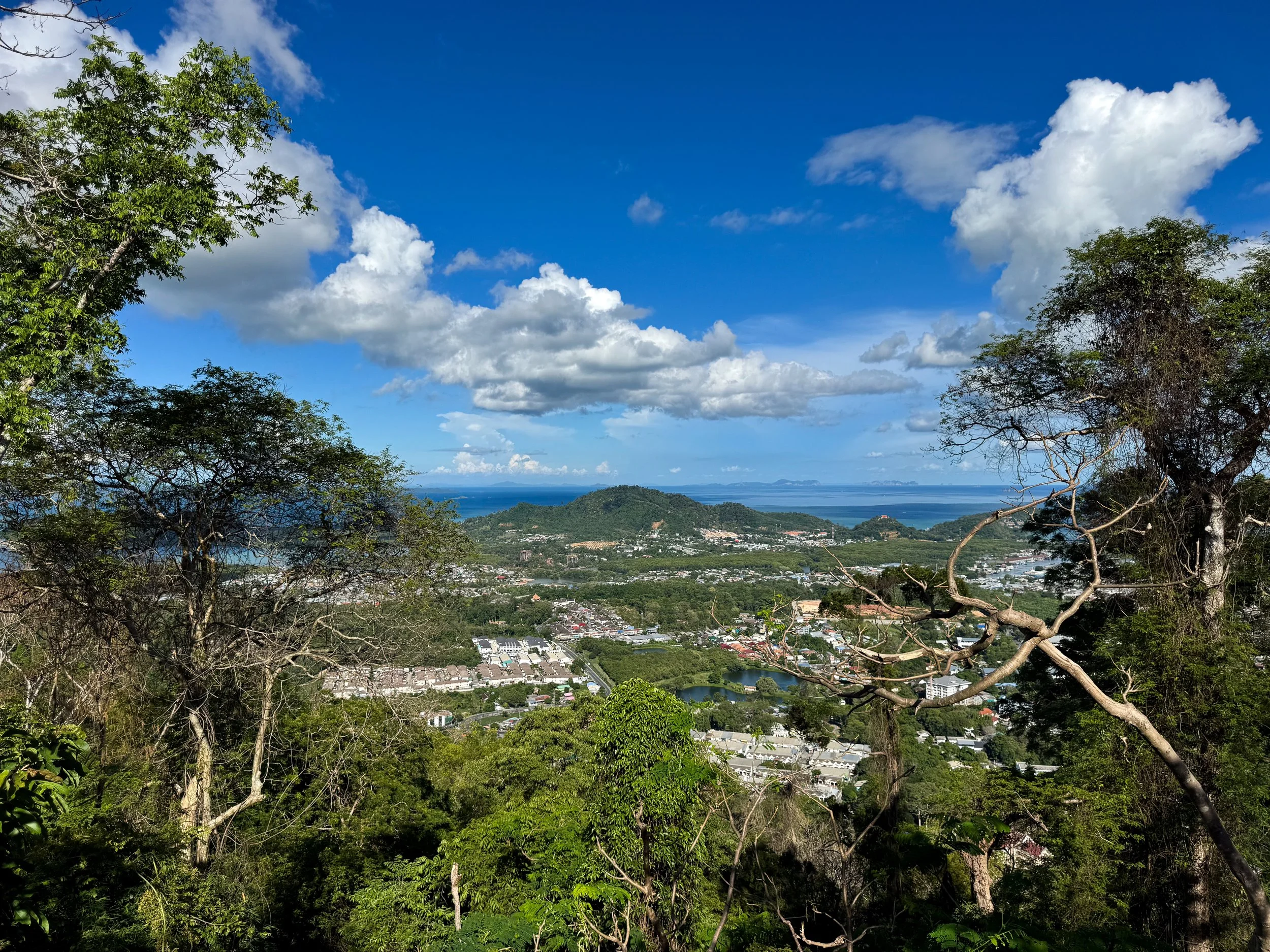
Walk to the Monkey Hill Viewpoint. Monkey Hill is exactly as its name implies, a hill with a view and a lot of monkeys. A steep roadway leads to a lookout over the city of Phuket and the bay. On the way up, large groups of monkeys gather along the edge of the road, waiting to be fed by park staff or to prey on unsuspecting visitors. It takes about an hour to walk. Many locals come here to exercise and jog.
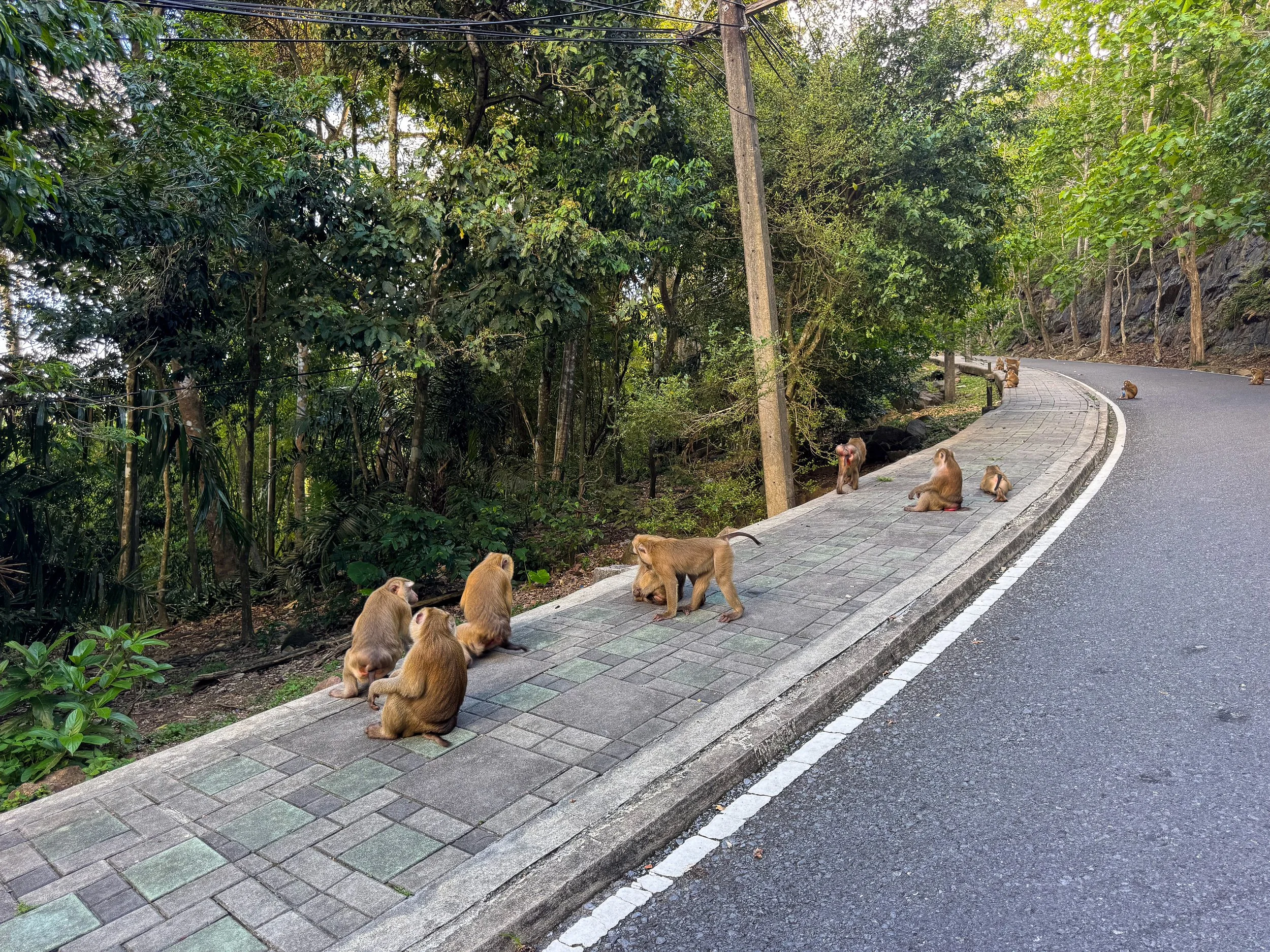
Warning! Beware of the monkeys! They can be aggressive, even if unprovoked. Do not carry in any food or plastic nor wear any loose fitting clothing or accessories. Carry a stick or long umbrella for protection. You won’t need to use it but it warns the monkeys to think twice before jumping on you.
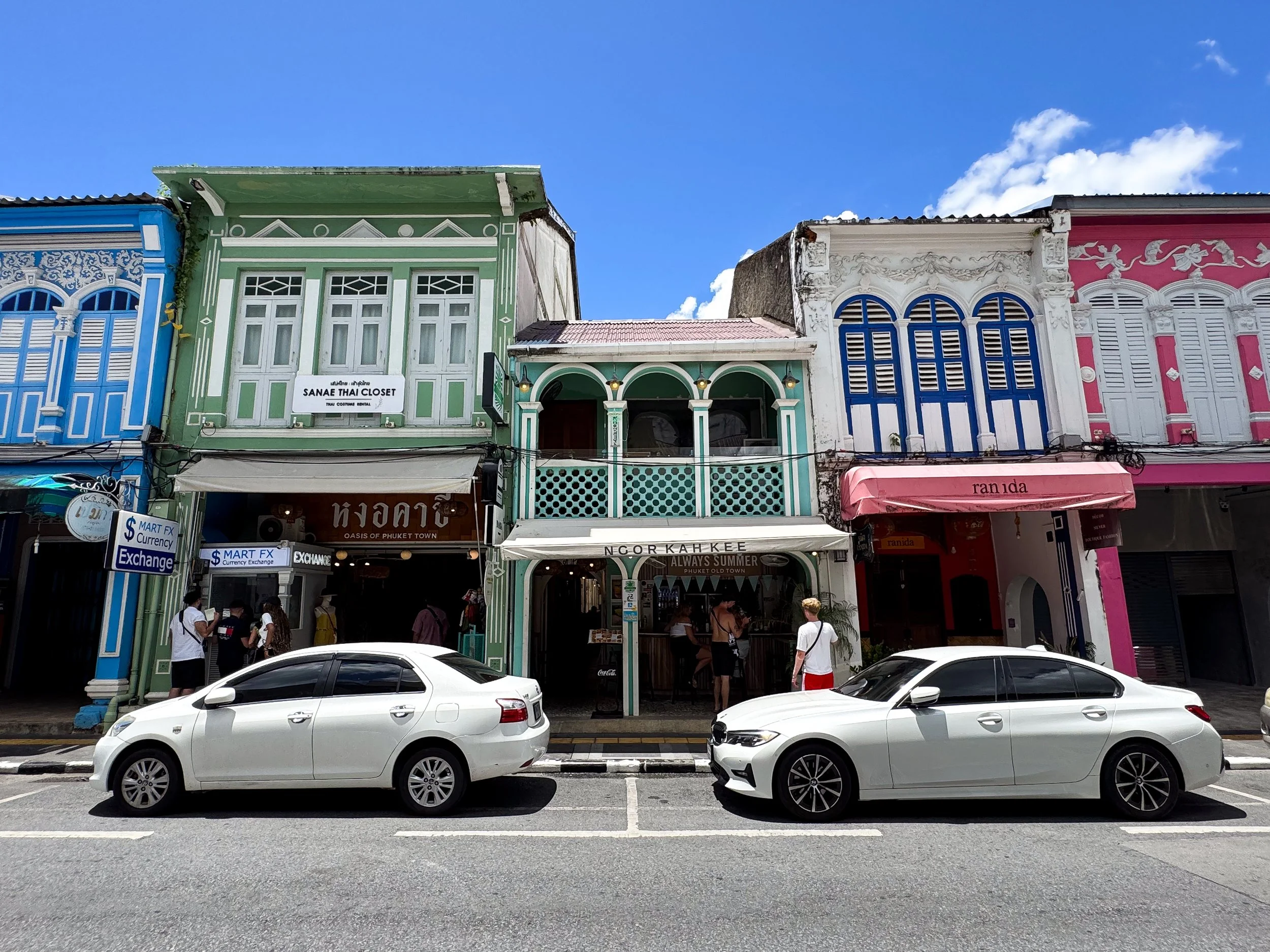
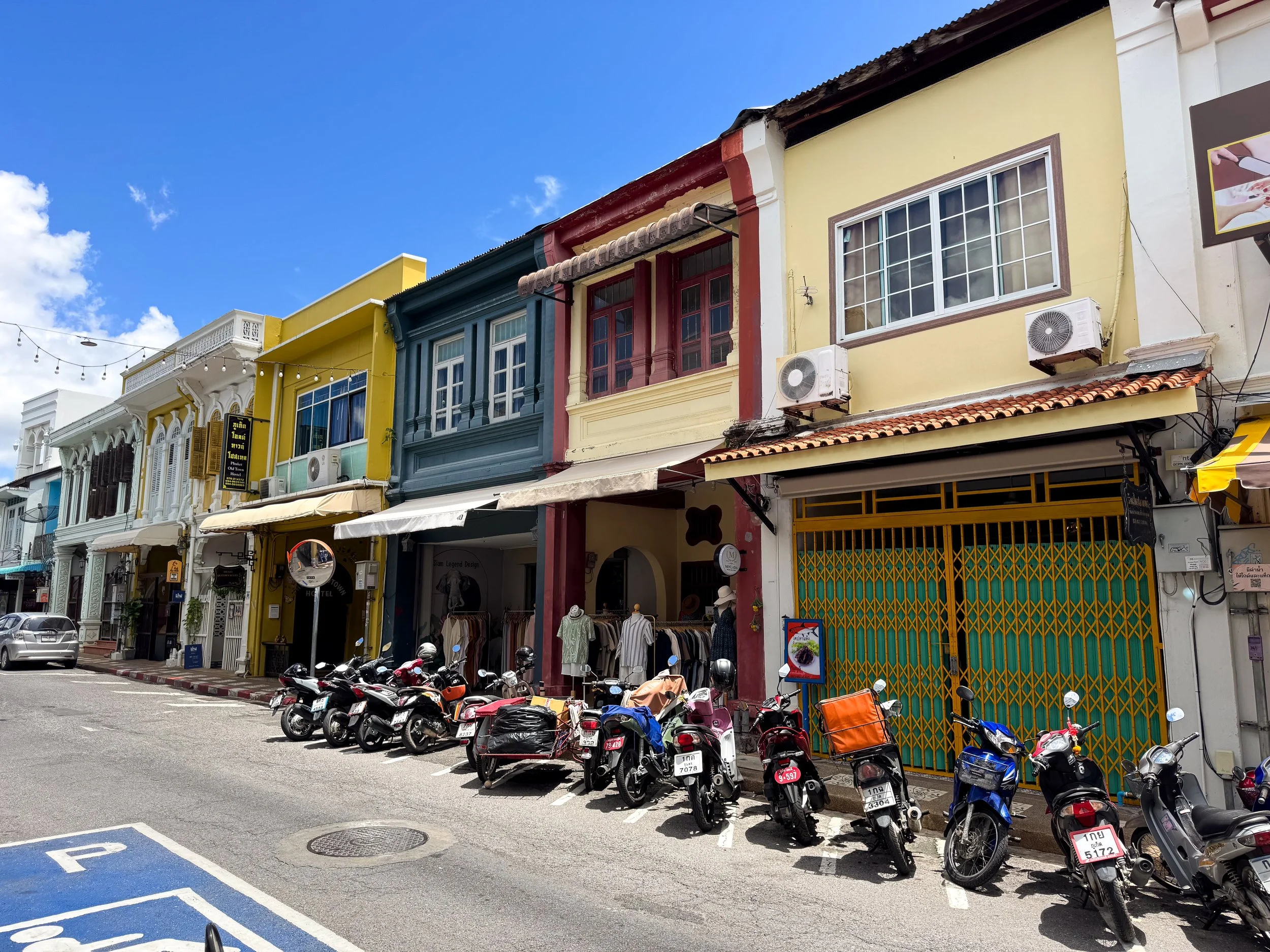
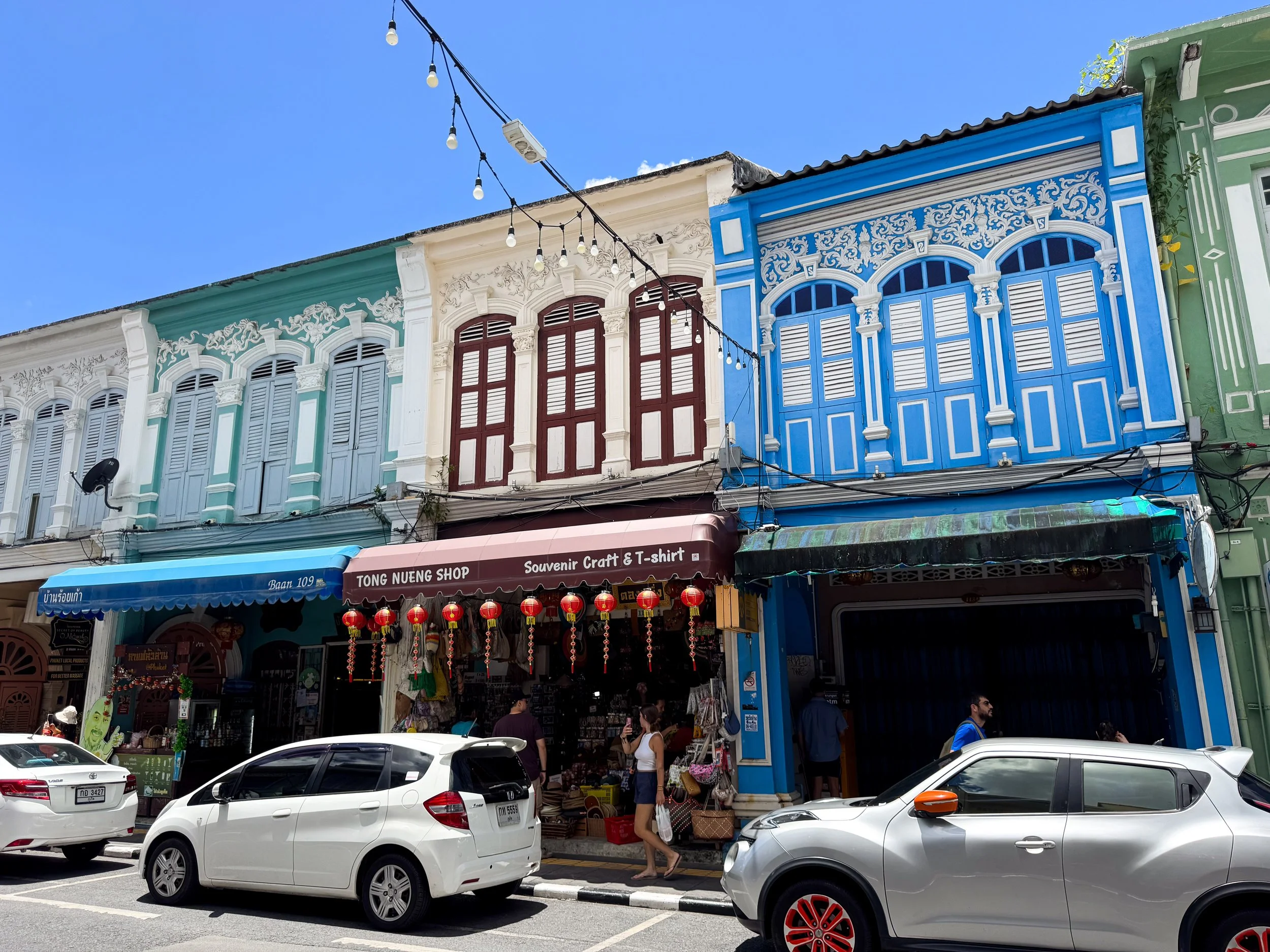
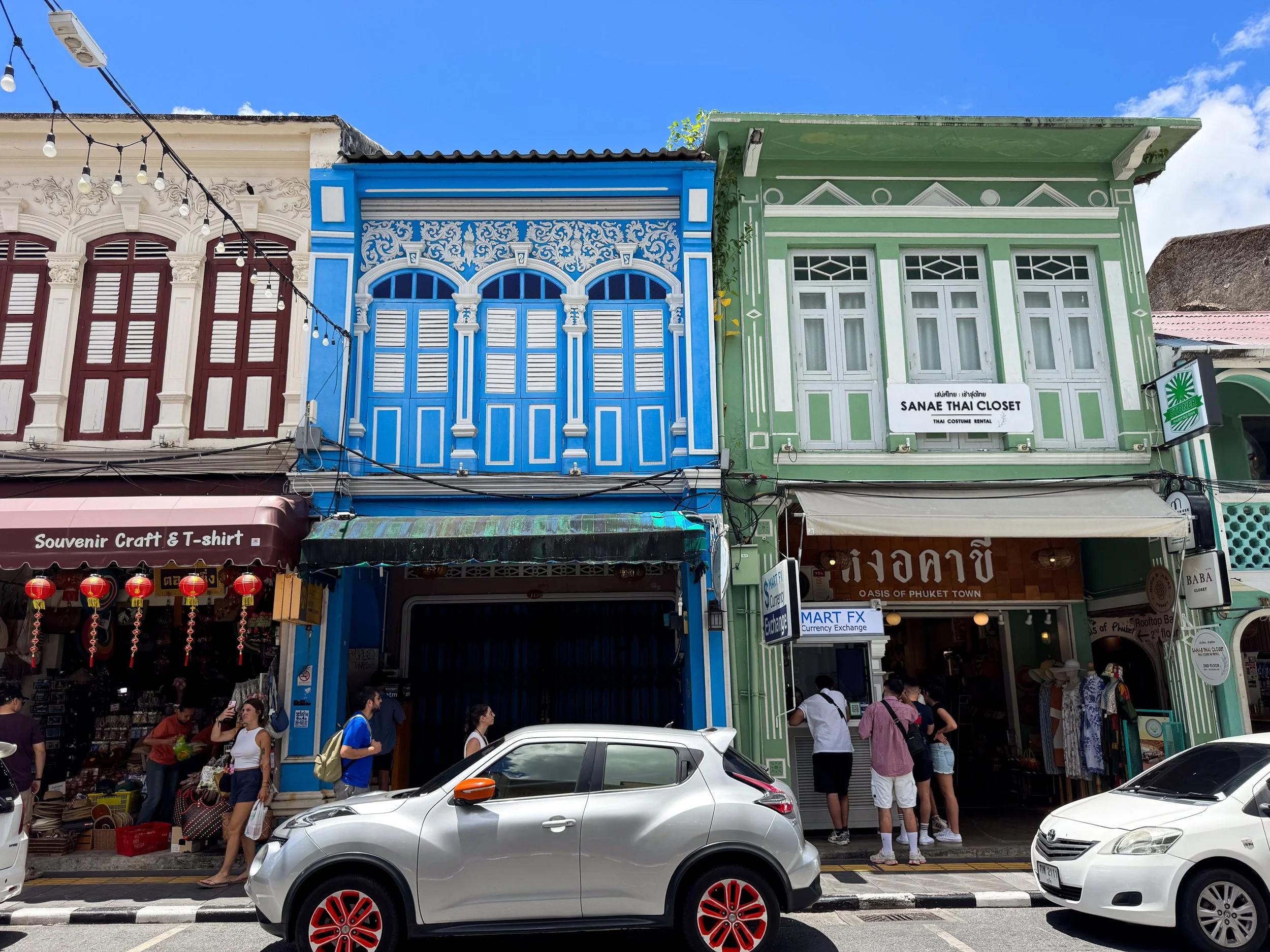
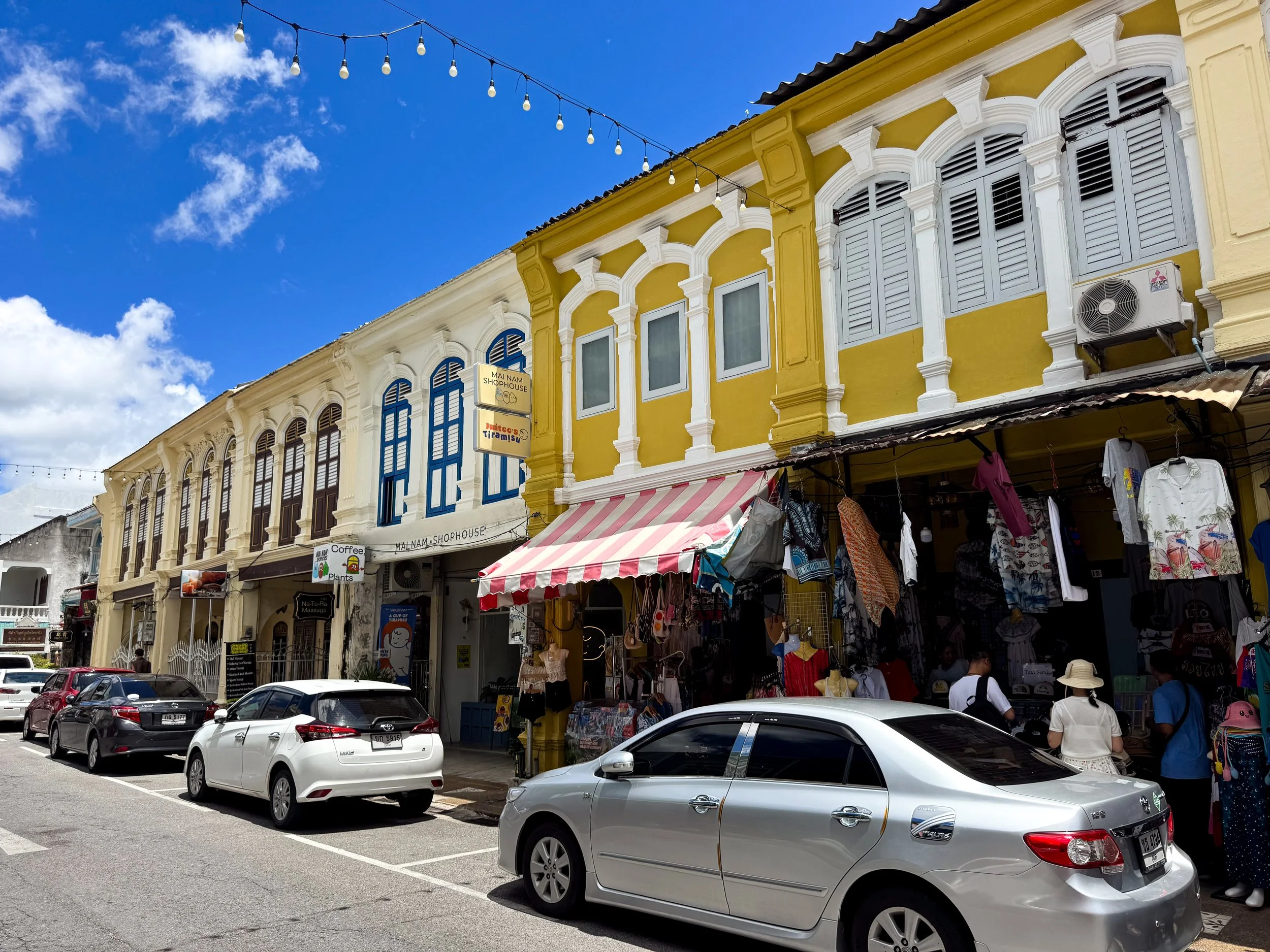
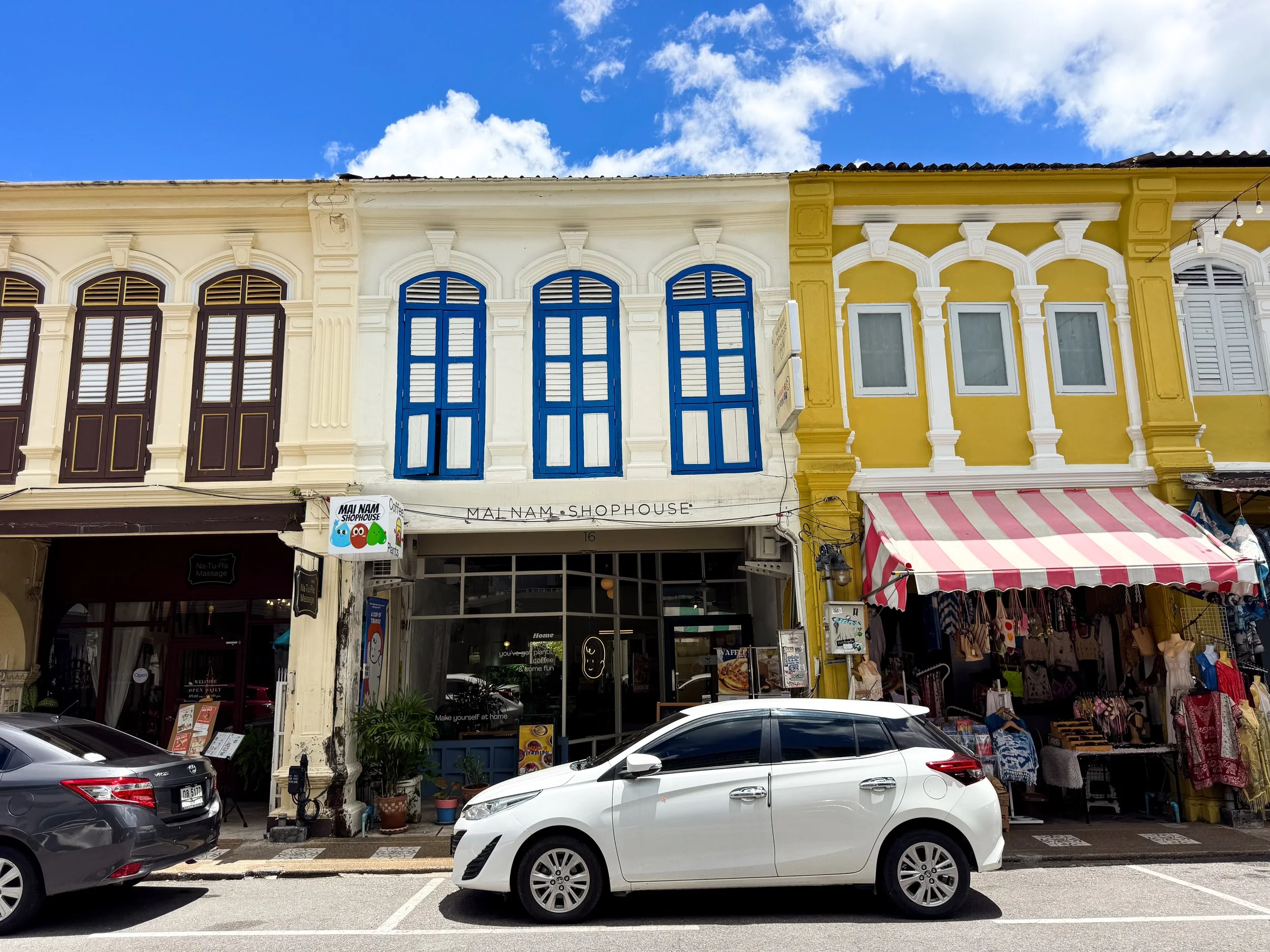
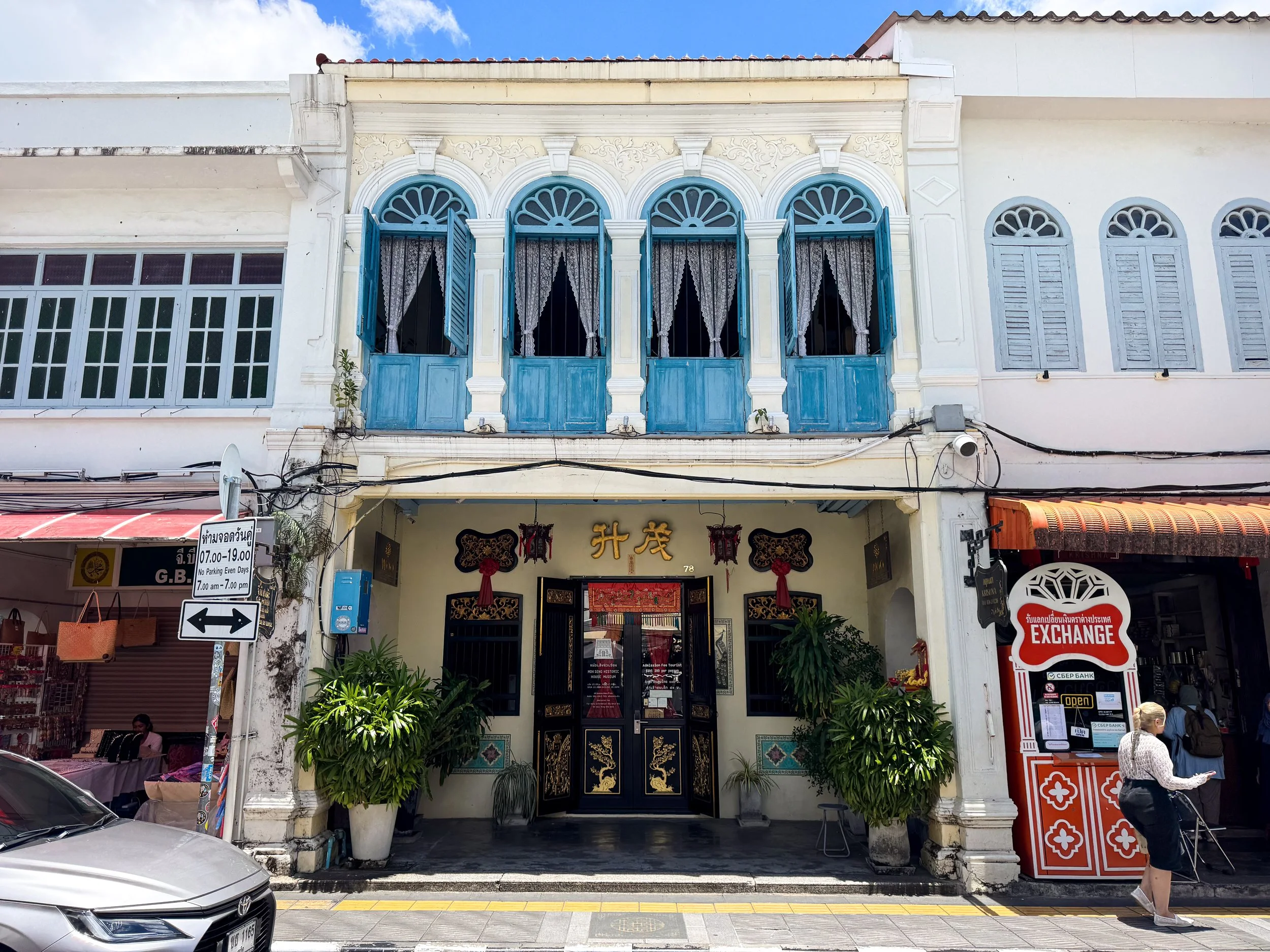
Visit the Phuket Old Town. A historic neighborhood of Phuket with vibrantly painted two floor buildings influenced by early European and Chinese immigrants. The architecture combines both western and eastern styles. The ground floor features dark wooden Chinese style doors, windows shaped like lotus flowers and gold painted ornamentation. The second floor features tall arched windows with slatted shutters and baroque style stucco designs. Many dessert cafés, international restaurants and shops selling Thai made goods occupy their ground floors.
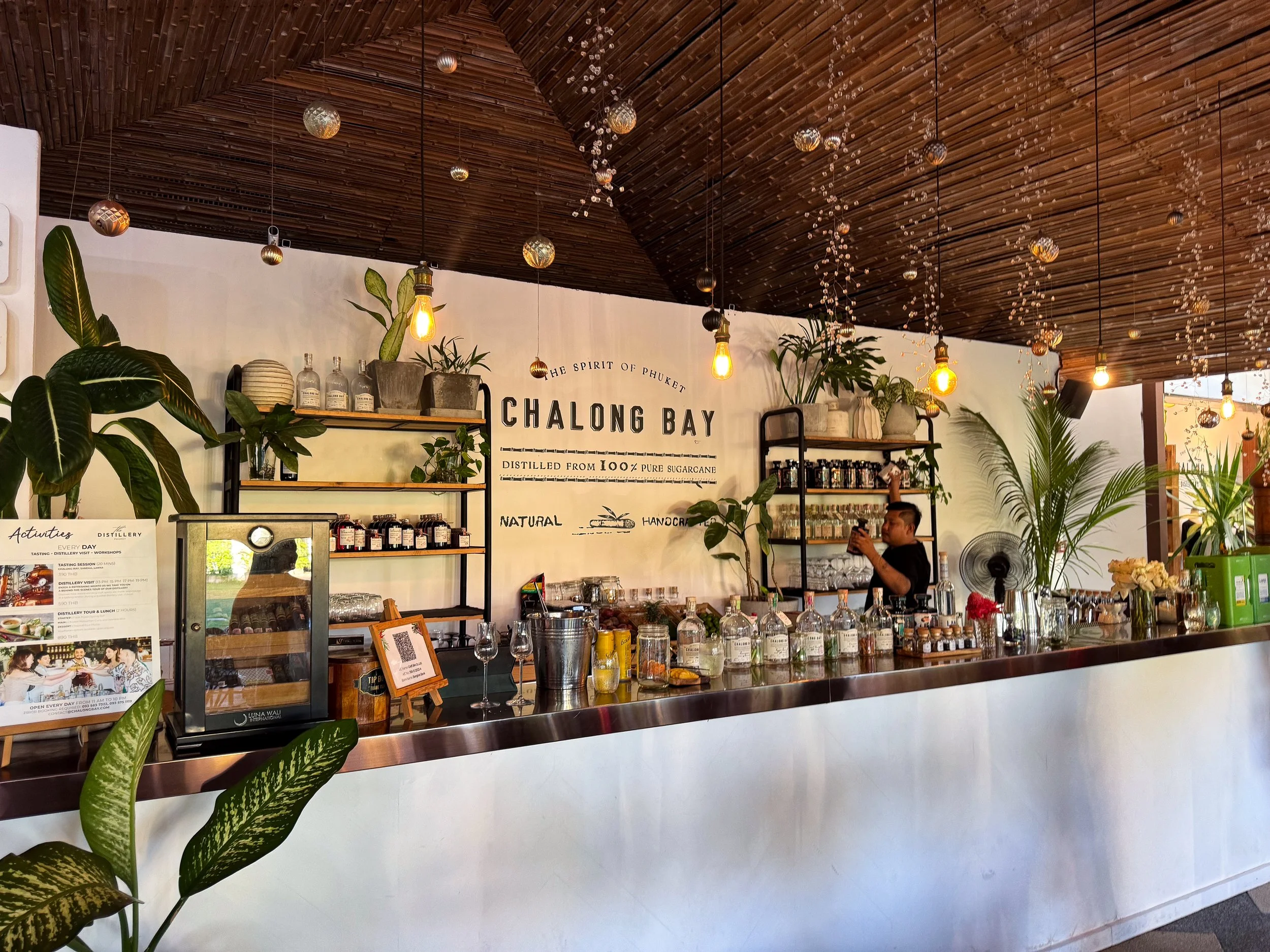
Tour the Chalong Bay Distillery. An island distillery with rums, gins and vodkas made from sugar cane and rice. We toured the distillery and learned about their process of creating spirits. The tour included a welcome drink and a tasting of 6 rums, 2 gins and 1 vodka. The rums are infused with local herbs like lemongrass, kaffir lime, Thai sweet basil and spices. Their bar mixed cocktails with other local flavors like butterfly pea flower, Thai chili peppers, mango, passion fruit and pineapple. Try the passion fruit mojito, butterfly kiss and devil’s gold. Make a reservation or just show up.
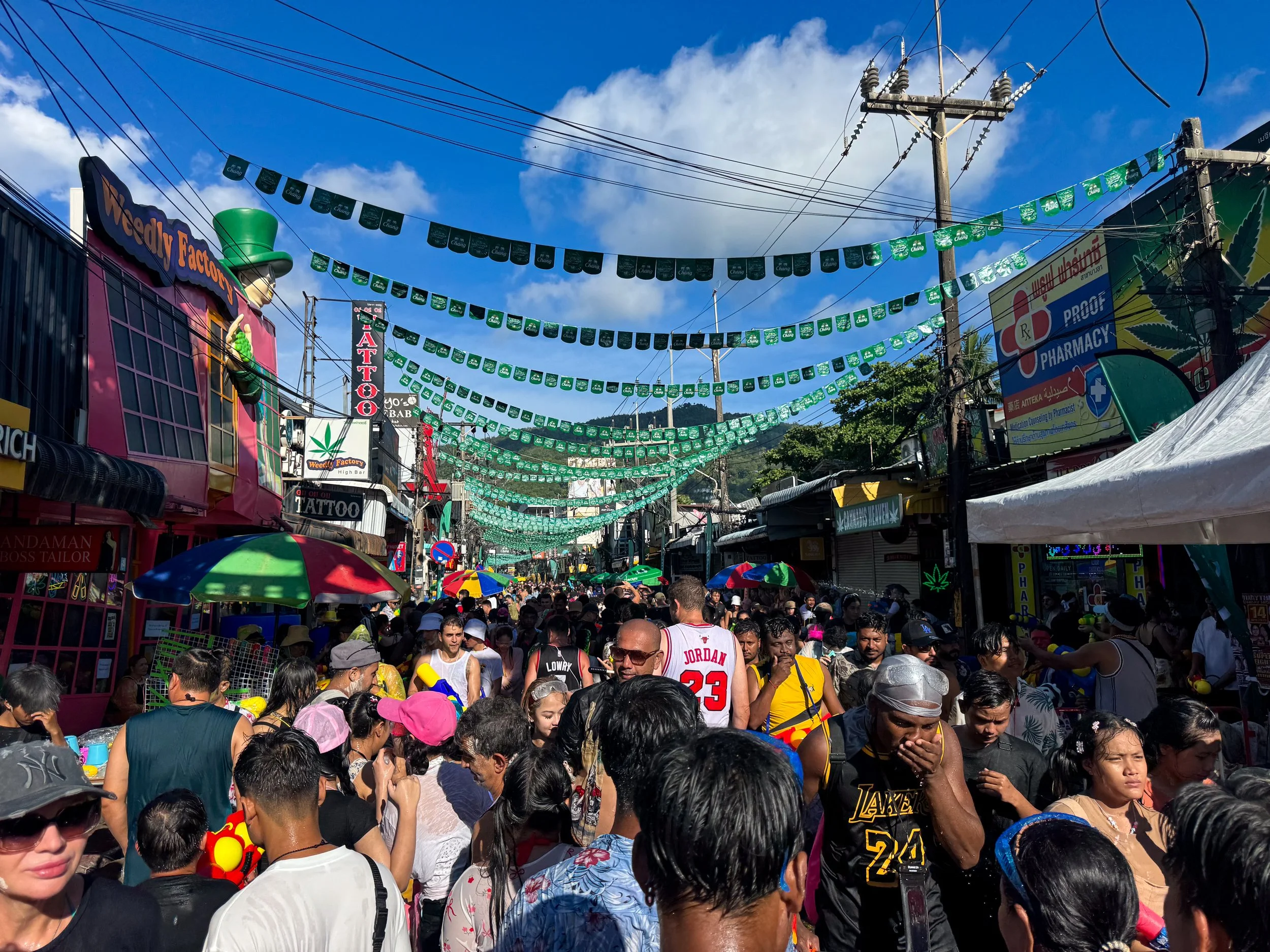
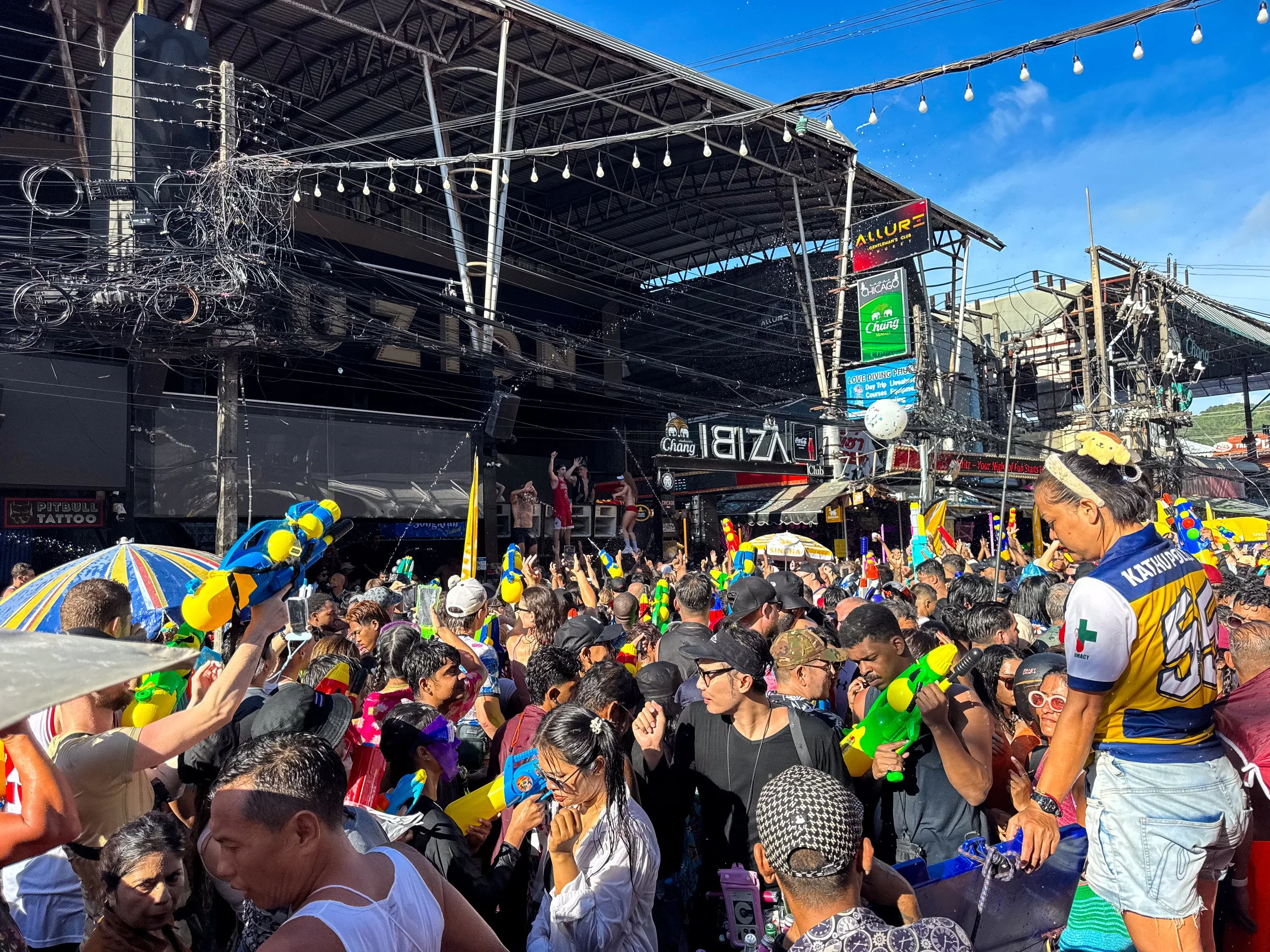
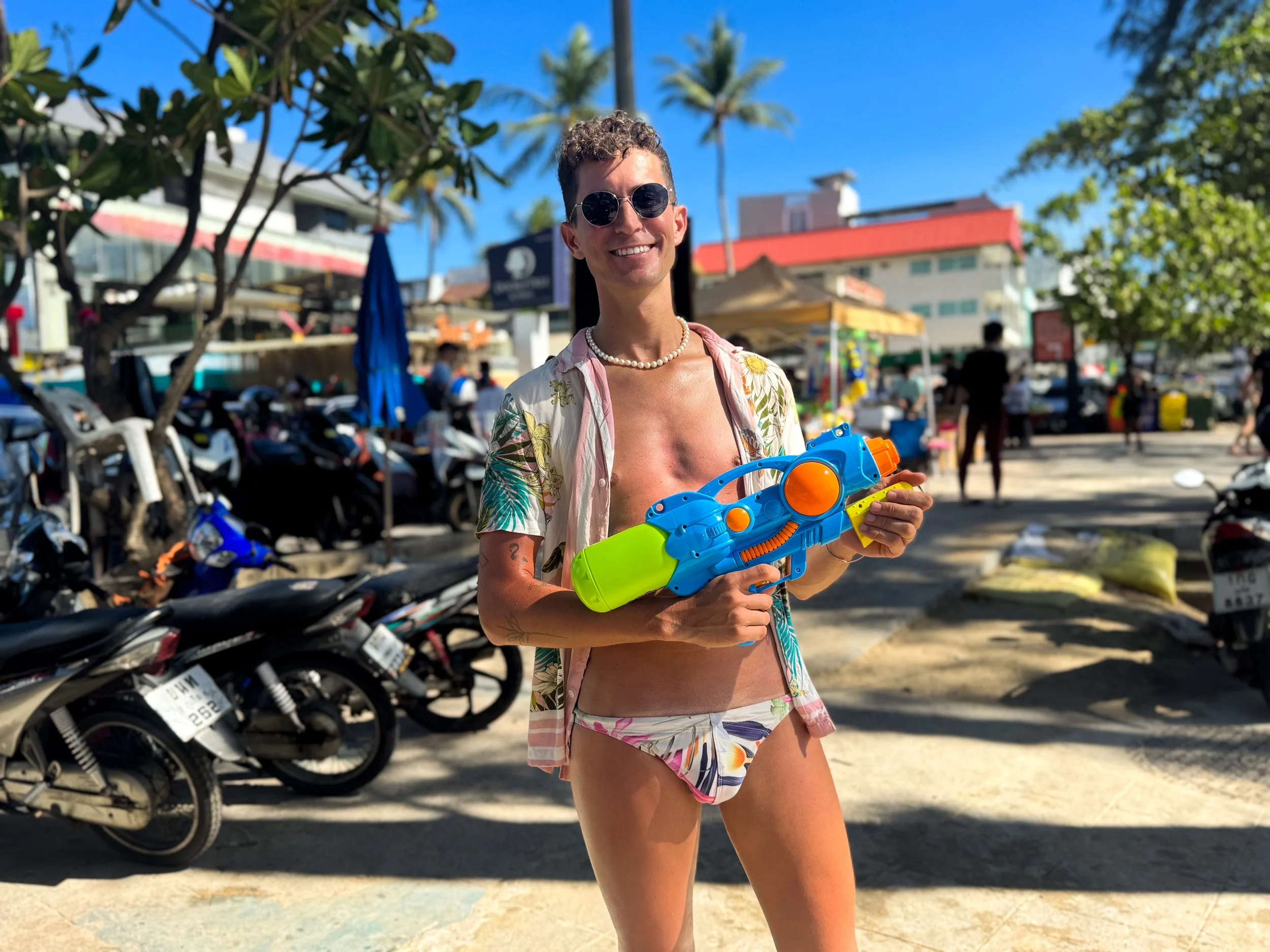
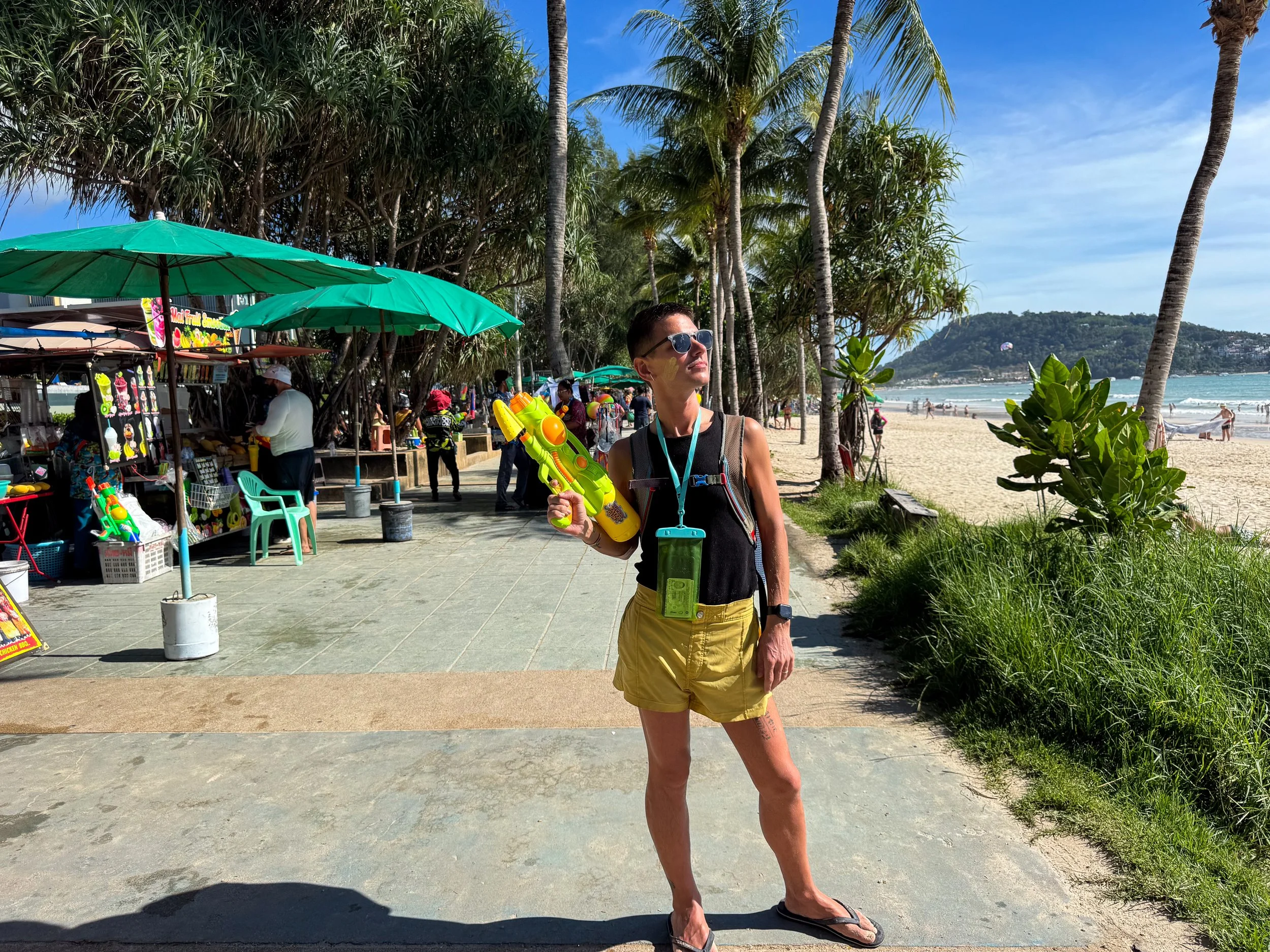
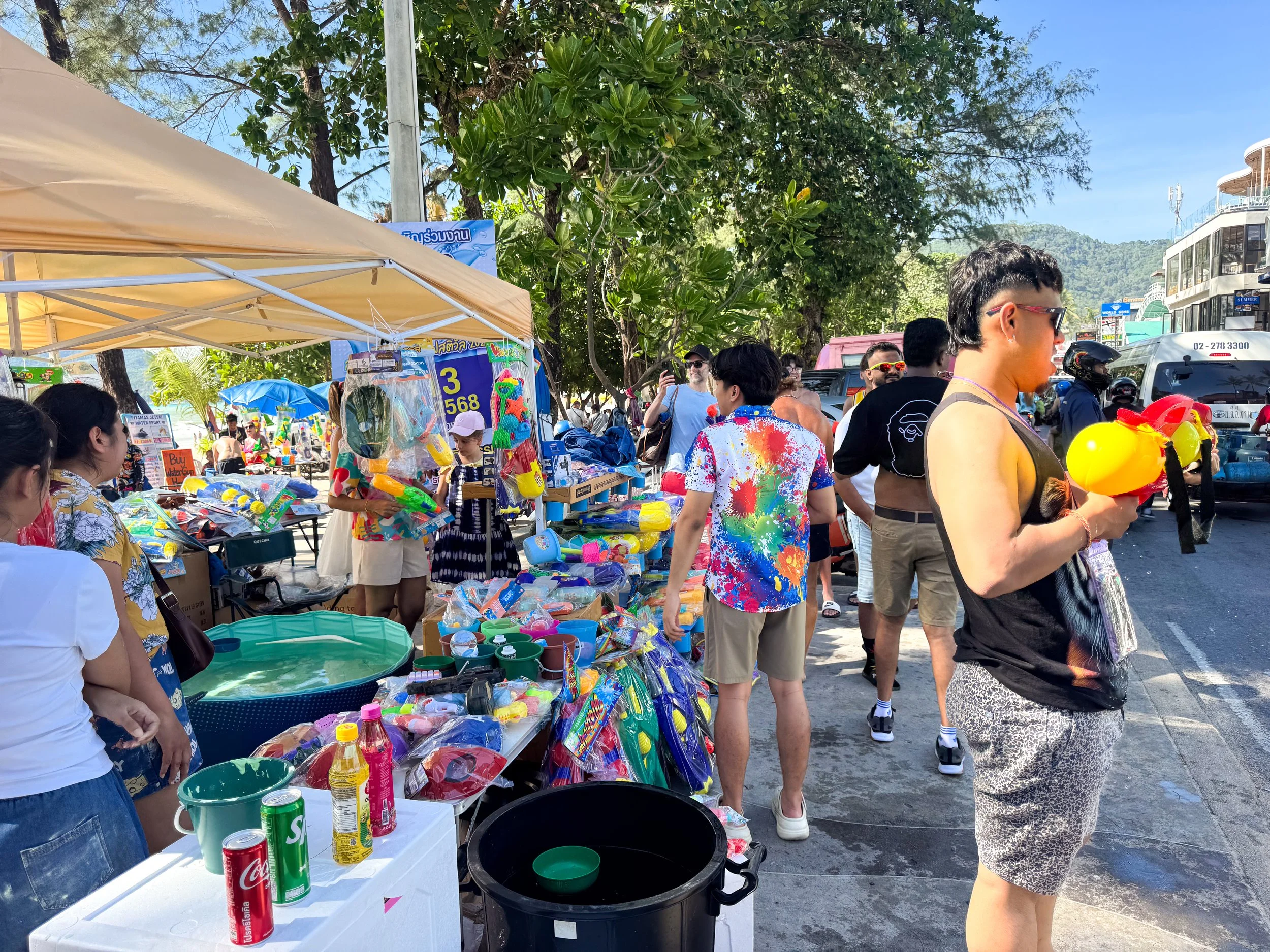
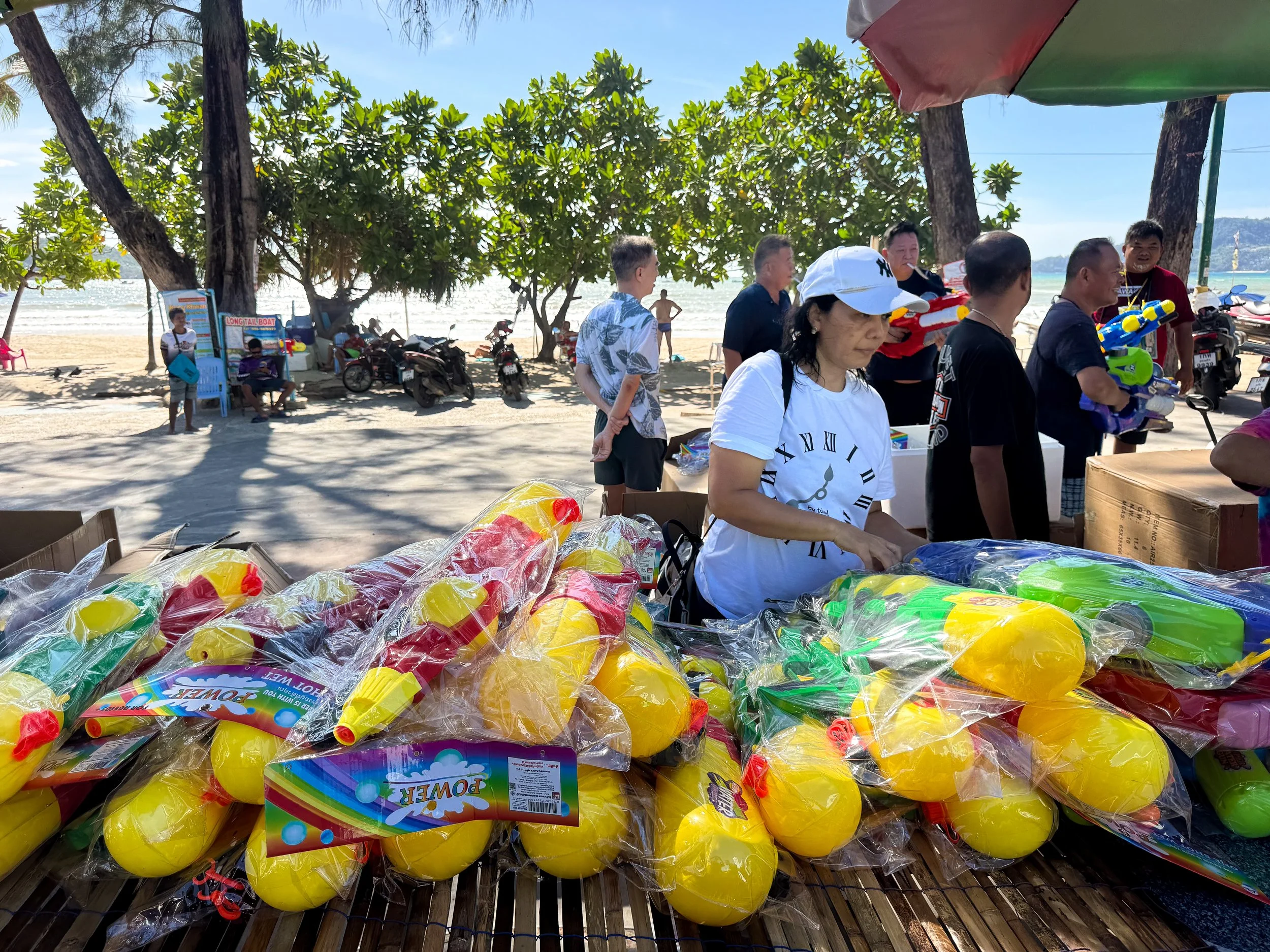
Songkran Festival
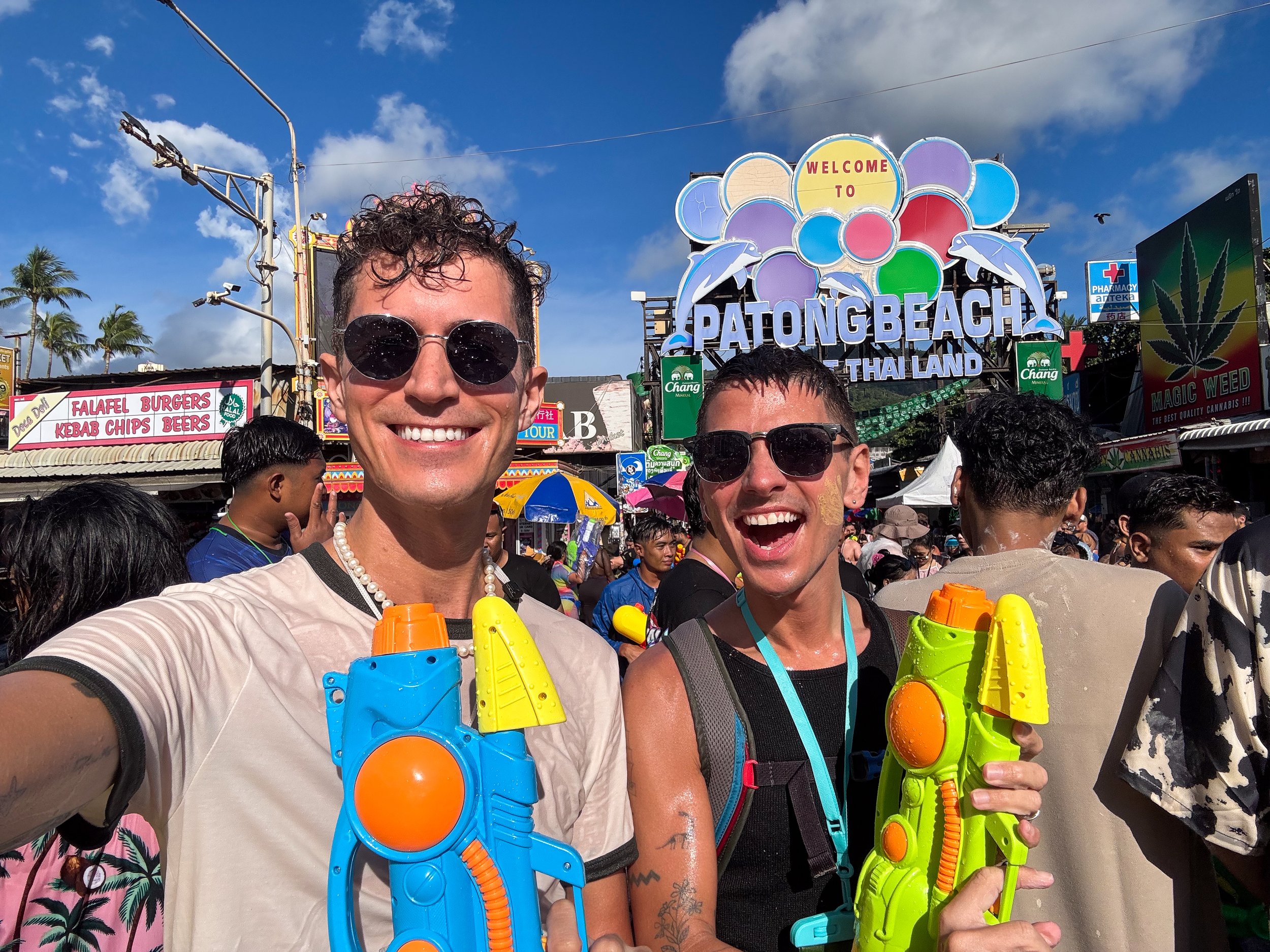
Songkran is a celebration for Thai New Year held every April. It’s notorious for its energetic country wide water fights. Across the streets of Phuket, people drench each other with water. Strangers shoot water guns in passing on foot and from scooters. Shopkeepers pour bowls of ice water on passersby. Groups riding in the backs of trucks and tuk tuks splash water on anyone in sight. People gently smear wet clay on others faces as a way of offering a blessing. Wear a swimsuit, embrace the chaos and prepare to get soaked! It feels refreshing under the hot summer sun.
Why Water? The festival started as a way to cleanse oneself at the end of the year and before entering the new one. It’s since evolved into one of the country’s largest and happiest celebrations. The date changes every year as Thailand follows the Lunar Calendar.
Where to Participate. Celebrations happen all over the island, even on the most unassuming streets. Patong Beach is one of the liveliest areas on the island. The most energetic place is along Thawi Wong Road, Rat Uthit Song Pi Road and any streets in-between, especially the Bangla Walking Street.
Prices. Water guns are available at stores and from street vendors across the city. Prices range by size: 100 Baht for small, 200 Baht for medium and 400 Baht for large. Phone bags are sold for around 50 Baht. Water refills cost 10-20 Baht per person.
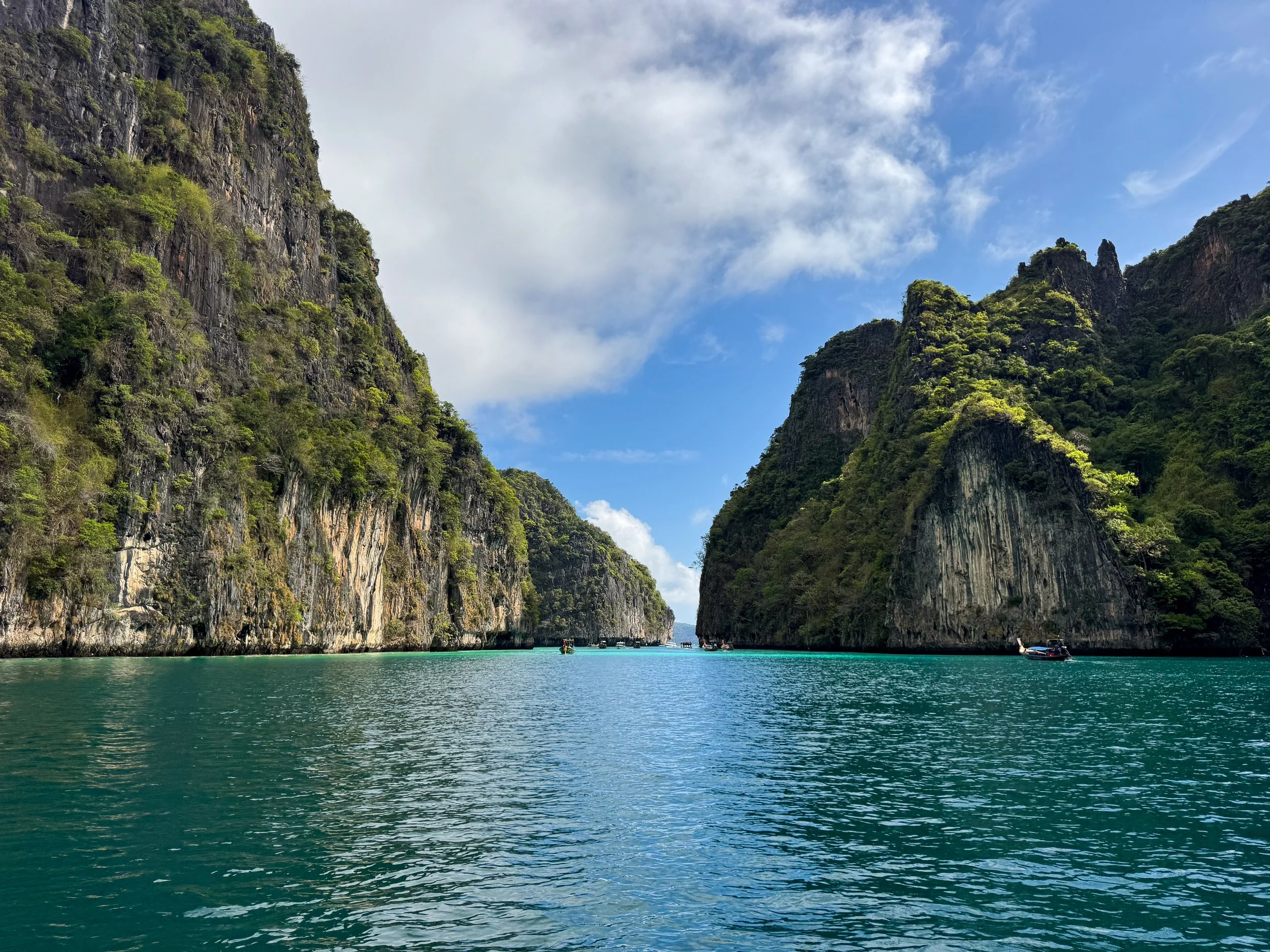
Phi Phi Islands
The Phi Phi Islands are a cluster of islands famed for their verdant and towering rock formations, hidden coves, white sand beaches, aquamarine hued waters, troops of wild monkeys and marine life.
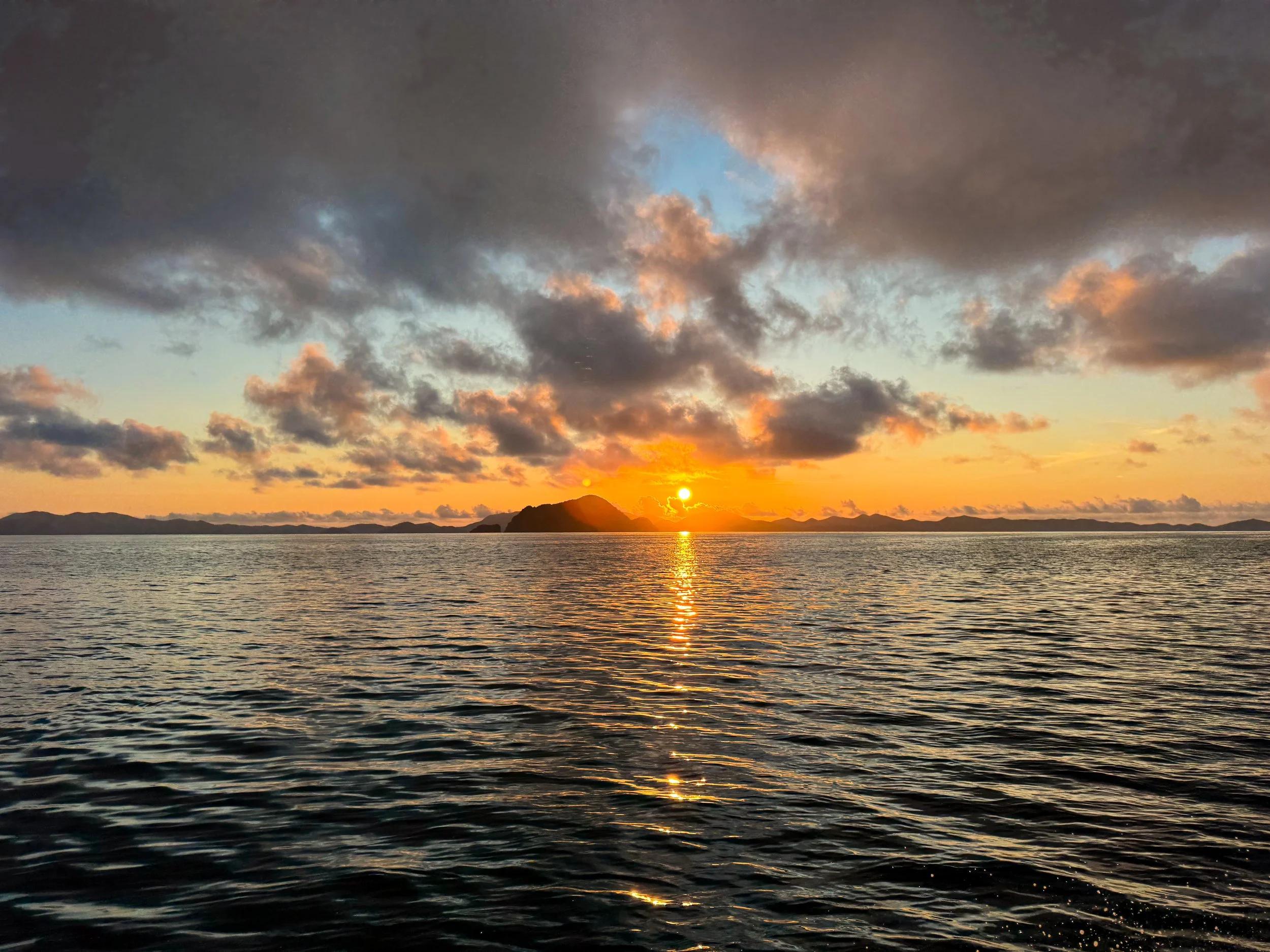
The Sunrise. We joined a sunrise tour, visiting three islands during the course of the day. From our boat, we stopped to watch the sunrise above the watery horizon and distant islands in the Andaman Sea. We even spotted a small pod of dolphins swimming 100 meters from the boat.
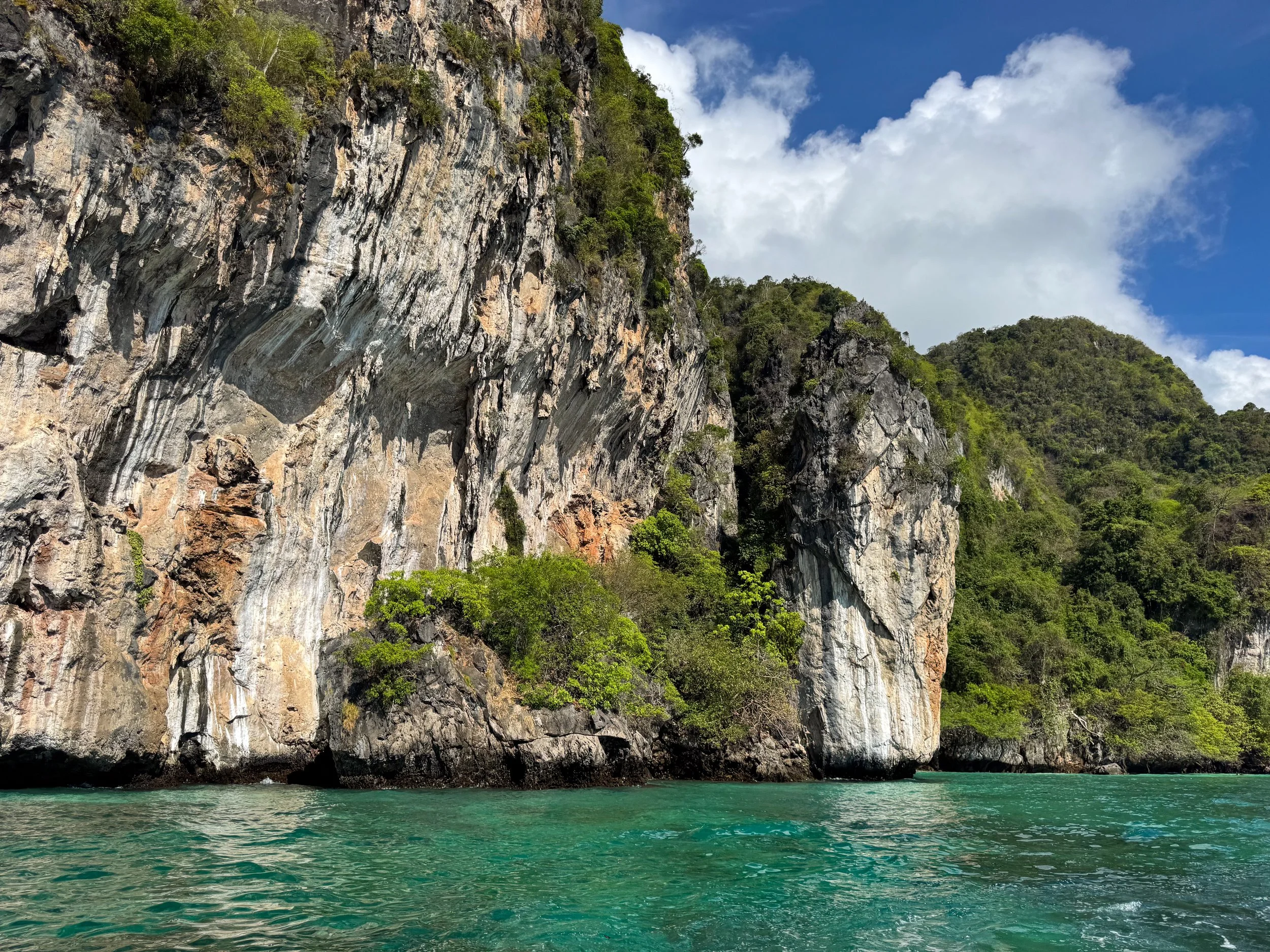
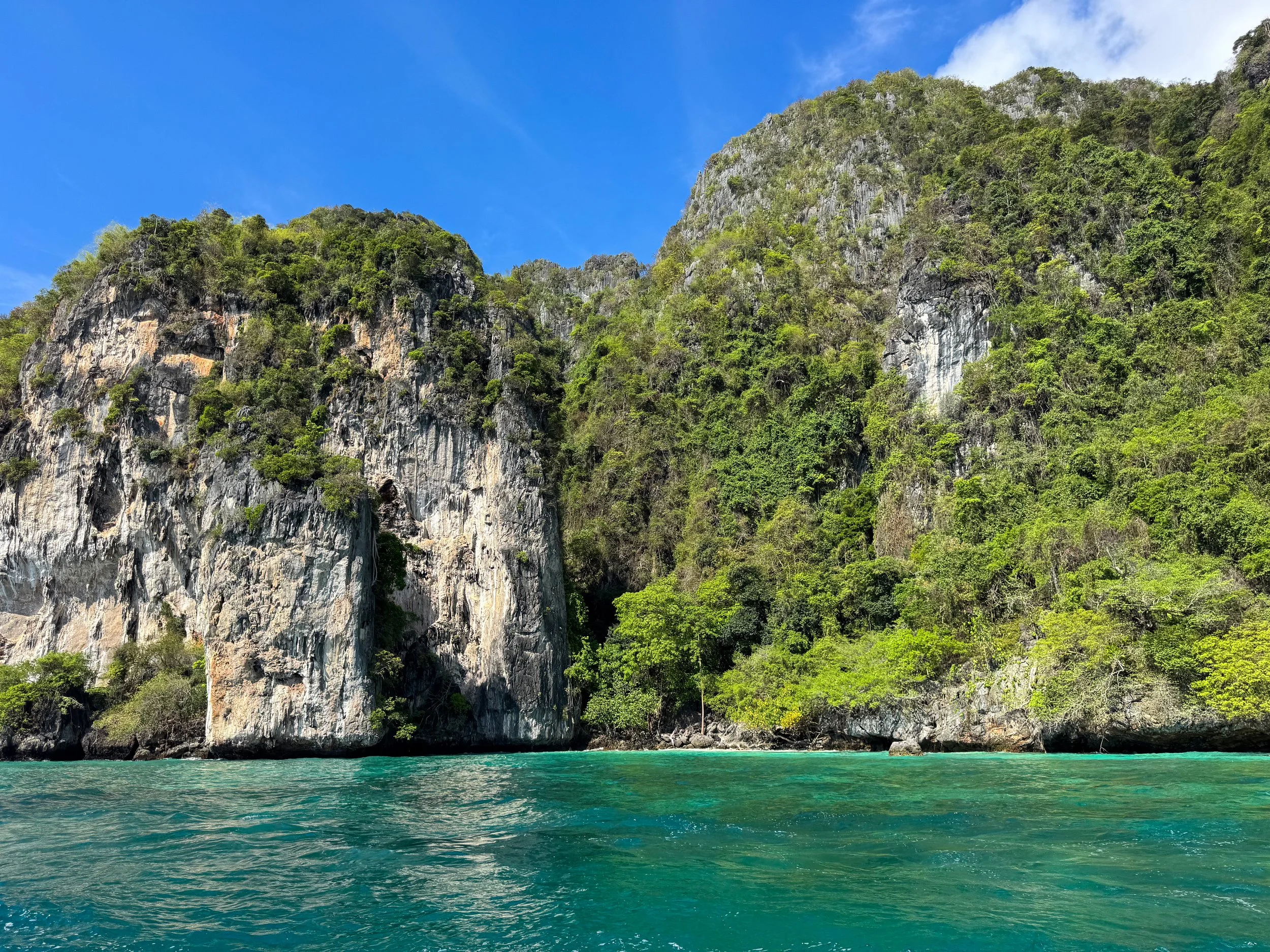
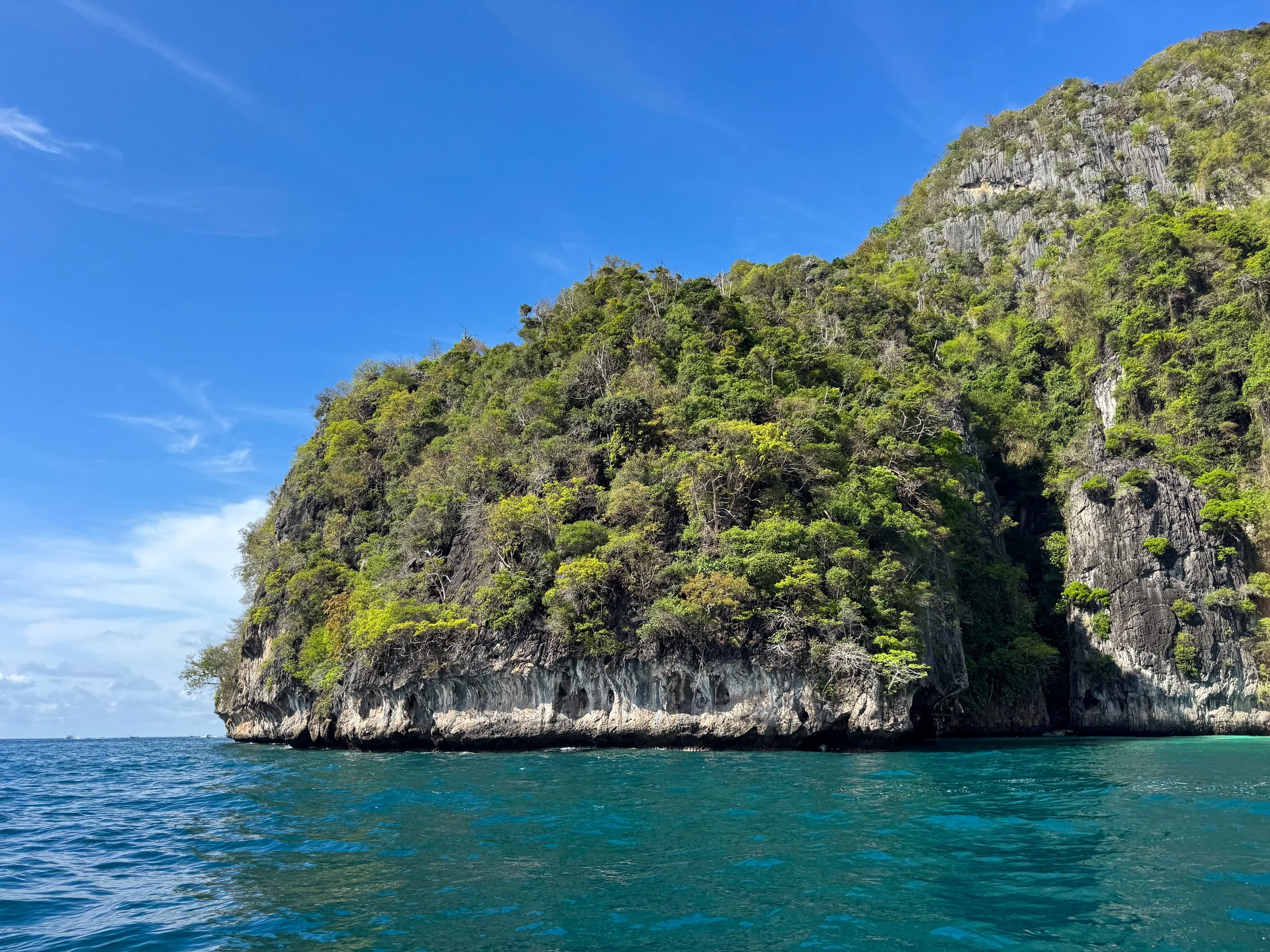
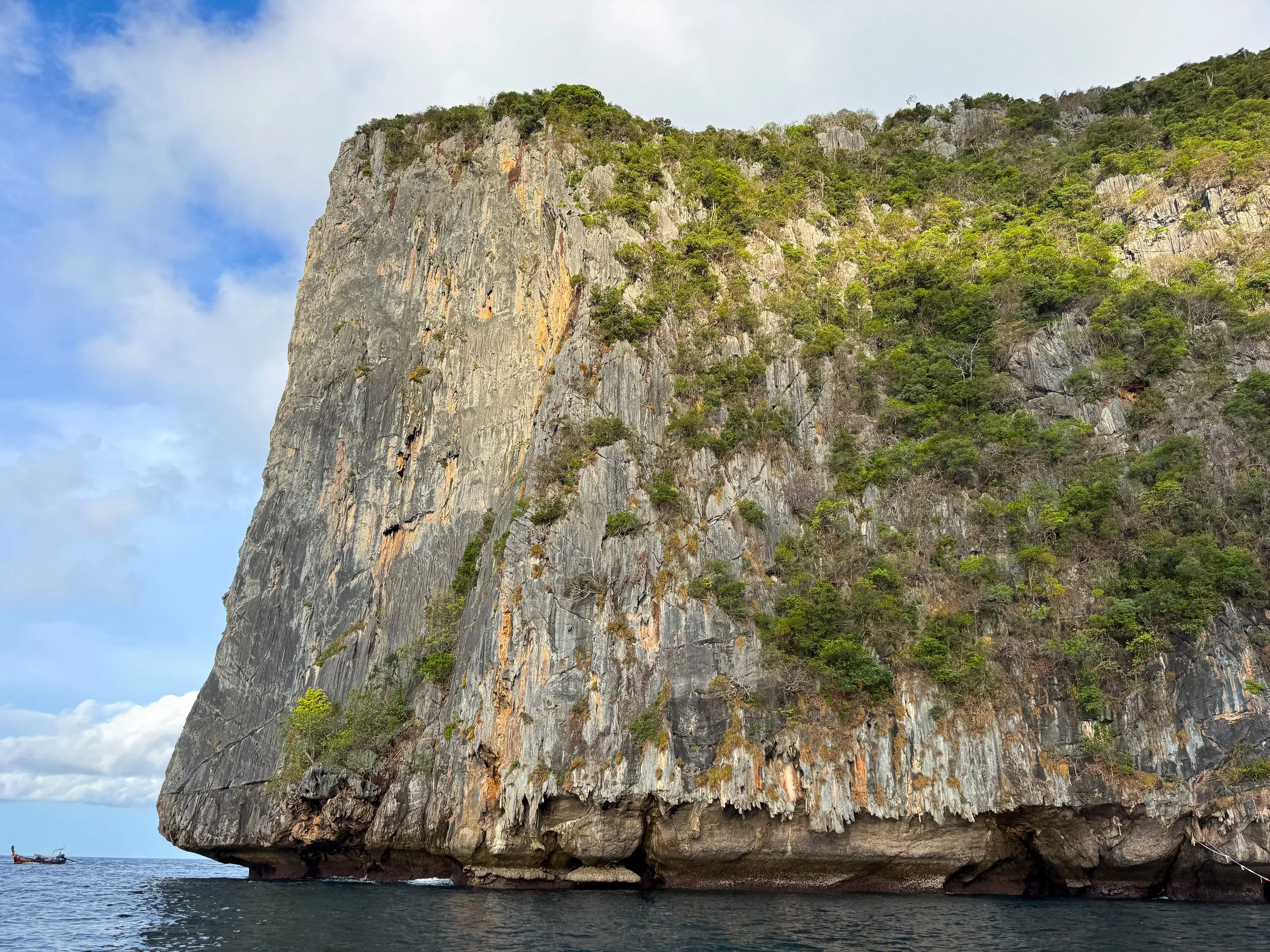
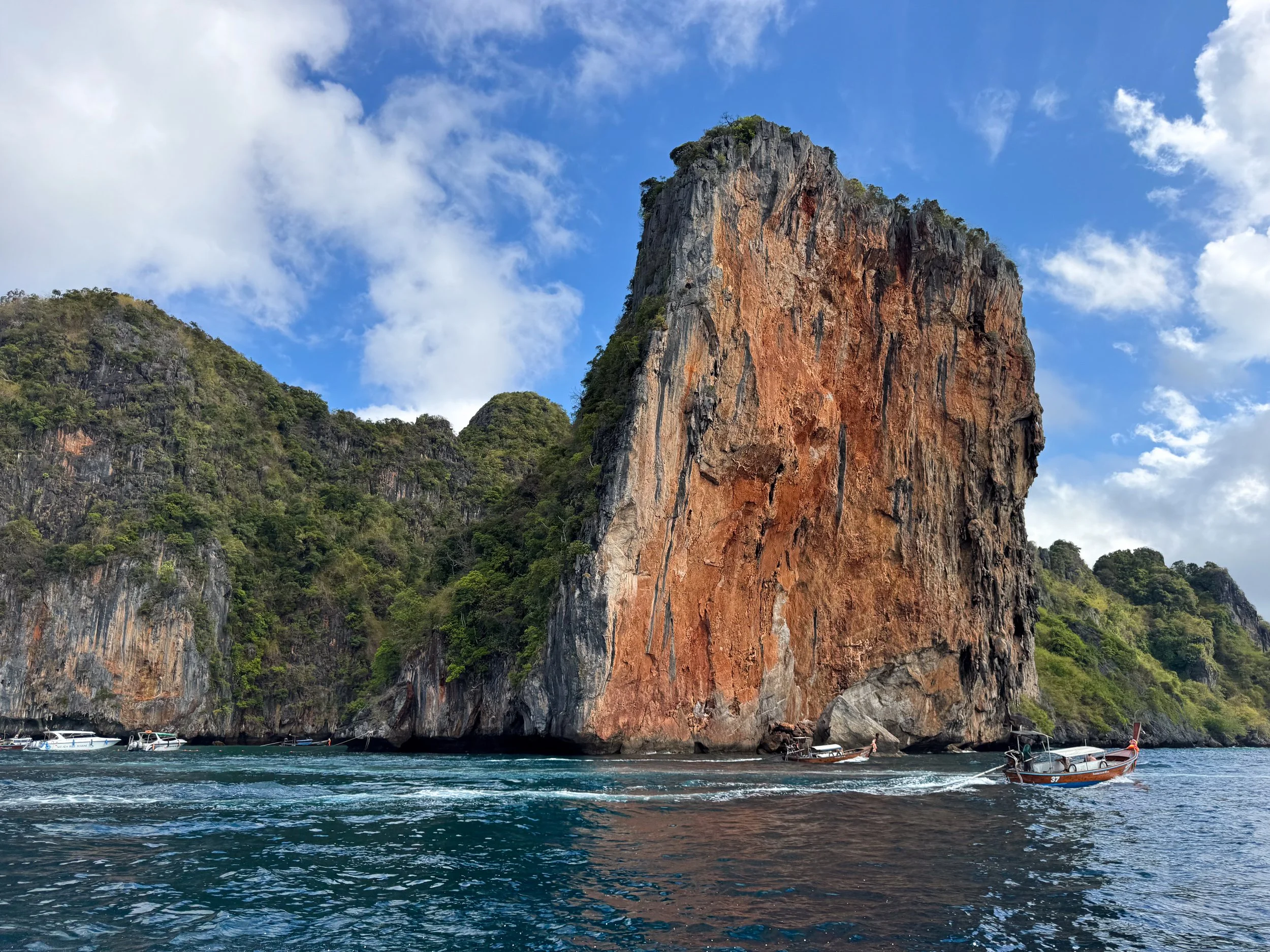
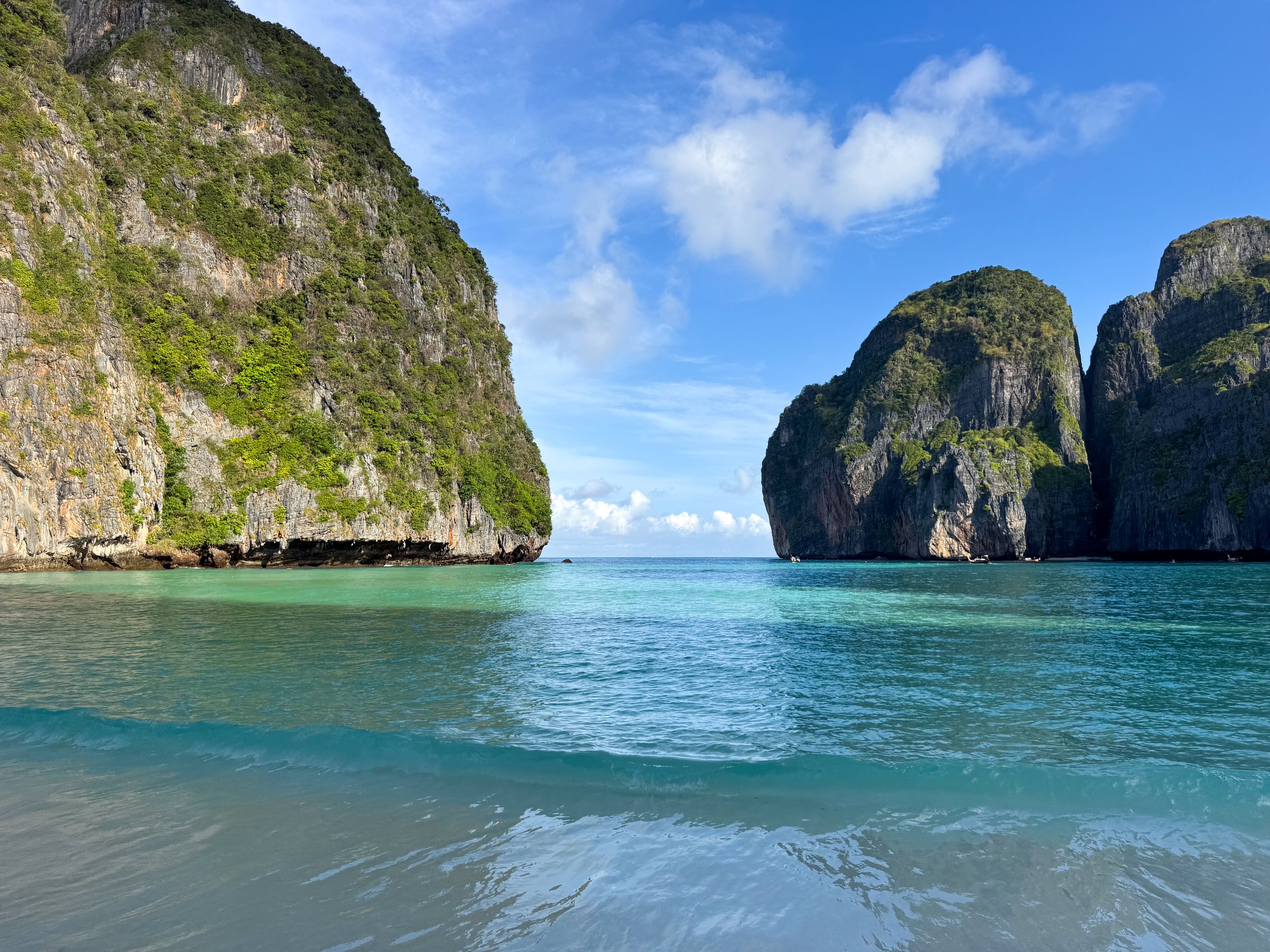
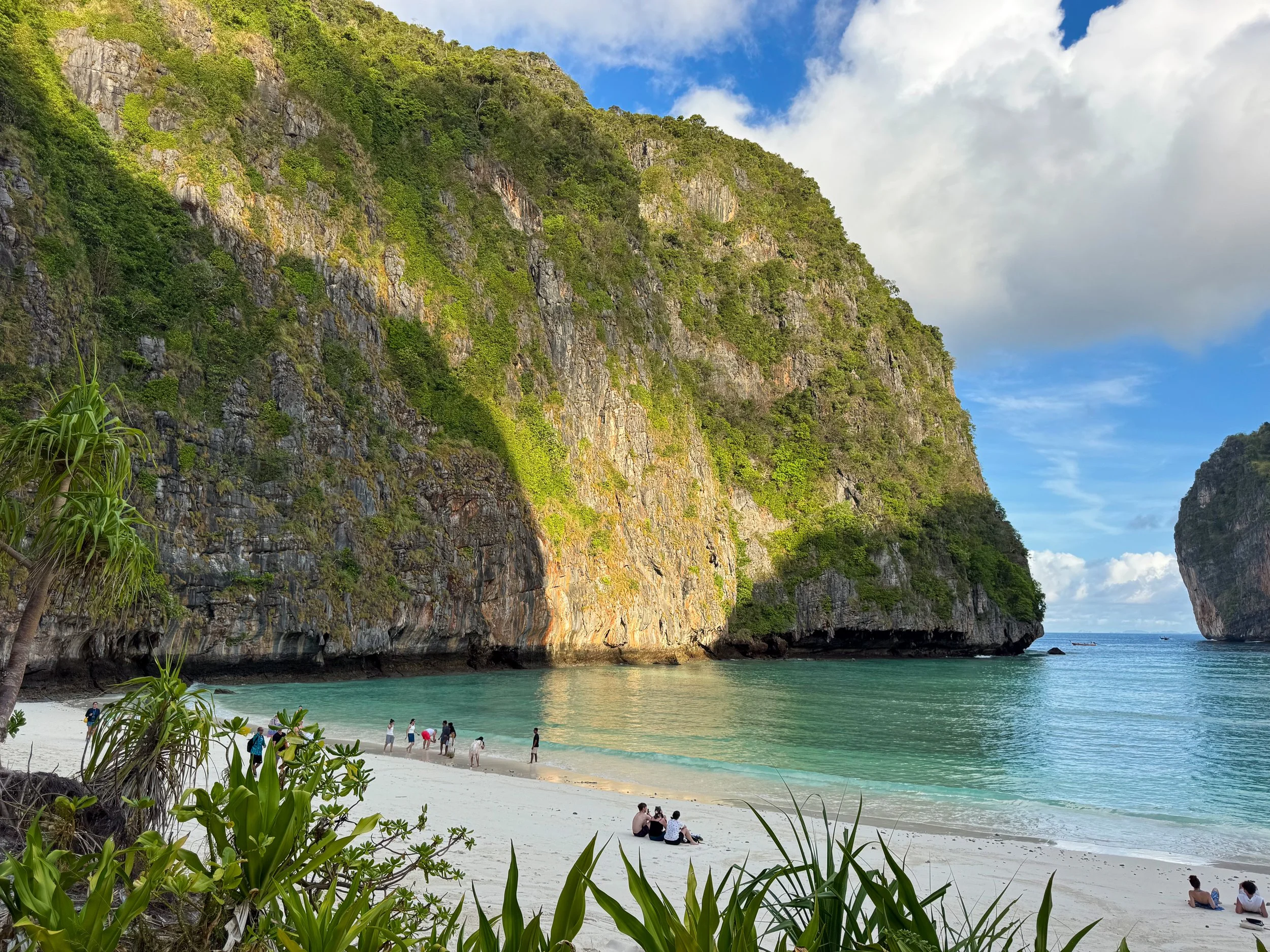
Ko Phi Phi Le Island. A lush and rugged island with picturesque bays, a white sand beach, protected marine reserve and cavernous cave.
Maya Bay. A photogenic bay nestled between the island’s lush cliffs with a large white sand beach and protected marine reserve. We spent an hour here admiring the landscape and enjoying a picnic breakfast comprised of fresh fruits, banana bread and coconut sticky rice wrapped in banana leaves. It’s forbidden to enter the water due to a coral re-growth program happening in the bay. We spotted black tipped reef sharks from shore.
Viking Cave. A cliffside cave home to nesting sea swallows. It’s inaccessible to visitors but viewable from the water in passing.
Ao Pi Le Bay. A hidden bay only accessible during high tide. We came here to swim in its iridescent blue waters as the tide was coming in.
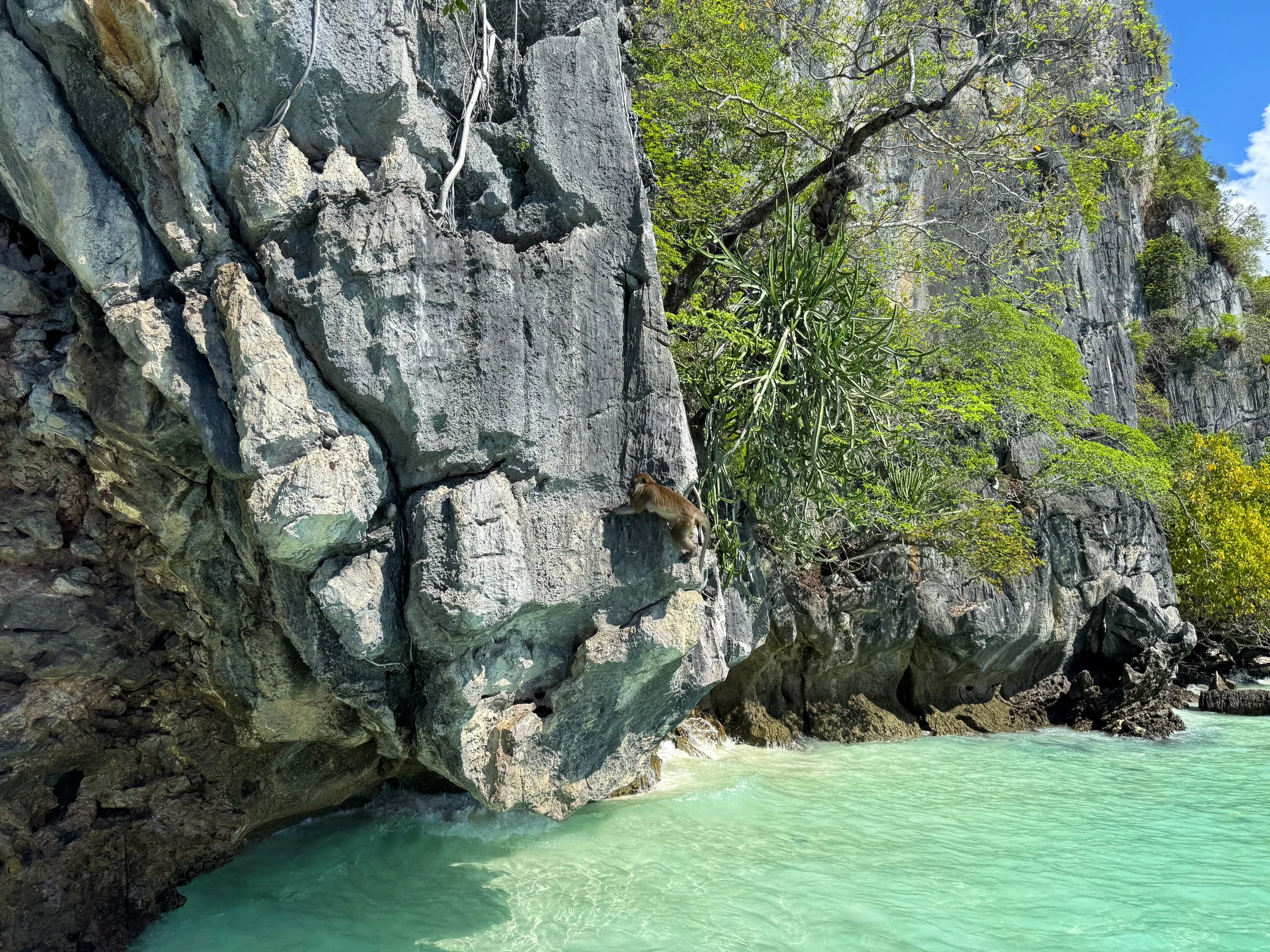
Ko Phi Phi Don Island. The largest of the Phi Phi Islands. It’s home to hotels and resorts, white sand beaches, snorkeling coves, turquoise bays and dense tropical forest.
Monkey Bay. A remote corner of the island with troops of wild monkeys. We spotted some climbing on the rocks and tree branches from afar. The monkeys are known to be aggressive so we were advised to keep our distance.
Ao Lo Dalam Bay. A large bay on the west side of the island with multiple beaches and snorkeling spots. We snorkeled offshore from Monkey Beach, another location home to wild monkeys. We spotted tropical fish including parrotfish, angelfish, triggerfish and snapper. Sadly most of the corals were bleached.
Lo Lana Bay. A bay on the north side of the island with turquoise waters and snorkeling. Under the surface, we saw iridescent blue clams, tropical fish and mostly dead corals.
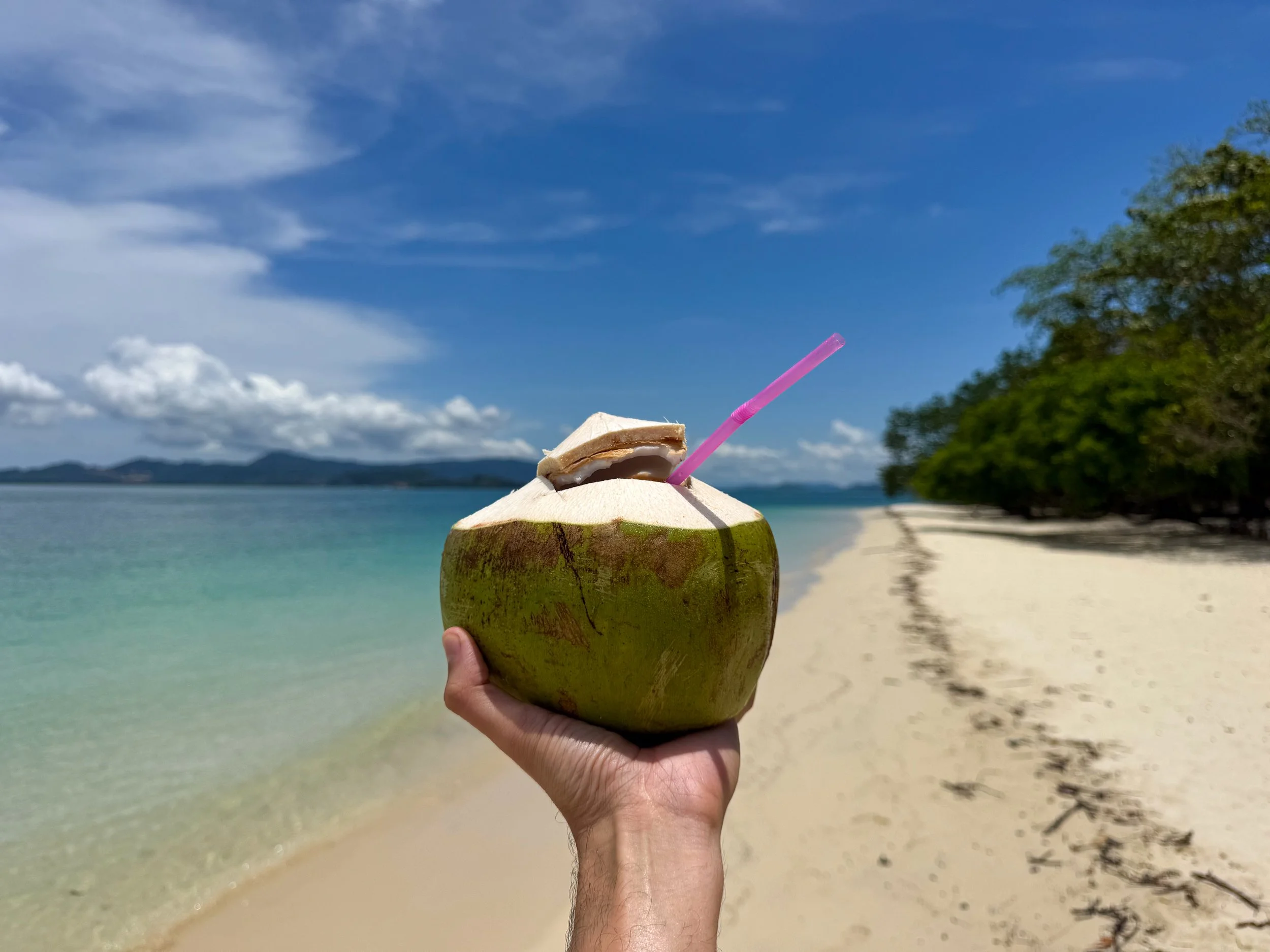
Ko Rang Yai Island. A small island east of Phuket with a pristine white sand beach overlooking the bright blue waters of the Andaman Sea. We swam and walked along its shores, ordered fresh coconuts from the beach bar and sunbathed under the Thai sun.
Pro Tip. Book the sunrise tour! It’s the best way to avoid peak crowds when visiting the Phi Phi Islands. We booked our tour with Simba Sea Trips on Viator. The tour included pick up, drop off, snorkel equipment, breakfast and a Thai buffet lunch.
Good to Know. Wear reef safe sunblock! The remaining corals and coral nurseries are under enough stress from above average temperatures.
Ao Phang Nga National Park
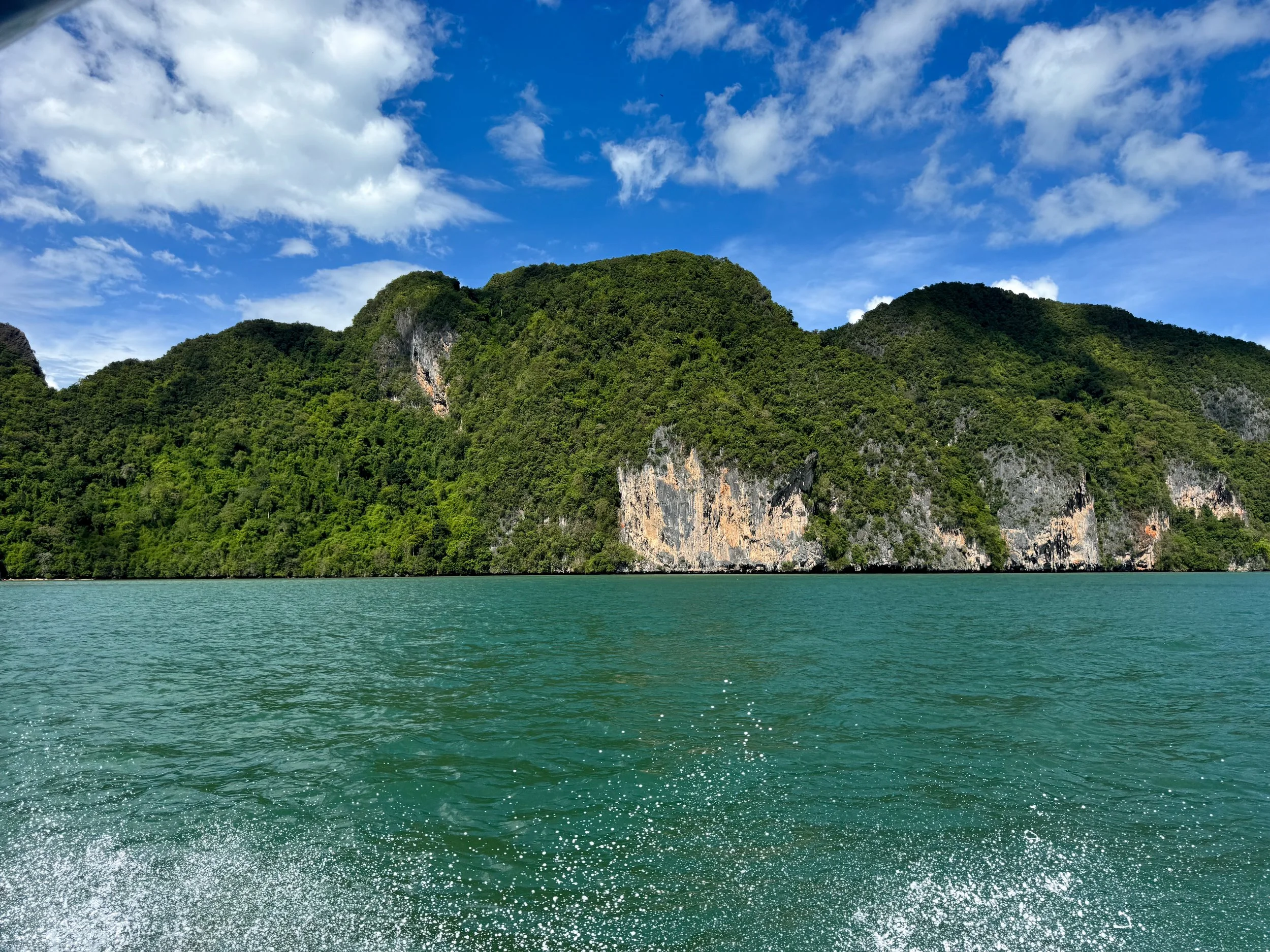
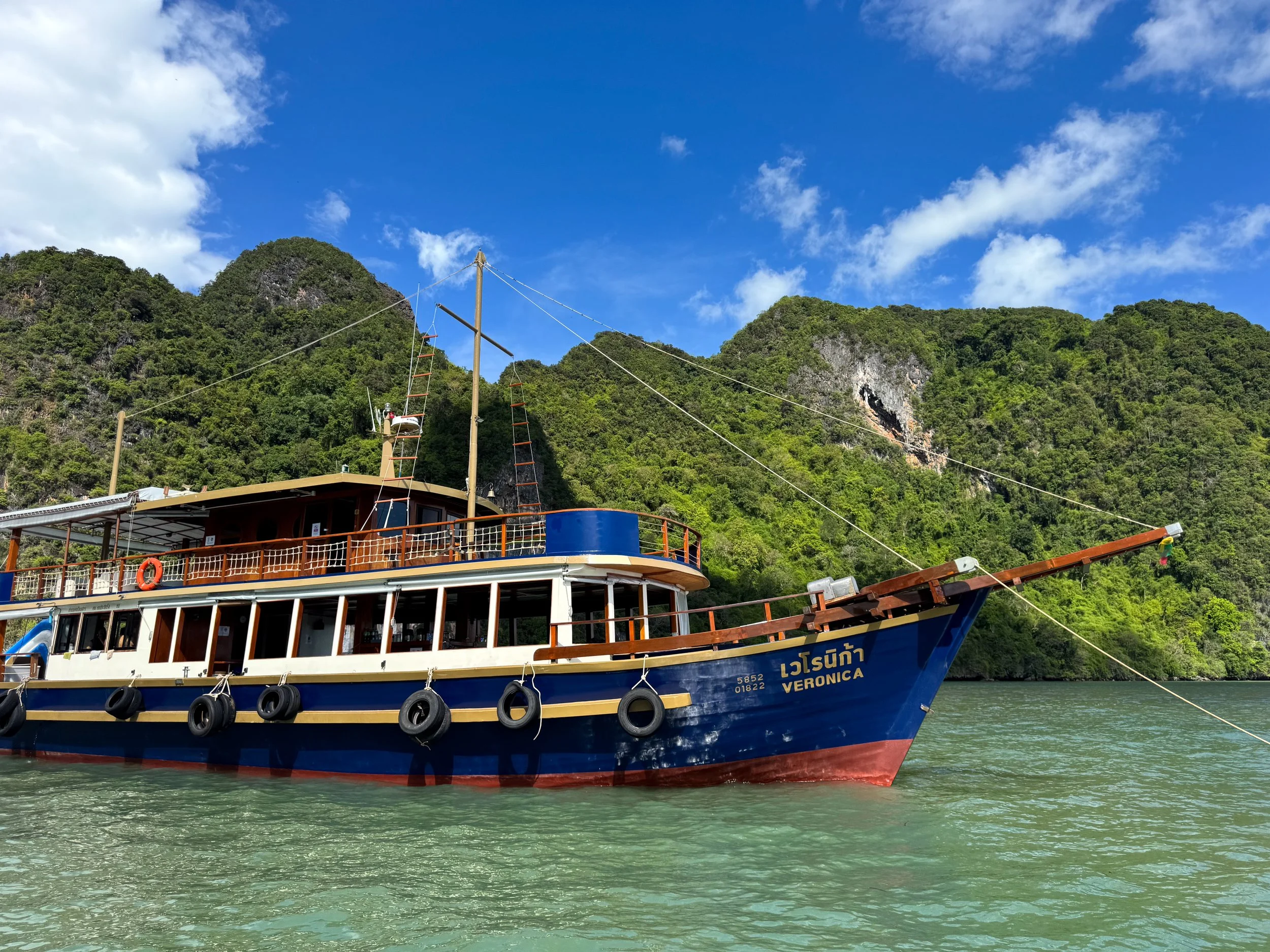
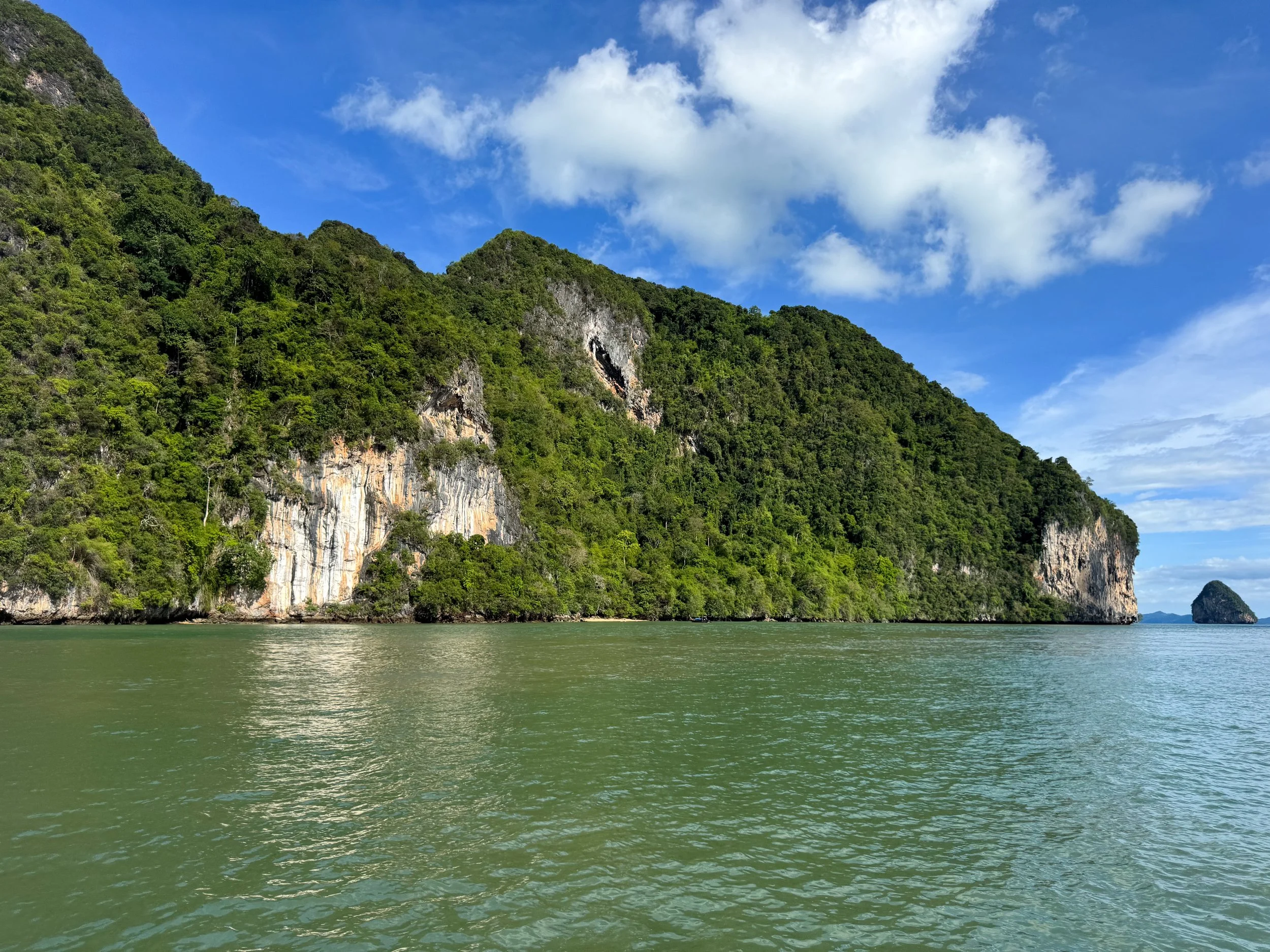
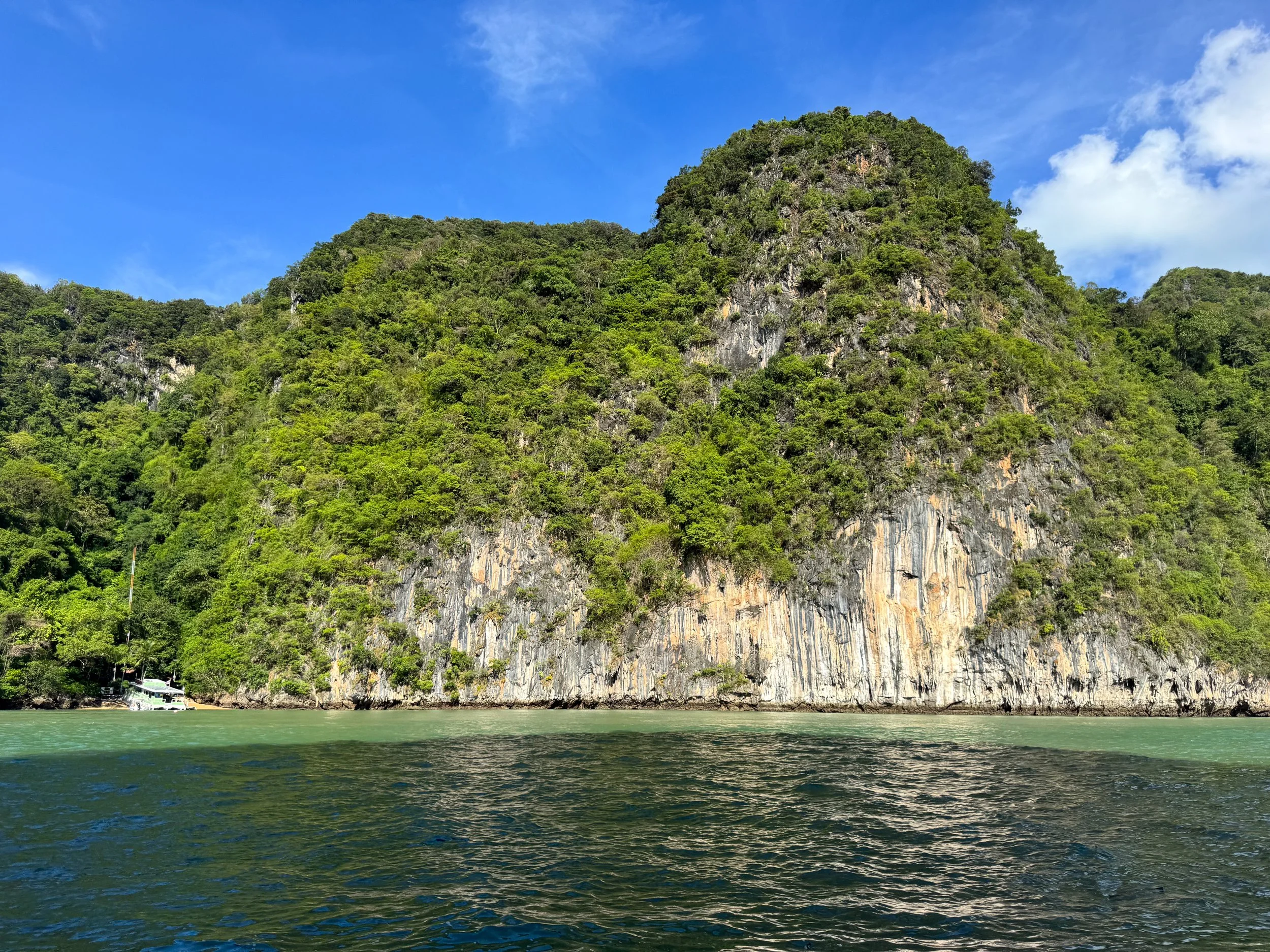
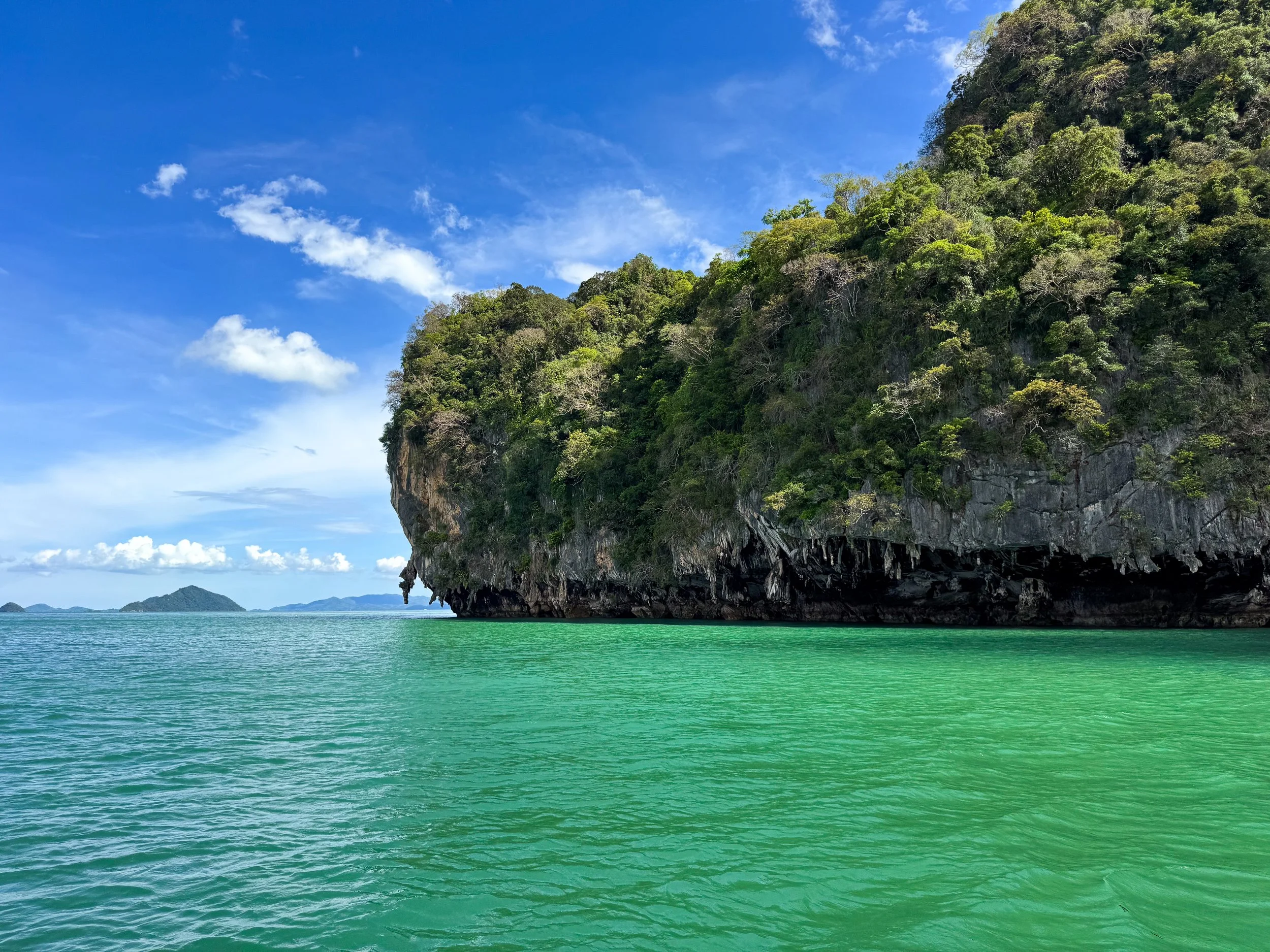
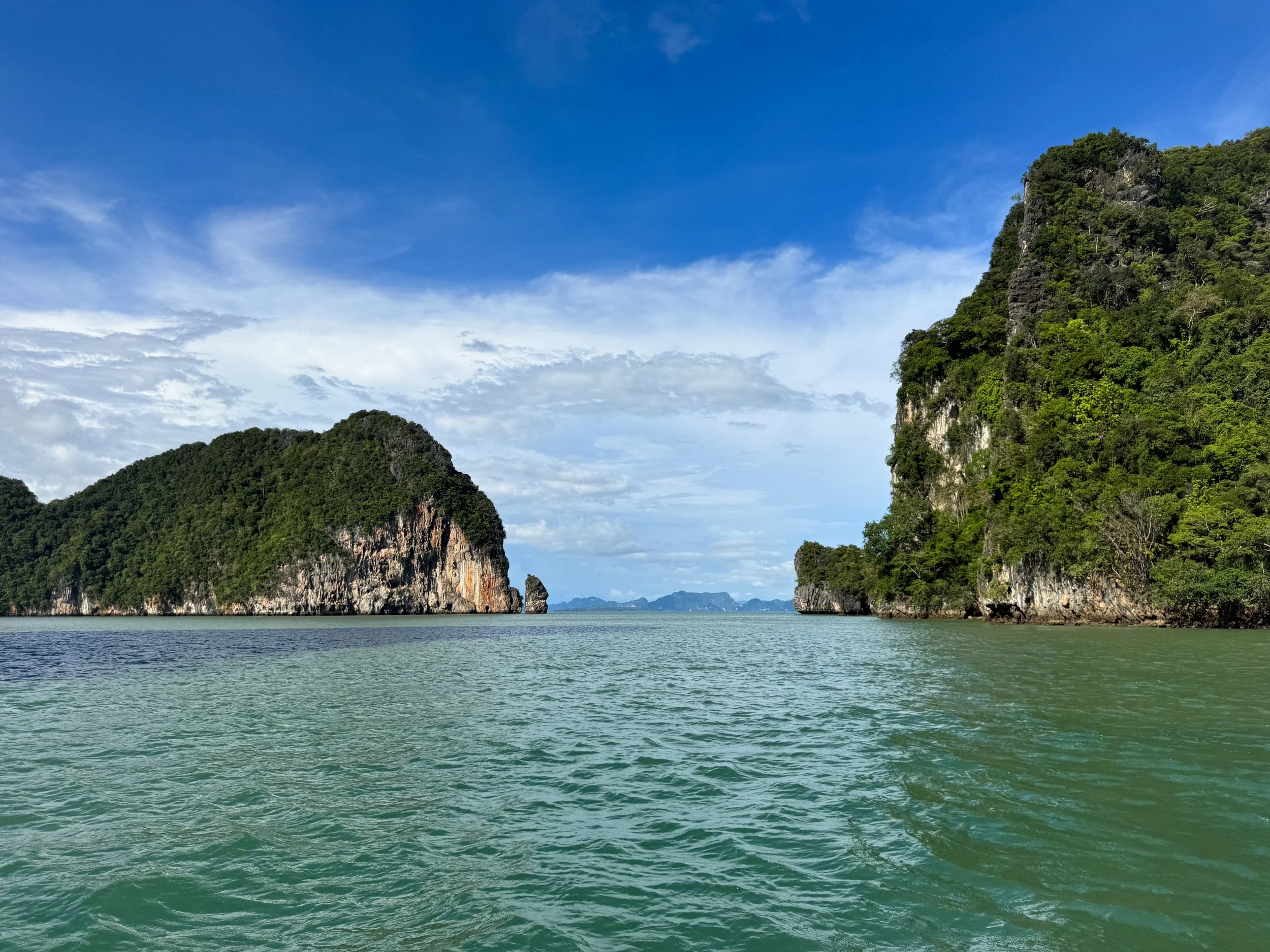
Ao Phang Nga National Park is a protected bay engulfed by breathtaking scenery and hundreds of picturesque islands jutting from the water. The lush islands are home to dense mangrove forests, towering rock formations, sheer cliffs, hidden coves, glittering caves, bioluminescent sea life and floating fishing villages.
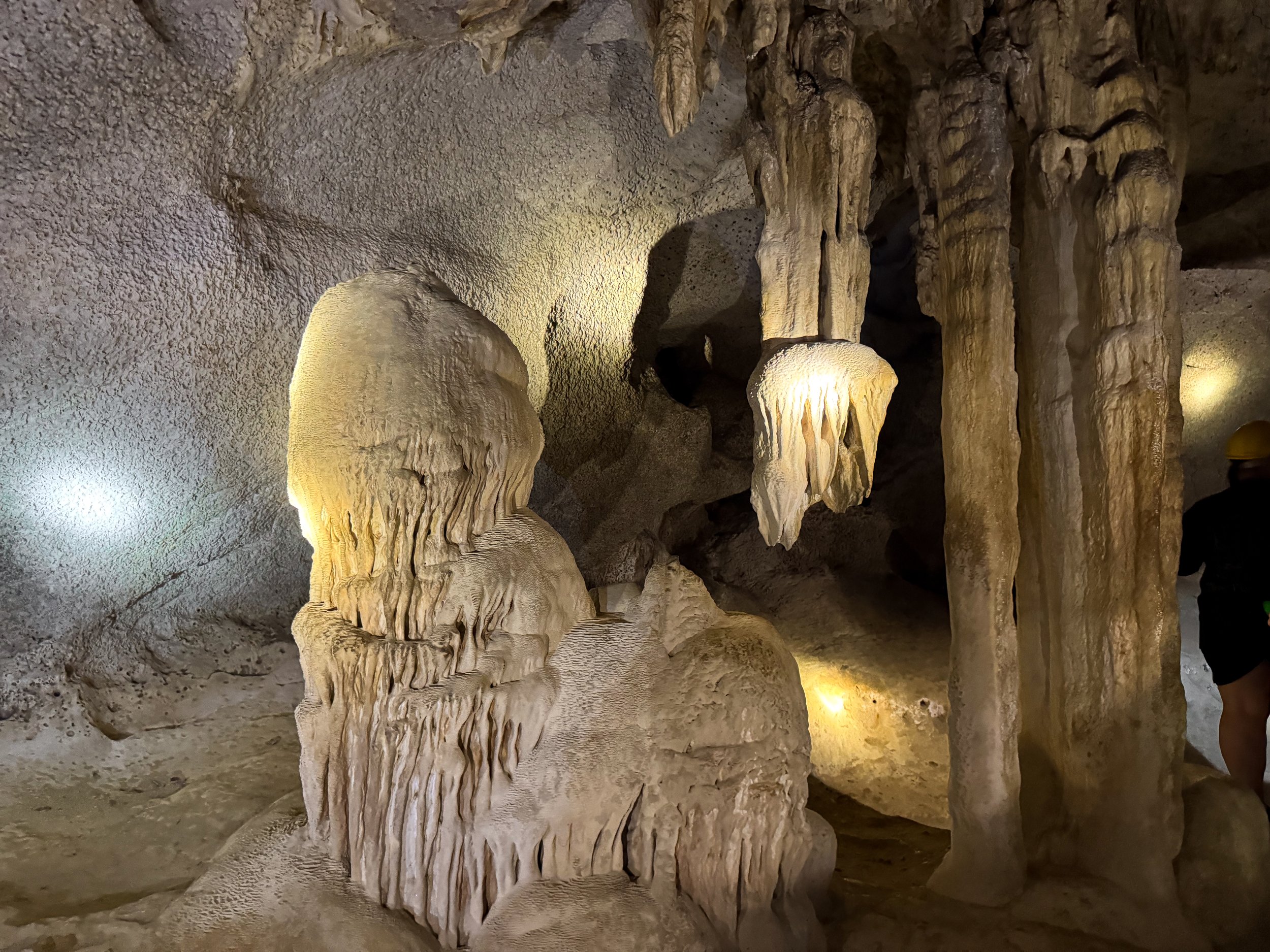
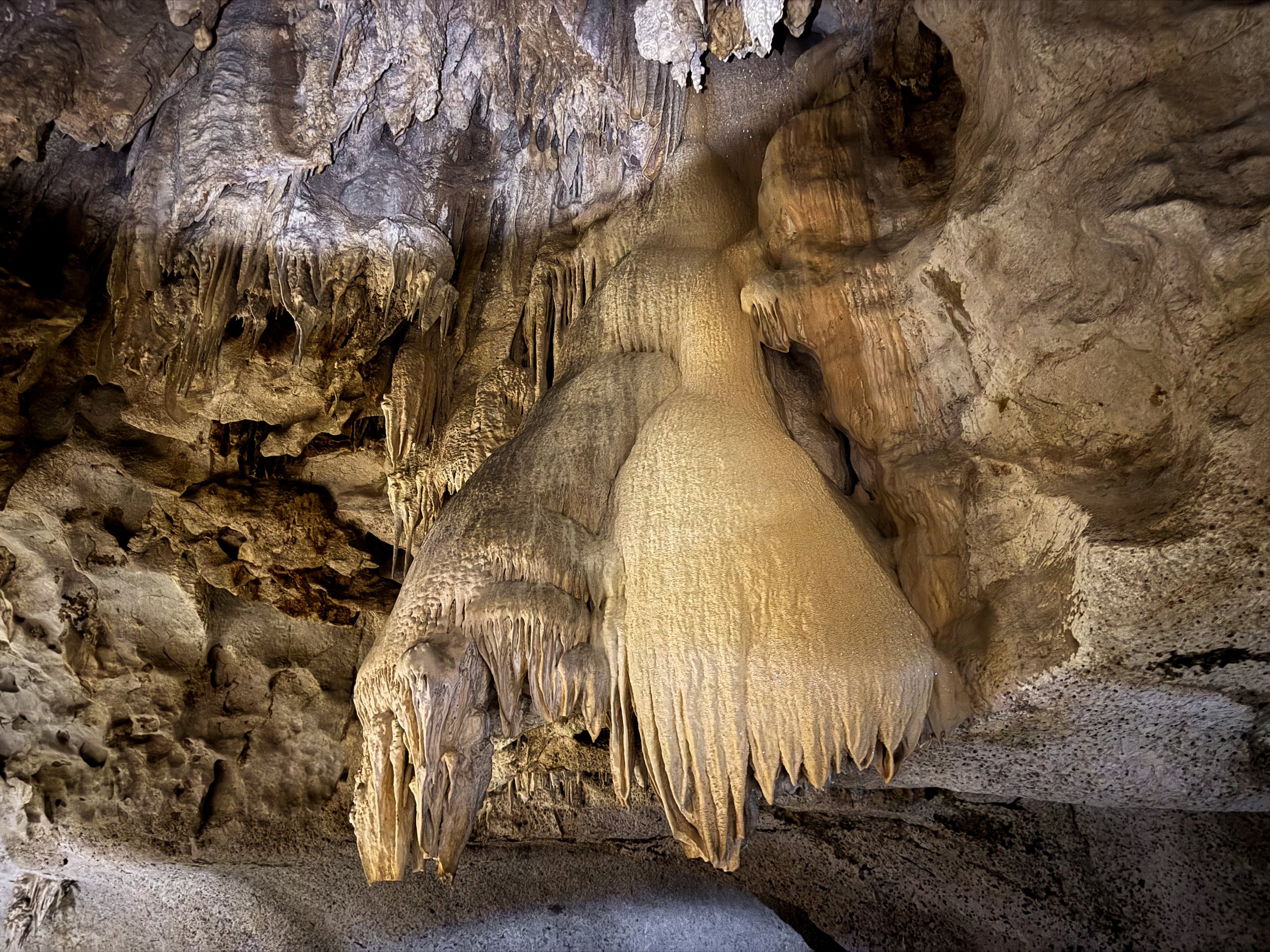
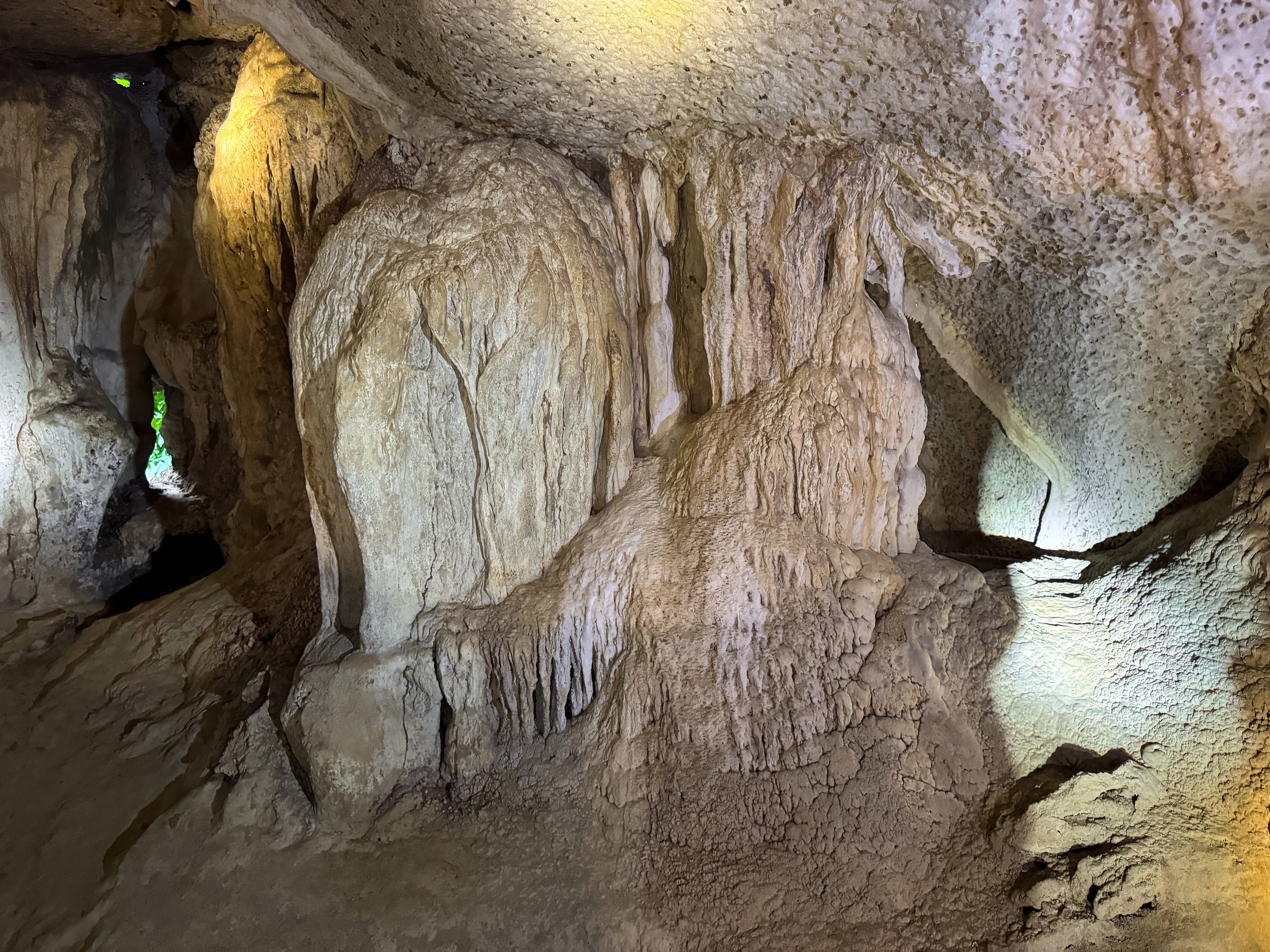
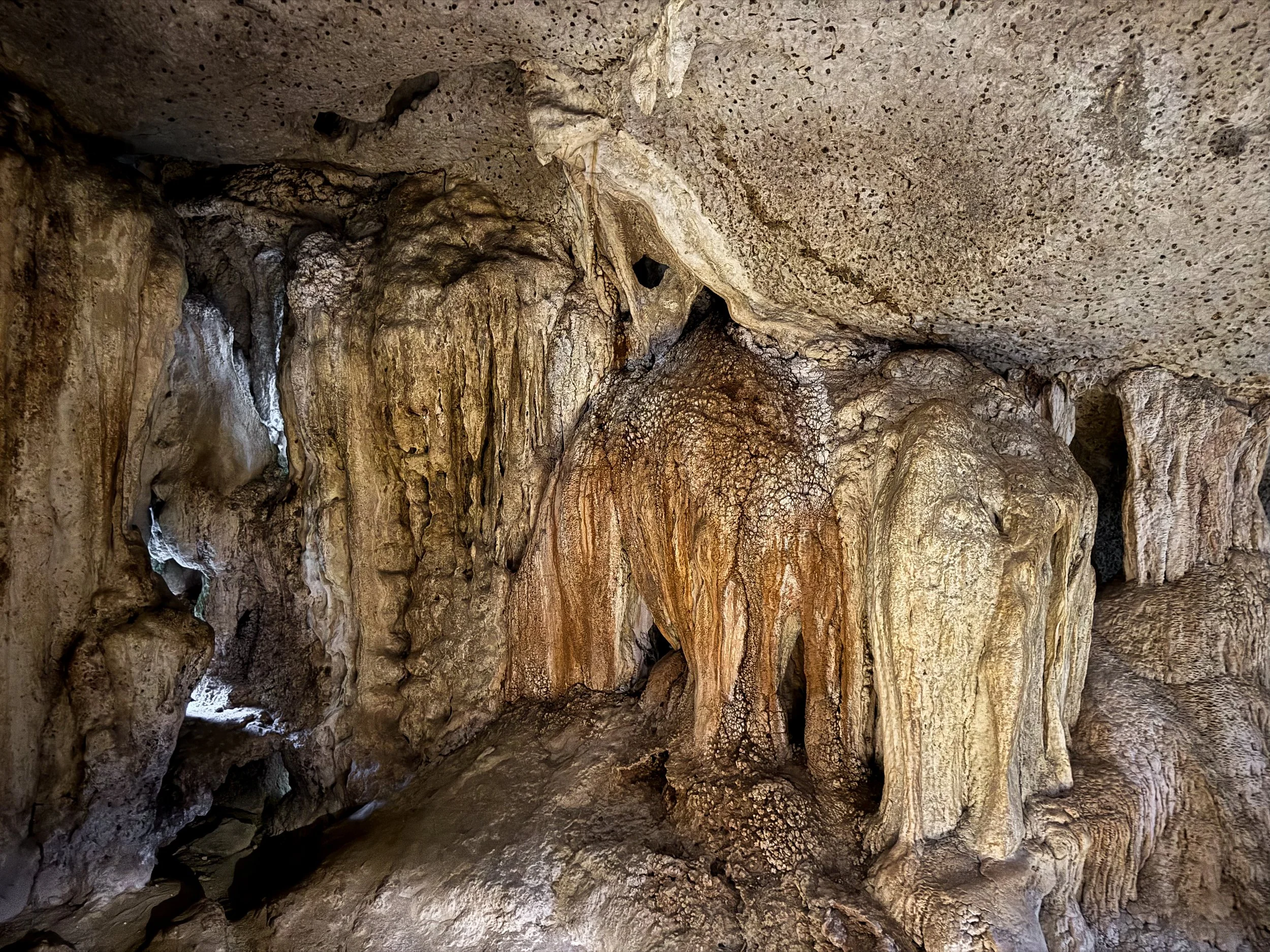
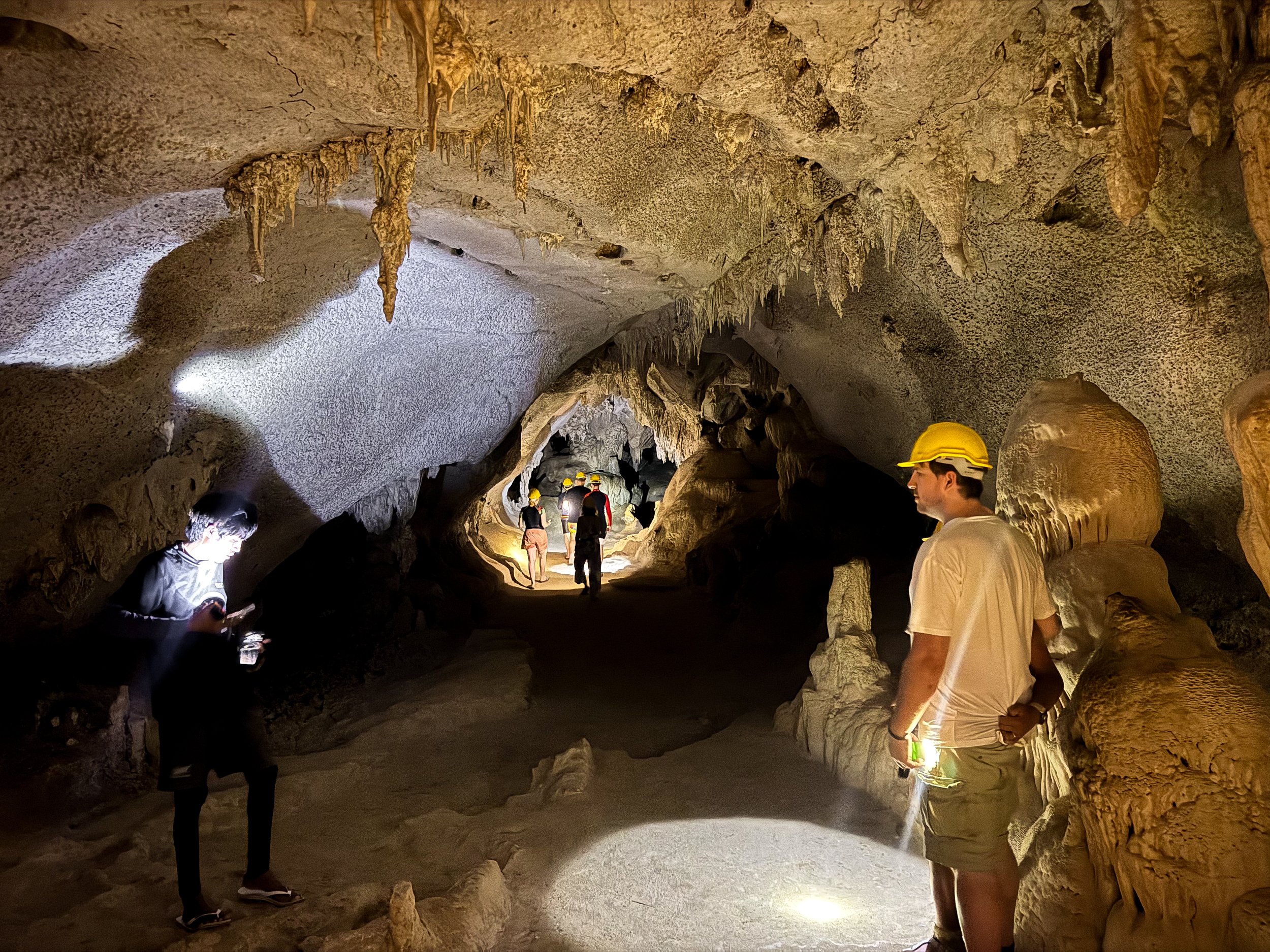
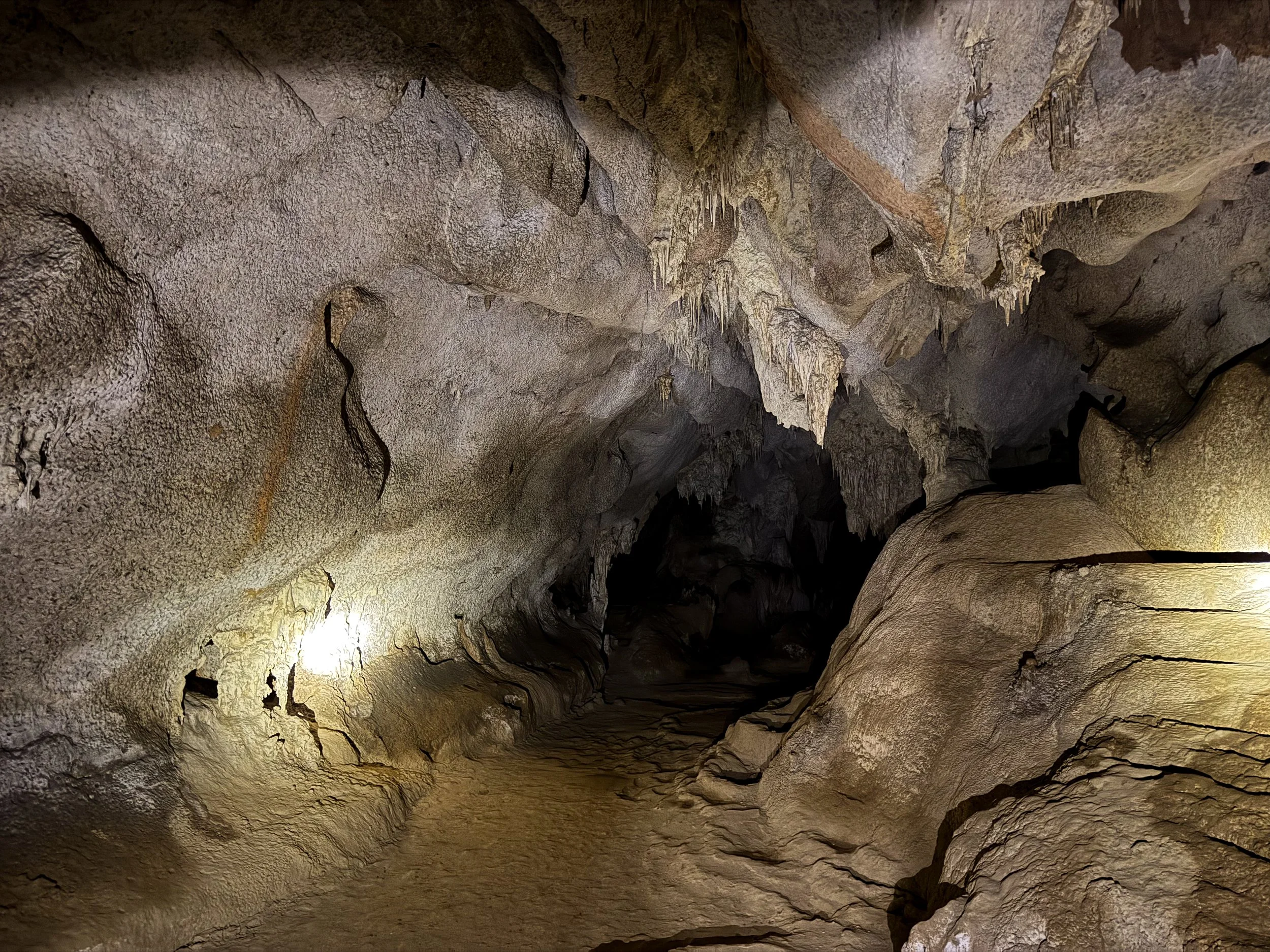
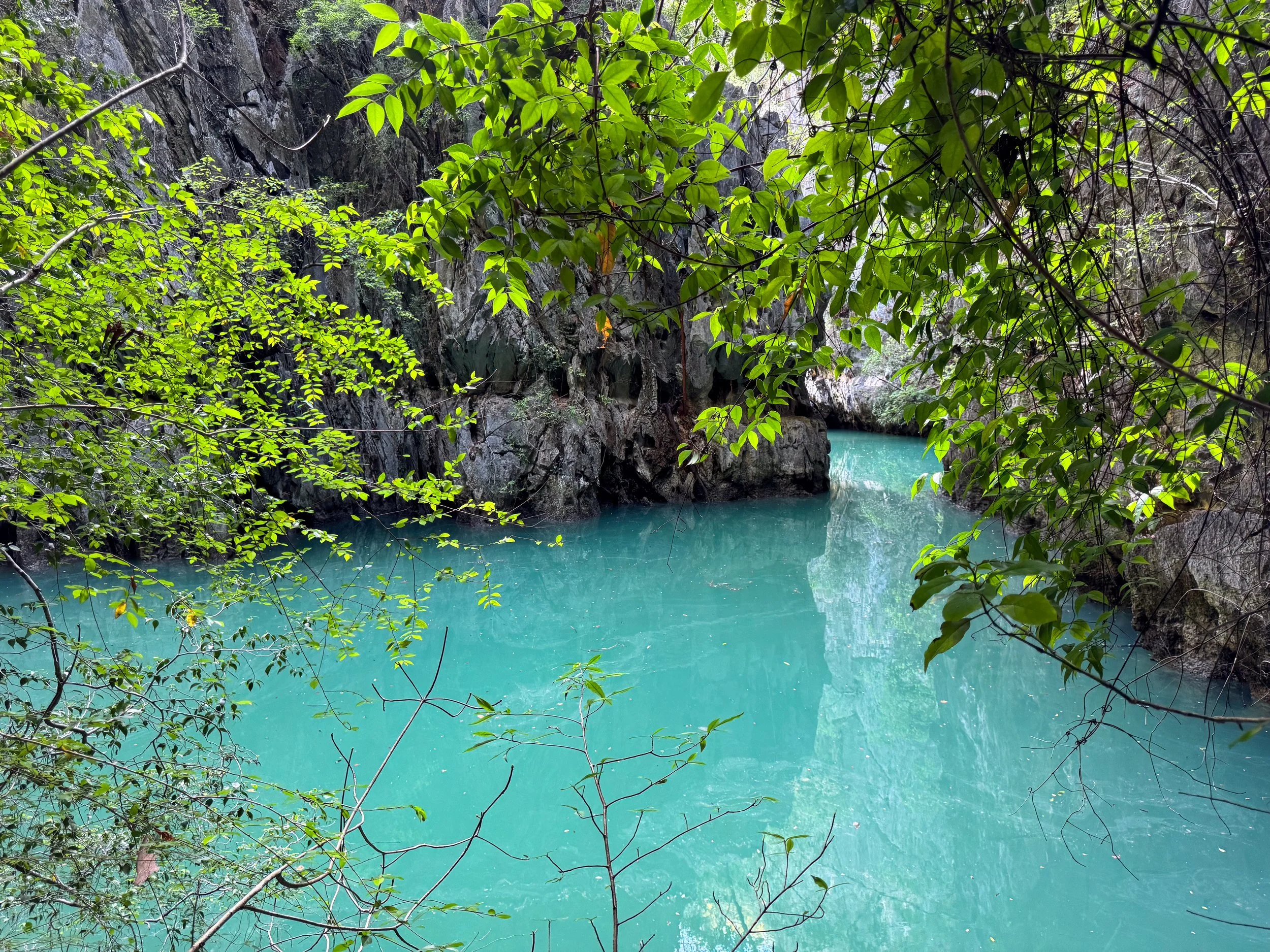
Pha Nak Island. An island with glittering natural wonders including cave formations and bioluminescent marine life.
Ice Cream Cave. A cave tunneling through the limestone island with crystalline rocks, stone columns, dripping stalactites and nubby stalagmites. The cave is named after rock formations that resemble melting ice cream. It leads to a hidden lagoon with milky blue water.
Bioluminescent Cove. A small cove home to bioluminescent algae and comb jellyfish only visible at night. Waves lap onshore creating a glittering array of bright blue and white sparkles throughout the water. It was a truly magical experience!
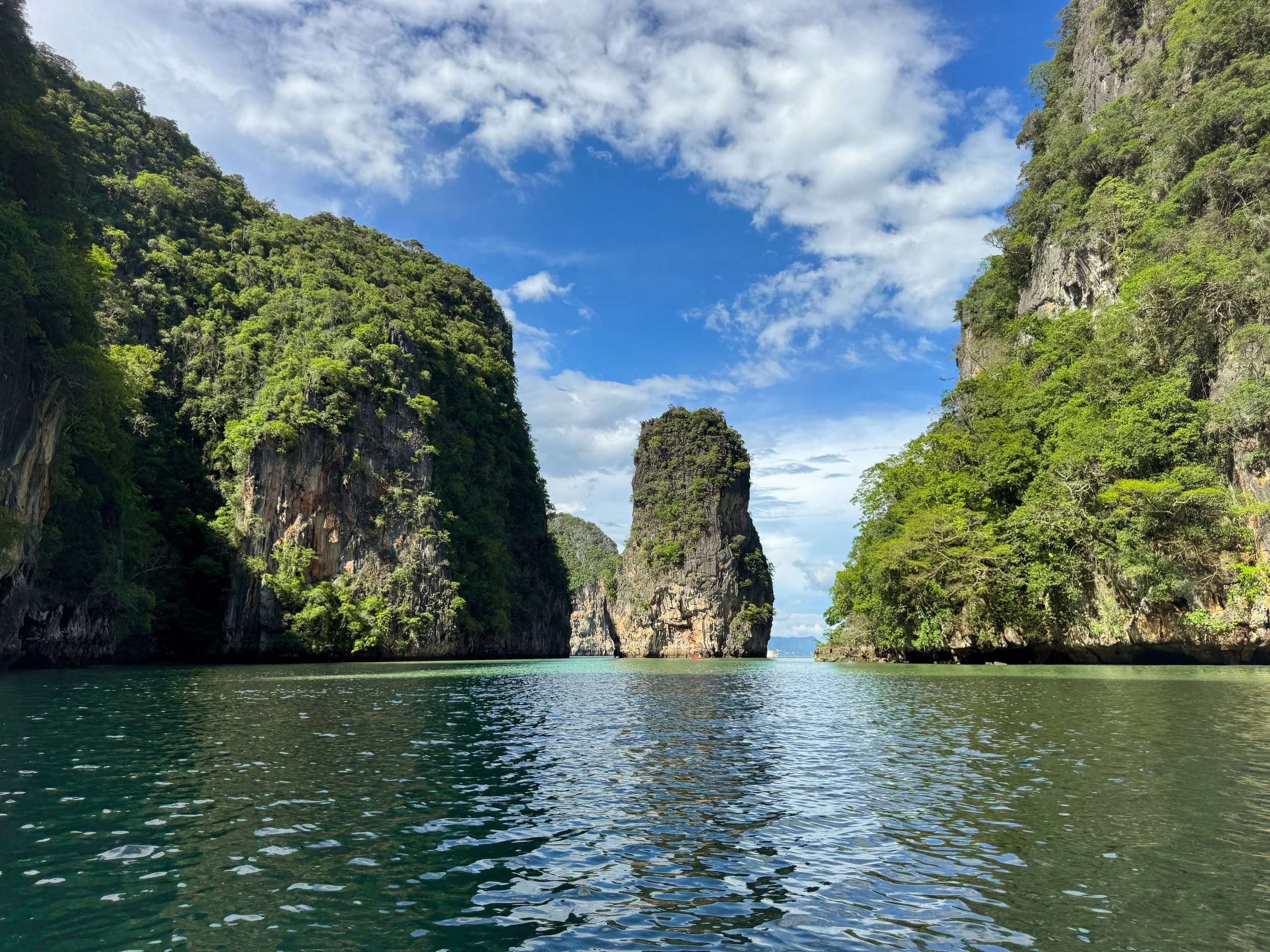
Kong Island. A verdant island with narrow channels and caves leading to hidden lagoons, tree covered chambers and towering rock structures. Guides kayaked us through its passageways; many were only accessible during low tide or so tight that we needed to lay flat to pass through.
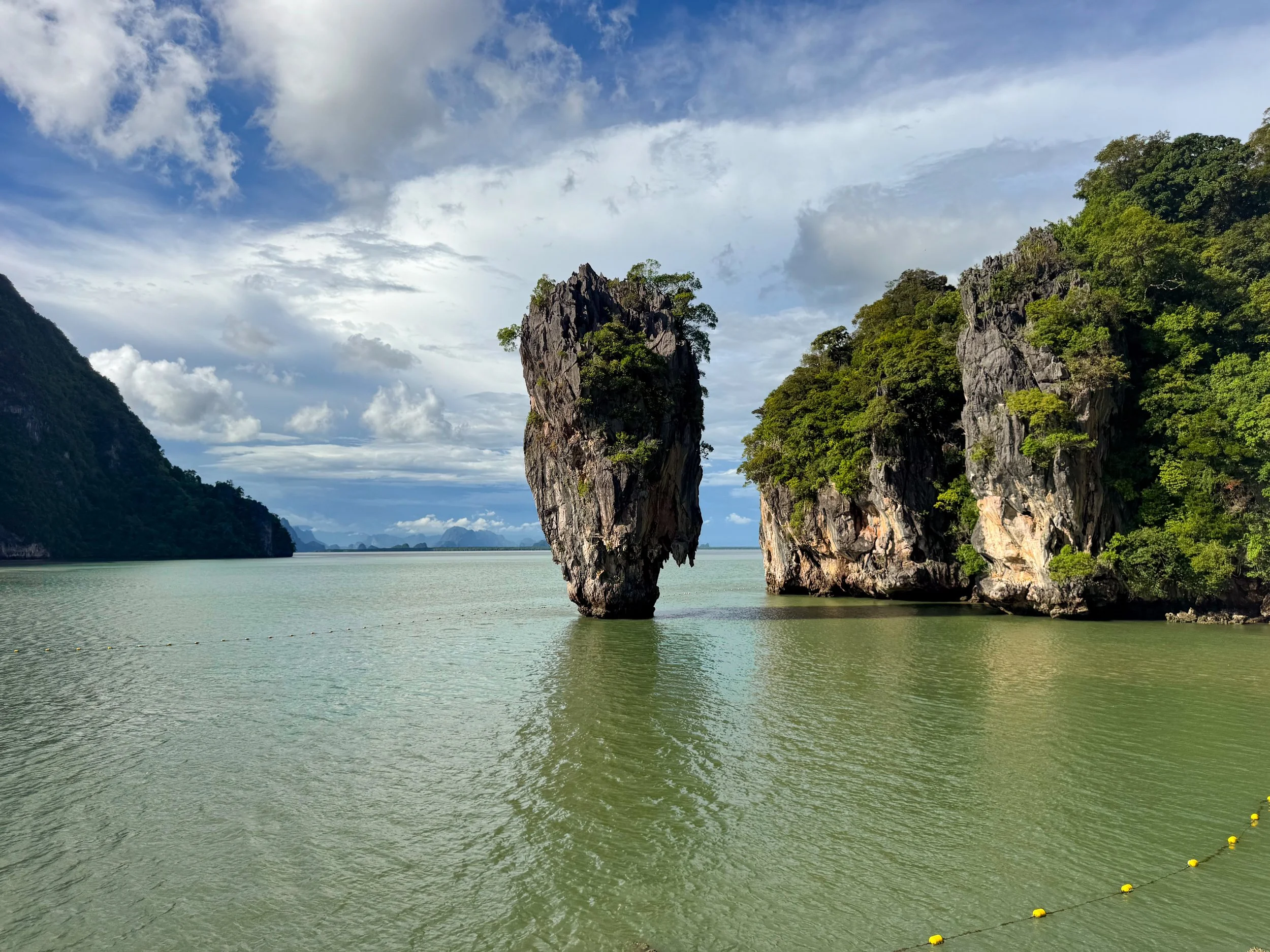
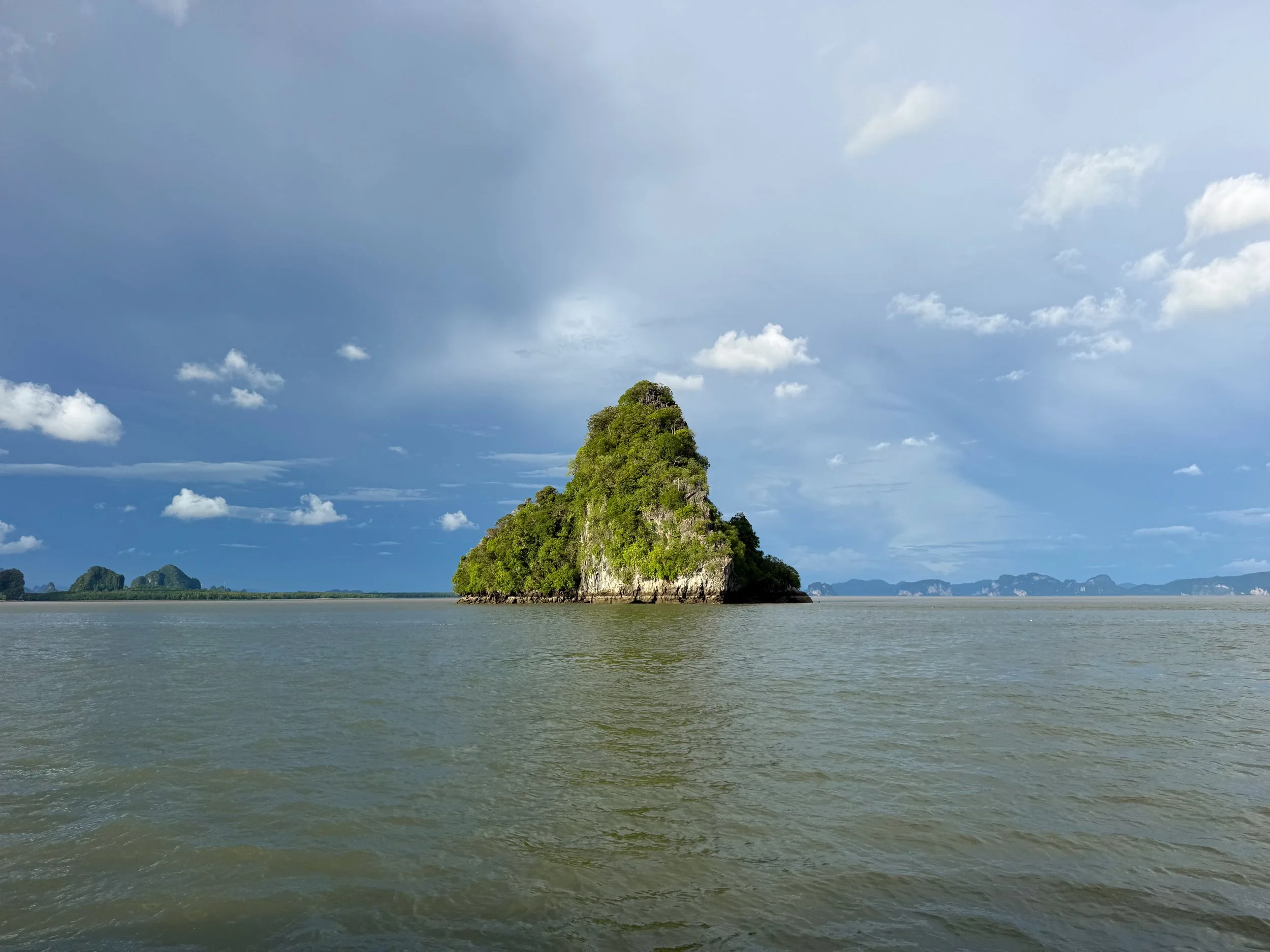
Khao Phing Kan Island (James Bond Island). An island made famous by the 1974 James Bond film, The Man with the Golden Gun. It features a standalone rock tower rising from the bay, surrounded by islands. The iconic view is visible from a small beach and multiple overlooks. A short trail leads around the island with access to a cliffside cave and a sheer crevice.
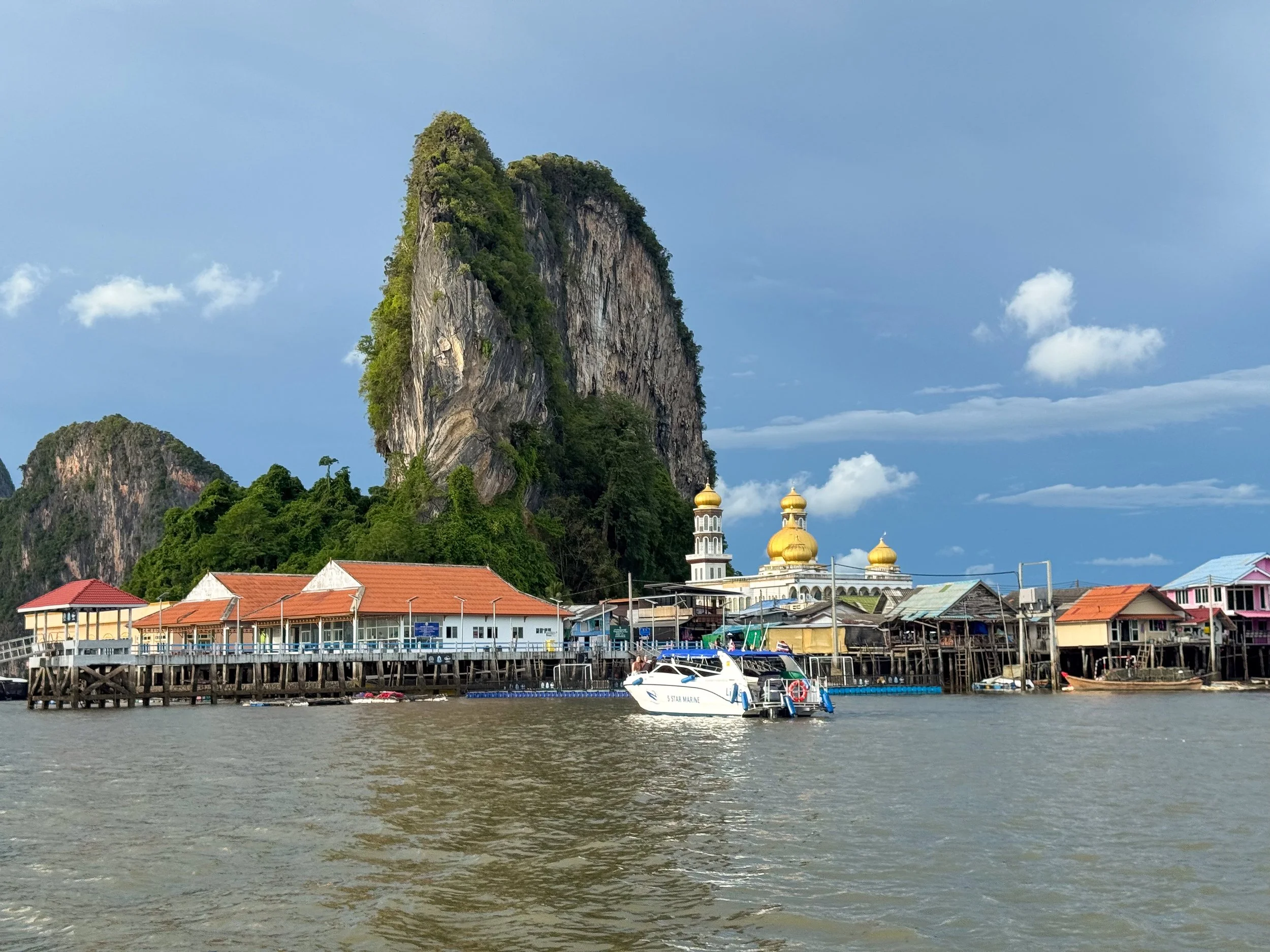
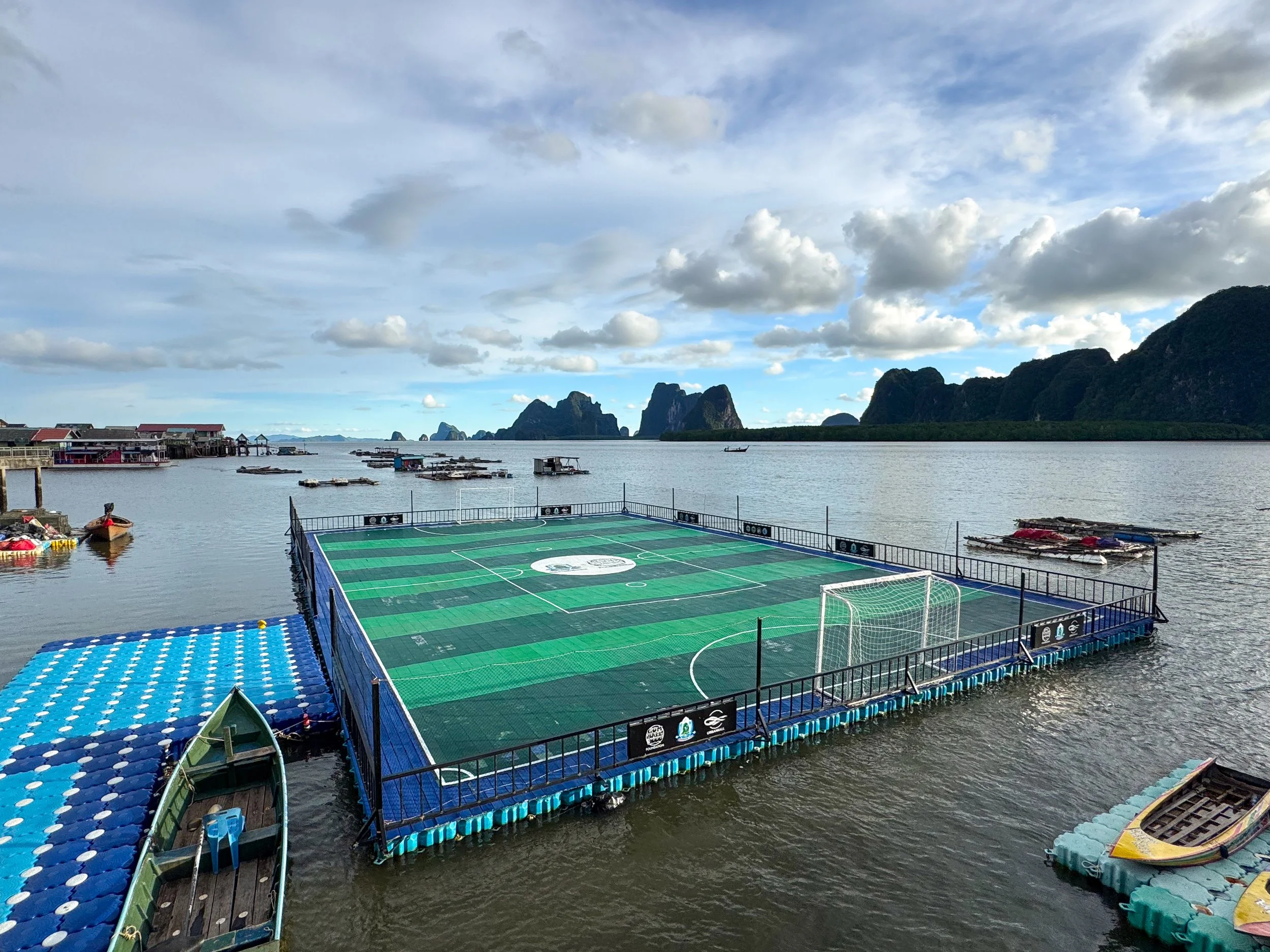
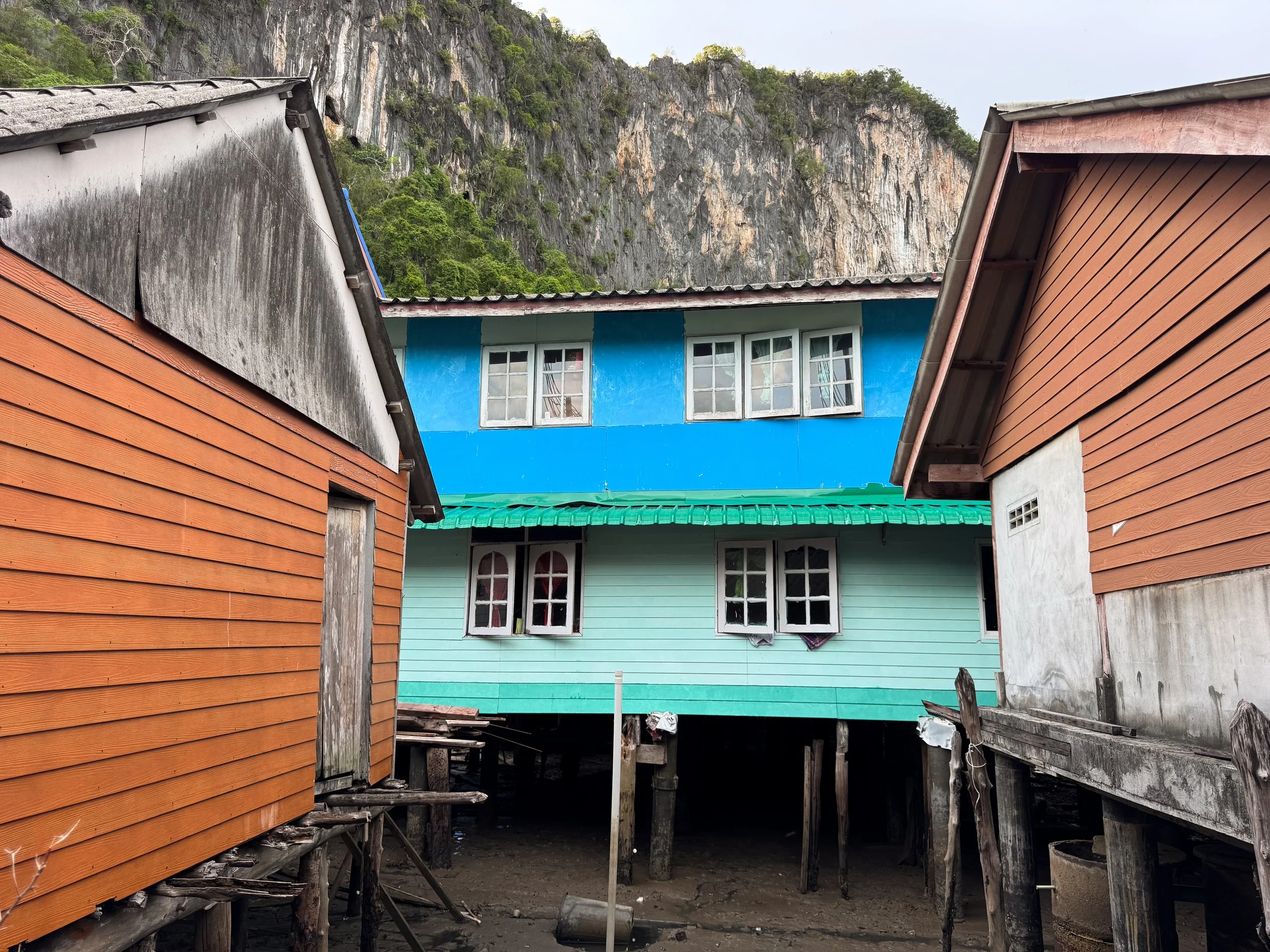
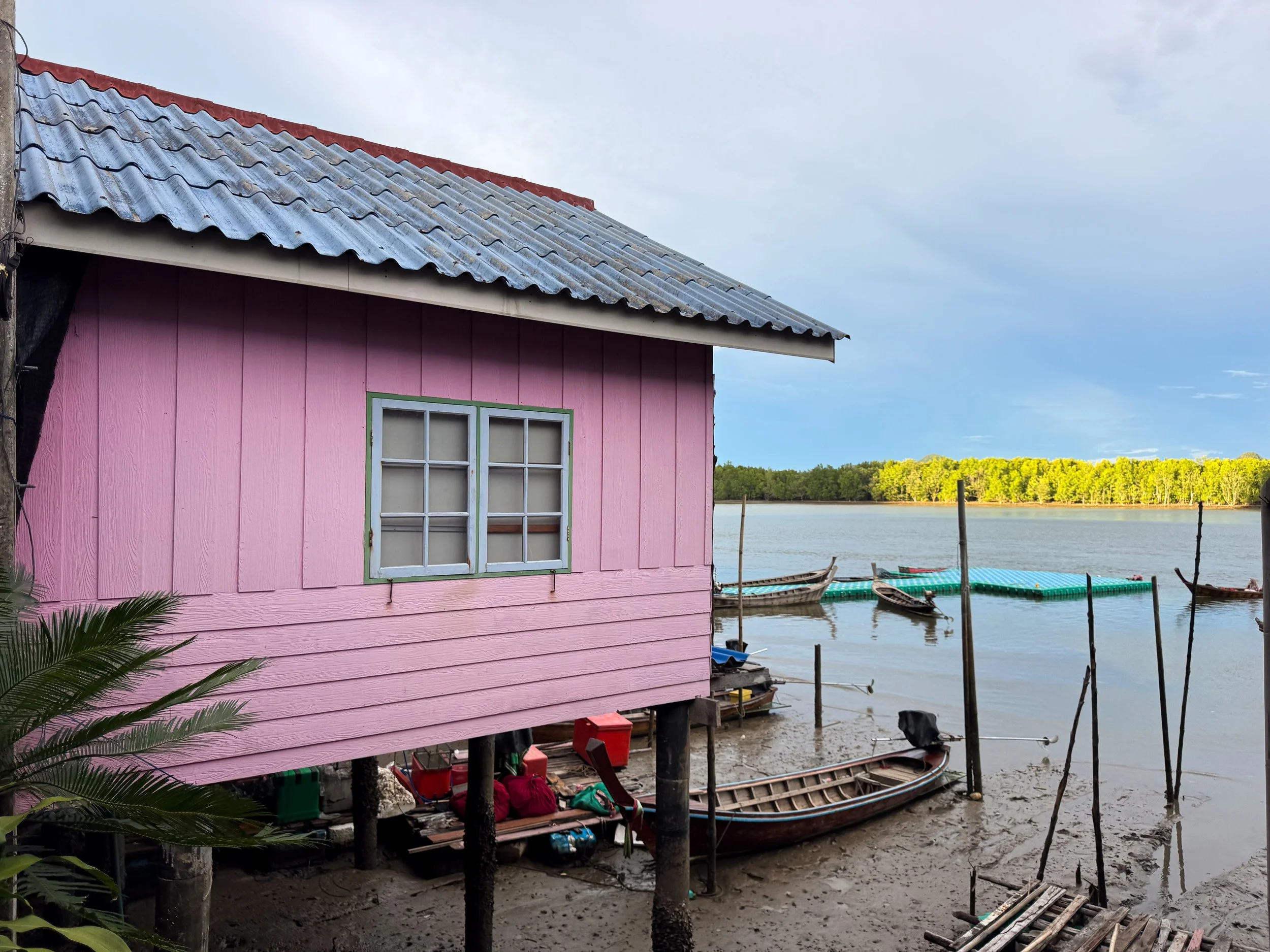
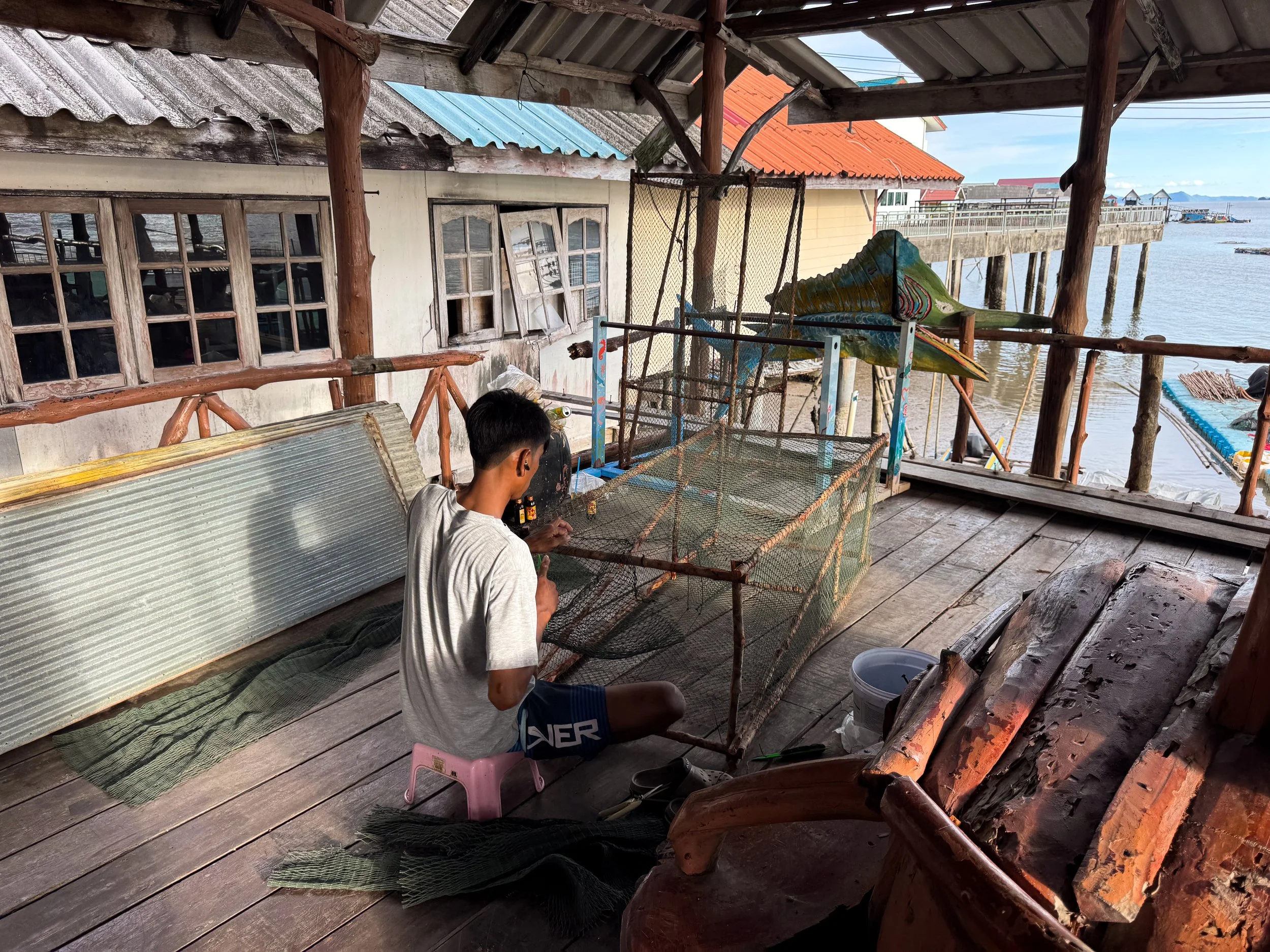
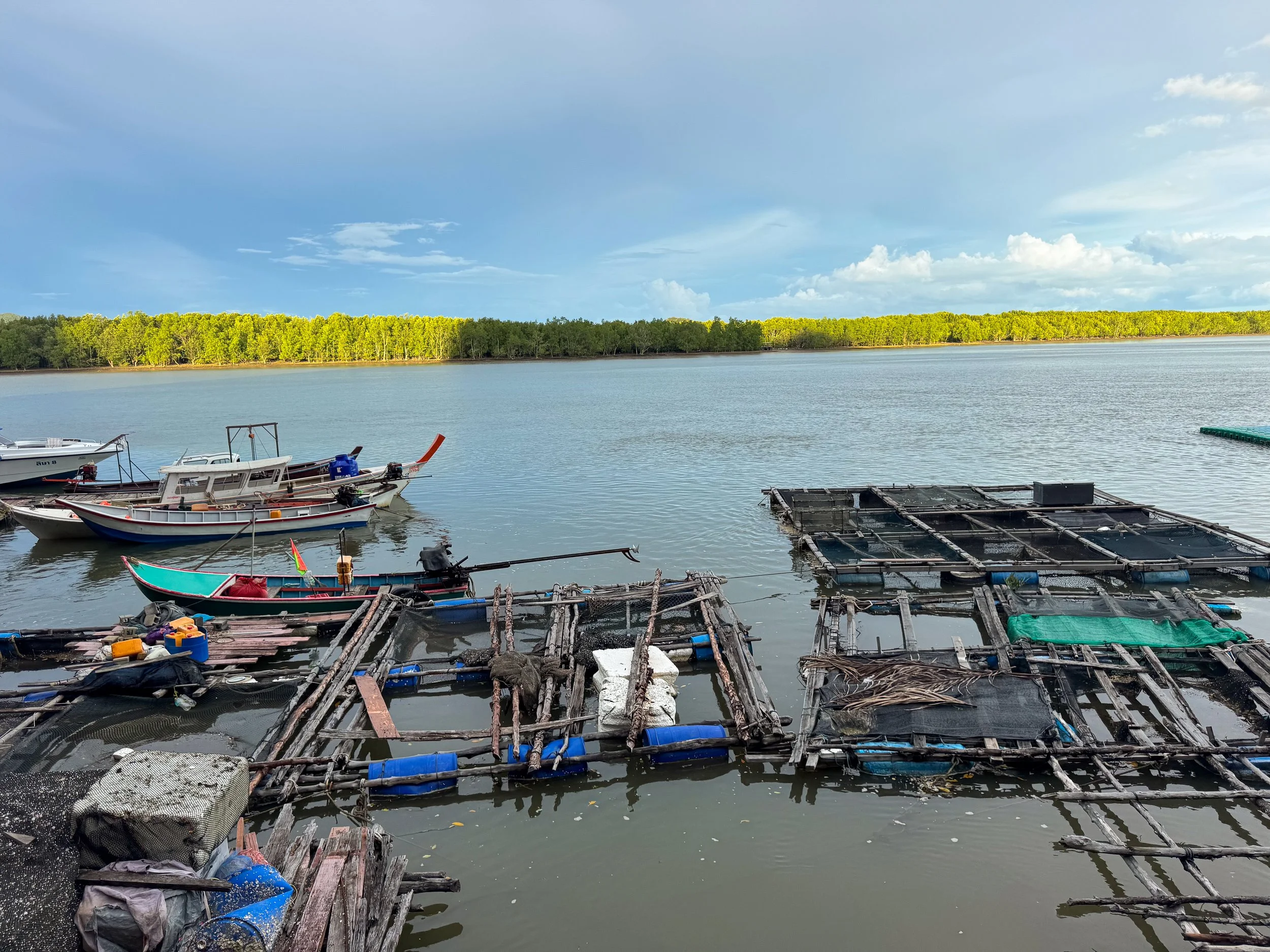
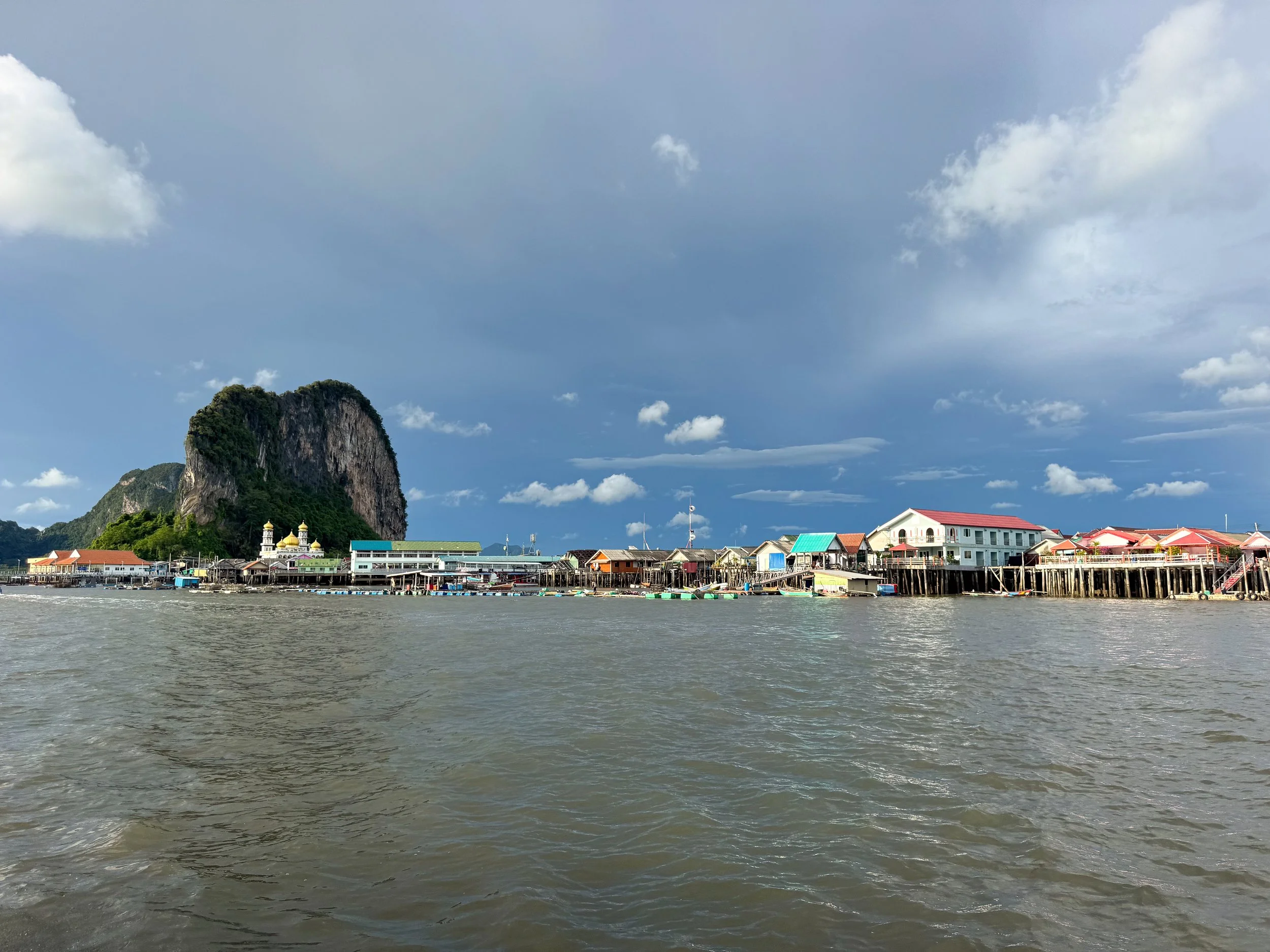
Ko Panyi Island. A towering island at the top of the bay with a floating stilt village home to a small fishing community. It’s famed for its floating football pitch and mosque topped with golden onion domes. We walked through the village past rustic and colorful homes, saw people weaving fishing traps and watched as long boats returned with freshly caught fish. We enjoyed a Thai buffet dinner overlooking the natural scenery of the bay from Maria Sea View Restaurant.
Getting Here. The best way to visit Ao Phang Nga National Park is by boat tour. We booked an afternoon tour, well after most other groups had returned for the day. We had the experience of seeing most sights with few other visitors outside of those on our tour. We booked with Discova Thailand on Viator and highly recommend them.
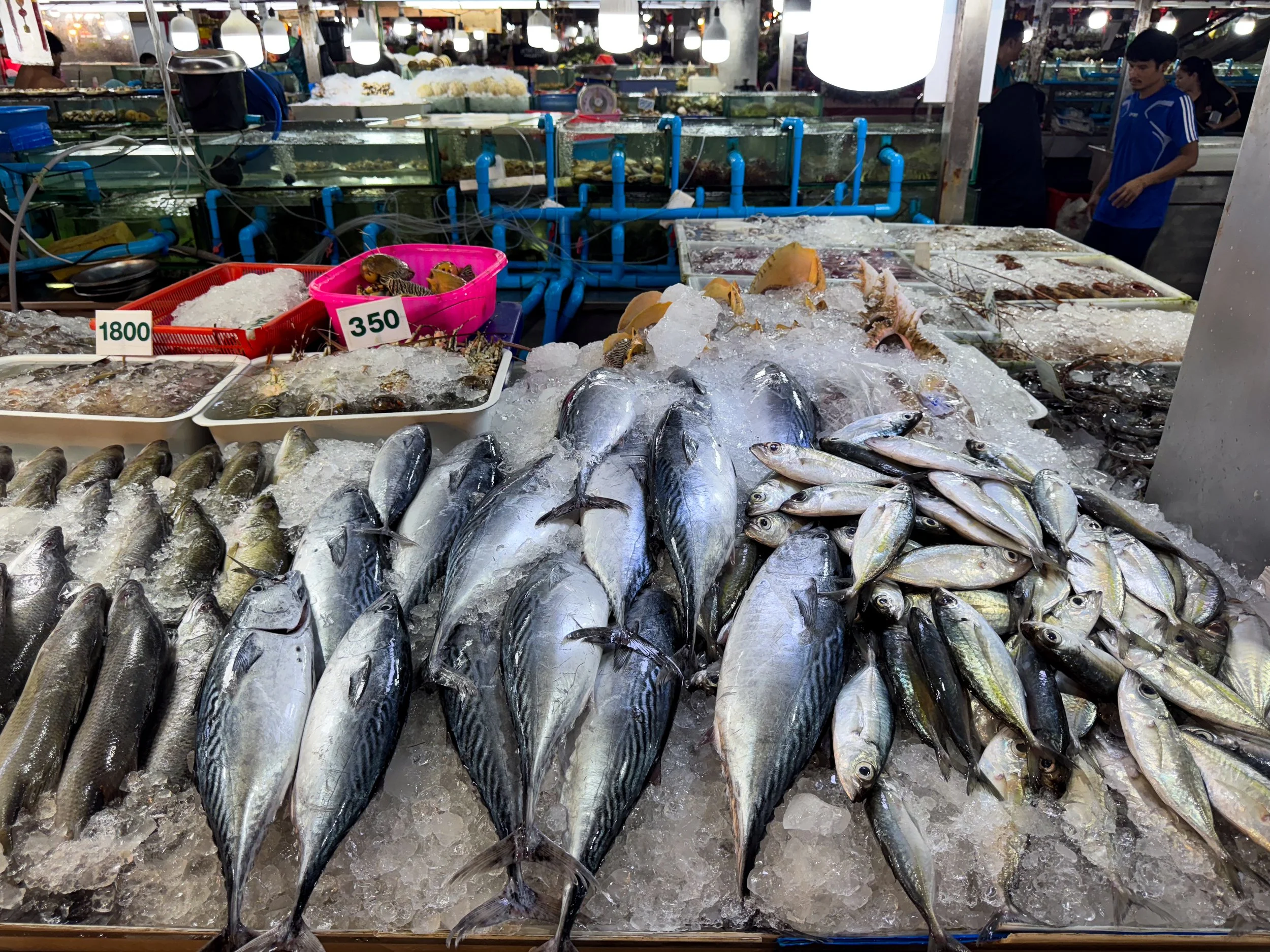
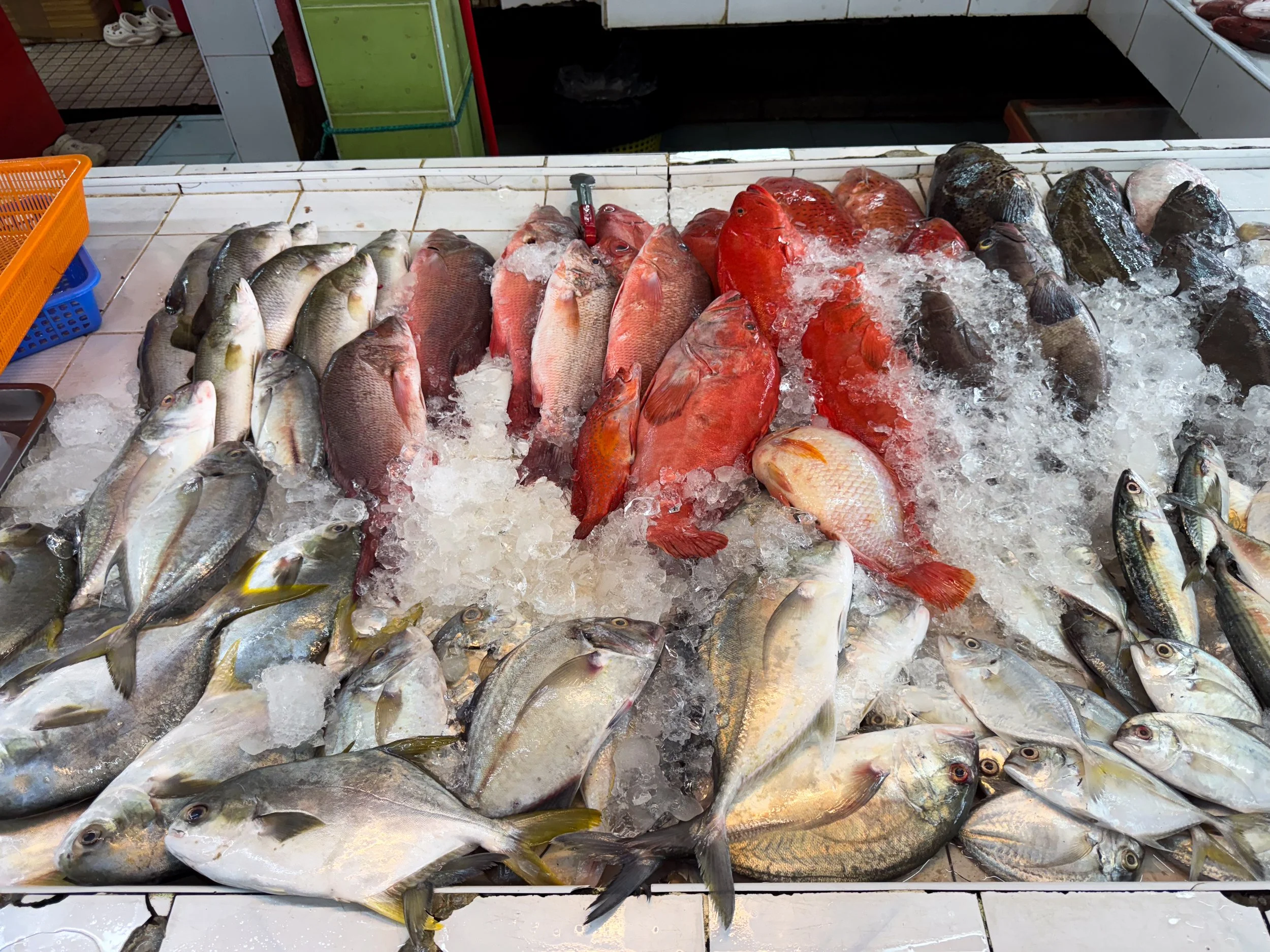
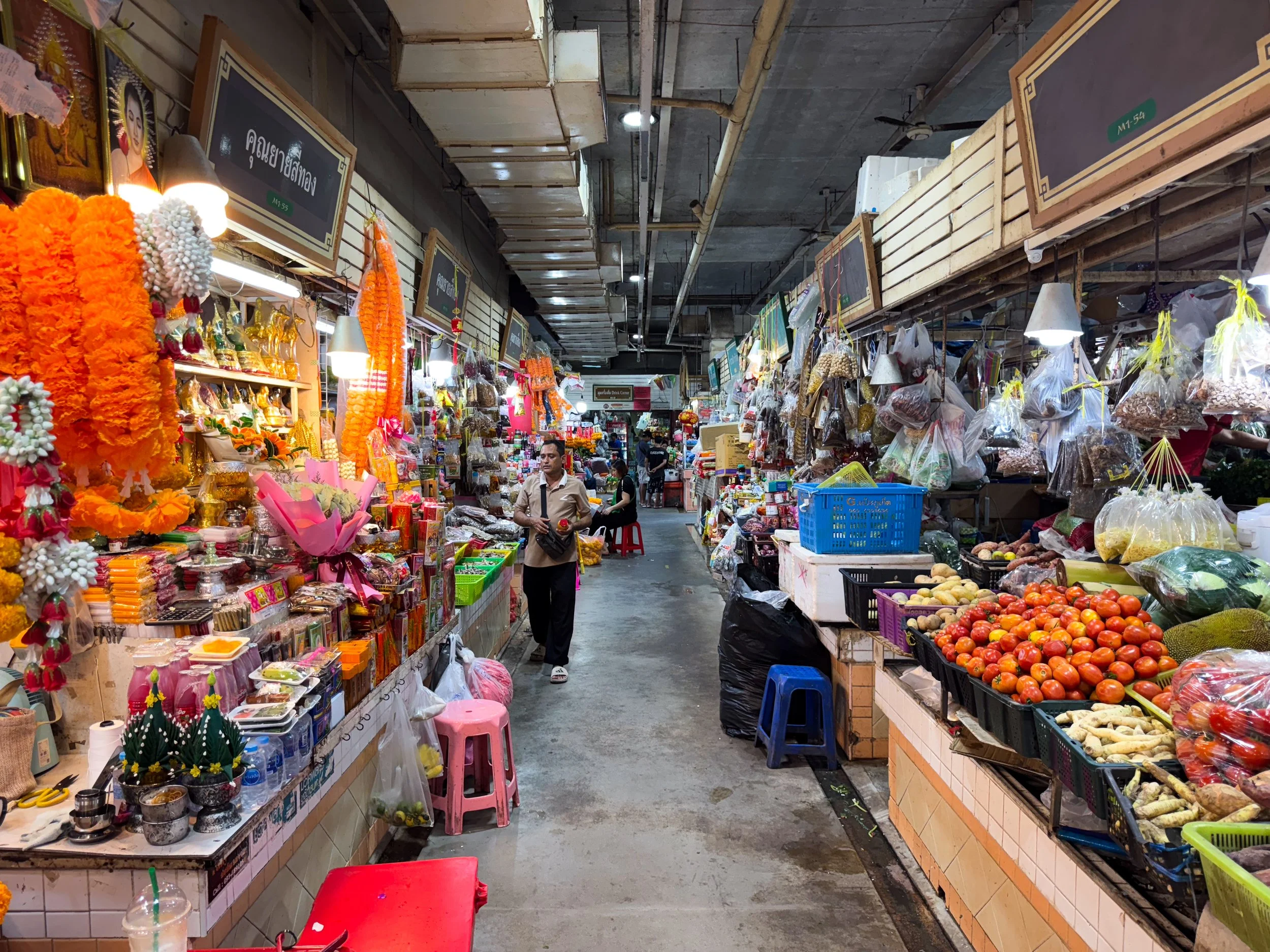
Shop the Markets
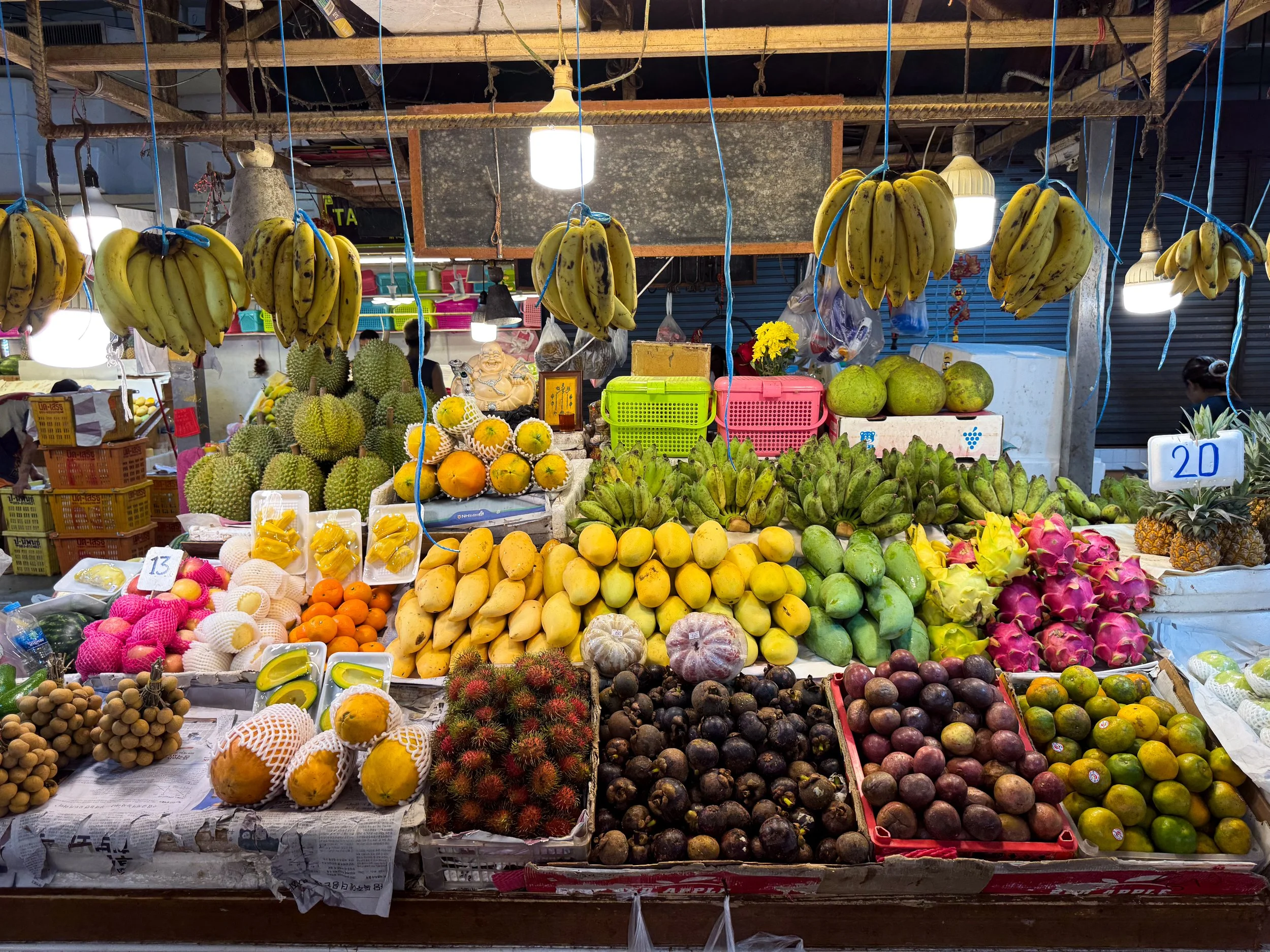
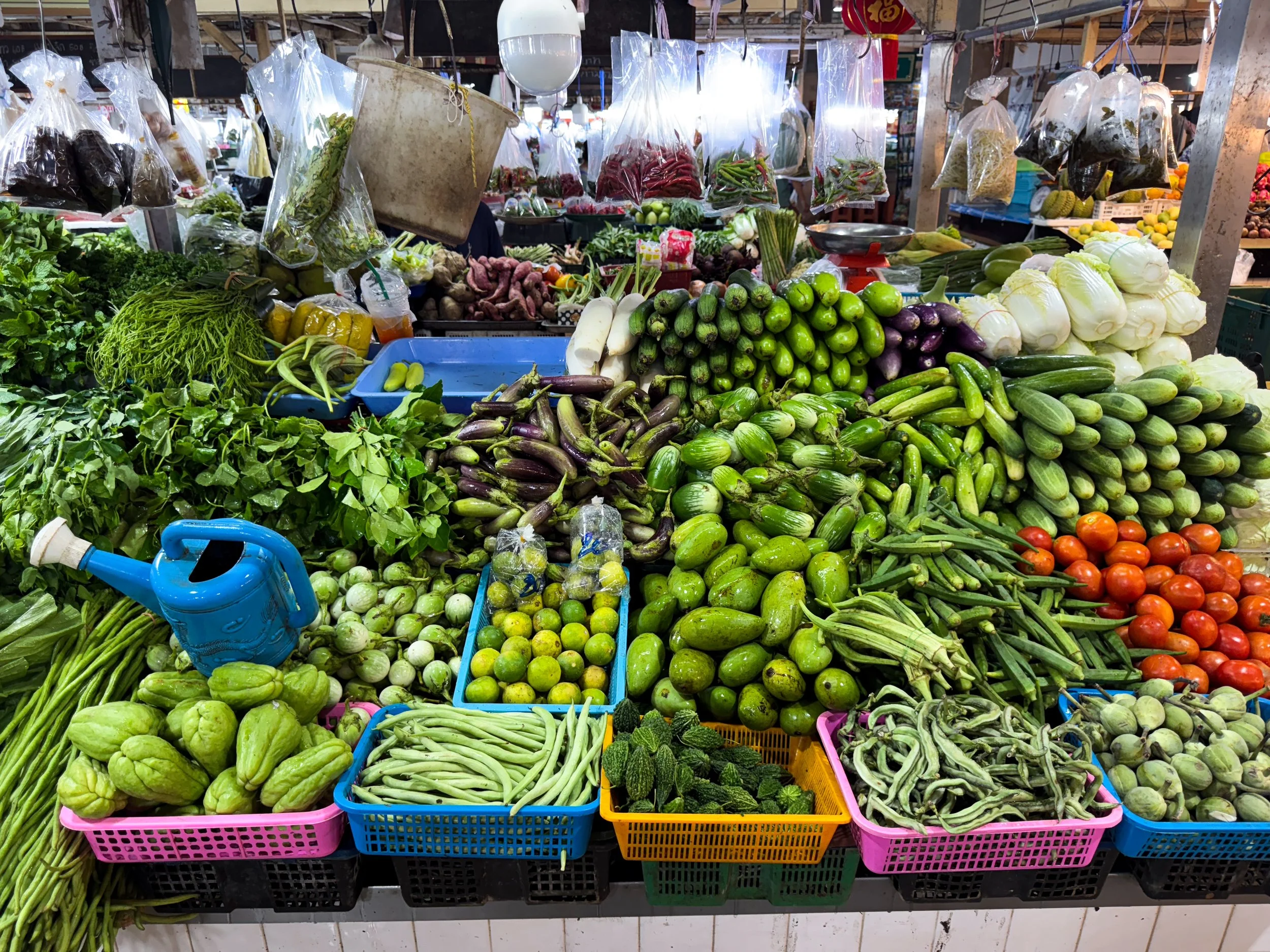
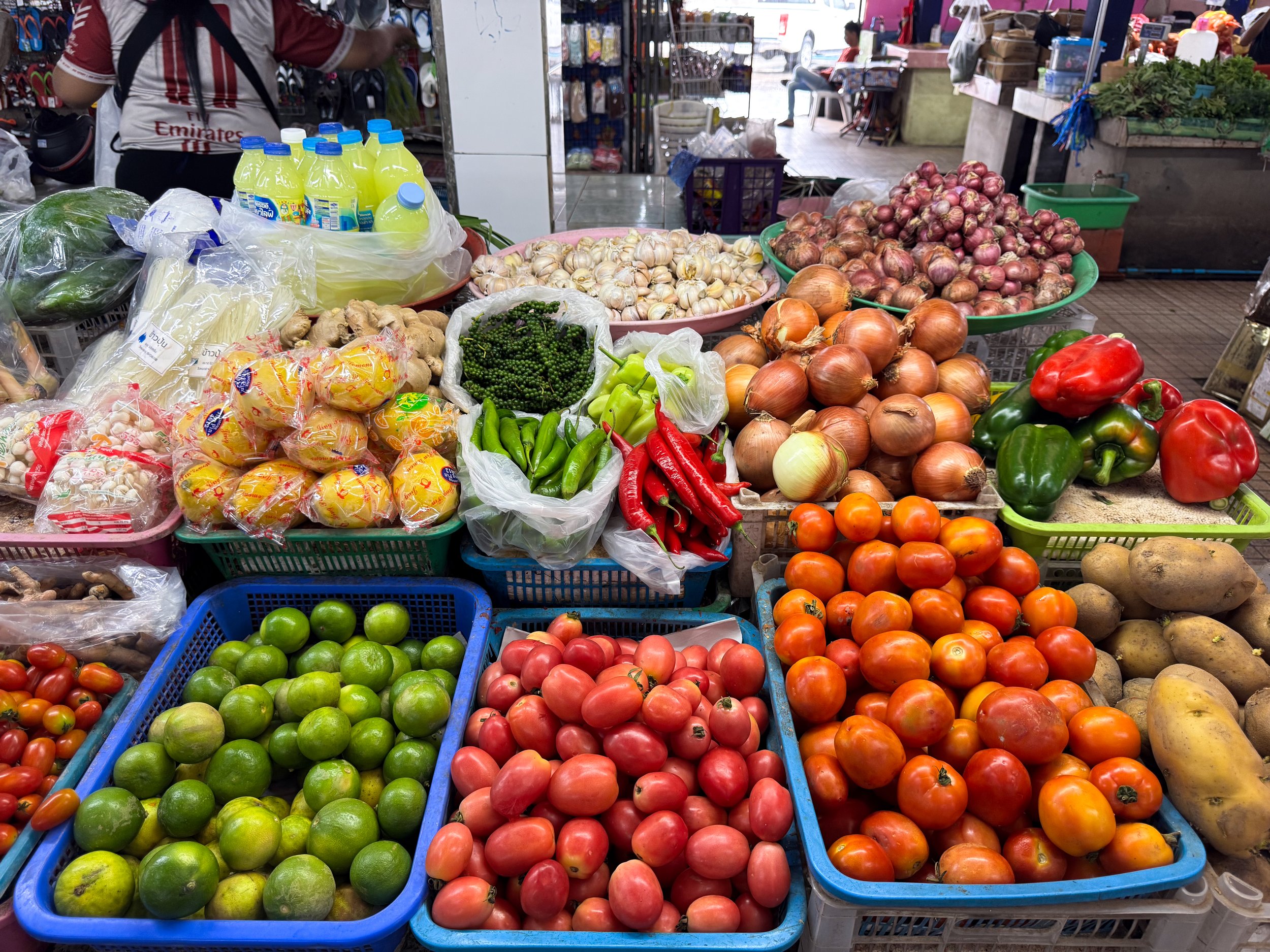
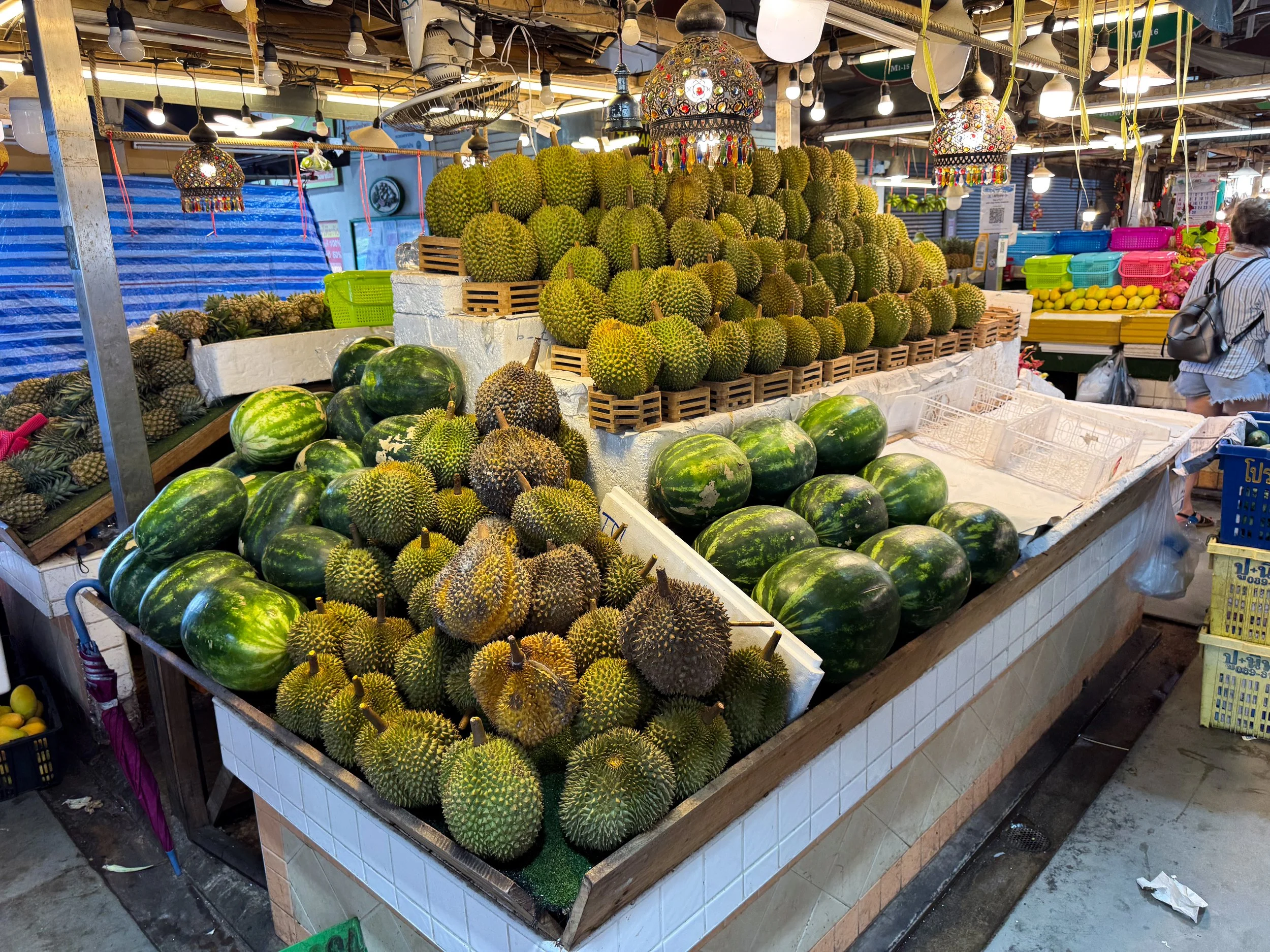
Banzaan Fresh Market. A large farmers market in Patong with aisles of vendors selling locally grown vegetables, fruits and herbs. It’s popular among locals for its large seafood section with freshly caught shellfish like shrimp, prawn and lobster. We shopped here buying all the groceries we needed for the week.
Mae Somchit Kata Fresh Market. A local farmers market under an open air pavilion with vendors selling fresh vegetables, fruits, seafood, flowers and spices.
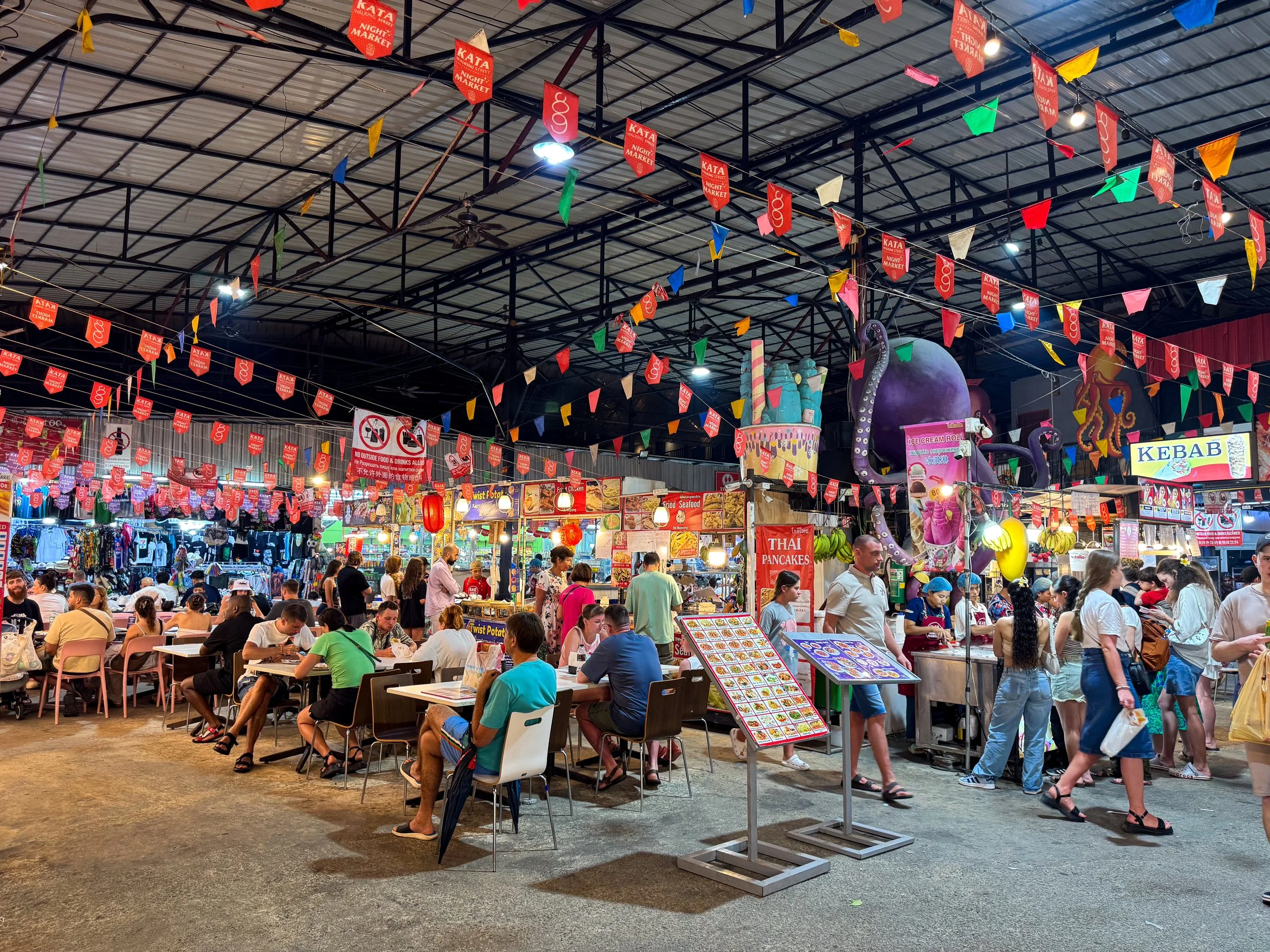
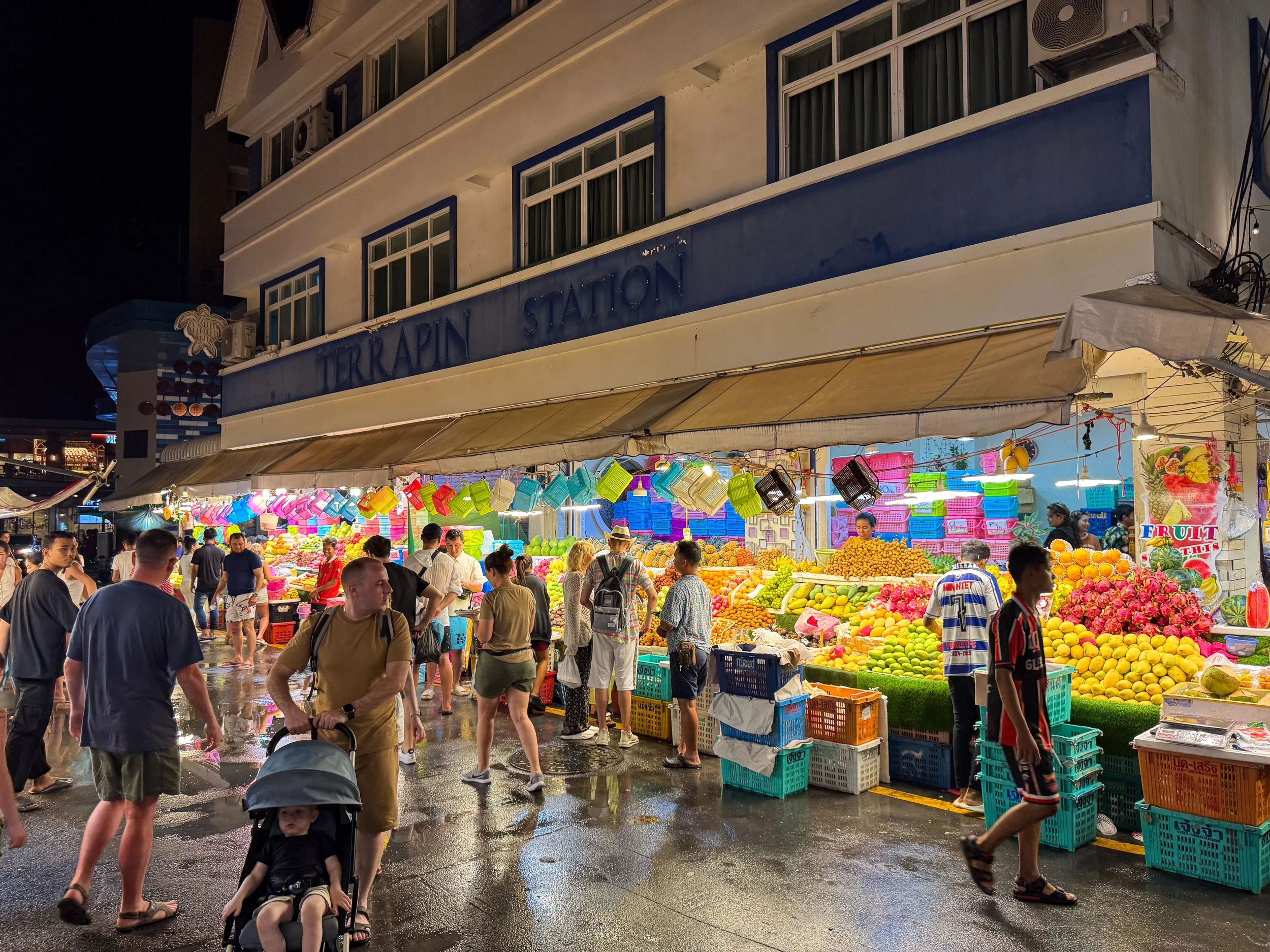
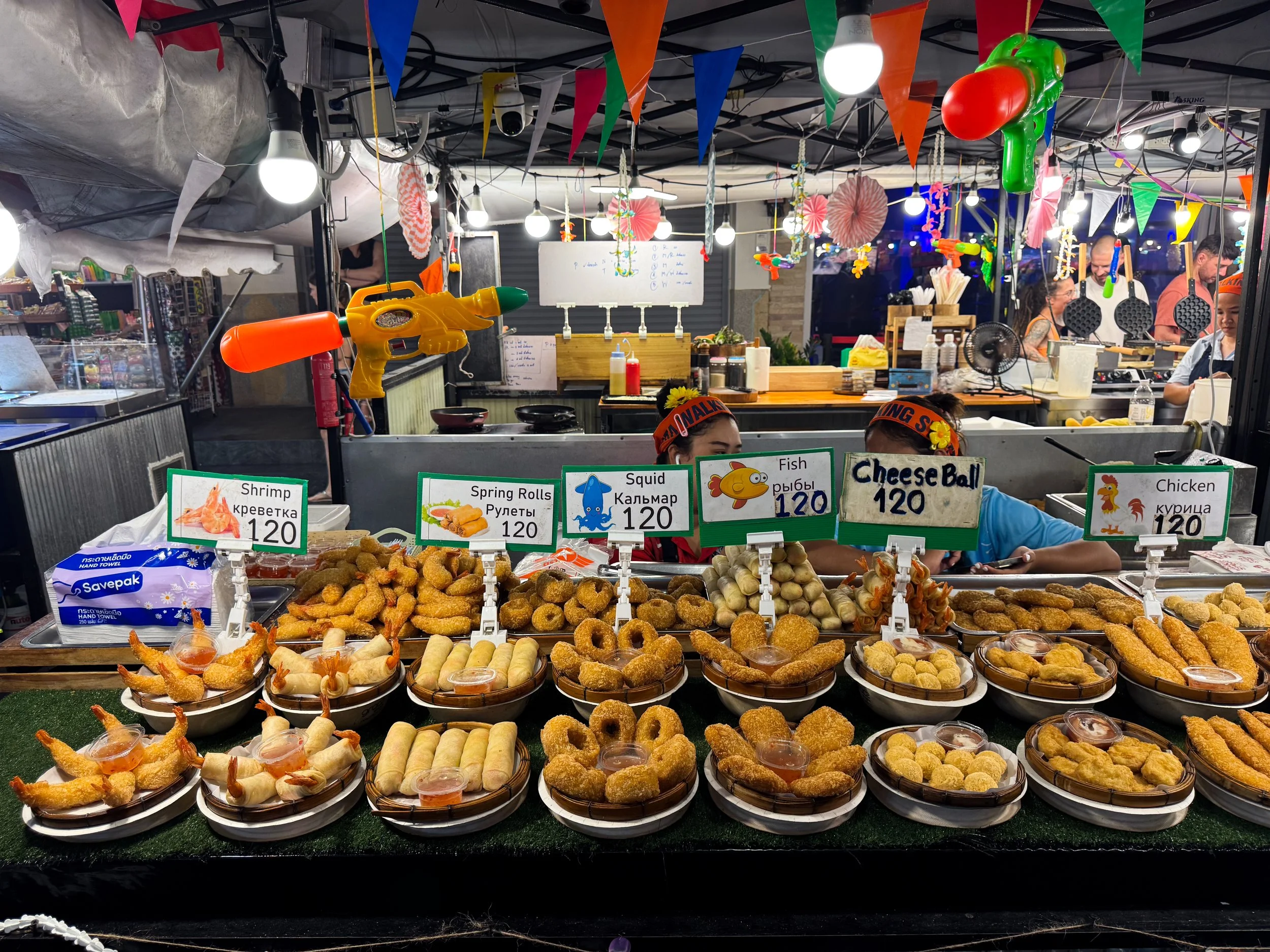
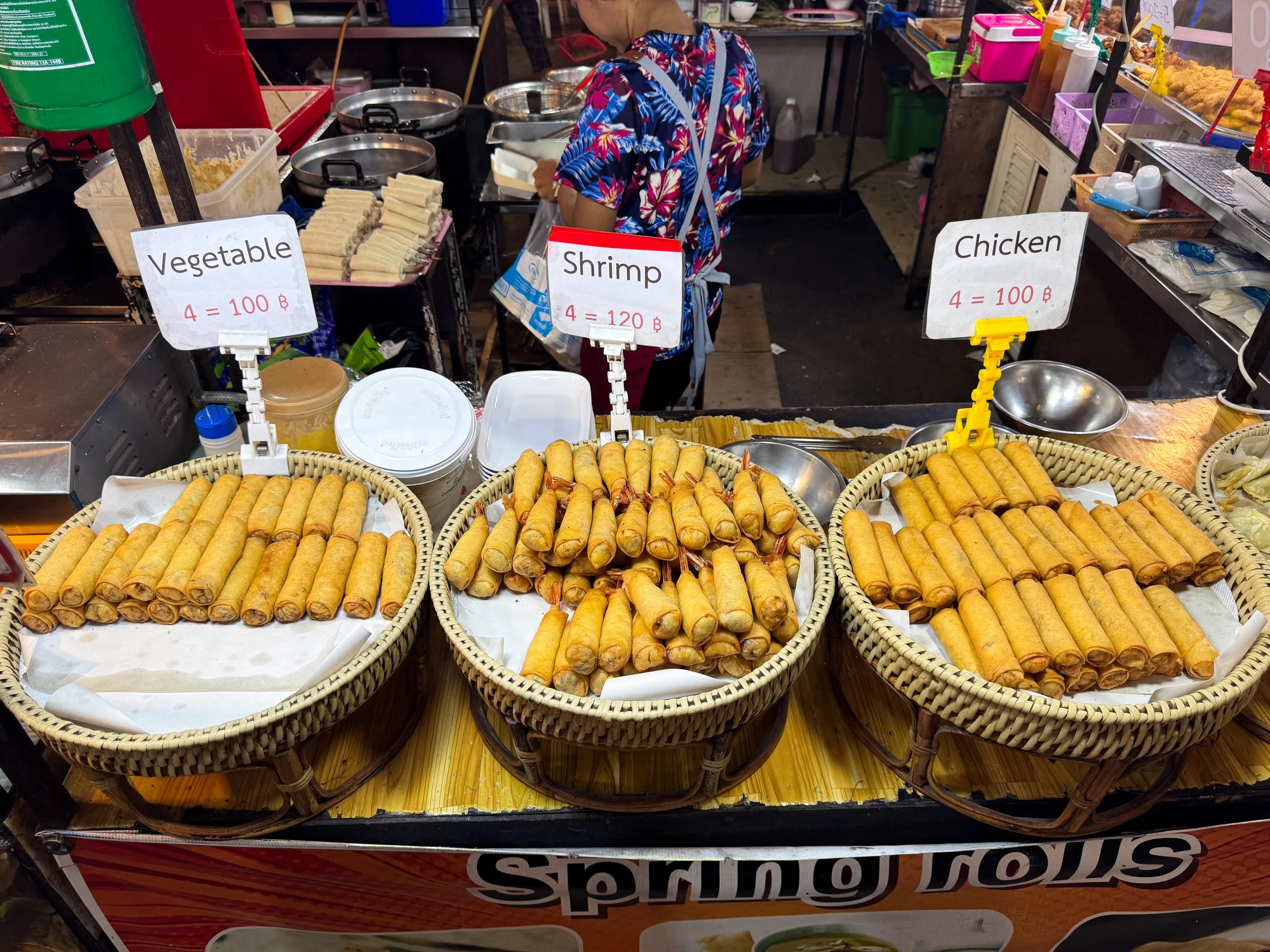
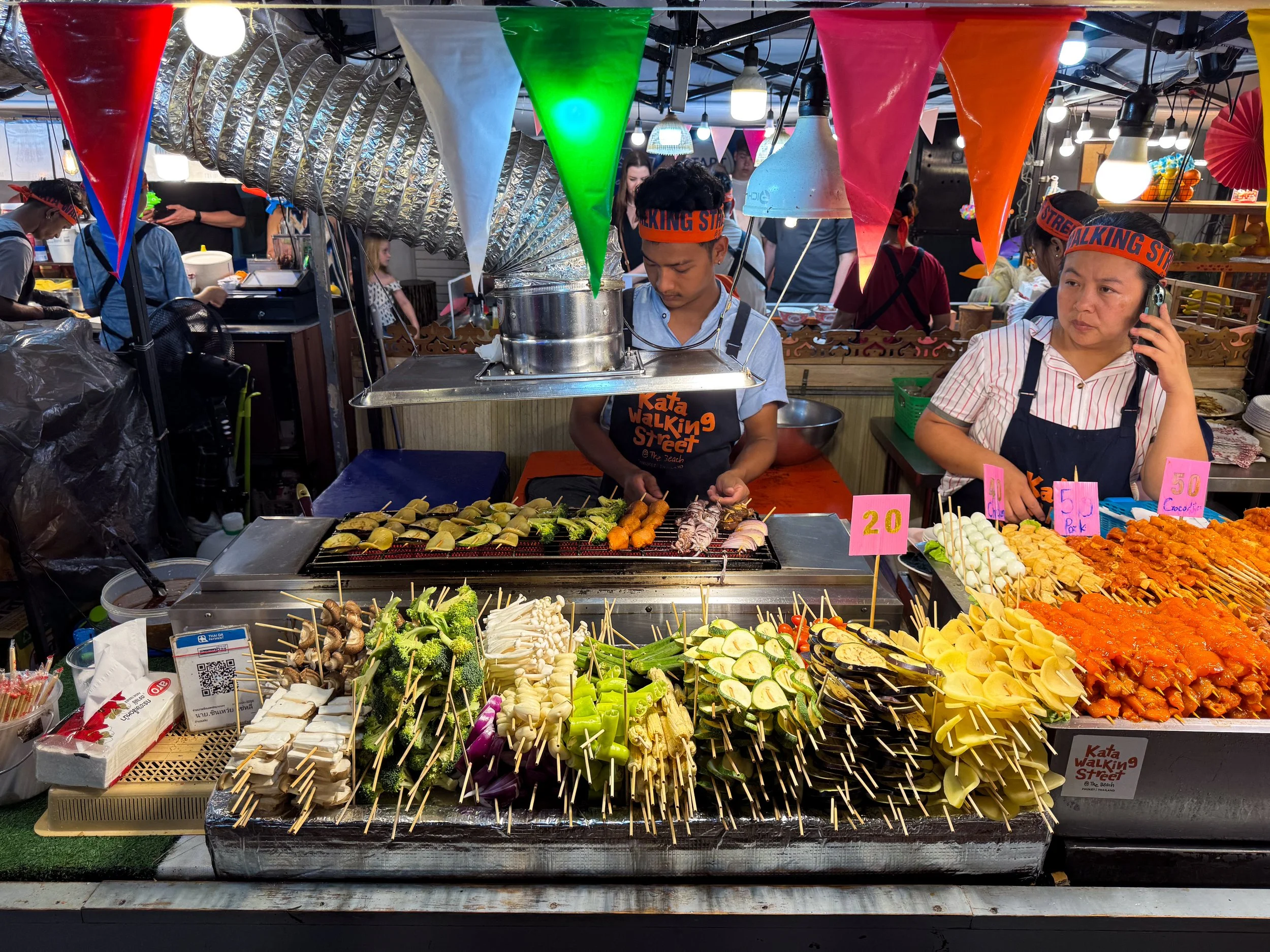
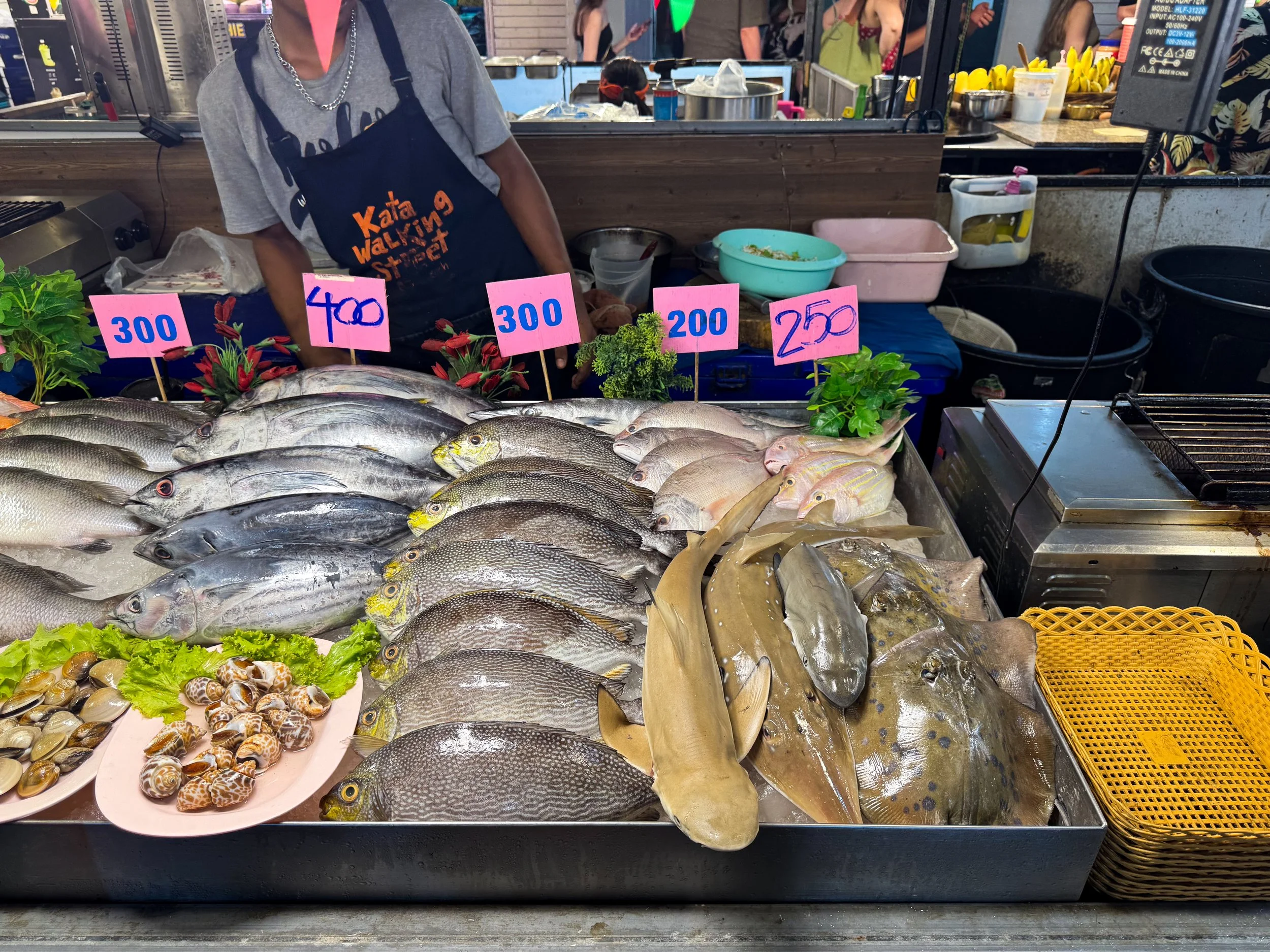
Kata Walking Street Market. A large street food market near the north side of Kata Beach with alleyways and a shed of vendors serving all types of Thai dishes. It’s a popular spot to try freshly caught and affordable seafood like grilled whole fish, squid and lobster.
Places to Eat & Drink
Coffee Bar Let’s Roll. A breakfast and brunch spot in Kata with a range of egg dishes, smoothie bowls, baked goods and coffees.
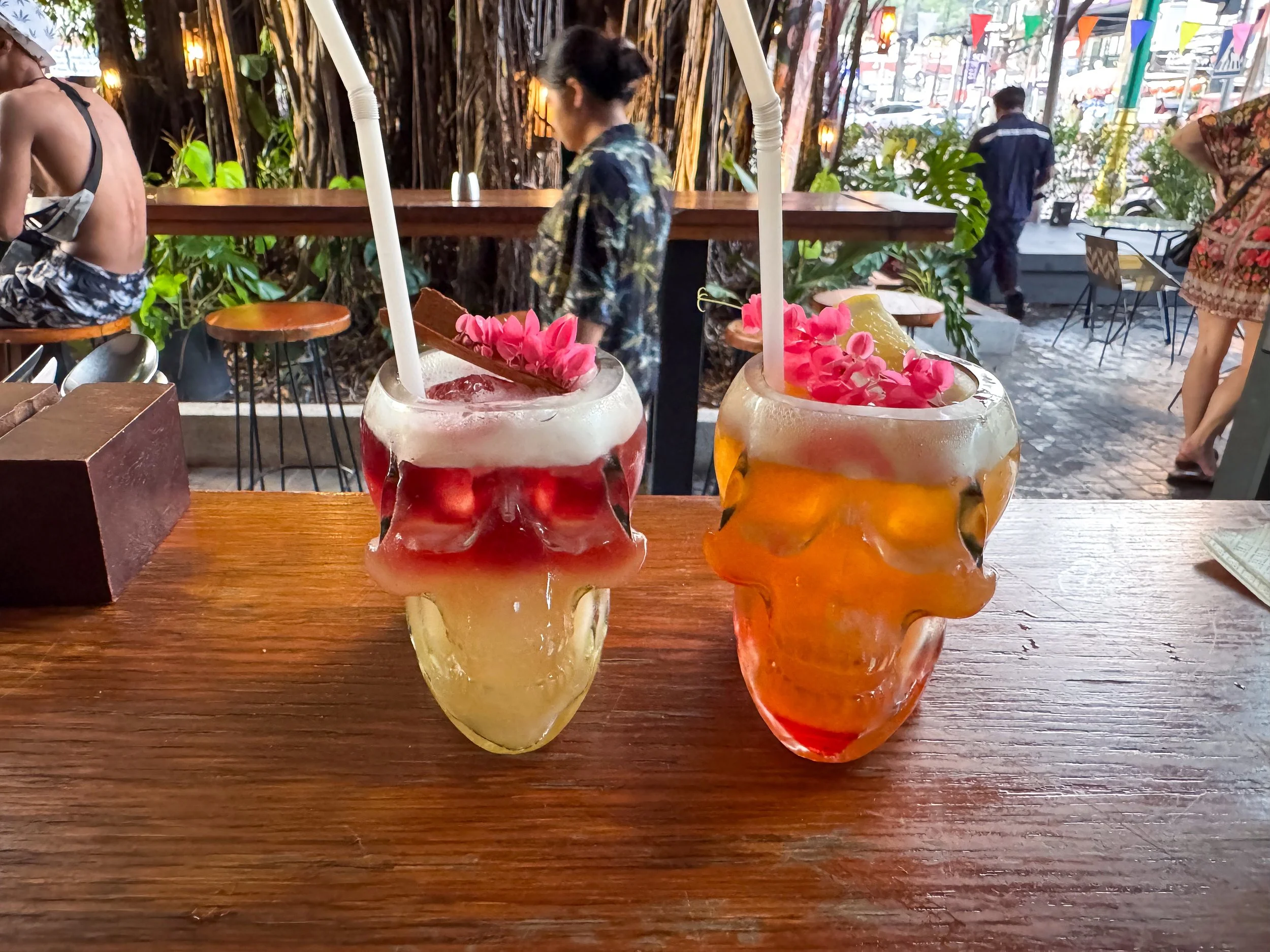
Griffin House Bar. A small street side bar in Kata with well made and affordable cocktails. We stopped in for tropical Mai Tais.
Pots, Pints & Tikis. A restaurant and bar just steps from the north end of Patong Beach. Their menu includes classic Thai dishes, brick oven pizzas, pastas and burgers. Bartenders mix tropical cocktails and tiki drinks in addition to serving Thai beers. It’s the perfect spot for a mid-afternoon bite or post sunset drink. Come for the buy one get one free happy hour from 5-7pm.
Taodaeng. A beautiful dessert café in Phuket’s Old Town with pastries, tarts and cold caffeinated beverages. We stopped in to escape the heat and sip on Thai Iced Tea with Boba as well as try two tarts decorated in local fruits and edible flowers.
Ubuntu Vegan Café. A vegan restaurant in Phuket with Mediterranean, Indian and Thai dishes as well a fresh fruit smoothie bowls.
Thai Cuisine
Pad Thai. A world renowned rice noodle dish famed for its tangy and sweet sauce paired with peanuts, scallions, bean sprouts and chili peppers.
Thai Curry. Red, green and yellow curries made with a range of hot and savory spices, coconut milk and rice noodles.
Tom Yum Goong. A flavorful spicy and sour Thai soup made with lime juice, lemon grass, galangal root, kaffir lime leaves and evaporated milk. It’s often paired with shrimp or prawn.
Spring Rolls. Crispy and flaky rolled or deep fried dough filled with veggies and herbs typically served with a sweet and spicy sauce.
Pineapple Fried Rice. Stir-fried rice cooked with diced pineapple, umami forward sauces and a choice of protein like tofu, chicken or pork.
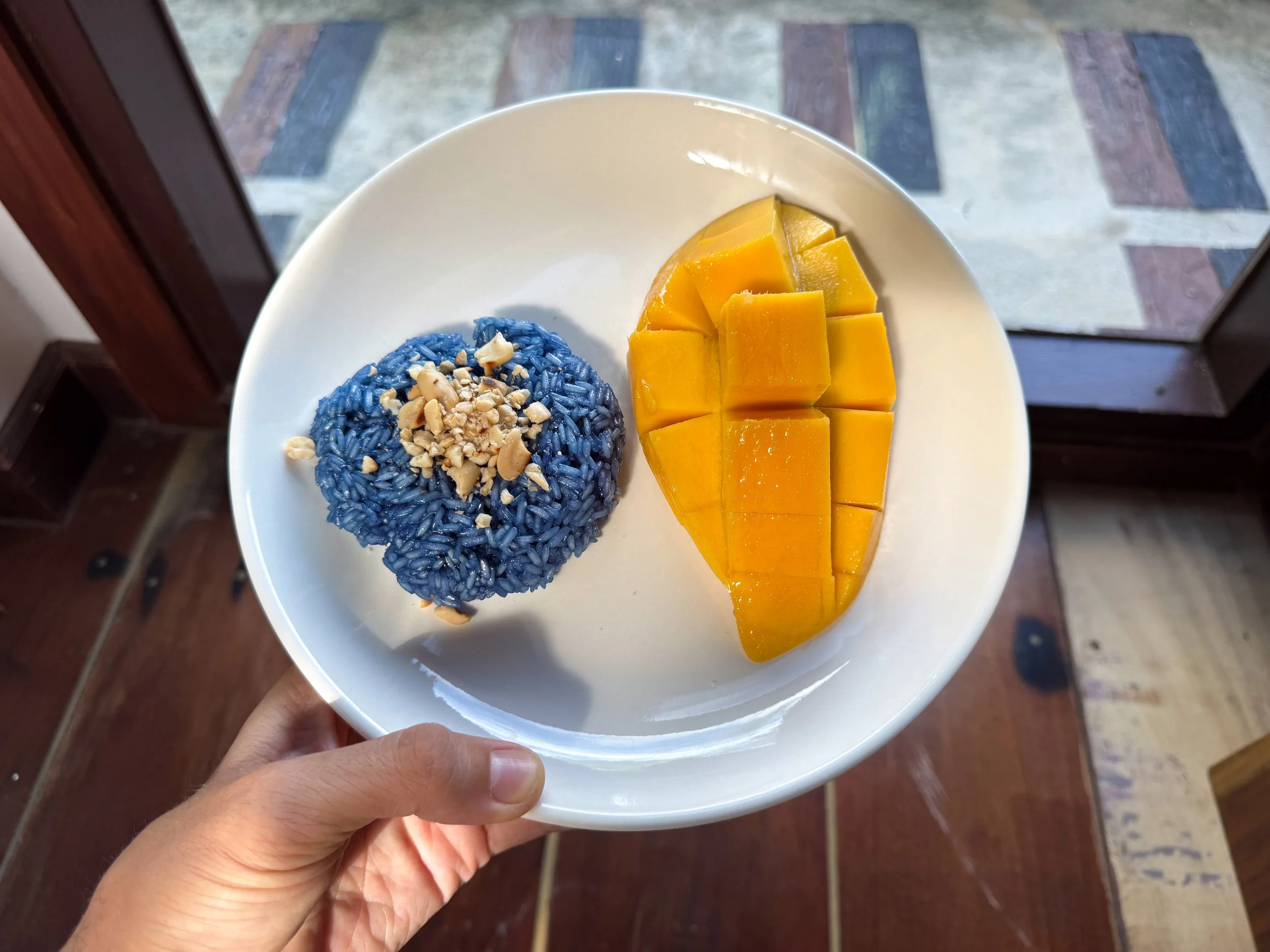
Mango Sticky Rice. A simple and delicious staple of Thai cuisine made from sticky rice paired with freshly sliced mango. The rice is often flavored with sweetened condensed milk or a herbal syrup.
Thai Iced Tea. A classic Thai beverage made from brewed black tea and mixed with milk and sugar. It’s often flavored with star anise and cardamom. Try it with boba pearls.
Thai Rolled Ice Cream. Cream poured over a chilled surface and aggressively mixed together with toppings, thinly spread and scraped up into small rolls of ice cream. Tt’s a staple of every street food market with at least one stand offering the cold and flavorful dessert.
Chang Beer. A national beer, popular across the country. It’s recognizable by two elephants on its label.
Where to Stay
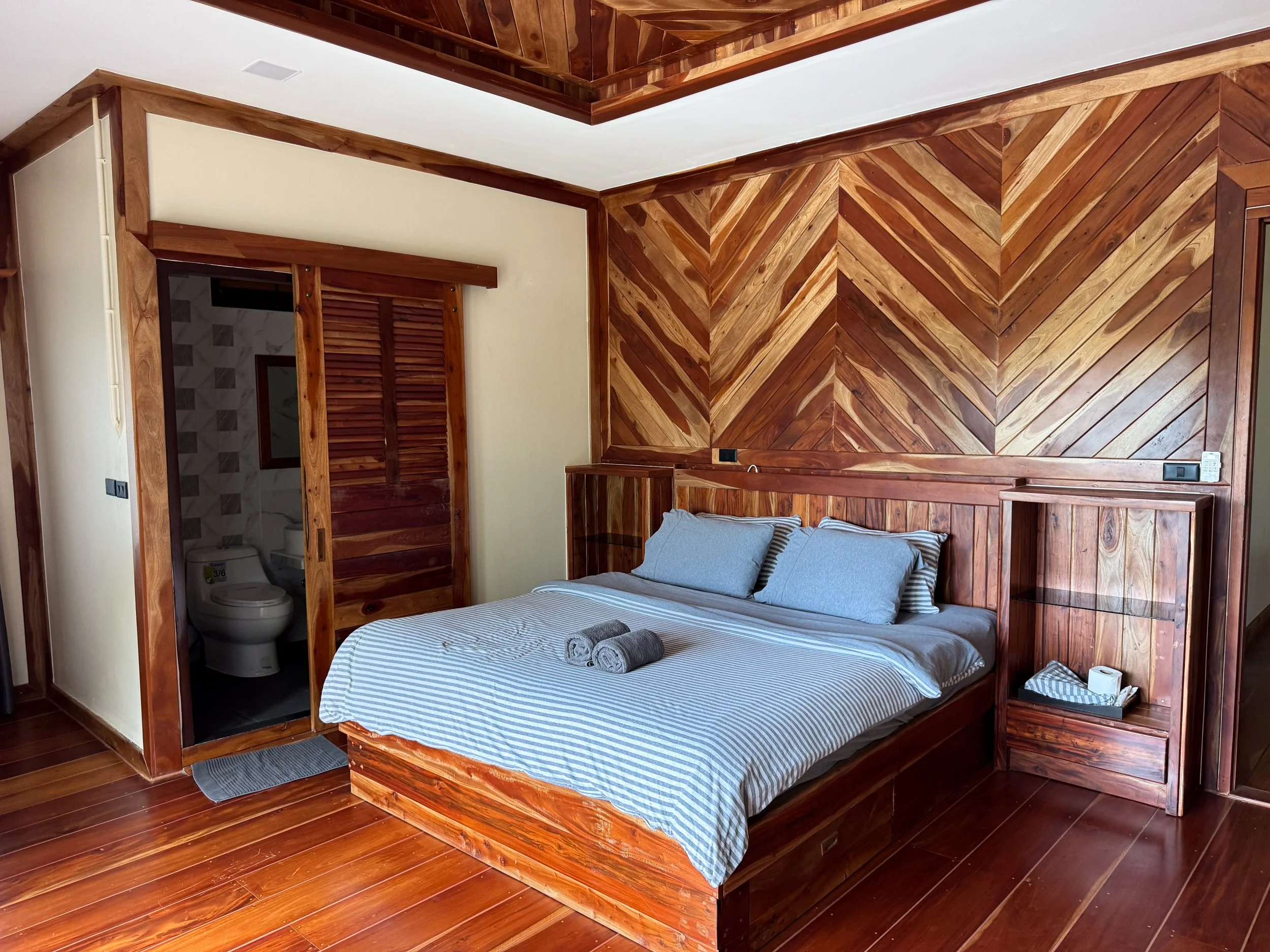
Moonlight House. A boutique hotel in a teak wooden house on the hill above Patong Beach. We stayed in a private room on the second floor with a balcony and sunset views. It was the perfect oasis close to nature and the energy of Patong Beach. Book on Airbnb.
When to Visit
We visited Phuket and southern Thailand in mid-April. There are some pros and cons to consider.
Pros. The Songkran Festival (Thai New Year) happens in mid-April. It’s the shoulder season so there are fewer visitors. It’s peak mango harvesting season. The sweet and tasty fruit is available everywhere.
Cons. There will be some rainy days. Plan to leave buffer room if tours need to be rescheduled or if beach days get rained out.
Getting Around
Phuket Smart Bus (Airport Bus). An inexpensive public bus with stops between the airport and beach towns of Phuket making stops at Patong, Karon, Kata and Rawai Beaches. Tickets cost 100 Bhat per person. Follow the signs outside of the terminal to the pick up spot.
Grab. A taxi hailing app similar to Uber or Lyft. Taxis were readily available on the app and cheap to travel around town but significantly more costly to get across the island.
Good to Know. Grabs here can be very scammy! Drivers try to charge more in cash, come up with excuses why they can’t pick you up and ask you to cancel. Make them cancel, not you. Expect to be paired with 3 or more drivers.
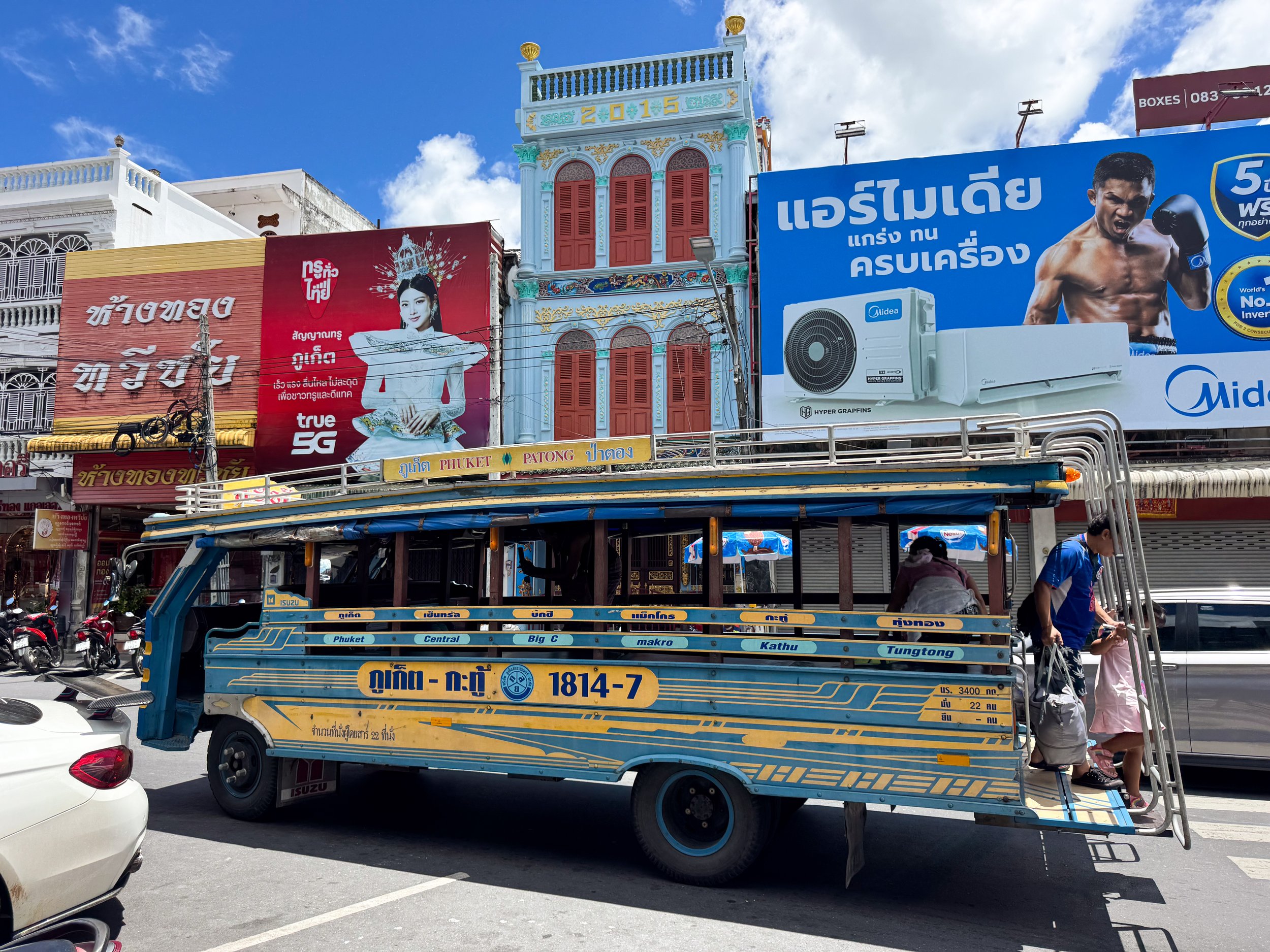
Phuket Patong Public Bus. A public “bus” operating a singular route between Phuket and Patong. The bus is a large covered flatbed truck with benches on either side. It costs 40 Baht per person and is by far the cheapest way to get between both cities. The bus leaves every half an hour between 9am and 6pm. The station in Patong is not marked. It’s located on the corner of Sawatdirak Road and Thaweewong Road next to the Barracuda Beach Club. In Phuket, it’s located at the Phuket Town Bus Terminal.
Elsewhere in Thailand
From Phuket's beaches and island hopping routes to Bangkok's cultural landmarks, Chiang Mai's northern heritage and Krabi's dramatic coastline, continue your journey through Thailand with these travel guides:
Bangkok Travel Guide: Temples, Street Food & Thai Culture. Immerse yourself in Bangkok where gilded temples, the Royal Palace, lively night markets and legendary street food reflect Thailand's dynamic blend of tradition and modernity.
Chiang Mai Travel Guide: Old City, Temples & Night Markets. Meander through Chiang Mai's Old City where historic temples and night markets reveal Northern Thai culture, mountain landscapes, waterfalls and elephant sanctuaries.
Krabi Travel Guide: Railay Beach, Limestone Cliffs & Tropical Adventure. Adventure through Krabi where Railay Beach, limestone cliffs, turquoise bays, white sand beaches and caves form one of Thailand's most dramatic coastal landscapes.
For Next Time…
Mai Khao Beach Airport Viewpoint. A beach at the end of Phuket’s airport runway. During certain times of the year, airplanes fly just several meters overhead before touching down on the runway.
Mu Ko Similan National Park & Islands. A protected marine reserve famed for its underwater marine life and biodiversity. It’s a popular snorkeling and diving destination.
Visit the Mangroves. Phuket and the surrounding islands are home to a dense ecosystem of coastal mangroves. During high tide, many of them can be toured by kayak or stand up paddle by guides that know the route.
Chiang Mai Travel Guide: Old City, Temples & Night Markets
Meander through Chiang Mai's Old City where historic temples and night markets reveal Northern Thai culture, mountain landscapes, waterfalls and elephant sanctuaries.

Chiang Mai, Thailand
Chiang Mai is an ancient city in Northern Thailand with crumbling ruins, historic sights, impressive Buddhist wats and access to flowing waterfalls, national parks and elephant sanctuaries. The city has a bohemian vibe to it with night markets, worldly backpackers and vegan restaurants. We spent a week here exploring the city and taking multiple day trips to several cultural and natural sights.

Chiang Mai Old City
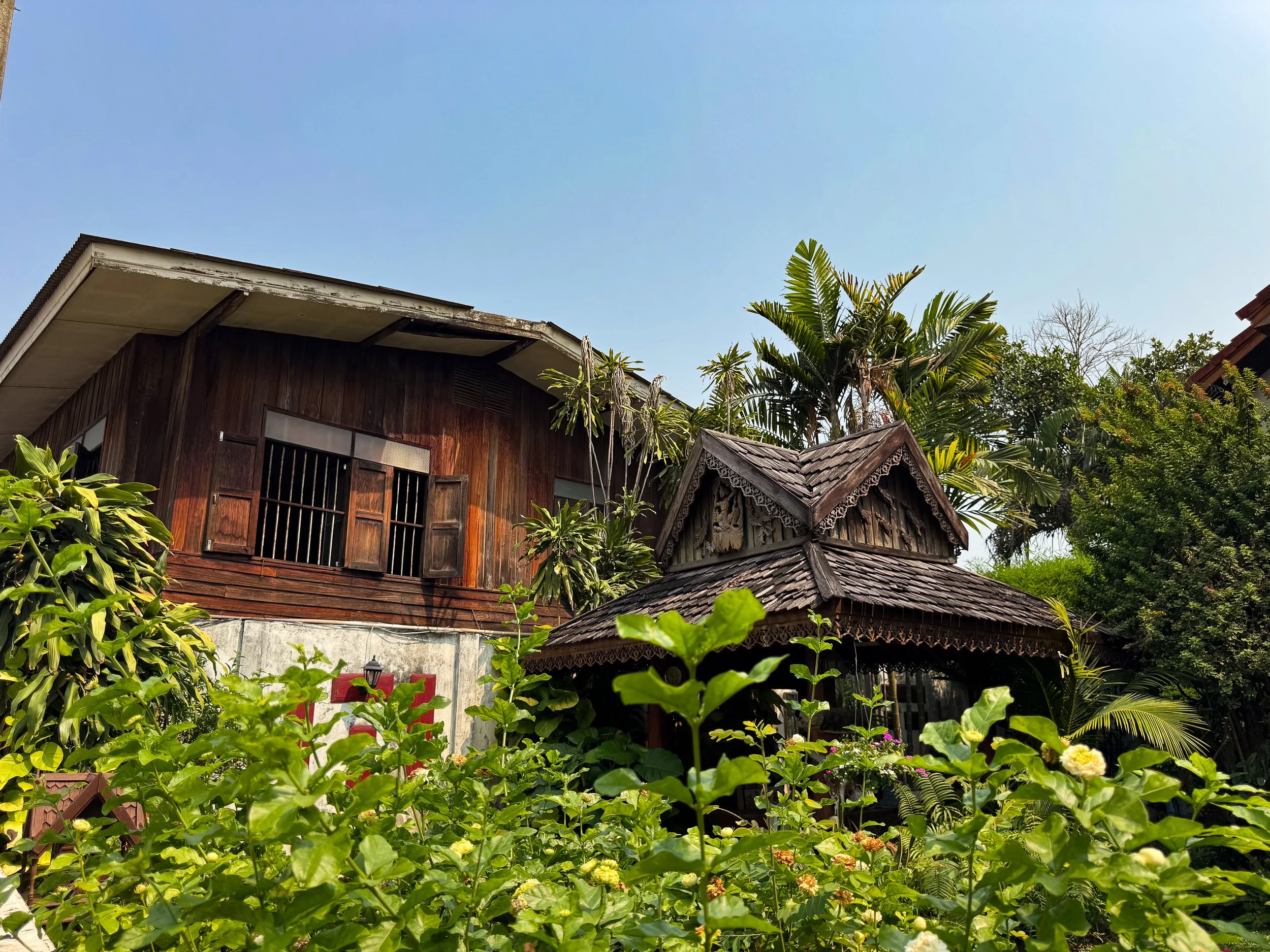
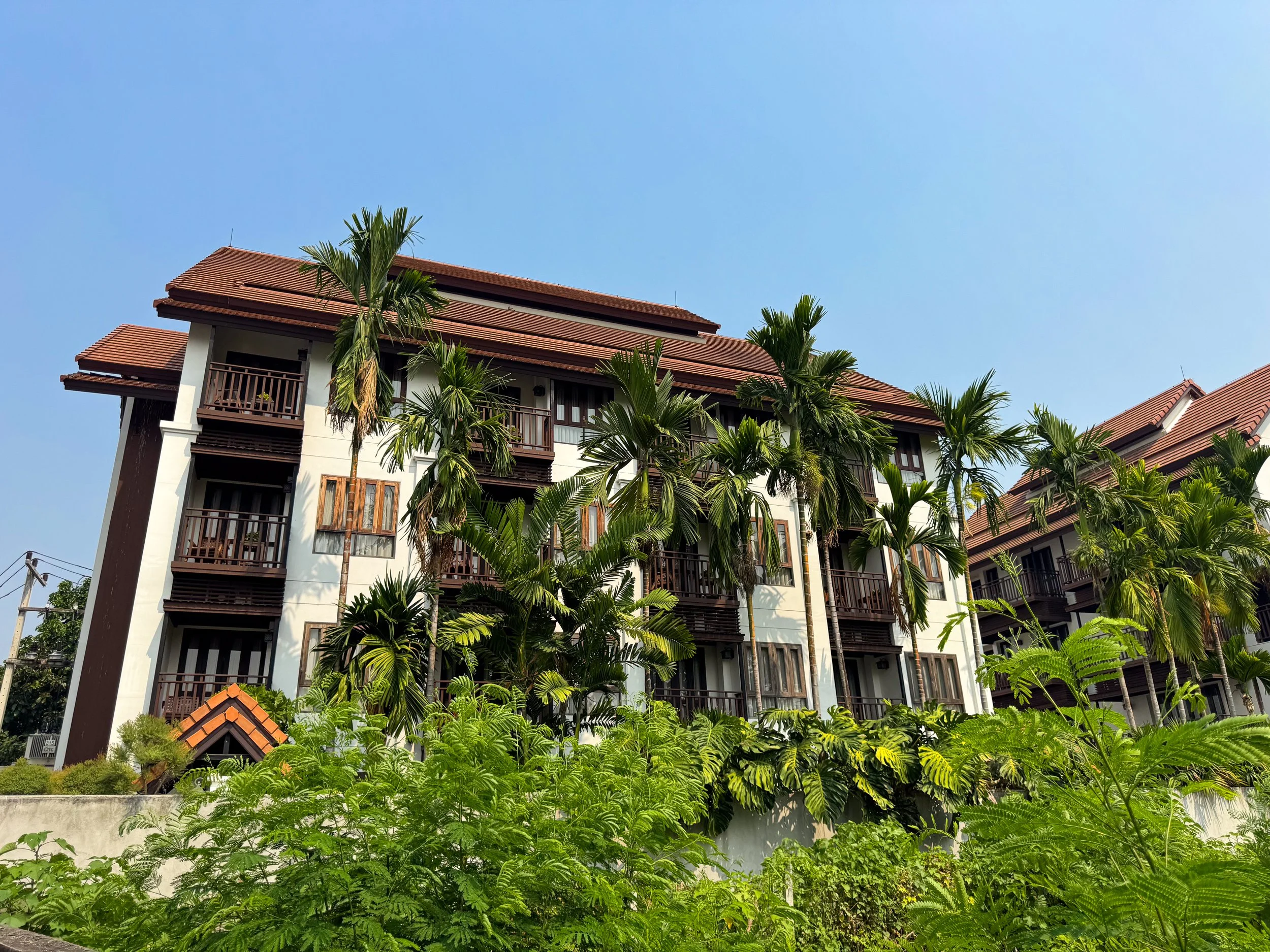
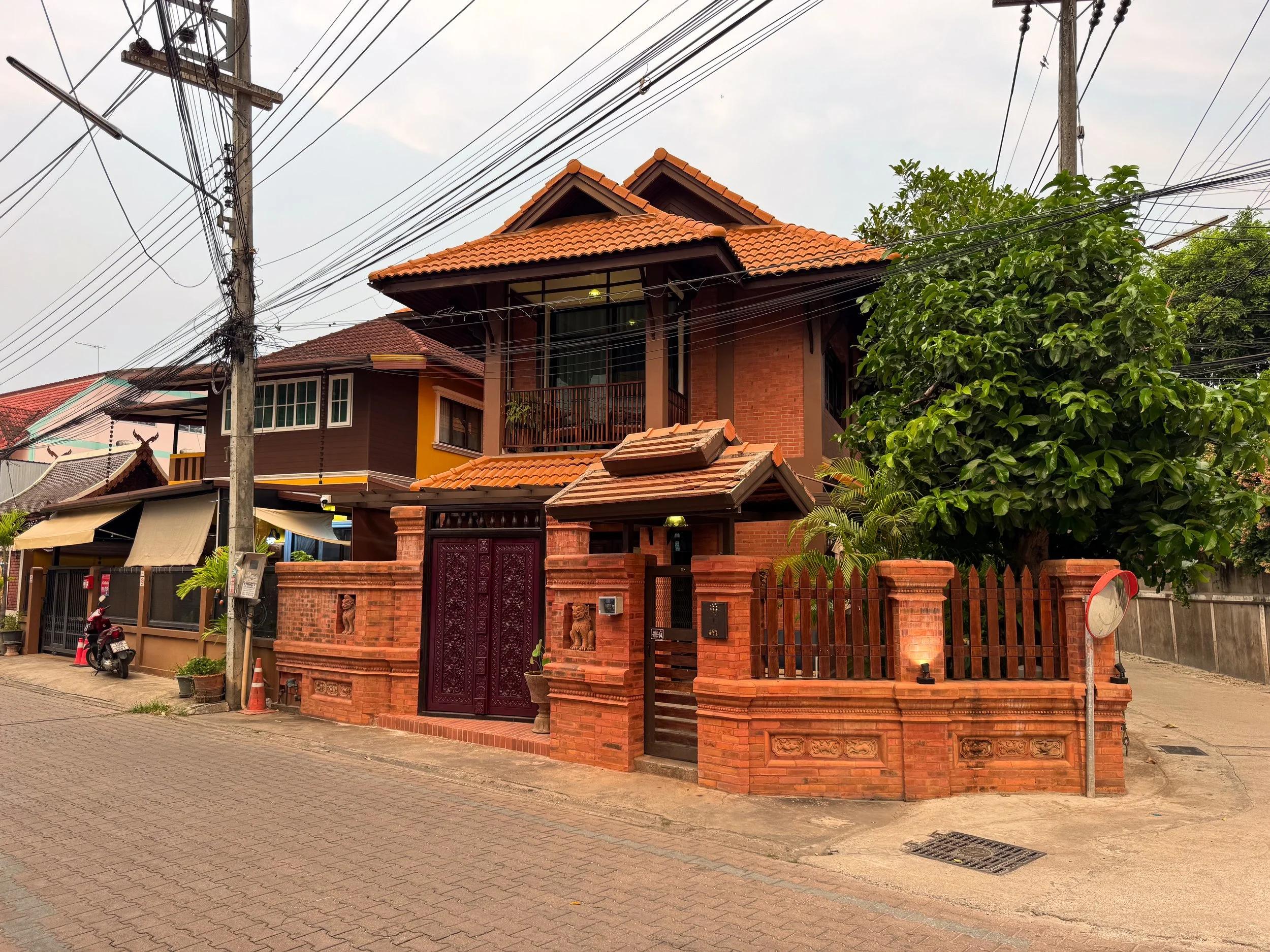
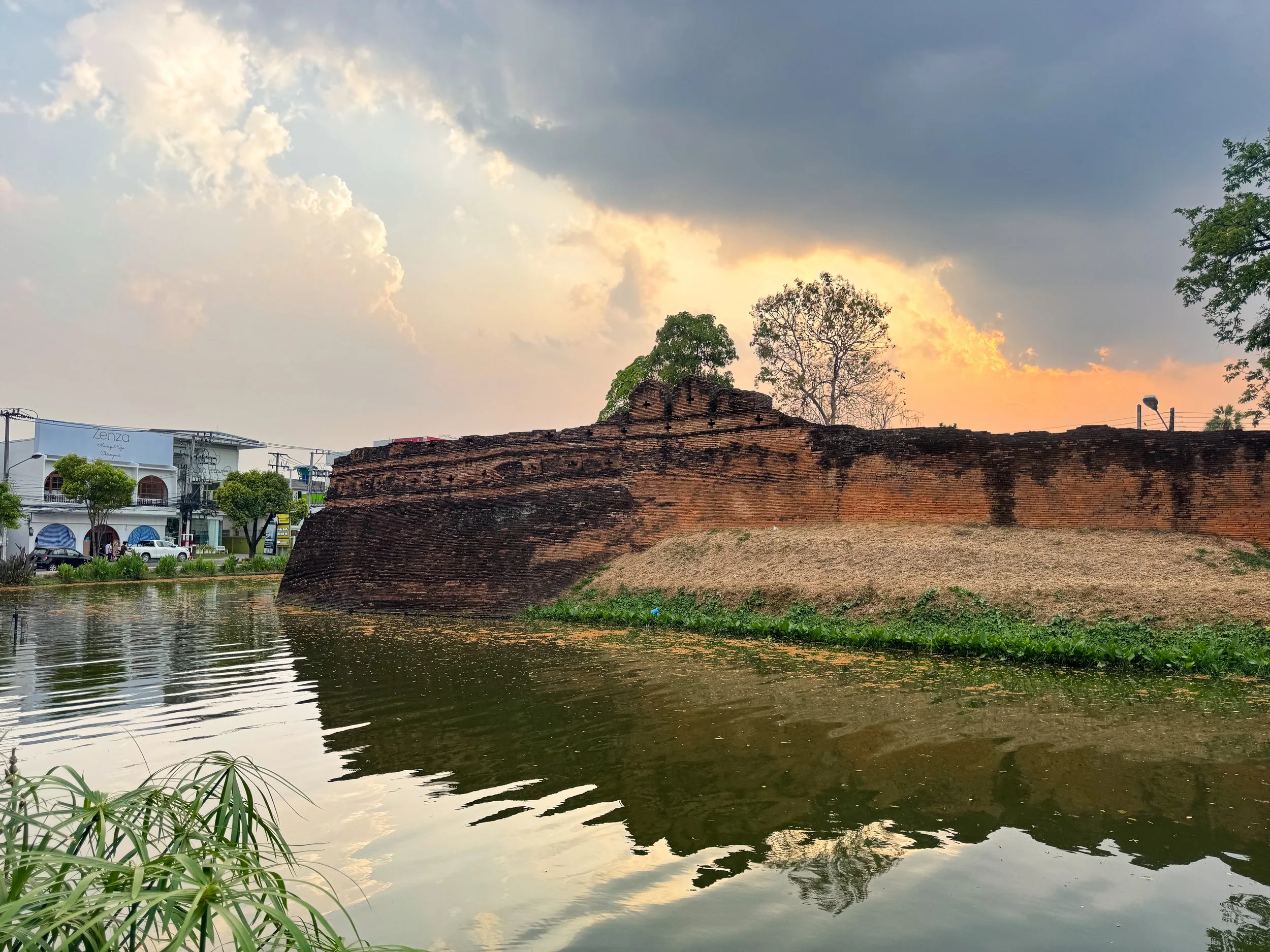
The old city of Chiang Mai is surrounded by a moat and sections of a crumbling red brick wall dating back 700 years. Its winding streets are lined with two floor old wooden houses, ancient Buddhist wats, Thai restaurants, small bars, coffee shops and boutique hotels. Sprawling night markets attract thousands of visitors for their cultural significance, array of street food and locally made goods.
Old City Wall. The old city is surrounded by a square moat and the ruins of a crumbling brick wall dating back over 700 years. All four corners have rounded defensive towers that were once used to protect the city. On each side are various gates still used today by both pedestrians and vehicles.
Tha Phae Gate. The east gate to the Old City. Its wooden doors are flanked by a large red brick wall. It’s a popular photo spot with hundreds of pigeons. It’s the entrance to the Sunday Night Market. It can only be entered on foot.
Hua Lin Corner. A defensive corner once home to an ancient aqueduct that channeled water from a natural spring over the moat and into the Old City. It’s located at the northwest corner.

Buddhist Wats & Temples
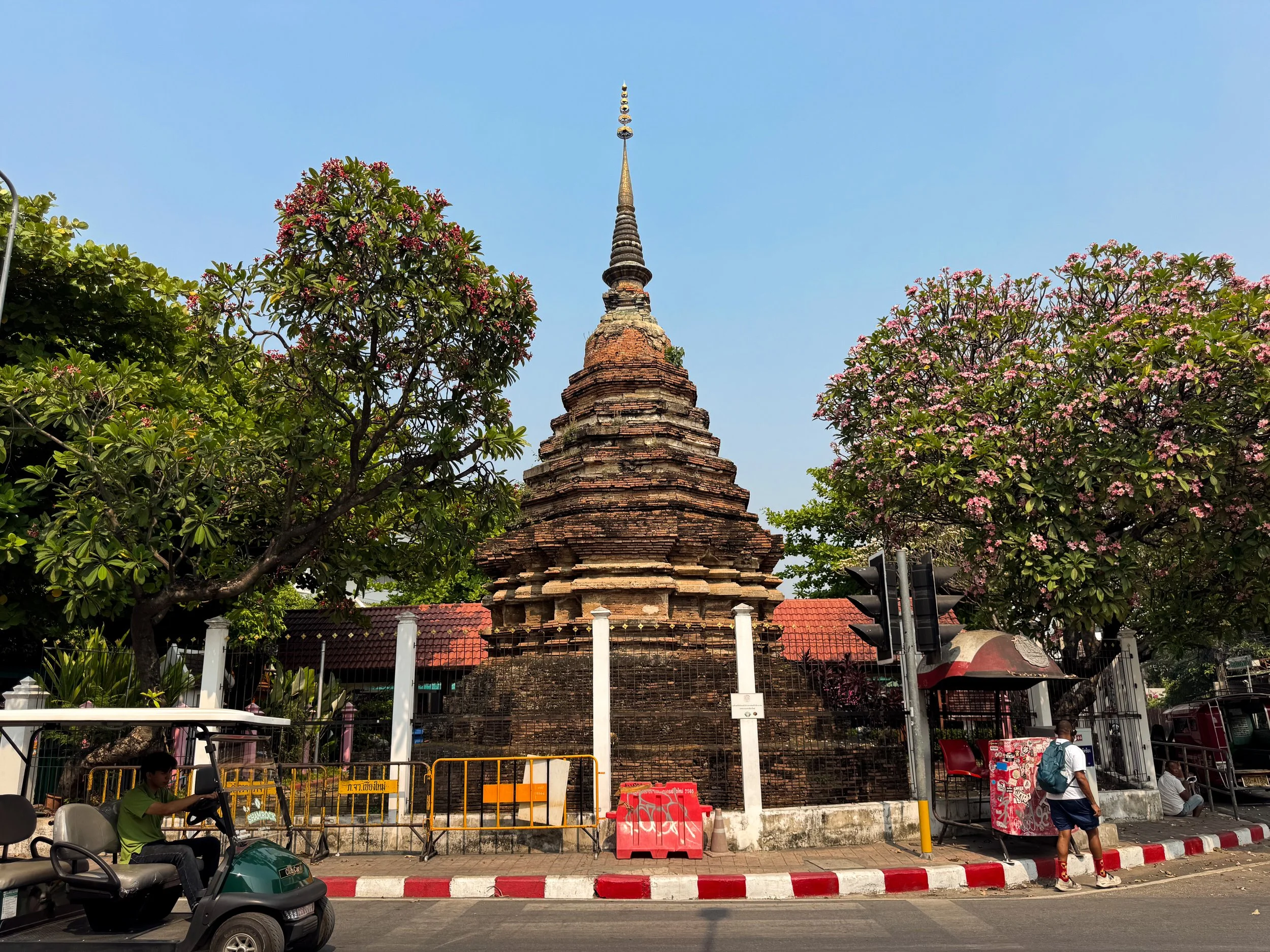
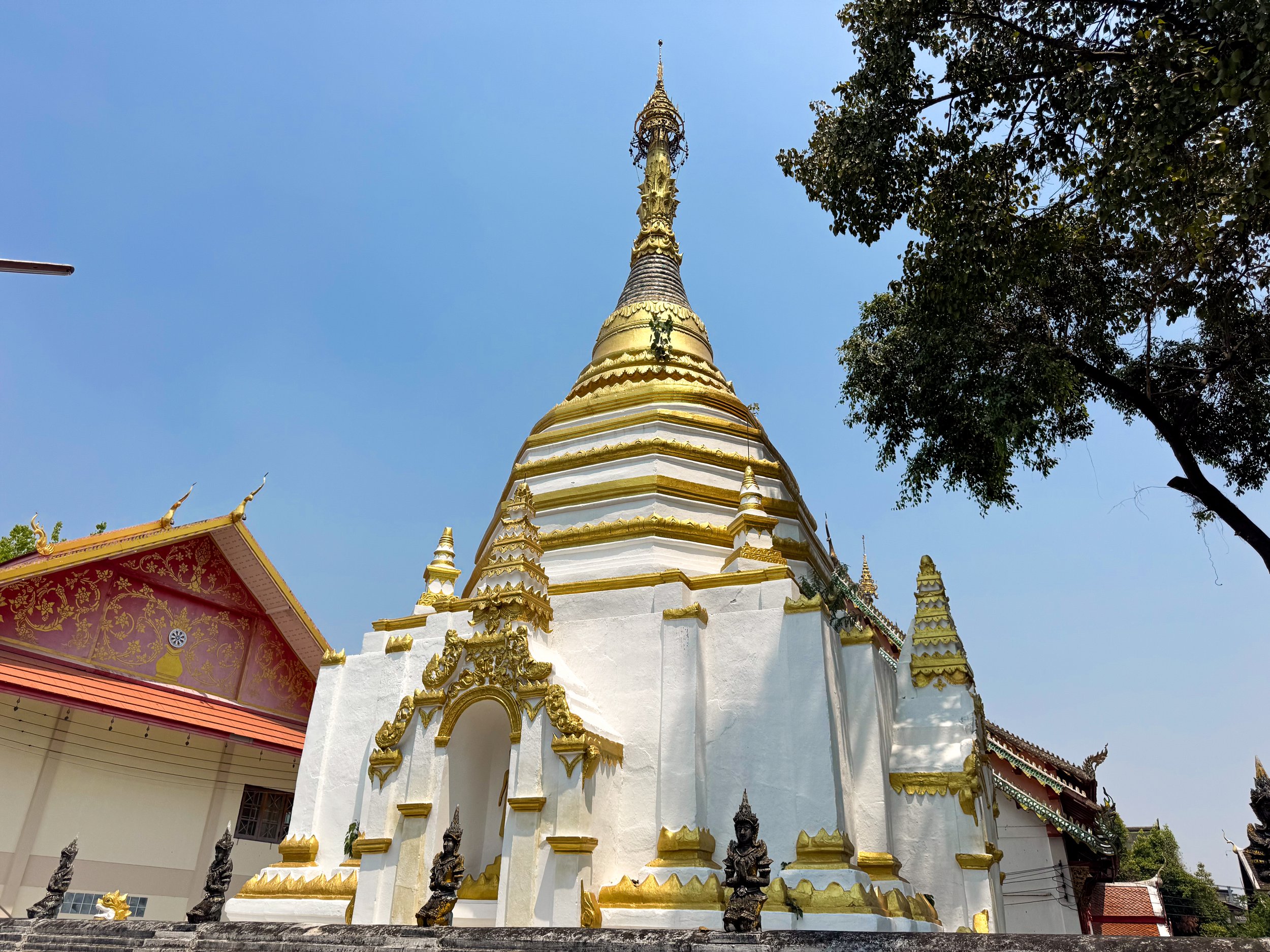
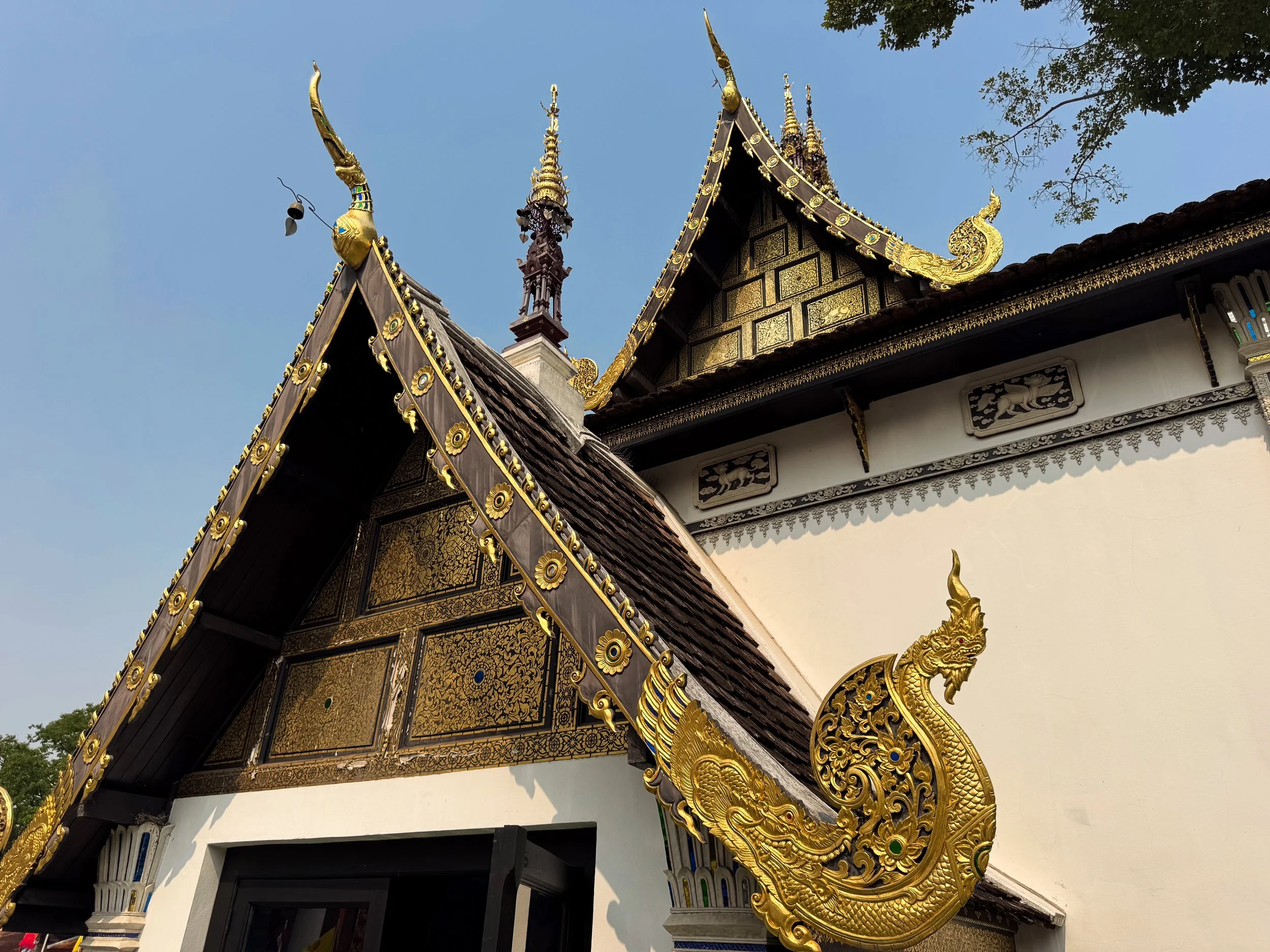
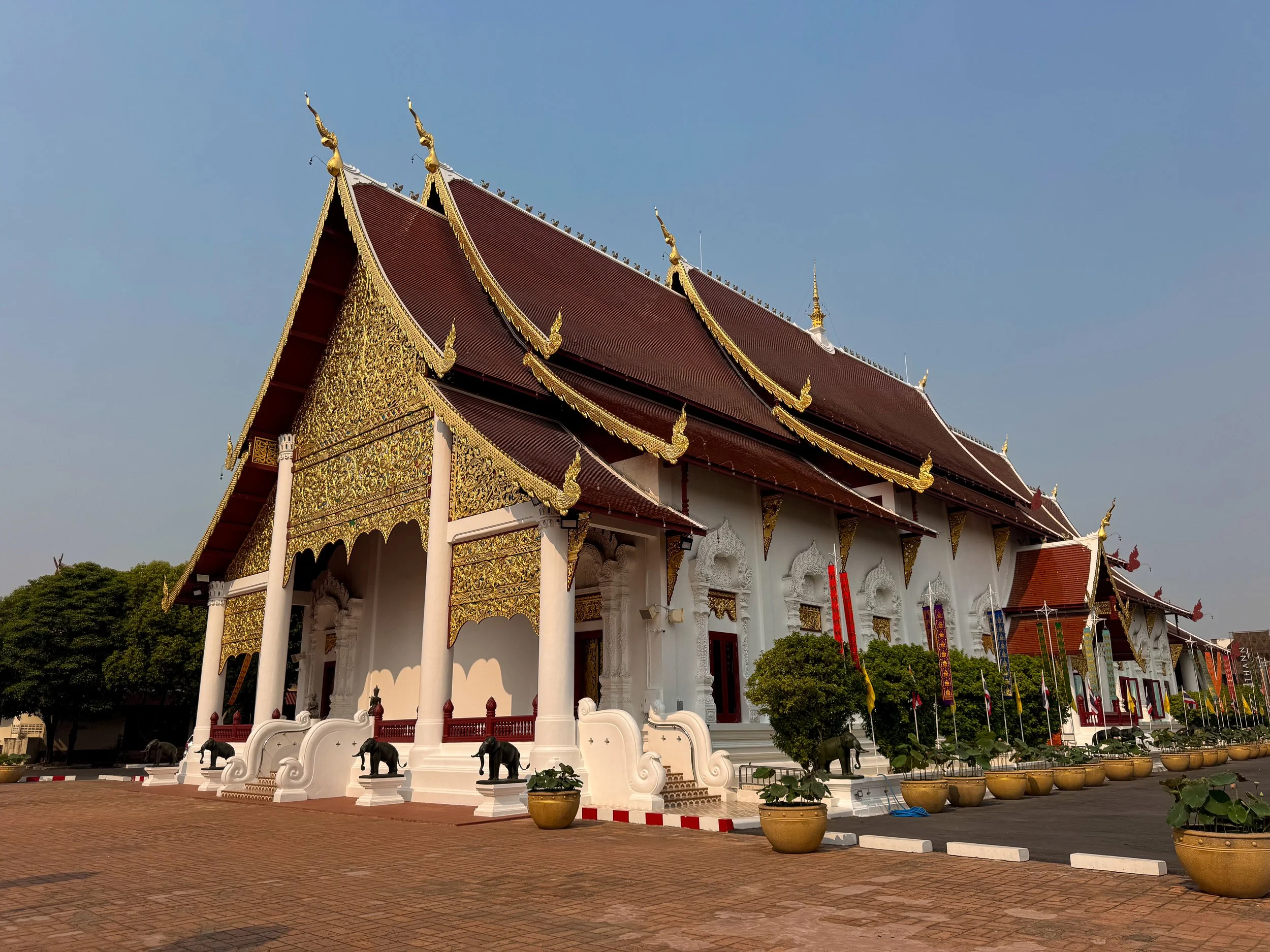
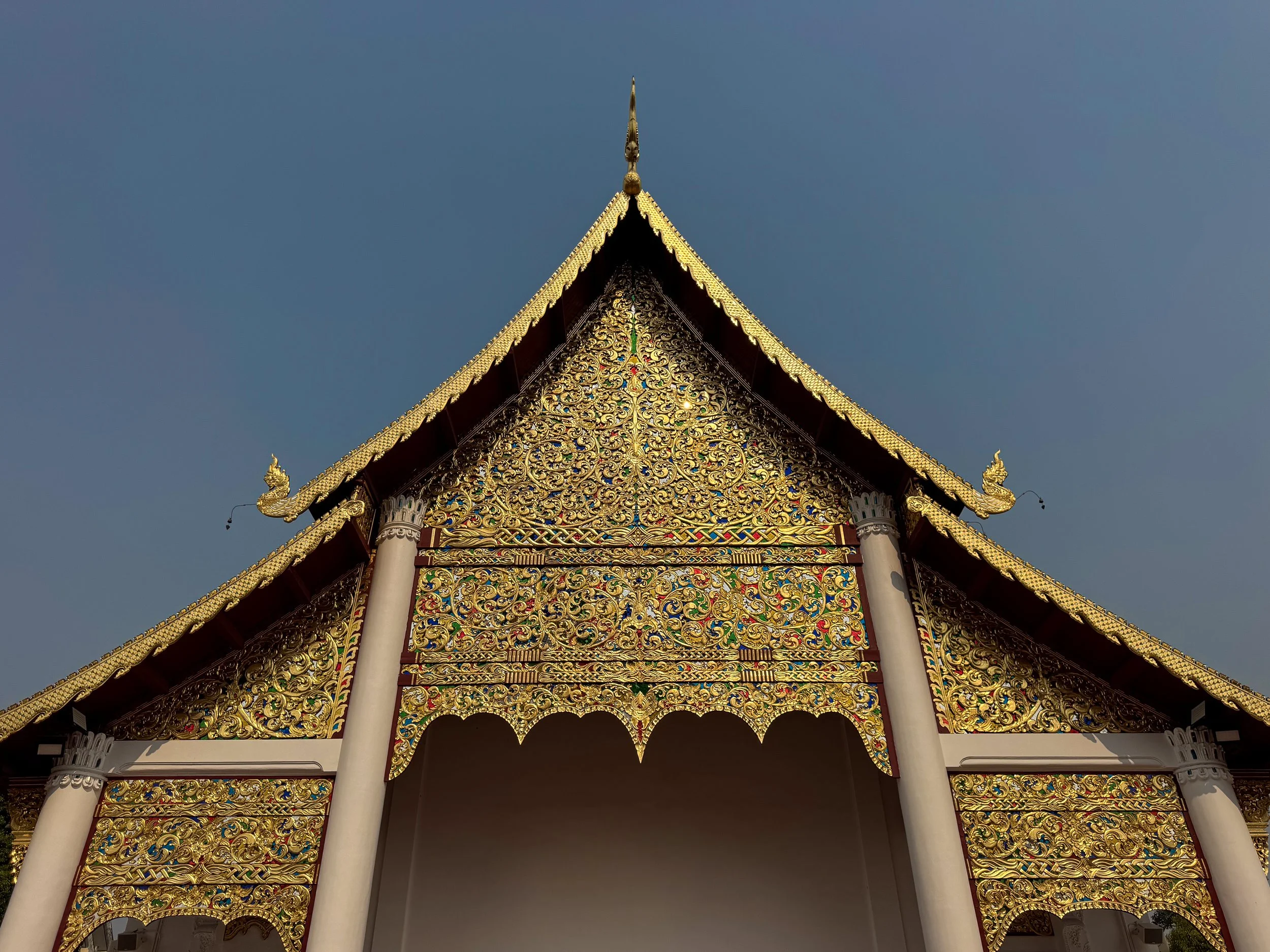
Chiang Mai is an ancient Buddhist city with dozens of wats, many dating back over 700 years to the city’s founding. Golden Buddhas, wooden meditation halls, towering stupas, dragon staircases and ornate designs are some of the few characteristics that distinguish this city’s wats.
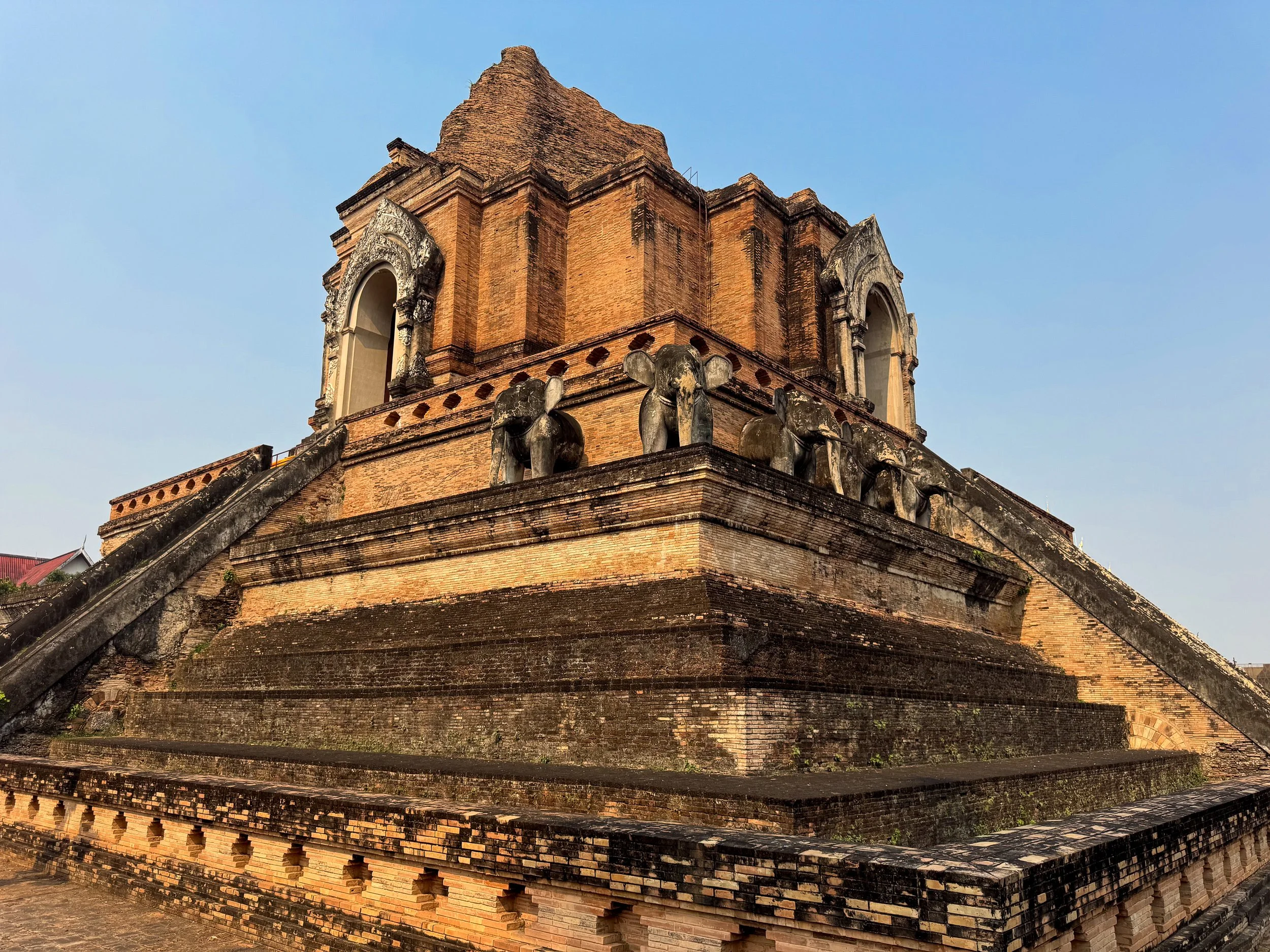
Wat Chedi Luang Varavihara. A sacred and ancient temple complex in Chiang Mai’s Old City. It’s home to the ruins of a giant brick chedi, the pillar of the city, a Buddhist temple and university.
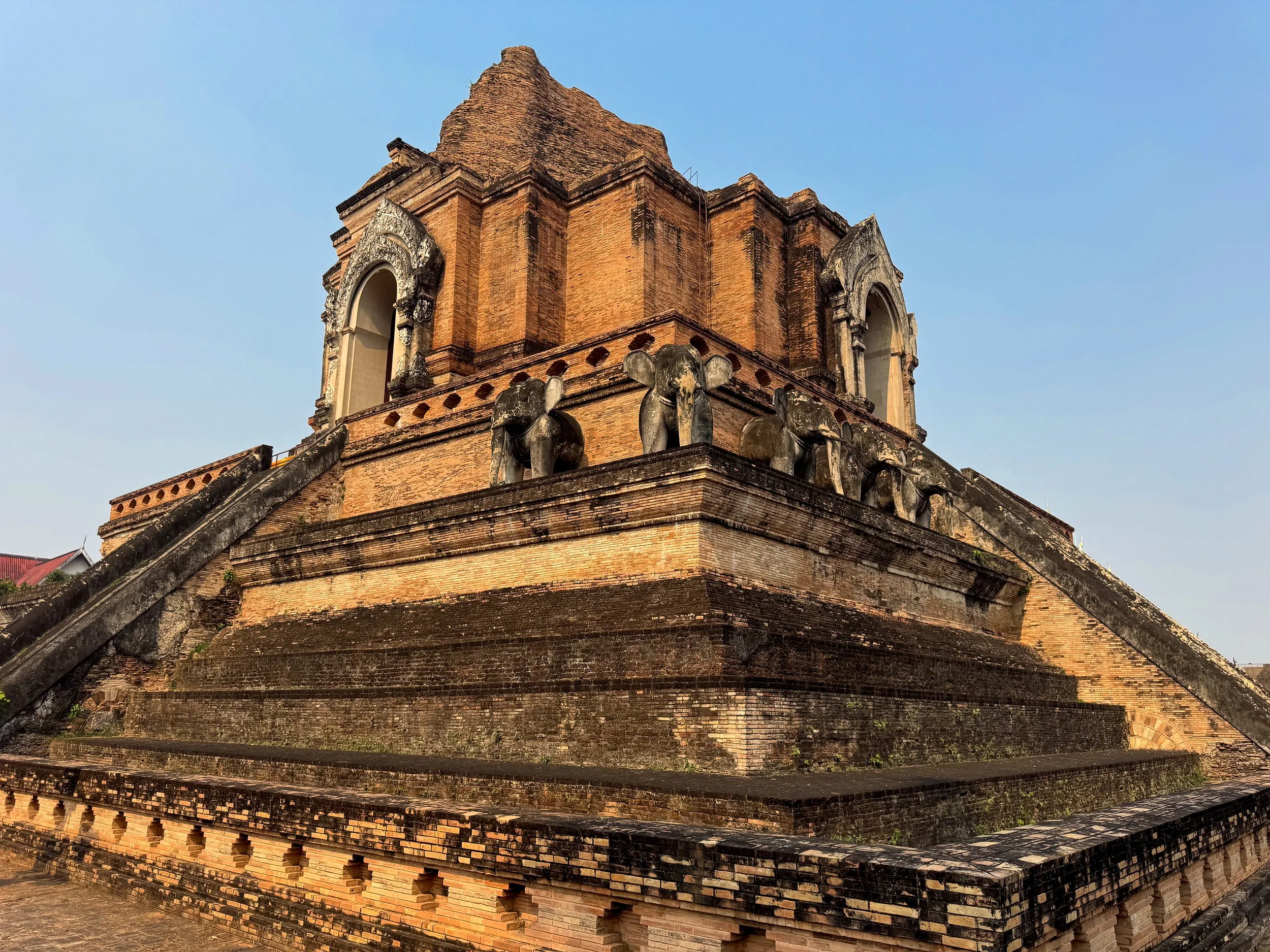
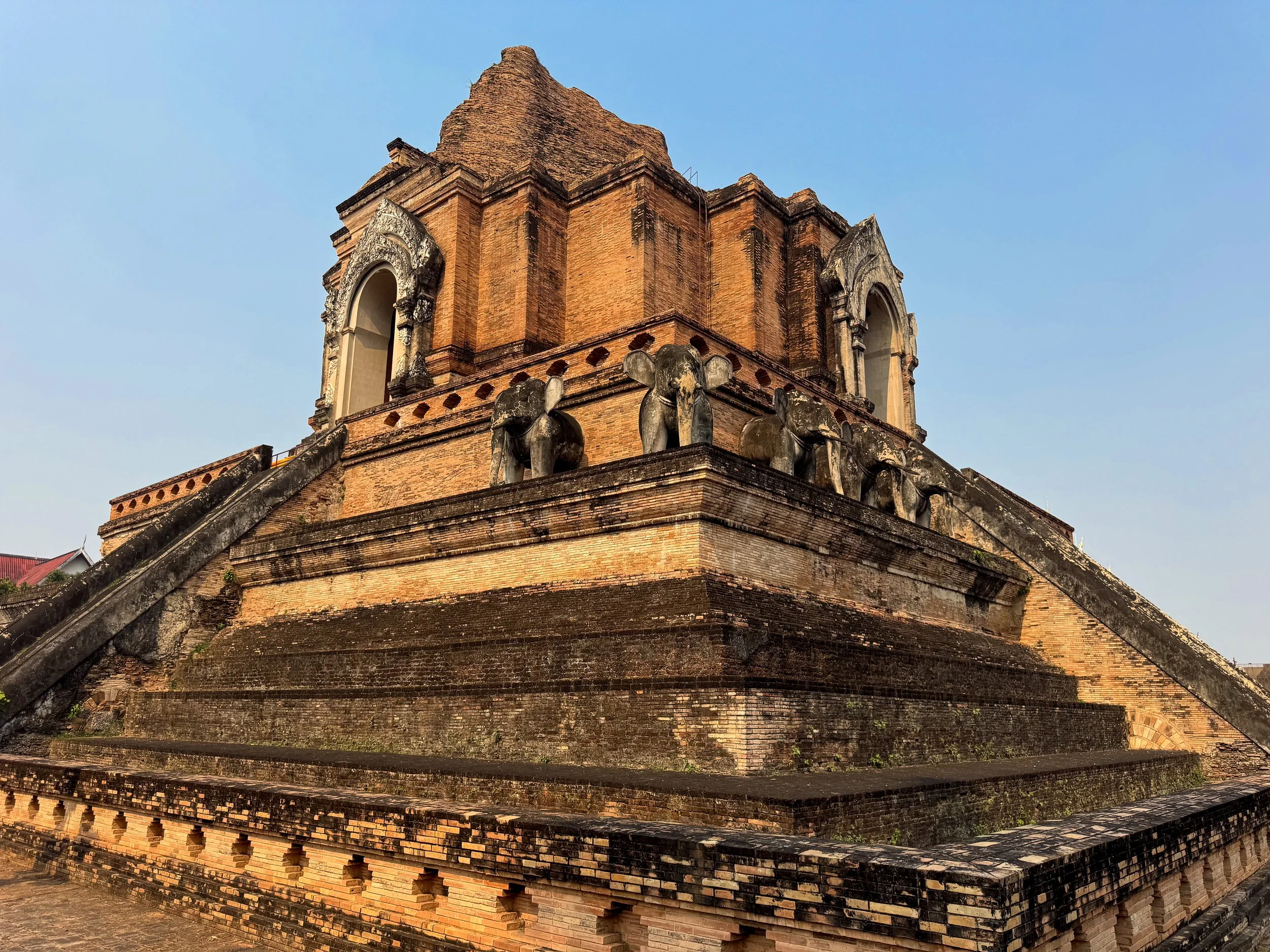
The Chedi. A pyramid style structure made from red bricks with statues of elephants along its first level and shrines with golden Buddhas on top. Its tower was destroyed during an earthquake hundreds of years prior.
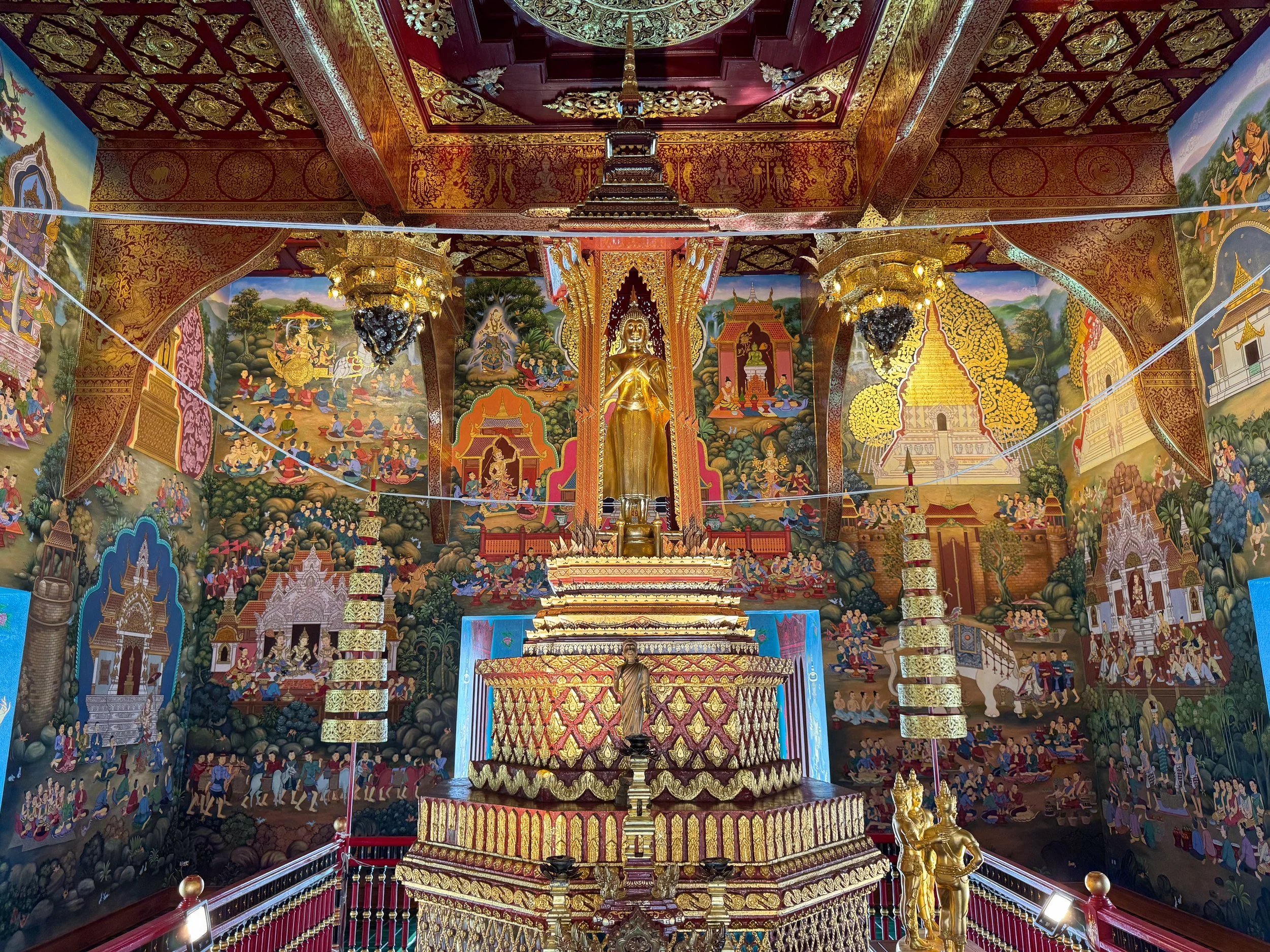
Chiang Mai City Pillar Shrine. One of the most sacred sights in the Old City. It houses an ornate “pillar” with a gilded statue of the Buddha on top. Its interior is adorned in vibrant and colorful stories of the city’s history and temples as well as teaching of the Buddha.
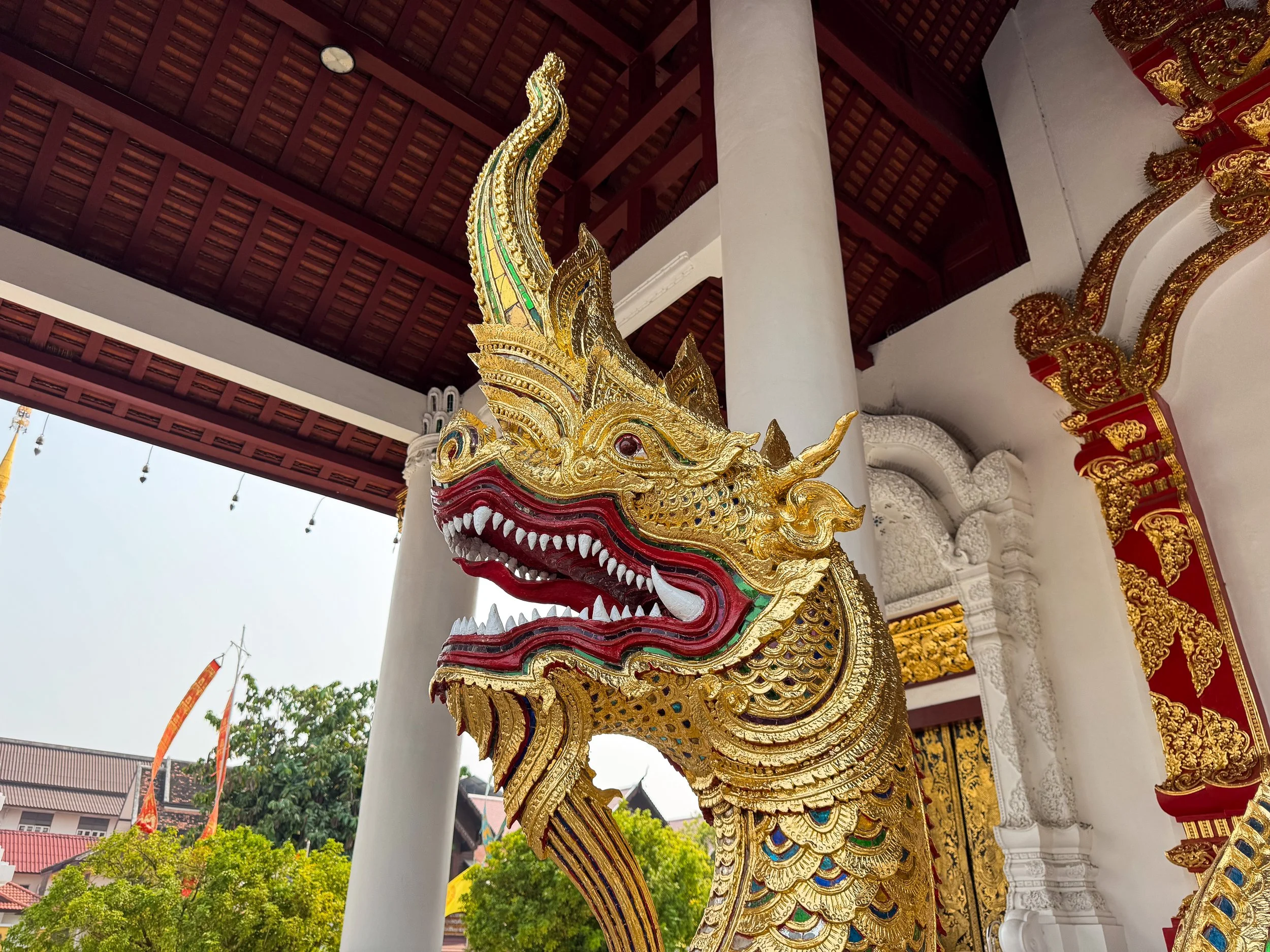
Buddhist Chapel. A large pagoda style hall with an ornately painted red and gold entrance guarded by dragon steps. Inside is a Buddhist shrine, worshipers and seated monks.
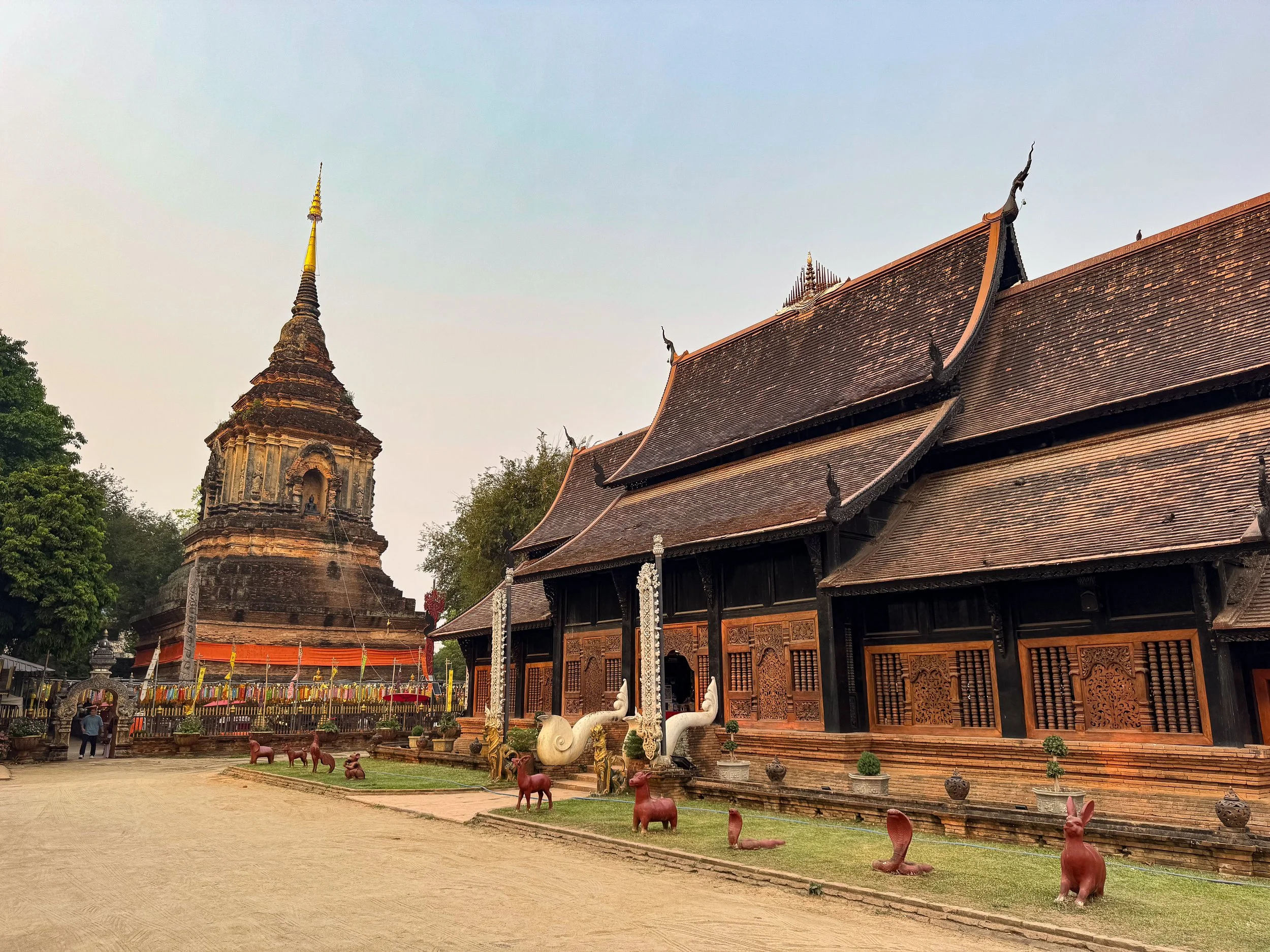
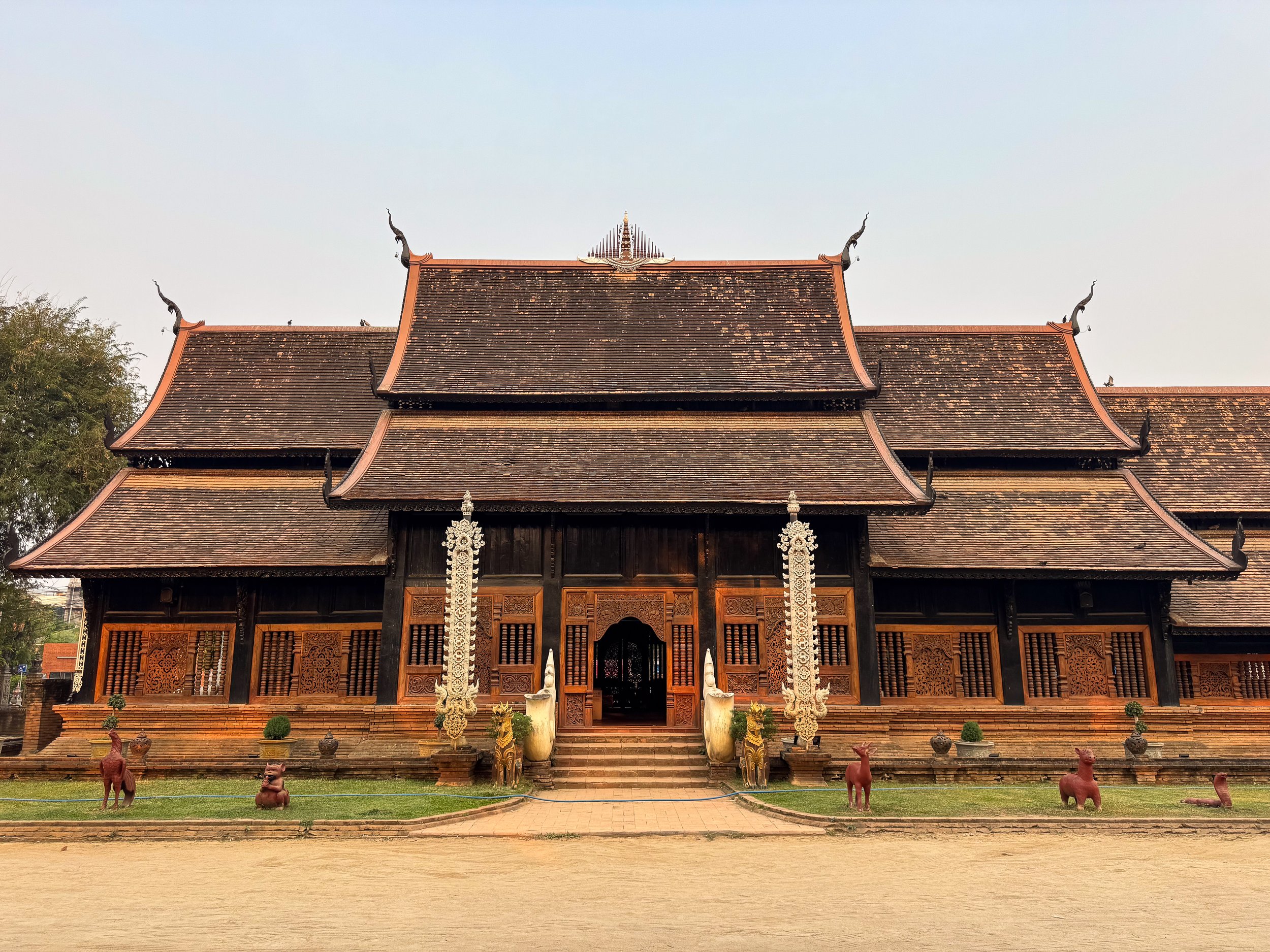
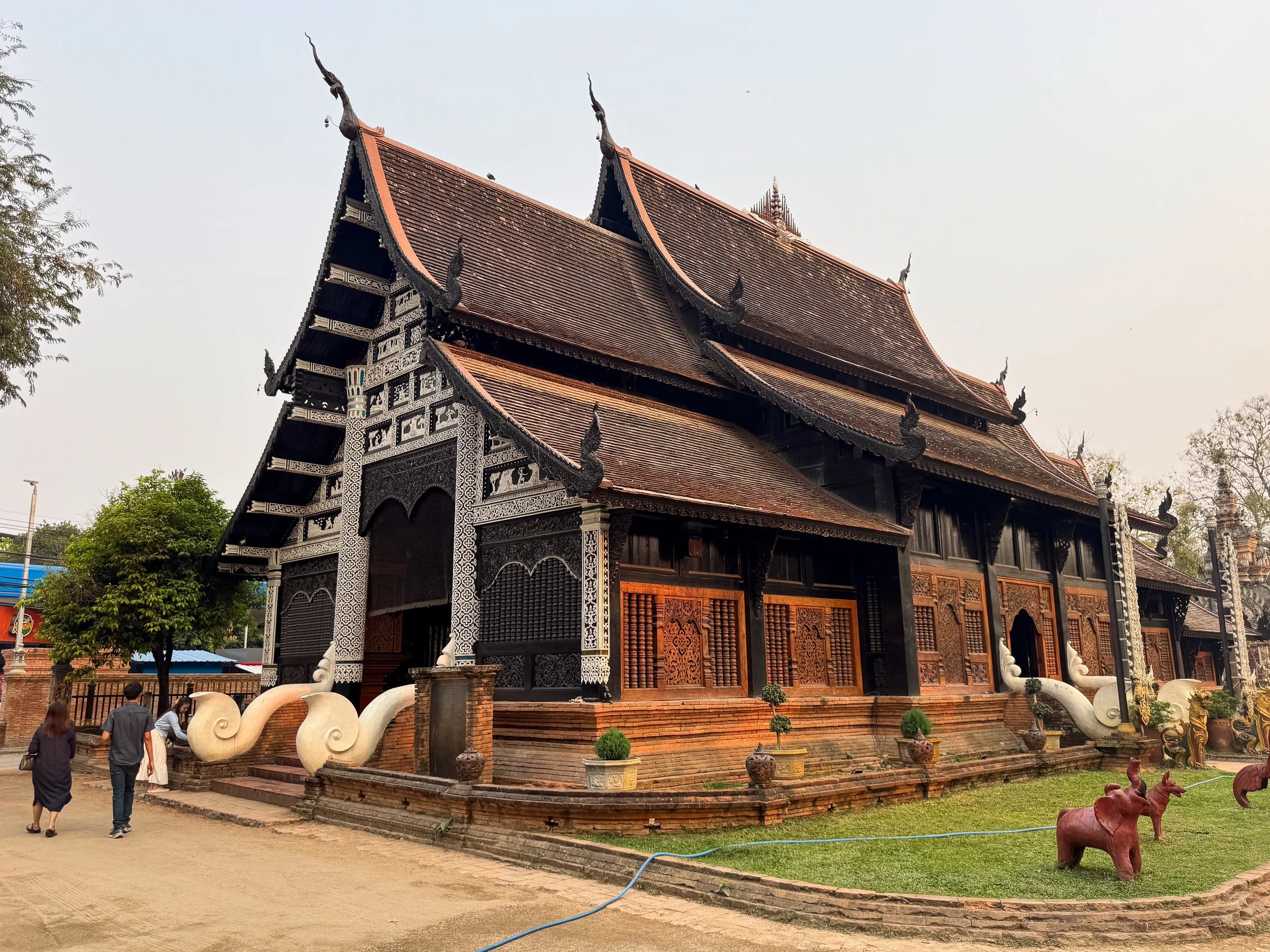
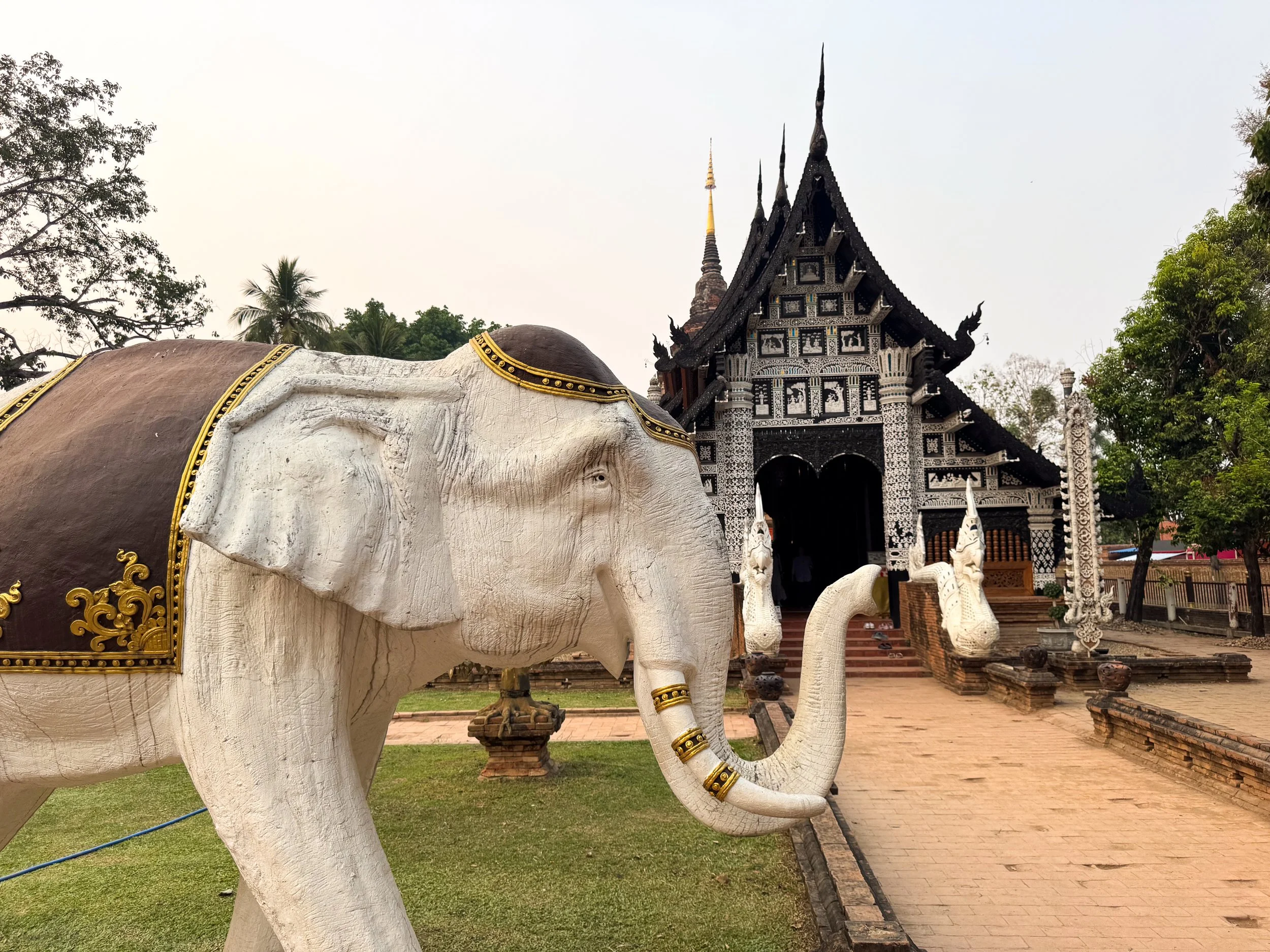
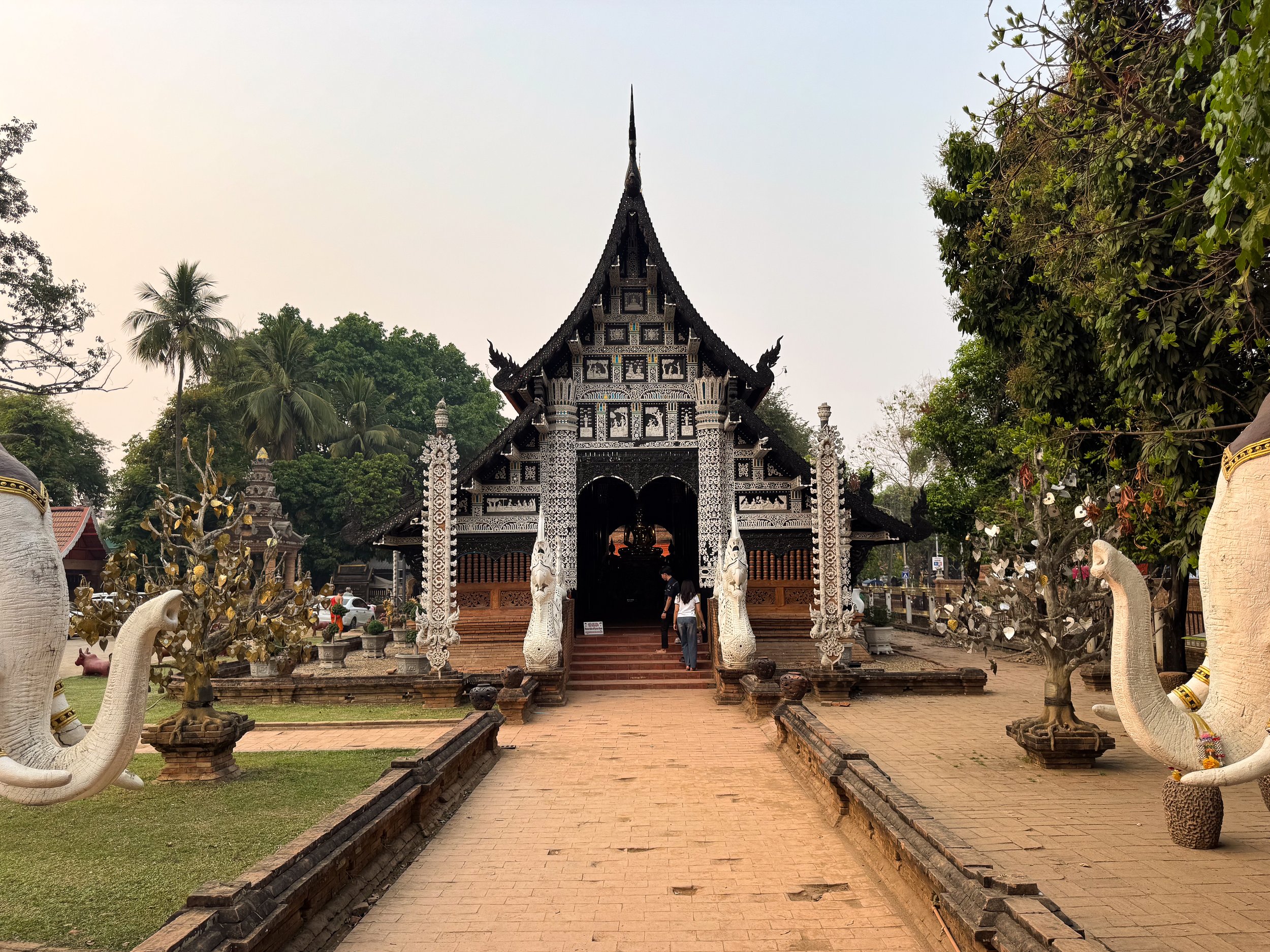
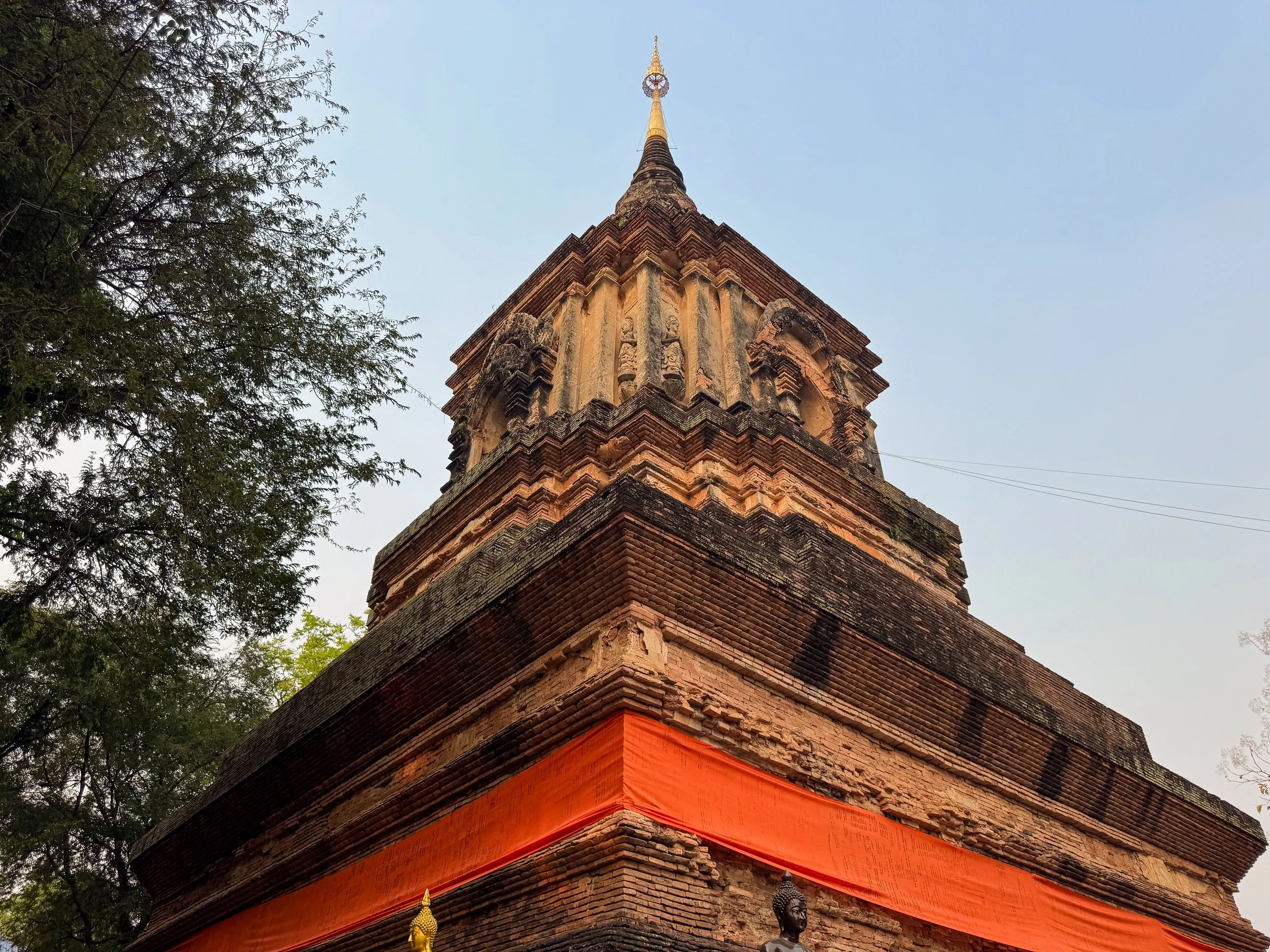
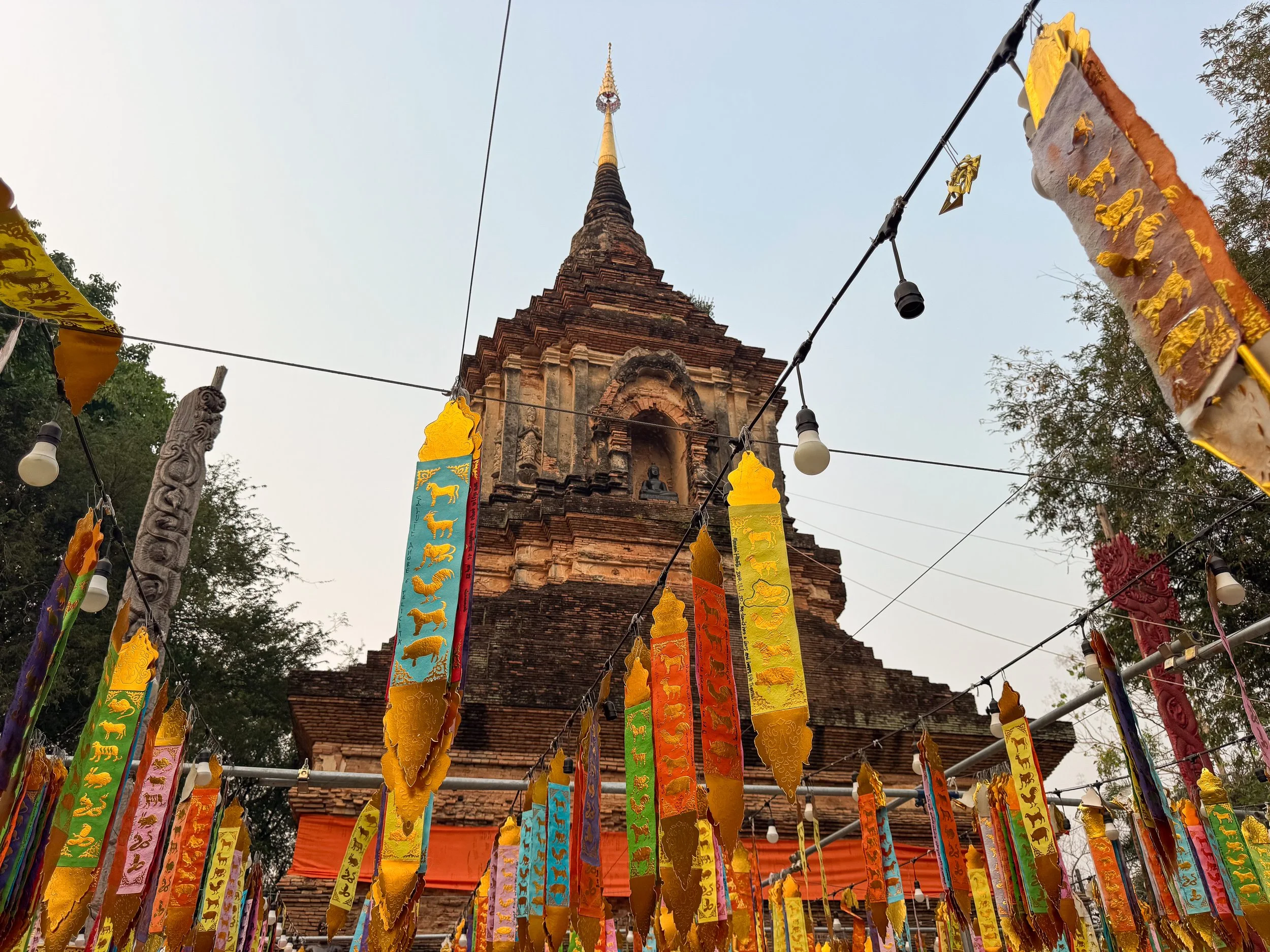
Wat Lok Molee. A large Lanna style temple made entirely of wood. It’s one of the few surviving structures of its kind to remain from the ancient times. Its entrance is decorated in an ornate black and white design, flanked by stone elephants and dragon steps. Monk novices can often be seen tending to the grounds. Behind it is a chedi housing the remains of a former Lanna Kingdom ruler. Worshipers come here to make offerings of water.
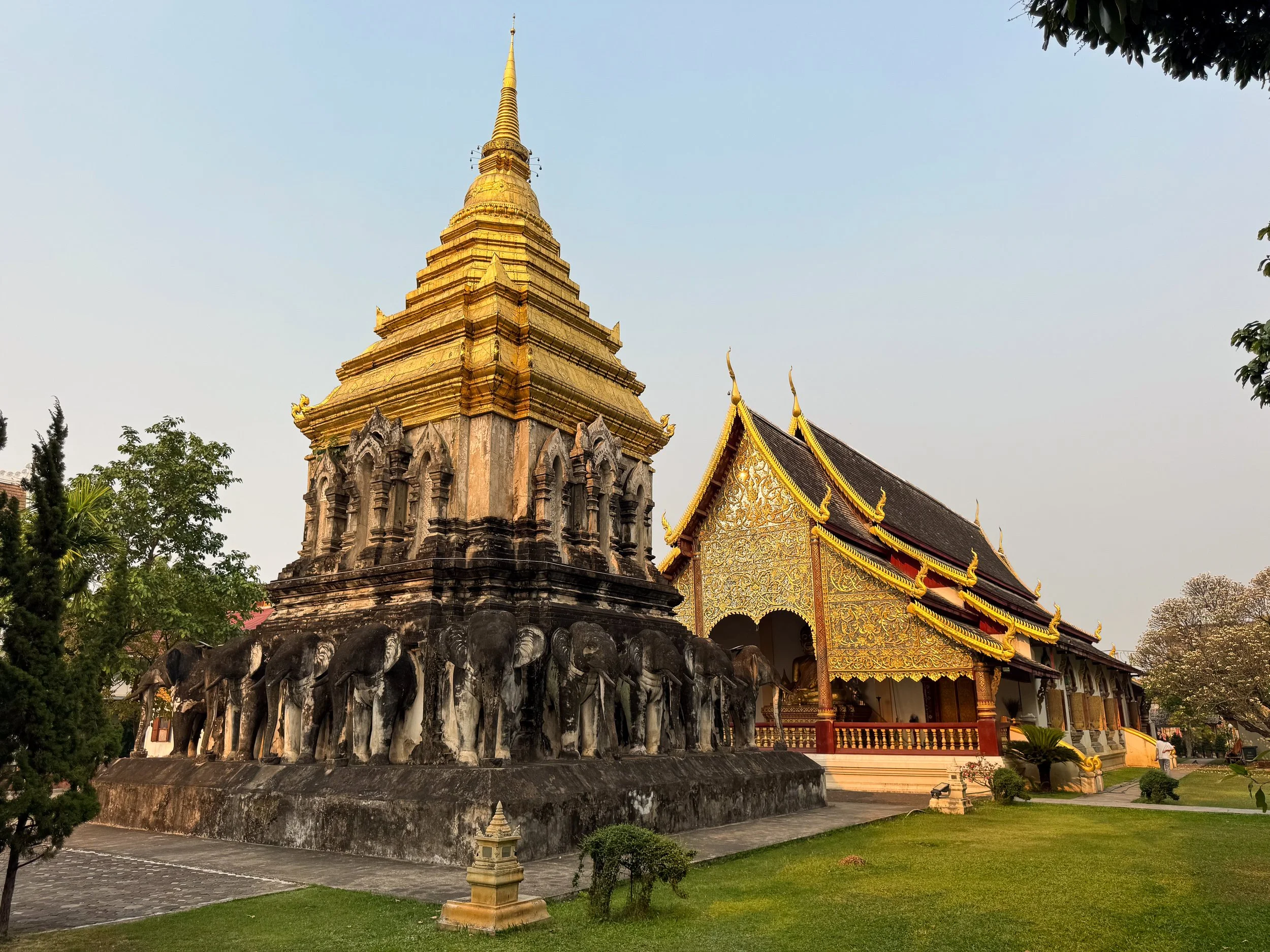
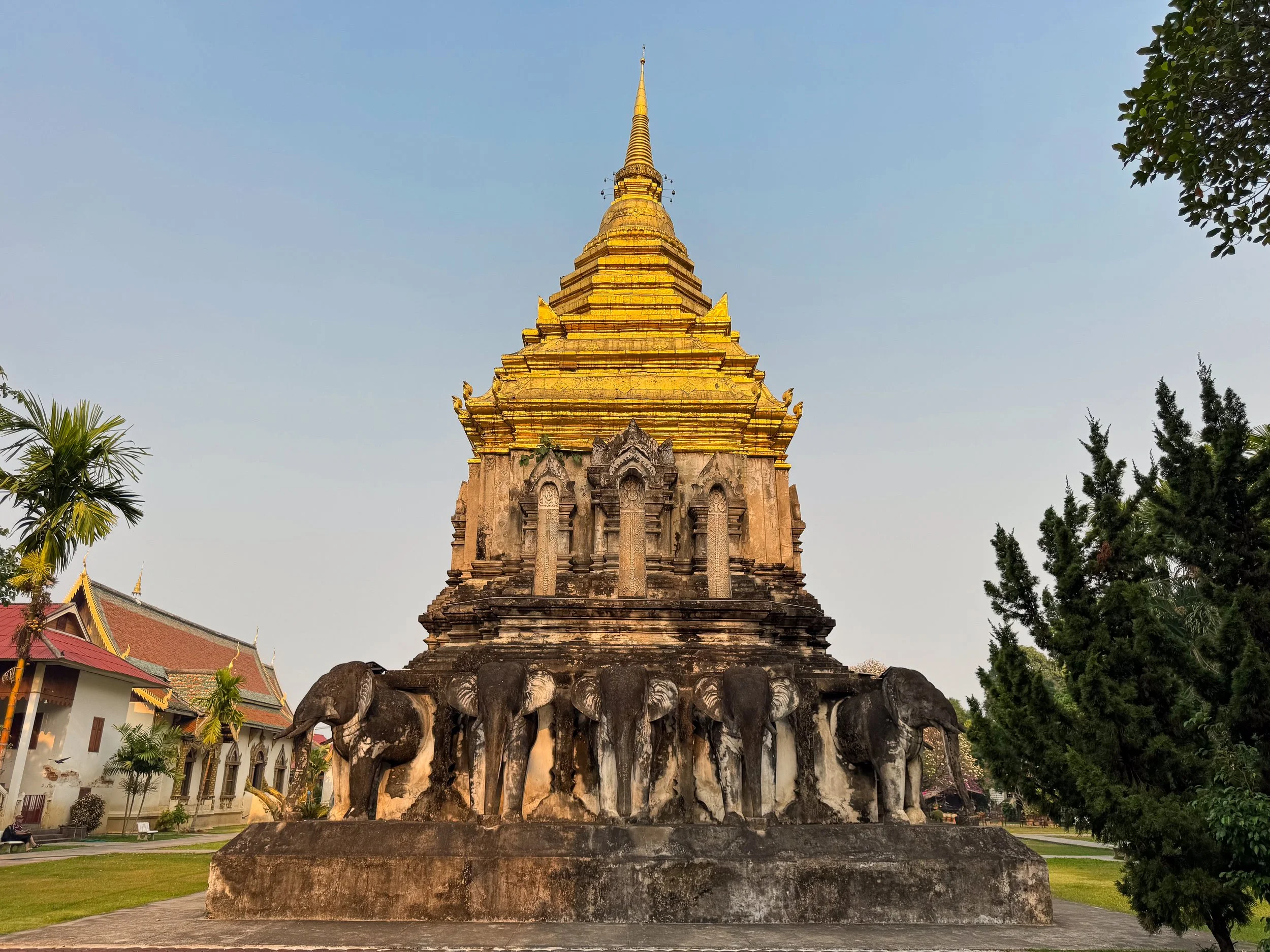
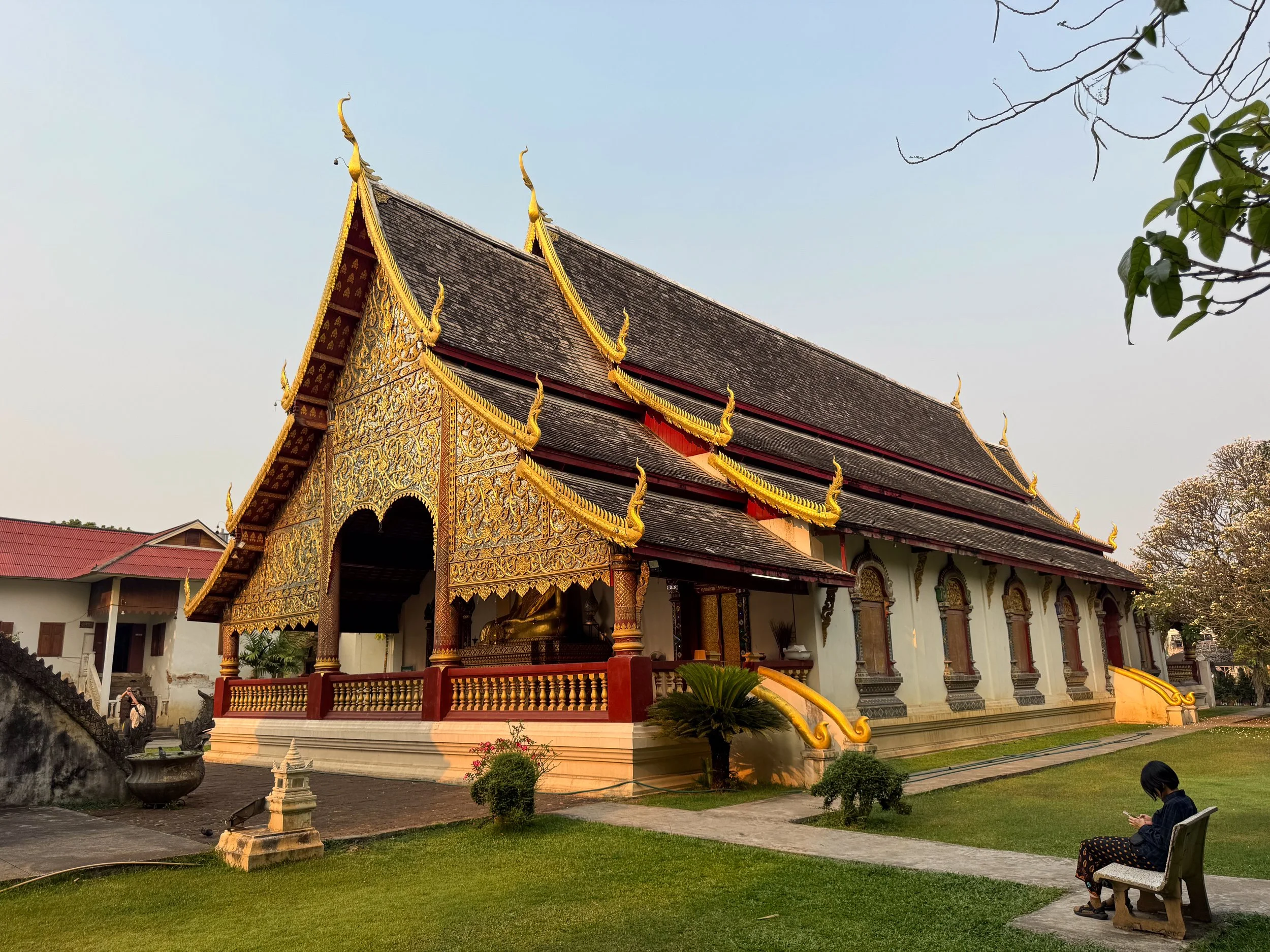
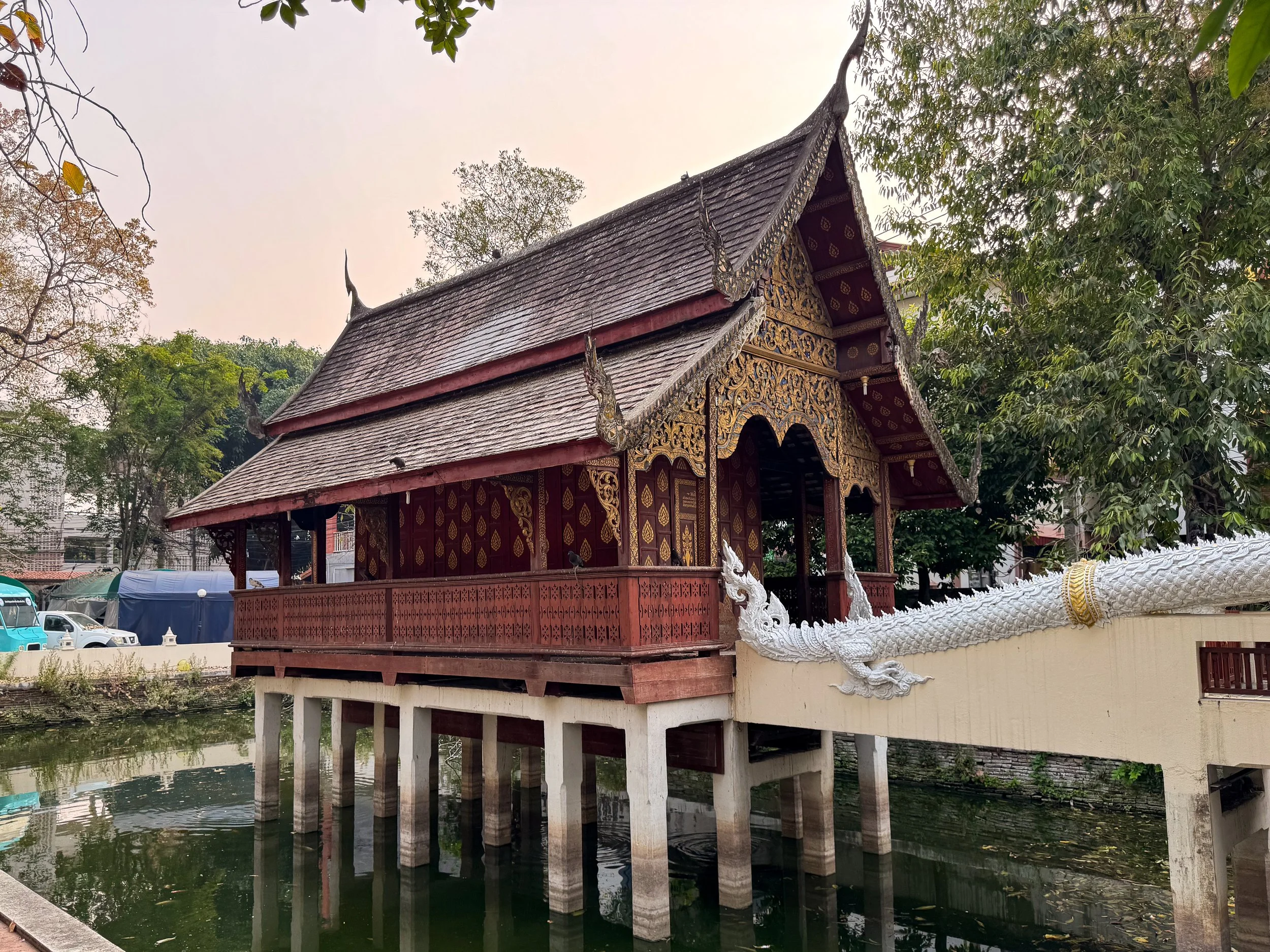
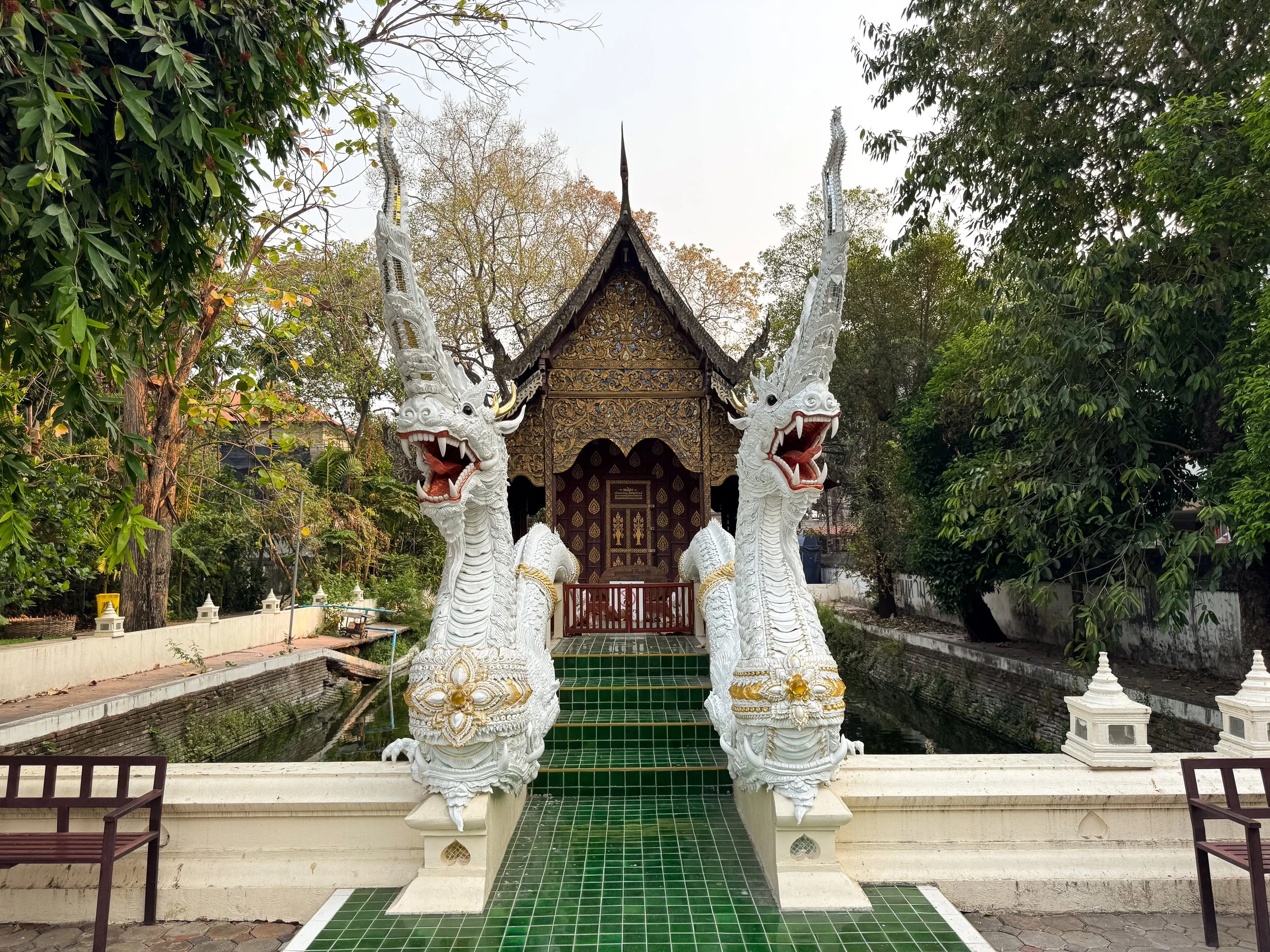
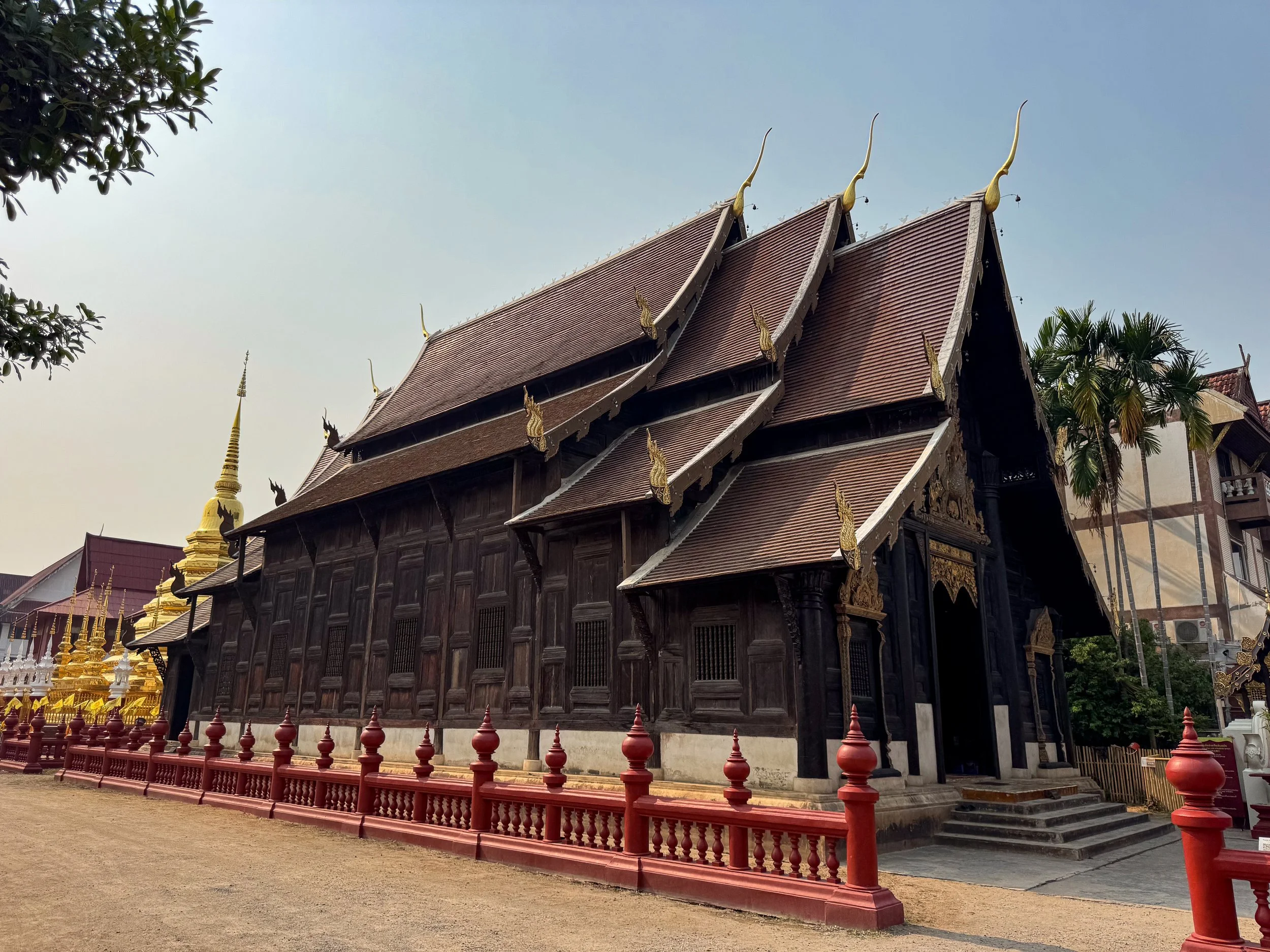
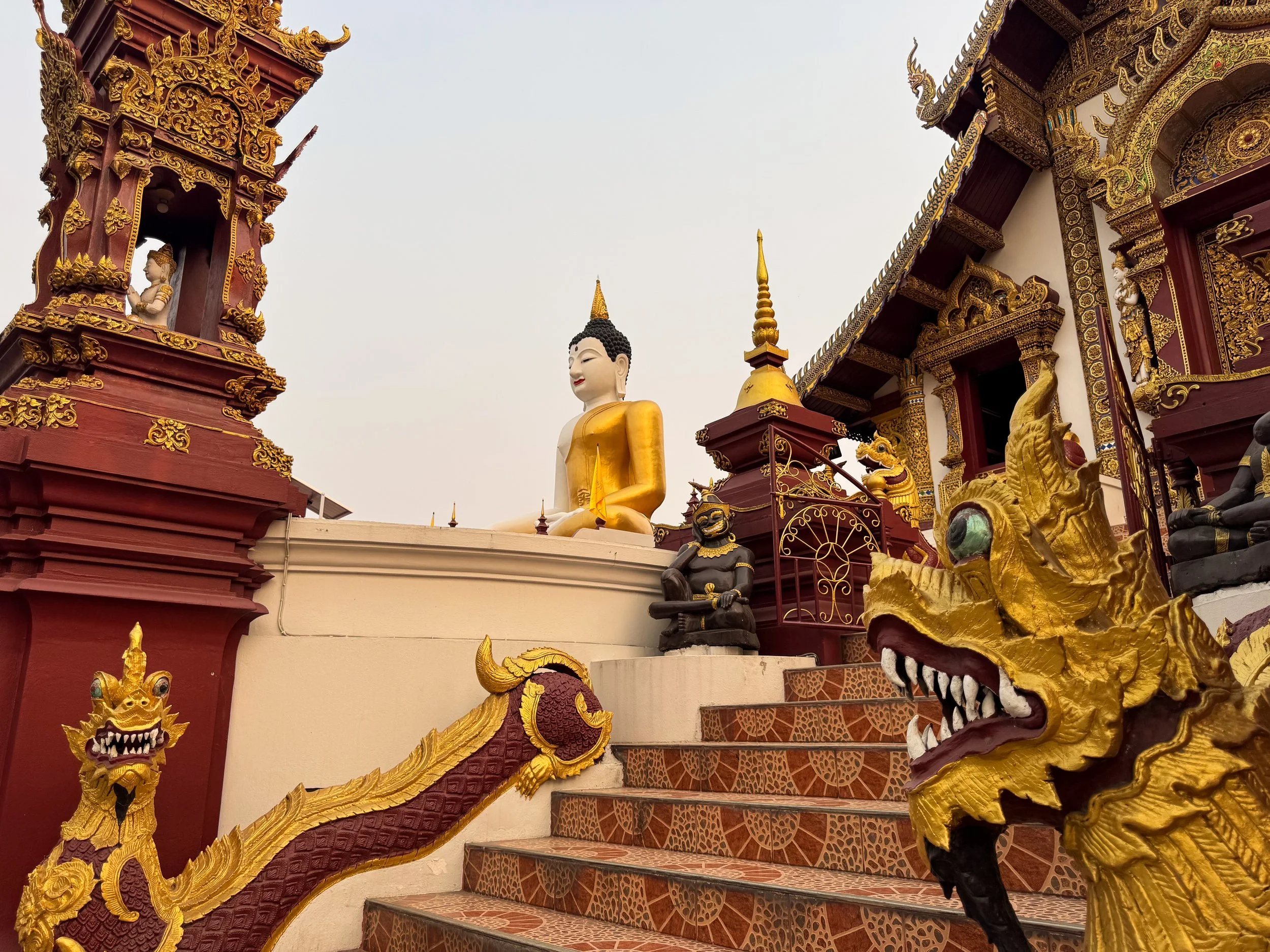
Wat Chiang Mun. An ancient temple complex and the oldest in the Old City with multiple notable structures.
Main Chapel. A pagoda style building with a tiered and layered roof, ornate golden entrance and red accents. It’s a classic example of Lanna style architecture.
Secondary Chapel. A smaller building displaying two tiny statues of the Buddha. One made of crystal dating back 2,000 years and one made of marble dating back 2,500 years.
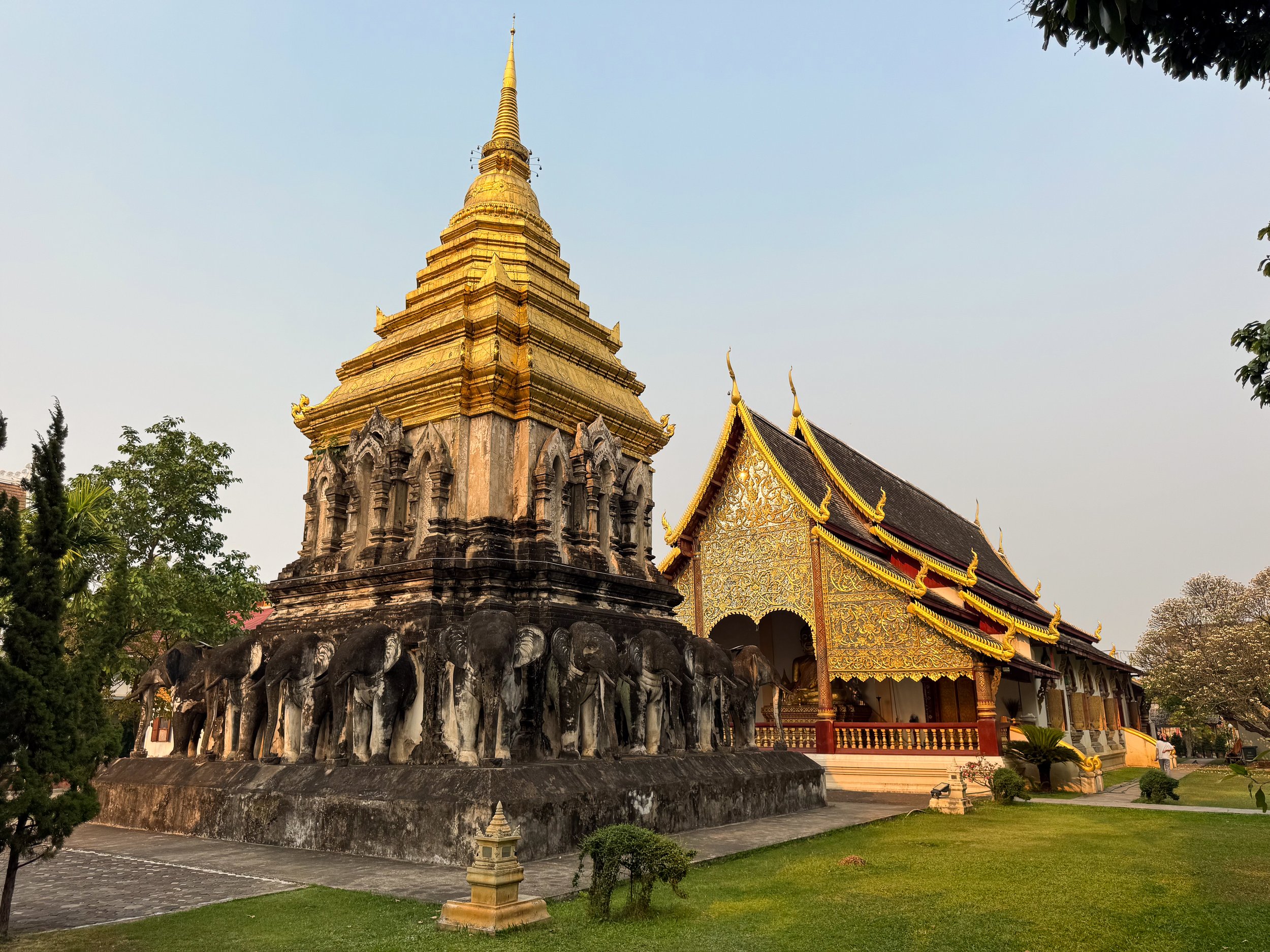
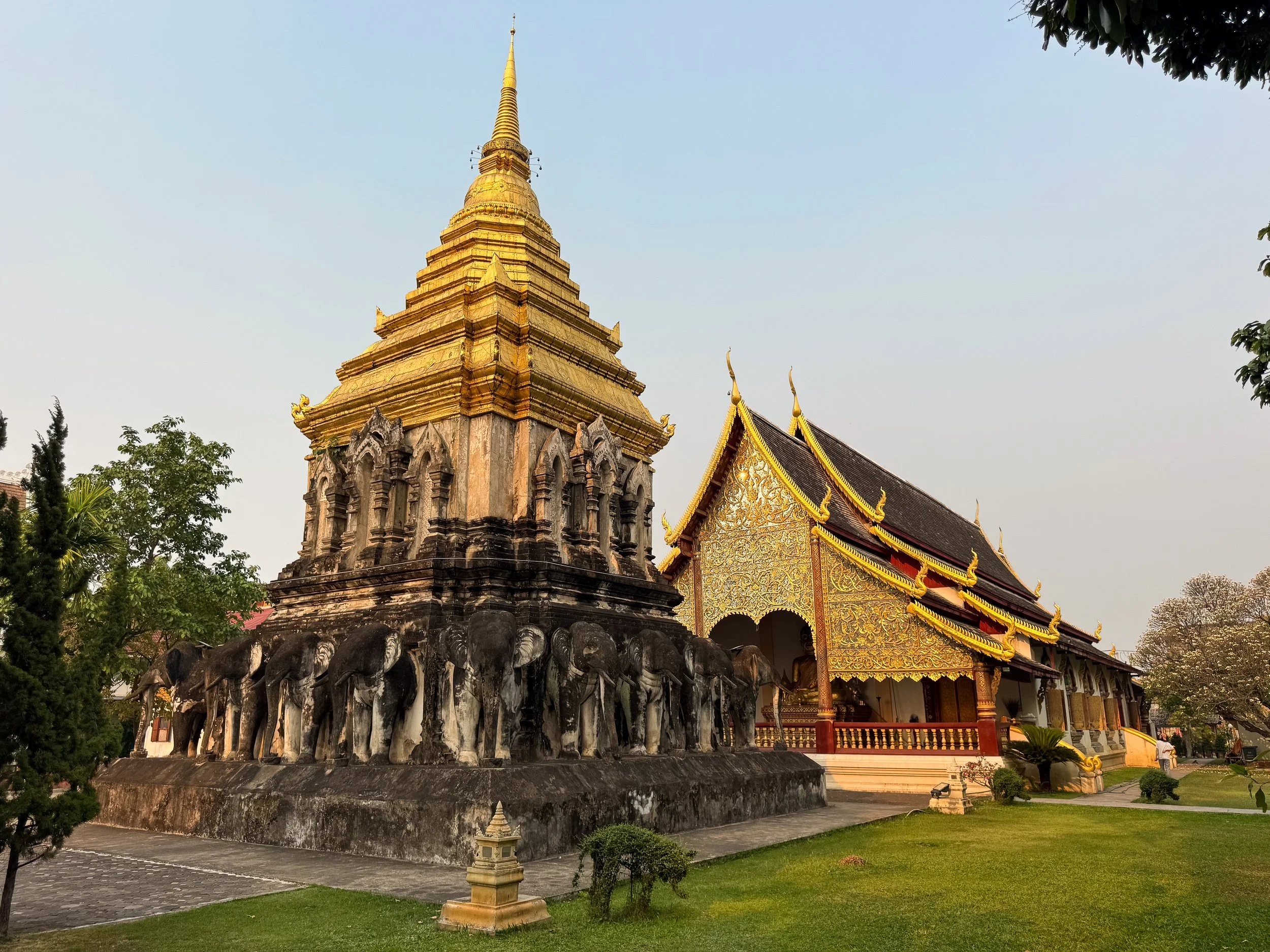
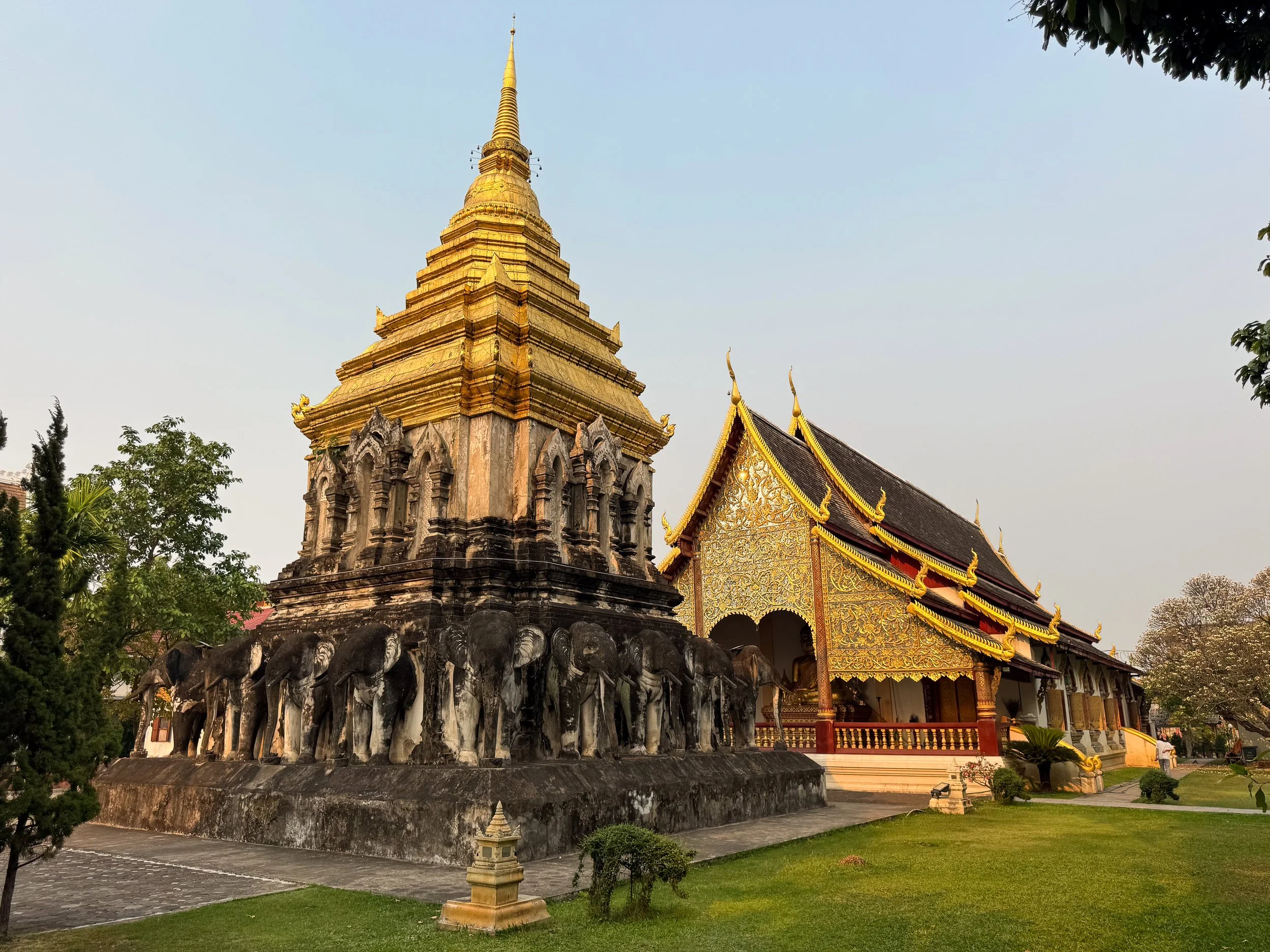
Elephant Chedi. A pyramid shaped chedi with a golden tower and base surrounded by life size stone elephants.
Buddhist Library. A small wooden temple housing Buddhist texts built on stilts above a koi pond with a dragon bridge leading to its entrance.
Wat Phan Tao. A pagoda style temple made entirely of teak wood. It has a traditional stepped and tiered roof with gold painted cornices and a finely detailed entrance. It’s one of the few surviving structures of its kind to remain from the ancient times.
Wat Rajamontean. A newer Buddhist wat in the Old City across the moat from Wat Lok Molee. Its main meditation hall features intricate designs and gold ornamentation. Seated outside is a large statue of the Buddha wearing golden robes.
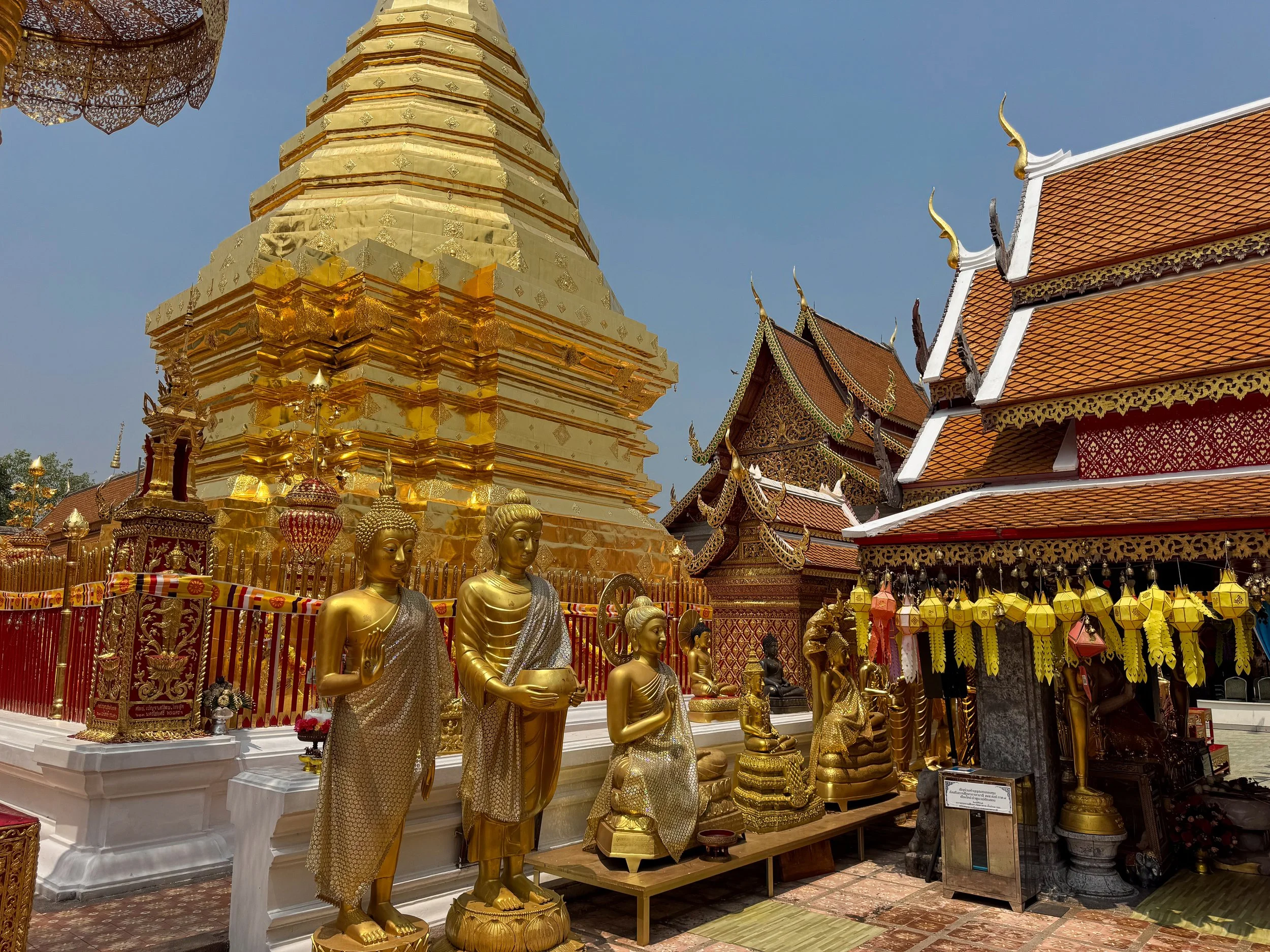
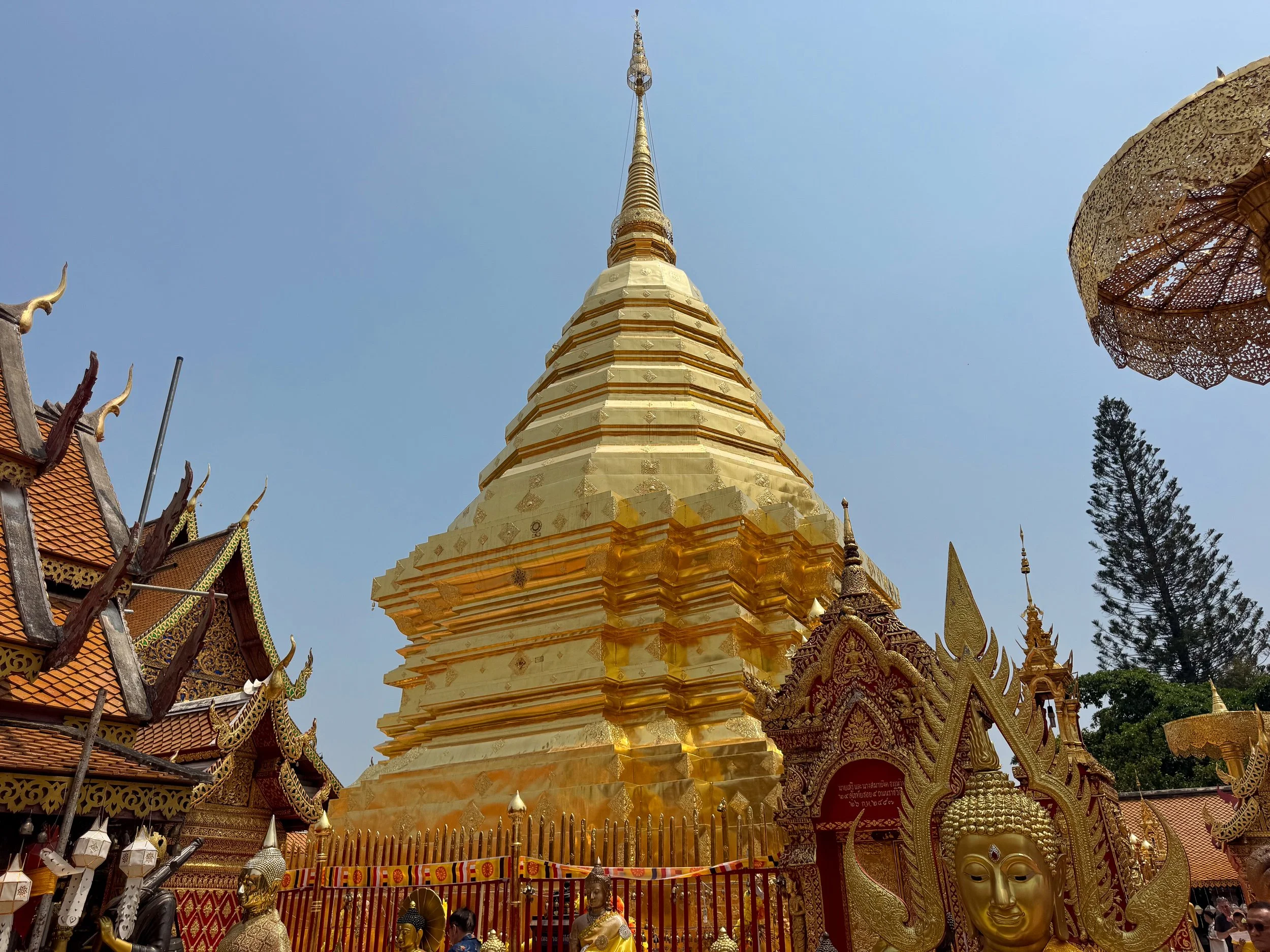
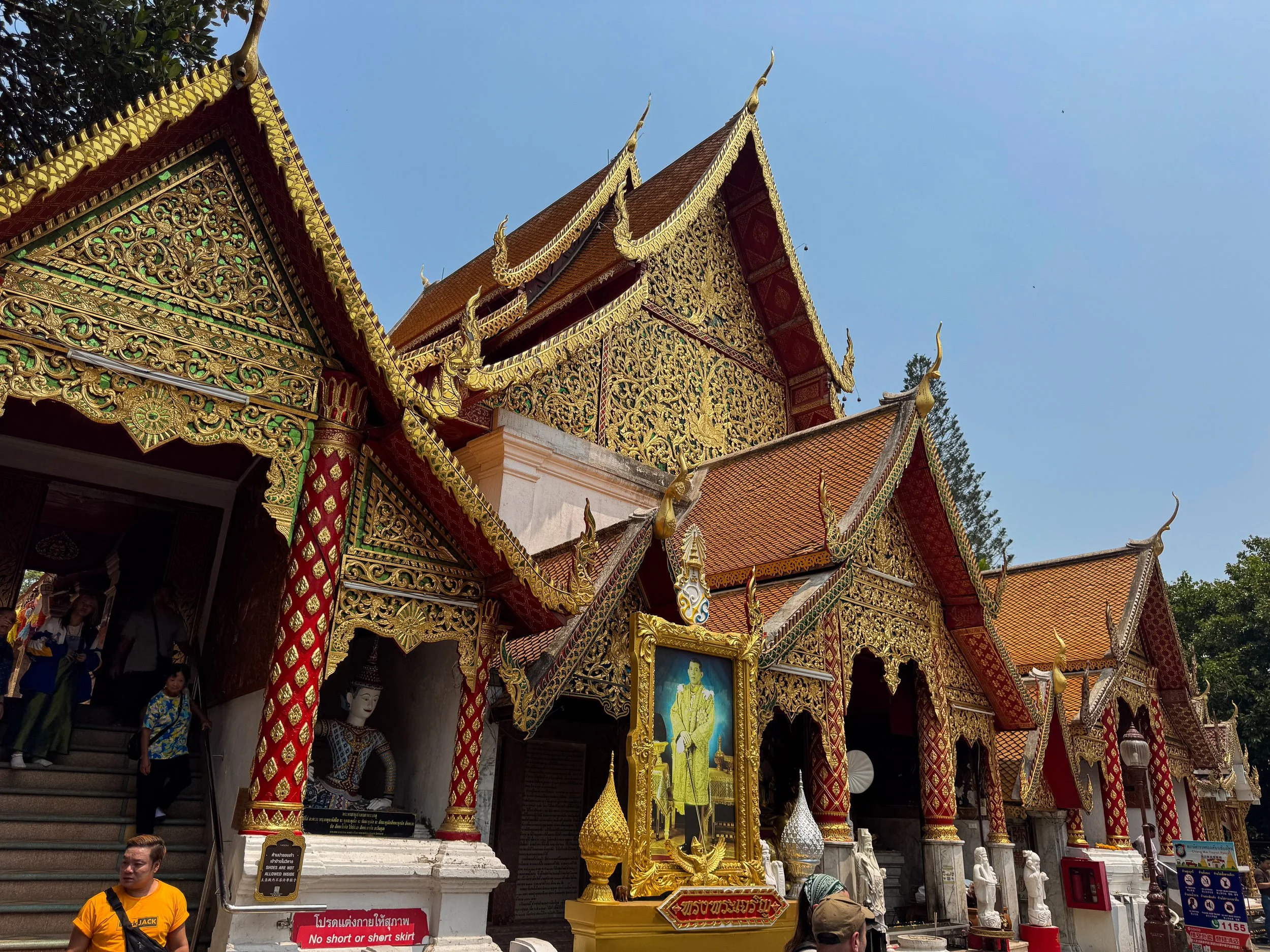
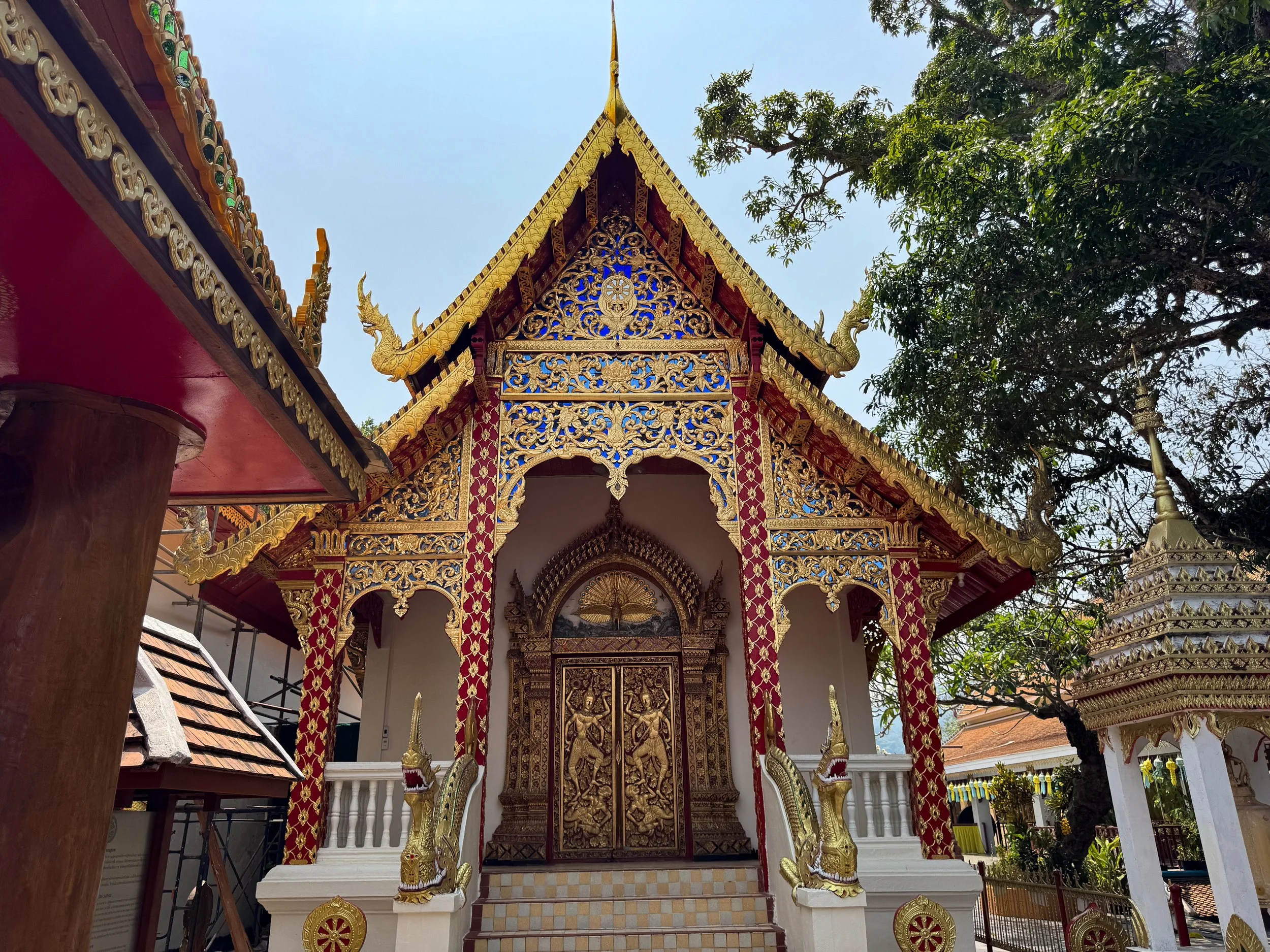
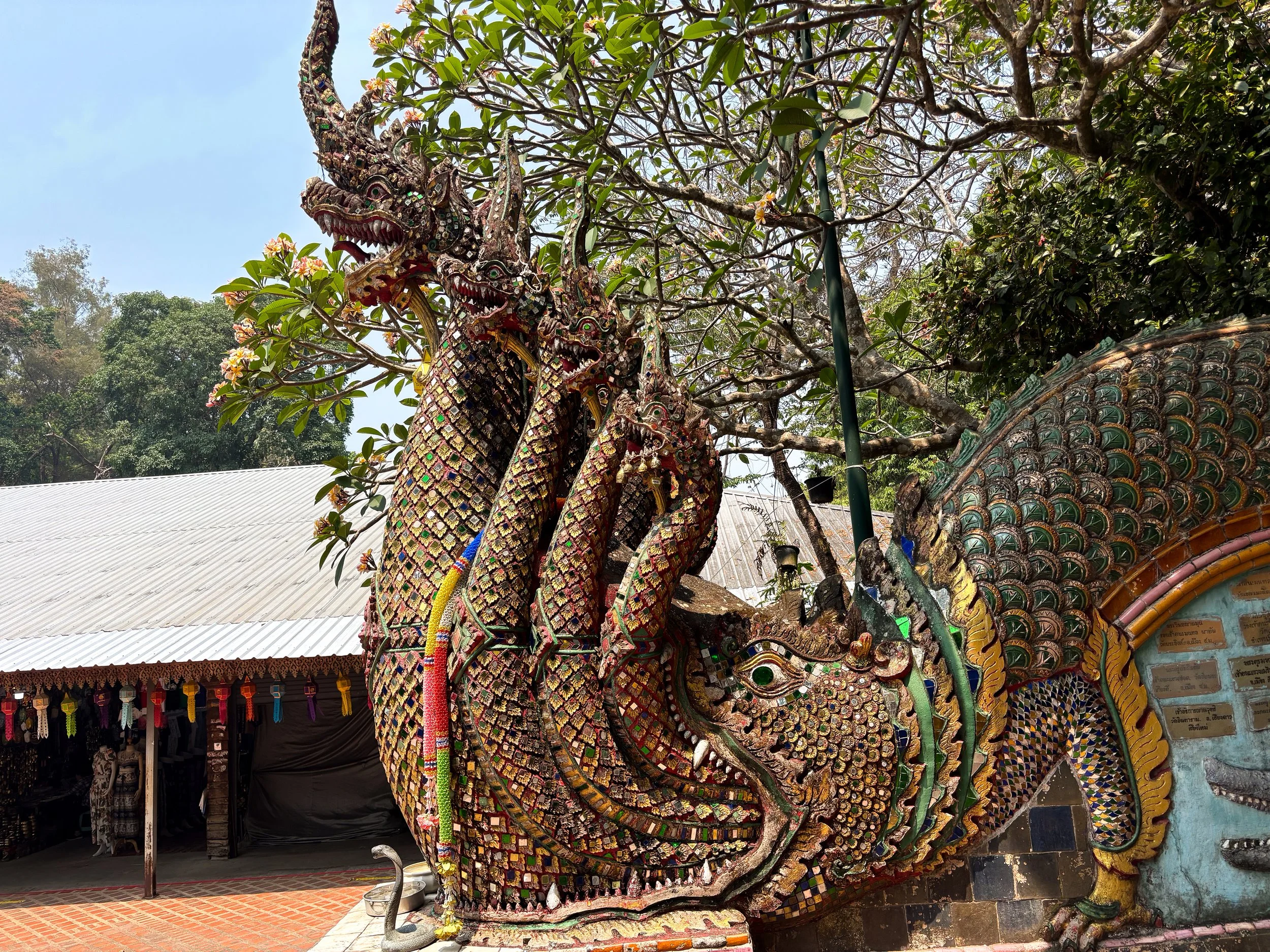
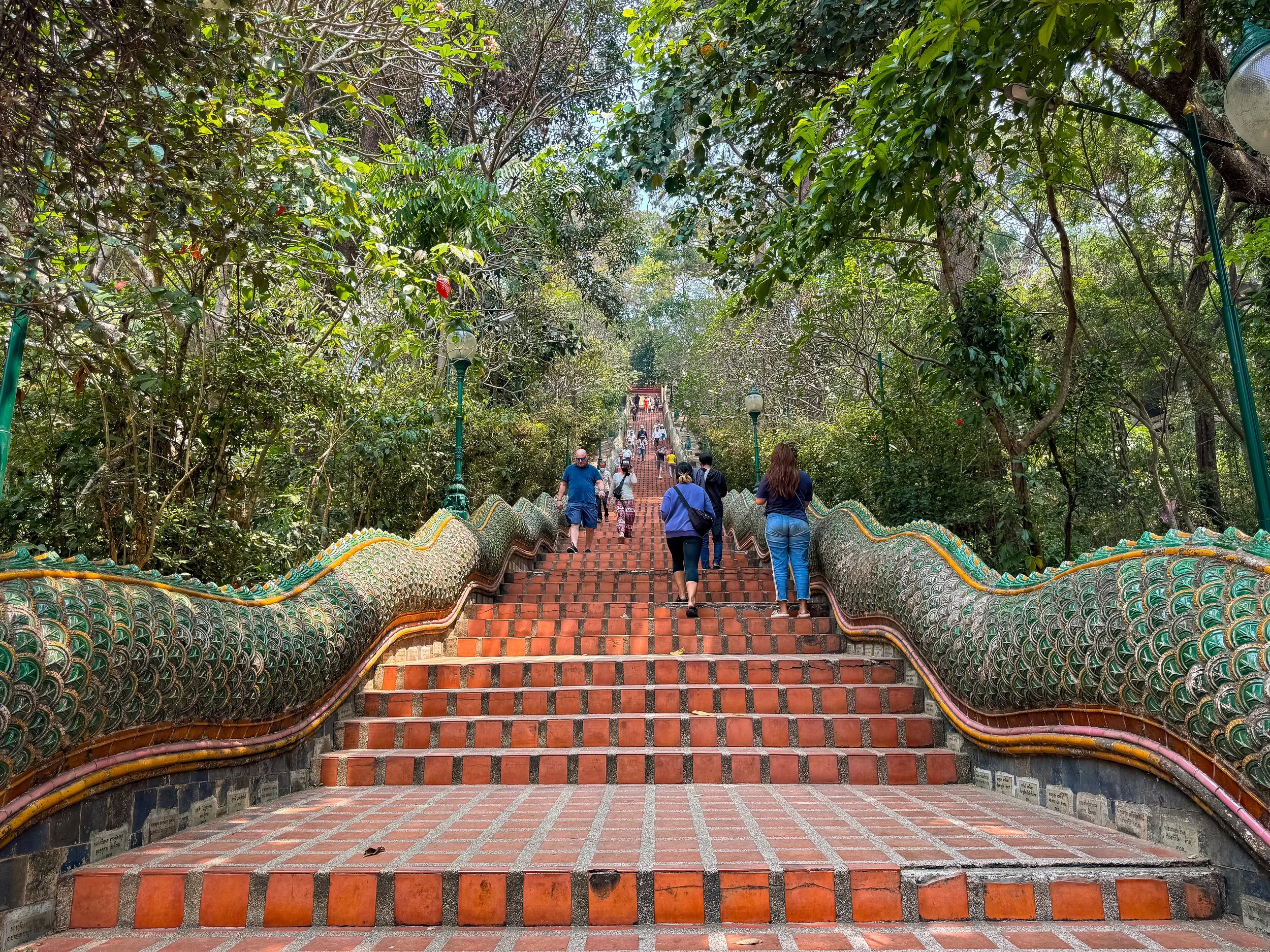
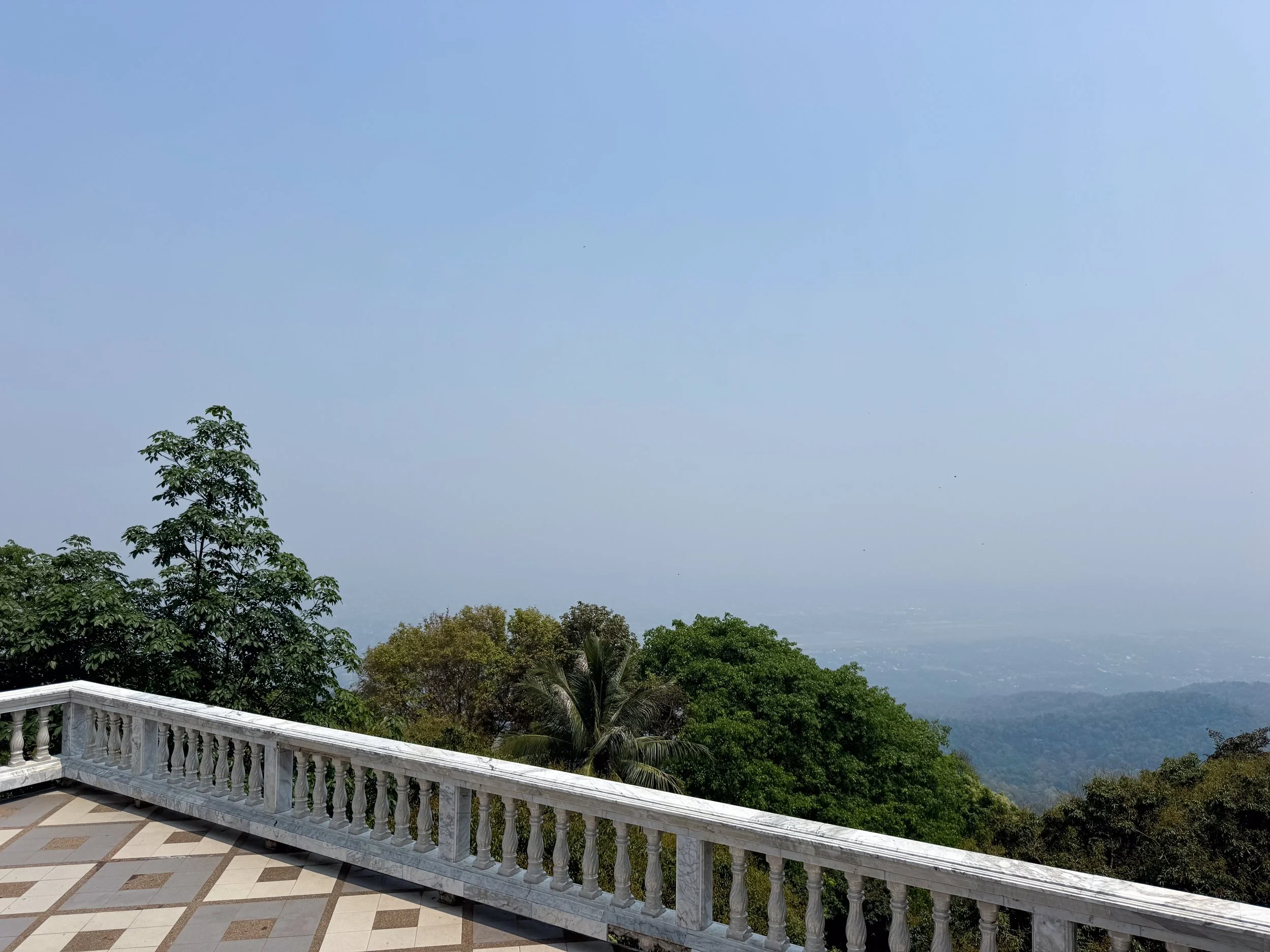
Wat Phra That Doi Suthep. A mountaintop Buddhist wat overlooking the city of Chiang Mai. It's famous for its 300-step dragon stairway surrounded by forest. The temple is decorated in ornately painted red and gold designs and features multi-tiered roofs, marble floors, statues of the Buddha, and a golden chedi at its center. Its walls depict beautiful paintings of Buddhist stories and teachings. The city views were obscured by wildfire smoke when we visited.
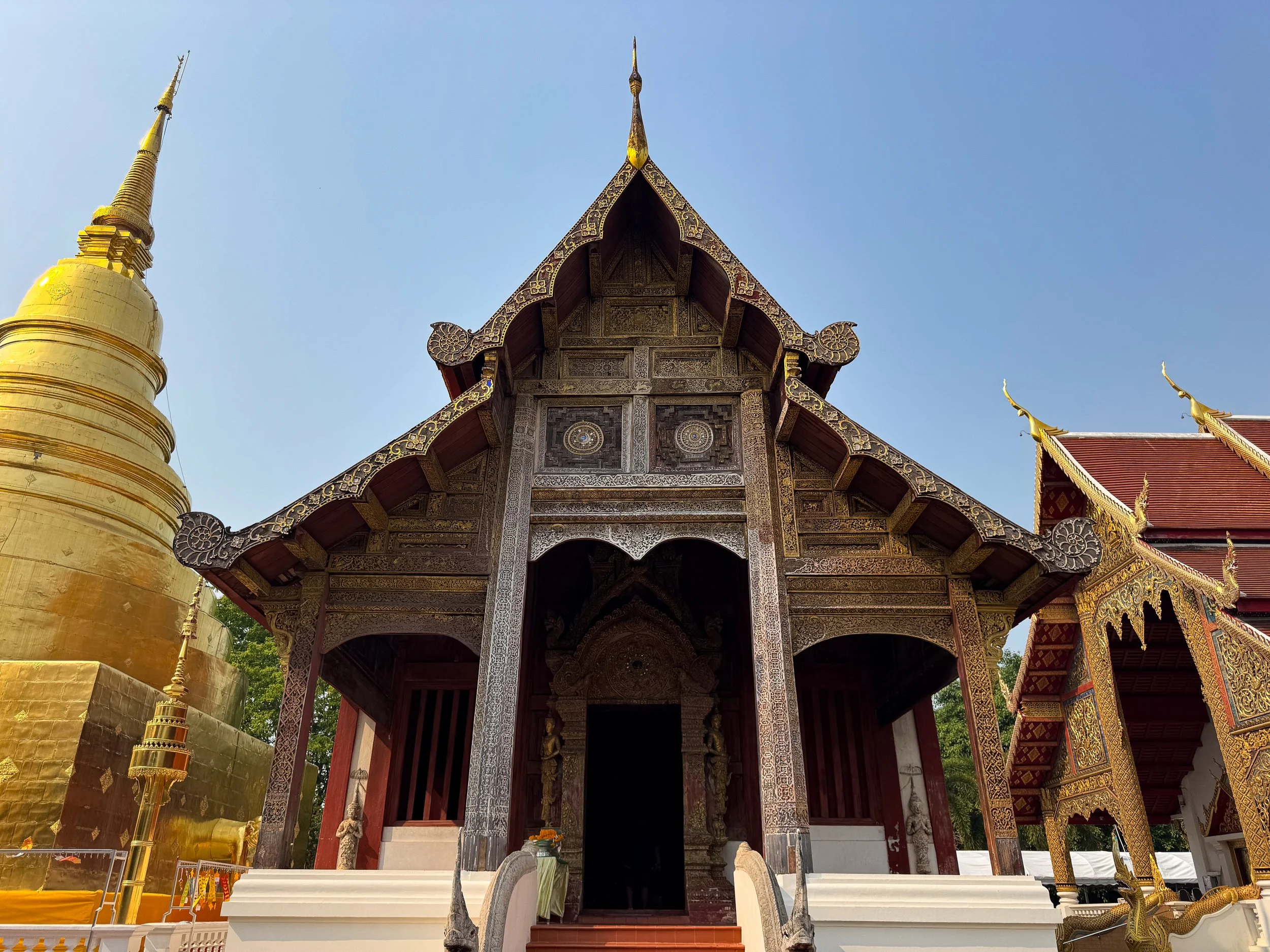
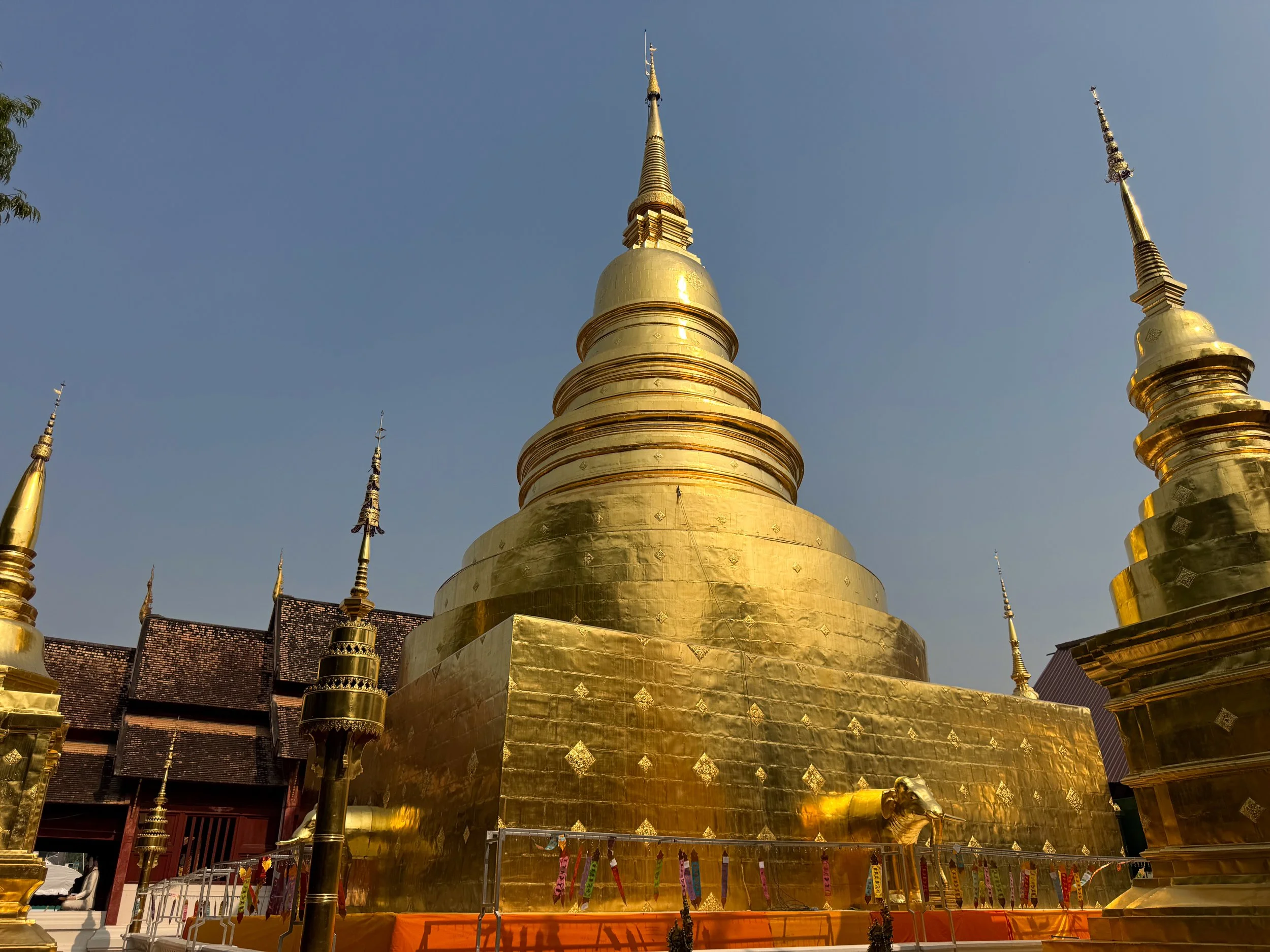
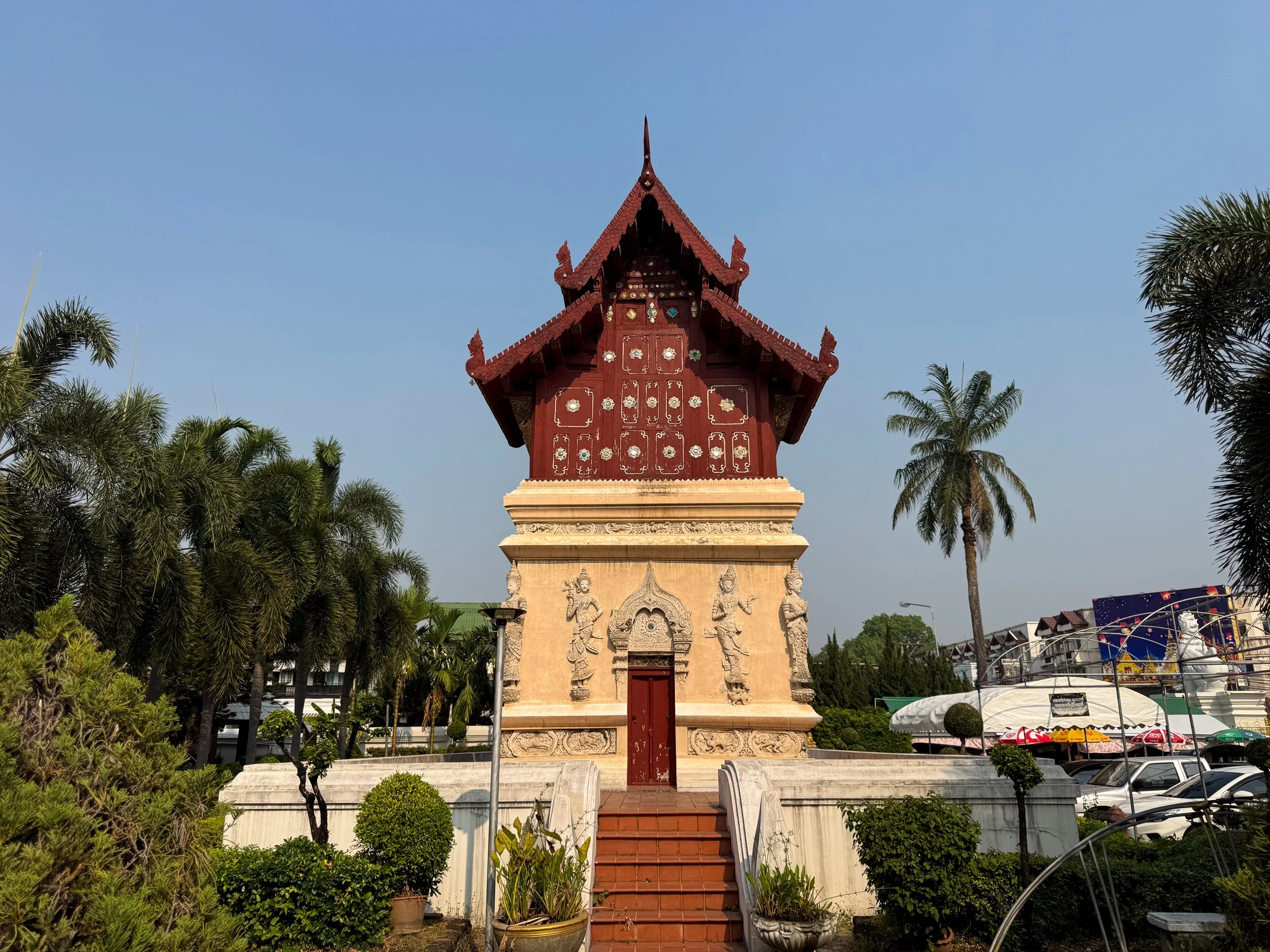
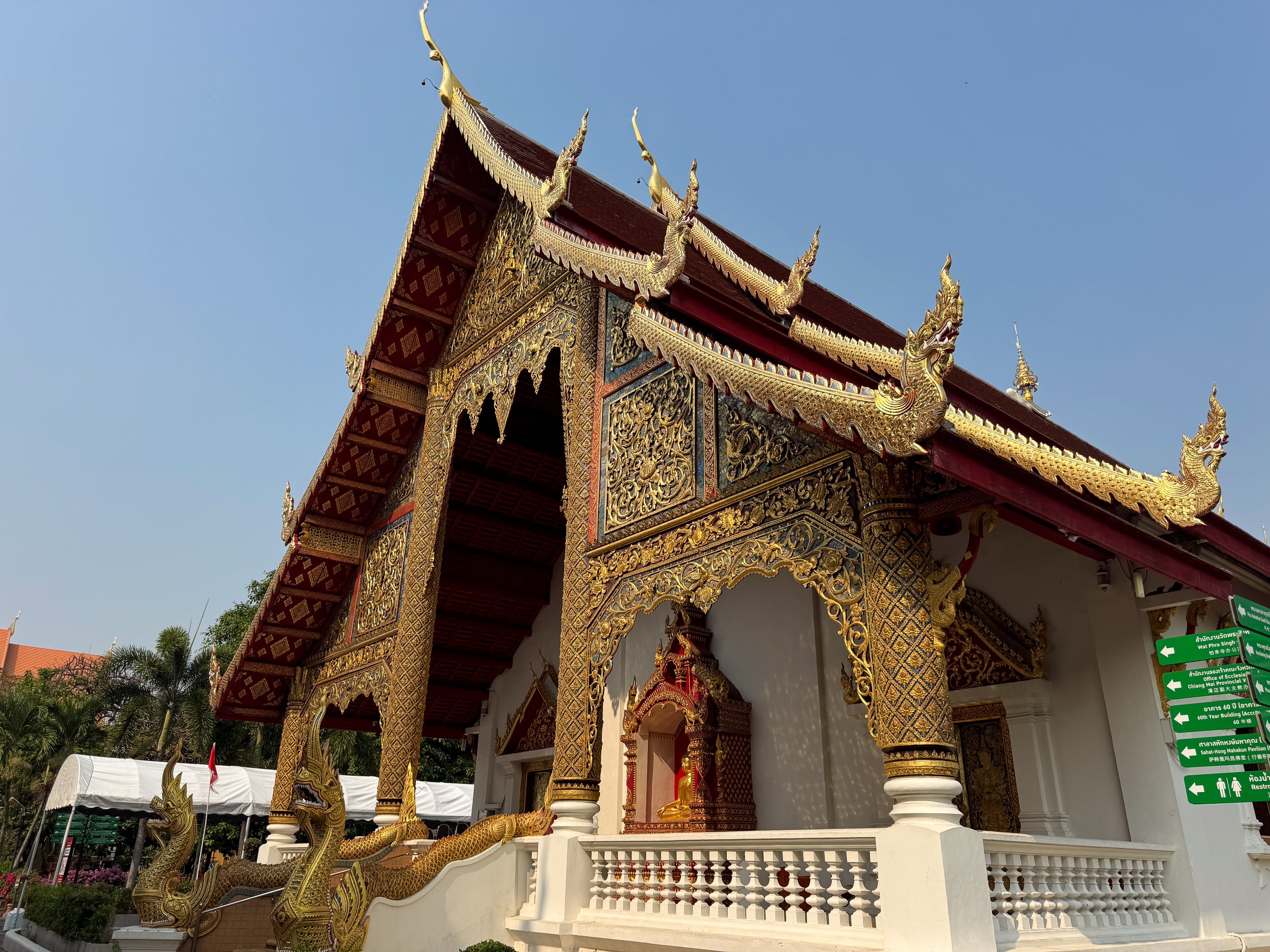
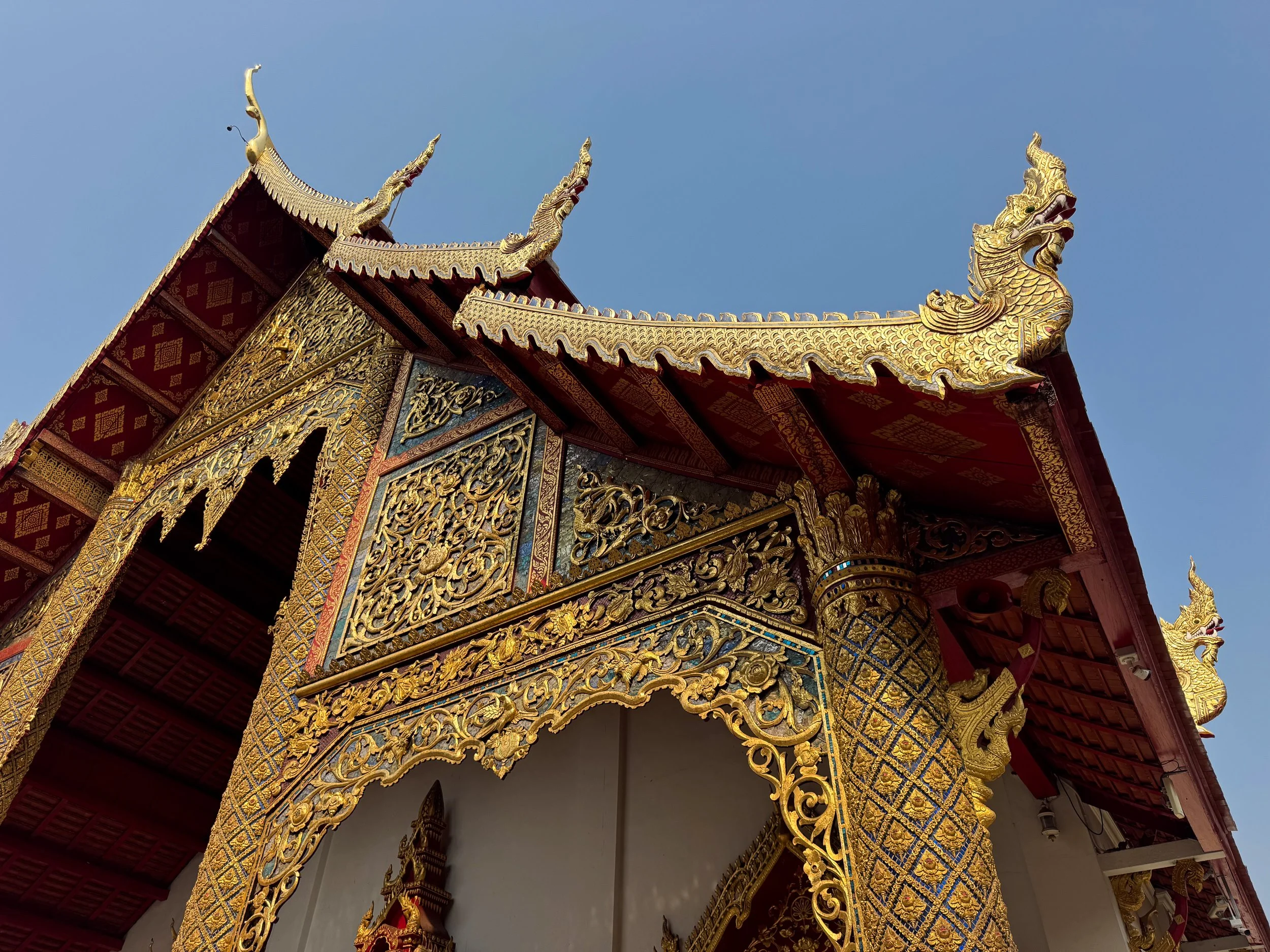
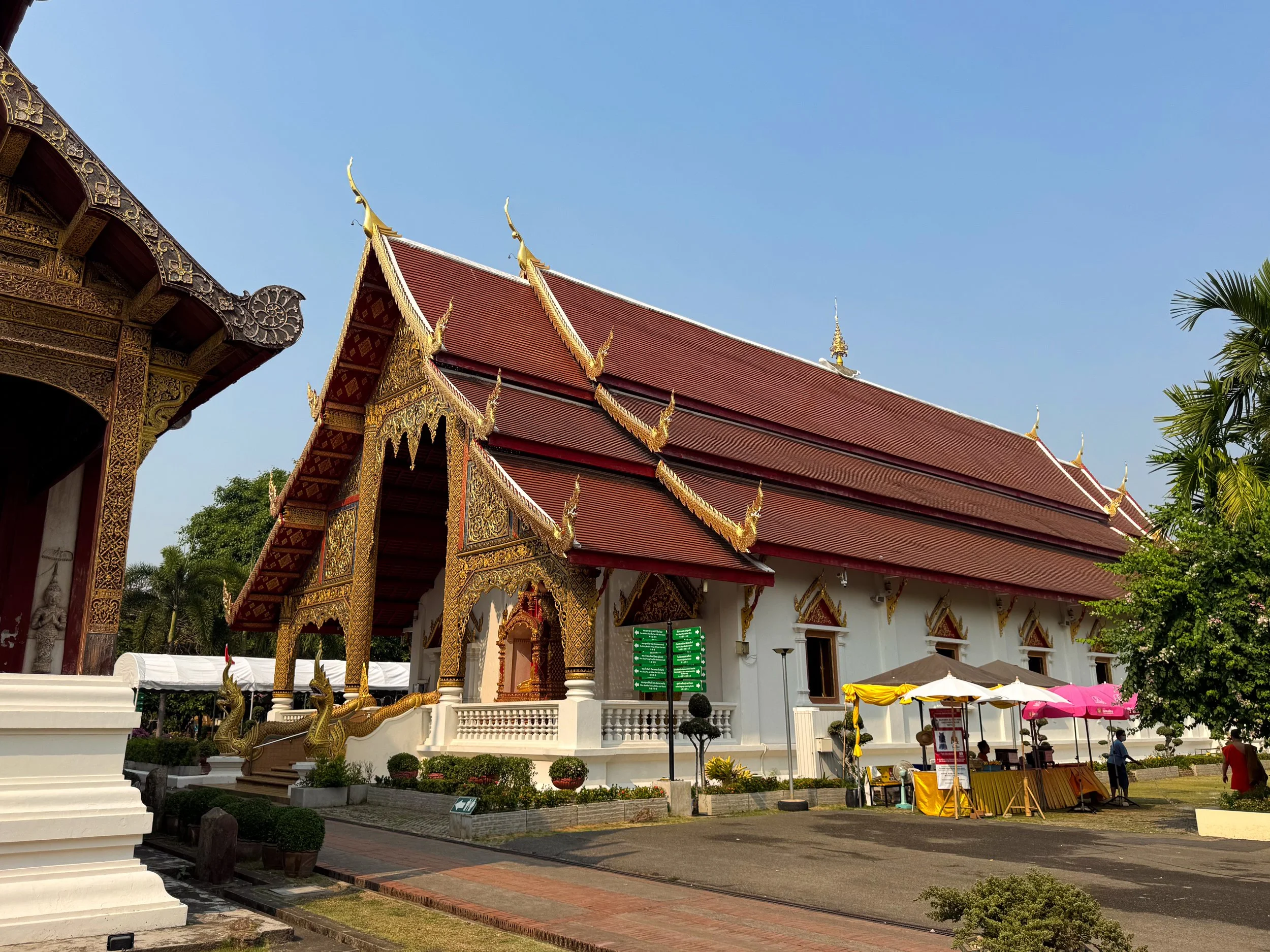
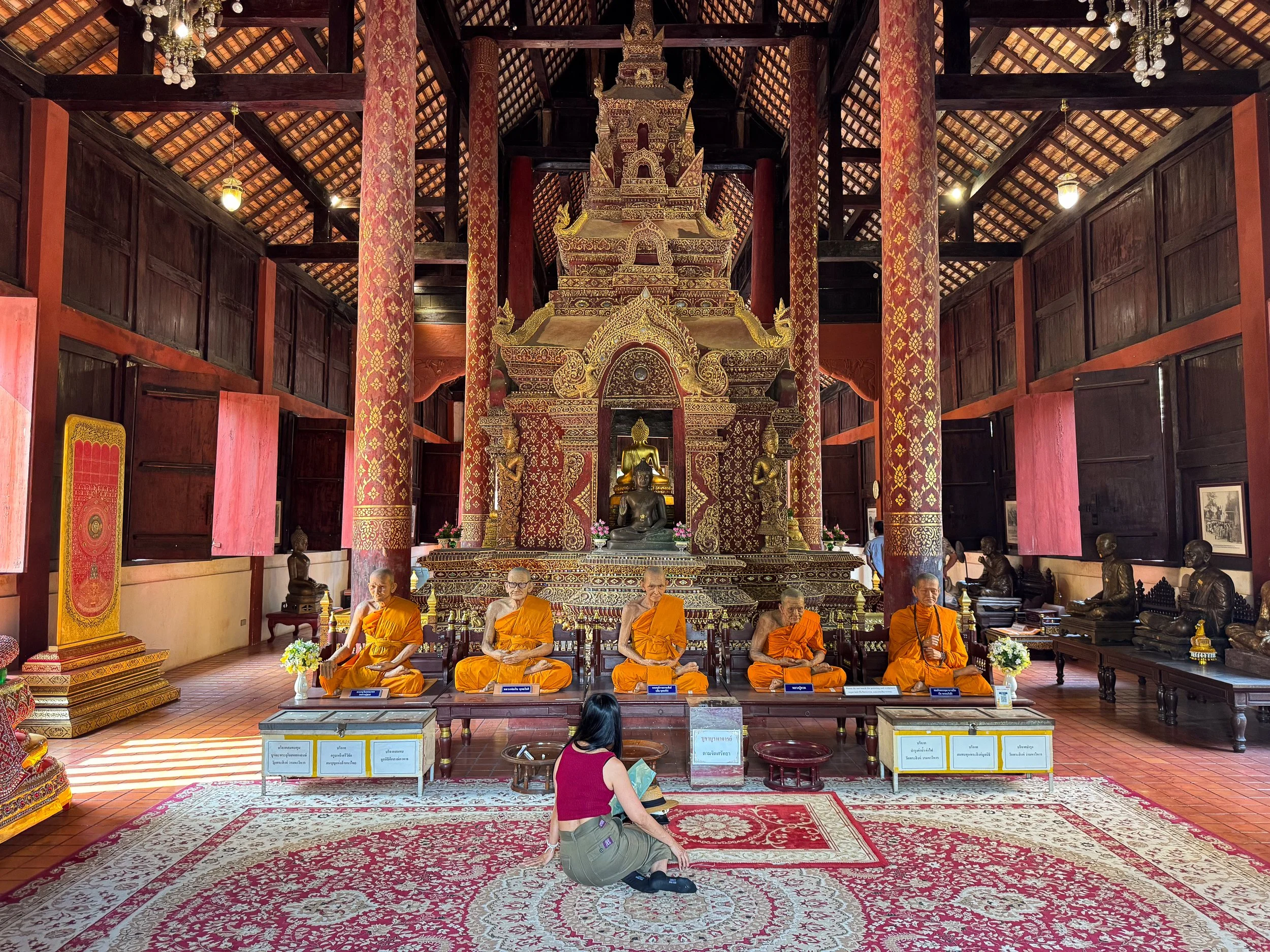
Wat Phra Singh Woramahawihan. A Lanna style Buddhist wat with a large meditation hall guarded by two golden dragons, ancient wooden temples and multiple bell shaped golden stupas. Ornate patterns, intricate designs and gold leaf cover many of the building’s historic facades.
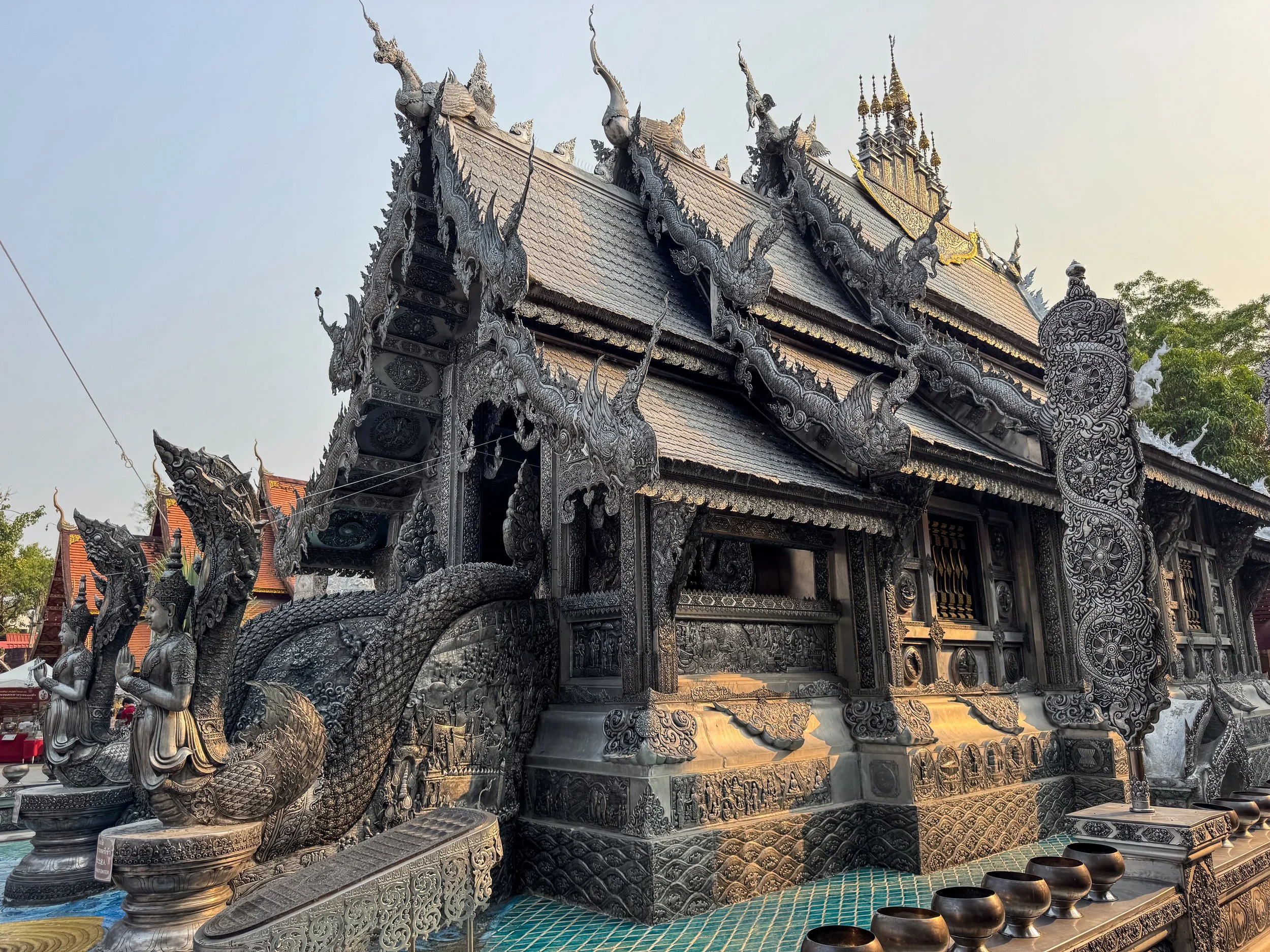
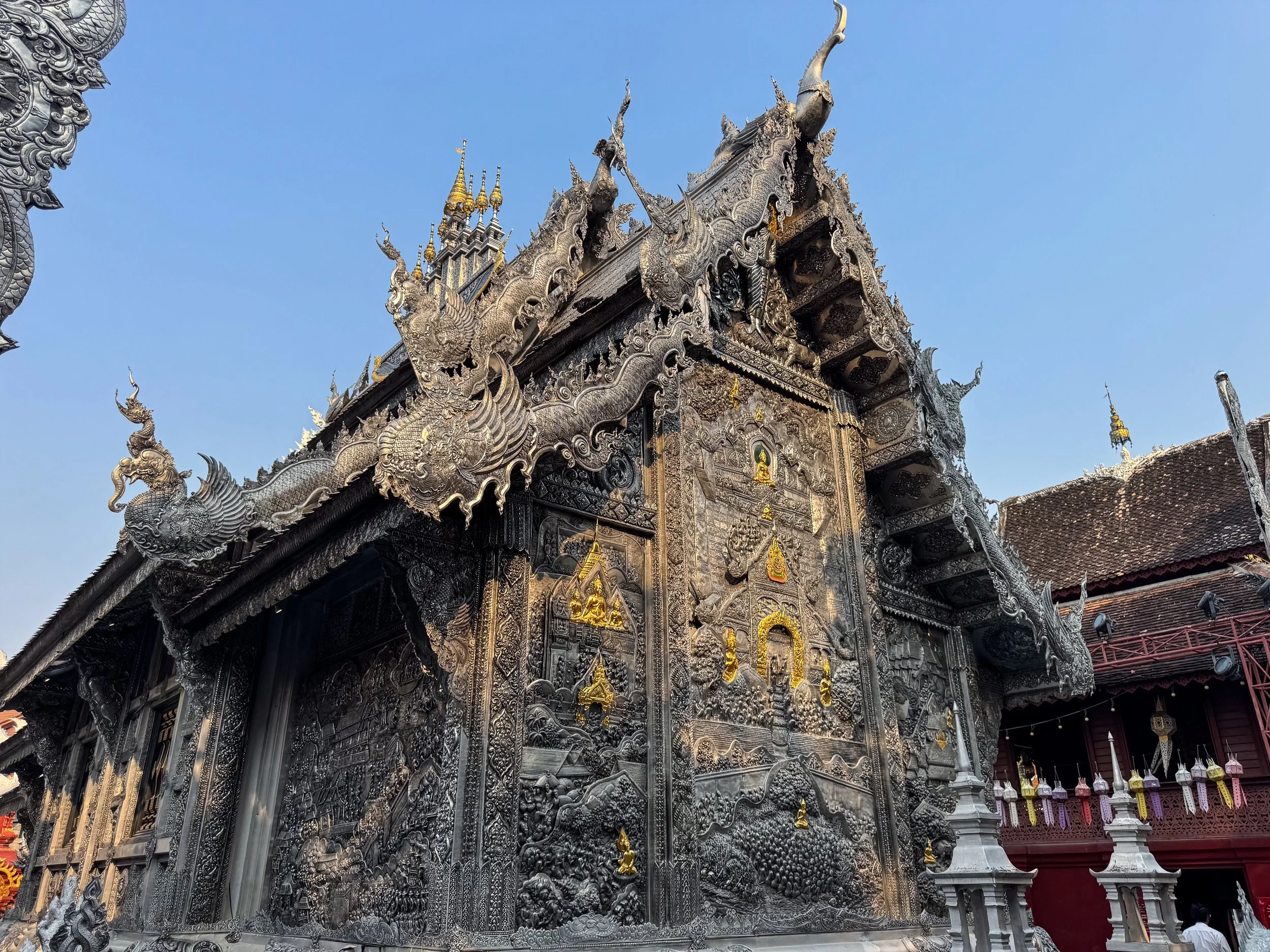
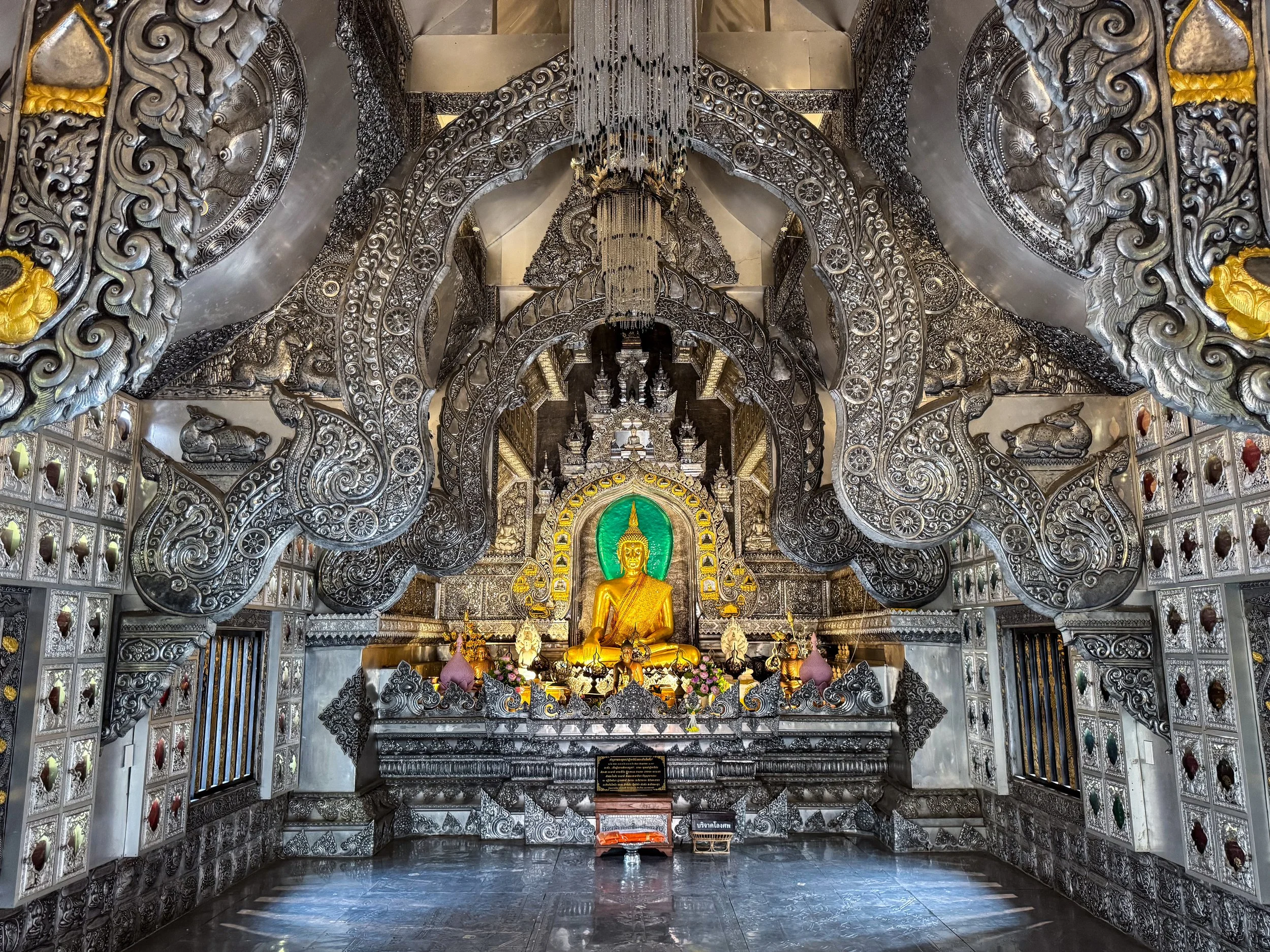
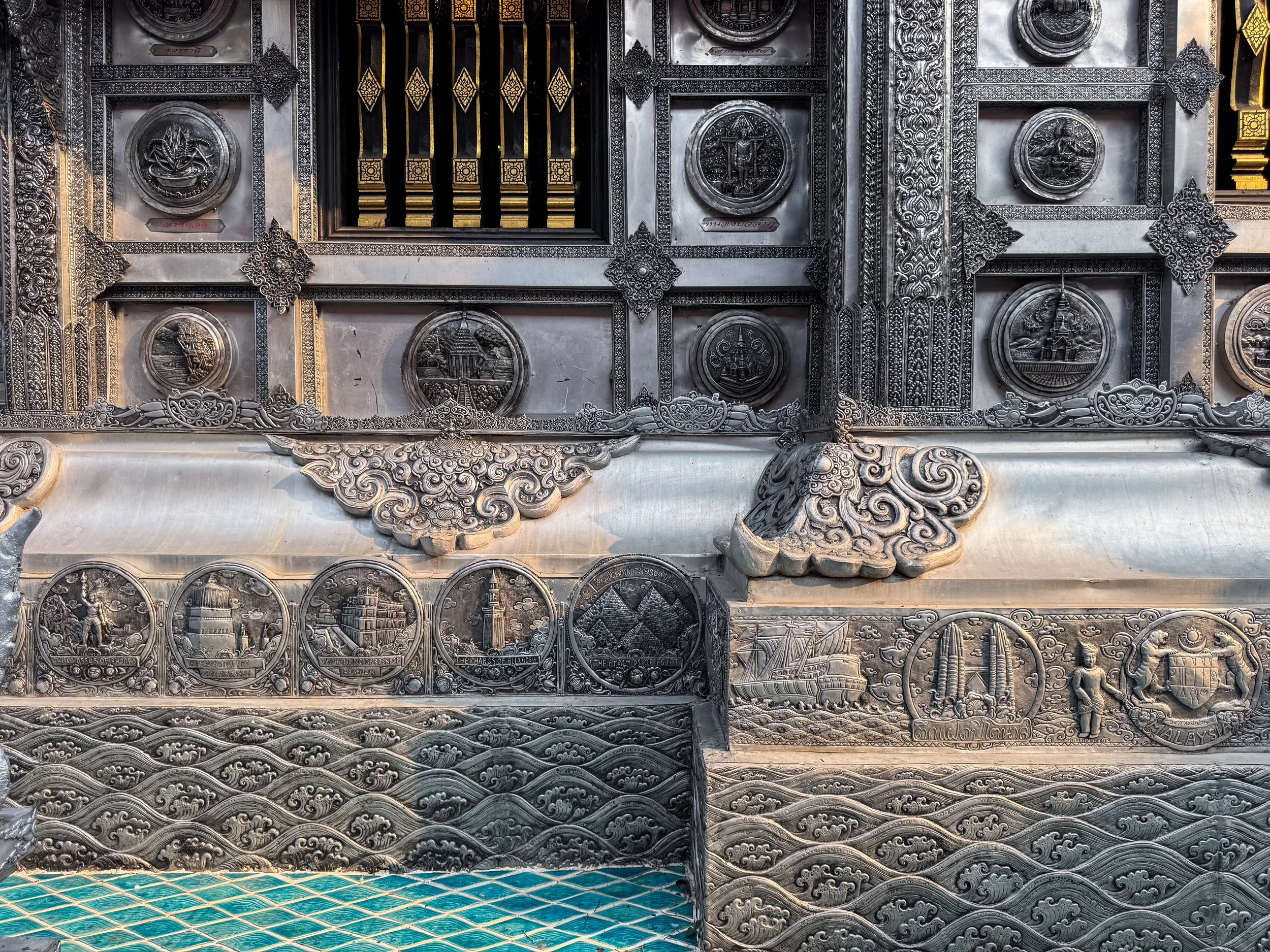
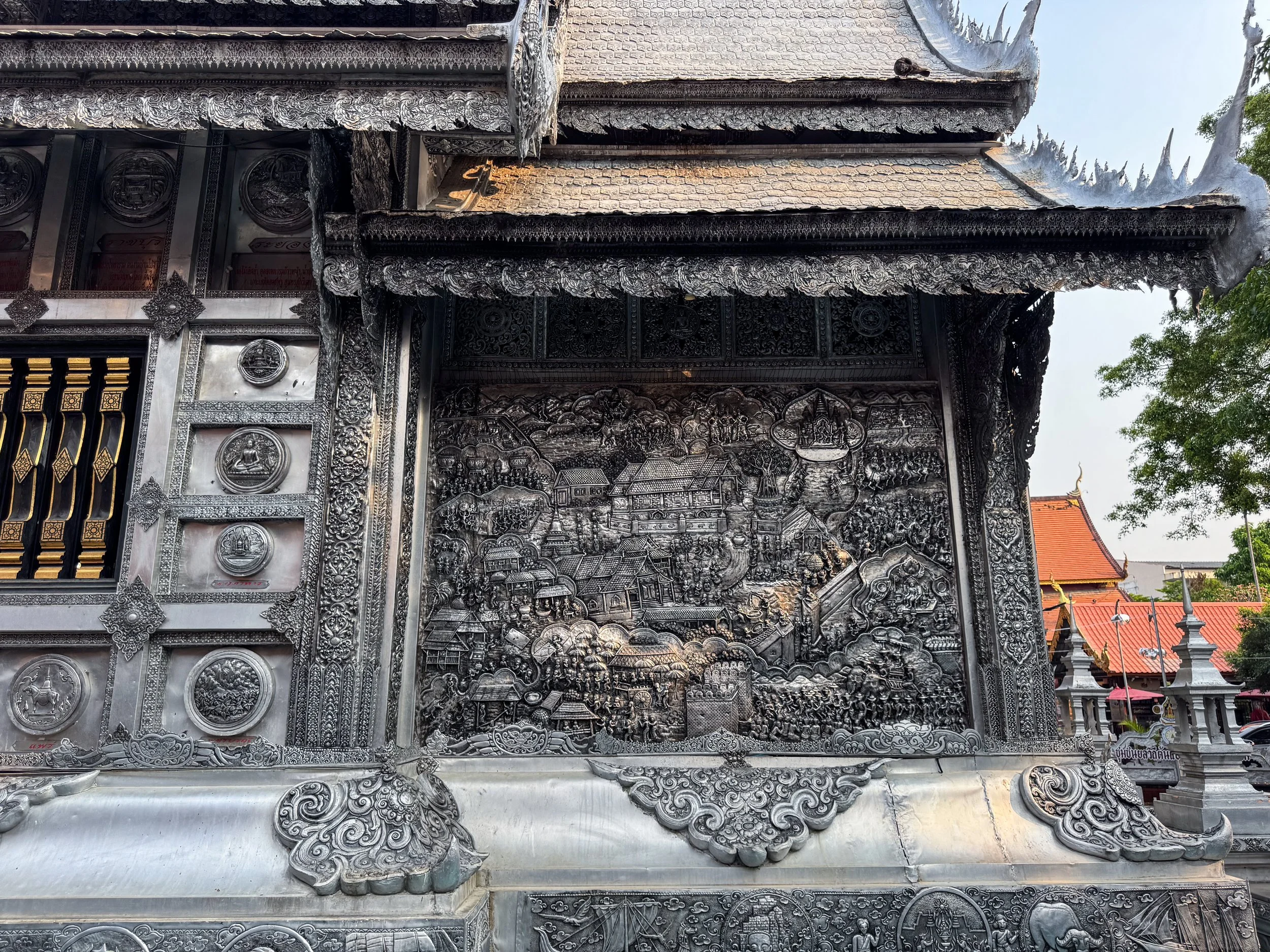
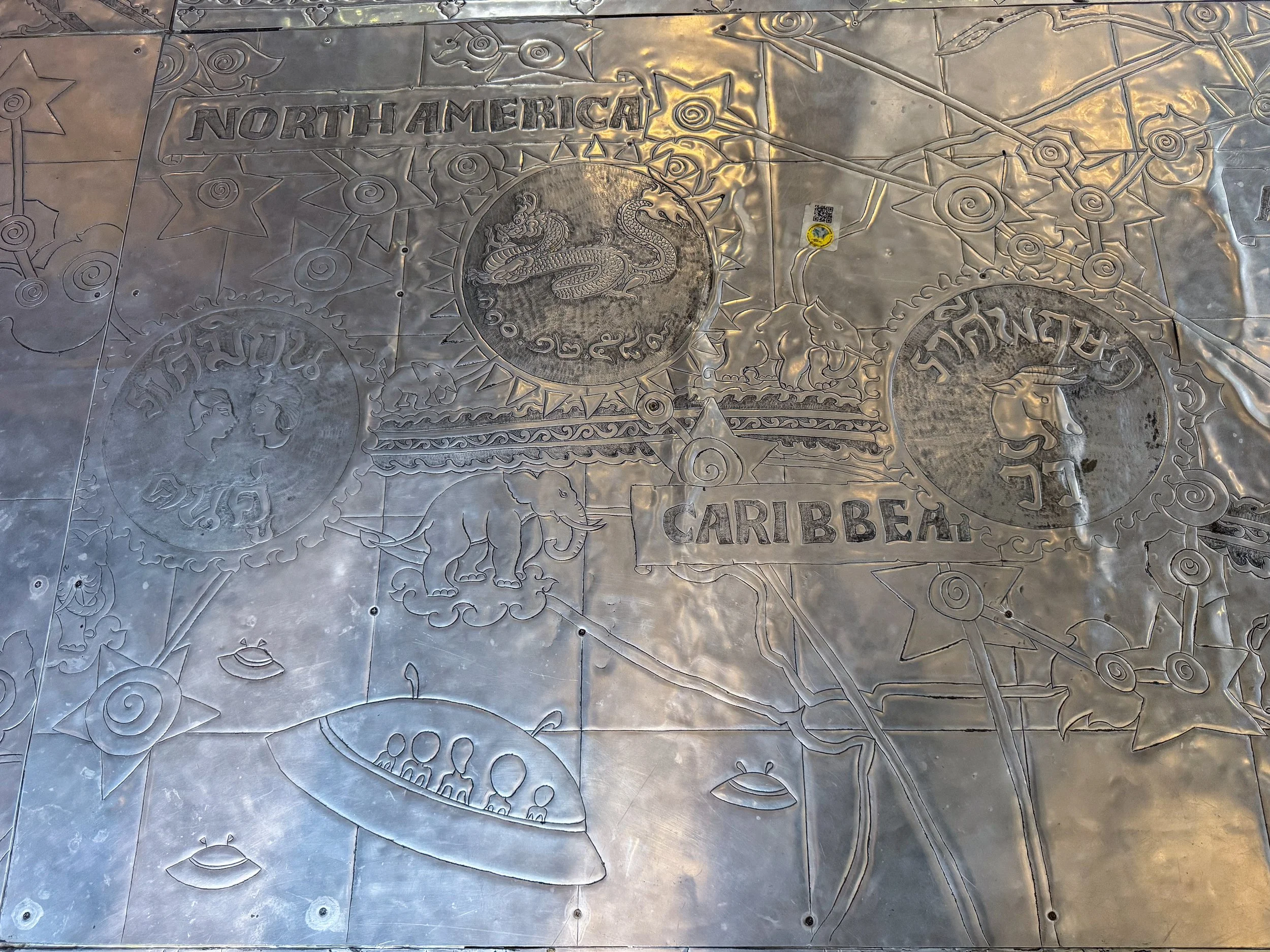
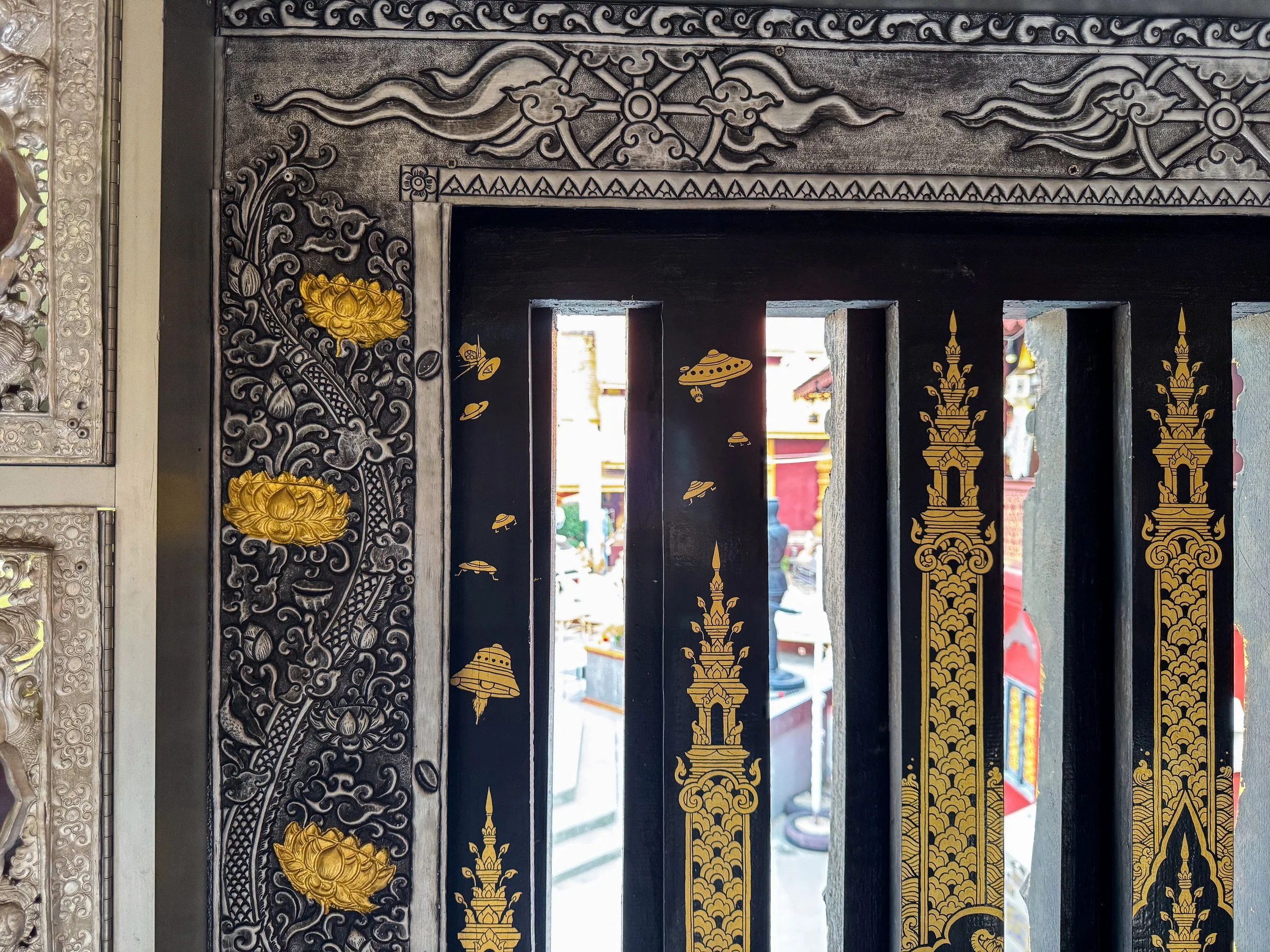
Wat Sri Suphan (The Silver Pagoda). A contemporary Buddhist wat built in the ancient Lanna style from white metals like silver, aluminum and nickel. Every surface is covered in hammered metal tiles and ornamentation. It features classic images and reliefs of Buddhist stories and mythical creatures as well as depictions of maps, international cities, world monuments, human evolution, aliens and UFOs. Women are forbidden from entering.
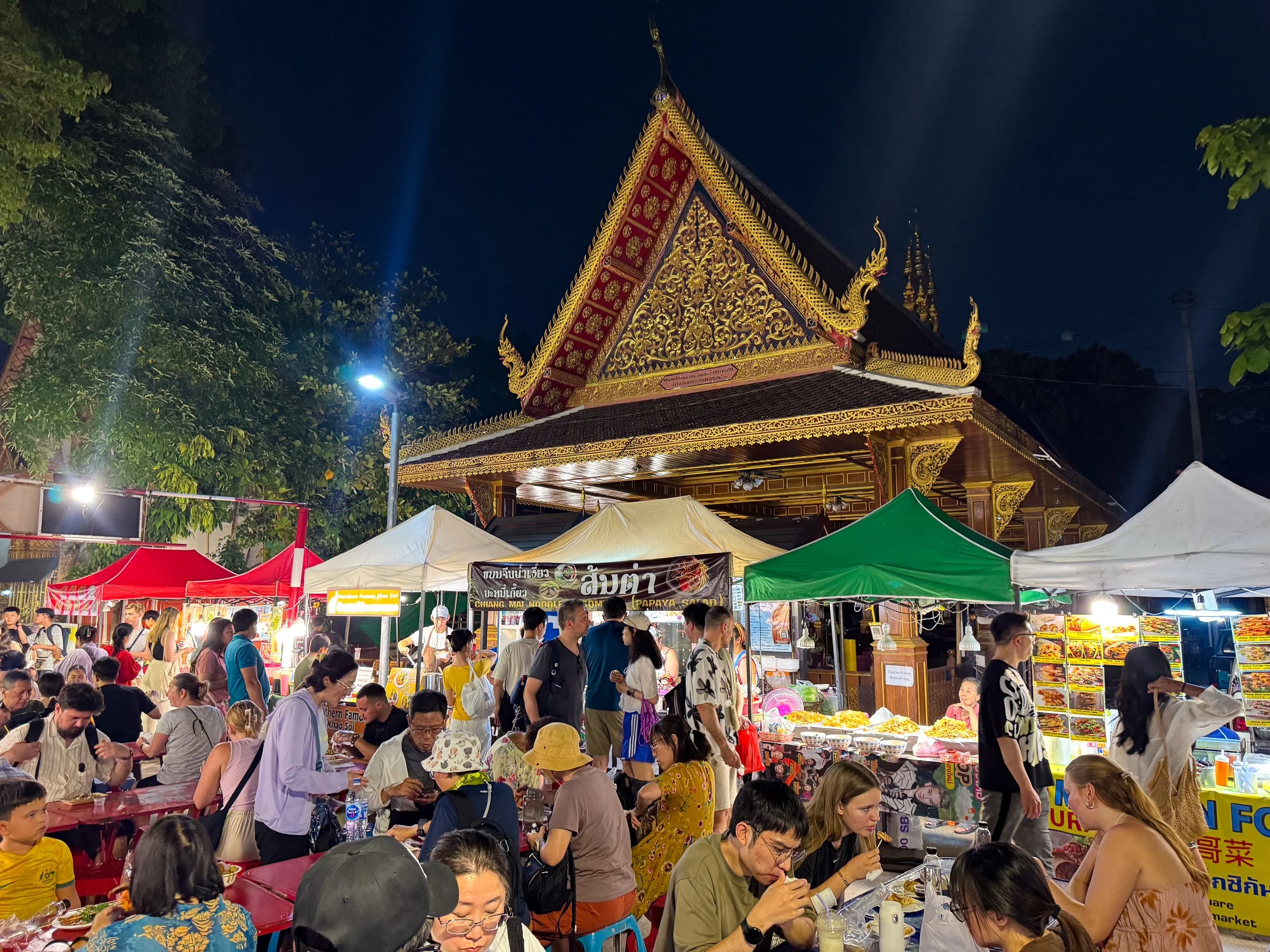
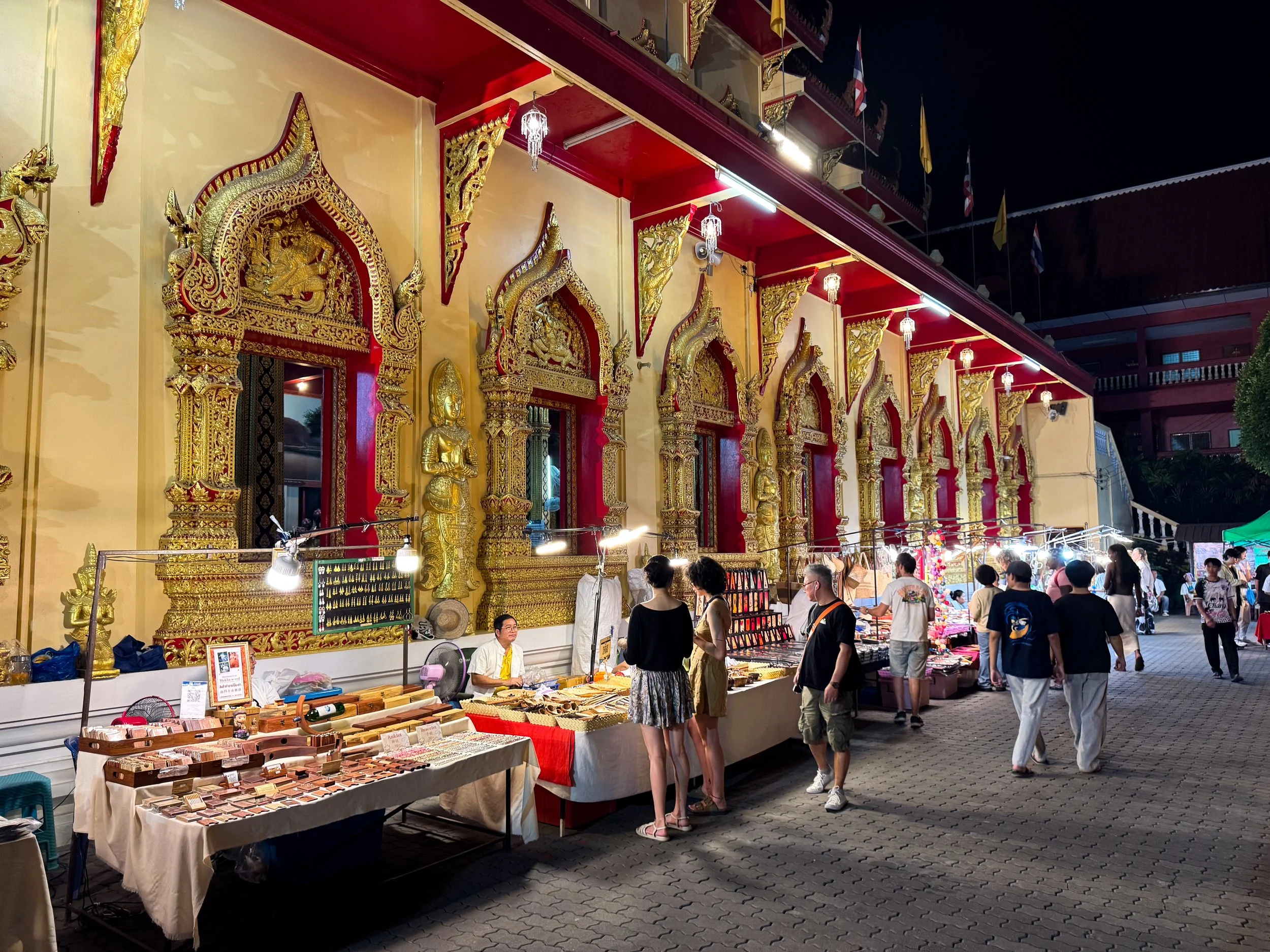

Chiang Mai Markets
Chiang Mai Gate Market. An all day market with farm stands in the morning and street food vendors during the afternoon and evenings. We shopped here for groceries, buying fruits, vegetables, herbs, spices, rice and noodles. Merchants pack up by 11am, however street food vendors stick around all day. The market comes to life at night with dozens of food carts serving Thai and regional Asian cuisine. It’s exceptionally fun to visit on Saturday nights. It’s located at the south gate to the Old City.
Chiang Mai Night Markets. The night markets in Chiang Mai are some of the best we’ve been to in Asia for their authentically handmade goods, wide array of street food, affordable prices and overall ambience. They start in the late afternoon and continue until around midnight.
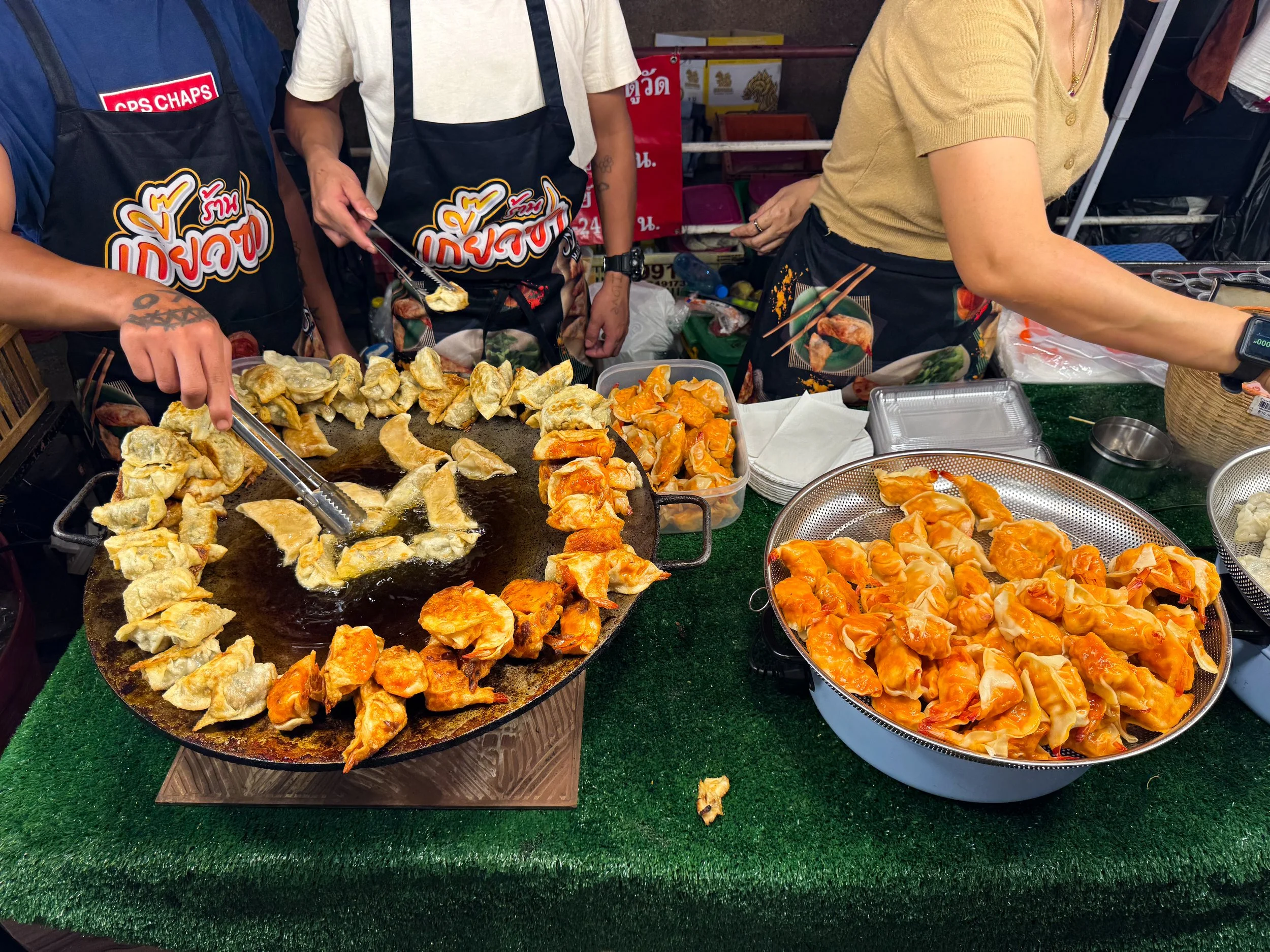
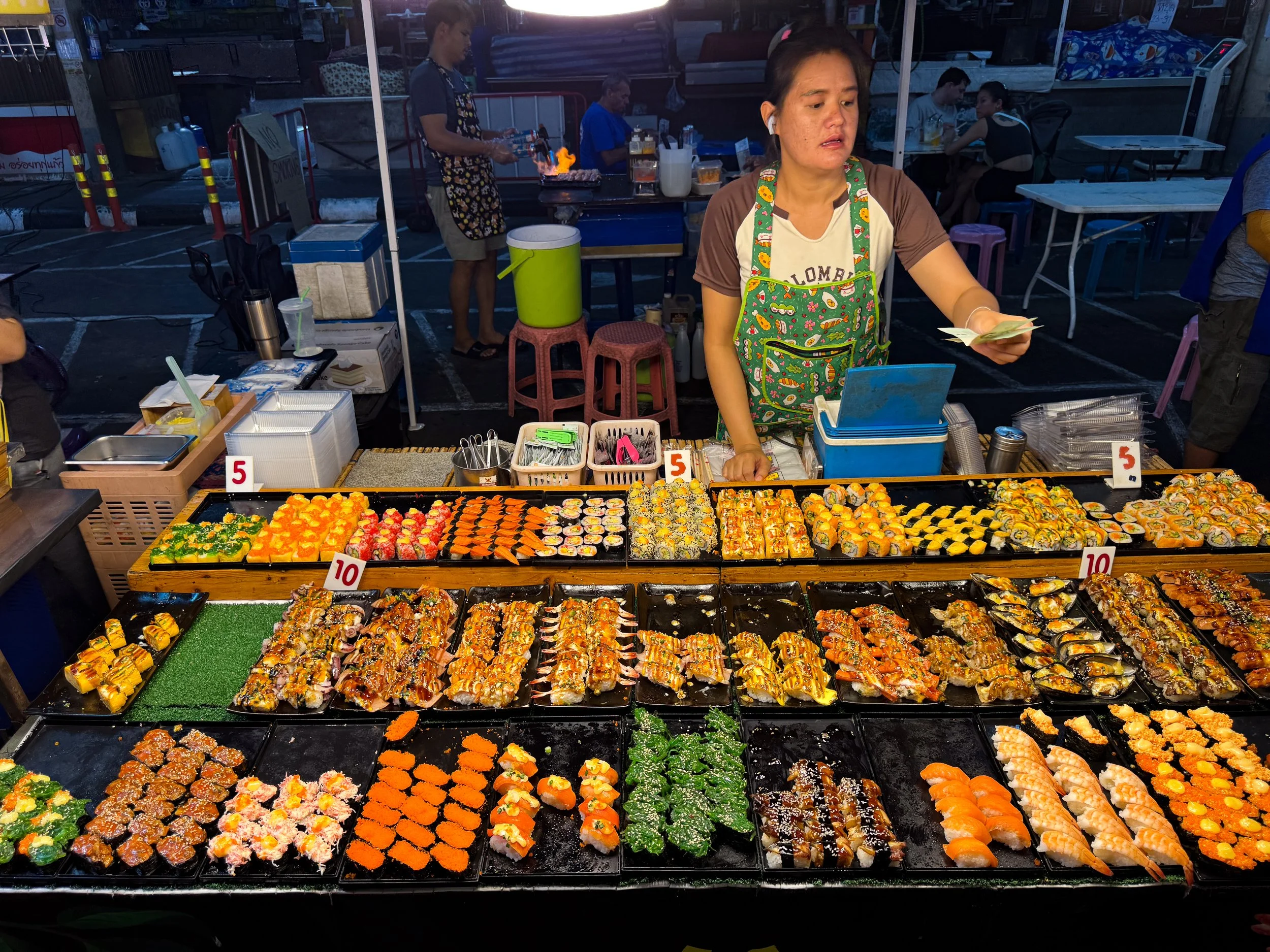
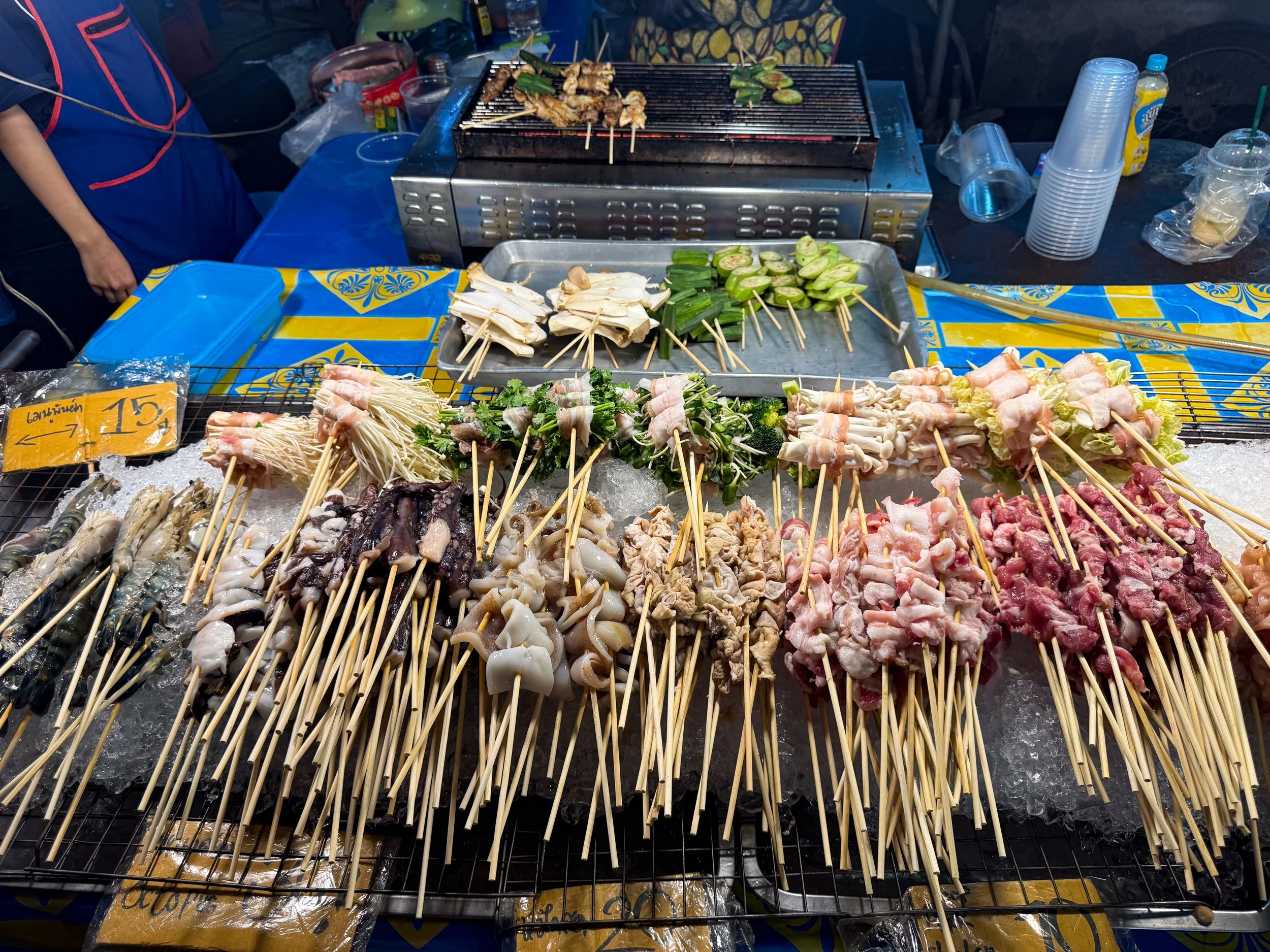
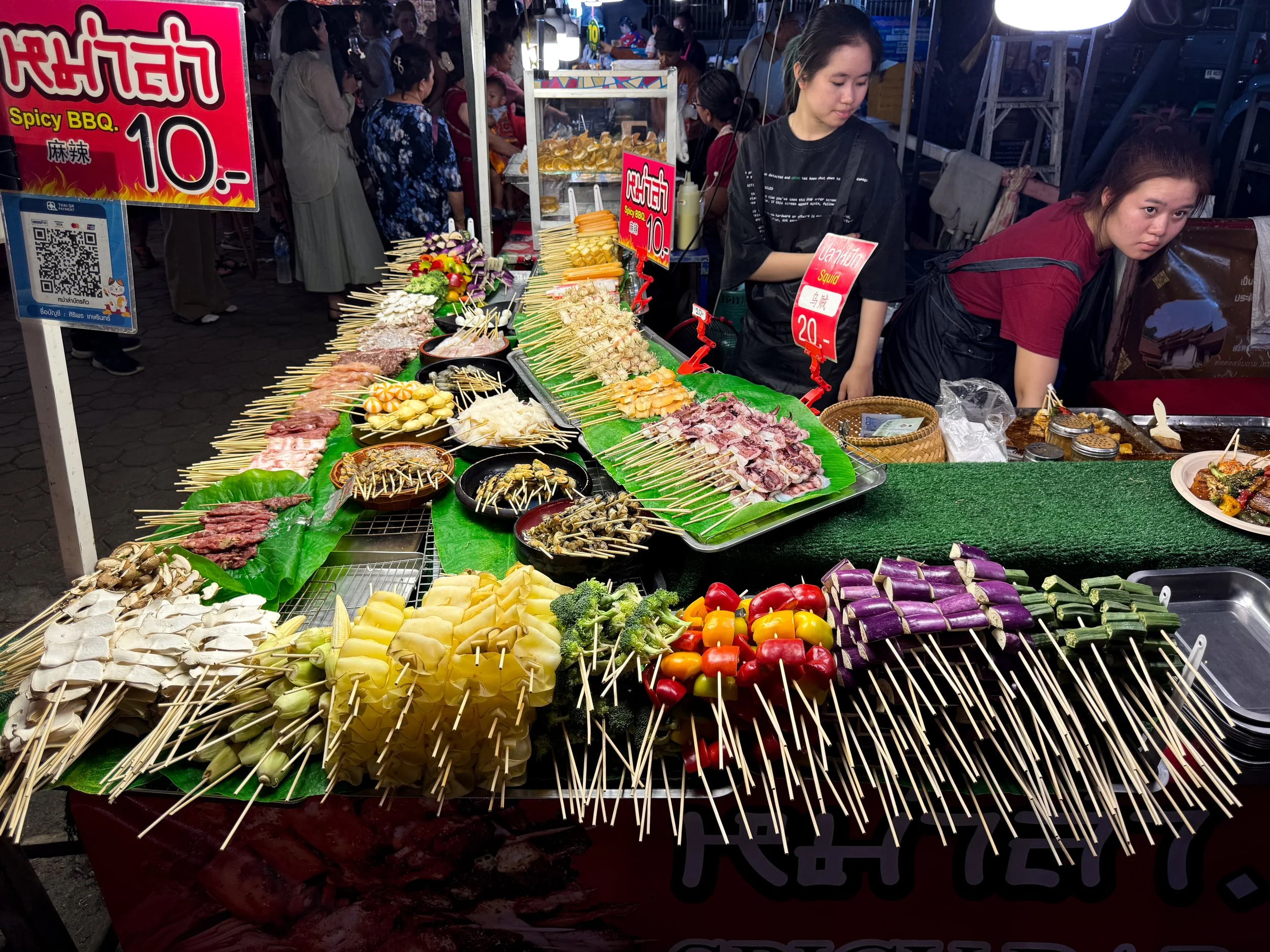
Wua Lai Walking Street (Saturday Night Market). A 1km street with hundreds of vendors selling locally made handicrafts like indigo dyed clothing, elephant figurines, jade jewelry, customizable passport holders, paper fans, lanterns and parasols. Food vendors sell the region’s staple egg noodle soup, Khao Soi and Thai favorites like pineapple fried rice, mango sticky rice and rolled ice cream. Other common dishes include stir fried rice noodles, pan fried dumplings, grilled skewers with meats, seafood and veggies, boiled crabs, sushi, mochi and fresh coconuts. The street is mainly lined with souvener vendors while the wats host street food carts, kitchens and dining areas.
Sunday Night Market. A night market held on Sunday nights along the 1km stretch of road between Wat Phra Singh Woramahawihan and the Tha Phae Gate on Rachadamnoen Road. It’s one of the largest and liveliest night markets in Chiang Mai. It hosts many of the same handicrafts and street food vendors as the Saturday Night Market.
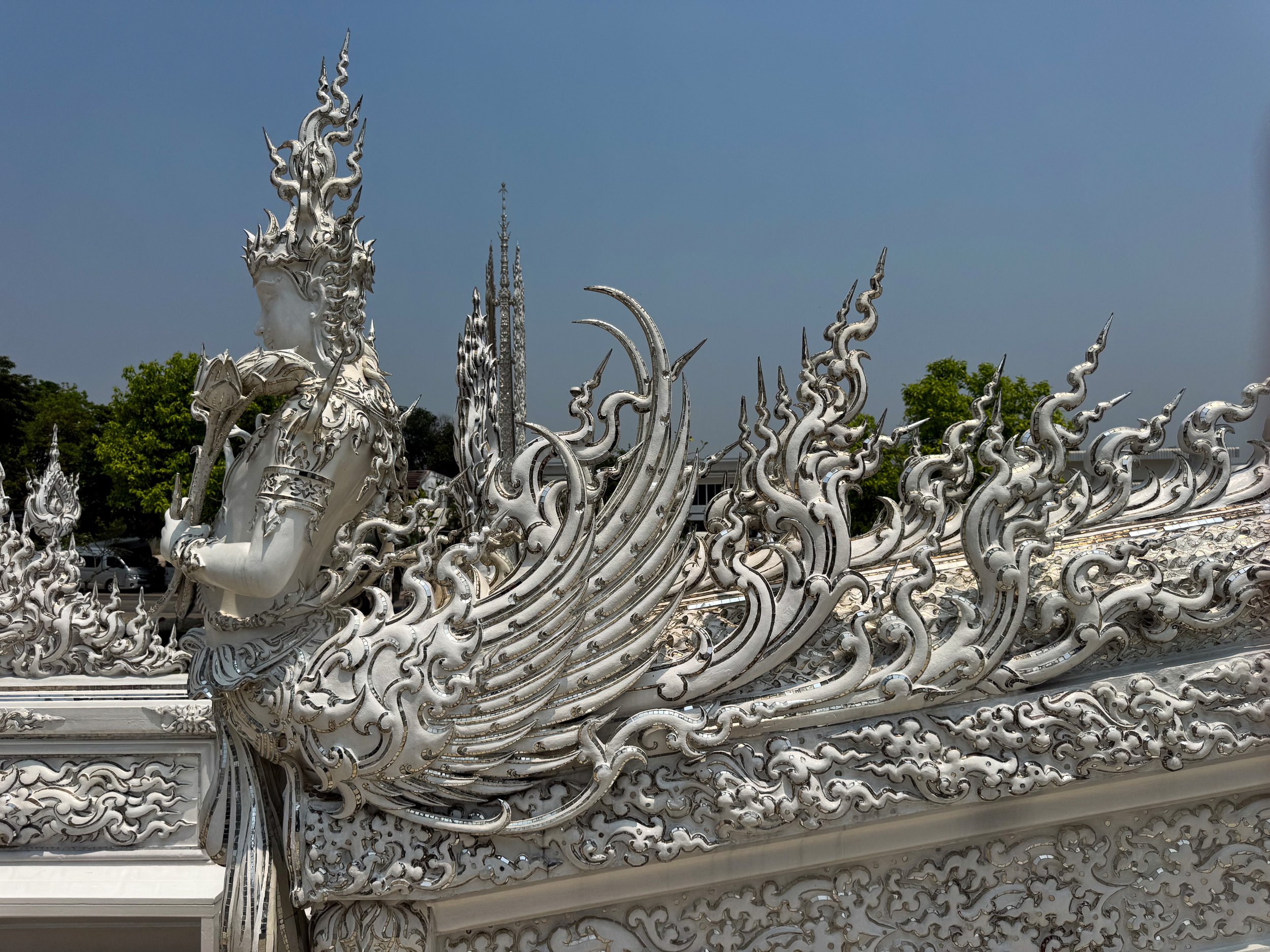
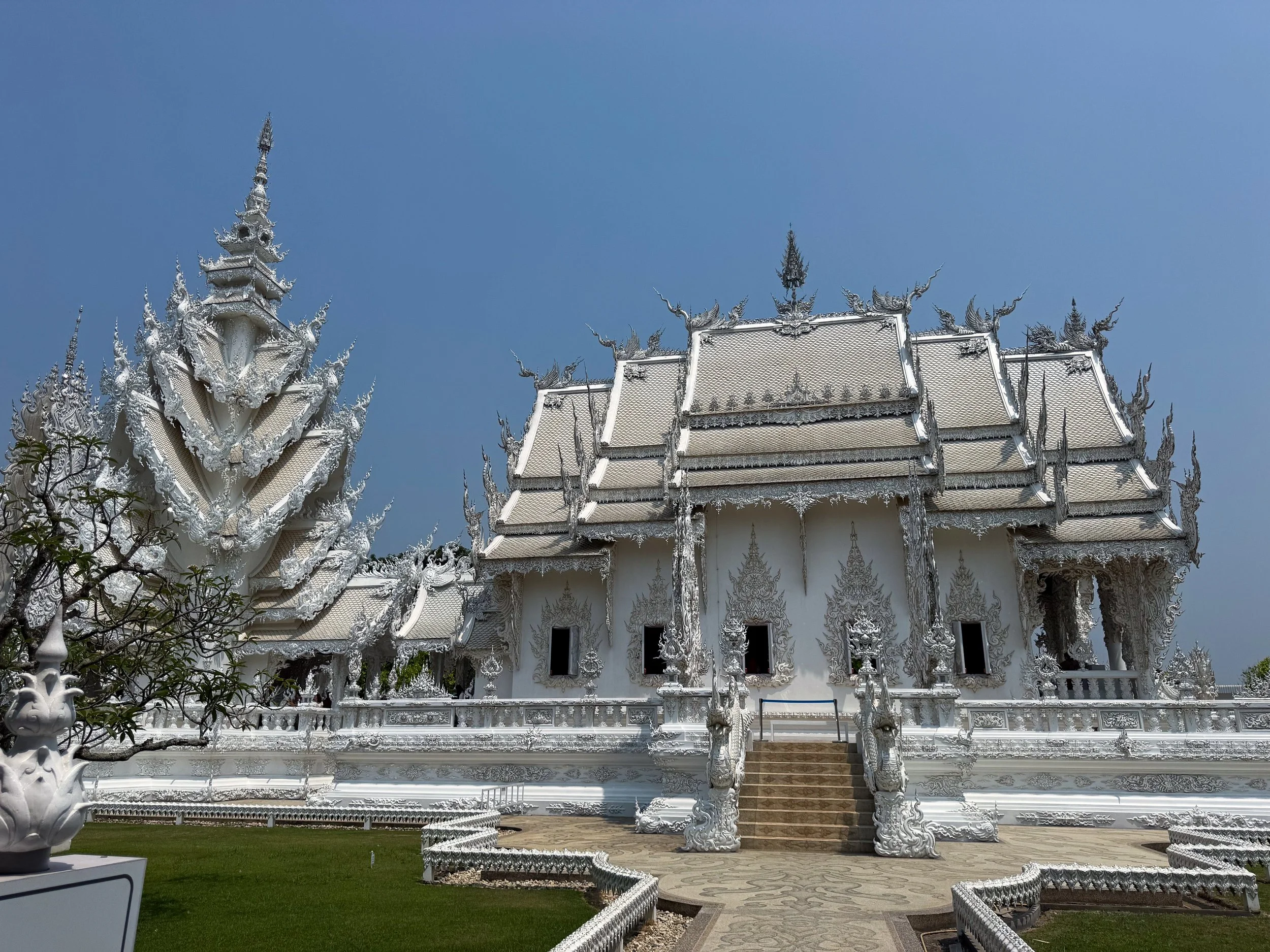
Chiang Rai
Chiang Rai is the ancient capital of the Lanna Kingdom with multiple modern day Buddhist temples. We visited three of them on a full day trip here from Chiang Mai.
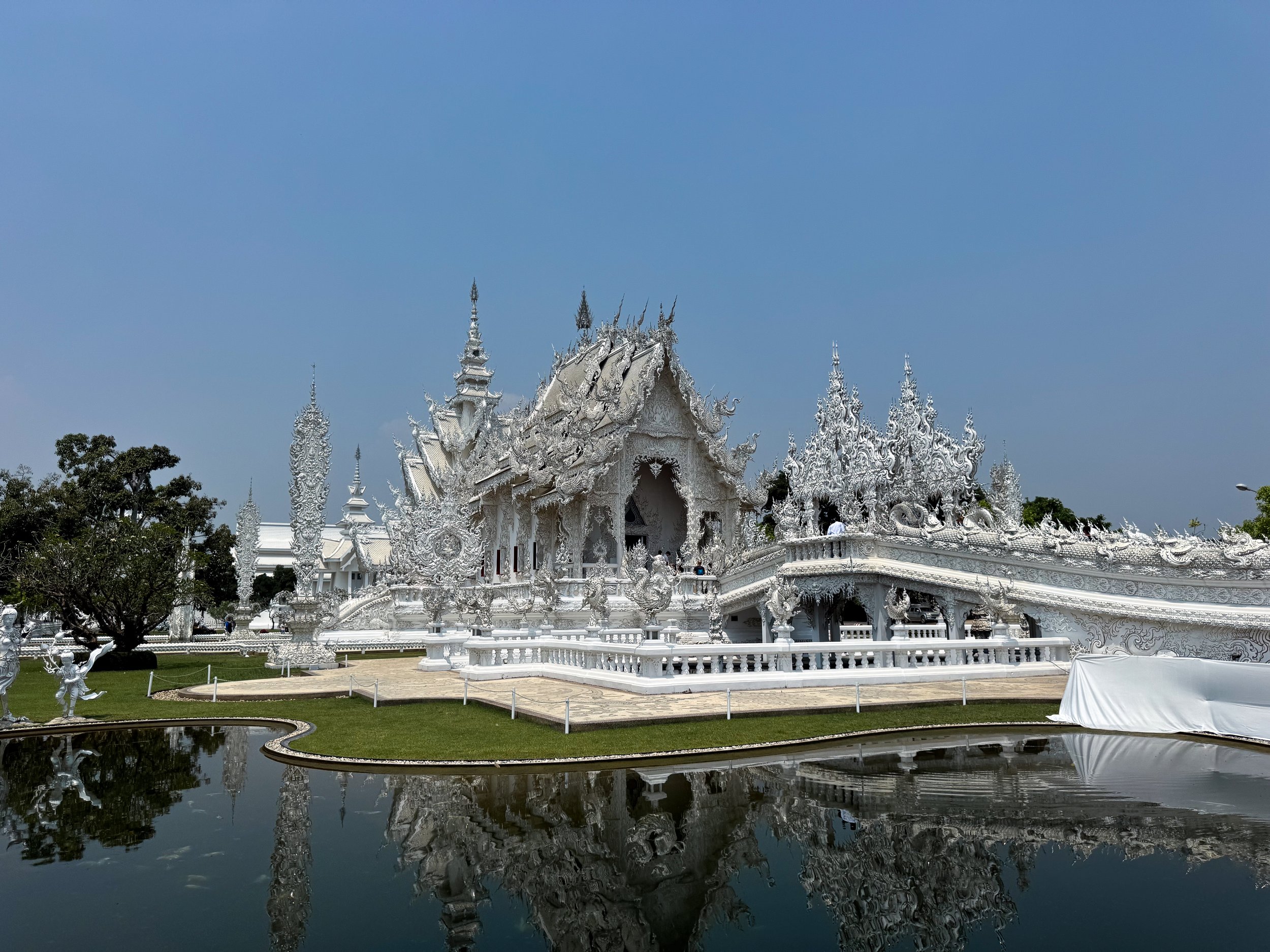
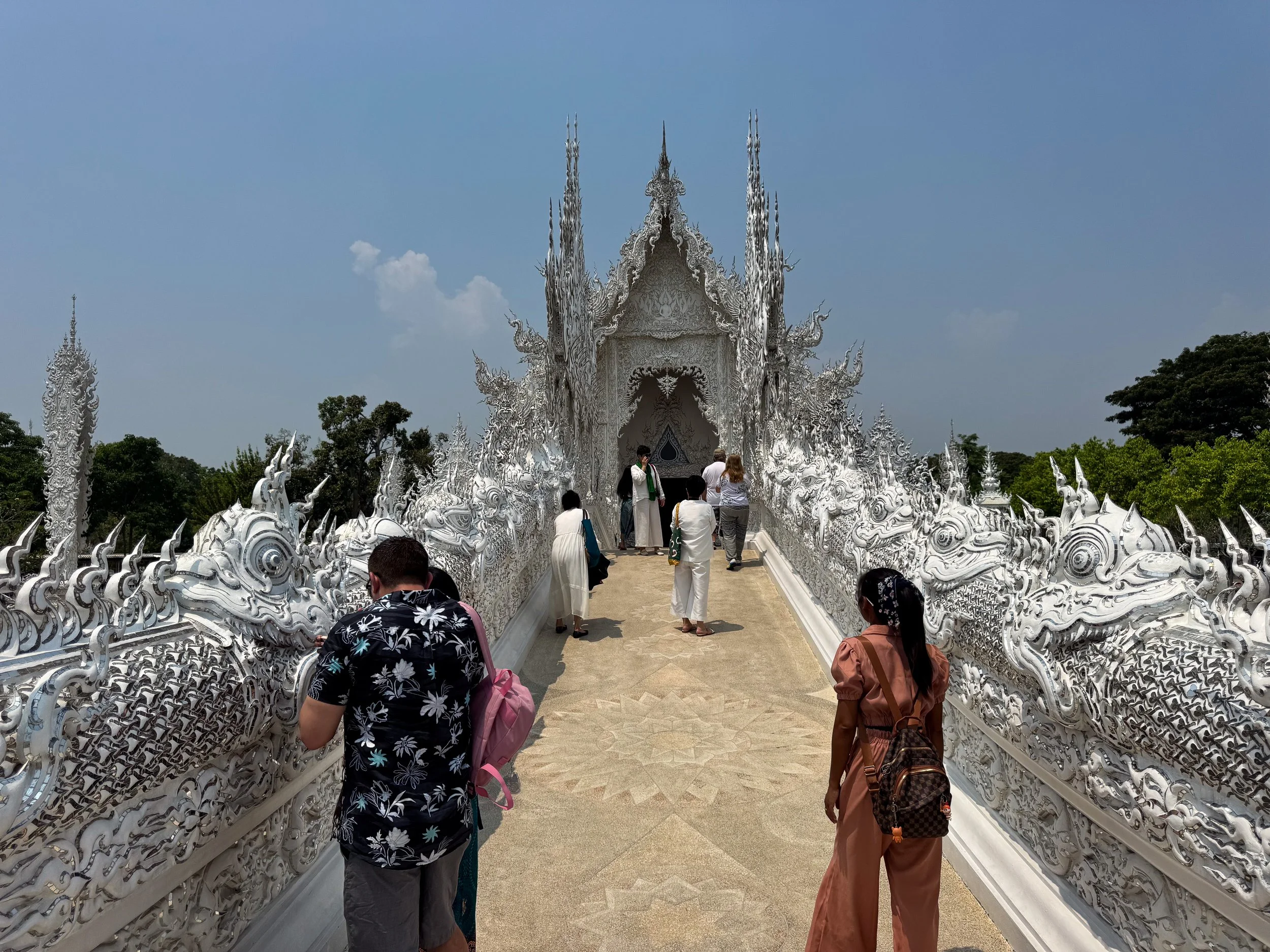
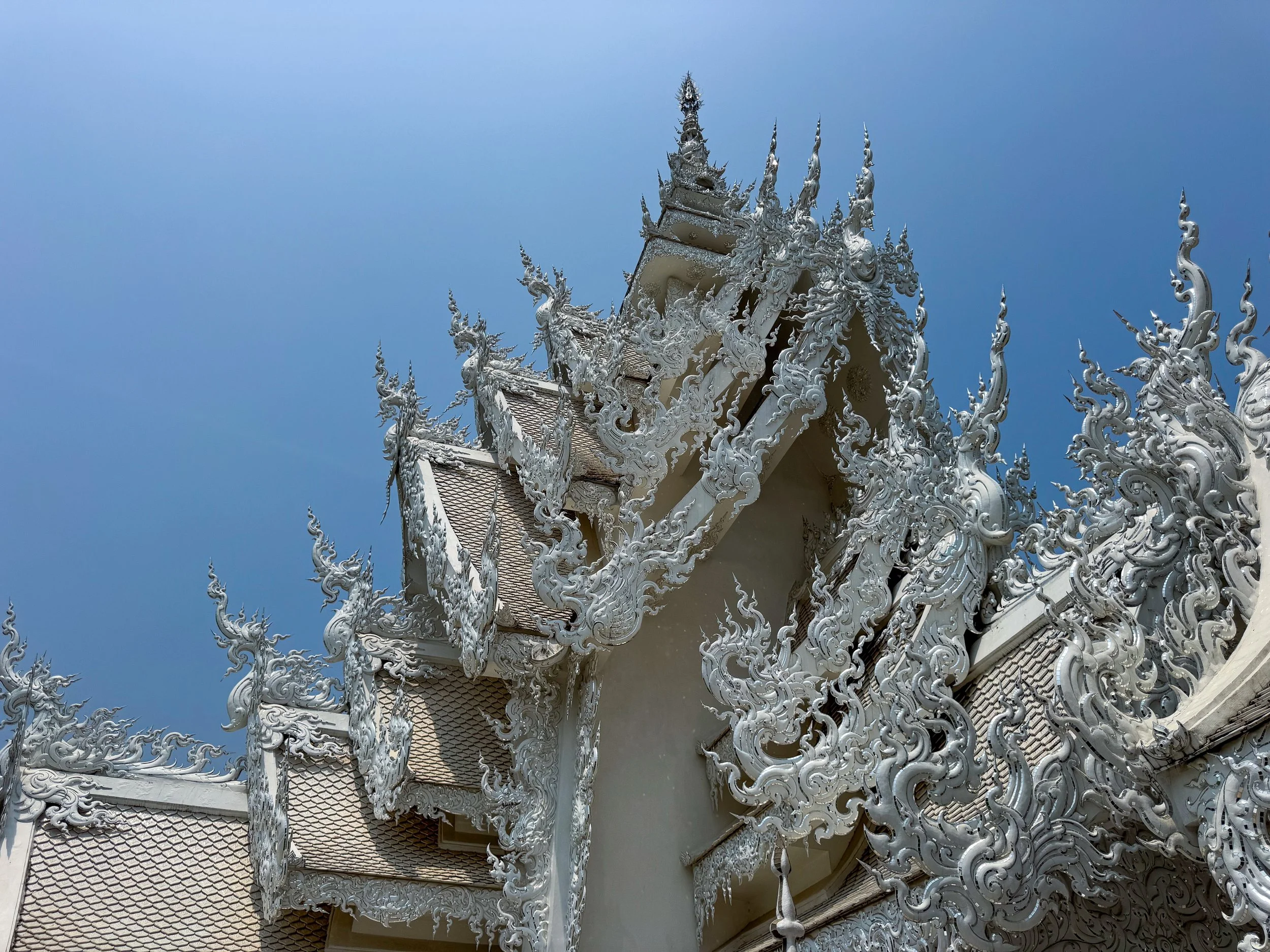
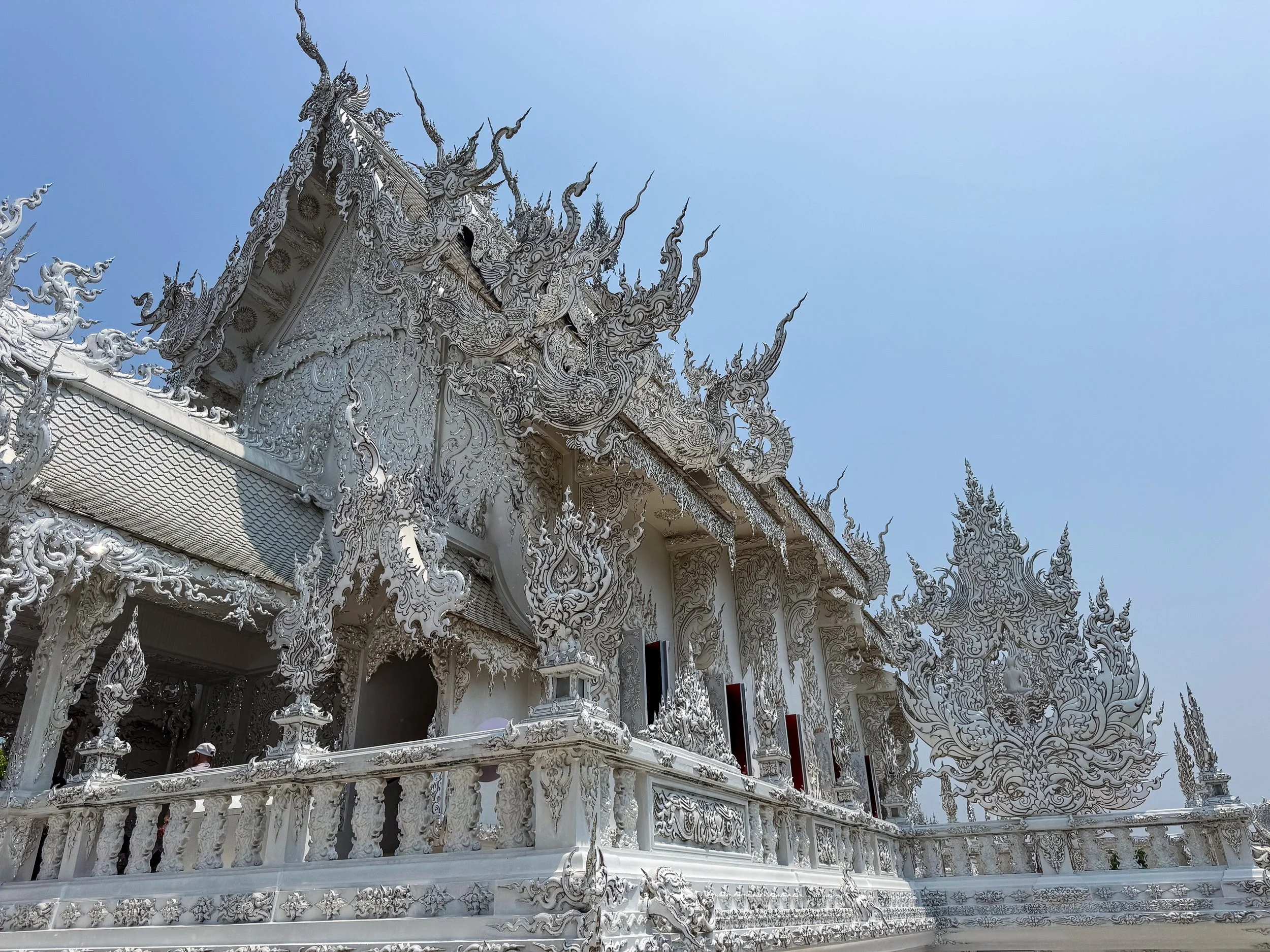
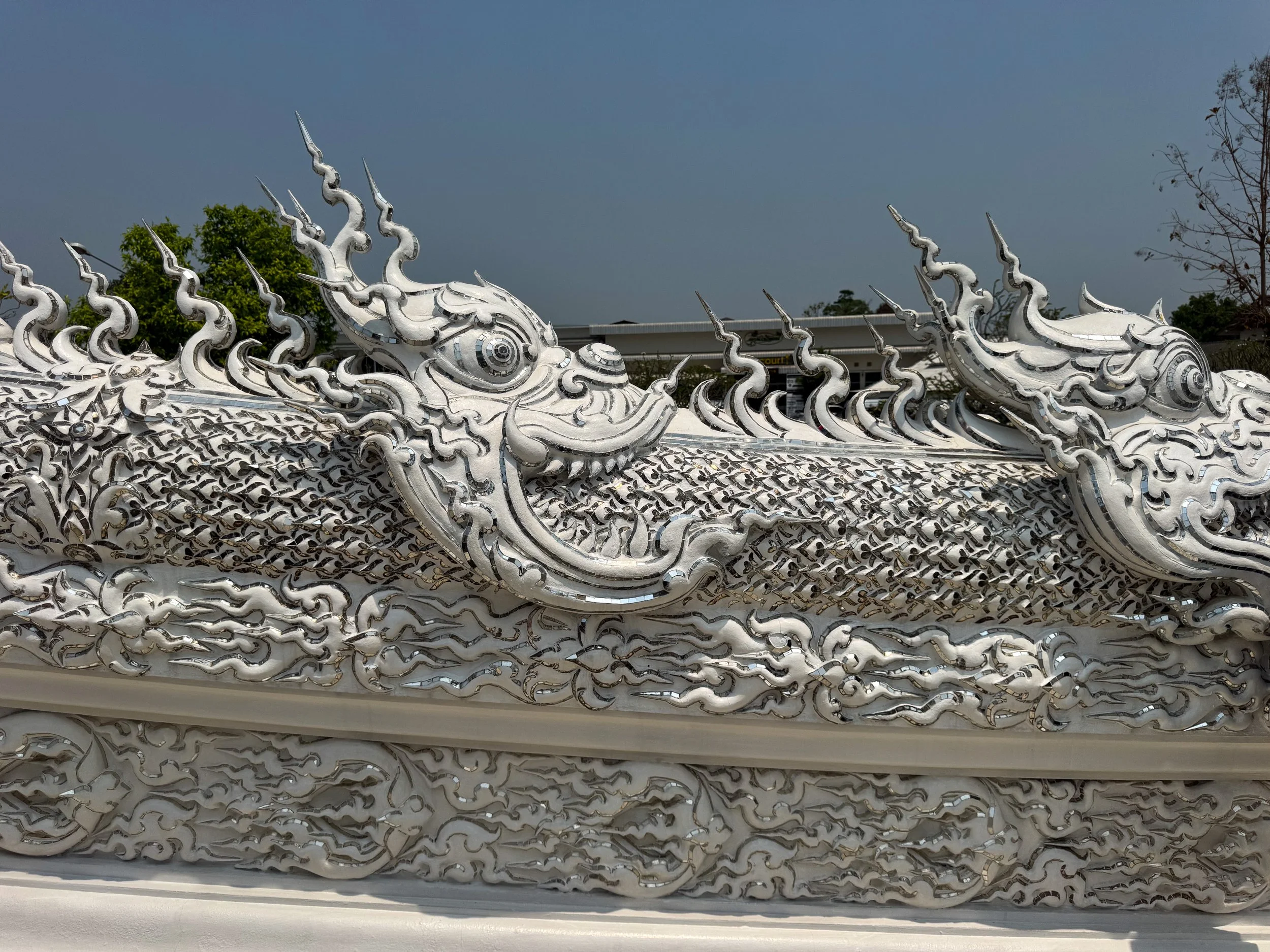
Wat Rong Khun (The White Temple). A contemporary temple complex with several buildings including meditation halls, art galleries and stupas. Most buildings are painted white and accented with contours of mirrored mosaic tiles. The main temple is the most impressive with its highly ornamented designs and finely detailed embellishments. It’s surrounded by a grassy lawn and koi pond. Within are paintings of the Buddha, superheroes, modern day cities and the apocalypse. Photos inside are forbidden. Several other buildings are still undergoing construction, lacking ornamentation while others are fully painted gold.
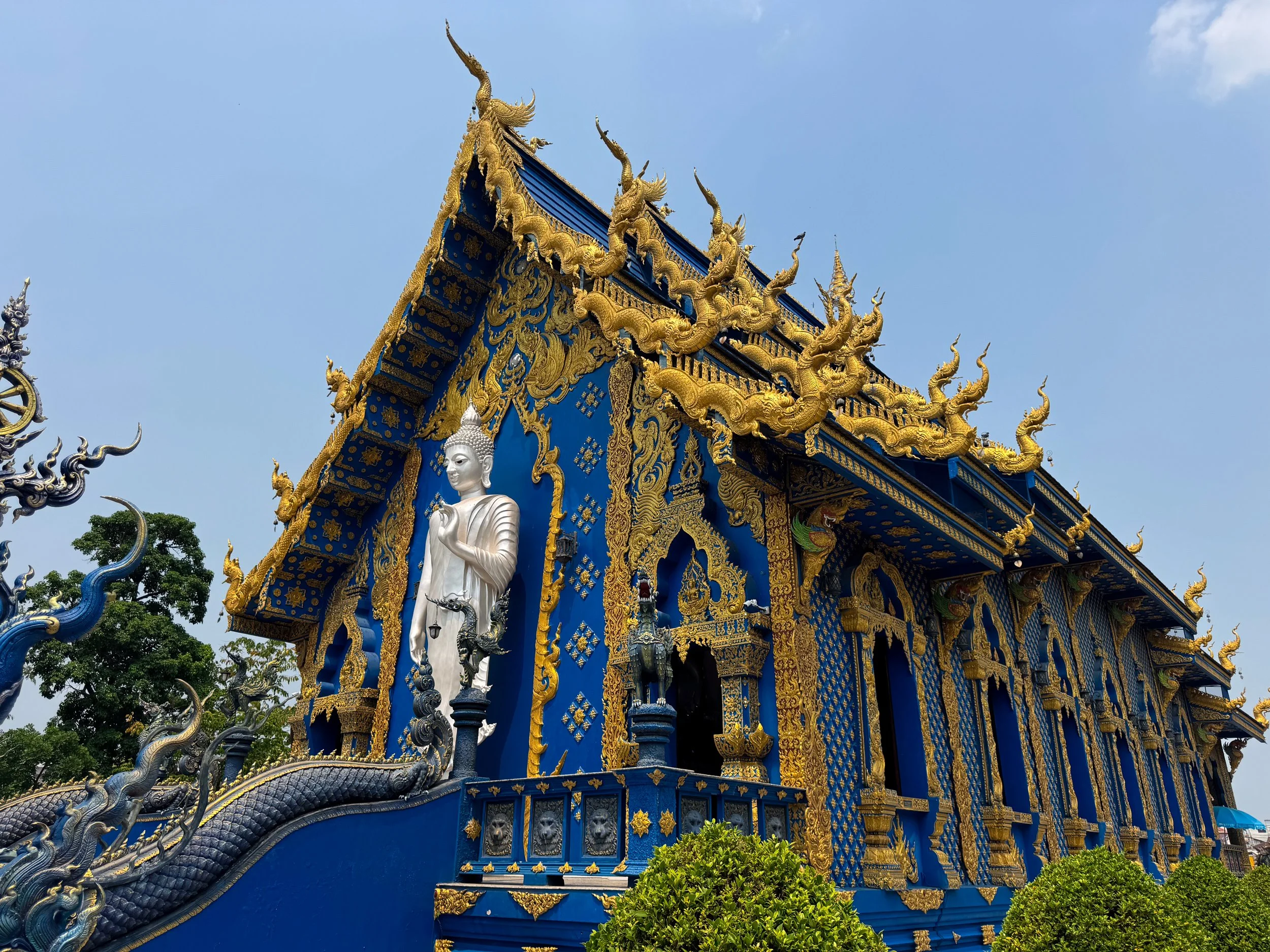
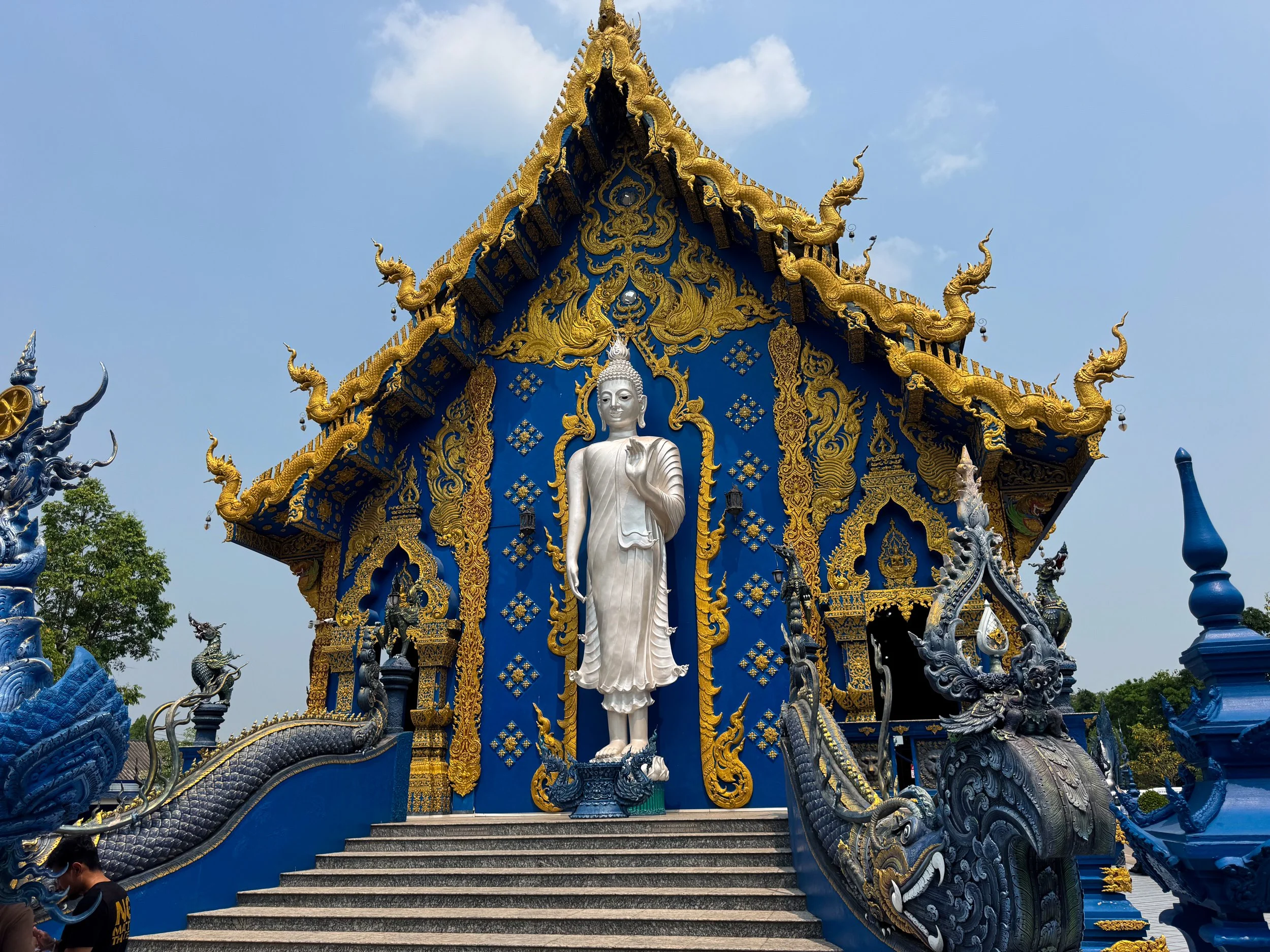

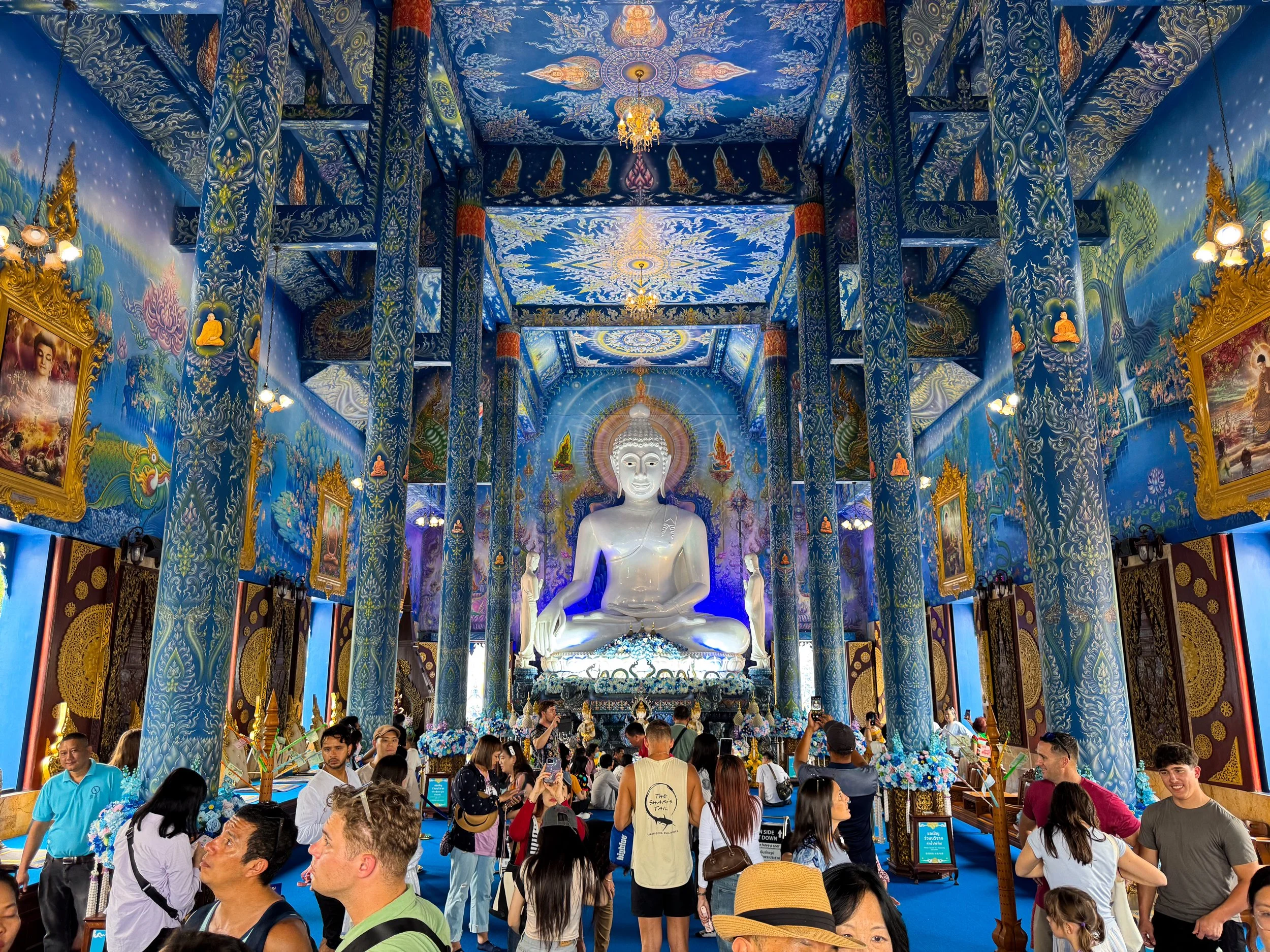
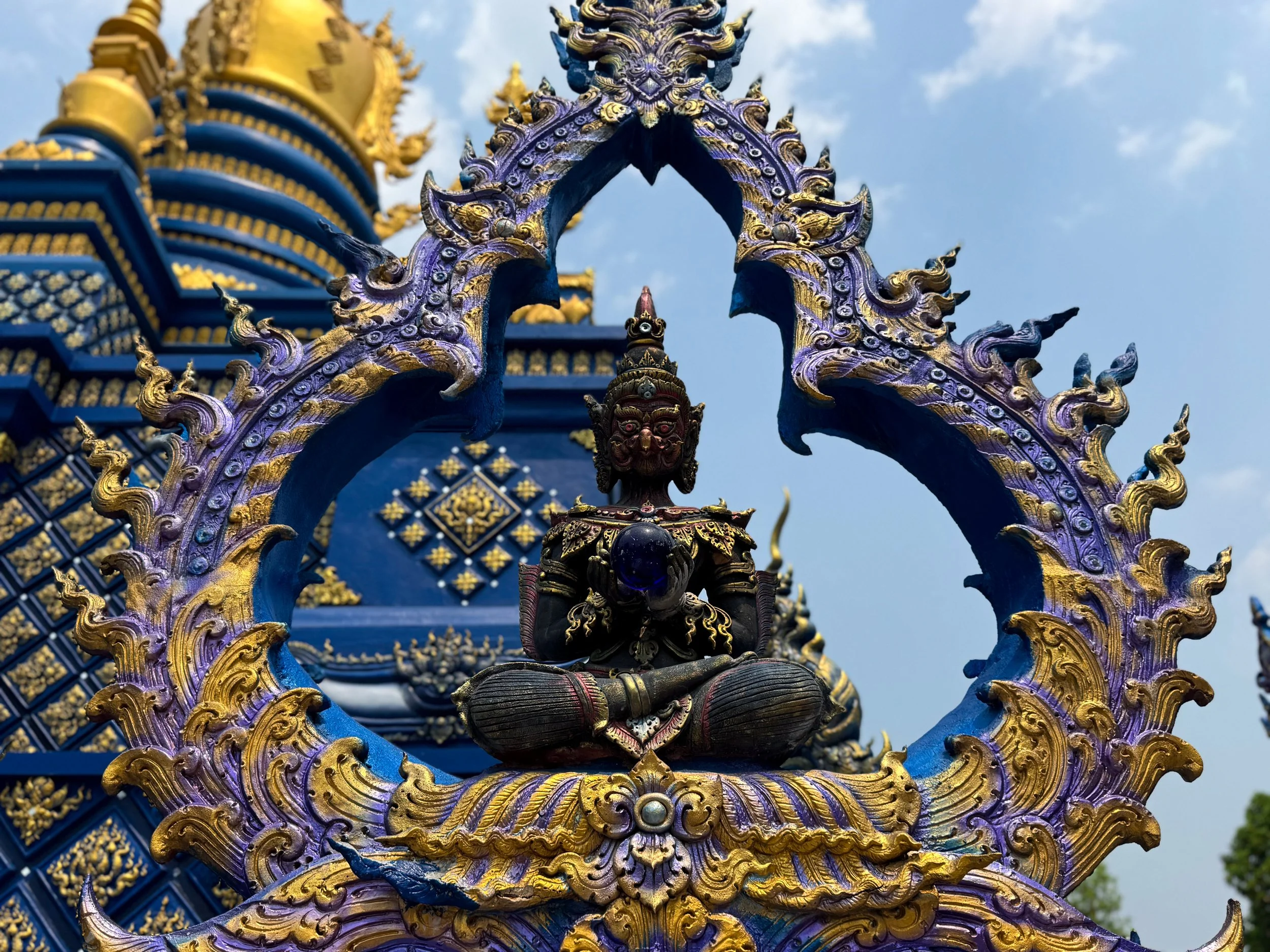
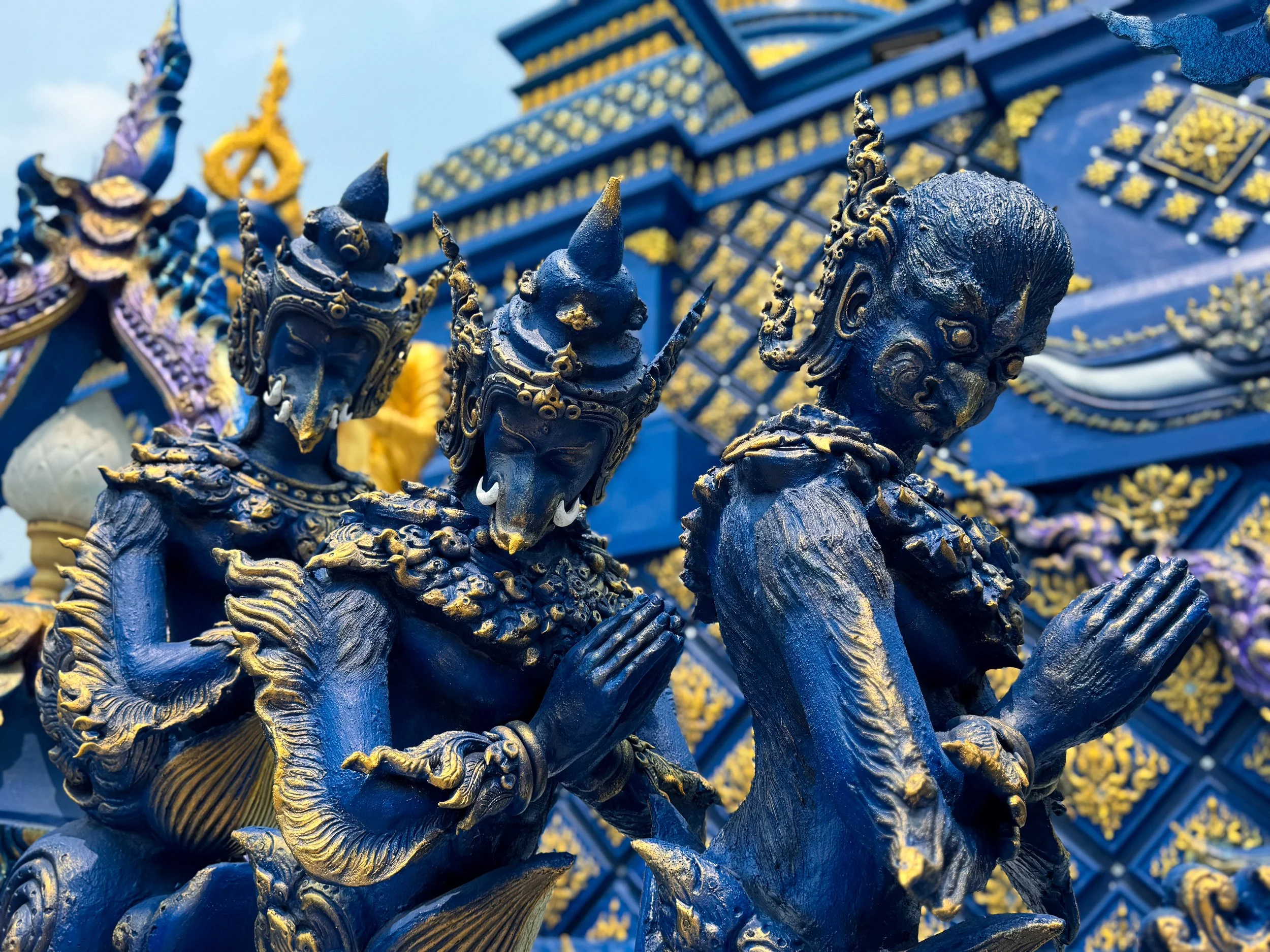
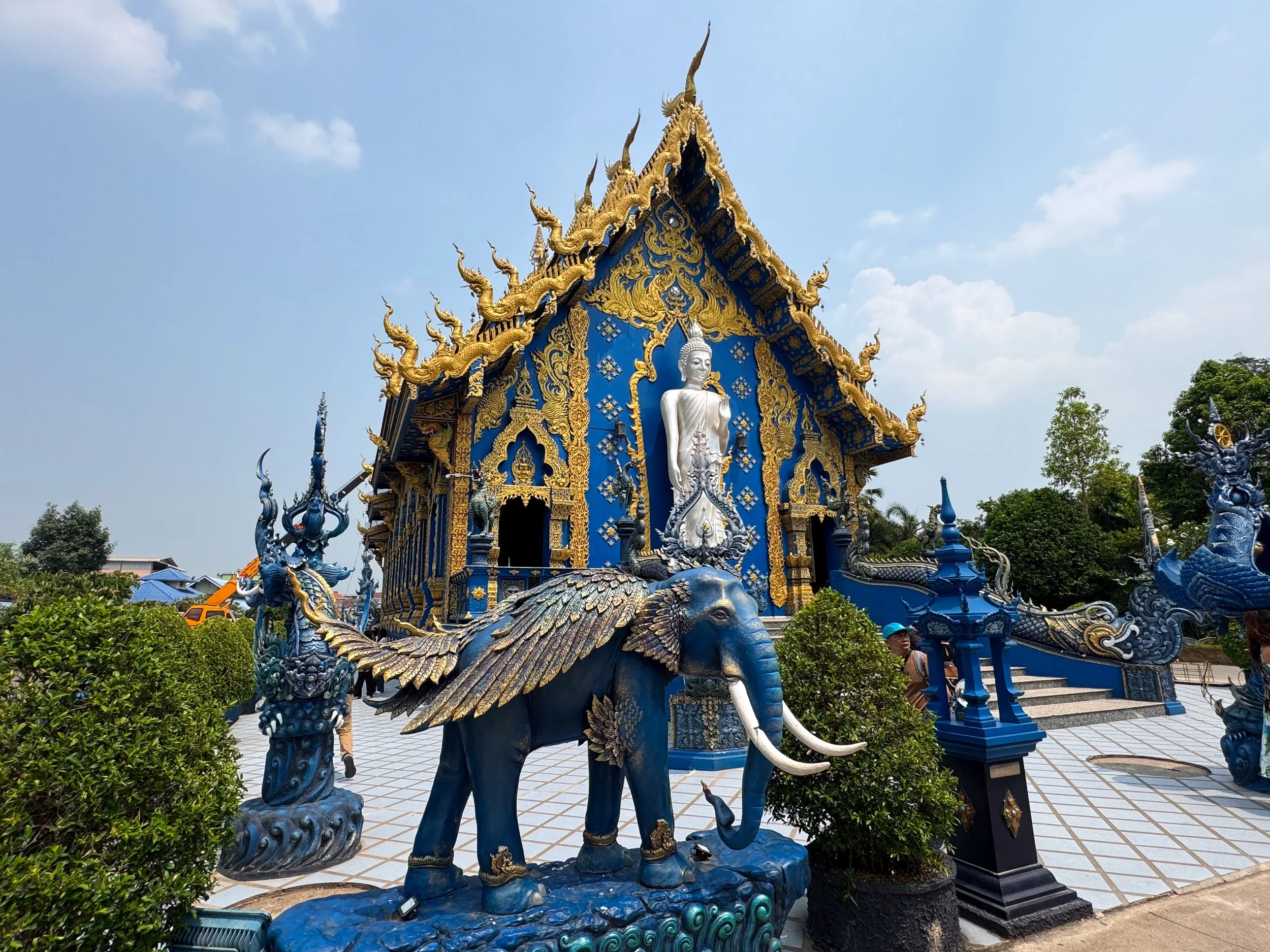
Wat Rong Seur Ten (The Blue Temple). A newly constructed Buddhist temple painted royal blue and painted in gold airbrush ornamentation. Its interior is equally unique with blue colored surfaces covered in various designs and paintings with a large glossy white statue of the Buddha. Like the White Temple, it was designed to be “one of a kind.”
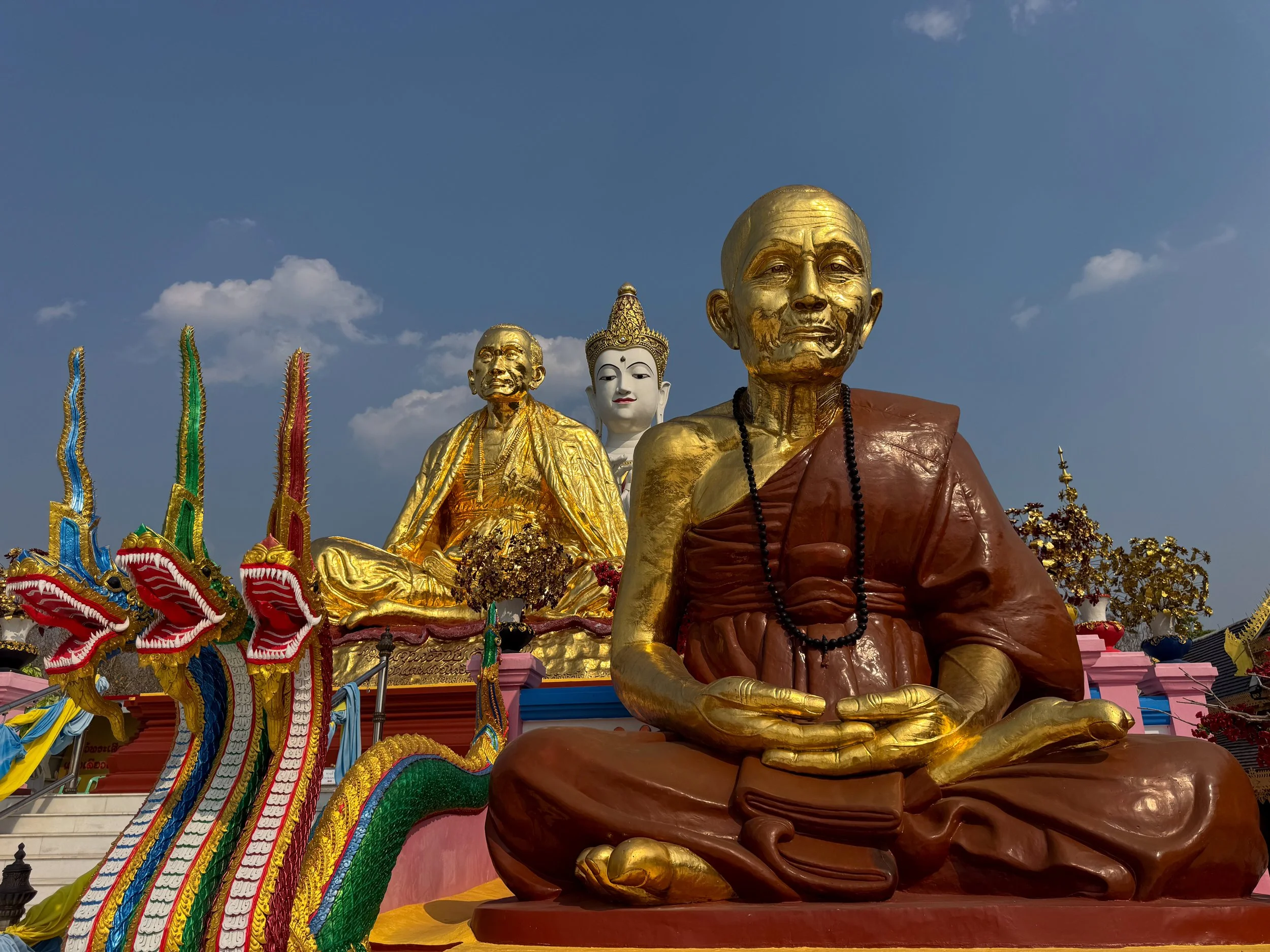
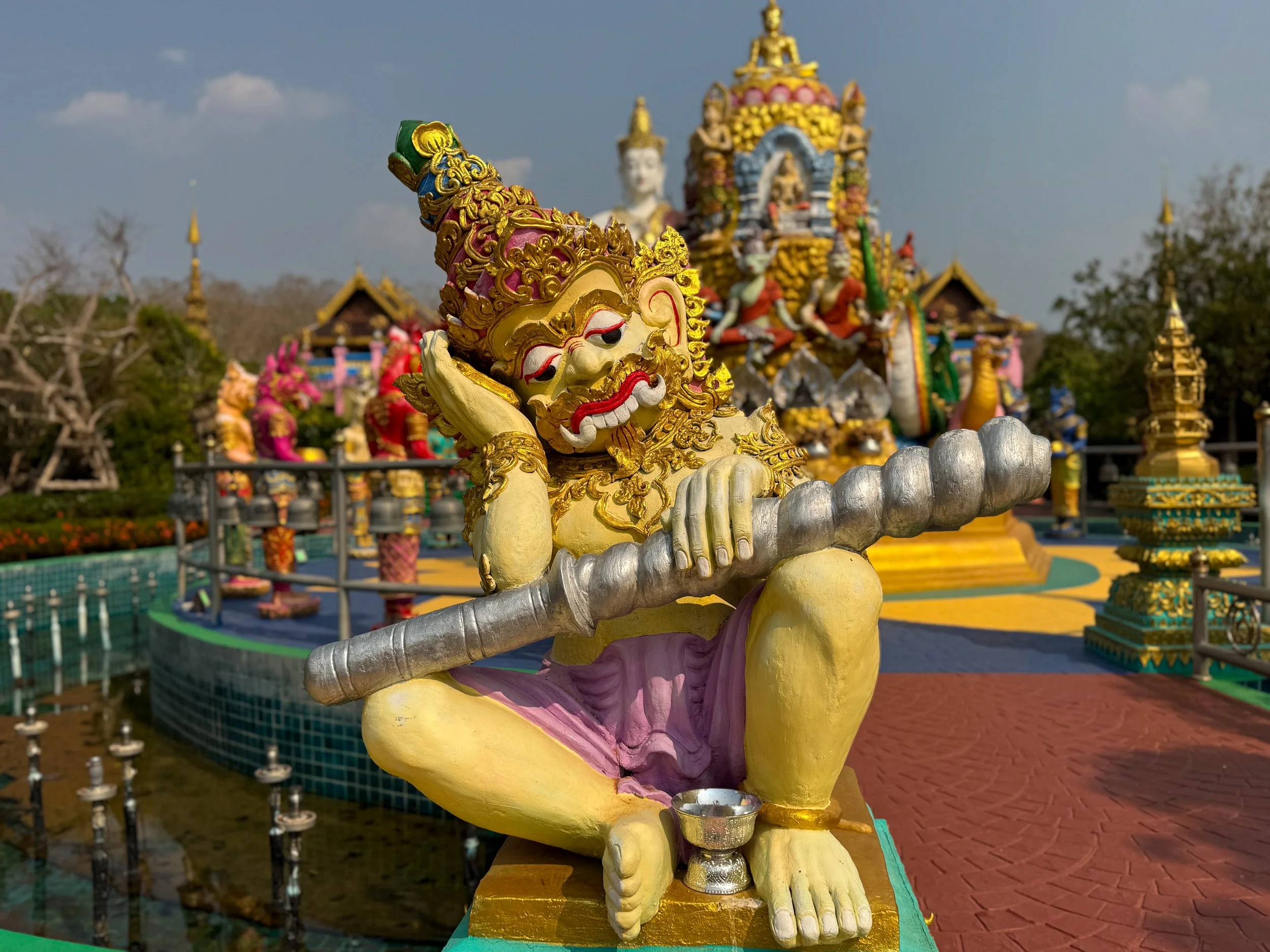
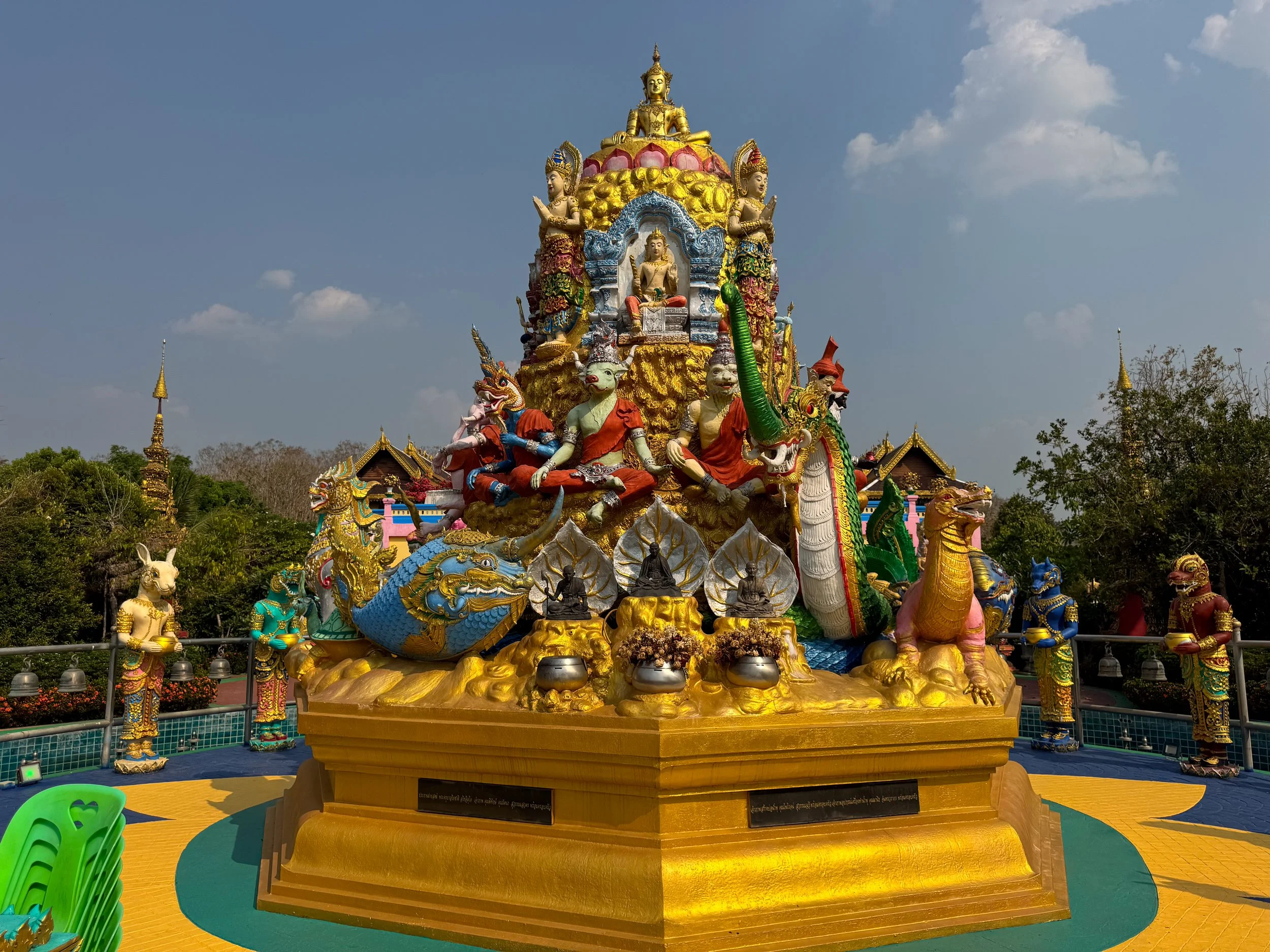
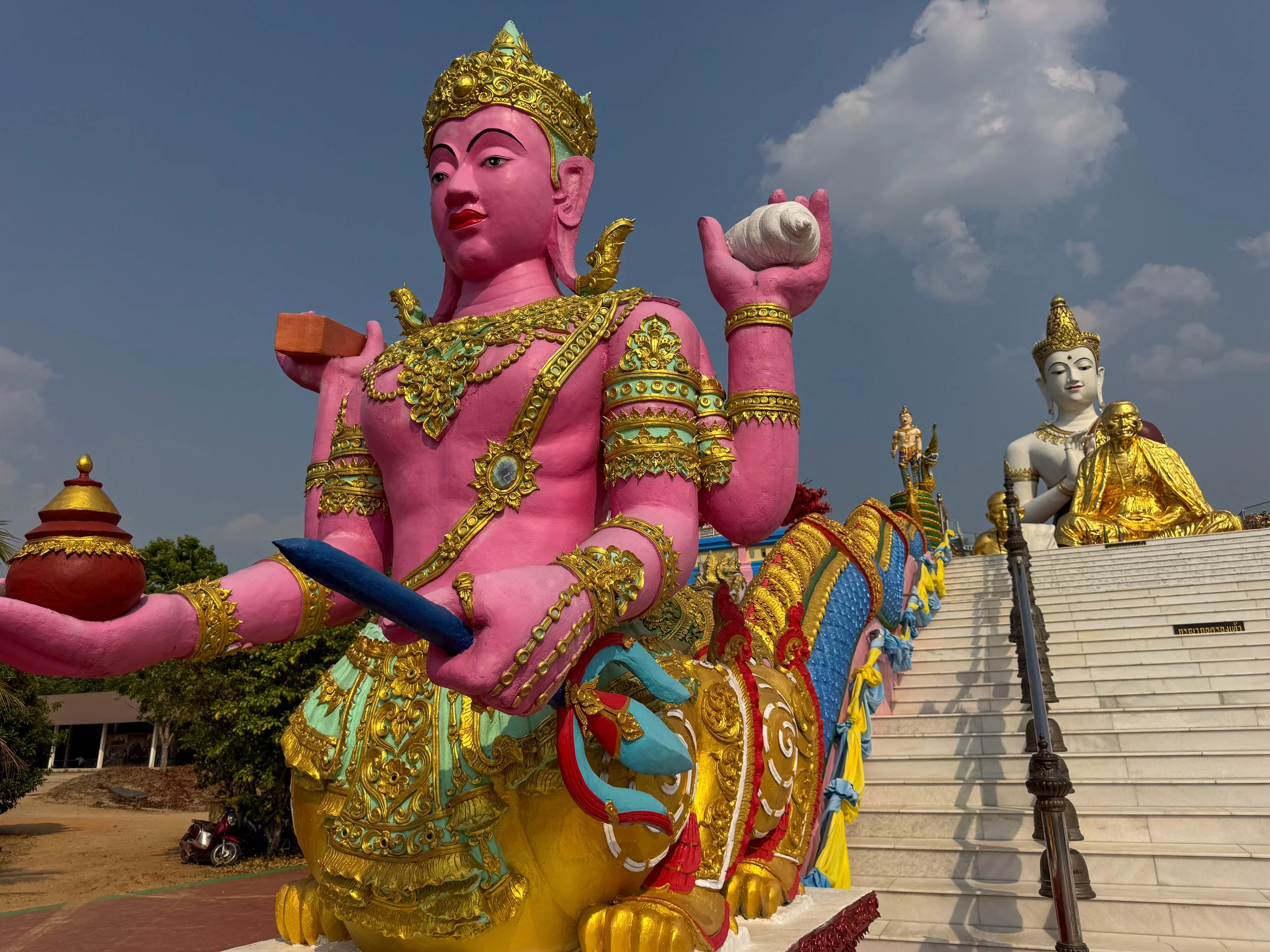
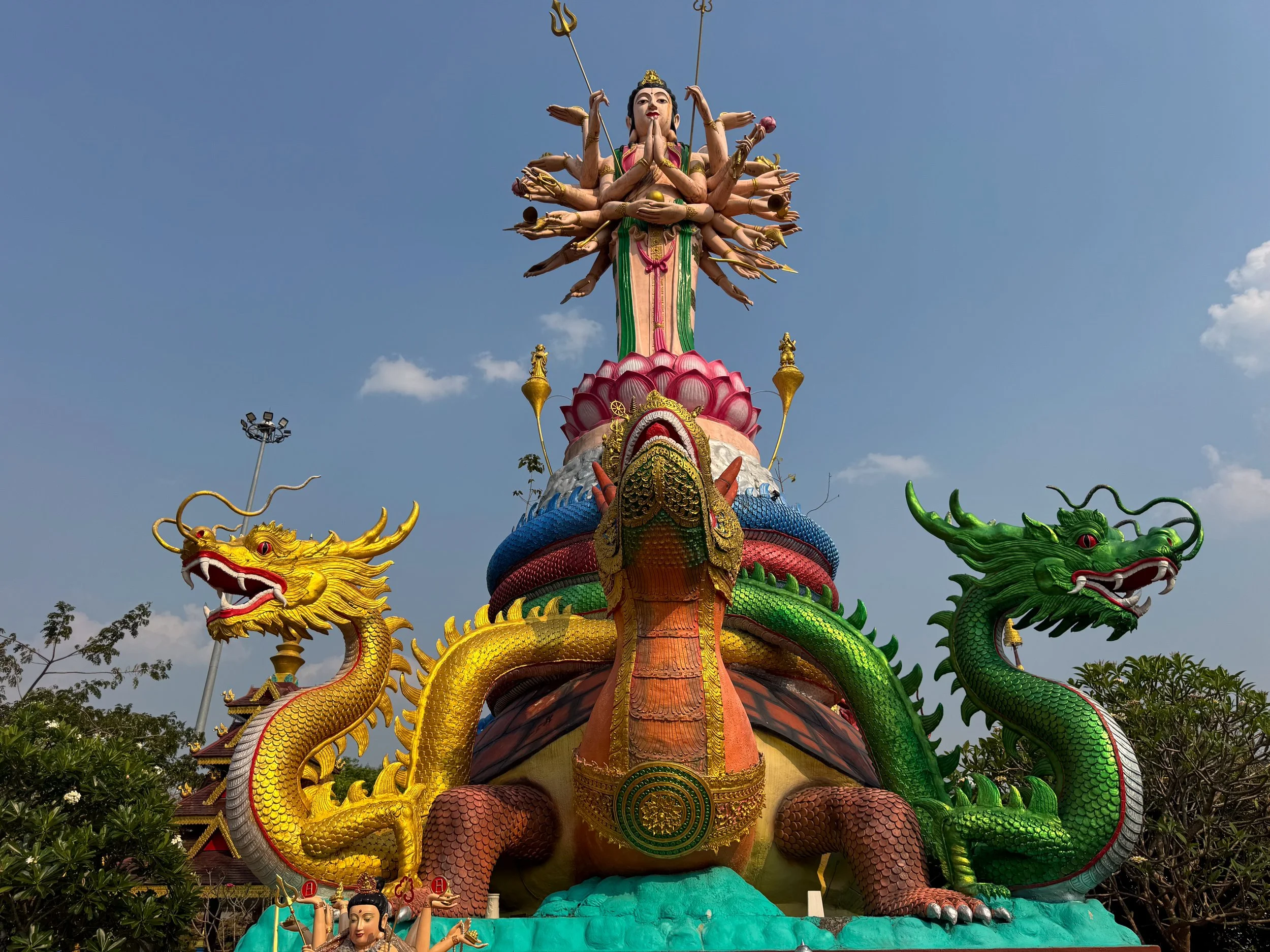
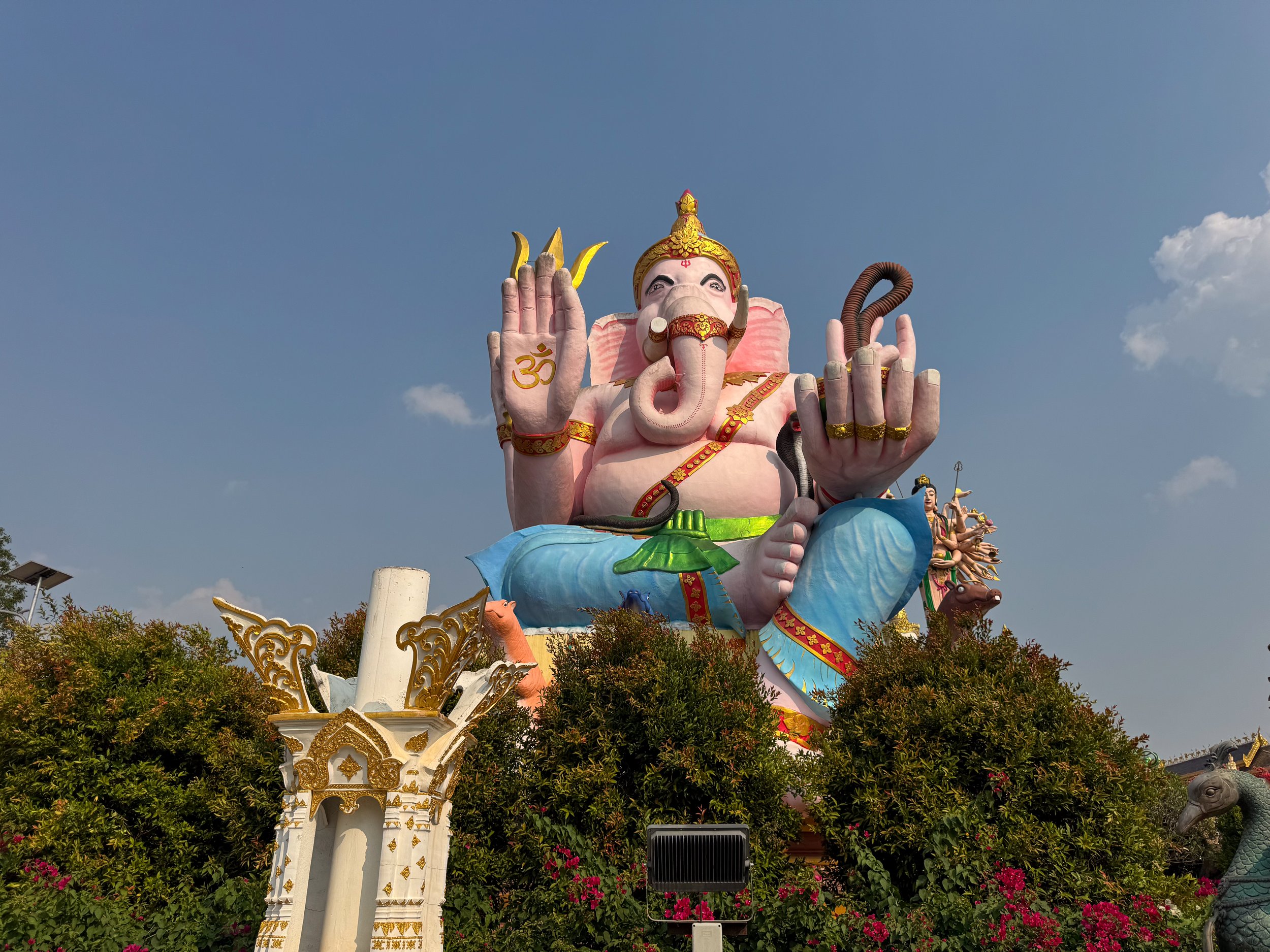
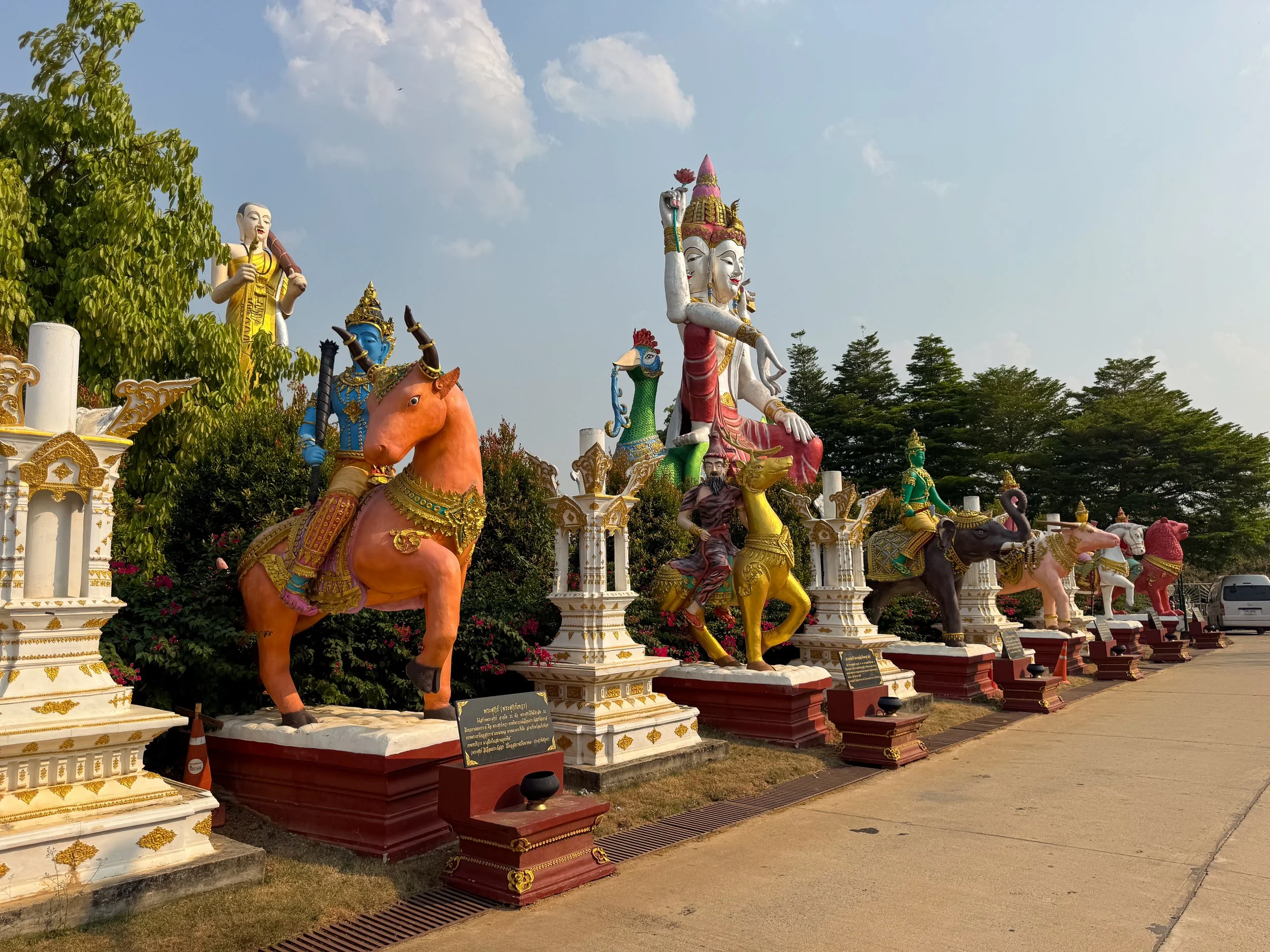
Wat Sang Kaew Phothiyan (The Light Temple). A modern day temple with a kaleidoscope of colorful and gilded statues of the Buddha, Buddhist monks, Hindu deities and mythical creatures. Stairways lead around the mostly open air temple with multiple Lanna style structures still under construction.
Getting Here. Chiang Rai is located in far northern Thailand about three hours from Chiang Mai. We booked a full day tour here with TripGuru Thailand on Viator.
Doi Inthanon
Doi Inthanon is a national park home to royal stupas, hiking trails, waterfalls and the tallest point in Thailand. We visited the park and a local village during a day trip with WanderSiam through Viator.
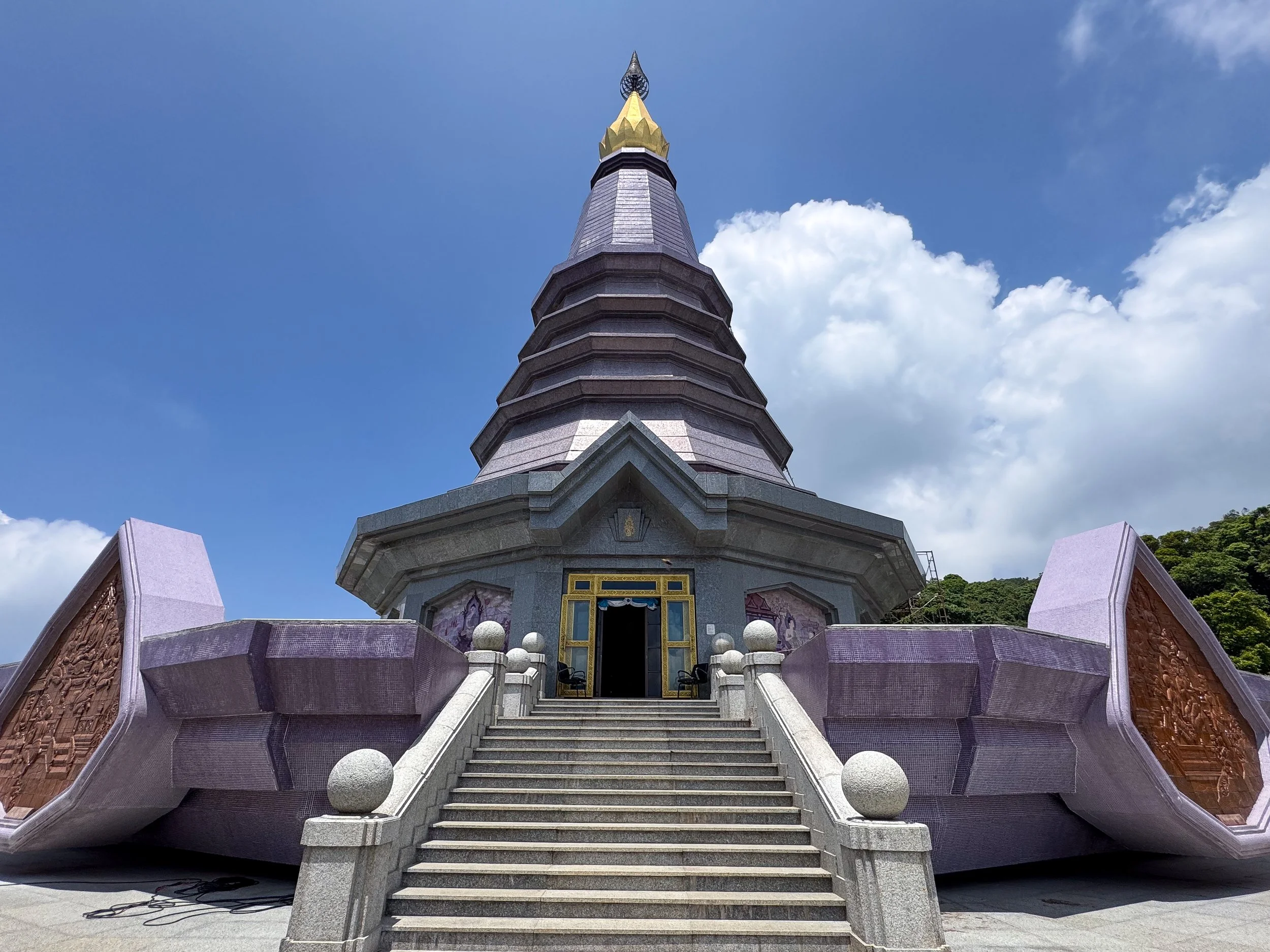
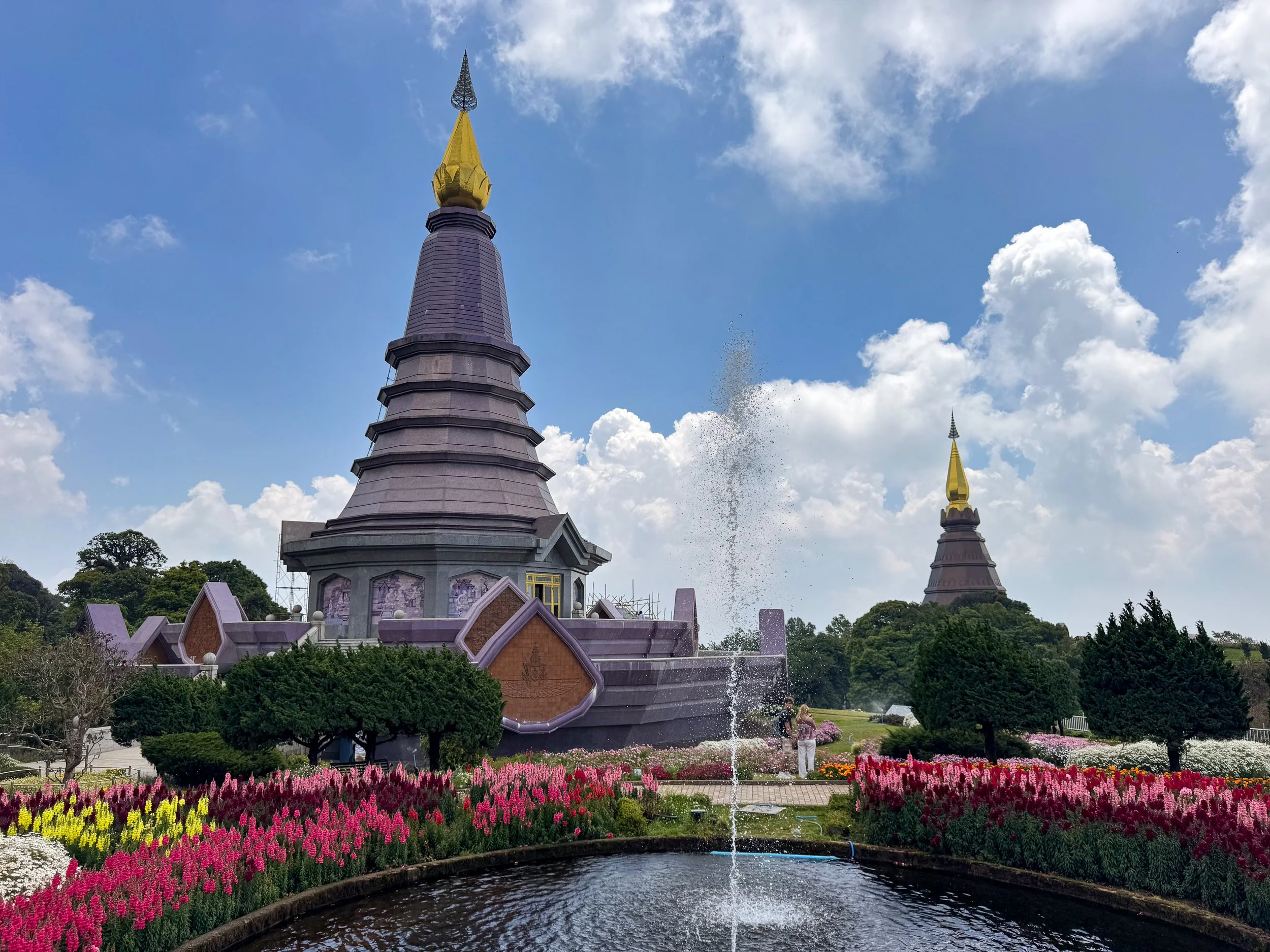
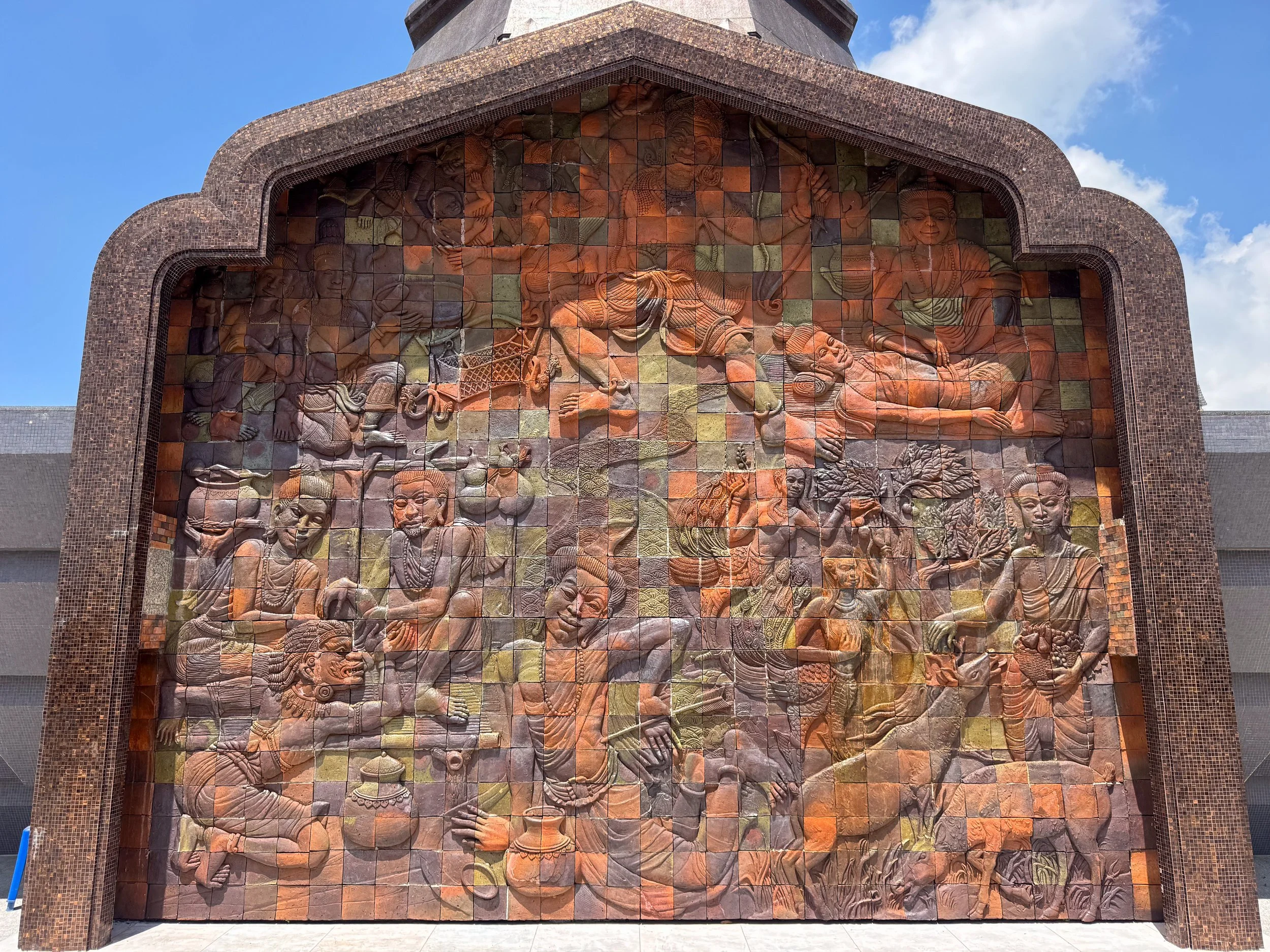
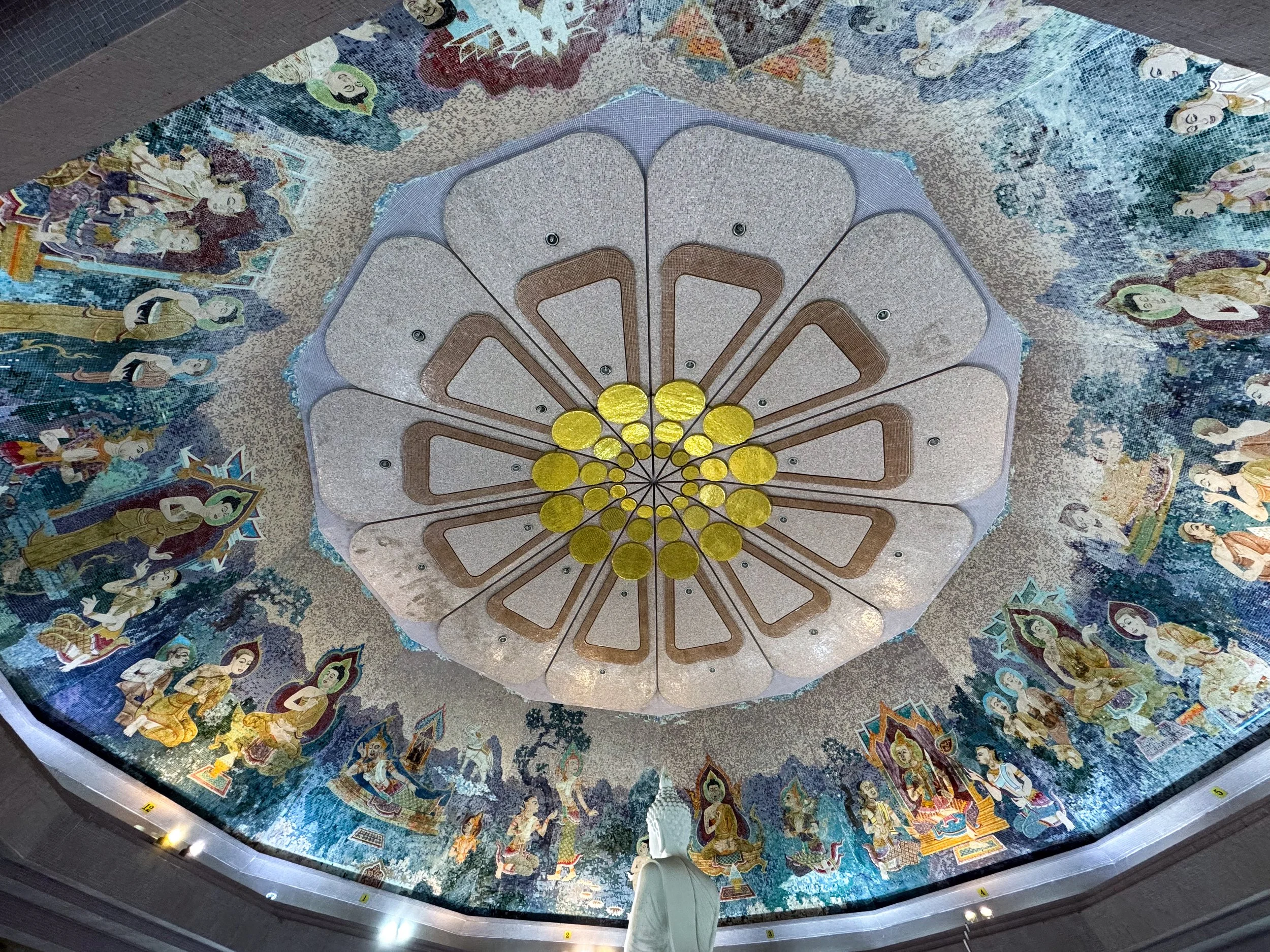
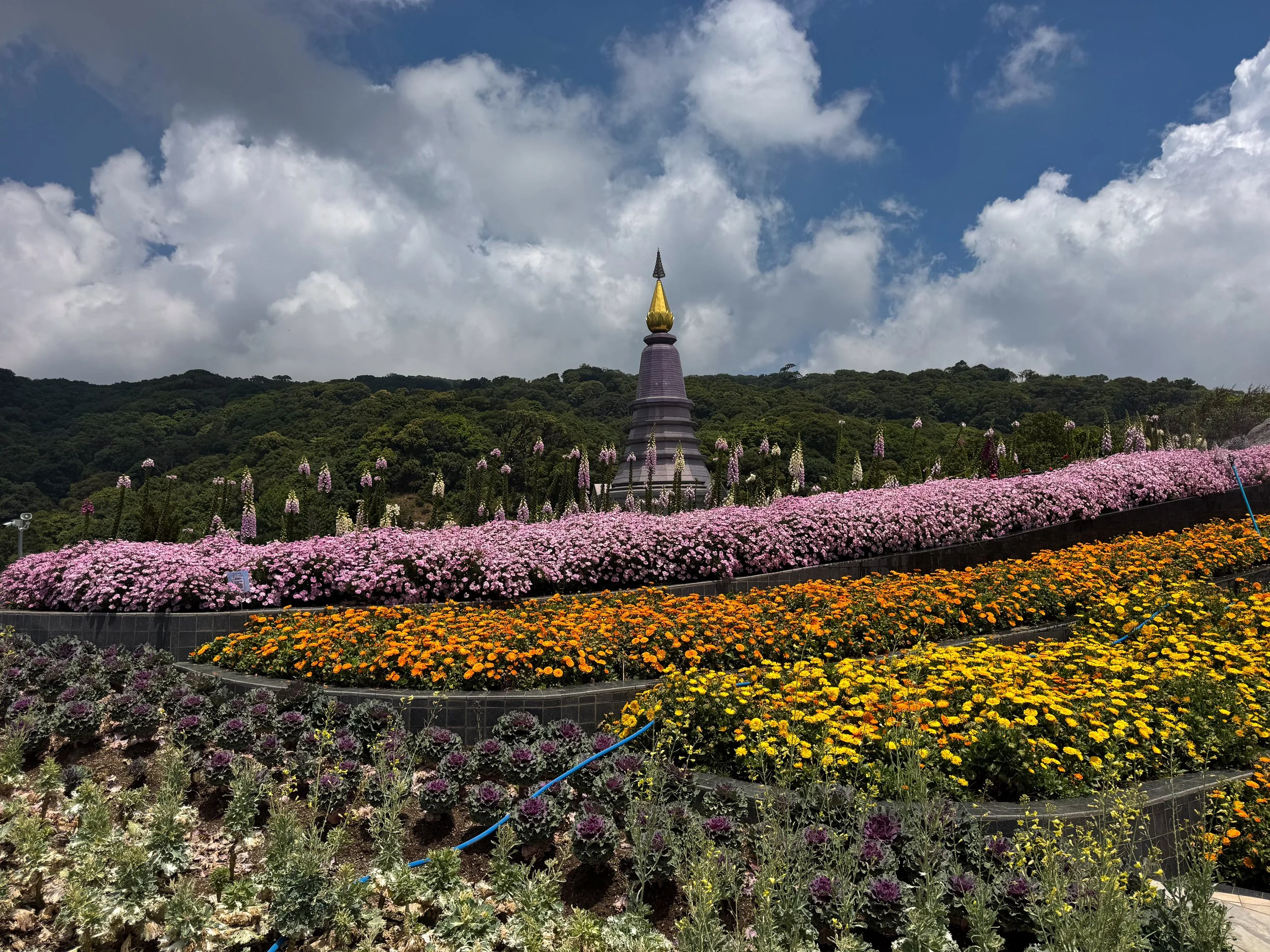
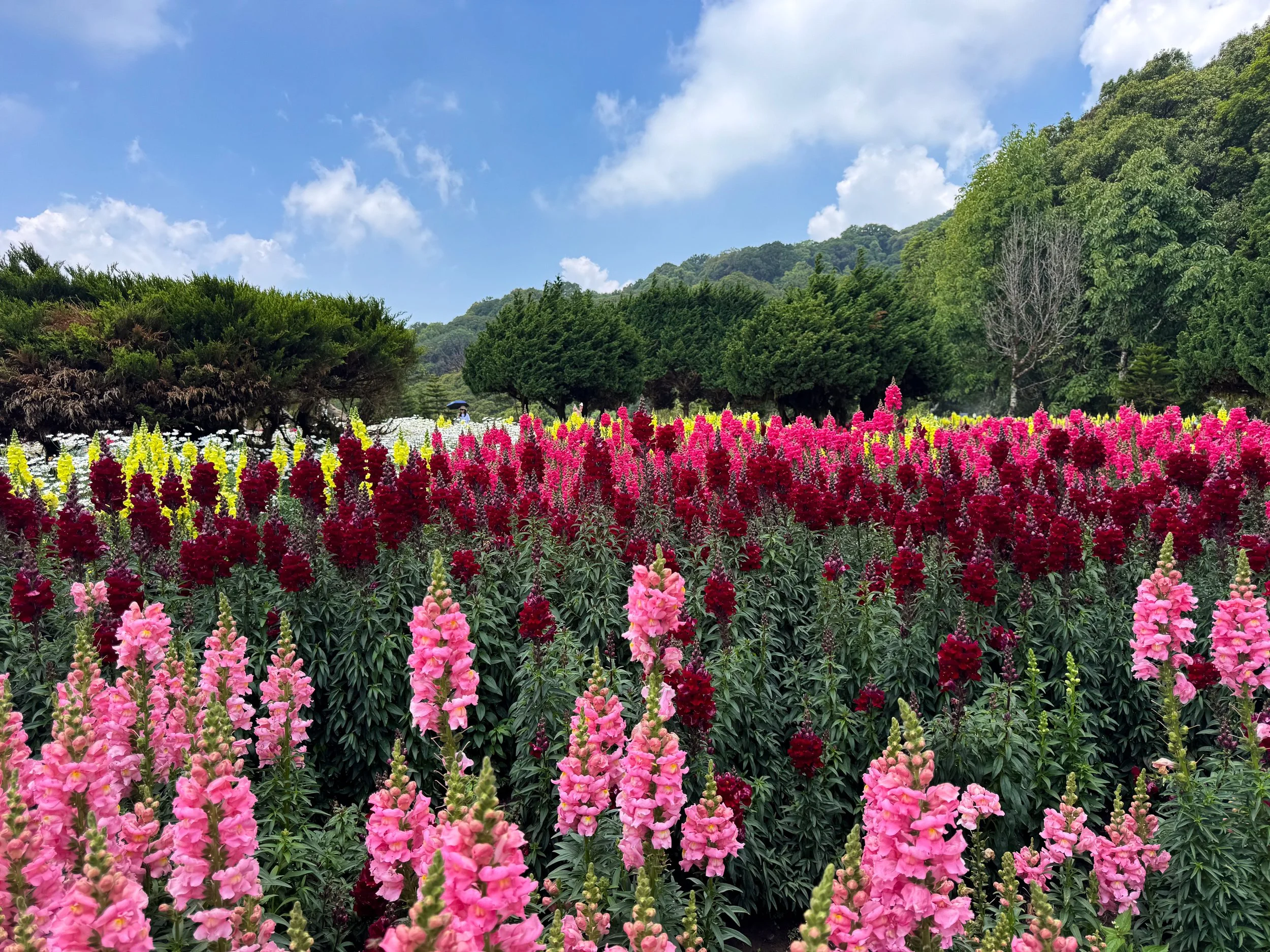
The Great Holy Relics Pagodas. Near the summit of Doi Inthanon are two pagodas dedicated to the former king and queen of Thailand. Each bell shaped pagoda is surrounded by colorful flowering gardens with views overlooking the Thai Kingdom. Inside the king’s pagoda is a Buddhist shrine recounting the life and story of the Buddha. Inside the queen’s pagoda is a Buddhist shrine containing relics of the Buddha including a hair and items from his time.
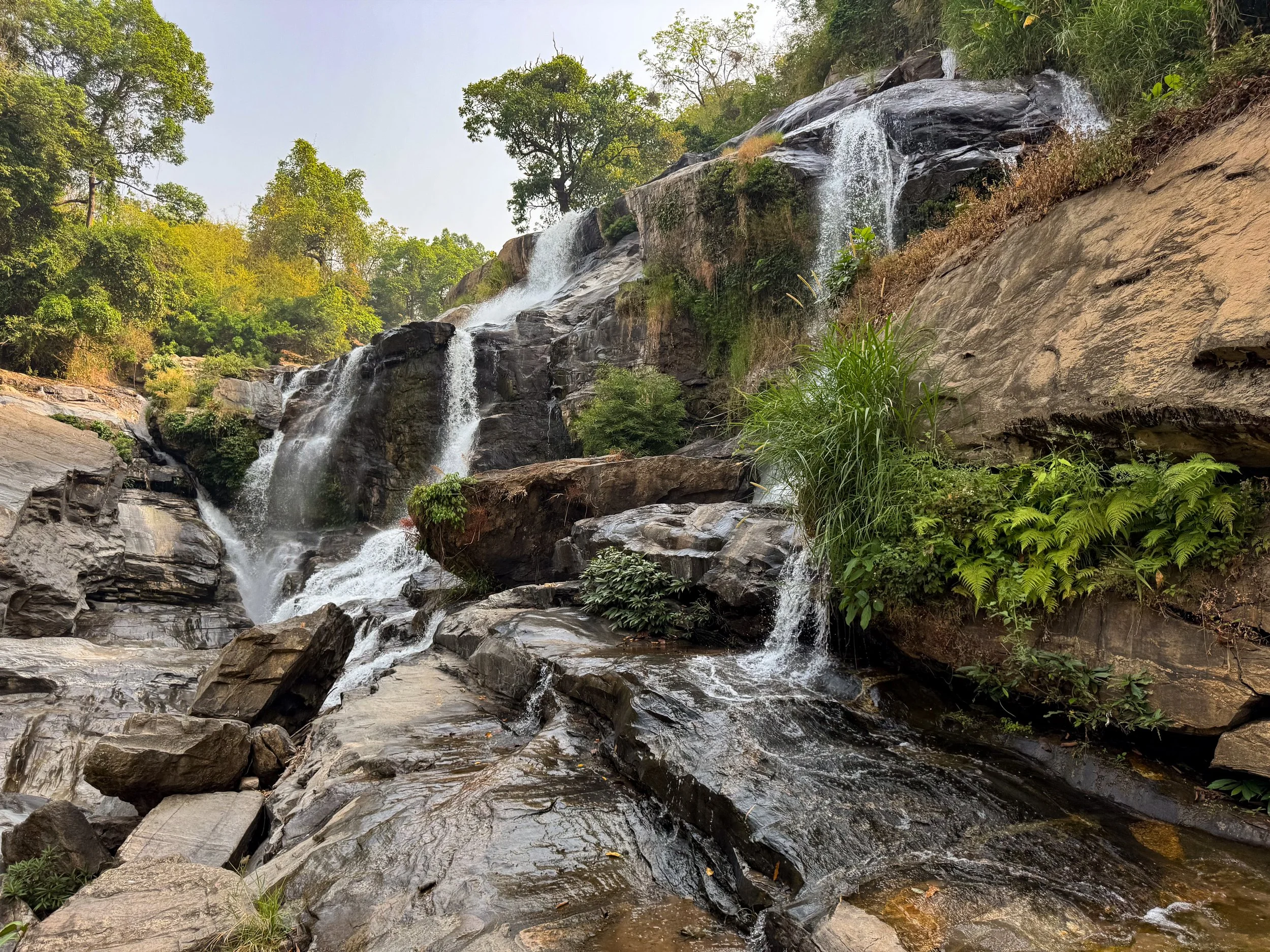
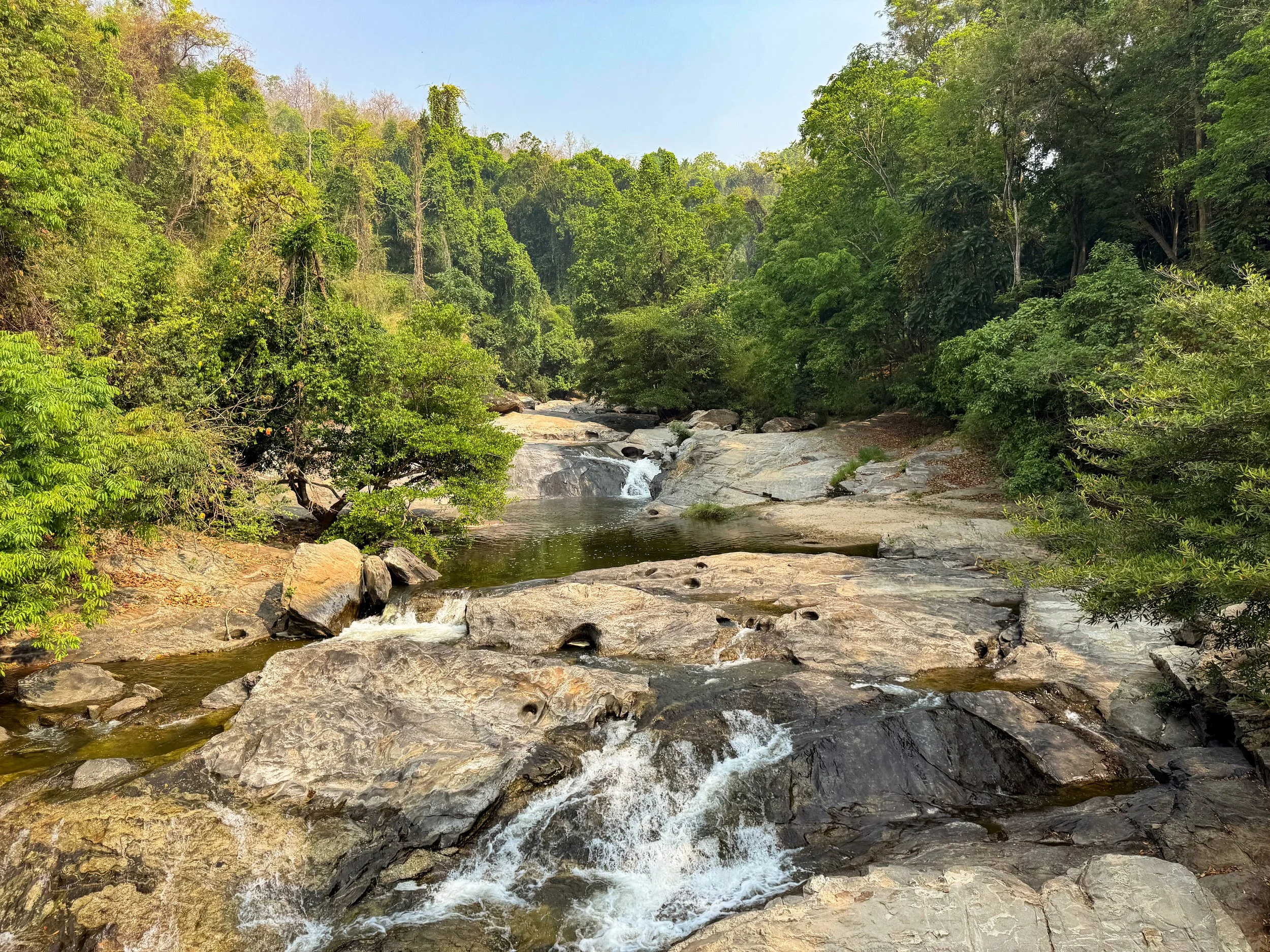
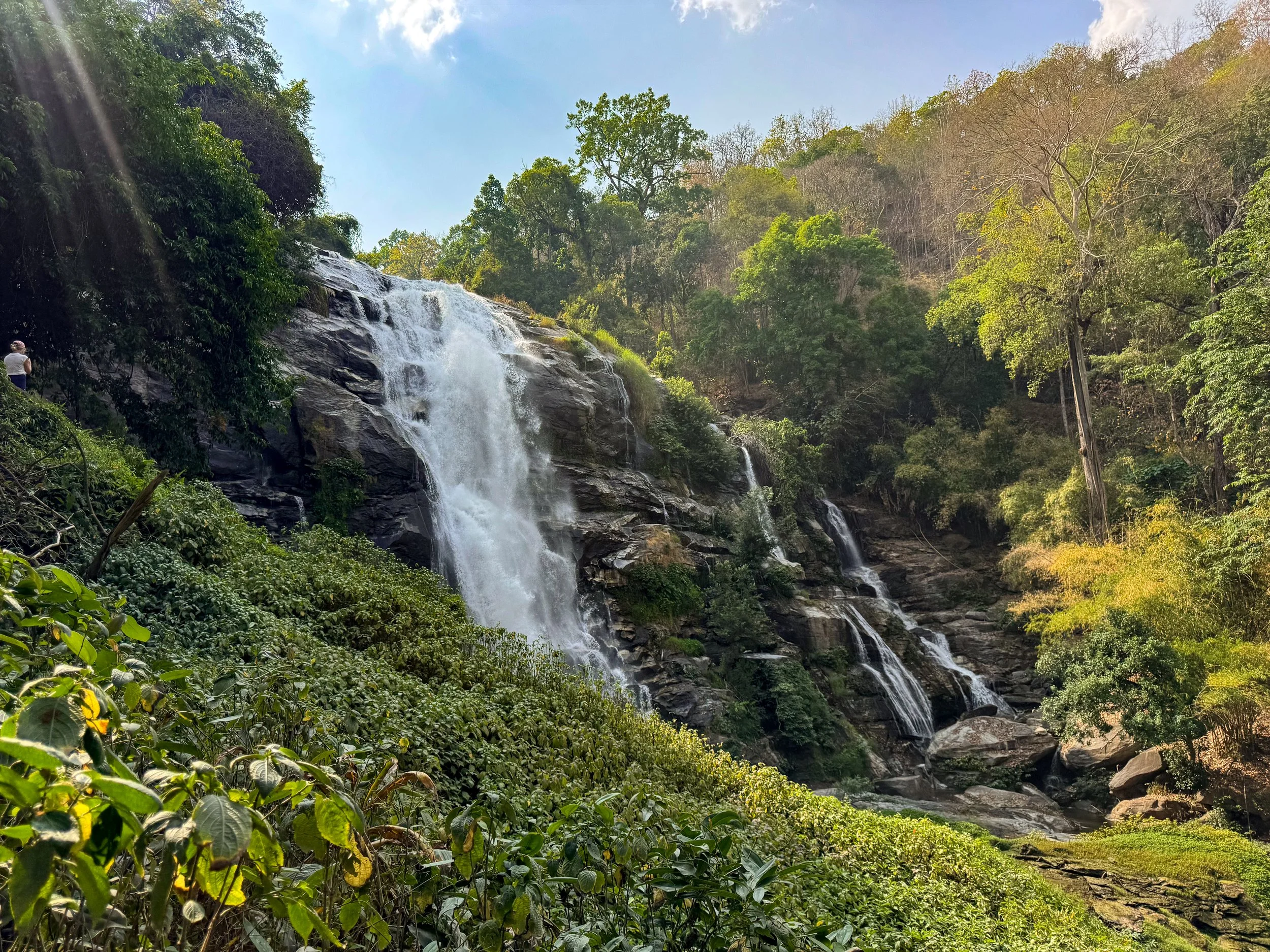
Mae Klang Waterfall. A large cascading waterfall running down a series of rocky ledges and boulders at the base of Doi Inthanon National Park. A brief trail leads from the parking lot to its viewing point. Adjacent to the parking lot is a bridge over the river and several riverside restaurants with bamboo dining platforms and inner tube rentals.
Wachirathan Waterfall. A large waterfall flowing over a steep cliff with a series of small cascading falls and rapids below. Even during the dry season, the waterfall had a strong current creating a cloud of mist.
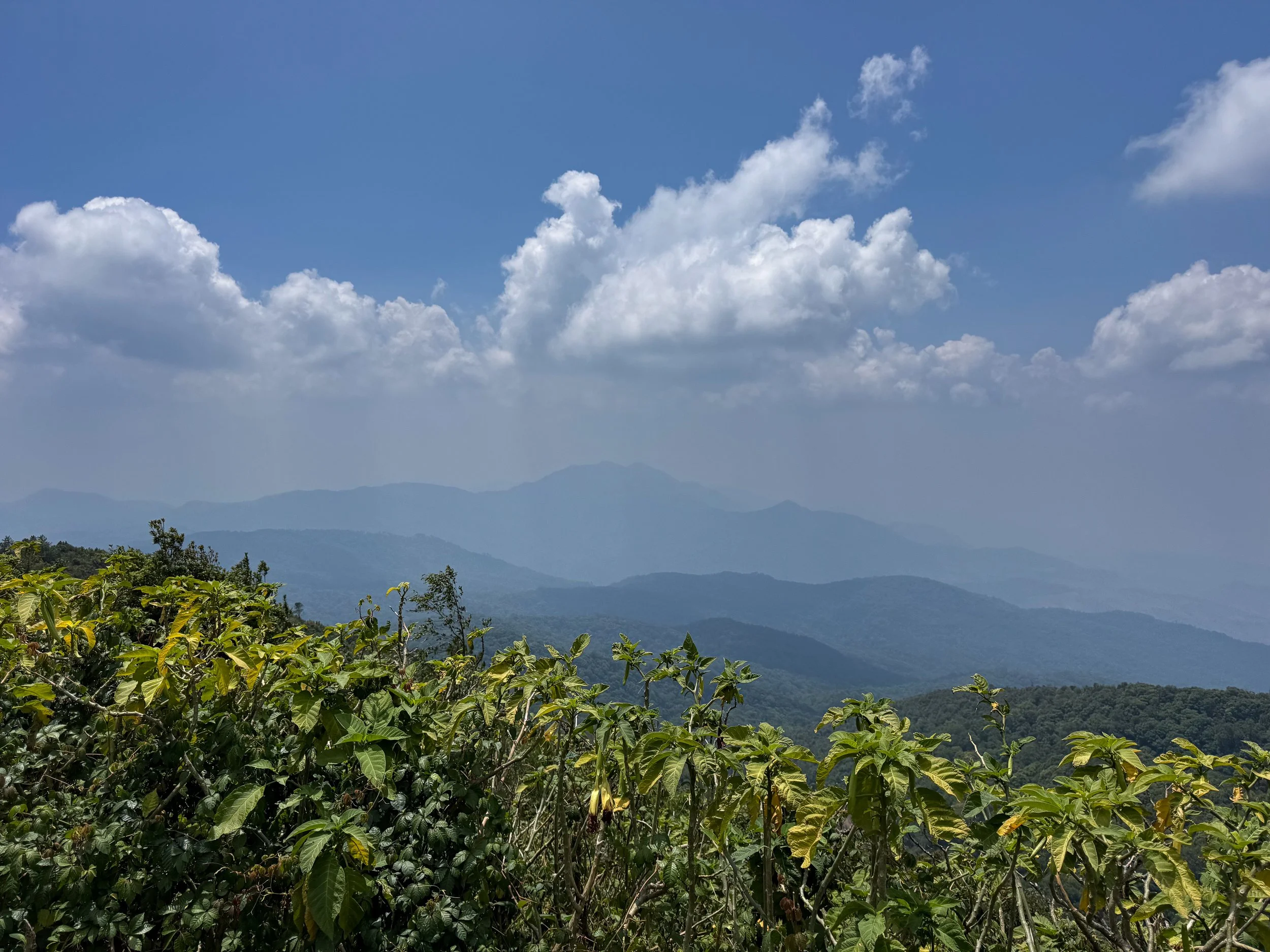
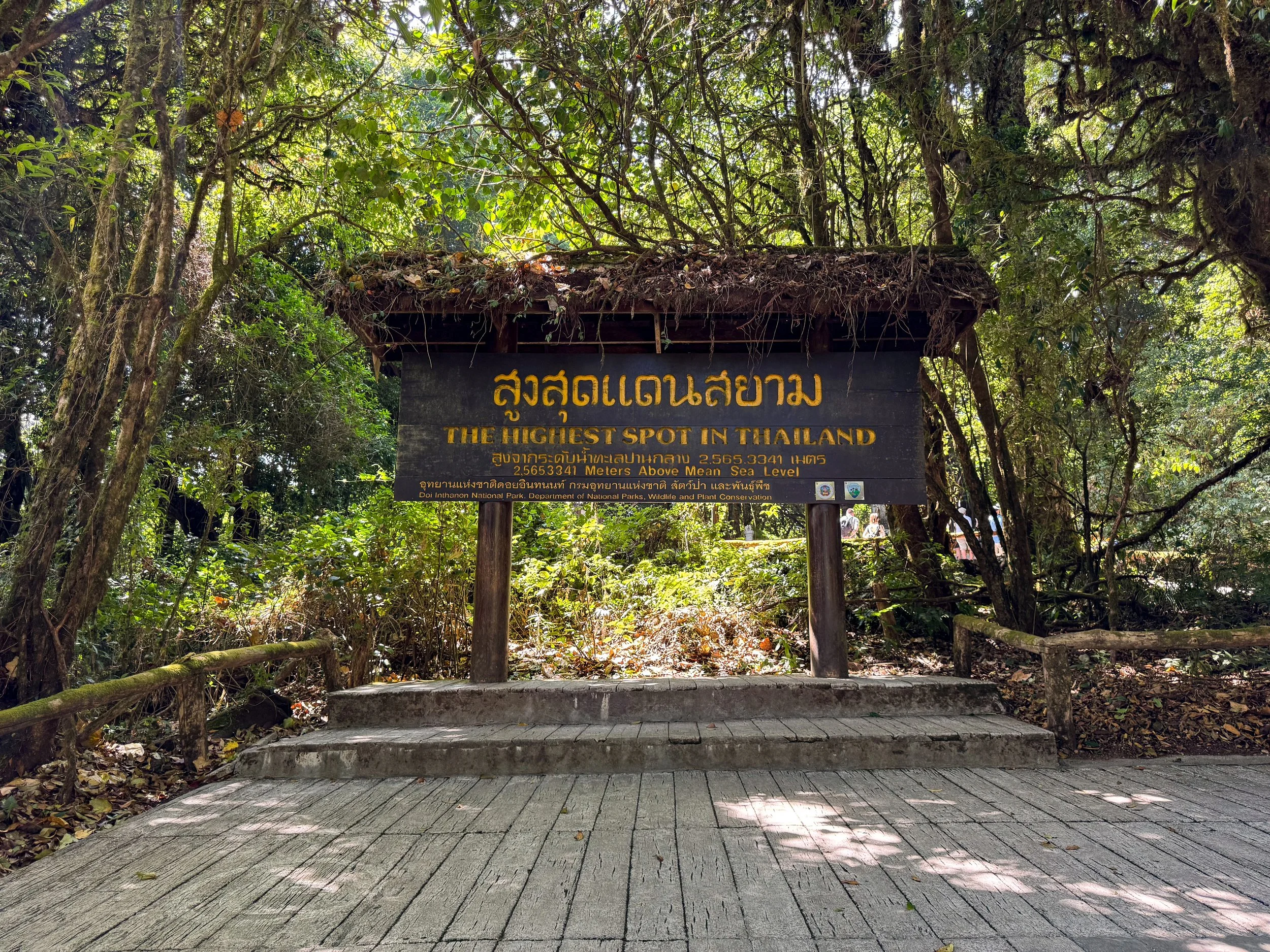
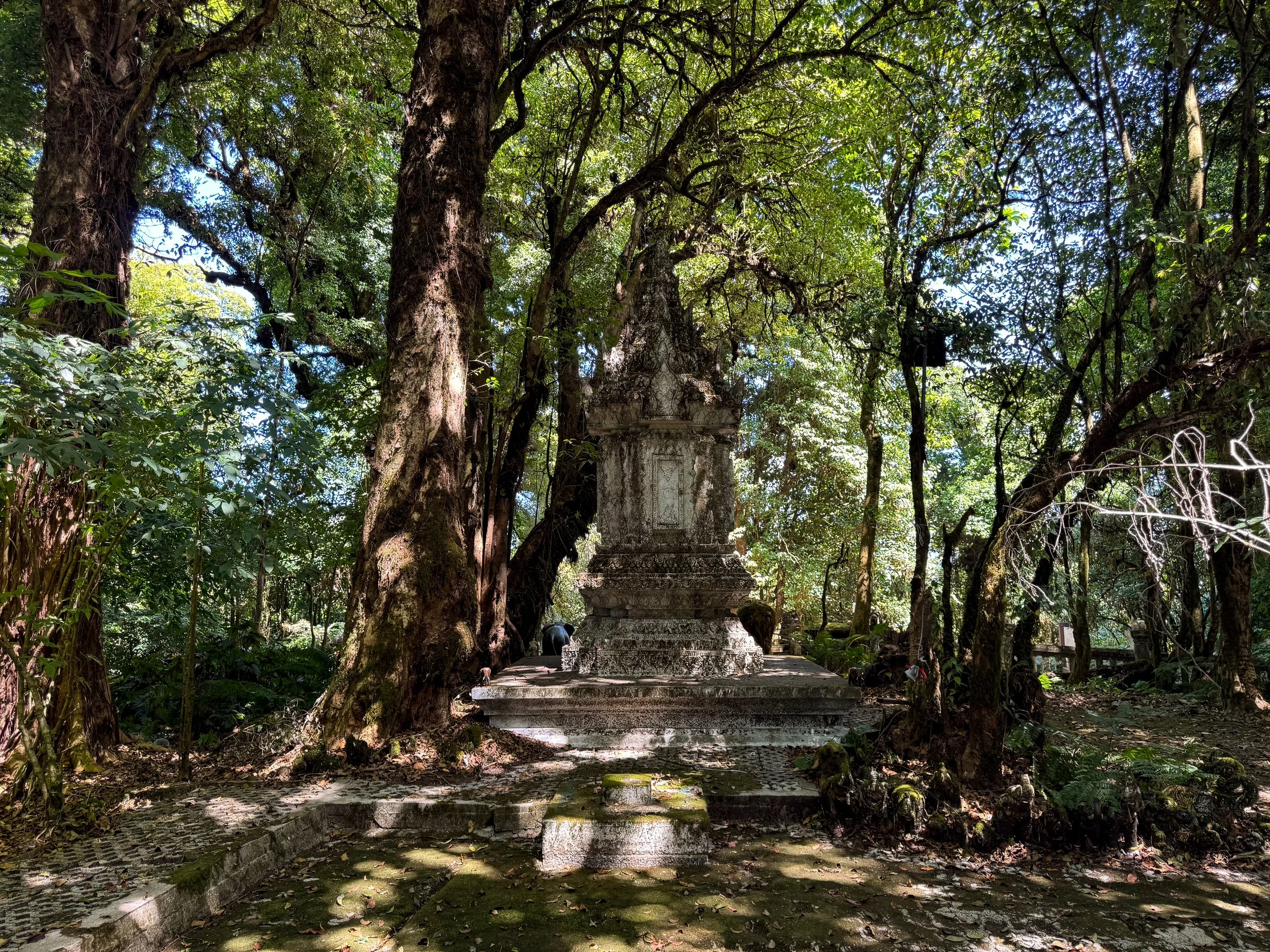
The Highest Spot in Thailand. At the summit of Doi Inthanon National Park is the highest spot in Thailand, measuring 2,565 meters (8,415 feet) above sea level. At this height, the air is substantially cooler and clearer. A small chedi houses the remains of the last Lanna Kingdom’s ruler.
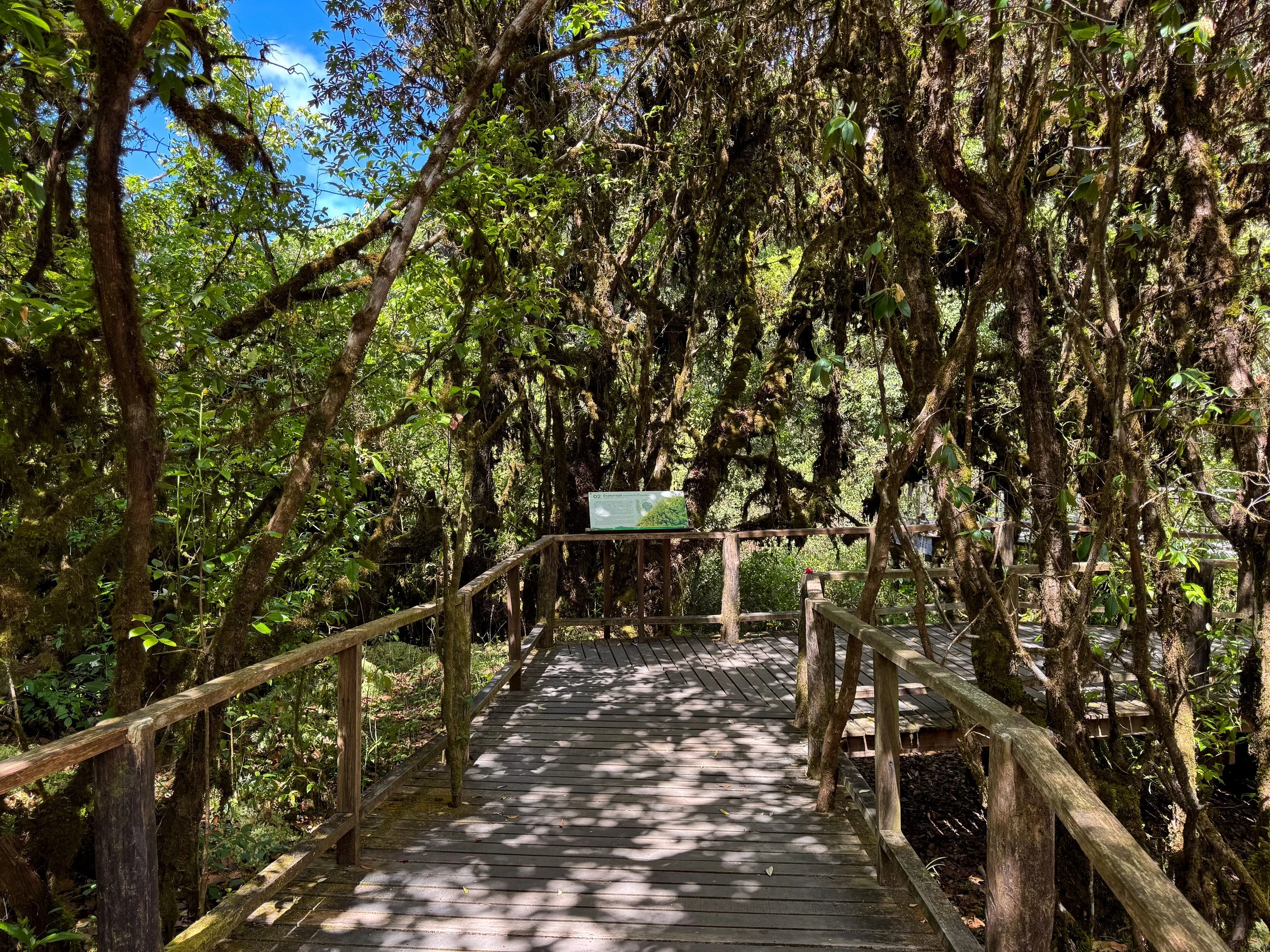
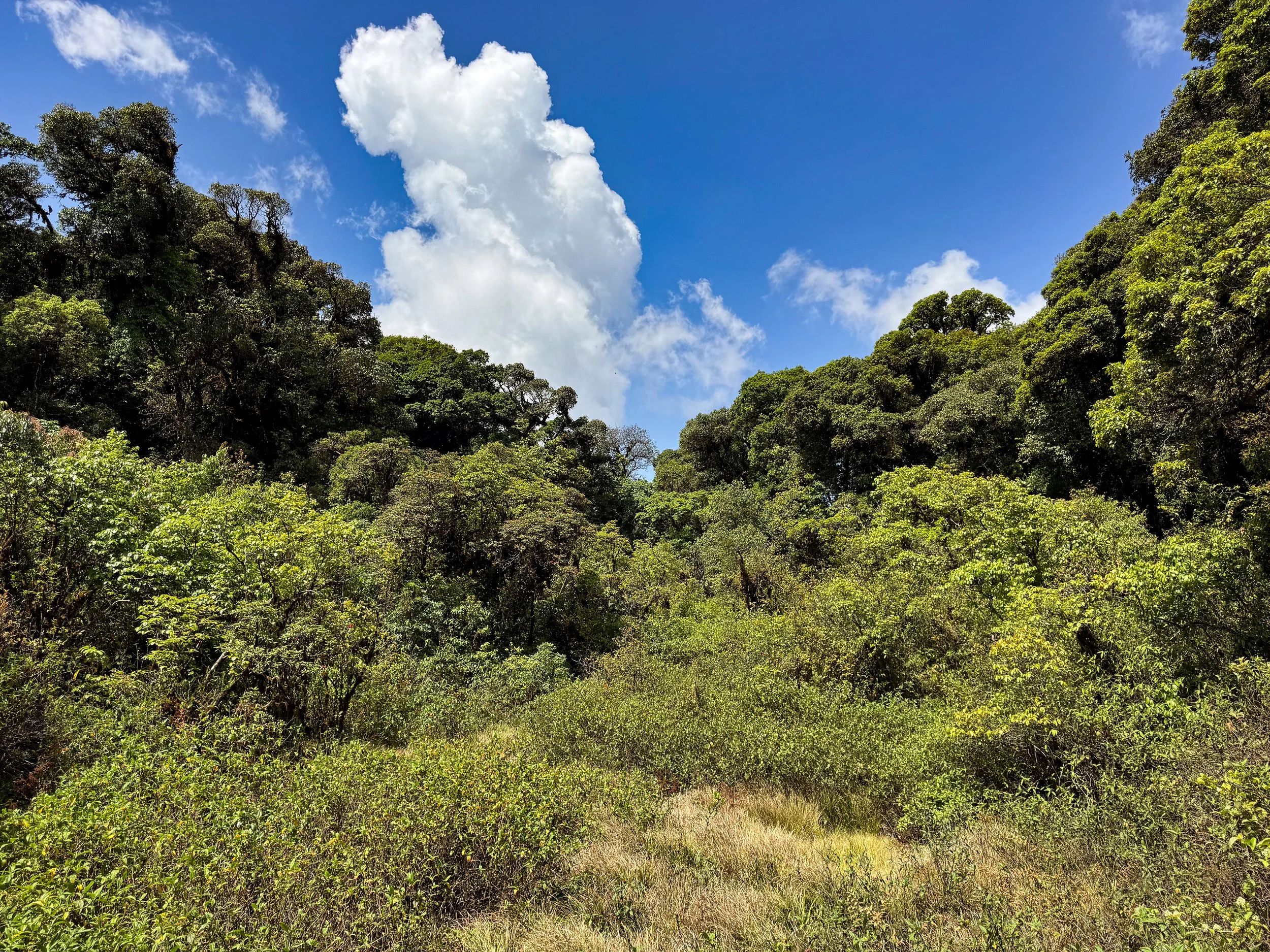
Ang Ka Nature Trail. A boardwalk through the cloud forest near the highest spot in Thailand. The trail passes through a microenvironment with a small peat swamp, moss covered trees, threatened species of birds and plaques warning about the damage of climate change.
Thai Hmong Community Market. A roadside market with vendors from the Hmong Village selling fresh and candied fruits, baked and fried snacks, roasted nuts, dried teas, pure honey and fruit wine. The hillsides surrounding the village and market are lined with terraced farmland.
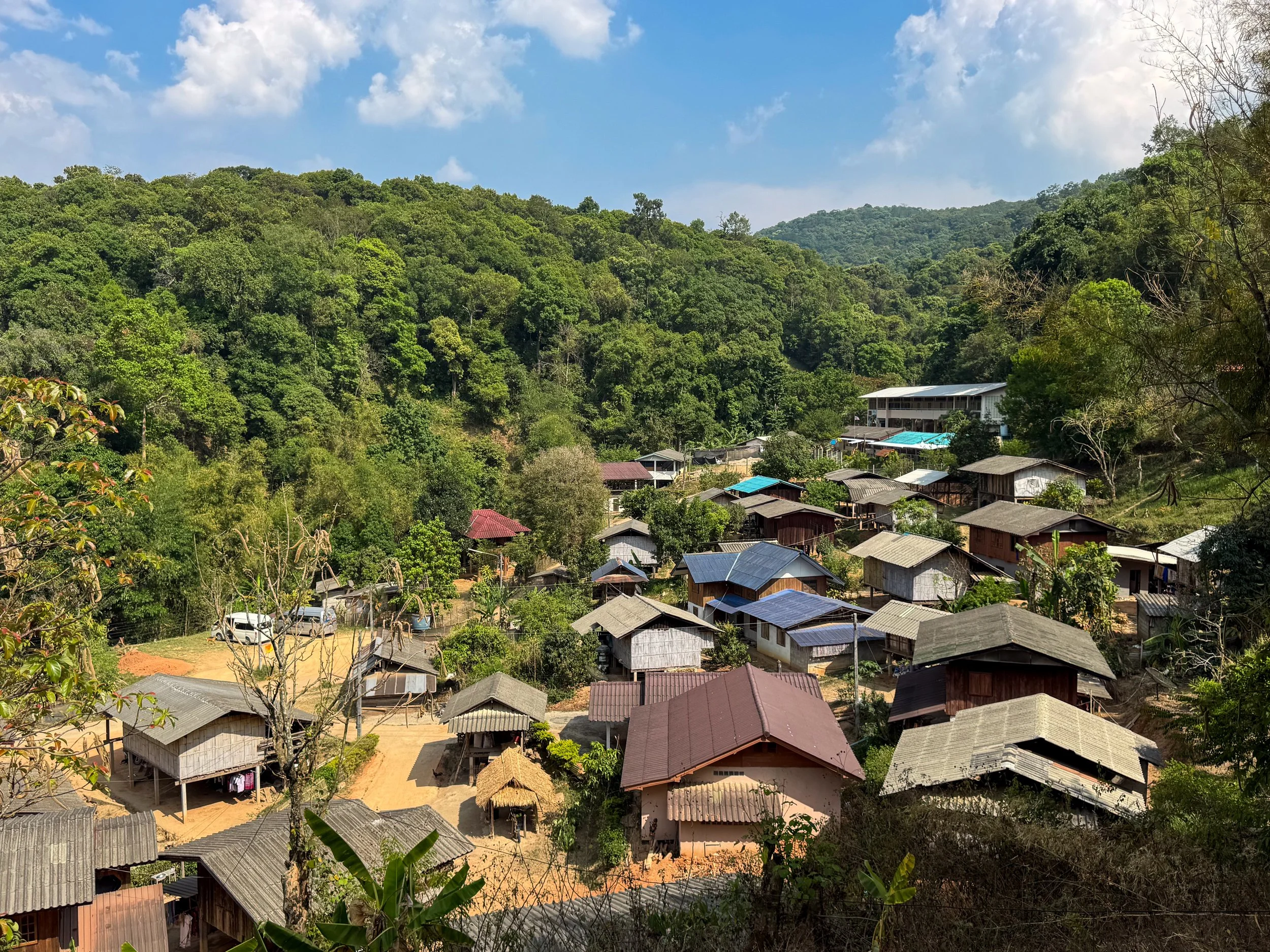
Karen Village. The Karen people are an ethnic group native to the regions of Myanmar and Northern Thailand. We visited one mountainside village home to about 300 people. We toured their community of wooden and bamboo houses, visited a textile workshop selling handwoven scarves made on backstrap looms and a cafe serving locally grown coffees and teas. On our walk through the village, we saw coffee crops and gardens with dragon fruit, banana, avocado and mulberry trees.
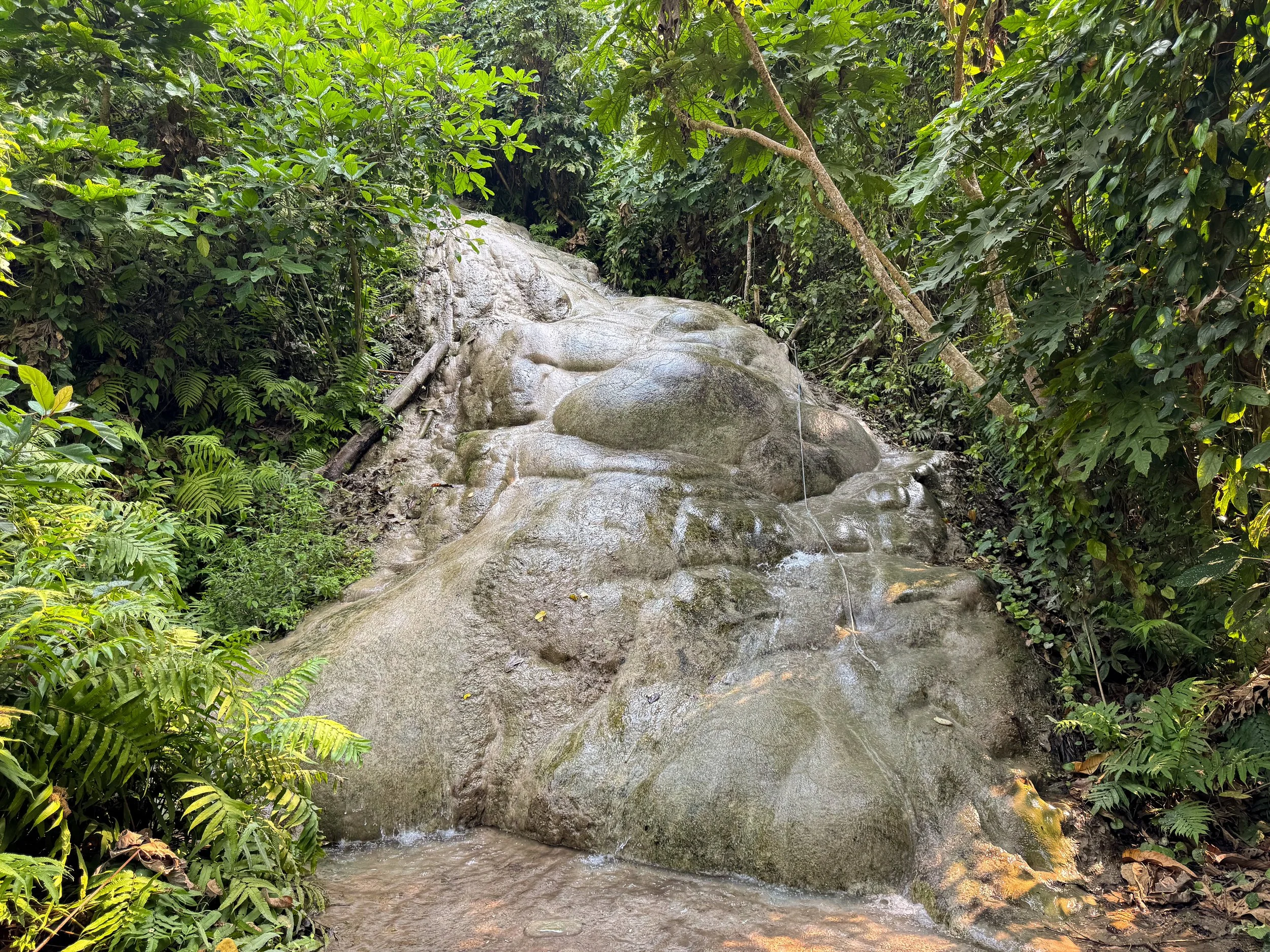
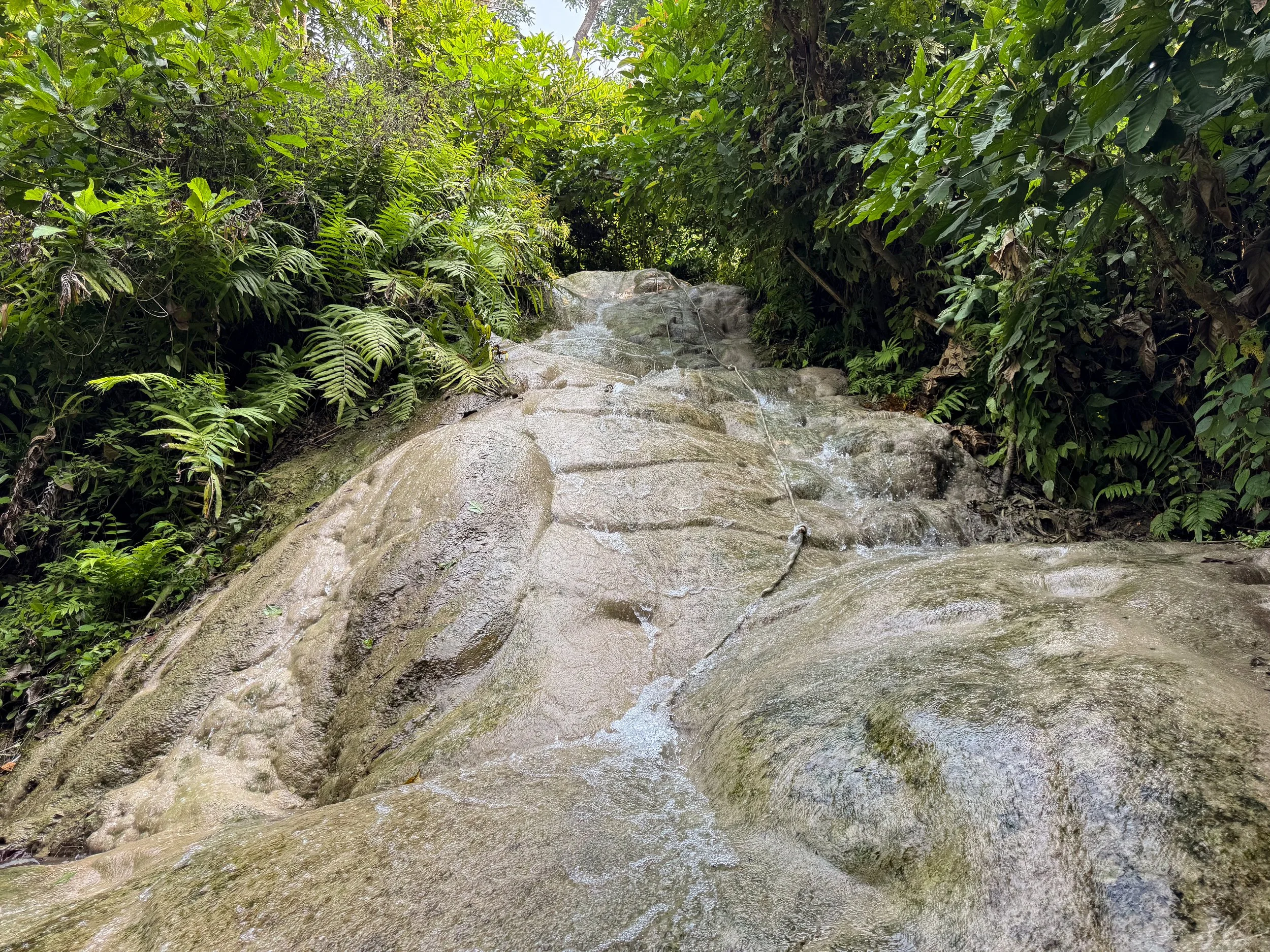
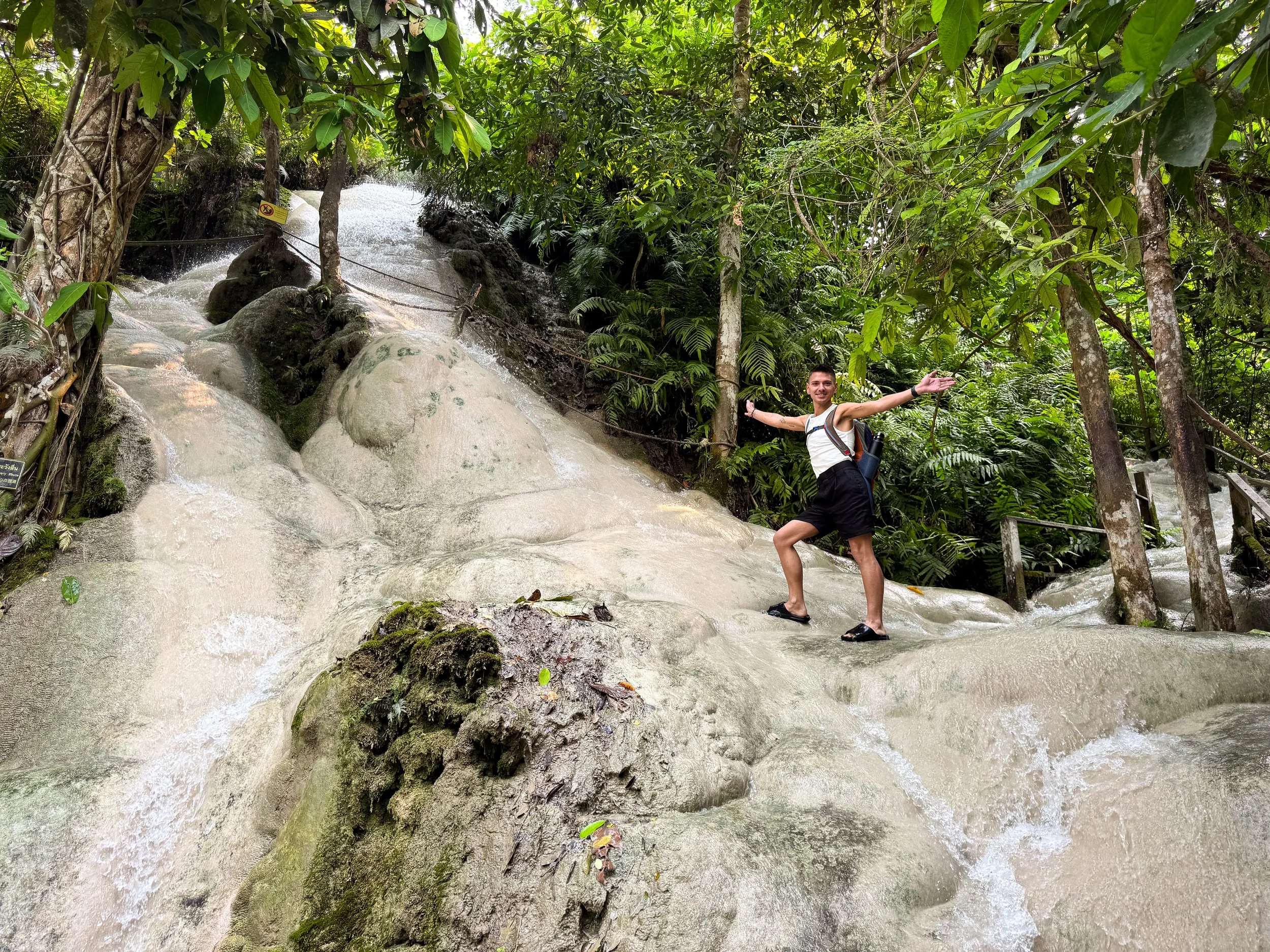
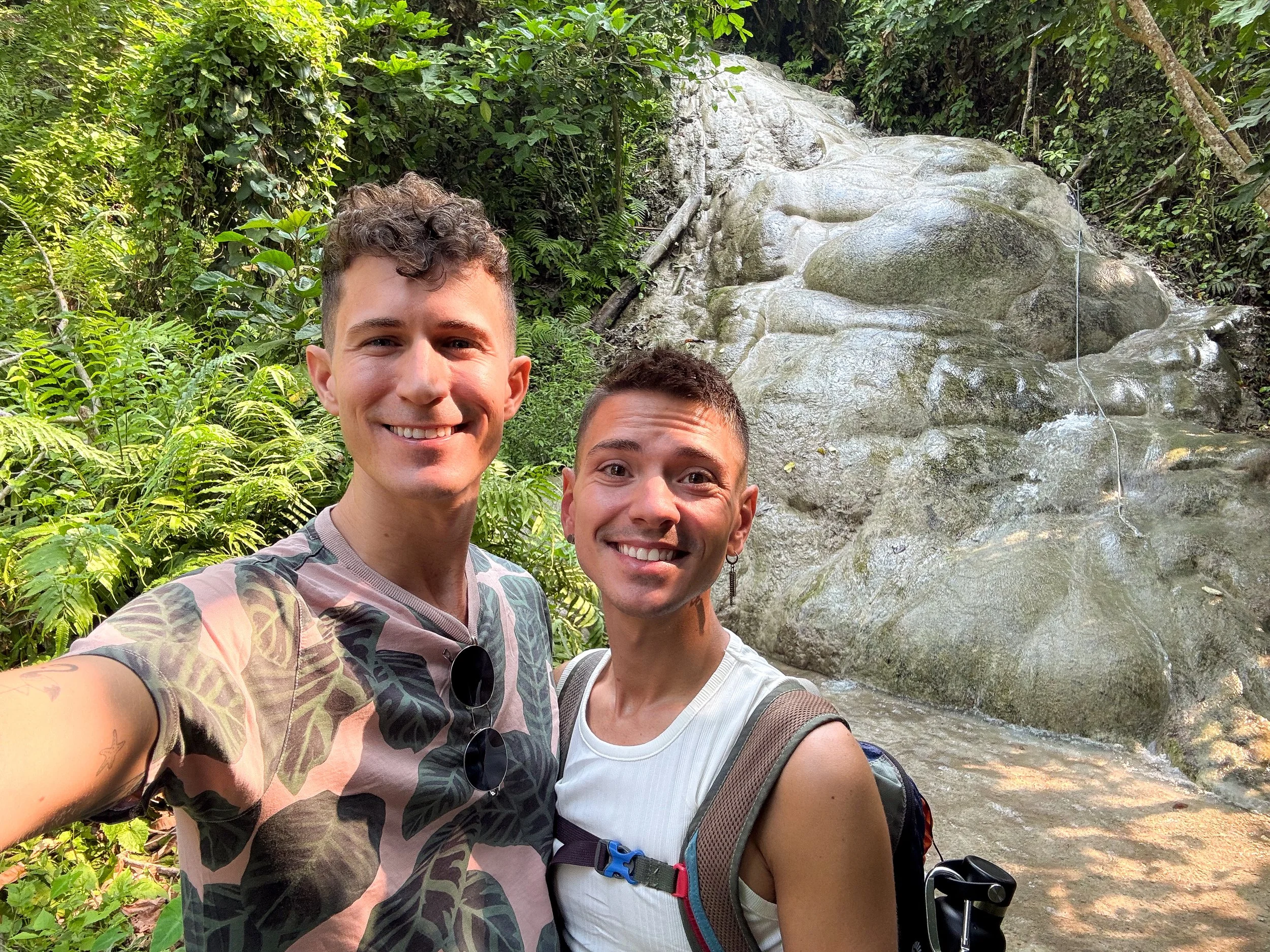
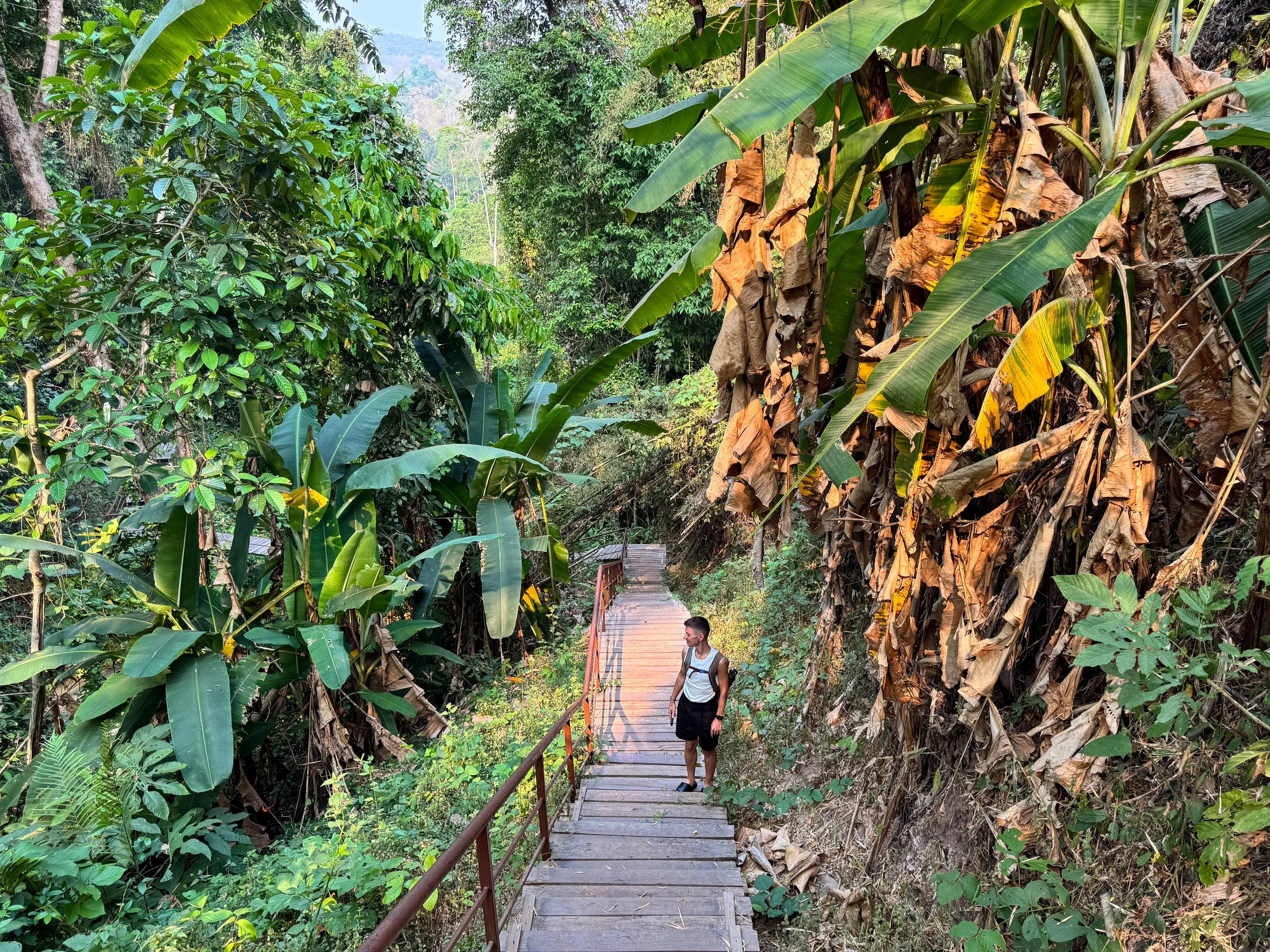
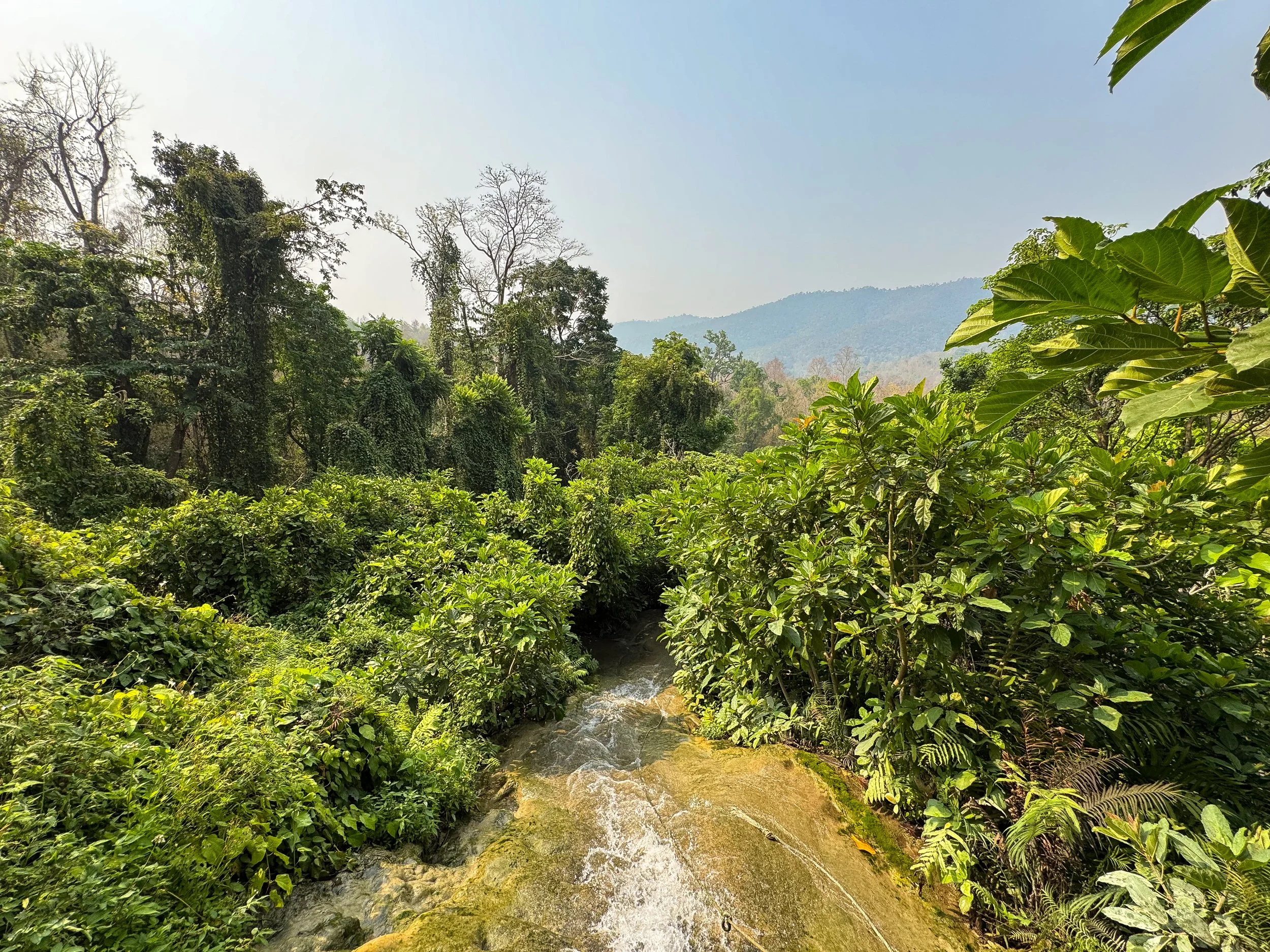
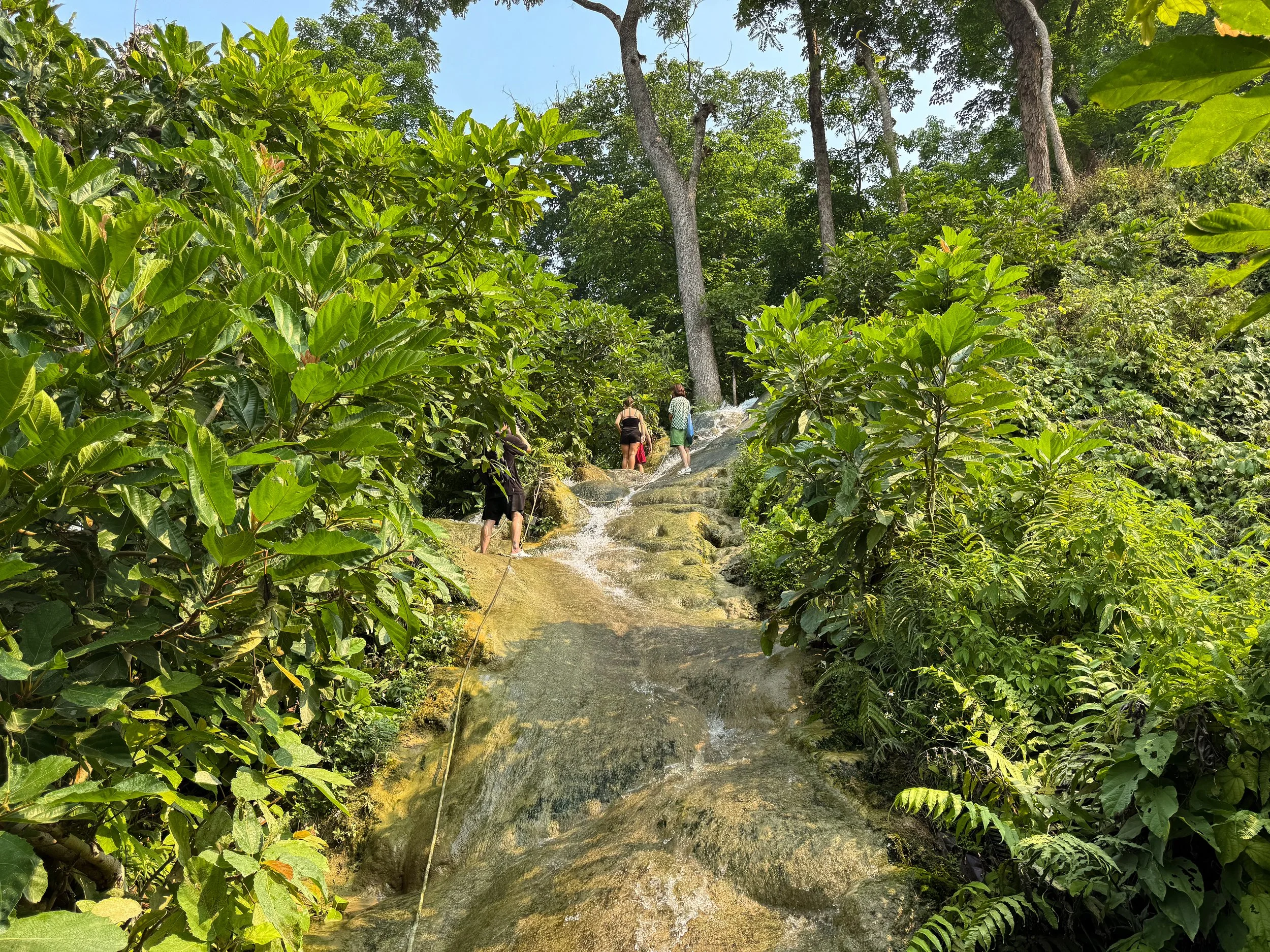
Buatong Waterfall
Buatong Waterfall cascades down a calcified structure that flows from a natural cold spring down the lush hillside in the middle of the tropical forest. A wooden staircase and boardwalk leads from the top of the waterfall to the bottom level with a natural swimming pool. A rope trail lead up the waterfall allowing visitors to walk up its calcified surfaces. We walked from the third level to the top, gripping onto the coarse calcified formations as the water rushed past.
Pro Tip. Do not try to walk down the waterfall. It’s easiest to walk barefoot and test your footing before taking the following step. Use the ropes for support.
Getting Here. We took a Songthaew from the Old City to the waterfall for 1,000 Baht roundtrip. The drive took 1h 15min one way and the driver waited for 1h 30min while we visited.
Elephant Sanctuaries
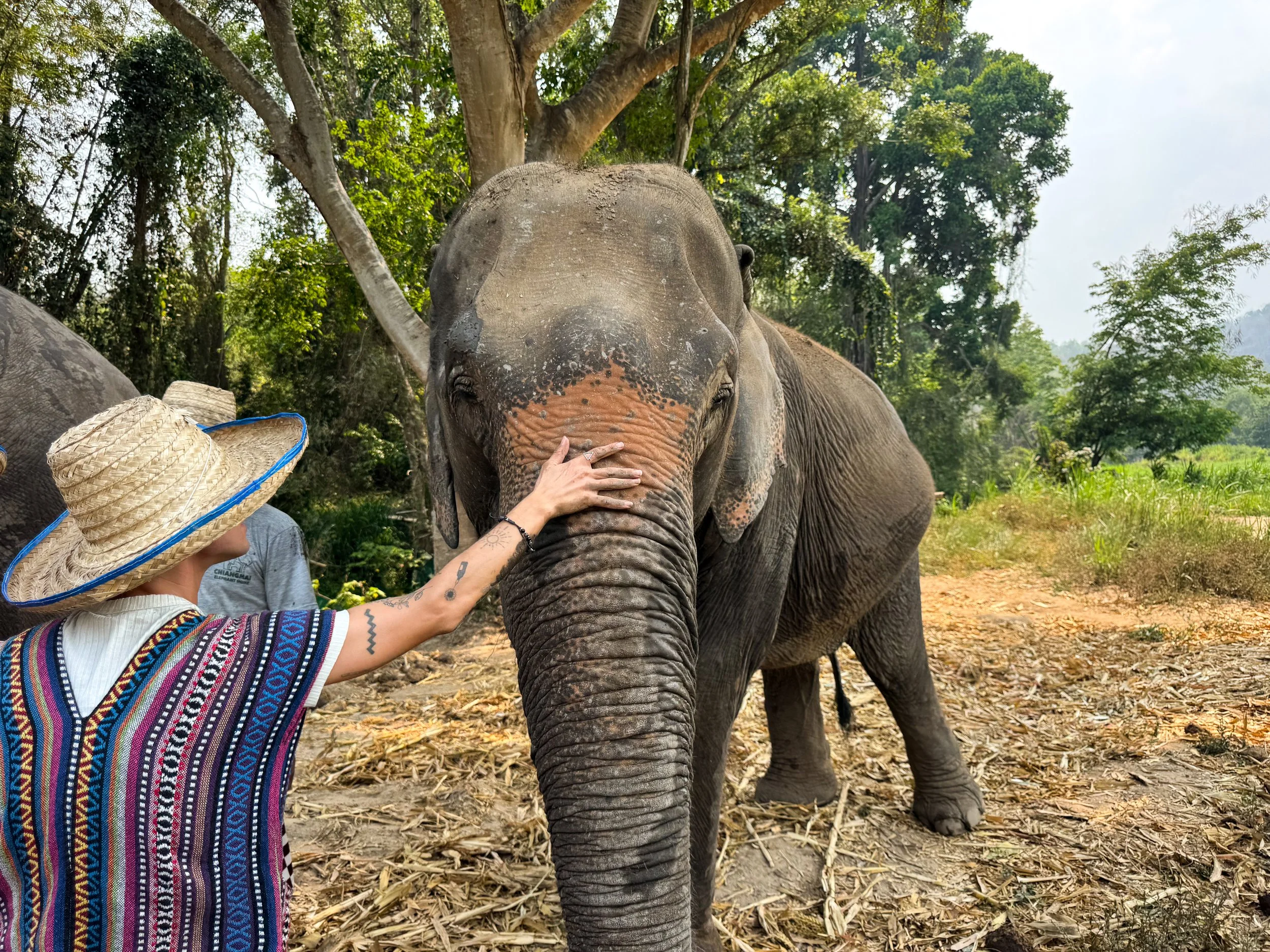
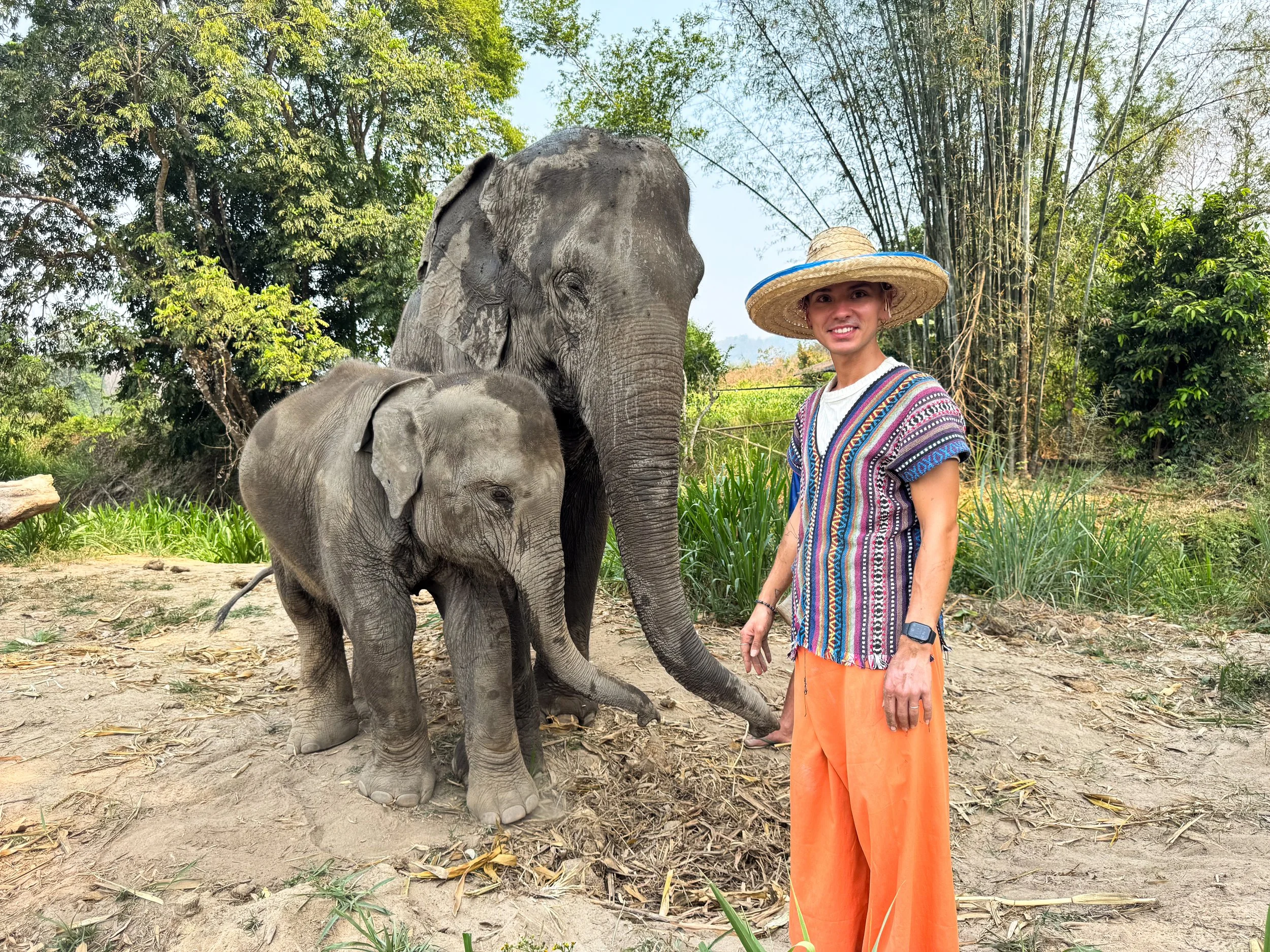
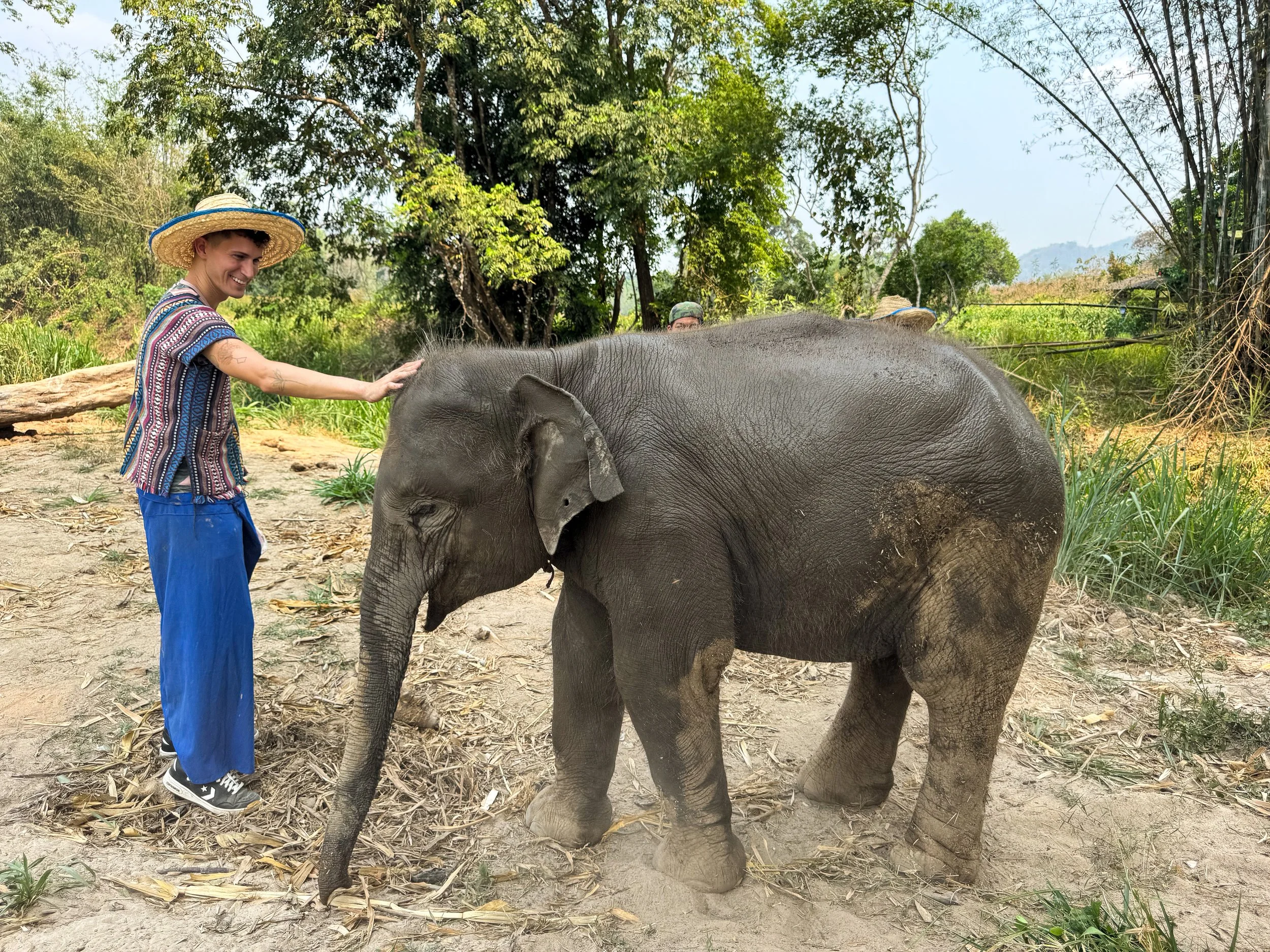
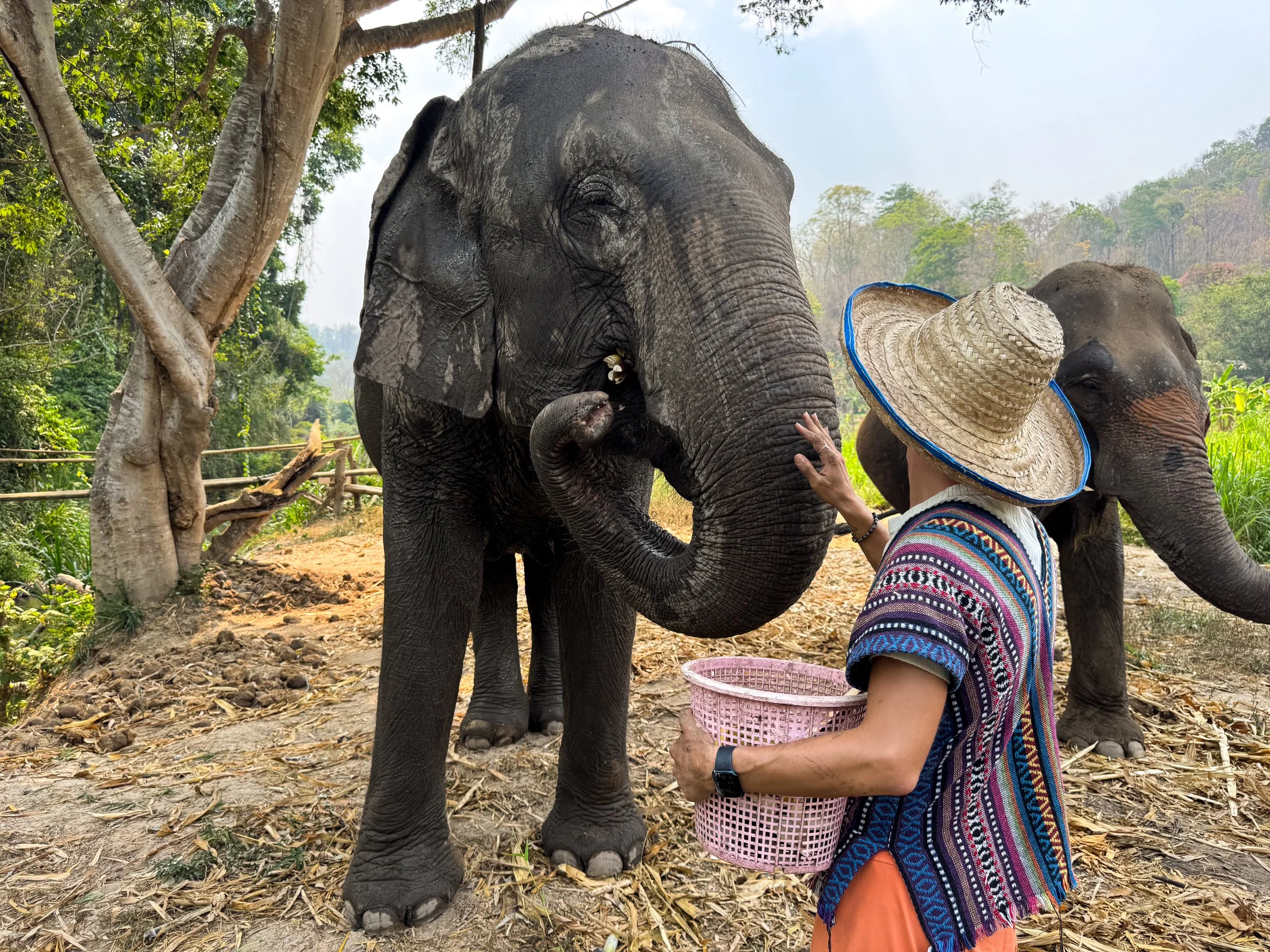
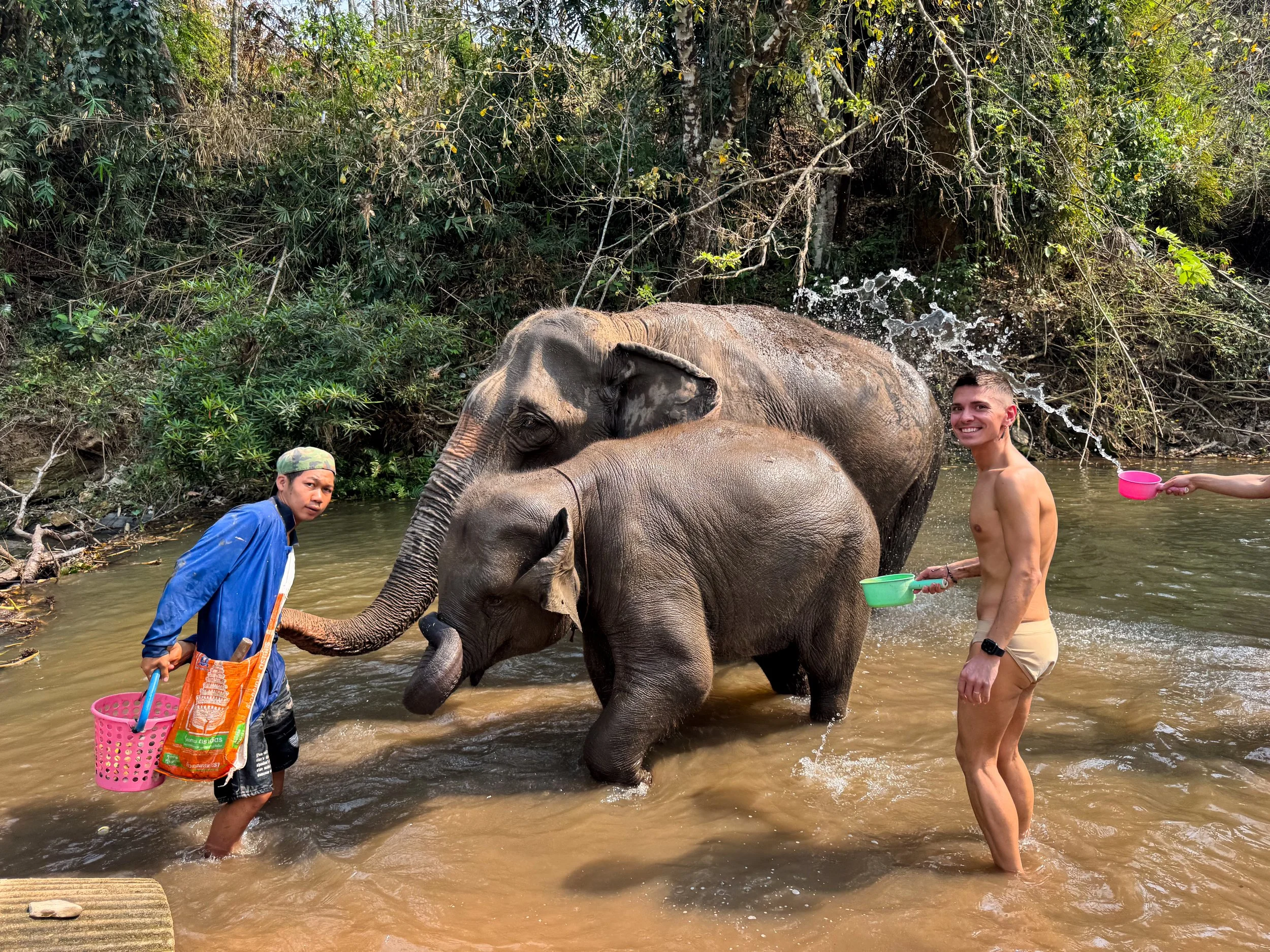
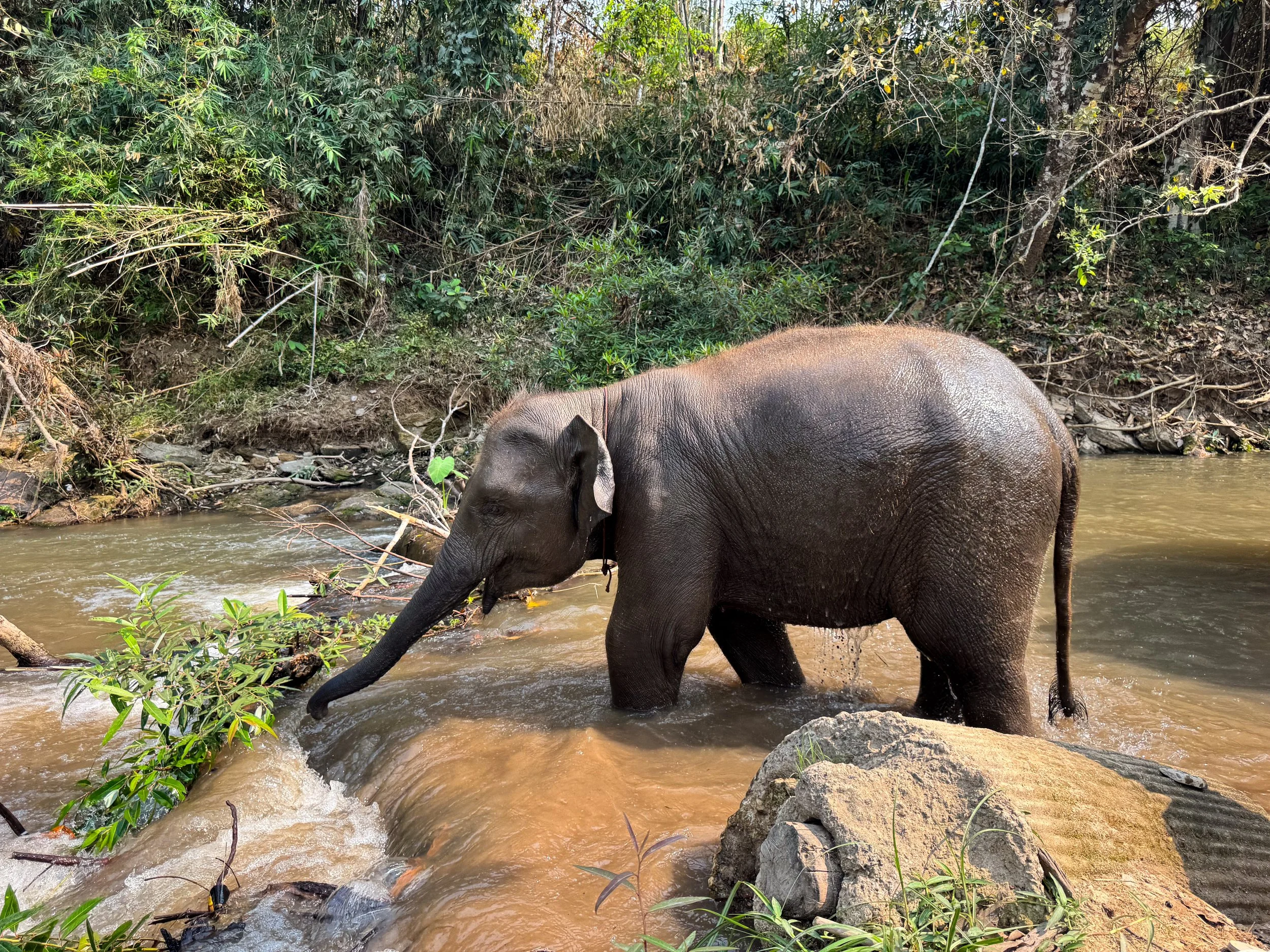
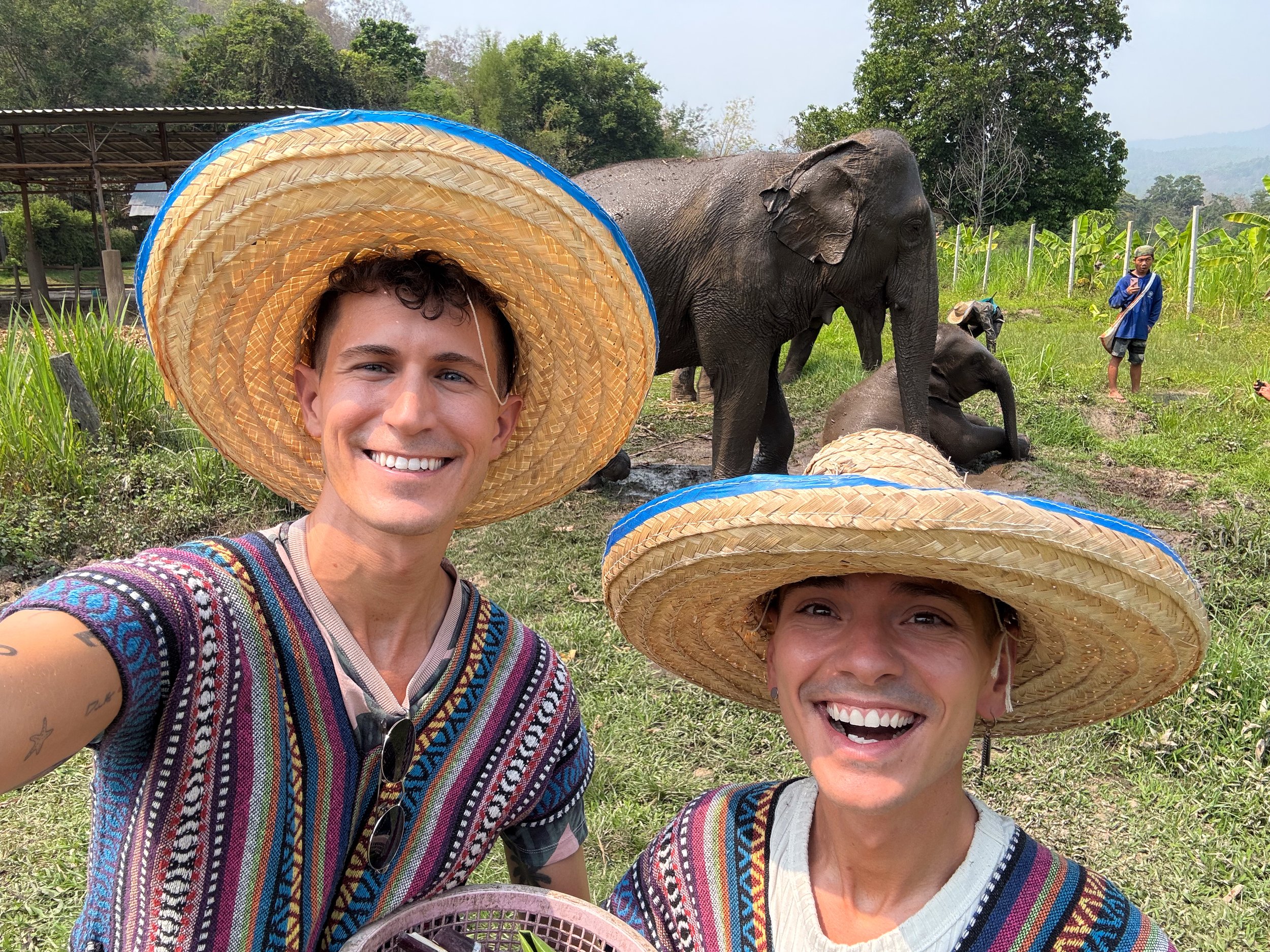
Chiang Mai Elephant Home. A sanctuary home to rescued and juvenile elephants. The property features farmed grasslands, bamboo, and banana trees where the elephants are given time to graze and wander. They cool down in a passing river and cover themselves in mud pools to protect themselves from the sun and insects. The elephants are well treated and supervised by mahouts who manage their care. When given time to rest, they are kept in shaded pavilions and continually fed. One of the most incredible sights was seeing the juvenile elephant breastfeed from its mother. We got to feed the elephants sugarcane and bananas, walk alongside them, and bathe them in the river. It was a memorable experience getting to interact with these gentile giants and their playful juvenile. Book Online or at their Office in person.
Ethical Elephant Sanctuaries. When visiting an elephant sanctuary, there are a few ethical considerations to keep in mind depending on your own views and personal levels of comfort.
Ethical sanctuaries are places that take care of elephants, educate visitors about their conservation, don’t cause them harm or profit from their captivity.
Avoid fake “sanctuaries” that offer elephant riding.
Most sanctuaries rescue former riding and work elephants, providing them with a better life than they had before. They’re often domesticated and still respond to trained phrases.
The unfortunate truth is that most elephants are likely chained up when visitors are not around to prevent them from escaping.
There are few wild elephants remaining in Thailand due to human conflict and loss of their natural habitat.
The most ethical sanctuaries minimize human contact by only allowing observation.
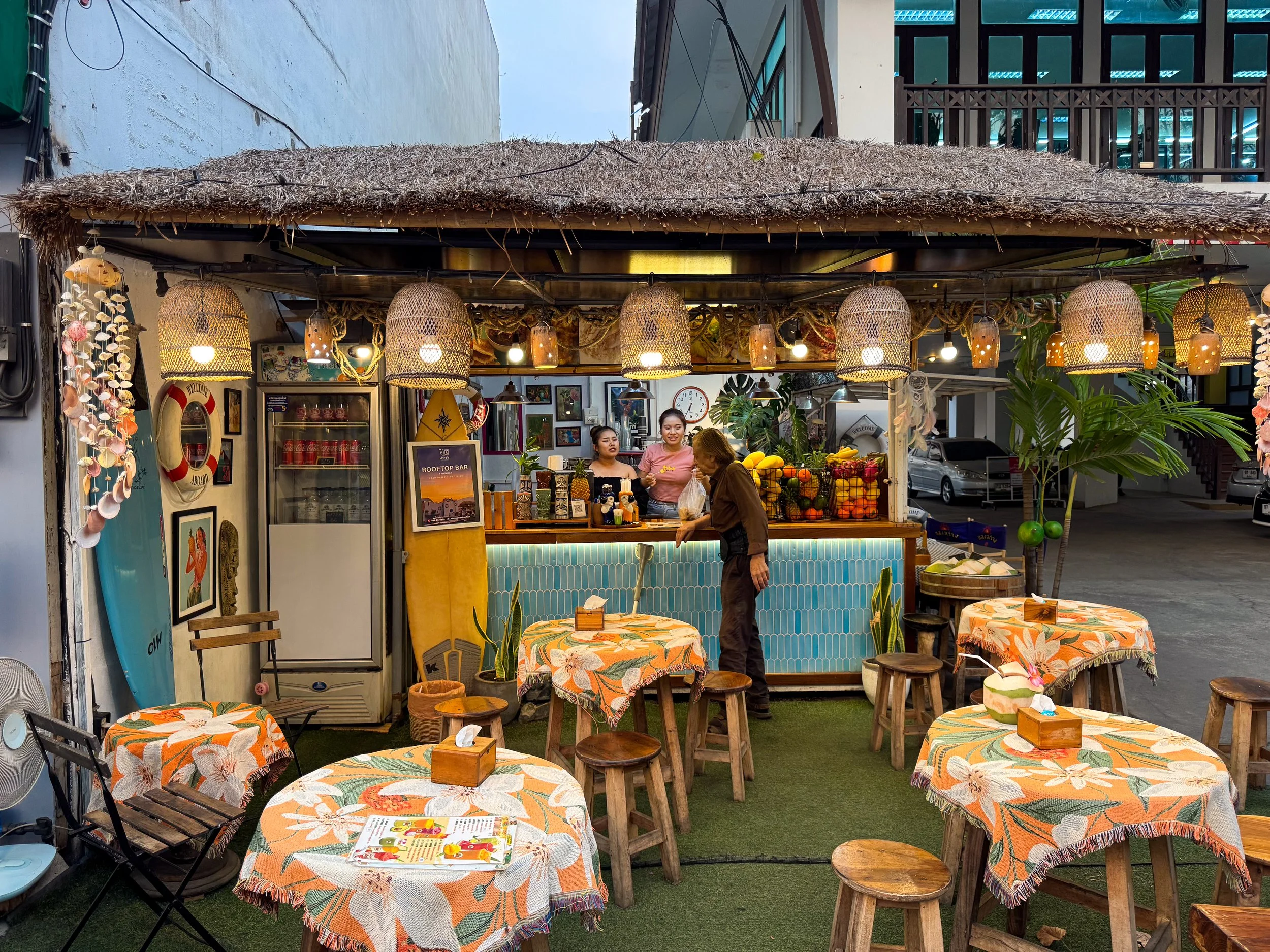
Places to Eat & Drink
Vegan Society Restaurant. A vegan restaurant in a historic wooden house with an outdoor dining room. Their menu offers Thai dishes like green, red and massaman curries, pad see ew, khao soi, tom yum tofu and mango sticky rice.
Single Origin Store. A coffee shop nearby Tha Phae Gate specializing in high quality coffee beans grown and roasted in Thailand.
Nophaburi Bar Thai Cocktail. A hole in the wall cocktail bar with a funky atmosphere and one of a kind drinks. Their cocktails are made with 100 percent Thai spirits, primarily rums and gins, mixed with unique and local ingredients. The menu is sectioned by flavor profiles like spirit forward, fruity and complex and sweet and sour. Try the Manop for something spiced and strong or the La Moon for something fruity and tropical.
Hardcocktail Bar. An open air bar with inexpensive drinks including classic and signature cocktails. It’s a popular spot with locals, expats and backpackers. Like many first time patrons, we were lured in by the suggestive name. Try the boozy Long Island or Made in Chiang Mai.
Lost Hut Cocktail Bar. A small tiki style dive bar tucked into a corner of the Old City. Come here for their daily 5-9pm happy hour with 100 Baht mai tais, mojitos and margaritas.
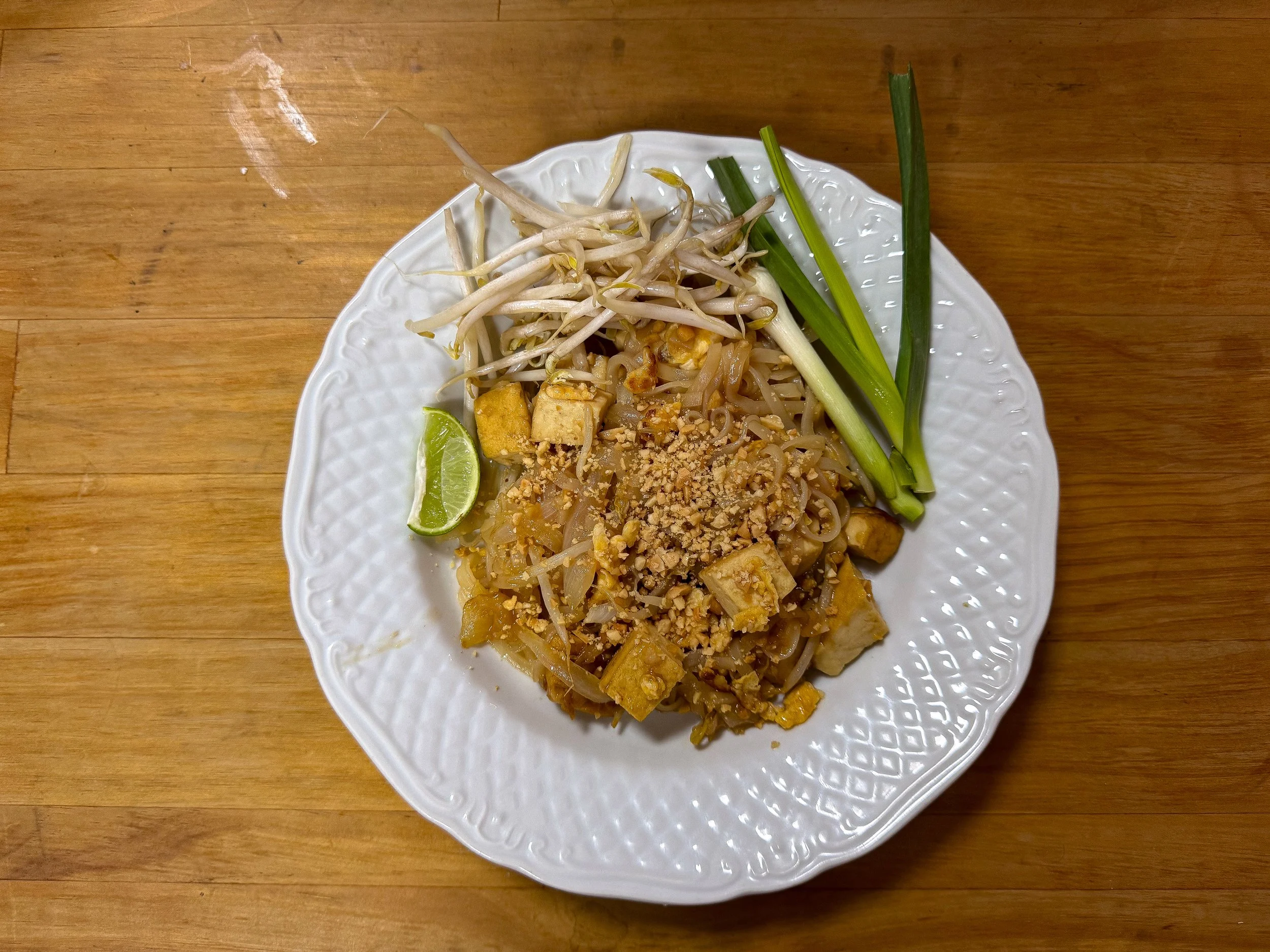
Thai Cuisine
From regional dishes, to street food and classic meals, Chiang Mai is one of the best places to enjoy Thai cuisine.
Khao Soi. A popular egg noodle soup made with coconut broth and flavored with warm spices, Thai chilis, fish sauce and shallots. It originates from Chiang Mai is and seen on menus across the city.
Pad Thai. A world renowned rice noodle dish famed for its tangy and sweet sauce paired with peanuts, scallions, bean sprouts and chili peppers.
Pad See Ew. A noodle dish with similar flavor profiles as Pad Thai but made with wide rice noodles.
Thai Curry. A combination of red, green and yellow curries made with a range of hot and savory spices, coconut milk and rice noodles.
Tom Yum Goong Nam Kon. A flavorful spicy and sour Thai soup made with lime juice, lemon grass, galangal root, kaffir lime leaves and evaporated milk. It’s often paired with shrimp or prawns.
Spring Rolls. Crispy and flaky rolled or deep fried dough filled with veggies and herbs typically served with a sweet and spicy sauce.
Pineapple Fried Rice. Stir-fried rice cooked with diced pineapple, umami forward sauces and a choice of protein like tofu, chicken or pork.
Mango Sticky Rice. A simple and delicious staple of Thai cuisine made from sticky rice paired with freshly sliced mango. The rice is often flavored with sweetened condensed milk or a herbal syrup.
Rolled Ice Cream (Thai Ice Cream). Cream poured over a chilled surface and aggressively mixed together with toppings, thinly spread and scraped up into small rolls of ice cream.
Thai Iced Tea. A classic Thai beverage made from brewed black tea and mixed with milk and sugar. It’s often flavored with star anise and cardamom. Try it with boba pearls.
Chang Beer. A national beer, popular across the country. It’s recognizable by two elephants on its label.
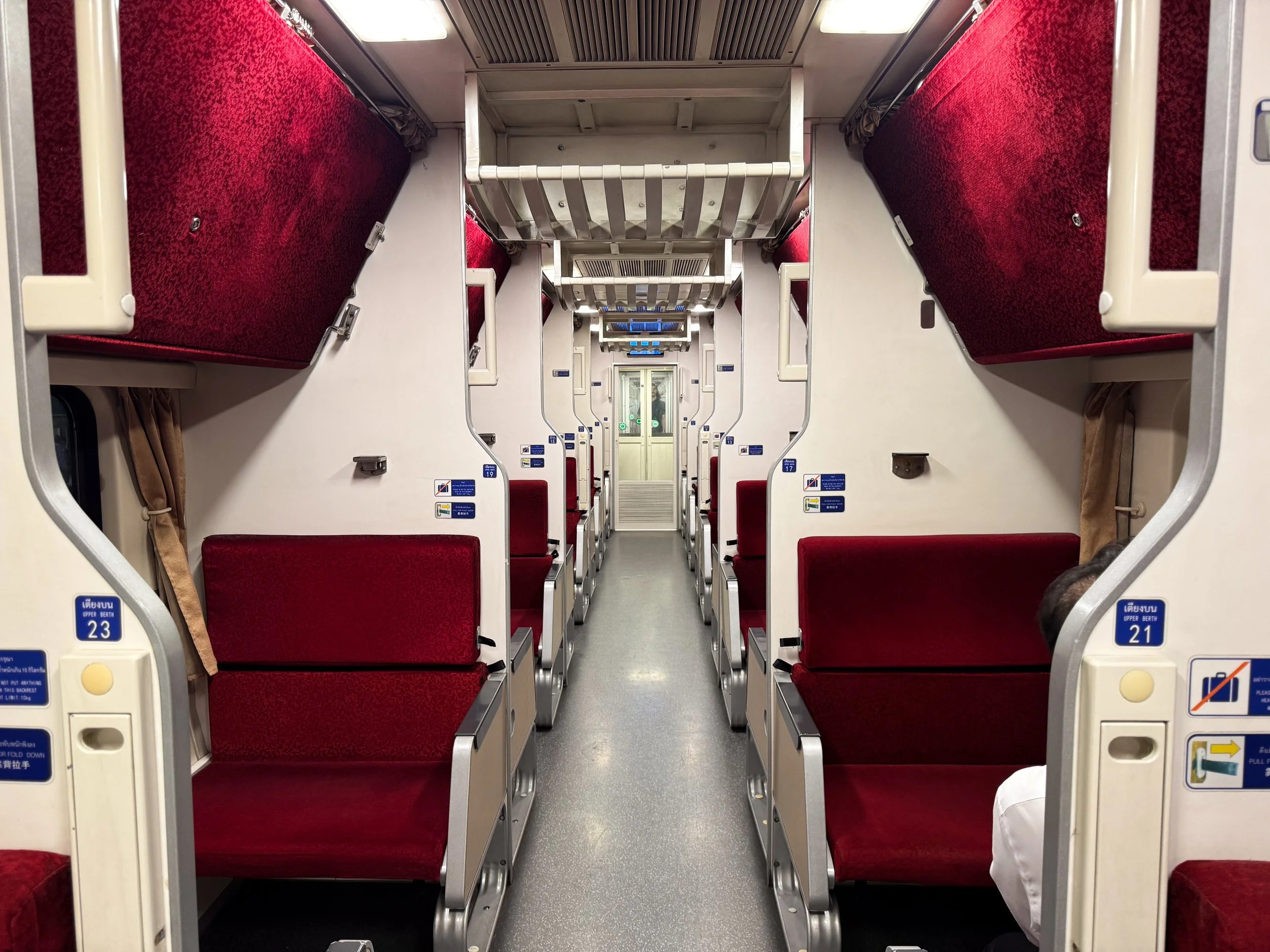
Getting to Chiang Mai
The Overnight Train. The best way to reach Chiang Mai from Bangkok is on the overnight train. We booked second class seats that folded down into bunk beds. They were plenty spacious to store our luggage, comfortable for a full night’s rest, privately curtained off and clean with fresh sheets and pillows. Each car has 38 seats/beds, its own restroom and large windows overlooking the landscape. A cook offers dinner and breakfast service. We ordered fruit, coffee, rice soup and spring rolls for the following morning.
We booked our tickets online about two weeks in advance with the State Railway of Thailand departing from Krung Thep Aphiwat Station in Bangkok and arriving at Chiang Mai Station 12 hours later.
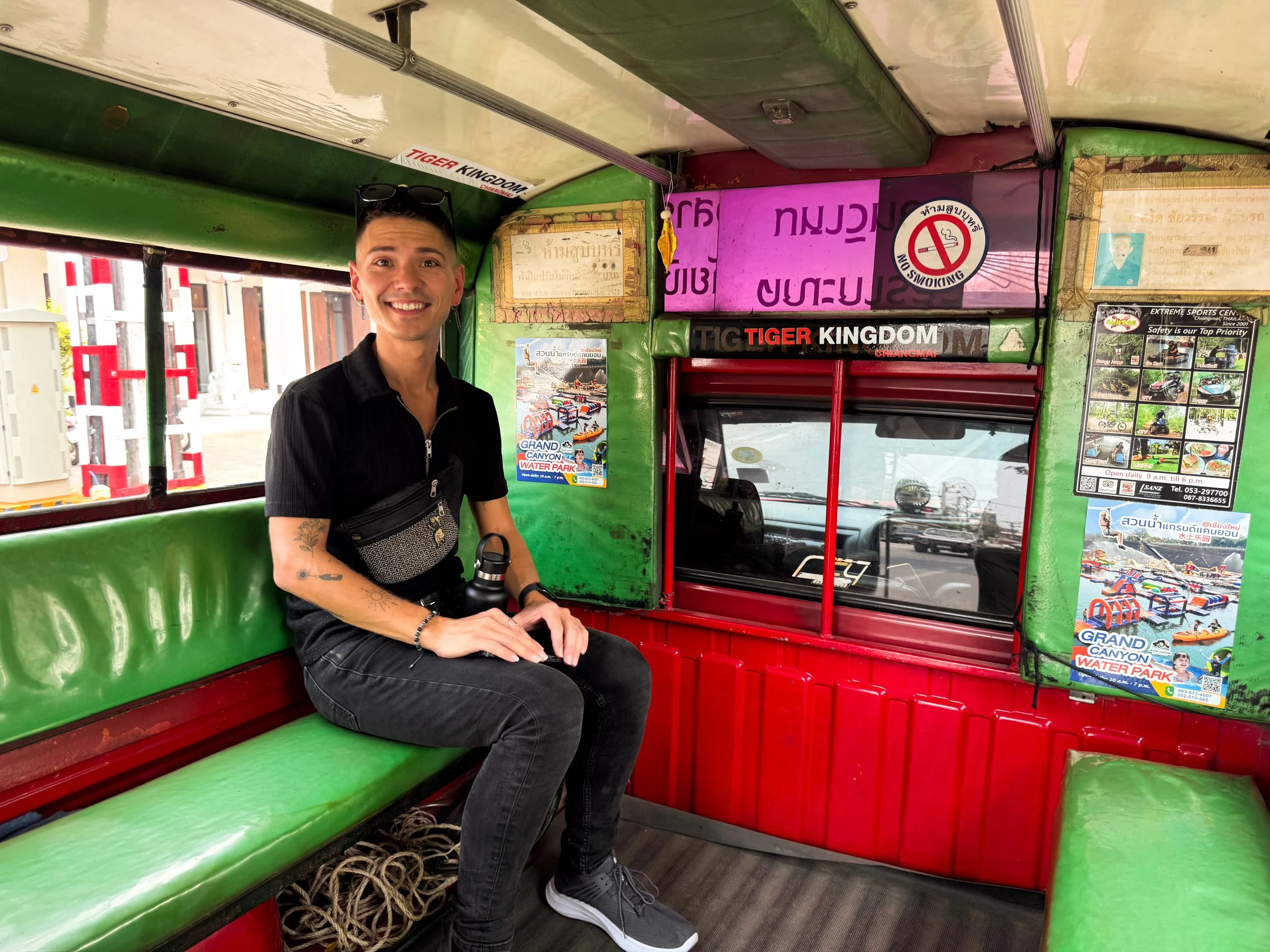
Getting Around
Songthaew. A red pickup truck with a covered back and two benches for passengers. They operate as shared and private taxis, bringing locals and tourists around Chiang Mai and to farther-away destinations. They're inexpensive, with fares costing 30–40 Baht per person to get around the city. The cost for farther-away destinations varies; however, it's cheaper per person depending on the number of passengers. They're easy to find, typically waiting near the Old City gates but able to be flagged down anywhere on the street.
Getting to Wat Phra That Doi Suthep. Songthaews cost 500 Baht roundtrip for two people from the Old City. The trip takes 45min one way. The driver will wait for 1h while you visit.
Getting to Buatong Waterfall. Songthaews cost Baht Bhat roundtrip for two people from the Old City. The trip takes 1h 15min one way. The driver will wait for 1h 30min while you visit.
On Foot. The Old City and surrounding neighborhoods are easily walkable. Getting around on foot is one of the best ways to explore Chiang Mai and find hidden sights.
By Grab. Grab is a taxi hailing app used across South East Asia. It’s a good way to get around with luggage both to and from the train station or airport.
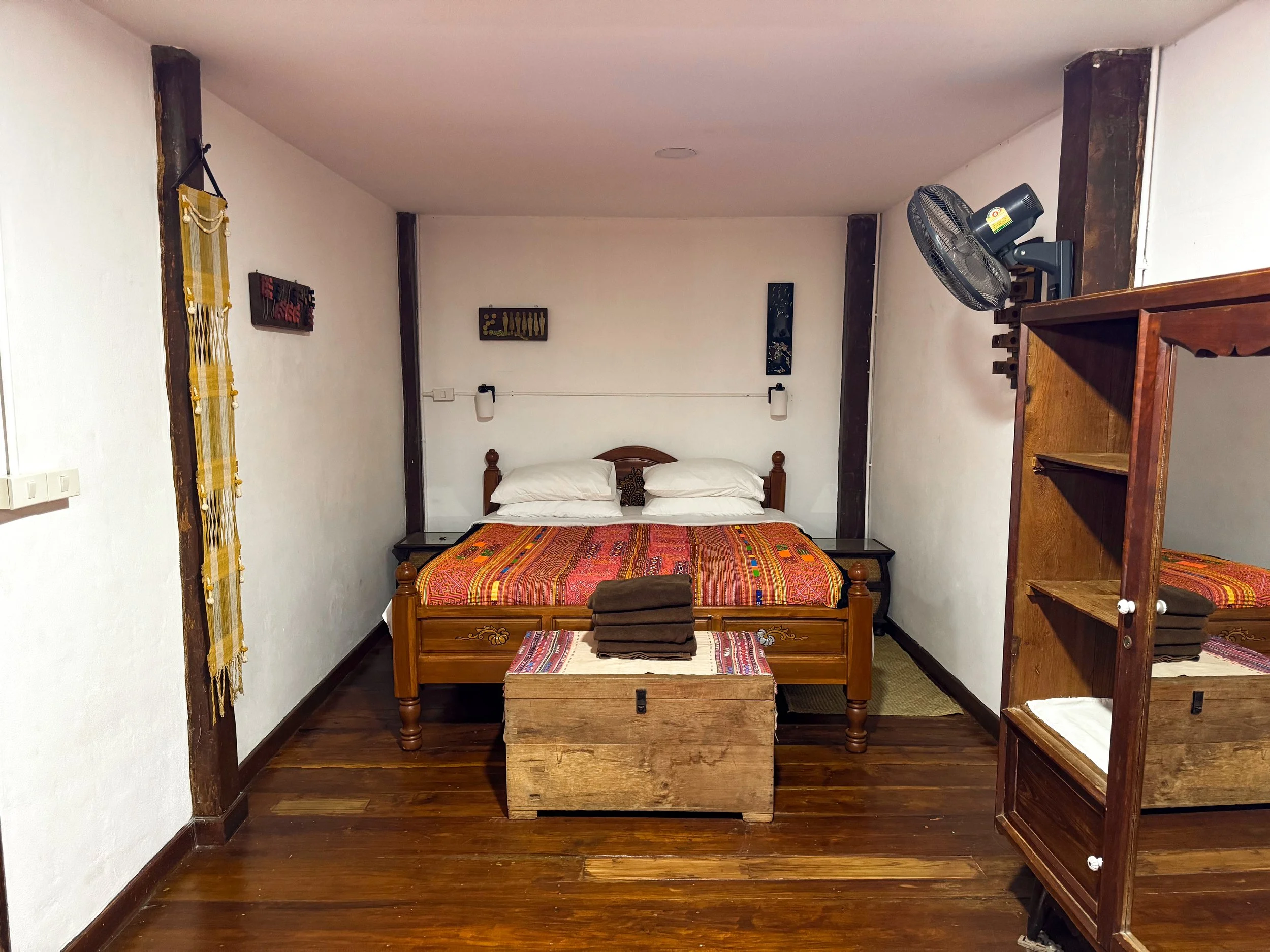
Where to Stay
We stayed at a beautiful studio in the Old City. It had a spacious interior with its own kitchen, living area and a shared outdoor patio. It was the perfect spot to explore the narrow and winding streets, discover cafés, restaurants and cocktail bars, visit the night markets and nearby wats. Book on Airbnb.
Location Specifics
Dress Modestly. Visitors are asked to cover the legs and shoulders when visiting most religious sights. If wearing shorts, it’s smart to carry a sarong.
Footwear. It’s generally expected that one removes one’s footwear before entering a Buddhist sight, house or public restroom. Typically slippers are provided for the latter.
Men Only Sights. Some wats like the Silver Pagoda and Inthakhin Pillar Vihara do not allow women inside.
Language. Thai is the national language of Thailand, however most people know and speak some English.
Cash Payments. Cash is the primary method of making payments. Very few places accept credit or debit cards.
Drinking Water. The tap water is generally not safe for consumption. It’s best to boil it first or drink filtered water.
Traffic. People drive on the left side of the road in Thailand. Make sure to look both ways when crossing streets.
Public Smoking & Drinking. It’s illegal to smoke or drink in most public spaces in Chiang Mai. Signs warning of steep fines and imprisonment remind visitors to obey this law.
Safety. Like most places in Thailand and South East Asia, Chiang Mai is a very safe destination to visit with little crime. Occasional signs at sites will warn visitors of pick-pocketers.
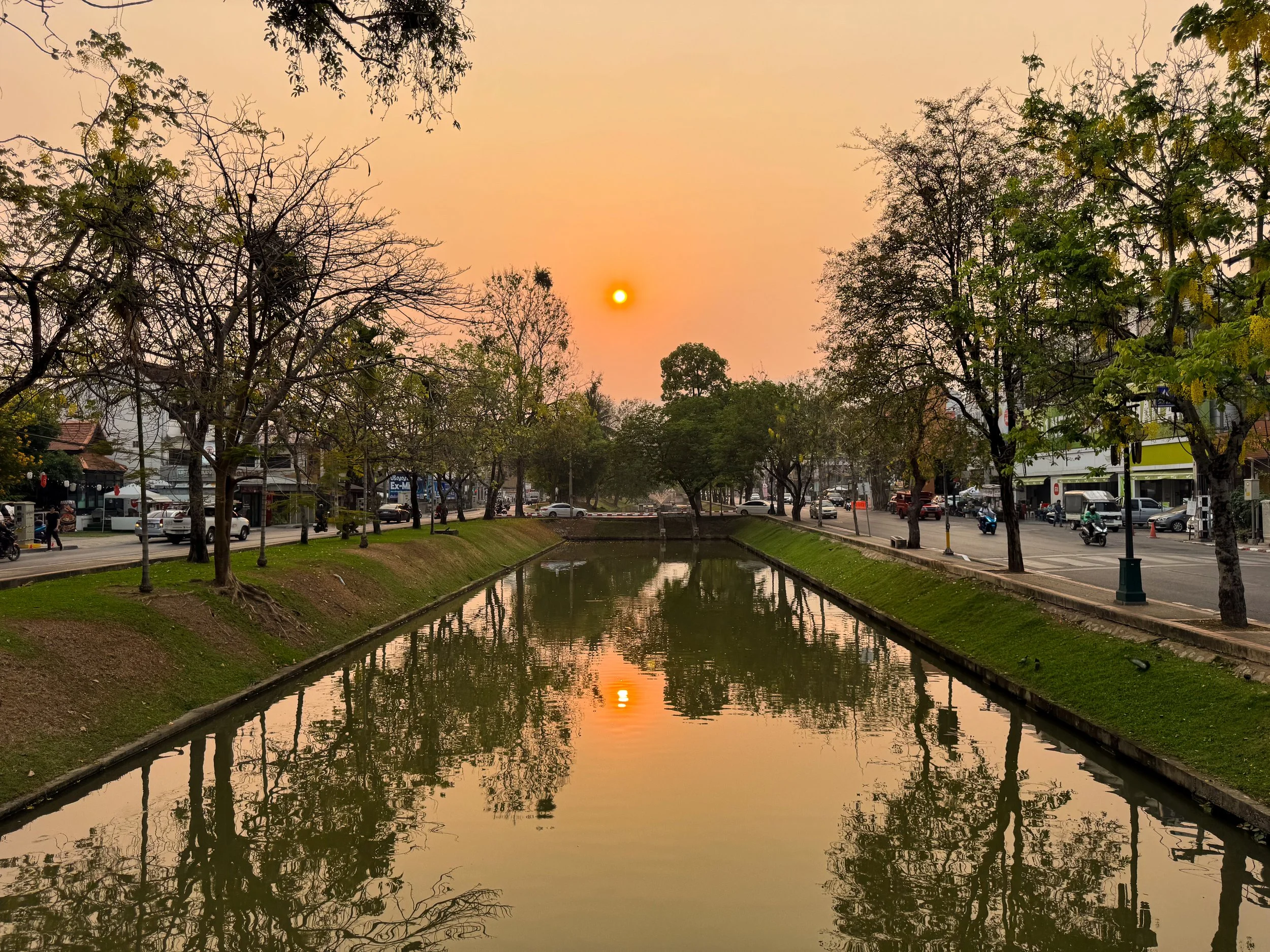
Fire & Smoke Season
From March through April, northern Thailand suffers extreme heat and dry weather. A mixture of forest fires and slash and burn farming inundates the region in a thick haze of smoke, often reaching very unhealthy and hazardous levels. As a preventative measure, the state closes access to many national parks, campgrounds, hiking trails and waterfalls. We continually tracked the air quality on IQ Air, minimizing our exposure when possible.
Elsewhere in Thailand
From Chiang Mai's temples and night markets to Bangkok's urban energy, Phuket's island escapes and Krabi's limestone landscapes, discover more of Thailand through these travel guides:
Bangkok Travel Guide: Temples, Street Food & Thai Culture. Immerse yourself in Bangkok where gilded temples, the Royal Palace, lively night markets and legendary street food reflect Thailand's dynamic blend of tradition and modernity.
Phuket Travel Guide: Beaches, Island Hopping & Thai Culture. Escape to Phuket where sandy beaches, turquoise bays, limestone islands, a colorful Old Town & island hopping adventures blend Thai culture with coastal exploration.
Krabi Travel Guide: Railay Beach, Limestone Cliffs & Tropical Adventure. Adventure through Krabi where Railay Beach, limestone cliffs, turquoise bays, white sand beaches and caves form one of Thailand's most dramatic coastal landscapes.
For Next Time…
Doi Suthep-Pui National Park. A mountainous national park with hiking trails, campgrounds and waterfalls just outside of Chiang Mai. We had planned to hike the 2 hour trail from Wat Phra That Doi Suthep to the Sai Yoi and Montha Than Waterfalls but were turned around. Most of the park was closed due to the extreme risk of wildfires.
Long Neck Village. On the border of Northern Thailand and Myanmar are villages where women are known to wear stacks of metal rings around their necks. The rings, added over time, elongate the wearer’s neck by lowering their rib cage. It’s a beauty practice that’s very specific to the women of this region.
Bangkok Travel Guide: Temples, Street Food & Thai Culture
Immerse yourself in Bangkok where gilded temples, the Royal Palace, lively night markets and legendary street food reflect Thailand's dynamic blend of tradition and modernity.
Bangkok, A Bustling Metropolis
Bangkok is a bustling metropolis at the heart of Thailand. It’s a place renowned for its street food scene, sprawling night markets and vibrant nightlife. Tuk tuks race through traffic past towering glass skyscrapers, ornate temples and historic wats. Gilded statues of giant buddhas watch over onlookers with a calming gaze. An opulent royal palace and historic museums house important aspects of Thai culture. The city is a branching off point for cultural sights in the north of the country and beaches in the south. We spent over a week here, exploring the impressive sights all across the city and outside of it, feasting on street food almost daily and ending our evenings sipping on flavorful drinks at cocktail bars.

Temples, Wats & Palaces
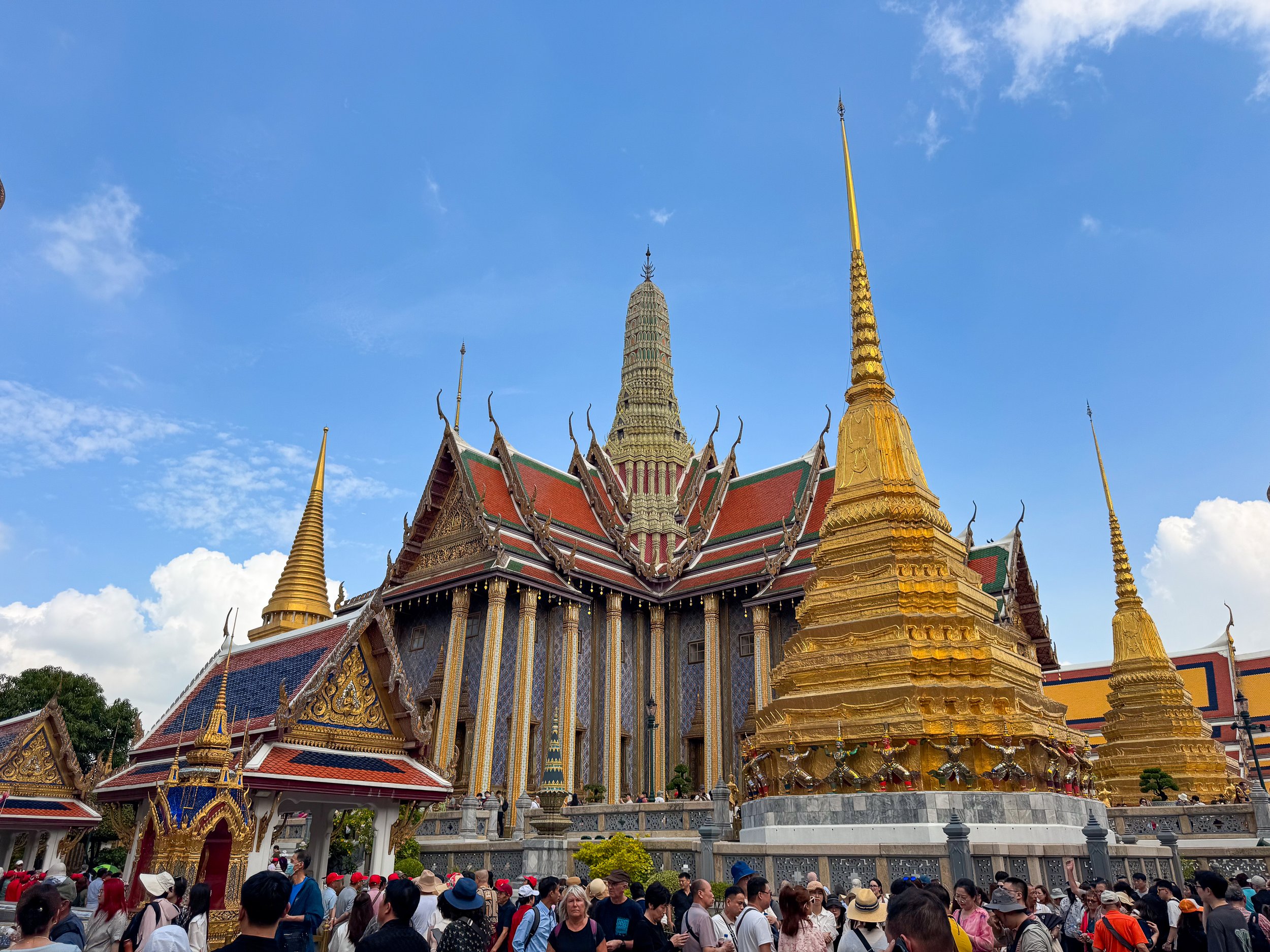
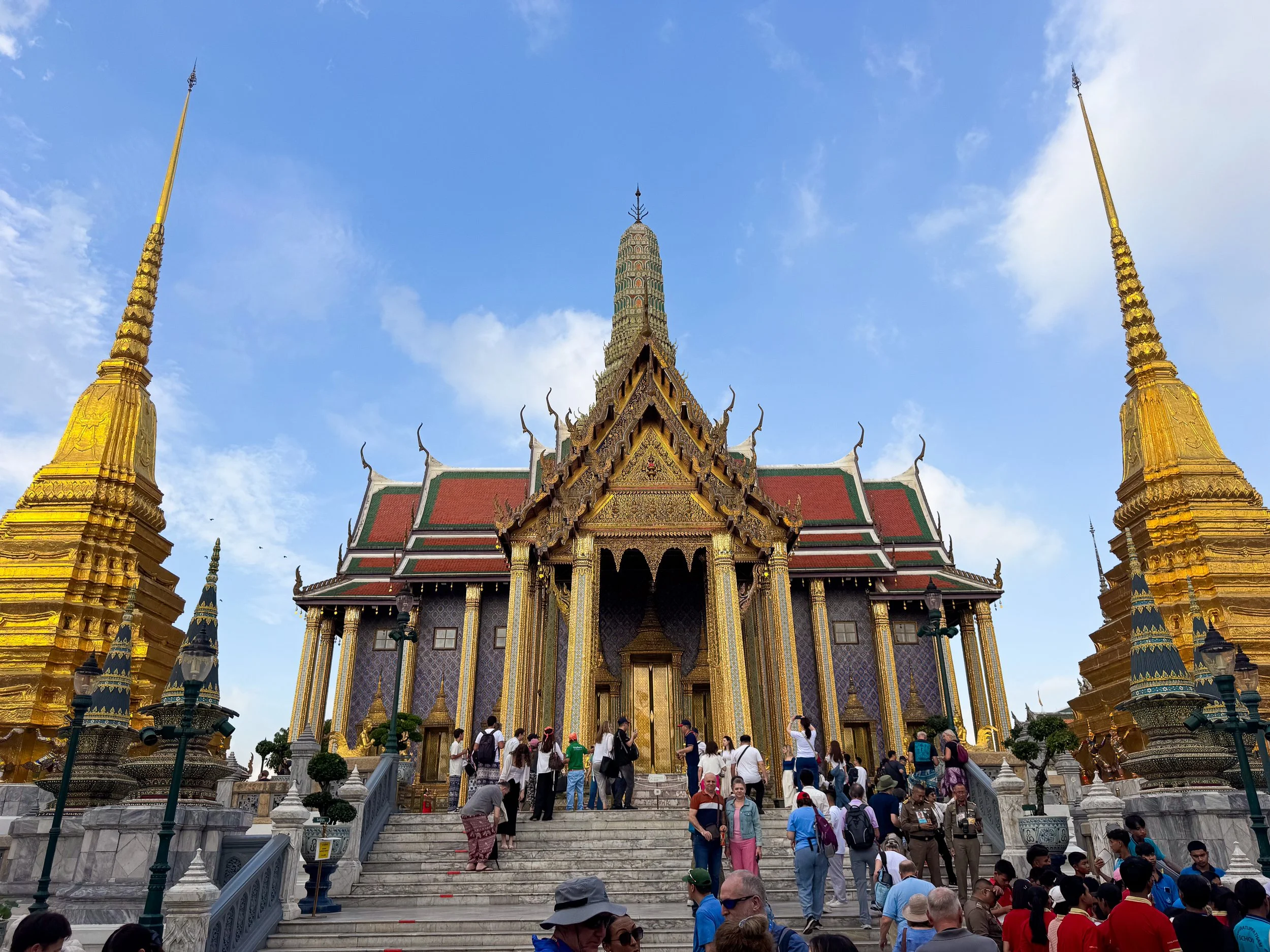
The Thai Royal Palace. An opulent palace truly fit for royalty and the home to the Thai monarchy. The palace is divided into two viewable sections, The Temple of The Emerald Buddha and The Grand Palace.
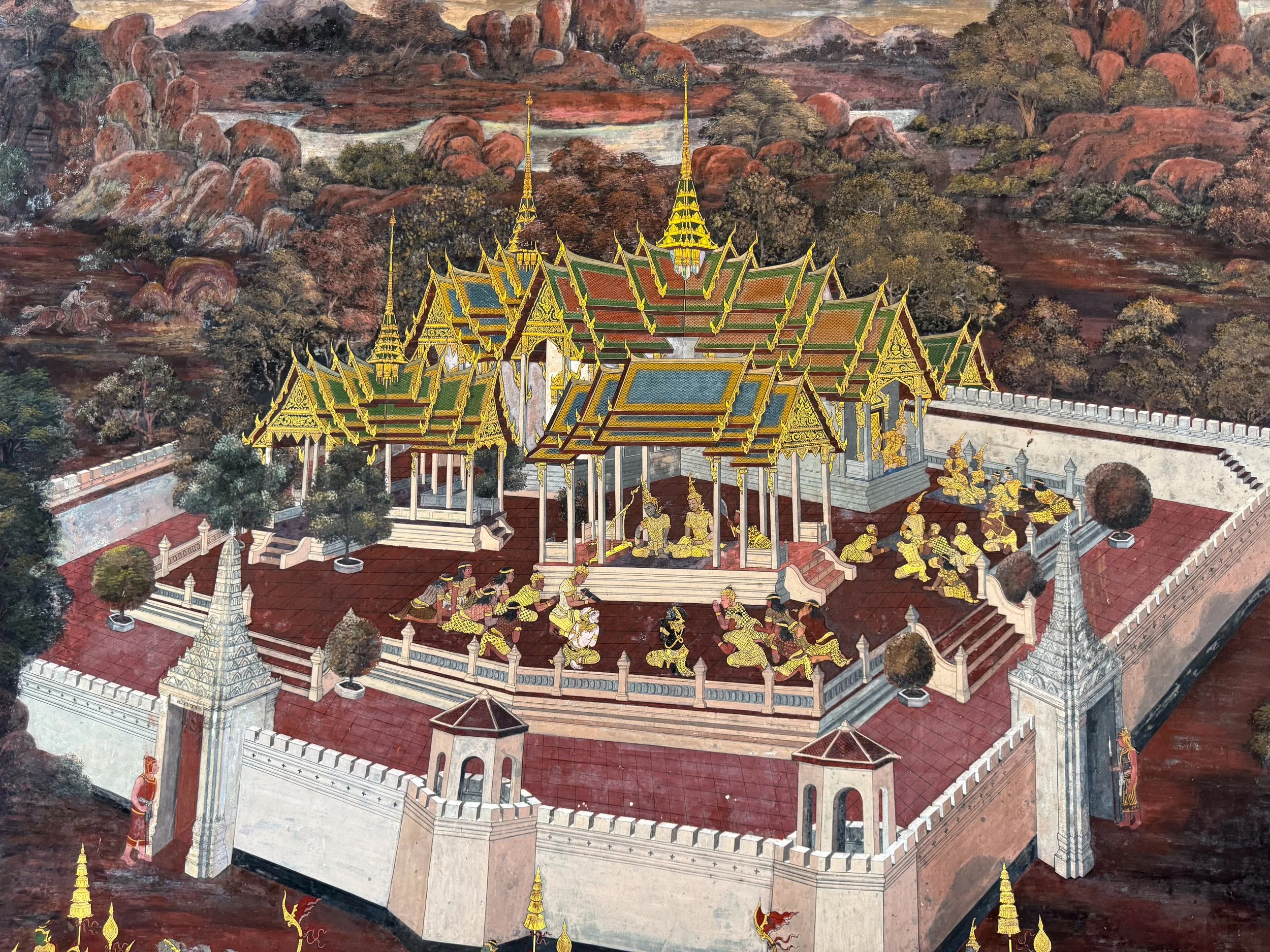
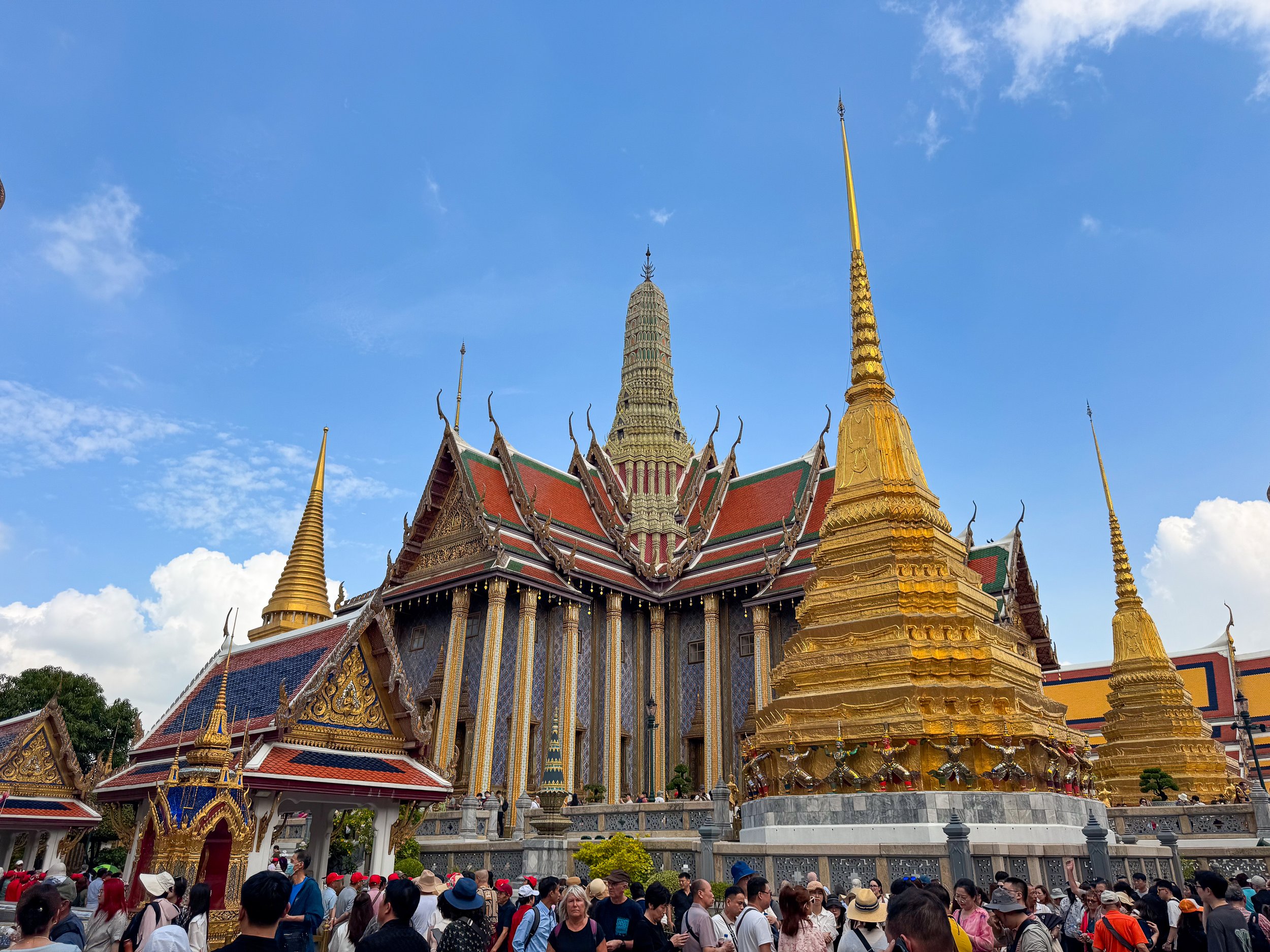
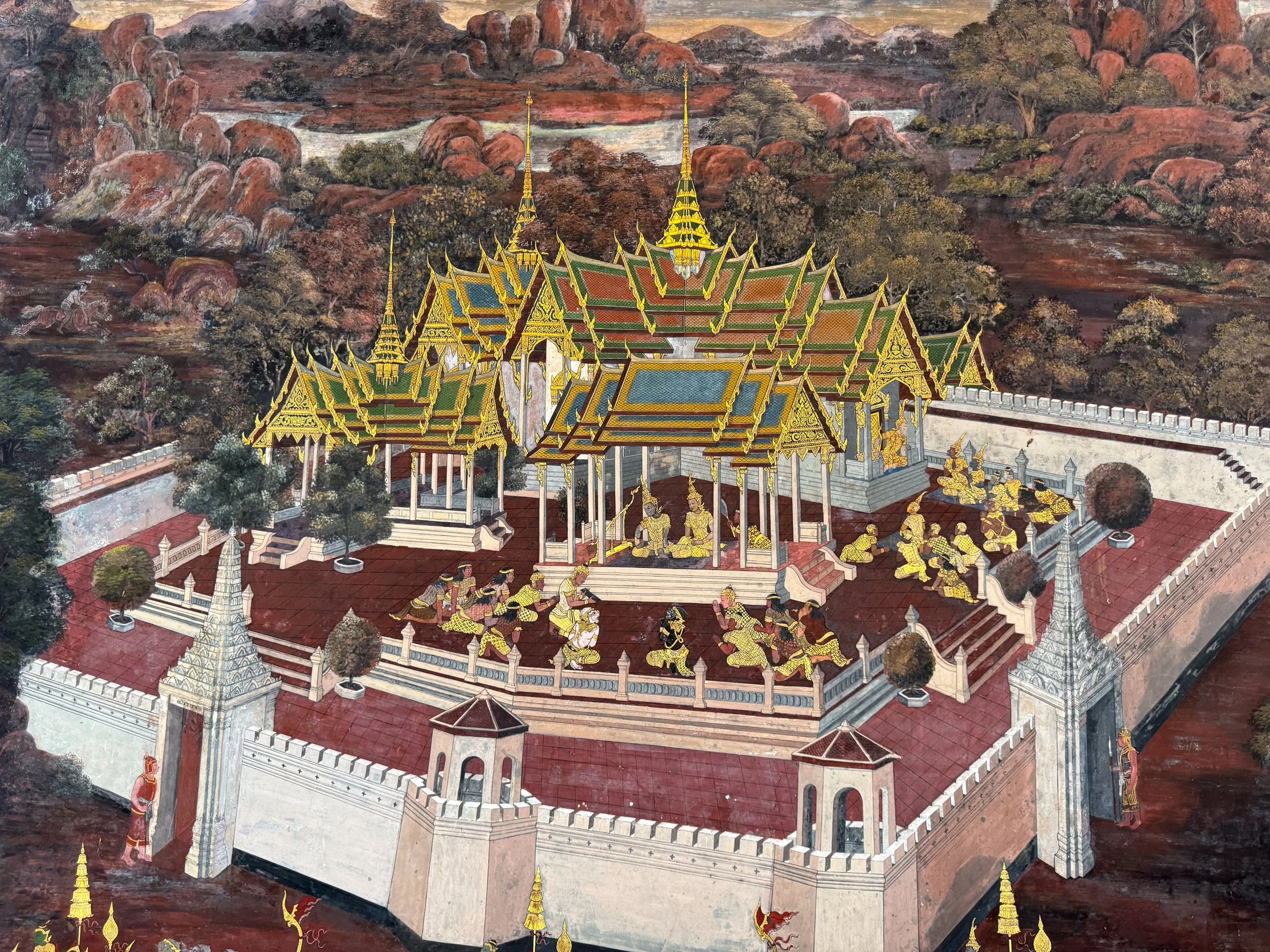
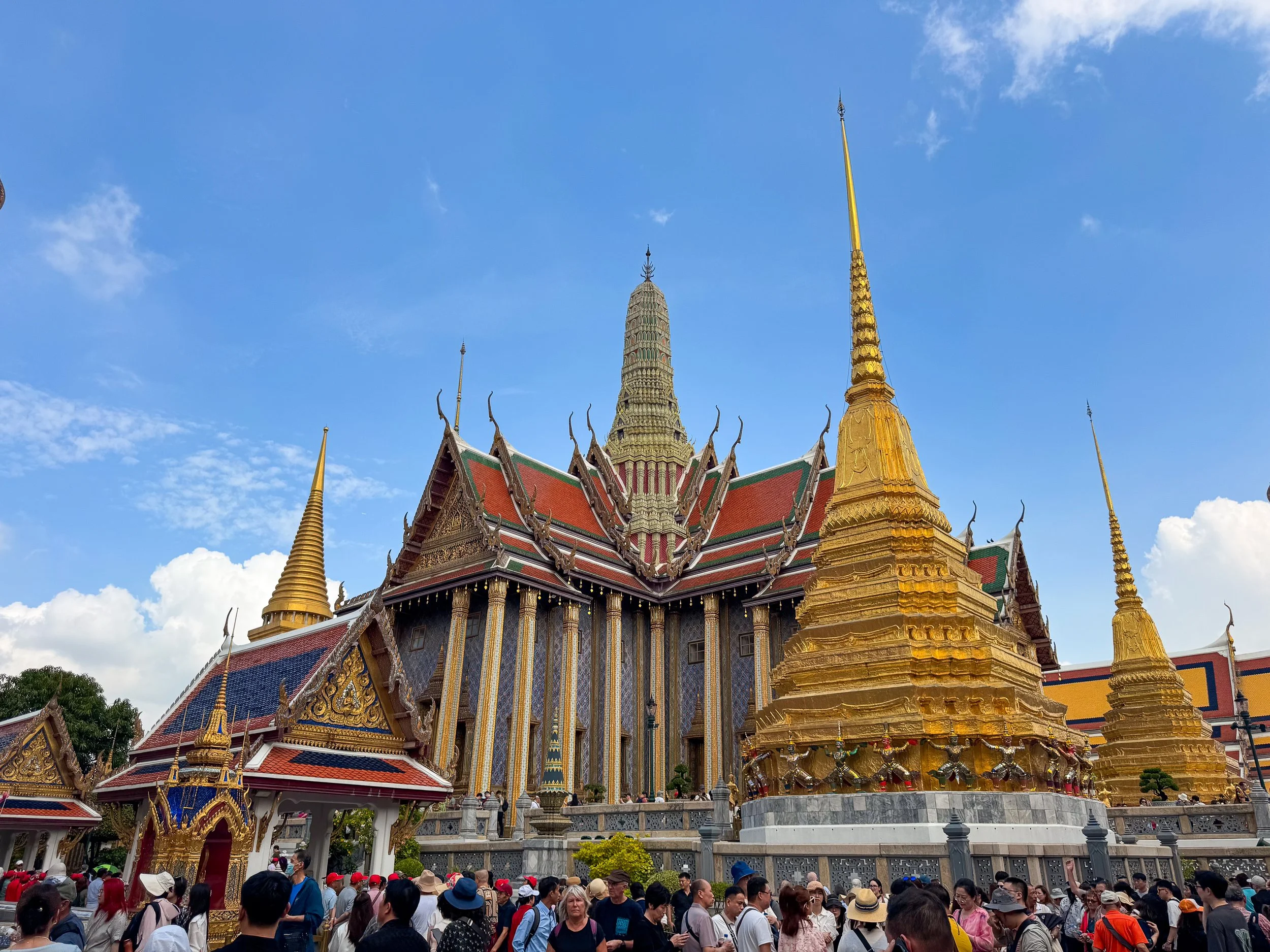
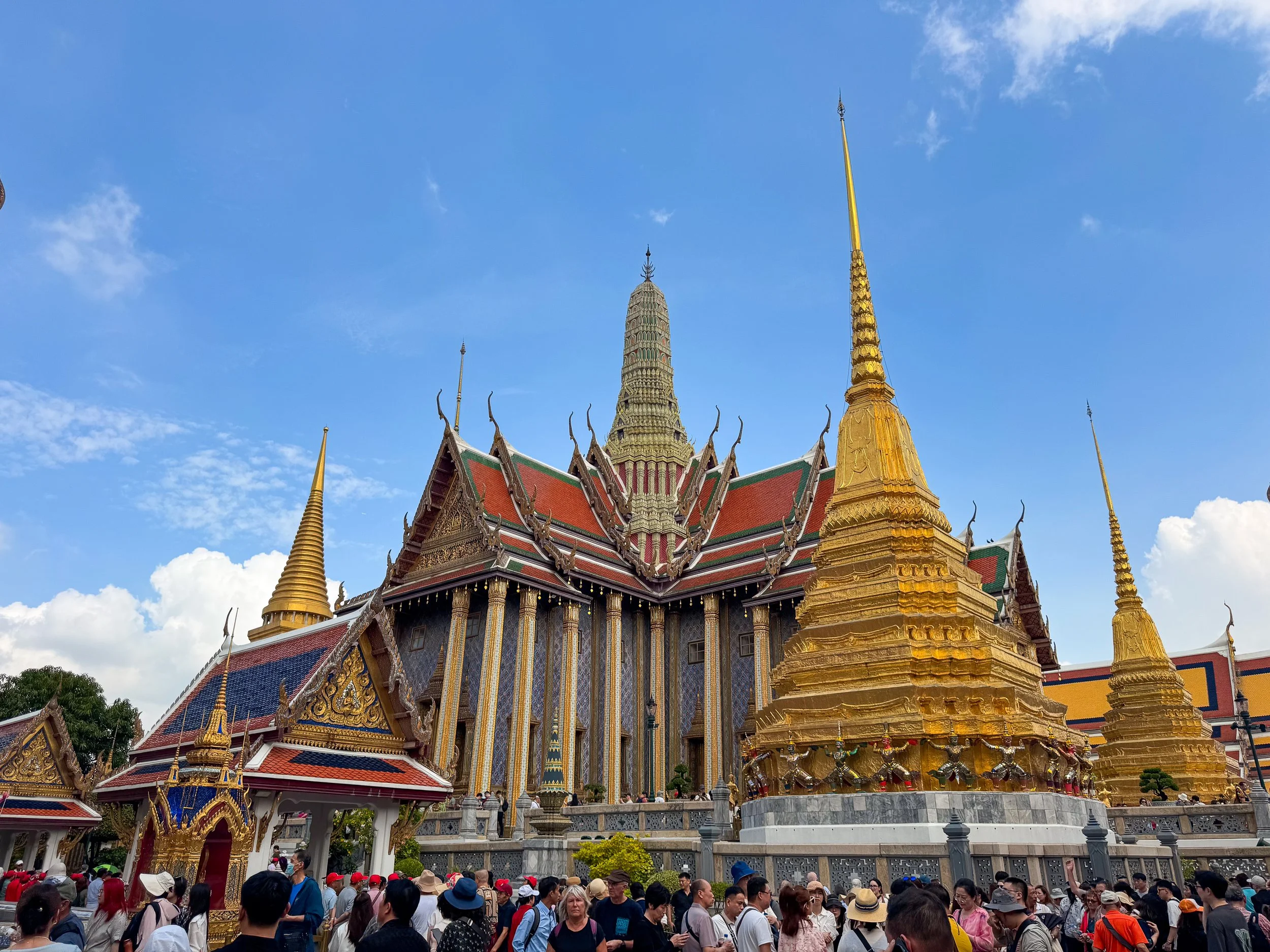
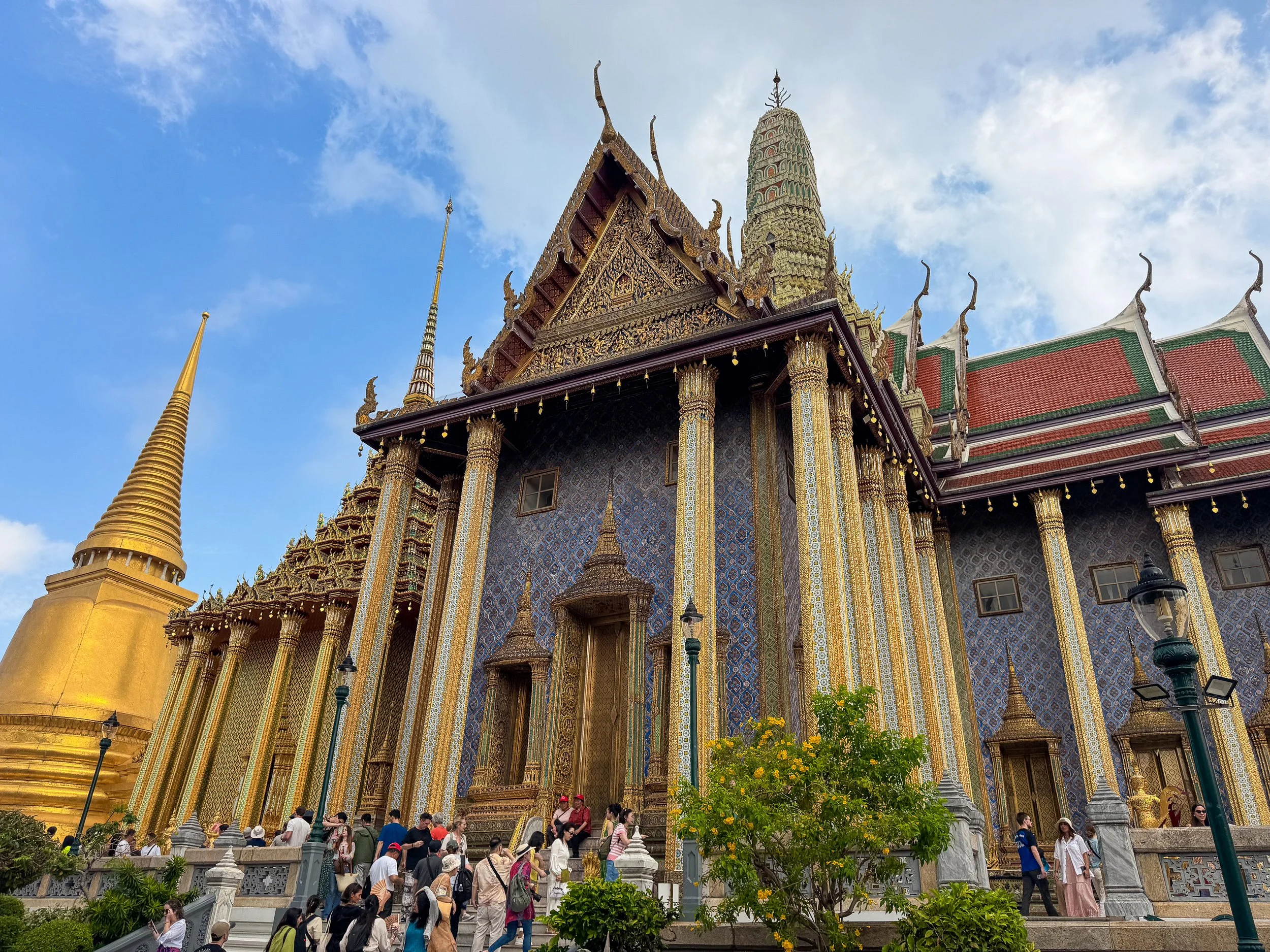
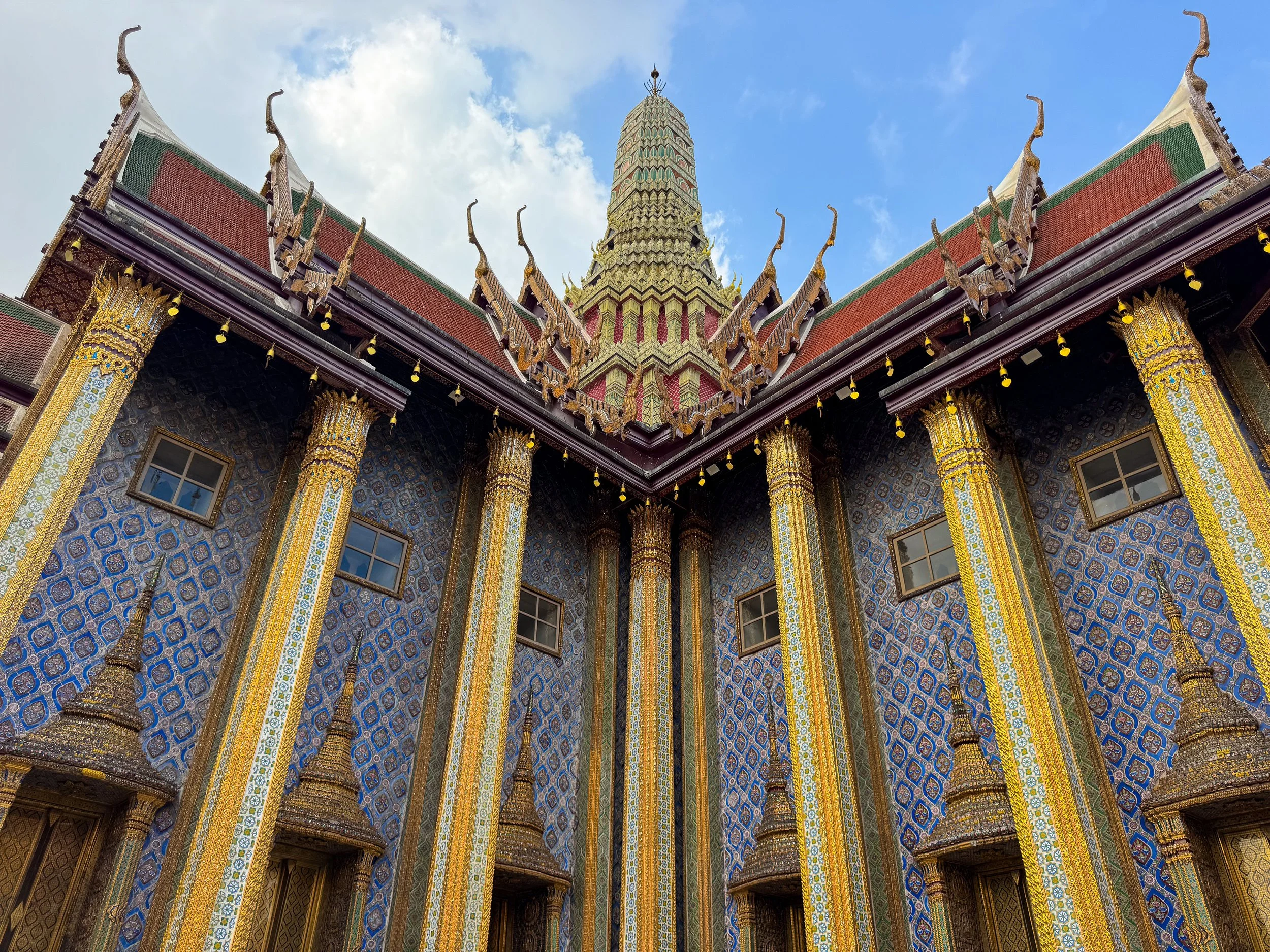
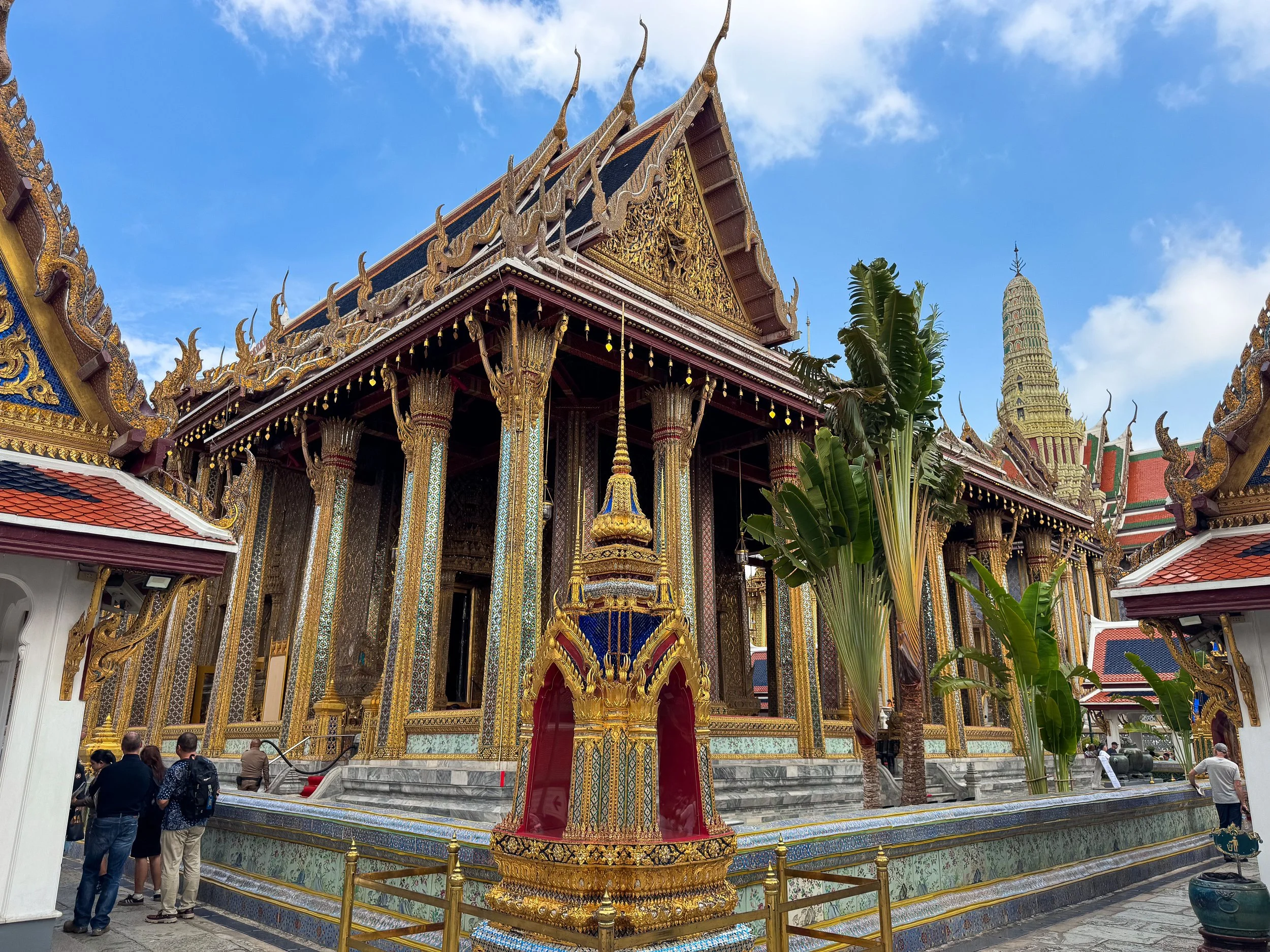
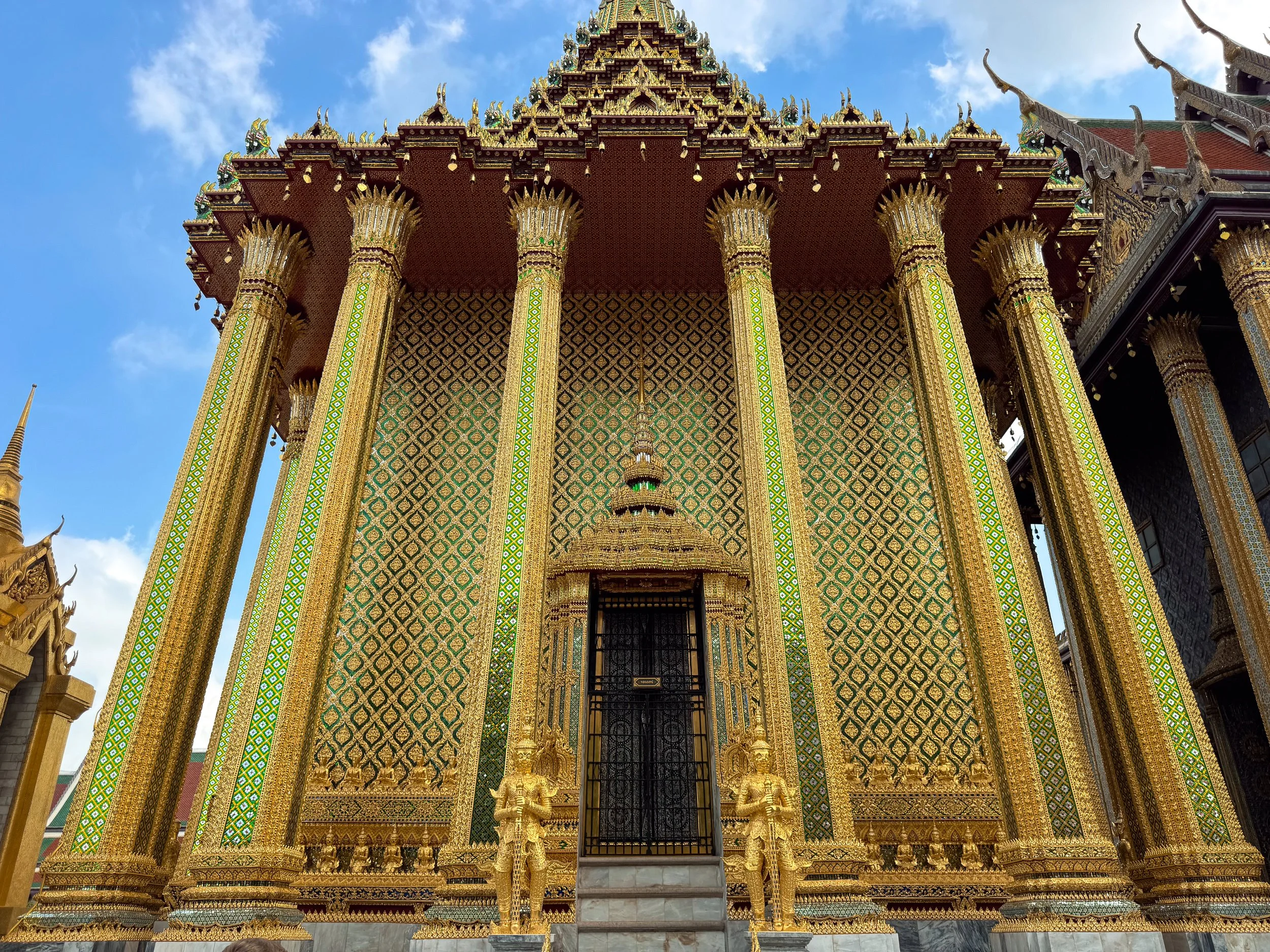
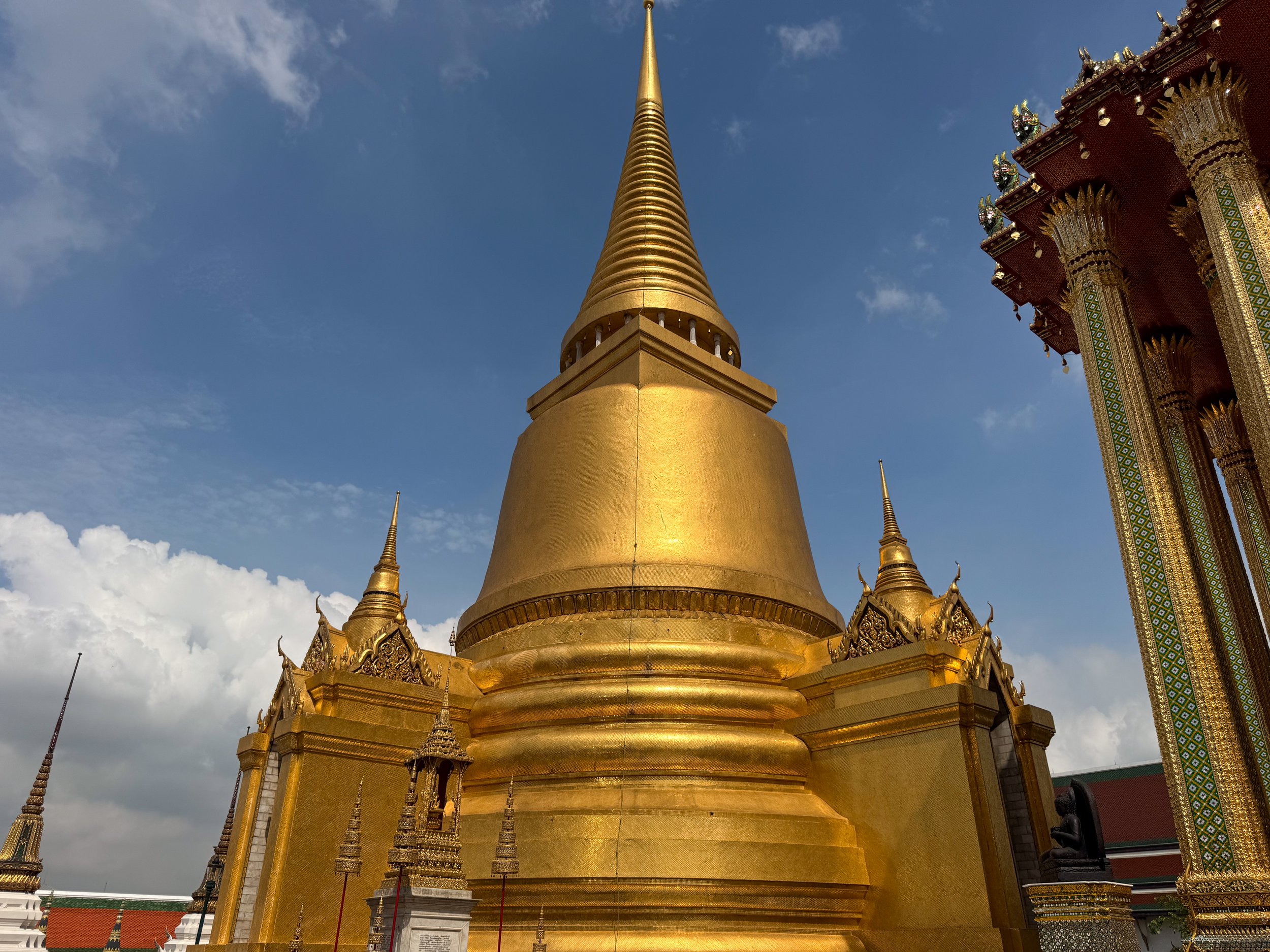
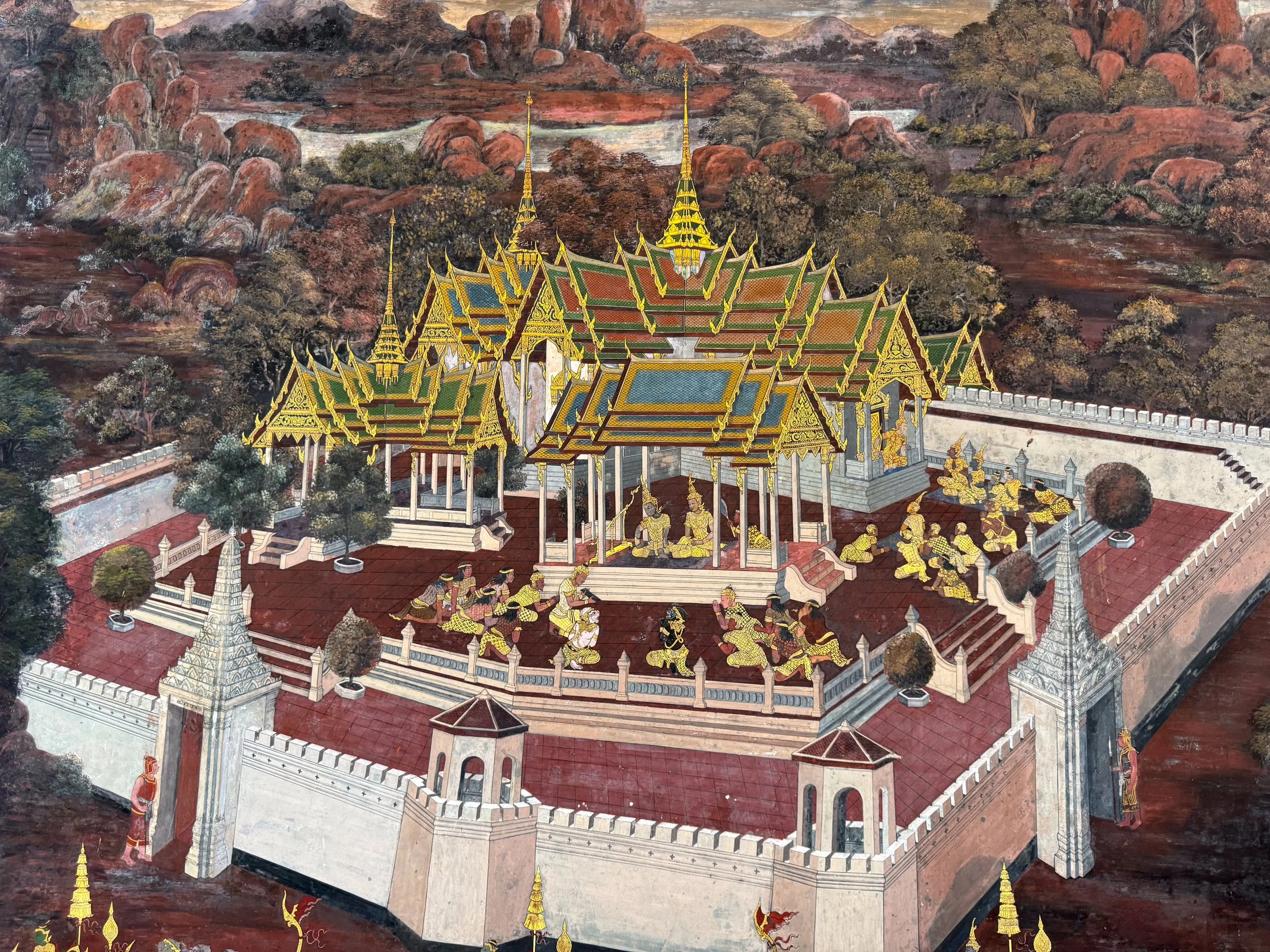
The Temple of The Emerald Buddha. A royal complex with Buddhist wats, temples, throne halls, royal stupas and elaborate sculptures. It’s one of the most opulently designed places on the royal grounds. The structures and statues are adorned in a kaleidoscope of vibrant colors, a glittering mosaic of reflective tiles, gilded surfaces, hand painted images, dimensional patterns and Khmer style roofs layered with colorful tiles and golden cornices. Marble staircases and red carpeted walkways lead around the grounds past sculpted trees and covered corridors. At its center is the main temple with a statue of the Buddha sculpted from solid emerald.
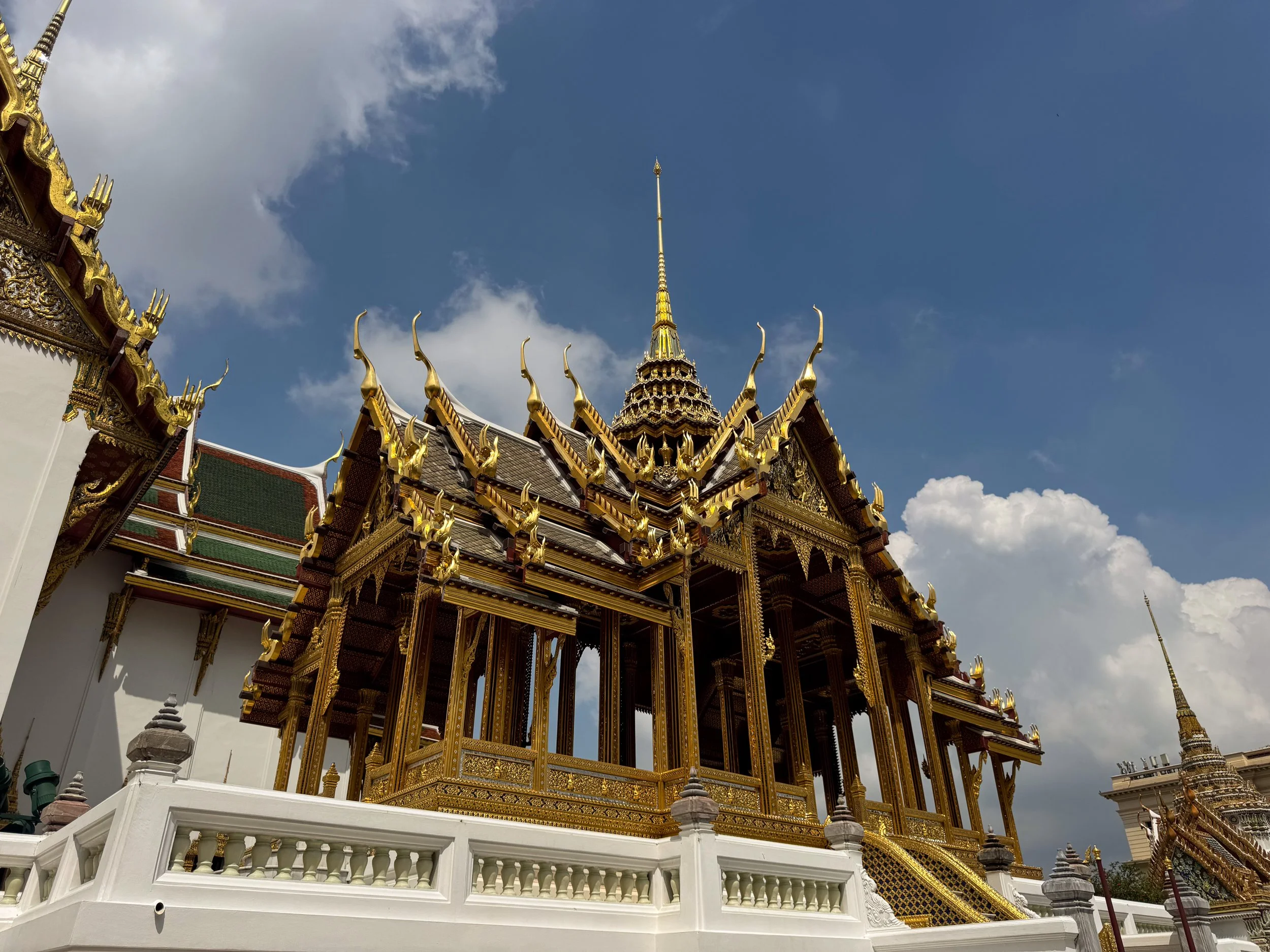
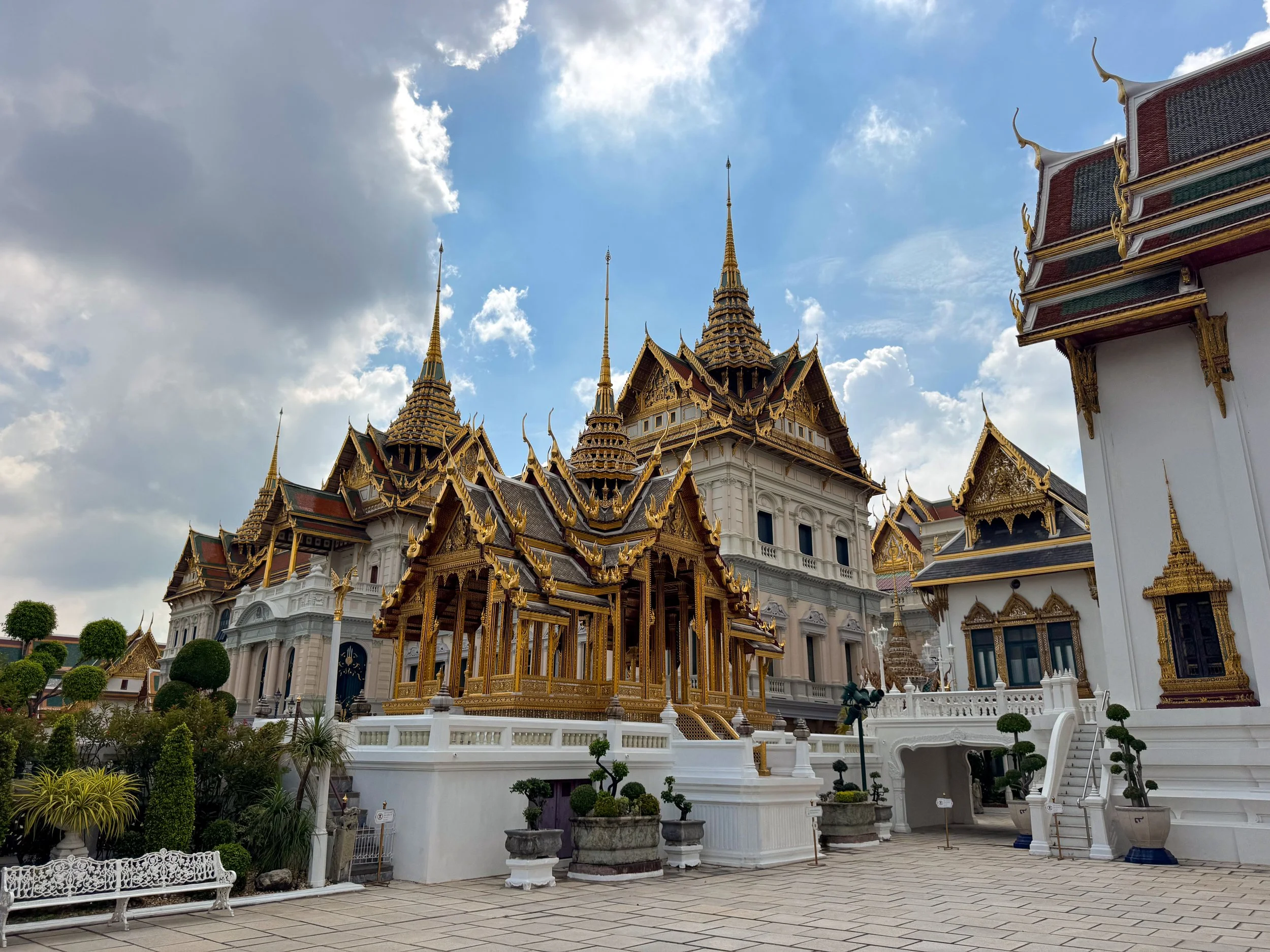
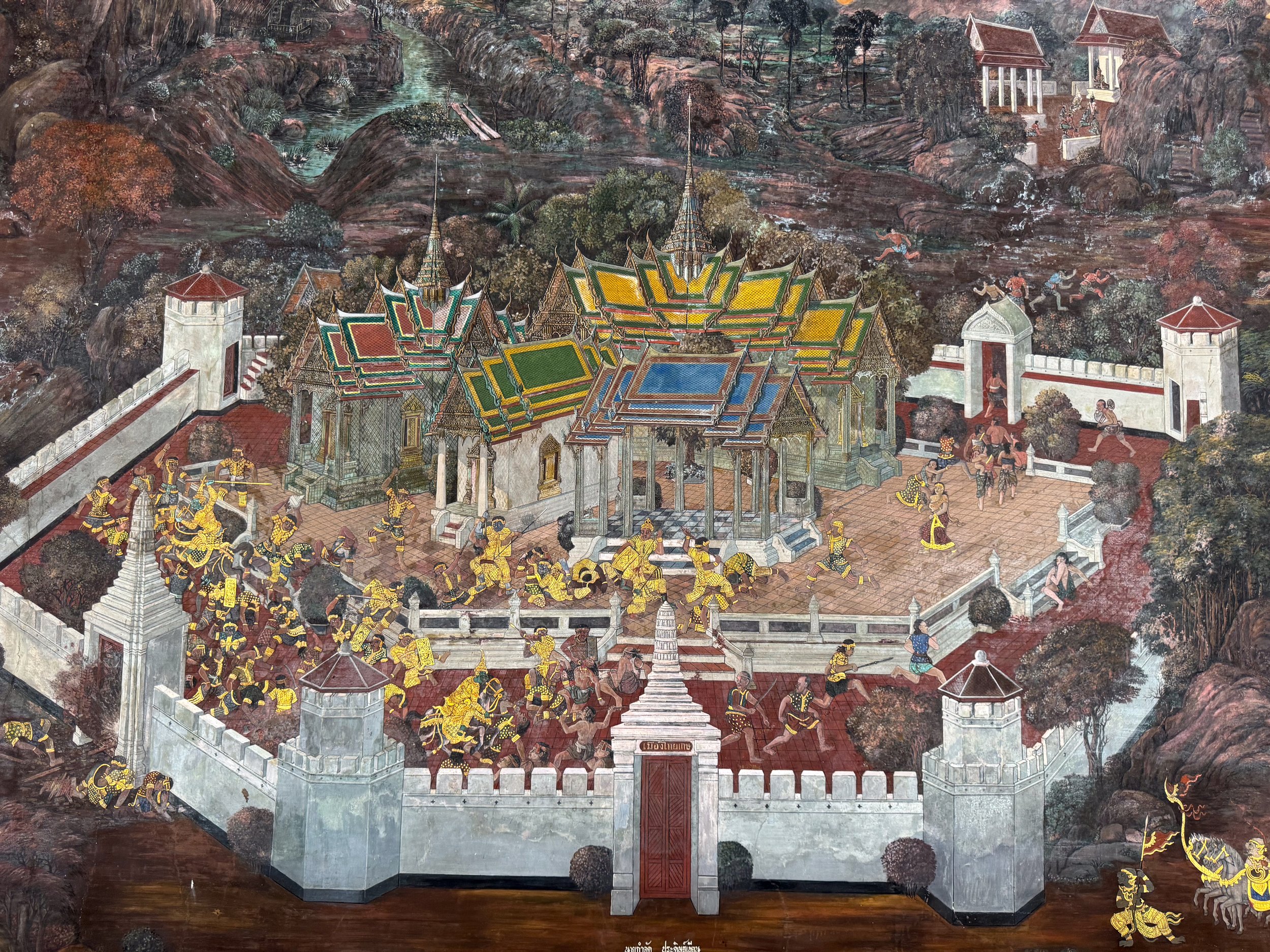
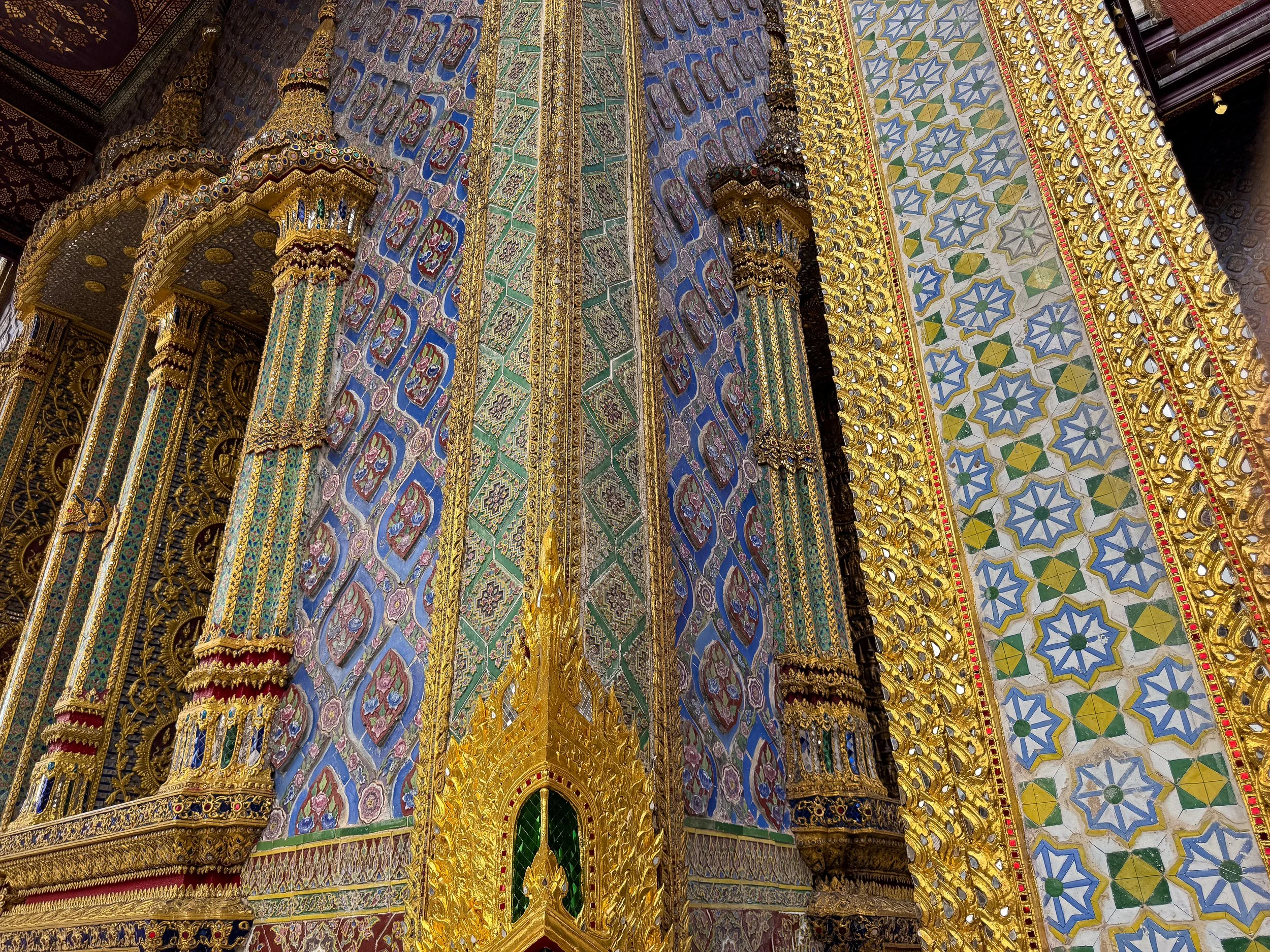
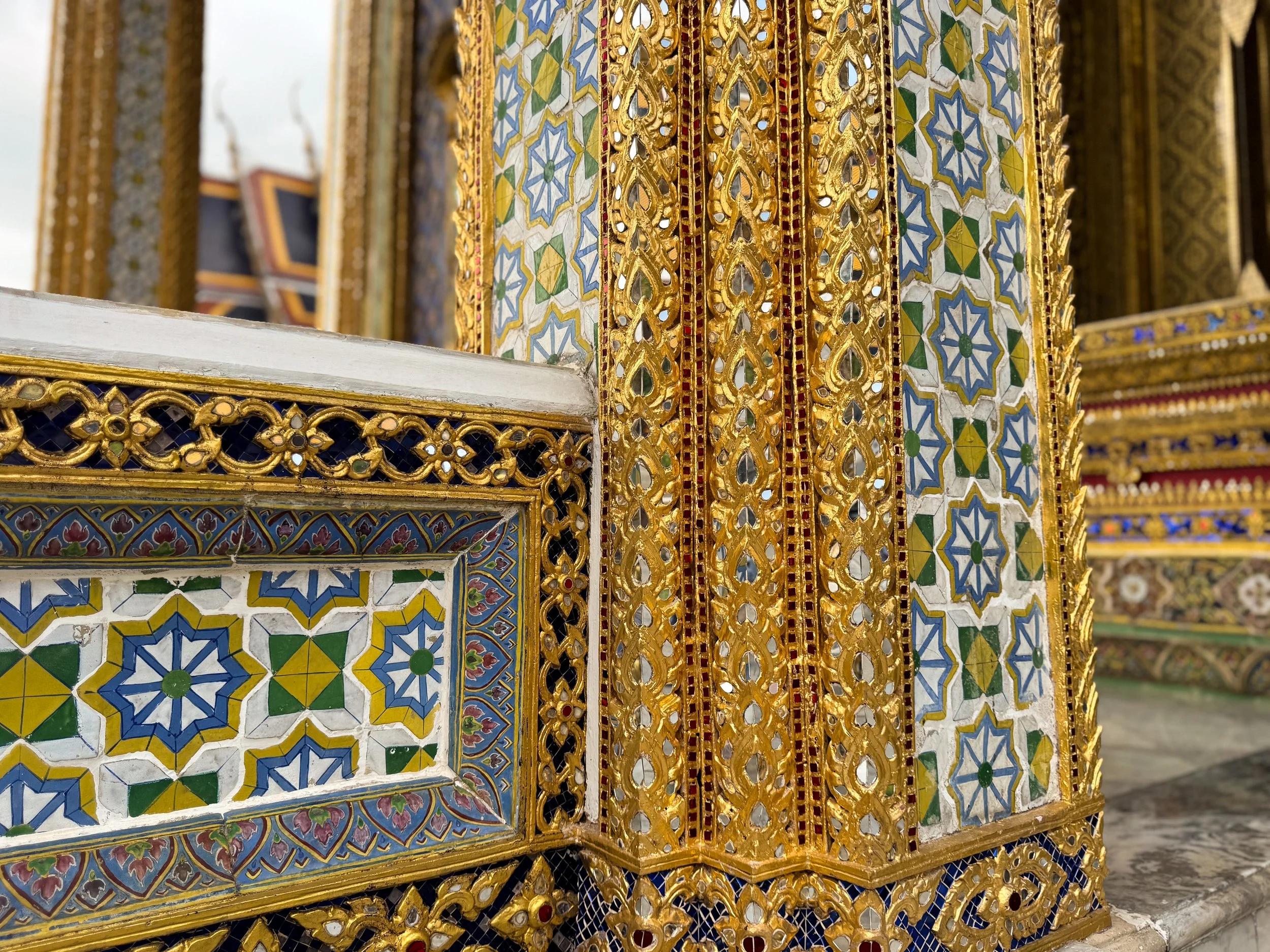
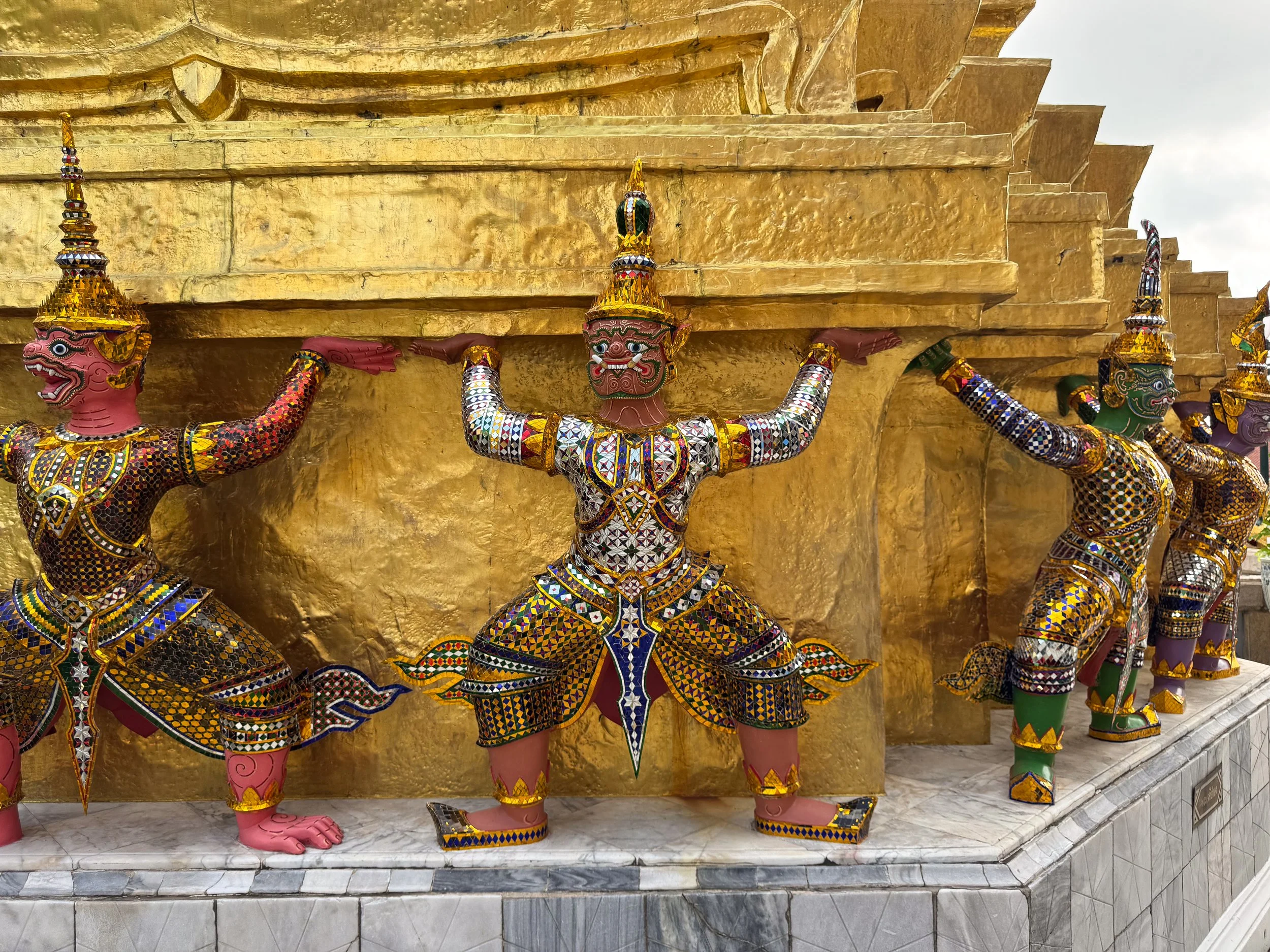
The Grand Palace. One of the largest complexes of the palace with the royal residence and offices, a library and multiple throne rooms. It’s not as opulent as The Temple of the Emerald Buddha but no less grand. The structures have a white neoclassical facade with golden window frames designed in the style of conical stupas. The Khmer style roofs are heavily layered in multi-colored tiles with gilded towers and ornate cornices. The spacious courtyards are landscaped with verdant lawns, sculpted trees, tiled planters with lotus flowers and bronze lamp posts.
Tips for Visiting The Royal Palace:
The Royal Palace is one of the most popular sights to see in Bangkok and often packed with thousands of visitors and tour groups at all times of the day.
The hours can differ daily due to the palace still being actively used by Thailand royalty. It closed at noon on the day we visited for a royal event.
The best time to visit is on a very sunny day to truly appreciate the reflective and gilded surfaces shimmering under the sun.
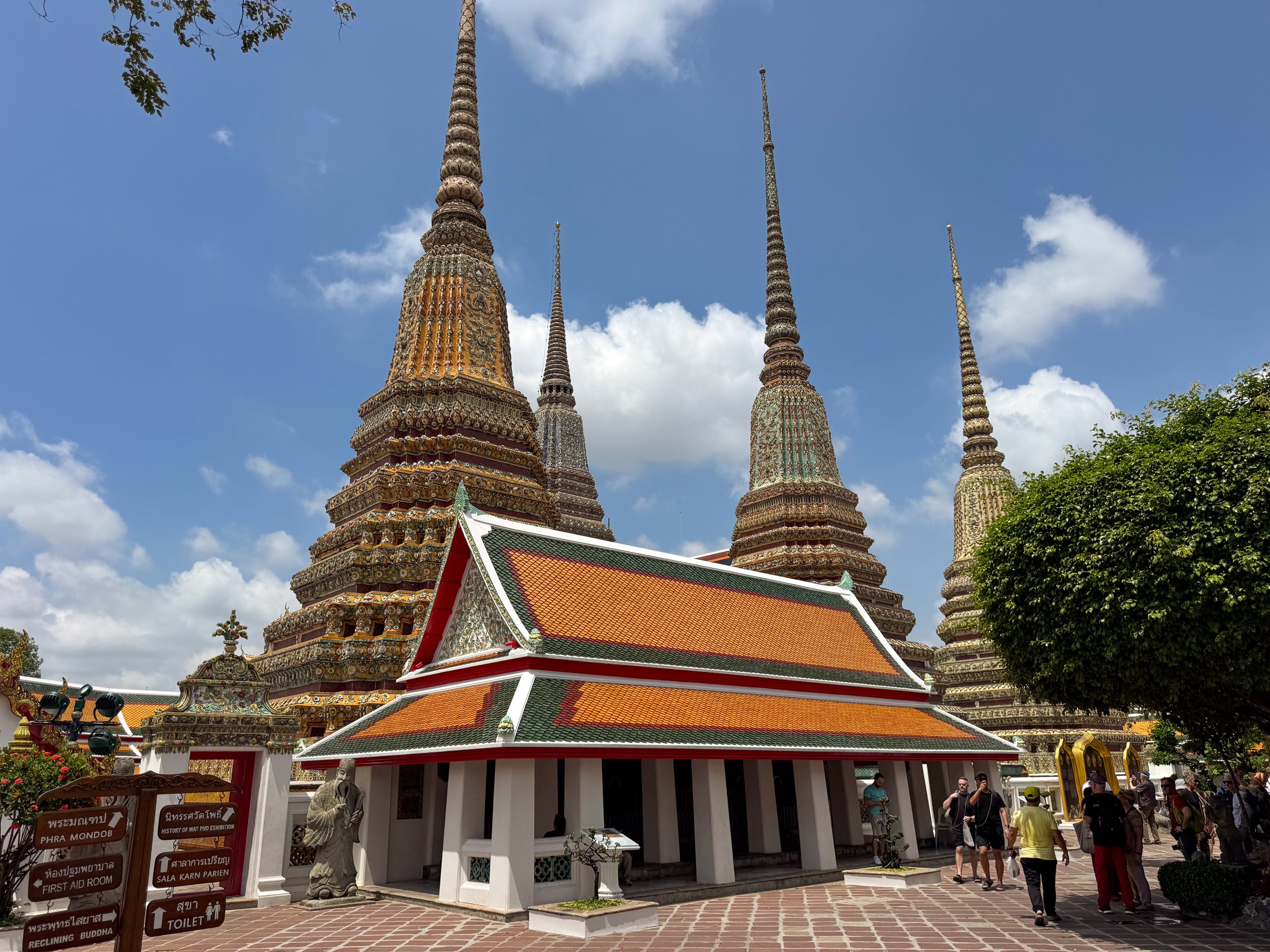
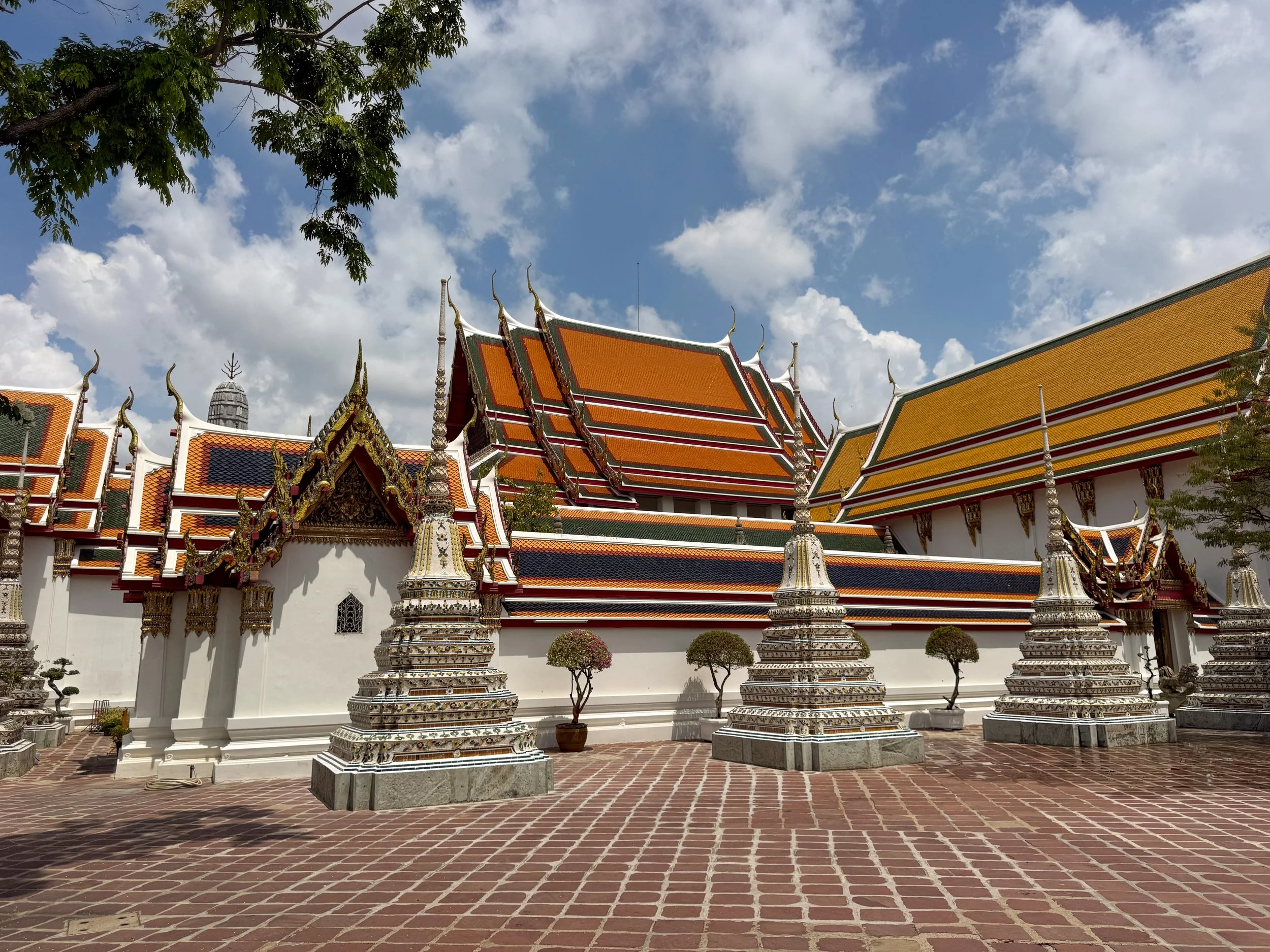
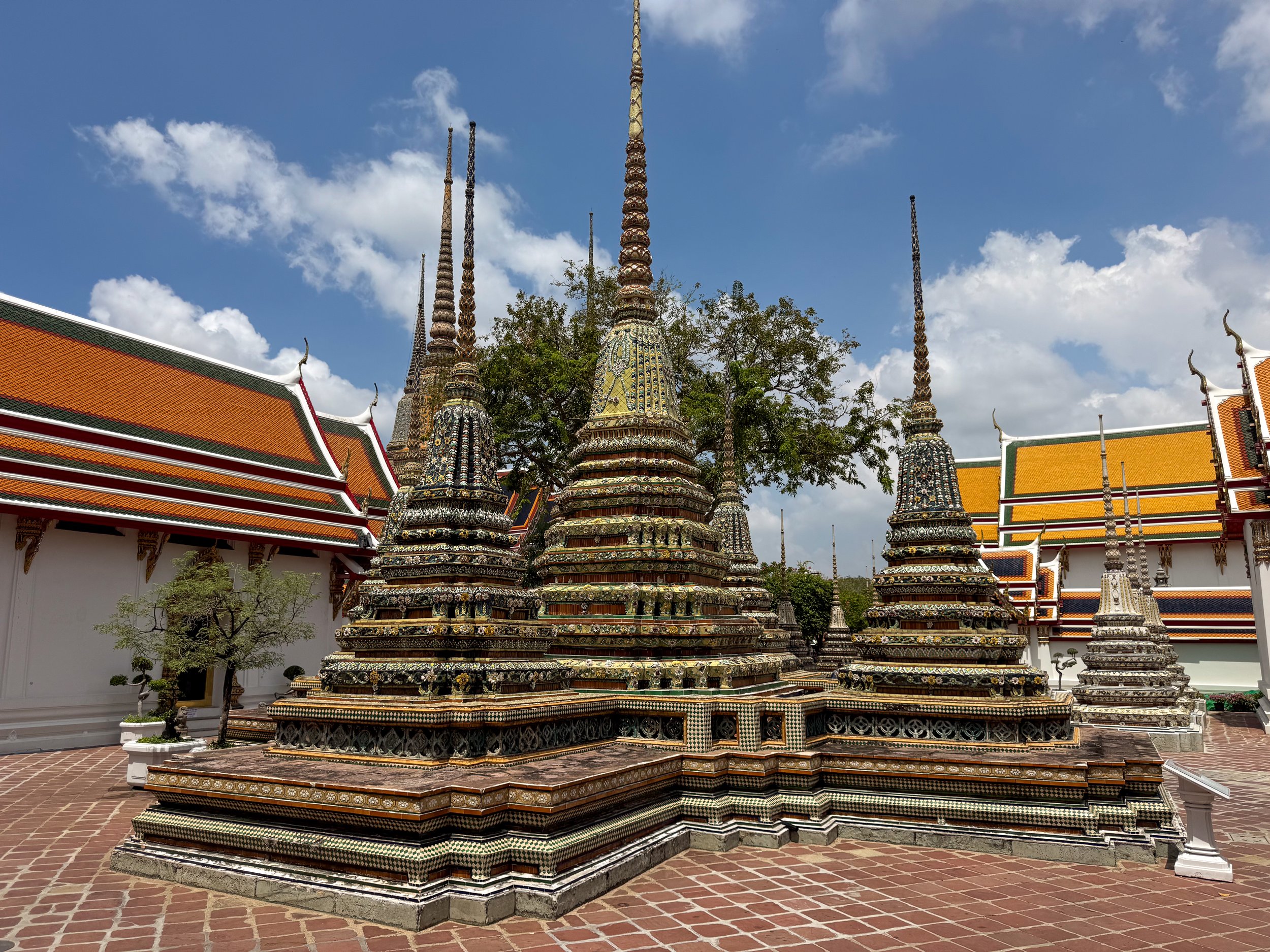
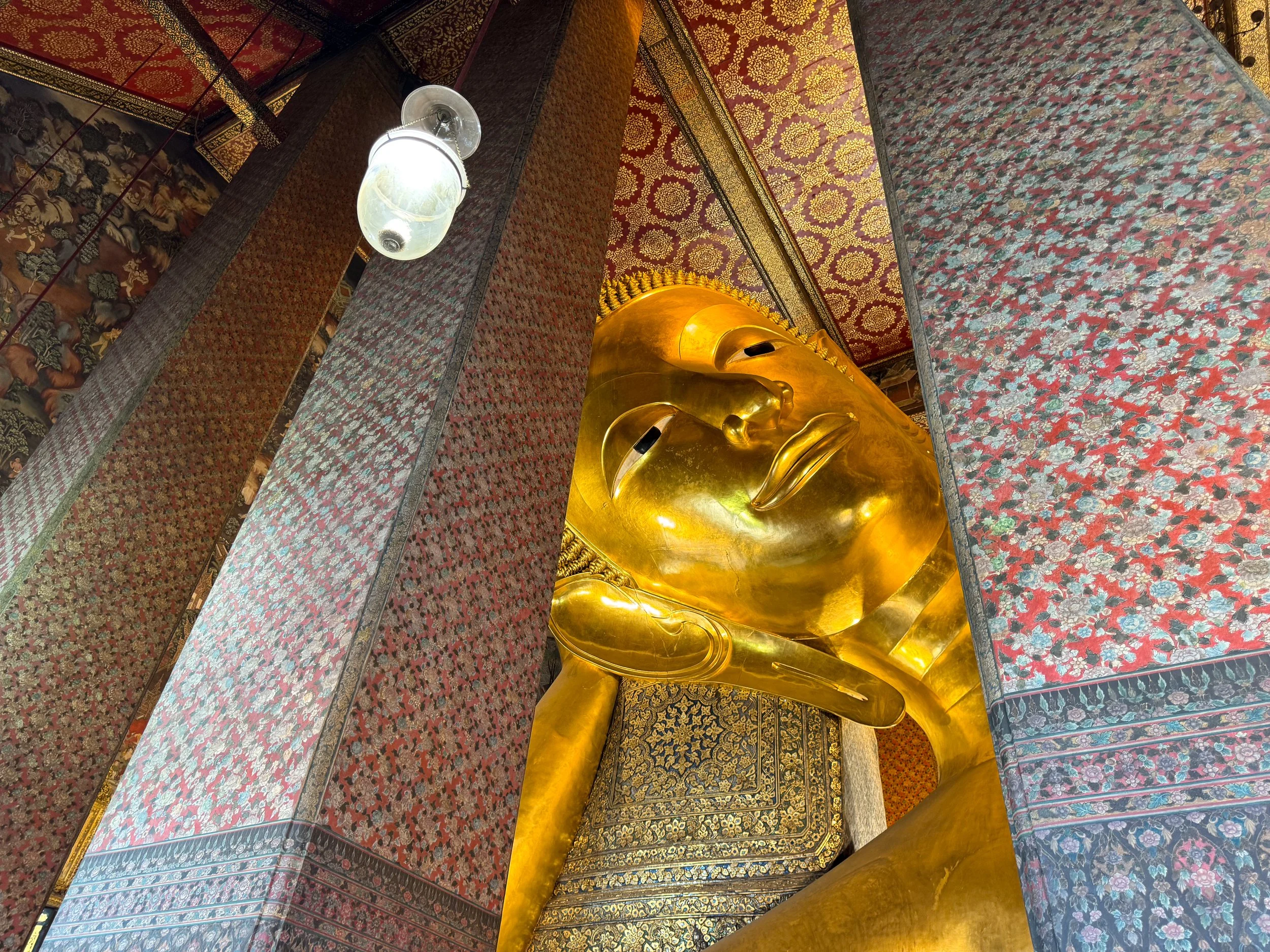
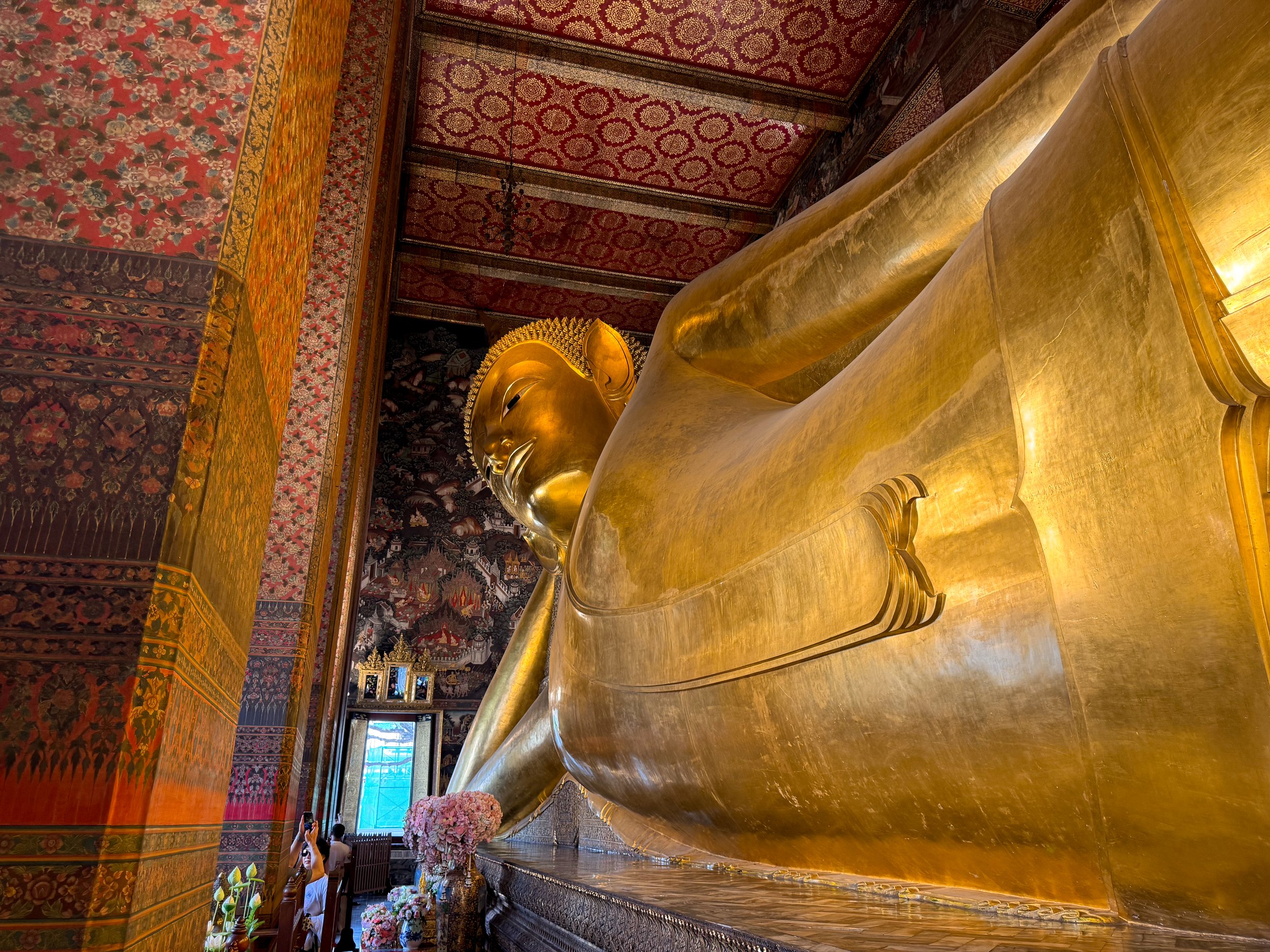
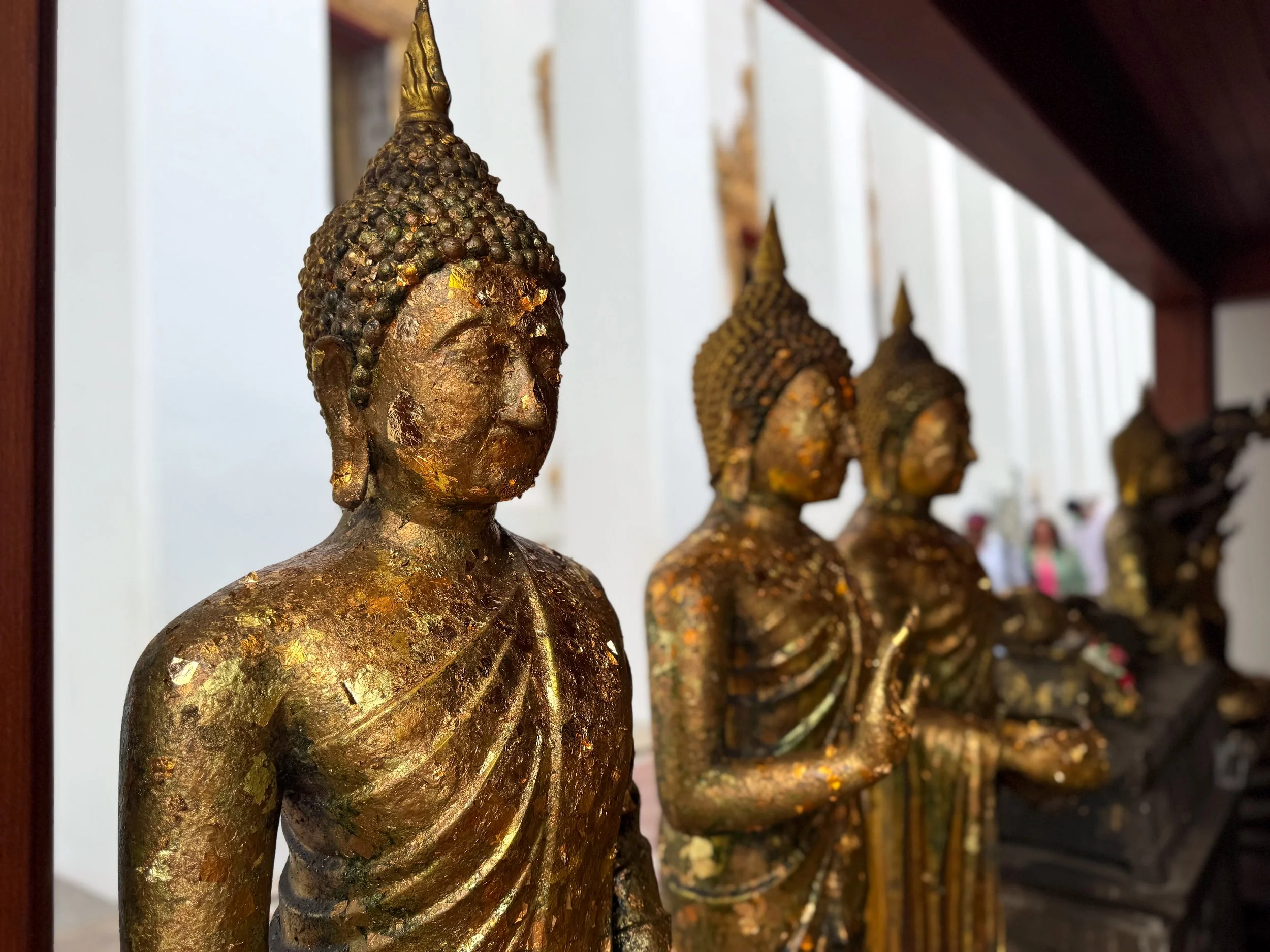
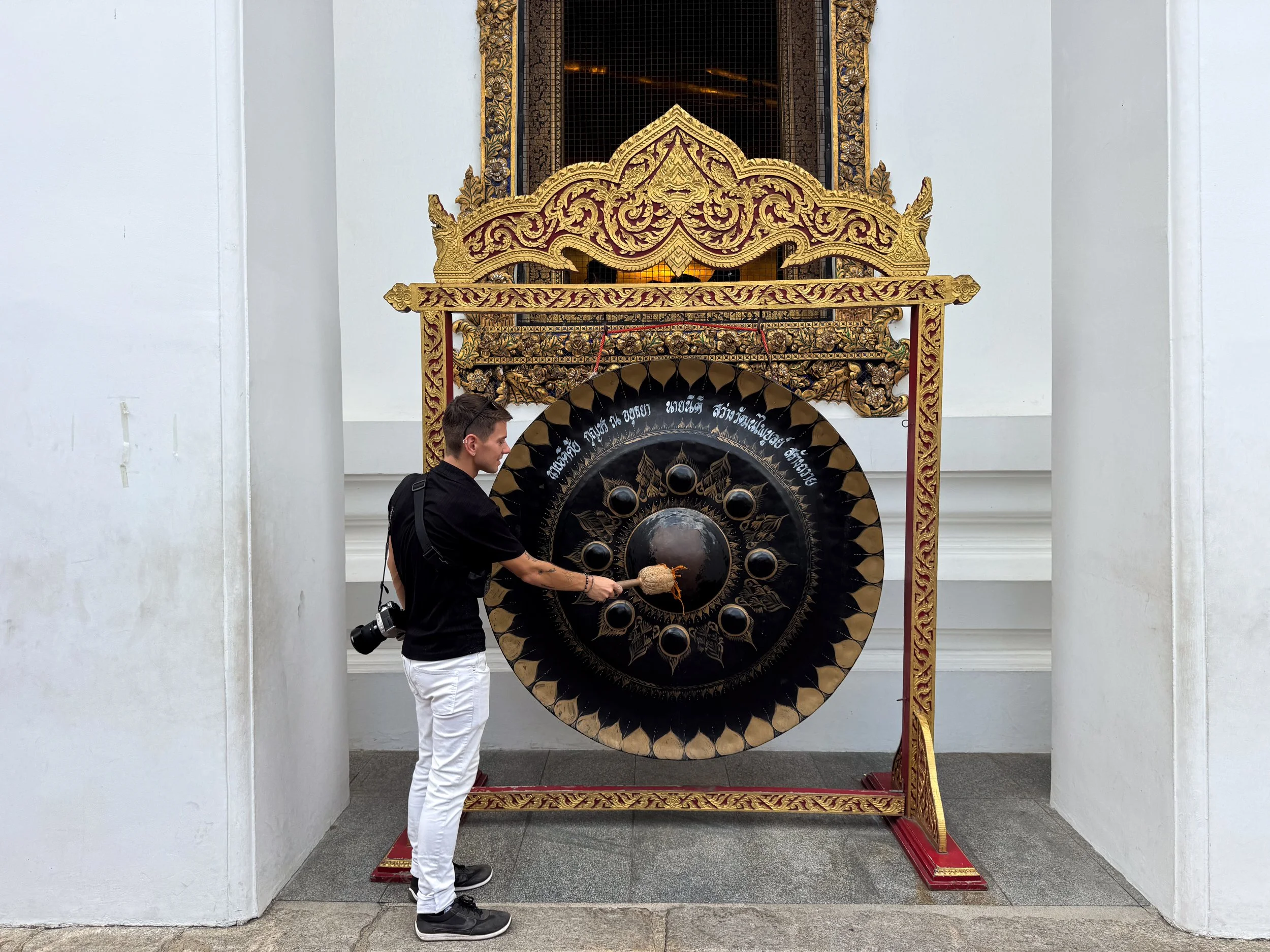
Wat Pho. A royal Buddhist temple famed for its giant reclined golden Buddha. The statue measures 150 feet long and is housed in a grand hall decorated in richly colored floral patterns and scenes of Buddhist legends. The wat is home to numerous structures including Khmer style temples, various sized stupas covered in ornate three dimensional tiles and a hall with Thailand’s largest collection of golden buddhas. Come here to meditate, bang one of the giant metal gongs or apply a gold leaf stamp to a statue of Buddha.
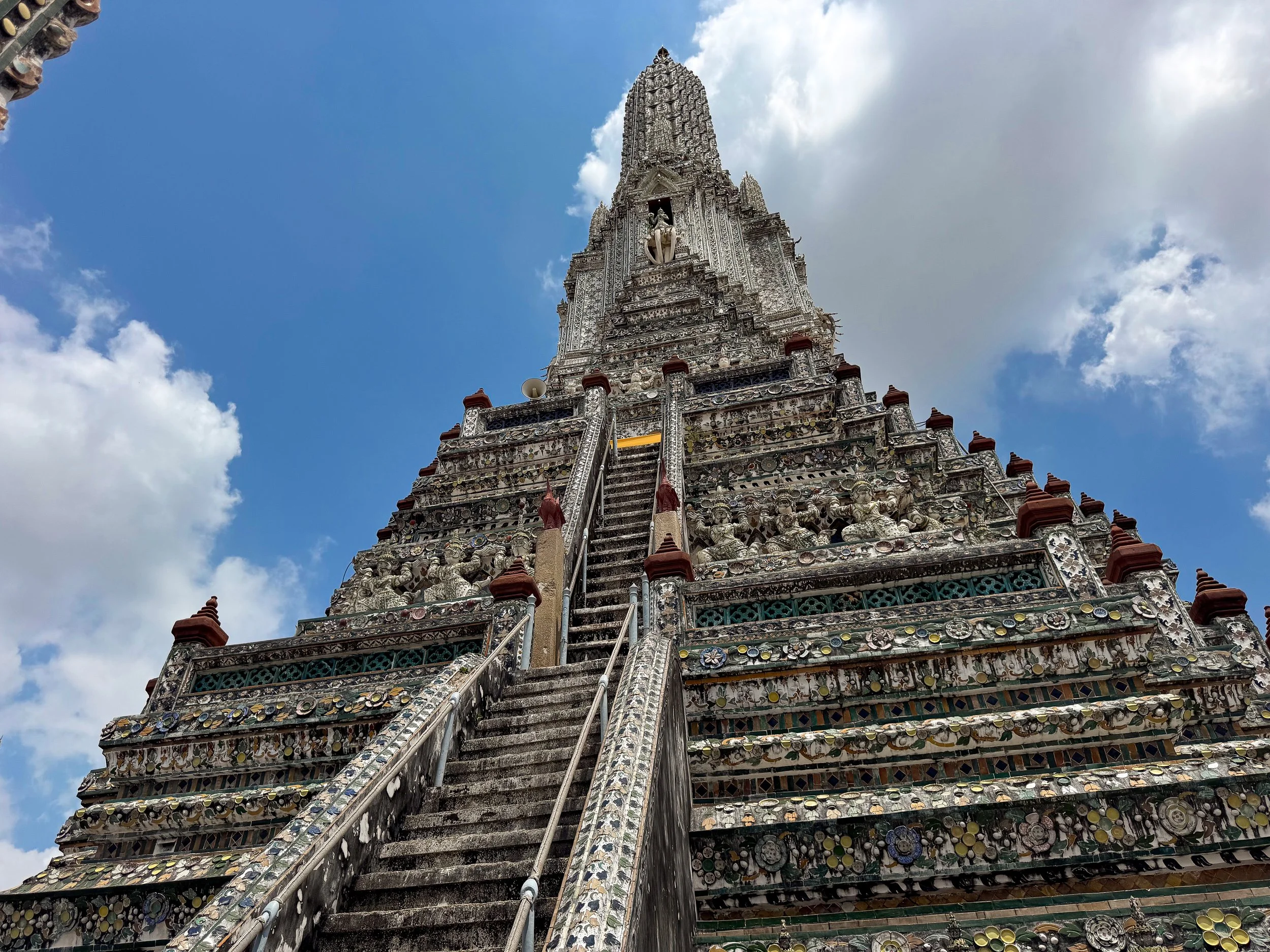
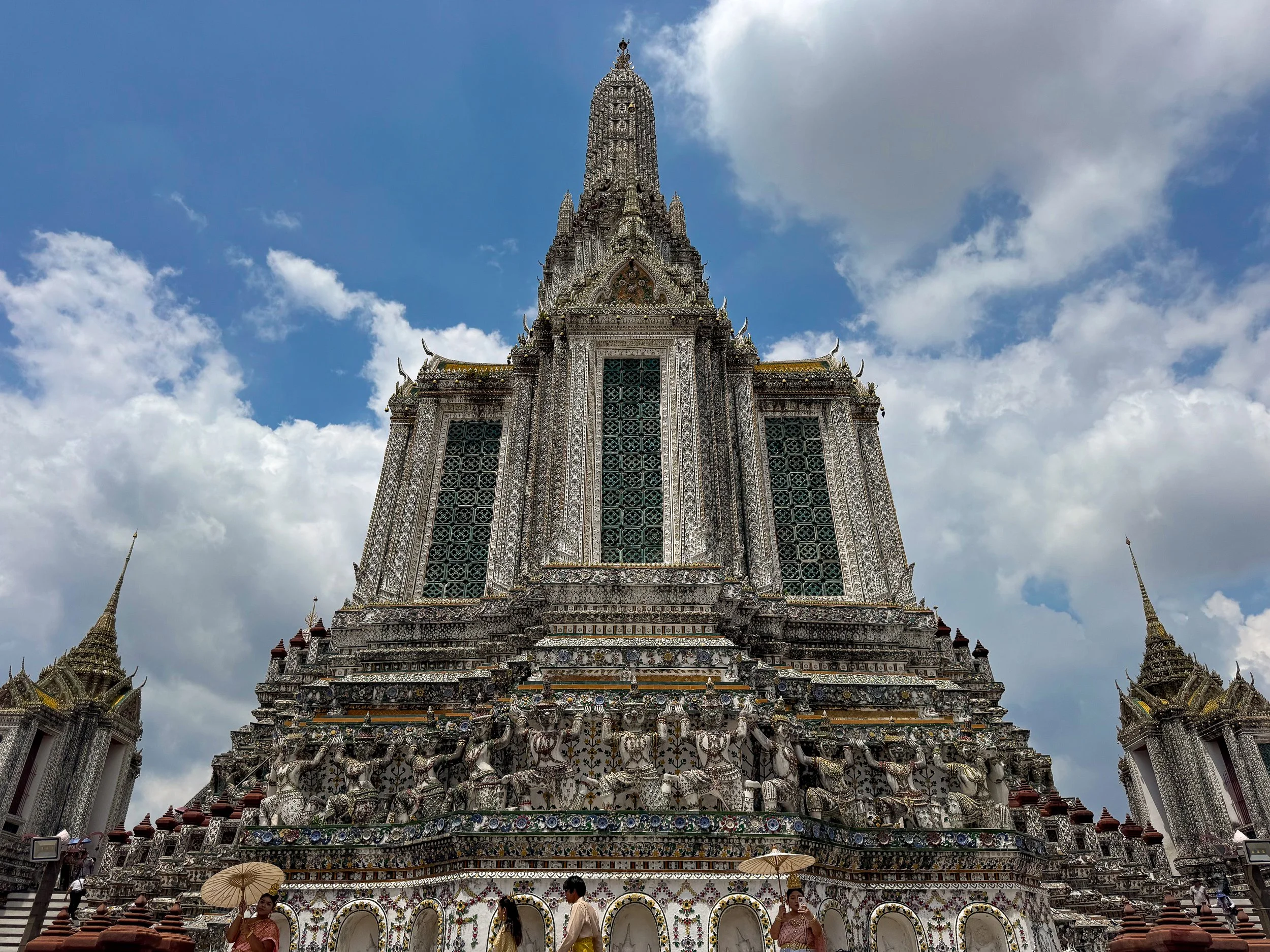
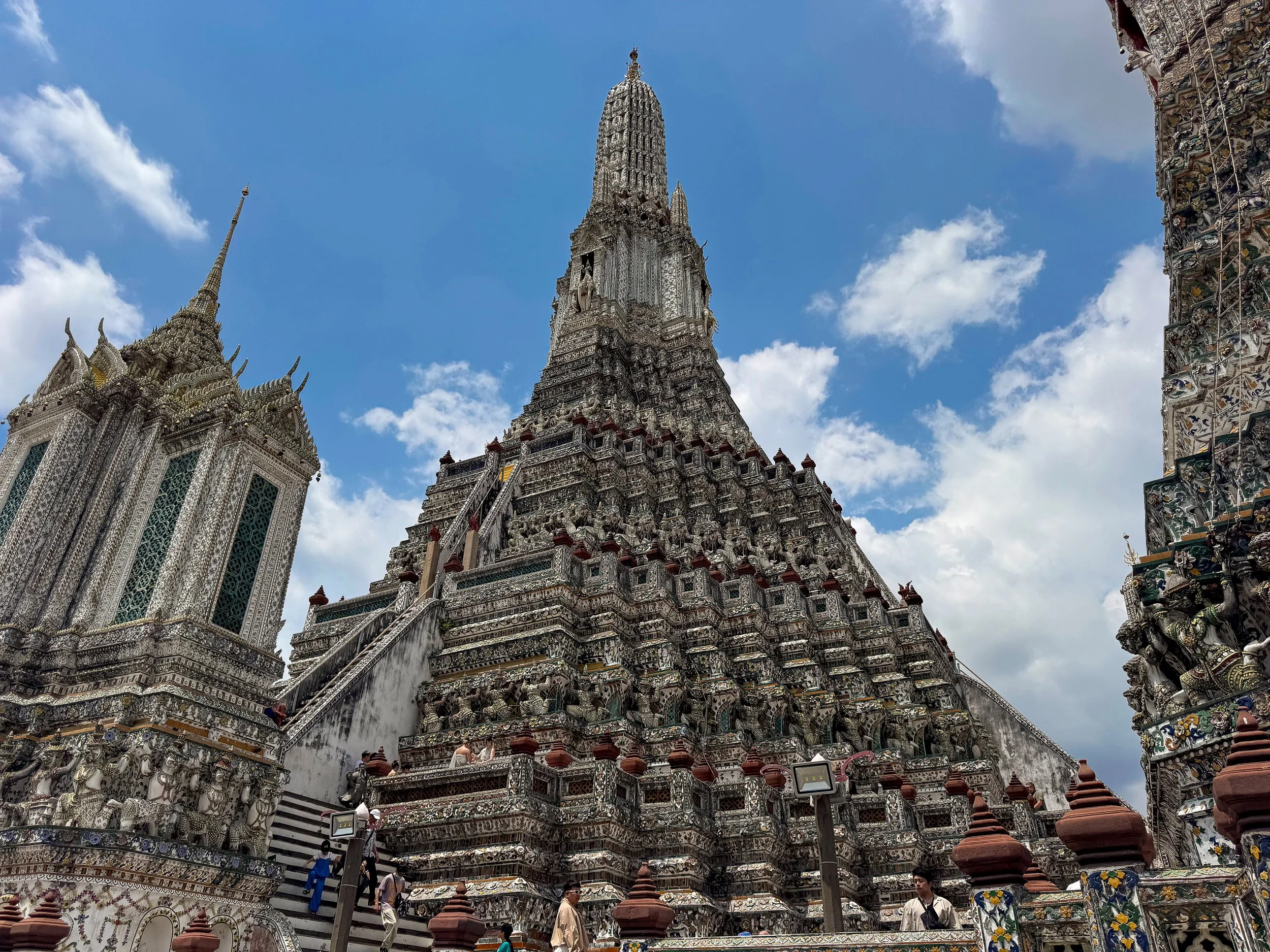
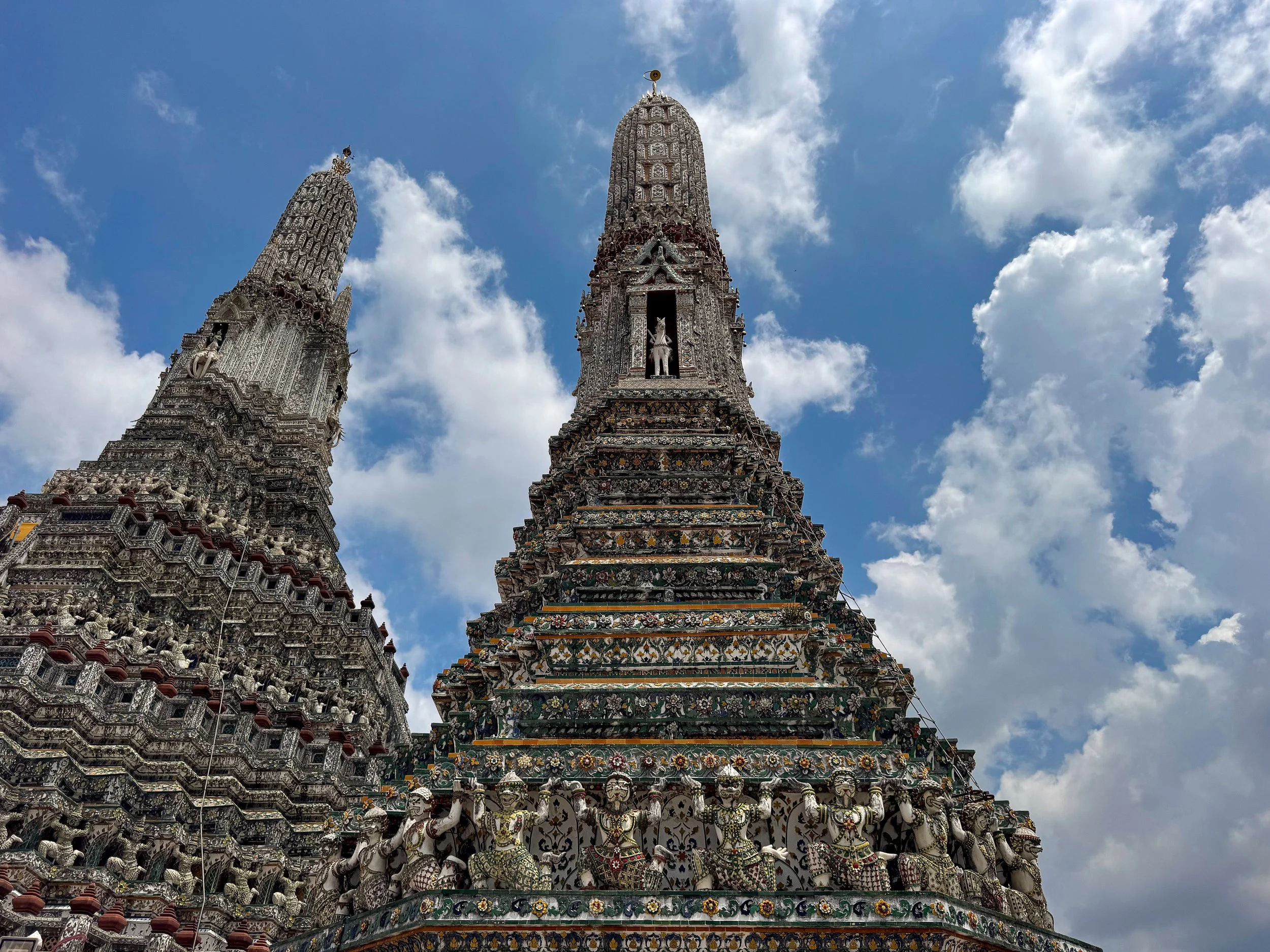
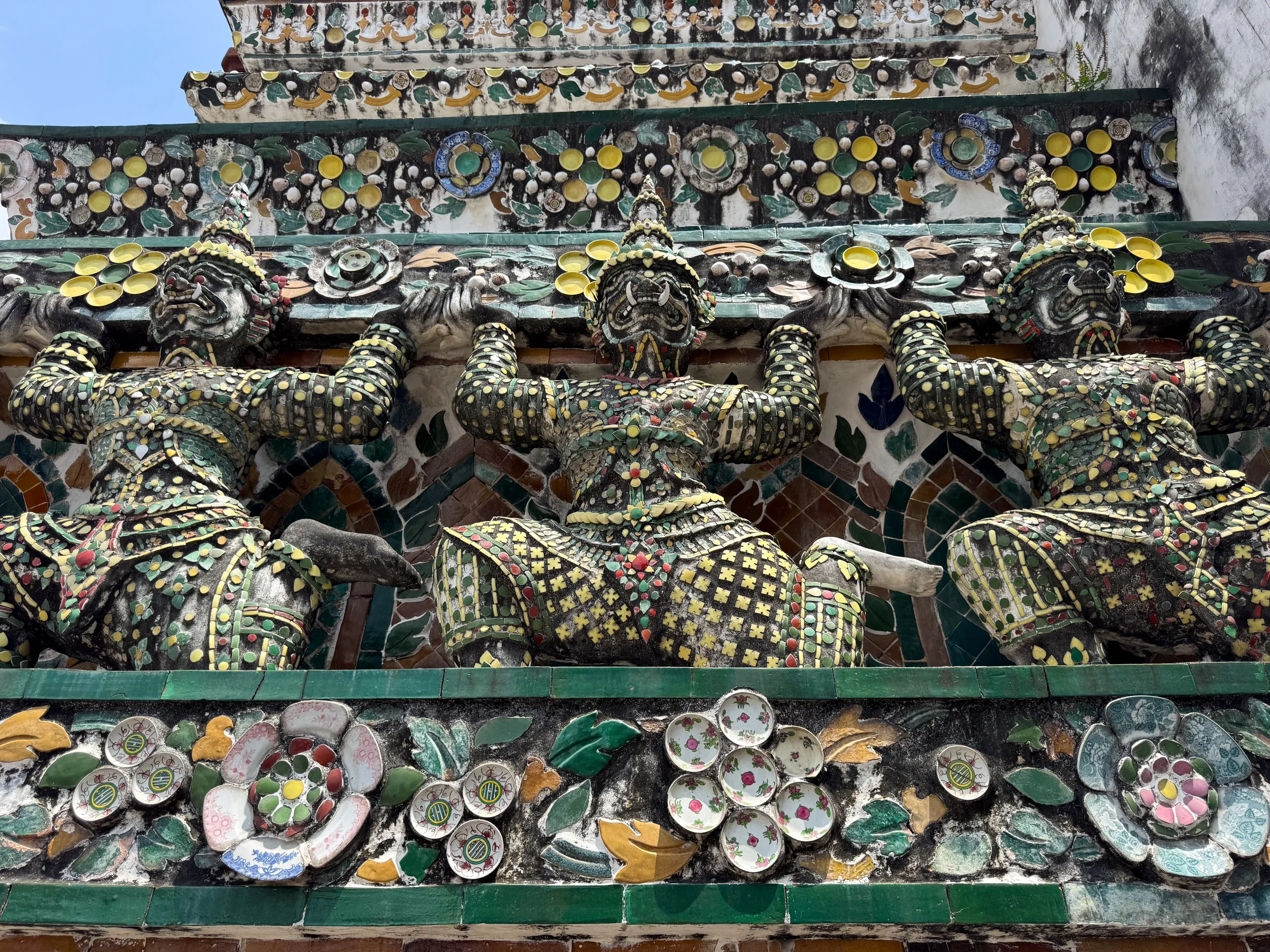
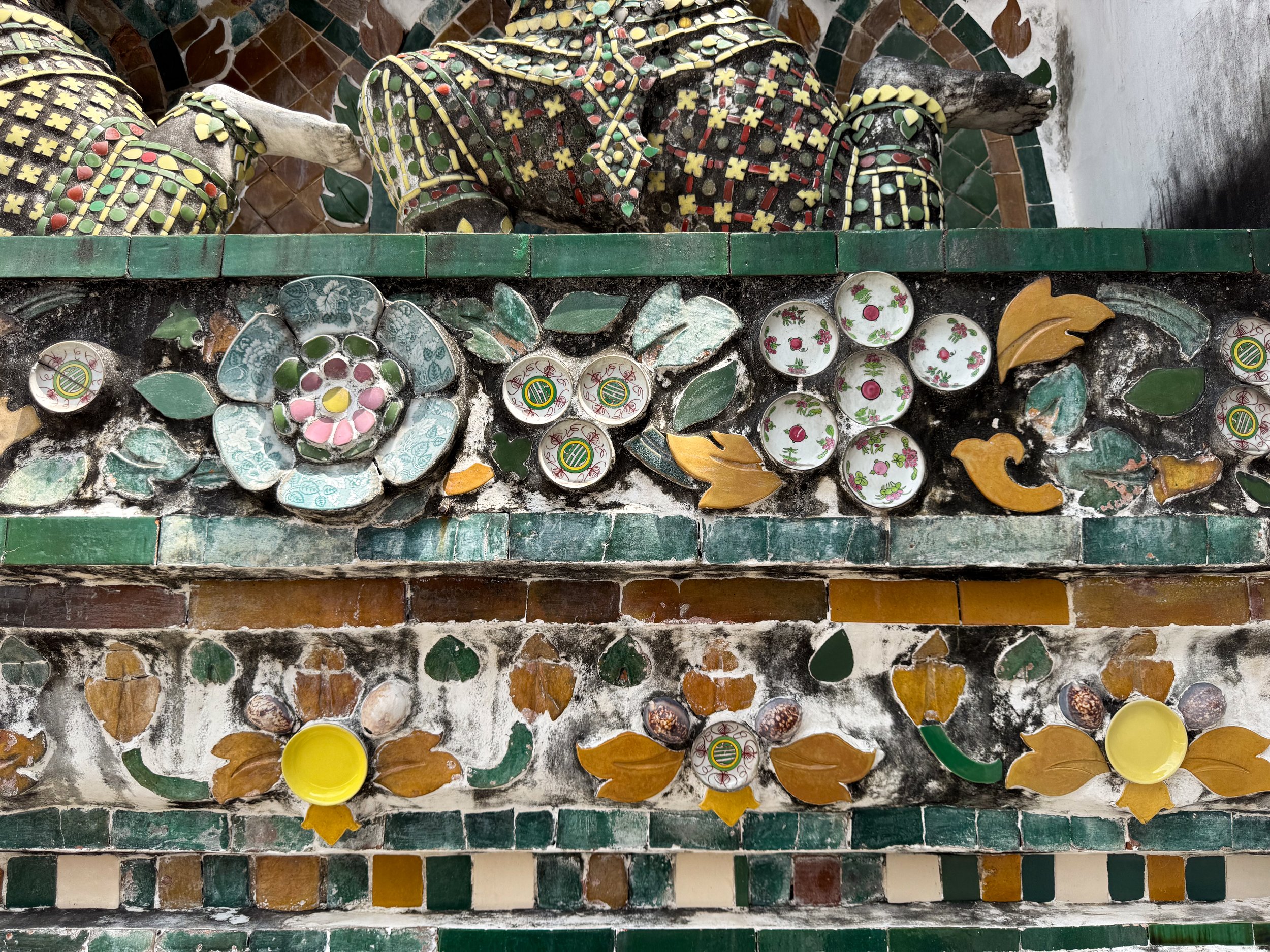
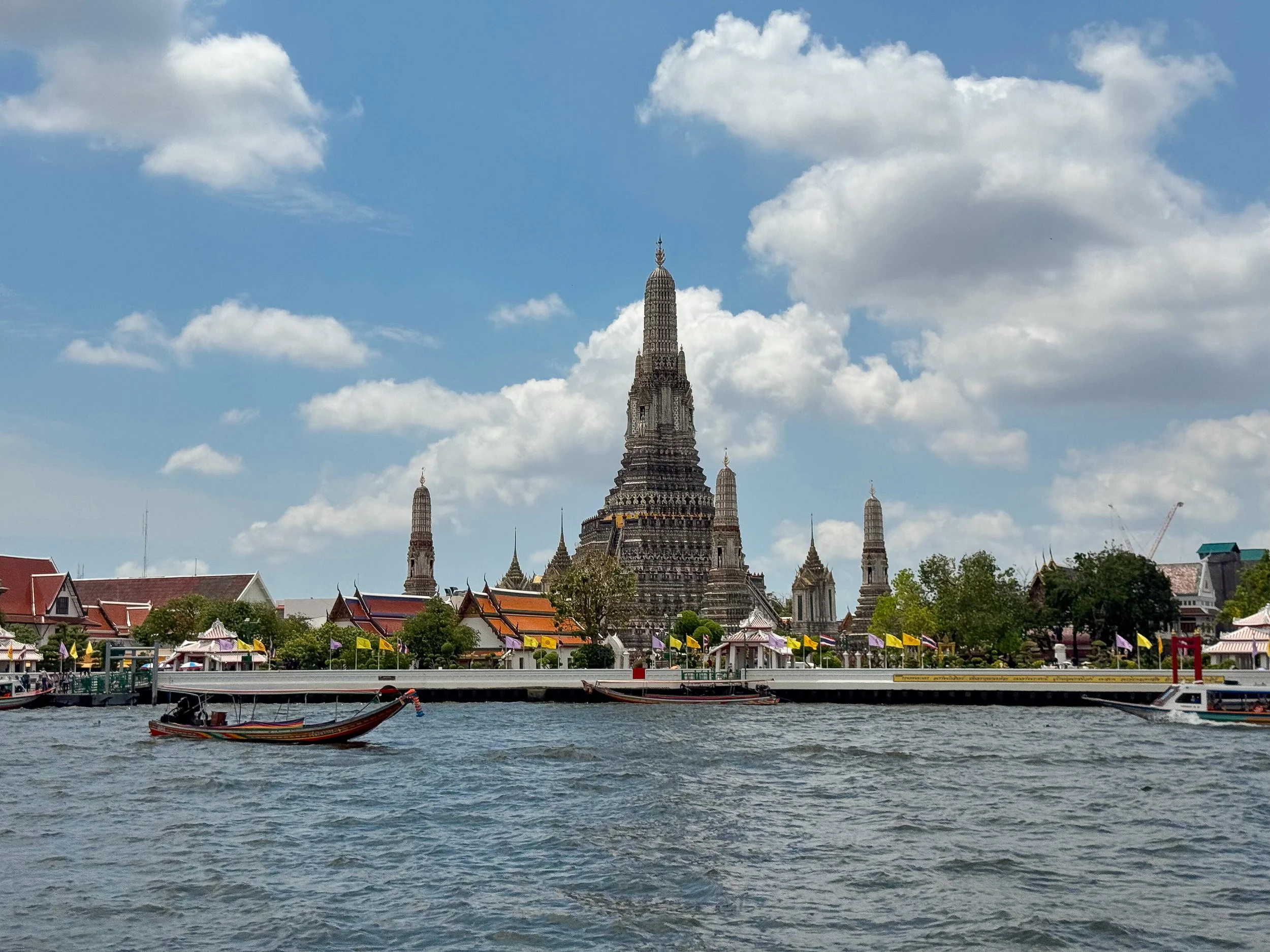
Wat Arun. A Buddhist temple complex along the Chao Phraya River famed for its towering stupa. The faceted structure is covered in a mosaic of hand painted tiles, floral patterns, dimensional designs and flexing deities. Stairs lead to its second level where shrines dedicated to Buddha are housed. Many local couples rent traditional outfits and come here for photoshoots, providing the wat with an old world feeling and a romantic atmosphere.
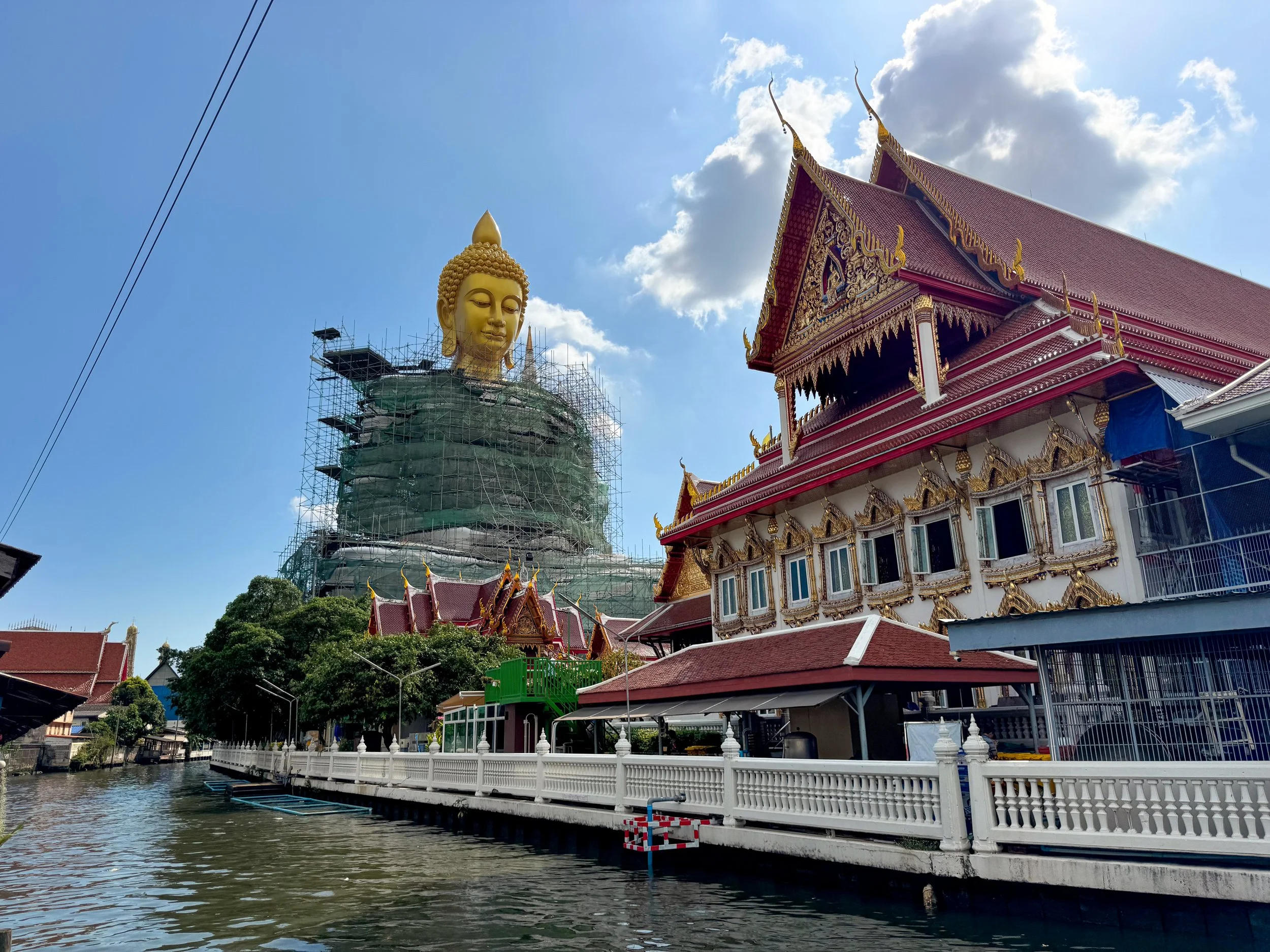
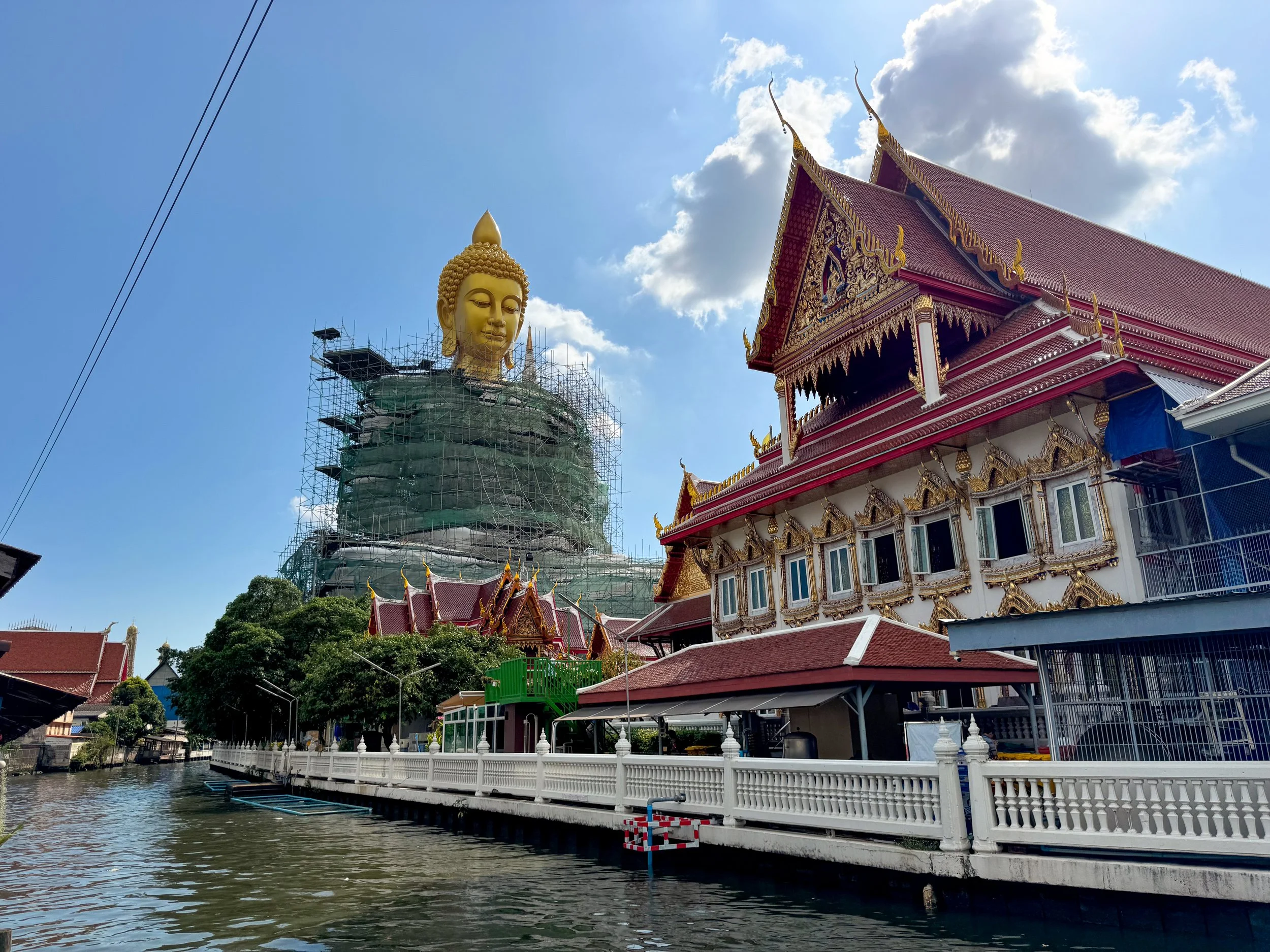
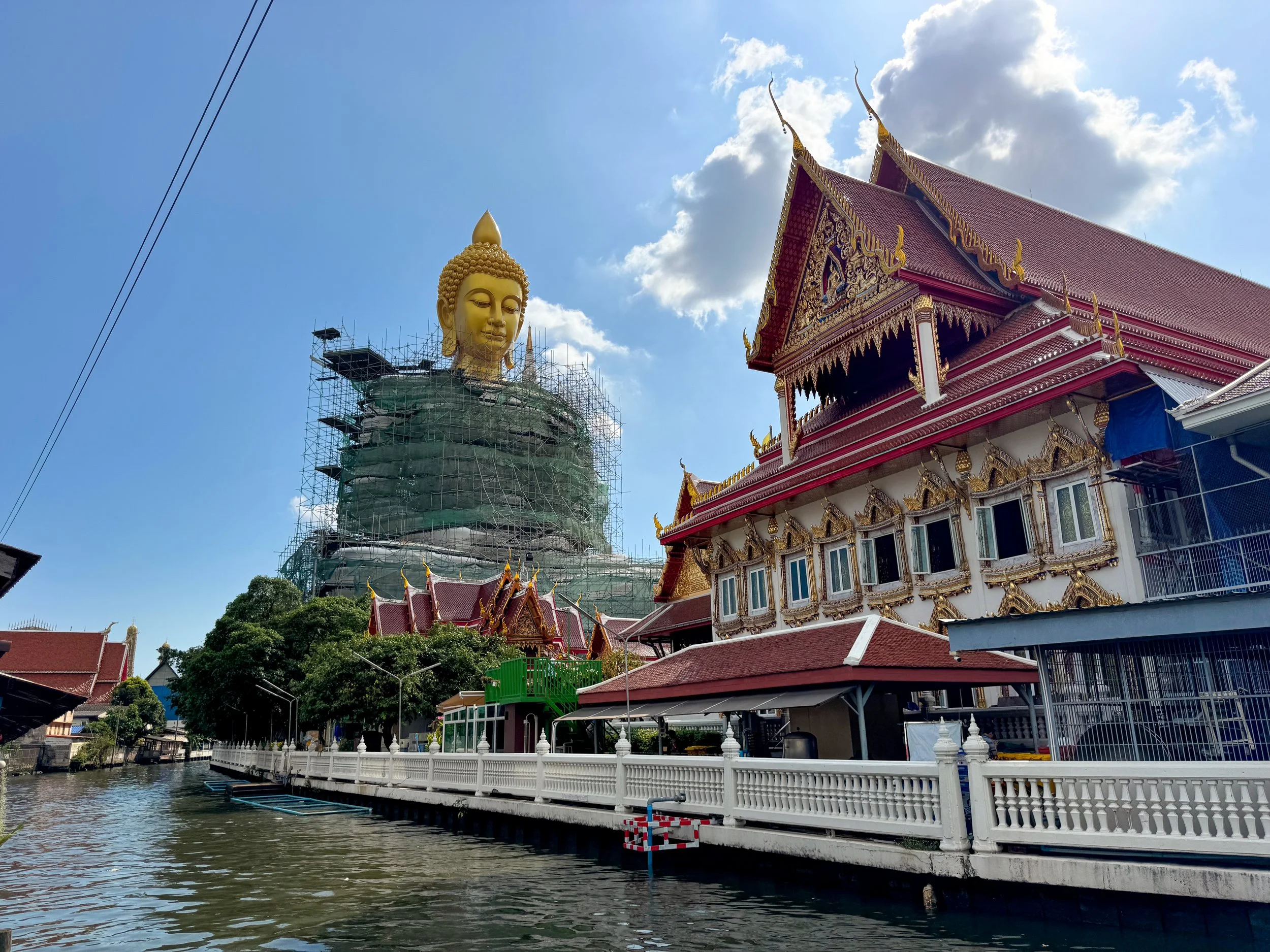
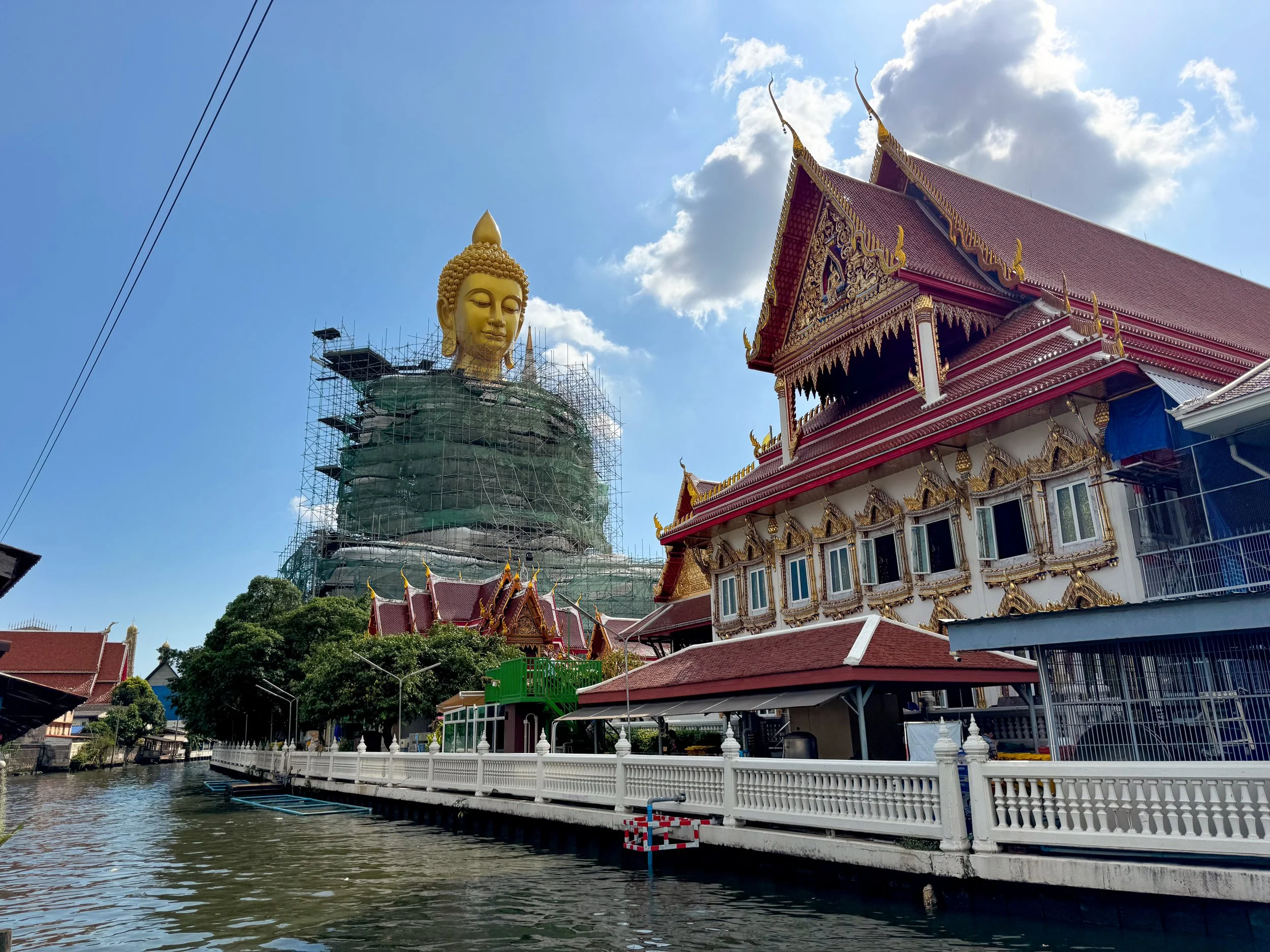
Big Golden Buddha. A 69 meter tall seated golden Buddha along the Khlong Canal. Unknown to us before visiting, the Buddha was mostly covered in scaffolding for restoration. Work was supposedly completed a month later. At the time, all that was visible was his golden head. We visited the Photo Spot for the Big Buddha with views of it, canal and wat. It’s free to visit however visitors can pay to pose in a longboat docked along the canal. It’s a common sight on long boat canal tours of the city.
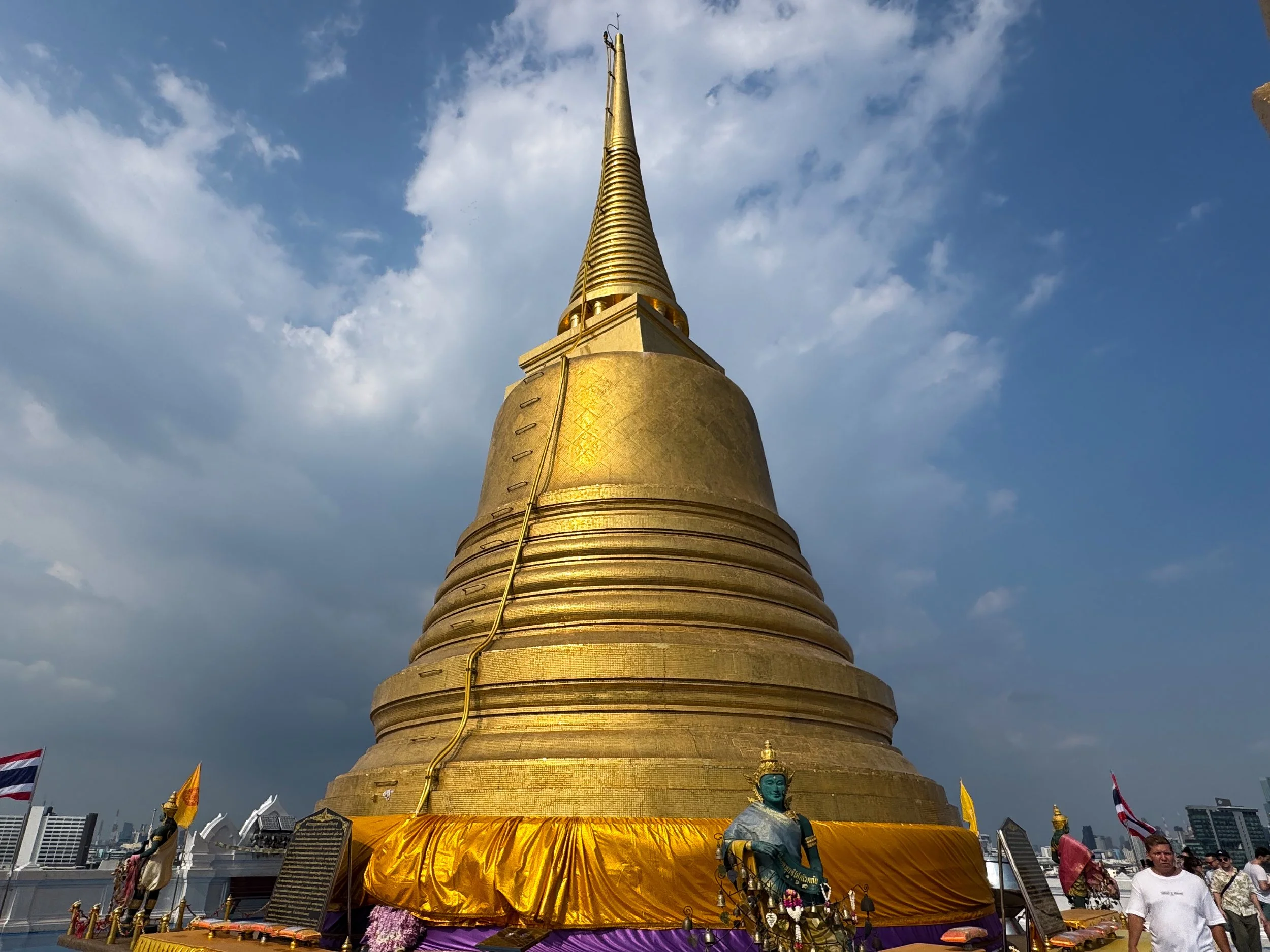
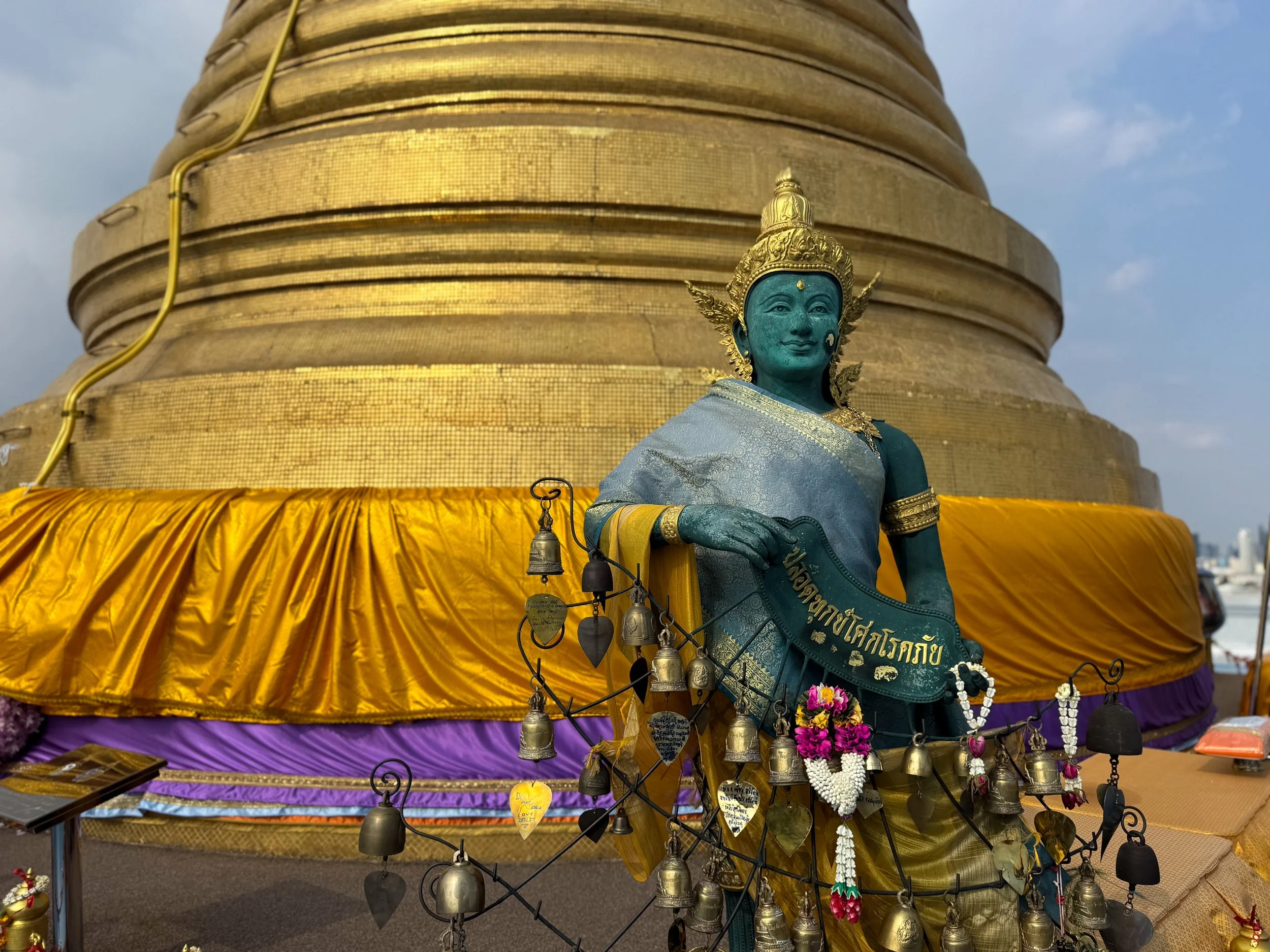
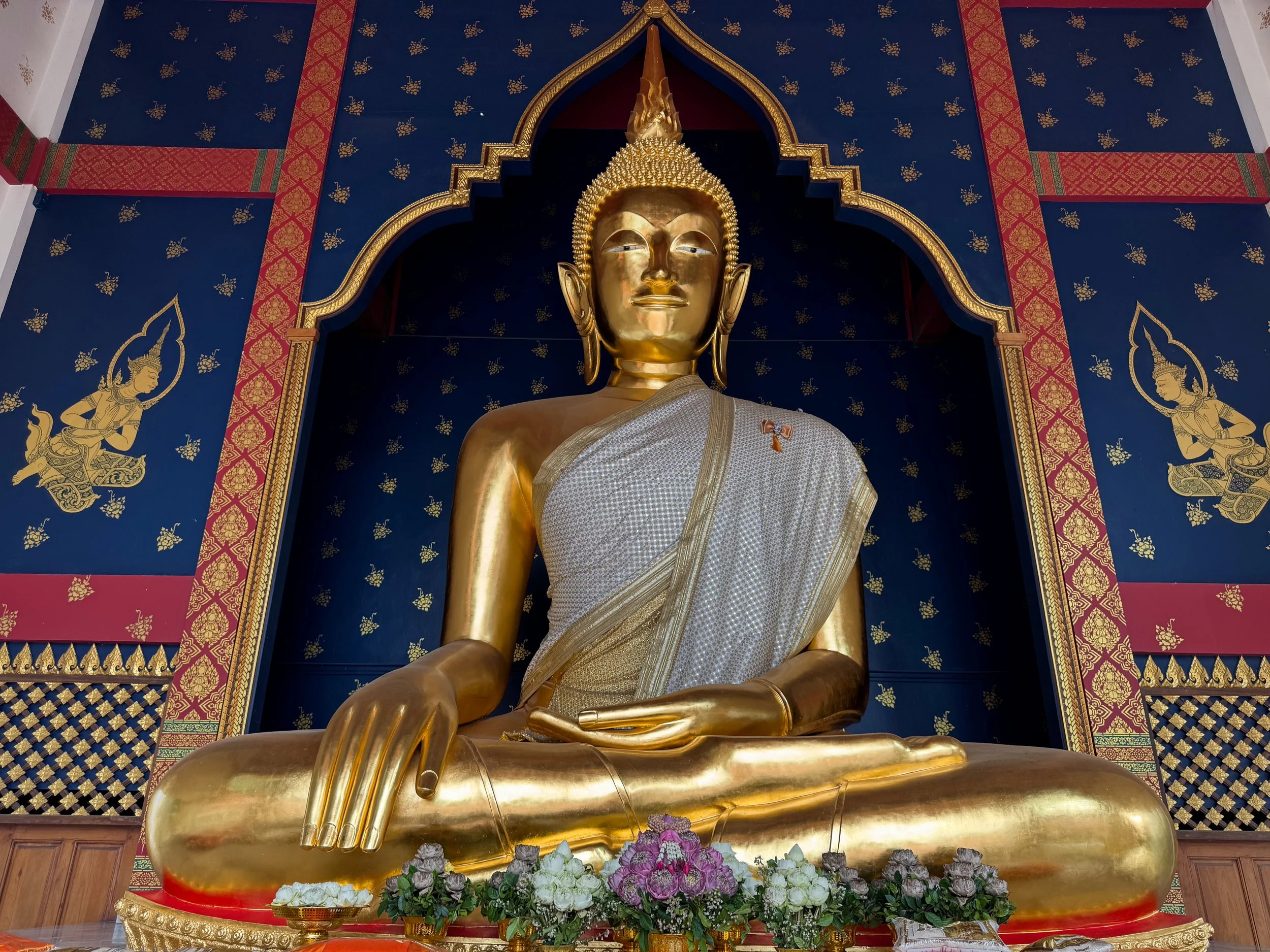
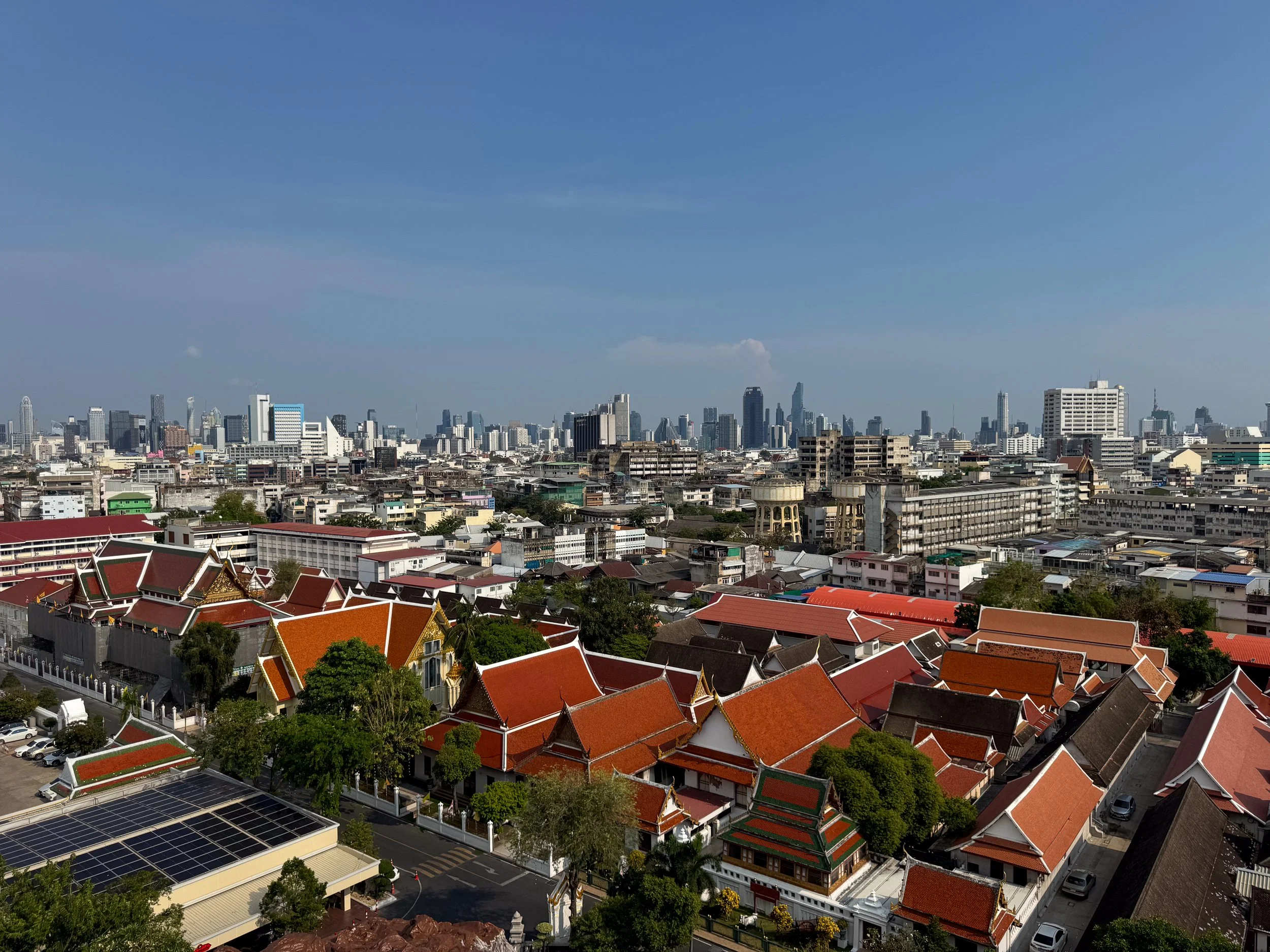
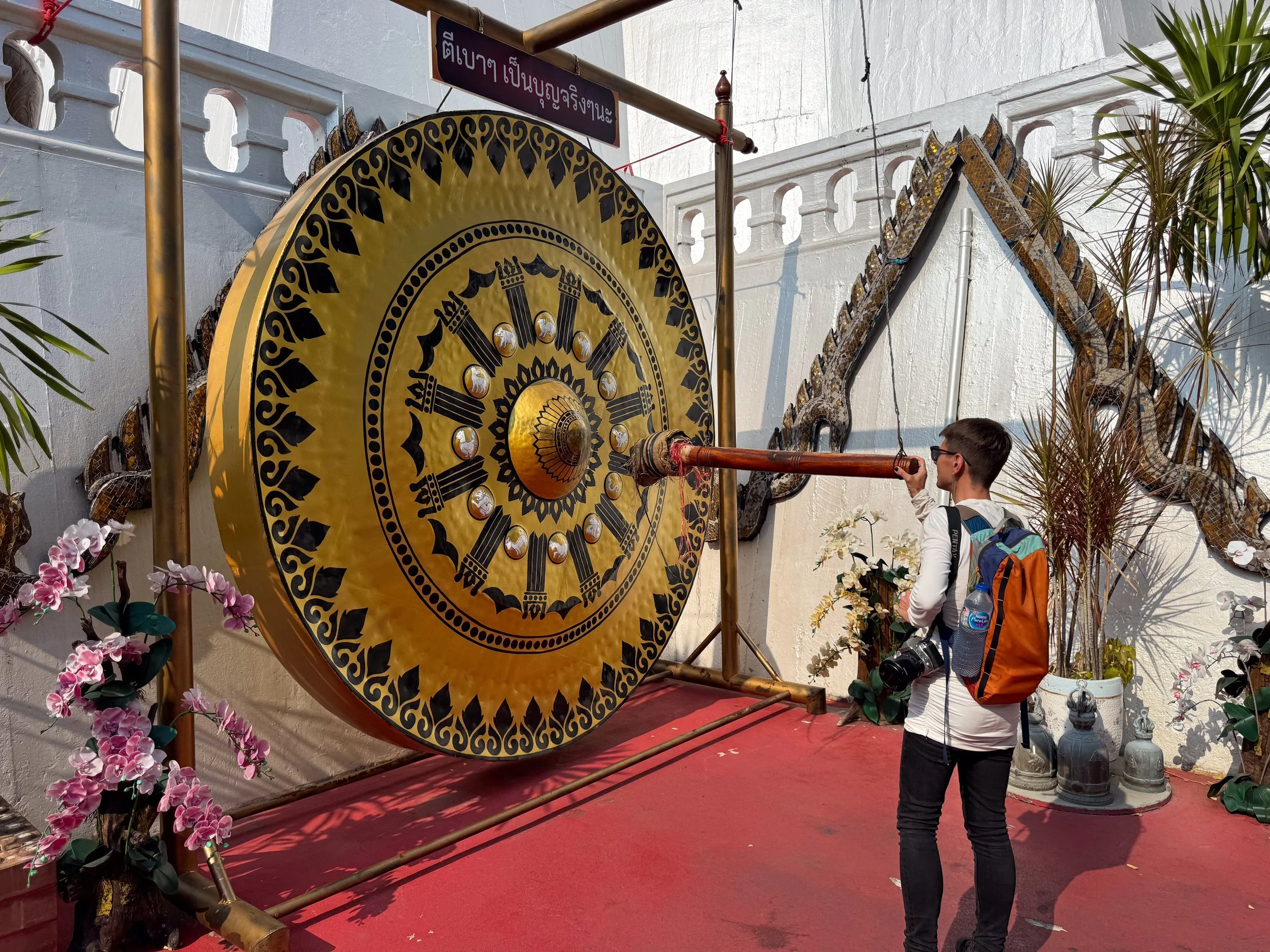
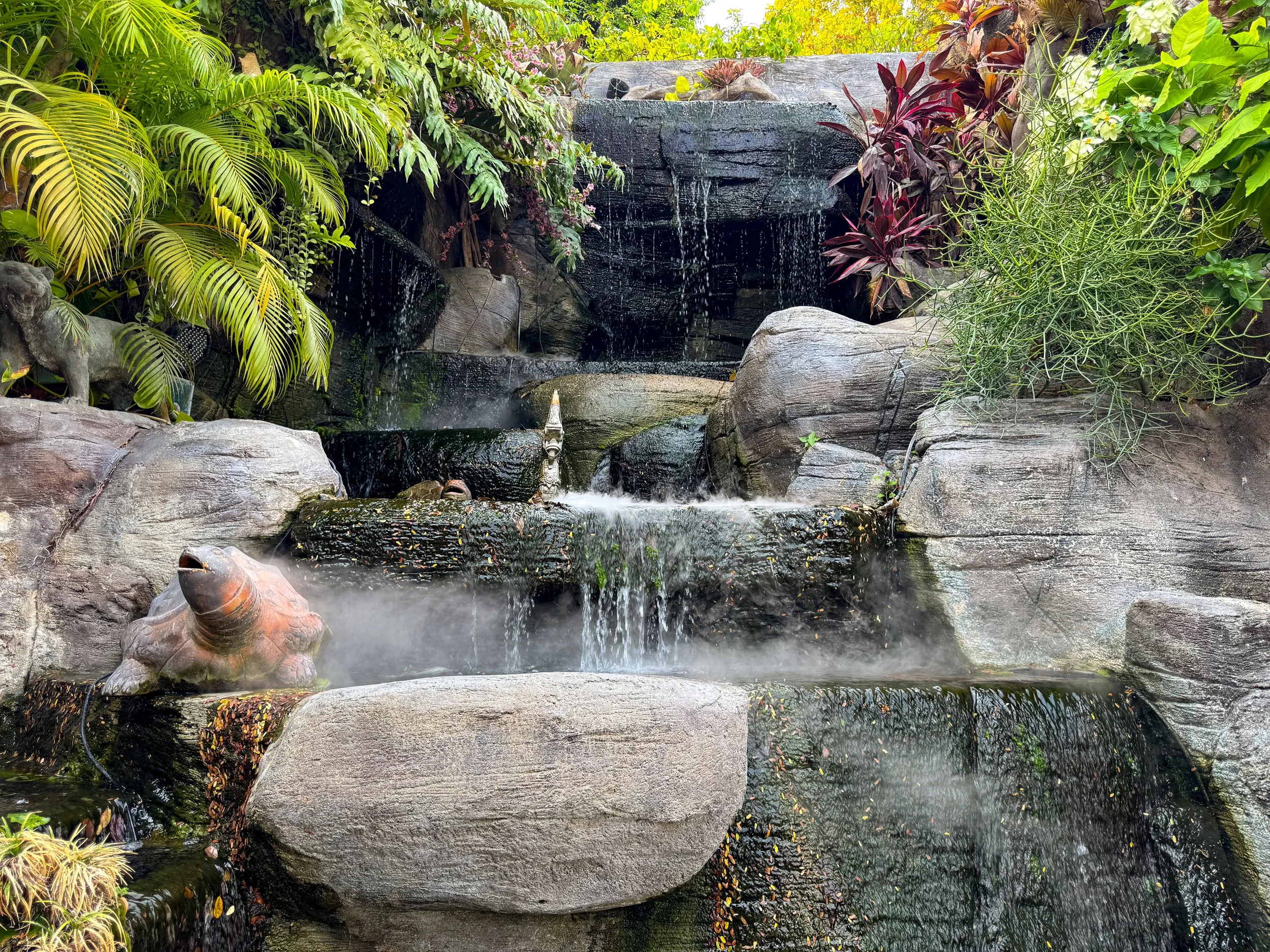
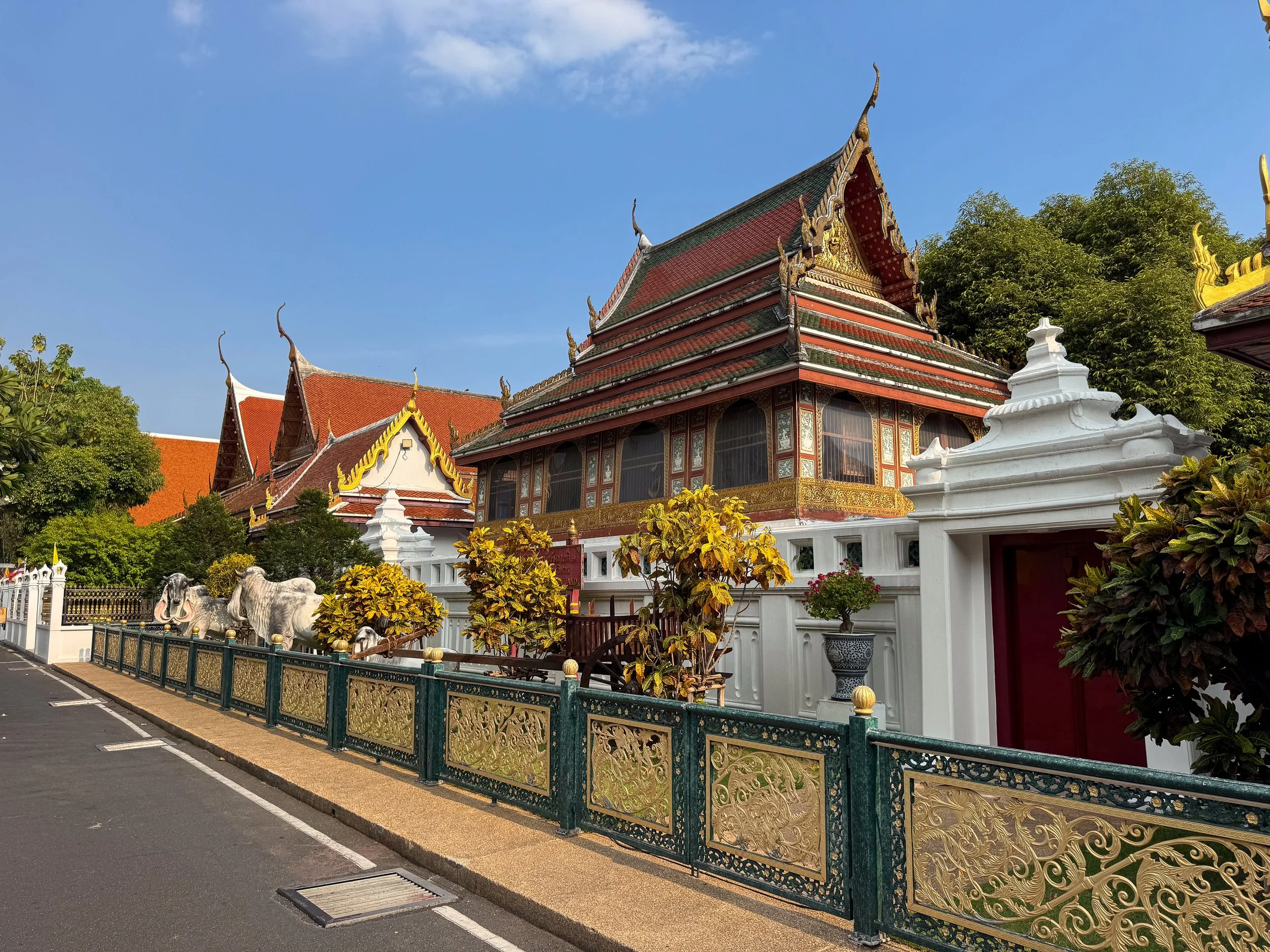
The Golden Mount. A wat on a man made hill with a large golden bell shaped stupa at its peak. Bells, gongs and wind chimes line the stairway leading to its observation deck with panoramic views of the entire city and skyline. The hill is landscaped with lush gardens, misting streams and tiny waterfalls. The surrounding neighborhood is defined by Khmer style mansions and houses, each with decorative facades, layered tiled roofs and gold ornamentation.
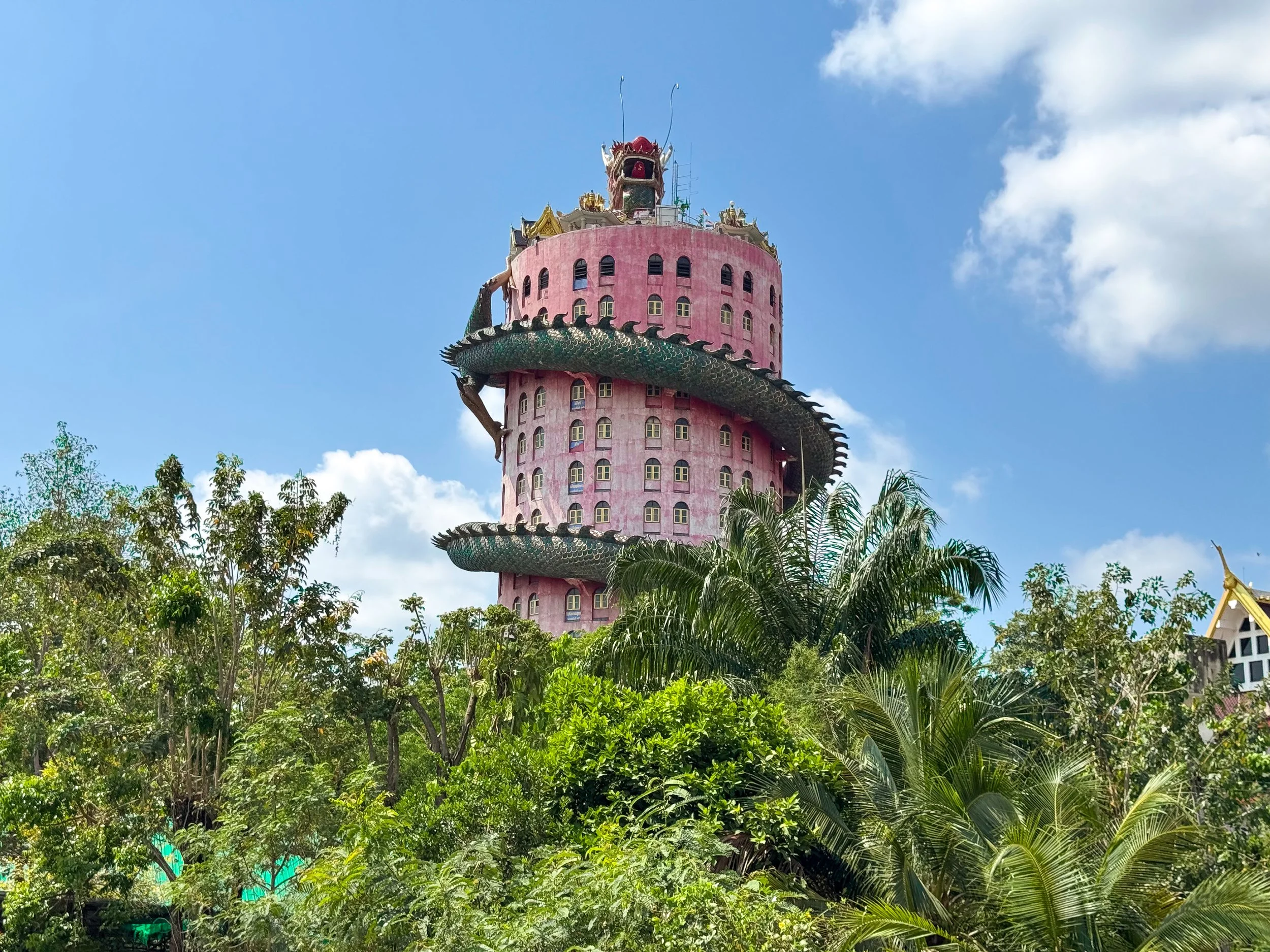
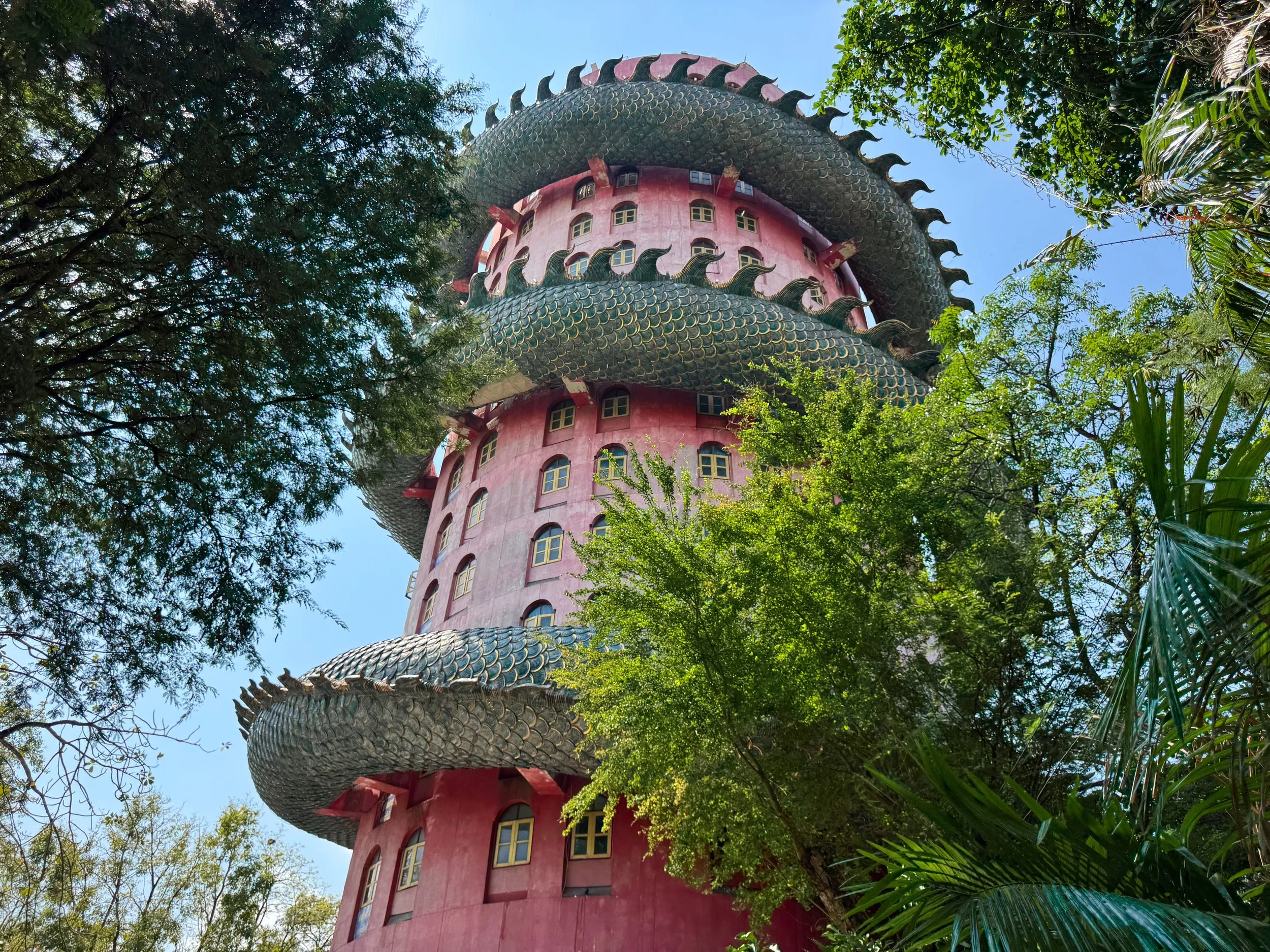
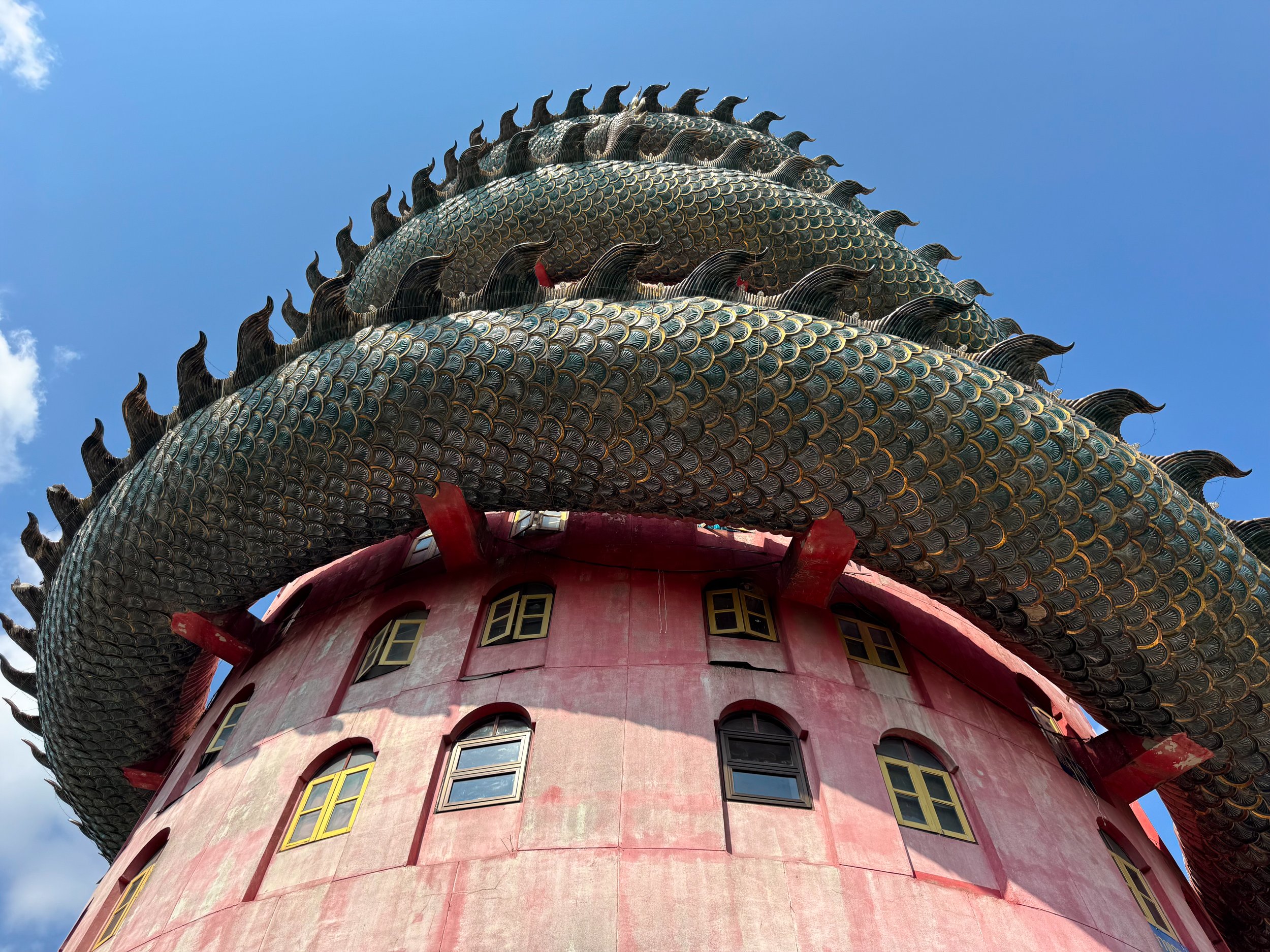
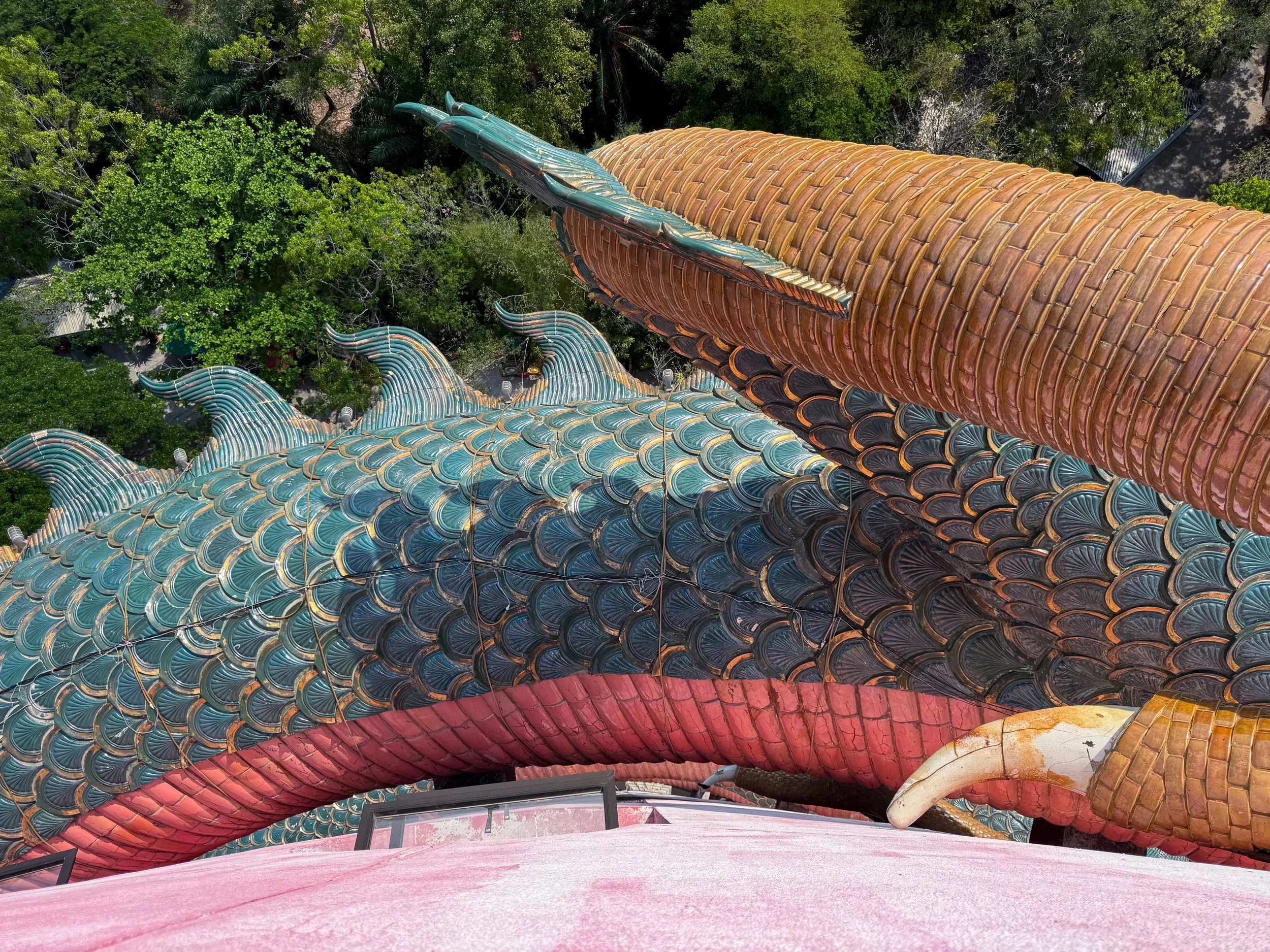
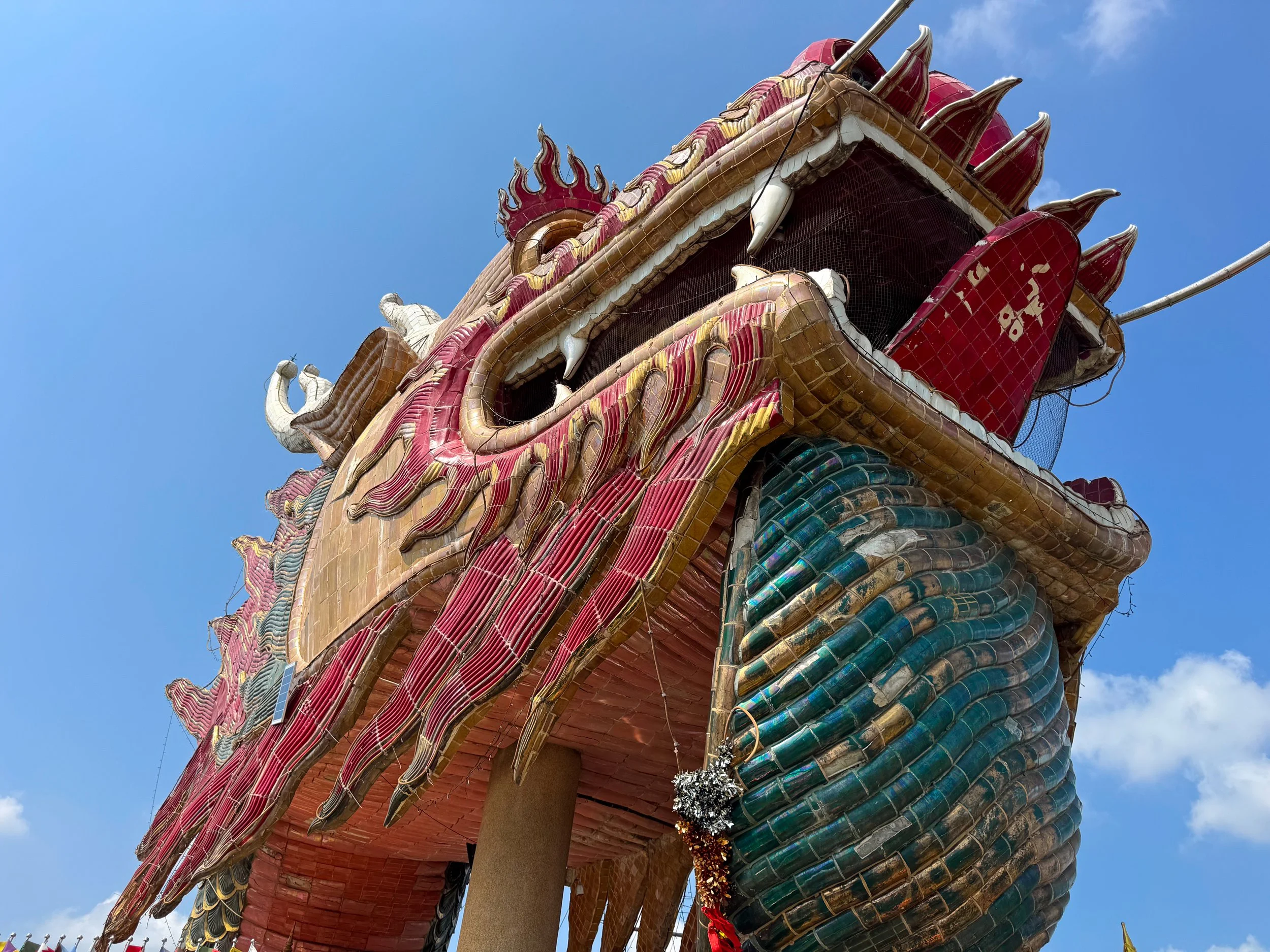
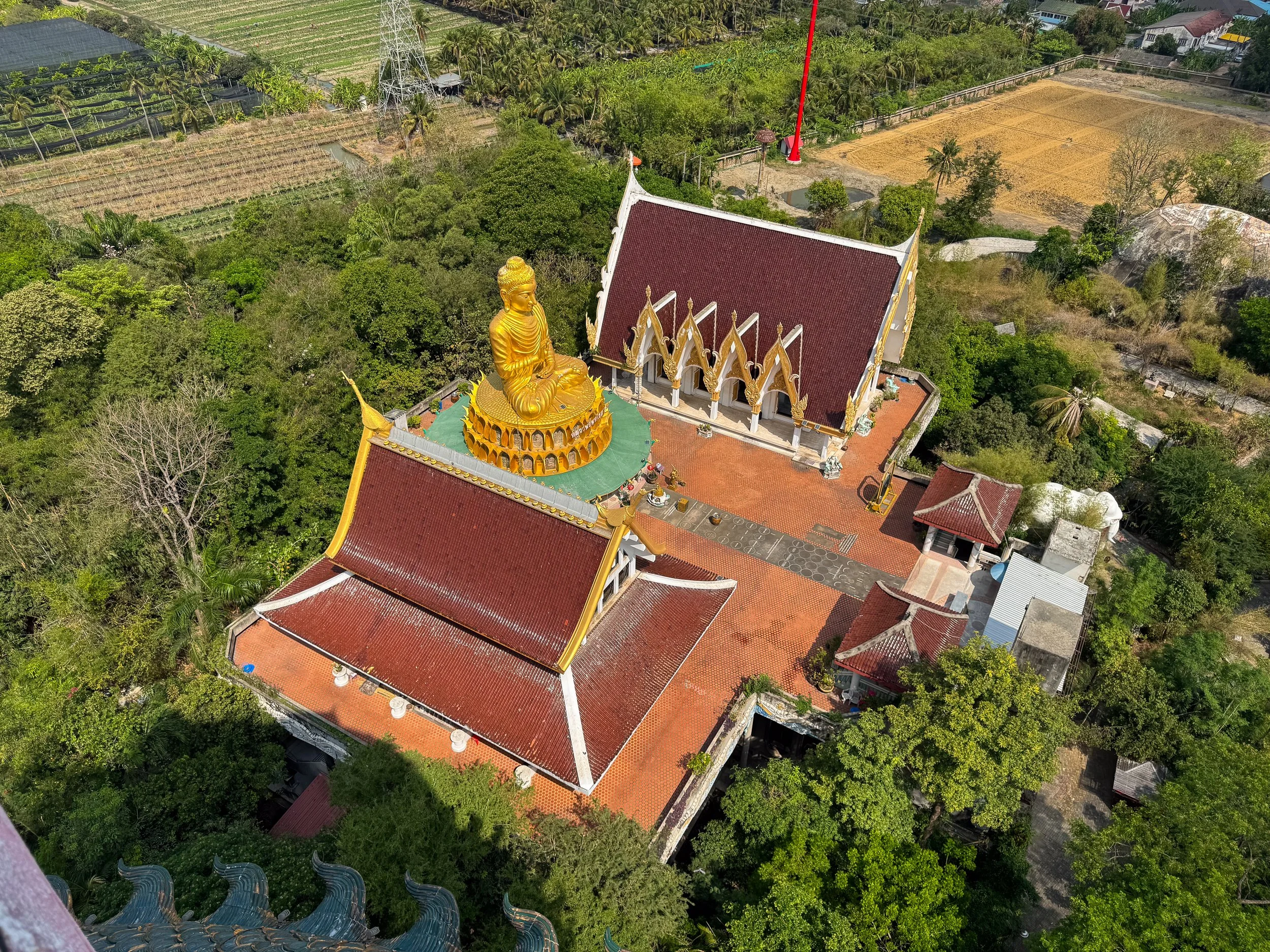
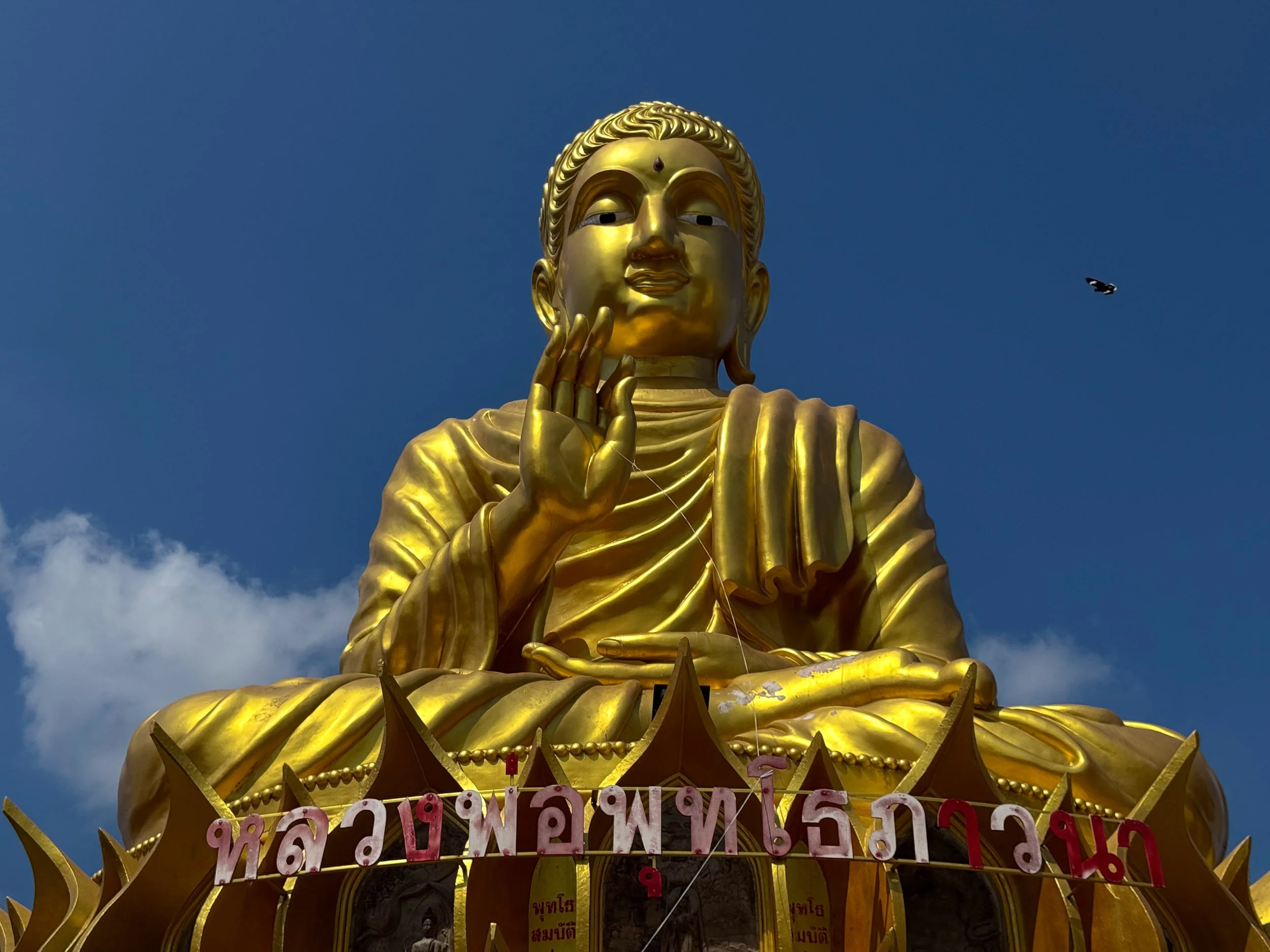
Wat Sam Phram. A pink cylindrical tower with a blue and green tiled dragon coiled around it. On the second floor, we entered the body of the dragon and ascended up the spiraled ramp, through the “levels of heaven.” At the top of the temple, we visited several Buddhist shrines and spoke with friendly monks. They told us stories of Buddhist legends, the temple’s origins and how to best experience it. We bought a loop of marigolds from them as an offering and pet the dragon’s beard for good luck. The temple is modern but nonetheless fascinating. On its grounds is a separate statue of a large golden Buddha seated upon a lotus leaf. The temple is located an hour outside of Bangkok and reachable by Grab for around 400 Baht. Given its distant location, there were few visitors outside of the monks living here.
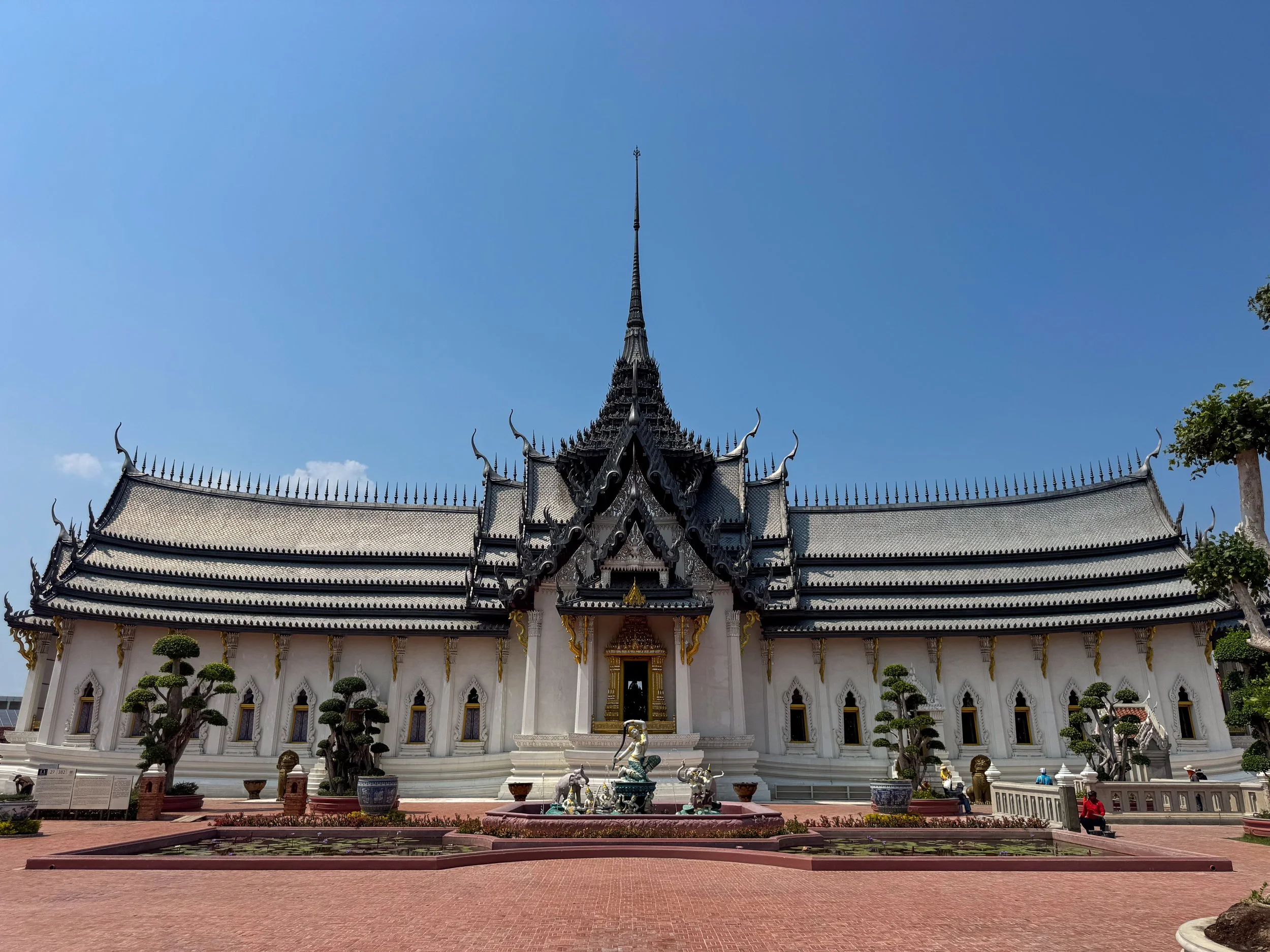
The Ancient City
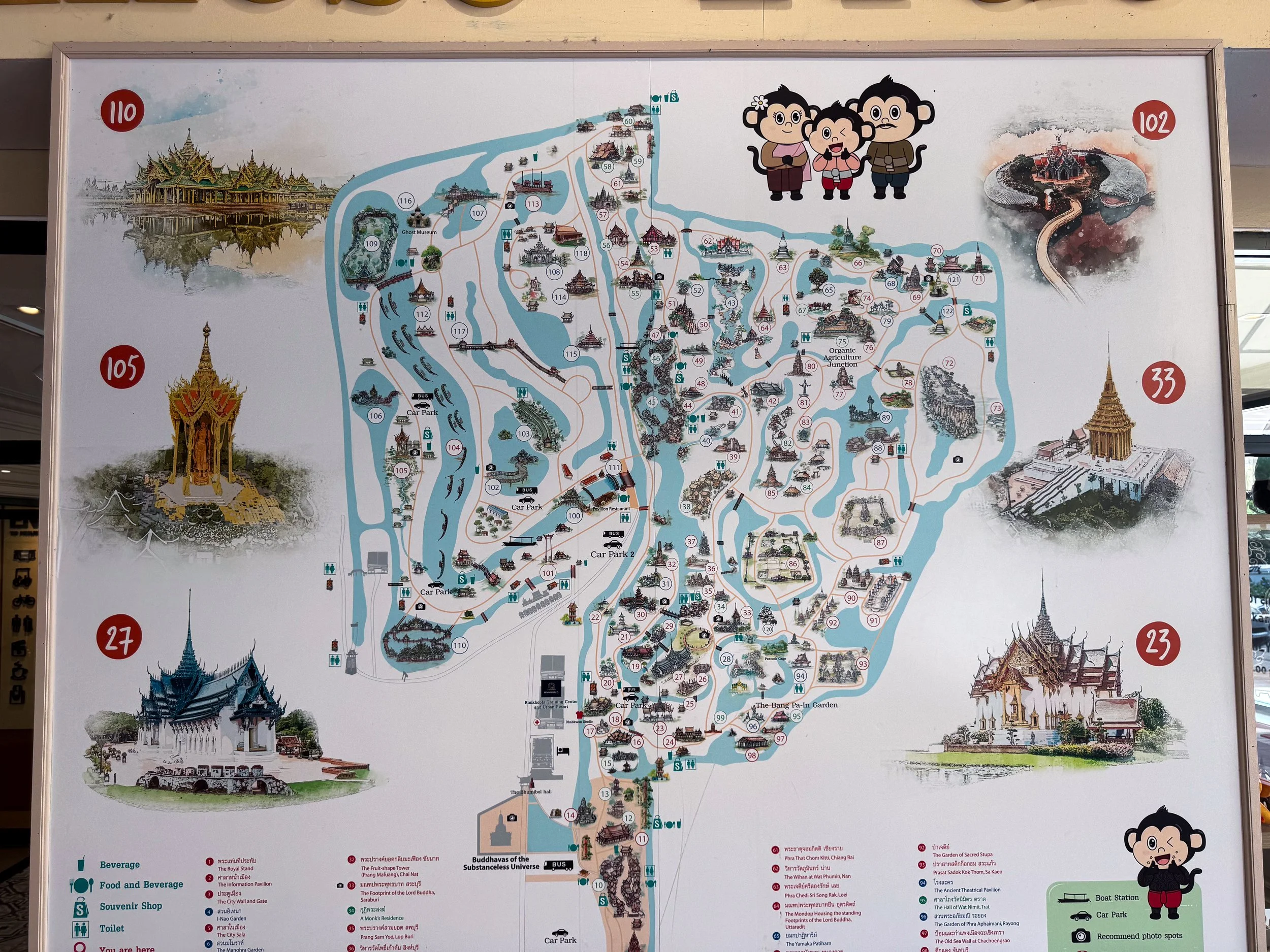
The Ancient City is a large outdoor museum and historical theme park with reproductions of Thailand’s most important wats, temples and sights including those that have long been lost to history.
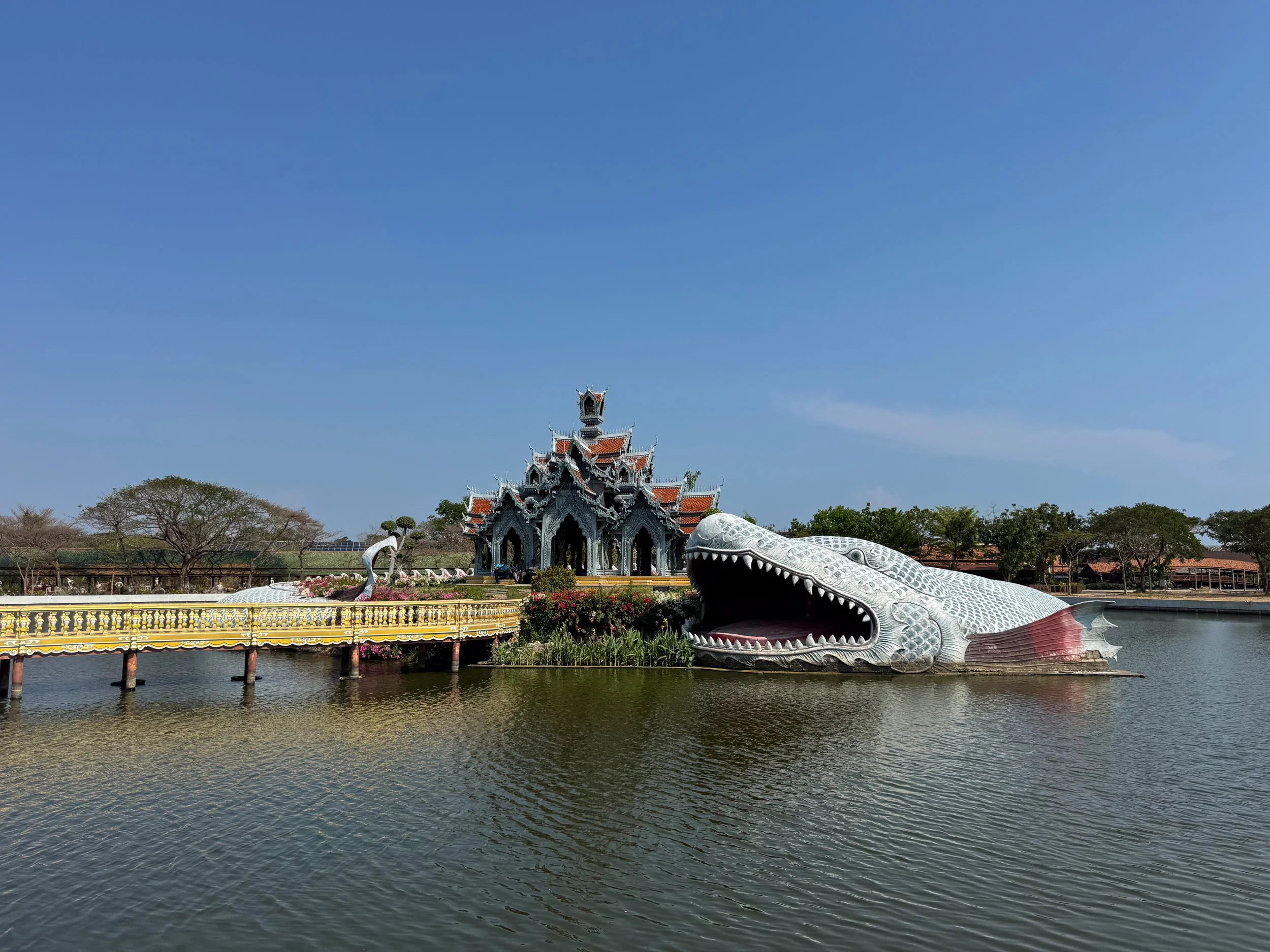


Semeru Mountain. An island temple surrounded by a giant koi fish, reachable along a winding yellow bridge. The wooden temple is ornately carved with finely painted sculptures of Hindu deities and peacocks.
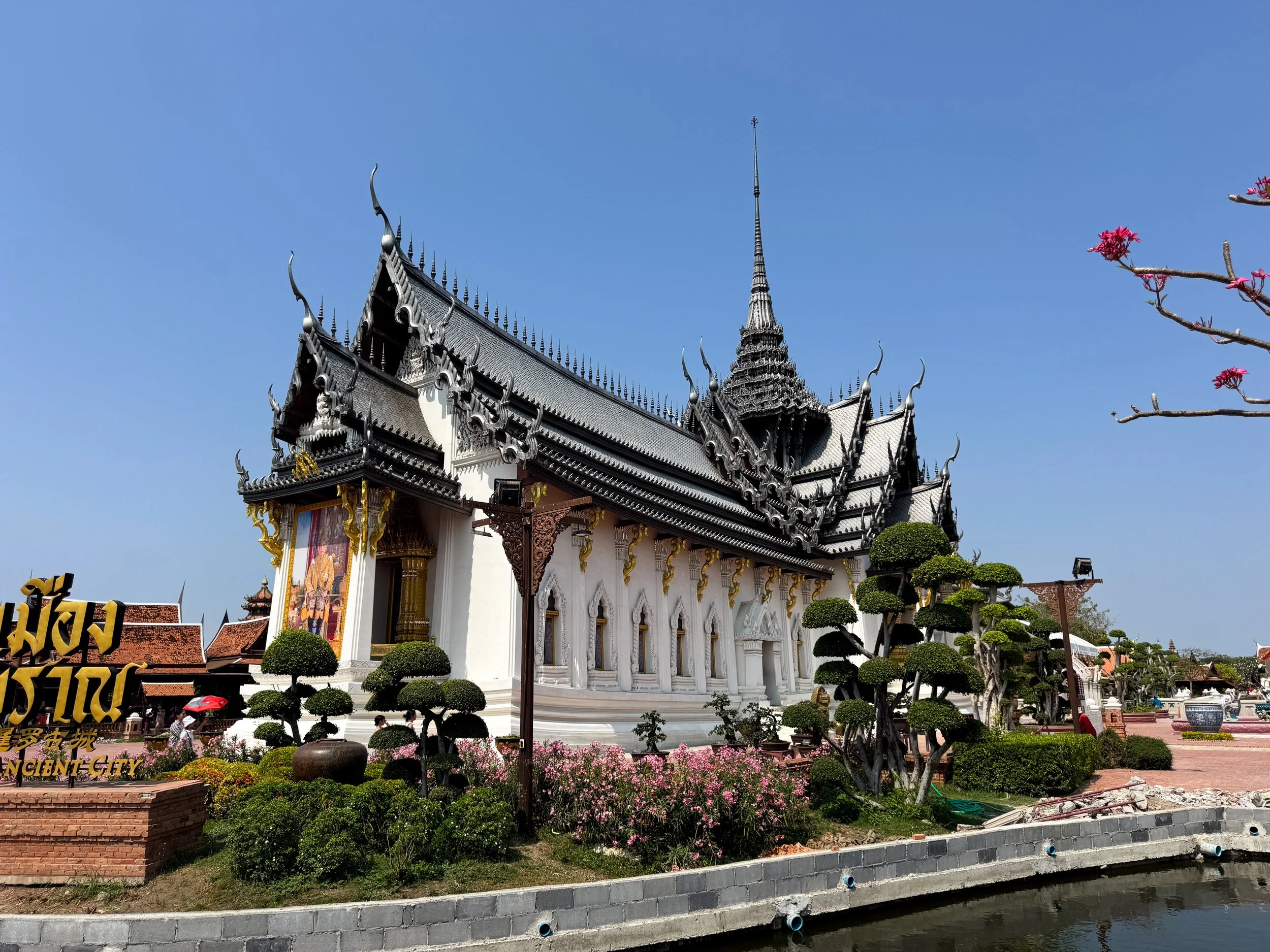
Sanphet Prasat Palace, Ayutthaya. A grand reconstruction of the Thai Imperial Palace lost to history. The large white building had a multi tiered black tiled Khmer style roof. It’s forbidden to take photos within its gilded interior displaying royal statues and garments. The surrounding grounds are landscaped with lily ponds, small streams, sculpted trees and elephant shaped fountains.
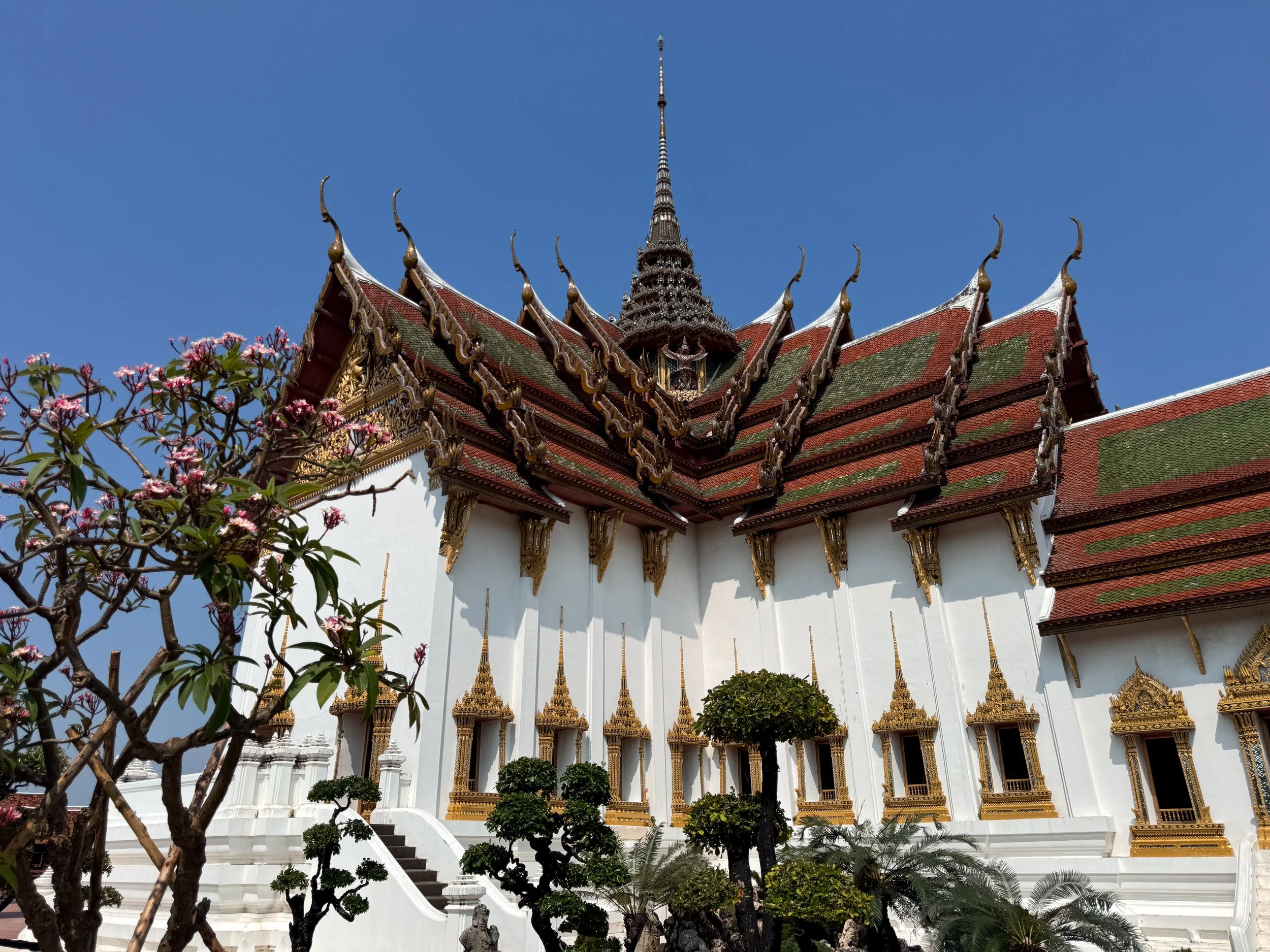
Dusit Maha Prasat Palace. A reproduction of a royal palace with four wings decorated in elaborate handprinted murals of battles, legends and royal coronations. Featured inside is an emerald Buddha. Its exterior is similar to other royal palaces with a white facade, gold ornamentation and a multi-tiered Khmer style roof.
The Scripture Repository. A small but beautiful stilted pagoda above a pond with giant lily pads.
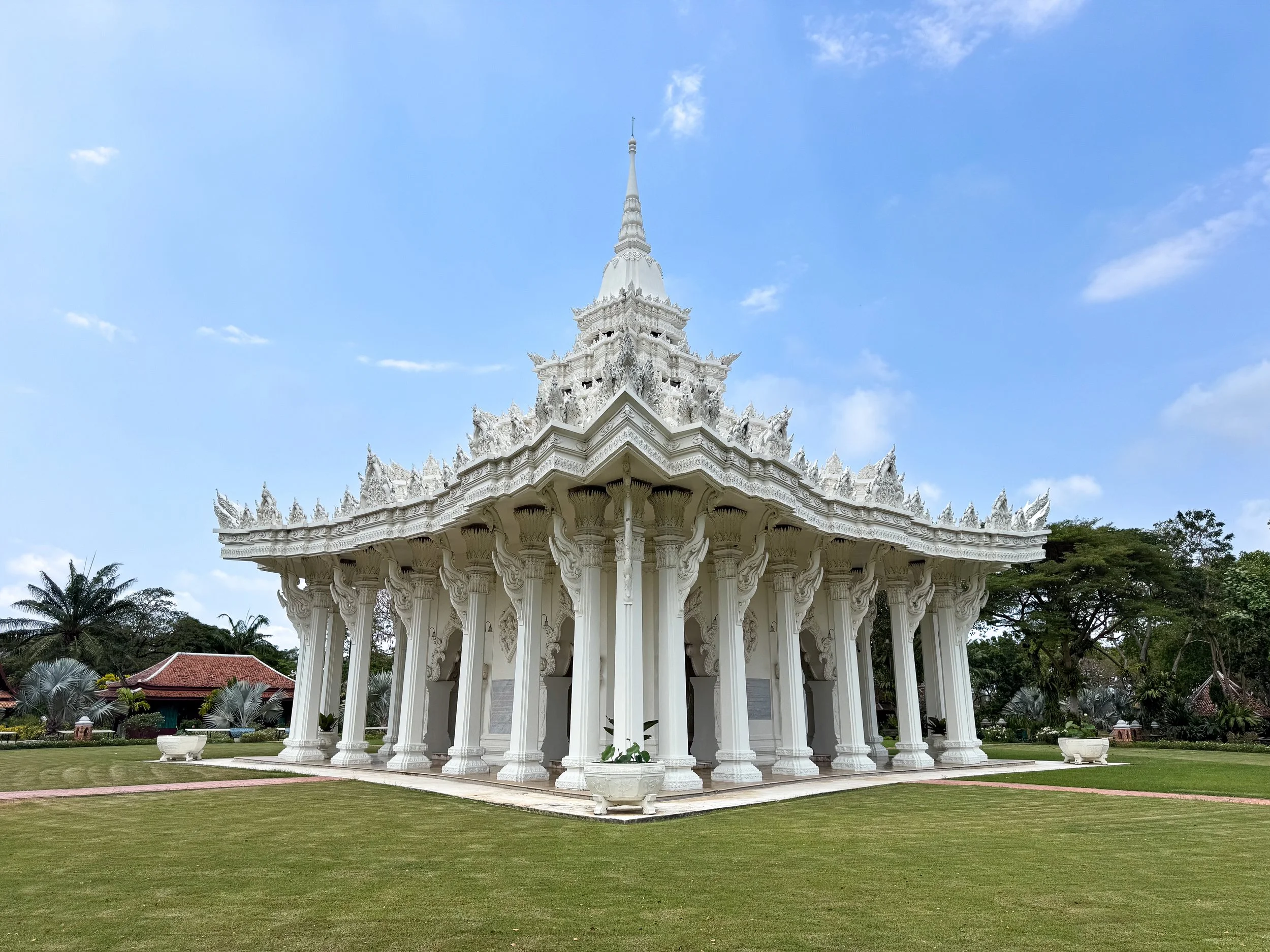
Mondop Thep Bidorn. A white temple with an intricate roof and pyramid like stupa.
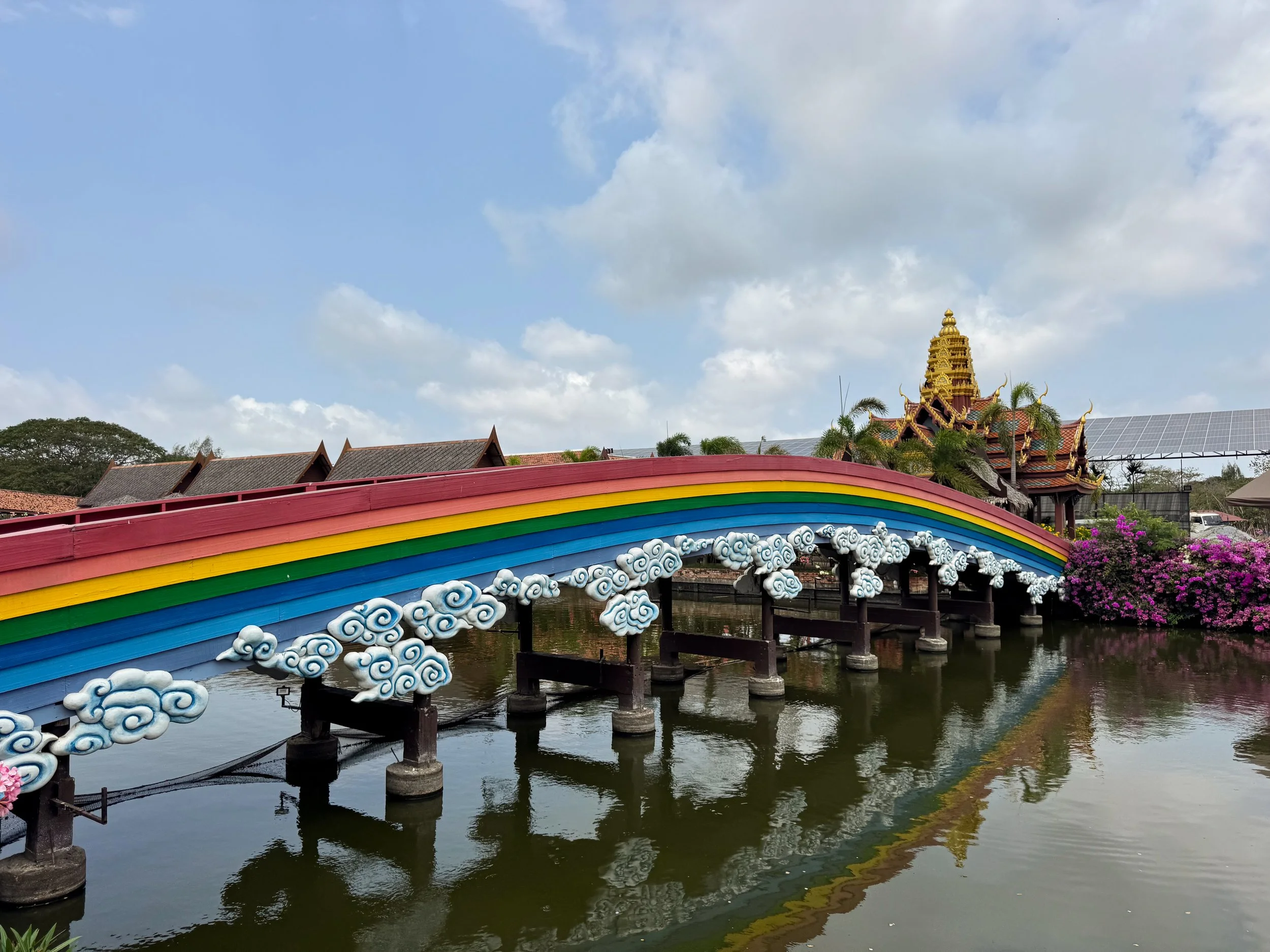
Rainbow Bridge. A photogenic bow shaped bridge over a canal painted like a rainbow.
Sala of Ramayana. A temple with multiple mauve and emerald green pavilions connected by a series of zig zagging boardwalks over a large pond dedicated to a Hindu deity.
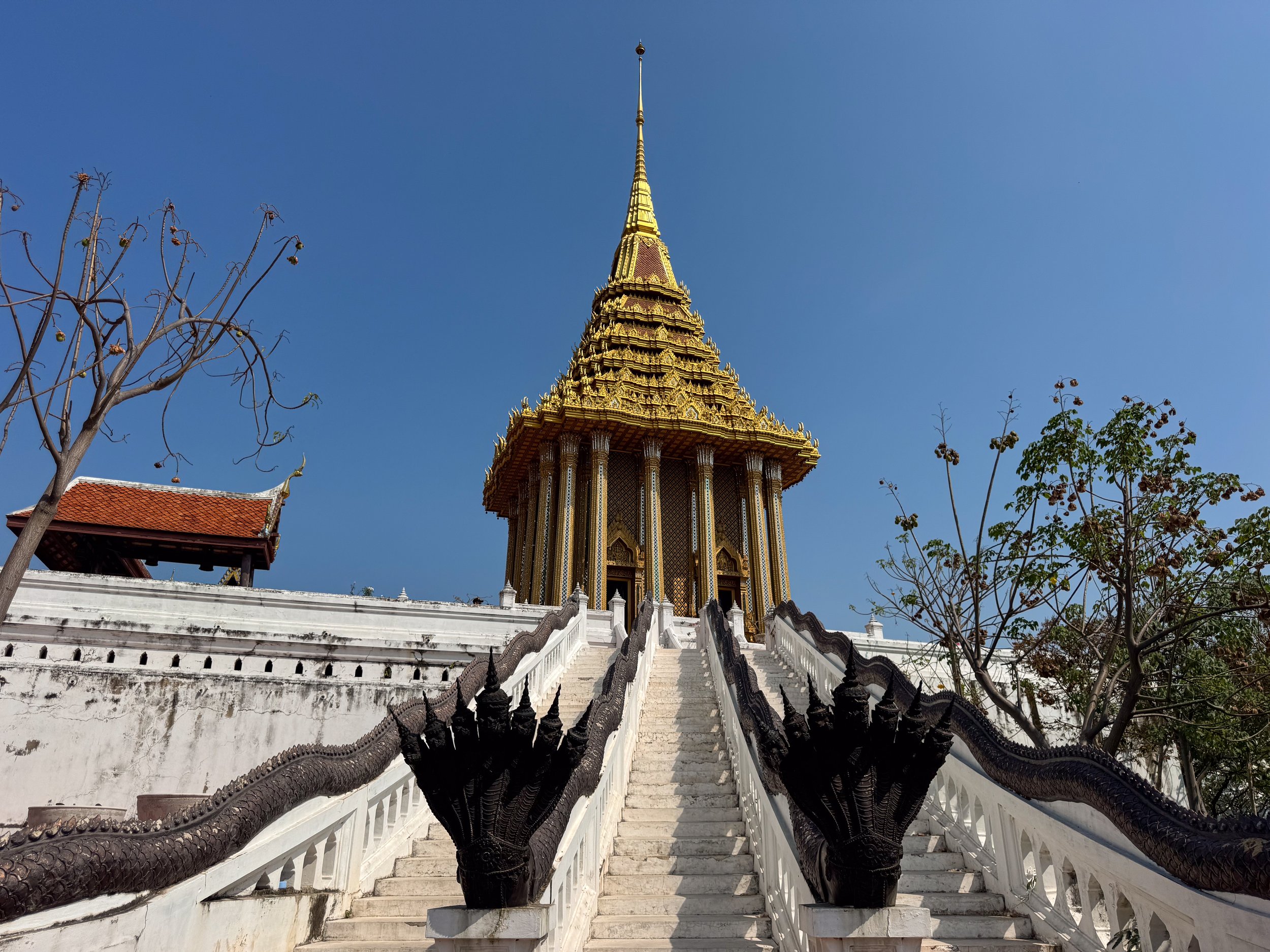
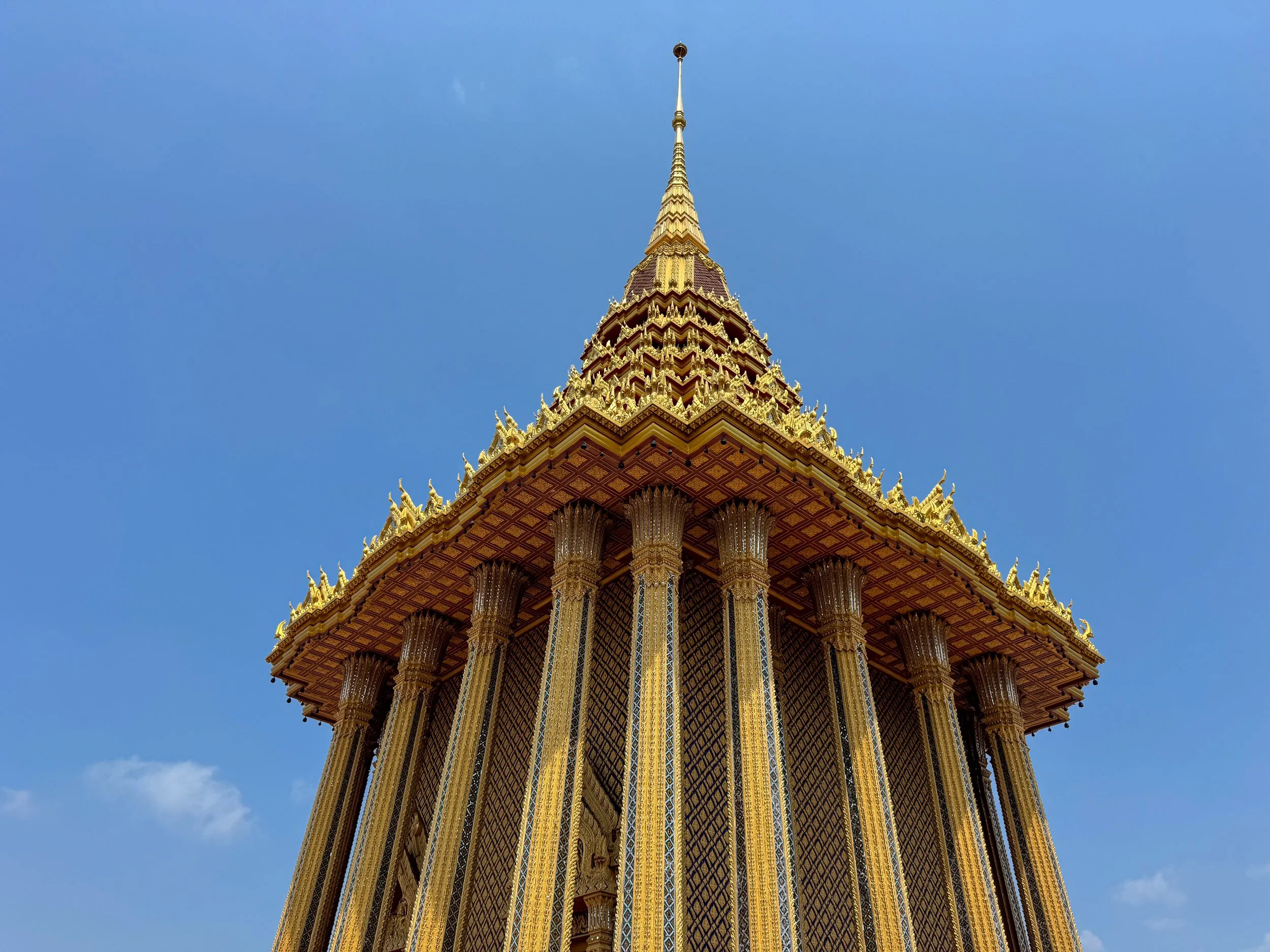
The Footprint of the Lord Buddha, Saraburi. A tall golden temple prominently placed on a stepped white platform guarded by a mythical seven headed snake. The temple is covered in a mosaic of reflective, gold and colorful tiles. Inside, a series of mirrors reflect the golden interior into infinity.
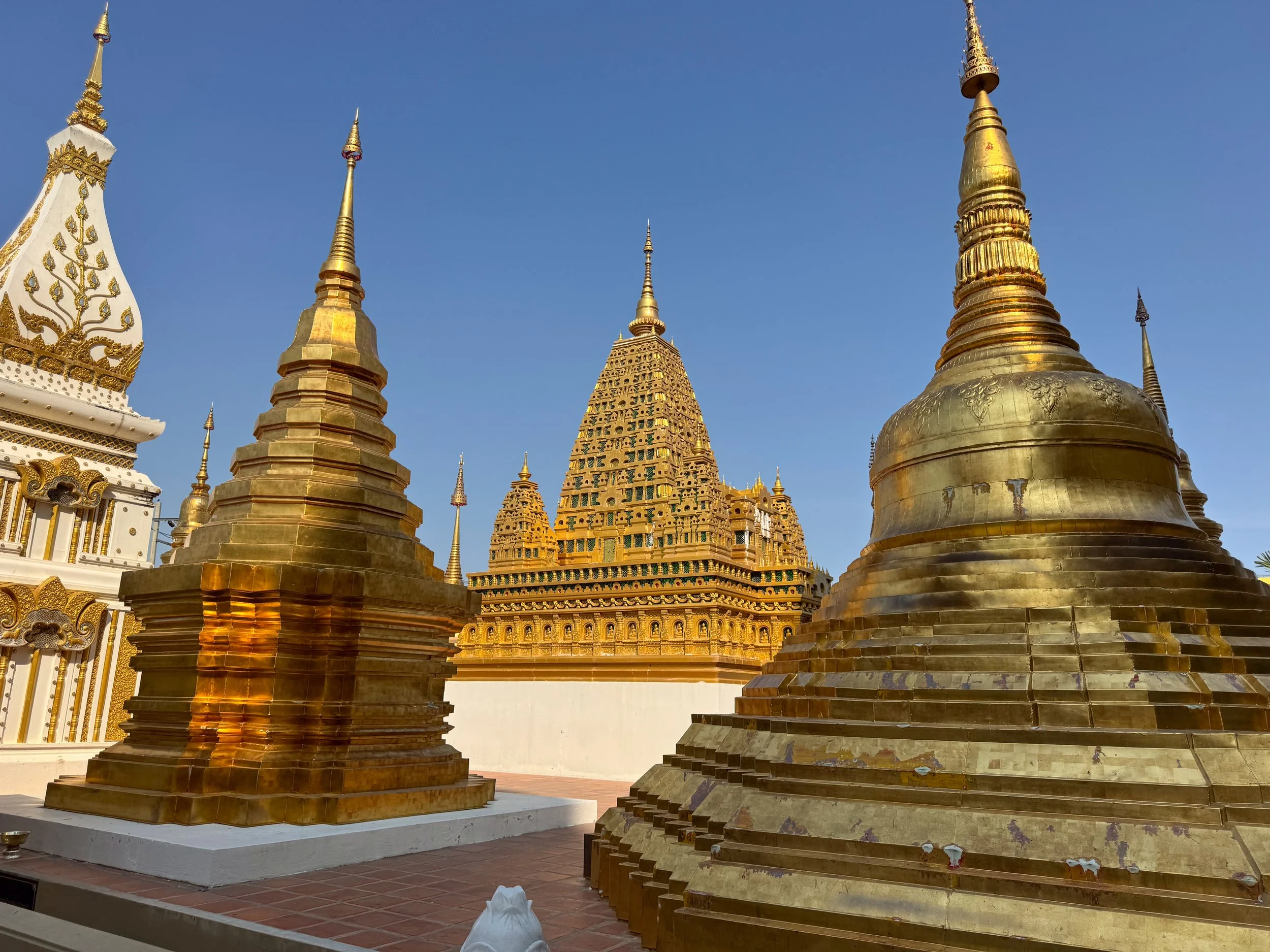
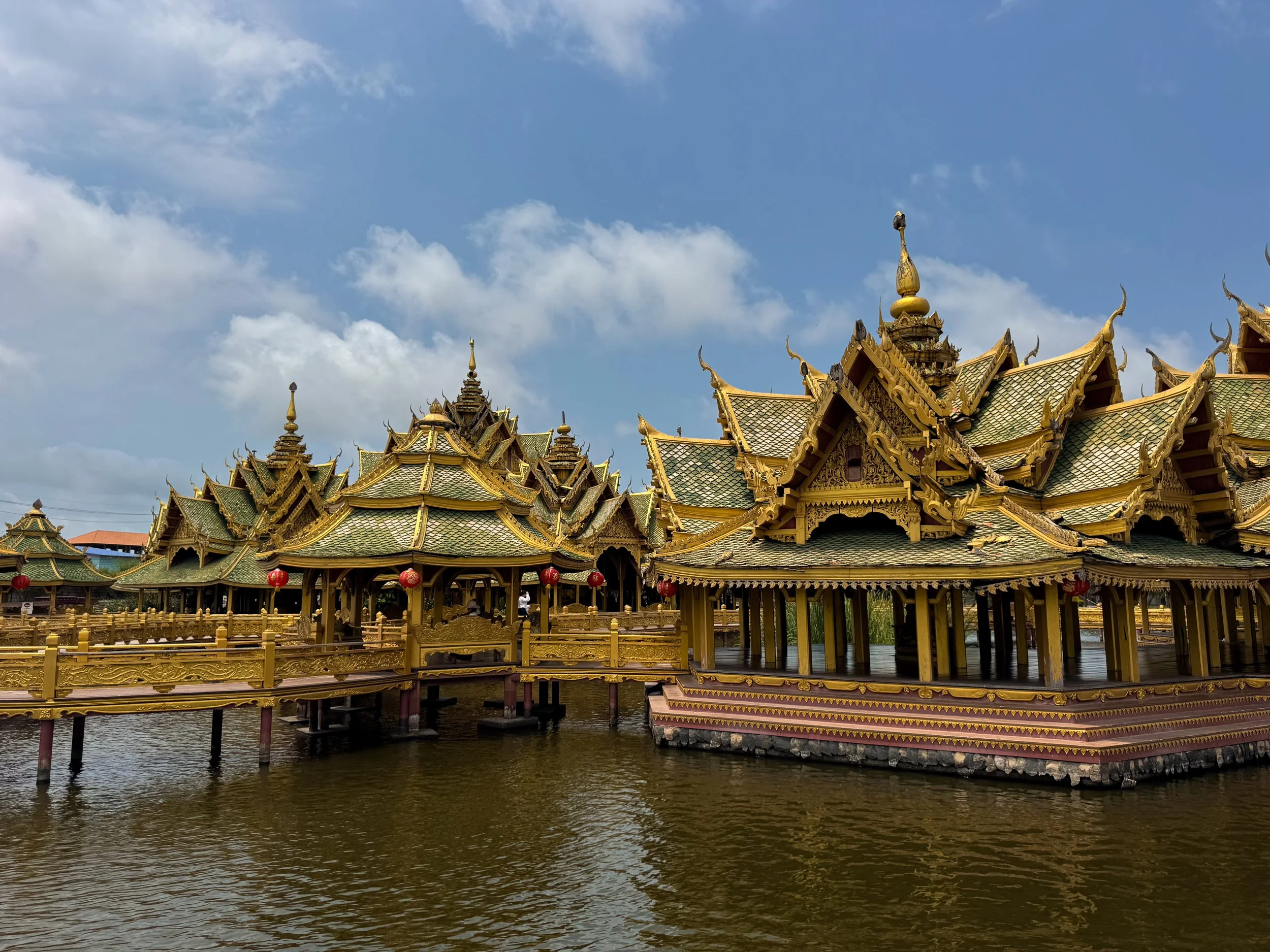
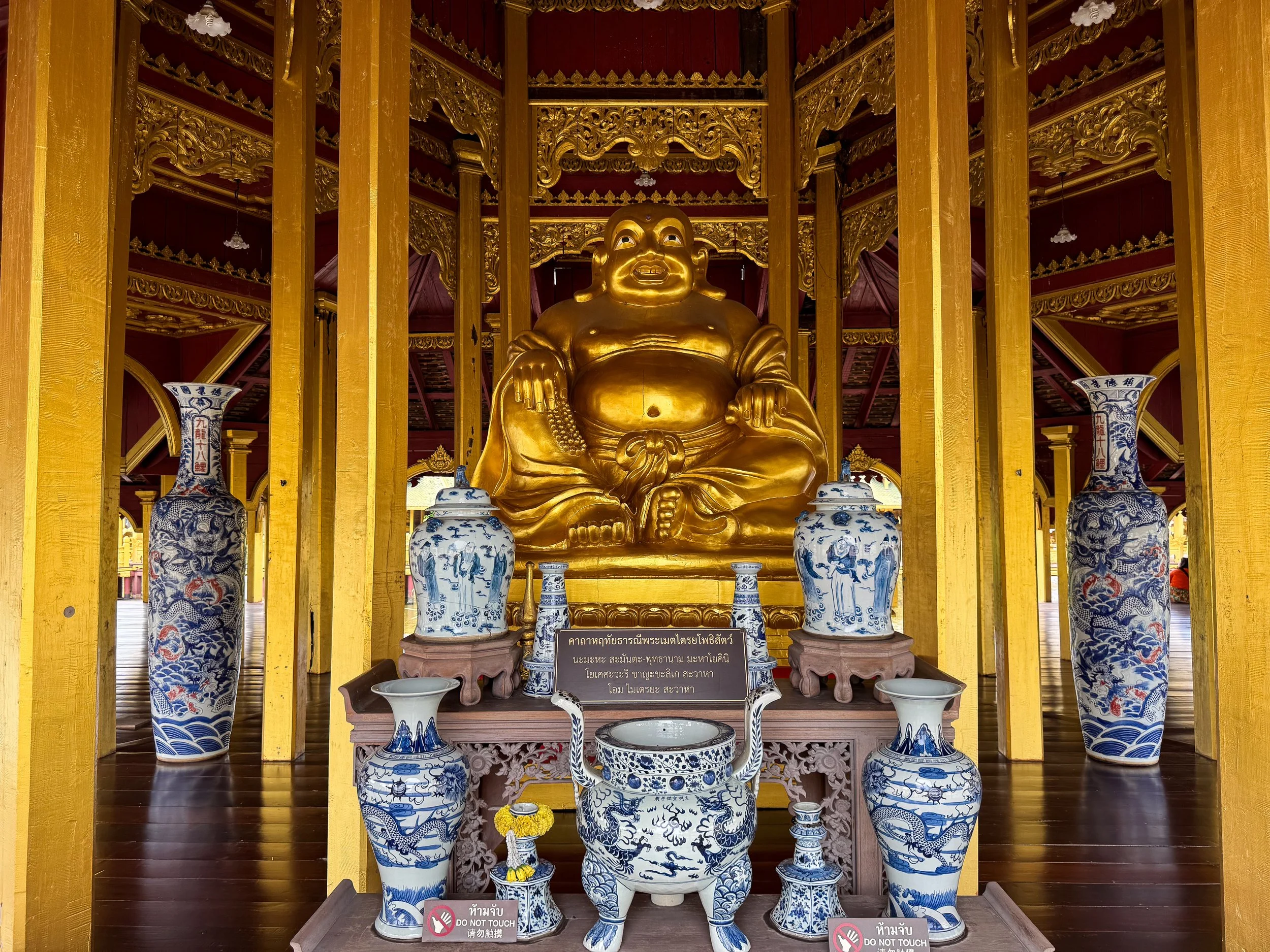
Pavilion of the Enlightened. A series of gold painted pagodas and pavilions connected by a network of overwater boardwalks. We visited the “fat Buddha,” a golden statue of the big bellied and laughing buddha.
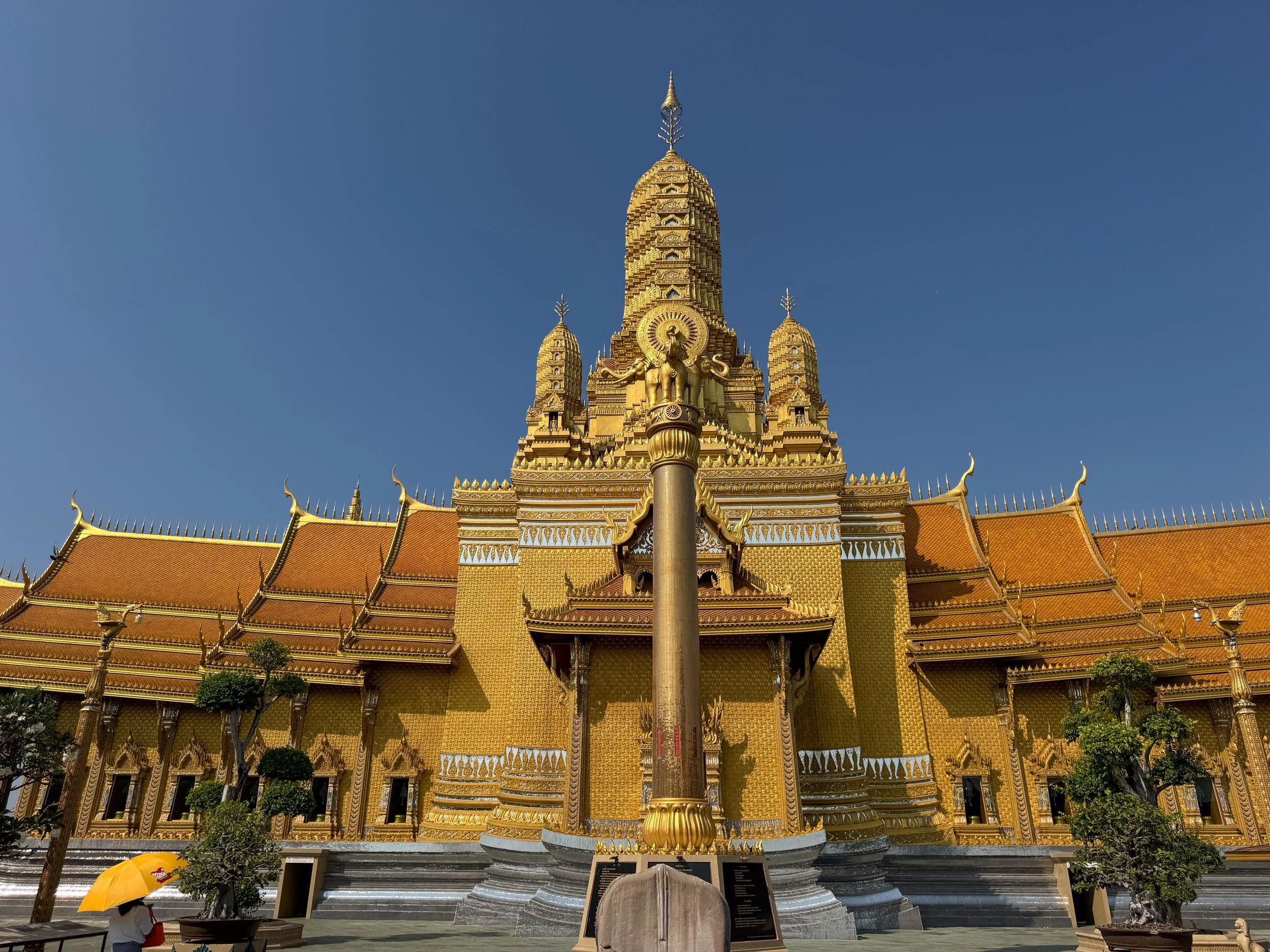
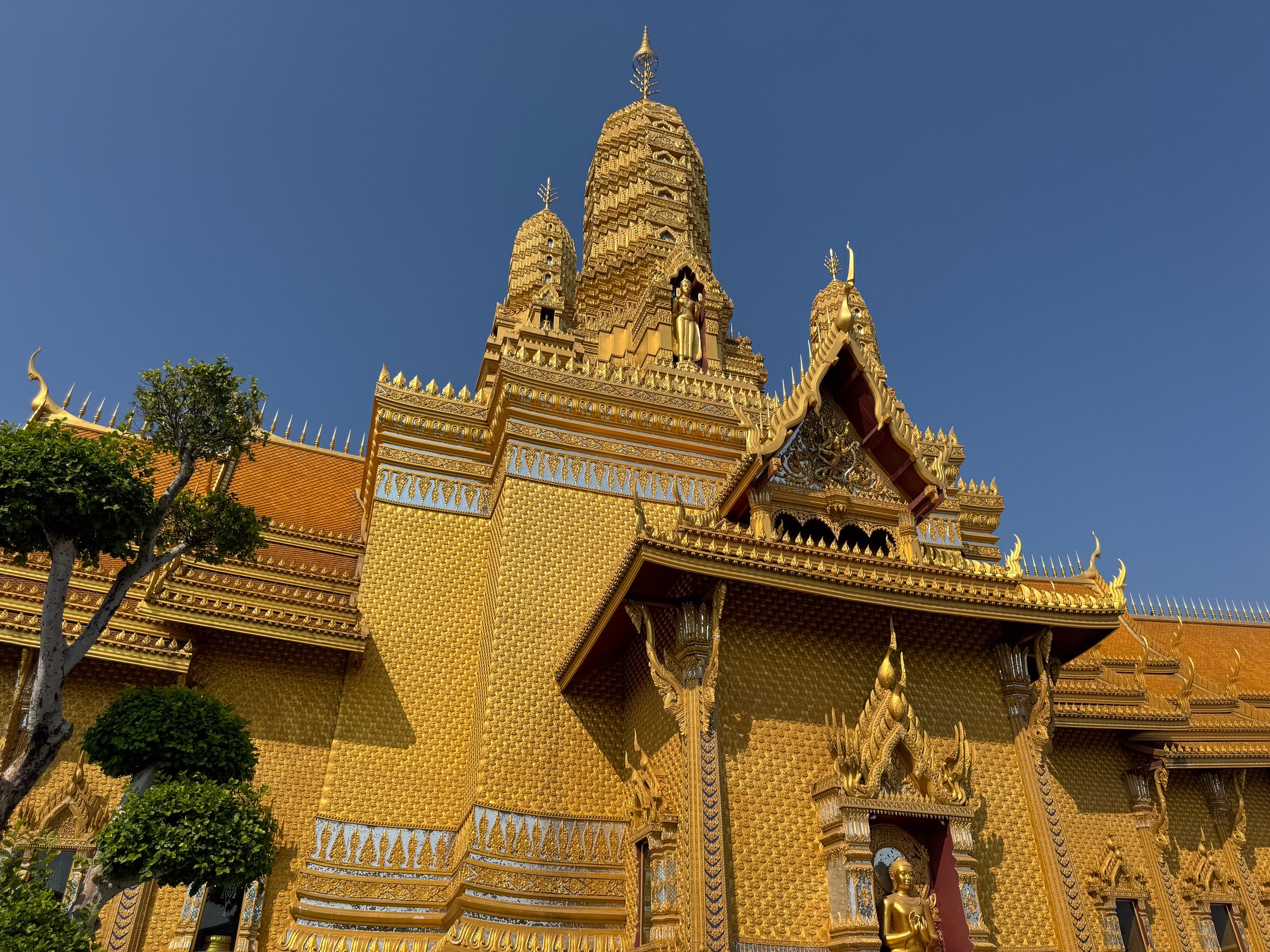
Buddha of the Substanceless Universe. A modern Buddhist temple and one of the most opulent in all of Thailand. Its facade is completely covered in reflective gold tiles of the buddha, with an orange tiered roof and towering gold spire at its center. Inside is a hall with over two dozen seated golden Buddhas. Its surrounding grounds and are home to smaller temples, golden stupas and landscaped gardens.
The Floating Market. A network of wooden structures with shops, cafés and street food vendors connected by boardwalks and bridges. At the time, most of the shops were vacant, giving the market an eerie and abandoned feeling. We stopped at one café for Thai iced tea.
The Old Market Town. A reproduction of a traditional town with wooden houses, tea rooms, historic exhibits and small shops.
Tips for Visiting The Ancient City:
Getting Here. It’s located about an hour outside of Bangkok and easily reachable by Grab. Grabs are readily available to return to the city.
Getting Around. The park has 22km of roads. We rented bikes in the park, stopping at anything that caught our eye. There are golf cart rentals and a free shuttle that visits the most prominent sights.
Tickets. Buy tickets online to pay half the price offered at admission.
Free Zone. There is a zone before the official park entrance that can be visited for free without a ticket. It includes several small temples, monuments and sights. The most noteworthy are the Temple of Buddha of the Substancesless Universe, The Scripture Repository and The Old Market Town.
Avoid the Elephant Tourism. The park keeps multiple elephants. Unfortunately they didn’t seem to be cared for properly. One was chained up and surrounded by a tour bus worth of visitors posing for photos on the elephant’s back.
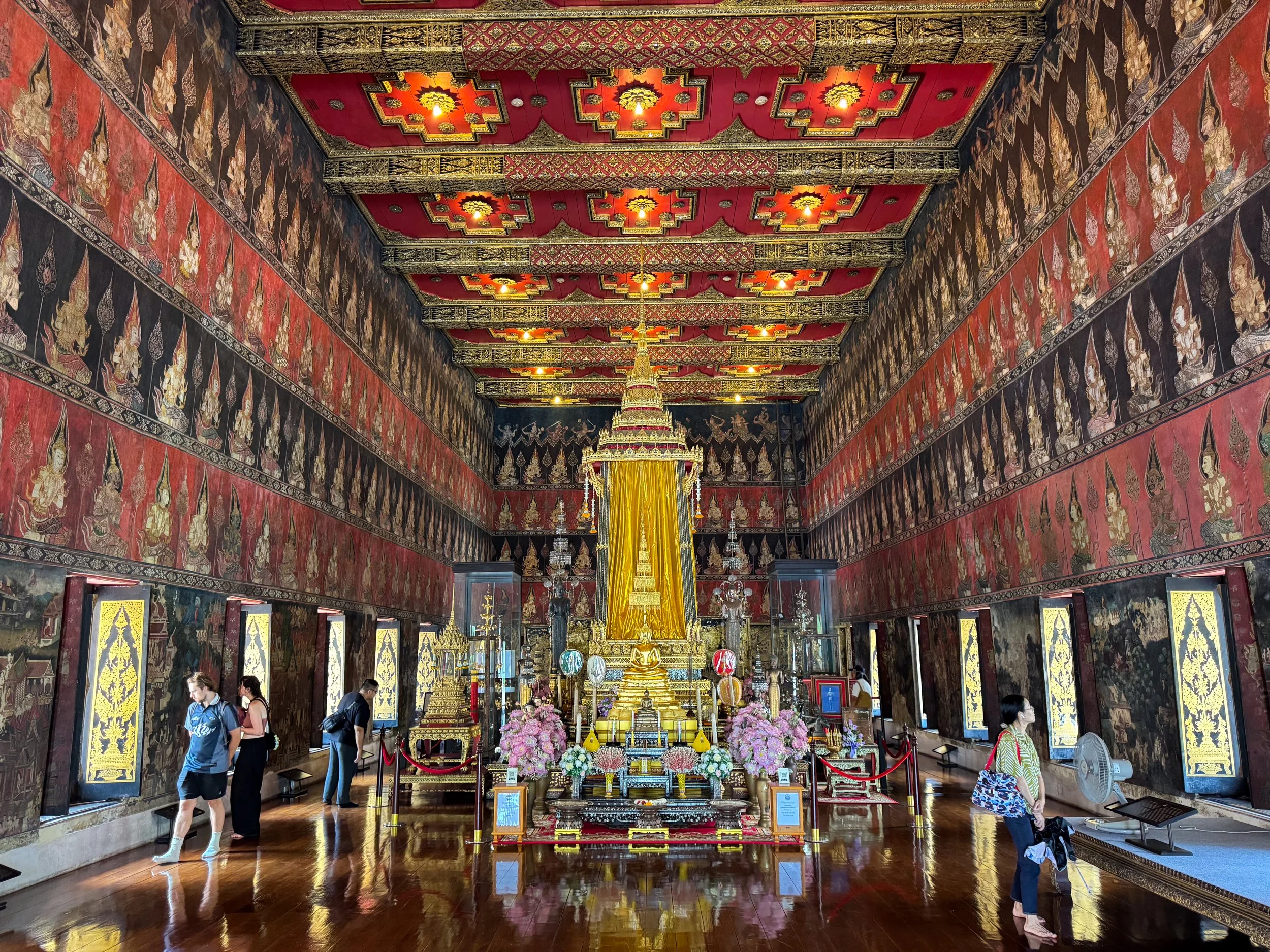
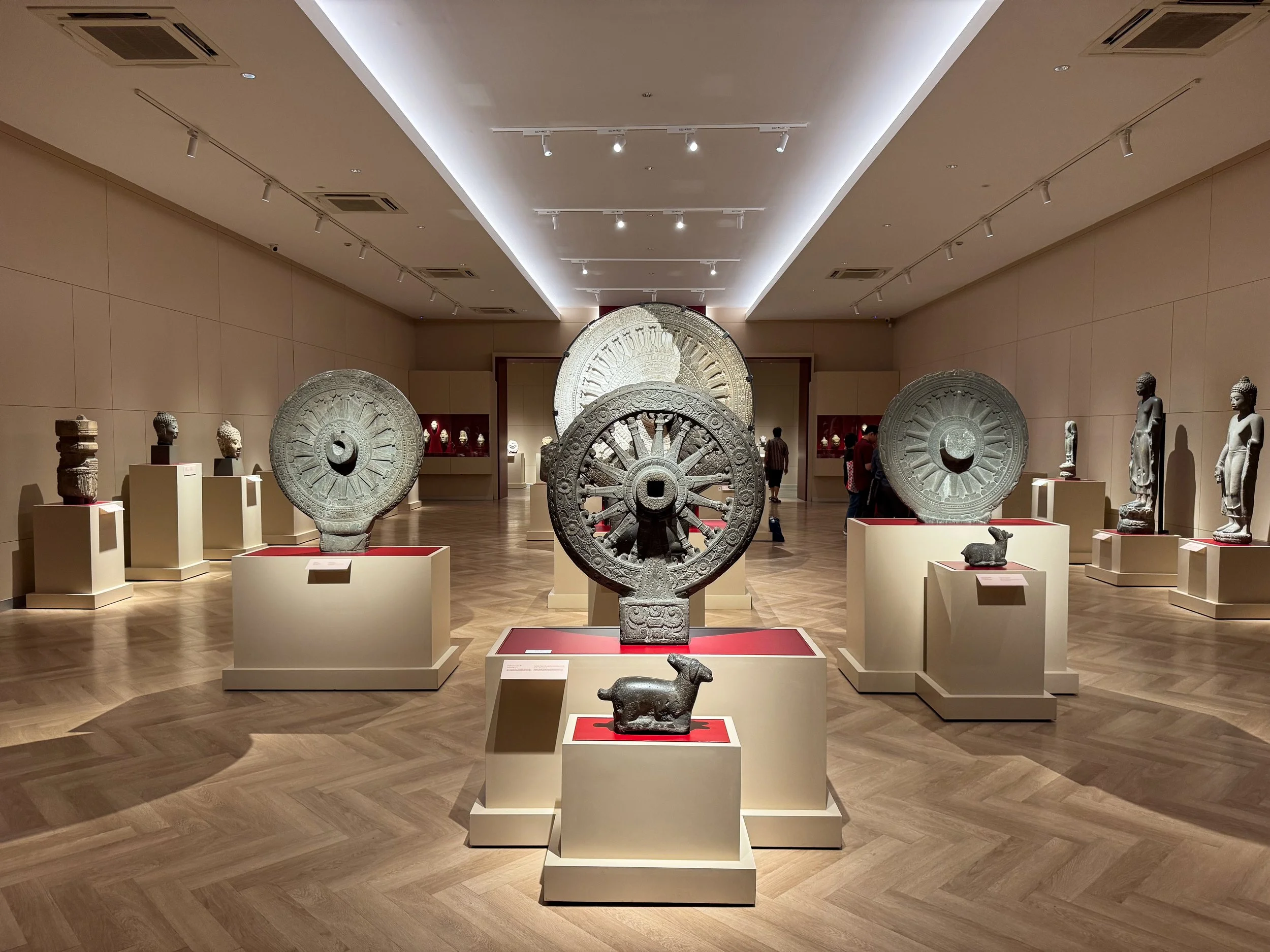
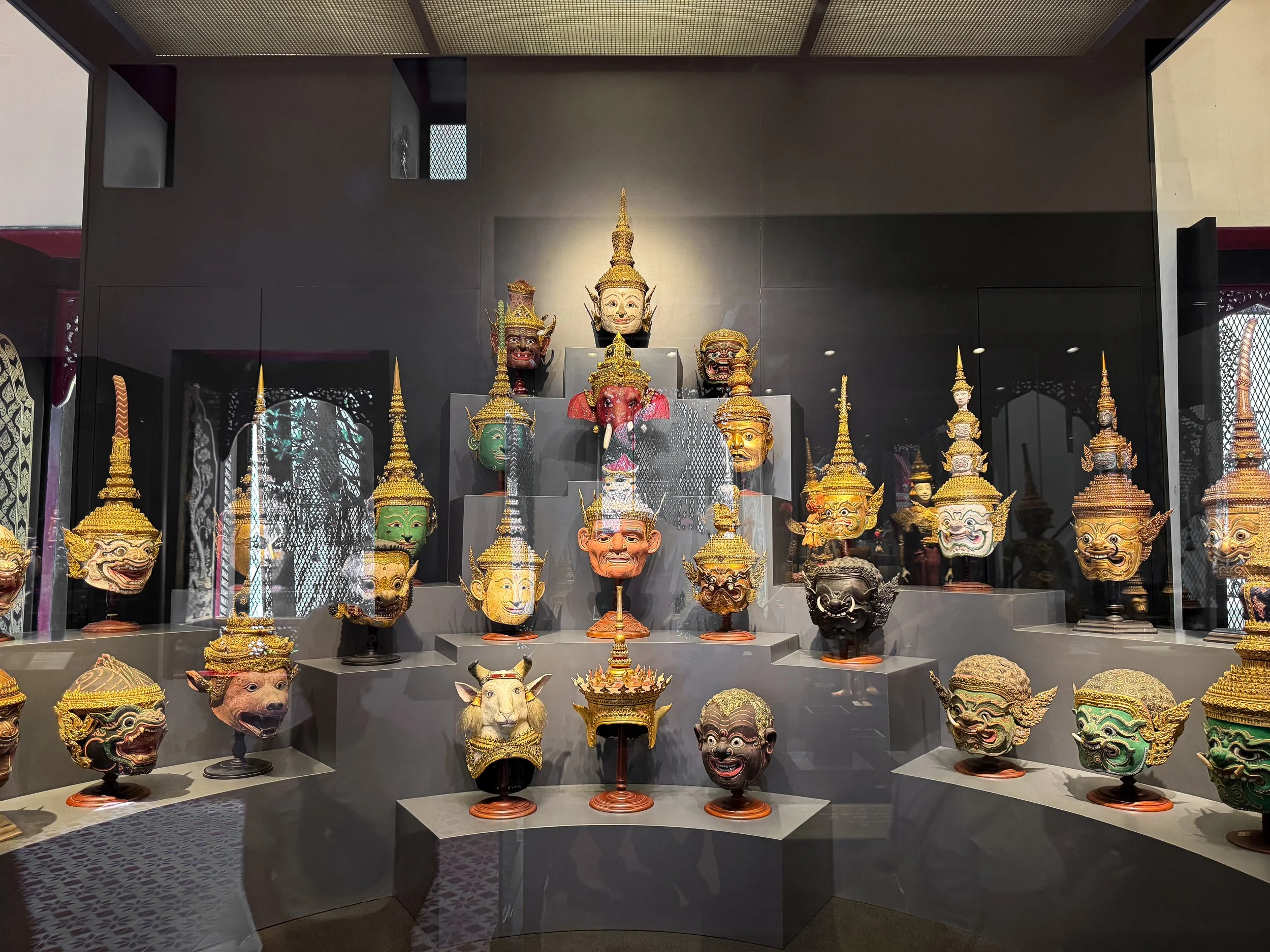
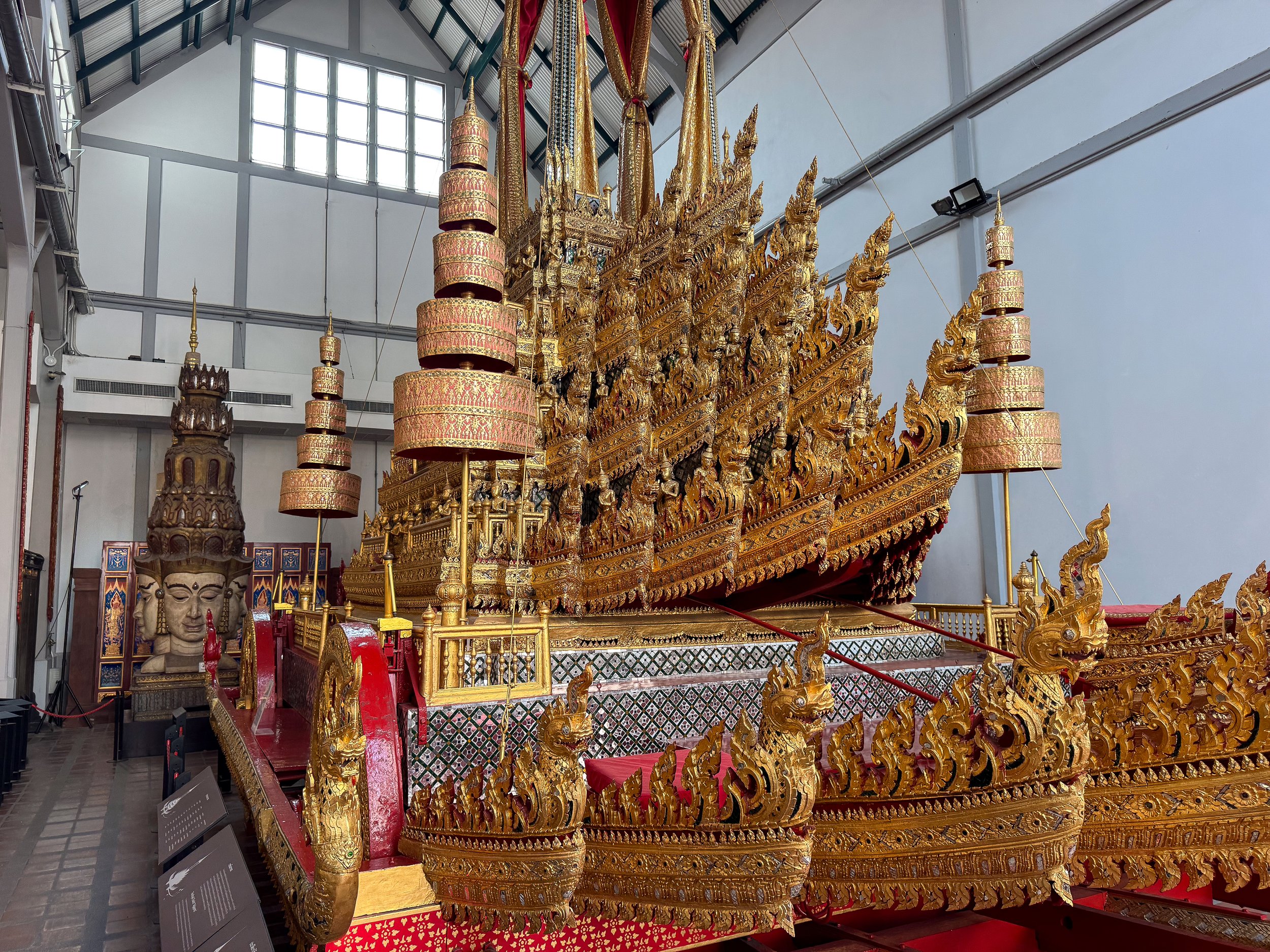
Visit the Museums
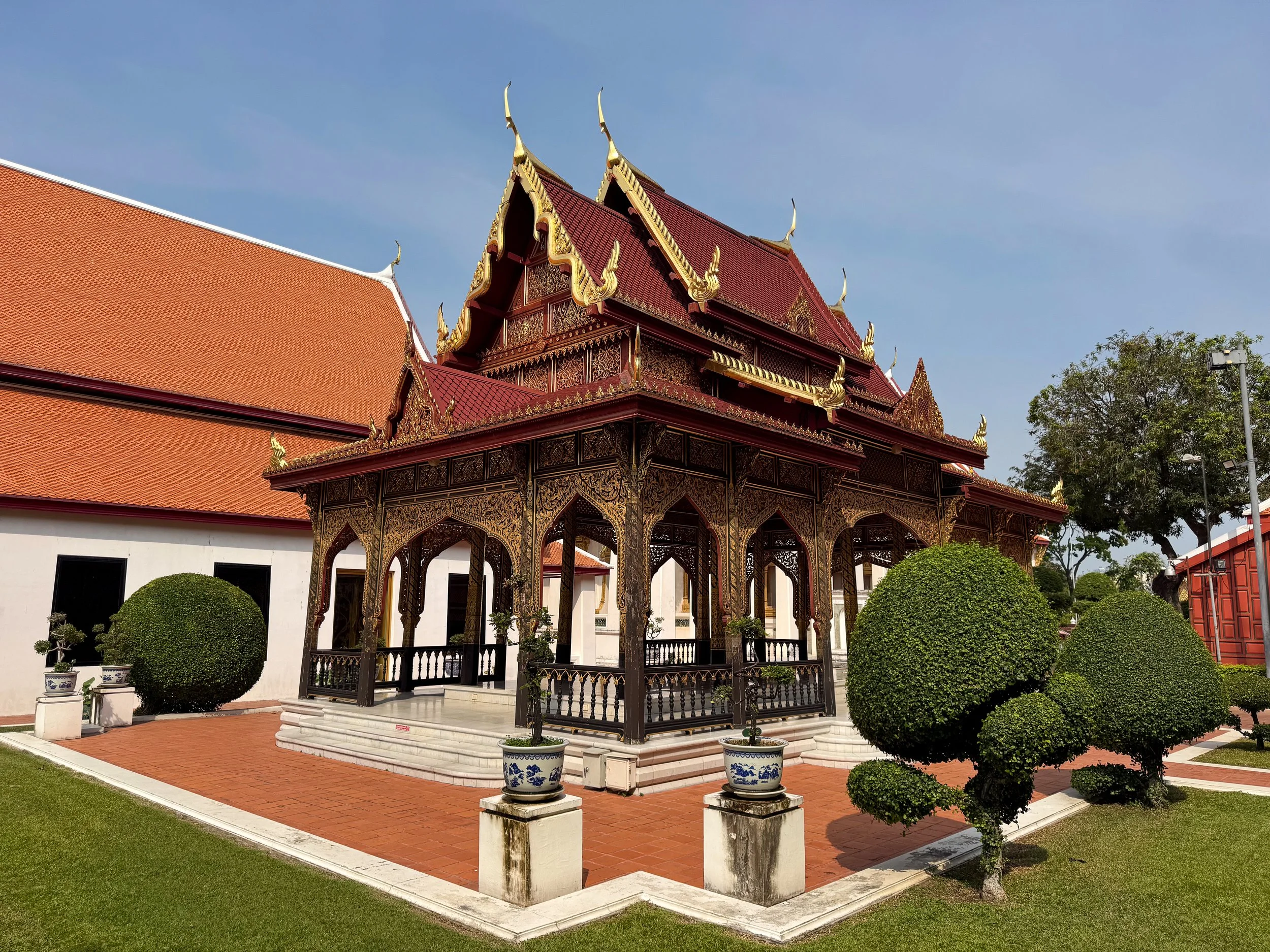
National Museum Bangkok. A collection of buildings and exhibits housing royal and early Thai artifacts on the grounds of the country’s former royal palace.
Ishra Vinijaya Throne Hall. A former throne hall featuring past royal thrones, royal puppets and musical instruments, household items, ceramics and furniture.
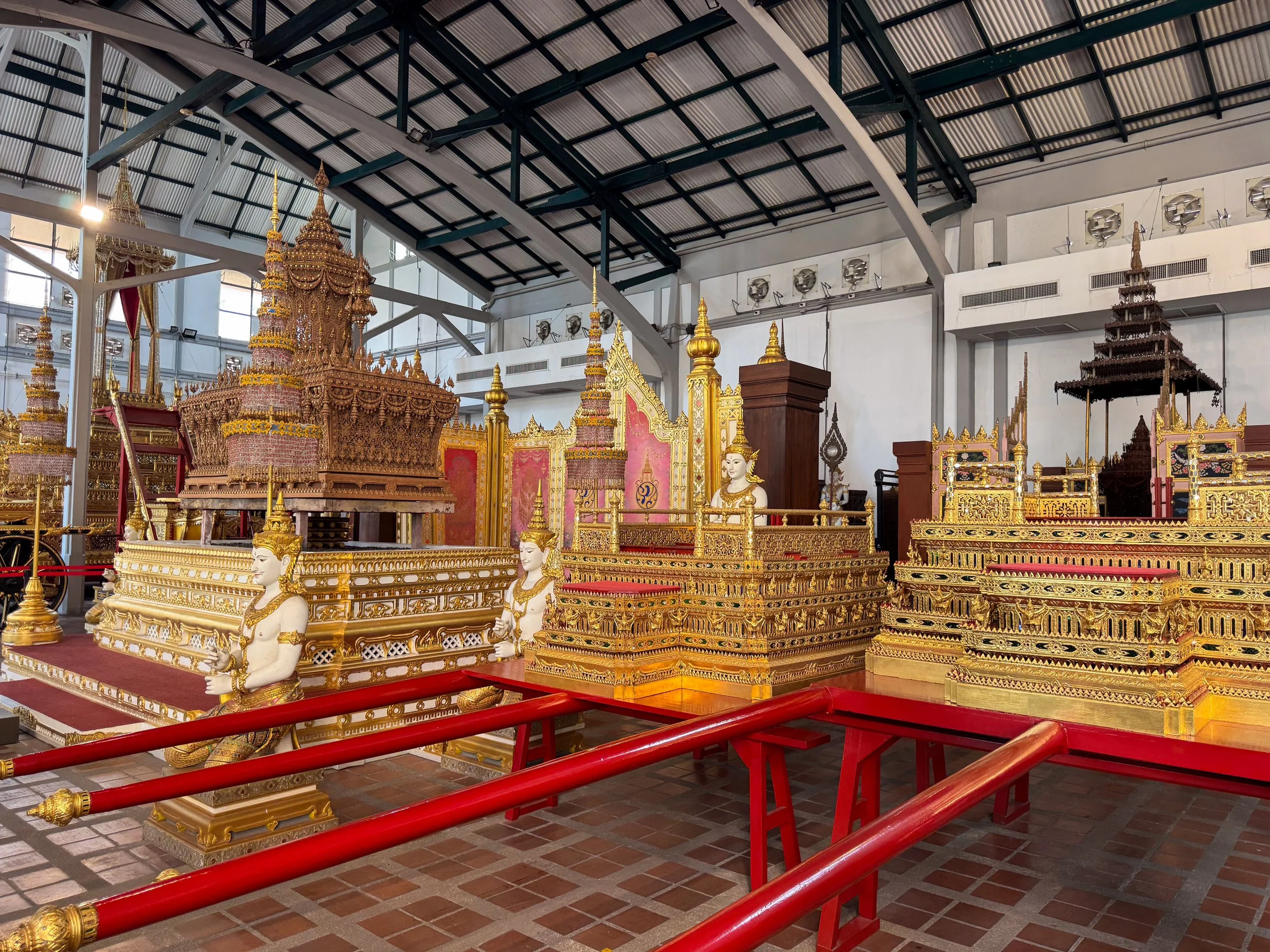
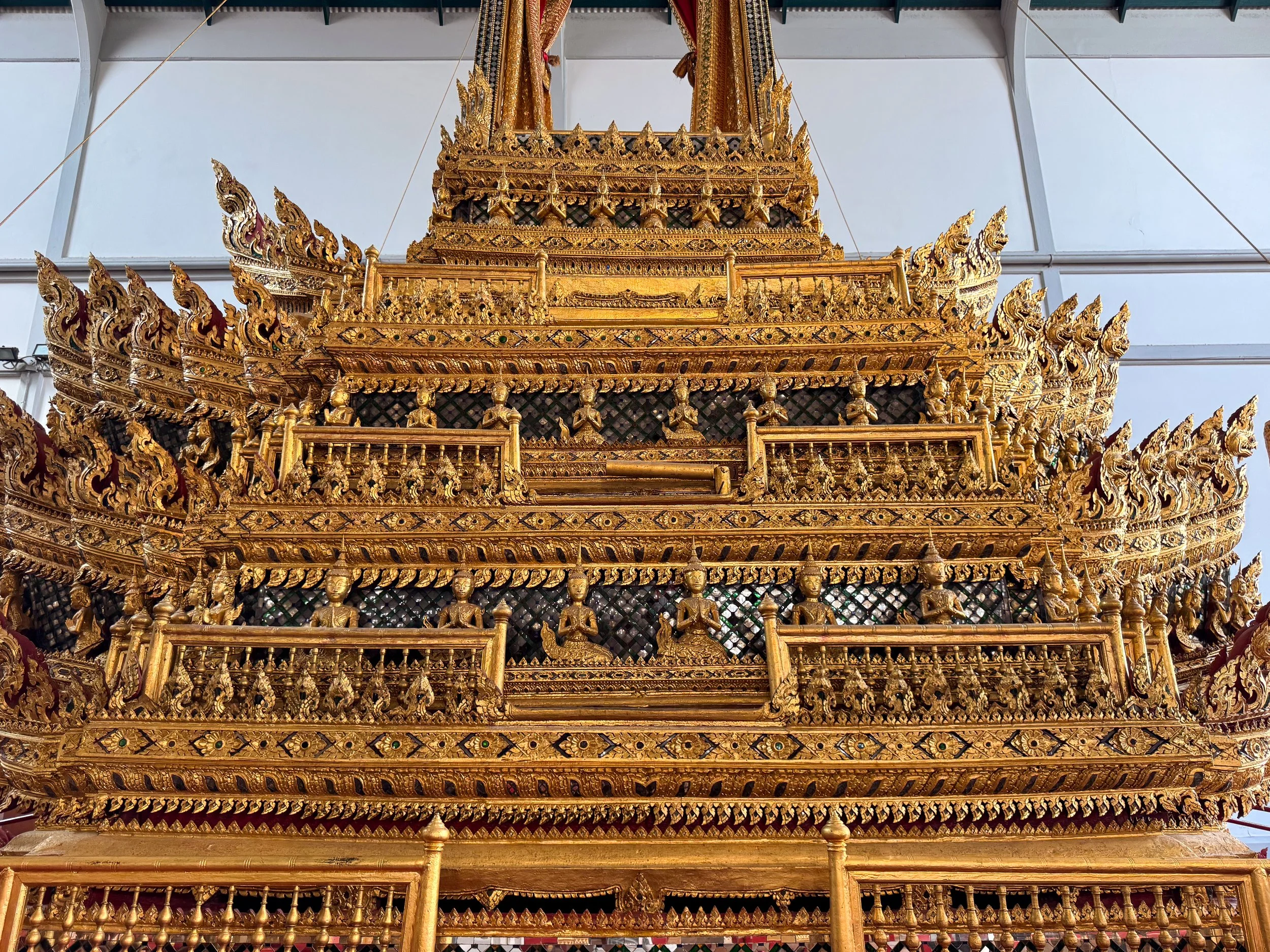
Hangar of Thai Royal Funeral Chariot. A garage displaying several gilded and elaborately designed royal chariots from past royal funerals. Some date back nearly 300 years.
Buddhaisawan Hall. A temple with elaborate paintings of Buddhist stories and legends. Its golden Buddha was hidden from view for restoration.
Maha Surasinghanat Building & Praphat Phiphithaphan Building. Two exhibit halls with galleries displaying early artifacts and maps from Thailand’s history including stone, bronze and ivory buddhas, statues and stelae.

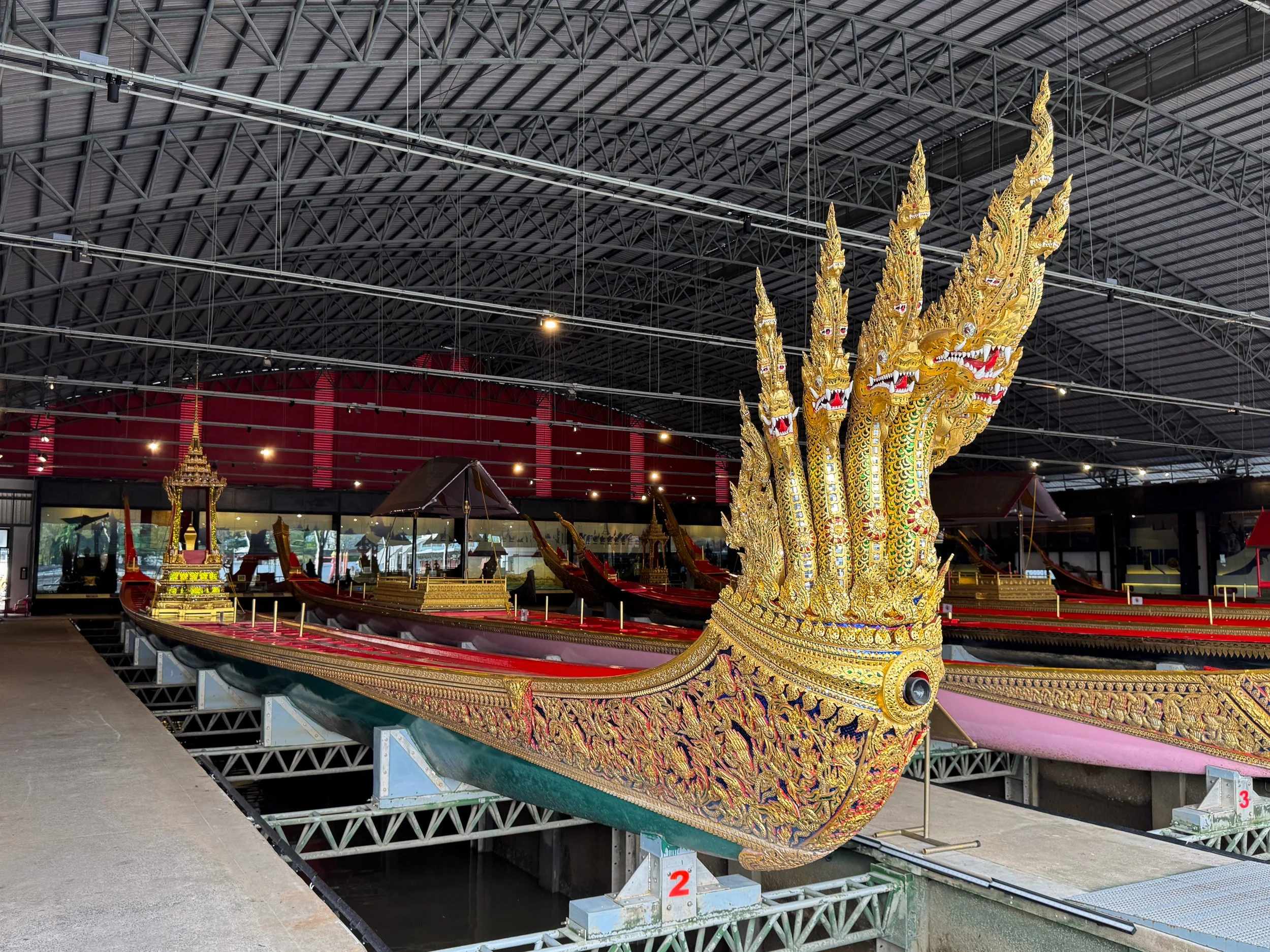
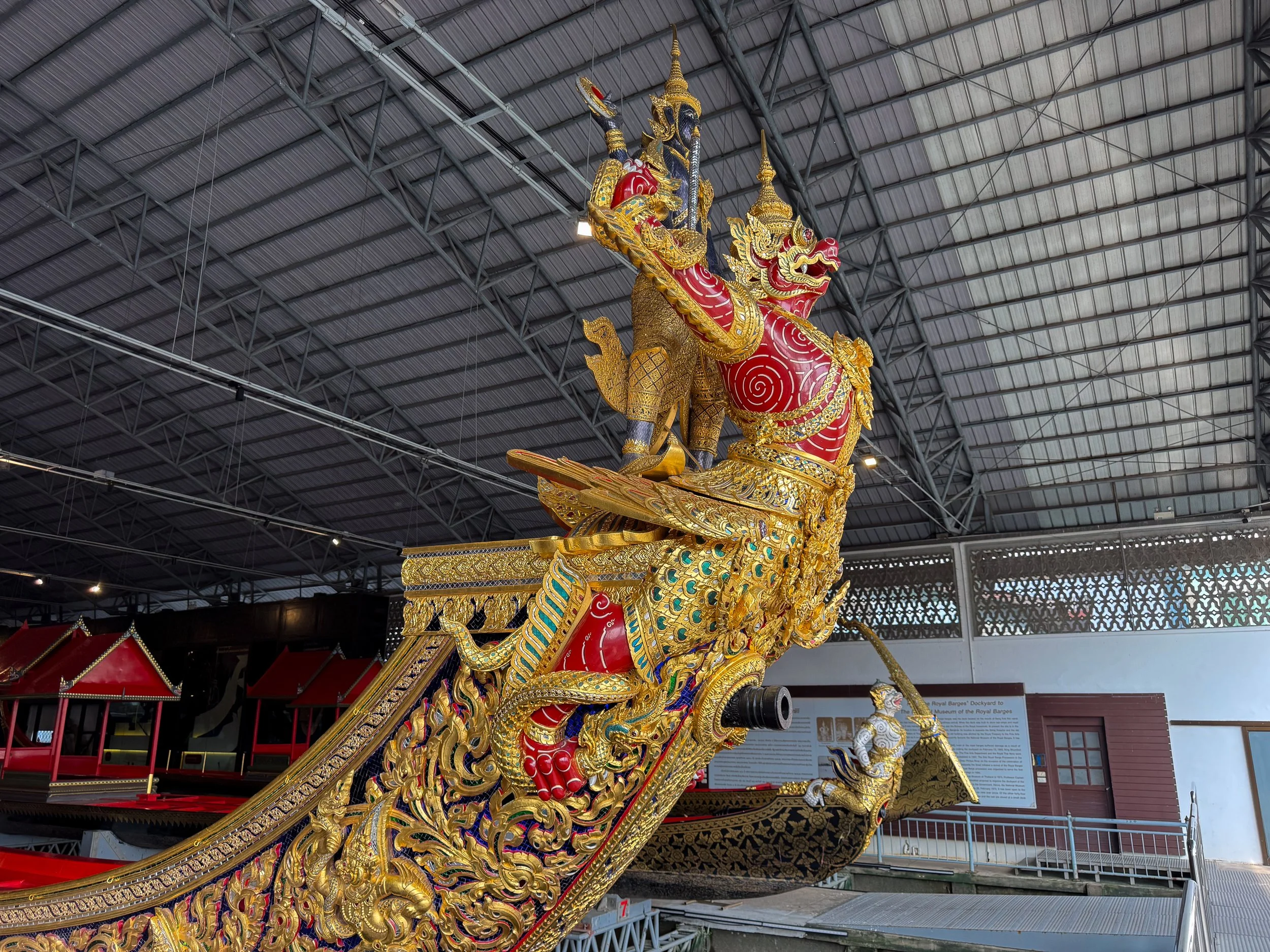
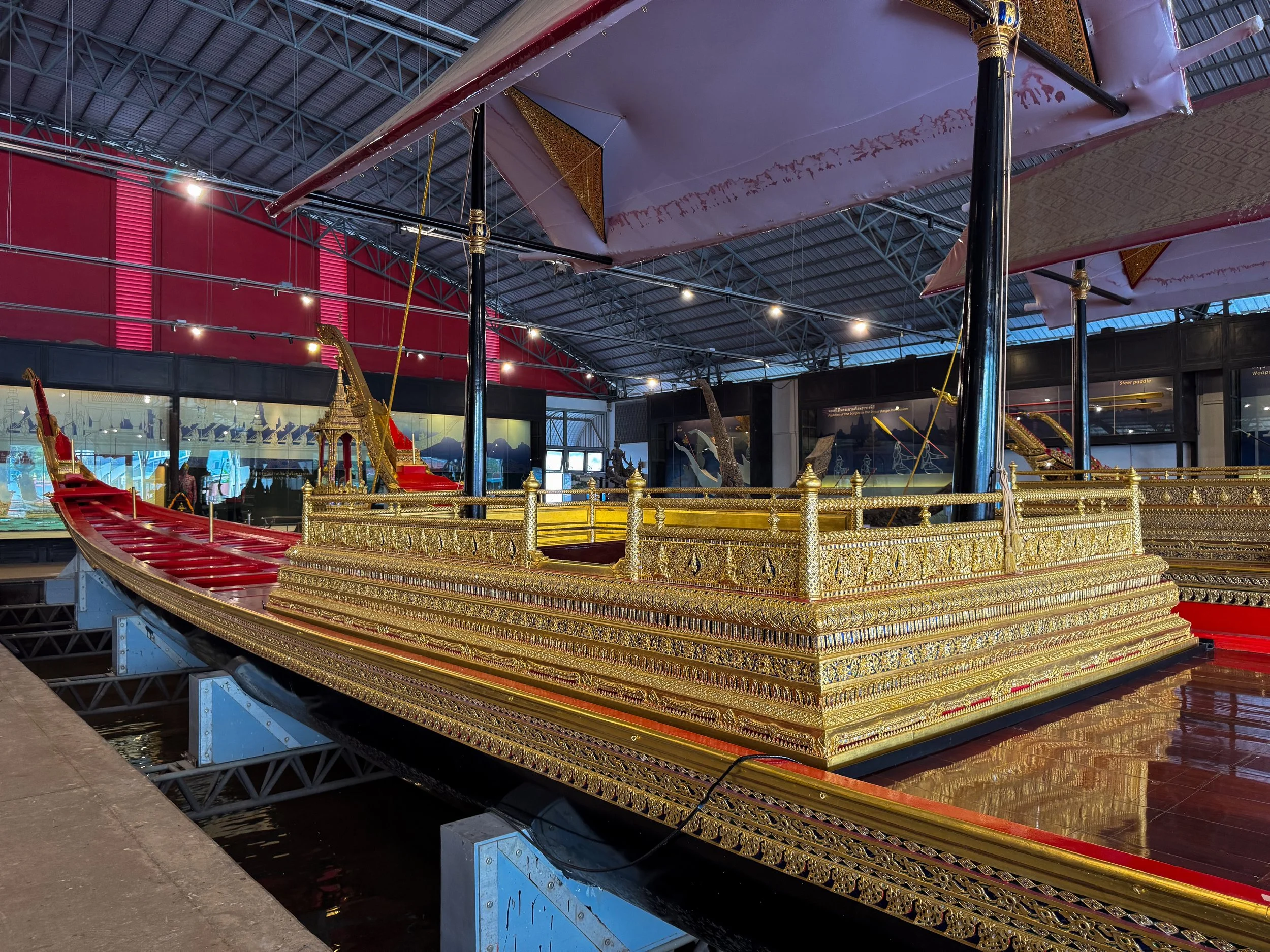
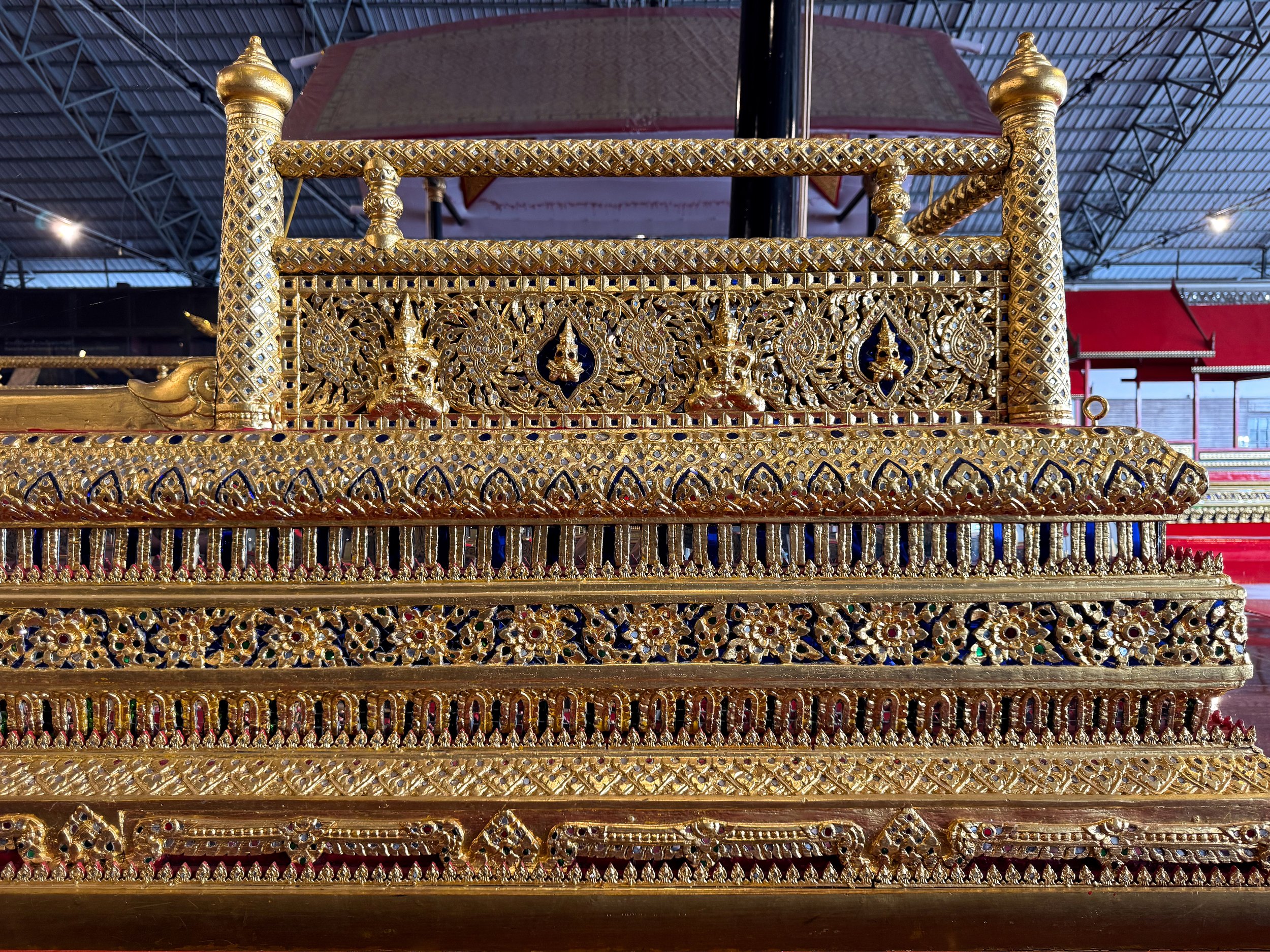
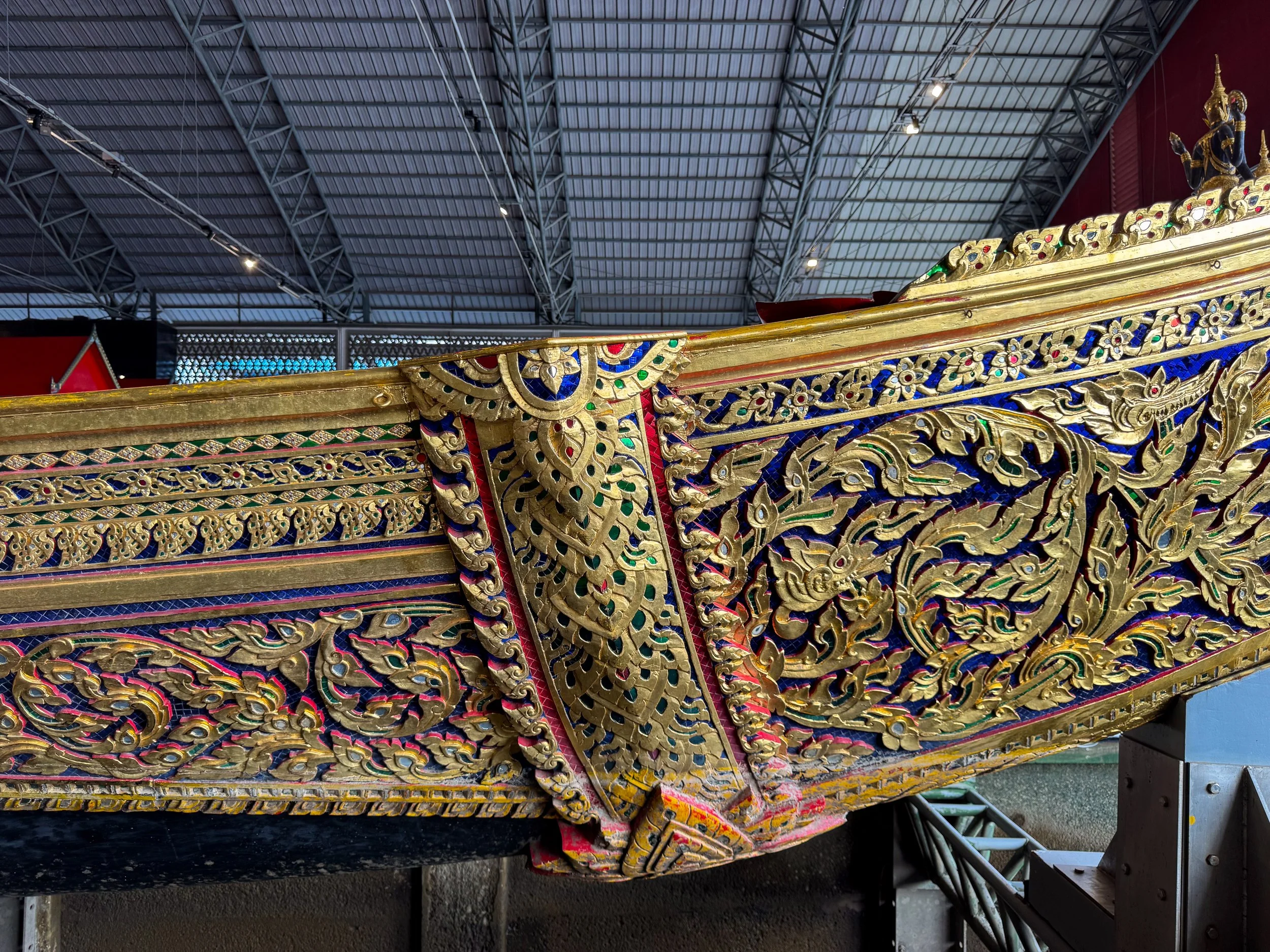
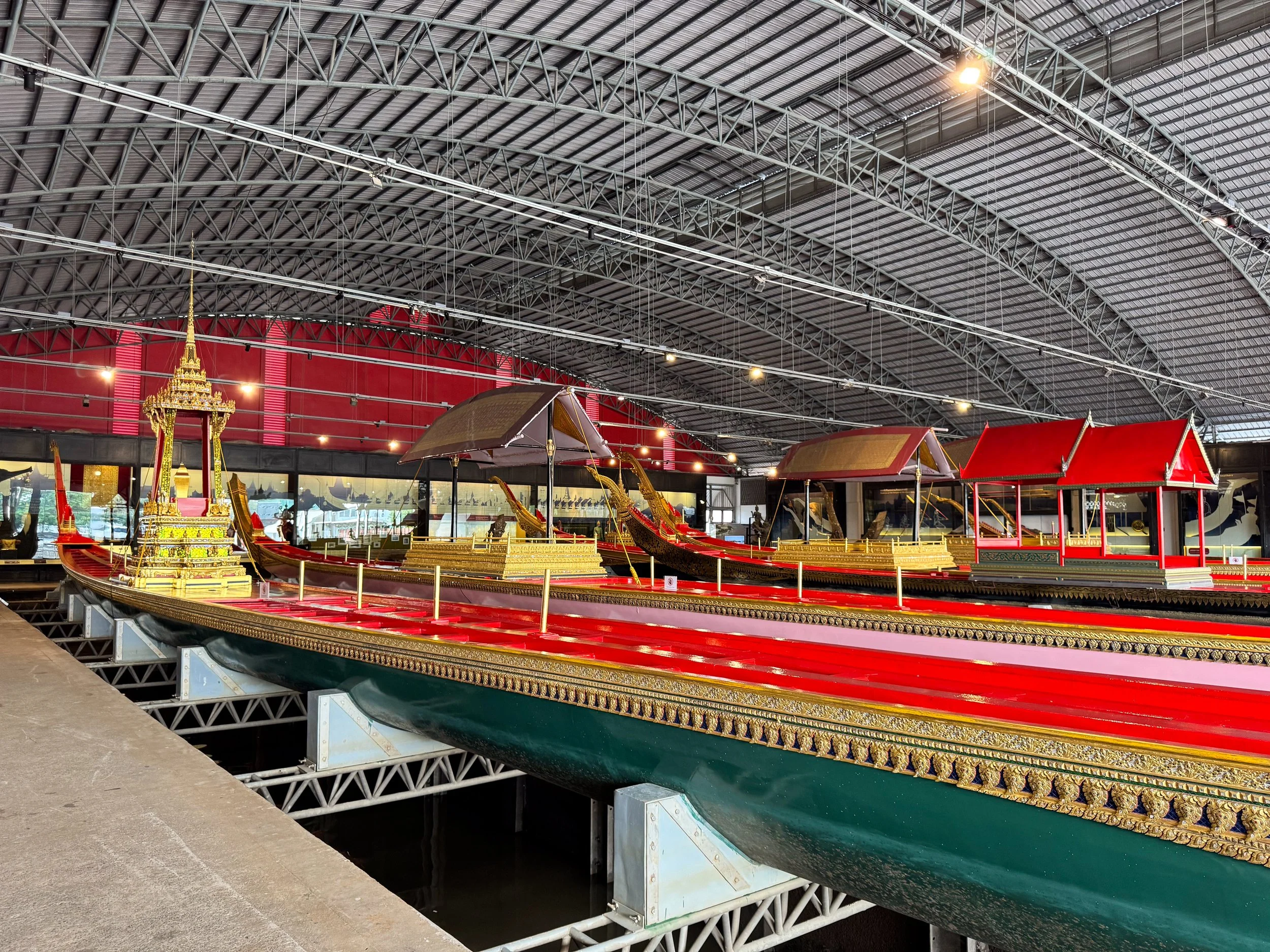
Royal Barges National Museum. A waterfront museum housing several Thai royal barges used during ceremonies, coronations and funerals. Most have a red body, pedestal for the monarch and dozens of seats for rowers. The vessels are decorated in ornate gold paintings, jeweled mosaics and headed with figures of mythical creatures like dragons and deities. Remnants of the oldest barges date back nearly 300 years, however the oldest were destroyed during wartime.
Neighborhoods & Streets
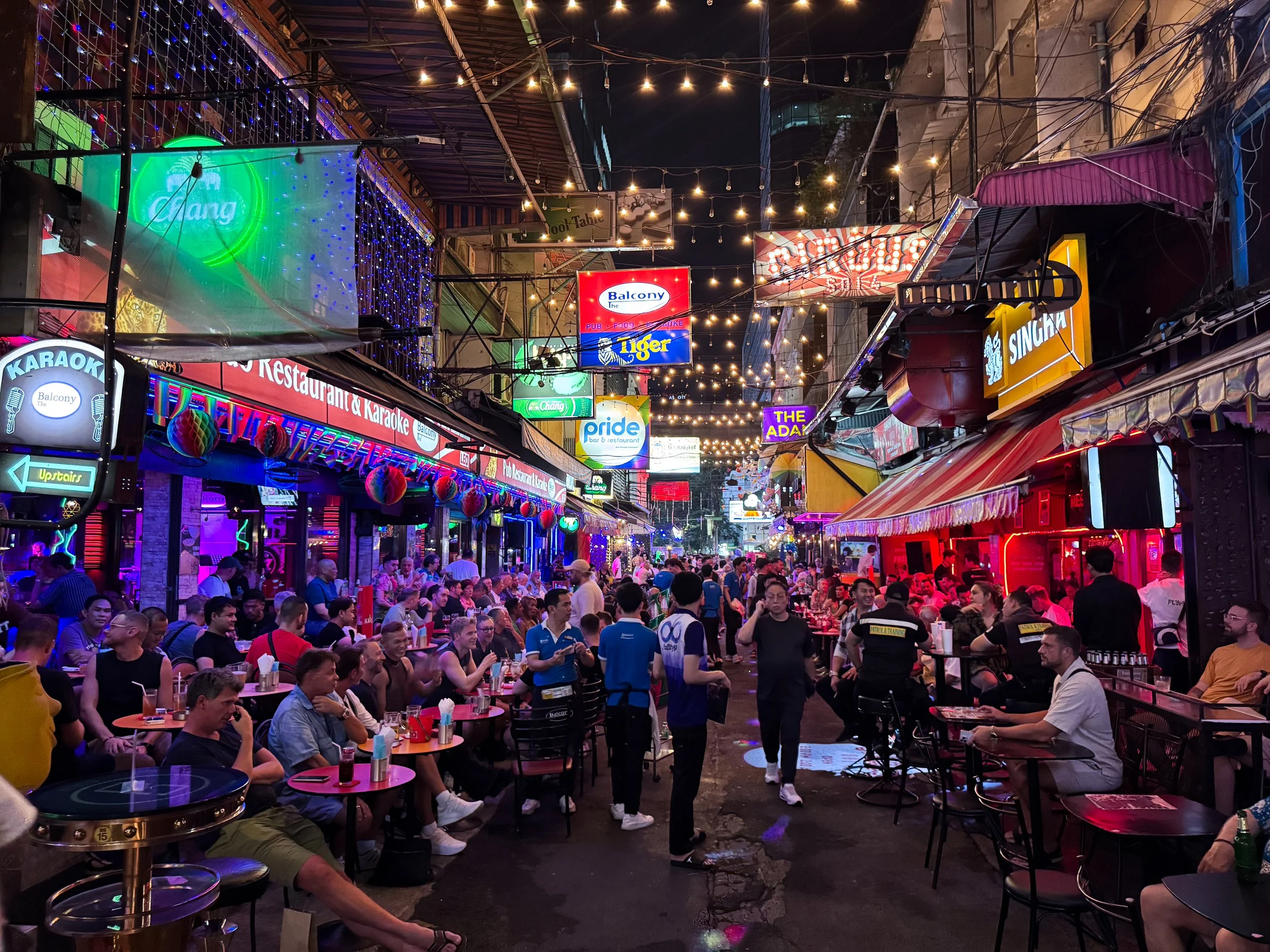
Silom. A central neighborhood with night markets, street food vendors and modern skyscrapers. It’s a hub for the LGBTQ+ community with a welcoming atmosphere and popular alley with gay bars and clubs.
Silom 4 Alley. An alleyway in Silom lined with gay bars serving boozy cocktails, nightly drag shows and lady boy dance performances. The alley gets busy after 9pm and the nightlife continues into the early morning hours. We sat outside at BAS Living Room sipping on classic and signature cocktails like a Long Island iced tea and passion fruit gin & tonic.
Chinatown. A vast neighborhood with bustling night markets, the city’s highest density of street food vendors, roads lined with tall vertical signs inscribed with Chinese lettering, red paper lanterns and gold jewelry shops.
Phra Nakhon District. A neighborhood with some of the city’s most important Buddhist wats, cultural and historic museums, the Thai Royal Palace and government buildings.
Khao San Road. A popular nightlife street and tourist trap with souvenir shops, overpriced bars, weed stores and backpacker hostels. Vendors sell roasted insects and display whole grilled alligators for the adventurous eaters. Go elsewhere for a more local and authentic atmosphere.
Sri Ram Buttri Road. A smaller nightlife street popular with locals and tourists lined with cute bars, vibey patios, massage studios, flowering trees and good prices. We sat down along the street at Wang’s Bar, ordering two drinks and getting the third one free. It’s a better alternative to the nearby Khao San Road.
See the Sights
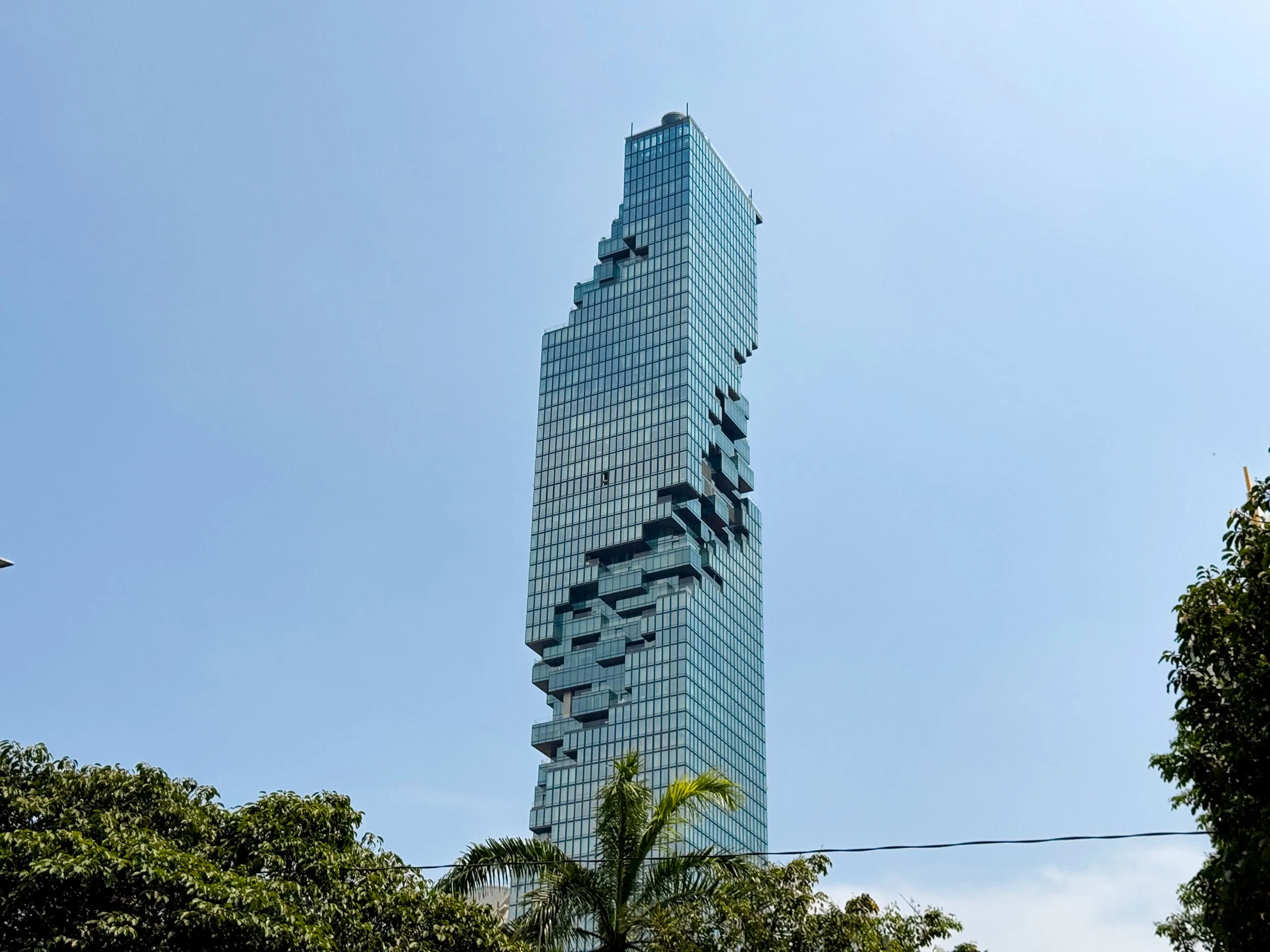
Maha Nakhon Tower. One of Bangkok’s most iconic high-rises. It’s recognizable by its fragmented and spiraling blue glass facade that looks as if it’s a video game or matrix glitch. We visited the Parlor Bar on the fourth floor for happy hour cocktails.
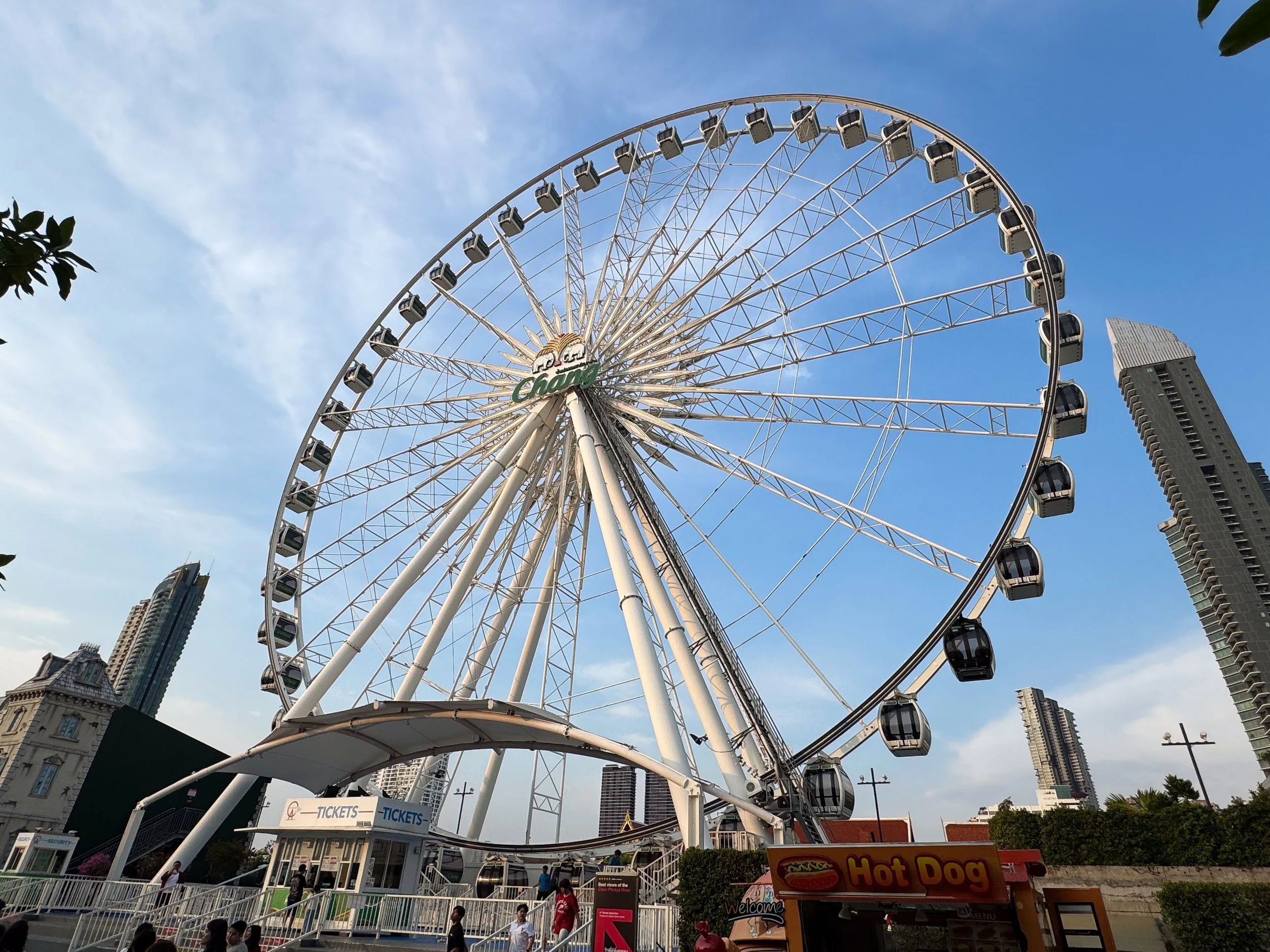
Asiatique Park. An outdoor riverfront mall and entertainment complex with Thailand’s largest ferris wheel, sightseeing boat routes, a Calypso Cabaret theater, street food vendors, restaurants, clothing shops and various stores with Thai goods. It’s a popular spot amongst both locals and tourists.
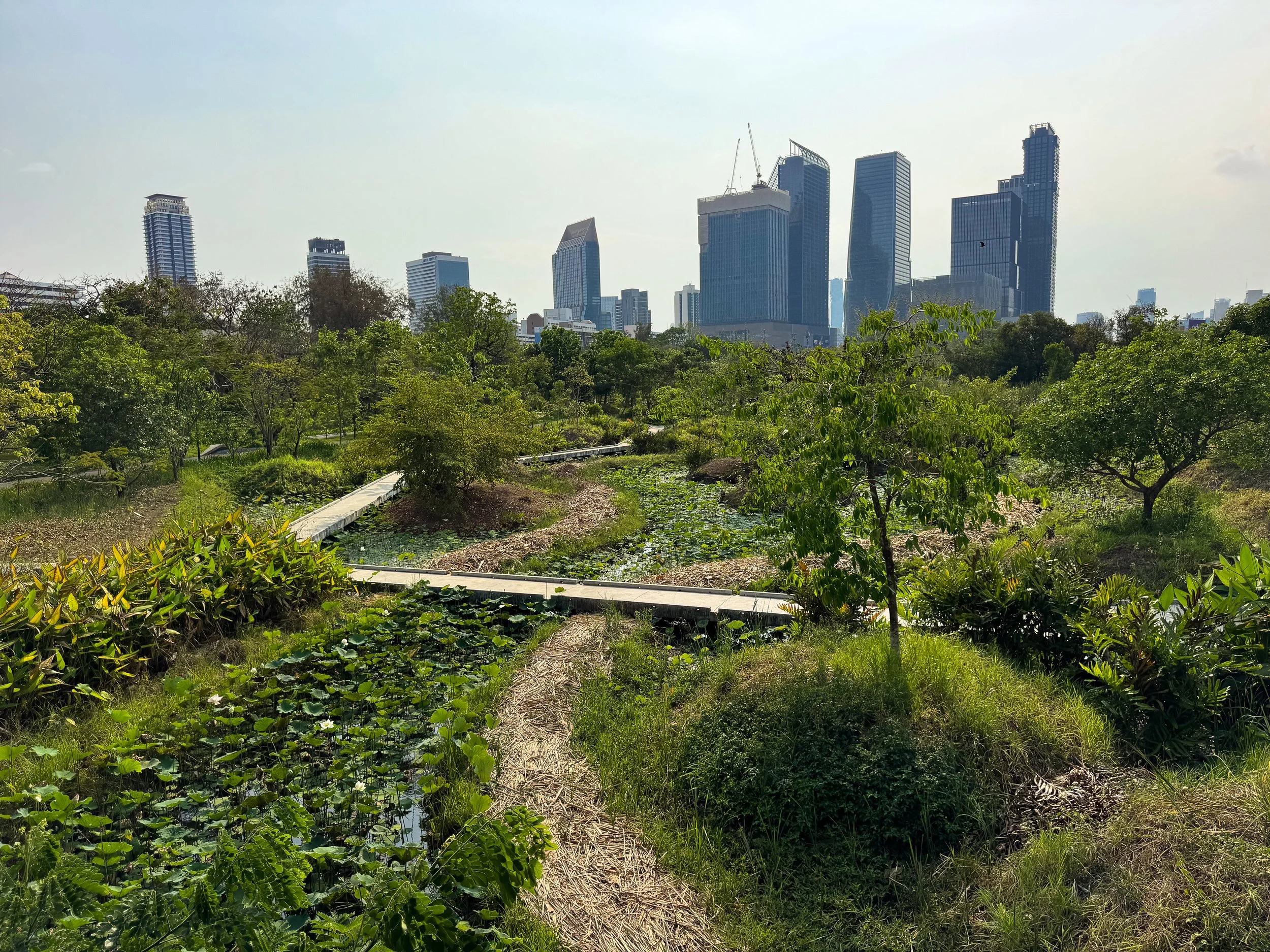
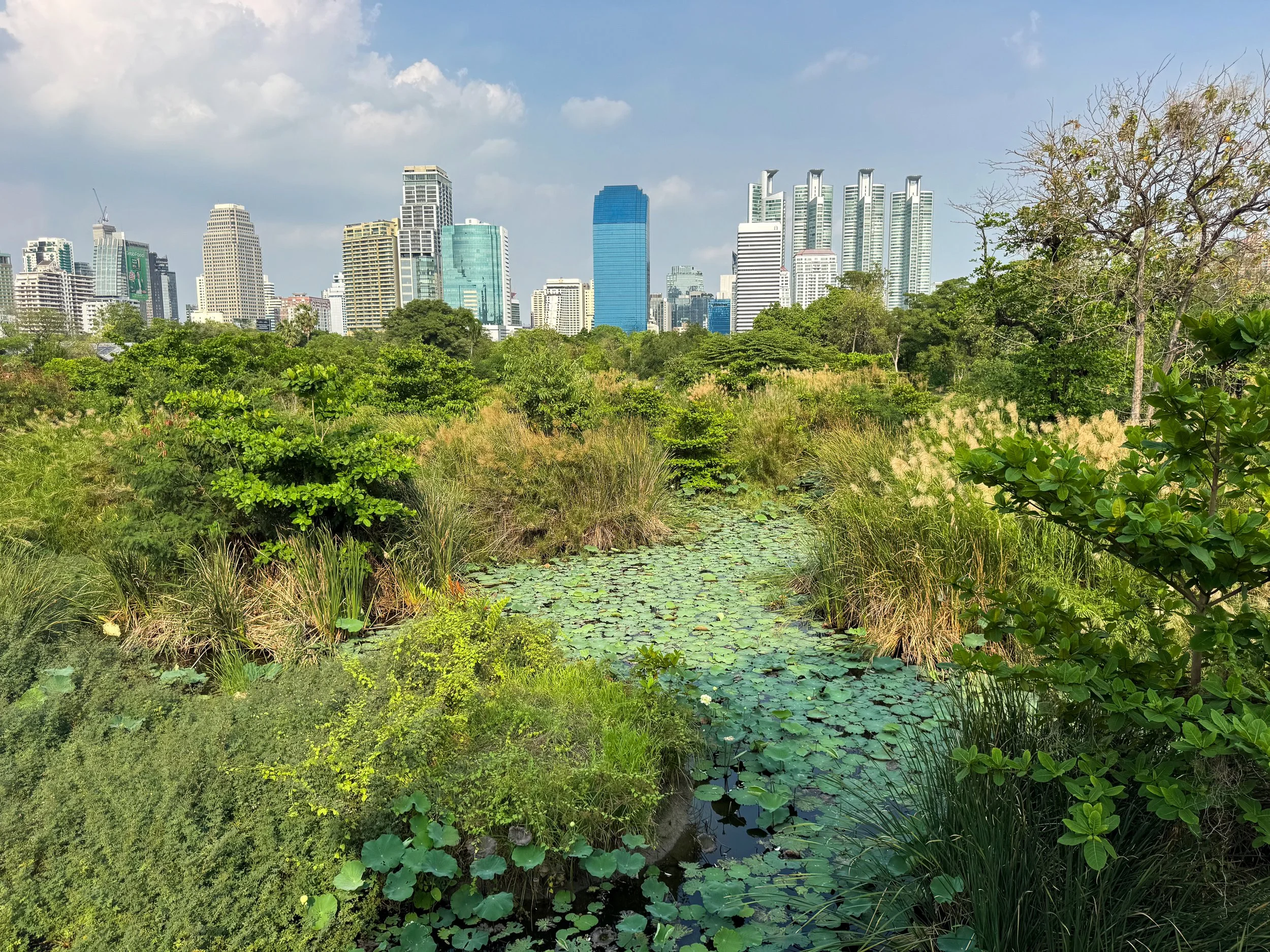
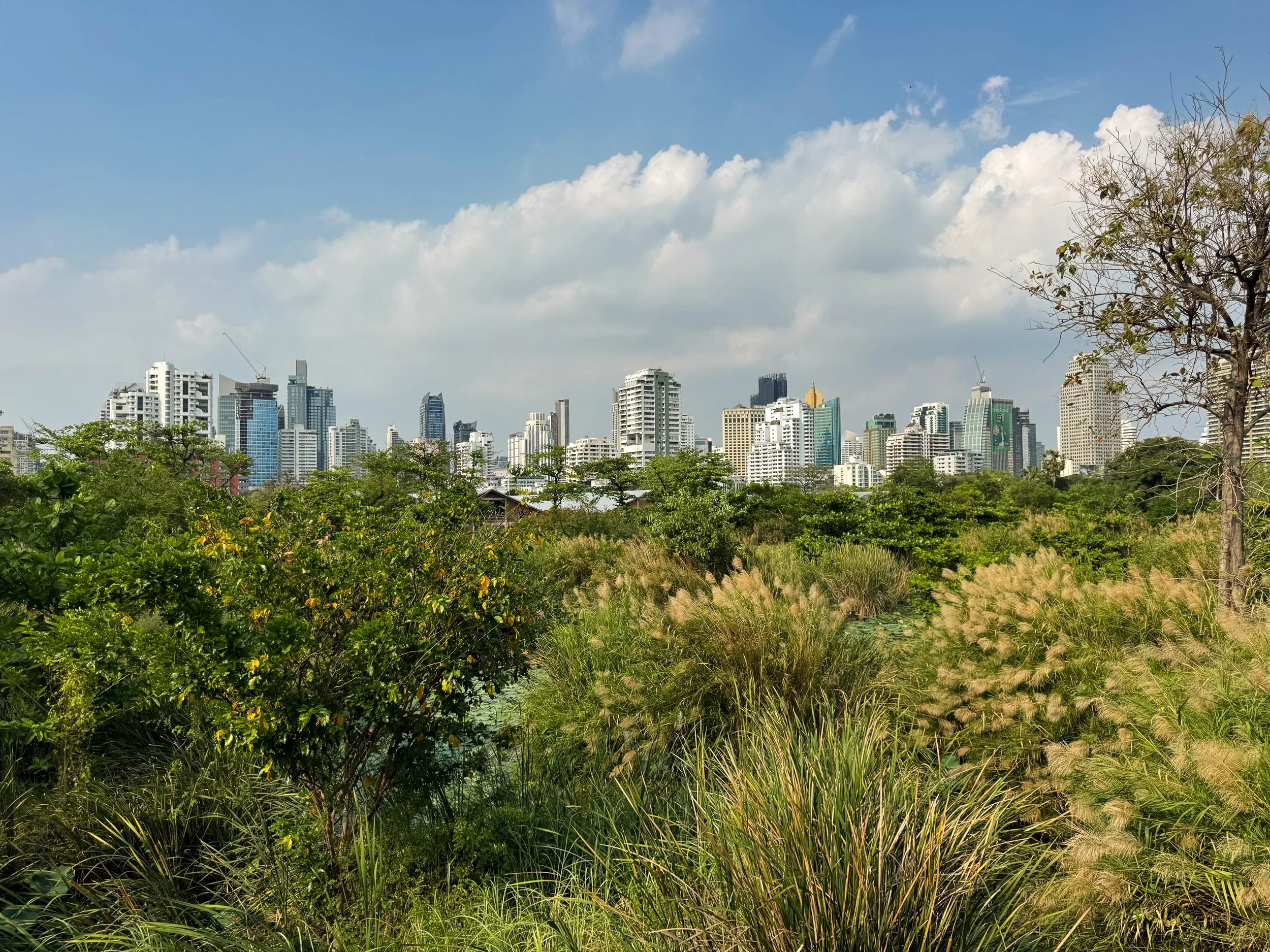
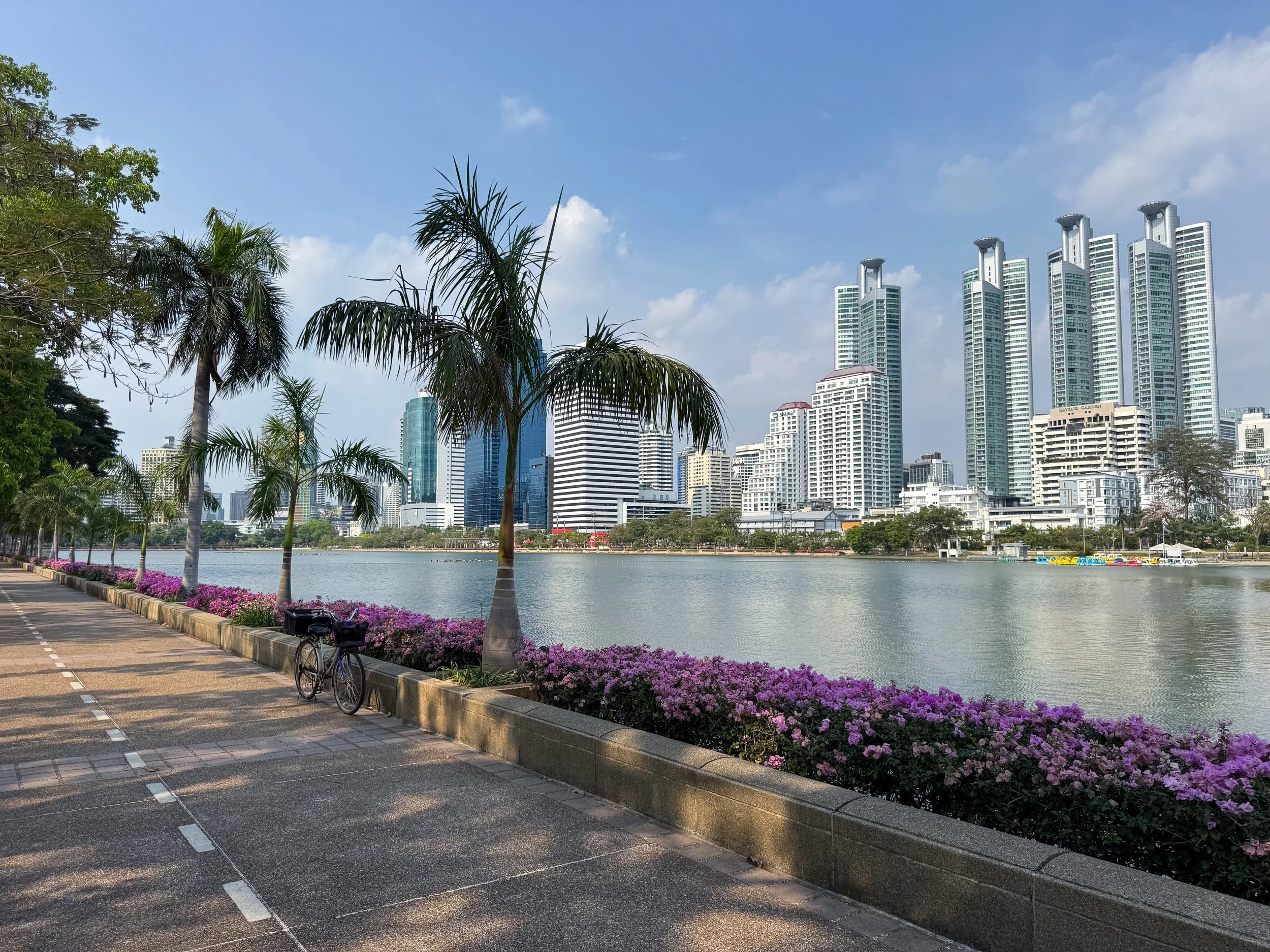
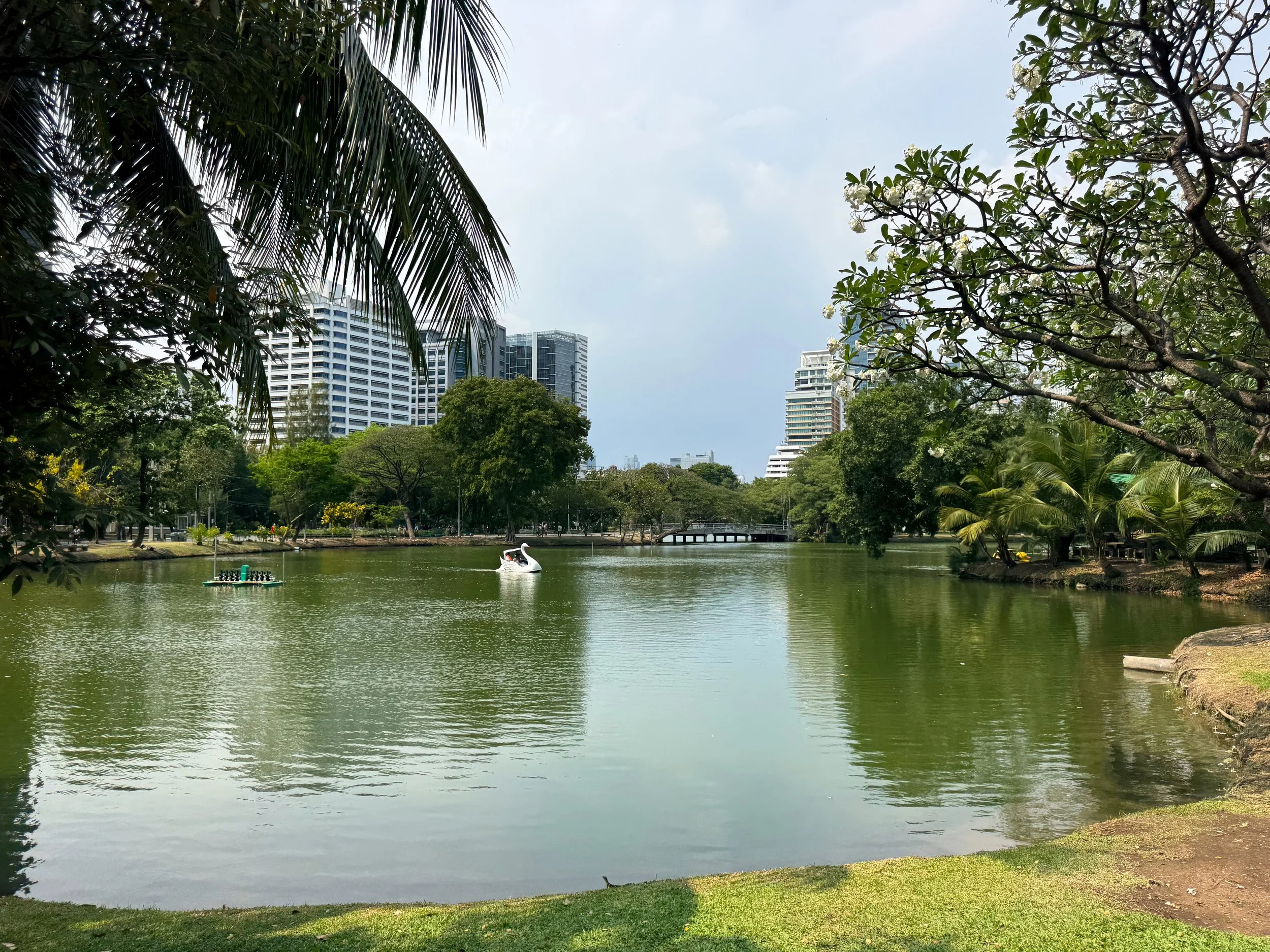
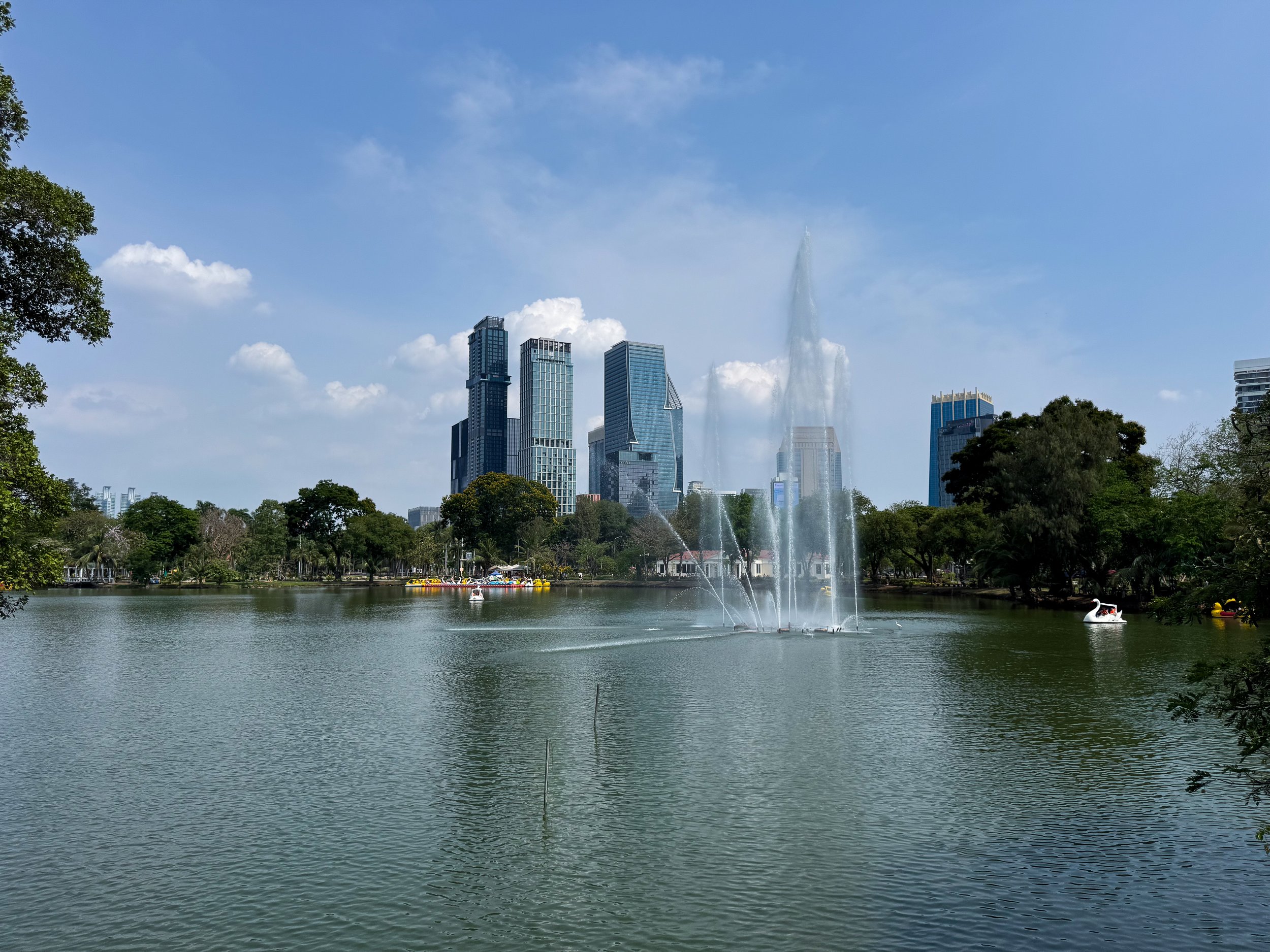
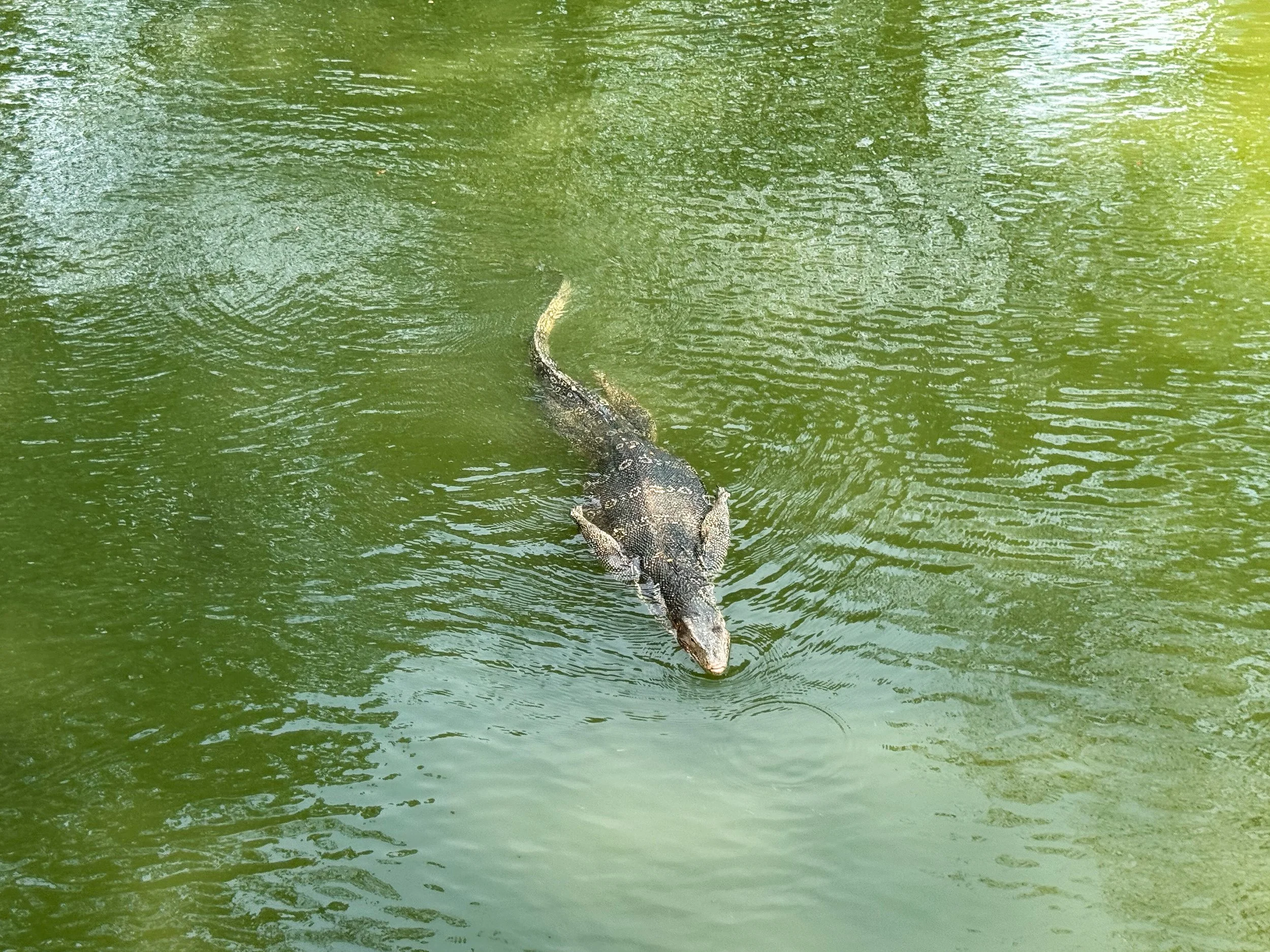
Lumphini Park. A lush city park with treelined paths, paddle boat rentals, small lakes and interconnected waterways home to giant water monitors. We spotted several of them swimming as well as jet black ravens bathing and white ibises hunting for fish.
Benchakitti Park. A manmade nature reserve in the middle of Bangkok with micro ecosystems representing what the landscape used to look like before urbanization. The park features a series of wet lands with endemic species of fish, birds, plants and trees all connected by a maze of zig zagging trails and an elevated boardwalk. It’s a tranquil escape from the chaos of the city and wonderful place to reconnect with nature, bird watch and exercise.
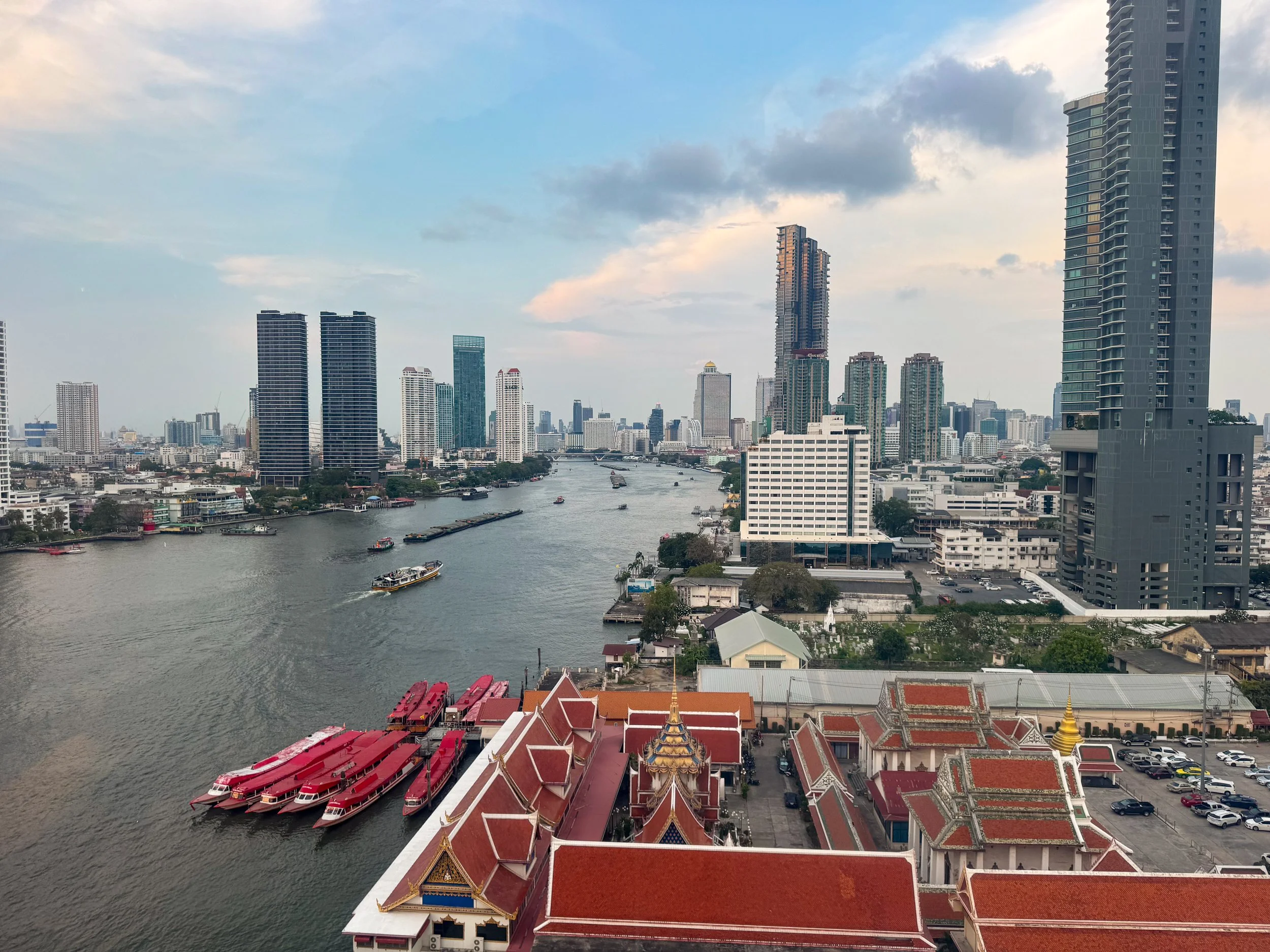
Chao Phraya River
The Chao Phraya River snakes through Bangkok passing several important sights and neighborhoods. There are multiple ferry lines that shuttle passengers up and down the river to various stops along the way. It was one of the best ways to see the city and get around.
Chao Phraya Tourist Boat. A two level ferry that slowly navigates along the river with an audio guide pointing out some of the riverfront’s main sights. It’s an affordable alternative to the expensive boat tours. One way tickets cost less than $3 USD with boats leaving every 15-30min.
Chao Phraya Express Boat (Yellow Flag). A covered long boat that quickly navigates between stops along the river. One way tickets cost less than $1USD with boats leaving every 15min.
Long Boat Ferry. There are several ferries that shuttle passengers across the river for 5 Bhat (less than 2 cents). It’s the perfect way to get to the other side of the river when exploring on foot. We took the ferry across between the Khlong San Pier and Si Phraya Ferry Pier as well as Tah Tian (Royal Palace) and Wat Arun.

Shop the Markets
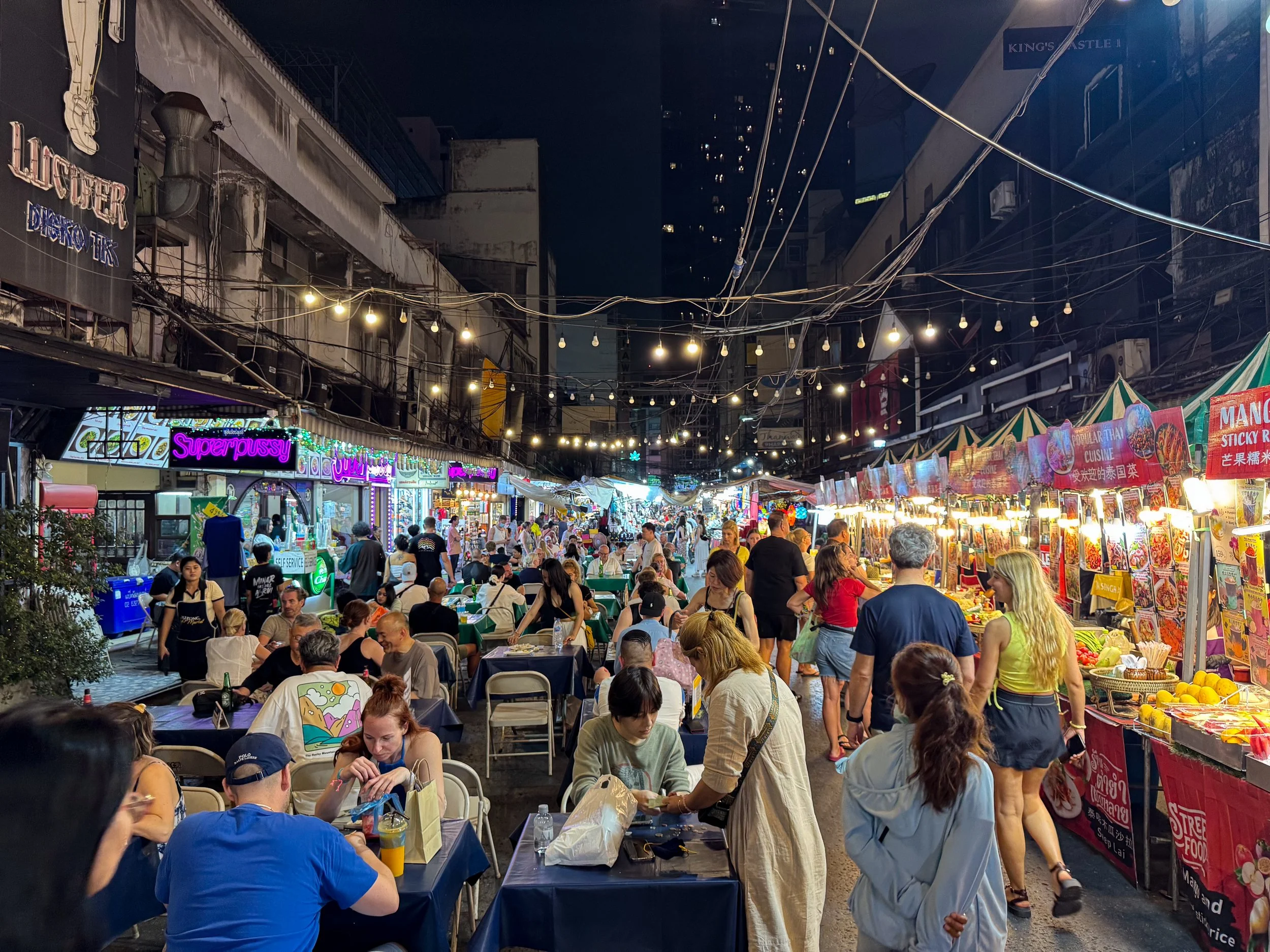
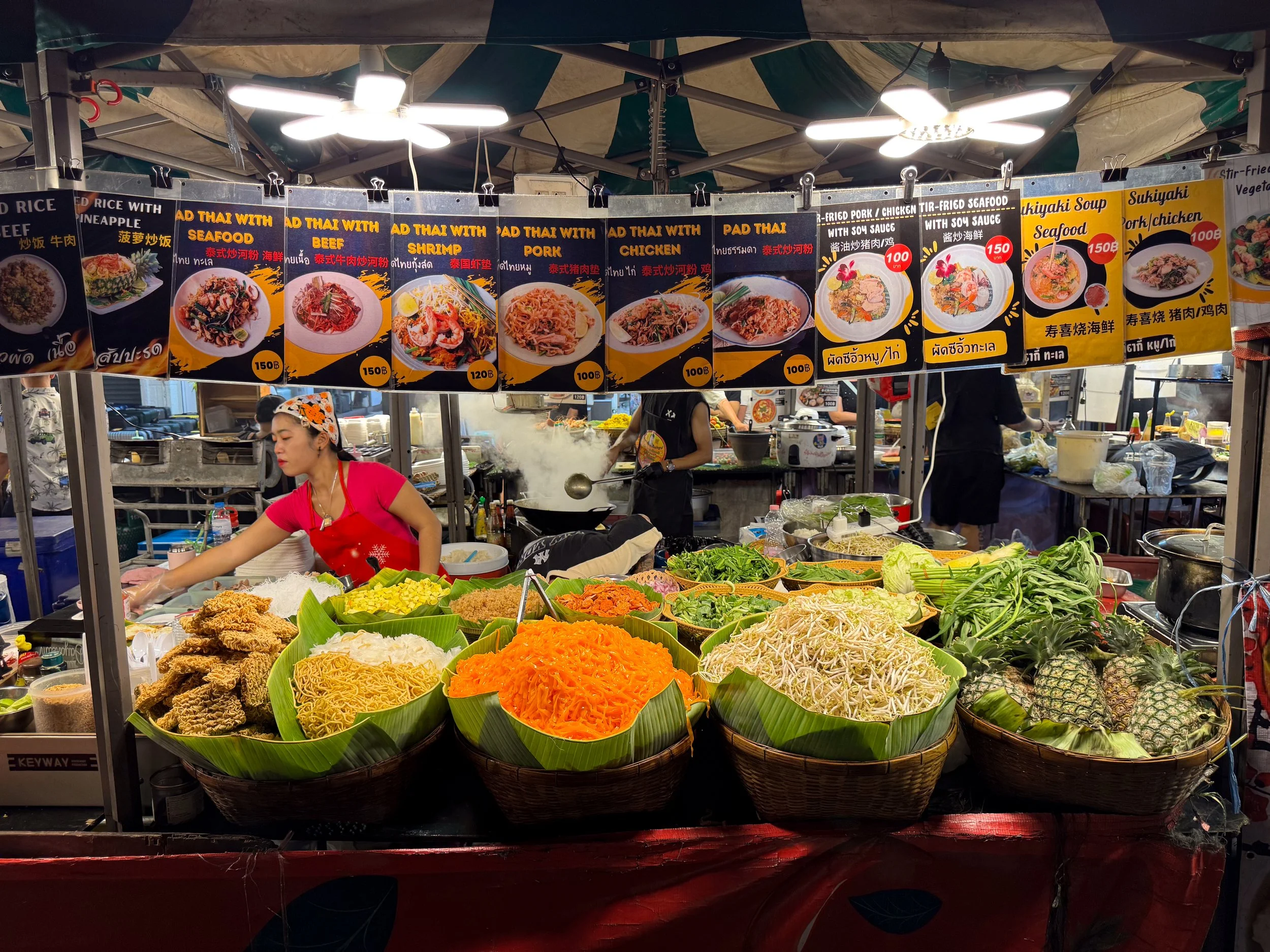
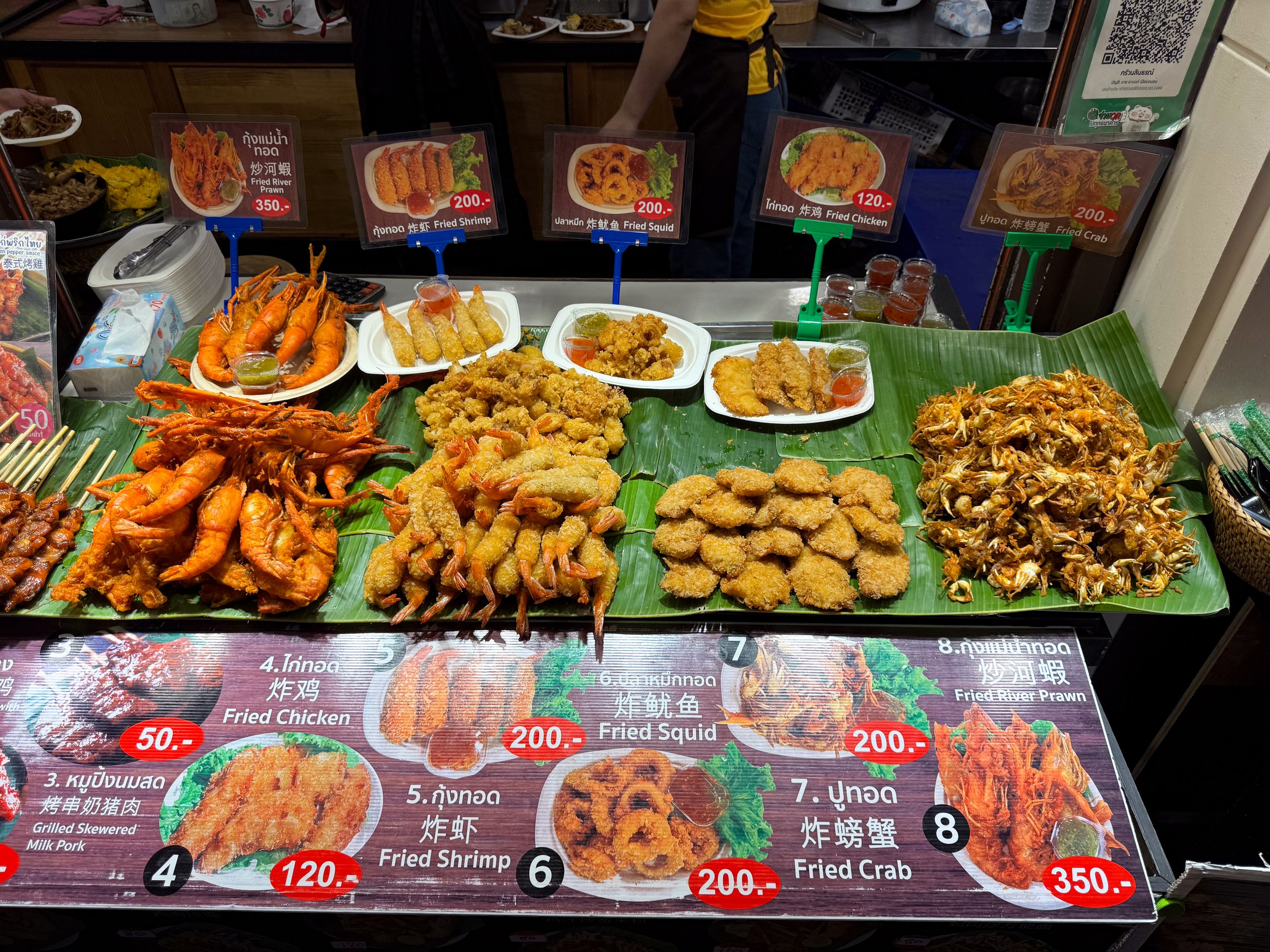
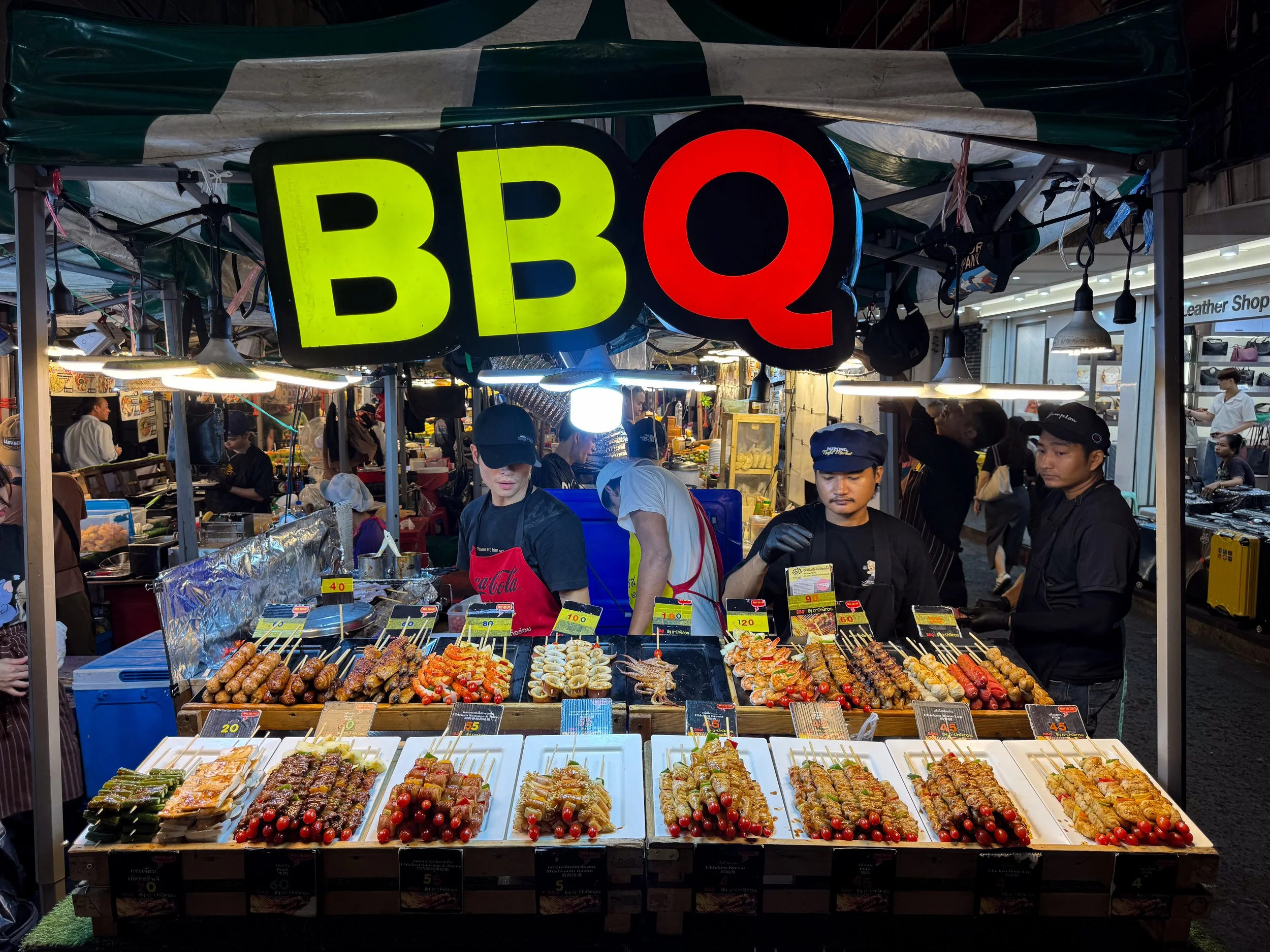
Patpong Night Market. A night market with street food vendors selling grilled skewers, fried seafood, Thai noodles, rice dishes, spring rolls, papaya salad and cheap beers. We dined here twice, sampling dishes from several vendors. Our favorite bites were the barbecued squid and Tom Yum Goong Nam Khon, a creamy and spicy shrimp soup. There is a central dining space with plastic tables and chairs to sit down and enjoy. The market continues beyond the street food sections with the vendors selling knockoff handbags, shoes and watches. It’s a good spot to haggle for bohemian pants, t-shirts, jewelry and miscellaneous accessories.
Pro Tip. Haggle for goods, it’s part of the game. Never accept the first price. Offer half and start walking away when the vendor rejects. Soon after, they’ll agree to your price.
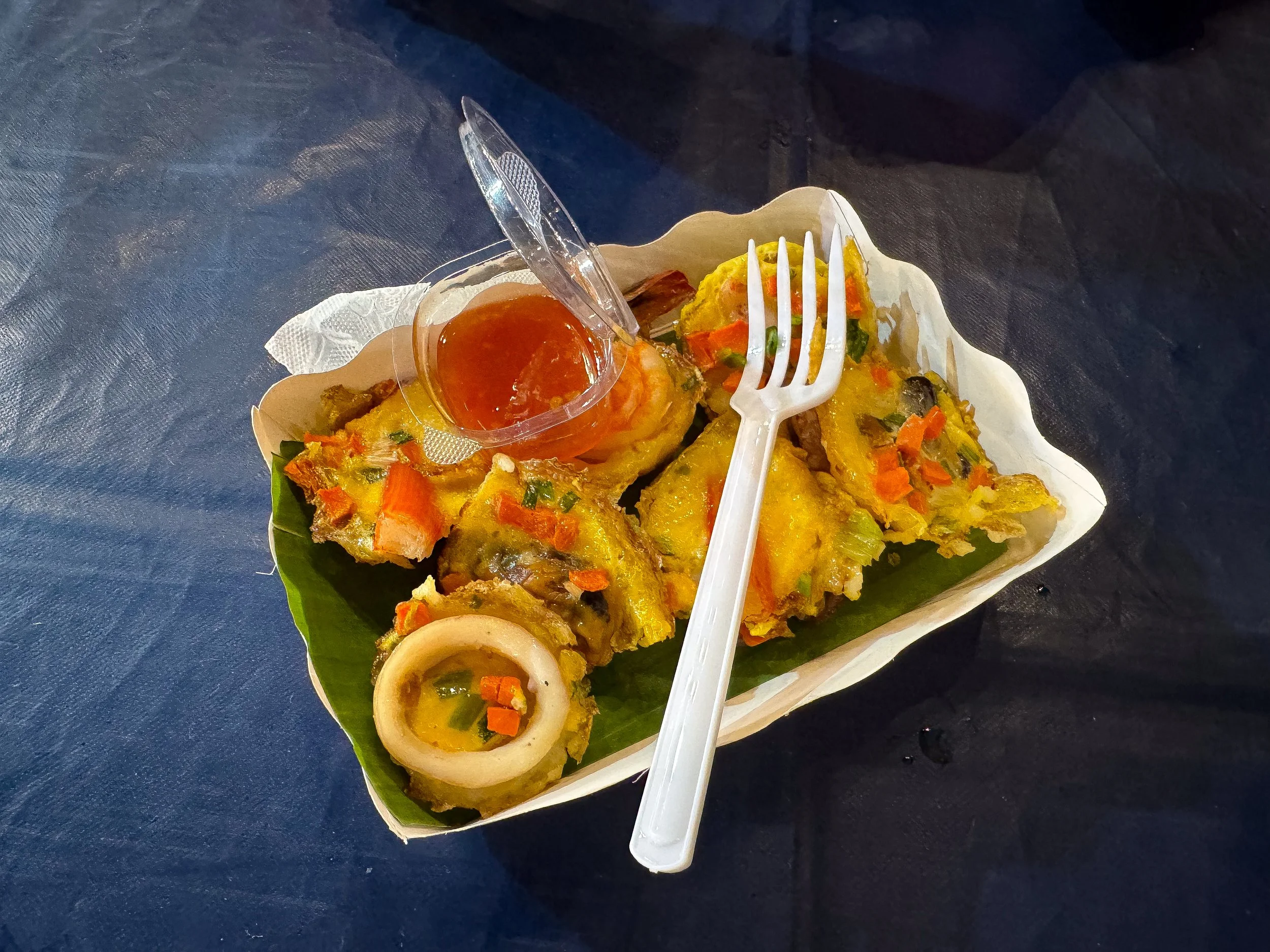
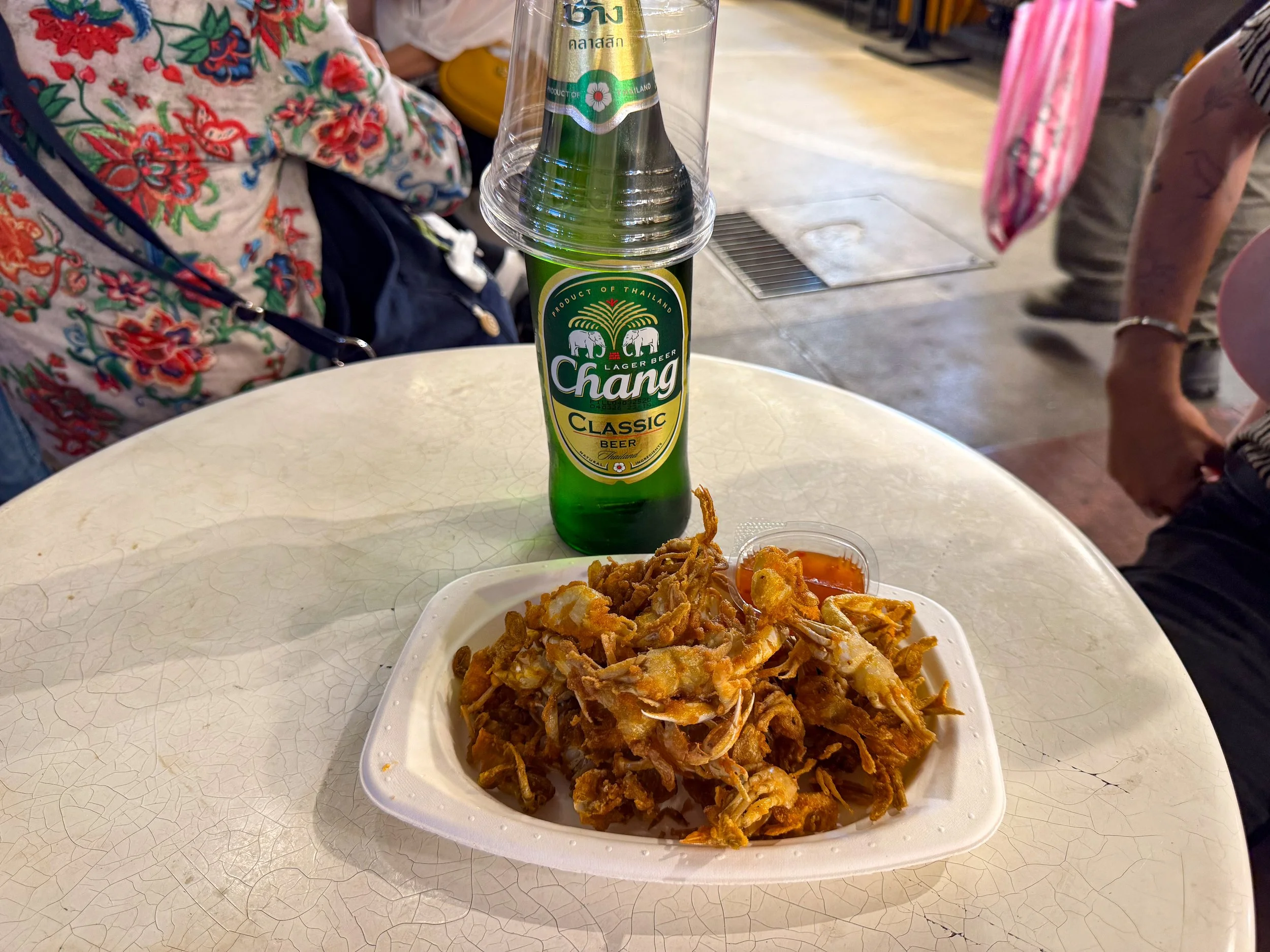
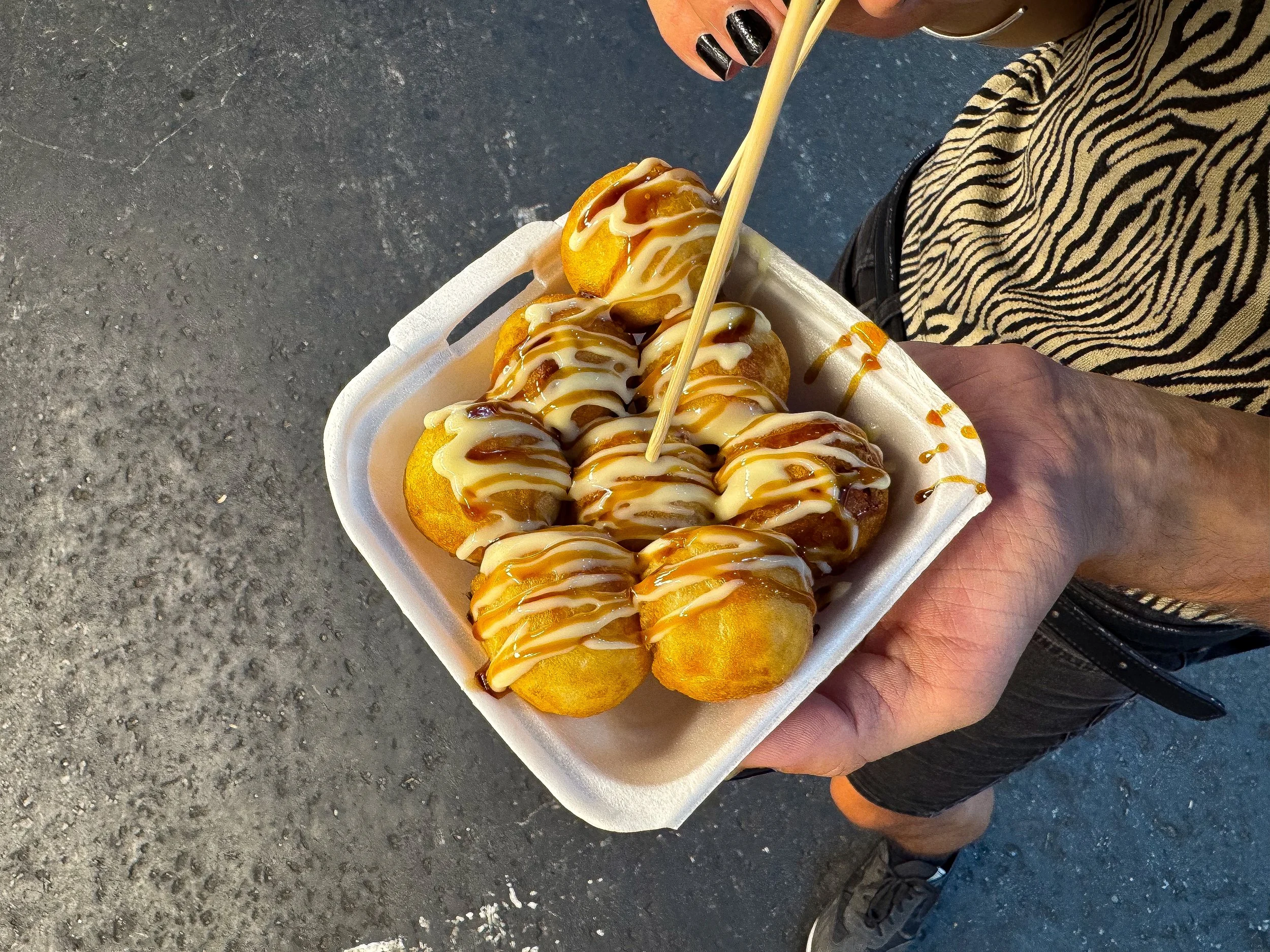
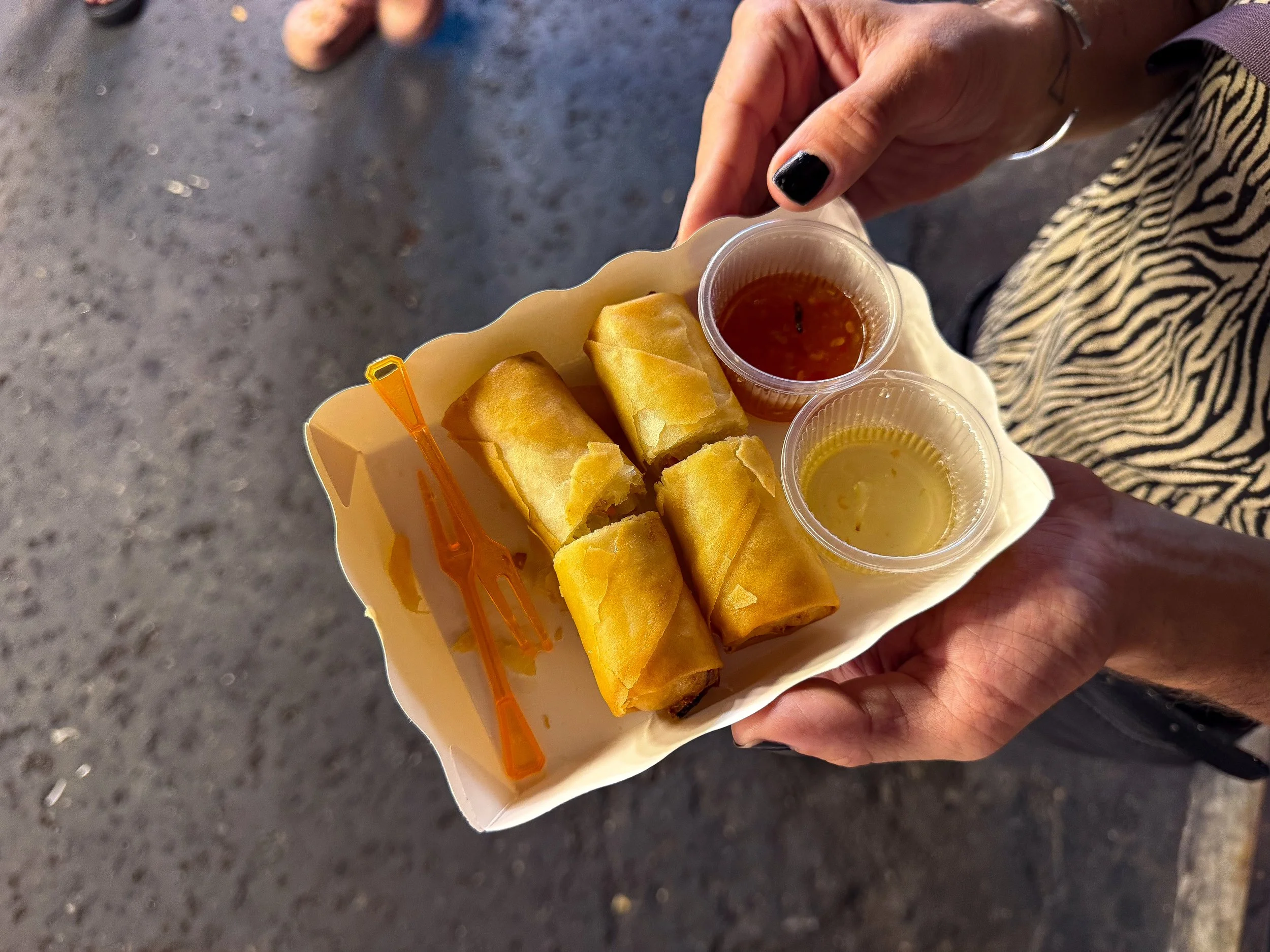
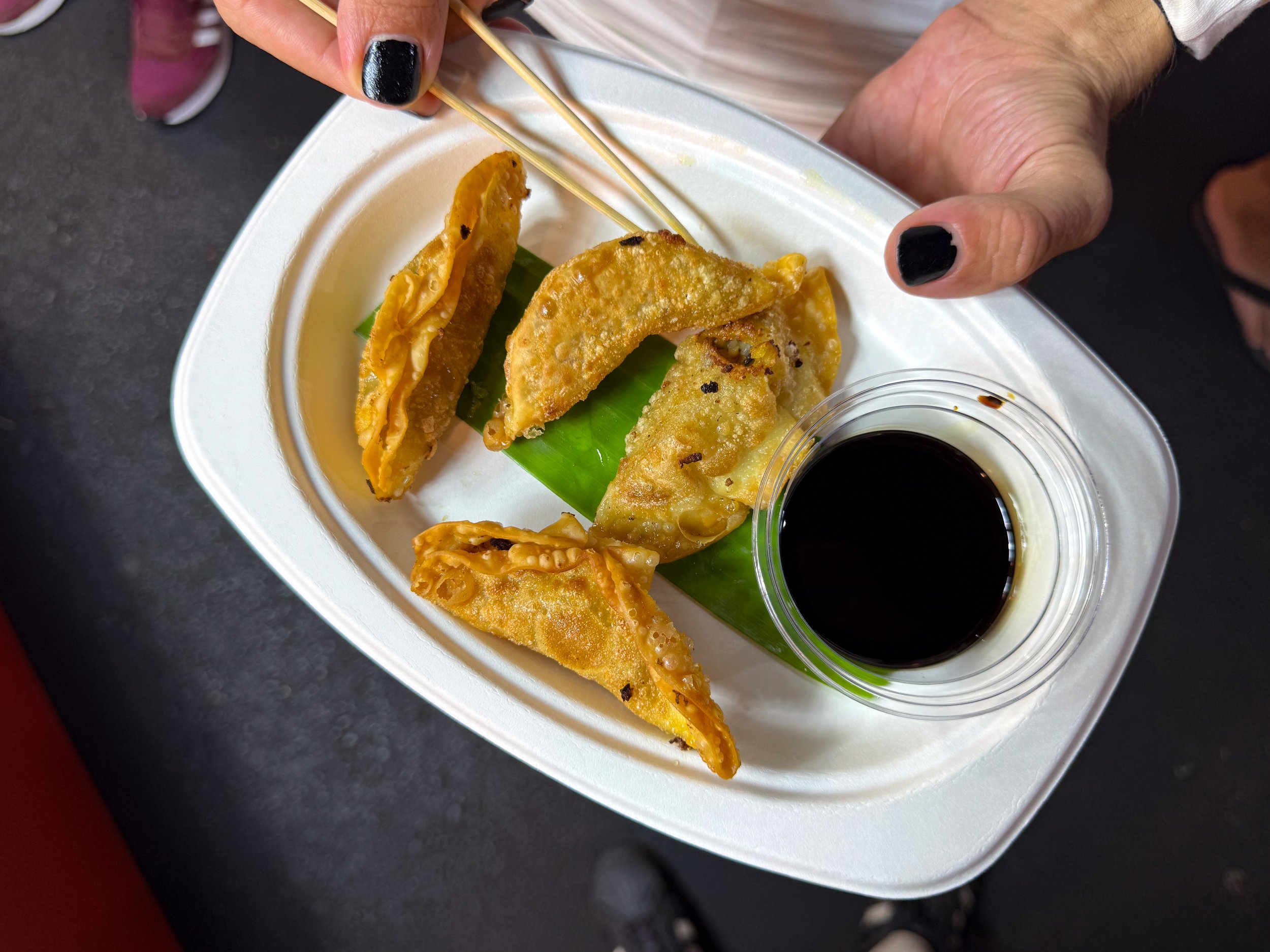
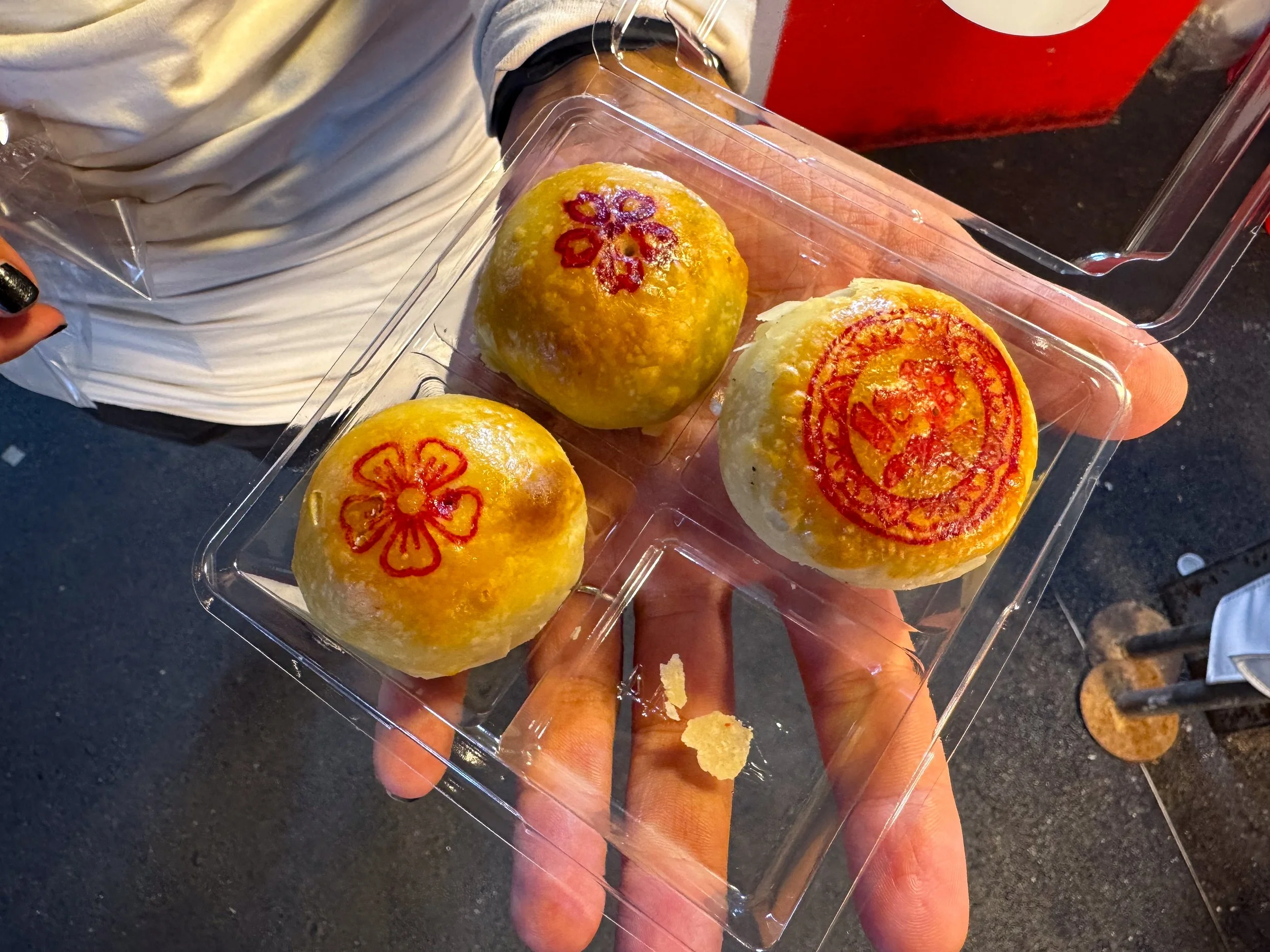
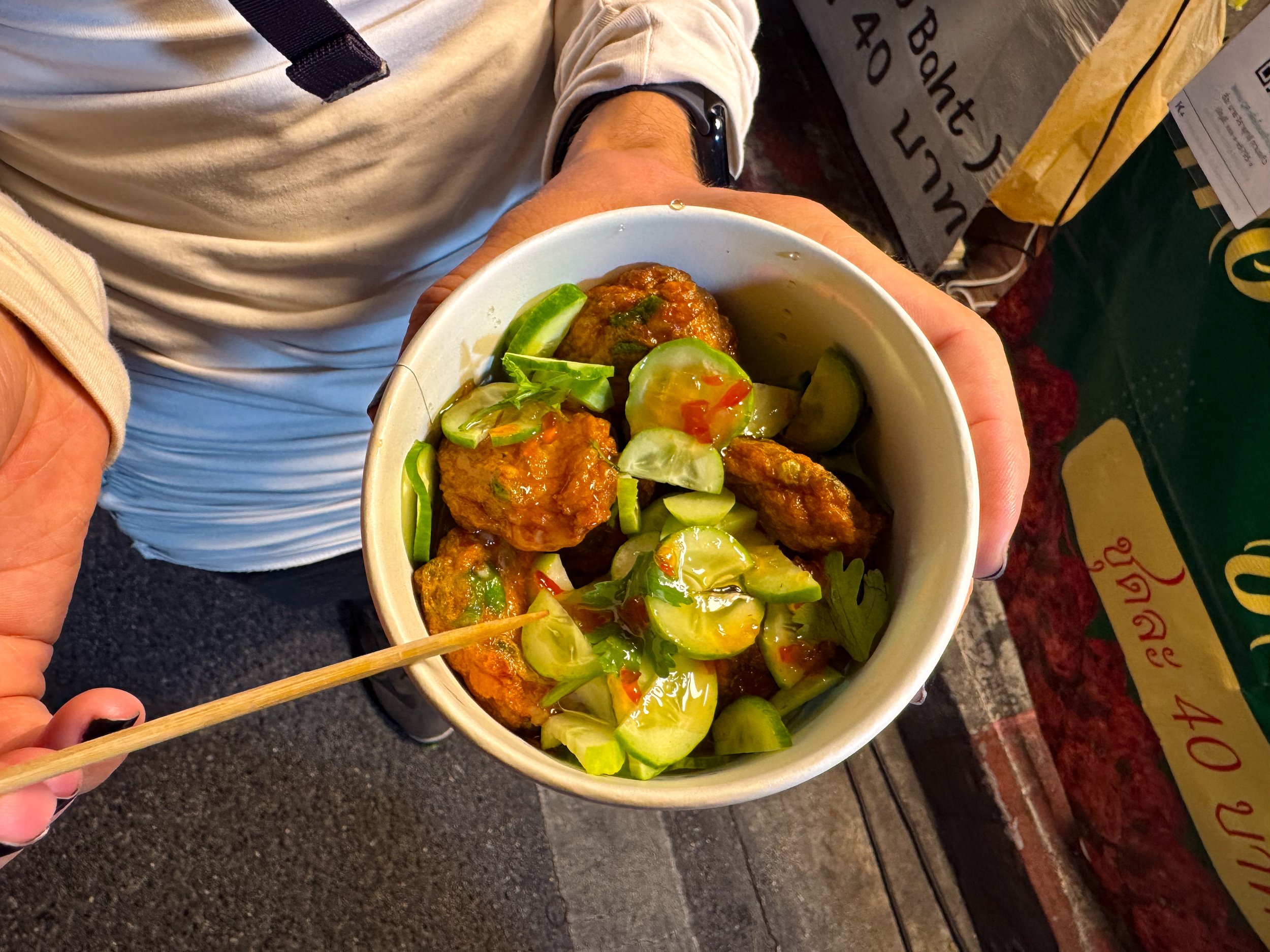
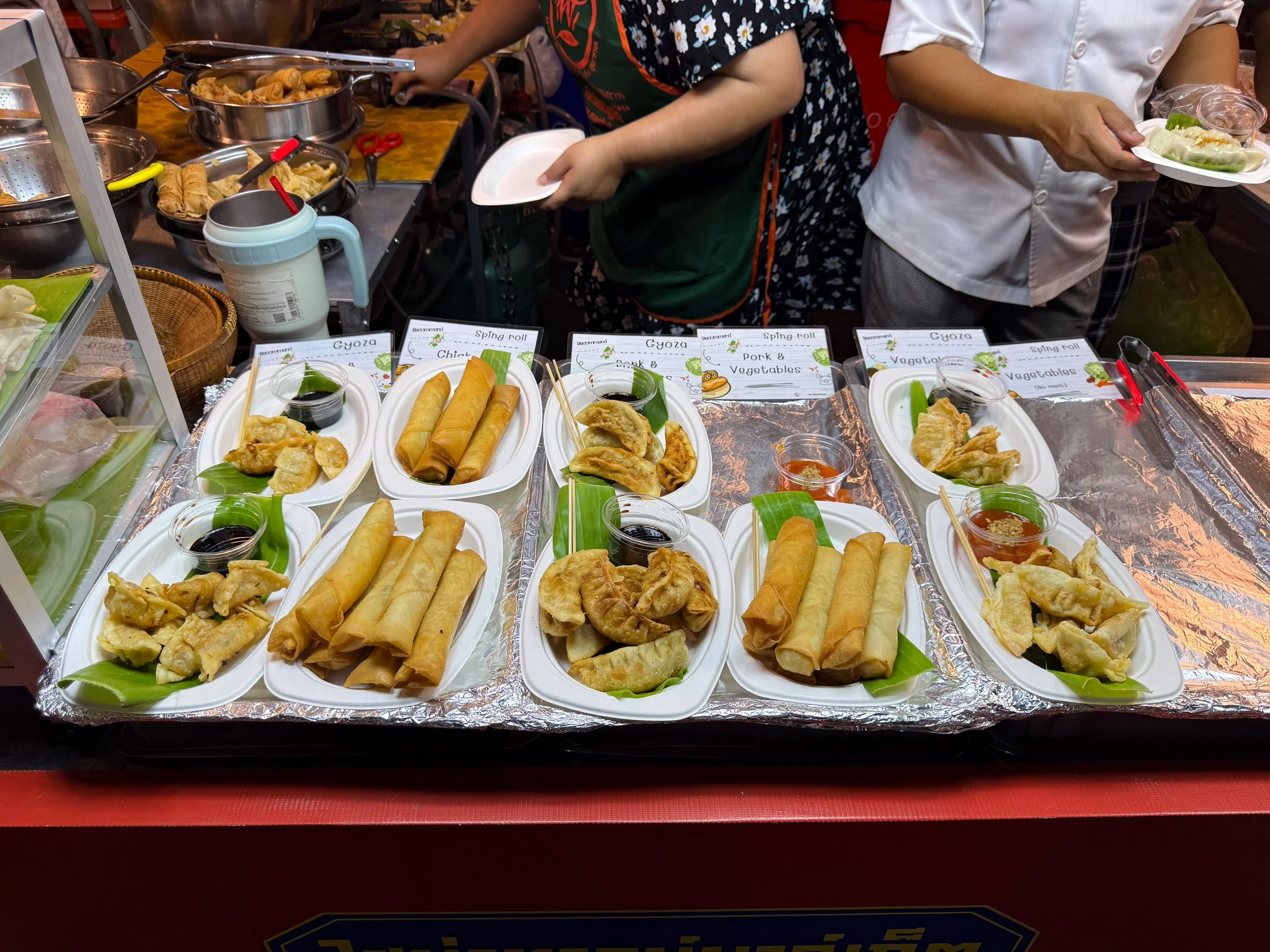
Chinatown Night Market. Come twilight, as the city lights and neon signs begin to illuminate the city, Yaowarat Road in Chinatown becomes the epicenter of Bangkok’s street food scene and Thai cuisine. Hundreds of vendors set up mobile kitchens and carts, grilling, frying, sautéing, boiling and steaming all manner of the city’s famed street food. We went on a street food crawl tasting our way through the market. We feasted on assorted dumplings filled with scallion, radish and mung bean paste. Next up was sautéed squid and cabbage drenched with a spicy fish sauce. Afterwards, crispy fish cakes with spicy braised cucumbers. Then deep fried veggie gyoza and bao buns grilled with butter. For dessert, assorted pastries filled with sesame, red bean and durian paste.
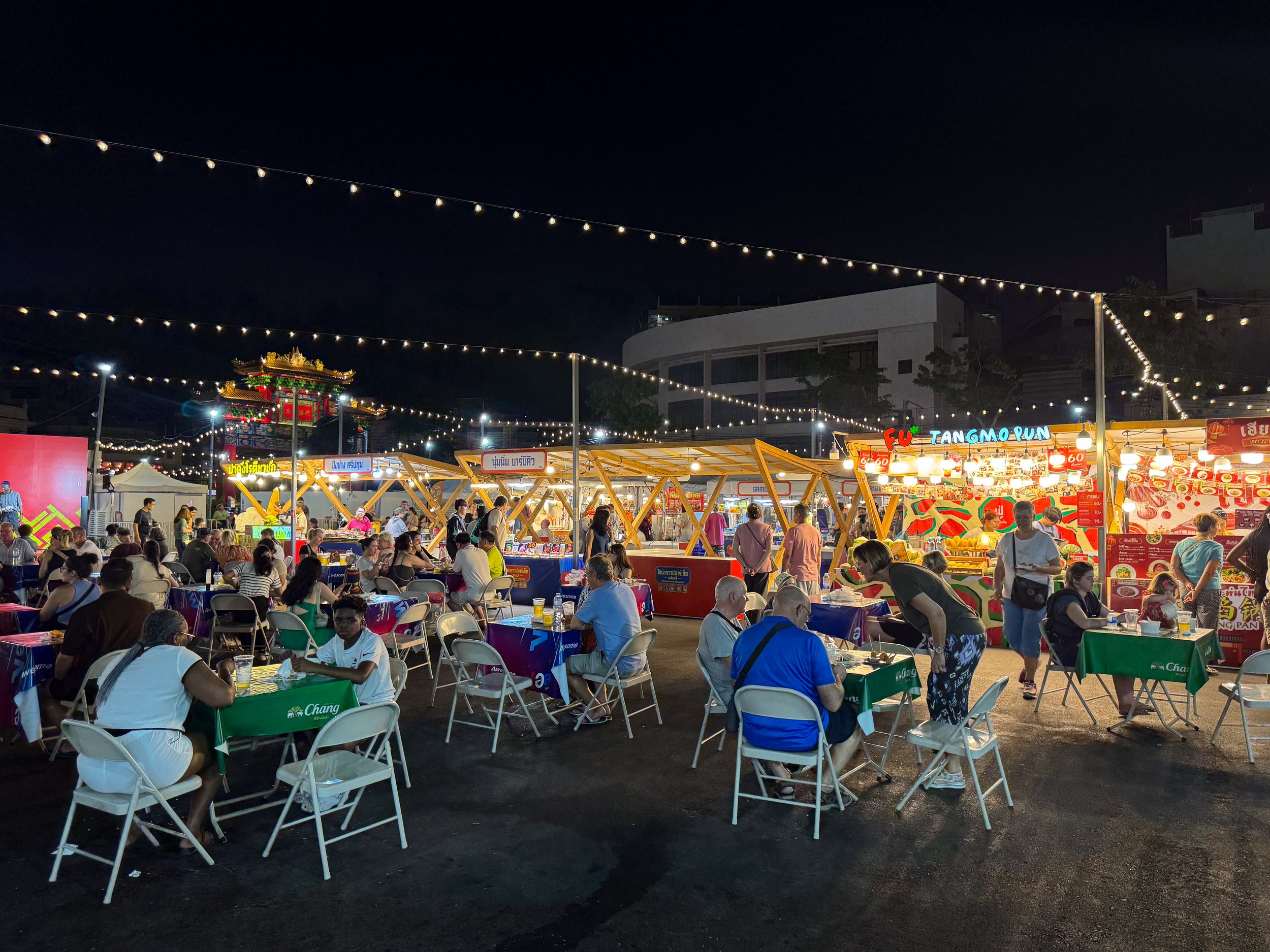
Chinatown Market Chaloem Buri. A street food market in a Chinatown plaza with tents of vendors, live music and a central dining area. It’s less chaotic and more elevated than the Chinatown Night Market. Vendors serve dishes like alligator nuggets, whole roasted ducks, freshly grilled lobster, stuffed dumplings, buns, spring rolls and local beers.
Yaowarat Old Market. A covered market street in Chinatown with hundreds of shops selling all types of merchandise including clothing, toys, tech accessories, kitchenware, jewelry and street food. Many locals come here to shop and pass through the narrow passageway on Vespas.
Restaurants & Cafés
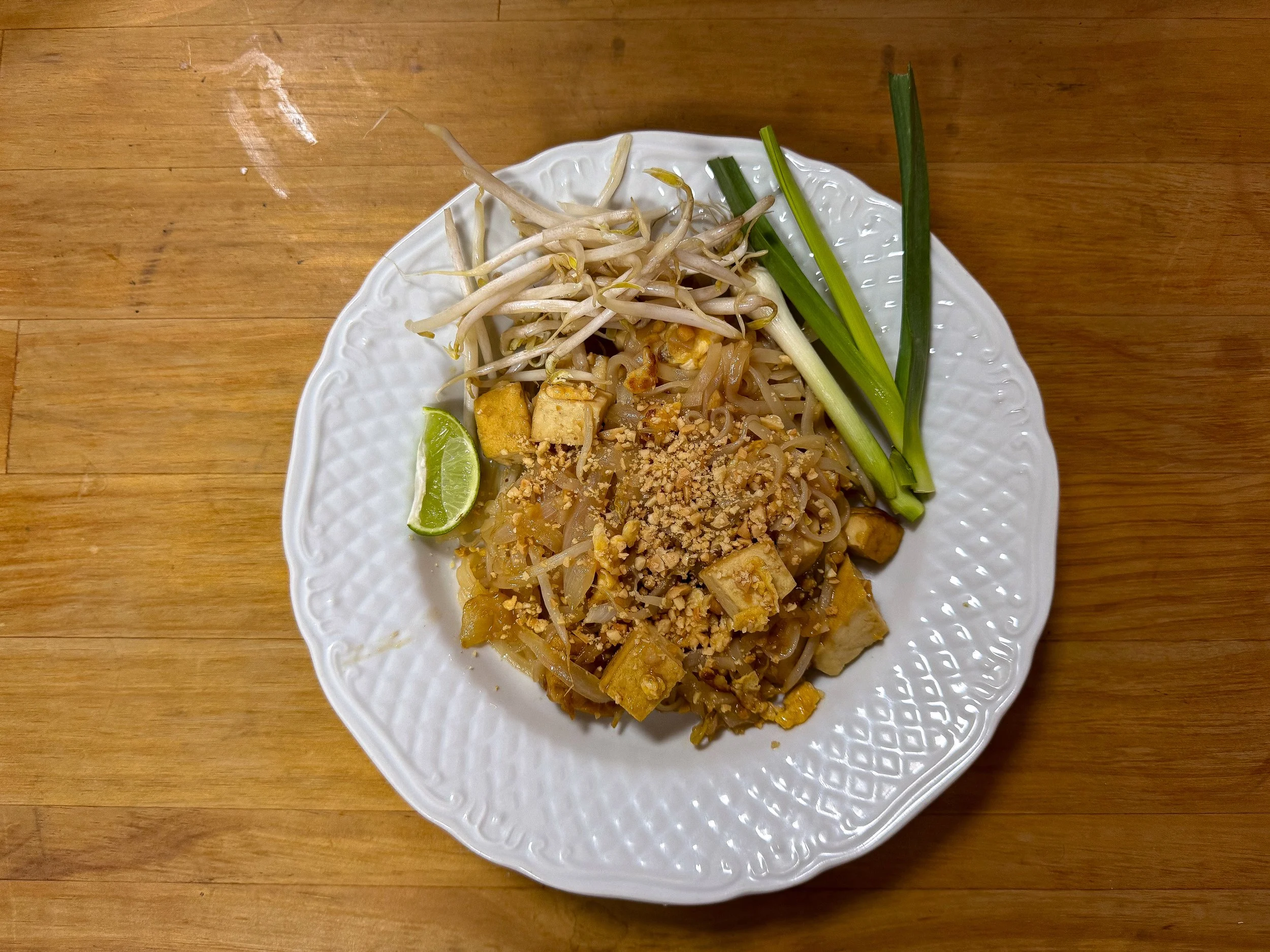
Nuaniyom. A Thai restaurant with all types of national dishes including a range of Pad Thais, papaya salads, Thai curries and Thai iced teas. Even before ordering, the number of locals dining here and lack of English speaking waiters assured us we’re in for a treat. We came here for our first Pad Thai in Thailand and were not disappointed!
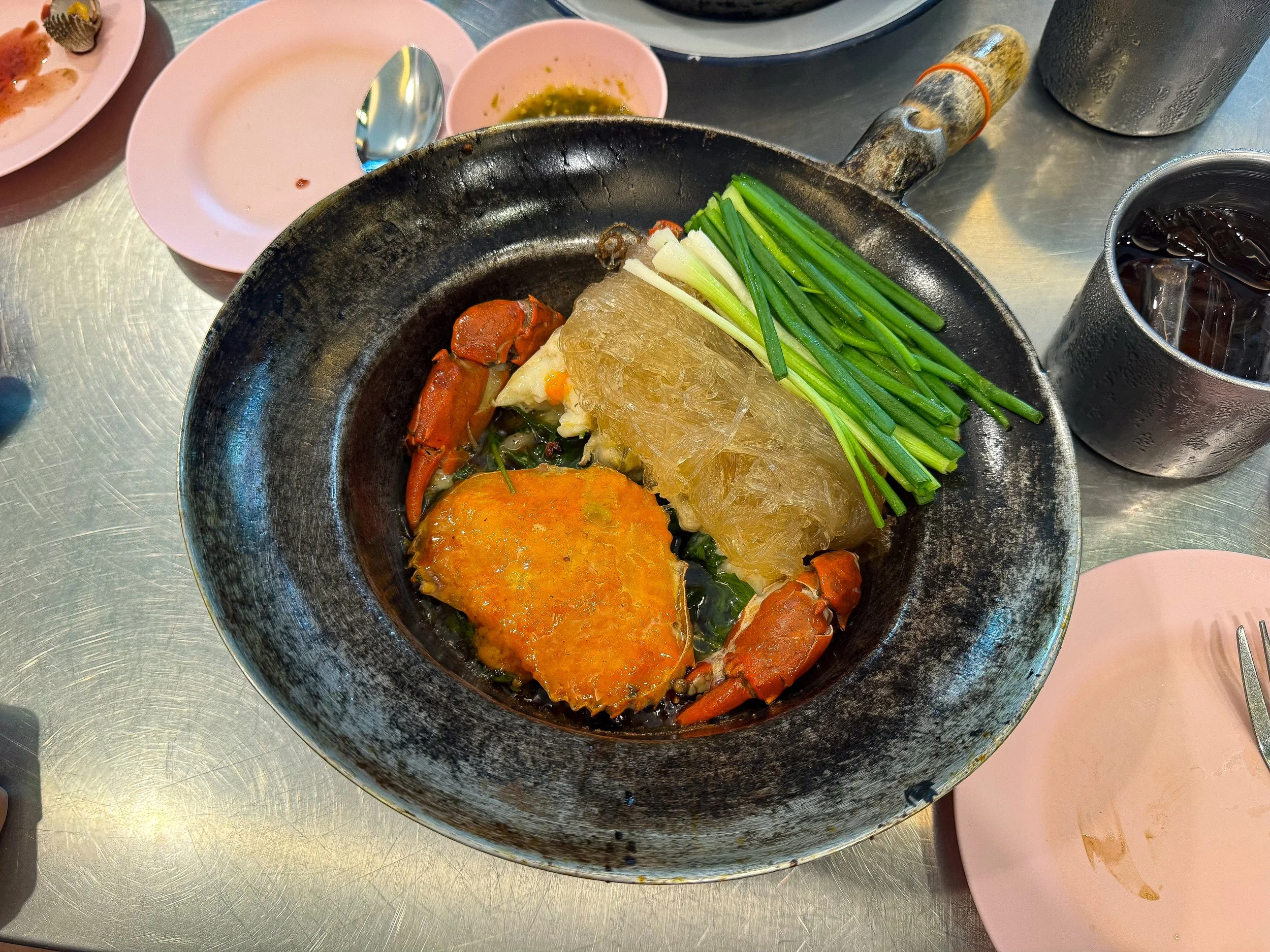
Somsak Puob. A street food vendor famed for their seafood dishes like roe crab, blood cockle and prawns. A tray of live crabs sits on display waiting to be cooked in the street side kitchen. We ordered the juicy and tender roe crab, cooked in a hot pot with butter, garlic, scallions, glass noodles and a pate of the crab roe served in a shell. They were awarded a Michelin Bib, the equivalent of a Michelin Star for street food vendors.
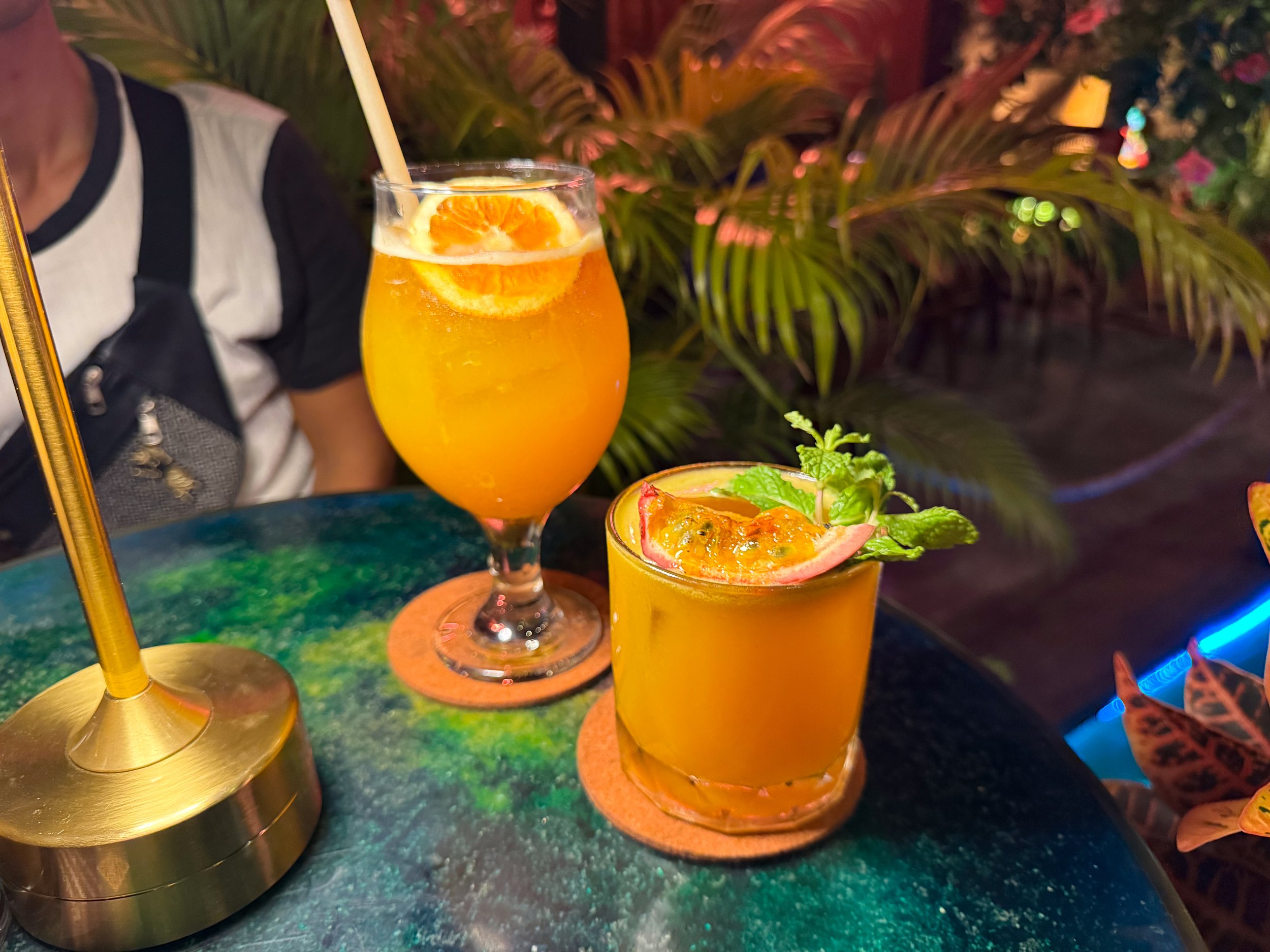
Lynx House Café. A café near the Giant Golden Buddha with bold coffee, uniquely flavored signature drinks, artisan desserts and pastries. Try the iced latte with orange blossom water and soda.
Kaze Coffee. A café with strong Thai coffees and specialty drinks. We stopped in to escape the afternoon heat and for our midday caffeine fix.
Chana Bubble Tea. A small mall café coffees, teas and boba. We came here for Thai iced teas with boba (aka bubble tea).
Cocktail Bars
In all large cities, we love to bar hop during our stay, visiting at least one cocktail bar a night. Bangkok was no exception! We visited rooftops, gay bars, an oceanfront terrace, a “speakeasy” and enjoyed our share of happy hours.
Palate Rooftop. A rooftop bar with views of the elevated metro trains, nearby wats, vibrant streets and a bustling night market. We came for happy hour, having some of the best priced drinks we found in Bangkok, sticking around afterwards for cocktails from their signature menu. Unlike most Bangkok rooftops, this one is not high end. It’s lesser known and located on the fifth floor past a series of maze like stairs.
White Rabbit Bar. A gay bar with well made cocktails and talented live singers. We sat outside in the warm summer air beneath the elevated train, people watching as we sipped on fruity and bitter cocktails garnished with flowers.
Tropic City. A tropical themed bar with boozy and beachy cocktails continually rated as one of the top 50 bars in Asia. It’s hidden in a Chinatown alleyway but immediately transported us to a tropical destination with its colorful and moody lights, palm thatched decor and jungleous wallpaper. Order the “Welcome to the Jungle” or a classic piña colada.
The Parlor. A cocktail bar on the 4th floor of The Standard Hotel in the Maha Nakhon Tower. We came for their well priced happy hour with Aperol spritzes, gin and tonics and margaritas. The lovely atmosphere during sunset on their outdoor terrace made for a calm and memorable final night in Bangkok.
Vol de Nuit The Hidden Bar. A cocktail bar in a garden speakeasy behind an art gallery with pop art painted sculptures of sumo wrestlers, animals and anime characters. The garden is colorfully lit with a beautiful koi pond at its center. Try one of the citric and fruity signature cocktails like Summer Time and Unforgettable, perfect for a warm Bangkok night.
Wang’s Bar. A vibey street side cocktail bar on Sri Ram Buttri Road with inexpensive and classic cocktails. We stopped in for their buy two get one free happy hour and left feeling quite happy. Try the Mai Tai, gin & tonic or Long Island iced tea.
Sunspirit. A high end waterfront cocktail bar and restaurant on the Gulf of Thailand near the Ancient City. We came here in the late afternoon for drinks while overlooking the water and watching the container ships pass by.
Thai Cuisine
Thai cuisine is a delicious combination of sweet, spicy, fresh and savory flavors. We tried a few favorites at restaurants, night markets and in our Airbnb’s kitchen.
Pad Thai. A world renowned rice noodle dish famed for its tangy and sweet sauce paired with peanuts, scallion, bean sprouts and chili pepper.
Tom Yum Goong Nam Kon. A flavorful spicy and sour Thai soup made with lime juice, lemon grass, galangal root, kaffir lime leaves and evaporated milk. It’s often paired with shrimp or prawn.
Spring Rolls. Crispy and flaky rolled or deep fried dough filled with veggies and herbs typically served with a sweet and spicy sauce.
Thai Curry. Red, green and yellow curries made with a range of hot and savory spices, coconut milk and rice noodles.
Papaya Salad. A Thai salad made from thinly spiced pieces of green papaya marinated and mixed with lime juice, garlic, chilies, fish sauce, palm sugar and peanuts.
Basil Rice with Shrimp. A stir fried rice dish cooked with Thai basil, shrimp, chili and garlic.
Thai Iced Tea. A classic Thai beverage made from brewed black tea and mixed with milk and sugar. It’s often flavored with star anise and cardamom. Try it with boba pearls.
Mango Sticky Rice. A simple and delicious staple of Thai cuisine made from sticky rice paired with freshly sliced mango. The rice is often flavored with sweetened condensed milk or a herbal syrup.
Chang Beer. A national beer, popular across the country. It’s recognizable by two elephants on its label.
LGBTQ+ Safety
Thailand is one of the friendliest LGBTQ+ countries in Asia with legalized same sex marriage, protections against discrimination and an overall accepting population. Upon arrival into Thailand, each immigration booth featured a sticker of the progress flag in a heart with LGBTQ+ written across it. It was a very welcoming sight upon entry to a foreign country.
Location Specifics
Driving. People drive on the left side of the road. Remember to look both ways when crossing the road.
Expenses. Bangkok is pricier than other places in South East Asia. Luckily, spending money on street food at happy hours helped us spend less.
Language. Thai is the national language. Most people speak a little English.
Cash vs. Card. Cash is accepted everywhere and the preferred method of payment. Many restaurants, businesses and sights didn’t accept credit cards.
Safety. We felt safe throughout Bangkok but were continually warned about pickpocketing and scammers.
Modesty. Wearing long pants and covering shoulders is required when entering most wats and temples, including the royal palace.
Food Poisoning. While street food is delicious, cheap and a local way of experiencing Thai culture and cuisine, it comes with risks of food poisoning. Bring travel medication for food poisoning just in case the worst case should happen.
Getting Around
Grab. A taxi app is readily available throughout Bangkok. Rides across the city typically cost about $5 USD. Rides to/from the airport cost around $12 USD.
Tuk Tuks. Souped up three wheeled taxis are common across the city. We found tuk tuks to be more costly than Grabs.
Metro. Bangkok has a very modern metro system with elevated rails crossing the city. It’s a cheap and effortless way to get around like a local.
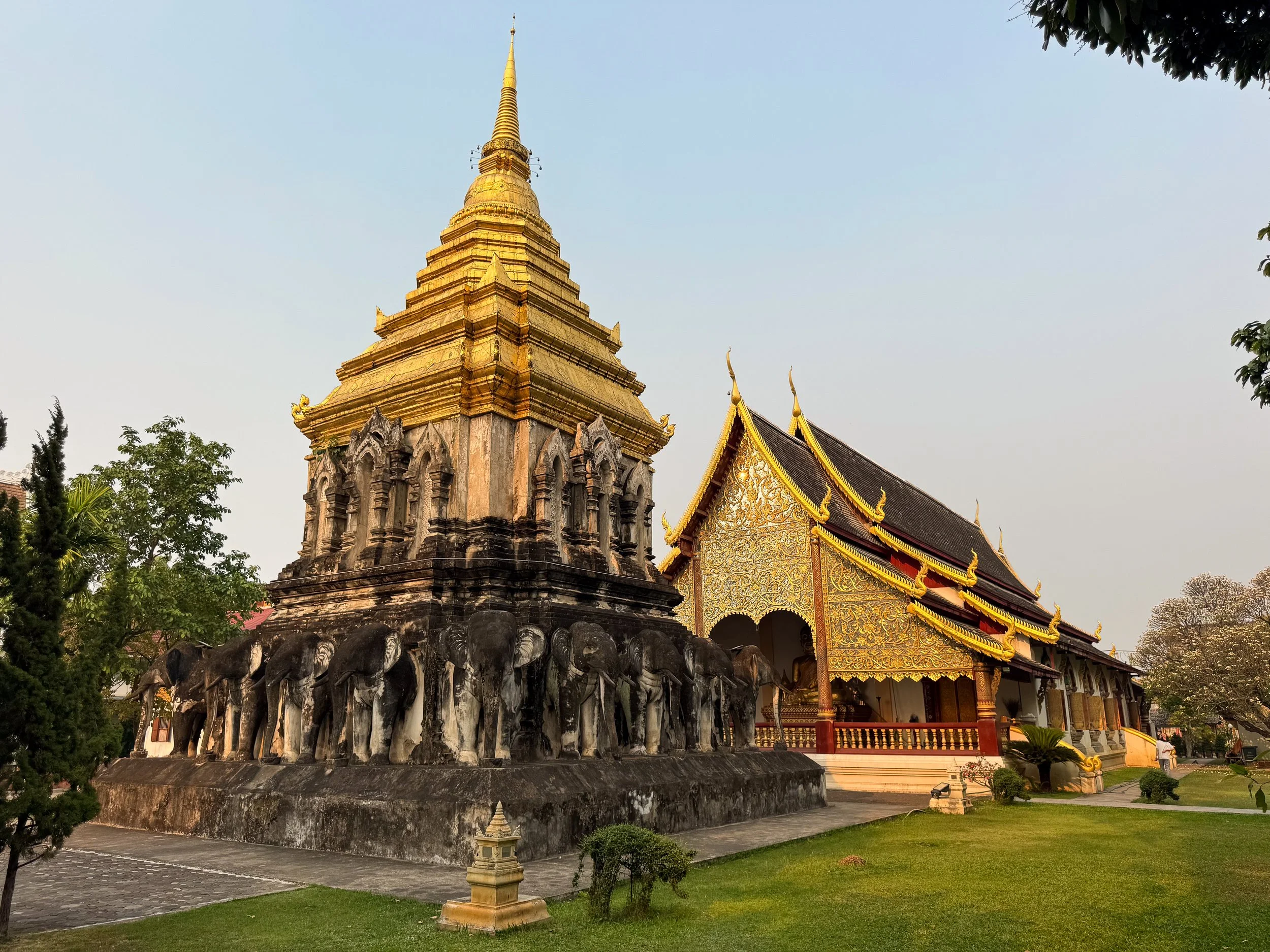
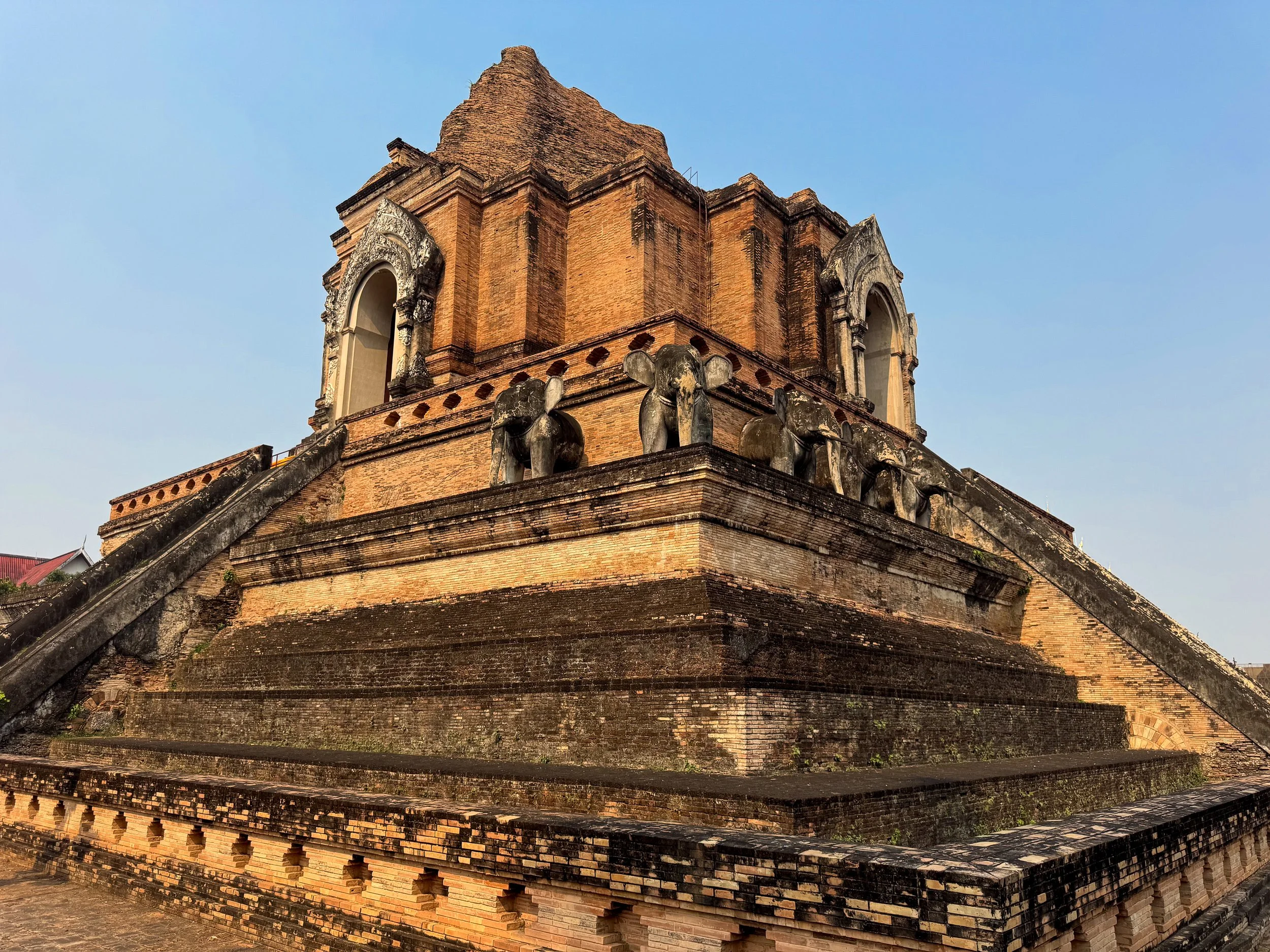
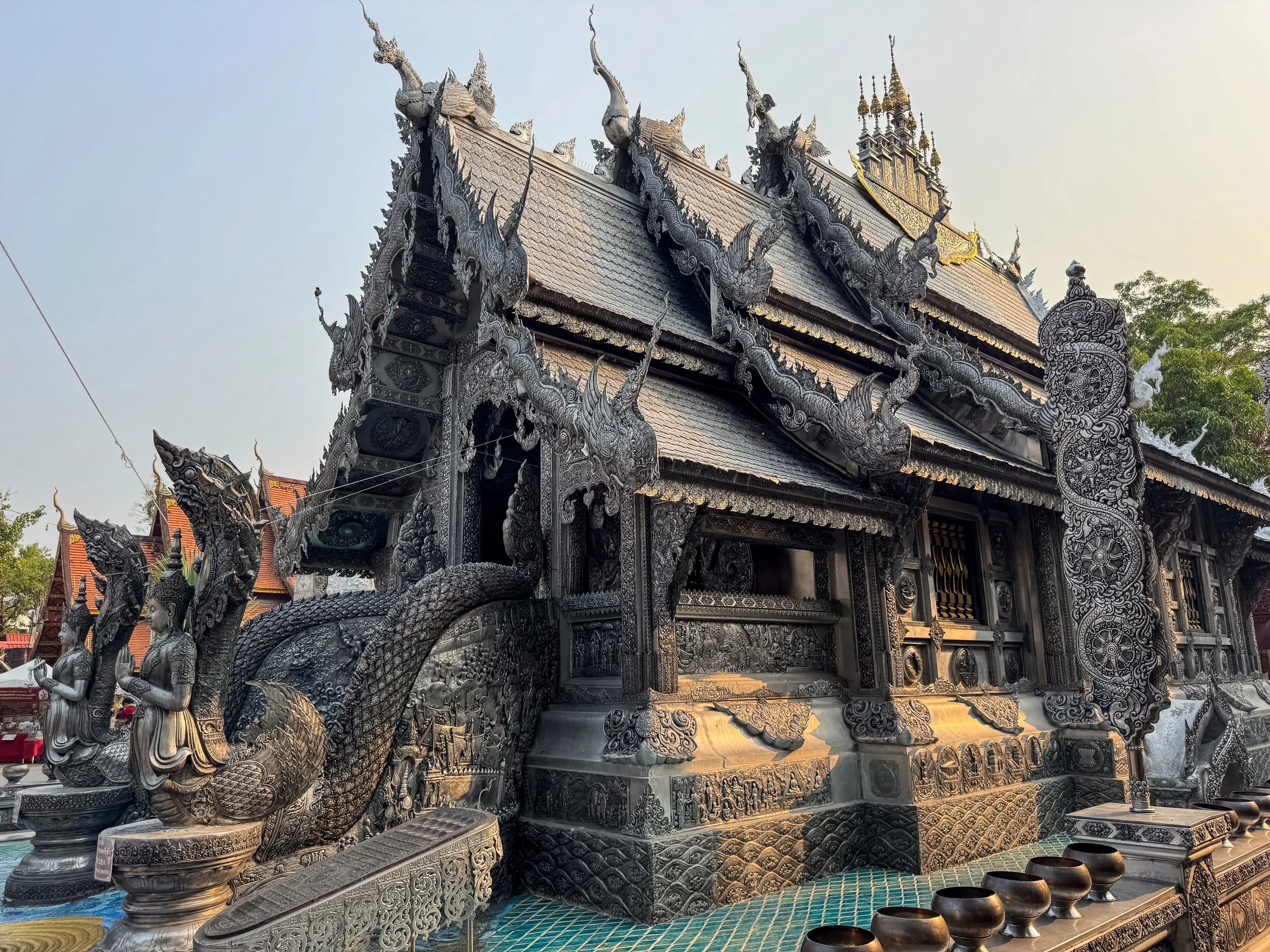
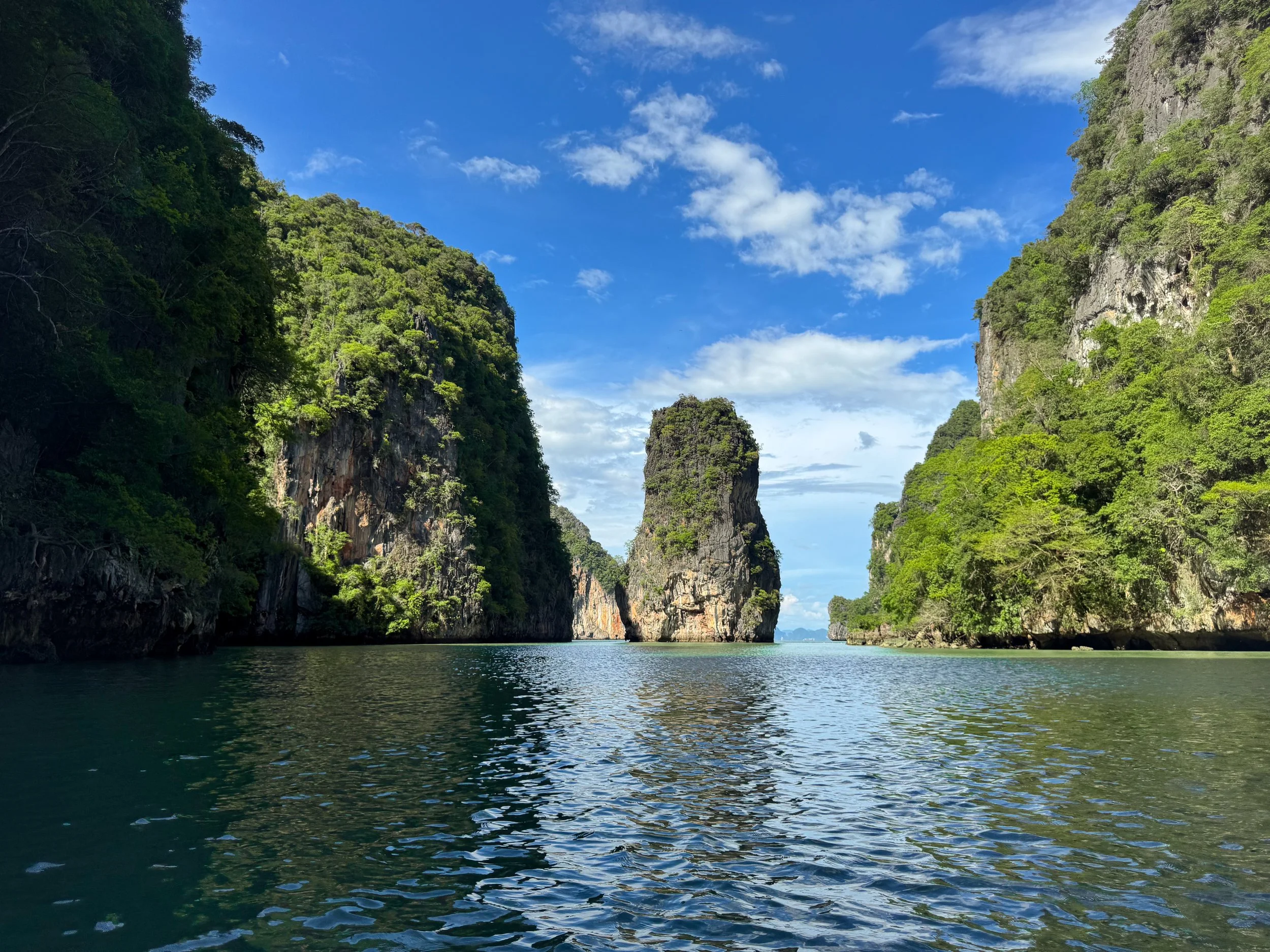
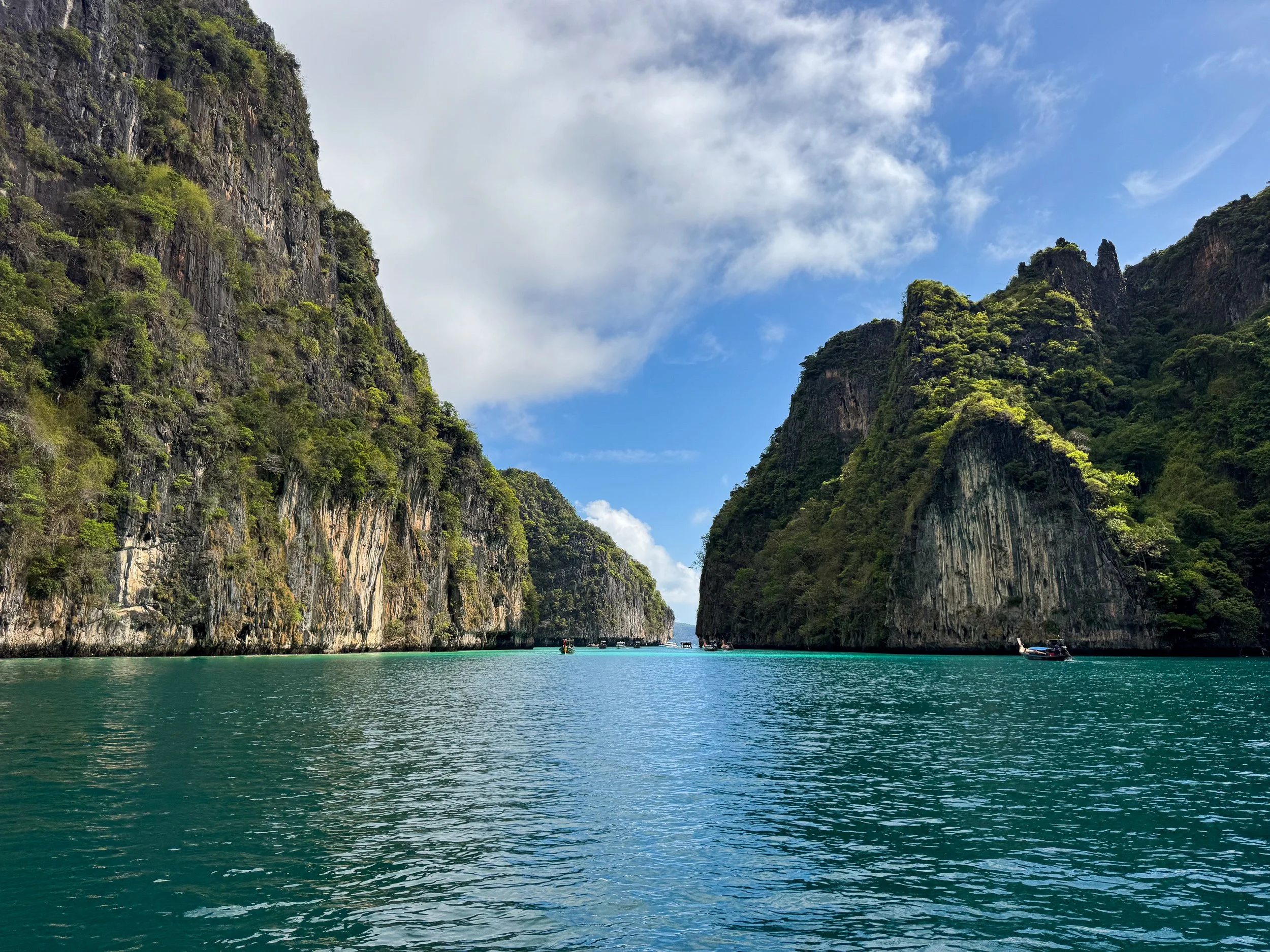
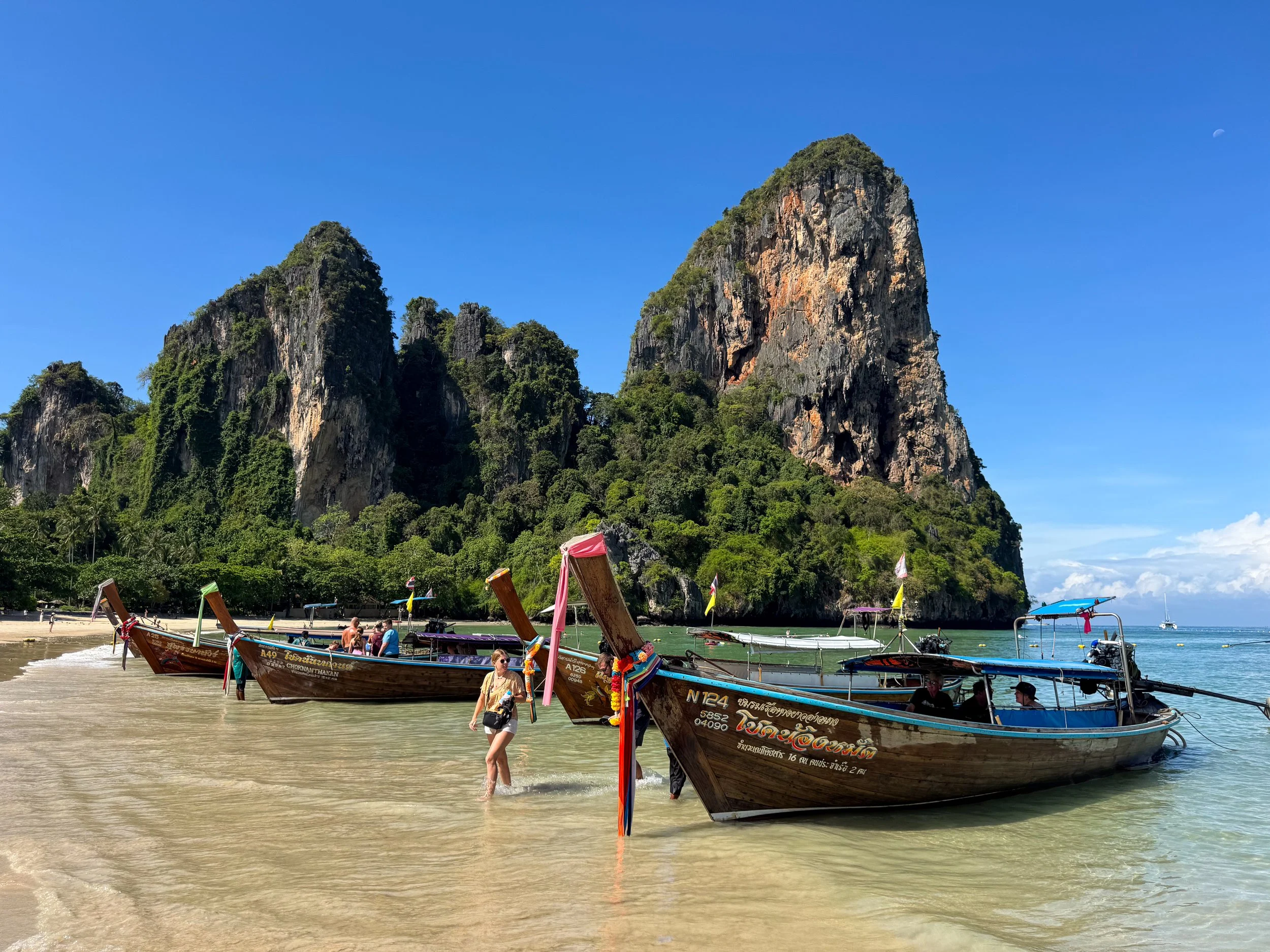
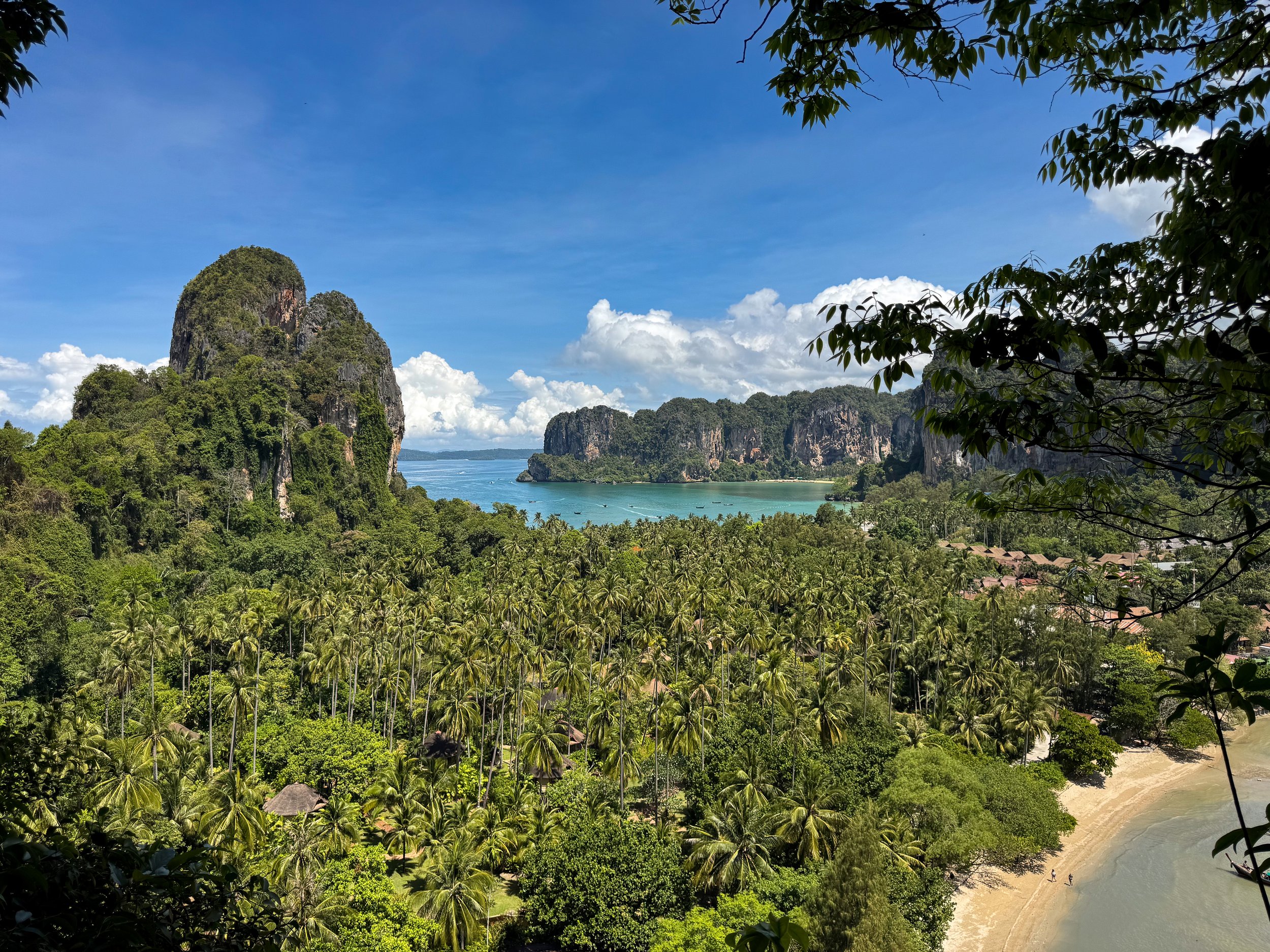
Elsewhere in Thailand
From Bangkok's temples and street food scene to Chiang Mai's historic Old City, Phuket's beaches and Krabi's coastal adventures, continue exploring Thailand through these travel guides:
Chiang Mai Travel Guide: Old City, Temples & Night Markets. Meander through Chiang Mai's Old City where historic temples and night markets reveal Northern Thai culture, mountain landscapes, waterfalls and elephant sanctuaries.
Phuket Travel Guide: Beaches, Island Hopping & Thai Culture. Escape to Phuket where sandy beaches, turquoise bays, limestone islands, a colorful Old Town & island hopping adventures blend Thai culture with coastal exploration.
Krabi Travel Guide: Railay Beach, Limestone Cliffs & Tropical Adventure. Experience southern Thailand through dramatic limestone cliffs, Railay Beach, tropical islands and outdoor adventures.
For Next Time…
Bangkok is a massive city! Even with a week here, we didn’t get to see and do everything we had on our list. When we return, we have several things top of mind inside and outside of the city.
Ayutthaya Old City Ruins. A sprawling complex with ancient wats, temples, palaces and ruins in the city of Ayutthaya.
Phra Prang Sam Yot. An Angkor Wat style temple with three stone stupas and families of wild monkeys. It’s also located in Ayutthaya.
Floating Markets. Riverside markets with canoes of vendors selling produce, souvenirs and miscellaneous goods to customers waiting on docks.
Bangkok Weekend Market. The city’s largest market, only held on Saturday and Sunday with hundreds of vendors selling goods and street food.
Dragon Descendants Museum. A giant dragon shaped museum dedicated to Chinese history throughout the region.
Sunflower Fields. From mid-November to early January, sunflower farms bloom into fields of yellow. There are several sunflower fields north of the city.
Chet Sao Noi National Park. A national park with a seven tiered waterfall.