Chiang Mai Travel Guide: Old City, Temples & Night Markets

Chiang Mai, Thailand
Chiang Mai is an ancient city in Northern Thailand with crumbling ruins, historic sights, impressive Buddhist wats and access to flowing waterfalls, national parks and elephant sanctuaries. The city has a bohemian vibe to it with night markets, worldly backpackers and vegan restaurants. We spent a week here exploring the city and taking multiple day trips to several cultural and natural sights.
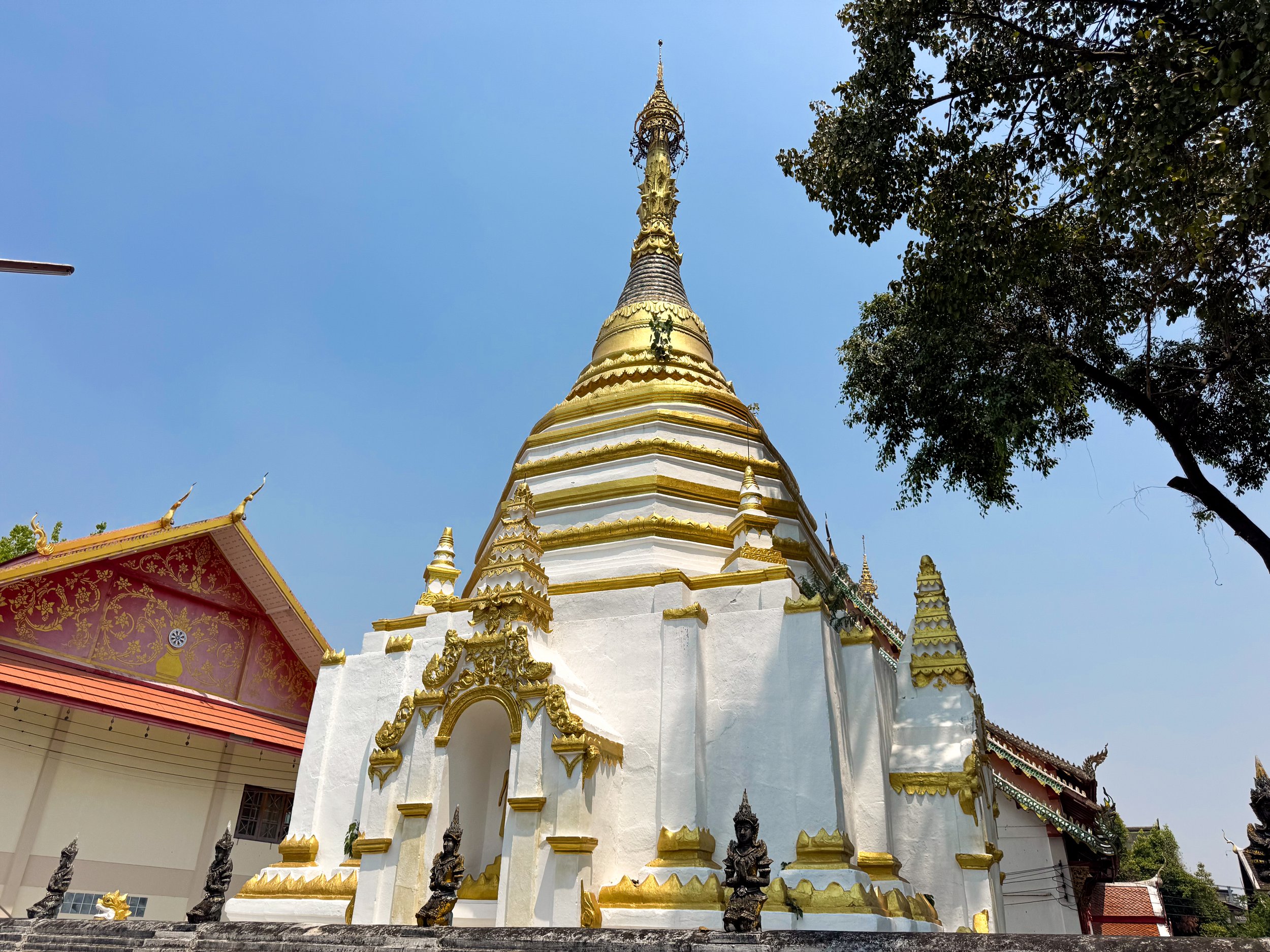

Chiang Mai Old City
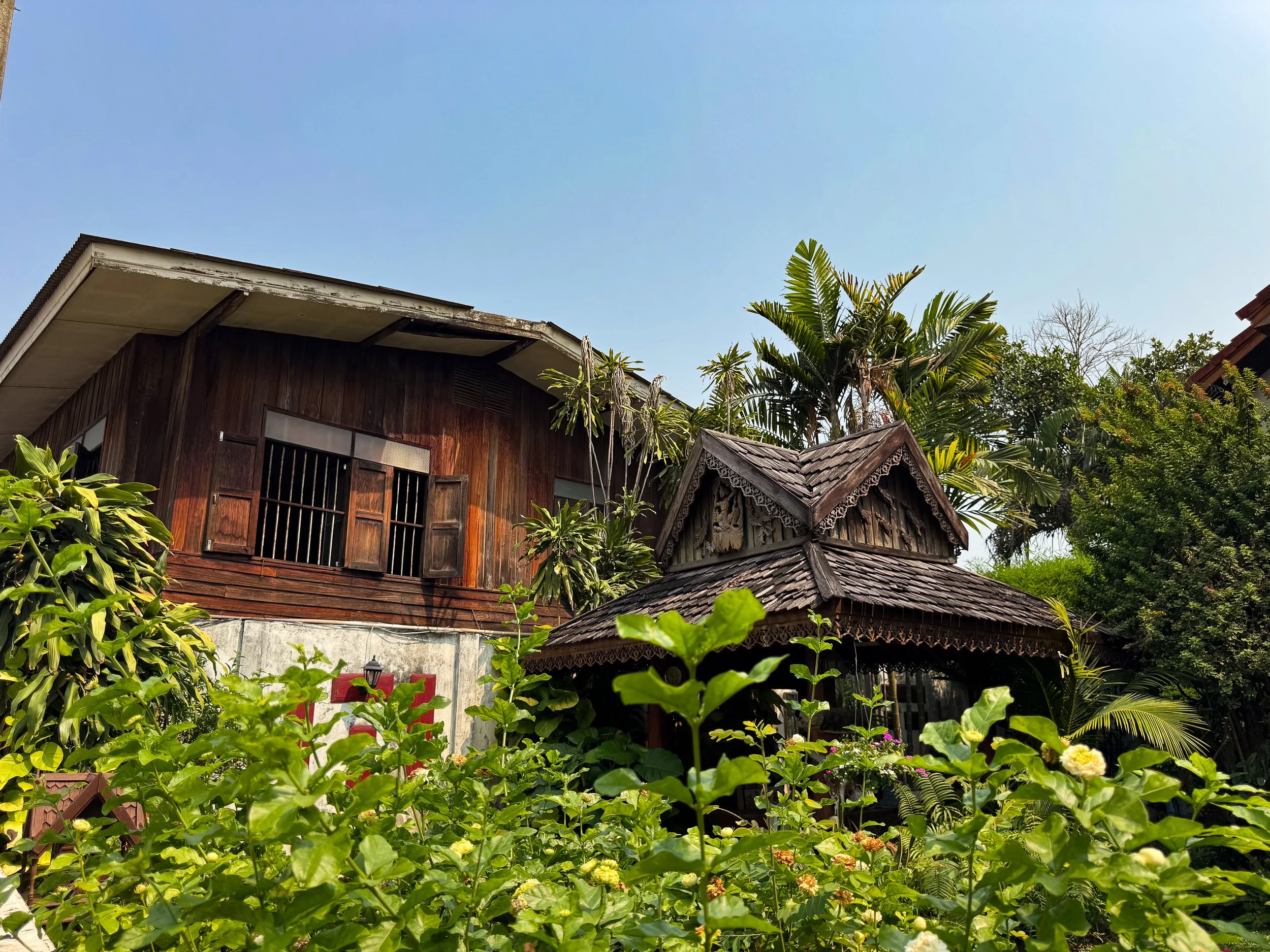
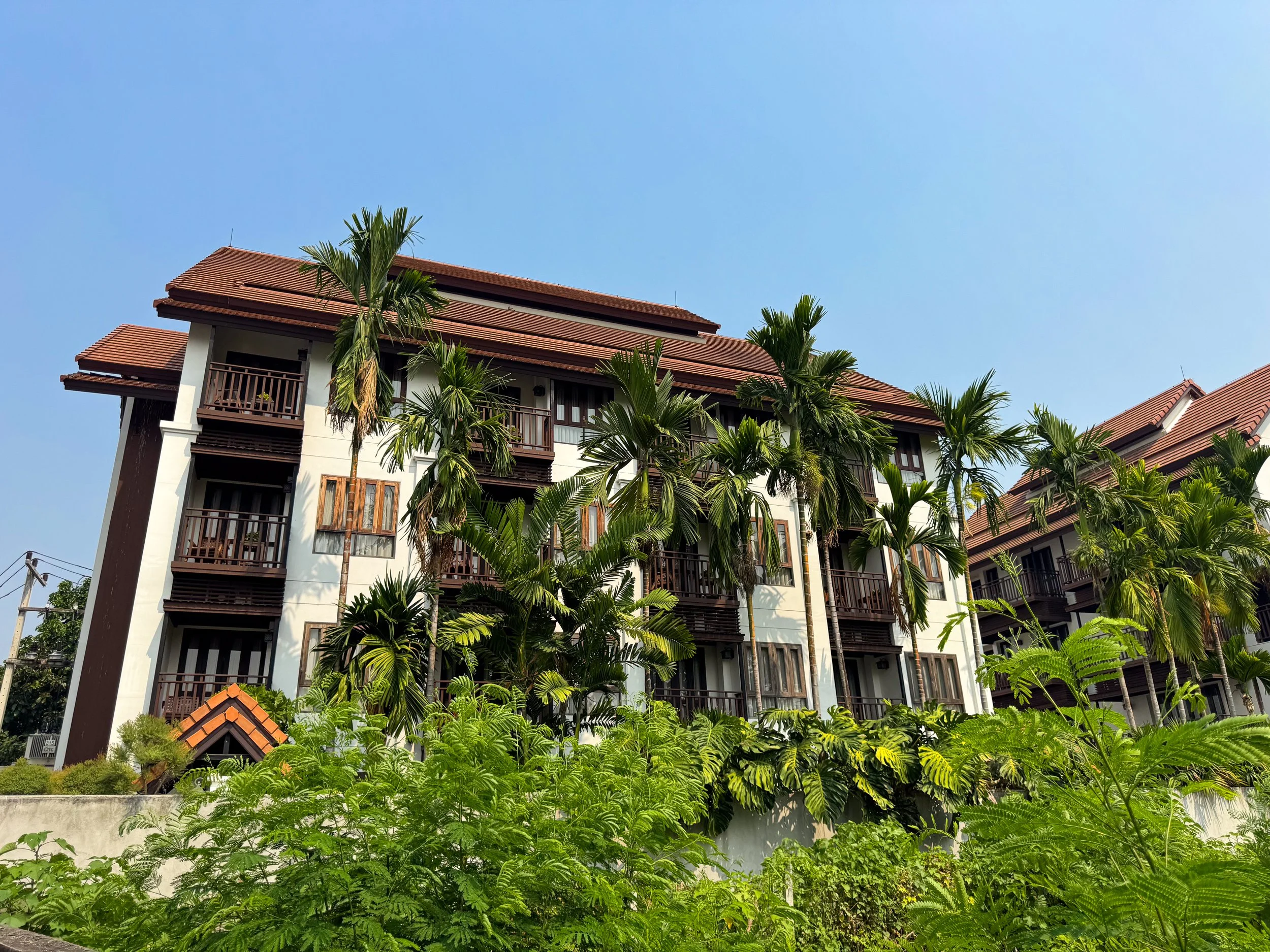
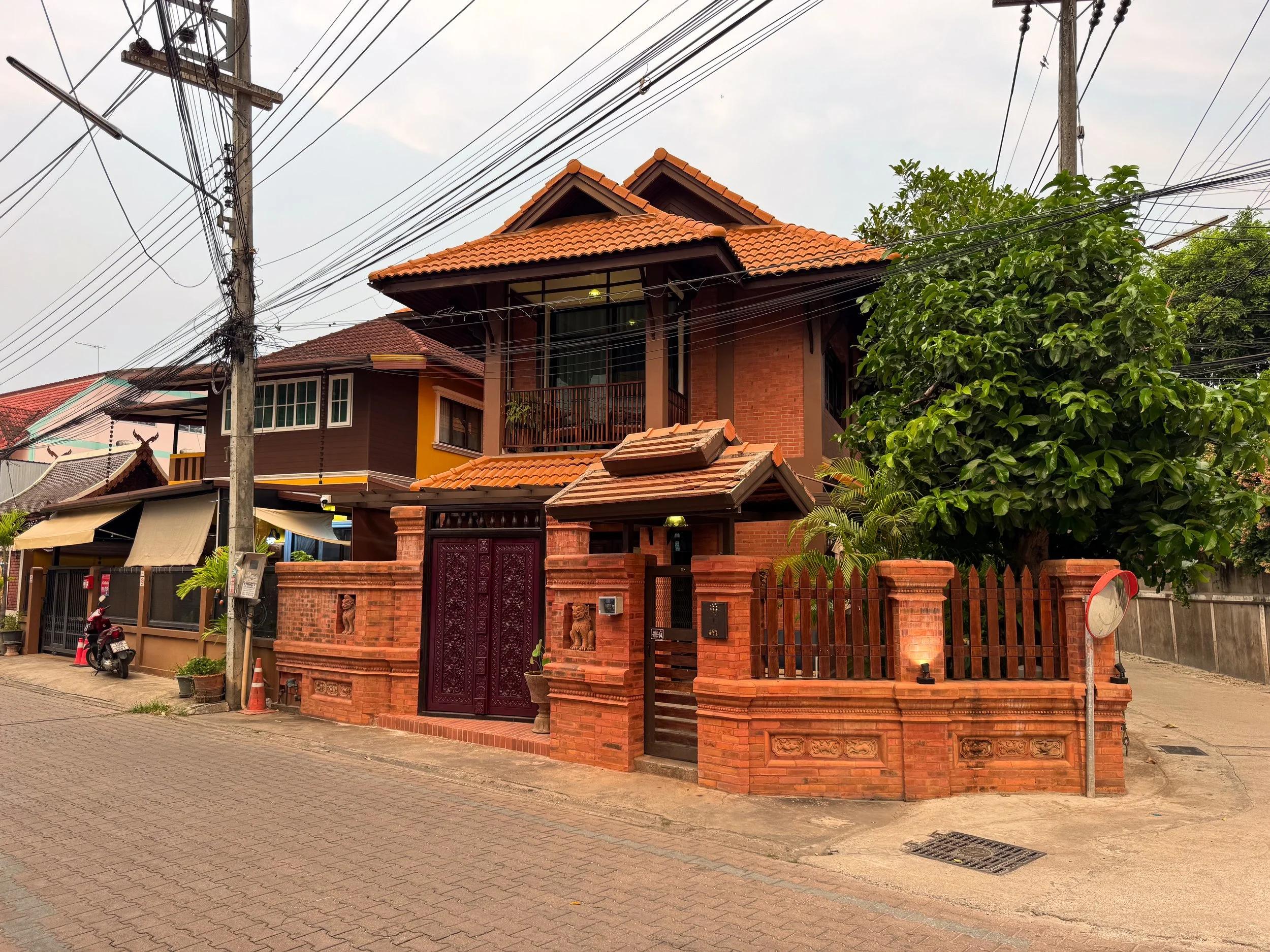
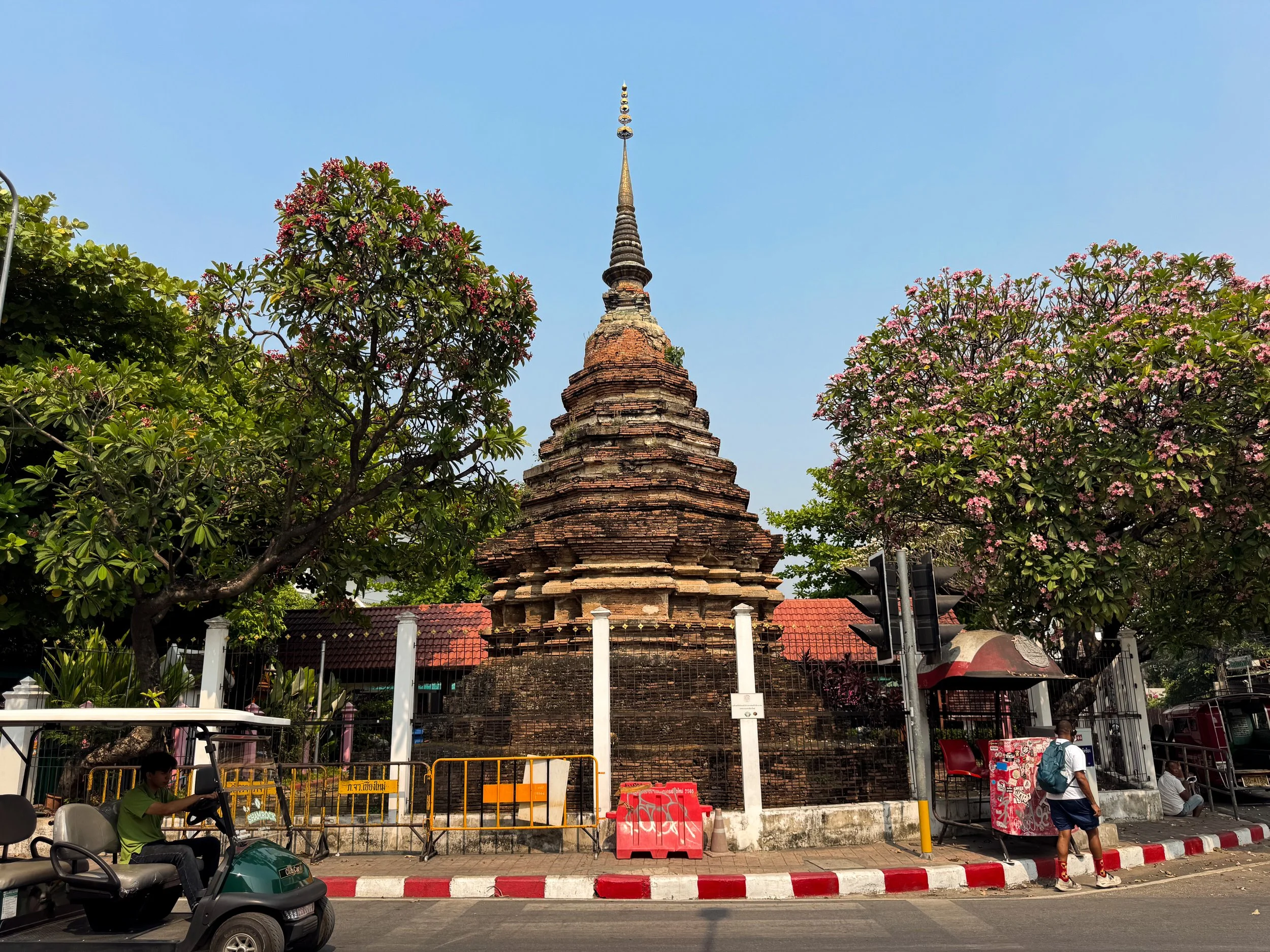
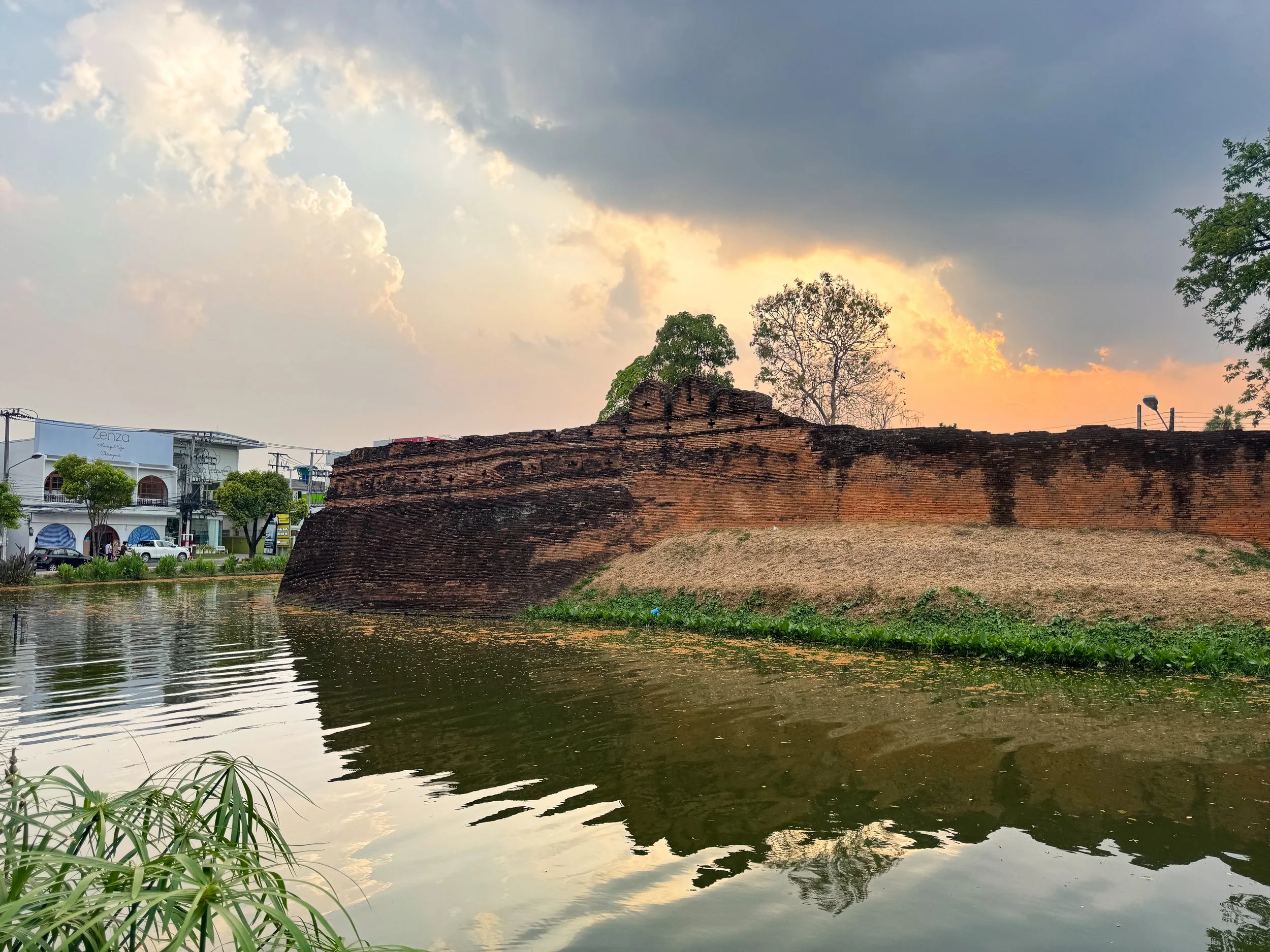
The old city of Chiang Mai is surrounded by a moat and sections of a crumbling red brick wall dating back 700 years. Its winding streets are lined with two floor old wooden houses, ancient Buddhist wats, Thai restaurants, small bars, coffee shops and boutique hotels. Sprawling night markets attract thousands of visitors for their cultural significance, array of street food and locally made goods.
Old City Wall. The old city is surrounded by a square moat and the ruins of a crumbling brick wall dating back over 700 years. All four corners have rounded defensive towers that were once used to protect the city. On each side are various gates still used today by both pedestrians and vehicles.
Tha Phae Gate. The east gate to the Old City. Its wooden doors are flanked by a large red brick wall. It’s a popular photo spot with hundreds of pigeons. It’s the entrance to the Sunday Night Market. It can only be entered on foot.
Hua Lin Corner. A defensive corner once home to an ancient aqueduct that channeled water from a natural spring over the moat and into the Old City. It’s located at the northwest corner.

Buddhist Wats & Temples
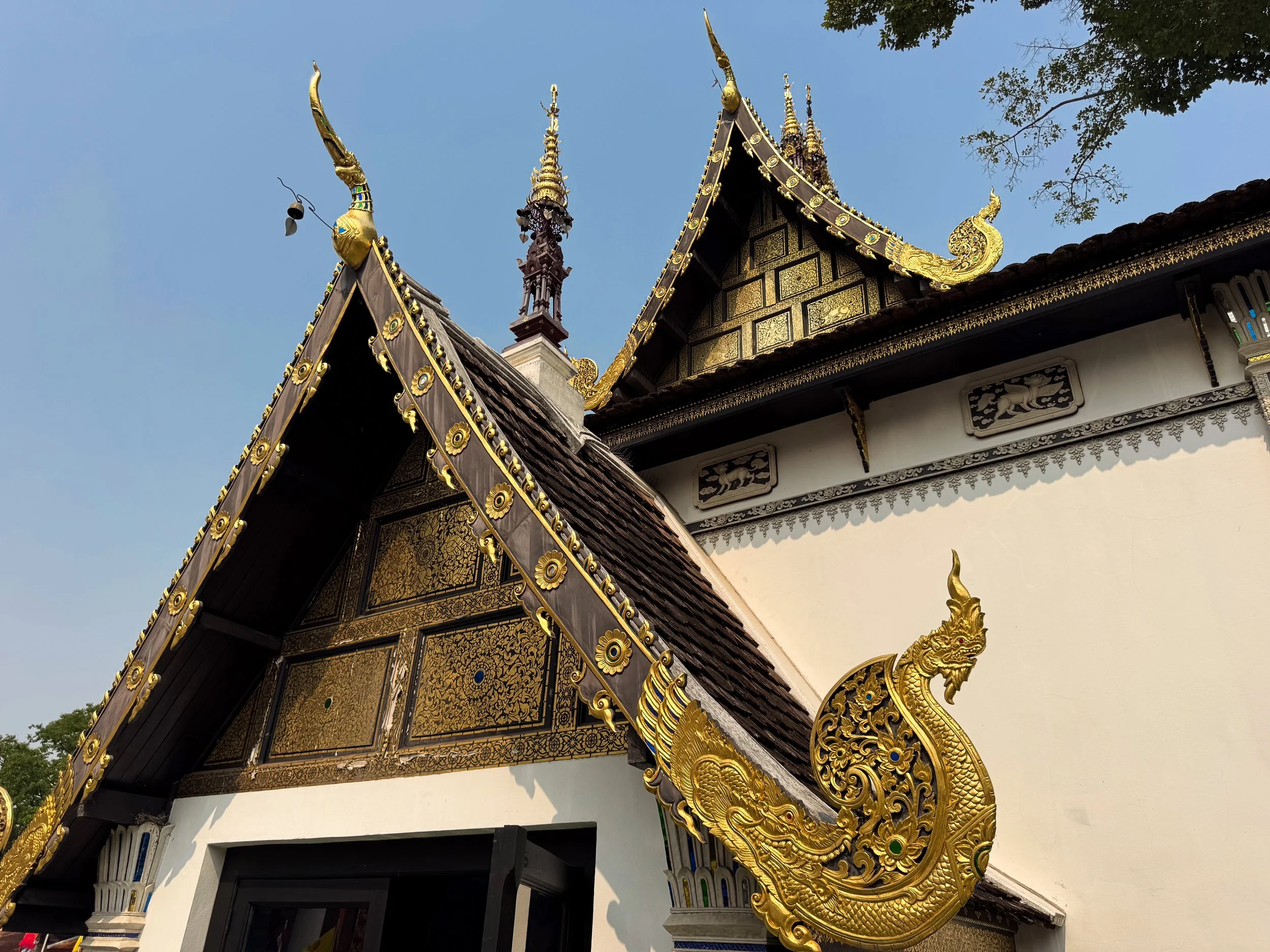
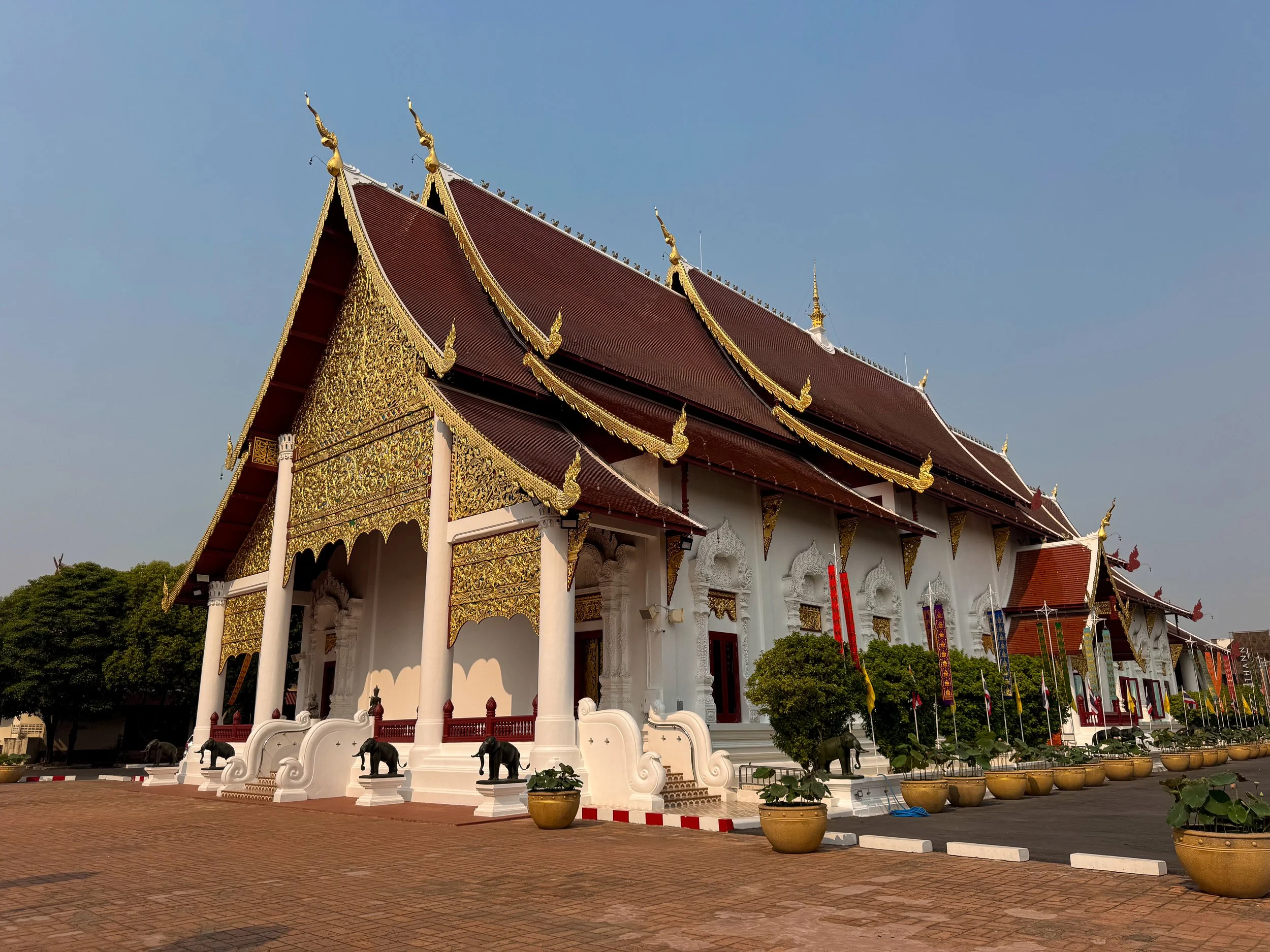
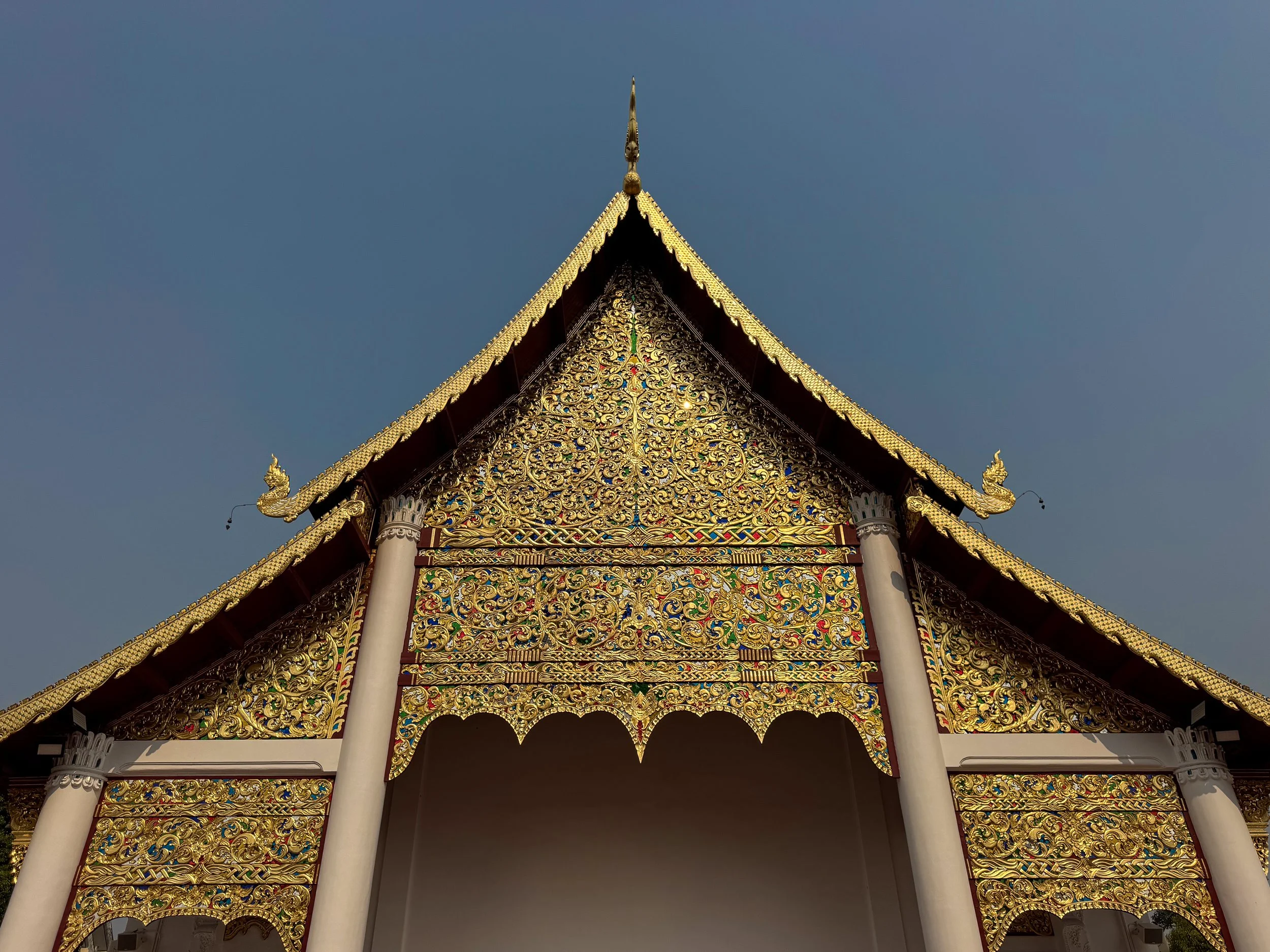
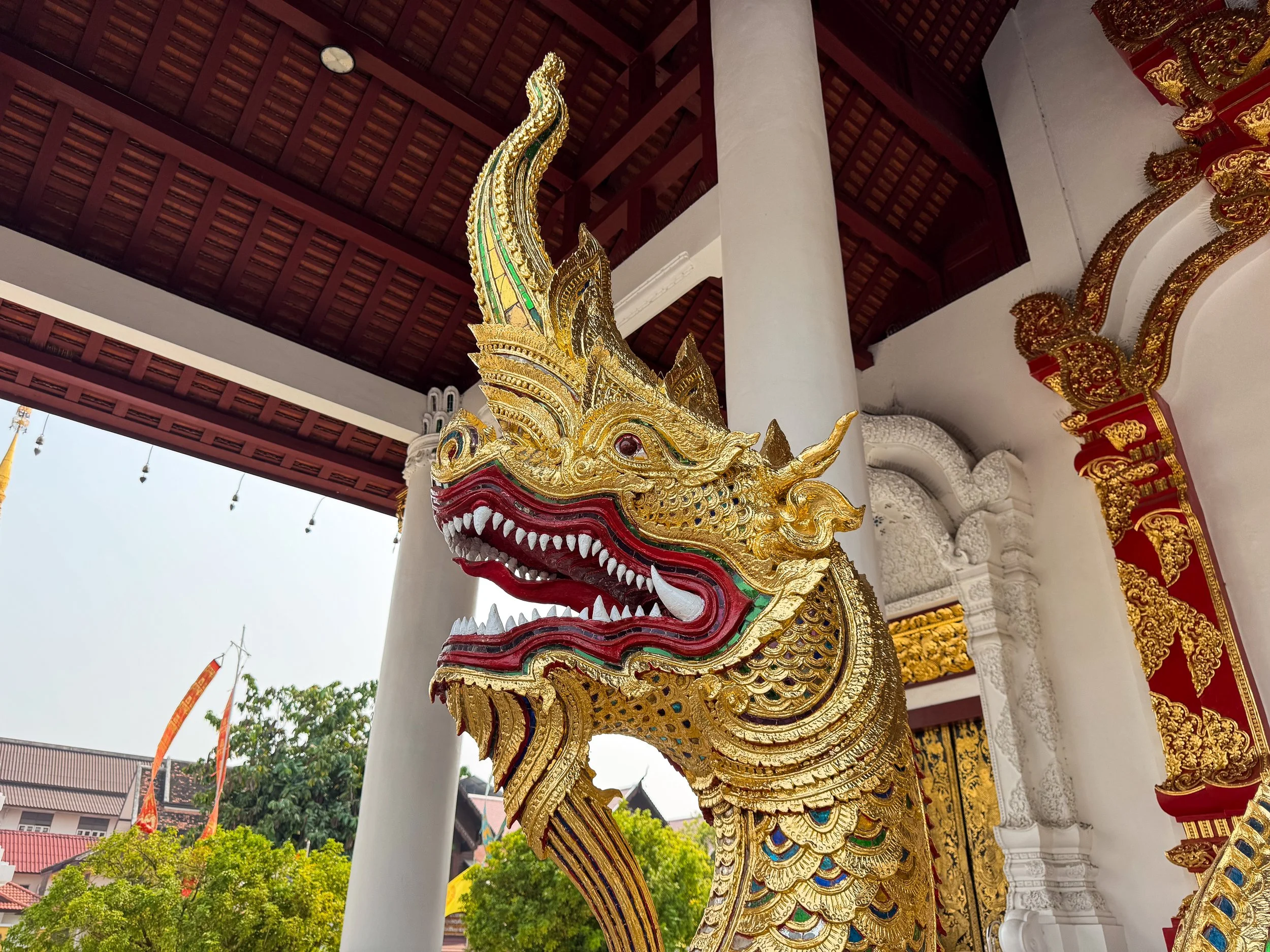
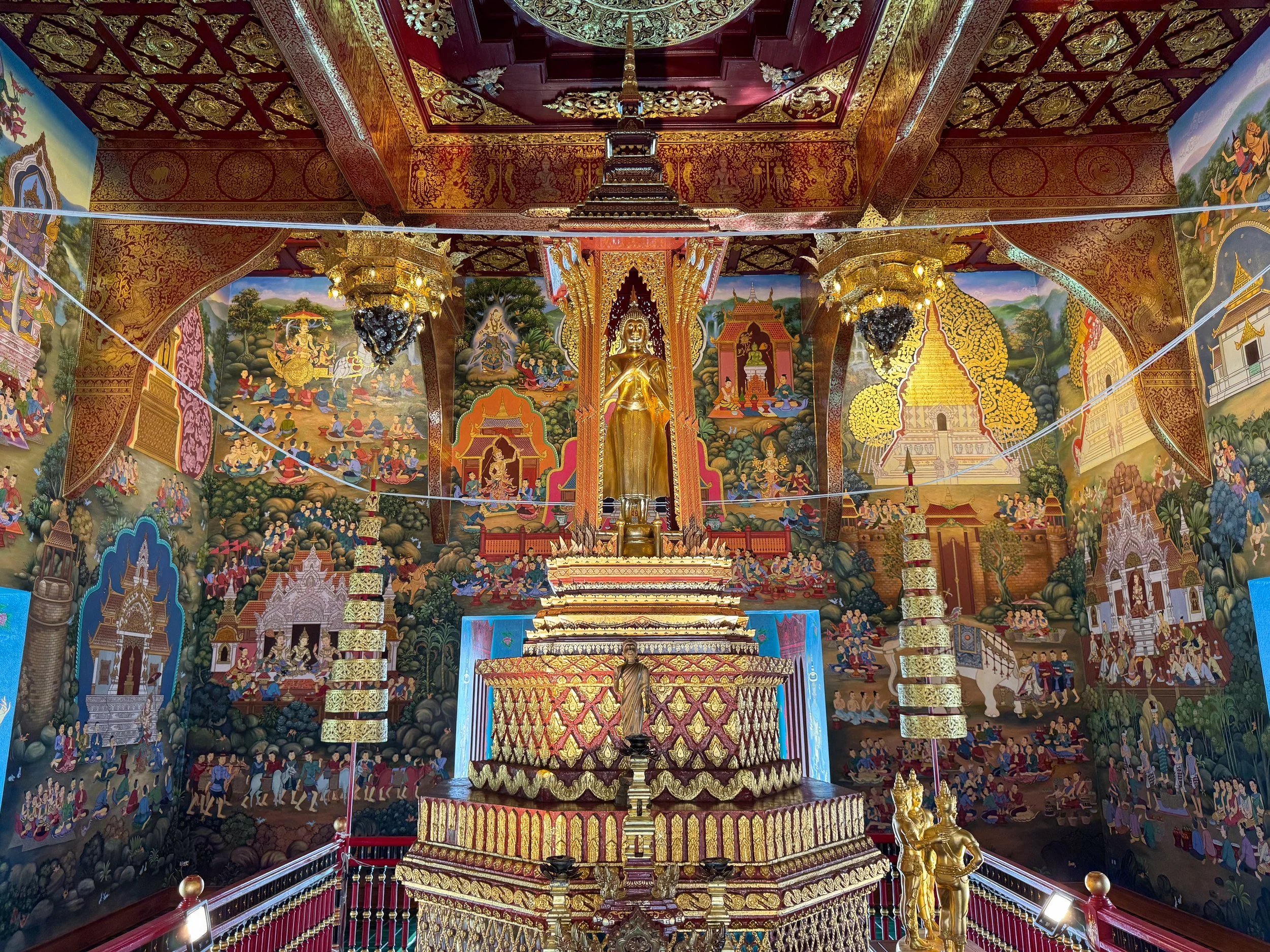
Chiang Mai is an ancient Buddhist city with dozens of wats, many dating back over 700 years to the city’s founding. Golden Buddhas, wooden meditation halls, towering stupas, dragon staircases and ornate designs are some of the few characteristics that distinguish this city’s wats.
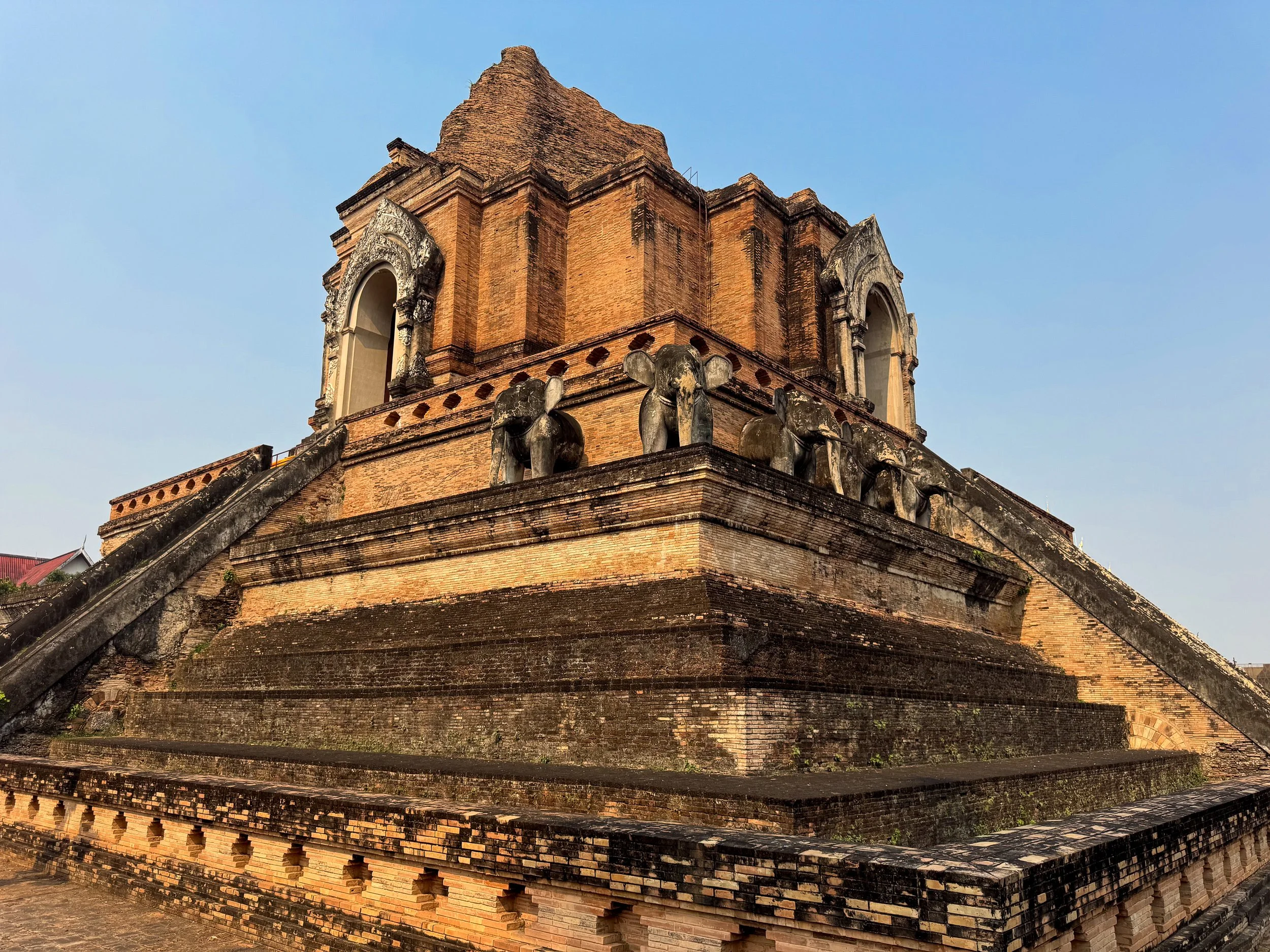
Wat Chedi Luang Varavihara. A sacred and ancient temple complex in Chiang Mai’s Old City. It’s home to the ruins of a giant brick chedi, the pillar of the city, a Buddhist temple and university.
The Chedi. A pyramid style structure made from red bricks with statues of elephants along its first level and shrines with golden Buddhas on top. Its tower was destroyed during an earthquake hundreds of years prior.
Chiang Mai City Pillar Shrine. One of the most sacred sights in the Old City. It houses an ornate “pillar” with a gilded statue of the Buddha on top. Its interior is adorned in vibrant and colorful stories of the city’s history and temples as well as teaching of the Buddha.
Buddhist Chapel. A large pagoda style hall with an ornately painted red and gold entrance guarded by dragon steps. Inside is a Buddhist shrine, worshipers and seated monks.
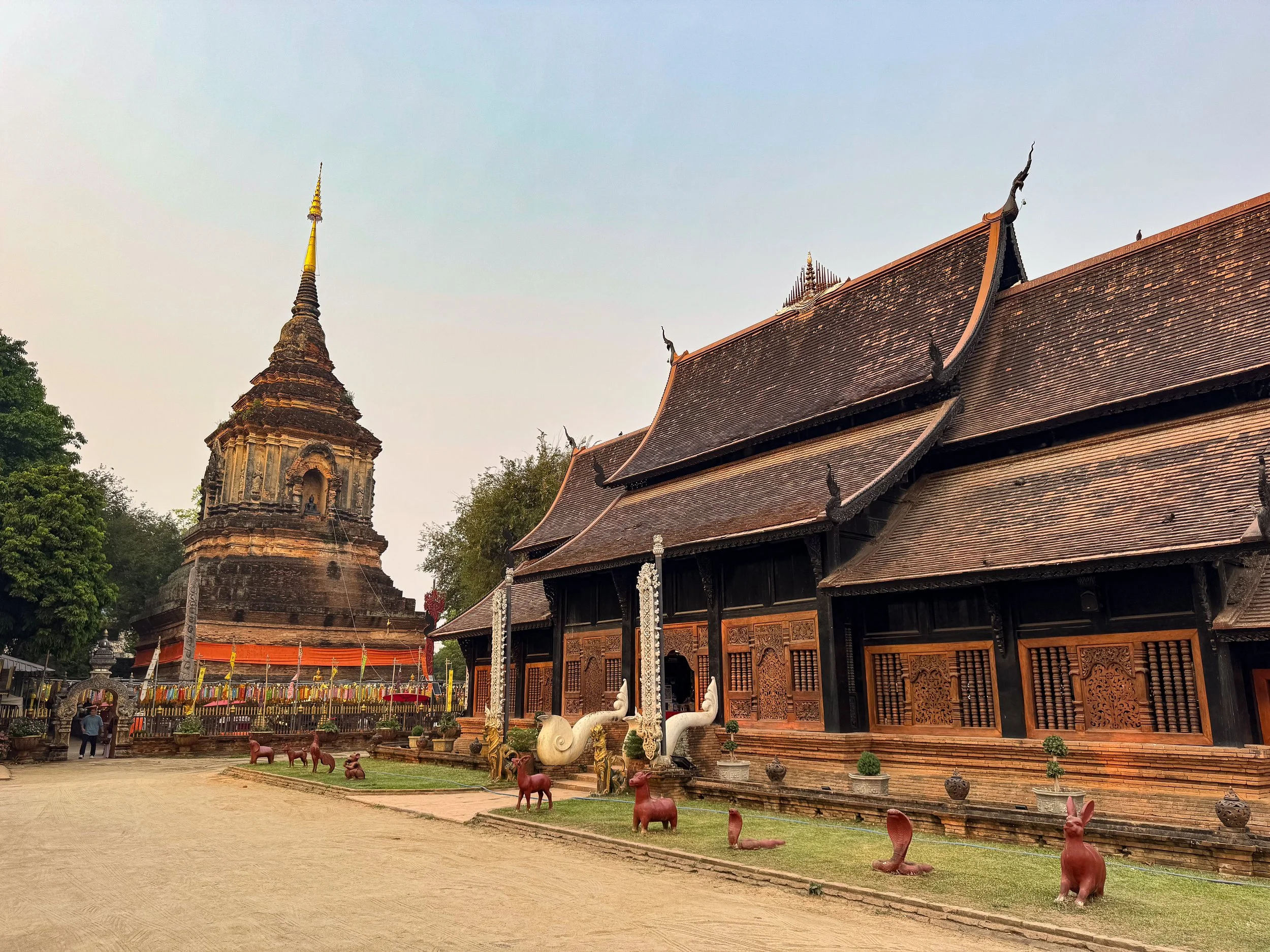
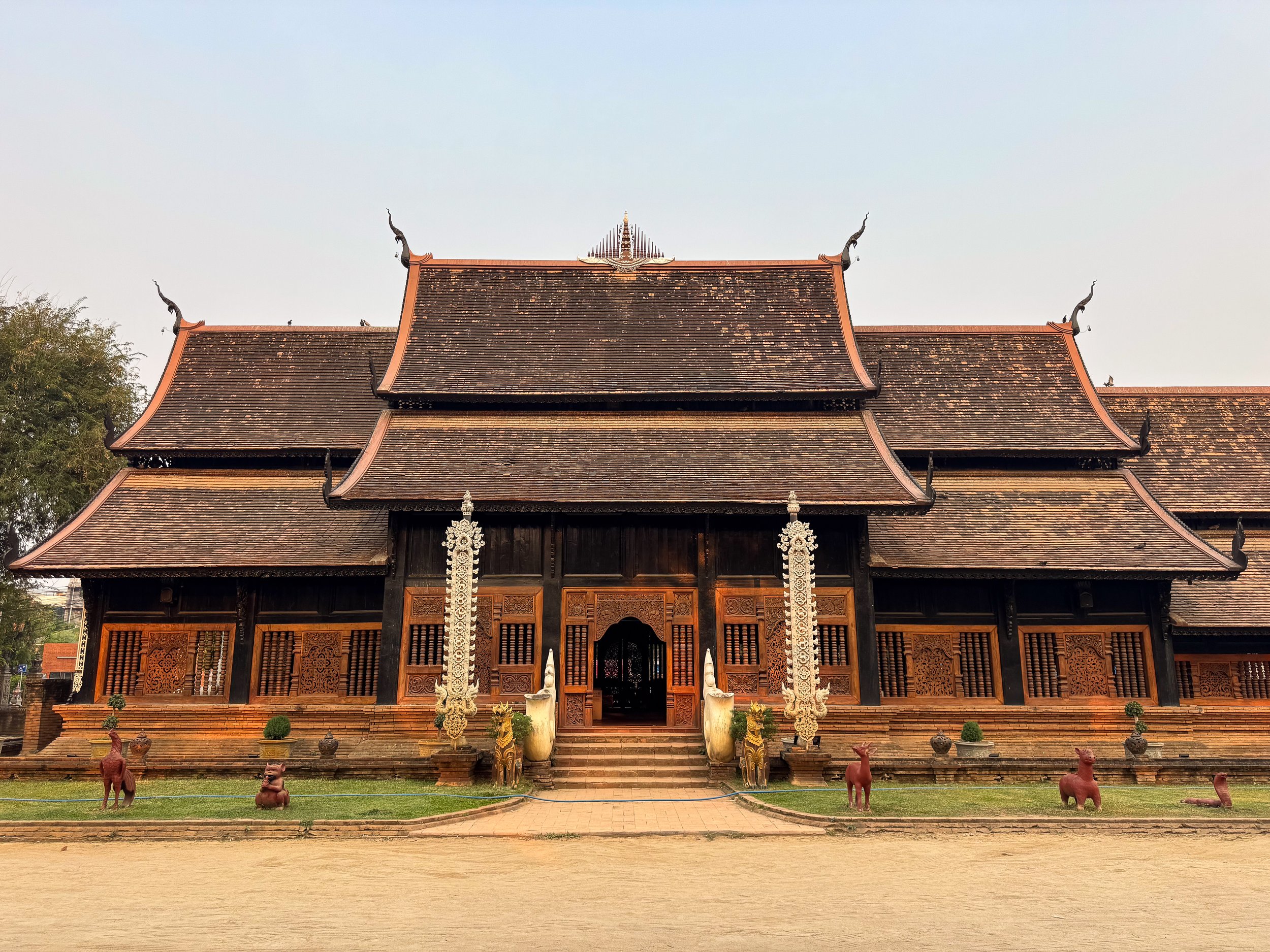
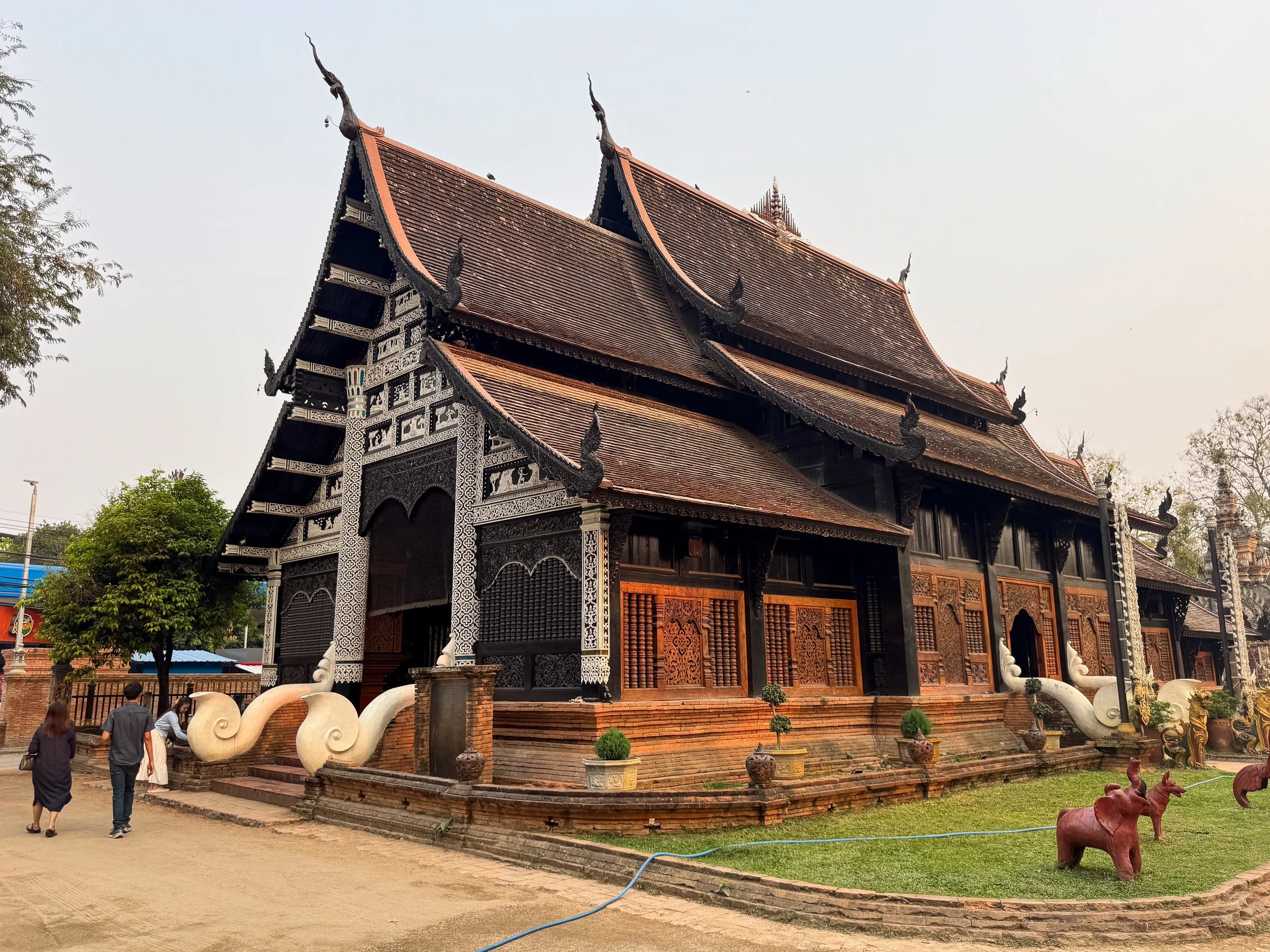
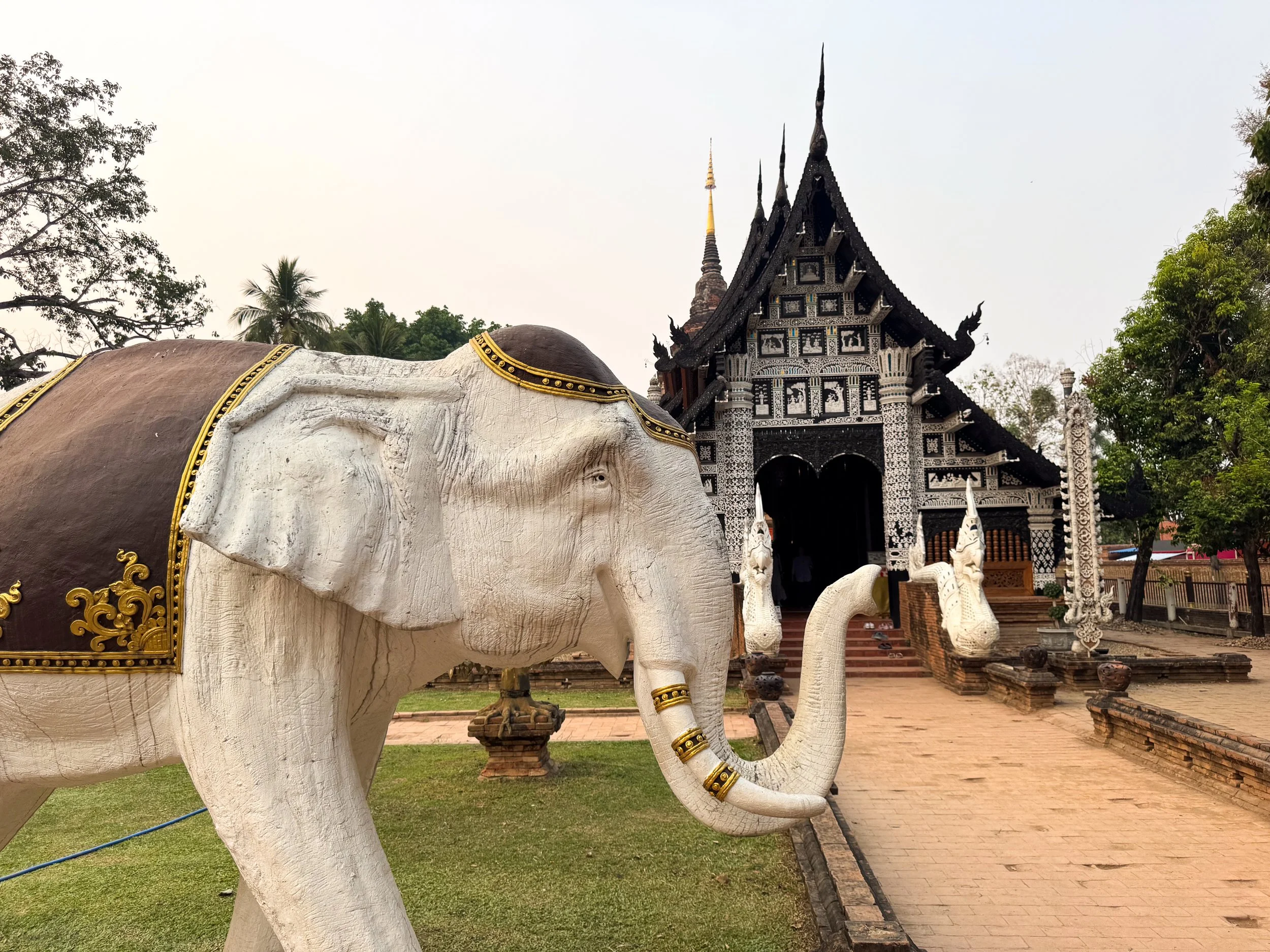
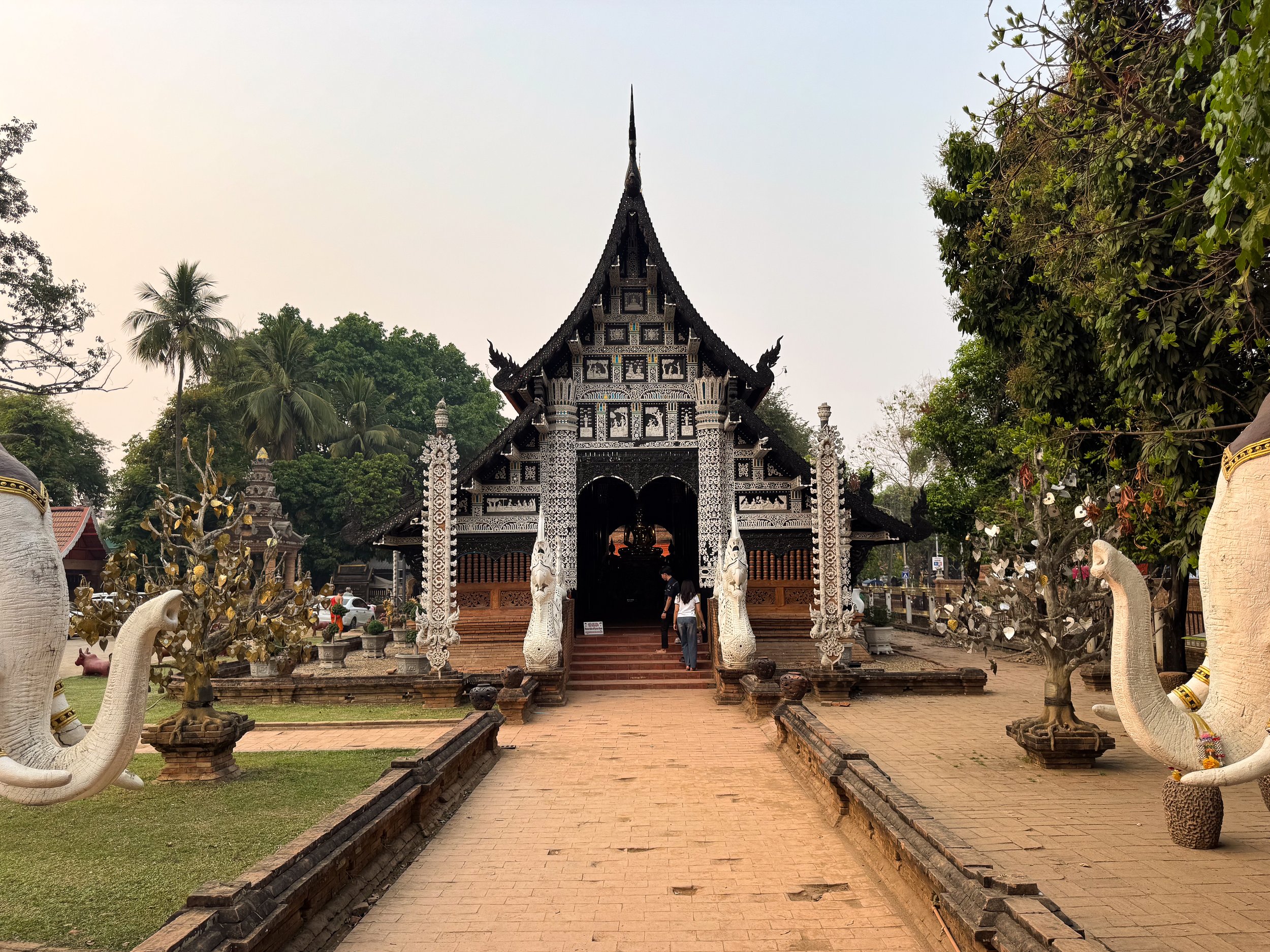
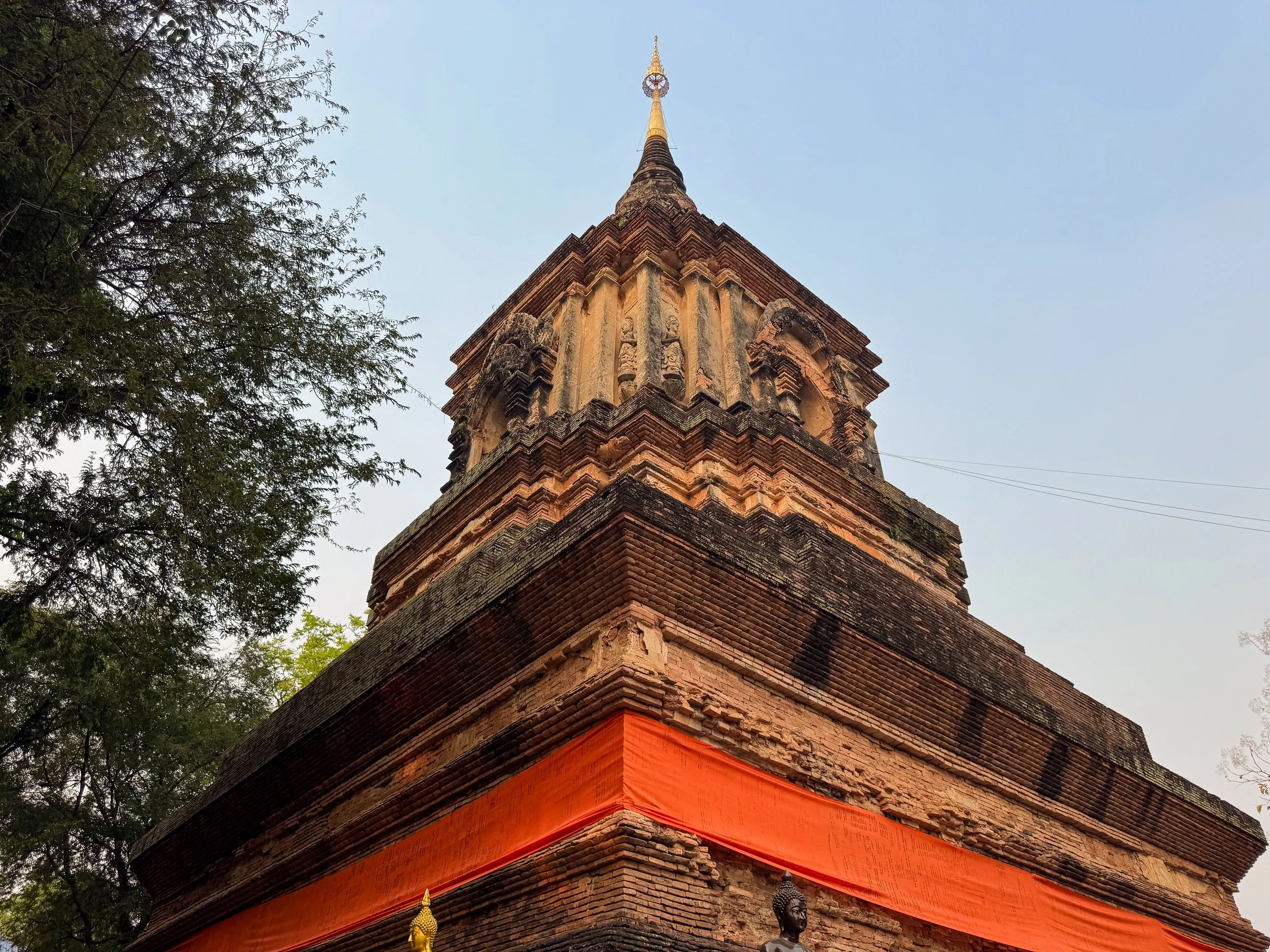
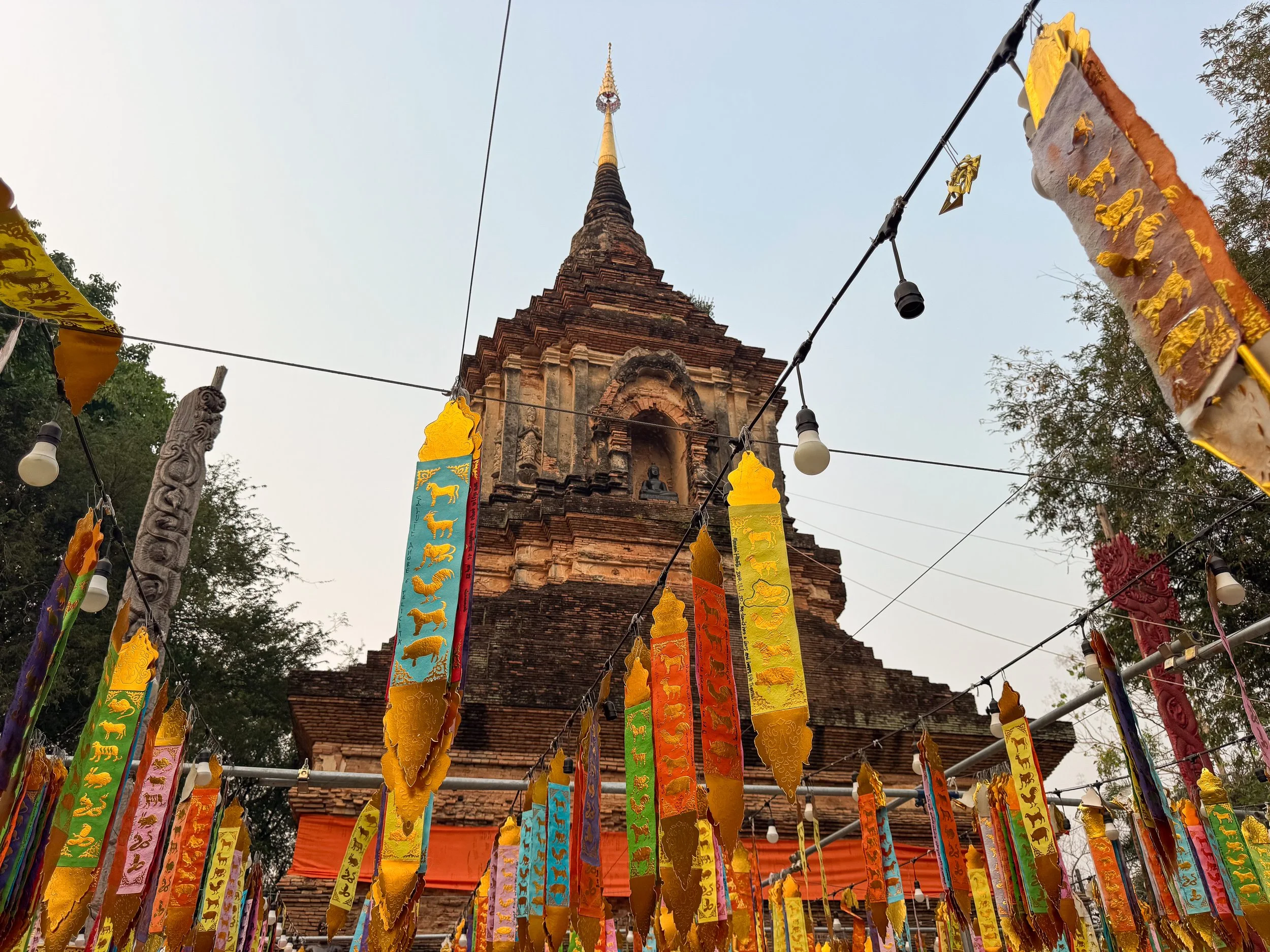
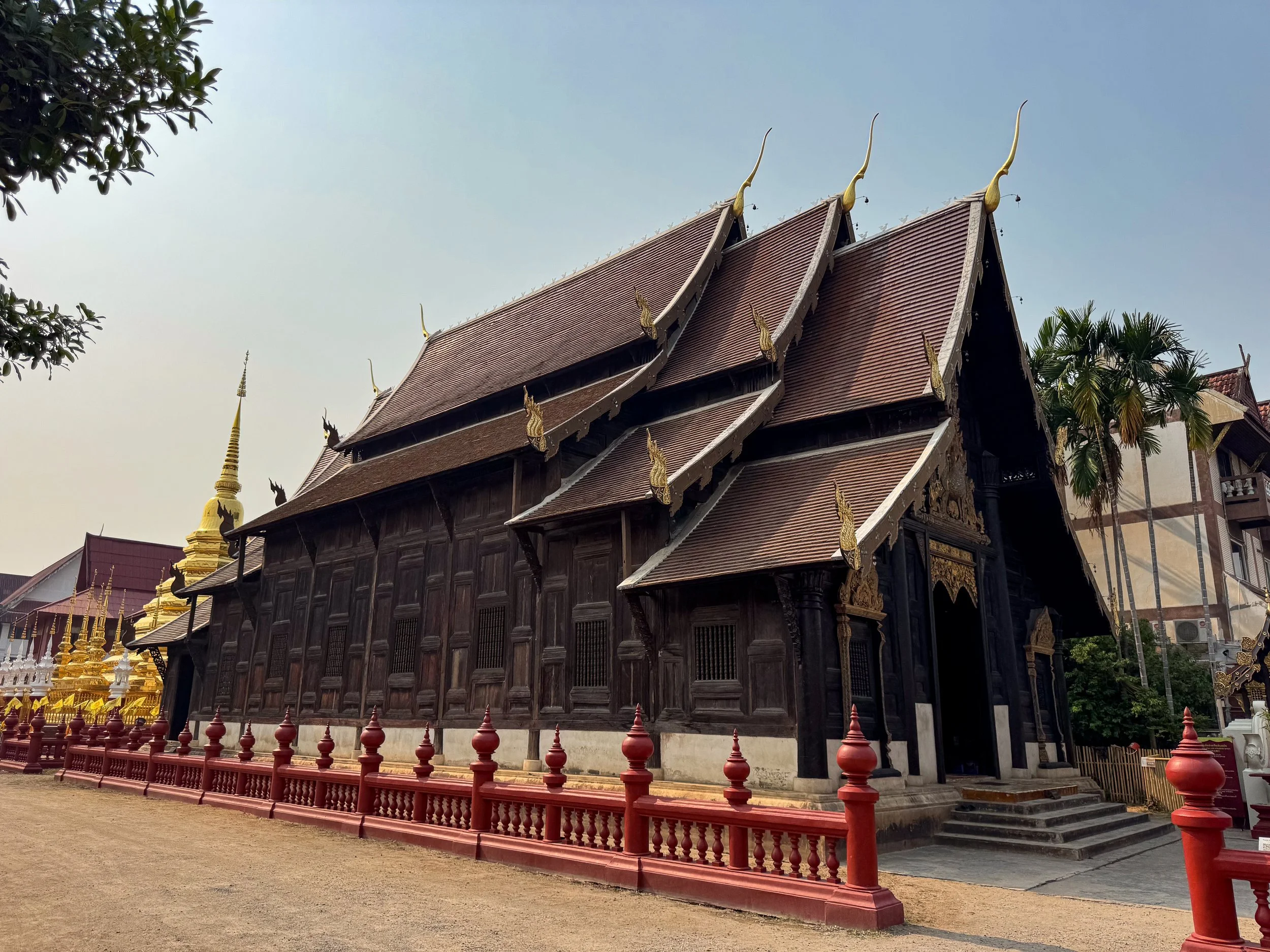
Wat Lok Molee. A large Lanna style temple made entirely of wood. It’s one of the few surviving structures of its kind to remain from the ancient times. Its entrance is decorated in an ornate black and white design, flanked by stone elephants and dragon steps. Monk novices can often be seen tending to the grounds. Behind it is a chedi housing the remains of a former Lanna Kingdom ruler. Worshipers come here to make offerings of water.
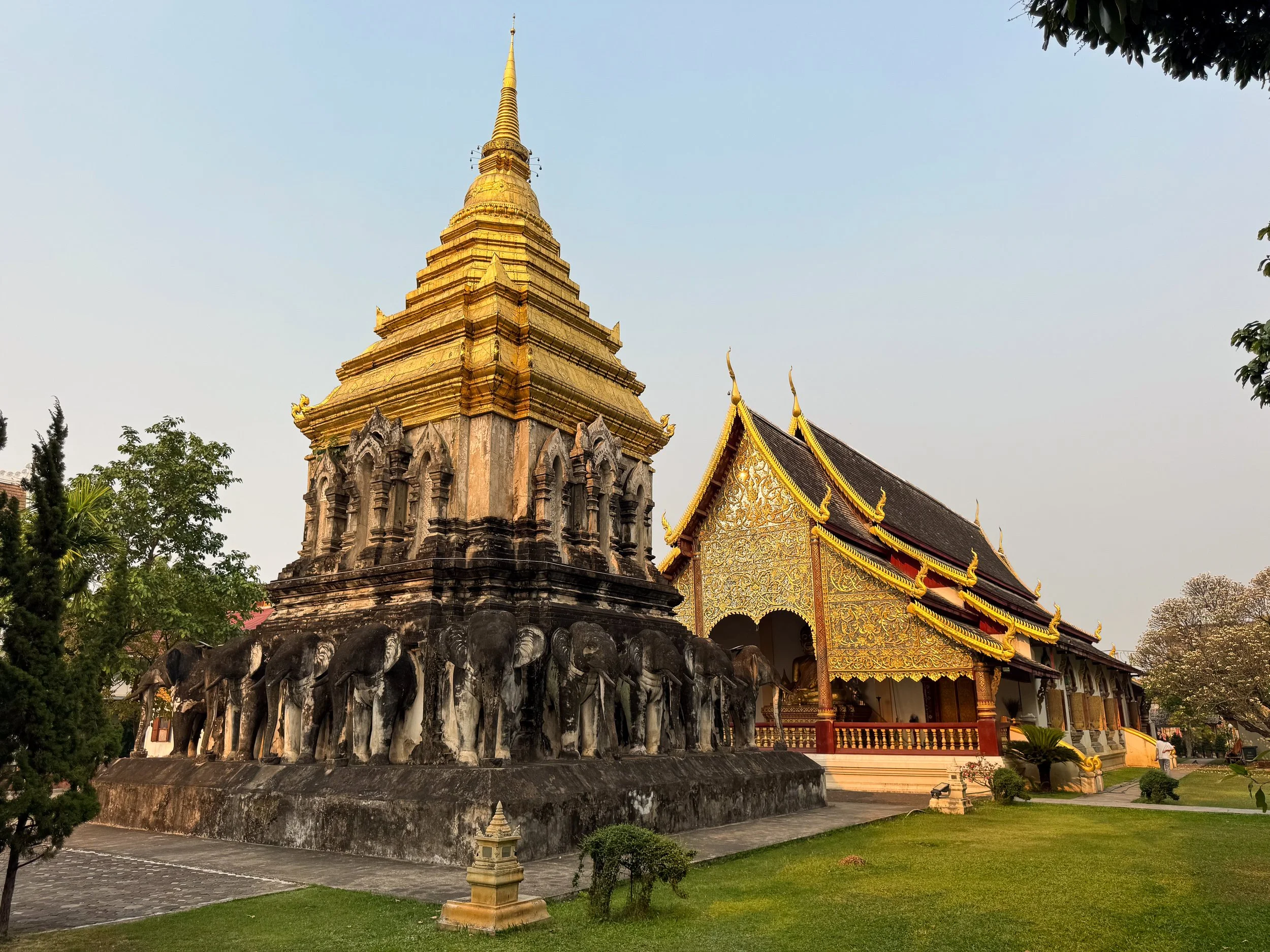
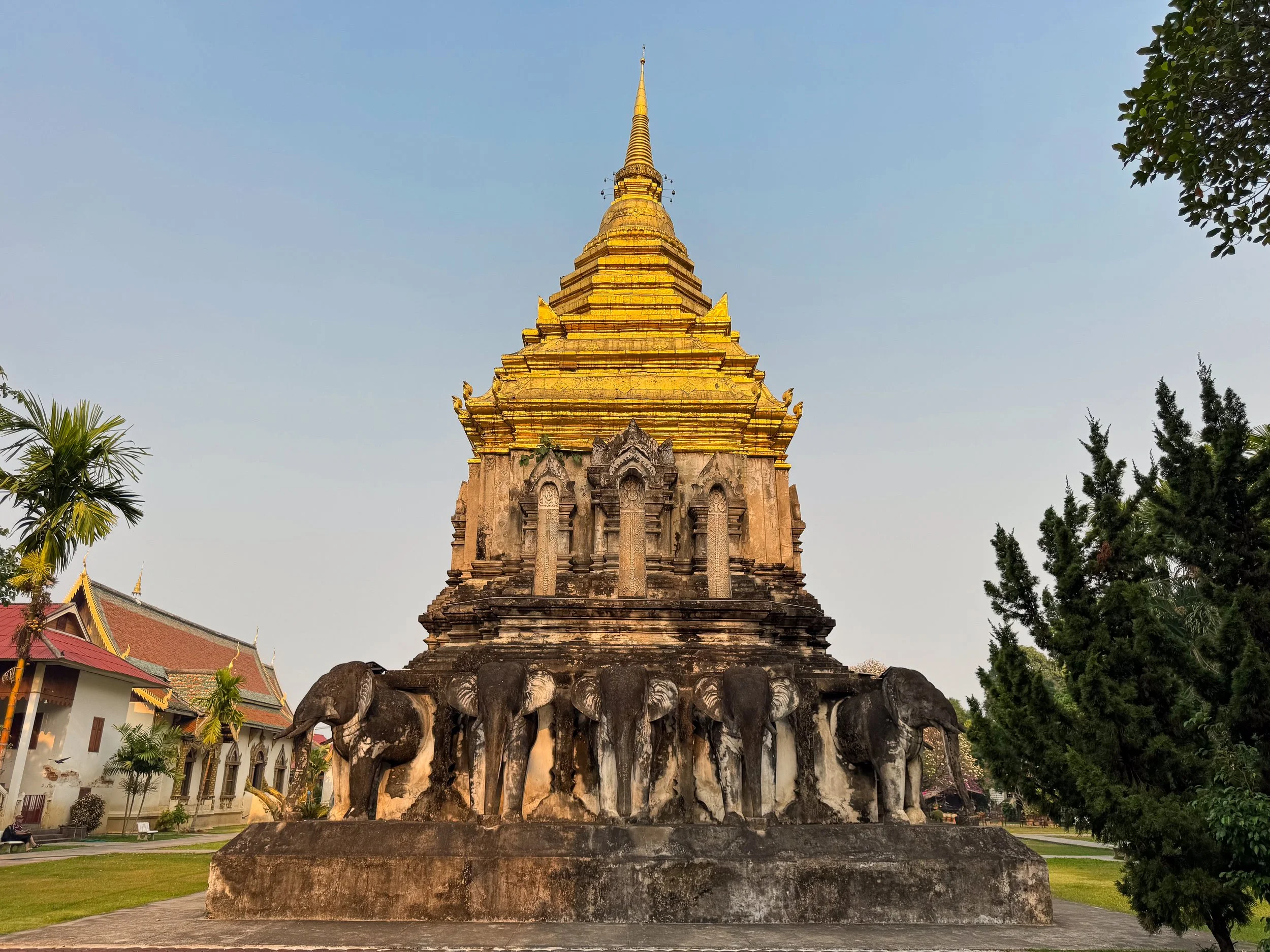
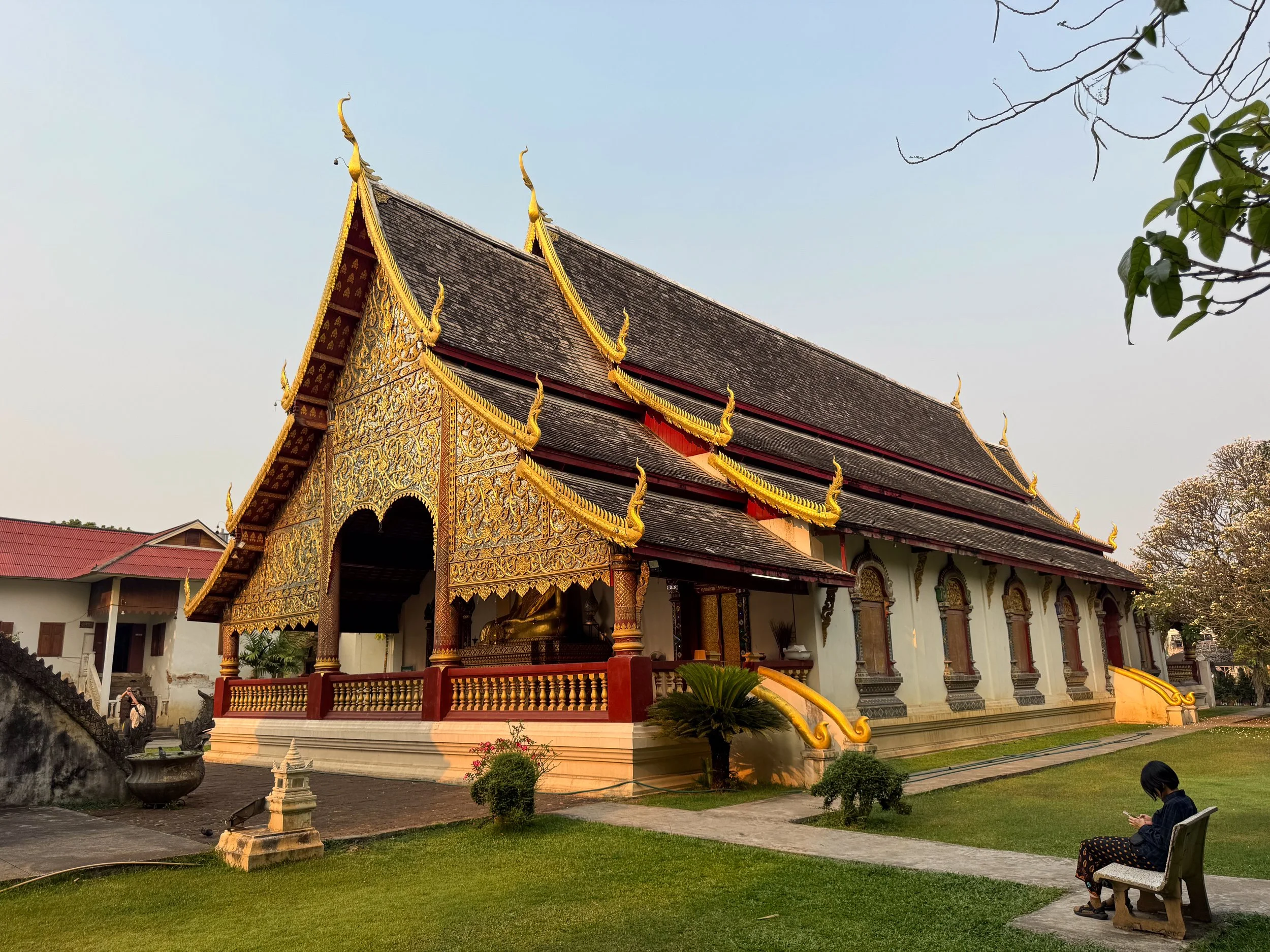
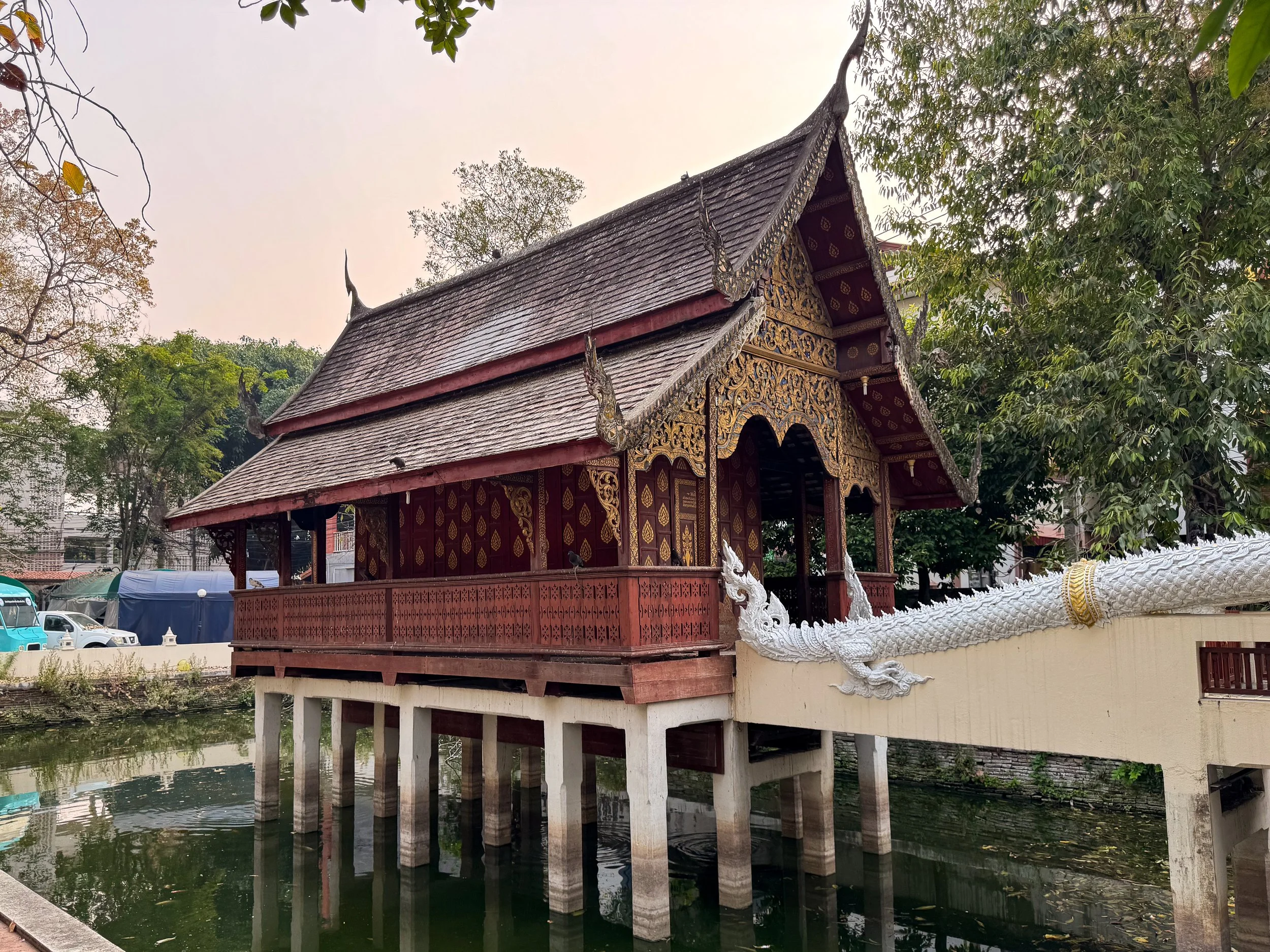
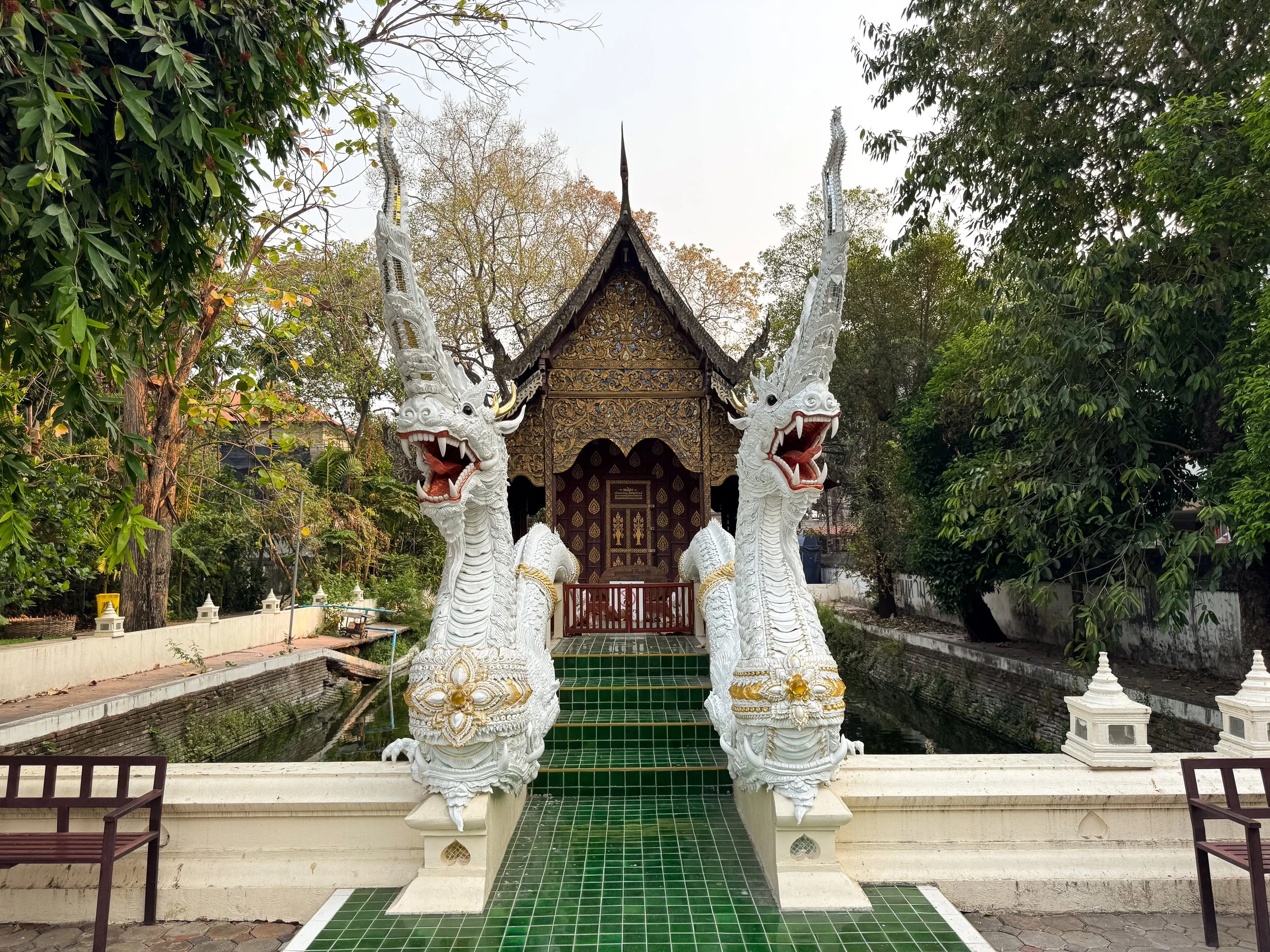
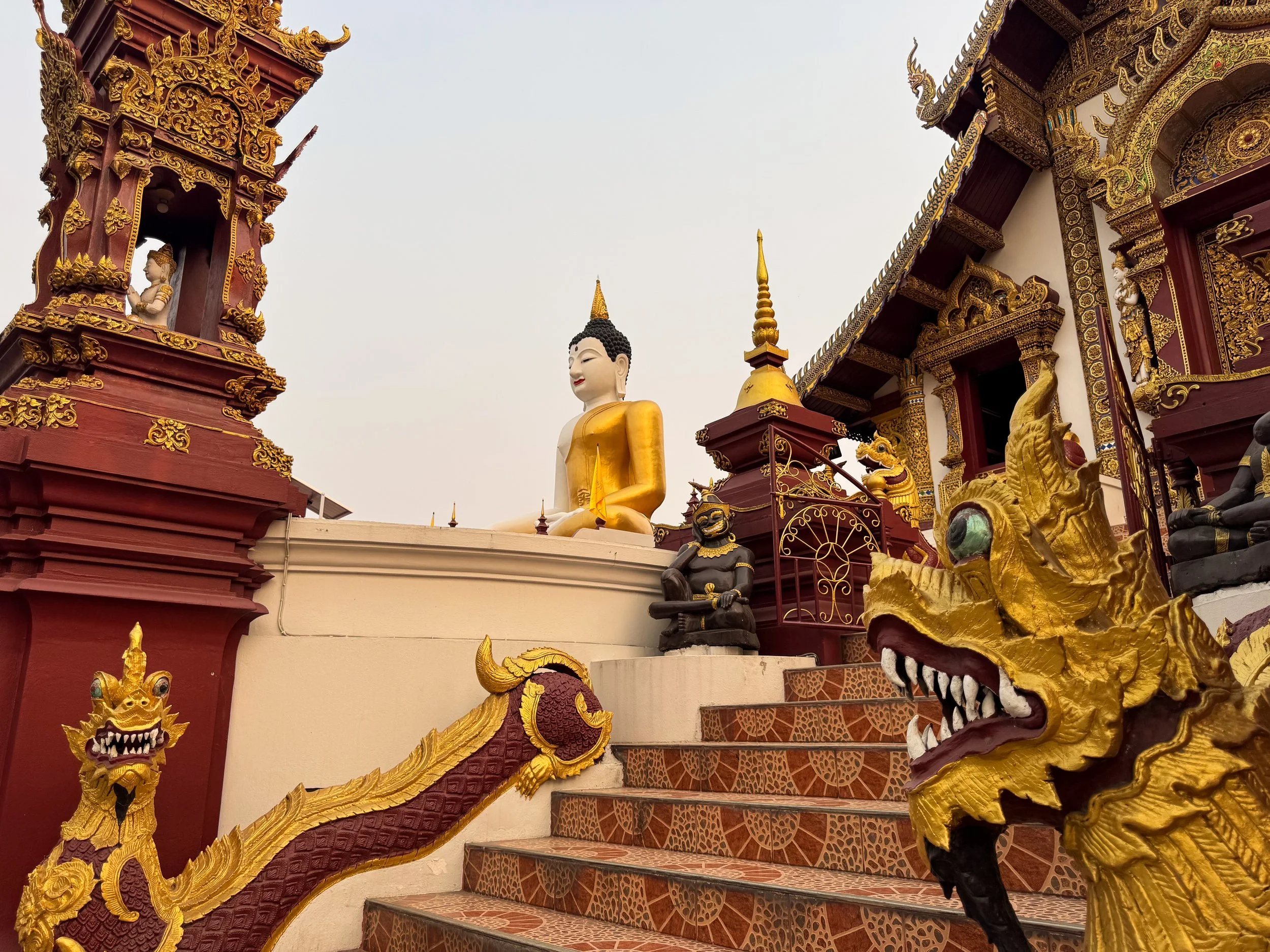
Wat Chiang Mun. An ancient temple complex and the oldest in the Old City with multiple notable structures.
Main Chapel. A pagoda style building with a tiered and layered roof, ornate golden entrance and red accents. It’s a classic example of Lanna style architecture.
Secondary Chapel. A smaller building displaying two tiny statues of the Buddha. One made of crystal dating back 2,000 years and one made of marble dating back 2,500 years.
Elephant Chedi. A pyramid shaped chedi with a golden tower and base surrounded by life size stone elephants.
Buddhist Library. A small wooden temple housing Buddhist texts built on stilts above a koi pond with a dragon bridge leading to its entrance.
Wat Phan Tao. A pagoda style temple made entirely of teak wood. It has a traditional stepped and tiered roof with gold painted cornices and a finely detailed entrance. It’s one of the few surviving structures of its kind to remain from the ancient times.
Wat Rajamontean. A newer Buddhist wat in the Old City across the moat from Wat Lok Molee. Its main meditation hall features intricate designs and gold ornamentation. Seated outside is a large statue of the Buddha wearing golden robes.
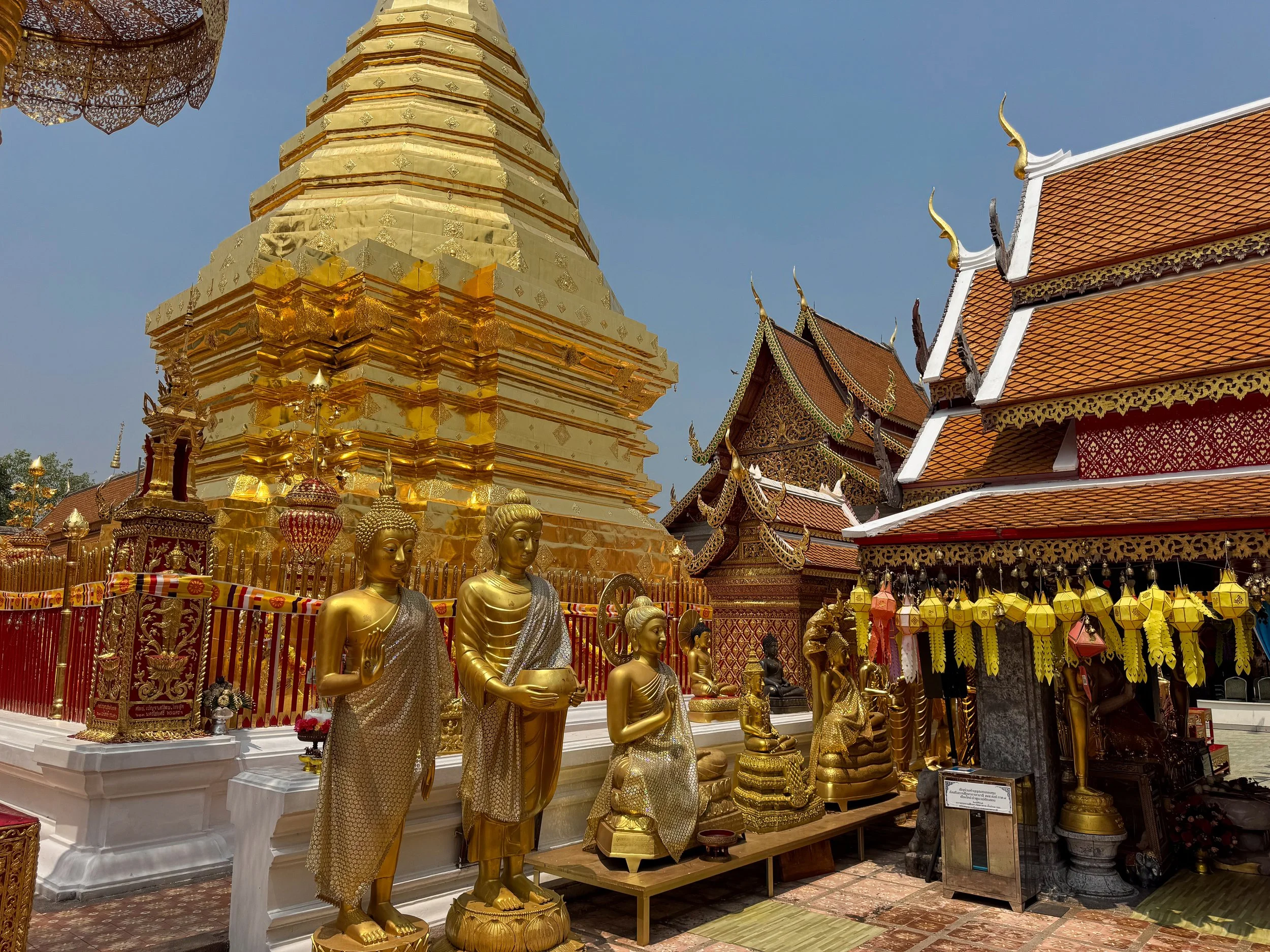
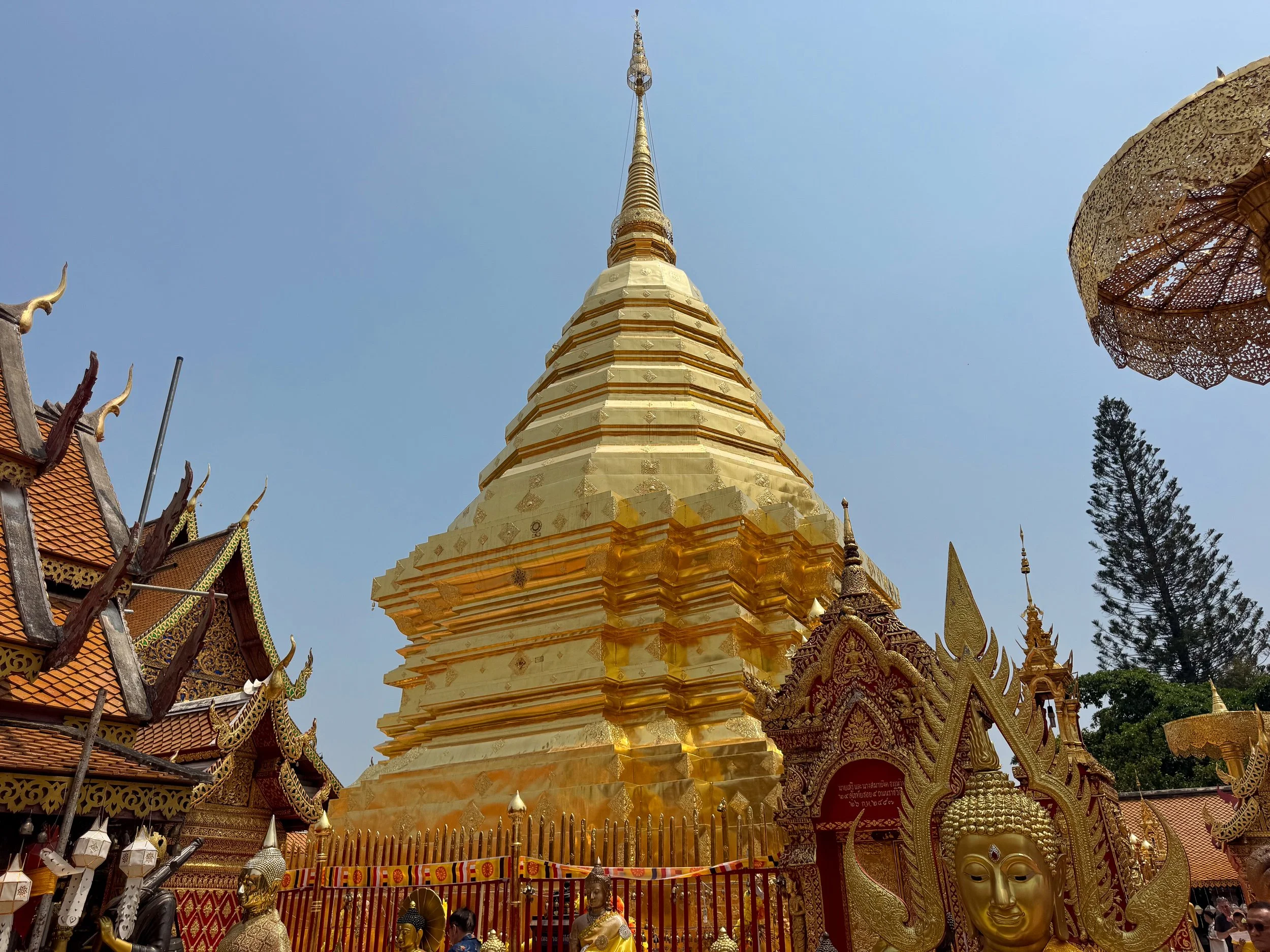
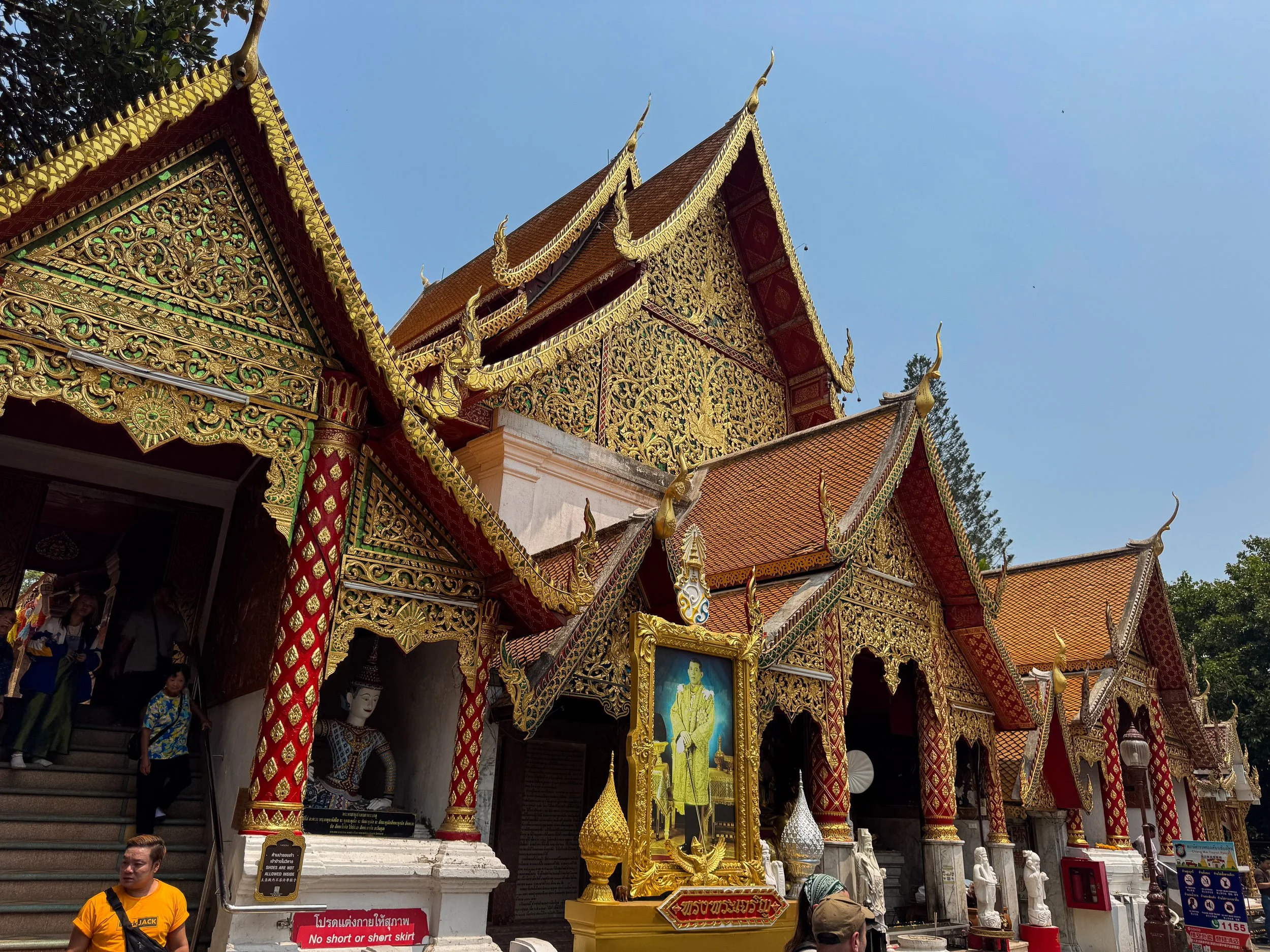
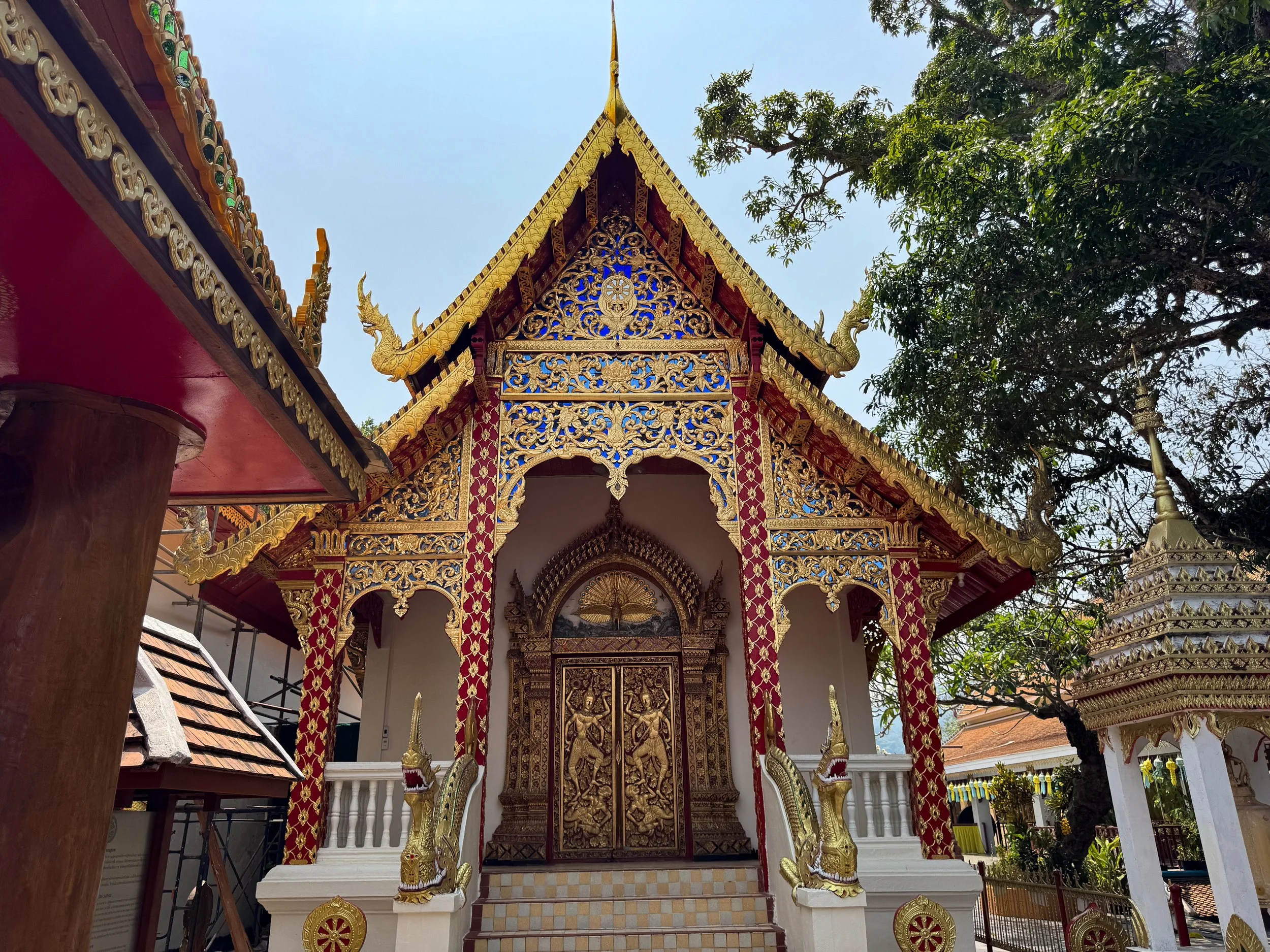
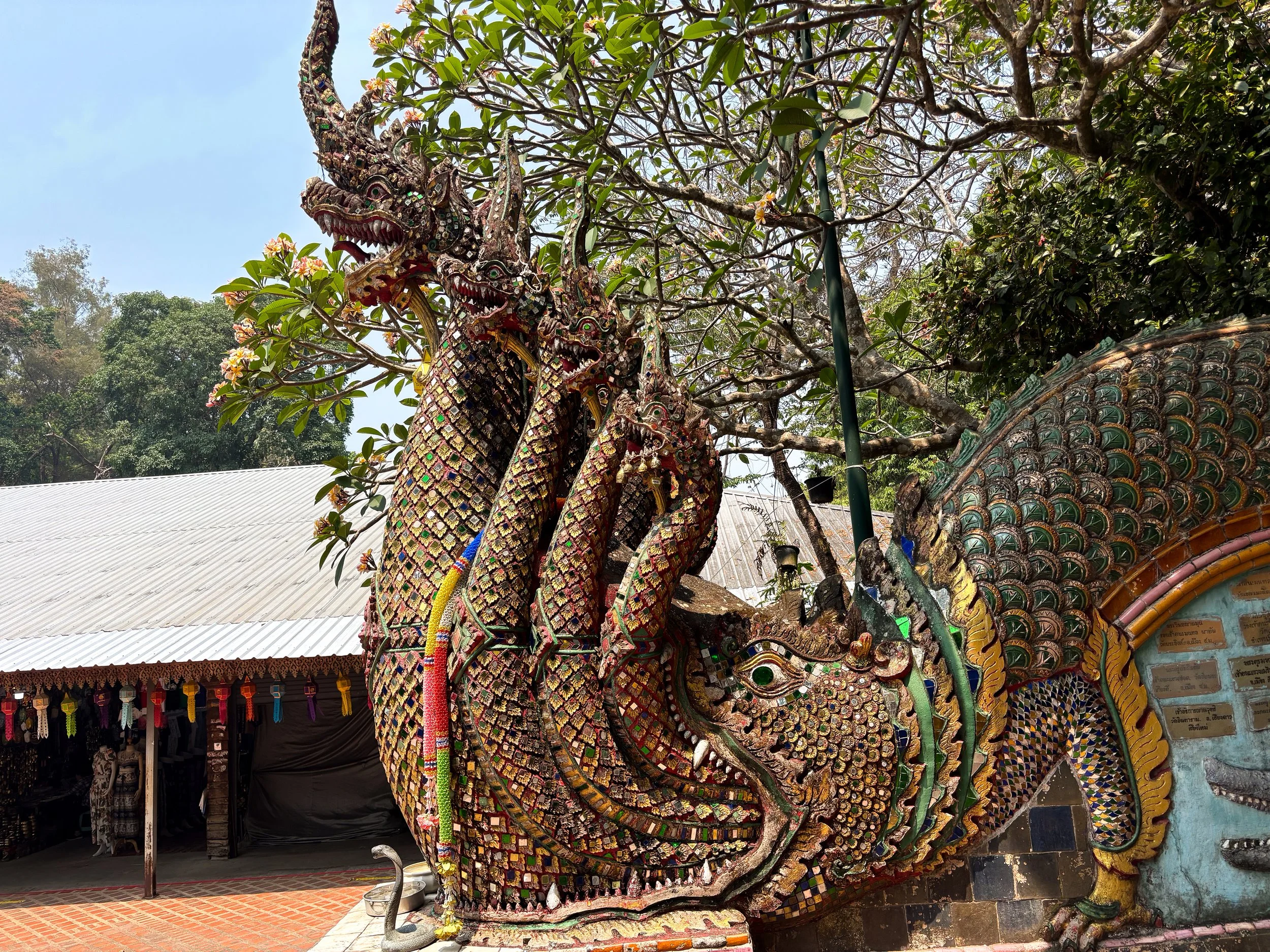
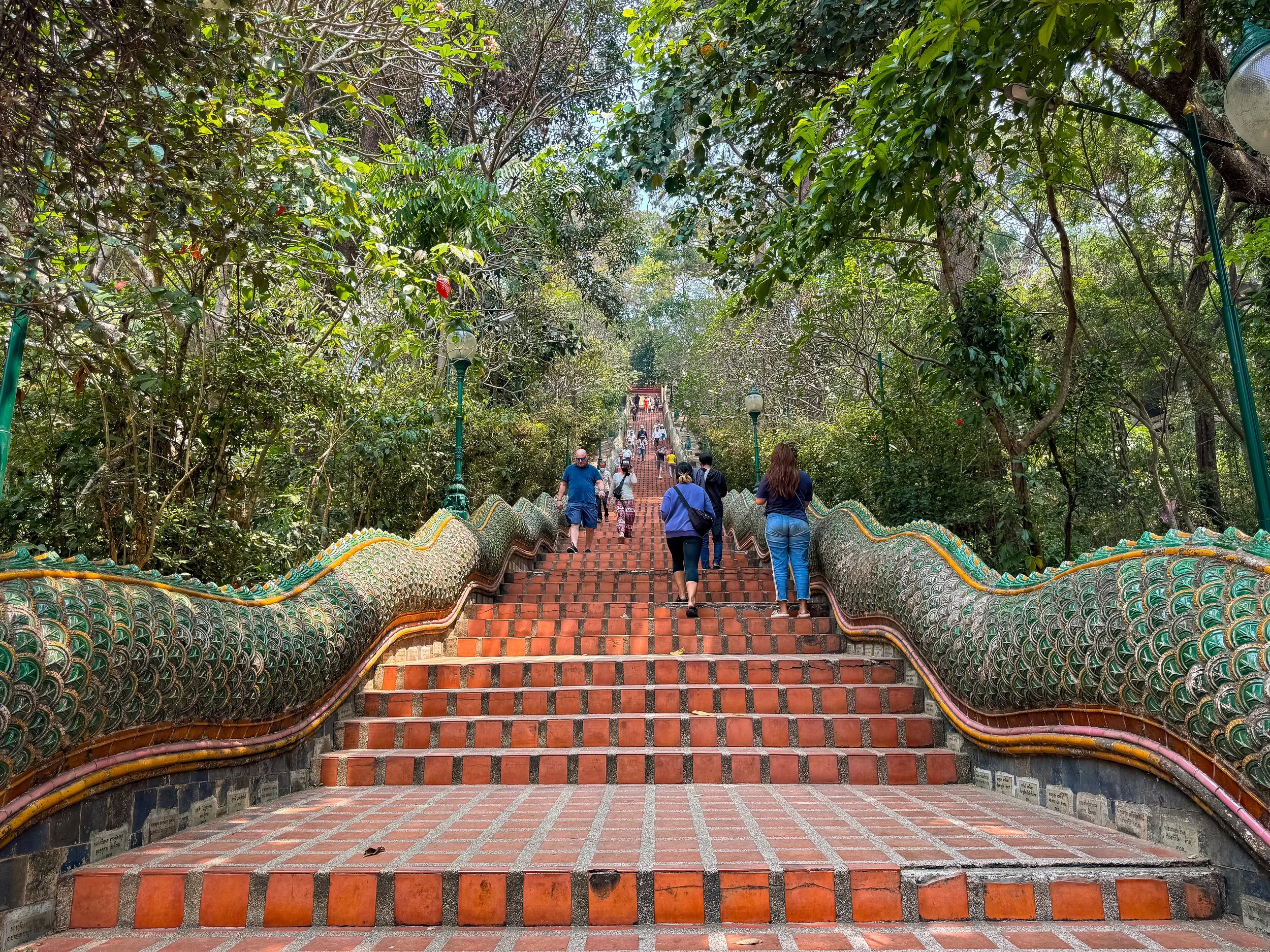
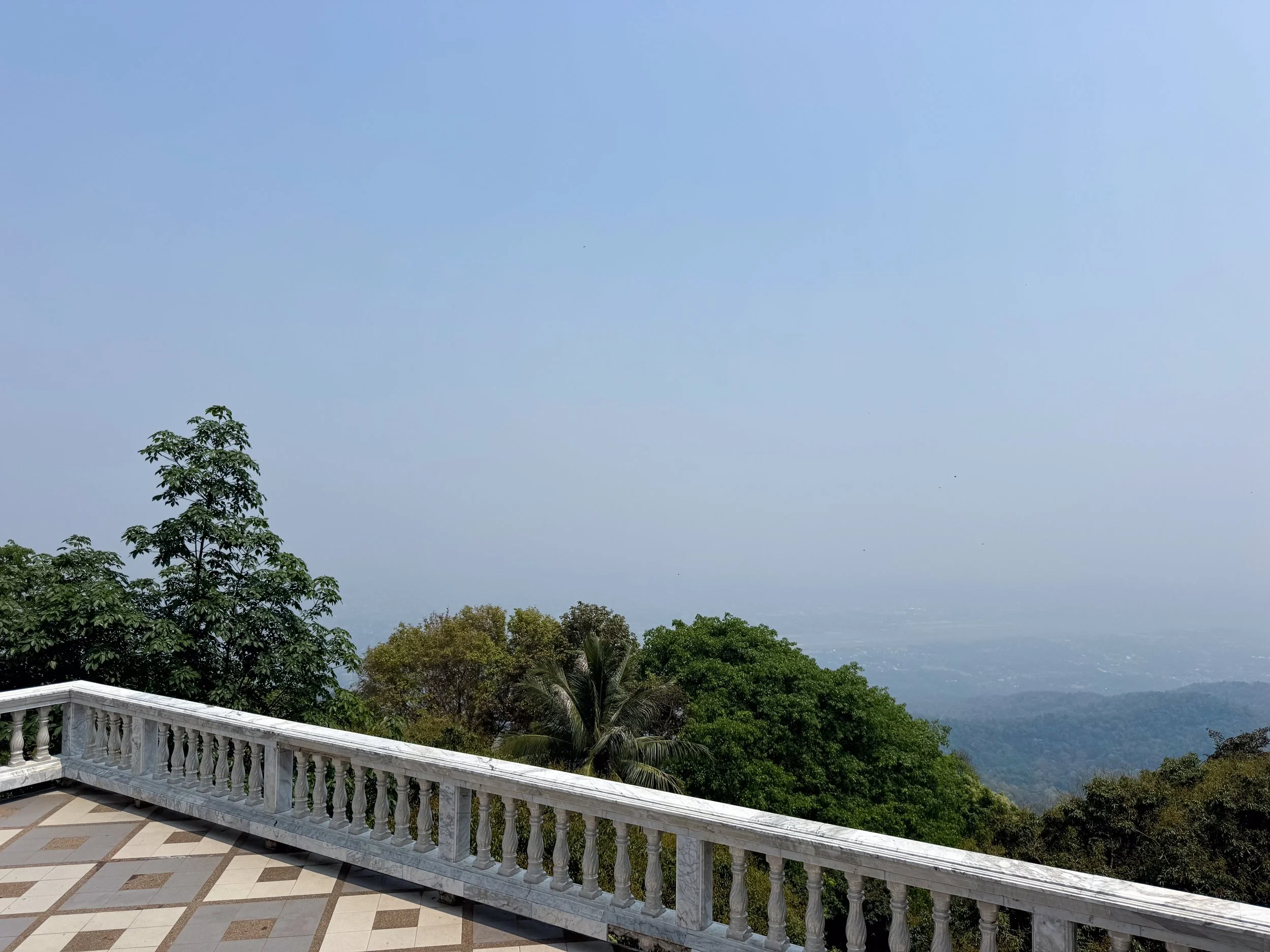
Wat Phra That Doi Suthep. A mountaintop Buddhist wat overlooking the city of Chiang Mai. It's famous for its 300-step dragon stairway surrounded by forest. The temple is decorated in ornately painted red and gold designs and features multi-tiered roofs, marble floors, statues of the Buddha, and a golden chedi at its center. Its walls depict beautiful paintings of Buddhist stories and teachings. The city views were obscured by wildfire smoke when we visited.
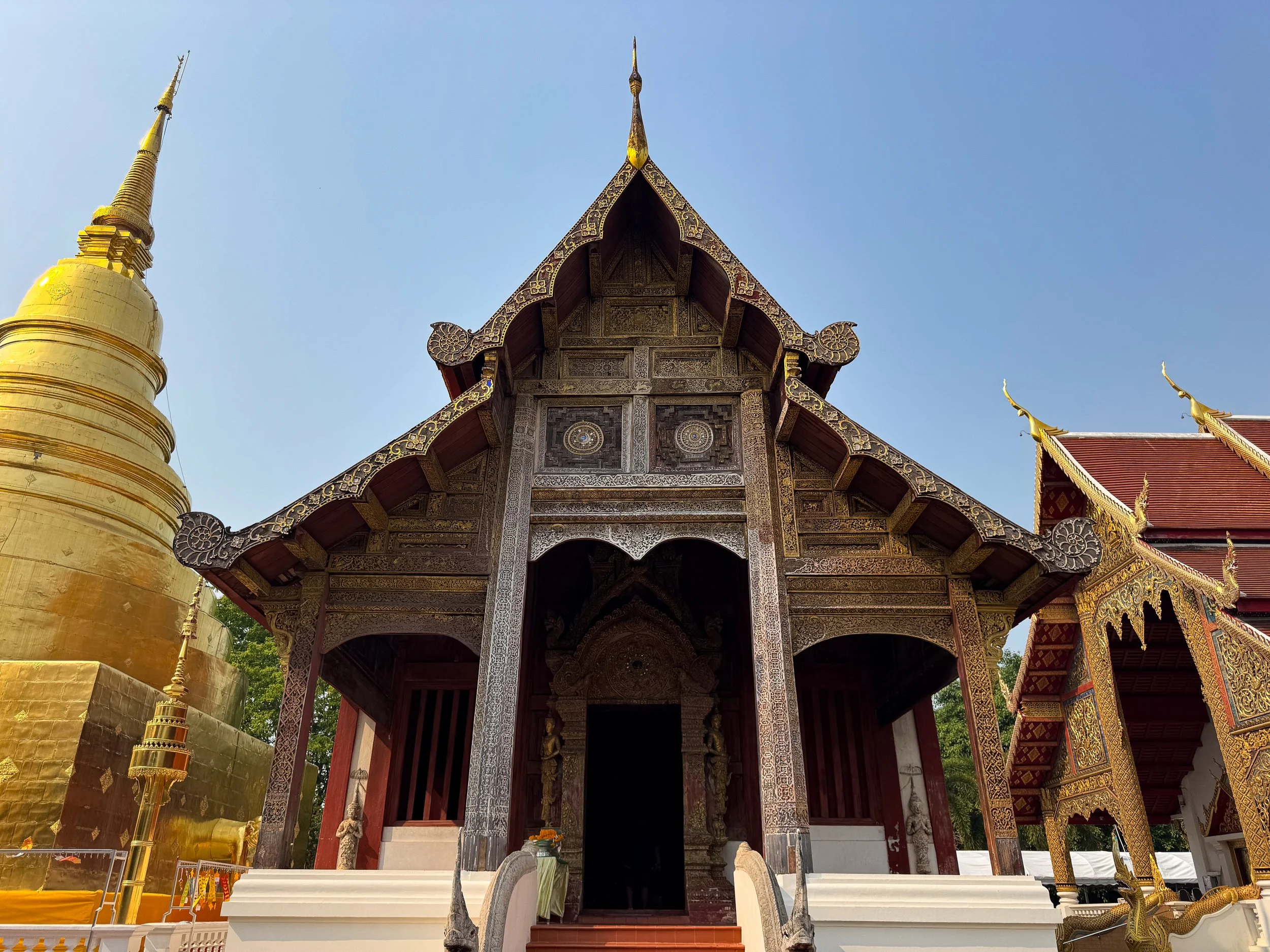
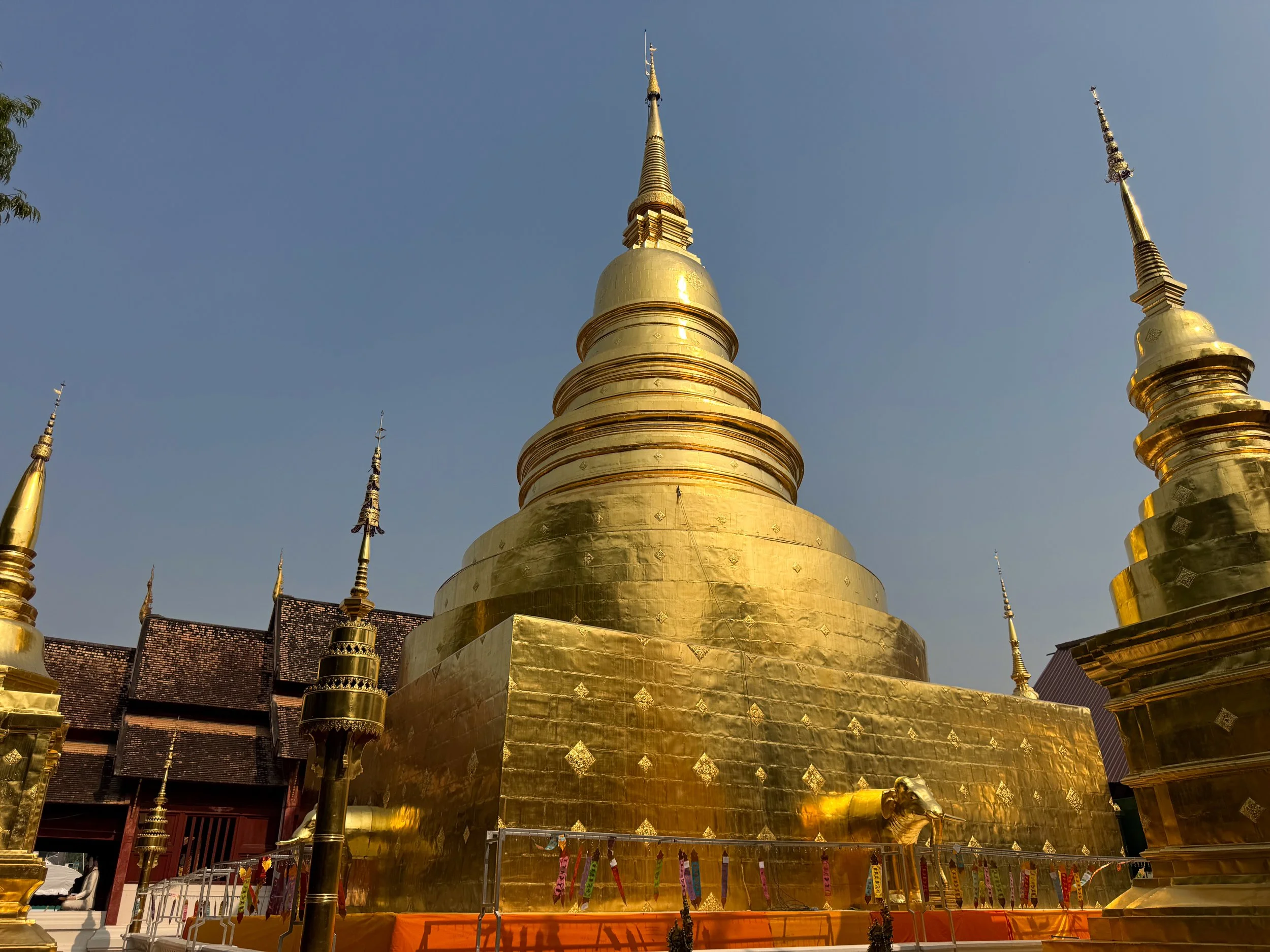
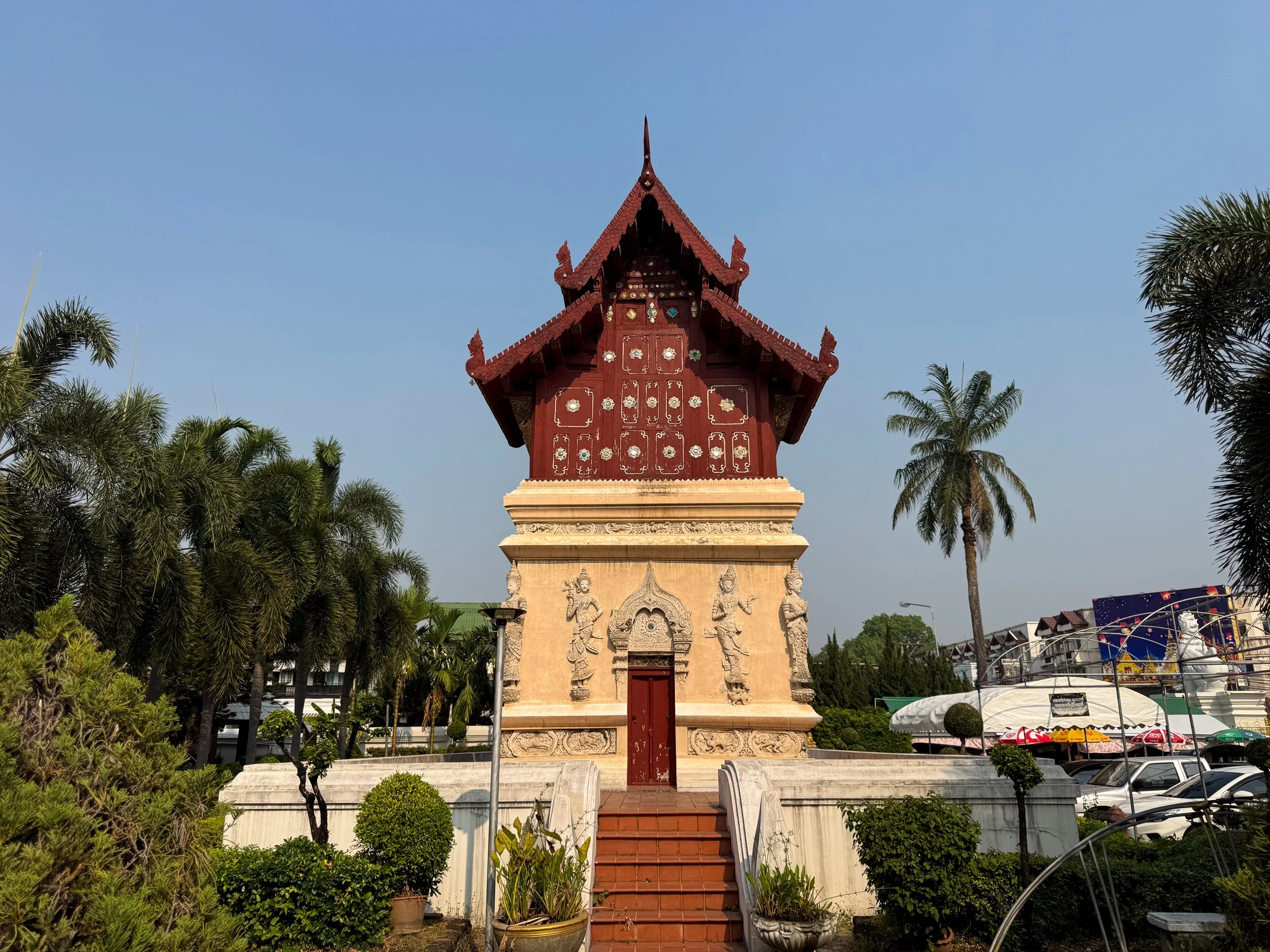
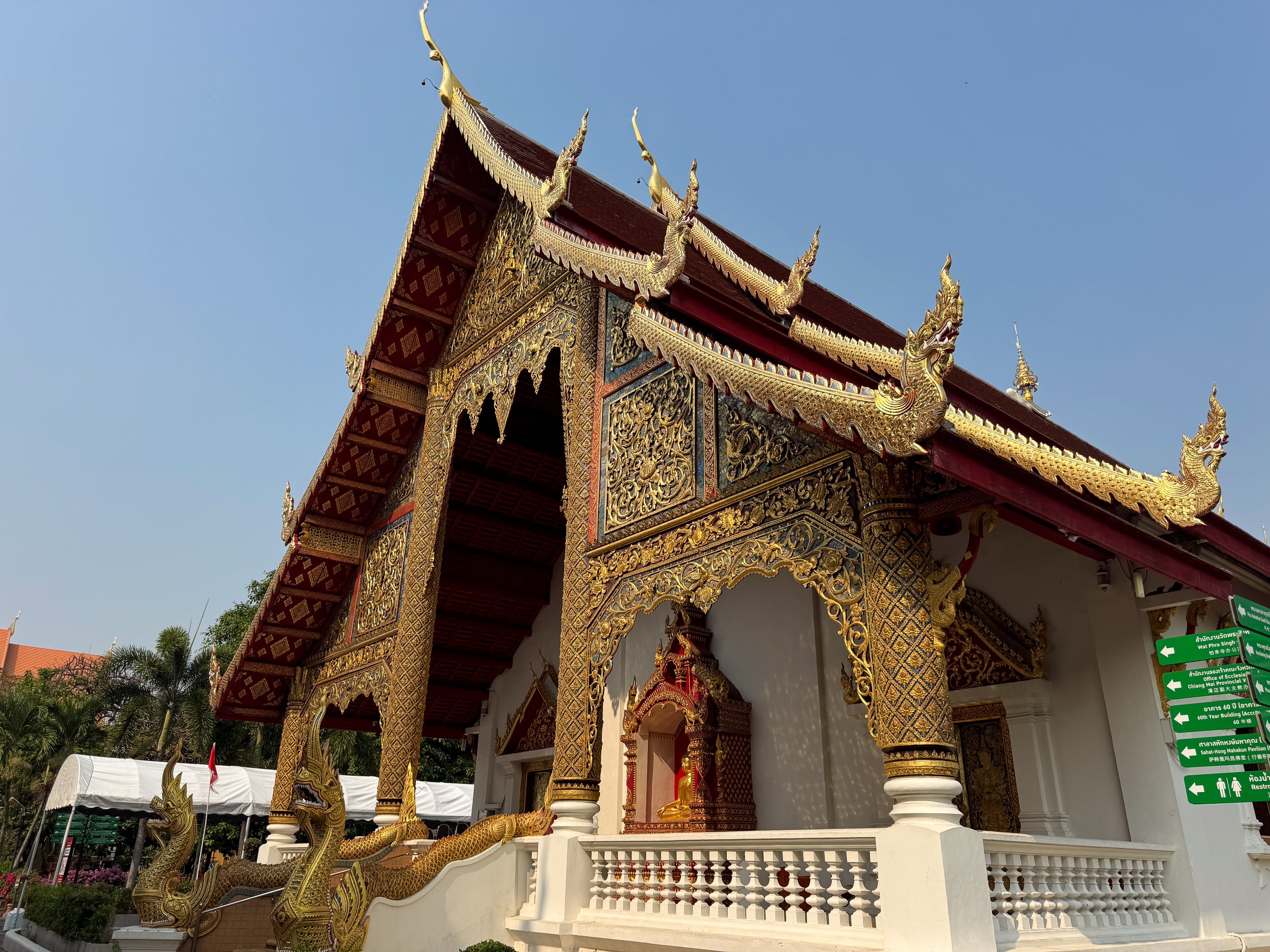
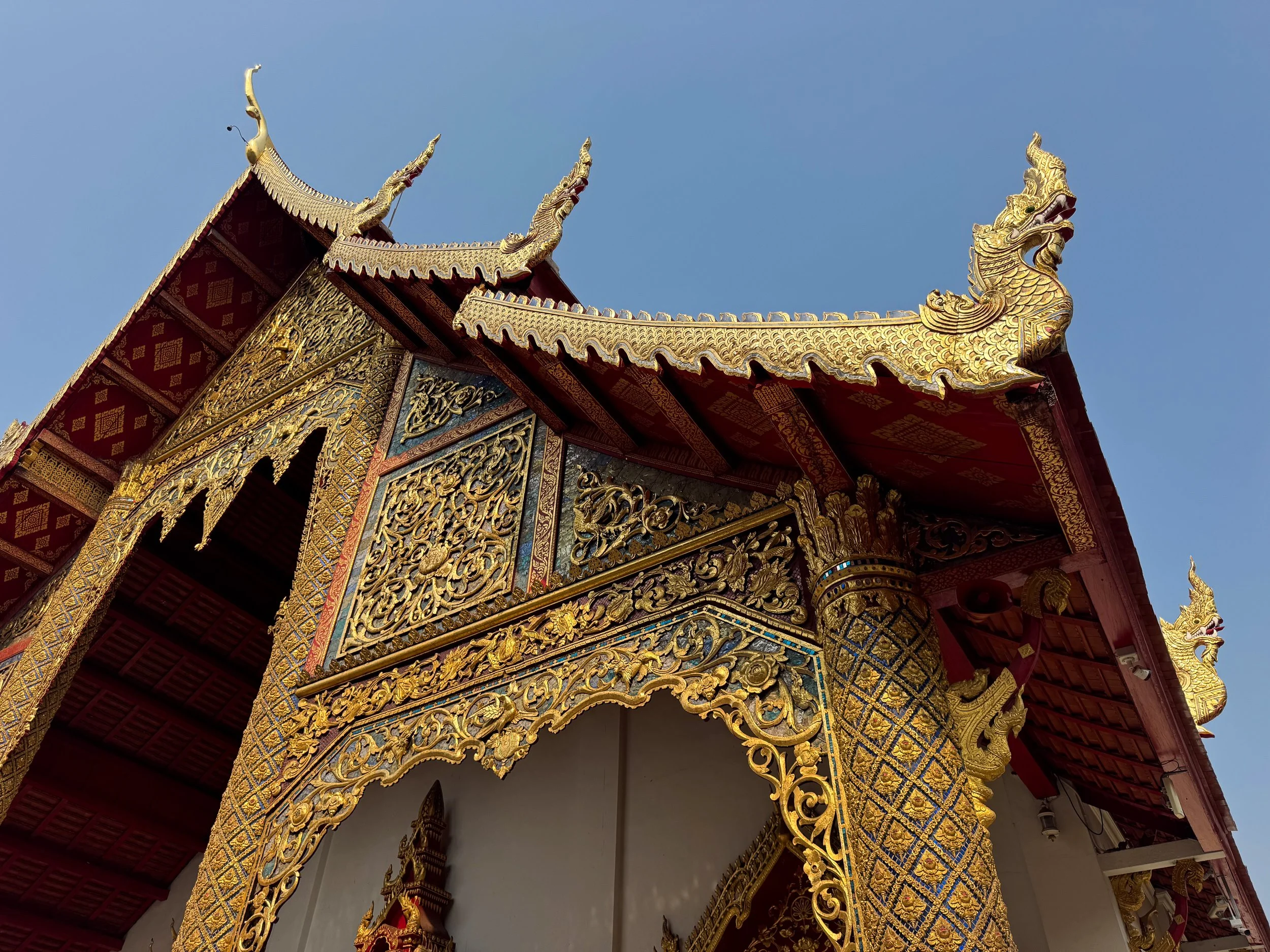
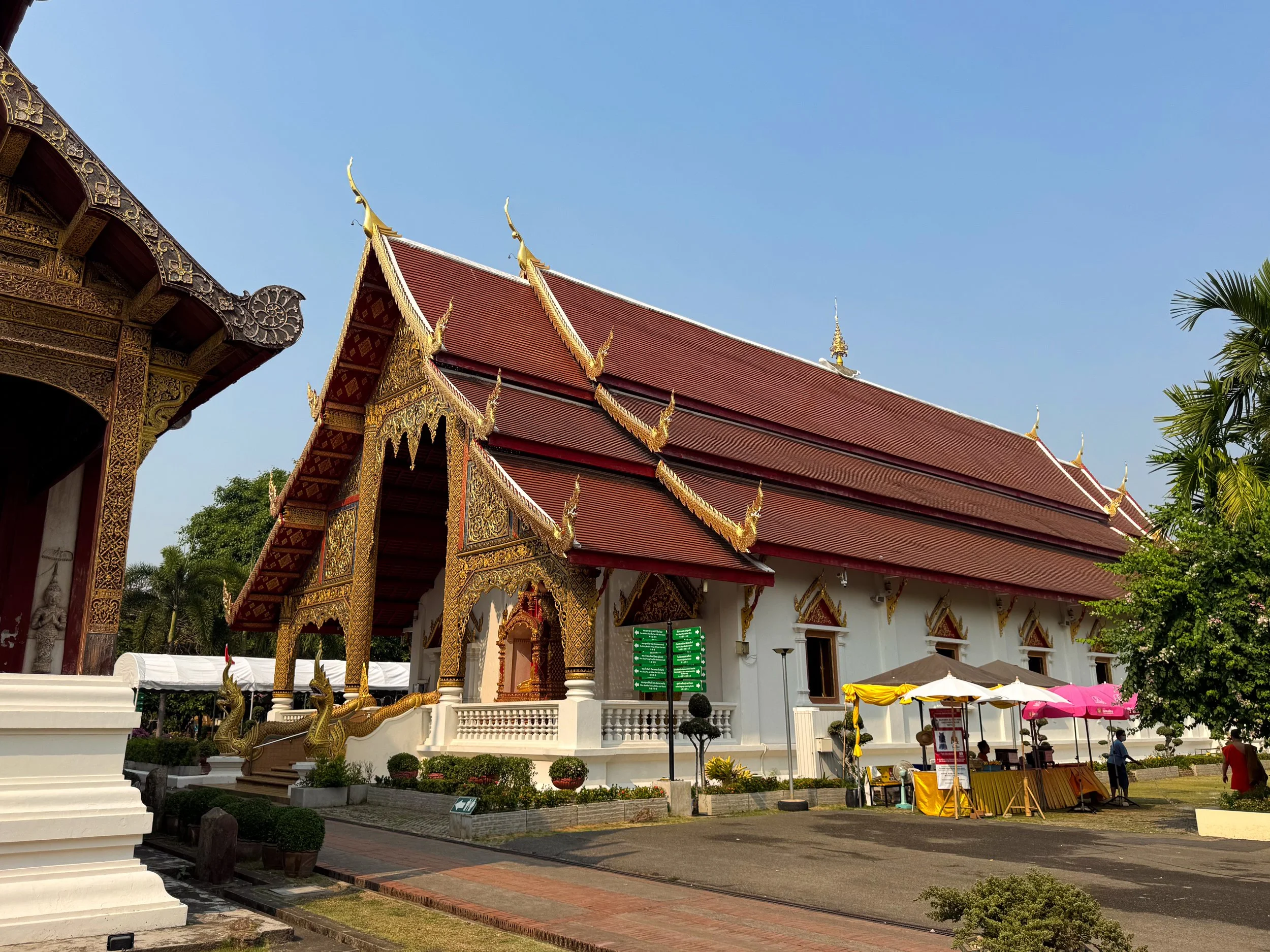
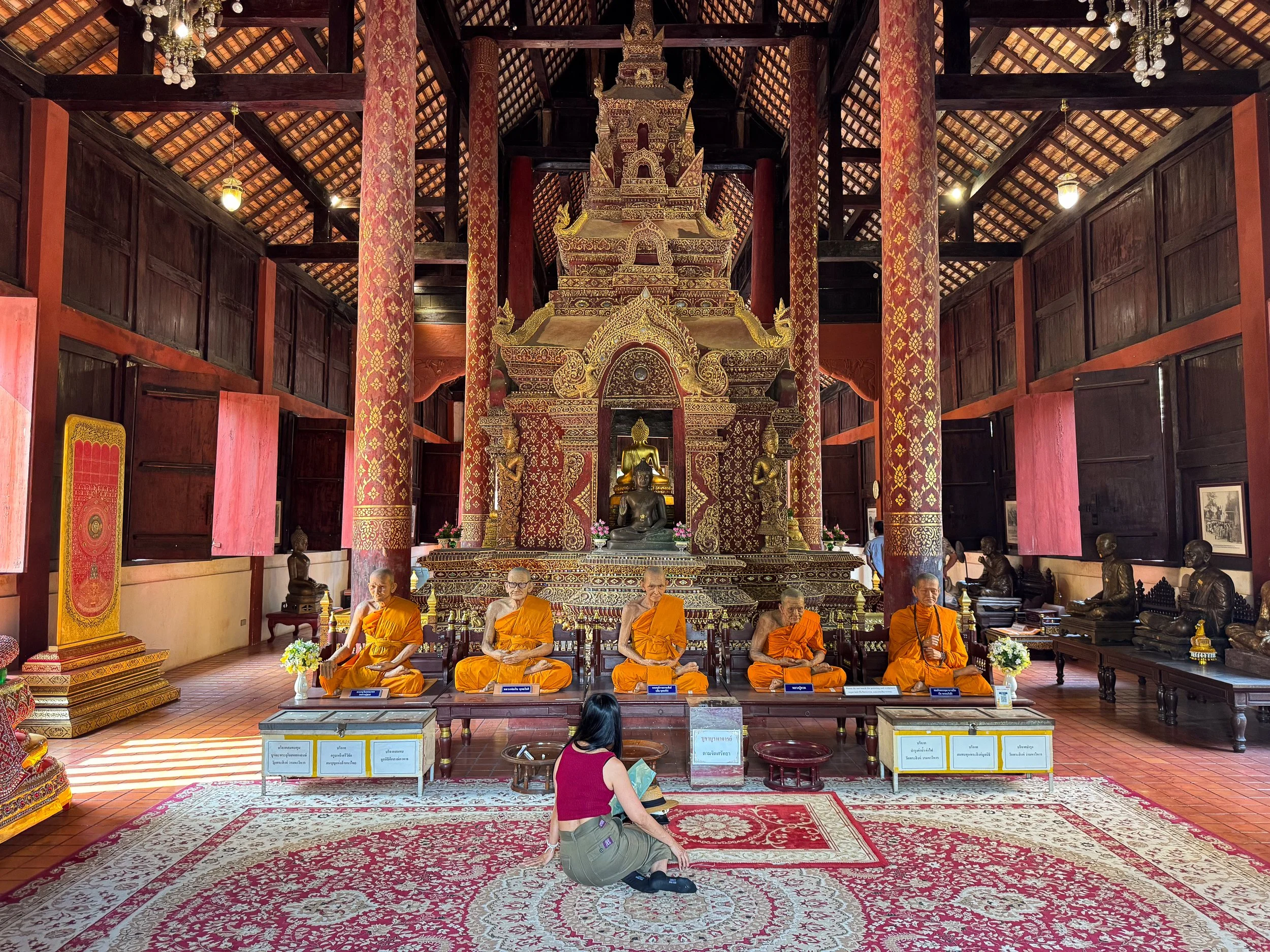
Wat Phra Singh Woramahawihan. A Lanna style Buddhist wat with a large meditation hall guarded by two golden dragons, ancient wooden temples and multiple bell shaped golden stupas. Ornate patterns, intricate designs and gold leaf cover many of the building’s historic facades.
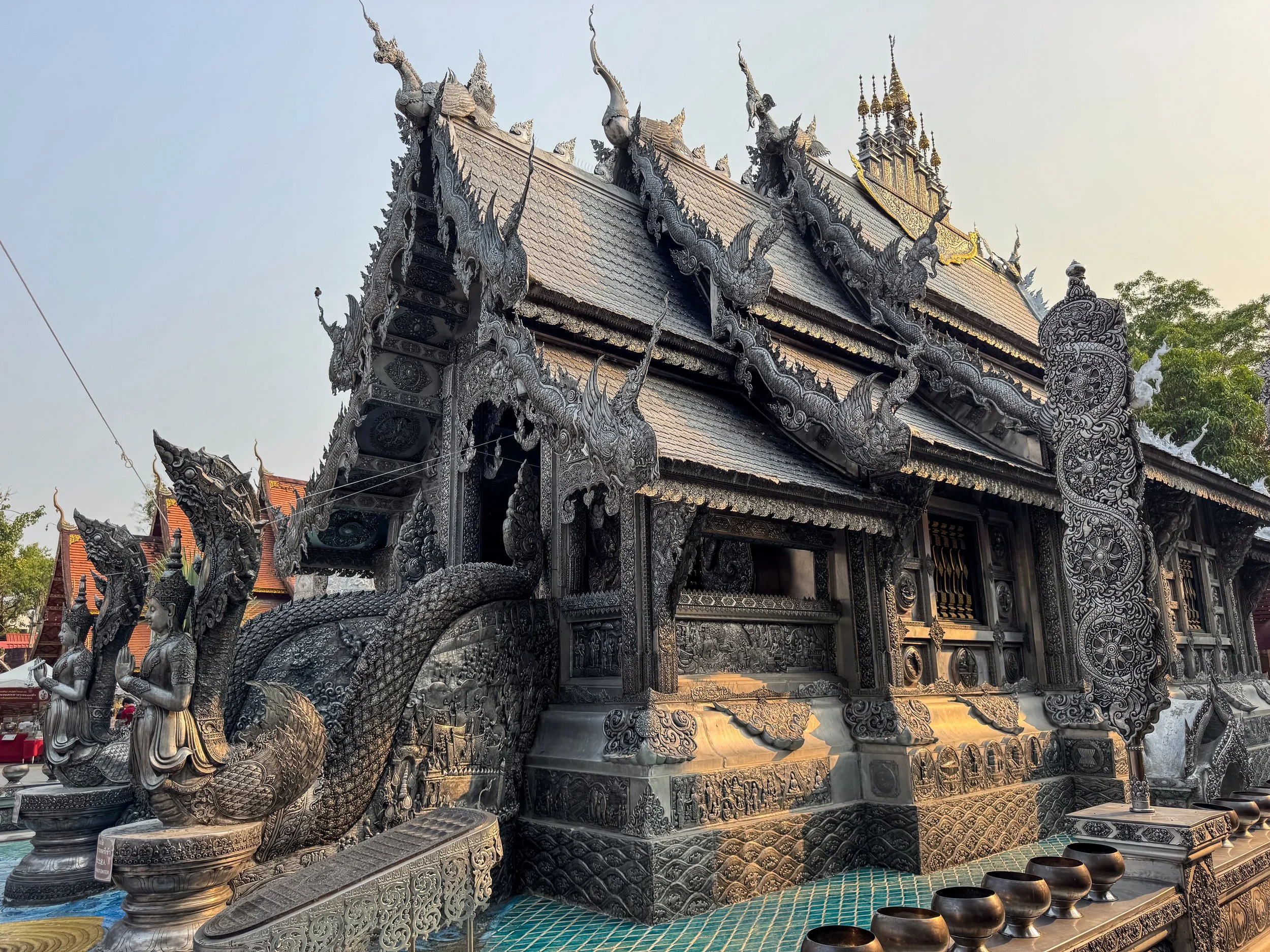
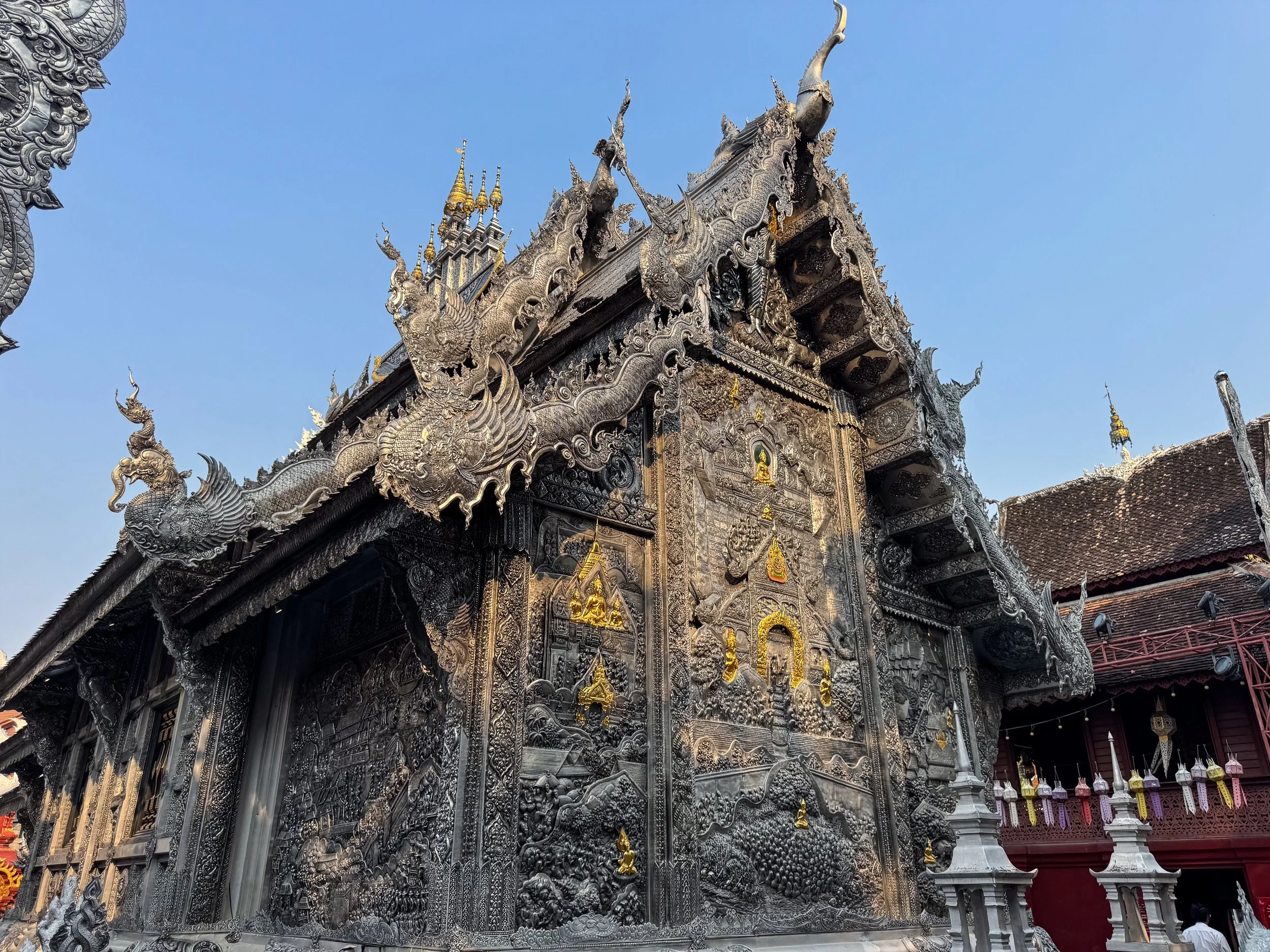
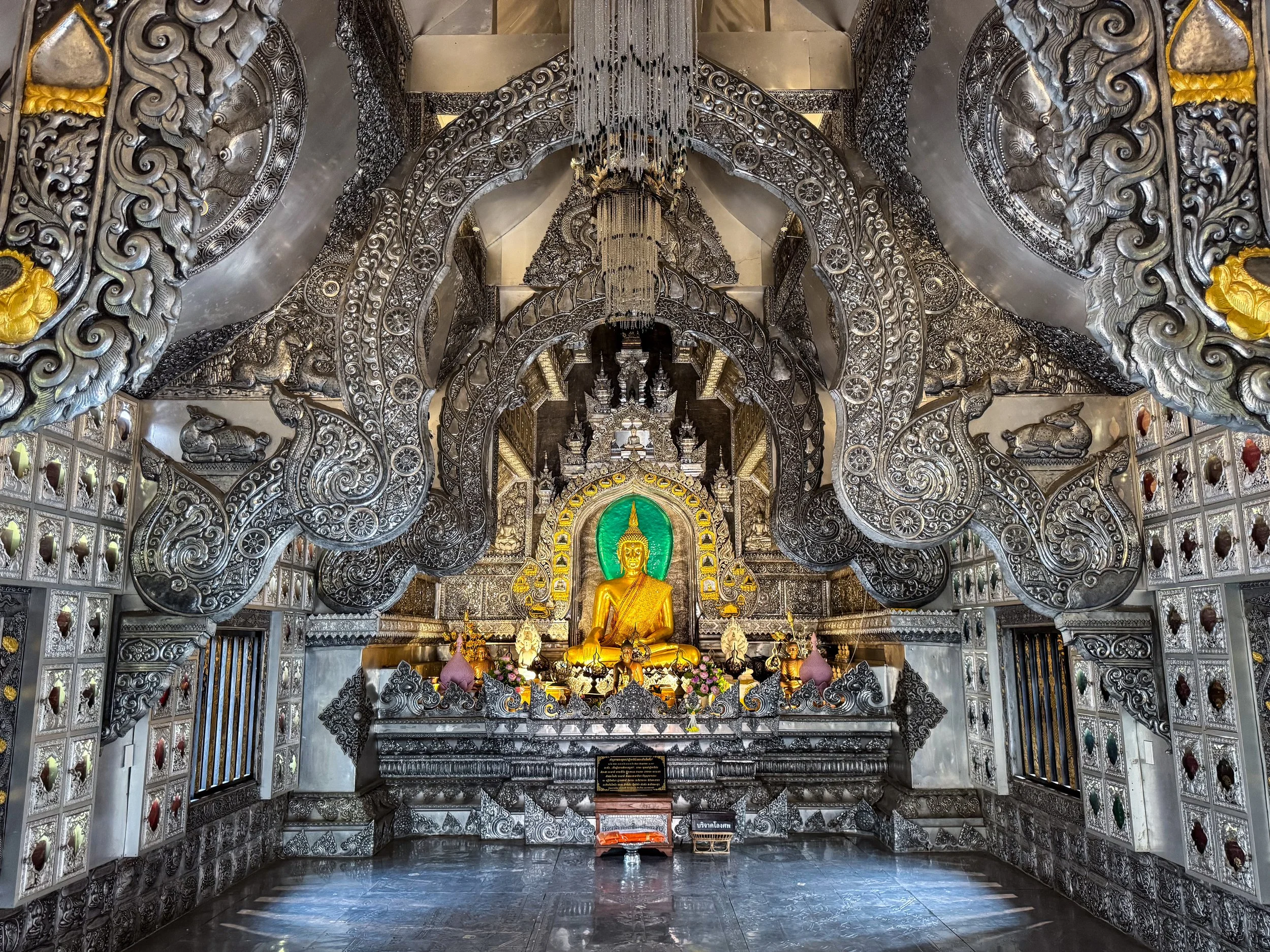
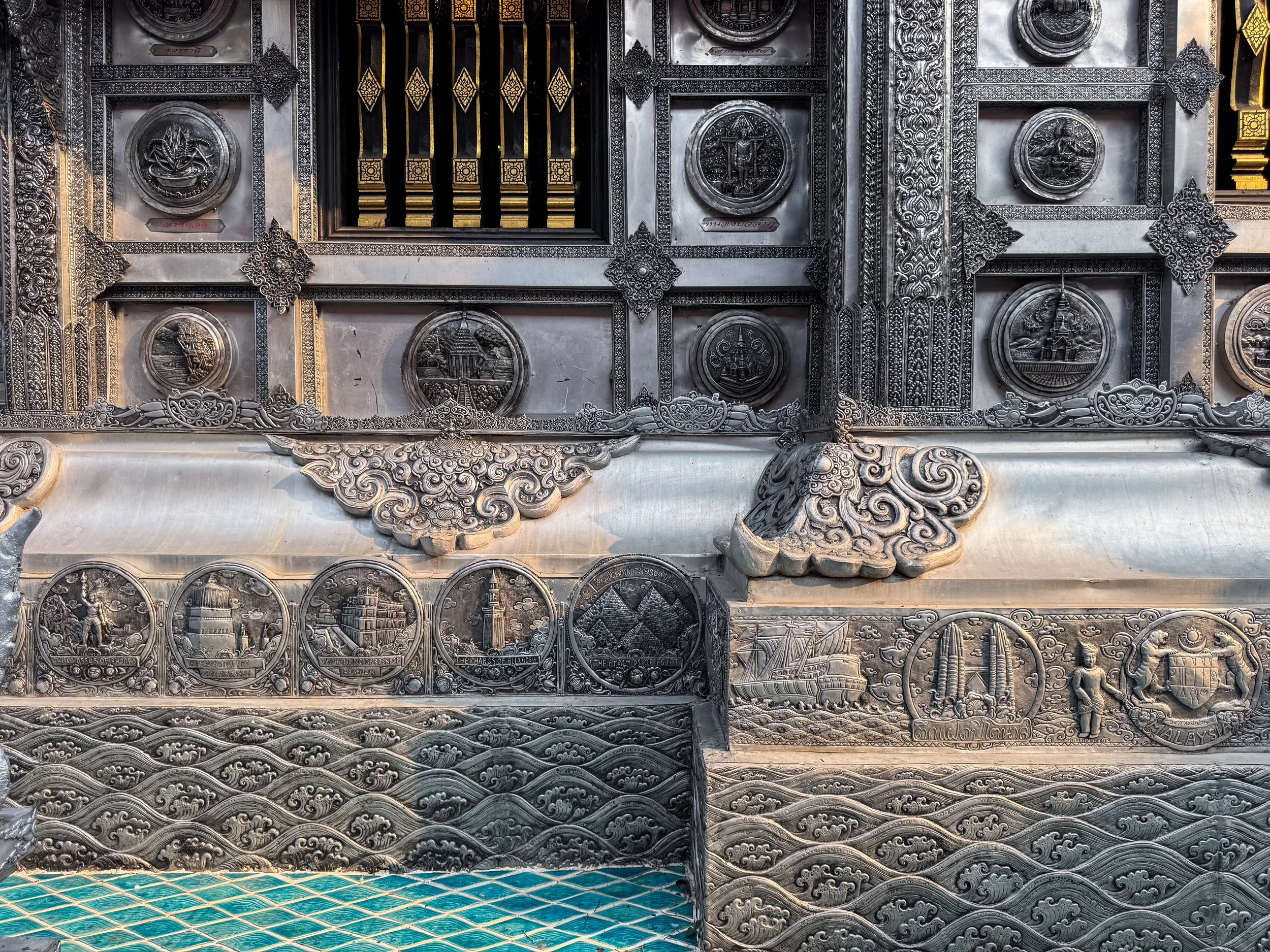
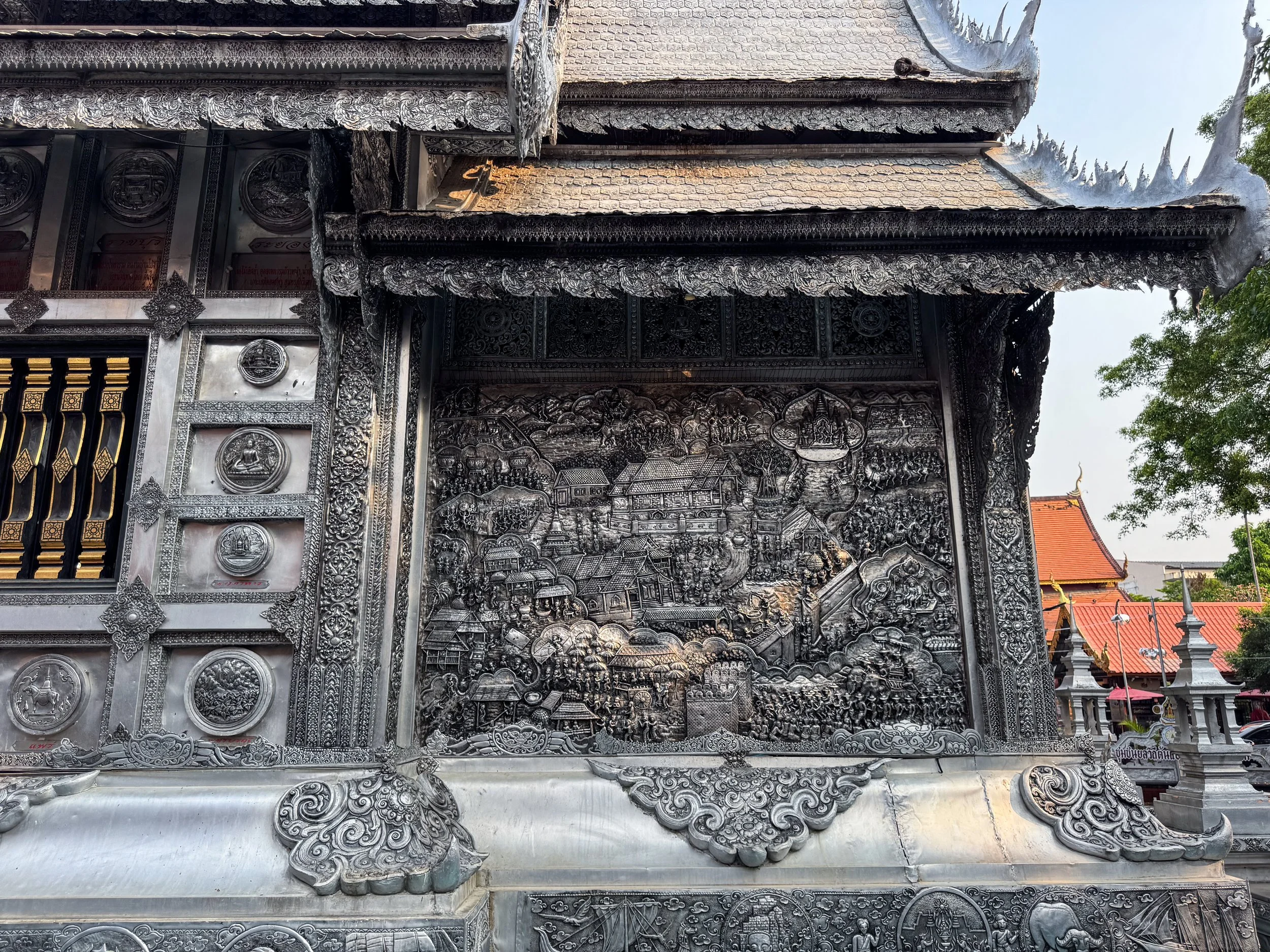
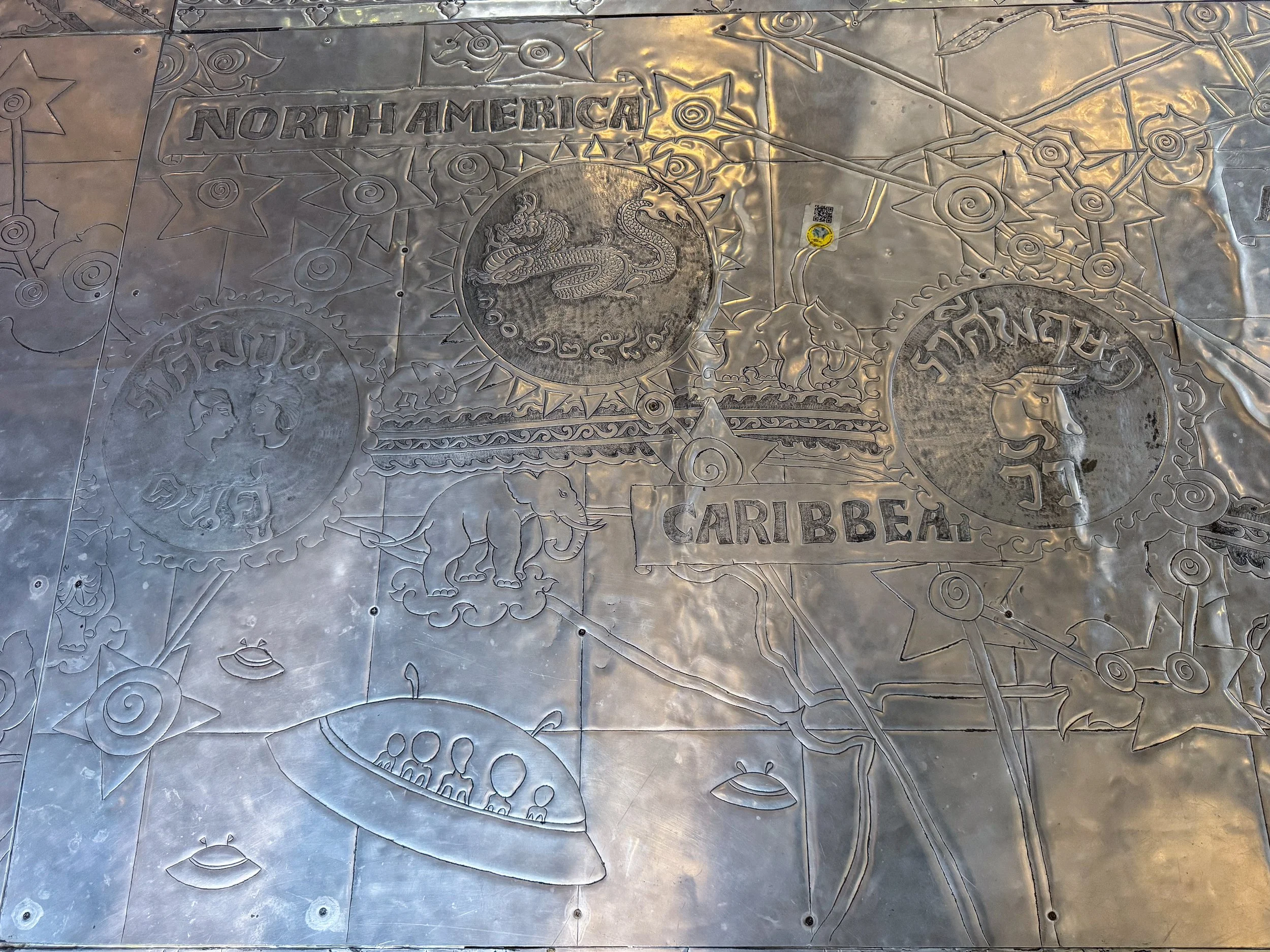
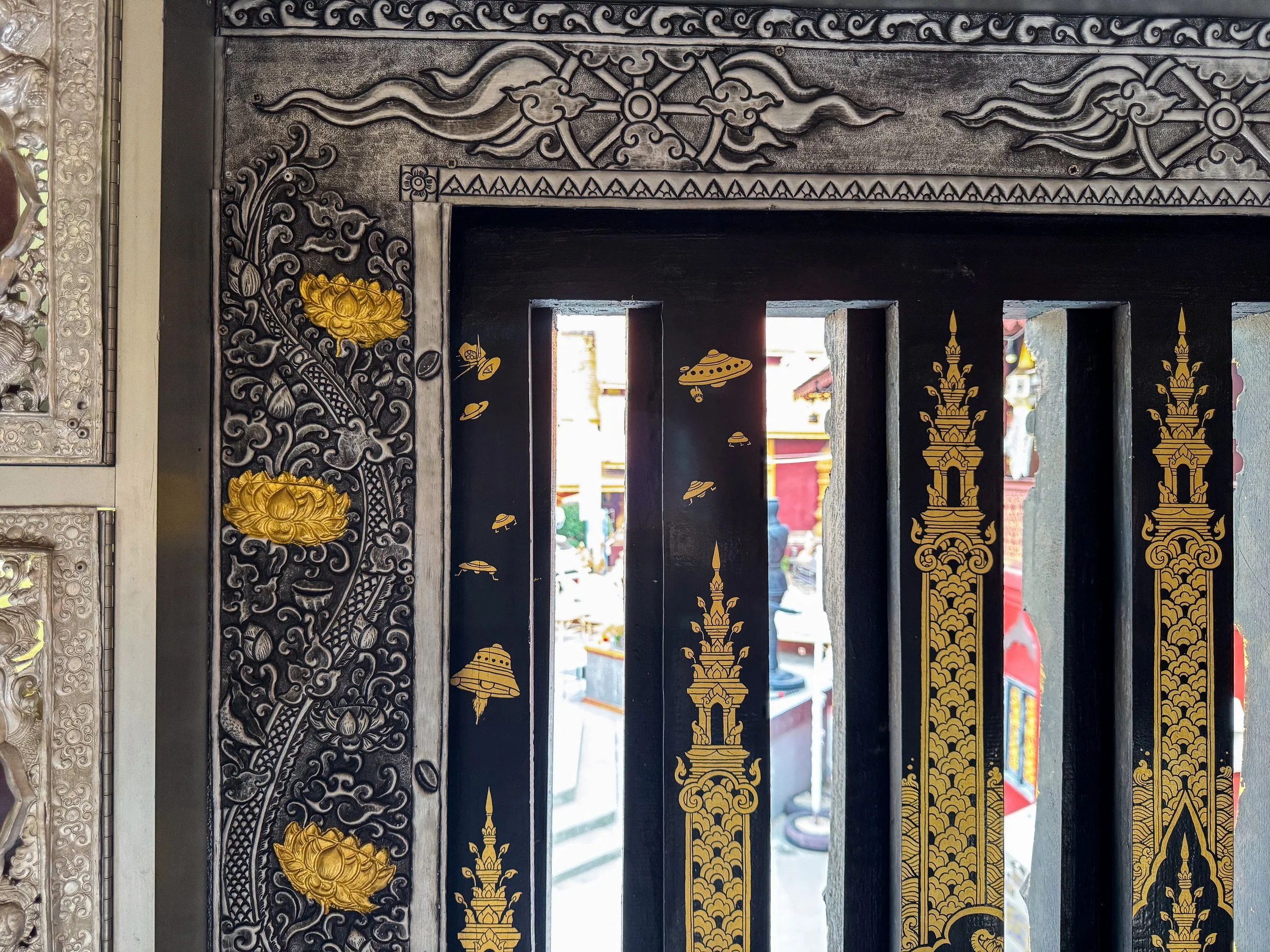
Wat Sri Suphan (The Silver Pagoda). A contemporary Buddhist wat built in the ancient Lanna style from white metals like silver, aluminum and nickel. Every surface is covered in hammered metal tiles and ornamentation. It features classic images and reliefs of Buddhist stories and mythical creatures as well as depictions of maps, international cities, world monuments, human evolution, aliens and UFOs. Women are forbidden from entering.

Chiang Mai Markets
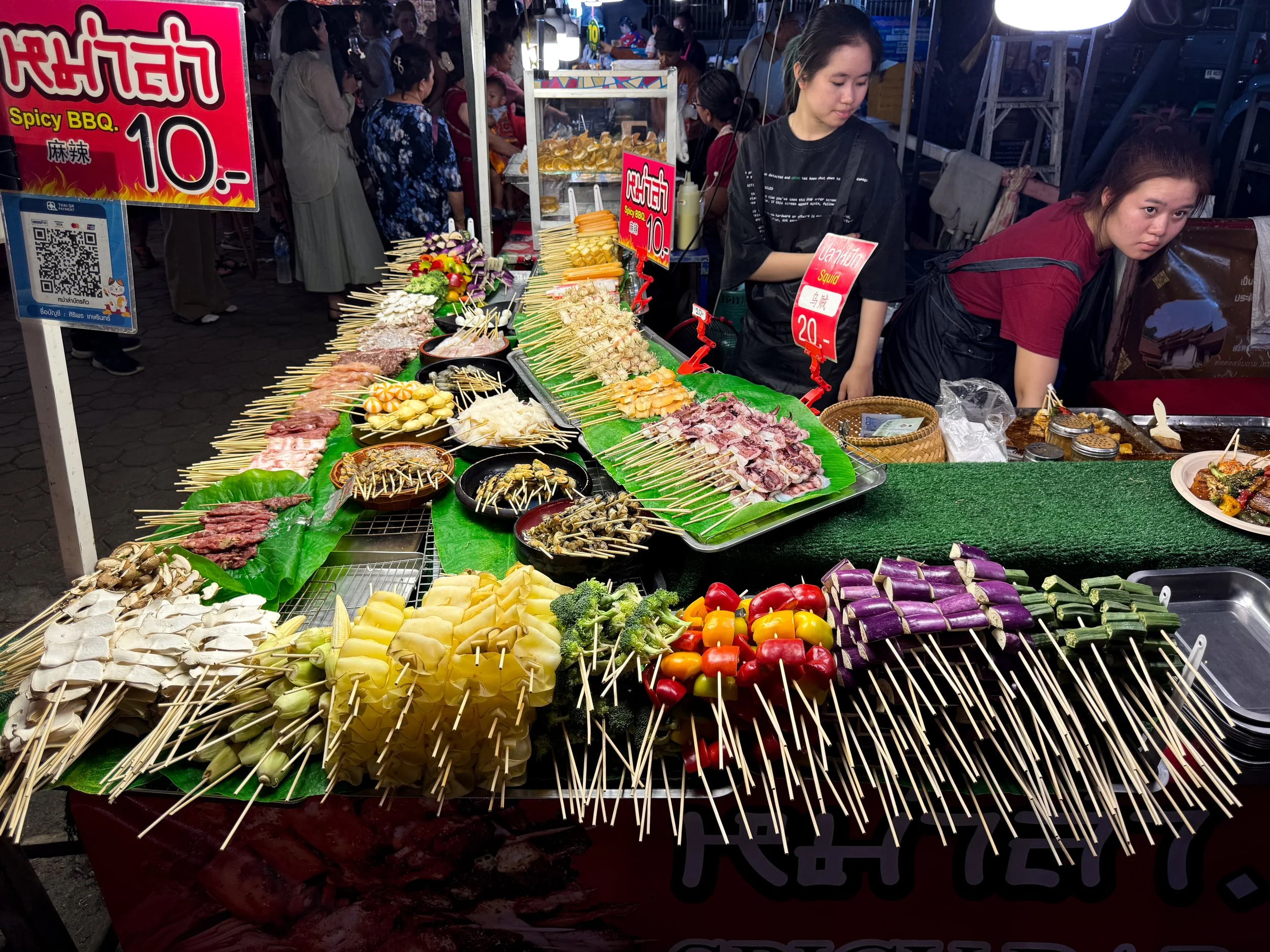
Chiang Mai Gate Market. An all day market with farm stands in the morning and street food vendors during the afternoon and evenings. We shopped here for groceries, buying fruits, vegetables, herbs, spices, rice and noodles. Merchants pack up by 11am, however street food vendors stick around all day. The market comes to life at night with dozens of food carts serving Thai and regional Asian cuisine. It’s exceptionally fun to visit on Saturday nights. It’s located at the south gate to the Old City.
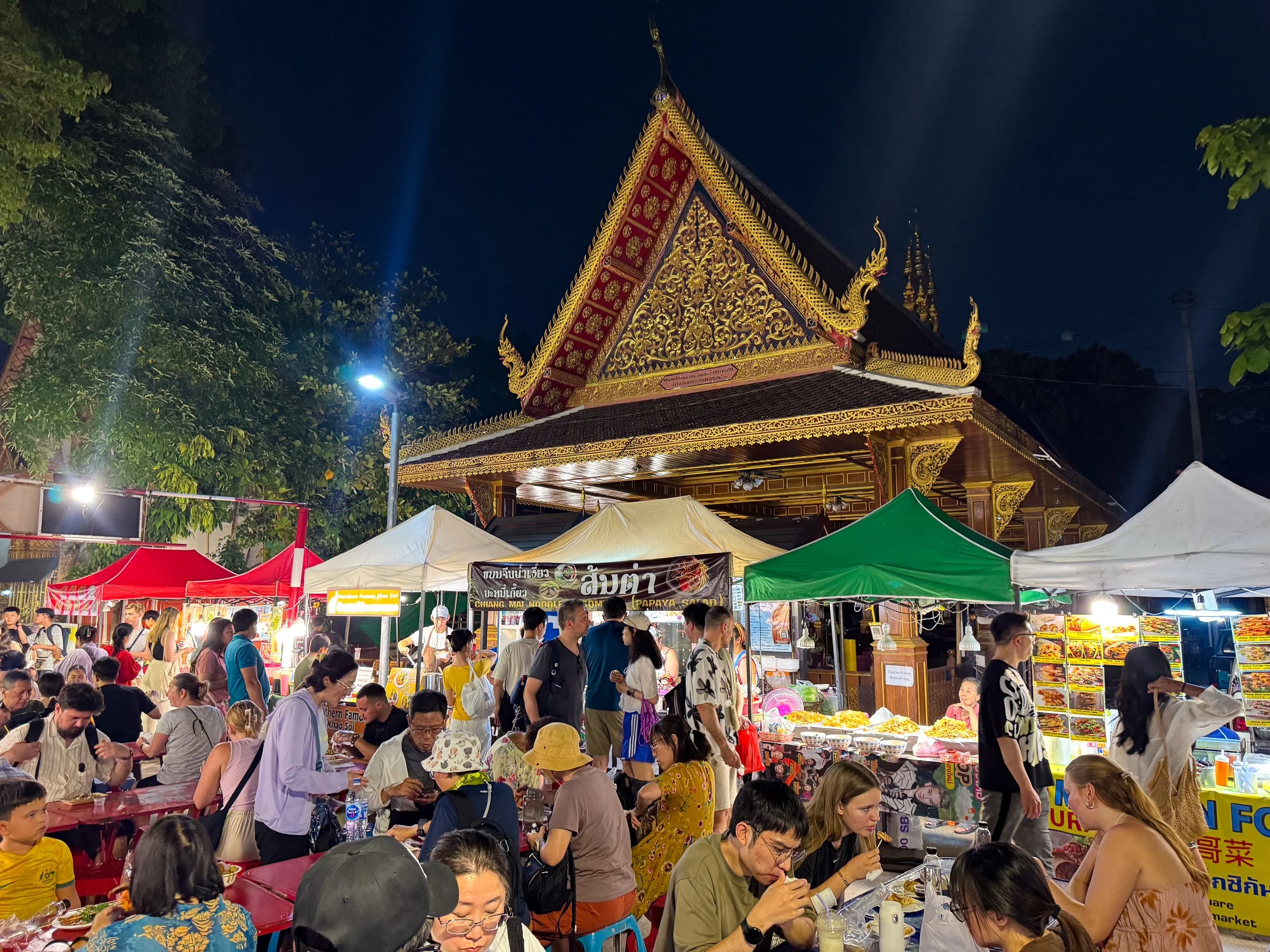
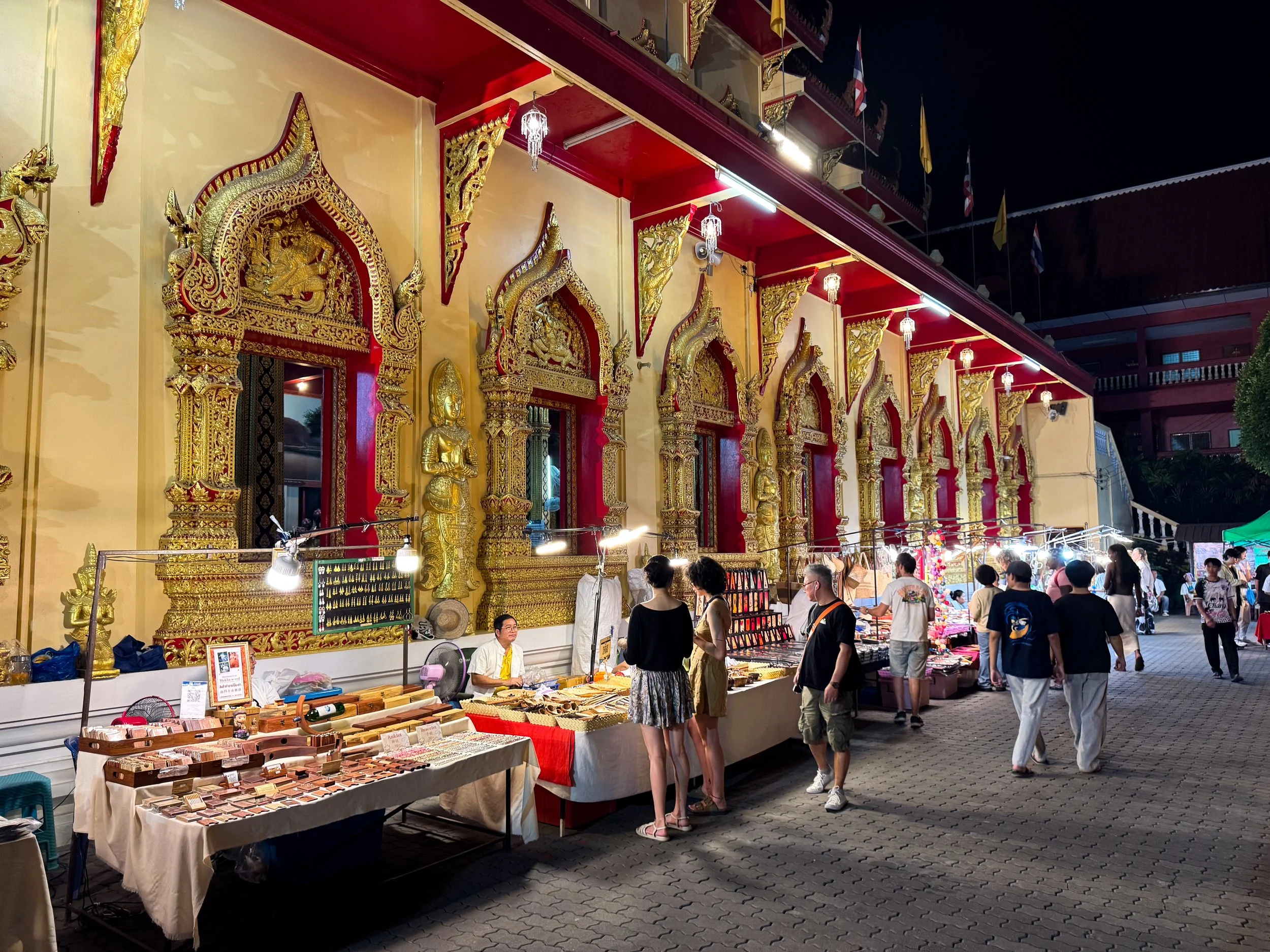
Chiang Mai Night Markets. The night markets in Chiang Mai are some of the best we’ve been to in Asia for their authentically handmade goods, wide array of street food, affordable prices and overall ambience. They start in the late afternoon and continue until around midnight.
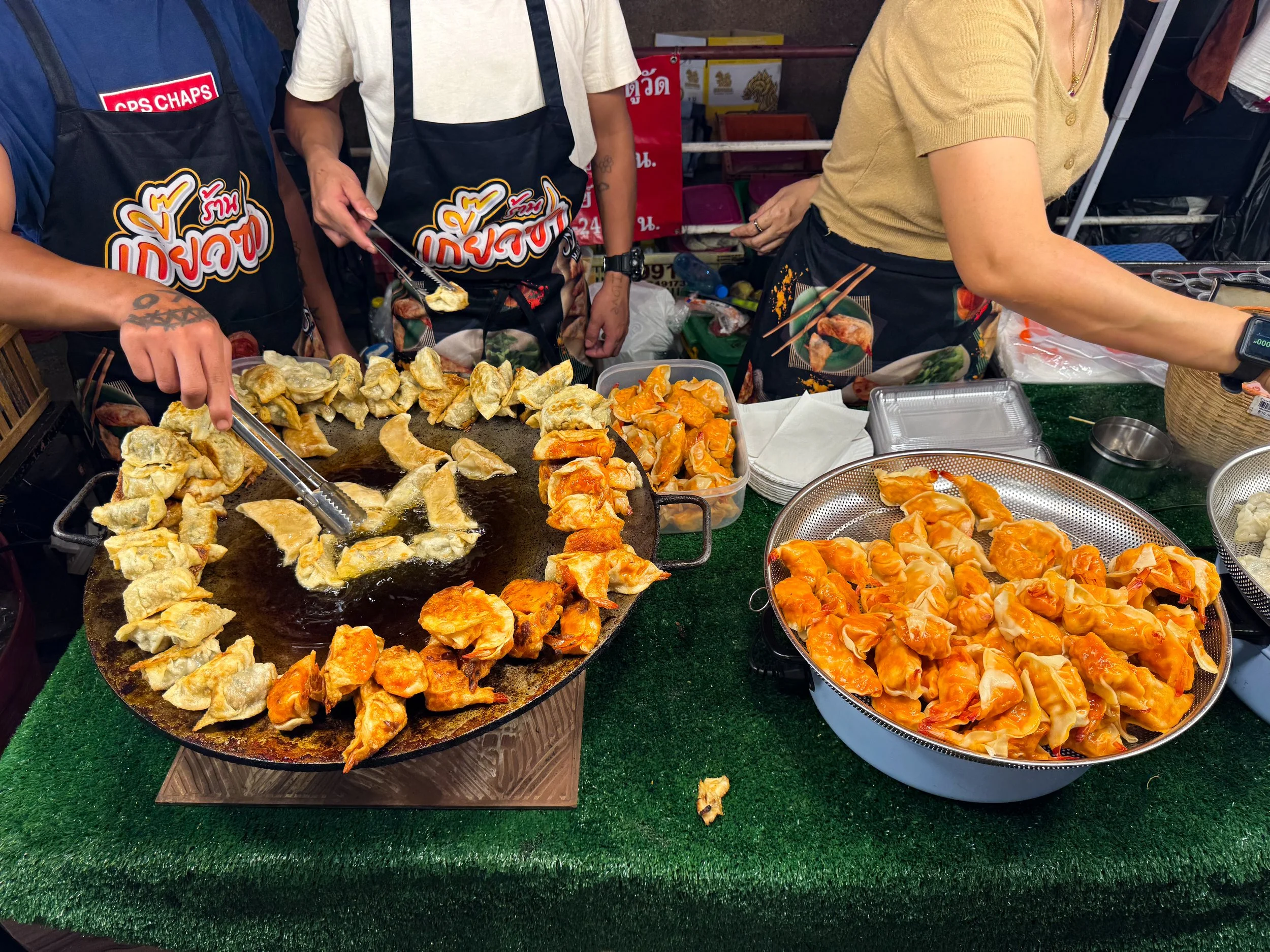
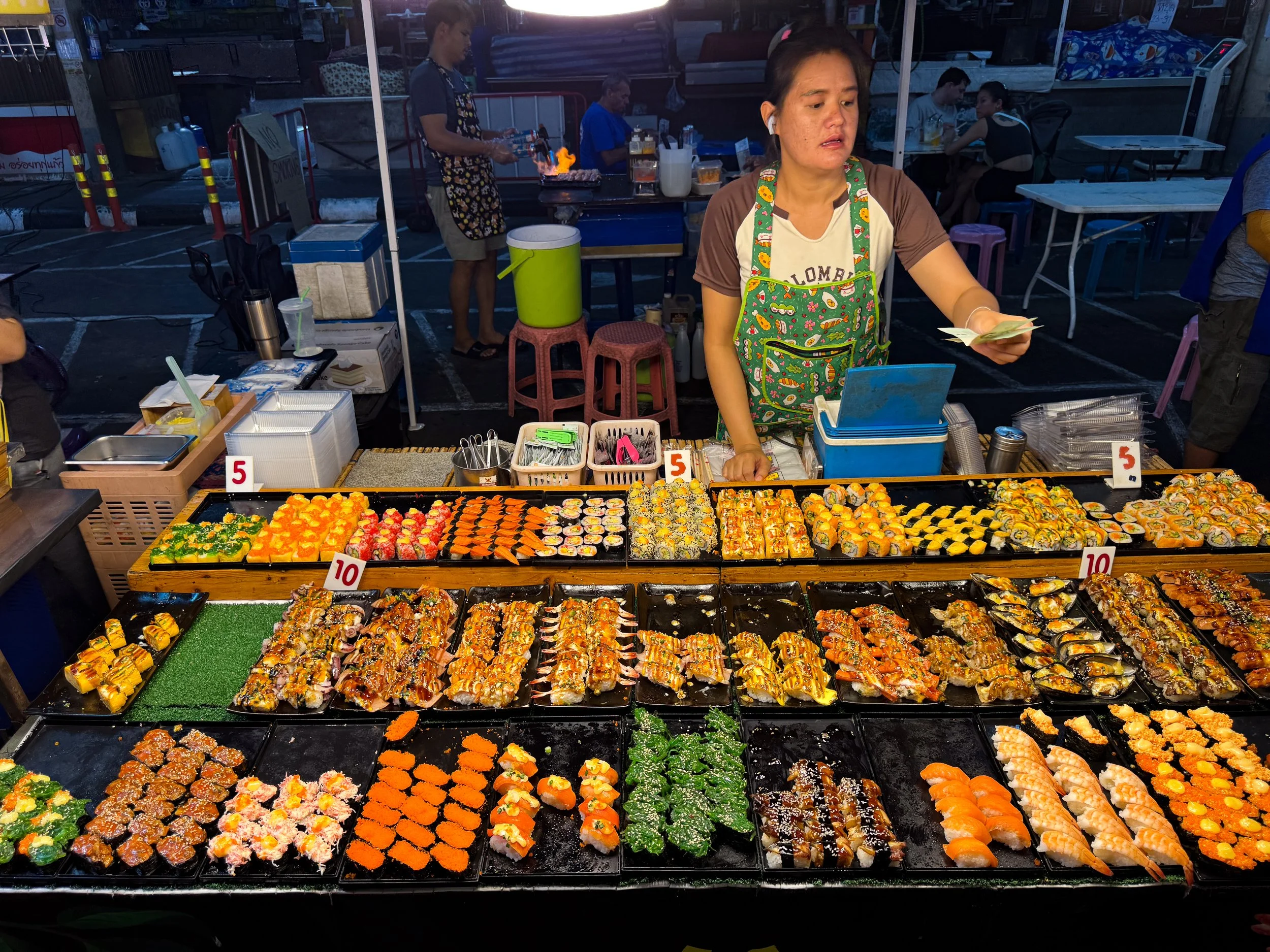
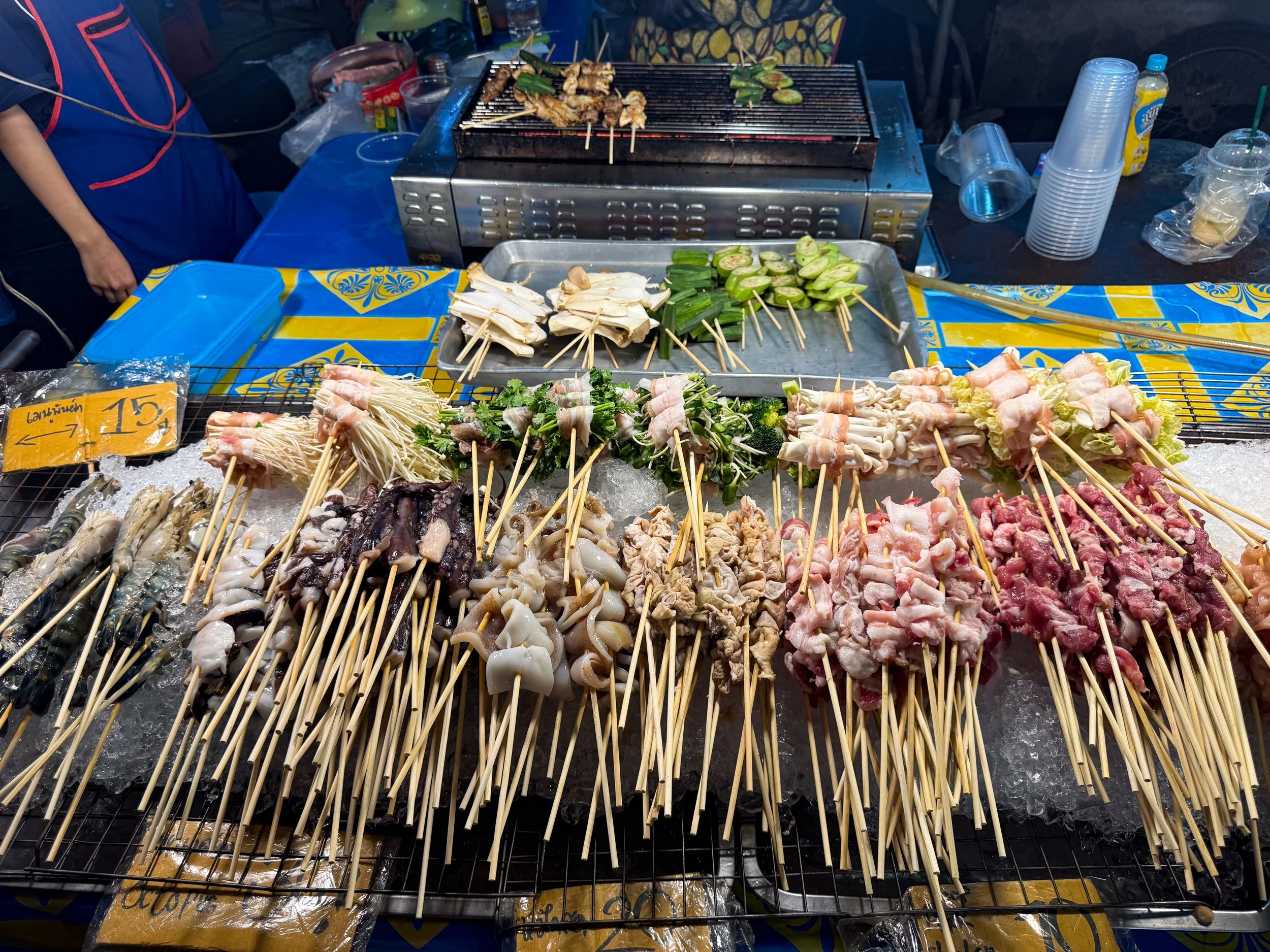
Wua Lai Walking Street (Saturday Night Market). A 1km street with hundreds of vendors selling locally made handicrafts like indigo dyed clothing, elephant figurines, jade jewelry, customizable passport holders, paper fans, lanterns and parasols. Food vendors sell the region’s staple egg noodle soup, Khao Soi and Thai favorites like pineapple fried rice, mango sticky rice and rolled ice cream. Other common dishes include stir fried rice noodles, pan fried dumplings, grilled skewers with meats, seafood and veggies, boiled crabs, sushi, mochi and fresh coconuts. The street is mainly lined with souvener vendors while the wats host street food carts, kitchens and dining areas.
Sunday Night Market. A night market held on Sunday nights along the 1km stretch of road between Wat Phra Singh Woramahawihan and the Tha Phae Gate on Rachadamnoen Road. It’s one of the largest and liveliest night markets in Chiang Mai. It hosts many of the same handicrafts and street food vendors as the Saturday Night Market.
Chiang Rai
Chiang Rai is the ancient capital of the Lanna Kingdom with multiple modern day Buddhist temples. We visited three of them on a full day trip here from Chiang Mai.
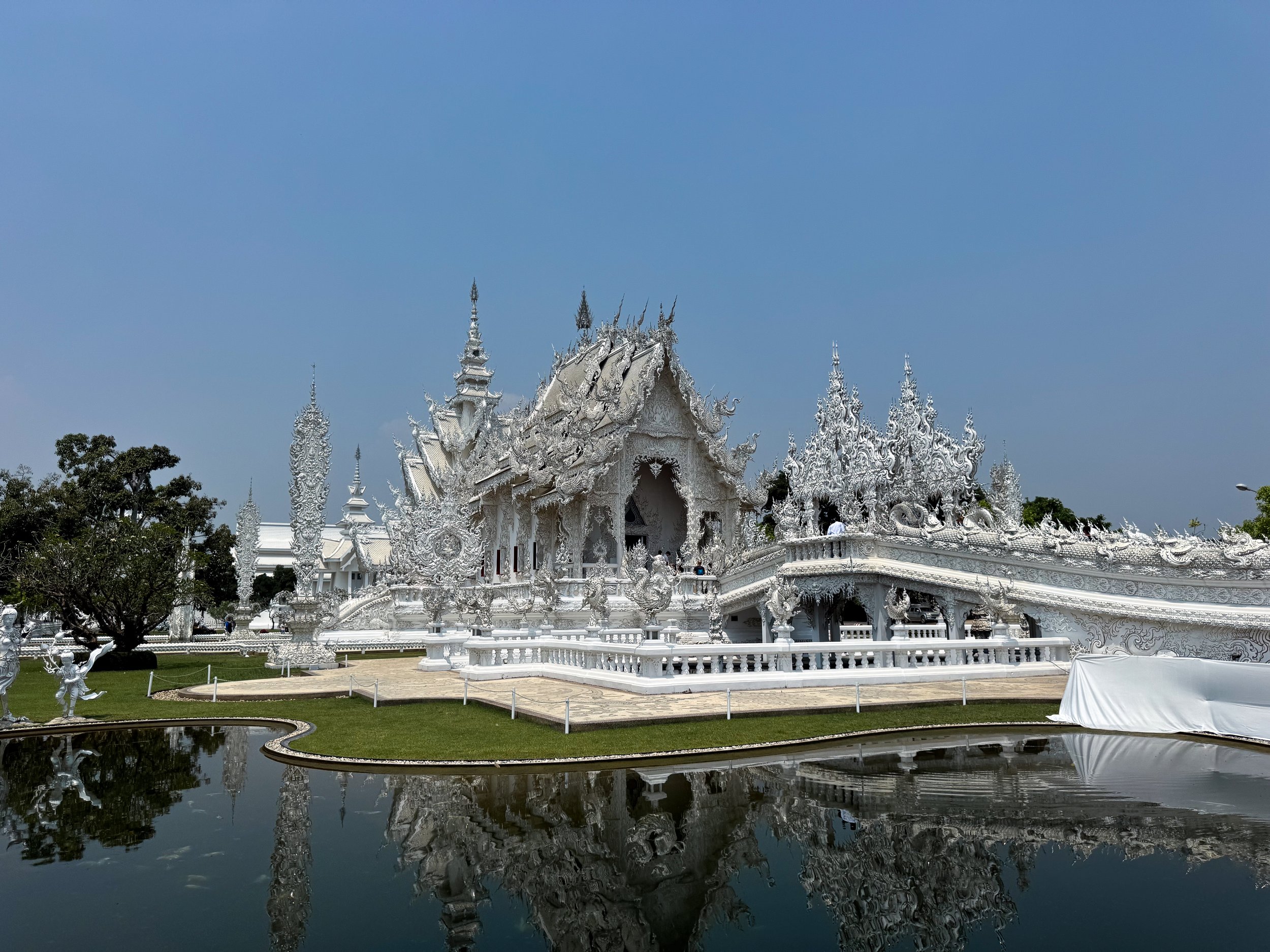
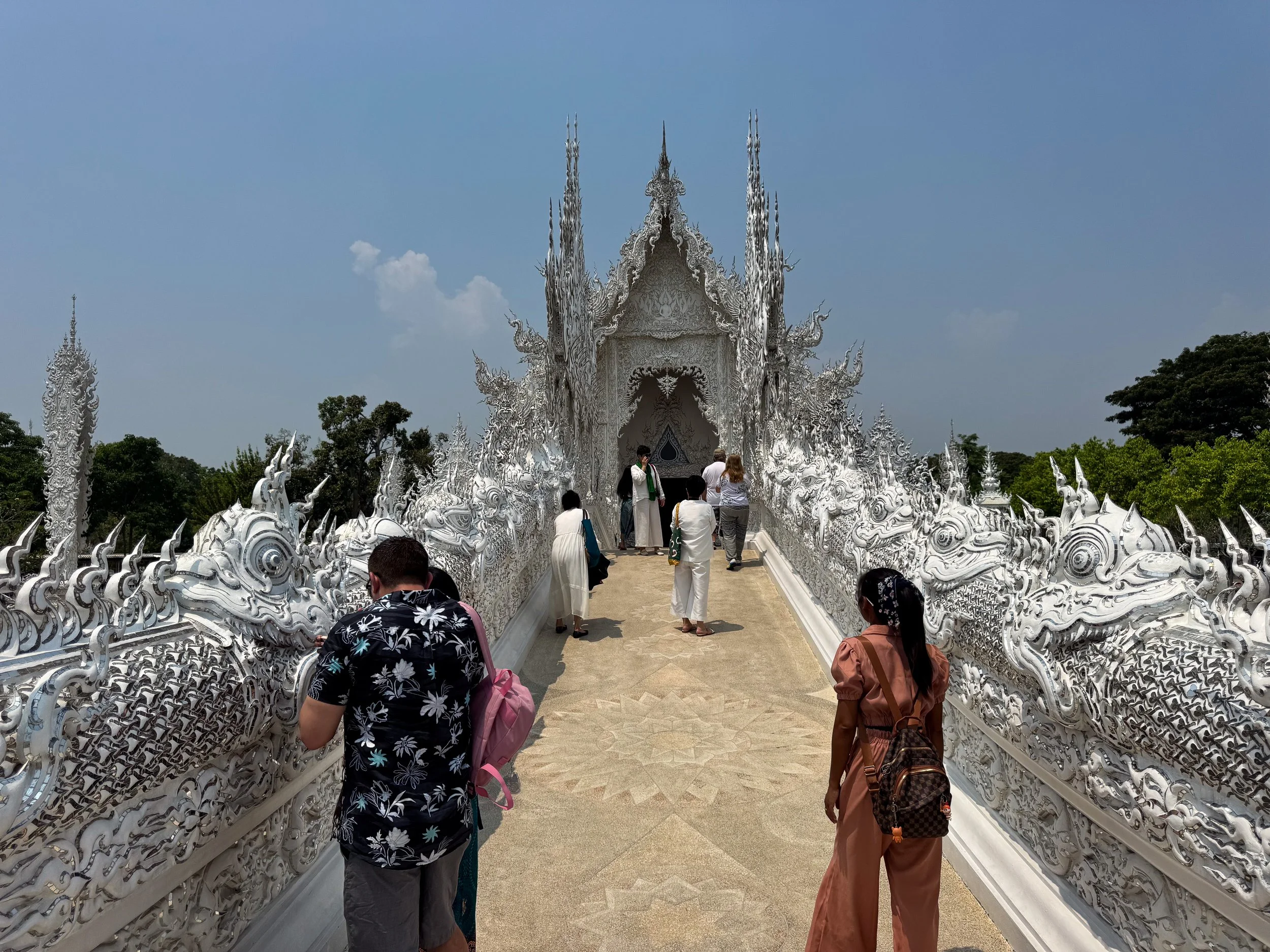
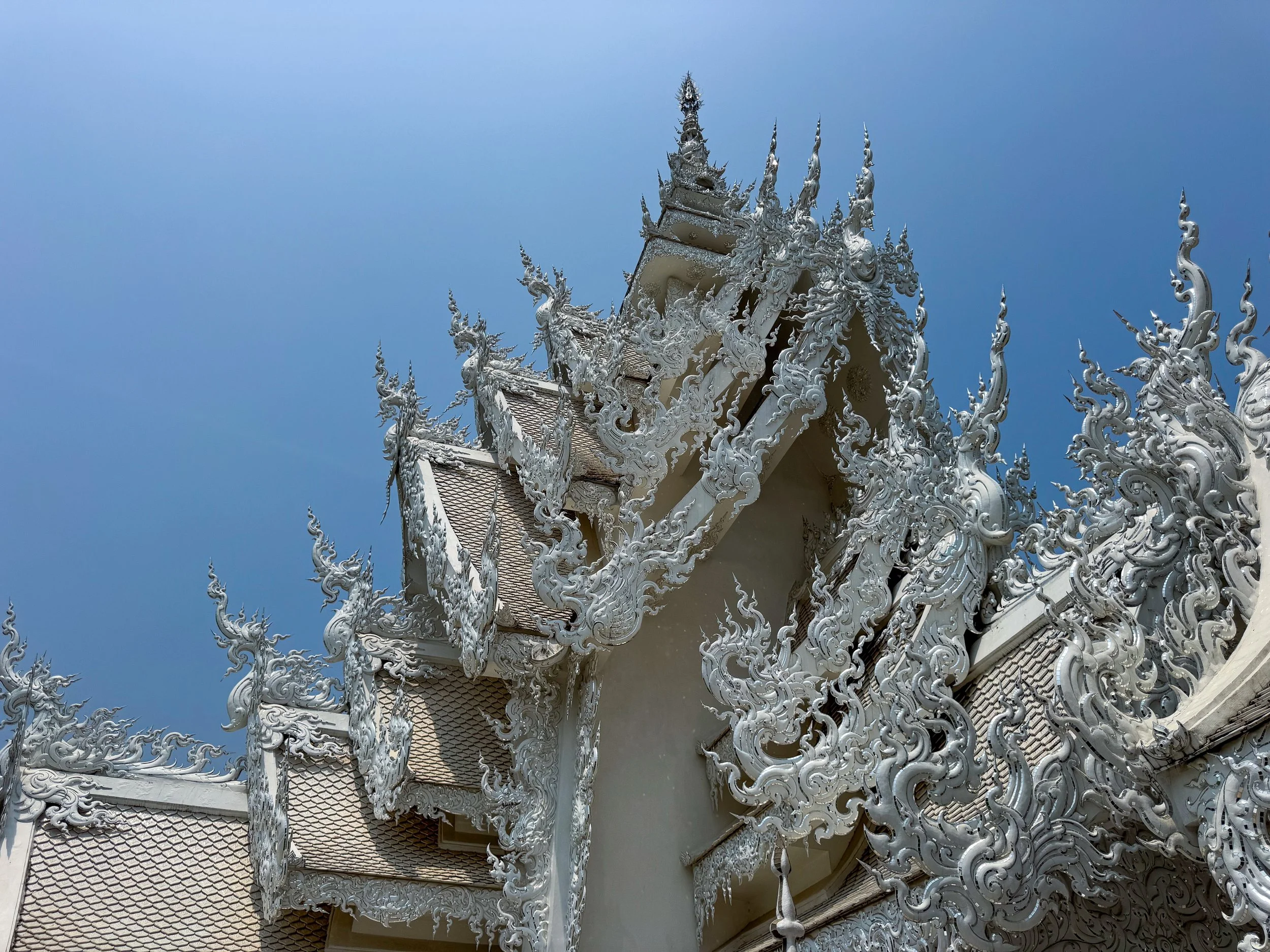
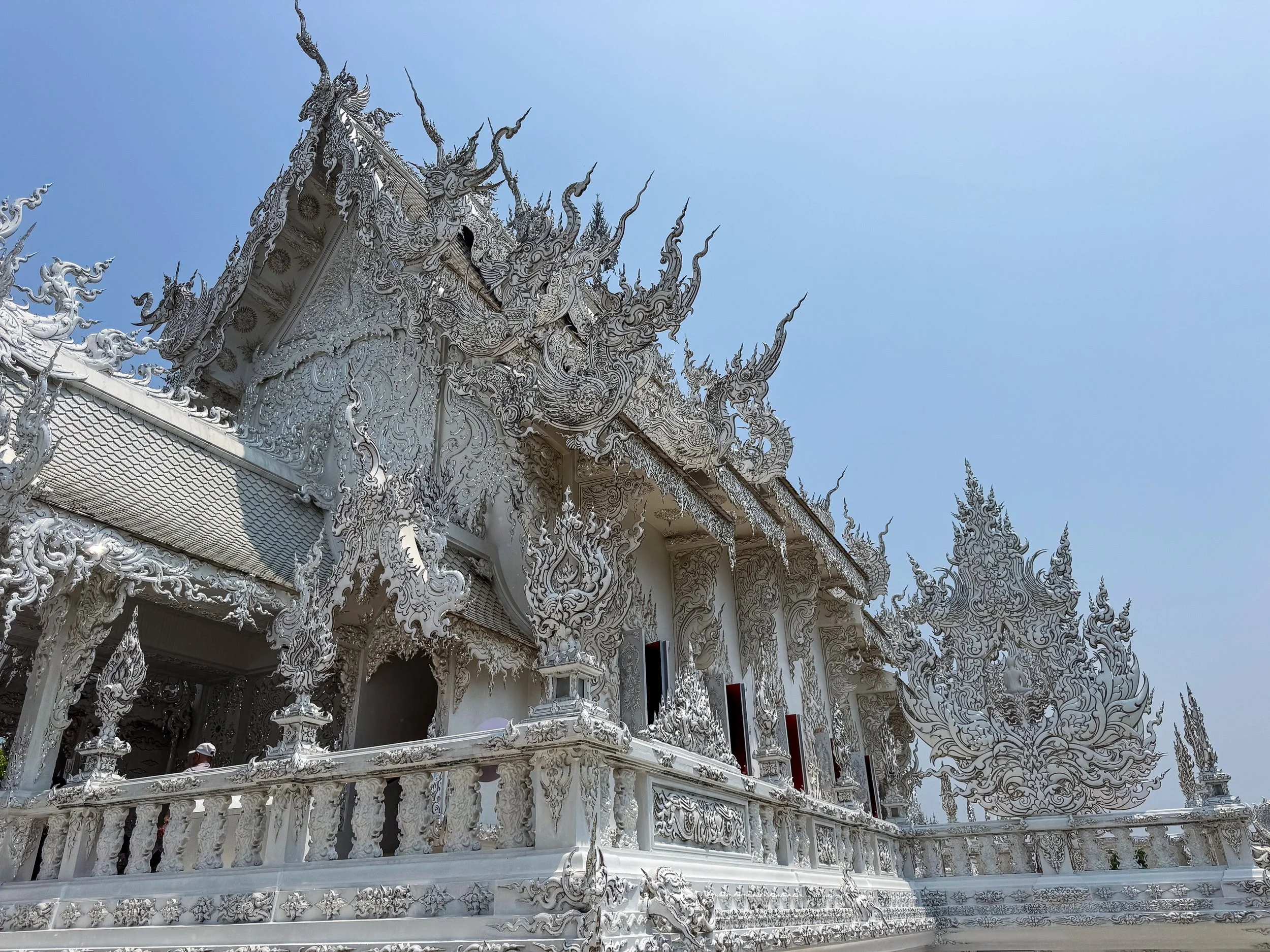
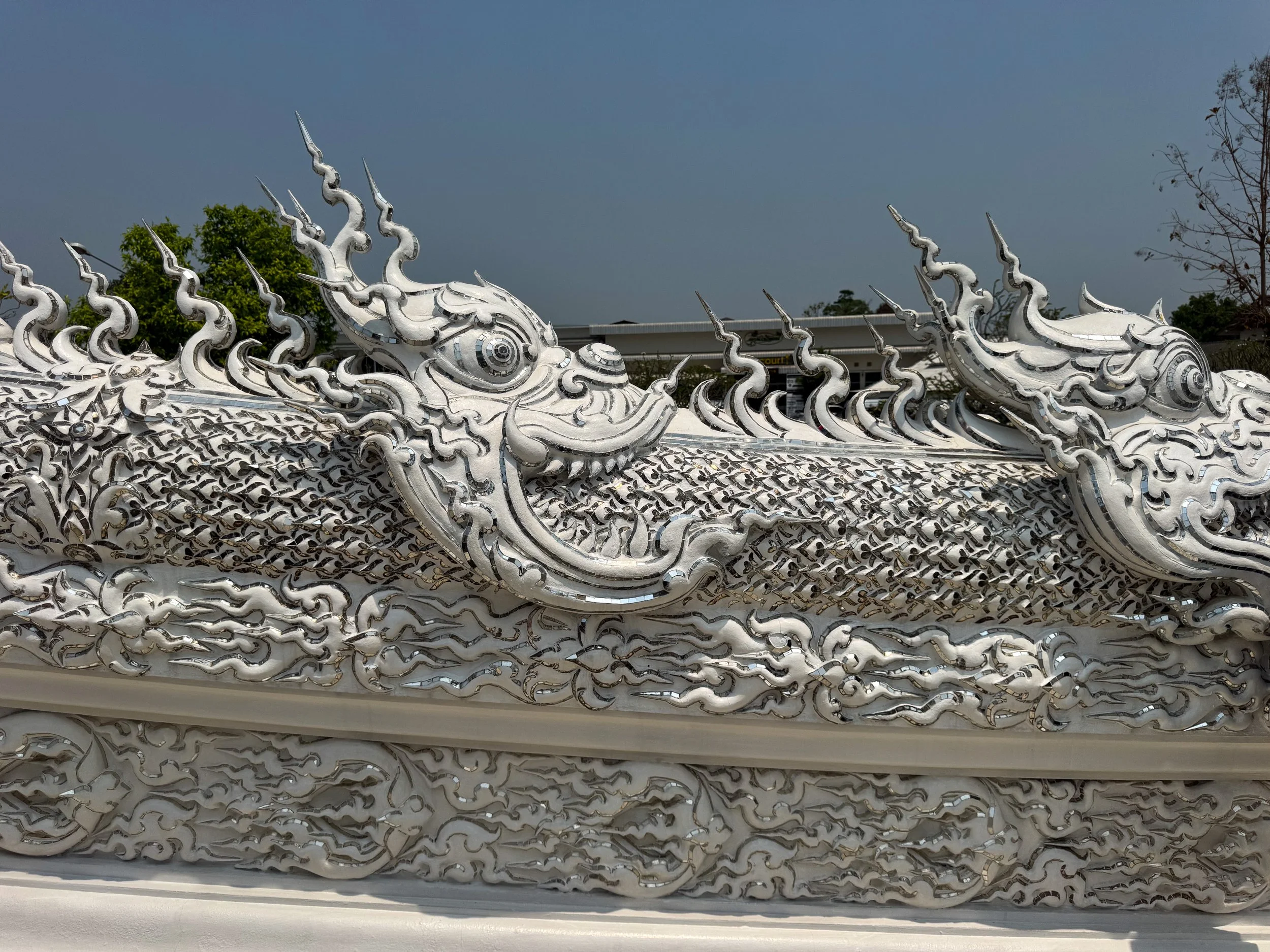
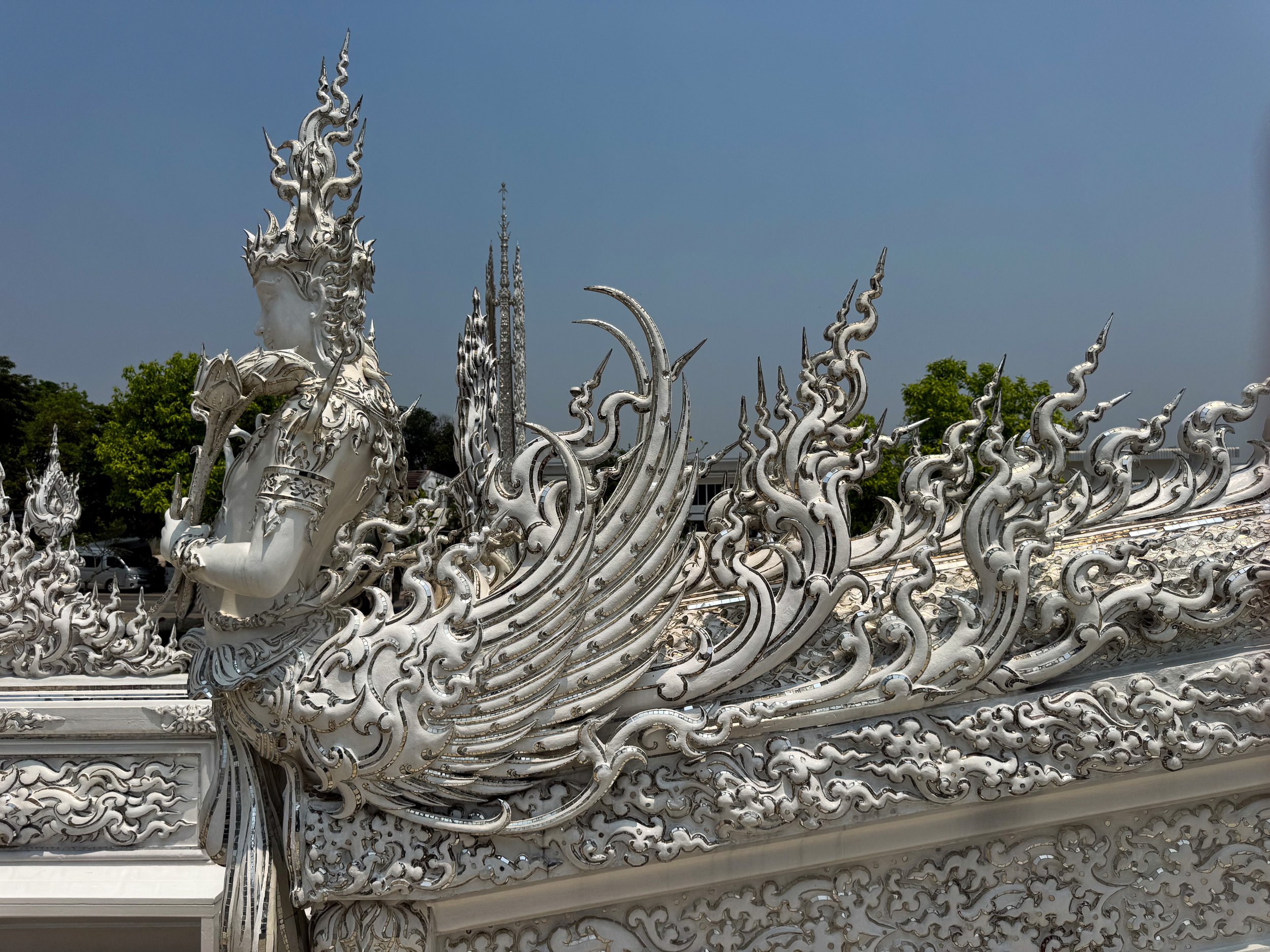
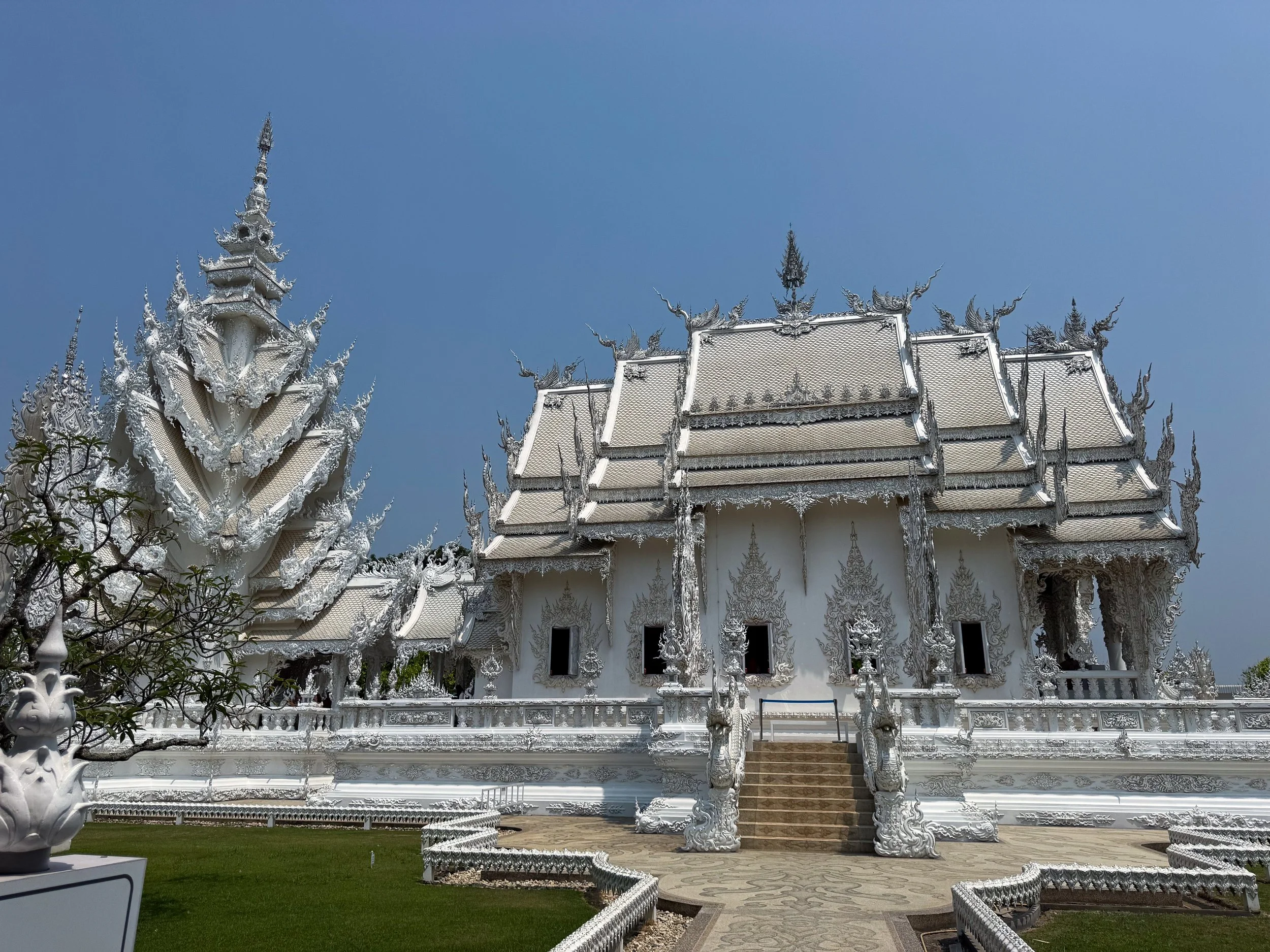
Wat Rong Khun (The White Temple). A contemporary temple complex with several buildings including meditation halls, art galleries and stupas. Most buildings are painted white and accented with contours of mirrored mosaic tiles. The main temple is the most impressive with its highly ornamented designs and finely detailed embellishments. It’s surrounded by a grassy lawn and koi pond. Within are paintings of the Buddha, superheroes, modern day cities and the apocalypse. Photos inside are forbidden. Several other buildings are still undergoing construction, lacking ornamentation while others are fully painted gold.
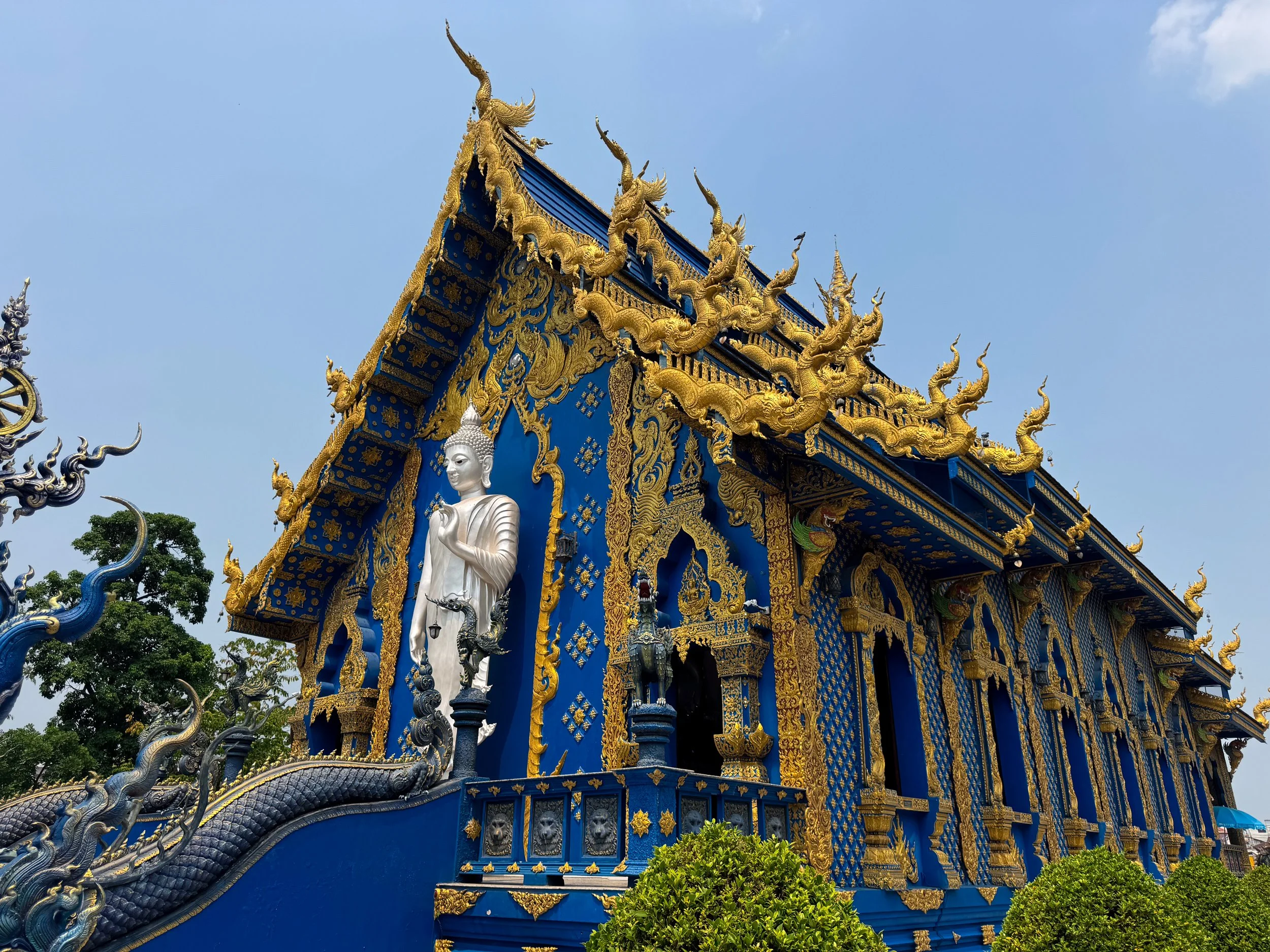
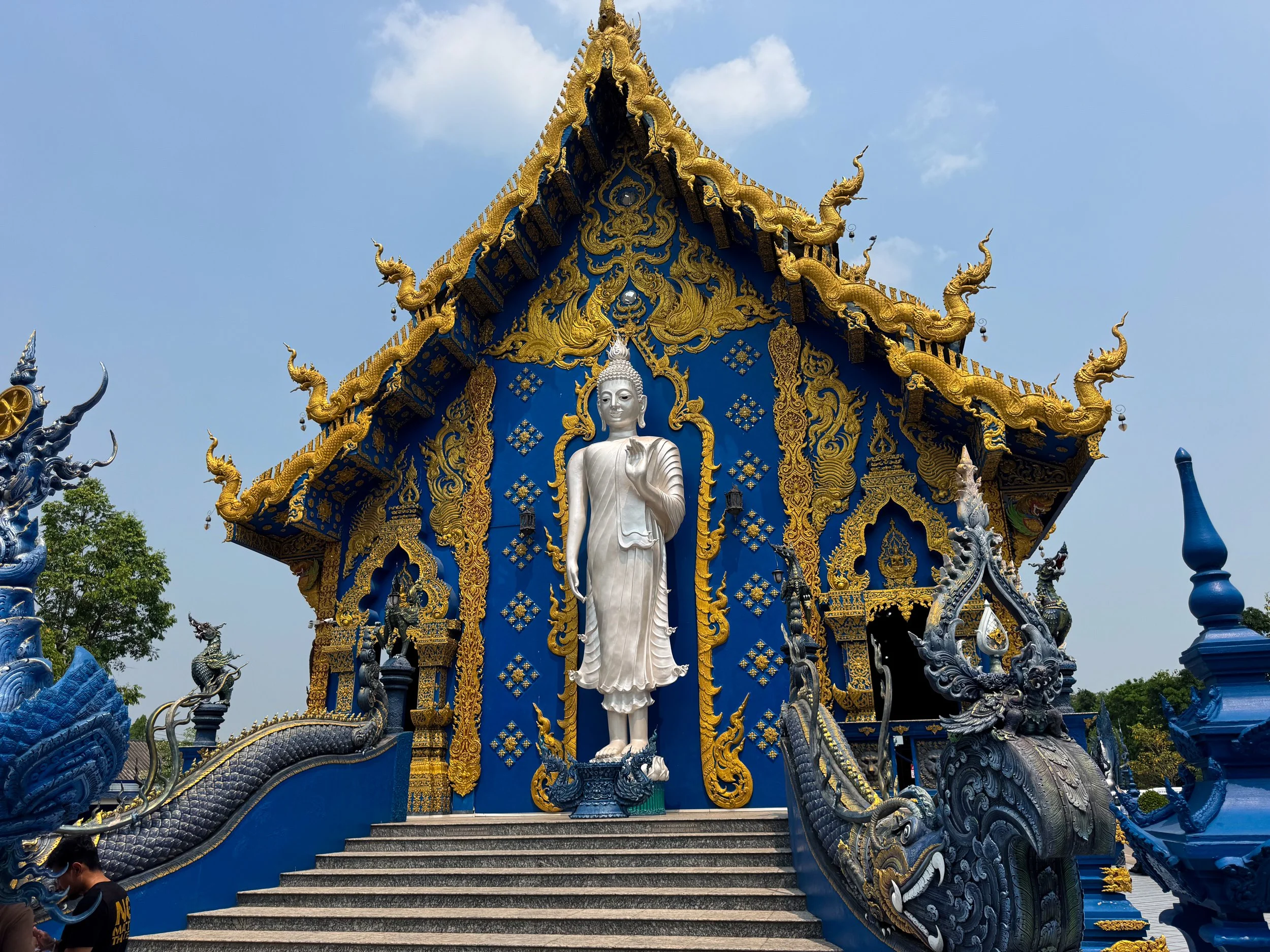

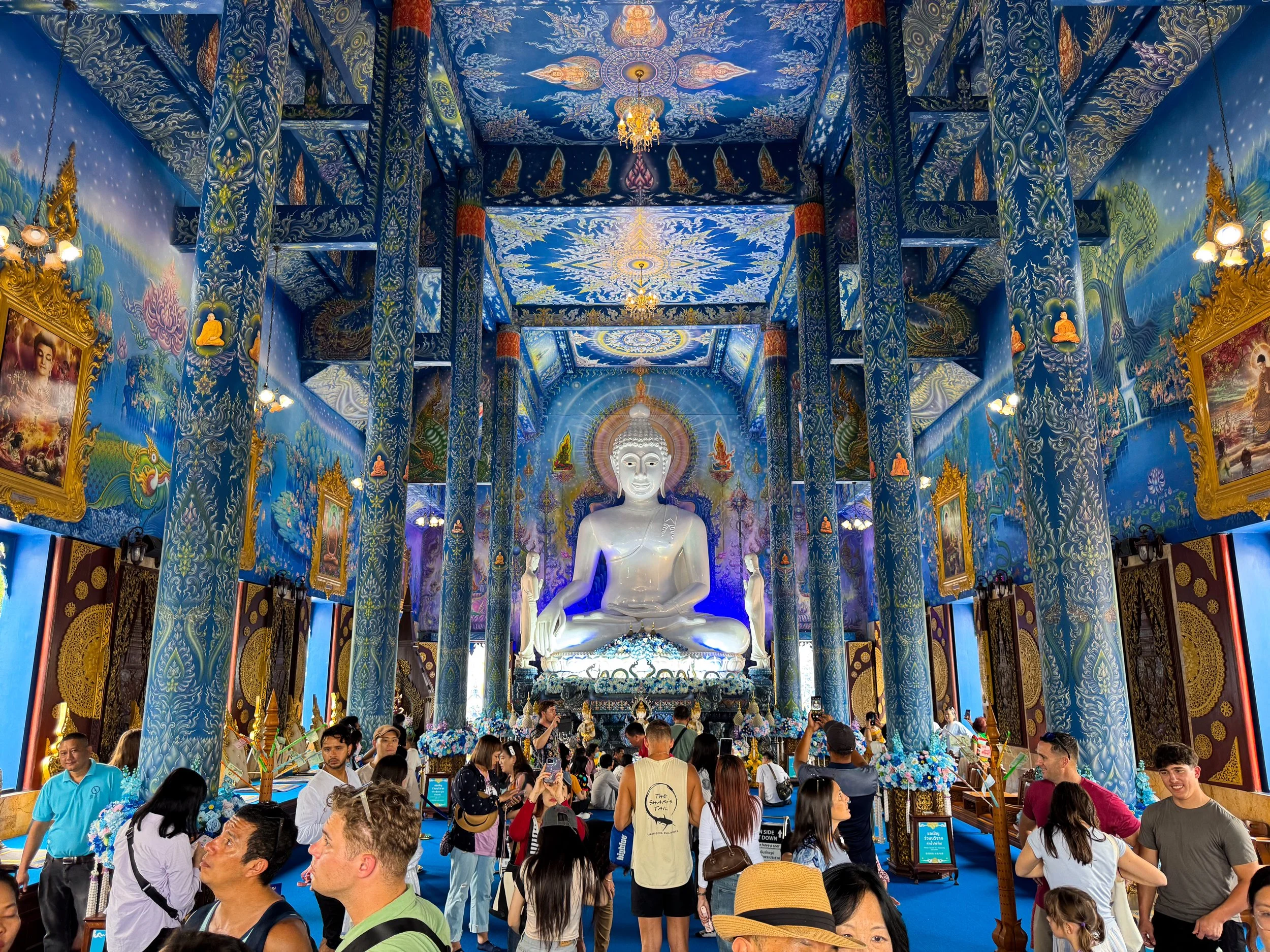
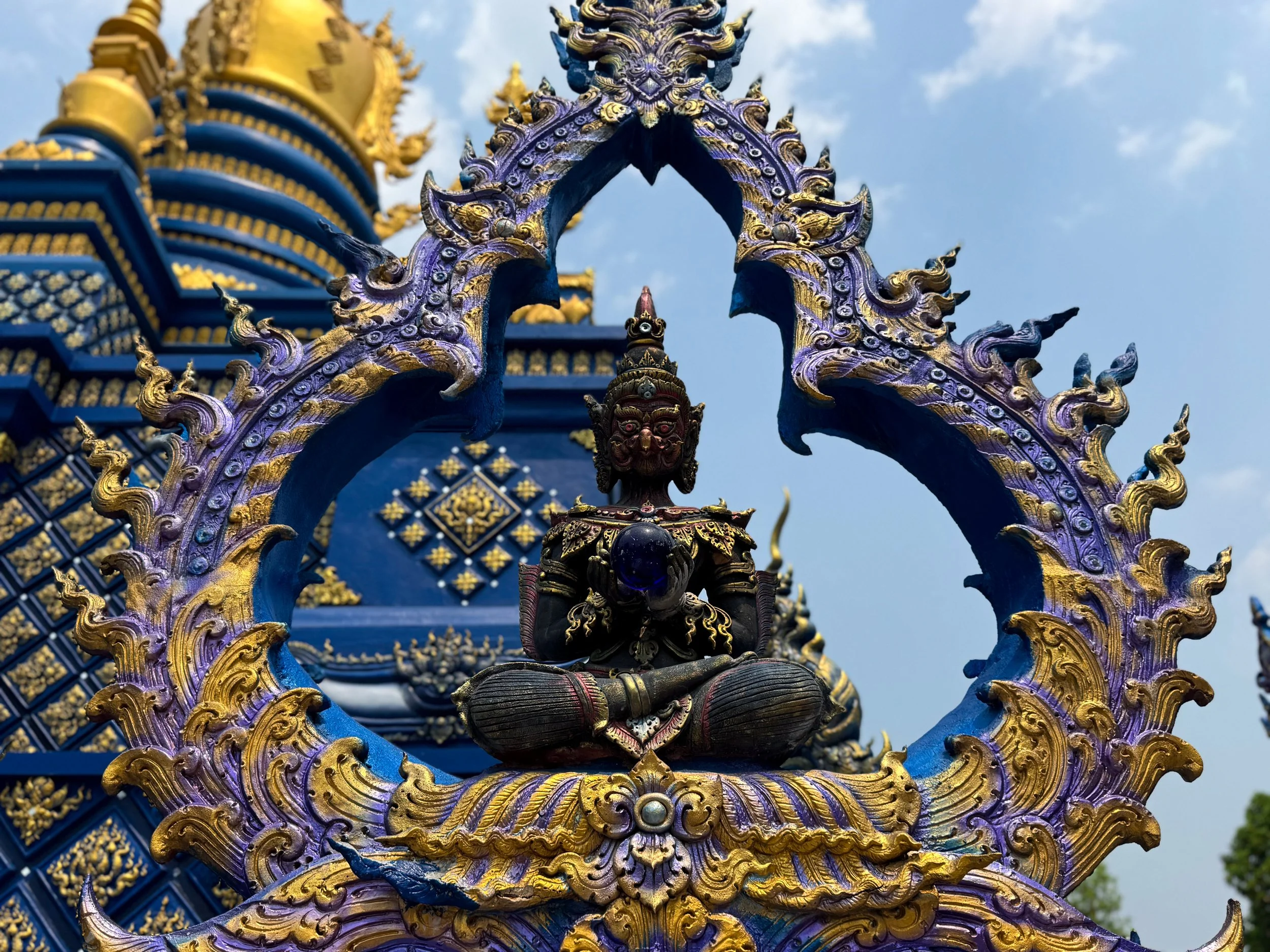
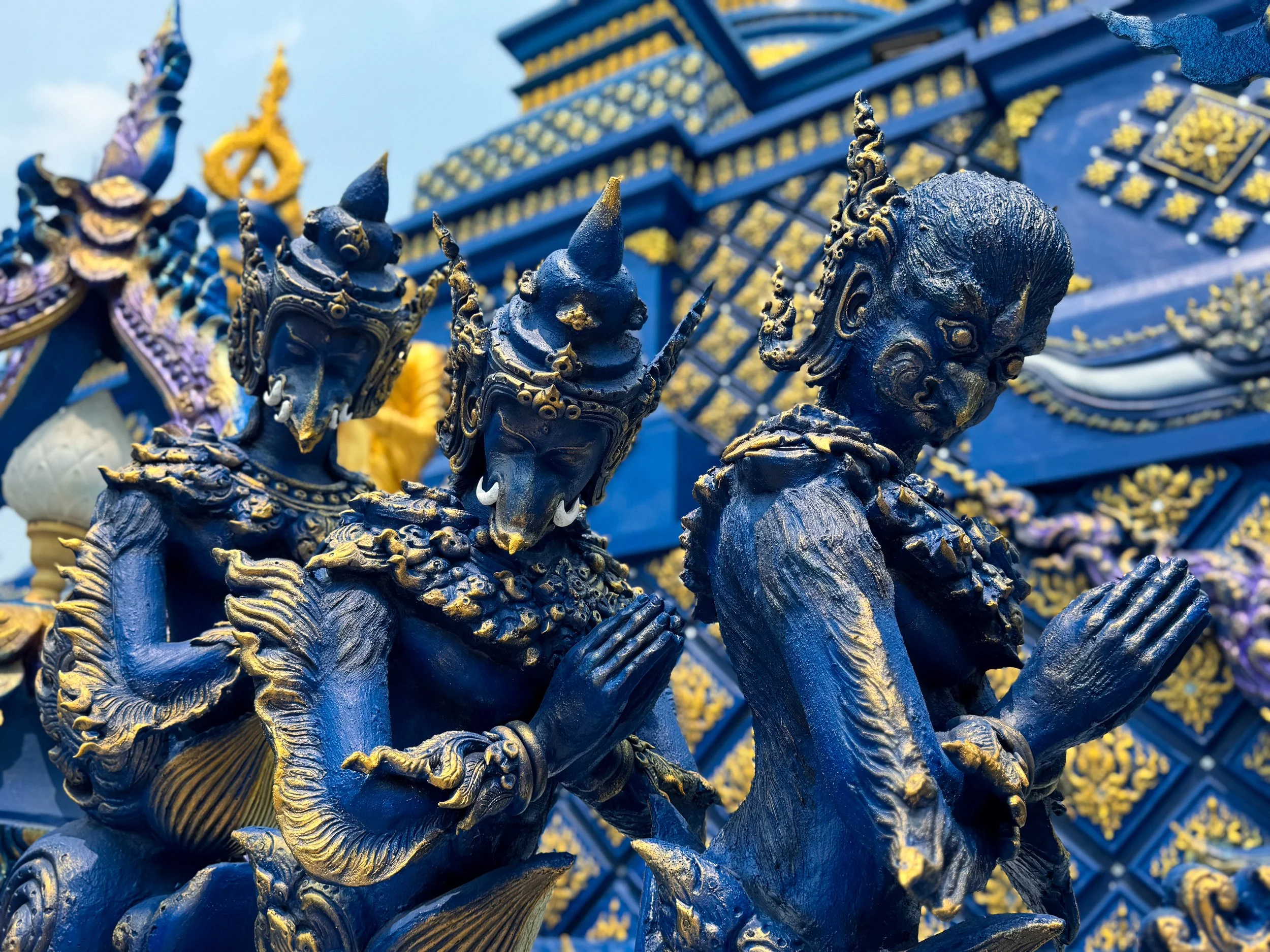
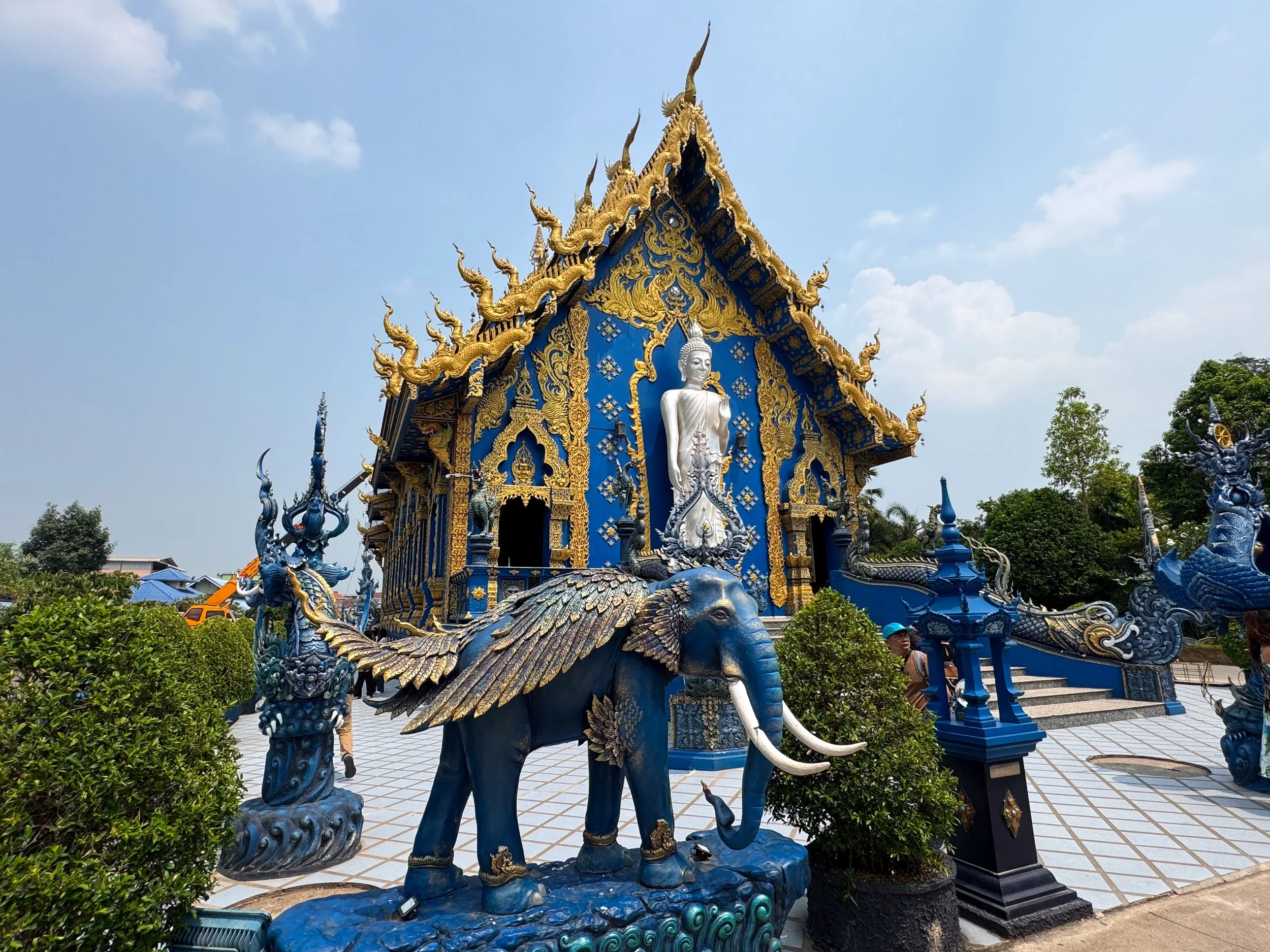
Wat Rong Seur Ten (The Blue Temple). A newly constructed Buddhist temple painted royal blue and painted in gold airbrush ornamentation. Its interior is equally unique with blue colored surfaces covered in various designs and paintings with a large glossy white statue of the Buddha. Like the White Temple, it was designed to be “one of a kind.”
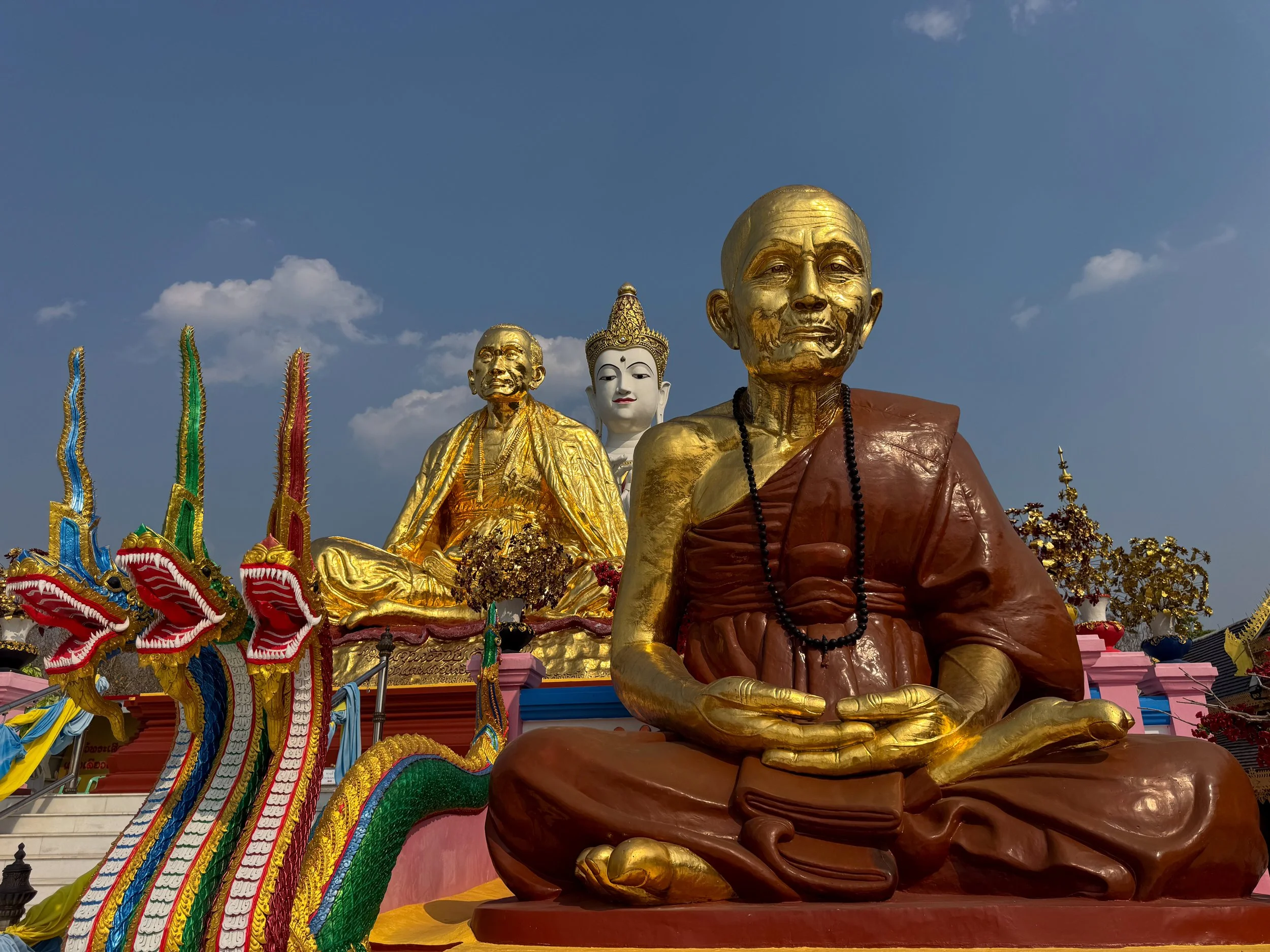
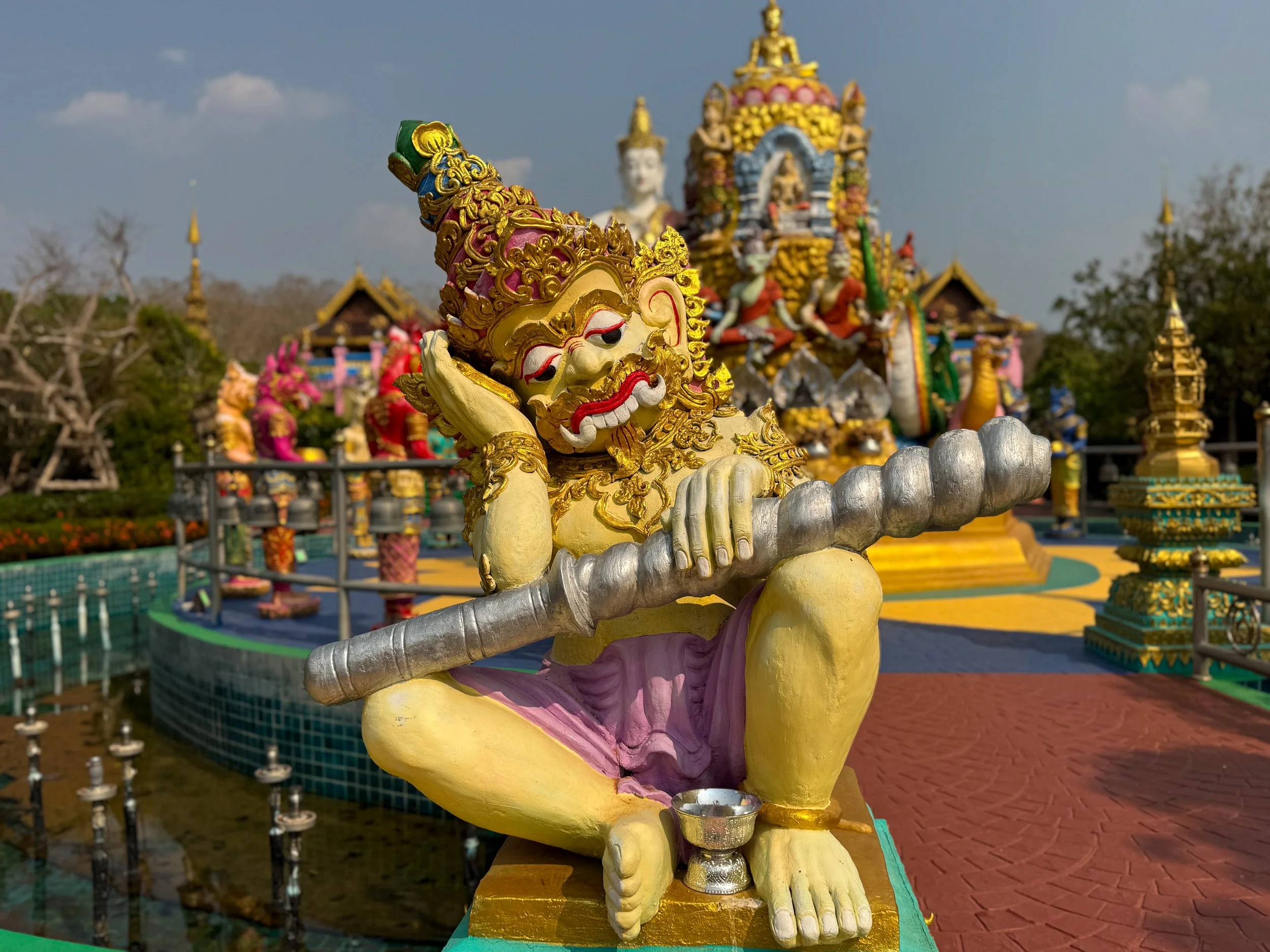
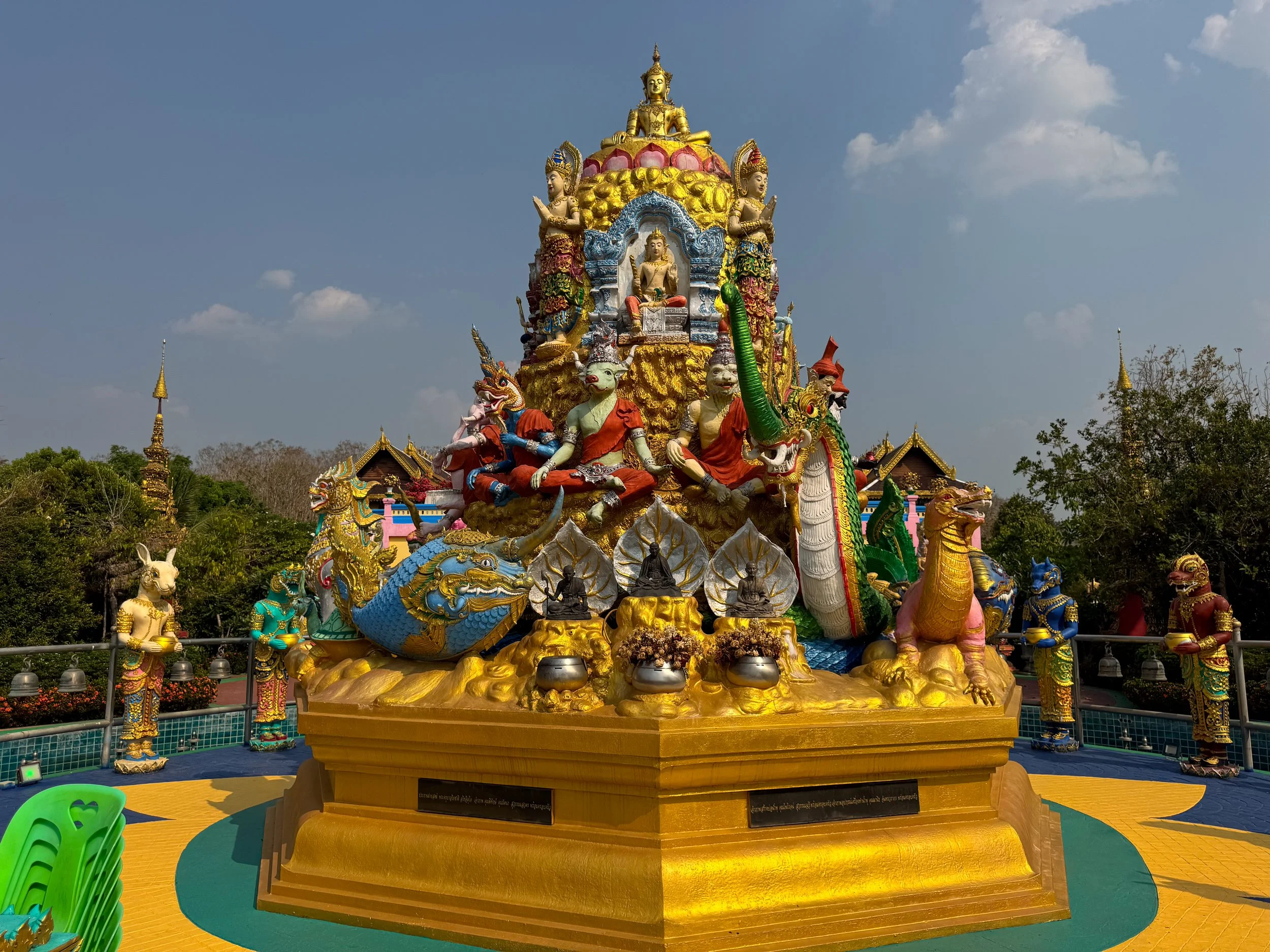
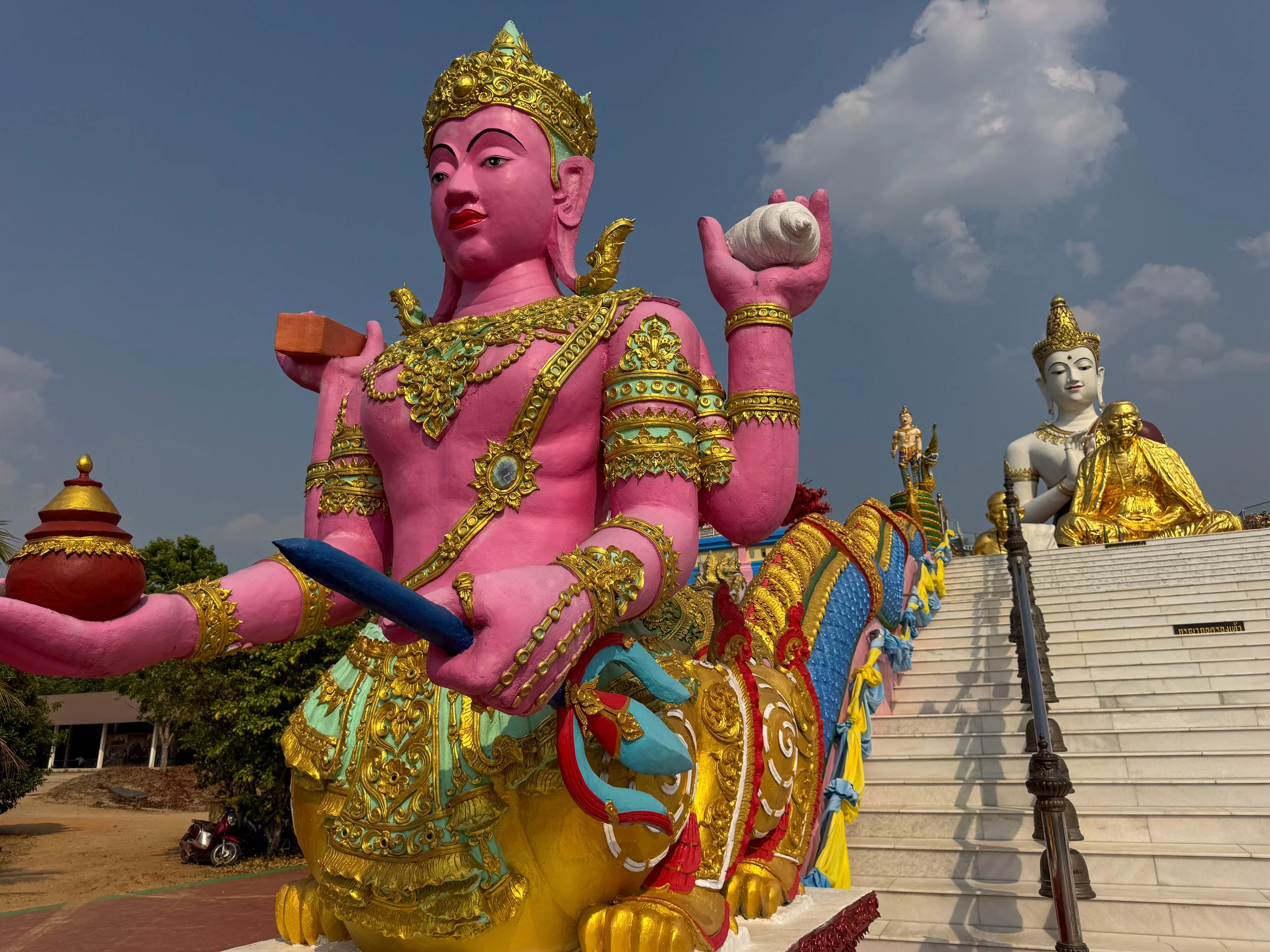
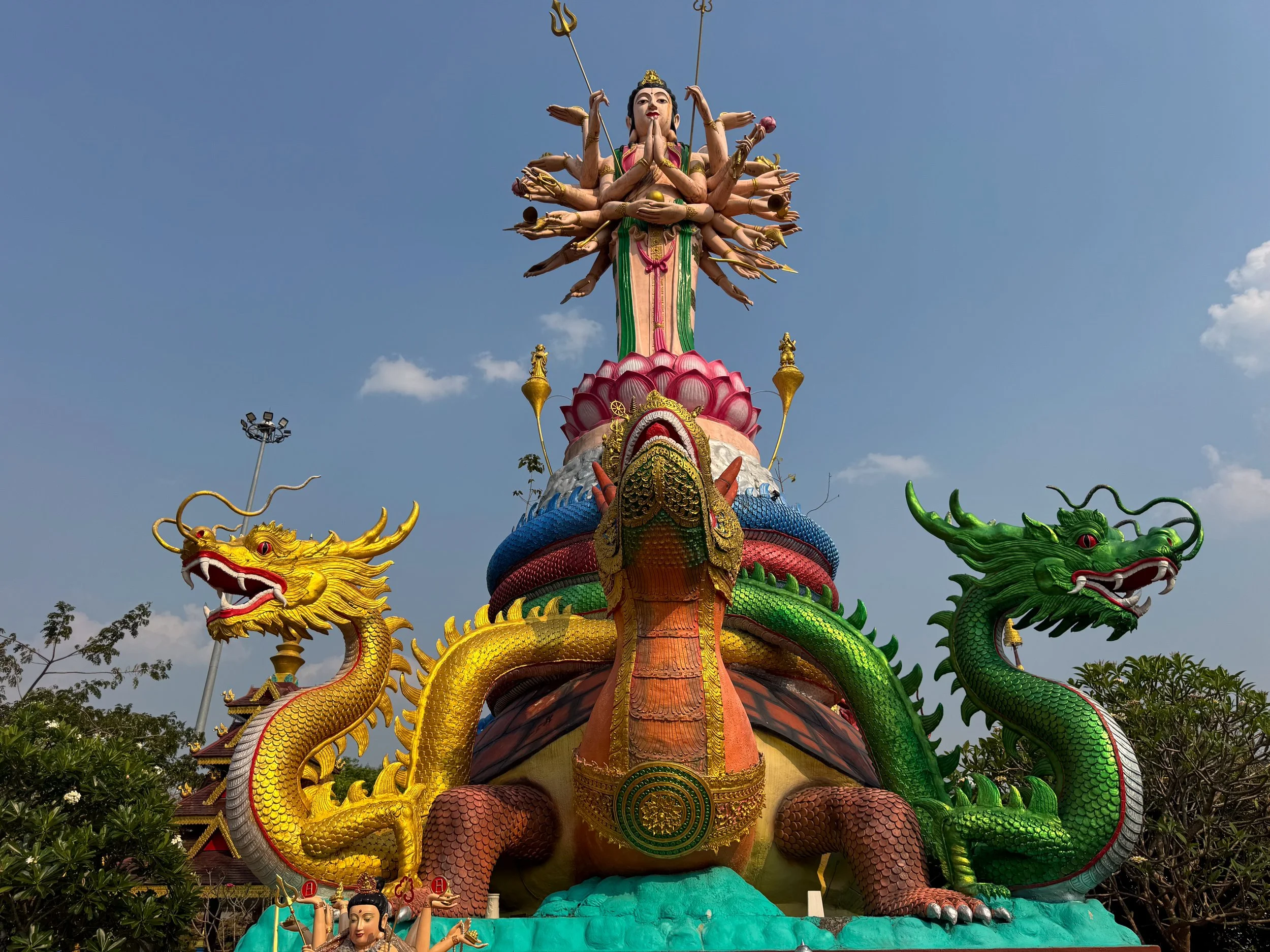
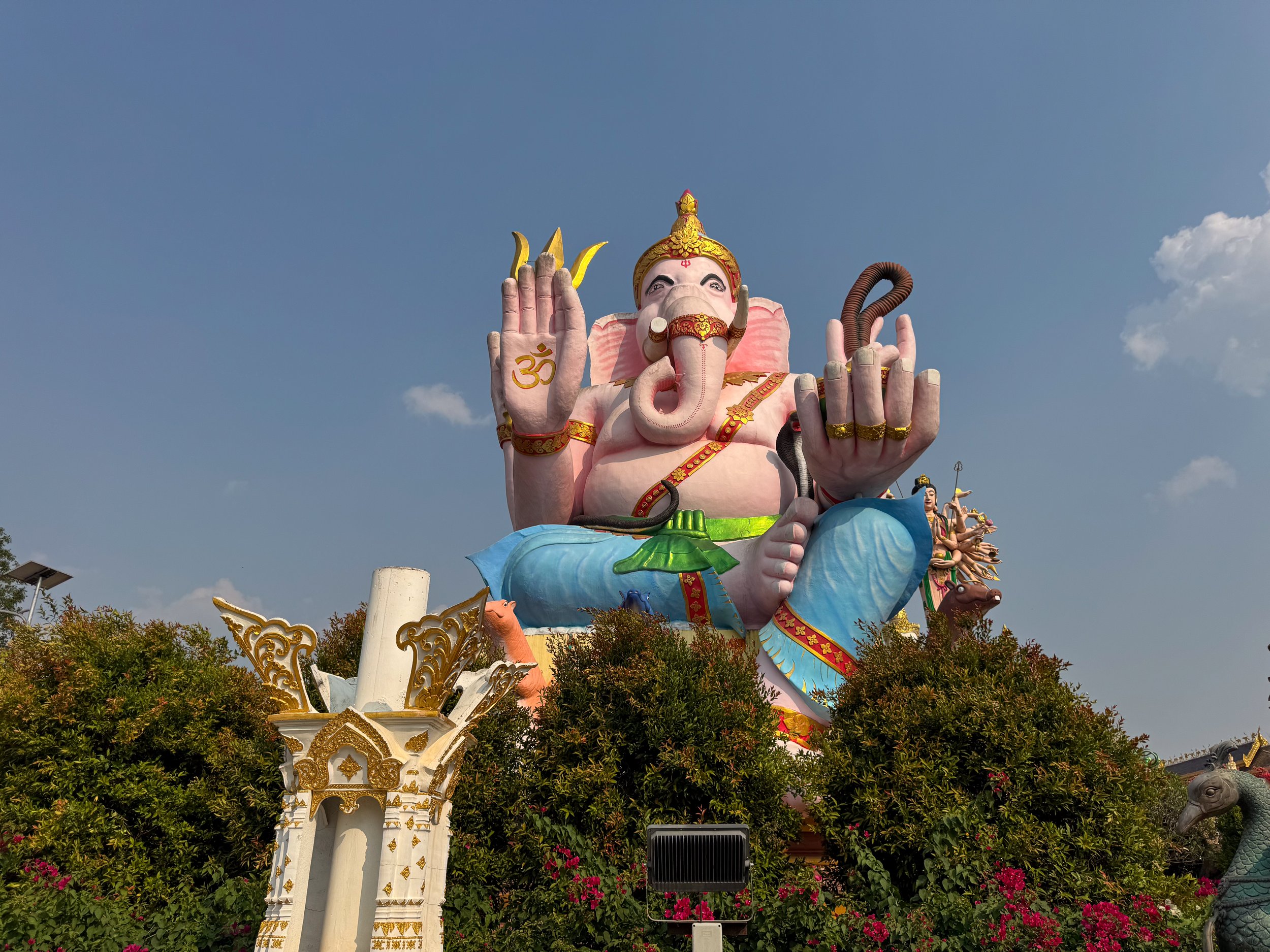
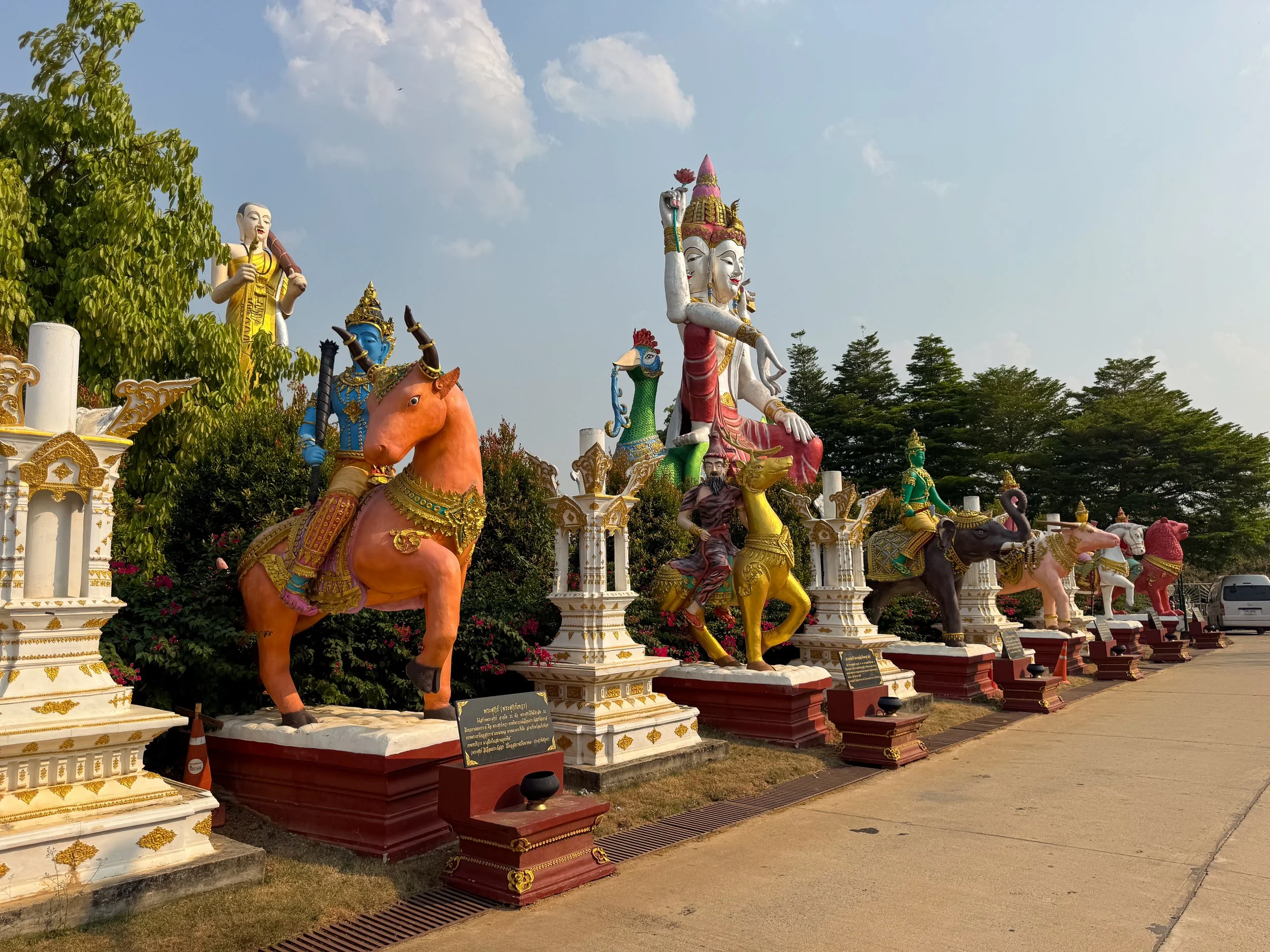
Wat Sang Kaew Phothiyan (The Light Temple). A modern day temple with a kaleidoscope of colorful and gilded statues of the Buddha, Buddhist monks, Hindu deities and mythical creatures. Stairways lead around the mostly open air temple with multiple Lanna style structures still under construction.
Getting Here. Chiang Rai is located in far northern Thailand about three hours from Chiang Mai. We booked a full day tour here with TripGuru Thailand on Viator.
Doi Inthanon
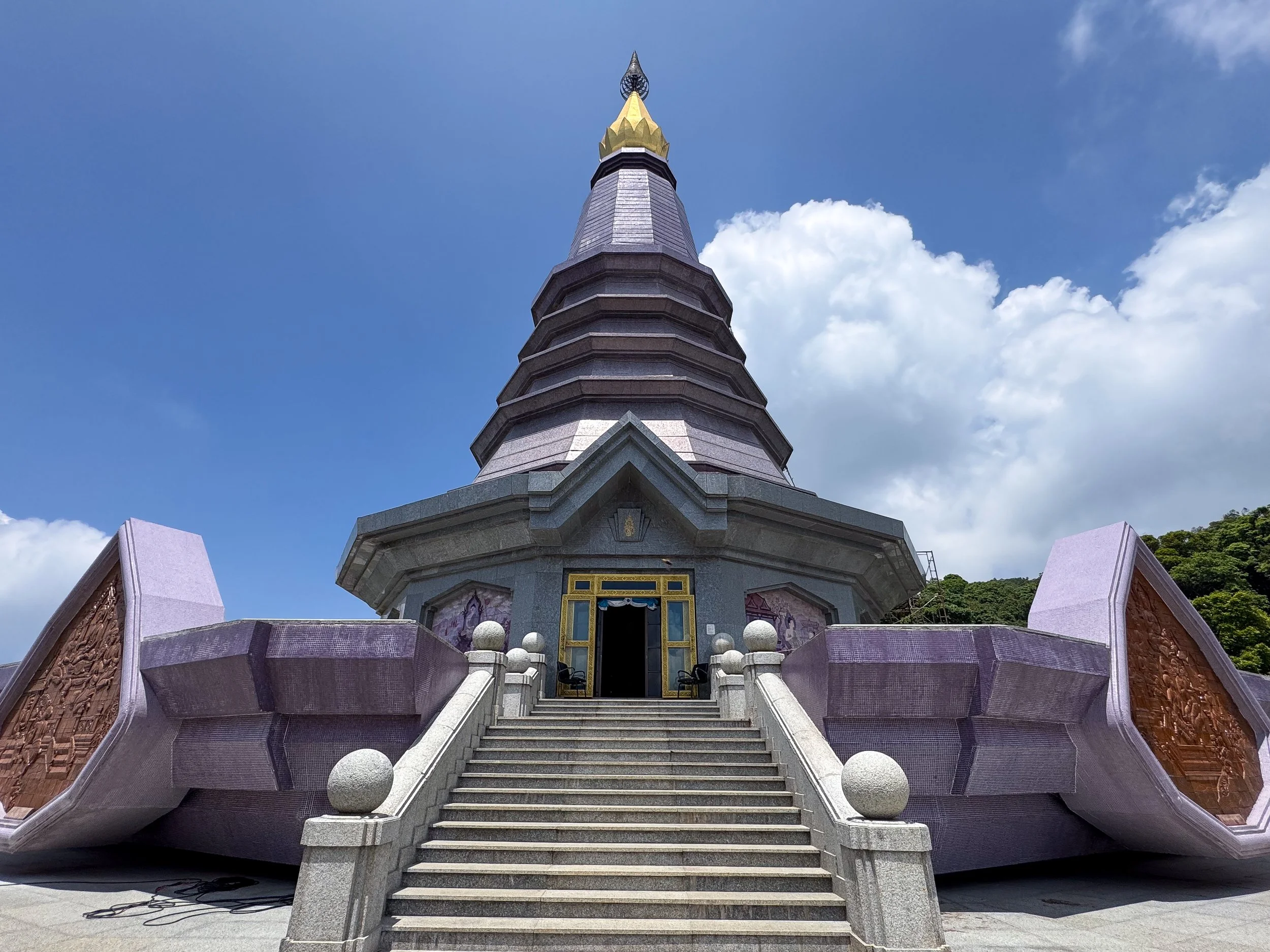
Doi Inthanon is a national park home to royal stupas, hiking trails, waterfalls and the tallest point in Thailand. We visited the park and a local village during a day trip with WanderSiam through Viator.
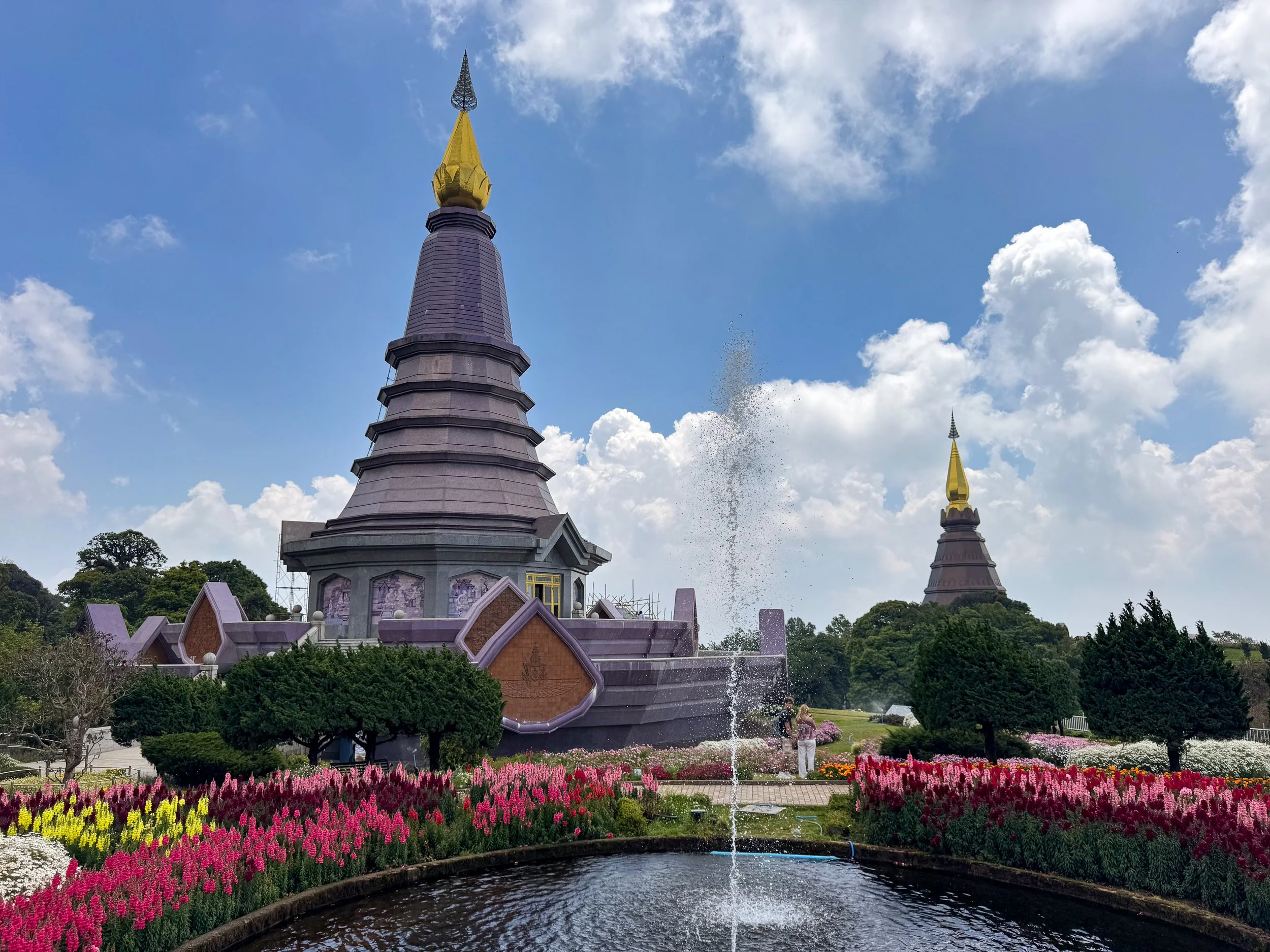
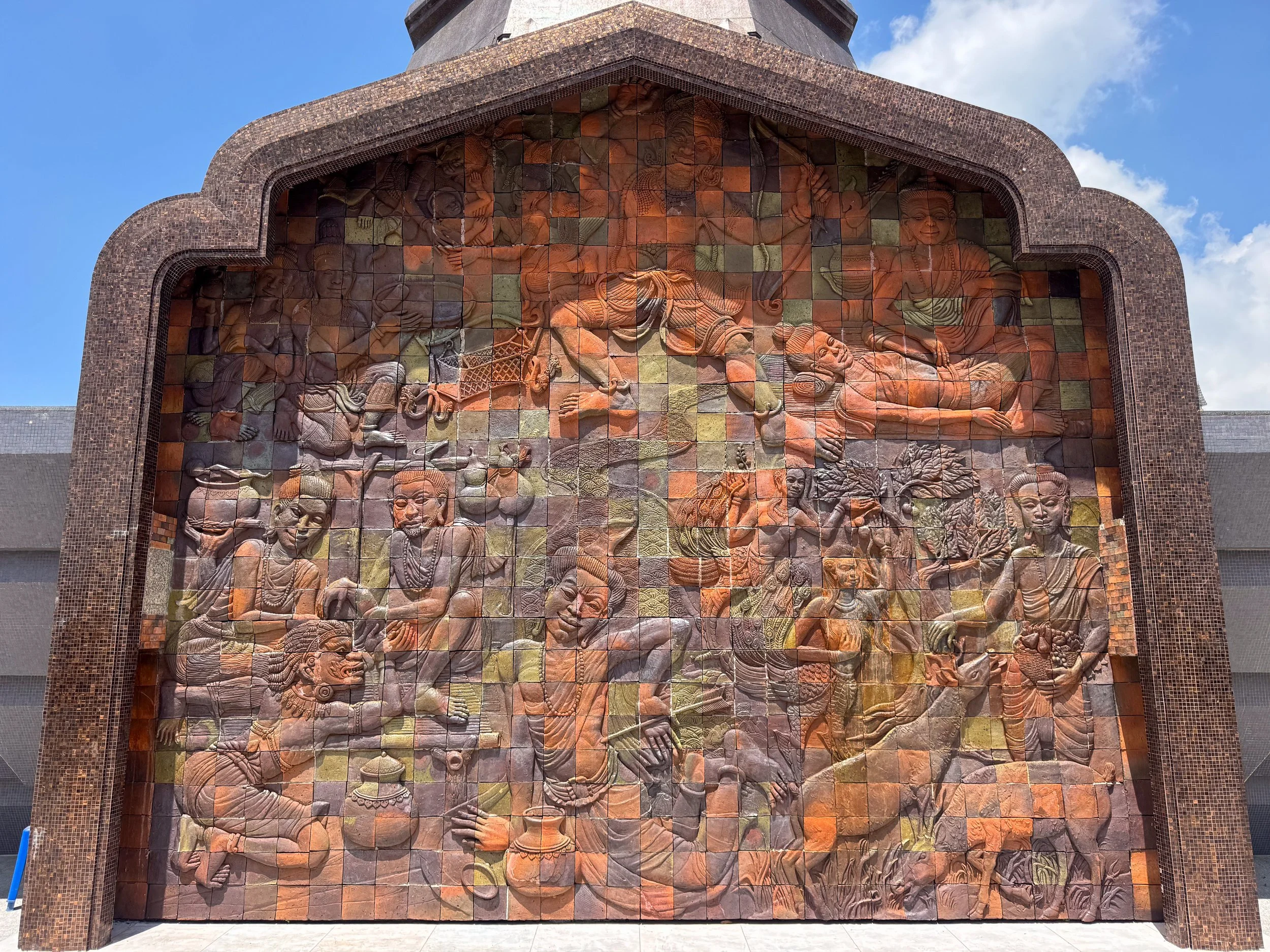
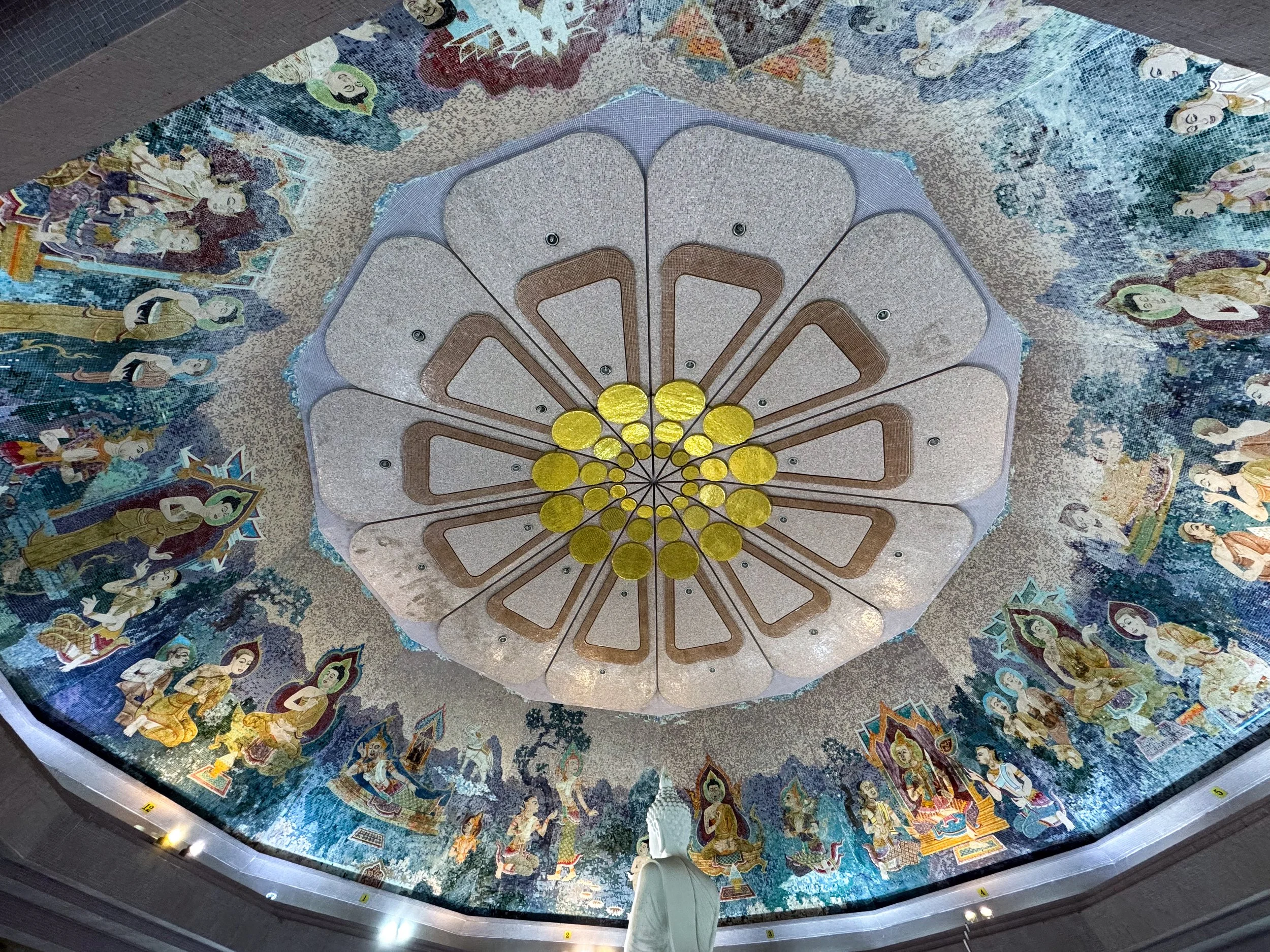
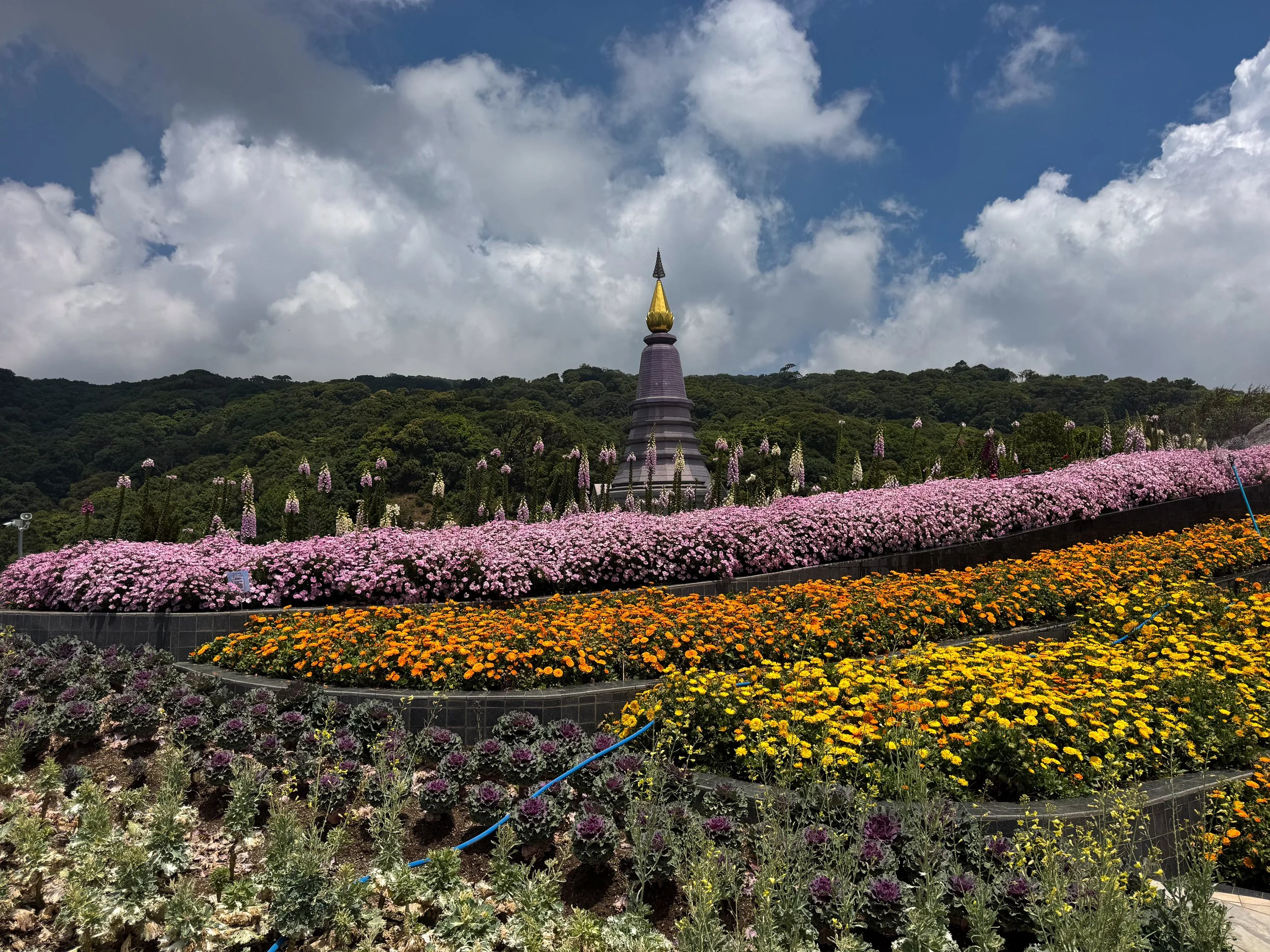
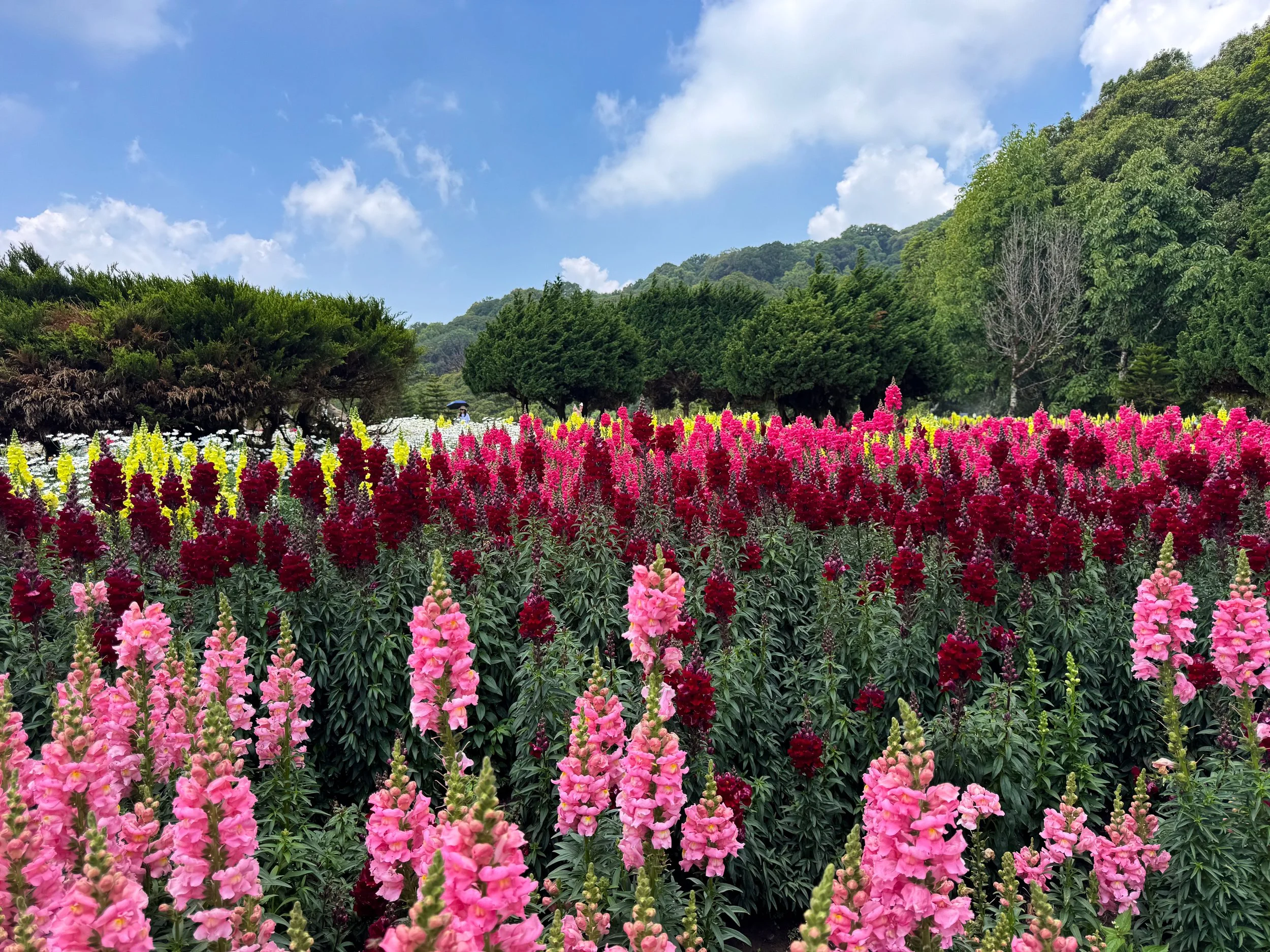
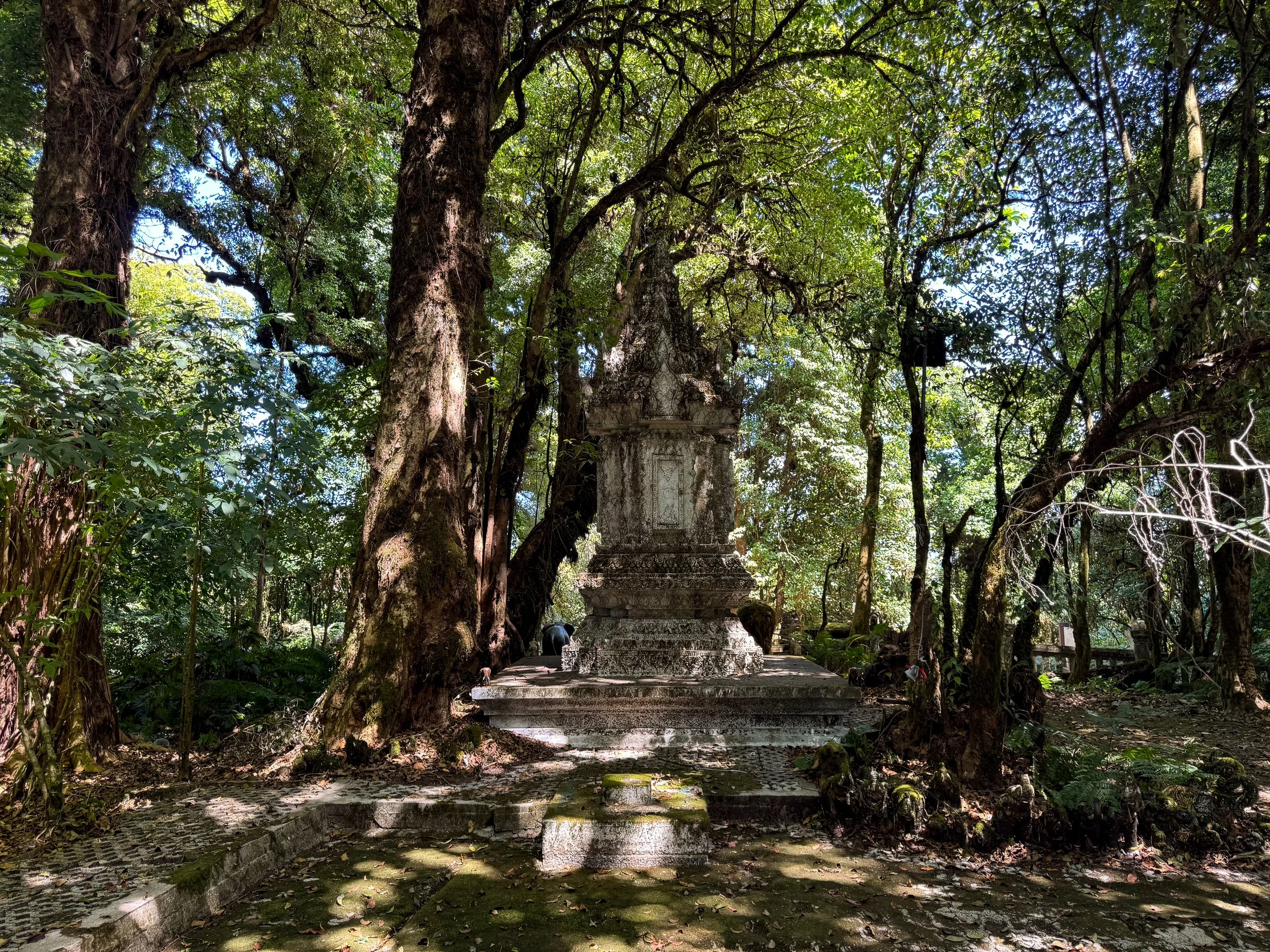
The Great Holy Relics Pagodas. Near the summit of Doi Inthanon are two pagodas dedicated to the former king and queen of Thailand. Each bell shaped pagoda is surrounded by colorful flowering gardens with views overlooking the Thai Kingdom. Inside the king’s pagoda is a Buddhist shrine recounting the life and story of the Buddha. Inside the queen’s pagoda is a Buddhist shrine containing relics of the Buddha including a hair and items from his time.
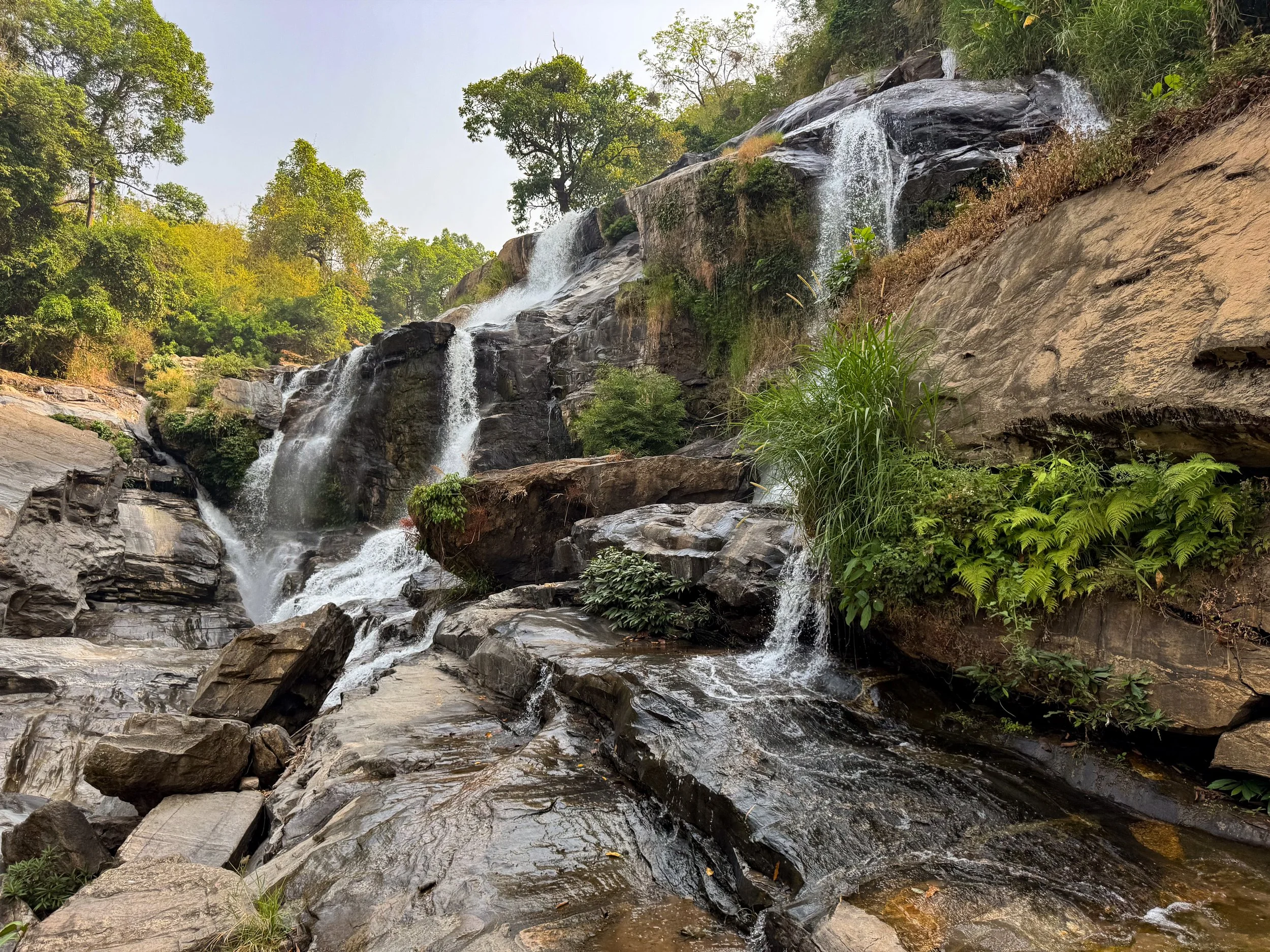
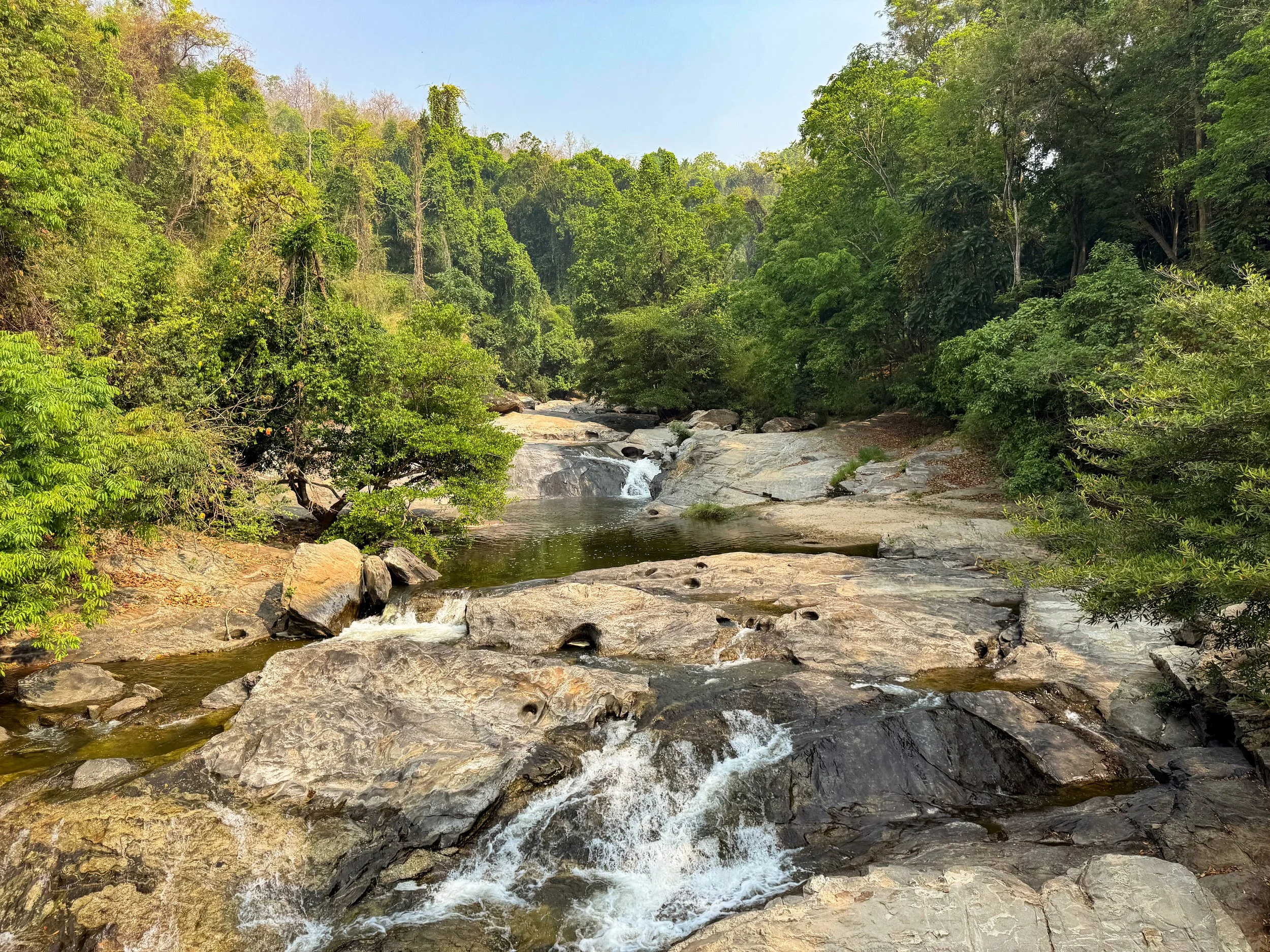
Mae Klang Waterfall. A large cascading waterfall running down a series of rocky ledges and boulders at the base of Doi Inthanon National Park. A brief trail leads from the parking lot to its viewing point. Adjacent to the parking lot is a bridge over the river and several riverside restaurants with bamboo dining platforms and inner tube rentals.
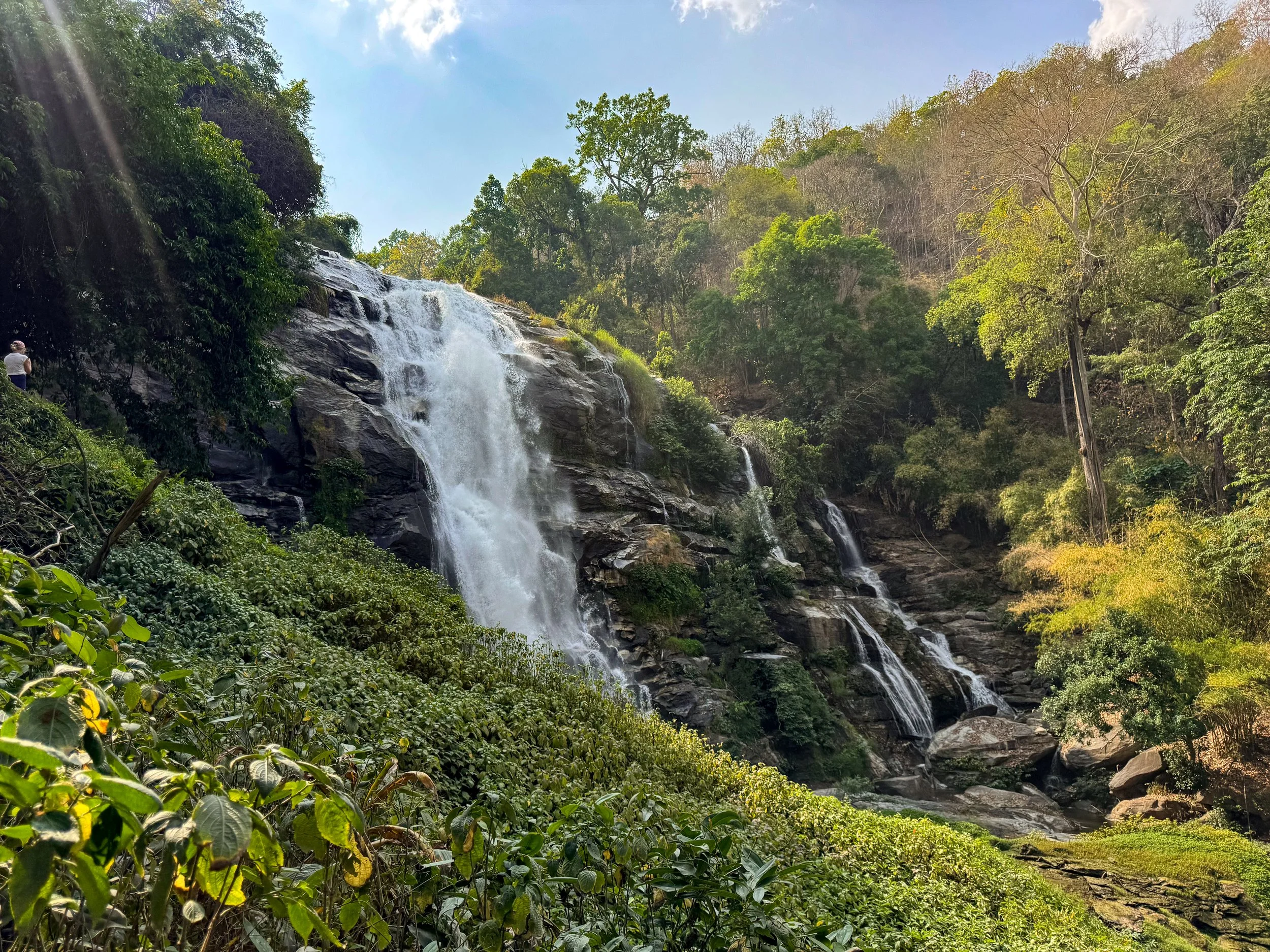
Wachirathan Waterfall. A large waterfall flowing over a steep cliff with a series of small cascading falls and rapids below. Even during the dry season, the waterfall had a strong current creating a cloud of mist.
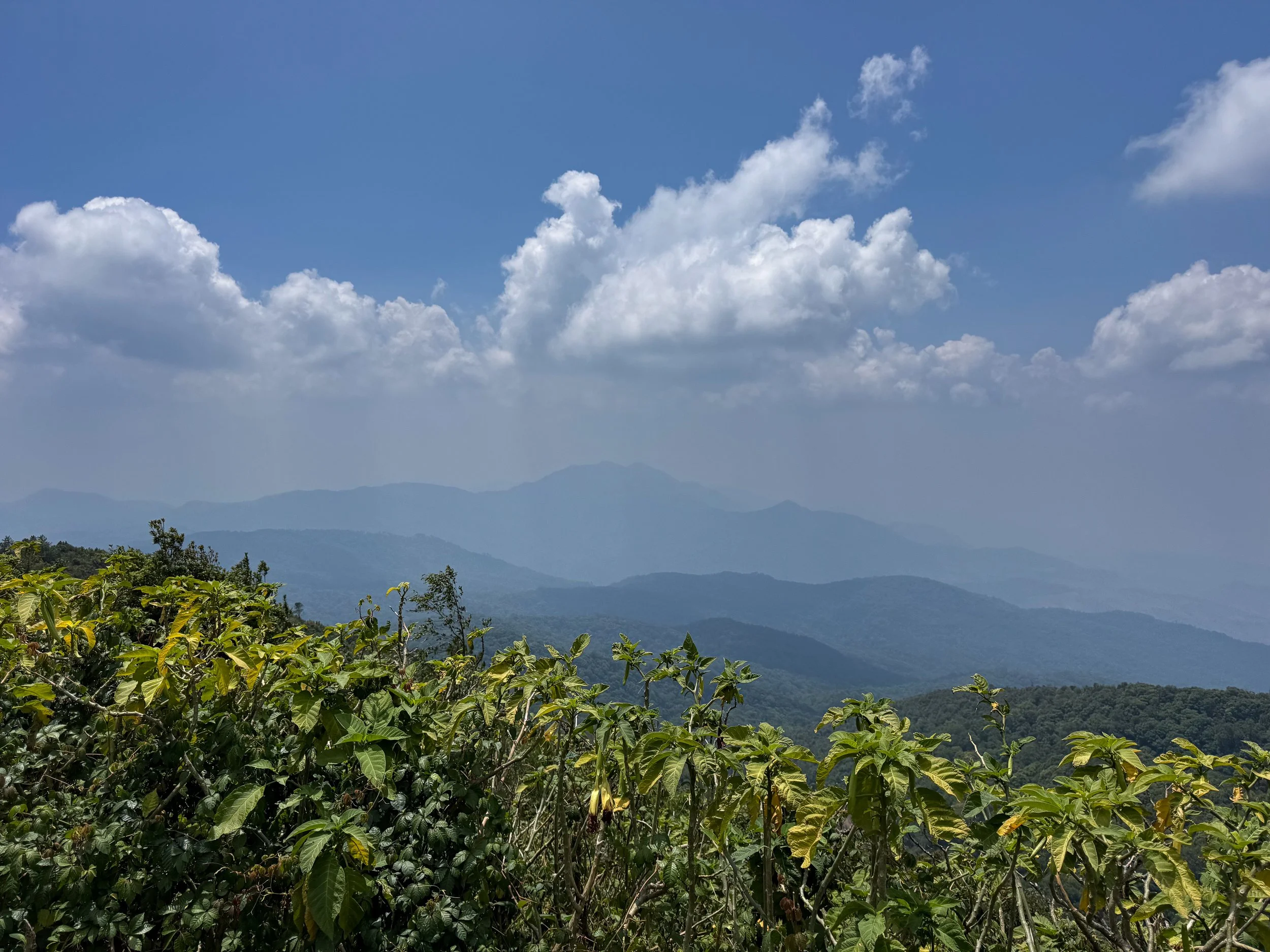
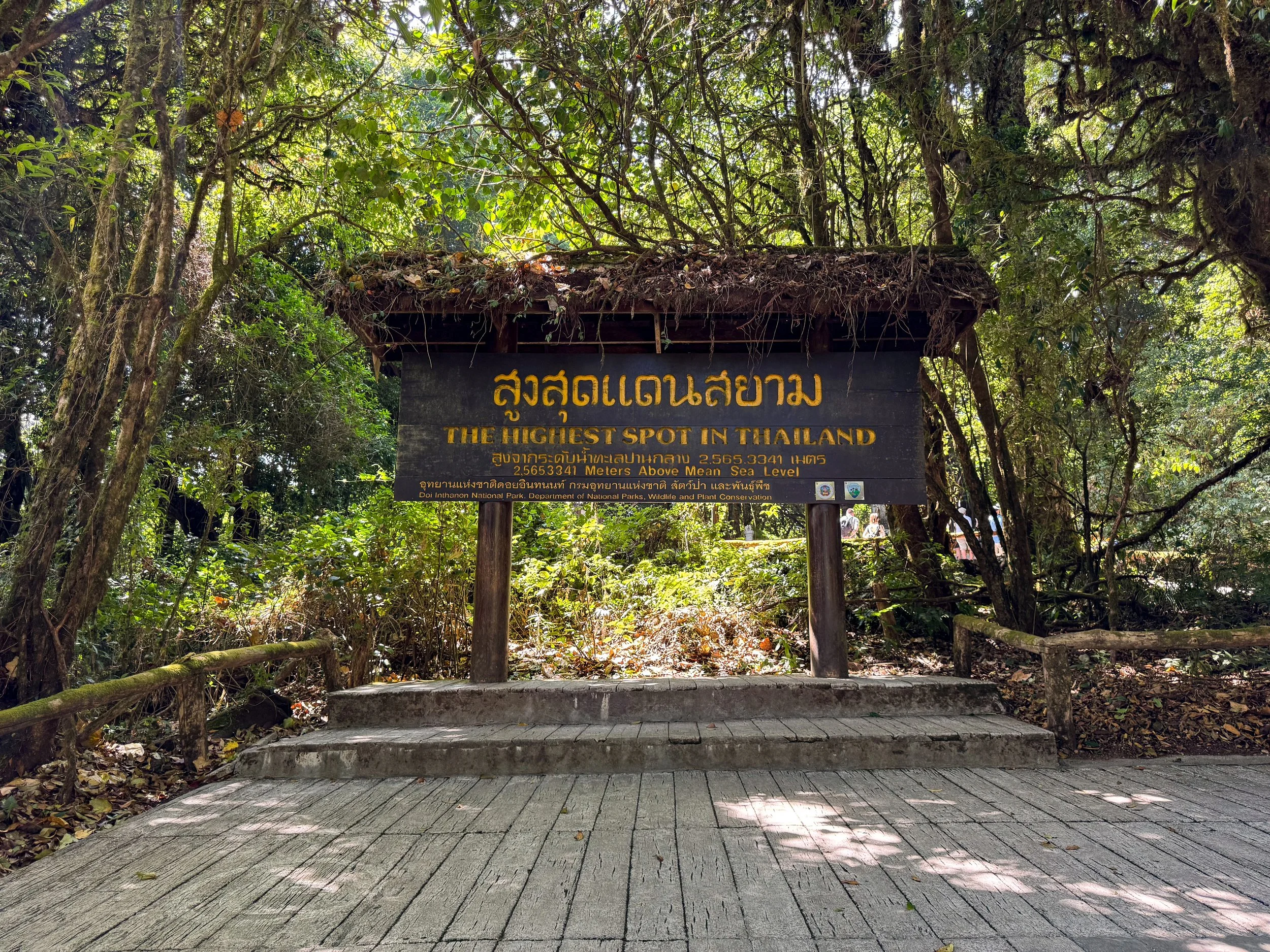
The Highest Spot in Thailand. At the summit of Doi Inthanon National Park is the highest spot in Thailand, measuring 2,565 meters (8,415 feet) above sea level. At this height, the air is substantially cooler and clearer. A small chedi houses the remains of the last Lanna Kingdom’s ruler.
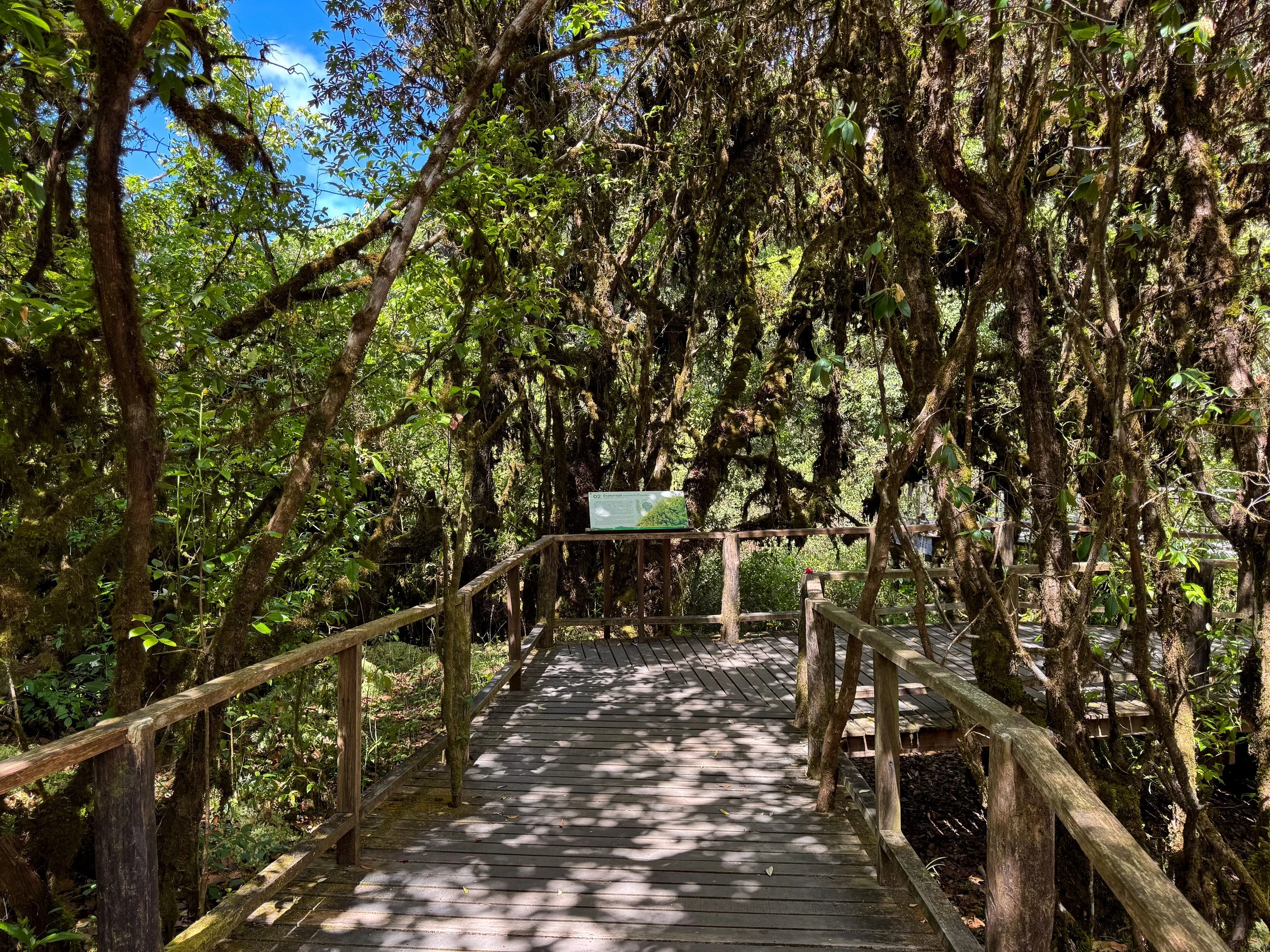
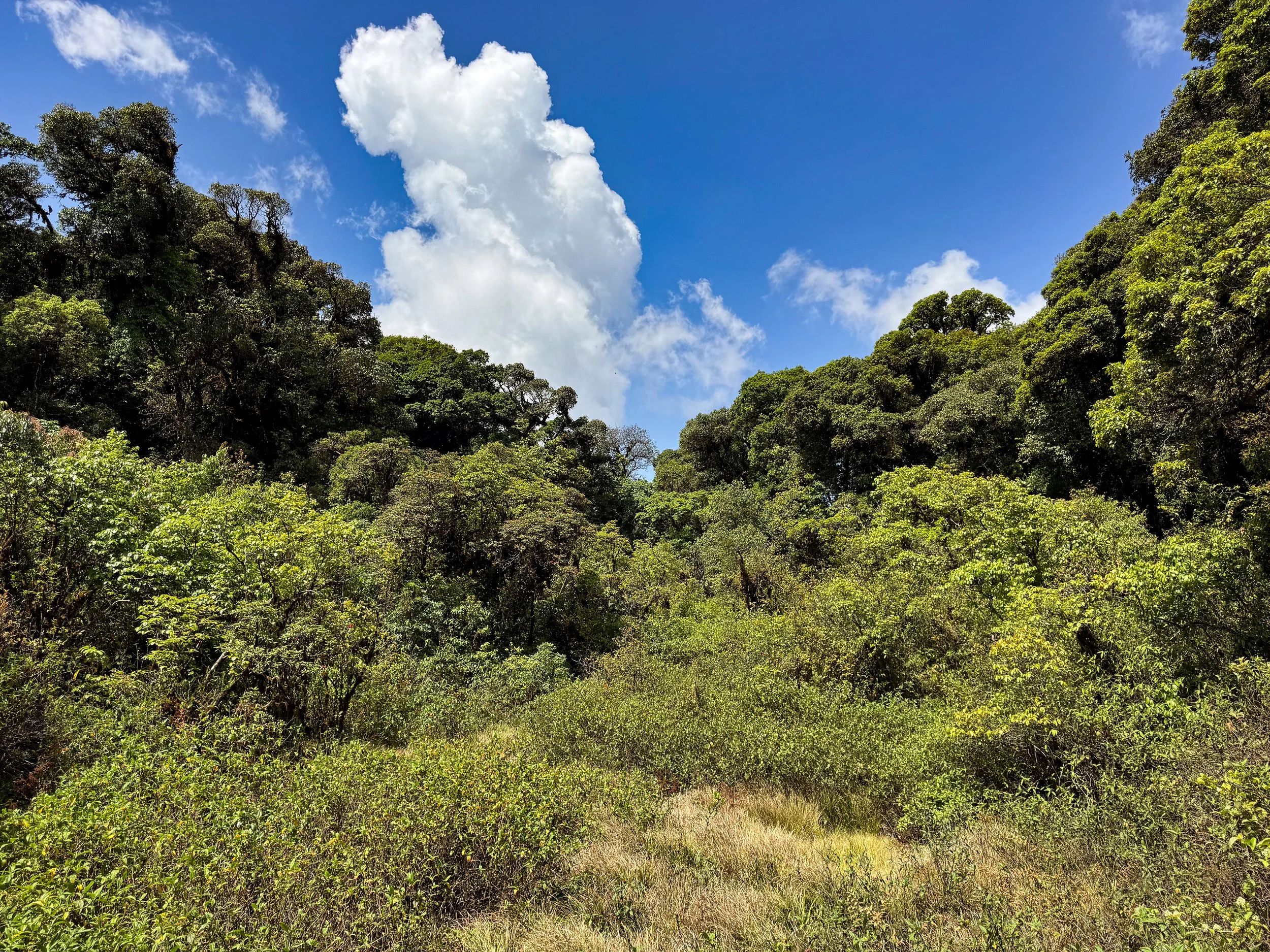
Ang Ka Nature Trail. A boardwalk through the cloud forest near the highest spot in Thailand. The trail passes through a microenvironment with a small peat swamp, moss covered trees, threatened species of birds and plaques warning about the damage of climate change.
Thai Hmong Community Market. A roadside market with vendors from the Hmong Village selling fresh and candied fruits, baked and fried snacks, roasted nuts, dried teas, pure honey and fruit wine. The hillsides surrounding the village and market are lined with terraced farmland.
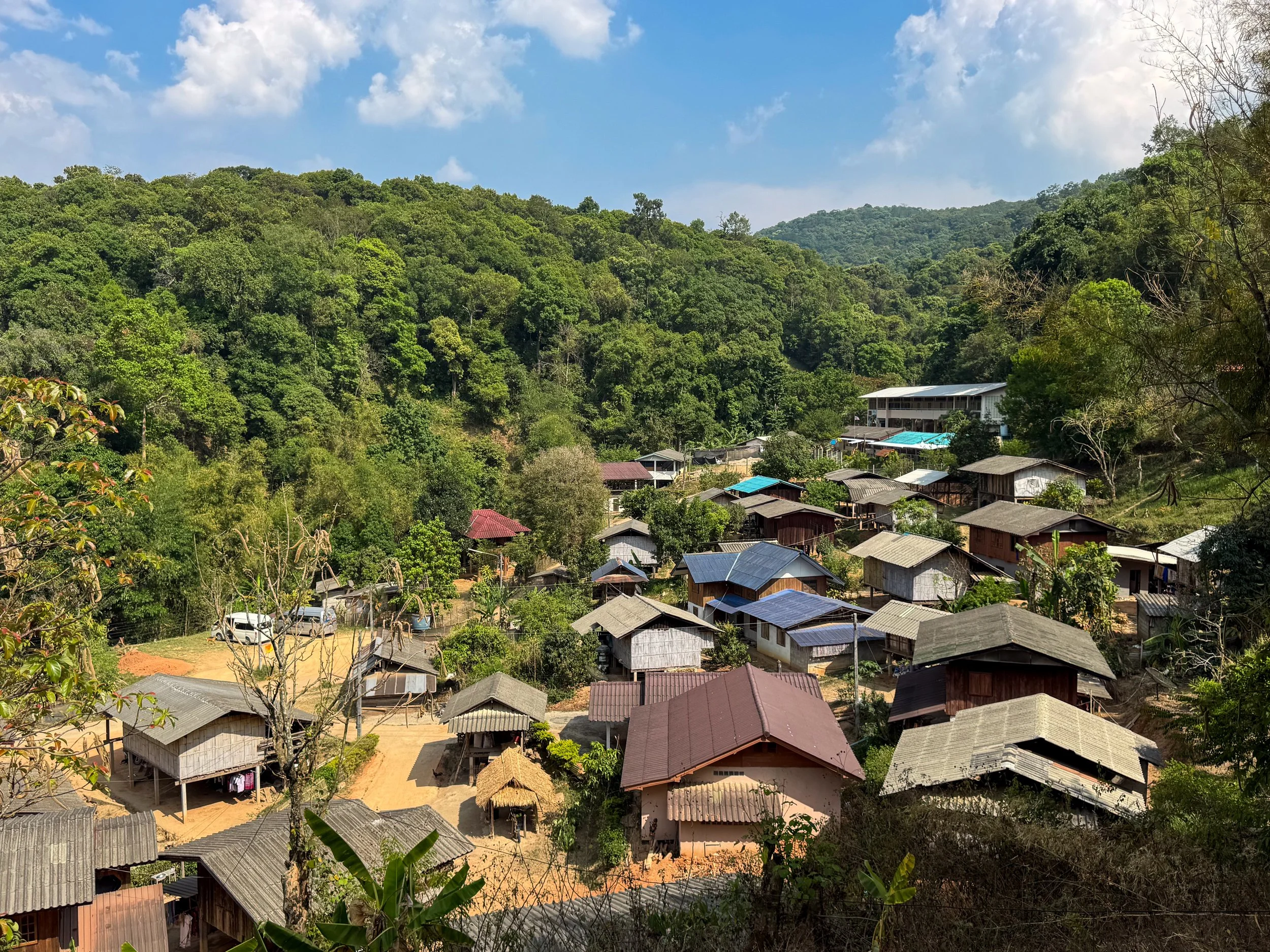
Karen Village. The Karen people are an ethnic group native to the regions of Myanmar and Northern Thailand. We visited one mountainside village home to about 300 people. We toured their community of wooden and bamboo houses, visited a textile workshop selling handwoven scarves made on backstrap looms and a cafe serving locally grown coffees and teas. On our walk through the village, we saw coffee crops and gardens with dragon fruit, banana, avocado and mulberry trees.
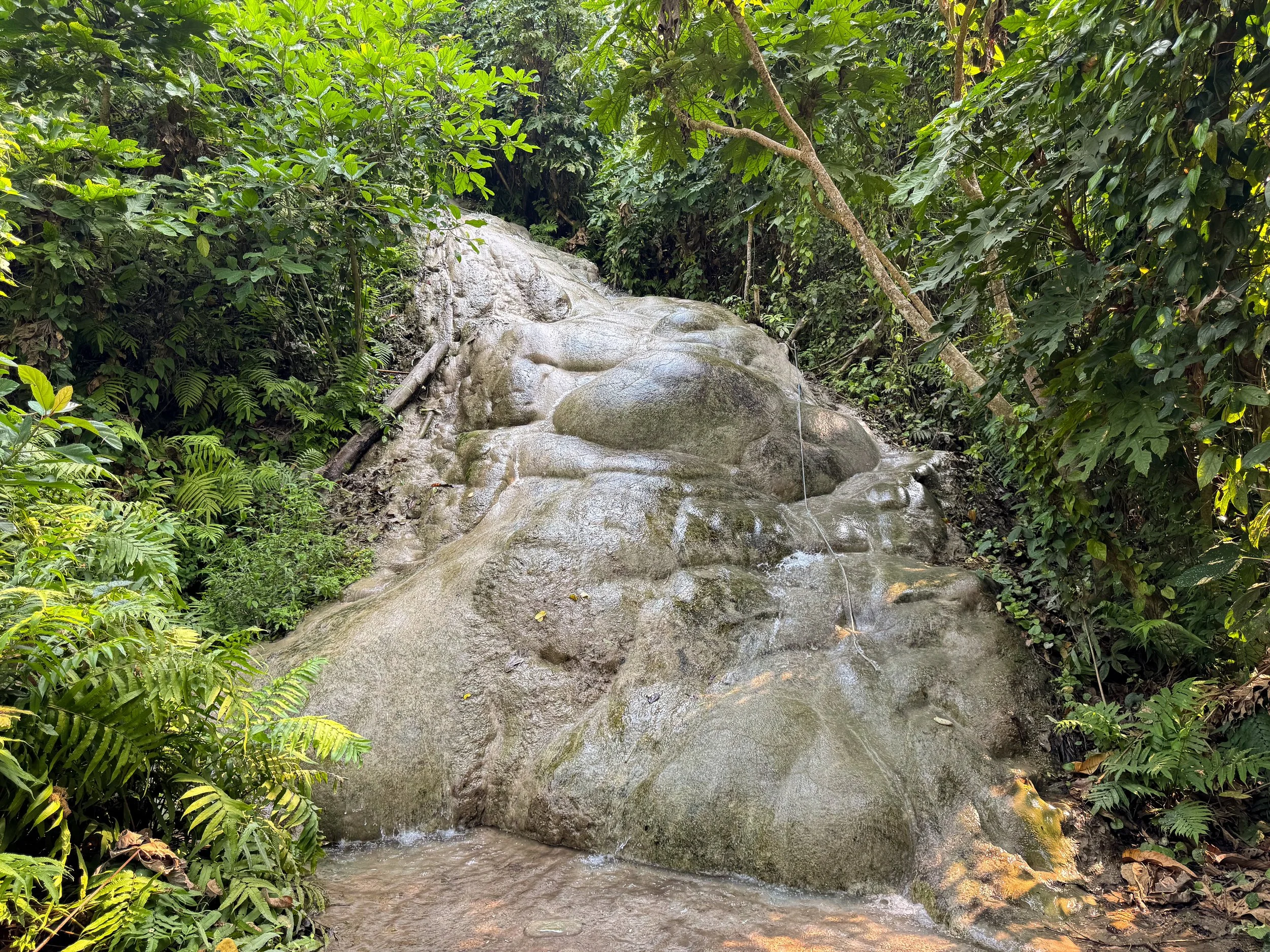
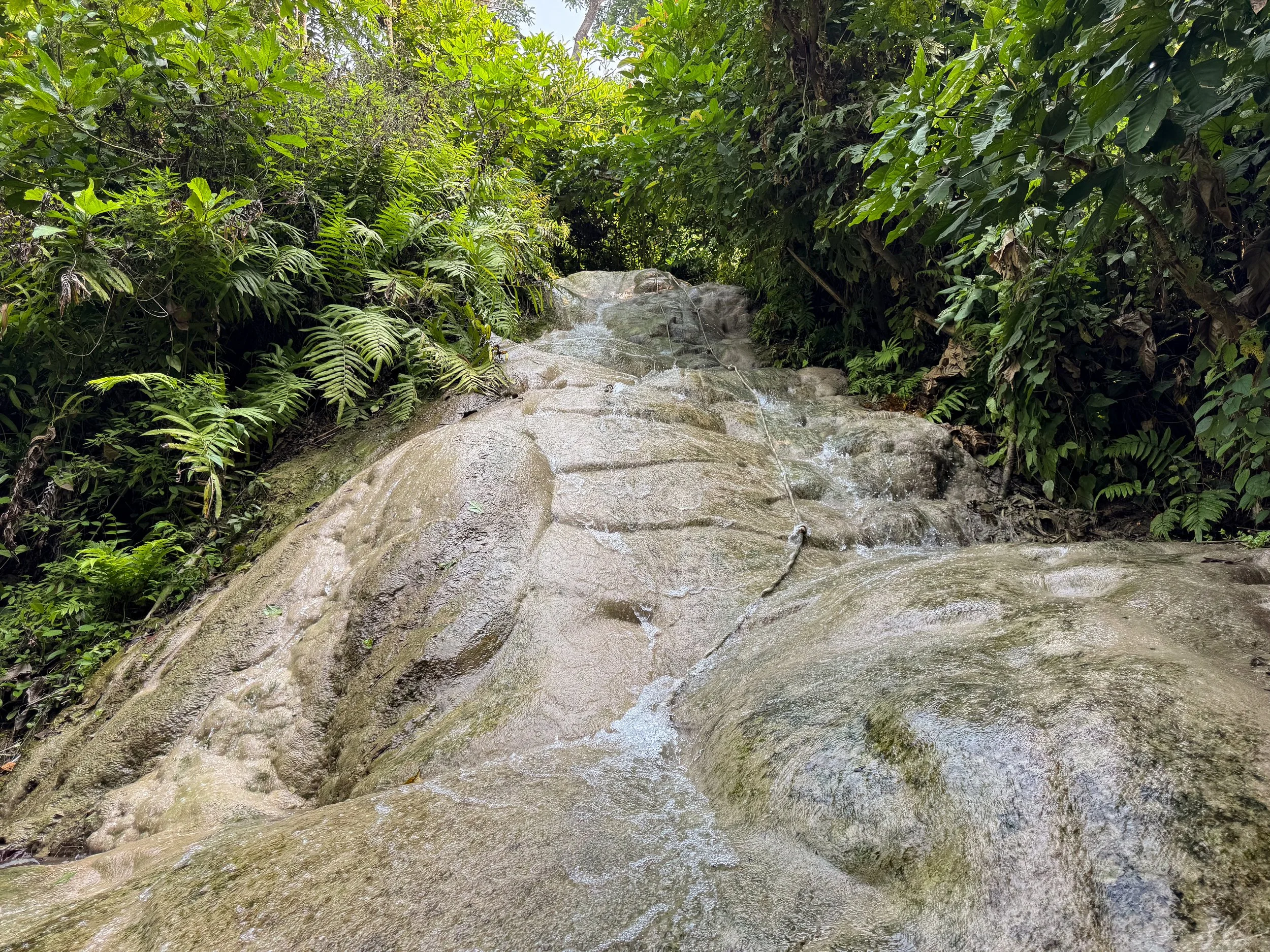
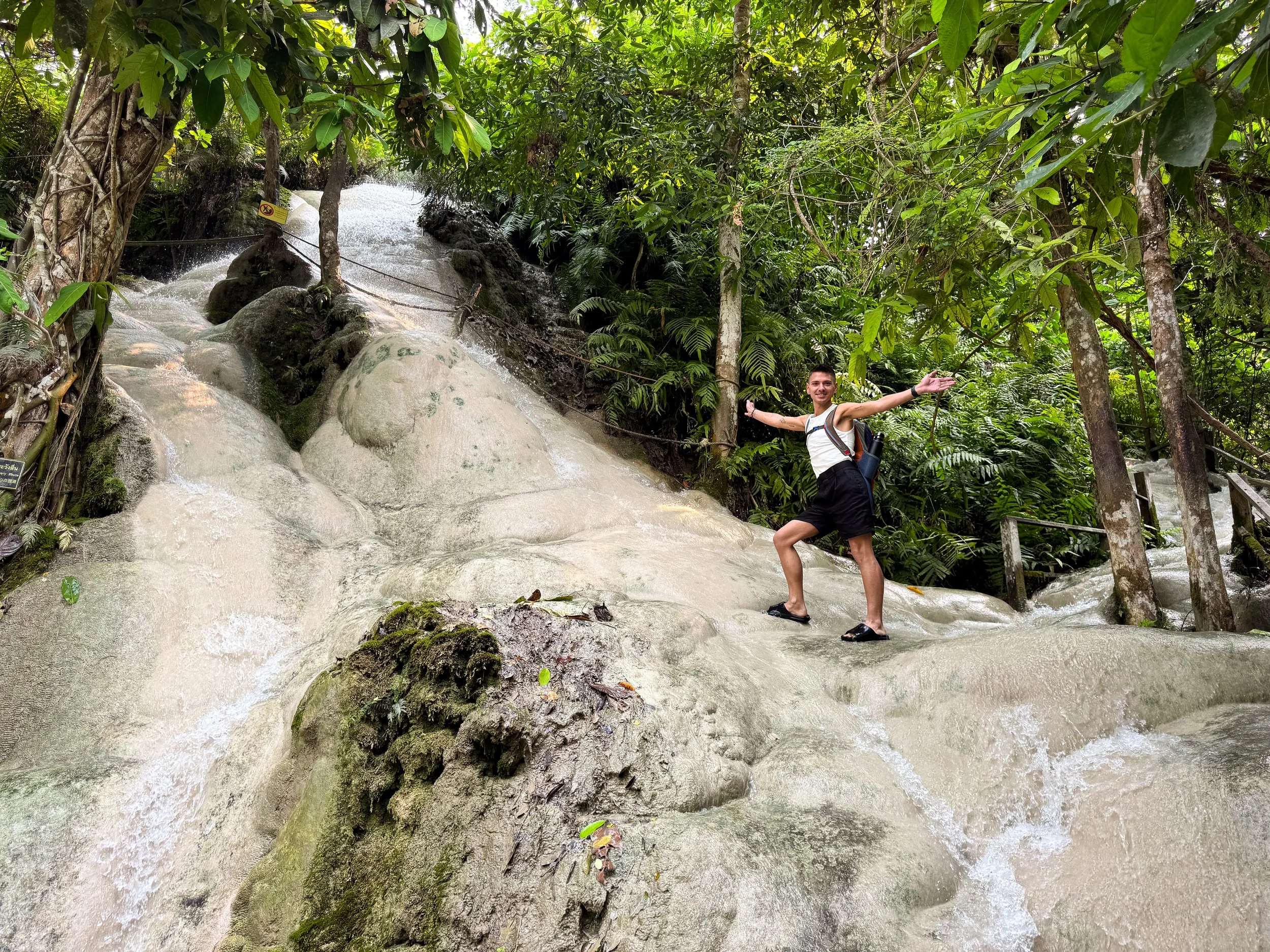
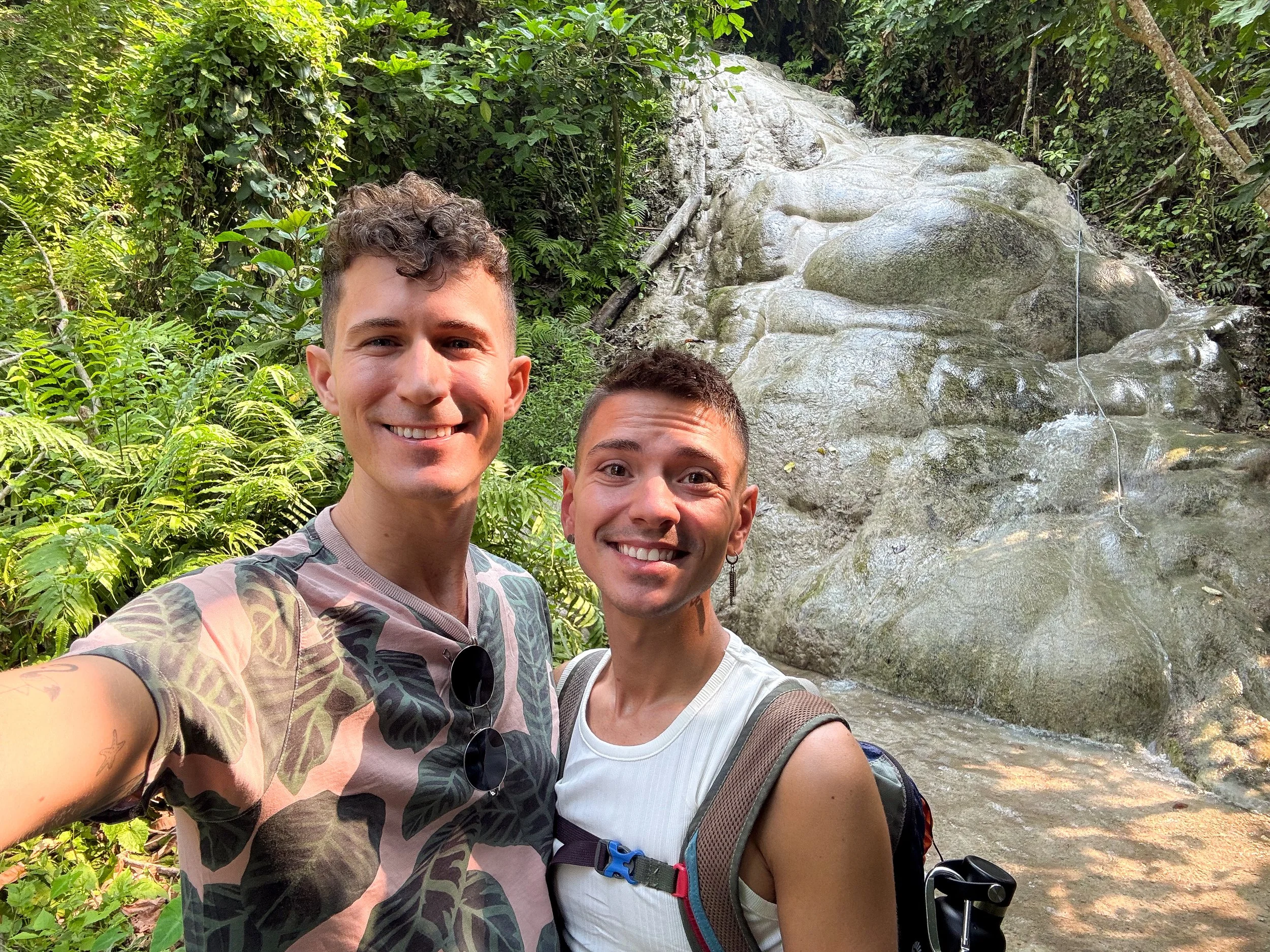
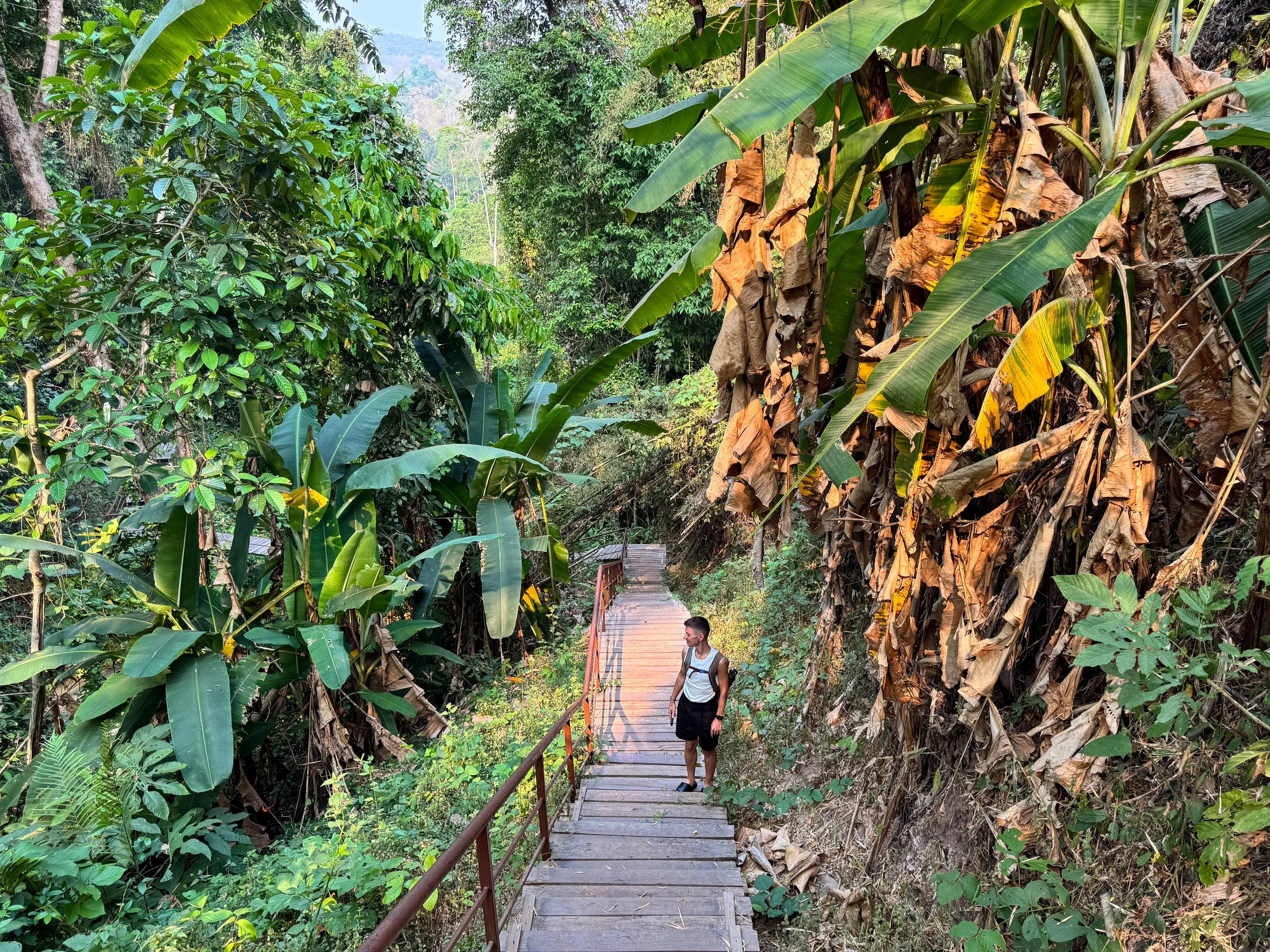
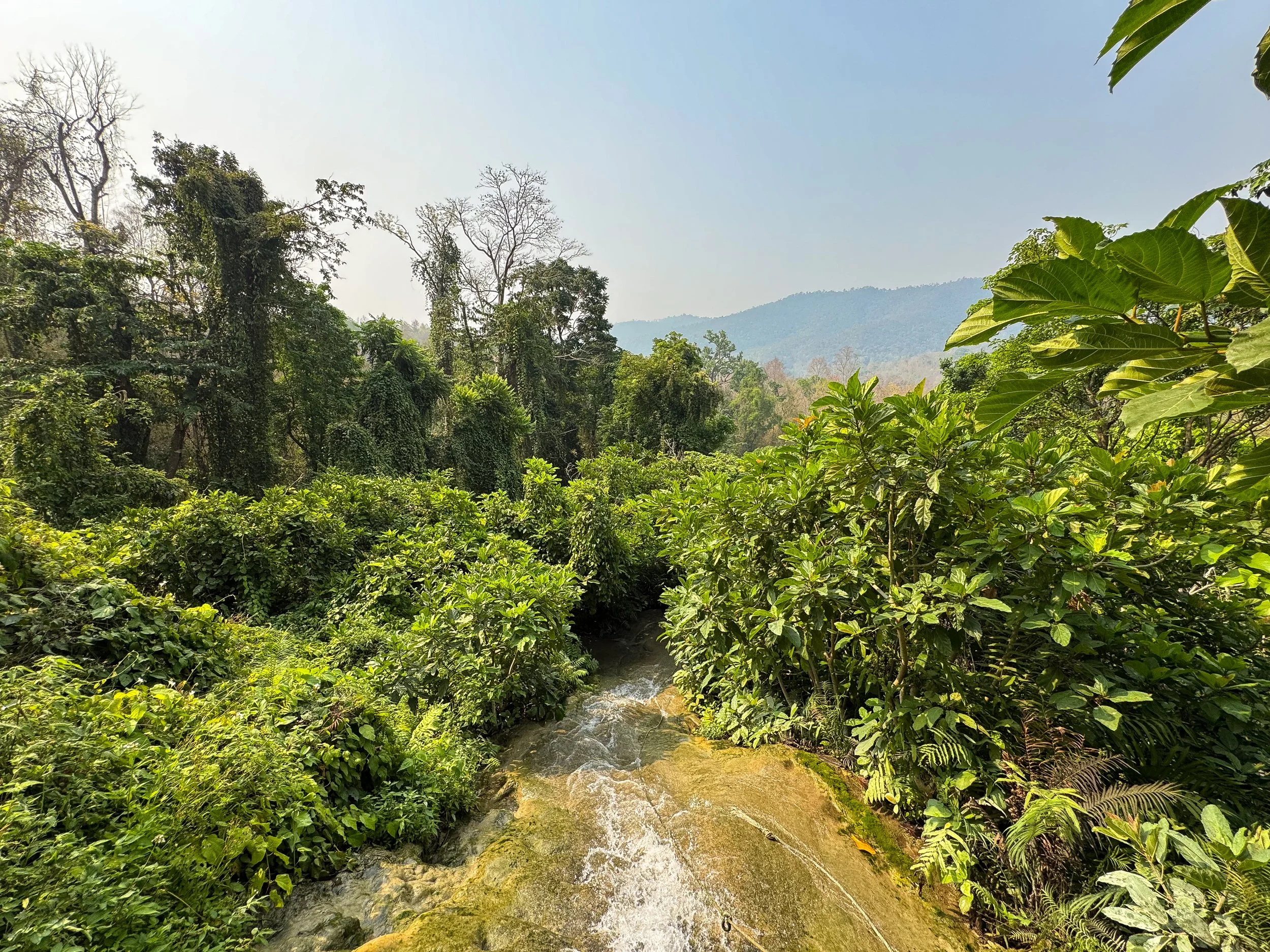
Buatong Waterfall
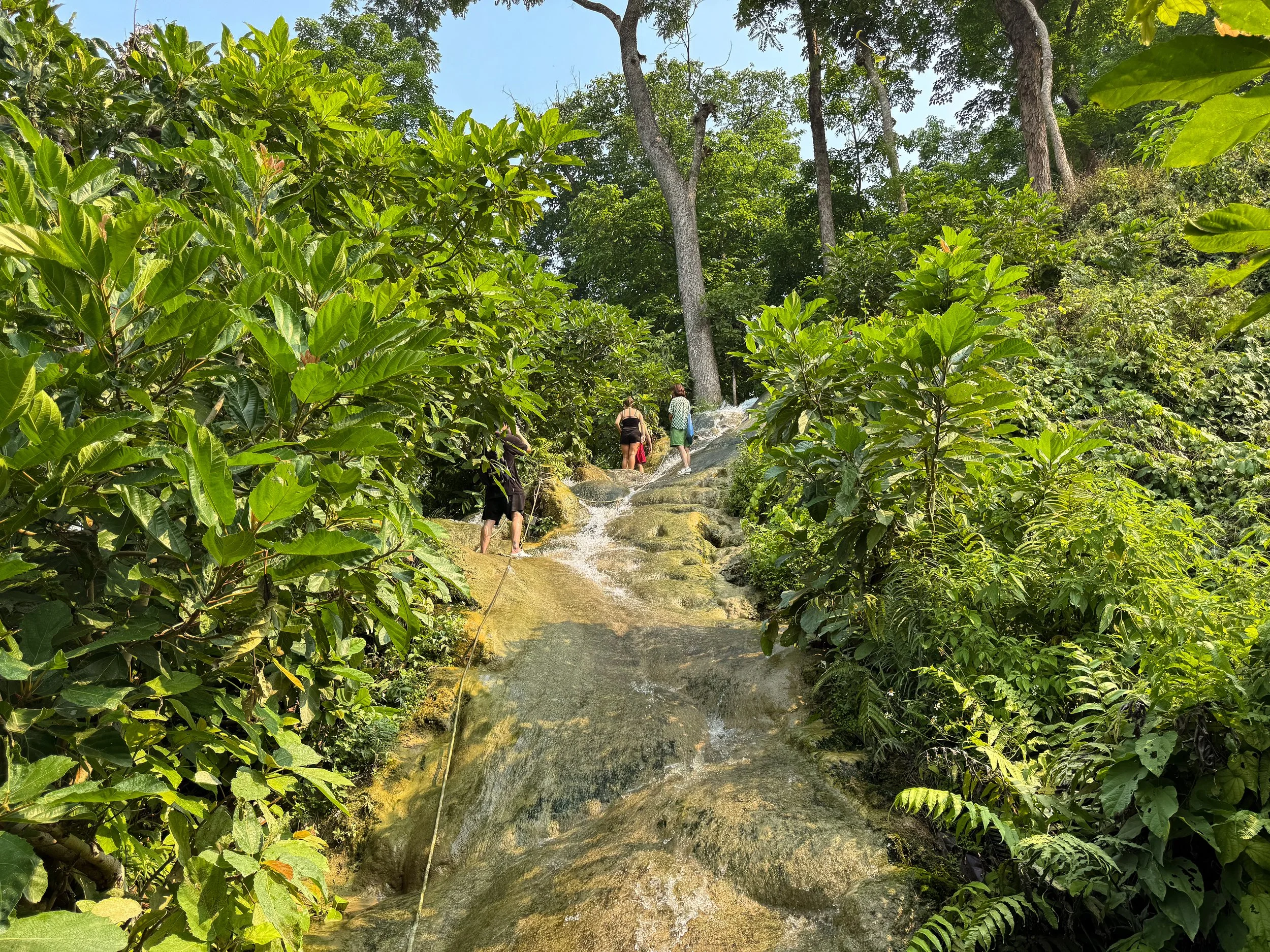
Buatong Waterfall cascades down a calcified structure that flows from a natural cold spring down the lush hillside in the middle of the tropical forest. A wooden staircase and boardwalk leads from the top of the waterfall to the bottom level with a natural swimming pool. A rope trail lead up the waterfall allowing visitors to walk up its calcified surfaces. We walked from the third level to the top, gripping onto the coarse calcified formations as the water rushed past.
Pro Tip. Do not try to walk down the waterfall. It’s easiest to walk barefoot and test your footing before taking the following step. Use the ropes for support.
Getting Here. We took a Songthaew from the Old City to the waterfall for 1,000 Baht roundtrip. The drive took 1h 15min one way and the driver waited for 1h 30min while we visited.
Elephant Sanctuaries
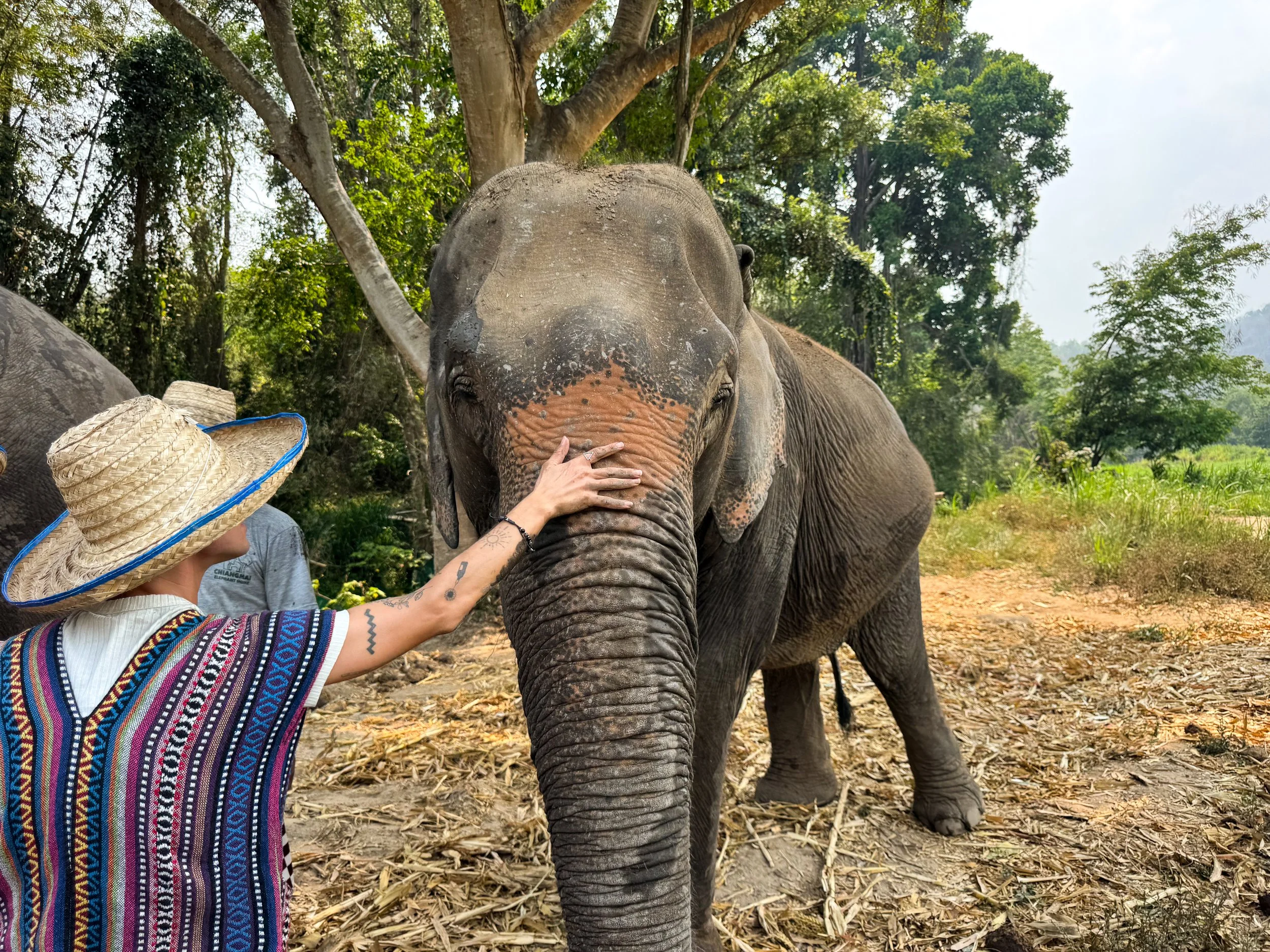
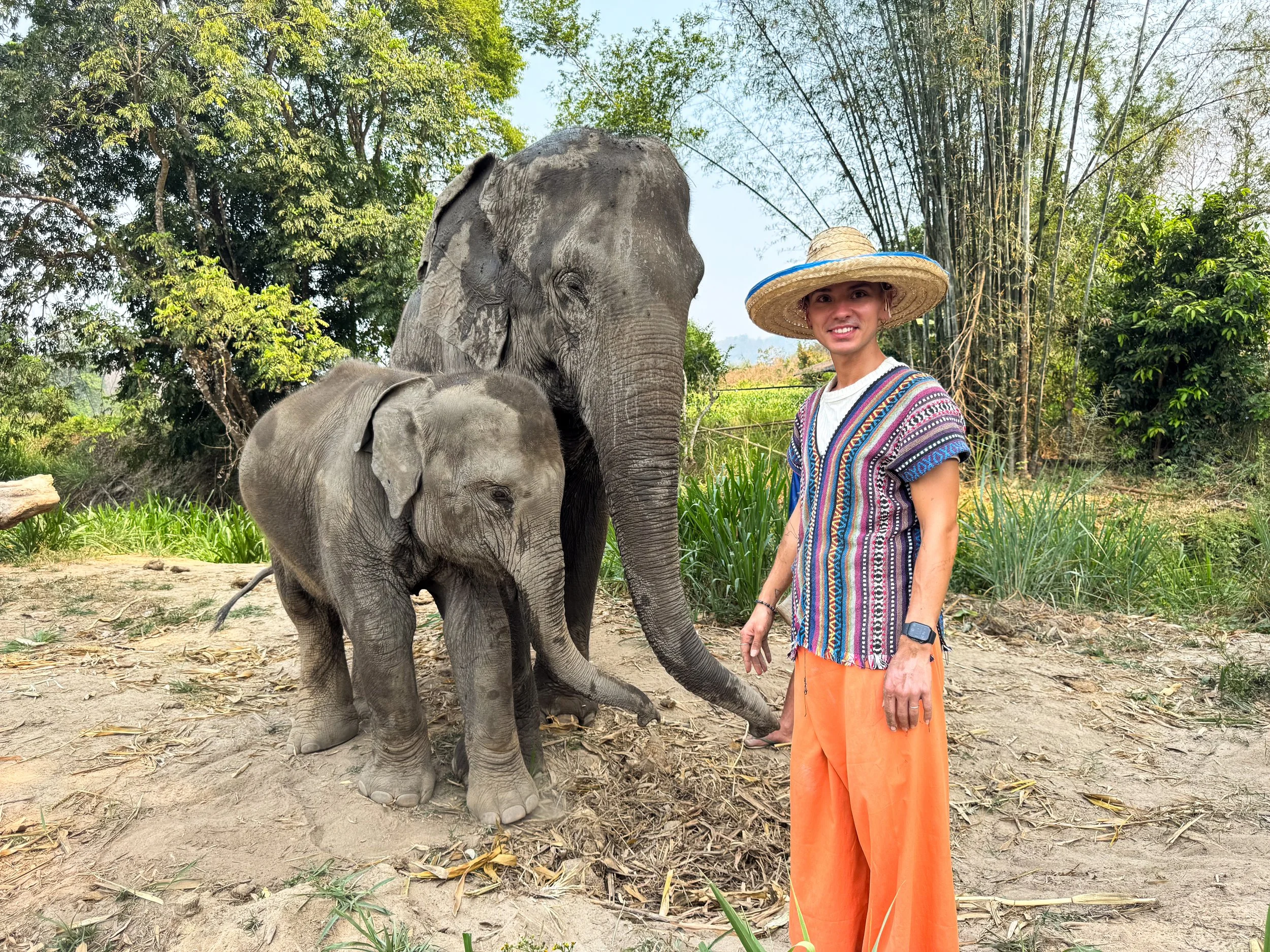
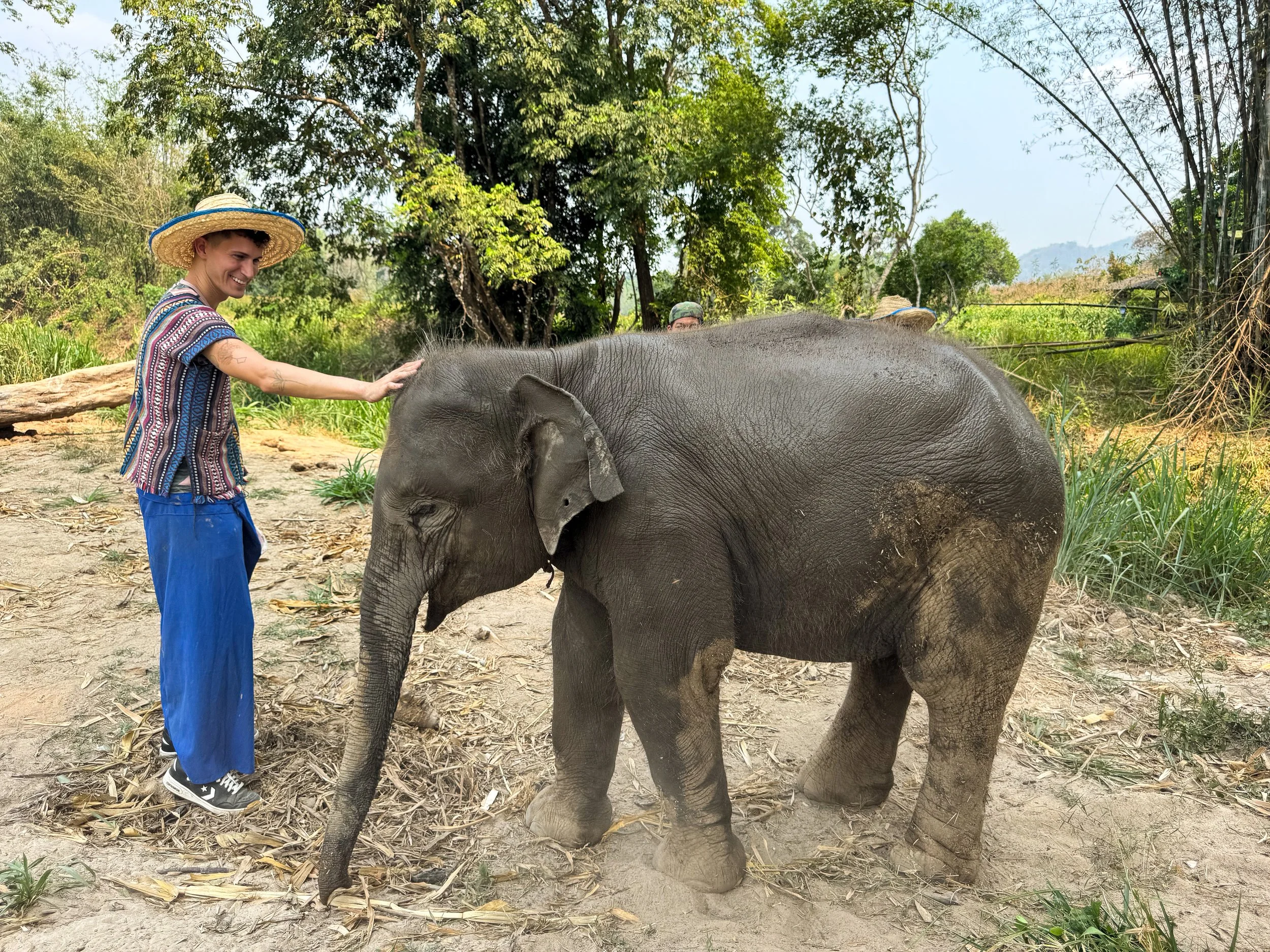
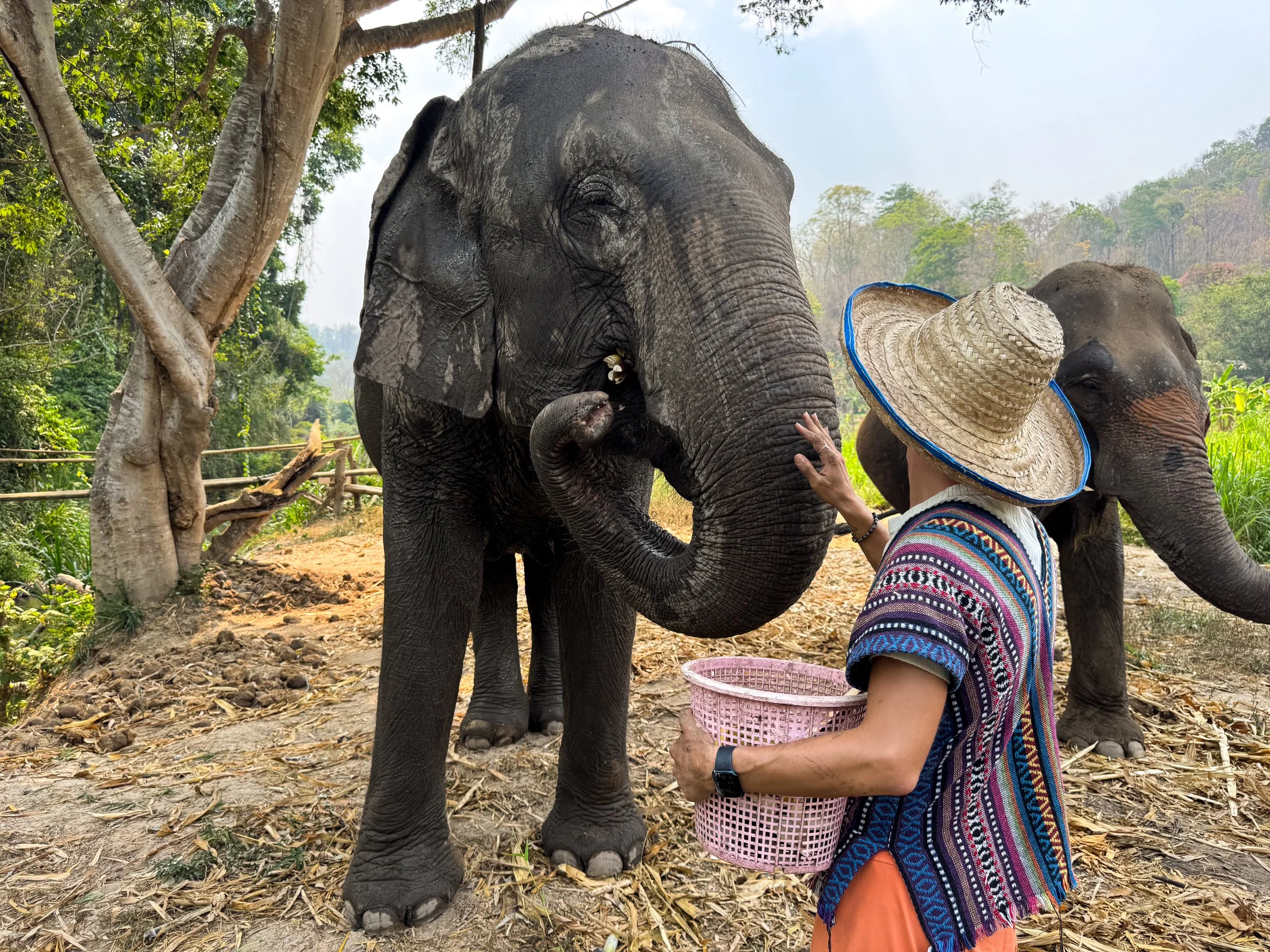
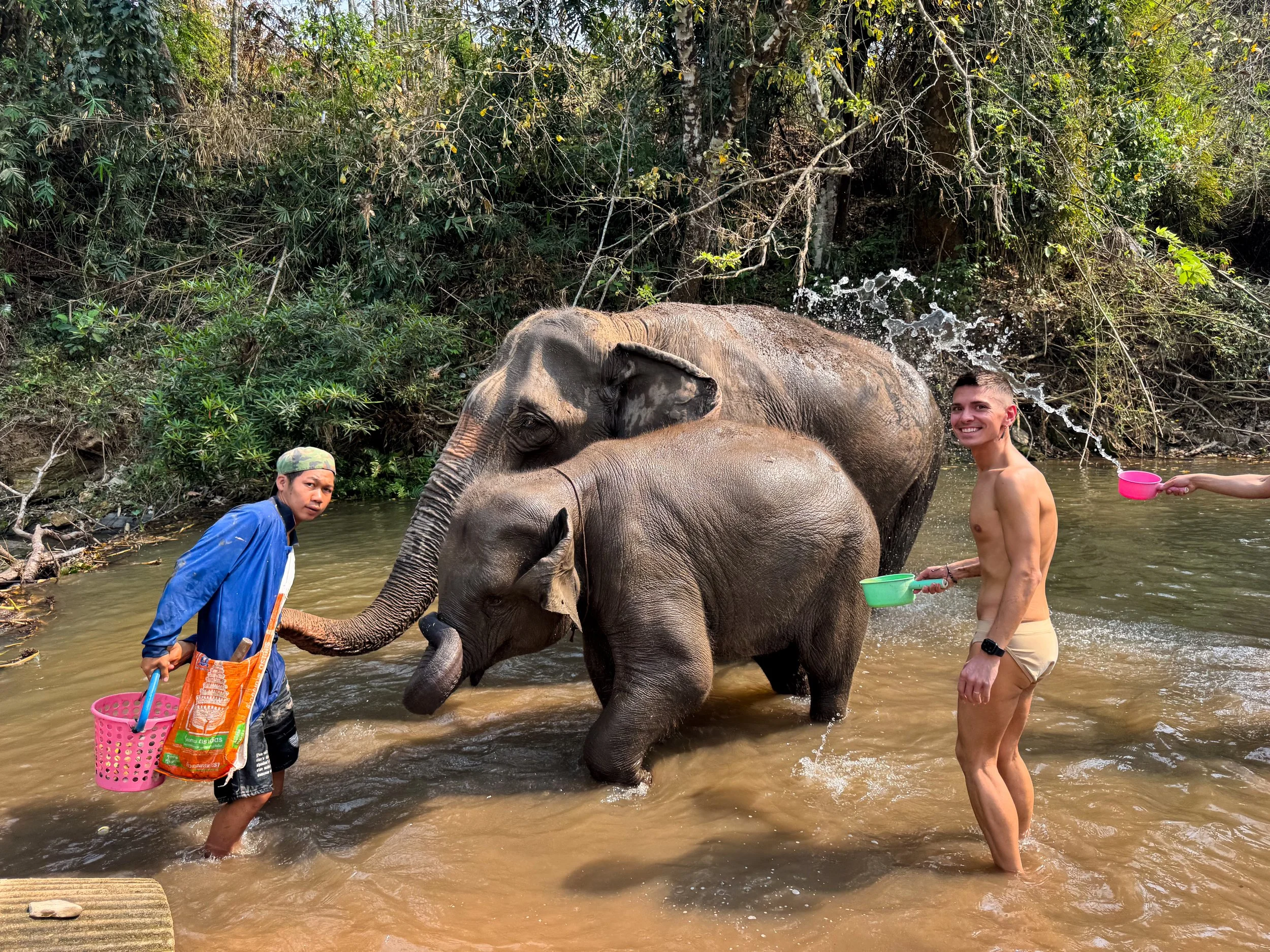
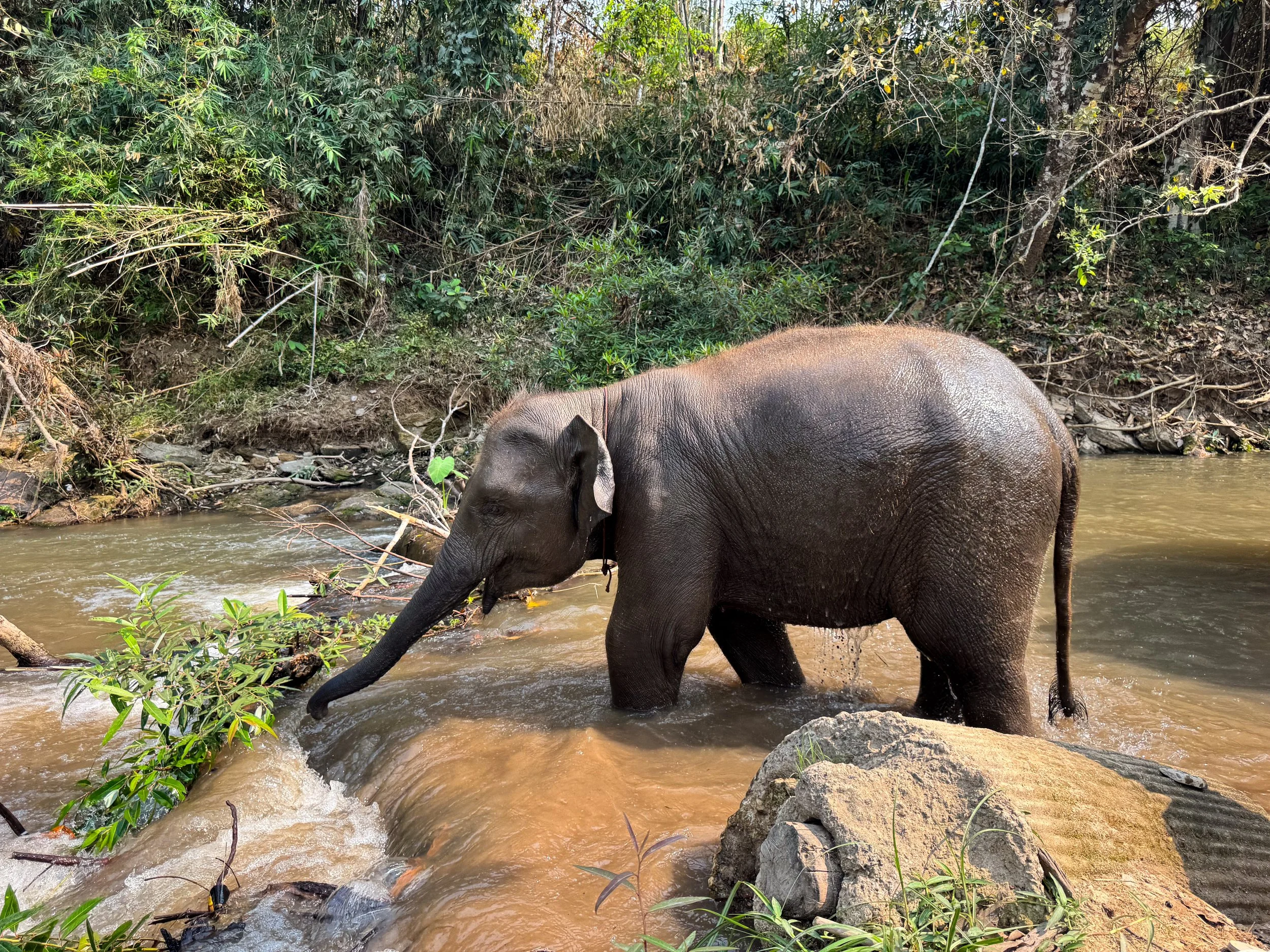
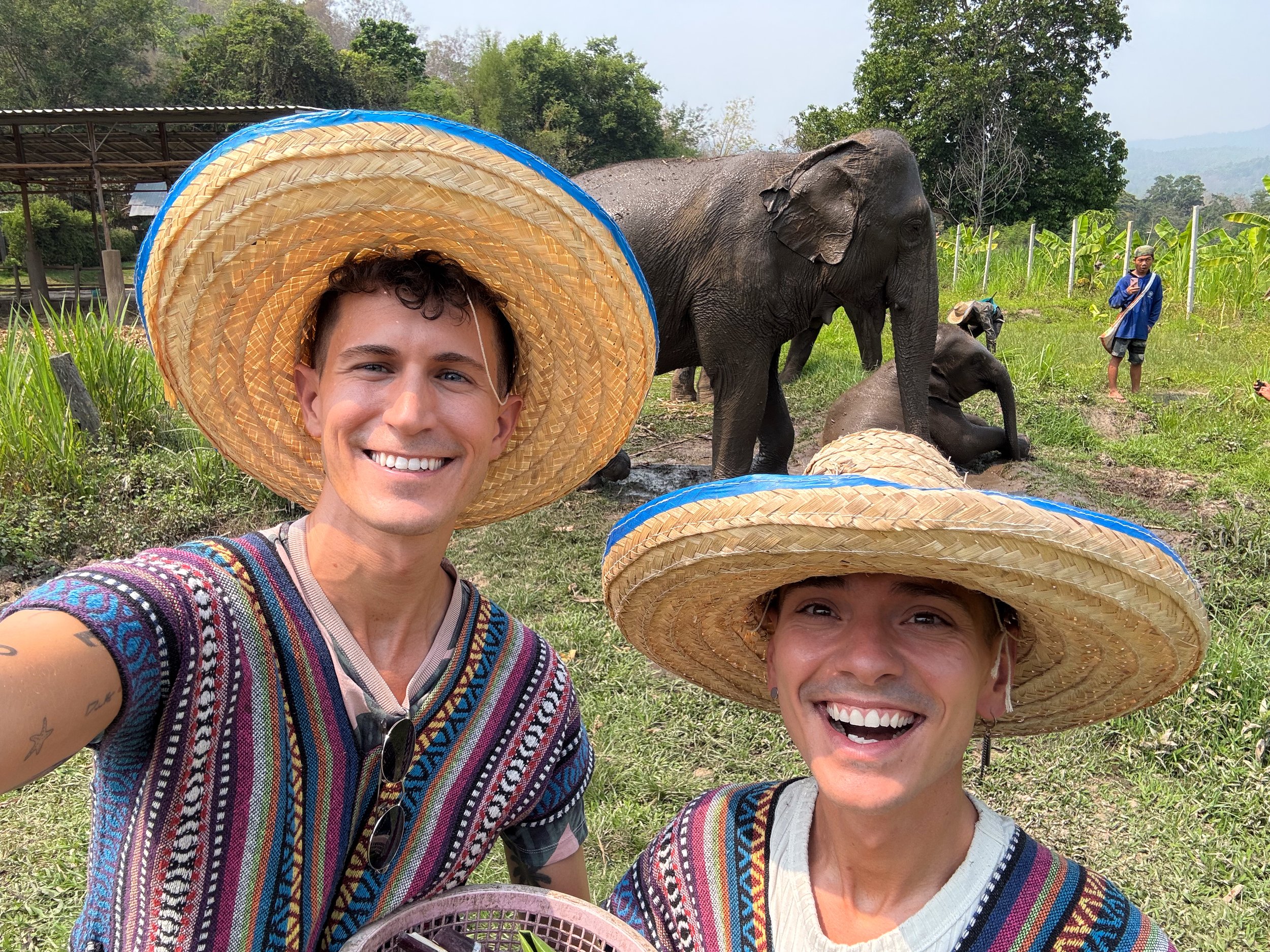
Chiang Mai Elephant Home. A sanctuary home to rescued and juvenile elephants. The property features farmed grasslands, bamboo, and banana trees where the elephants are given time to graze and wander. They cool down in a passing river and cover themselves in mud pools to protect themselves from the sun and insects. The elephants are well treated and supervised by mahouts who manage their care. When given time to rest, they are kept in shaded pavilions and continually fed. One of the most incredible sights was seeing the juvenile elephant breastfeed from its mother. We got to feed the elephants sugarcane and bananas, walk alongside them, and bathe them in the river. It was a memorable experience getting to interact with these gentile giants and their playful juvenile. Book Online or at their Office in person.
Ethical Elephant Sanctuaries. When visiting an elephant sanctuary, there are a few ethical considerations to keep in mind depending on your own views and personal levels of comfort.
Ethical sanctuaries are places that take care of elephants, educate visitors about their conservation, don’t cause them harm or profit from their captivity.
Avoid fake “sanctuaries” that offer elephant riding.
Most sanctuaries rescue former riding and work elephants, providing them with a better life than they had before. They’re often domesticated and still respond to trained phrases.
The unfortunate truth is that most elephants are likely chained up when visitors are not around to prevent them from escaping.
There are few wild elephants remaining in Thailand due to human conflict and loss of their natural habitat.
The most ethical sanctuaries minimize human contact by only allowing observation.
Places to Eat & Drink
Vegan Society Restaurant. A vegan restaurant in a historic wooden house with an outdoor dining room. Their menu offers Thai dishes like green, red and massaman curries, pad see ew, khao soi, tom yum tofu and mango sticky rice.
Single Origin Store. A coffee shop nearby Tha Phae Gate specializing in high quality coffee beans grown and roasted in Thailand.
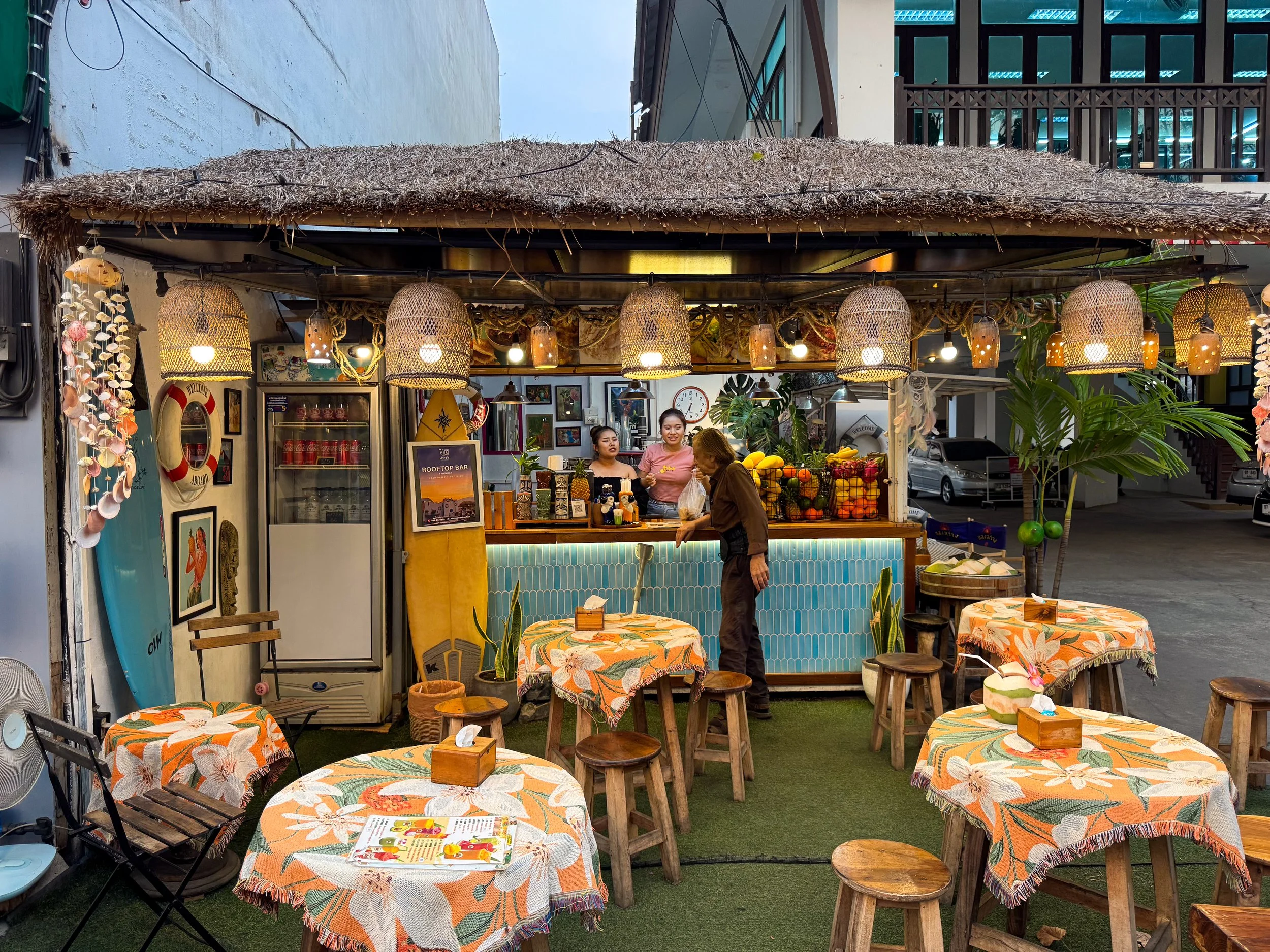
Nophaburi Bar Thai Cocktail. A hole in the wall cocktail bar with a funky atmosphere and one of a kind drinks. Their cocktails are made with 100 percent Thai spirits, primarily rums and gins, mixed with unique and local ingredients. The menu is sectioned by flavor profiles like spirit forward, fruity and complex and sweet and sour. Try the Manop for something spiced and strong or the La Moon for something fruity and tropical.
Hardcocktail Bar. An open air bar with inexpensive drinks including classic and signature cocktails. It’s a popular spot with locals, expats and backpackers. Like many first time patrons, we were lured in by the suggestive name. Try the boozy Long Island or Made in Chiang Mai.
Lost Hut Cocktail Bar. A small tiki style dive bar tucked into a corner of the Old City. Come here for their daily 5-9pm happy hour with 100 Baht mai tais, mojitos and margaritas.
Thai Cuisine
From regional dishes, to street food and classic meals, Chiang Mai is one of the best places to enjoy Thai cuisine.
Khao Soi. A popular egg noodle soup made with coconut broth and flavored with warm spices, Thai chilis, fish sauce and shallots. It originates from Chiang Mai is and seen on menus across the city.
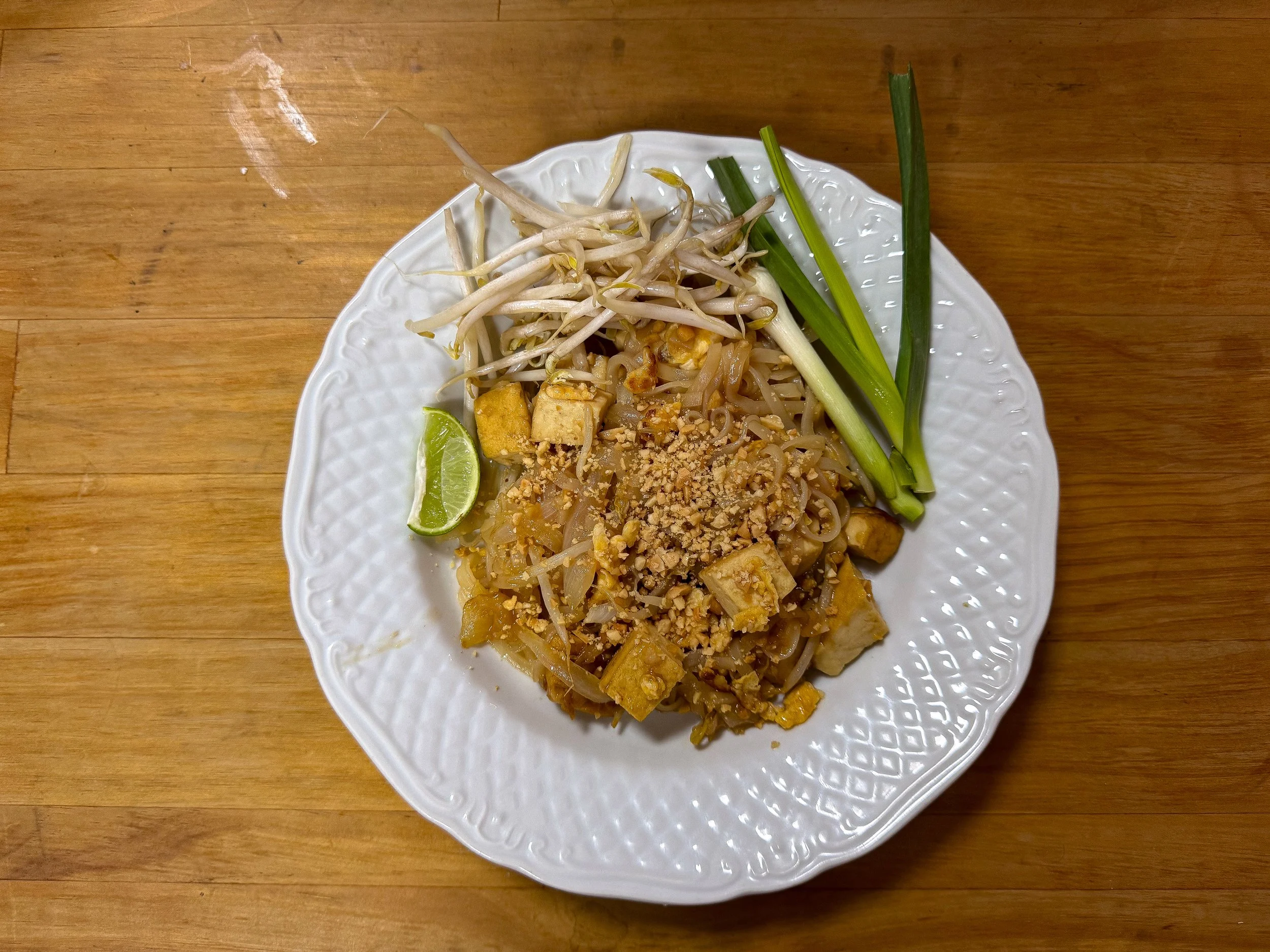
Pad Thai. A world renowned rice noodle dish famed for its tangy and sweet sauce paired with peanuts, scallions, bean sprouts and chili peppers.
Pad See Ew. A noodle dish with similar flavor profiles as Pad Thai but made with wide rice noodles.
Thai Curry. A combination of red, green and yellow curries made with a range of hot and savory spices, coconut milk and rice noodles.
Tom Yum Goong Nam Kon. A flavorful spicy and sour Thai soup made with lime juice, lemon grass, galangal root, kaffir lime leaves and evaporated milk. It’s often paired with shrimp or prawns.
Spring Rolls. Crispy and flaky rolled or deep fried dough filled with veggies and herbs typically served with a sweet and spicy sauce.
Pineapple Fried Rice. Stir-fried rice cooked with diced pineapple, umami forward sauces and a choice of protein like tofu, chicken or pork.
Mango Sticky Rice. A simple and delicious staple of Thai cuisine made from sticky rice paired with freshly sliced mango. The rice is often flavored with sweetened condensed milk or a herbal syrup.
Rolled Ice Cream (Thai Ice Cream). Cream poured over a chilled surface and aggressively mixed together with toppings, thinly spread and scraped up into small rolls of ice cream.
Thai Iced Tea. A classic Thai beverage made from brewed black tea and mixed with milk and sugar. It’s often flavored with star anise and cardamom. Try it with boba pearls.
Chang Beer. A national beer, popular across the country. It’s recognizable by two elephants on its label.
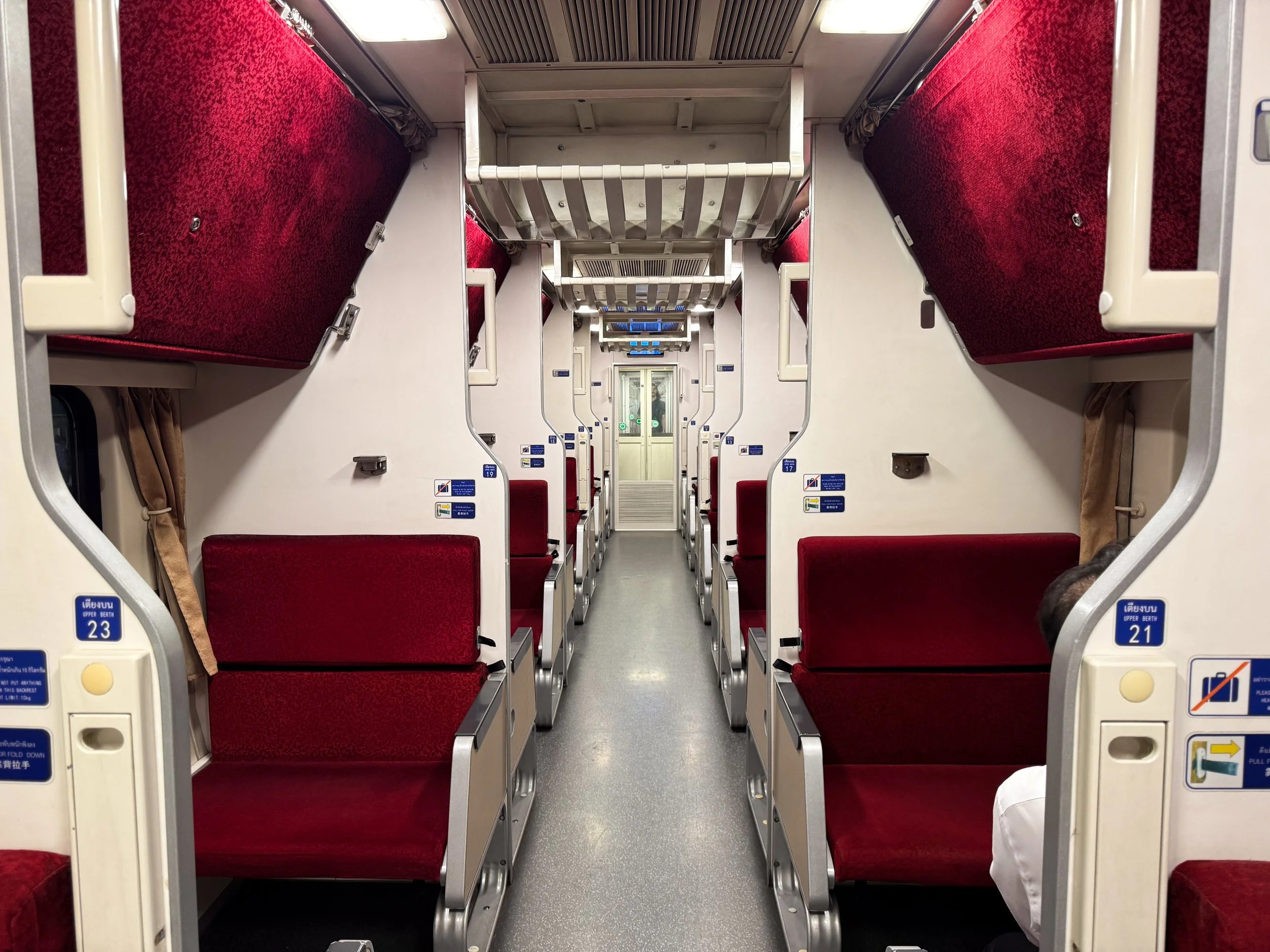
Getting to Chiang Mai
The Overnight Train. The best way to reach Chiang Mai from Bangkok is on the overnight train. We booked second class seats that folded down into bunk beds. They were plenty spacious to store our luggage, comfortable for a full night’s rest, privately curtained off and clean with fresh sheets and pillows. Each car has 38 seats/beds, its own restroom and large windows overlooking the landscape. A cook offers dinner and breakfast service. We ordered fruit, coffee, rice soup and spring rolls for the following morning.
We booked our tickets online about two weeks in advance with the State Railway of Thailand departing from Krung Thep Aphiwat Station in Bangkok and arriving at Chiang Mai Station 12 hours later.
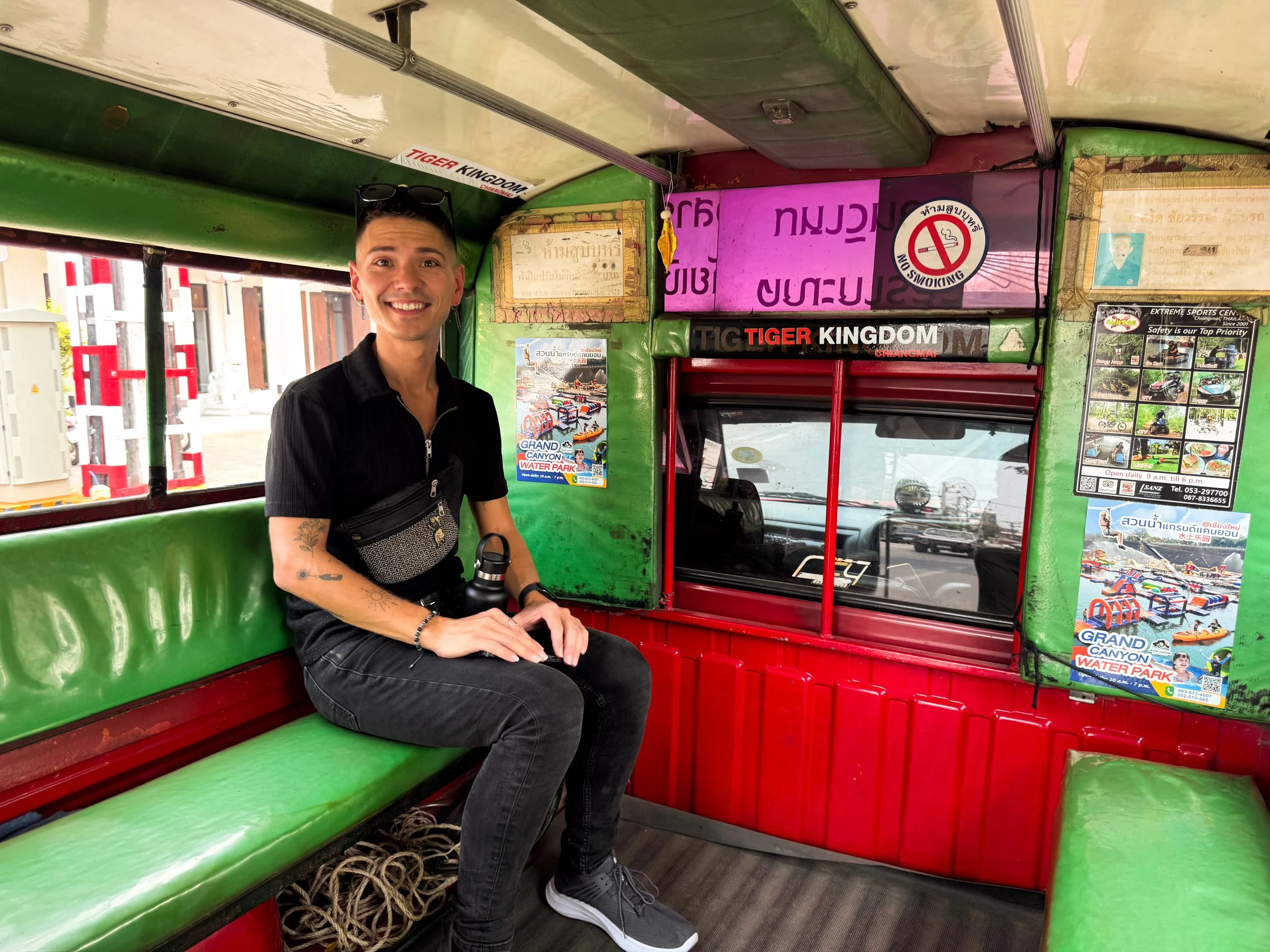
Getting Around
Songthaew. A red pickup truck with a covered back and two benches for passengers. They operate as shared and private taxis, bringing locals and tourists around Chiang Mai and to farther-away destinations. They're inexpensive, with fares costing 30–40 Baht per person to get around the city. The cost for farther-away destinations varies; however, it's cheaper per person depending on the number of passengers. They're easy to find, typically waiting near the Old City gates but able to be flagged down anywhere on the street.
Getting to Wat Phra That Doi Suthep. Songthaews cost 500 Baht roundtrip for two people from the Old City. The trip takes 45min one way. The driver will wait for 1h while you visit.
Getting to Buatong Waterfall. Songthaews cost Baht Bhat roundtrip for two people from the Old City. The trip takes 1h 15min one way. The driver will wait for 1h 30min while you visit.
On Foot. The Old City and surrounding neighborhoods are easily walkable. Getting around on foot is one of the best ways to explore Chiang Mai and find hidden sights.
By Grab. Grab is a taxi hailing app used across South East Asia. It’s a good way to get around with luggage both to and from the train station or airport.
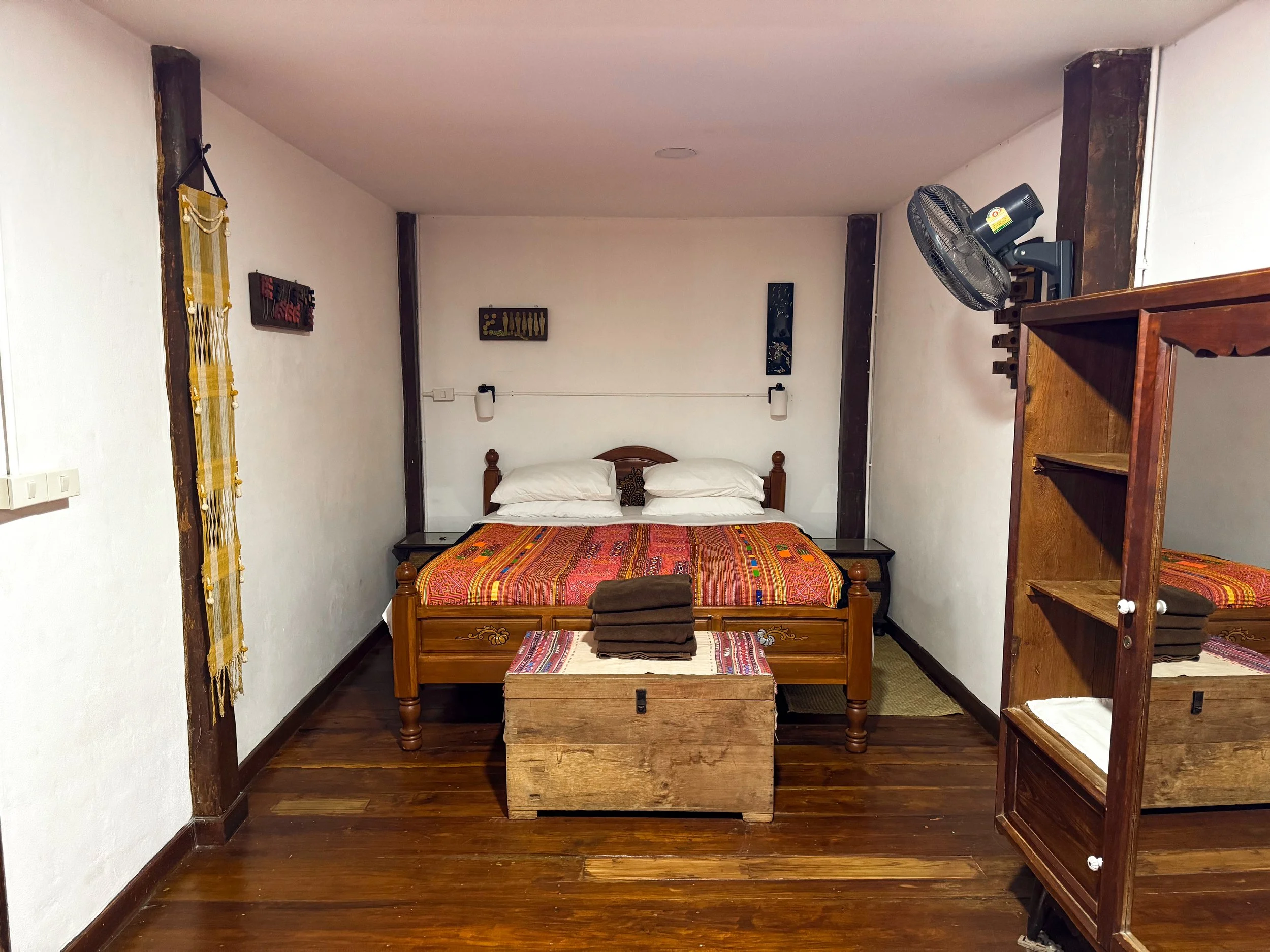
Where to Stay
We stayed at a beautiful studio in the Old City. It had a spacious interior with its own kitchen, living area and a shared outdoor patio. It was the perfect spot to explore the narrow and winding streets, discover cafés, restaurants and cocktail bars, visit the night markets and nearby wats. Book on Airbnb.
Location Specifics
Dress Modestly. Visitors are asked to cover the legs and shoulders when visiting most religious sights. If wearing shorts, it’s smart to carry a sarong.
Footwear. It’s generally expected that one removes one’s footwear before entering a Buddhist sight, house or public restroom. Typically slippers are provided for the latter.
Men Only Sights. Some wats like the Silver Pagoda and Inthakhin Pillar Vihara do not allow women inside.
Language. Thai is the national language of Thailand, however most people know and speak some English.
Cash Payments. Cash is the primary method of making payments. Very few places accept credit or debit cards.
Drinking Water. The tap water is generally not safe for consumption. It’s best to boil it first or drink filtered water.
Traffic. People drive on the left side of the road in Thailand. Make sure to look both ways when crossing streets.
Public Smoking & Drinking. It’s illegal to smoke or drink in most public spaces in Chiang Mai. Signs warning of steep fines and imprisonment remind visitors to obey this law.
Safety. Like most places in Thailand and South East Asia, Chiang Mai is a very safe destination to visit with little crime. Occasional signs at sites will warn visitors of pick-pocketers.
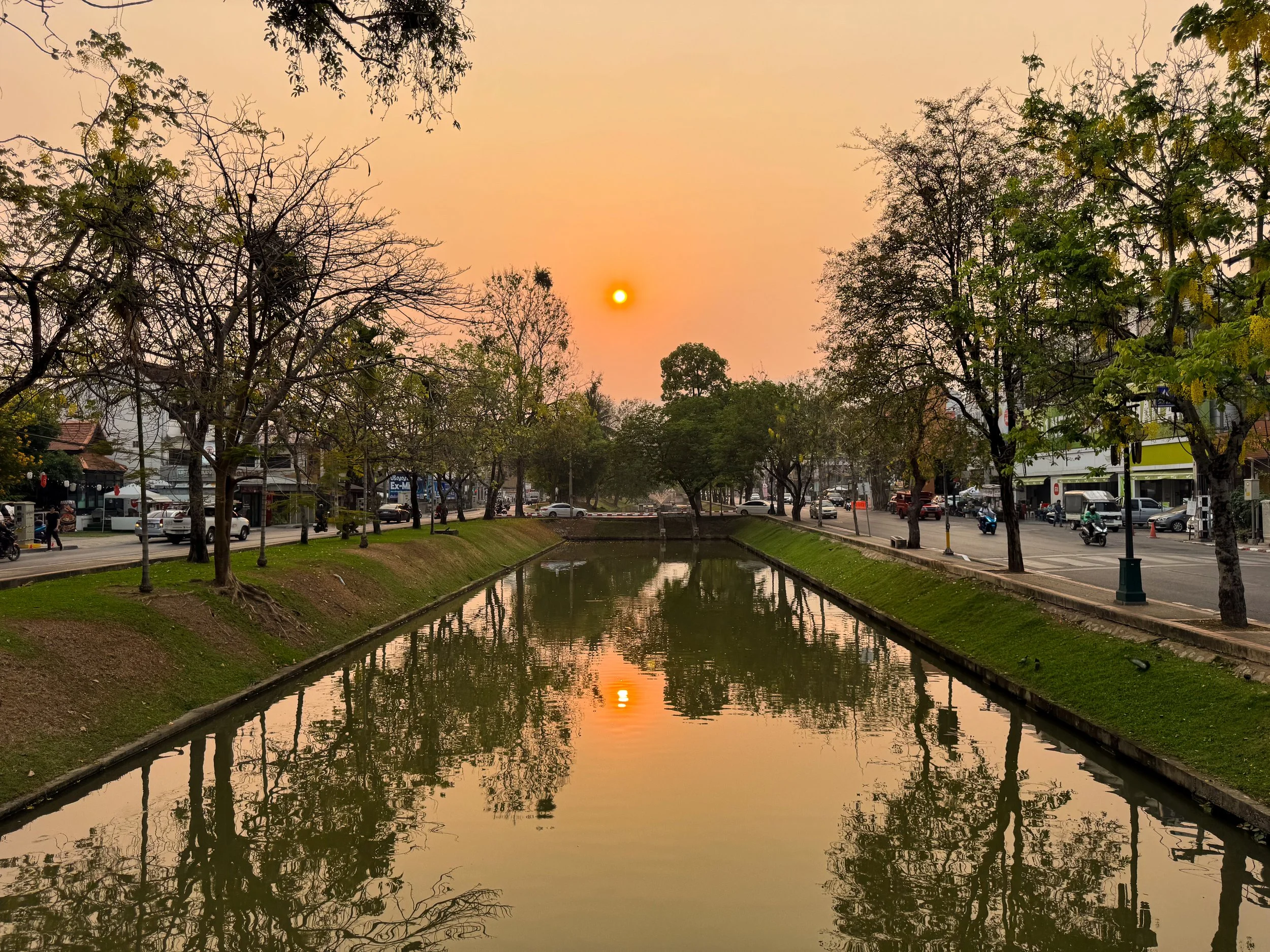
Fire & Smoke Season
From March through April, northern Thailand suffers extreme heat and dry weather. A mixture of forest fires and slash and burn farming inundates the region in a thick haze of smoke, often reaching very unhealthy and hazardous levels. As a preventative measure, the state closes access to many national parks, campgrounds, hiking trails and waterfalls. We continually tracked the air quality on IQ Air, minimizing our exposure when possible.
Elsewhere in Thailand
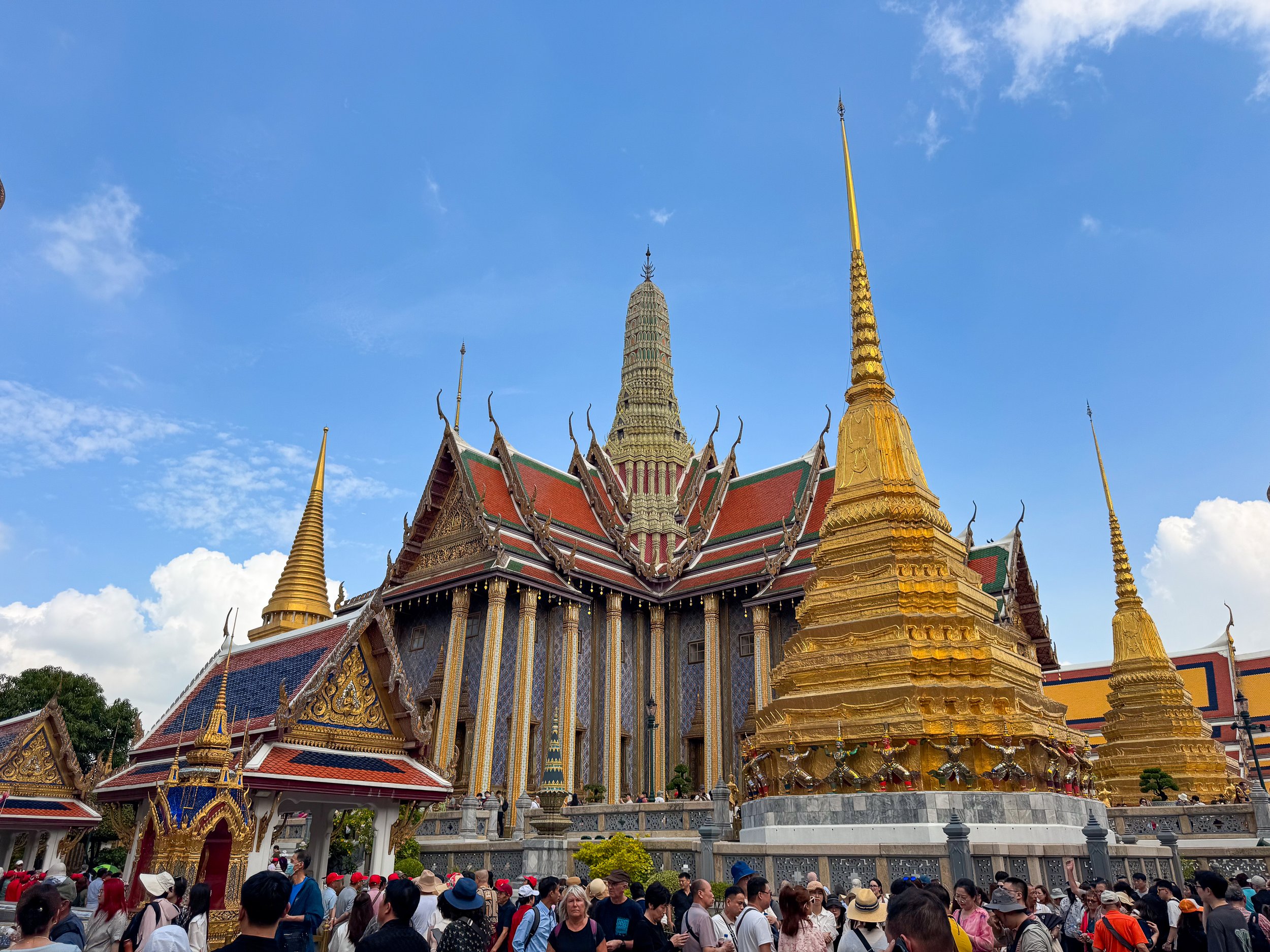
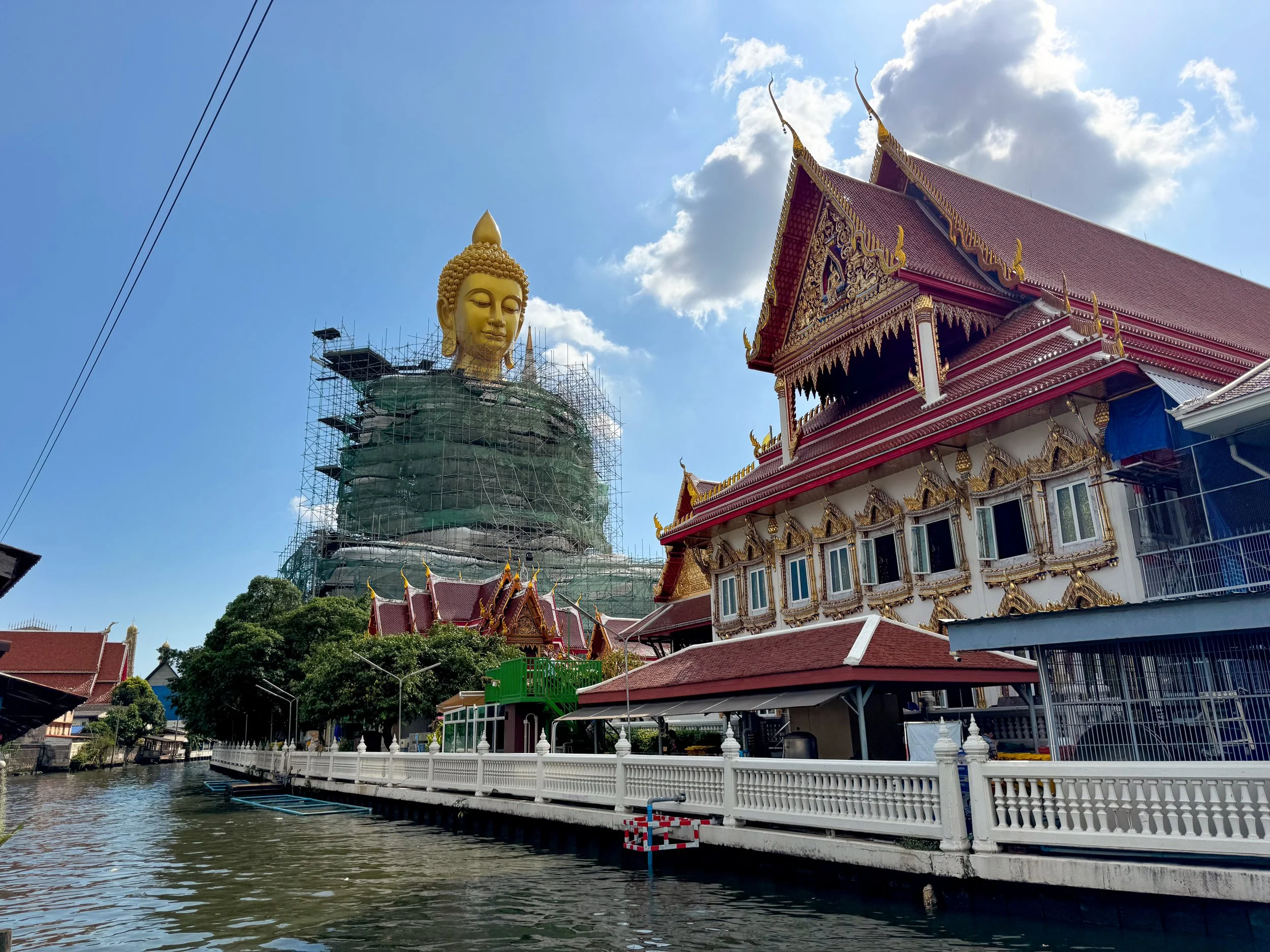
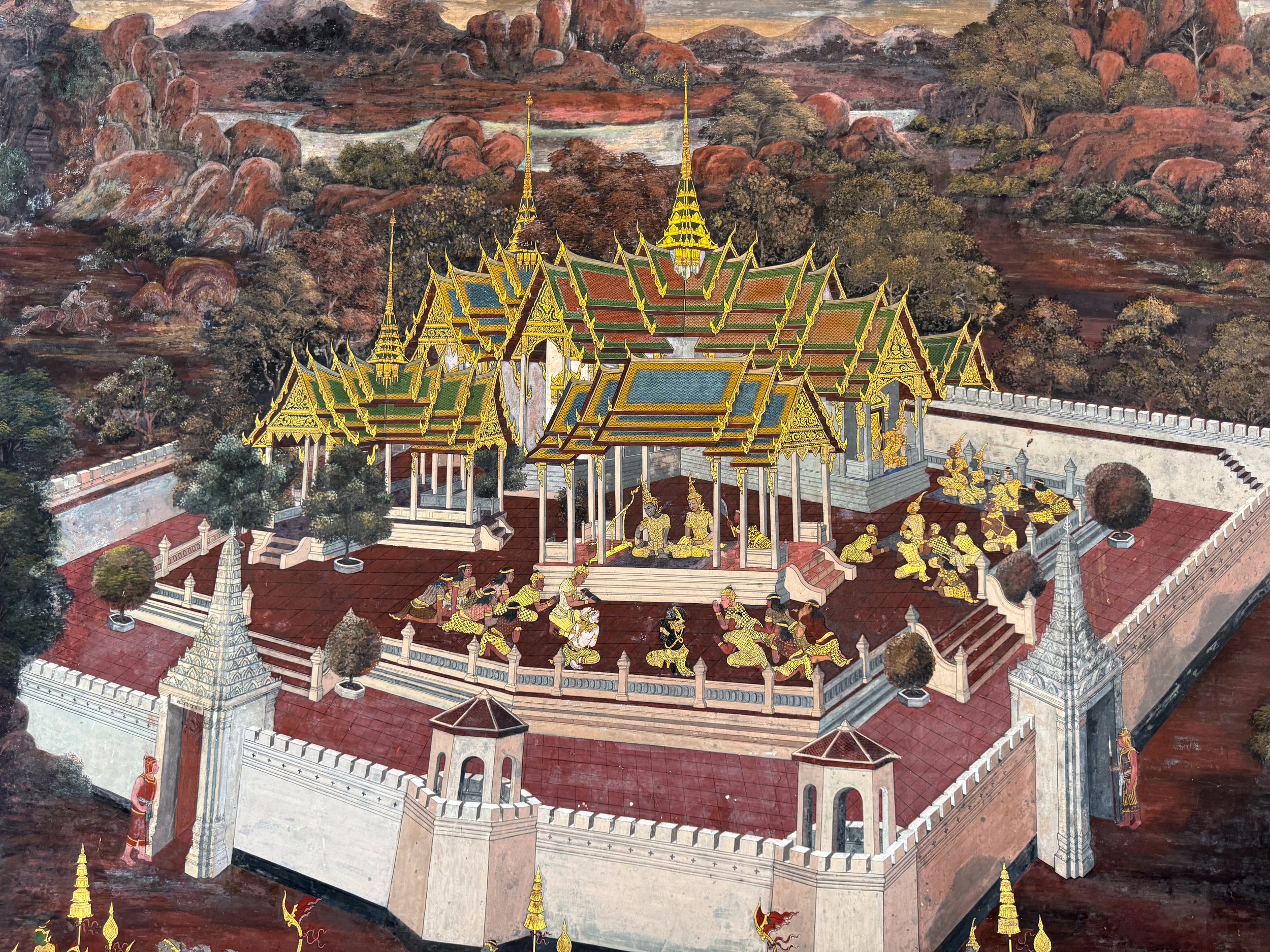
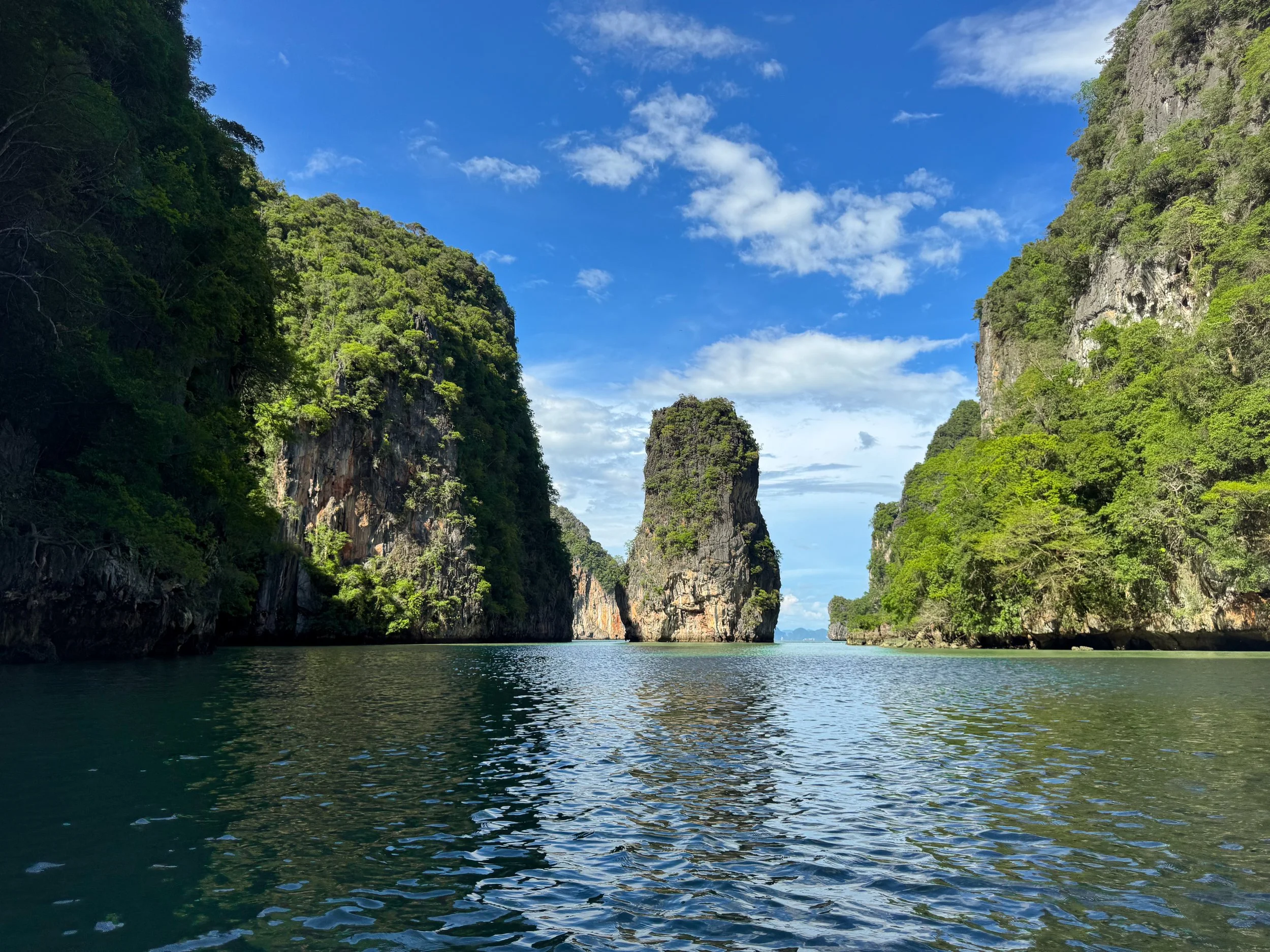
From Chiang Mai's temples and night markets to Bangkok's urban energy, Phuket's island escapes and Krabi's limestone landscapes, discover more of Thailand through these travel guides:
Bangkok Travel Guide: Temples, Street Food & Thai Culture. Immerse yourself in Bangkok where gilded temples, the Royal Palace, lively night markets and legendary street food reflect Thailand's dynamic blend of tradition and modernity.
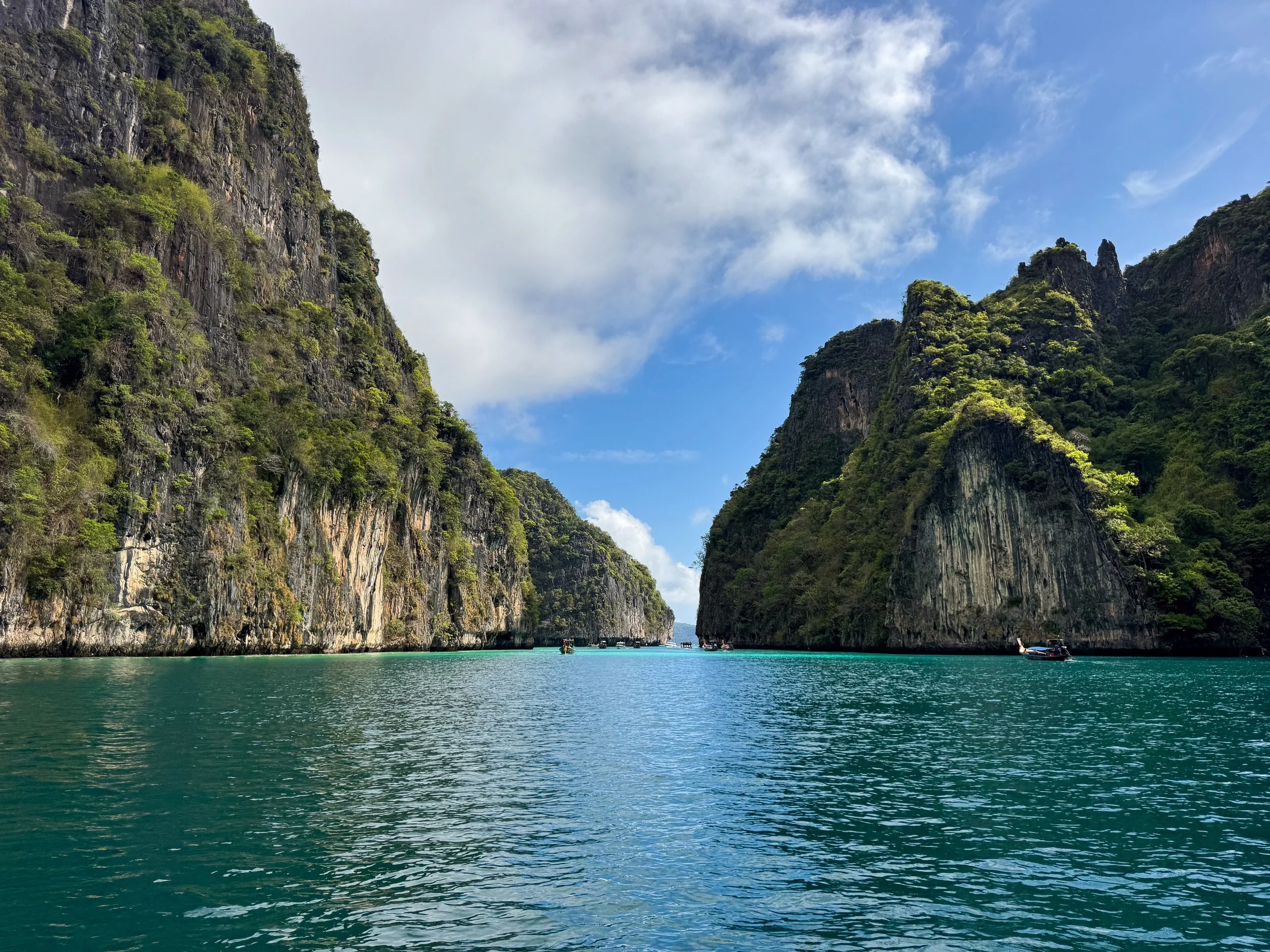
Phuket Travel Guide: Beaches, Island Hopping & Thai Culture. Escape to Phuket where sandy beaches, turquoise bays, limestone islands, a colorful Old Town & island hopping adventures blend Thai culture with coastal exploration.
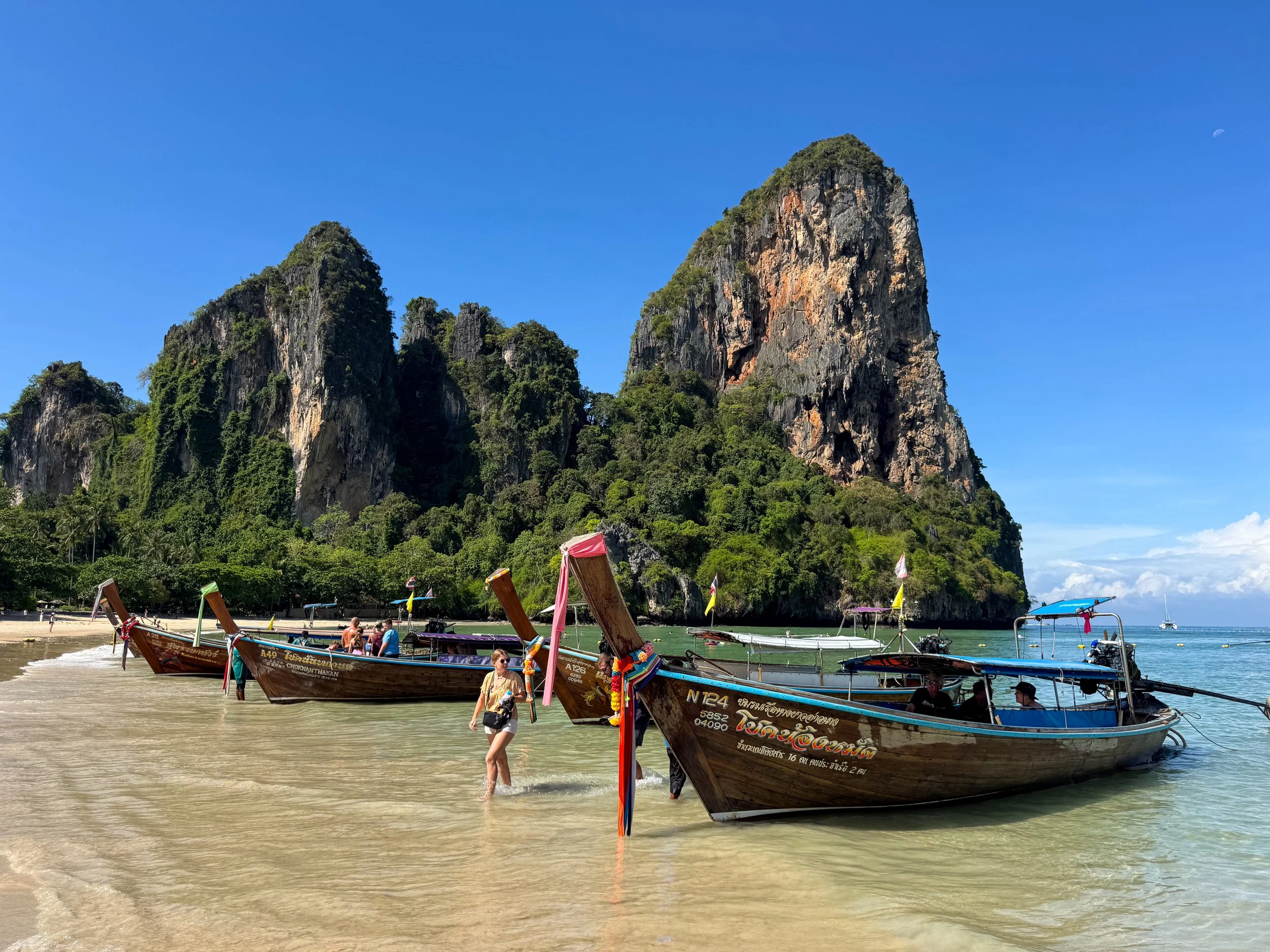
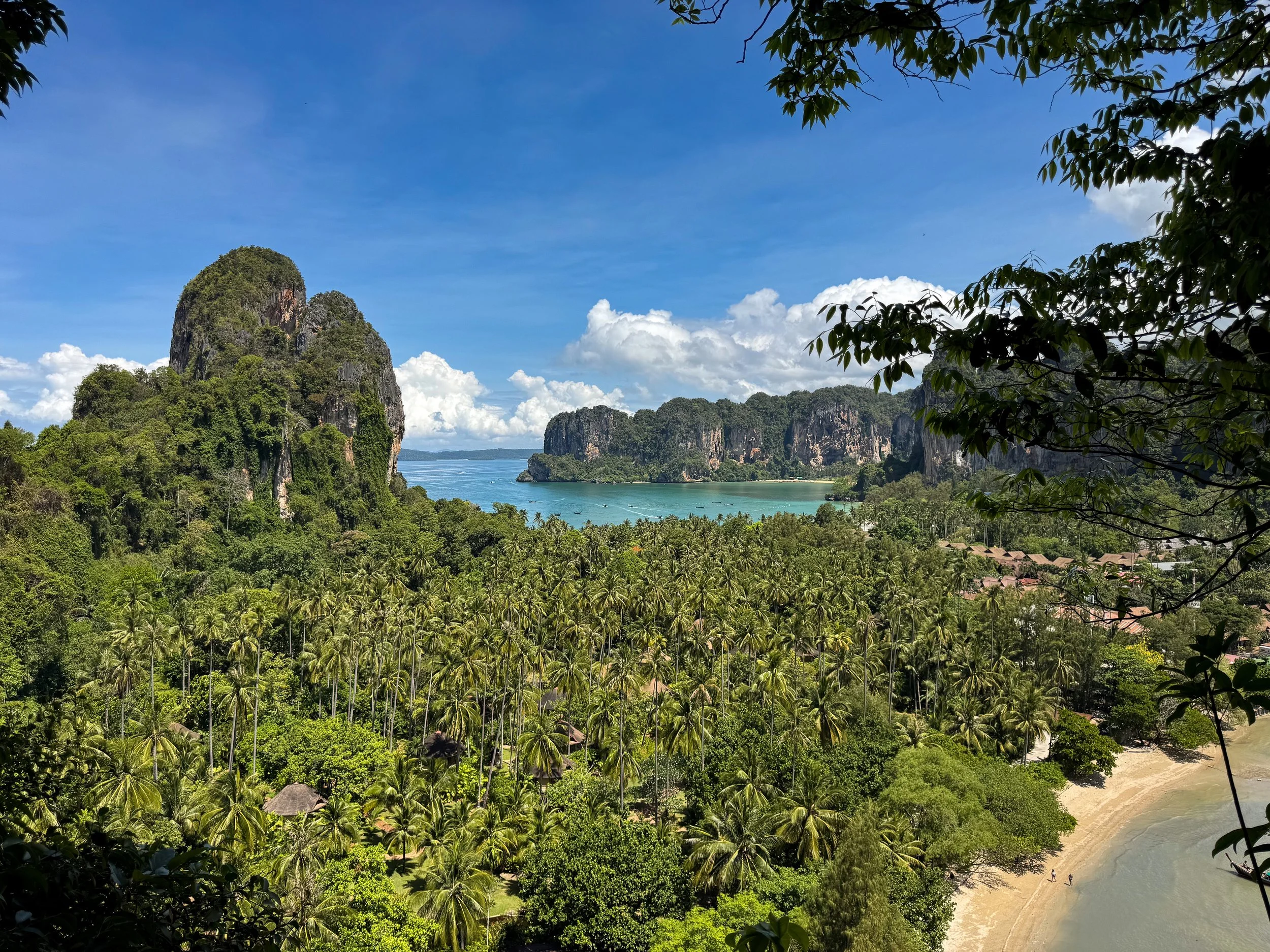
Krabi Travel Guide: Railay Beach, Limestone Cliffs & Tropical Adventure. Adventure through Krabi where Railay Beach, limestone cliffs, turquoise bays, white sand beaches and caves form one of Thailand's most dramatic coastal landscapes.
For Next Time…
Doi Suthep-Pui National Park. A mountainous national park with hiking trails, campgrounds and waterfalls just outside of Chiang Mai. We had planned to hike the 2 hour trail from Wat Phra That Doi Suthep to the Sai Yoi and Montha Than Waterfalls but were turned around. Most of the park was closed due to the extreme risk of wildfires.
Long Neck Village. On the border of Northern Thailand and Myanmar are villages where women are known to wear stacks of metal rings around their necks. The rings, added over time, elongate the wearer’s neck by lowering their rib cage. It’s a beauty practice that’s very specific to the women of this region.