Bangkok Travel Guide: Temples, Street Food & Thai Culture
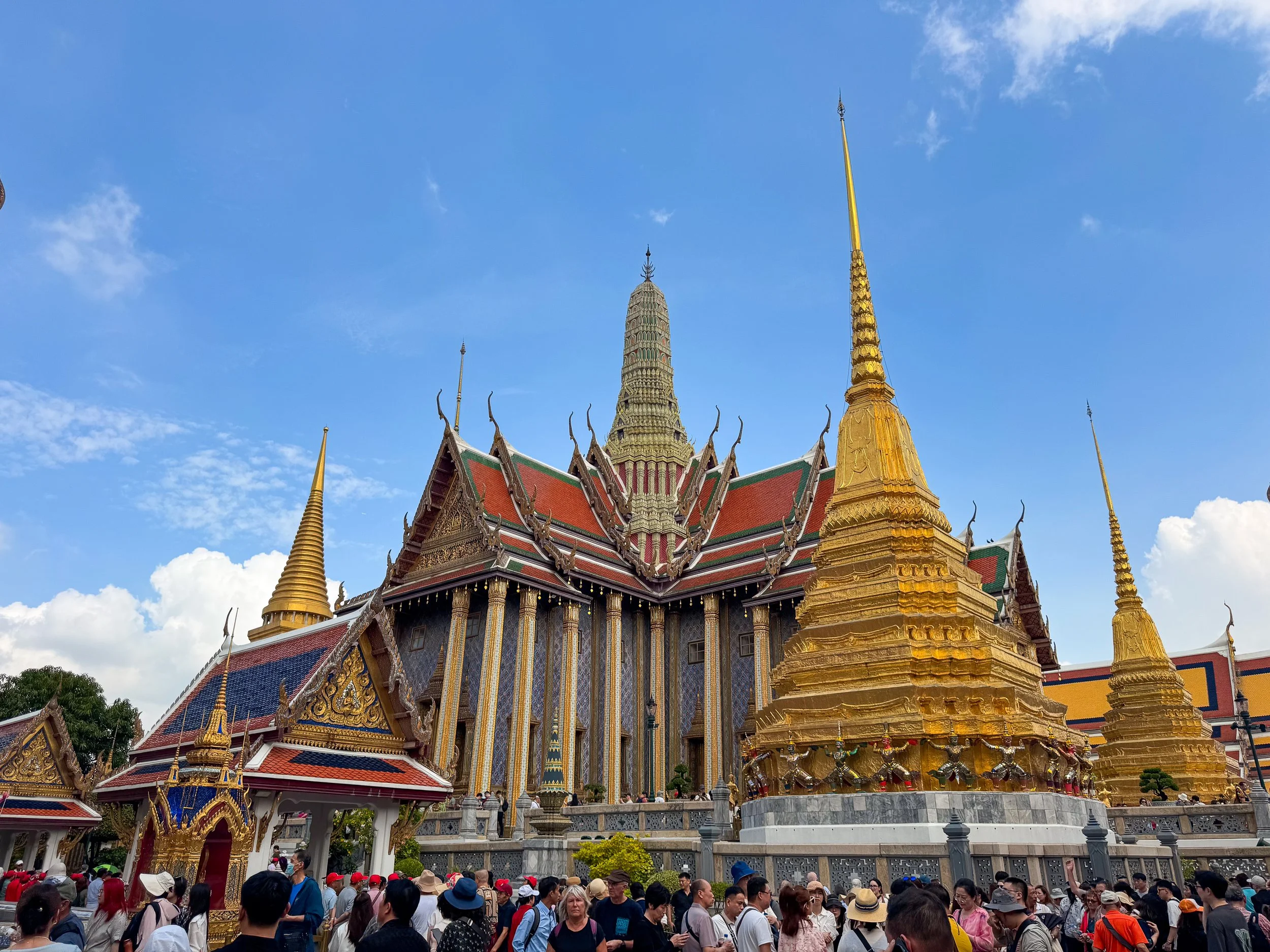
Bangkok, A Bustling Metropolis
Bangkok is a bustling metropolis at the heart of Thailand. It’s a place renowned for its street food scene, sprawling night markets and vibrant nightlife. Tuk tuks race through traffic past towering glass skyscrapers, ornate temples and historic wats. Gilded statues of giant buddhas watch over onlookers with a calming gaze. An opulent royal palace and historic museums house important aspects of Thai culture. The city is a branching off point for cultural sights in the north of the country and beaches in the south. We spent over a week here, exploring the impressive sights all across the city and outside of it, feasting on street food almost daily and ending our evenings sipping on flavorful drinks at cocktail bars.

Temples, Wats & Palaces
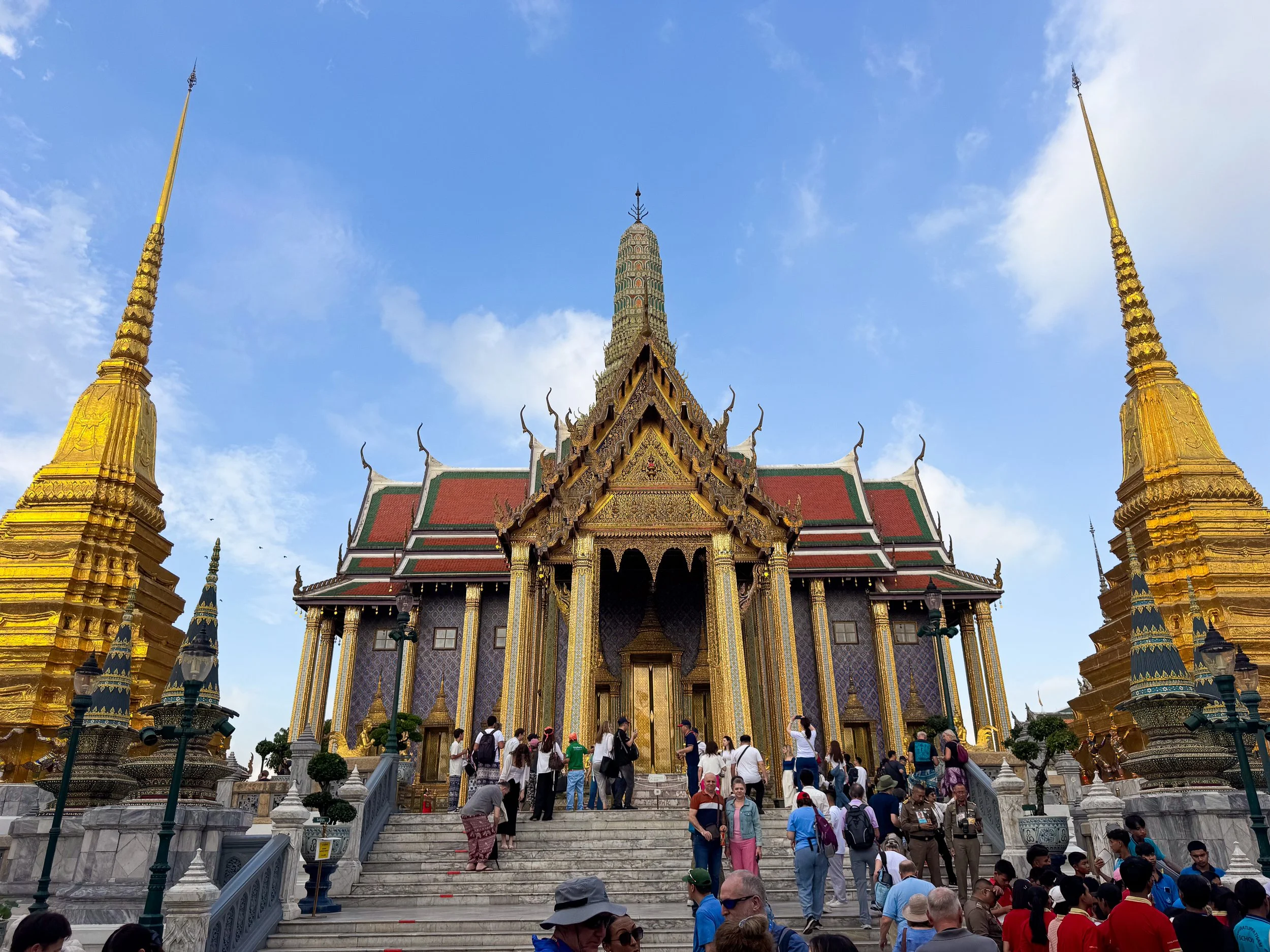
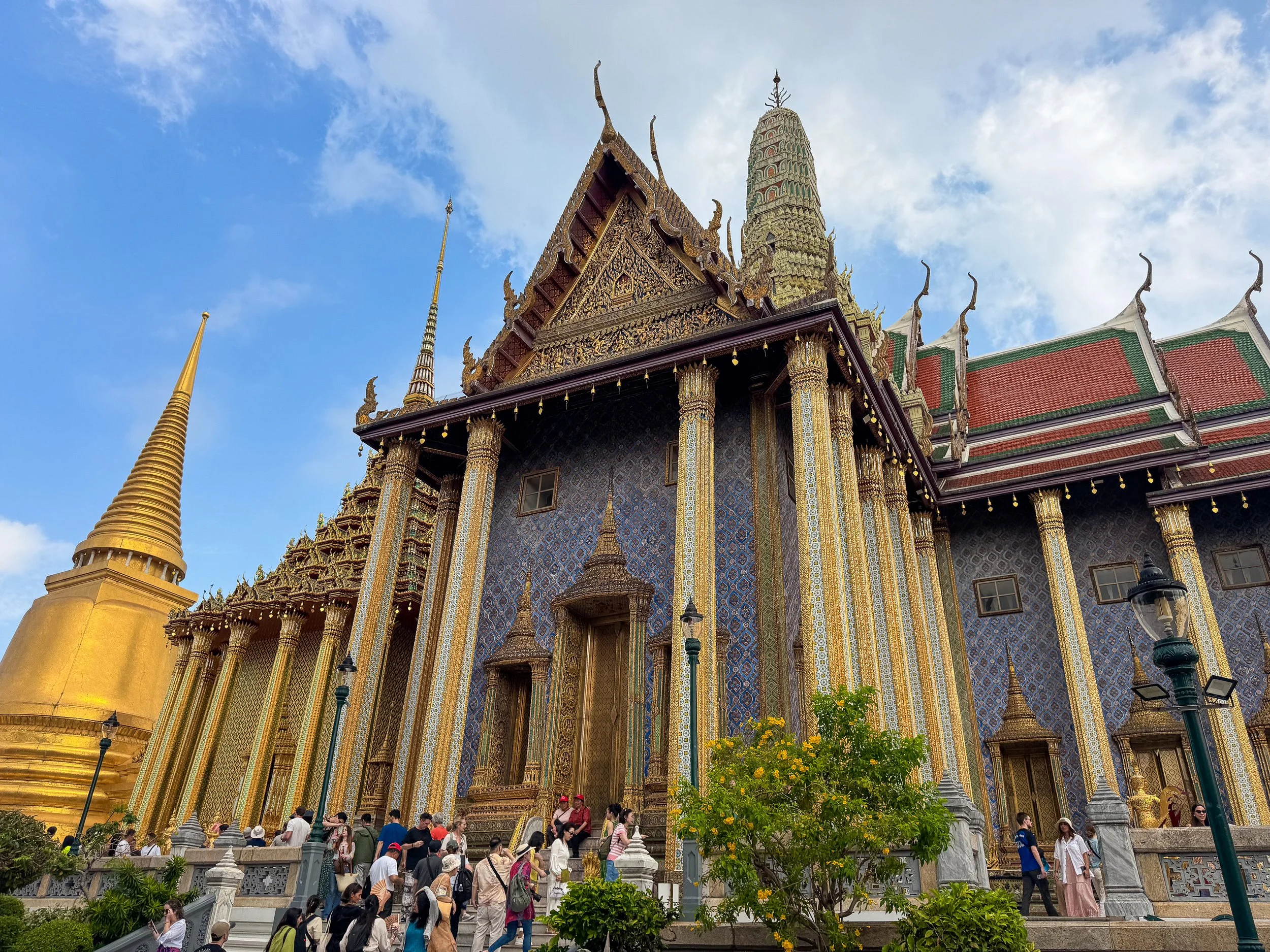
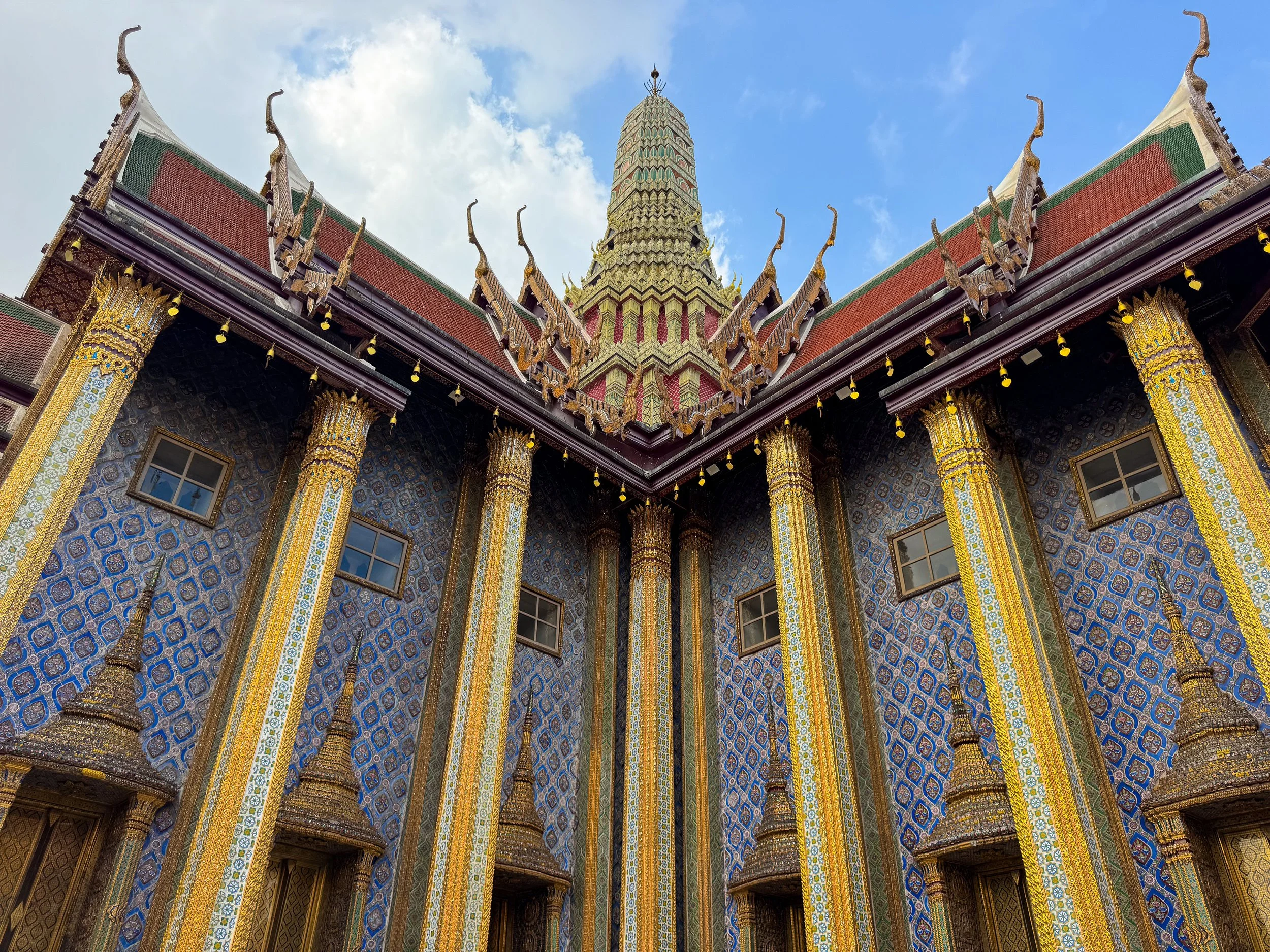
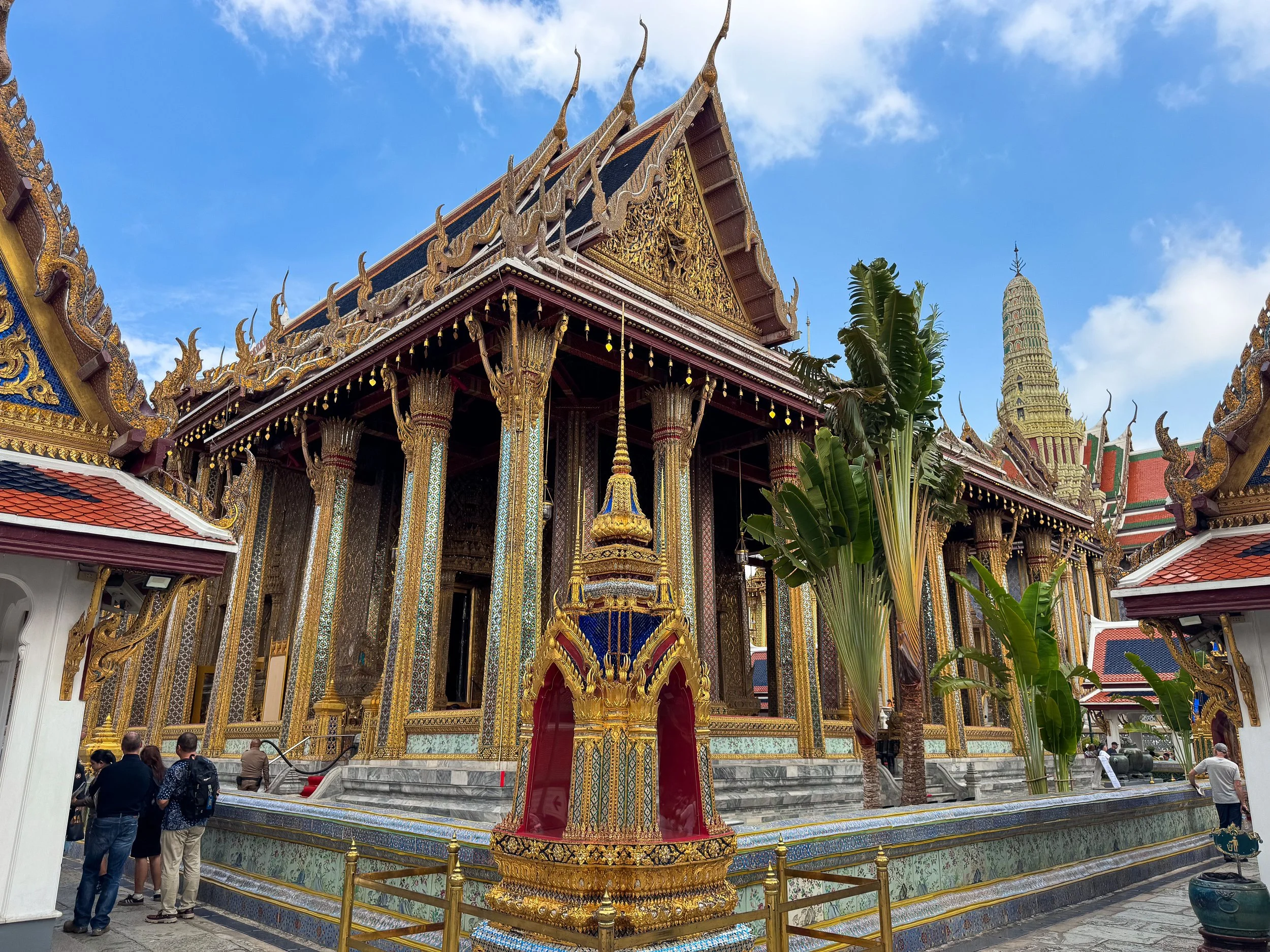
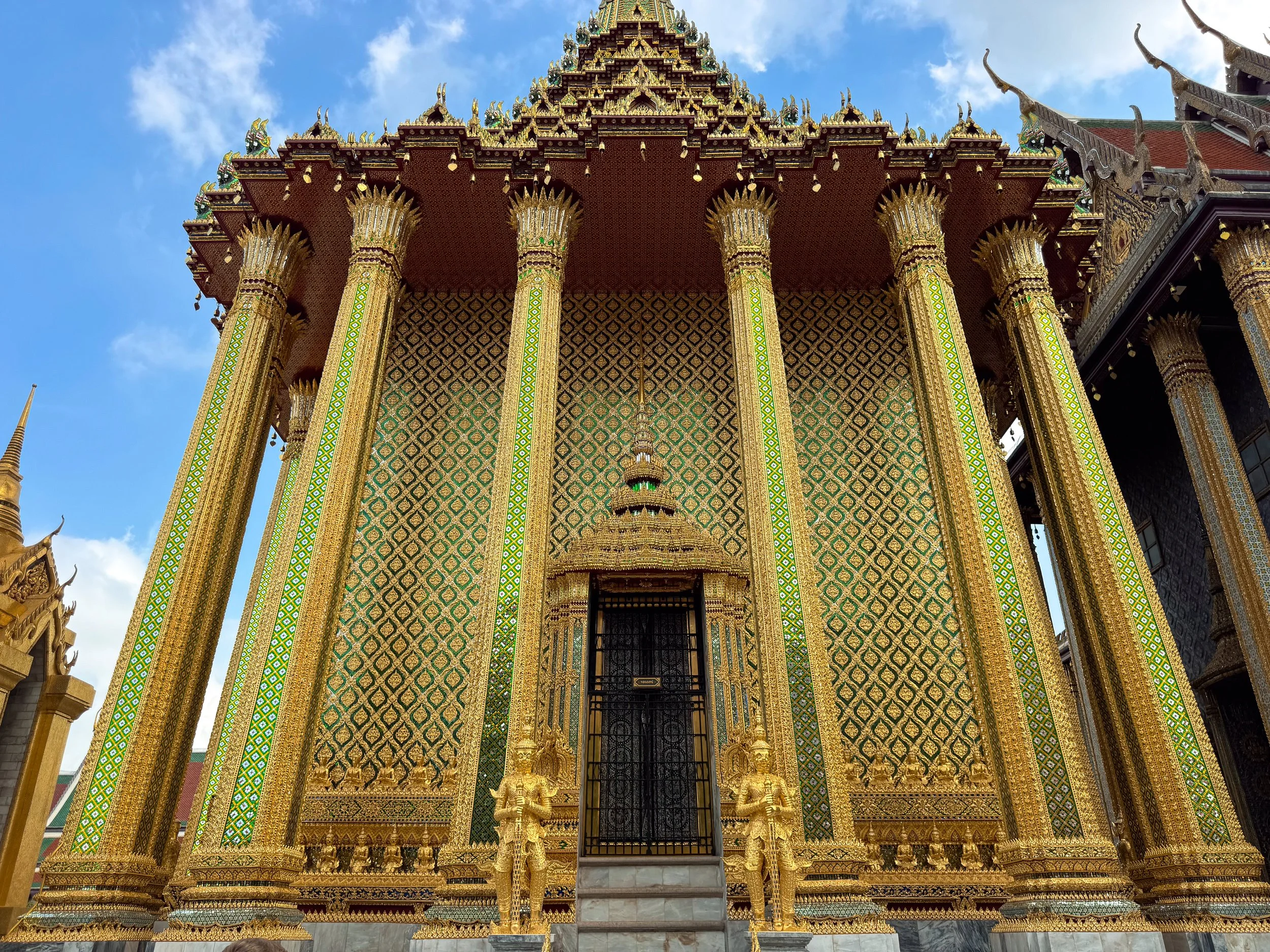
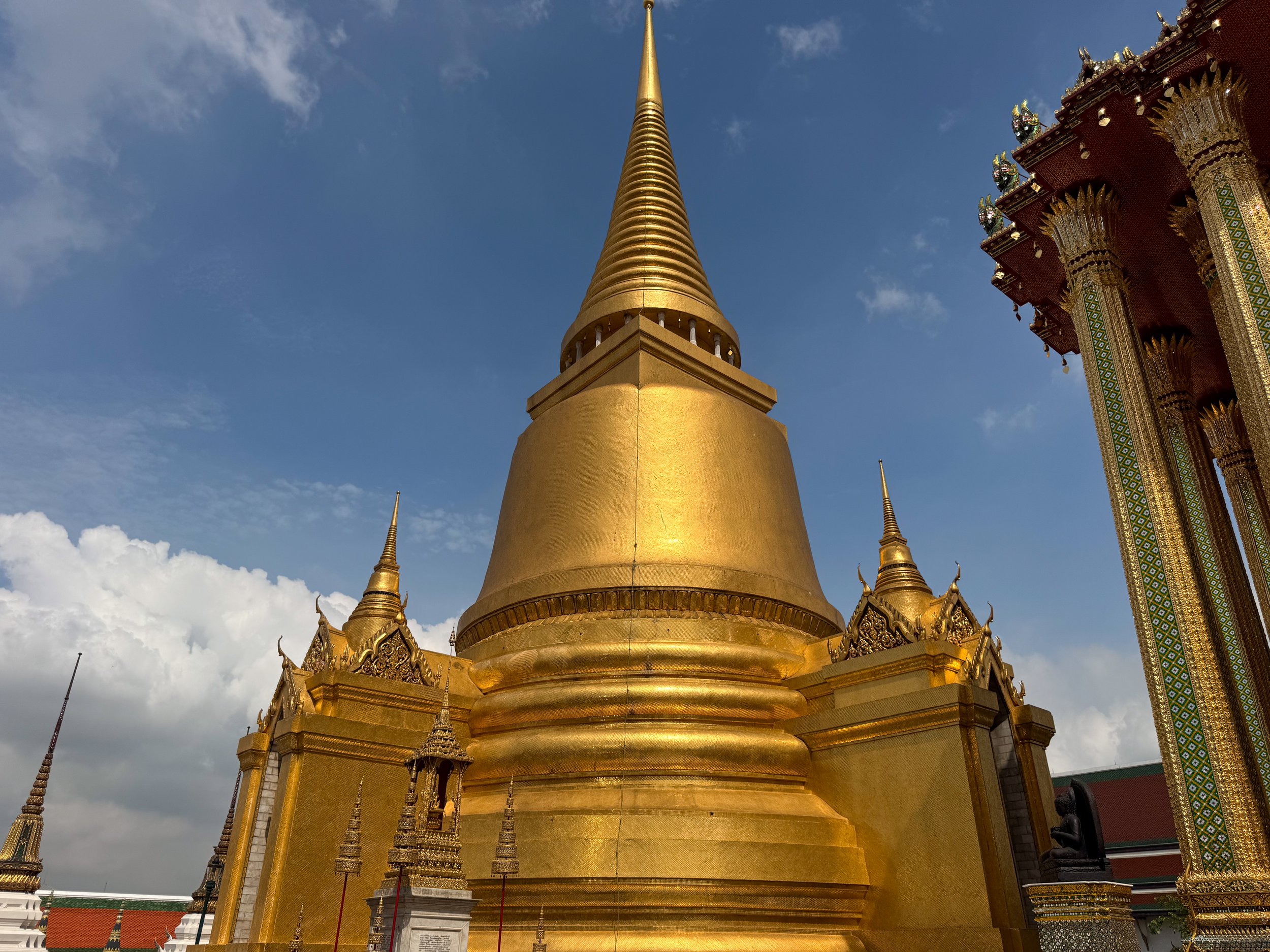
The Thai Royal Palace. An opulent palace truly fit for royalty and the home to the Thai monarchy. The palace is divided into two viewable sections, The Temple of The Emerald Buddha and The Grand Palace.
The Temple of The Emerald Buddha. A royal complex with Buddhist wats, temples, throne halls, royal stupas and elaborate sculptures. It’s one of the most opulently designed places on the royal grounds. The structures and statues are adorned in a kaleidoscope of vibrant colors, a glittering mosaic of reflective tiles, gilded surfaces, hand painted images, dimensional patterns and Khmer style roofs layered with colorful tiles and golden cornices. Marble staircases and red carpeted walkways lead around the grounds past sculpted trees and covered corridors. At its center is the main temple with a statue of the Buddha sculpted from solid emerald.
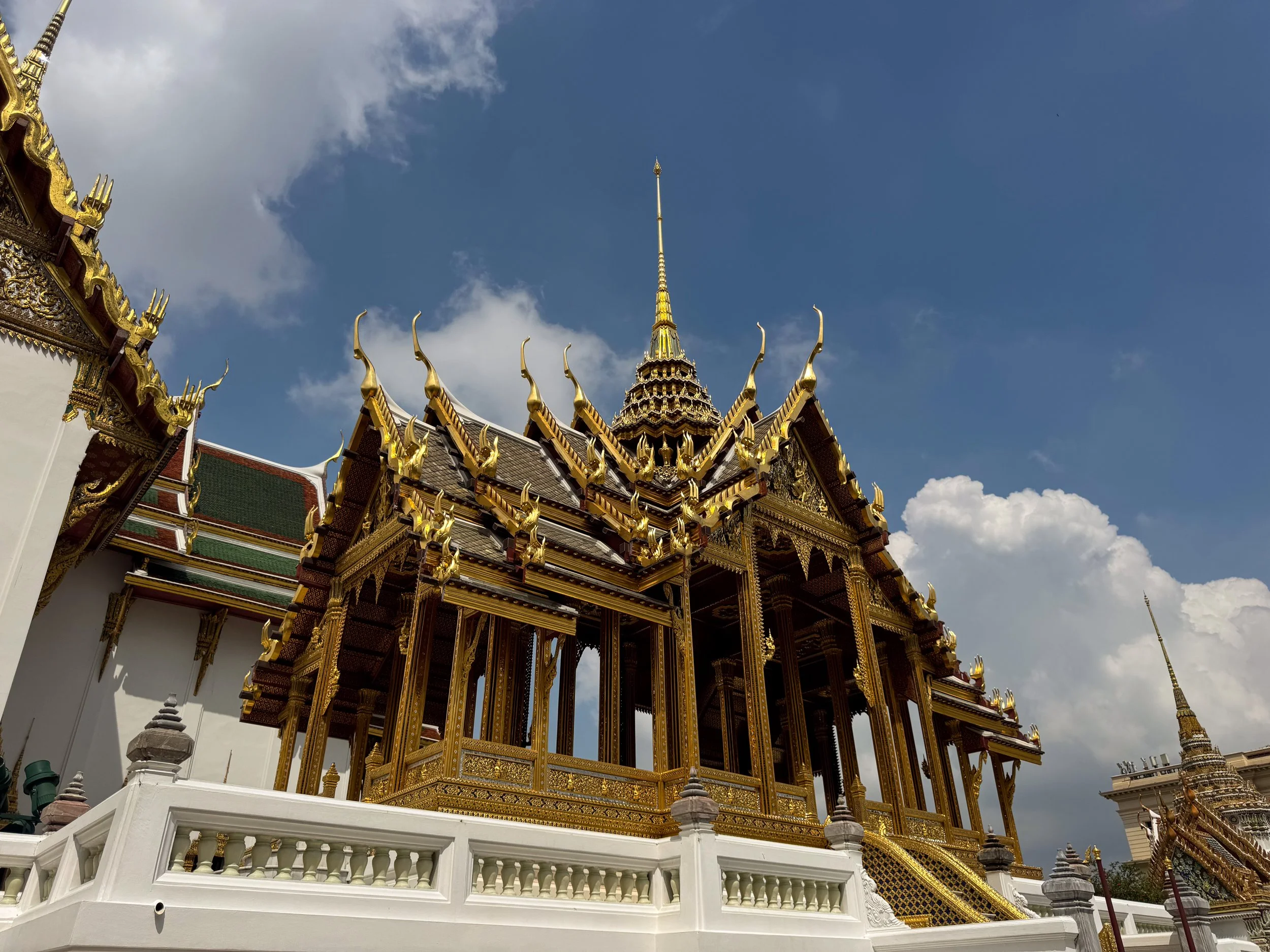
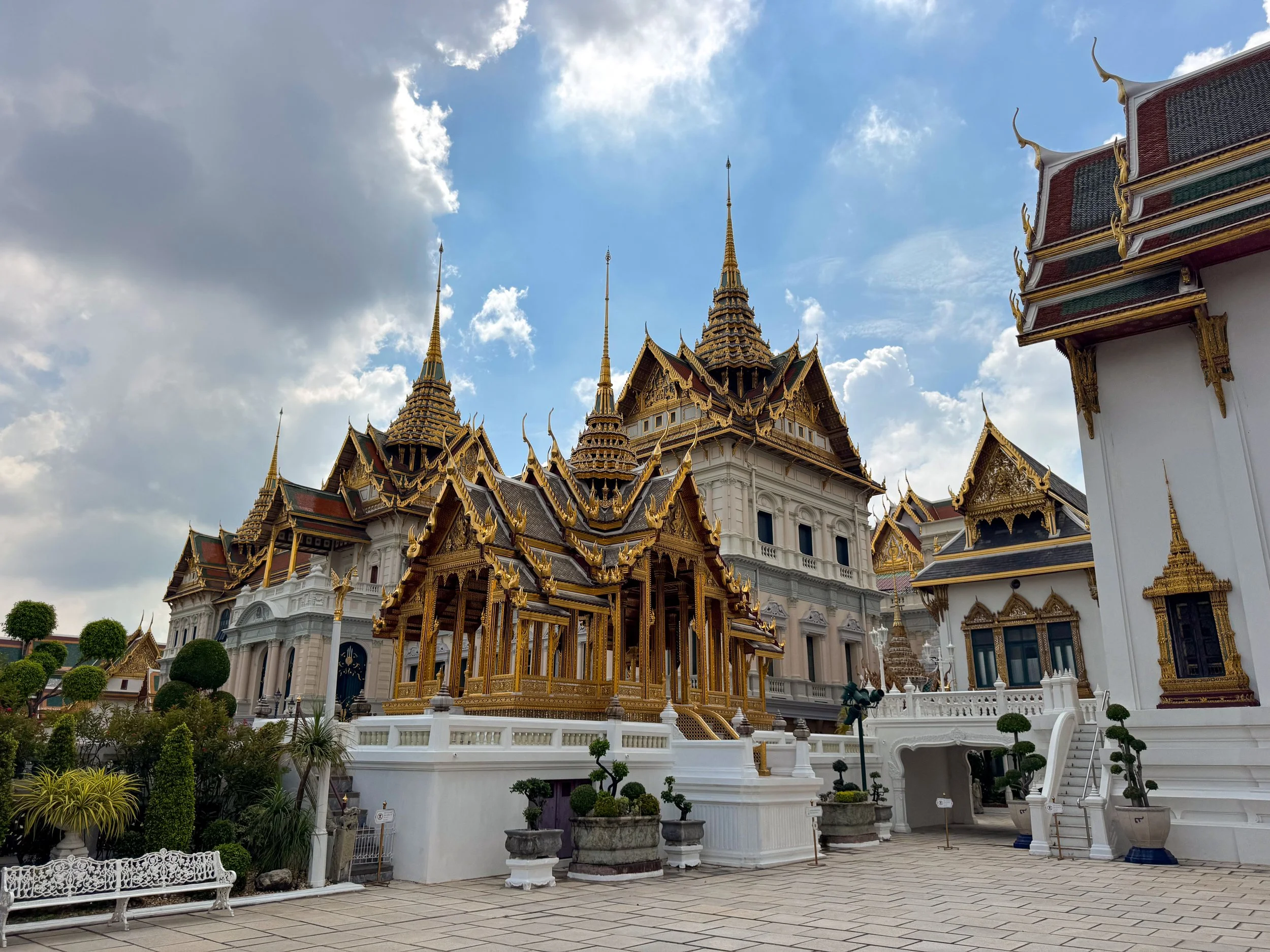
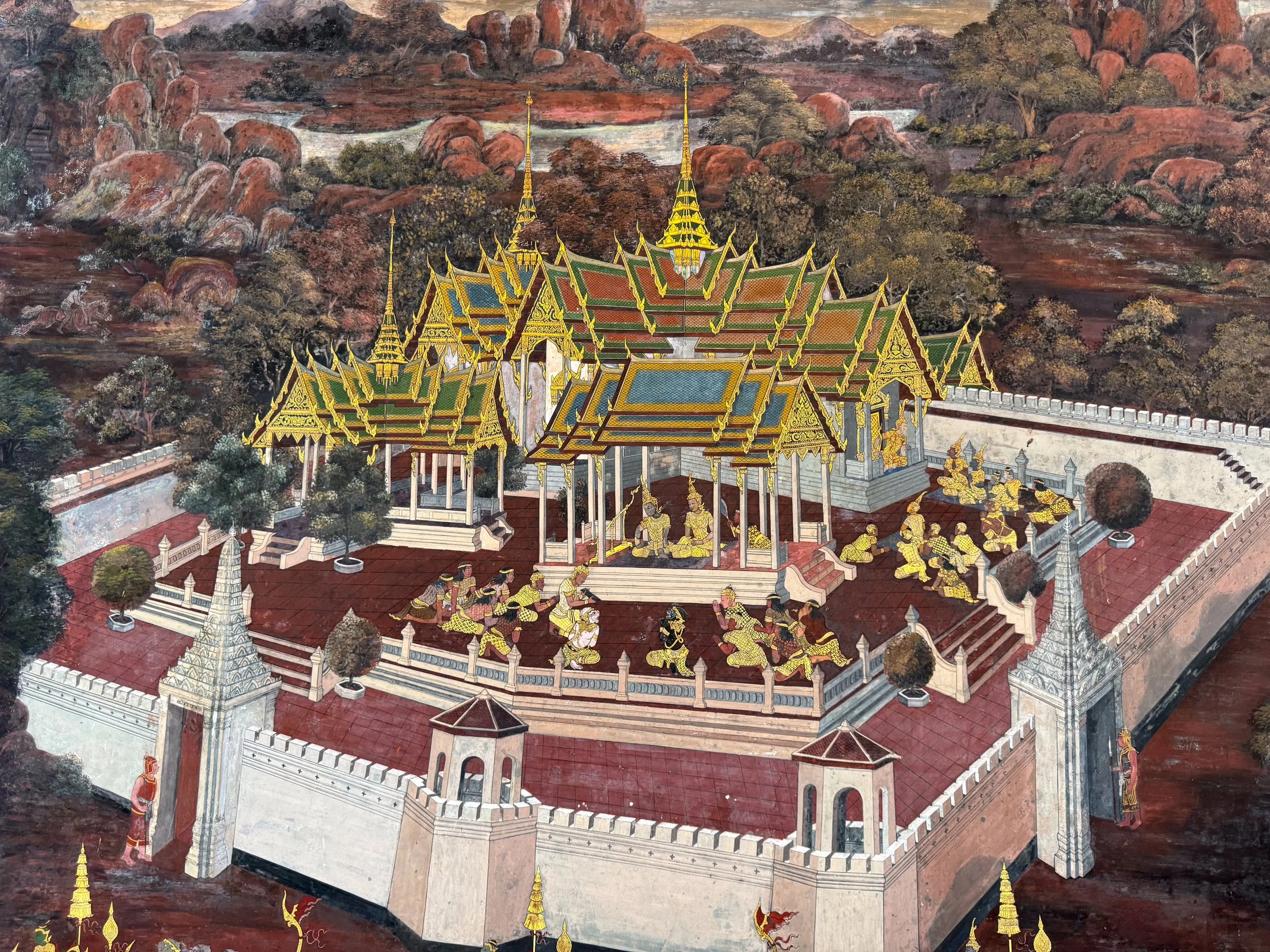
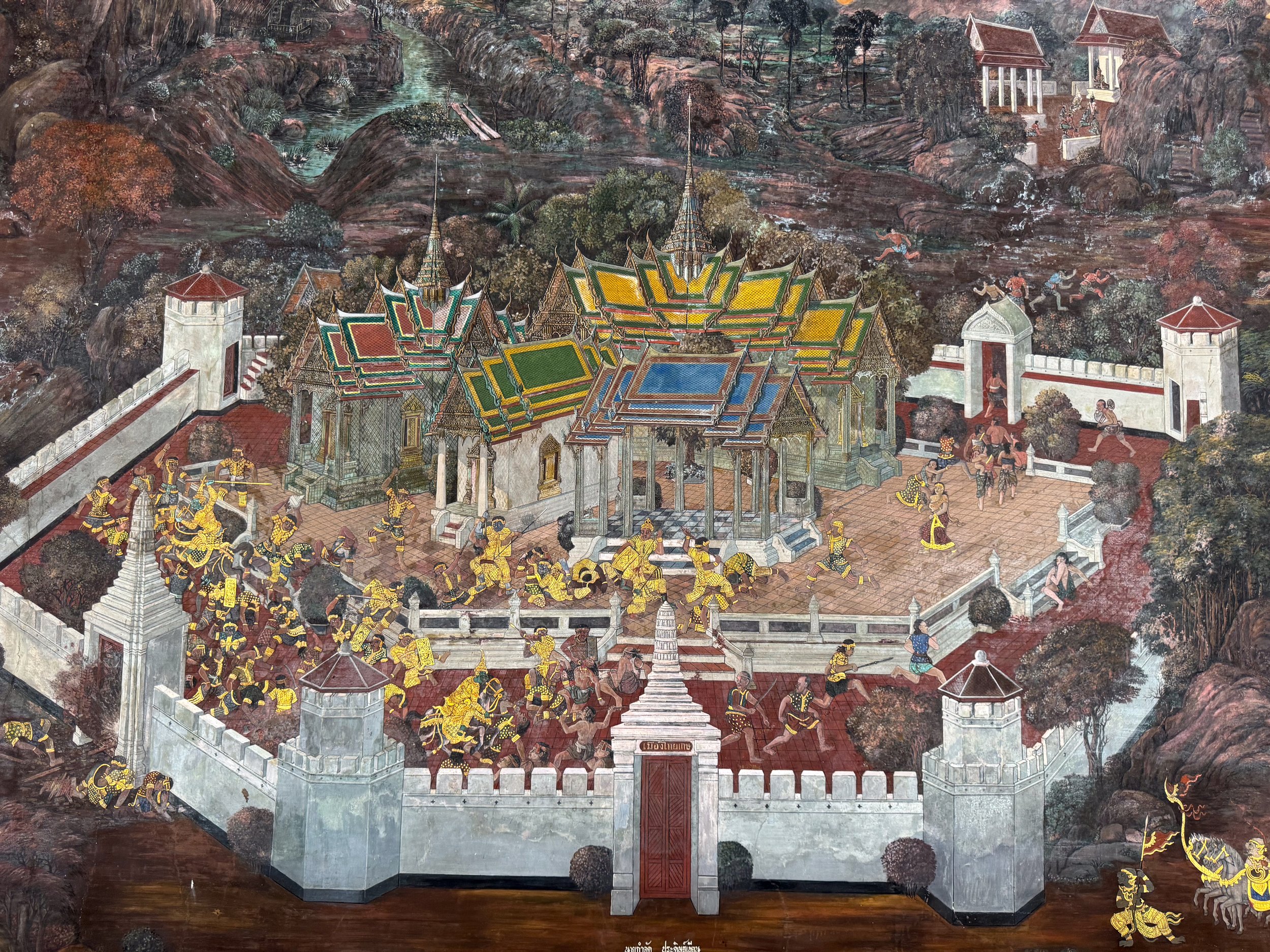
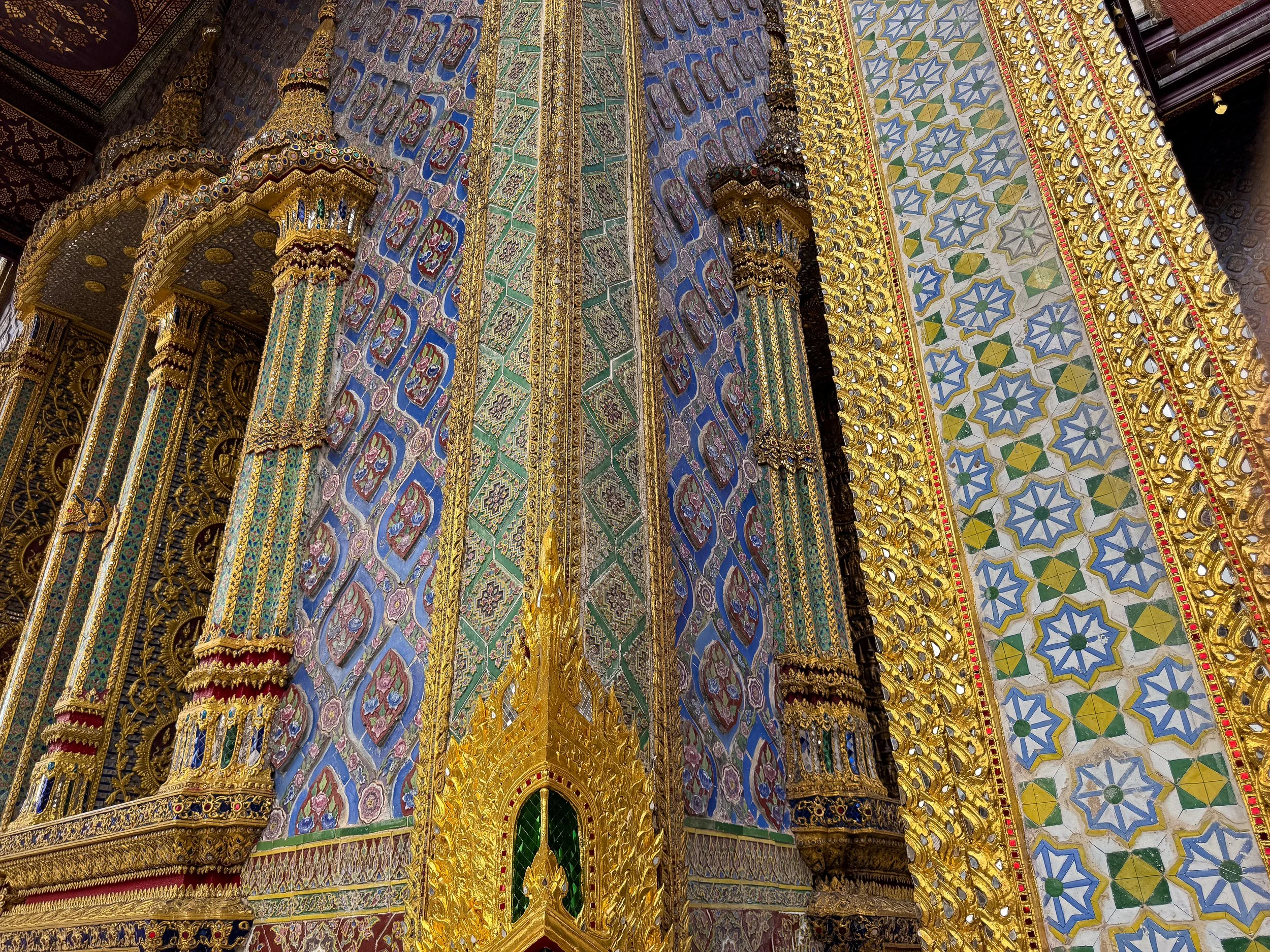
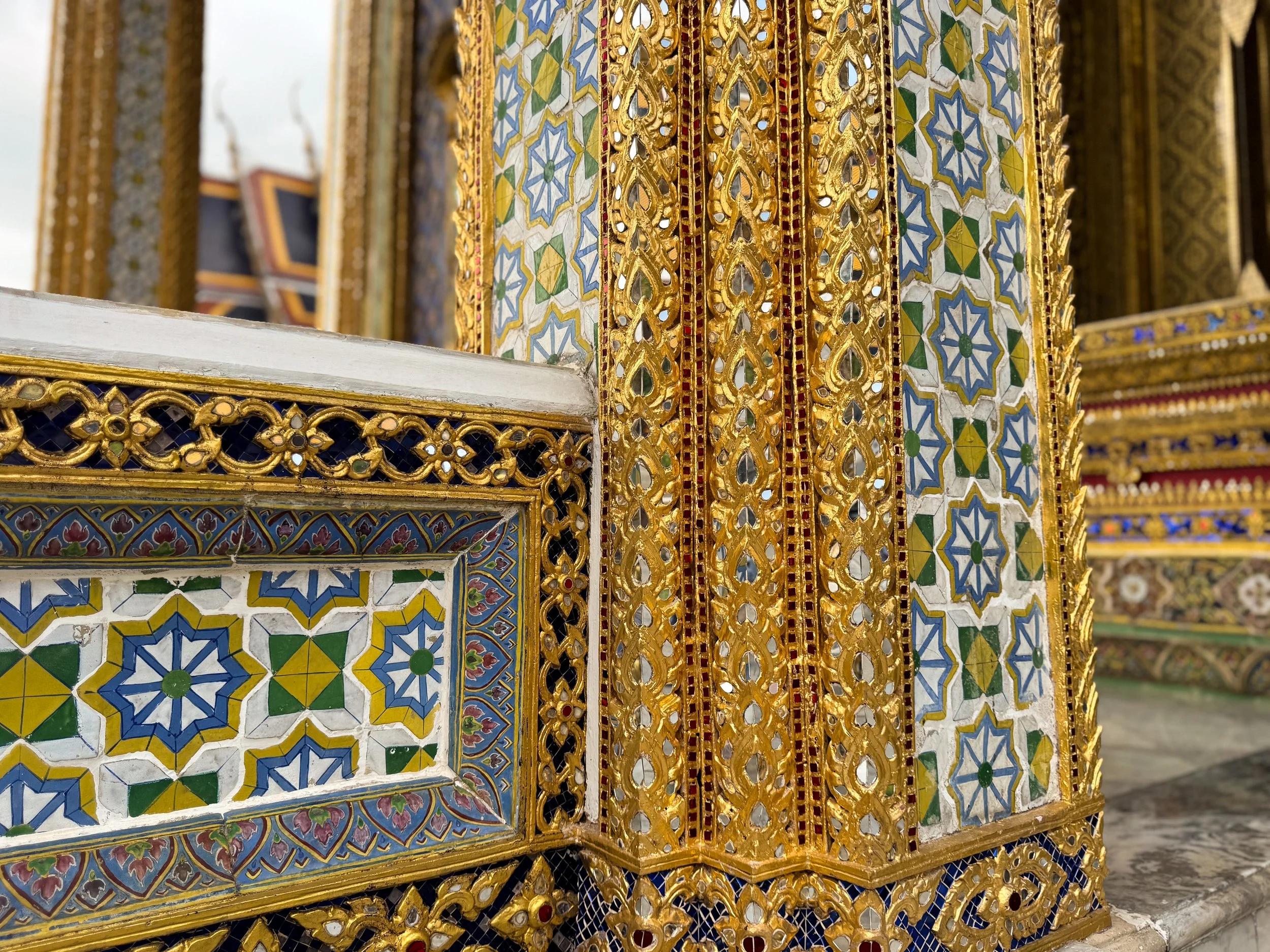
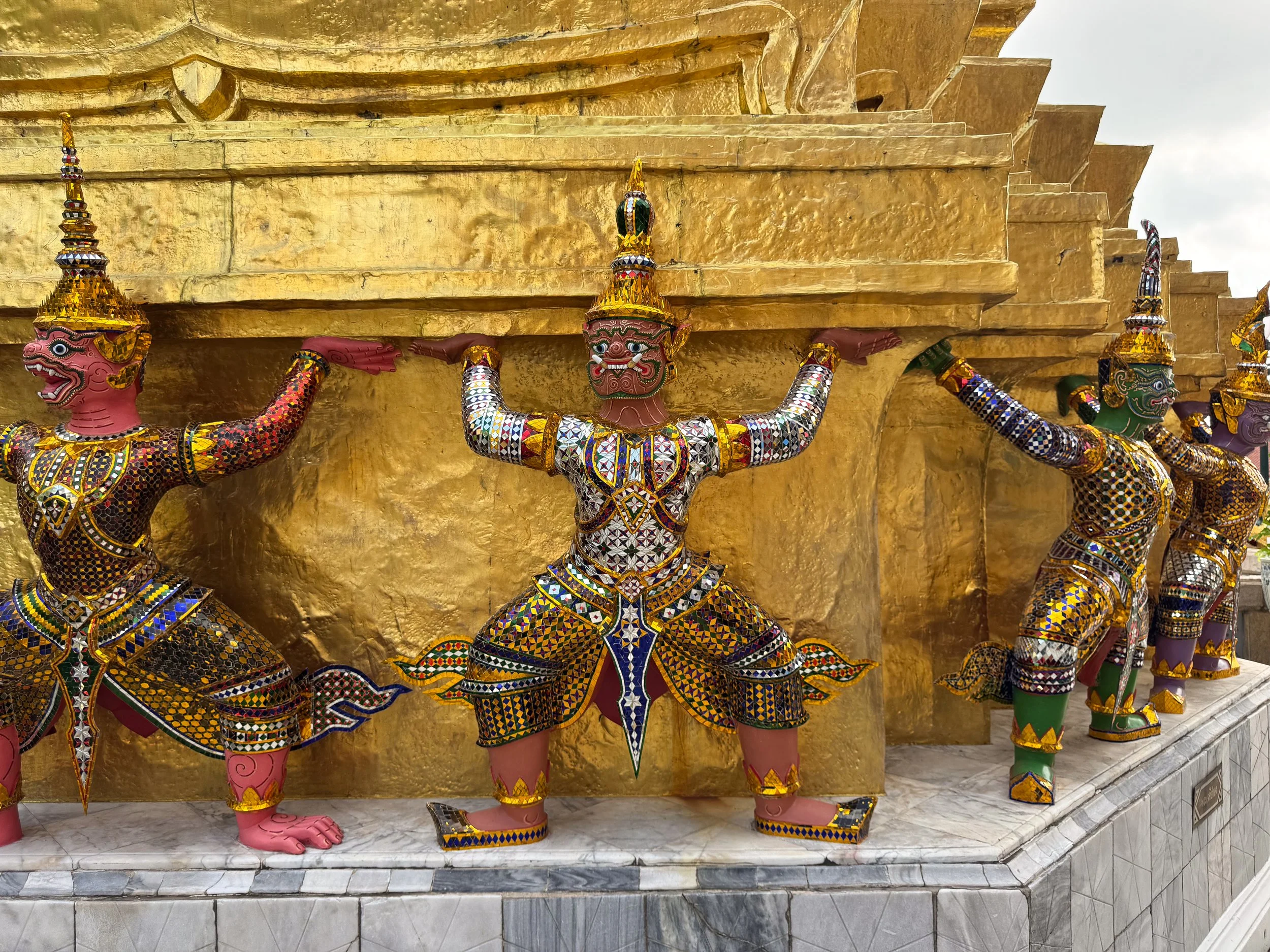
The Grand Palace. One of the largest complexes of the palace with the royal residence and offices, a library and multiple throne rooms. It’s not as opulent as The Temple of the Emerald Buddha but no less grand. The structures have a white neoclassical facade with golden window frames designed in the style of conical stupas. The Khmer style roofs are heavily layered in multi-colored tiles with gilded towers and ornate cornices. The spacious courtyards are landscaped with verdant lawns, sculpted trees, tiled planters with lotus flowers and bronze lamp posts.
Tips for Visiting The Royal Palace:
The Royal Palace is one of the most popular sights to see in Bangkok and often packed with thousands of visitors and tour groups at all times of the day.
The hours can differ daily due to the palace still being actively used by Thailand royalty. It closed at noon on the day we visited for a royal event.
The best time to visit is on a very sunny day to truly appreciate the reflective and gilded surfaces shimmering under the sun.
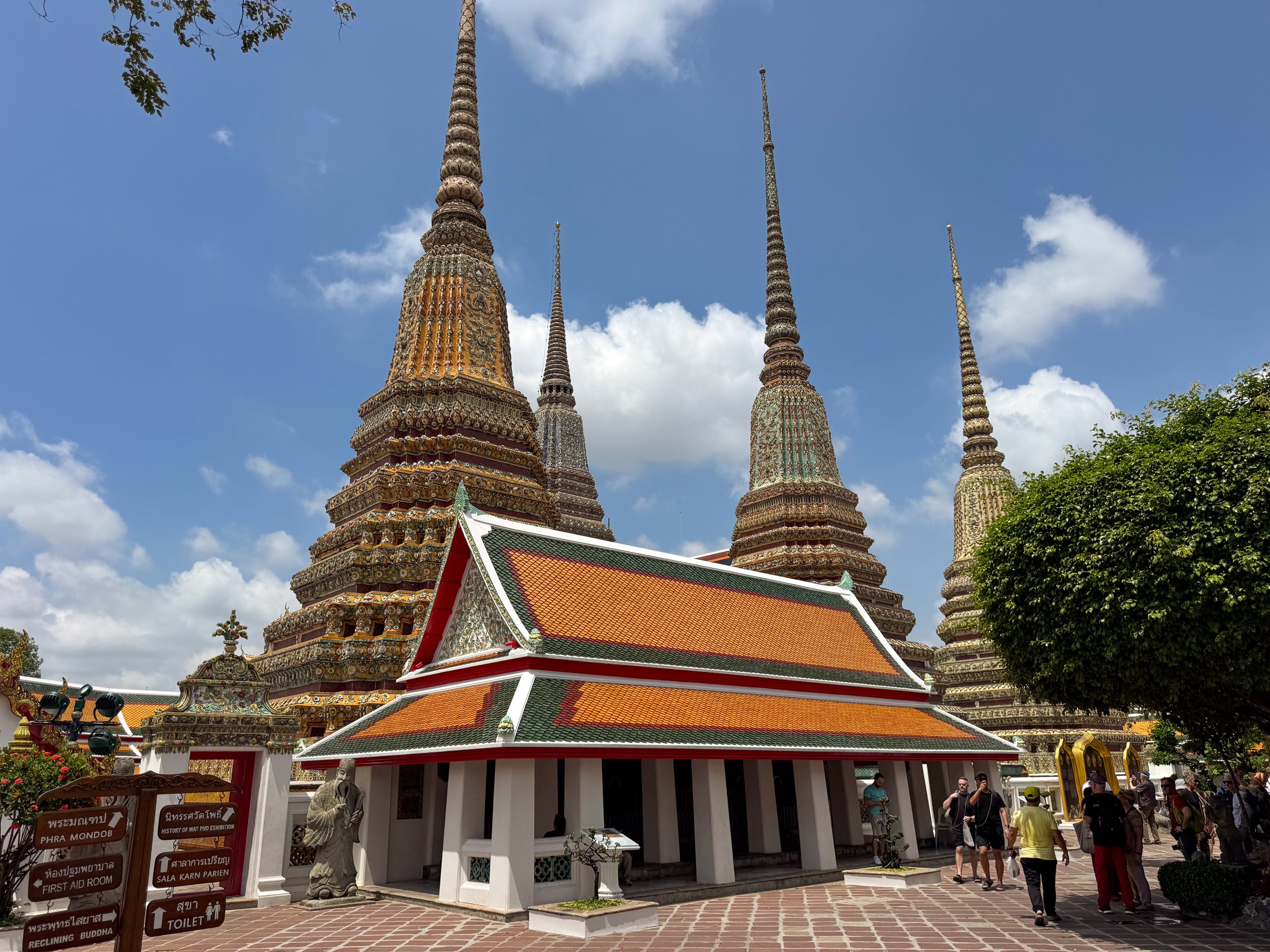
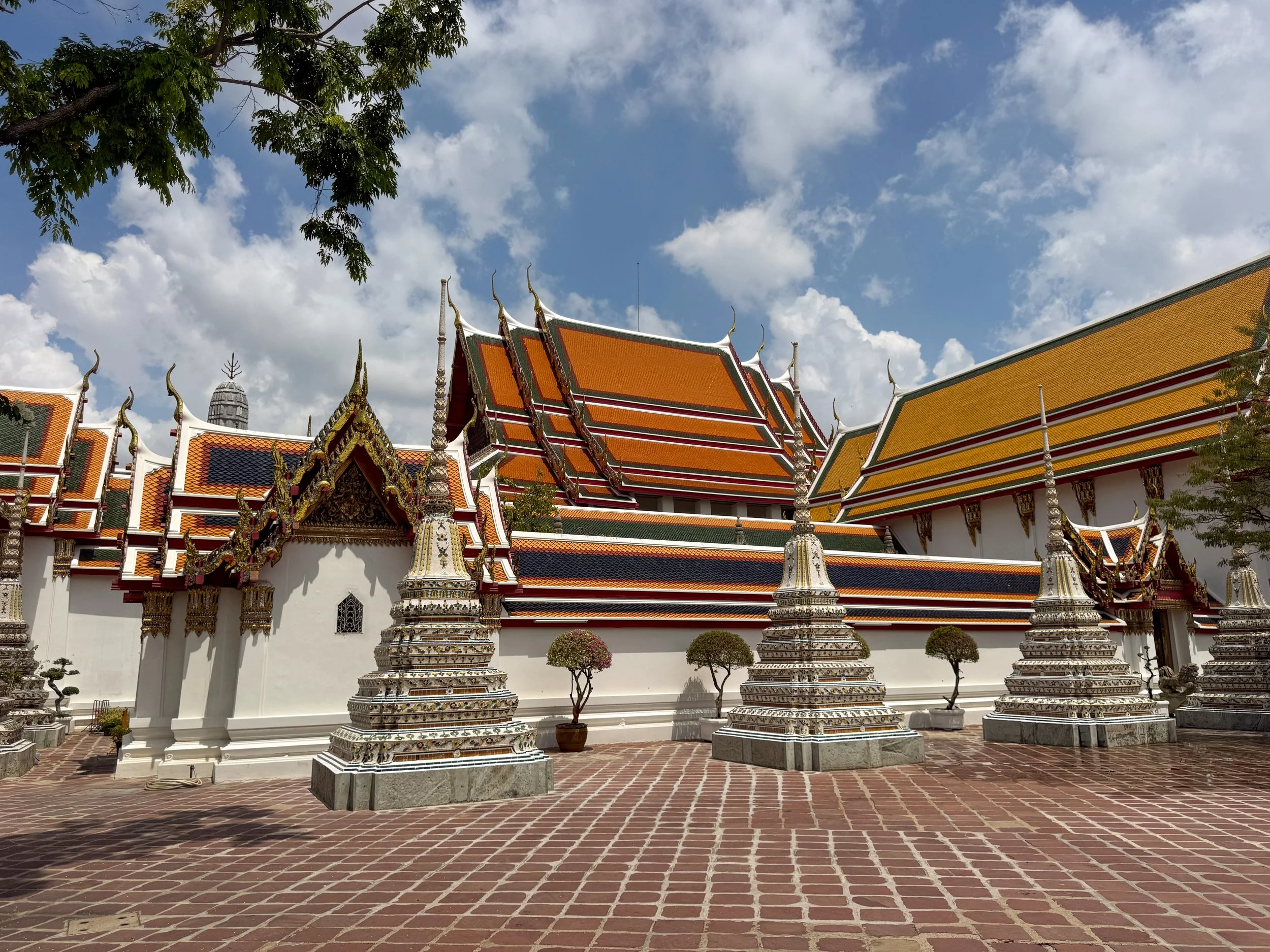
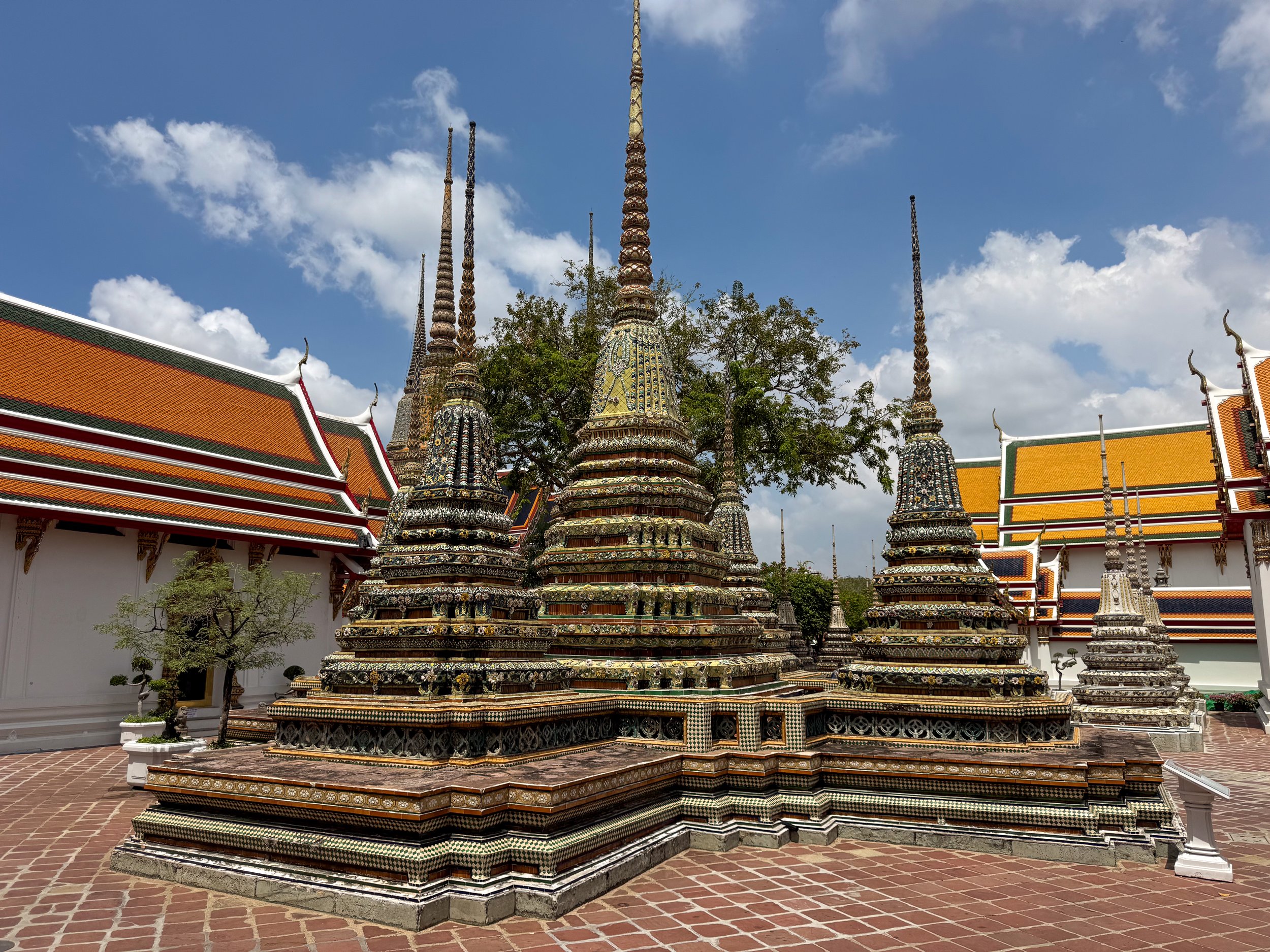
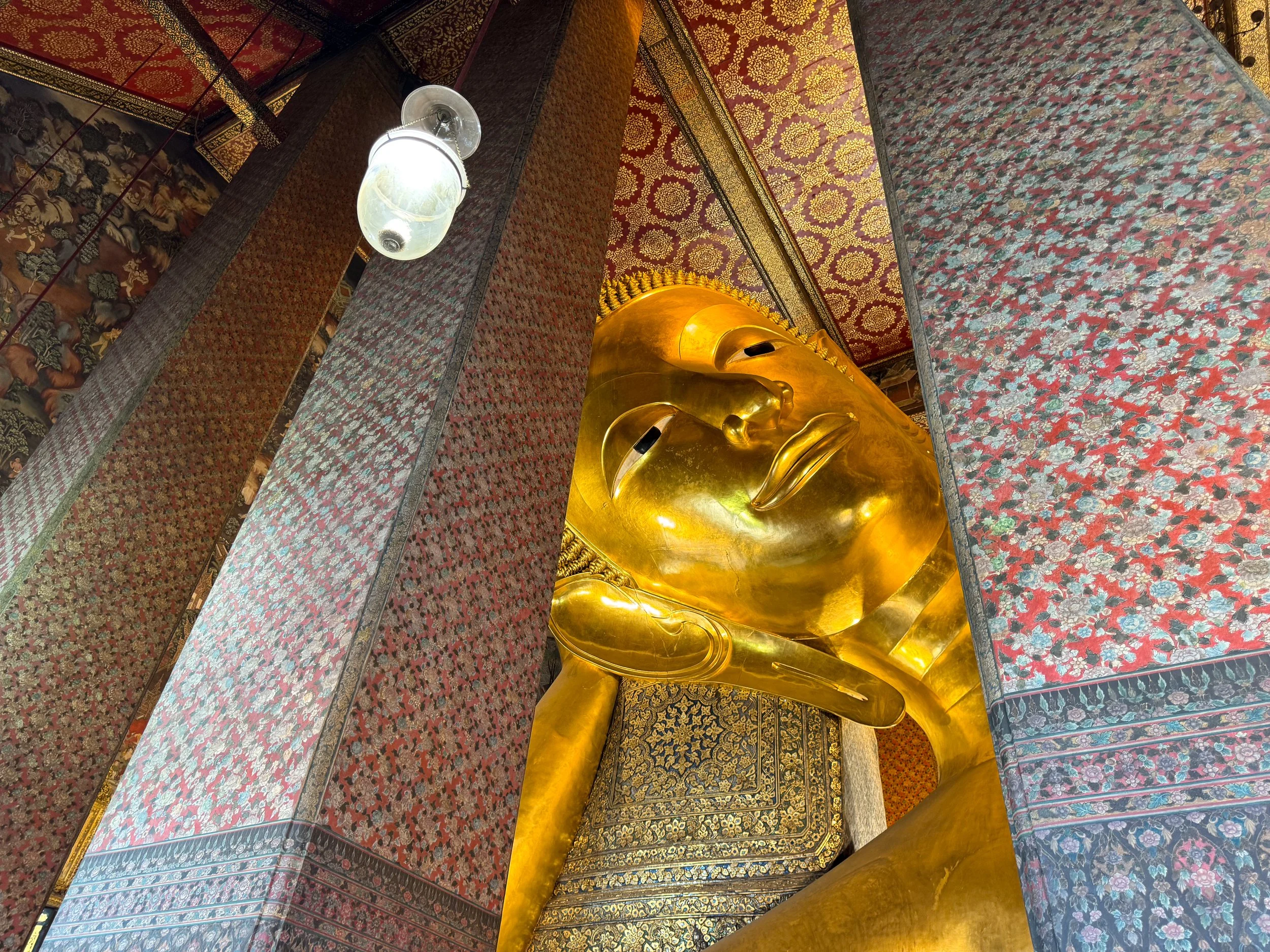
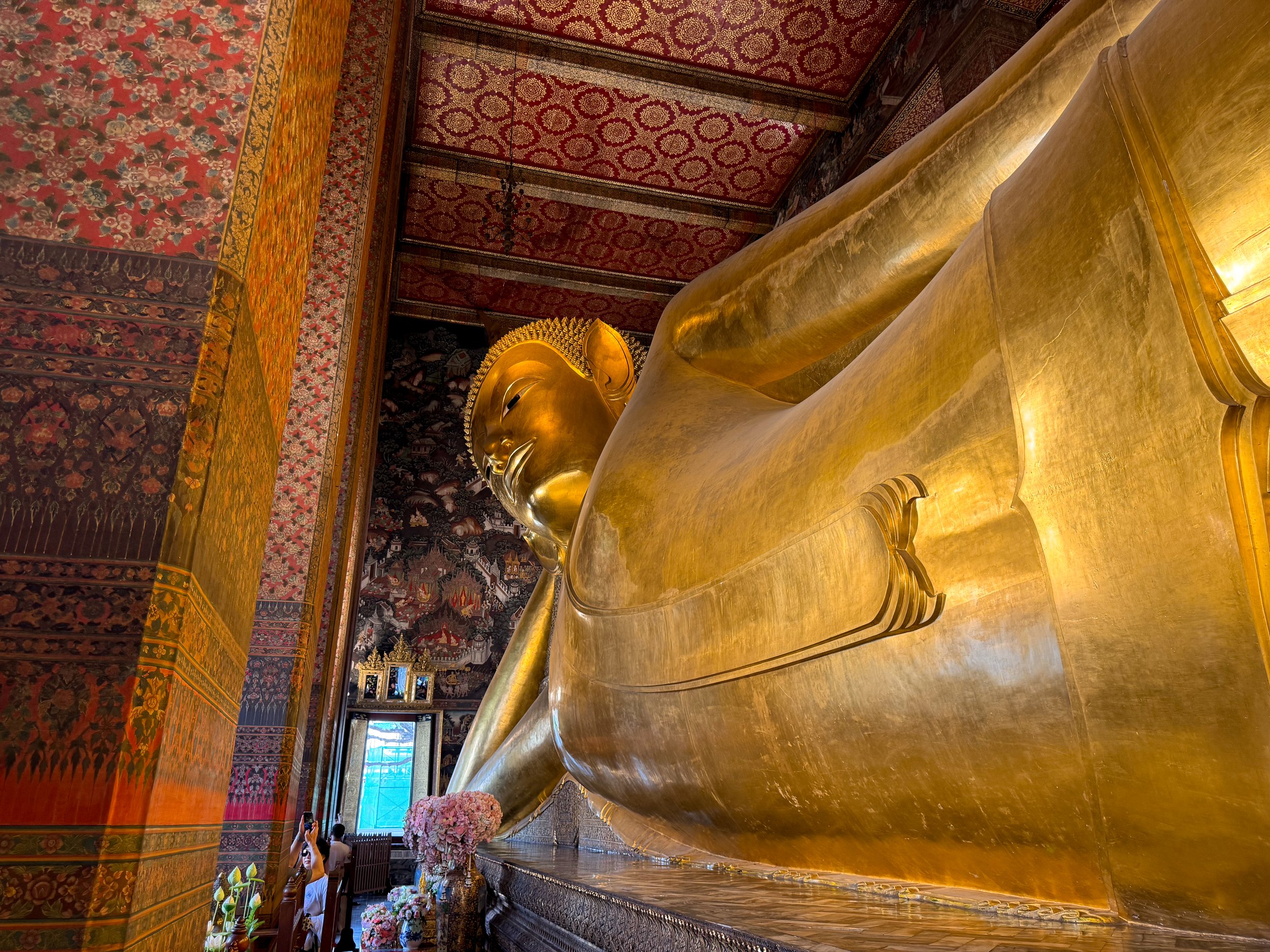
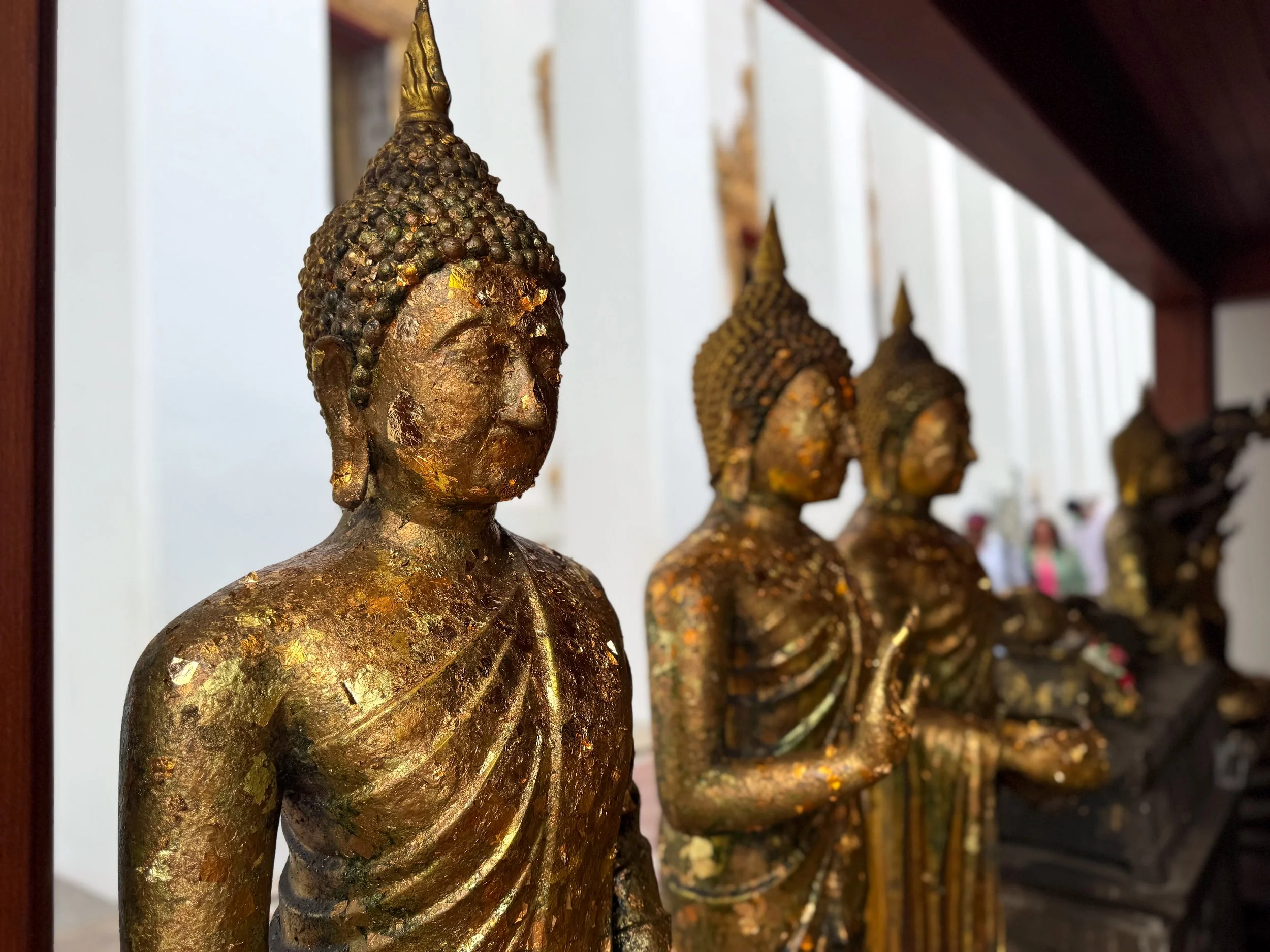
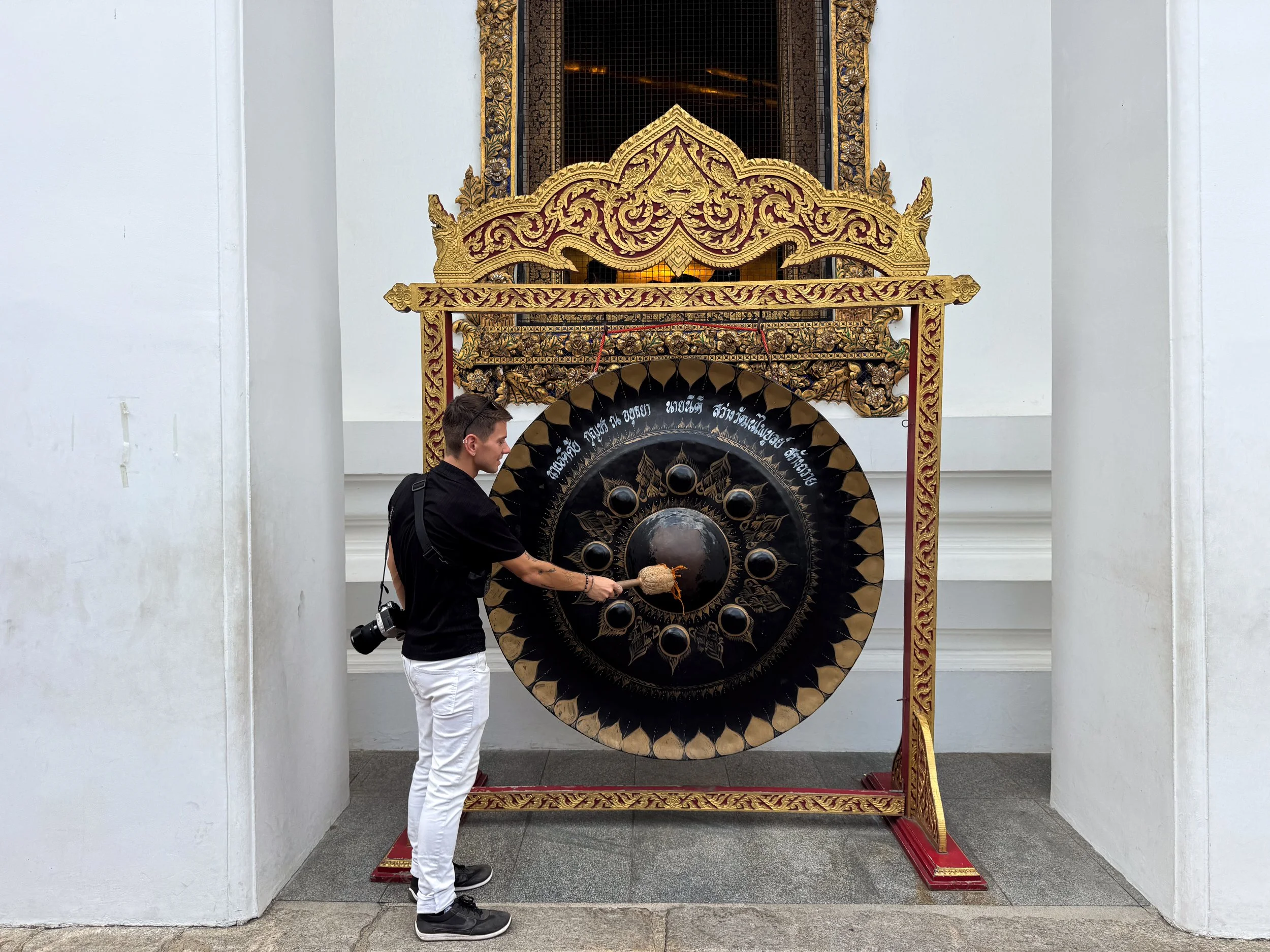
Wat Pho. A royal Buddhist temple famed for its giant reclined golden Buddha. The statue measures 150 feet long and is housed in a grand hall decorated in richly colored floral patterns and scenes of Buddhist legends. The wat is home to numerous structures including Khmer style temples, various sized stupas covered in ornate three dimensional tiles and a hall with Thailand’s largest collection of golden buddhas. Come here to meditate, bang one of the giant metal gongs or apply a gold leaf stamp to a statue of Buddha.
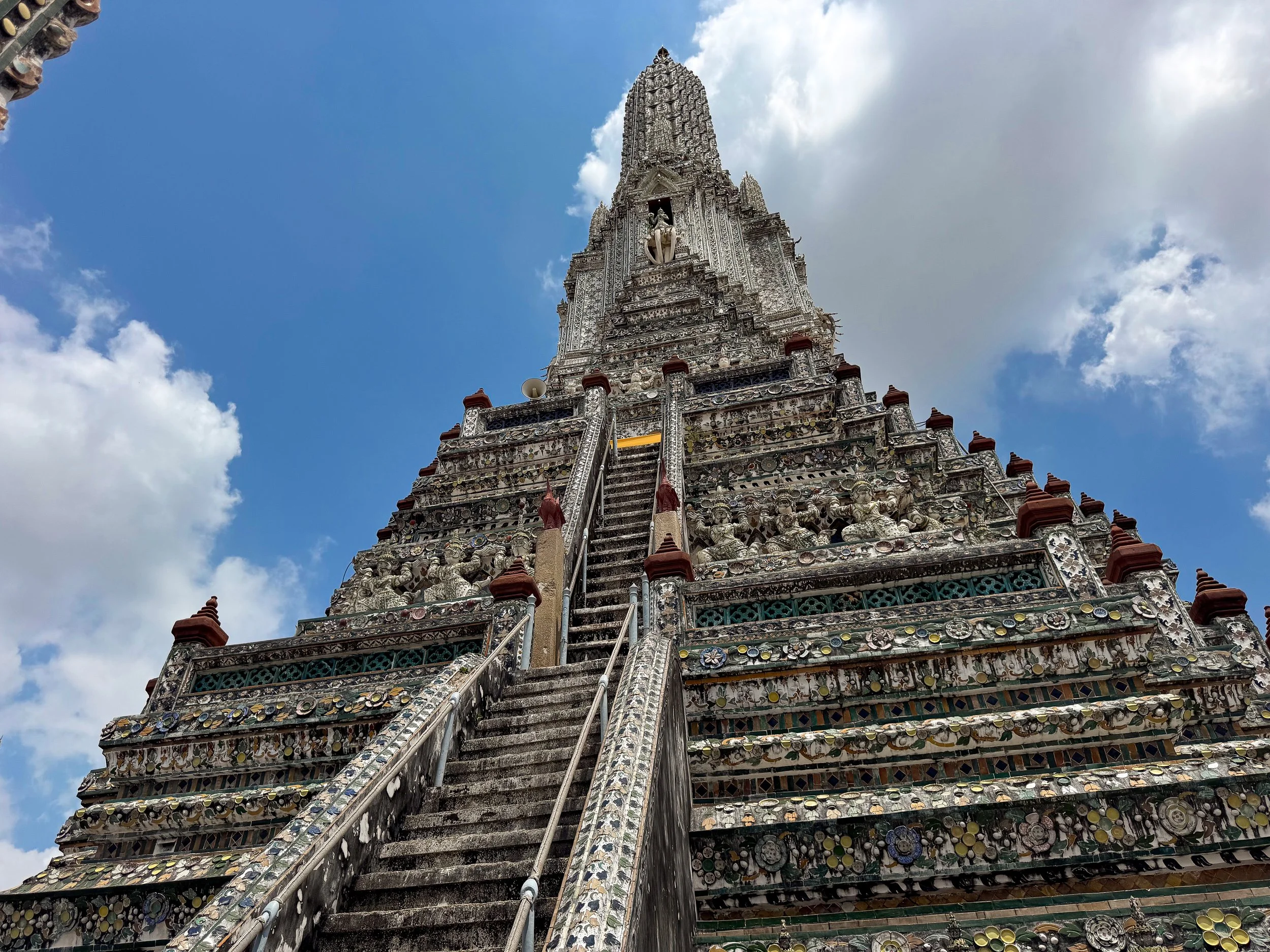
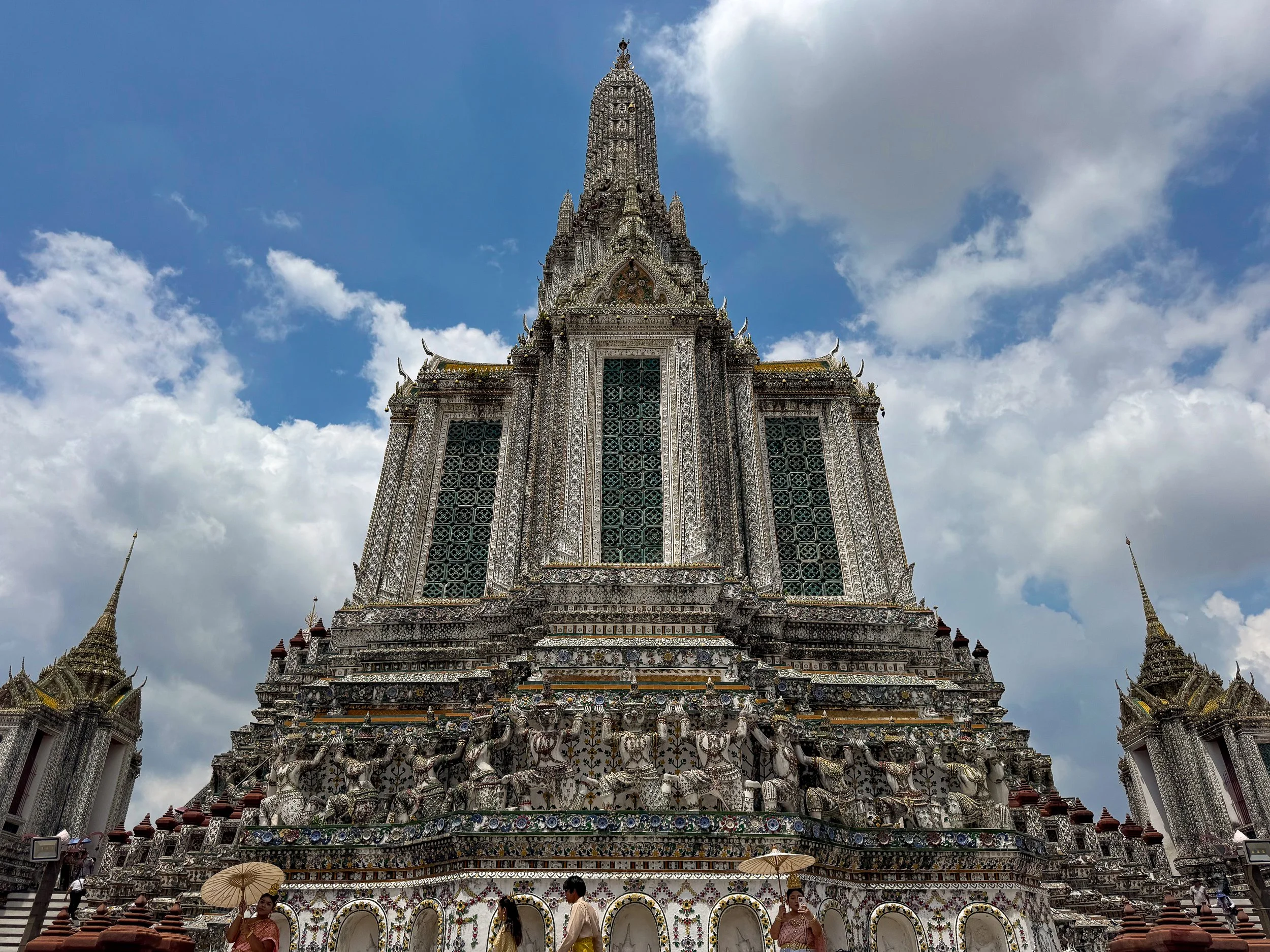
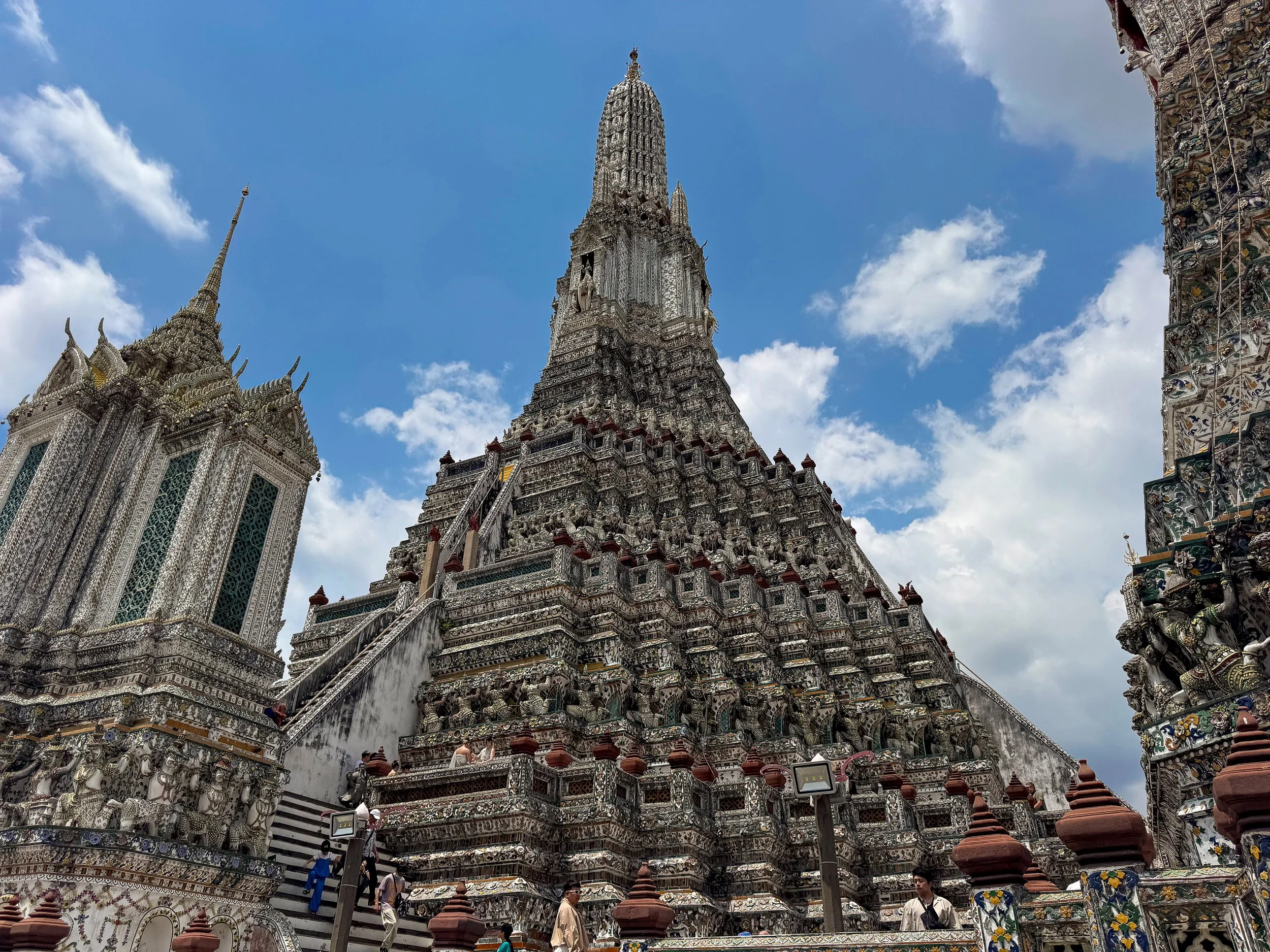
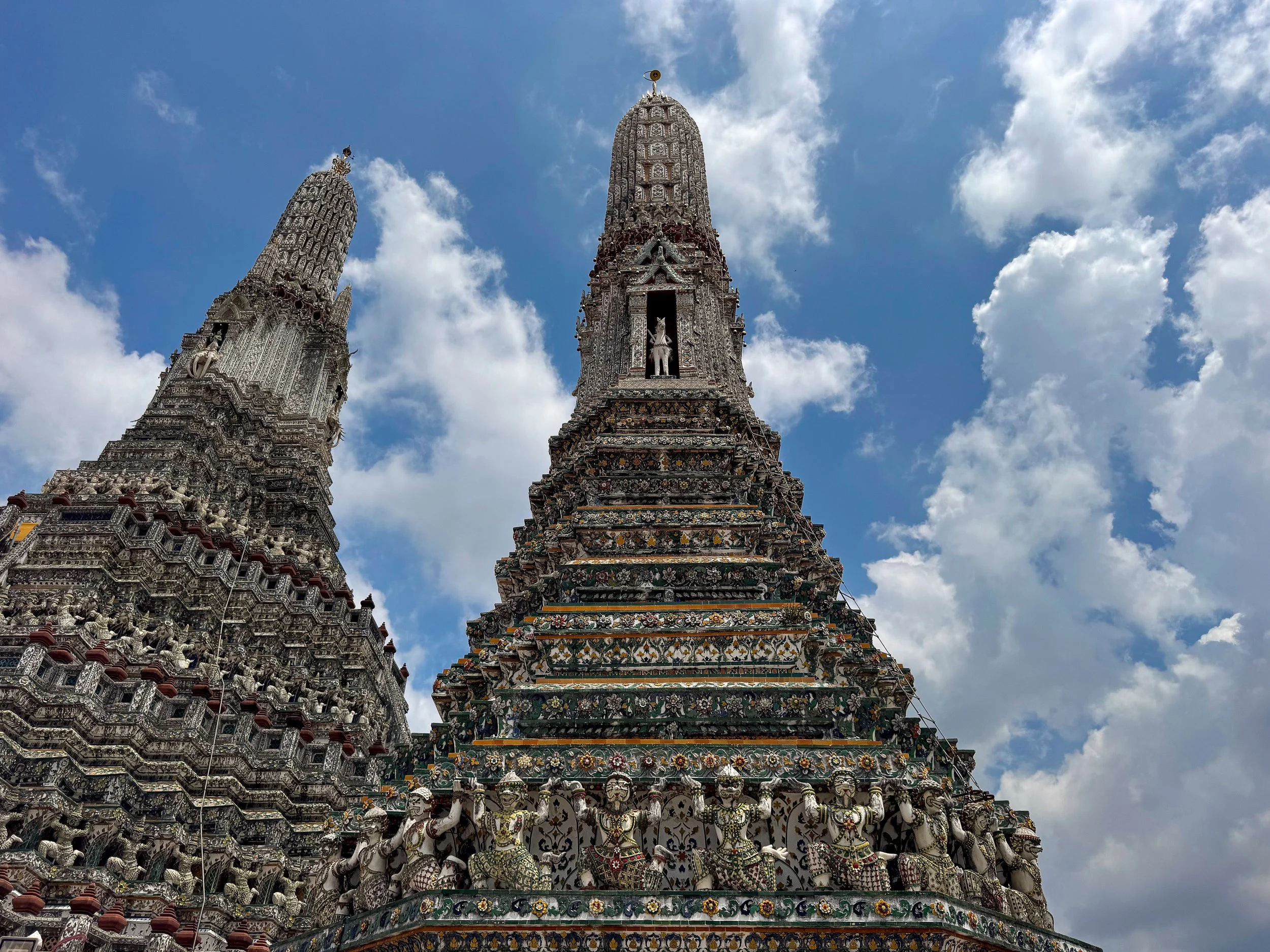
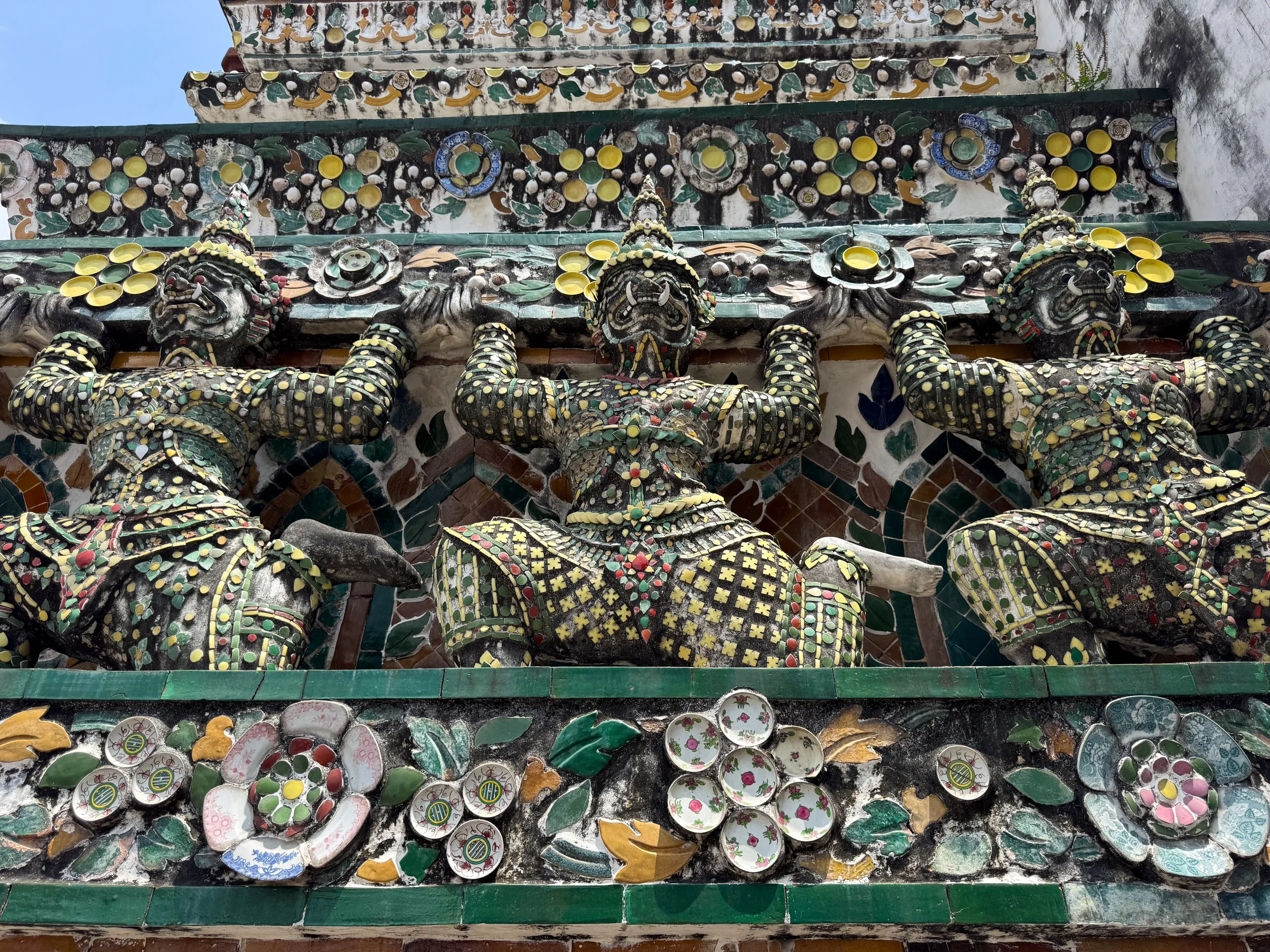
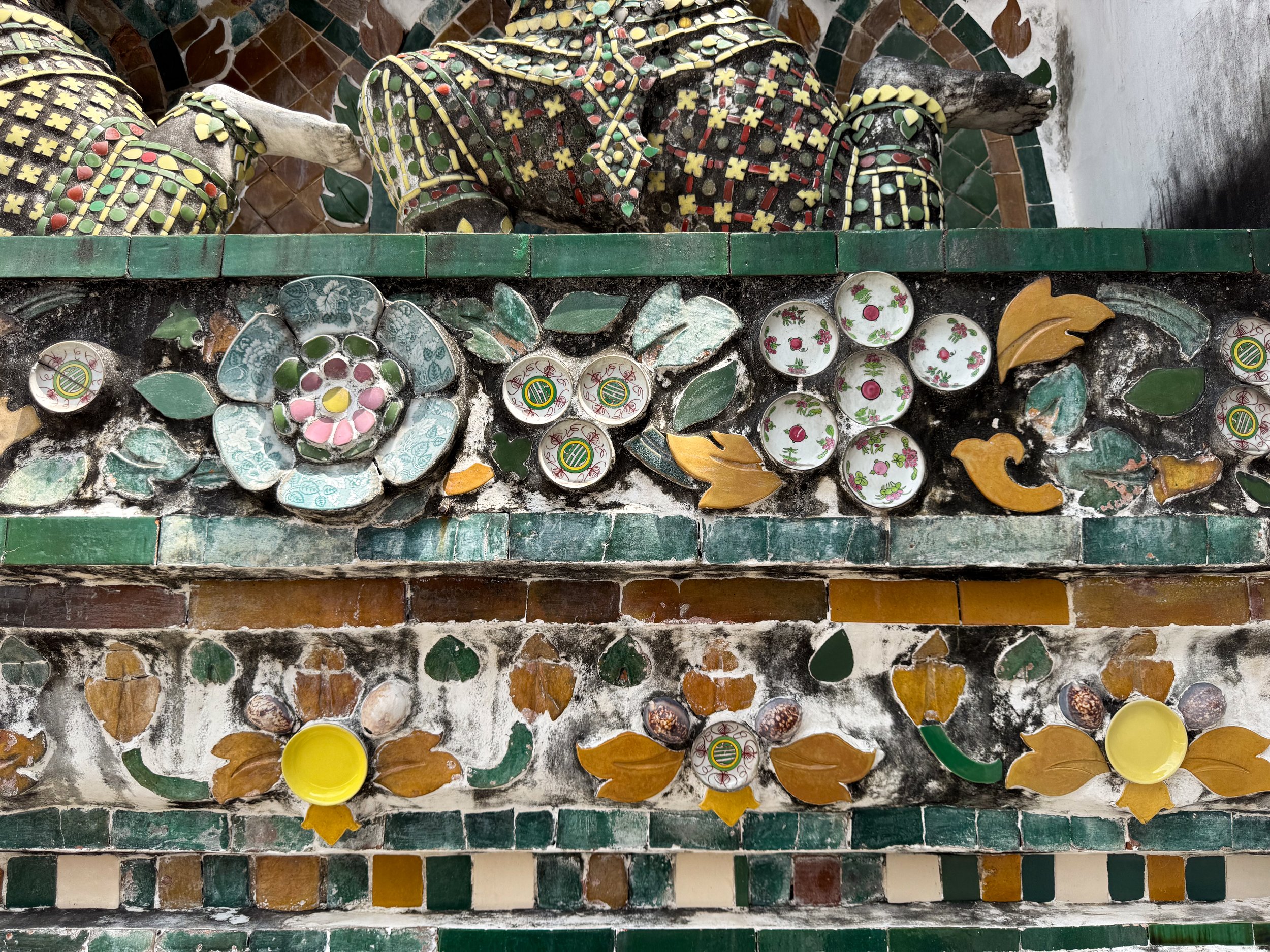
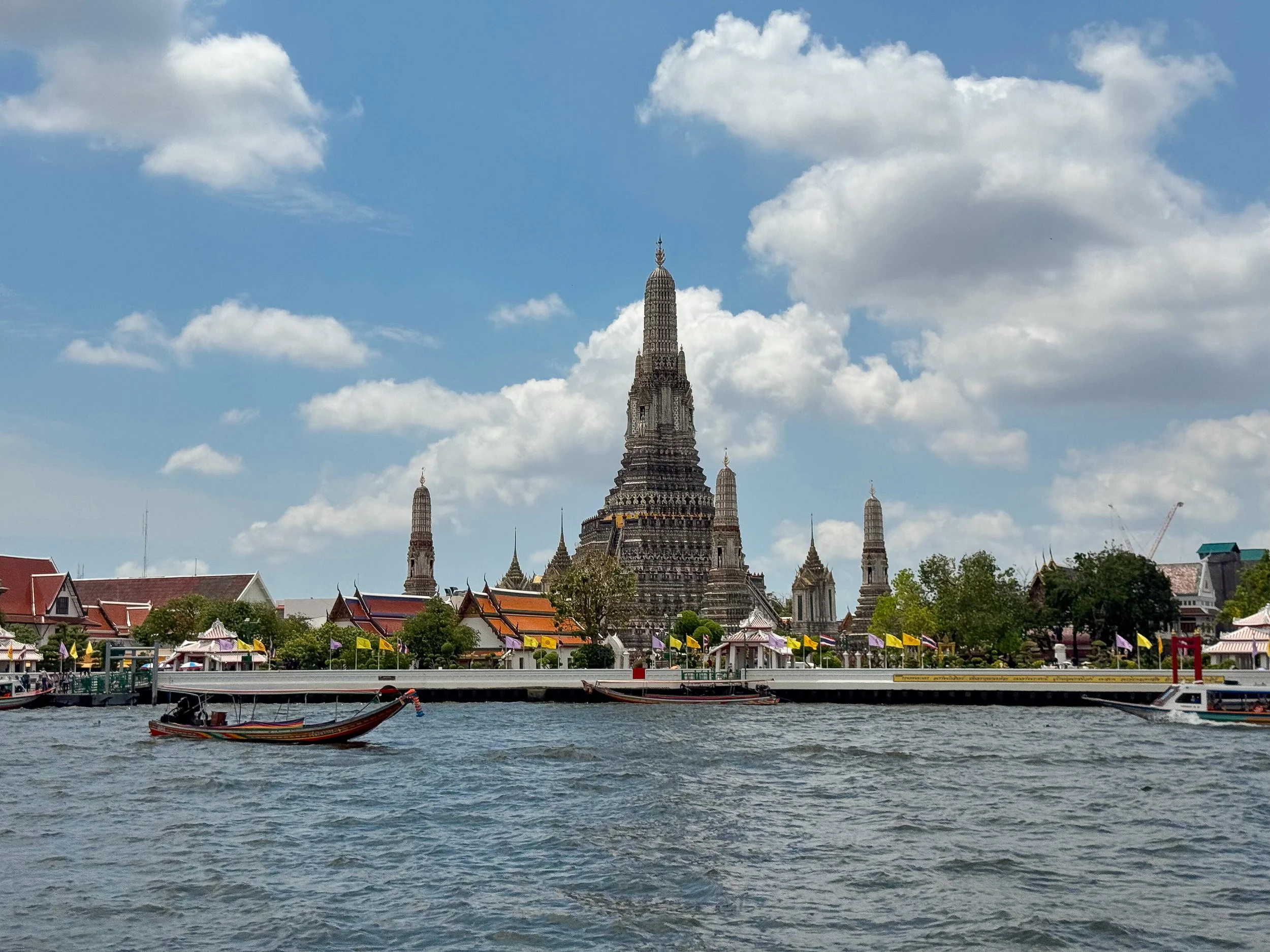
Wat Arun. A Buddhist temple complex along the Chao Phraya River famed for its towering stupa. The faceted structure is covered in a mosaic of hand painted tiles, floral patterns, dimensional designs and flexing deities. Stairs lead to its second level where shrines dedicated to Buddha are housed. Many local couples rent traditional outfits and come here for photoshoots, providing the wat with an old world feeling and a romantic atmosphere.
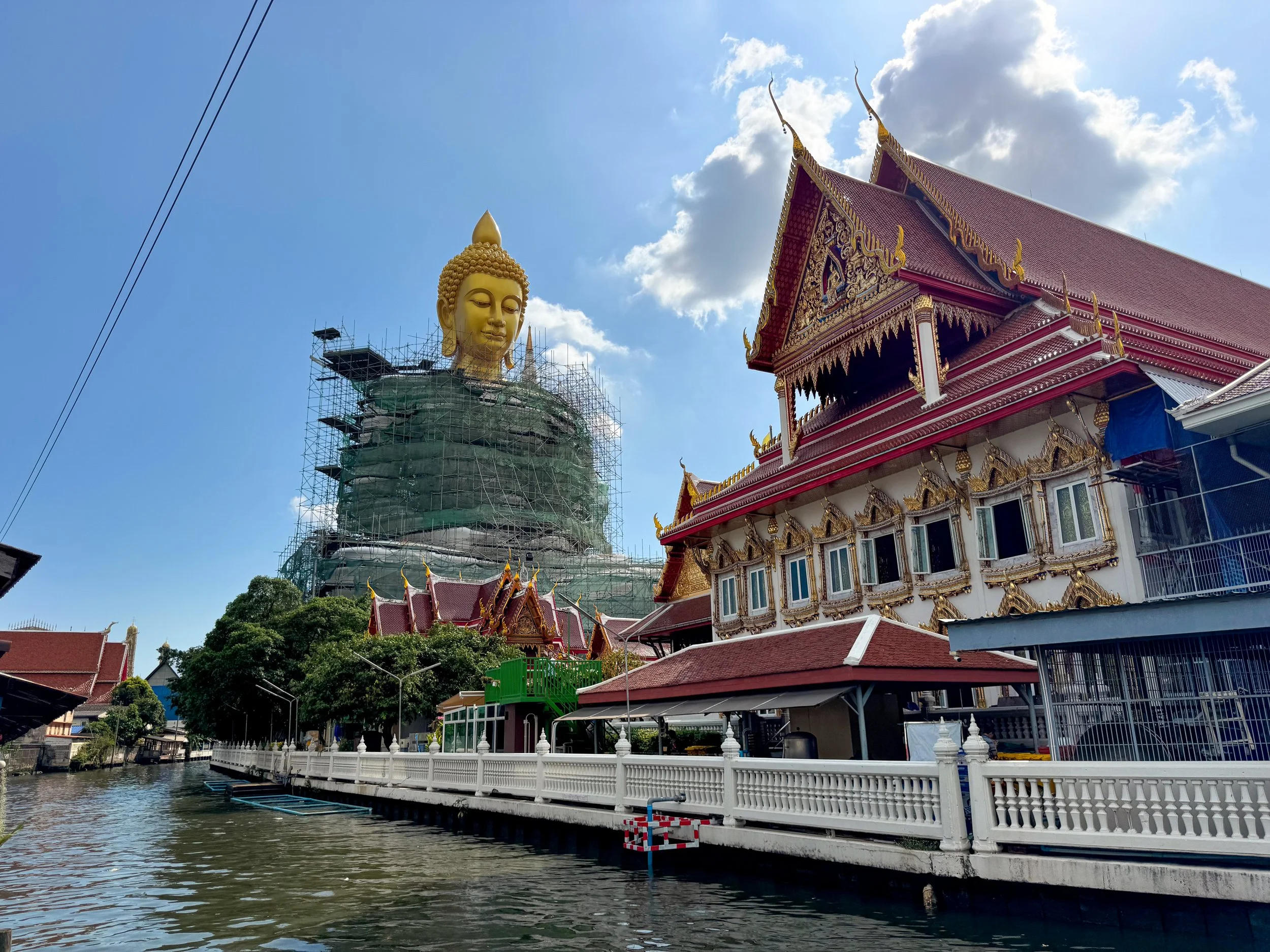
Big Golden Buddha. A 69 meter tall seated golden Buddha along the Khlong Canal. Unknown to us before visiting, the Buddha was mostly covered in scaffolding for restoration. Work was supposedly completed a month later. At the time, all that was visible was his golden head. We visited the Photo Spot for the Big Buddha with views of it, canal and wat. It’s free to visit however visitors can pay to pose in a longboat docked along the canal. It’s a common sight on long boat canal tours of the city.
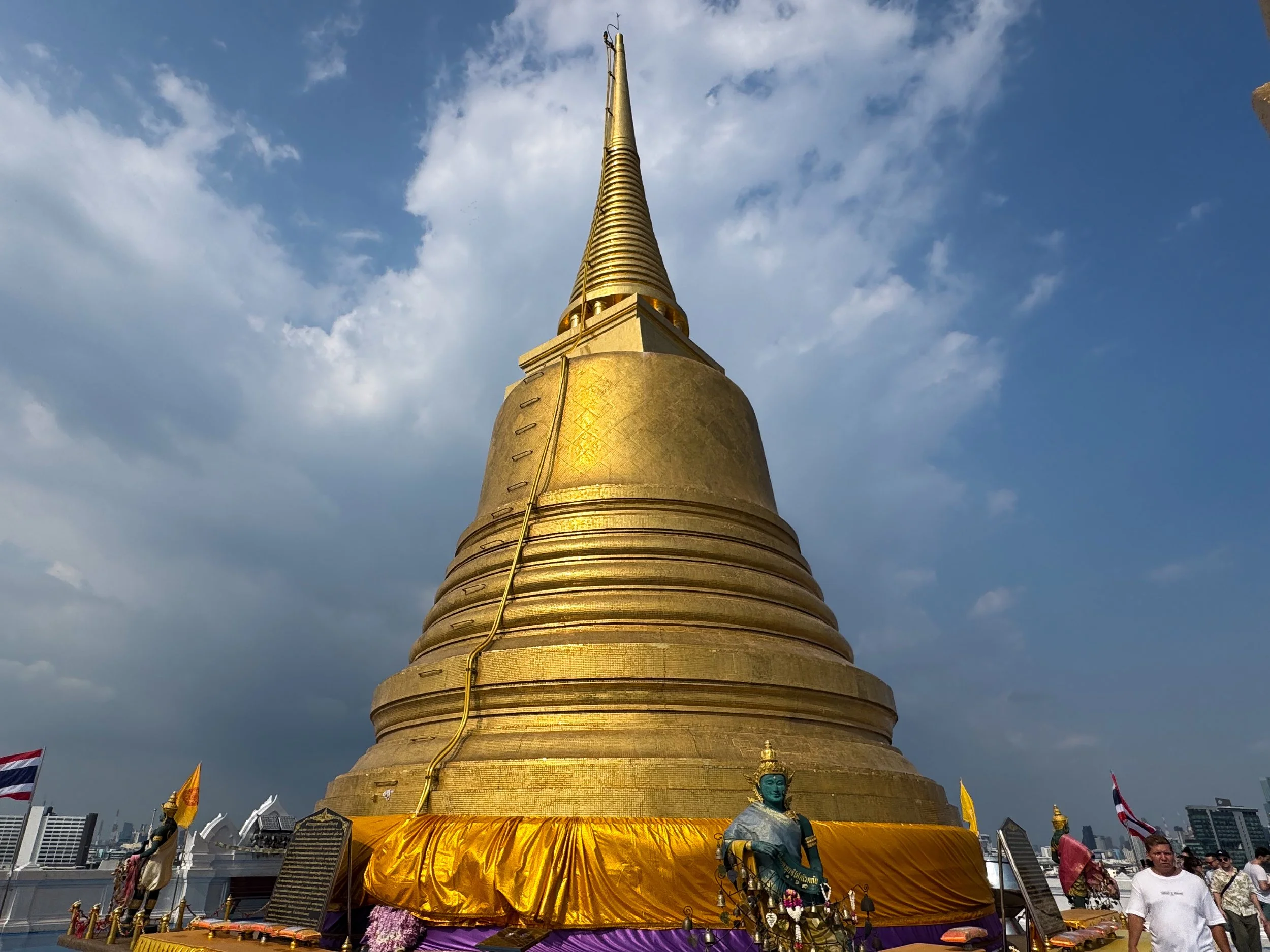
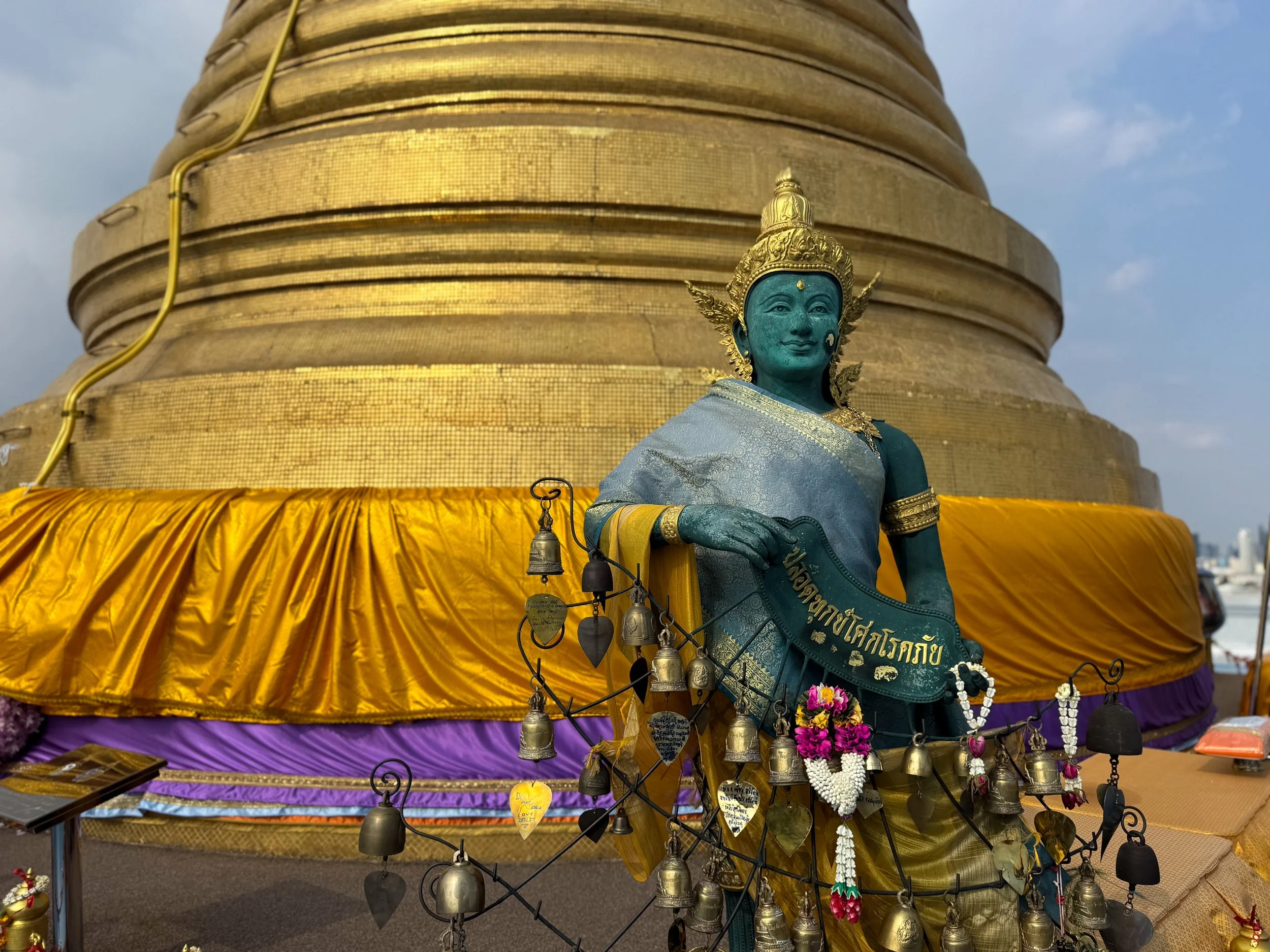
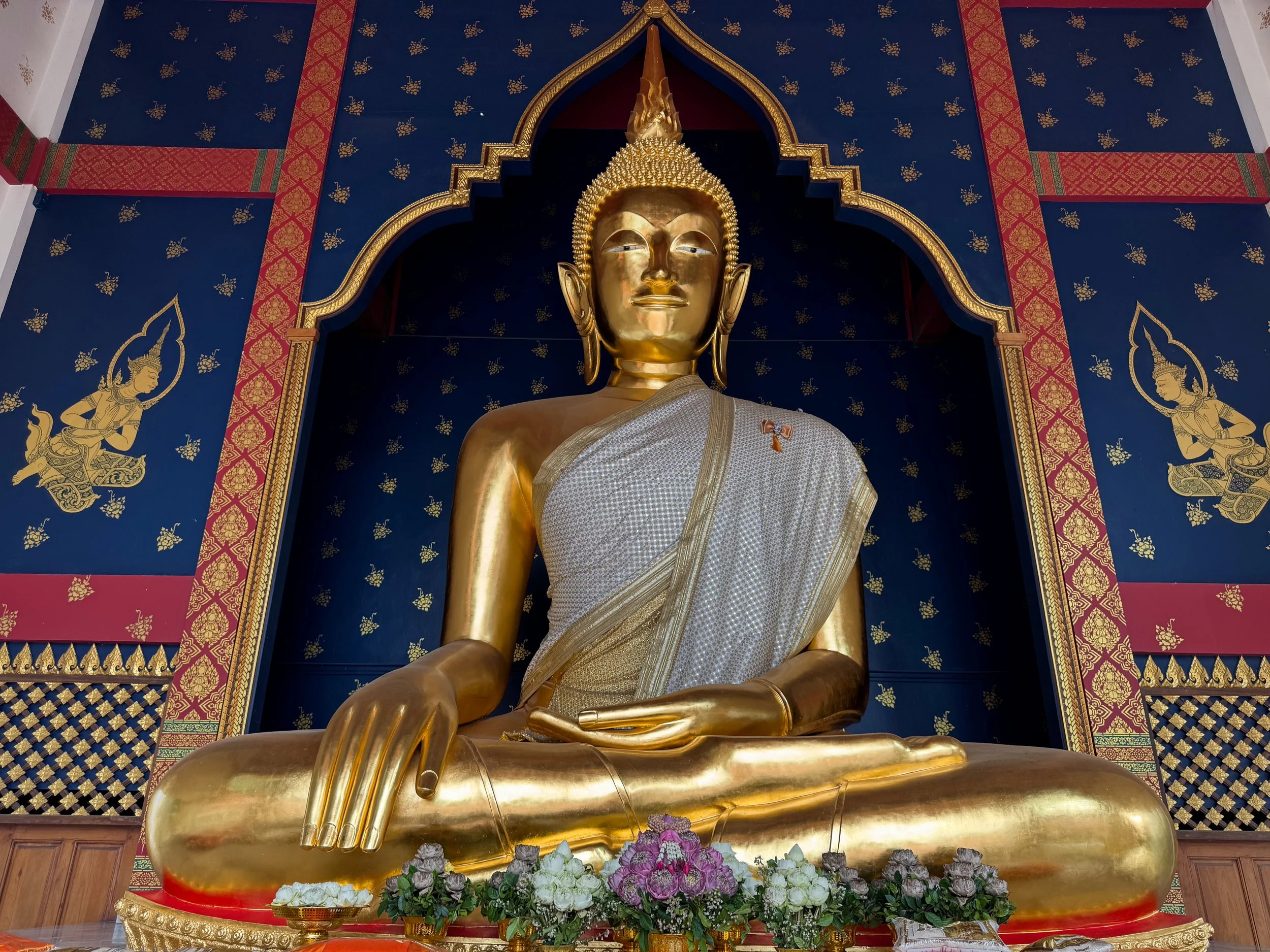
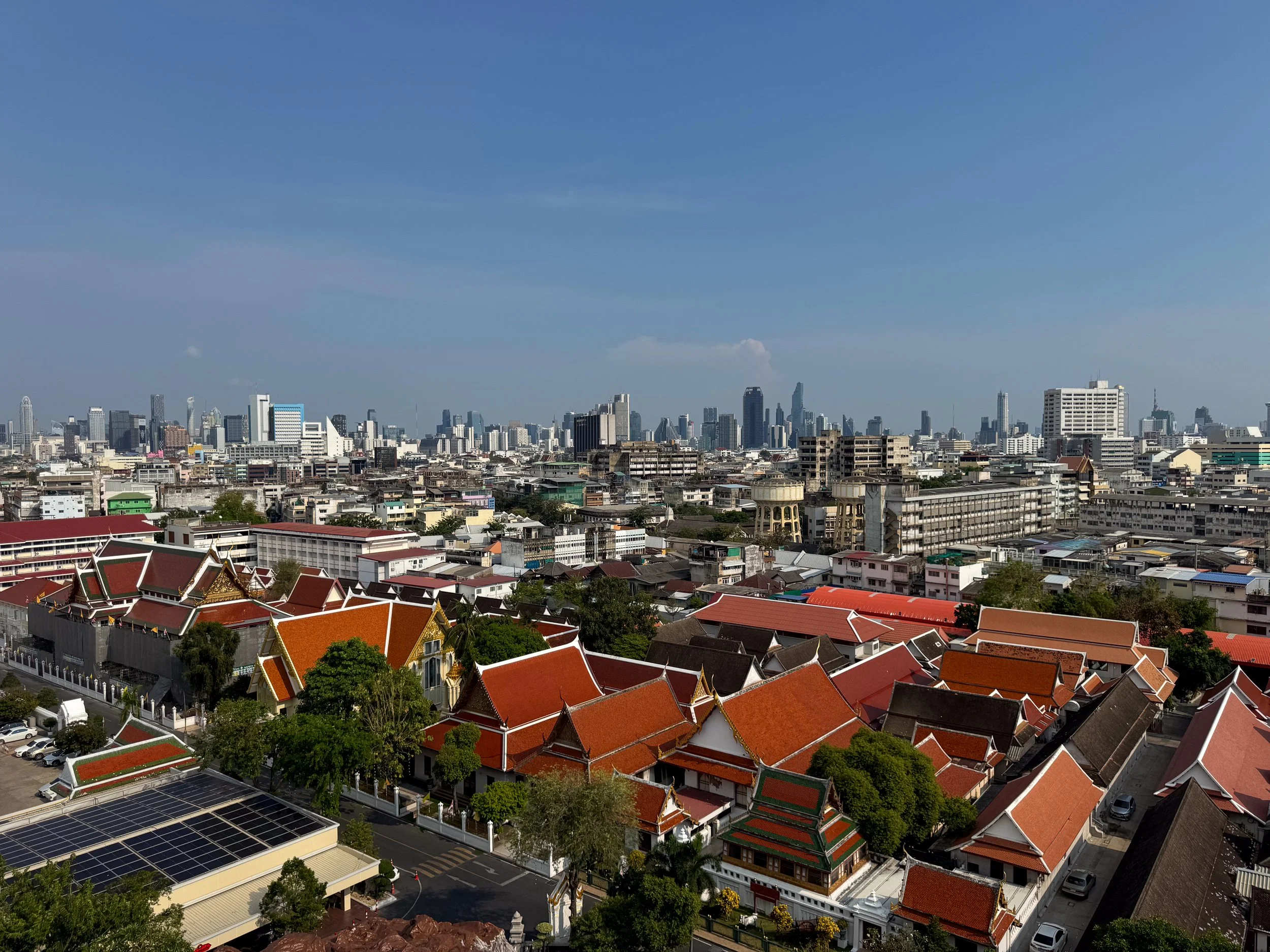
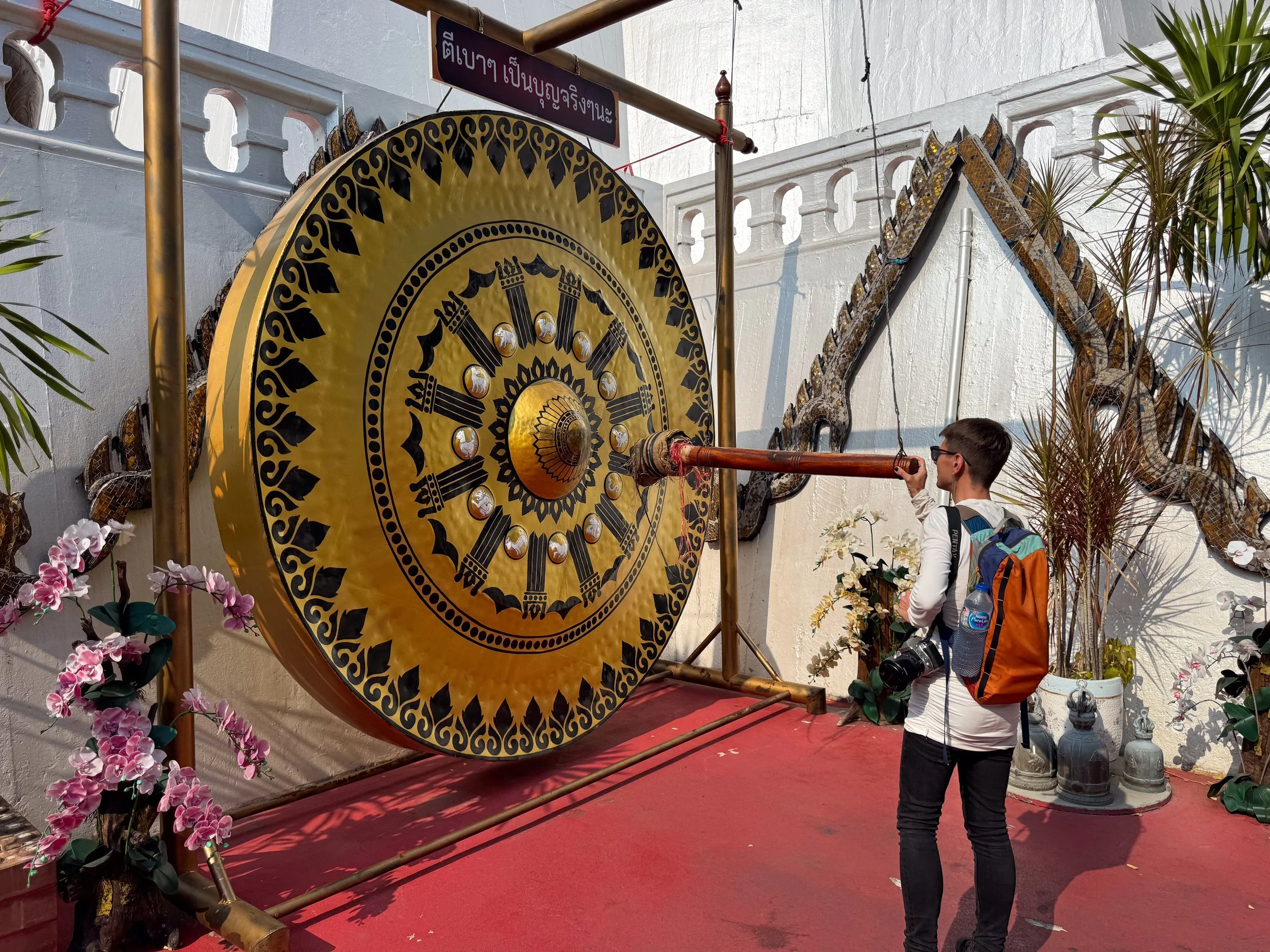
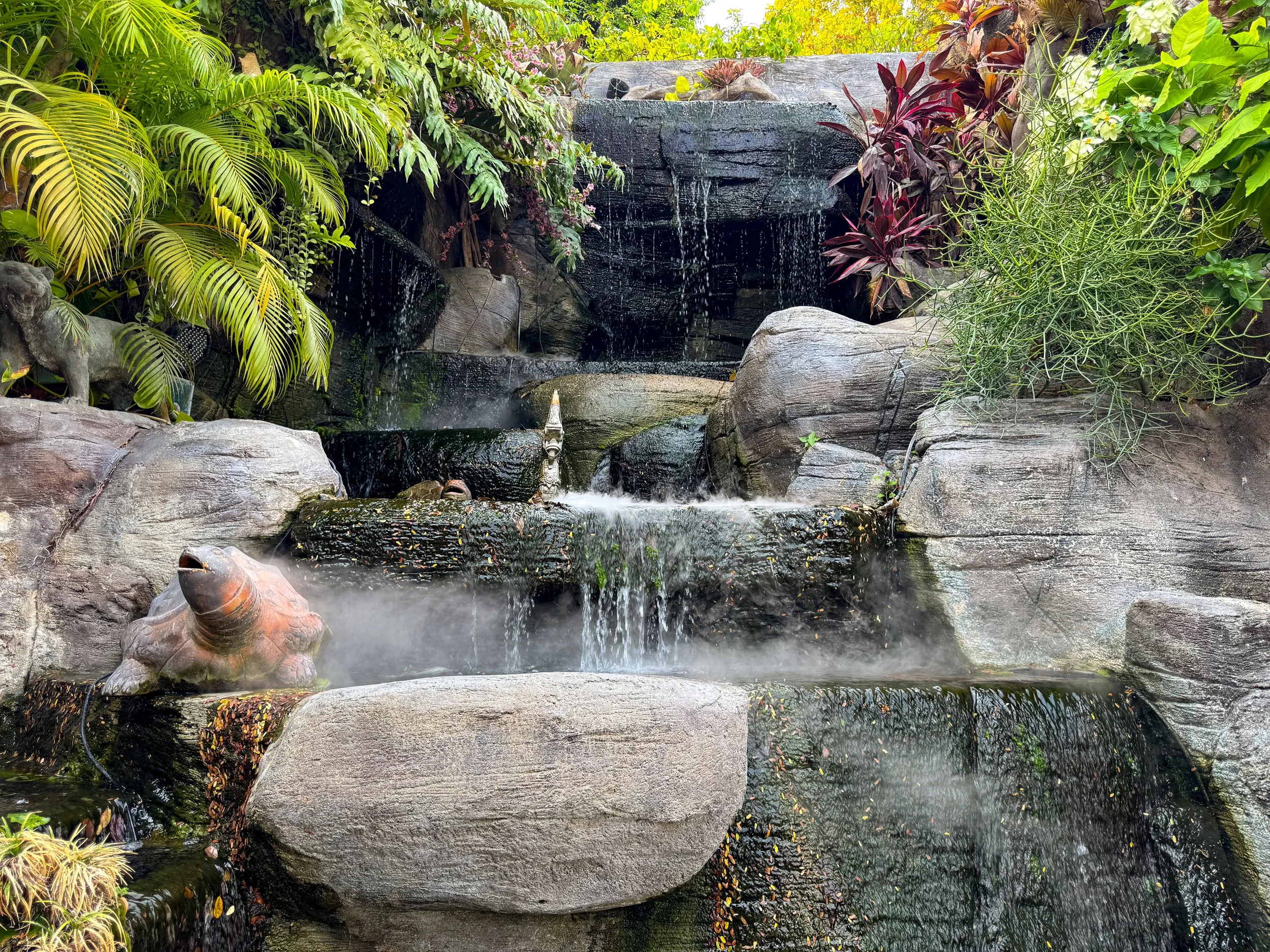
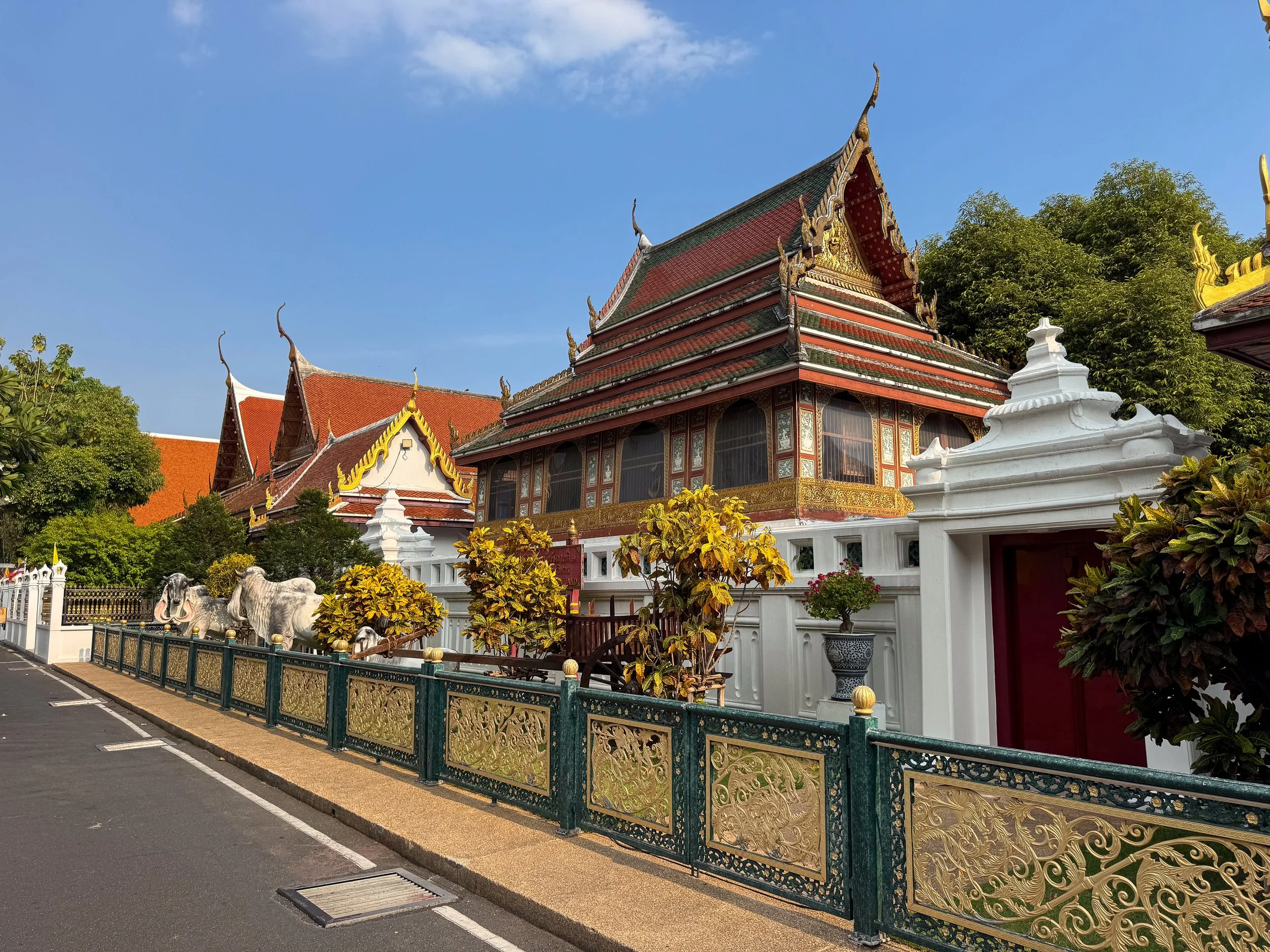
The Golden Mount. A wat on a man made hill with a large golden bell shaped stupa at its peak. Bells, gongs and wind chimes line the stairway leading to its observation deck with panoramic views of the entire city and skyline. The hill is landscaped with lush gardens, misting streams and tiny waterfalls. The surrounding neighborhood is defined by Khmer style mansions and houses, each with decorative facades, layered tiled roofs and gold ornamentation.
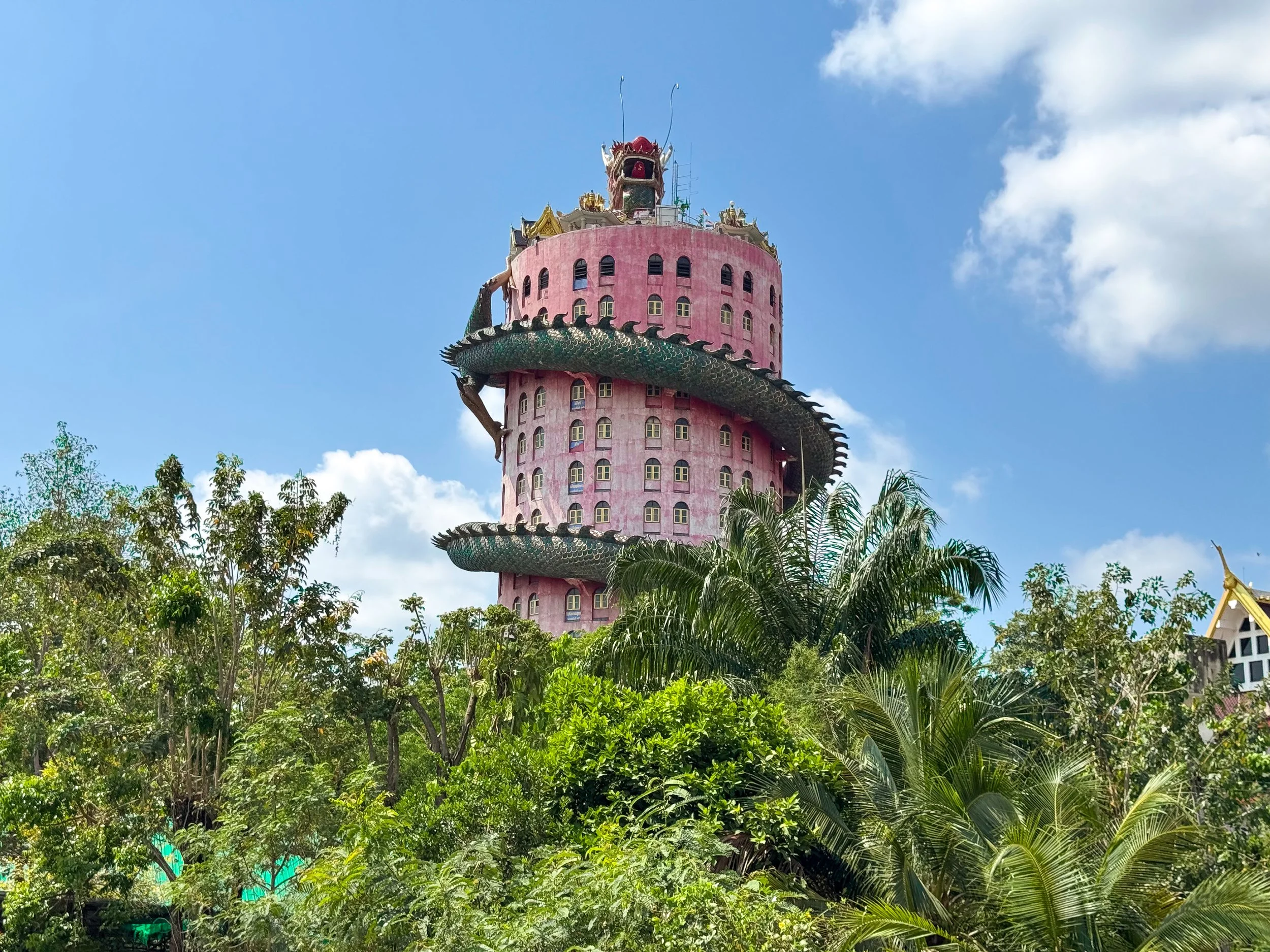
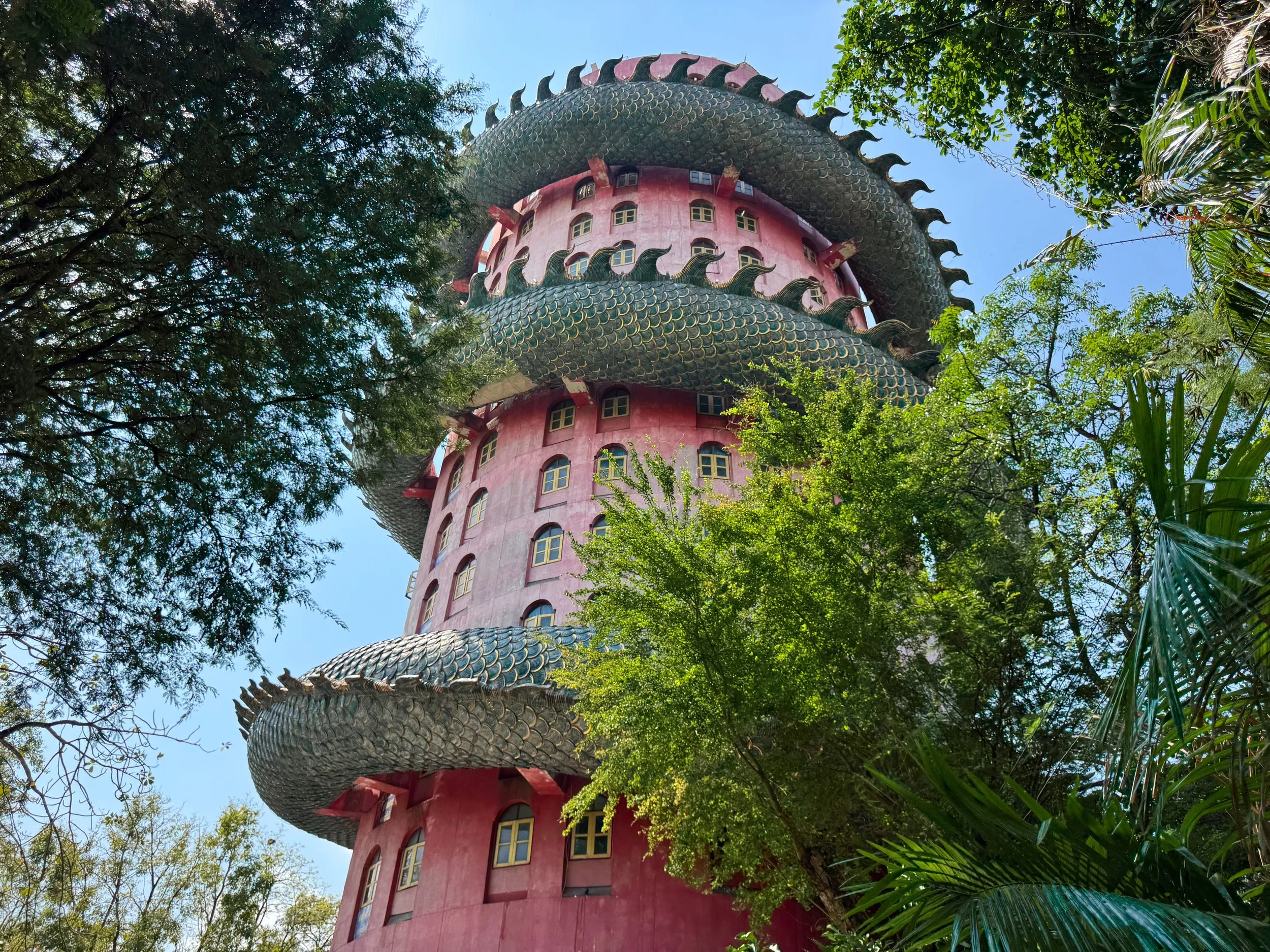
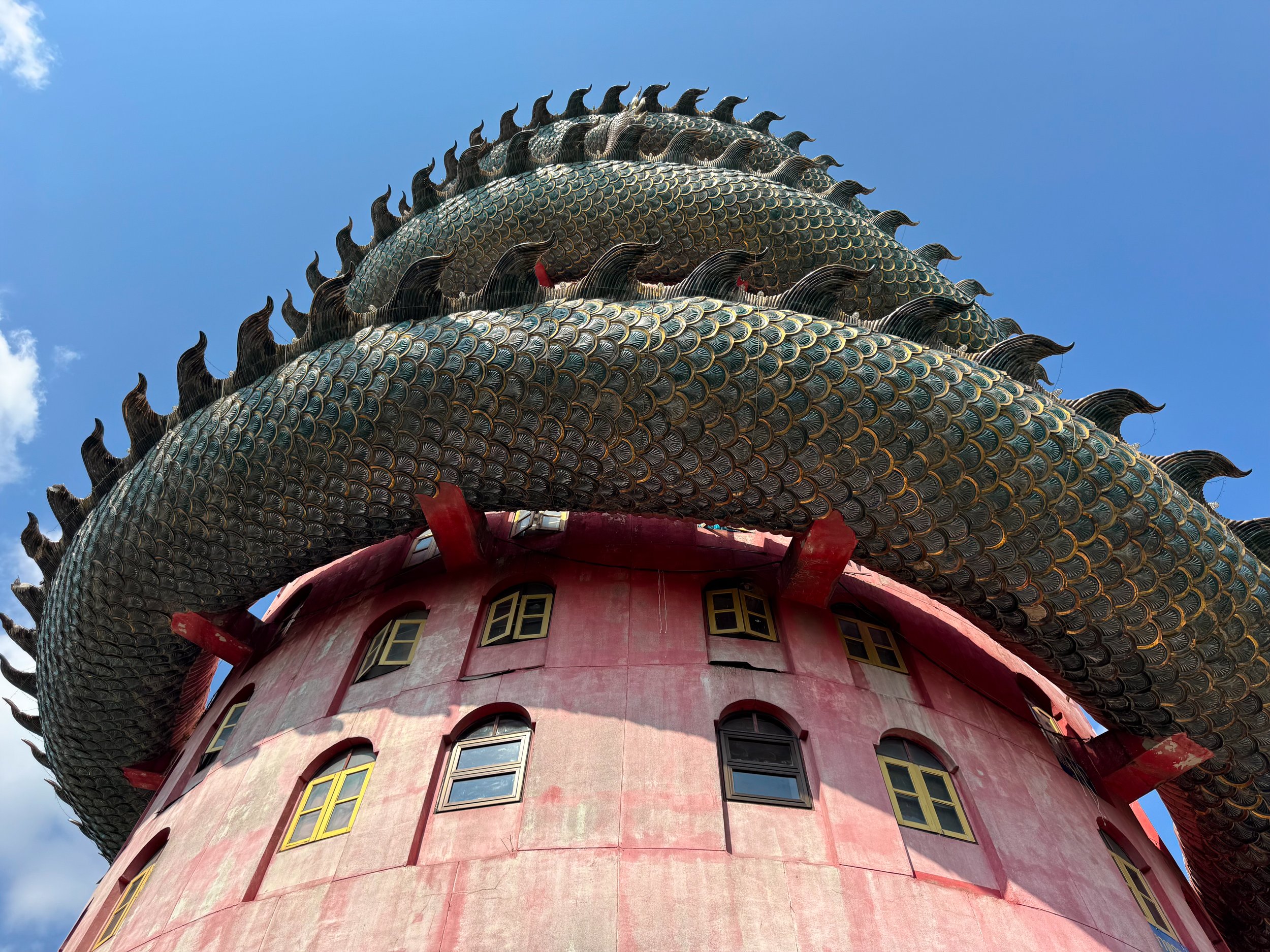
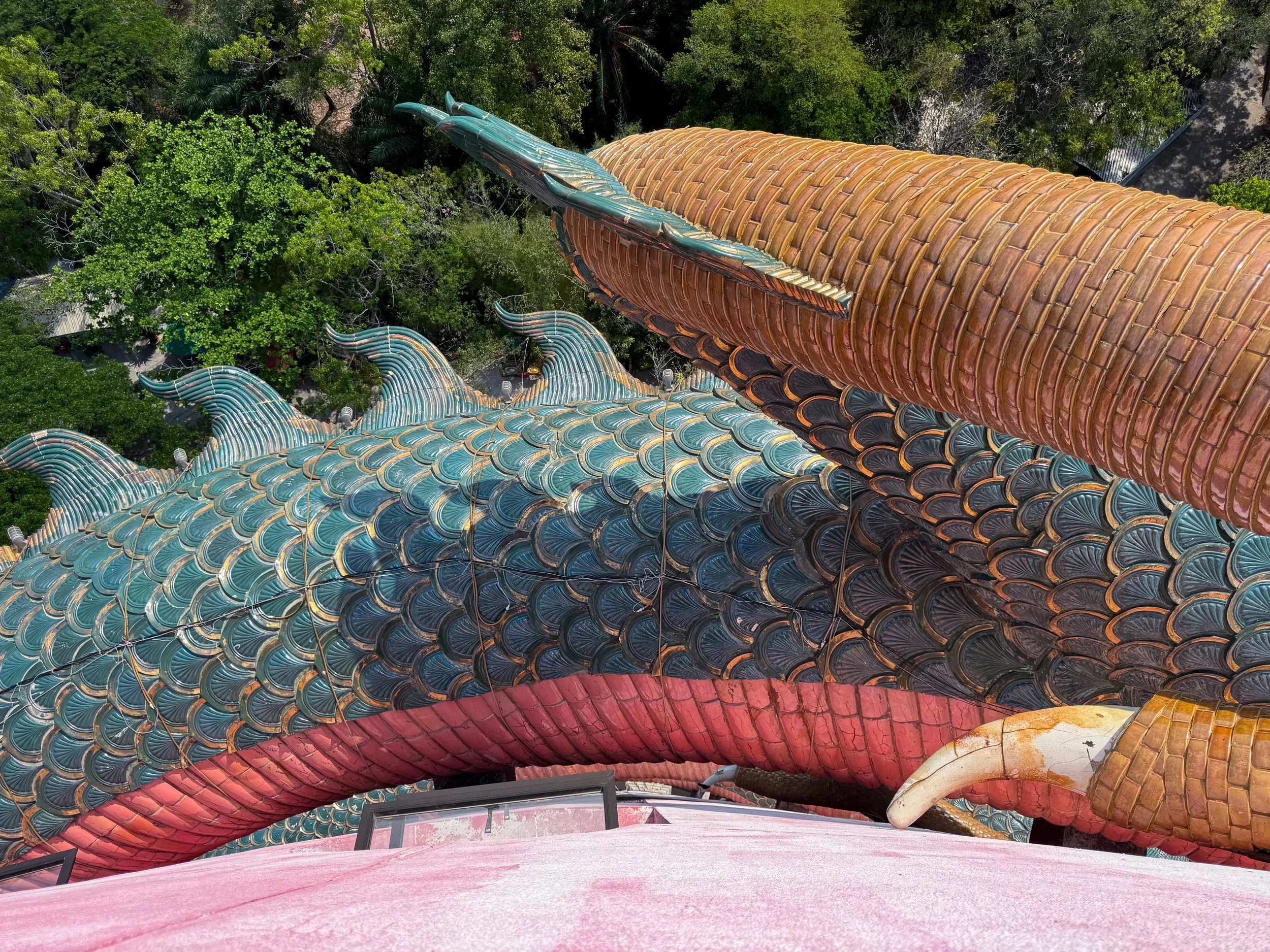
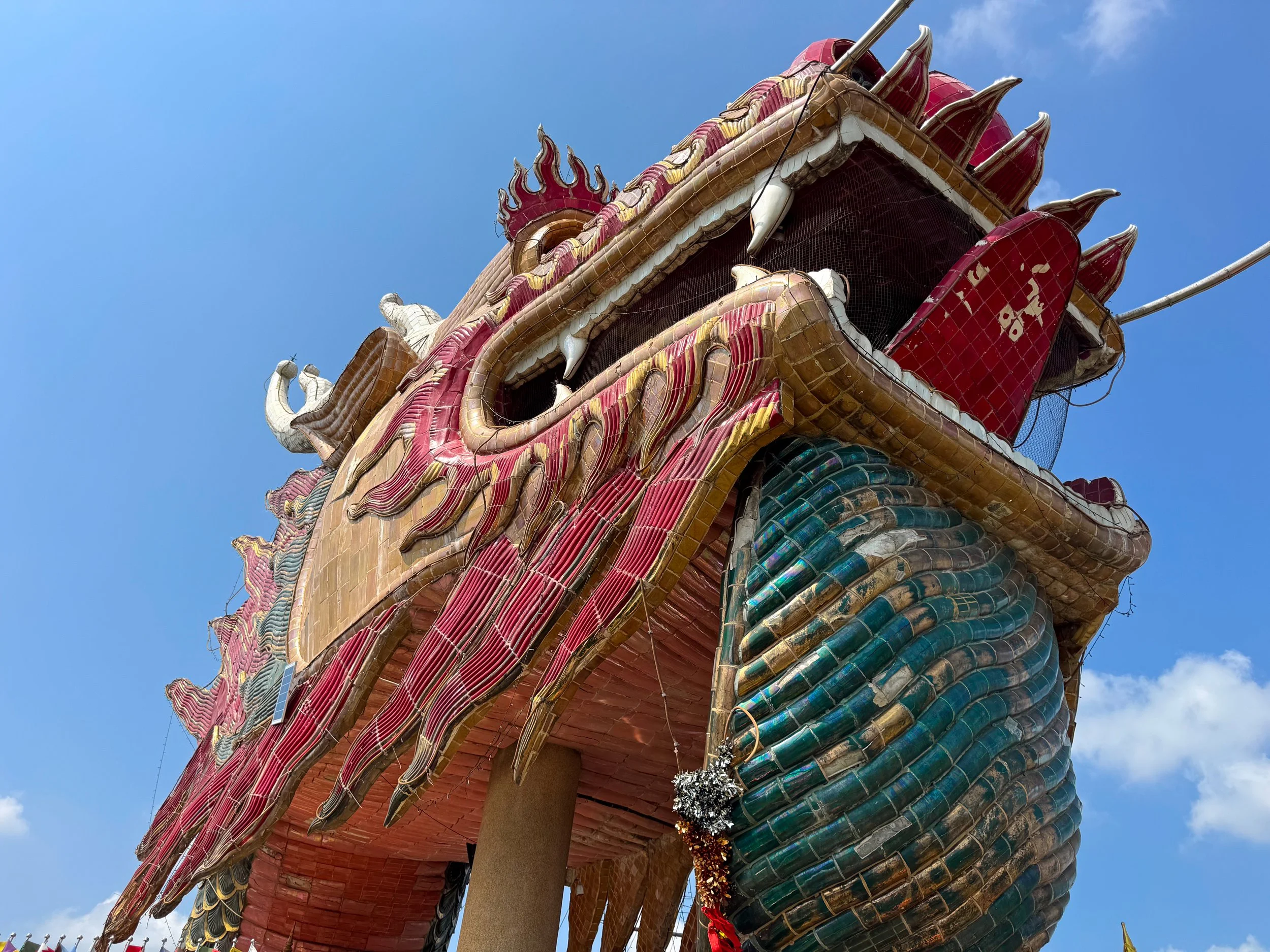
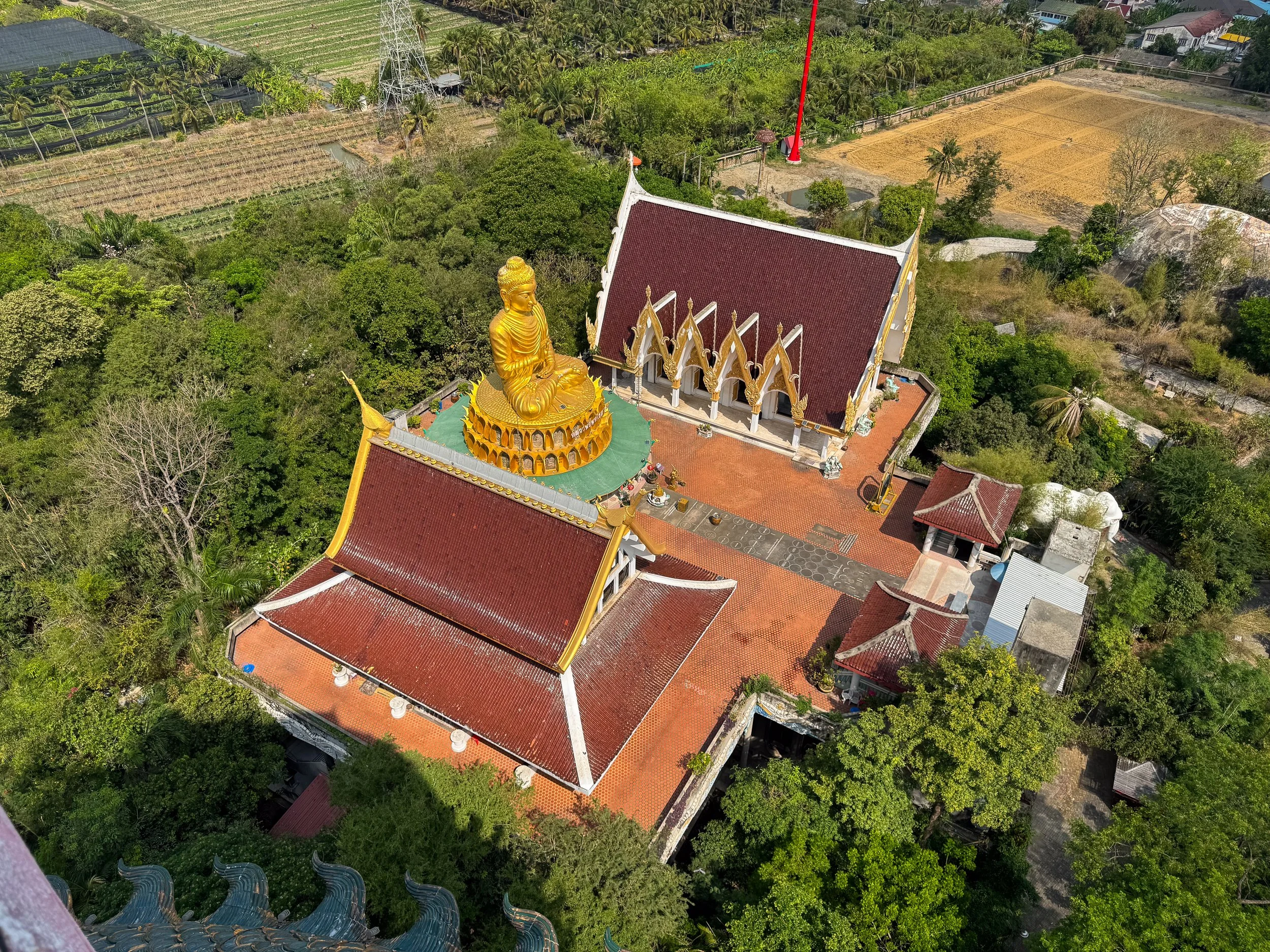
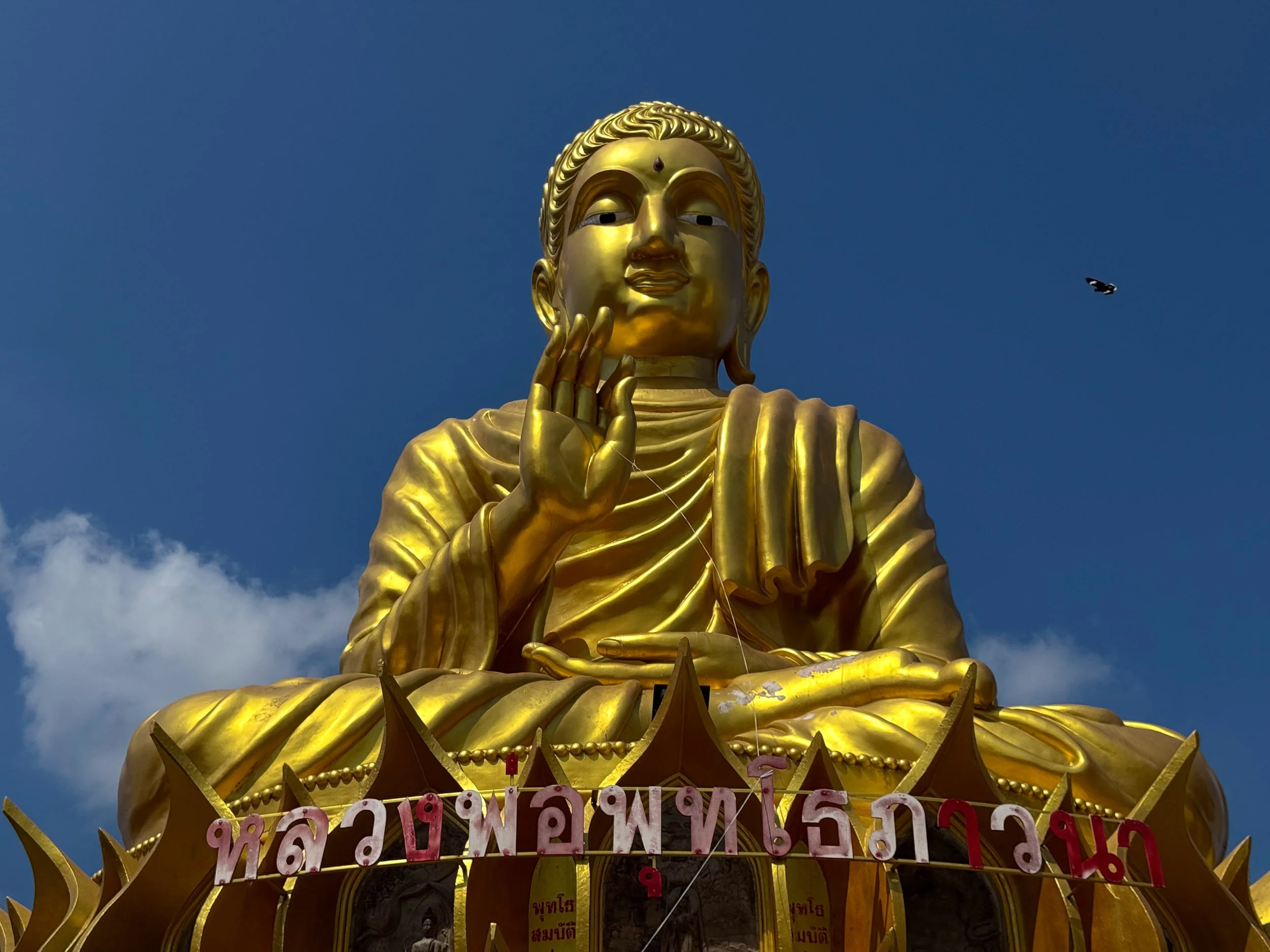
Wat Sam Phram. A pink cylindrical tower with a blue and green tiled dragon coiled around it. On the second floor, we entered the body of the dragon and ascended up the spiraled ramp, through the “levels of heaven.” At the top of the temple, we visited several Buddhist shrines and spoke with friendly monks. They told us stories of Buddhist legends, the temple’s origins and how to best experience it. We bought a loop of marigolds from them as an offering and pet the dragon’s beard for good luck. The temple is modern but nonetheless fascinating. On its grounds is a separate statue of a large golden Buddha seated upon a lotus leaf. The temple is located an hour outside of Bangkok and reachable by Grab for around 400 Baht. Given its distant location, there were few visitors outside of the monks living here.
The Ancient City
The Ancient City is a large outdoor museum and historical theme park with reproductions of Thailand’s most important wats, temples and sights including those that have long been lost to history.
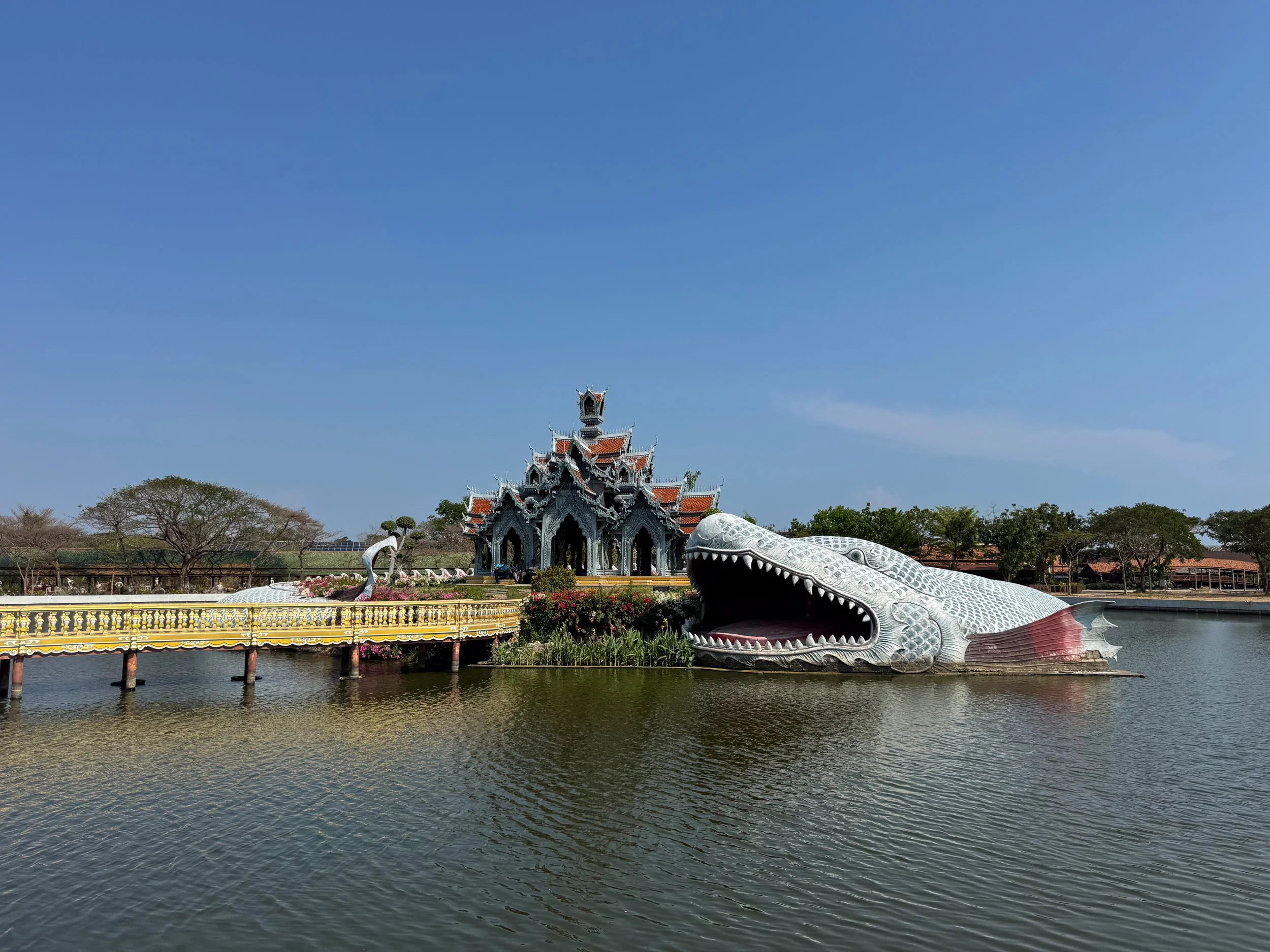


Semeru Mountain. An island temple surrounded by a giant koi fish, reachable along a winding yellow bridge. The wooden temple is ornately carved with finely painted sculptures of Hindu deities and peacocks.
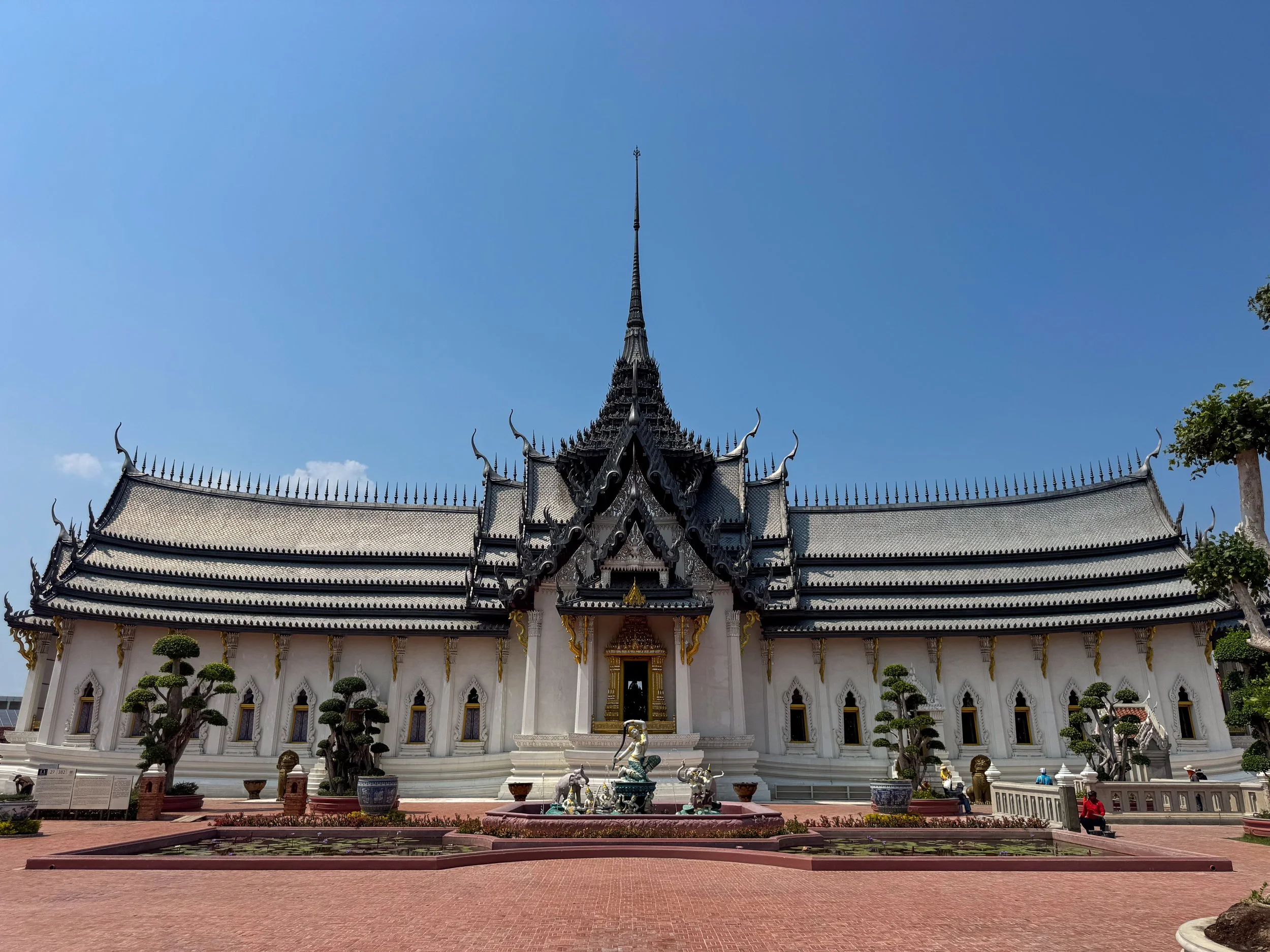
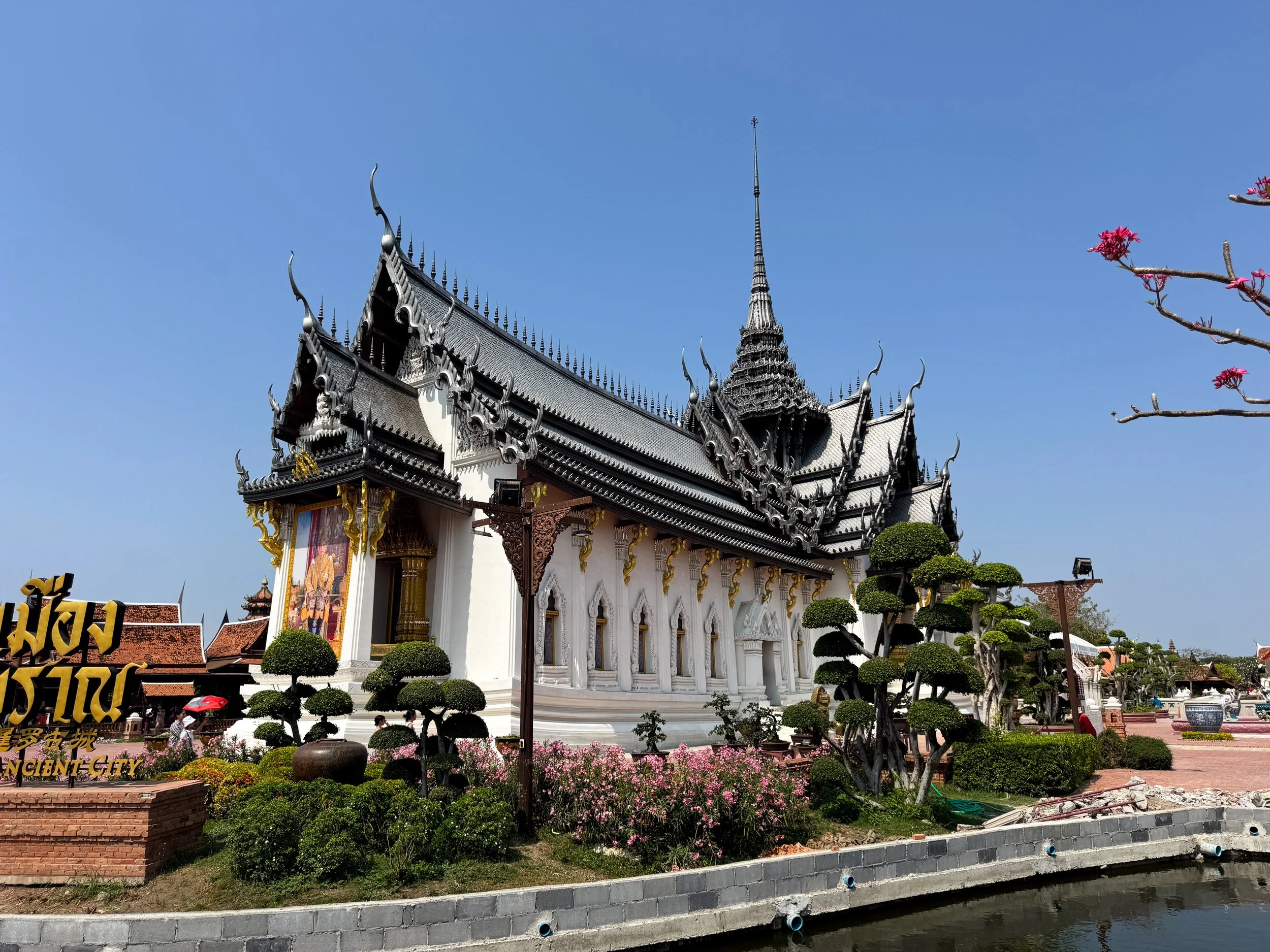
Sanphet Prasat Palace, Ayutthaya. A grand reconstruction of the Thai Imperial Palace lost to history. The large white building had a multi tiered black tiled Khmer style roof. It’s forbidden to take photos within its gilded interior displaying royal statues and garments. The surrounding grounds are landscaped with lily ponds, small streams, sculpted trees and elephant shaped fountains.
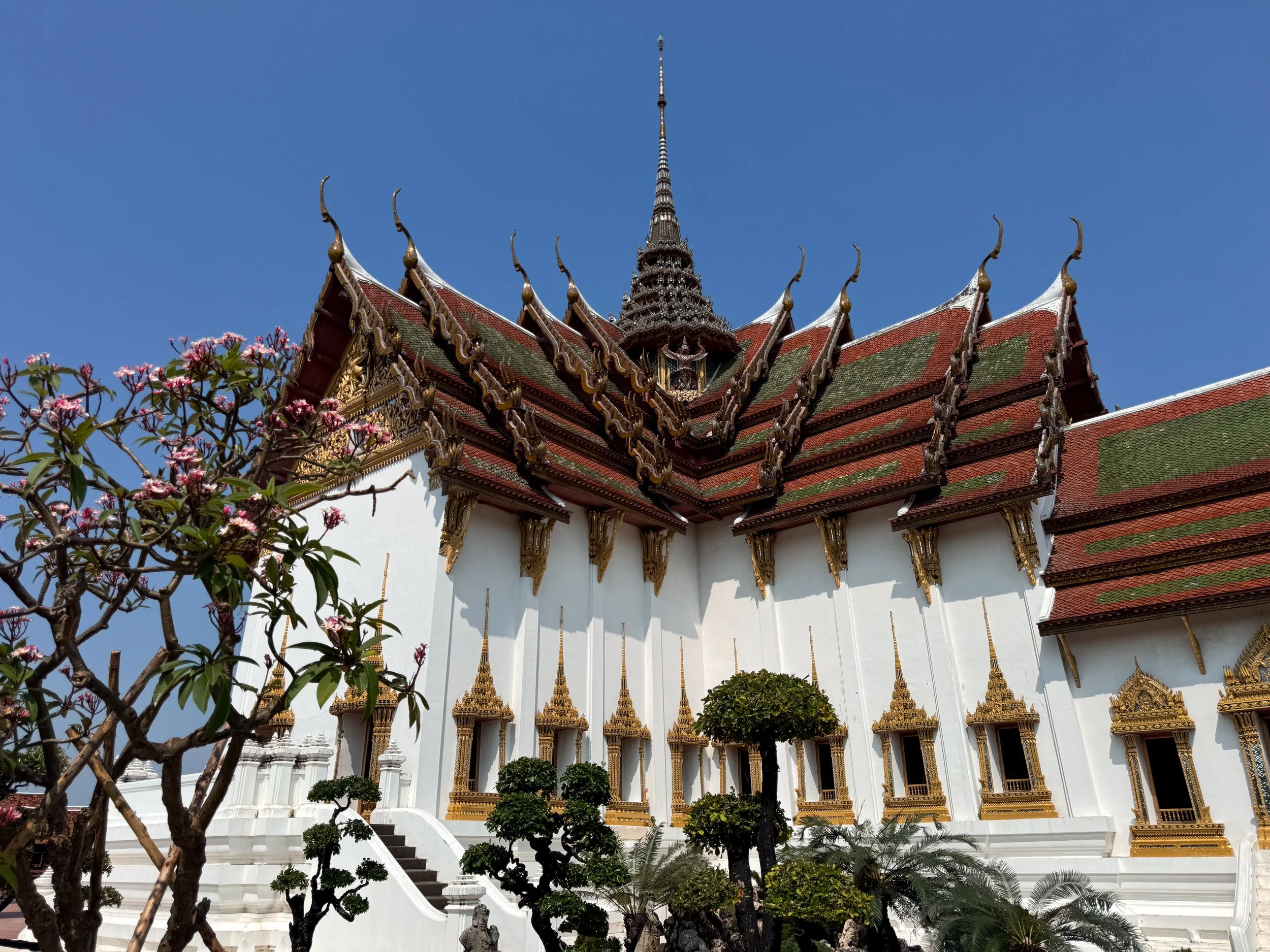
Dusit Maha Prasat Palace. A reproduction of a royal palace with four wings decorated in elaborate handprinted murals of battles, legends and royal coronations. Featured inside is an emerald Buddha. Its exterior is similar to other royal palaces with a white facade, gold ornamentation and a multi-tiered Khmer style roof.
The Scripture Repository. A small but beautiful stilted pagoda above a pond with giant lily pads.
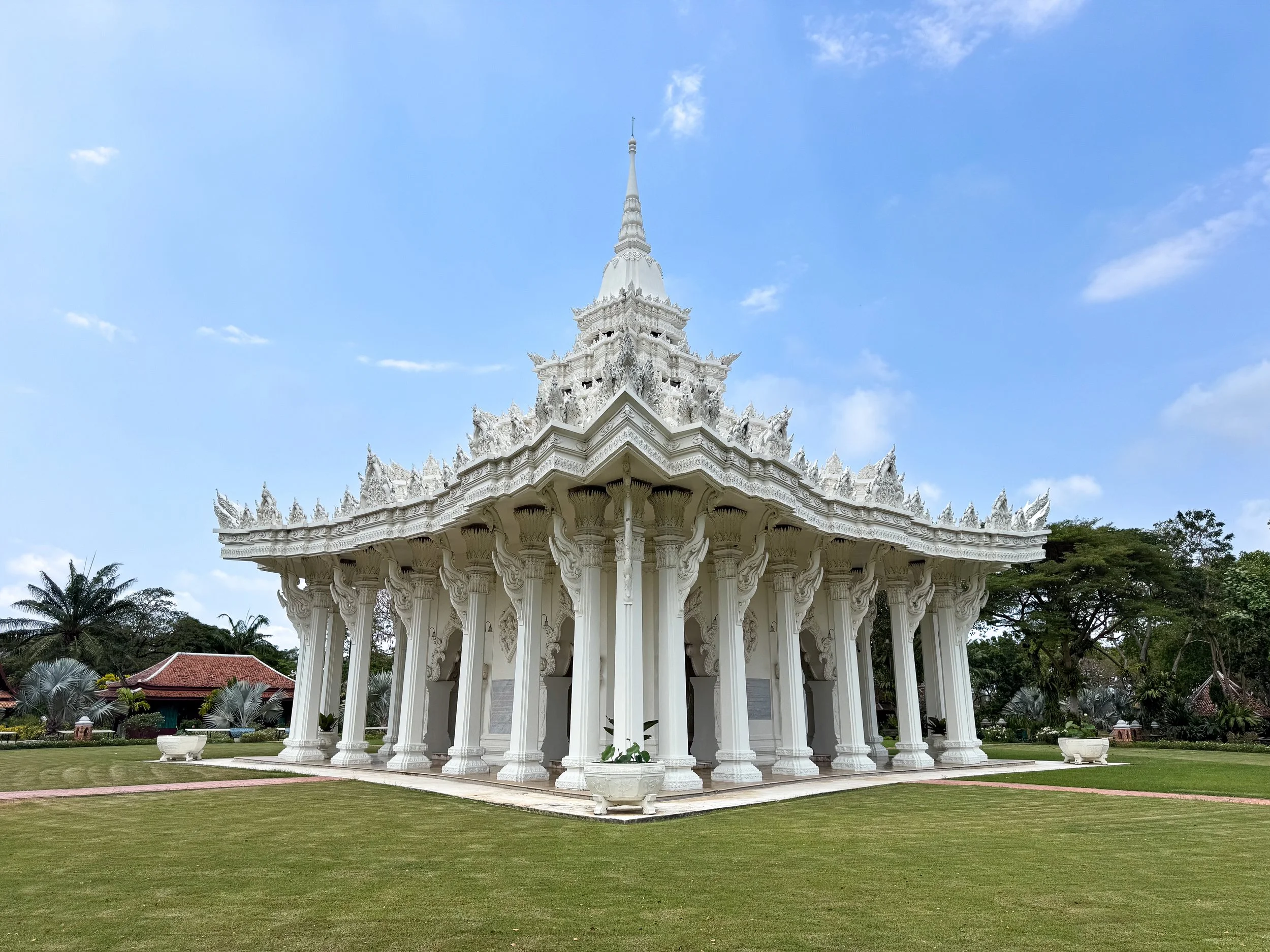
Mondop Thep Bidorn. A white temple with an intricate roof and pyramid like stupa.
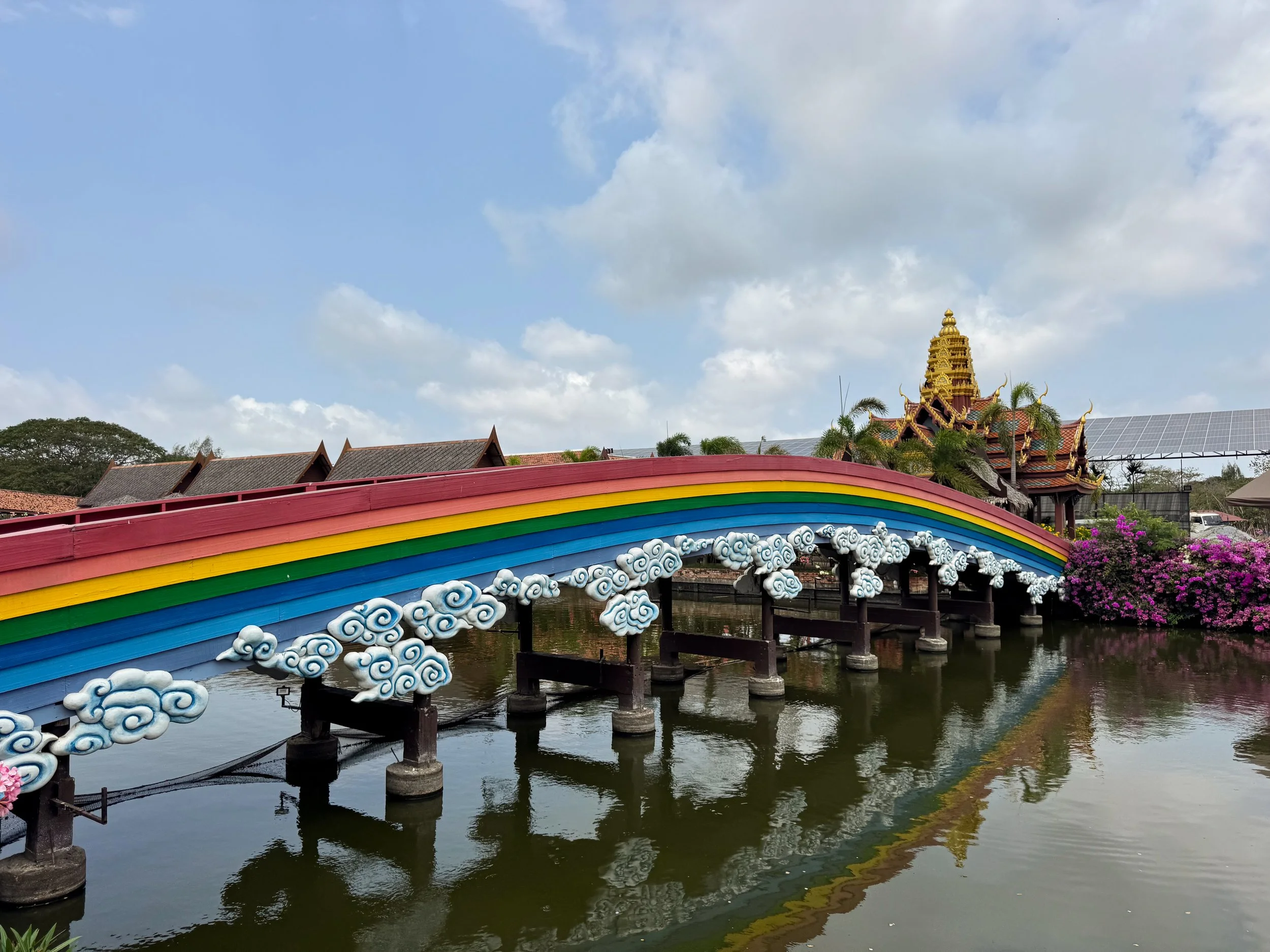
Rainbow Bridge. A photogenic bow shaped bridge over a canal painted like a rainbow.
Sala of Ramayana. A temple with multiple mauve and emerald green pavilions connected by a series of zig zagging boardwalks over a large pond dedicated to a Hindu deity.
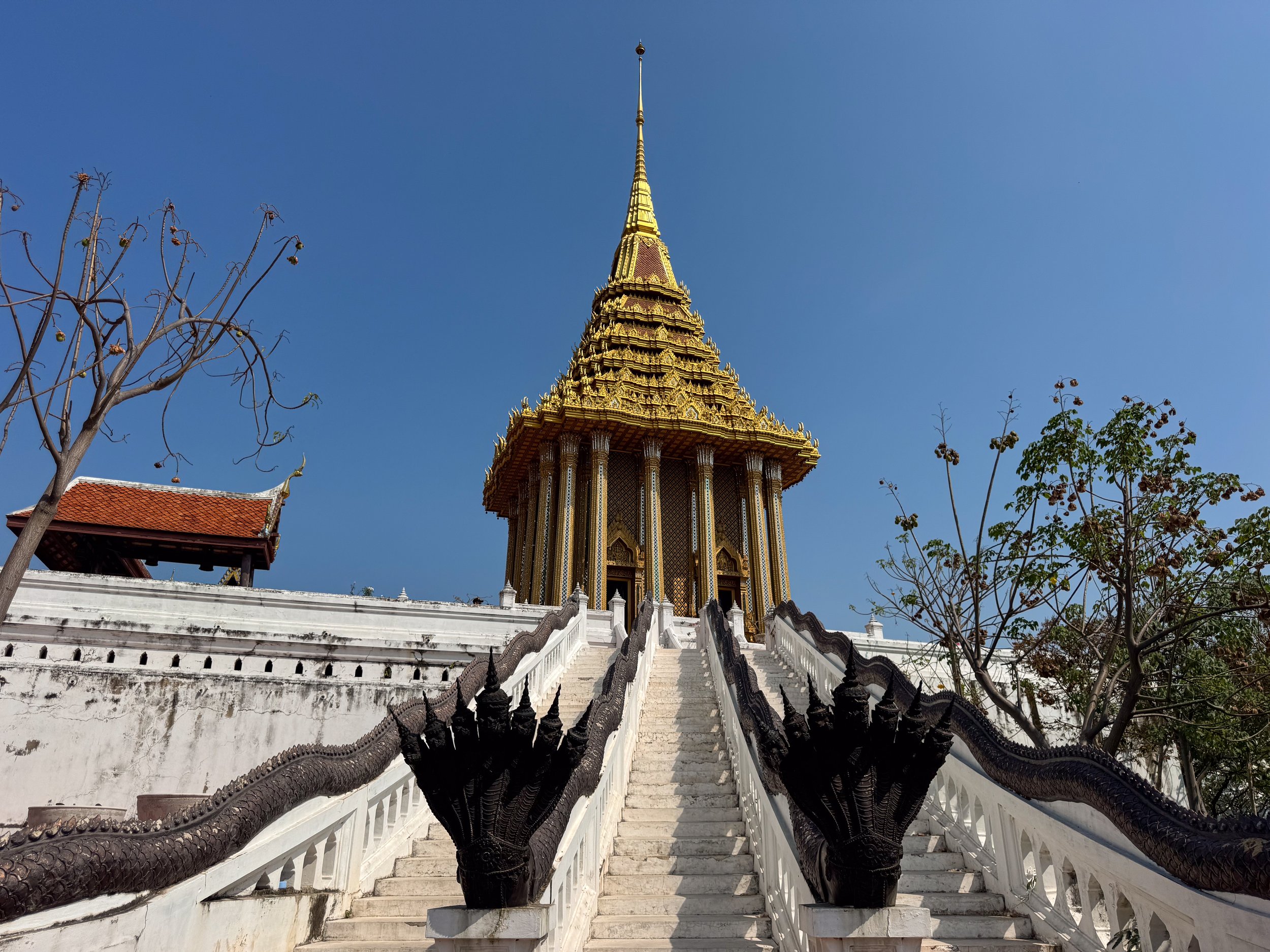
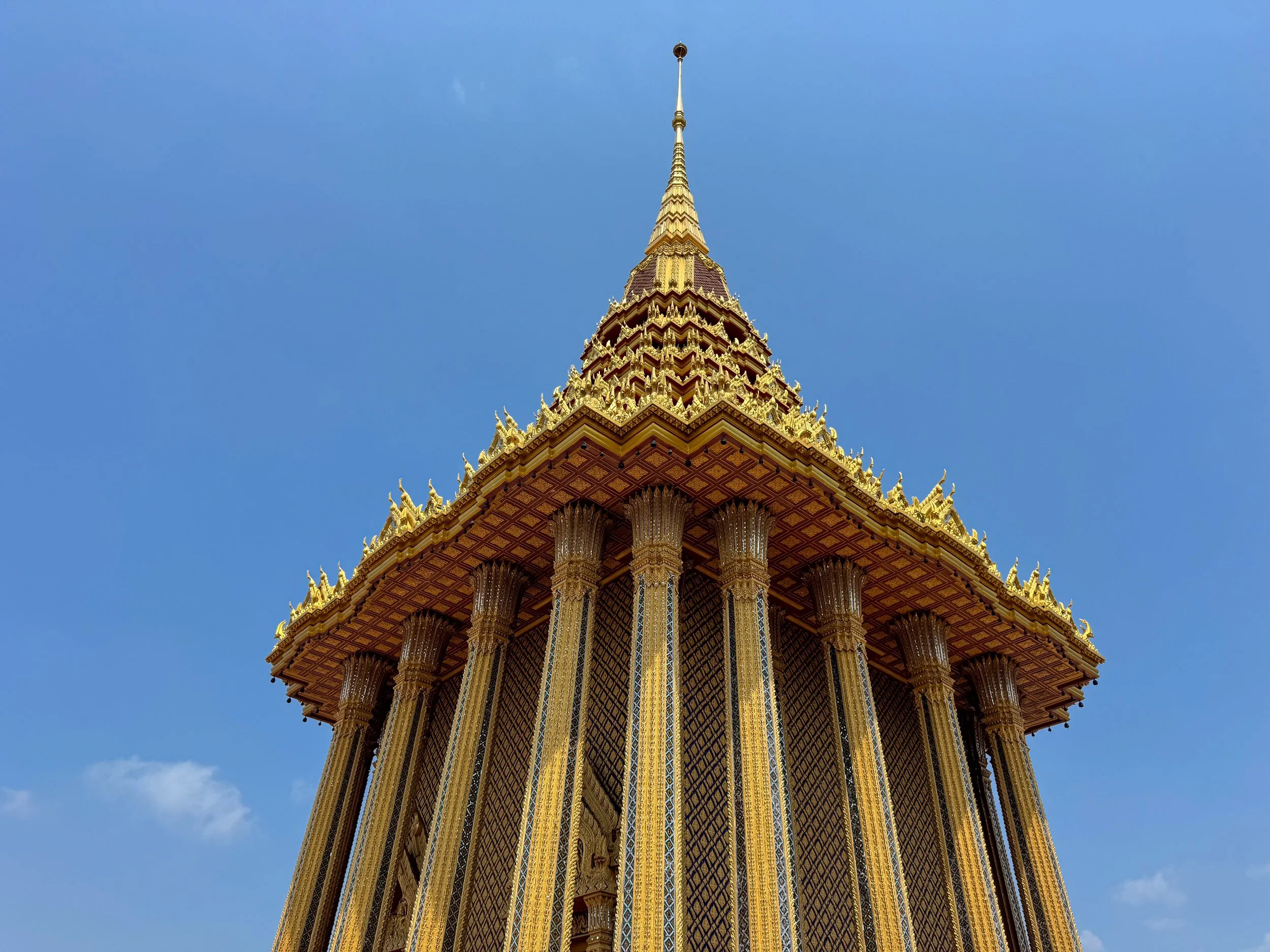
The Footprint of the Lord Buddha, Saraburi. A tall golden temple prominently placed on a stepped white platform guarded by a mythical seven headed snake. The temple is covered in a mosaic of reflective, gold and colorful tiles. Inside, a series of mirrors reflect the golden interior into infinity.
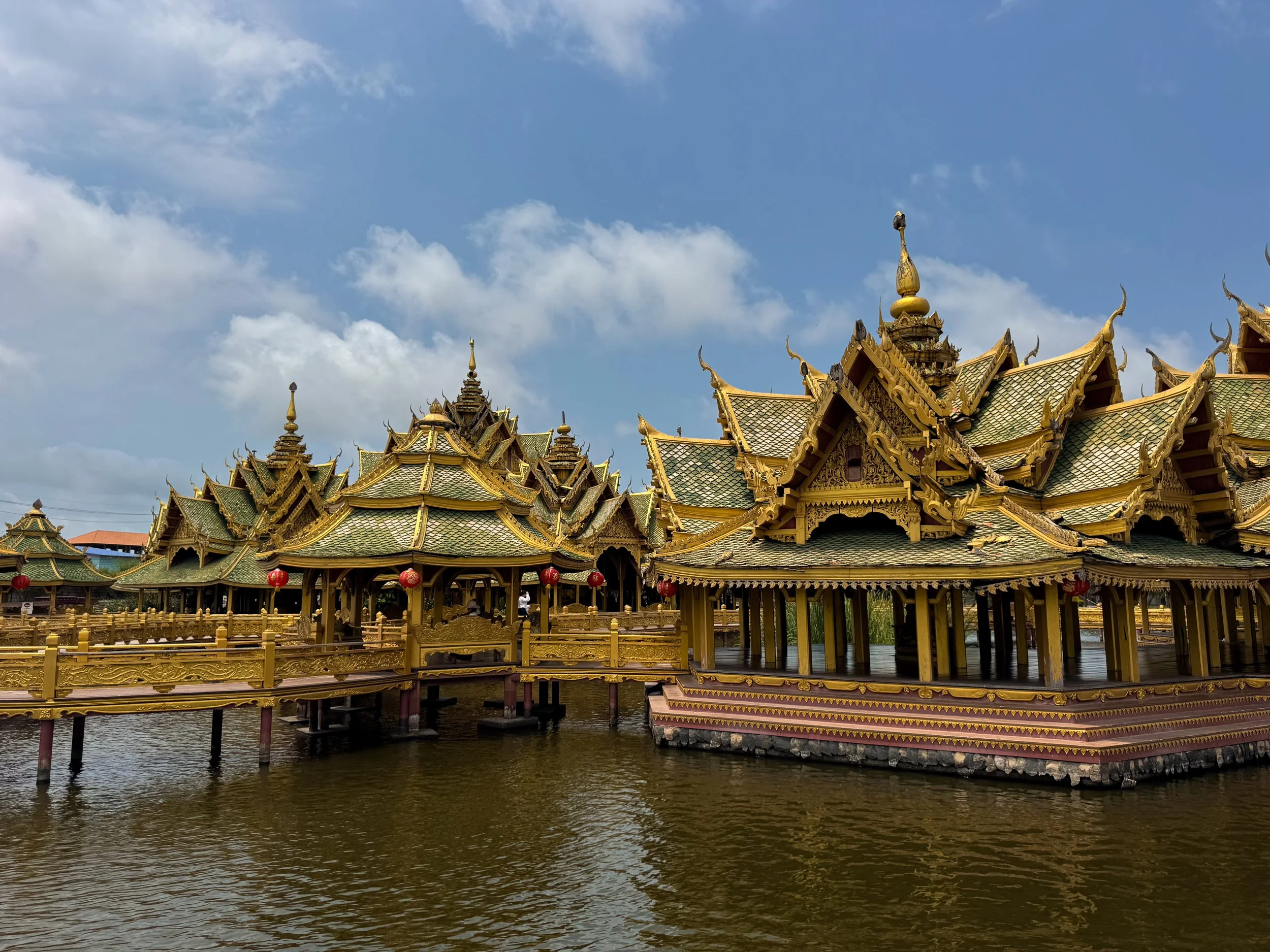
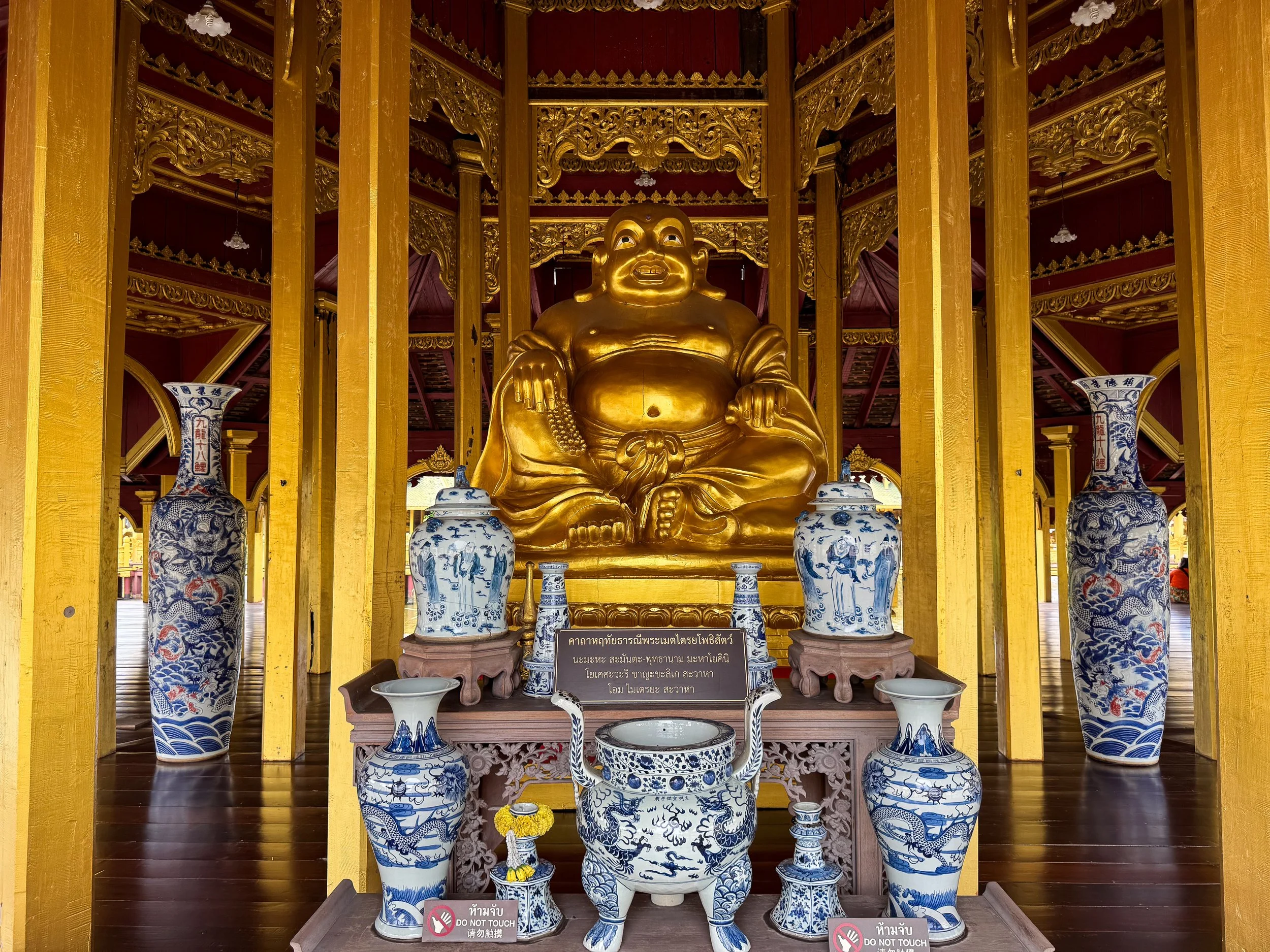
Pavilion of the Enlightened. A series of gold painted pagodas and pavilions connected by a network of overwater boardwalks. We visited the “fat Buddha,” a golden statue of the big bellied and laughing buddha.
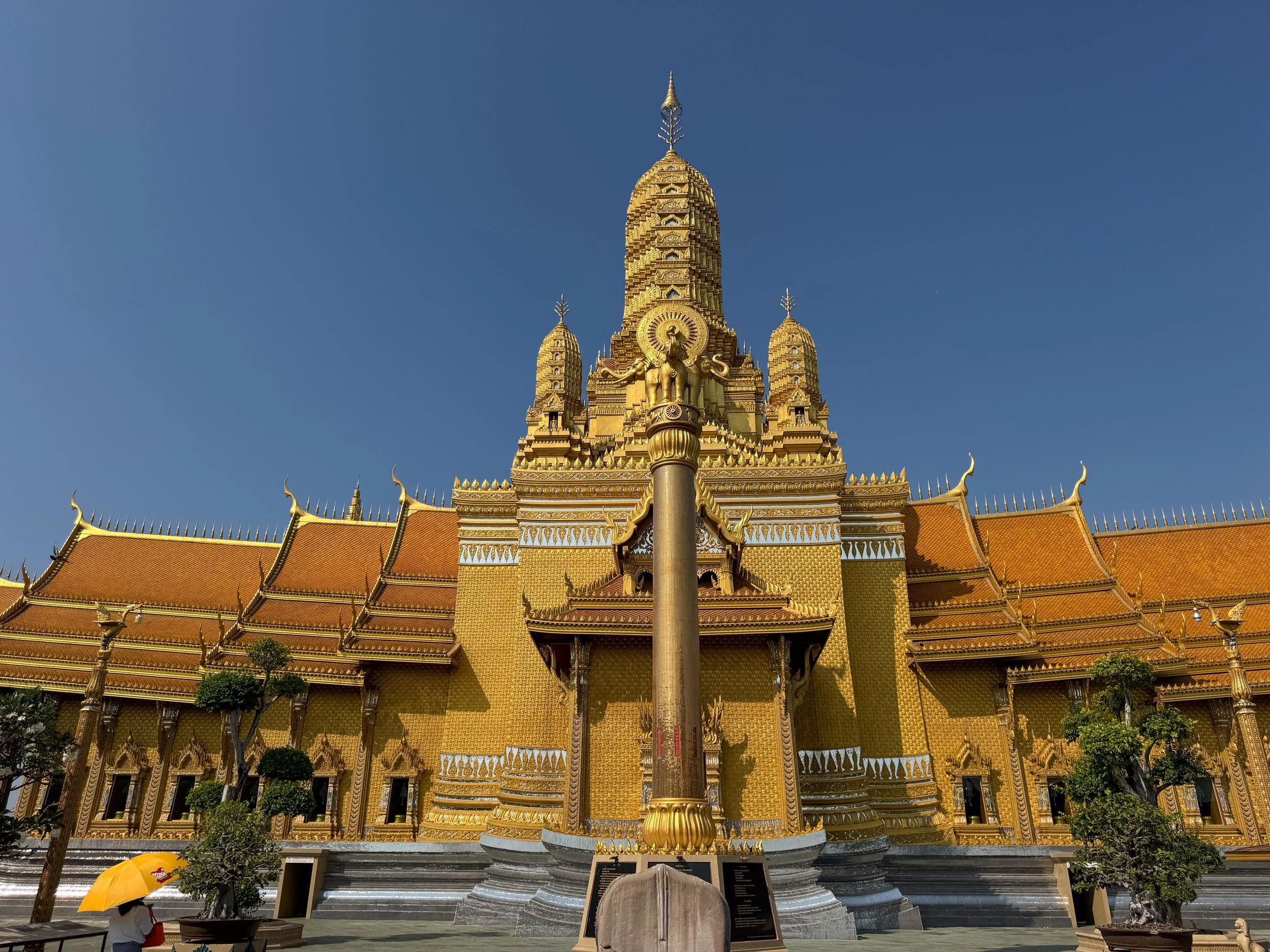
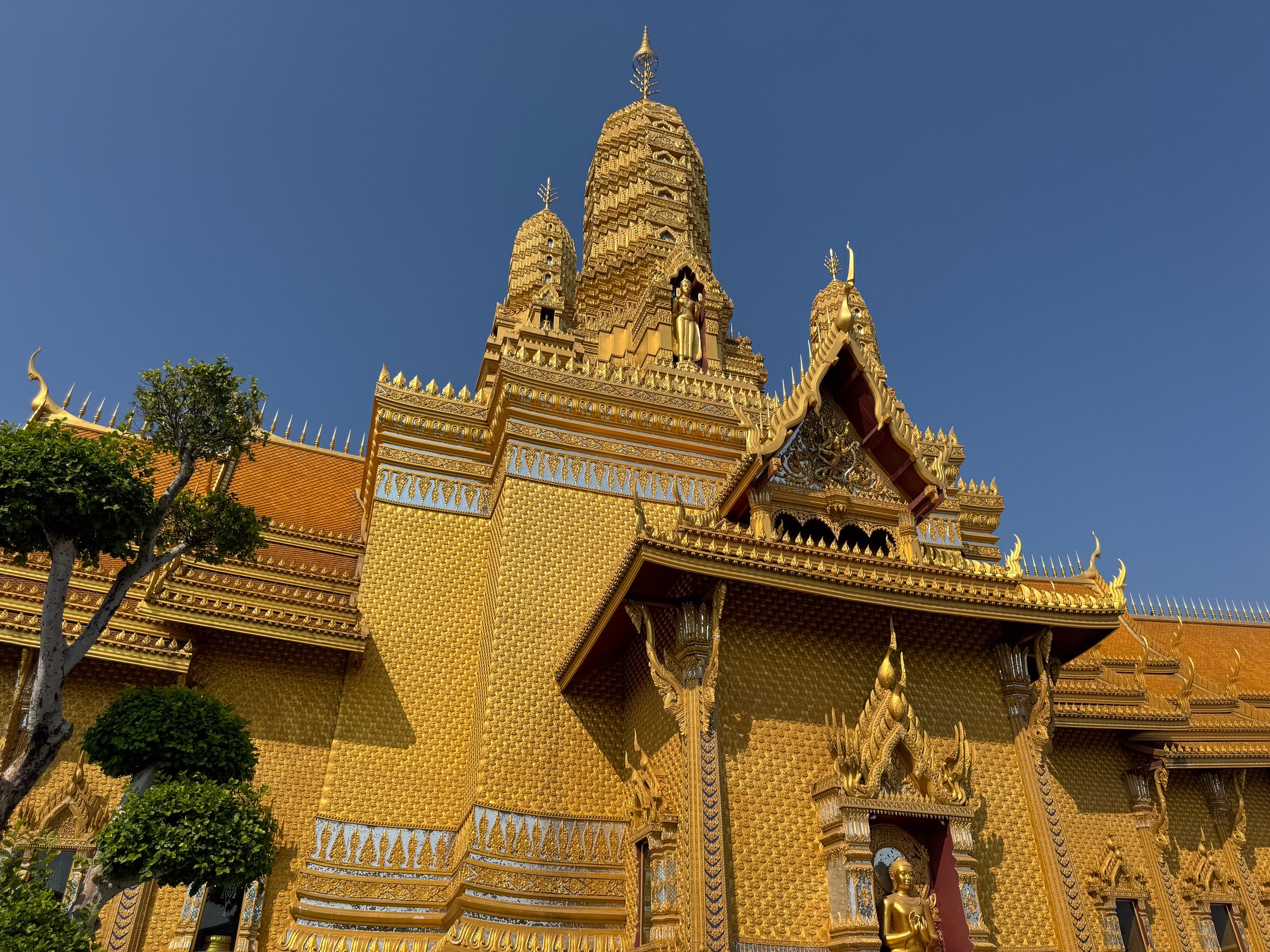
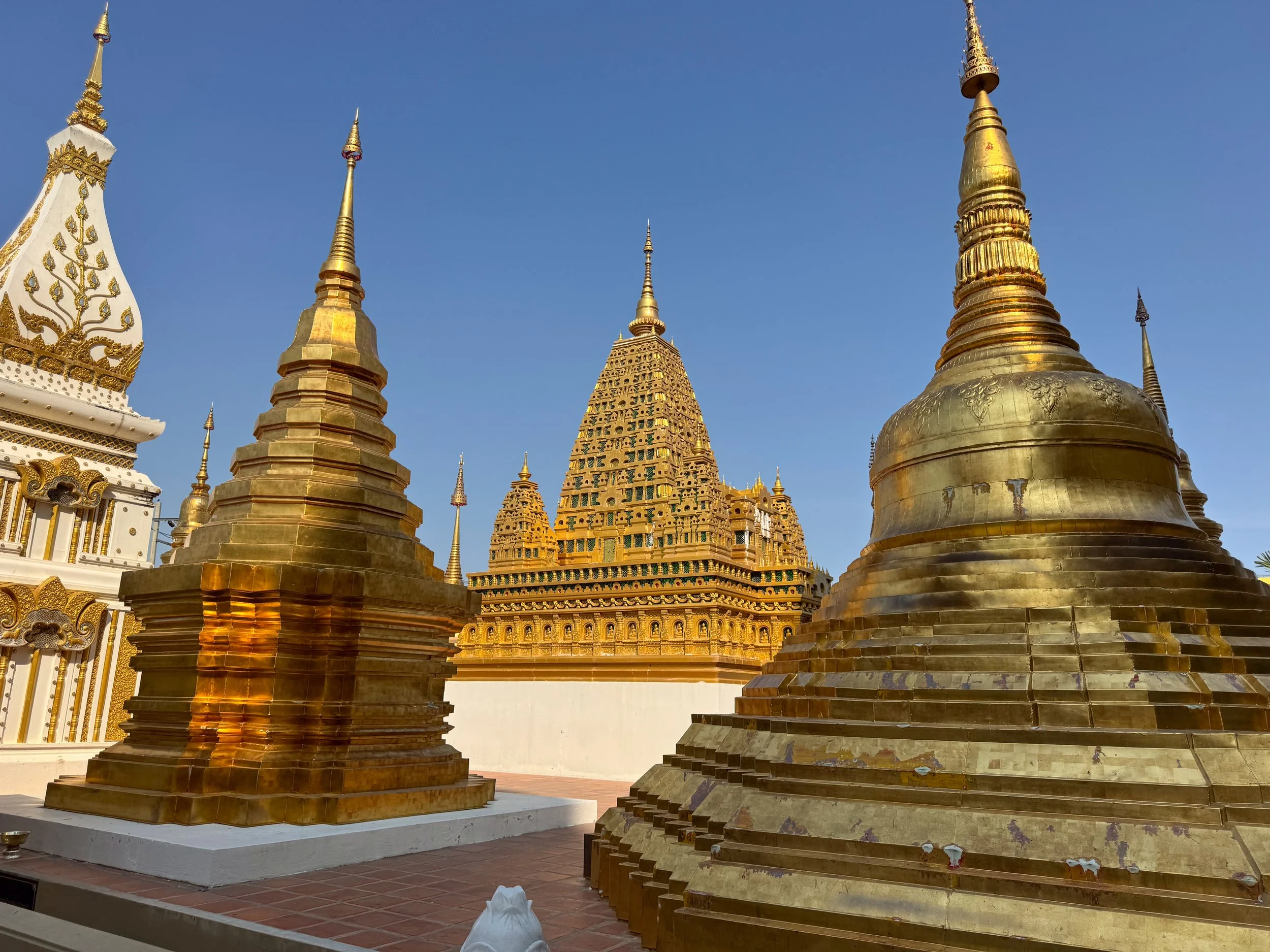
Buddha of the Substanceless Universe. A modern Buddhist temple and one of the most opulent in all of Thailand. Its facade is completely covered in reflective gold tiles of the buddha, with an orange tiered roof and towering gold spire at its center. Inside is a hall with over two dozen seated golden Buddhas. Its surrounding grounds and are home to smaller temples, golden stupas and landscaped gardens.
The Floating Market. A network of wooden structures with shops, cafés and street food vendors connected by boardwalks and bridges. At the time, most of the shops were vacant, giving the market an eerie and abandoned feeling. We stopped at one café for Thai iced tea.
The Old Market Town. A reproduction of a traditional town with wooden houses, tea rooms, historic exhibits and small shops.
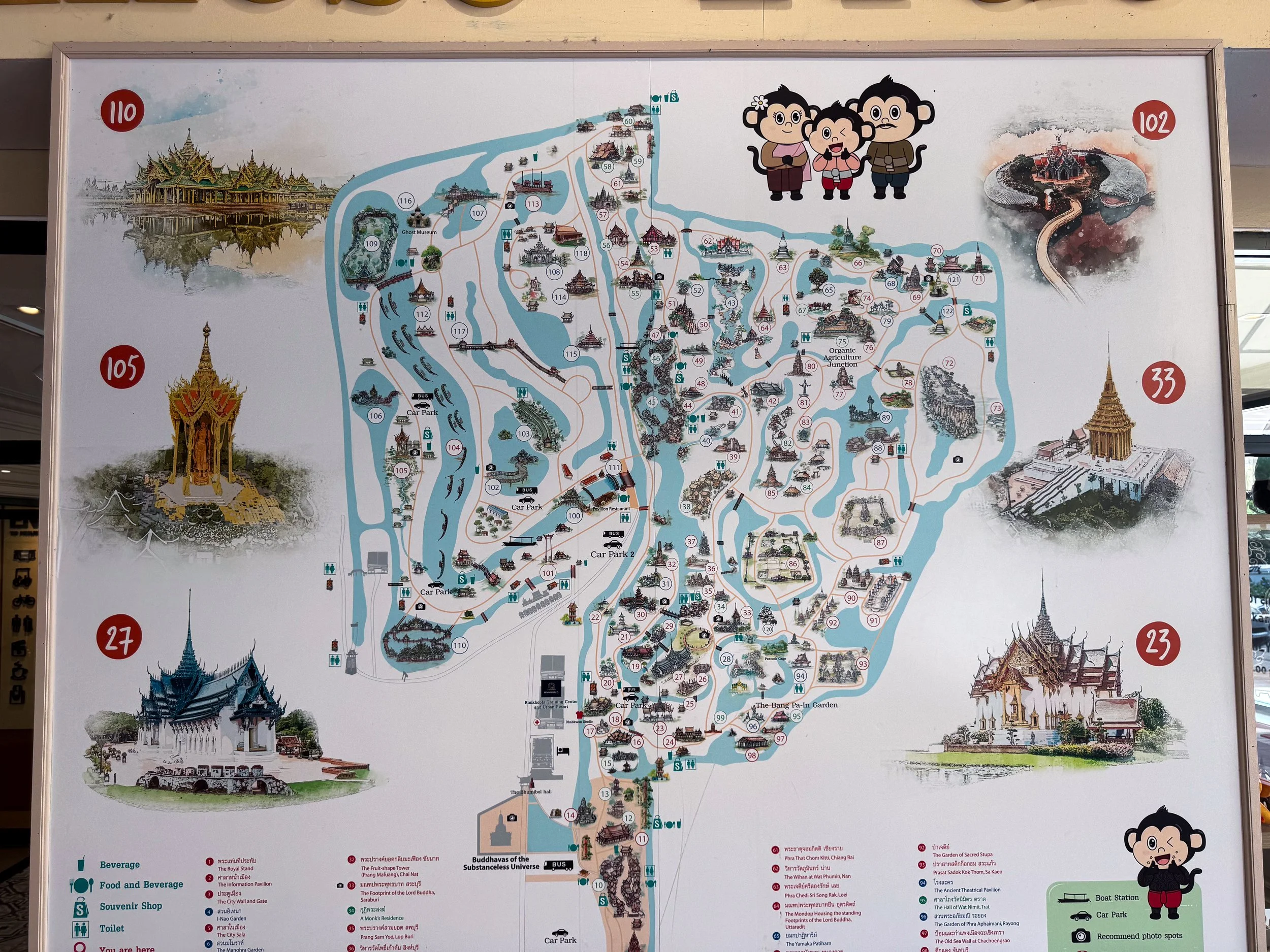
Tips for Visiting The Ancient City:
Getting Here. It’s located about an hour outside of Bangkok and easily reachable by Grab. Grabs are readily available to return to the city.
Getting Around. The park has 22km of roads. We rented bikes in the park, stopping at anything that caught our eye. There are golf cart rentals and a free shuttle that visits the most prominent sights.
Tickets. Buy tickets online to pay half the price offered at admission.
Free Zone. There is a zone before the official park entrance that can be visited for free without a ticket. It includes several small temples, monuments and sights. The most noteworthy are the Temple of Buddha of the Substancesless Universe, The Scripture Repository and The Old Market Town.
Avoid the Elephant Tourism. The park keeps multiple elephants. Unfortunately they didn’t seem to be cared for properly. One was chained up and surrounded by a tour bus worth of visitors posing for photos on the elephant’s back.
Visit the Museums
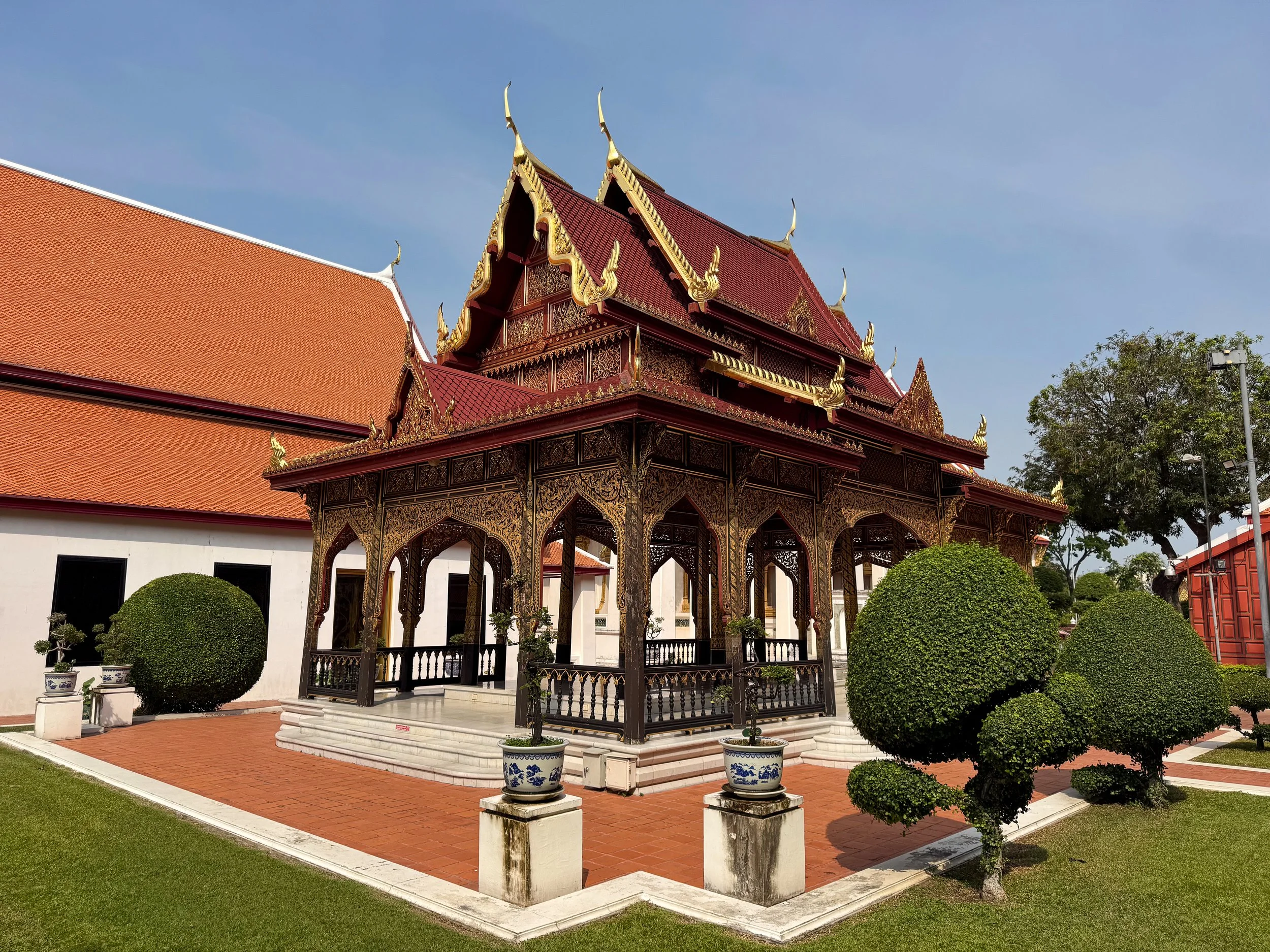
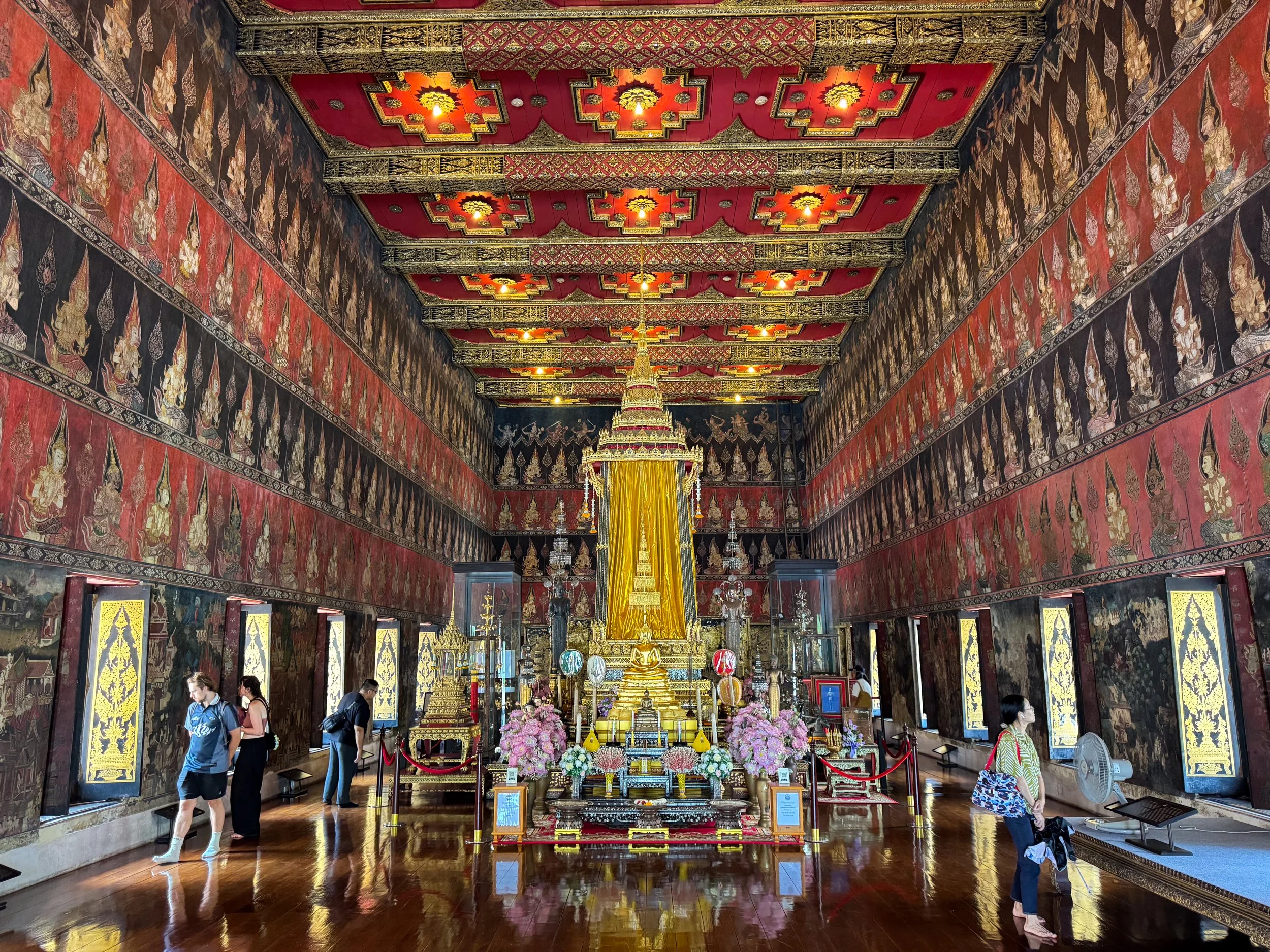
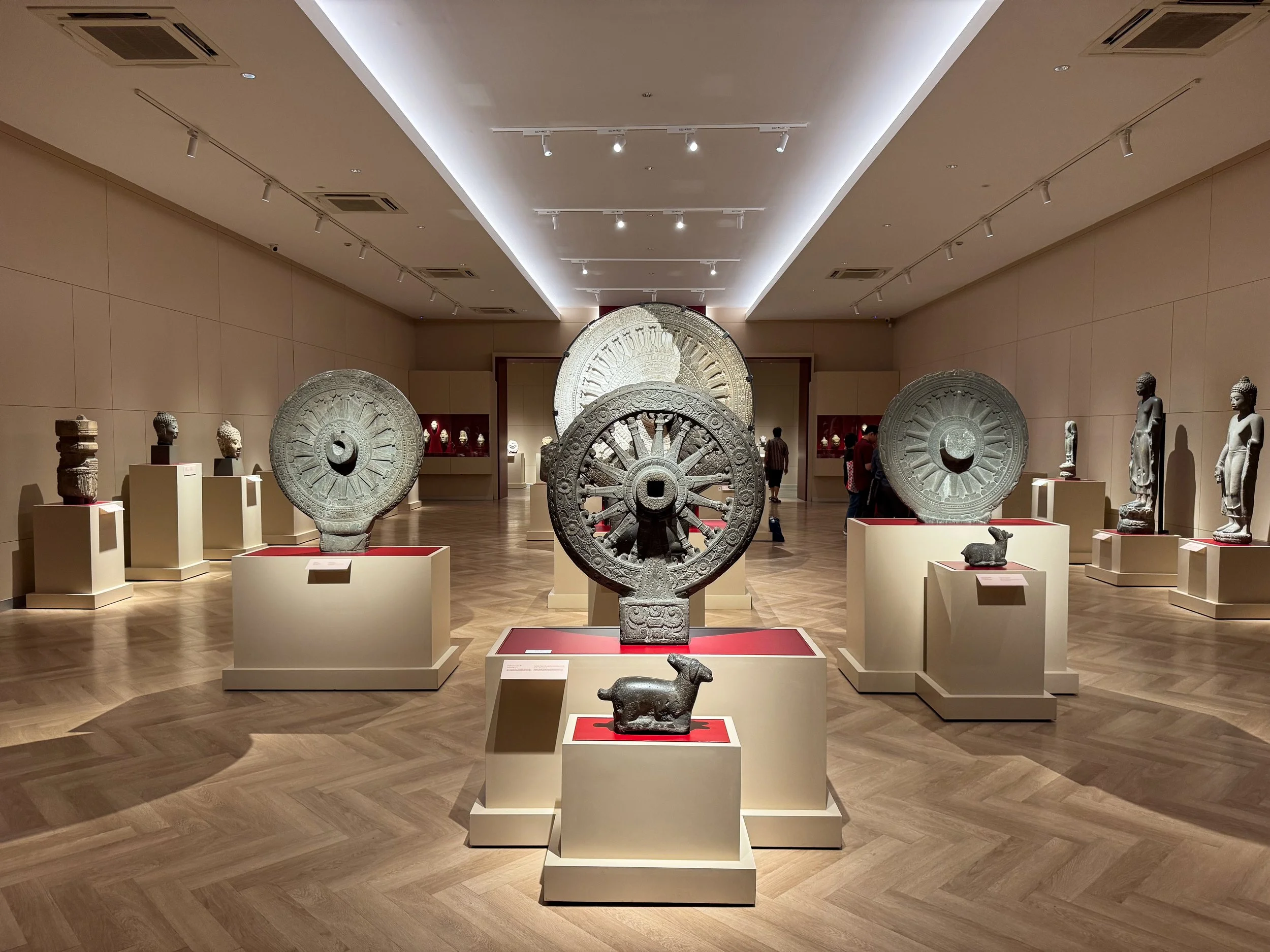
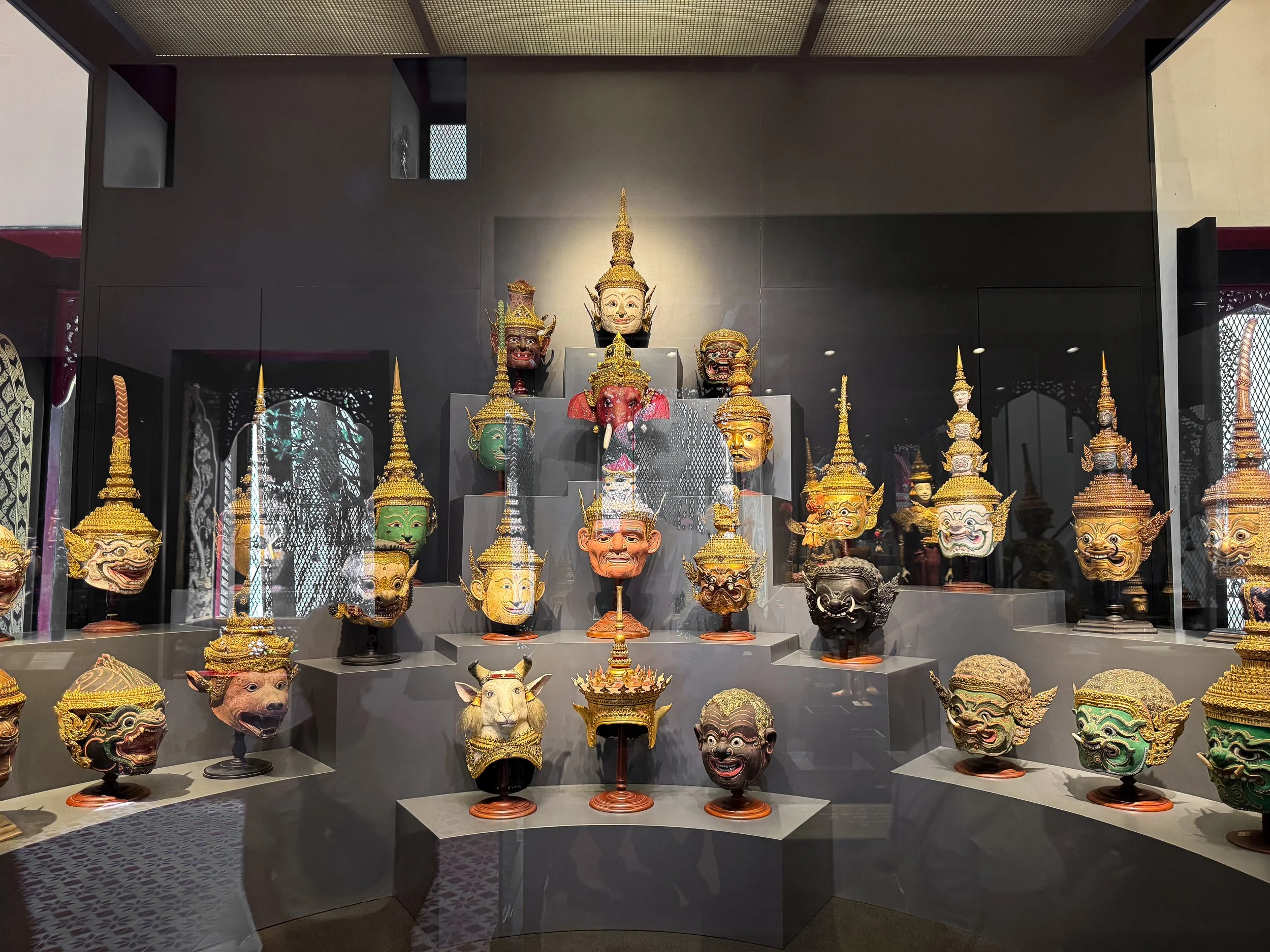
National Museum Bangkok. A collection of buildings and exhibits housing royal and early Thai artifacts on the grounds of the country’s former royal palace.
Ishra Vinijaya Throne Hall. A former throne hall featuring past royal thrones, royal puppets and musical instruments, household items, ceramics and furniture.
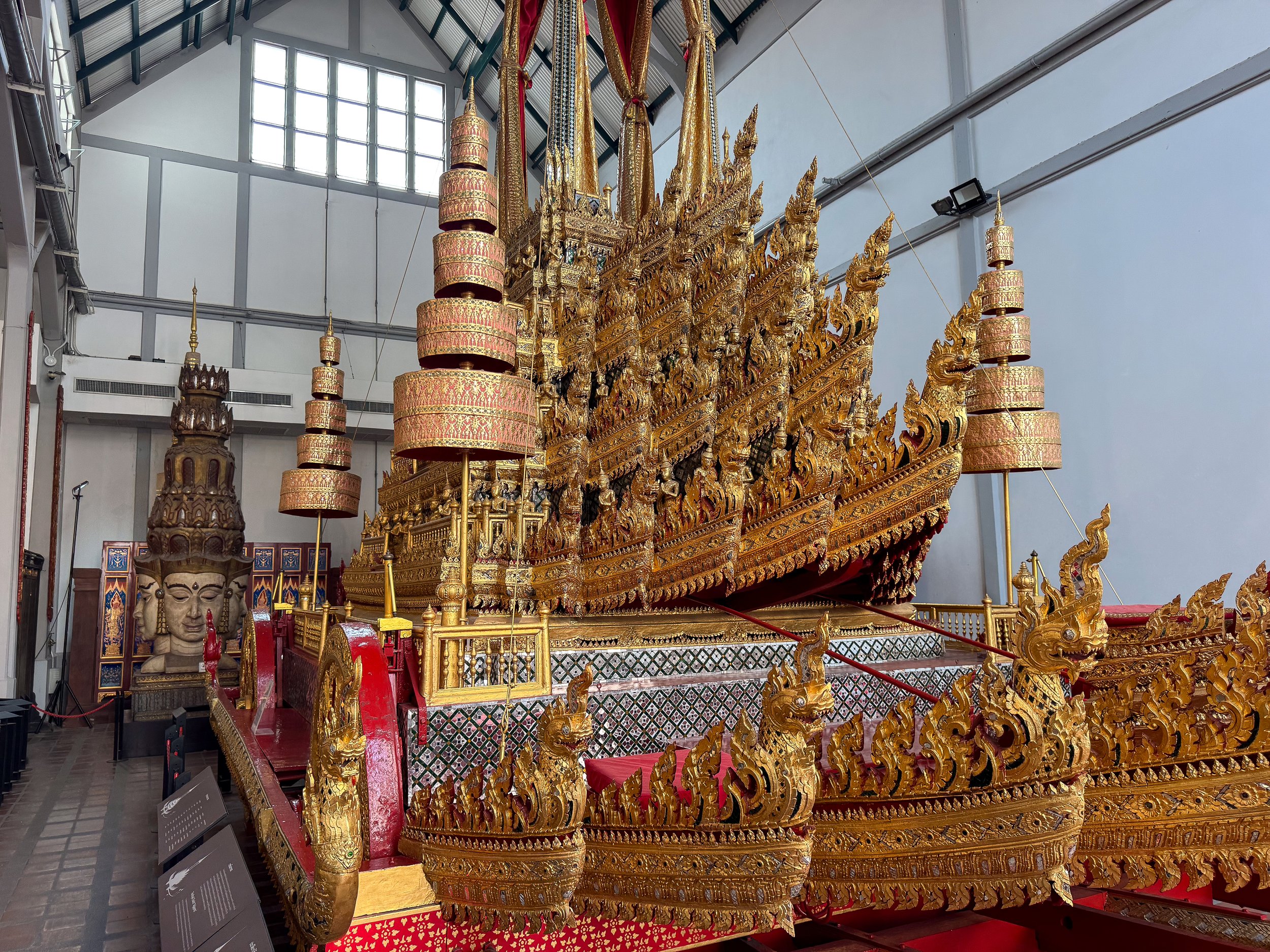
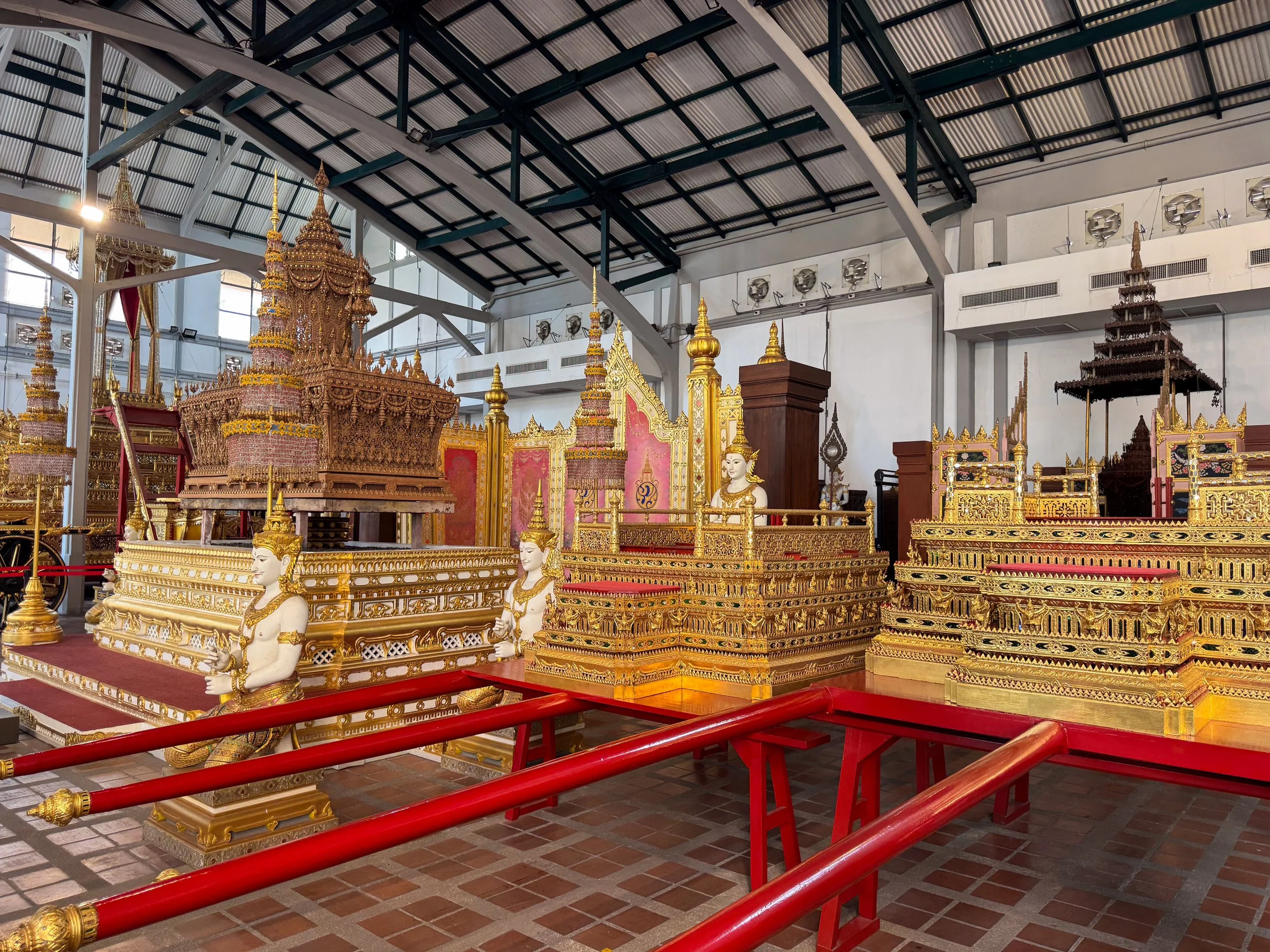
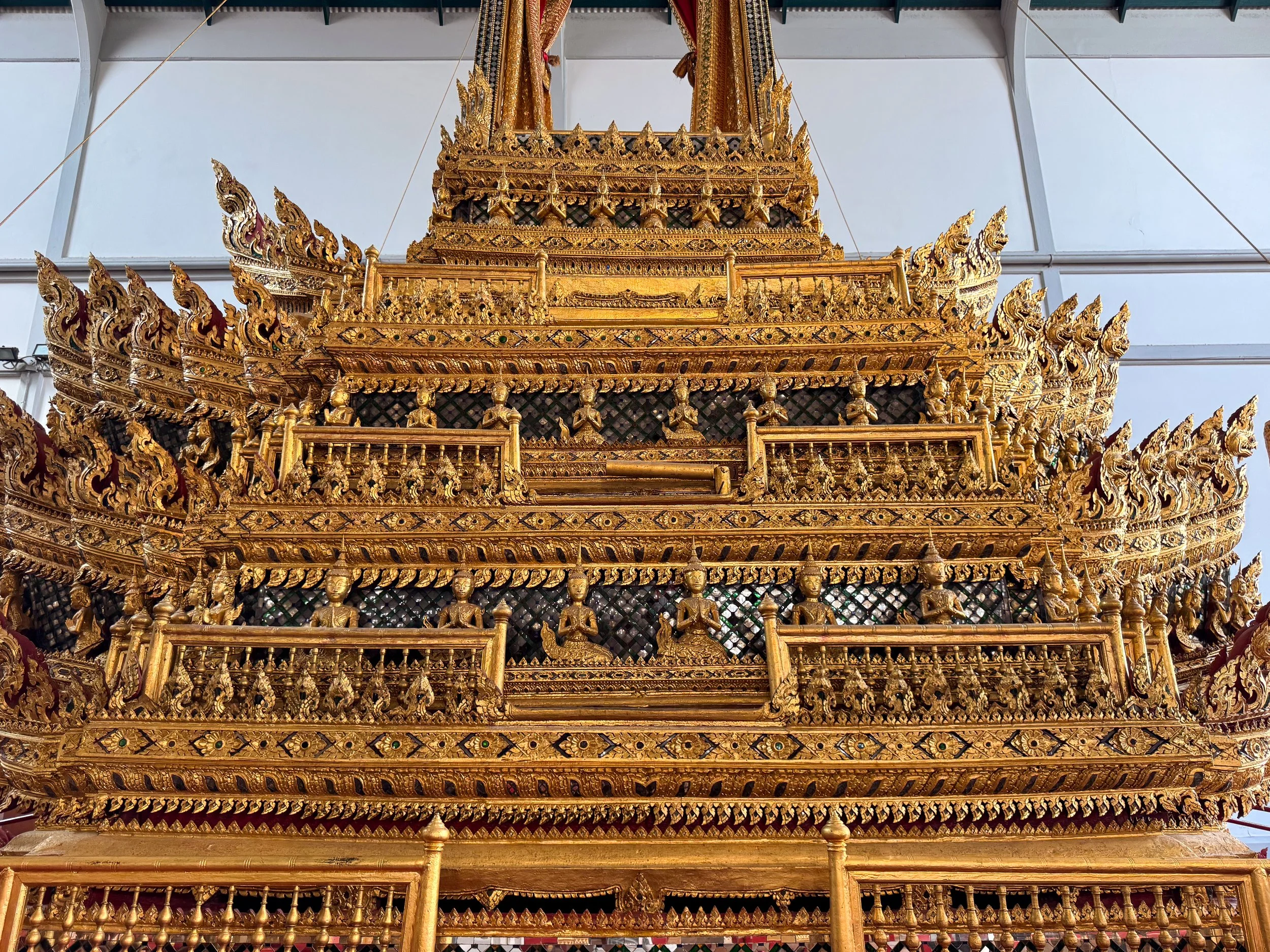
Hangar of Thai Royal Funeral Chariot. A garage displaying several gilded and elaborately designed royal chariots from past royal funerals. Some date back nearly 300 years.
Buddhaisawan Hall. A temple with elaborate paintings of Buddhist stories and legends. Its golden Buddha was hidden from view for restoration.
Maha Surasinghanat Building & Praphat Phiphithaphan Building. Two exhibit halls with galleries displaying early artifacts and maps from Thailand’s history including stone, bronze and ivory buddhas, statues and stelae.

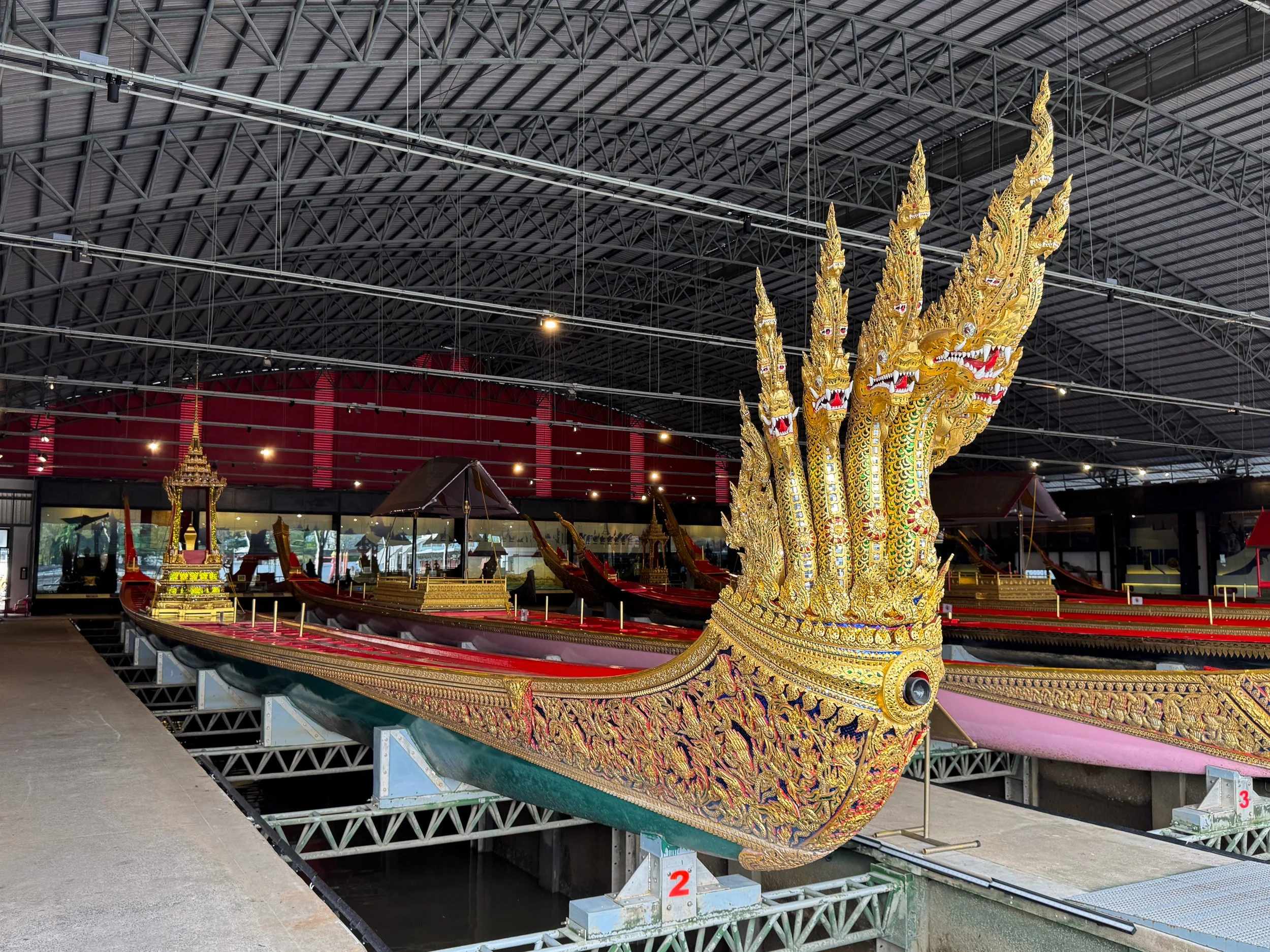
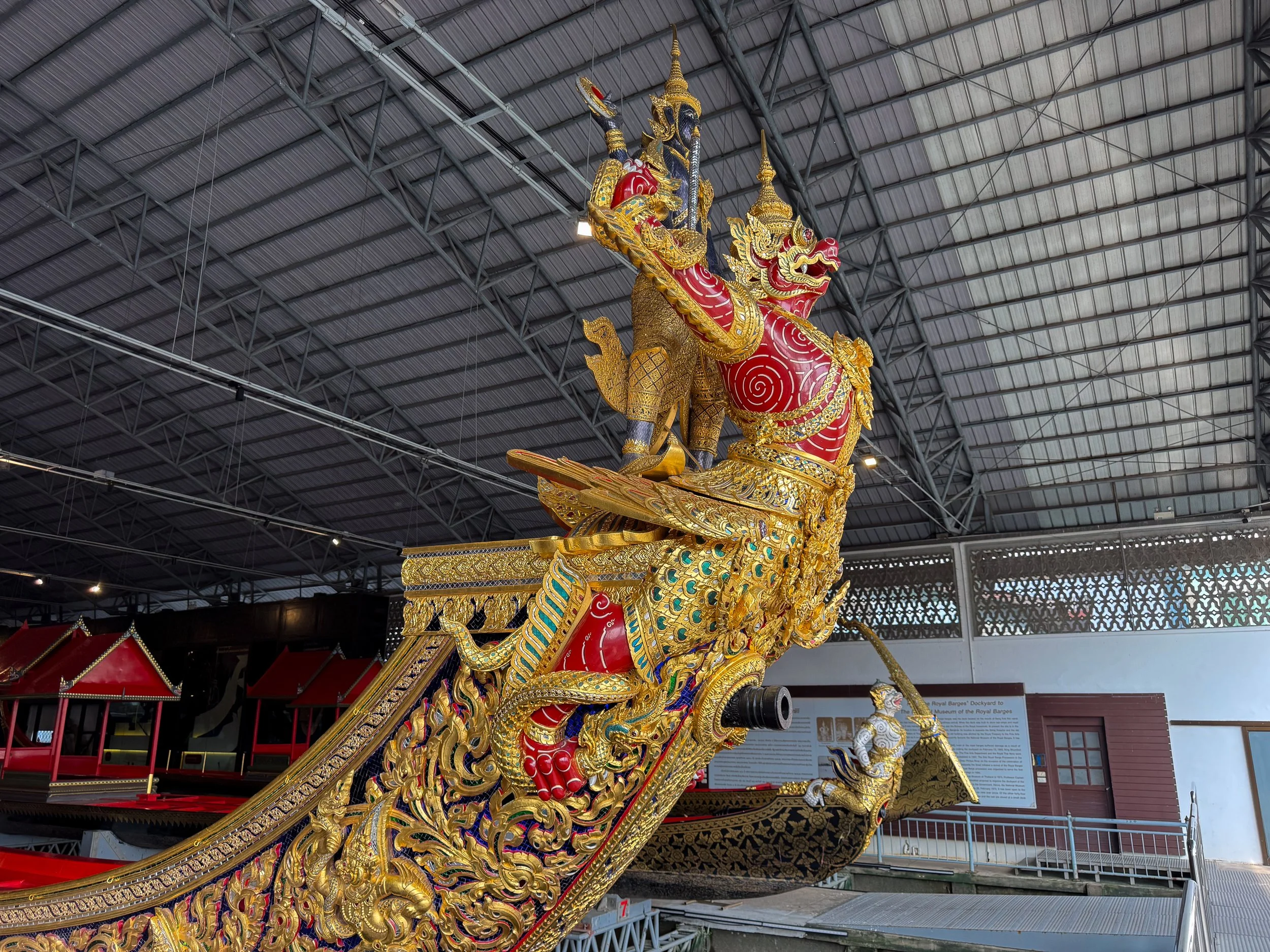
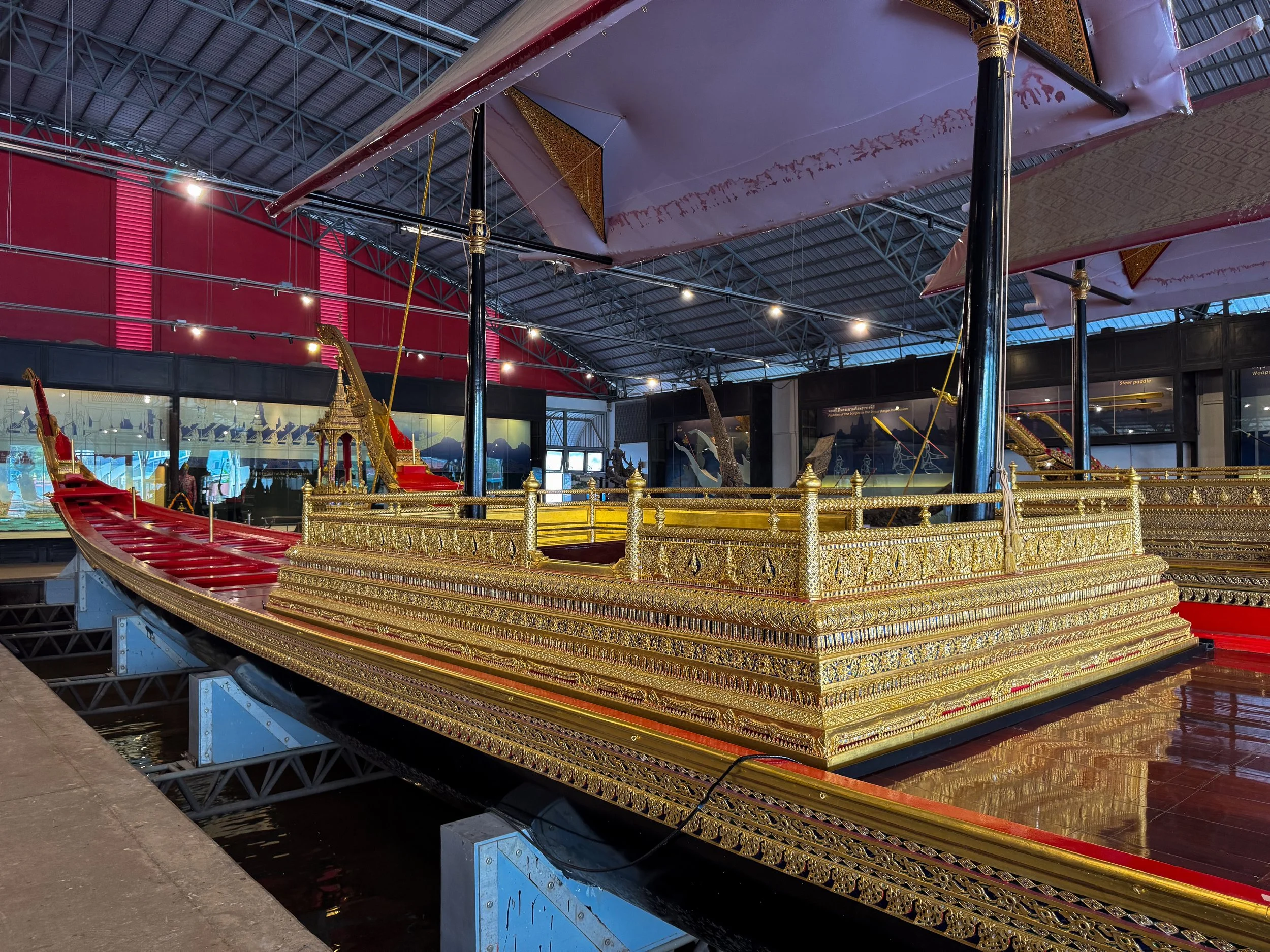
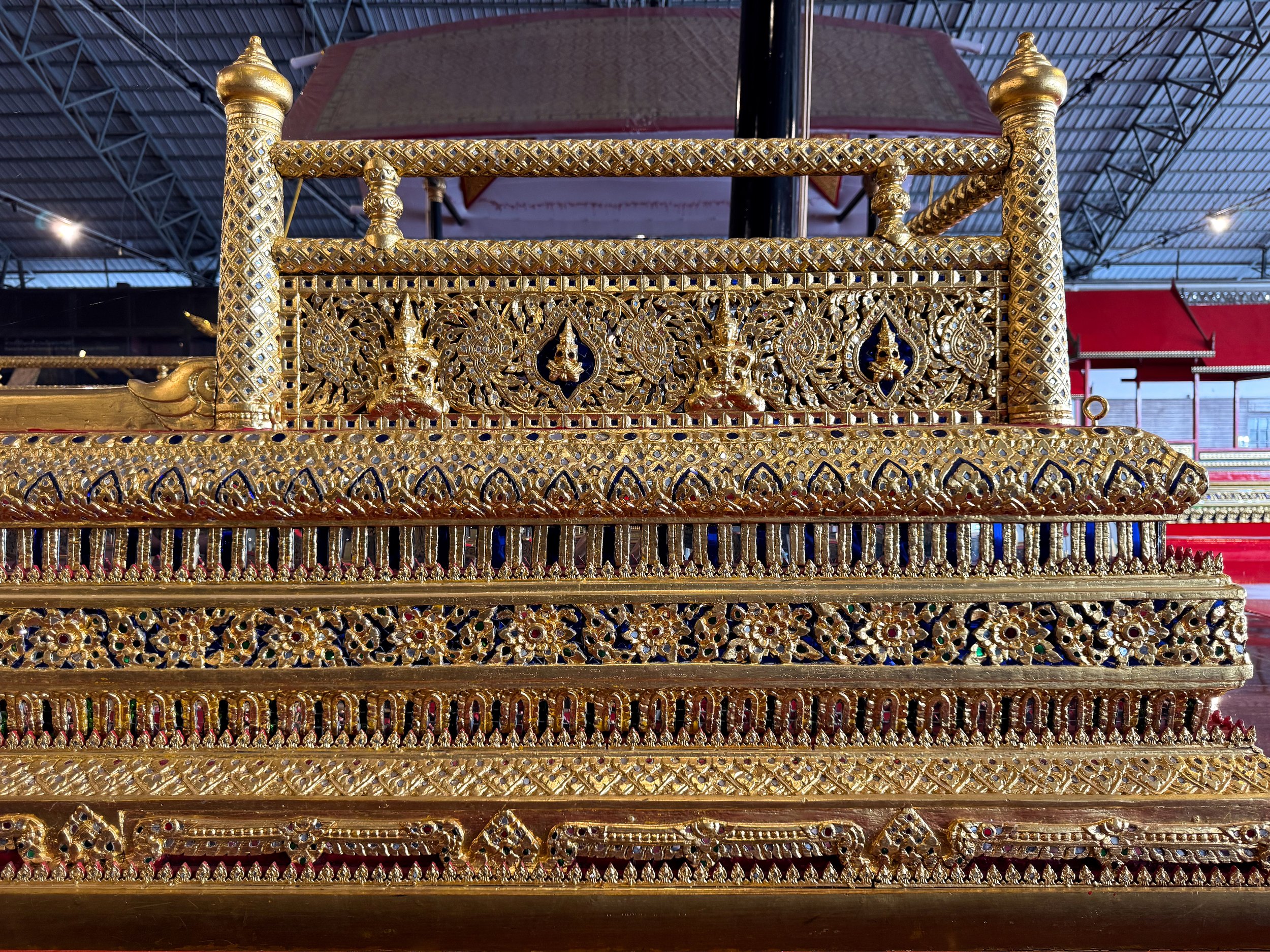
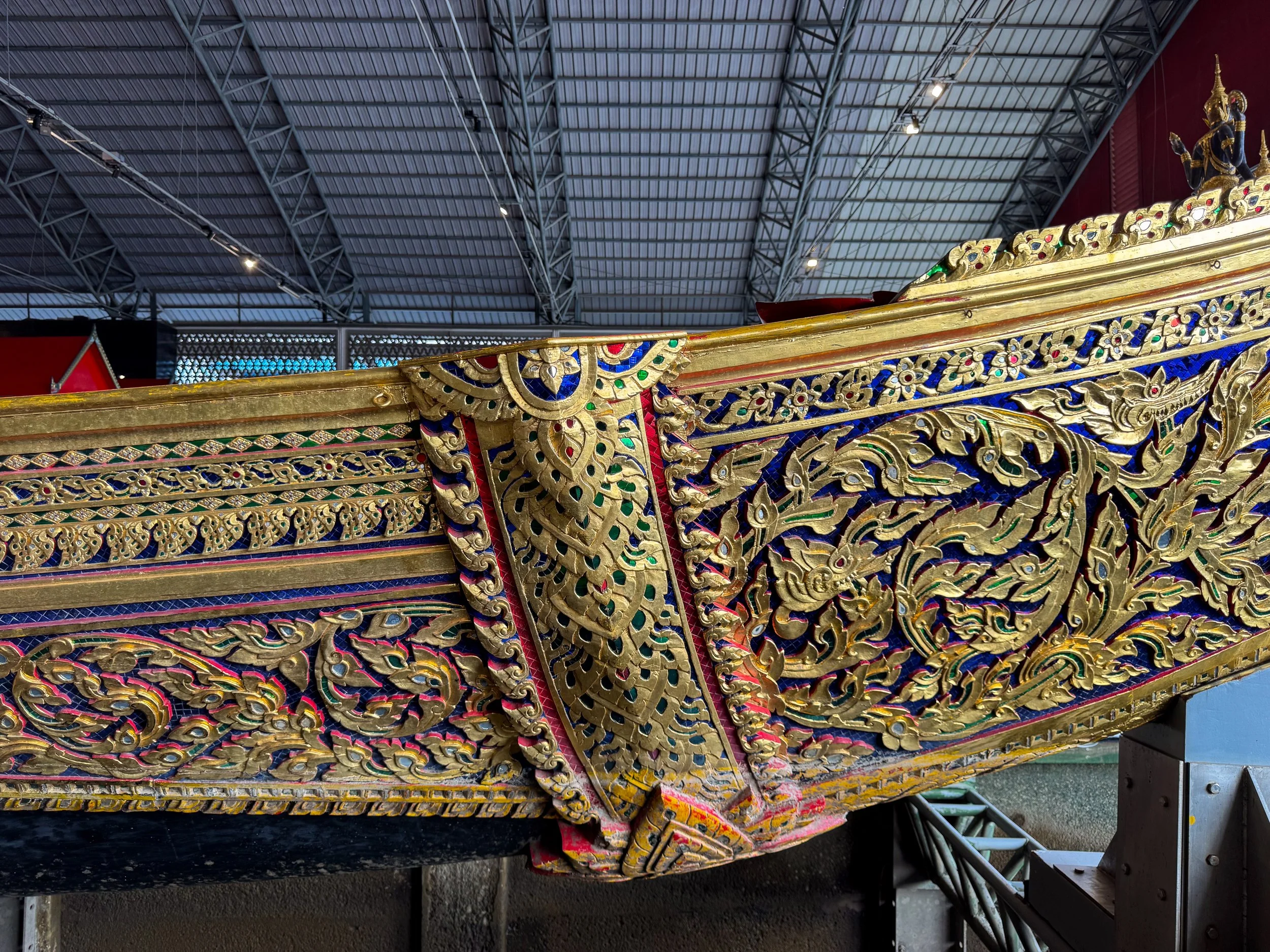
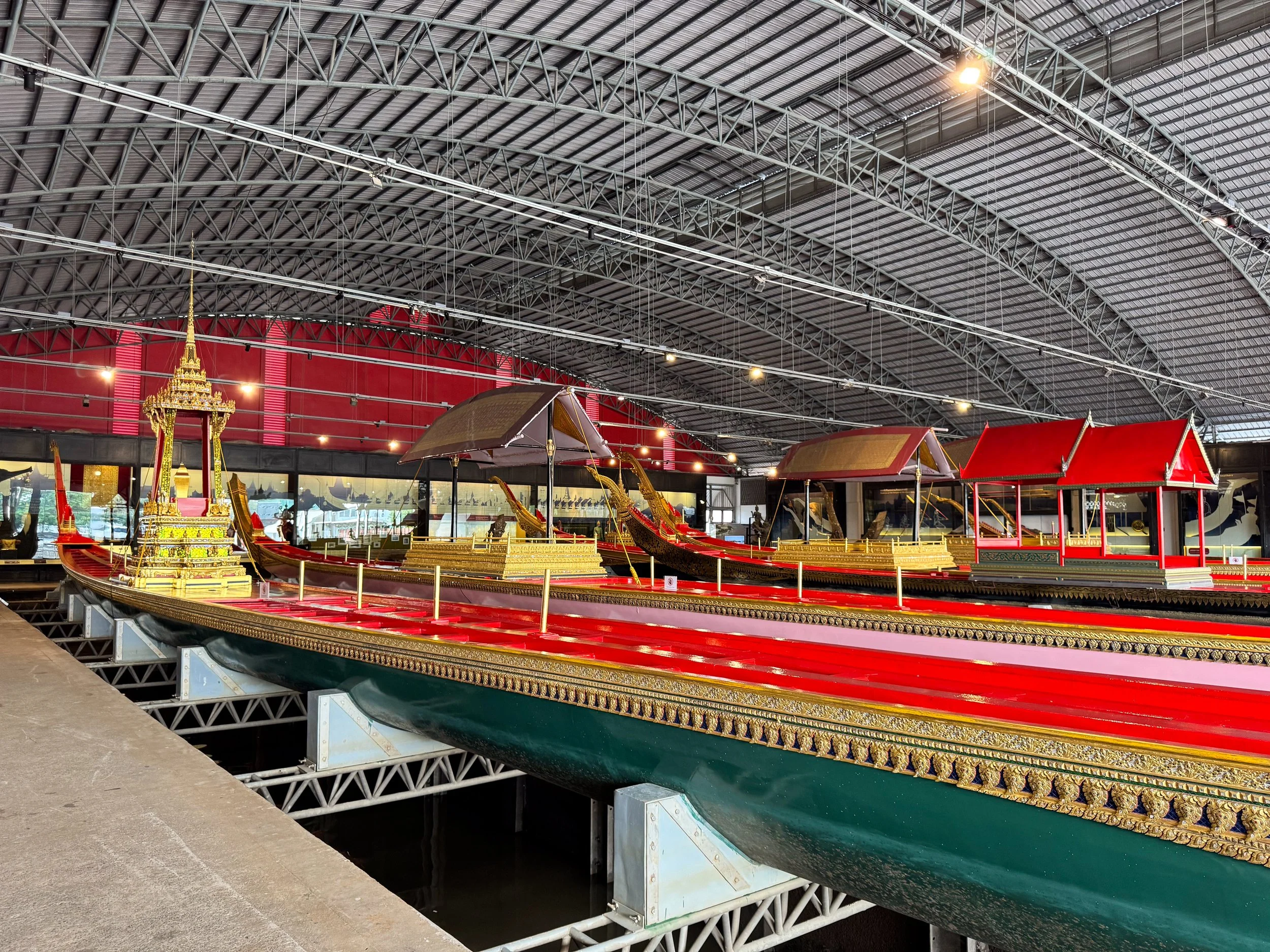
Royal Barges National Museum. A waterfront museum housing several Thai royal barges used during ceremonies, coronations and funerals. Most have a red body, pedestal for the monarch and dozens of seats for rowers. The vessels are decorated in ornate gold paintings, jeweled mosaics and headed with figures of mythical creatures like dragons and deities. Remnants of the oldest barges date back nearly 300 years, however the oldest were destroyed during wartime.
Neighborhoods & Streets
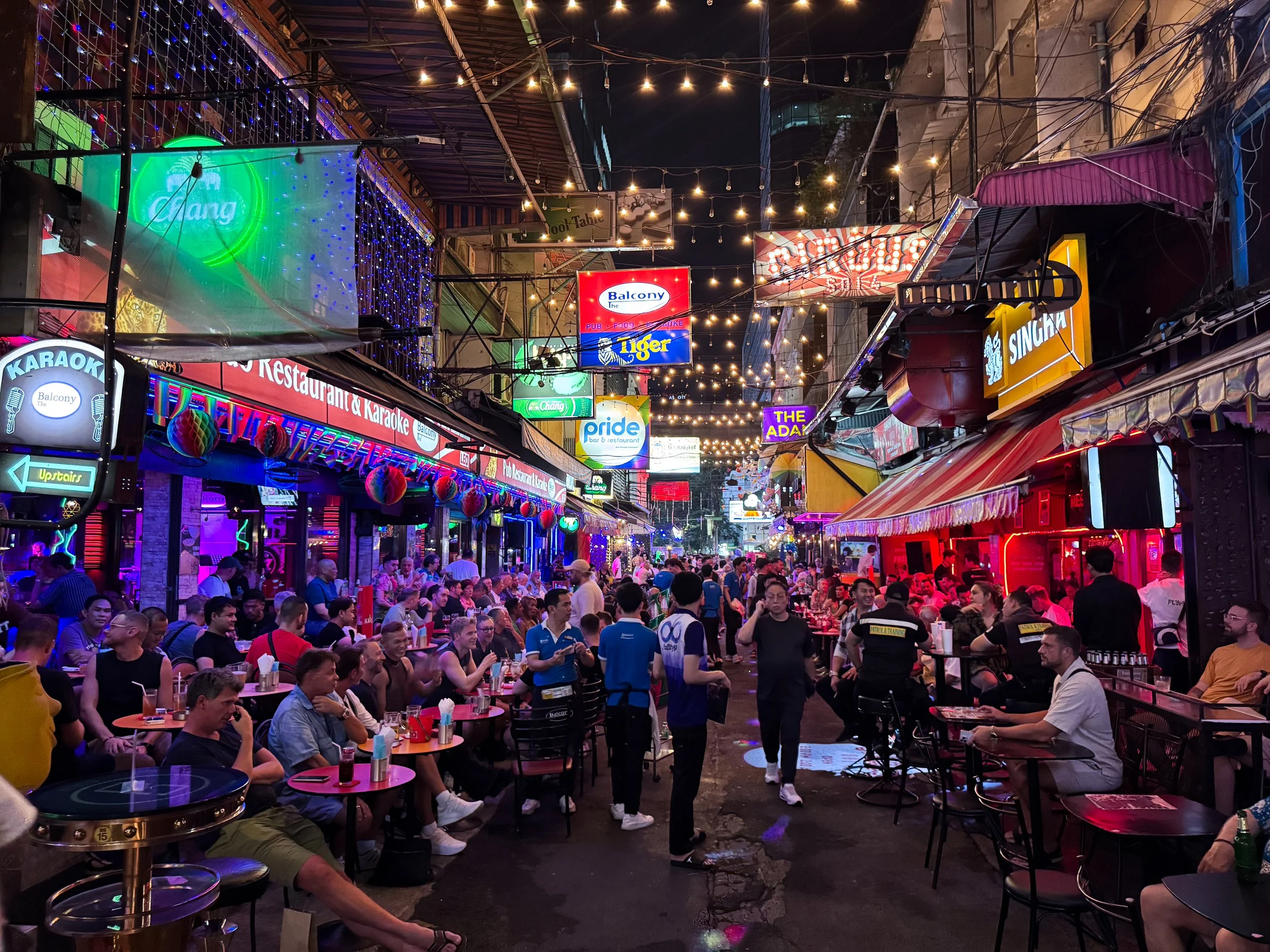
Silom. A central neighborhood with night markets, street food vendors and modern skyscrapers. It’s a hub for the LGBTQ+ community with a welcoming atmosphere and popular alley with gay bars and clubs.
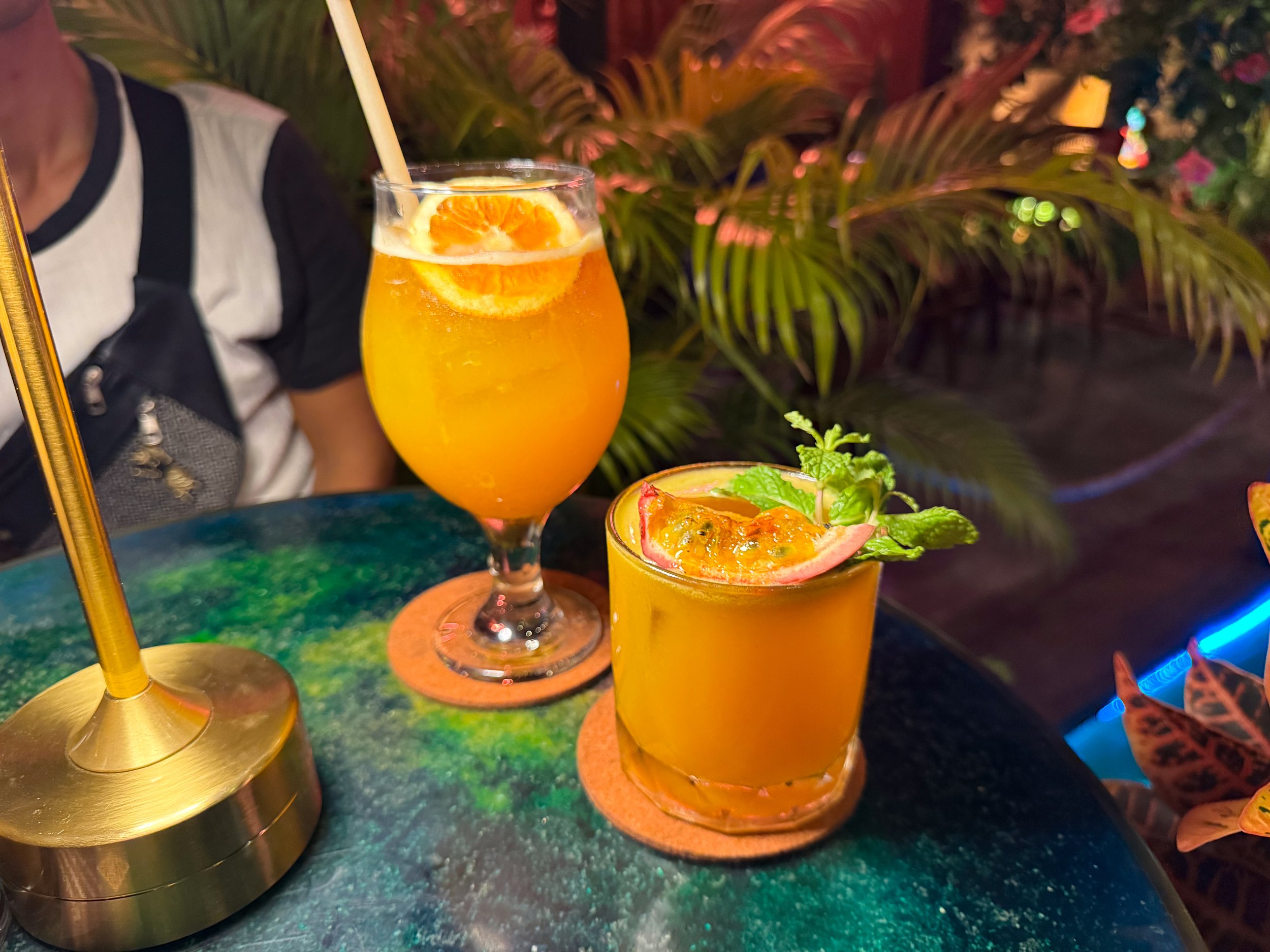
Silom 4 Alley. An alleyway in Silom lined with gay bars serving boozy cocktails, nightly drag shows and lady boy dance performances. The alley gets busy after 9pm and the nightlife continues into the early morning hours. We sat outside at BAS Living Room sipping on classic and signature cocktails like a Long Island iced tea and passion fruit gin & tonic.
Chinatown. A vast neighborhood with bustling night markets, the city’s highest density of street food vendors, roads lined with tall vertical signs inscribed with Chinese lettering, red paper lanterns and gold jewelry shops.
Phra Nakhon District. A neighborhood with some of the city’s most important Buddhist wats, cultural and historic museums, the Thai Royal Palace and government buildings.
Khao San Road. A popular nightlife street and tourist trap with souvenir shops, overpriced bars, weed stores and backpacker hostels. Vendors sell roasted insects and display whole grilled alligators for the adventurous eaters. Go elsewhere for a more local and authentic atmosphere.
Sri Ram Buttri Road. A smaller nightlife street popular with locals and tourists lined with cute bars, vibey patios, massage studios, flowering trees and good prices. We sat down along the street at Wang’s Bar, ordering two drinks and getting the third one free. It’s a better alternative to the nearby Khao San Road.
See the Sights
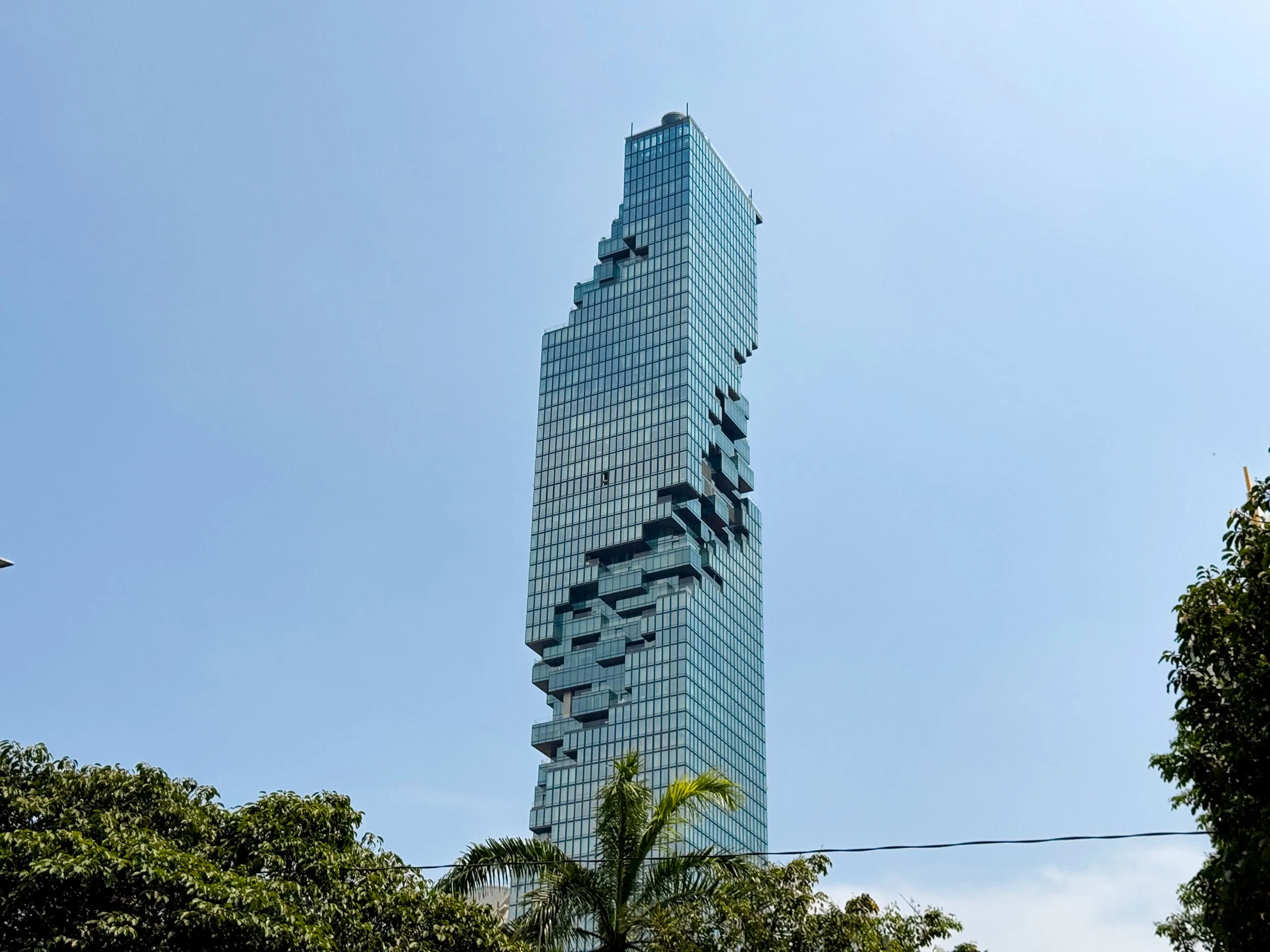
Maha Nakhon Tower. One of Bangkok’s most iconic high-rises. It’s recognizable by its fragmented and spiraling blue glass facade that looks as if it’s a video game or matrix glitch. We visited the Parlor Bar on the fourth floor for happy hour cocktails.
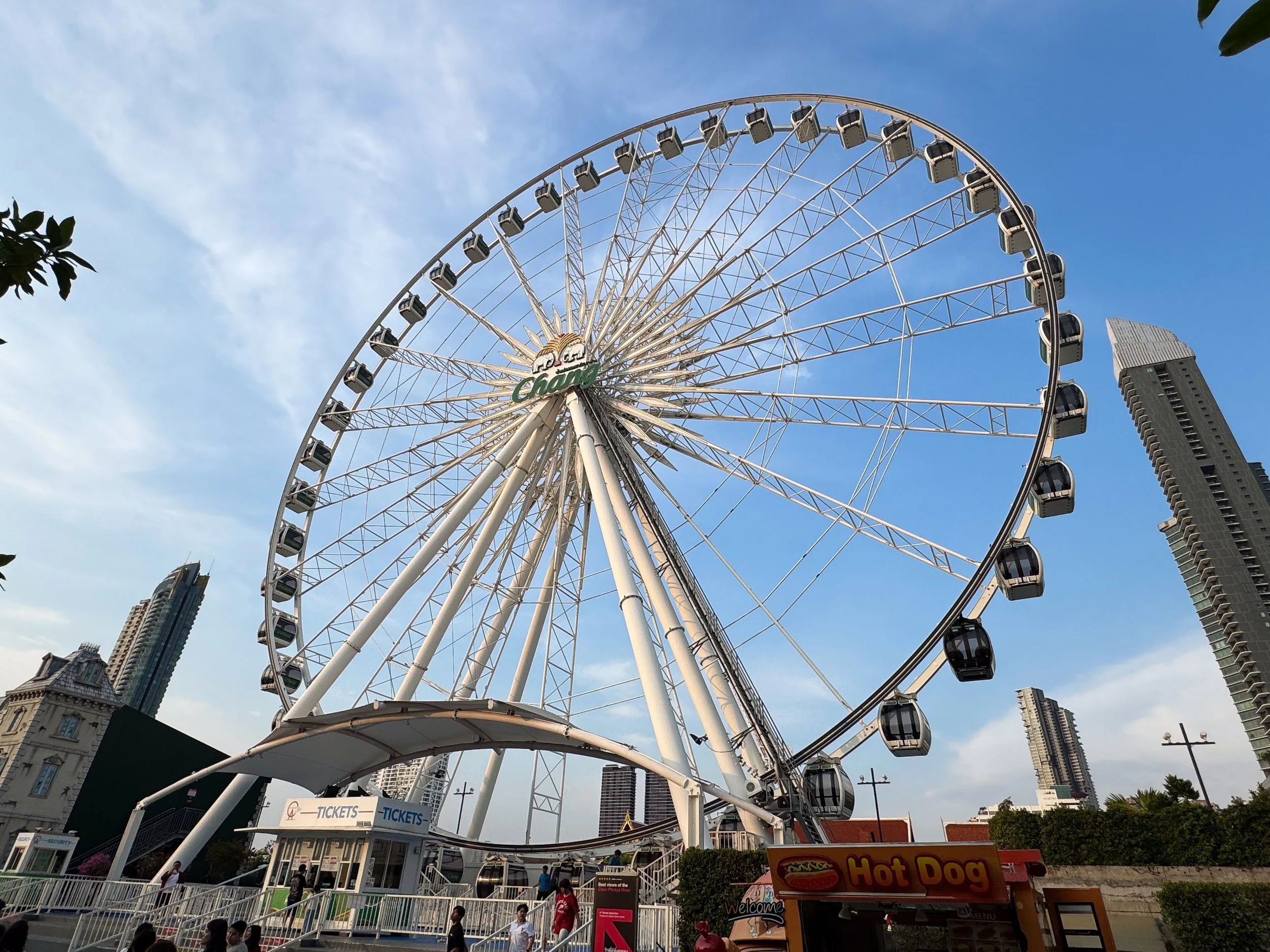
Asiatique Park. An outdoor riverfront mall and entertainment complex with Thailand’s largest ferris wheel, sightseeing boat routes, a Calypso Cabaret theater, street food vendors, restaurants, clothing shops and various stores with Thai goods. It’s a popular spot amongst both locals and tourists.
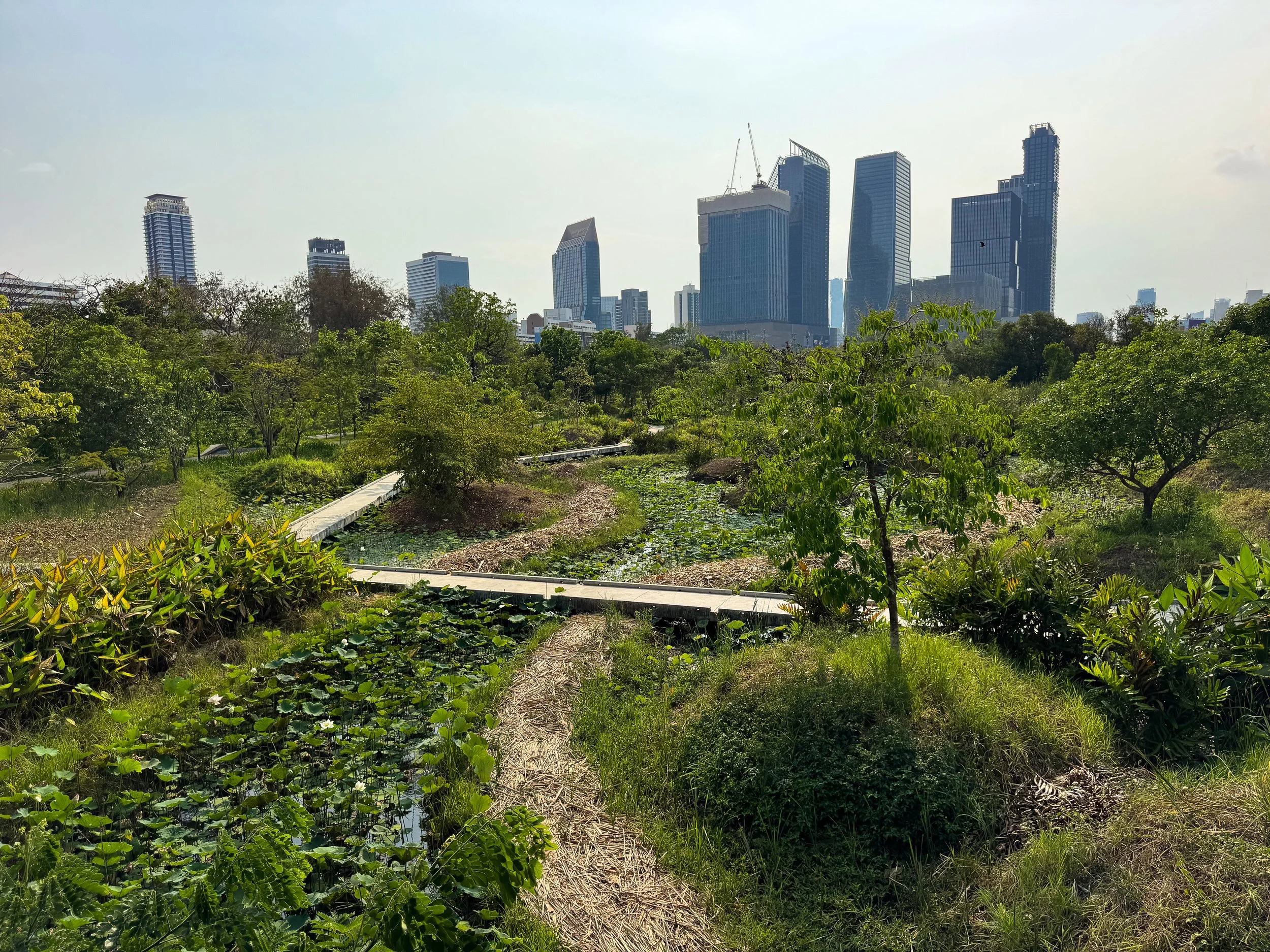
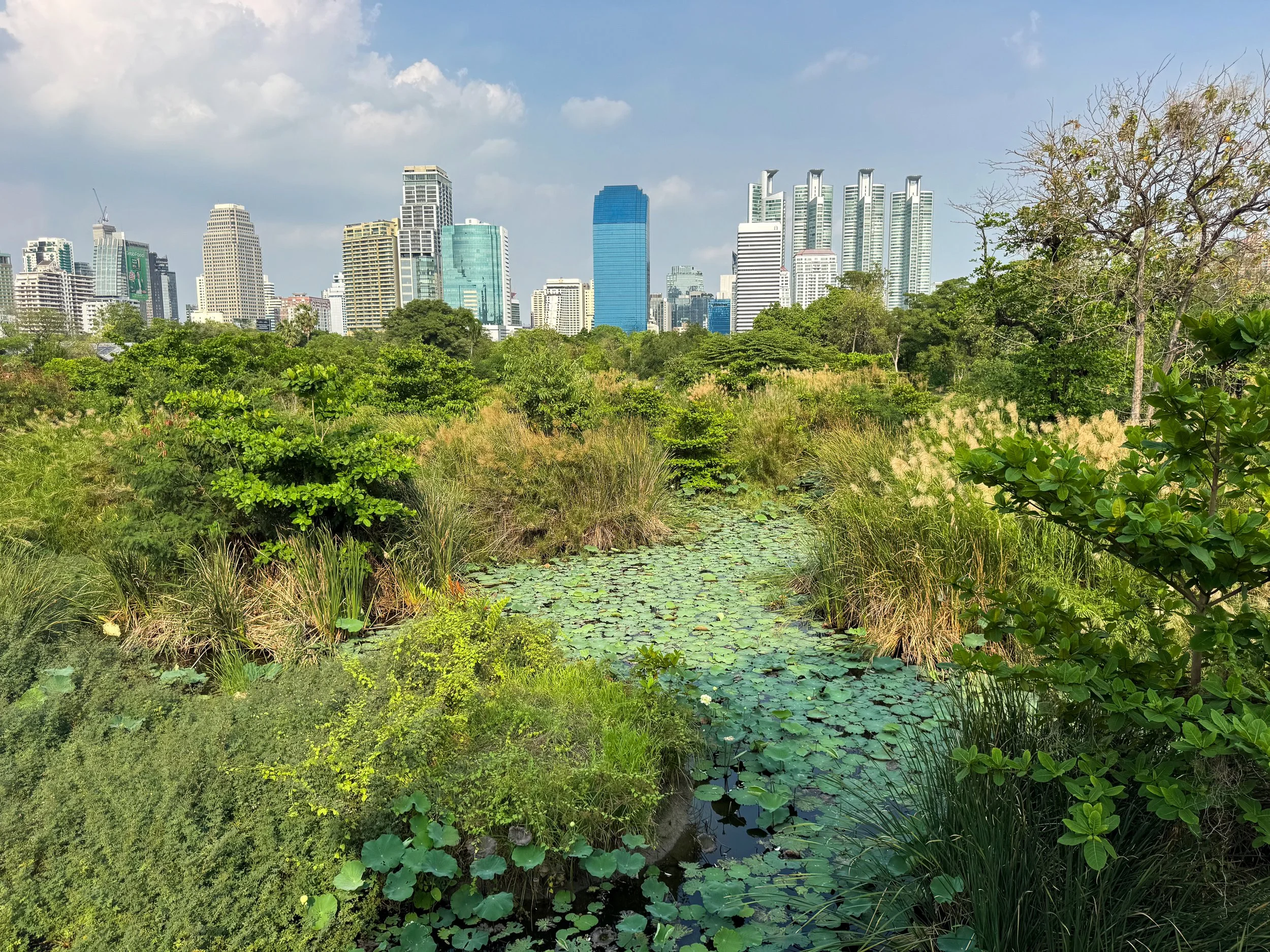
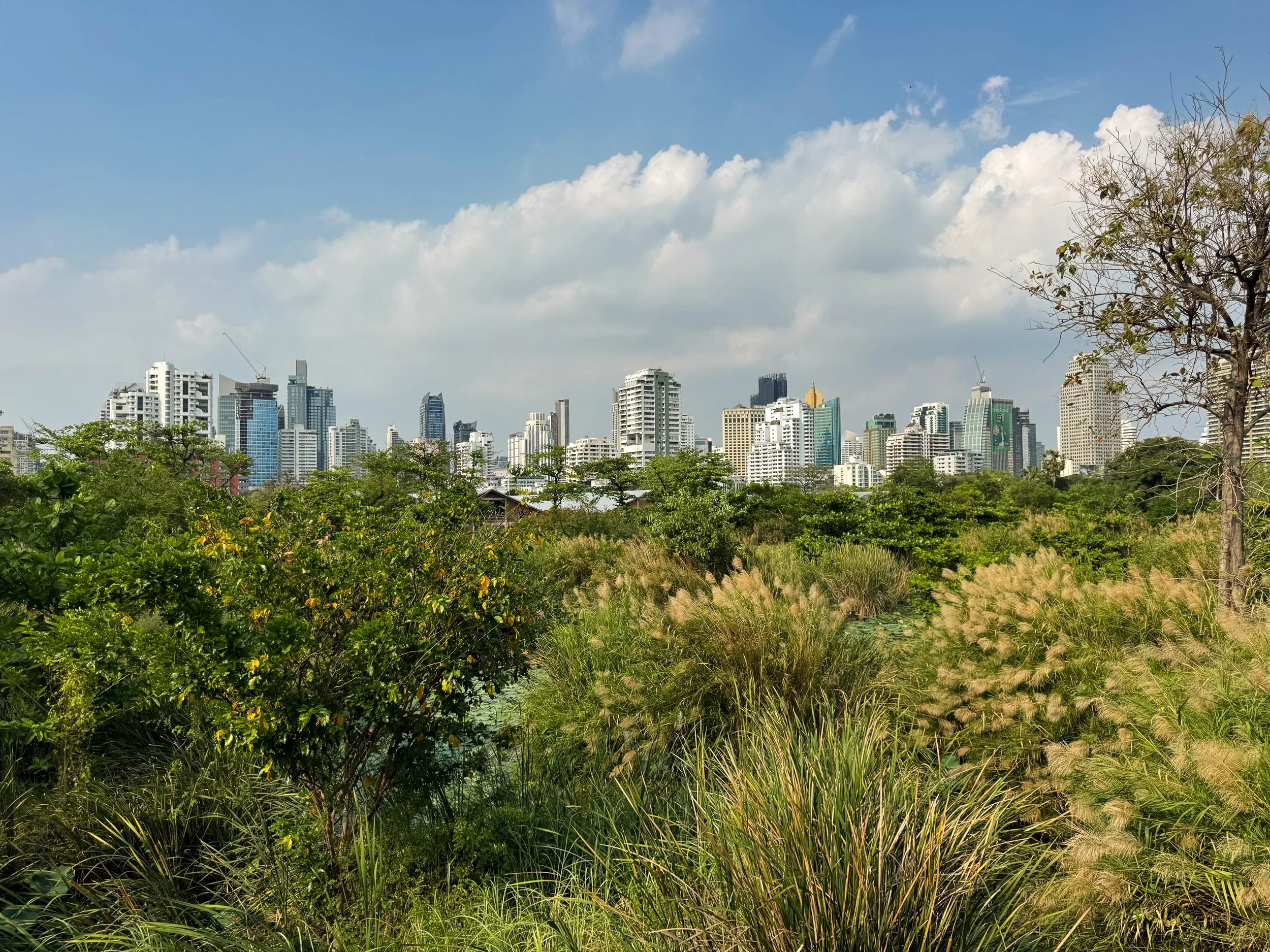
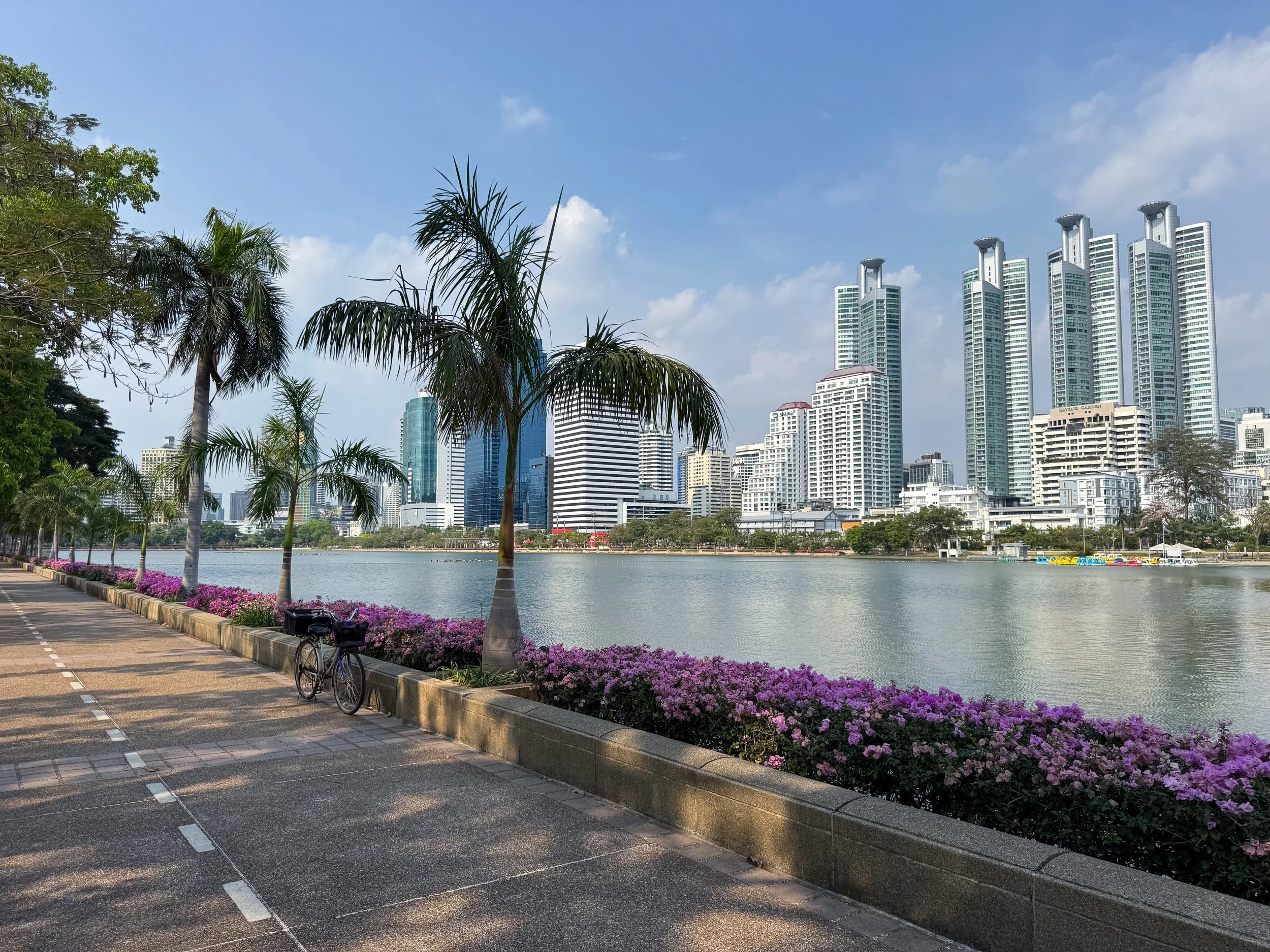
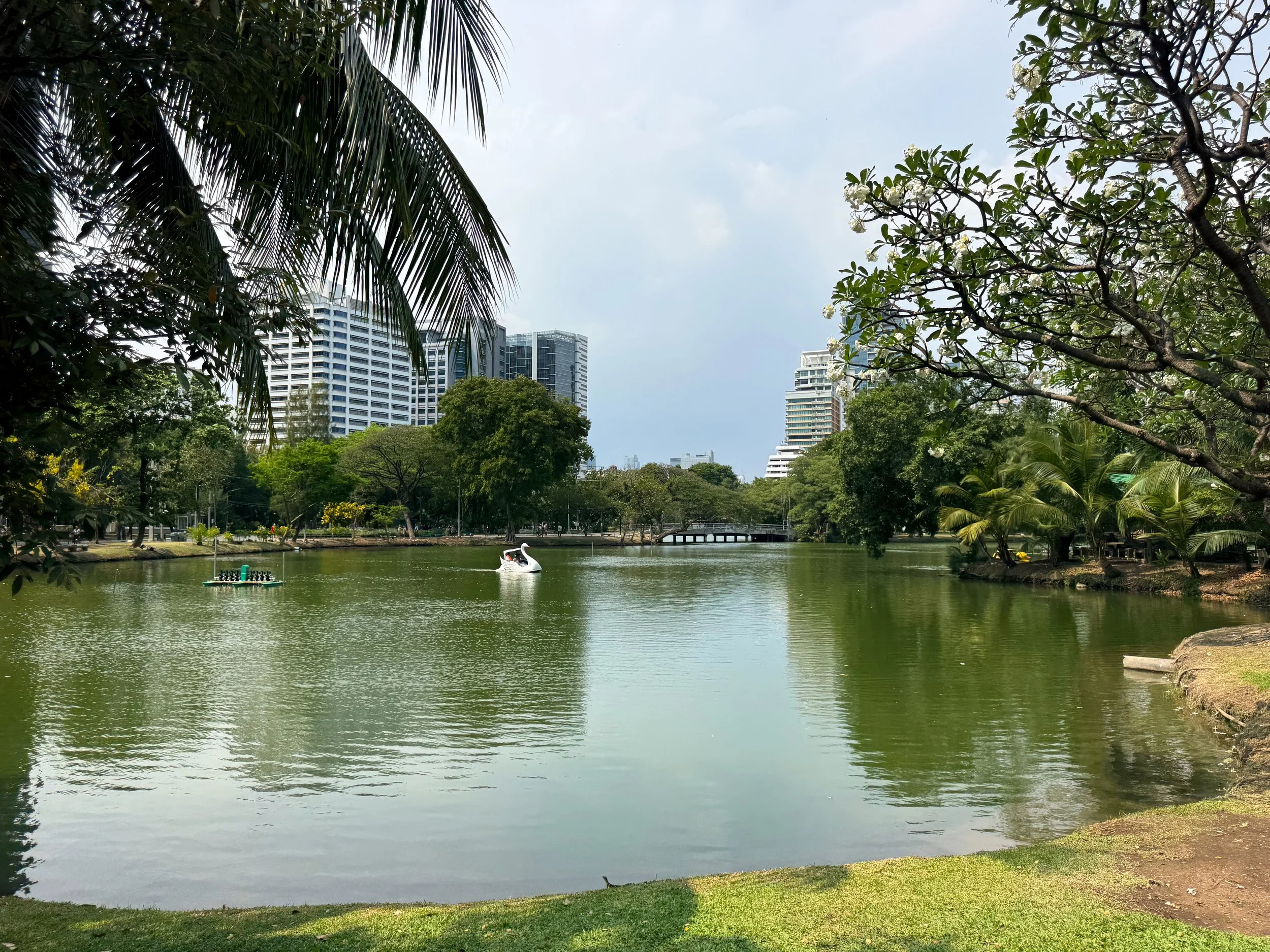
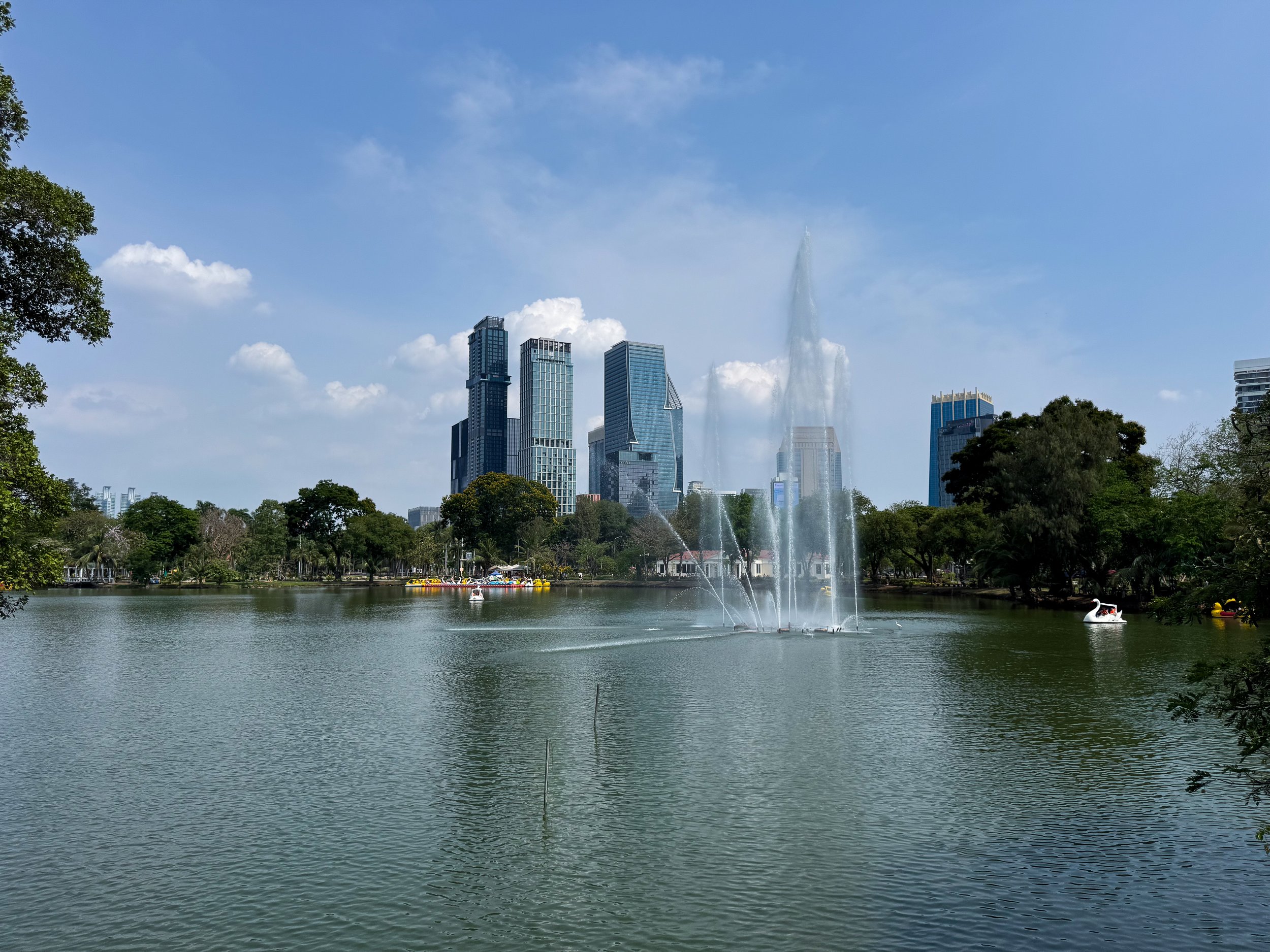
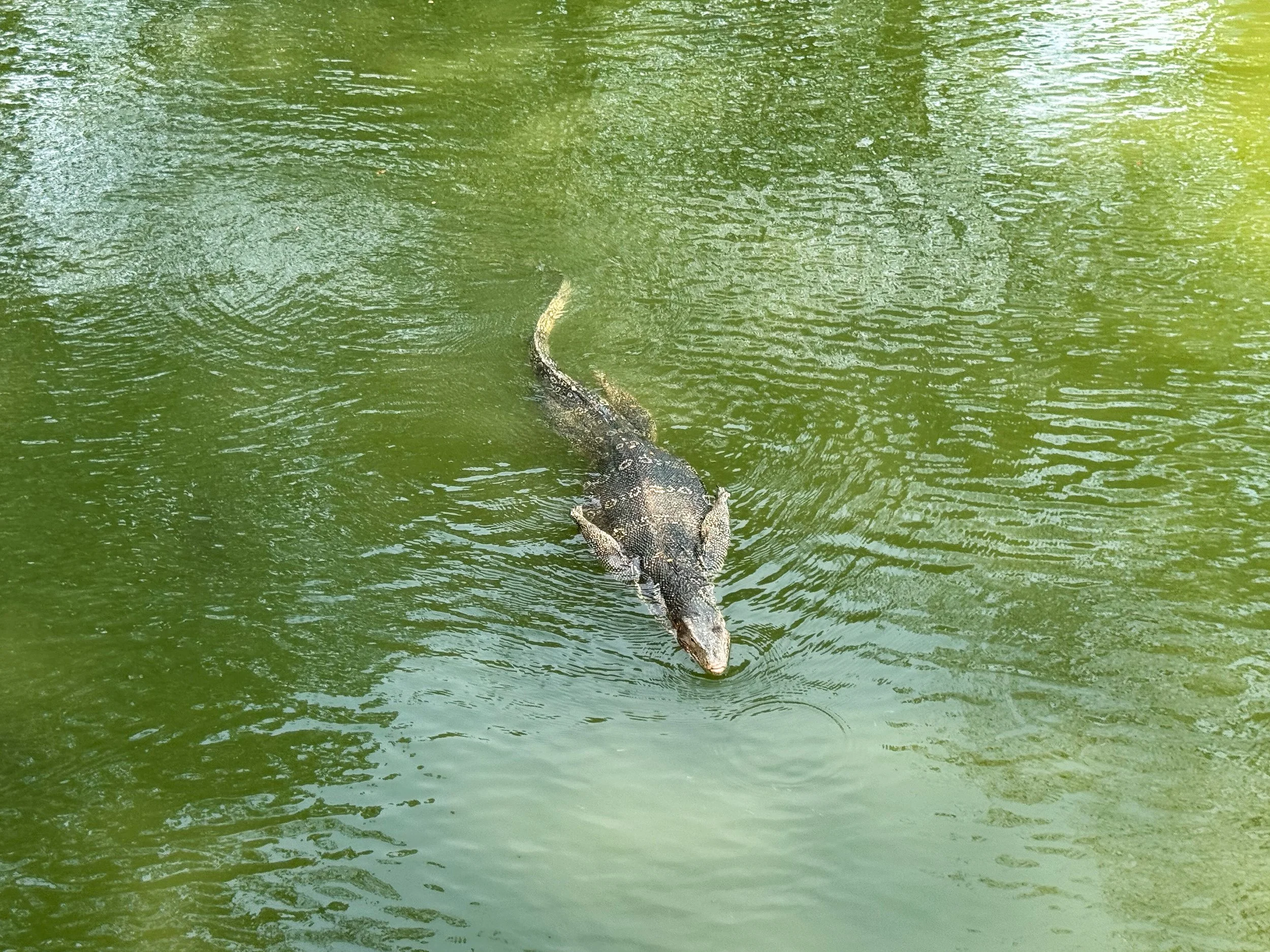
Lumphini Park. A lush city park with treelined paths, paddle boat rentals, small lakes and interconnected waterways home to giant water monitors. We spotted several of them swimming as well as jet black ravens bathing and white ibises hunting for fish.
Benchakitti Park. A manmade nature reserve in the middle of Bangkok with micro ecosystems representing what the landscape used to look like before urbanization. The park features a series of wet lands with endemic species of fish, birds, plants and trees all connected by a maze of zig zagging trails and an elevated boardwalk. It’s a tranquil escape from the chaos of the city and wonderful place to reconnect with nature, bird watch and exercise.
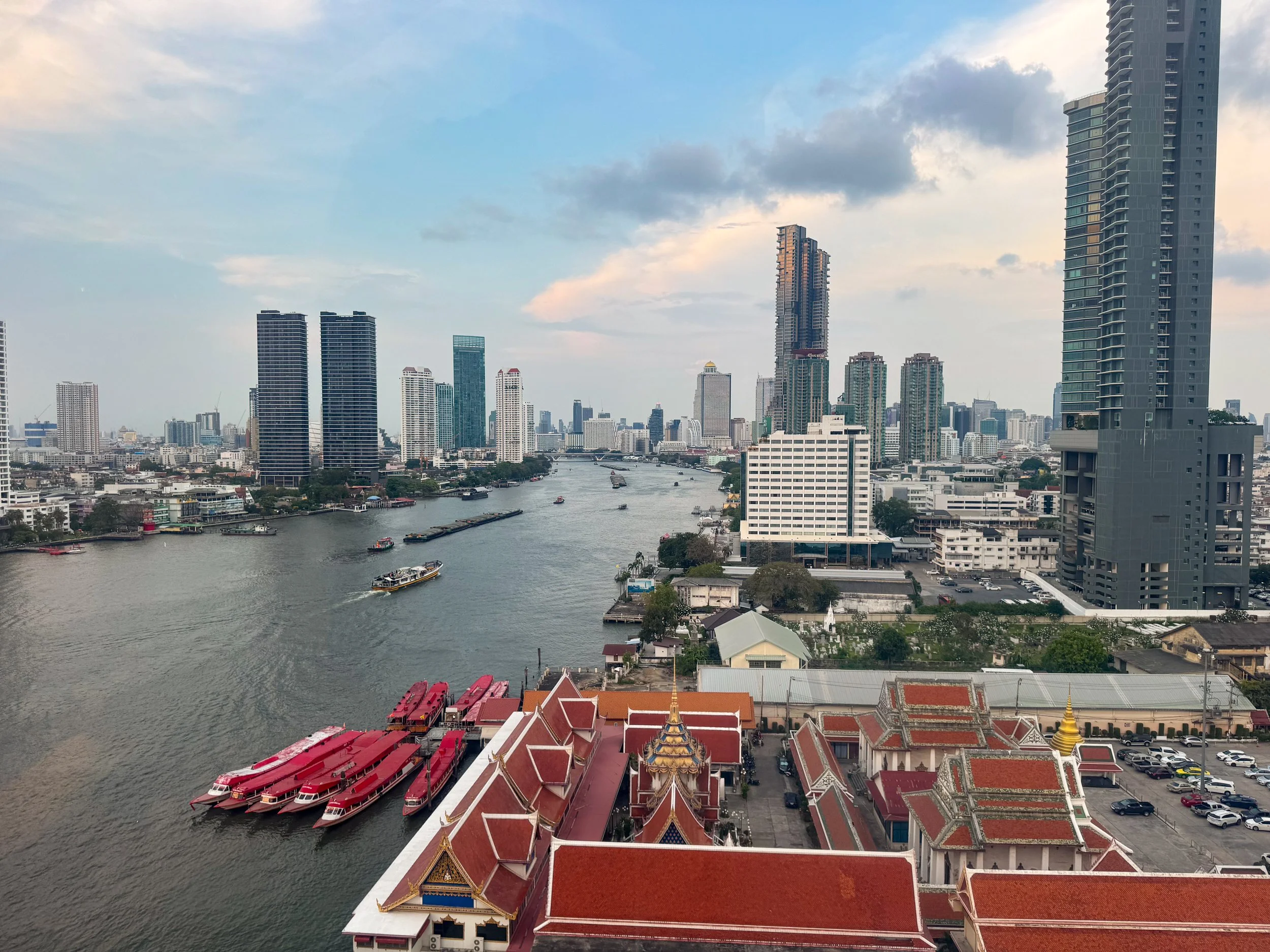
Chao Phraya River
The Chao Phraya River snakes through Bangkok passing several important sights and neighborhoods. There are multiple ferry lines that shuttle passengers up and down the river to various stops along the way. It was one of the best ways to see the city and get around.
Chao Phraya Tourist Boat. A two level ferry that slowly navigates along the river with an audio guide pointing out some of the riverfront’s main sights. It’s an affordable alternative to the expensive boat tours. One way tickets cost less than $3 USD with boats leaving every 15-30min.
Chao Phraya Express Boat (Yellow Flag). A covered long boat that quickly navigates between stops along the river. One way tickets cost less than $1USD with boats leaving every 15min.
Long Boat Ferry. There are several ferries that shuttle passengers across the river for 5 Bhat (less than 2 cents). It’s the perfect way to get to the other side of the river when exploring on foot. We took the ferry across between the Khlong San Pier and Si Phraya Ferry Pier as well as Tah Tian (Royal Palace) and Wat Arun.

Shop the Markets
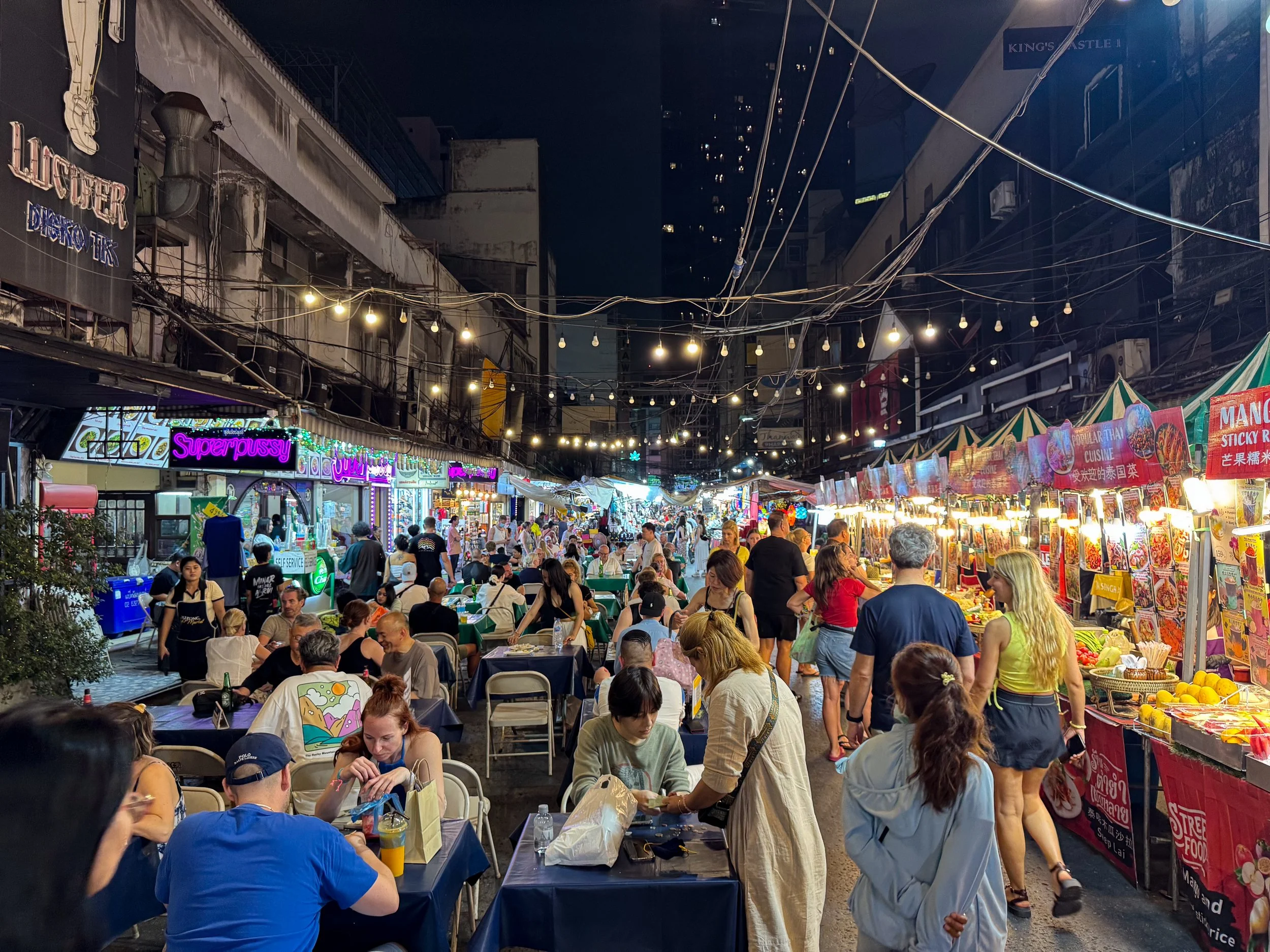
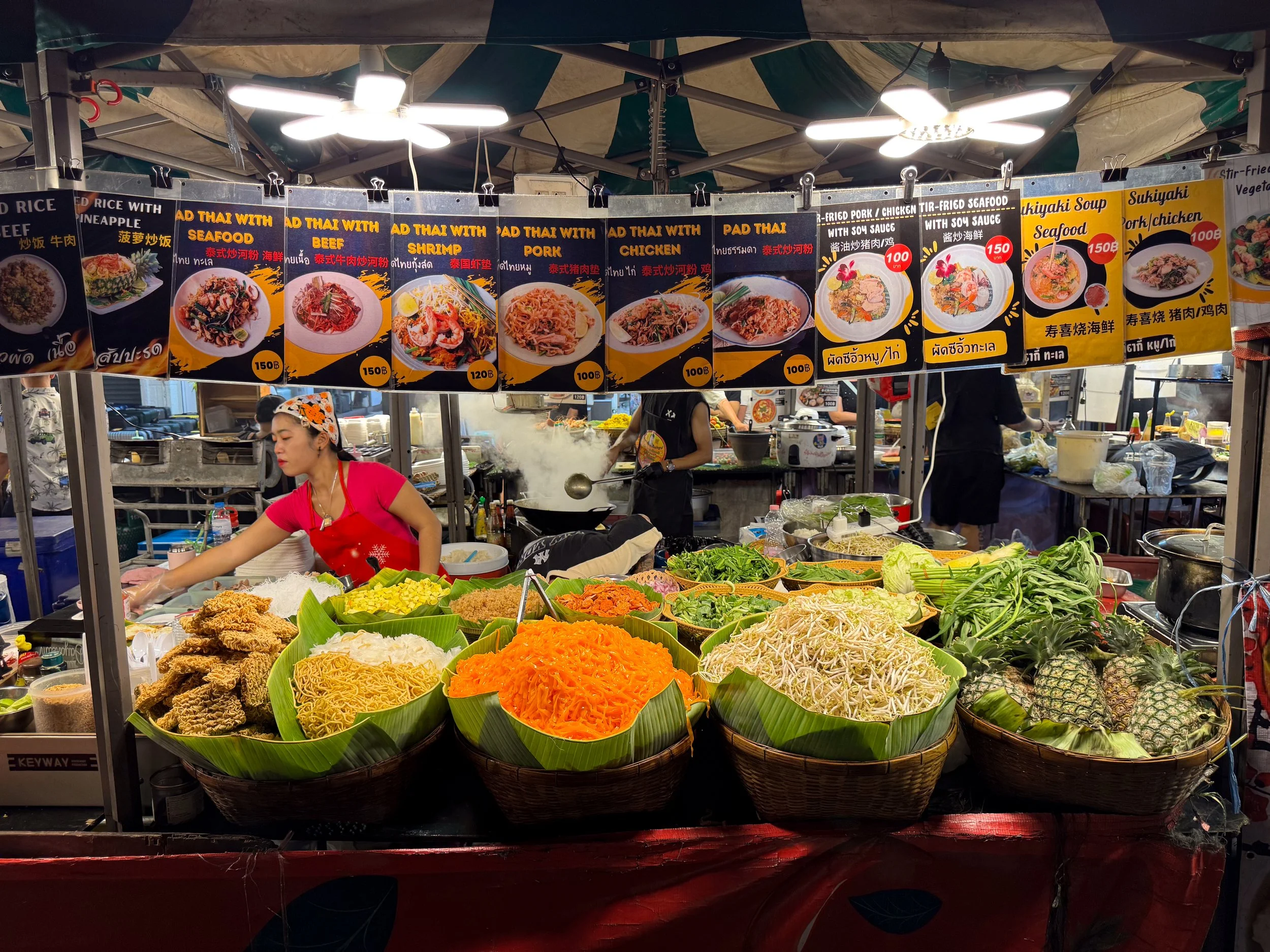
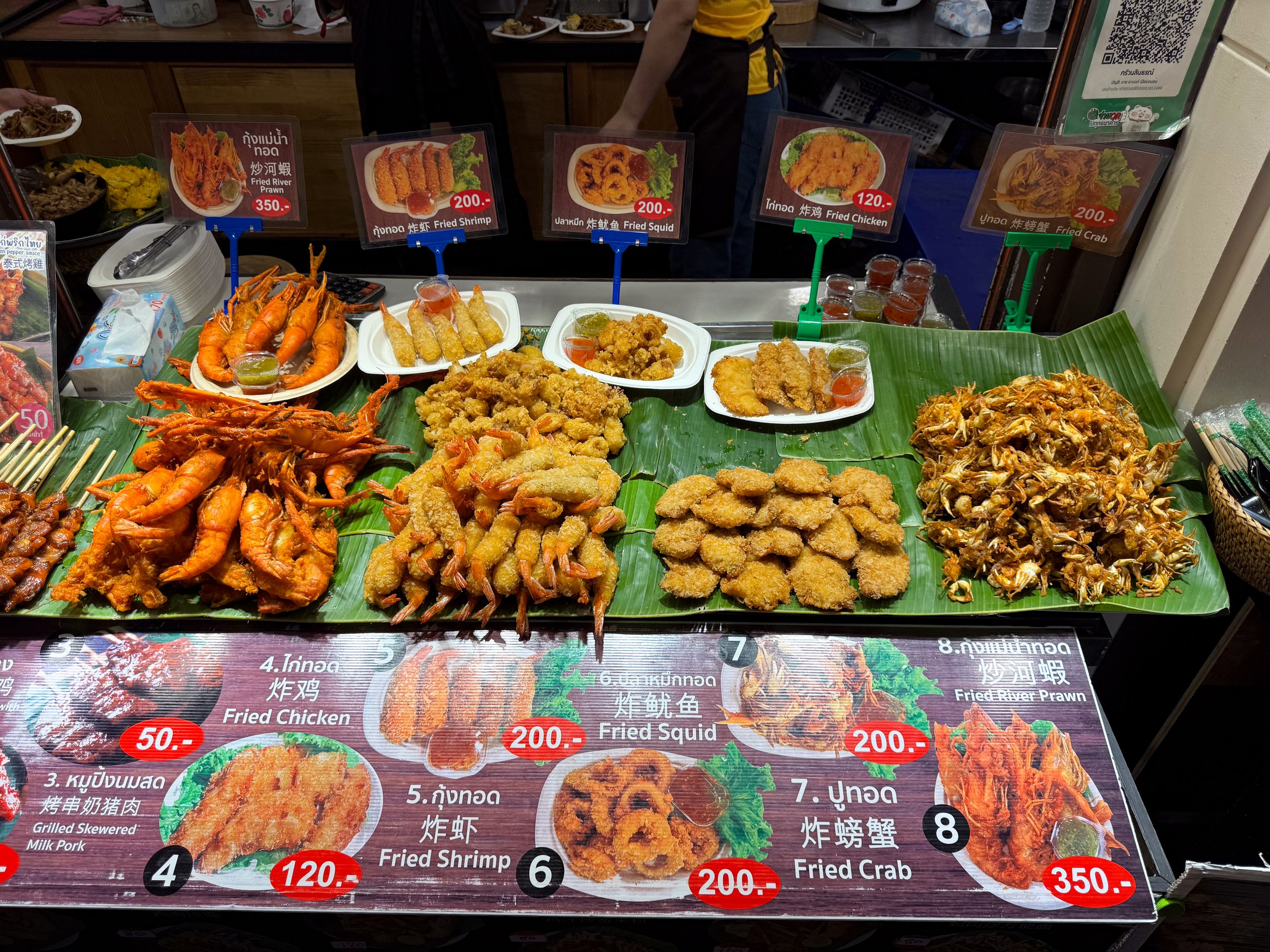
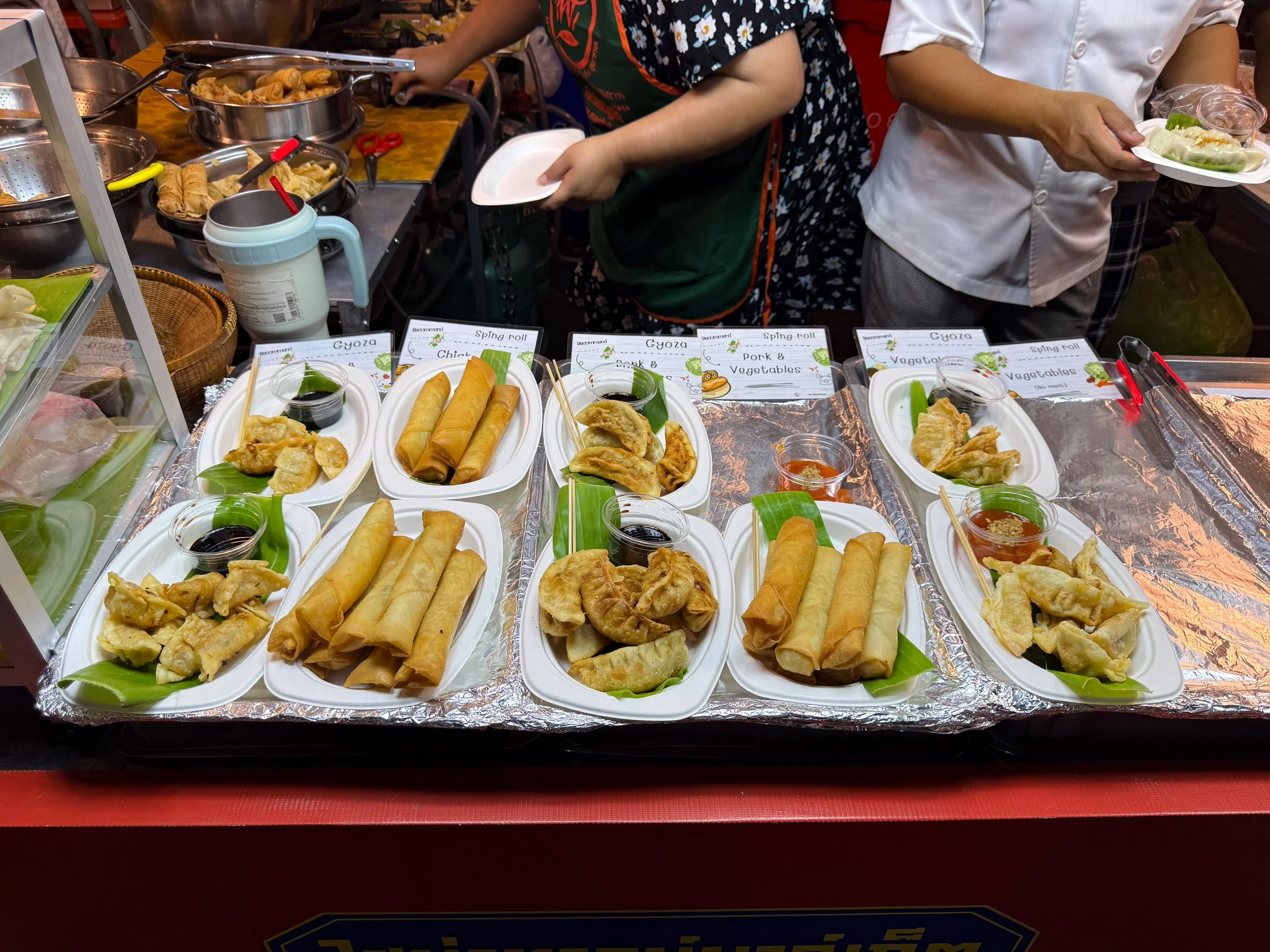
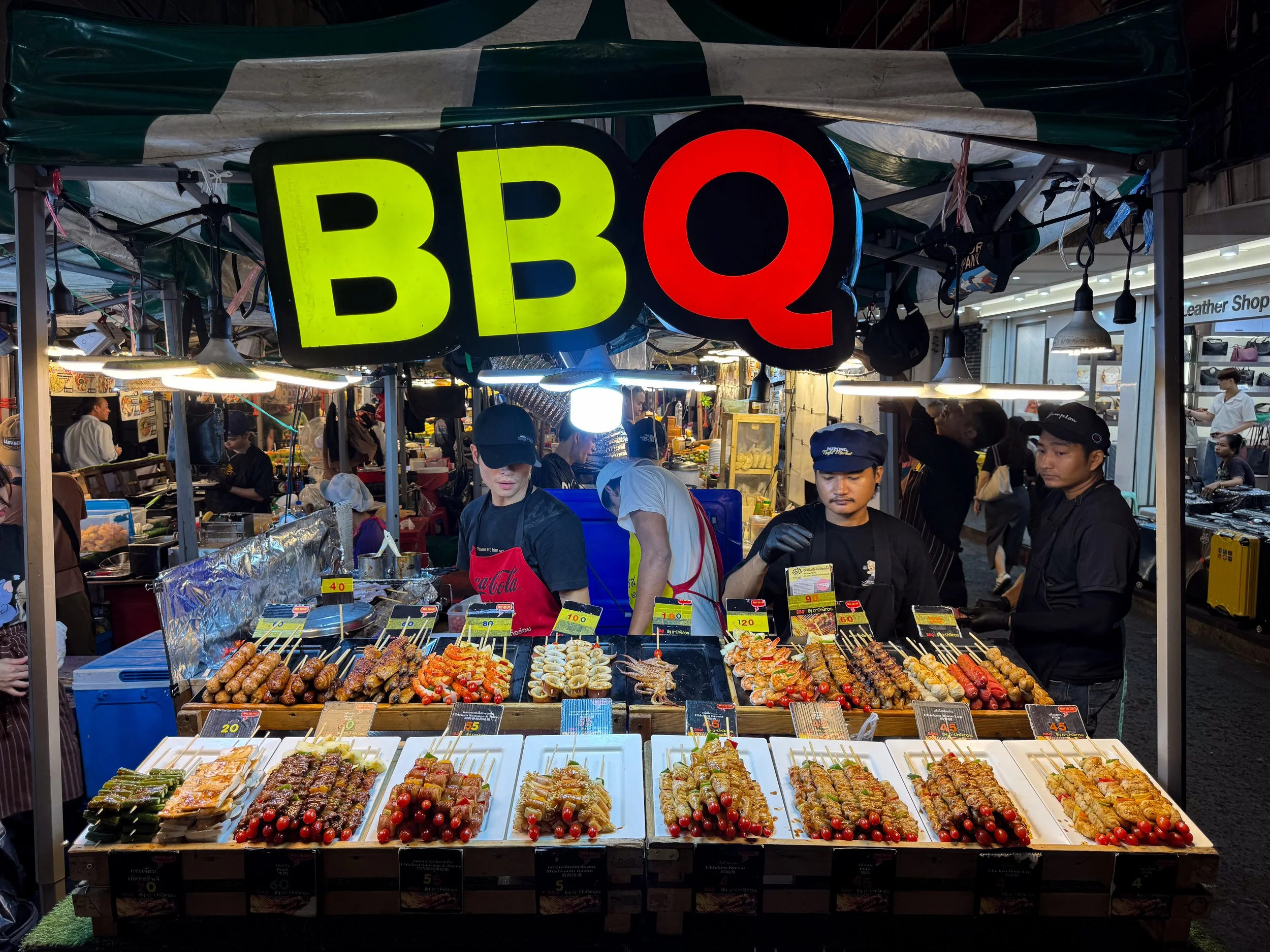
Patpong Night Market. A night market with street food vendors selling grilled skewers, fried seafood, Thai noodles, rice dishes, spring rolls, papaya salad and cheap beers. We dined here twice, sampling dishes from several vendors. Our favorite bites were the barbecued squid and Tom Yum Goong Nam Khon, a creamy and spicy shrimp soup. There is a central dining space with plastic tables and chairs to sit down and enjoy. The market continues beyond the street food sections with the vendors selling knockoff handbags, shoes and watches. It’s a good spot to haggle for bohemian pants, t-shirts, jewelry and miscellaneous accessories.
Pro Tip. Haggle for goods, it’s part of the game. Never accept the first price. Offer half and start walking away when the vendor rejects. Soon after, they’ll agree to your price.
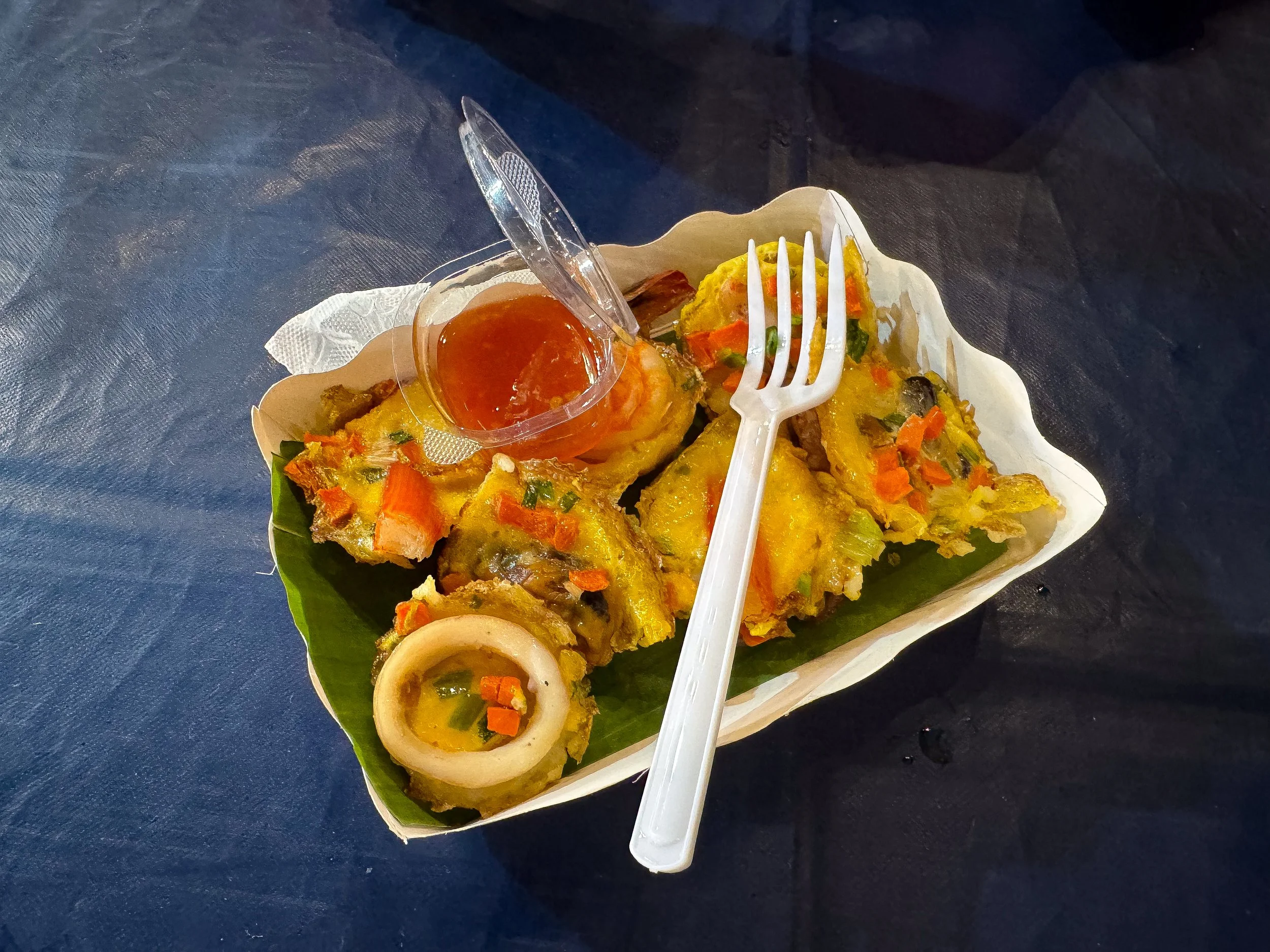
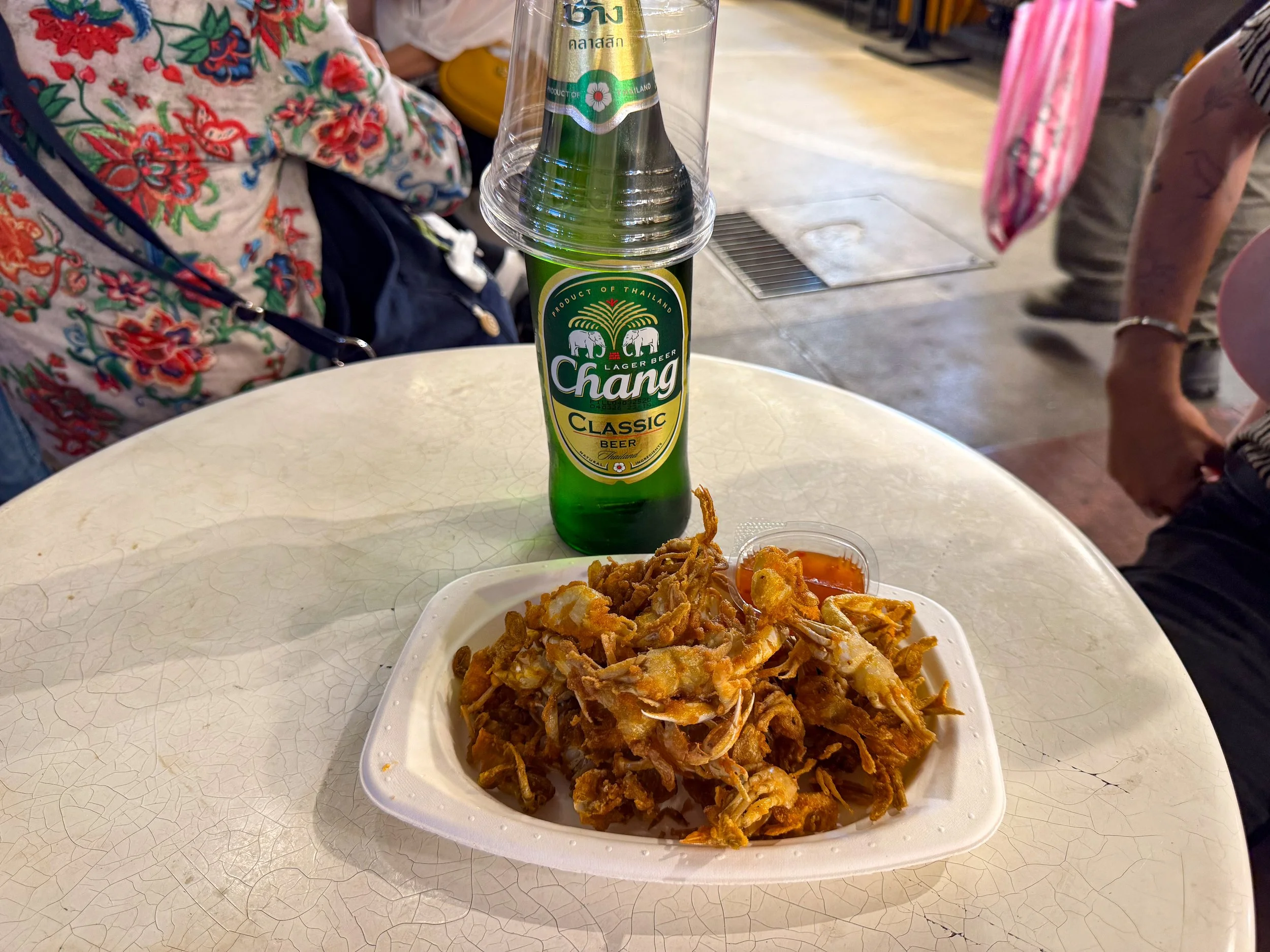
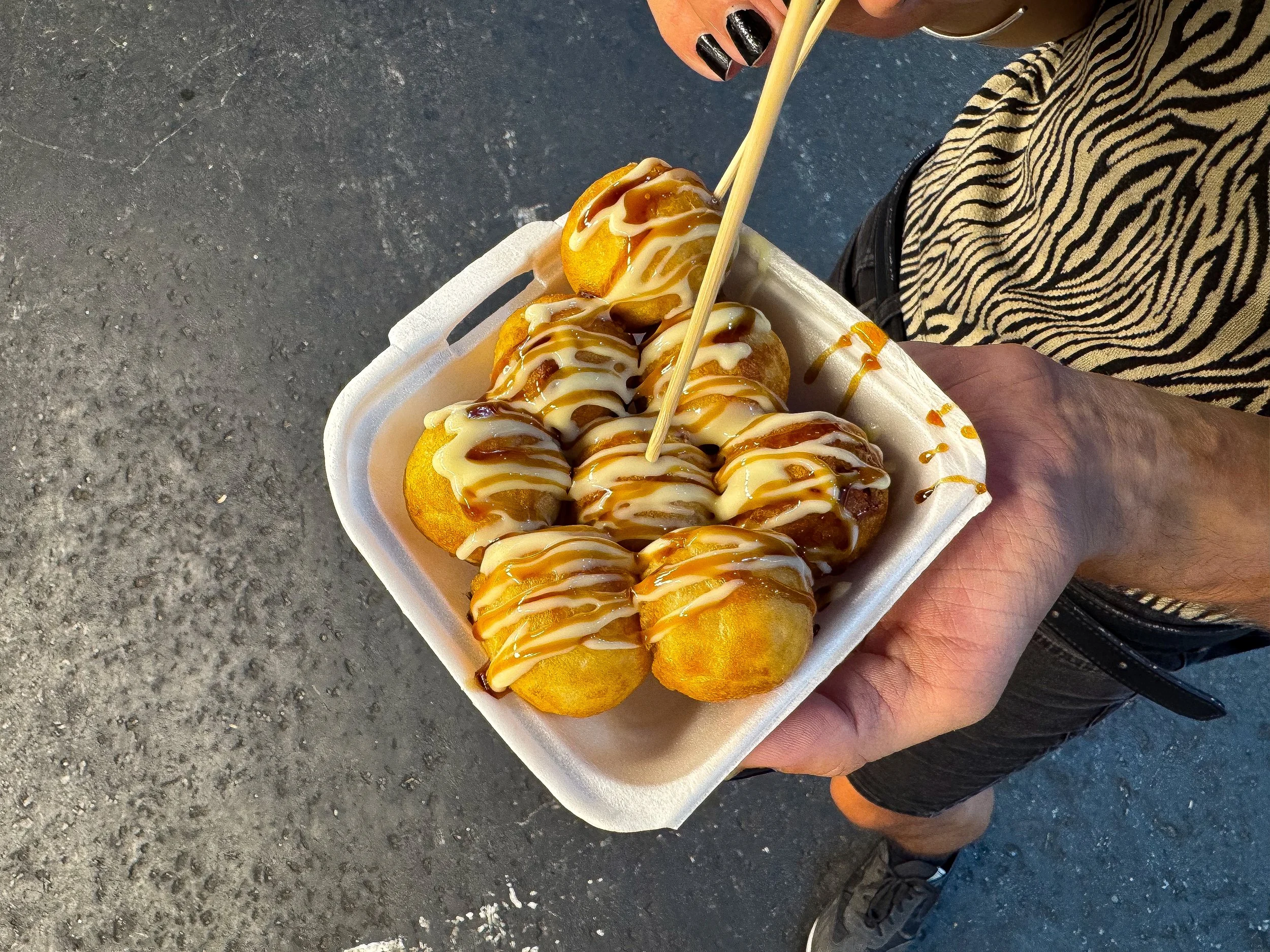
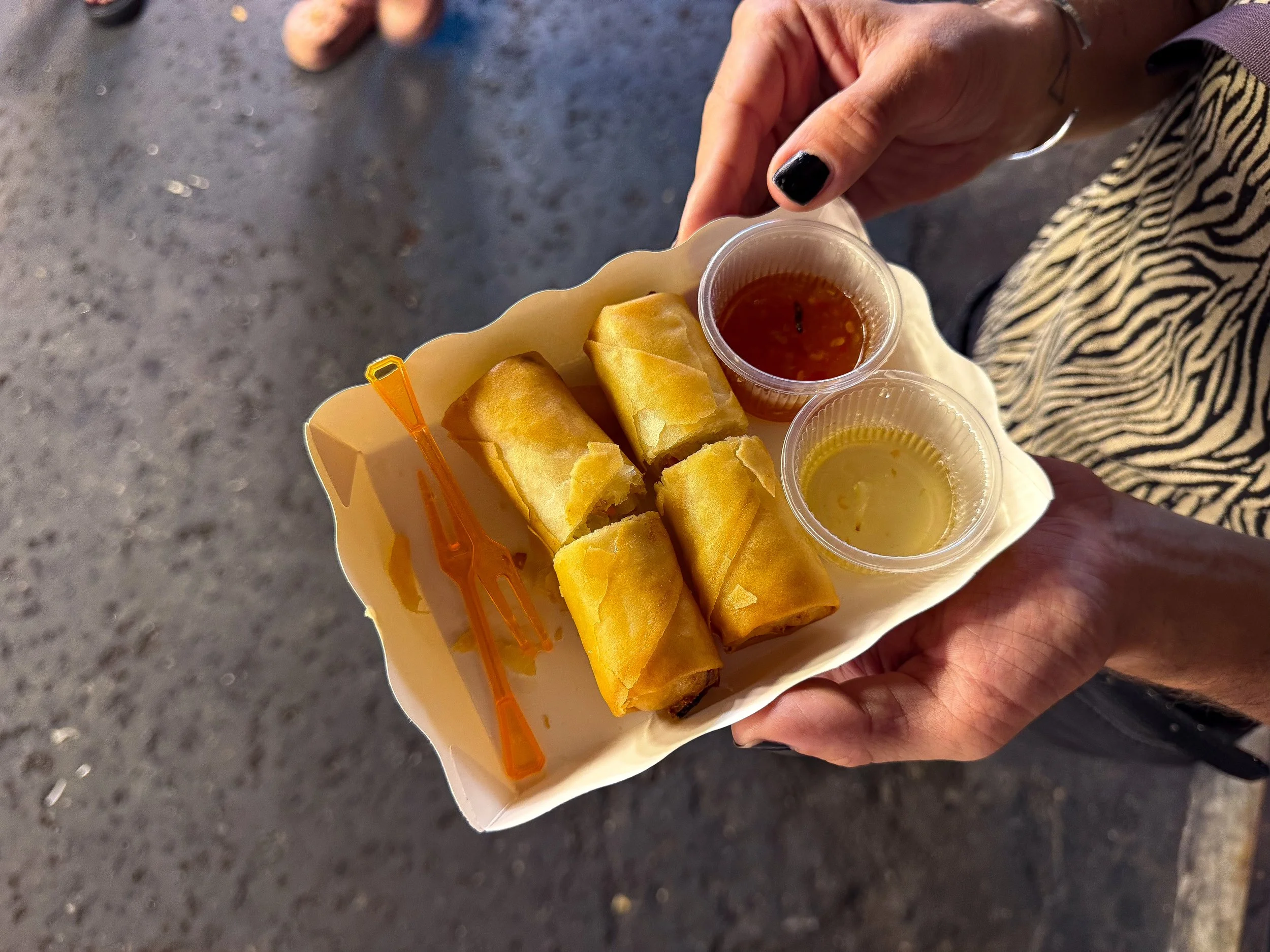
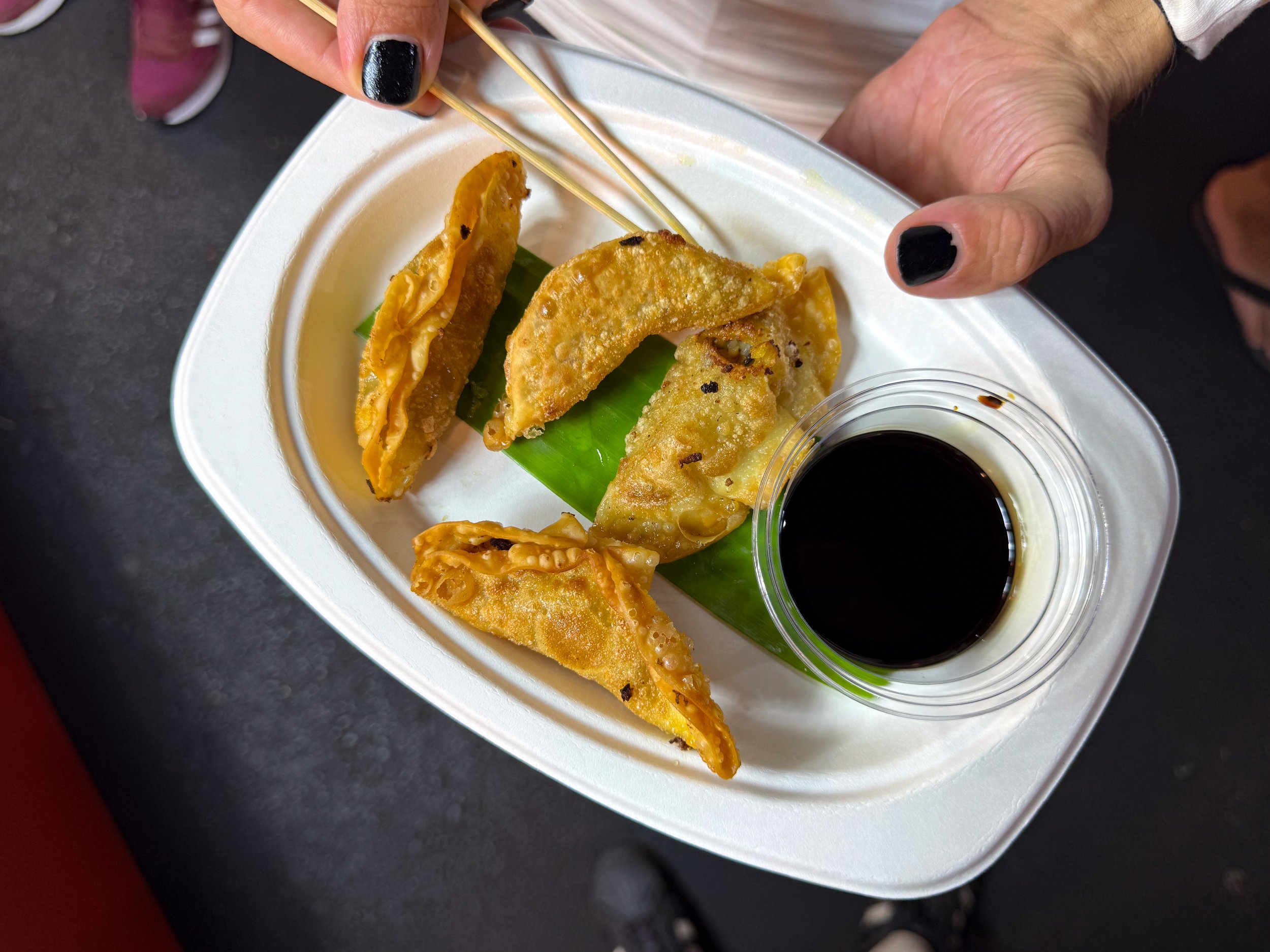
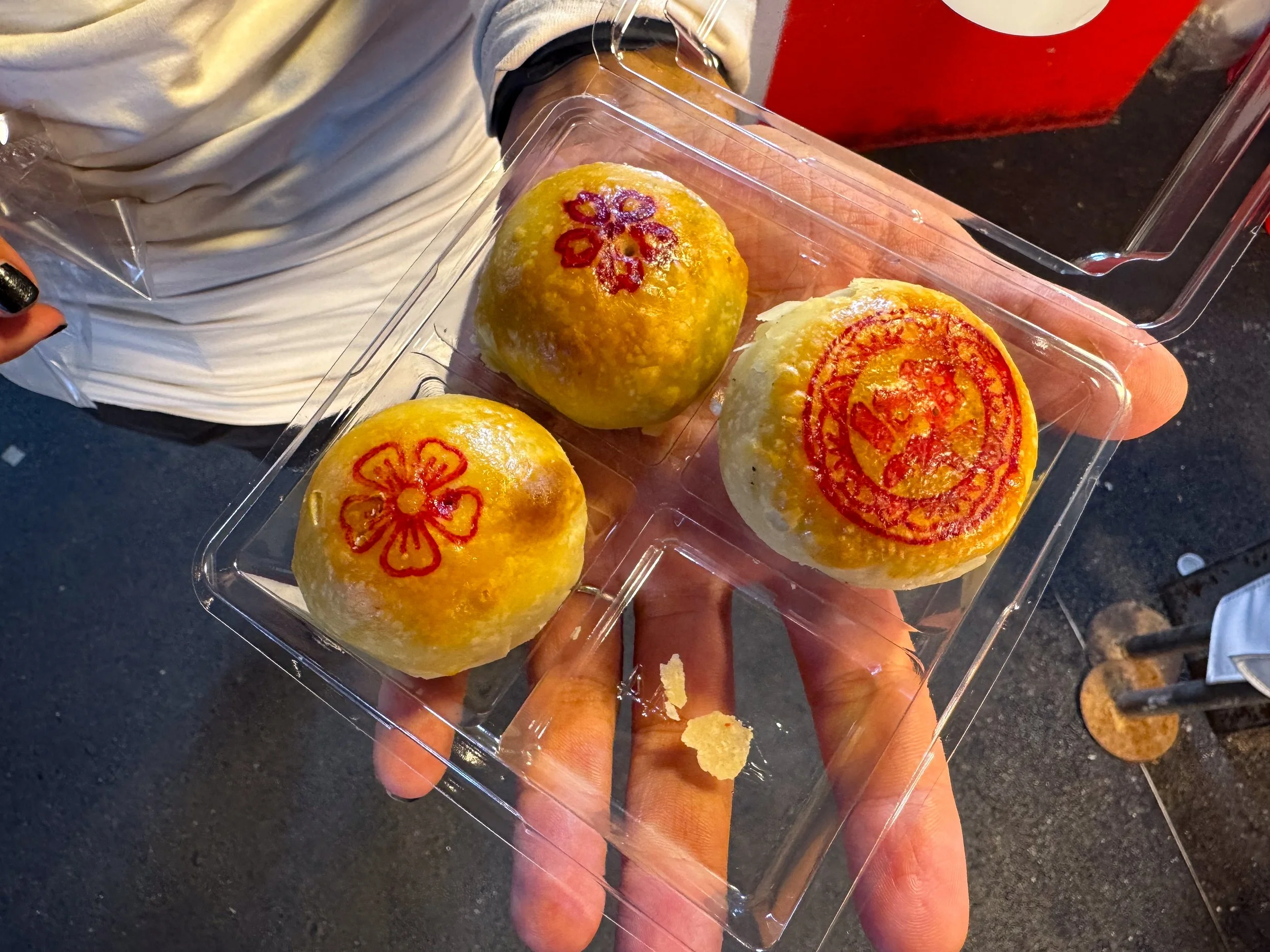
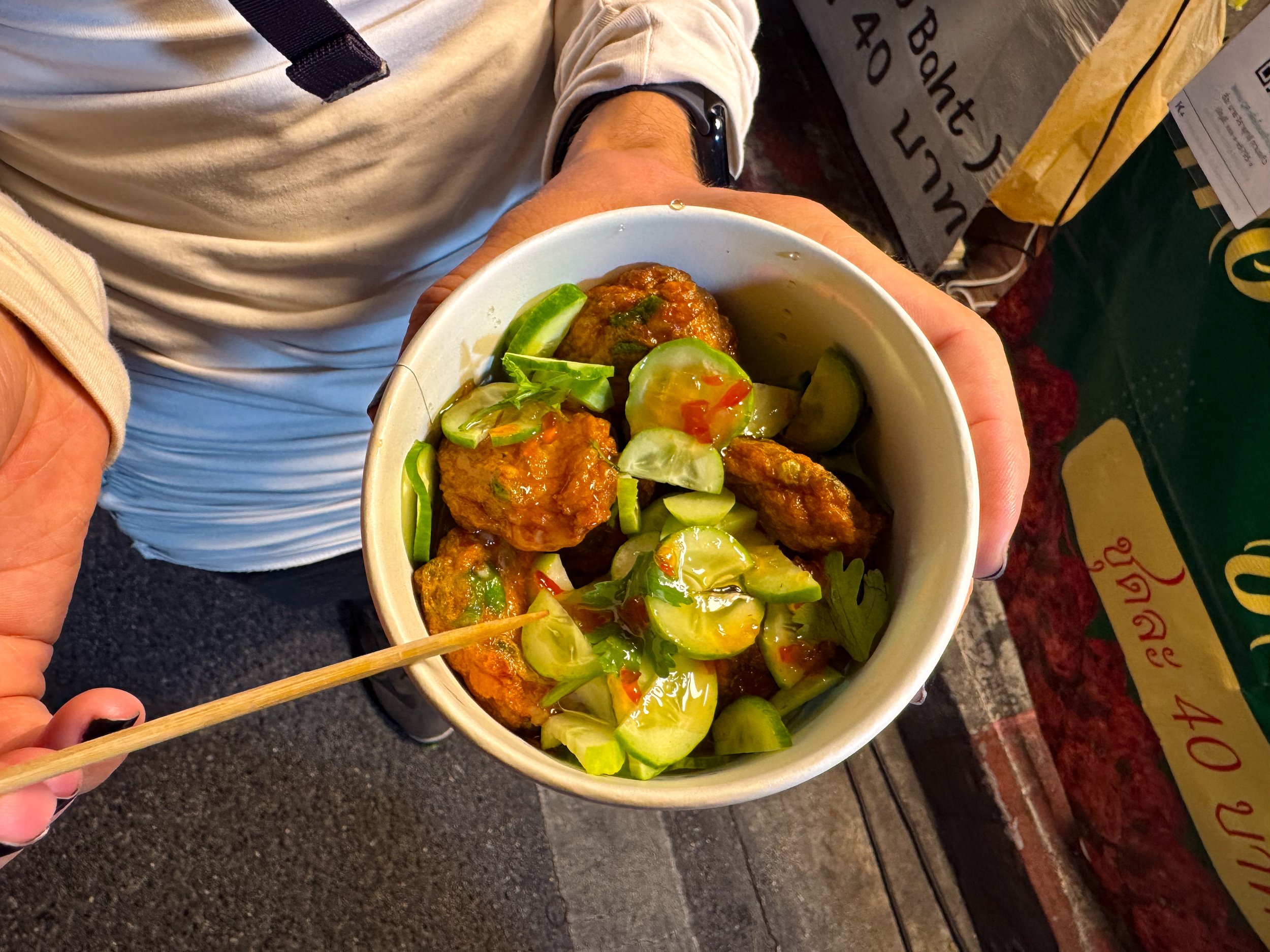
Chinatown Night Market. Come twilight, as the city lights and neon signs begin to illuminate the city, Yaowarat Road in Chinatown becomes the epicenter of Bangkok’s street food scene and Thai cuisine. Hundreds of vendors set up mobile kitchens and carts, grilling, frying, sautéing, boiling and steaming all manner of the city’s famed street food. We went on a street food crawl tasting our way through the market. We feasted on assorted dumplings filled with scallion, radish and mung bean paste. Next up was sautéed squid and cabbage drenched with a spicy fish sauce. Afterwards, crispy fish cakes with spicy braised cucumbers. Then deep fried veggie gyoza and bao buns grilled with butter. For dessert, assorted pastries filled with sesame, red bean and durian paste.
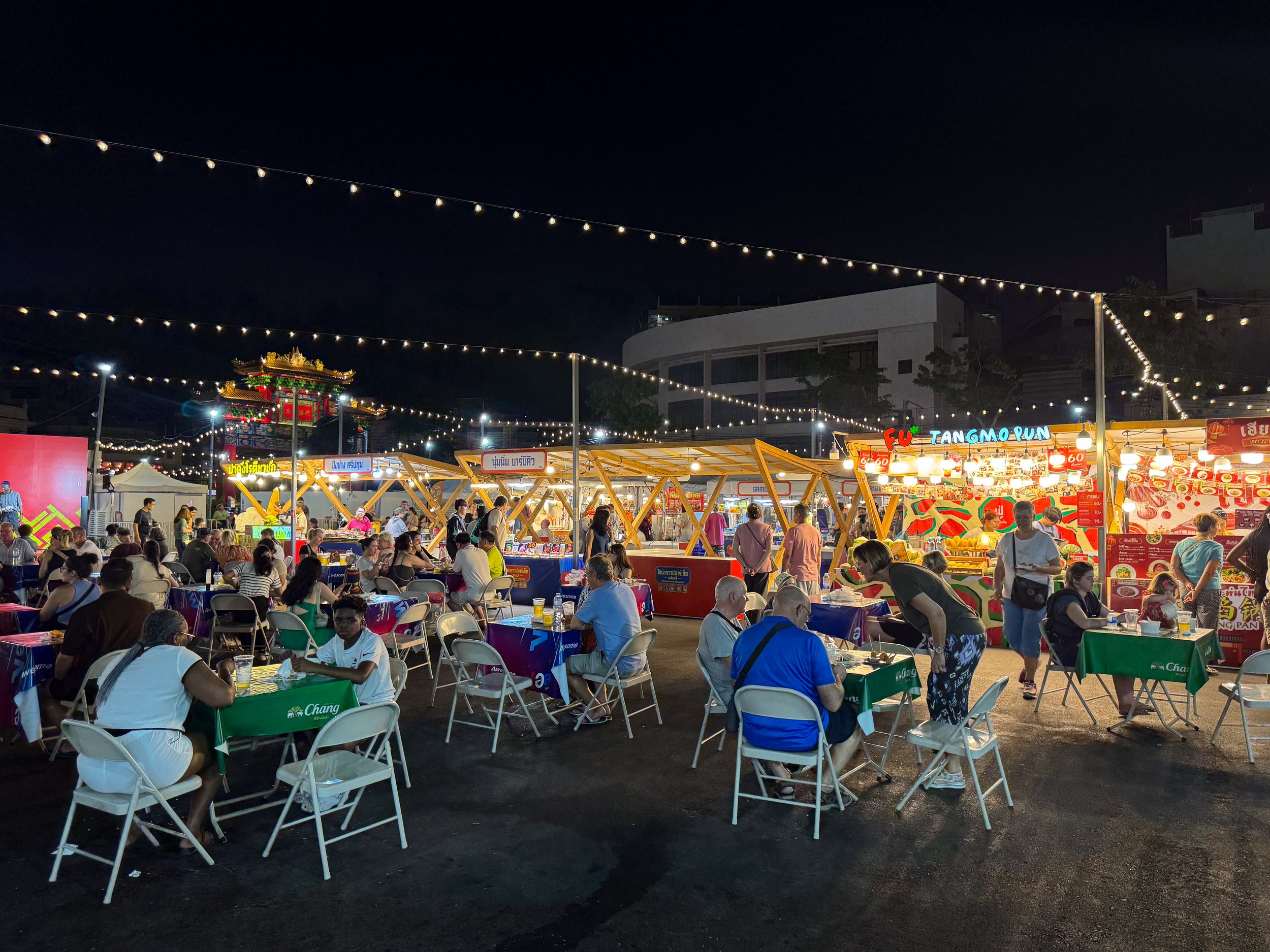
Chinatown Market Chaloem Buri. A street food market in a Chinatown plaza with tents of vendors, live music and a central dining area. It’s less chaotic and more elevated than the Chinatown Night Market. Vendors serve dishes like alligator nuggets, whole roasted ducks, freshly grilled lobster, stuffed dumplings, buns, spring rolls and local beers.
Yaowarat Old Market. A covered market street in Chinatown with hundreds of shops selling all types of merchandise including clothing, toys, tech accessories, kitchenware, jewelry and street food. Many locals come here to shop and pass through the narrow passageway on Vespas.
Restaurants & Cafés
Nuaniyom. A Thai restaurant with all types of national dishes including a range of Pad Thais, papaya salads, Thai curries and Thai iced teas. Even before ordering, the number of locals dining here and lack of English speaking waiters assured us we’re in for a treat. We came here for our first Pad Thai in Thailand and were not disappointed!
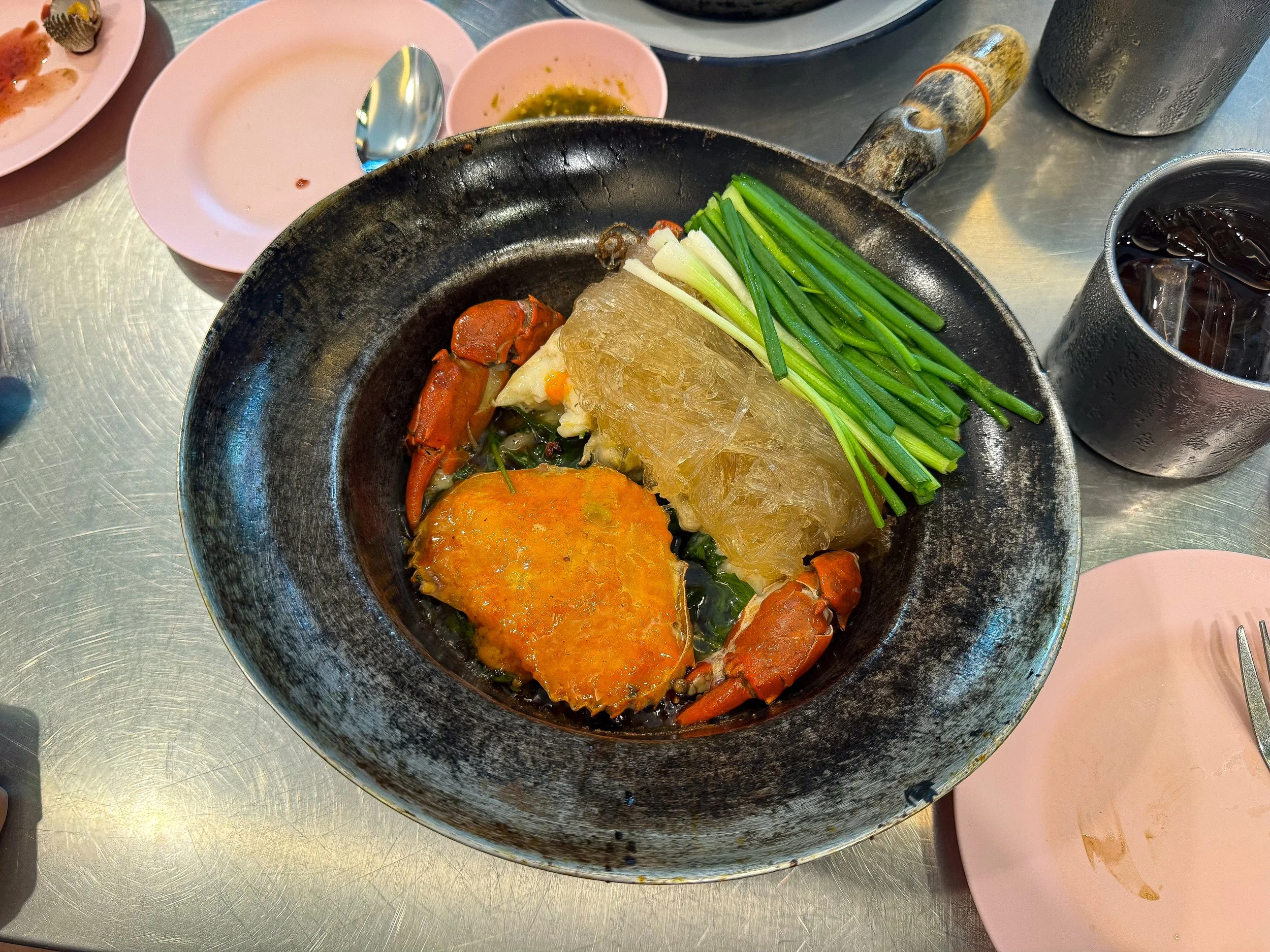
Somsak Puob. A street food vendor famed for their seafood dishes like roe crab, blood cockle and prawns. A tray of live crabs sits on display waiting to be cooked in the street side kitchen. We ordered the juicy and tender roe crab, cooked in a hot pot with butter, garlic, scallions, glass noodles and a pate of the crab roe served in a shell. They were awarded a Michelin Bib, the equivalent of a Michelin Star for street food vendors.
Lynx House Café. A café near the Giant Golden Buddha with bold coffee, uniquely flavored signature drinks, artisan desserts and pastries. Try the iced latte with orange blossom water and soda.
Kaze Coffee. A café with strong Thai coffees and specialty drinks. We stopped in to escape the afternoon heat and for our midday caffeine fix.
Chana Bubble Tea. A small mall café coffees, teas and boba. We came here for Thai iced teas with boba (aka bubble tea).
Cocktail Bars
In all large cities, we love to bar hop during our stay, visiting at least one cocktail bar a night. Bangkok was no exception! We visited rooftops, gay bars, an oceanfront terrace, a “speakeasy” and enjoyed our share of happy hours.
Palate Rooftop. A rooftop bar with views of the elevated metro trains, nearby wats, vibrant streets and a bustling night market. We came for happy hour, having some of the best priced drinks we found in Bangkok, sticking around afterwards for cocktails from their signature menu. Unlike most Bangkok rooftops, this one is not high end. It’s lesser known and located on the fifth floor past a series of maze like stairs.
White Rabbit Bar. A gay bar with well made cocktails and talented live singers. We sat outside in the warm summer air beneath the elevated train, people watching as we sipped on fruity and bitter cocktails garnished with flowers.
Tropic City. A tropical themed bar with boozy and beachy cocktails continually rated as one of the top 50 bars in Asia. It’s hidden in a Chinatown alleyway but immediately transported us to a tropical destination with its colorful and moody lights, palm thatched decor and jungleous wallpaper. Order the “Welcome to the Jungle” or a classic piña colada.
The Parlor. A cocktail bar on the 4th floor of The Standard Hotel in the Maha Nakhon Tower. We came for their well priced happy hour with Aperol spritzes, gin and tonics and margaritas. The lovely atmosphere during sunset on their outdoor terrace made for a calm and memorable final night in Bangkok.
Vol de Nuit The Hidden Bar. A cocktail bar in a garden speakeasy behind an art gallery with pop art painted sculptures of sumo wrestlers, animals and anime characters. The garden is colorfully lit with a beautiful koi pond at its center. Try one of the citric and fruity signature cocktails like Summer Time and Unforgettable, perfect for a warm Bangkok night.
Wang’s Bar. A vibey street side cocktail bar on Sri Ram Buttri Road with inexpensive and classic cocktails. We stopped in for their buy two get one free happy hour and left feeling quite happy. Try the Mai Tai, gin & tonic or Long Island iced tea.
Sunspirit. A high end waterfront cocktail bar and restaurant on the Gulf of Thailand near the Ancient City. We came here in the late afternoon for drinks while overlooking the water and watching the container ships pass by.
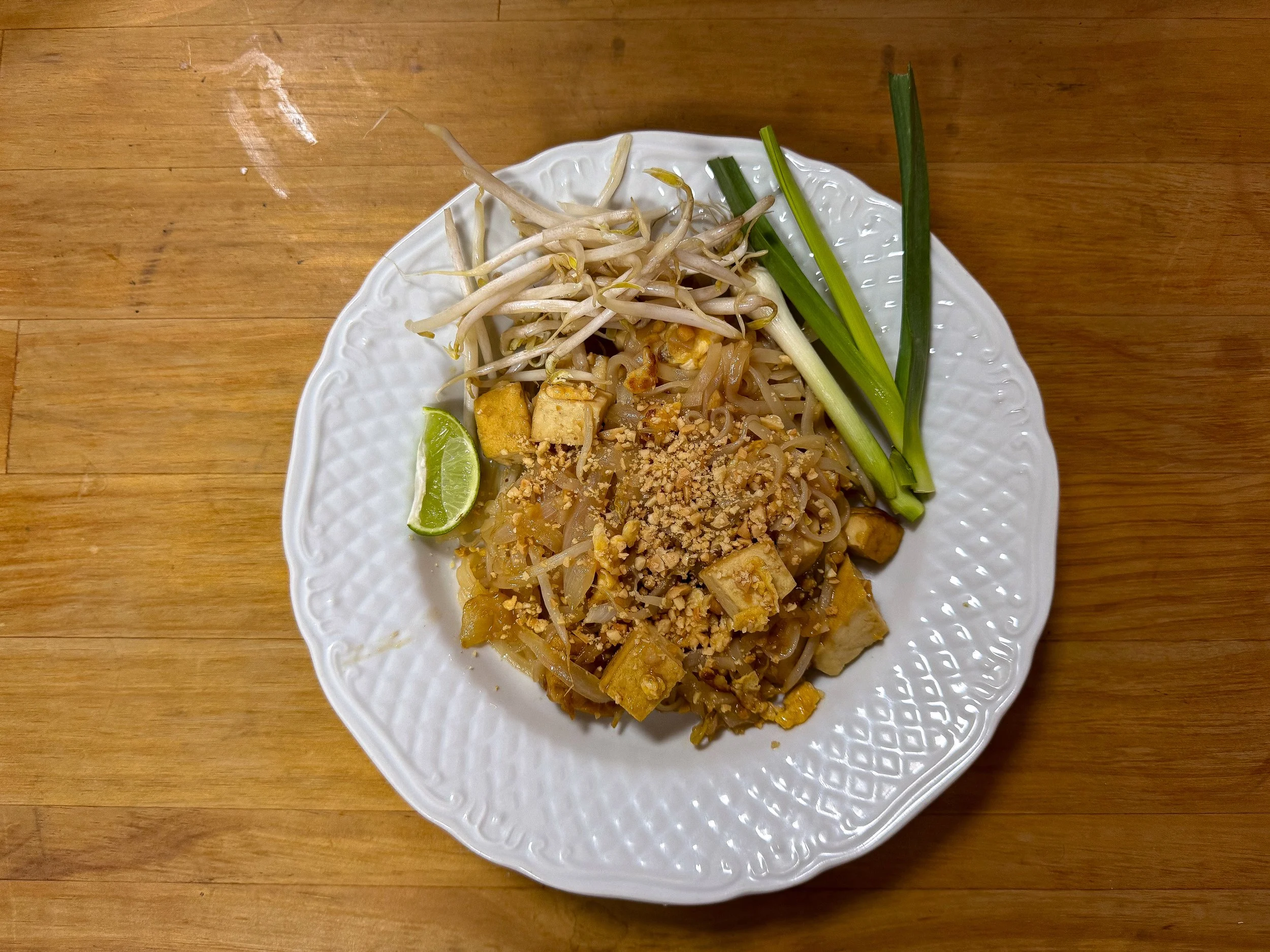
Thai Cuisine
Thai cuisine is a delicious combination of sweet, spicy, fresh and savory flavors. We tried a few favorites at restaurants, night markets and in our Airbnb’s kitchen.
Pad Thai. A world renowned rice noodle dish famed for its tangy and sweet sauce paired with peanuts, scallion, bean sprouts and chili pepper.
Tom Yum Goong Nam Kon. A flavorful spicy and sour Thai soup made with lime juice, lemon grass, galangal root, kaffir lime leaves and evaporated milk. It’s often paired with shrimp or prawn.
Spring Rolls. Crispy and flaky rolled or deep fried dough filled with veggies and herbs typically served with a sweet and spicy sauce.
Thai Curry. Red, green and yellow curries made with a range of hot and savory spices, coconut milk and rice noodles.
Papaya Salad. A Thai salad made from thinly spiced pieces of green papaya marinated and mixed with lime juice, garlic, chilies, fish sauce, palm sugar and peanuts.
Basil Rice with Shrimp. A stir fried rice dish cooked with Thai basil, shrimp, chili and garlic.
Thai Iced Tea. A classic Thai beverage made from brewed black tea and mixed with milk and sugar. It’s often flavored with star anise and cardamom. Try it with boba pearls.
Mango Sticky Rice. A simple and delicious staple of Thai cuisine made from sticky rice paired with freshly sliced mango. The rice is often flavored with sweetened condensed milk or a herbal syrup.
Chang Beer. A national beer, popular across the country. It’s recognizable by two elephants on its label.
LGBTQ+ Safety
Thailand is one of the friendliest LGBTQ+ countries in Asia with legalized same sex marriage, protections against discrimination and an overall accepting population. Upon arrival into Thailand, each immigration booth featured a sticker of the progress flag in a heart with LGBTQ+ written across it. It was a very welcoming sight upon entry to a foreign country.
Location Specifics
Driving. People drive on the left side of the road. Remember to look both ways when crossing the road.
Expenses. Bangkok is pricier than other places in South East Asia. Luckily, spending money on street food at happy hours helped us spend less.
Language. Thai is the national language. Most people speak a little English.
Cash vs. Card. Cash is accepted everywhere and the preferred method of payment. Many restaurants, businesses and sights didn’t accept credit cards.
Safety. We felt safe throughout Bangkok but were continually warned about pickpocketing and scammers.
Modesty. Wearing long pants and covering shoulders is required when entering most wats and temples, including the royal palace.
Food Poisoning. While street food is delicious, cheap and a local way of experiencing Thai culture and cuisine, it comes with risks of food poisoning. Bring travel medication for food poisoning just in case the worst case should happen.
Getting Around
Grab. A taxi app is readily available throughout Bangkok. Rides across the city typically cost about $5 USD. Rides to/from the airport cost around $12 USD.
Tuk Tuks. Souped up three wheeled taxis are common across the city. We found tuk tuks to be more costly than Grabs.
Metro. Bangkok has a very modern metro system with elevated rails crossing the city. It’s a cheap and effortless way to get around like a local.
Elsewhere in Thailand
From Bangkok's temples and street food scene to Chiang Mai's historic Old City, Phuket's beaches and Krabi's coastal adventures, continue exploring Thailand through these travel guides:
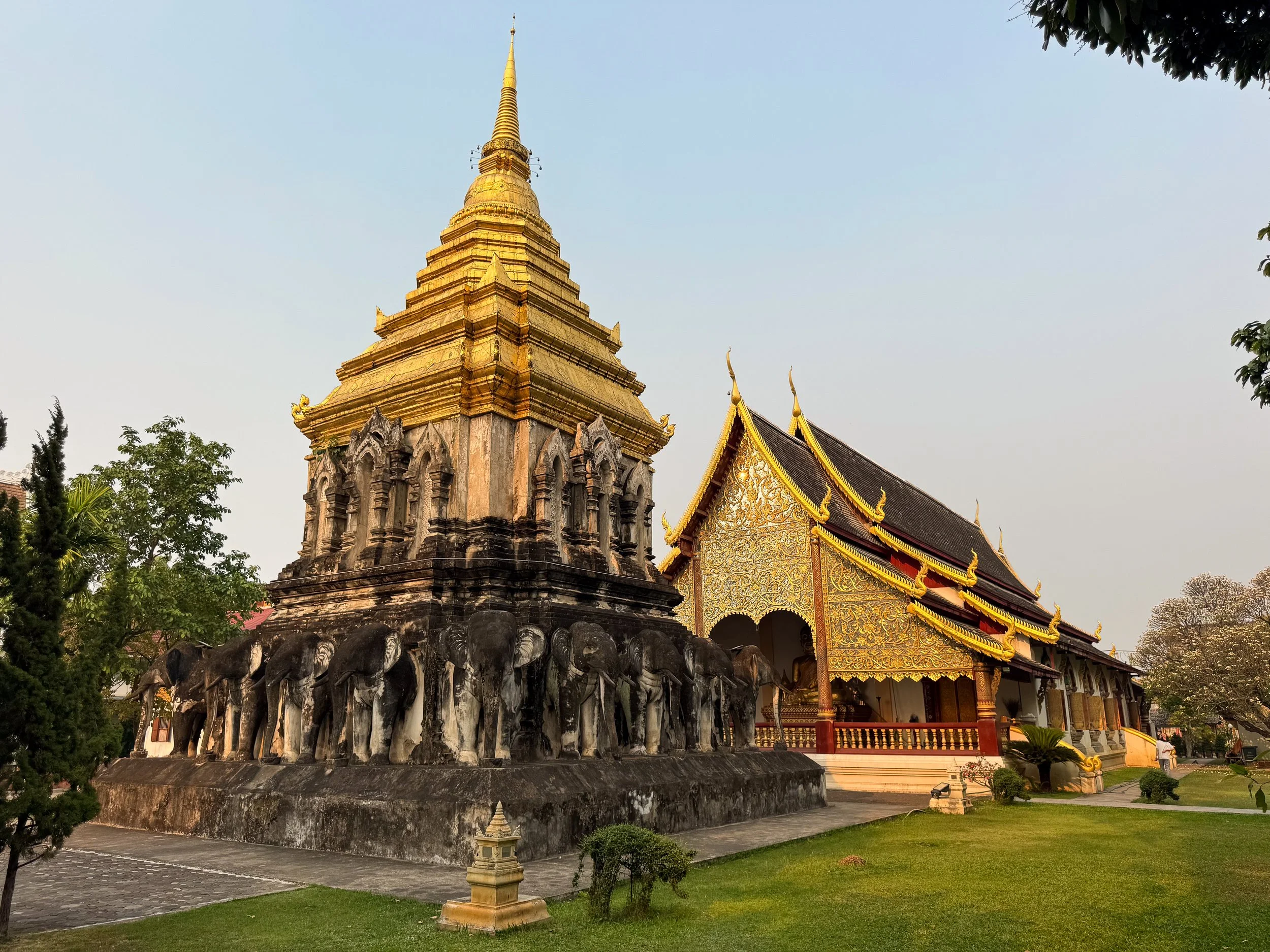
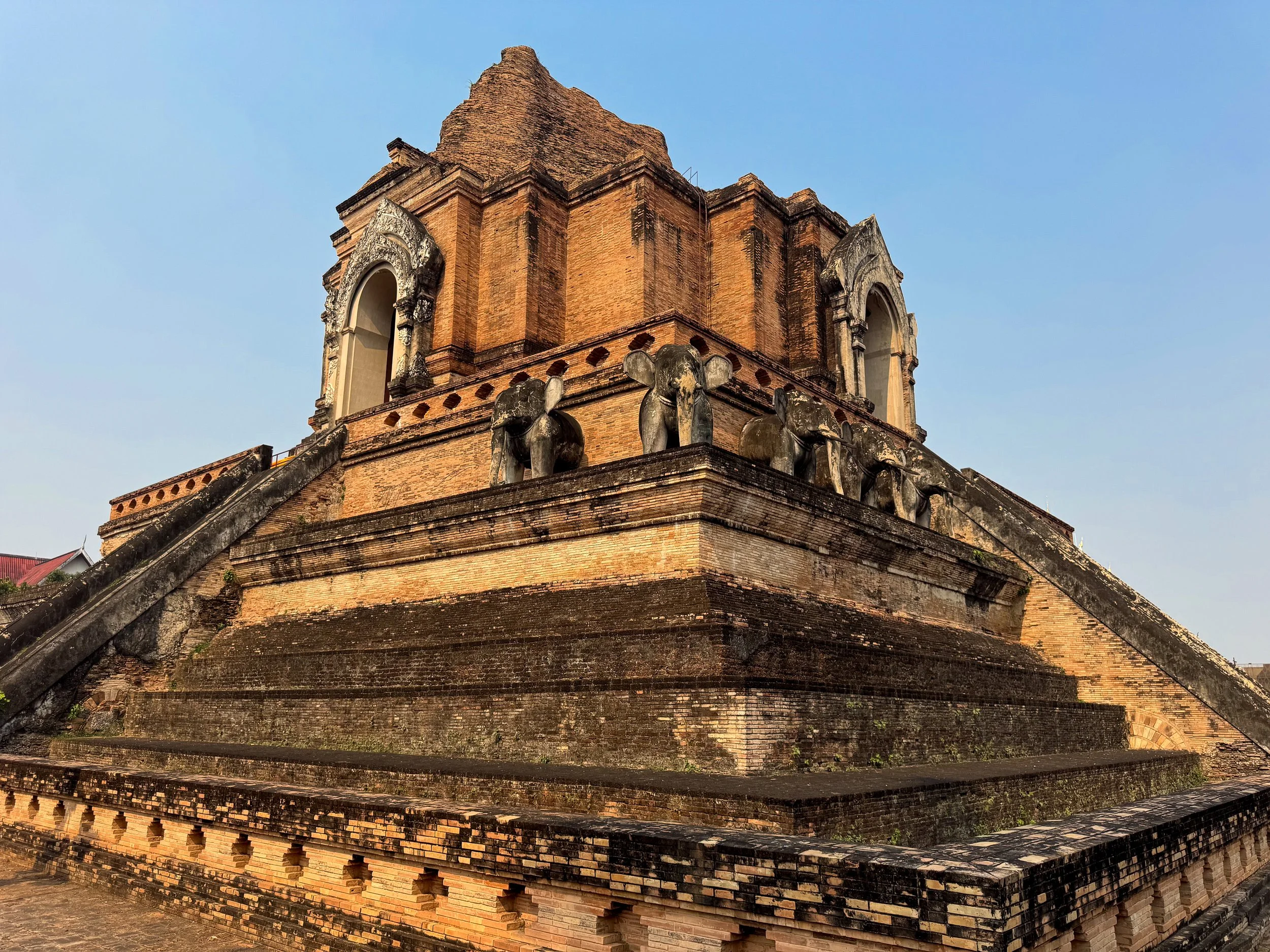
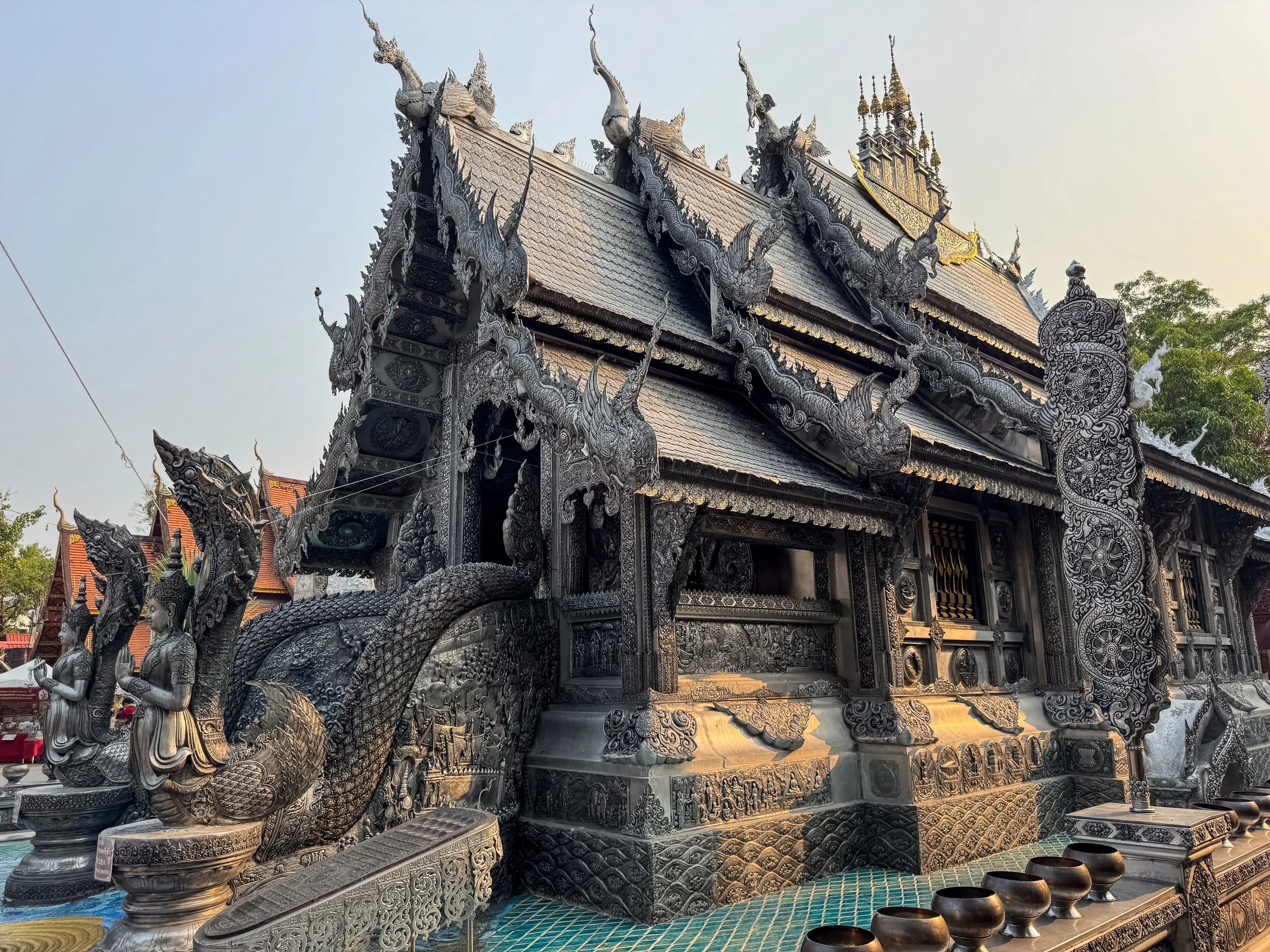
Chiang Mai Travel Guide: Old City, Temples & Night Markets. Meander through Chiang Mai's Old City where historic temples and night markets reveal Northern Thai culture, mountain landscapes, waterfalls and elephant sanctuaries.
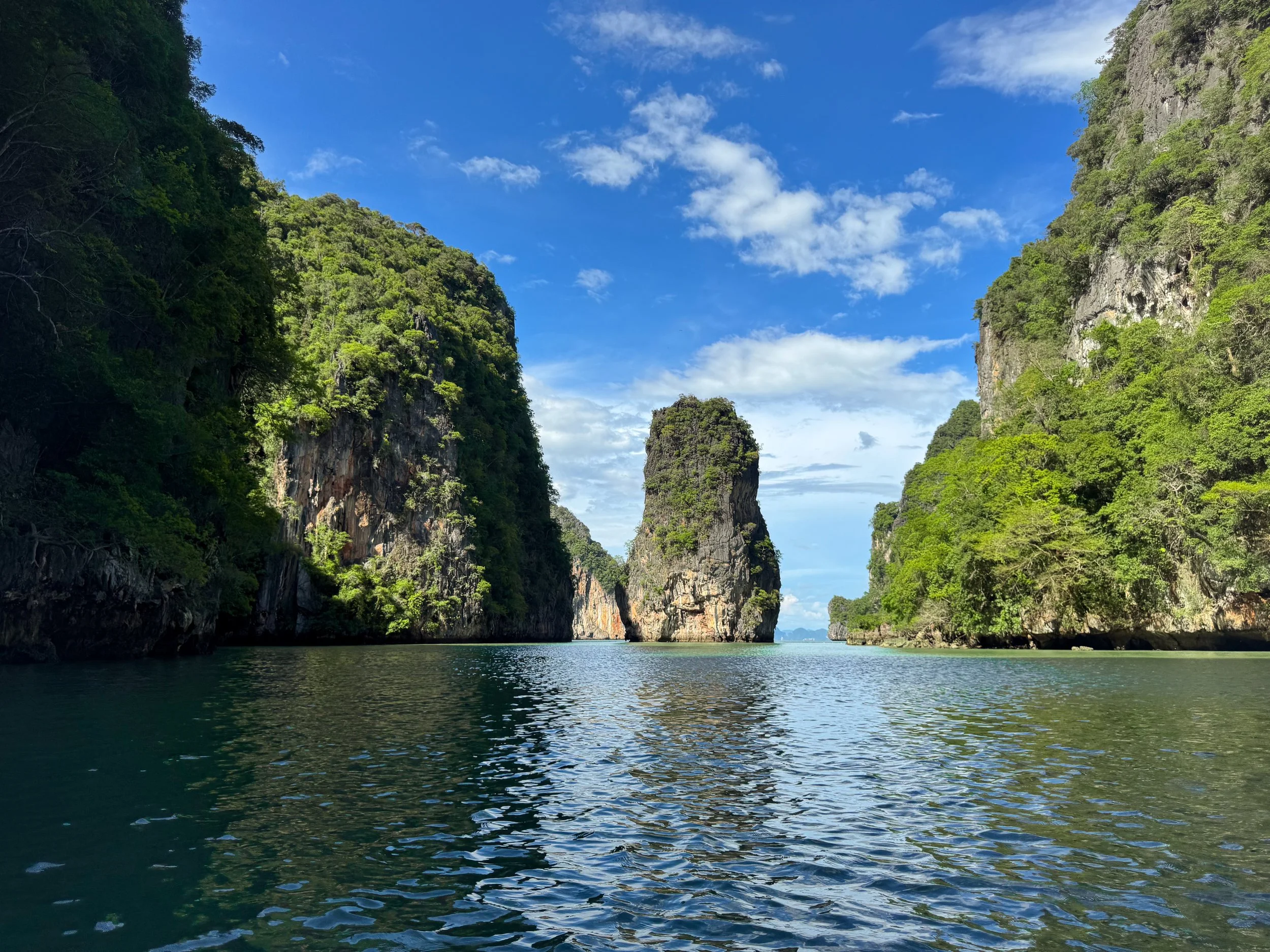
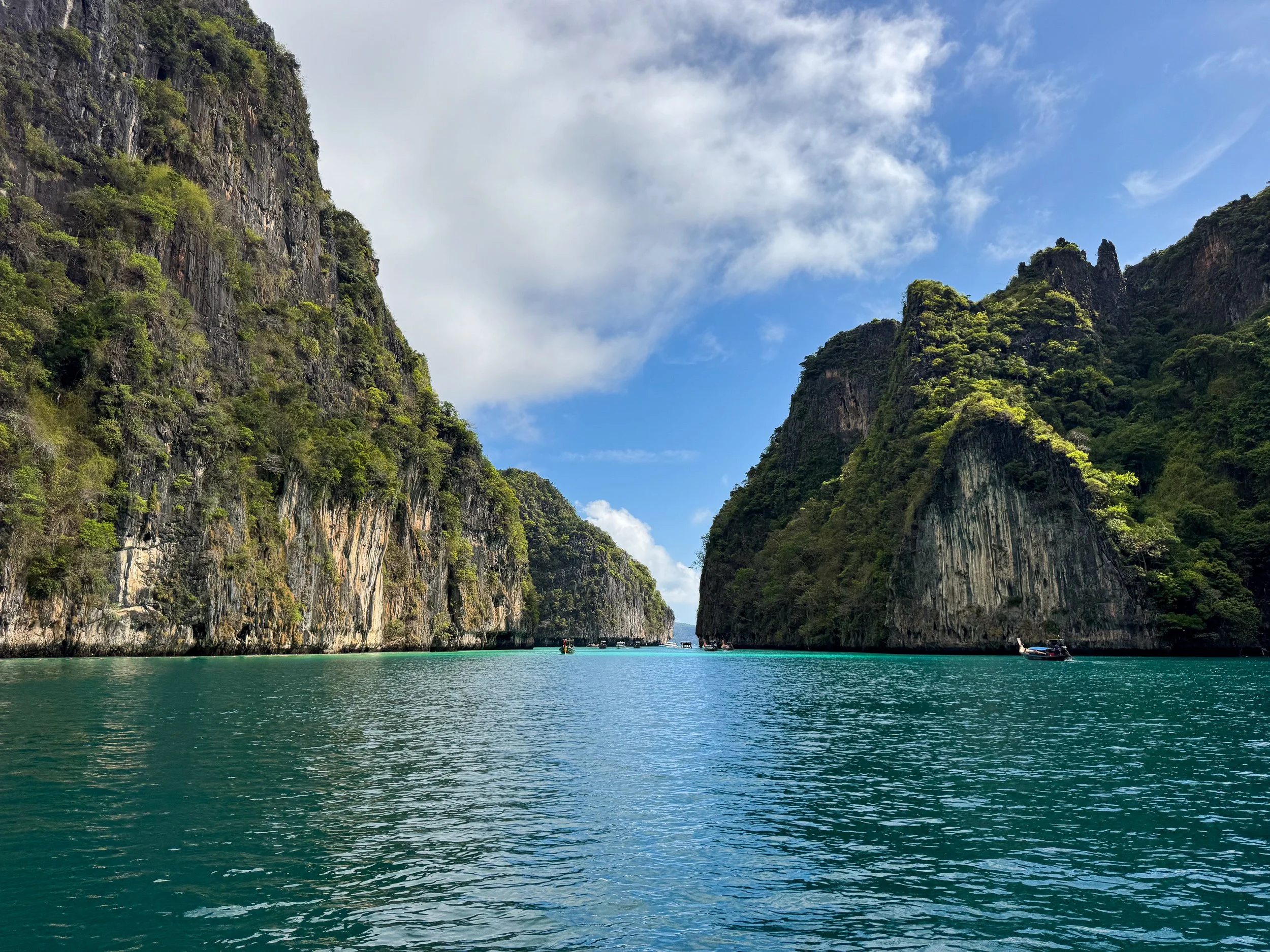
Phuket Travel Guide: Beaches, Island Hopping & Thai Culture. Escape to Phuket where sandy beaches, turquoise bays, limestone islands, a colorful Old Town & island hopping adventures blend Thai culture with coastal exploration.
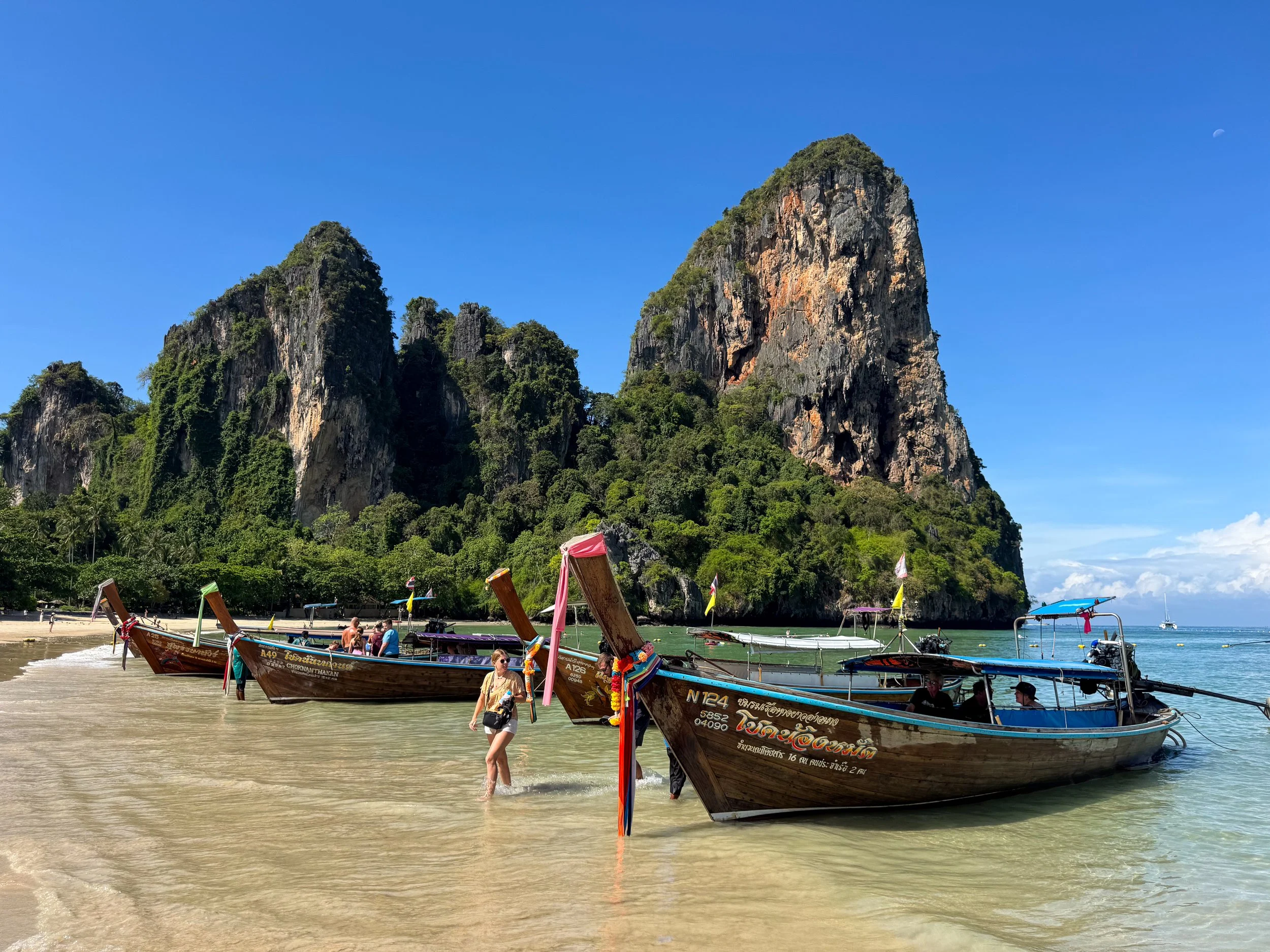
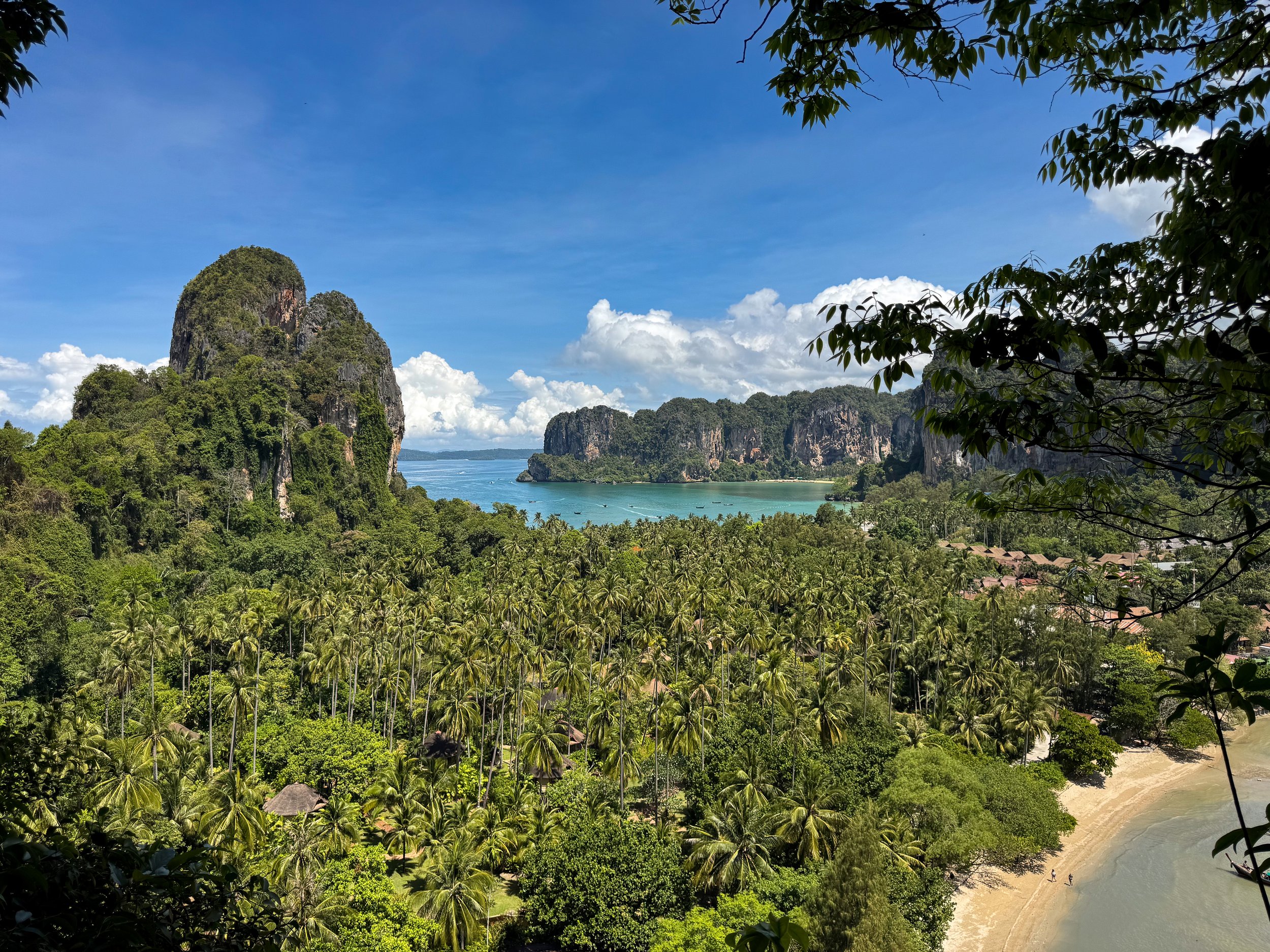
Krabi Travel Guide: Railay Beach, Limestone Cliffs & Tropical Adventure. Experience southern Thailand through dramatic limestone cliffs, Railay Beach, tropical islands and outdoor adventures.
For Next Time…
Bangkok is a massive city! Even with a week here, we didn’t get to see and do everything we had on our list. When we return, we have several things top of mind inside and outside of the city.
Ayutthaya Old City Ruins. A sprawling complex with ancient wats, temples, palaces and ruins in the city of Ayutthaya.
Phra Prang Sam Yot. An Angkor Wat style temple with three stone stupas and families of wild monkeys. It’s also located in Ayutthaya.
Floating Markets. Riverside markets with canoes of vendors selling produce, souvenirs and miscellaneous goods to customers waiting on docks.
Bangkok Weekend Market. The city’s largest market, only held on Saturday and Sunday with hundreds of vendors selling goods and street food.
Dragon Descendants Museum. A giant dragon shaped museum dedicated to Chinese history throughout the region.
Sunflower Fields. From mid-November to early January, sunflower farms bloom into fields of yellow. There are several sunflower fields north of the city.
Chet Sao Noi National Park. A national park with a seven tiered waterfall.