Uluru & The Outback
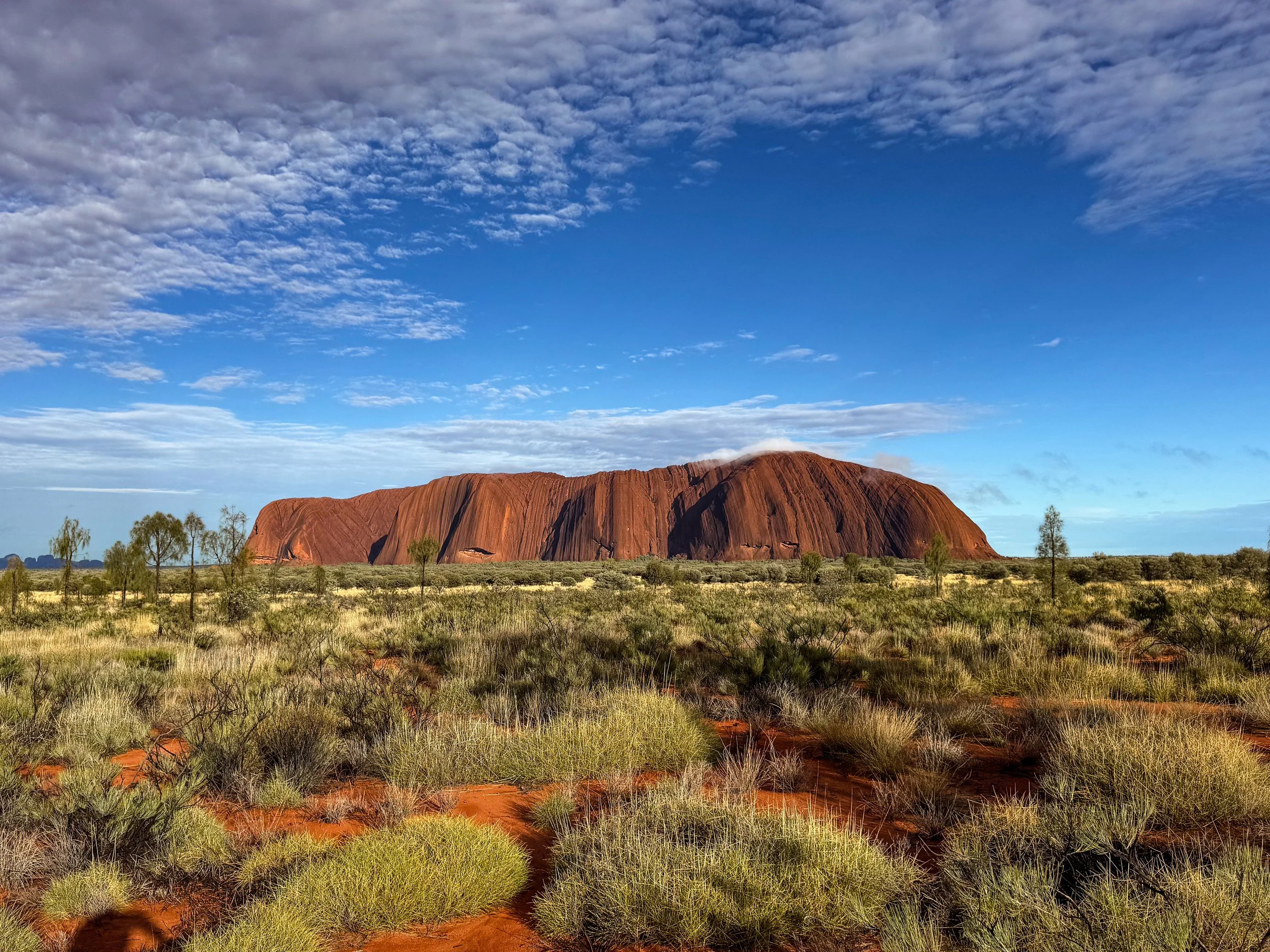
Uluru, Australia
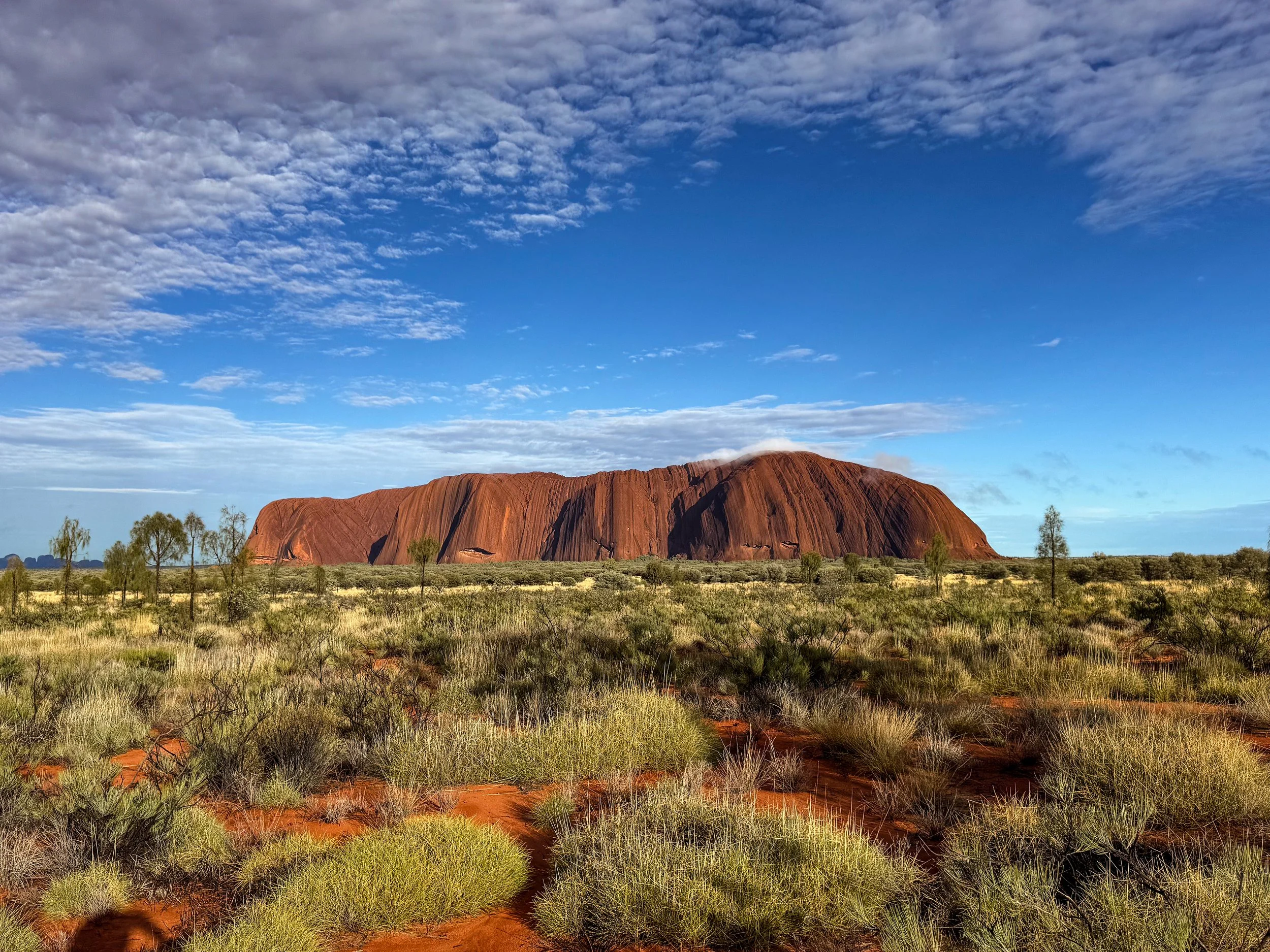
Uluru is an ancient desert rock formation and sacred place to the Anangu people. The orange and ochre sandstone monolith towers over the vast desert landscape. It dates back 500 million years and is the source of many Anangu creation stories. Trails lead around the base of Uluru past caves, gorges and watering holes. Lookout points offer views of it and the picturesque surroundings.
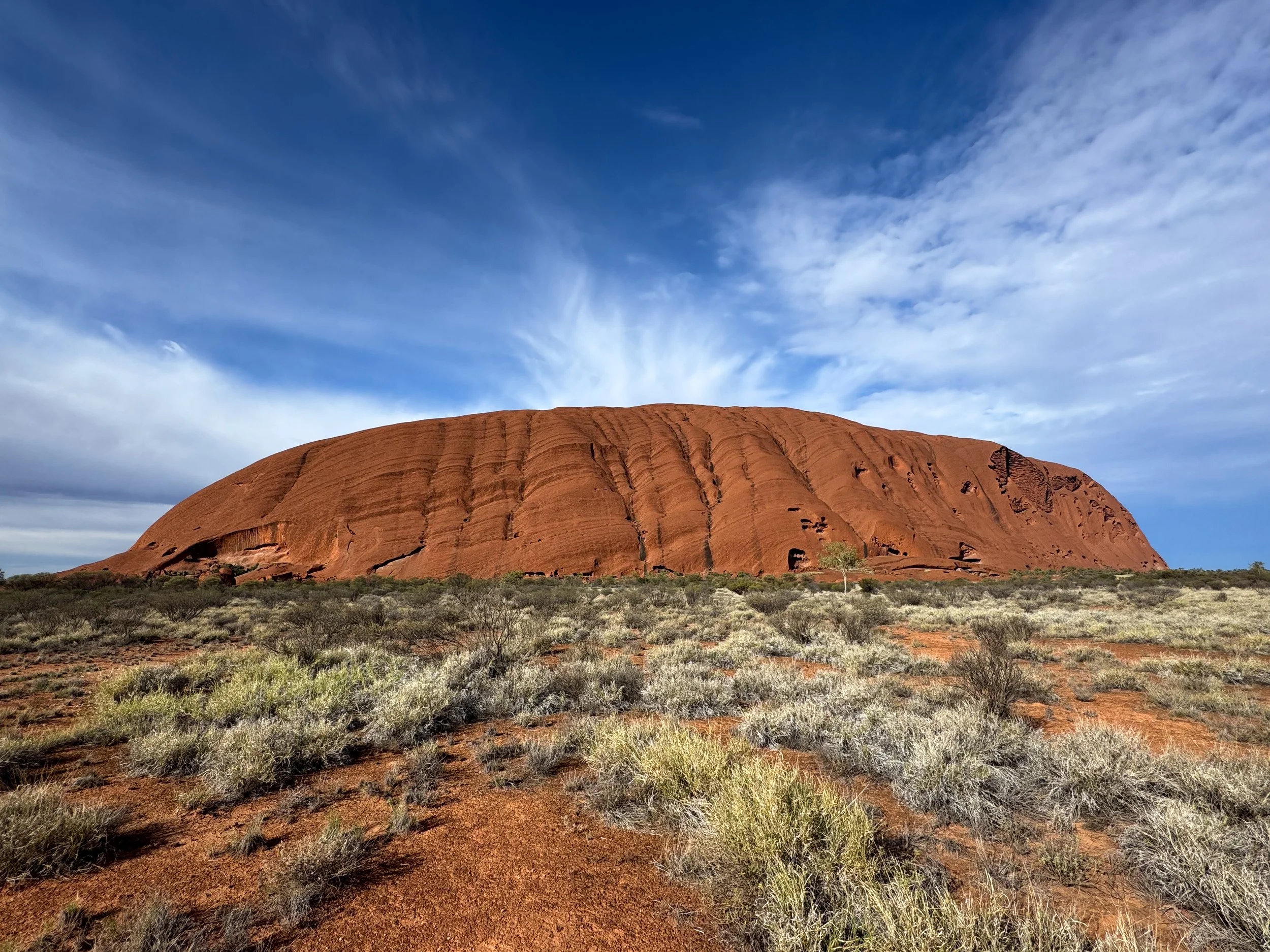
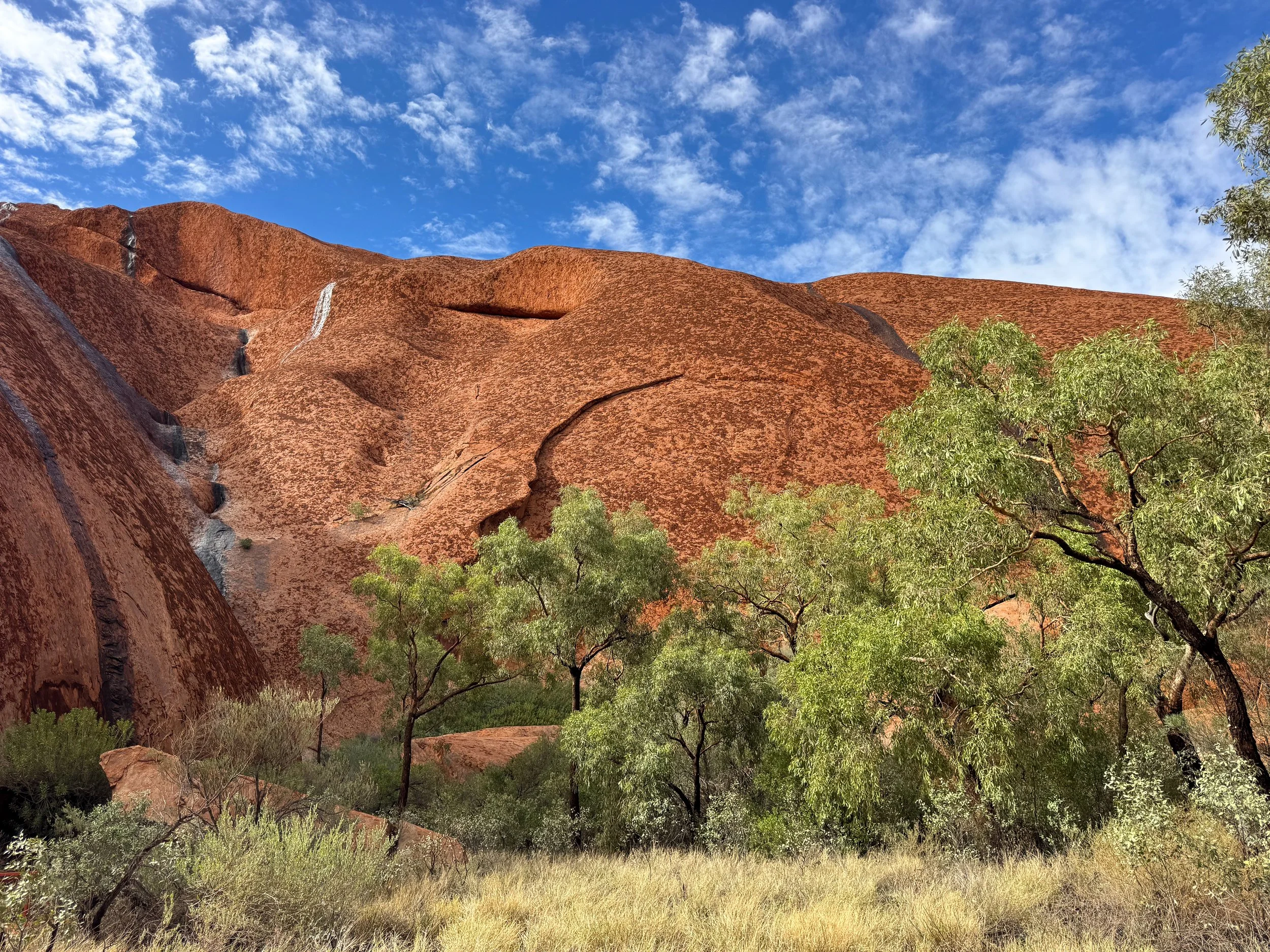
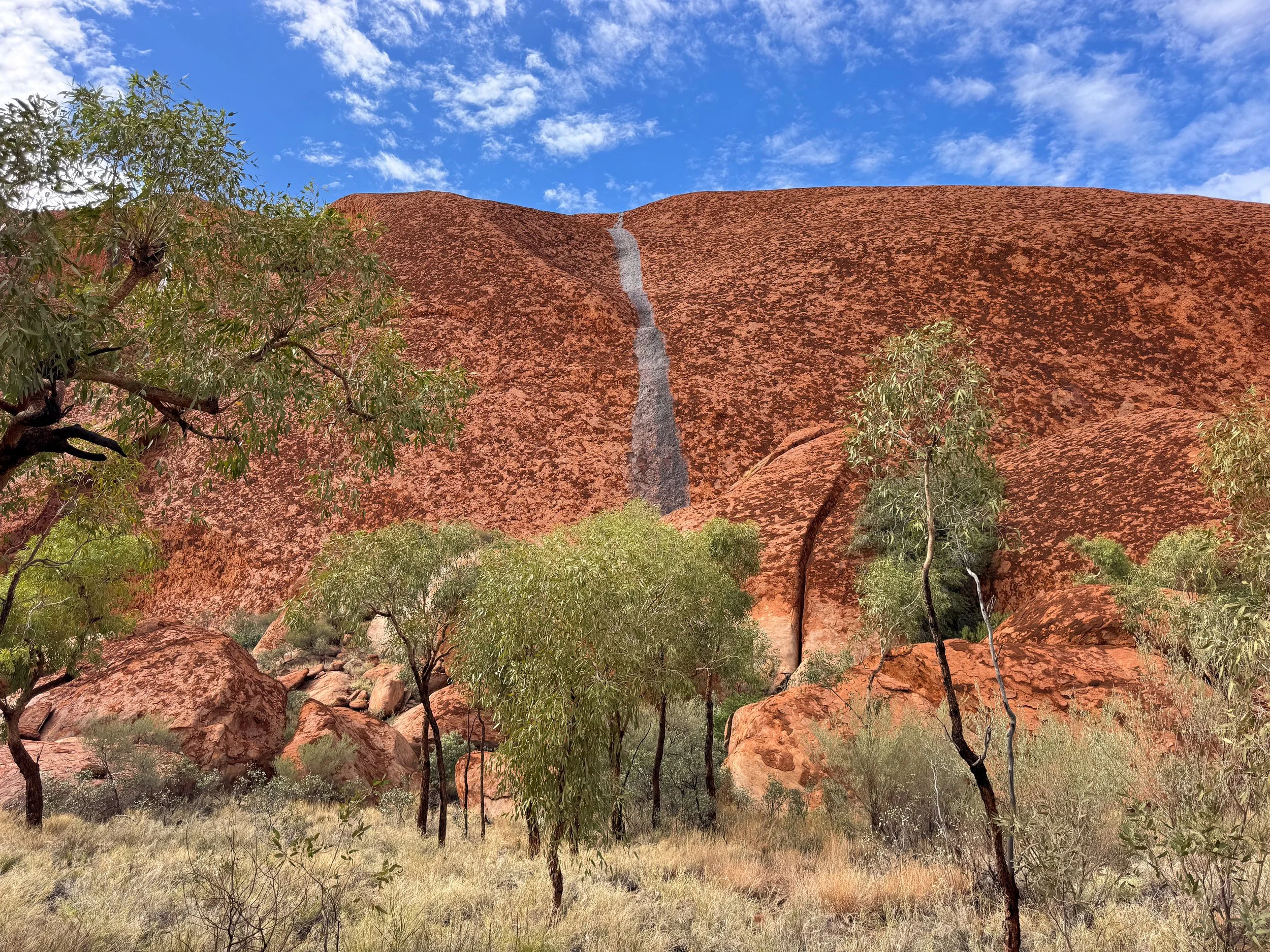
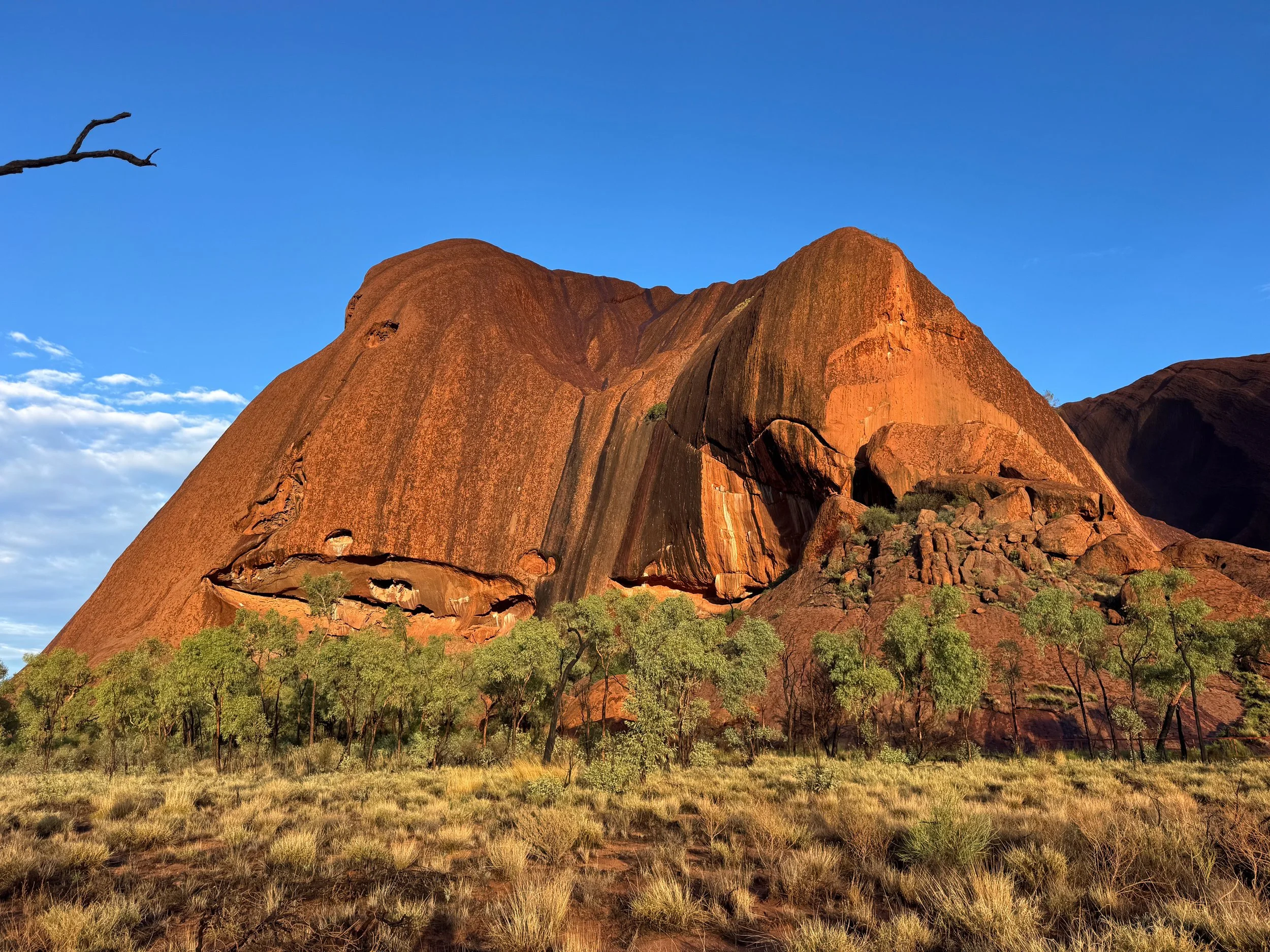
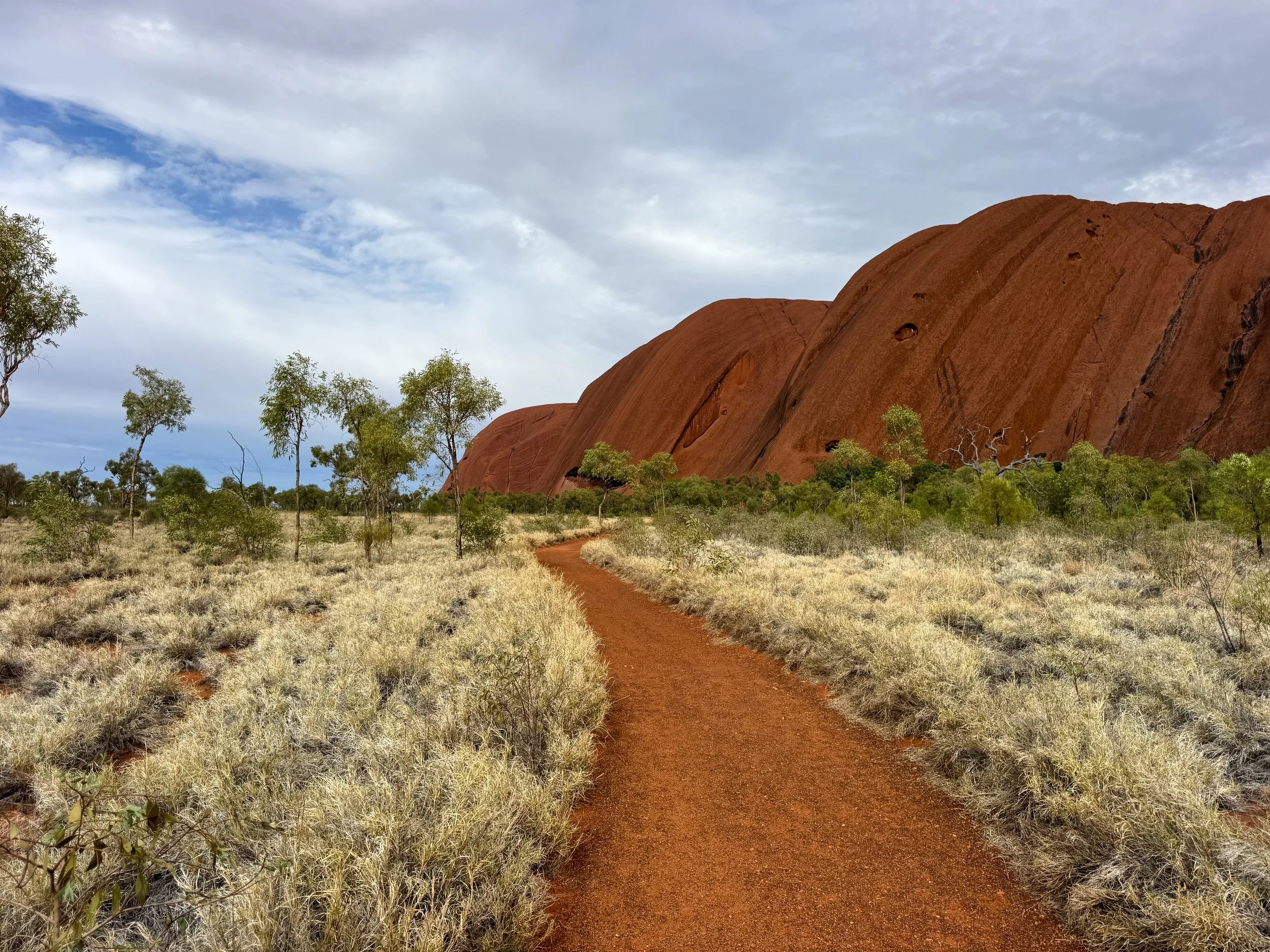
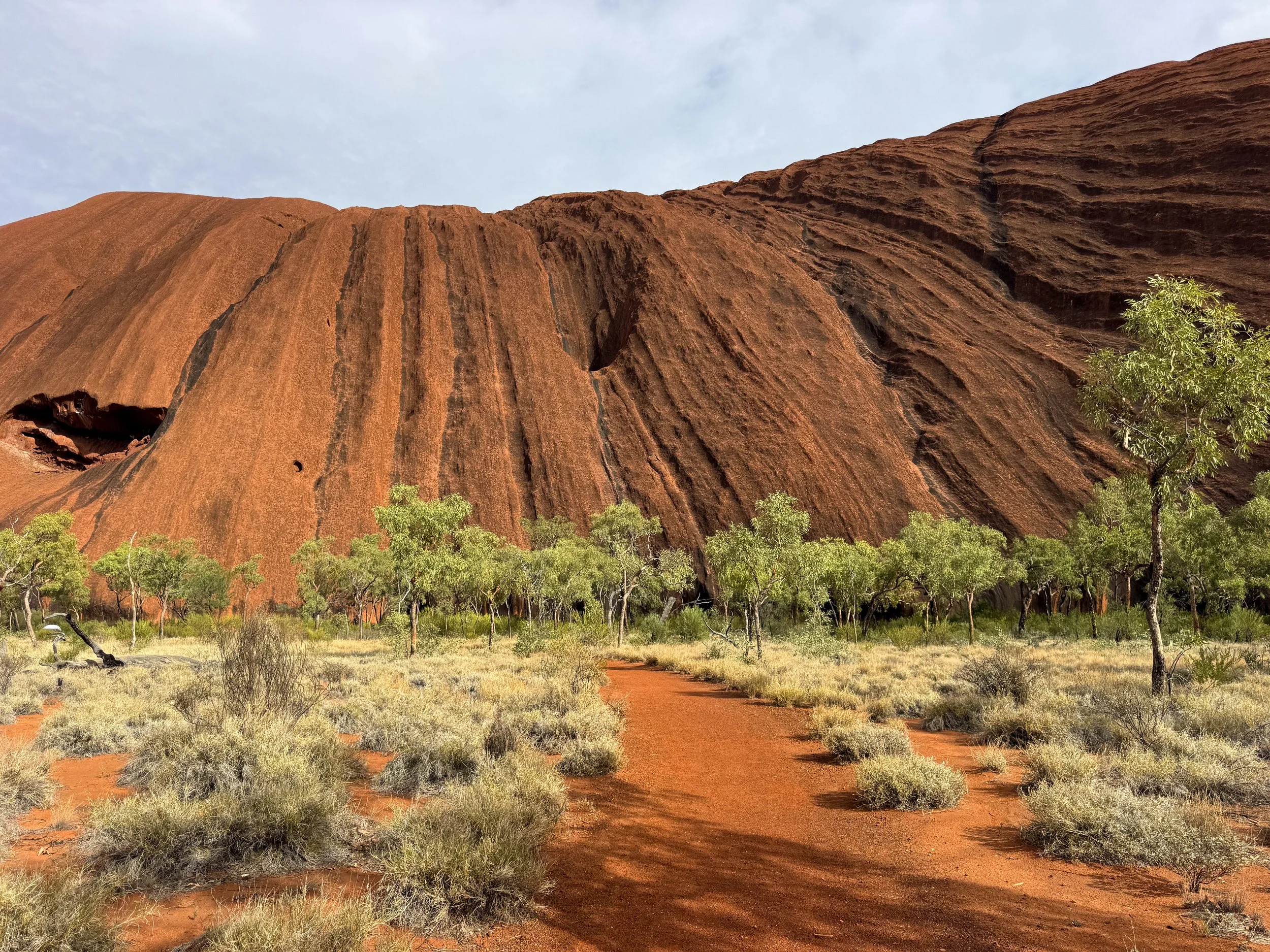
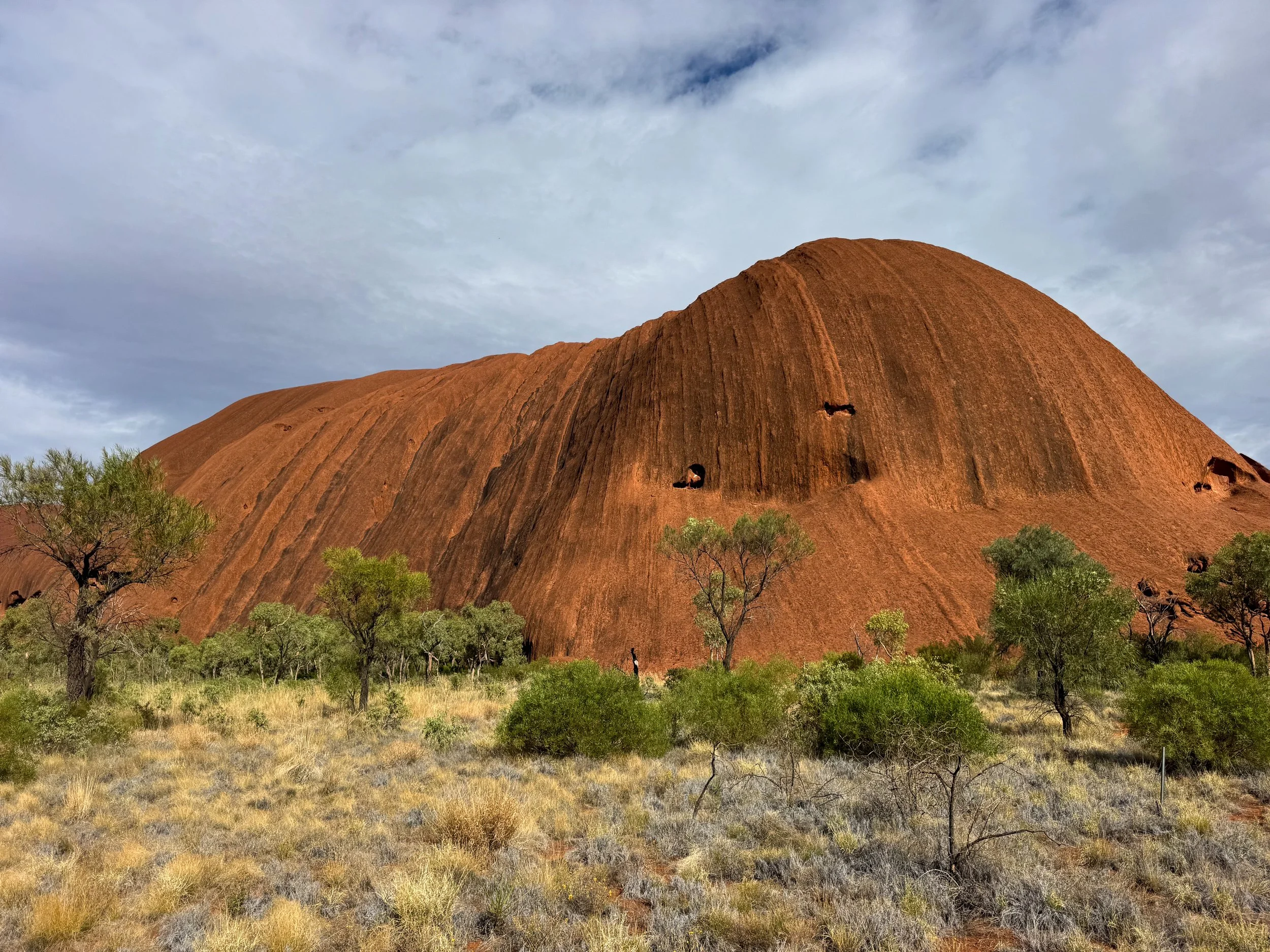
Uluru Base Walk. A scenic trail looping 10.6km around the entire base of Uluru. The walk offers close up views and distant vantage points of the sandstone monolith. It passes sacred sights, gorges and caves used for generational and gender specific ceremonial purposes. Aboriginal creation stories and lessons are told through geological features and pitted markings covering the sandstone facade. Vertical veins of sediment run through the rock. Depending on the lighting, the surface changes between orange, red, maroon and chocolatey brown hues. The surrounding desert landscape is covered patches of orange soil, tufts of yellow grasses, dried bushes and lush trees.
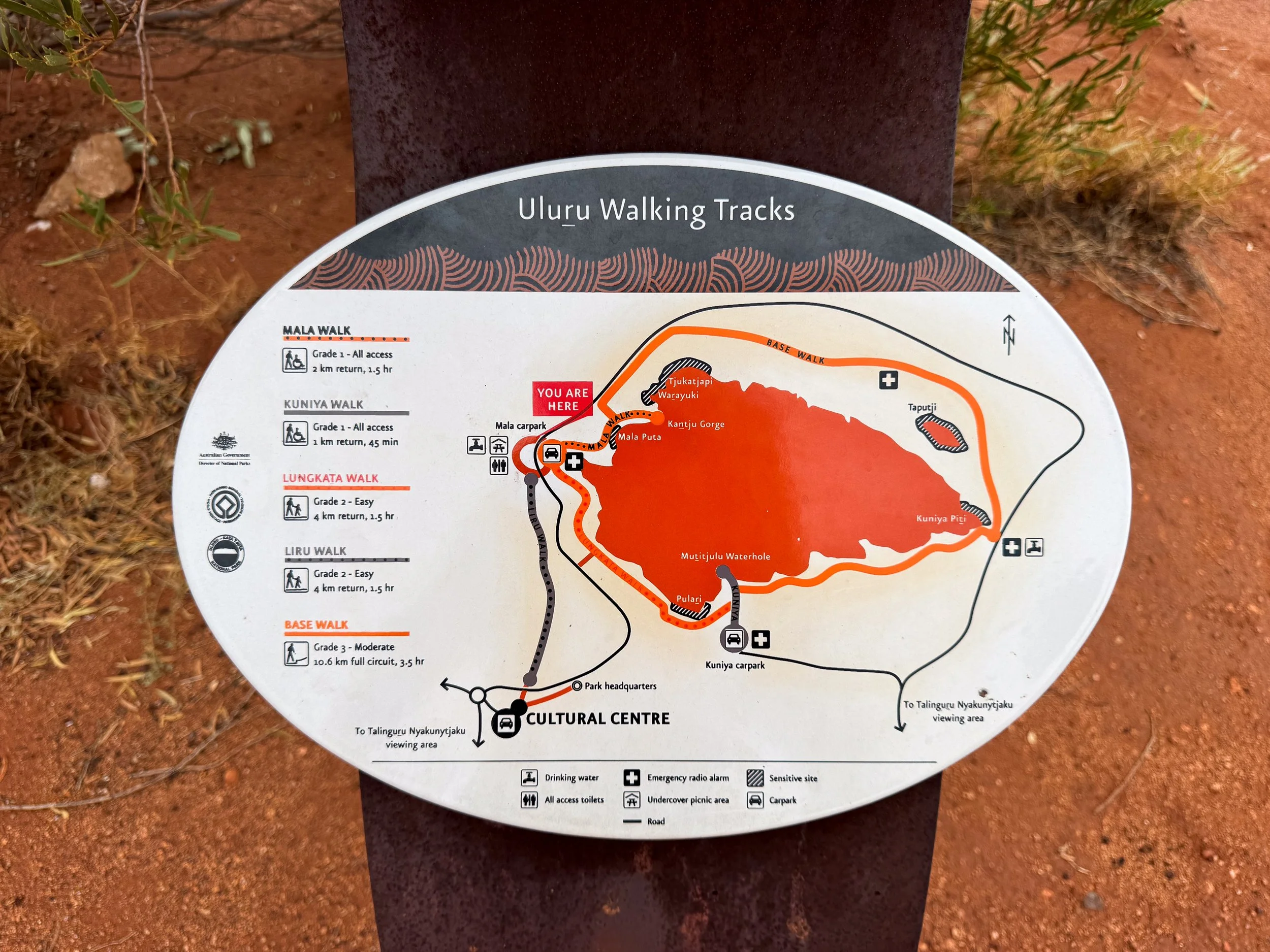
Pro Tip. Begin the walk at the Mala Car Parkand follow the trail clockwise. Start in the morning and plan to finish by 11am. The entire walk can be completed in 3 hours.
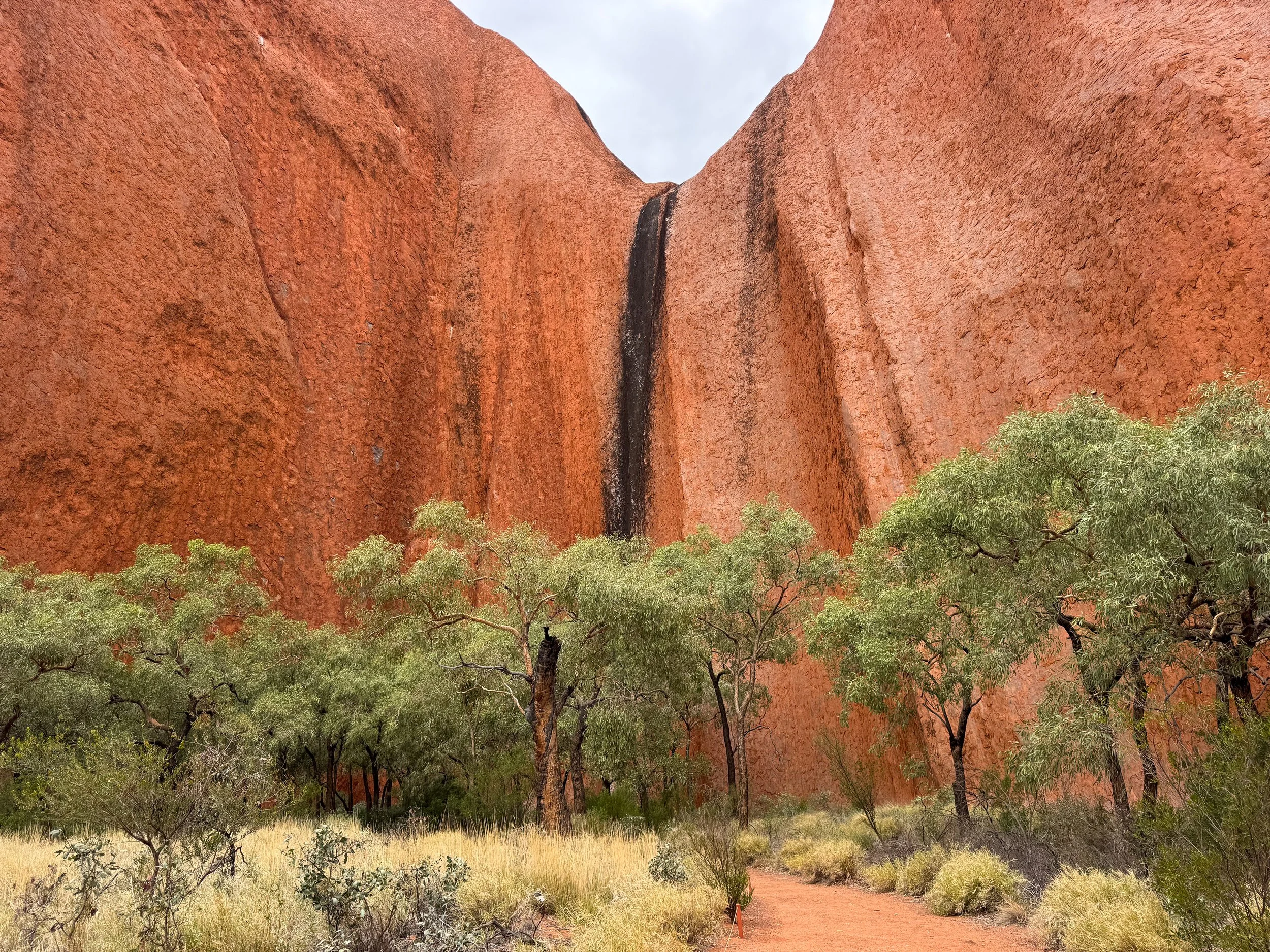
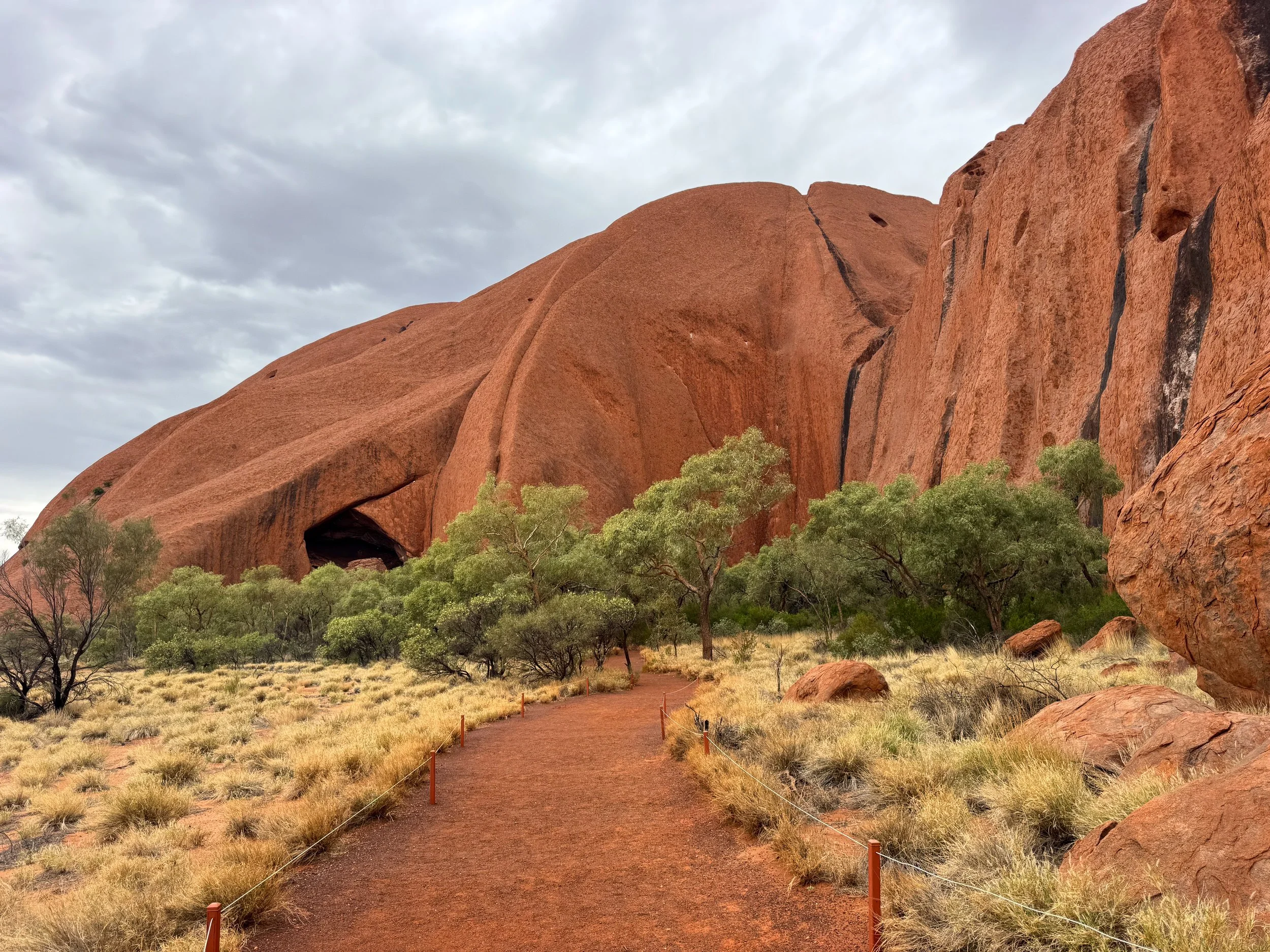
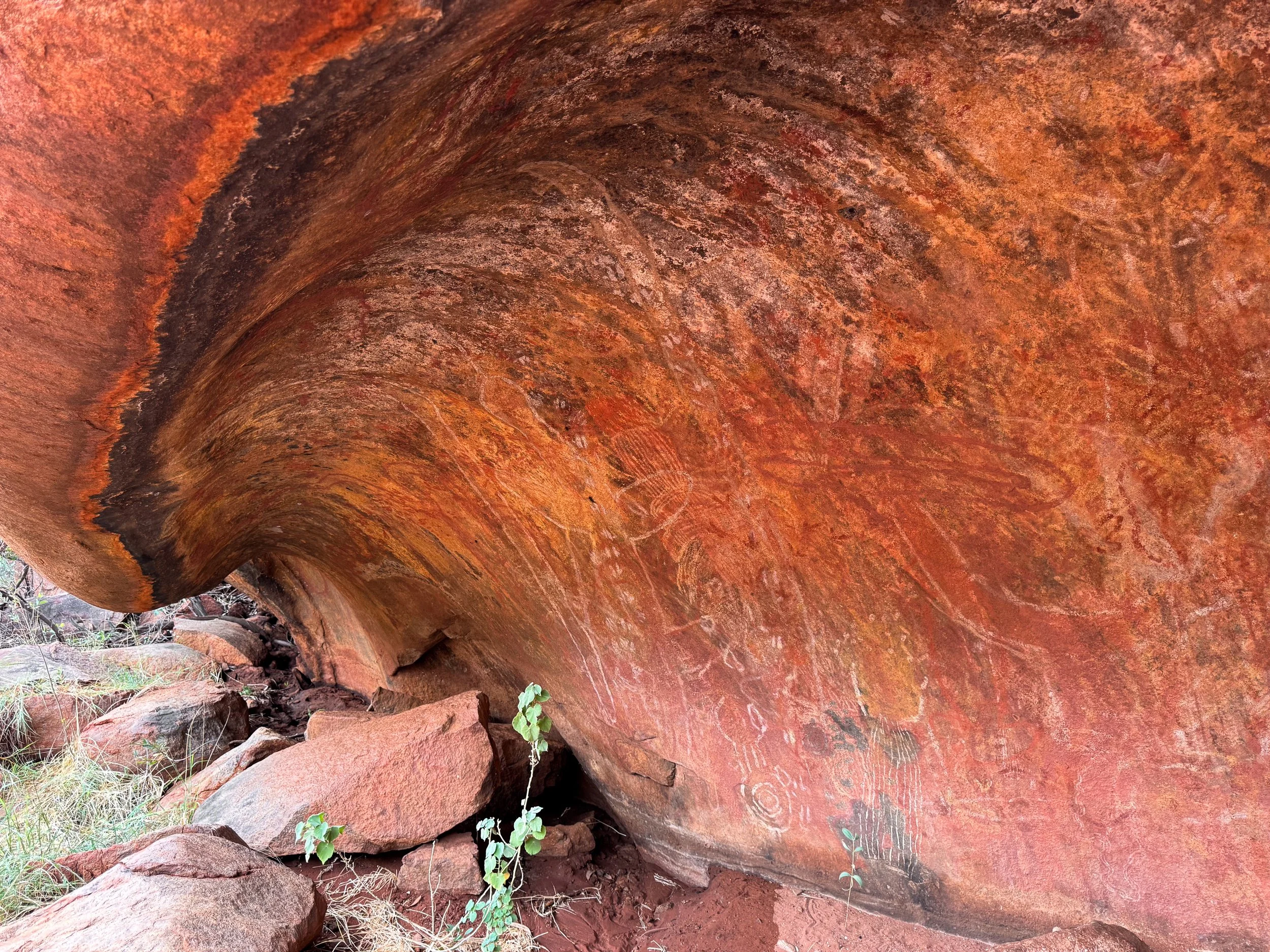
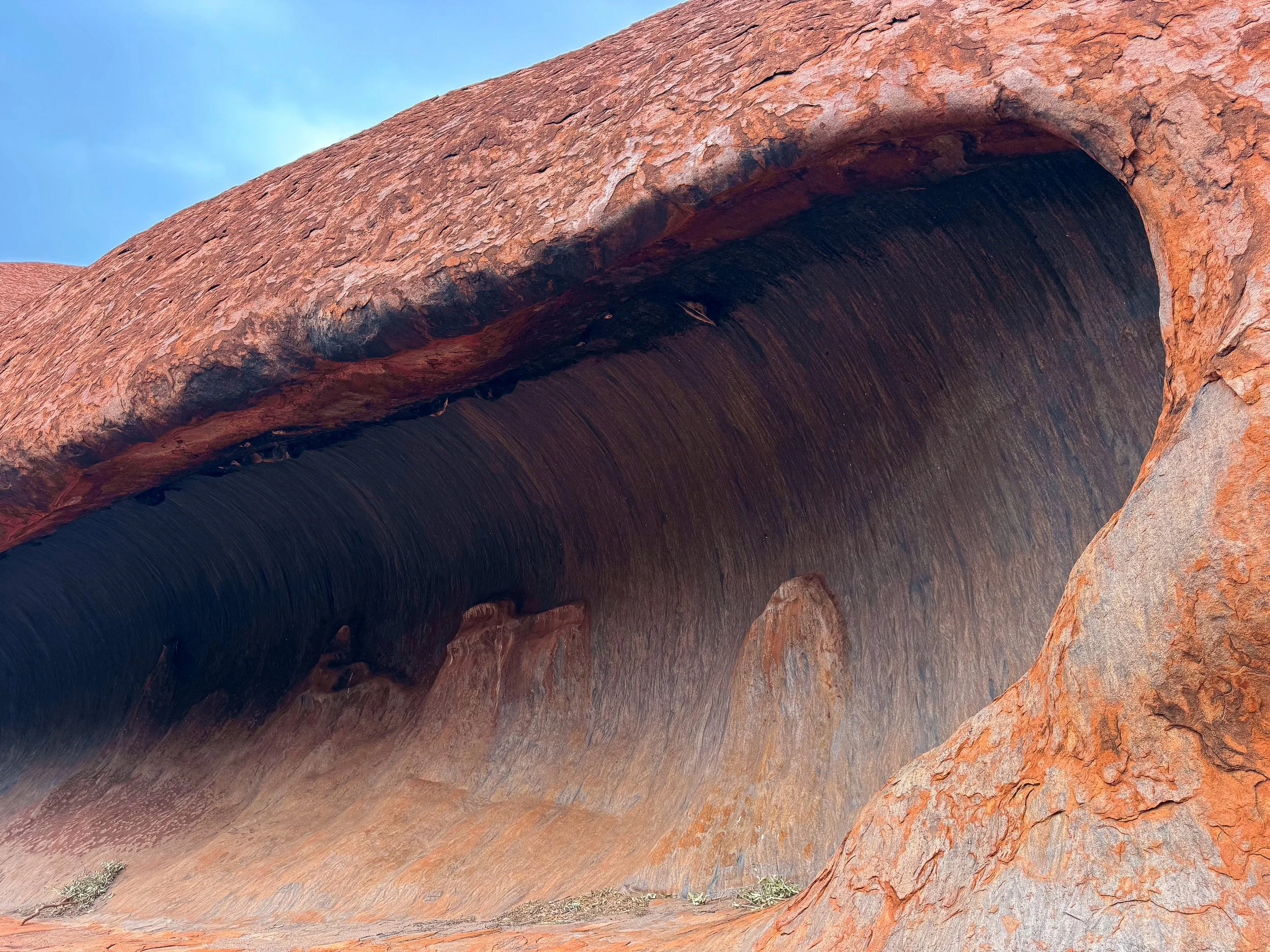
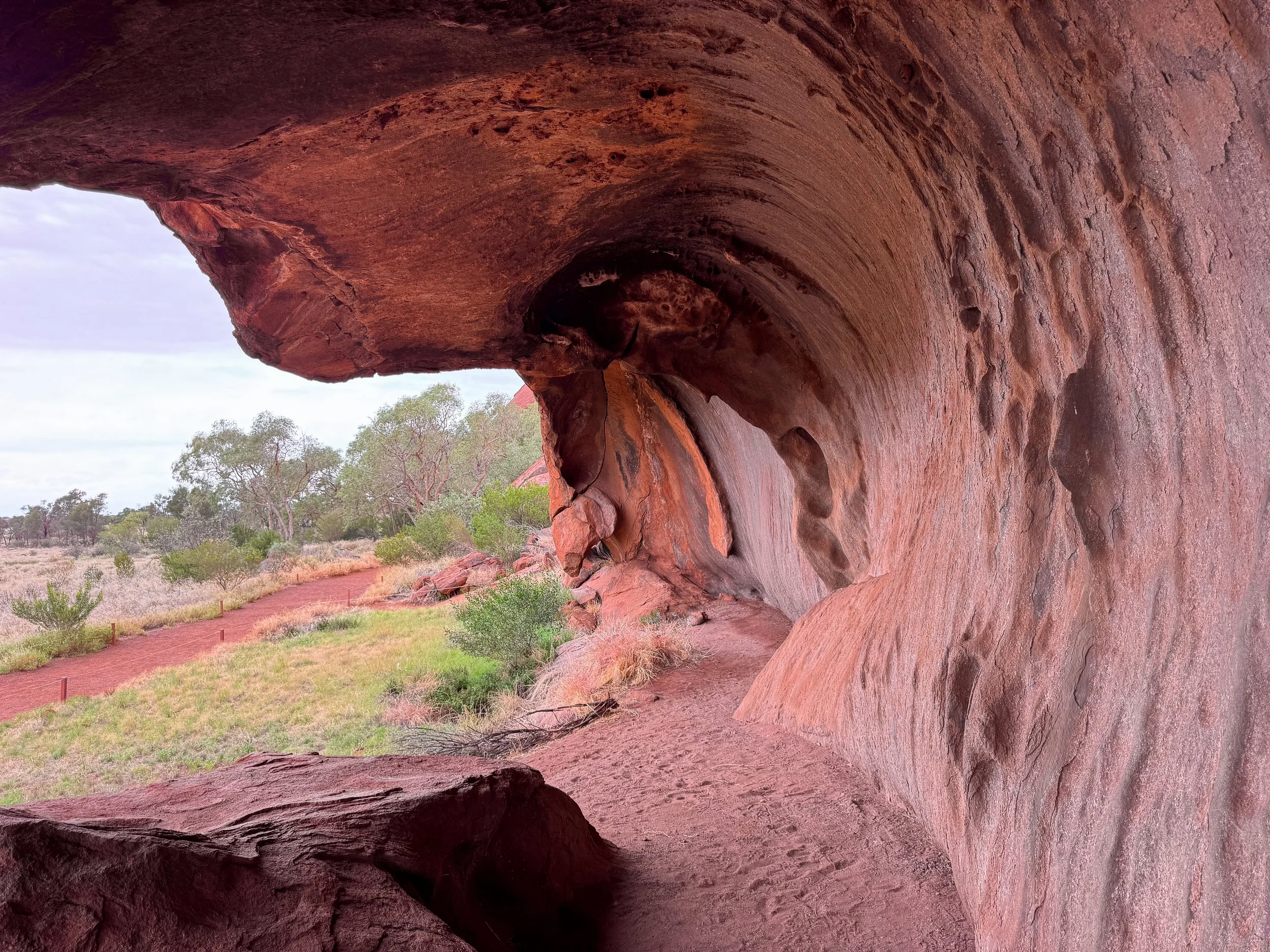
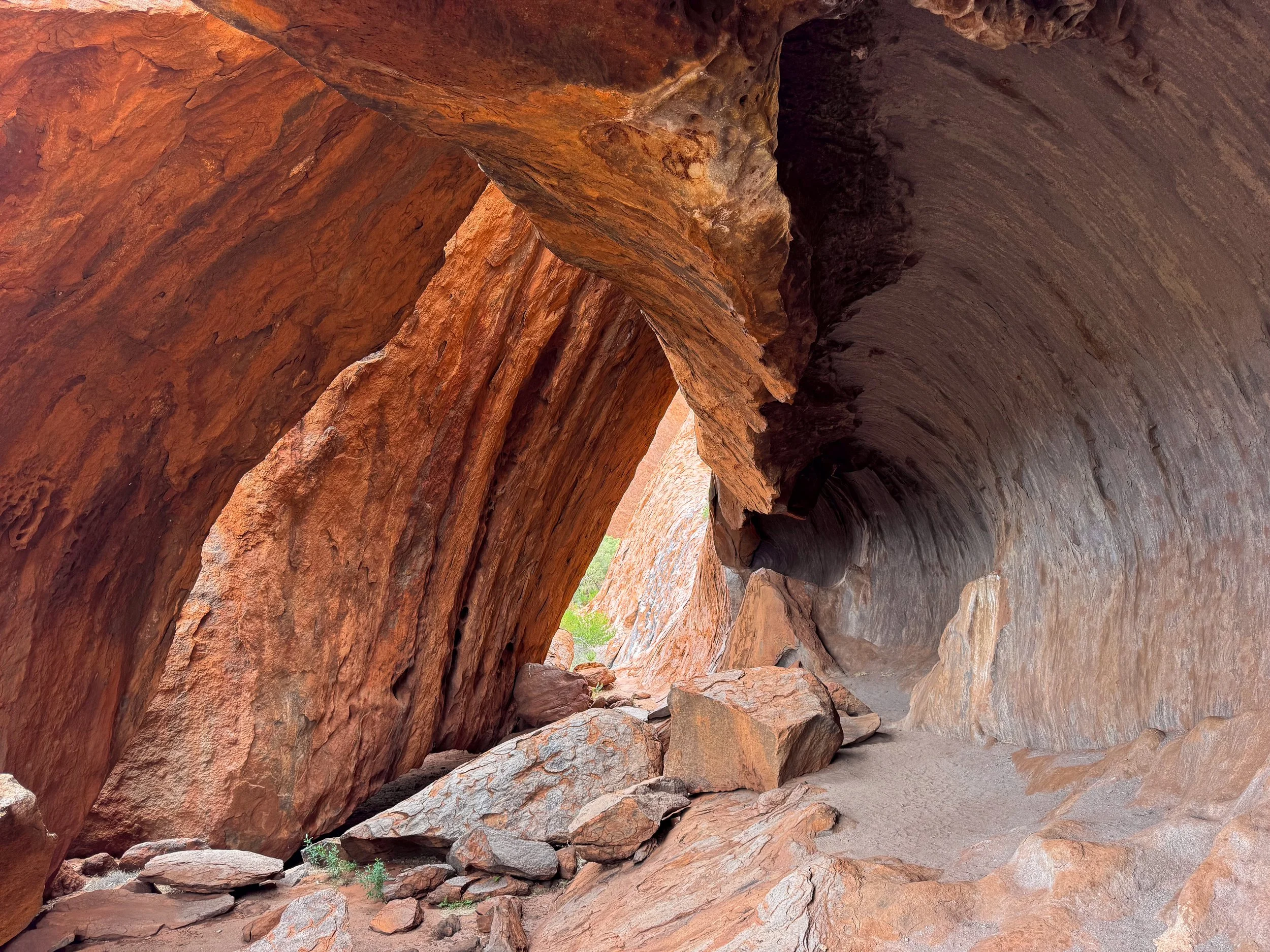
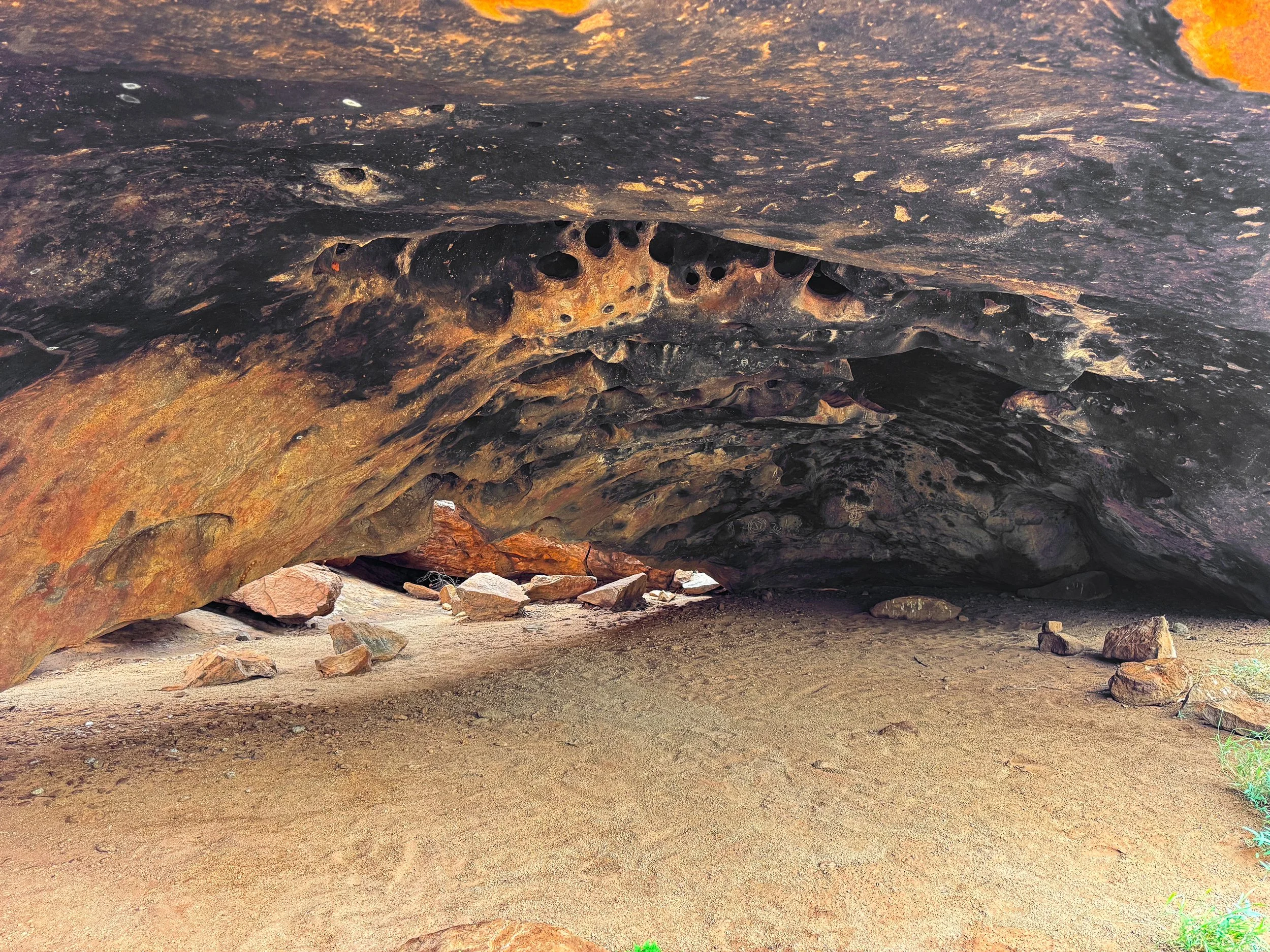
Mala Walk. A 1km trail along the base of Uluru home to a significant number of sacred caves and aboriginal stories. The trail starts at the Mala Car Park. Signs share information about the caves, their stories and collections to Aboriginal culture. There are ranger guided tours at 8am daily.
Teaching Cave / Boys Cave. A small cave adorned in ochre paintings used for teaching survival techniques and lessons to “bush boys” during their transition to manhood. The 4,000 year old cave paintings feature illustrations of emu footprints, boomerangs, kangaroo hopping, symbols for travel and watering holes.
Men’s Cave. A cave used by Aboriginal men for sharing hunting and water gathering knowledge. The cave is part of an aboriginal story involving the attack of a shape shifting “devil dog.” During the attack, four men were turned to stone, leaving their impressions behind in the cave wall.
Woman’s Cave. A cave used by Aboriginal women to pass down oral stories between generations. The cave resembles the pouch of a kangaroo, a symbol of fertility. Photos are not allowed.
Kitchen Cave. A large cave traditionally used by Aboriginal women to prepare food and discuss family matters during ceremonial gatherings. The cave offers a continuation of the aboriginal story from the Men’s Cave. The shape shifting “devil dog” left its giant paw print on the cave wall near an impression of a woman that was turned to stone. It’s one of the only caves that can be entered.
Old Person’s Cave. A cave used by Aboriginal elders to share stories, prepare food and keep warm in cooler months. The walls are adorned with millennia old paintings while the ceiling is visibly blackened from smoke.
Kantju Gorge. A scared gorge at the end of the Mala Walk. Towering stone walls flank a lush oasis and watering hole. The orange rock face bares a blackened streak from past waterfalls created during large rain events. The gorge is used for gathering water during Aboriginal ceremonies and reflecting.
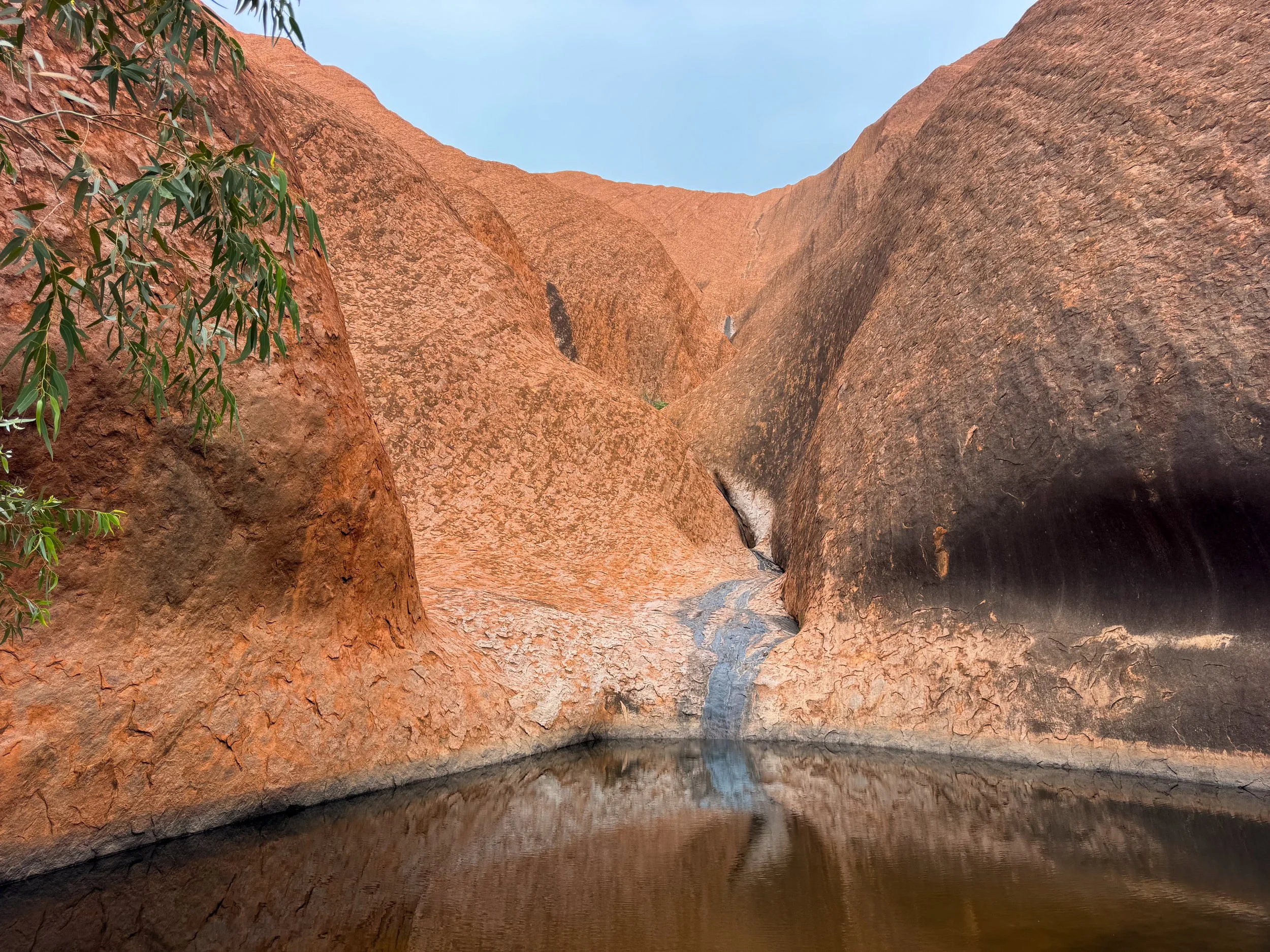
Mutitjulu Waterhole. A sacred waterhole at the end of a verdant gorge. A shallow pool rests beneath a smoothed crevice and occasional waterfall at the base of Uluru. Stories of ancestral beings are told through geological markings on the stone walls surrounding the entrance of the gorge.
Uluru Waterfalls & Frogs. Uluru is the sight of a rare phenomenon after significant rain events. Waterfalls appear and desert frogs emerge from multi year hibernation. Thin veils of water trickle down the towering stone facades. Streams rush between crevices into watering holes at the monolith’s base. Thousands of desert frogs awake to feed and mate. Their clicking and humming croaks echo throughout the gorges. The phenomenon only occurs a few times a year. If fortunate enough visit during a significant rain event, visit the Kantju Gorge and Mutitjulu Waterhole.
Cultural Center. A dual snake shaped building home to multiple galleries and exhibits about Anangu culture and the landscapes of Uluru. The center shares ancestral stories told through the geological formations of Uluru. Exhibits provide context regarding Anangu connection to the land, animals and seasons. It explains the traditional roles of men and women at various stages of their life. A gallery displays Aboriginal artwork and dot paintings. Signs explain how to respect Uluru’s sacred sights and the Anangu people.
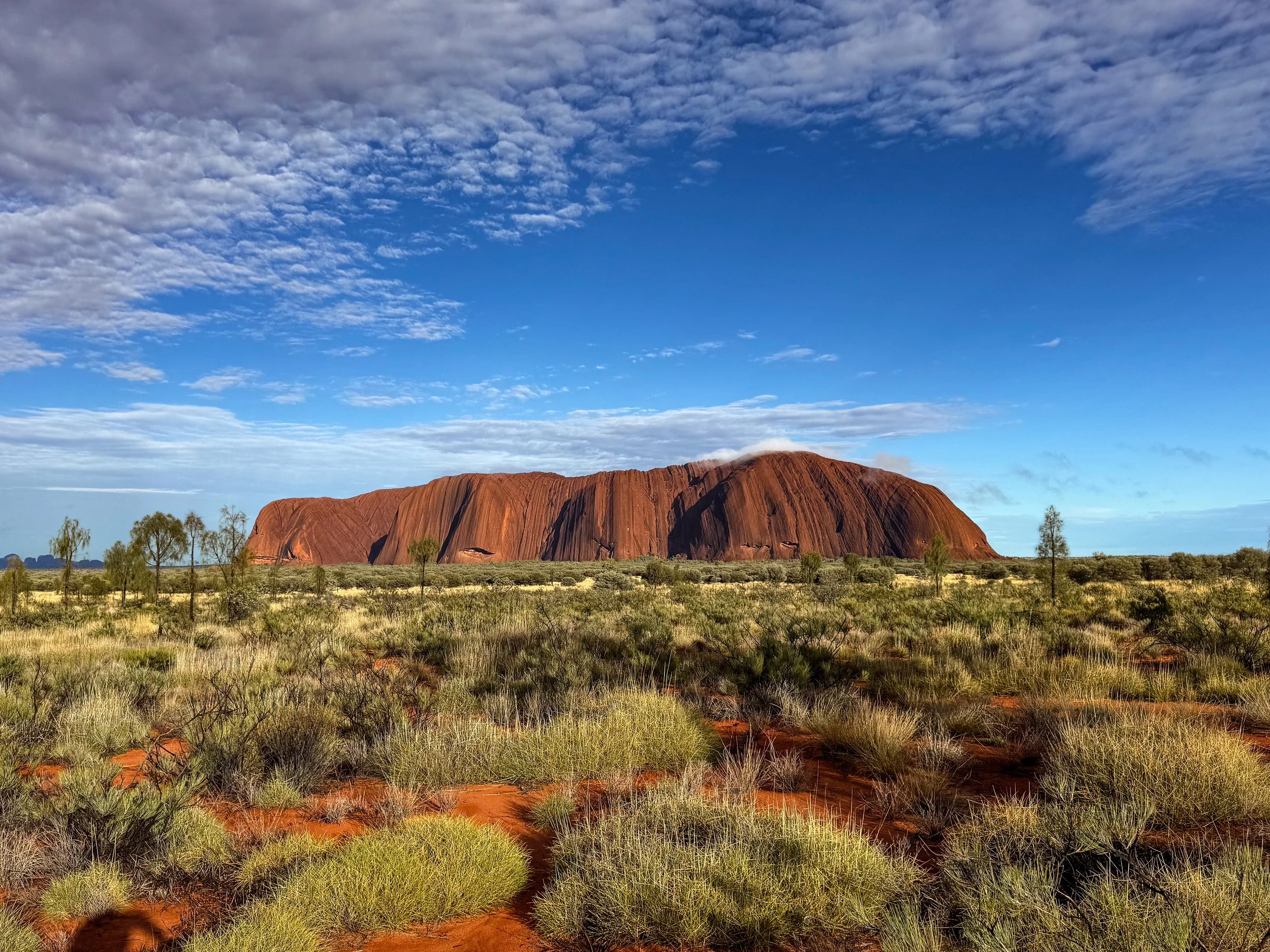
Uluru Lookout Points
Uluru Sunrise Point. A sunrise viewpoint of Uluru with nature walks and viewing platforms. Visit about an hour after sunrise when Uluru is fully illuminated and all the large tour buses have left.
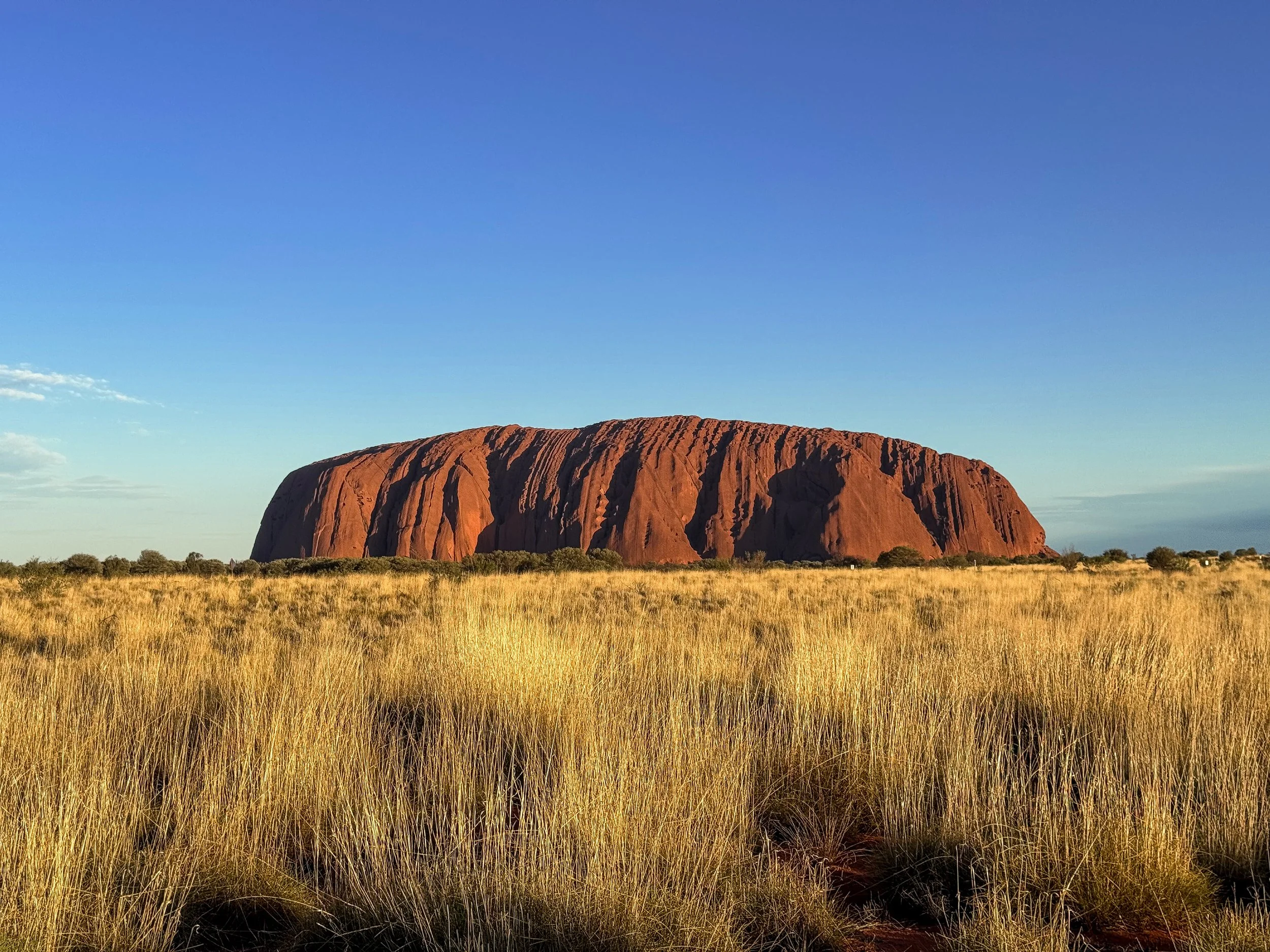
Uluru Sunset Point. A desert viewpoint of Uluru with sunset views. Visit during golden hour to watch the setting sun cast warm glows across on the monolith.
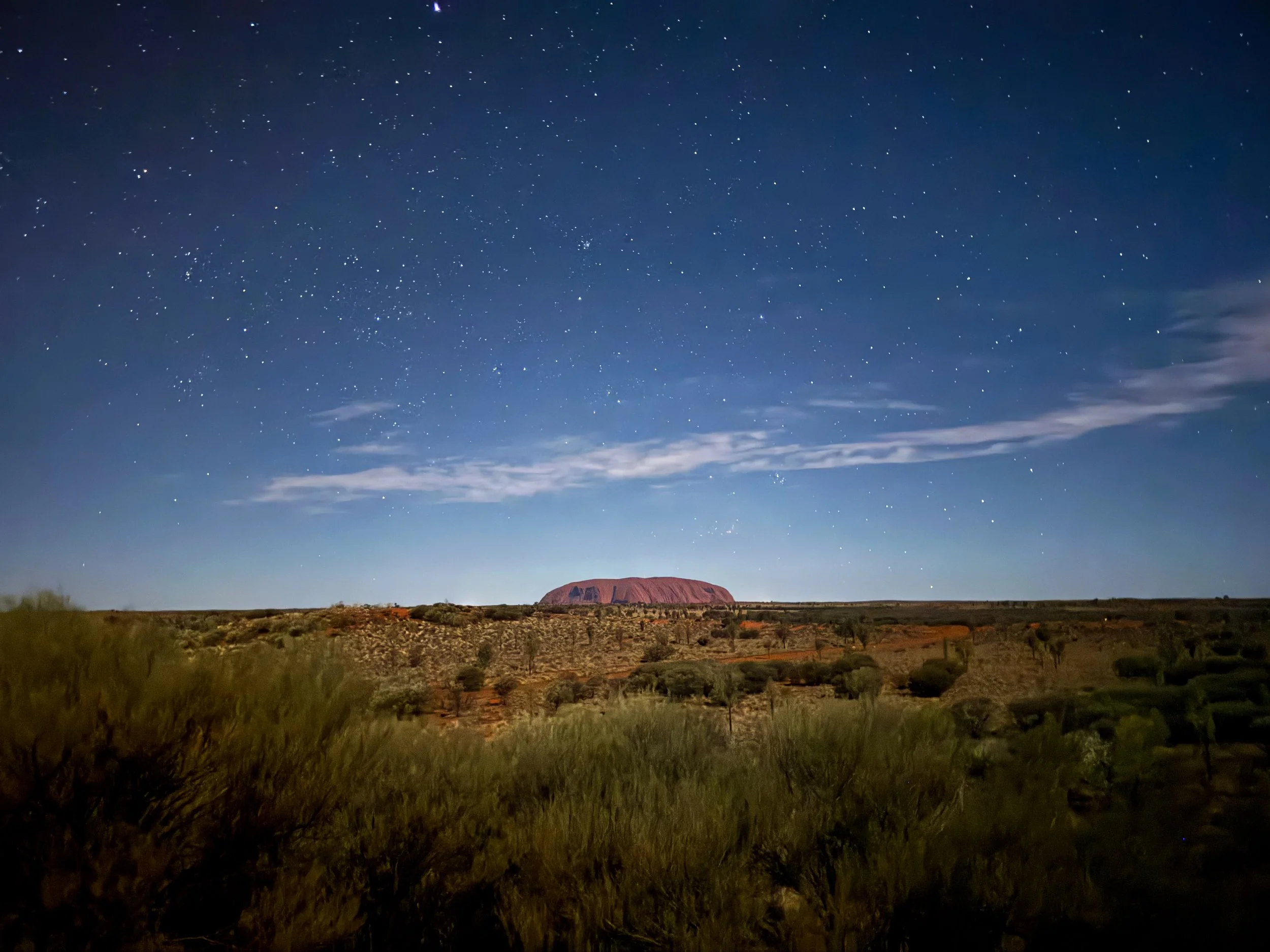
Ewing Lookout. A desert lookout point accessible from the Coach Campground between Yulara and Uluru. It has some of the best sunset and night sky views of Uluru, Kata Tjuta and the desert.
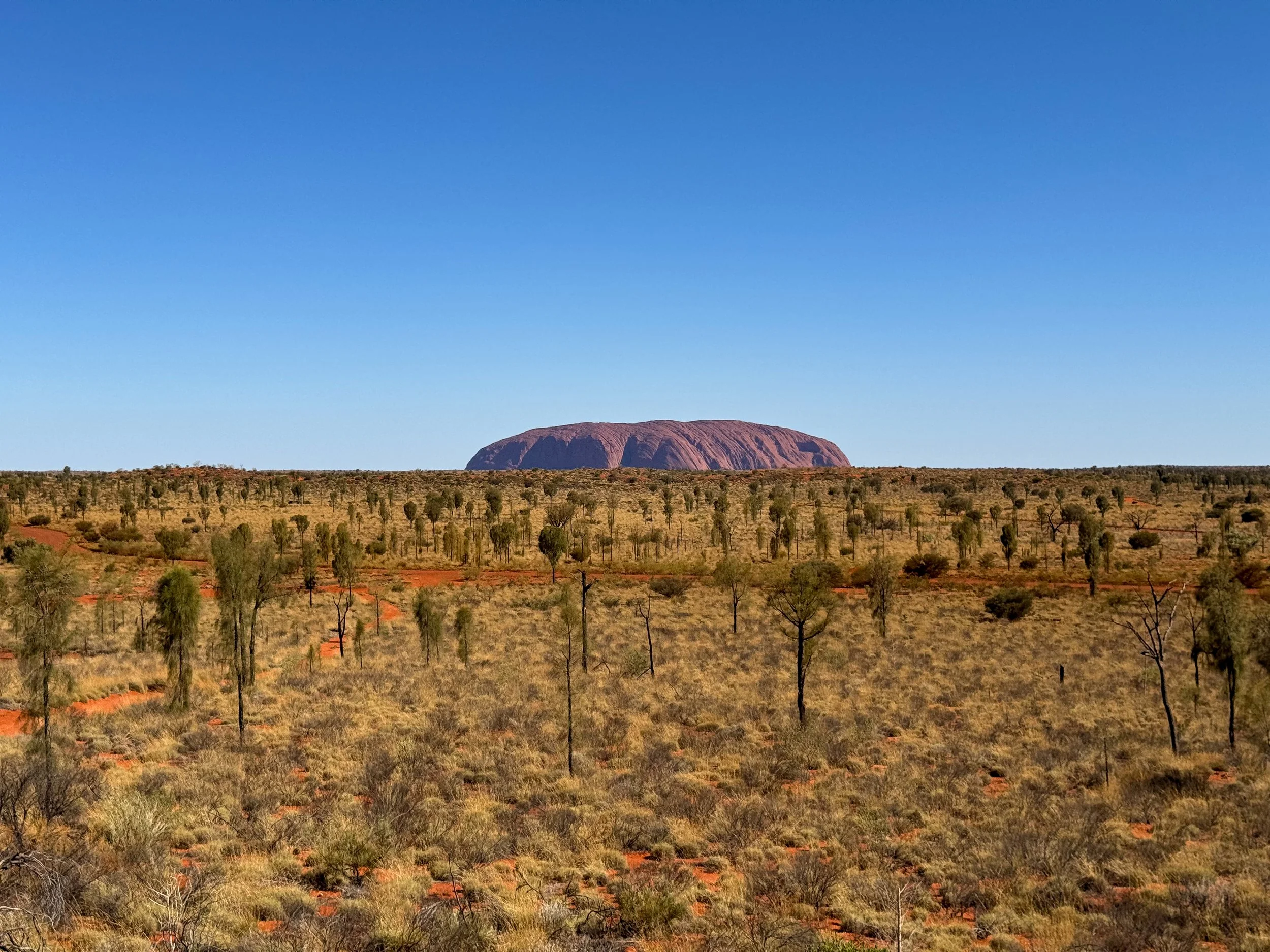
Uluru Lookout. A lookout just outside of the Yulara with views of Uluru and the desert landscape. It’s an easy 15 minute walk from the town square.
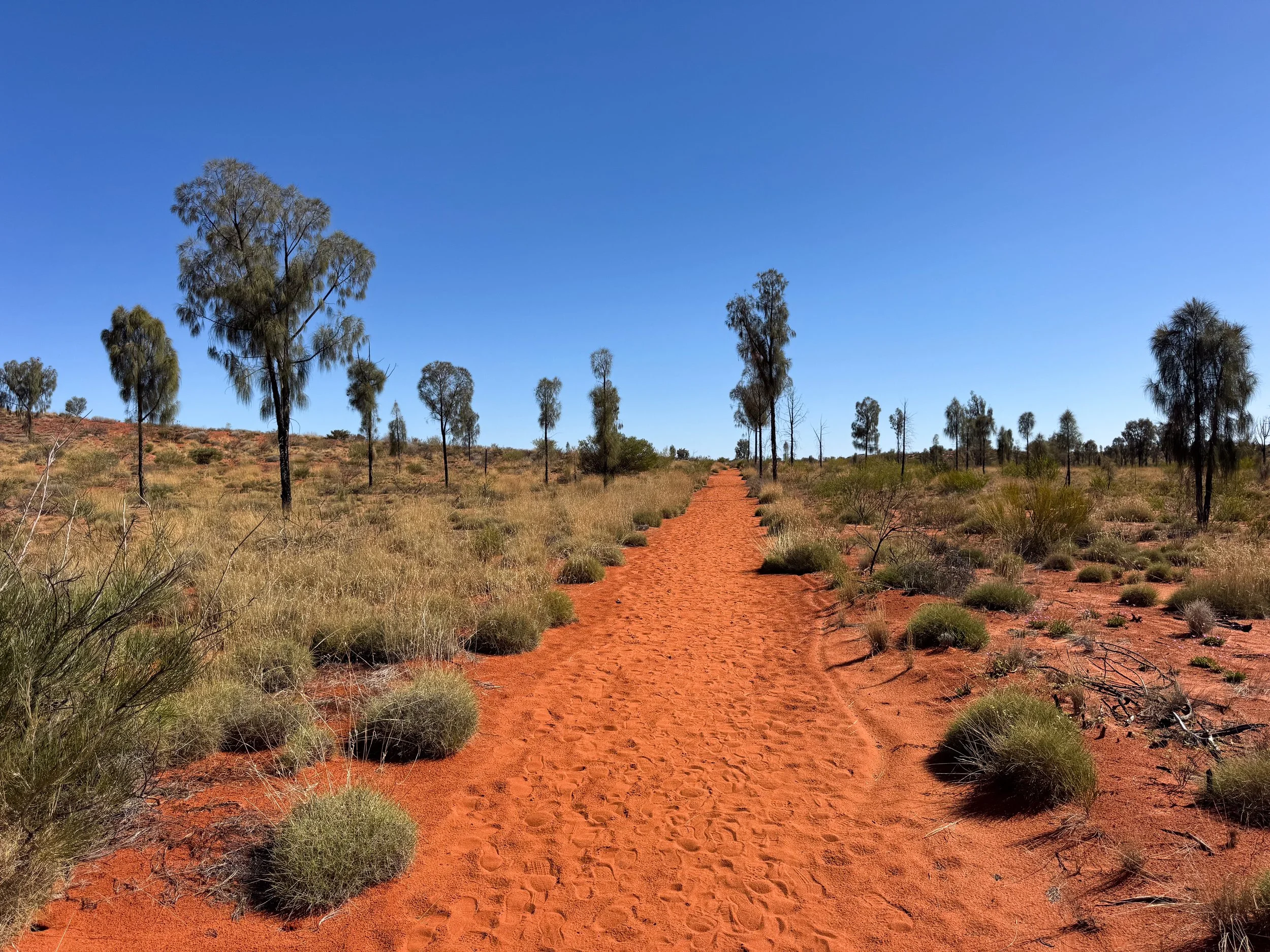
Yulara Desert Loop. A patch of desert with a series of brief nature trials accessible on foot from most hotels in town. Walk to the Imalung Lookout, the tallest point at its center with distant views of Uluru.
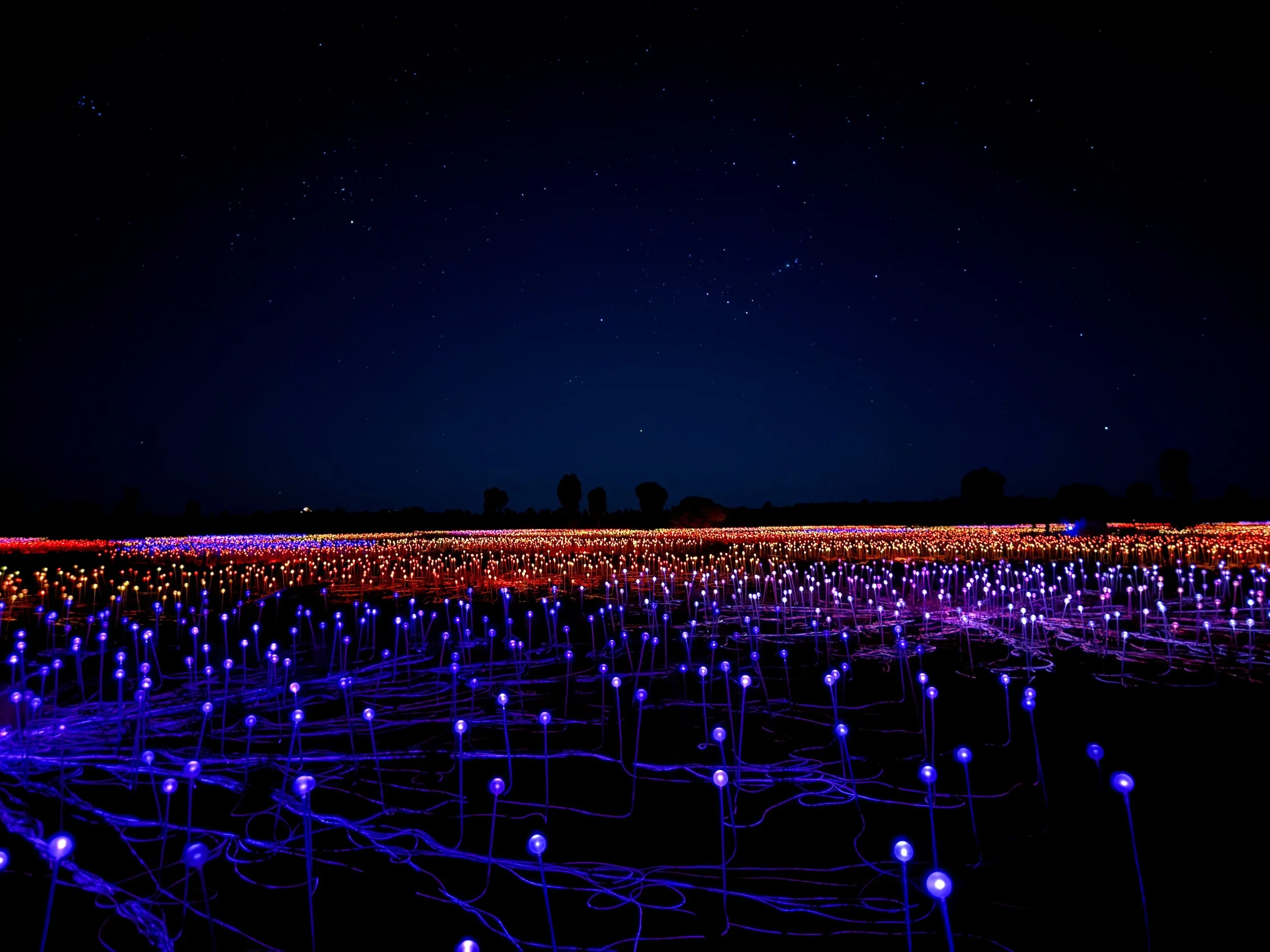
Field of Light. A desert art installation made from tens of thousands of colors changing lights. Trails lead through the installation resembling a field of glowing tulips. Book with Ayers Rock Resort.
Yulara
Yulara is a resort town outside of Uluru with outback lodges, desert camps and hotels. There is a town square at its center with Aboriginal galleries, boutiques, a grocery store, cafe and restaurant. A couple of brief nature walks lead to desert lookouts within views of Uluru.
Places to Eat & Drink
Kulata Academy Cafe. A cafe and coffee shop with a range of sandwiches, savory pastries and sweets. The cafe supports Aboriginal locals…
Native Gelato. A gelato stand in the center of the town square with Australian flavors. Try the dark chocolate wattle seed and cinnamon Davidson plum
Outback Takeaway. A takeaway restaurant and cafe at the Outback Hotel. Come here for fried bites, pastries and beverages.
Outback BBQ & Bar. A barbecue station at the Outback Hotel with a selection of bush meats (emu, camel, & kangaroo) that can be purchased and self grilled onsite. Live music is performed nightly. Alcoholic beverages are only available for purchase if staying at the hotel.
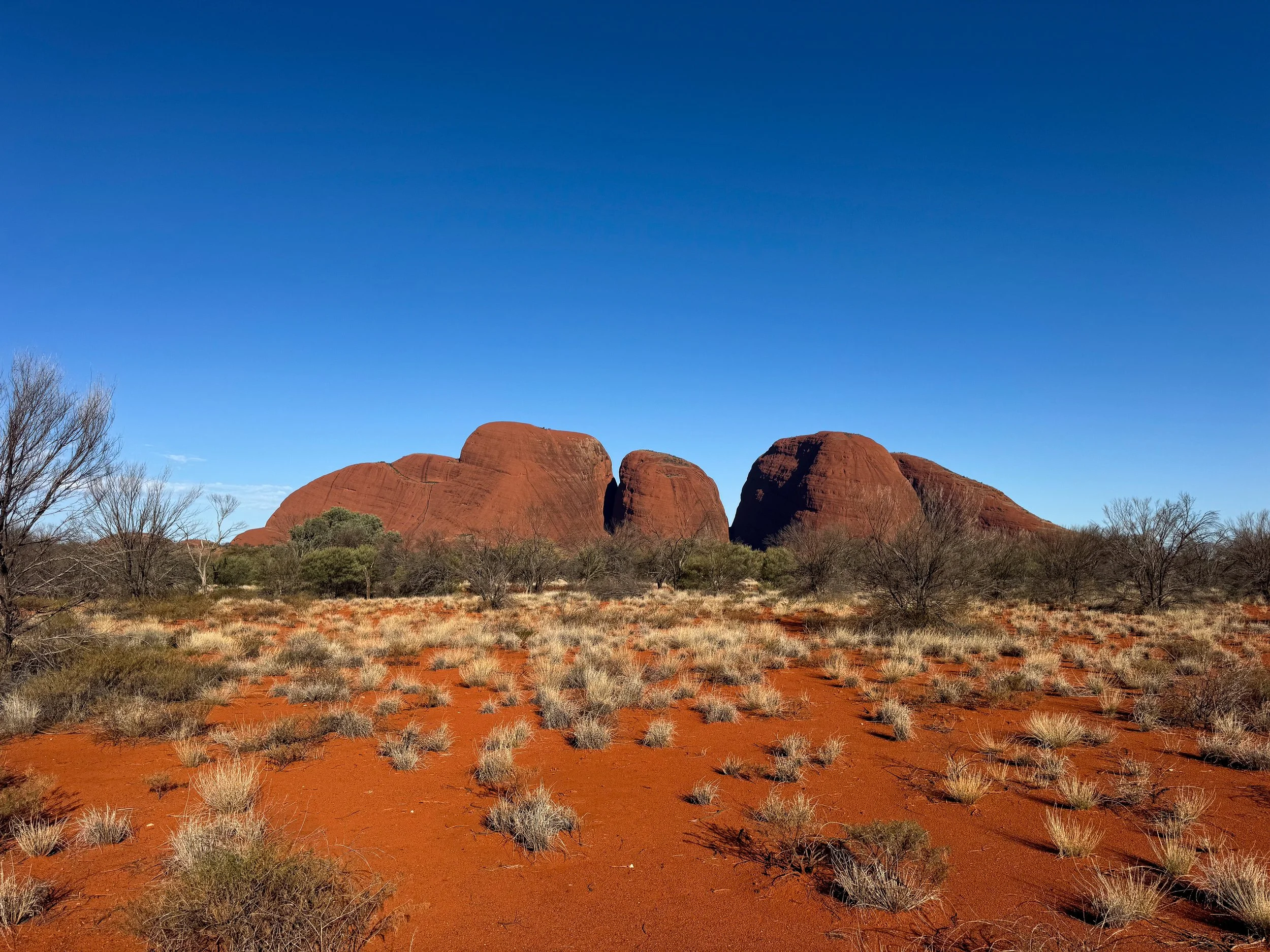
Kata Tjuṯa
A sandstone monolith towering above the desert landscape. It’s comprised of 36 individual domed mounds making up the overall structure.
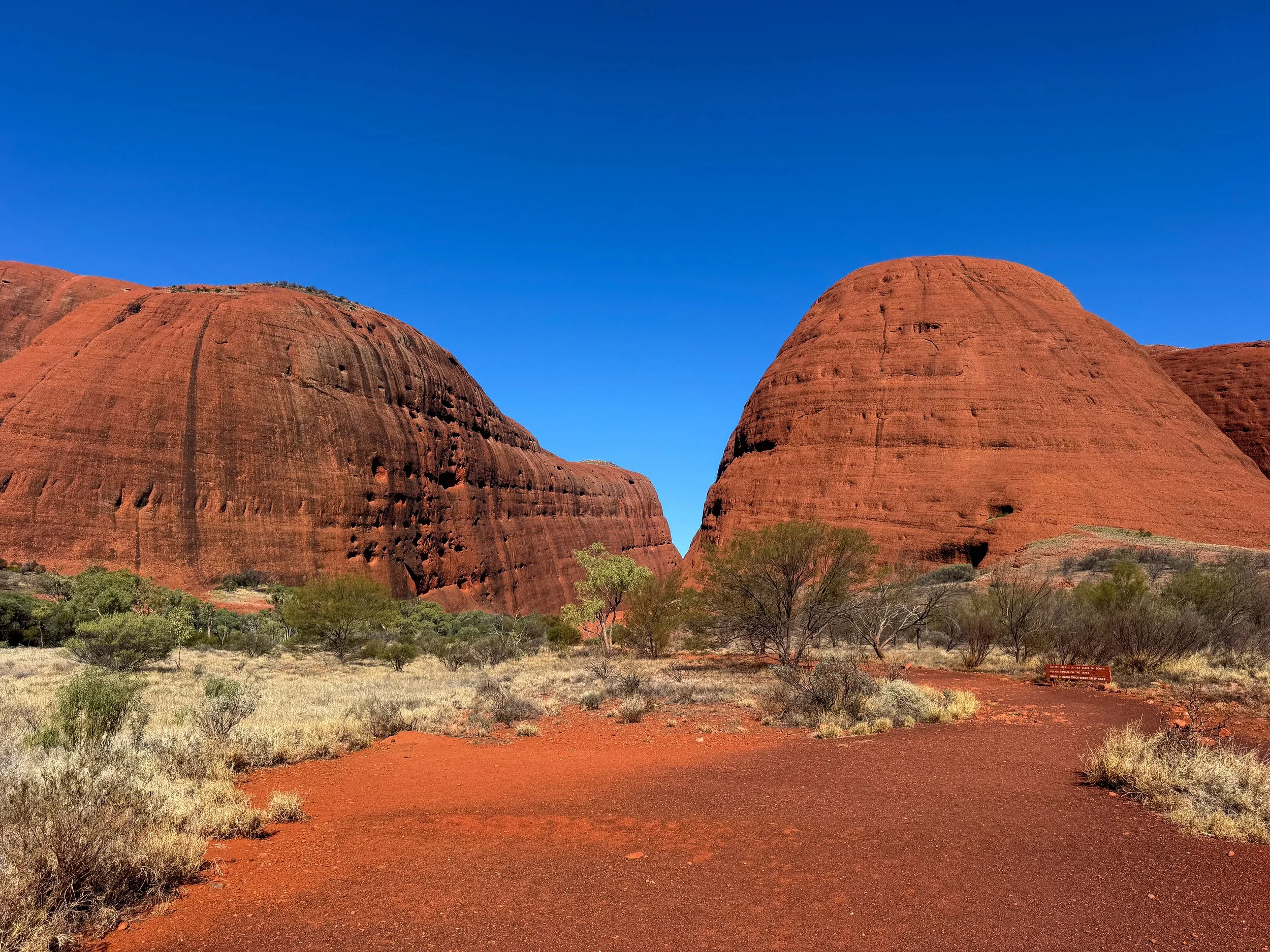
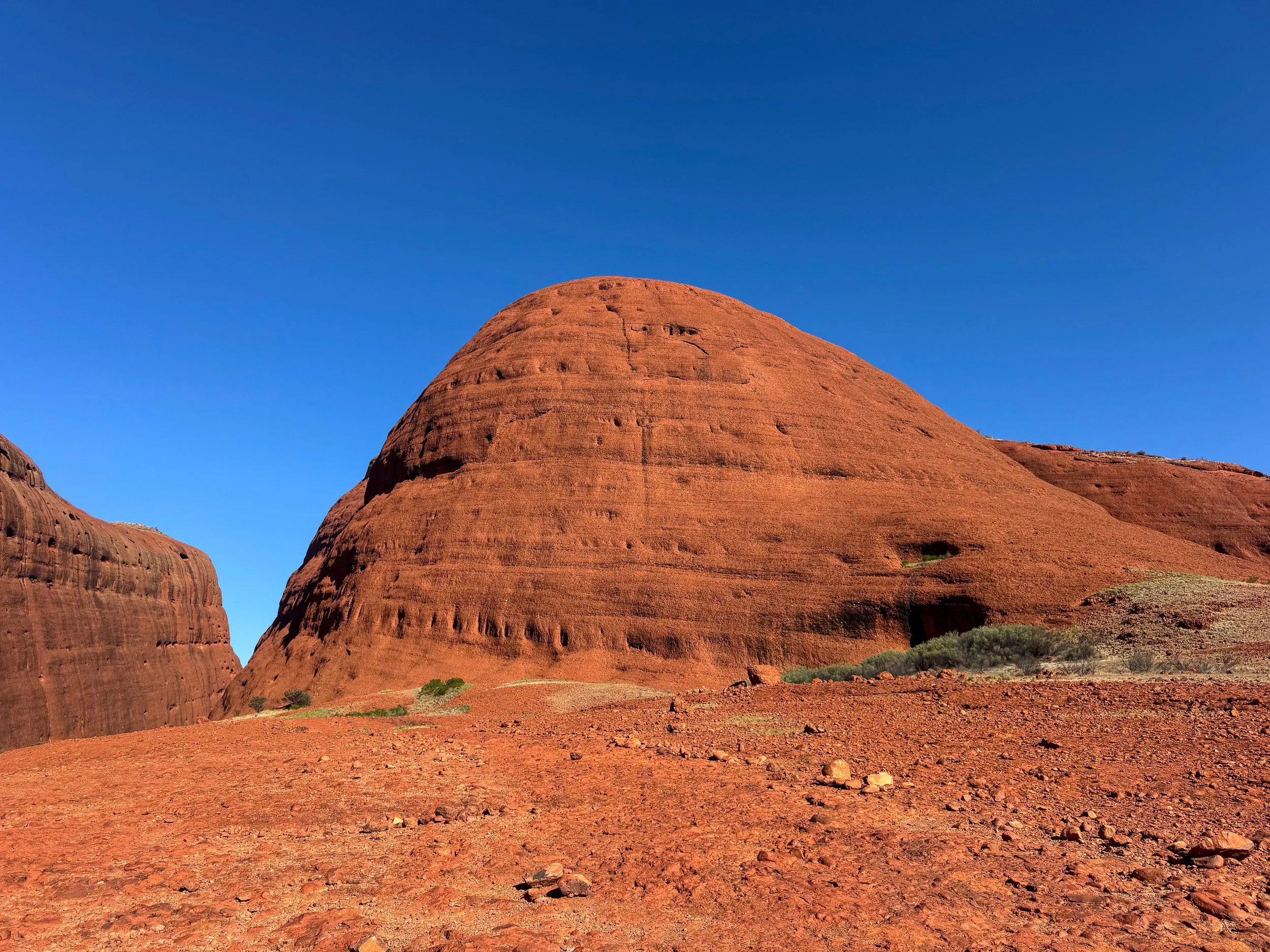
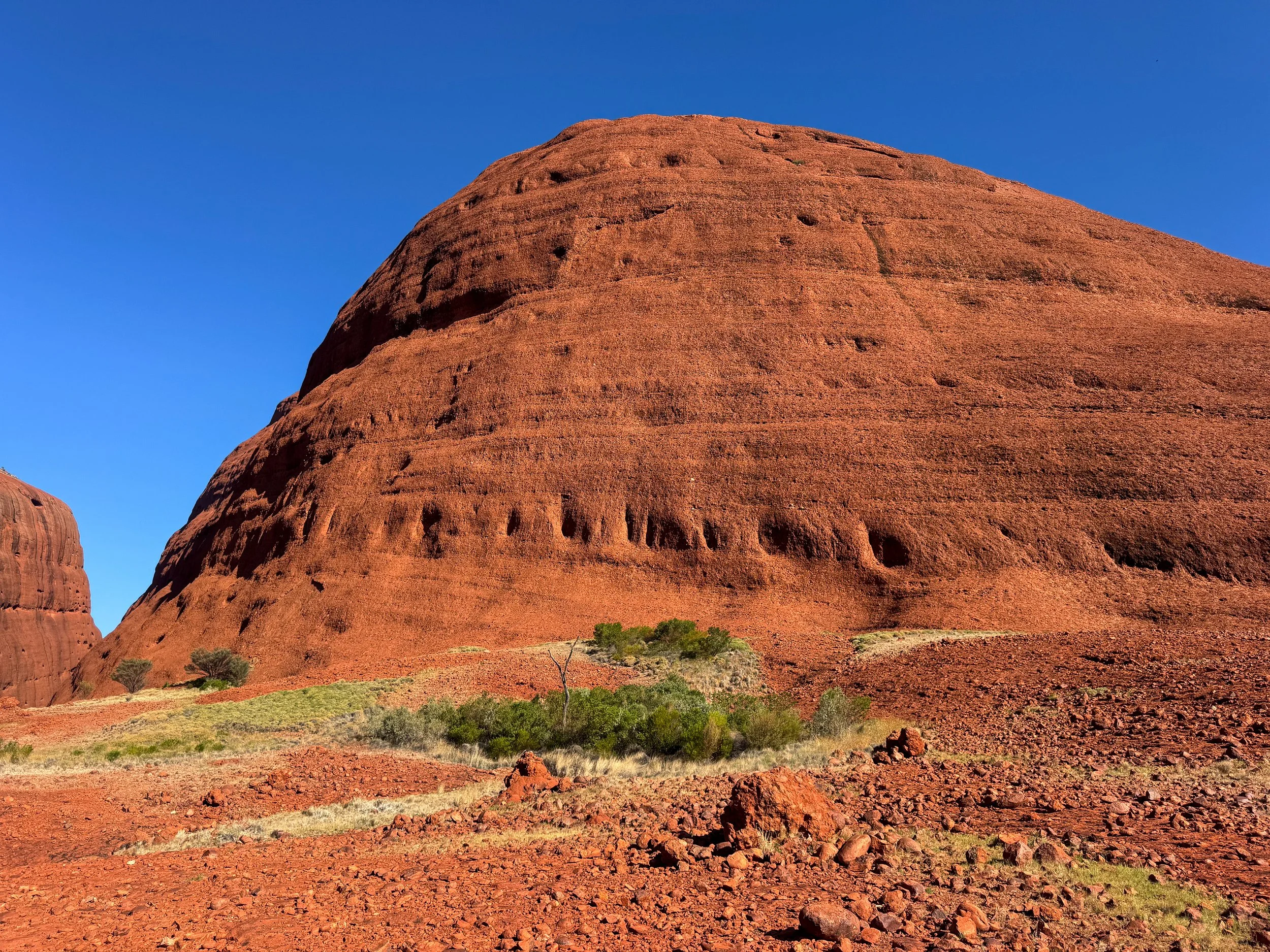
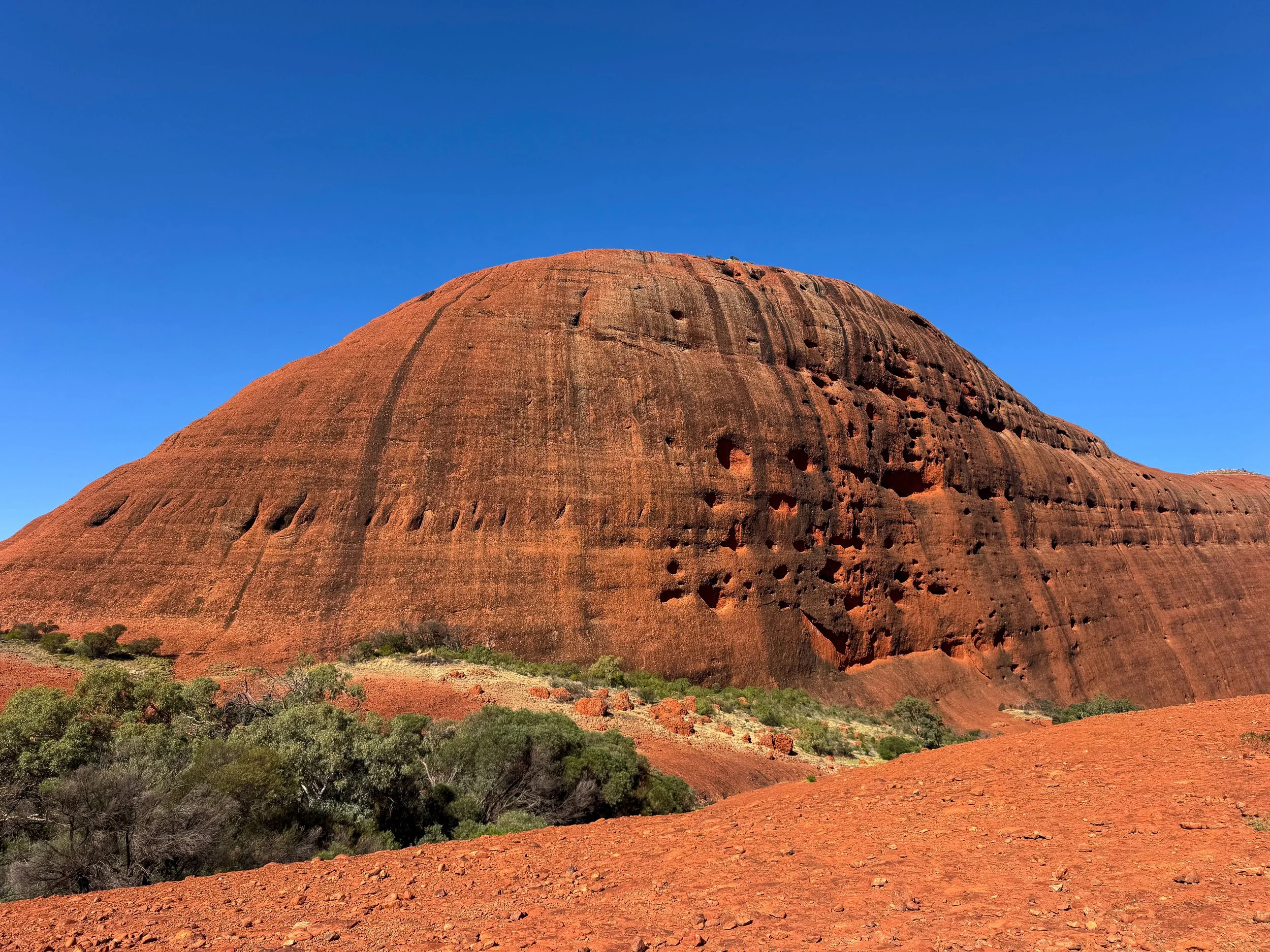
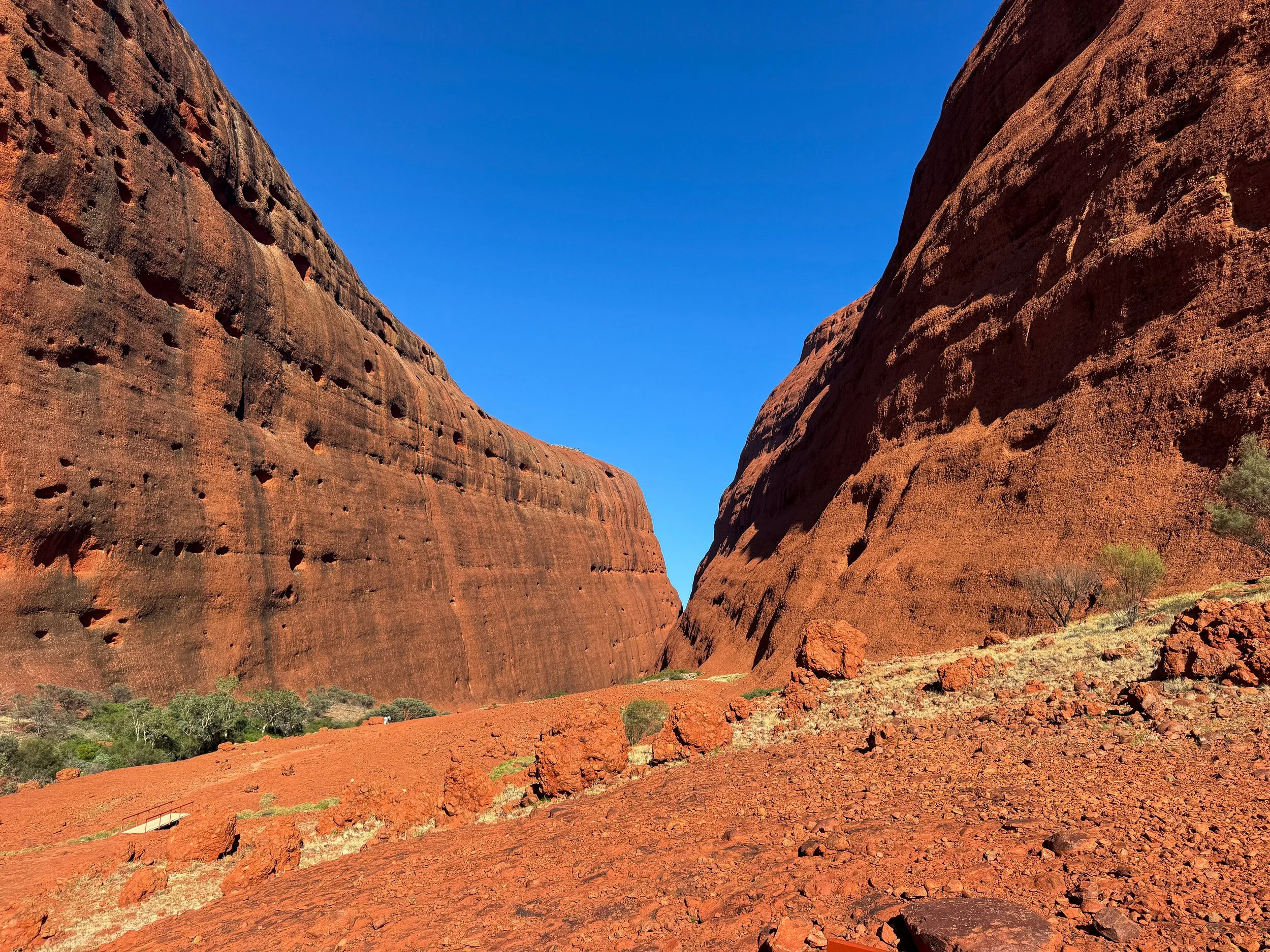
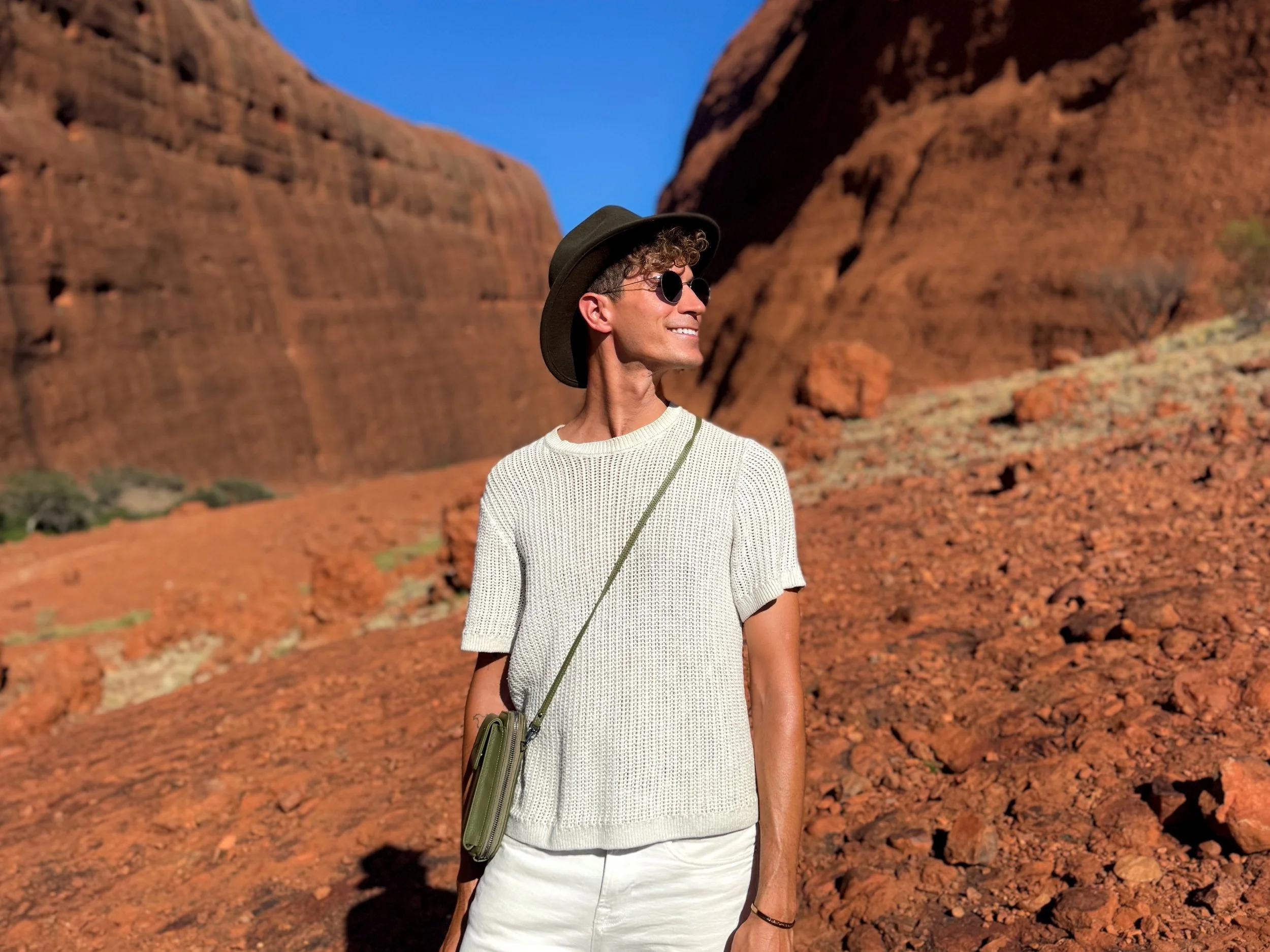
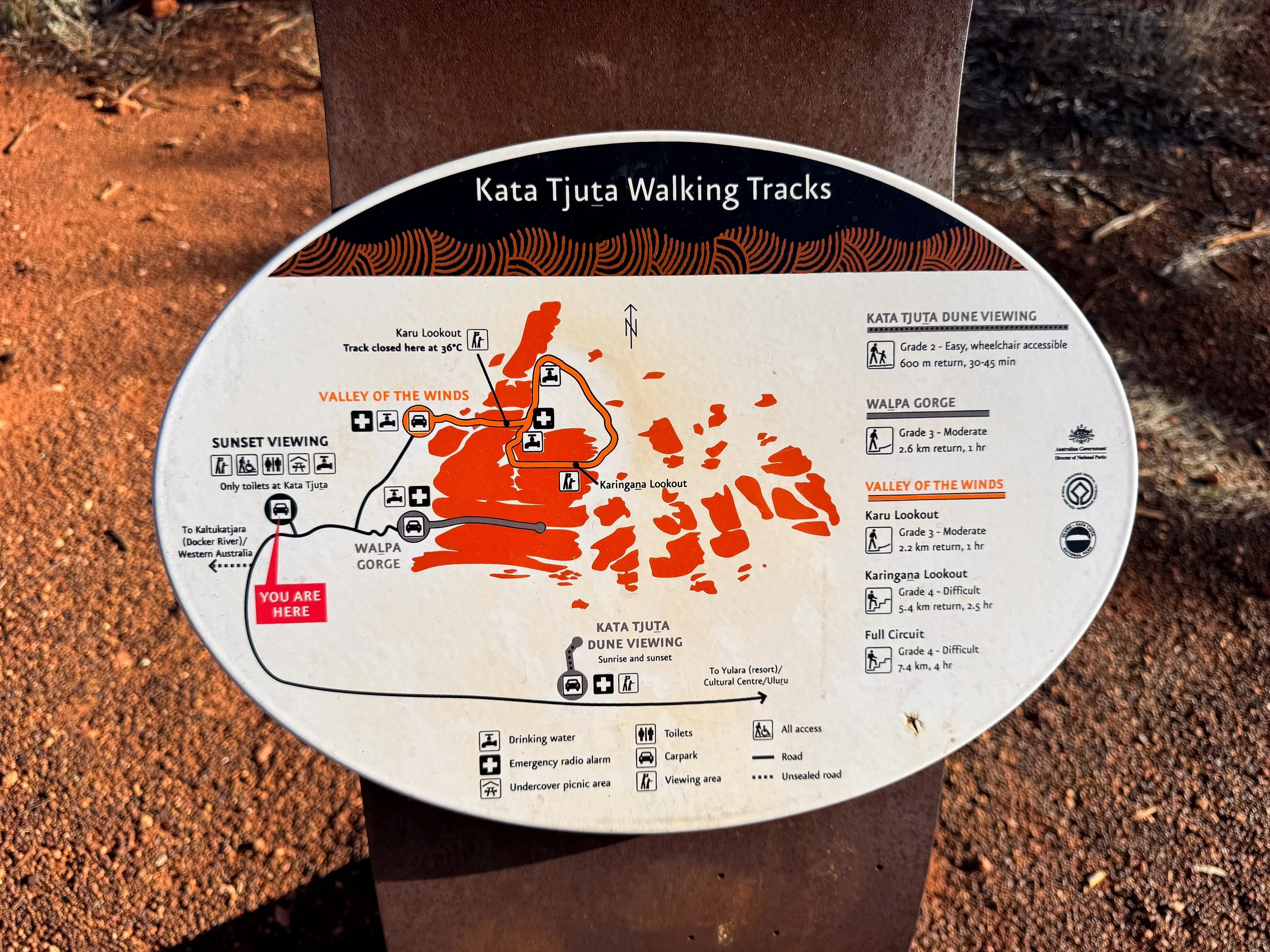
Walpa Gorge. A sacred gorge between two of Kata Tjuta’s largest stone monoliths. A 2.6km trail leads from the car park into the gorge. Pitted crevices mark its towering stone walls. Large conglomerate boulders are scattered across the landscape. Patches of yellow grasses and leafy trees sprout between amongst the orange terrain.
Kata Tjuta Dunes Viewpoint. A roadside lookout of Kata Tjuta and its large domed formations, the bush covered landscape and distant views of Uluru resting on the horizon.
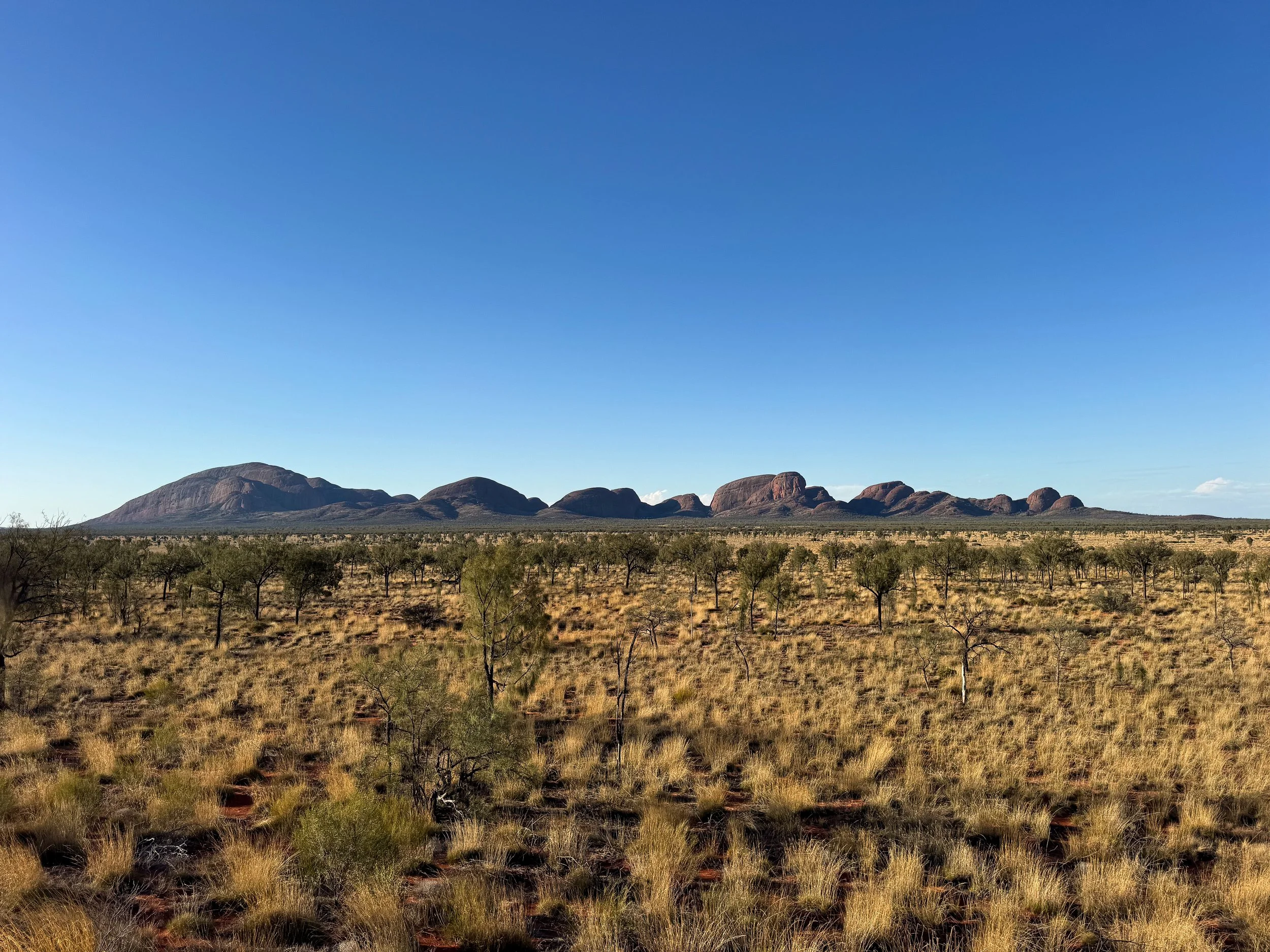
Kata Tjuta Sunset Viewpoint. A viewpoint of Kata Tjuta and four of its stone domes. The orange monoliths and desert are well illuminated by the late afternoon sun.
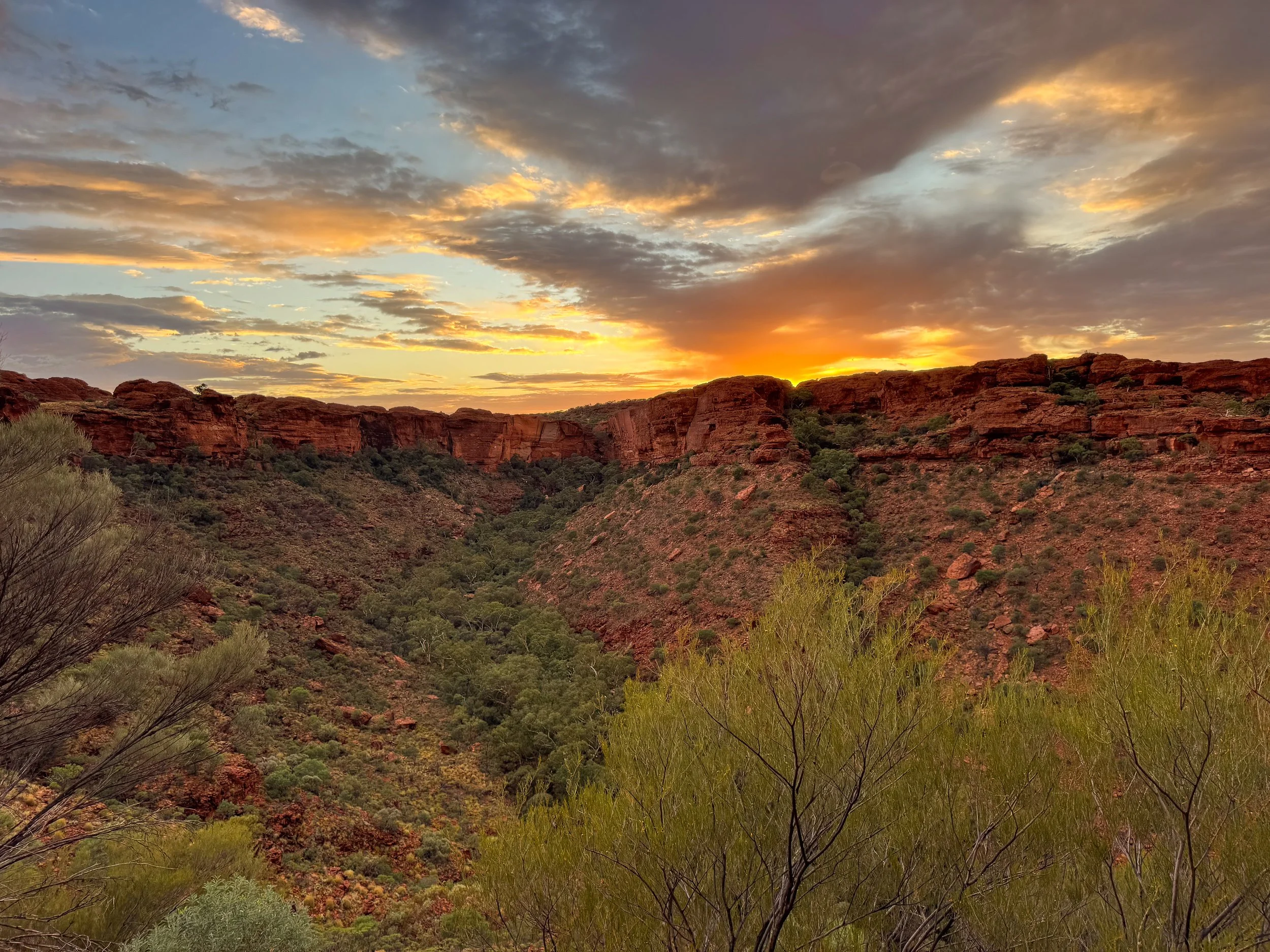
Kings Canyon & Watarrka National Park
Kings Canyon is an ancient canyon in Watarrka National Park. It cuts through the Australian outback and its orange hued desert landscape. Hiking trails lead around the canyon, its towering sandstone walls and lush oases.
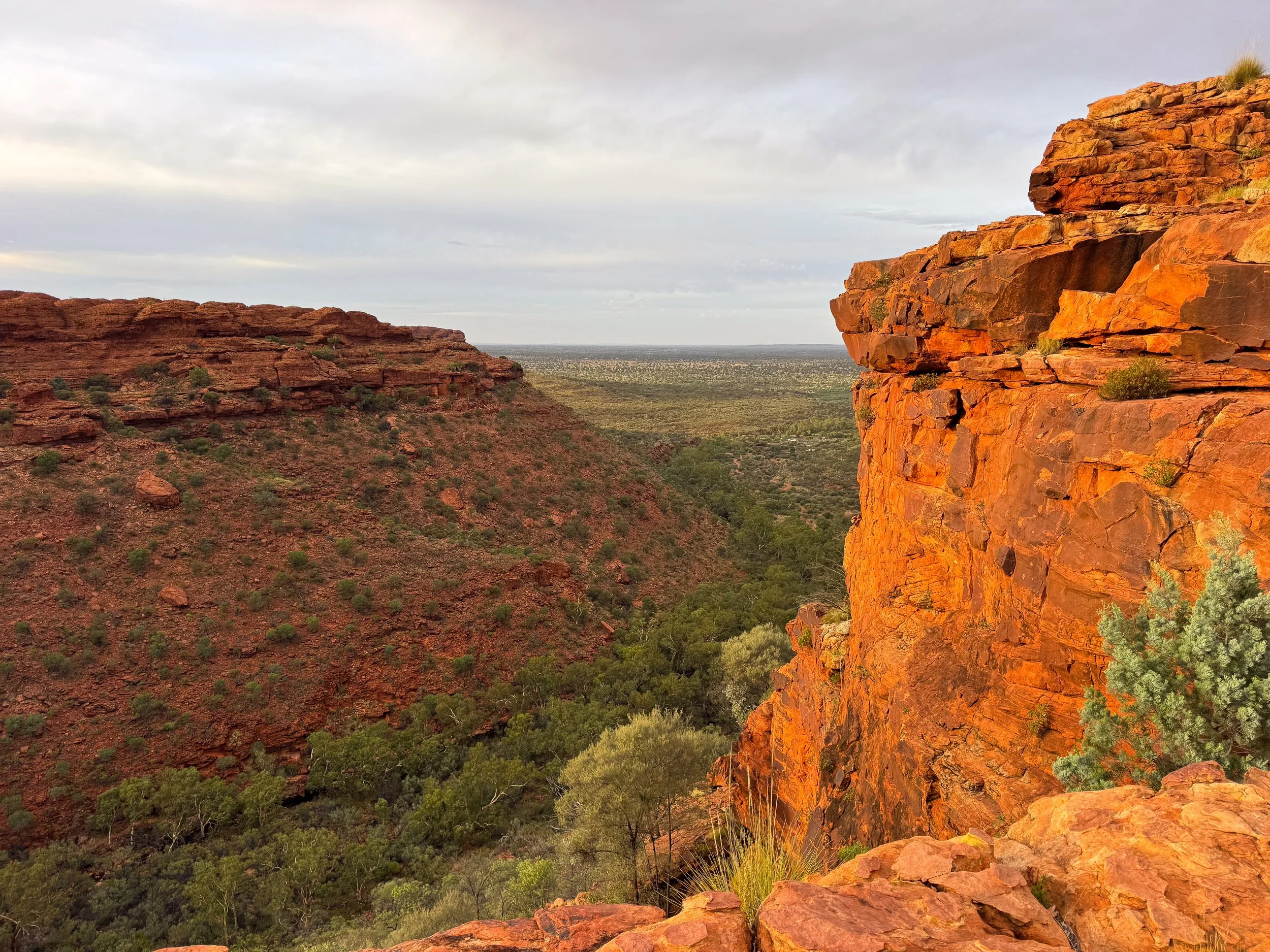
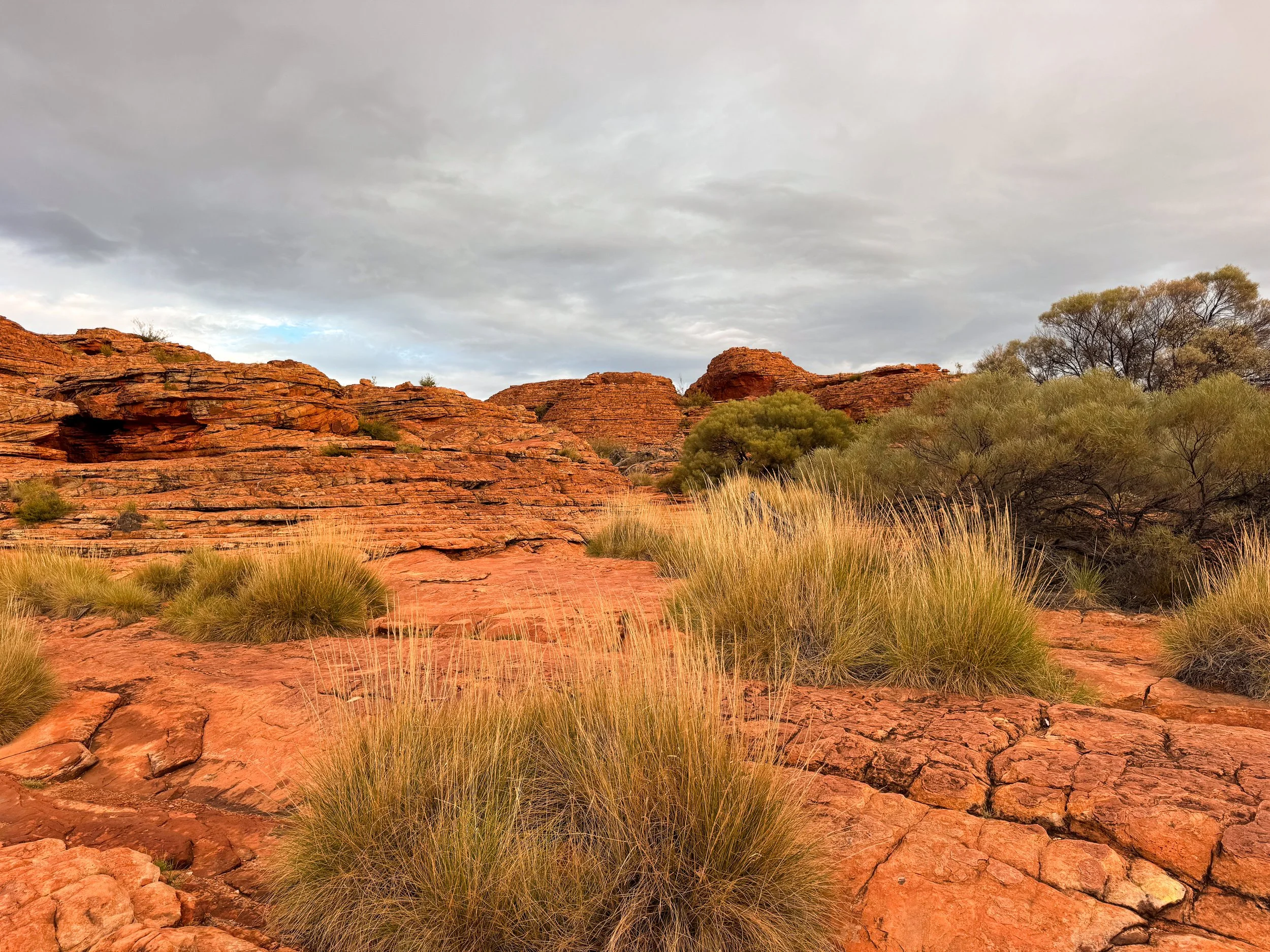
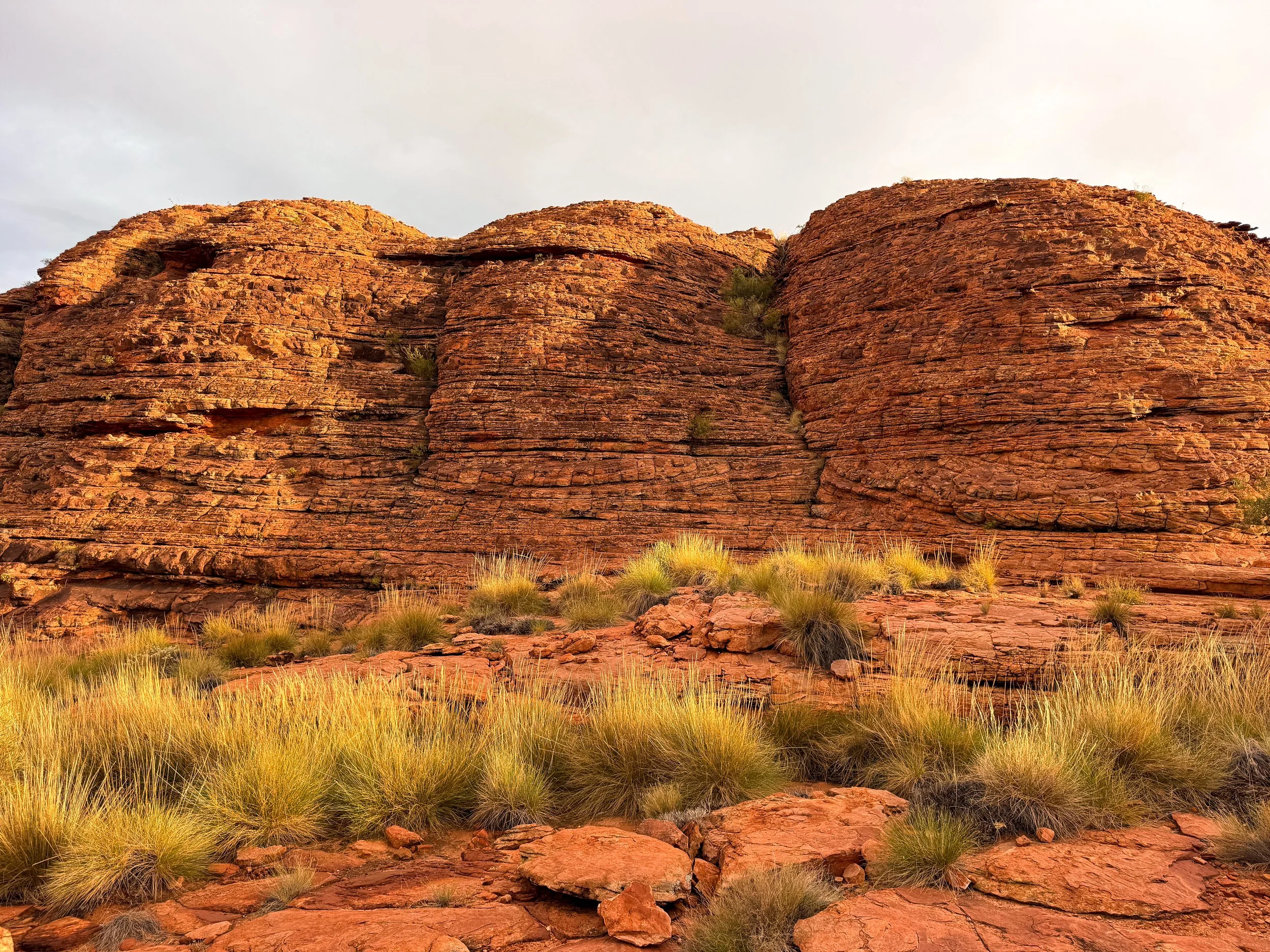
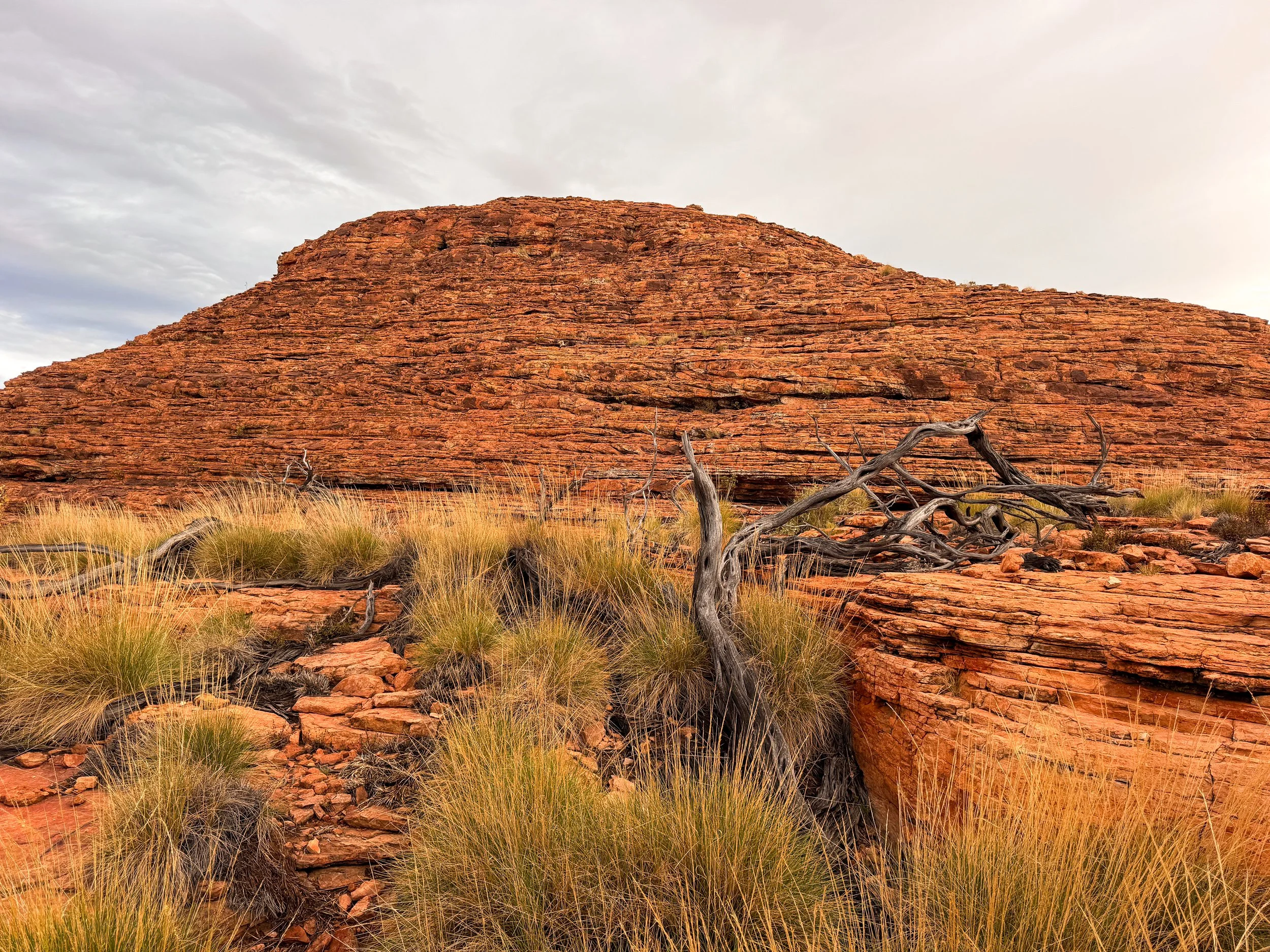
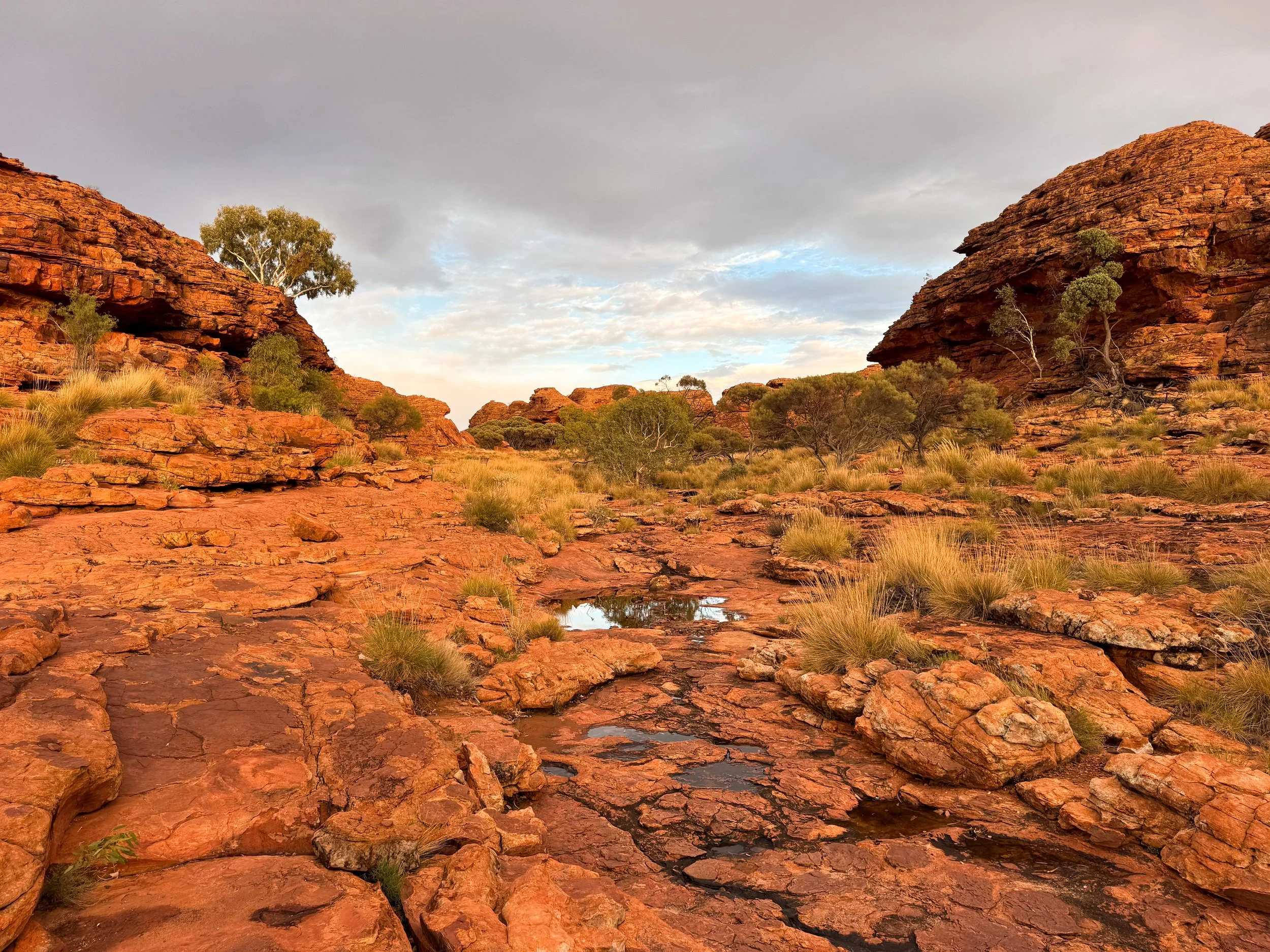
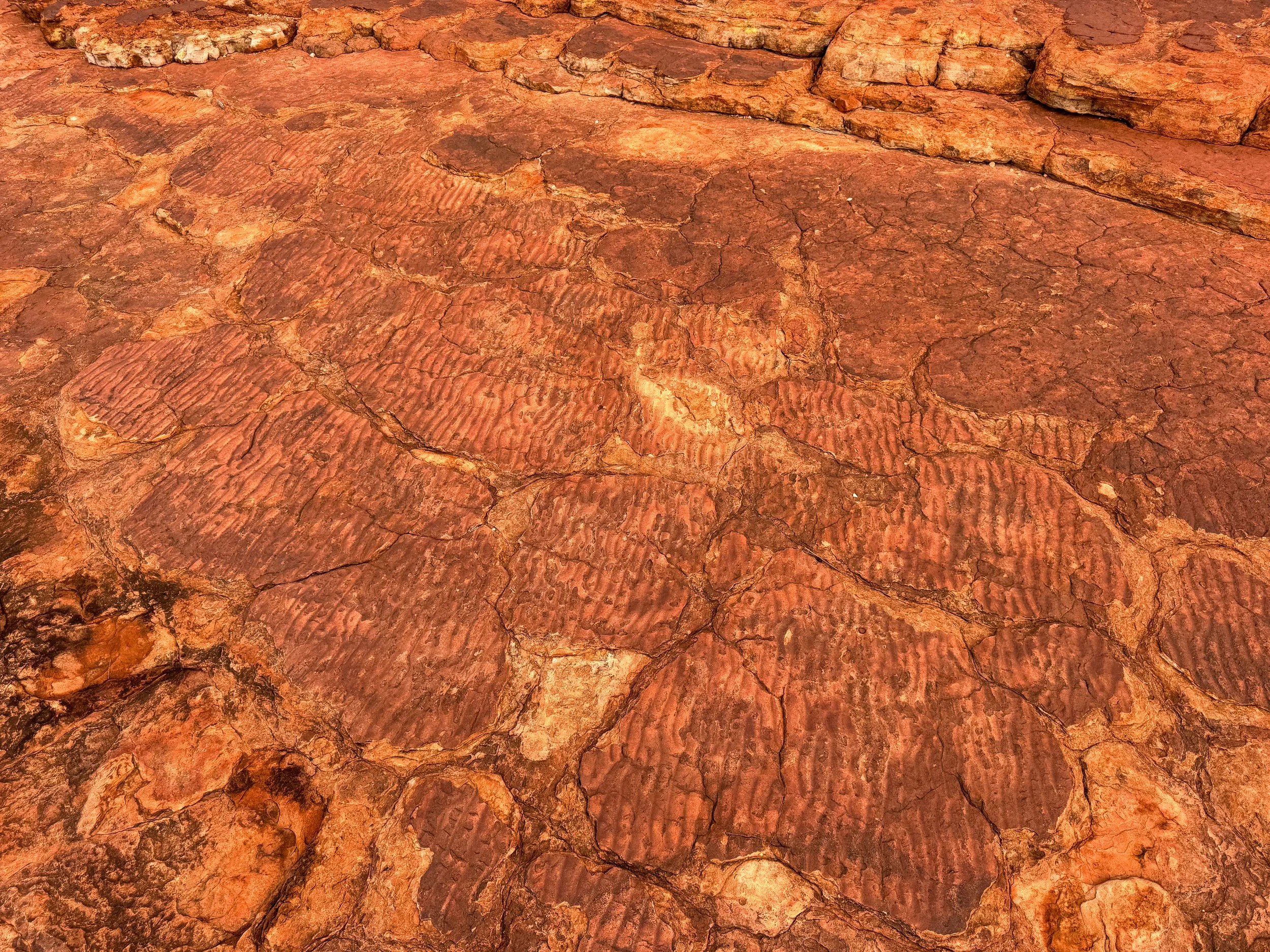
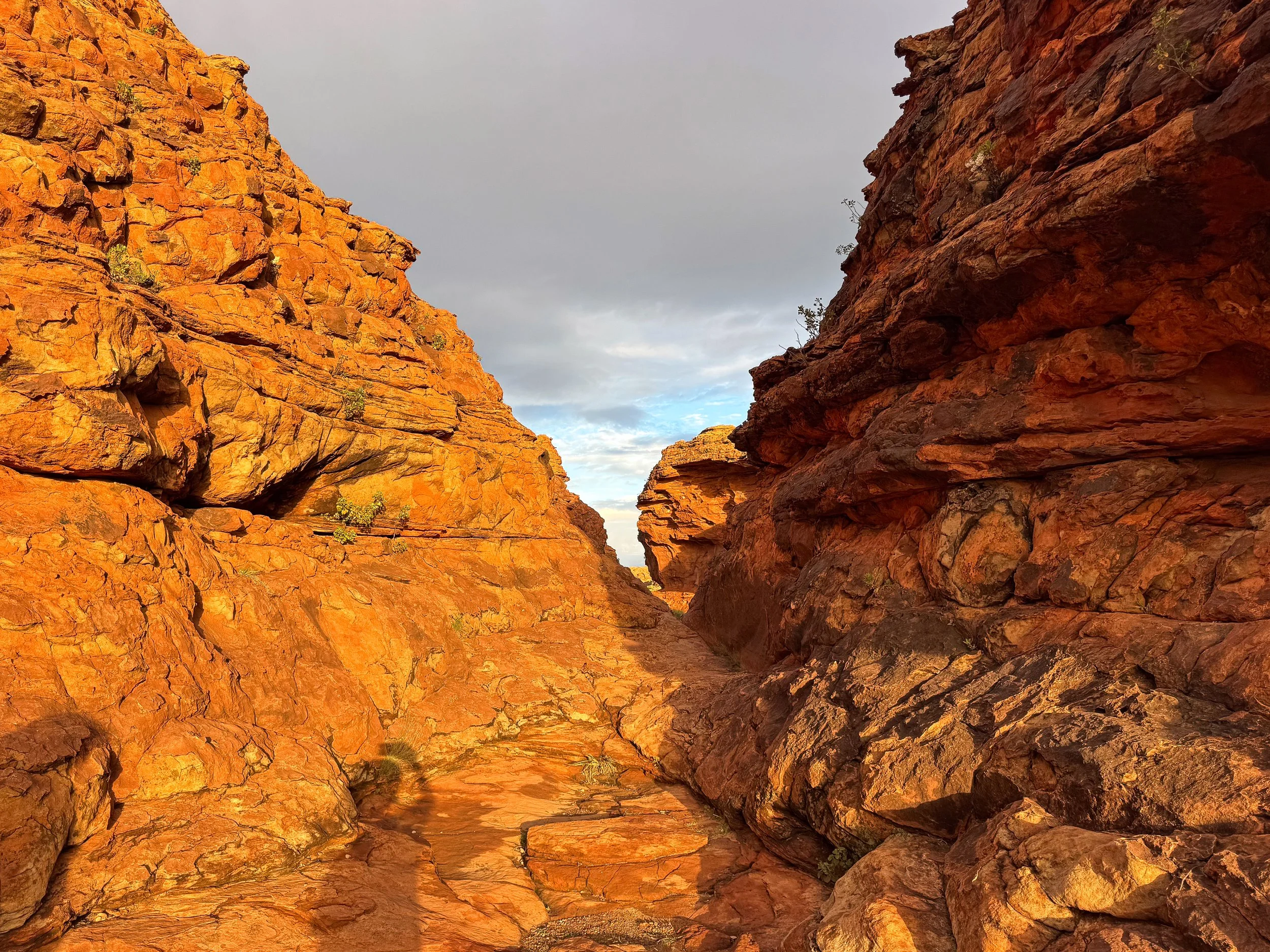
Kings Canyon Rim Walk. A 6km loop trail leading around Kings Canyon and its most prominent sights. The trail begins with a steep ascent along the canyon wall to its plateau. It follows the canyon rim, passes through narrow crevices and across the l craggily rock terrain. The rim trail offers dramatic views of the canyon and its geological features. Stop to admire fossilized sea ripples and the maze of weathered sandstone domes. An occasional grey kangaroo and rock wallaby hop through the bush in the early morning.
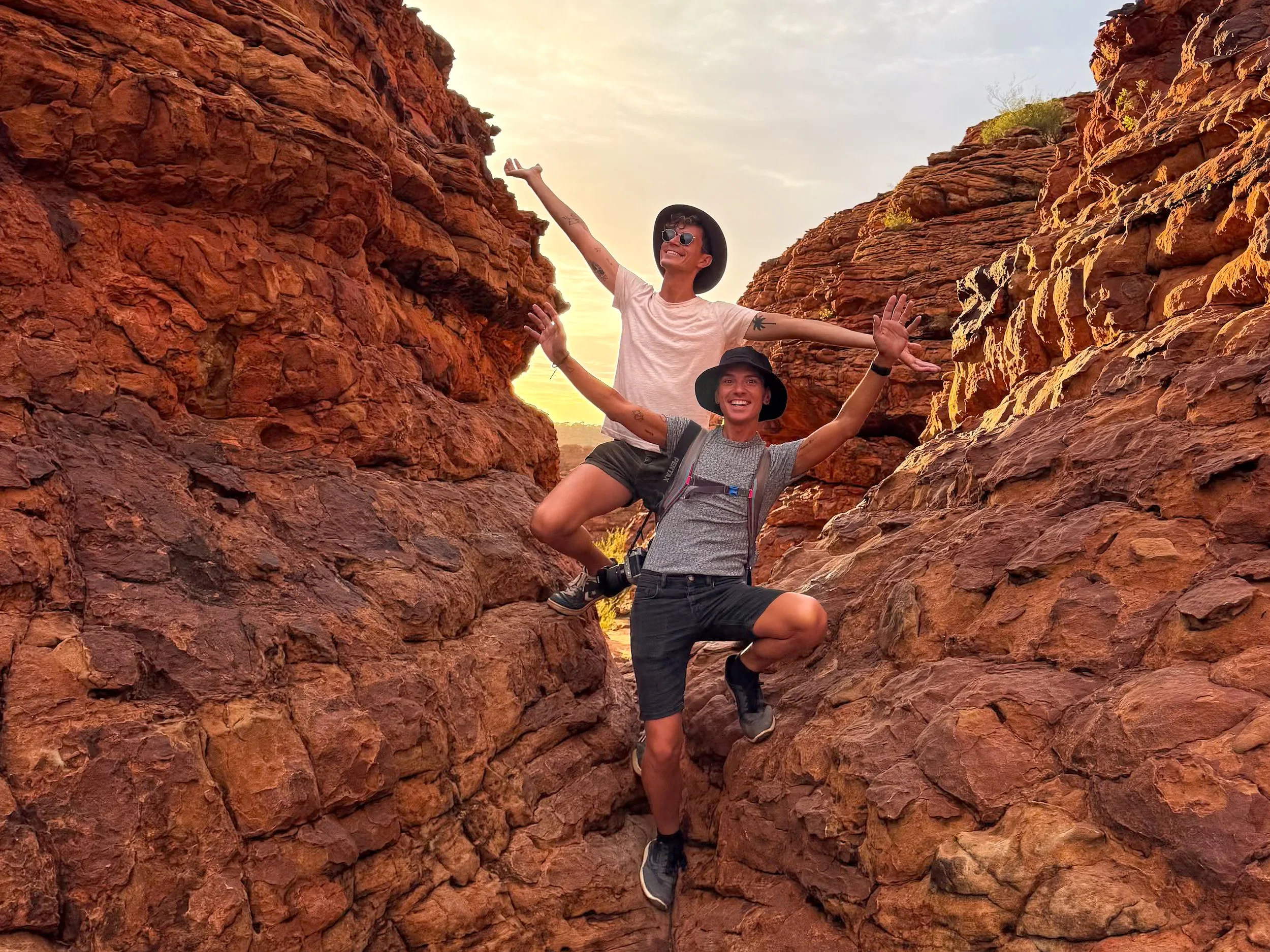
Priscilla’s Crack. A narrow crevice between two domed rock formations. It’s named after a scene from the Australian cult classic, Priscilla Queen of the Desert.
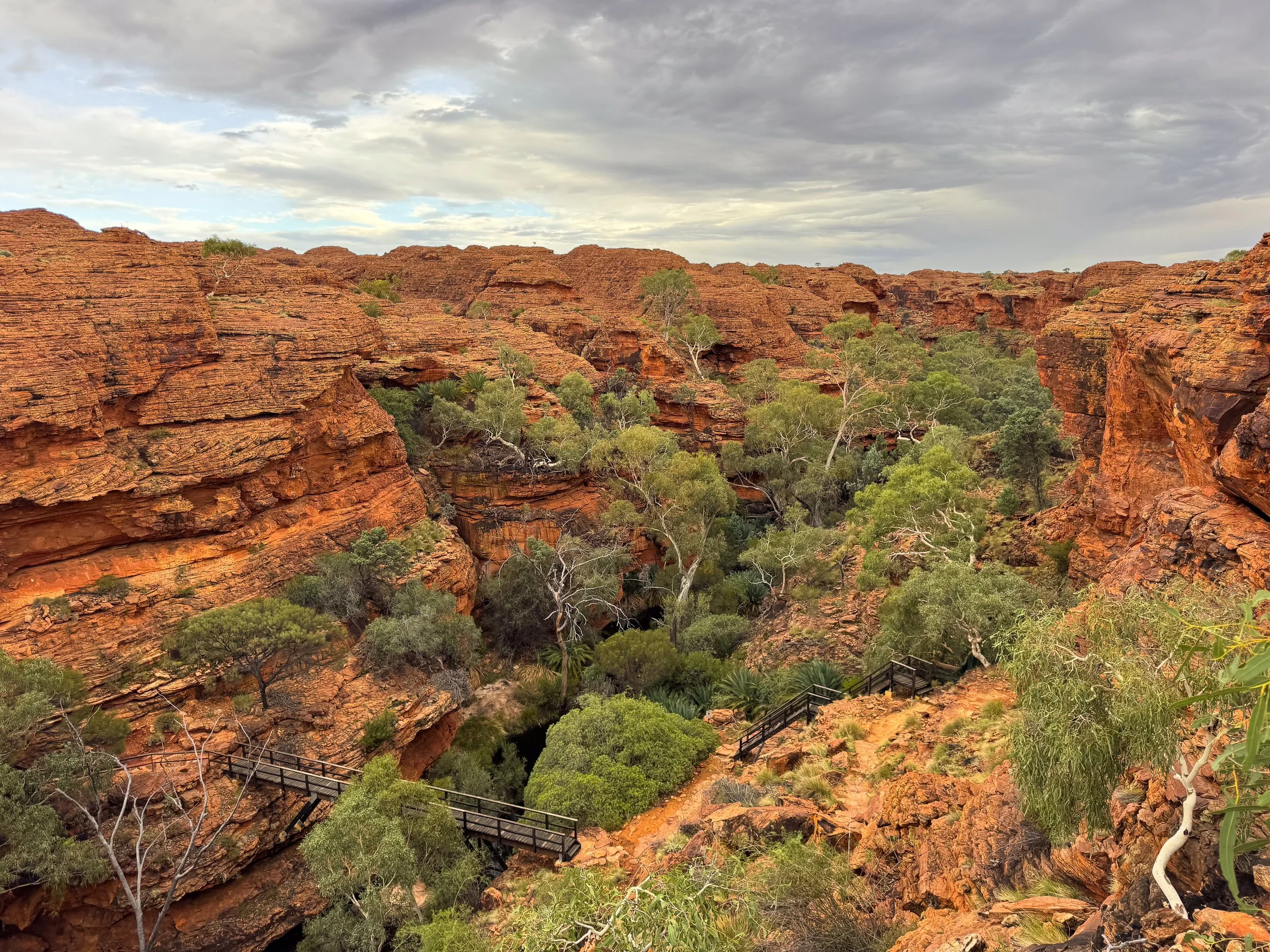
Kings Creek. A narrow creek flowing through the center of Kings Canyon. It supports a variety of life including ancient ferns, fruiting bushes, medicinal plants and fragrant trees.
Pro Tip. Rest your ear against the trunk of a river gum tree after a heavy rain to hear them “drinking” and absorbing water. The trees grow near water and are recognizable by their smooth white bark.
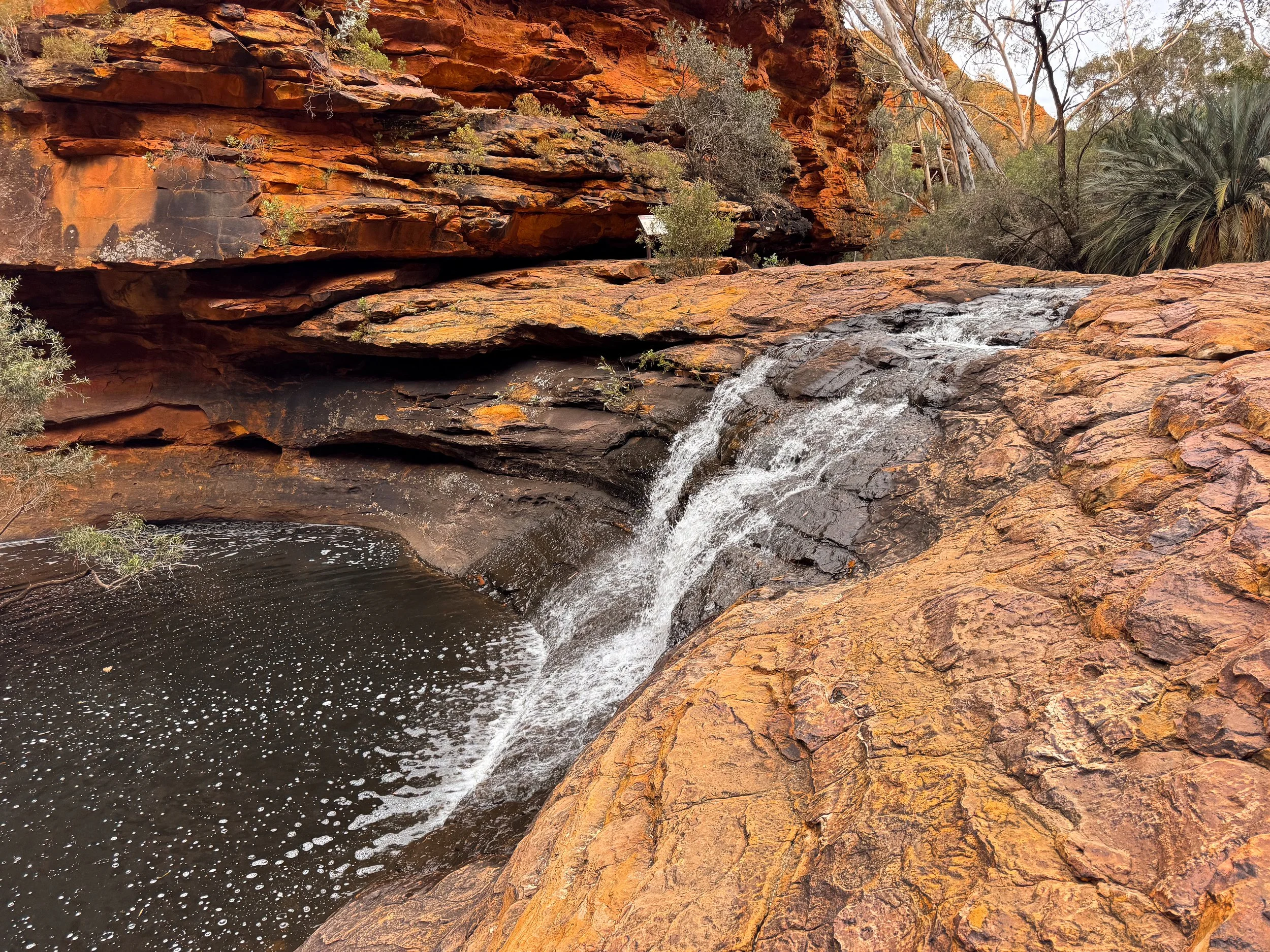
The Garden of Eden. A verdant oasis at the rear base of the canyon. Kings Creek flows through it, filing river pools and creating small waterfalls. The sounds of flowing water and singing birds reverberate between the canyon walls.
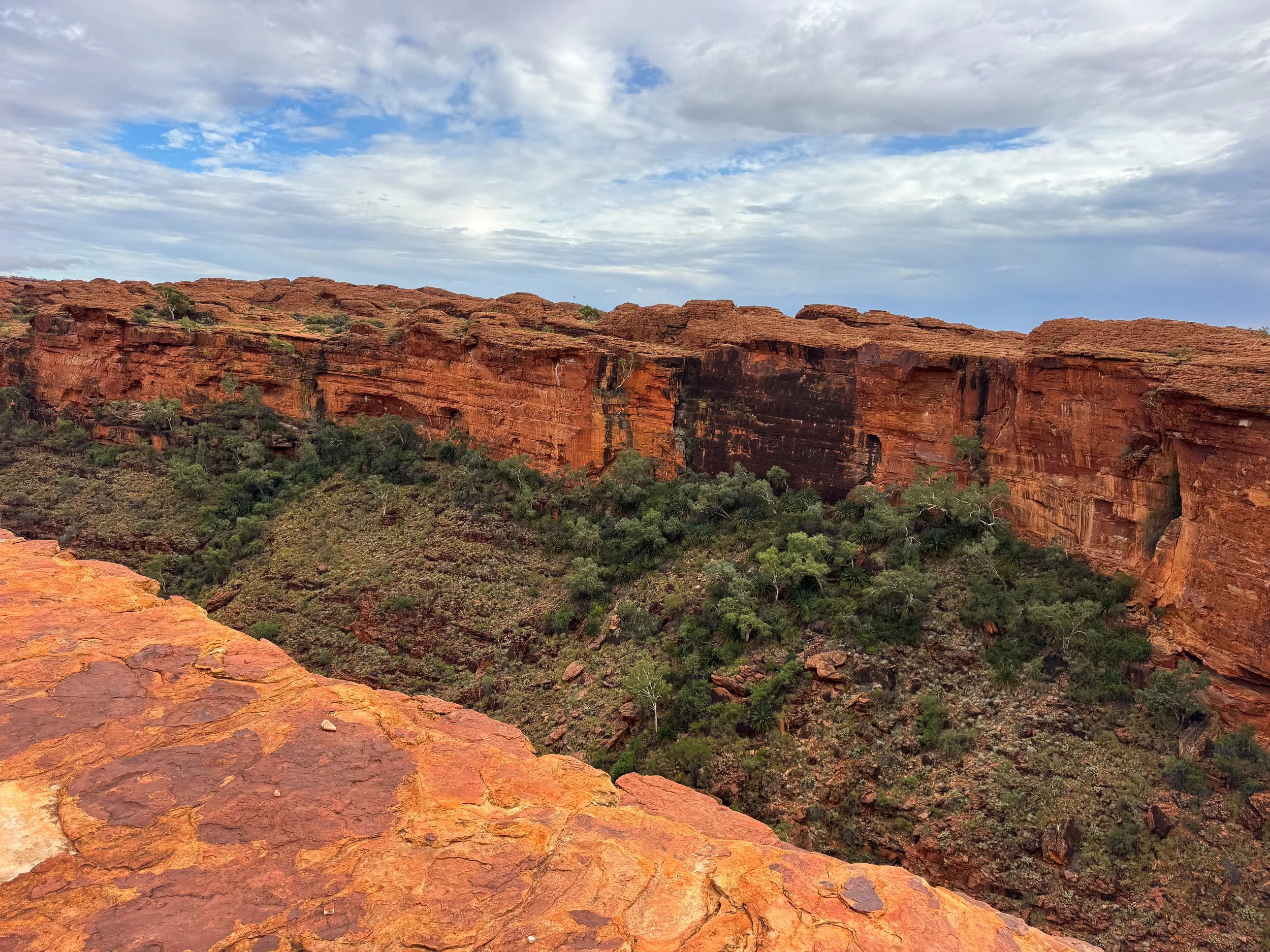
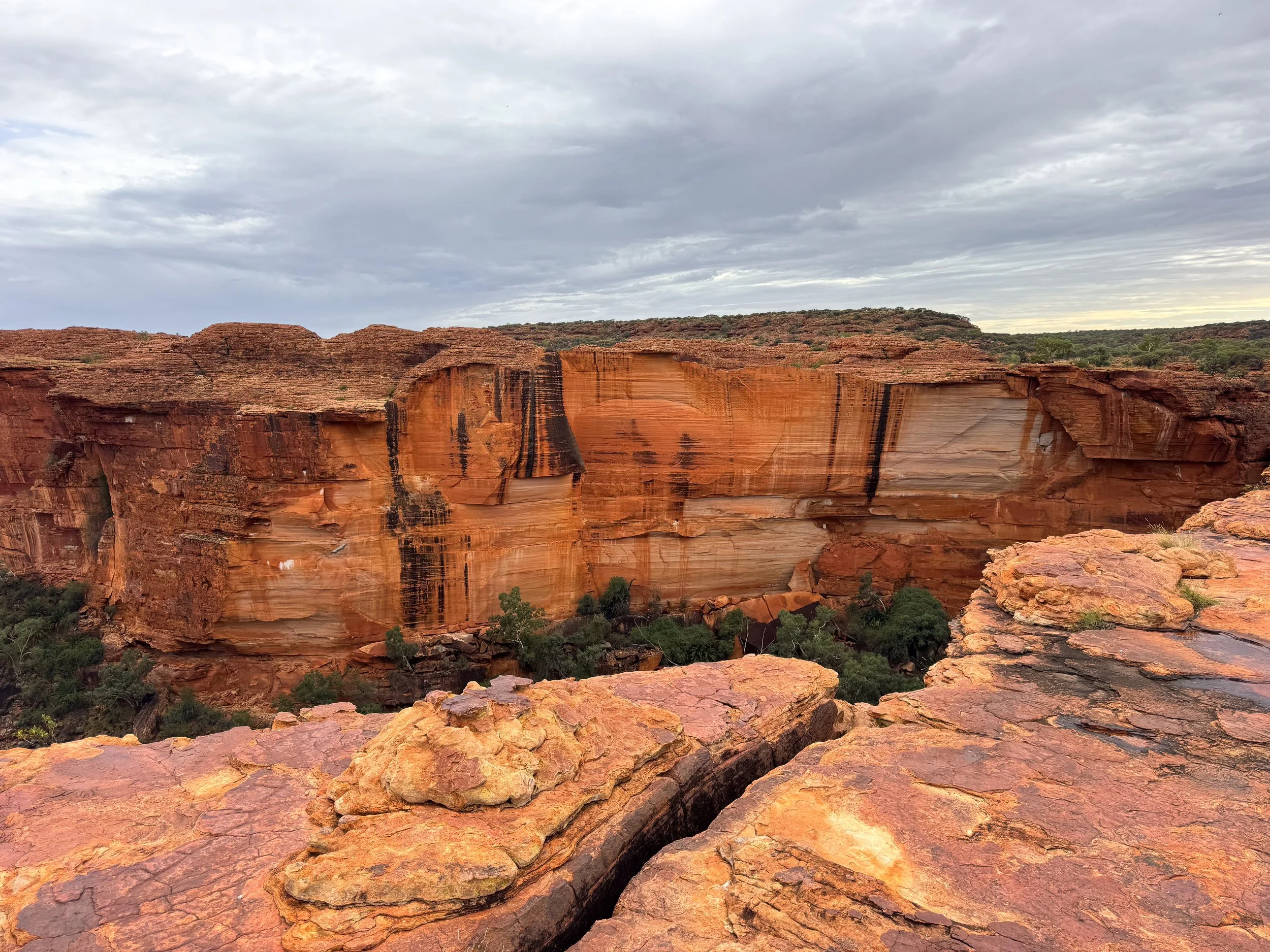
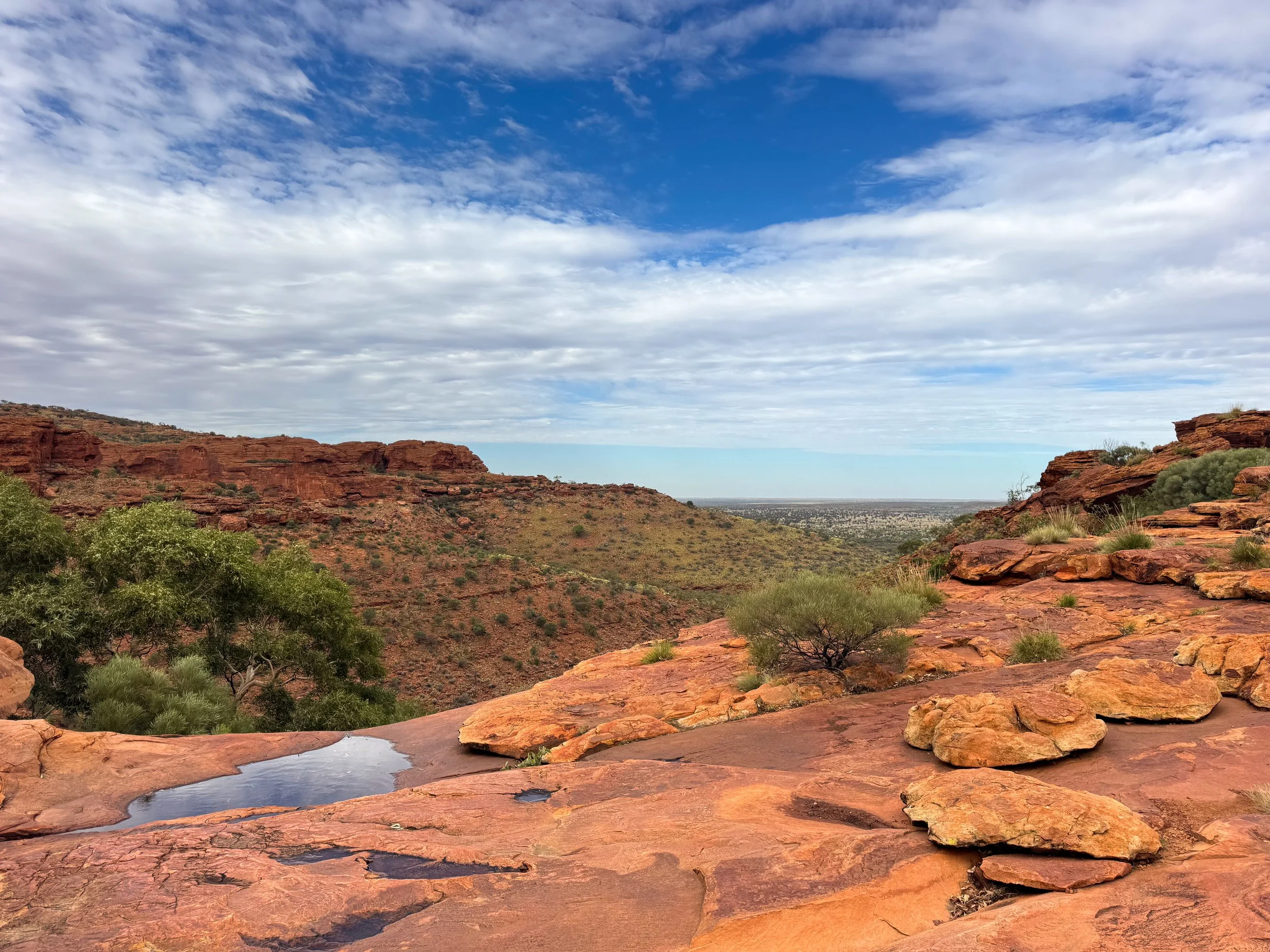
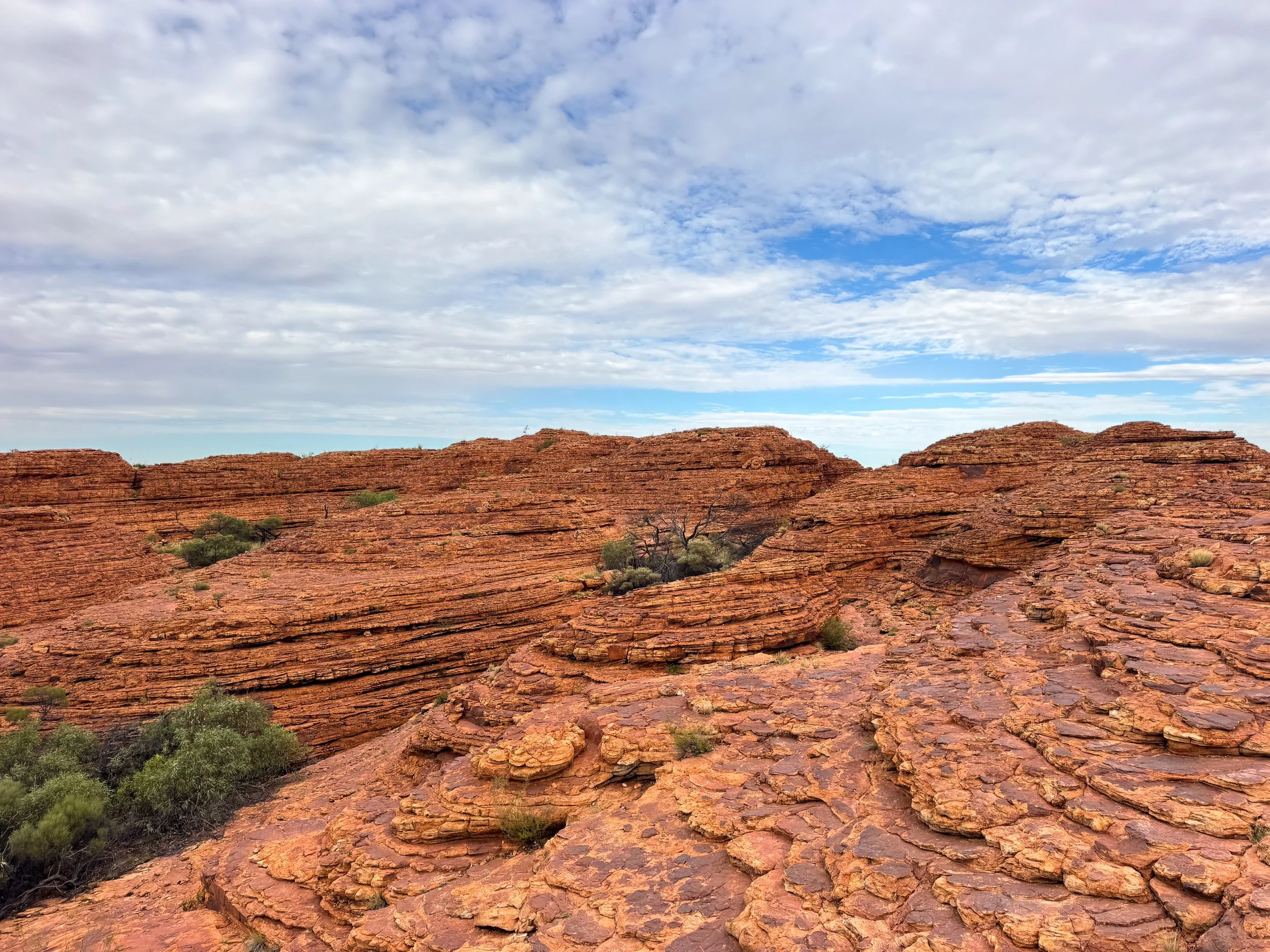
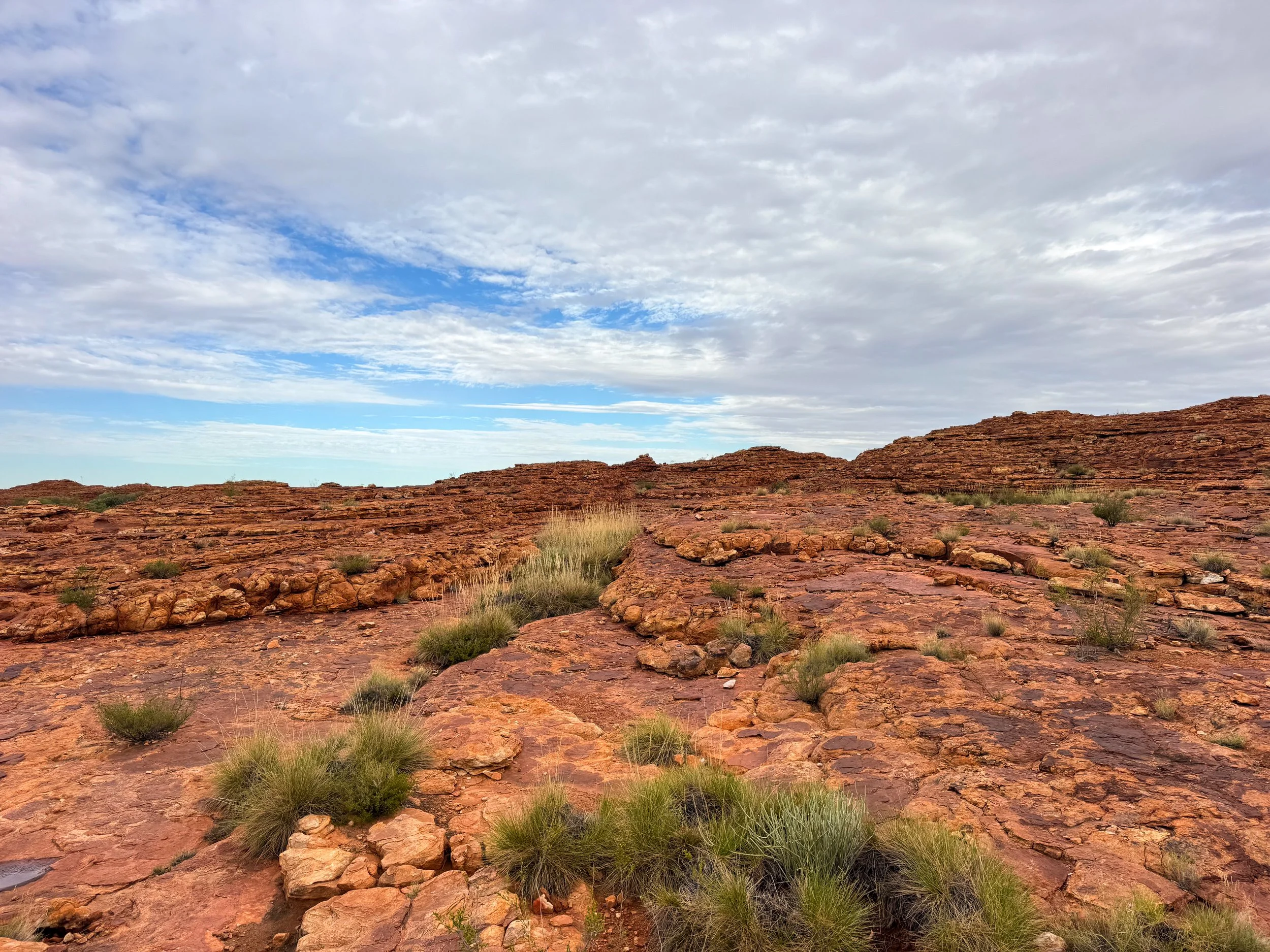
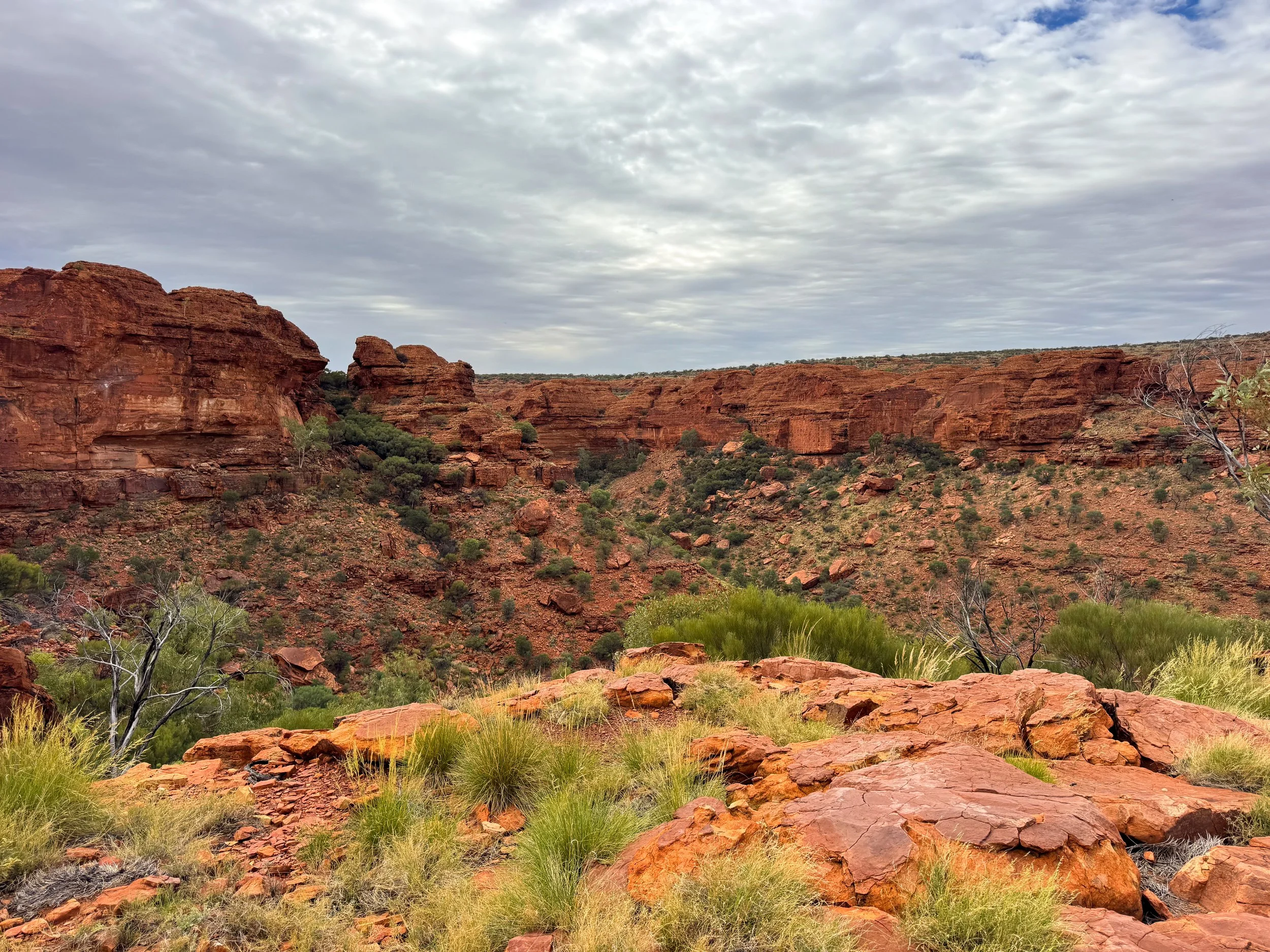
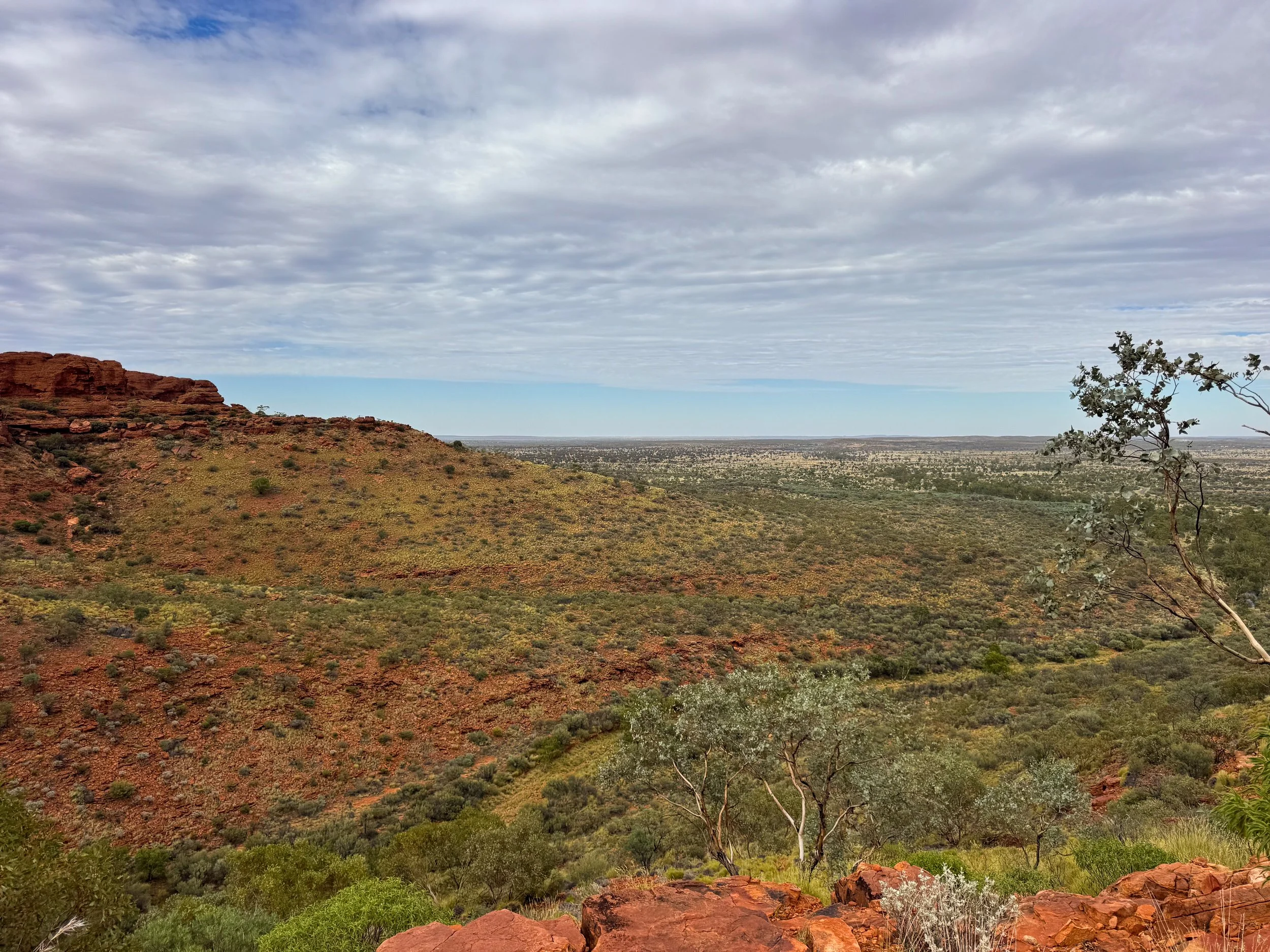
South Wall Return Walk. A 4.8km return trail along the south wall of King’s Canyon Rim Walk. It follows the canyon wall and plateau past domed sandstone formations and scenic lookouts. It’s less rigorous than the full Canyon Rim Walk. Visitors can hike this section in reverse from the parking lot for an easier trek.
South Wall Lookout. A cliffside viewpoint of the canyon’s sandstone walls and sheer rock cliffs. A temporary waterfall cascades down a crevice in the canyon after heavy rains. The lookout is viewable from both the Kings Canyon Rim Walk and South Wall Return Walk.
Good to Know. Plan to begin any hike at sunrise. Do not attempt the hike after 9am on days with temperatures forecasted to reach 36C (97F) or higher.
Places to Stay
Outback Lodge. A backpacker’s hotel with blocks of gendered dorms, private rooms and shared restrooms. An outdoor pool and air conditioned lounge offer places to relax. The hotel has its own takeaway restaurant, bbq station and. They offer luggage storage, nightly live music and Aboriginal cultural experiences. Reserve on Booking.
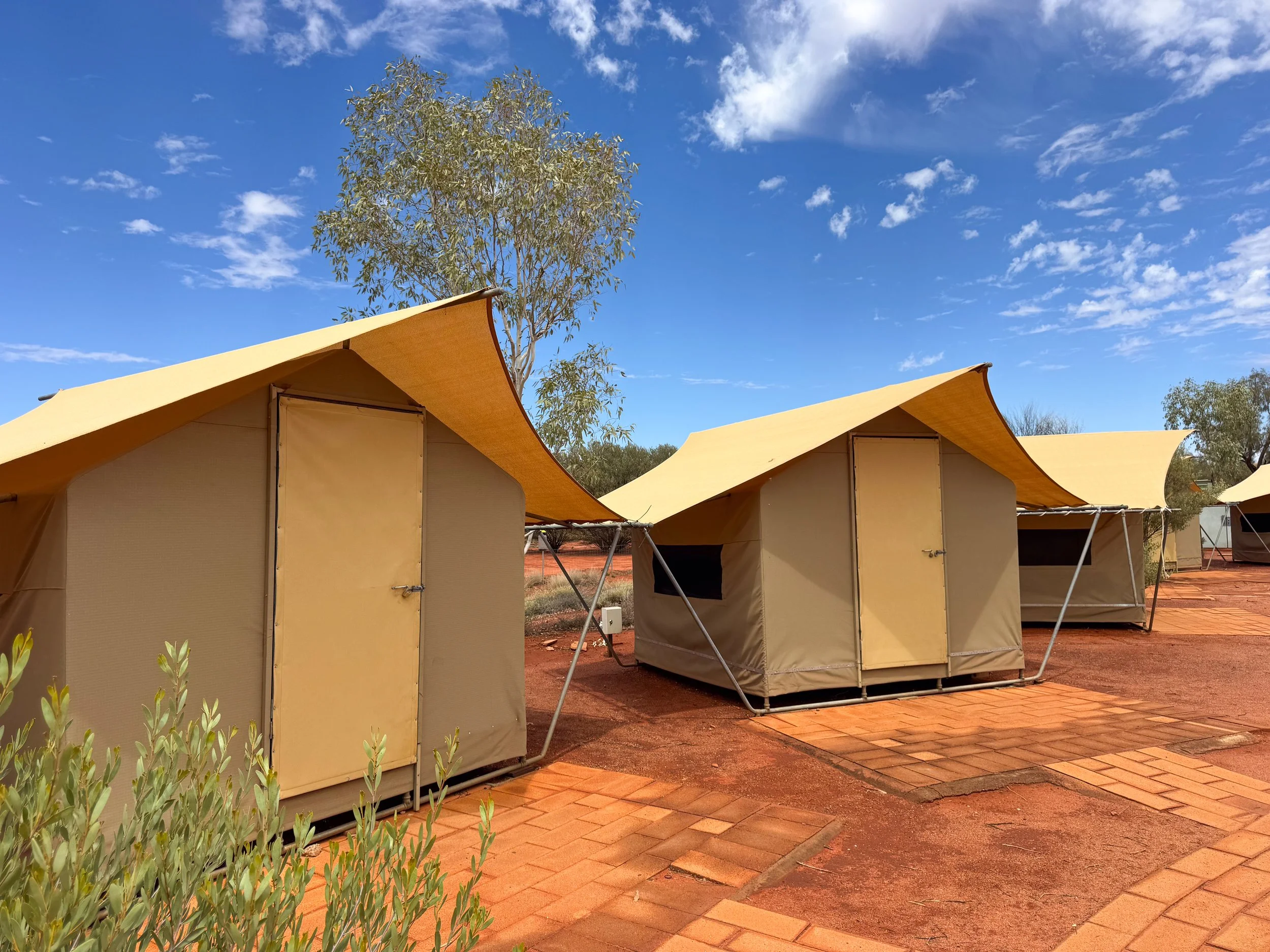
Coach Campground. An Outback campground on the edge of Yulara. Each site has an enclave of walk in tents built upon elevated platforms. Inside are twin beds and electric generators. There are communal dining halls, bbq grills, fire pits and a central facility with restrooms and showers. The camp is utilized by tour operators on “Uluru Safaris.”
Kings Creek Station. An Outback campground near Kings Canyon & Watarrka National Park. In addition to tented campsites, there is a trading post with a small restaurant, cafe and shop selling water, snacks and souvenirs. A swimming pool offers refreshing plunges on hot days. A trail leads to a hilltop lookout point with sunset views. We camped here during our “Uluru Safari” with Adventure Tours Australia.
Location Specifics
Visitor Maps. Uluru, Kata Tjuta and Kings Canyon trails and points of interest are all very well marked. Download visitor maps when planning your day in each park.
Uluru Park Pass. A park pass is needed to visit Uluru and Kata Tjuta. It’s only available as a 3 day or annual pass. Purchase it Online the day before visiting unless already included in a tour.
Respect for Aboriginal Culture. Obey no photography / videography zones to respect sacred sights. Don’t climb on Uluru or walk past fenced areas. Do not collect stones or sand as souvenirs.
Extreme Heat. The summer months invite extreme heat. Temperatures often exceed 40C (104F) and occasionally reach 50C (122F). Stay hydrated, cover your skin, wear loose flowy clothes and avoid peak heat hours. Be cautious when planning hikes.
Extreme UV. Australia boasts many sunny days. It comes with the price of extreme levels of UV. Wear SPF 50+ sunblock, sunglasses and hats for protection.
Summer Flies. Swarms of pestering flies are a constant annoyance in Uluru during the summer months. Dozens hitch a ride on your clothes, buzz around your head and crawl on your face. Wear a fly net in addition to liberally applying insect repellent.
Getting Around
ATT Kings Bus (Airport Shuttle). A free shuttle operating between the Ayers Rock Airport and the hotels in Yulara. Shuttles wait outside of baggage claim after arrival and pick up from hotels about two hours before flights depart.
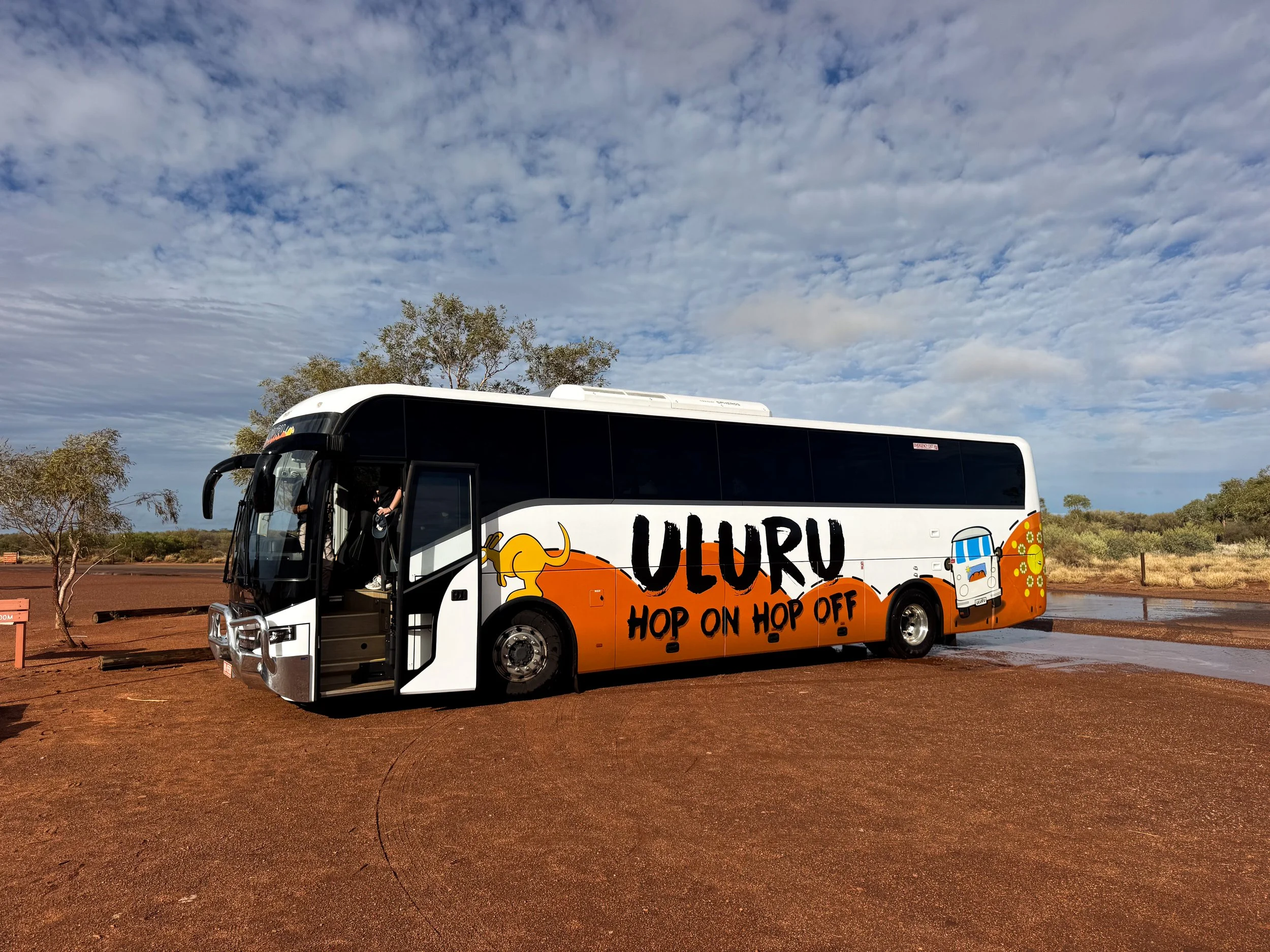
Uluru Hop On Hop Off Bus. A shuttle service offering a range of transfers to Uluru and Kata Tjuṯa from the resort town of Yulara. This is the best option to visit the sights on your own without booking a formal tour. Purchase tickets online in advance to secure a seat. Book here!
Adventure Tours. A tour company operating multi day safaris of Outback sights like Uluru, Kata Tjuta and King’s Canyon. We booked a 3 night safari, staying in different camps and visiting sights across the landscape with a small group and local guide. We booked in advance through Viator.
Elsewhere in Australia
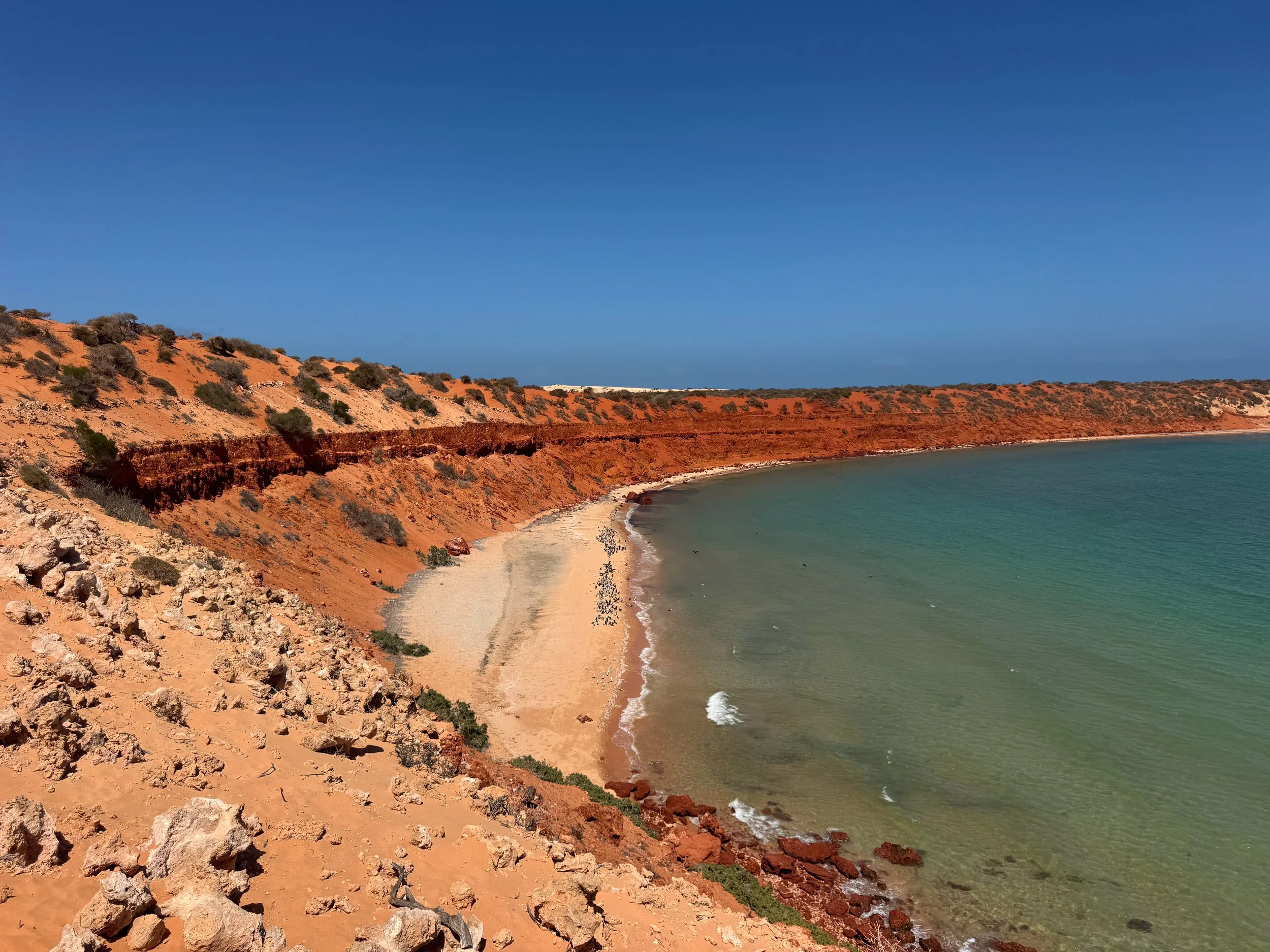
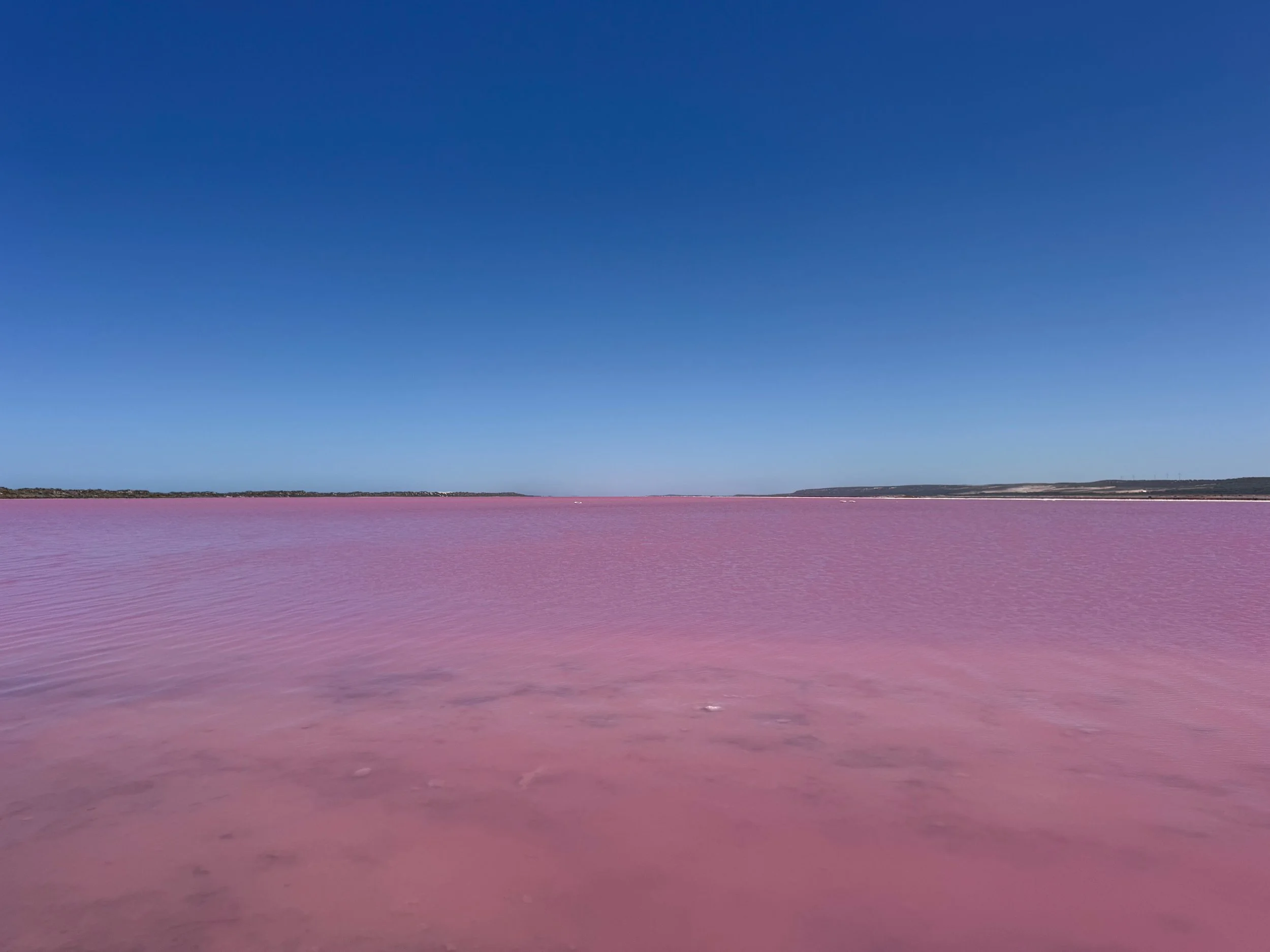
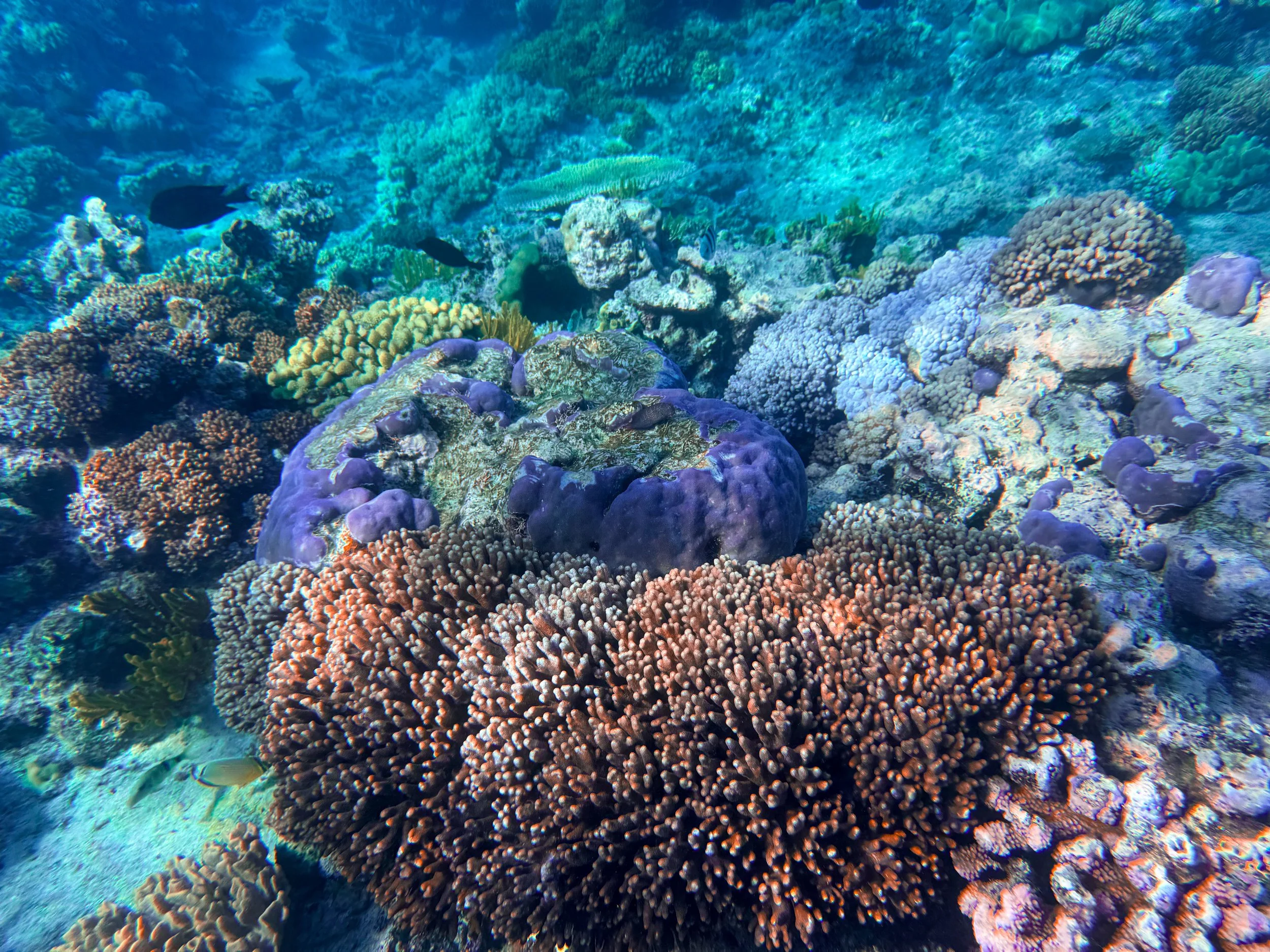
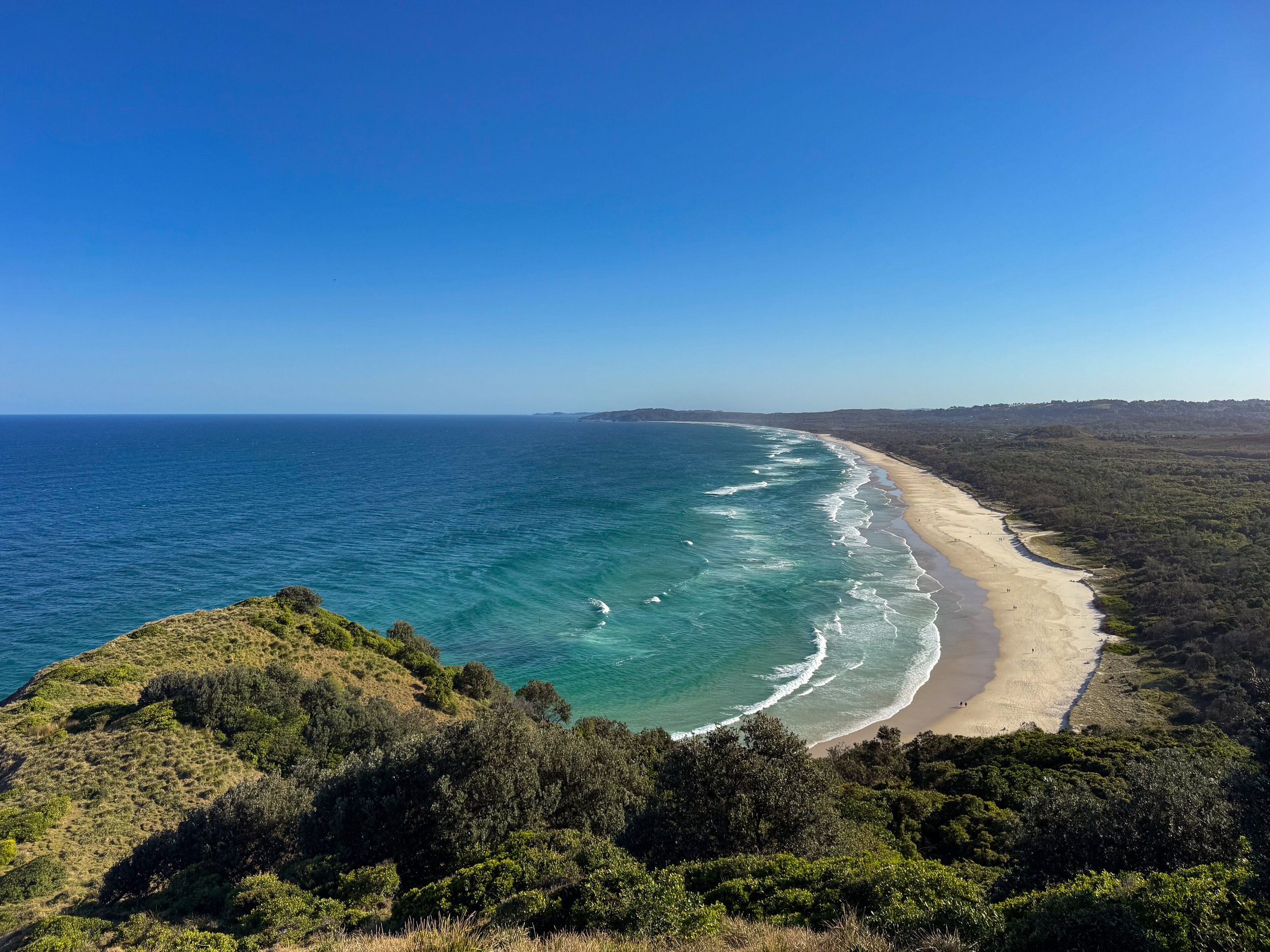
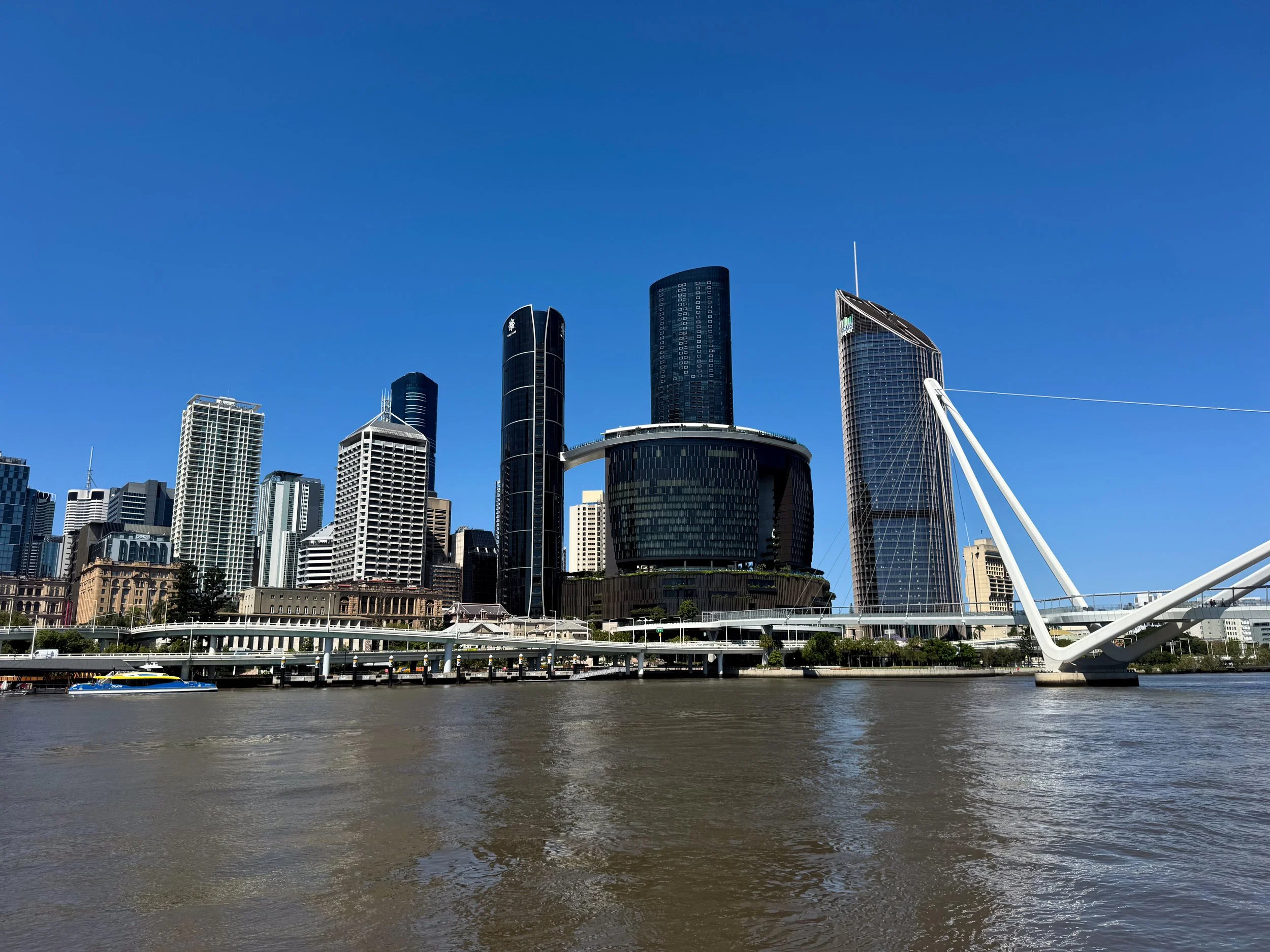
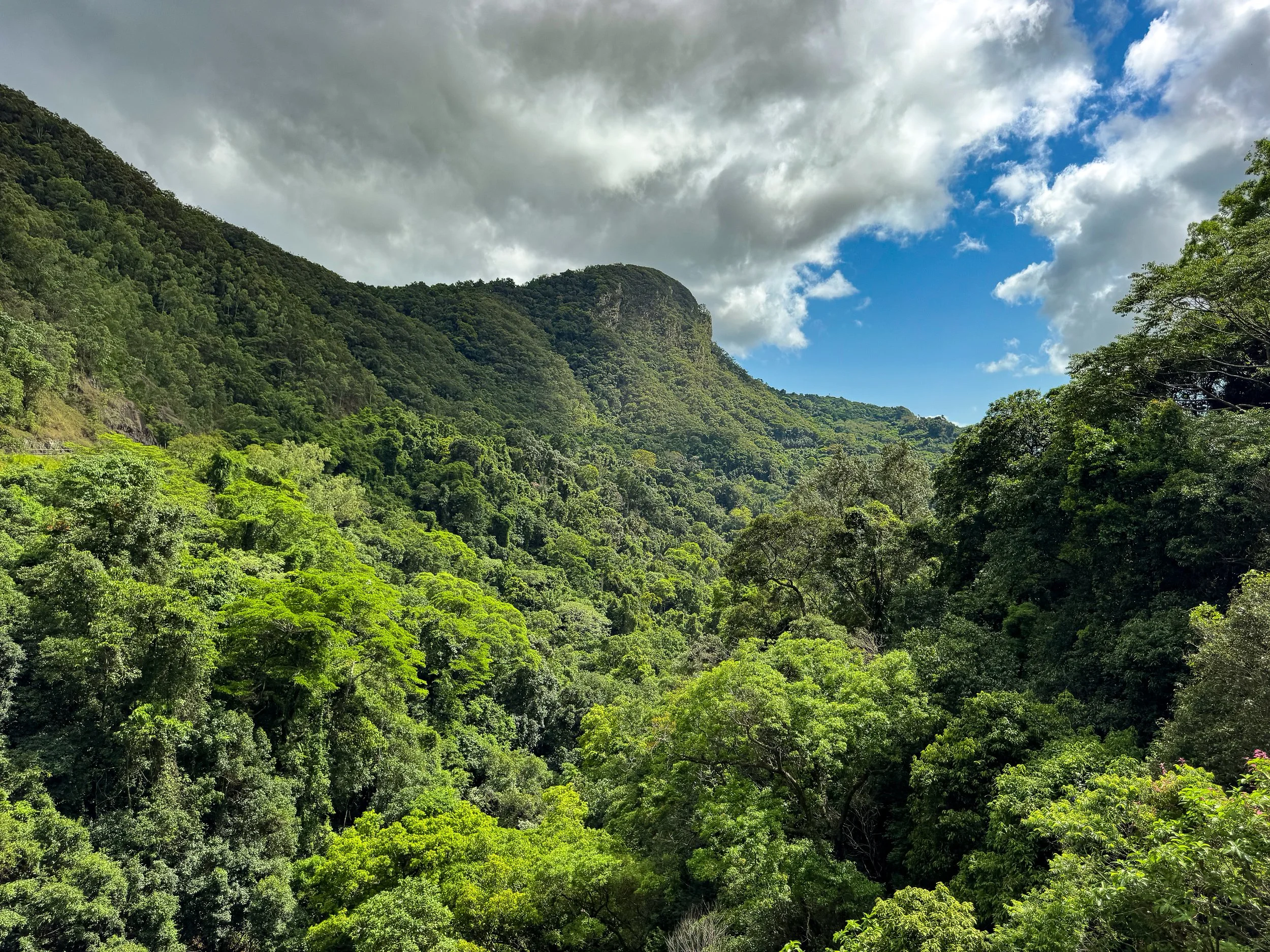
We traveled for over a month in Australia, visiting worldly cities, beautiful national parks and natural wonders along the country’s east and west coasts as well as the famed Outback. Explore the energetic and beautiful city of Brisbane. Relax on the beaches and surf the waves of Byron Bay. Hike through the lush rainforests of Tropical North Queensland. Dive into the underwater wonders of The Great Barrier Reef. Roadtrip between coastal towns and national parks along The Coral Coast of Western Australia.
For Next Time…
Uluru, Kata Tjuta and Kings Canyon were incredible sights to visit and learn more about while in Australia’s Northern Territories. Next time we return, we plan to visit places elsewhere in the state.
MacDonnell Range. A mountain range with dramatic geological features, hiking trails and Outback campgrounds.
Limmen National Park. A remote wilderness park with sandstone rock formations, sprawling wetlands and wildlife.
Kakadu National Park. A rugged tropical landscape with rainforest, waterfalls and aboriginal cave paintings.