Day of the Dead in Mexico City (Día de los Muertos) Travel Guide
Día de los Muertos
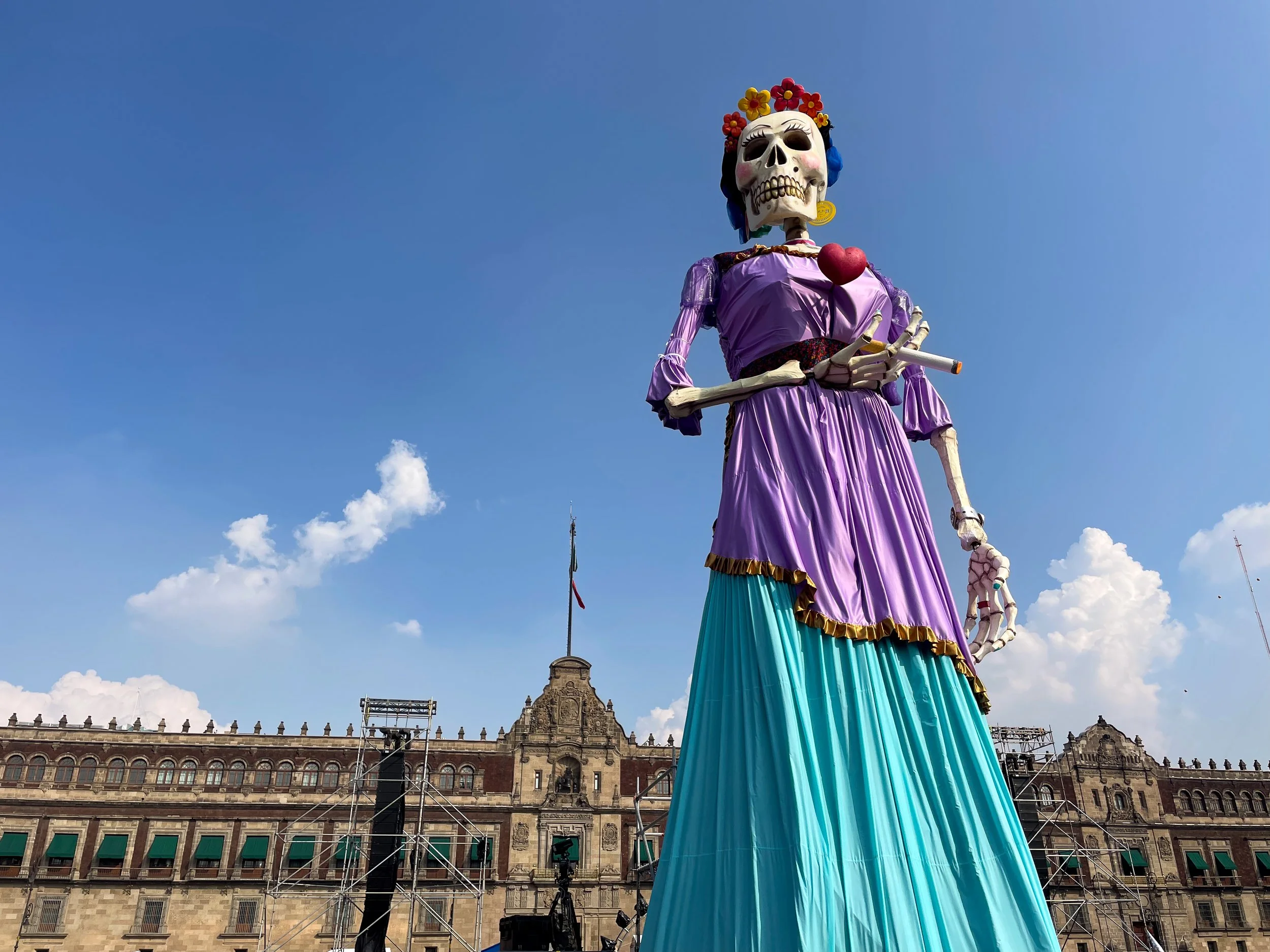
Día de los Muertos is one of Mexican culture’s most important holidays and traditions. It is a day to remember those that have died and to celebrate life. The holiday is officially celebrated on November 1st with a week of festivities leading up to it including parades, ofrendas, markets, food and decorations.
Elements of Día de los Muertos
Multitudes of symbols and decoration make up many elements of Día de los Muertos. Many of which are symbolic of the joy of life, life after death and honoring the deceased.
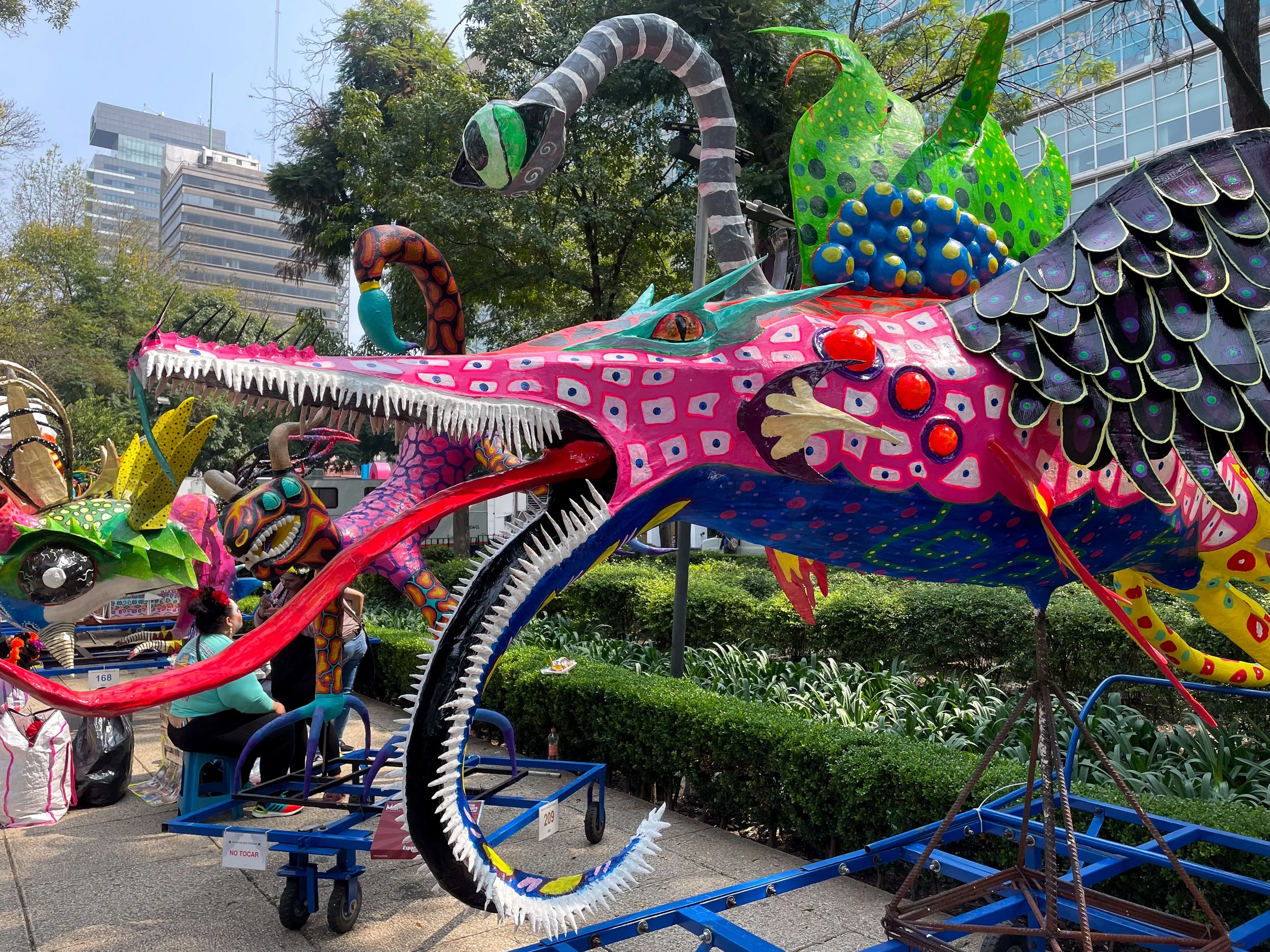
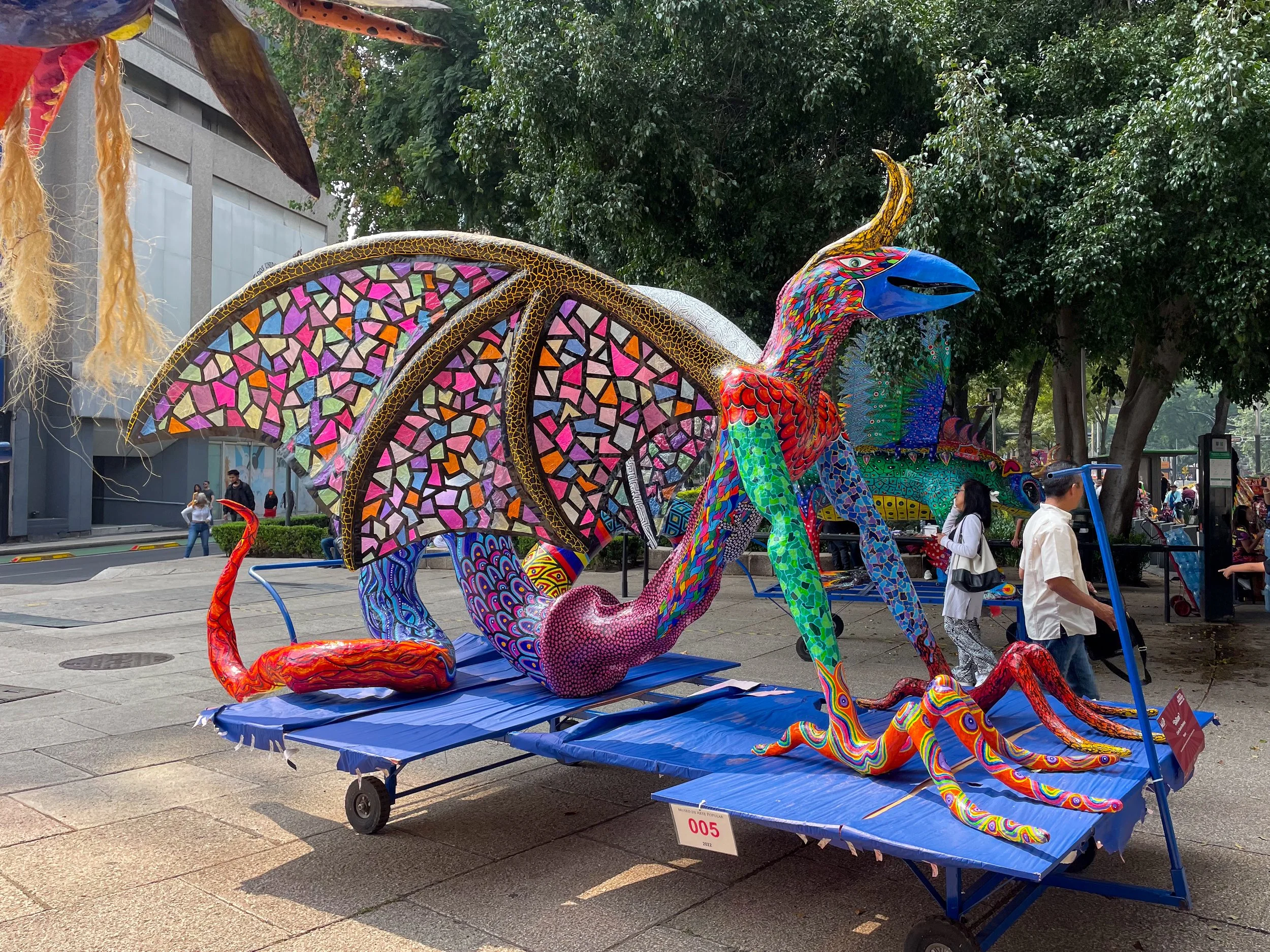
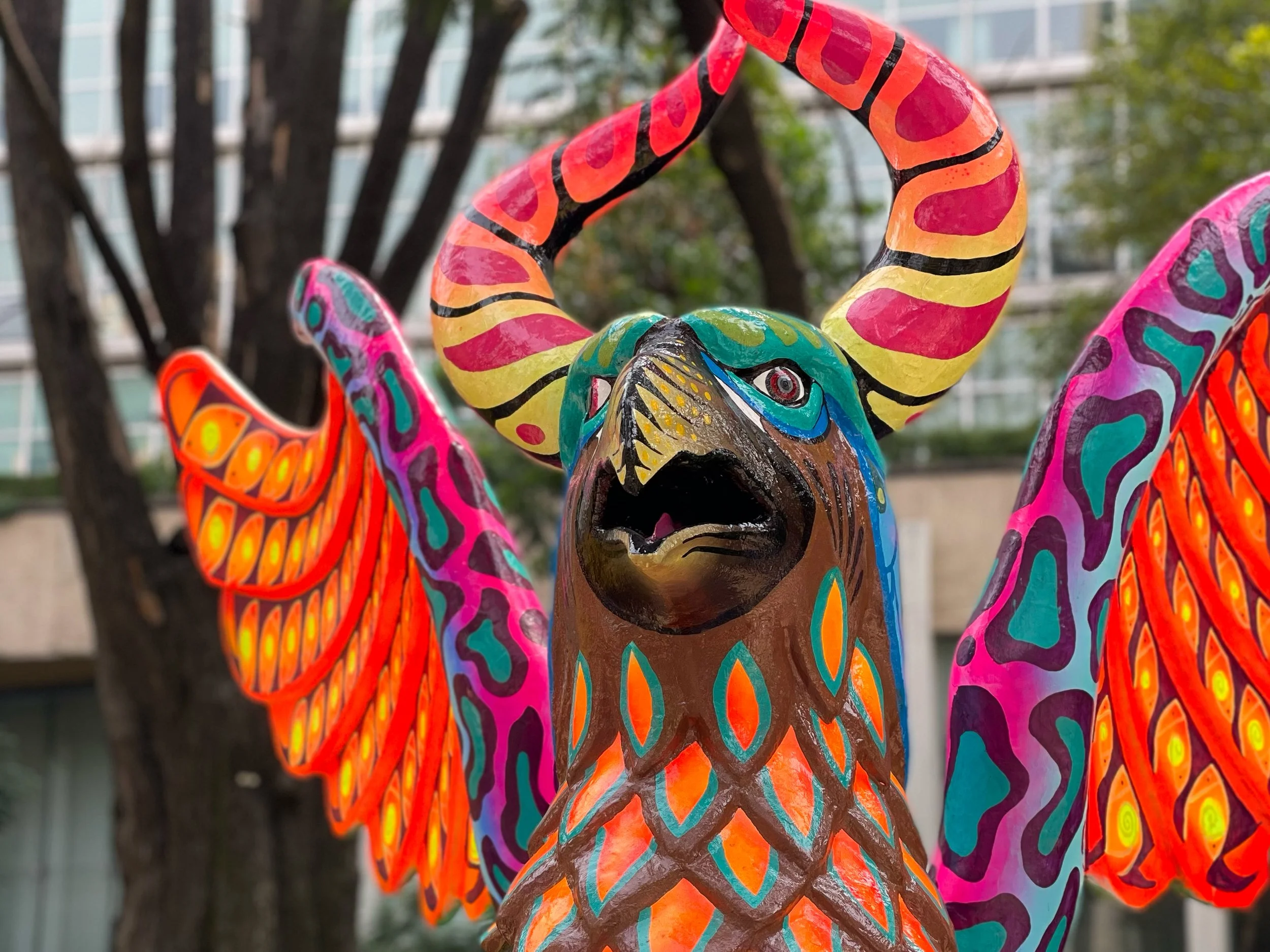
Alebrijes. Ornately designed and colorfully painted representations of animals and mythical creatures that act as spirit guides to the dead. They’re seen all across Mexico, especially around Day of the Dead.
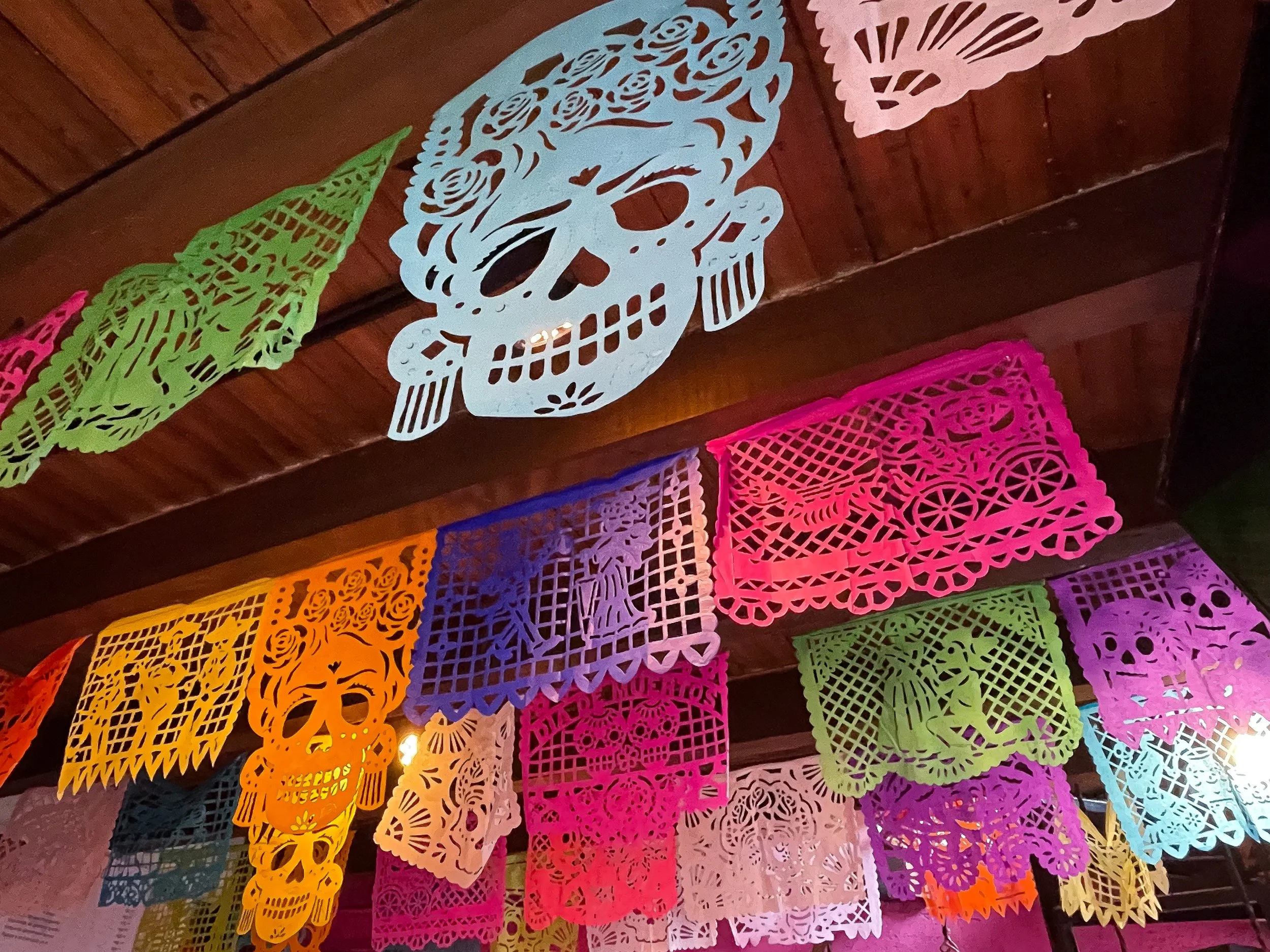
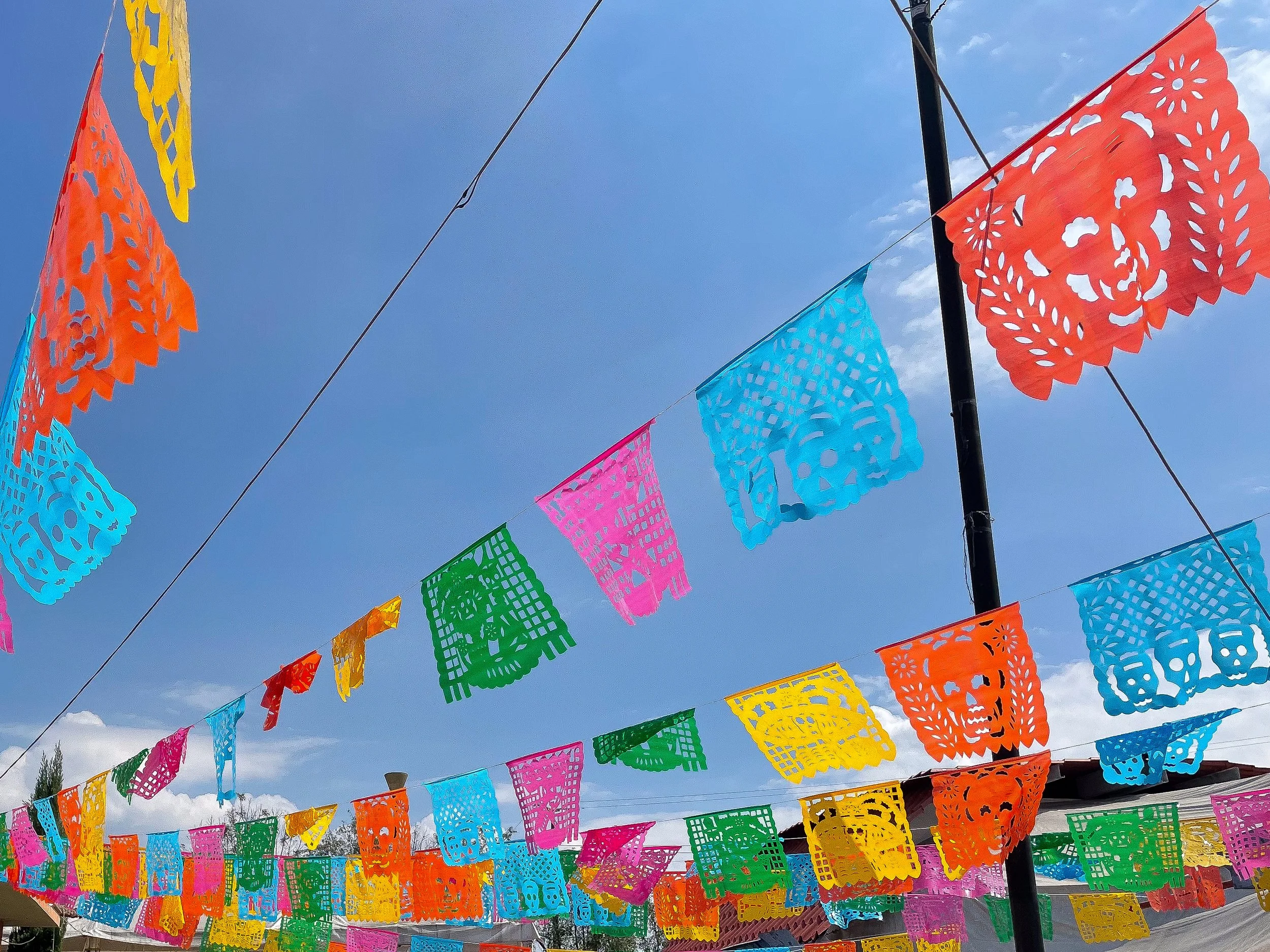
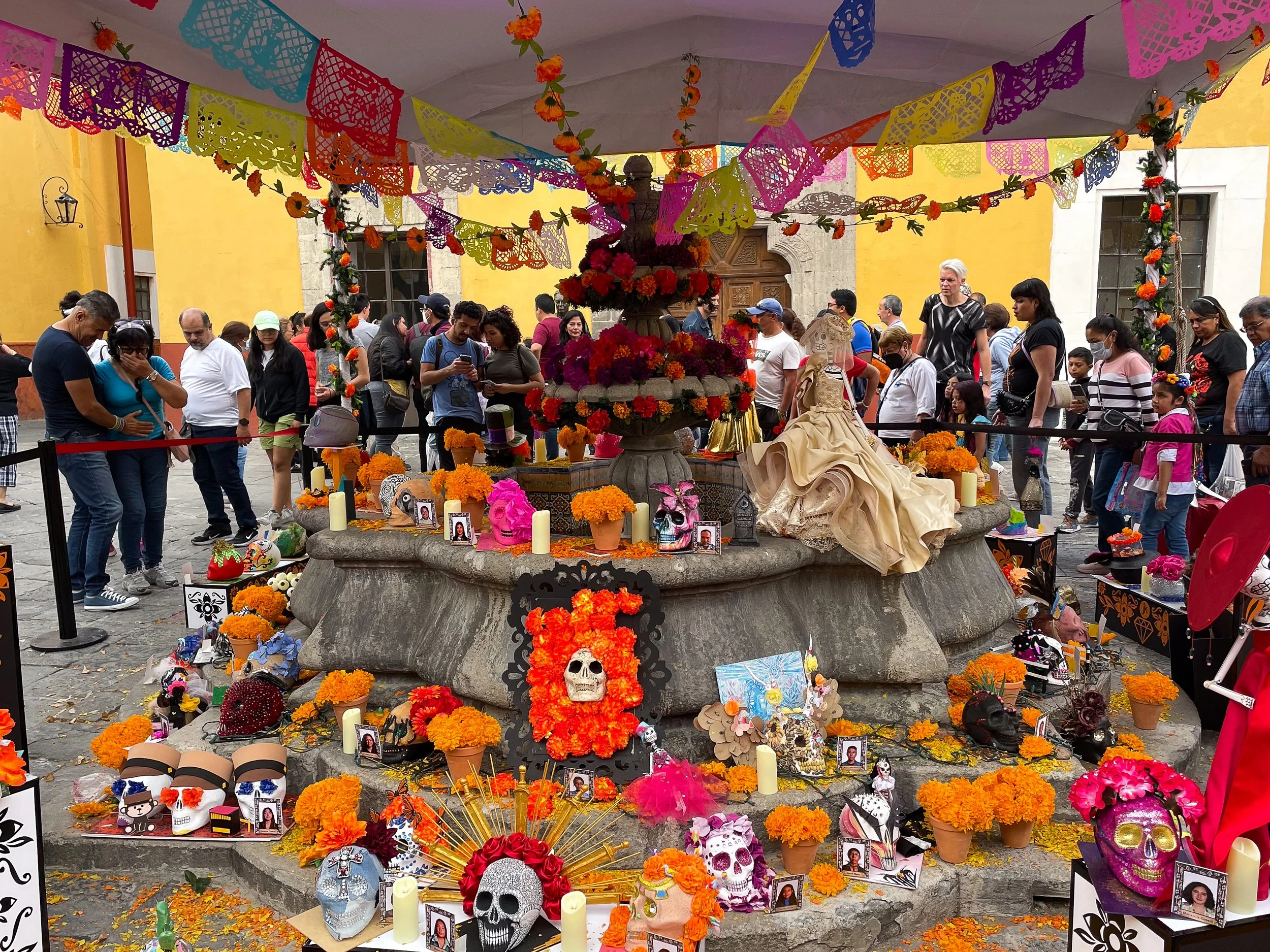
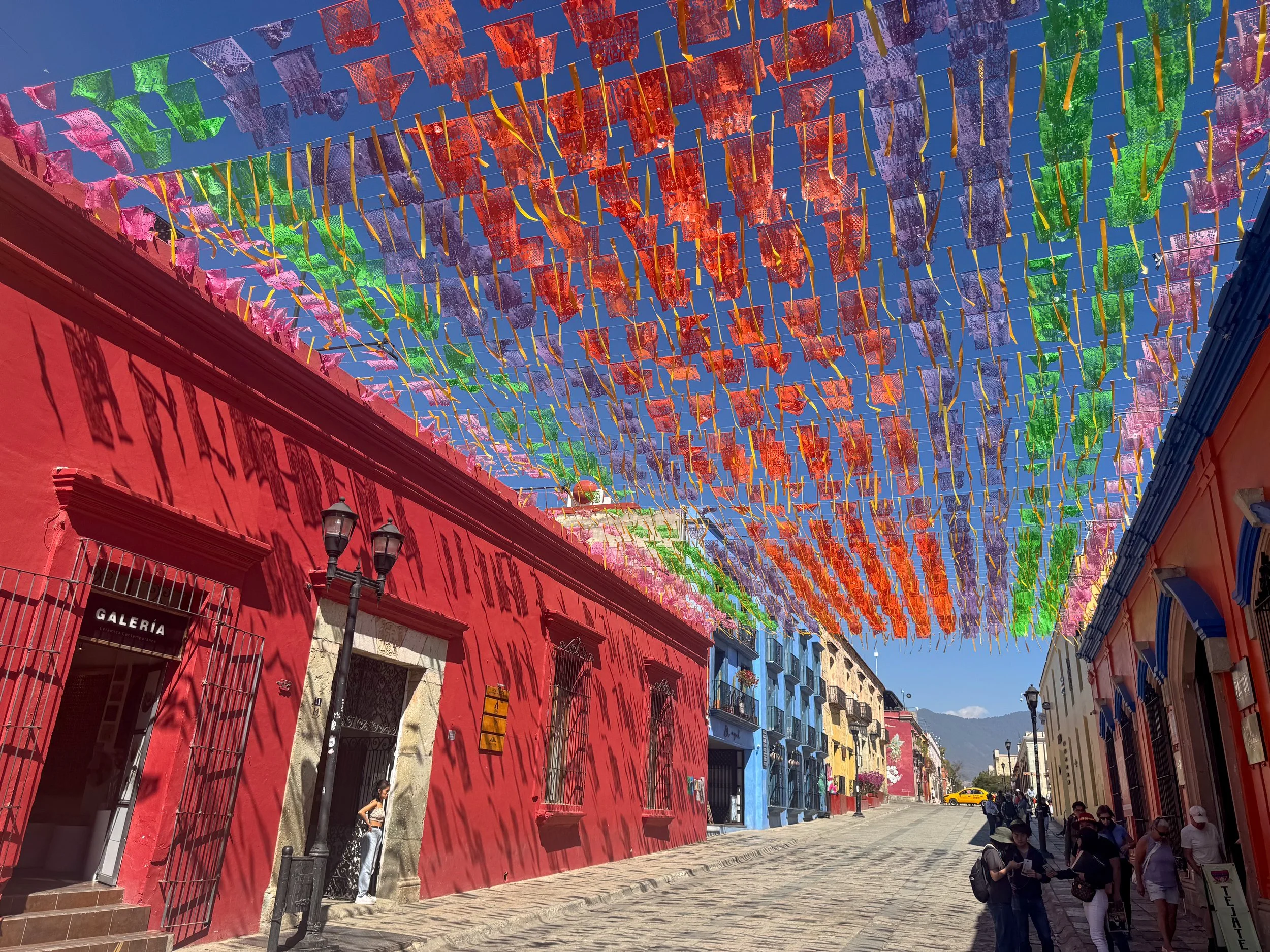
Papel Picado. Strings of colorful paper flags with beautiful and lively images of skulls, skeletons and marigolds cut out of them. They’re a common sight, often displayed in restaurants and above ofrendas.
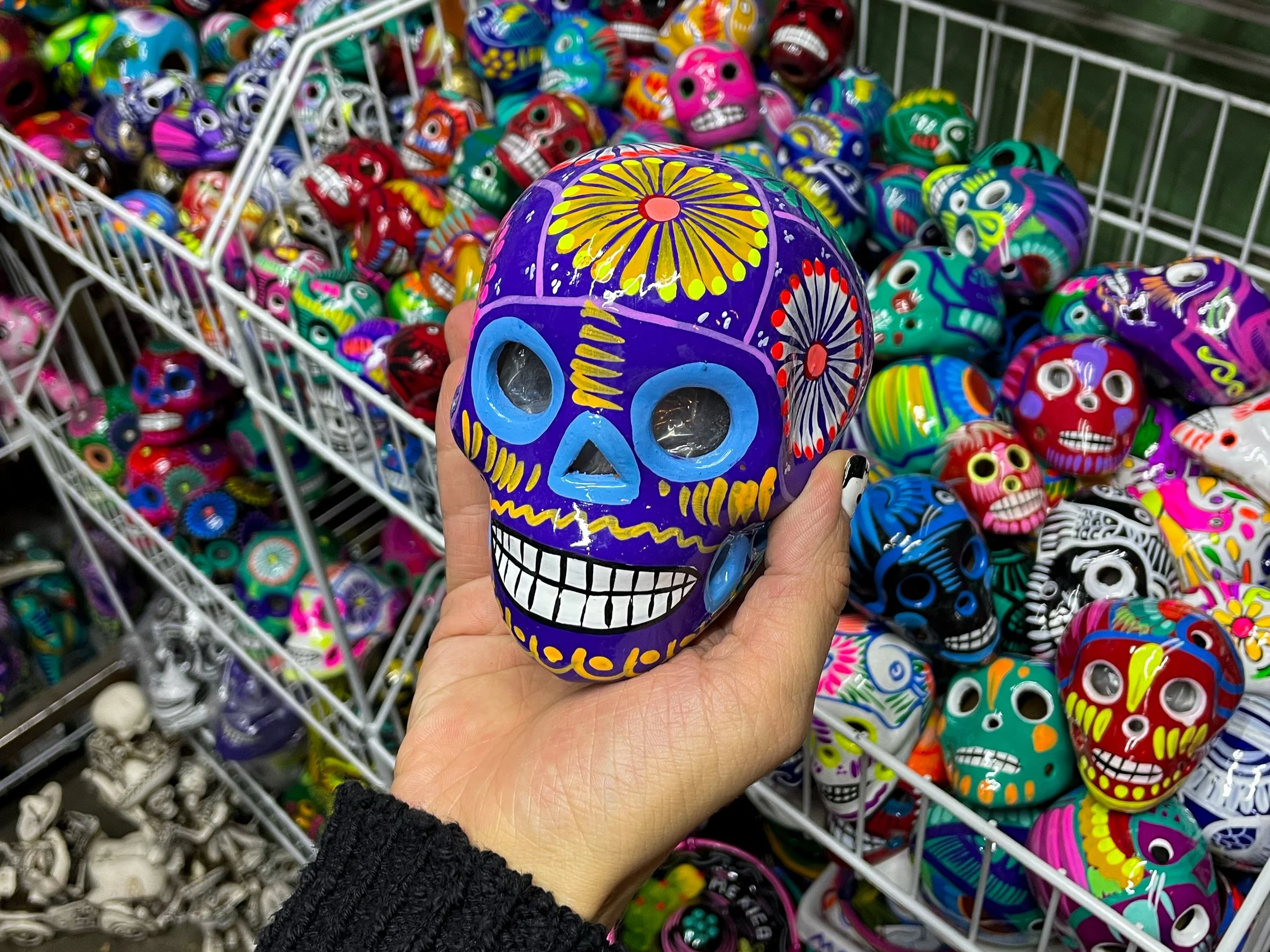
Calaveras. Colorfully painted smiling skulls intended to laugh at death. People’s faces are commonly painted as Calaveras during the Día de los Muertos festivals and parades.
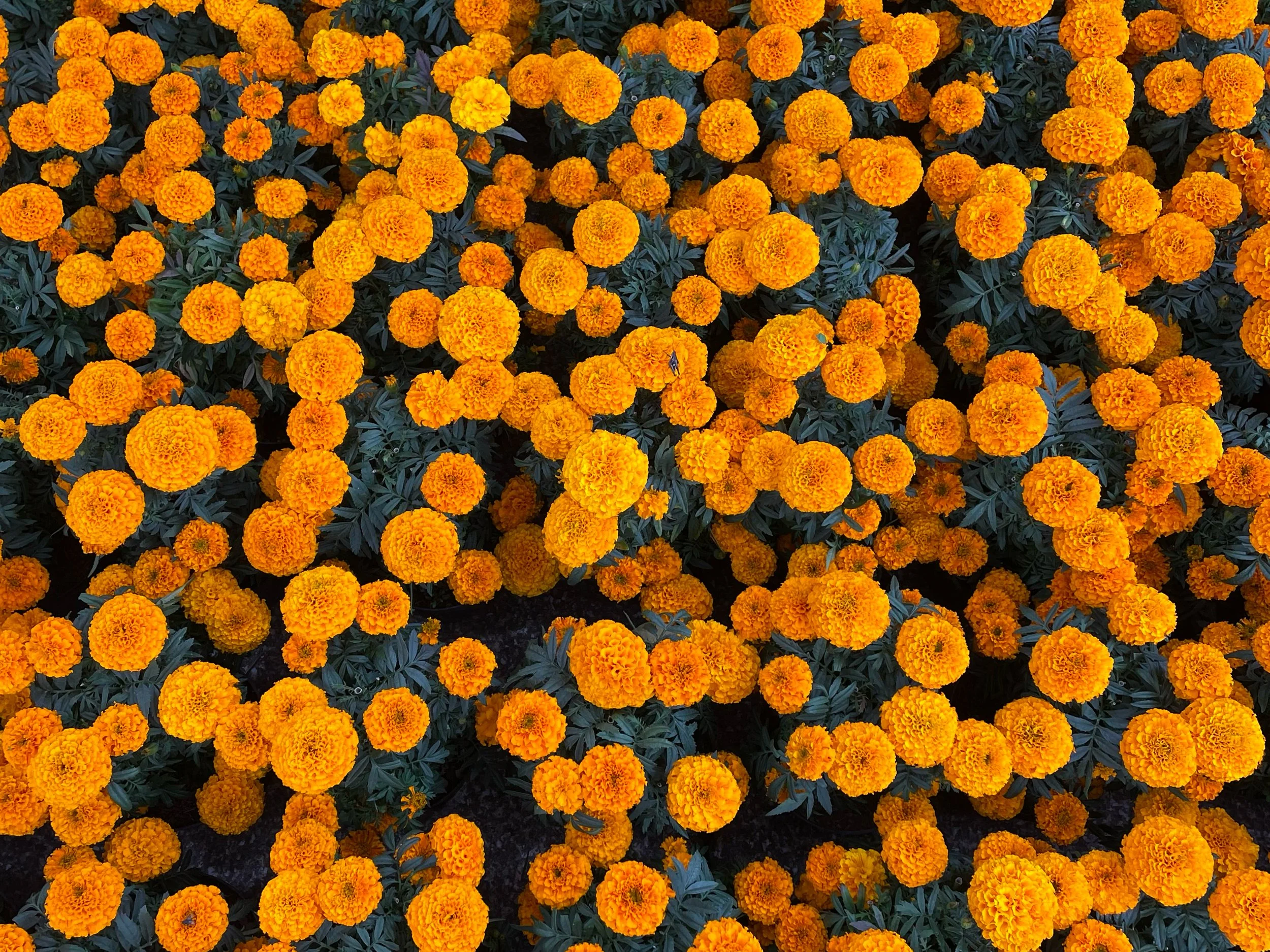
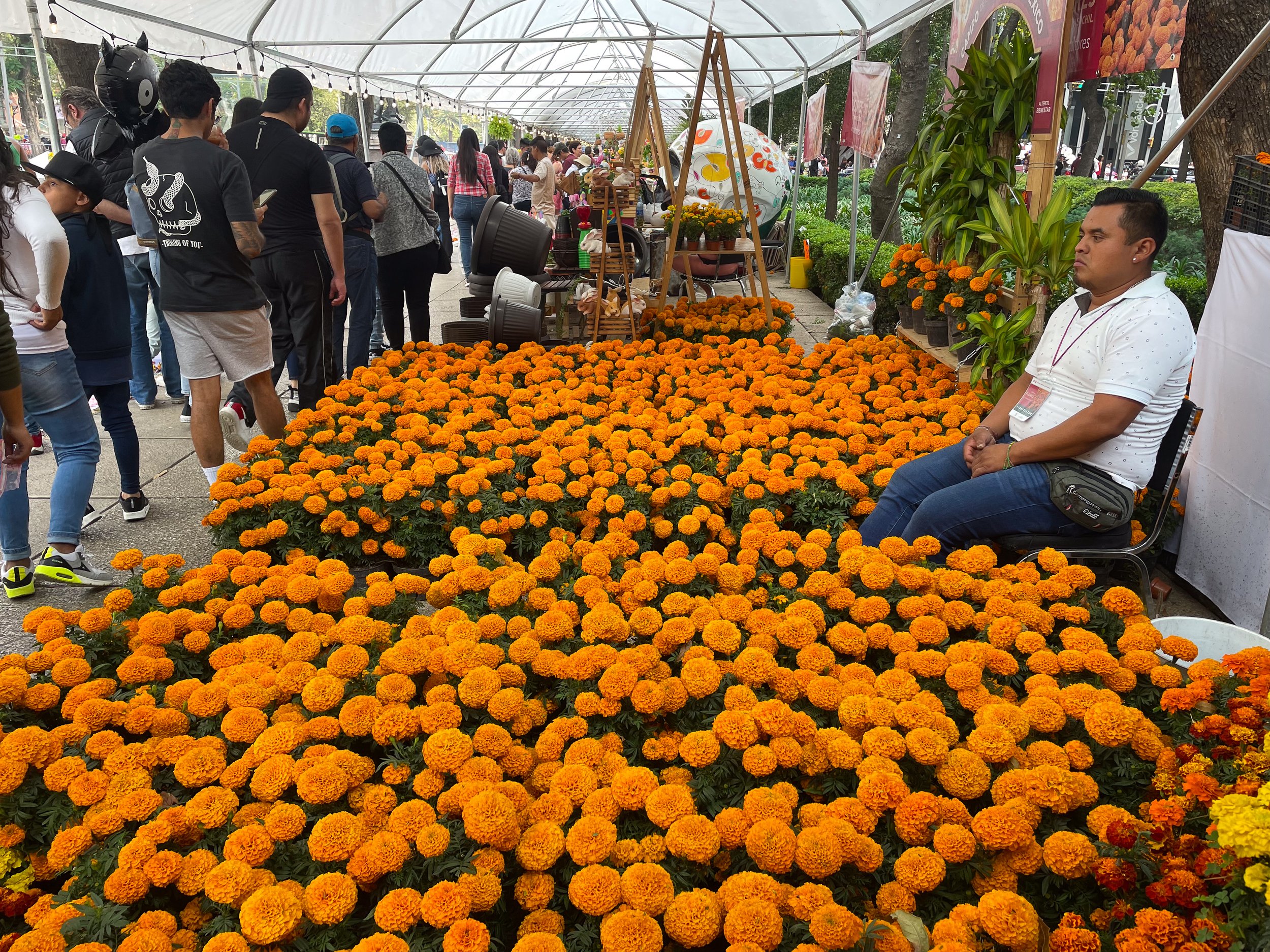
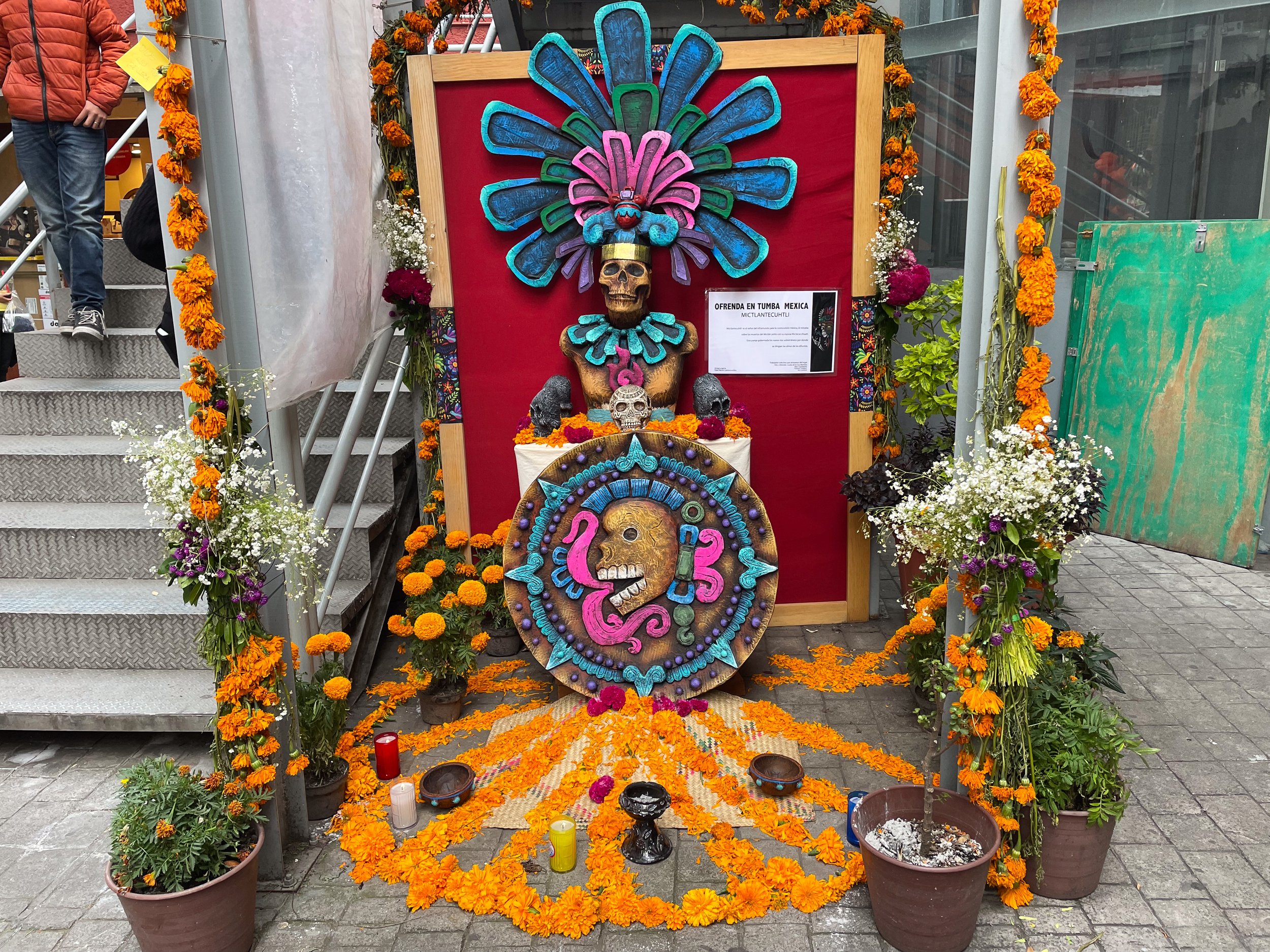
Cempasuchil. The Aztec word for marigold. These orange flowers and their petals decorate ofrendas, homes and public spaces during Day of the Dead.
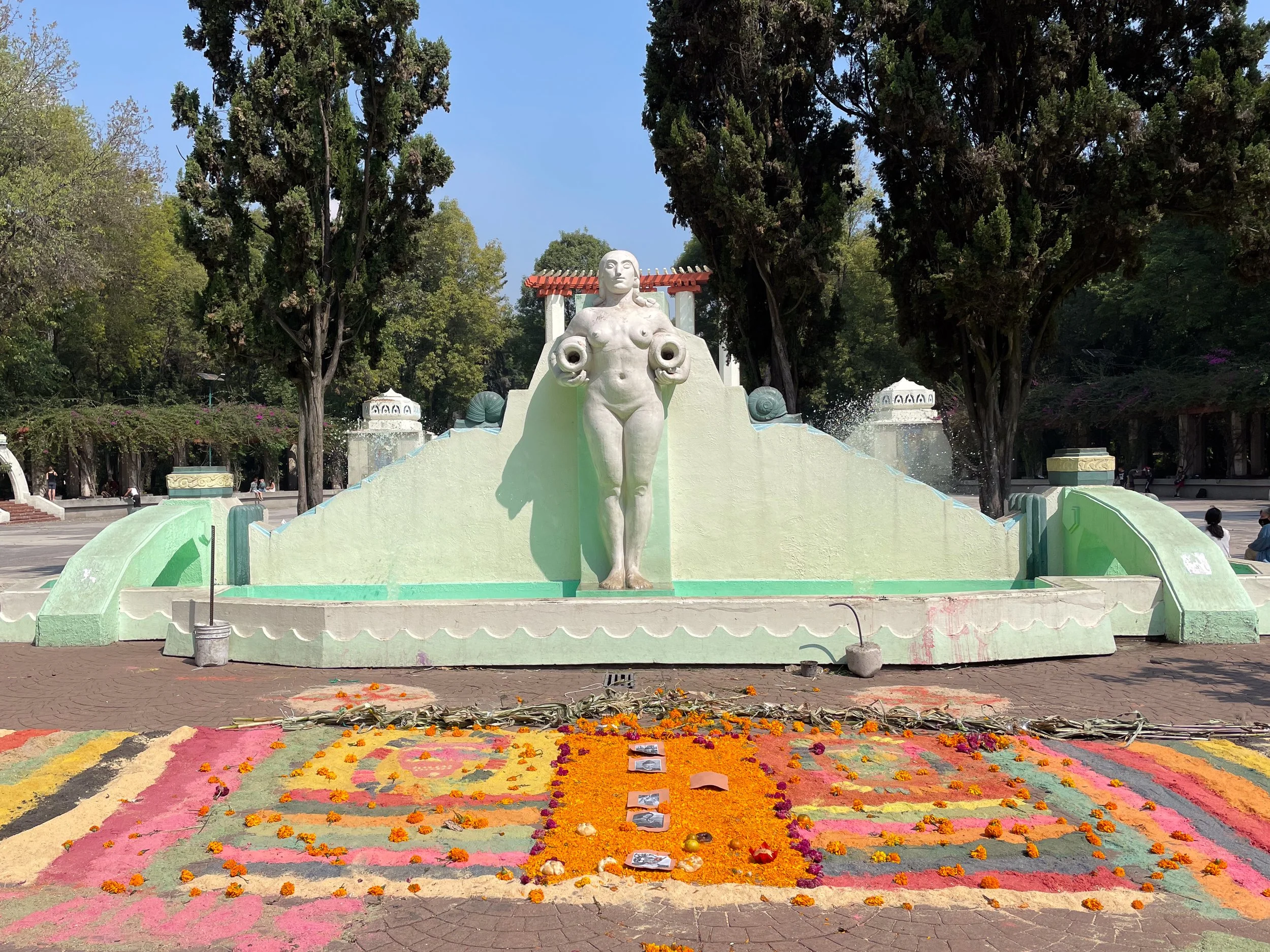
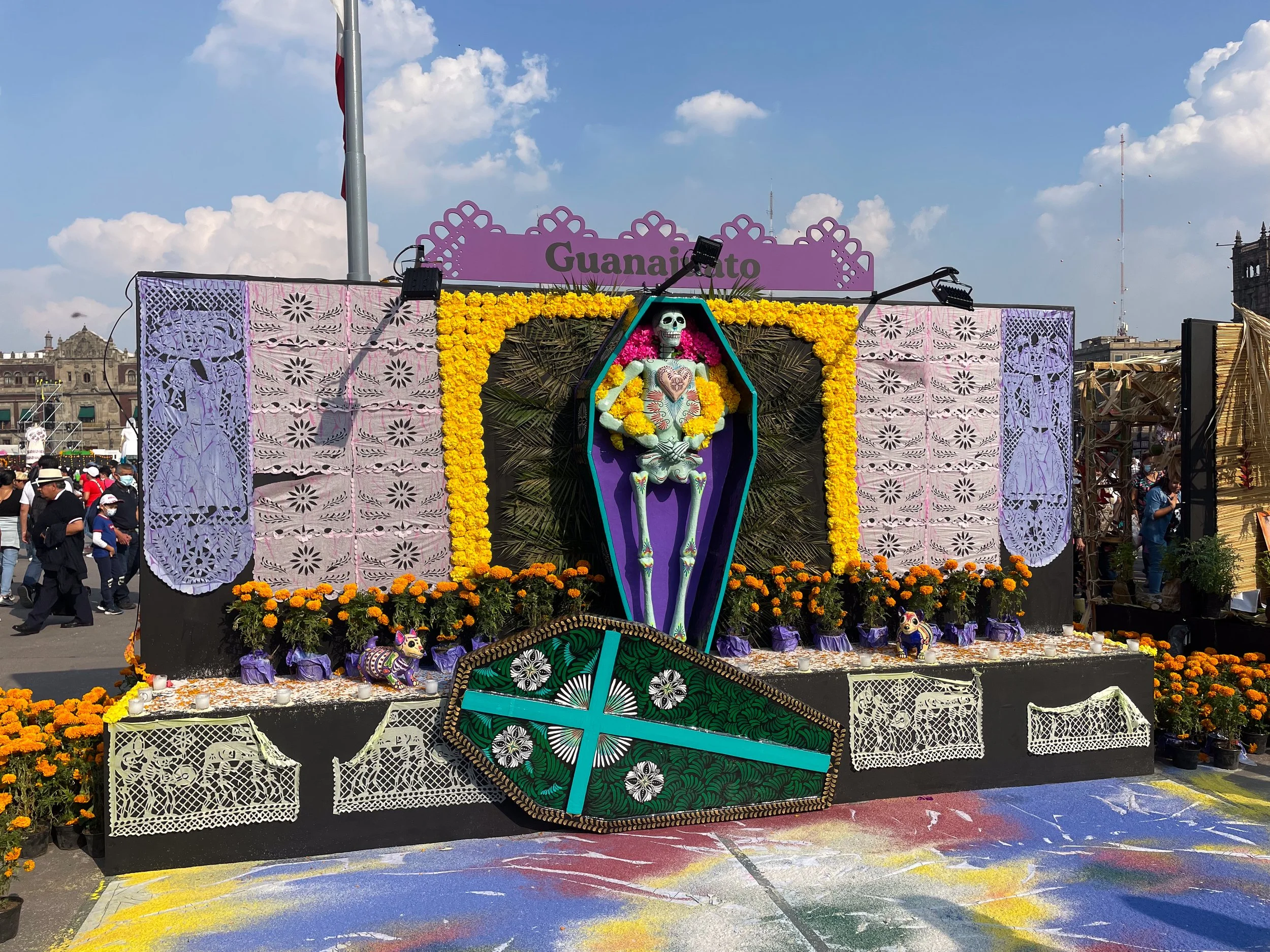
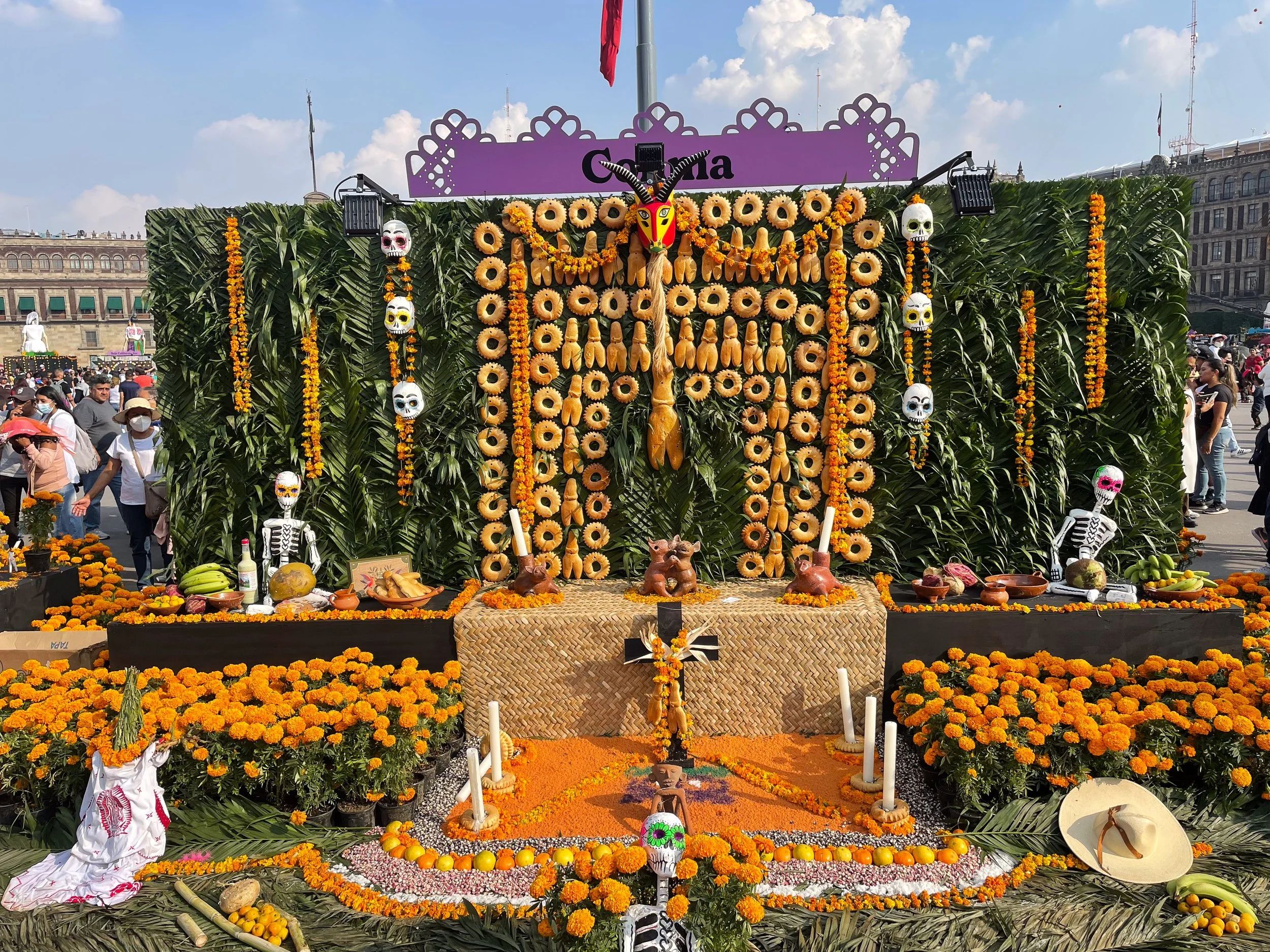
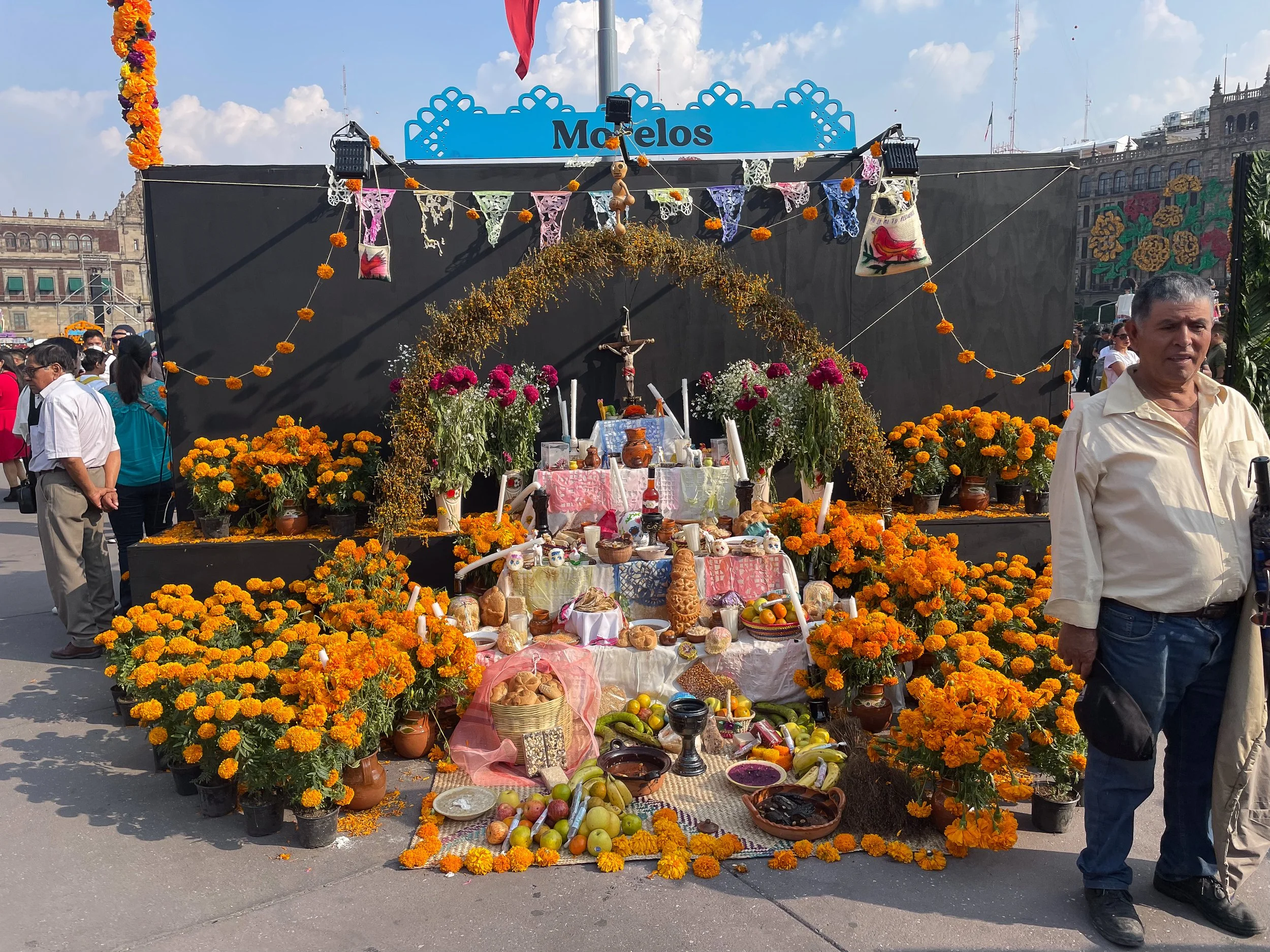
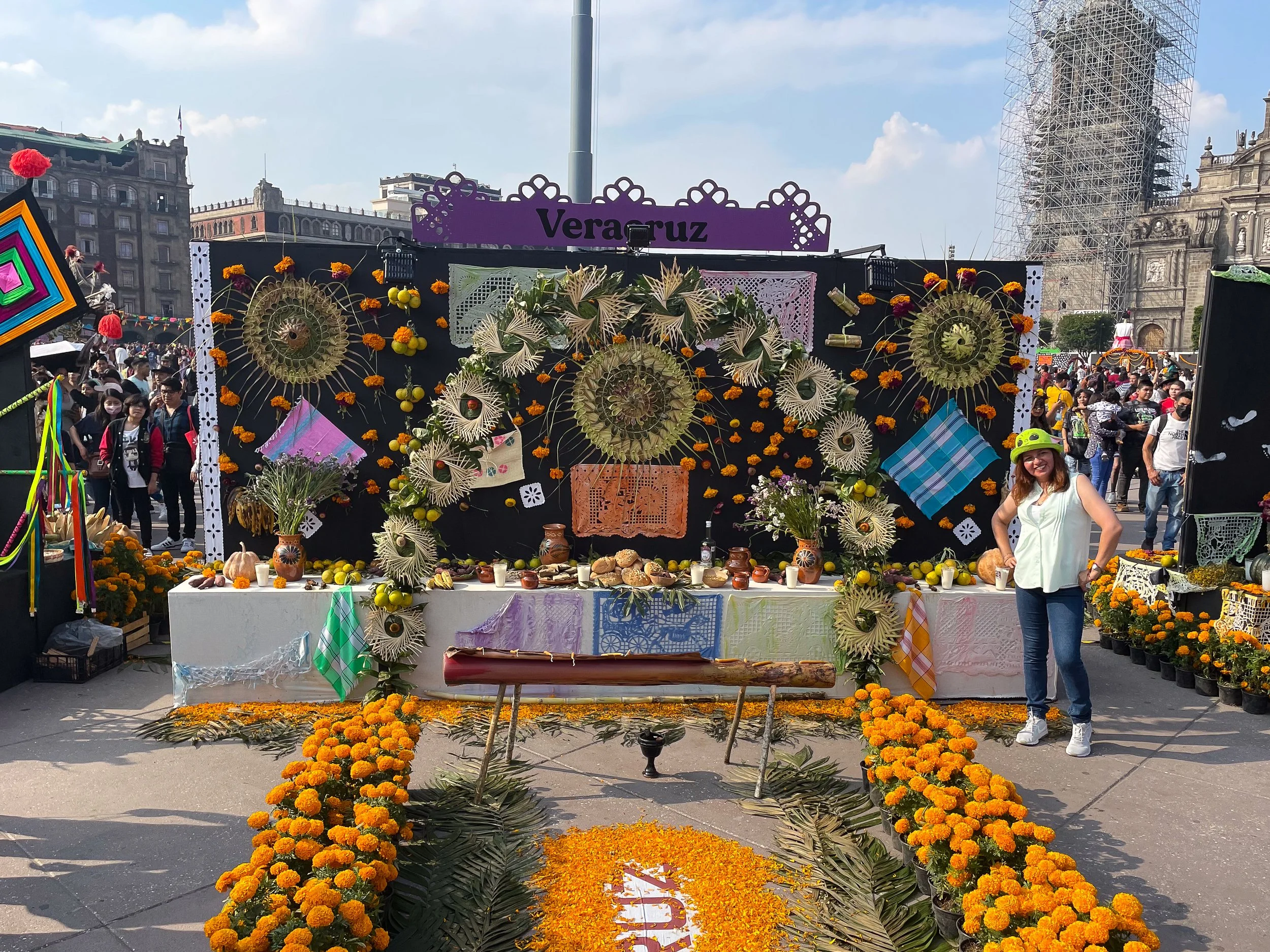
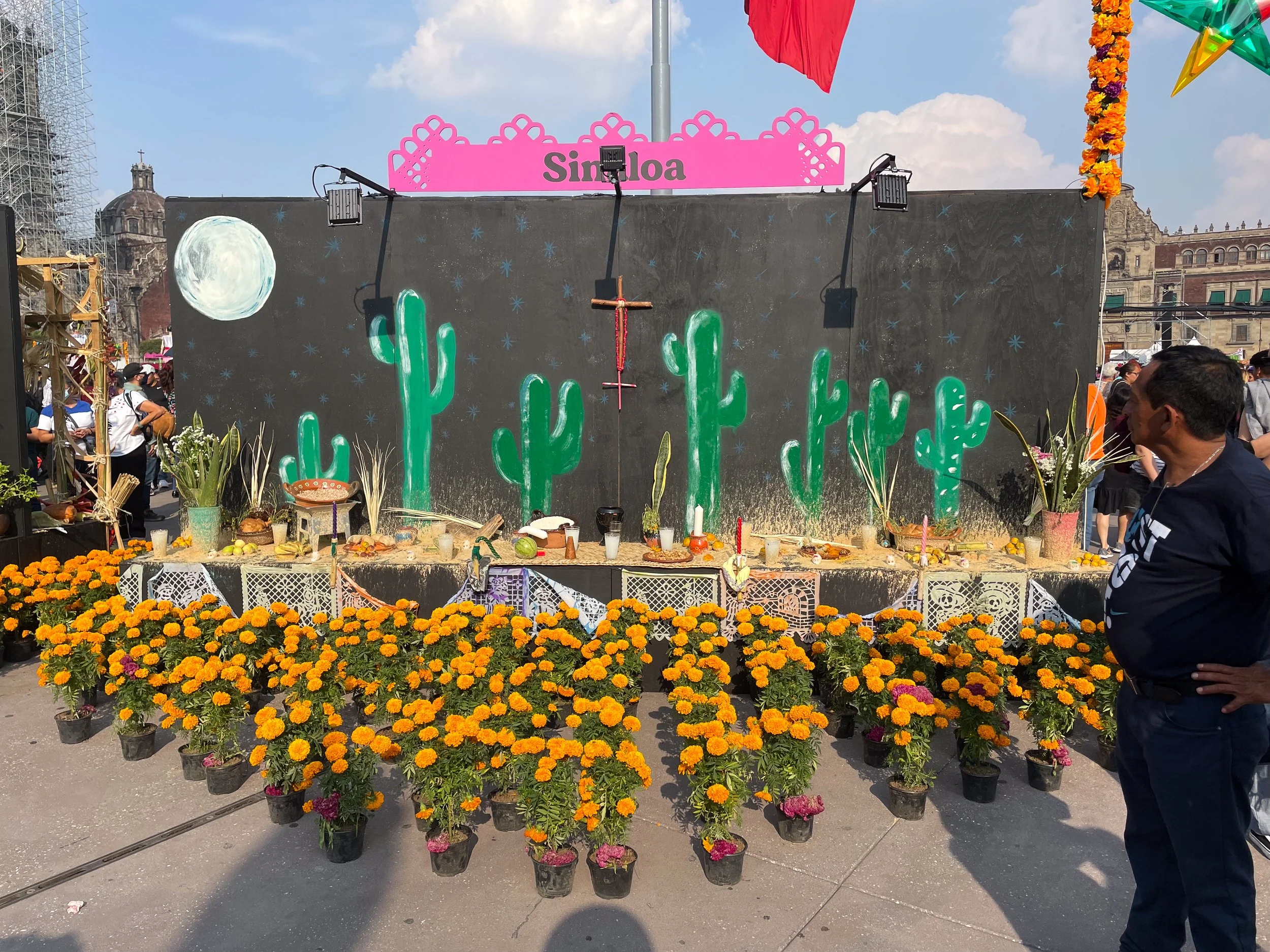
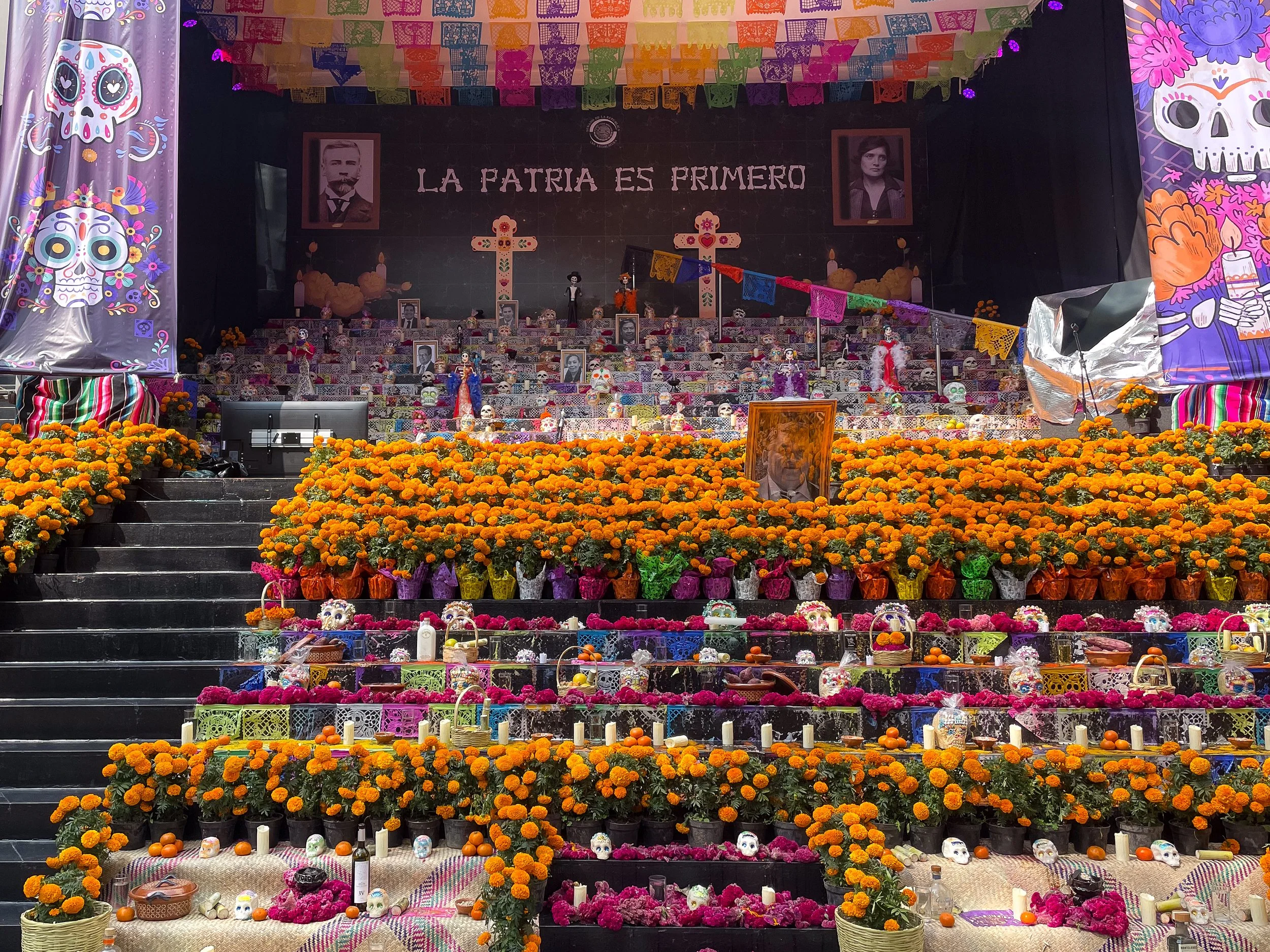
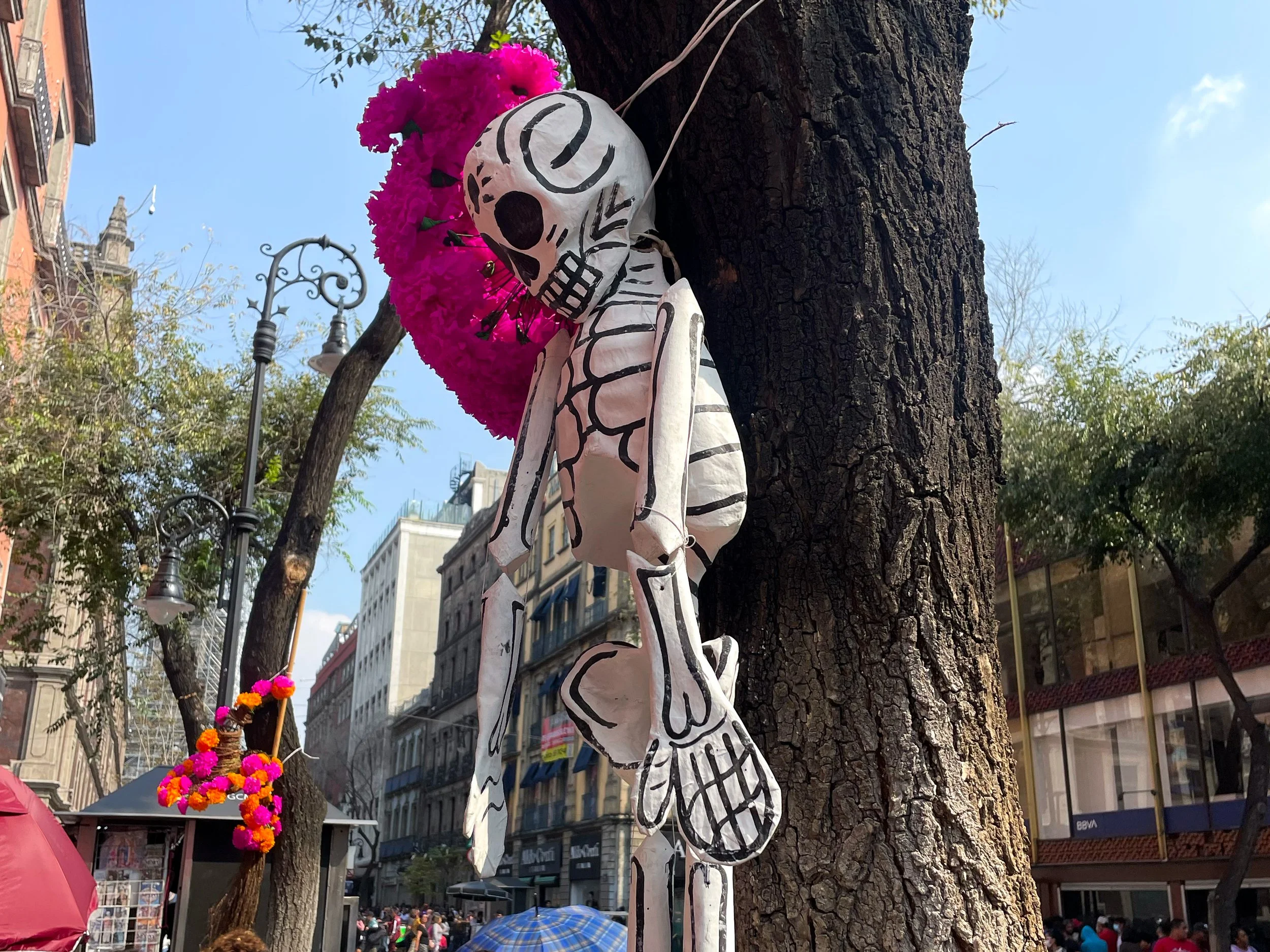
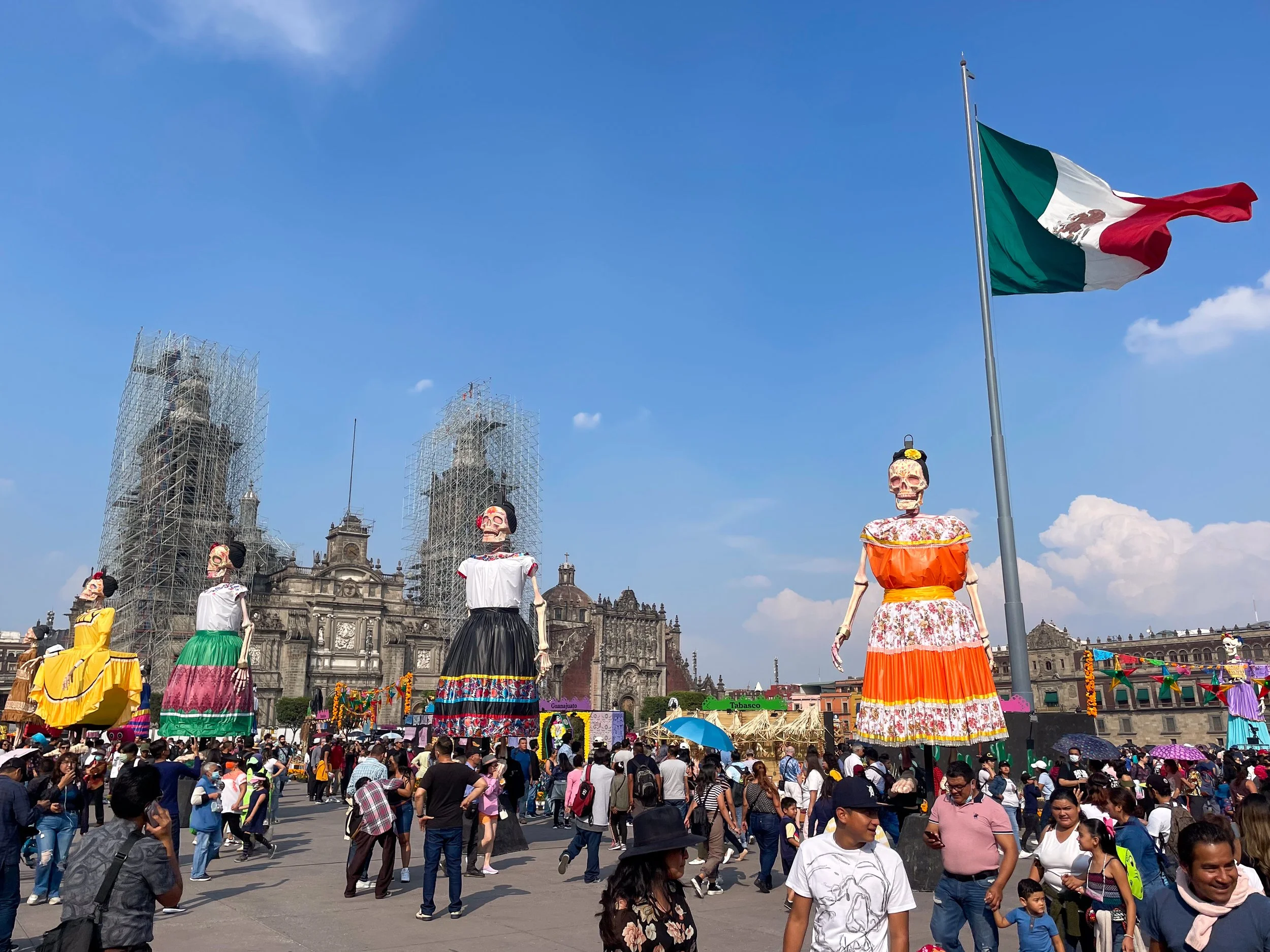
Ofrendas. Altars to honor the dead decorated with a photo of the dead surrounded by Cempasuchil, candles, paper marché skeletons, painted sugar skulls, pan de muerto, wax models of food a bottled drinks. Some ofrendas even go as far as to honor their lost pets. Ofrendas range in size from small ones at people’s homes to large ones in public squares. The most notable of which is the Mega Ofrenda, Mexico City’s largest ofrenda located in Zocalo Square. It consists of 32 ofrendas, one for each state in Mexico, flanked by a Catrina dressed in the traditional clothes and colors of the state it represents.
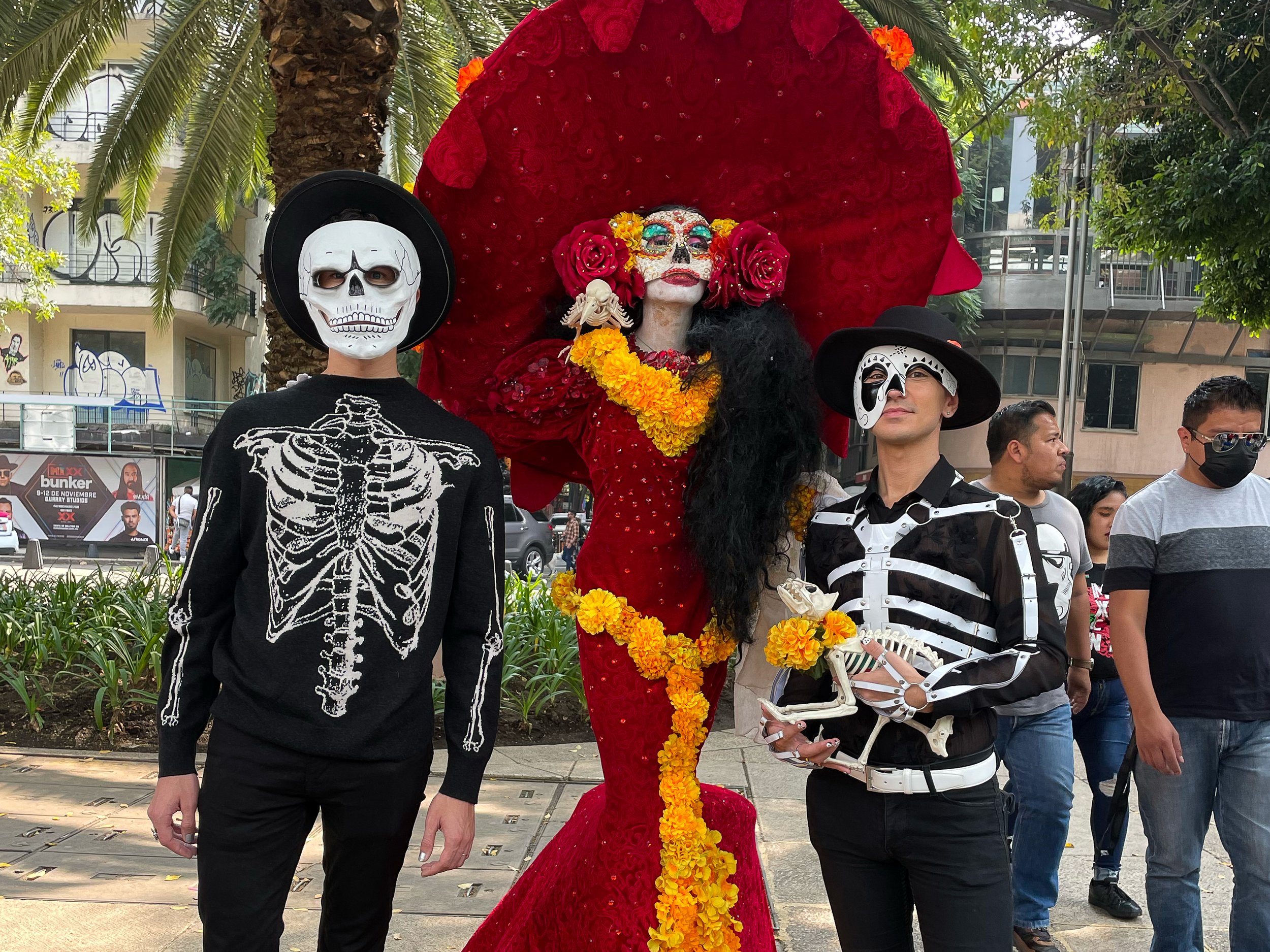
La Catrina. The classic and elegantly styled skeleton costume typically featuring a dress and large sombrero. Catrinas are common costumes worn by people during the Día de los Muertos festivals and parades.
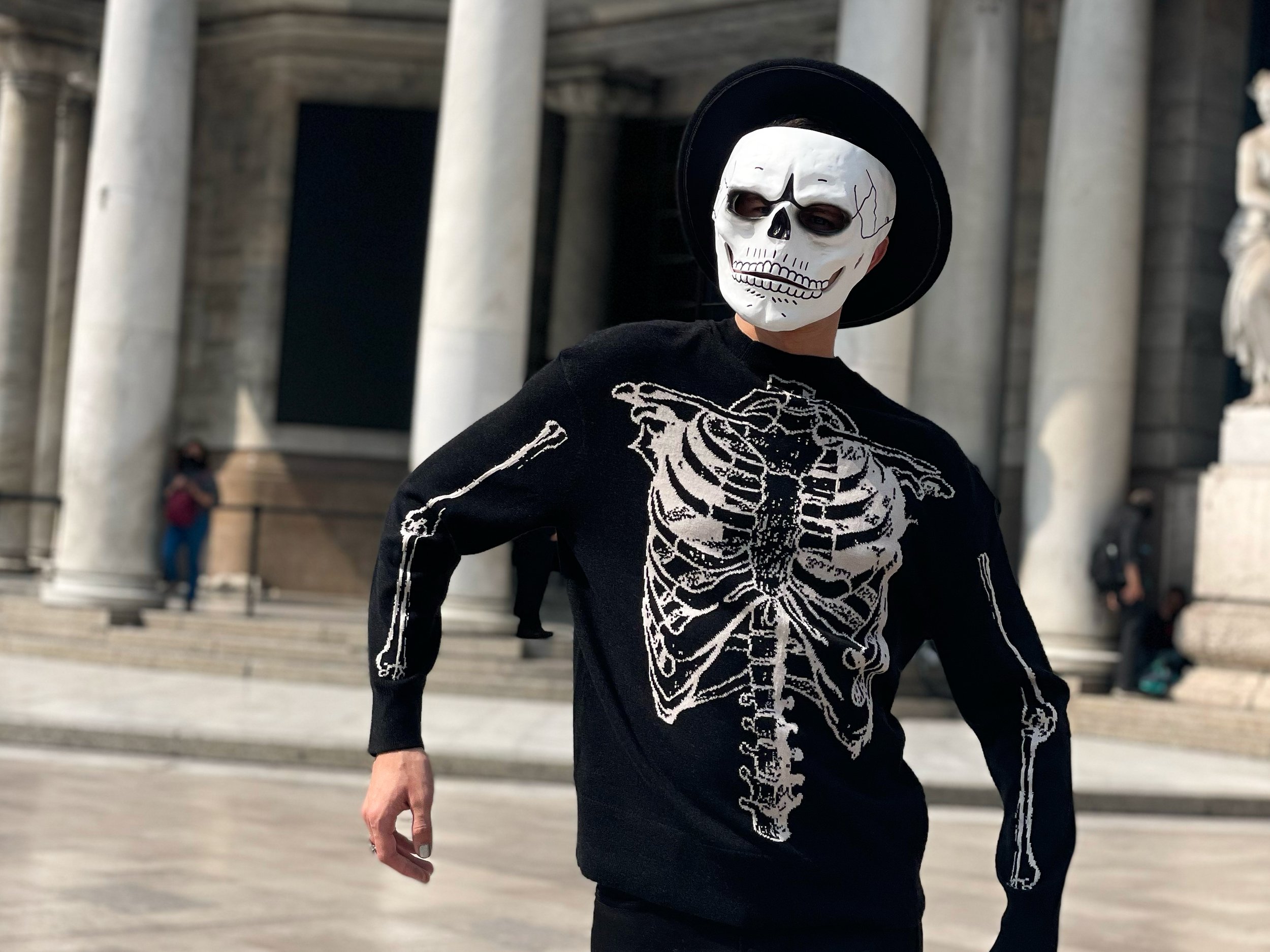
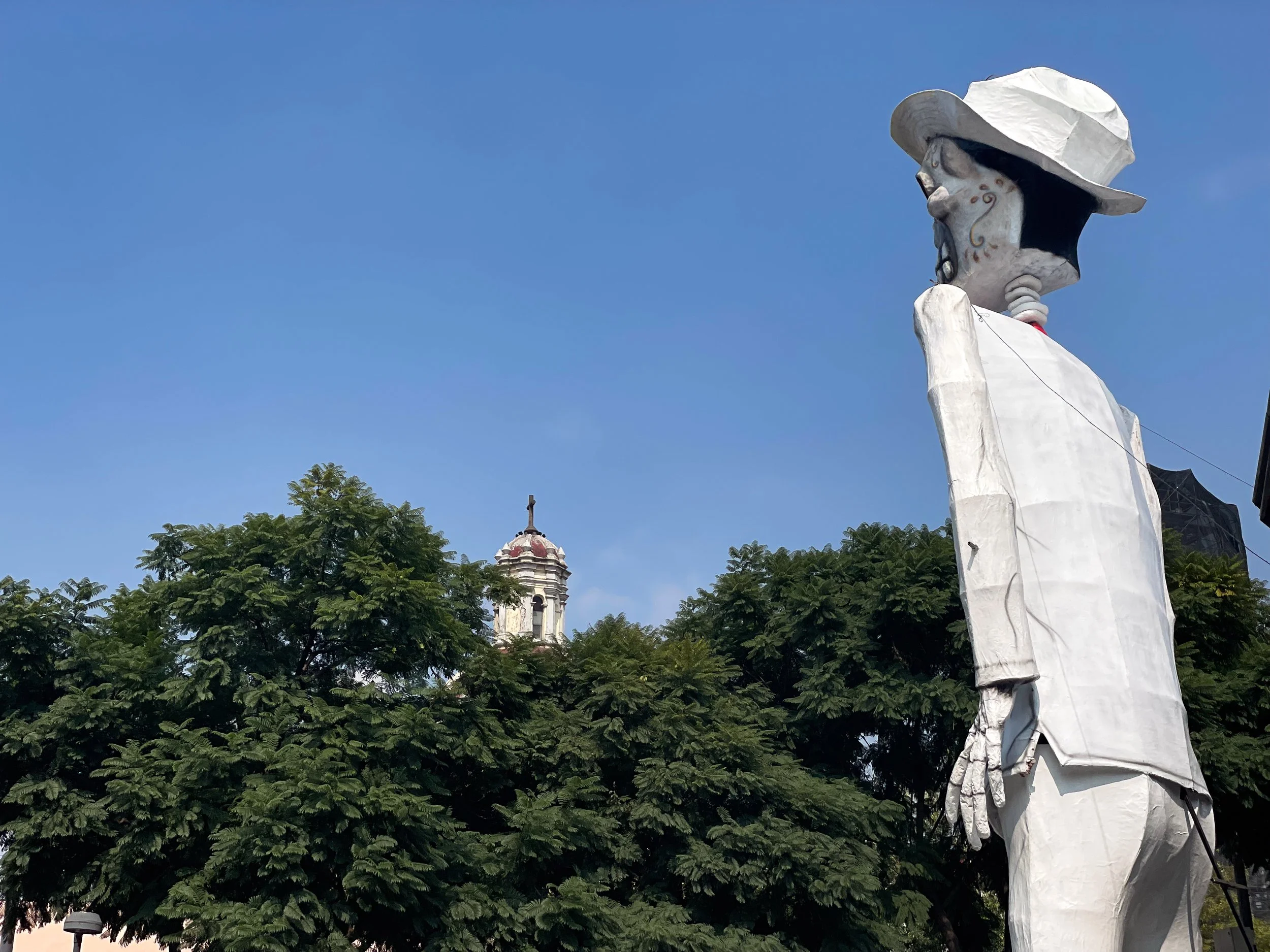
Calacas. Skeletal figures commonly seen during Day of the Dead. They’re a common costume by many, including us, to celebrate the parade day festivities.
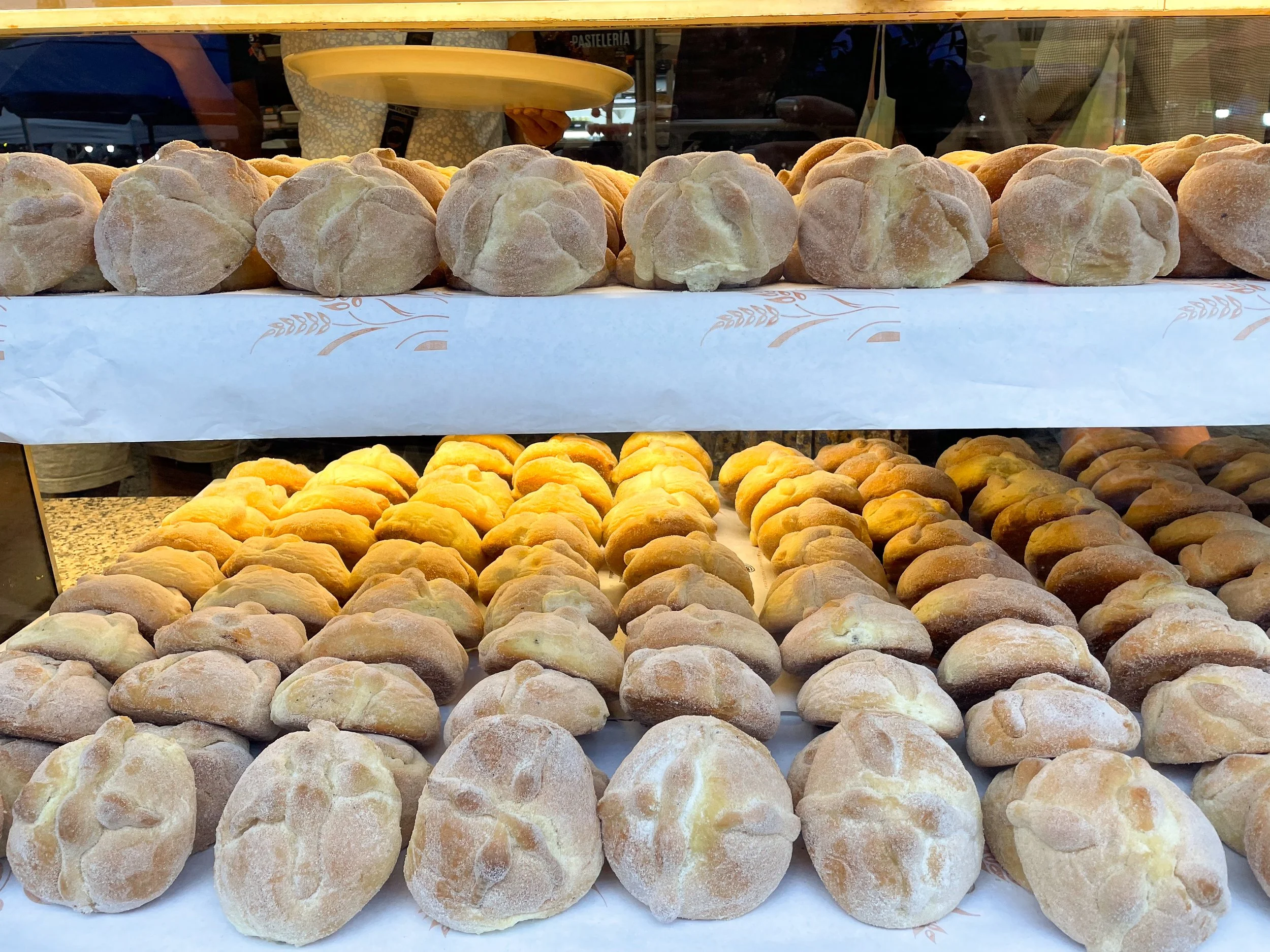
Pan de Muerto. The sugar dusted dome of bread with two pieces of dough made to look like crossed bones. They’re made specifically by bakeries during Day of the Dead.
Paseo de la Reforma
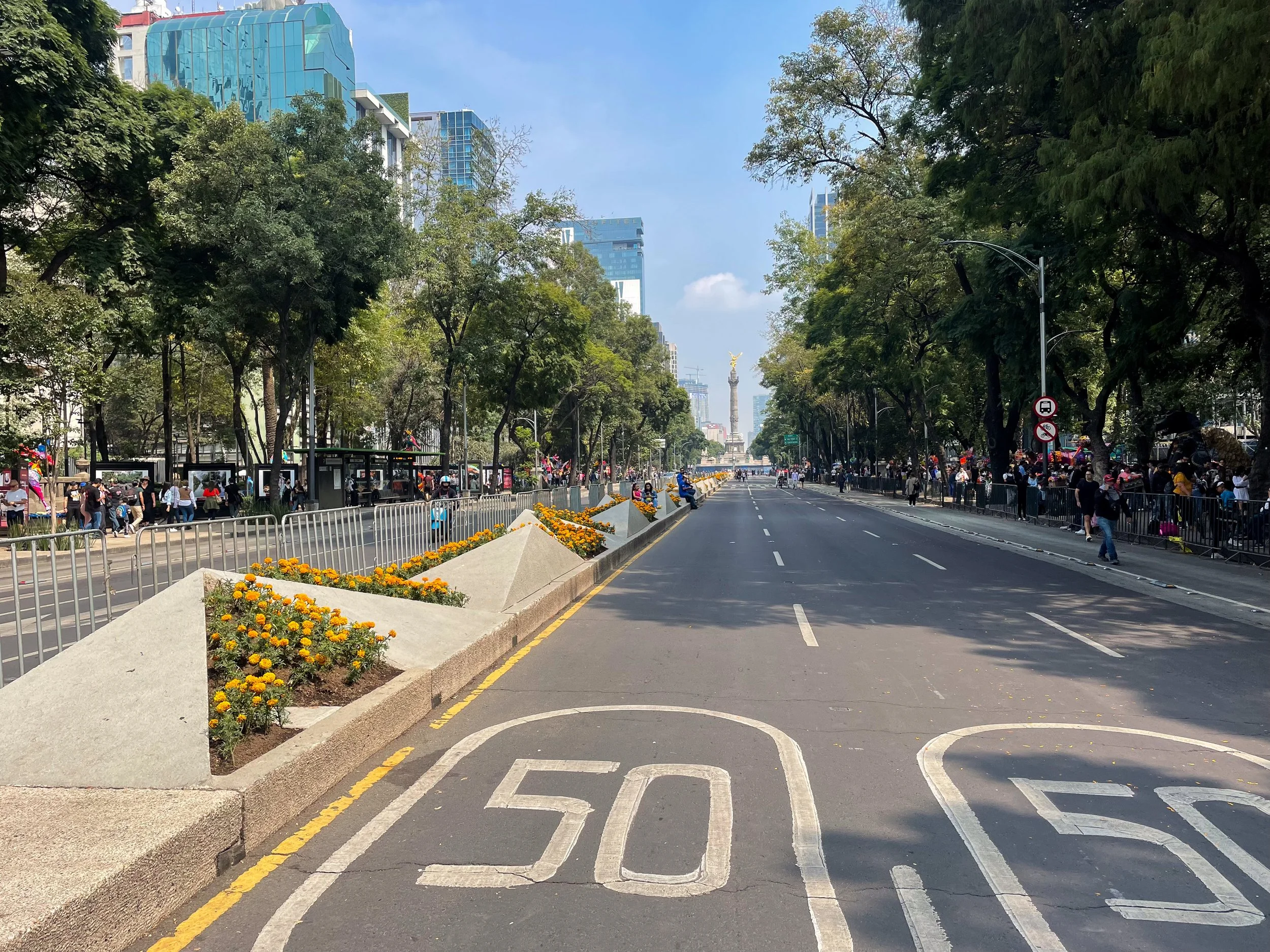
Paseo de la Reforma is a long diagonal avenue that stretches across Mexico City. It’s a hub for many activities during Día de los Muertos, most notably being the Parade. The median is planted with marigolds while the avenue is lined with spectators, makeup artists painting faces, vendors selling street food, decorations, souvenirs, ofrendas and exhibits including:
Marigold Festival. A tented section of the avenue with sculptures and structures decorated in different colored marigolds and vendors selling potted marigolds.
Mexicaneos Exhibition. An exhibit of 50 large Calaveras displayed along the avenue.
Alebrijes Exhibition. An exhibit with hundreds of large and intricately designed Alebrijes displayed along the Paseo de la Reforma.
Face Painting. On the parade day, there are makeup artists set up along the parade route painting faces. You can choose from a book of designs or show the artist a design. Face painting typically costs $100 Pesos ($5) and takes 10-15min.
Zocalo Square
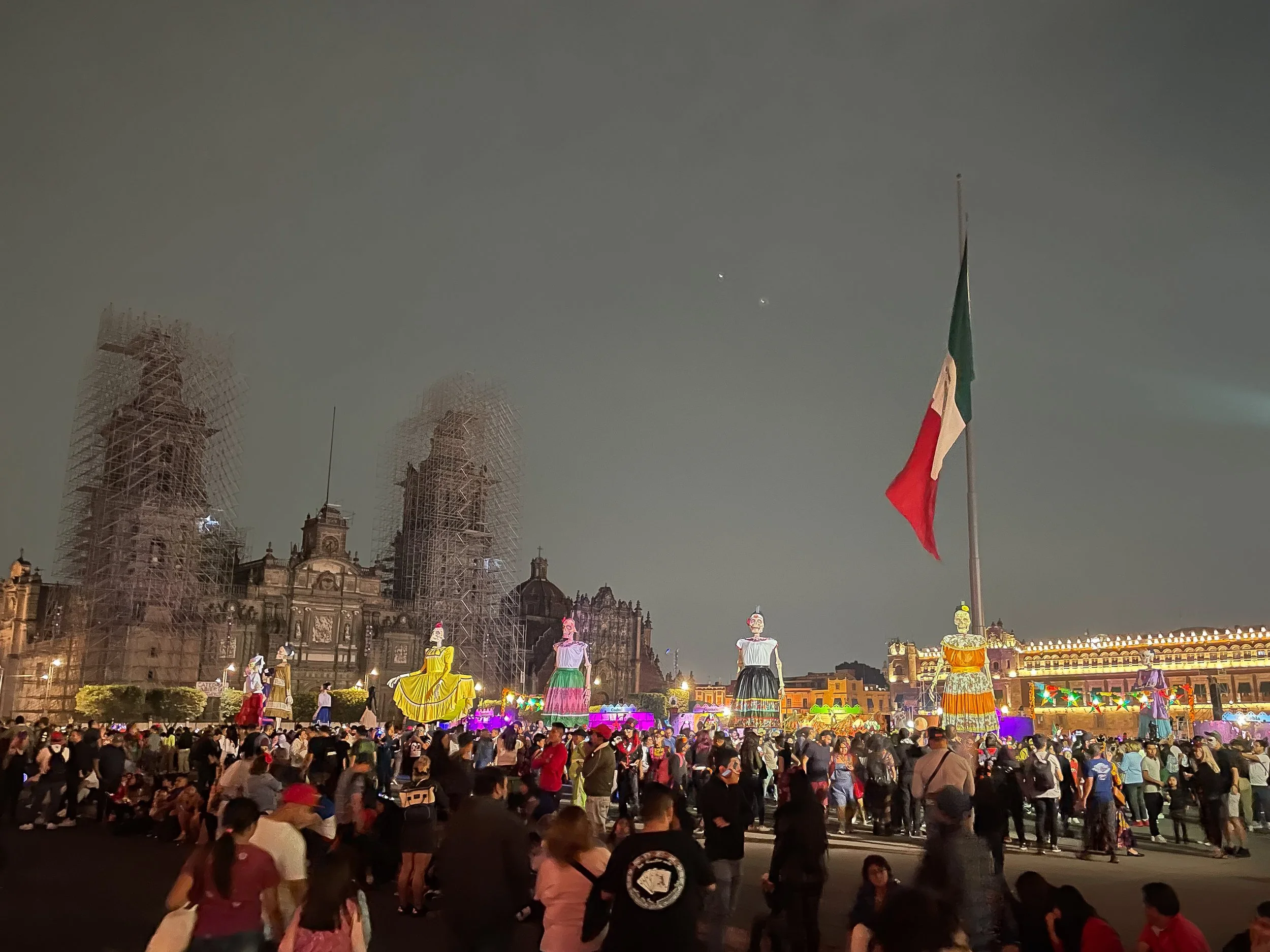
A massive public square in the Centro Historico and hub for Mexico City’s Day of the Dead festivities. The square is decorated in towering catrinas and ofrendas each representing a different state of Mexico. It’s the site of many street food vendors and performances including the parade day’s “Grand Closing Ceremony.”
The Parade
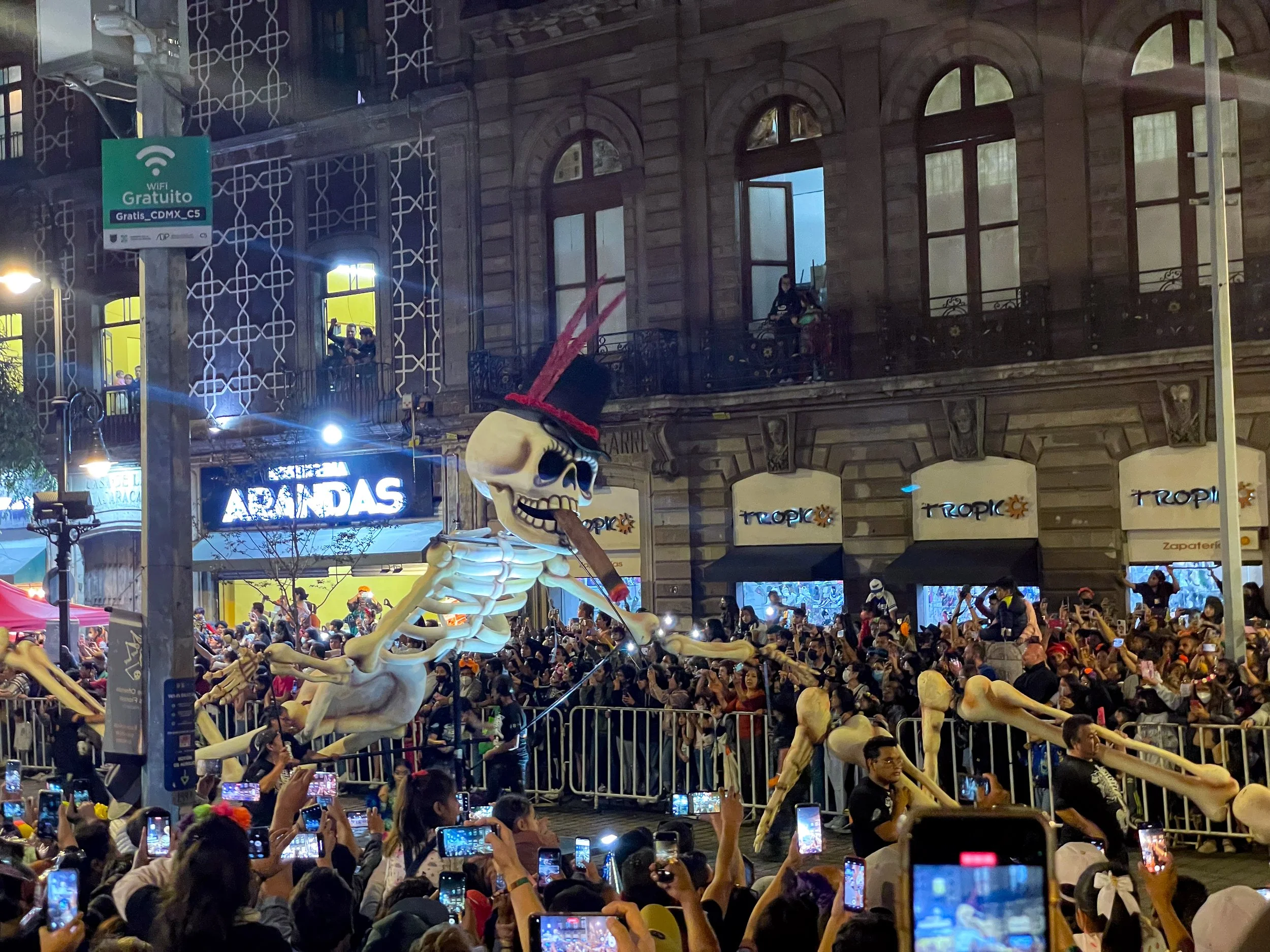
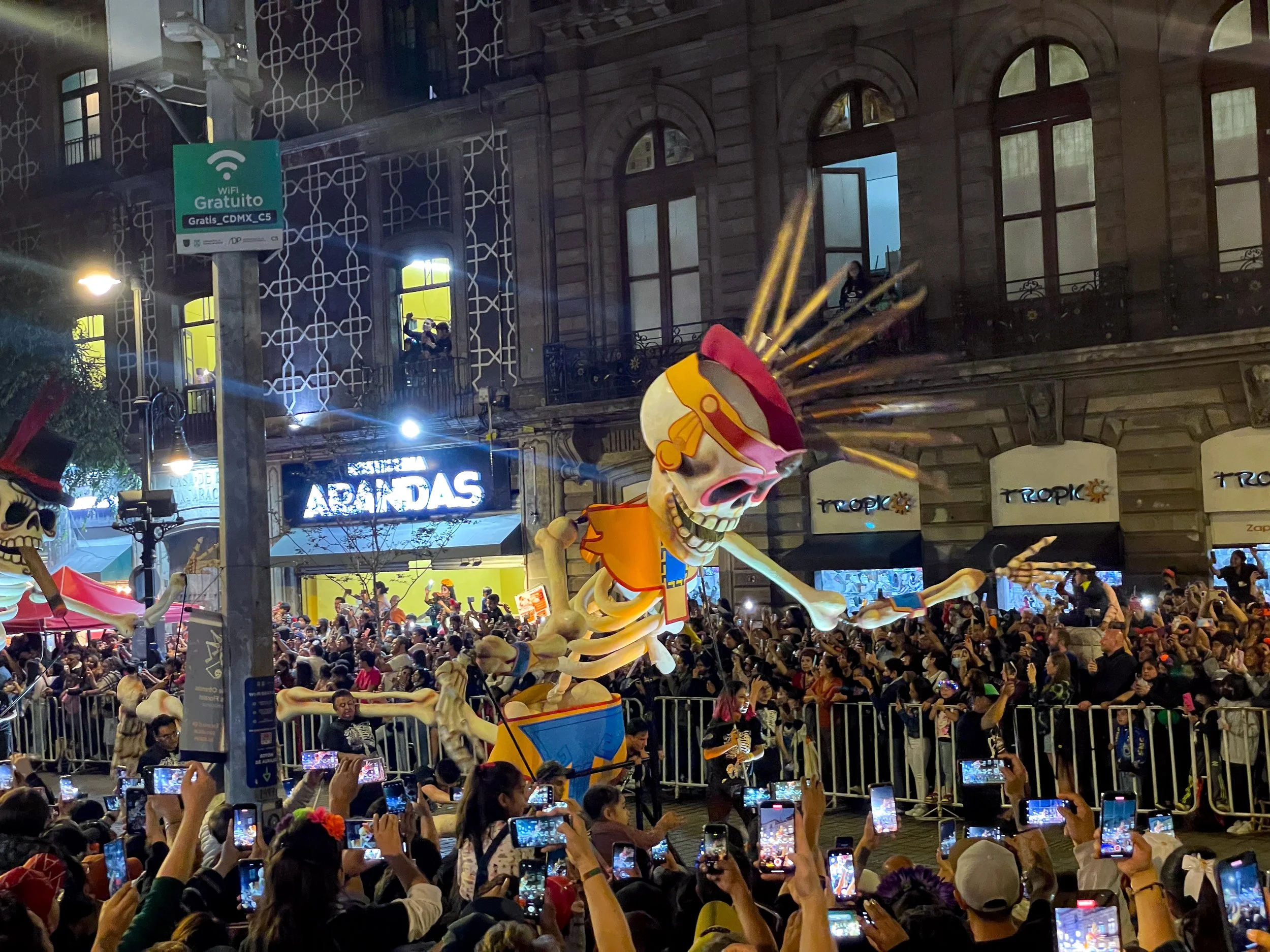
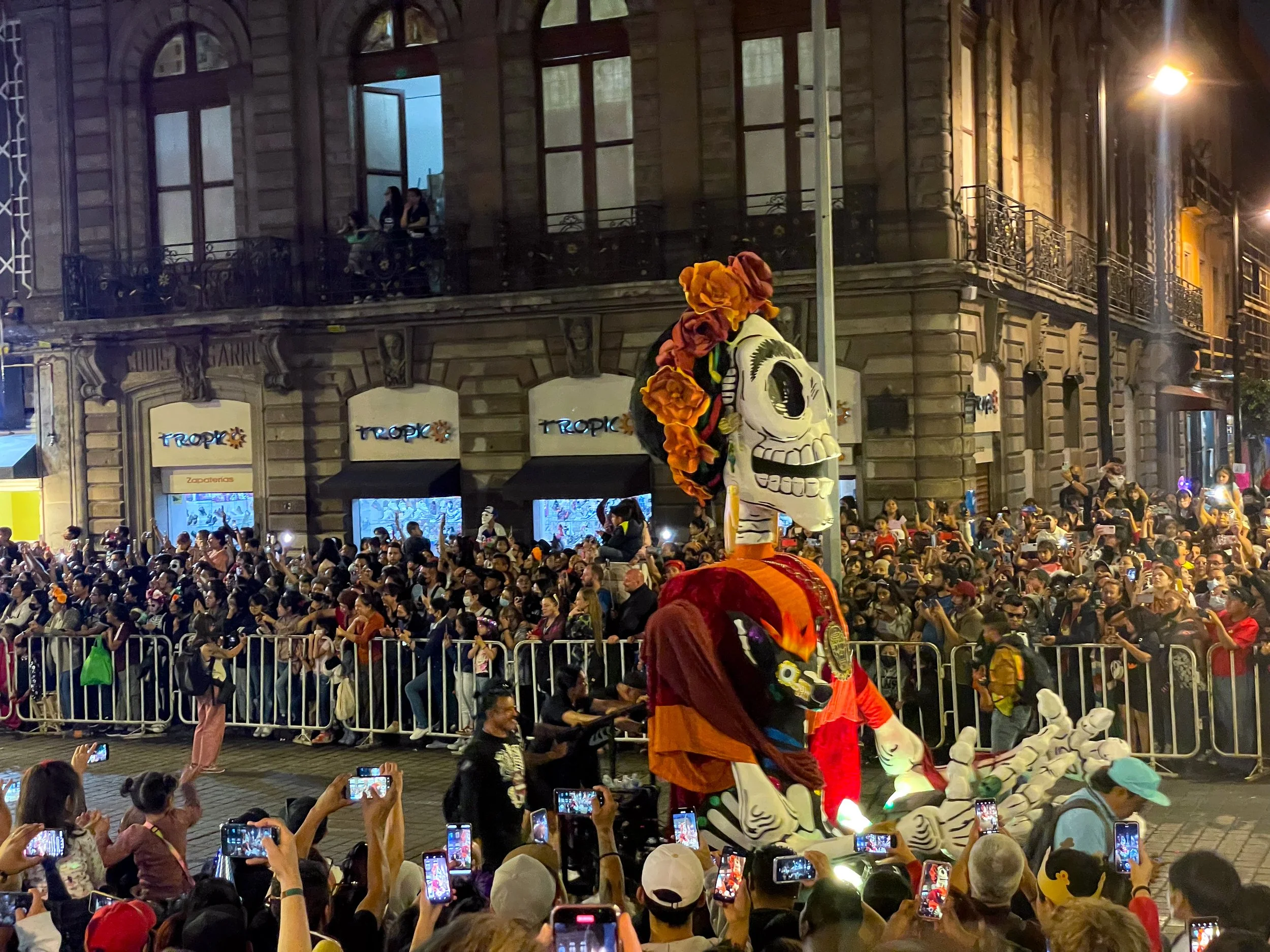
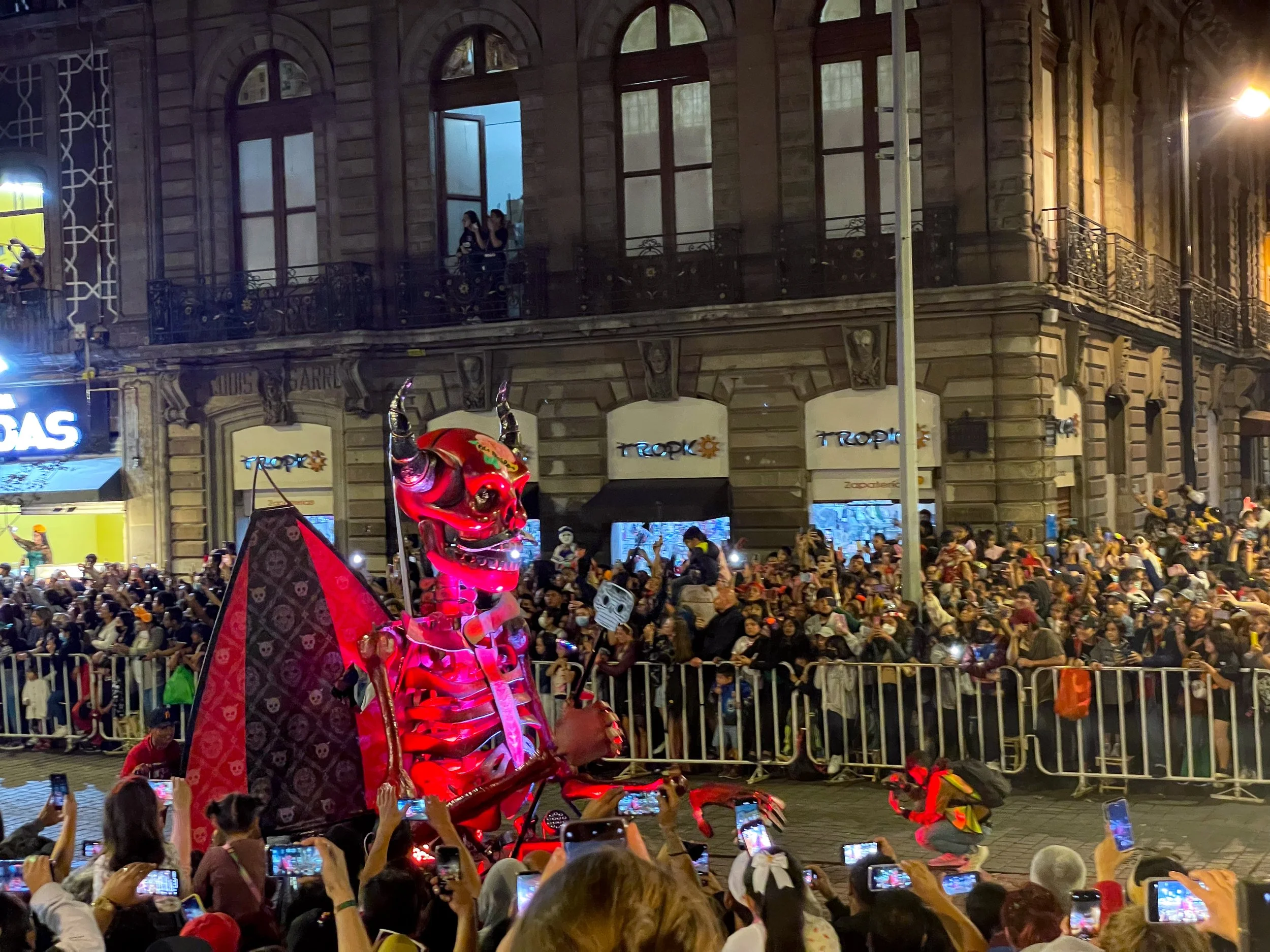
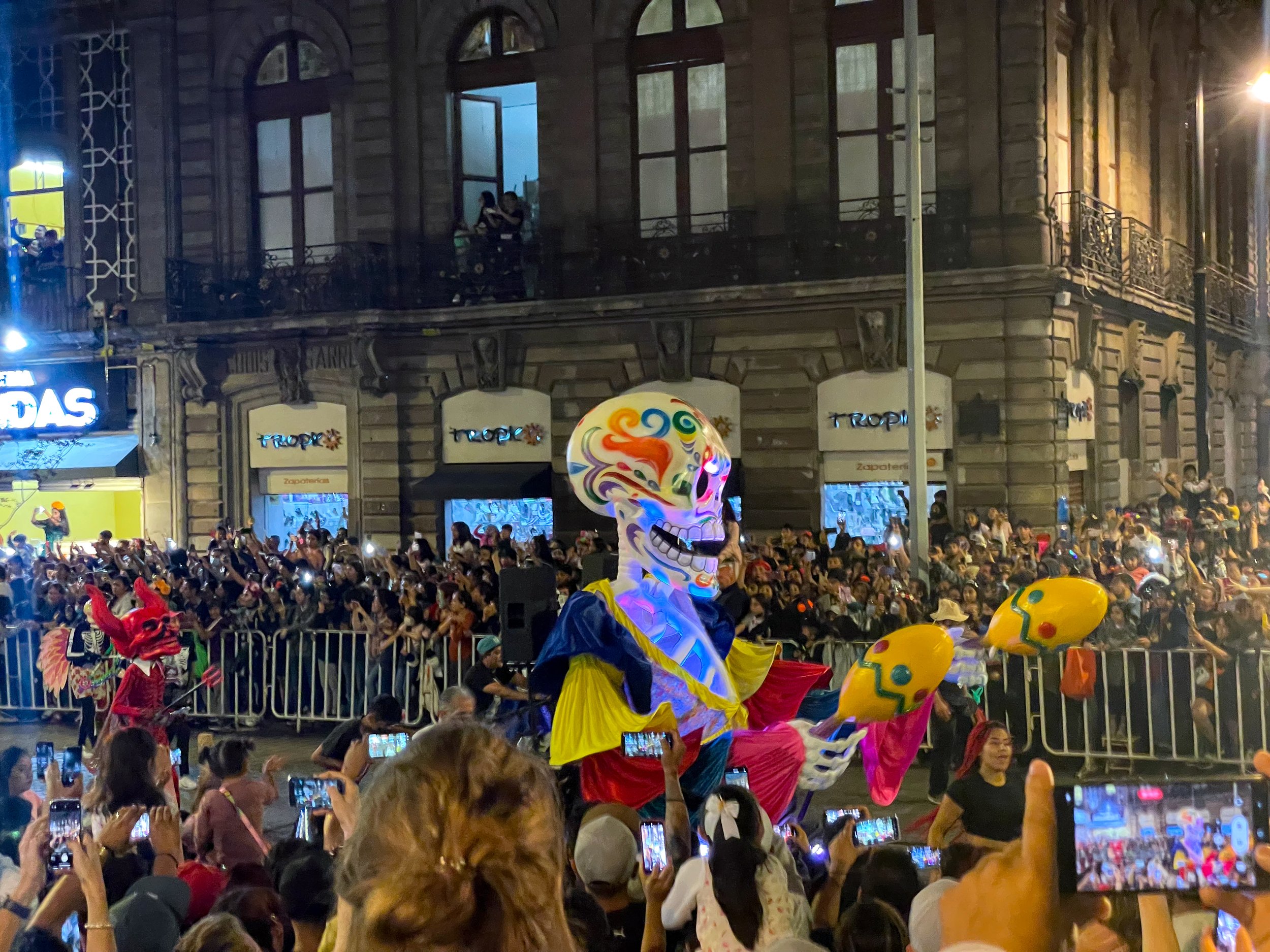
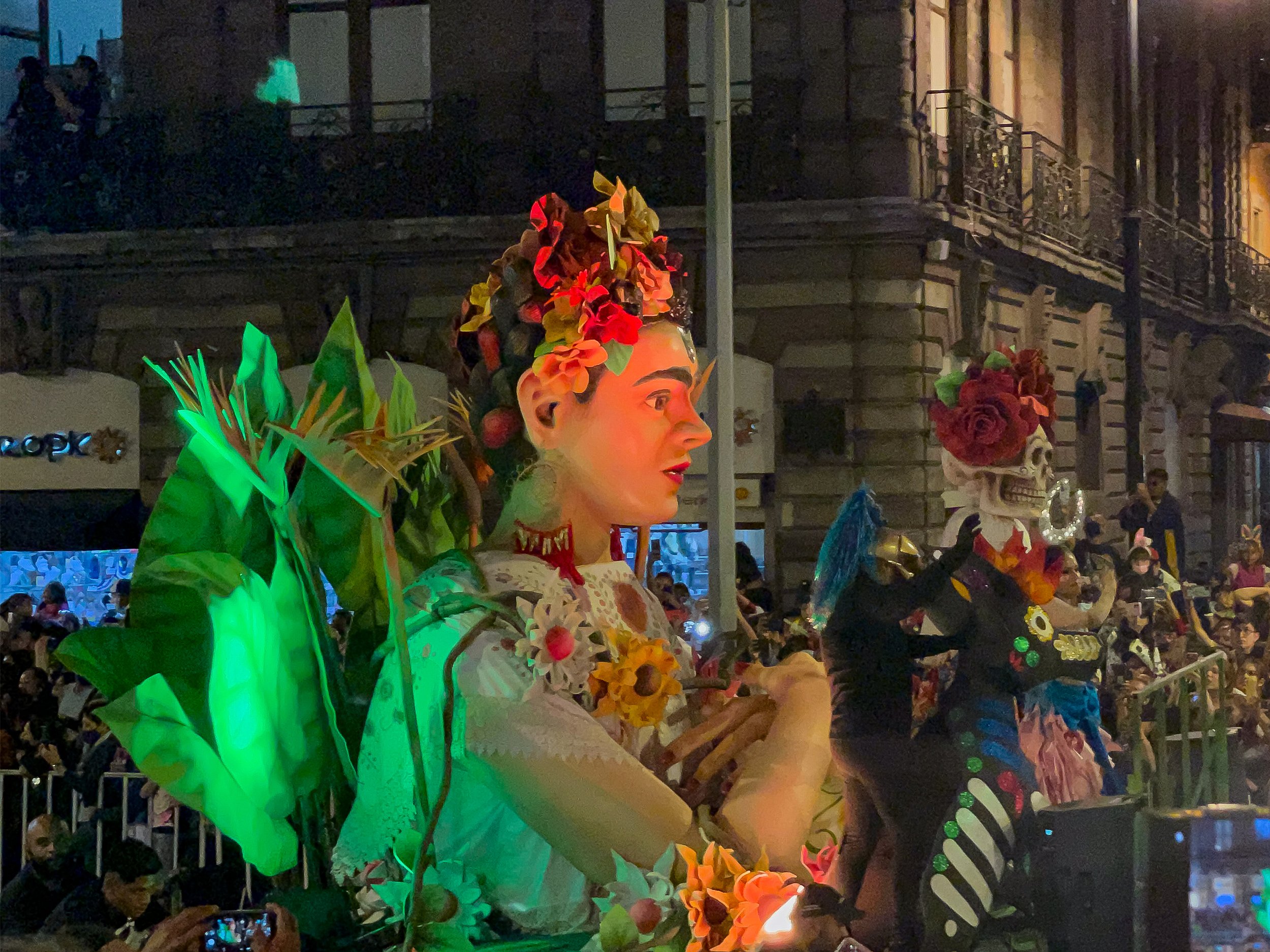
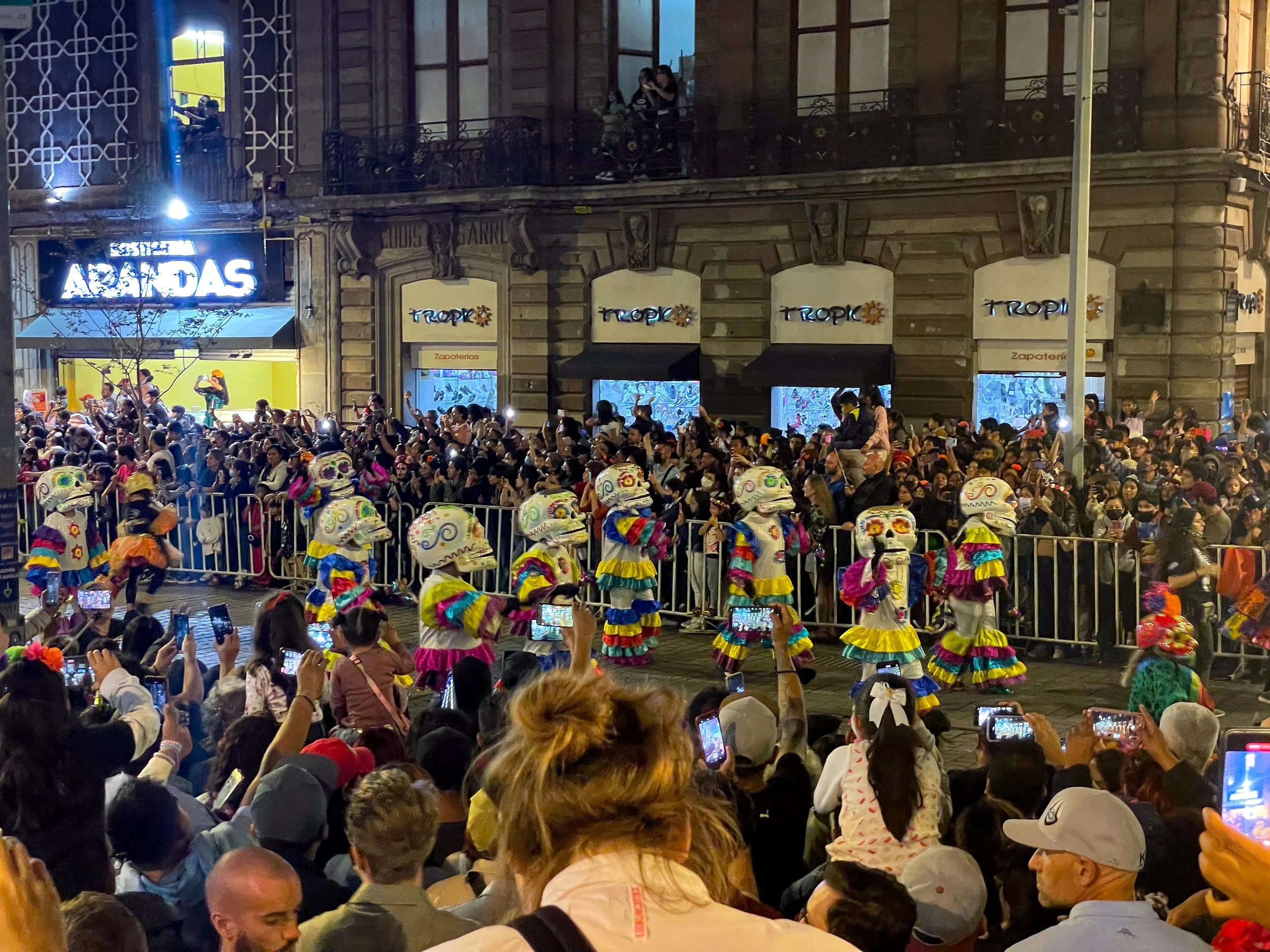
The parade is one of the largest public festivities in Mexico City leading up to Dia de los Muertos. It travels across the city ending with a grand closing ceremony in the historic center. Over a million spectators from all over Mexico and the world line the streets to celebrate. Many people arrive in costume while others get their faces painted by artists set up along the route.
The parade includes floats with giant skeletons, others dedicated to Frida Kahlo and alebrijes. There were marching bands dressed in the colors of the Mexican flag, dancers dressed as Catrinas, monarch butterflies and La Llorona as well as performers in Aztec ceremonial outfits.
The Parade Route
The parade traveled down Paseo de La Reforma starting from the Estela de Luz at the corner of Bosque de Chapultepec to Avenida Hildago passing Alameda Central and onto Avenida Cinco de Mayo before ending in Zócalo Square.
The parade is a relatively new addition to the Día de los Muertos celebrations. The official route, date and time were only announced two weeks before the celebrations took place. We had to monitor Mexico City’s government website to stay up-to-date with the Official Announcements.
Where to Watch the Parade
From the Street. Arrive a couple of hours early and claim a spot along the metal barricades lining the parade route for the best view. It gets very busy and difficult to see if you’re further into the crowd.
From a Restaurant or Bar. We watched the parade in Centró Historico at a bar called Pata Negra. Though we didn’t have a front row view, we were elevated above the crowds, had a seat to sit on, restroom to use and bar to order cocktails from.
The Grand Closing Ceremony
The grand closing ceremony ended in Zócalo Square with a concert featuring Ángela Aguilar where she performed La Llorona and two other songs as choreographed fireworks lit up the sky in front of the grand cathedral.
Festival de Coyoacán
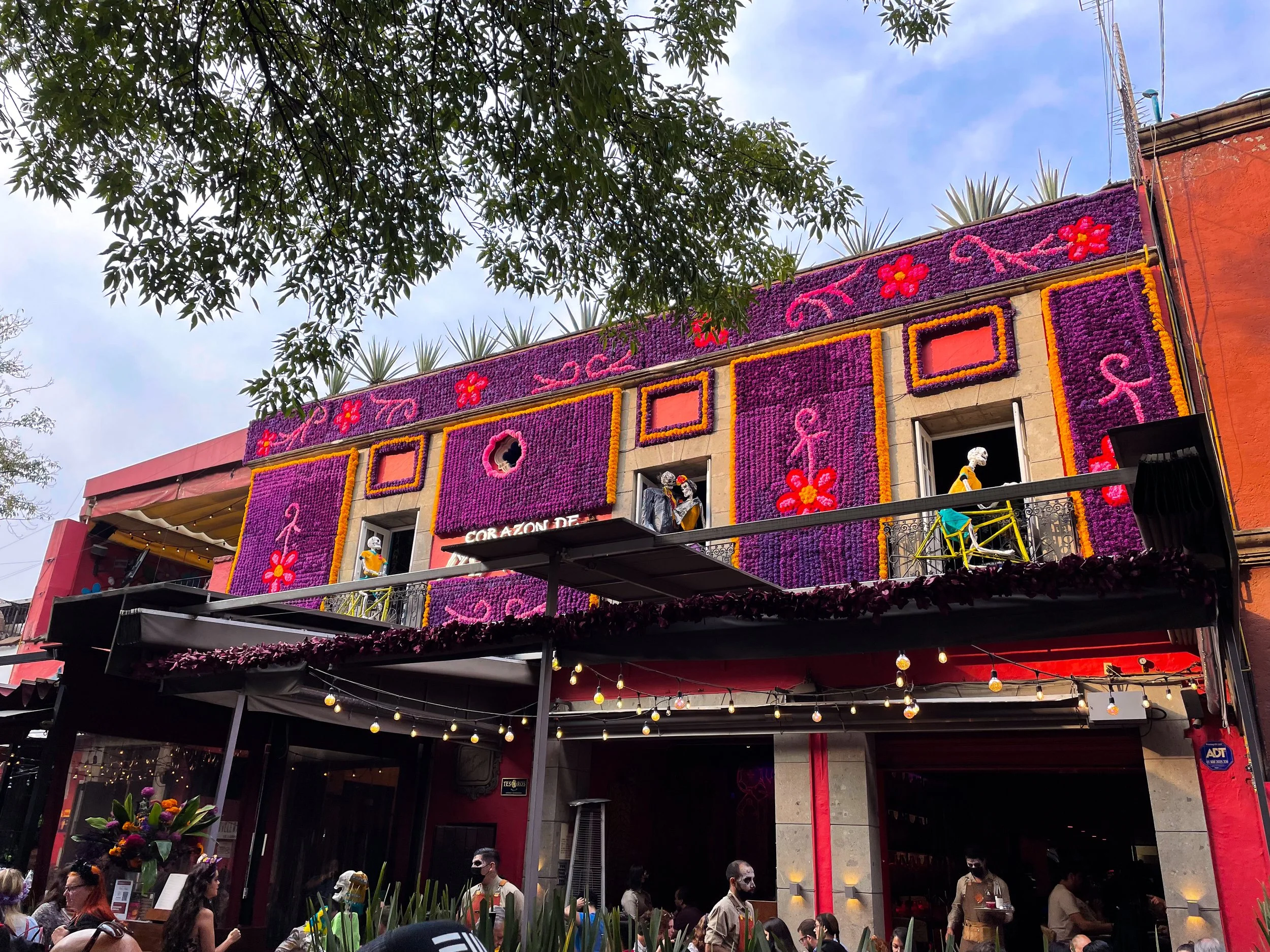
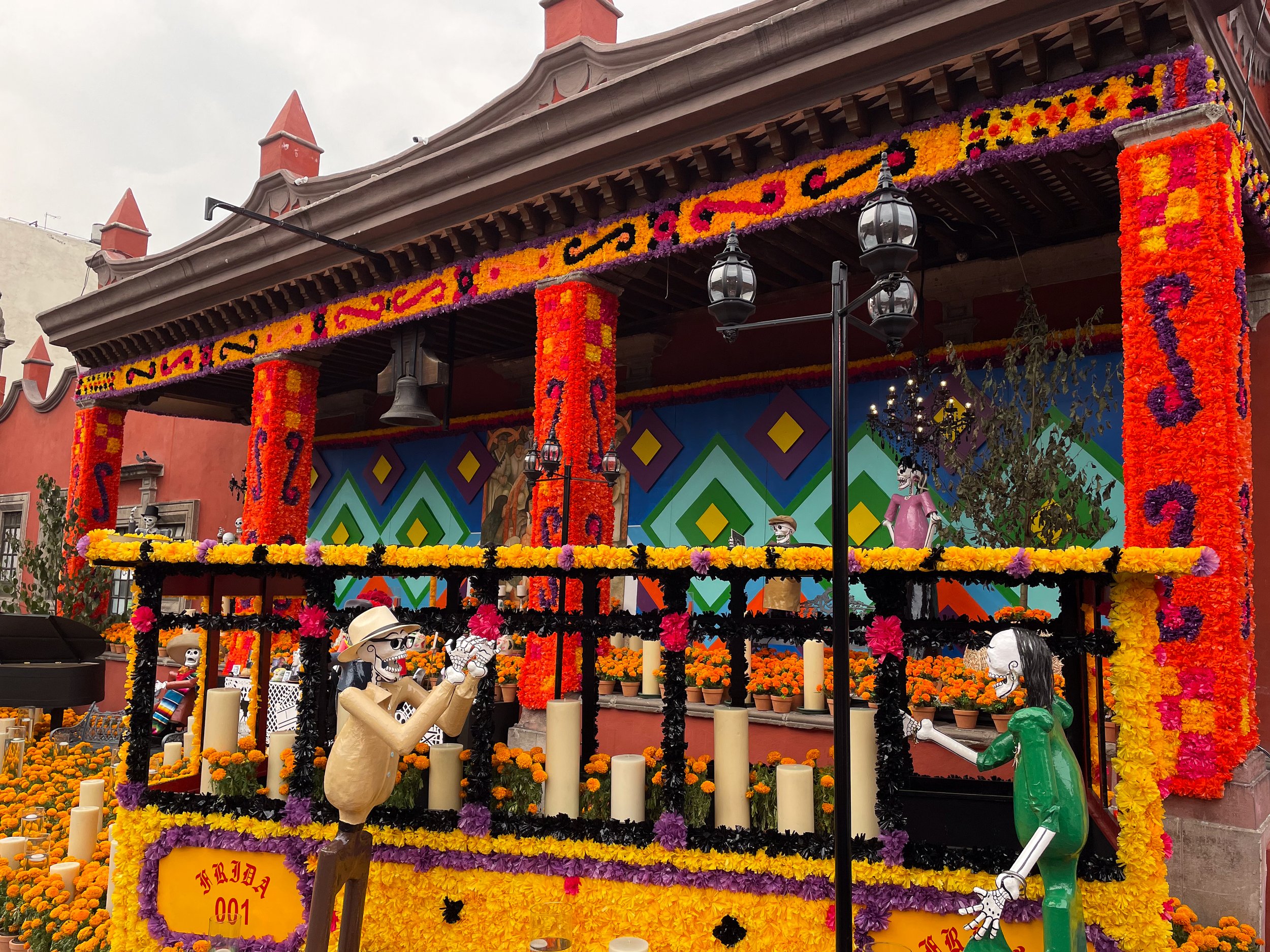
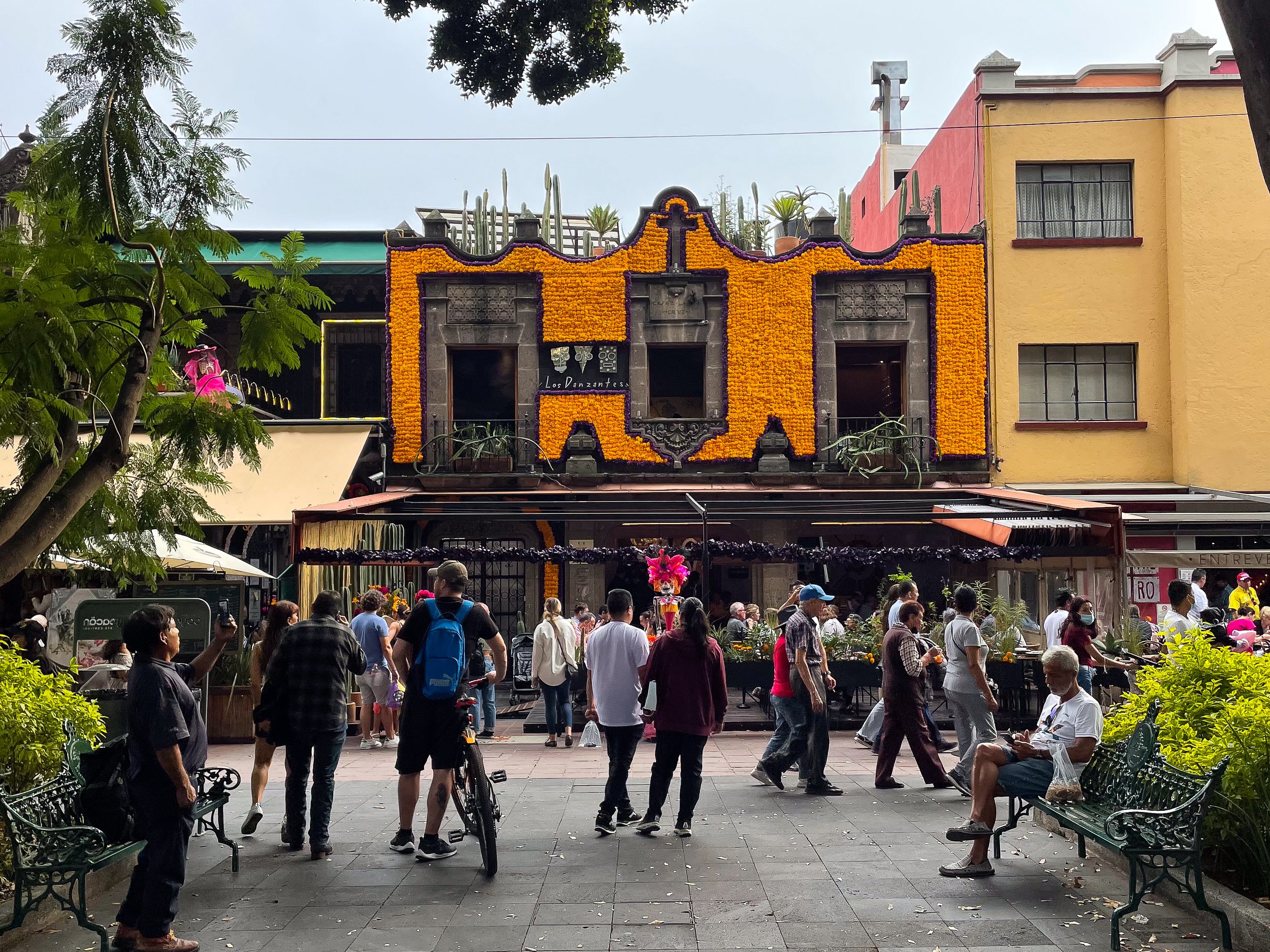
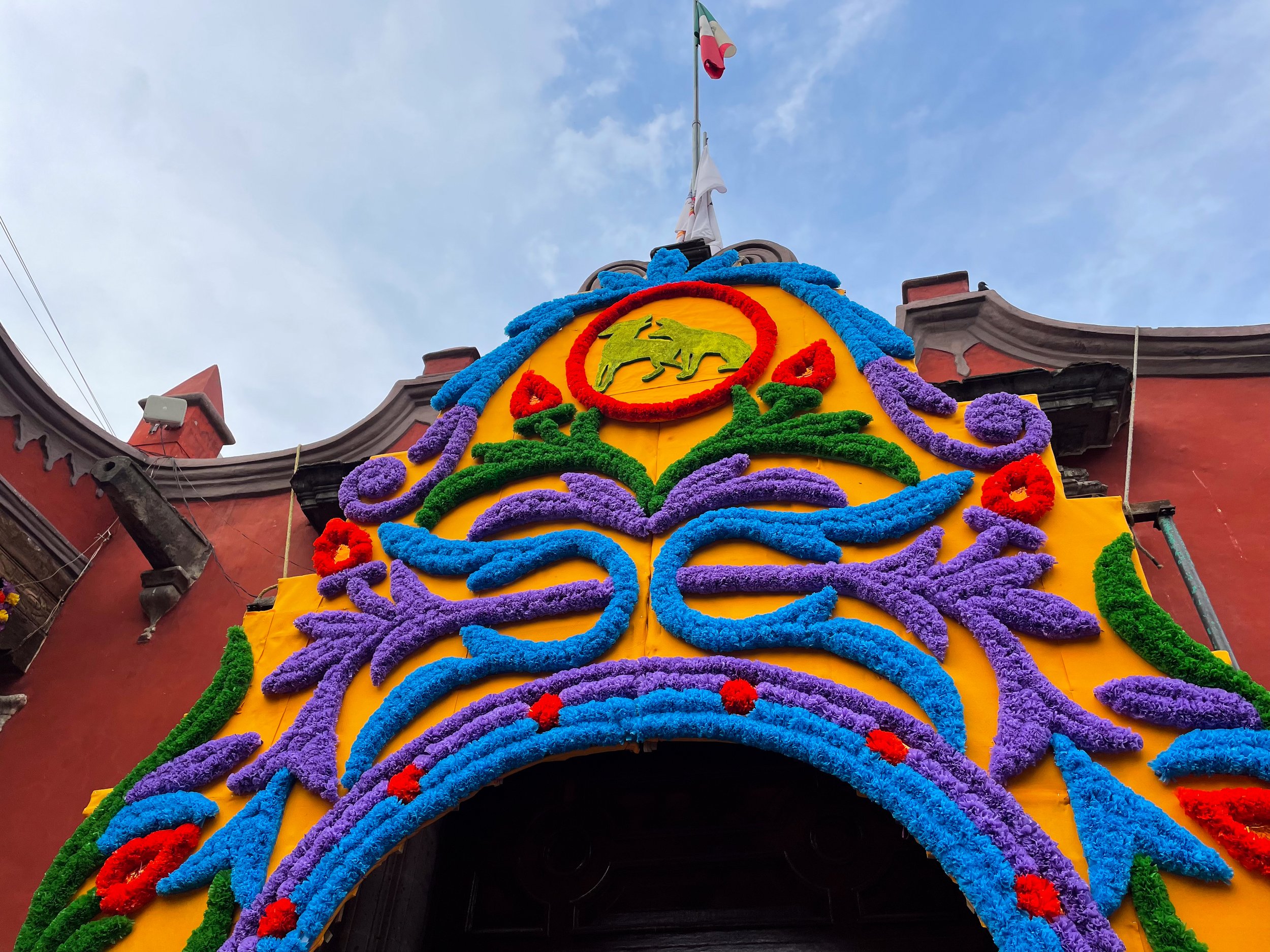
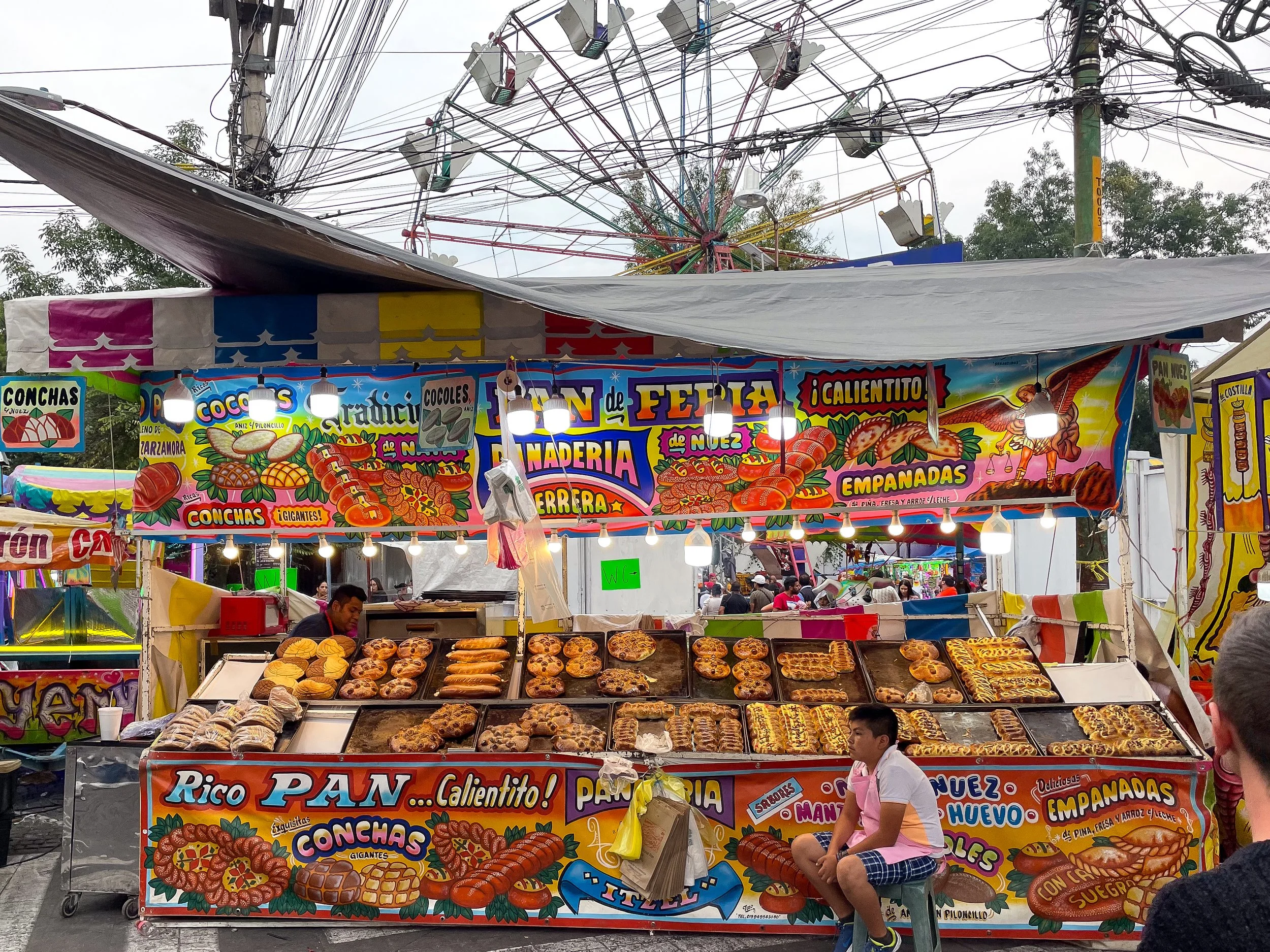
One of the largest festivals held during the two weeks leading up to Día de los Muertos with celebrations and ofrendas. The streets surrounding the Centro de Coyoacán are lined with food vendors, mobile panaderias, handicraft booths, makeup artists, fair games and carnival rides. People from all over the neighborhood and city come here to celebrate.
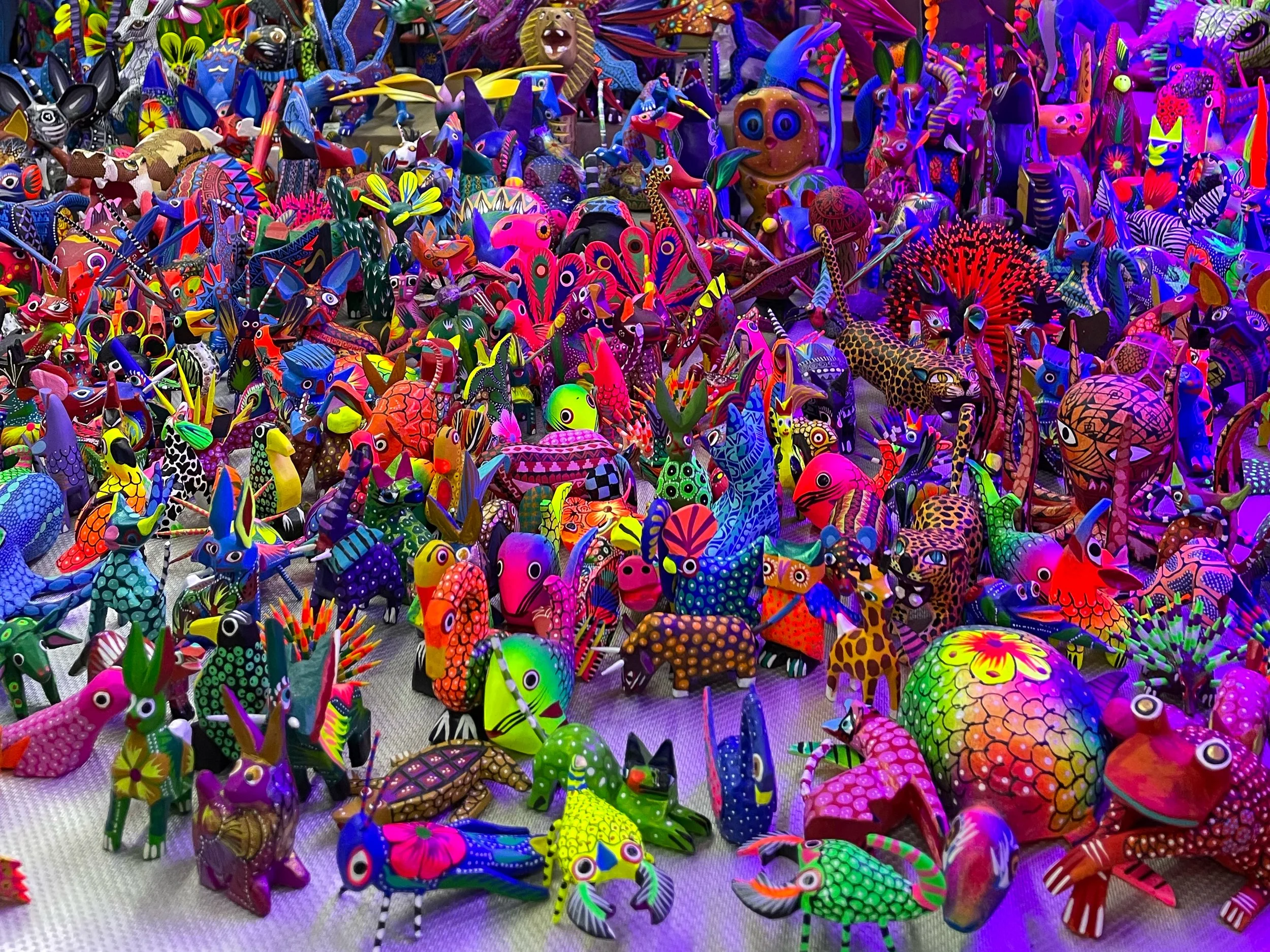
Mercado Artisanal. A two level market with stalls of vendors and artists selling alebrijes and calaveras as well as the Mexican handicrafts like textiles, books, leather goods and home decor.
Restaurants in Coyoacán
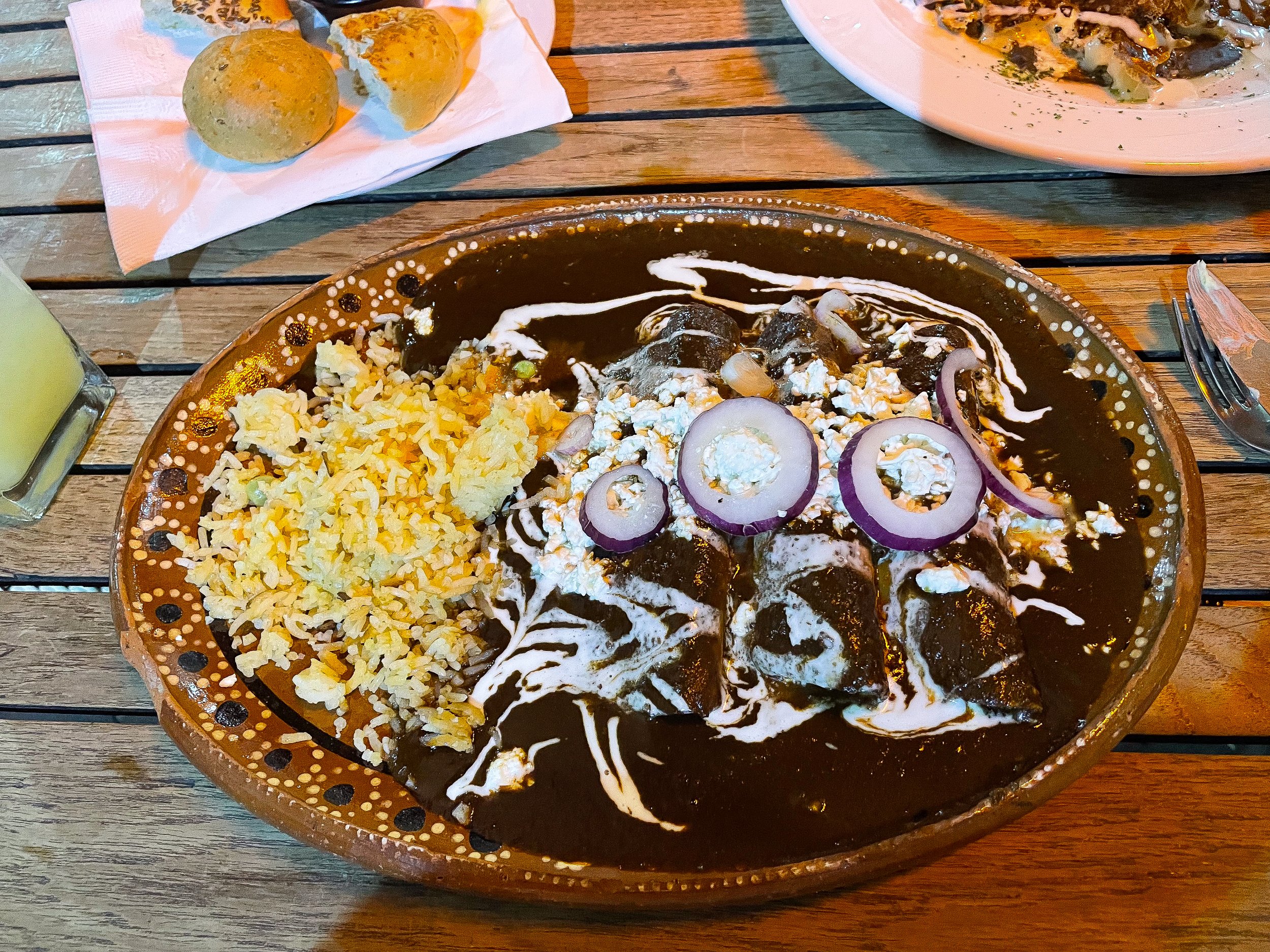
Restaurant Ave Maria. A higher end restaurant serving classic Mexican meals like enchiladas in mole, chile relleno with queso and tres leches served on traditional clay dishes.
Los Danzantes. Oaxacan style and traditional Mexican dishes, located in Coyoacán.
Cabo Coyote. A restaurant and bar in Centro Coyoacán. We came here for pre-dinner cocktails.
Boicot Café Coyoacán. A multilevel coffee shop in Coyoacán. We came here for an afternoon caffeine fix.
Lecaroz. A bakery specializing in Mexican pastry and breads. Visiting during Día de los Muertos, they had an endless supply of Pan de Muerto in multiple sizes.
Mexican Street Food
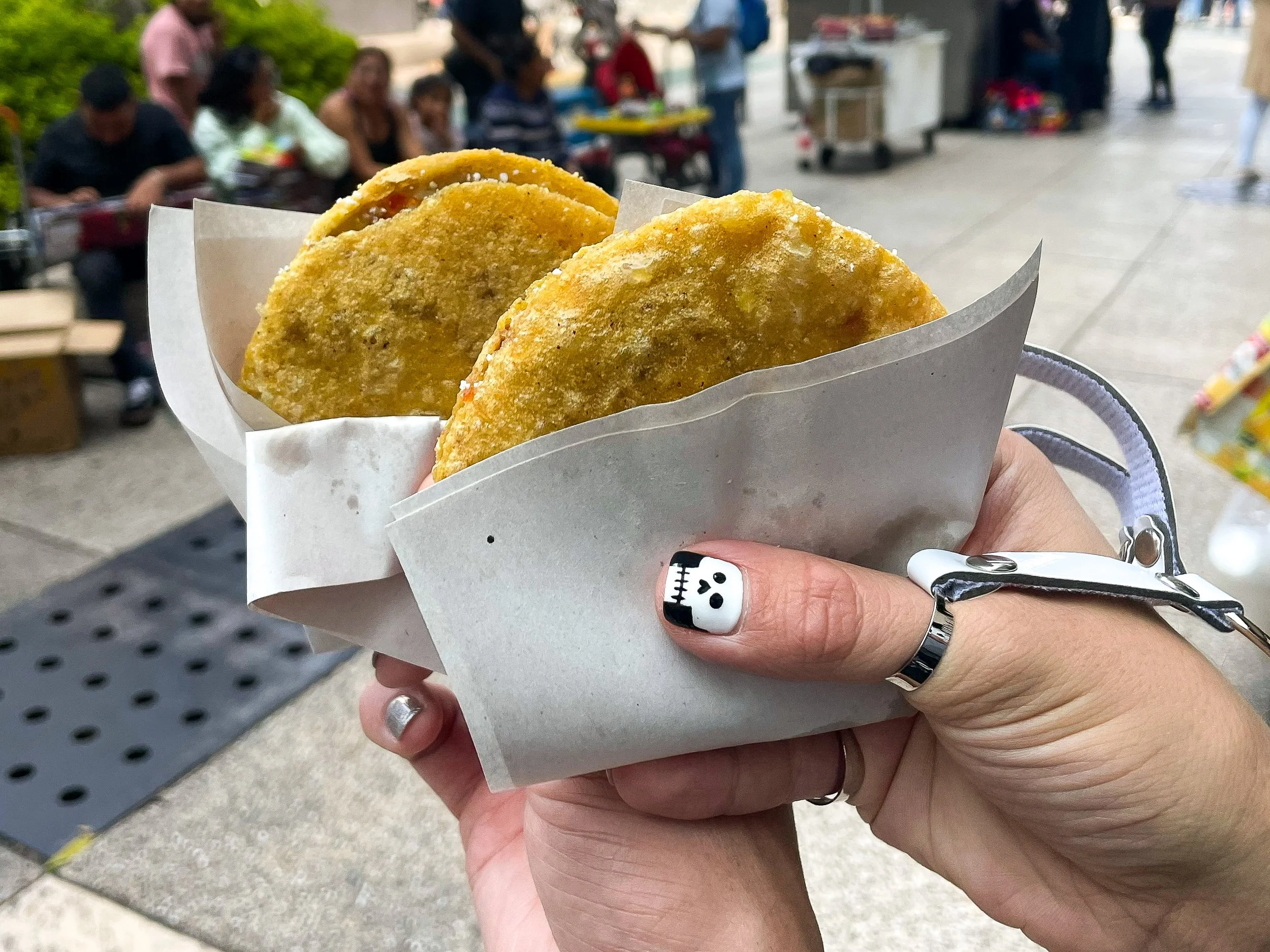
Street food is popular all across Mexico City, especially around Day of the Dead. Look out for vendors selling gorditas, tlayudas, elotes, chapulines and churros.
Gordita. Thick corn masa tortillas cooked until puffy, cut open and stuffed with filling. We ordered them from a street vendor on Paseo de la Reforma who stuffed them with beans, cheese and salsa.
Tlayuda. A cracker thin tortilla topped with various garnishes. Our favorite was from a street vendor in Zócalo Square. It was spread with refried beans and topped with nopales, Oaxacan cheese and hot sauce.
Elote. A grilled ear of sweet corn served on a stick. It’s covered in Mexican crema and garnished with cotija cheese, chili powder, and lime juice.
Chapulines. Crispy fried grasshoppers. We had them on tacos, as a garnish to dishes, in bars mixed with peanuts and saw them sold in barrels as snacks with a squeeze of lime.
Churros. Fried sticks of ridged dough covered in cinnamon sugar and served with dulce de leche, chocolate sauce or sweetened condensed milk.
Elsewhere in Mexico
From Mexico City's Día de los Muertos celebrations to Caribbean coastlines, colonial cities and Oaxaca's rich traditions, discover more of Mexico through these travel guides:
Caribbean Mexico
Riviera Maya Travel Guide: Beaches, Cenotes & Mayan Ruins. Discover the Riviera Maya's white sand beaches, turquoise waters, hidden cenotes, ancient Mayan ruins and vibrant culture along Mexico's Caribbean coast.
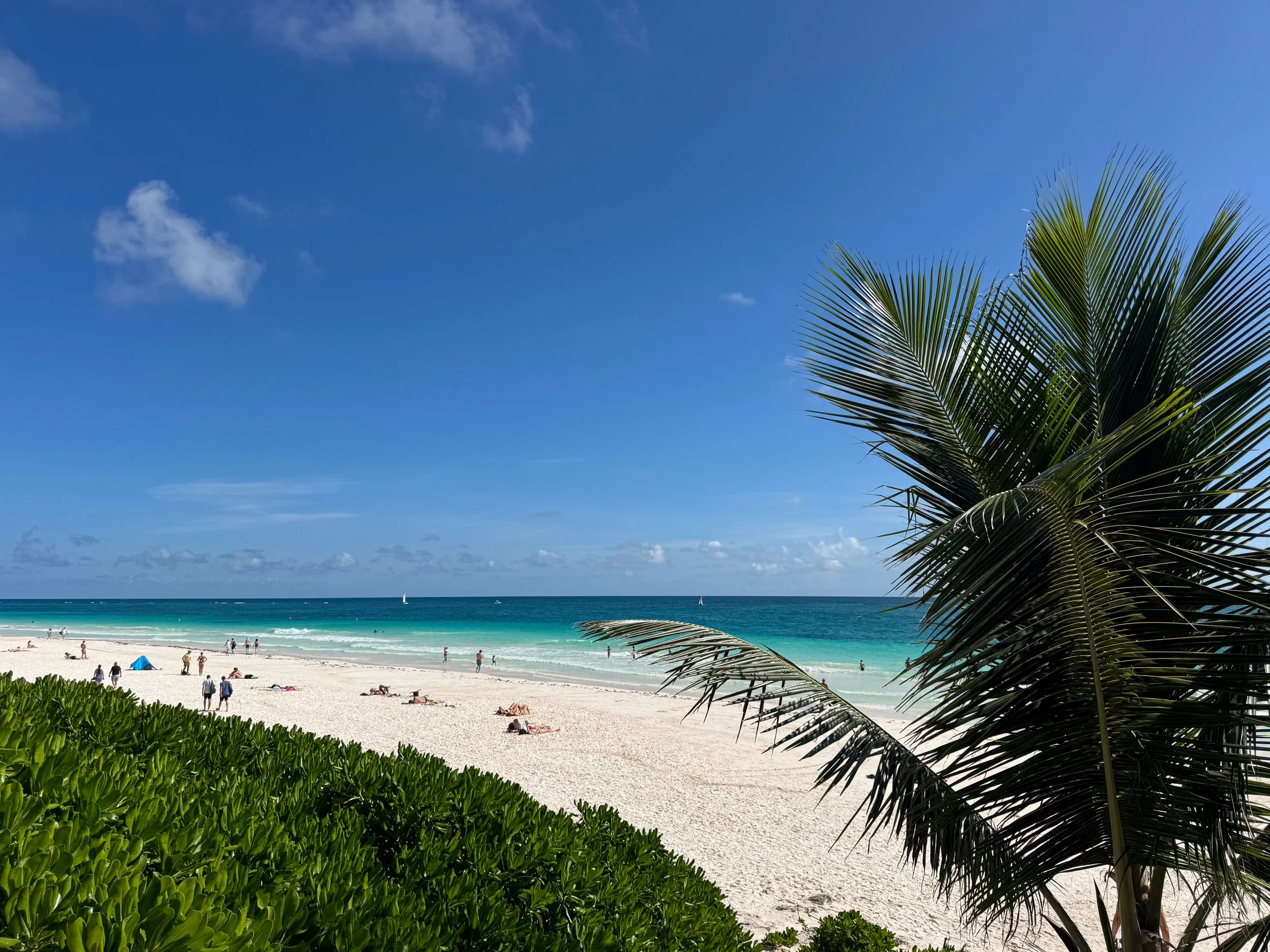
Tulum Travel Guide: Cenotes, Beaches & Mayan Ruins. Explore Tulum's cliffside Mayan ruins, white sand beaches, hidden cenotes and jungle landscapes along Mexico's turquoise Caribbean coast.
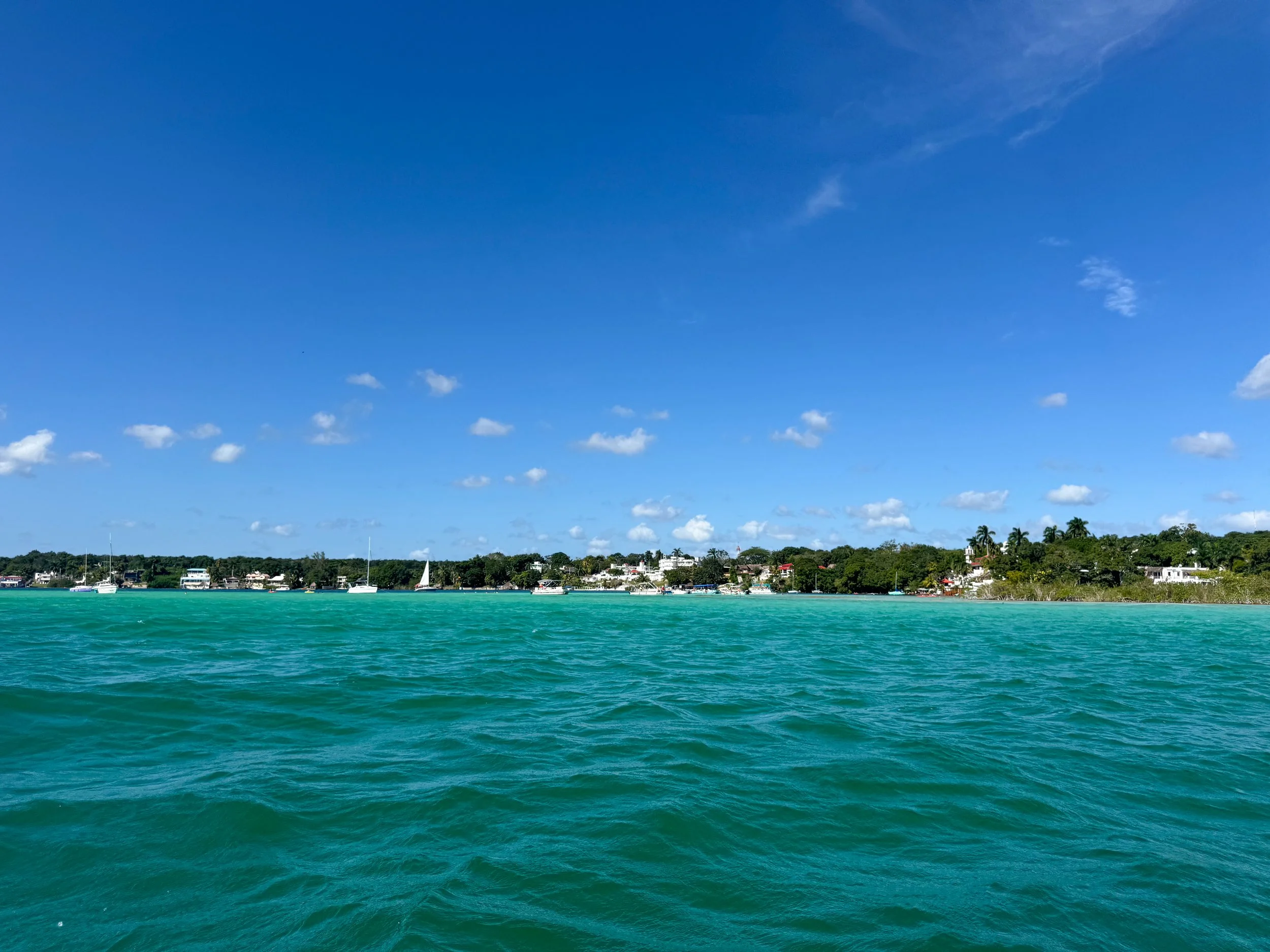
Bacalar Travel Guide: The Lagoon of Seven Colors & Hidden Gems. Discover Bacalar's Lagoon of Seven Colors, where turquoise waters, shallow sandbars and ancient stromatolites create one of Mexico's most remarkable landscapes.
Central Mexico
Mexico City Travel Guide: Neighborhoods, Food & Local Culture. Wander through Mexico City's vibrant neighborhoods, local markets and cultural landmarks where centuries of history, cuisine and modern life converge.
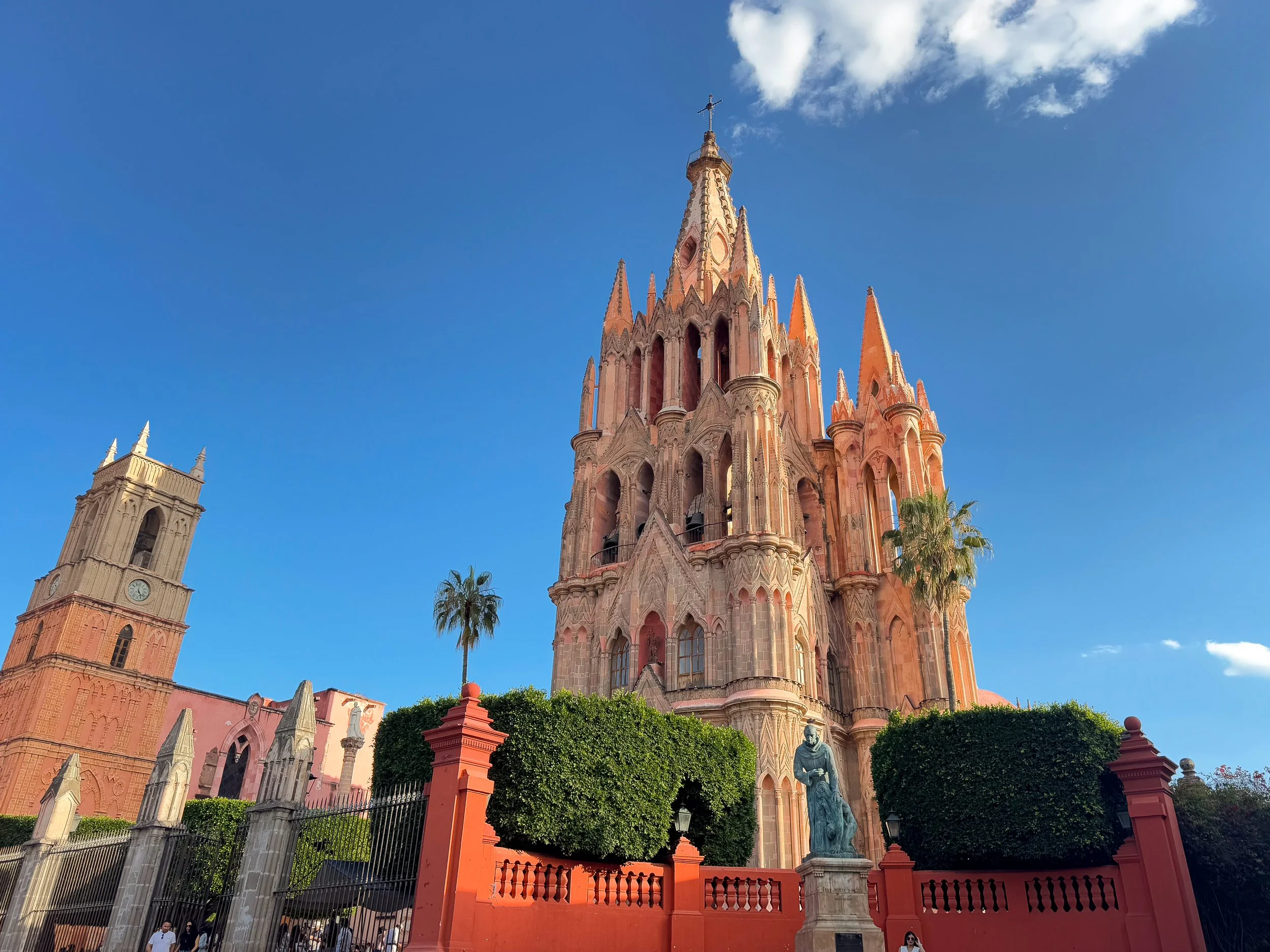
San Miguel de Allende Travel Guide: Food, Art & Colonial Charm. Stroll through San Miguel de Allende's cobblestone streets and historic plazas where cuisine, art and music bring one of Mexico's most charming colonial cities to life.
Southern Mexico
Oaxaca Travel Guide: Food, Mezcal & Cultural Experiences. Immerse yourself in Oaxaca, Mexico's cultural hub for vibrant markets, artisanal mezcal, regional cuisine, scenic landscapes and centuries of tradition.
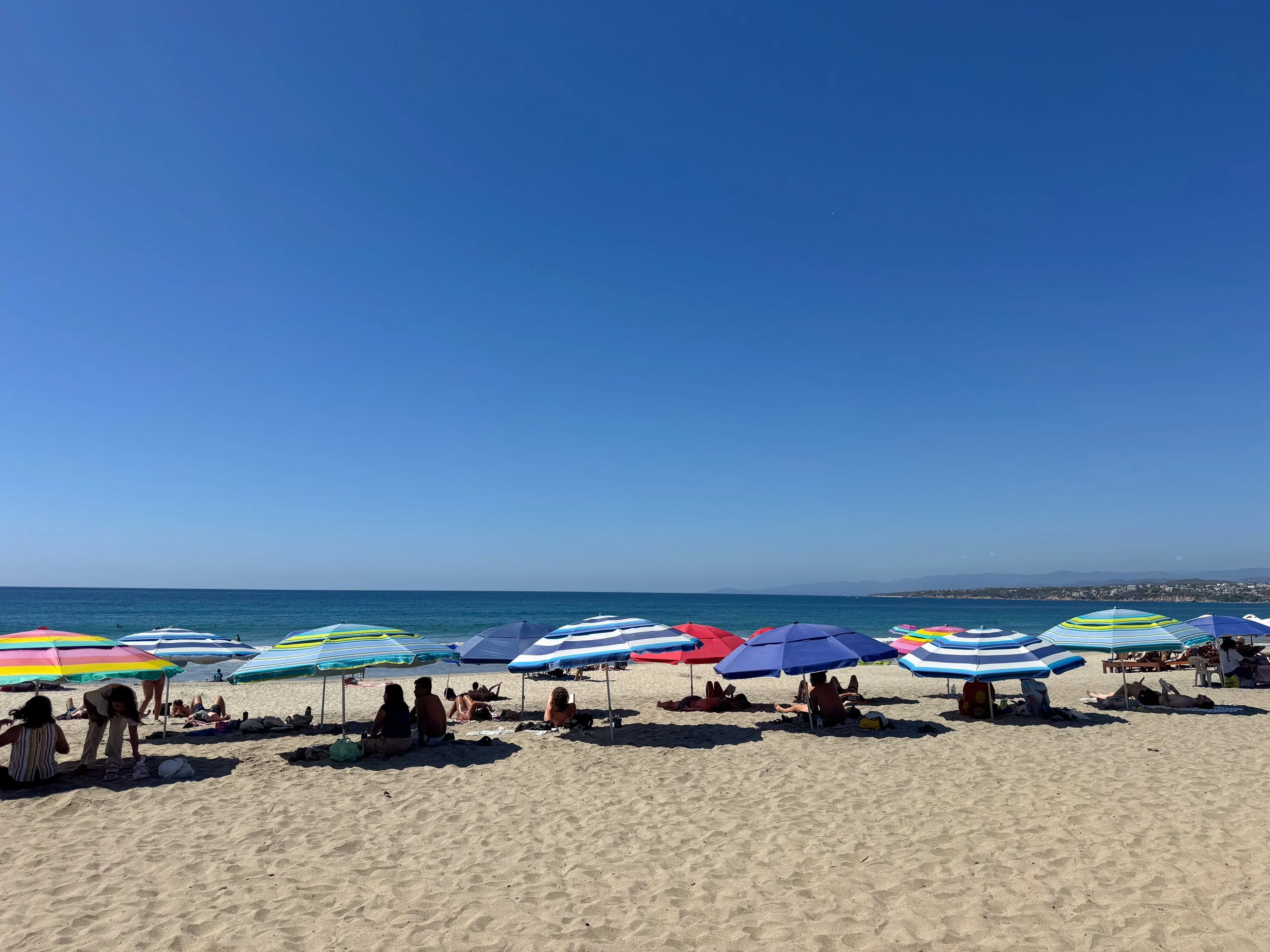
Puerto Escondido Travel Guide: Beaches, Surfing & Coastal Culture. Escape to Puerto Escondido, a laid back surf town on Oaxaca's Pacific coast where palm lined beaches and sandy streets embody coastal culture.
For Next Time…
Having visited Mexico City for Día de los Muertos, we would love to return one day to celebrate the festivities in Oaxaca or some of the smaller pueblos around the country.