Lapland Finland Travel Guide: Northern Lights, Sámi Culture & Arctic Adventures
Lapland & The Arctic Circle
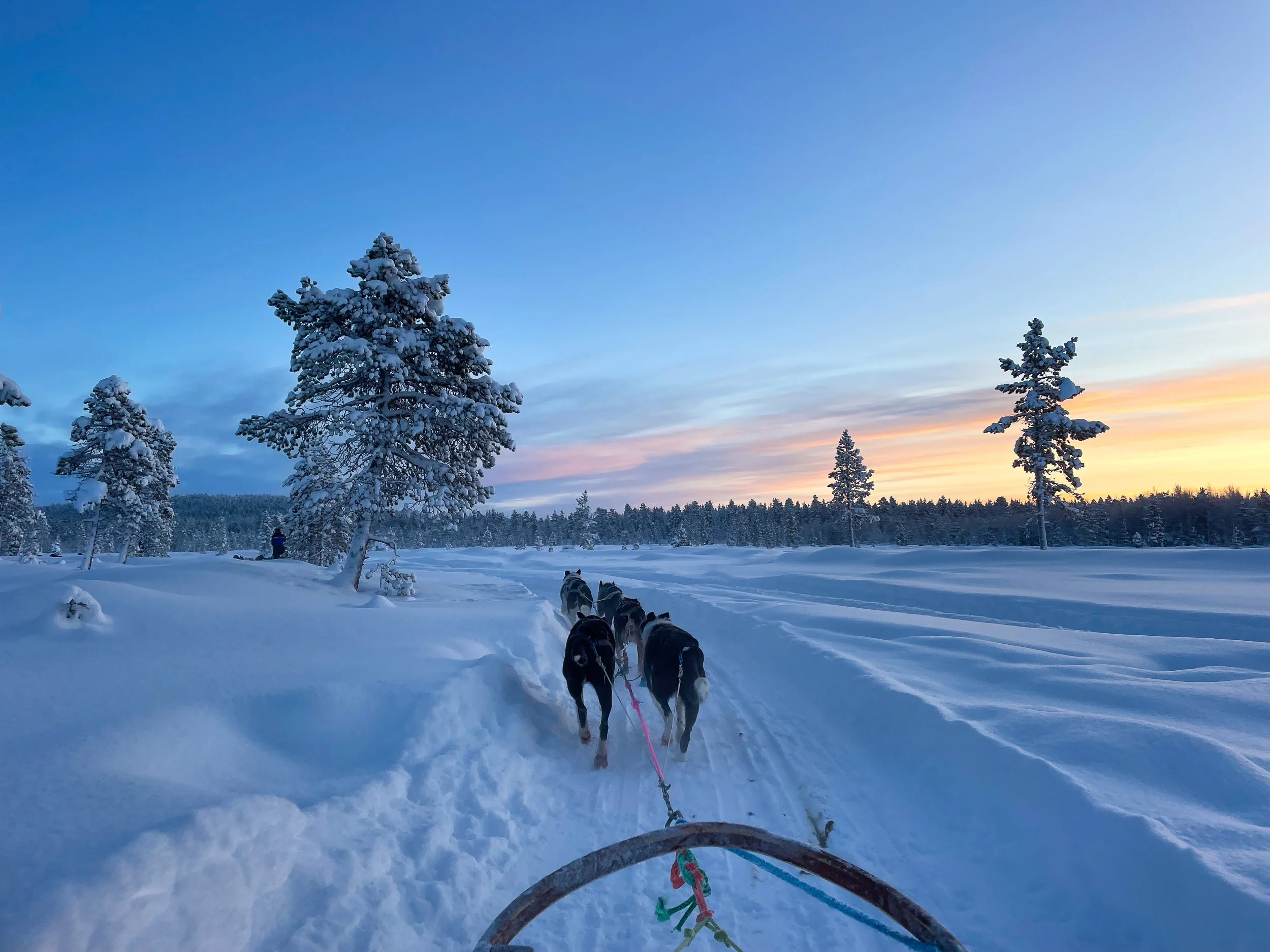
Lapland is the northernmost region of Finland located within the Arctic Circle and Boreal Forest. It’s defined by its frozen landscapes, snow covered forests and the northern lights. It’s a hub for winter sports, steamy saunas, Lappish cuisine and Sámi culture. We visited in mid January, towards the end of Polar Night, a time when daylight is limited to a few hours and the sun never rises above the horizon.
Inari, Lapland
Inari is a small village on the remote shores of Lake Inari in Lapland. It’s a hub for winter activities like dog sledding, snowmobiling and cross country skiing. Several hotels, restaurants and tour operators are based in the town. Inari is a culturally important place to the indigenous Sámi people, home to their parliament, museums and sacred sites.
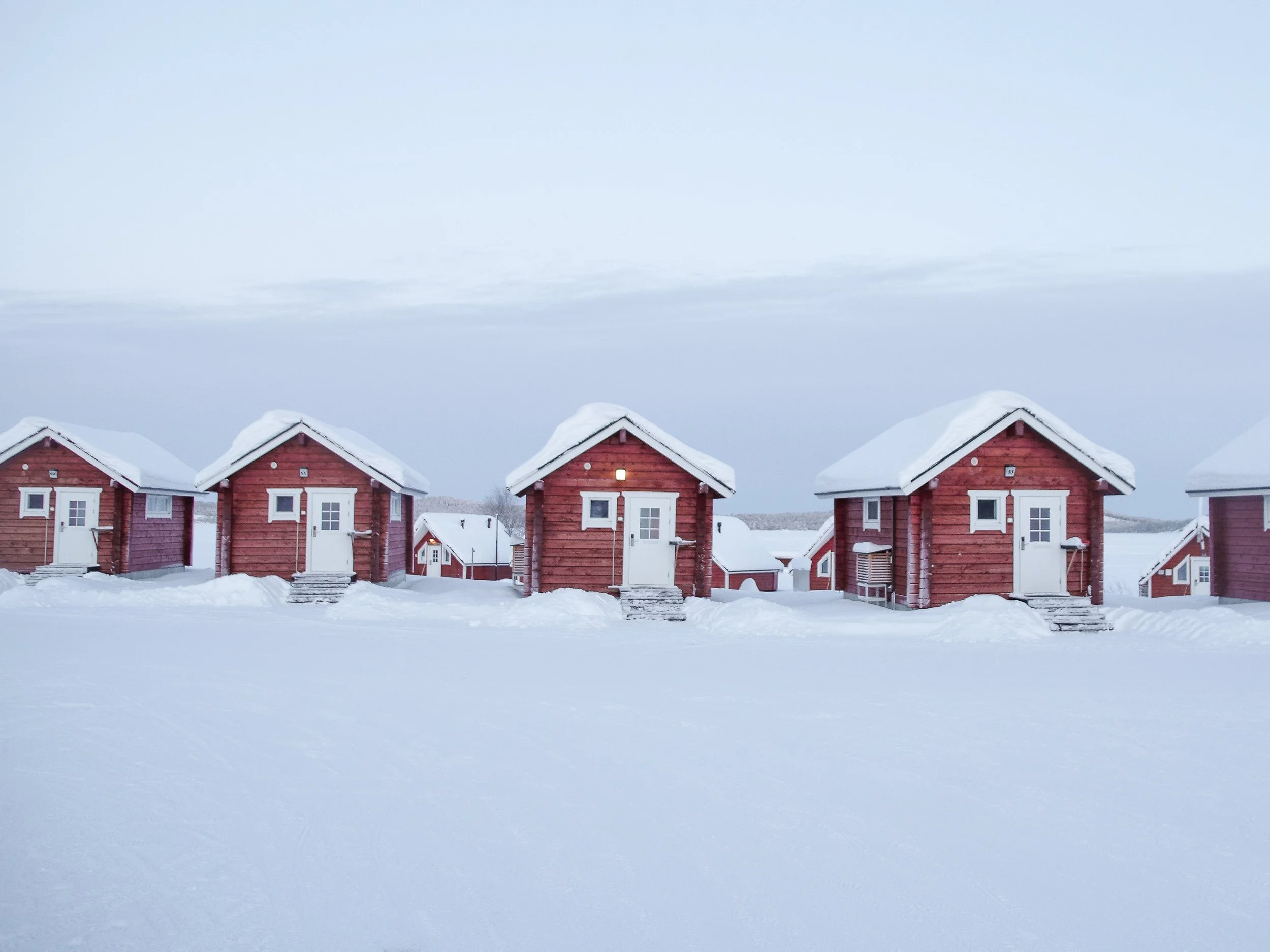
Holiday Village Inari. A hotel on Lake Inari with red painted cabins, pine paneled interiors and a sauna. The cozy cabins overlook Lake Inari and the night sky. It’s the perfect place to spot the Aurora on a clear winter evening.
See the Sights
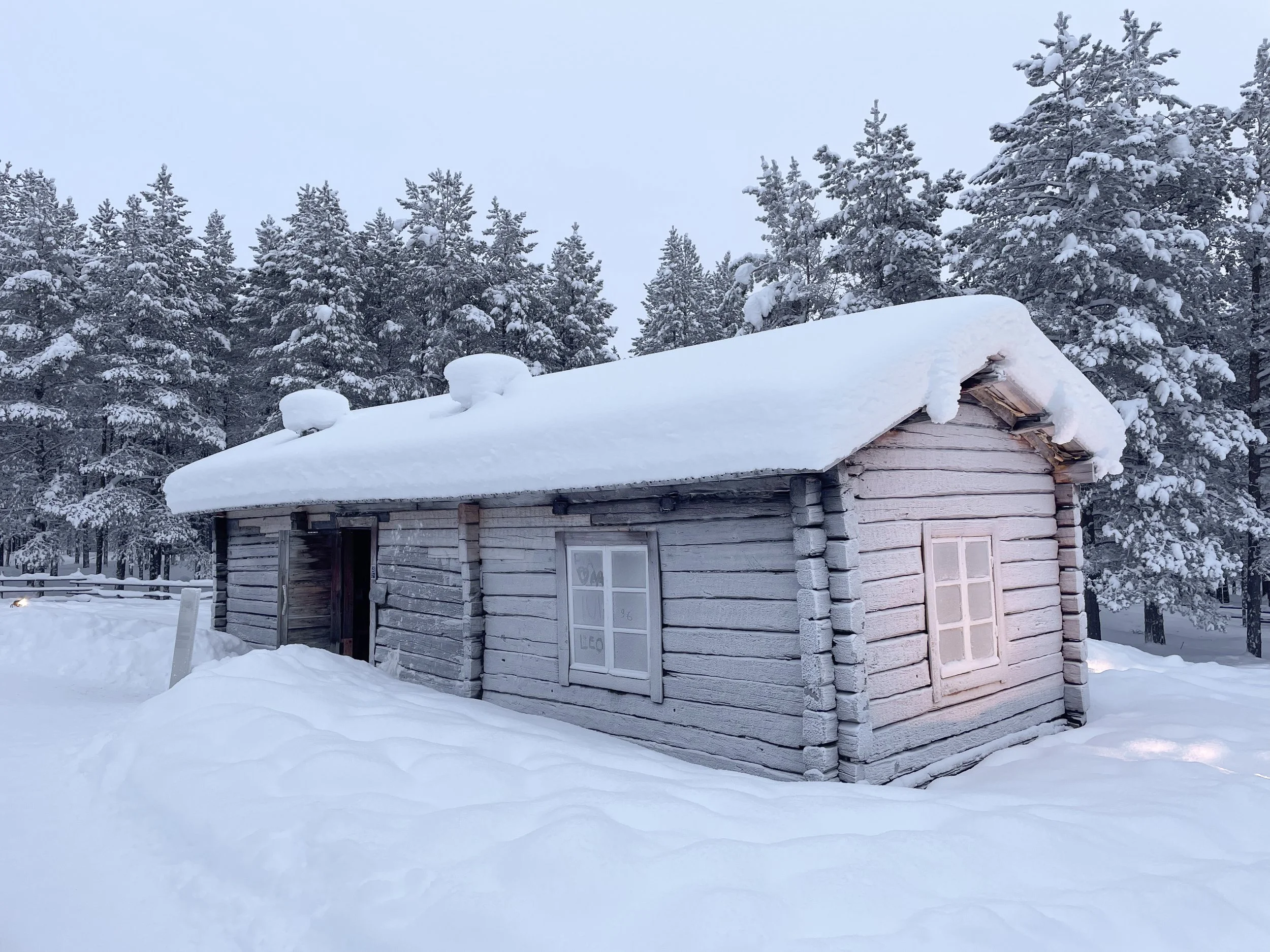
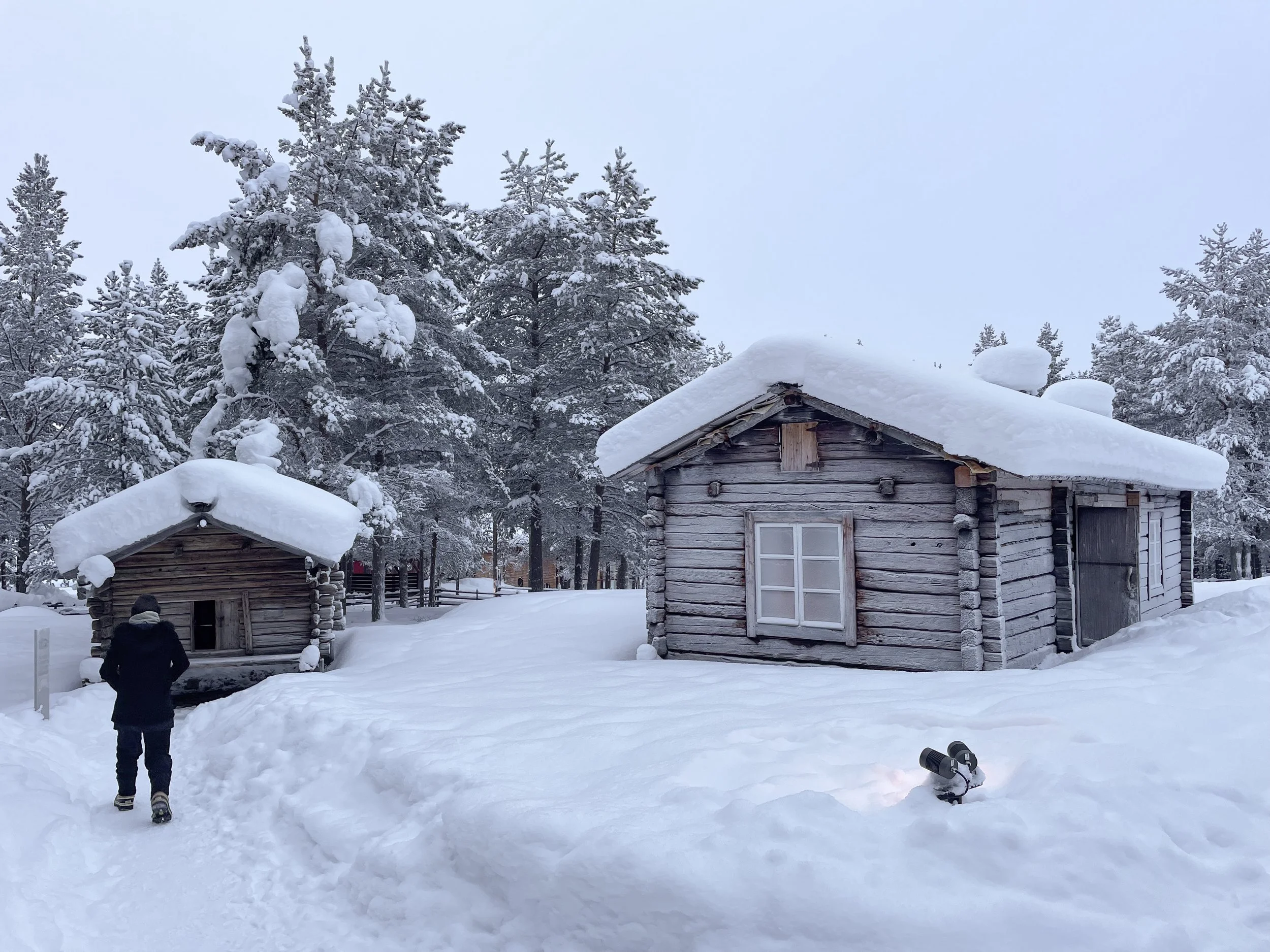
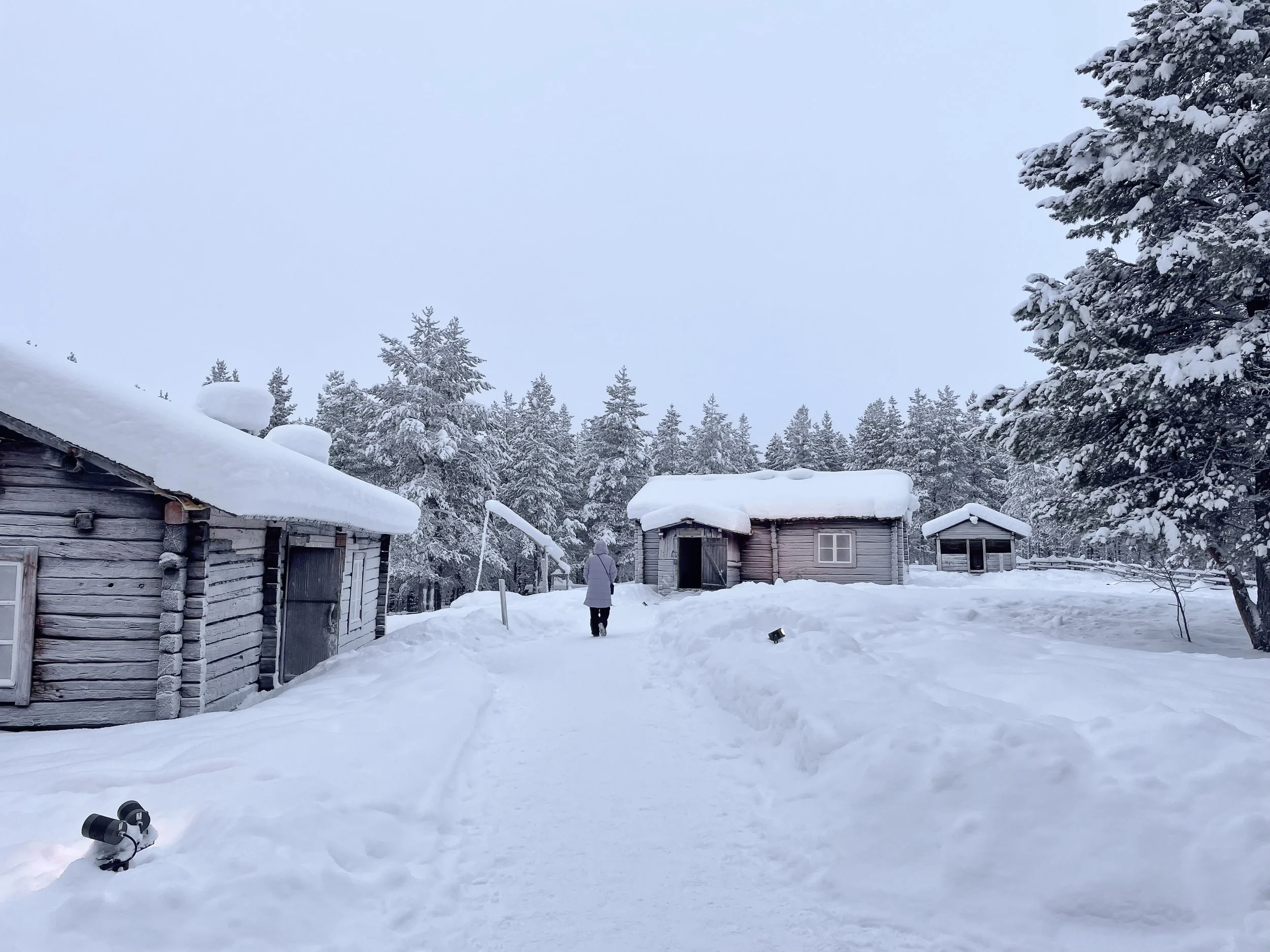
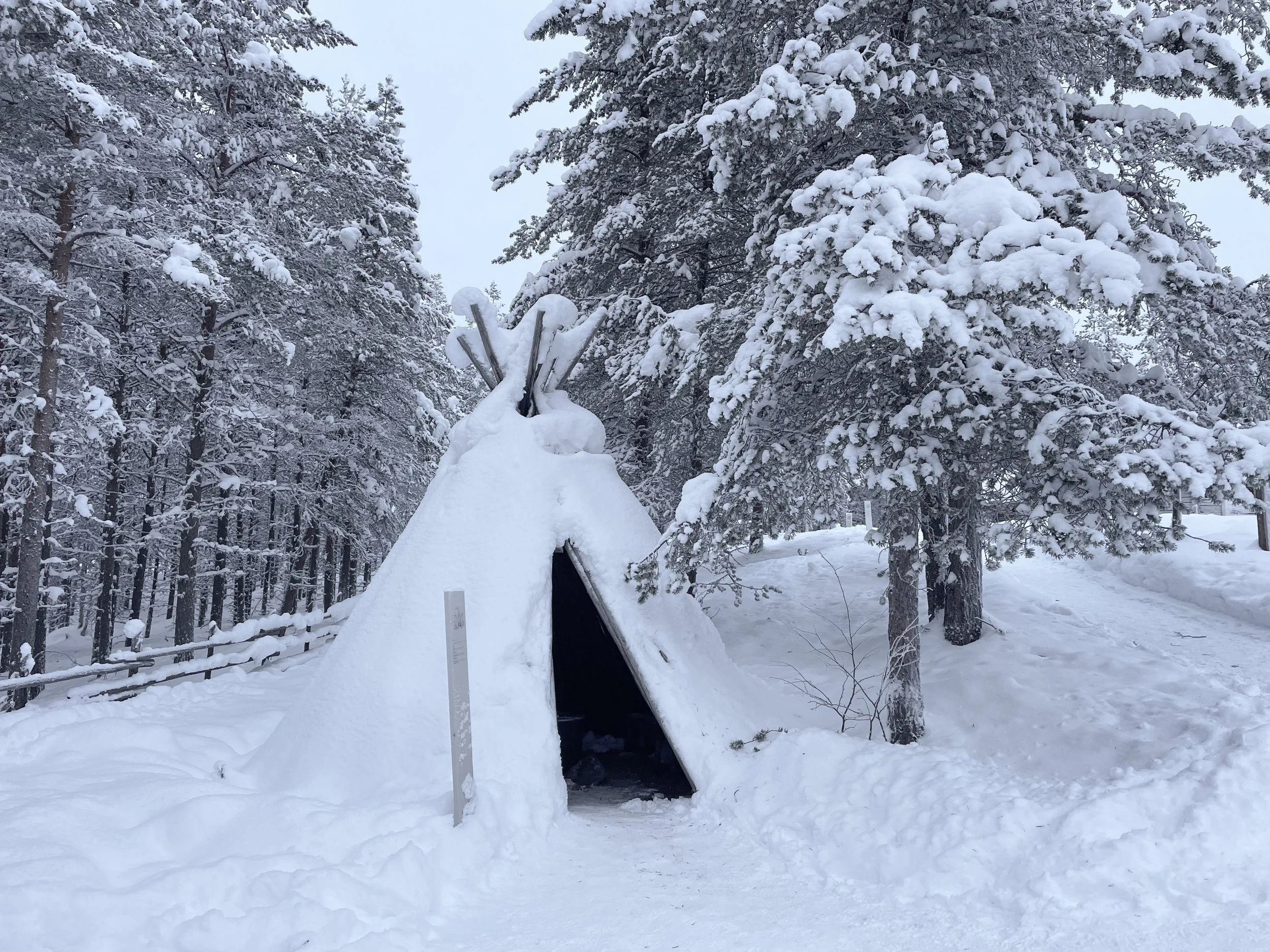
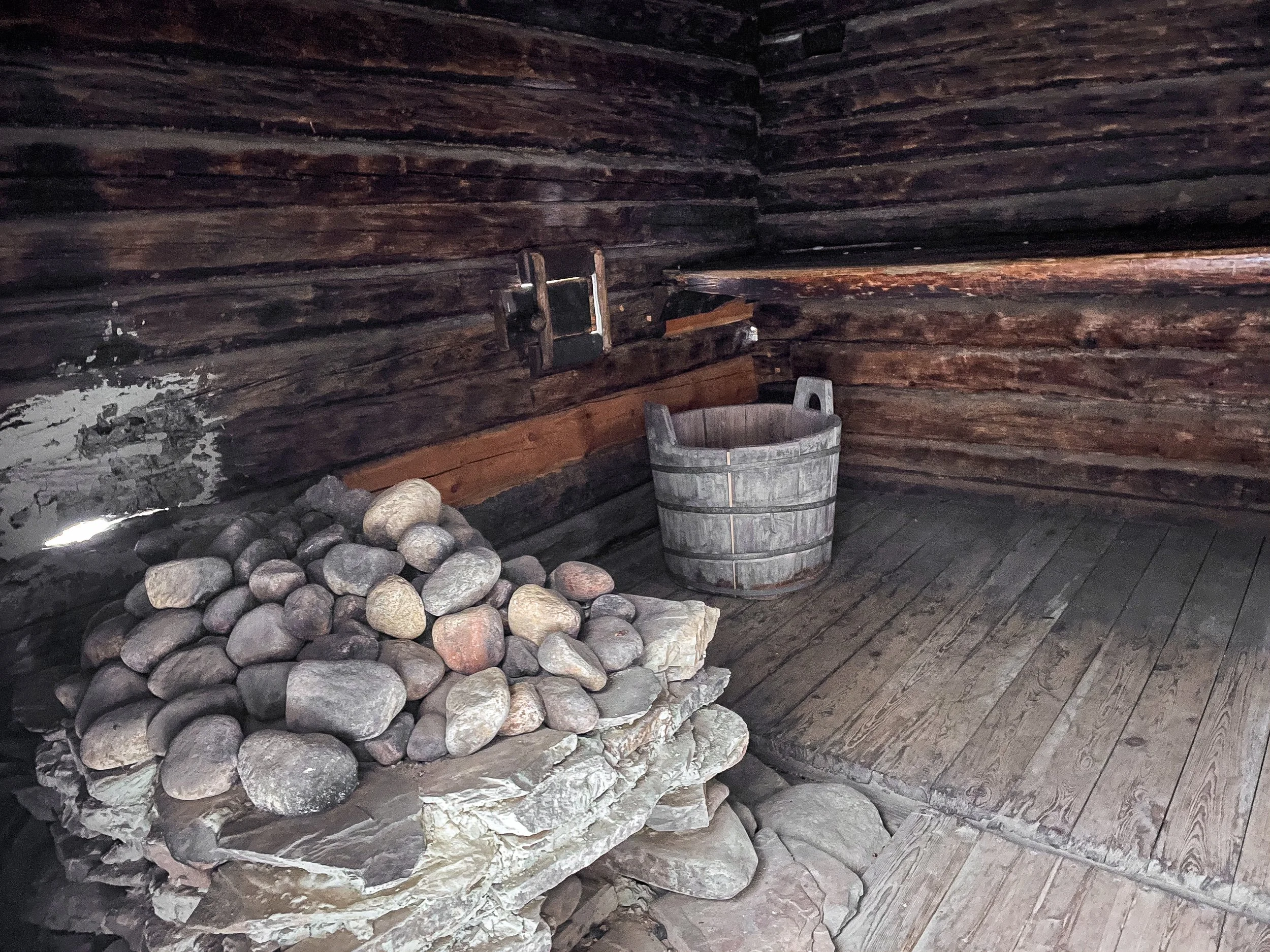
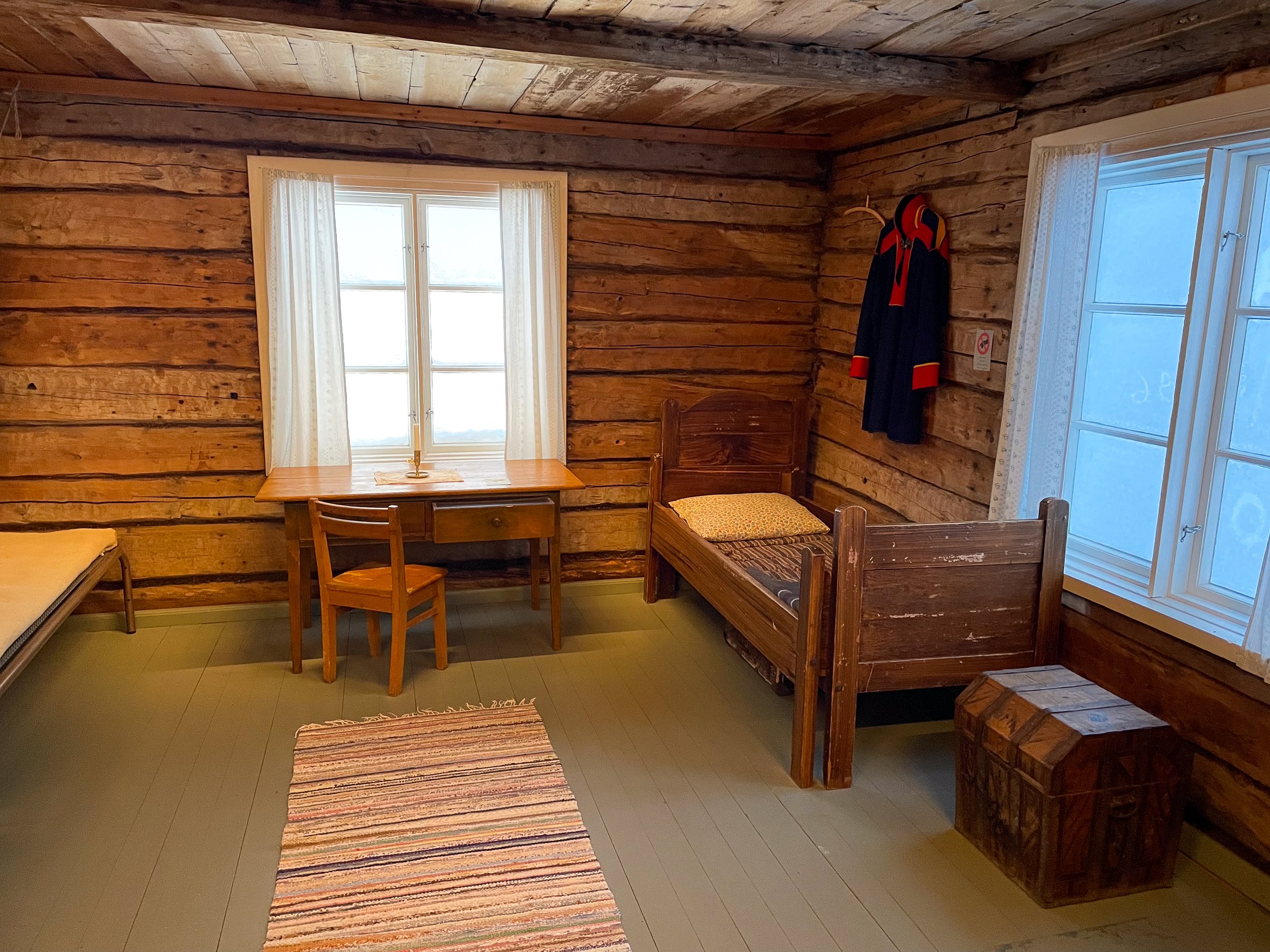
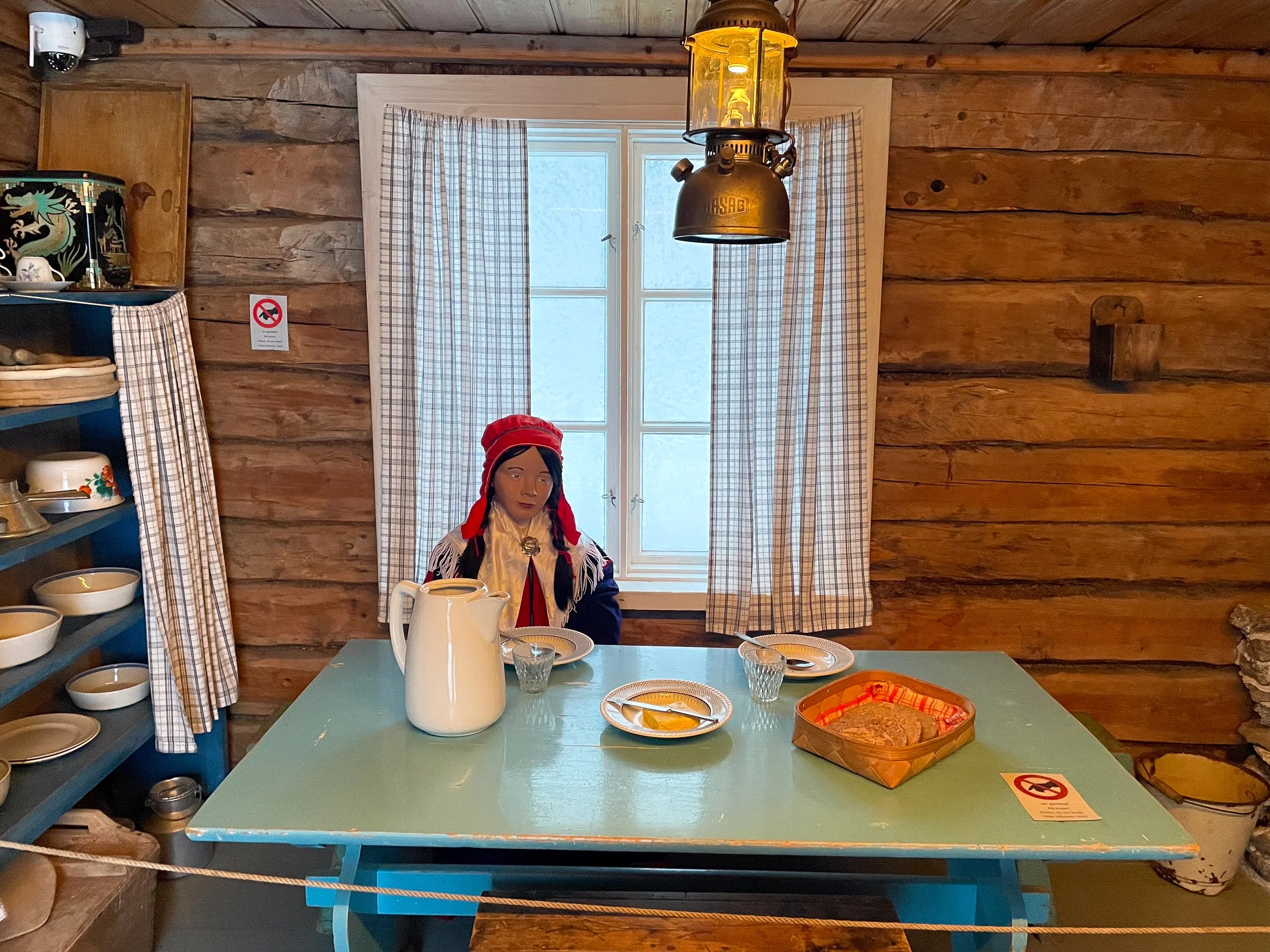
Siida. A museum dedicated to the Sámi people and nature of Lapland. Exhibits document the Arctic seasons, animals and landscapes through the guise of the ice ages and climate change as well as include artifacts and historical context of the Sámi People. There is an open air museum within the forest behind the museum with wooden homes, saunas, and storage buildings.
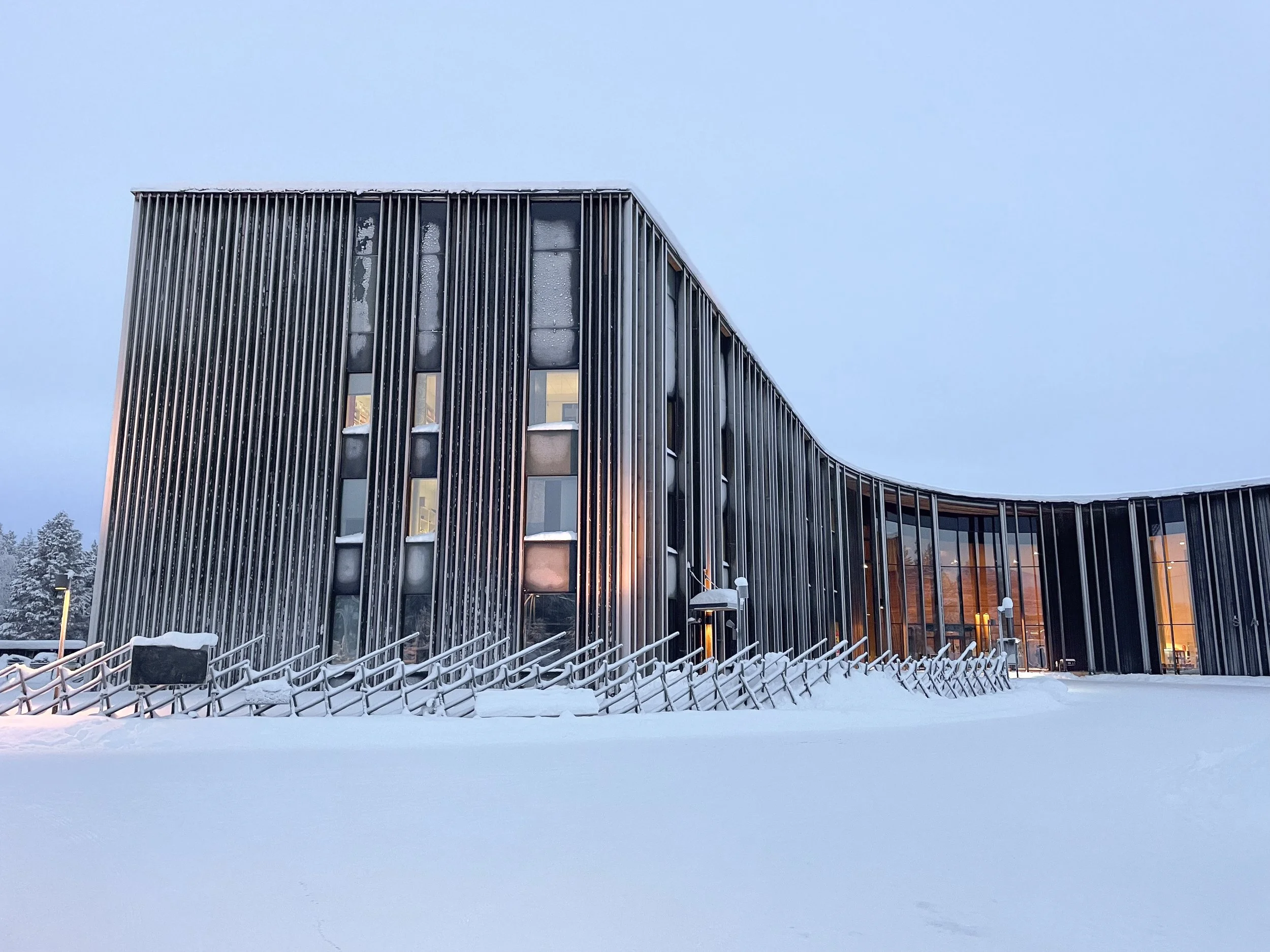
Sajos. A contemporary wooden building home to the Sámi Parliament and Council. It acts as a cultural center with Sami artifacts, library, auditorium, materials shop and a café.
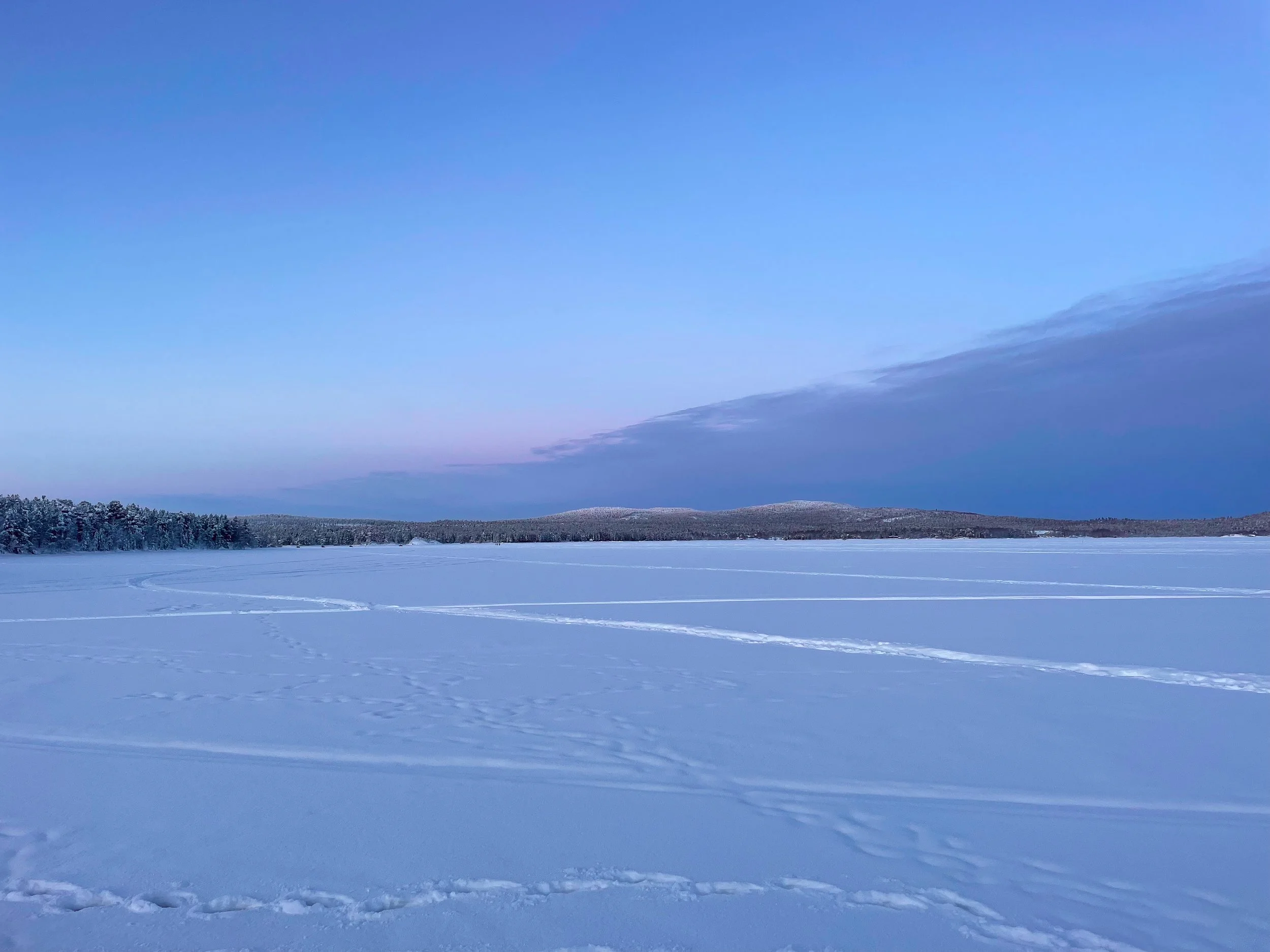
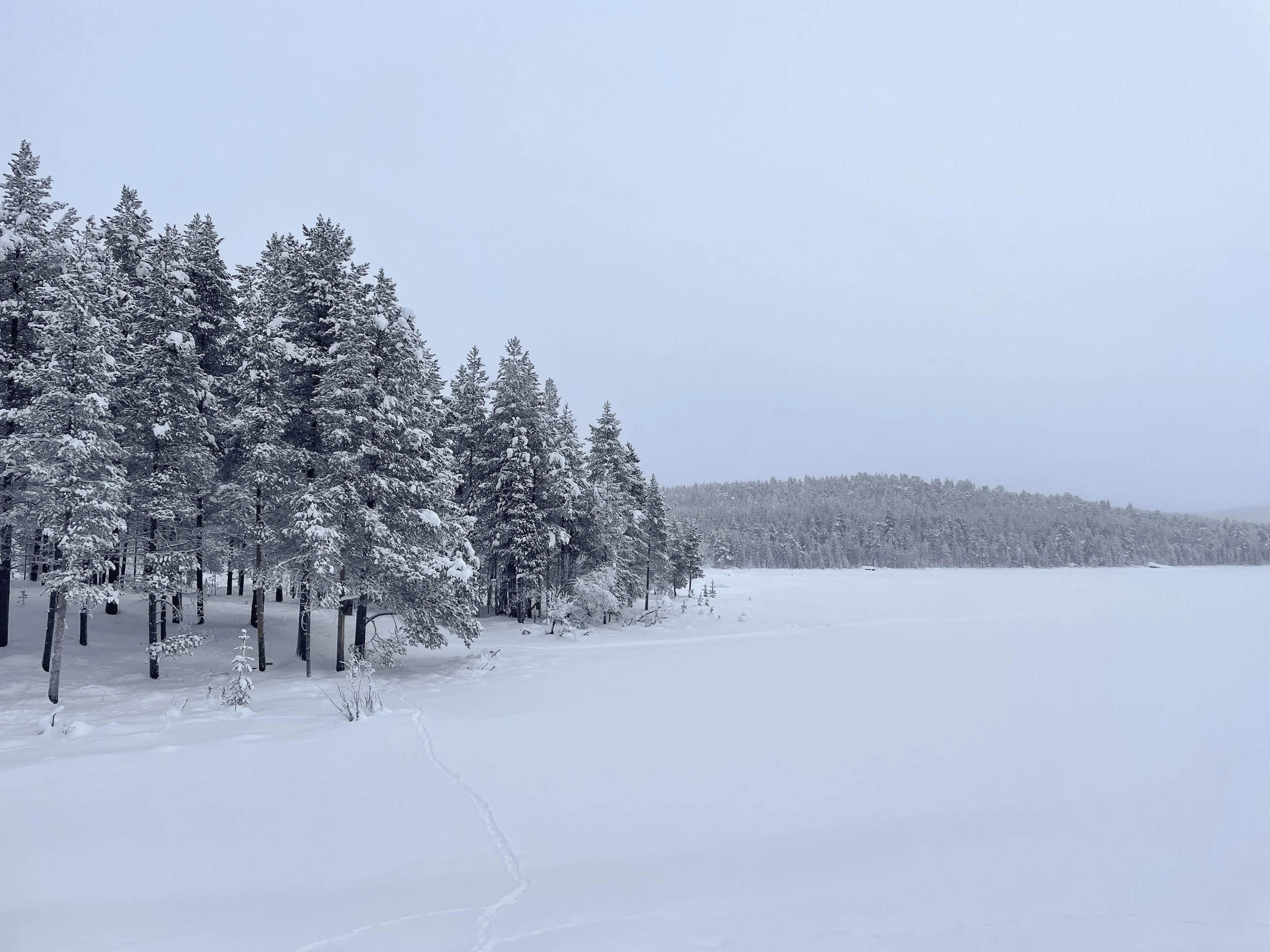
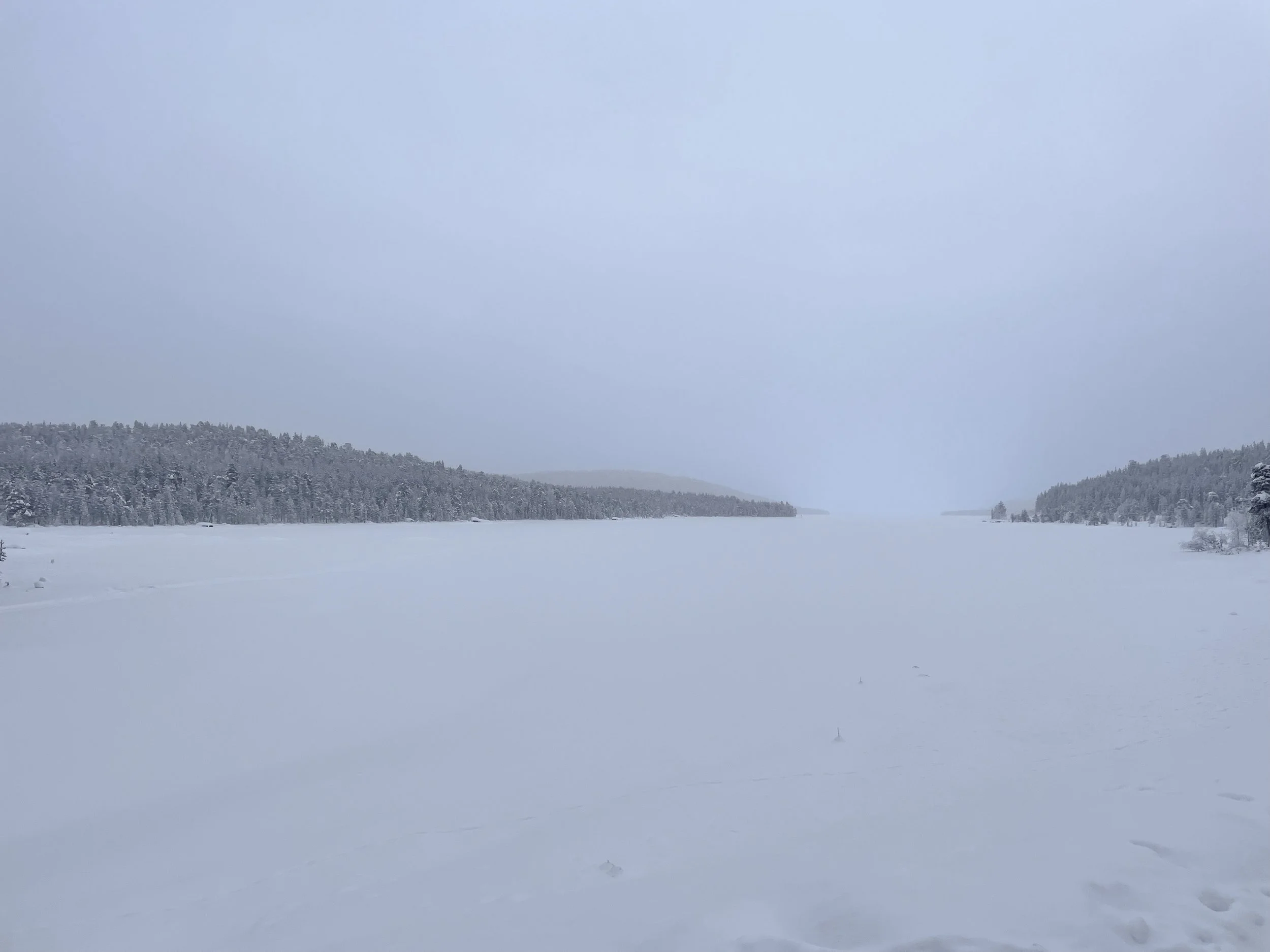
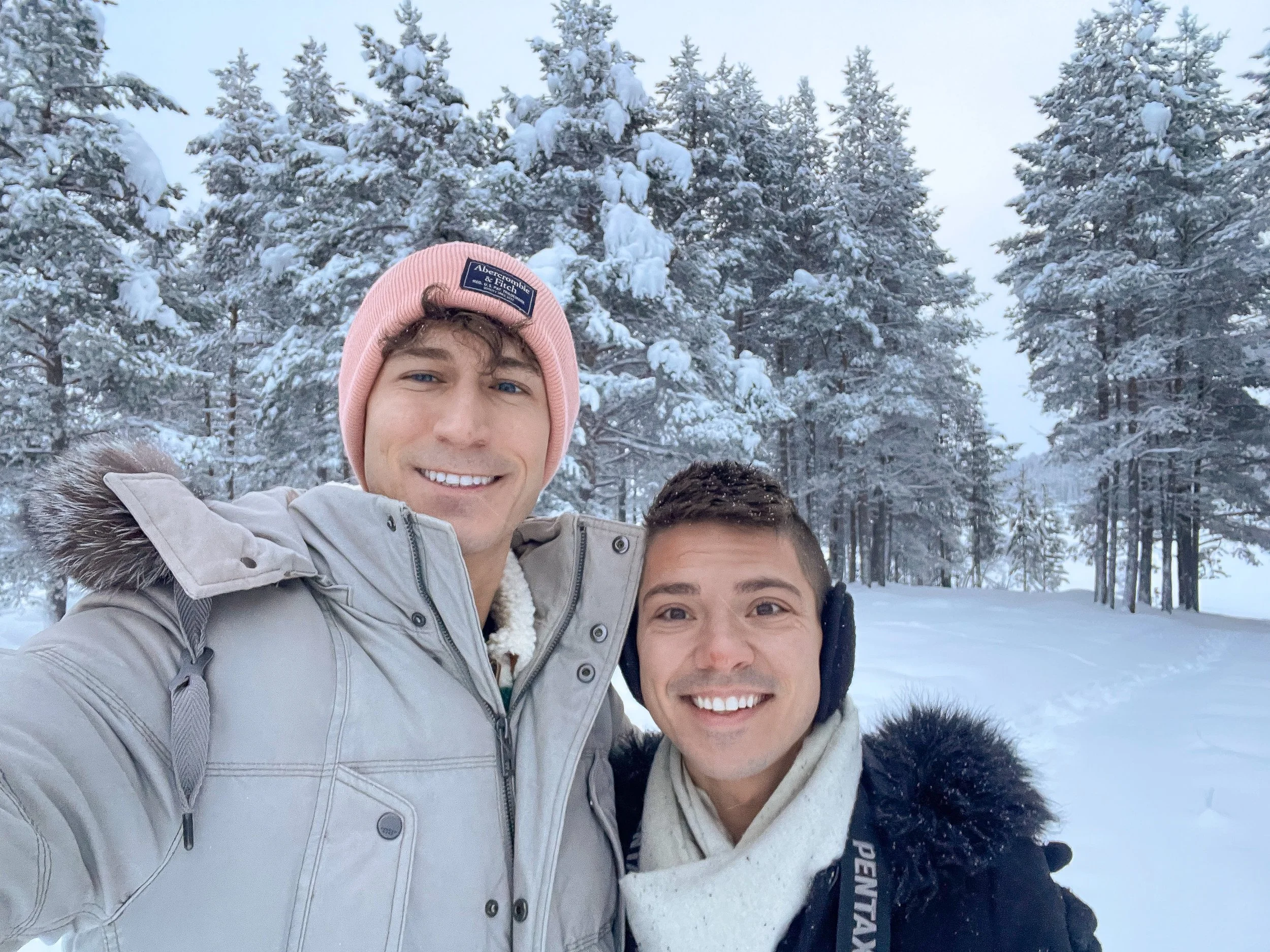
Lake Inari. A large freshwater lake with thousands of tiny islands. It’s referred to as the Sámi Sea for its importance to the Sami People. It acts as a fishing resource for trout, salmon, Arctic char, white fish and perch. Many winter activities take place on the ice including ice fishing, snowmobiling and Aurora spotting.
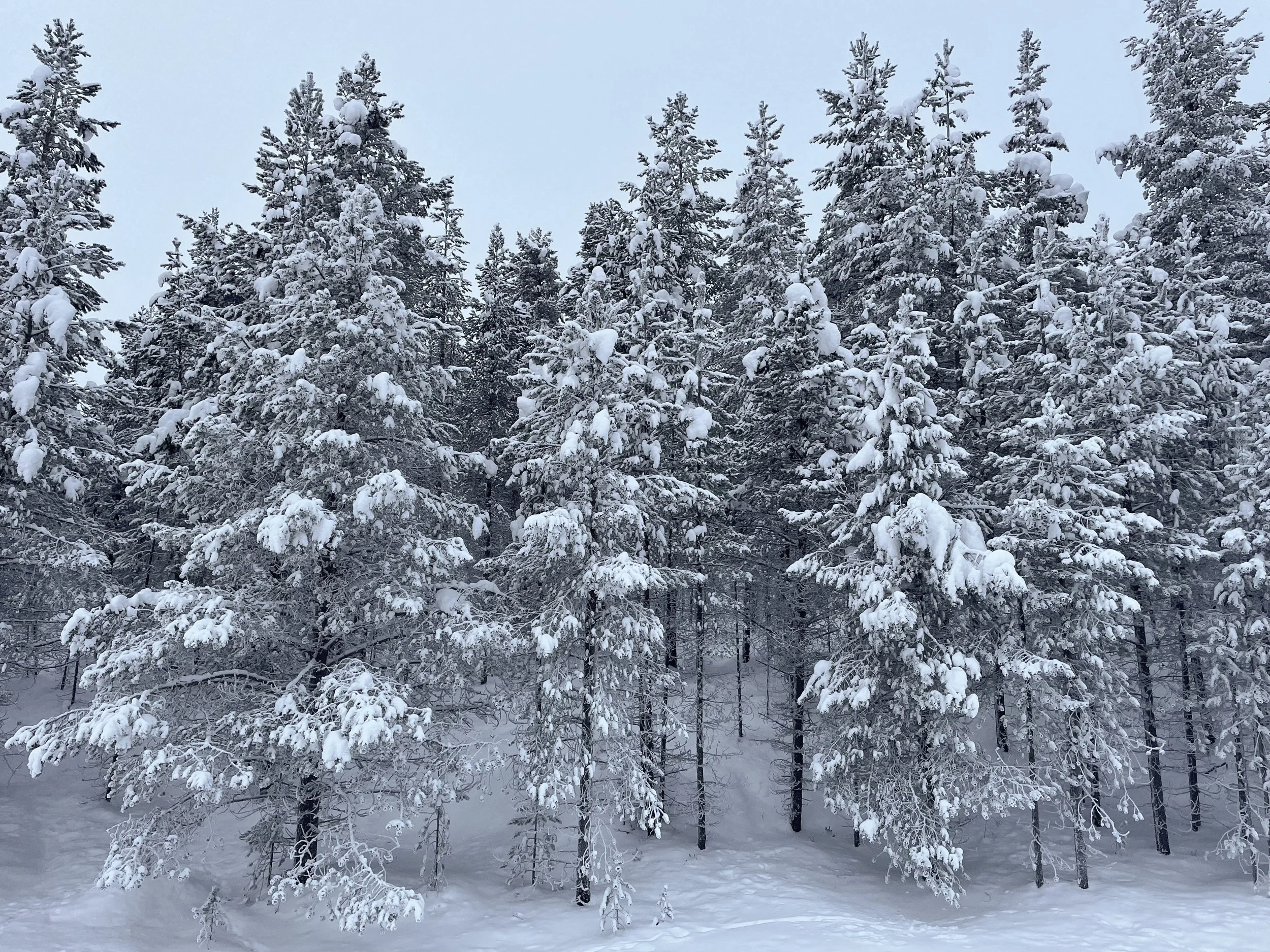
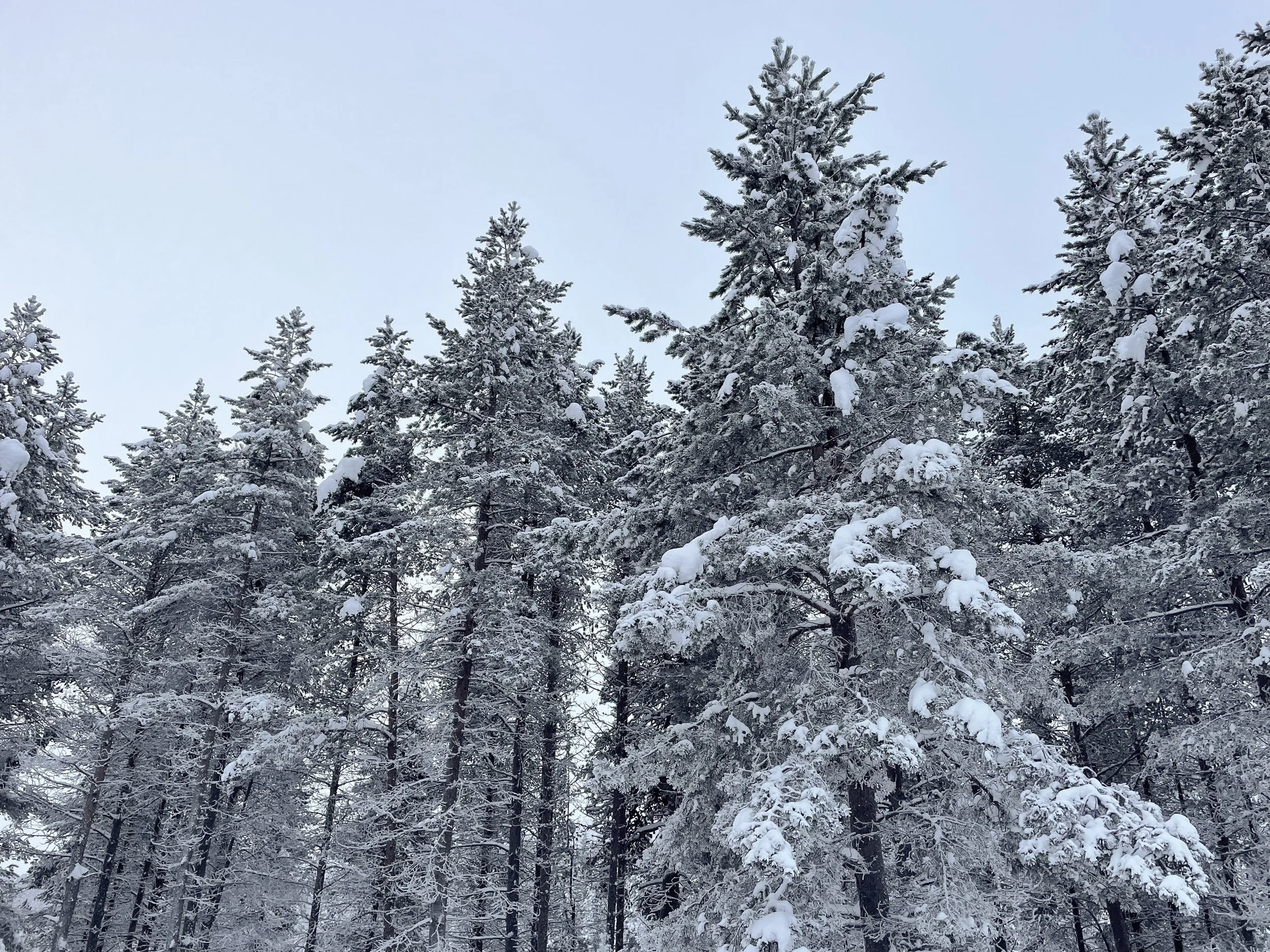
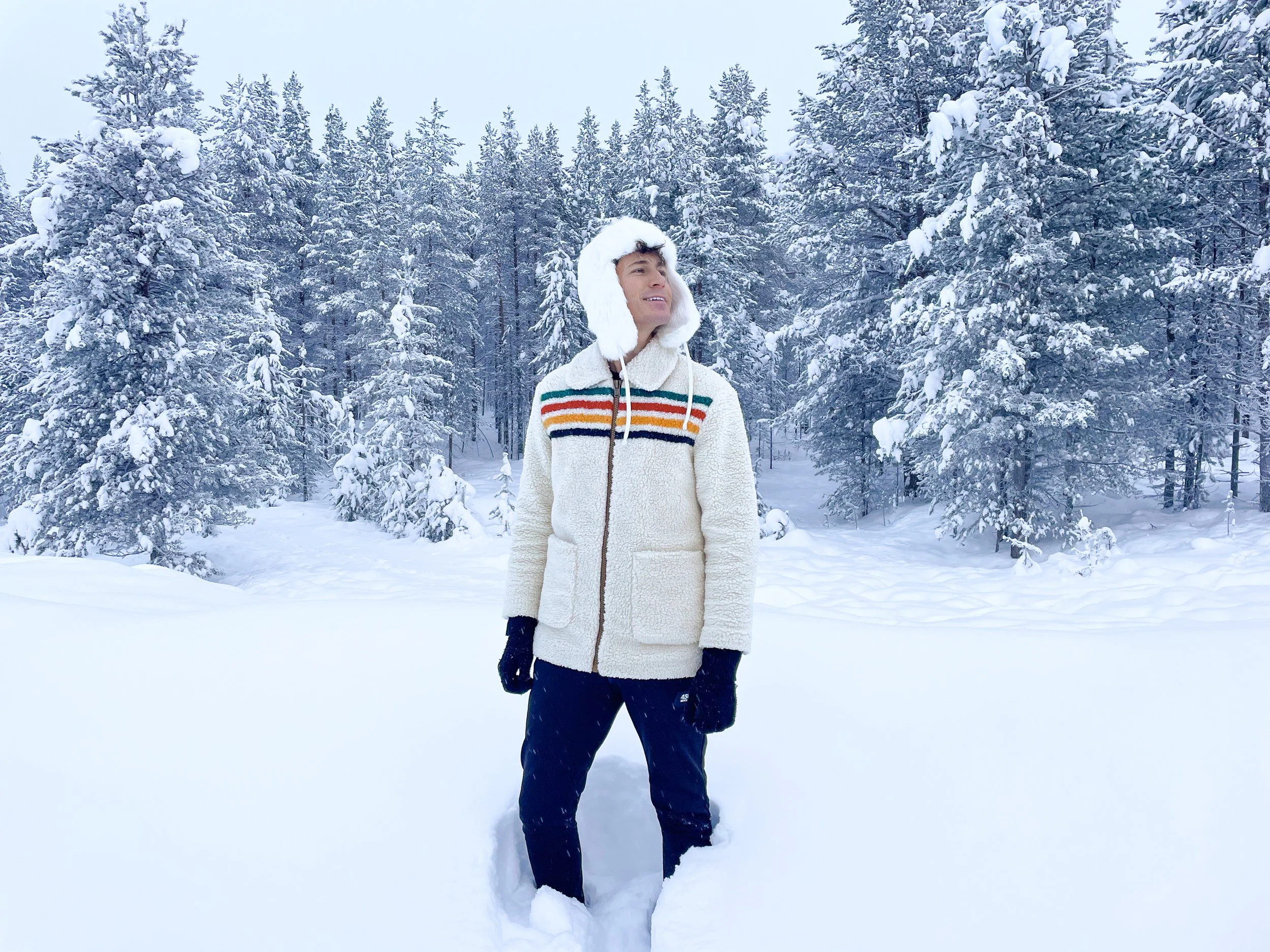
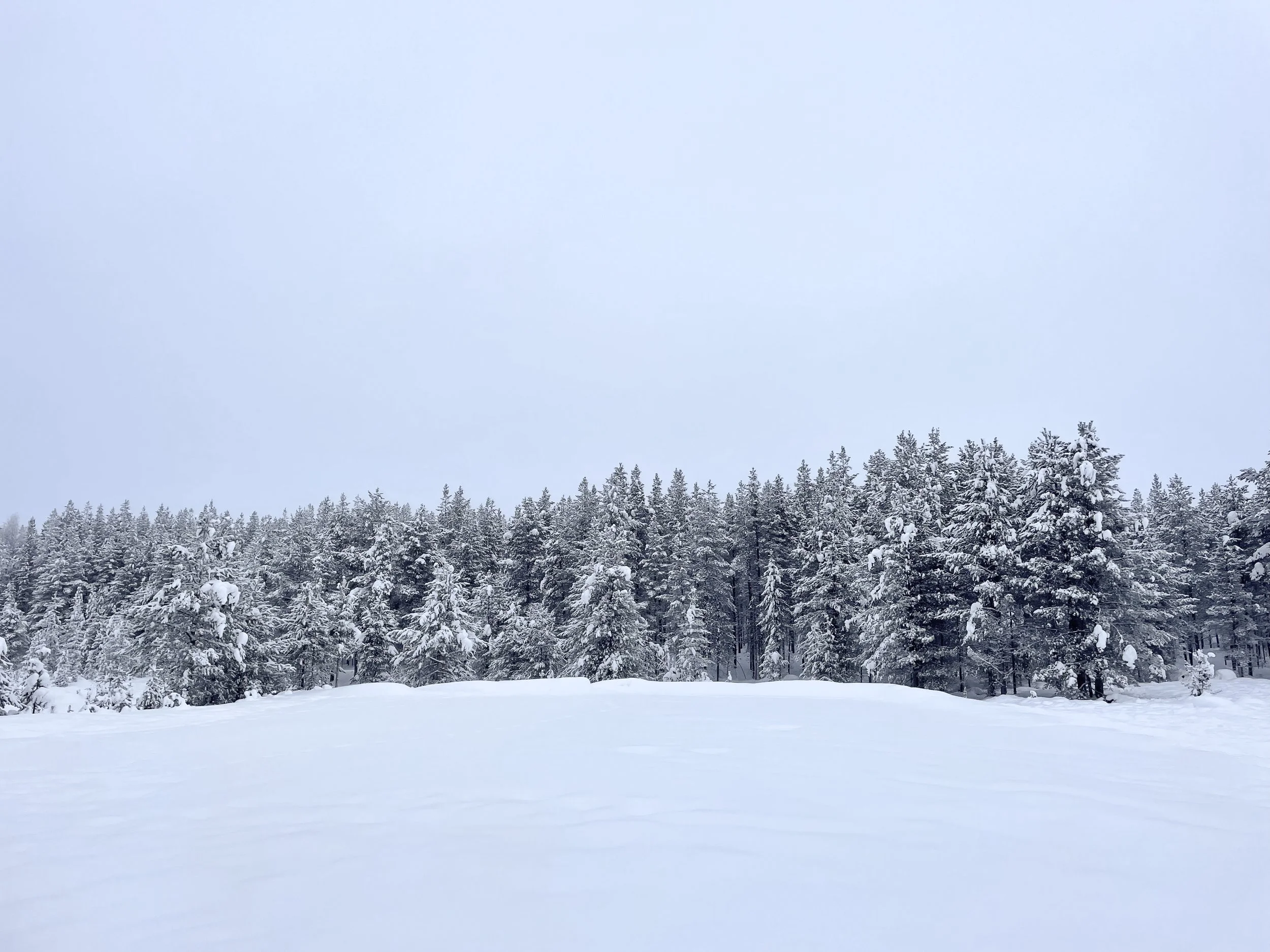
Boreal Forest. A vast pine and birch forest covering most of the Arctic. In Finland, it’s home to wildlife like reindeer, arctic rabbits and snow foxes.
Juutua River. The river flowing from Lake Inari through Inari. There’s a short trail along its southern bank behind Sajos. Watch for arctic hares running through the snow.
Visit Inari Tours
We booked multiple winter activities with Visit Inari Tours, including snowmobiling, husky mushing and cross country skiing. They also arrange ice fishing, reindeer feeding, snow shoeing and Aurora safaris. All winter tours include gear like boots, balaclavas, mittens, helmets and thermal overalls.
Sámi Snowmobile Safari
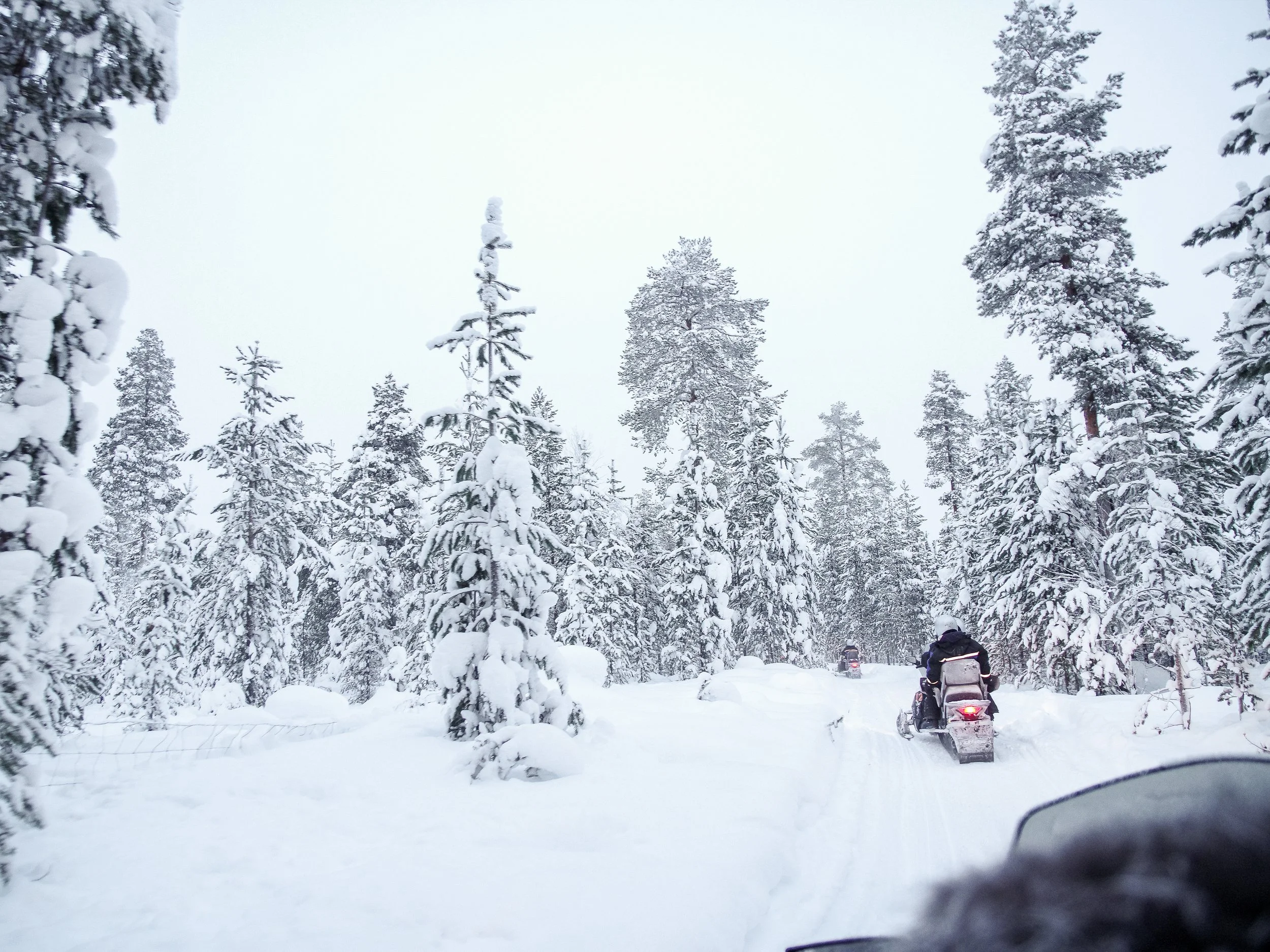
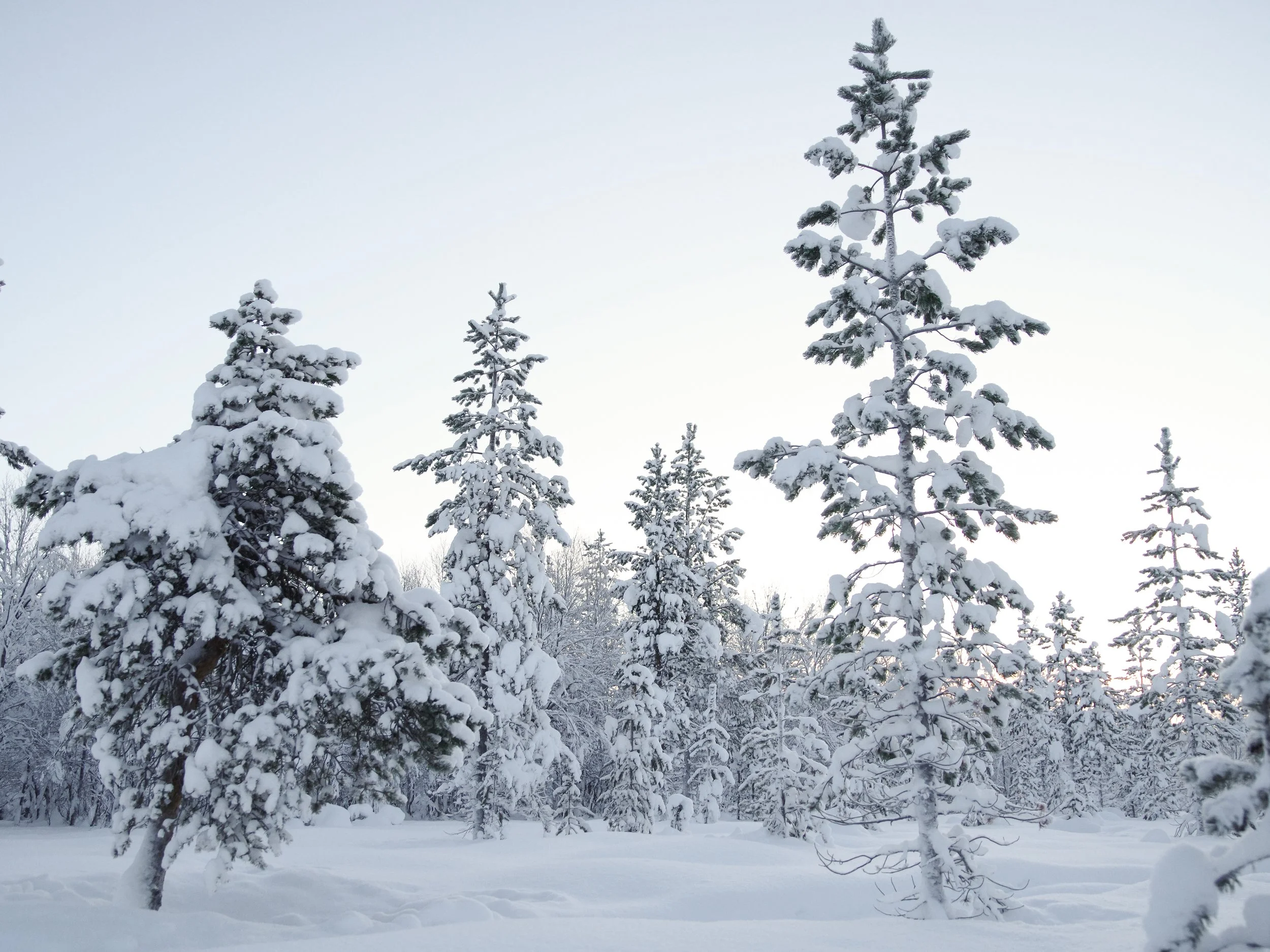
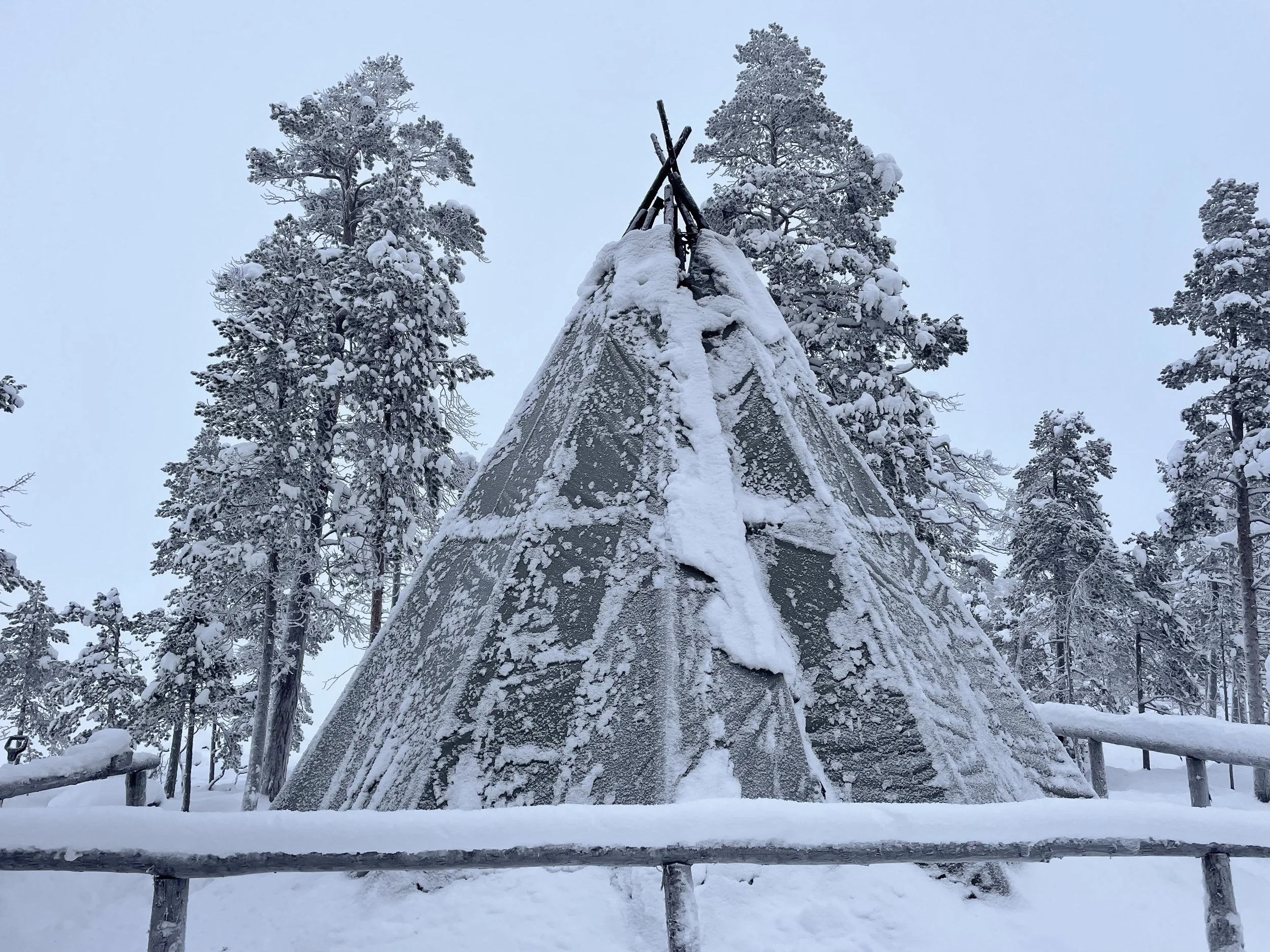
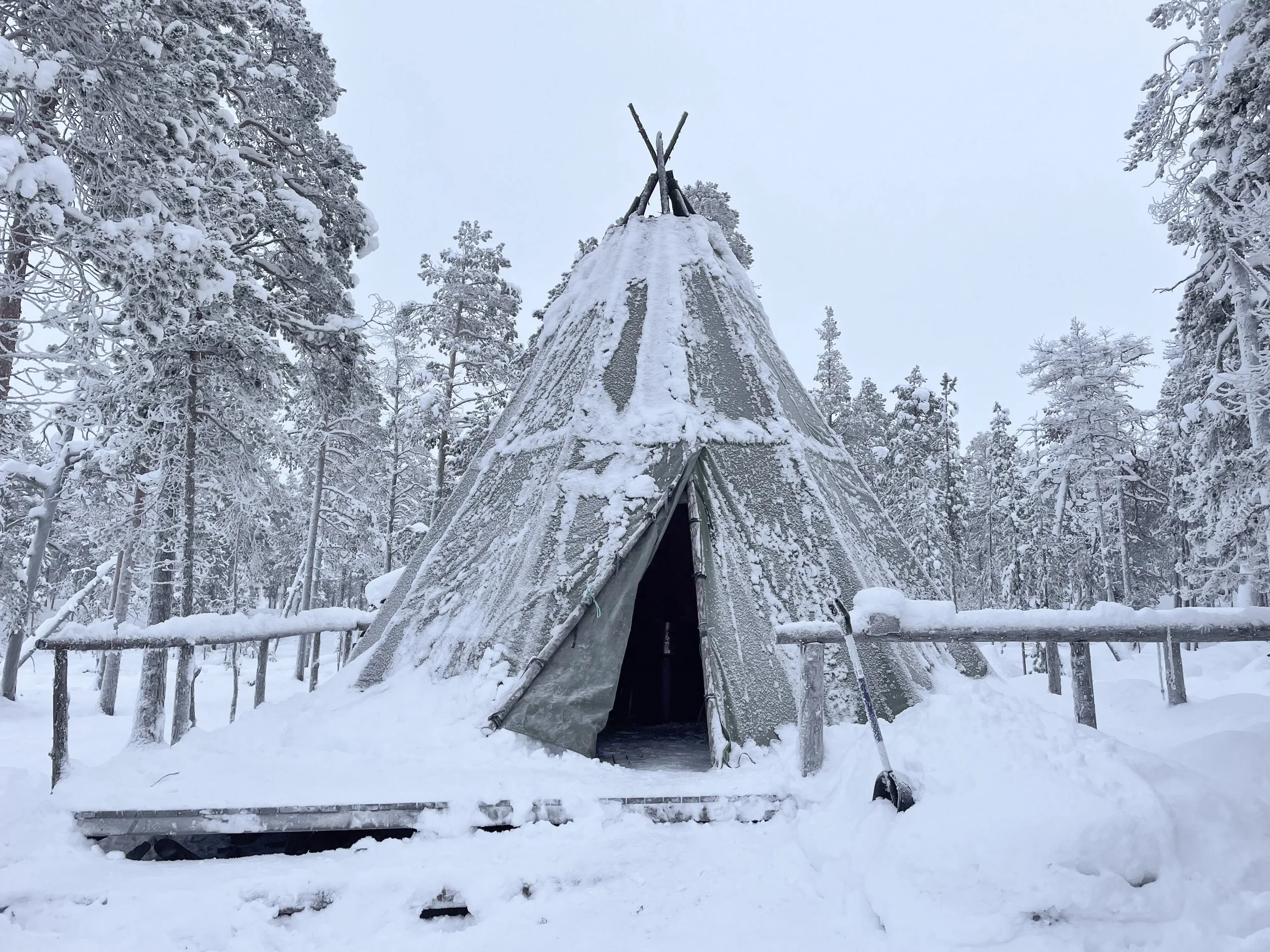
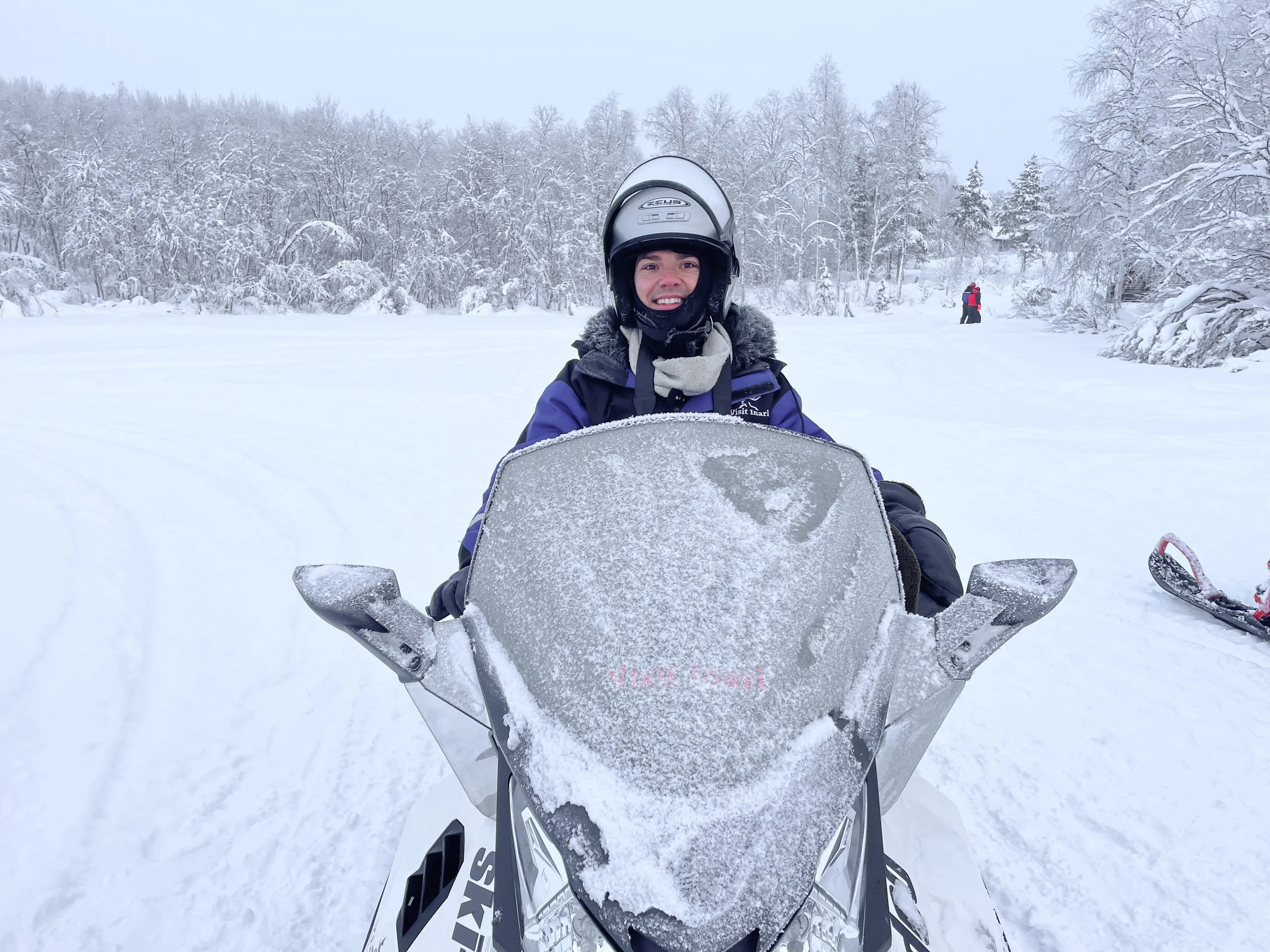
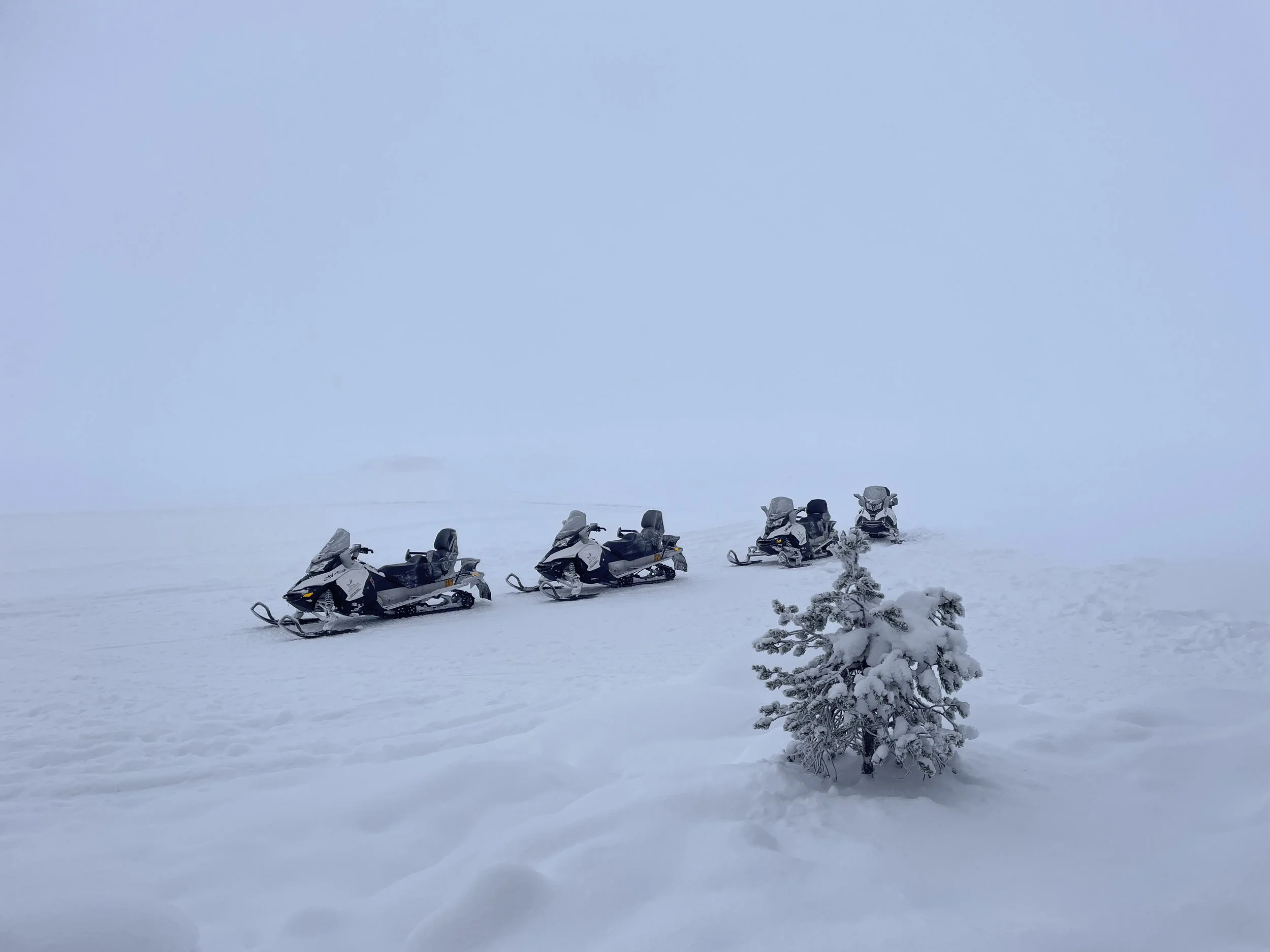
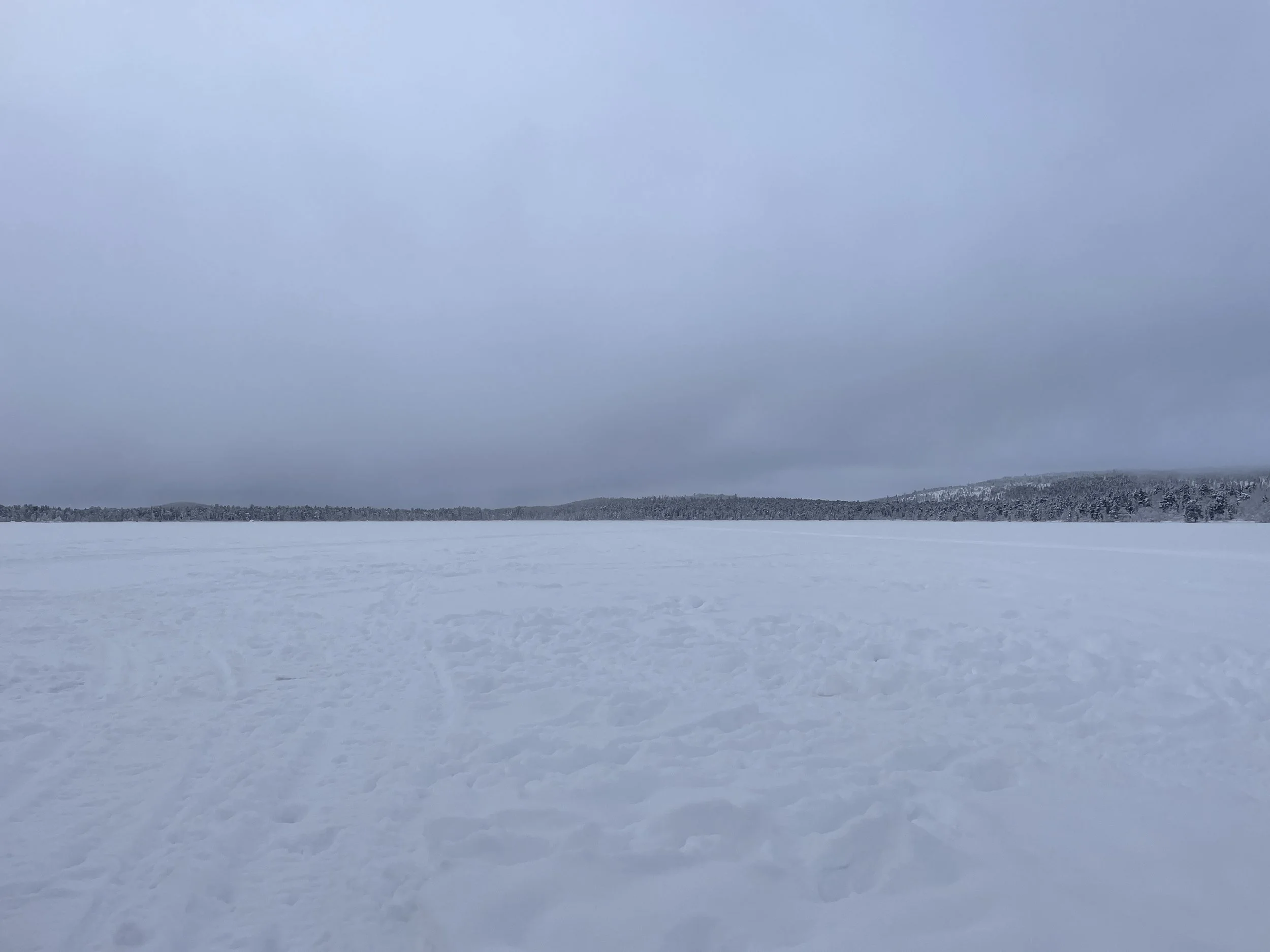
Suited up in a polar onesie, we mounted our snowmobile and sped off onto the frozen Lake Inari. Our guide led us between islands where we spotted groups of reindeer crossing the icy lake. We rode through wilderness trails and past pine trees drooping under the weight of fresh snow. Along the 34km route, we made stops to visit the Wilderness Church and sacred Sámi islands including Ukko and Vanha Hautuumaasaari. After a few hours, we stopped at a small island with a Sámi style conical hut. Within it, we ate a warm lunch of vegetable soup, rye bread and hot cider around a cozy fire.
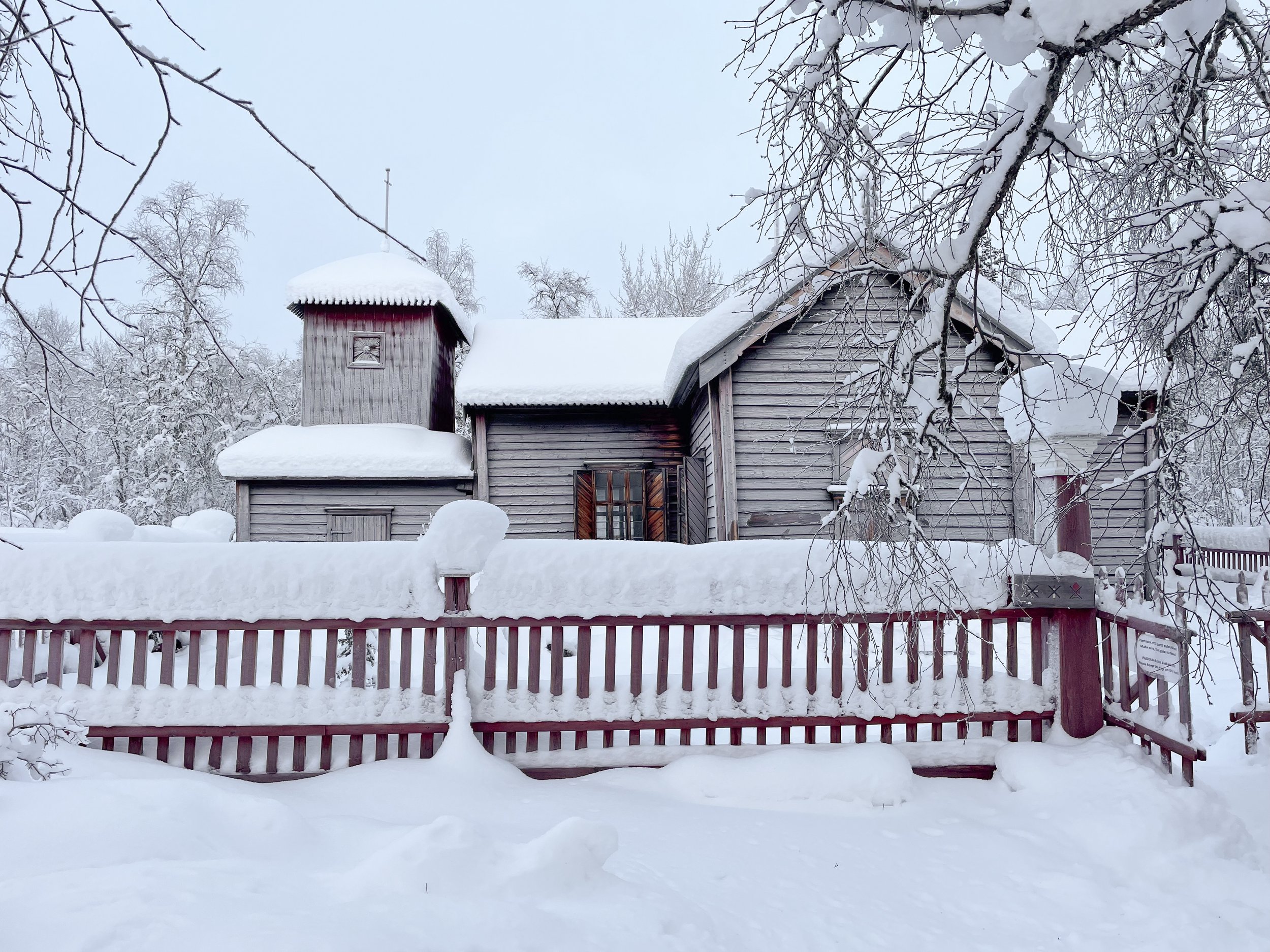
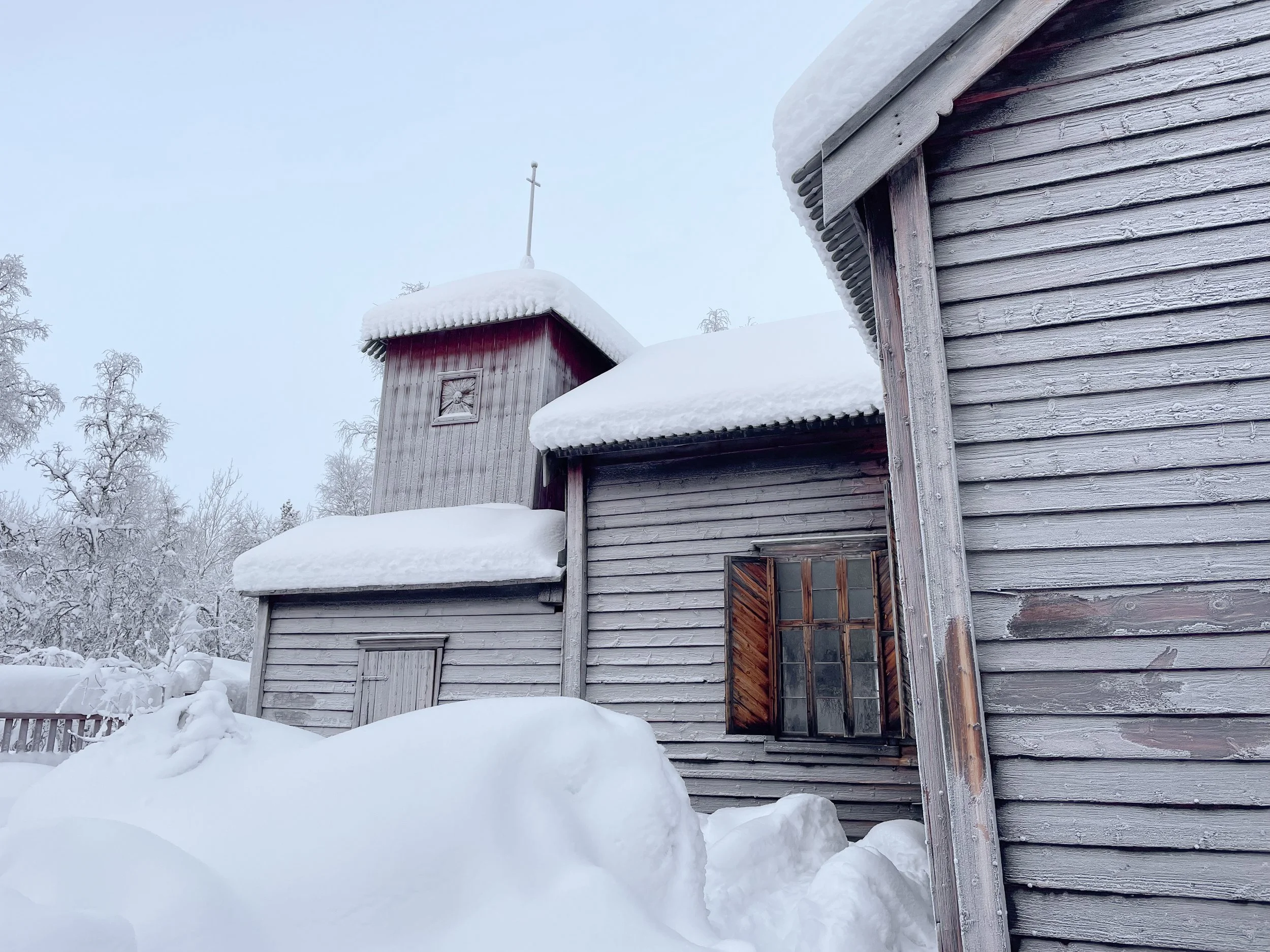
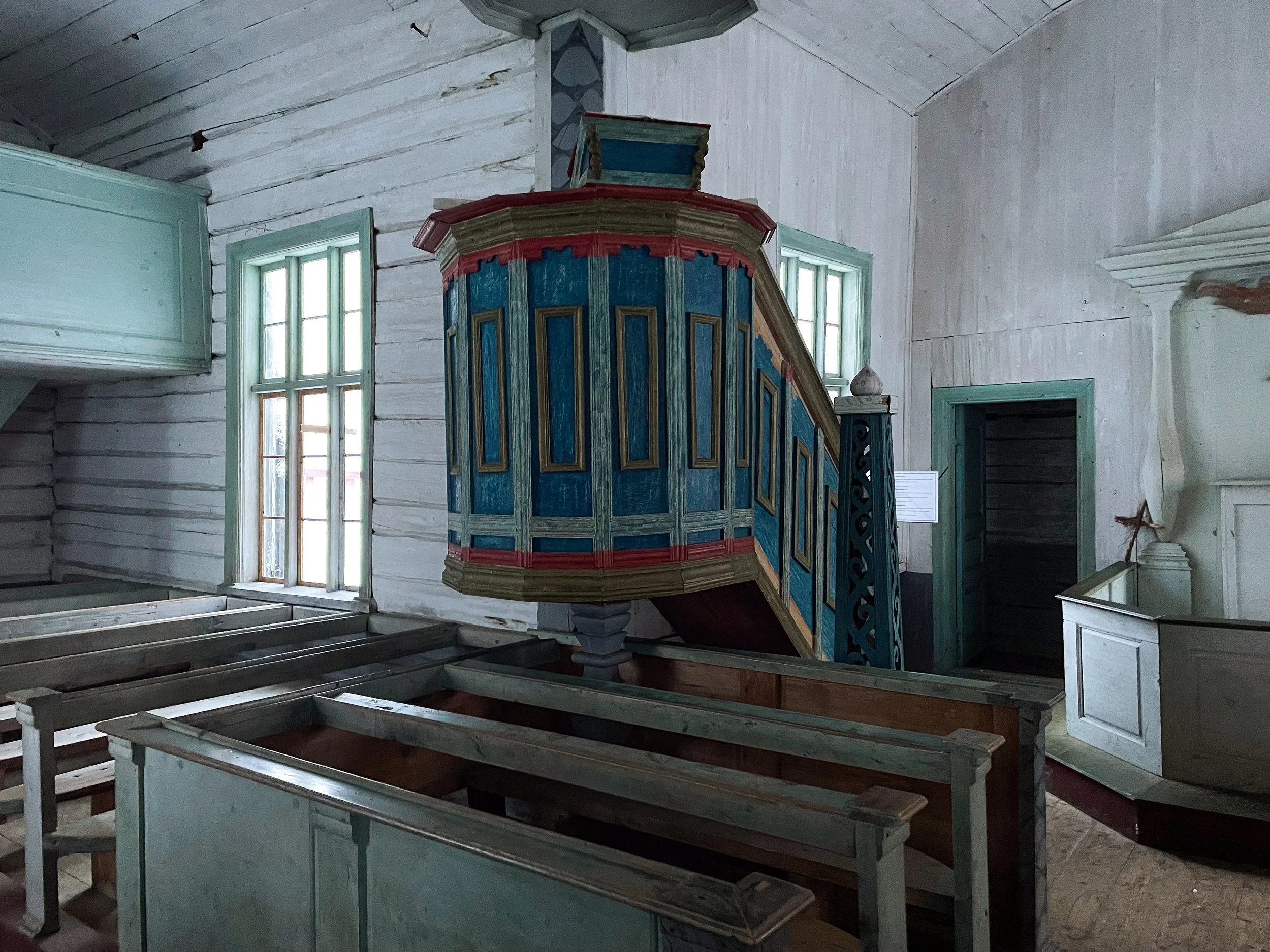
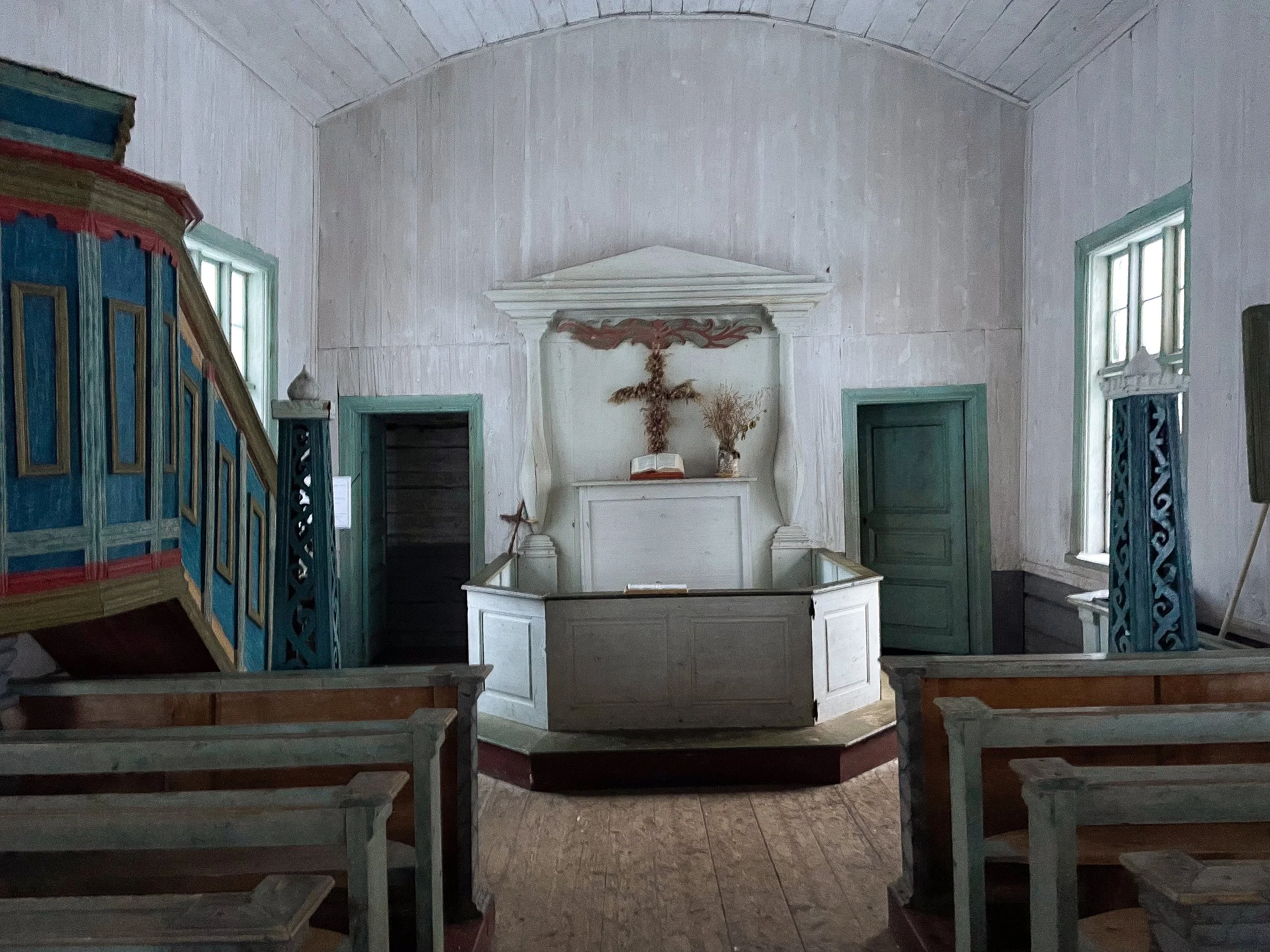
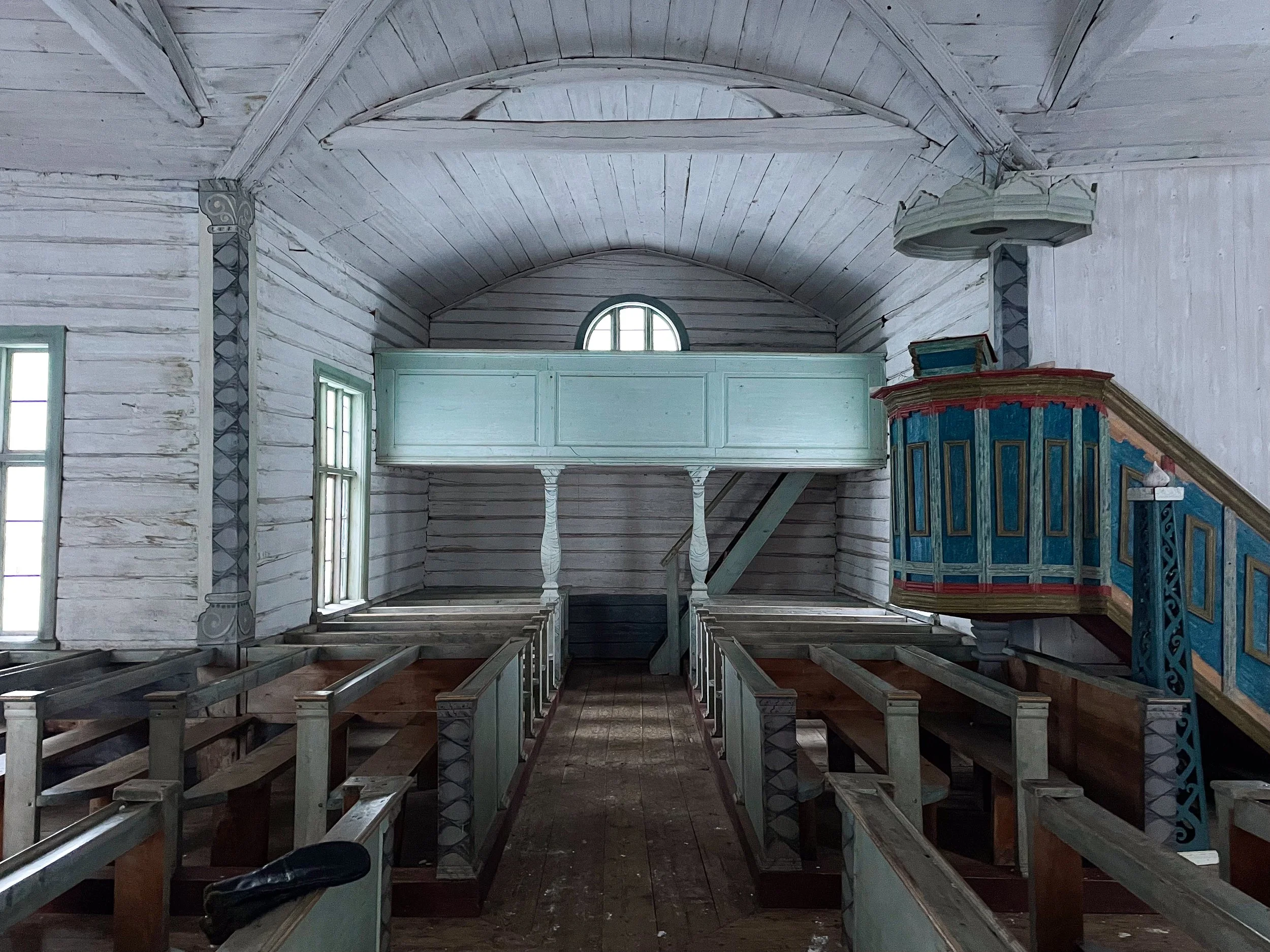
Wilderness Church. A remote wooden church in the forest along the shore of Lake Inari. It’s the oldest building in Northern Finland, dating back to 1760.
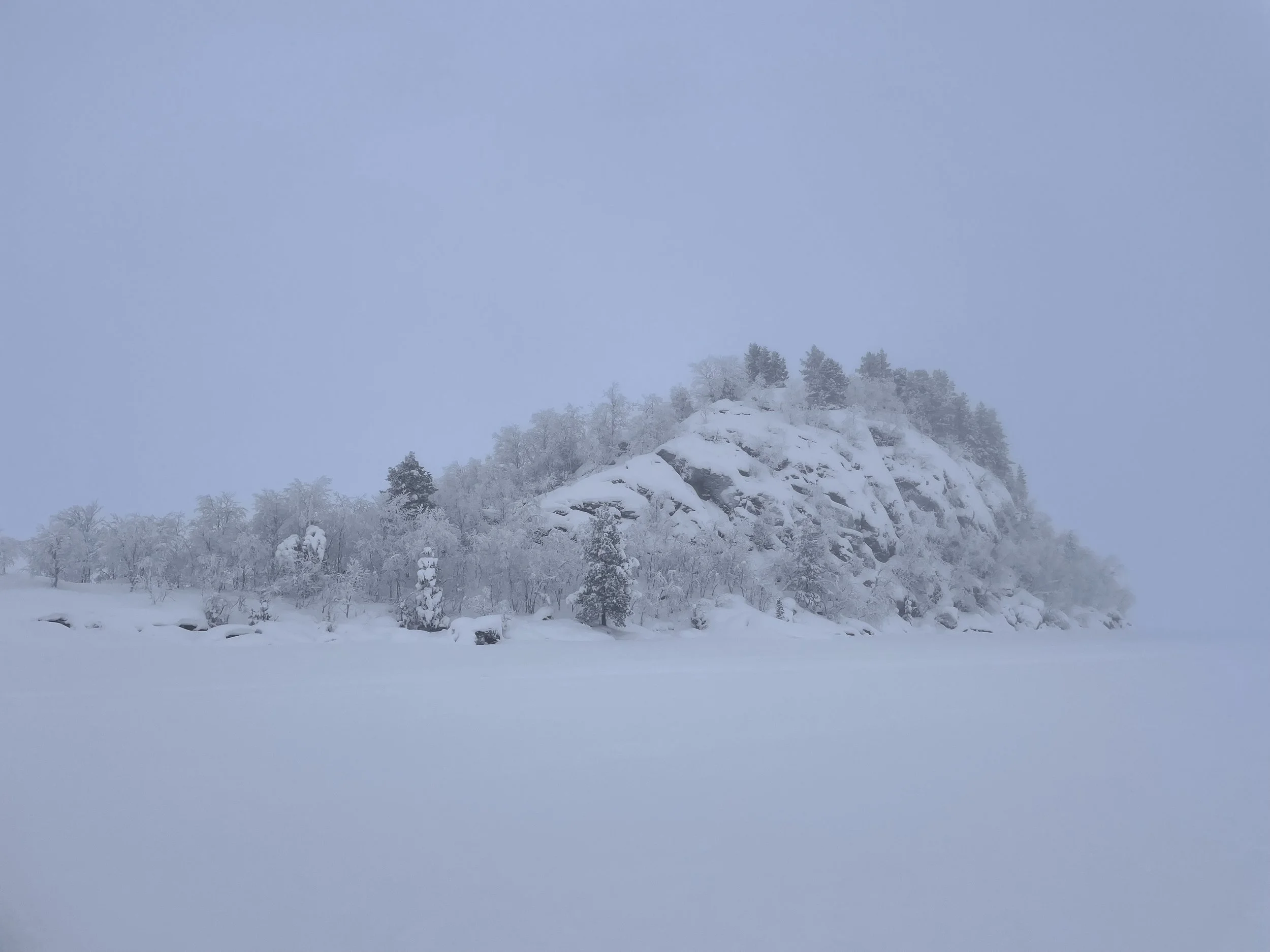
Ukko Island. An island on Lake Inari with a tall rocky point sacred to the Sámi People. Offerings are made here to Ukko, the “God of Thunder.”
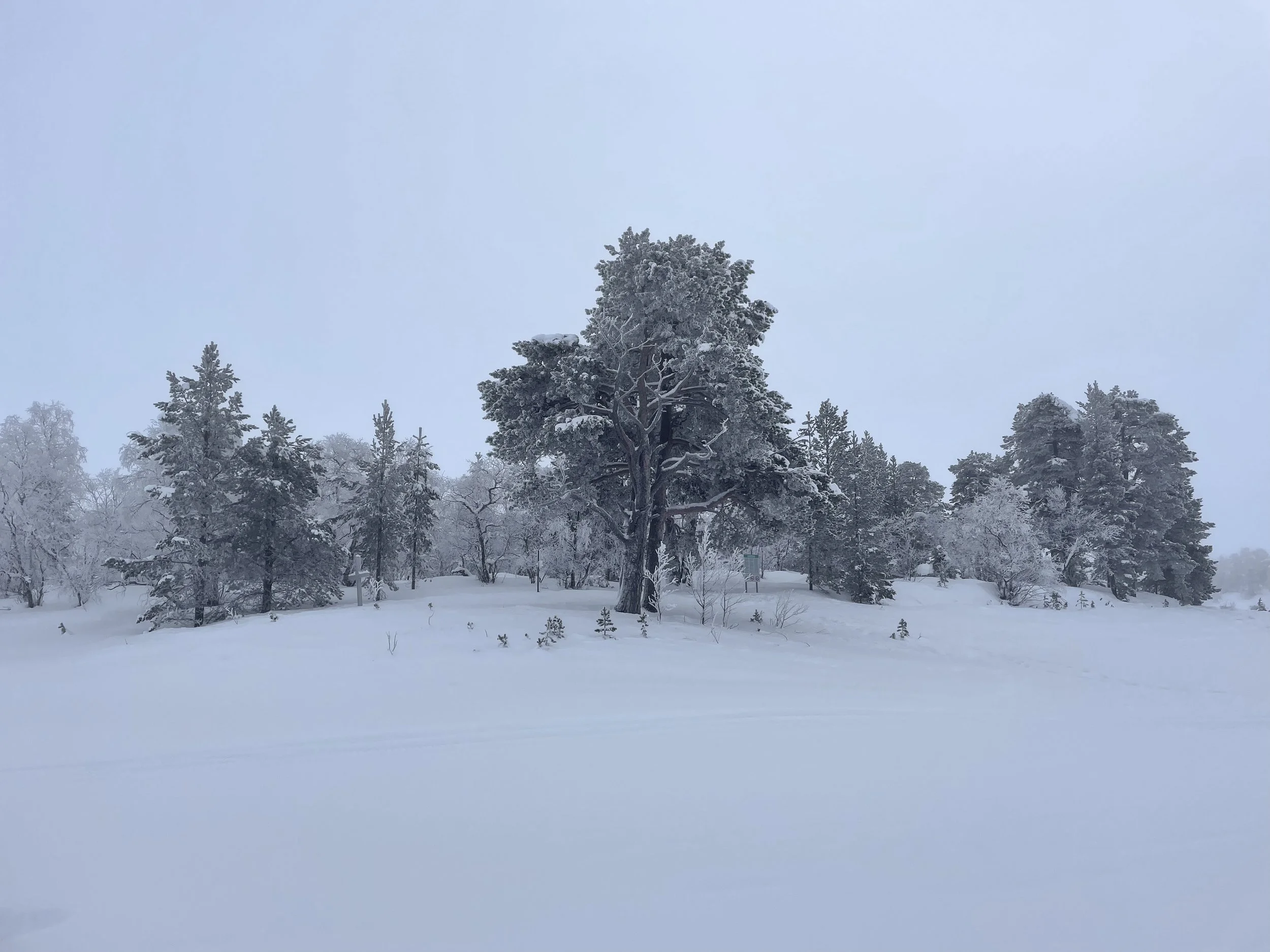
Vanha Hautuumaasaari. A sacred island on Lake Inari and burial ground for the Sámi People.
Husky Mushing
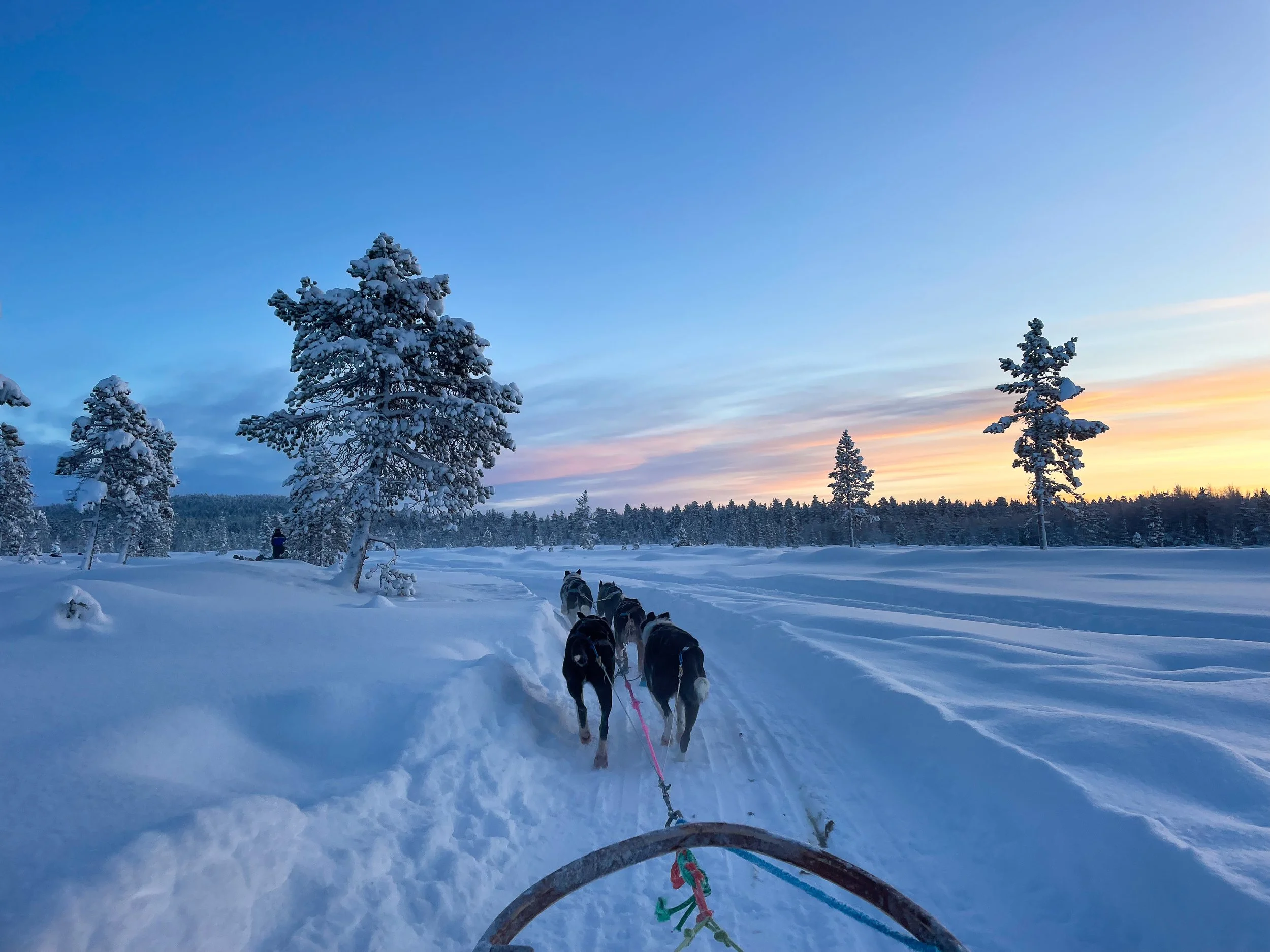
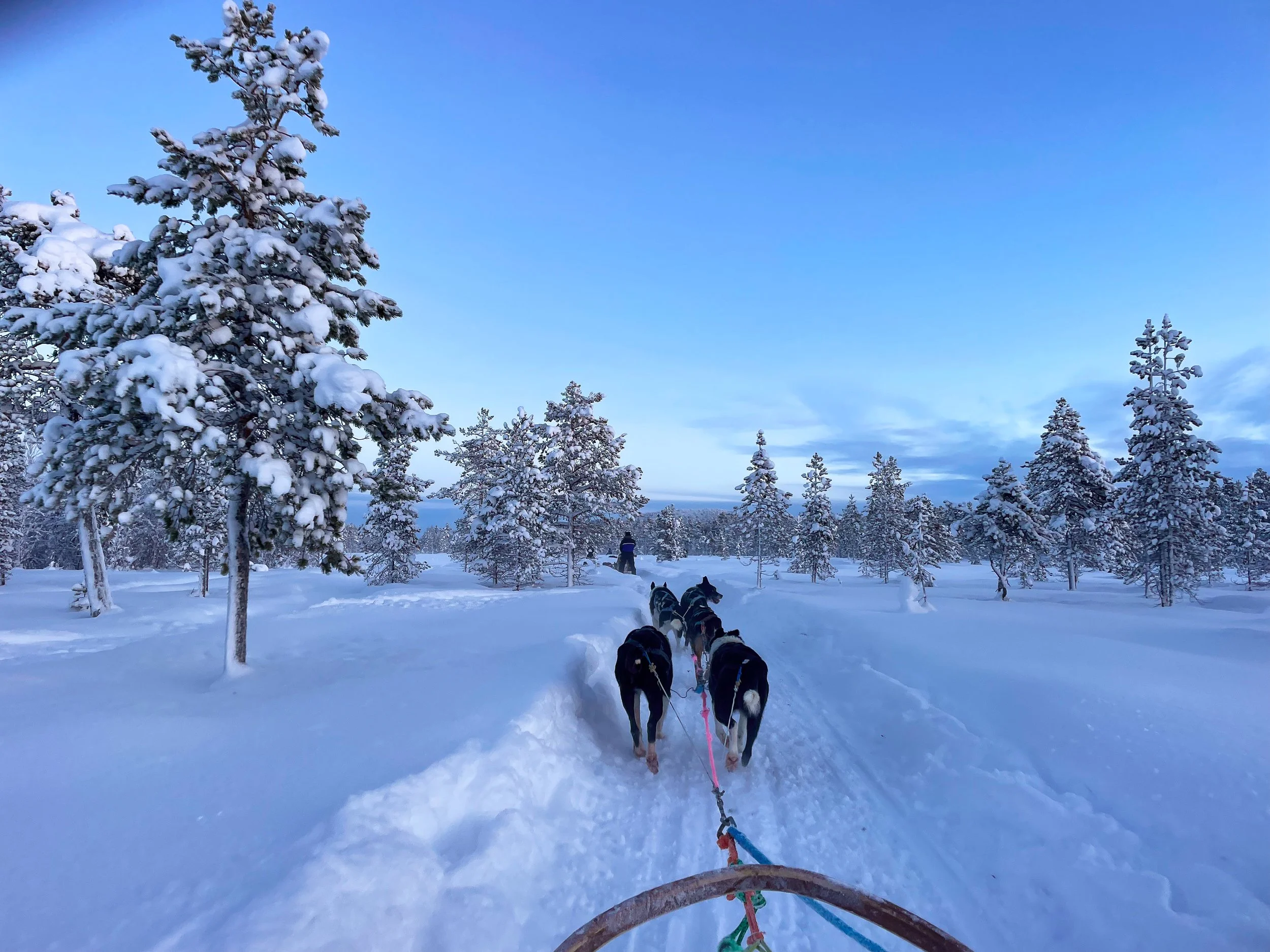
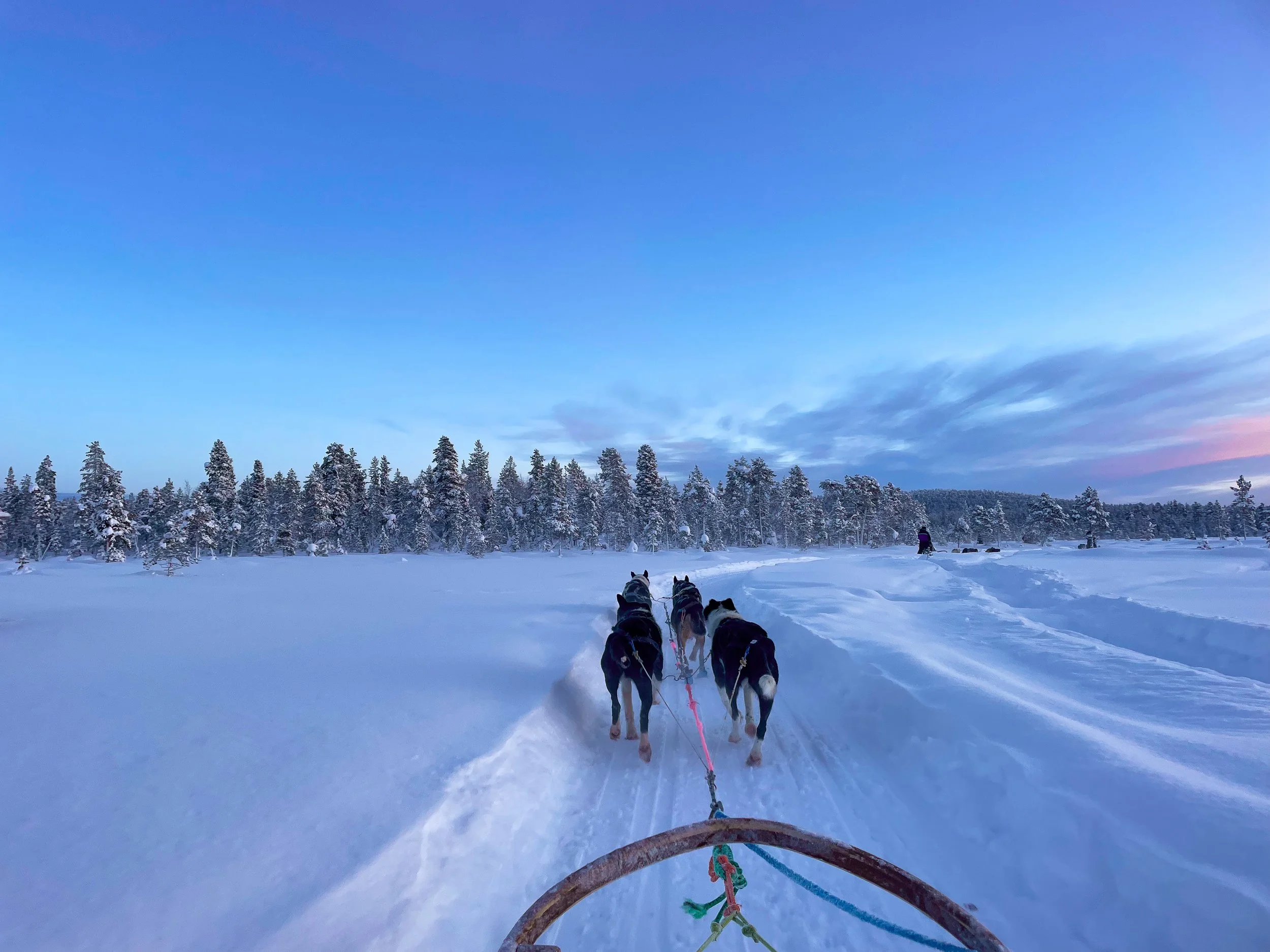
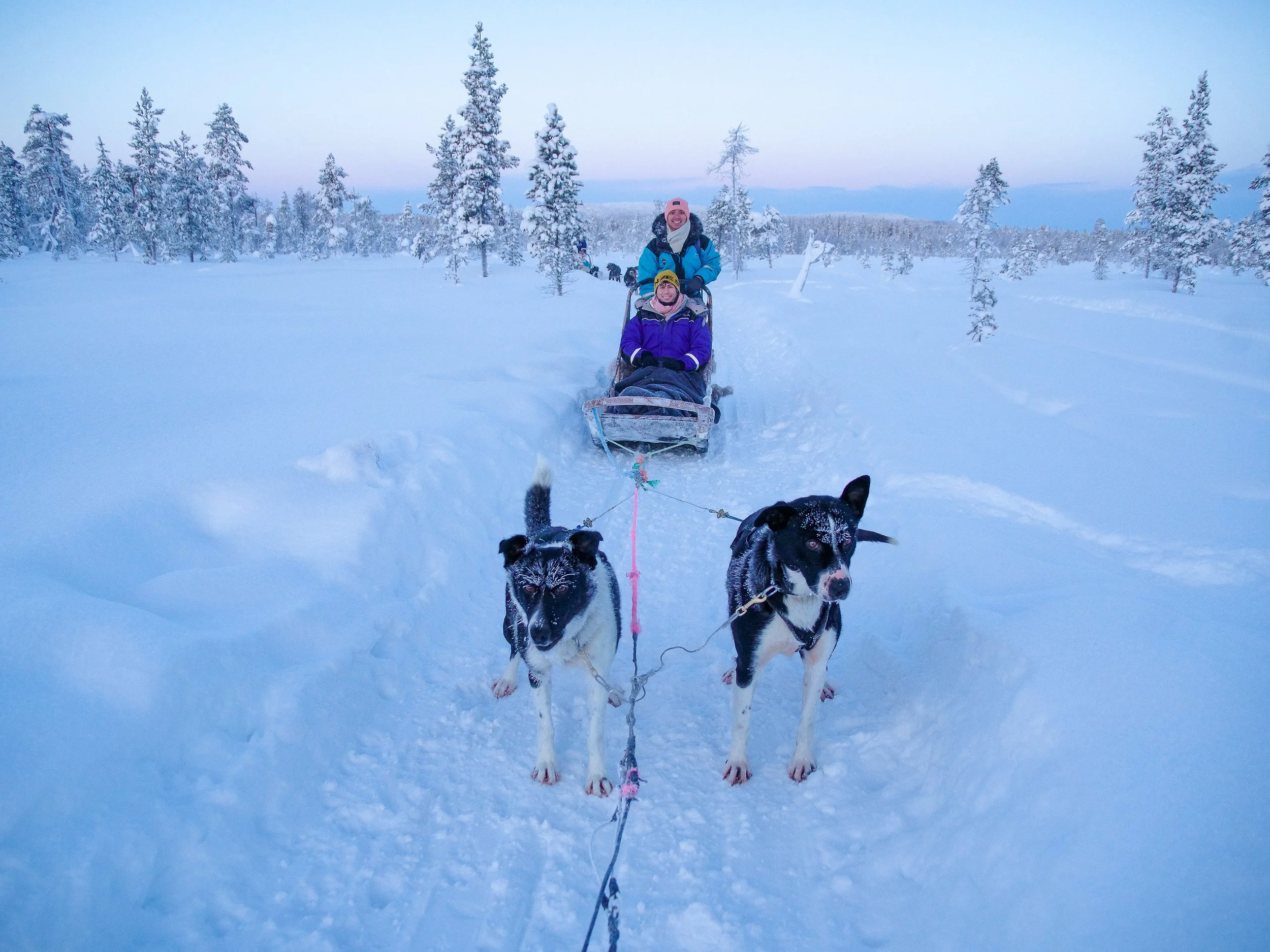
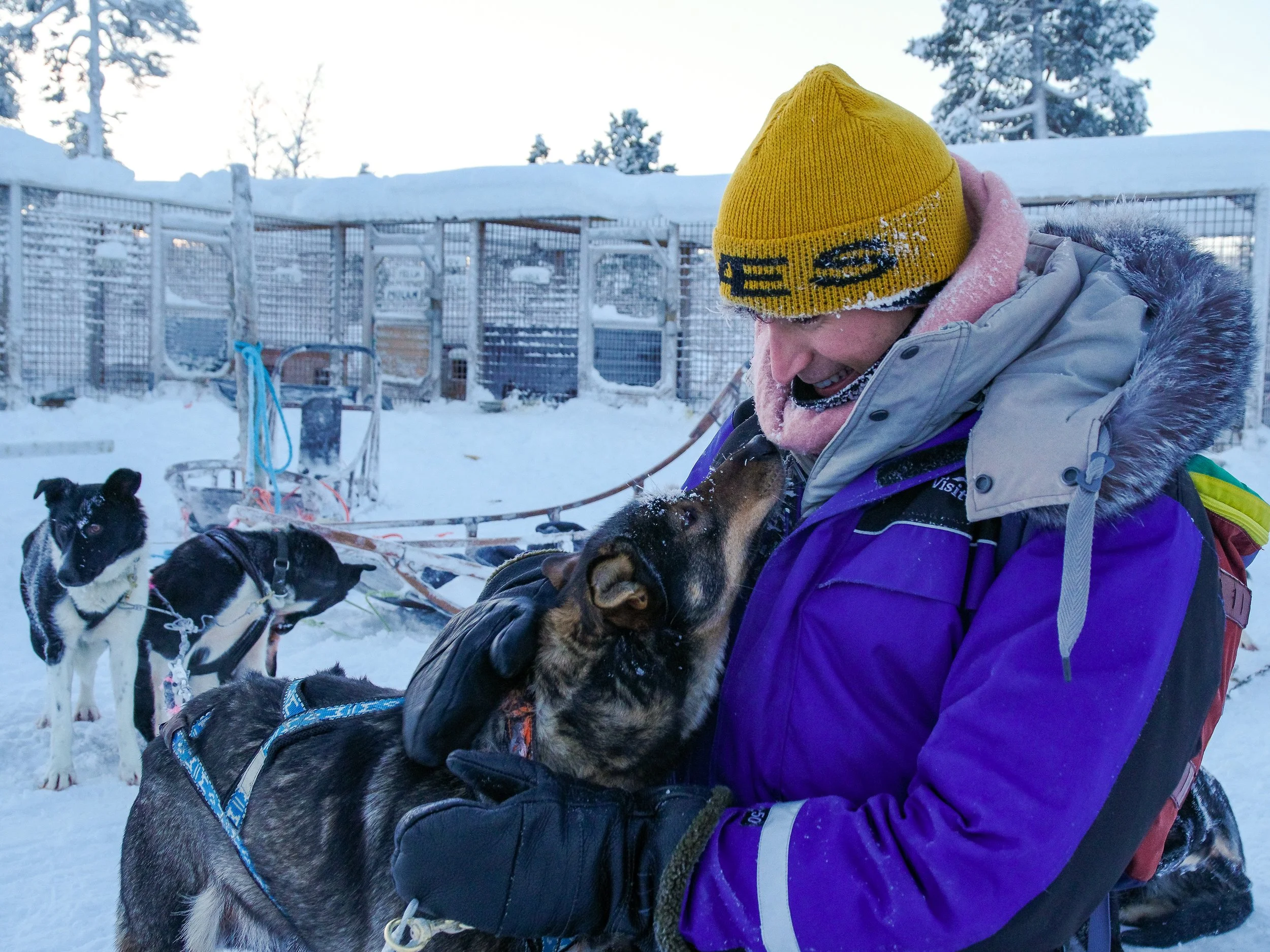
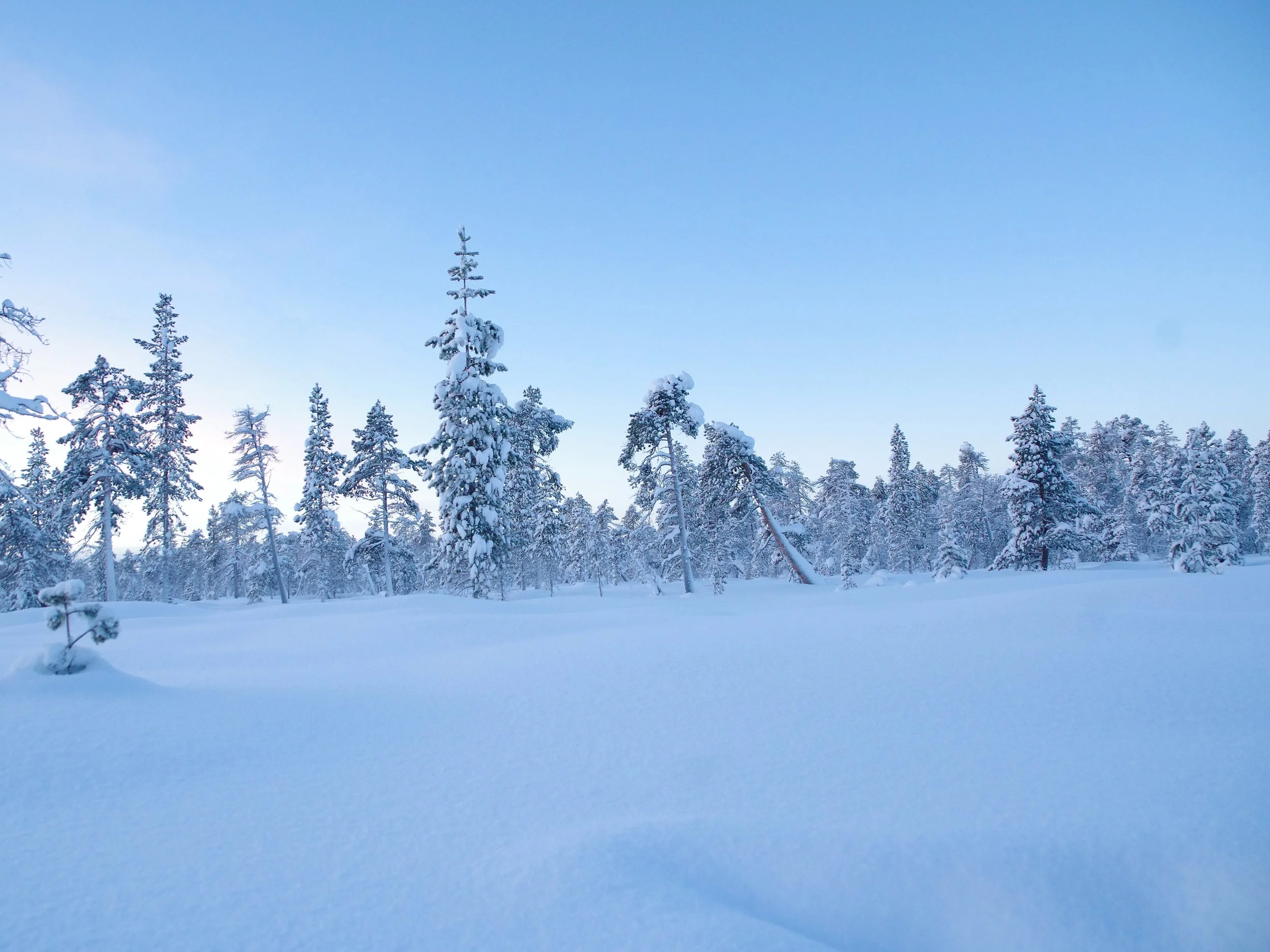
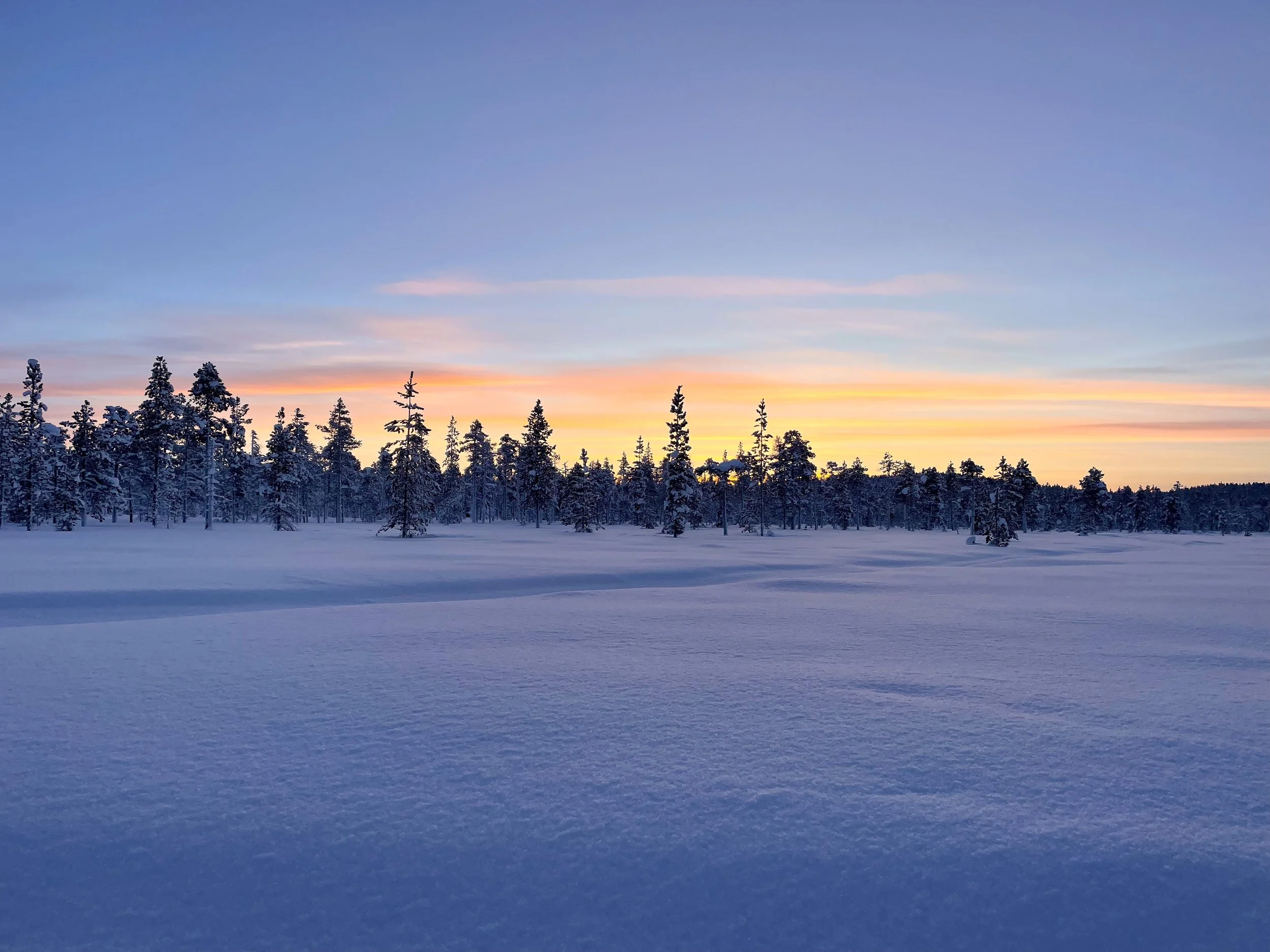
Ever since our first trip to the Arctic, we’ve dreamt of going husky mushing. Lapland was the perfect place to make that dream come true. After suiting up in a polar onesie and listening to a brief lesson, we were paired with a sled of Siberian and Alaskan huskies. The pack of dogs were excited to run; howling, barking and jumping around before bolting off in unison with us behind them. We mushed our way through the Lappish countryside, past snow covered trees and fields of white along the twisting 10km trail. As we sledded across the frozen landscape, ice formed on our eyelashes and hair in the subzero temperature. Halfway through, we traded places, each getting a chance to drive. At the end, we got to cuddle and pet the huskies, before warming up by the fire.
Cross Country Skiing
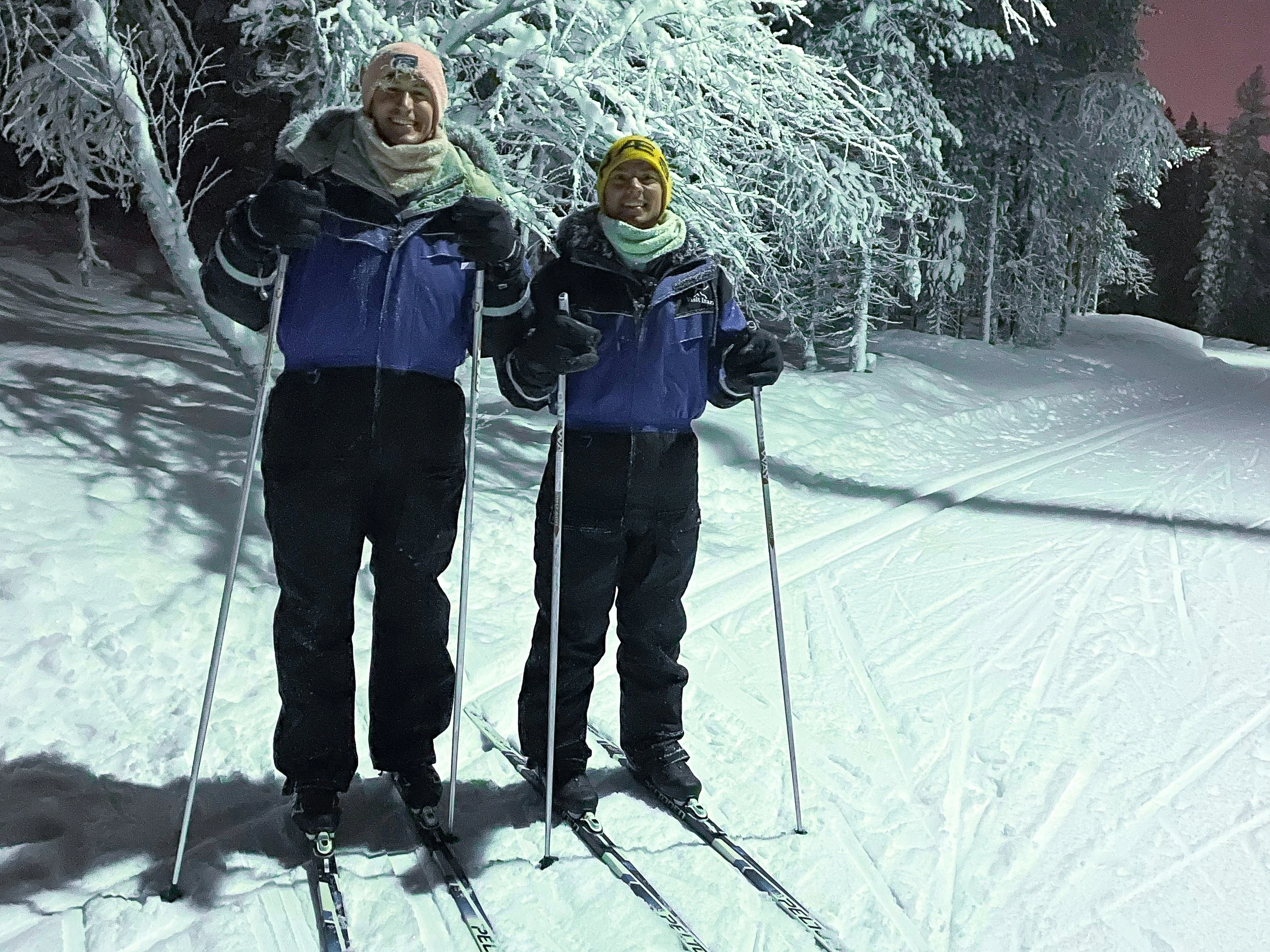
Cross country skiing is a Finnish pastime and national sport. We booked a 2 hour lesson and learned the basics on a groomed track in an arena. Following the tracks, we skied uphill into the wooded trails and continued to improve our form. After a couple of kilometers, we returned downhill, intermittently picking up speed and gliding along the tracks with ease.
The Northern Lights
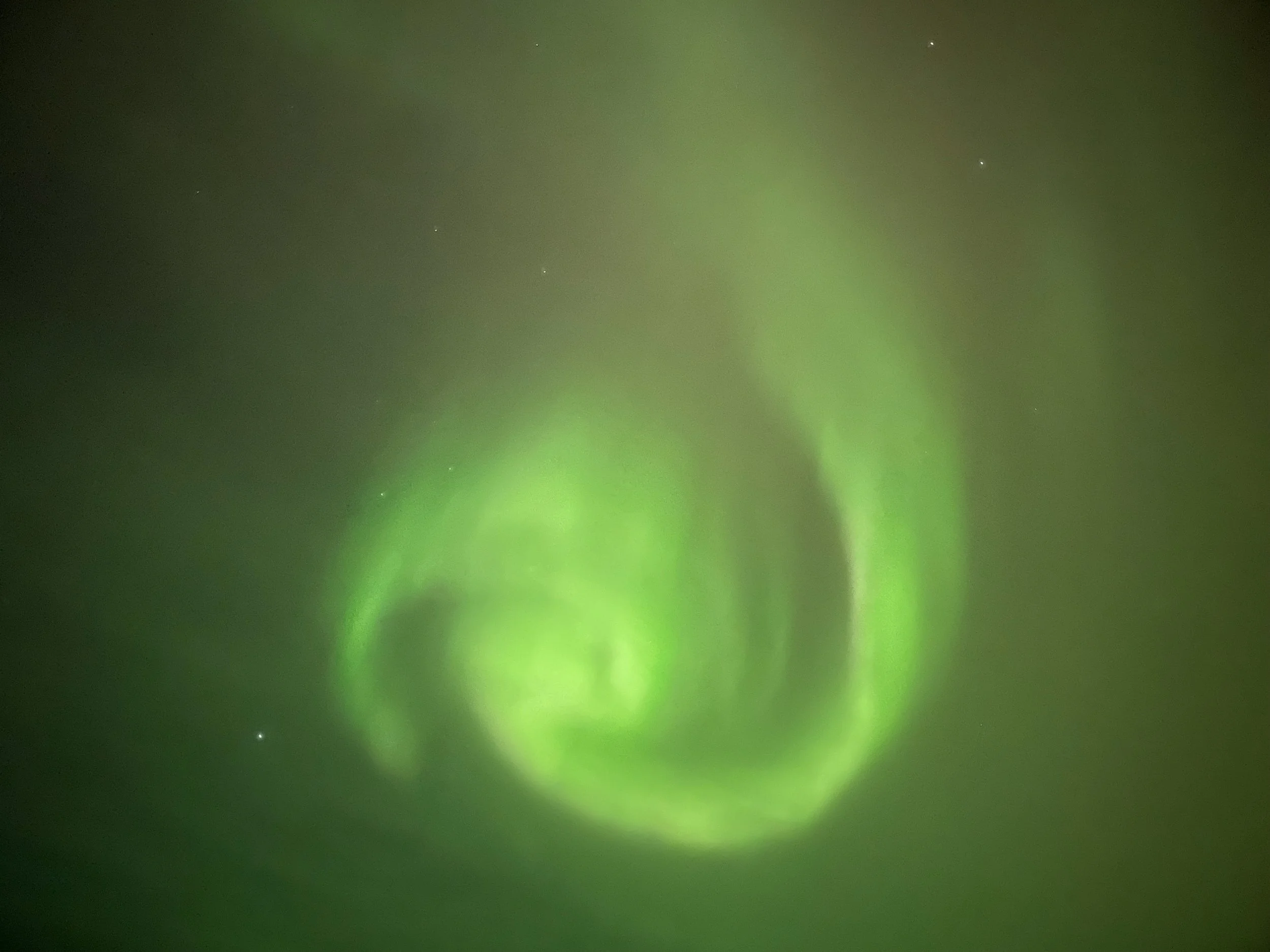
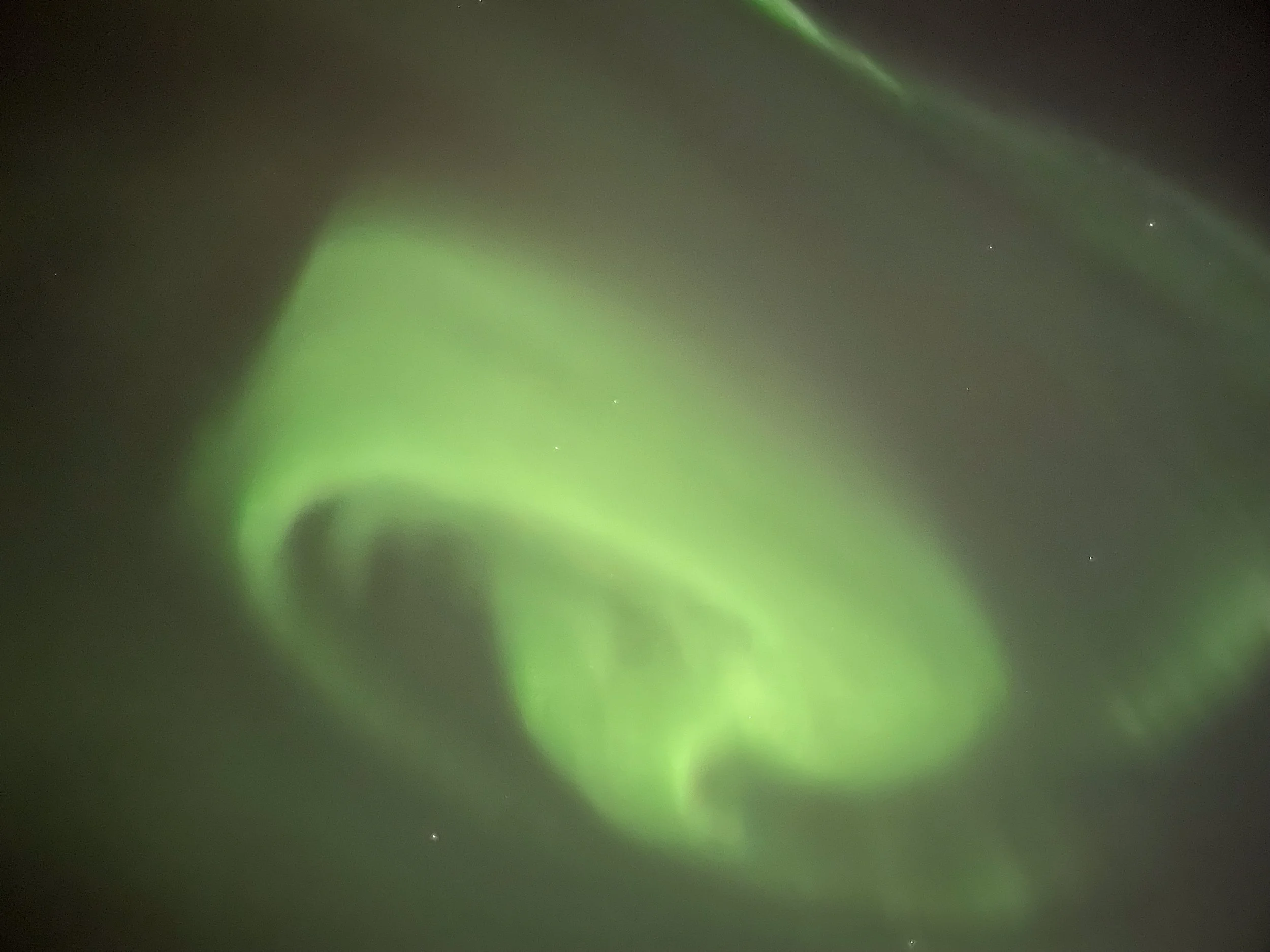
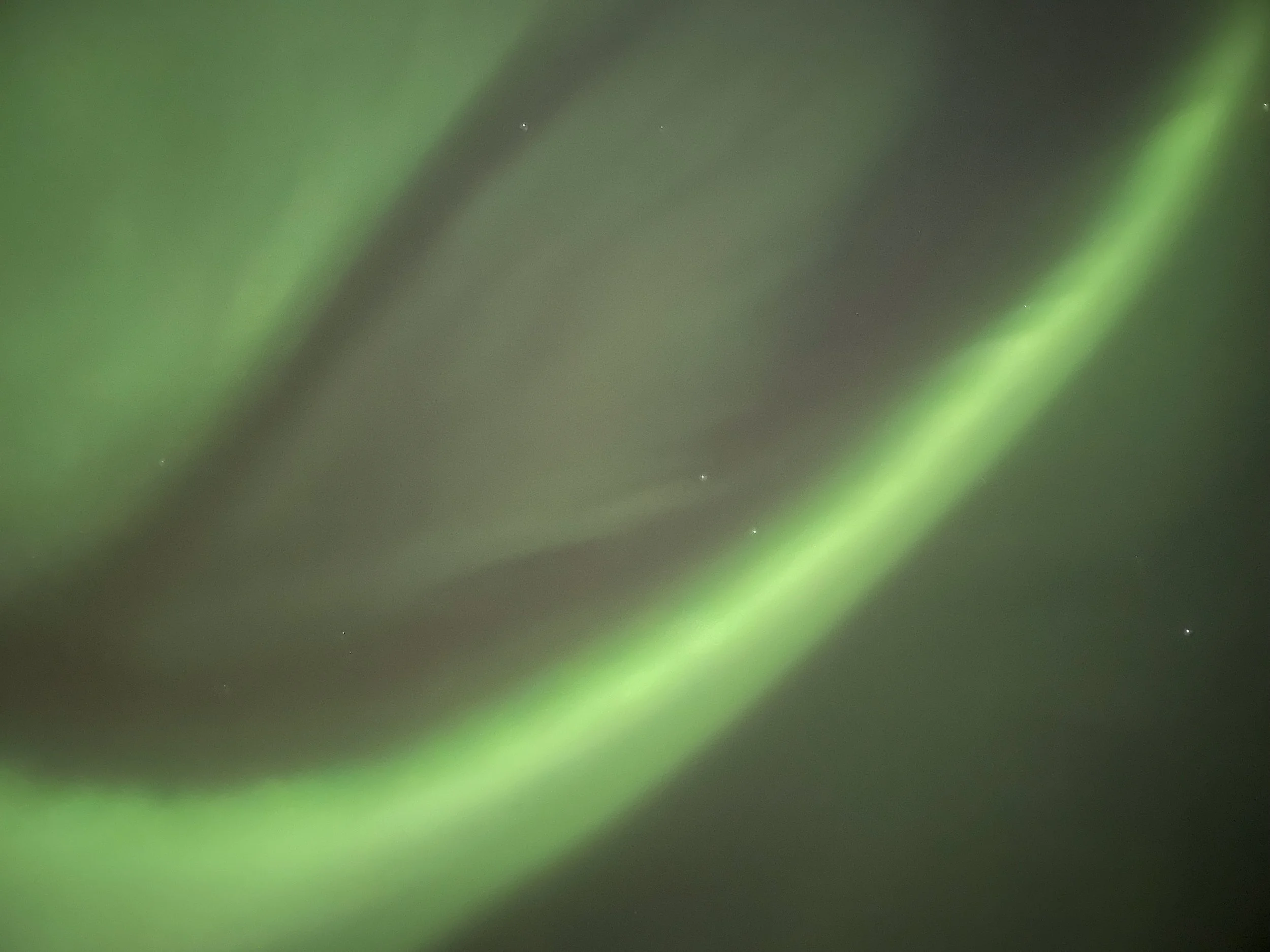
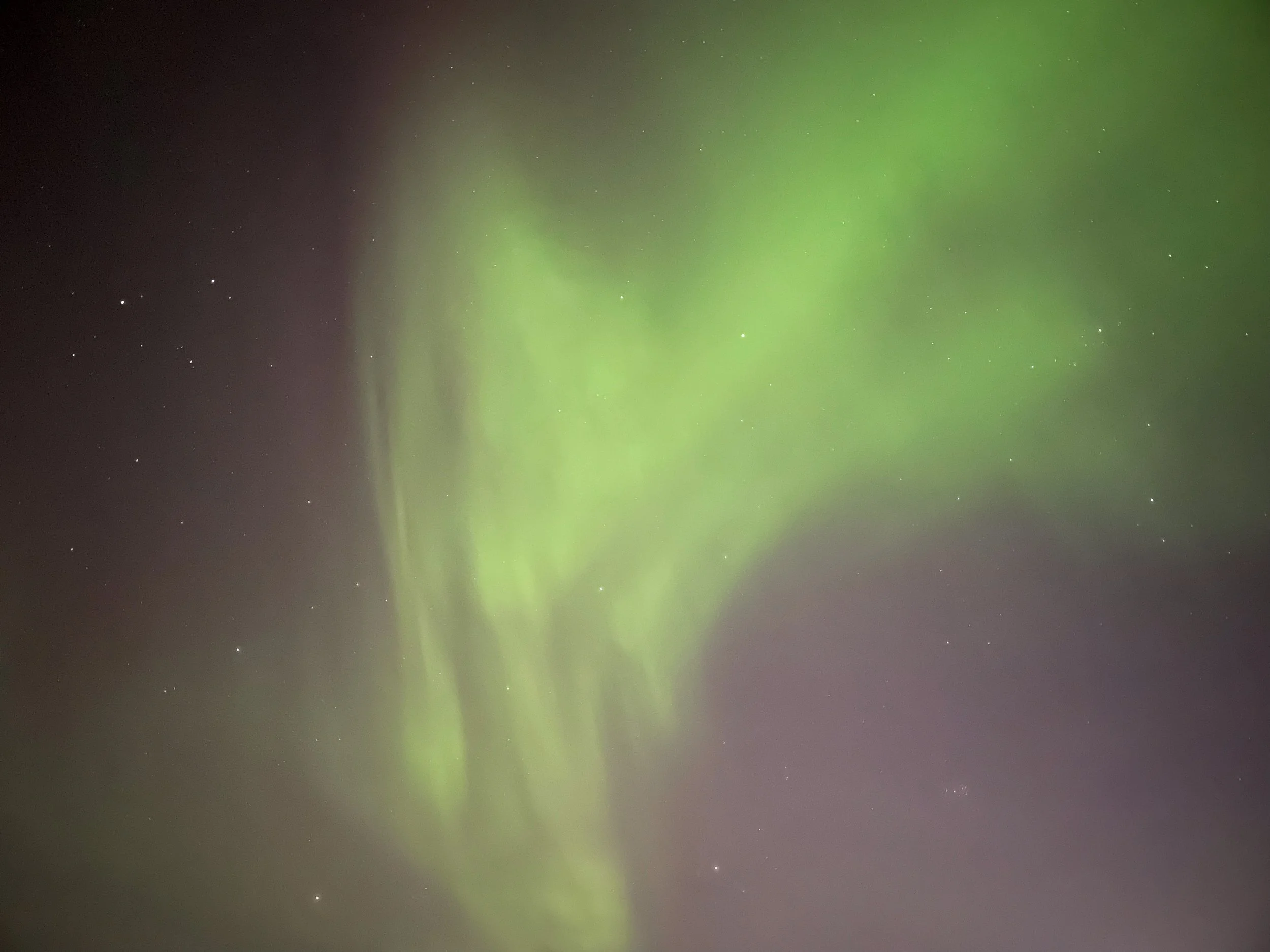
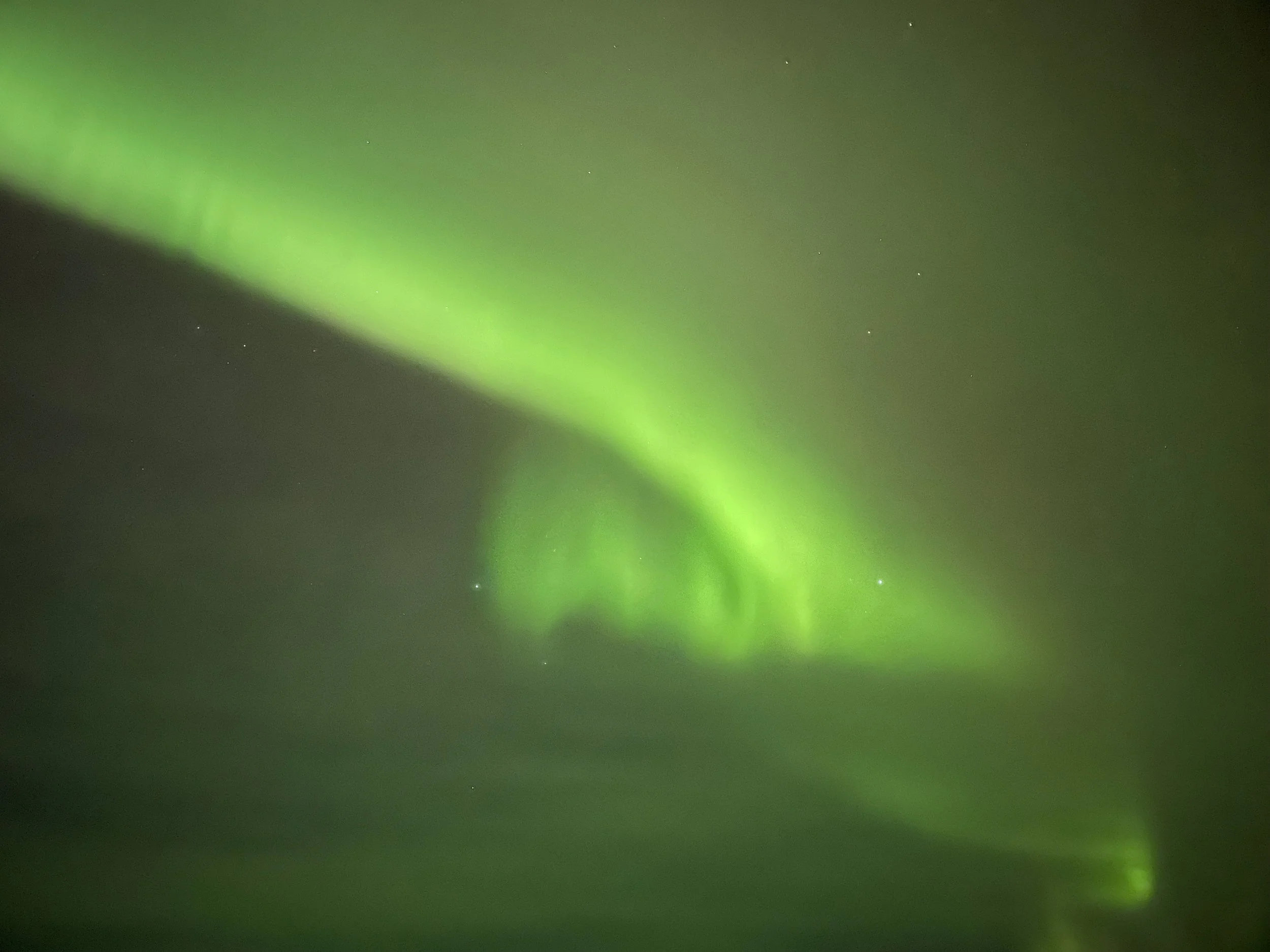
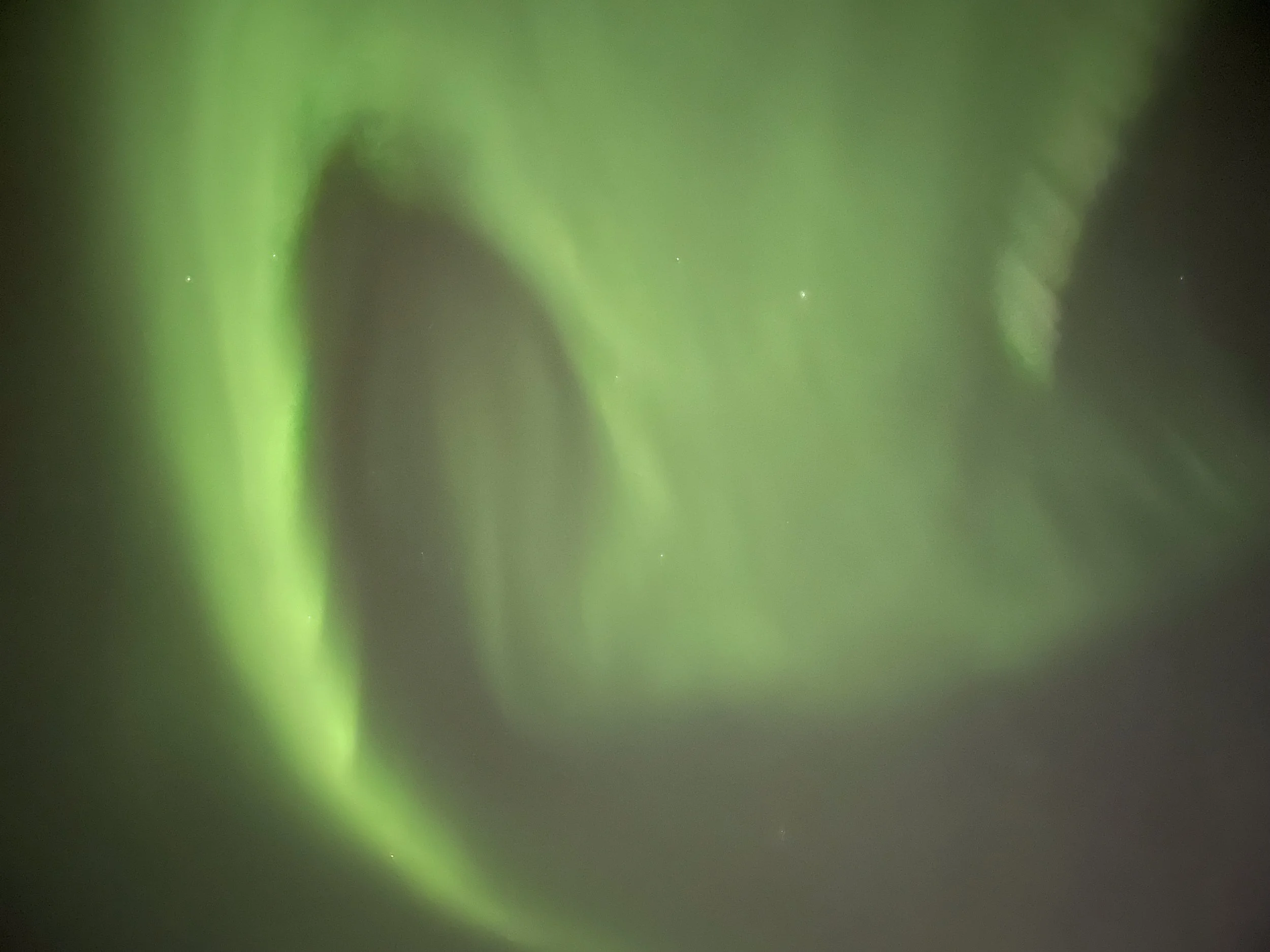
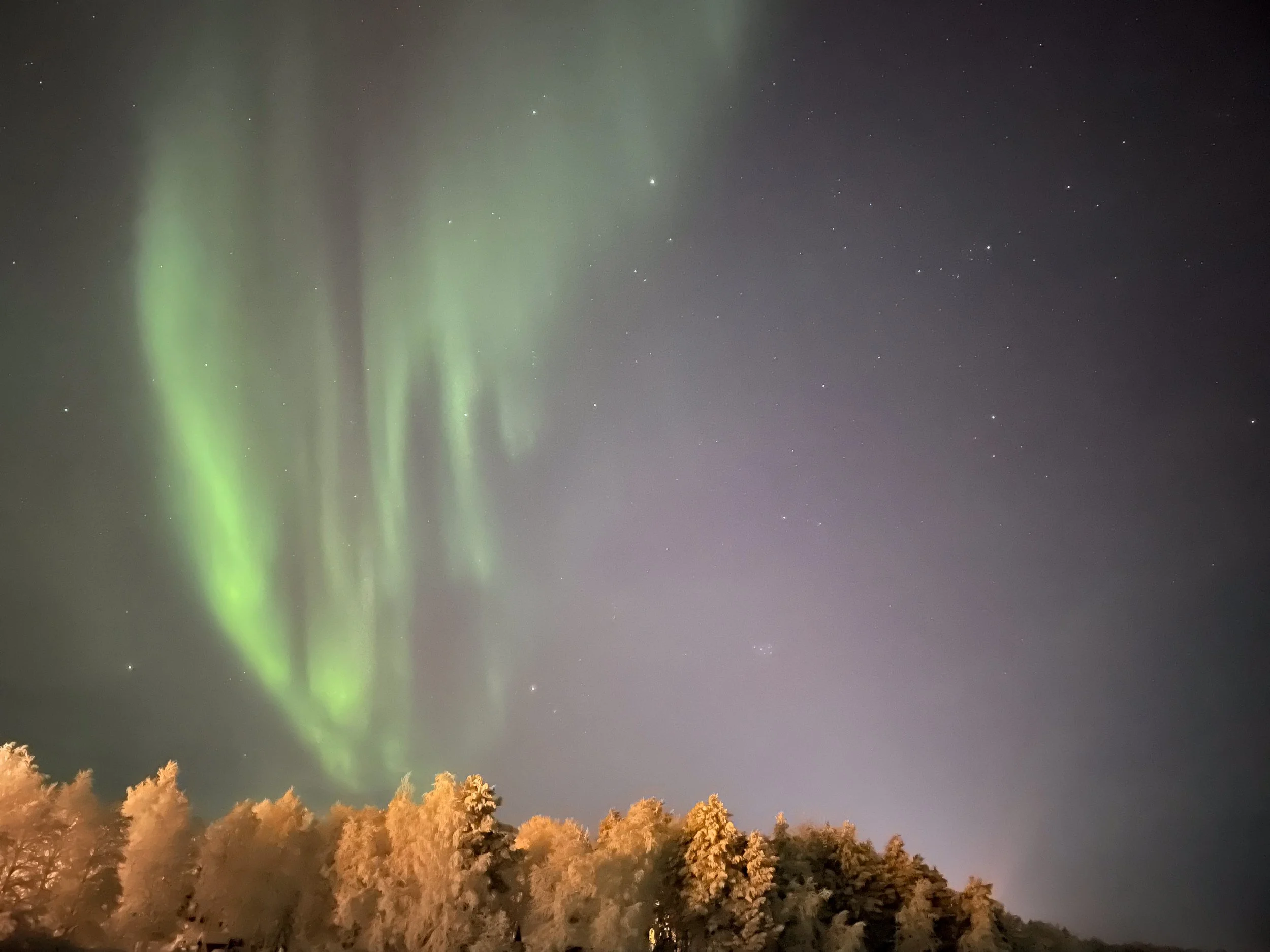
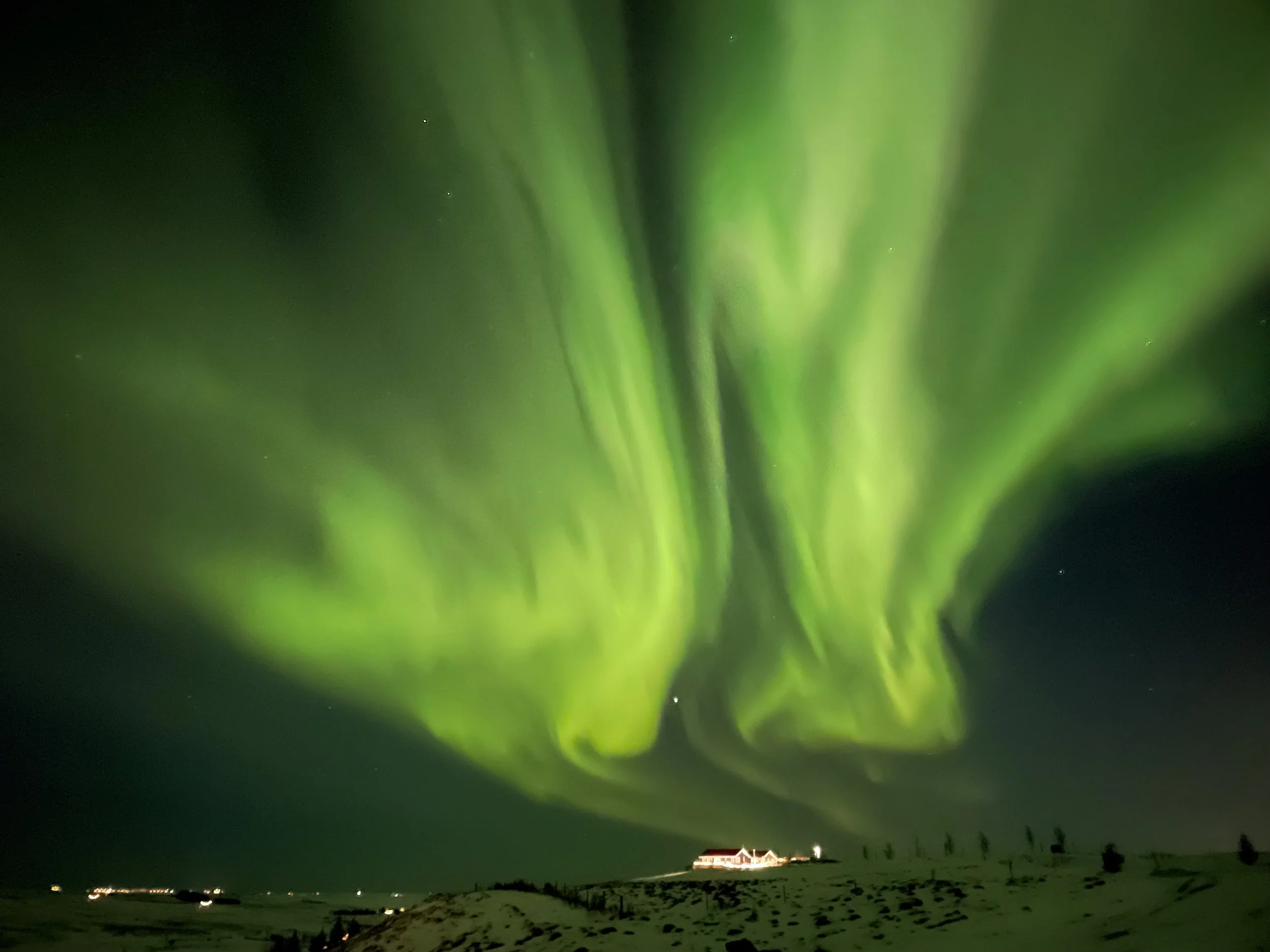
On night three, still overcoming jet lag, we woke up at 3am and spotted the Aurora putting on a show above our cabin. We layered up, went outside and walked towards Lake Inari, distancing ourselves from the hotel lights. It took half an hour for our eyes to adjust to the darkness. We stared upwards as ribbons of green stretched across the starry night sky, swirling and waving in brilliant formations. The Aurora would vary in strength, fading away then reappearing as fast moving bands that danced and shimmered overhead.
Pro Tips. It’s easier to observe the Aurora in total darkness, away from bright lights and cities. The Aurora is always fainter and less vibrant in person than in photos.
Places to Eat
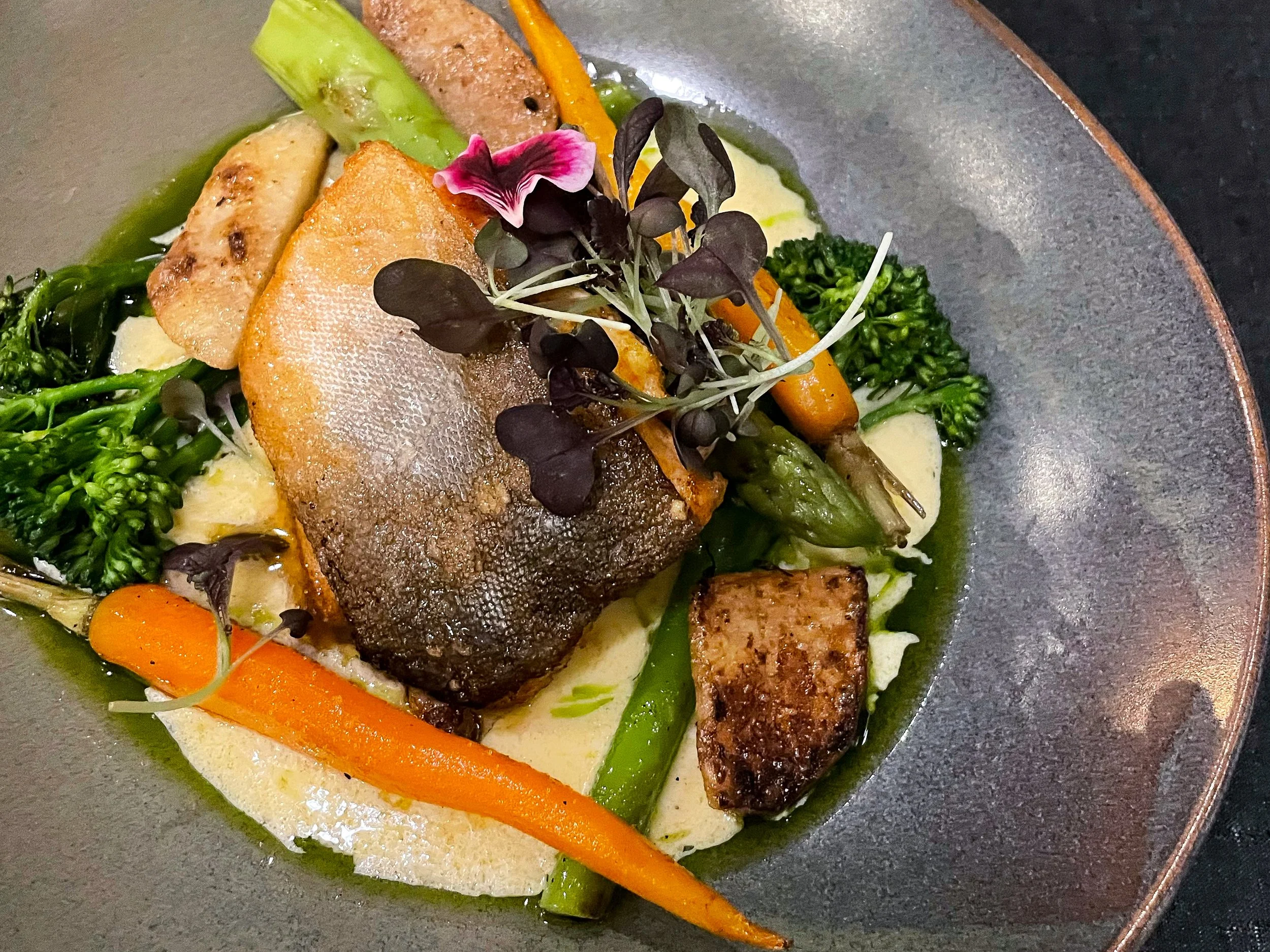
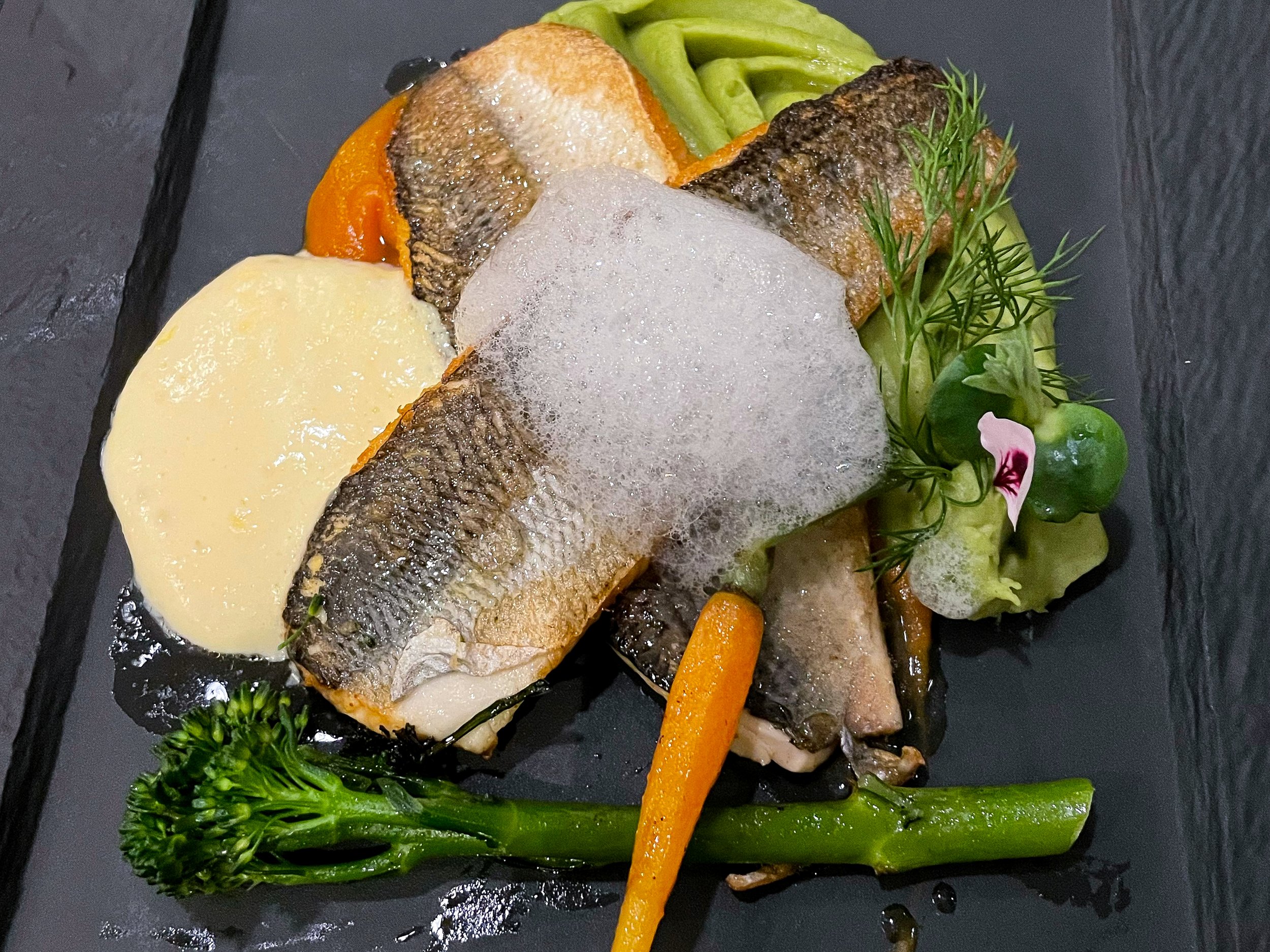
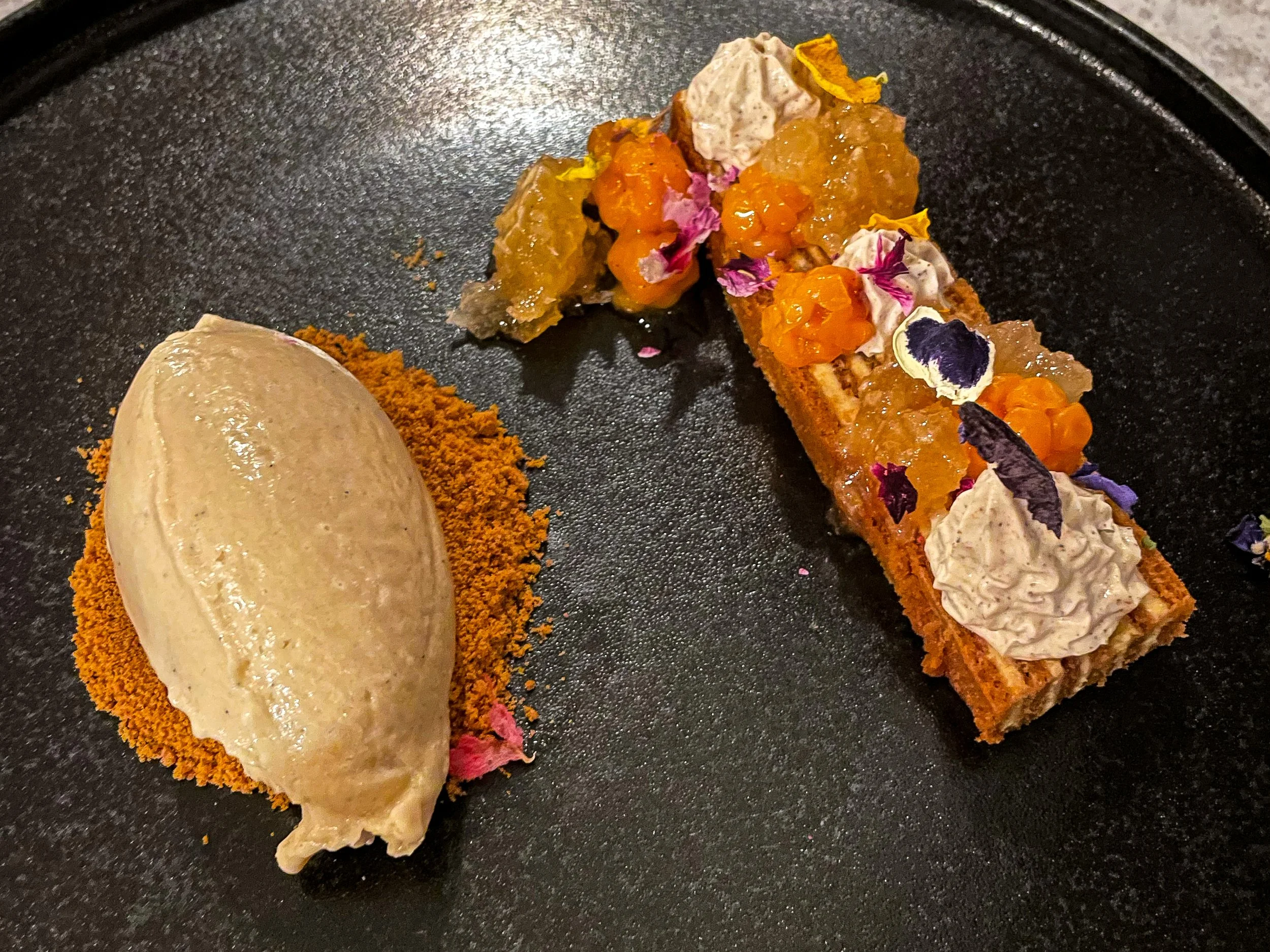
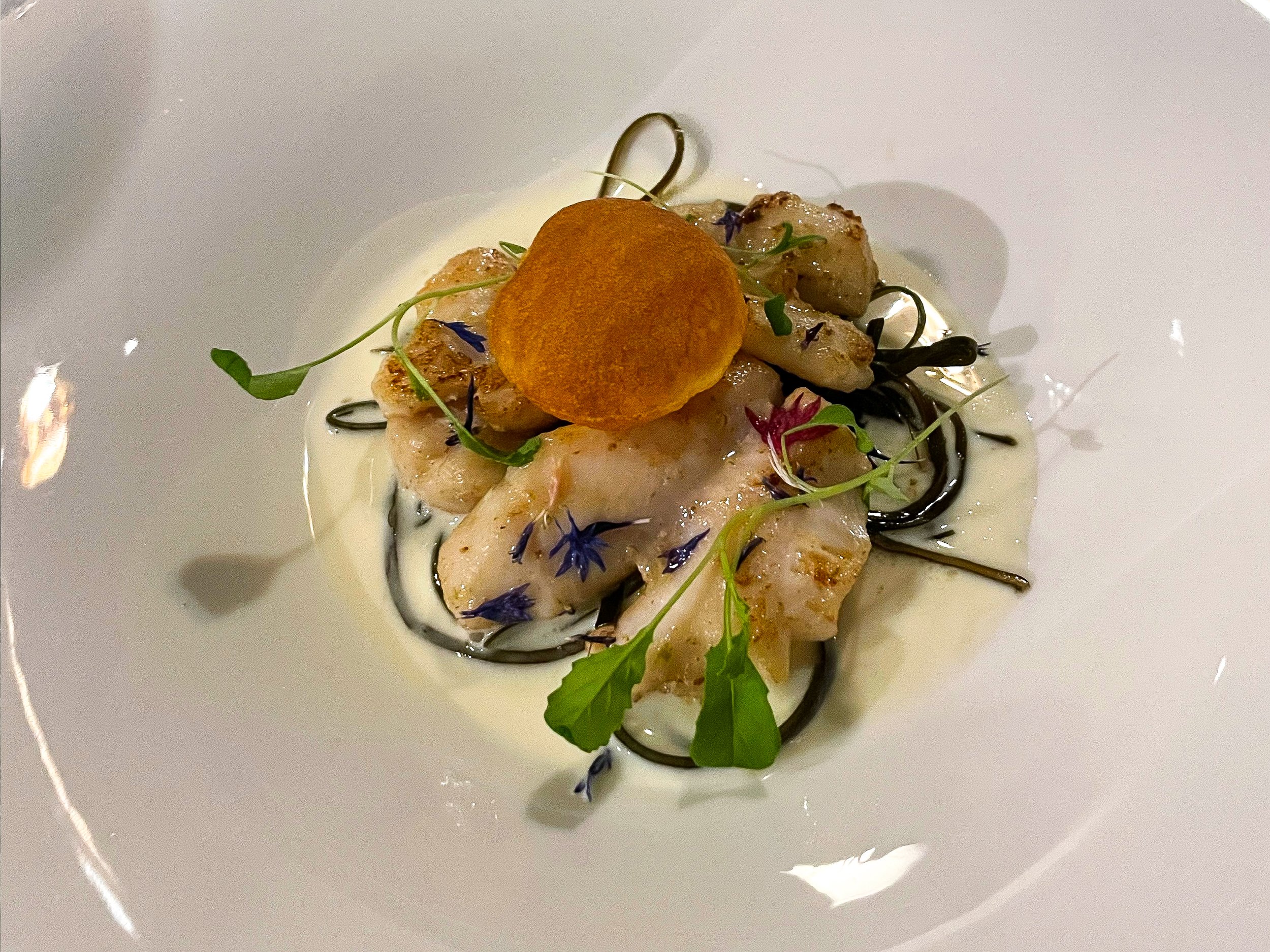
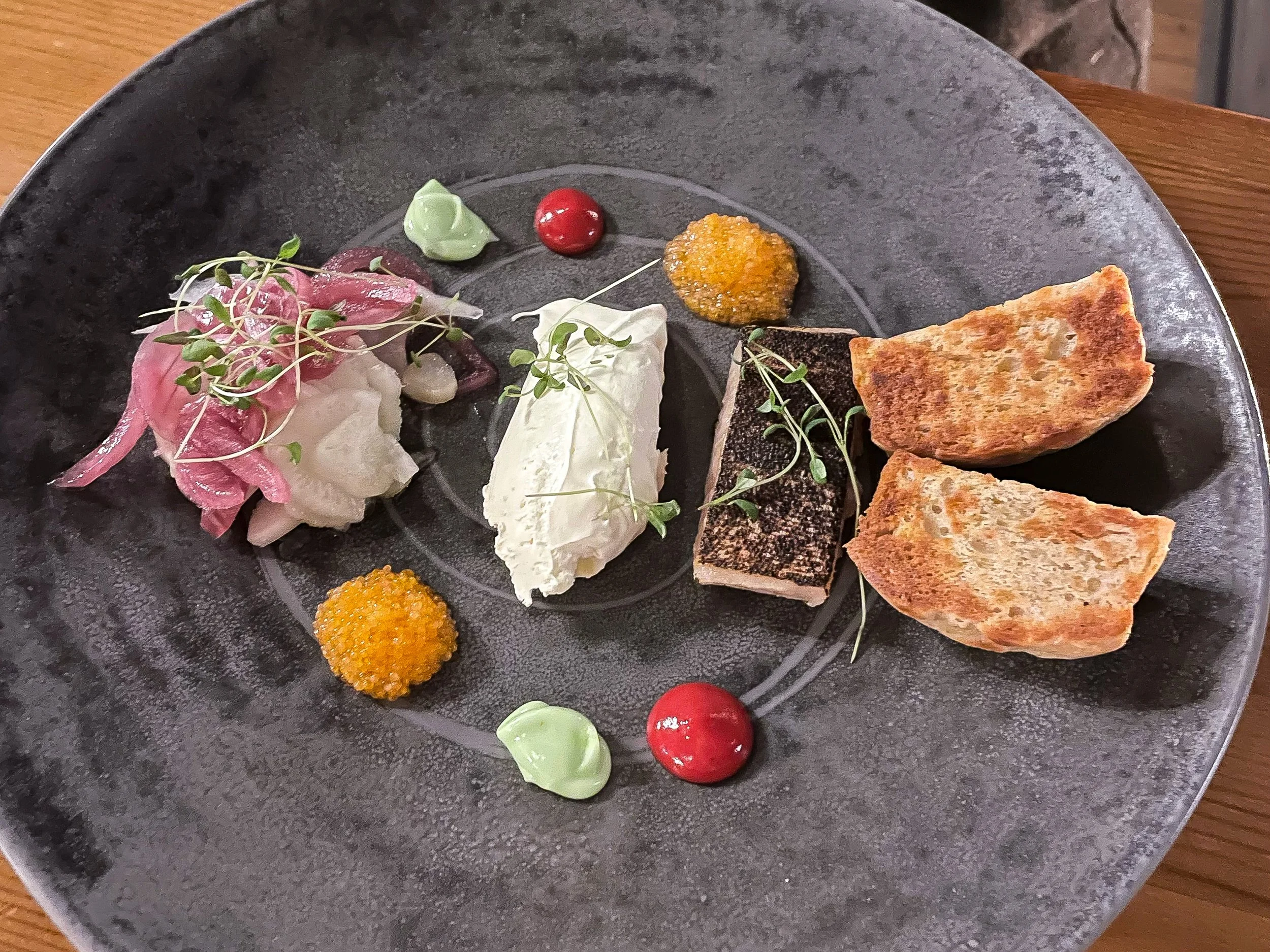
Restaurant Aanaar. A fine dining restaurant at the Hotel Juutua. The contemporary menu is made with locally sourced ingredients true to Sámi and Finnish cuisine. The dining room has a warmly lit interior overlooking the Juutuanjoki River. Order a mix of dishes like the roasted parsley roots, smoked beets, pickled white fish, fried cod tongue, charred cod cheek and cloudberry honey cake. The table next to us ordered smoked reindeer heart.
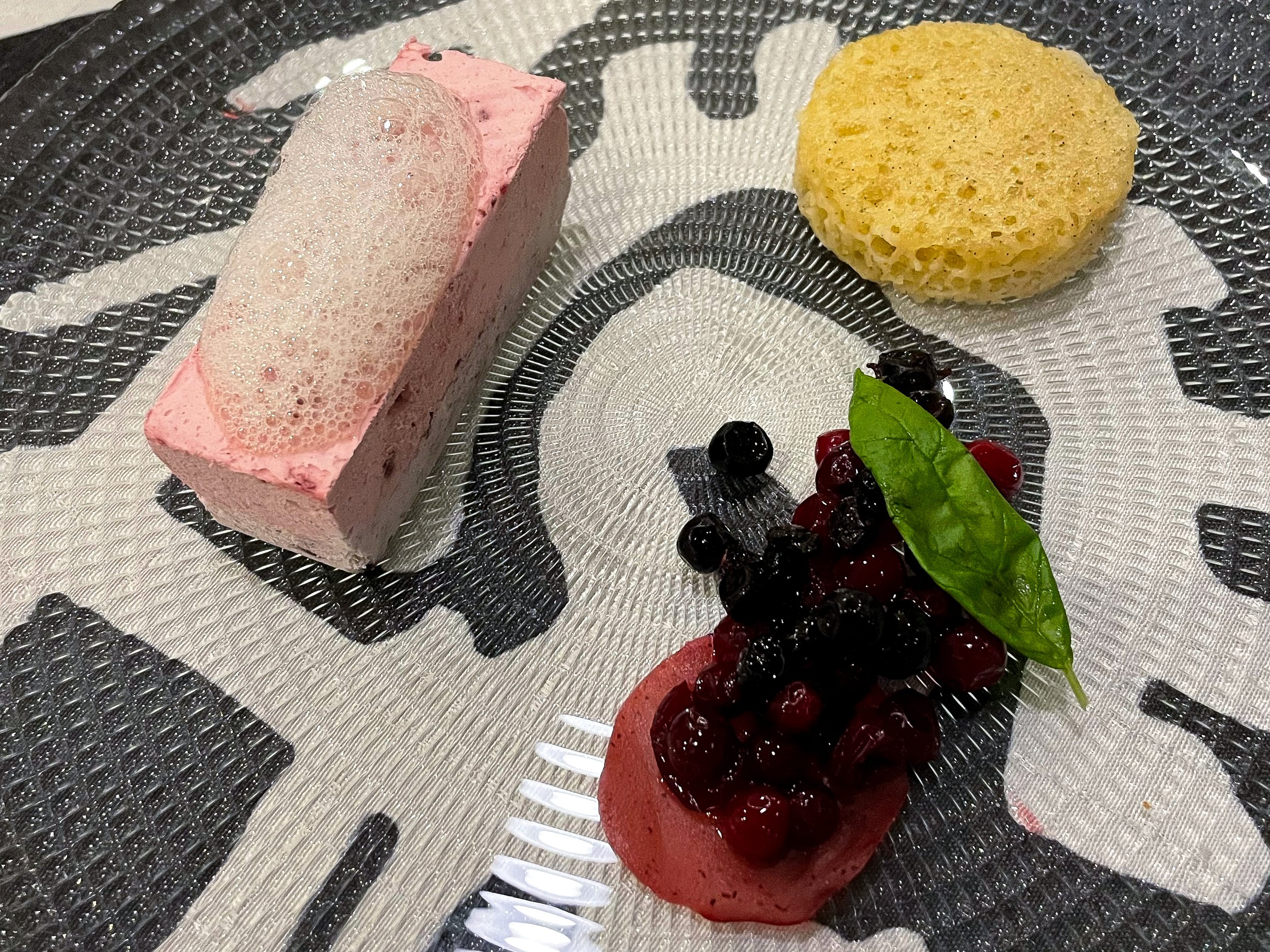
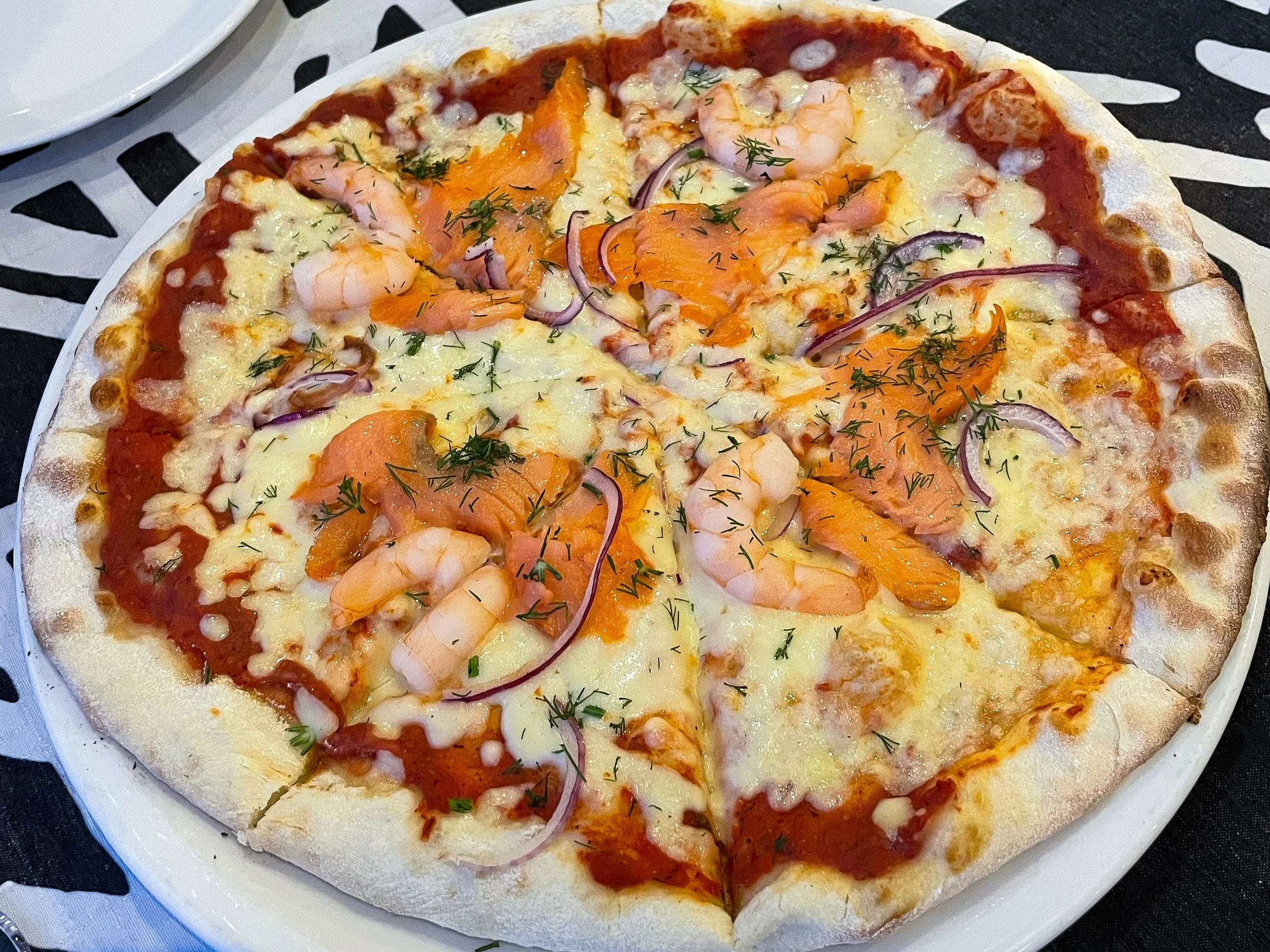
Restaurant Aurora. A contemporary restaurant at the Visit Inari Hotel with Lappish dishes. The dining room overlooks Lake Inari and is decorated in Sámi art. For dinner, try the Lake Inari white fish with dill potato purée, bourbon glazed Arctic char, lingonberry and blueberry parfait. For lunch, the Arctic pizza with cured salmon, shrimp and dill toppings.
Restaurant Ukko. A restaurant at the Inari Wilderness Hotel with views of Lake Inari. The dining room is decorated with timber beams, wooden furniture and reindeer antler chandeliers. For dinner, try the celeriac soup with pickled apples, cloudberry cocktail, cured Arctic char and gratinated lake perch.
Saariselkä, Lapland
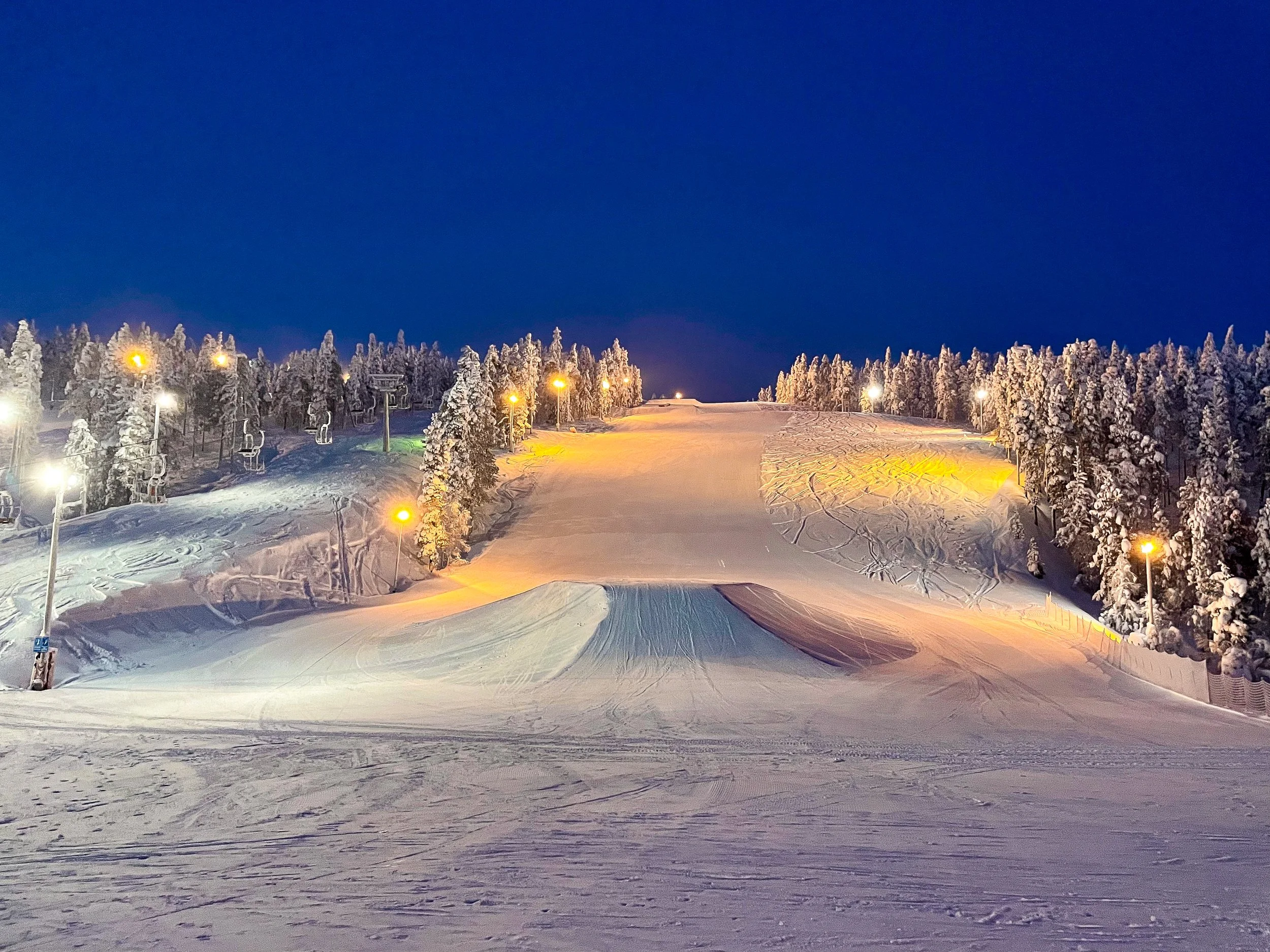
Saariselkä is a winter resort village blanketed in snow, its slopes and back country trails traversed by skiers, snowboarders and tobogganers. The town is located 1 hour southeast of Inari, making it the perfect place to enjoy nearby winter activities.
Saariselkä Ski & Sport Resort. The most northern winter resort in Europe with two fells (Finnish mountains) and slopes for skiing, snowboarding & tobogganing. It’s known for its 1,200 meter Toboggan Run, the longest in Finland.
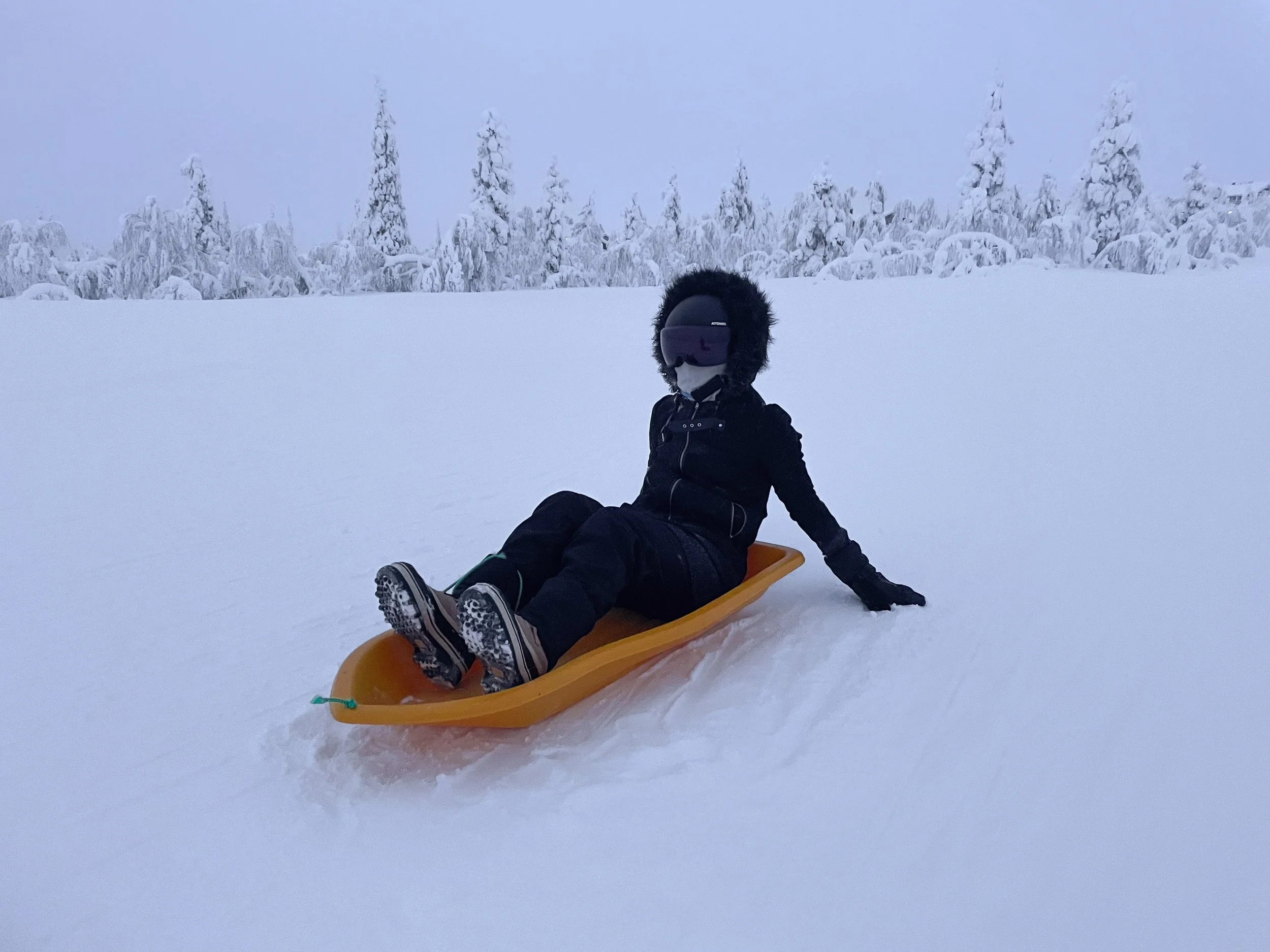
Toboggan Run. We visited Saariselkä specifically for the toboggan run. After taking a lift to the top of the fell, we reached the run. We sat in our sleds and pushed off, quickly picking up speed as we sledded straight downhill. Halfway down, the run flattened out before becoming steeper with twists and turns. It was exhilarating as we picked up speed, controlling direction of the sled by hand and slowing down by foot. Once reaching the bottom, we ran back to the lift with sled in hand ready to ride again.
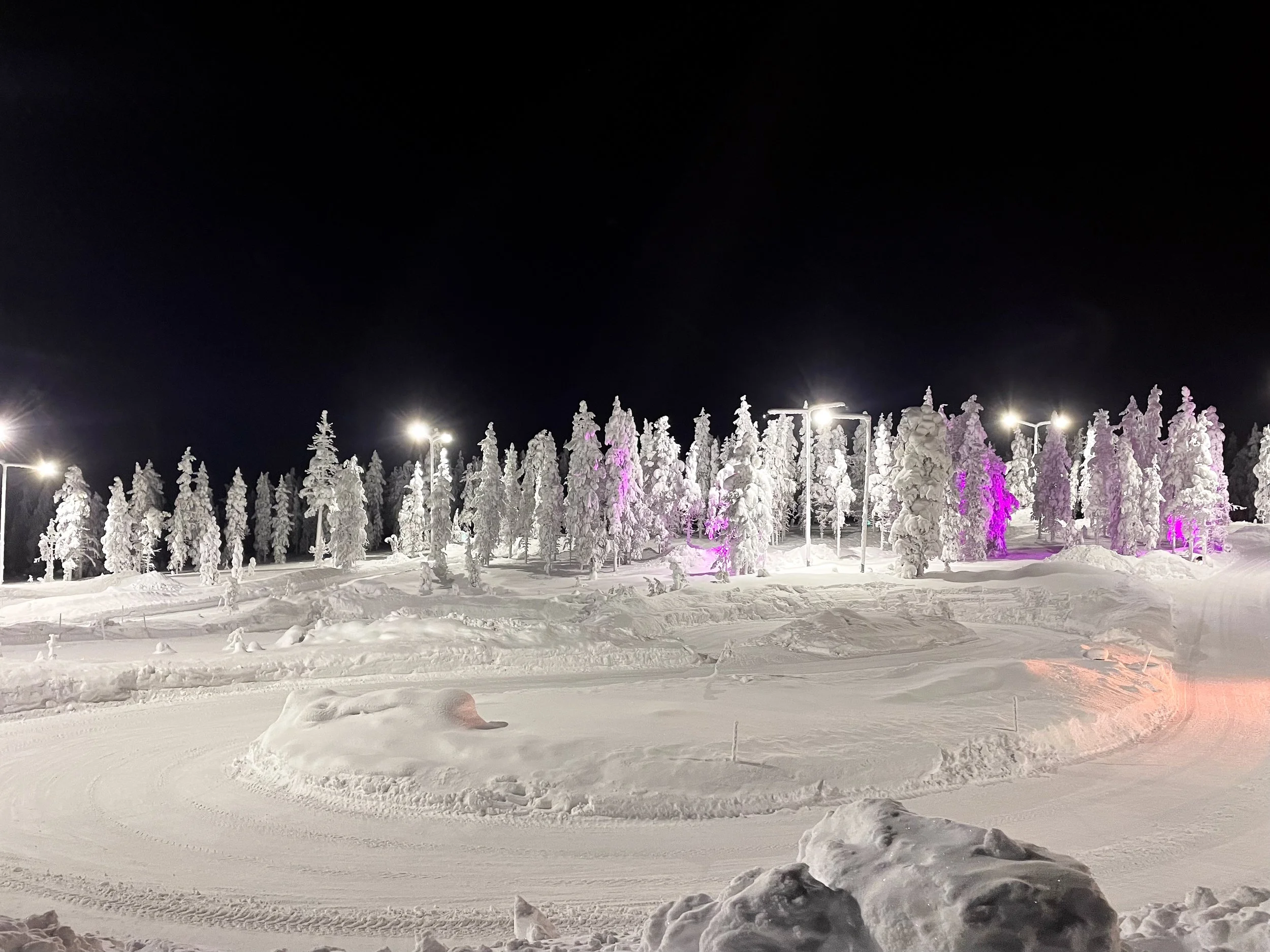
Frozen Ring Ice Karting. Exactly as it sounds, go-karting on an outdoor snow and ice track. Late in the day and with the track to ourselves, we raced each other, drifting around corners and spinning into snowbanks. In just over 15 minutes, we were able to complete 8 laps before sliding across the finish line. It cost €65 each. Though expensive, it was a one of a kind experience and well worth it. Book here!
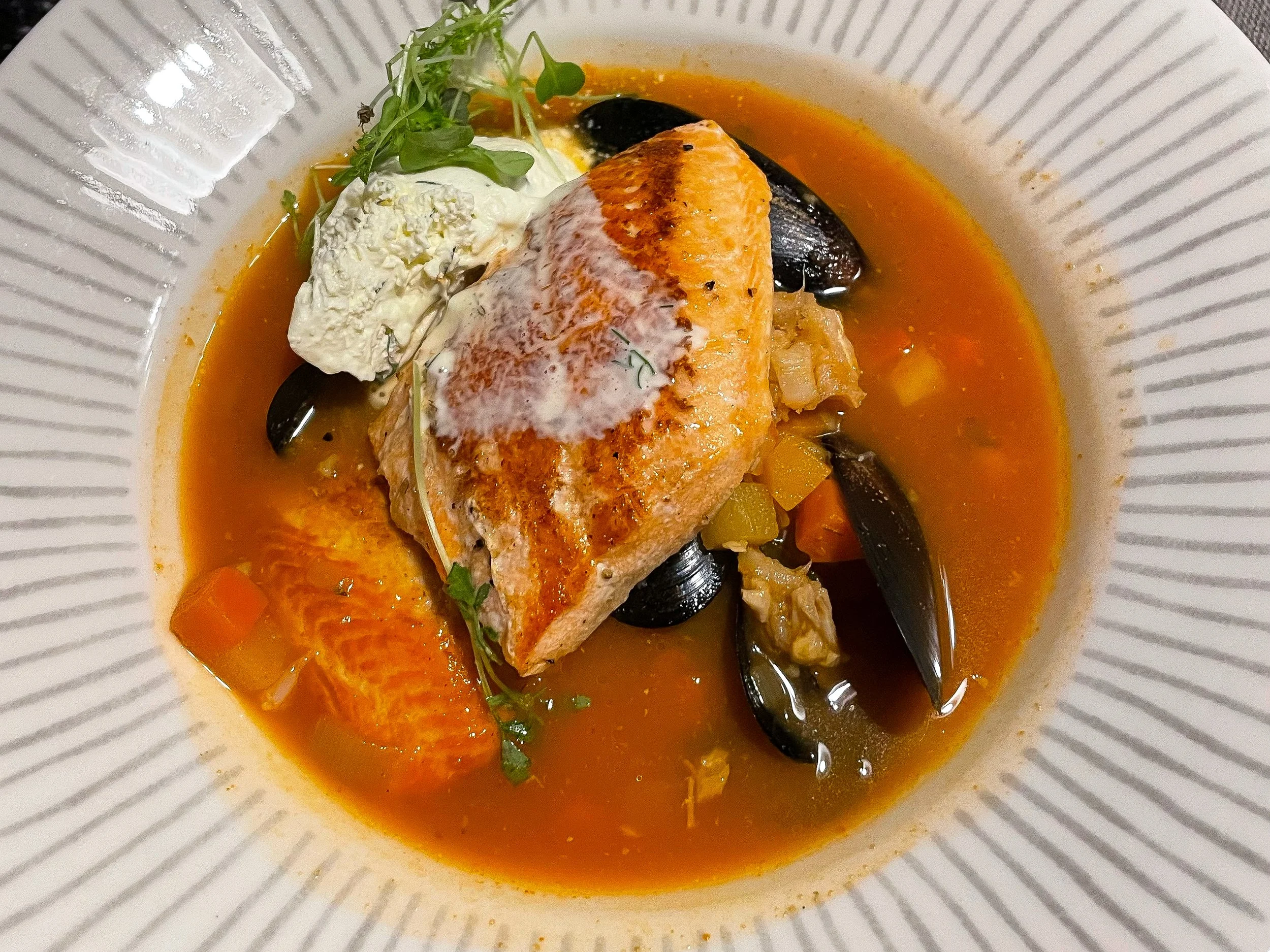
Restaurant Pirkon Pirtti. Come for the arctic bouillabaisse made from shrimp, arctic char, cod, mussels, sour cream and dill. We also tried the Arctic seafood platter with roasted Arctic char, pan fried Inari white fish and smoked salmon. For dessert, the cloudberry parfait with “Aurora sauce.” It has a wooden interior with a stone fireplace.
Pub Panimo. A pub with a selection of Finnish and foreign beers in a cozy beer hall with wooden tables, a stone fireplace and musician stage.
Lappish Cuisine
Cuisine in Lapland is heavily based off of local, wild and foraged ingredients. Food is one of the best ways to experience Lapland.
Root Vegetables. Celeriac, parsley root, beets, potatoes and carrots are commonly used in Lappish cuisine, often served roasted, pickled, puréed or in soups.
Berries. Popular throughout Lapland. Berries are often foraged. Try them fresh or jammed.
Cloudberries. Orange berries of clustered round nodules that resemble clouds. Their taste is entirely unique but has notes of peach and nectarine.
Lingonberries. Little red berries that have a sweet and tart taste, similar to a cross between cranberry and pomegranate.
Blueberries. Smaller and sweeter than US blueberries.
Wild Mushrooms. Foraged and prepared in various dishes, sauces or pickled. Trumpet Chanterelle is one of the most common.
Freshwater Fish. Whitefish, salmon, arctic char and perch are commonly caught in Lake Inari. They’re often served grilled, smoked or pickled and served with dill.
Reindeer. Though we didn’t try it, reindeer is regularly served in various forms at restaurants and sold at markets across the country.
Skagen. Cold water prawn salad. It consists of prawn mixed with mayo, sour cream or mustard and garnished with dill and fish roe often served on rye bread.
Lihapiirakka. A traditional Finnish pie typically made with savory ingredients like meat, rice, onion and herbs wrapped in puffy pie dough.
Rye Bread. Flat round discs of rye bread. They’re common at breakfast with butter and cheese or as a base for open faced sandwiches.
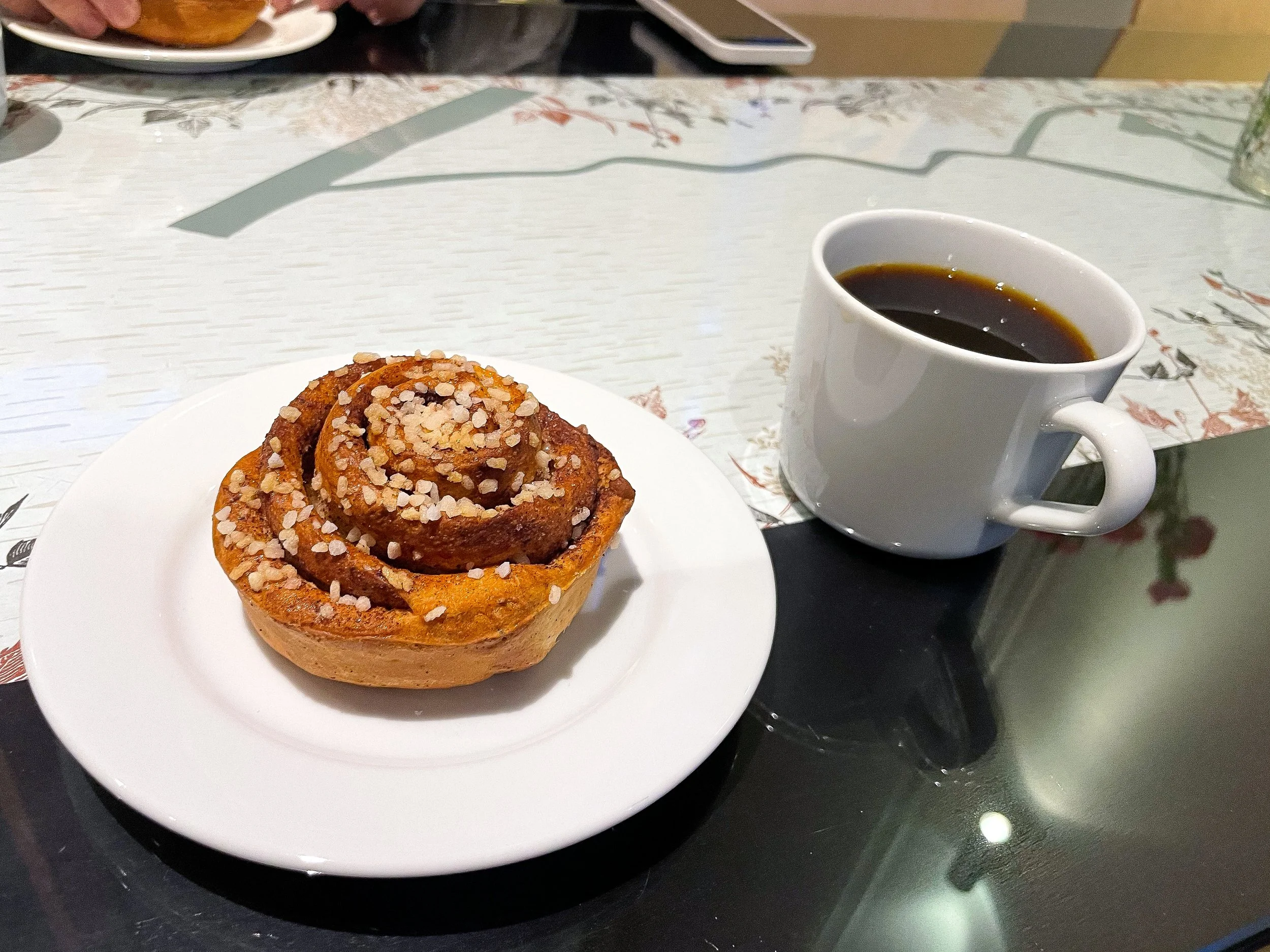
Korvapuustit. A pastry made from sweet dough rolled with cinnamon and cardamom.
Karelian Pie. An open-faced, oval-shaped rye crust pie with crimped edges, filled with porridge. Try it with jam or yogurt.
Runeberg Torte. A small cylindrical almond and rum cake with a raspberry jam and icing ring topping. It’s named after a Finnish writer and often served in January.
Beers. Lagers and pale ales are very popular in Lapland.
Lapin Kulta, A light beer made in Lapland also called Lapin Gold.
Saana, A Lapland brewed pale ale.
Karhu, A lager with a bear logo.
Karjala, A slightly hoppy lager.
Glögi. Spiced hot wine.
Location Specifics
Language. Finnish, Swedish and English are the most commonly spoken languages.
Sámi Culture. Show respect to the Sámi people, culture and traditions.
Costs. Finland, like much of Scandinavia, is an expensive destination.
Cash vs. Card. Cash is rarely used across the country. Use credit or debit cards for most transactions.
Tipping. Tipping is not expected or required. Tip 10% for exceptional service.
Temperature. Lapland gets very cold during the winter. The temperature dropped to -28C (-18F) before windchill one night. Dress in several warm layers, cover all exposed skin, and use hand and toe warmers.
Driving. Driving is easy during the winter. The roads are regularly plowed. All rental cars are equipped with snow tires. Rent a car at the Ivalo airport from Green Motion.
Elsewhere in Nordic Europe
From Lapland’s Northern Lights and Arctic wilderness to Tromsø’s fjords, Copenhagen’s urban design culture and Iceland’s volcanic landscapes, explore more of Nordic Europe through these travel guides:
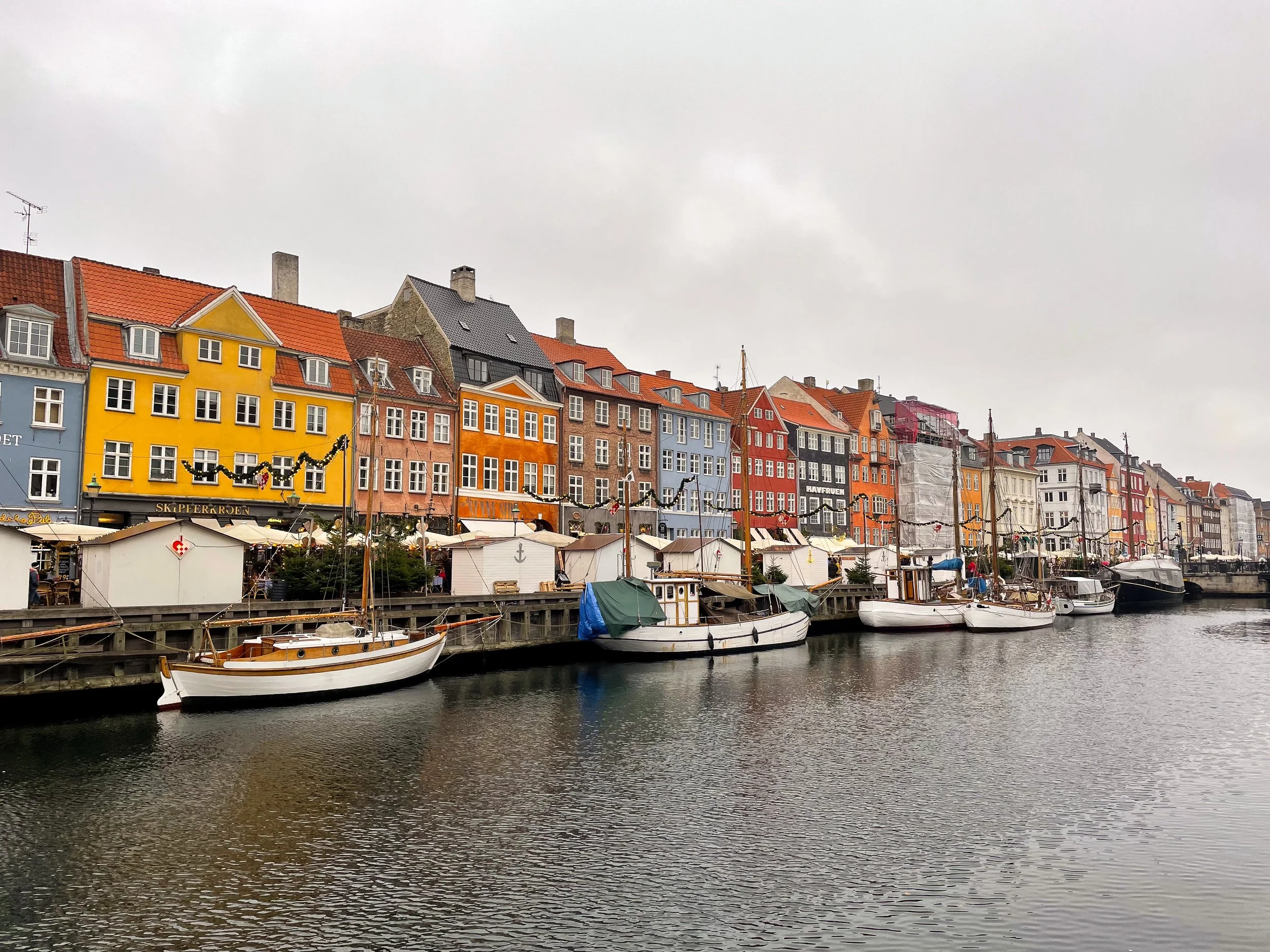
Copenhagen Travel Guide: Nyhavn, Christmas Markets & Scandinavian Cuisine. Wander along Copenhagen's colorful canals where wooden ships, historic castles and Danish culture meet Scandinavian cuisine and festive Christmas markets.
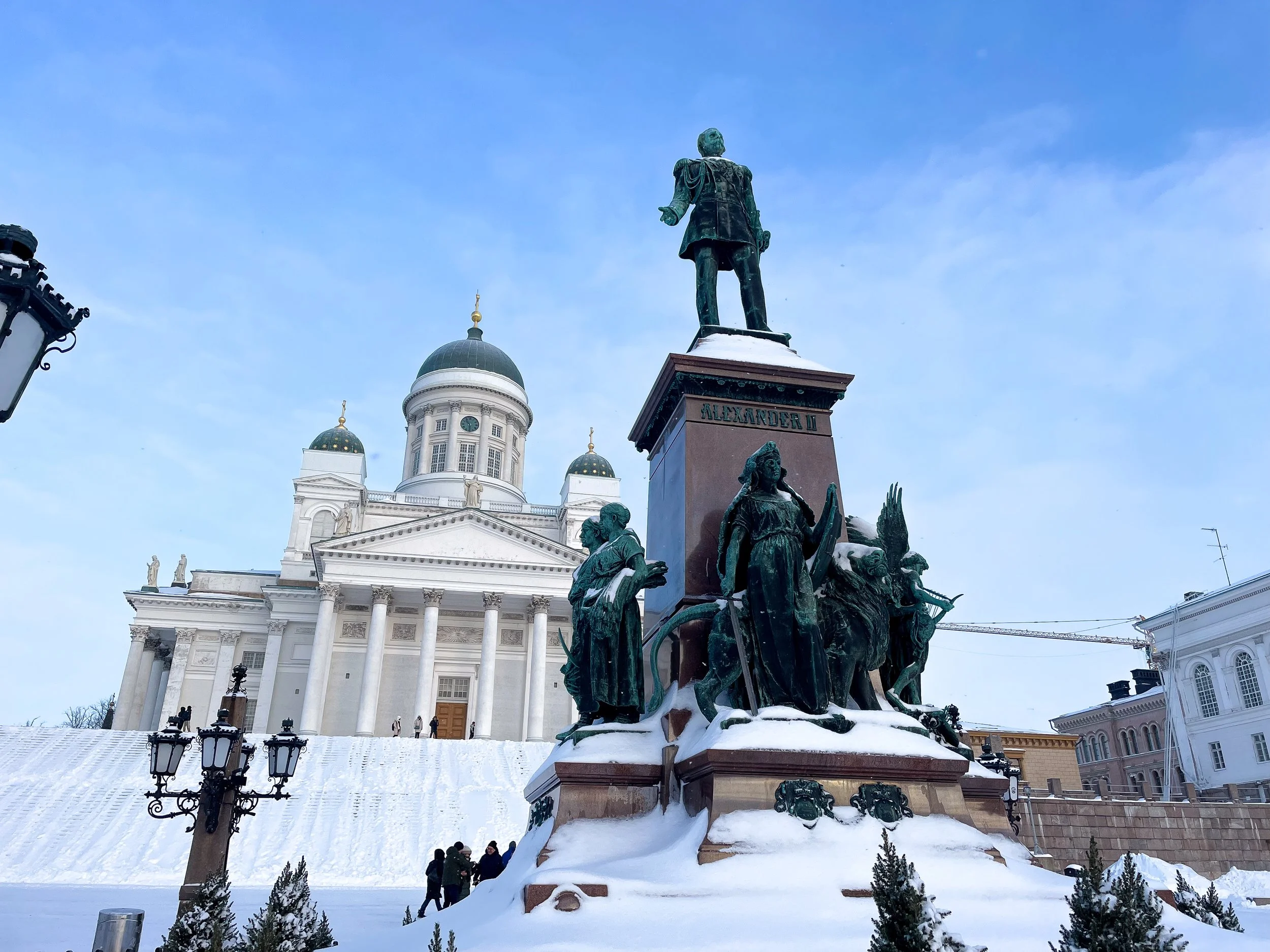
One Day in Helsinki: Finnish Sauna & Waterfront Sights. Experience a winter day exploring Helsinki's frozen waterfront where local food markets, historic architecture and steaming saunas bring Finnish culture to life.
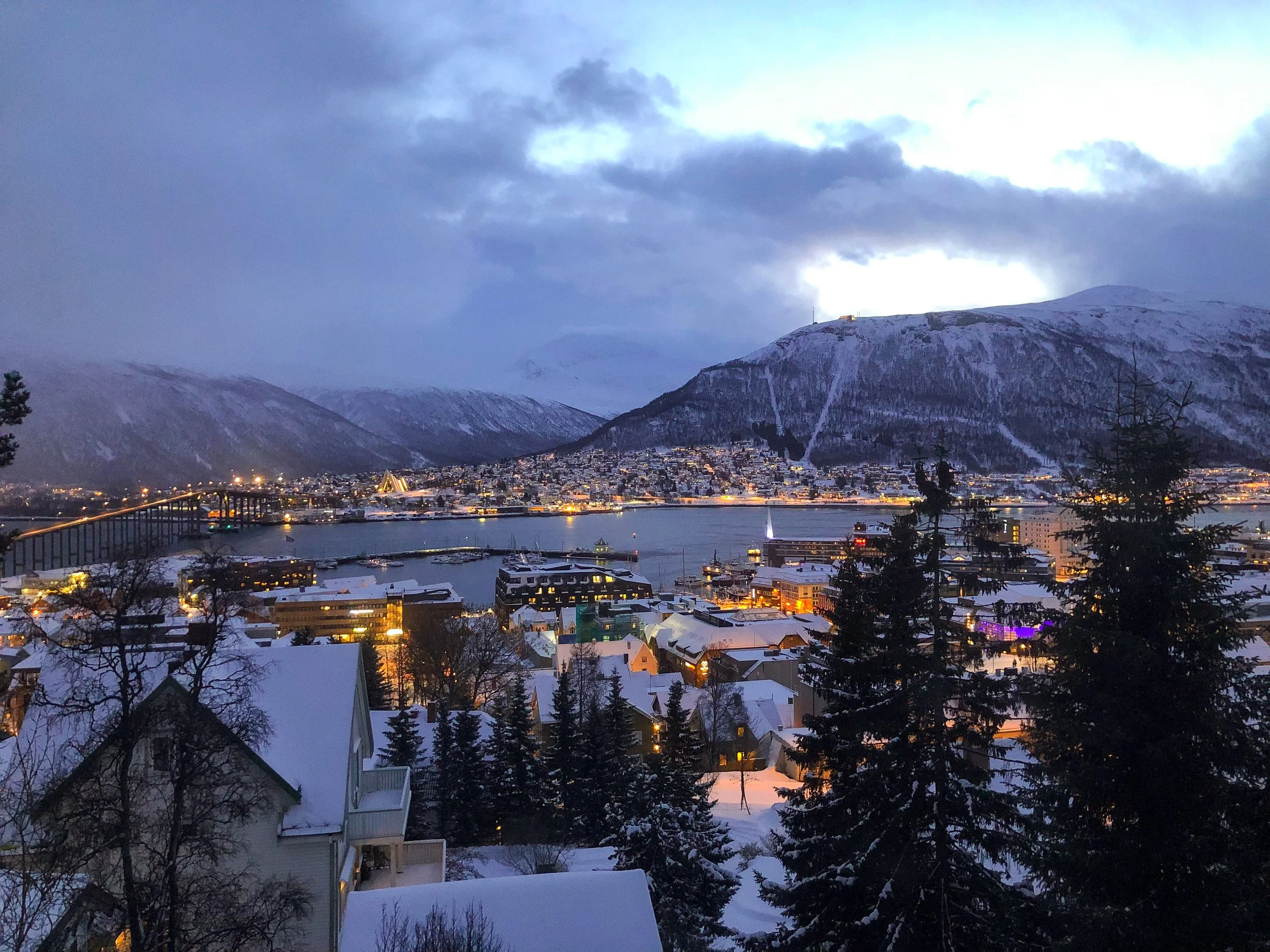
Tromsø Norway Travel Guide: Northern Lights, Arctic Fjords & Sámi Culture. Explore Tromsø's snowy streets and historic waterfront where Nordic cuisine and Sámi culture meet dramatic fjords, dancing auroras and Arctic adventures.
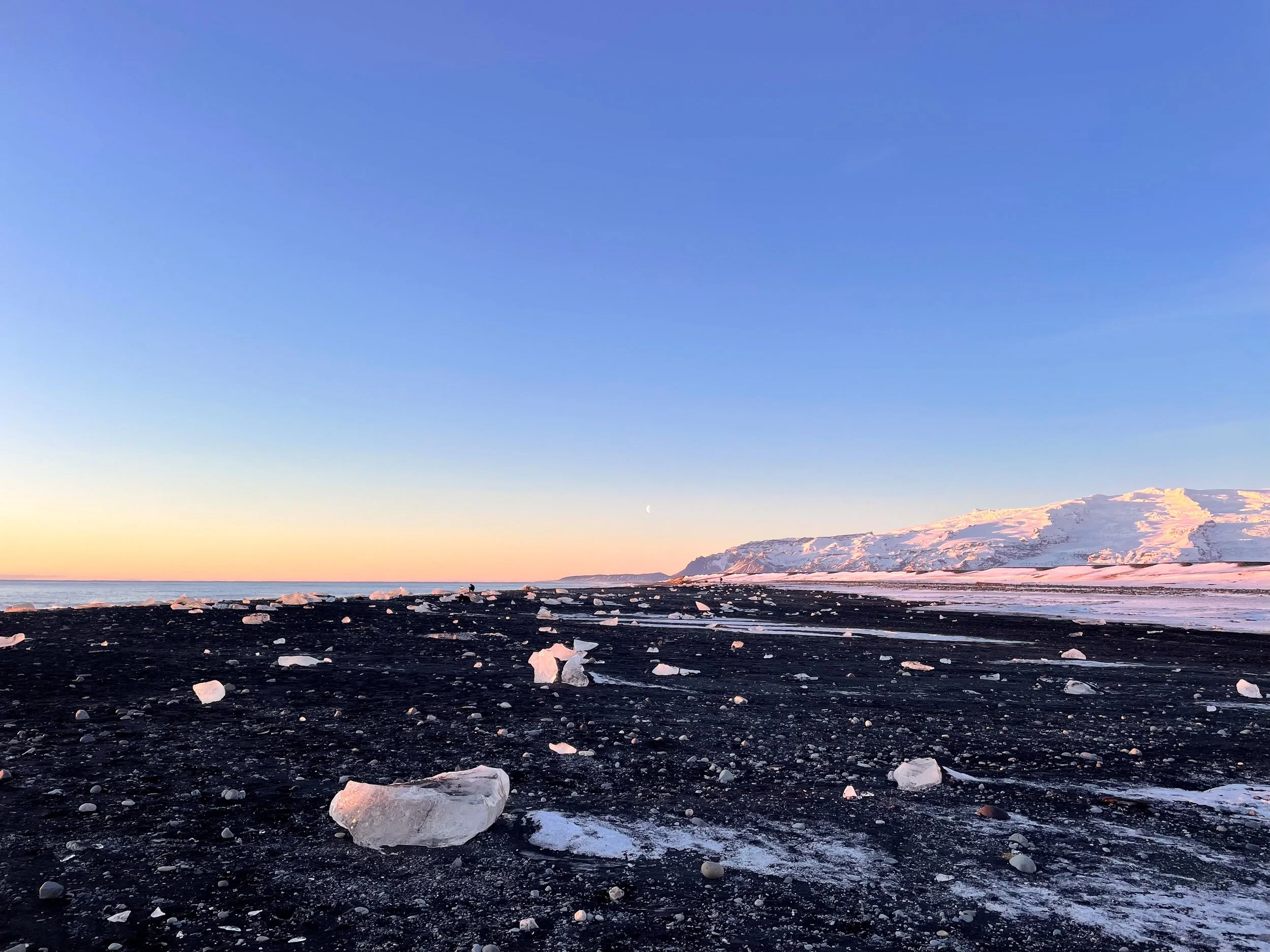
Iceland Road Trip Guide: Waterfalls, Glaciers & Black Sand Beaches. Road trip through Iceland's otherworldly landscapes where volcanoes, glaciers, waterfalls and black sand beaches create one of Earth's most dramatic journeys.
For Next Time…
We’ve developed a love of Scandinavia and hope to return to Finland one day! When we do, we plan to visit the village of Rovaniemi during Christmas and return to Lapland during the late summer when the berries bloom and the sun doesn’t set.