Tulum Travel Guide: Cenotes, Beaches & Mayan Ruins
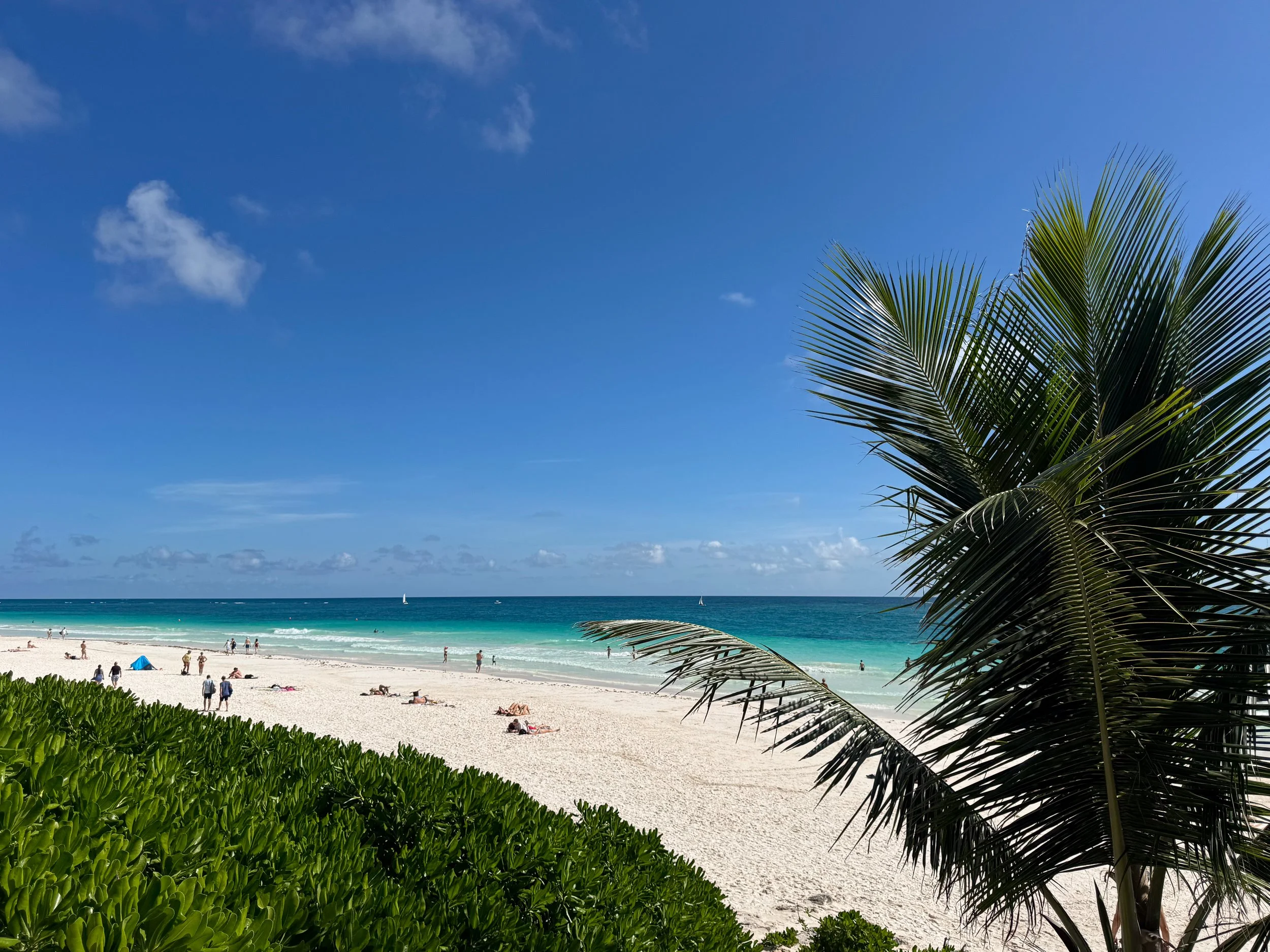
Tulum, Mexico
Tulum is a rapidly growing tourist town with luxury eco resorts, Mayan ruins and access to natural sights like the jungle, cenotes, lagoons and white sand beaches along the Caribbean Sea.
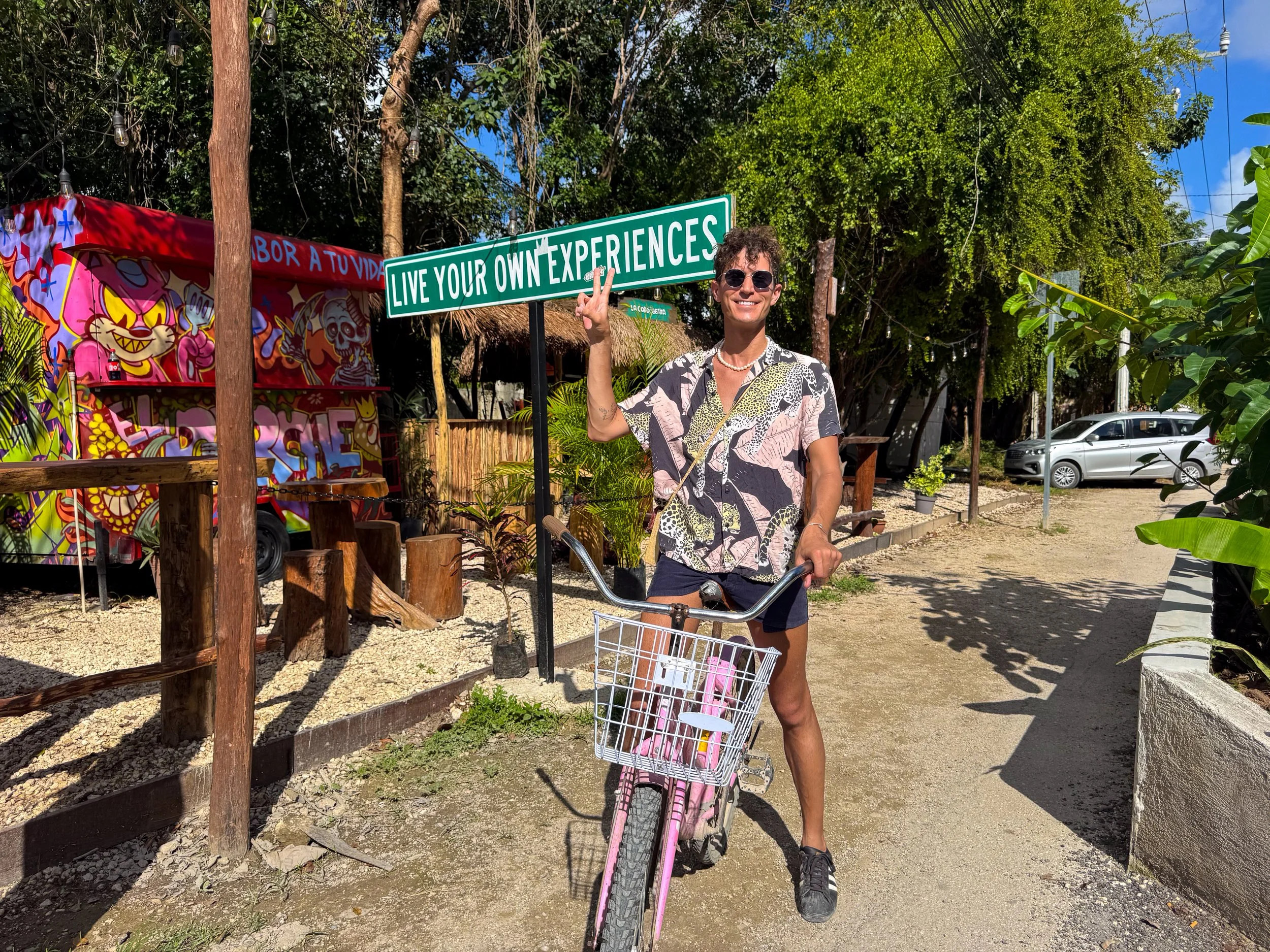
Barrio La Veleta
We stayed in Barrio La Veleta, a jungleous and up and coming neighborhood of Tulum on the edge of town. It was our favorite part of the city with clothing boutiques, bike & scooter rentals, juice bars, co-working spaces, tattoo shops, cafes, restaurants, bars, trendy barber shops, mini markets and several Oxxos.
Places to Eat & Drink
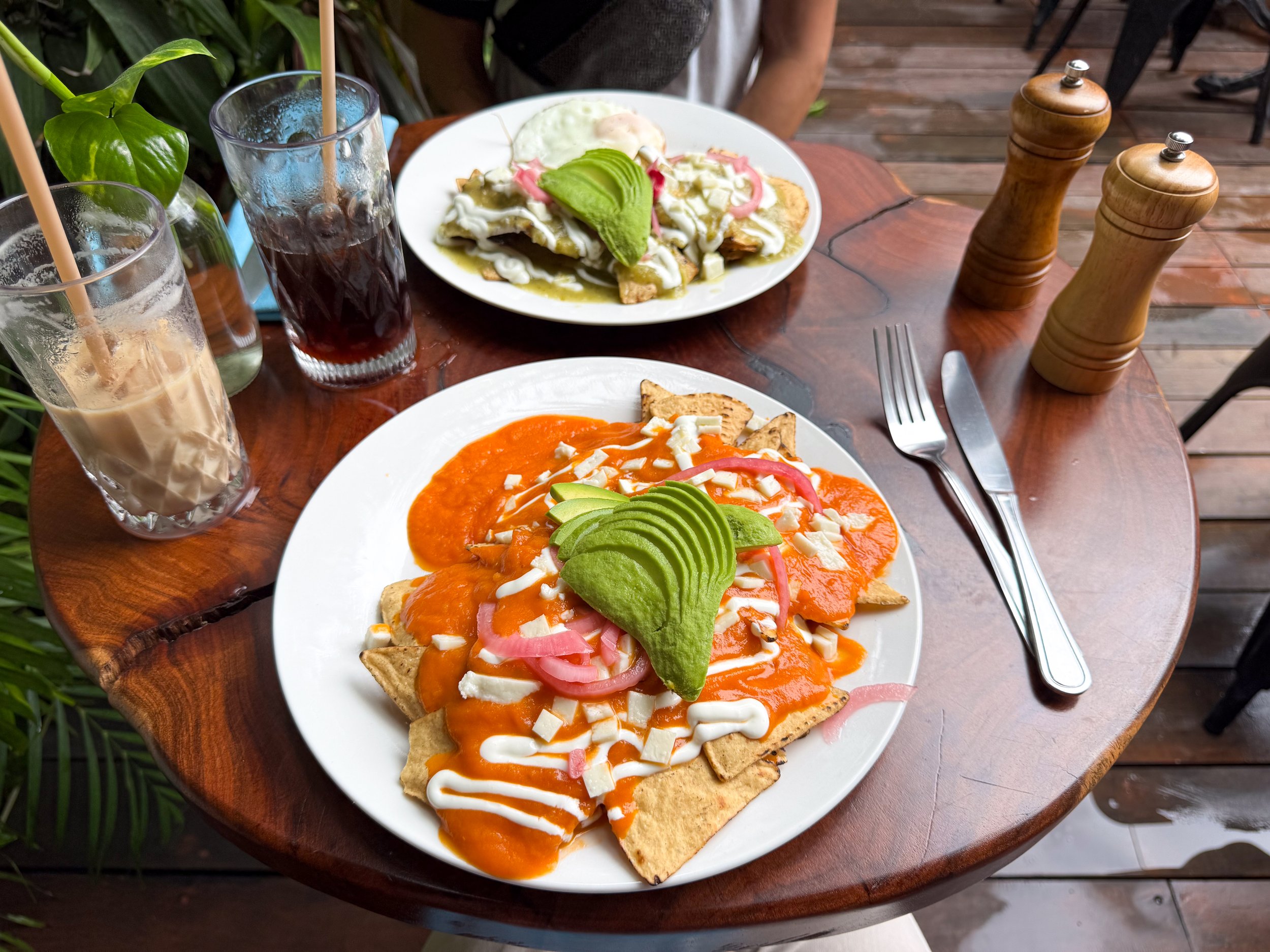
Cafe Si To. A jungleous cafe with tropical plants, a tiny pool and live edge wooden furniture. Their menu offers dishes like chilaquiles, french toast, fresh fruit bowls and avocado toast. Being in Mexico, we each ordered the chilaquiles, one with verde sauce and the other with rojo!
La Pebeta. A cafe and bakery with Mexican breakfast dishes. We tried the green bowl made with cactus, spinach and egg whites cooked in a salsa verde and the “divorced eggs” two eggs served on corn tortillas with beans and cheese, covered in salsa verde and salsa rojo.
Tres Galeones. A Mexican seafood restaurant and taqueria with a lush garden patio and interior that resembles a large wooden ship with portholes, a captain's deck and nautical decor. Come here for a local beer like Corona or Pacifico and the seafood tacos and tostones like octopus, soft shell crab, baja style fish, fish al pastor and shrimp.
Panadería La Delicia y Abarrotes. A local Mexican bakery with over a dozen types of pan dulces (Mexican pastries). We stopped by here twice to buy breakfast and desserts.
Velvet Tulum. A self serve ice cream shop with a mix of classic and unique soft serve flavors like chocolate, vanilla, pistachio, taro and grape + charcoal. The ice cream is sold by weight and can quickly add up in price.
Parque del Jaguar
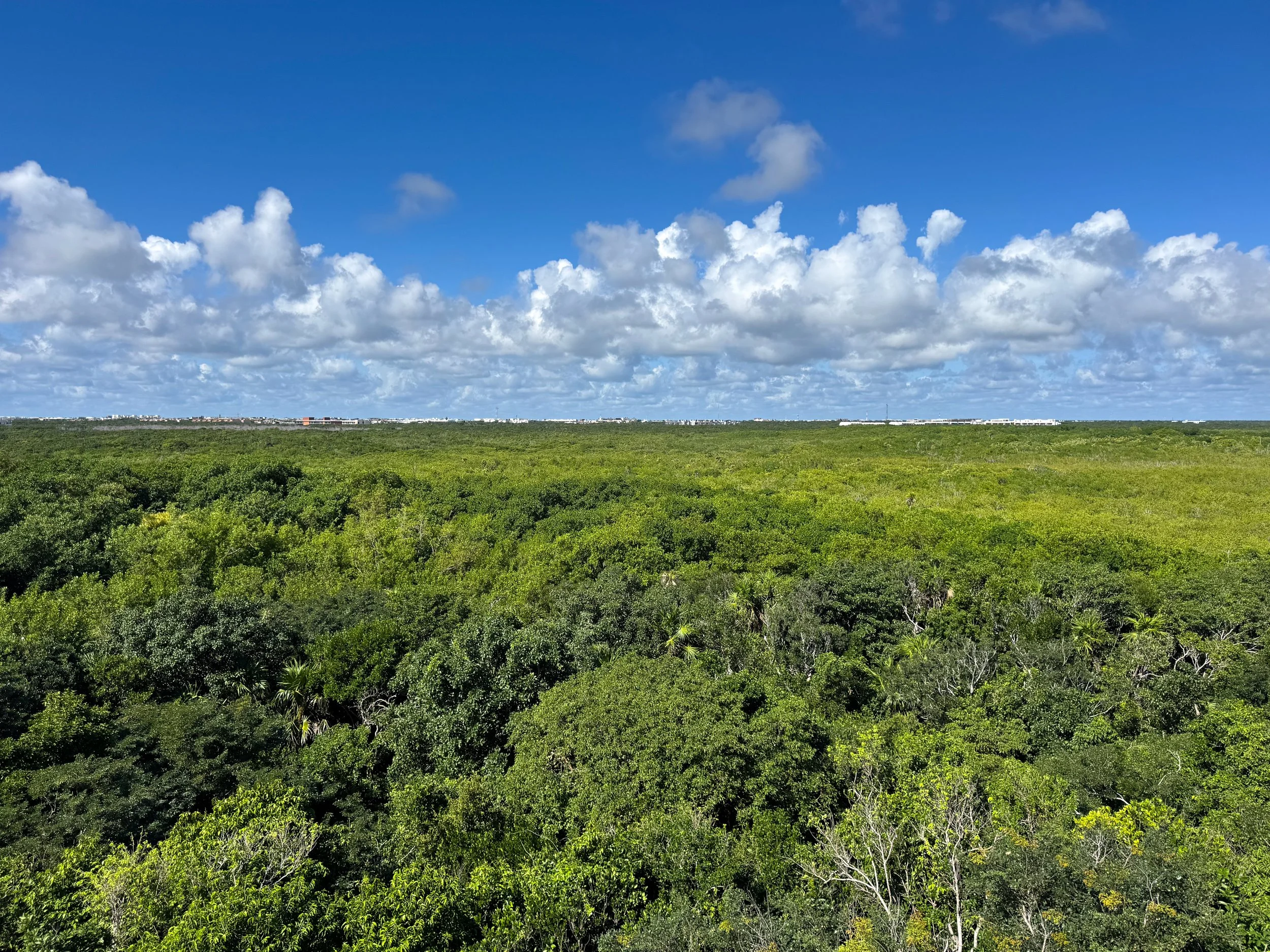
Parque del Jaguar is a national park and jungle reserve along the Caribbean Sea with access to the Tulum Ruins, multiple public beaches, restaurants, hotels and beach clubs. The park is open daily from 9am-5pm for a small fee. It’s easily navigable on foot, by bike or public shuttle.
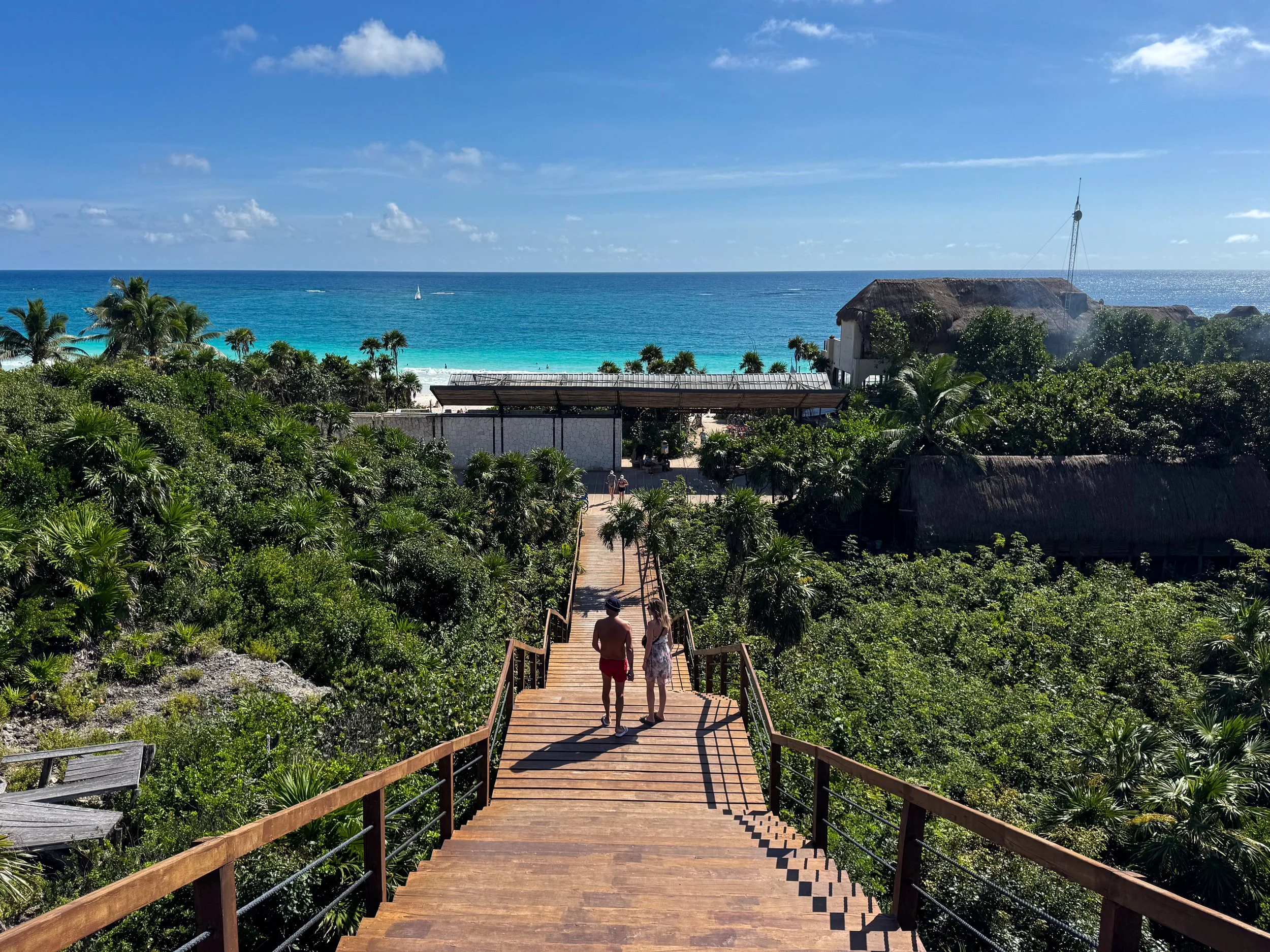
Parque del Jaguar Mirador. A large wooden staircase across from Playa Mangle in Parque del Jaguar with views of the lush jungle reserve and Caribbean Coast.
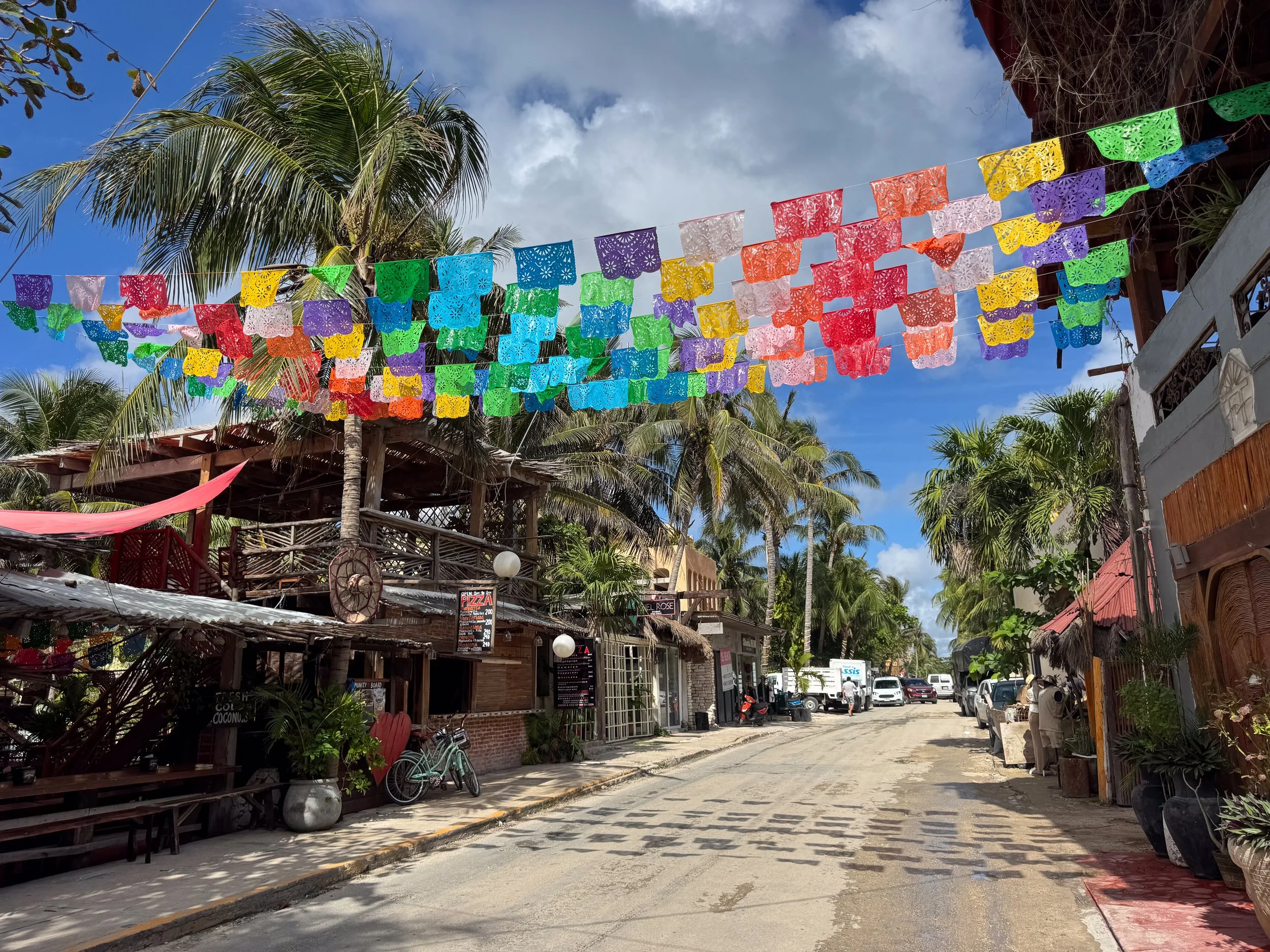
Tulum Hotel Zone
Tulum’s hotel zone is a vibey and tropical neighborhood along the Caribbean with eco-hotels, luxury hostels, beach clubs and nightly outdoor parties. It’s a popular destination with millennial travelers, digital nomads and influencers. Swimsuit clad people ride bicycles and scooters down the palm lined road to white sand beaches and jungleous eco-resorts sculpted from natural materials
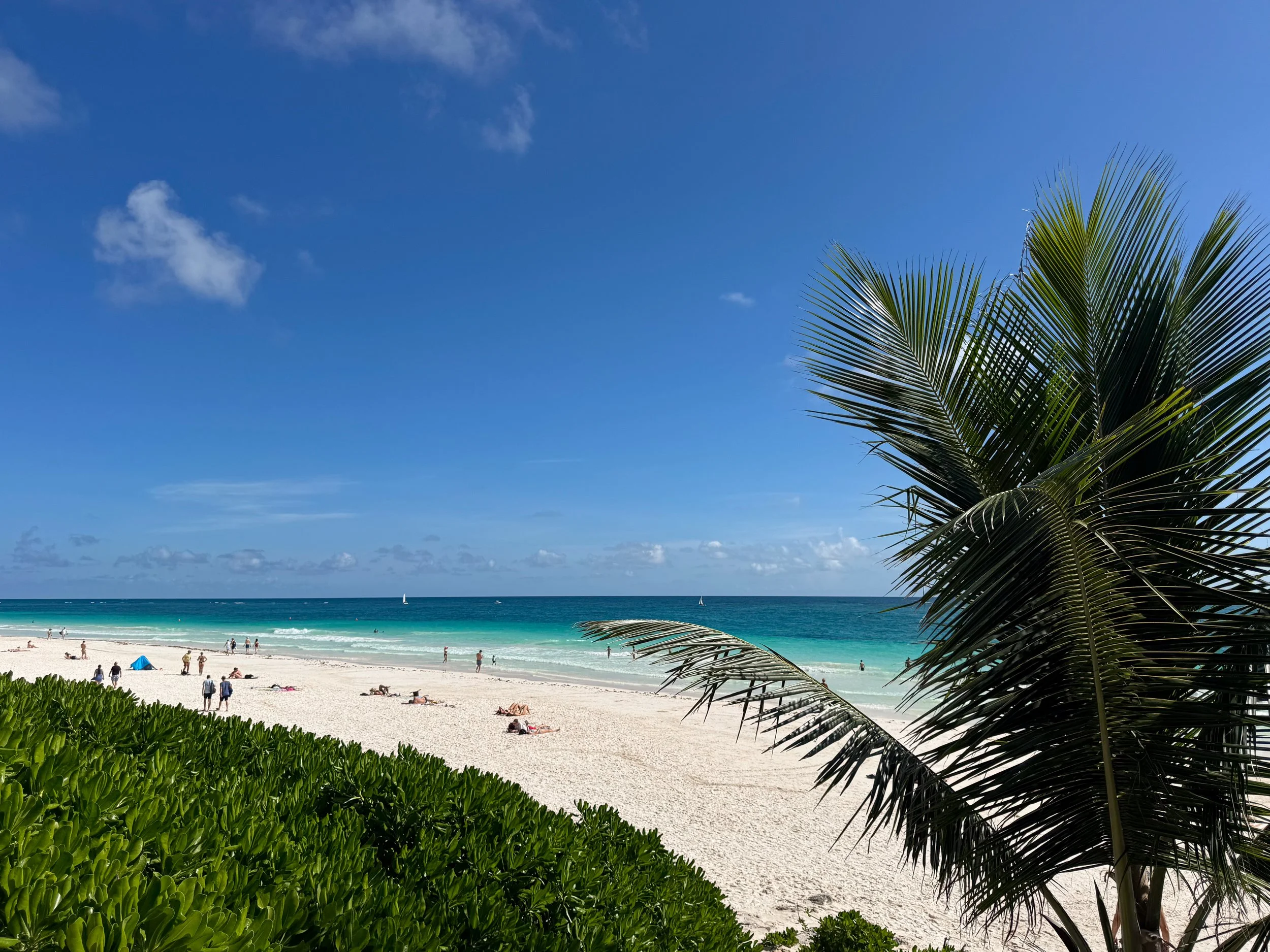
Beaches & Beach Clubs
Playa las Palmas. A powdery white sand beach with shallow aquamarine water perfect for sunbathing, swimming and body surfing. The beach has several restaurants, hotels and bars with lounges and beds for rent. It’s one of the public beaches, accessible through the Parque del Jaguar.
Playa Santa Fe. A white sand beach with access to the Tulum Ruins. Many boat tours with seaside views of them leave from here.
Playa Pescadores. A white sand beach with restaurants, bars and beach clubs. Many snorkeling and fishing tours leave from here.
Playa Mirador. A small beach with a large rocky outcrop. The water is rocky but it’s a fun spot to sunbathe and watch the pelicans dive into the water. It’s nearby several beach front hotels and bars.
Ramon’s at Pocna Tulum. A beachfront restaurant at Playa las Palmas with palm tree shaded beach beds and a sand floor dining room overlooking the beach. Come here for the tropical cocktails like piña coladas or margaritas and Mexican dishes like tacos, ceviche and guacamole.
Club de Playa Zazil-Kin. A palm covered beach club with lounges and tables in the sand at Playa Pesadores. Come here for the grilled seafood, coconut shrimp, ceviche, Mexican beers and tropical cocktails.
Mivida. A beachfront hotel, restaurant and bar with a thatched patio, beach beds and white sand beach.
Mayan Ruins
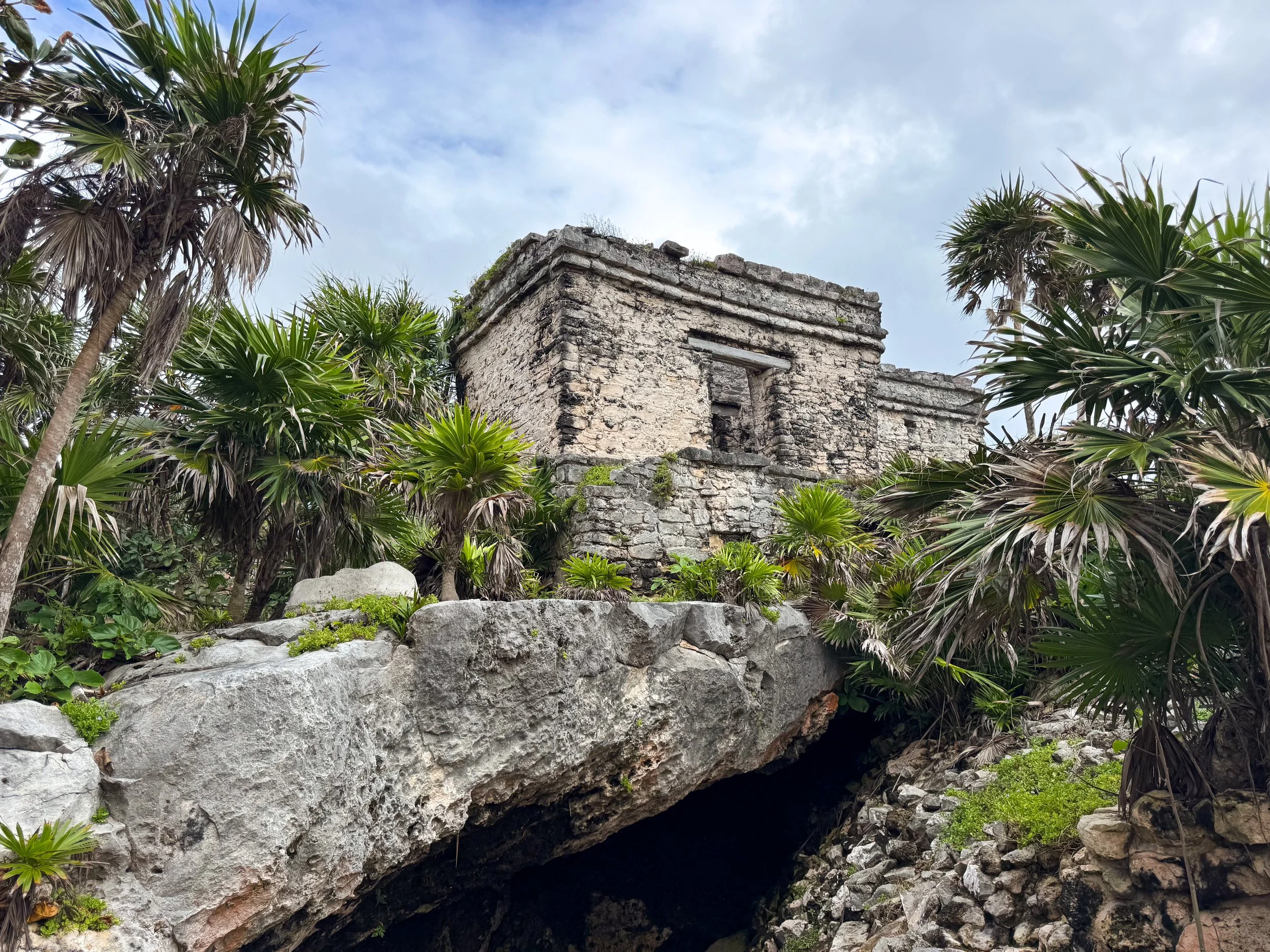
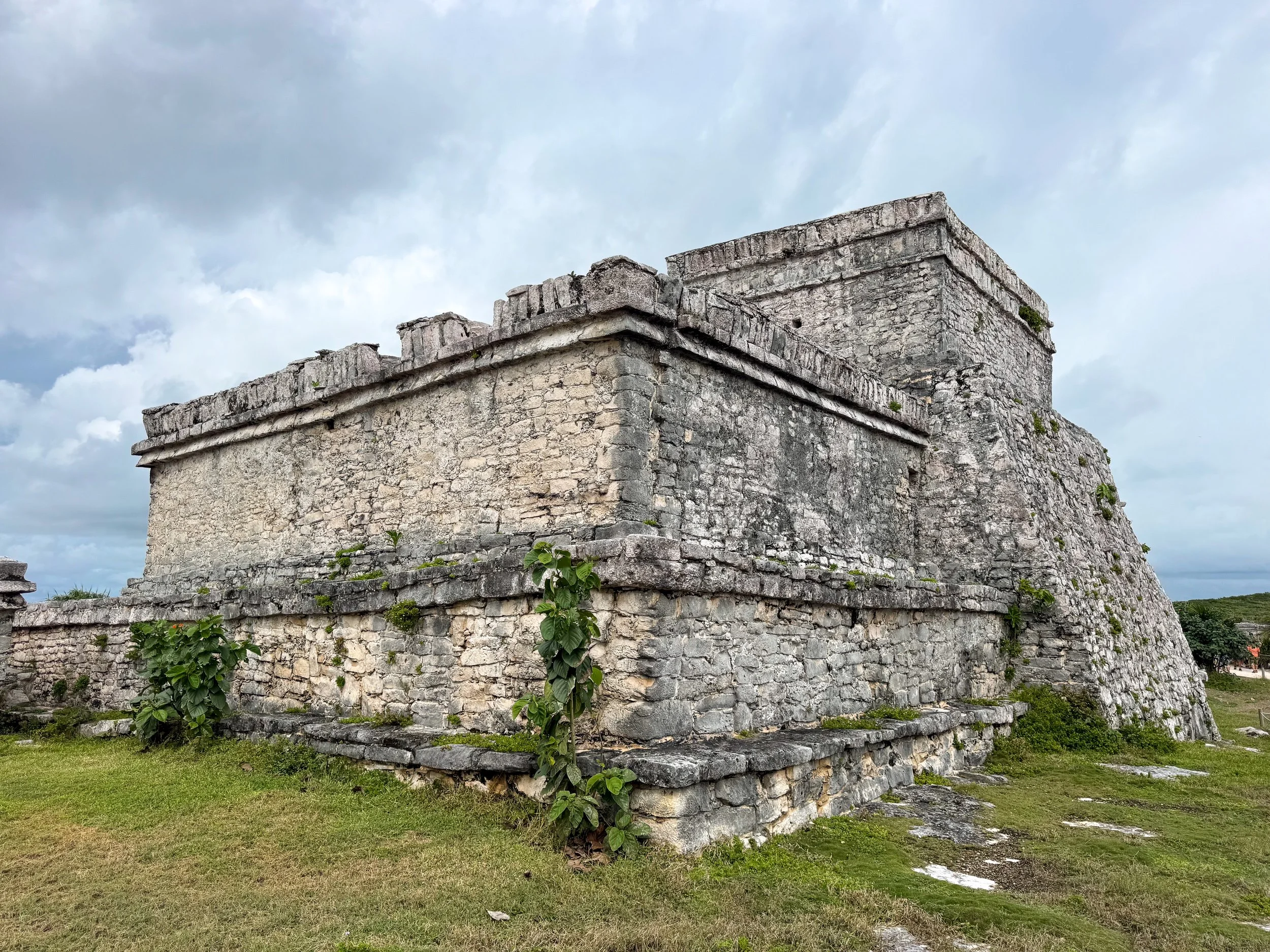
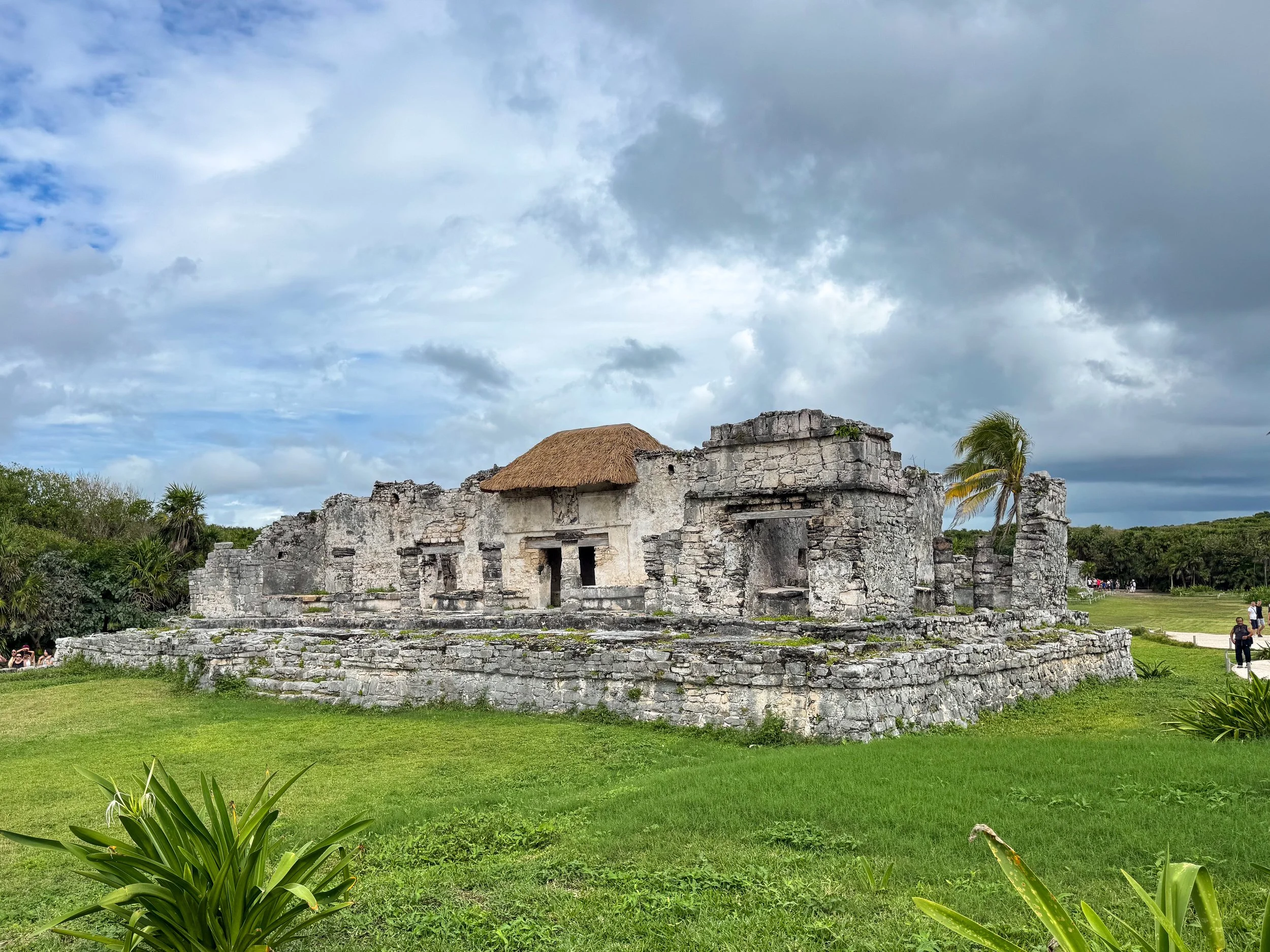
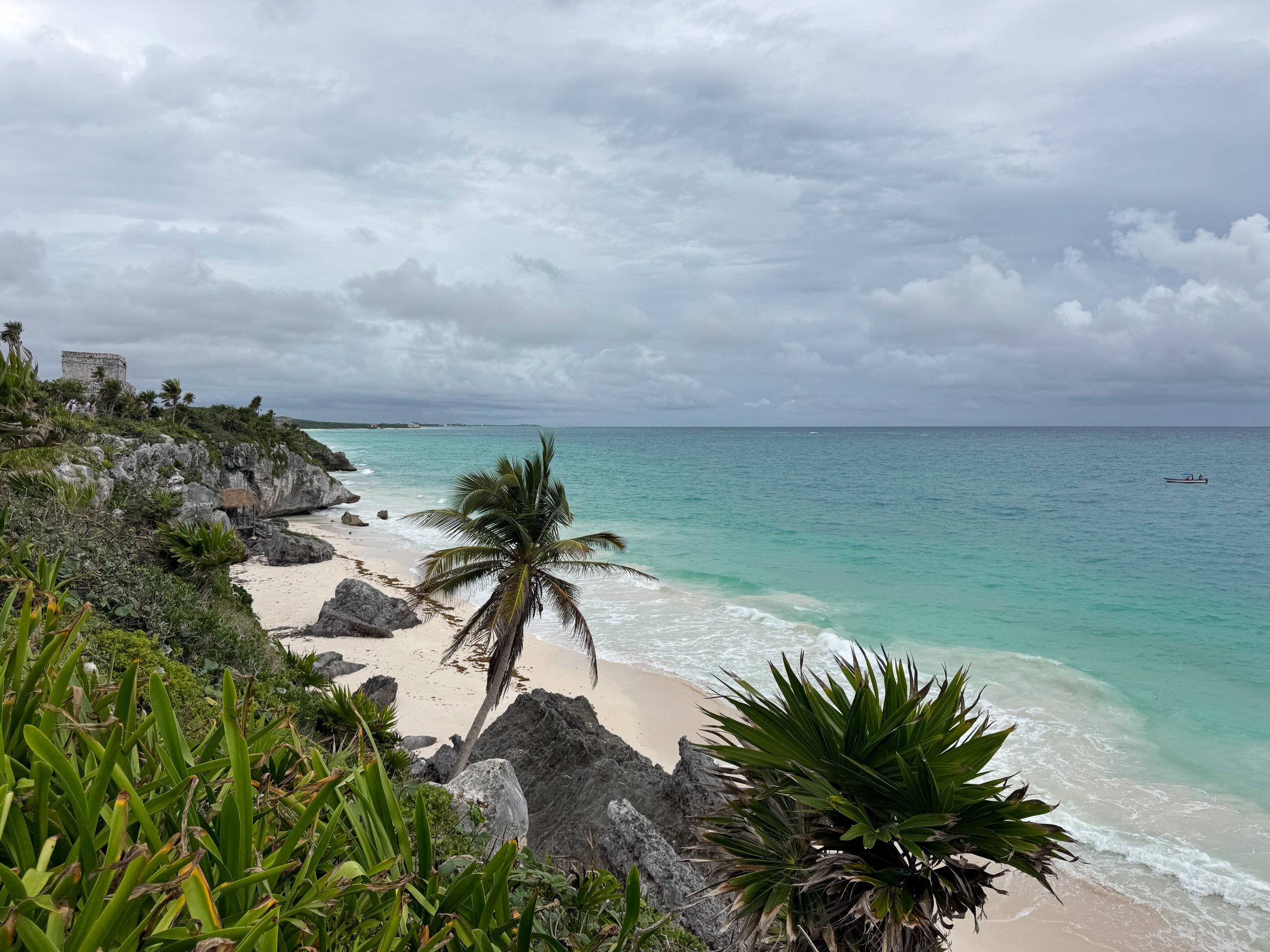
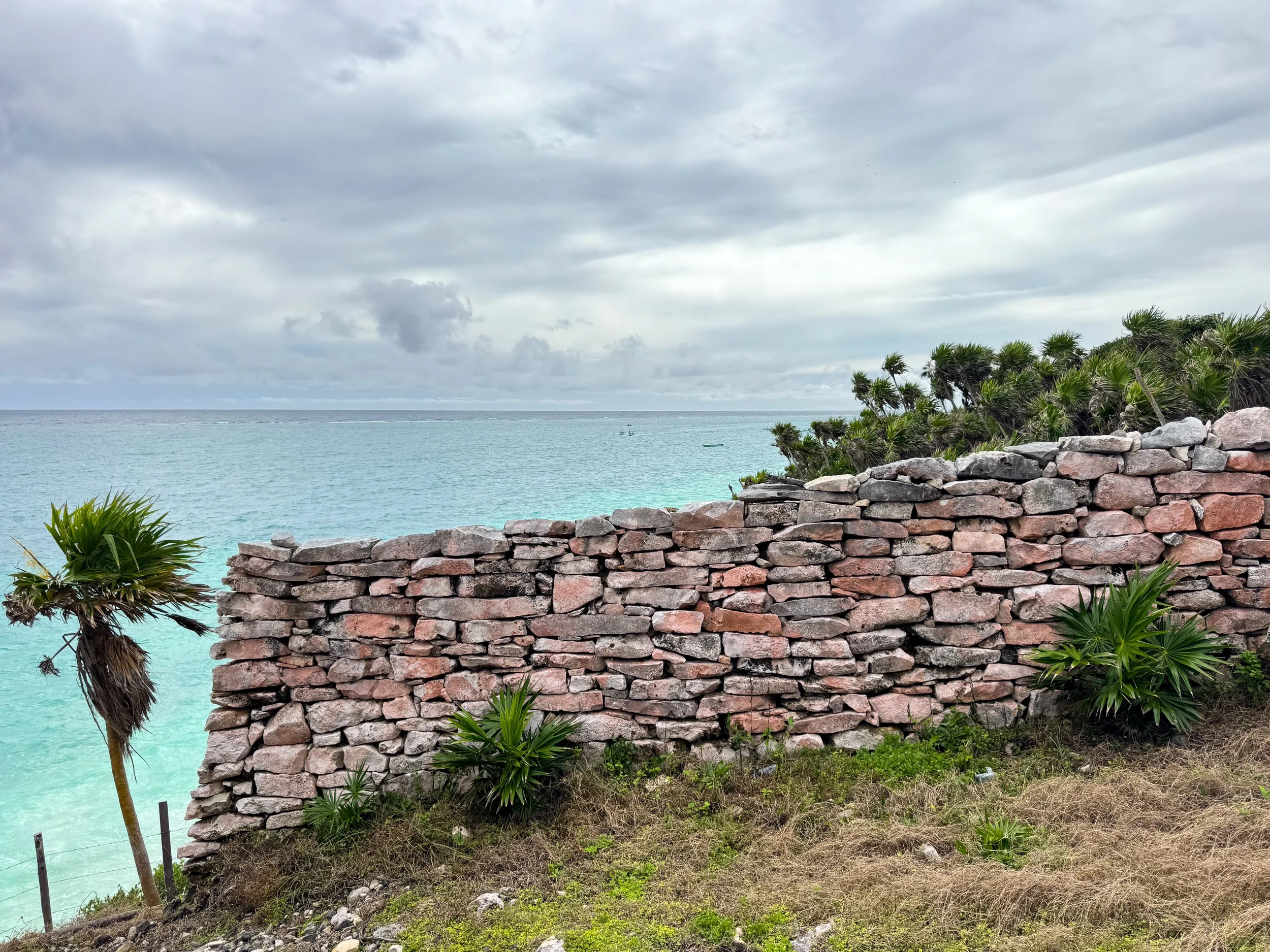
Tulum Ruins. The Tulum Ruins are large archeological site with Mayan structures perched on a cliff overlooking the Caribbean Sea. The complex is surrounded by a stone wall and encompasses multiple well preserved temples and crumbing buildings. The city was thought to be a central trading post for the Mayan empire.
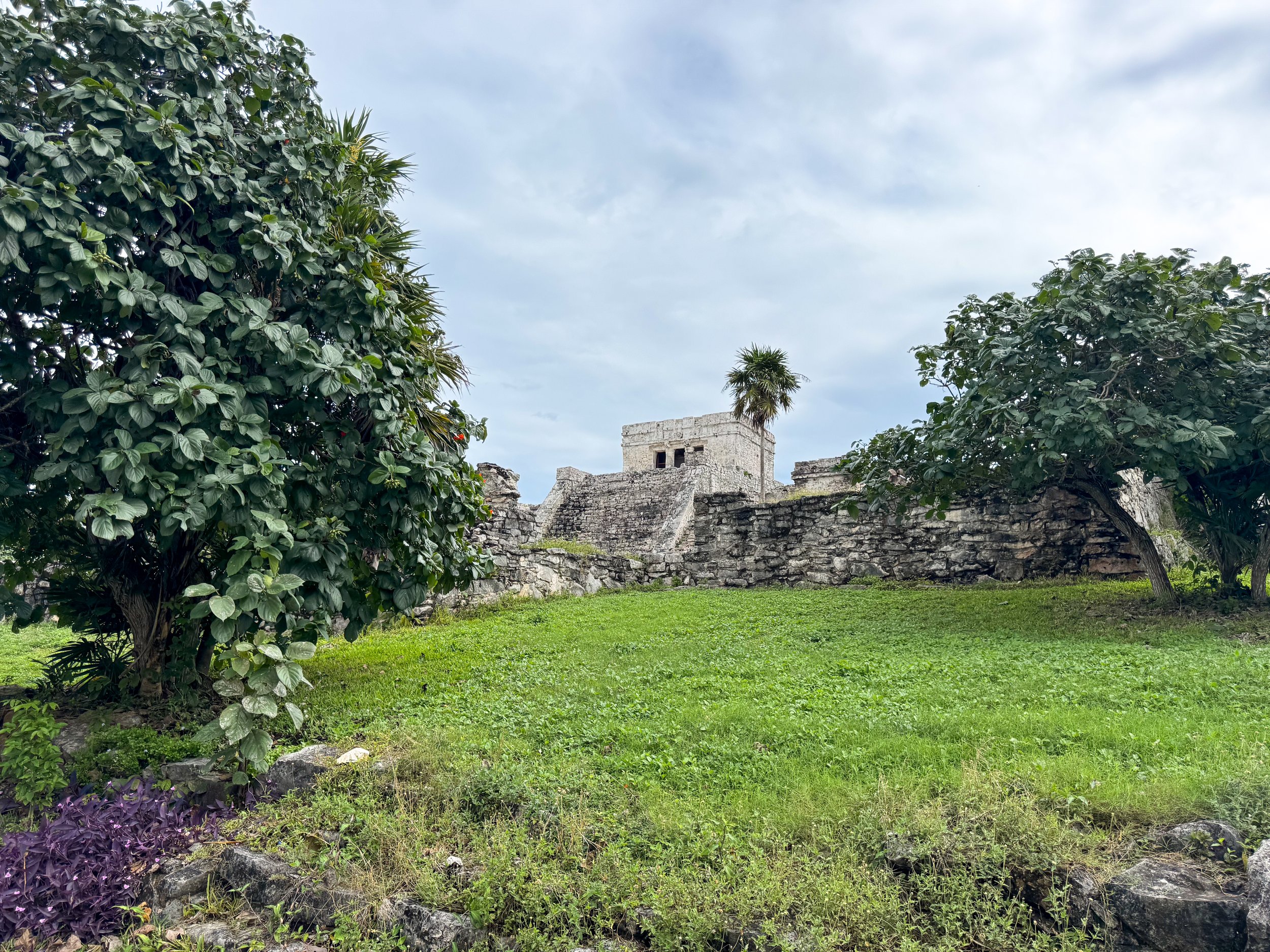
El Castillo. The largest and most grand building of the complex with a temple atop a stone staircase and flanked by two smaller temples. It resides at a high point near the cliff overlooking the Caribbean Sea.
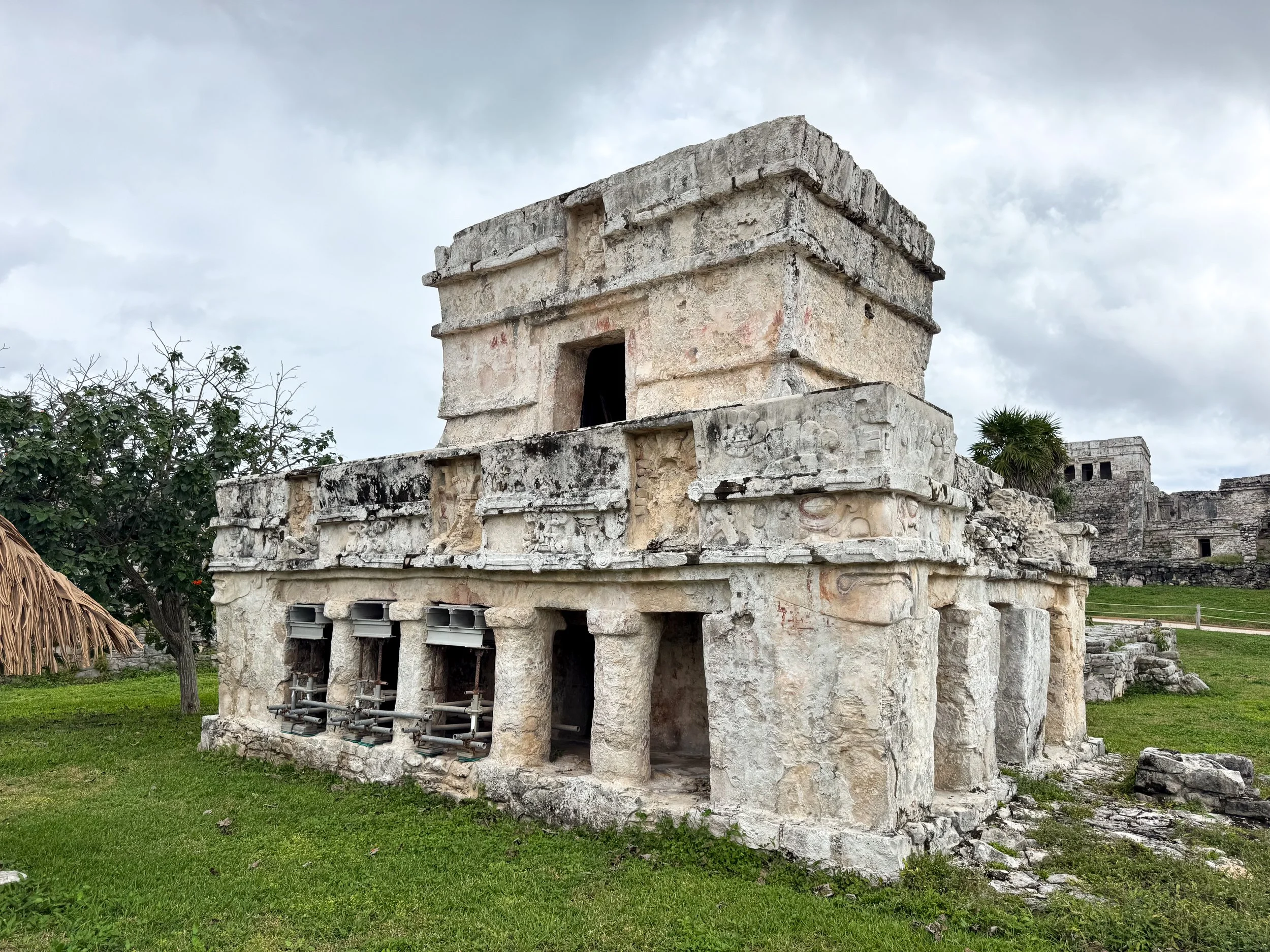
El Templo de los Frescos. An intricately designed temple covered in Mayan carvings, figures of gods and red painted imprints of human hands.
Templo del Dios Del Descendente. A stone temple with angled walls and a motif above the doorway of a god descending from the heavens.
Templo del Dios Del Viento. A stone temple with several altars on a cliff overlooking the Caribbean. The temple is dedicated to Kukulcan, the God of Wind.
Casa del Cenote. A small stone house built on top of a Cenote. It was thought to be the village’s main source of fresh water.
La Muralla Defensa y Límite. The defensive stone wall surrounding three sides of the village with a narrow passageway to enter and exit.
Pro Tip. Arrive early, by 8am, to avoid the massive crowds and large tour groups.
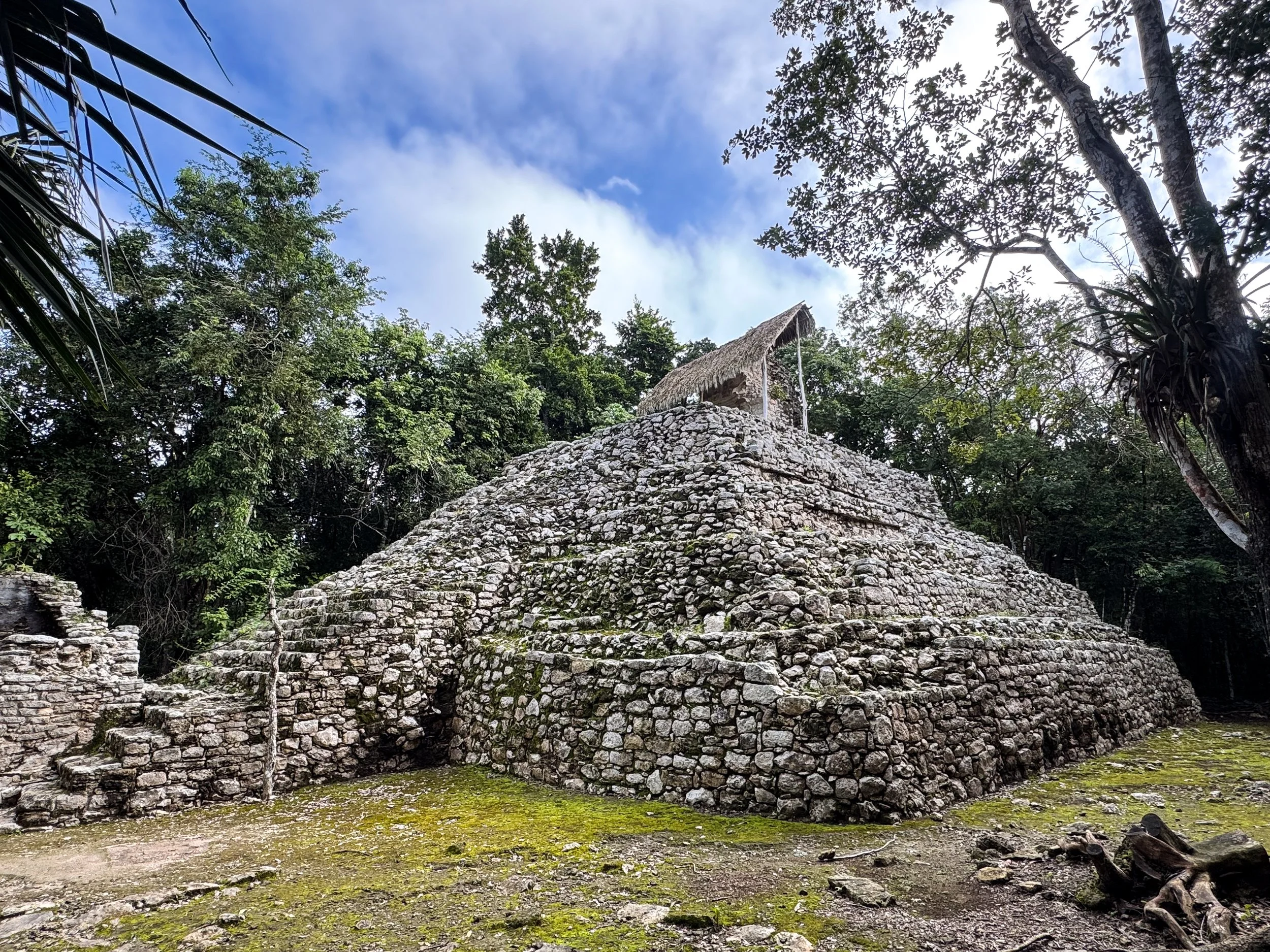
Coba Archaeological Site
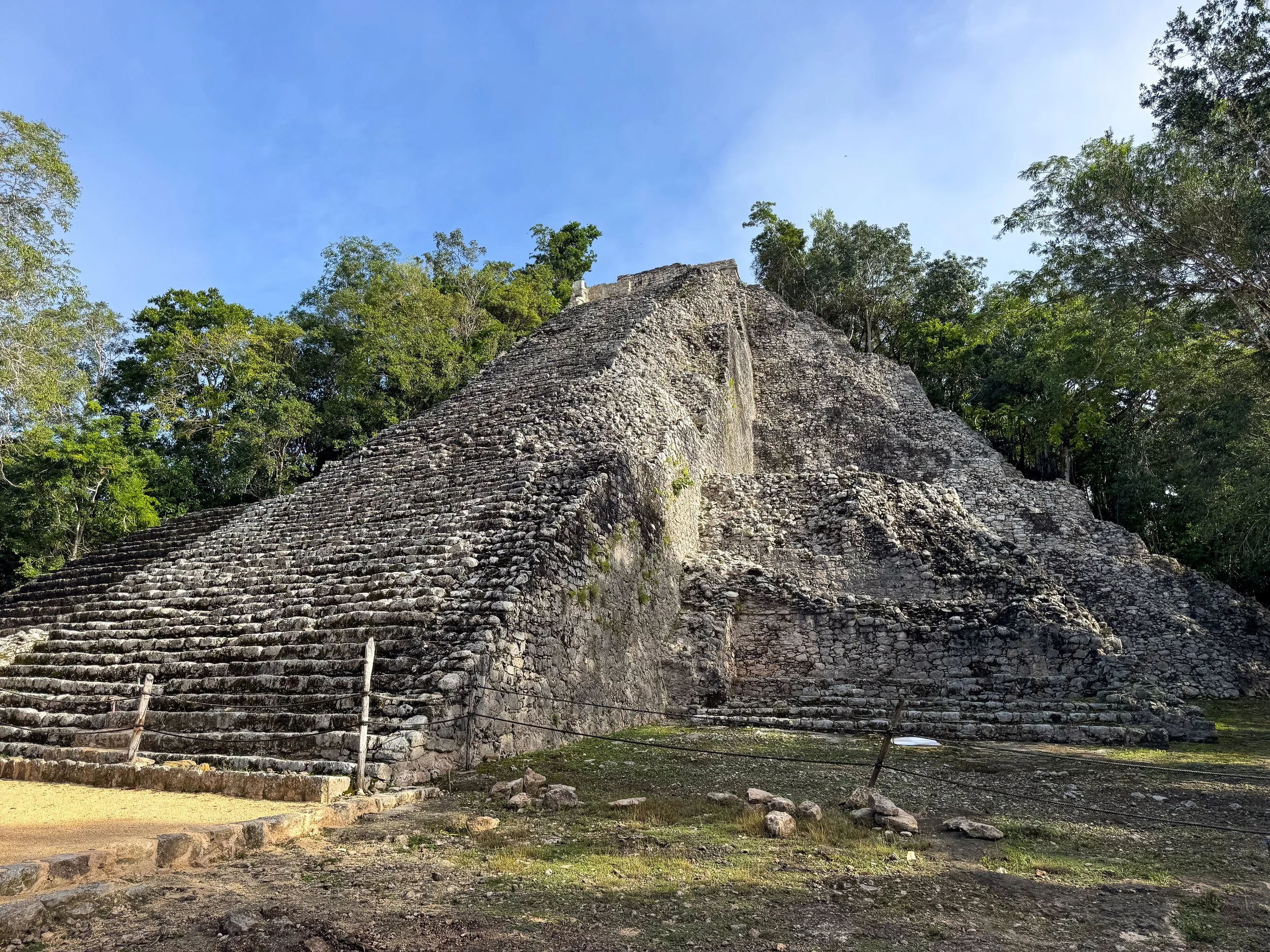
Coba is a sprawling Mayan city within the lush jungle comprised of multiple acropolises, stone pyramids, temples, platforms, ball courts and stelae or vertical stone tablets carved in hieroglyphs and depictions of Mayan priests, royalty and warriors.
Group Nohoch Mul. An acropolis with two stepped pyramids, a ball court, several small platforms and unearthed ruins.
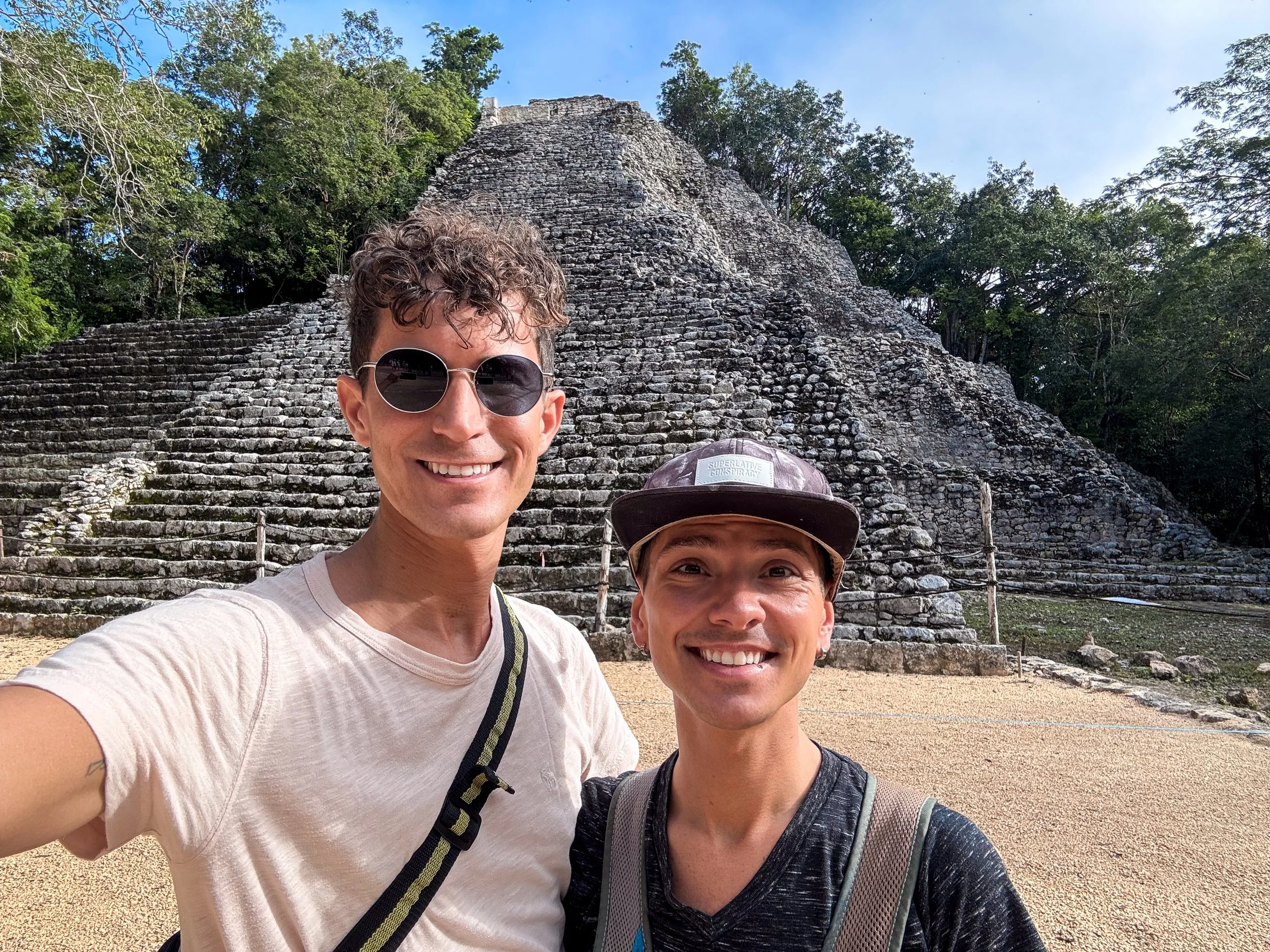
Nohoch Mul Pyramid. The tallest pyramid in the Yucatan with stepped sides and a central staircase leading to an alter on top. Its crumbling front is fully unearthed while its other side remains buried beneath lush vegetation.
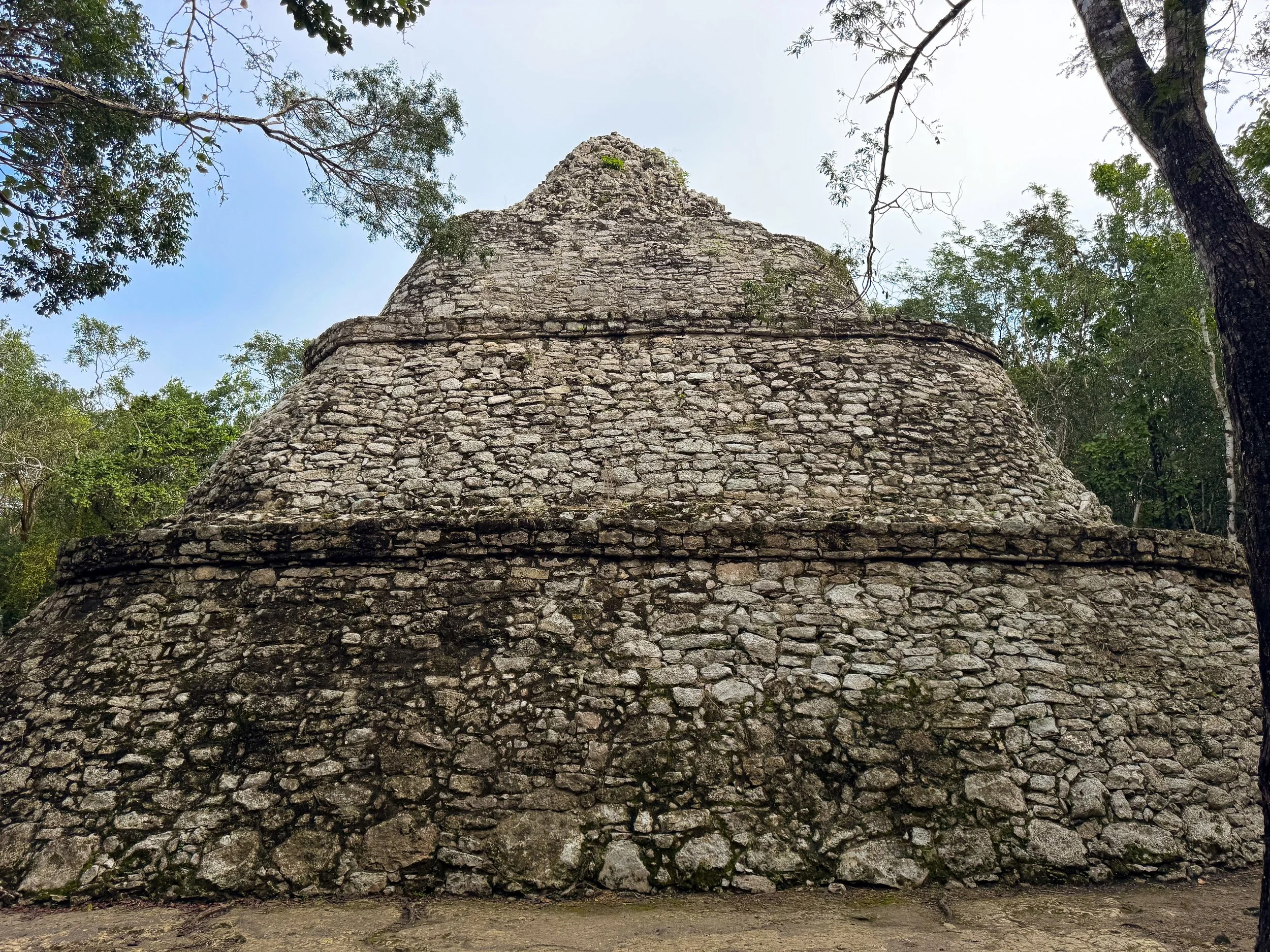
Observatorio Astronómico de Cobá. A very well preserved astronomical pyramid with rounded sides, four levels and twenty steps representing the Mayan calendar. It’s fully unearthed and can be viewed on all sides.
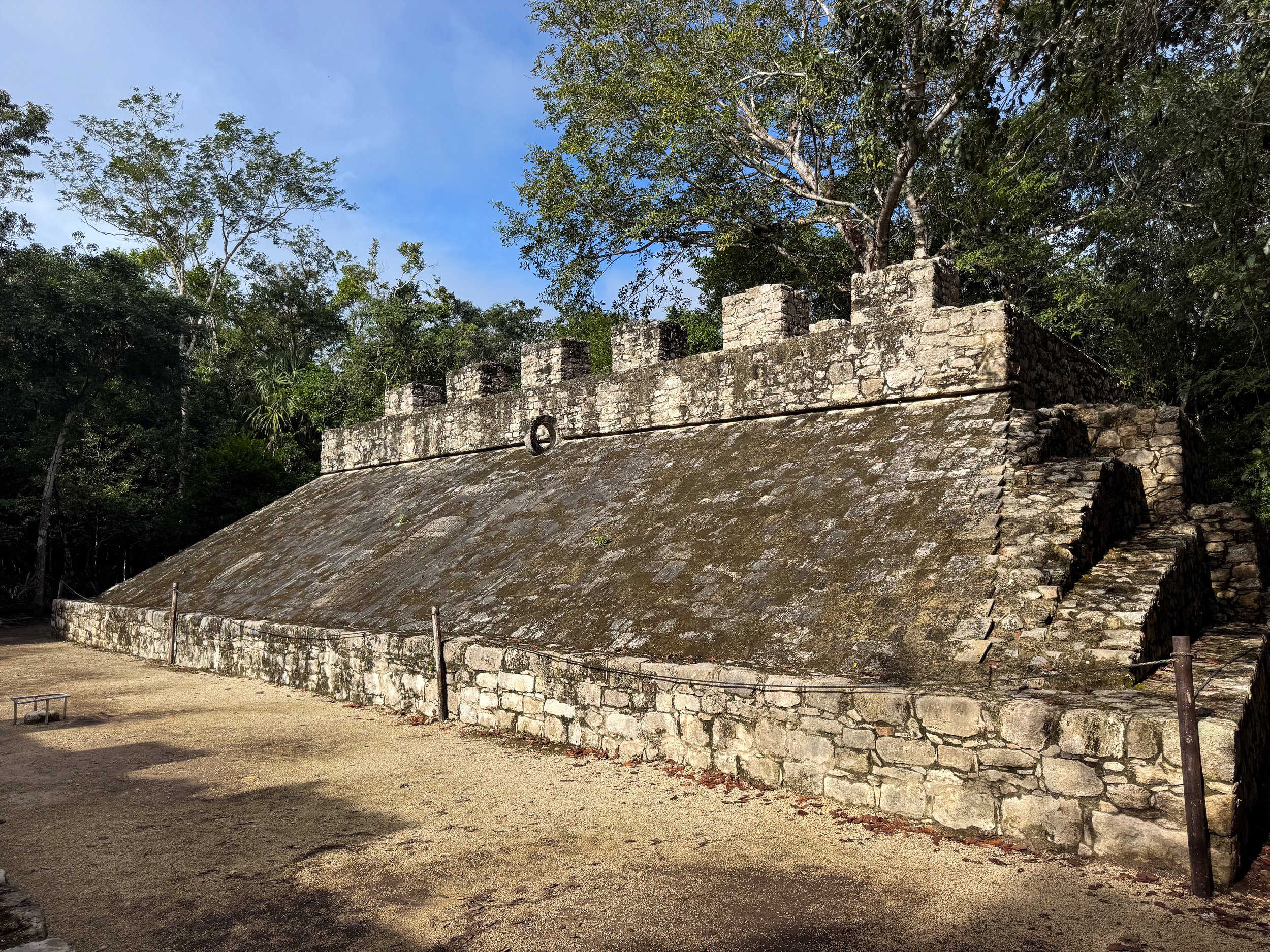
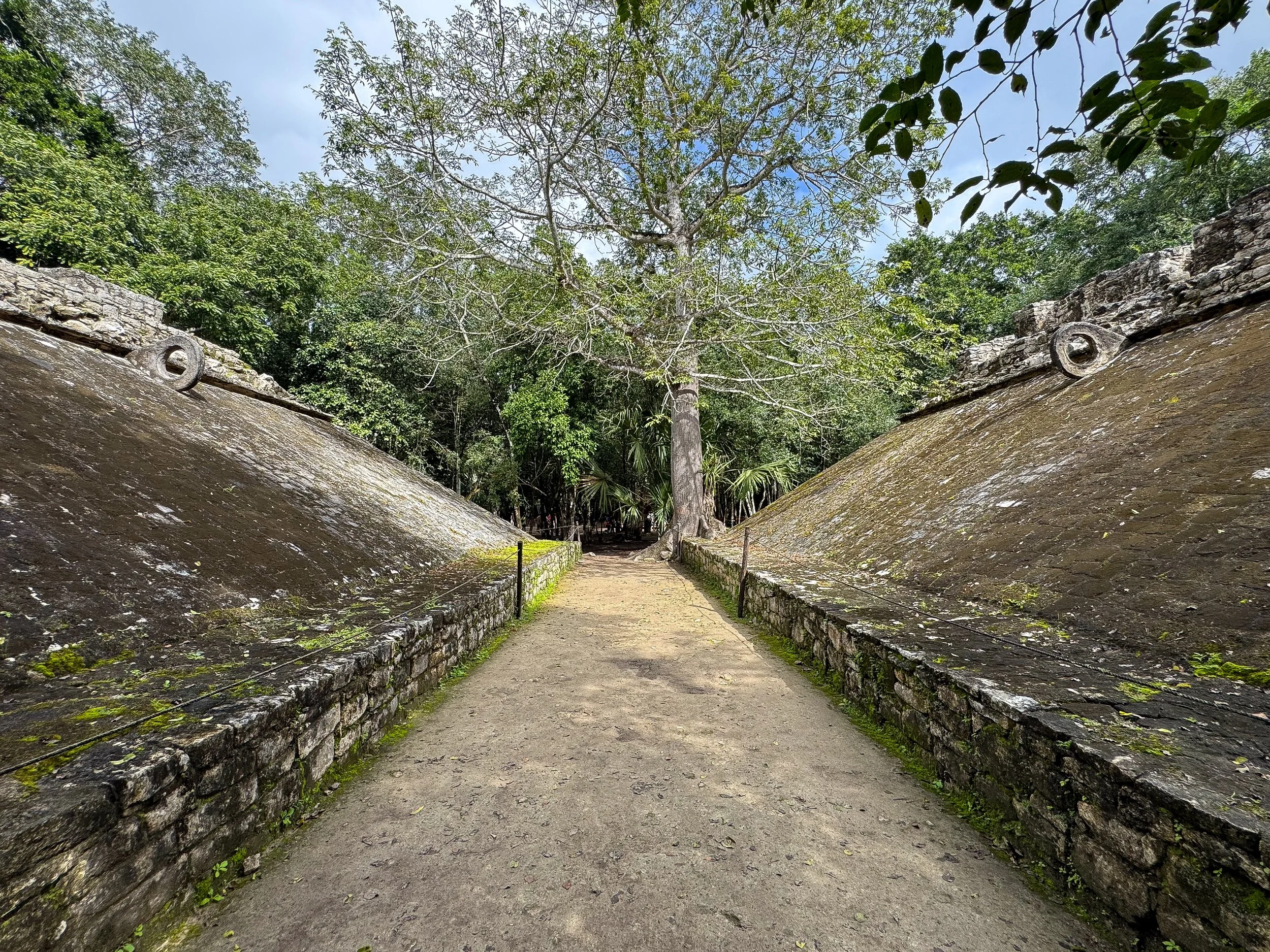
Juego de Pelota. A well preserved ball court with stone rings centered on two angled walls opposite each other. Each wall has six alters for Mayan royalty to watch from. Inlaid in the floor are carvings of a human skull and beheaded jaguar.
Group D. An acropolis with temples, platforms, a pyramid and overgrown Mayan road.
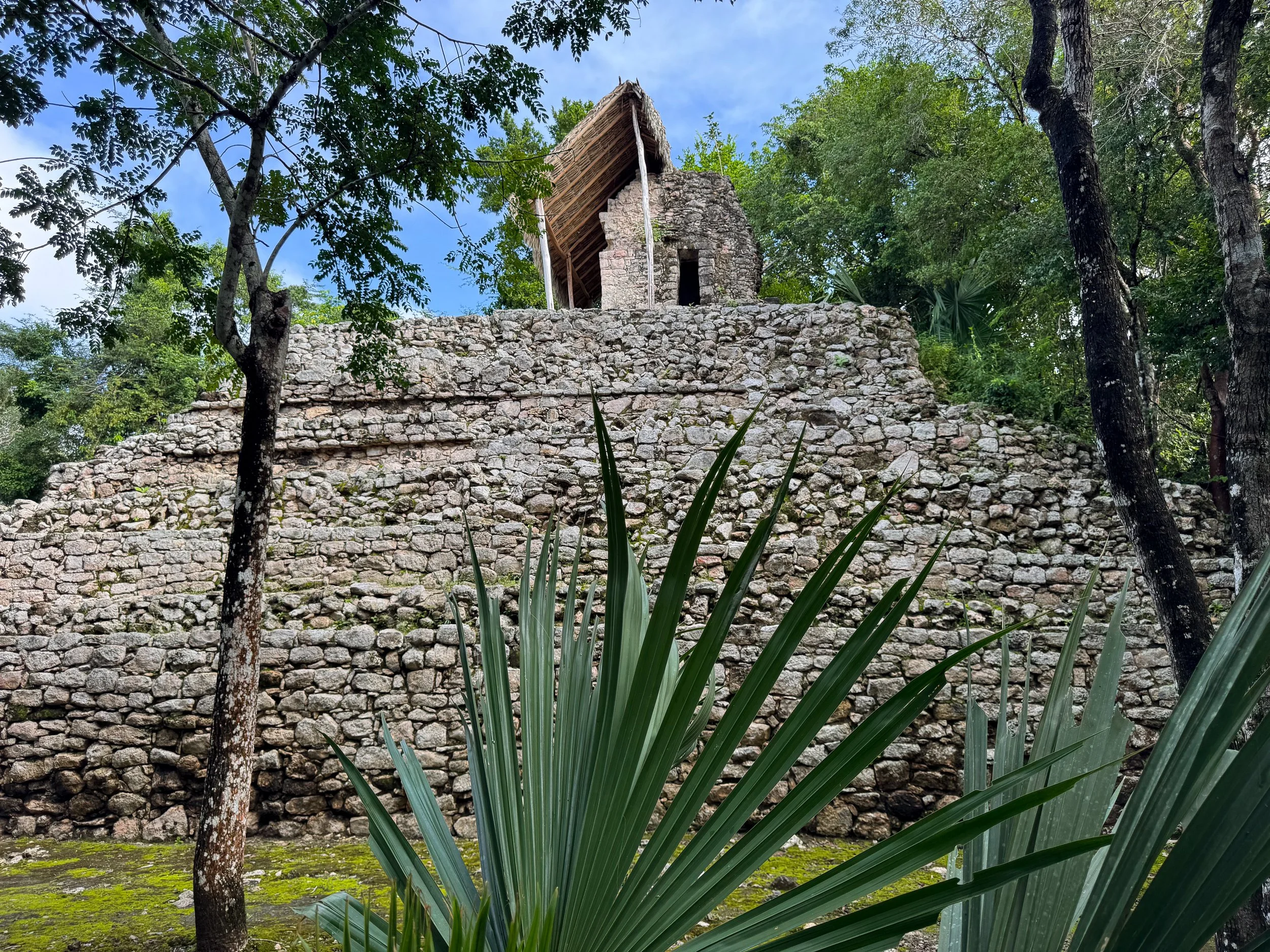
Structure 5. A stepped platform and small temple with the crumbling remains of rounded columns. It’s one of the few ruins that can be climbed on to explore its construction and ceremonial purposes.
Conjunto Pinturas. A multilevel stepped pyramid with rounded corners and a central staircase leading to an altar at its top. A few smaller temples and platforms with rounded columns and stelae surround its base.
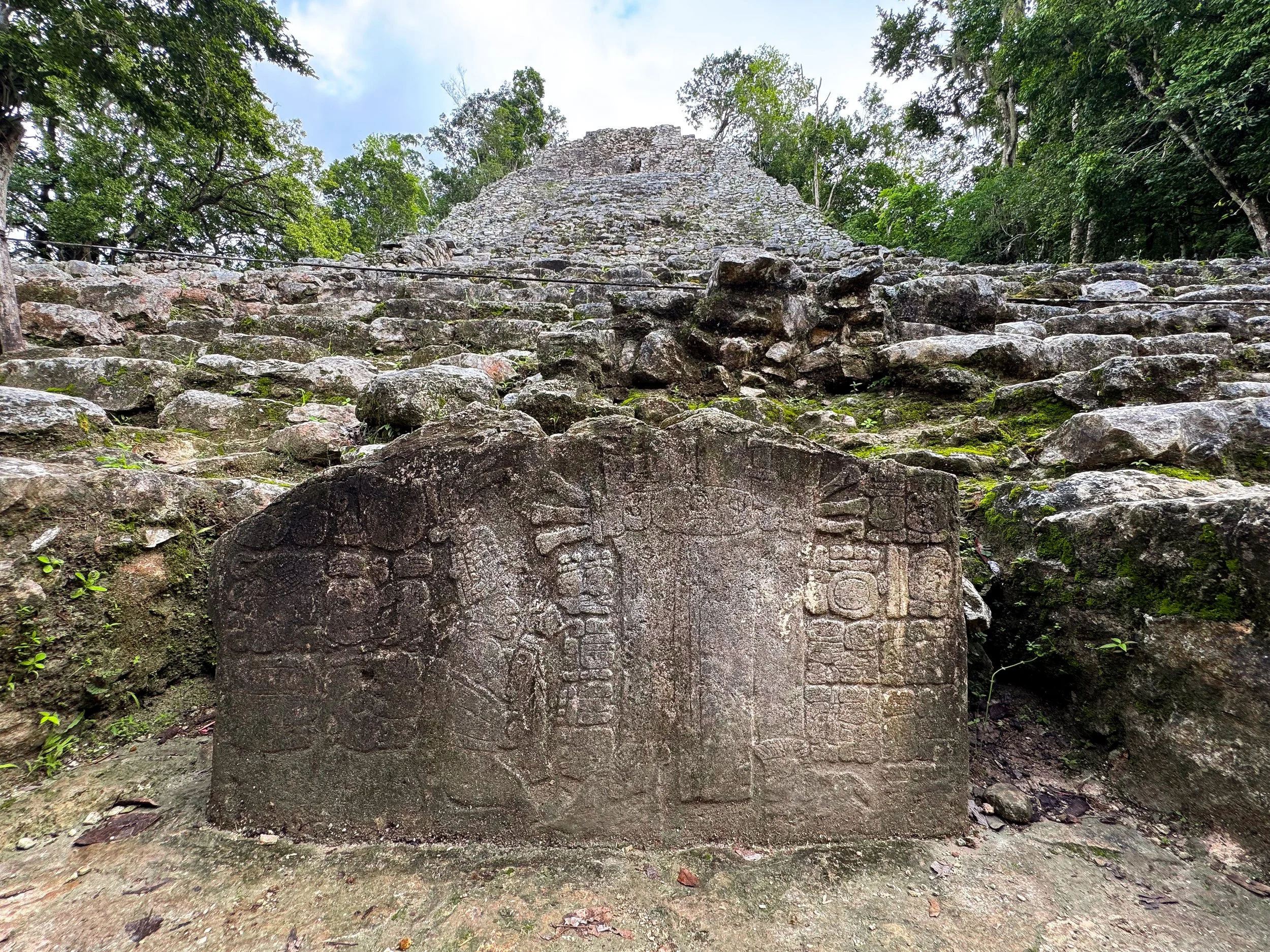
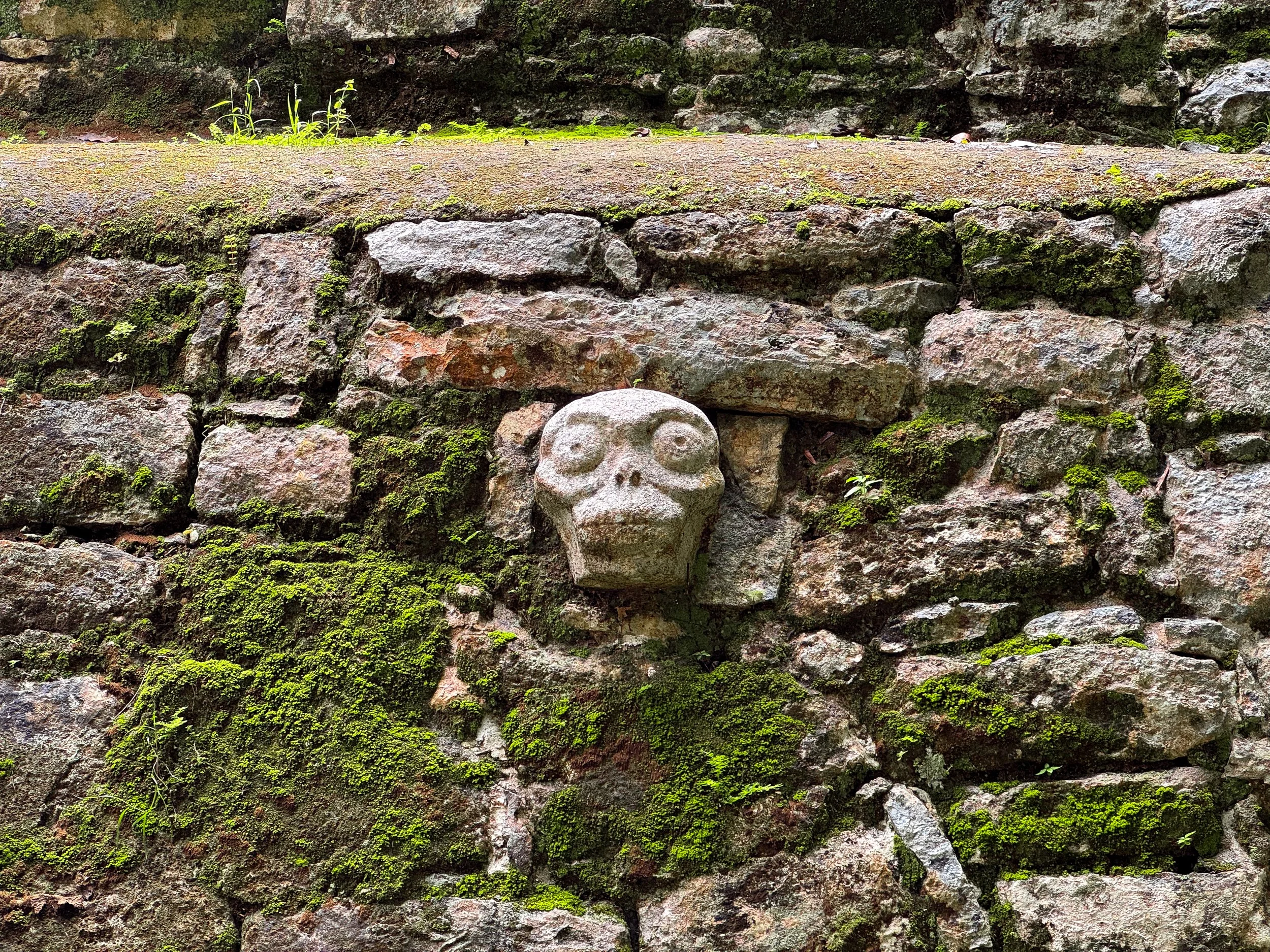
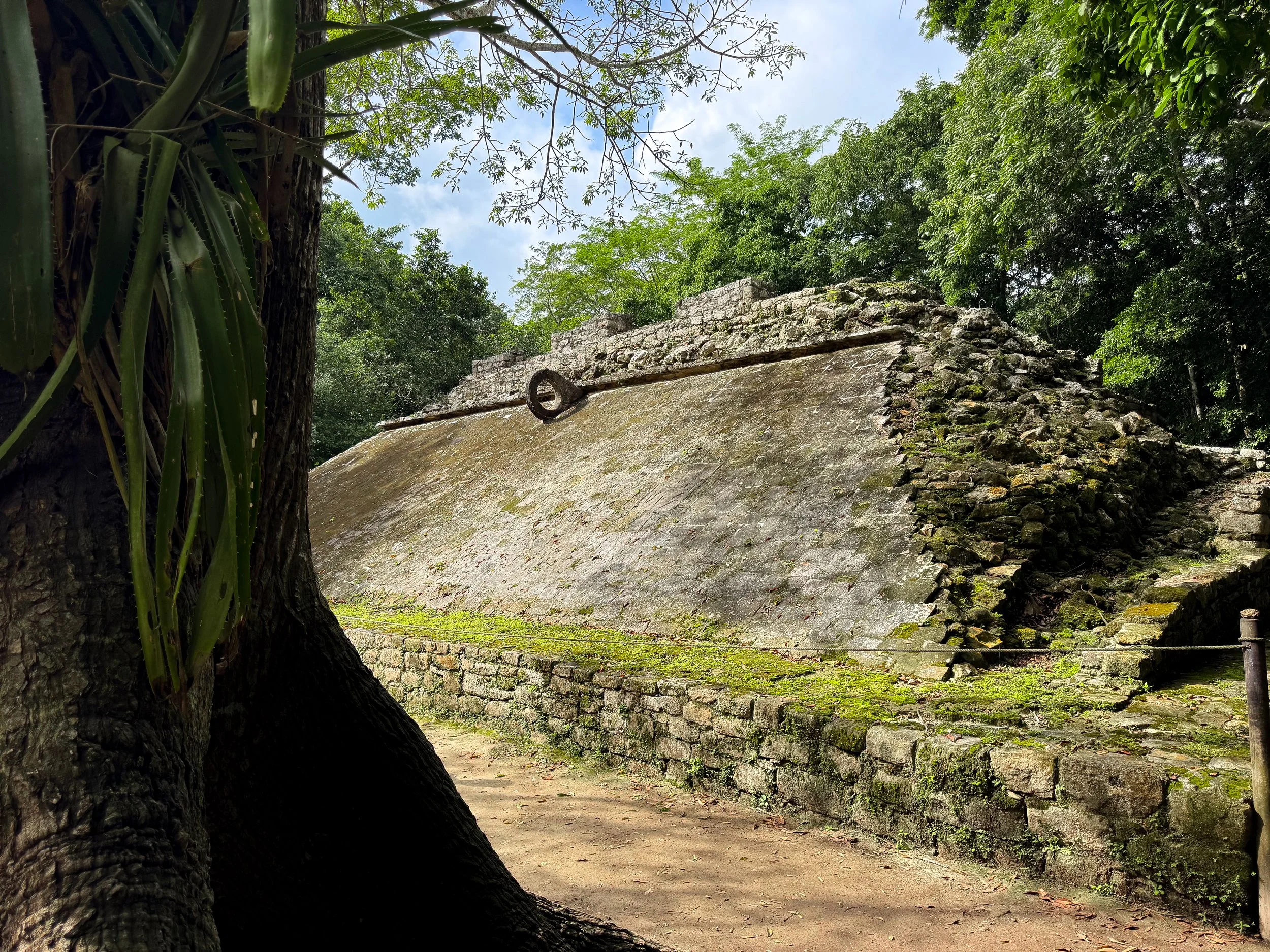
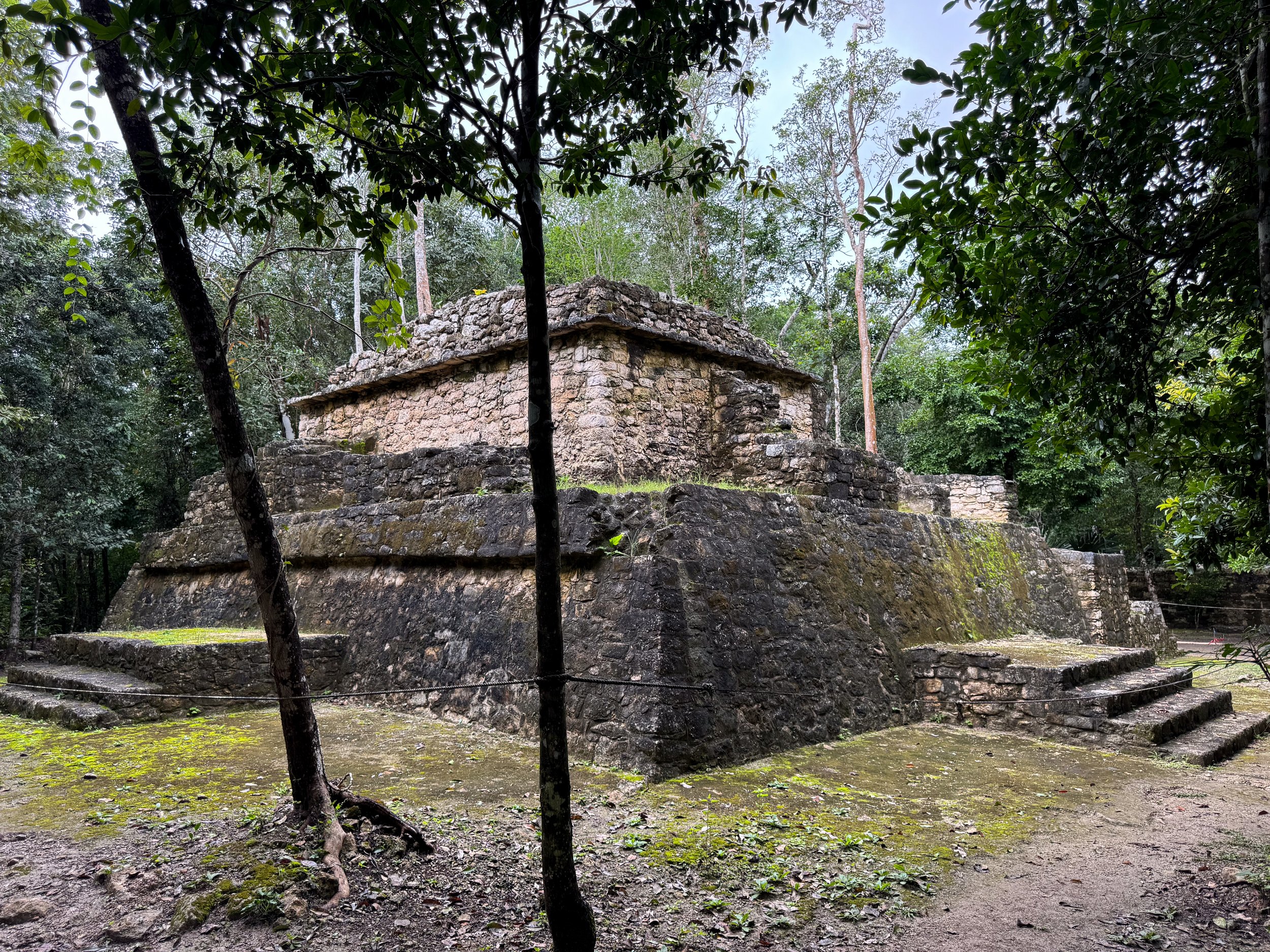

Group Macanxoc. The furthest acropolis in the ancient city with a plaza home the ruins of temples, platforms and stelae.
Nohuch Mul Plaza. A plaza with a walled and stepped temple surrounded by several smaller platforms, temples, altars and stelae.
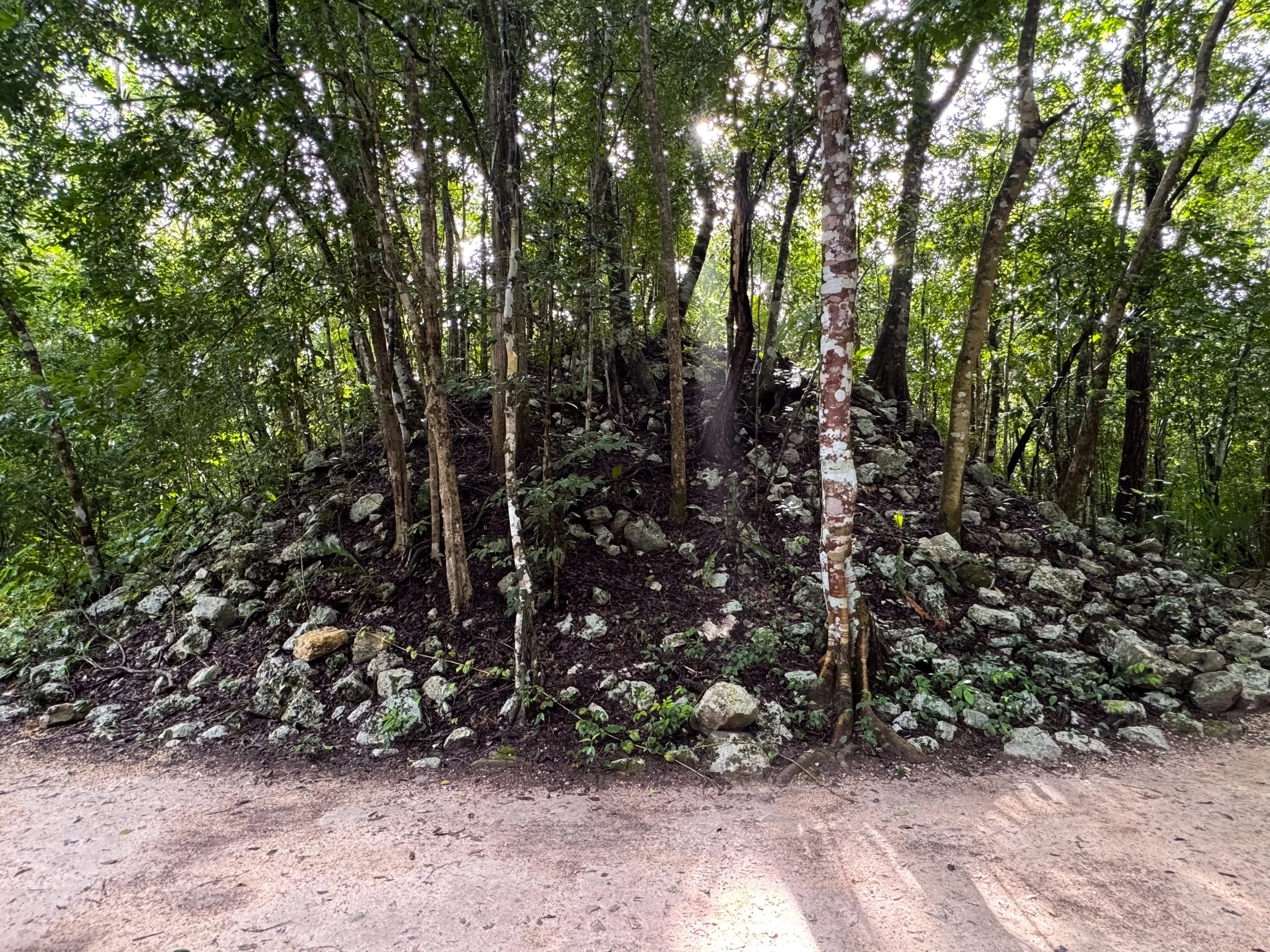
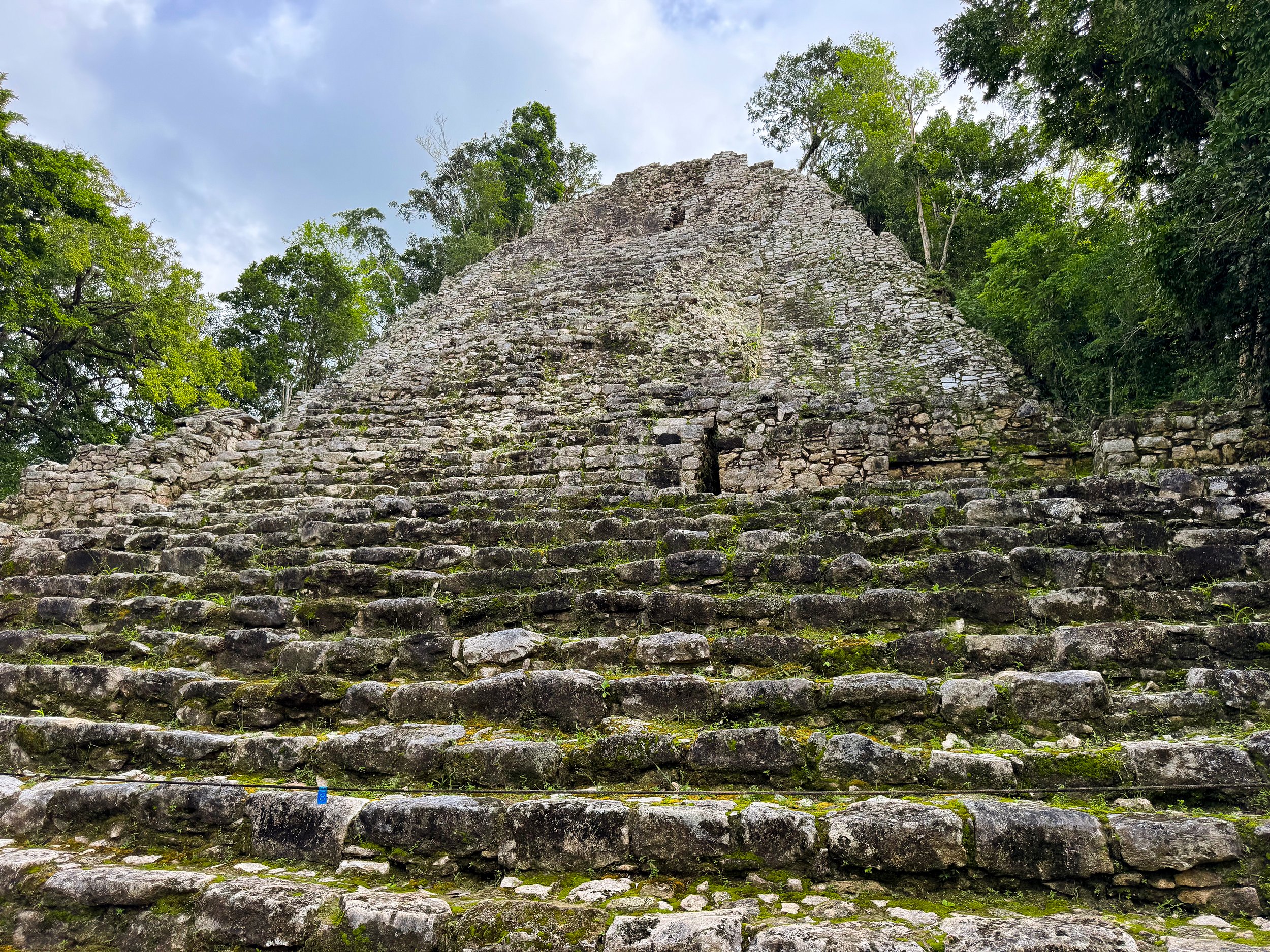
Macanxoc Temple. A partly uncovered pyramid-like temple that can be climbed onto. Its top half and depth are buried under the jungle. At its base is a covered stelae.
Group Coba. A grand acropolis at the entrance of Coba with a ball court, platform, pyramid and climbable temple.
Juego de Pelota. A Mayan ball court with two intact stone rings centered on its angled walls. Two stone skulls are inlaid into the side of the pyramid at one end of the ball court.
La Iglesia. A massive complex with a platform supporting a towering pyramid that rises above the jungle canopy and a climbable temple with a tunnel beneath its steps and altars at its top. Intricate stelae with Mayan hieroglyphs and images are on display throughout the complex.
Tips for Visiting Coba
Getting to Coba by Oriente Bus. The bus schedule is only confirmed on the day of. Arrive when the bus station opens to buy tickets. Tickets are one way and cash only. It takes less than an hour to reach Coba. The bus stops about 10 minutes on foot from the Coba ticket office.
Getting to Coba by Collectivo. Shared taxis depart from the corner of Calle Osiris Norte and Cancun-Chetumal, a block from the bus terminal. Vans depart between 9-10am. Fares cost 100 pesos per person.
Returning to Tulum by Collectivo. Flag down a collectivo on the main road in the town of Coba. Drivers will depart once the van is full of passengers. The wait can take up to 2 hours. Fares cost 100 pesos per person.
Tickets. If entering on foot, there are two entry tickets. An infrastructure fee costing around 100 pesos and the entrance fee costing around 95 pesos.
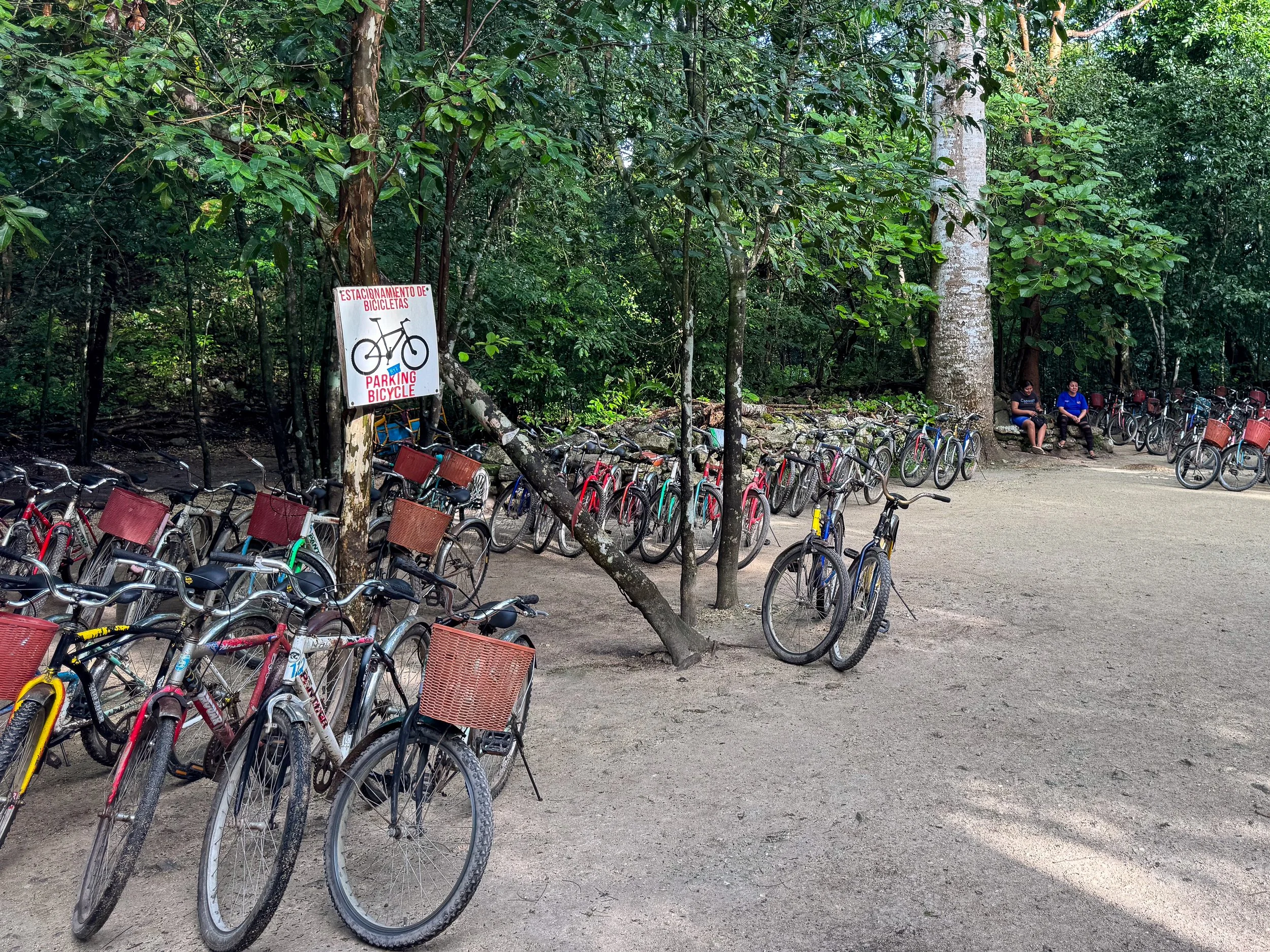
Rent Bike. The best way to get around is by renting a bike. With a bike, the entire complex can be seen in about 3 hours. Bikes are available to rent just after entering the park for around 65 pesos.
Restoration Work. Many of the stelae are undergoing restoration and covered in plastic tarps.
Access. No pyramids can be climbed on. Some temples and platforms can be climbed on.
Cenotes
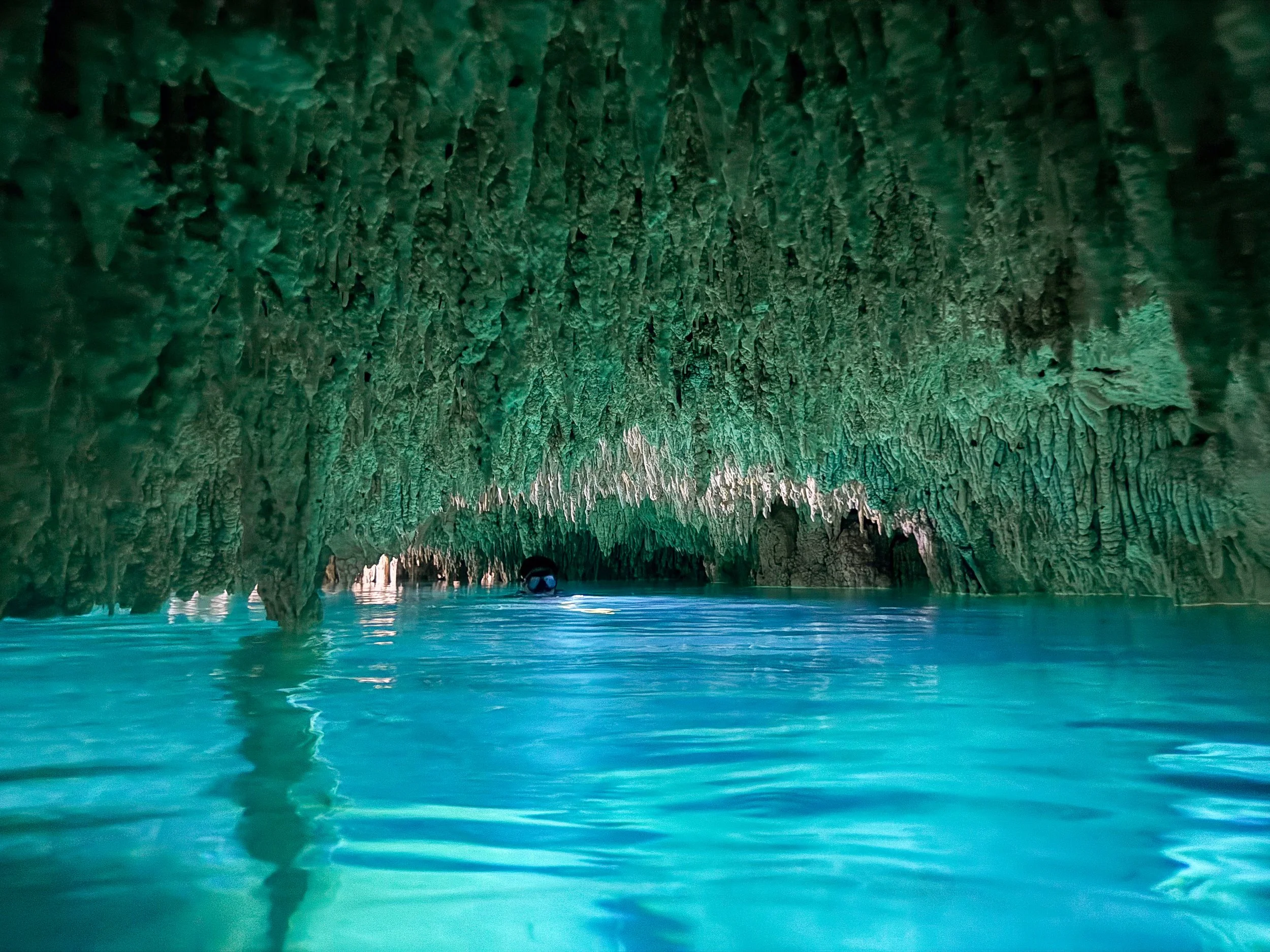
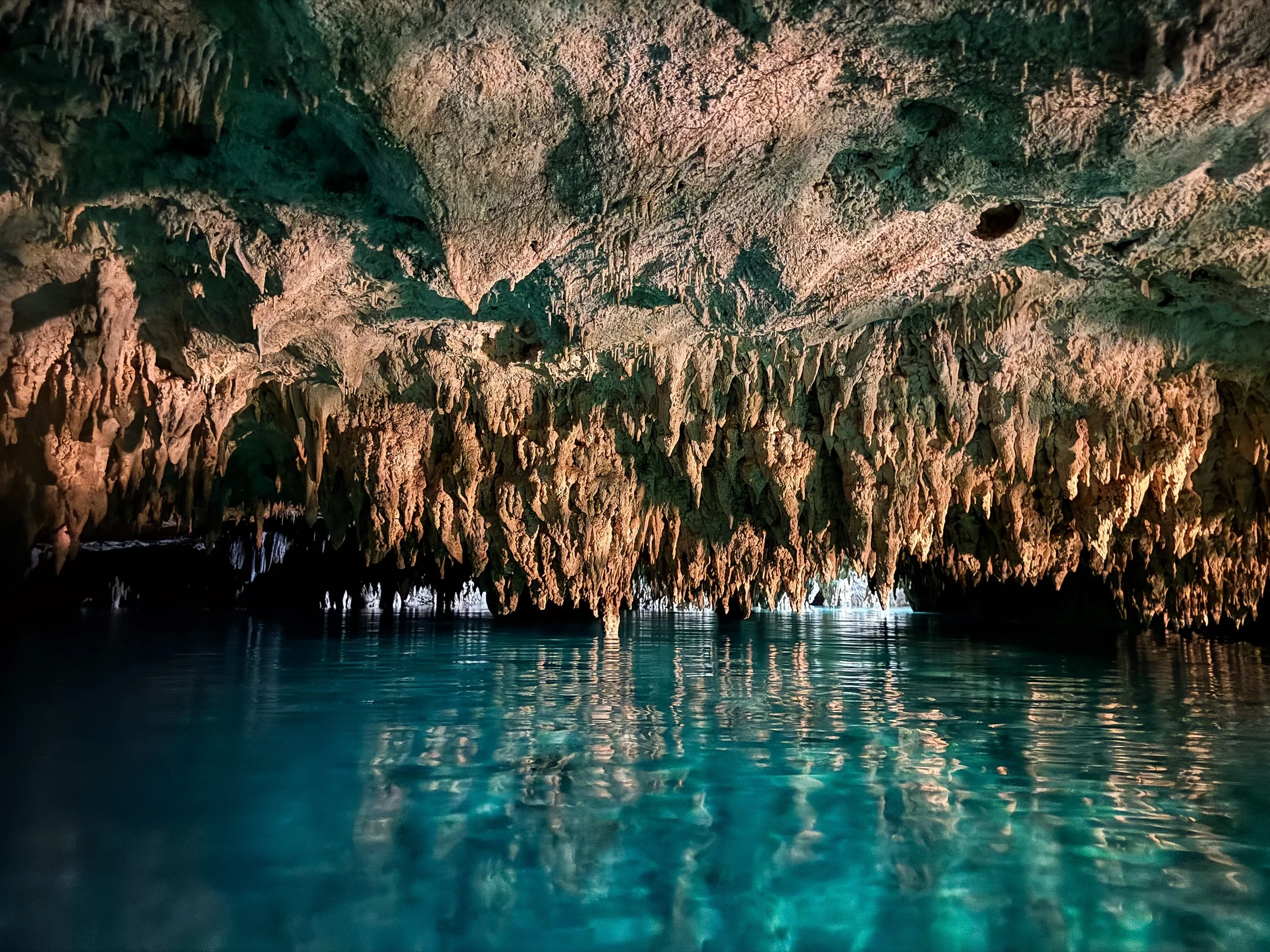
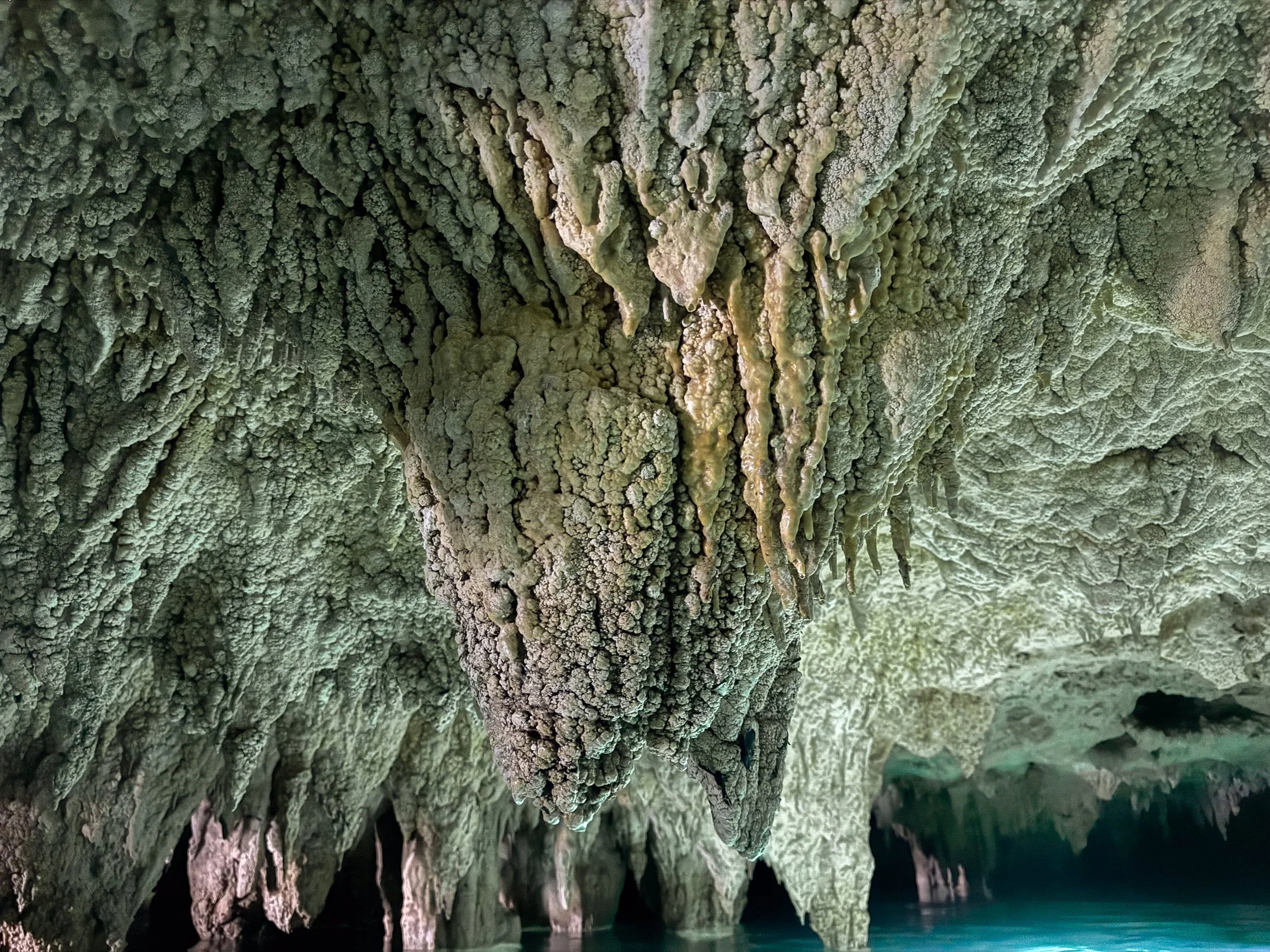
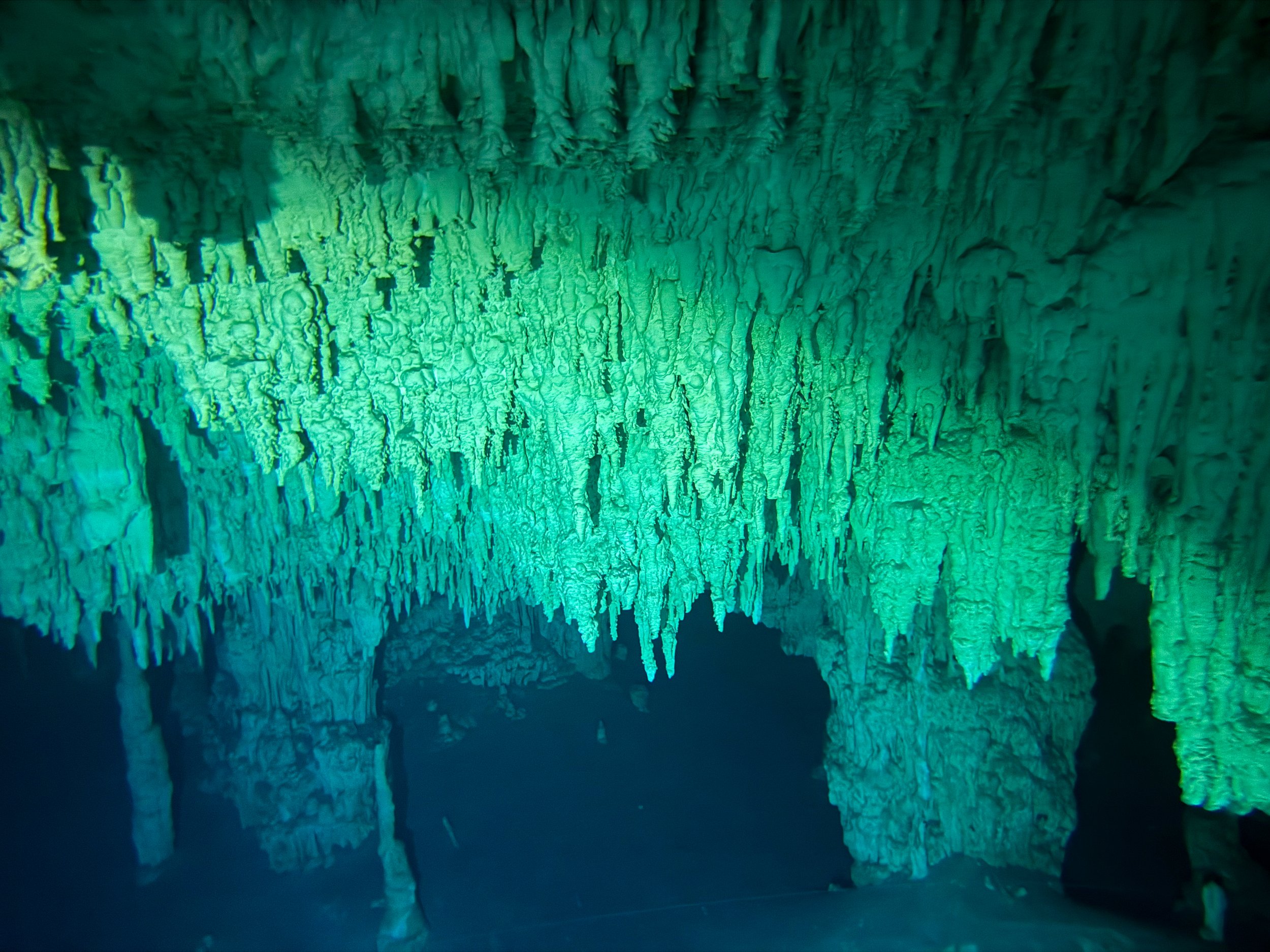
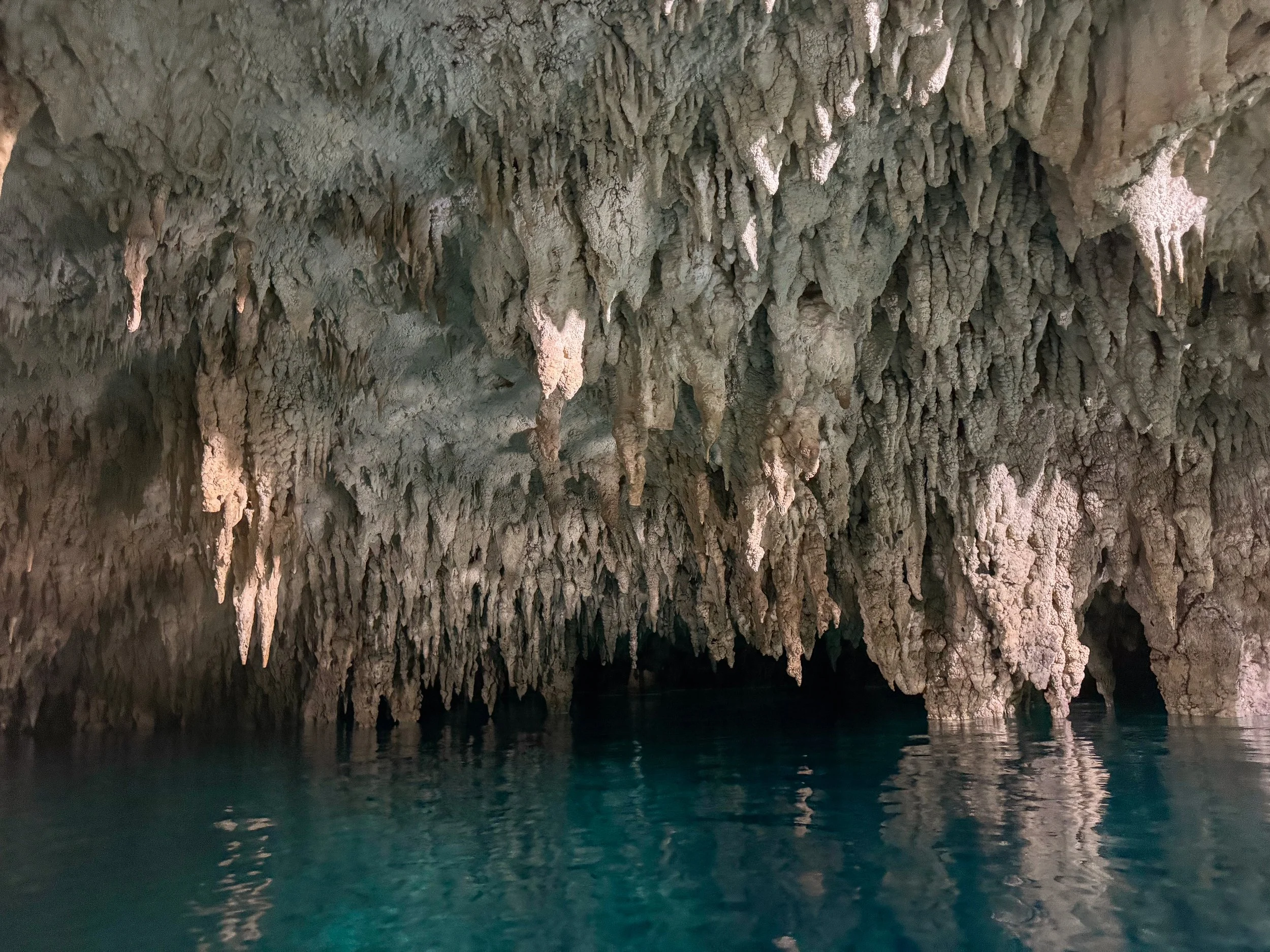
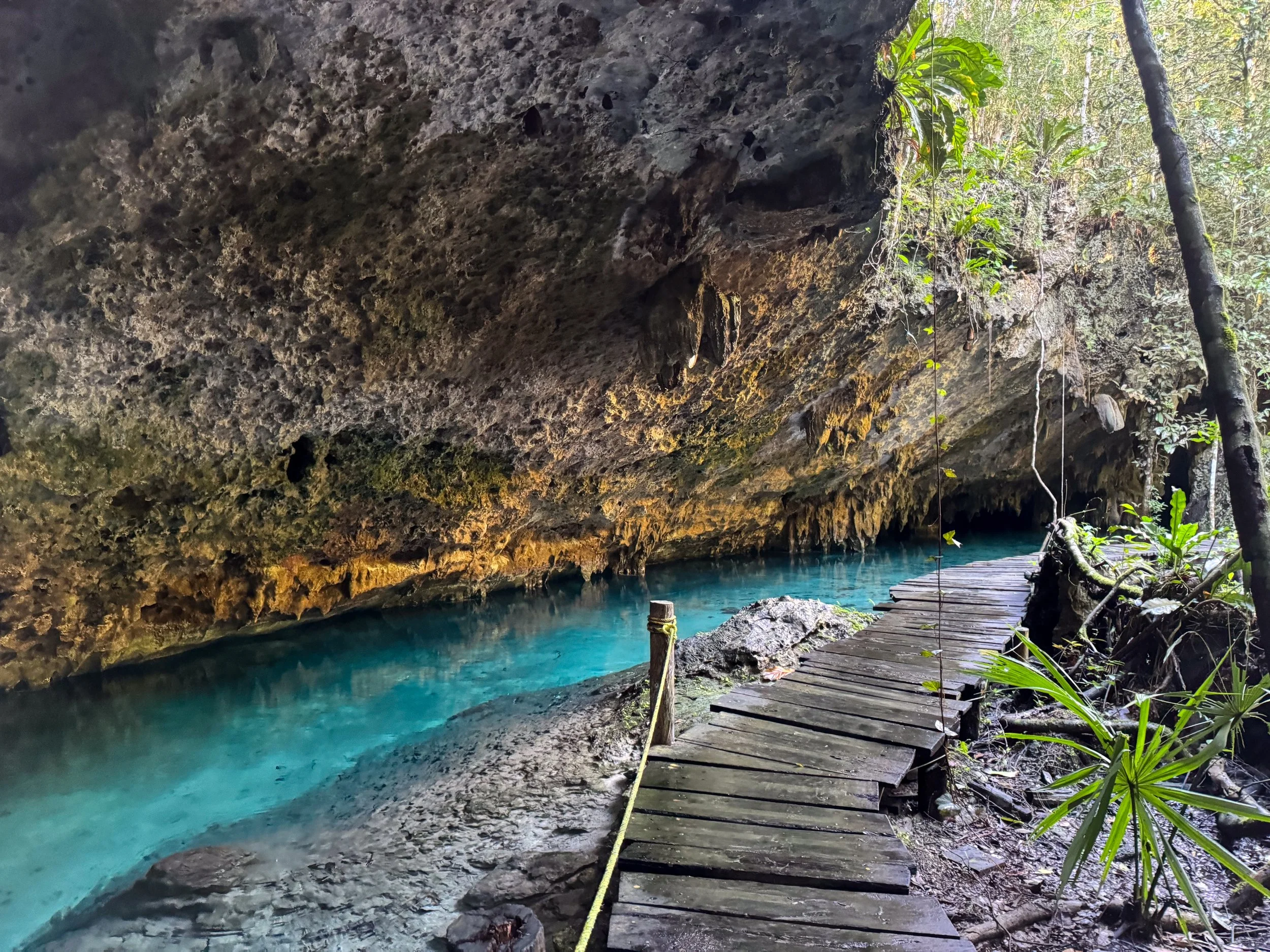
Cenotes de Sac Actún. Sac Actún is the world’s largest known network of underground rivers, caves and cenotes. We snorkeled through 3 flooded cenotes and connecting chambers within the cave system filled with stalactites and stalagmites. As we swam, the subtle current pulled us through the cool fresh water, bats flew overhead and fish swam beneath us.
Open Air Cenote. We descended a wooden staircase and waded into the water of an open air cenote, one without a ceiling. Light streamed in from above as water slowly dripped from stalactites into the clear blue water, echoing off the surrounding stone walls. From here, a series of caves lead deeper into the underground maze.
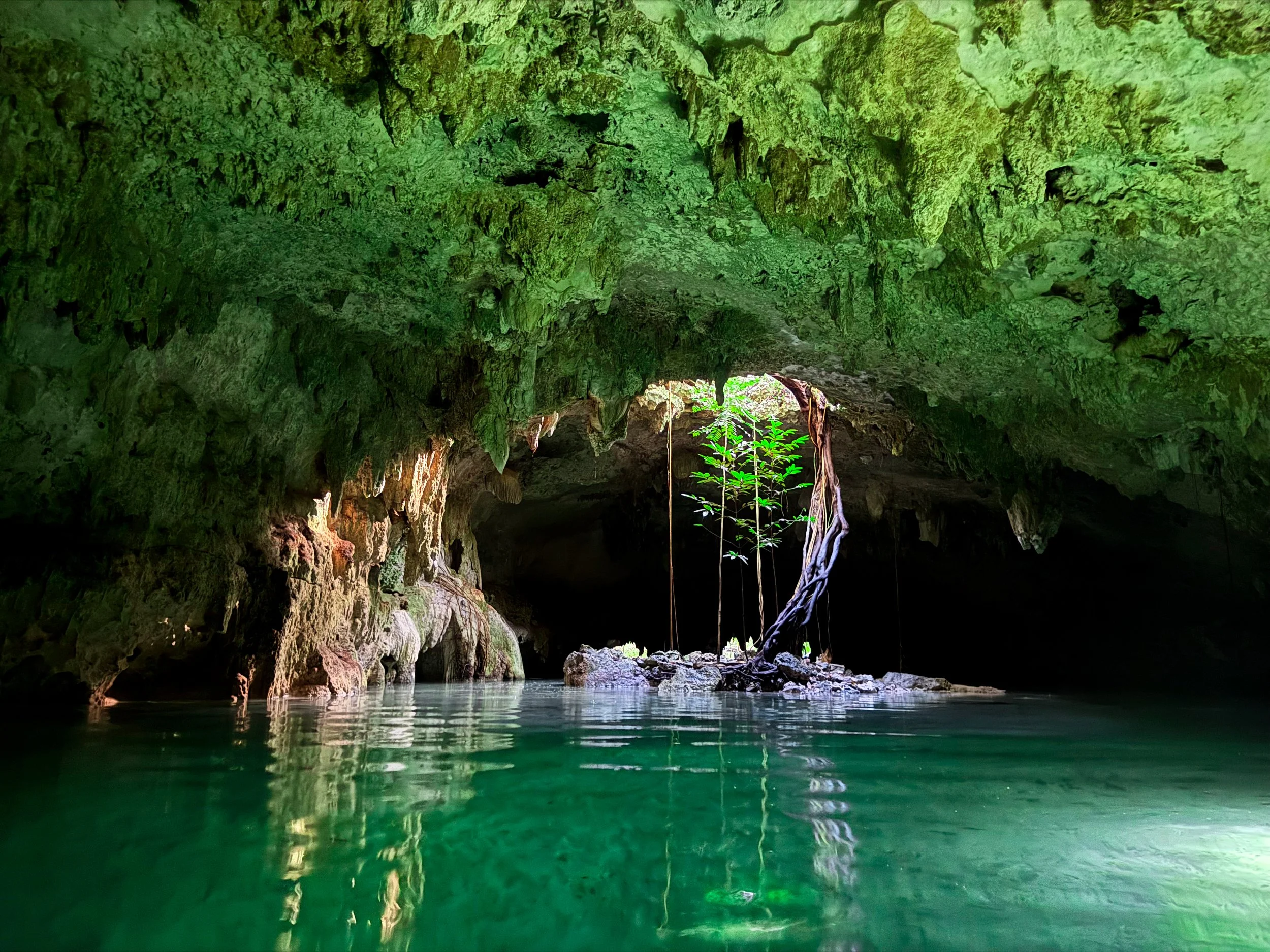
Semi-Open Cenote. From the first cenote, we swam through a passageway into a semi open chamber with a hole in the ceiling and a tree growing through it. The Mayans referred to this as the tree of life, connecting the underworld to the living world above.
Enclosed Cenote. We snorkeled back to the first cenote and entered a narrow passageway covered in stalactites hanging just above our heads. Looking under water, stalagmites pointed up at us and dark flooded passageways lead deeper into the earth. The main chamber was a truly magnificent spectacle with a fully enclosed ceiling dripping in thousands of stalactites and dangling roots from trees above. It felt like swimming inside of a geode.
Getting Here from Tulum. We looked into biking here (way too far), taking a bus (there is no bus), joining a tour or renting a car (far too expensive). We hired a taxi for a half day, costing 2,000 Pesos, to pick us up, bring us to the cenote, wait for us and drop us off at the beach in Tulum.
Rio Secreto. We descended through a cenote into a flooded cave system, trekking through knee deep water and swimming through deeper sections. Headlamps illuminated the water in a blue glow, revealing tiny shrimp and catfish. The dark, wet cave was mesmerizing, with ever-changing chambers filled with ancient flow stones, marine fossils, spear like stalactites, nubby stalagmites and crystalline columns.
Jungle Adventure. After exploring the caves, we biked along gravel trails through the jungle to a zip-line park, spotting a venomous coral snake and a bright blue butterfly along the way. There, we rode four zip-lines through narrow gaps in the trees and rappelled 10 meters into a cenote.
No Phones or Cameras Allowed. To keep the experience a 'secret' and charge for photos, the operator does not allow phones or cameras in the park. It allowed us to disconnect and take in the beauty of the cave and experience.
Book the Rio Secreto Plus Tour. We booked the full day Rio Secreto Plus Tour. It included a guided tour of the cave system, biking through the jungle, zip lining, repelling, all the gear for the activities, round trip transportation from Tulum and a buffet style taco bar for lunch.
Request the “Supreme Trail”. In order to accommodate the 500 to 1,000 daily visitors, we were divided up into small groups of 12. Each group was staggered and assigned a different trial through the caves. Of the five trials, we were assigned the “Supreme Trail,” allowing us to experience a little of everything within the cave system.
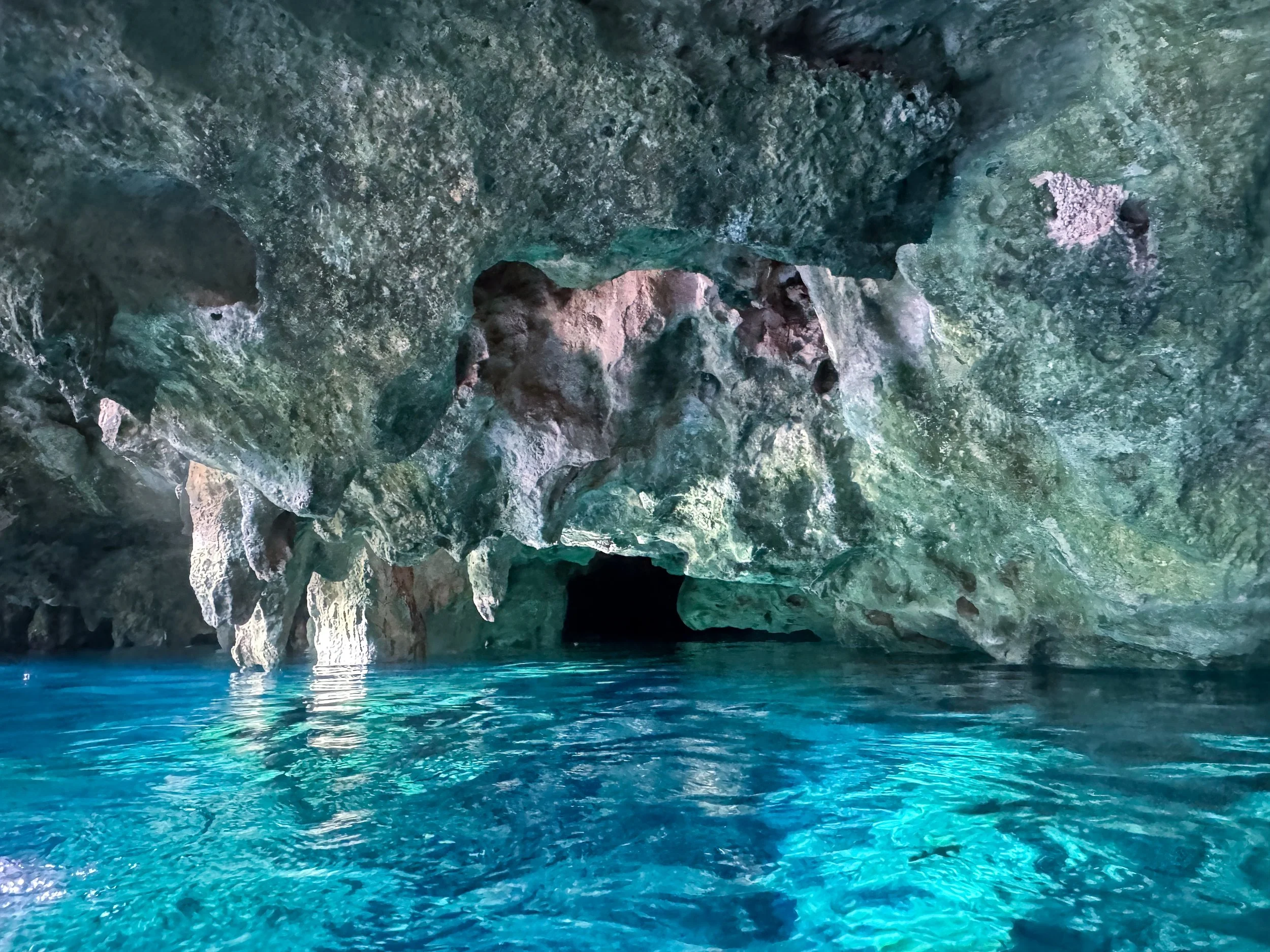
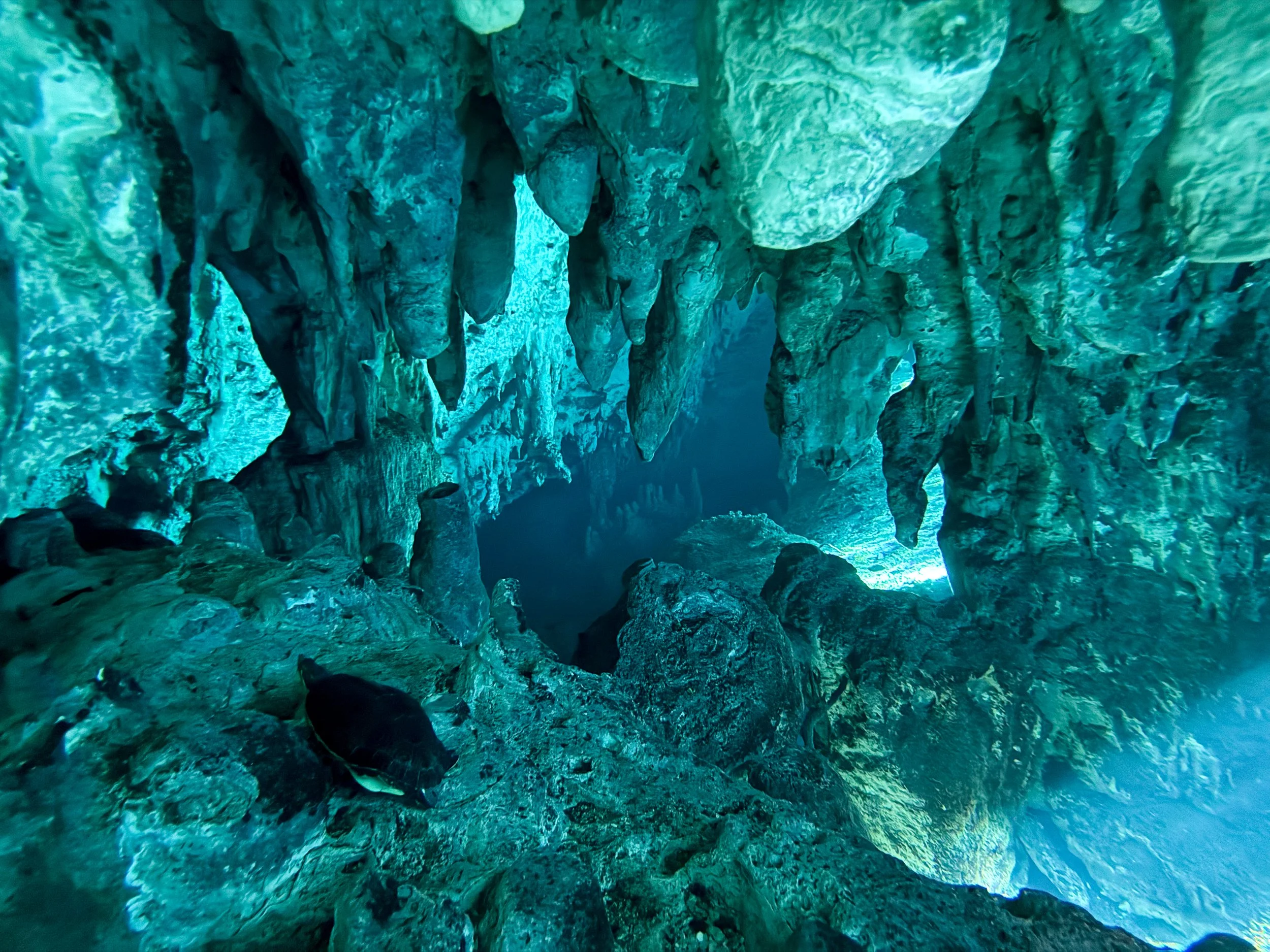
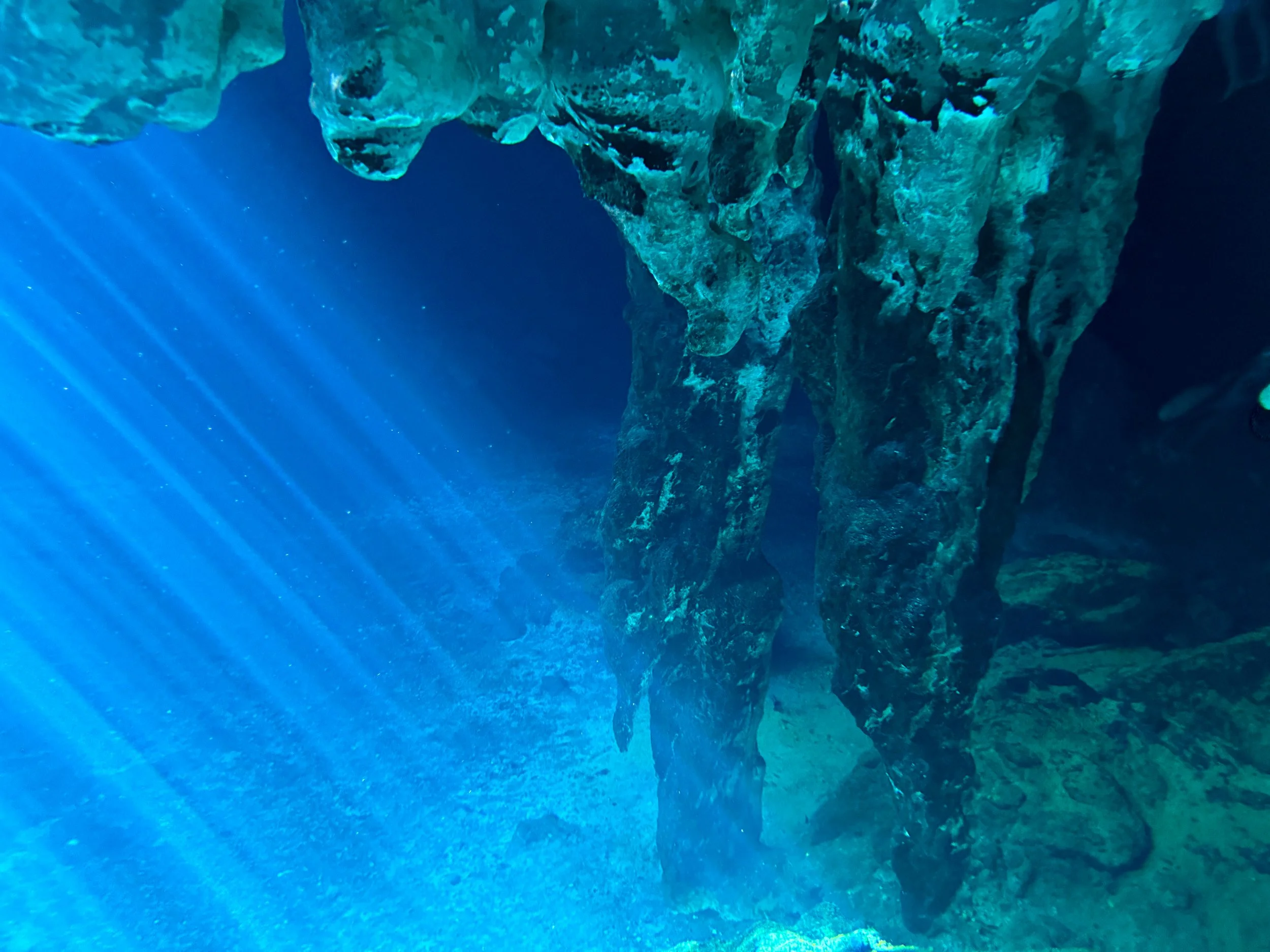
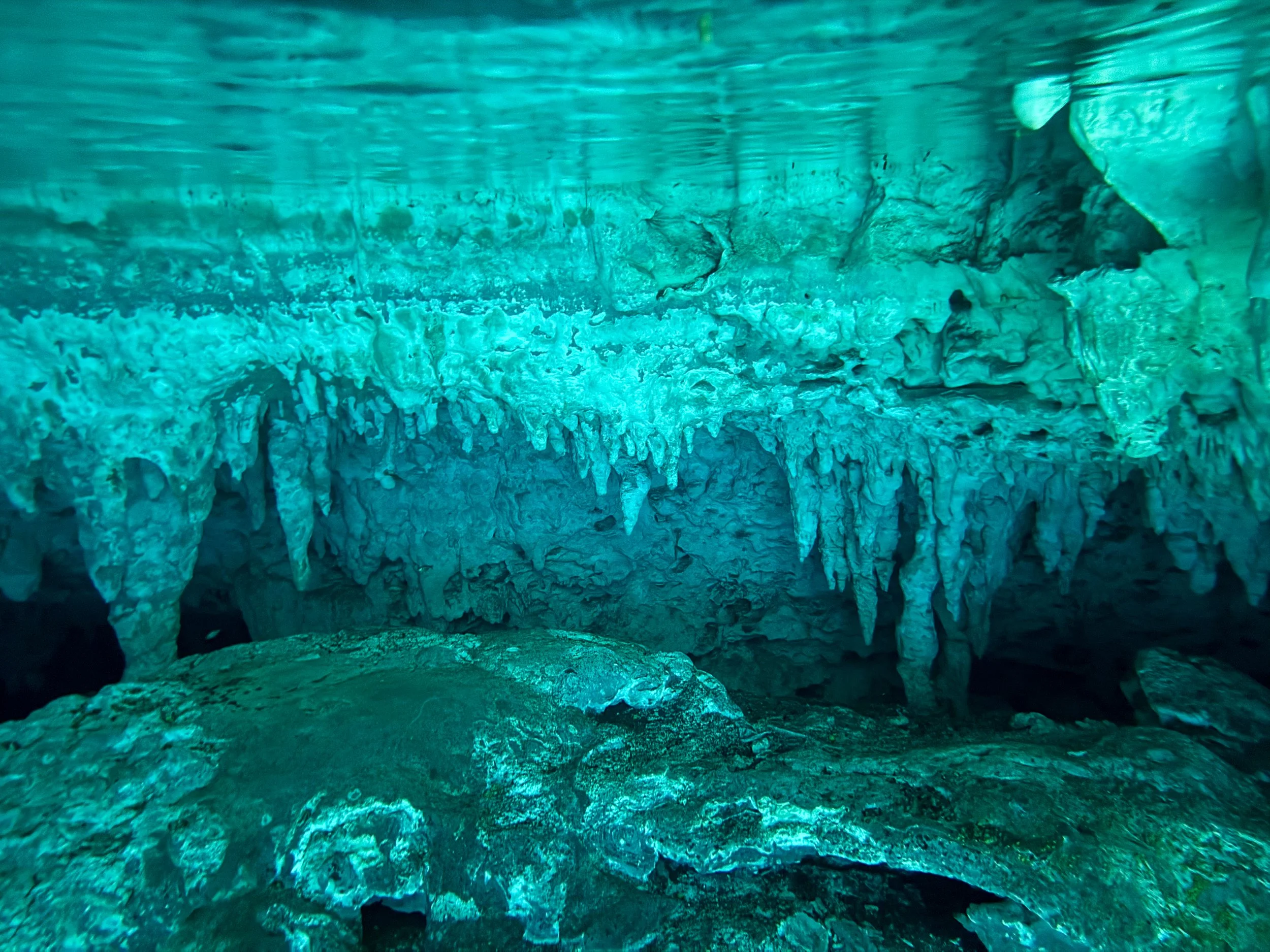
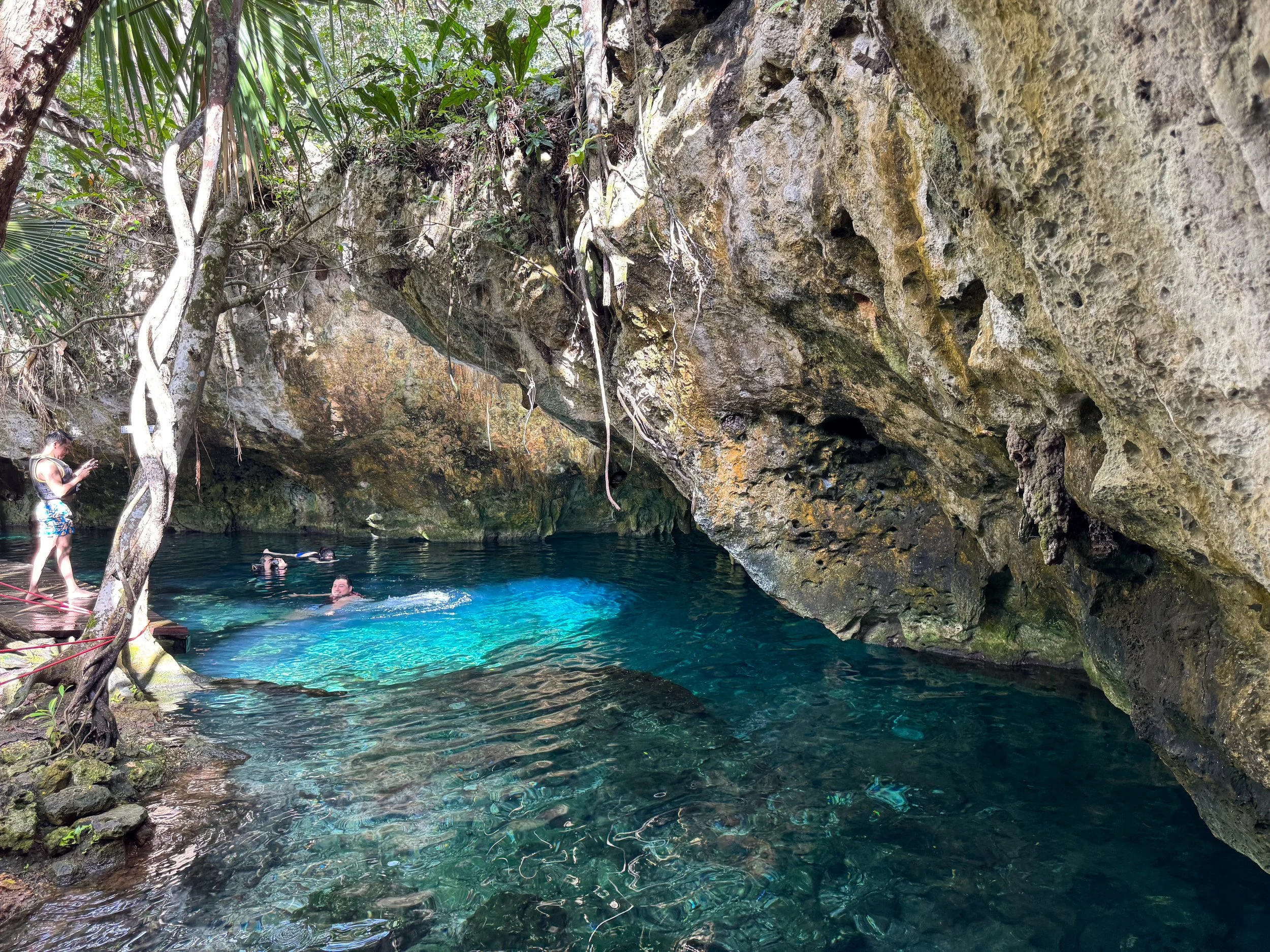
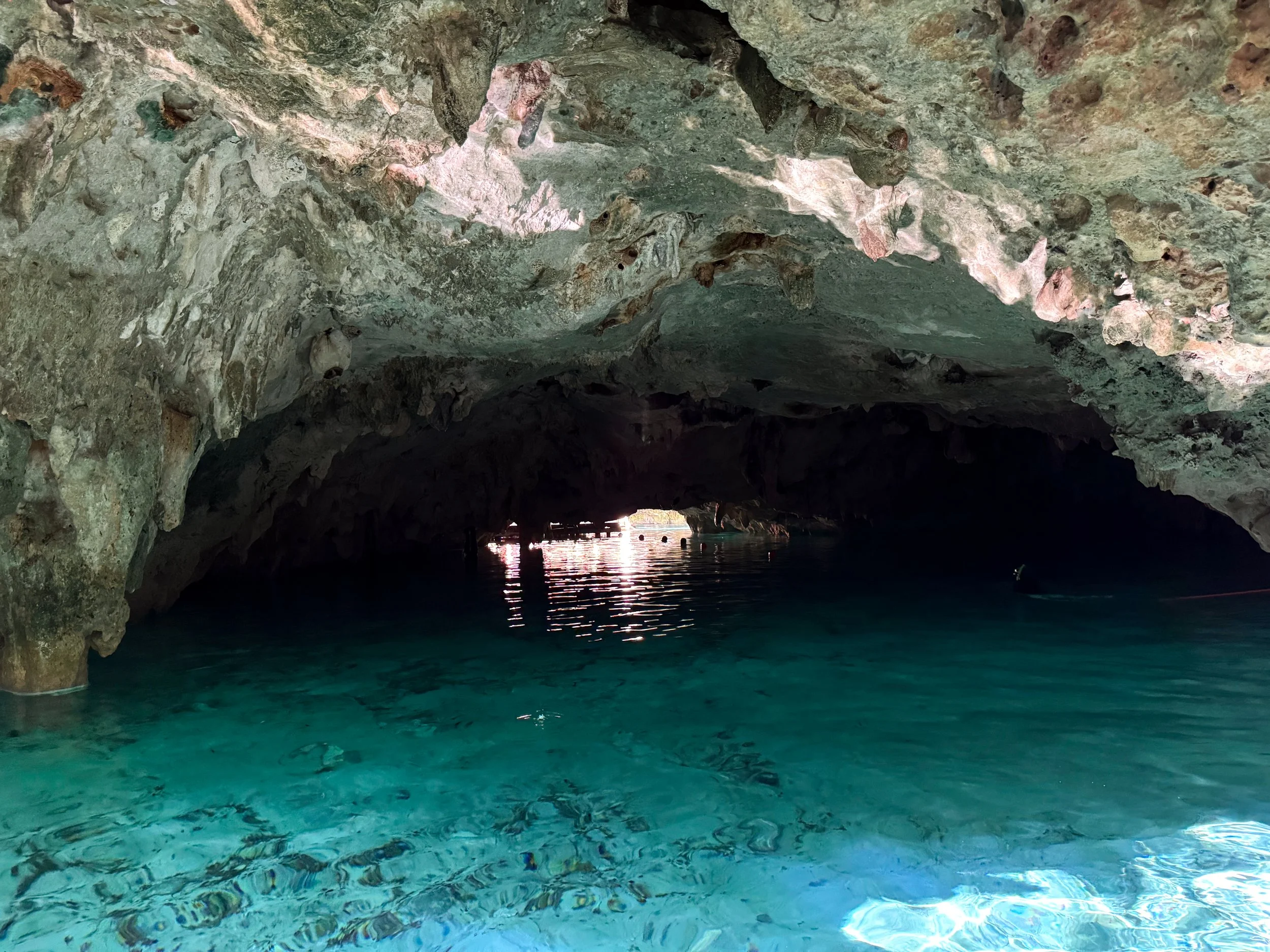
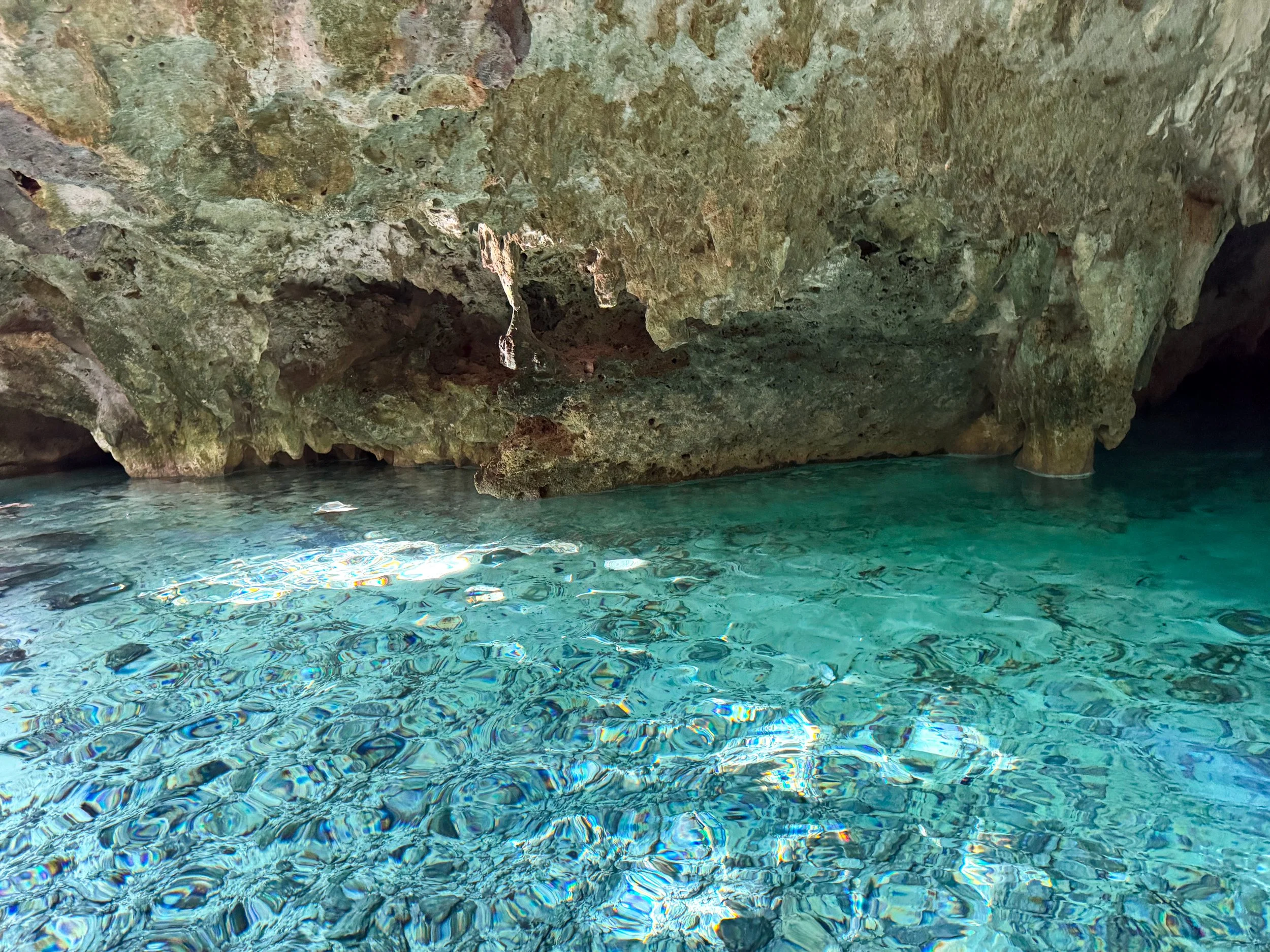
Gran Cenote. A popular open air cenote just outside of Tulum. We swam and snorkeled around the cool fresh water, entering narrow caves and large chambers with massive stalactites and colonies of bats. Light streams through the blue water, illuminating the deep caves extending further into the abyss while families of turtles and tiny fish swim alongside snorkelers. A dark cave connects the Gran Cenote to Baby Cenote, a smaller open air cenote with light blue water and an island in its middle.
Tips for Visiting Gran Cenote
Getting Here. Gran Cenote is located outside of Tulum. It takes 30 minutes to bike to from the city center.
Hours. Entry times fluctuate. Arrive at opening to avoid the crowds.
Tickets. Entry fees cost 500 pesos per person, cash only. Admission includes snorkel masks.
Lockers. Lockers are available for rent for around 30 pesos.
Self Guided. The cenote can be explored without a guide however swimmers are required to wear a life jacket.
Where to Stay
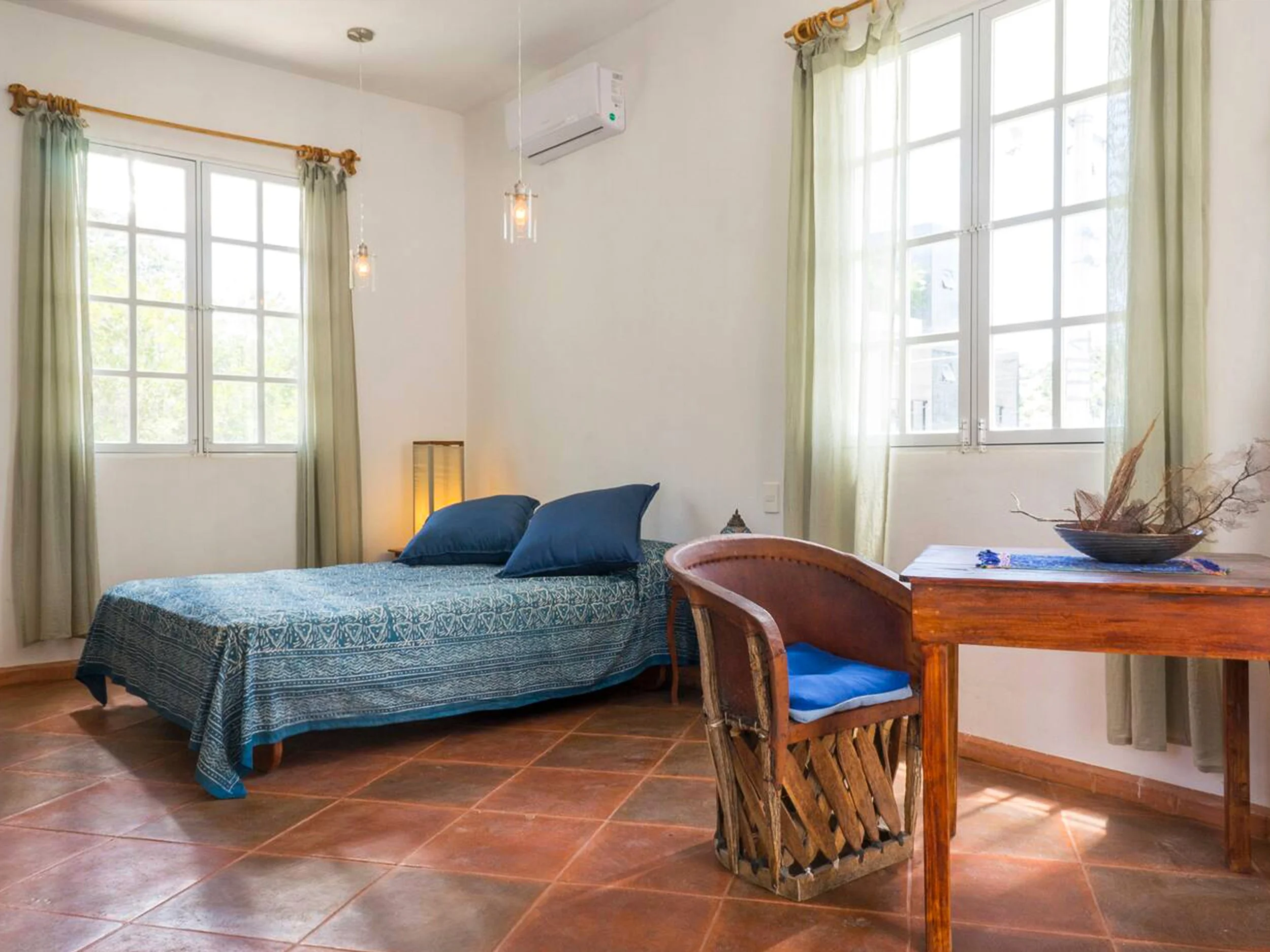
We stayed at an Airbnb in Barrio La Veleta. We had a second floor condo with a kitchen and private roof deck to ourselves. It was the perfect escape, merging both nature and city.
Getting Around
By Bike. The most affordable way to explore Tulum is by bike! There are rentals across the city charging between 100-200 pesos per day. We rented from La Veleta Rental Bike, charging only 100 pesos per day.
By Taxi. Taxis are available across the city. Rates are around 200 pesos to get across town. The safest location to hire a taxi are street stands called Sitio de Taxi. Always negotiate price before getting in.
By Bus. The ADO Bus is the best way of getting around the Yucatan with routes connecting Tulum to nearby and regional cities. Book tickets online ahead of time.
Elsewhere in Mexico
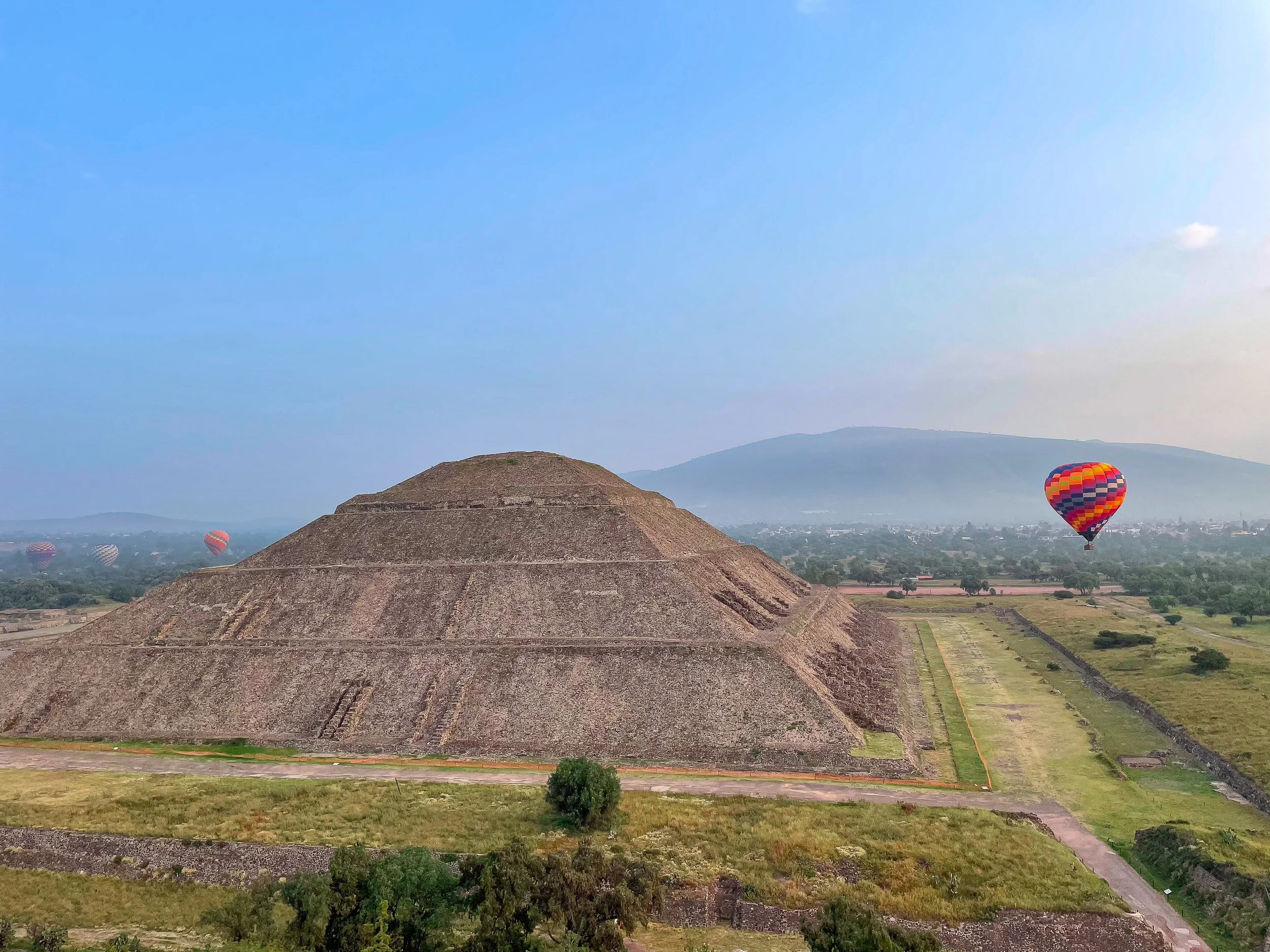
From the turquoise waters of Tulum to Mexico's vibrant cities, culinary capitals and Pacific coast, continue exploring the country's diverse landscapes and cultures through these travel guides:
Caribbean Mexico
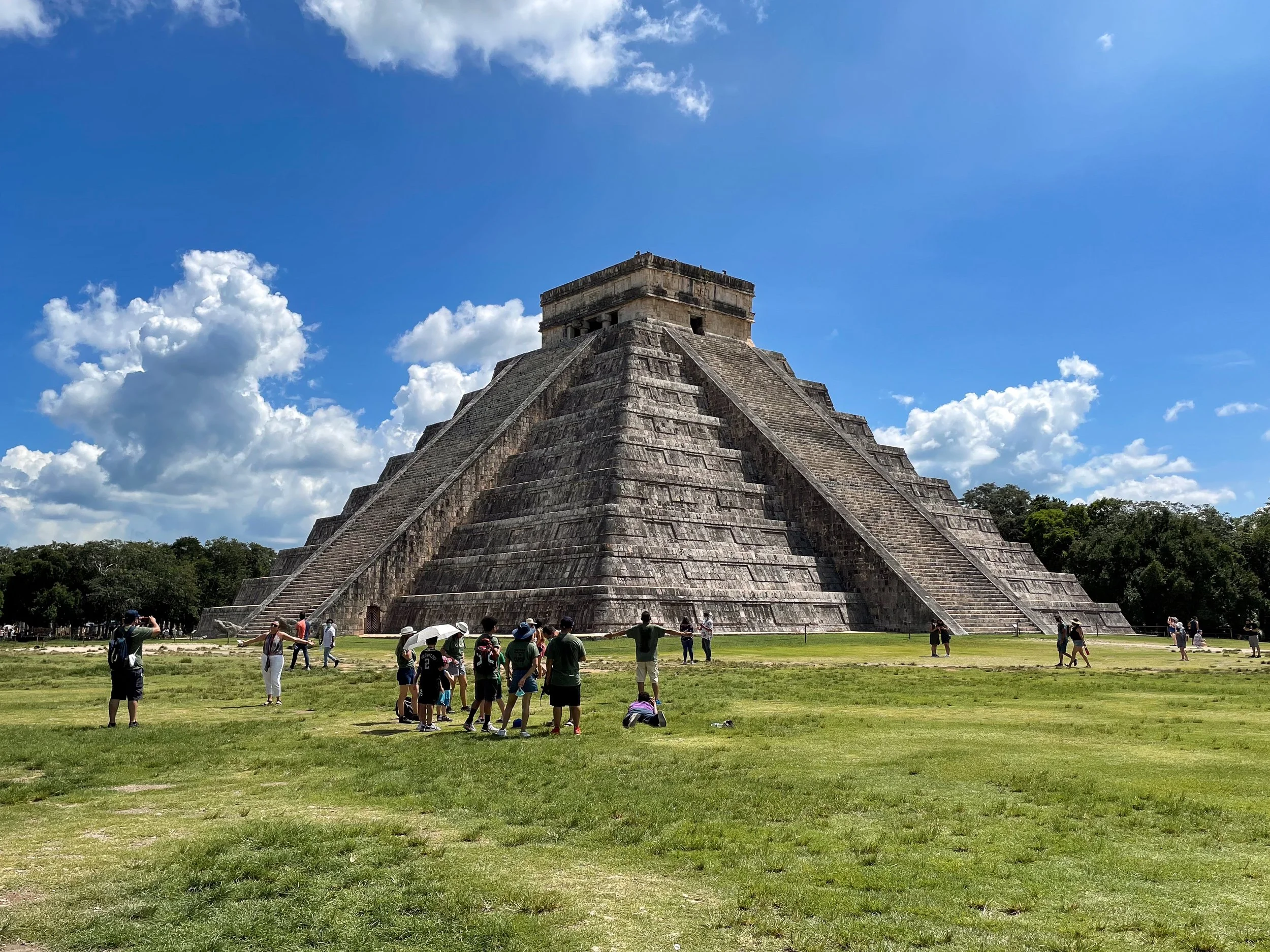
Riviera Maya Travel Guide: Beaches, Cenotes & Mayan Ruins. Discover the Riviera Maya's white sand beaches, turquoise waters, hidden cenotes, ancient Mayan ruins and vibrant culture along Mexico's Caribbean coast.
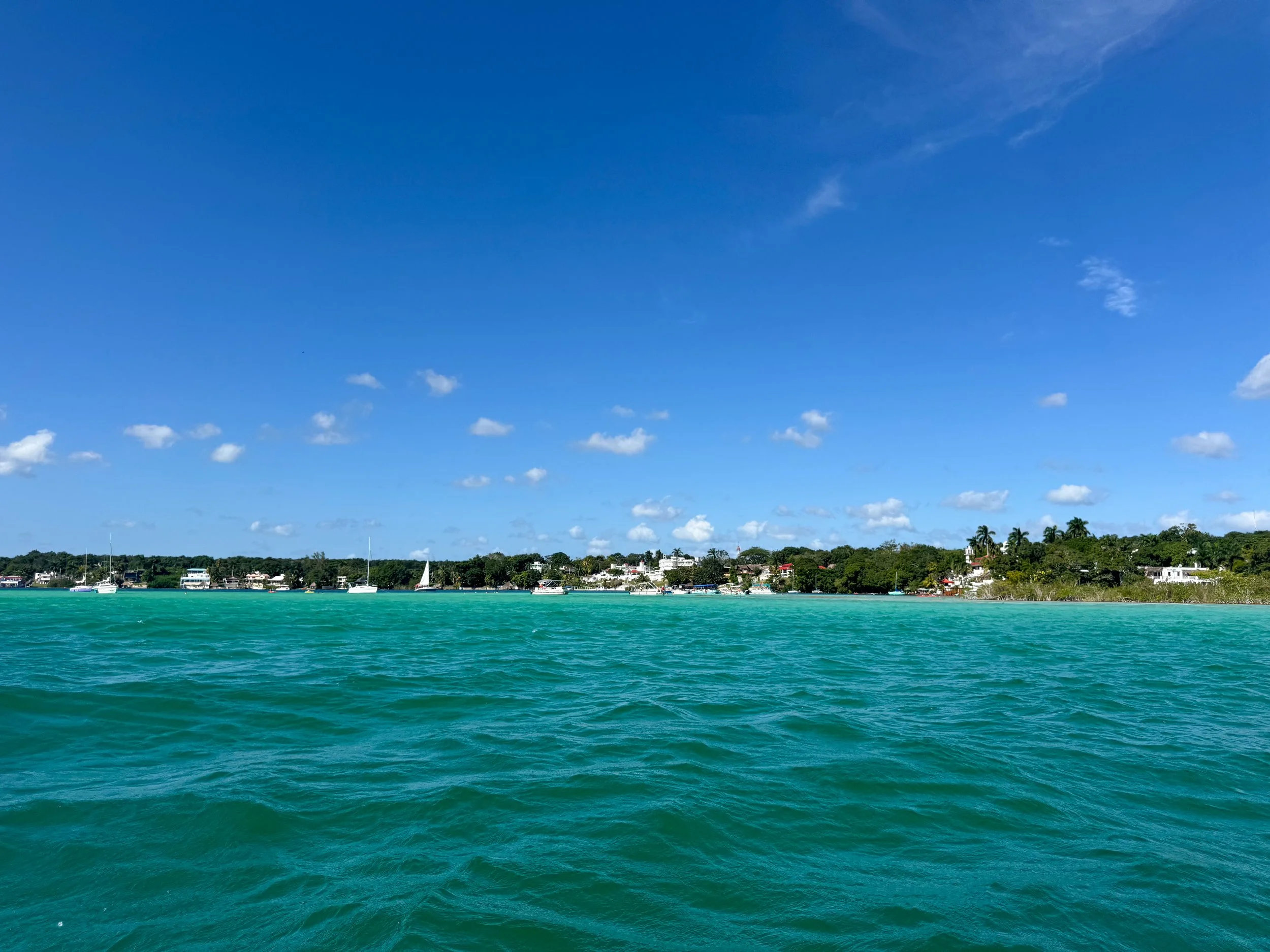
Bacalar Travel Guide: The Lagoon of Seven Colors & Hidden Gems. Discover Bacalar's Lagoon of Seven Colors, where turquoise waters, shallow sandbars and ancient stromatolites create one of Mexico's most remarkable landscapes.
Central Mexico
Mexico City Travel Guide: Neighborhoods, Food & Local Culture. Wander through Mexico City's vibrant neighborhoods, local markets and cultural landmarks where centuries of history, cuisine and modern life converge.
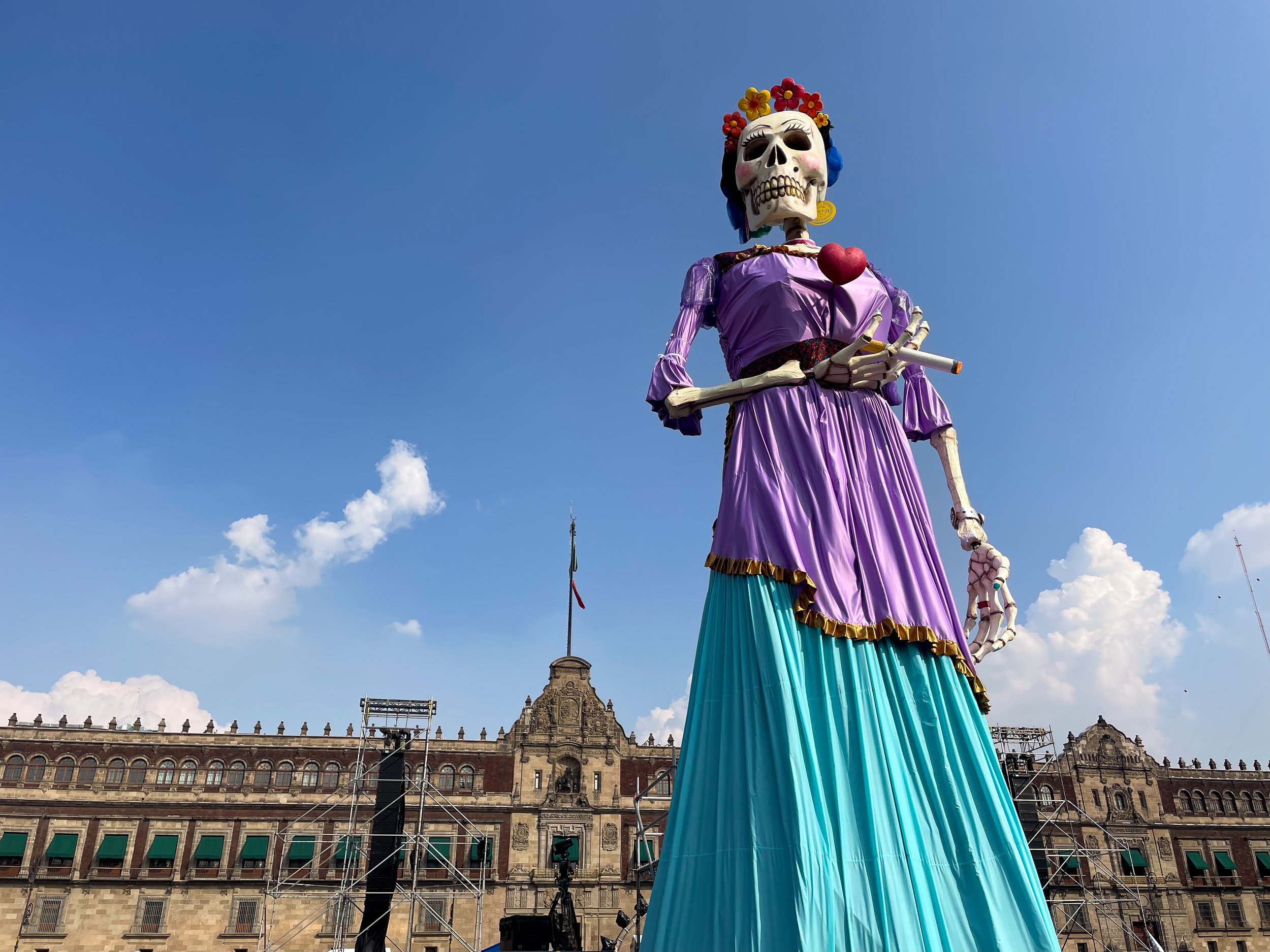
Day of the Dead in Mexico City (Día de los Muertos) Travel Guide. Experience Day of the Dead in Mexico City through cultural traditions, lively celebrations and vibrant ofrendas honoring loved ones and ancestral heritage.
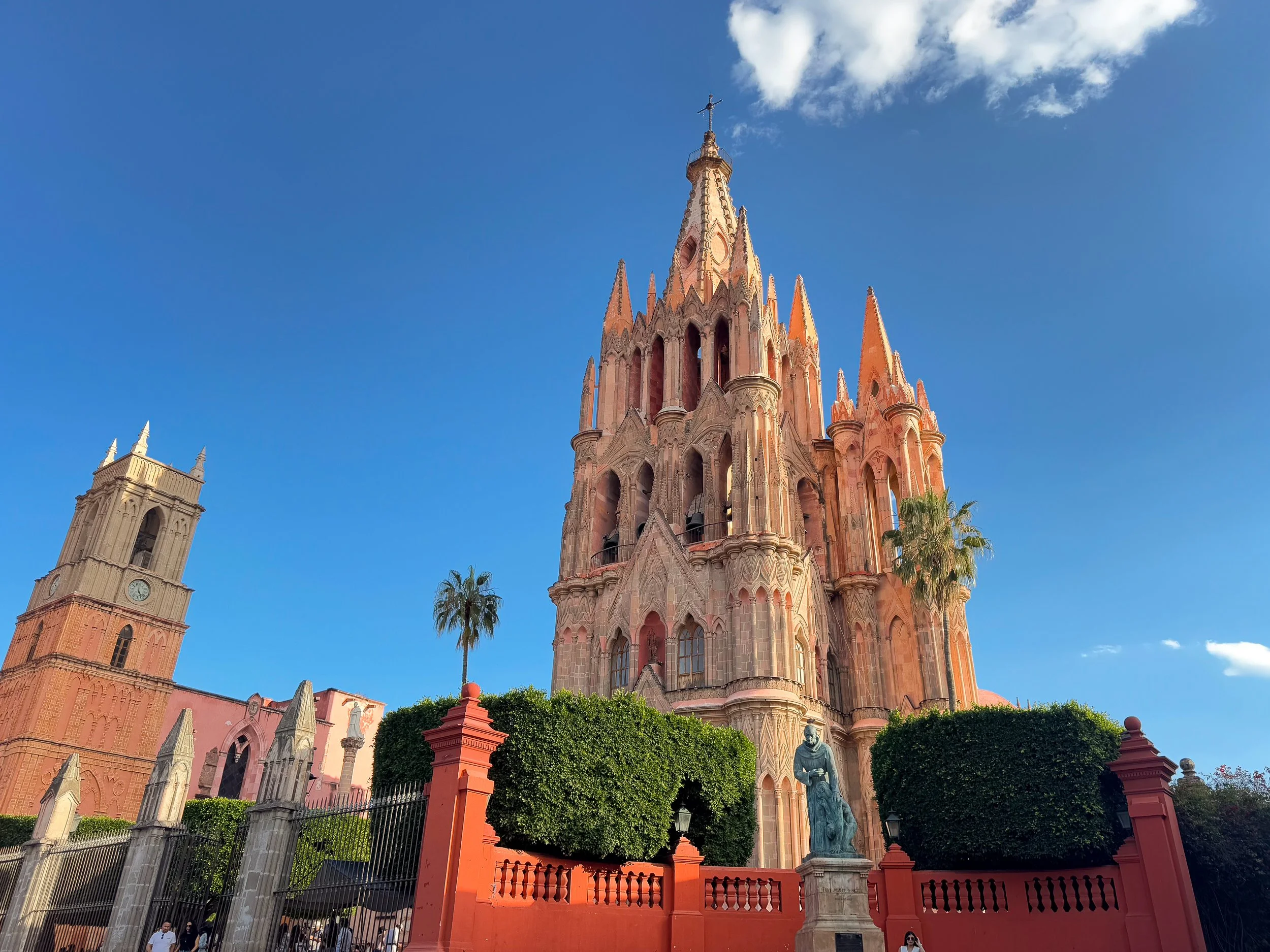
San Miguel de Allende Travel Guide: Food, Art & Colonial Charm. Stroll through San Miguel de Allende's cobblestone streets and historic plazas where cuisine, art and music bring one of Mexico's most charming colonial cities to life.
Southern Mexico
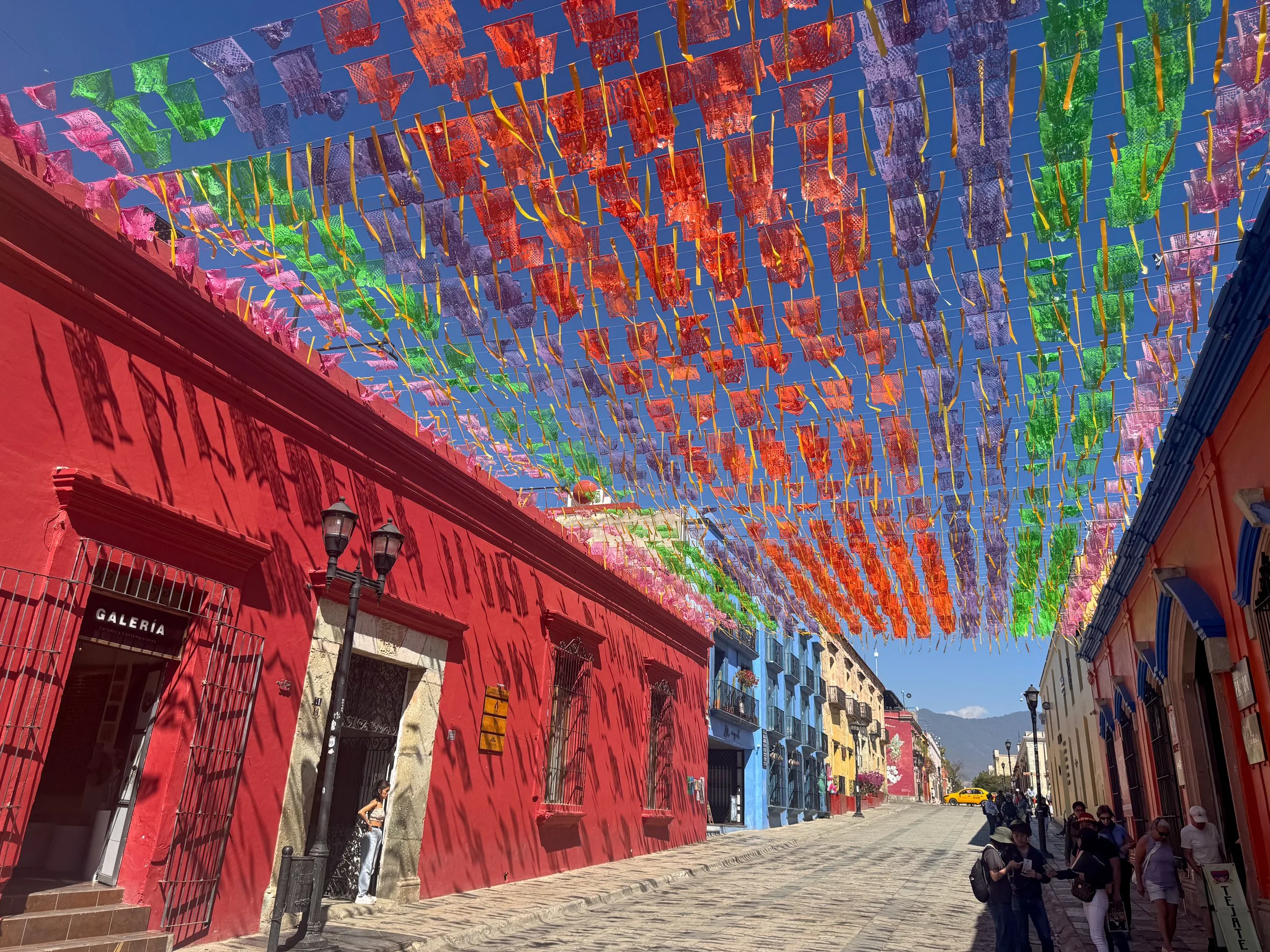
Oaxaca Travel Guide: Food, Mezcal & Cultural Experiences. Immerse yourself in Oaxaca, Mexico's cultural hub for vibrant markets, artisanal mezcal, regional cuisine, scenic landscapes and centuries of tradition.
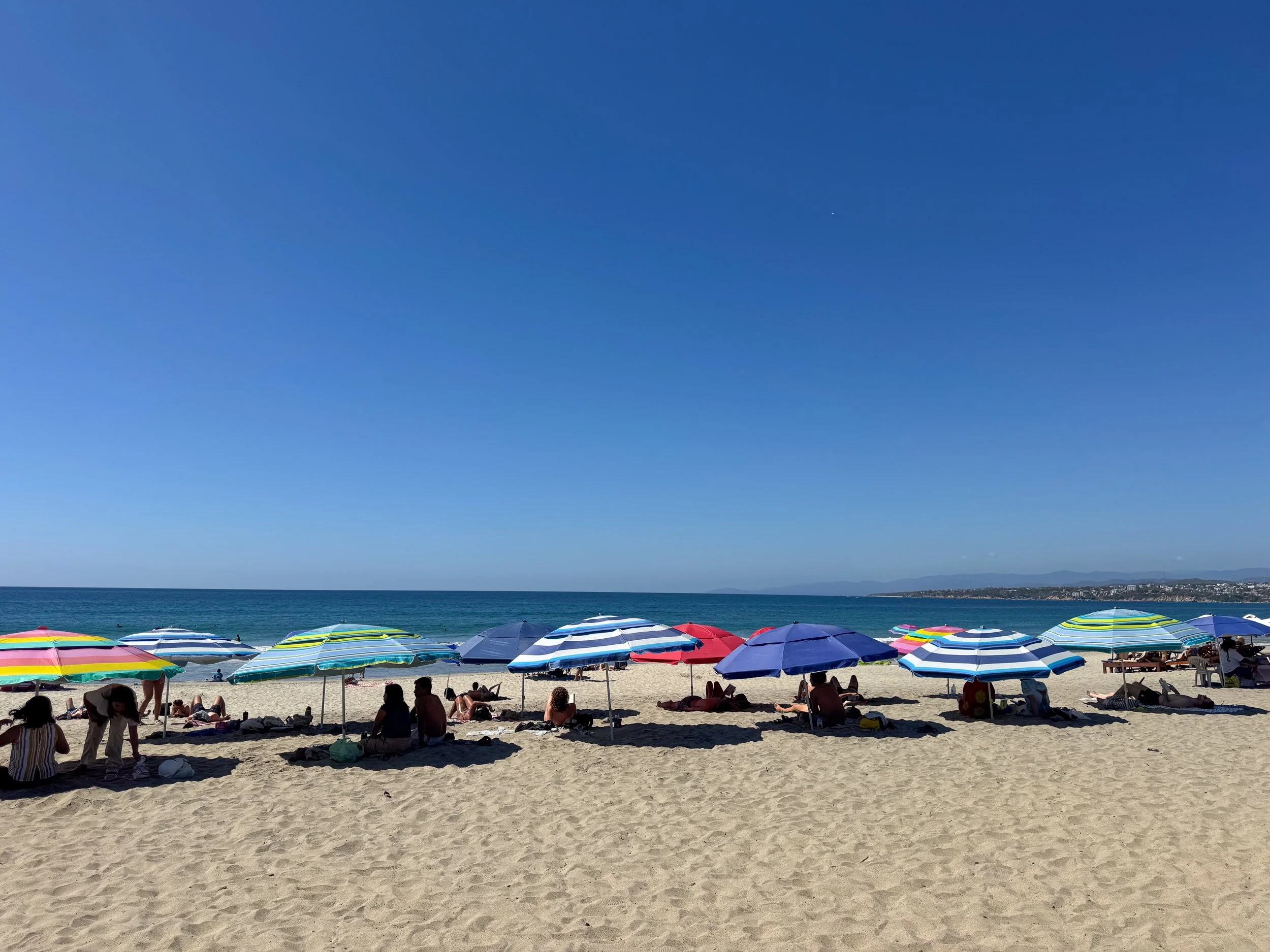
Puerto Escondido Travel Guide: Beaches, Surfing & Coastal Culture. Escape to Puerto Escondido, a laid back surf town on Oaxaca's Pacific coast where palm lined beaches and sandy streets embody coastal culture.