

Casablanca Travel Guide: Hassan II Mosque, Local Markets & Moroccan Cuisine
Wander through Casablanca's ancient medina, palm lined avenues and seaside promenades where the Hassan II Mosque and local food markets reflect Morocco's culture.
Casablanca, Morocco
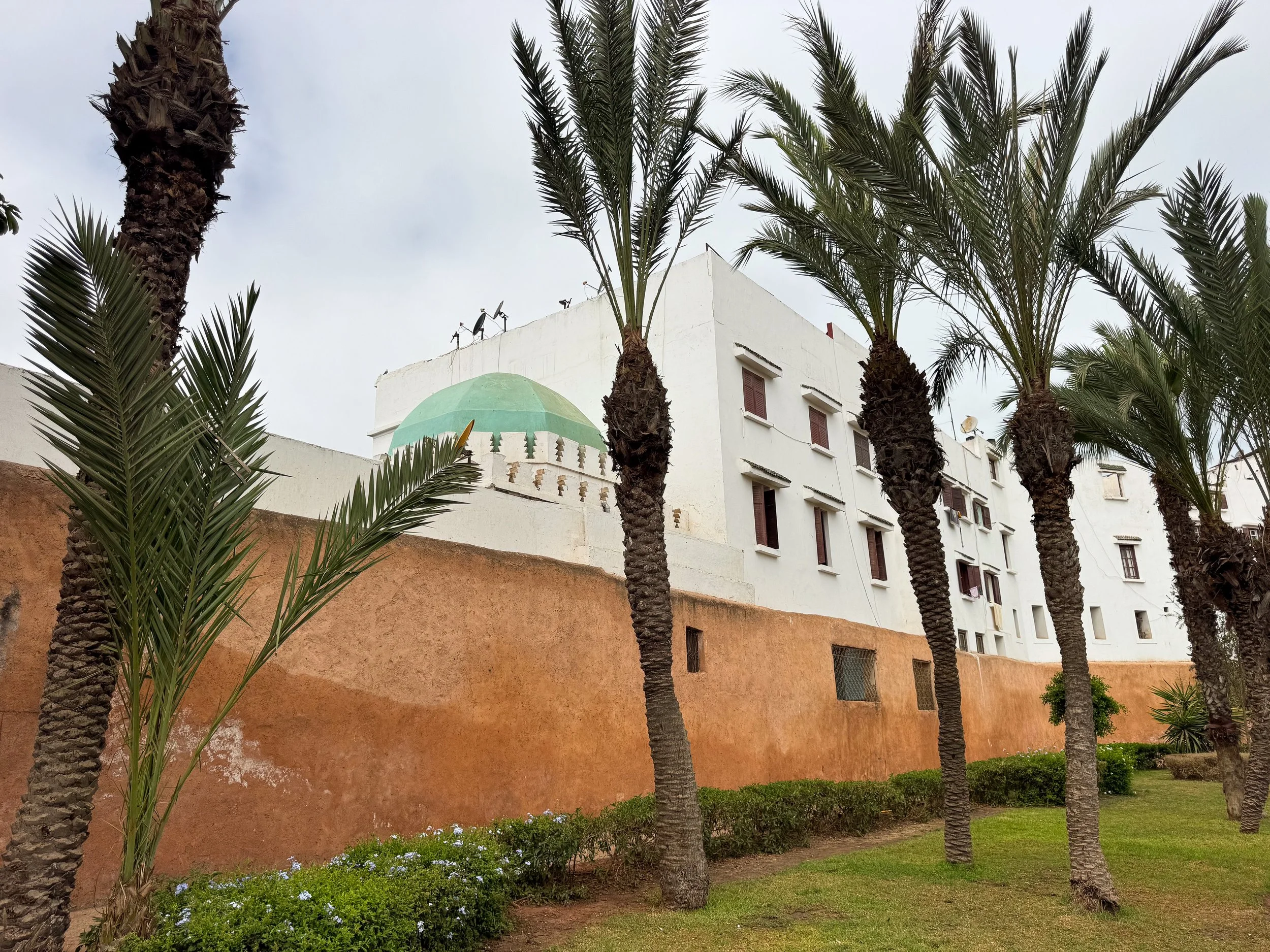
Casablanca is a Moroccan metropolis and long romanticized destination. The city is famed for its historic architecture and landmark sights. Palm lined avenues lead past Moorish style and French art deco buildings. Islamic minarets tower across the skyline as the call to prayer echoes across neighborhoods. Cafes spill out onto geometric tiled sidewalks while lively markets entice the senses. Casablanca is the perfect entry point to Morocco! Plan to spend at least two days here exploring the city prior to continuing onto destinations elsewhere in the country.
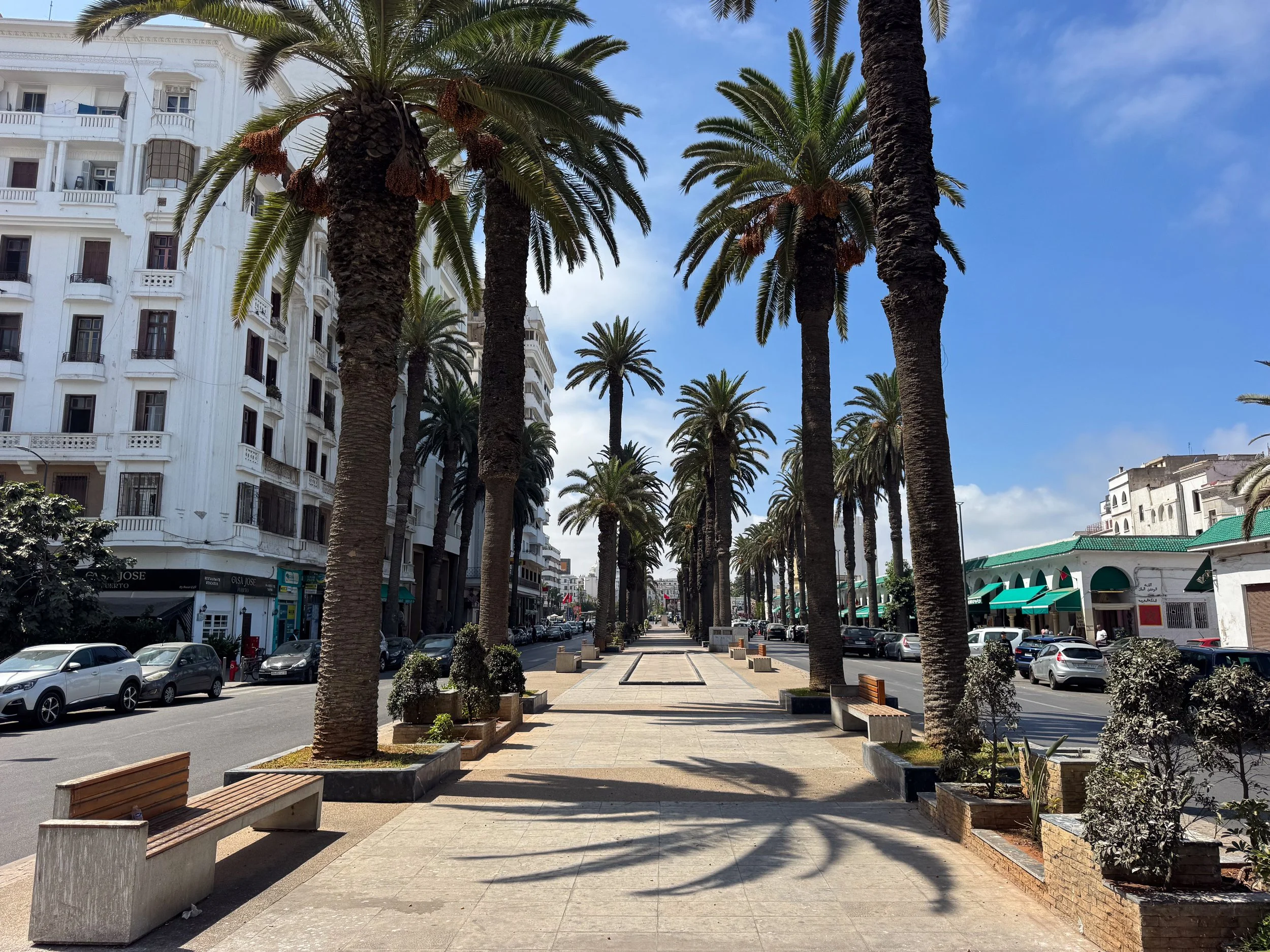
Neighborhoods
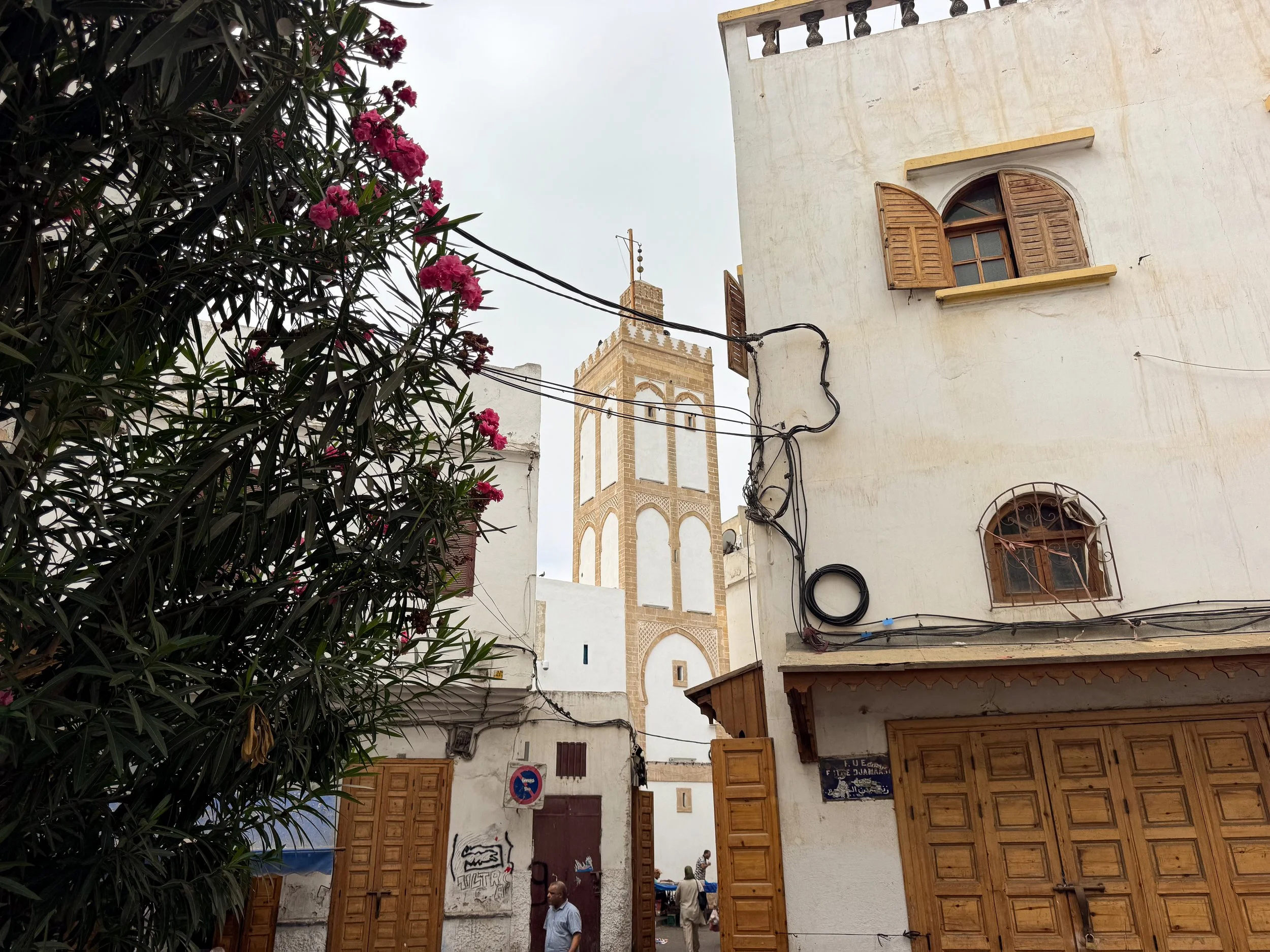
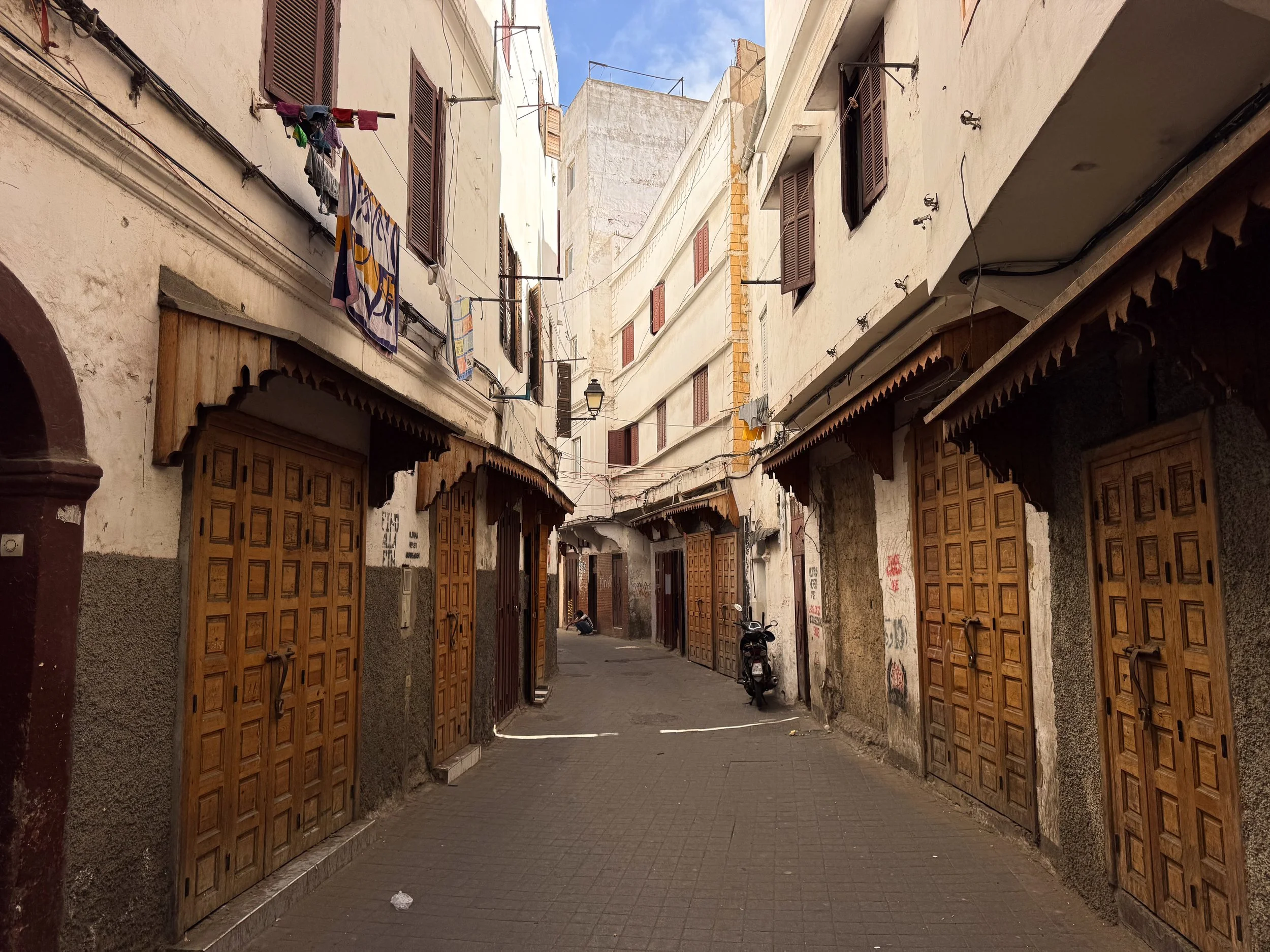
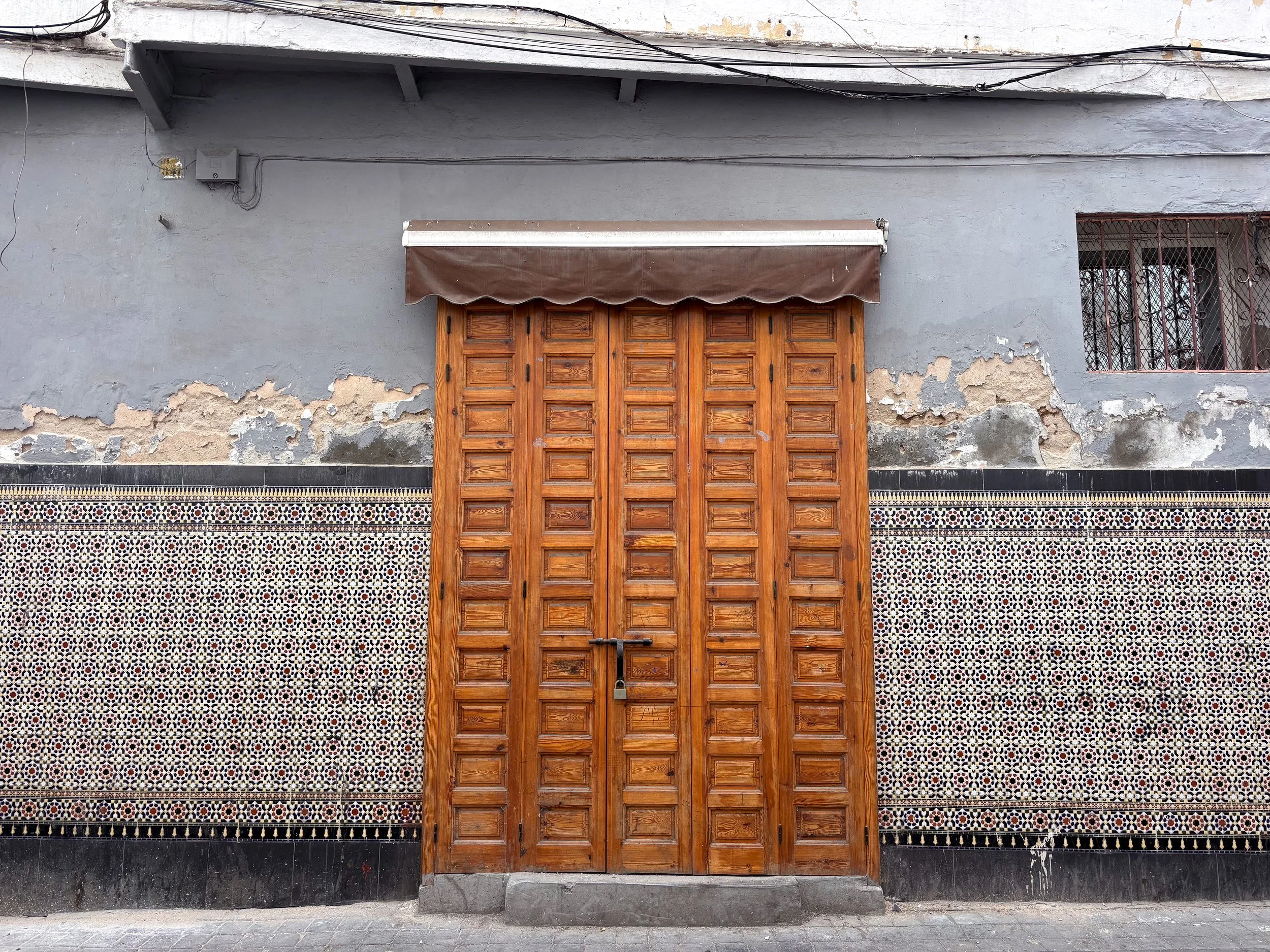
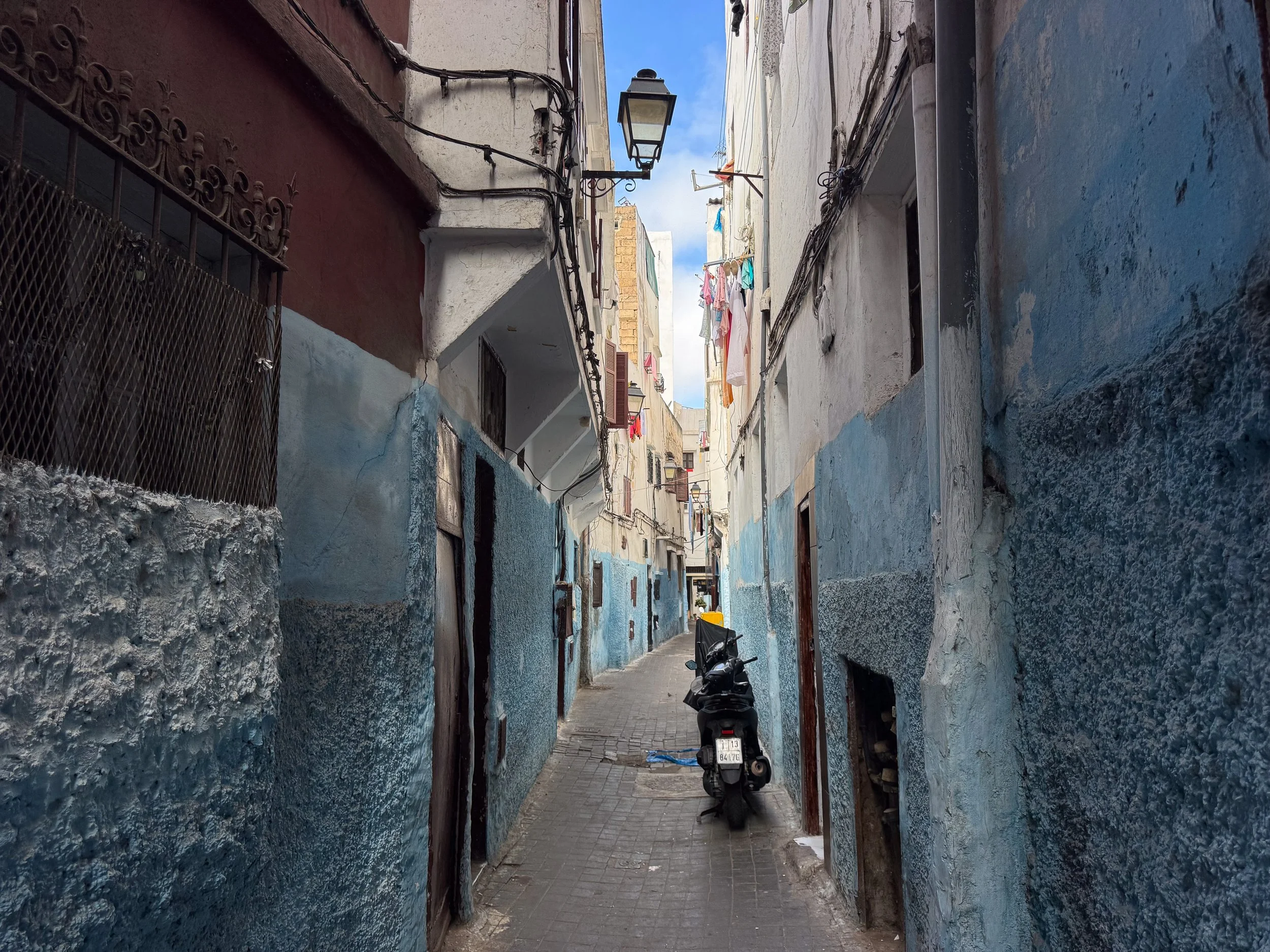
The Ancient Medina. Casablanca’s walled medina is the historic center of the seaside city. Winding streets and narrow alleyways lead past graffitied buildings with tall wooden doors. “Wrong” turns often lead to dead ends or into someone’s home. Stray cats roam freely at nearly every corner. It’s a wonderful place to experience local life with very few tourists. It’s significantly smaller than the medinas of Marrakech and Fes making it especially easy to explore.
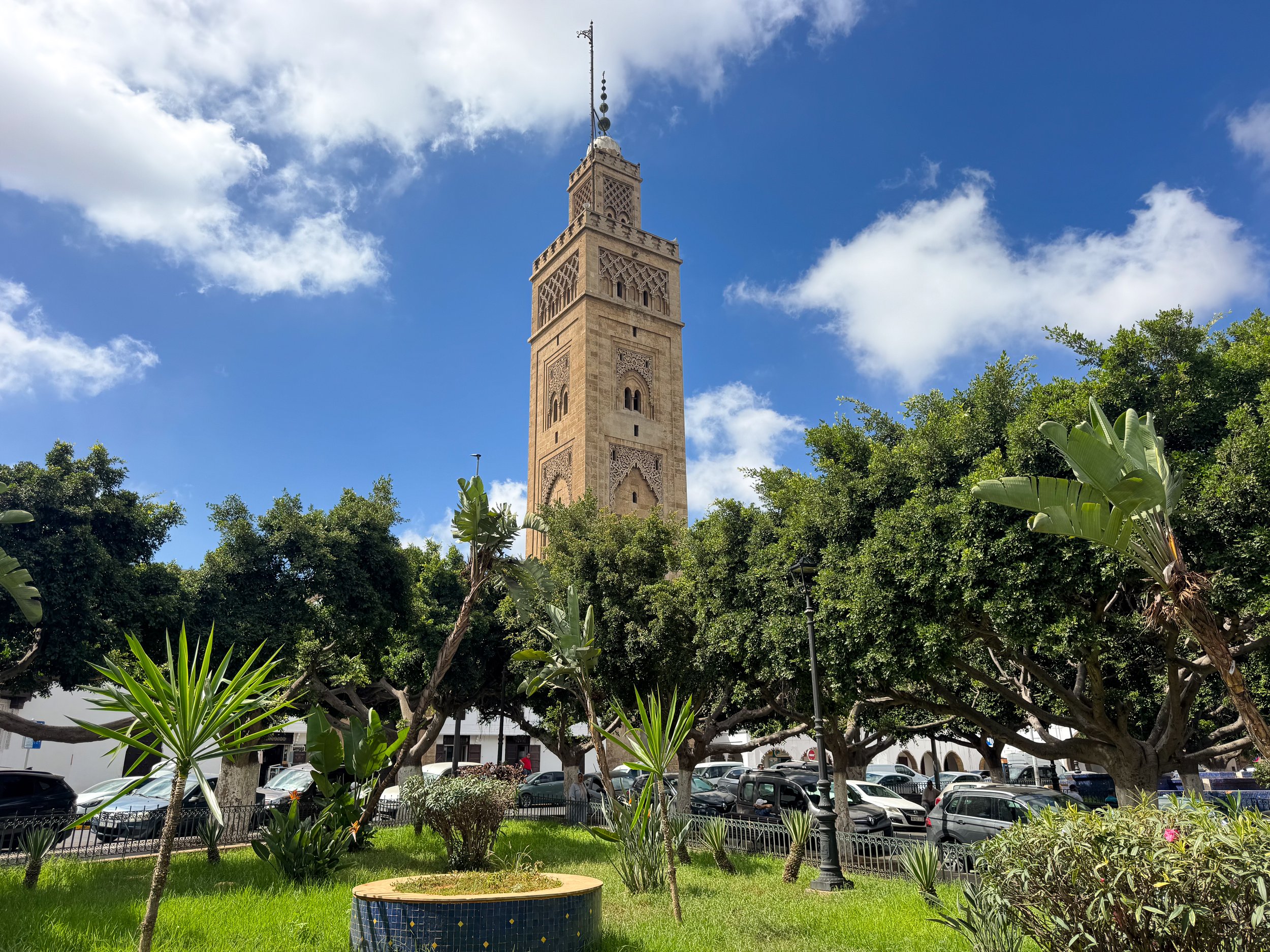
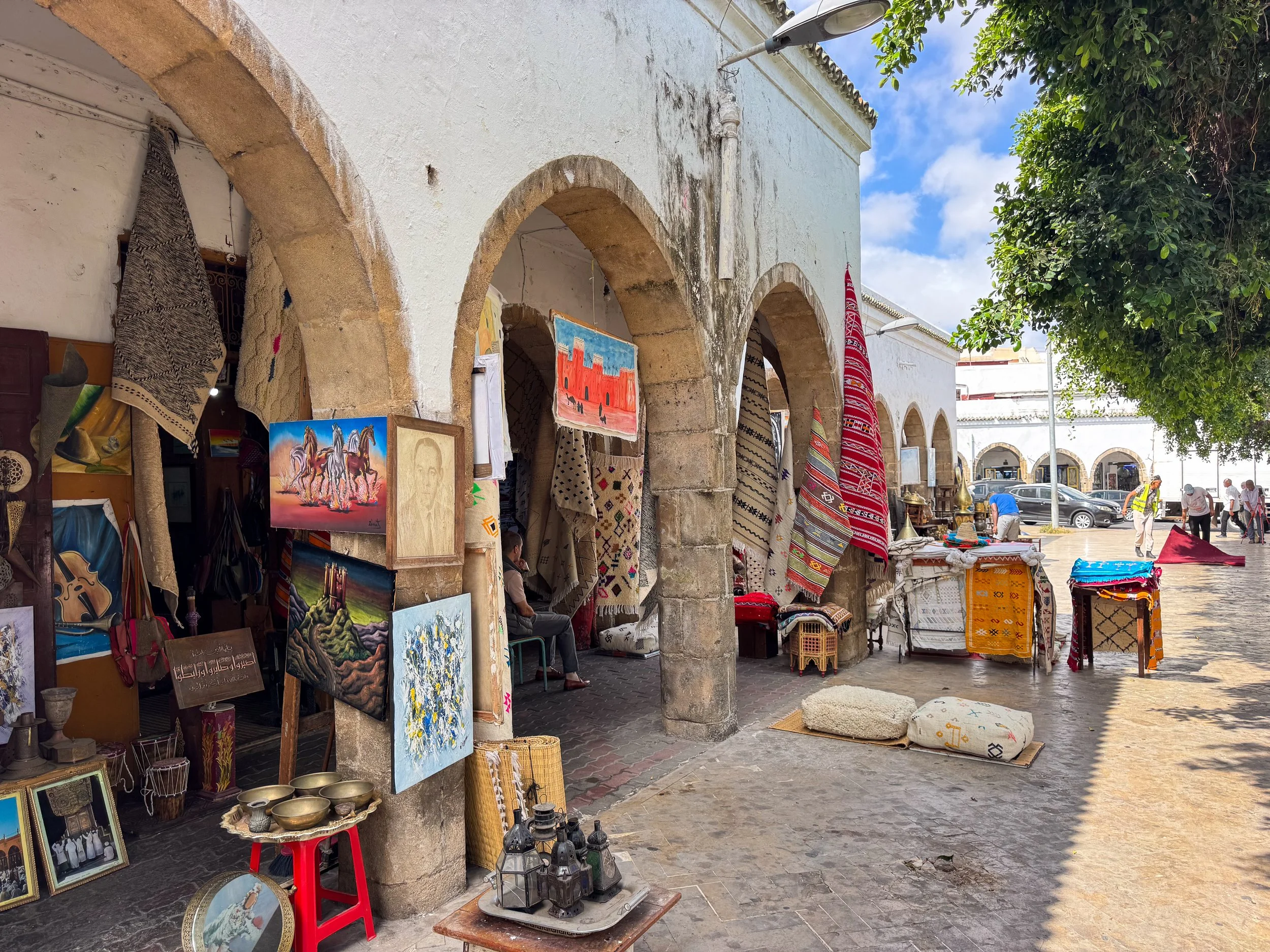
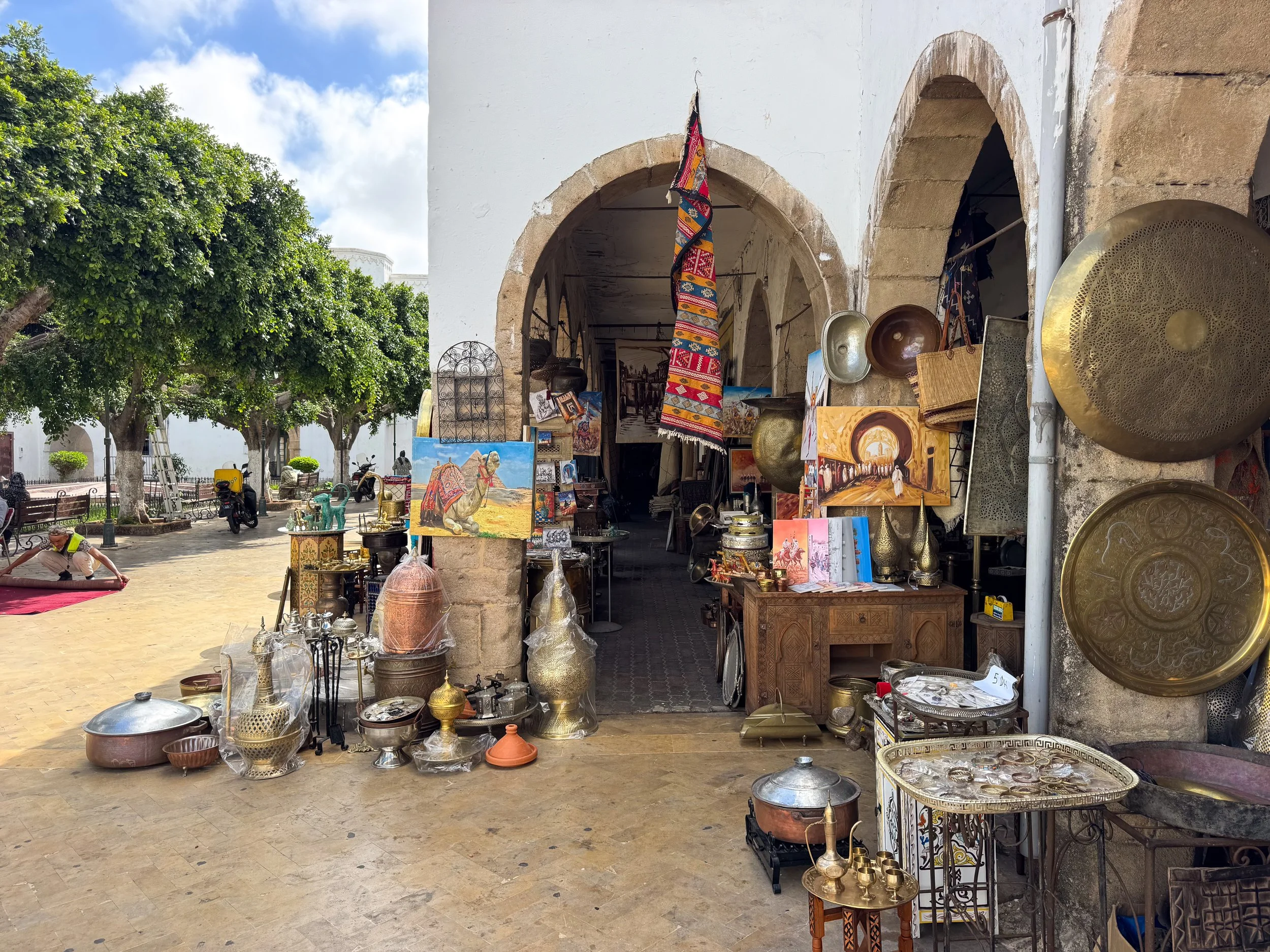
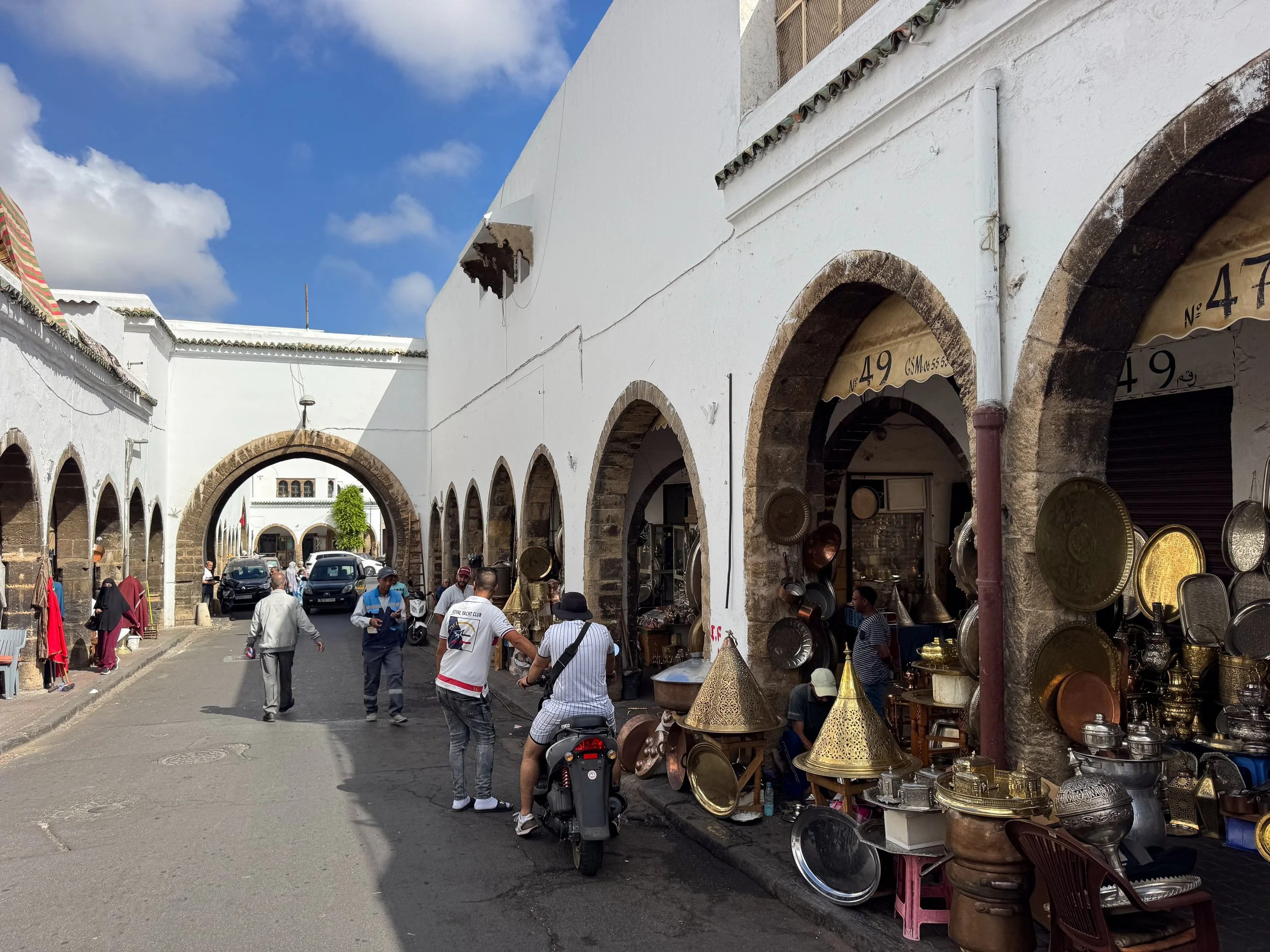
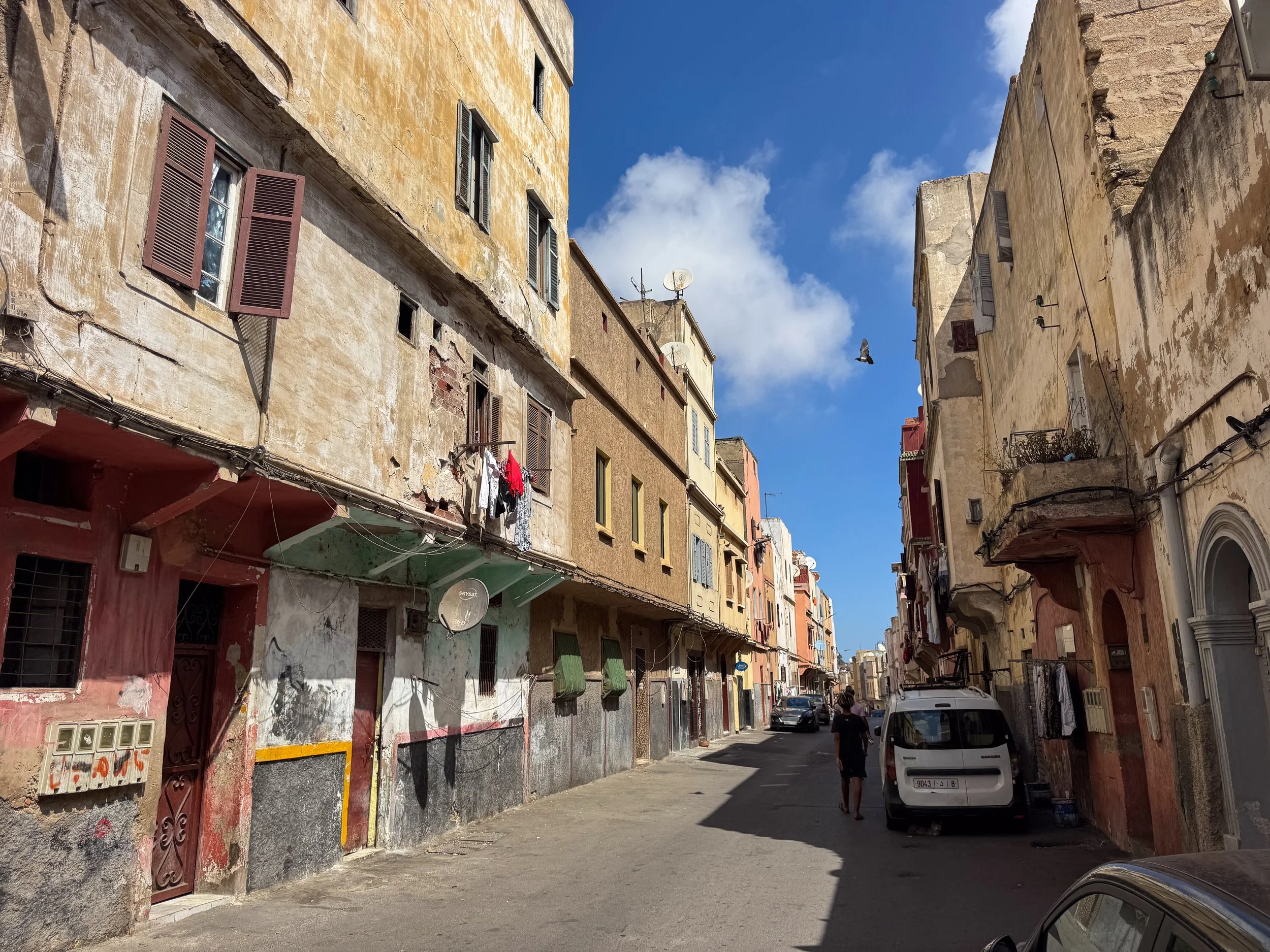
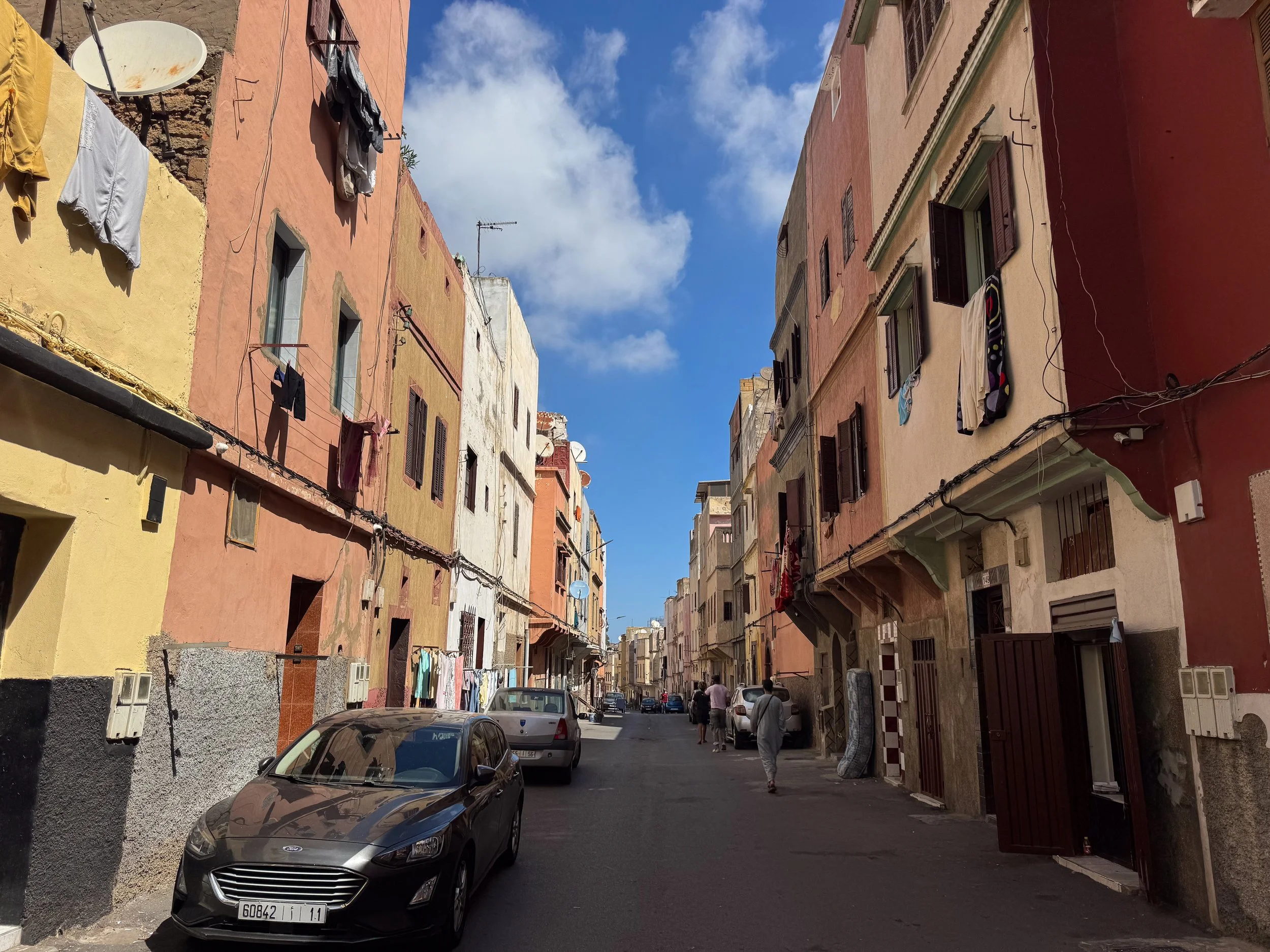
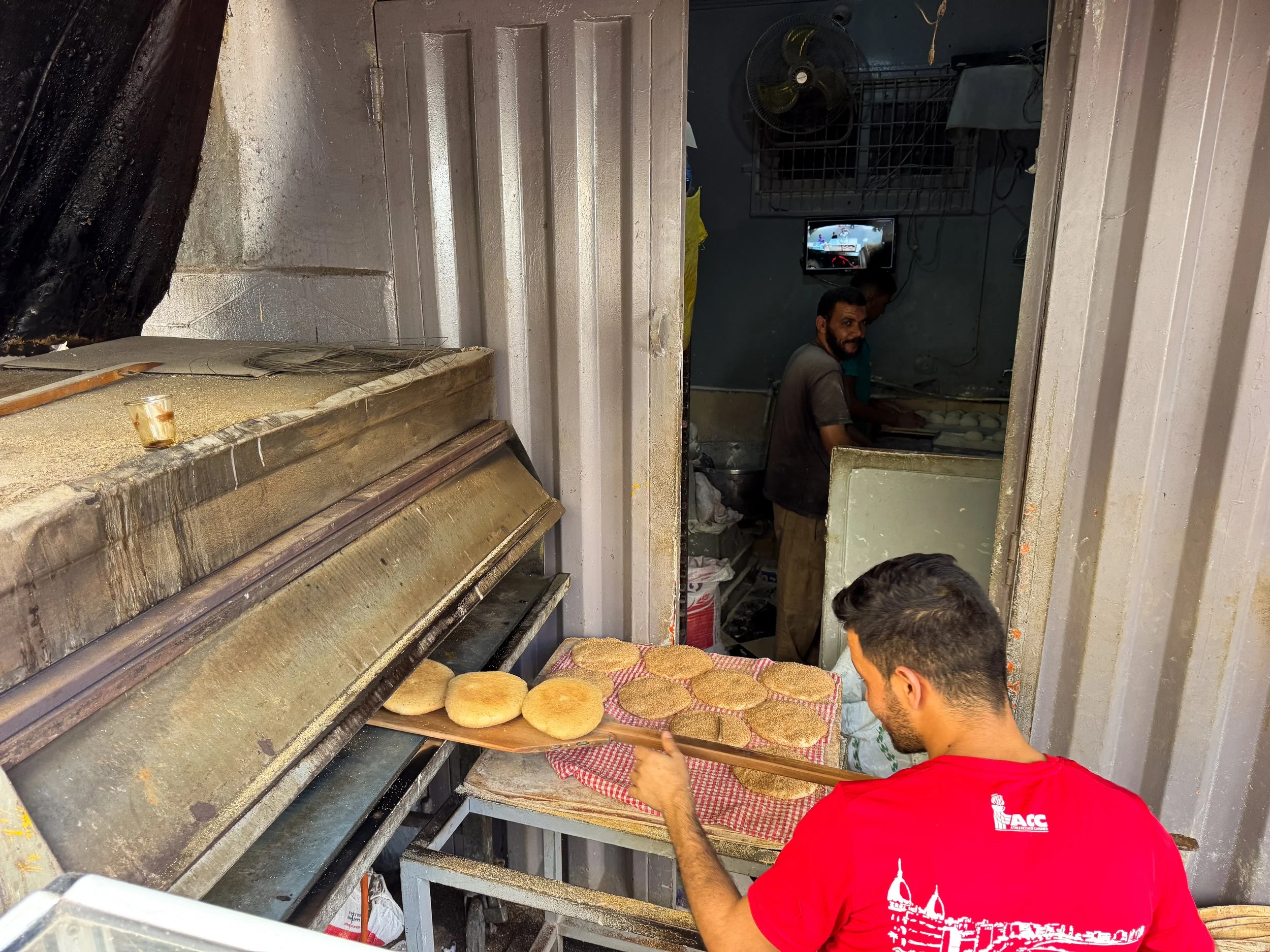
Habous Quarter. The Habous Quarter is one of the most beautiful areas of Casablanca, offering a blend of historic charm and modern glamour. It’s home to everyone from Moroccan royalty to everyday people. Narrow roads with window cafés, bookstores, street side bakeries and fruit carts meander through older areas. Shops display brass artifacts, Moroccan rugs and traditional clothing beneath arched walkways. Intricately carved stone minarets flank lush parks. Tasteful villas and palm lined avenues comprise modern areas. Flowering bushes and lush hedges overhang sidewalks.
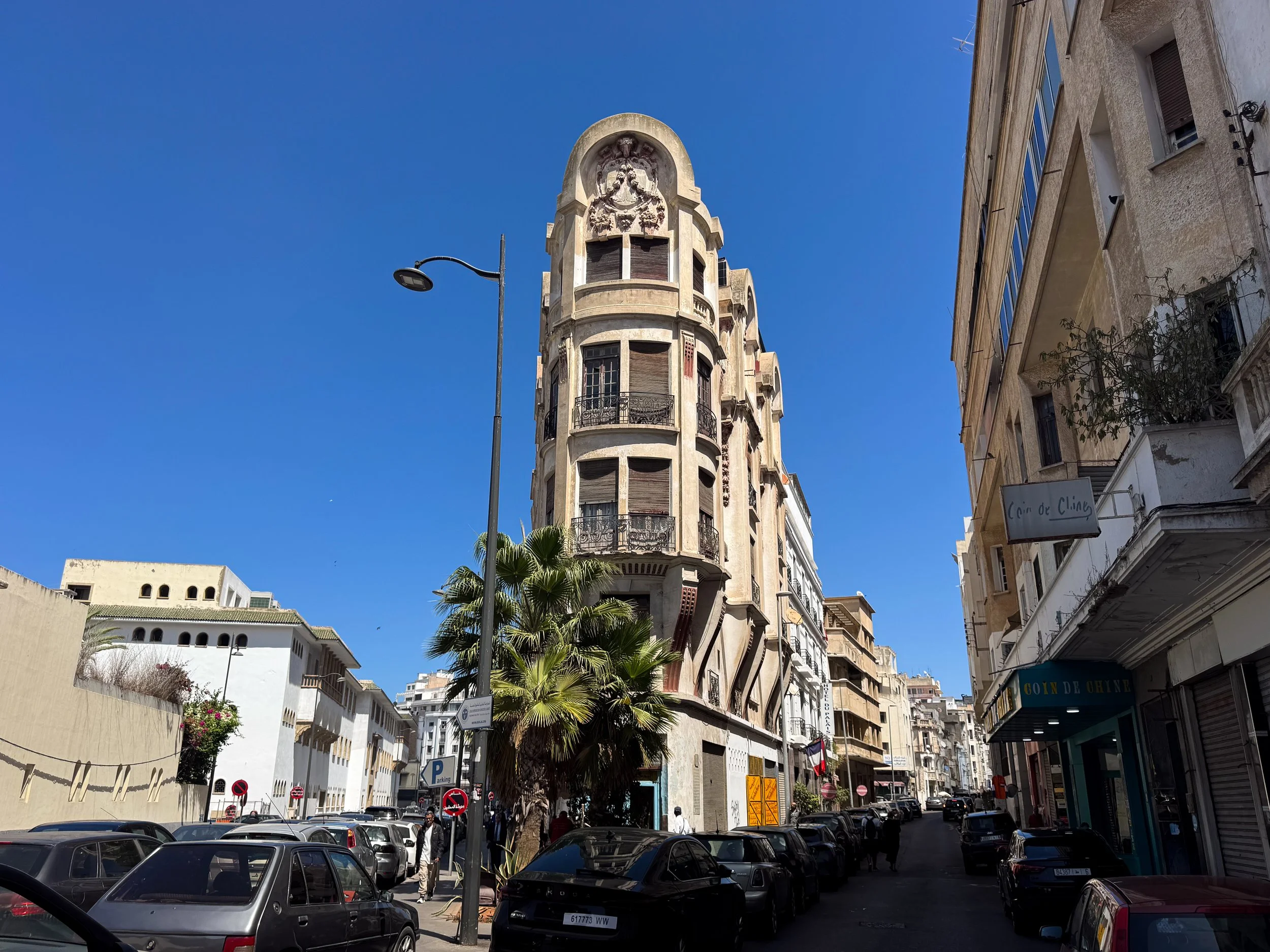
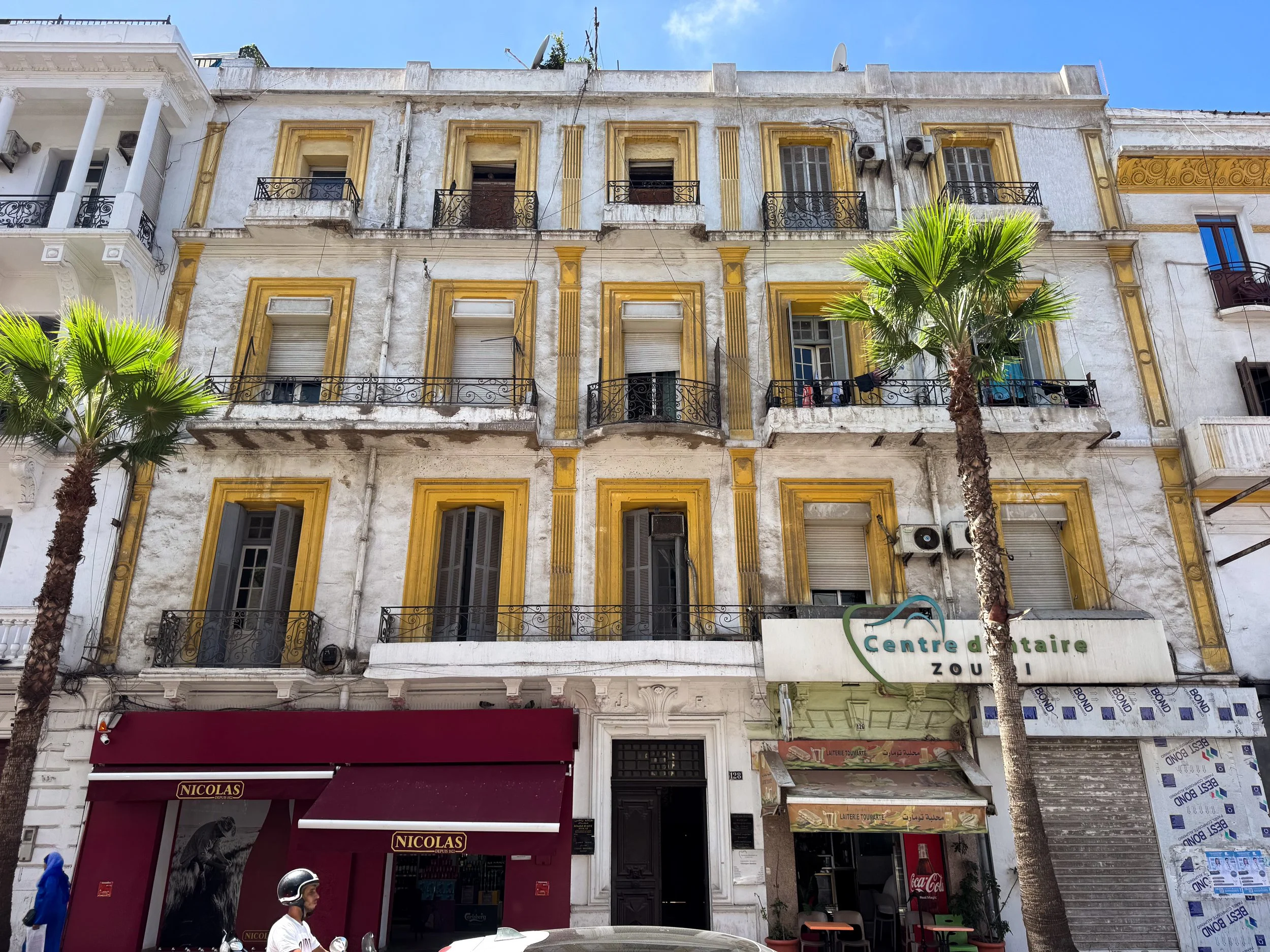
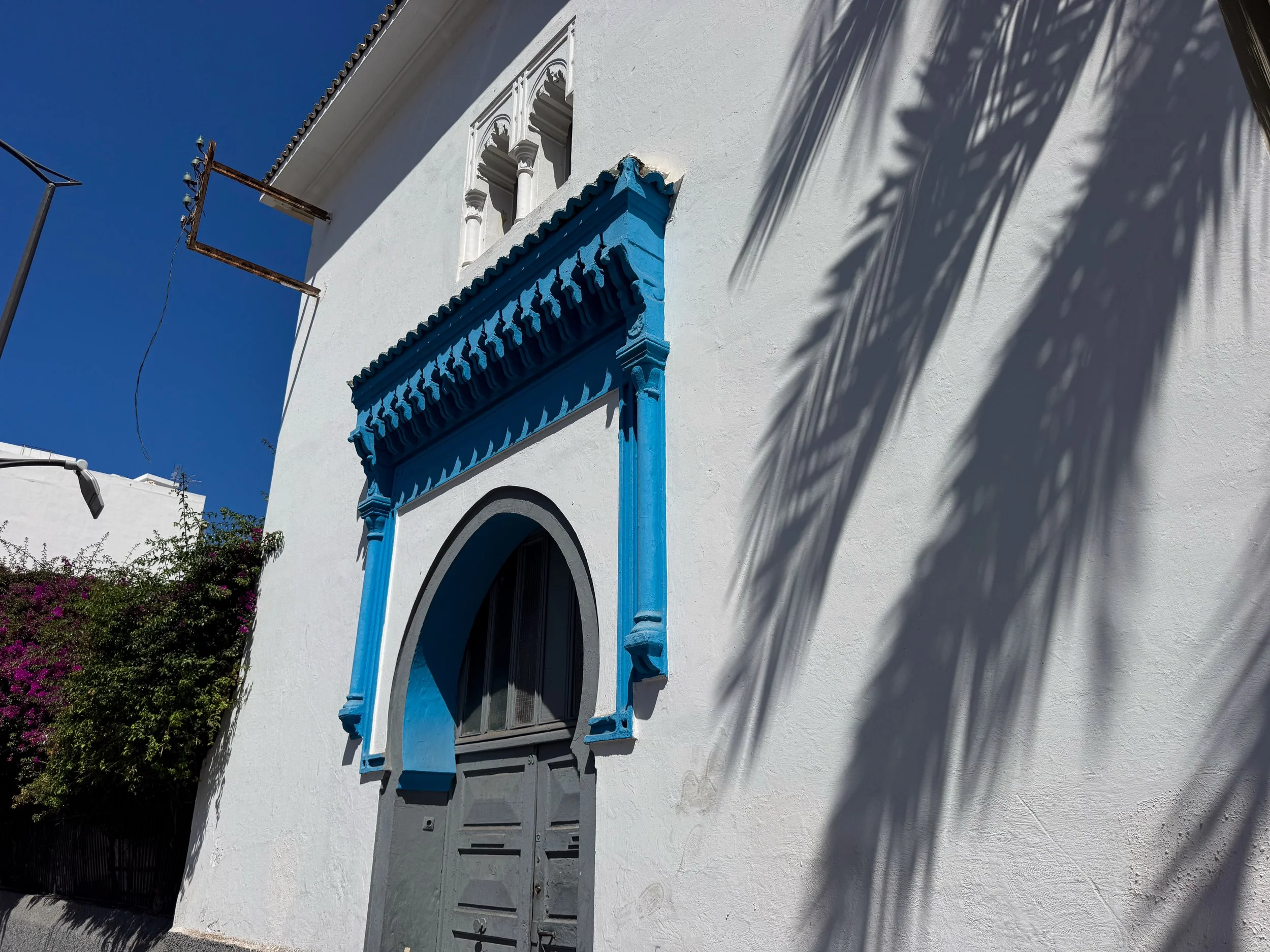
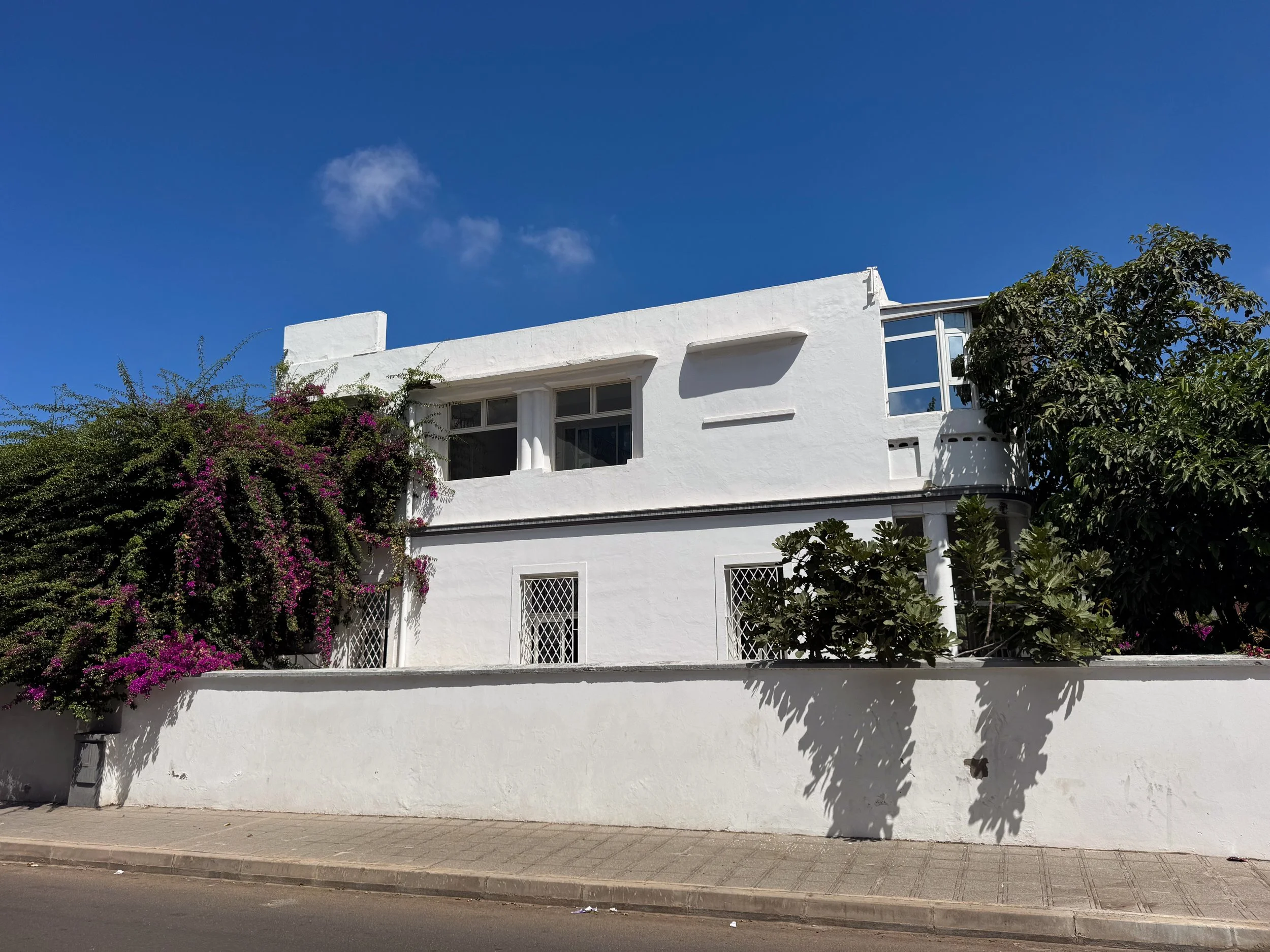
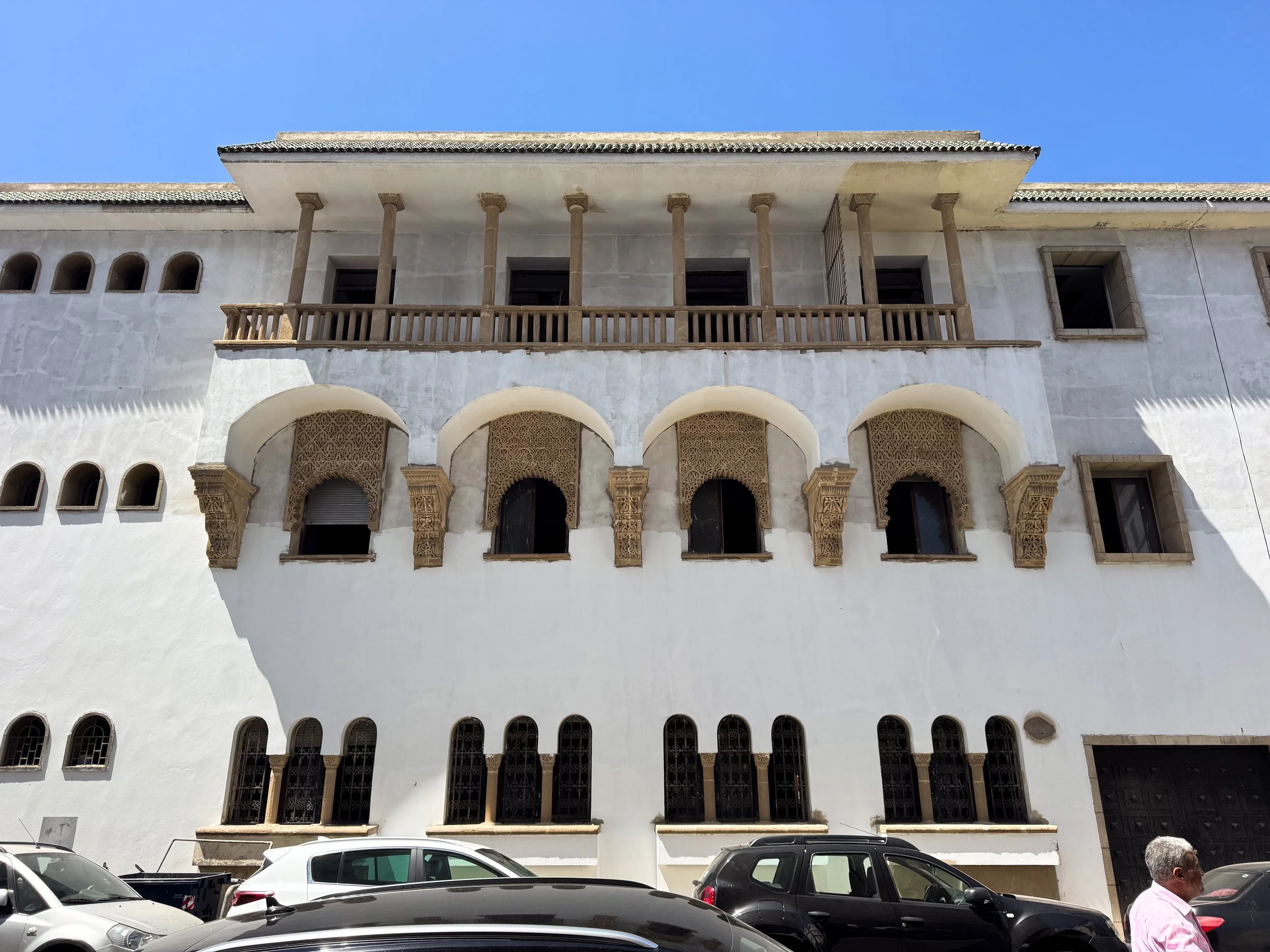
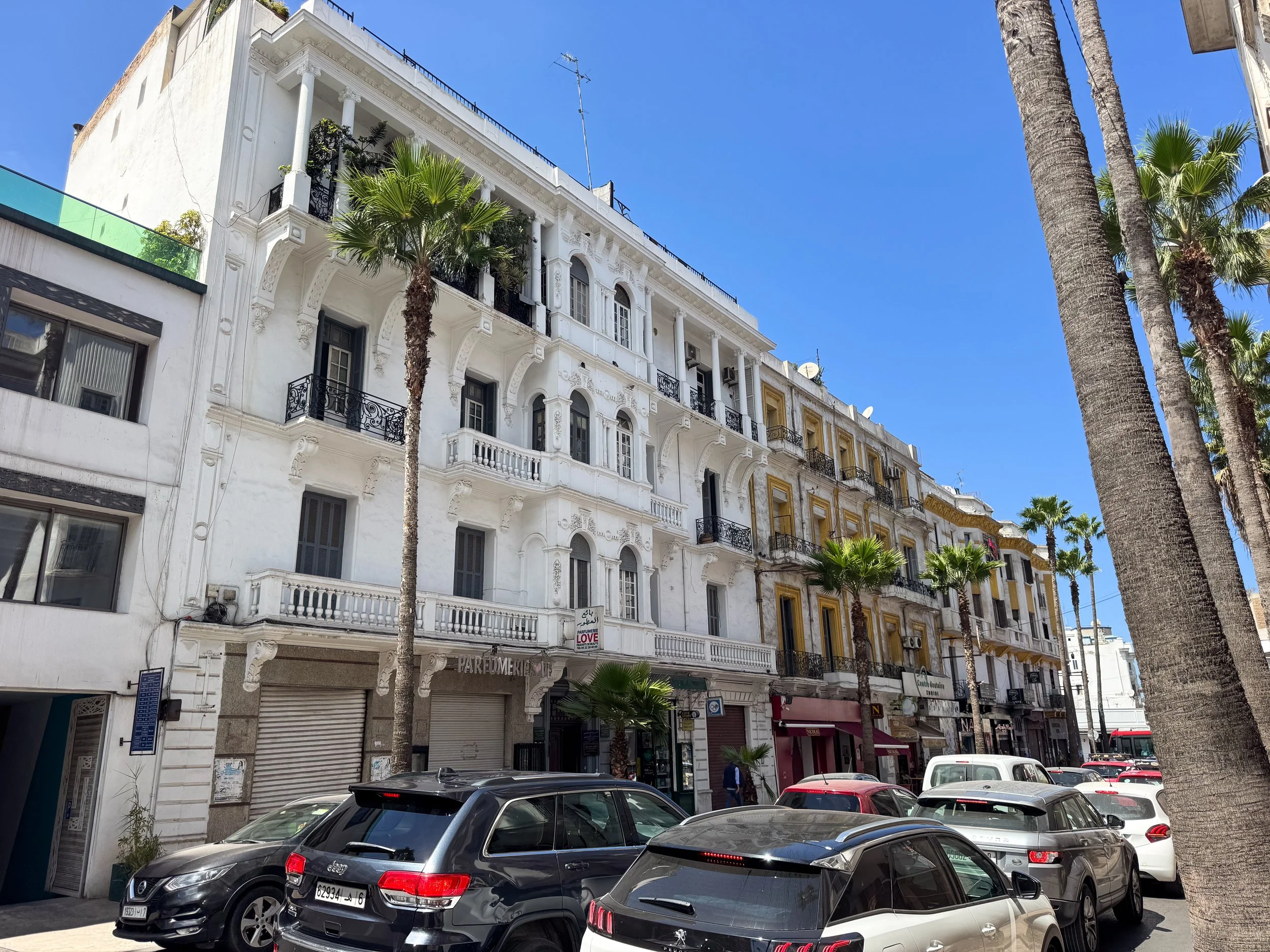
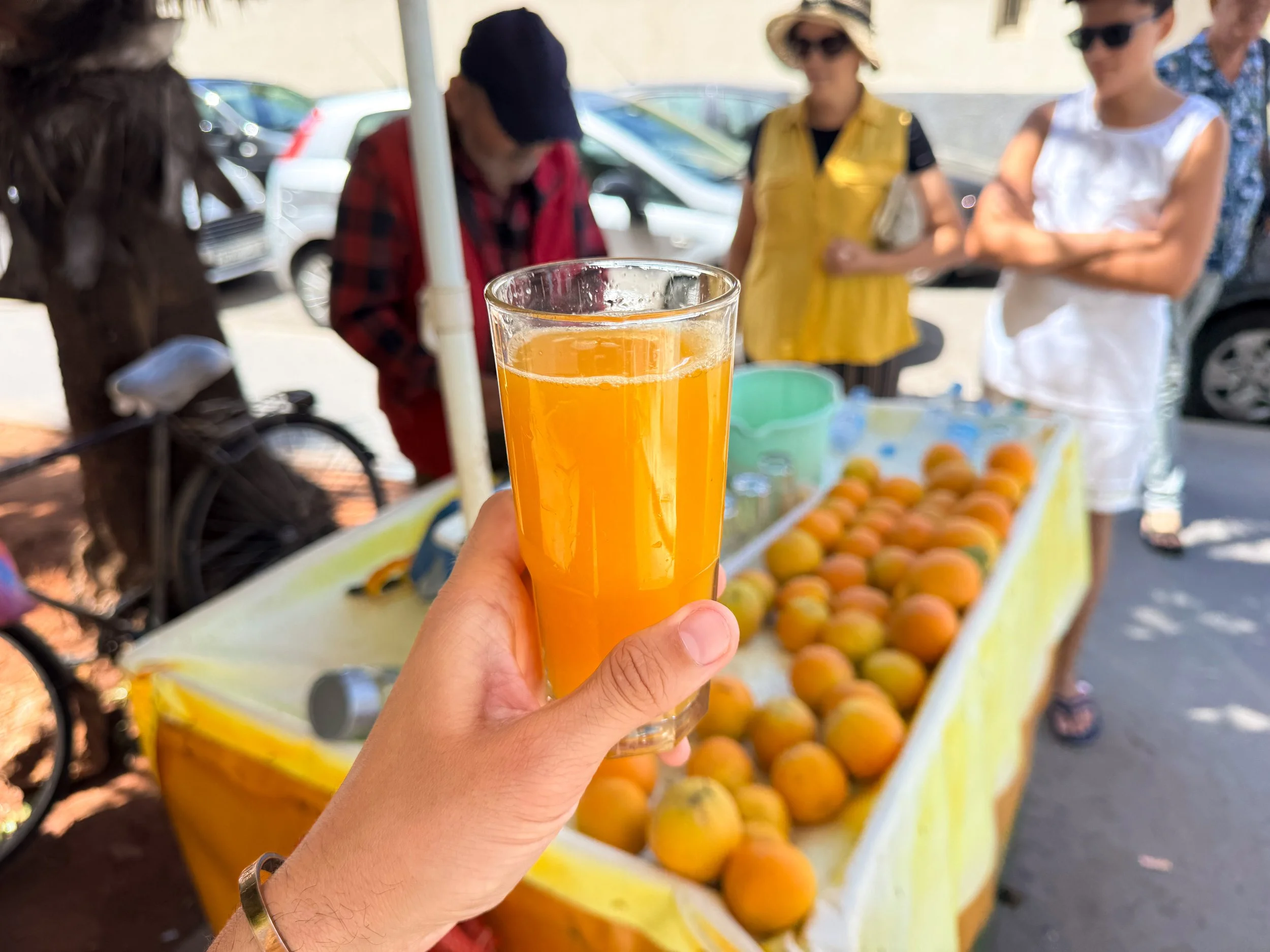
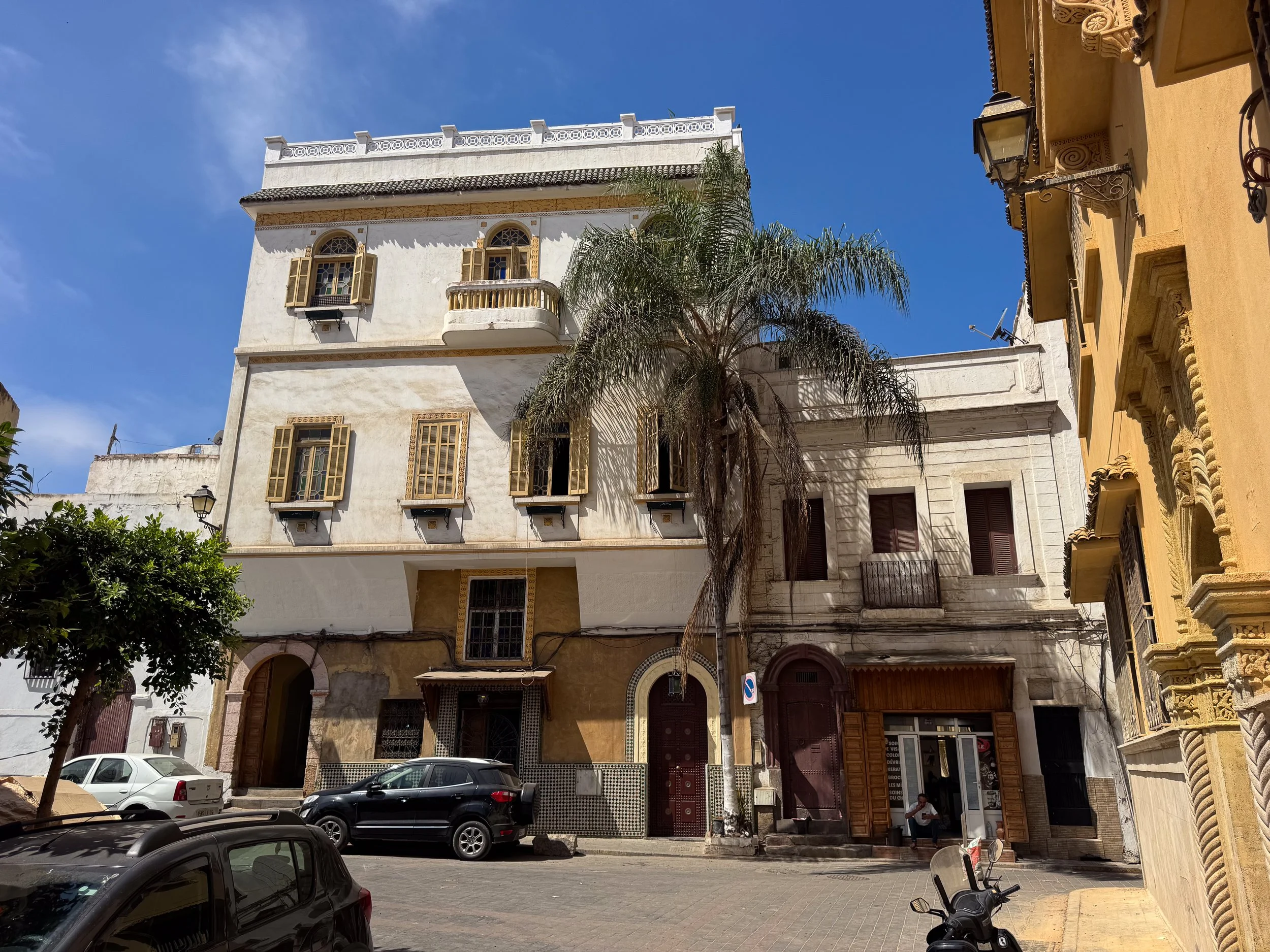
Mers Sultan. Mers Sultan is a mixed residential and commercial neighborhood, known for its walkability and central location. Sidewalk cafés and traditional bakeries line the streets, framed by French Colonial and Moorish architecture, making it an inviting area to explore on foot.
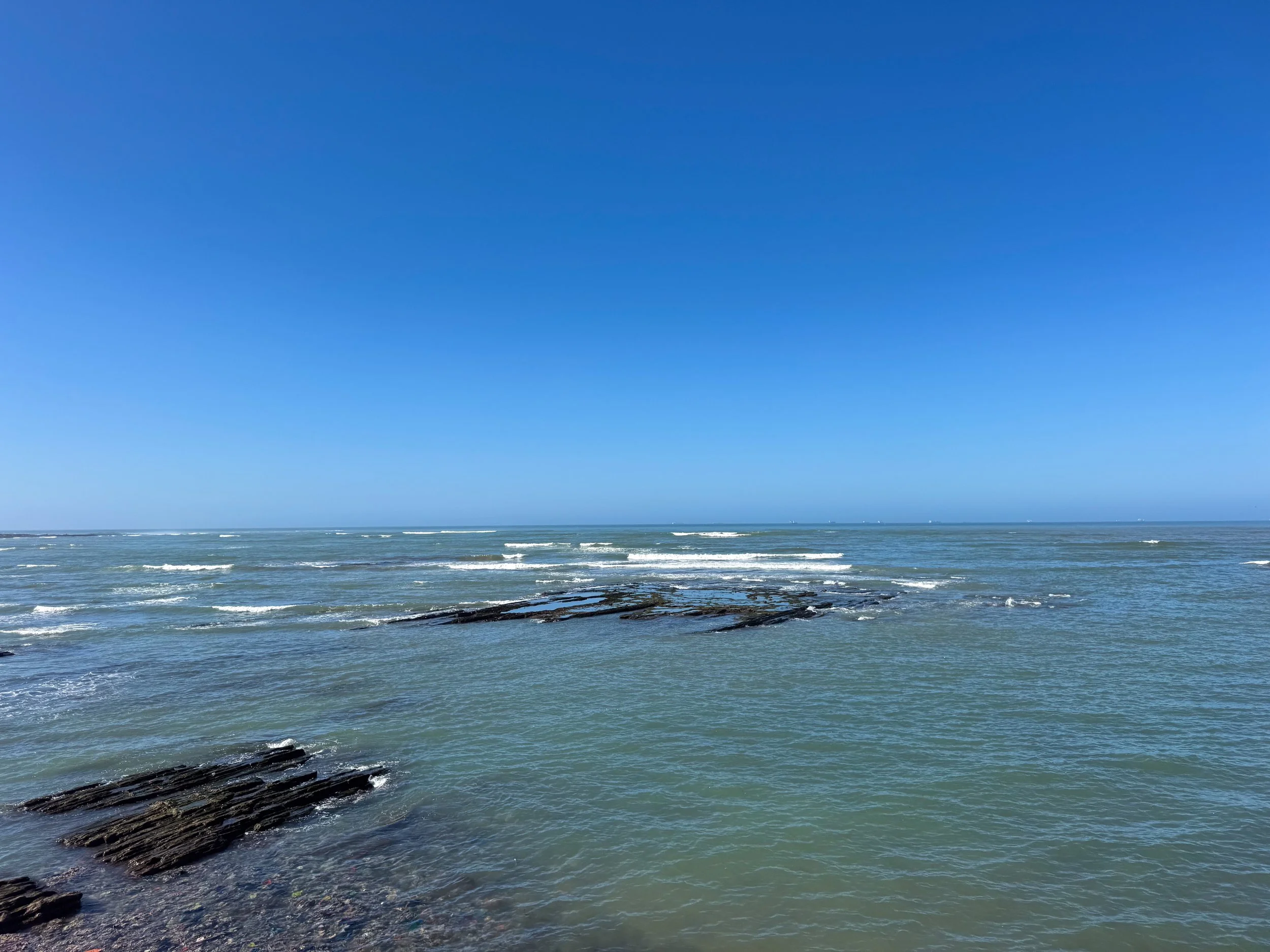
La Corniche. A ritzy seaside neighborhood with city beaches, newly built resorts, luxury restaurants and commercial shopping centers. A cliffside promenade offers views of the Atlantic Ocean, best enjoyed at a restaurant with an afternoon coffee or mint tea. It’s a popular area with tourists but lacks the charm of other areas in the city.
See the Sights
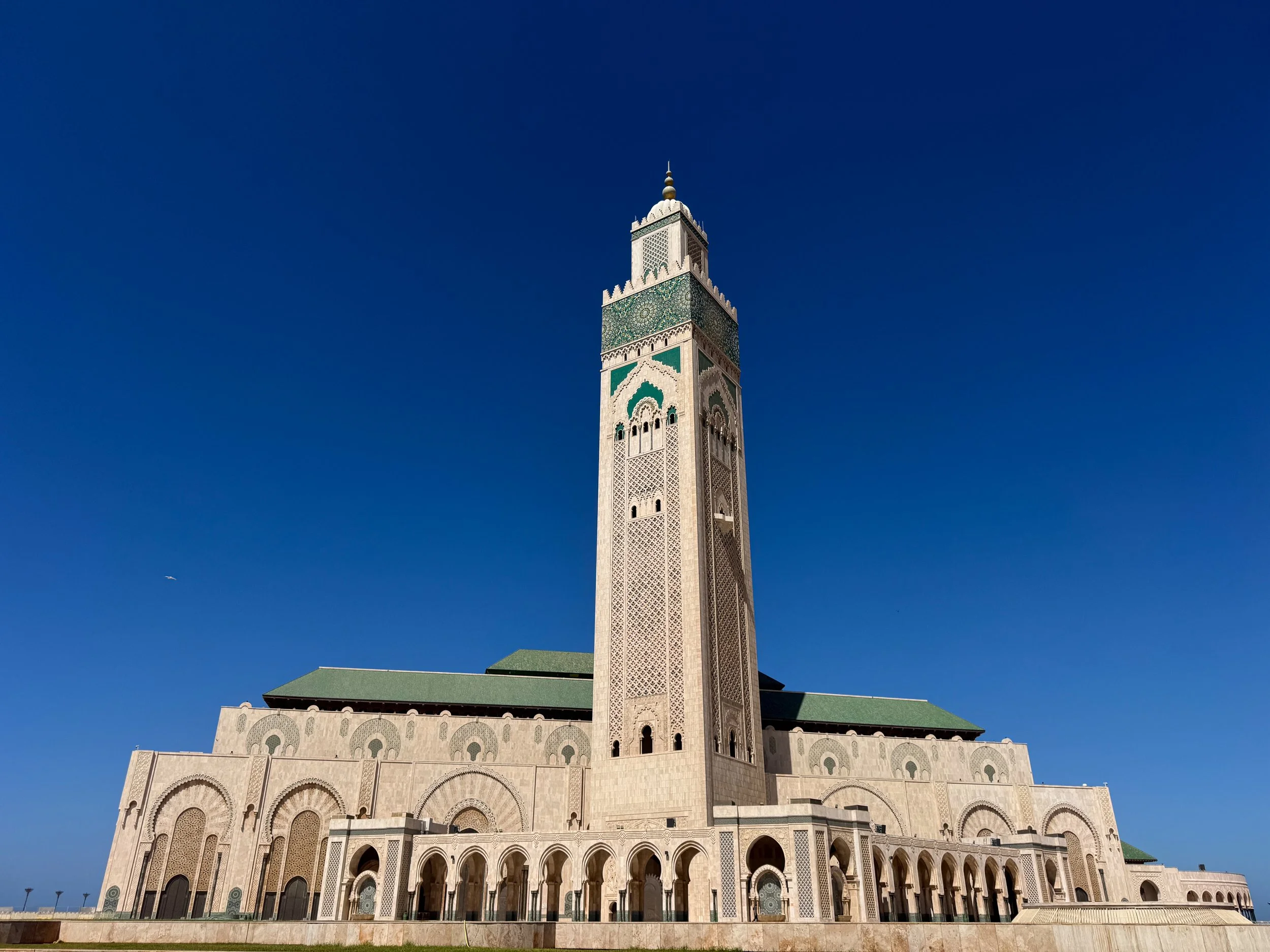
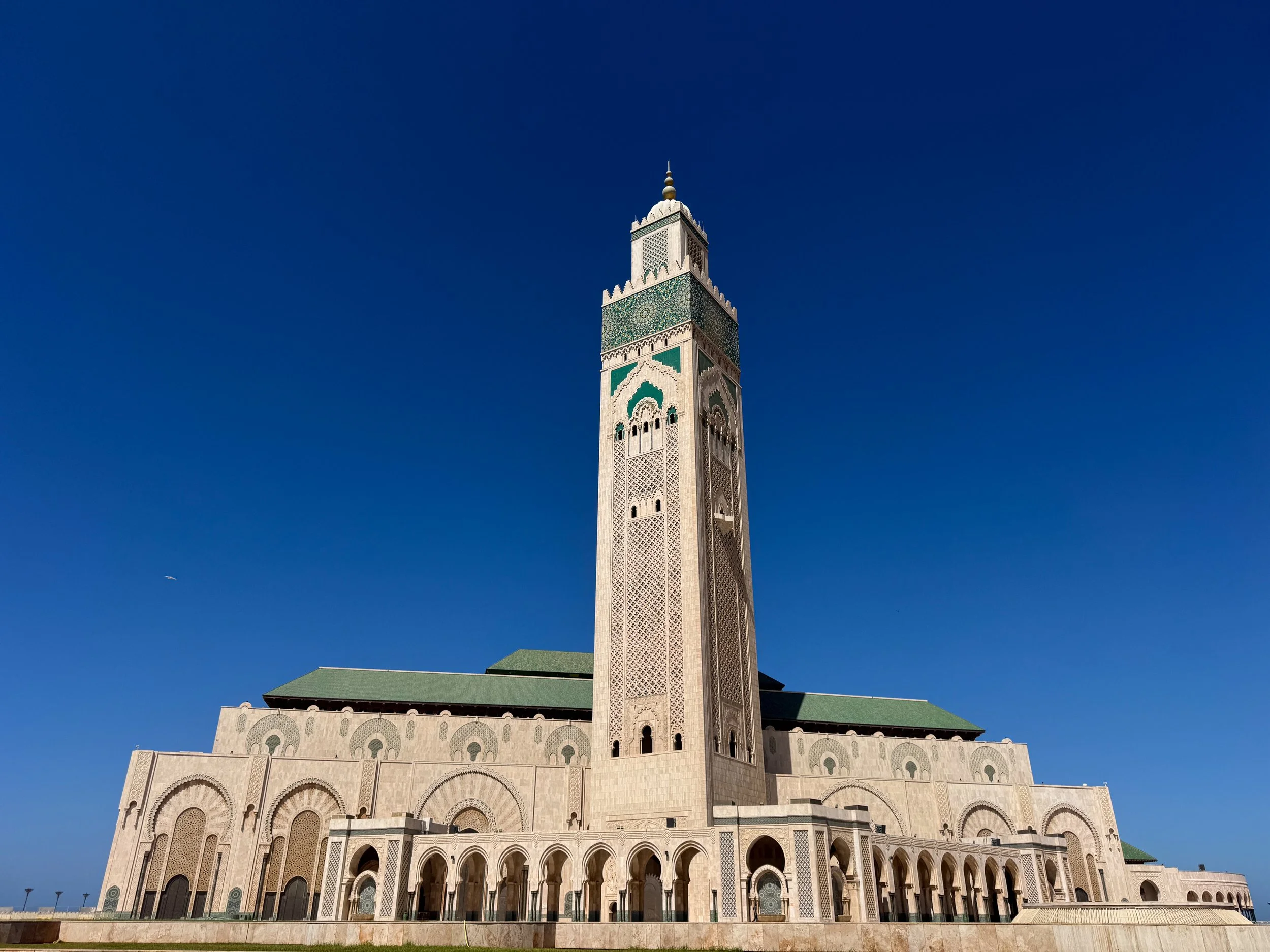
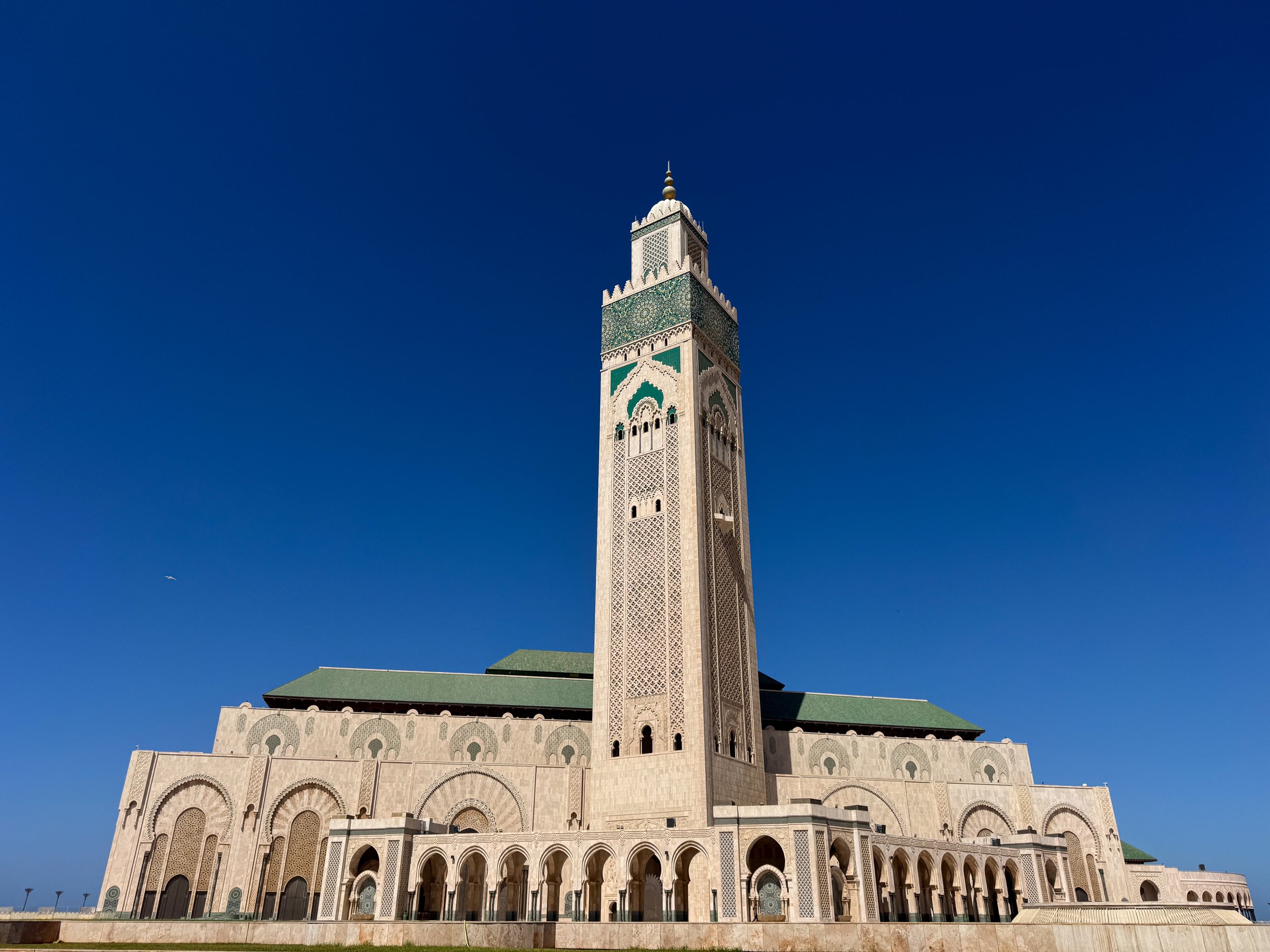
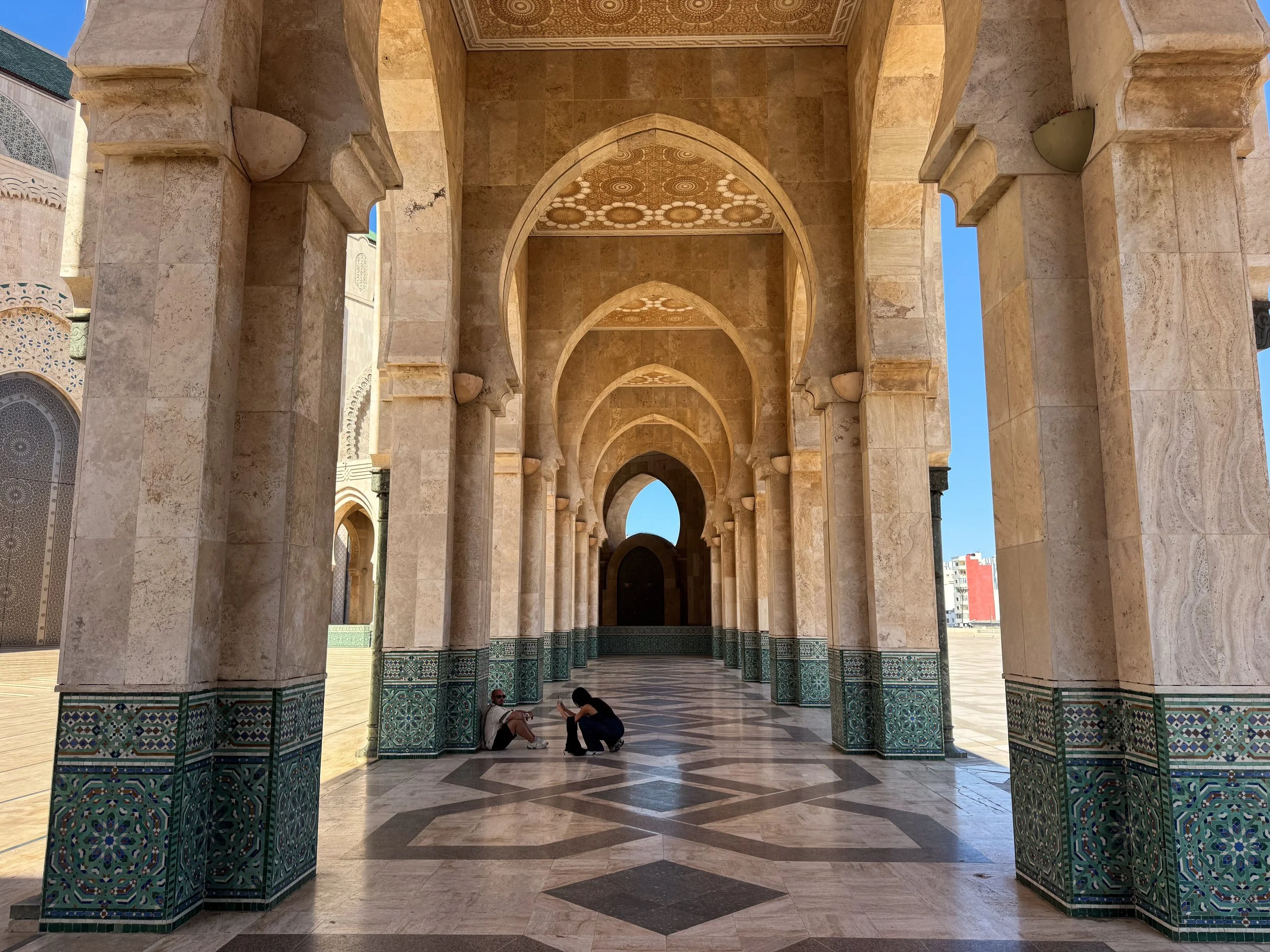
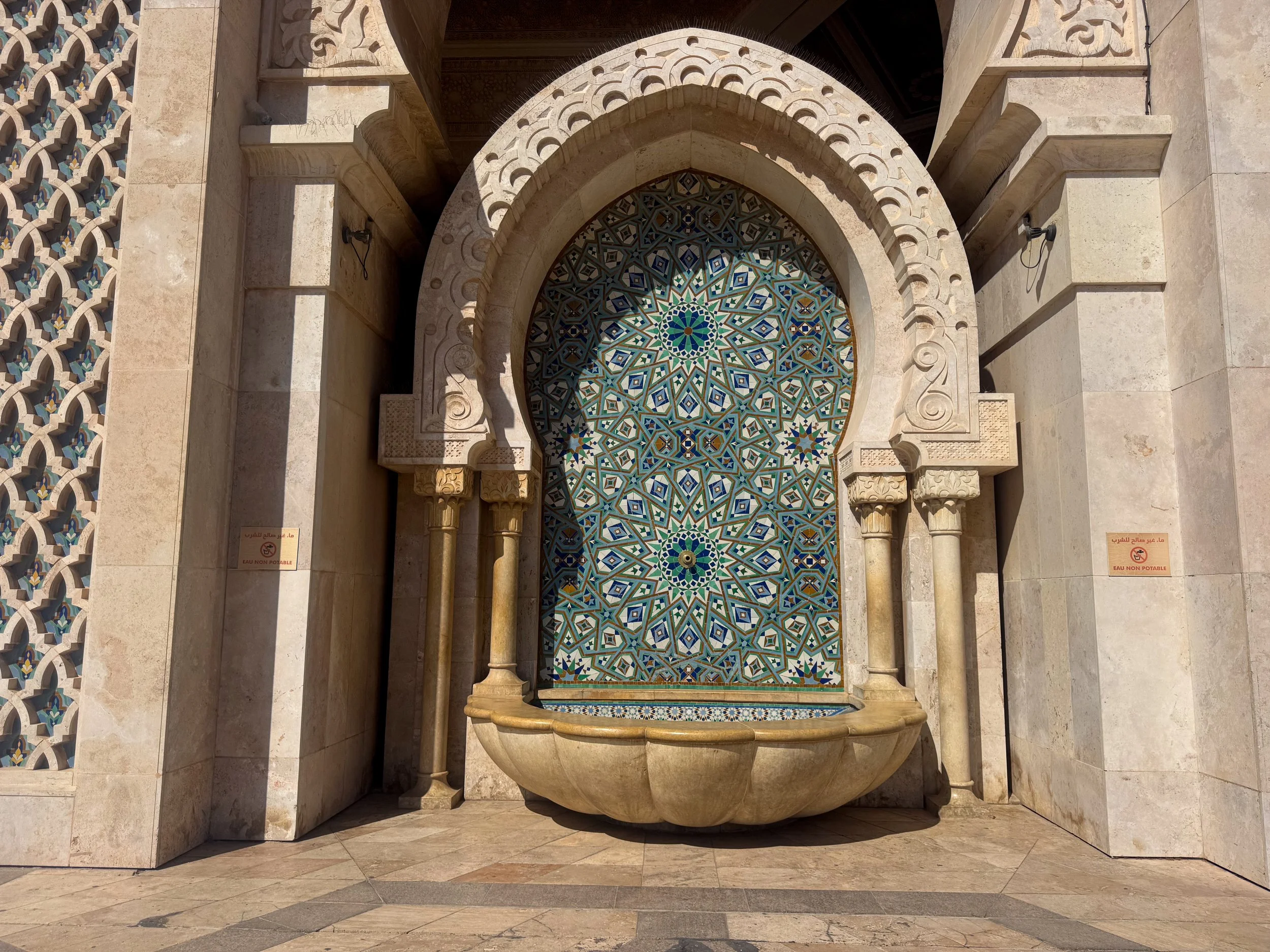
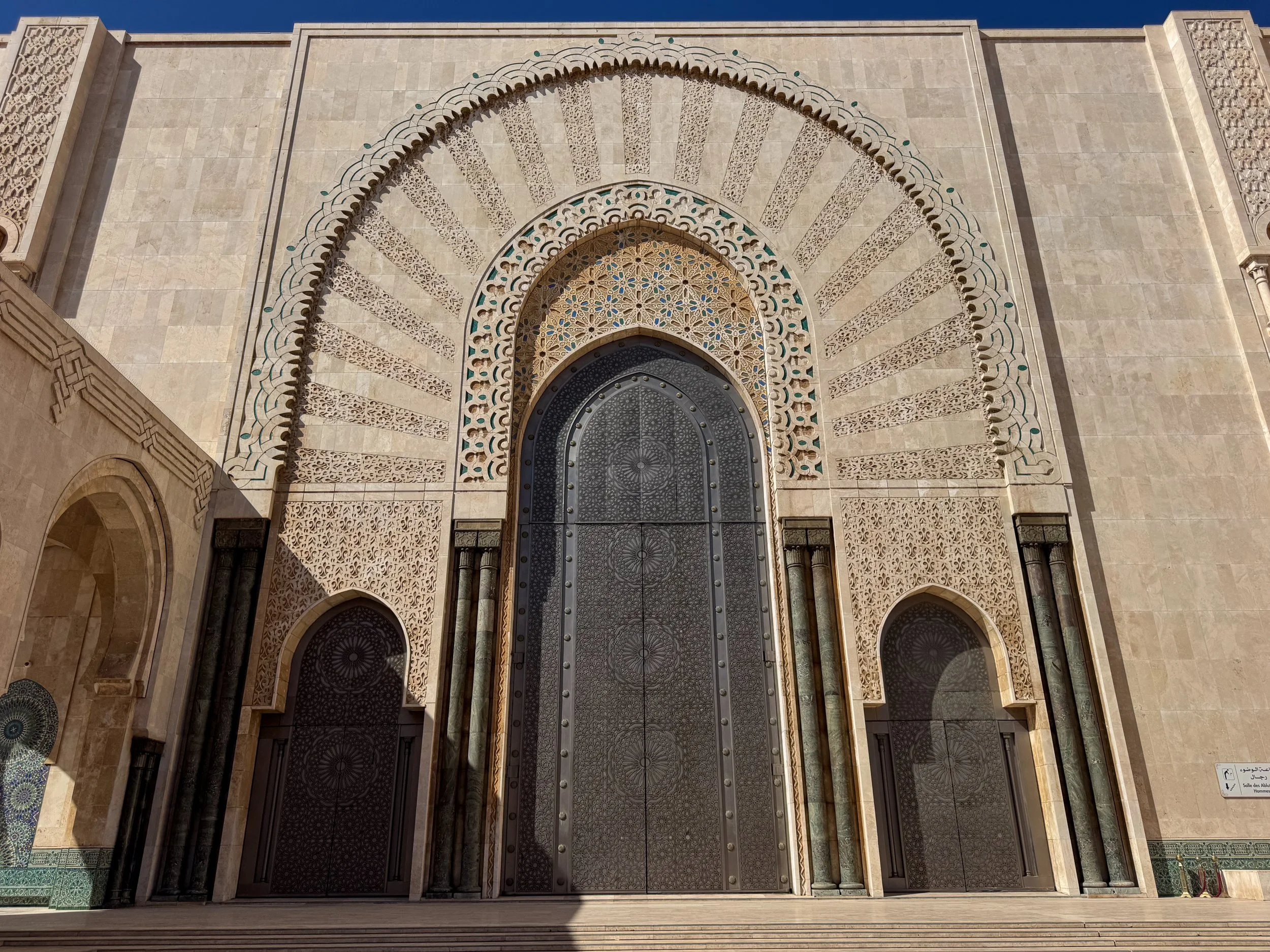
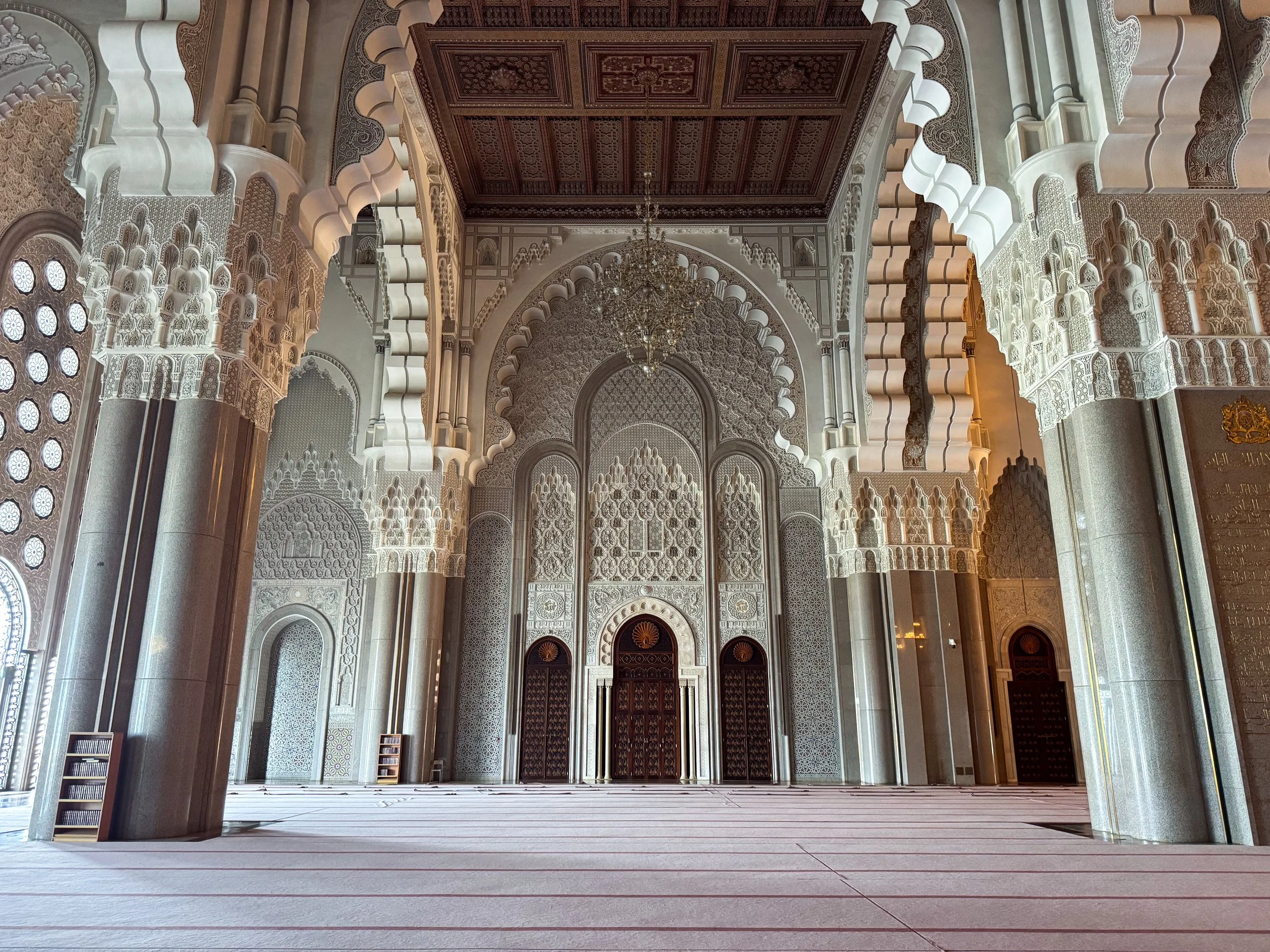
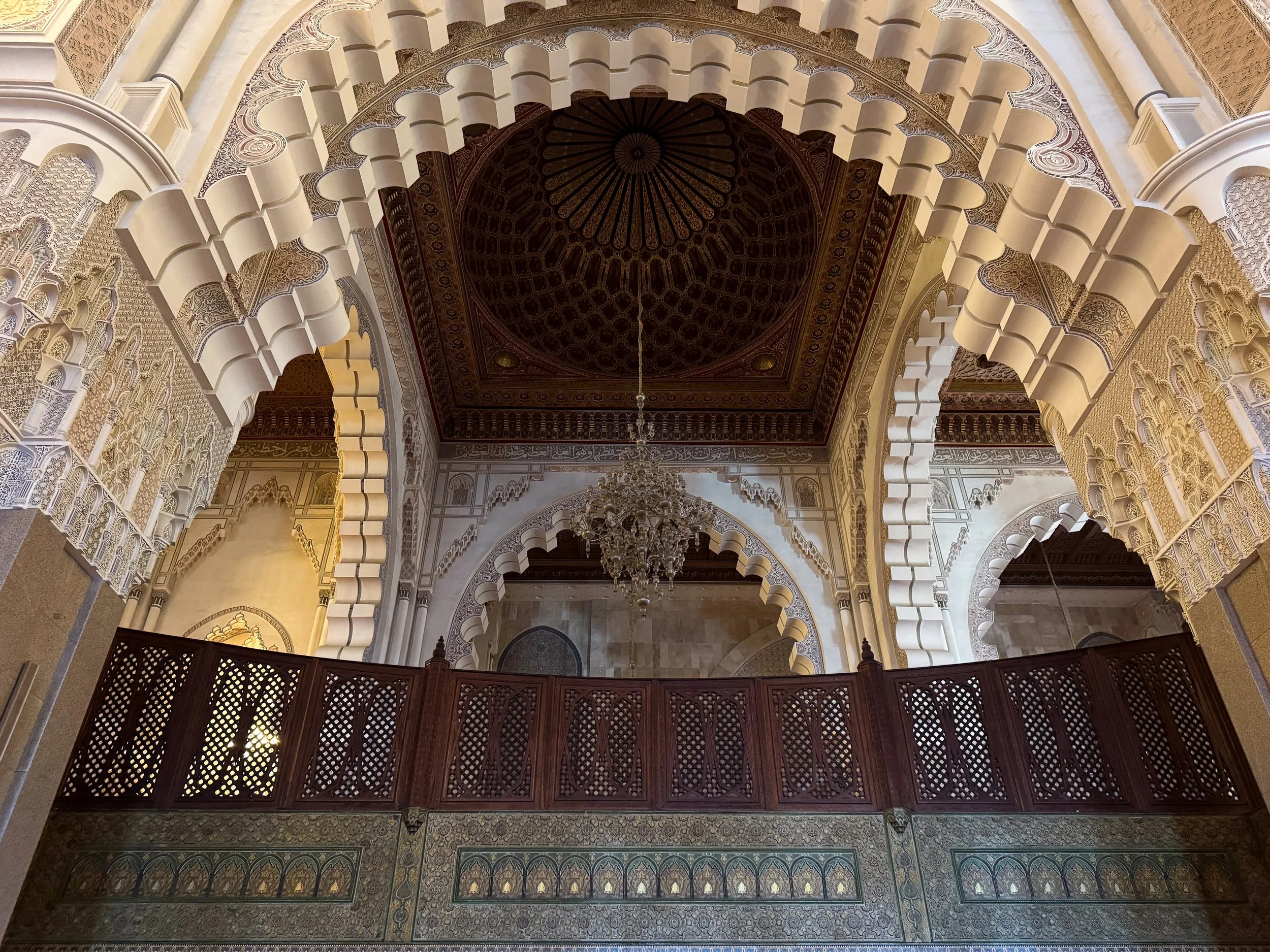
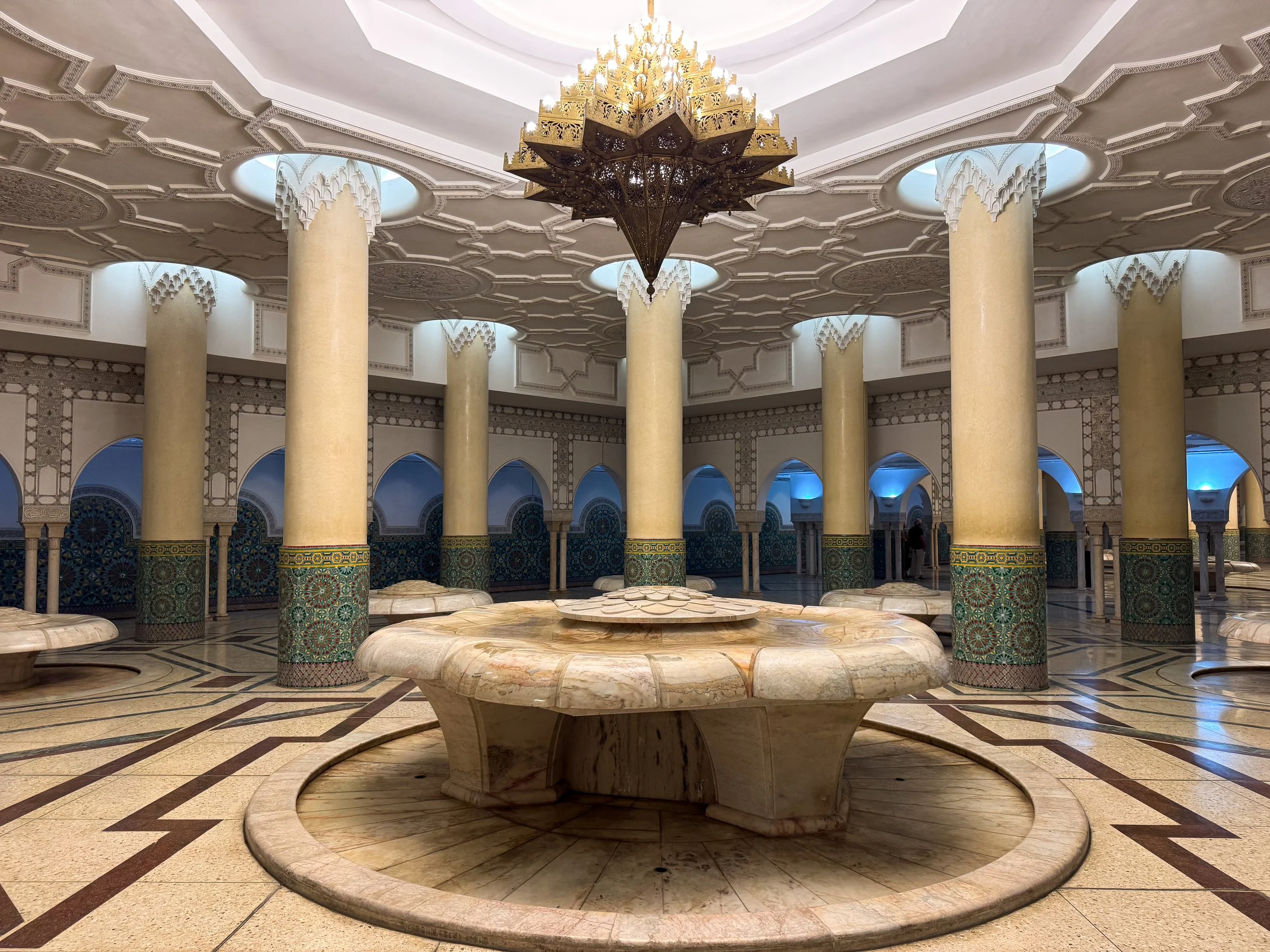
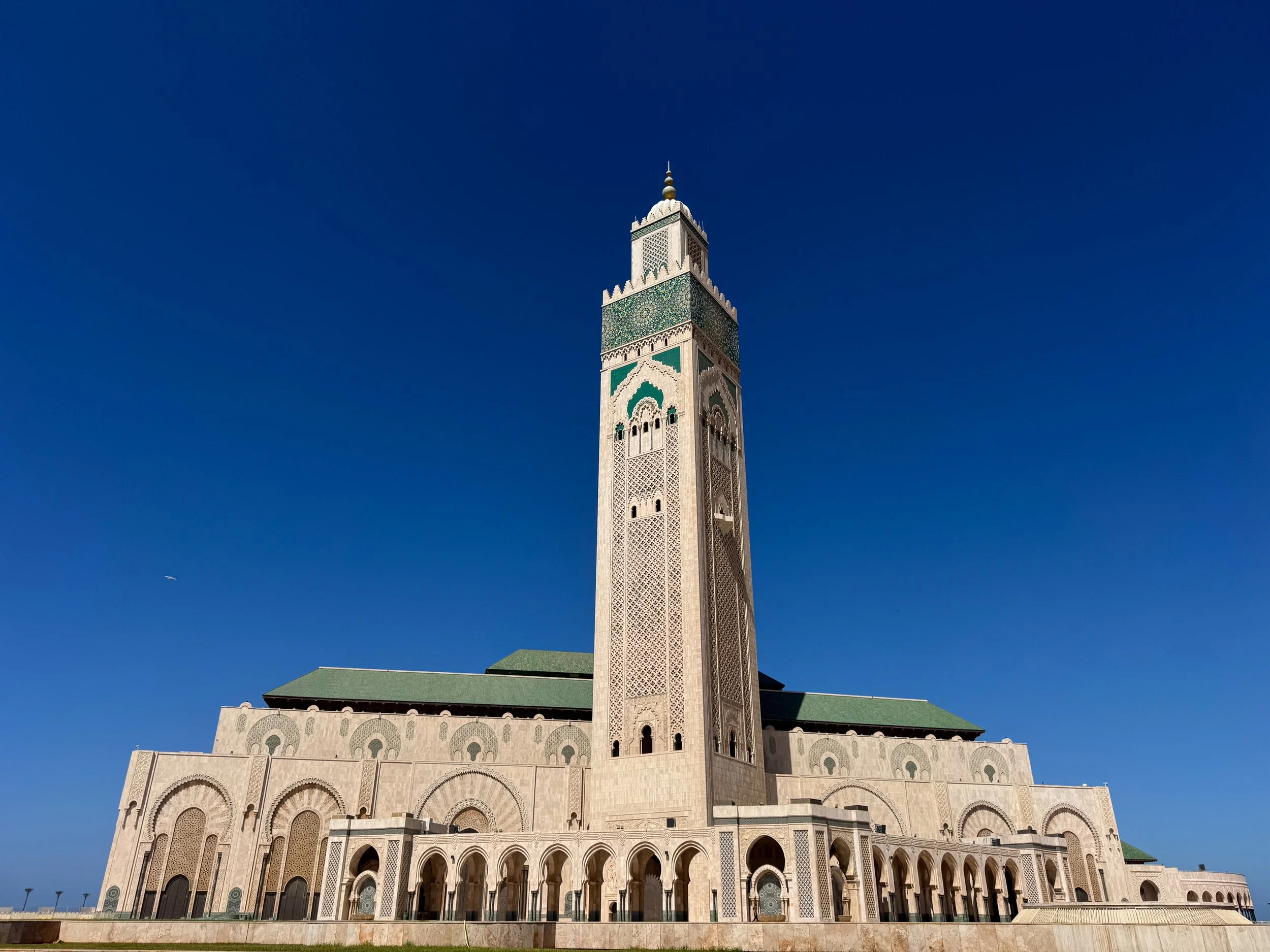
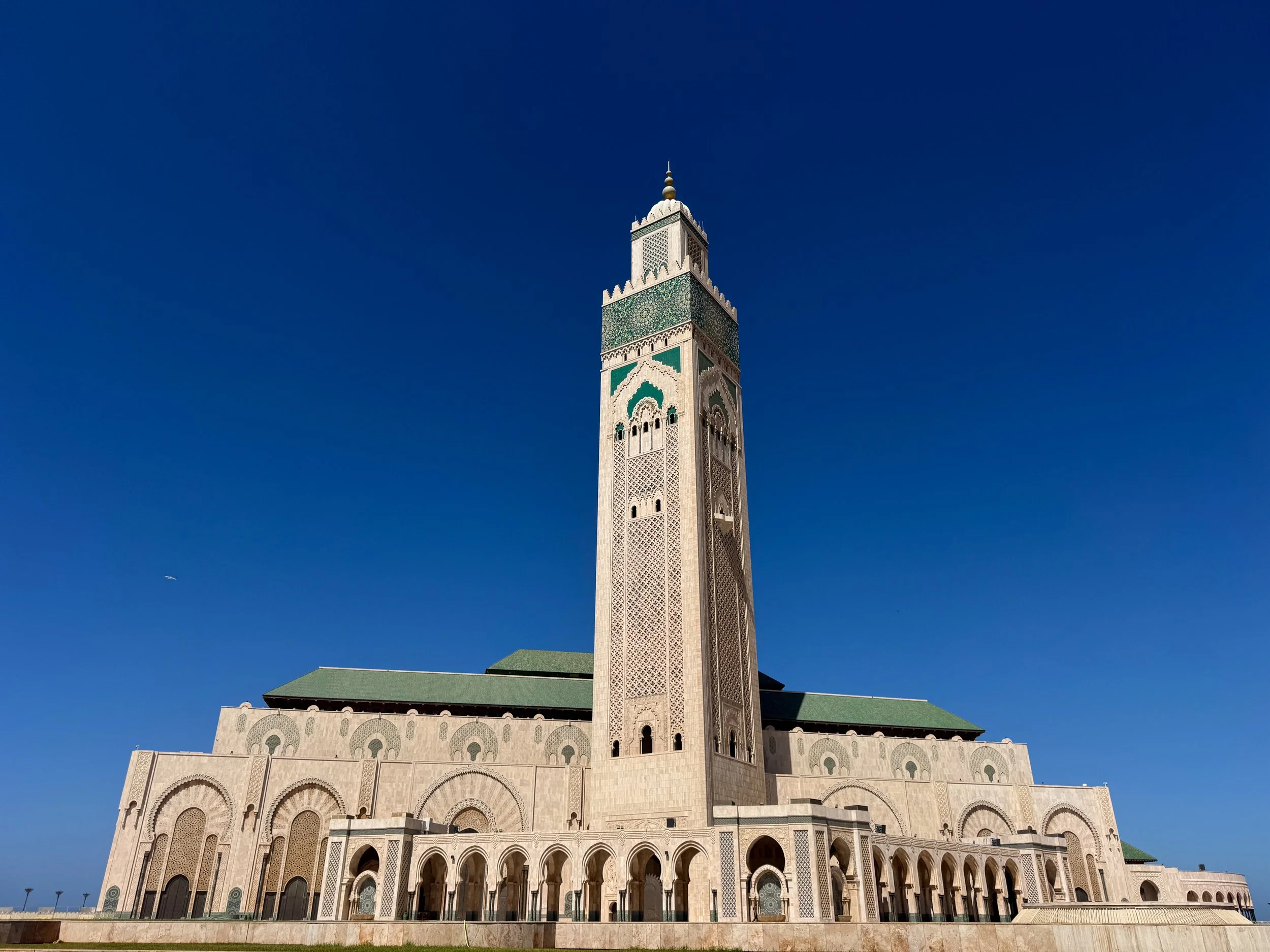
Hassan II Mosque. A grand seaside mosque with a towering minaret. It’s the largest mosque in Morocco and one of the largest in the world. The tan stone facade is adorned with Islamic ornamentation like Moorish arches, geometric patterns and blue-green mosaic tiles. The interior prayer hall is decorated with intricate plasterwork, hand carved wooden features and large chandeliers. A vast plaza leads up to the mosque and serves as an outdoor prayer hall. Arched corridors surround the minaret while large titanium doors lead inside to an underground ablution hall with dozens of lotus shaped marble fountains.
Good to Know. The plaza in front of the mosque is free to visit after 5pm. Paid tours of the interior happen on the hour several times daily.
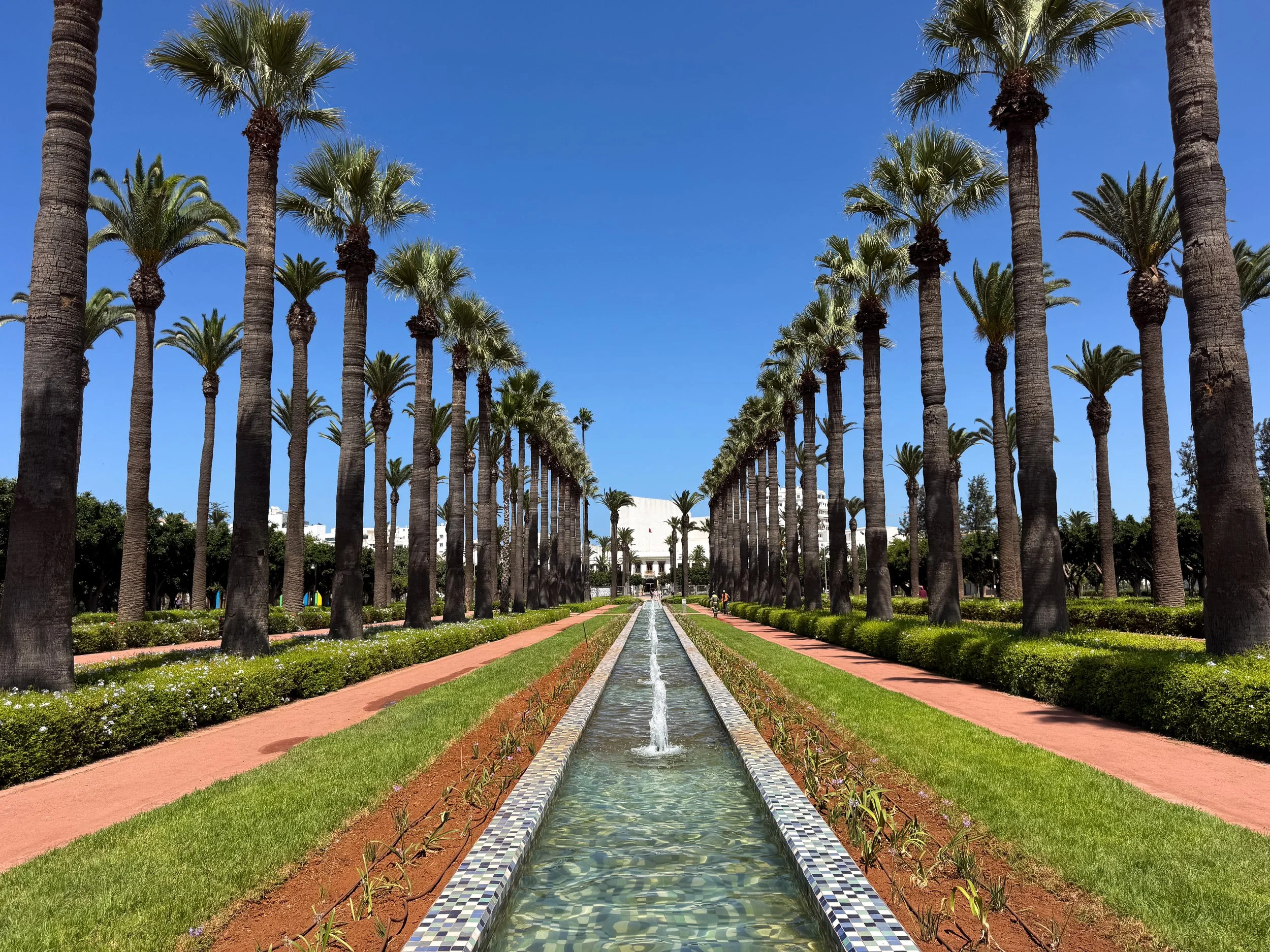
Ligue Arab Park. An immaculate city park with traditional Moroccan elements like symmetry, tiled fountains and native palms. Rows of towering palm trees line a fountain spanning the length of the park. Shaded walkways and grassy lawns flank its edges. Do as locals do and come here to picnic, read a book or enjoy company with friends.
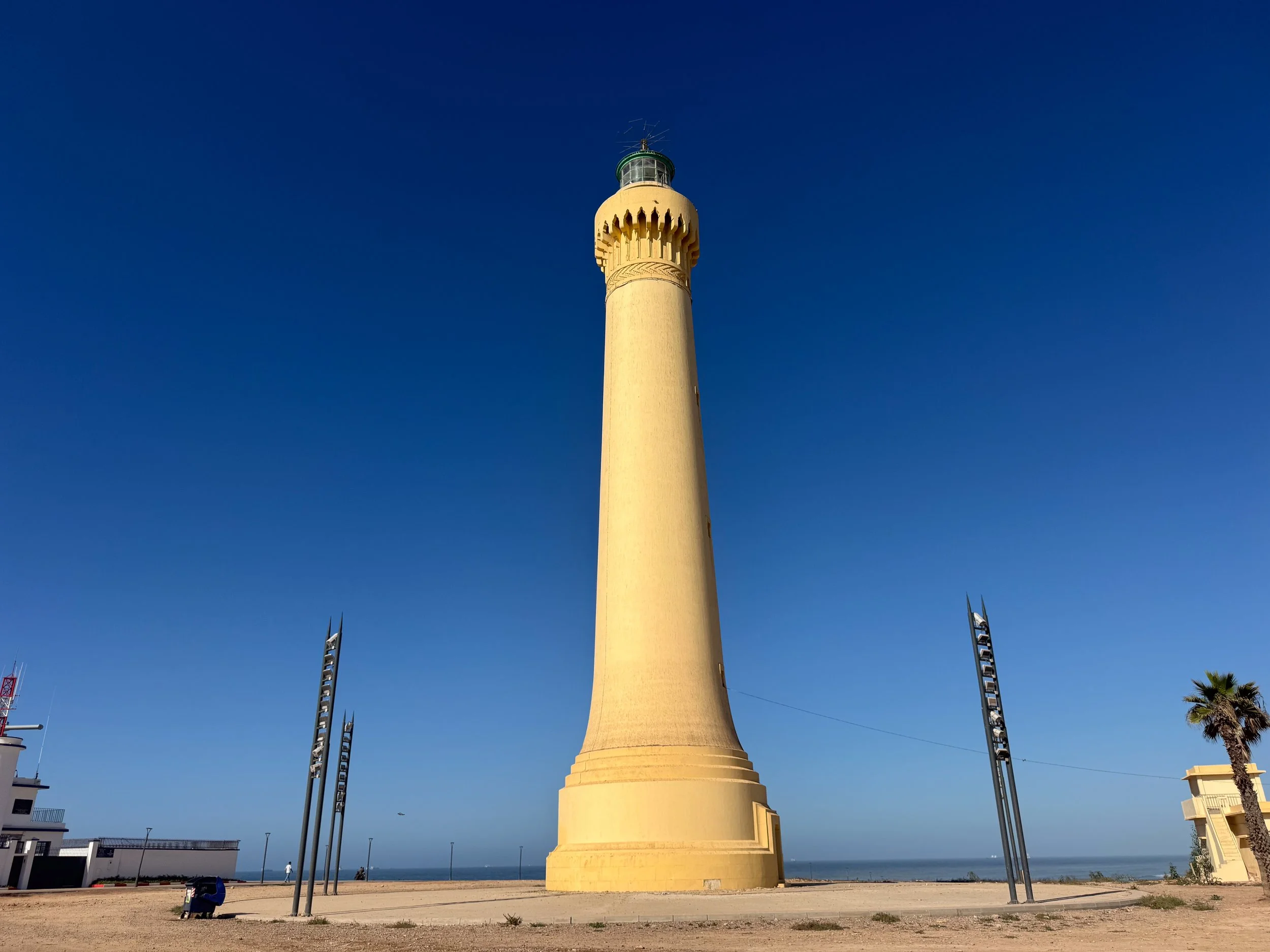
El Hank Lighthouse. A pale yellow lighthouse with an Arabesque crown overlooking the Atlantic Ocean. It’s a scenic spot to watch the waves and popular for sunset.
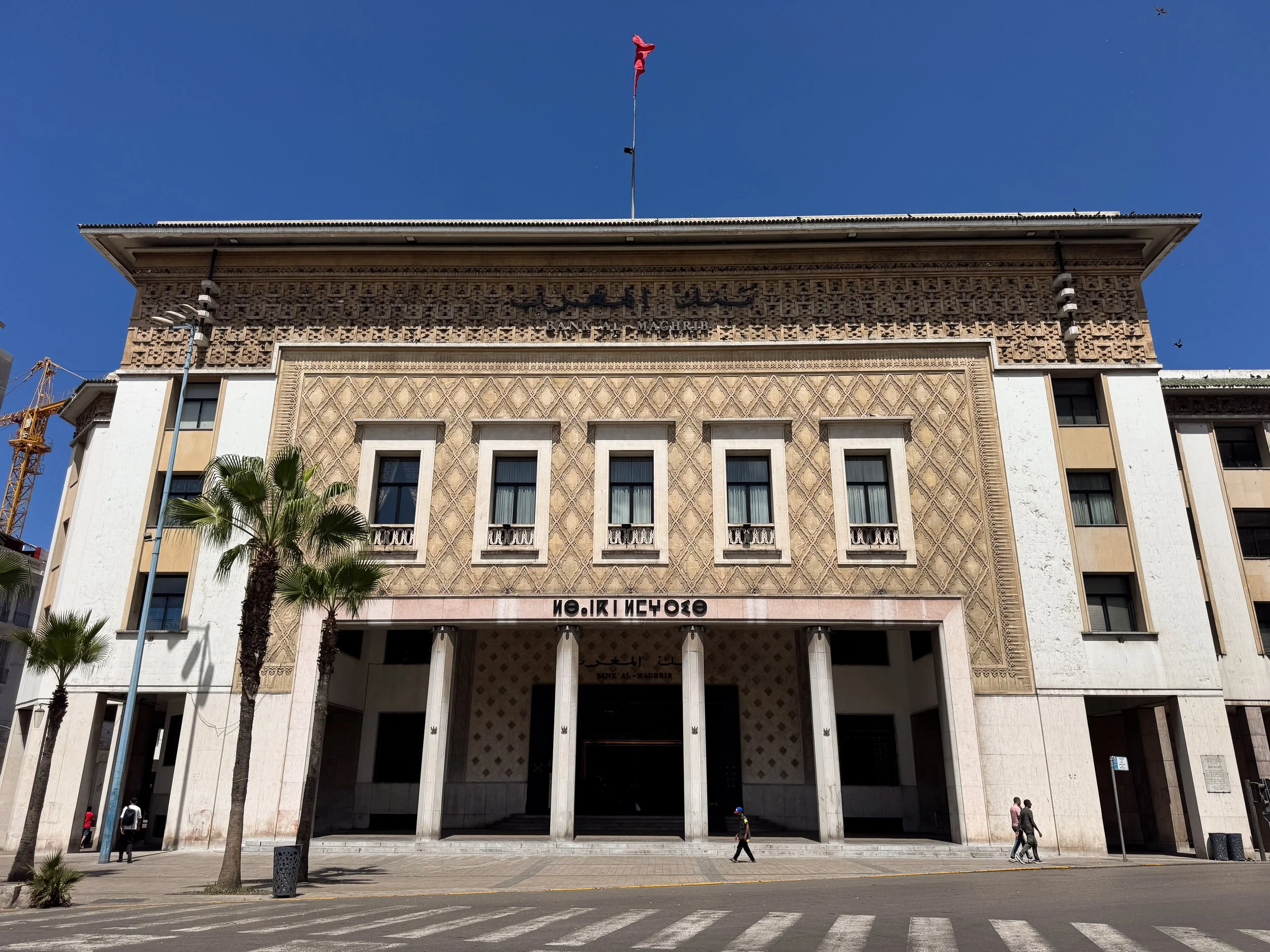
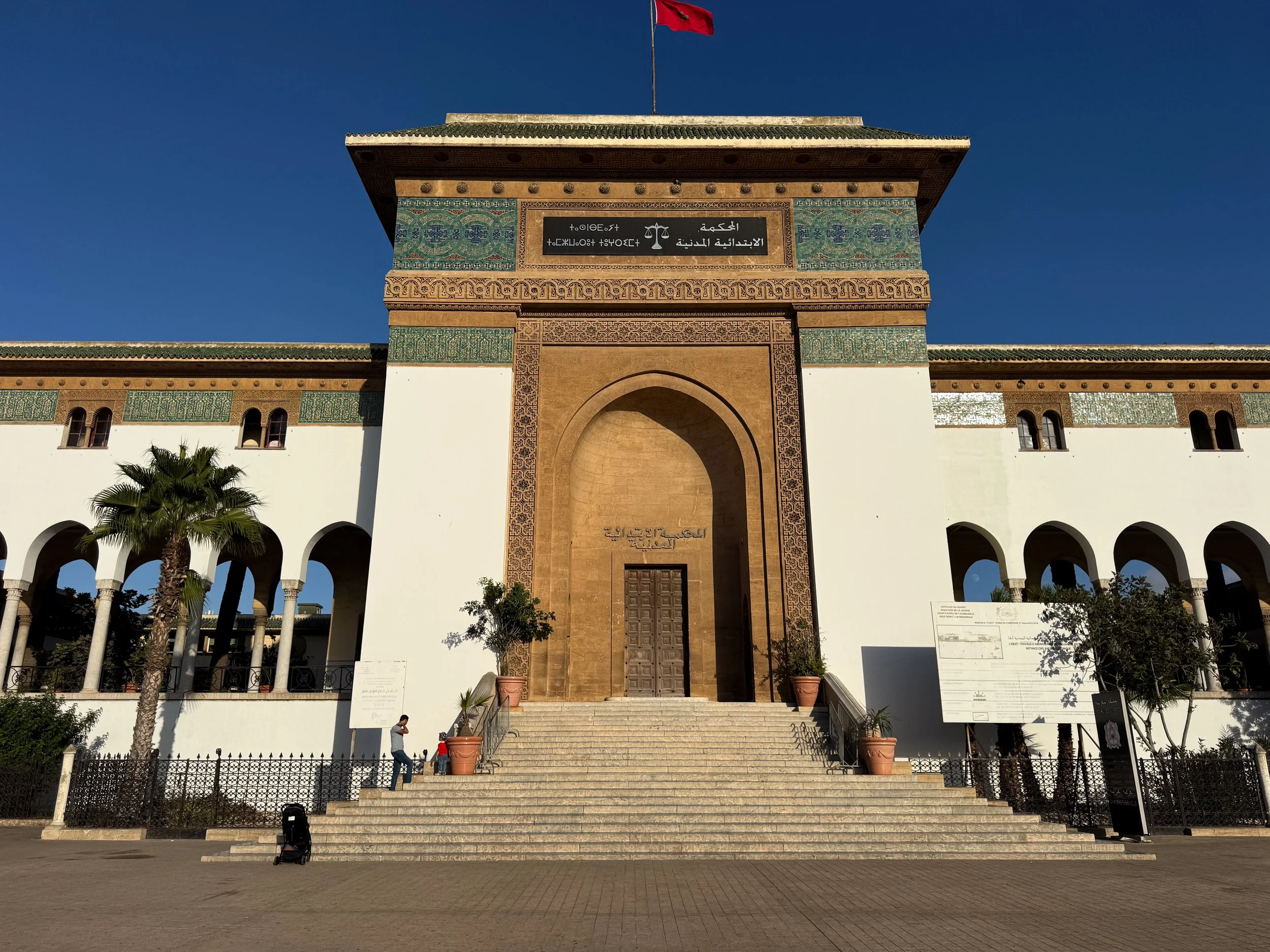
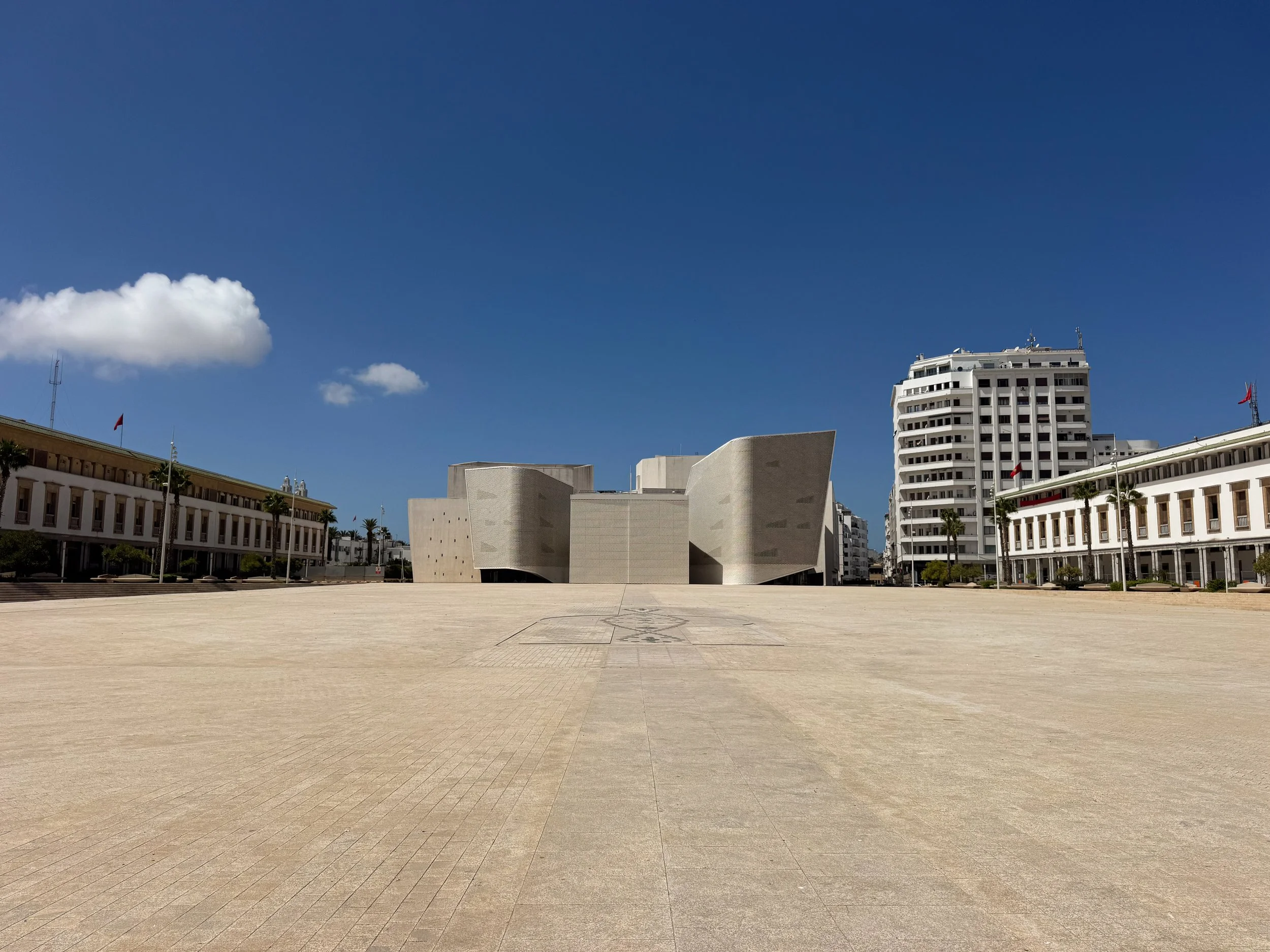
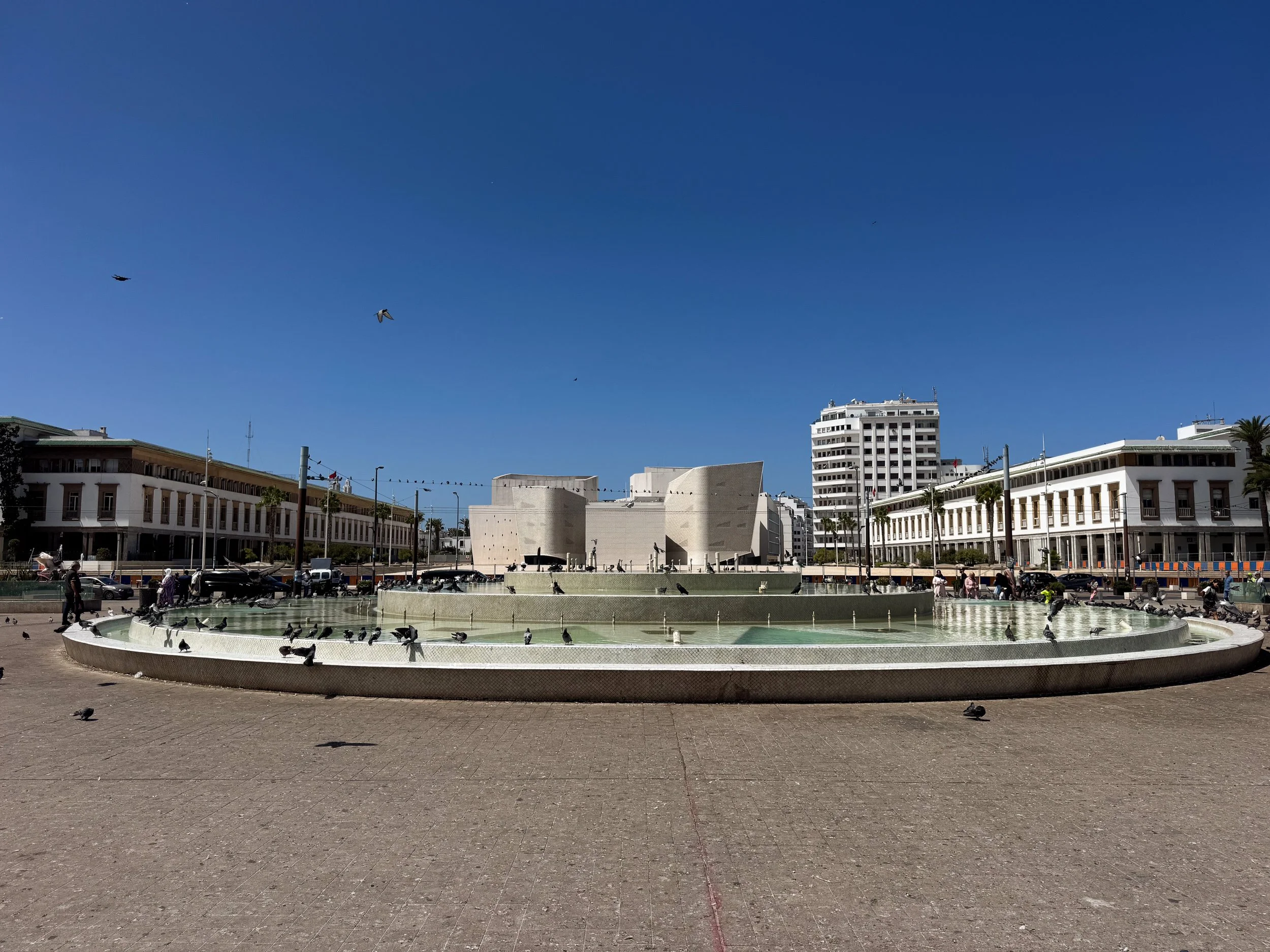
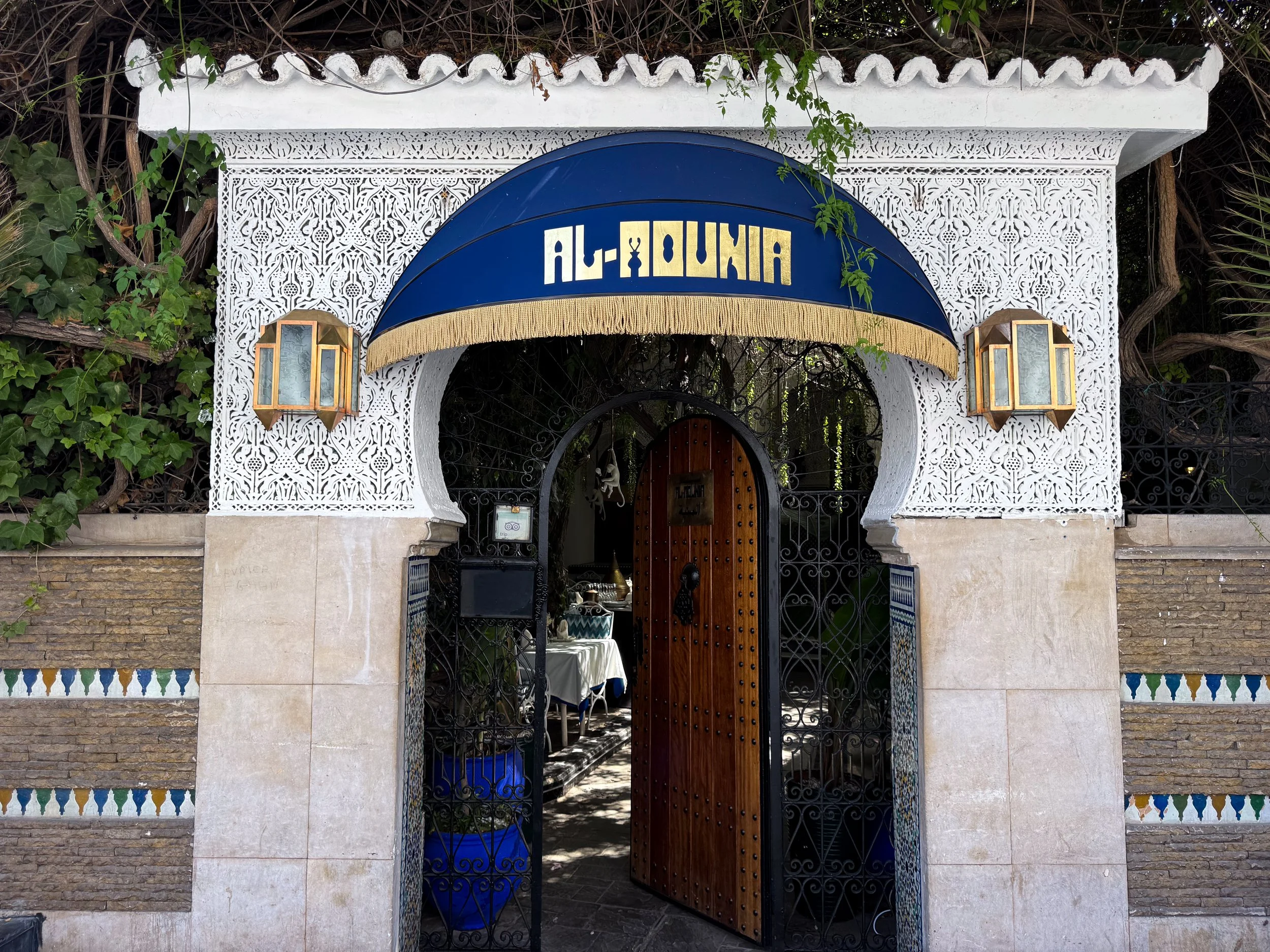
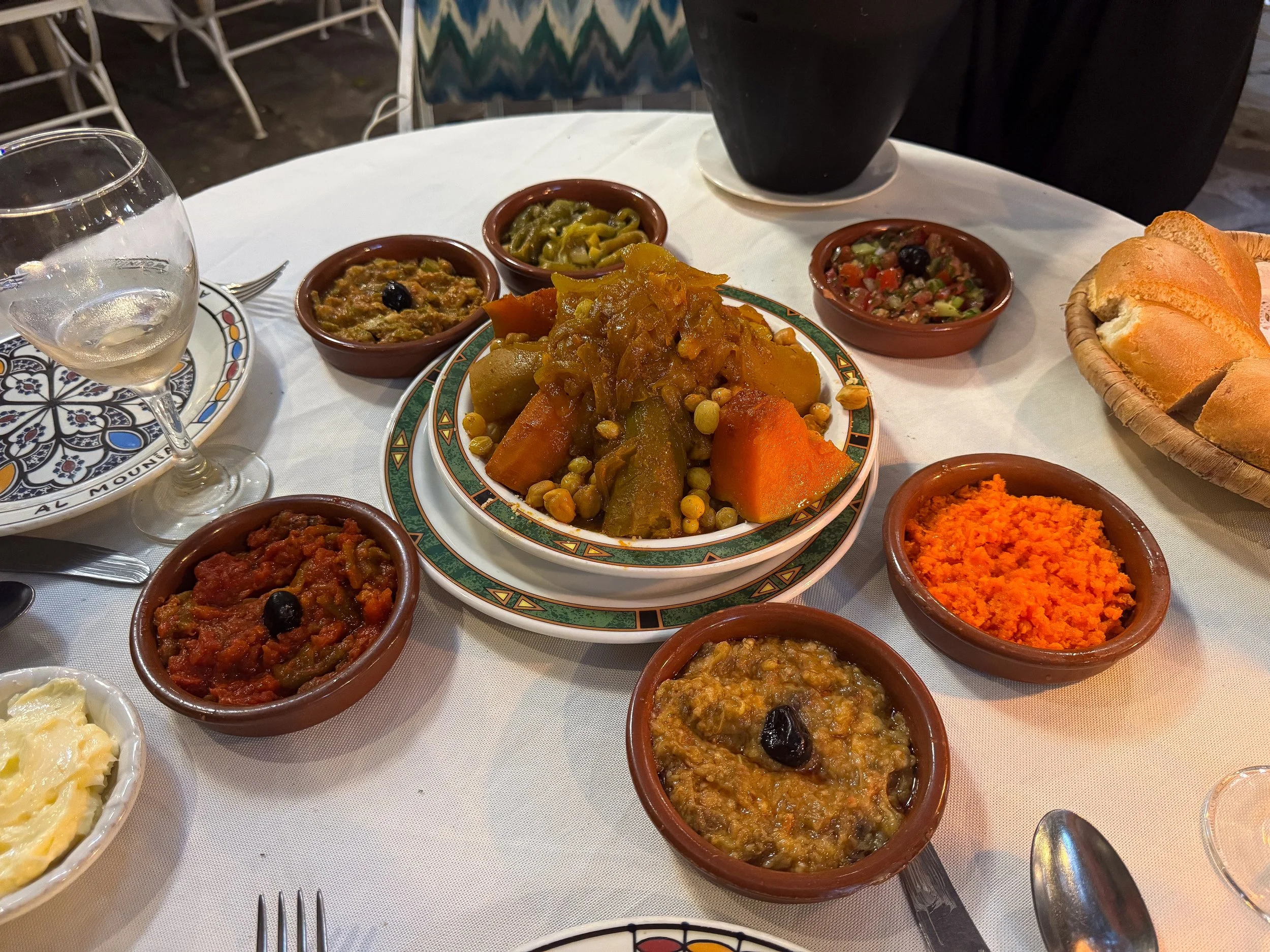
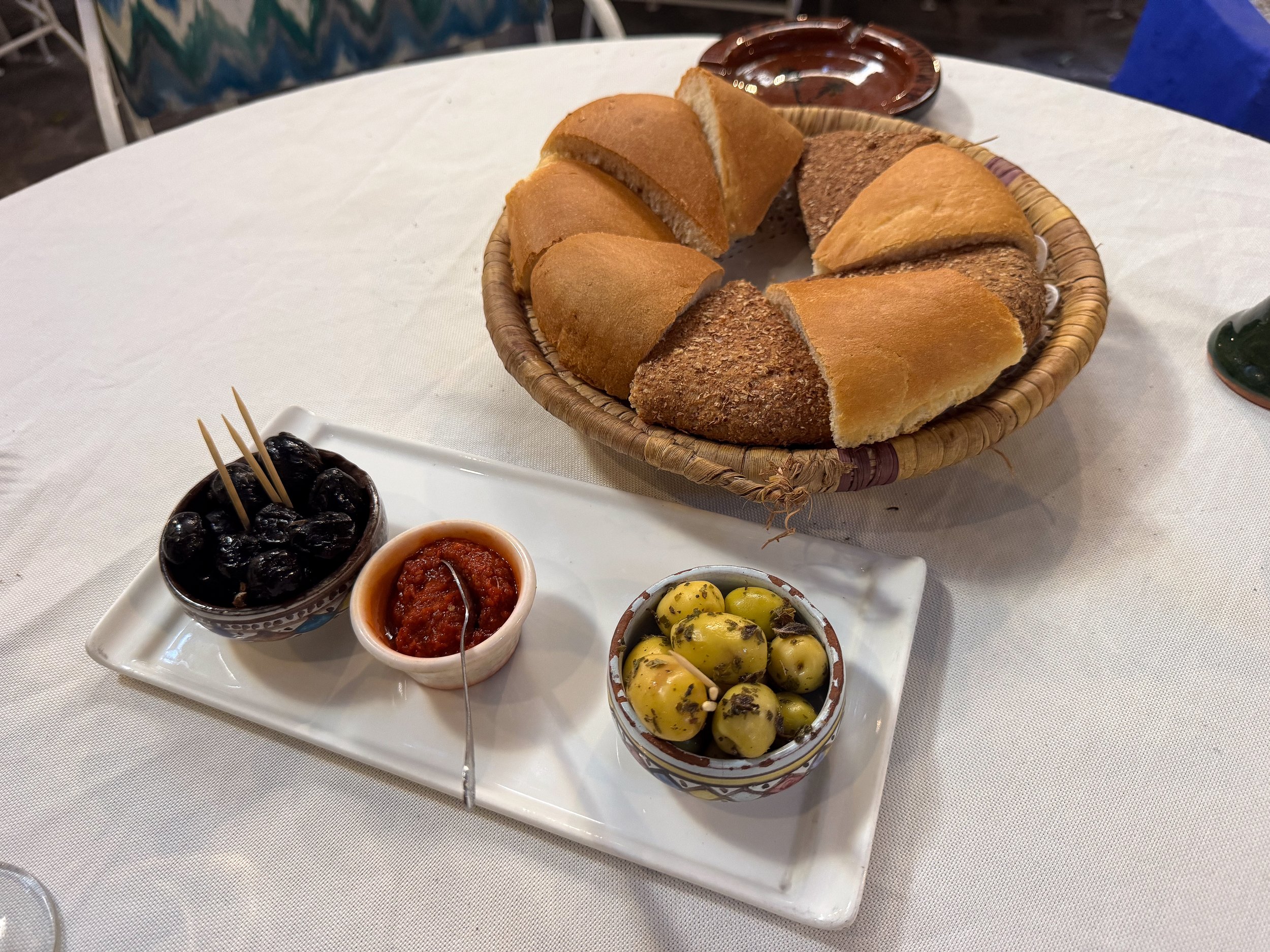
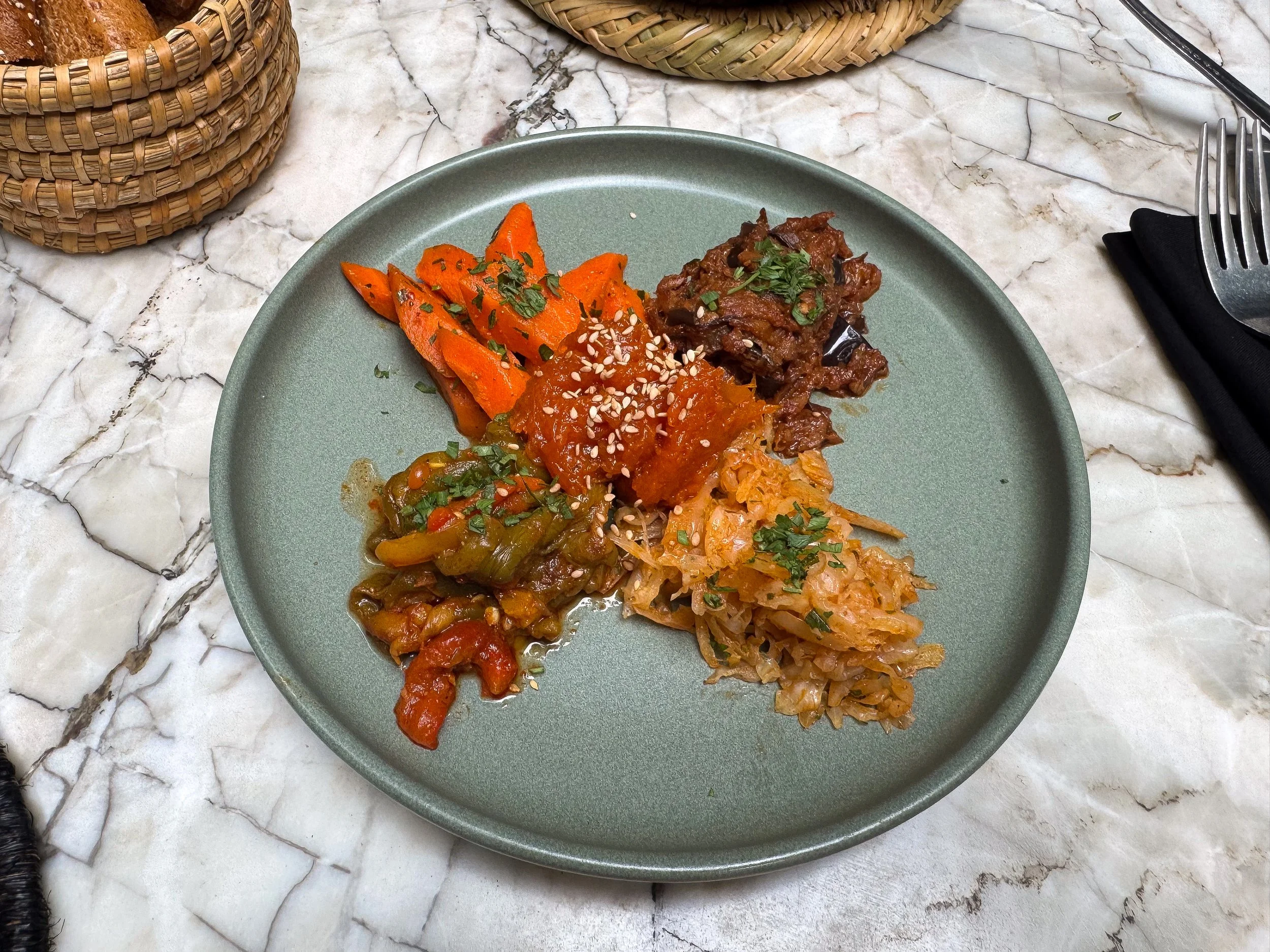
Mohammad V Square. A plaza surrounded by historic and stately government buildings with a large fountain at its center. Wander the square to appreciate the architecture and surrounding neighborhood before sitting down at Al-Mounia, a landmark restaurant serving traditional Moroccan cuisine. Dine in their garden patio or ornate dining room, feasting on couscous and vegetable spreads paired with khobz.
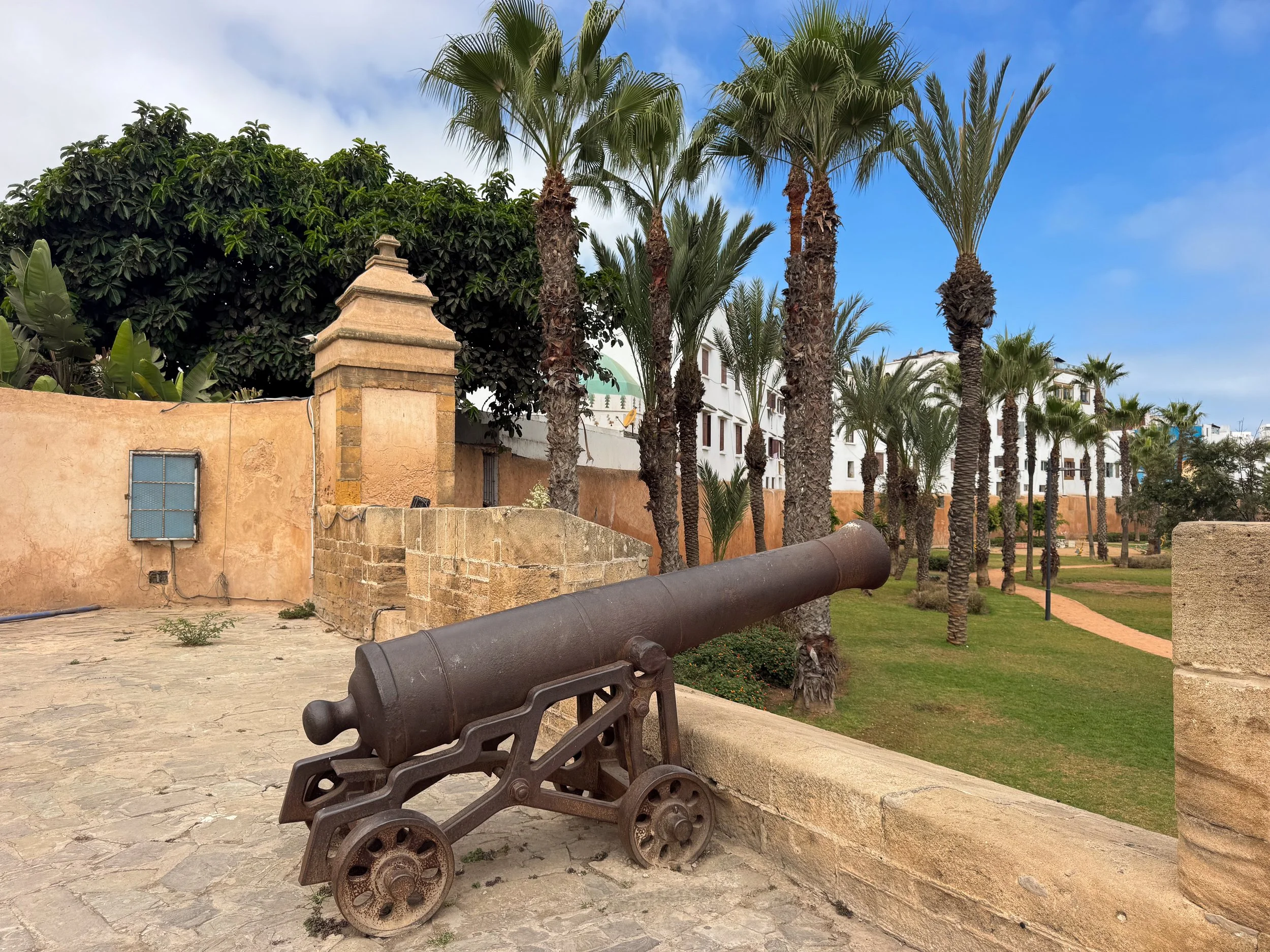
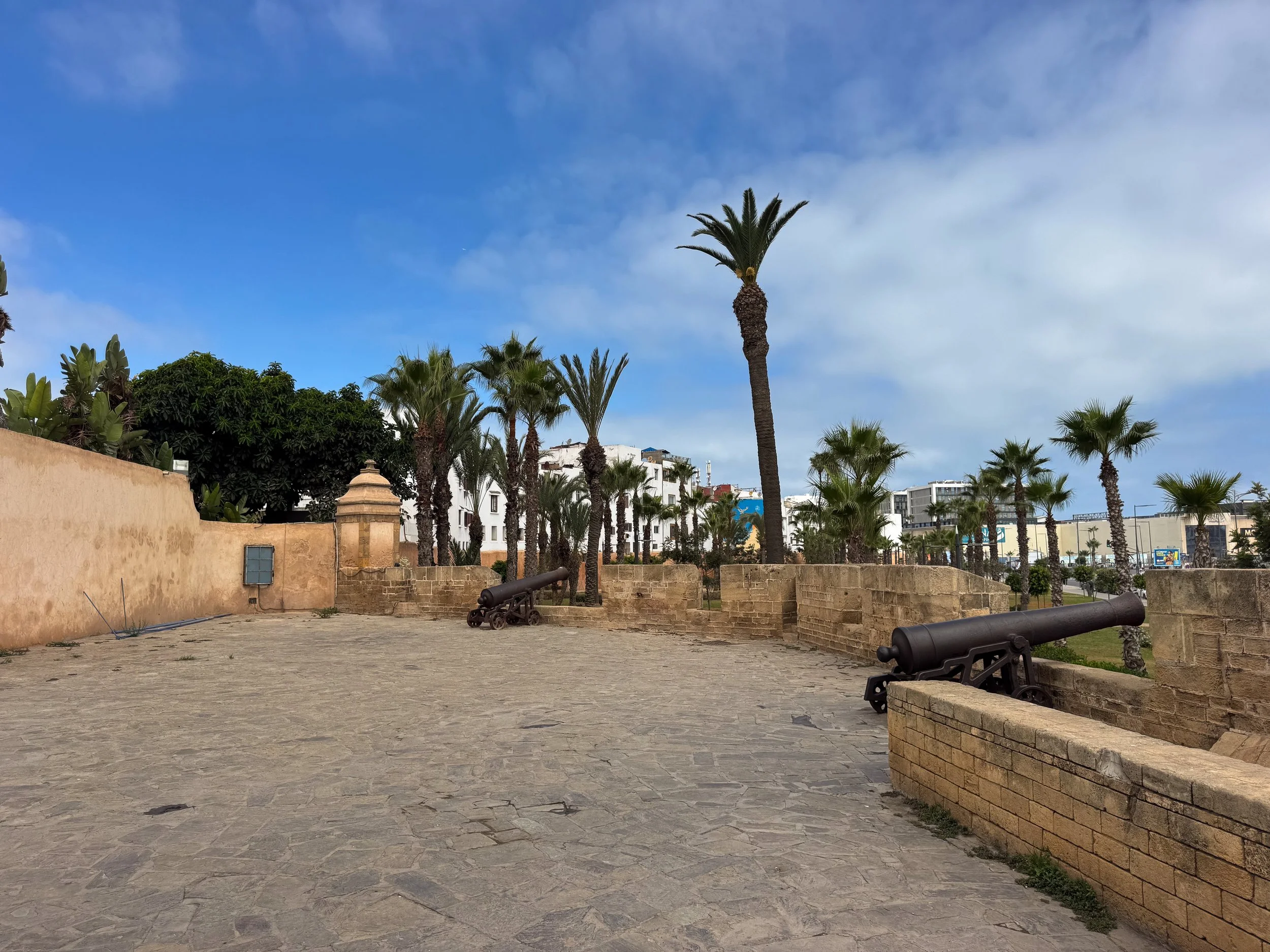
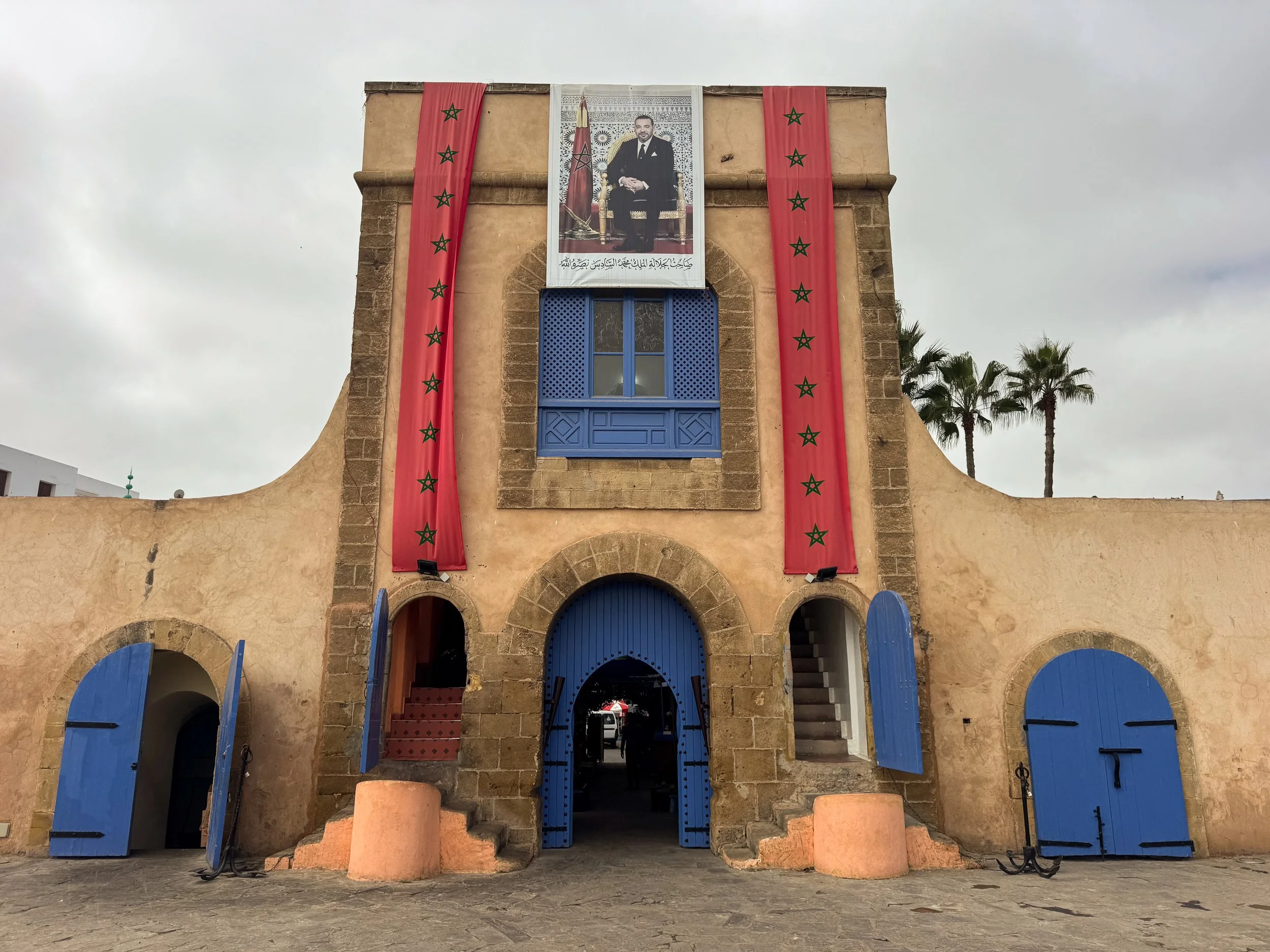
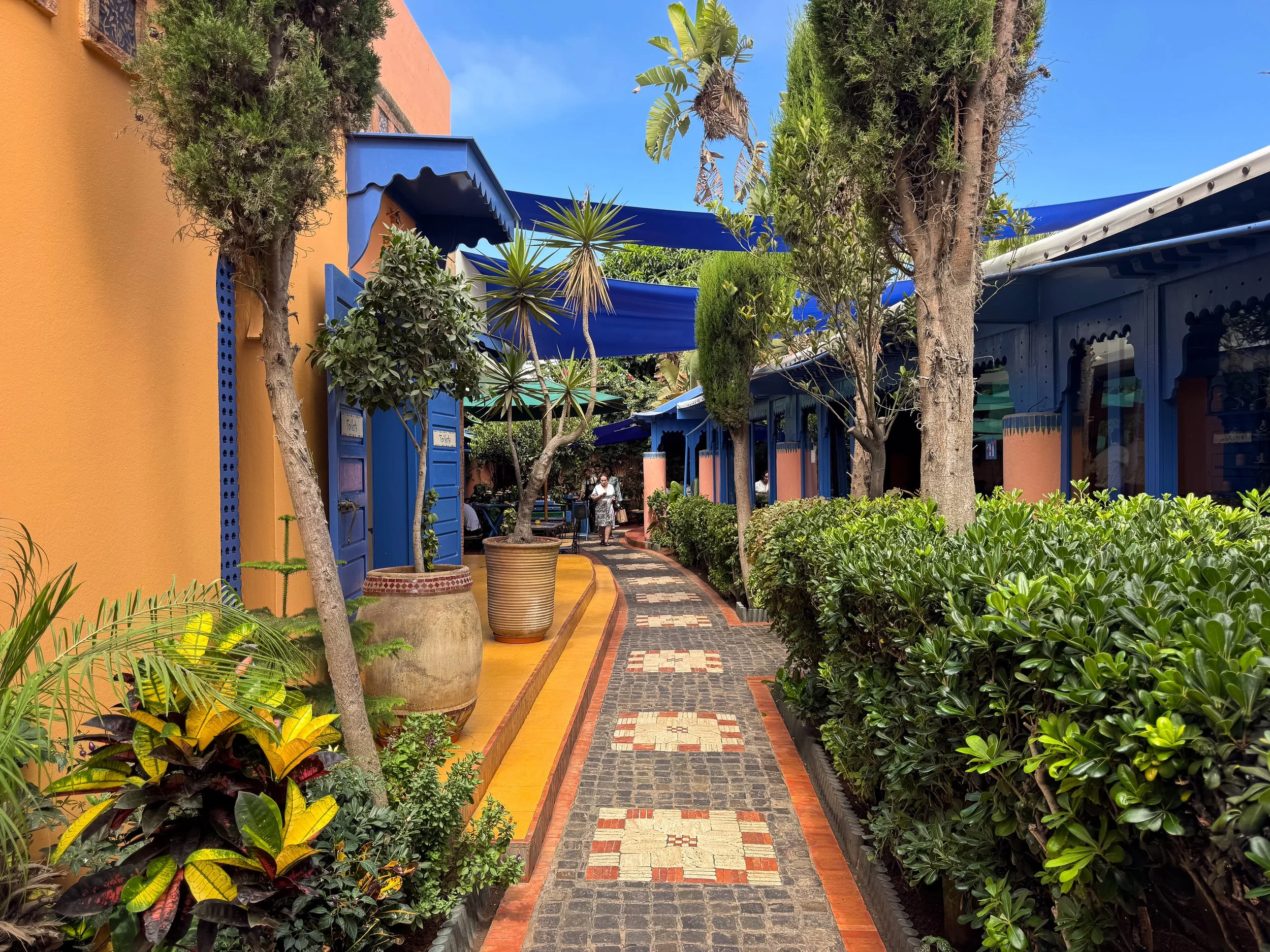
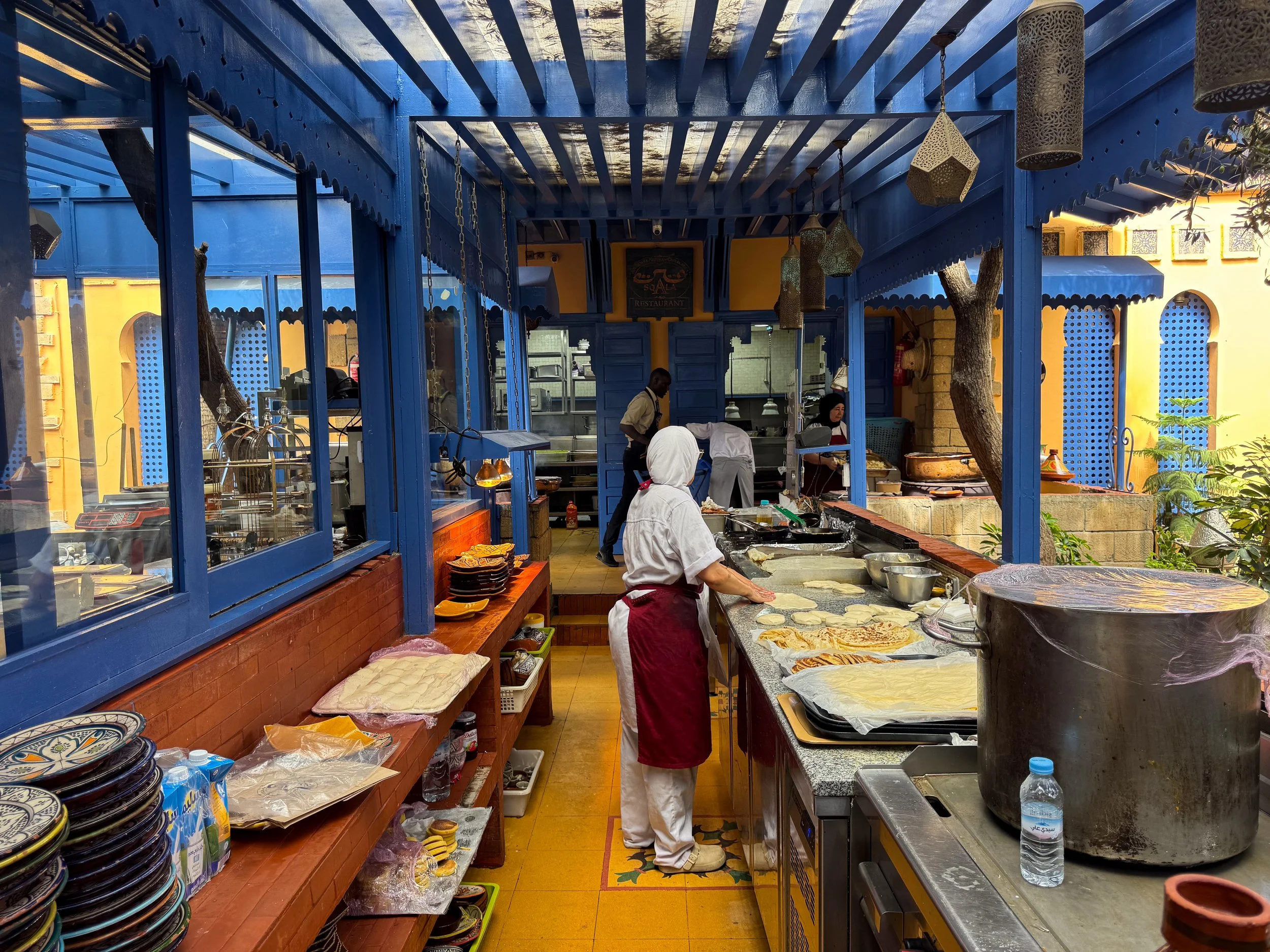
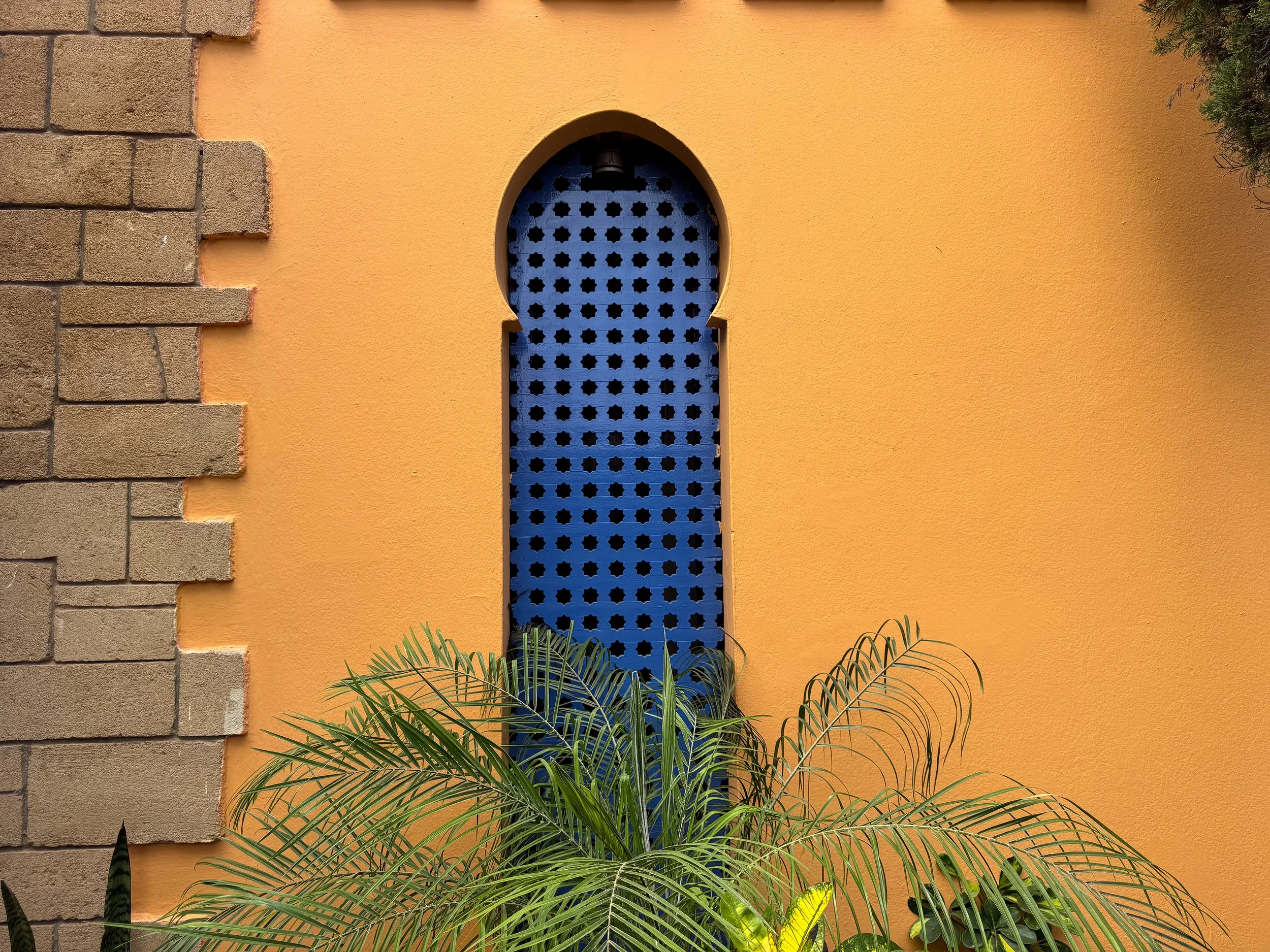
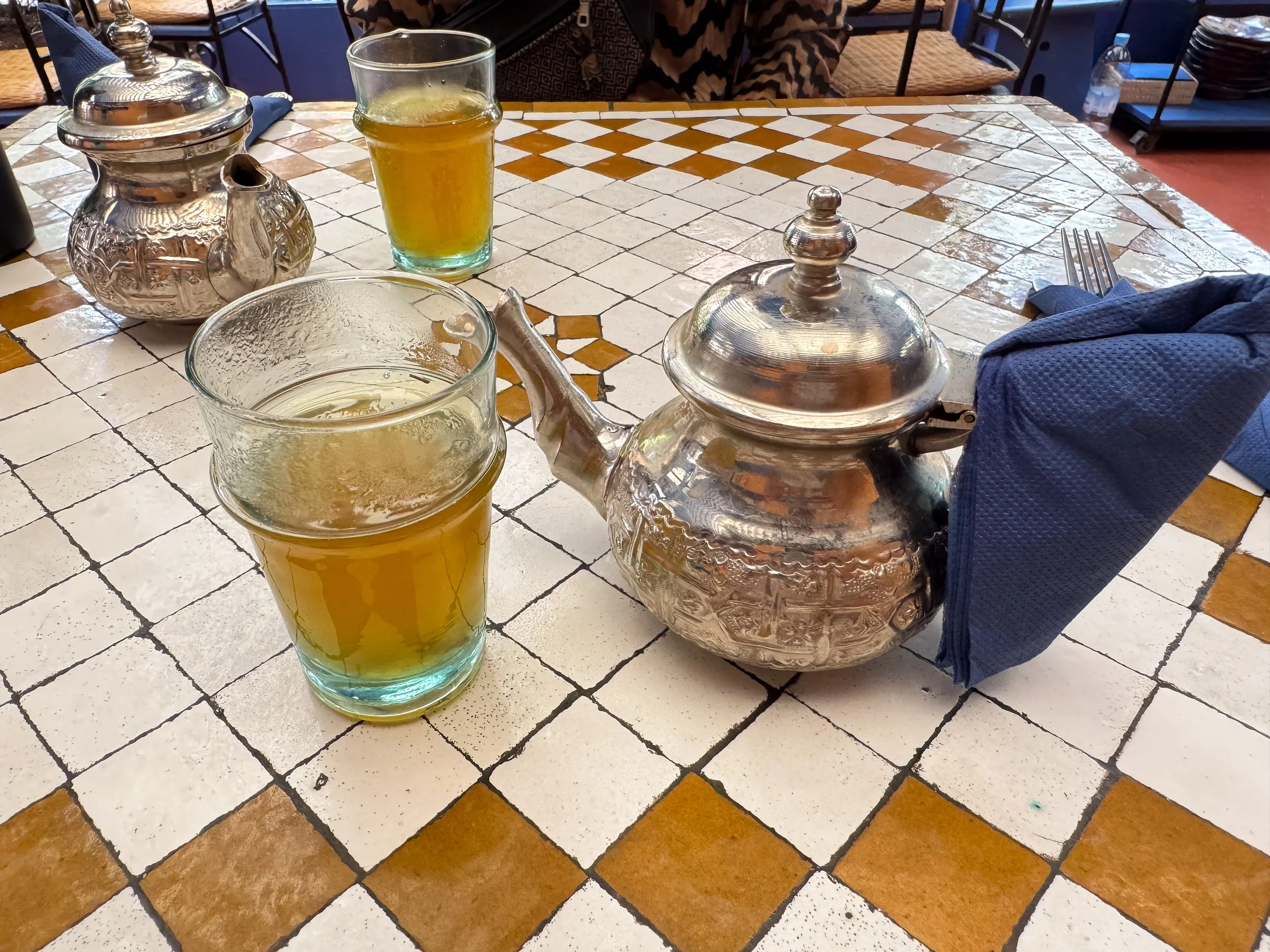
Old Portuguese Fort. A small colonial era fort with bronze cannons and stone turrets built along the wall of the medina. It serves as an entry point to the medina and hosts La Sqala, an atmospheric café and garden restaurant. Peach colored walls, blue painted shutters and Moroccan tiled tables accent the space as verdant plants grow throughout. Come here for afternoon tea, traditional baked goods and savory tagines.
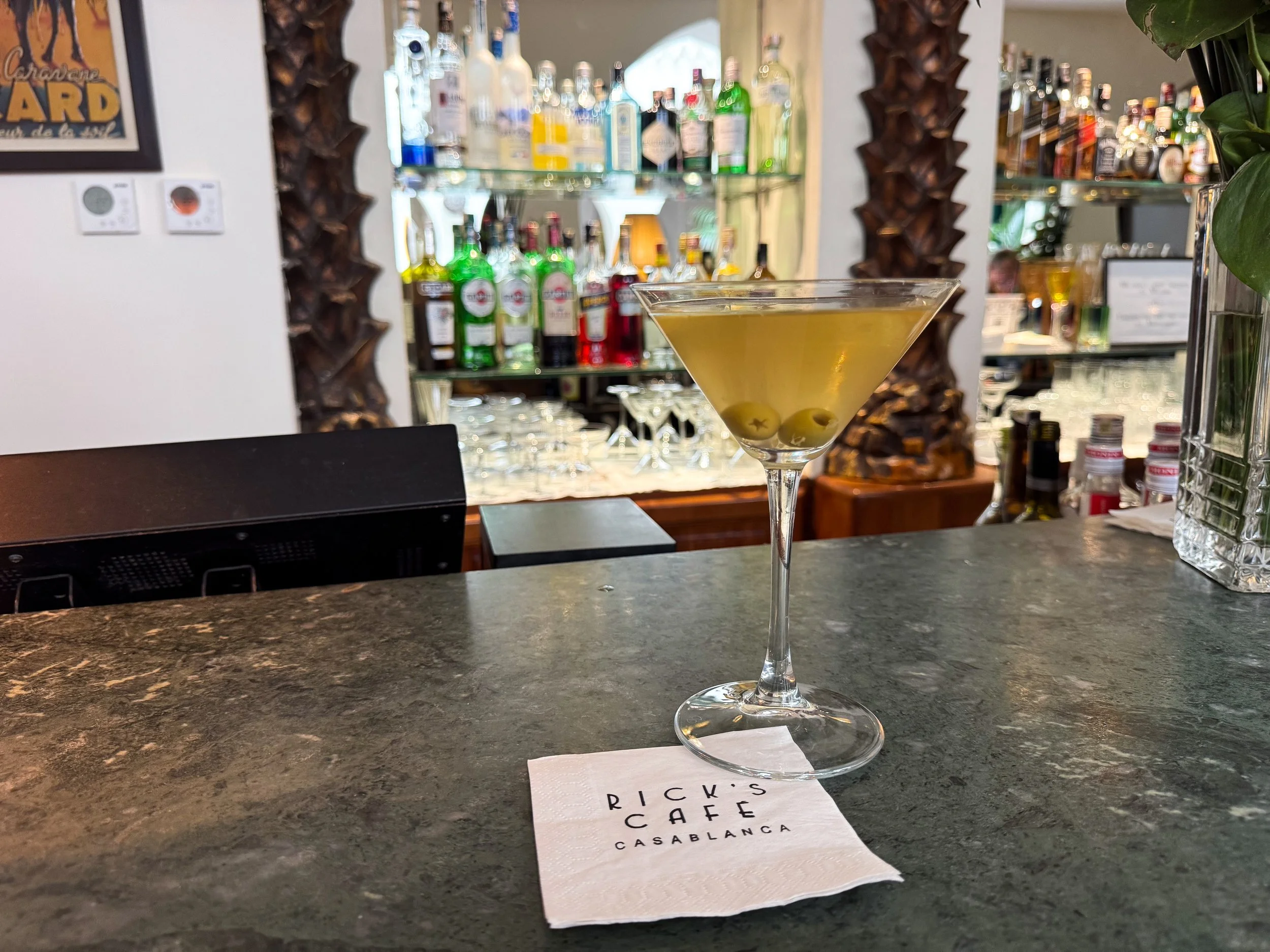
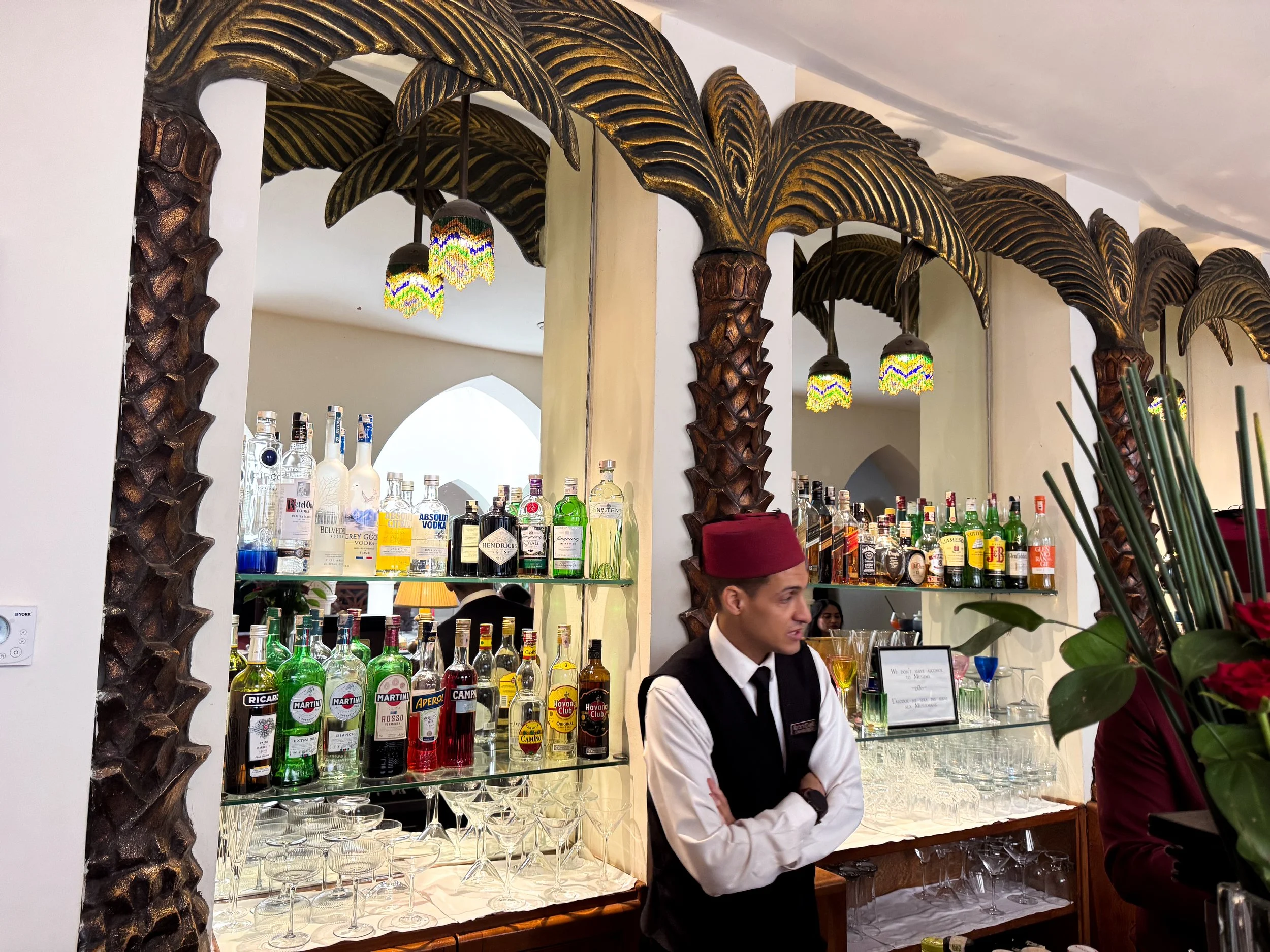
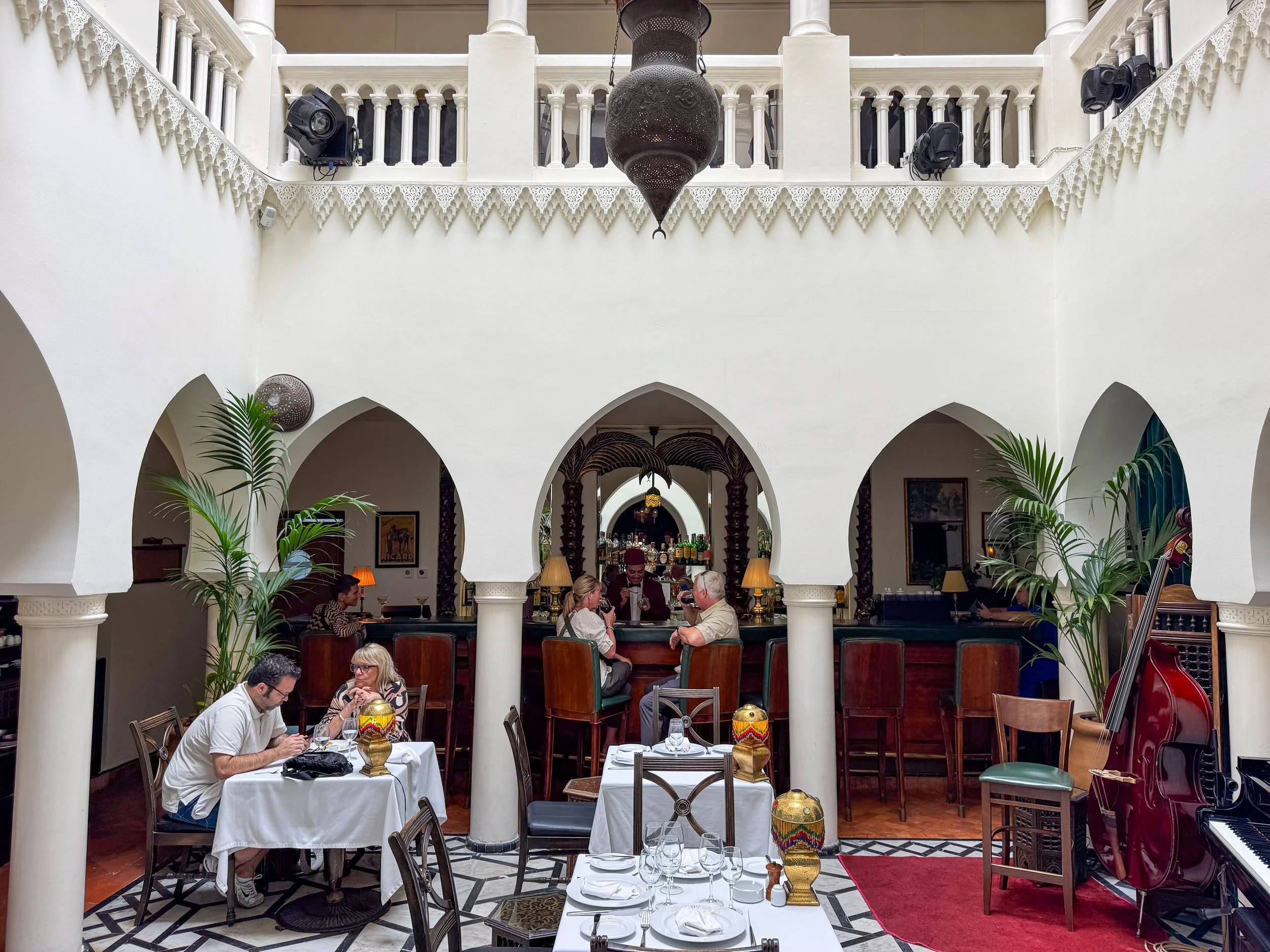
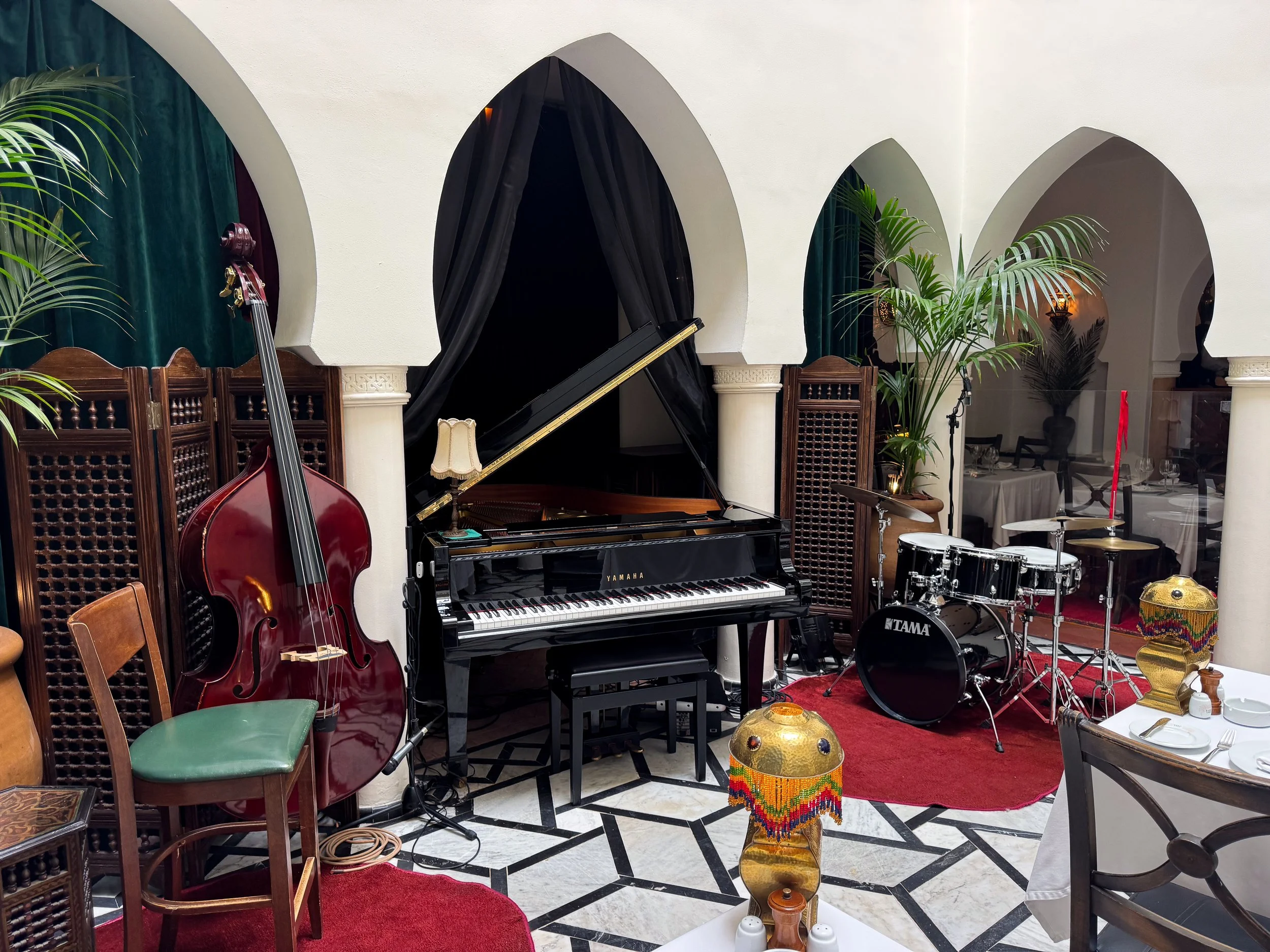
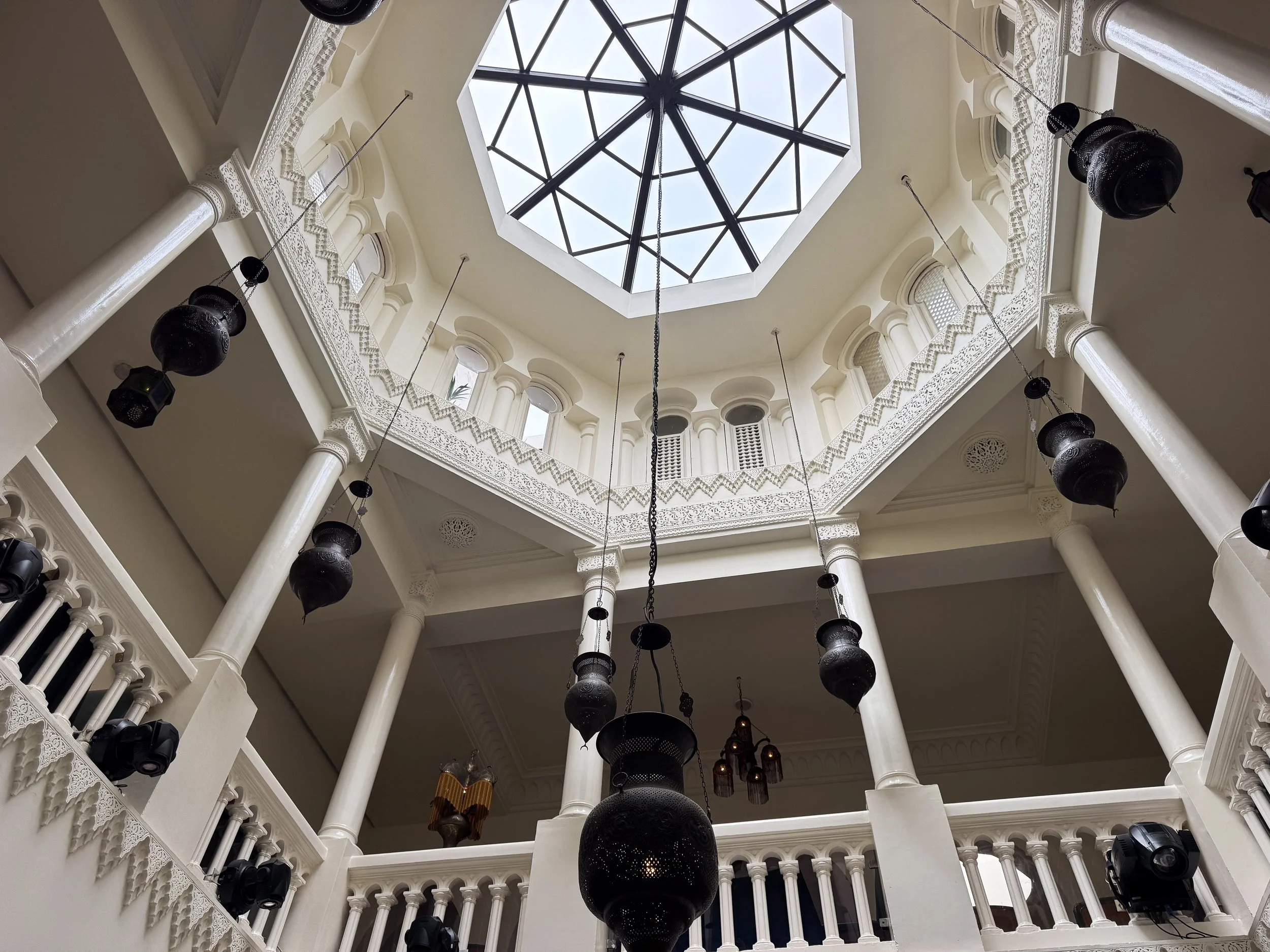
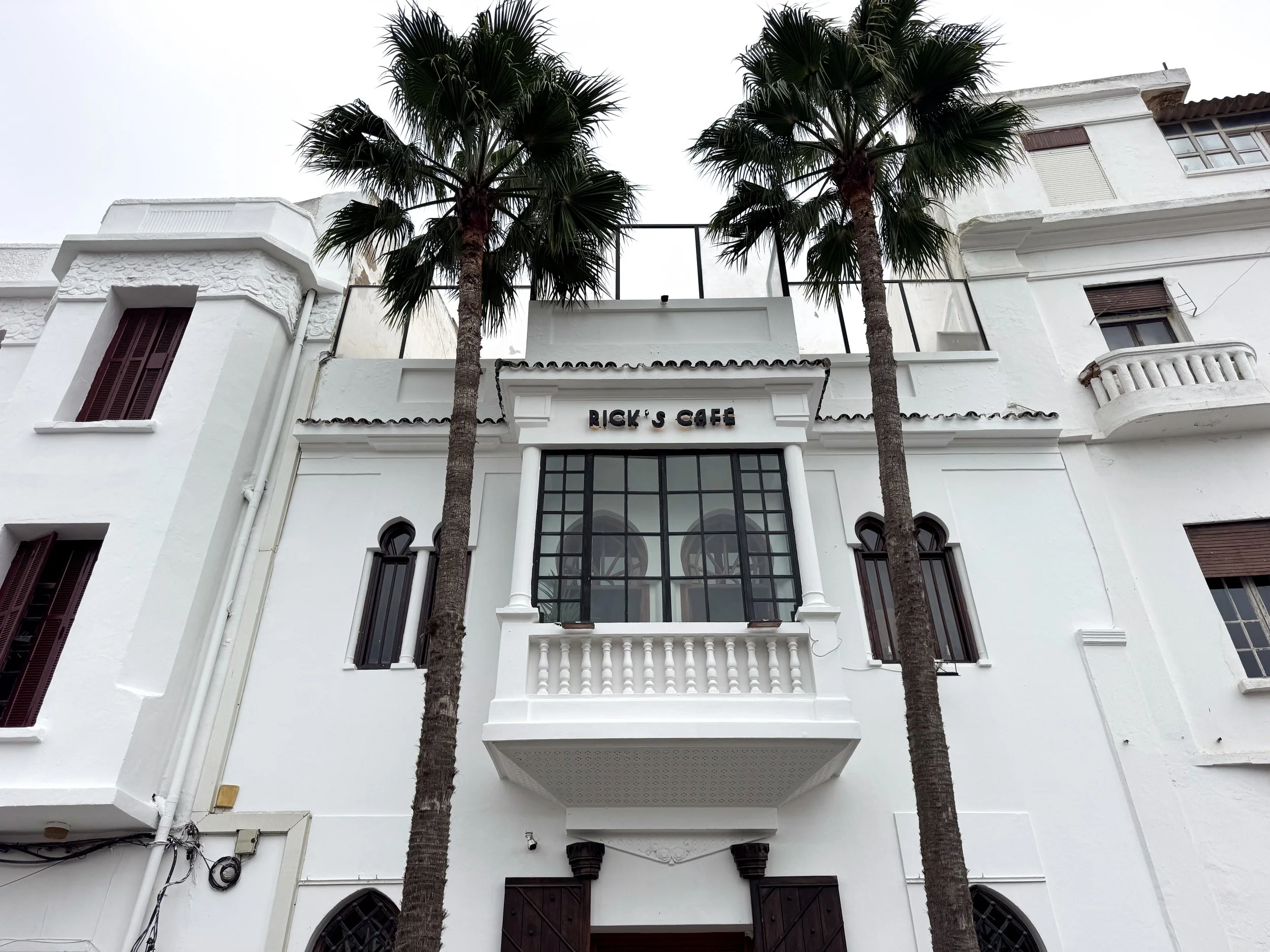
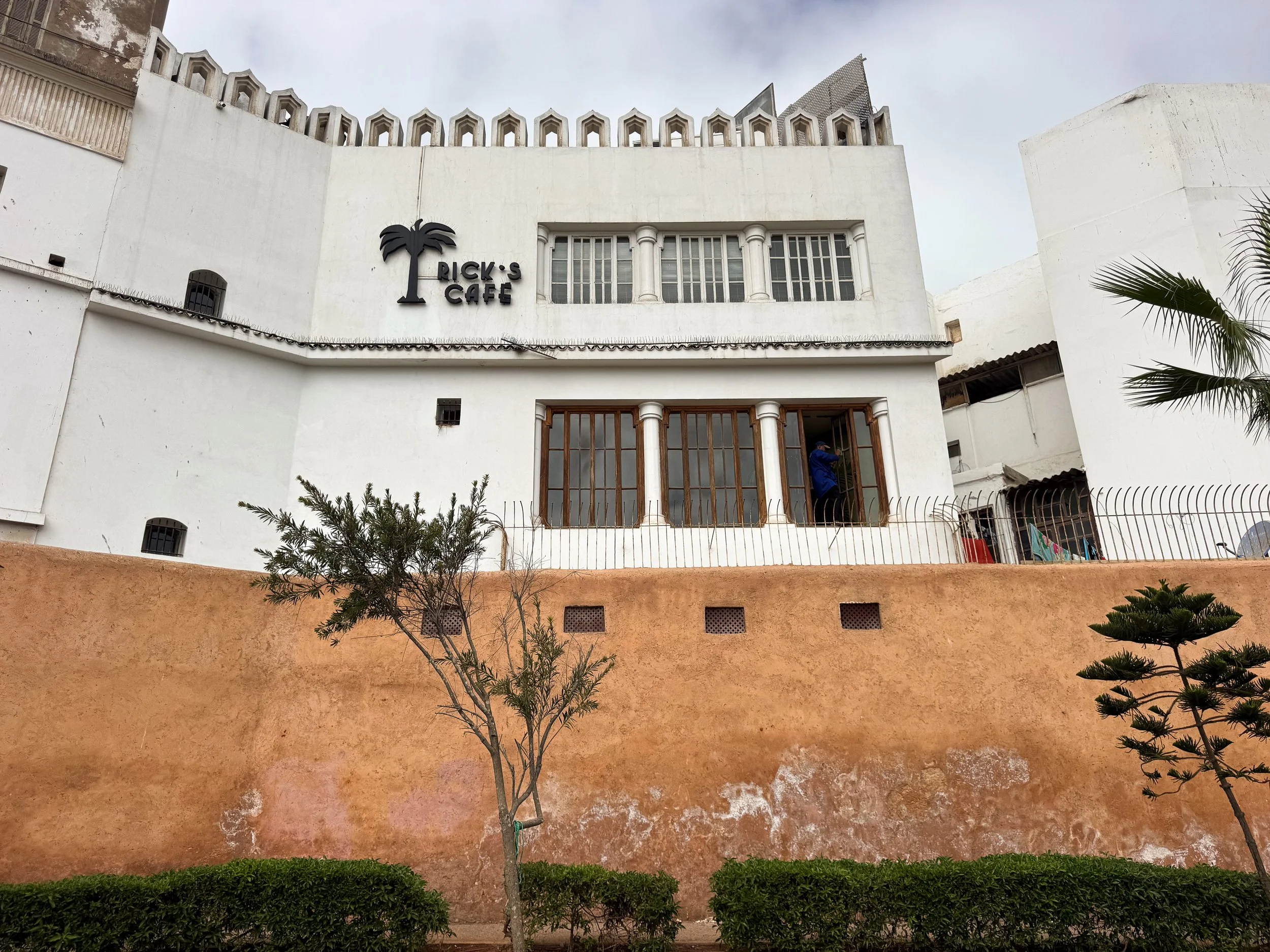
Rick's Café Américain. Of all the gin joints in the world, this one is likely the most famous. The elegant space is styled after Rick's Café Américain from the 1942 film, Casablanca. Without reservations, we sat at the bar sipping on gin martinis and negronis. Call ahead to make dinner reservations and stay for the live jazz performances.
Shop the Local Markets
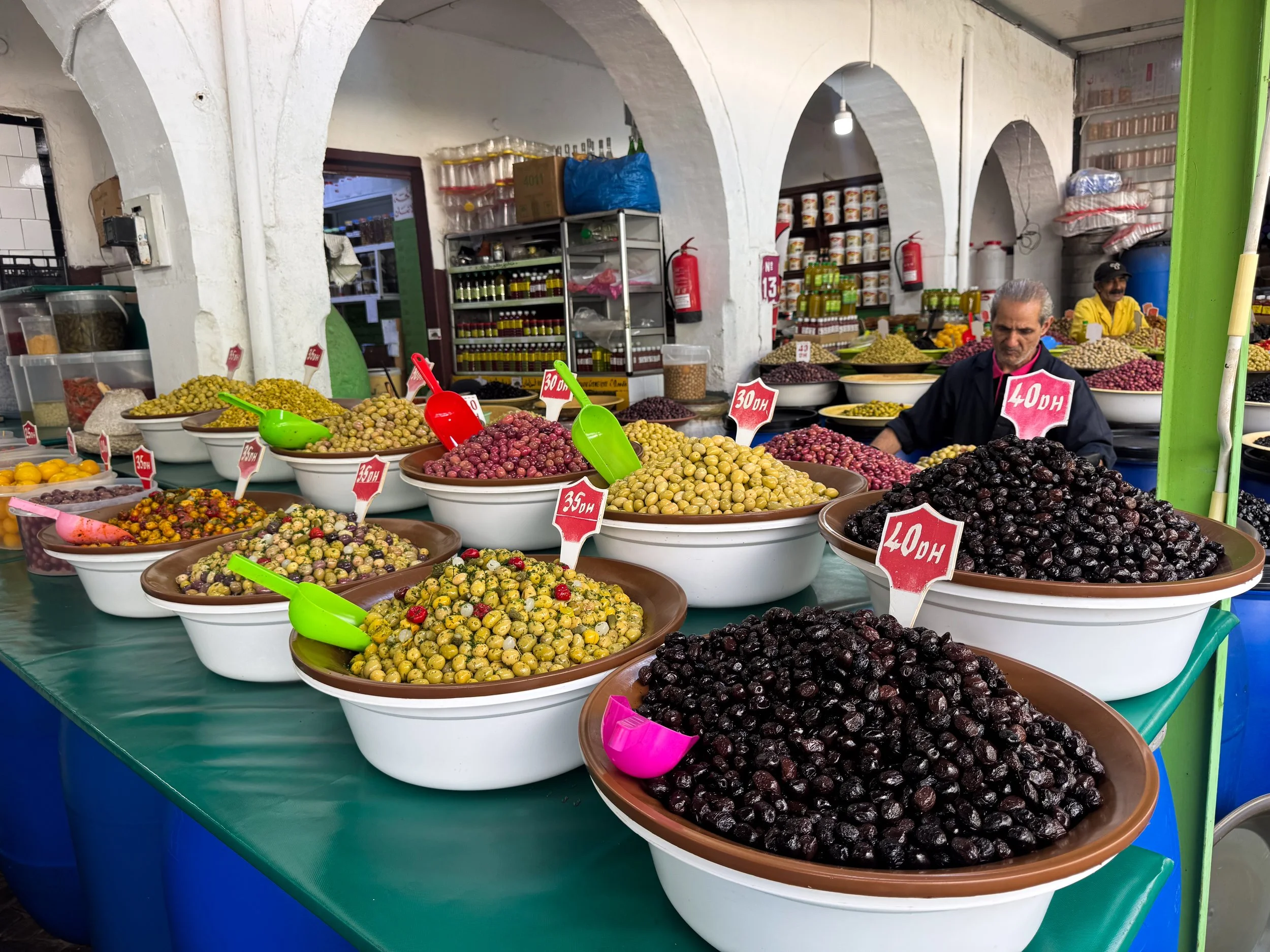
The Great Habous Olive Market. A historic market in the Habous Quarter dedicated solely to the sale of olives and olive oils. Terracotta trays with colorful mounds of olives are displayed on tables throughout the plaza. The tangy smell of brine wafts through the air as welcoming vendors offer free samples. We purchased a half kilo of mixed olives spiced with harissa and a bottle of the purest tasting olive oil.
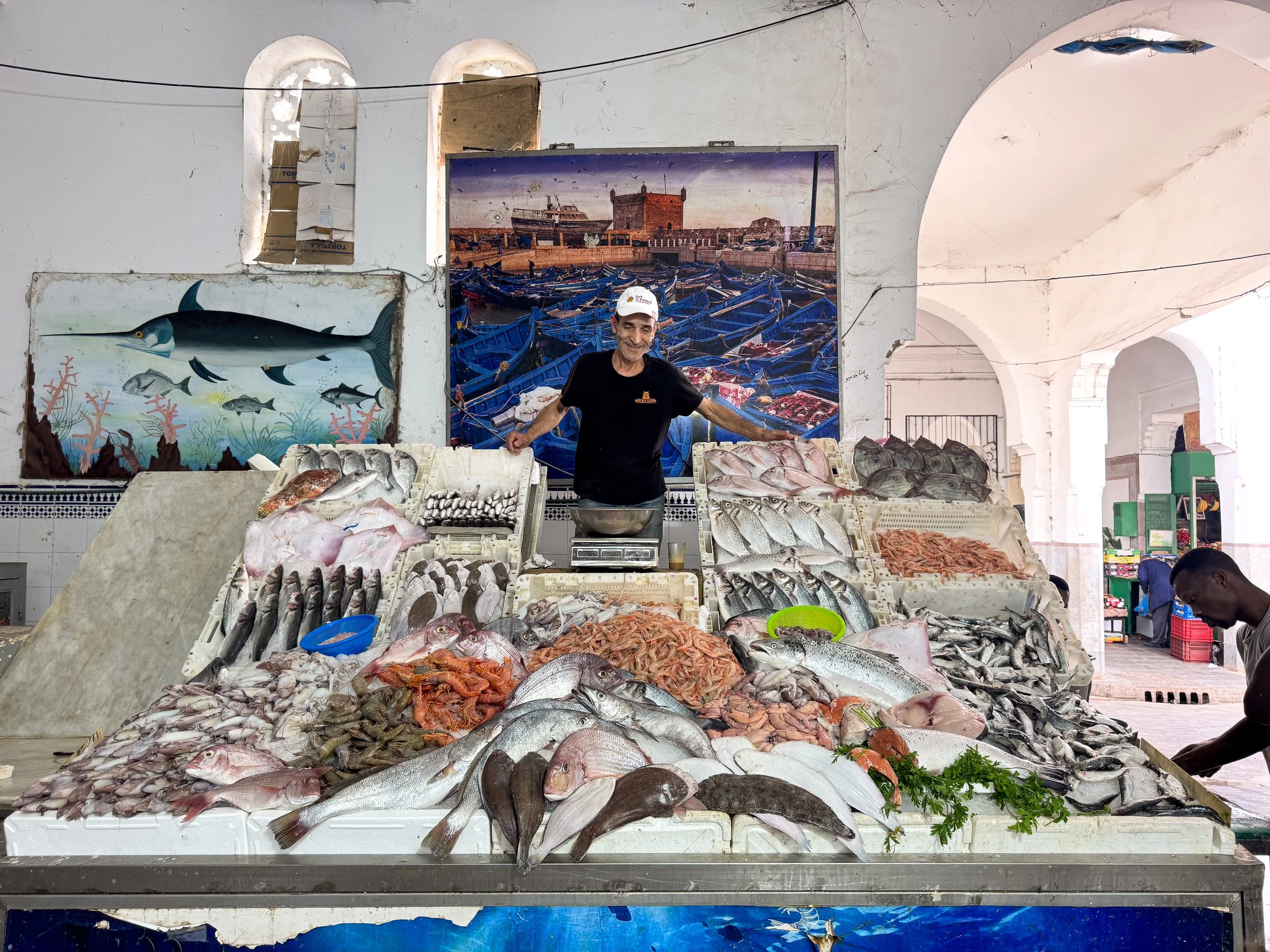
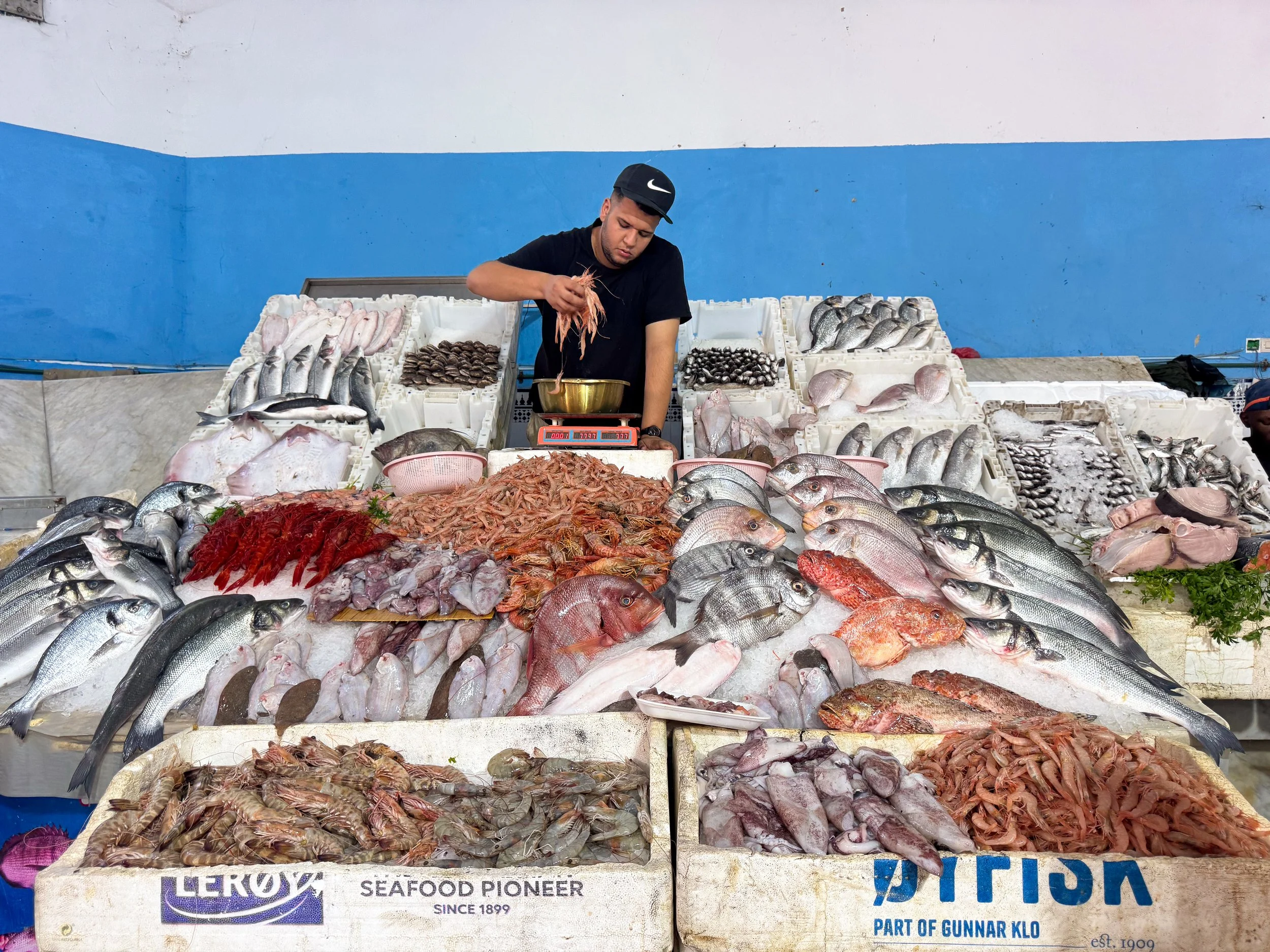
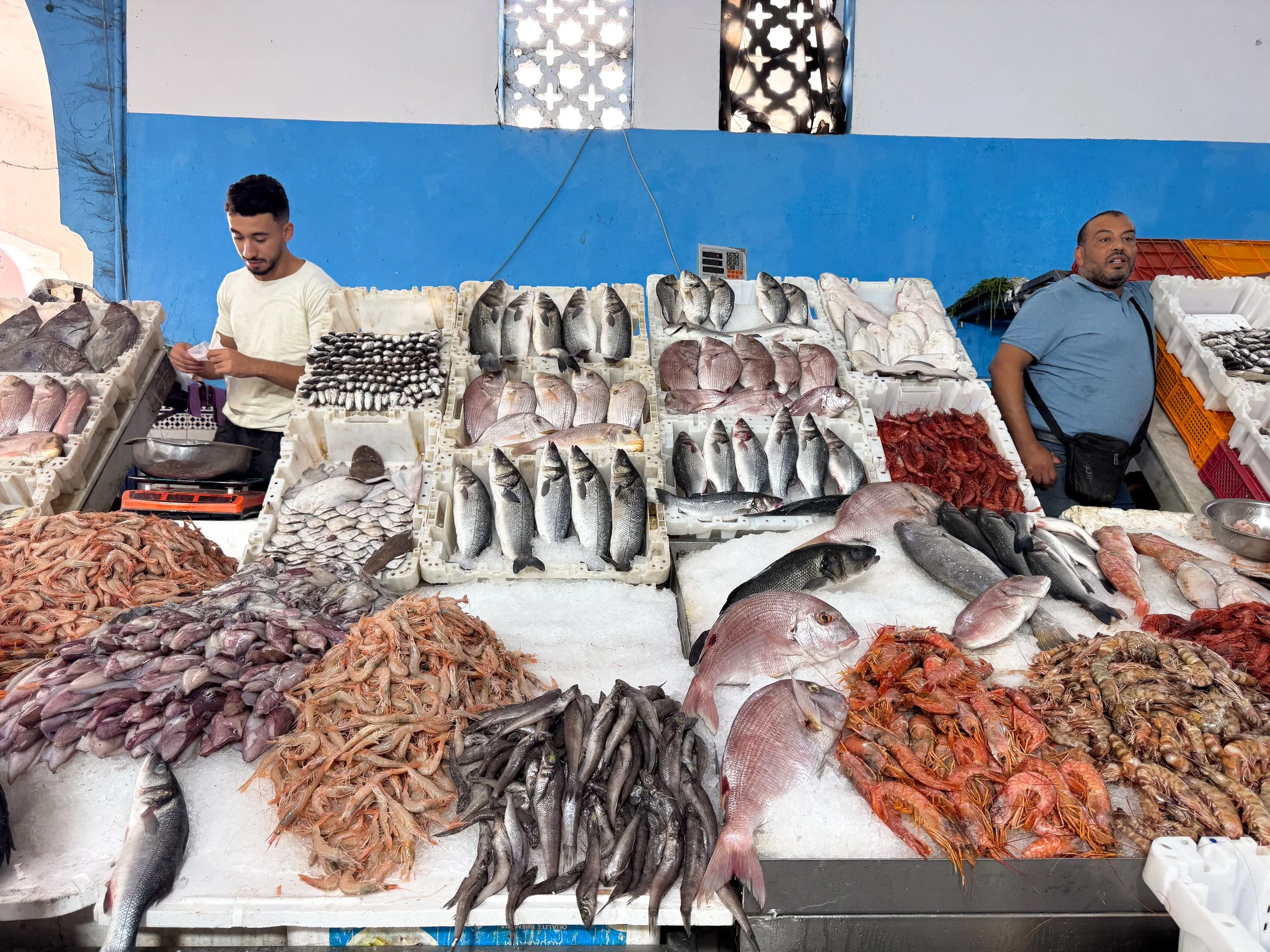
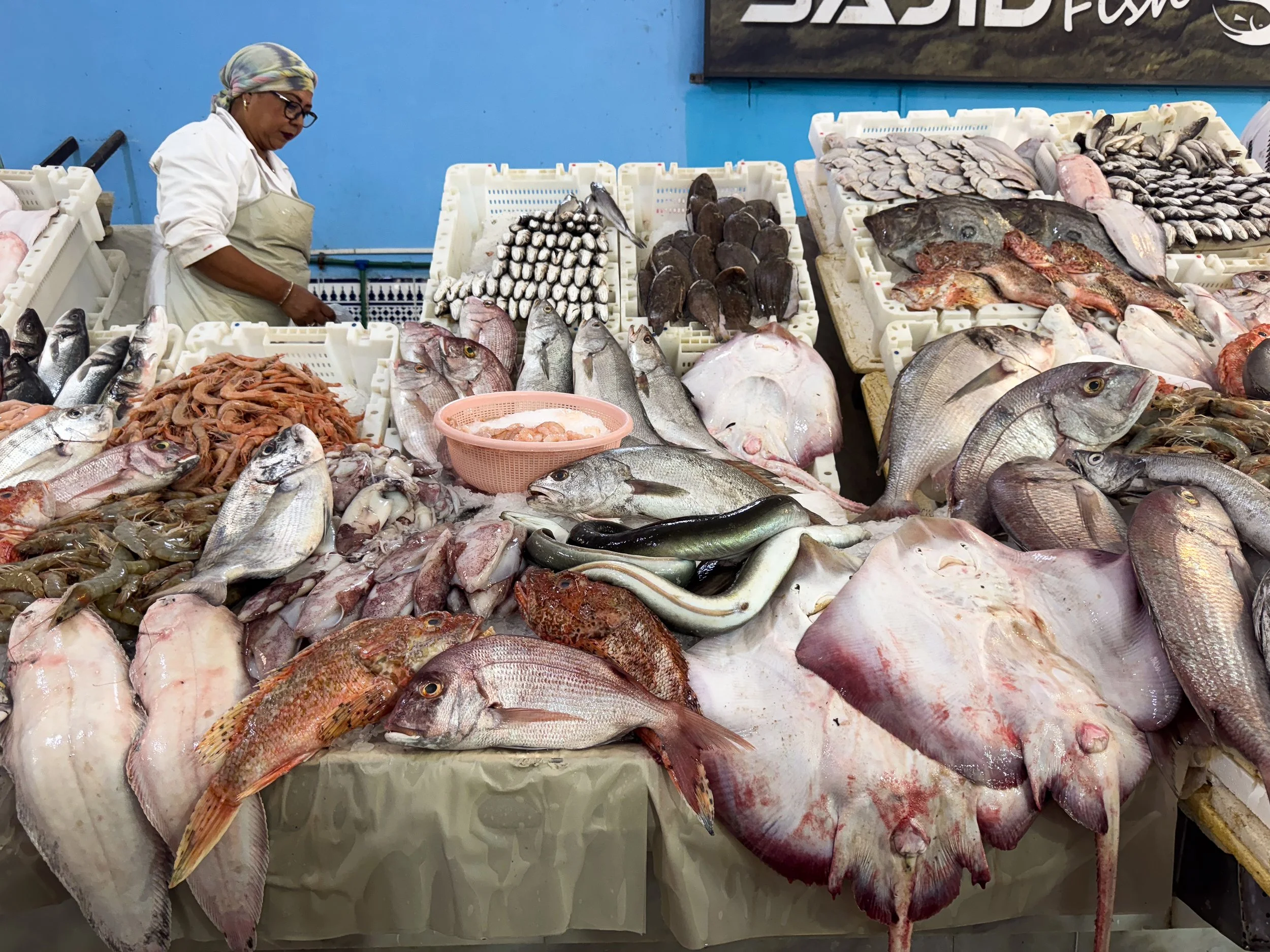
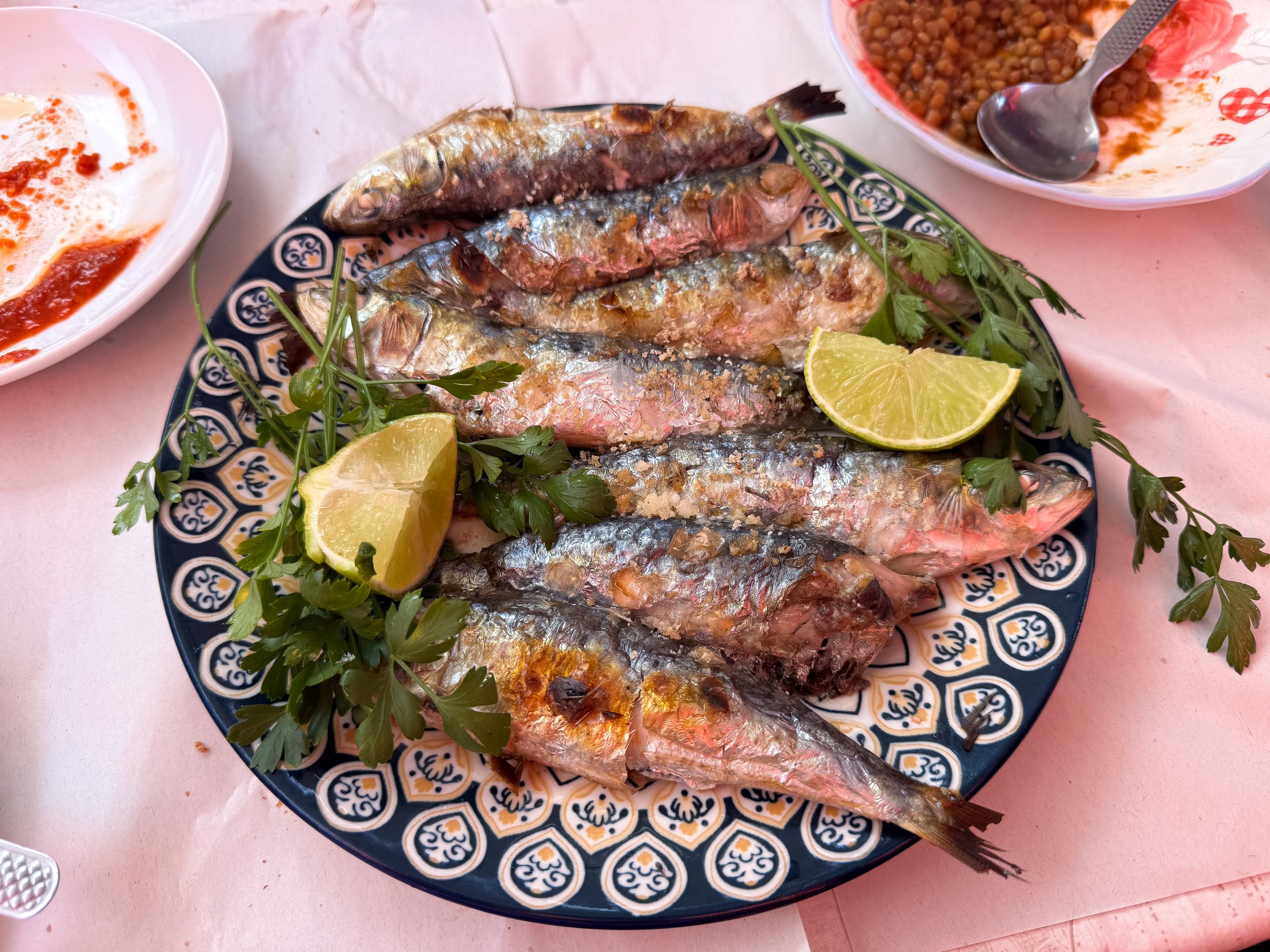
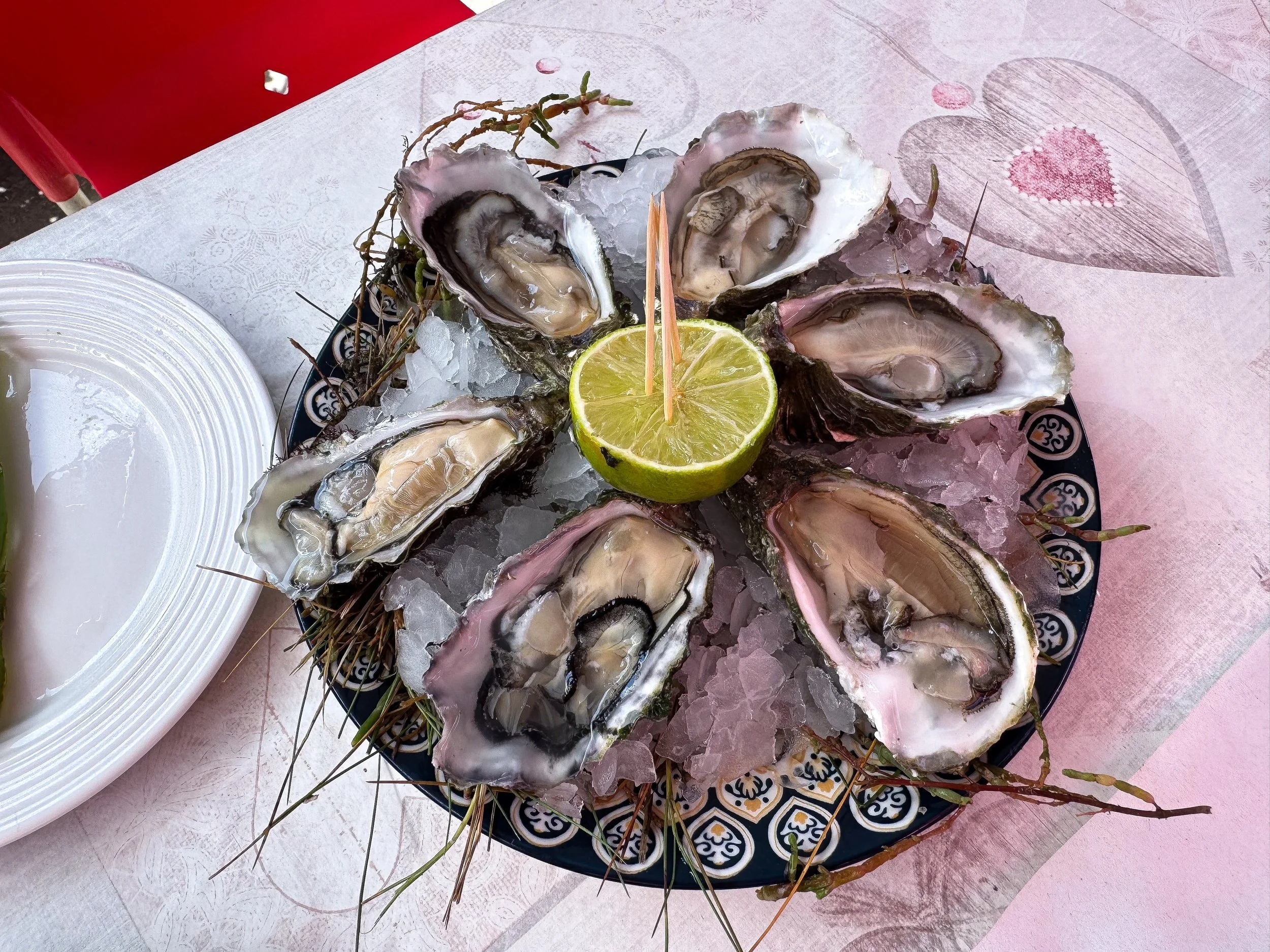
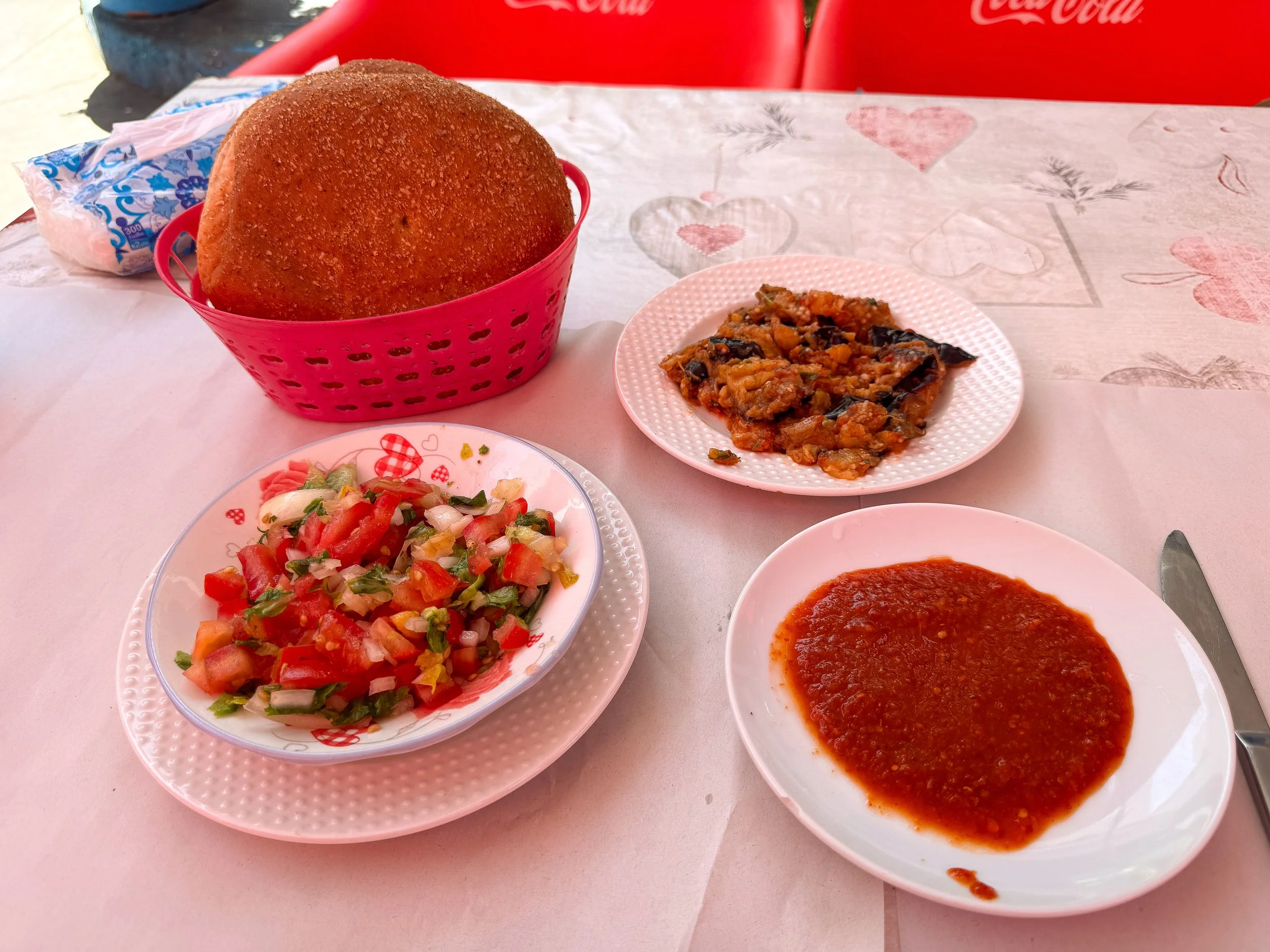
Central Marketplace. A seafood marketplace with icy displays of freshly caught Atlantic seafood. Come here to enjoy a seafood meal prepared at one of the many no frills restaurants. Hosts playfully compete for customers, offering free sides dishes. We dined at Chez Lachen, ordering the pan fried sardines and freshly shucked oysters paired with khobz, za’alook, lentils, tomato salad and harissa.
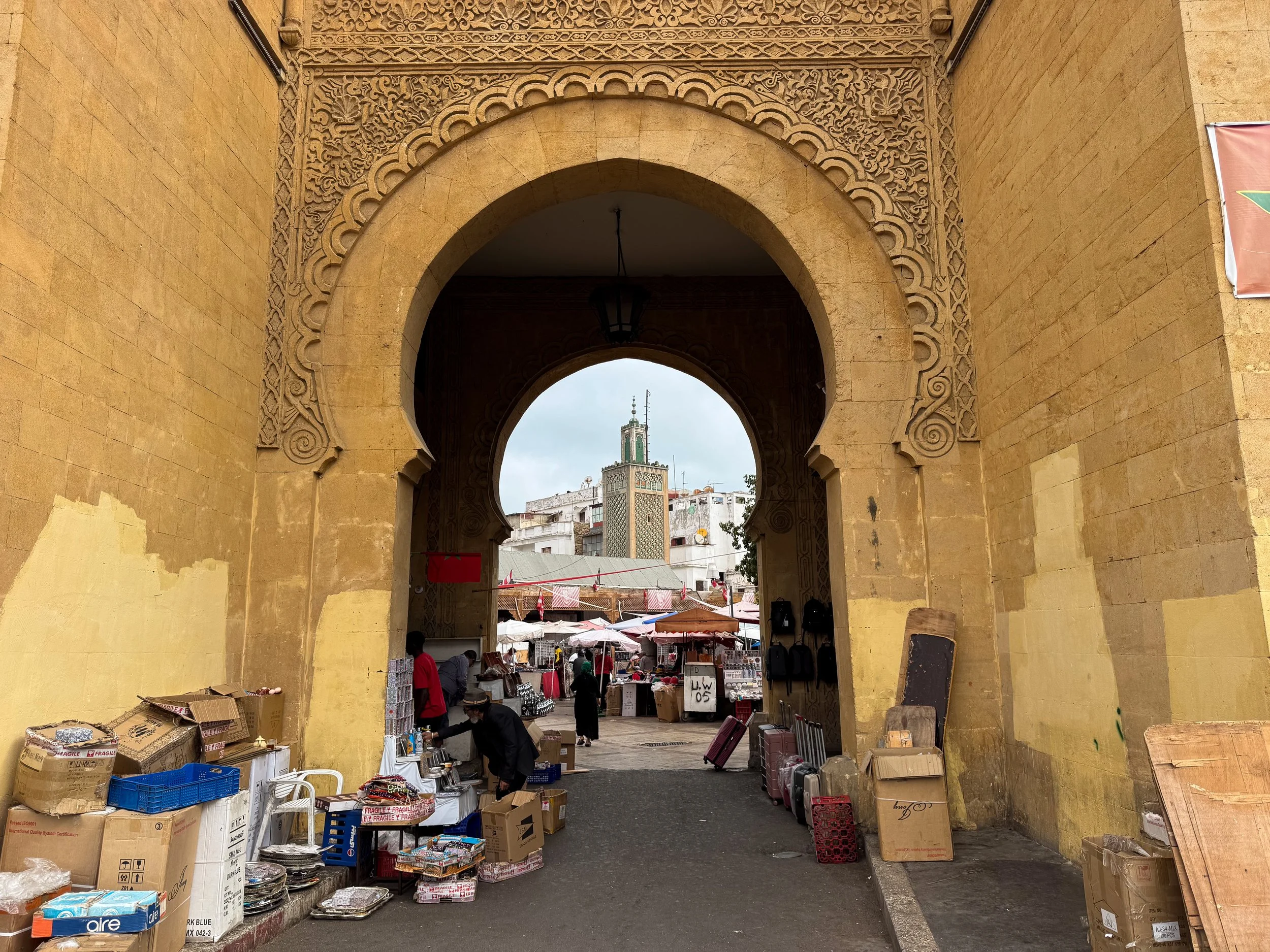
The Medina Market. A market within the Medina lined with shops and vendors selling a range of goods including clothing, shoes, accessories, jewelry, textiles, oils, teas and spices. It caters heavily to locals looking for a deal. Enter the market through Baba el Kebir, an arched sandstone gate within the Medina wall.
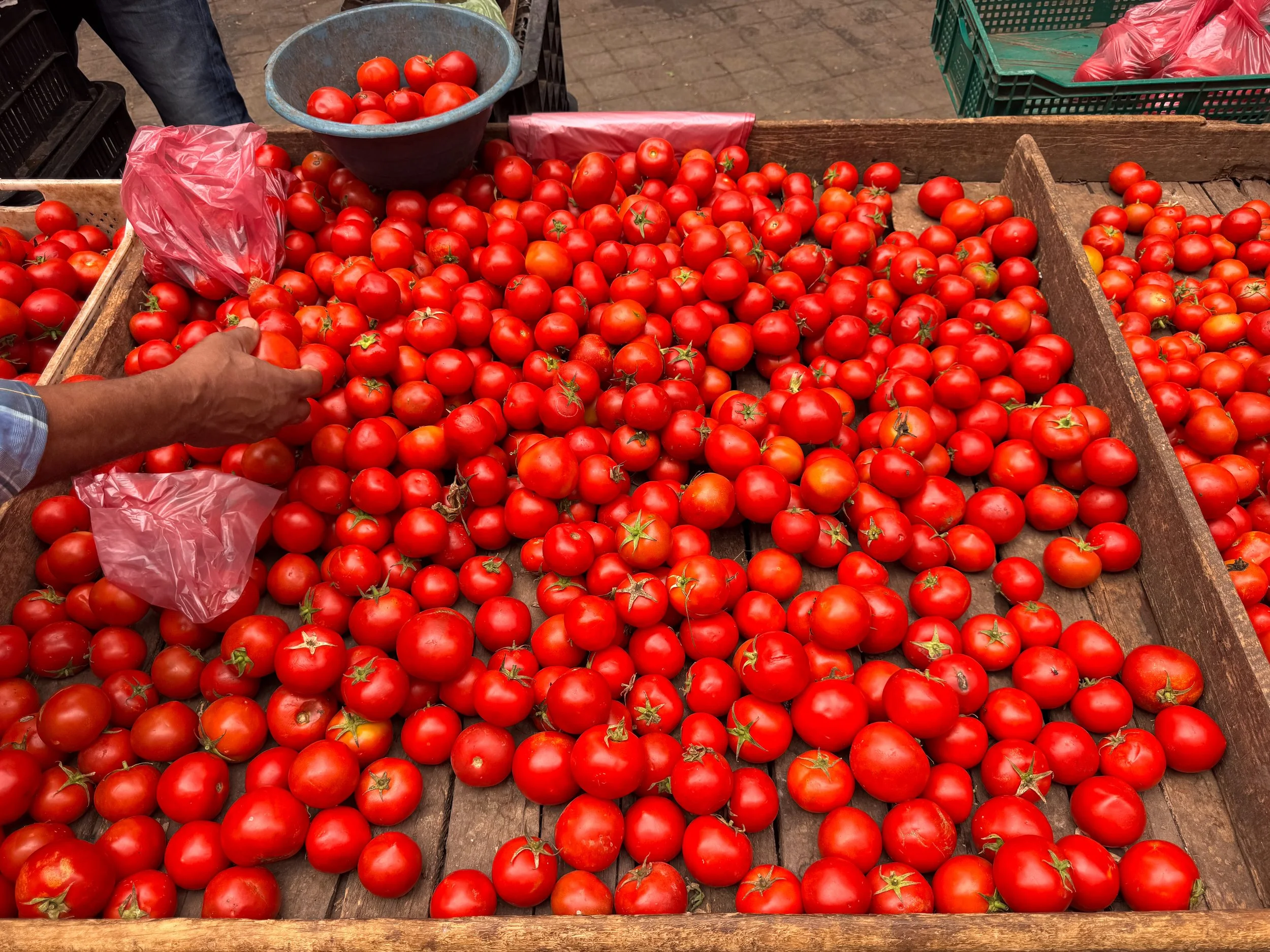
Chleuh Market. A local morning market along Rue Chleuh in the Ancient Medina. Vendors display carts and wooden boxes with vegetables, fruits and freshly caught fish. The scent of fresh mint wafts from piles of herbs. Bakers deliver baskets of aromatic breads. Corner stores sell nuts, trays of dates and stacked cartons of eggs. Butchers behead chickens on the spot for paying customers.
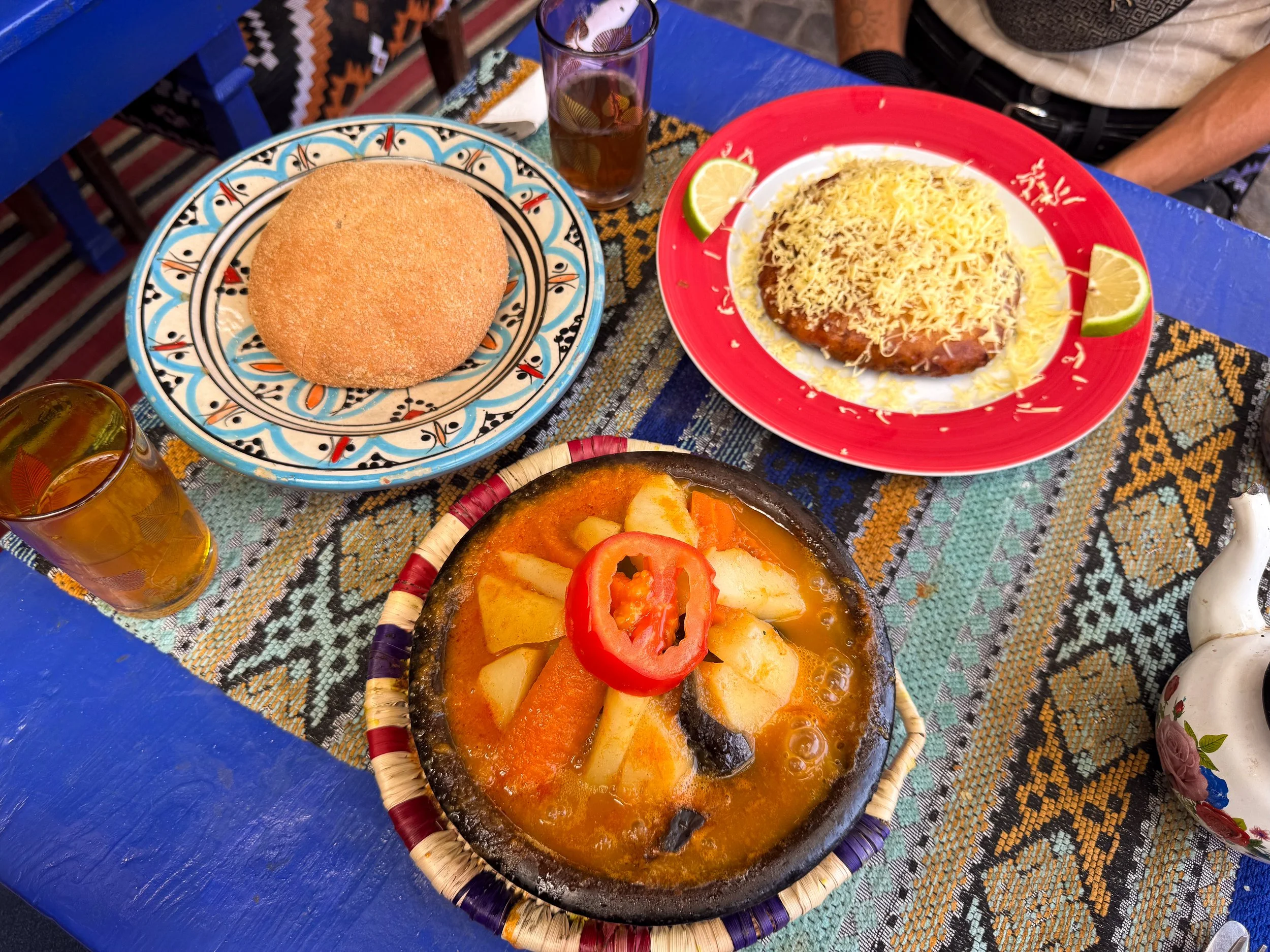
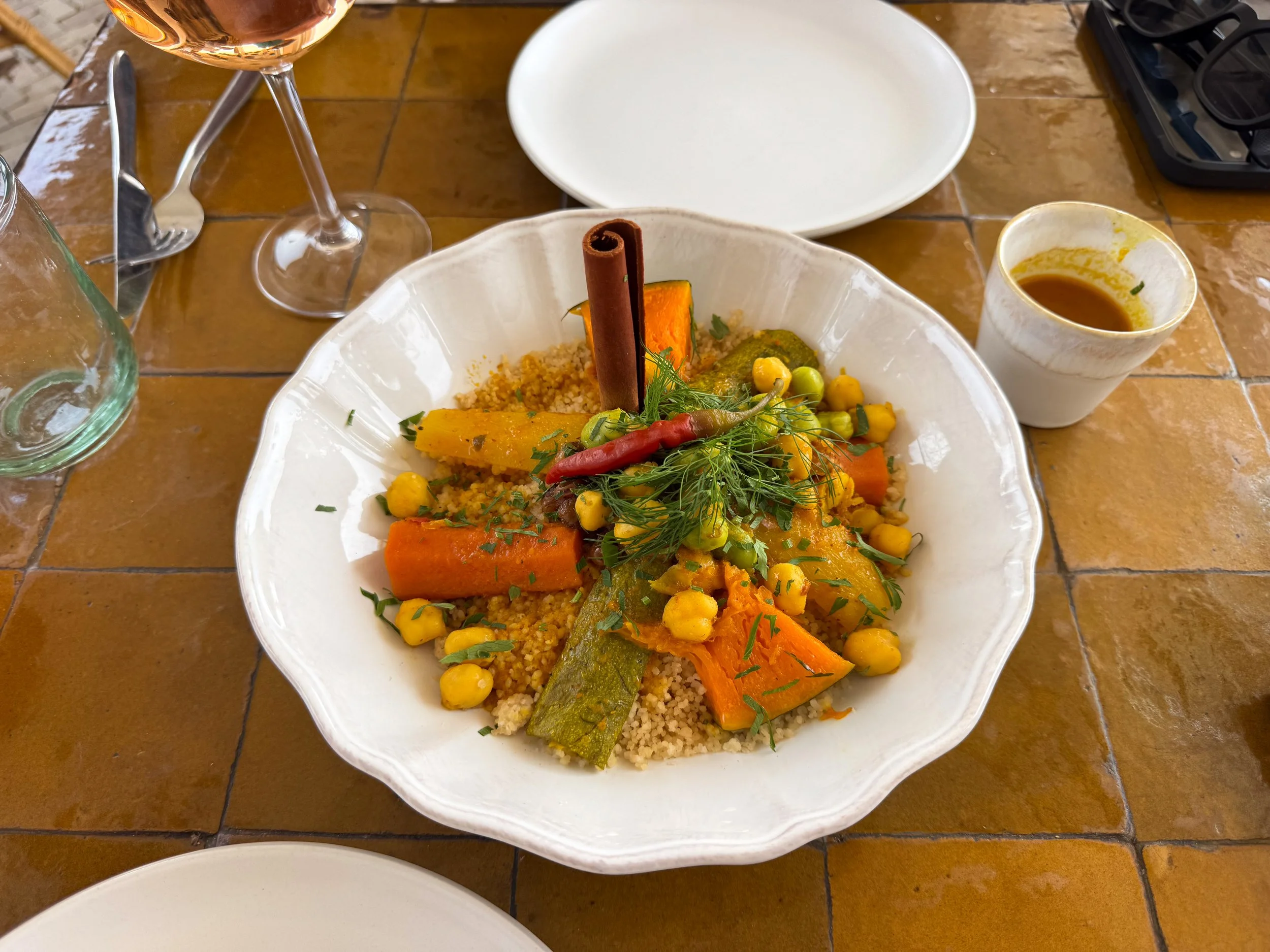
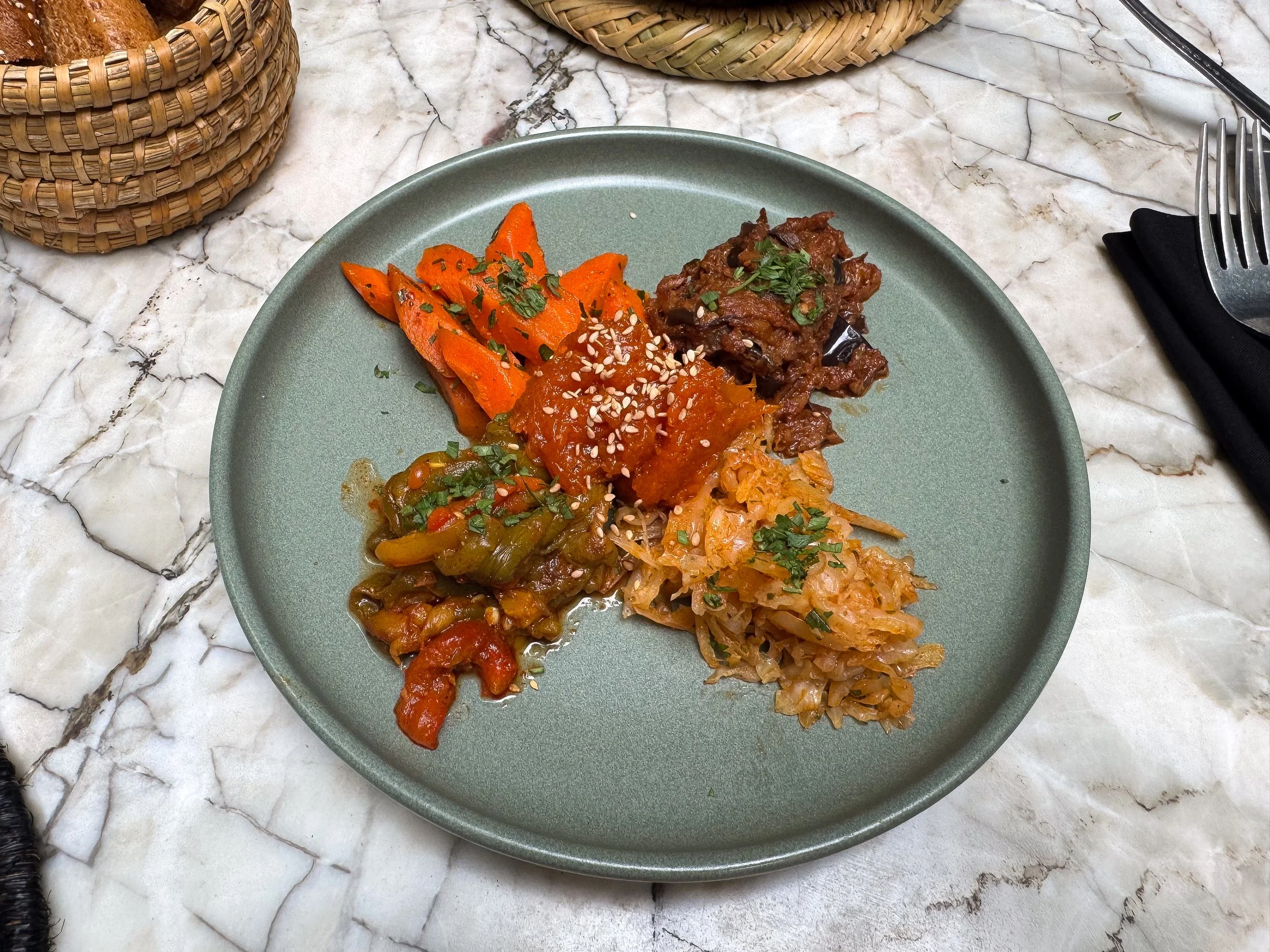
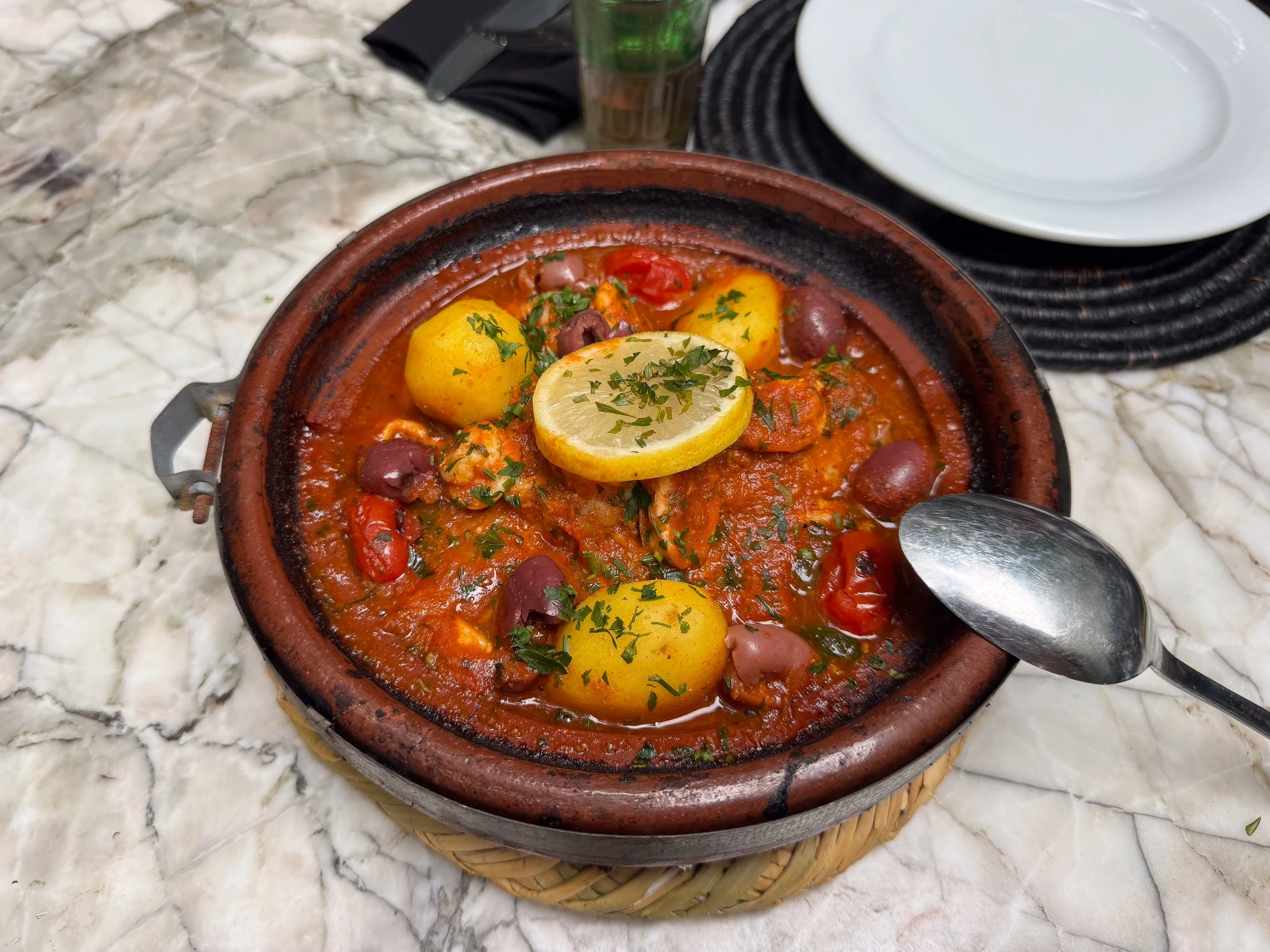
Moroccan Cuisine
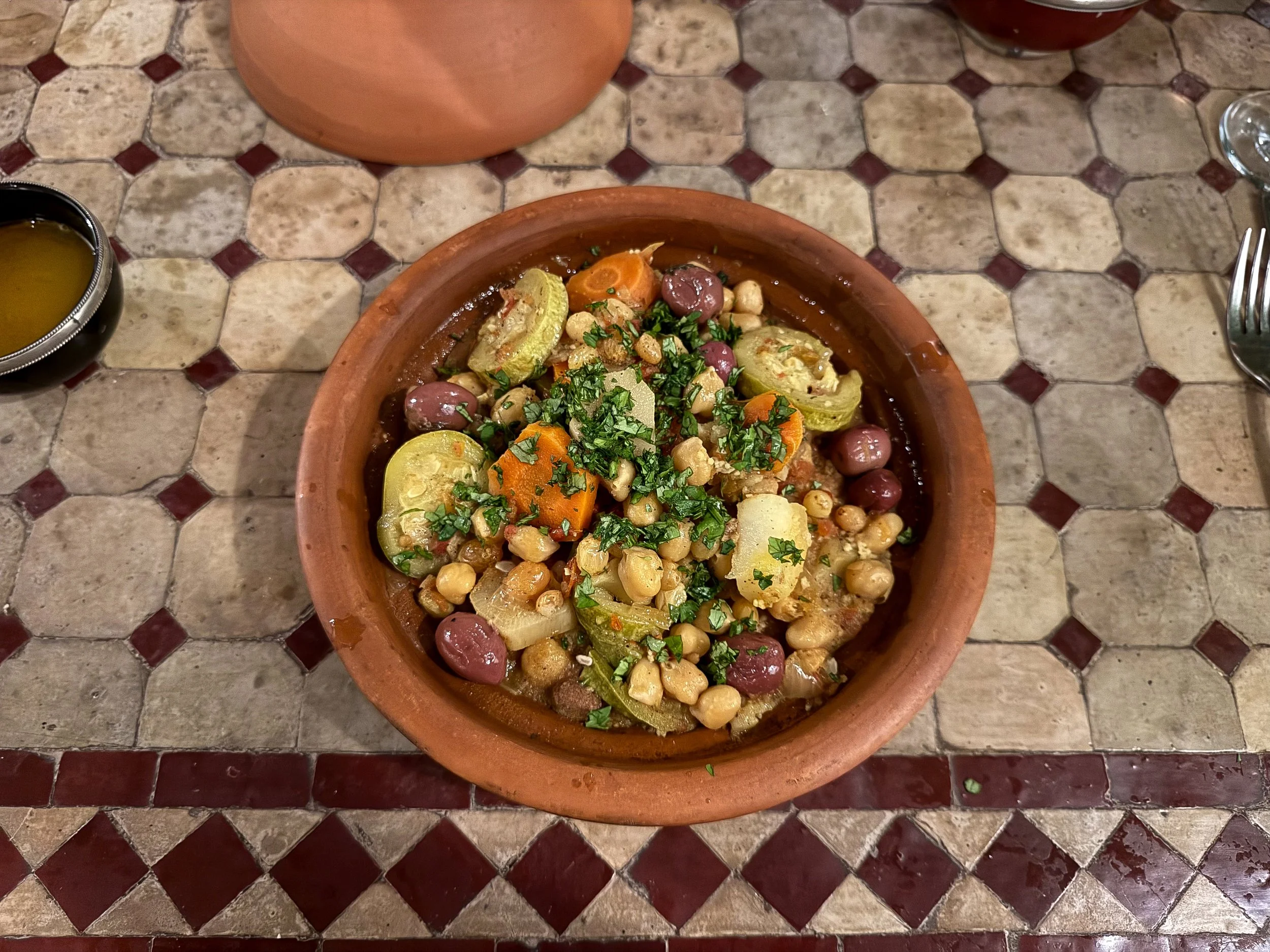
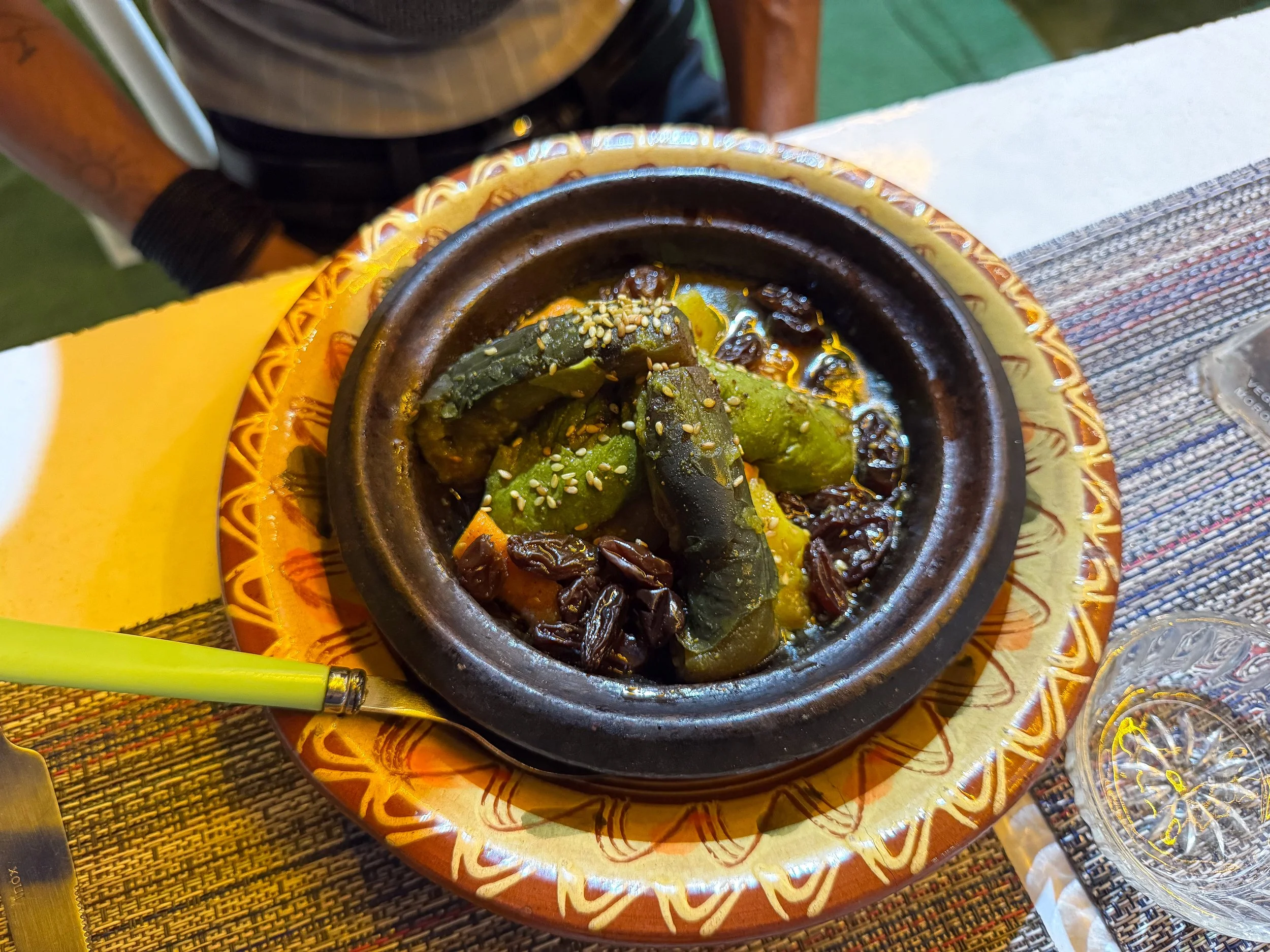
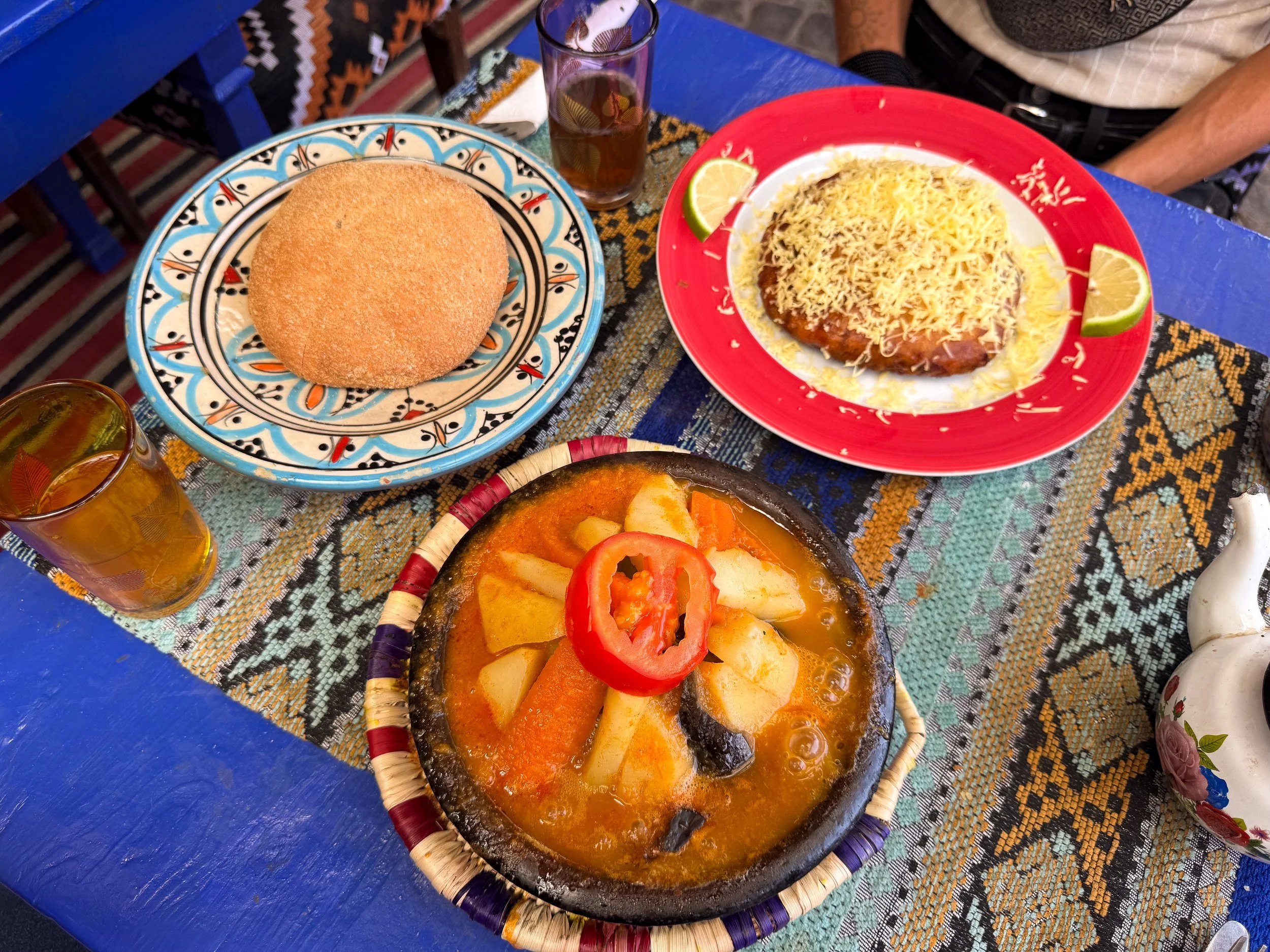
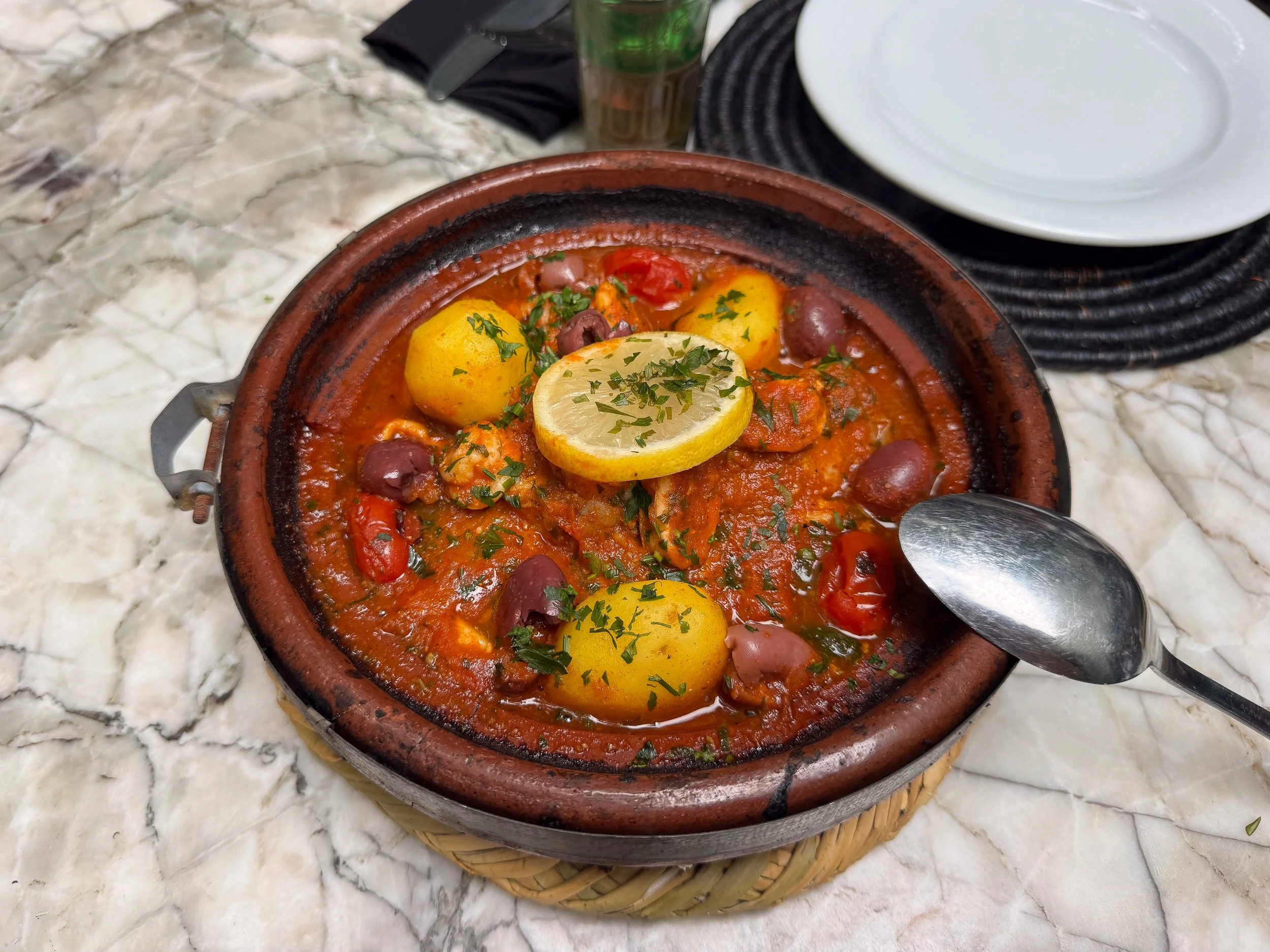
Tagine. A mixture of vegetables, meats, dried fruits and spices stewed together in a conical clay dish. It’s a staple dish of Moroccan cuisine.
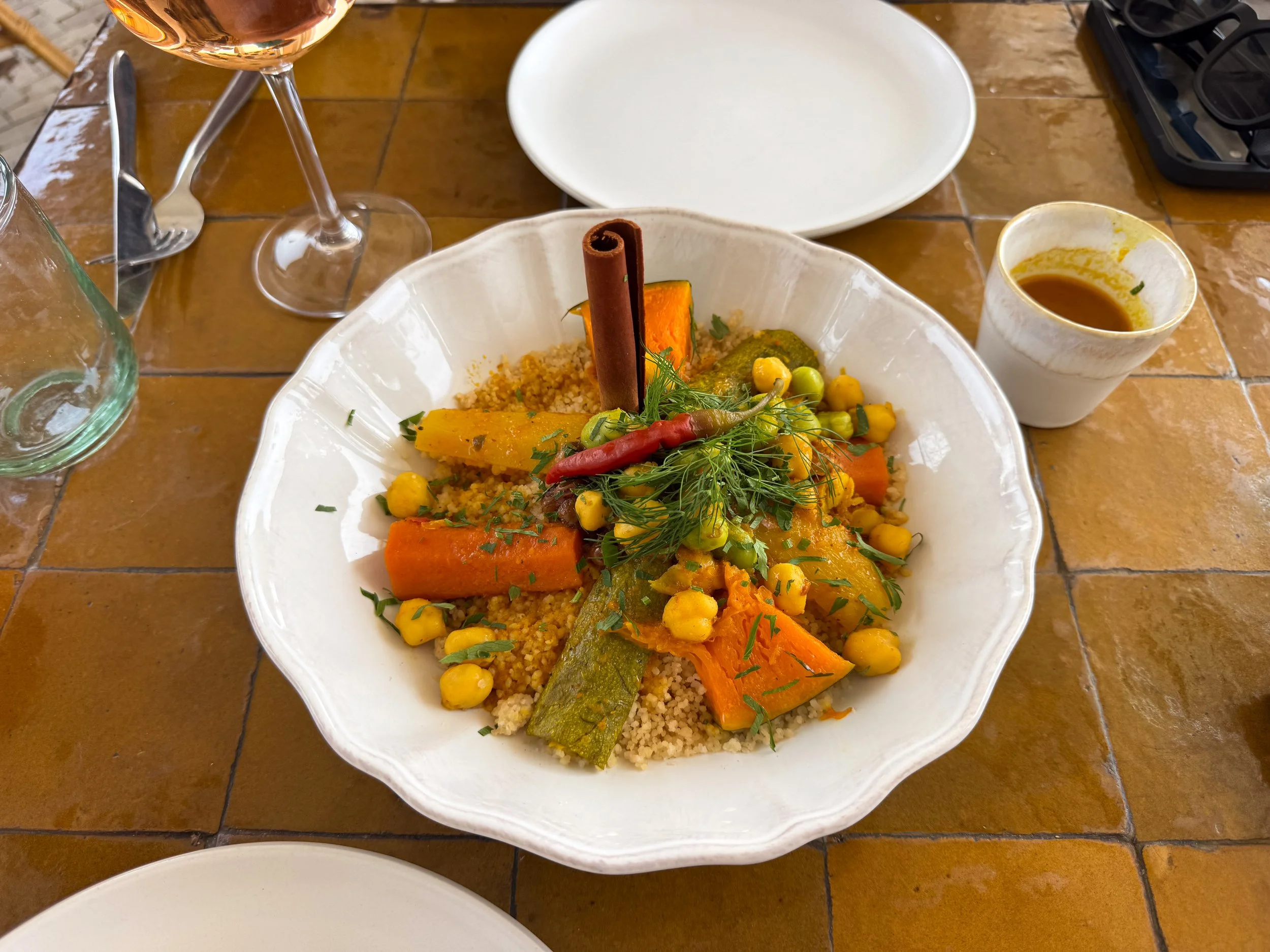
Couscous. A steamed grain covered in a savory broth and garnished with vegetables and meats.
Harira. A traditional Moroccan soup made from tomatoes, chickpeas, fresh herbs and aromatic spices.
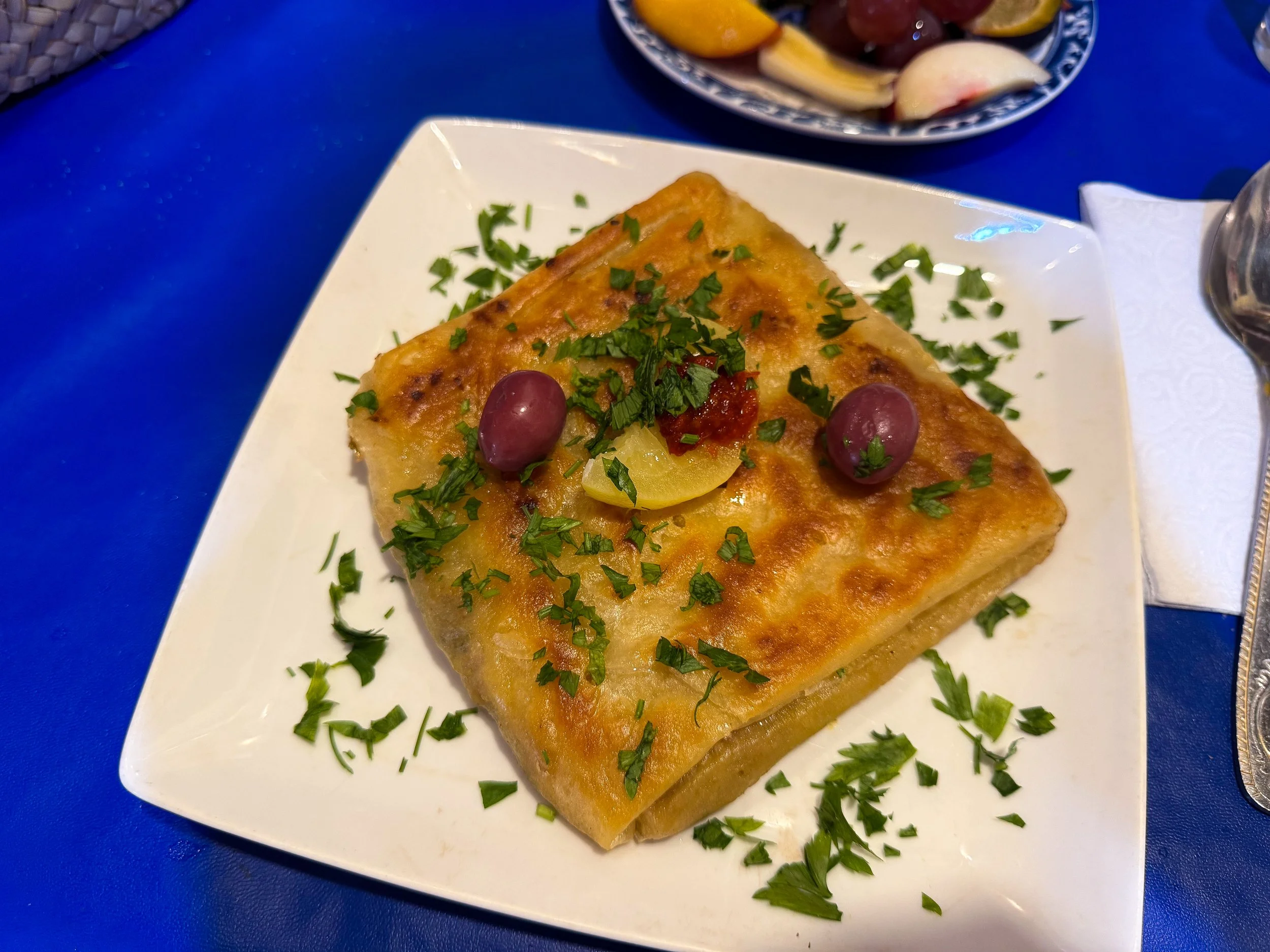
Khobs Bread. A light and airy flatbread served with every meal. It’s fresh baked daily and can be bought for 1 DH from local bakeries.
Msemmen. A flaky and layered pan fried flat bread often eaten at breakfast with honey. It’s commonly cooked by street vendors on flat top griddles.
Sfenj (Moroccan Donuts). Yeasty rings of fried dough heavily coated in plain sugar. They’re a common street food snack and usually paired with a tiny cup of coffee.
Moroccan Pastry. Small pastries made from filo dough, peanuts, honey, orange blossom water and spices. They are commonly enjoyed with mint tea.
Mint Tea. Hot tea made with fresh mint leaves and sugar cubes. It’s served as a common welcome drink.
Fresh Squeezed Juice. Juices are commonly drunk across Morocco. Try fresh squeezed orange, pomegranate or sugar cane from a street side juice cart.
Orange Soda. Orange is one of the most popular flavors in Morocco. Try a Moroccan orange soda like Orangina or Hawai.
Arabic Words & Phrases
Knowing a few words and phrases in Arabic goes a long way in Morocco when interacting with locals. Some of the most common and easy to remember are:
Hello = Salama
Goodbye = Beslama
Thank you = Shukran
You’re welcome = Marhaba
Location Specifics
When to Visit. September is the best month of the year to visit Morocco. It’s just before peak travel season with hot to moderate temperatures. Temperatures are typically cooler near the Atlantic coast in Casablanca.
Language. Arabic, French and English are commonly spoken by many people, seen on signage and menus.
Cash vs. Card. Cash is the preferred and often only accepted method of payment at many businesses. Confirm before ordering at restaurants or agreeing to services.
Safety. Casablanca a generally safe destination to visit. Be aware of your surroundings and keep hold of personal belongings to avoid pickpocketing.
Drinking Water. Tap water is not safe for consumption or using to cook with. Only use bottled water.
Alcohol. The sale of alcohol is heavily controlled throughout the country. Only some restaurants will serve cocktails, beer and wine.
LGBTQ+ Safety. Moroccan laws and customs are not very accepting of LGBTQ+ individuals. Stay up to date with the latest laws and suggestions while traveling. Refer to our guide on LGBTQ+ Travel Safety for more advice.
Getting Around
Airport Taxi. There is a taxi stand past customs at the airport with regulated prices for taxis to Casablanca and to cities across the country. Expect to pay around $30 USD from the airport to the city.
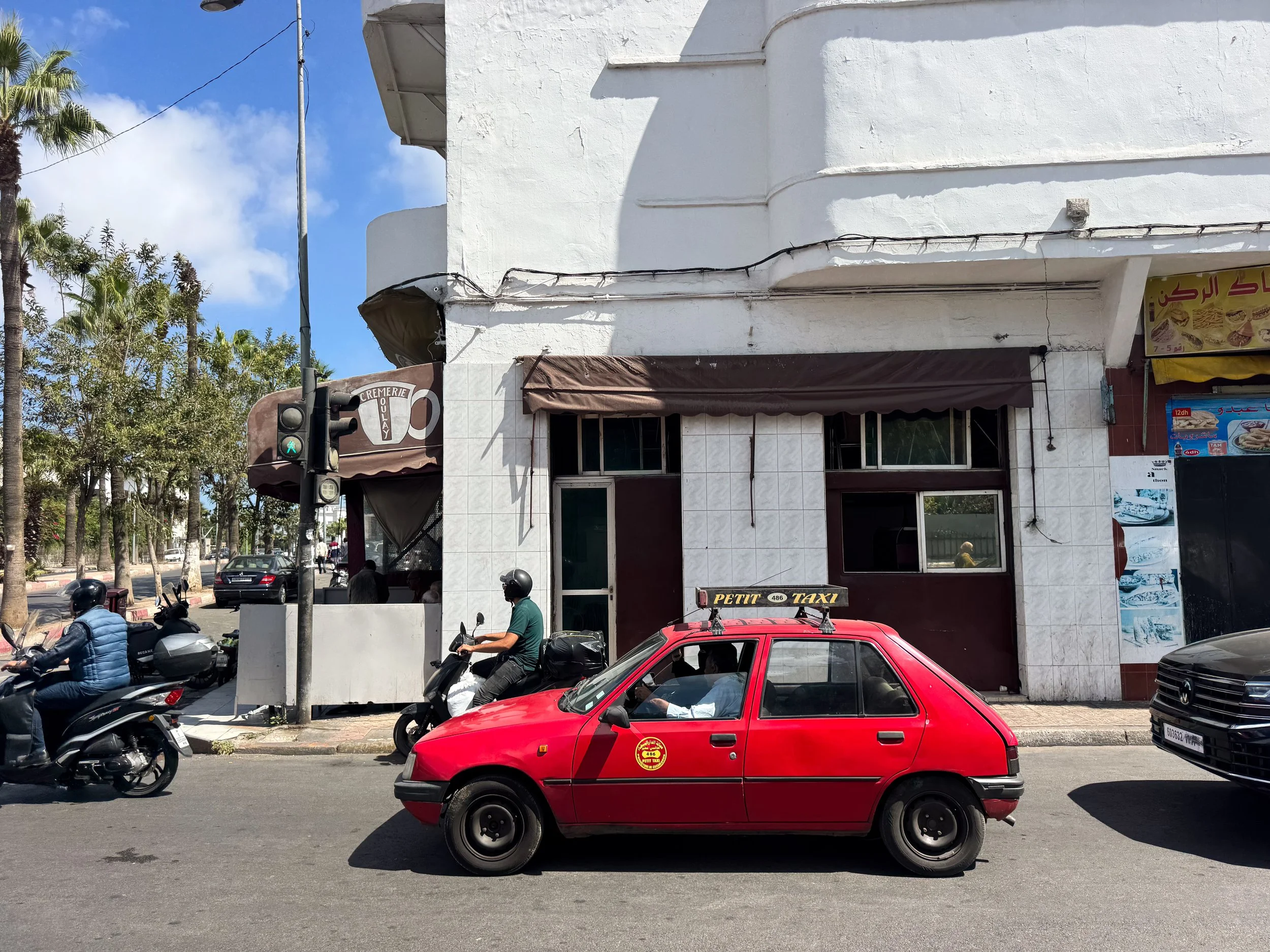
Petit Taxi. Small red taxis present throughout the city. They’re safe, affordable and quick when getting around. Hail one off the street and negotiate price before getting in. Fares are usually under 100.
On Foot. The city is easily walkable and generally safe, making it a fun way to get around and explore.
Elsewhere in Morocco
From Casablanca's Atlantic shoreline and urban culture to Morocco's historic medinas, mountain towns and desert landscapes, continue your journey through Morocco with these travel guides:
Marrakech Travel Guide: Medina, Souks & Moroccan Cuisine. Get lost in Marrakech's maze-like alleyways where vibrant souks, elaborate palaces and historic mosques bring centuries of Moroccan culture, cuisine & tradition to life.
Fes Travel Guide: Medina, Tanneries & Islamic History. Step into Fes's ancient medina where Islamic landmarks, historic tanneries, traditional riads and skilled artisans preserve centuries of Moroccan heritage and tradition.
Morocco Road Trip Guide: Sahara Desert, Kasbahs & Berber Culture. Road trip across Morocco's dramatic landscapes where palm oases, ancient kasbahs, towering dunes and Berber camps create an unforgettable Saharan adventure.
Chefchaouen Travel Guide: The Blue City, Medina & Local Culture. Stroll through Chefchaouen's blue painted medina where historic mosques, fresh juice vendors, Berber artisans and mountain scenery reveal a tranquil side of Morocco.
Morocco Road Trip Guide: Sahara Desert, Kasbahs & Berber Culture
Road trip across Morocco's dramatic landscapes where palm oases, ancient kasbahs, towering dunes and Berber camps create an unforgettable Saharan adventure.
From The Atlas Mountains to The Sahara Desert
Morocco is a mesmerizing country with scenic landscapes, enchanting kasbahs and rich cultural influences. We spent a week roadtripping between the historic medinas of Marrakech and Fez. The journey led us through the Atlas Mountains to desert towns, crumbling ksars, palm covered oases, steep gorges, sprawling sand dunes and Berber camps of the Sahara Desert.
Ait Ben Haddou
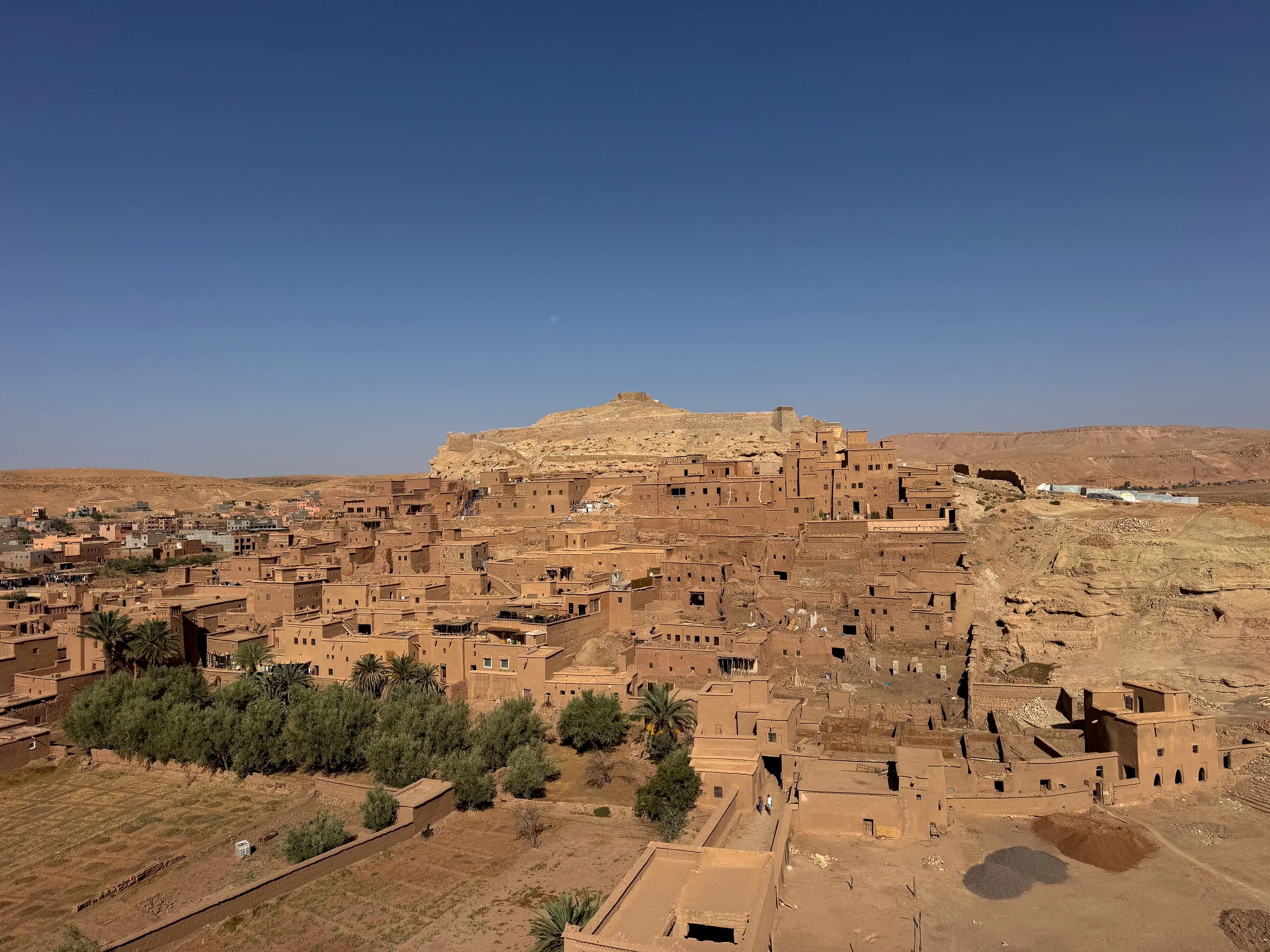
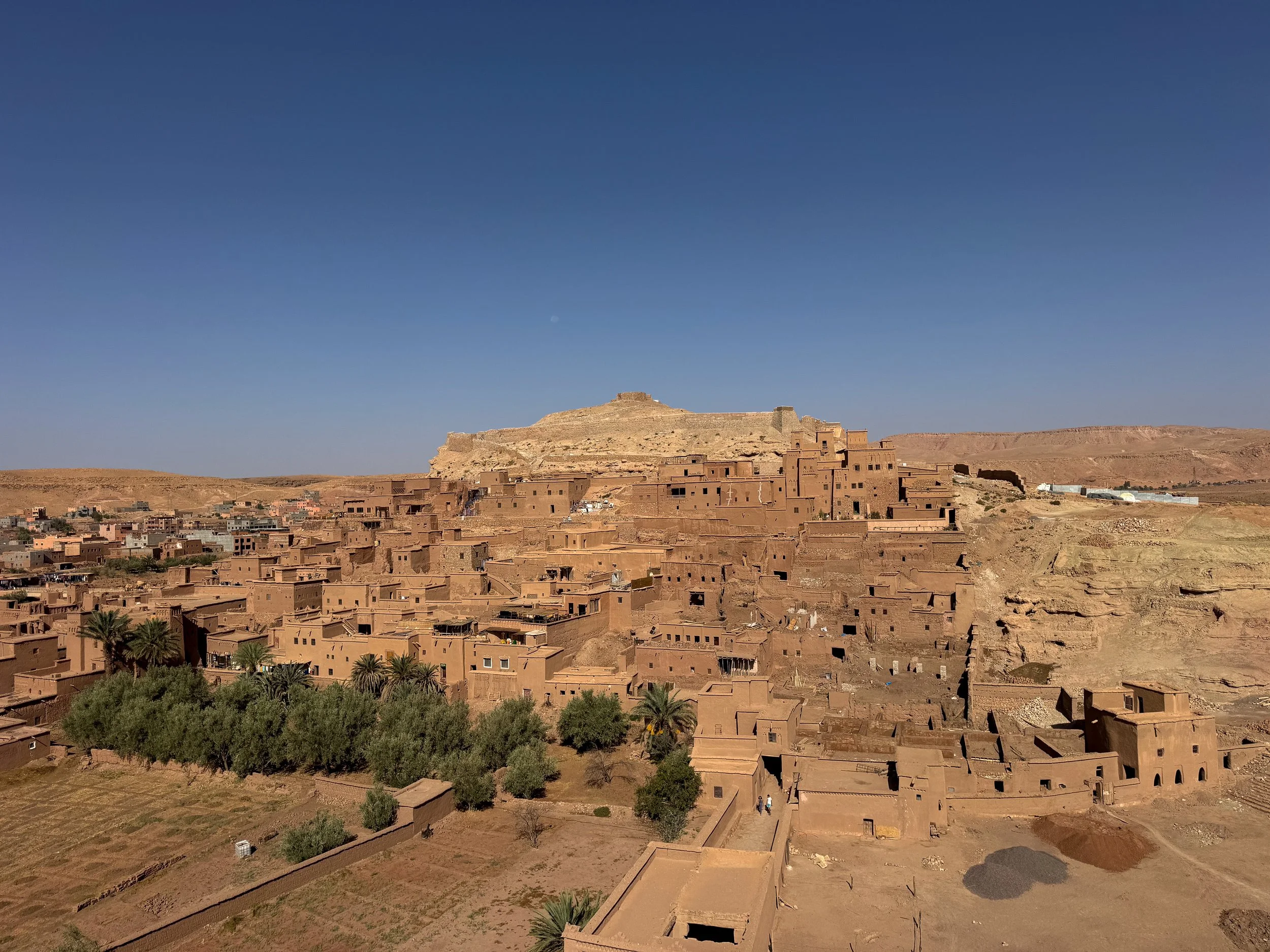
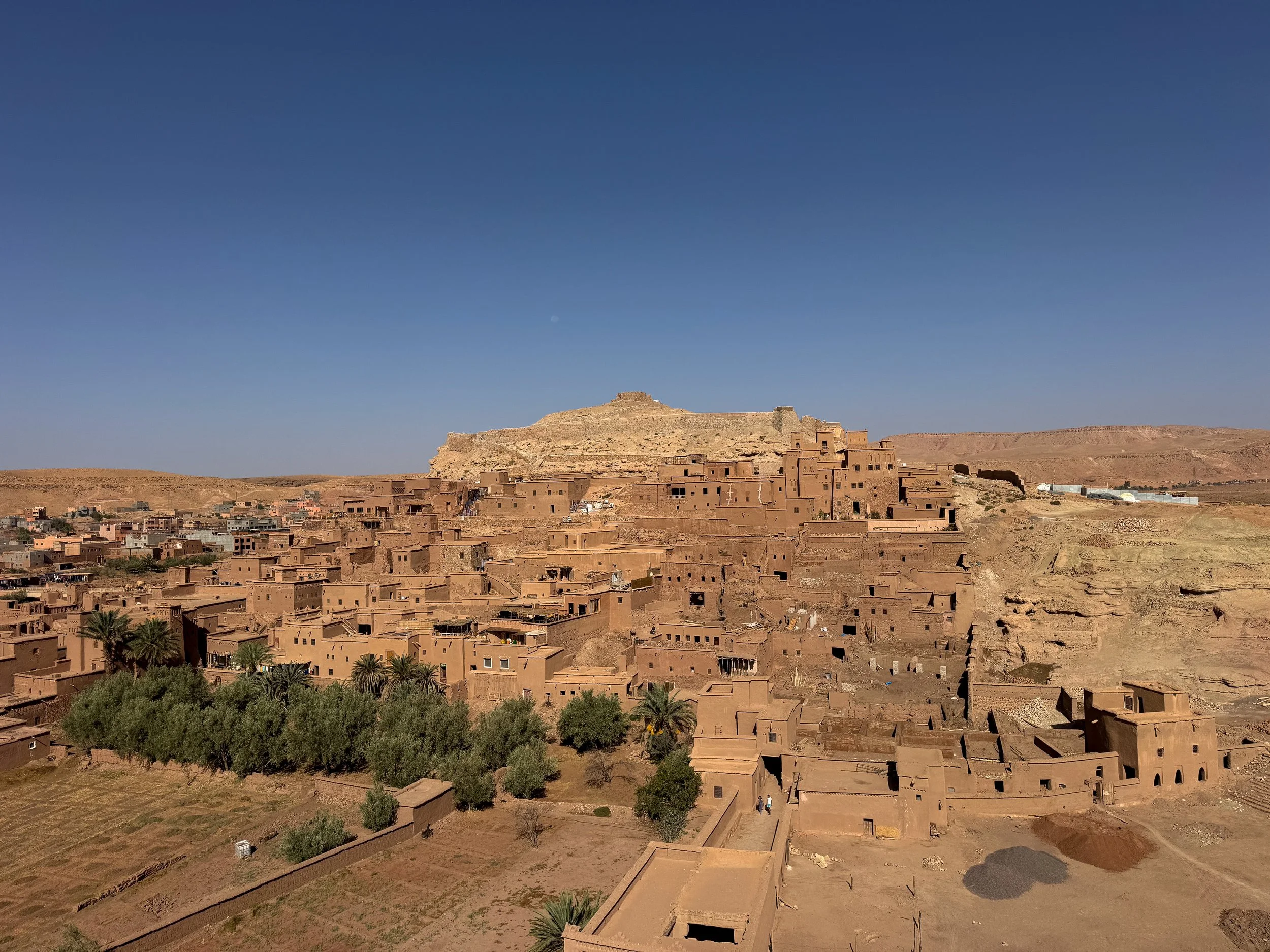
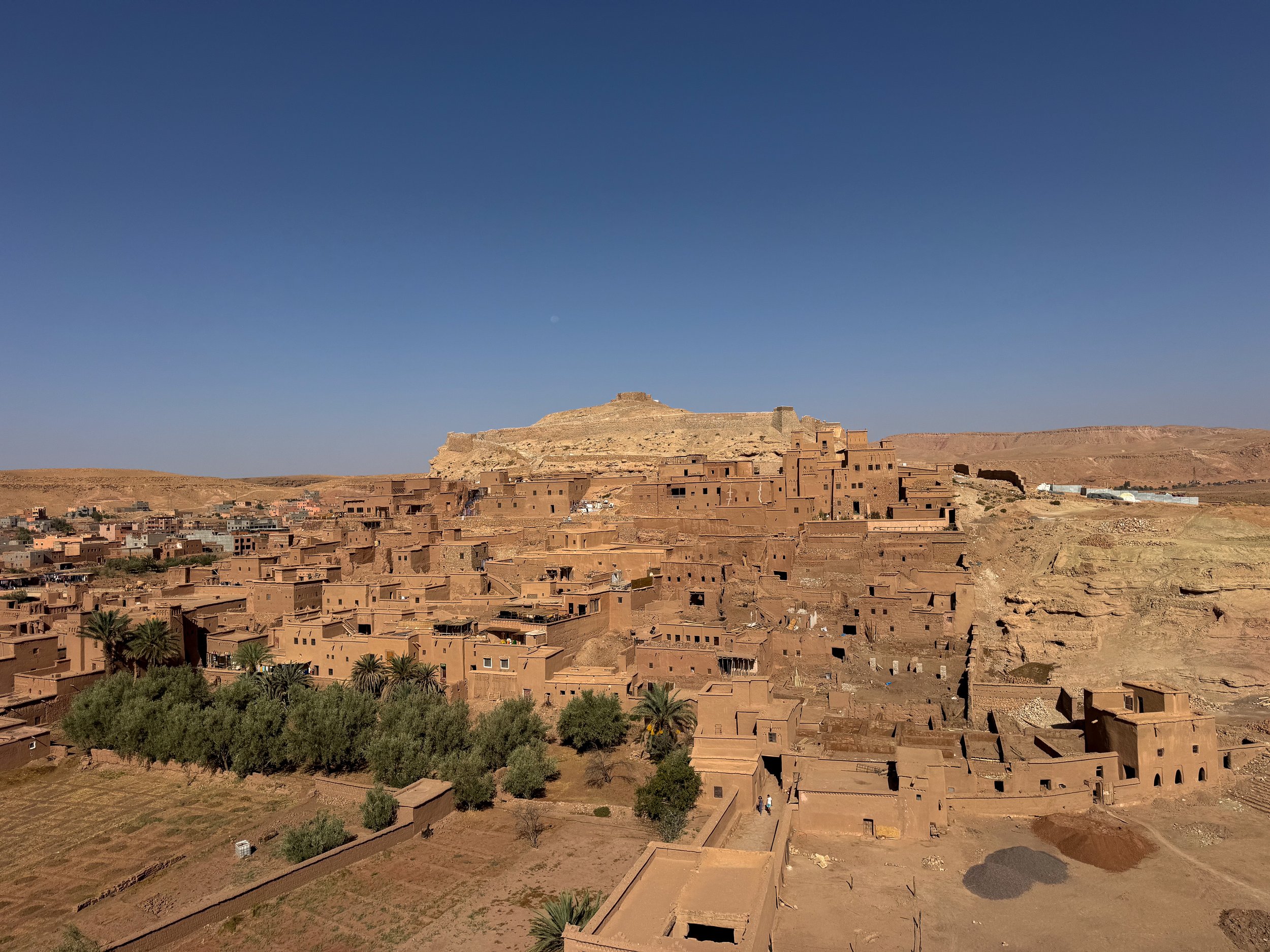
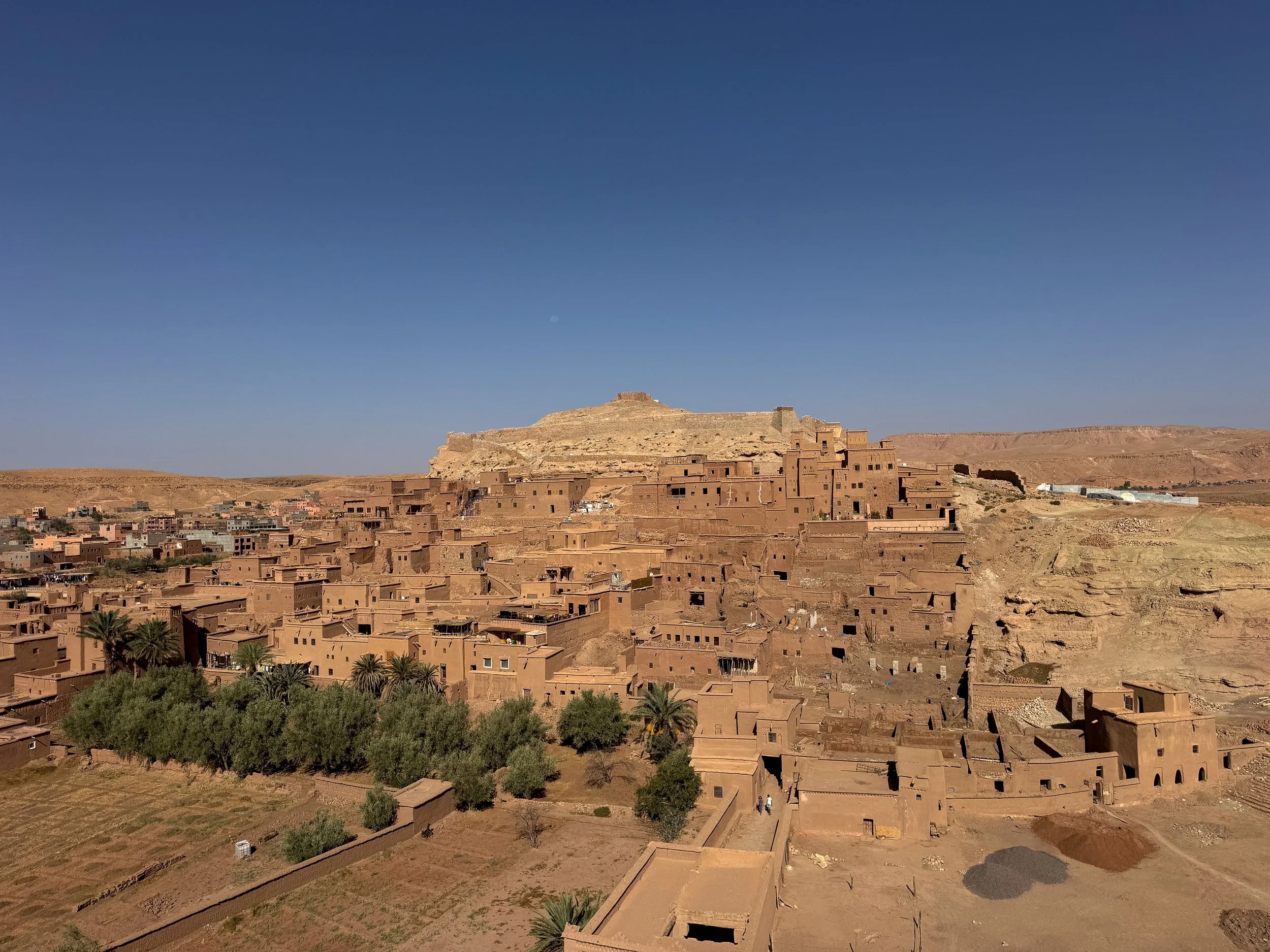
Ait Ben Haddou is a desert town famed for its ancient ksar, towering kasbahs and Berber culture.
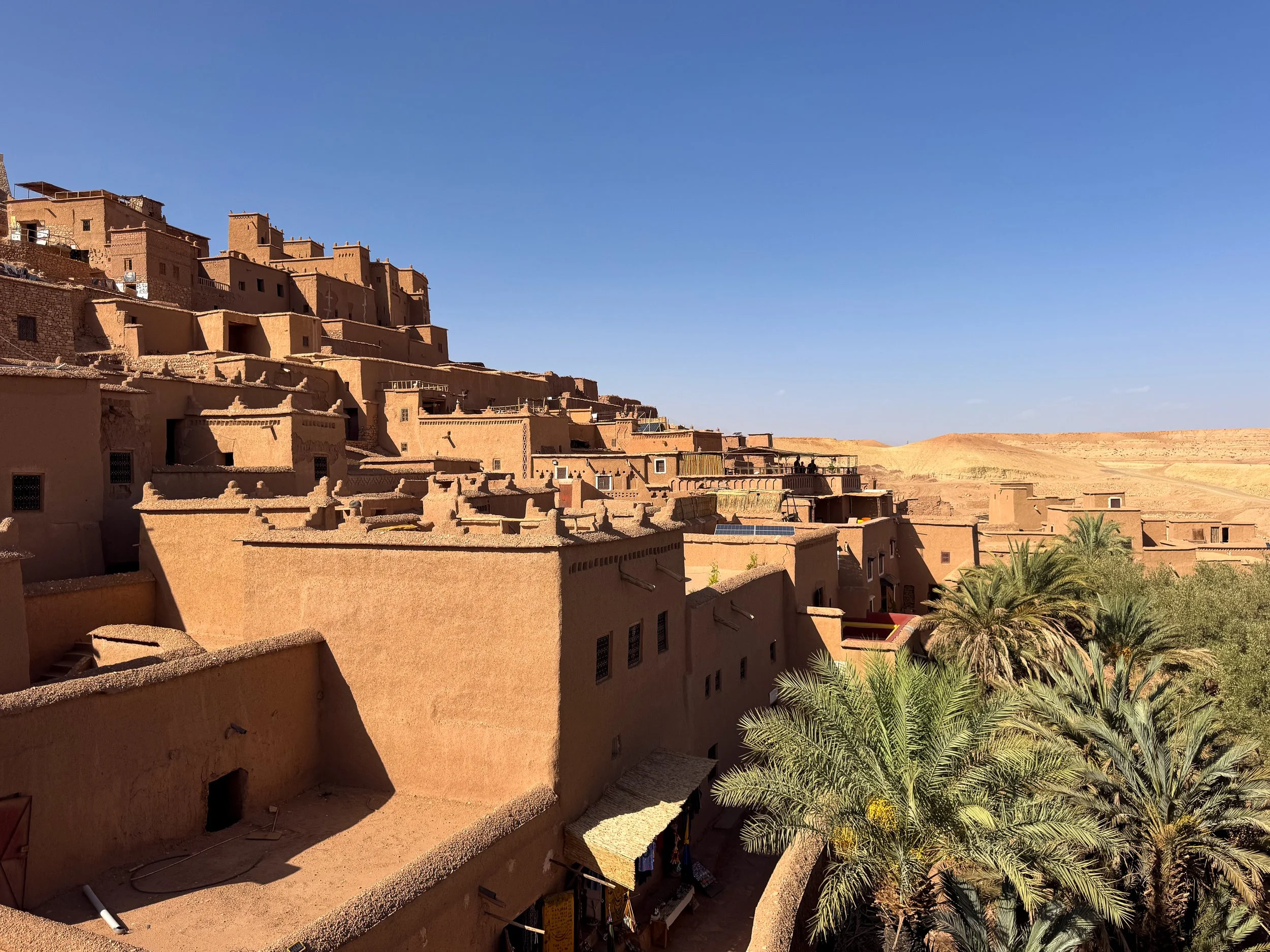
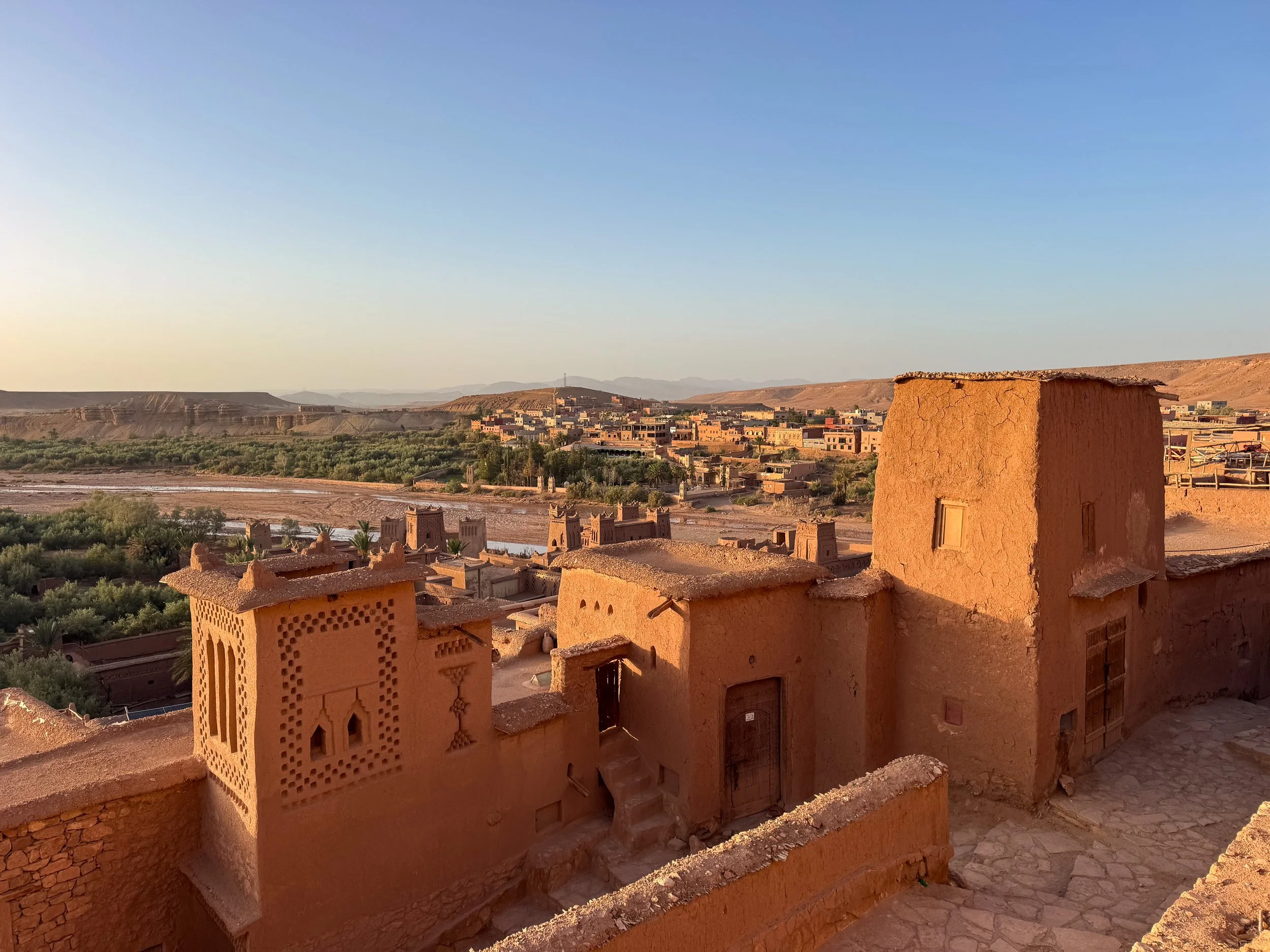
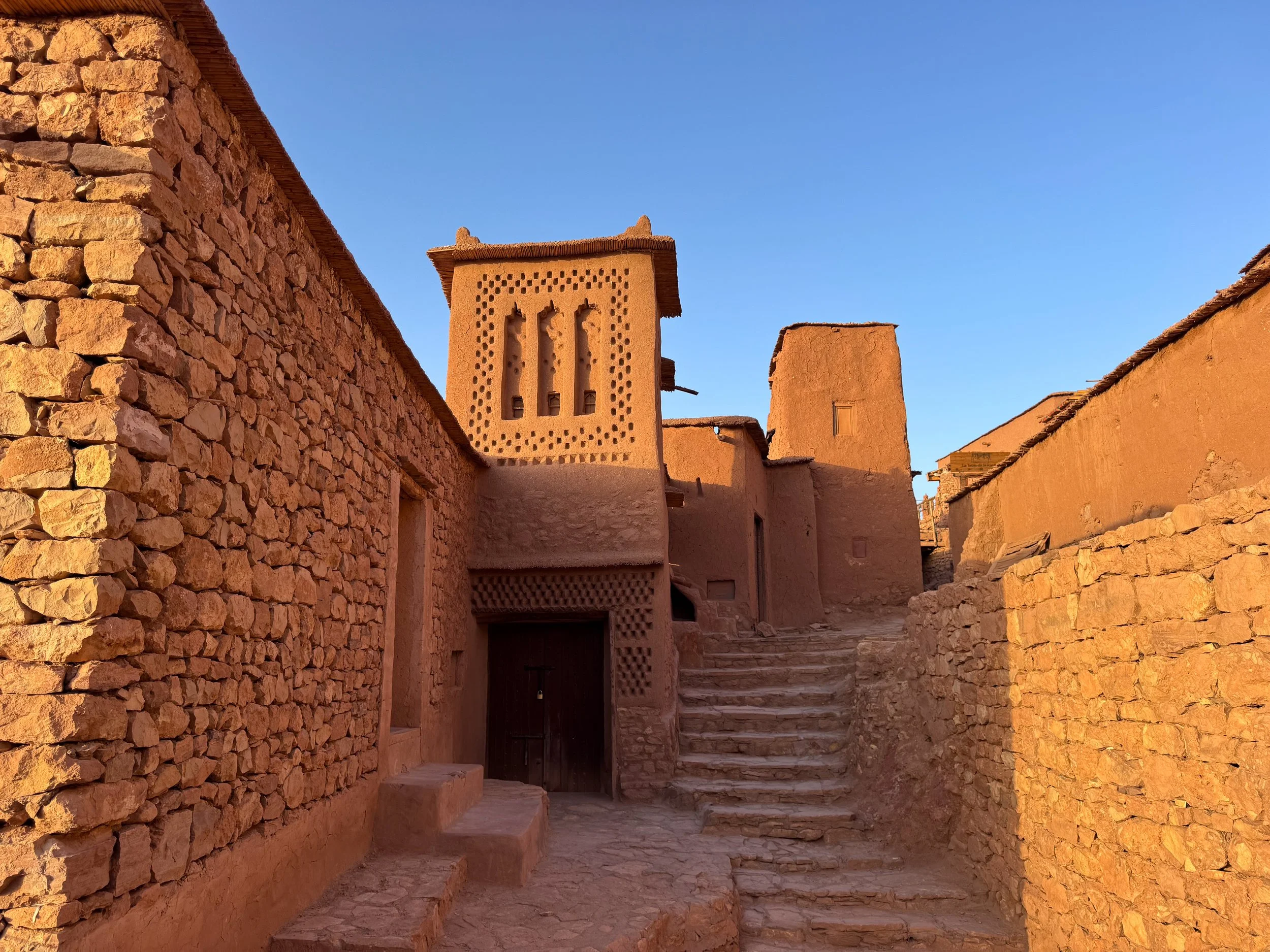
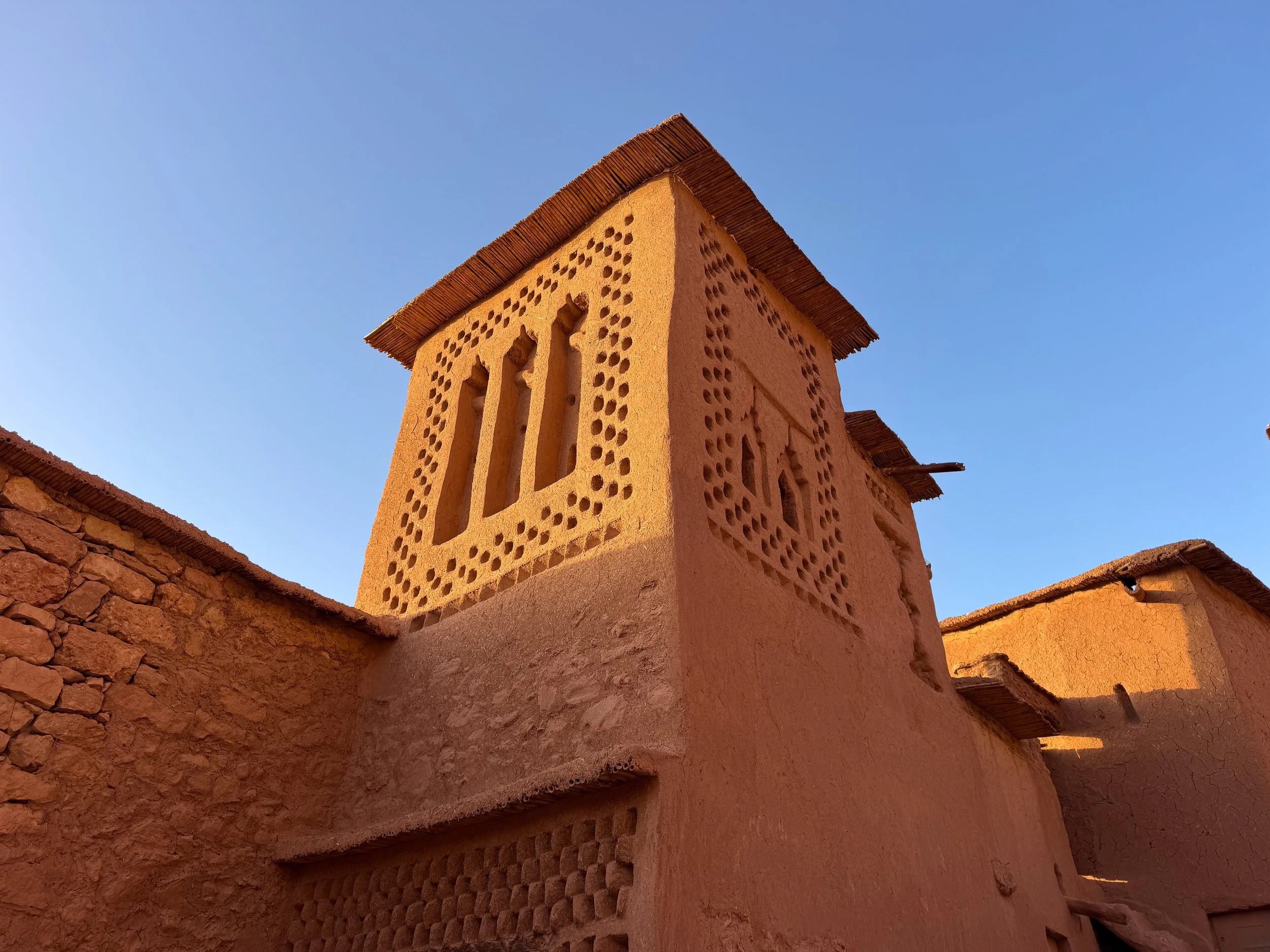
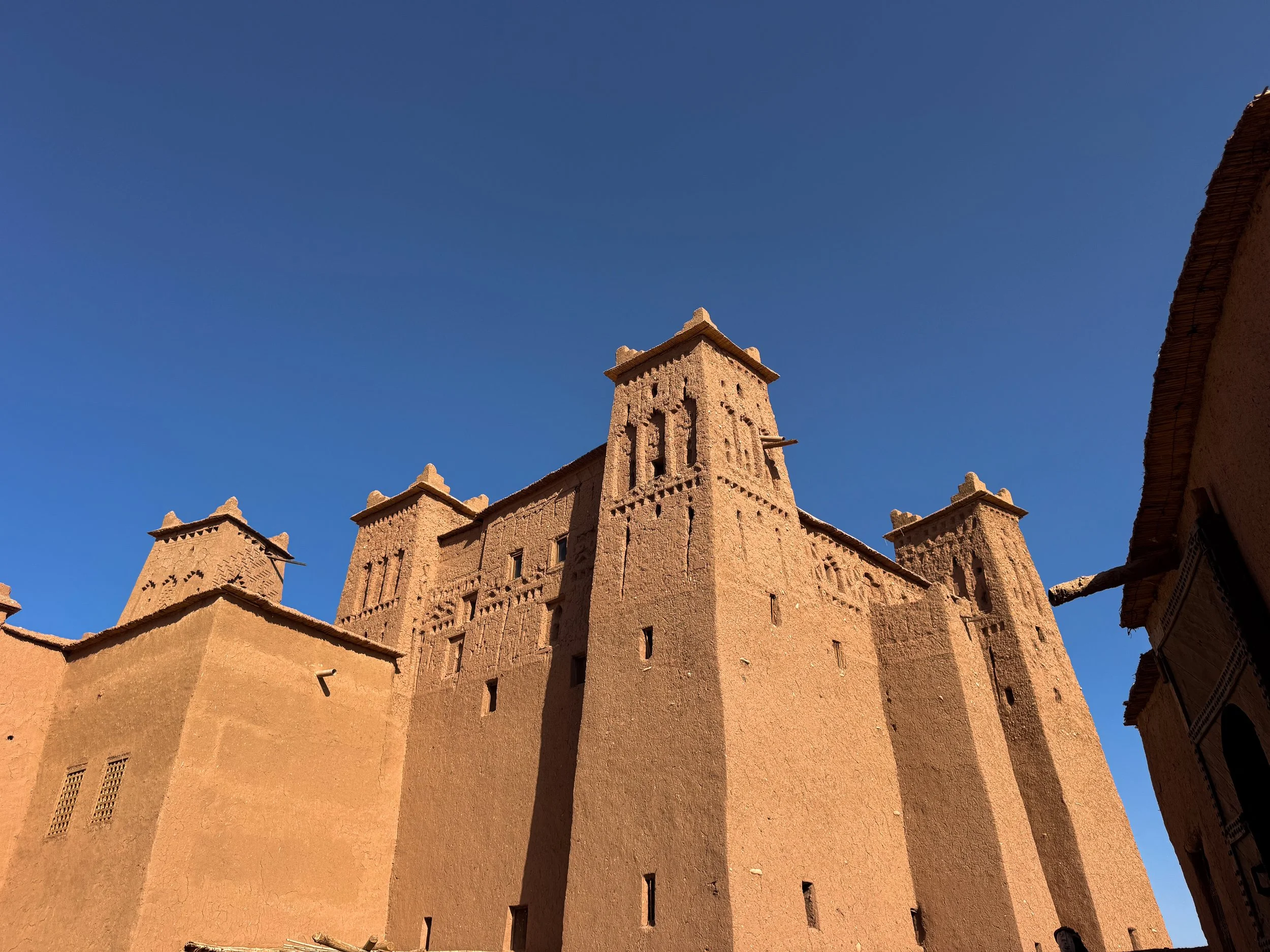
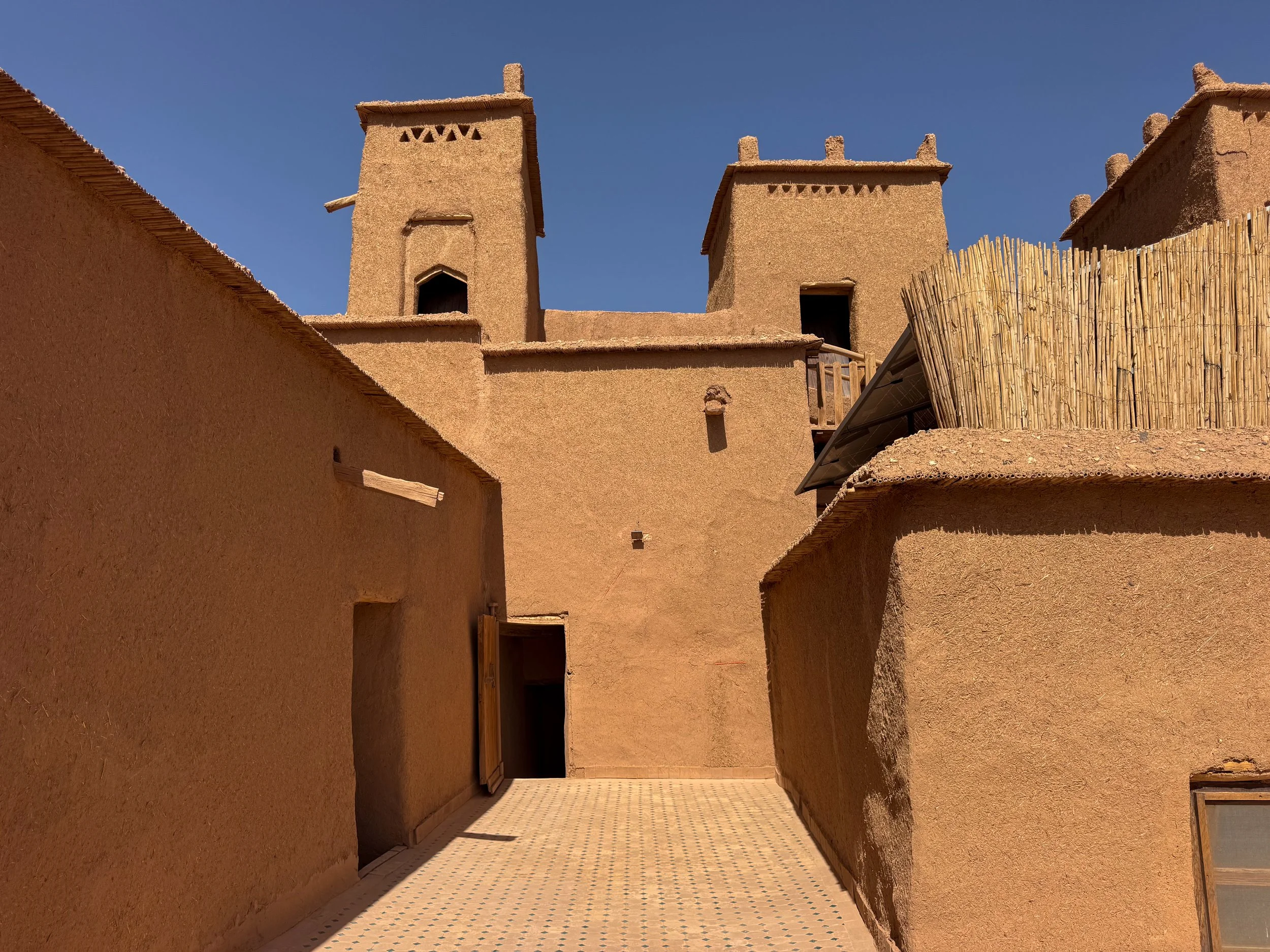
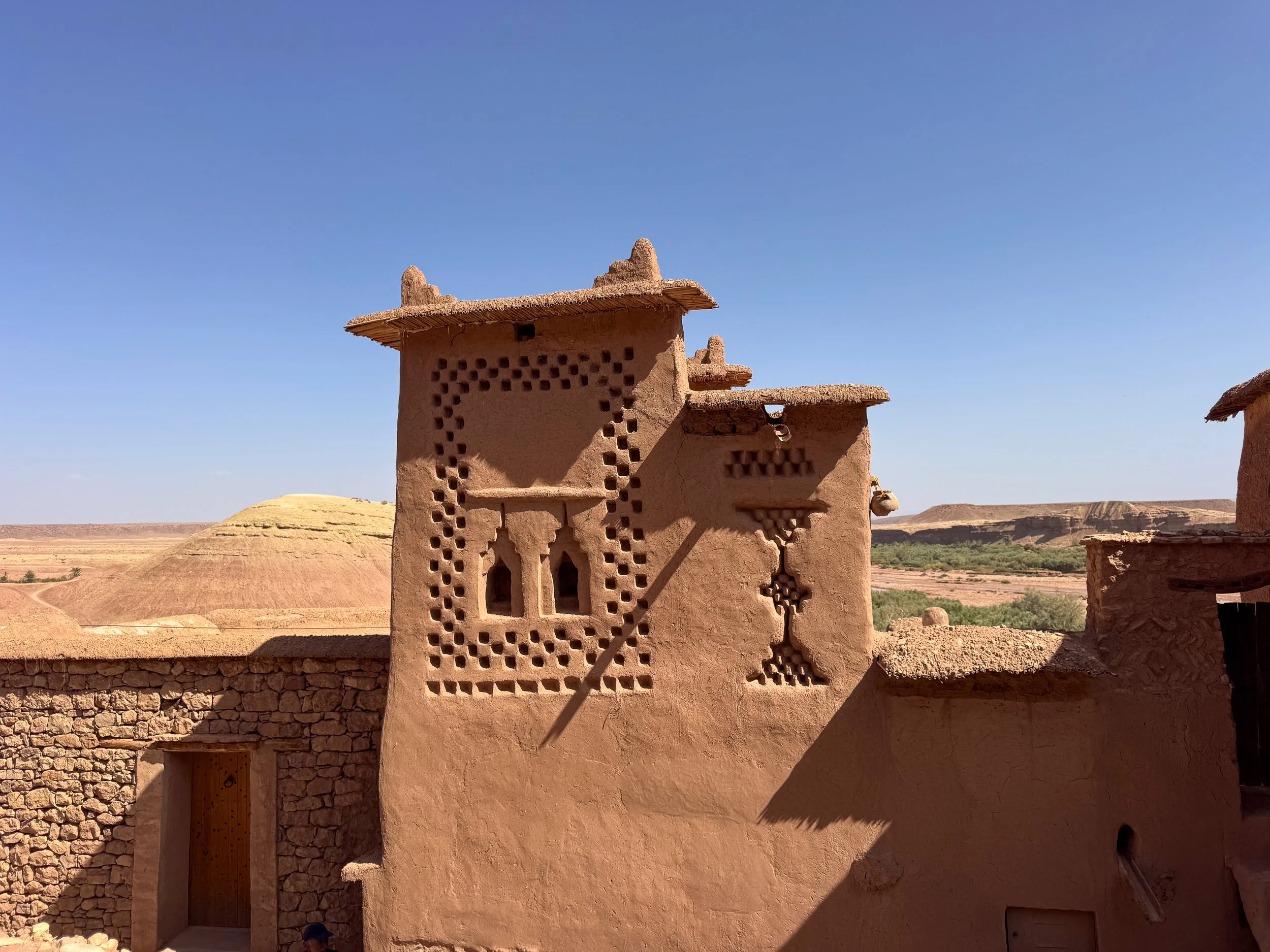
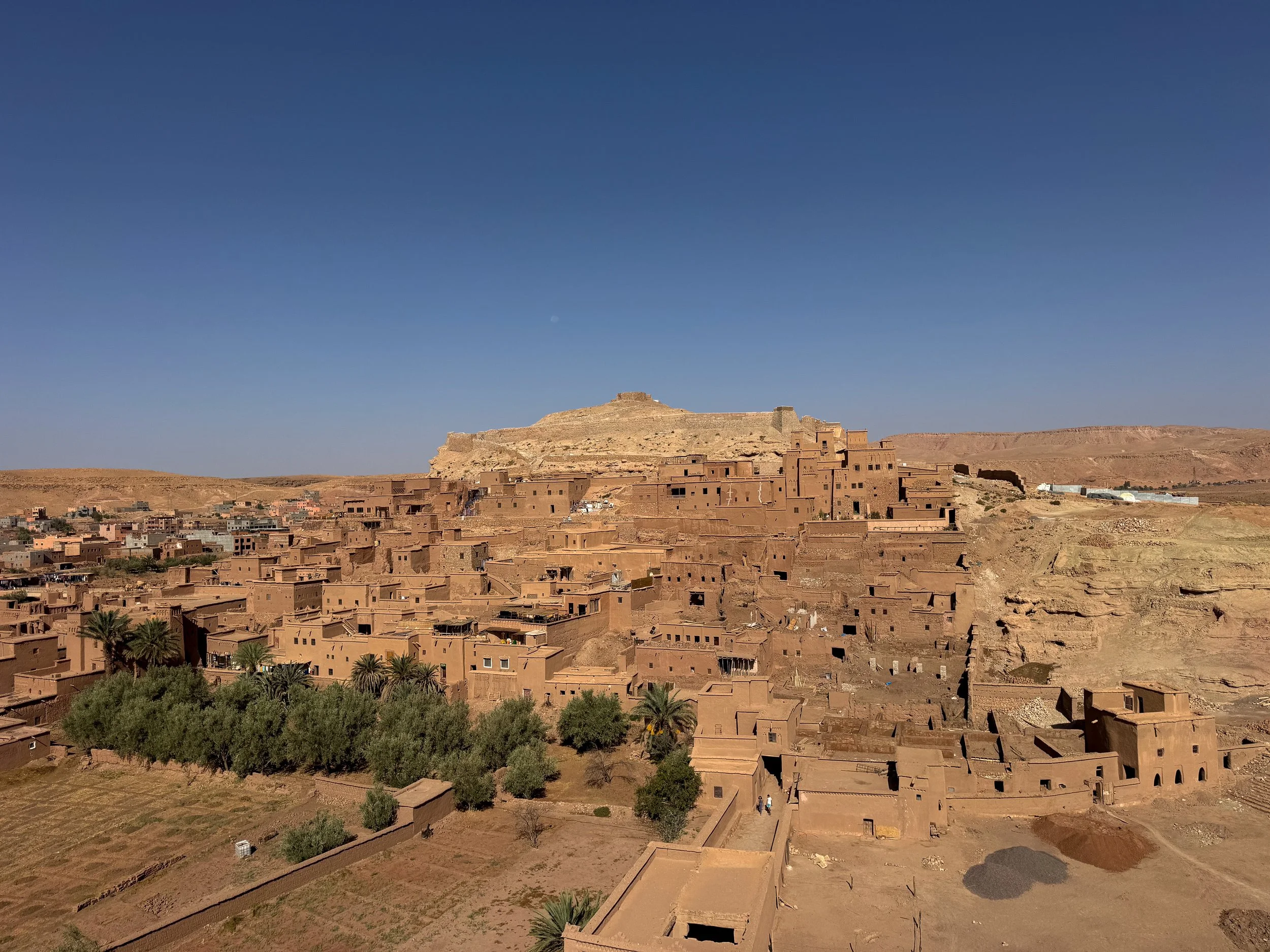
The Ancient Ksar. Adobe buildings and four towered kasbahs rise from the hillside of the ancient ksar. Their sand hued facades blend in with the desert landscape. Berber patterns and geometric designs decorate their outer walls. Narrow streets and passageways meander past cafés with rooftop terraces and vendors selling Berber goods.
Pro Tip. Walk through the empty streets of the ksar after the sun rises.
The Modern Village. A contemporary expansion of the ancient ksar. Its sand hued buildings are home to local residents, tourist hotels, Moroccan restaurants and artisans. Rooftop terraces overlook the ancient ksar offering panoramic views of its grandeur and the surrounding landscape.
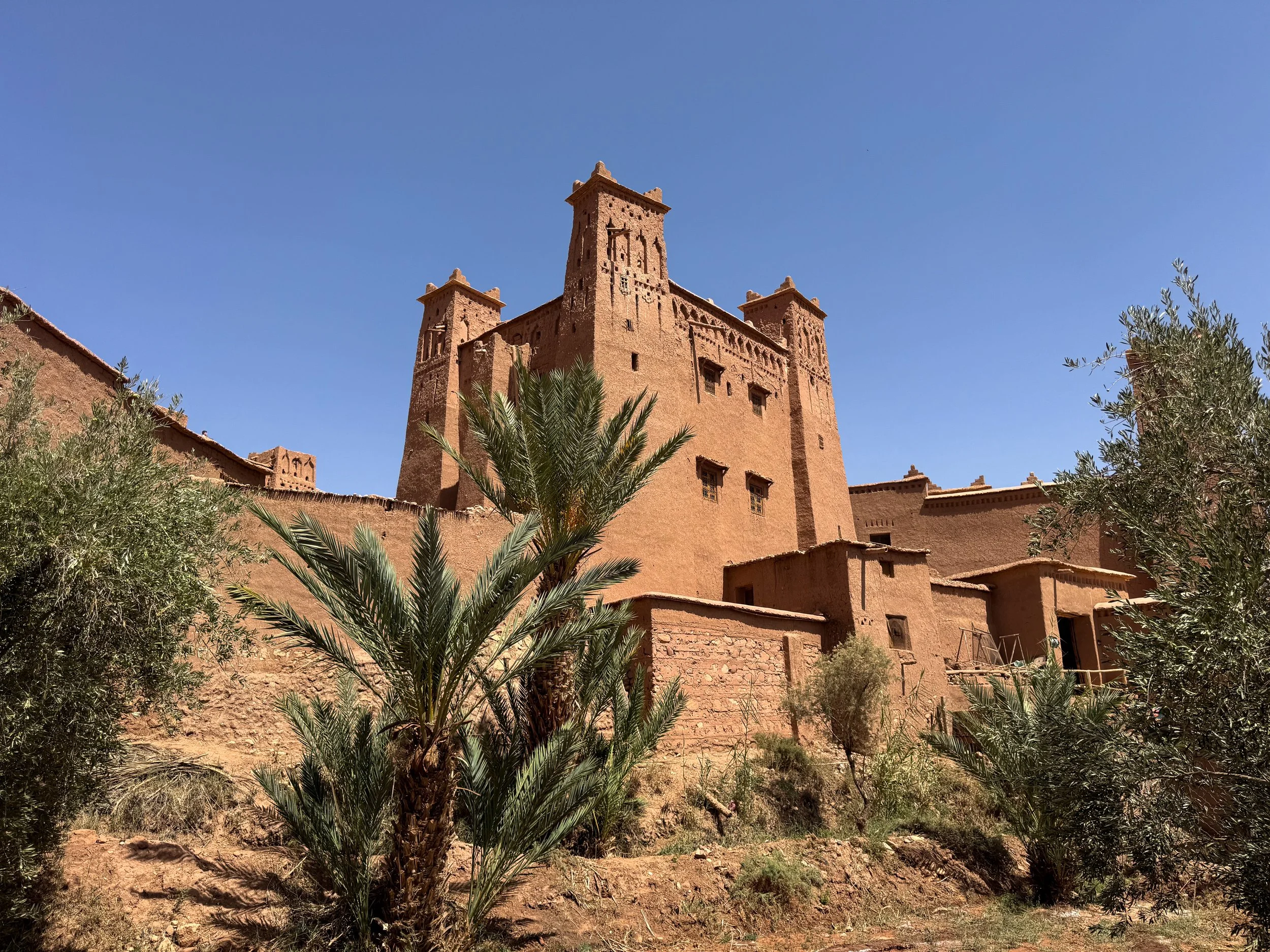
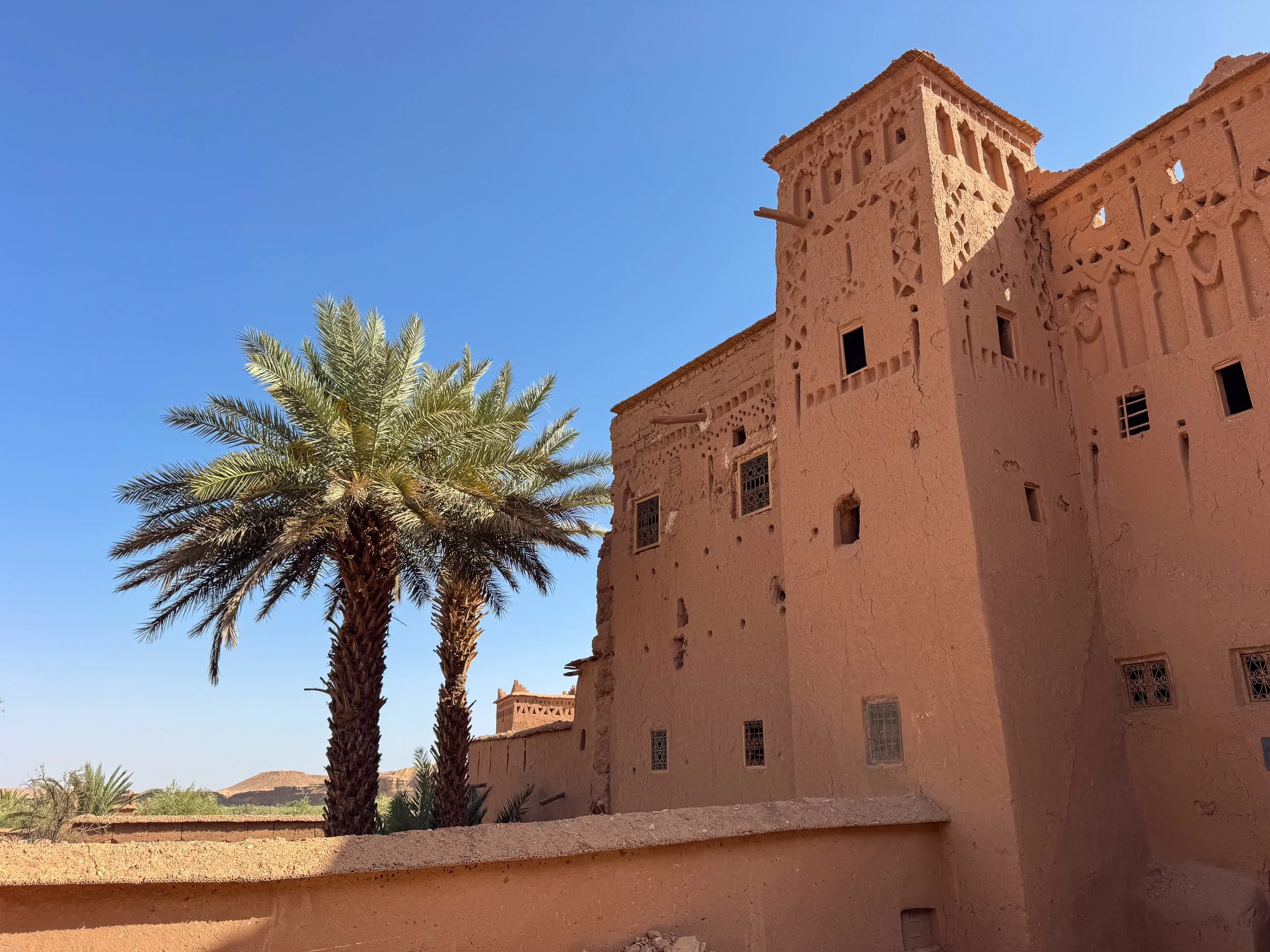
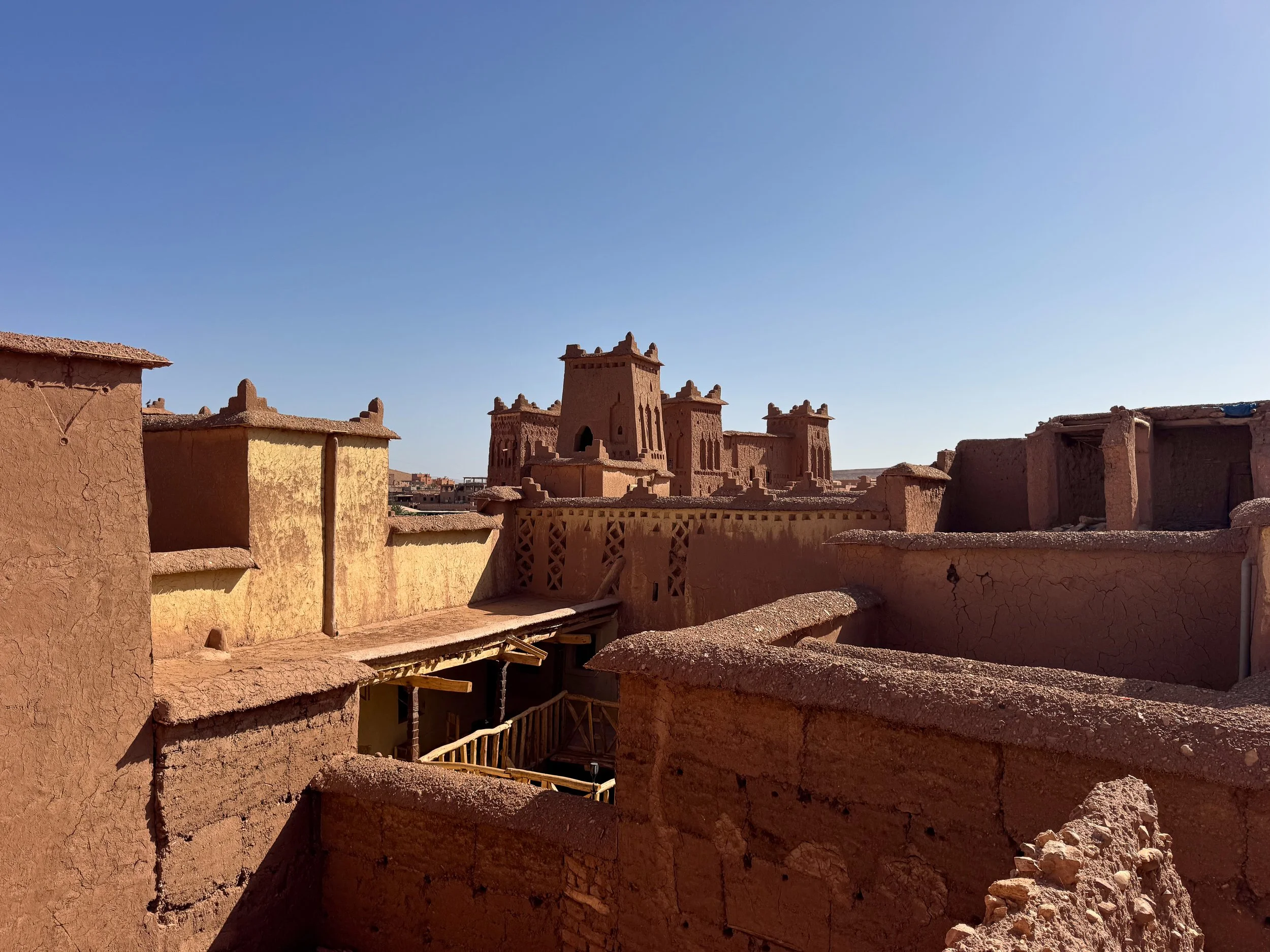
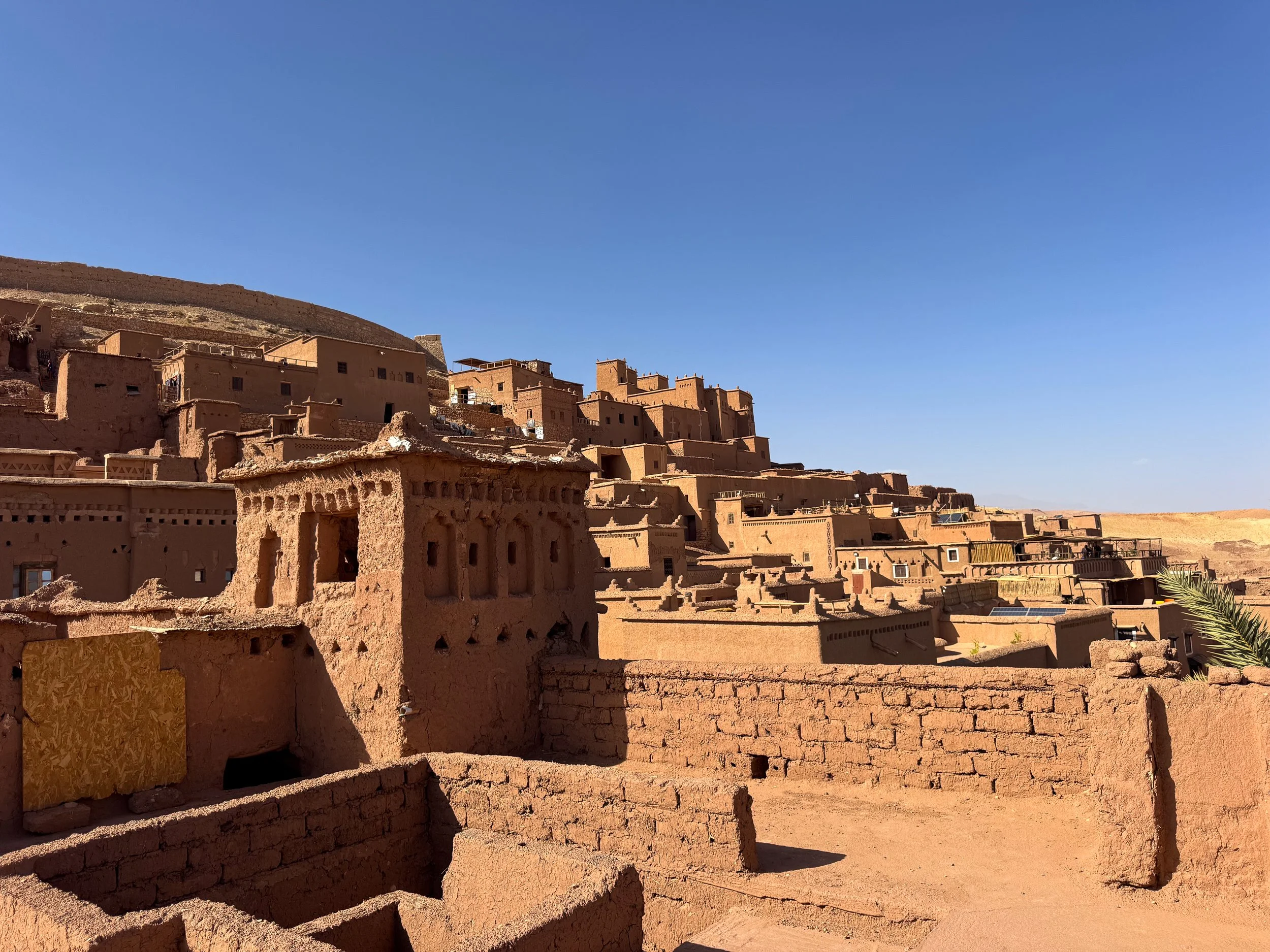
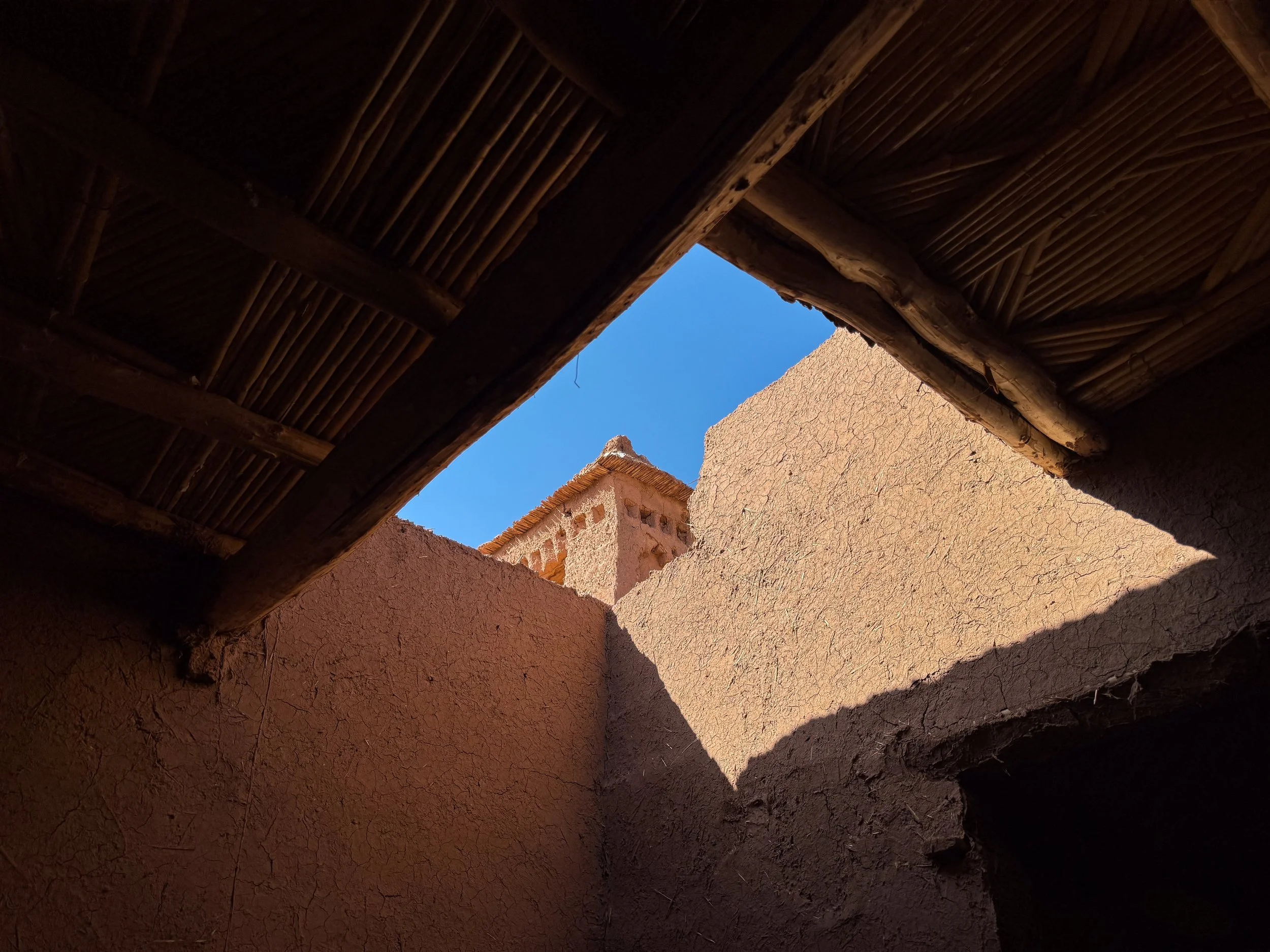
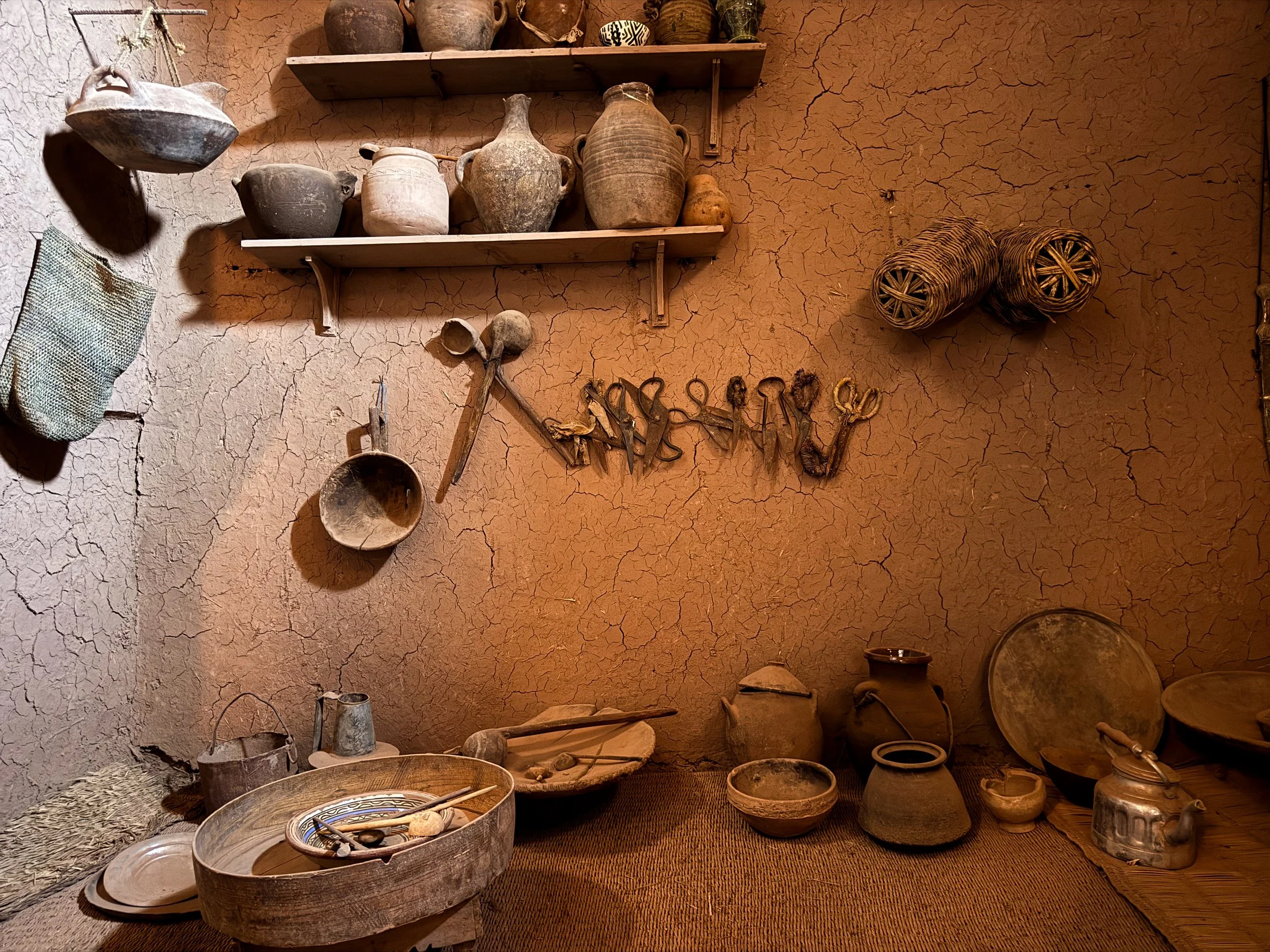
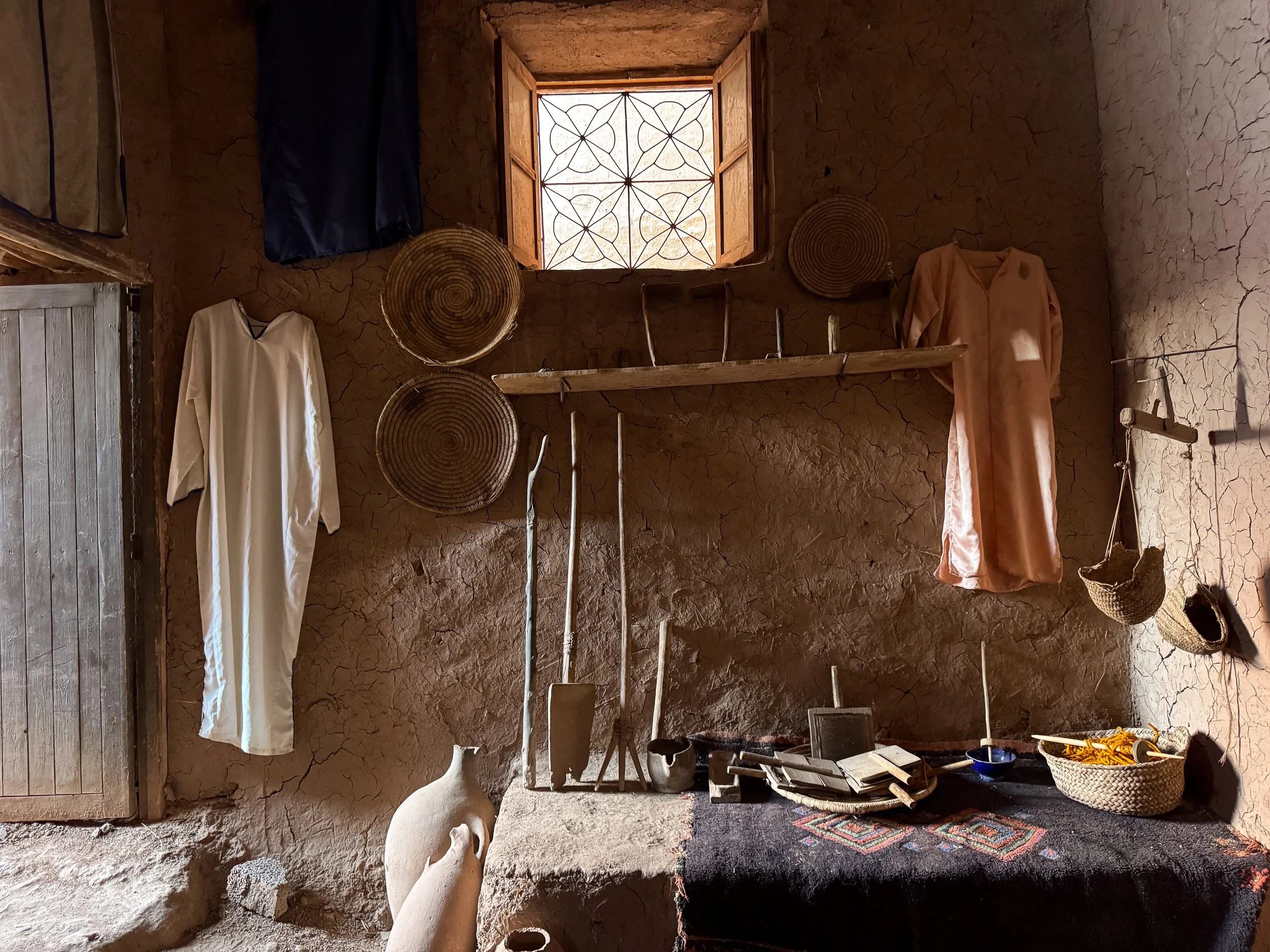
Tour The Kasbahs. Ait Ben Haddou’s kasbahs are worth visiting to experience local life and traditions. Their owners typically charge a small fee to enter.
The Museum Kasbah. A large kasbah with several connected rooms and a central staircase leading to the upper floors and the roof. Traditional tools, ceramics and textiles are displayed on interior walls. The roof offers views of the ancient ksar, its neighboring kasbahs and adobe houses.
The Widow’s Kasbah. A crumbling kasbah still inhabited by an older woman. She toured us through the ground floor, showing us her kitchen, bedroom and living area where she weaves. She let us explore the abandoned upper floor.
Maison de l'Oralité. A large kasbah converted into a museum and cultural center dedicated to Berber arts, language and traditions. Its exhibits feature traditional musical instruments, weaving tools and looms, historic photos and stories of local folklore. The kasbah is one of the best preserved and still half occupied by a local family. Visit its rooftop for views of the ksar and surrounding landscape.
Ksar vs Kasbah. Two terms used to describe the architecture of desert villages like Ait Ben Haddou.
Ksar refers to the walled city or fortified village made up of one or multiple kasbahs and surrounding houses.
Kasbah is a wealthy family’s house, often built within a ksar. They’re larger than surrounding houses and defined by their four cornered towers.
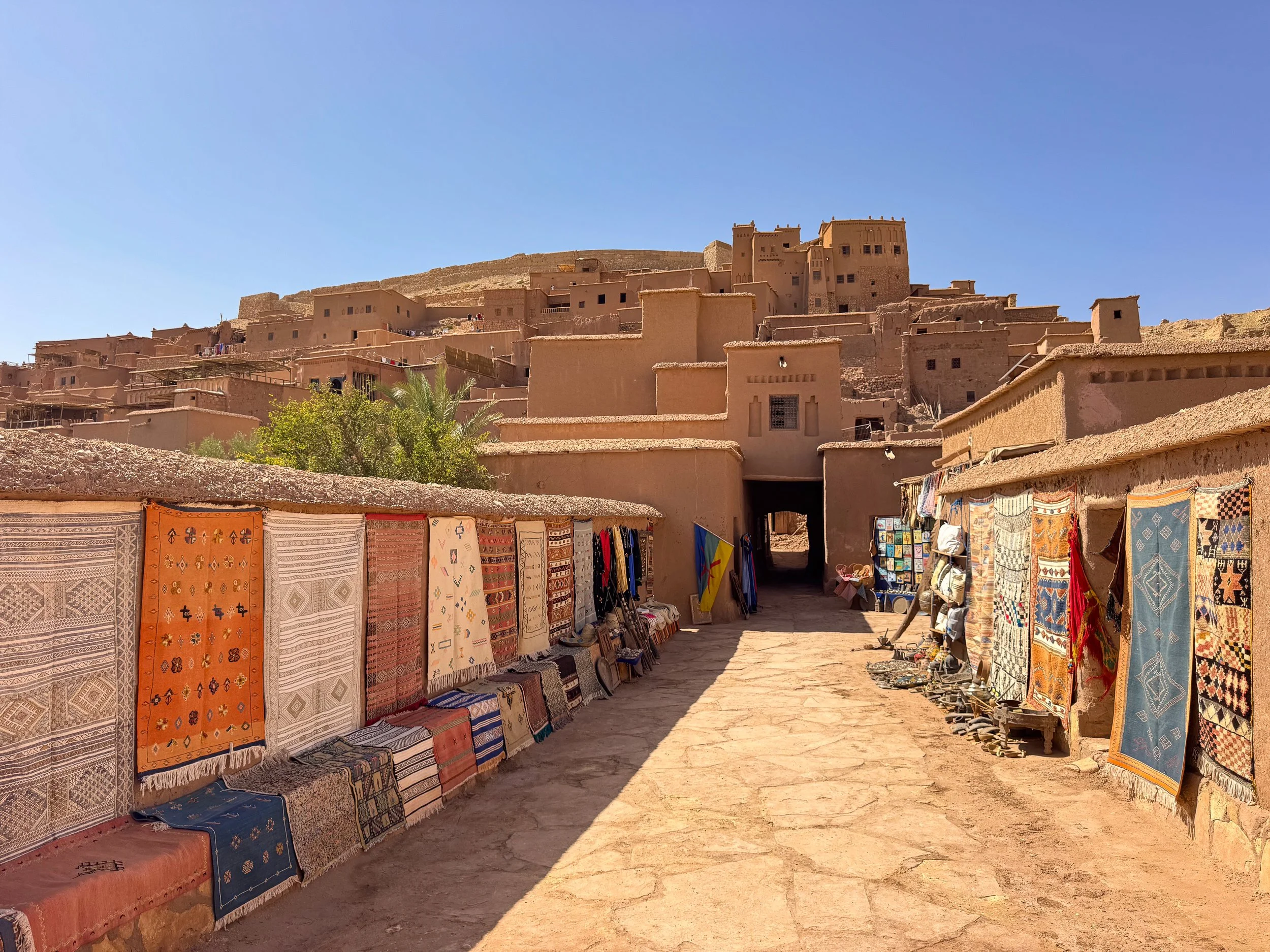
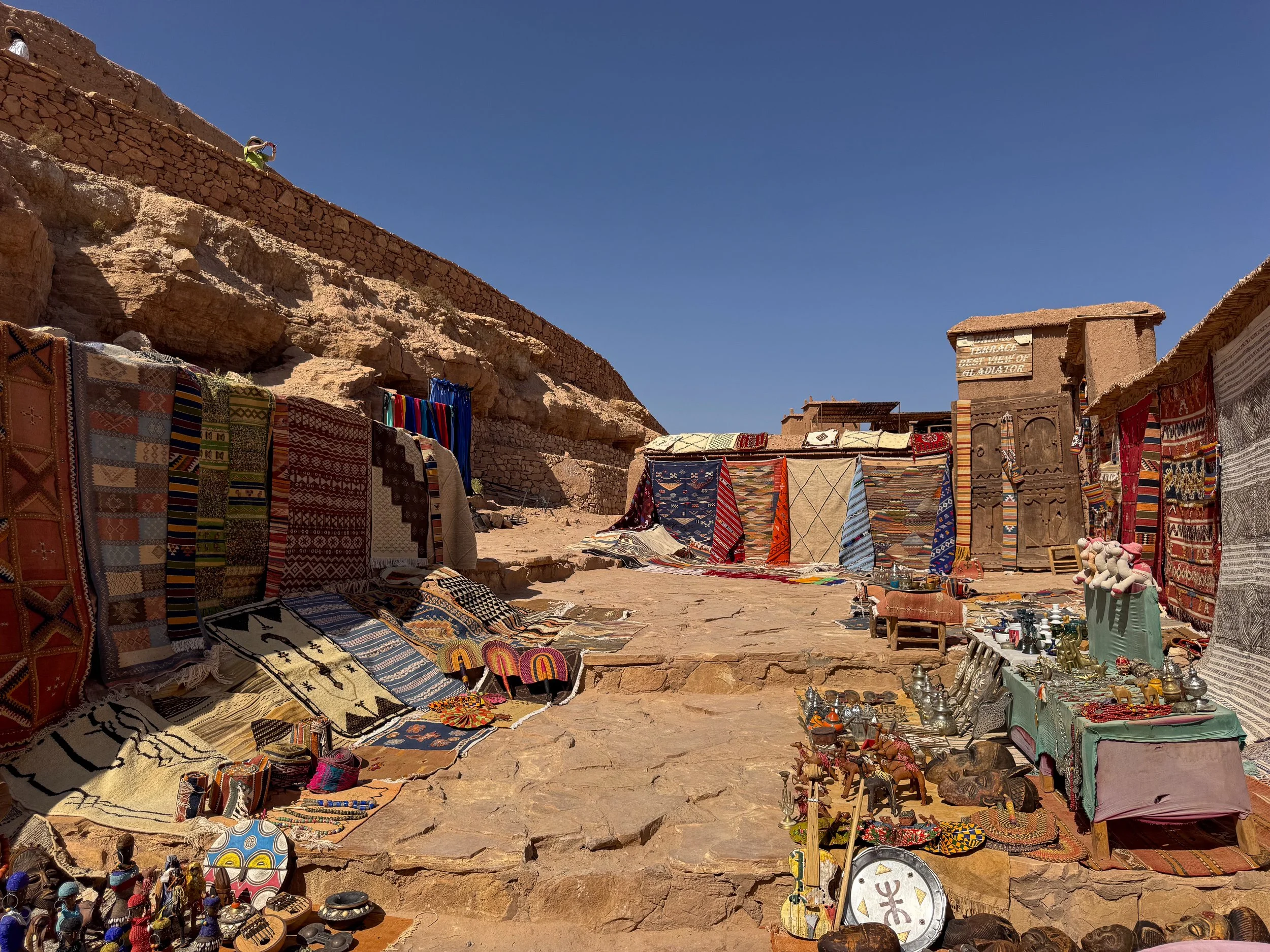
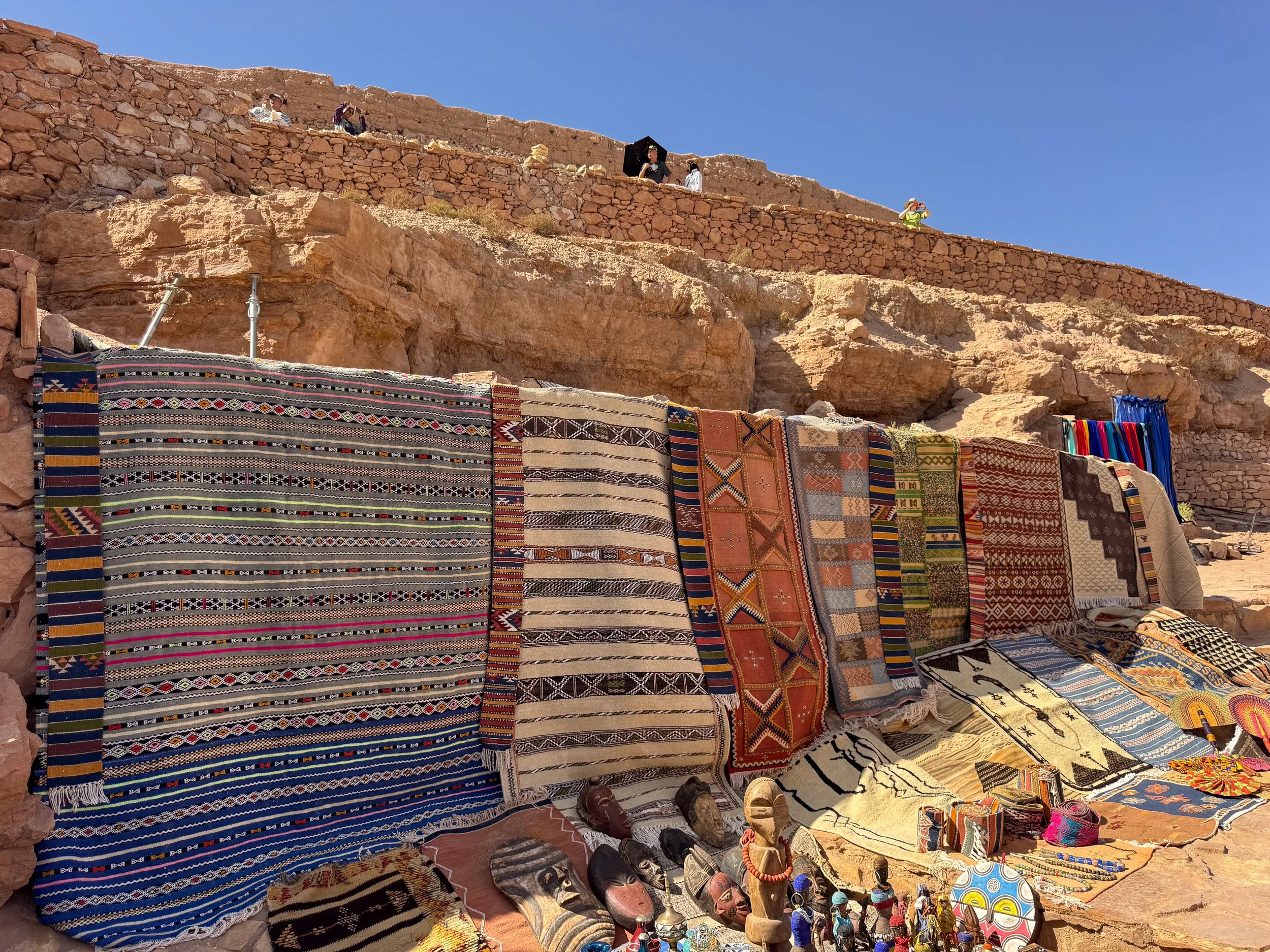
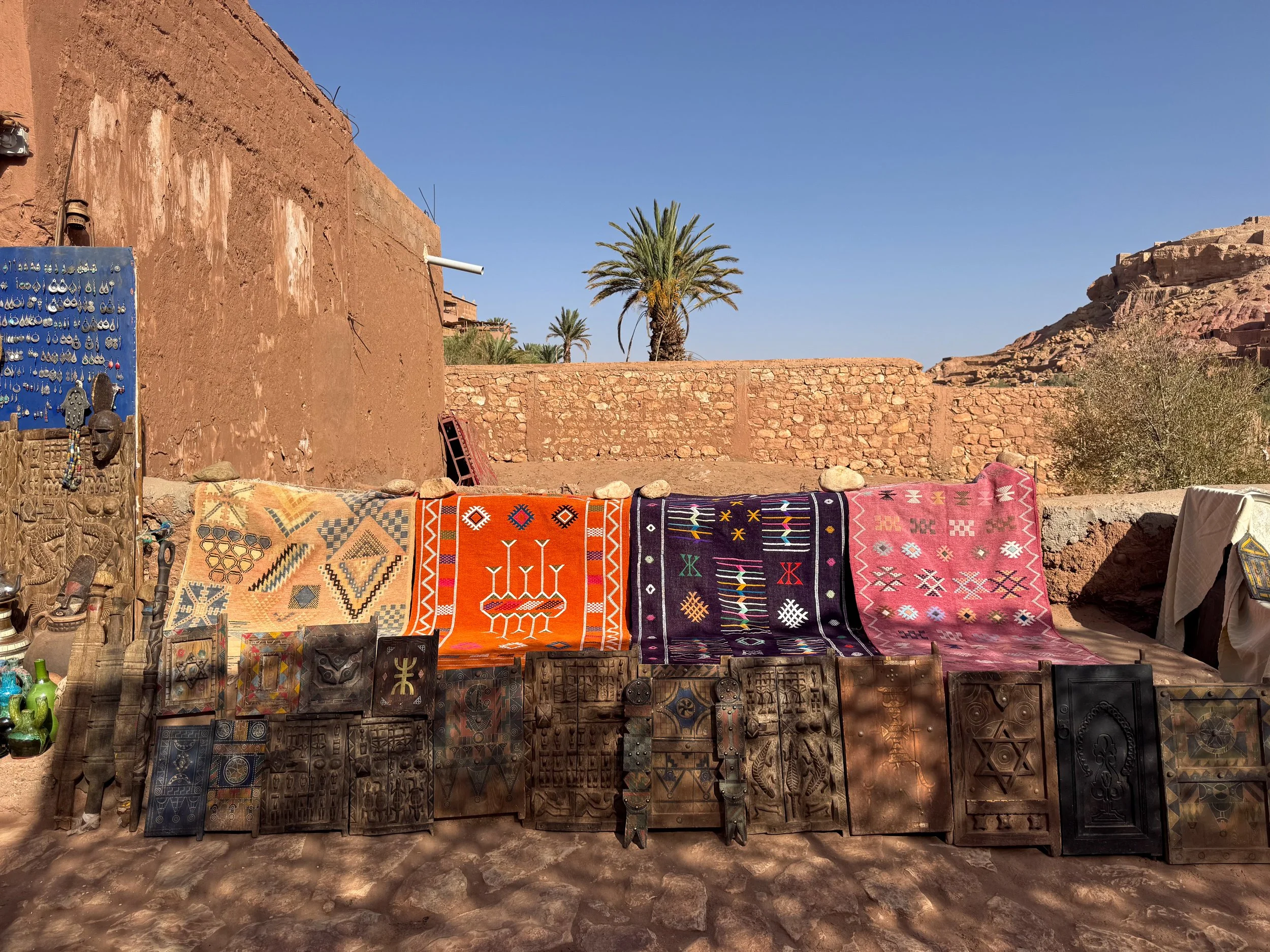
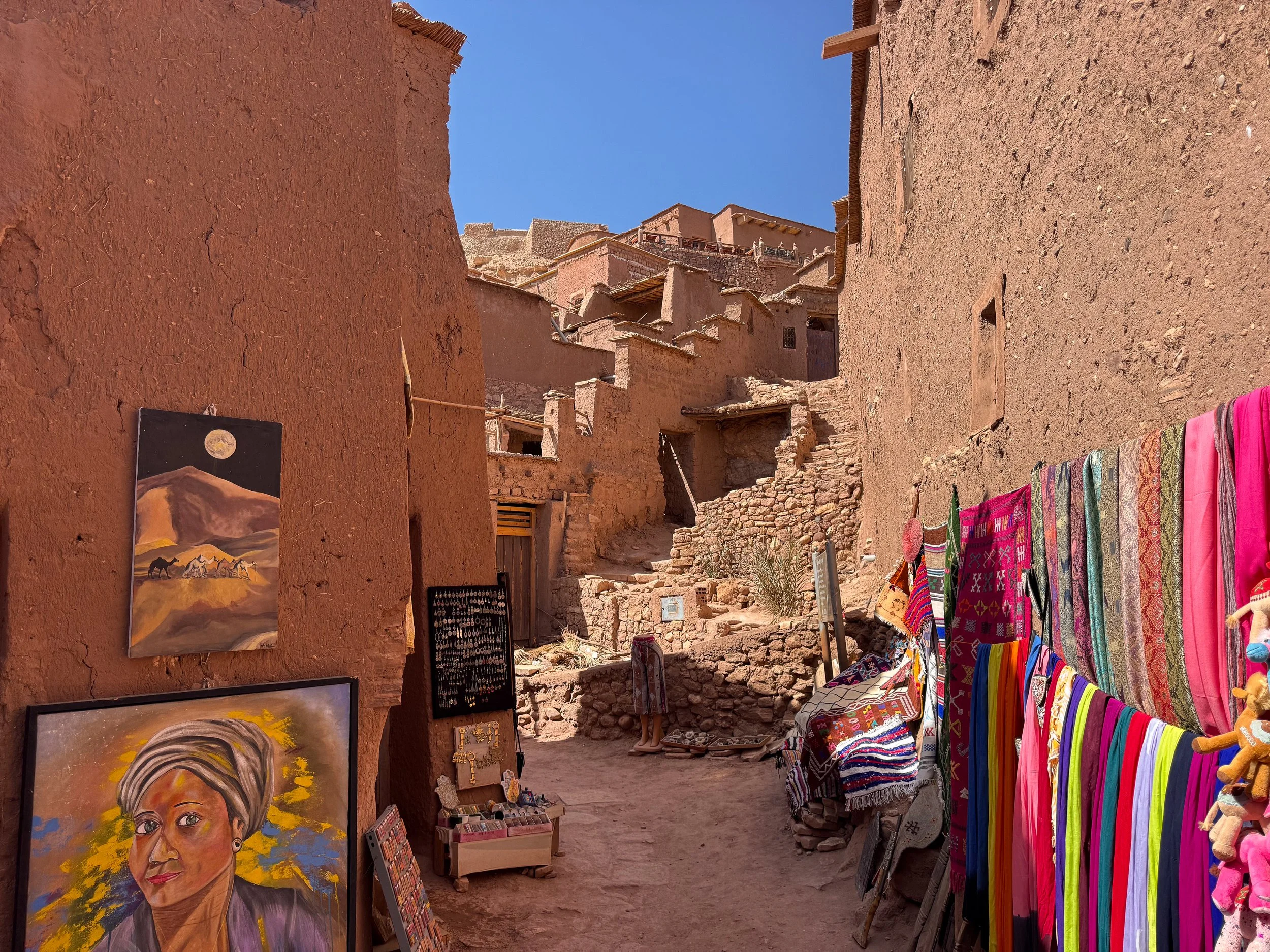
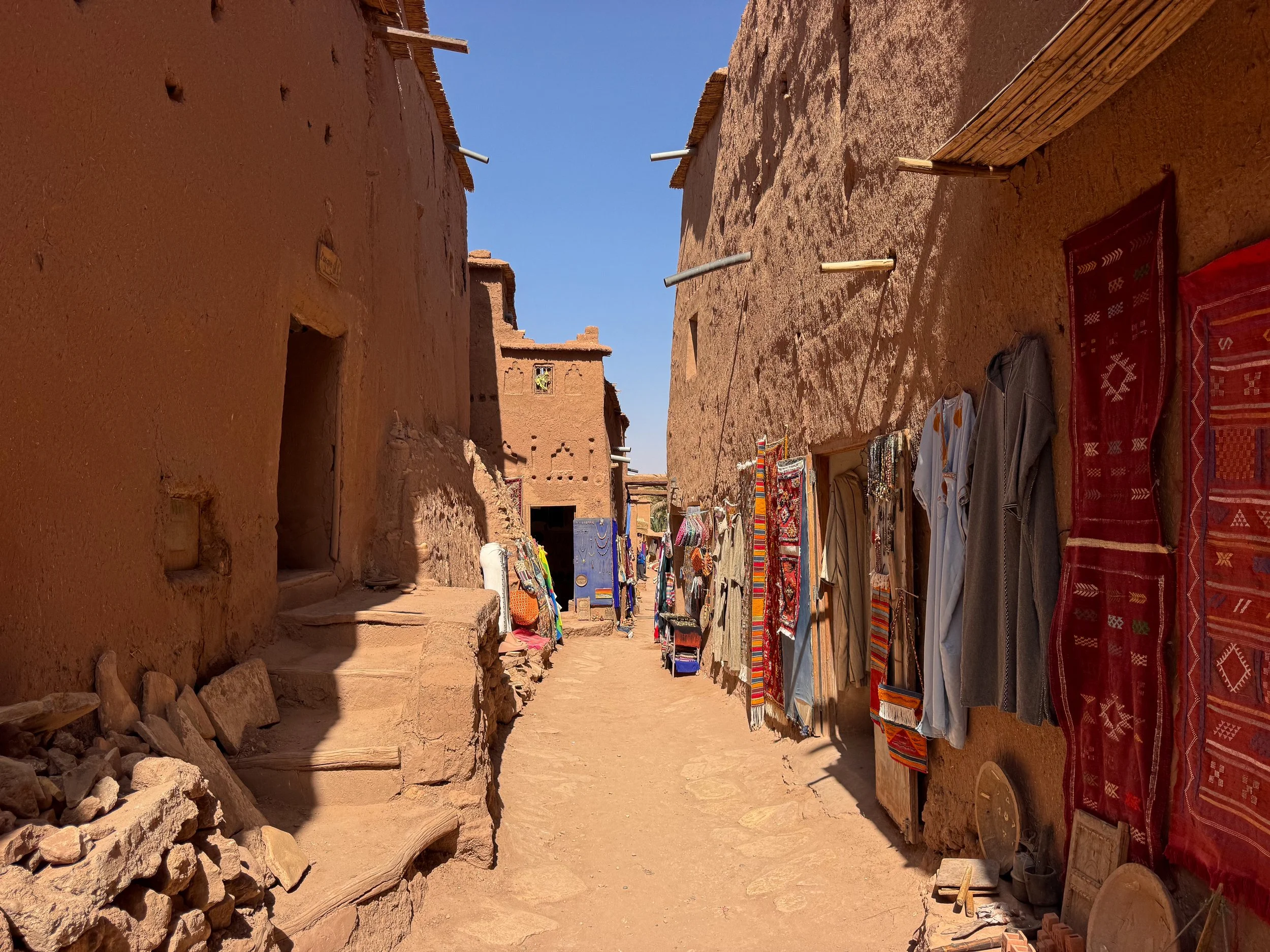
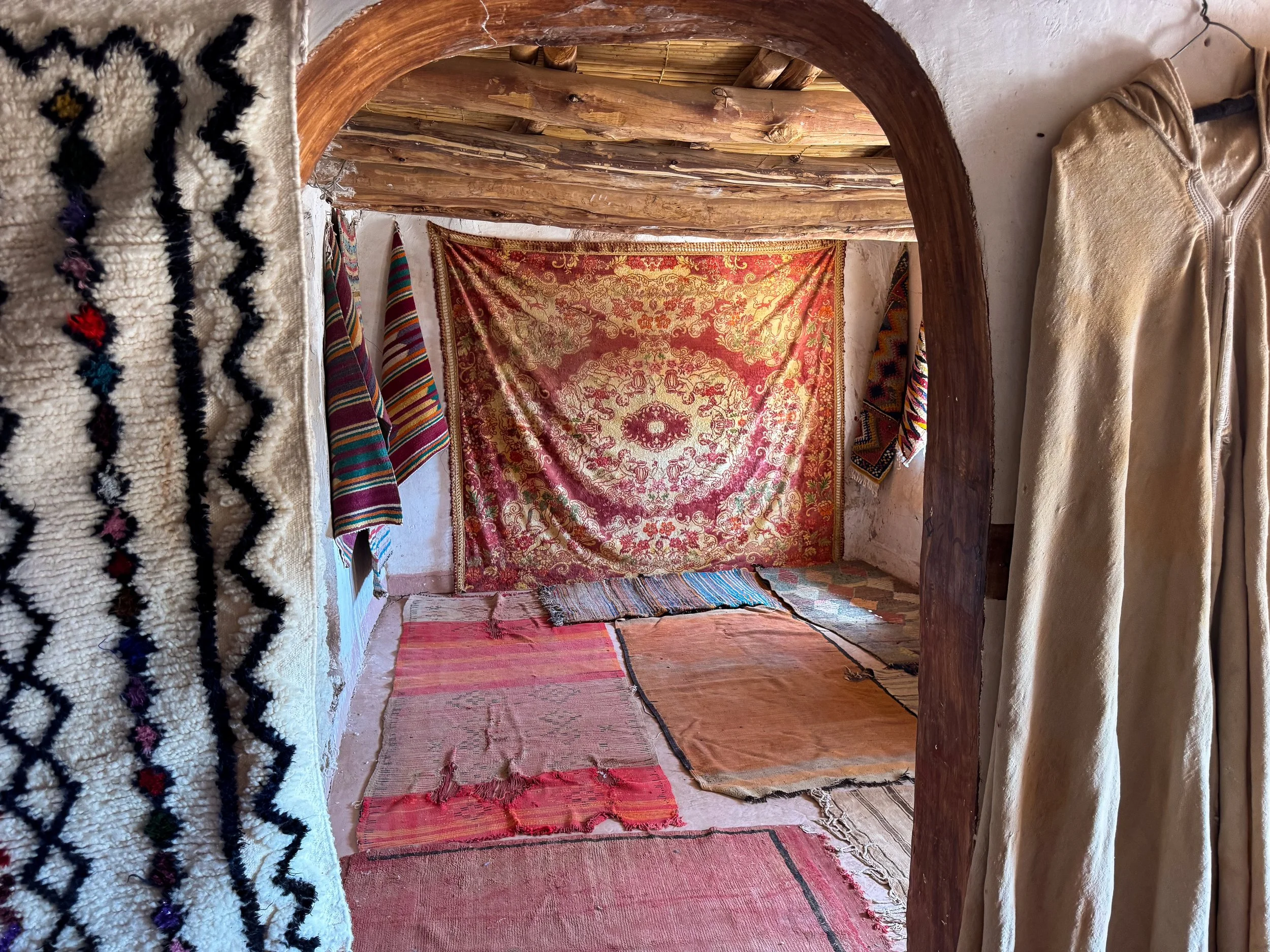
Berber Souks. Ait Ben Haddou was built along an ancient Berber caravan route. Berber craft and culture continues to prosper in souks of the ancient ksar. The narrow alleyways are lined with vendors displaying traditional goods and antiques. Shops sell metal jewelry, patterned rugs, colorful scarves, desert knives, brass lamps, clay pottery, carved wooden locks and paintings.
Good to Know. Accept mint tea if offered by a shopkeeper'; it’s Berber hospitality. Sit down and chat for a few minutes. Leave when ready and don’t feel pressured to buy anything.
Pro Tip. Ait Ben Haddou is a good place to buy Moroccan and Berber made items. Vendors are less aggressive than in larger cities and prices are often reasonable.
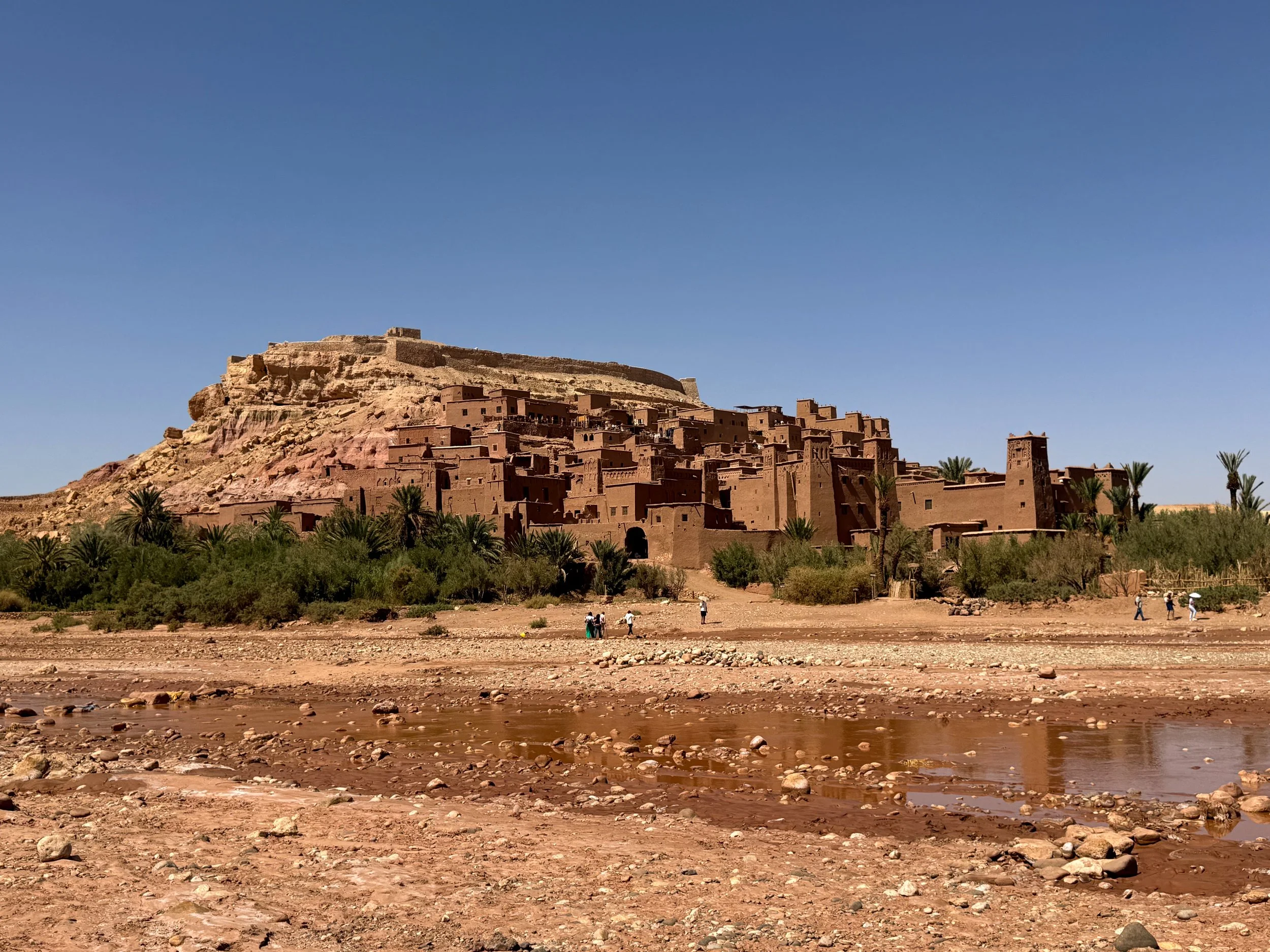
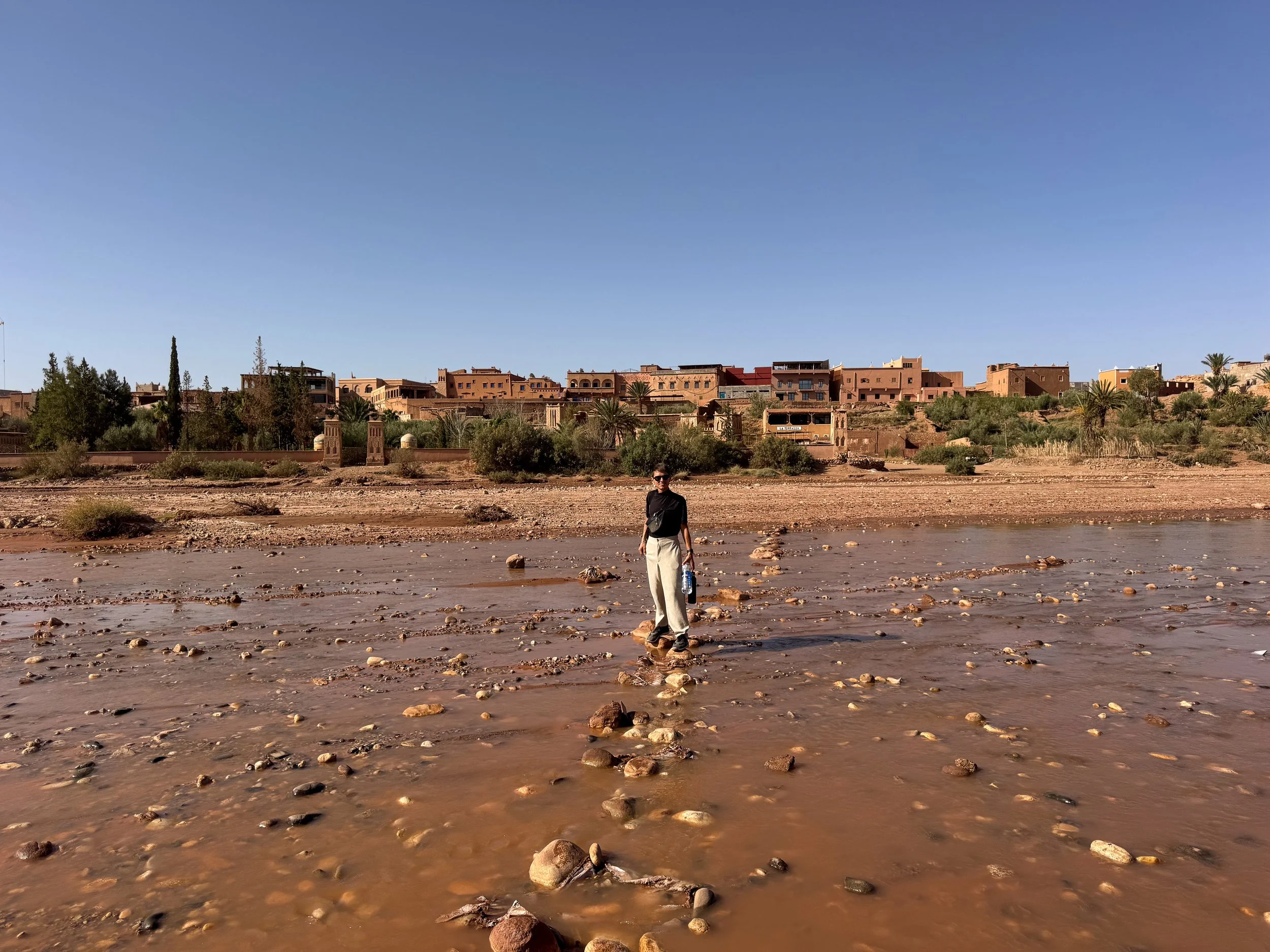
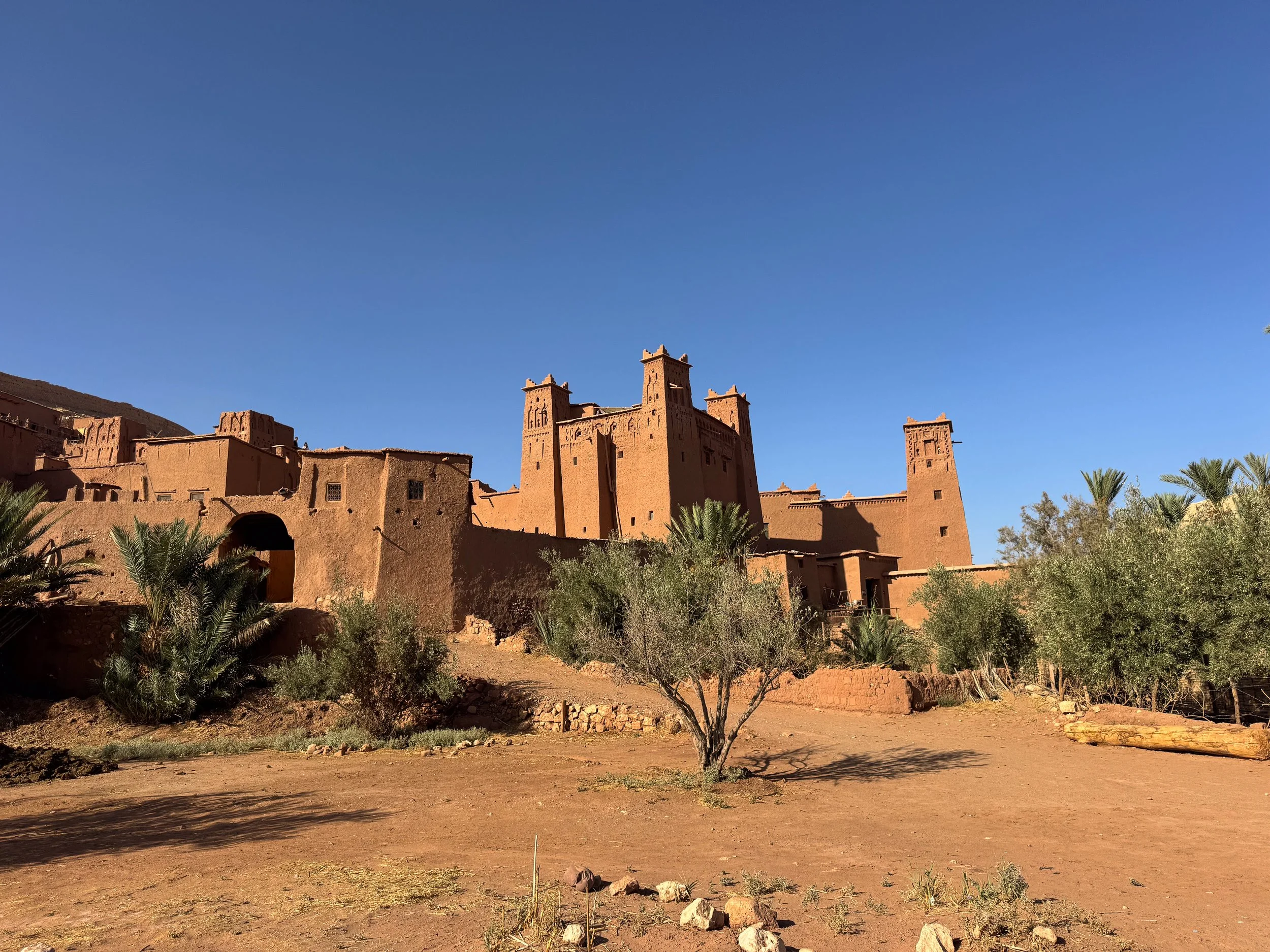
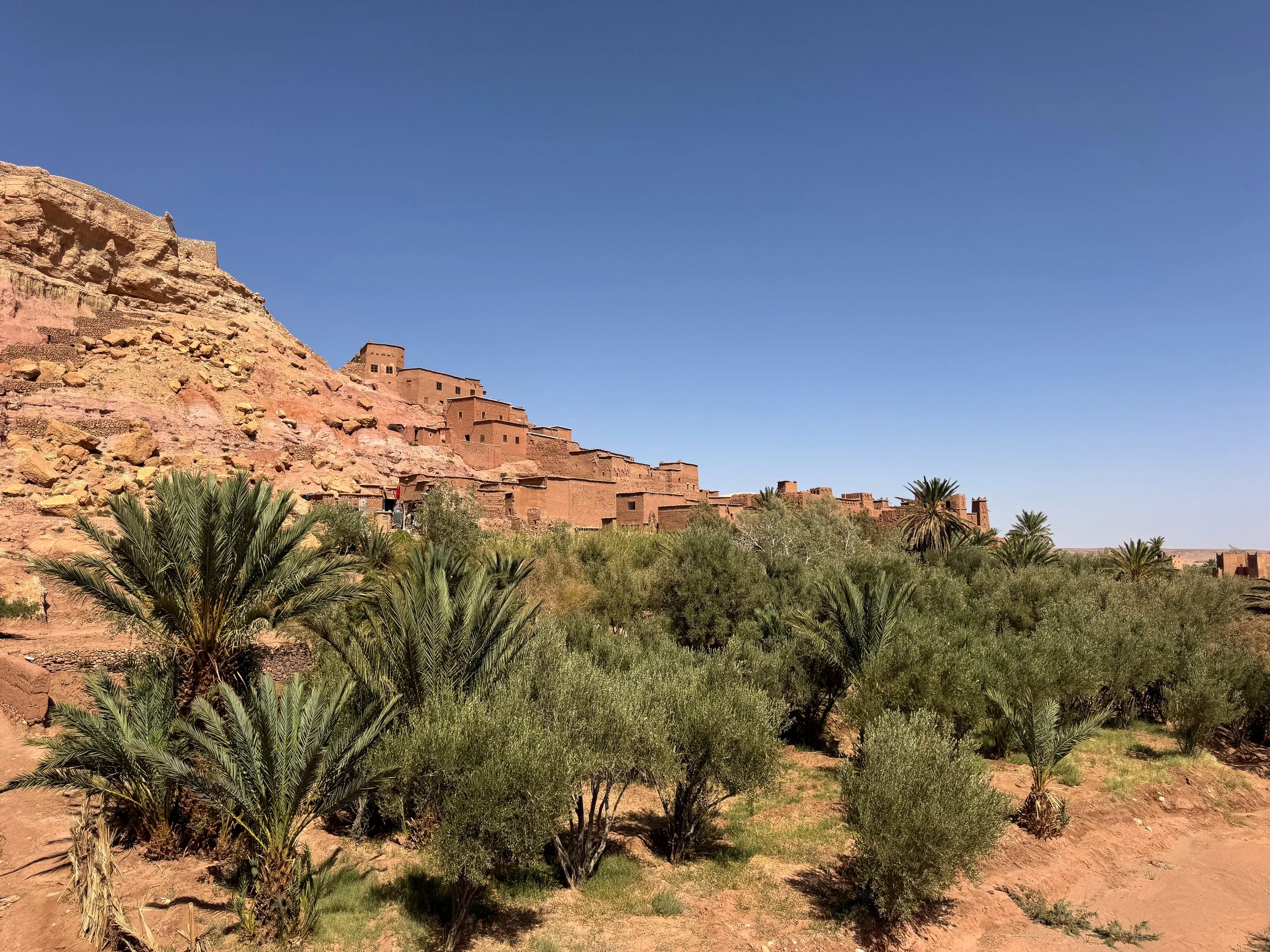
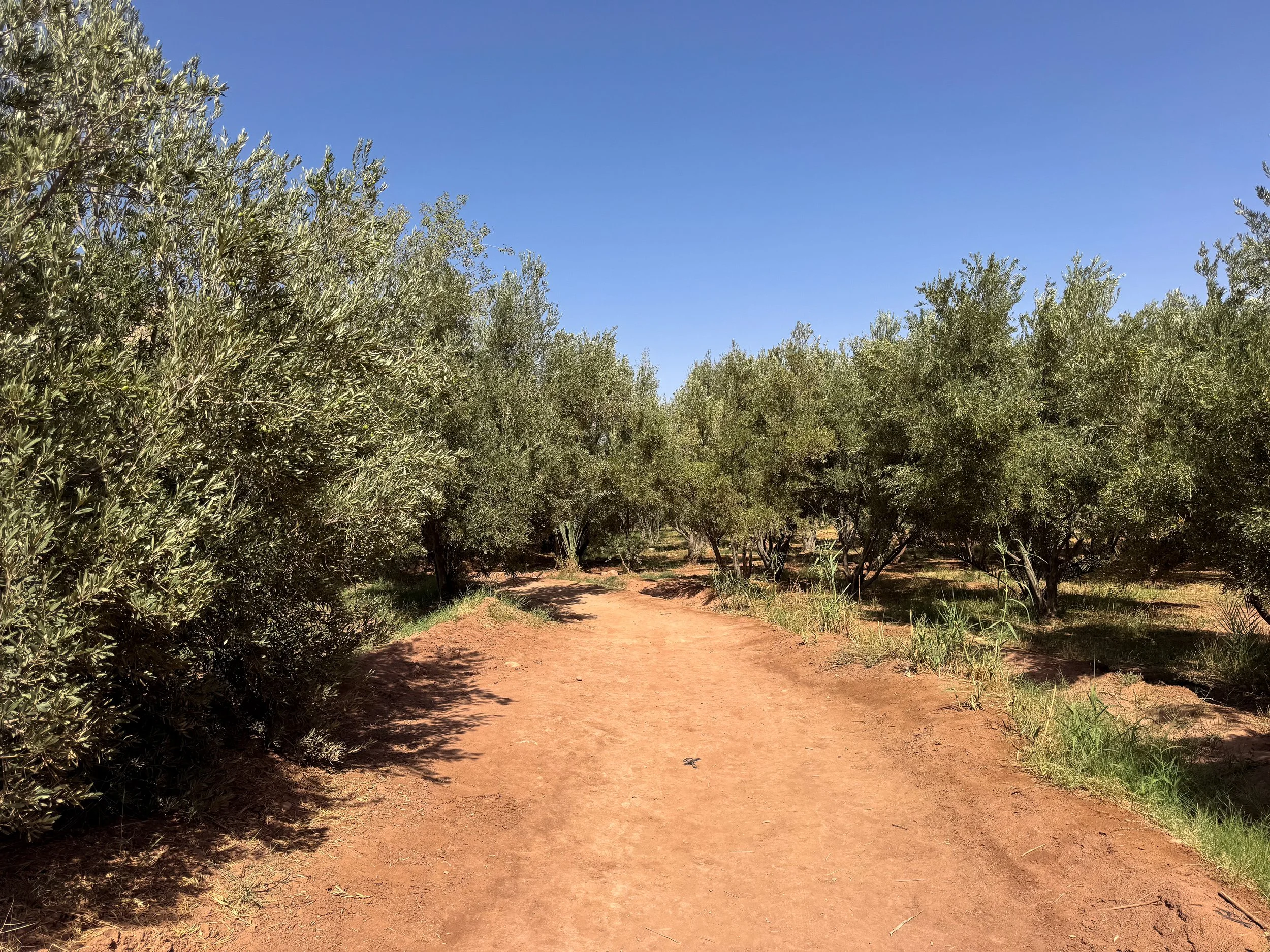
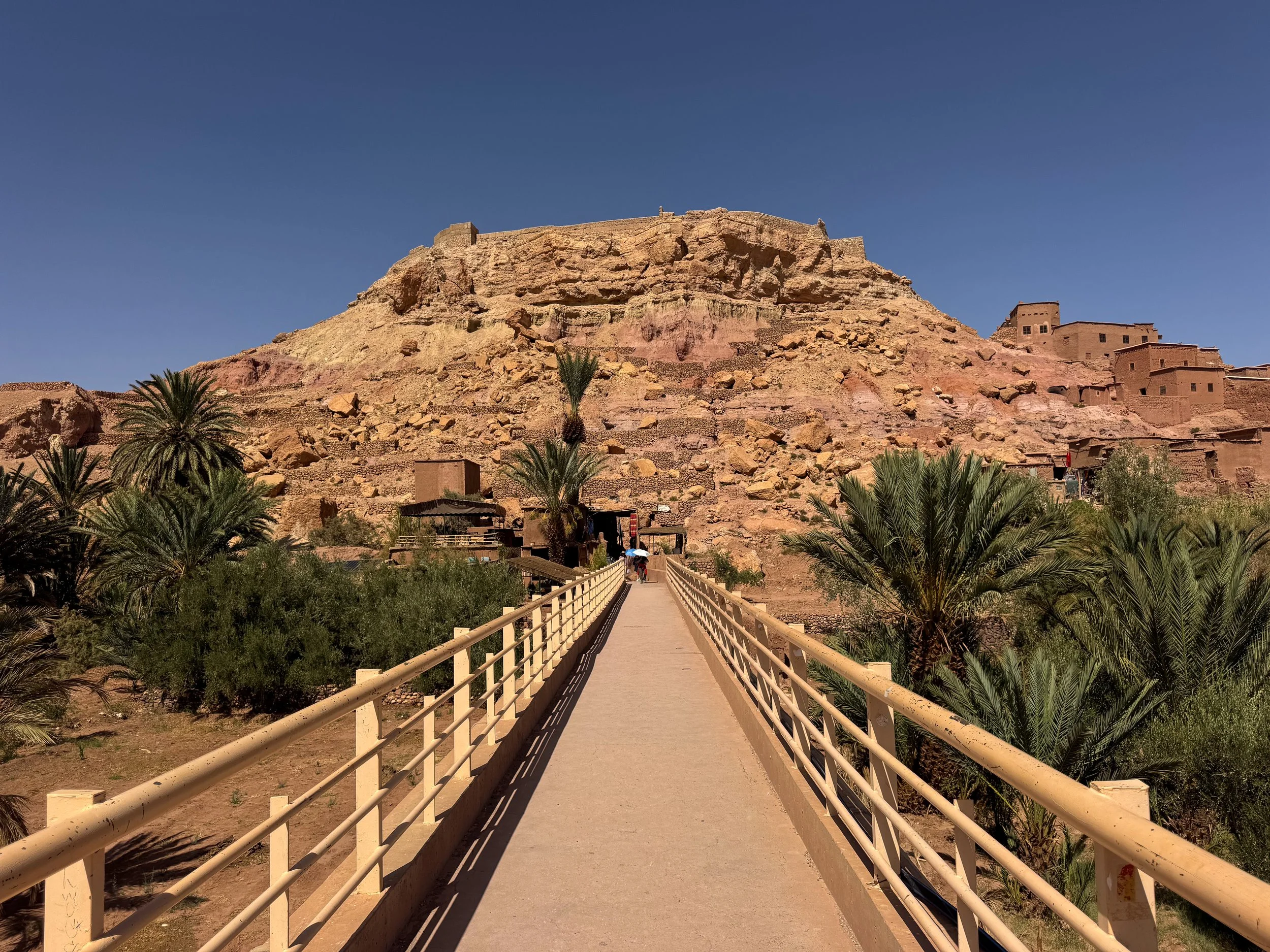
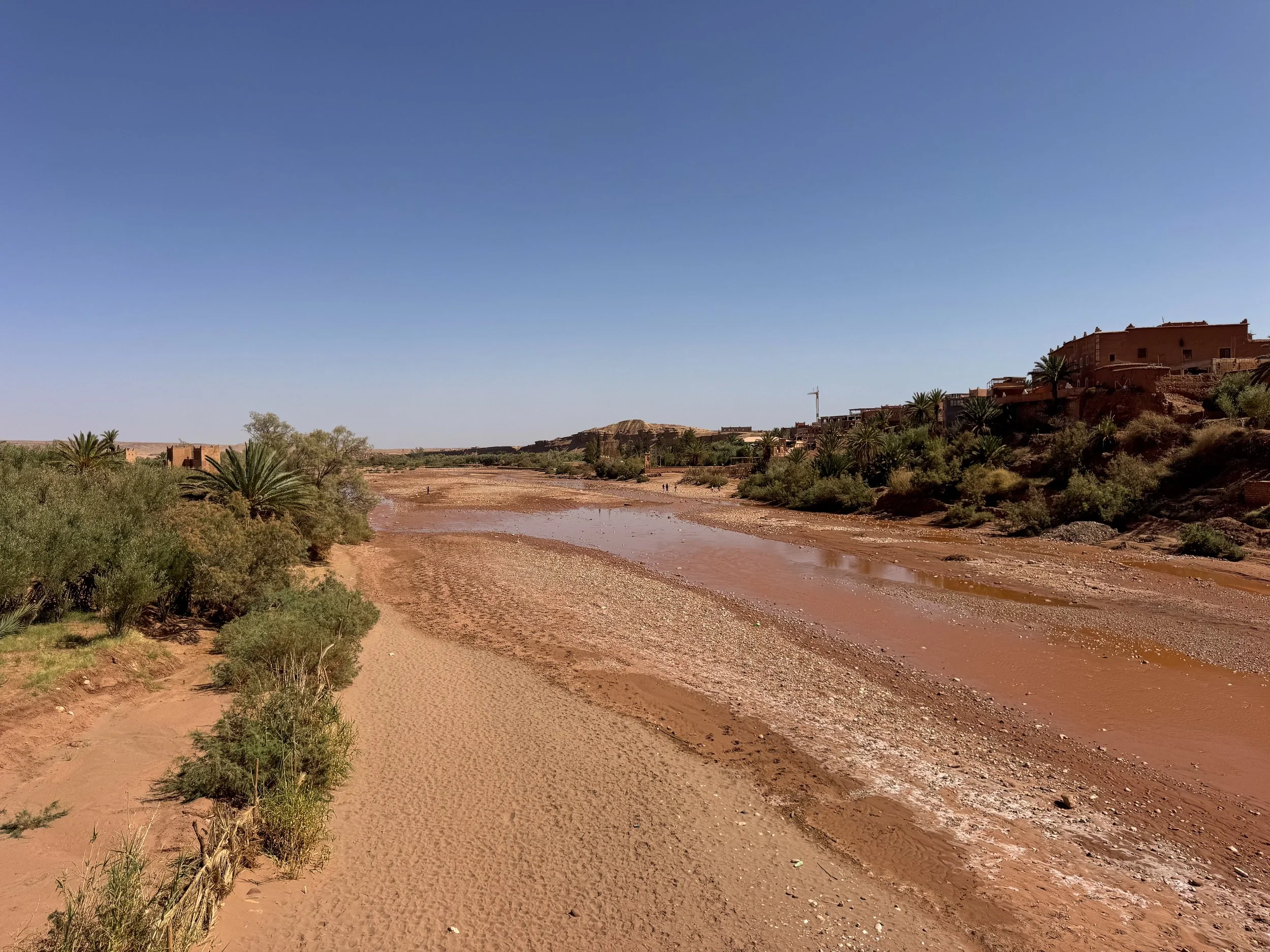
The Ounila River. A river separating The Ancient Ksar and Modern Village. Walk across its foot bridge or the stepping stones to transit in-between.
Foot Bridge. A pedestrian bridge leading directly between the modern village and ancient ksar. It’s free to cross and flanked by local restaurants and vendors.
Stepping Stones. During the dry season, stepping stones and sand bags create makeshift paths across the muddy river. This route offers scenic views of the ksar and its kasbahs.
Pro Tip. Follow the stepping stones across the river and walk downstream to the olive groves. A trail passes through them leading to the ksar’s eastern gate. This route avoids paying to enter or exit through the kasbahs.
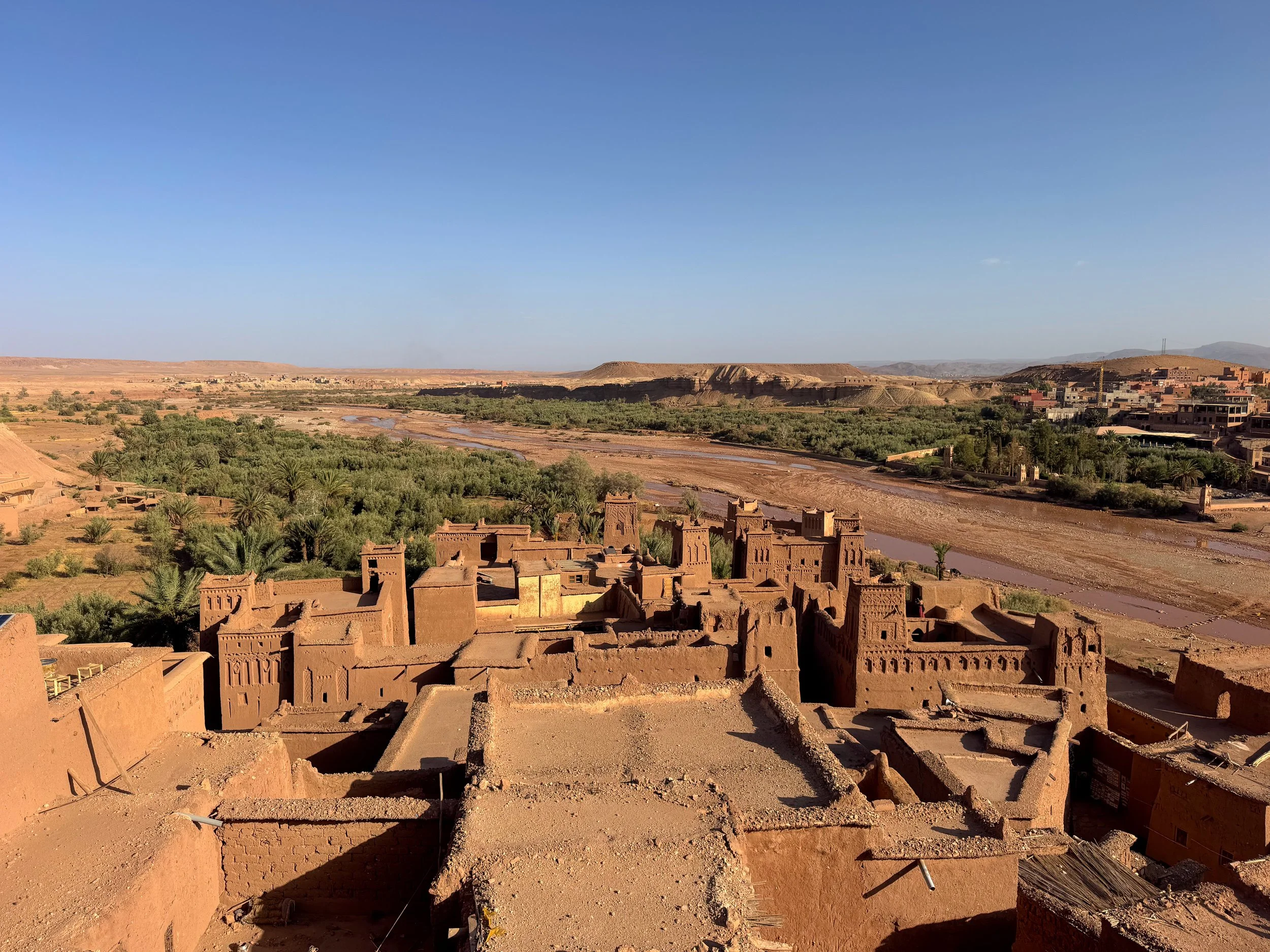
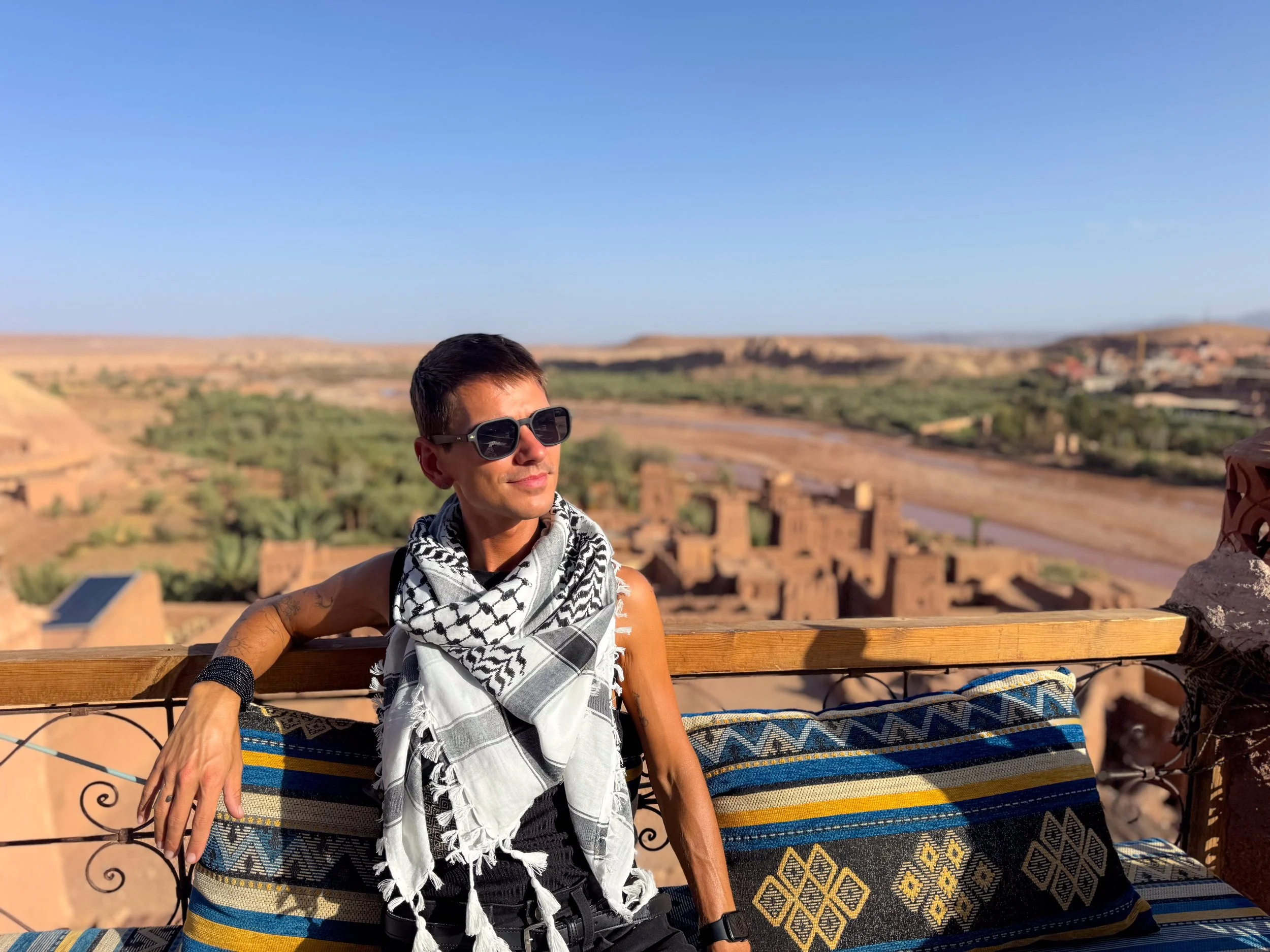
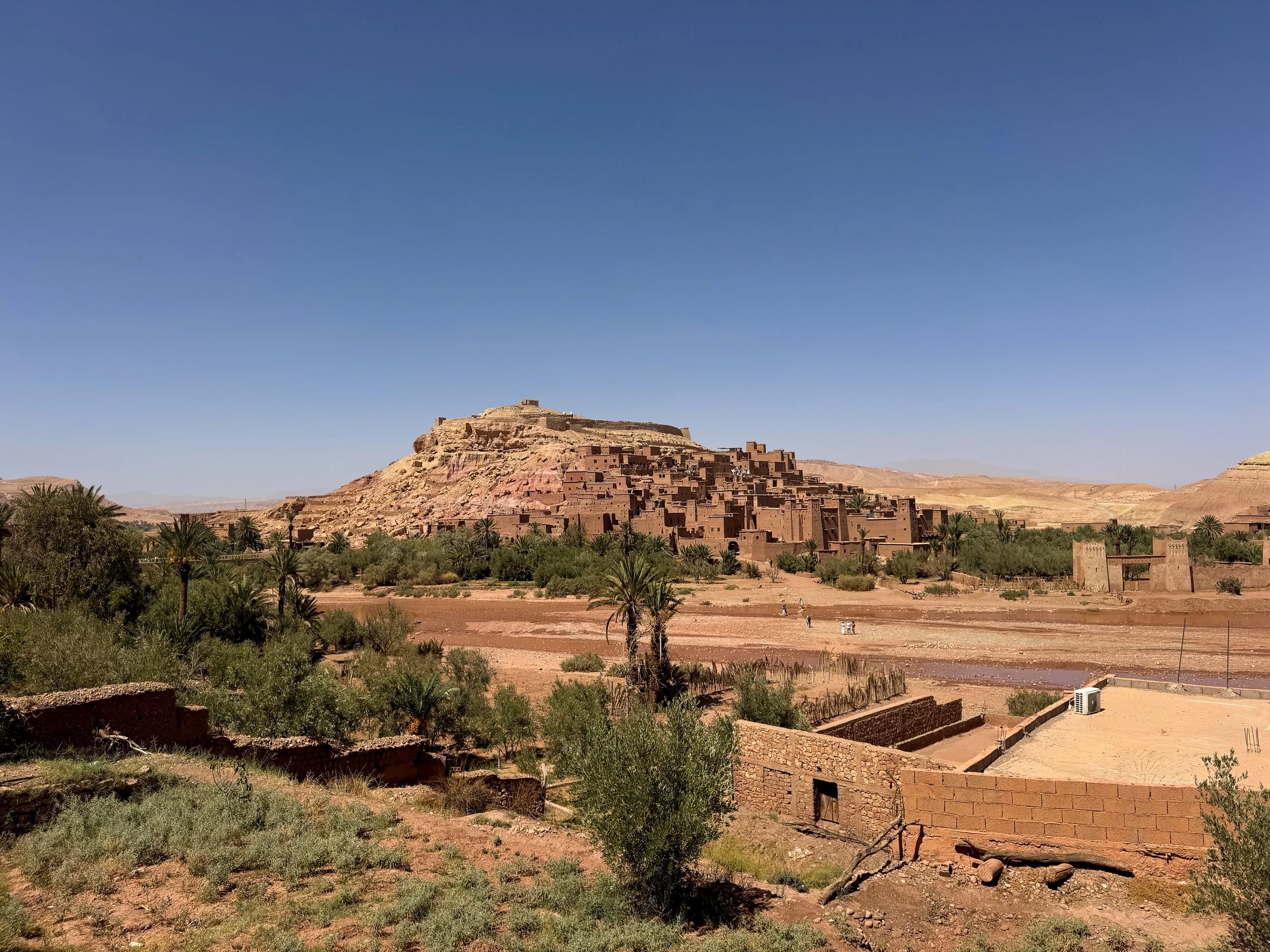
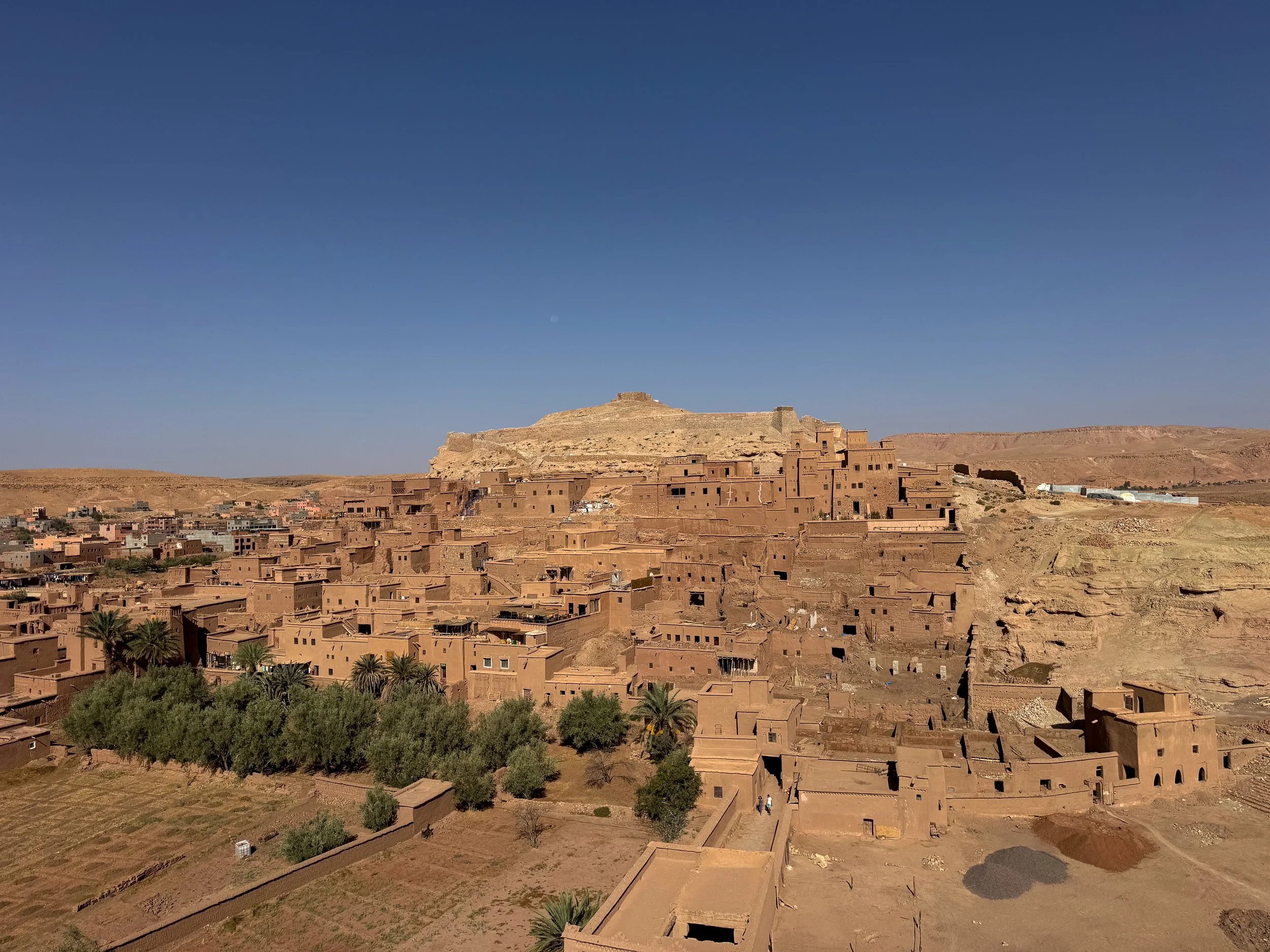
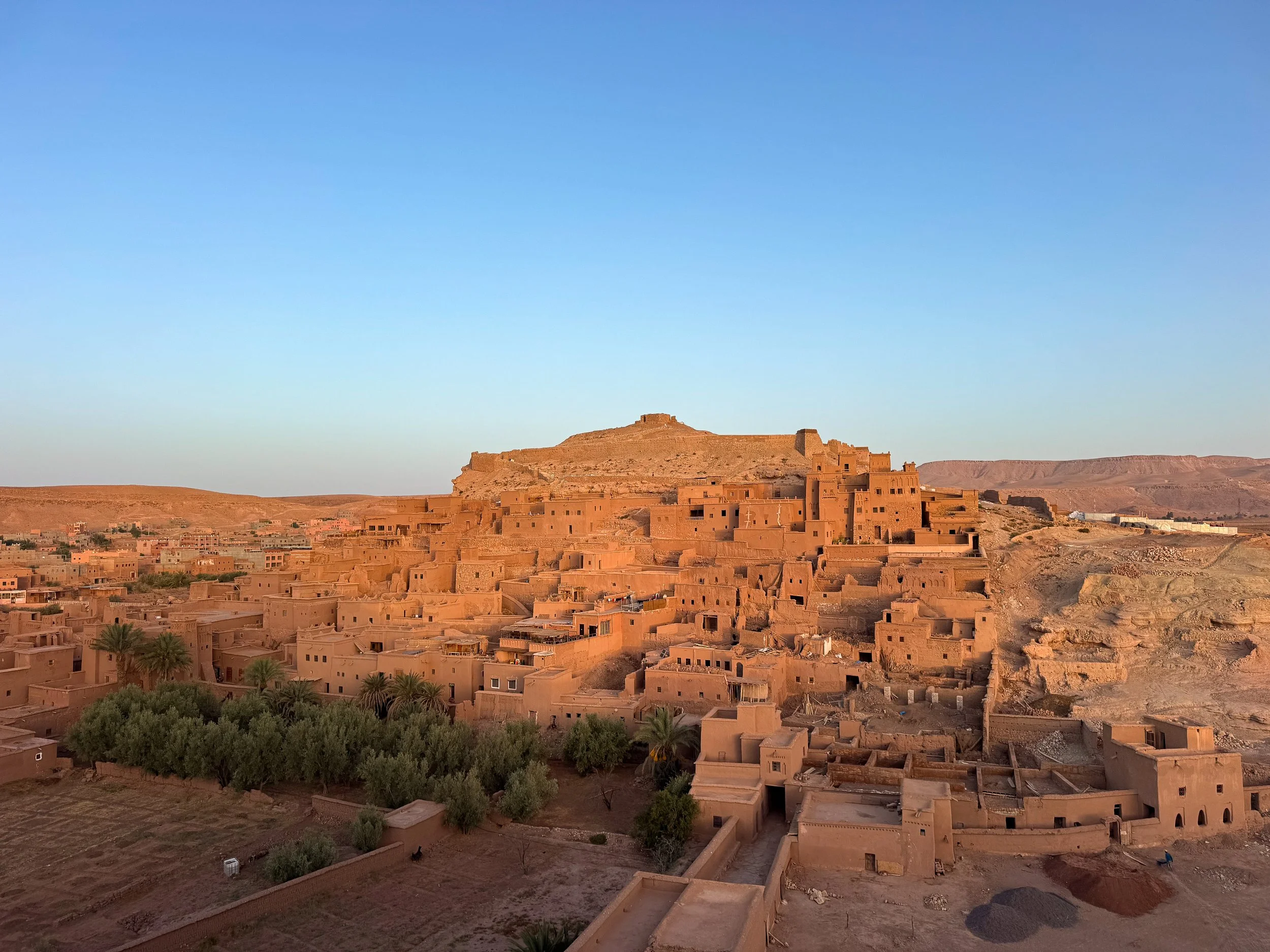
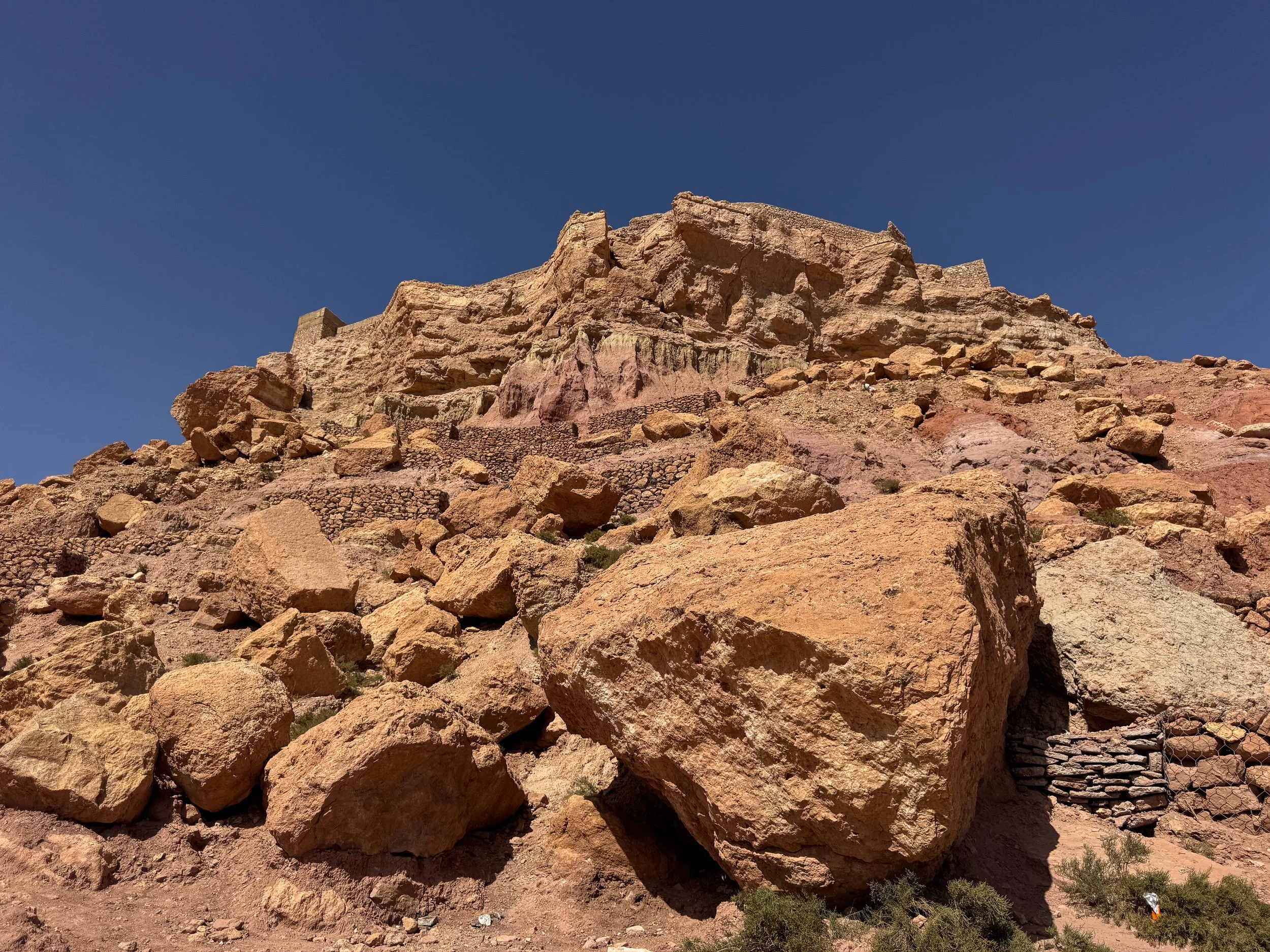
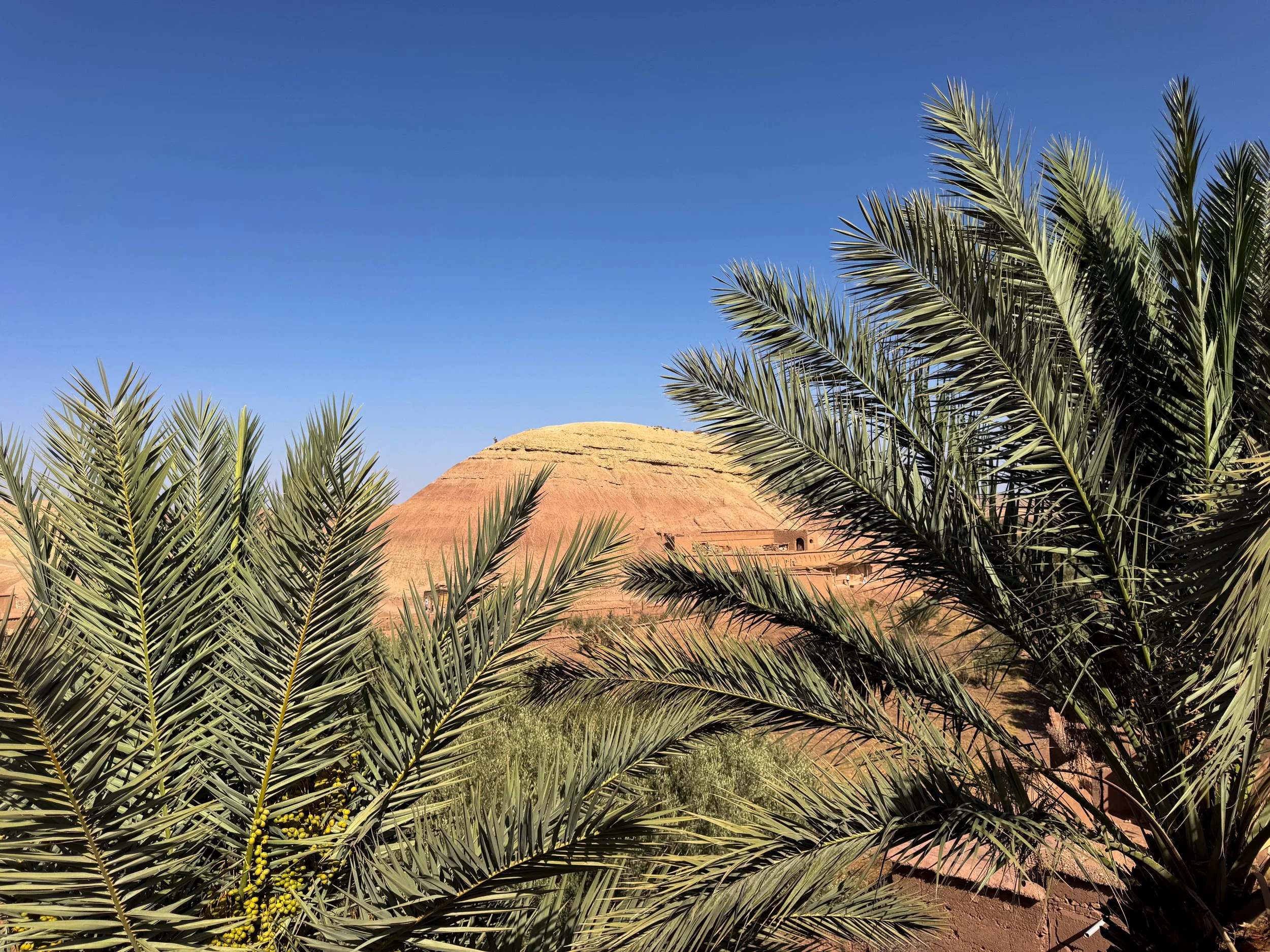
Ait Ben Haddou Viewpoints. The ancient ksar is surrounded by different photogenic viewpoints from hilltop lookouts, rooftop terraces and street scenes.
Ksar d'Aït Ben Haddou Sunset Point. A viewpoint on the narrow road near the top of the ksar. It offers panoramic views of the city and desert landscape. It’s especially popular at sunset but good to visit at any time of day.
Viewpoint Ait Ben Haddou. A hilltop viewpoint with panoramic views of the ancient ksar and its adobe buildings. Visit at sunrise to see the sand hued city illuminated in an orange glow. Revisit during the mid morning to admire all of its intricate designs and details in full daylight.
Street Viewpoint for Aït Benhaddou. A sandstone roadway in the modern village leading towards the Ounila River and ancient ksar.
La Table de la Kasbah Ait Ben Haddou. A rooftop café in the ancient ksar with views of its adobe kasbahs and the desert landscape. The stylish terrace is decorated in Moroccan poofs, rugs and pillows. Visit during golden hour or sunset to enjoy a pot of mint tea with Moroccan pastries.
Places to Eat, Drink & Stay
La Terrazza. A restaurant with Moroccan style pizzas topped with local ingredients like olives, eggplant, tomato and zucchini. It’s one of the few restaurants that offers alcoholic drinks.
Tawesna Salon de Thé. A bakery and tea house in the ancient ksar next to the bridge. Come here to enjoy a pot of mint tea with a spread of sweet and buttery Moroccan cookies.
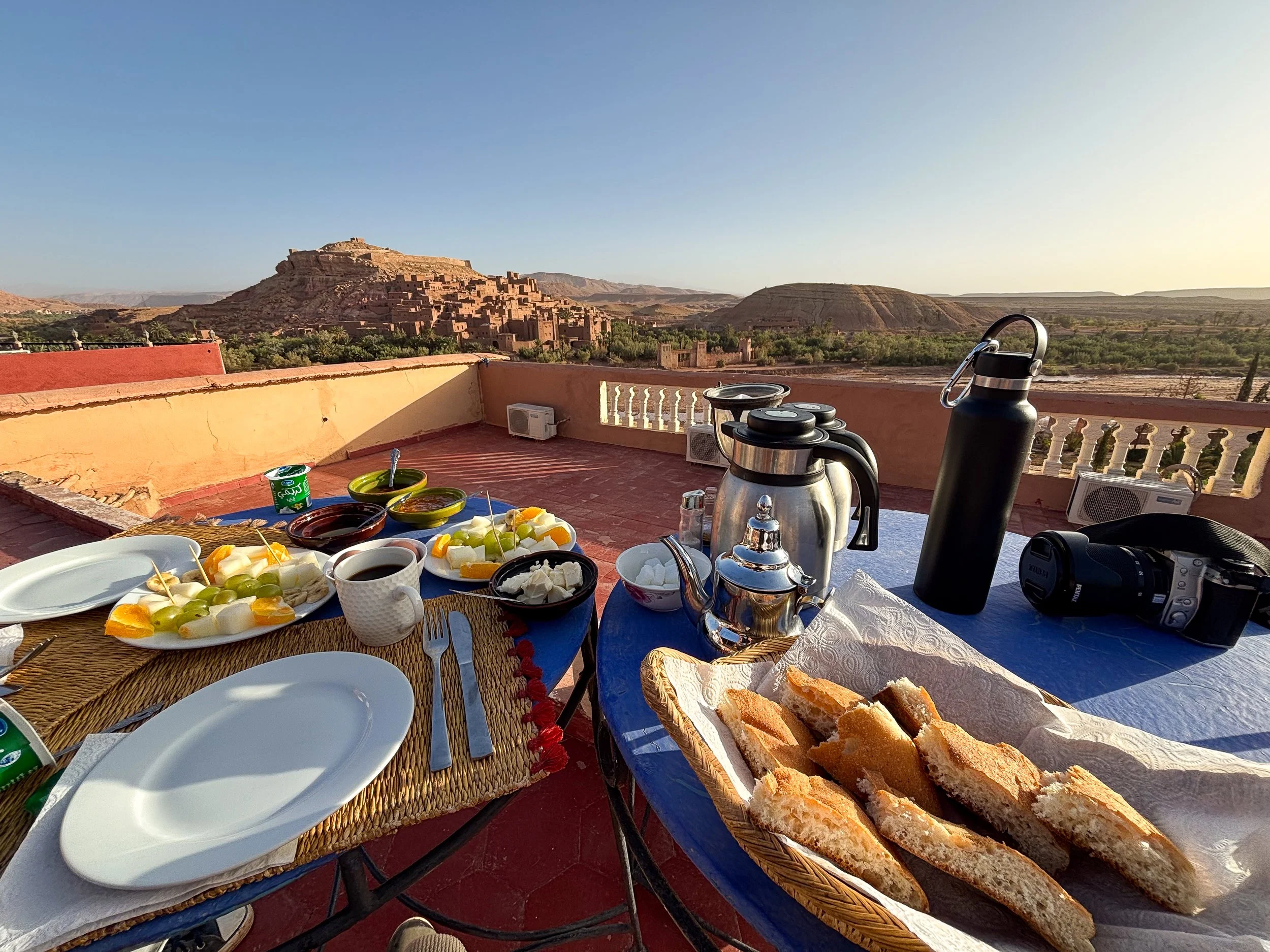
La Fibule Dor Ait Ben Haddou. An adobe style hotel in the modern village. Its rooms are decorated with Moroccan lamps, Berber textiles and handmade artwork. Its rooftop and many rooms boast panoramic views of the ancient ksar. Our stay included a Moroccan breakfast with a spread of cheeses, jams, dates, olives, eggs and bread. We booked on Airbnb.
Tips for Visiting Ait Ben Haddou:
Stay Overnight. Plan to stay at least one night in Ait Ben Haddou to get the most out of visiting the ancient ksar.
Visit Solo. Avoid group tours and visit on your own. You’ll have more time to explore freely.
Time of Day. Visit before 8:30am to avoid crowds.
Cash vs. Credit. Carry cash and small coins for most payments. Credit cards are not commonly accepted.
Drink Water. Stay hydrated and carry water when walking around, especially during the afternoon heat.
Getting Here. Ait Ben Haddou is reachable from Marrakech by car. The scenic drive leads 3 hours through the foothills of the Altas Mountains.
Ouarzazate
Ouarzazate is a desert city renowned for its movie studios and historic kasbahs. It’s often referred to as “The Moroccan Hollywood” and “The Gateway to the Desert.”
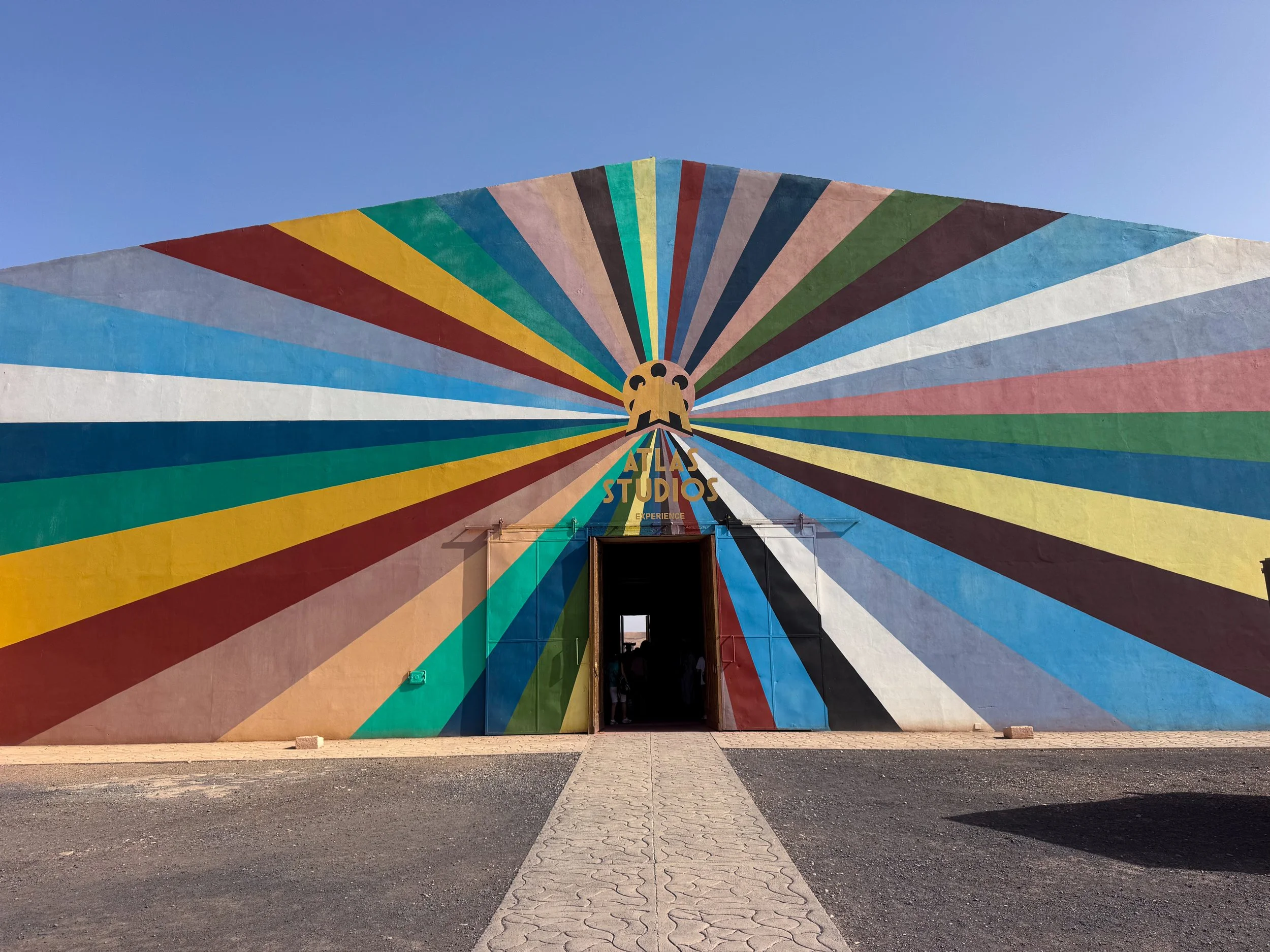
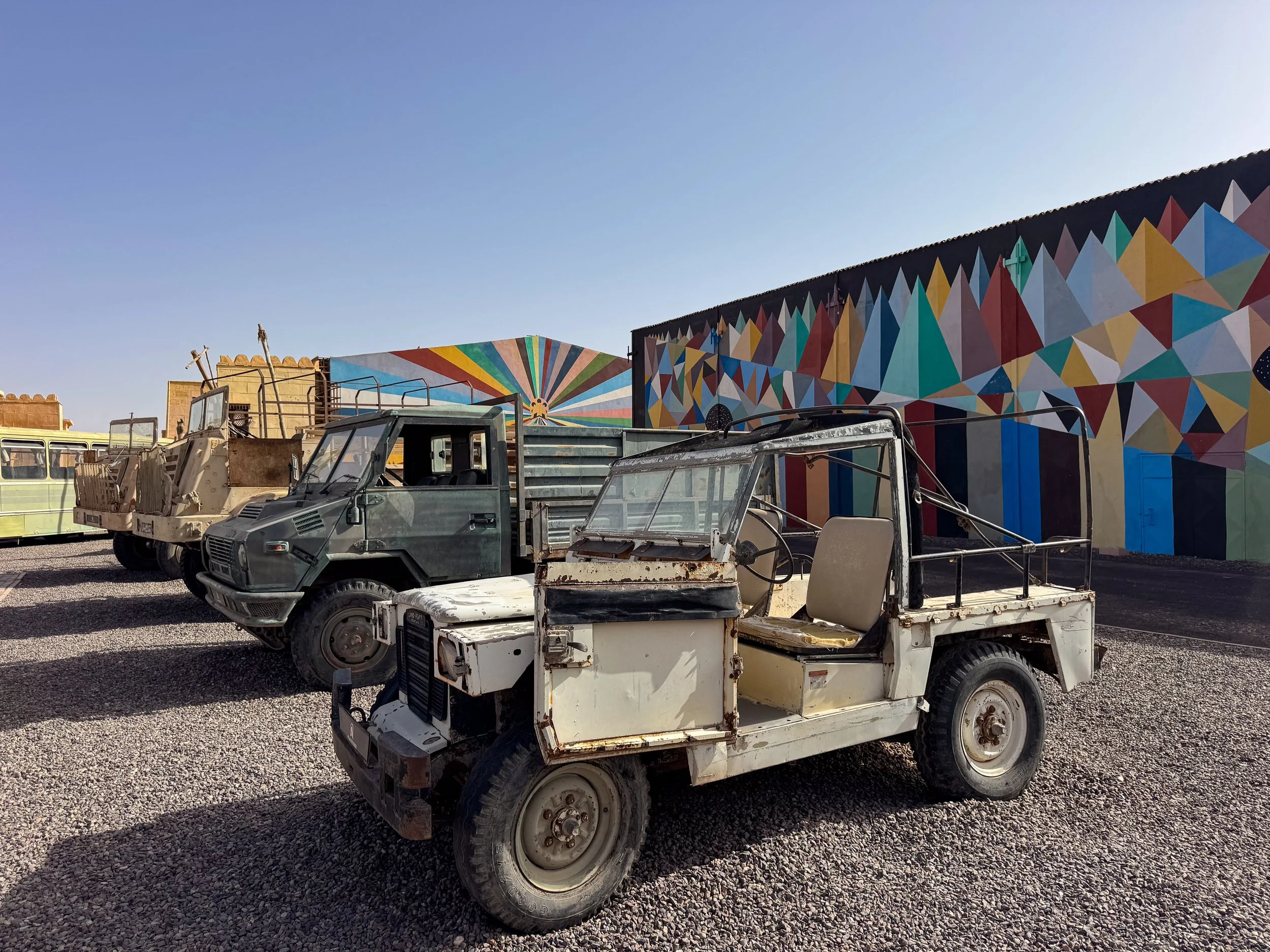
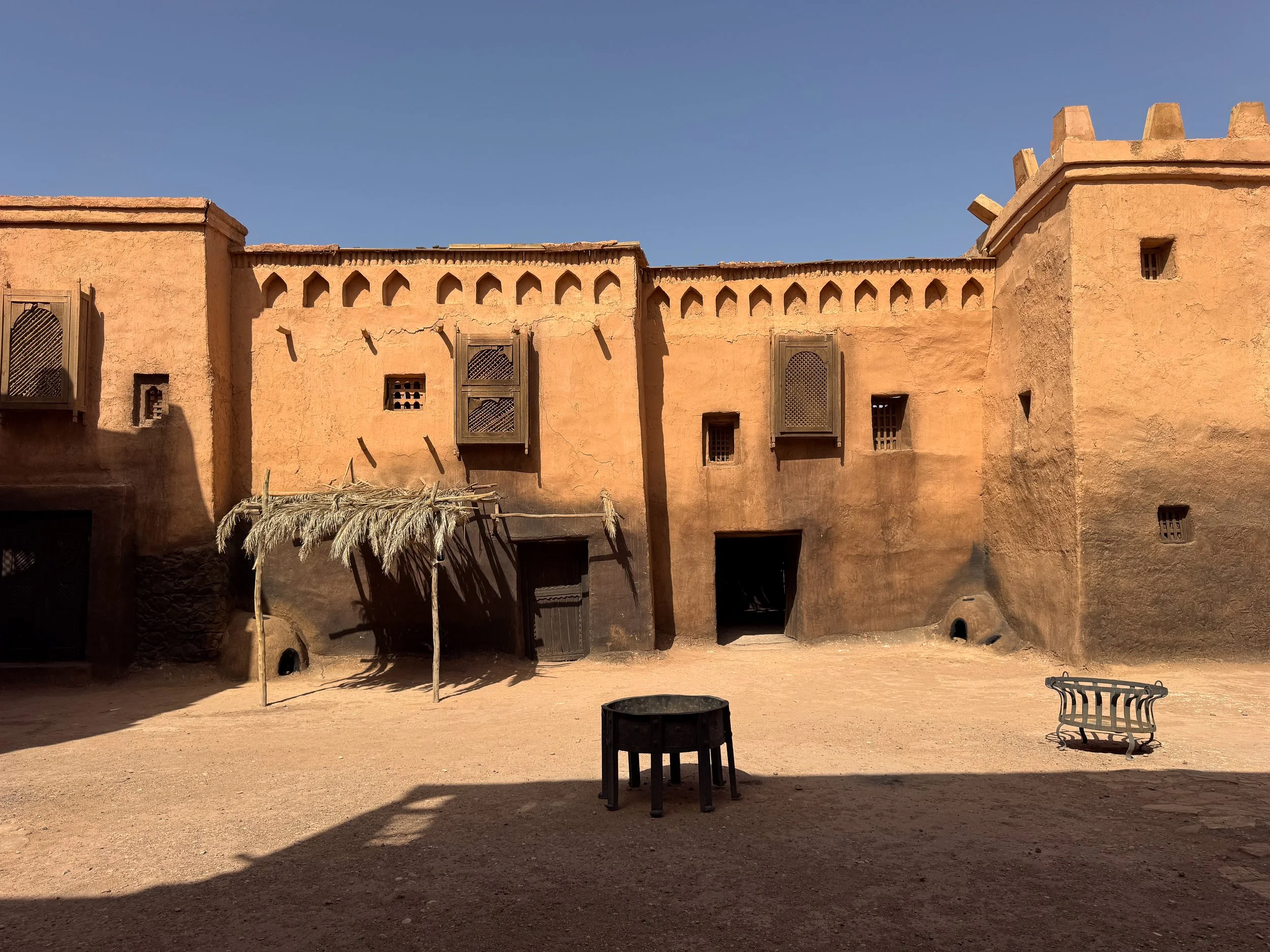
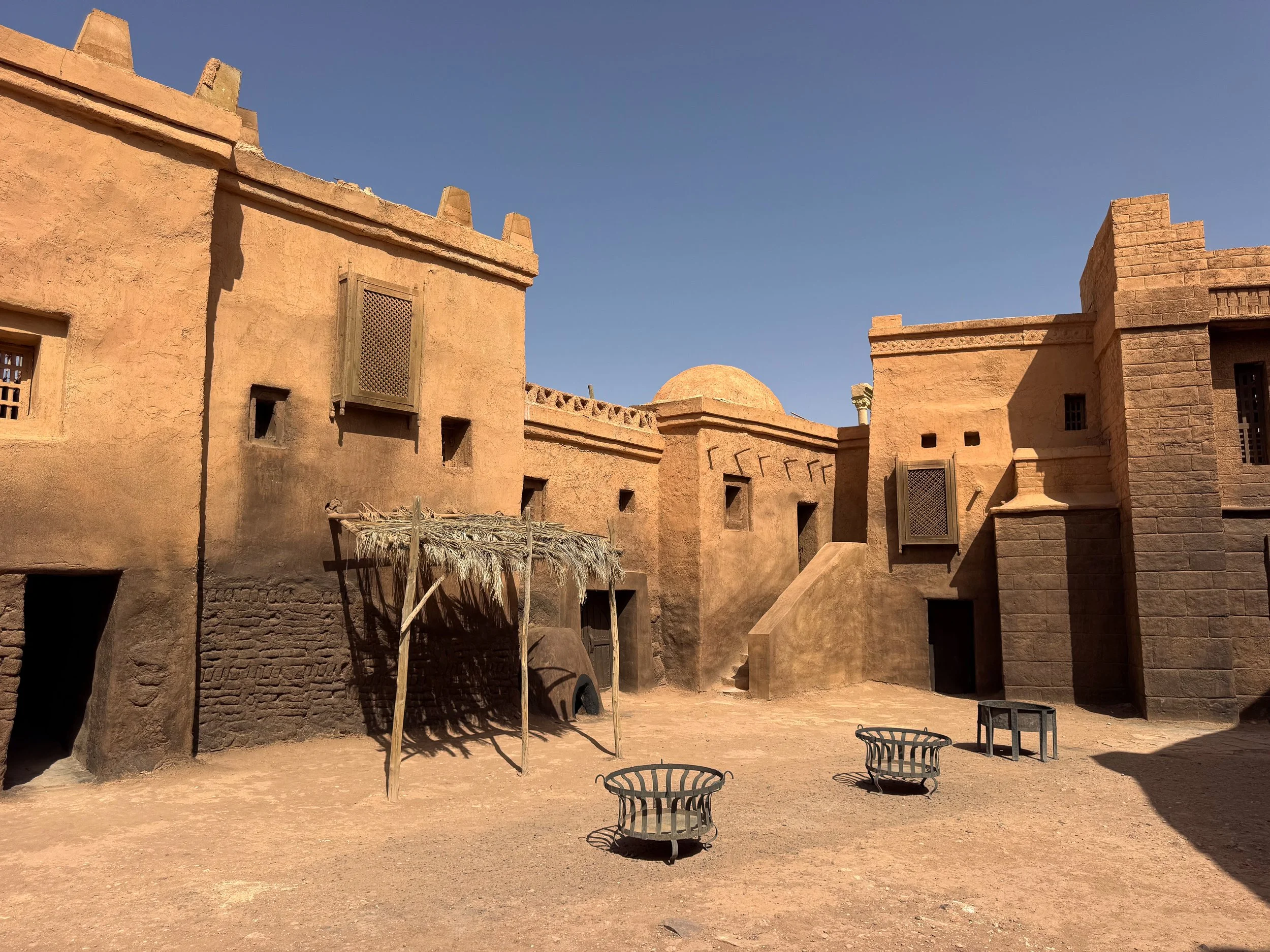
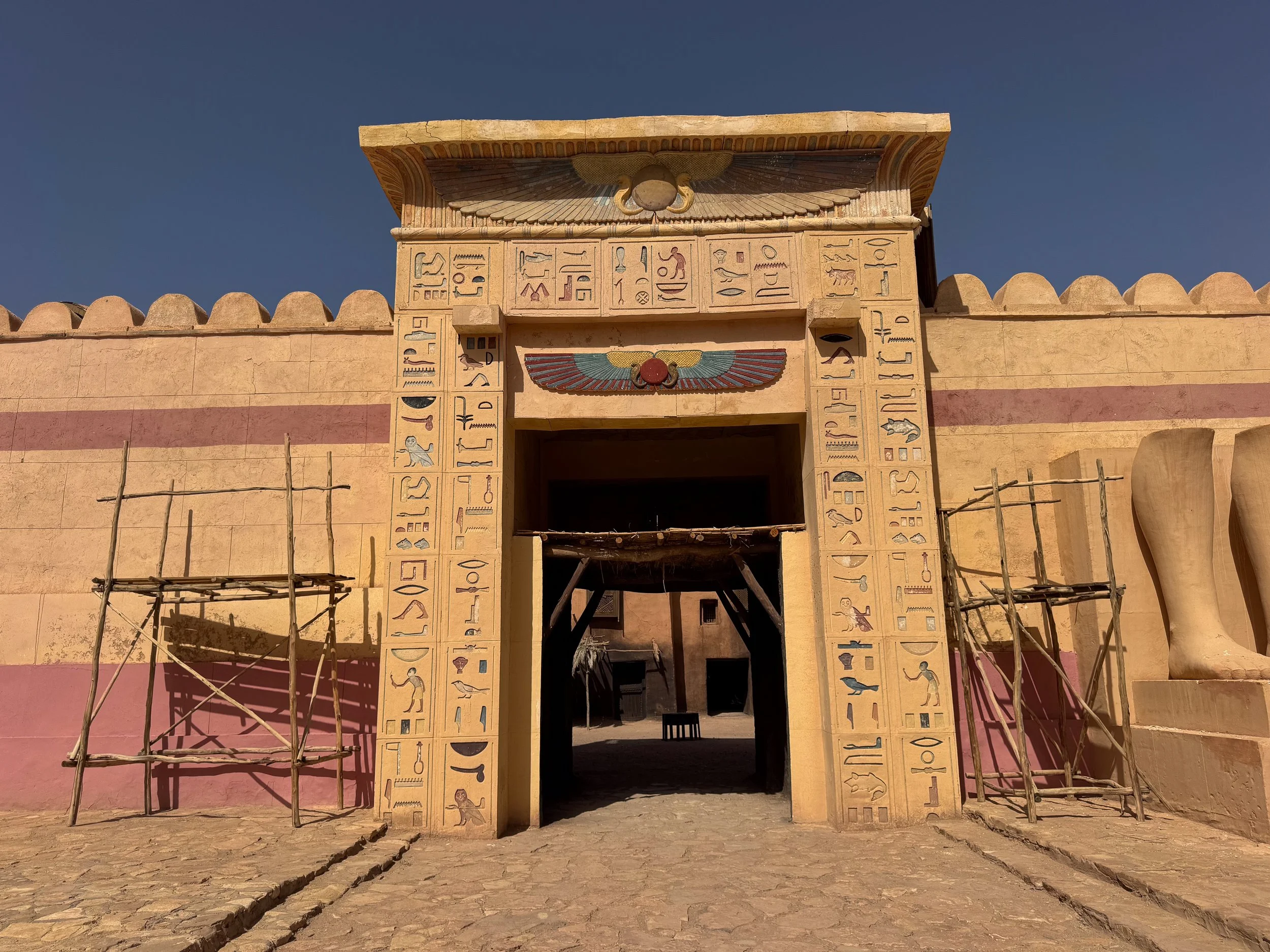
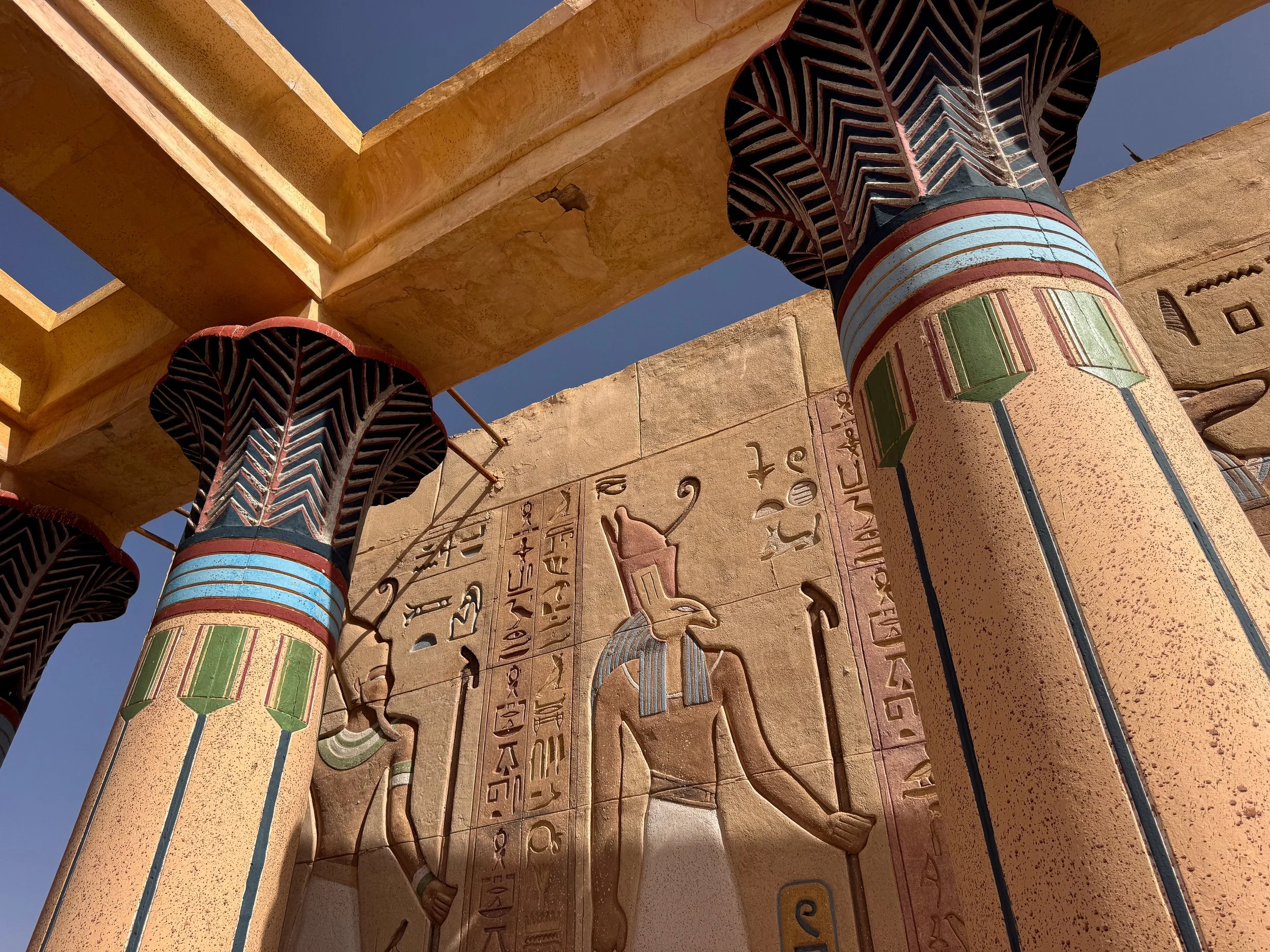
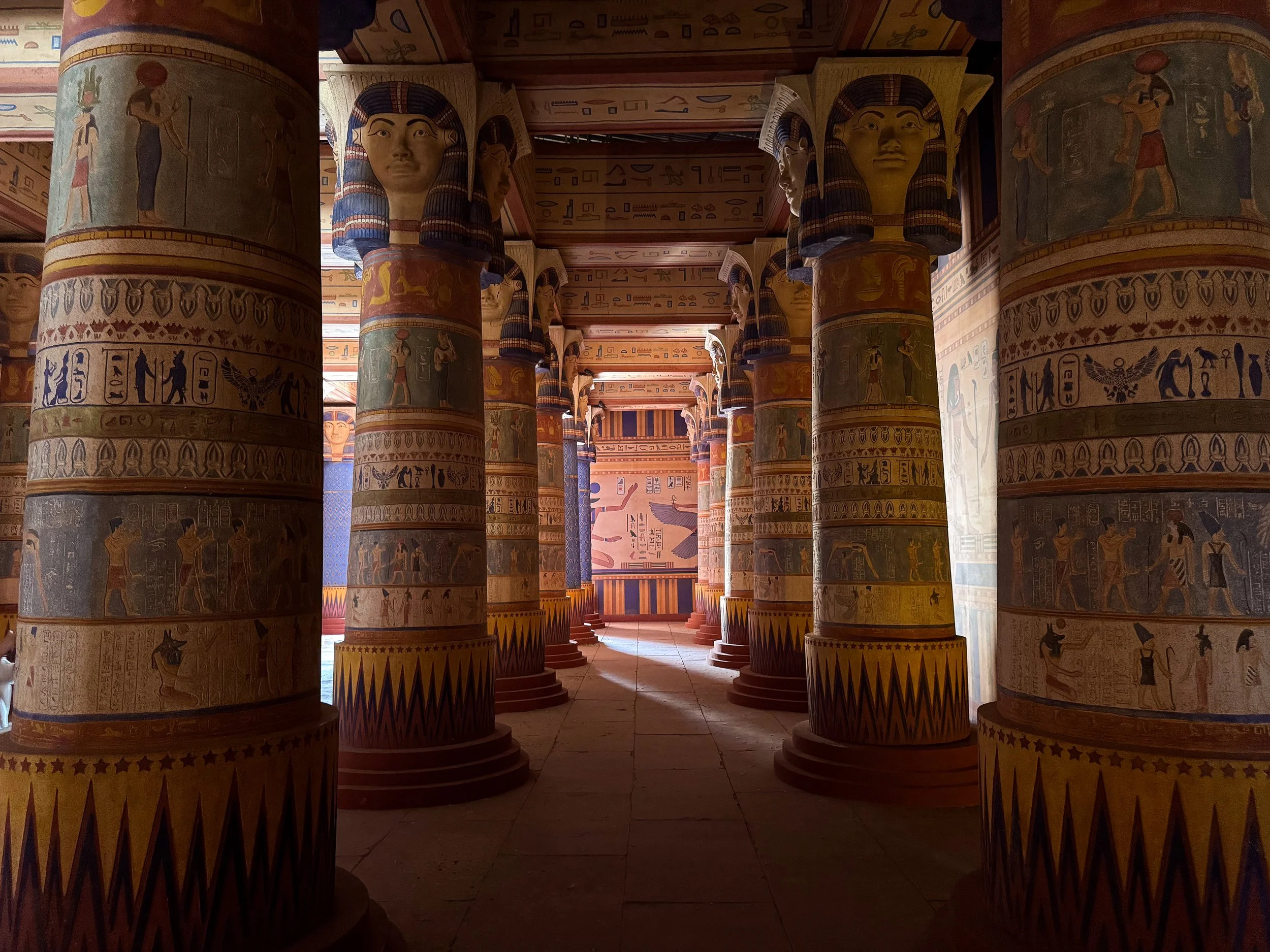
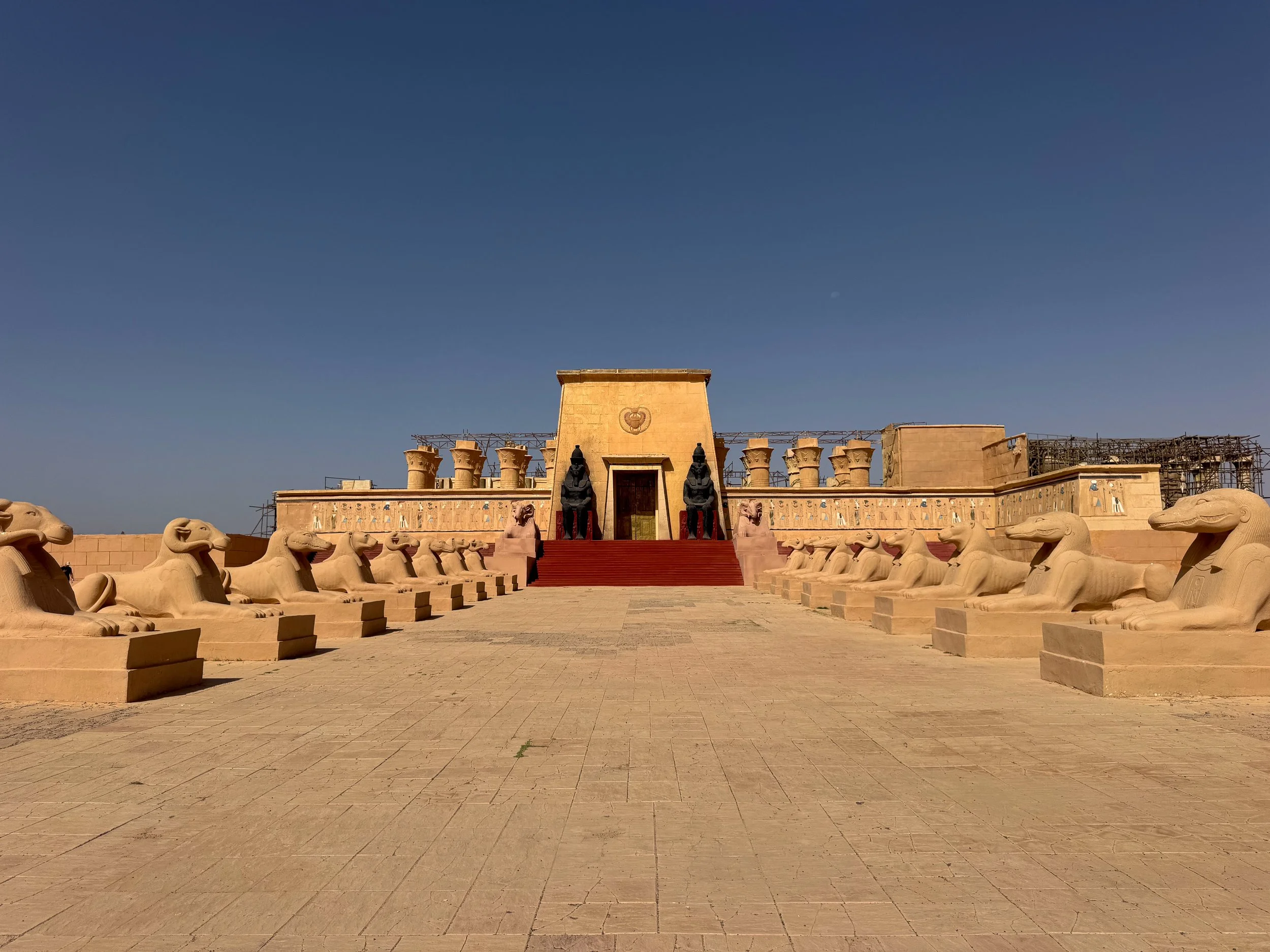
Atlas Studios. A vast film studio and one of Ouarzazate’s most famous with sets dating back to the 1960s. It’s particularly eye catching for its large scale Egyptian sets comprised of colorful temples, tombs and statues. Sets blur into one another, transitioning between Egyptian, Roman, medieval and desert towns. Vehicles like gladiator chariots, military trucks, replica sports cars, viking ships and aircraft are displayed throughout. Scenes from The Mummy, Gladiator and James Bond have all been filmed here. Tickets include guided tours of the sets with movie references, photo opps and free time to explore at your own pace afterwards.
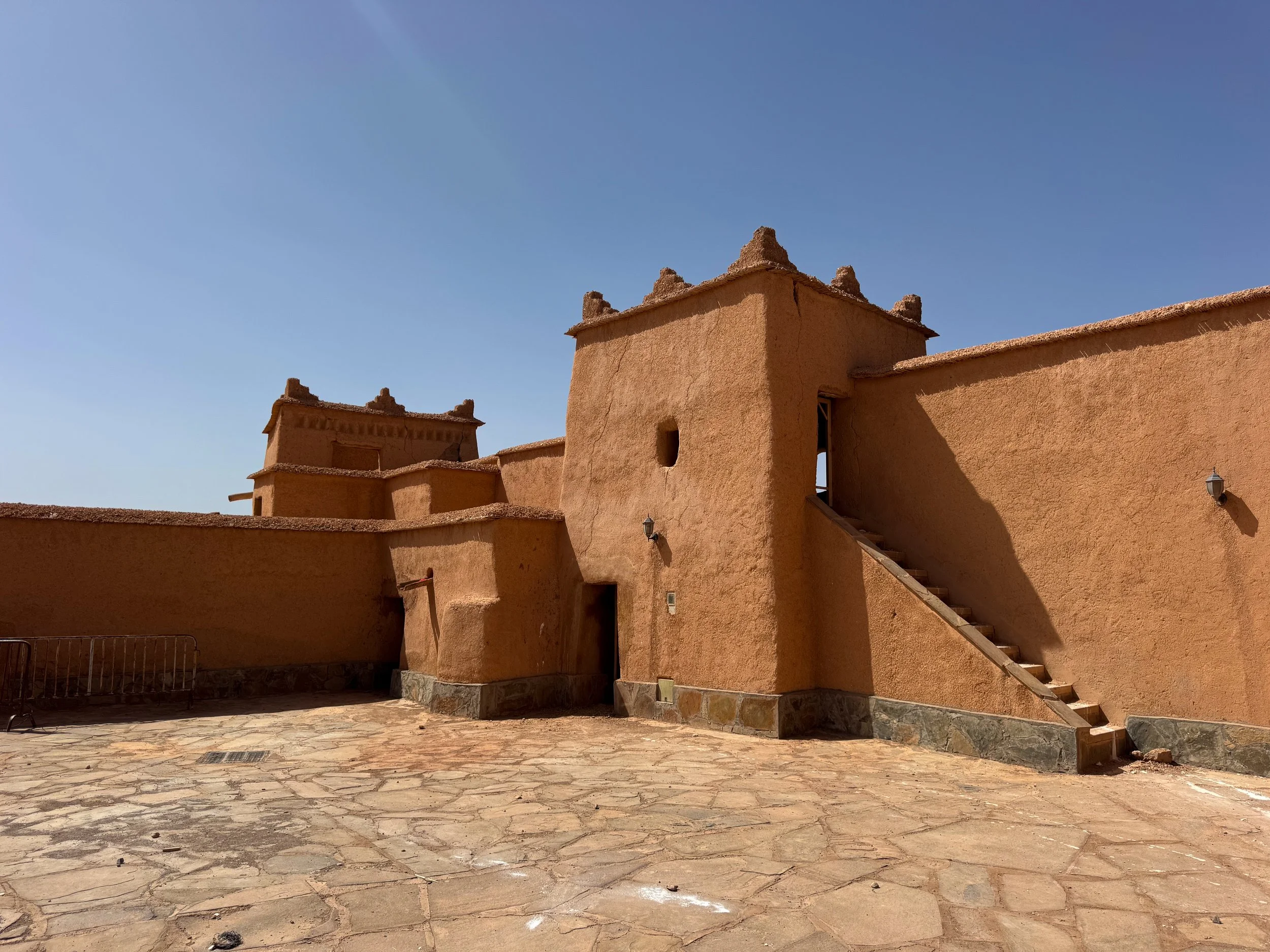
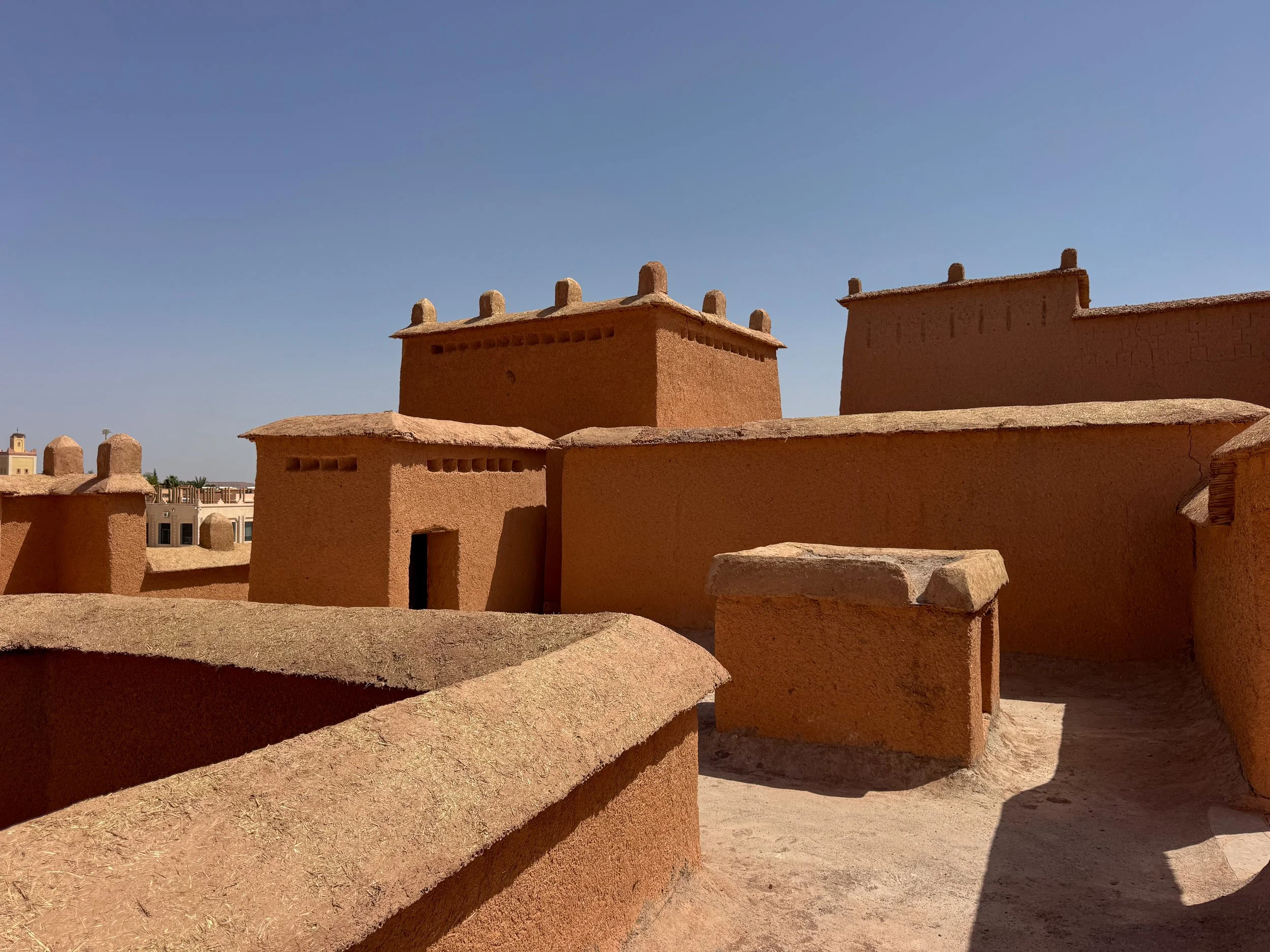
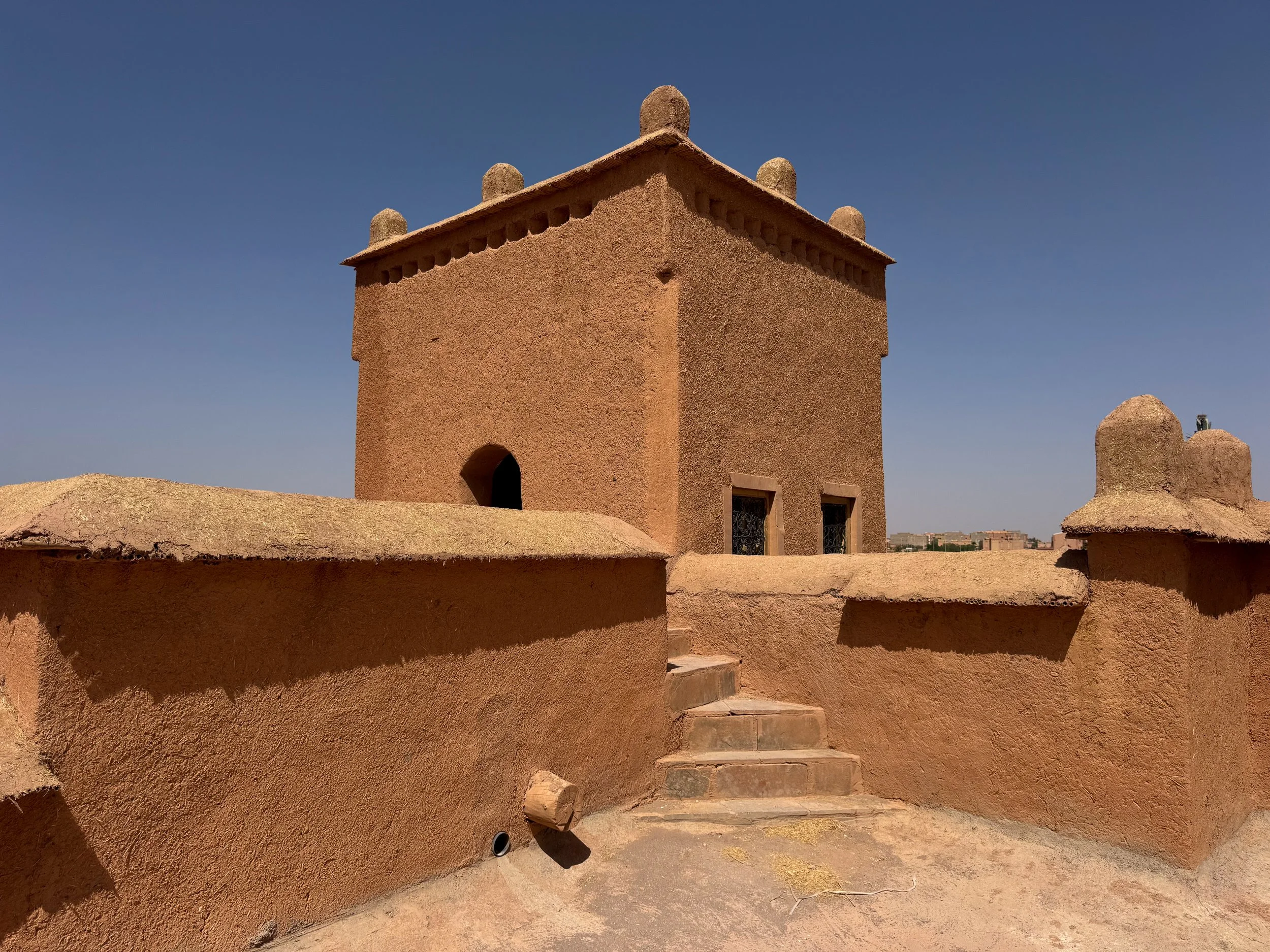
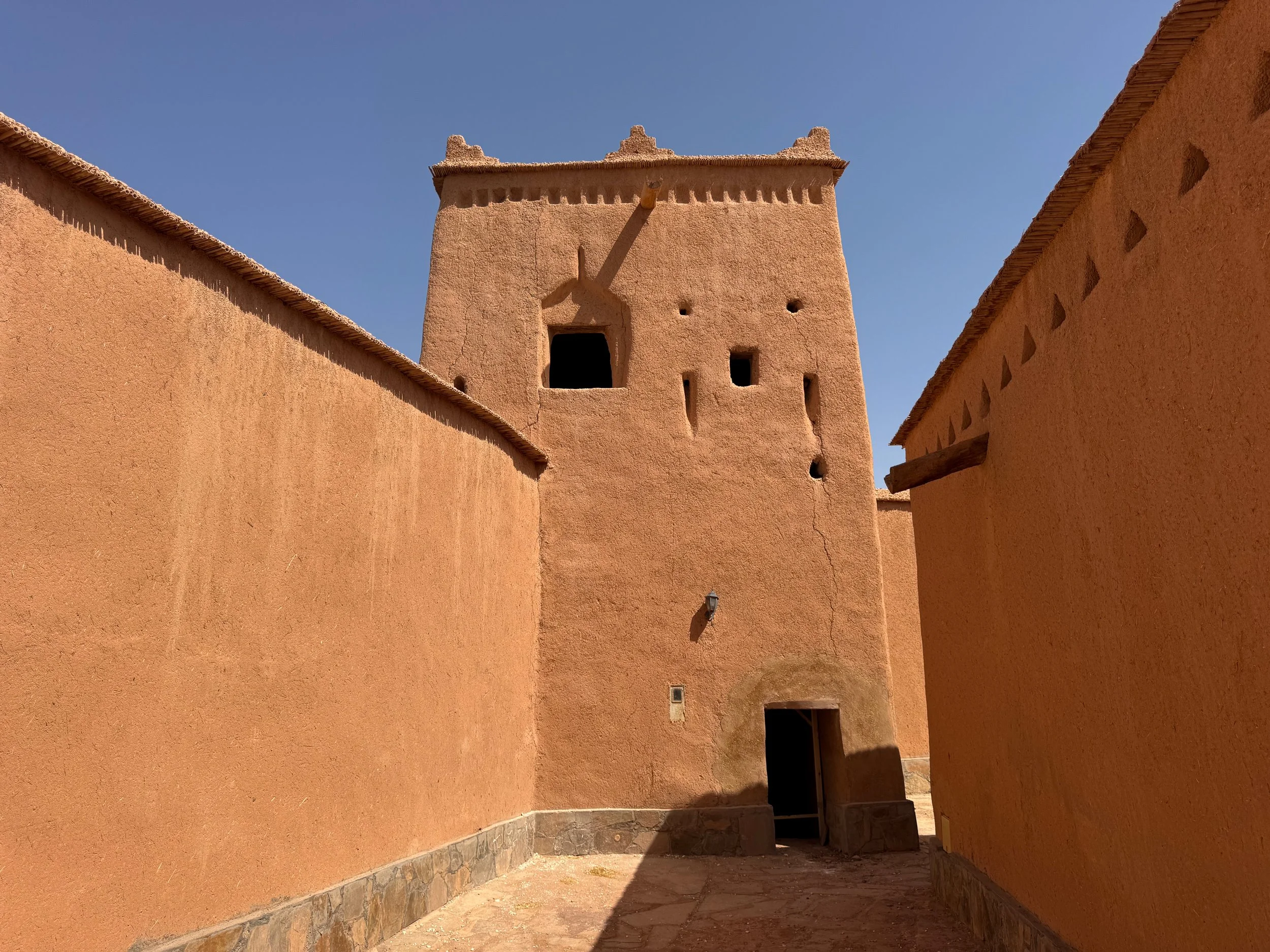
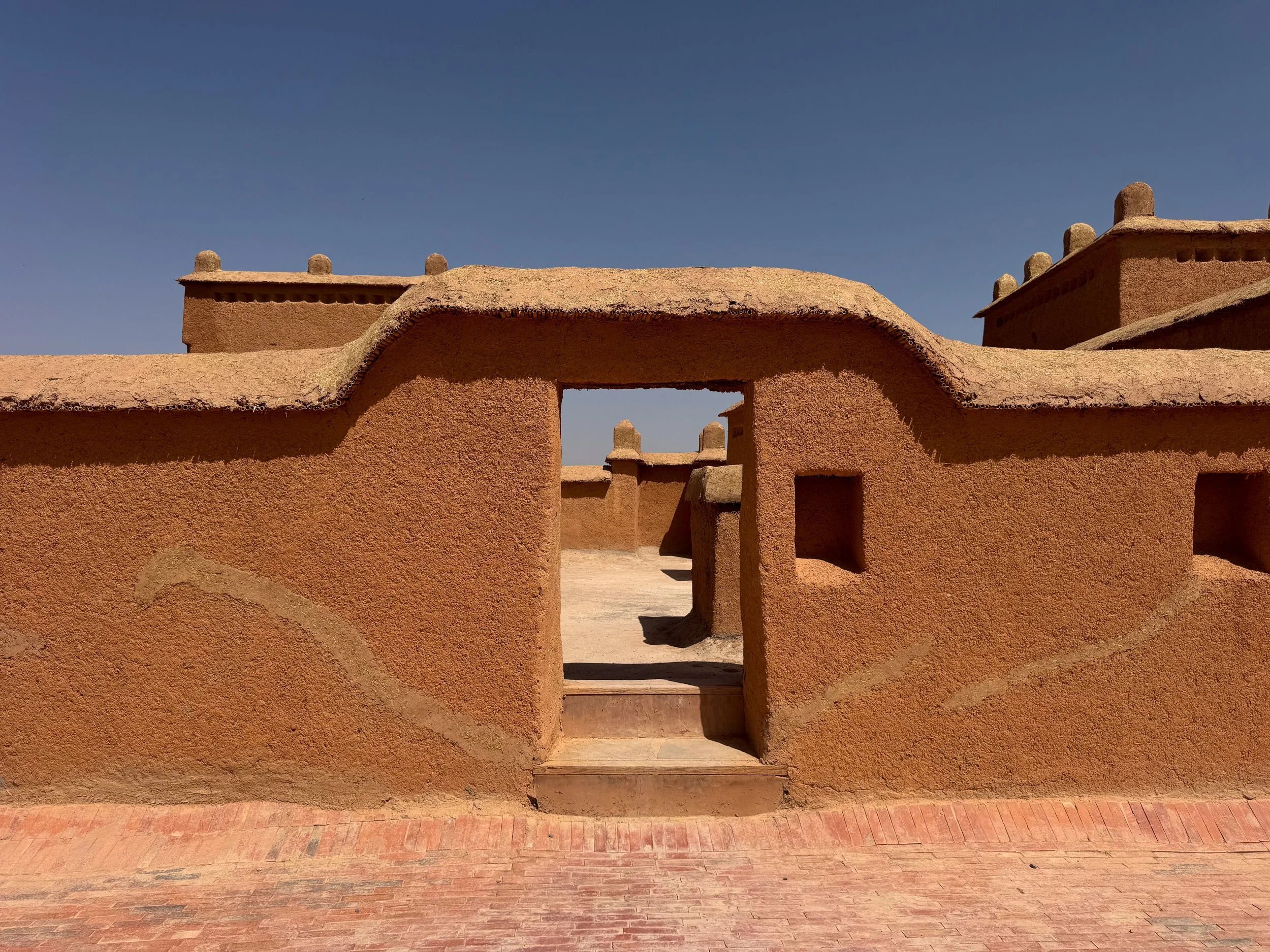
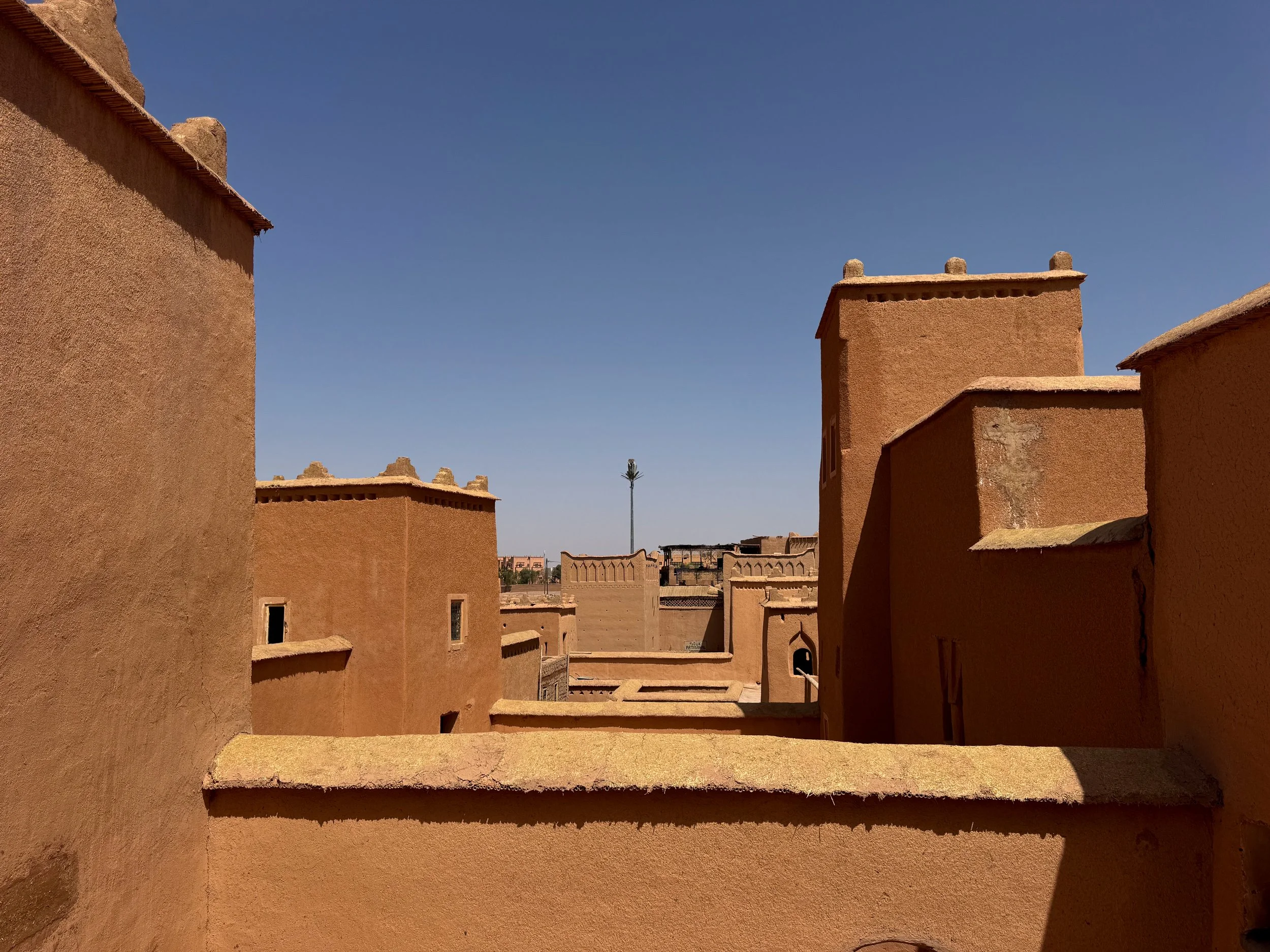
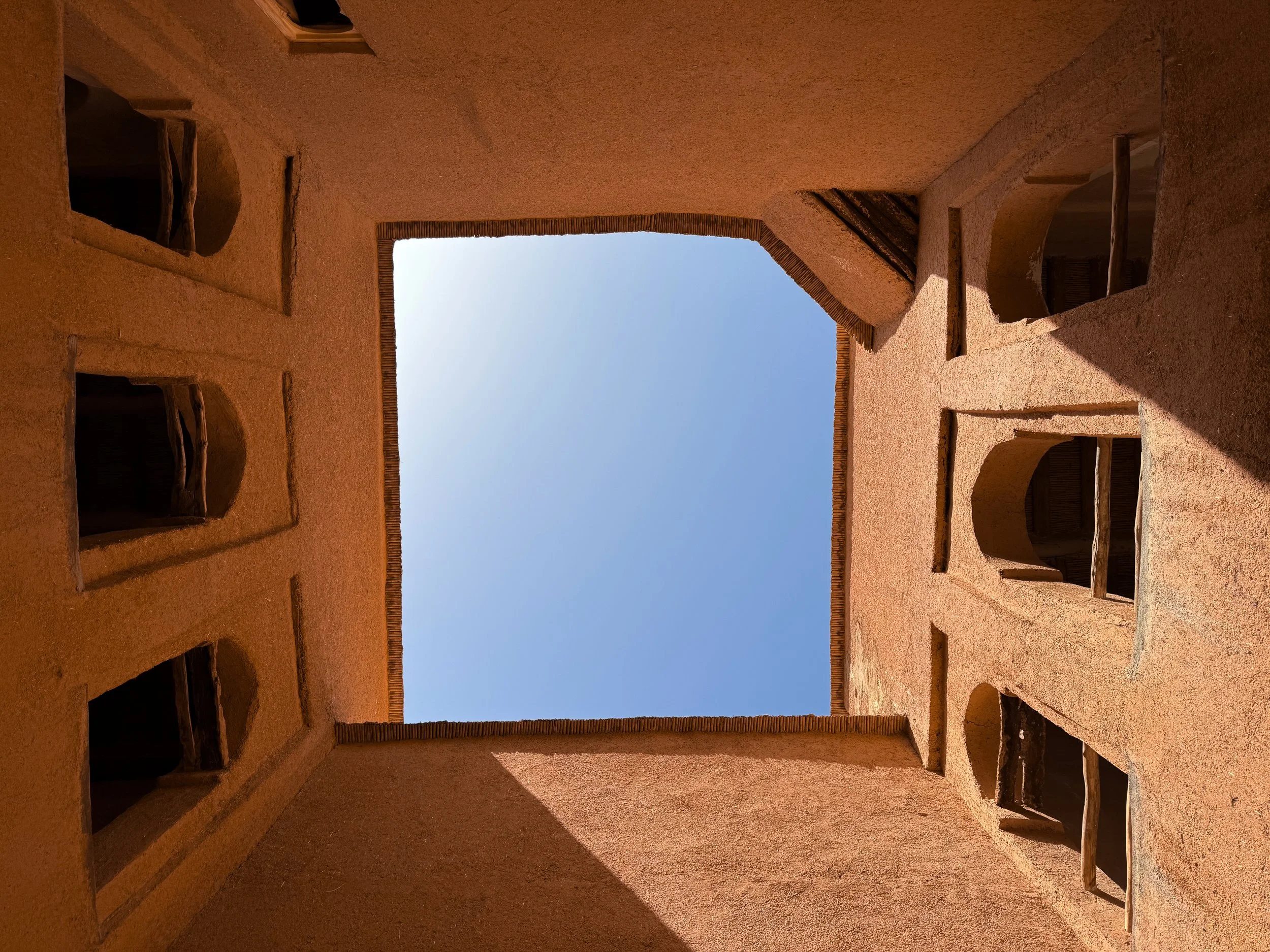
Taourirt Kasbah. A large and once prosperous kasbah in the center of Ouarzazate. It’s comprised of orange hued adobe buildings embossed with Berber patterns and geometric shapes. Their maze-like interiors are comprised of staircases and passageways that lead between disparate rooms, multiple levels and rooftop terraces. Repairs have been ongoing since the 2023 earthquake. Workers mix piles of mud, straw and water to create adobe bricks and plaster.
Getting Here. Ouarzazate is reachable from Ait Ben Haddou by car. It takes less than 1 hour to reach if driving.
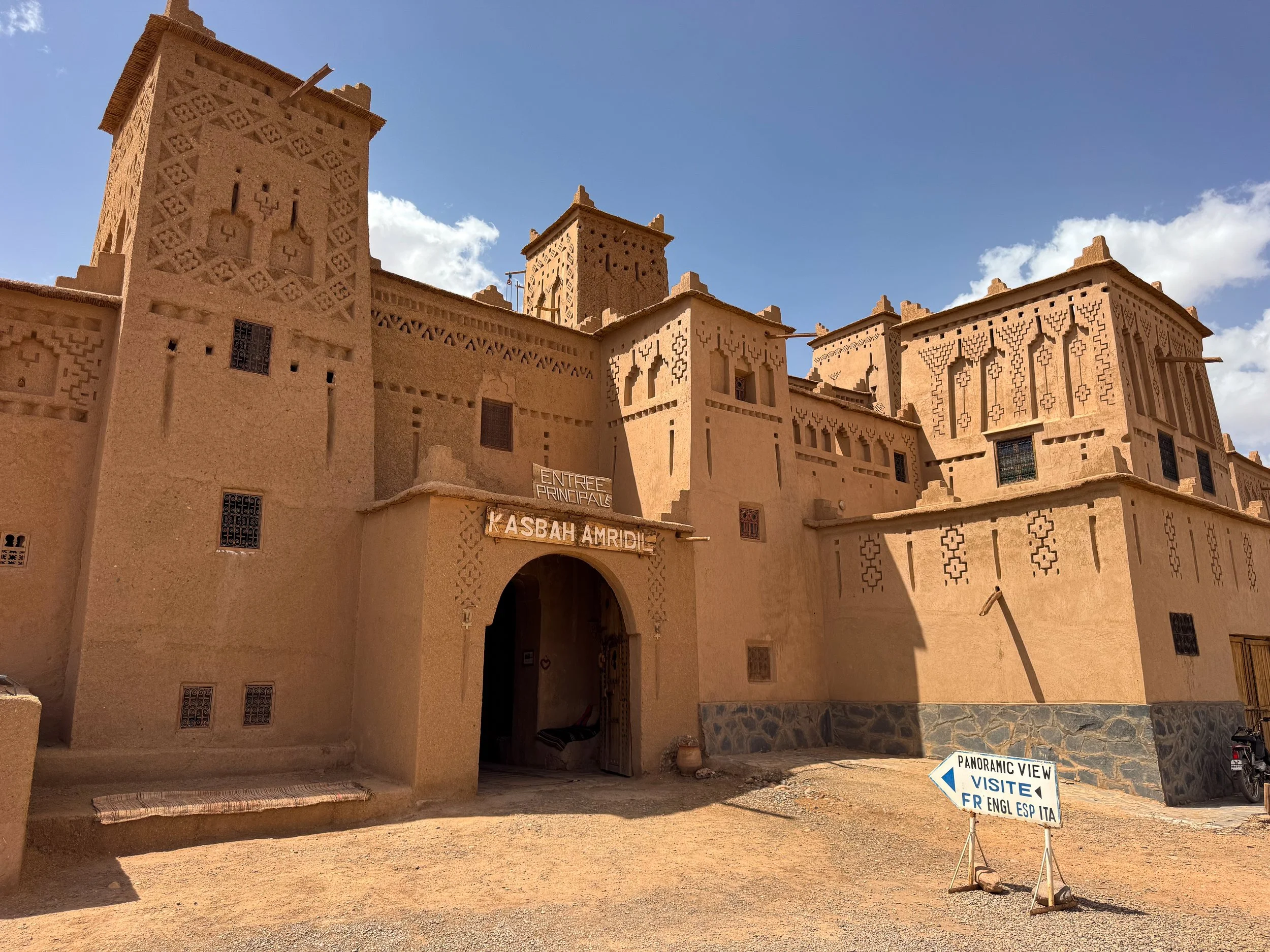
Kasbah Amridil
Kasbah Amridil is one of the largest and best preserved kasbahs in Morocco. Its sprawling structure is situated in the middle of the Skouras Palmerie, a palm covered oasis home to dozens of historic kasbahs and crumbling adobe ruins. The kasbah’s sand colored facade and adobe towers are decorated in intricate Berber patterns. It’s divided into three sections including two museums and a restaurant.
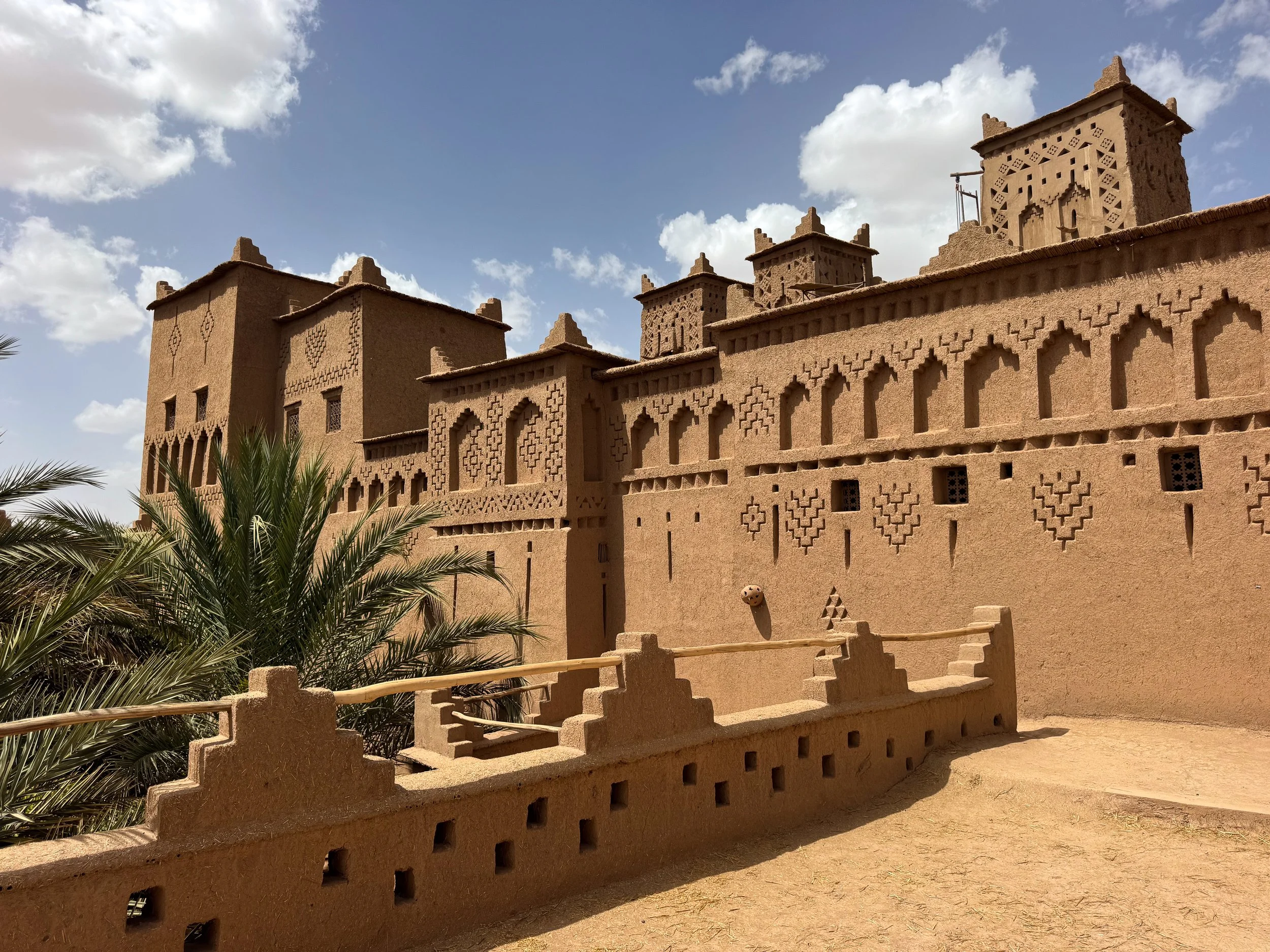
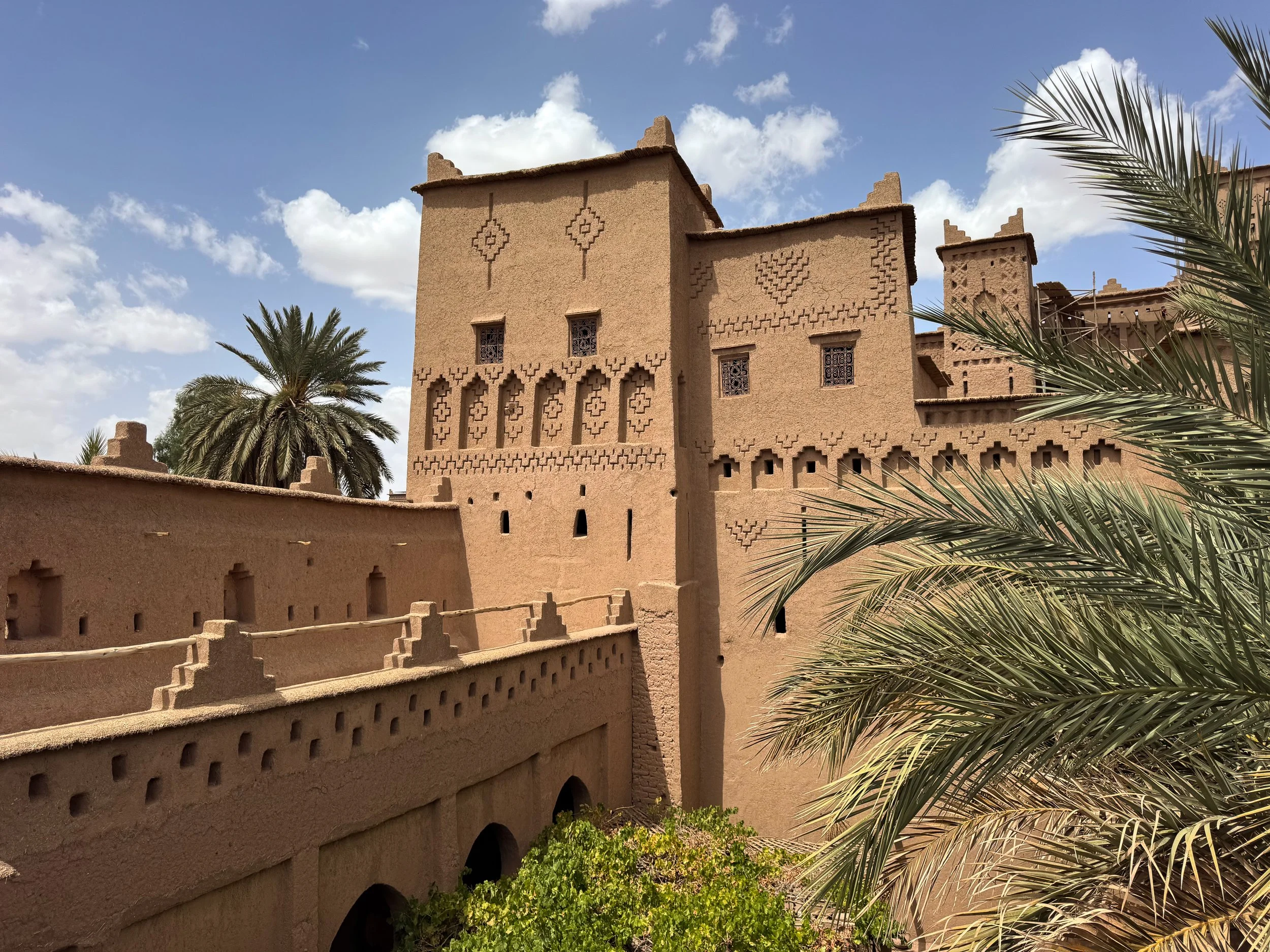
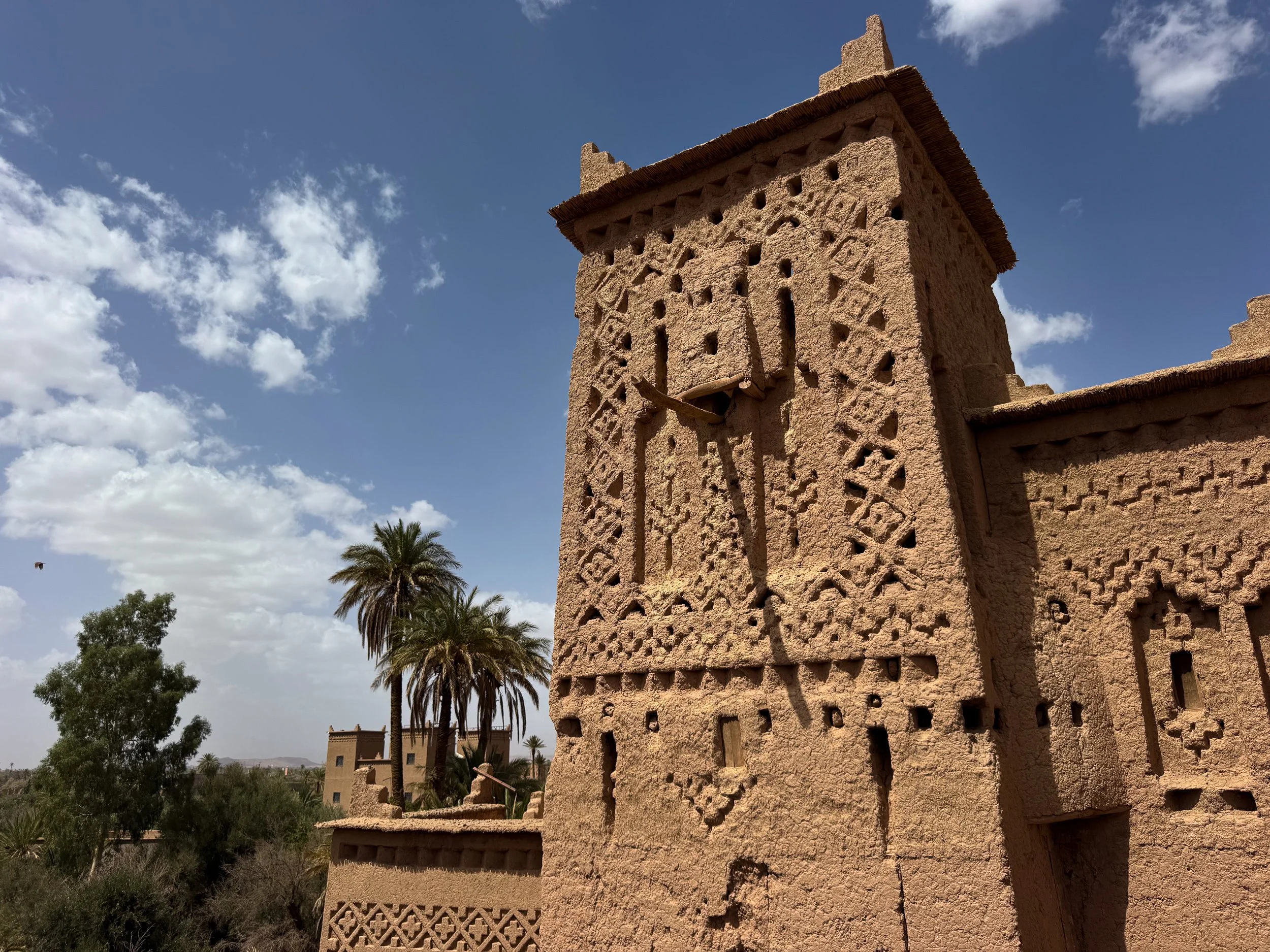
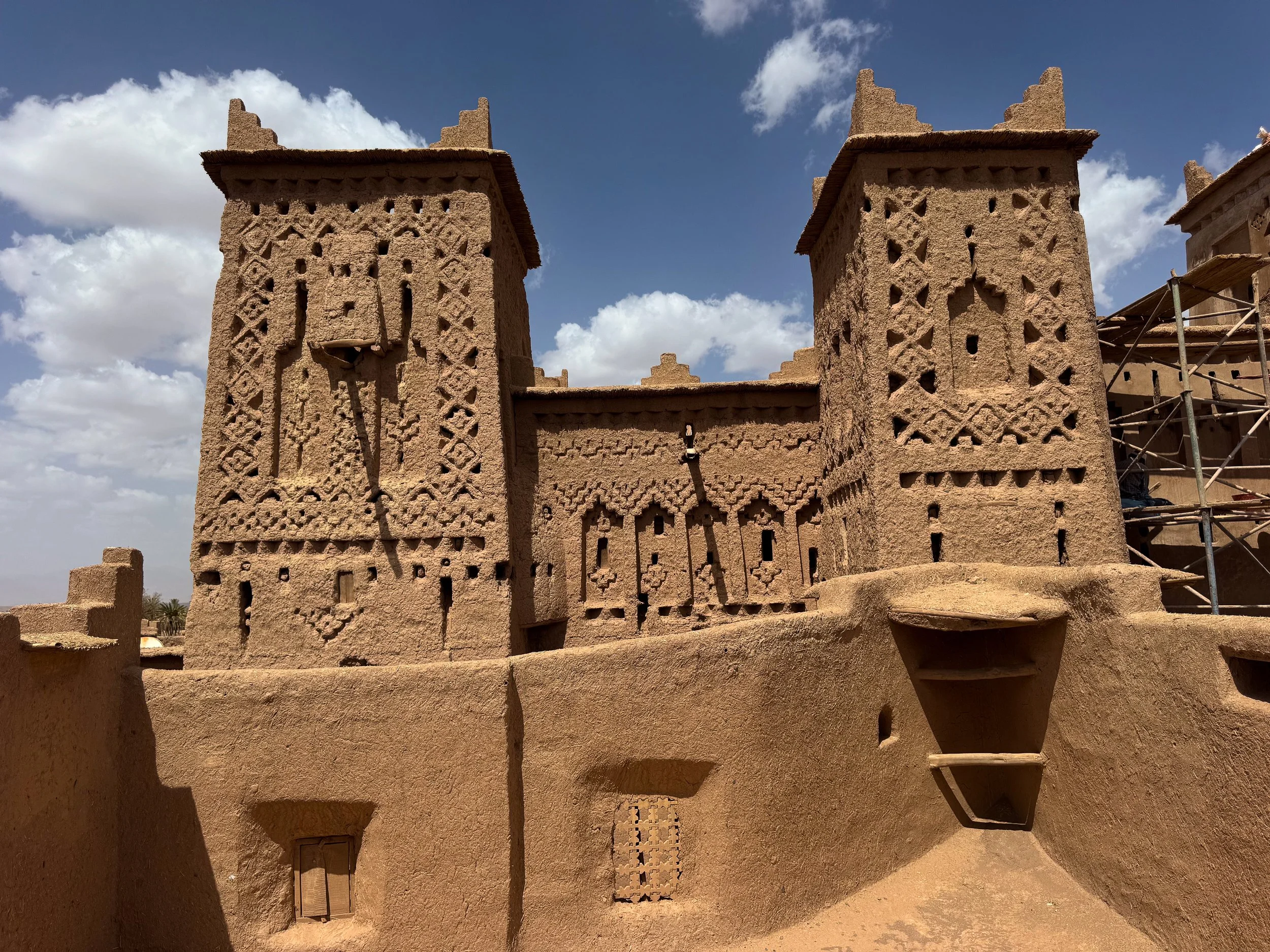
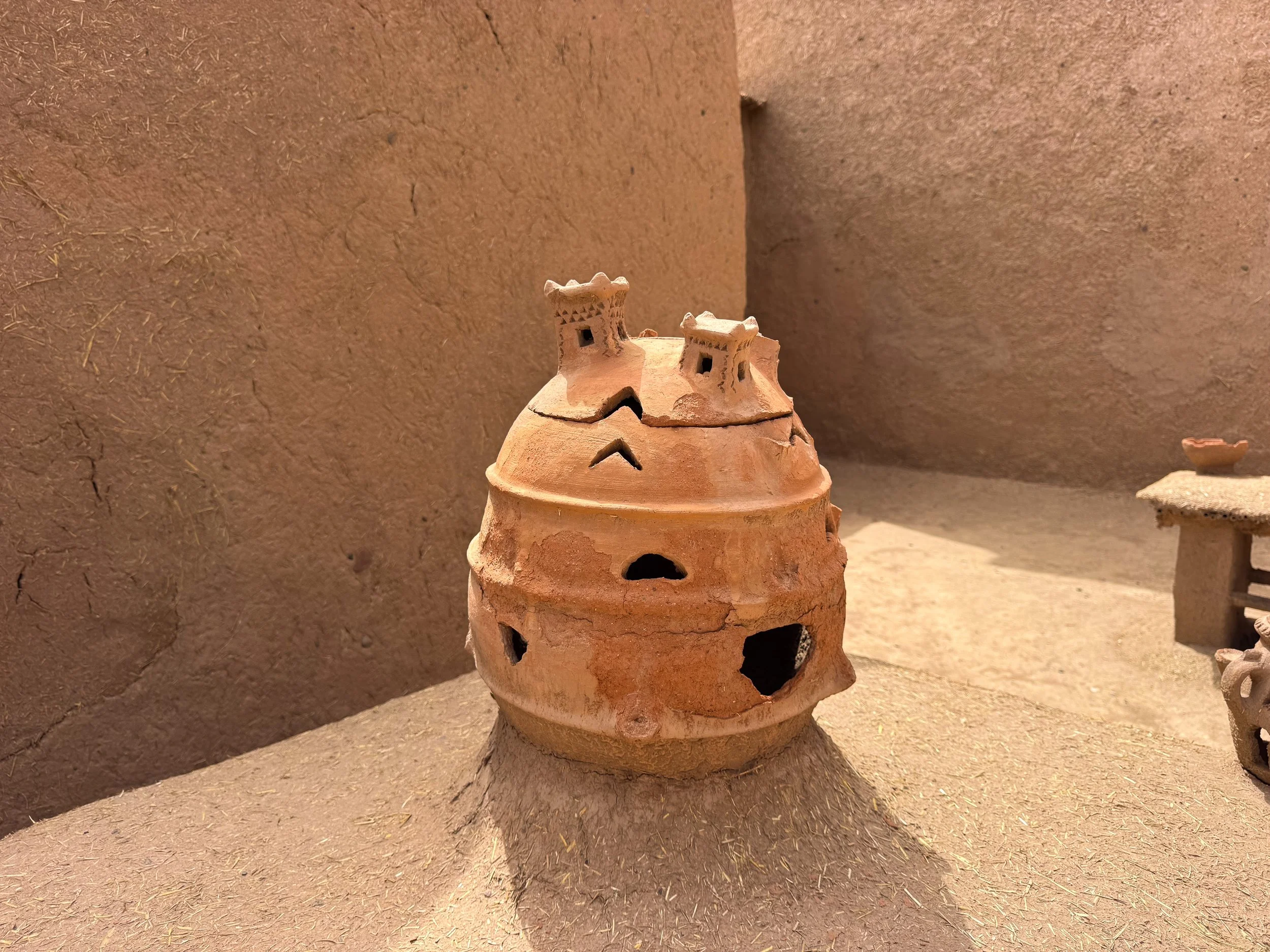
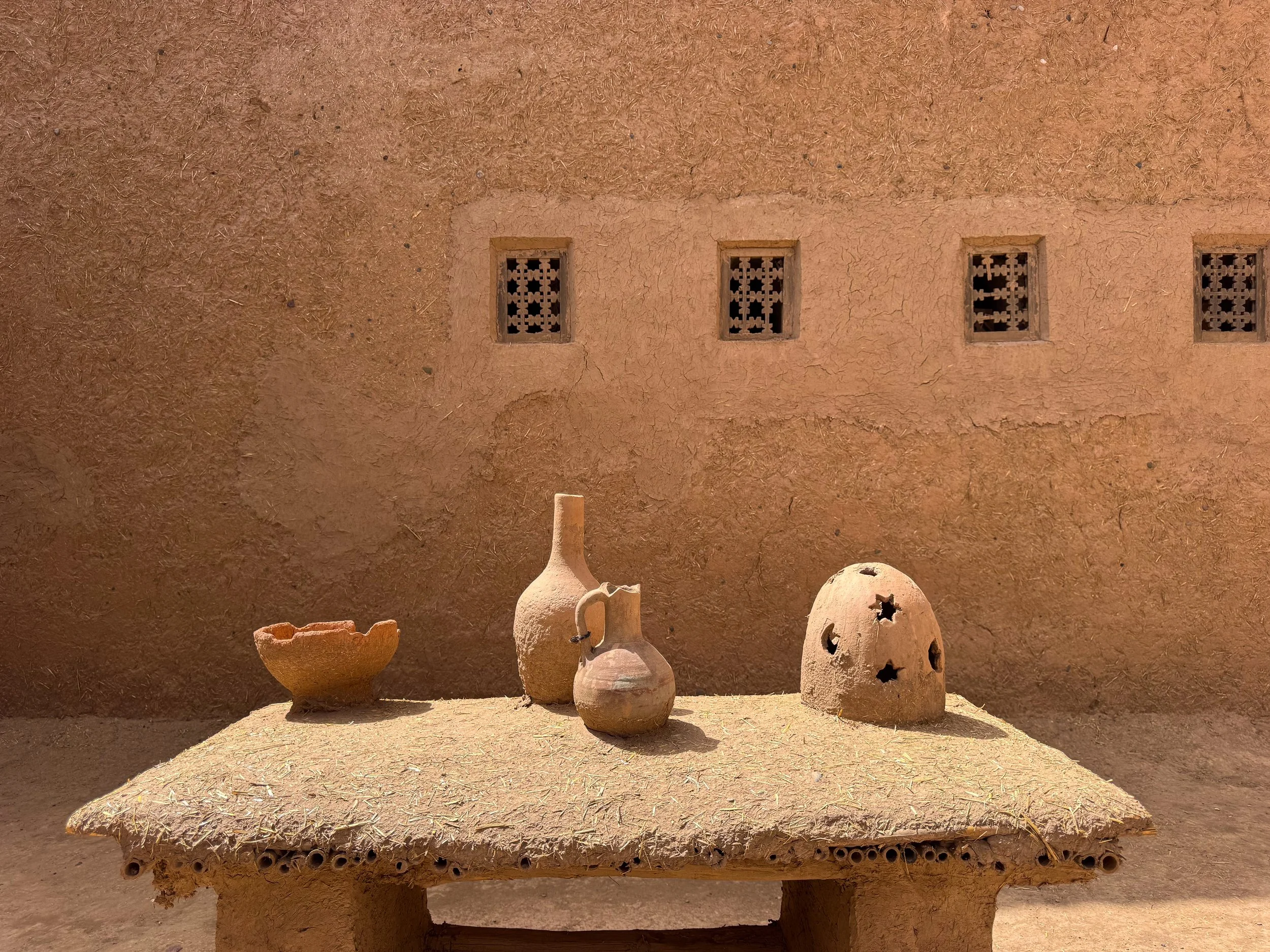
L’Entree Officelle. One of two museum entrances to Kasbah Amridil. Its historic interiors and rooms are restored with beige plastered walls and diamond tiled floors. A light-well illuminates its center while a staircase leads to its floors, rooftop terrace and towers. The upper courtyard features Arab and Moorish style arches. It overlooks the palm covered oasis, neighboring kasbahs and crumbling ruins.
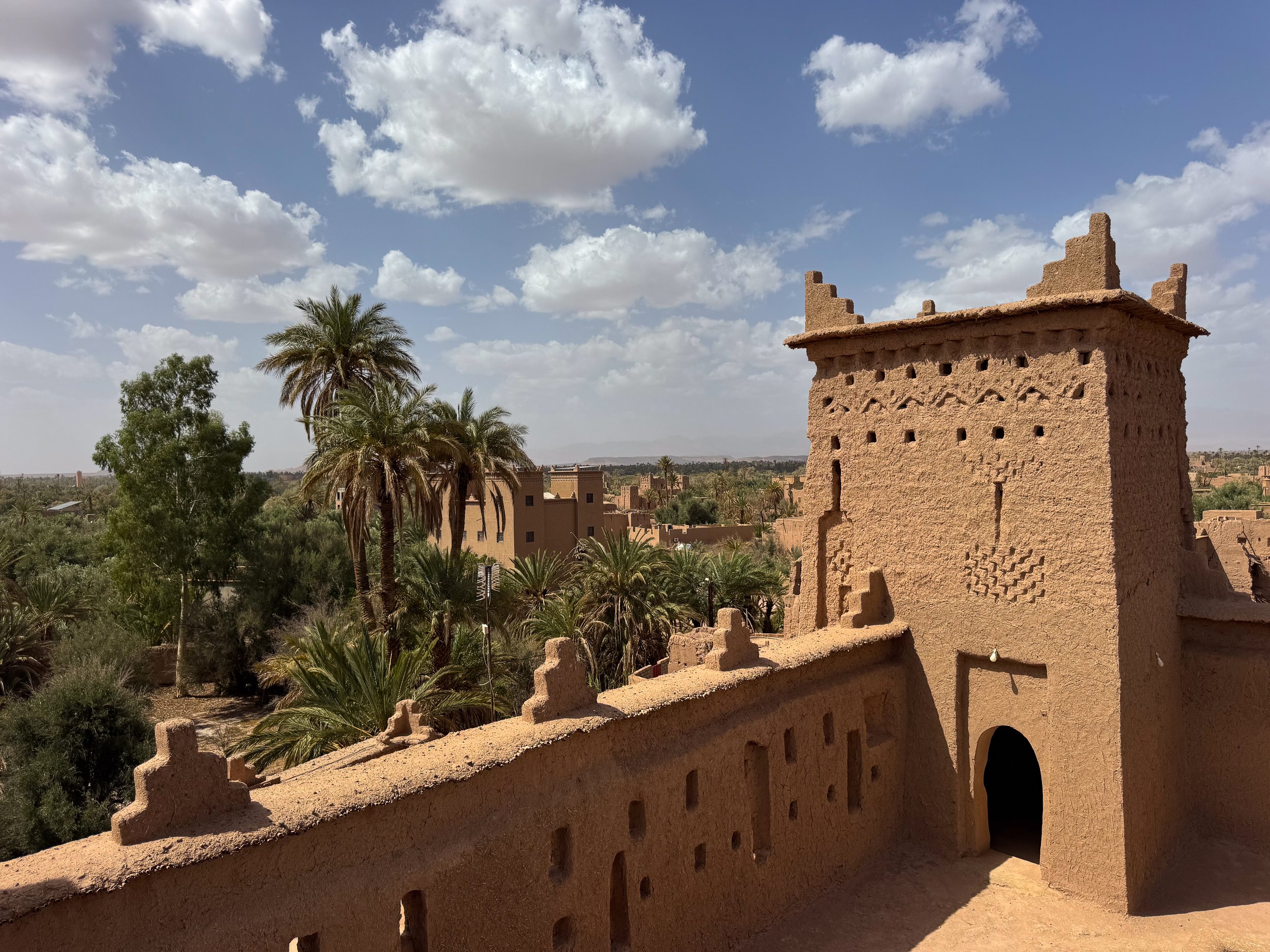
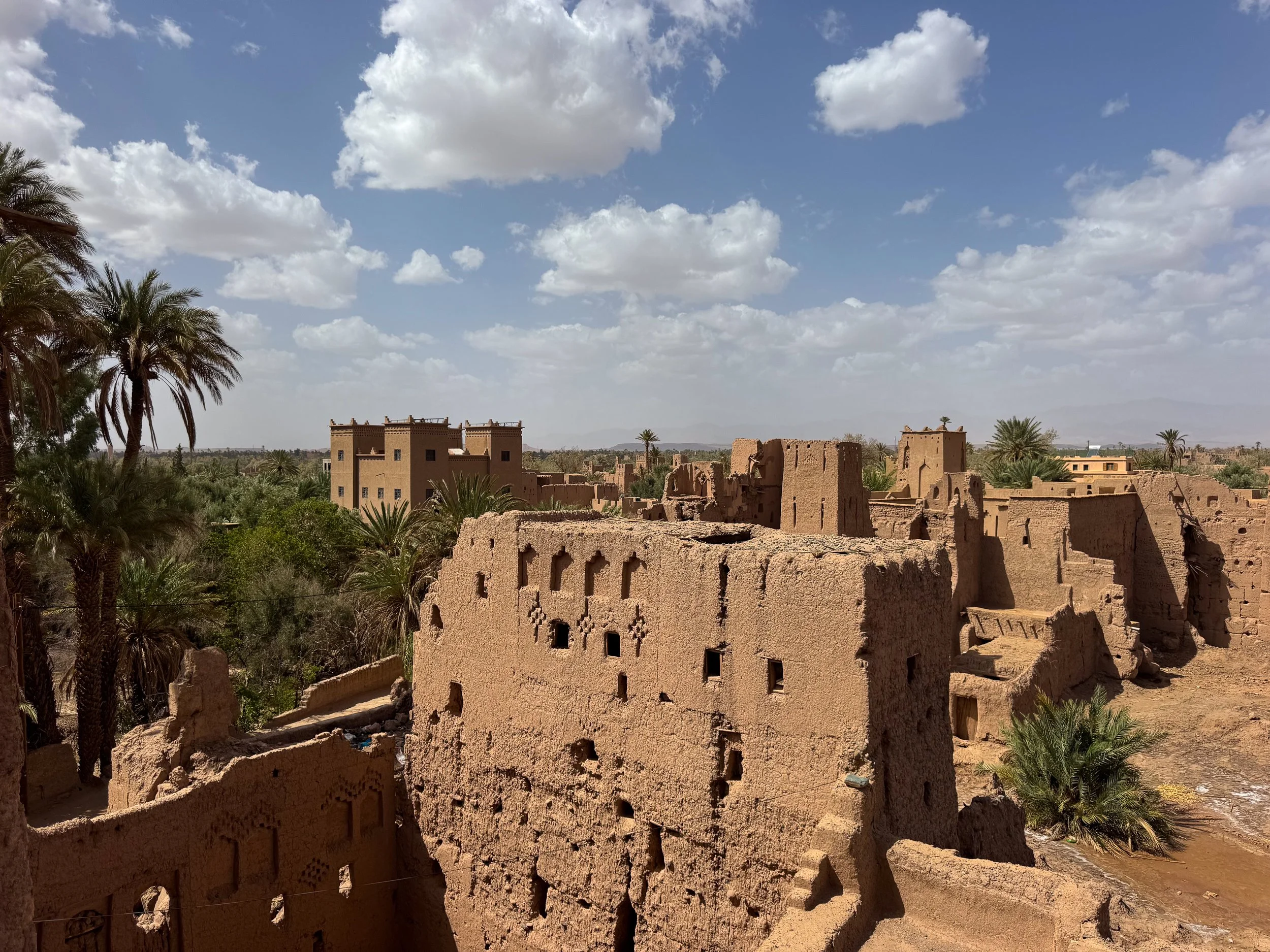
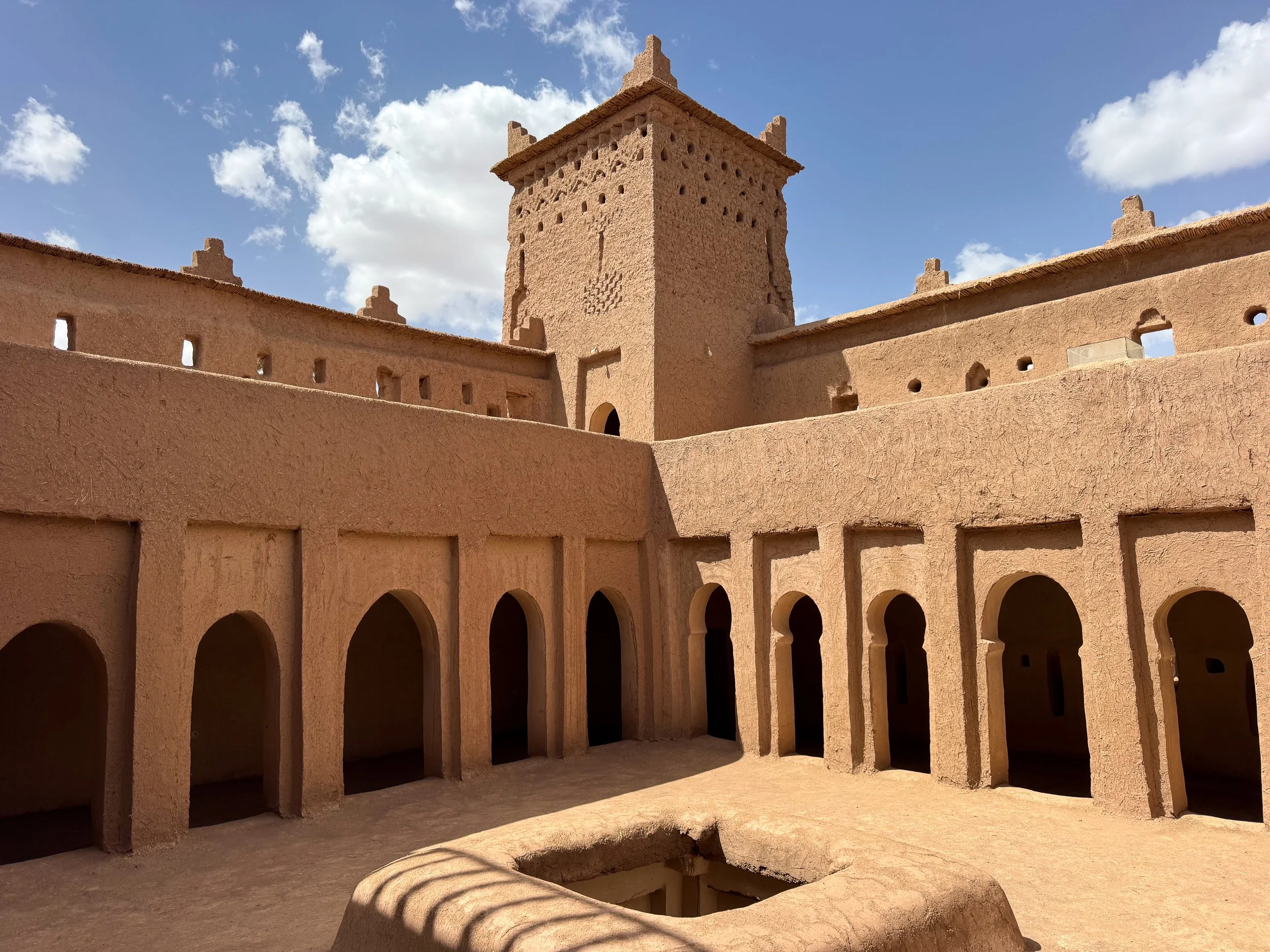
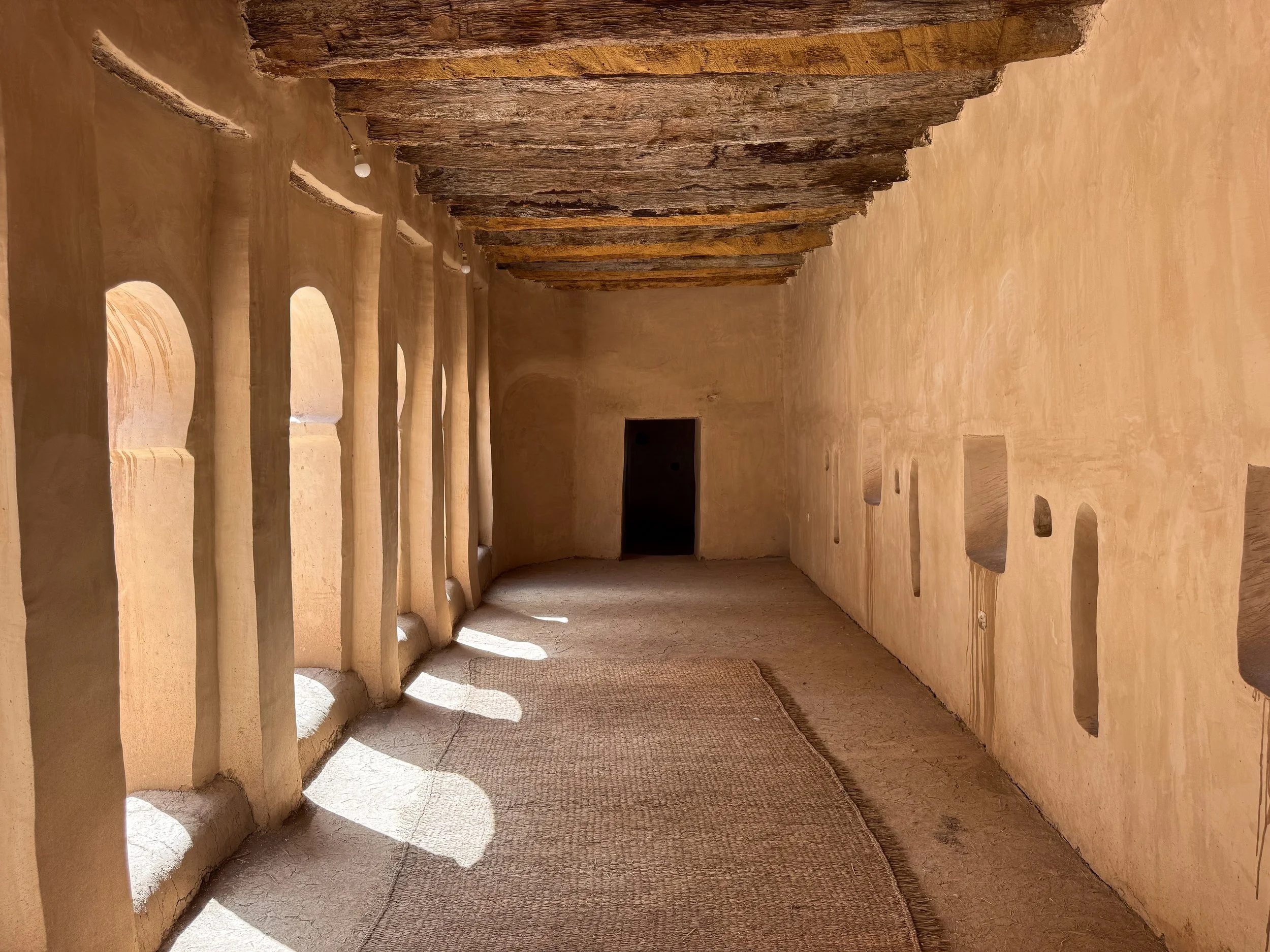
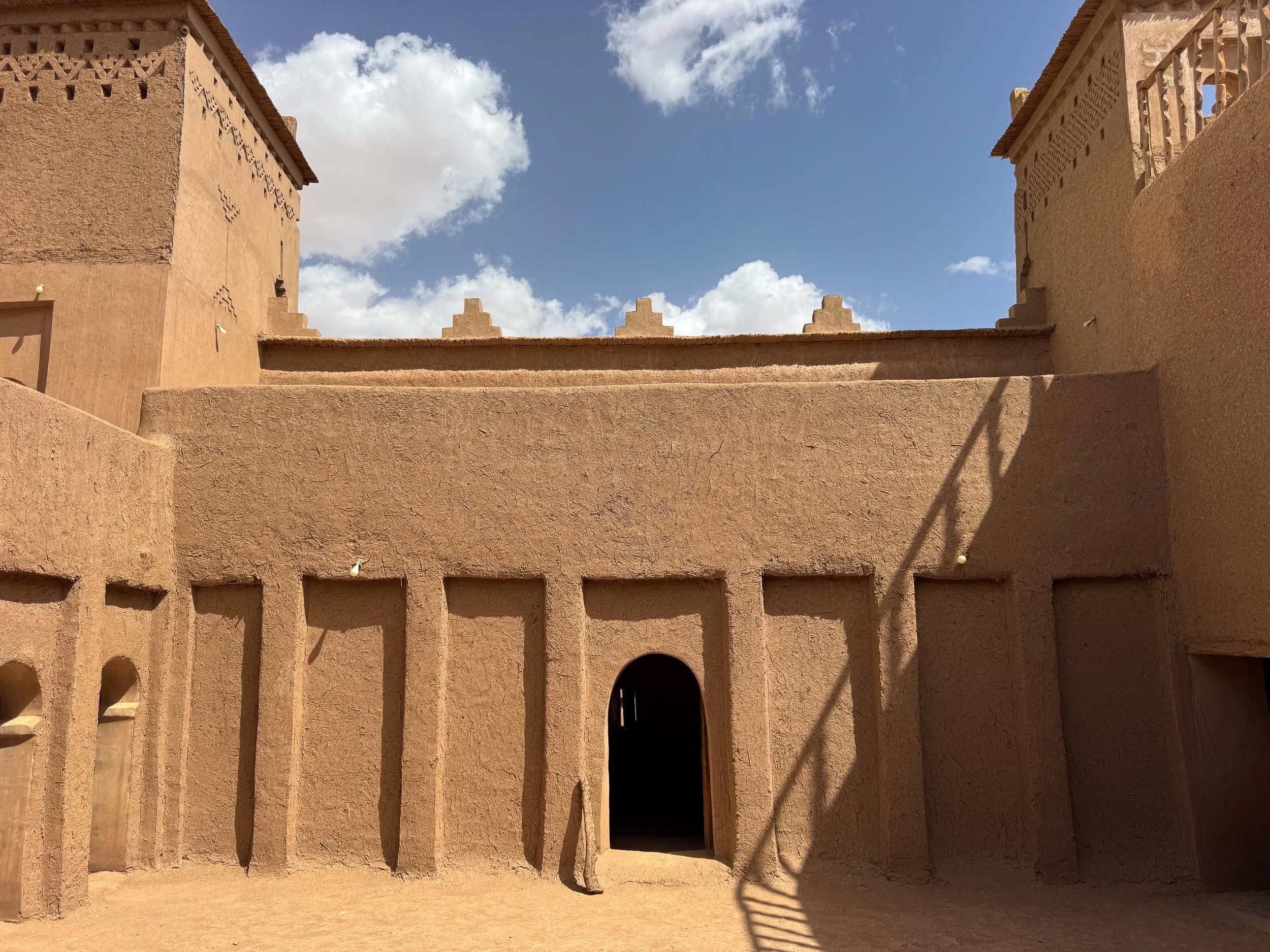
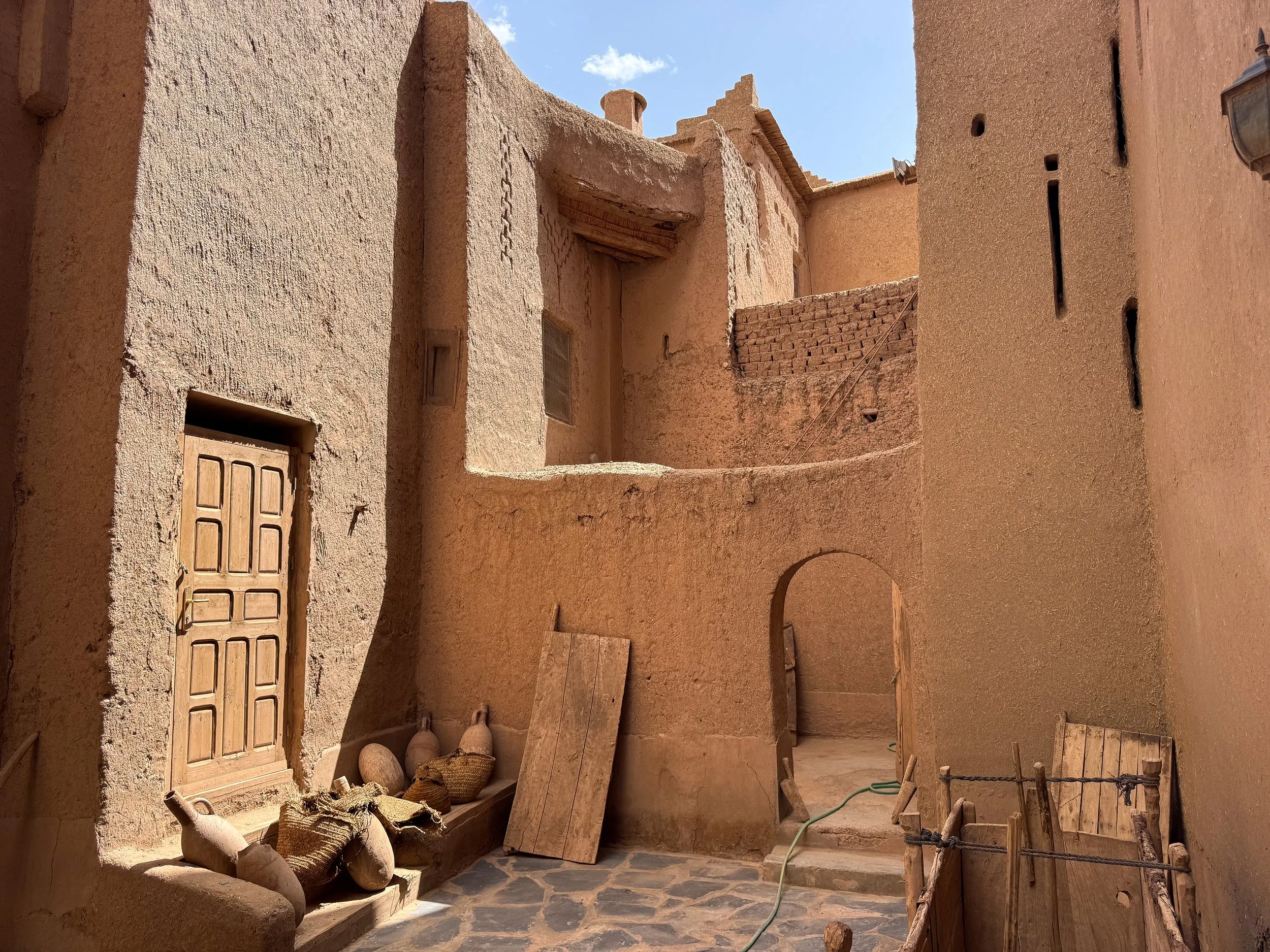
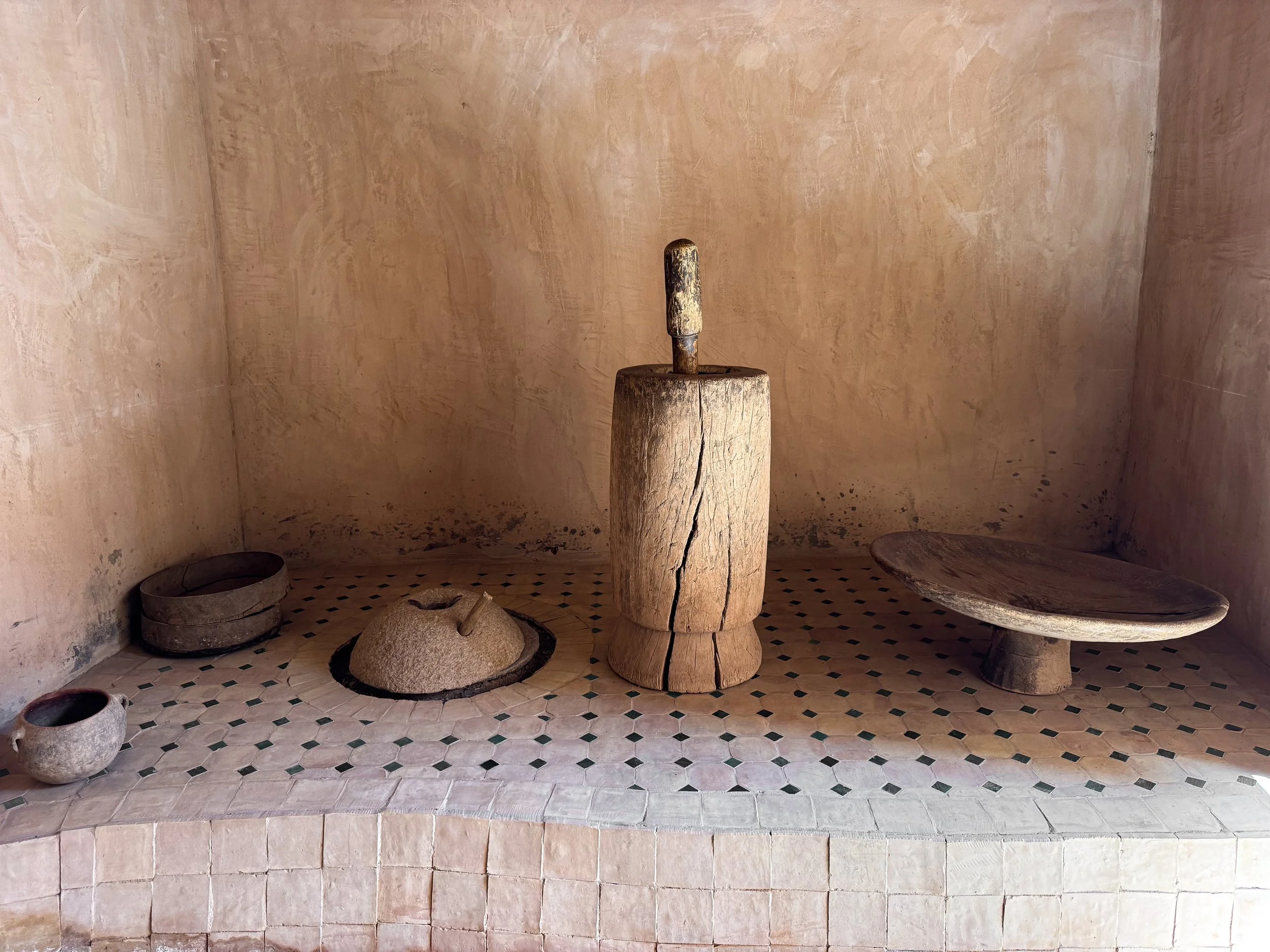
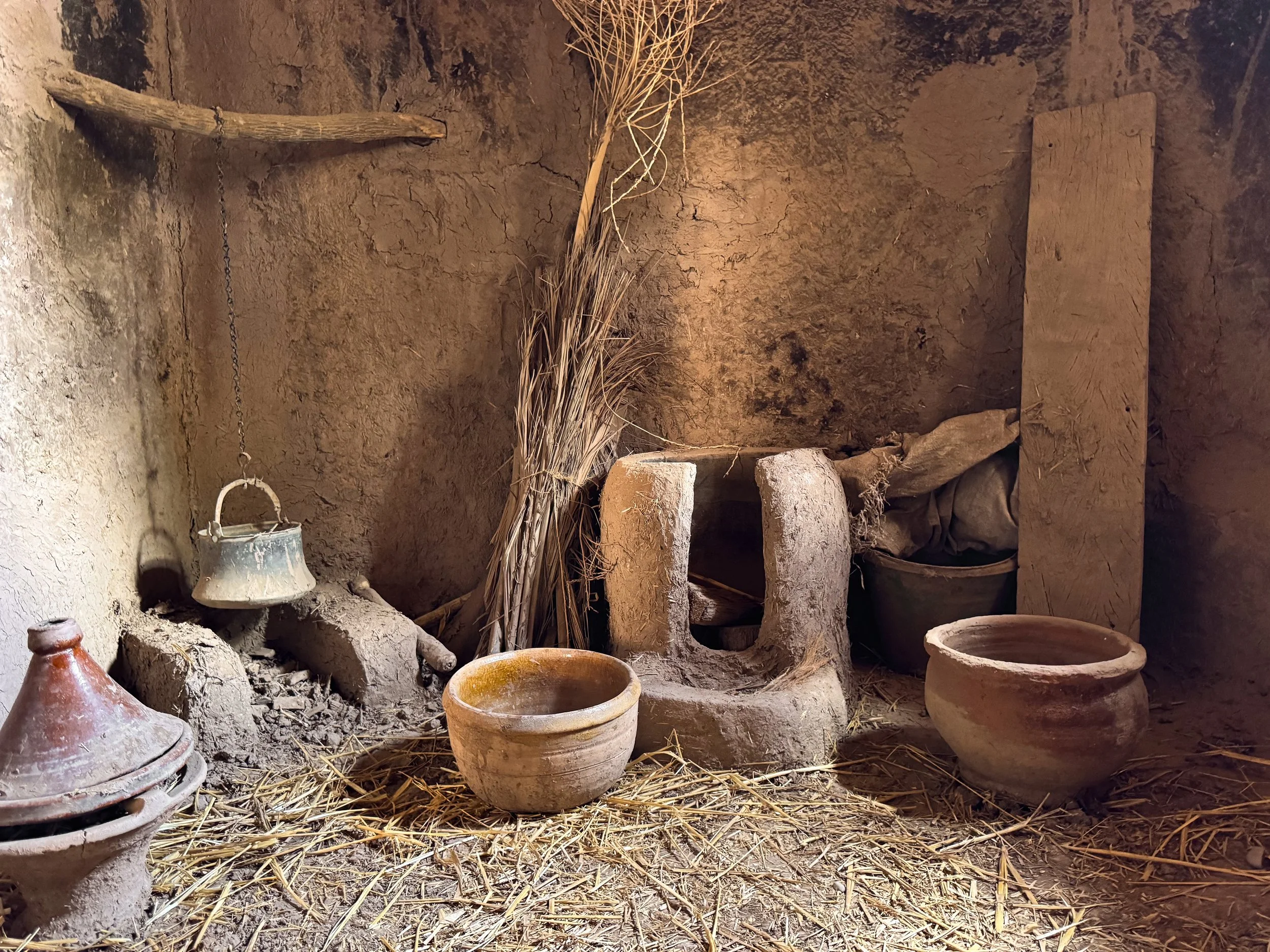
Entree Principale. The second museum entrance to Kasbah Amridil. It’s the most historic and originally maintained section. It features adobe walls, straw and mud floors, kitchens with clay ovens and displays with antique tools. Stairs lead from an open air courtyard to the upper floors and rooms. Rooftop terraces offer views of the kasbah towers and oasis.
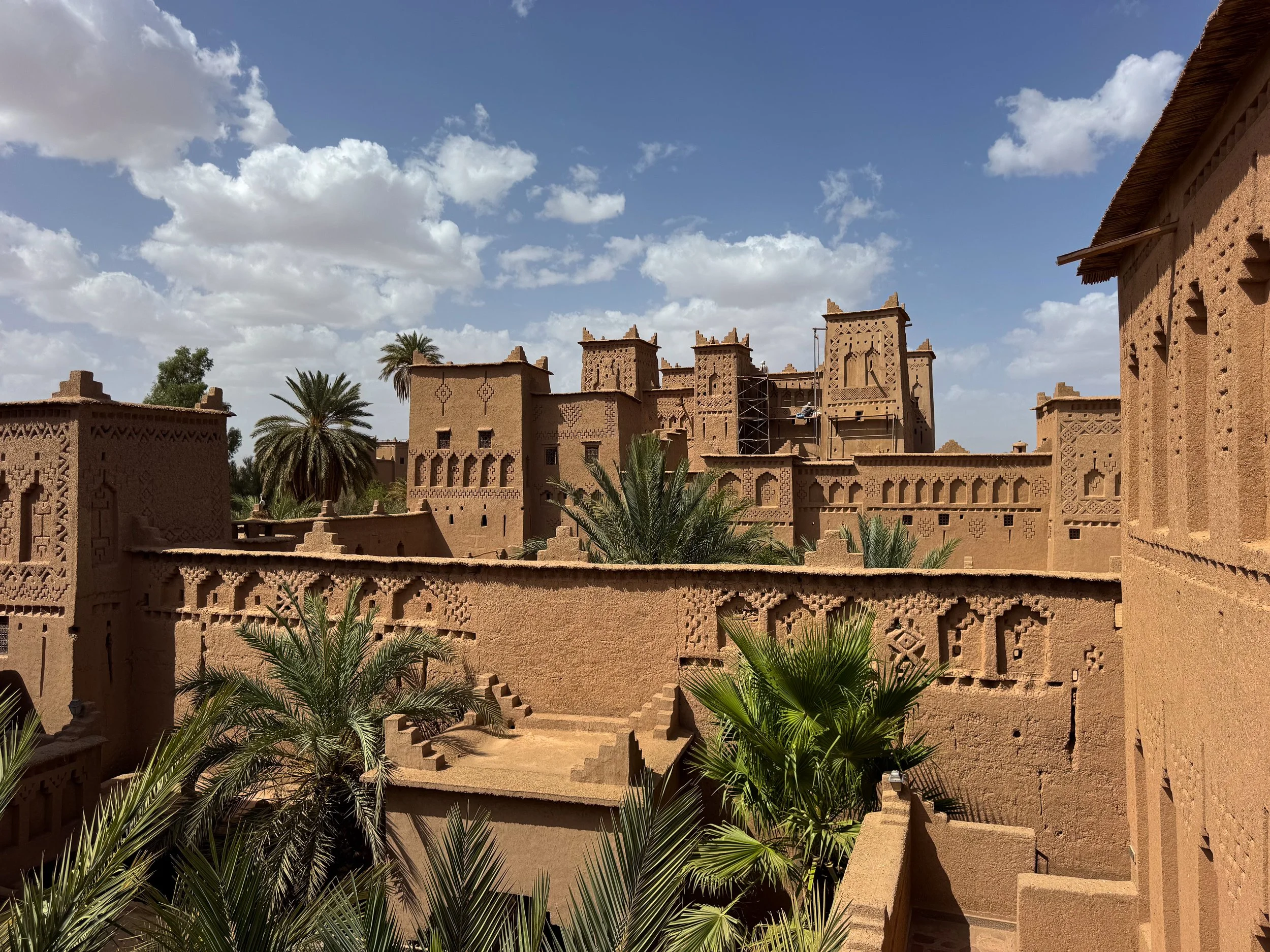
Kasbah Amridil Restaurant. The third section of the kasbah is a restaurant. Its second floor terrace has the best views of the entire kasbah and Skouras Palmerie. Visit here last for a light meal and afternoon mint tea.
Tips for Visiting Kasbah Amridil
Tickets. Tickets cost 40 DH per person for each L’Entree Officelle and Entree Principale. If you only have time to visit one section of the Kasbah, visit the Entree Principale.
Getting Here. The Skouras Palmerie and Kasbah Amridil are reachable from Ouarzazate by car. It takes about 1-1/2 hours to reach if driving.
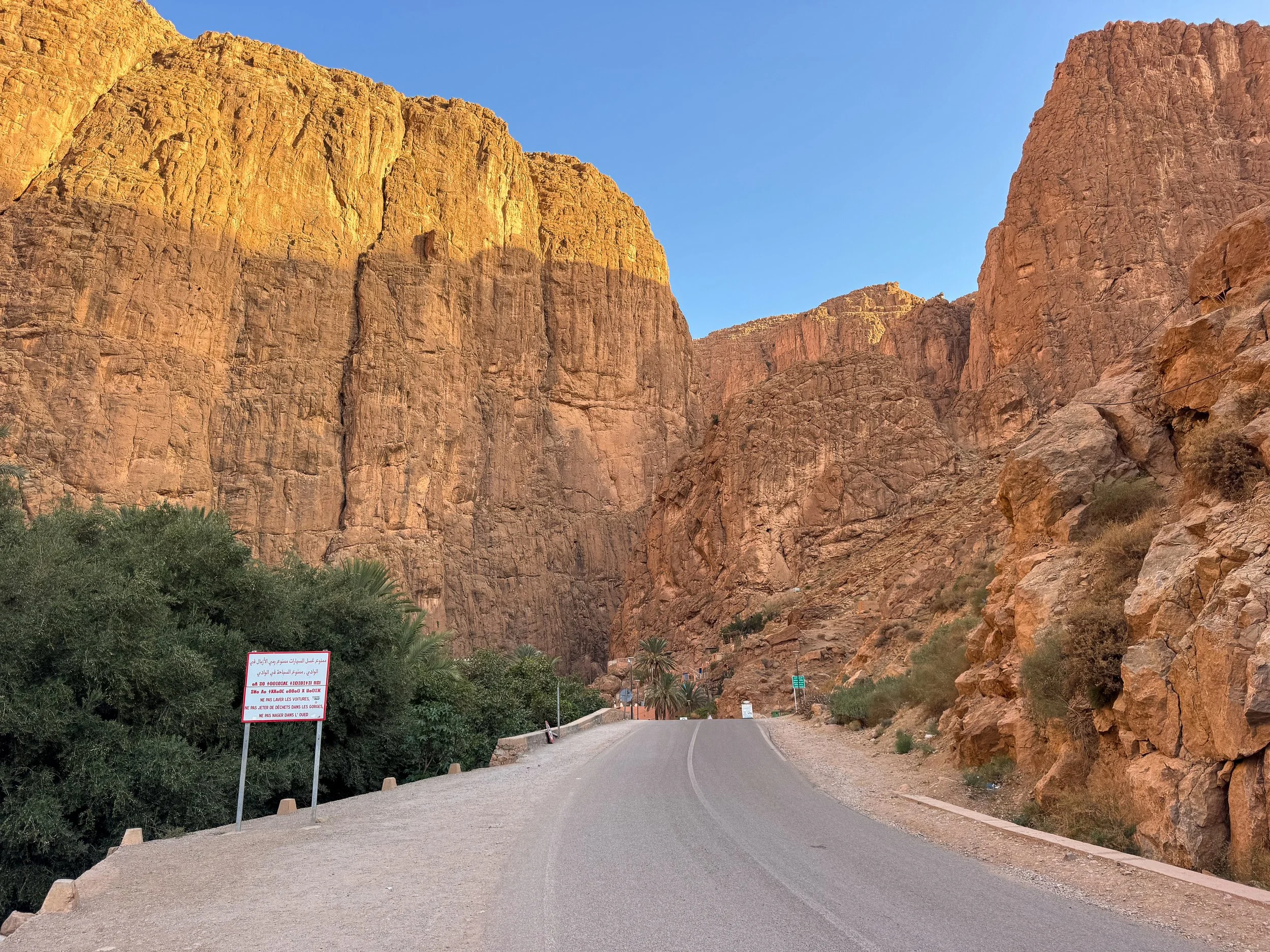
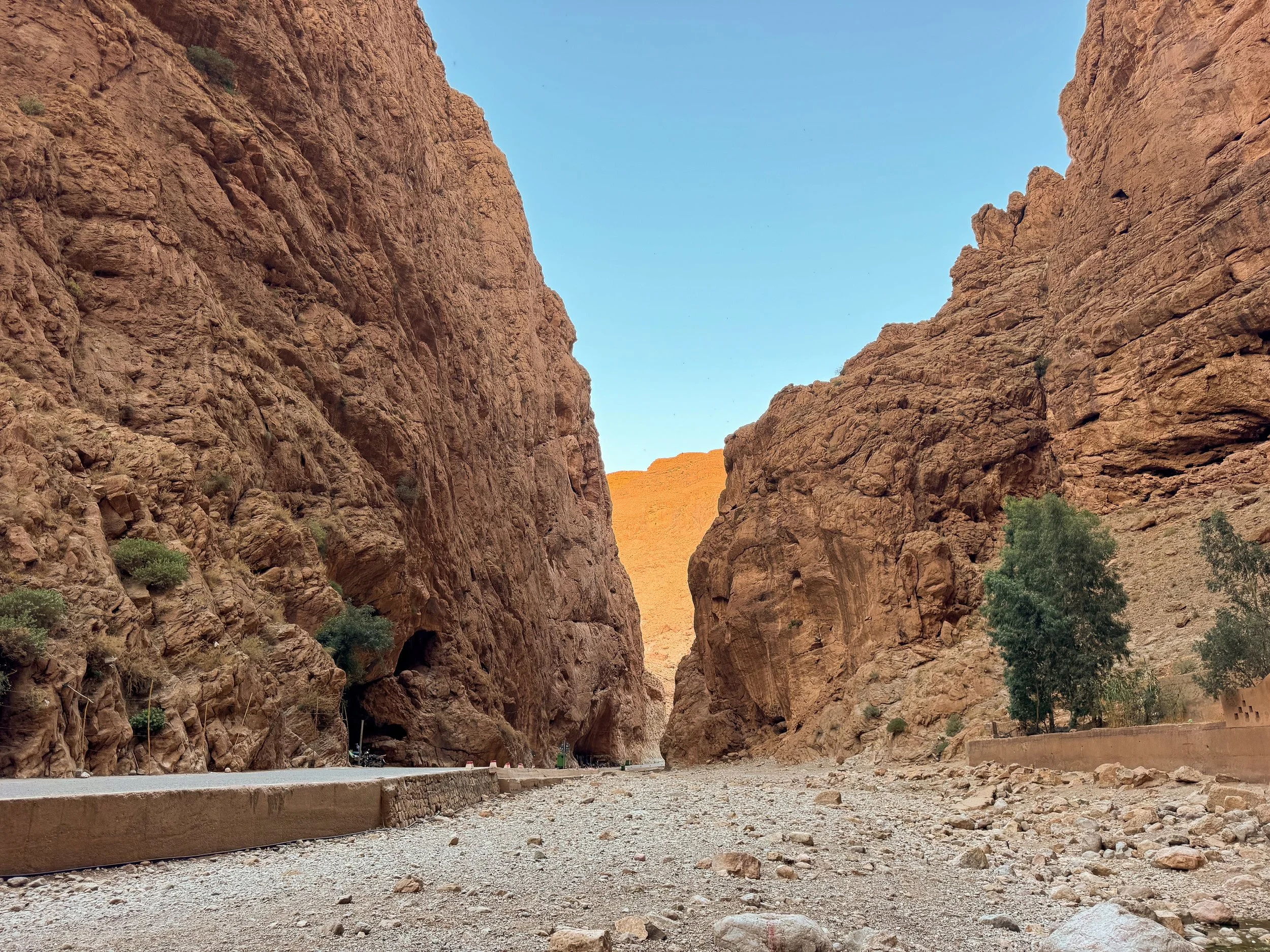
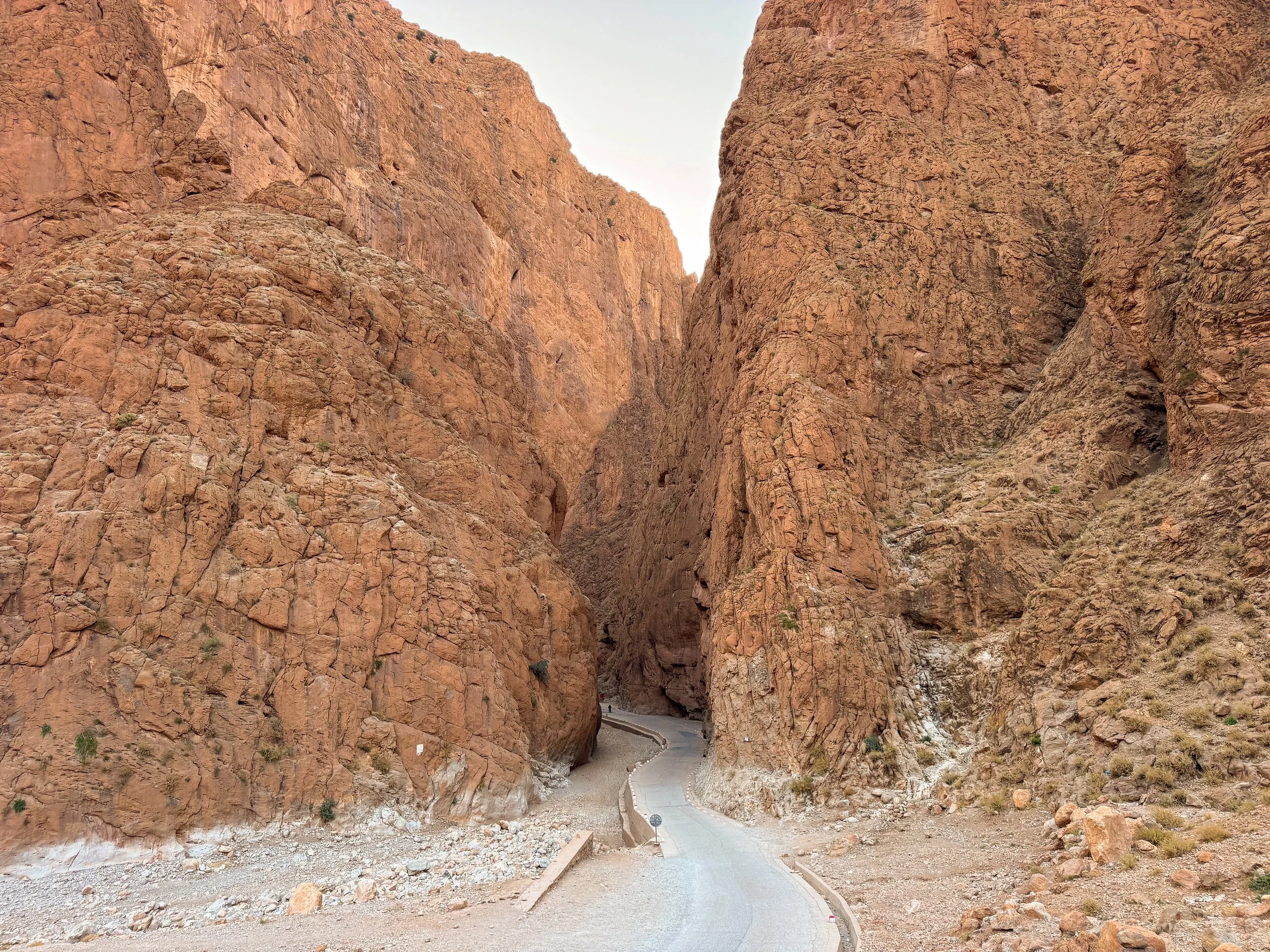
Todra Gorge
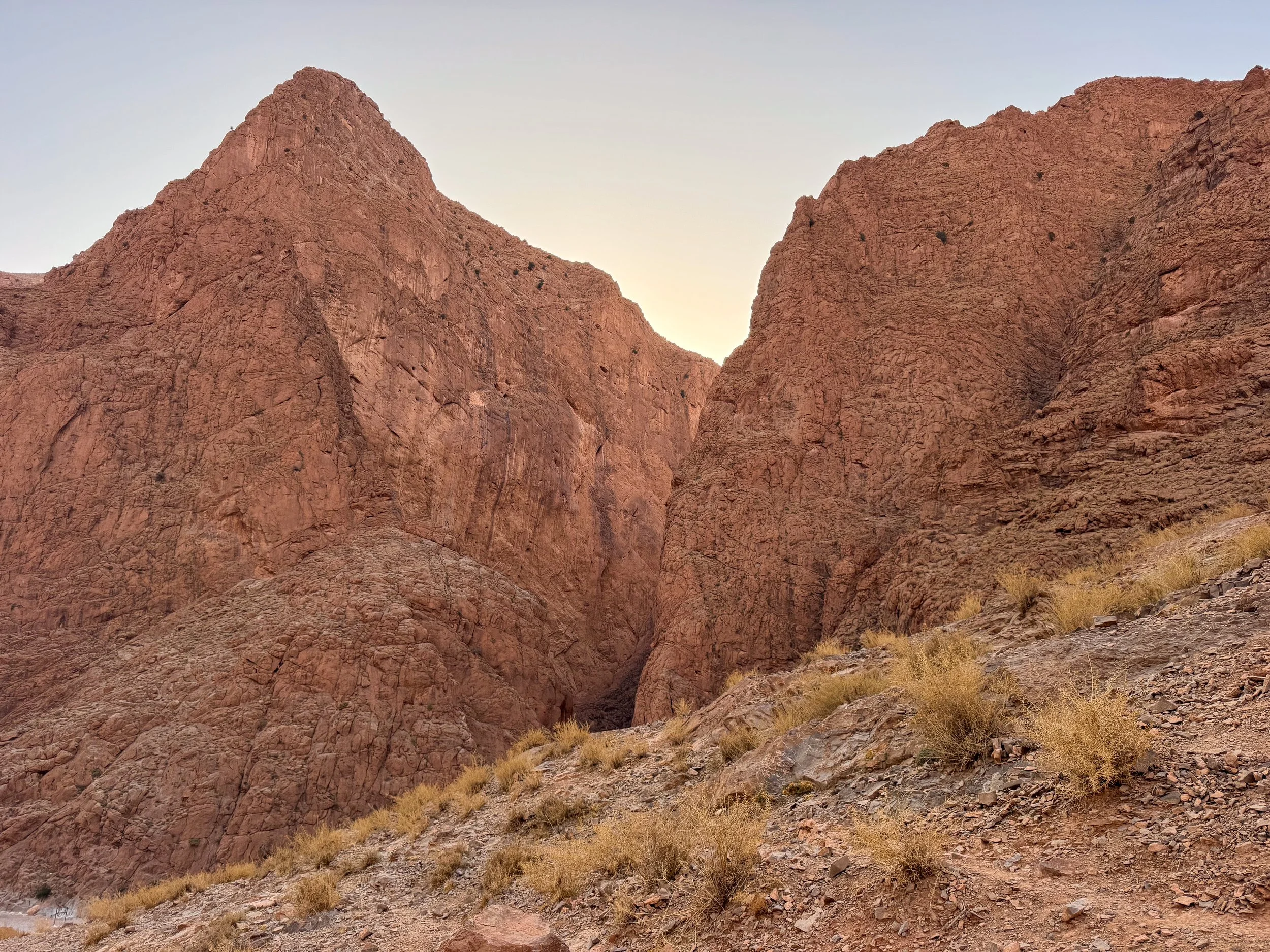
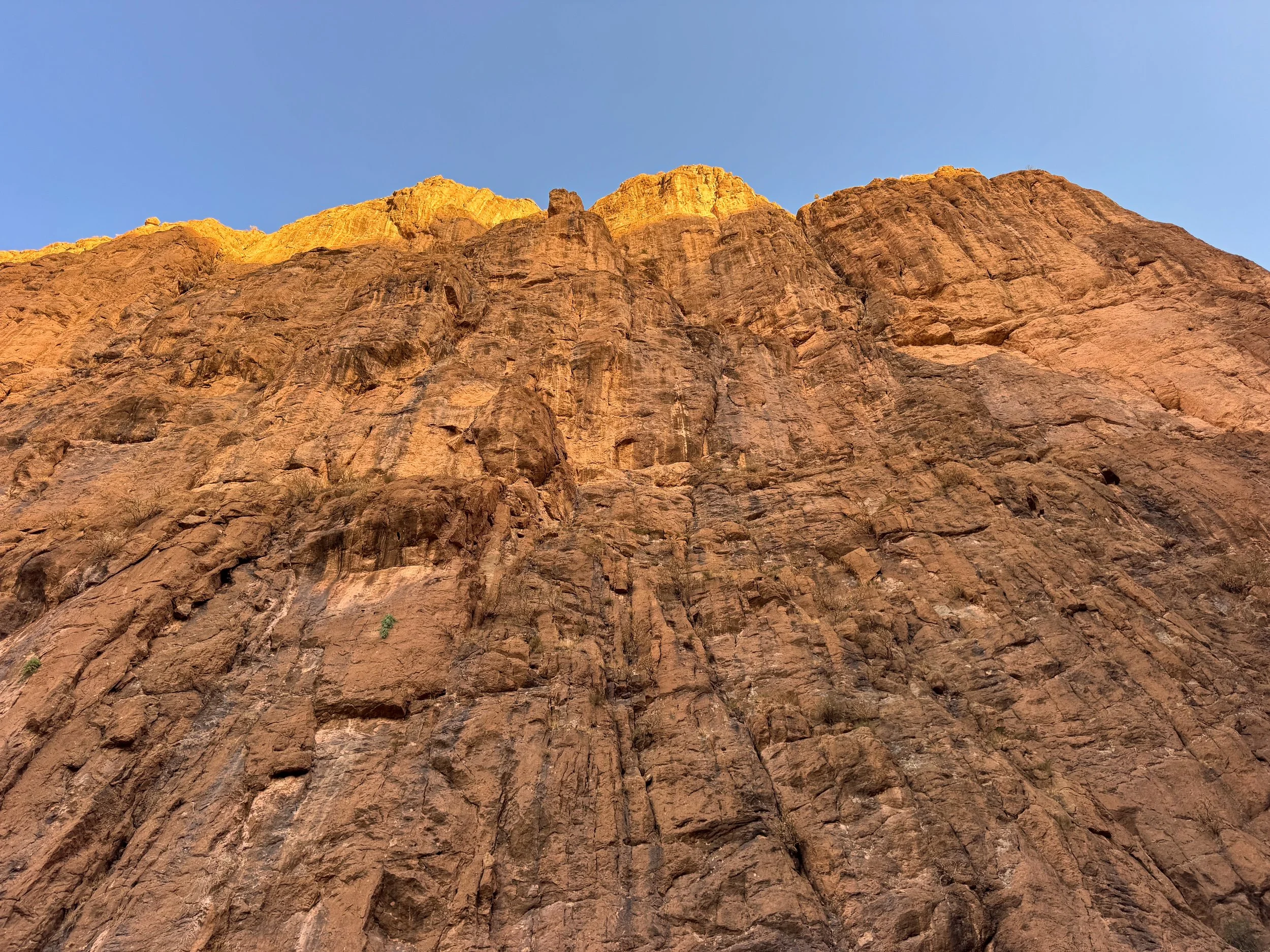
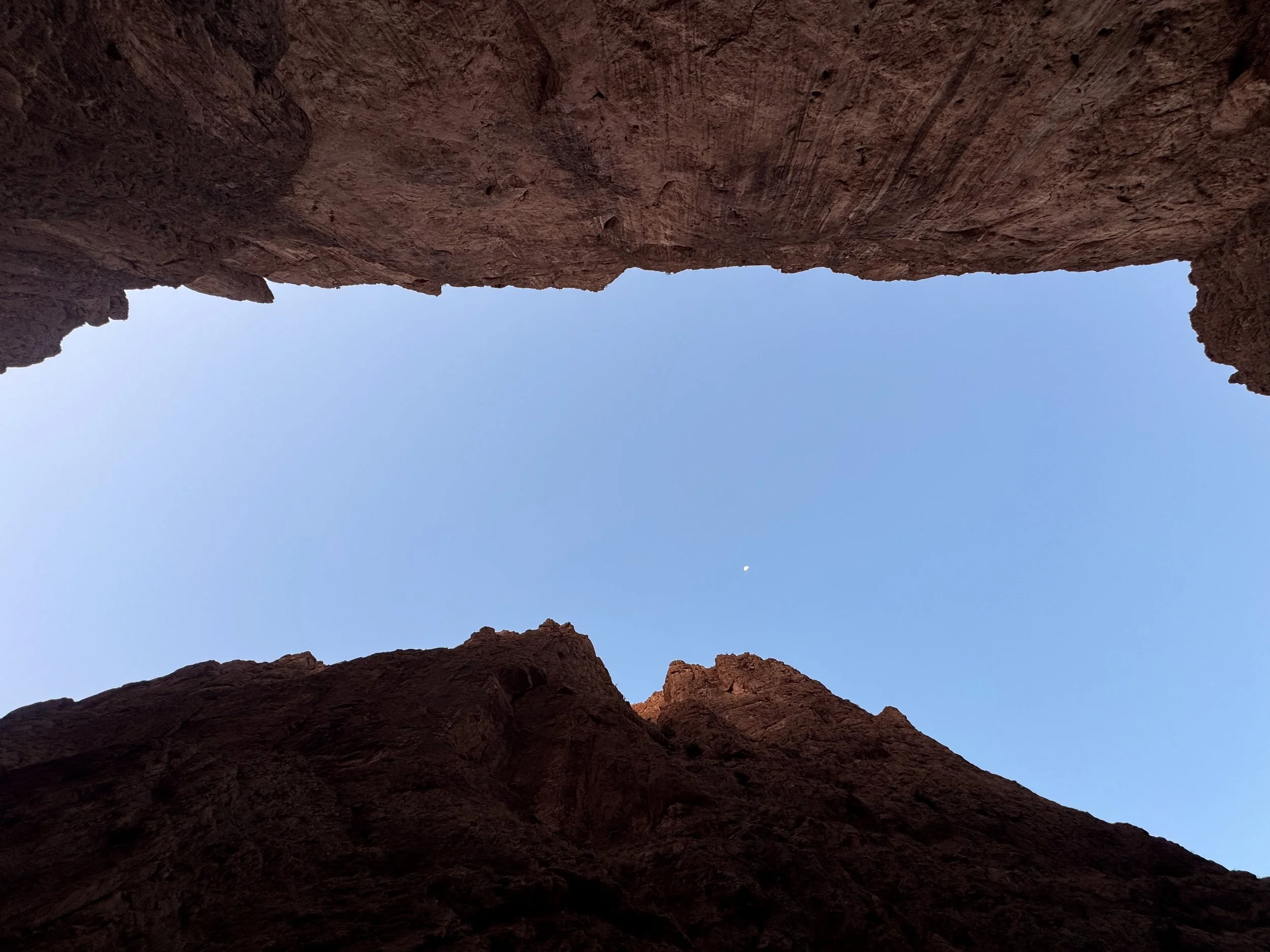
The Todra Gorge is a massive river canyon in the High Atlas Mountains with steep walls, a natural spring and a palm oasis. Its orange and brown rock walls rise hundreds of feet above the river bed. A natural spring bubbles from the ground supplying the river and oasis with a continual supply of fresh water.
Hiking and Rock Climbing. A hiking trail begins at the parking lot past the narrowest section of the gorge. It loops 13km across the desert landscape. We only hiked 1km due to lack of time. The walls of the gorge are popular with experienced rock climbers.
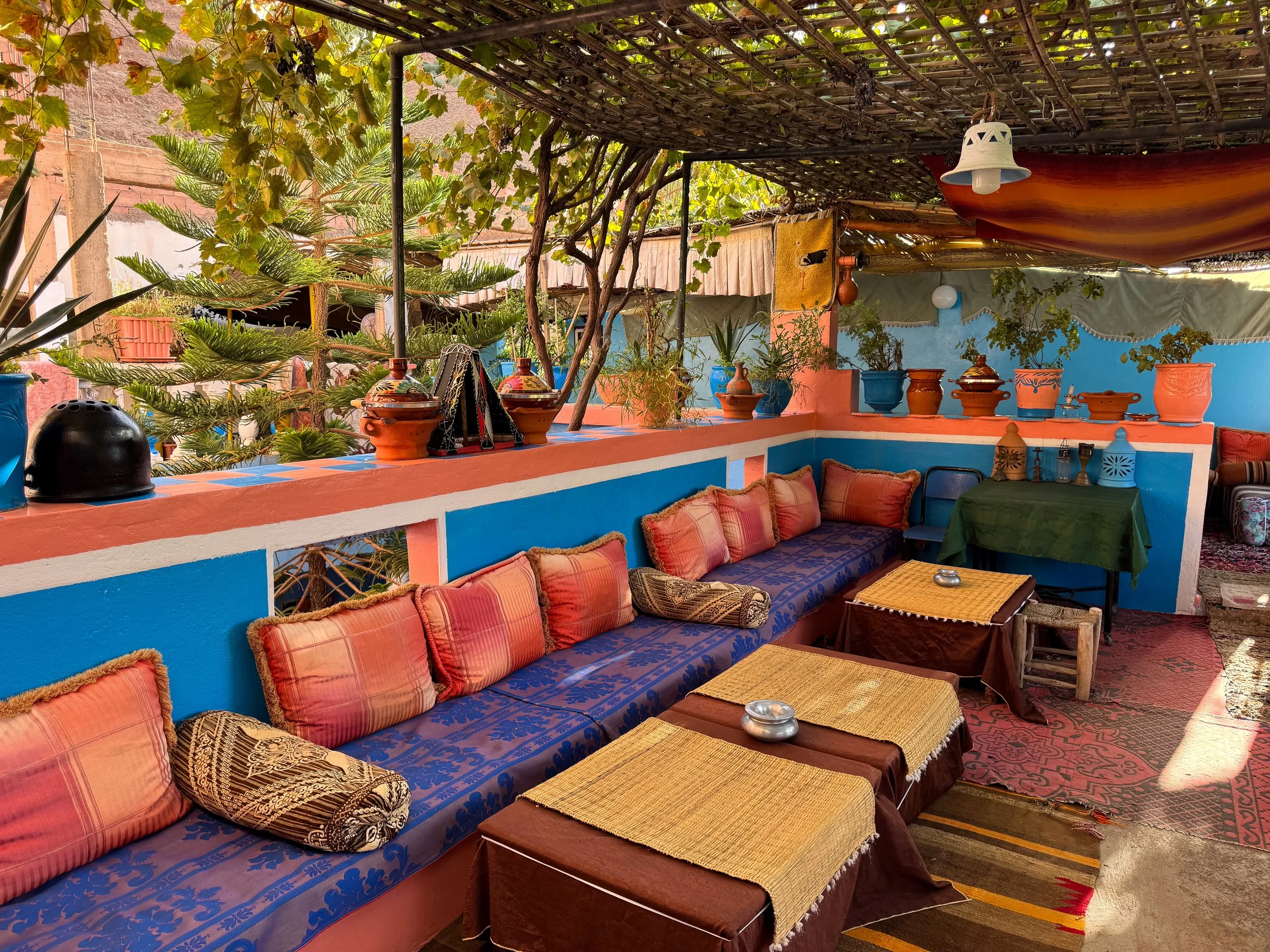
La Maison d’Hotes Riad Todra. A small hotel at the mouth of the Todra Gorge. Its rooms are basic but suitable for a single night stay. It has a restaurant with Moroccan lounges overlooking a small oasis. The host prepared a vegetable tagine for dinner and a spread for breakfast. We booked on Airbnb.
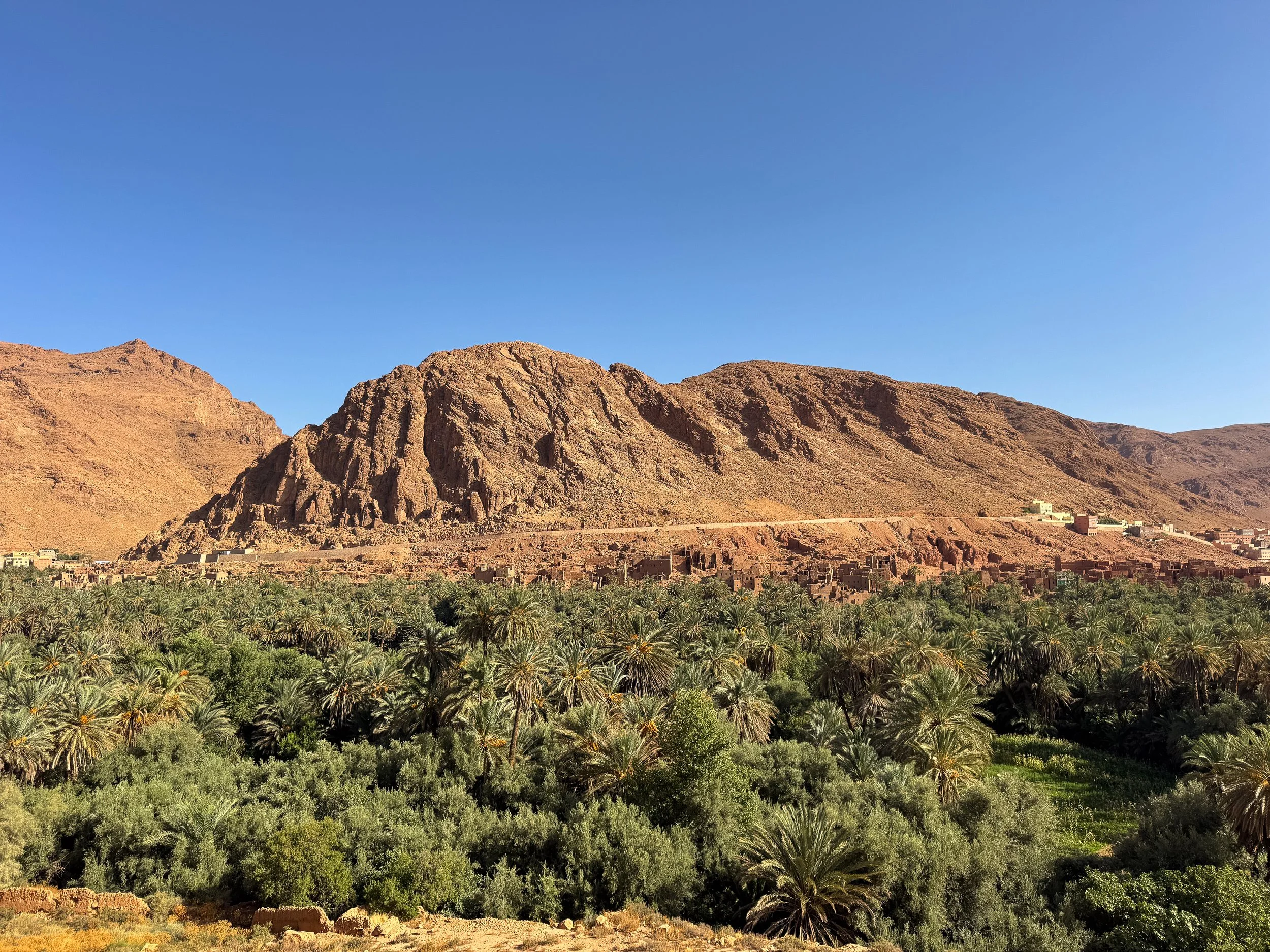
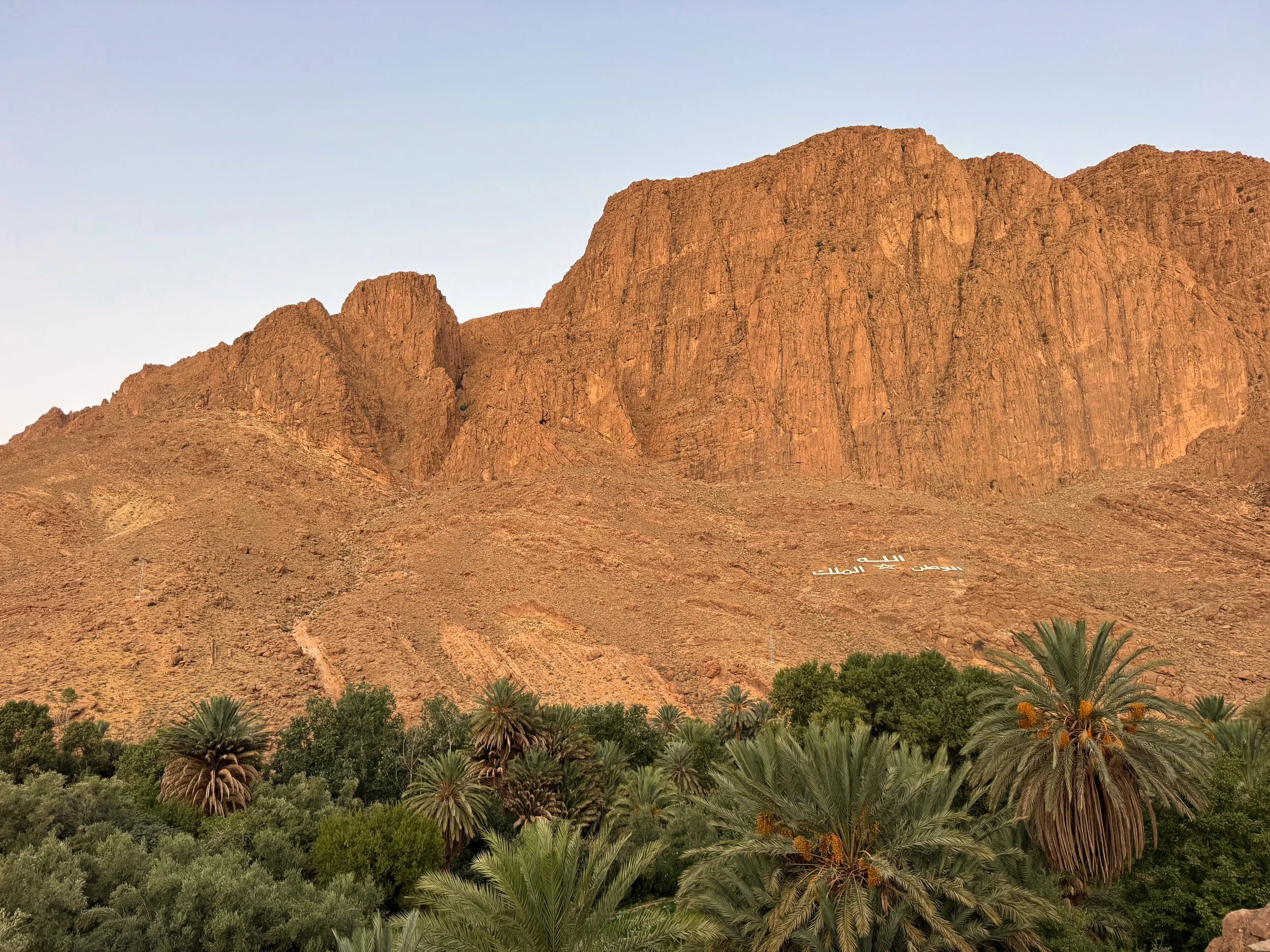
Palmeraie de Tinghir. A vast oasis stretching from the mouth of the Todra Gorge to the city of Tinghir. Groves of fig, olive, date and pomegranate trees grow in the verdant valley. Crumbling ruins of historic kasbahs line its rugged edges. Roadside lookouts offer panoramic views of the surrounding landscape.
Mirador de Palmeraie. A roadside viewpoint of the palm covered oasis, its abandoned adobe kasbahs and the mountainside. Use this Map Pin for the location.
Oasis de Toudgha Vue Panoramique. A lookout point closer to town with sweeping views of the oasis, its farmland and distant mountains. Use this Map Pin for the location.
Tips for Visiting The Todra Gorge:
Visit Early. Arrive in the early morning, just after sunrise to see the gorge in its most natural state without any vendors or tour buses.
Beware of Dogs. Packs of stray dogs can be aggressive. Even if unprovoked, they try to bite at people’s ankles. Raise your hand in a fist and shout at them if they get too close.
Getting Here. The Todra Gorge is reachable after driving 3 hours from the Skouras Palmerie.
Merzouga Desert
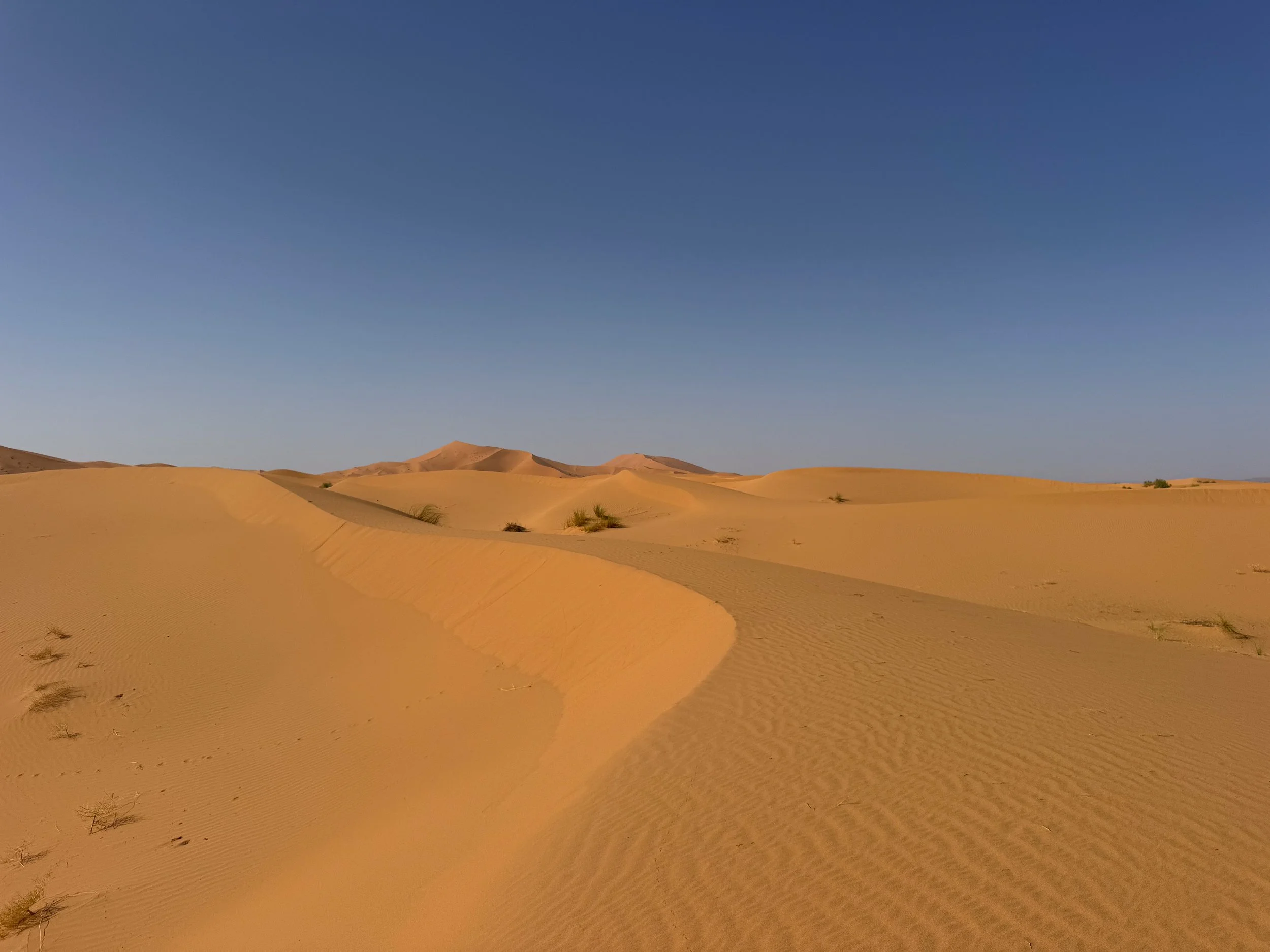
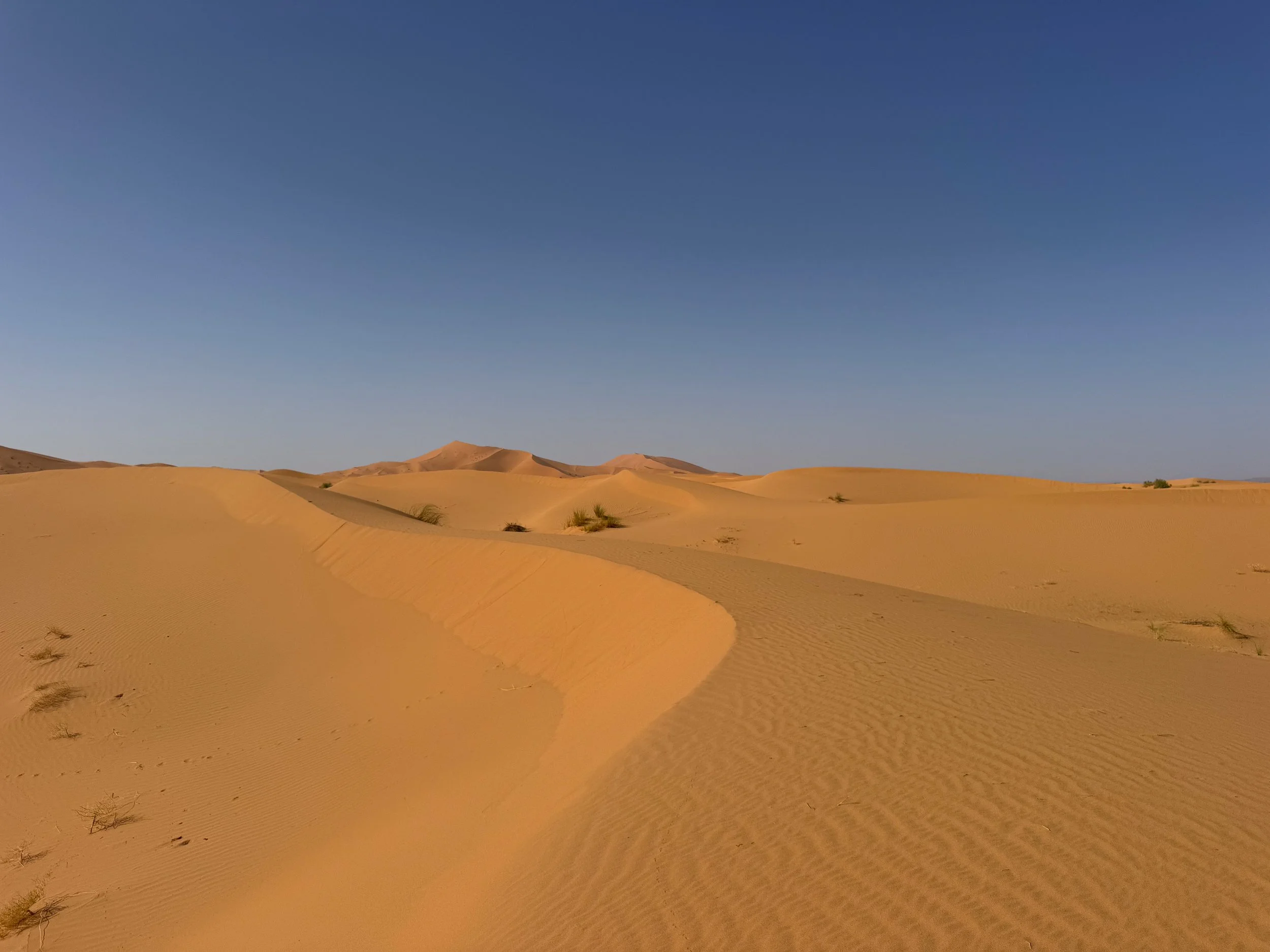
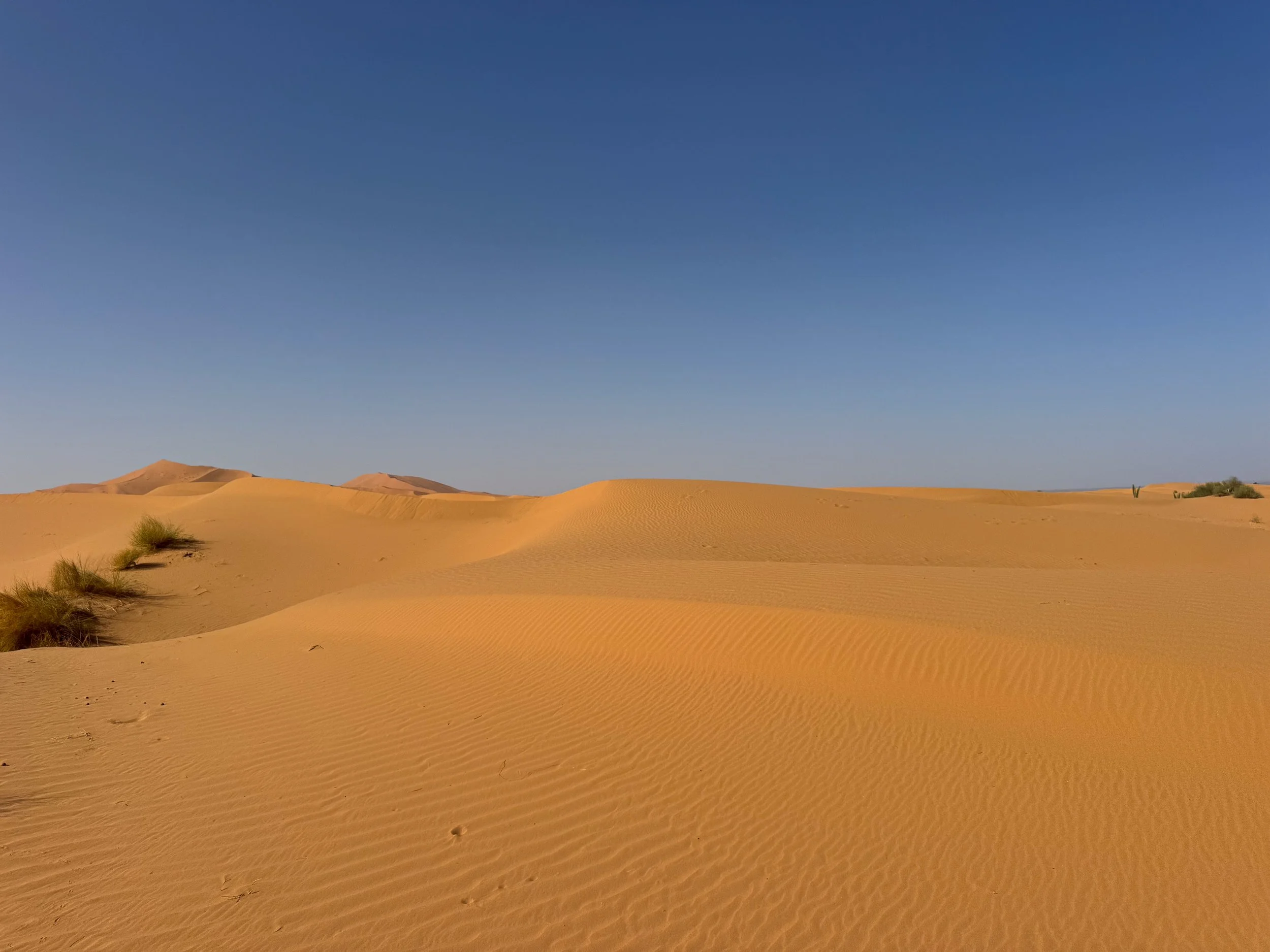
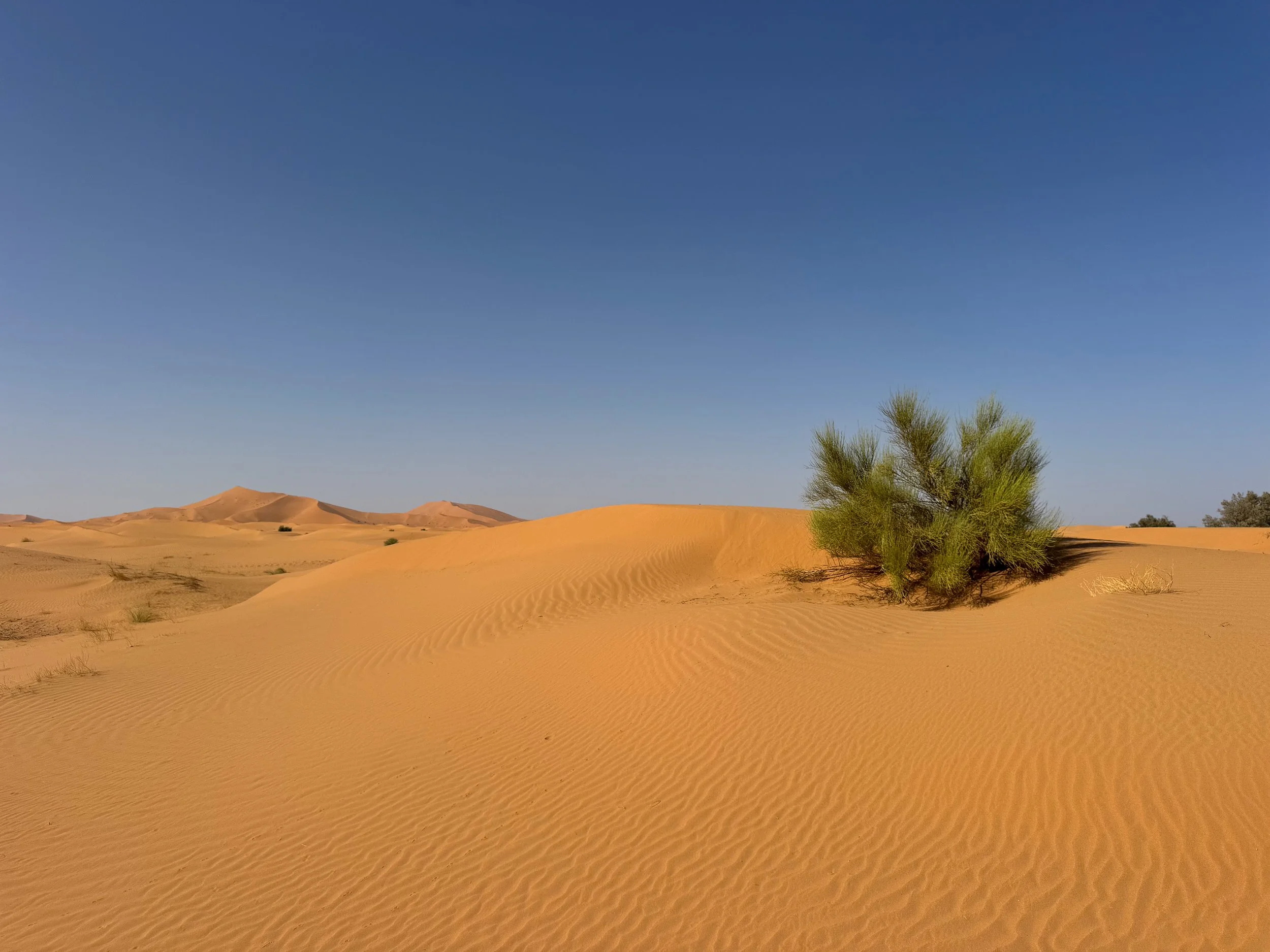
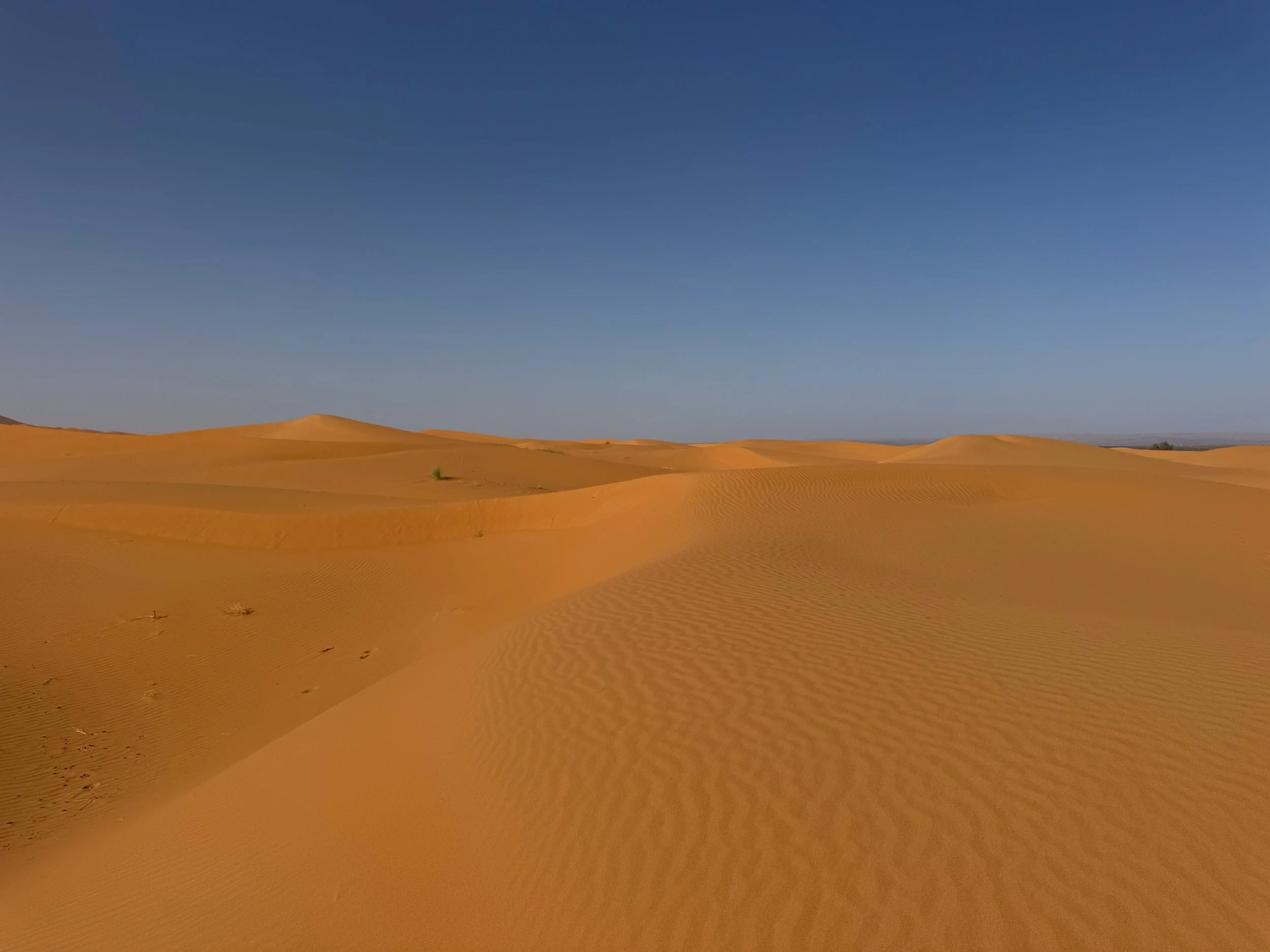
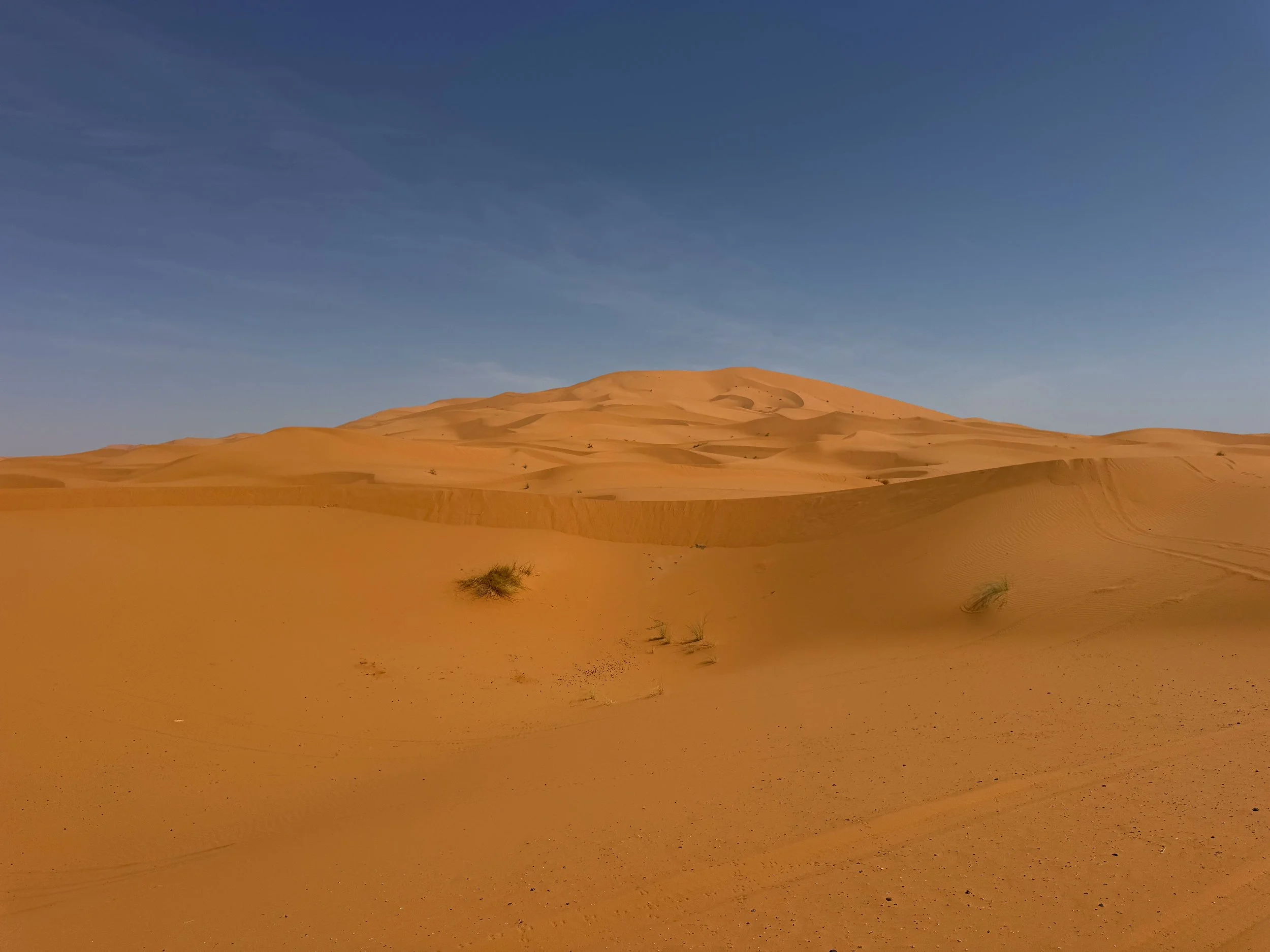
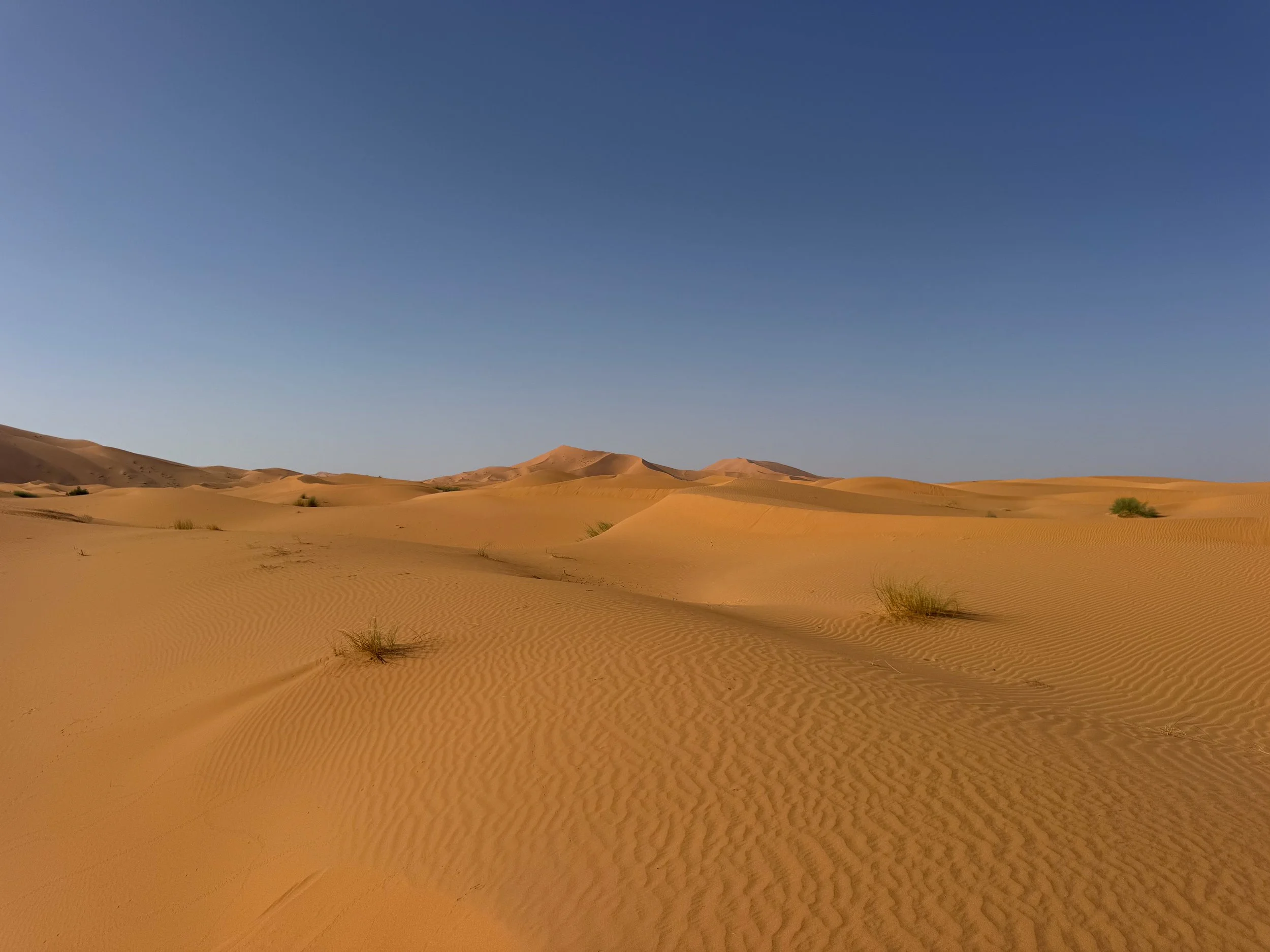
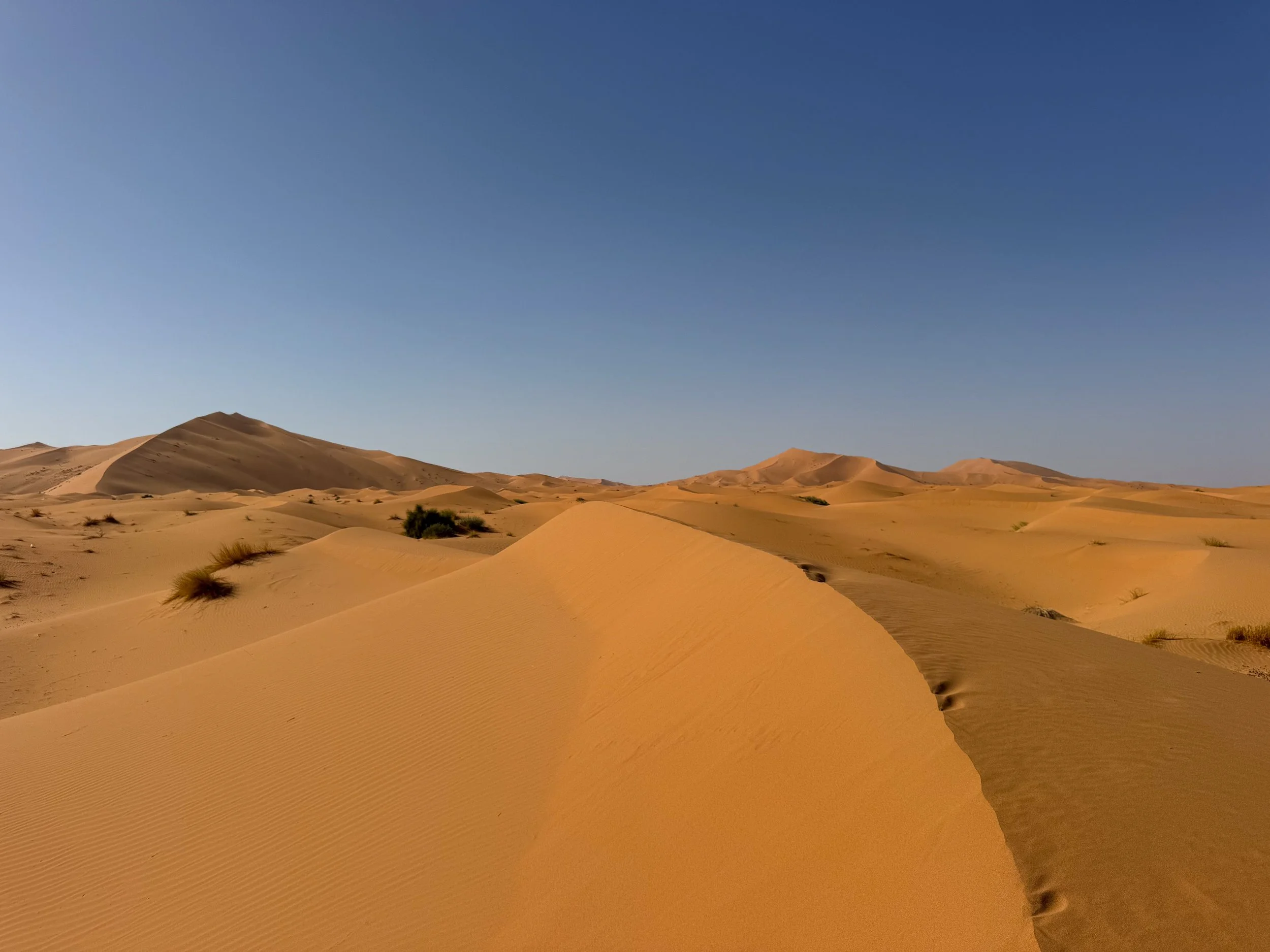
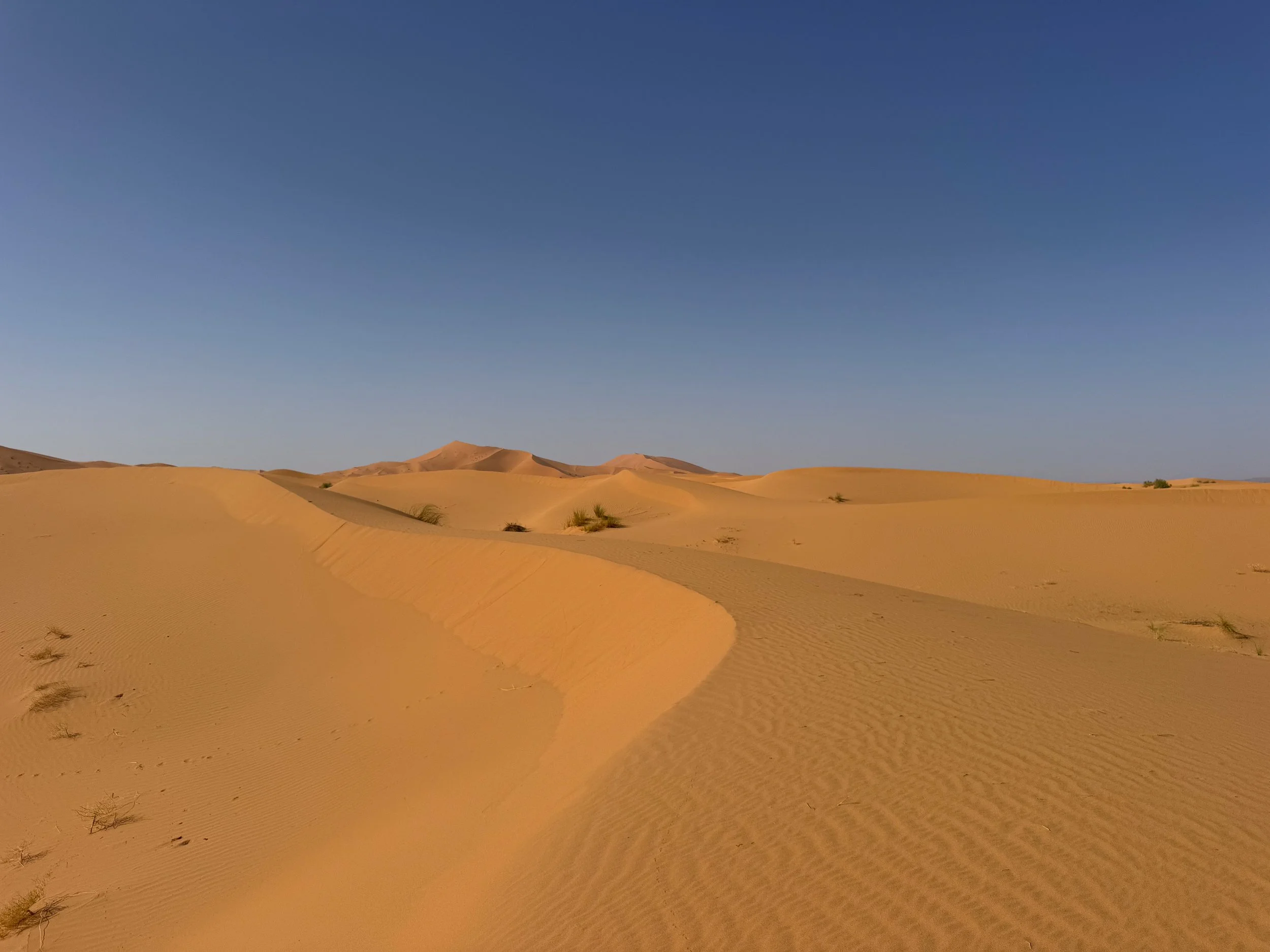
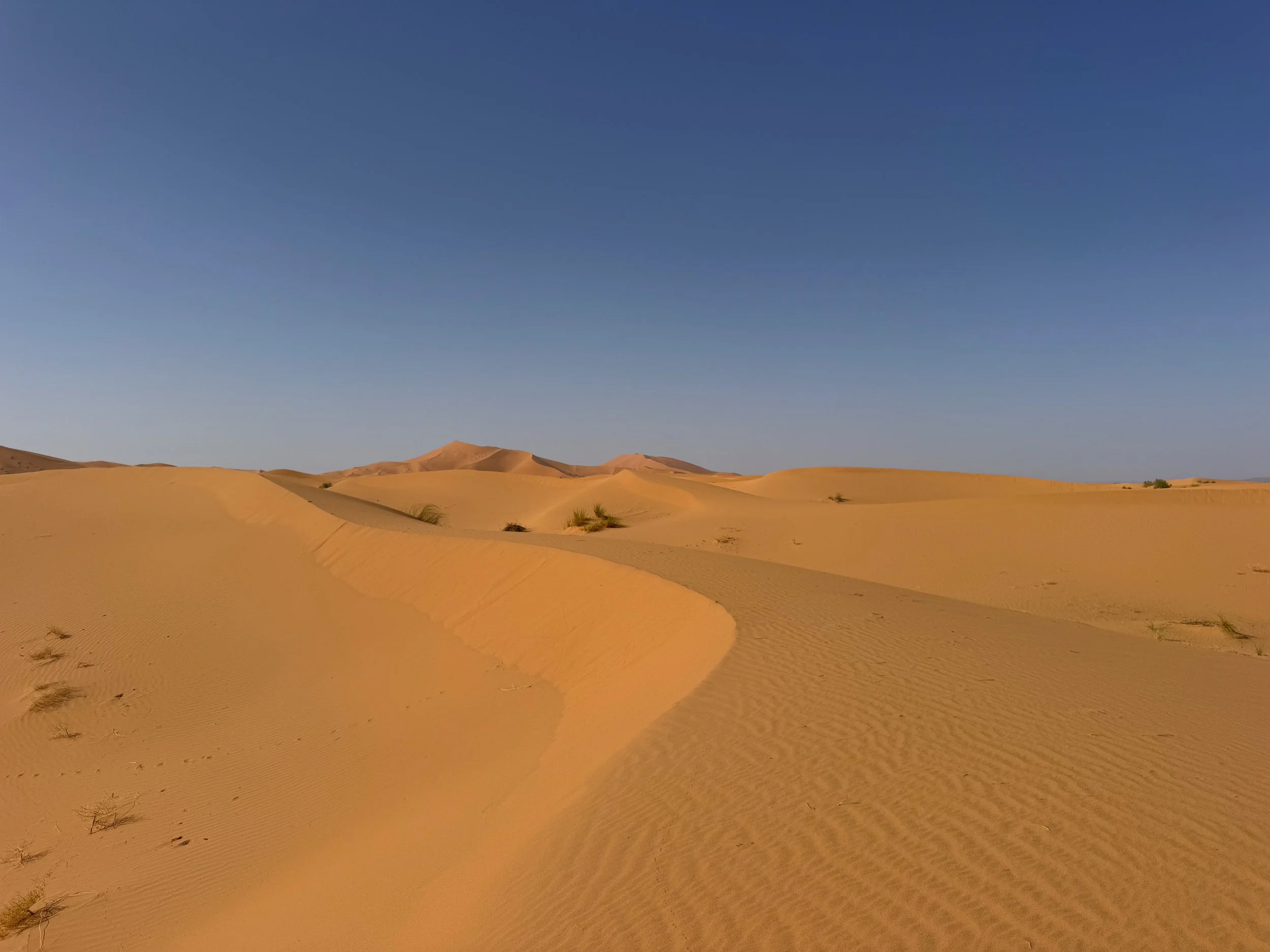
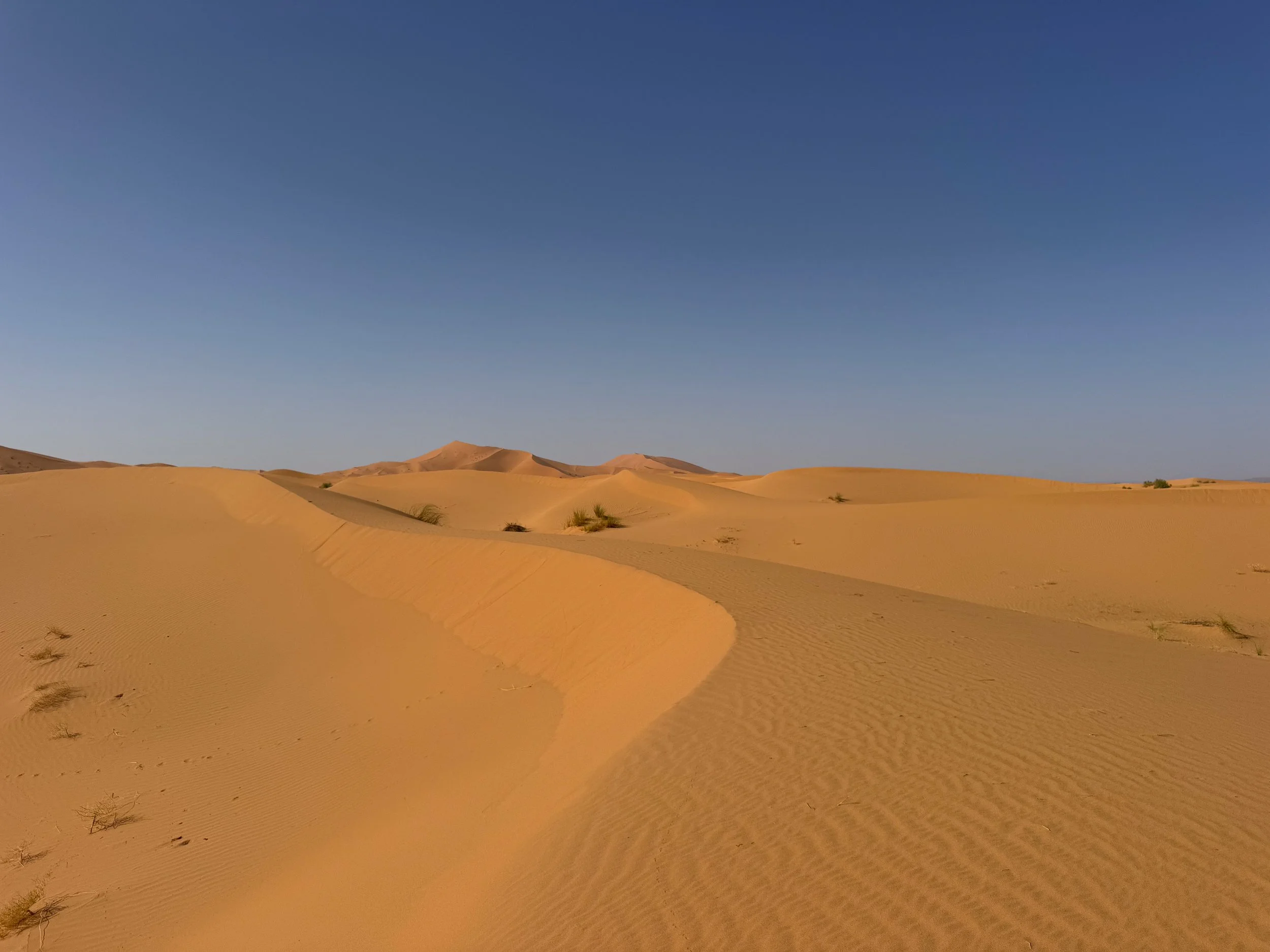
The Merzouga Desert is an expansive area with towering orange dunes and desert camps on the edge of the Sahara. It’s a popular place for camel trekking, dune exploration and stargazing.
Sahara Wellness Camp
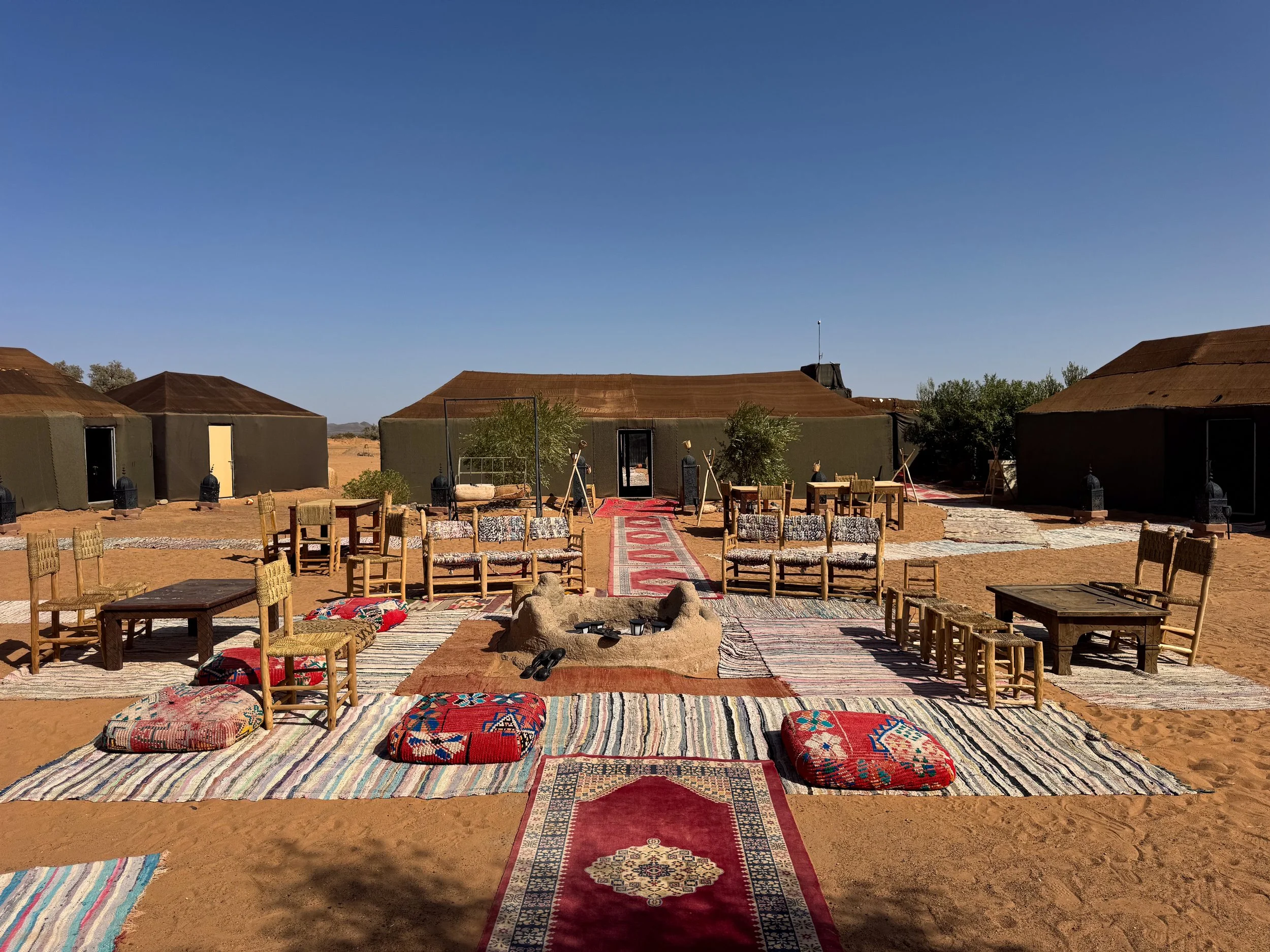
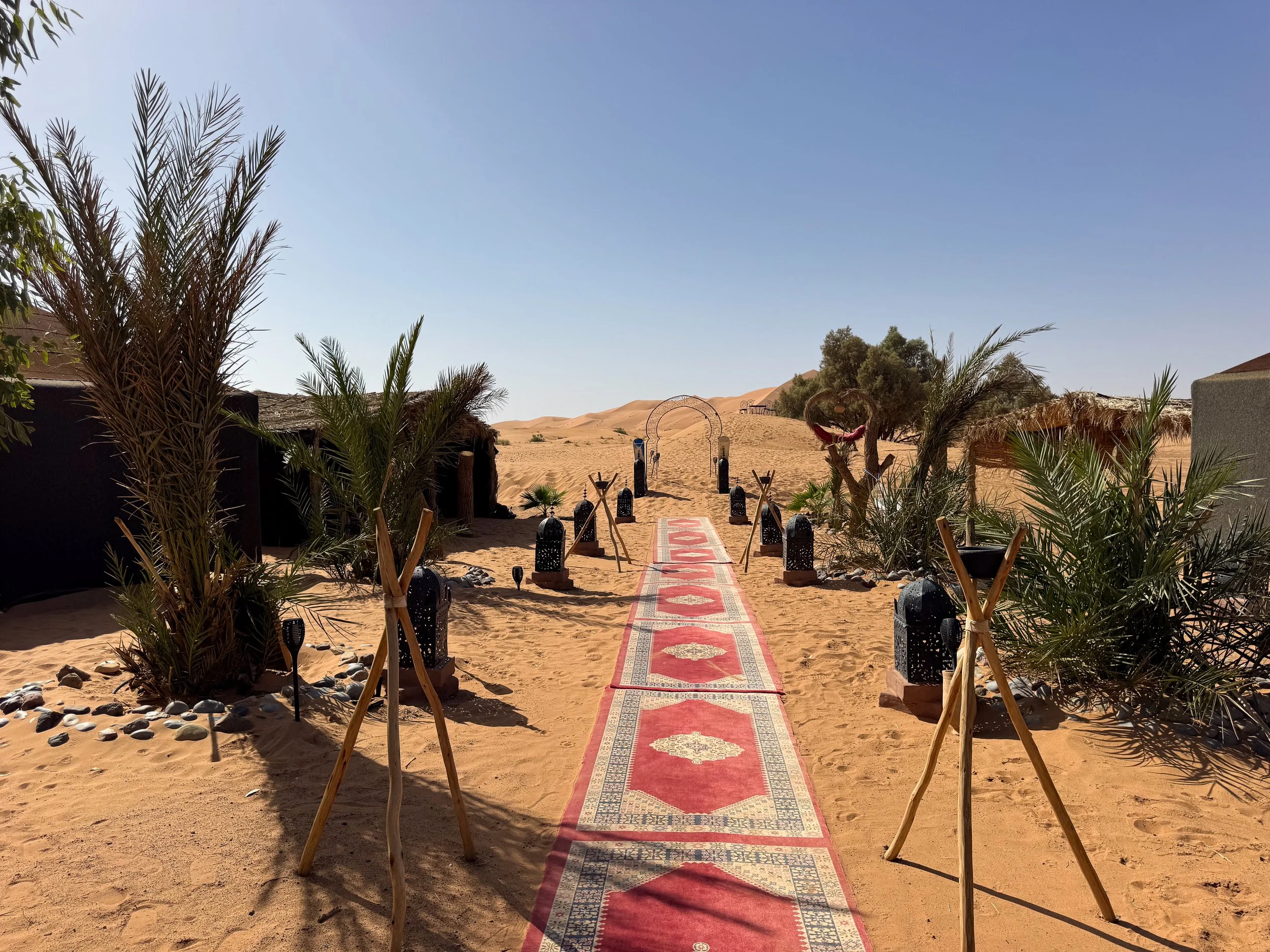
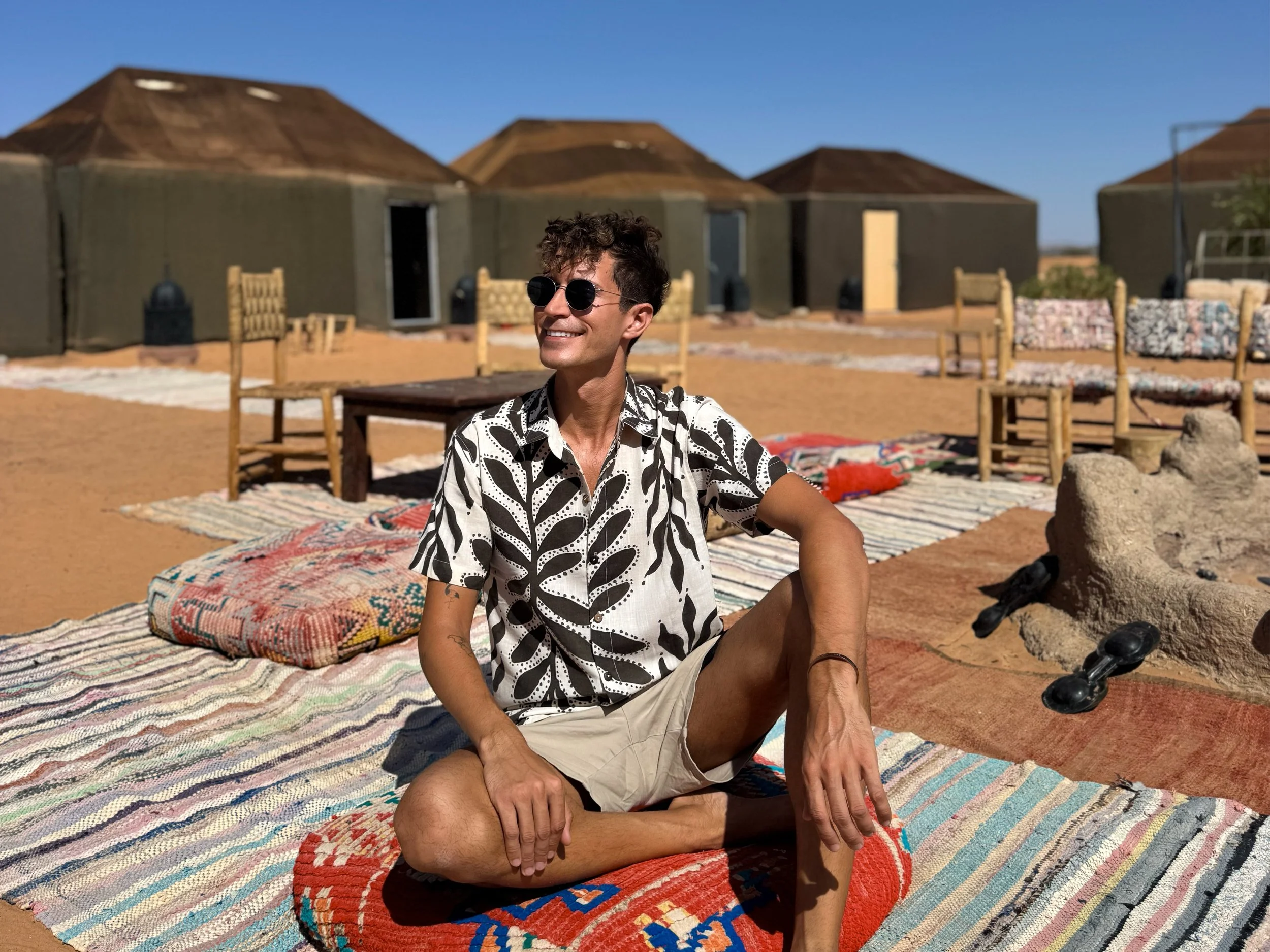
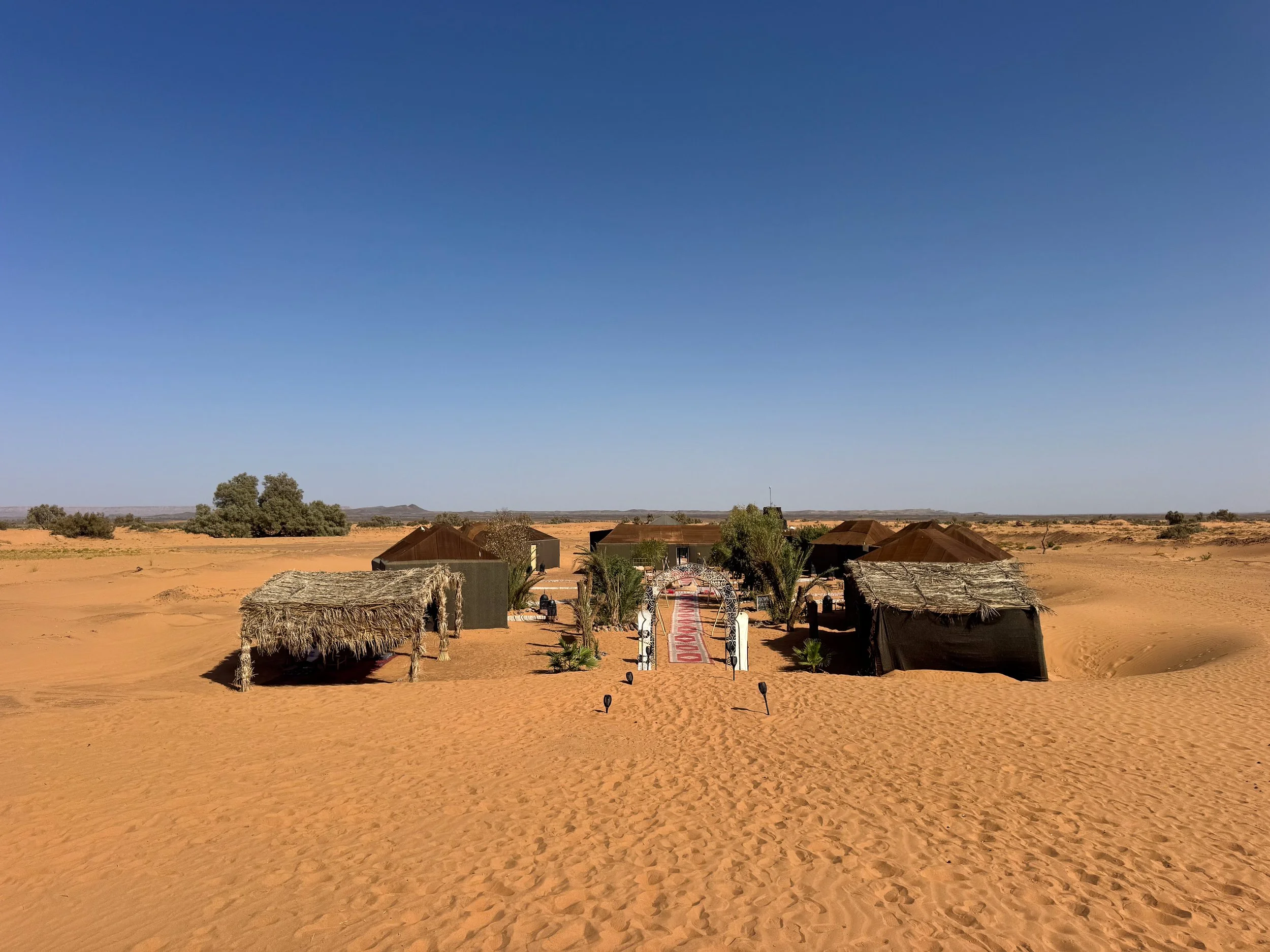
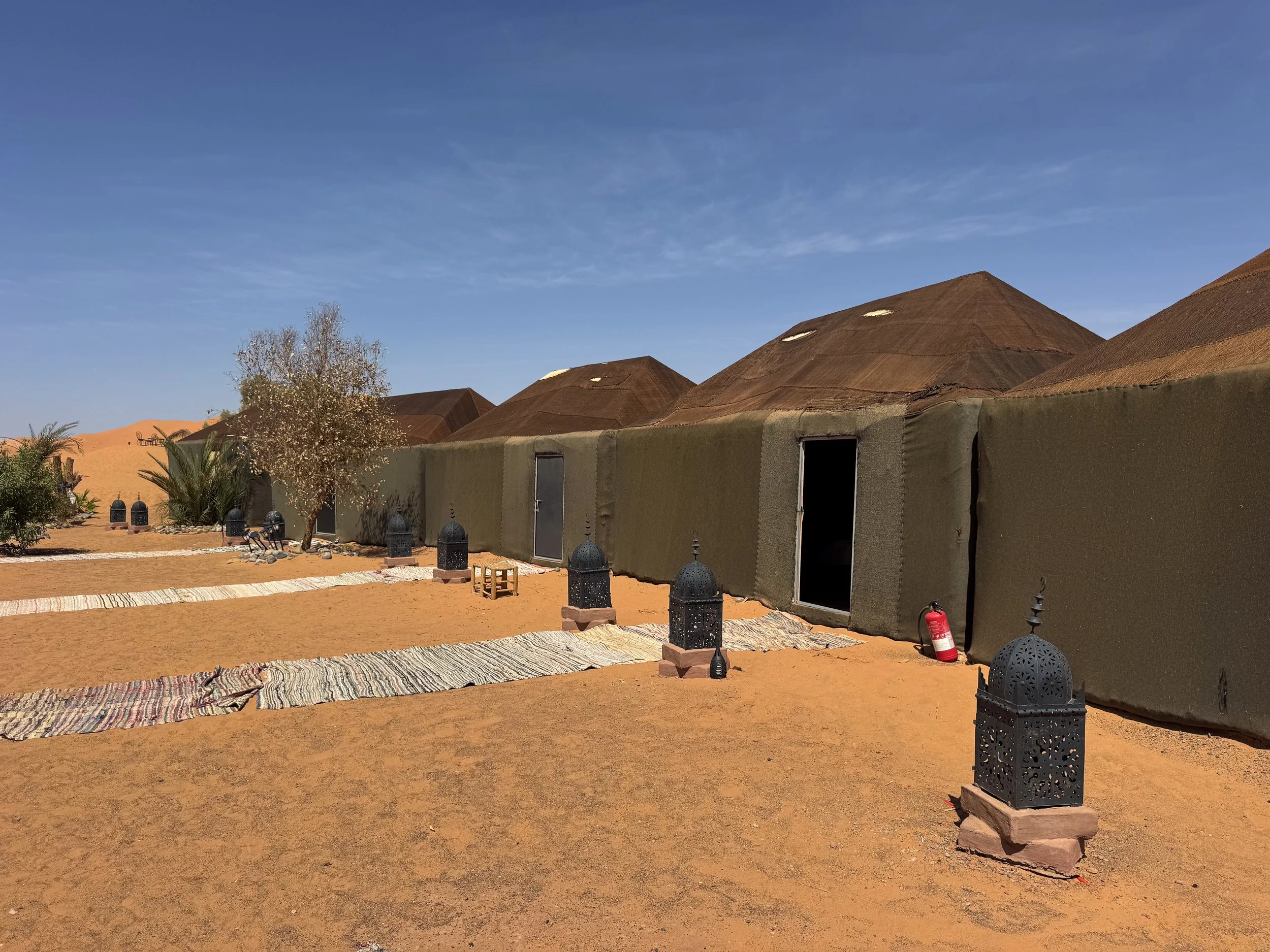
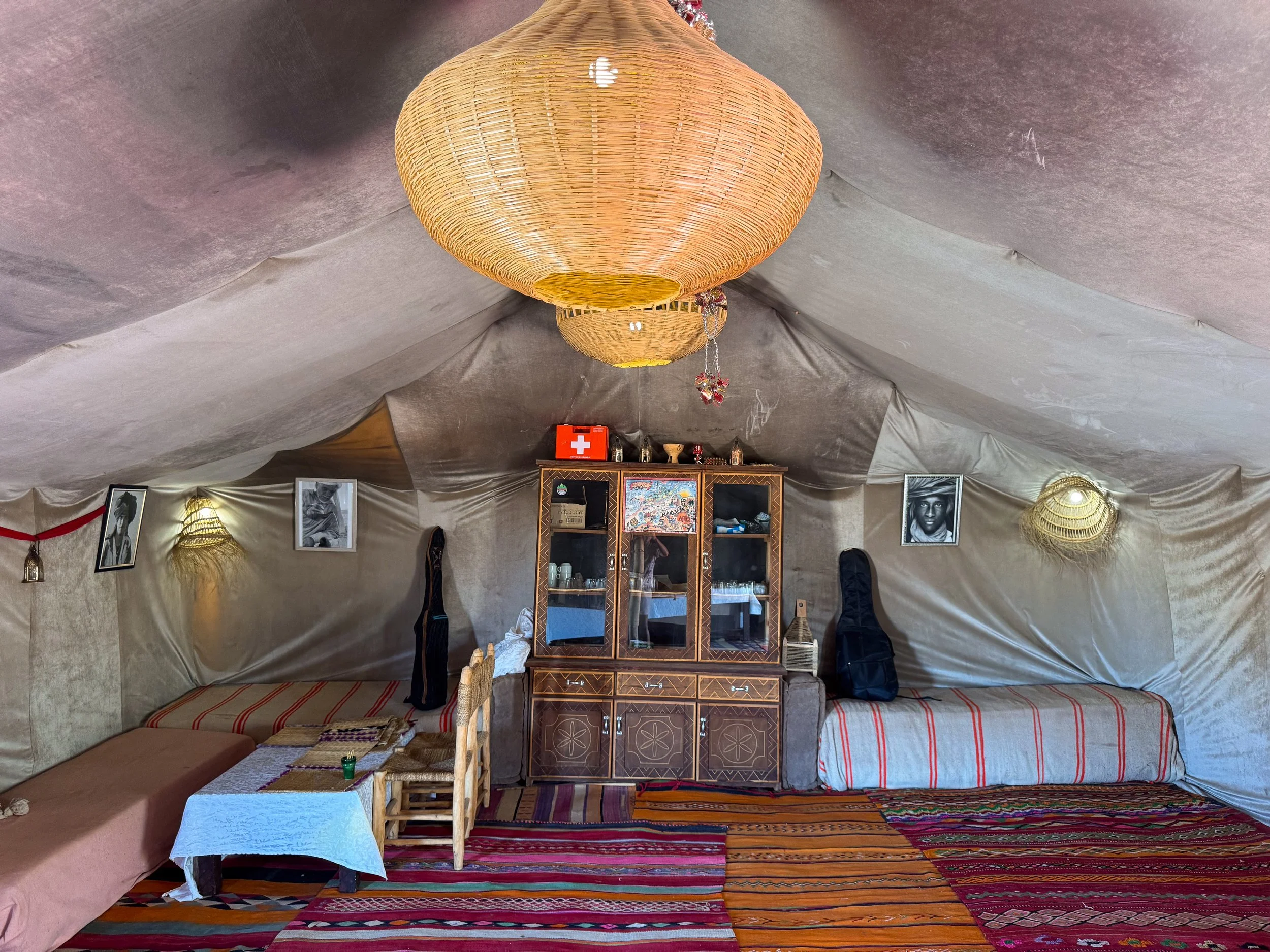
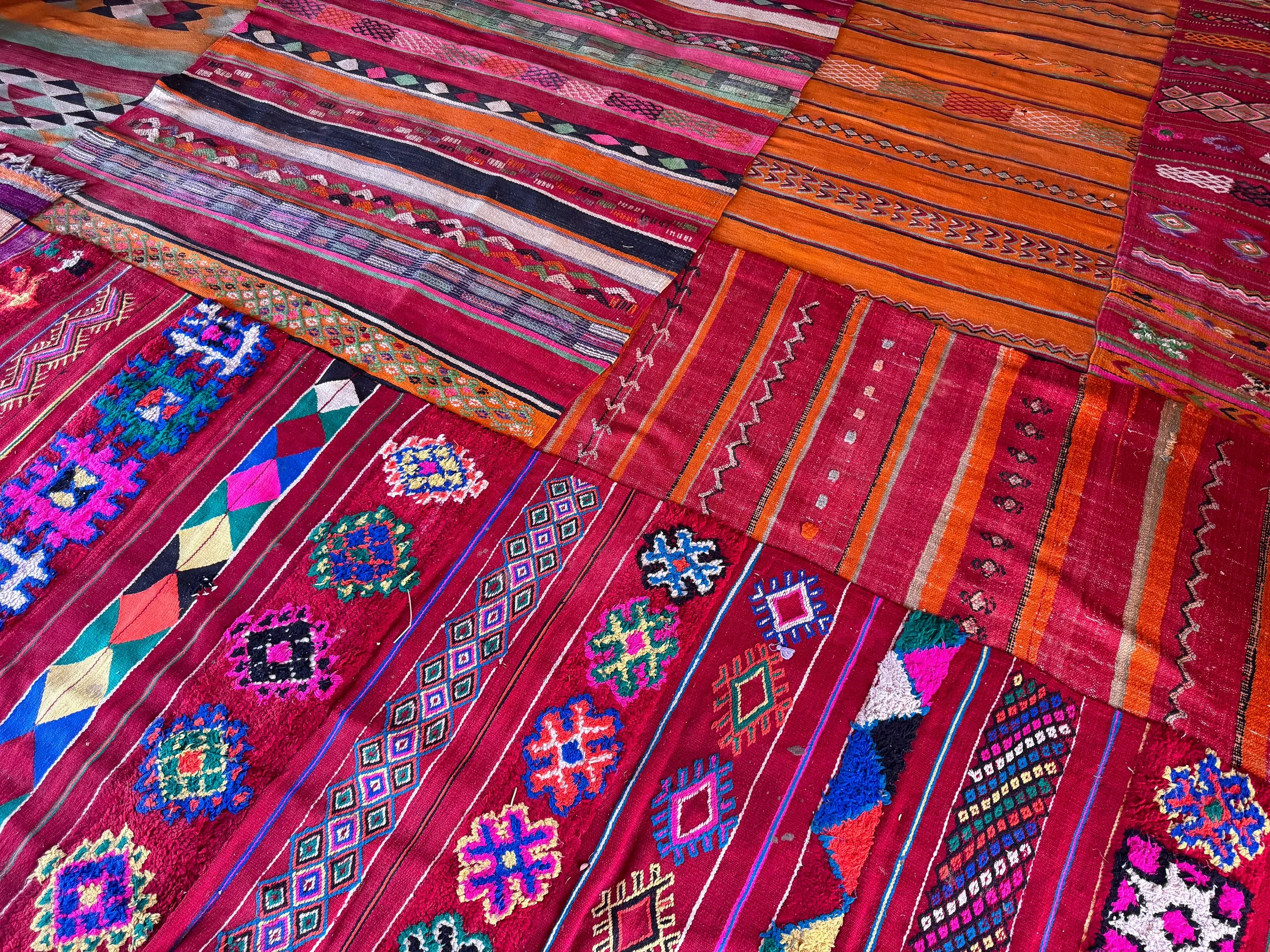
The Sahara Wellness Camp is a Berber style desert camp nestled between sand dunes on the edge of the Merzouga Desert. It offers traditional accommodations, desert excursions and Moroccan meals. Reserve on Booking.
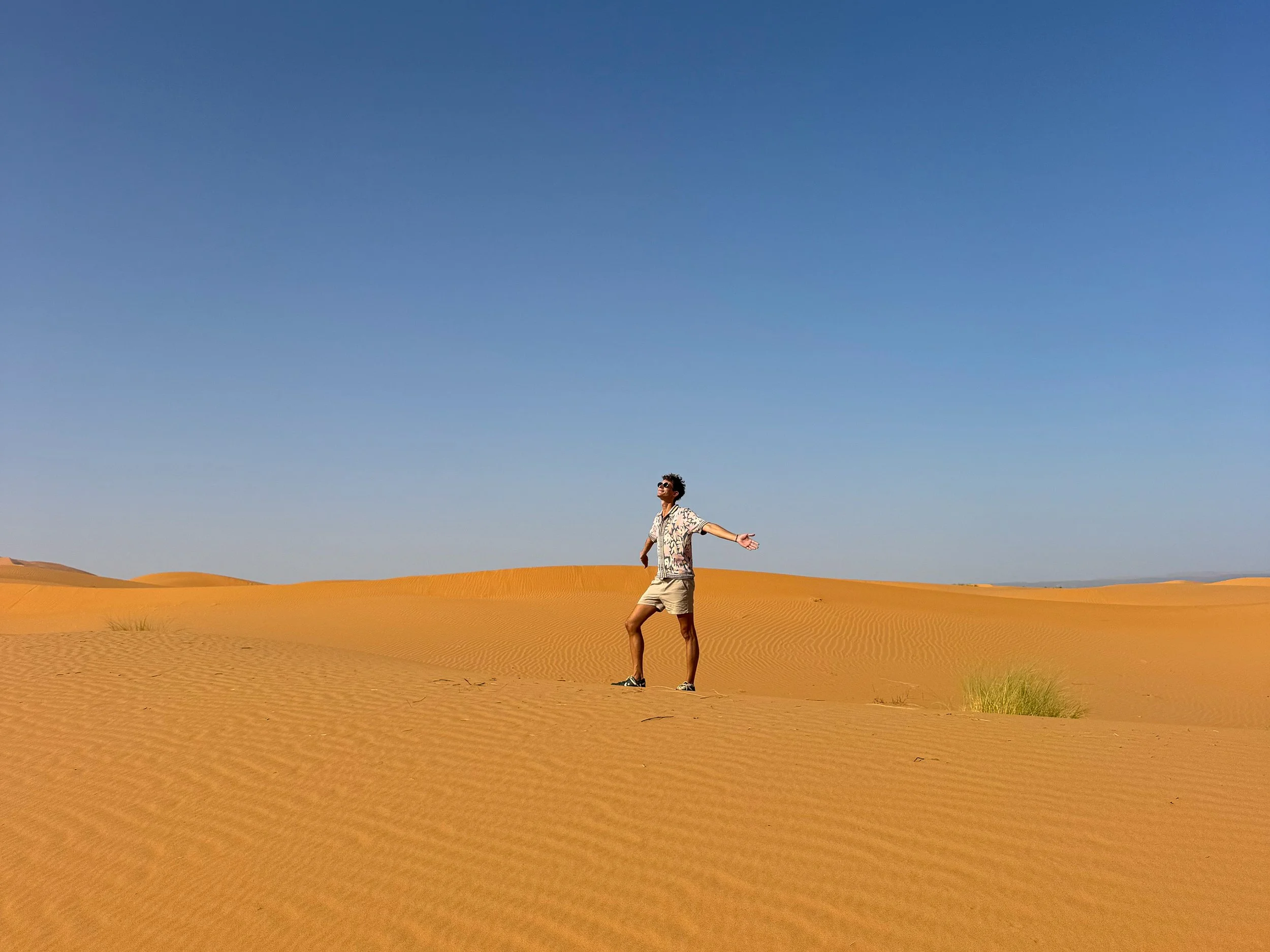
Dune Hikes. Hiking the dunes is one of the best ways to experience the Merzouga Desert. Meander along their sandy crests, steep slopes and shifting terrain. The rippled sand is often covered in signs of life. Look for animal prints from migratory birds, tiny mice and desert foxes. Patches of green grasses flourish from otherwise barren desert after seasonal rains.
Pro Tip. Plan to hike the dunes in the early morning or late afternoon. Bring enough water to stay hydrated. For safety, let the camp know where you’ll be hiking and when you expect to return.
Watch the Sunset. Sunset in the desert is a magical time of day. The sun casts long shadows across the dunes as it slips below their crests. It makes way to the starry night sky and cool evenings. We watched from atop a small dune while sipping on glasses of Moroccan wine.
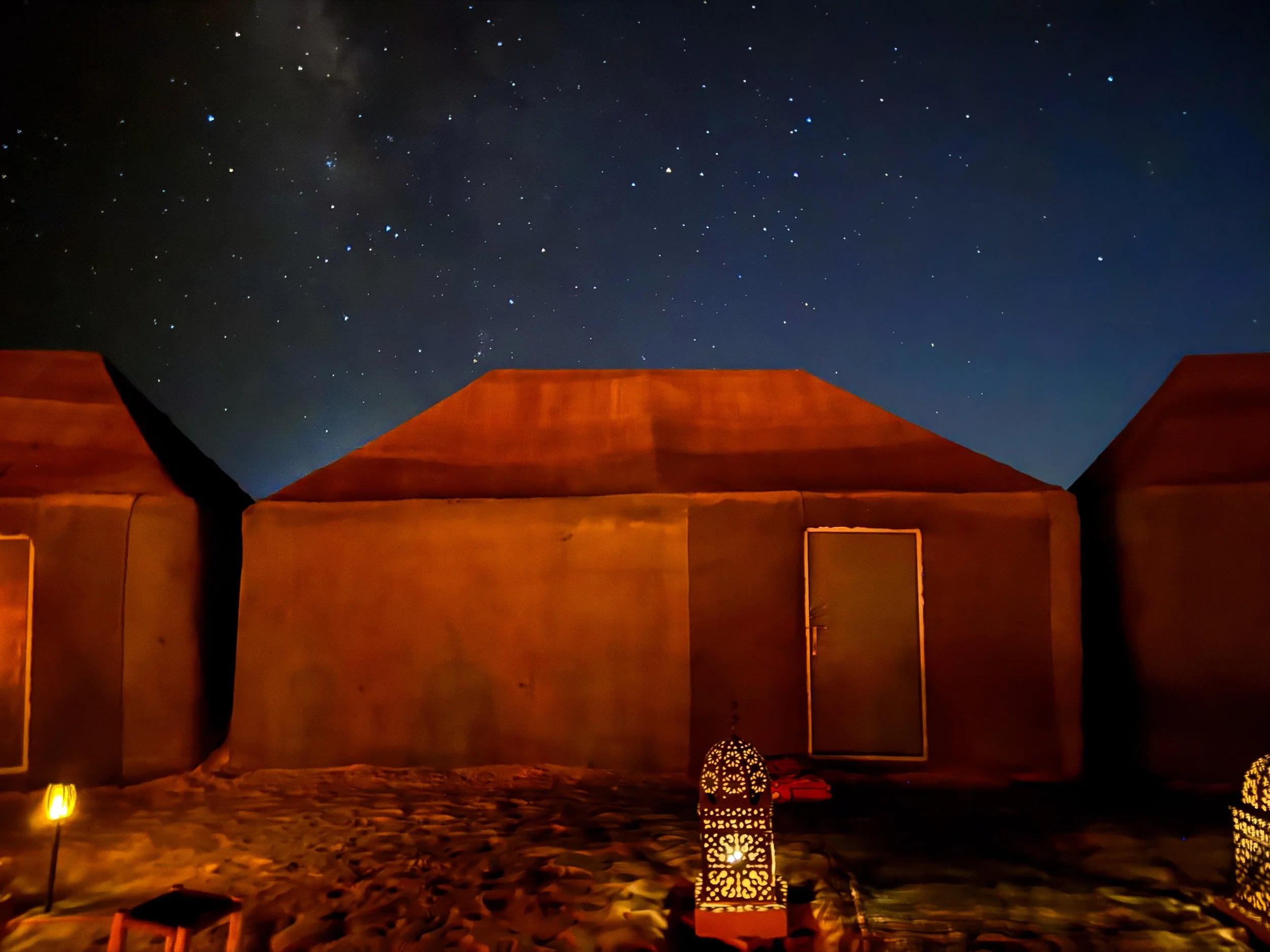
Stargazing. The Merzouga Desert is a dark sky area with stunning views of the starry night sky. We saw meteors streak across the heavens, watched satellites orbit overhead and spotted planets, stars and constellations. Download Sky Tonight, a free star spotting app utilizing augmented reality.
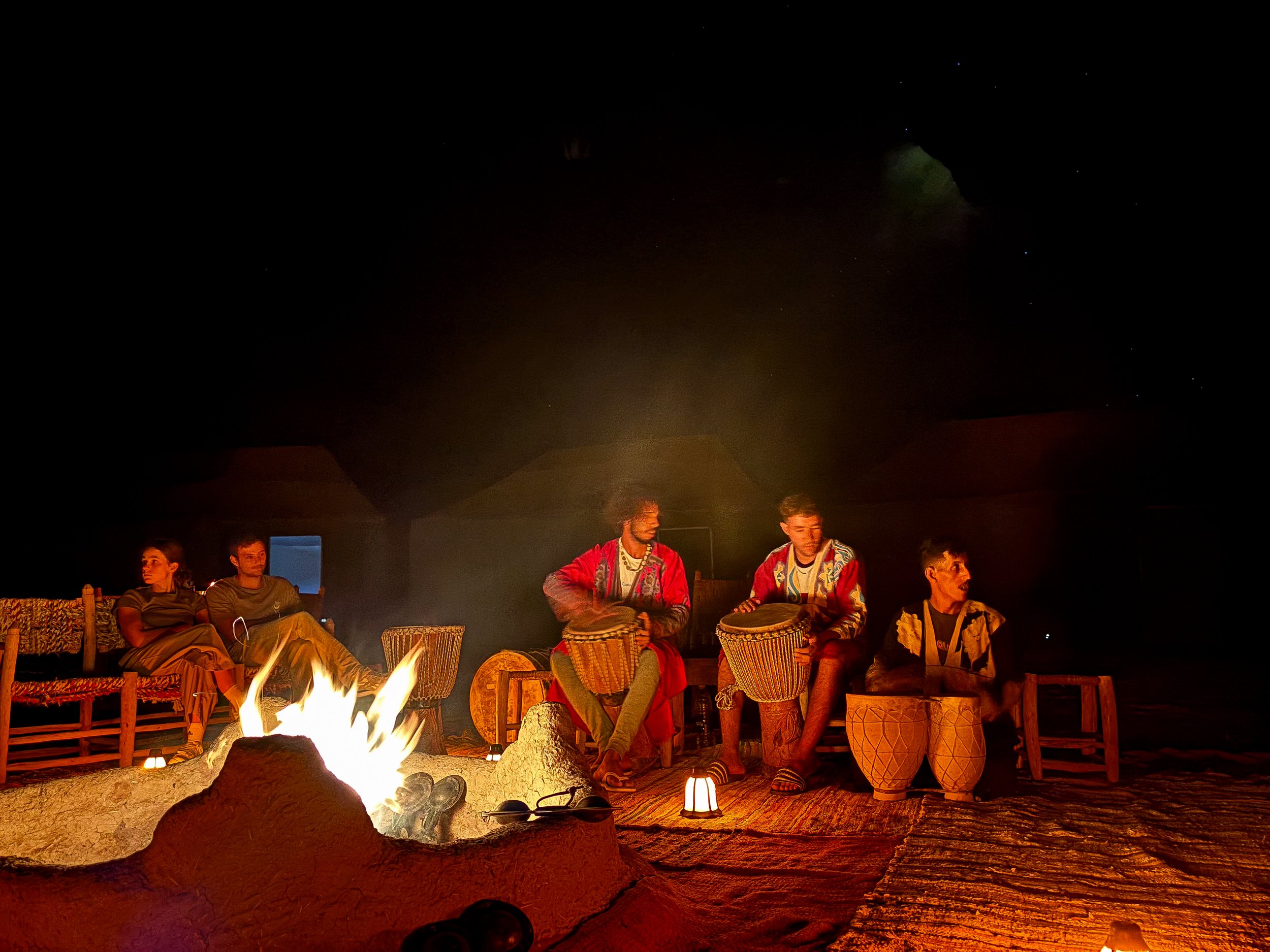
Amazigh Music. On most nights, the camp staff will light a bonfire and perform traditional Amazigh music using drums and tambourines. The beat is very rhythmic, creating a relaxing atmosphere for the end of the night.
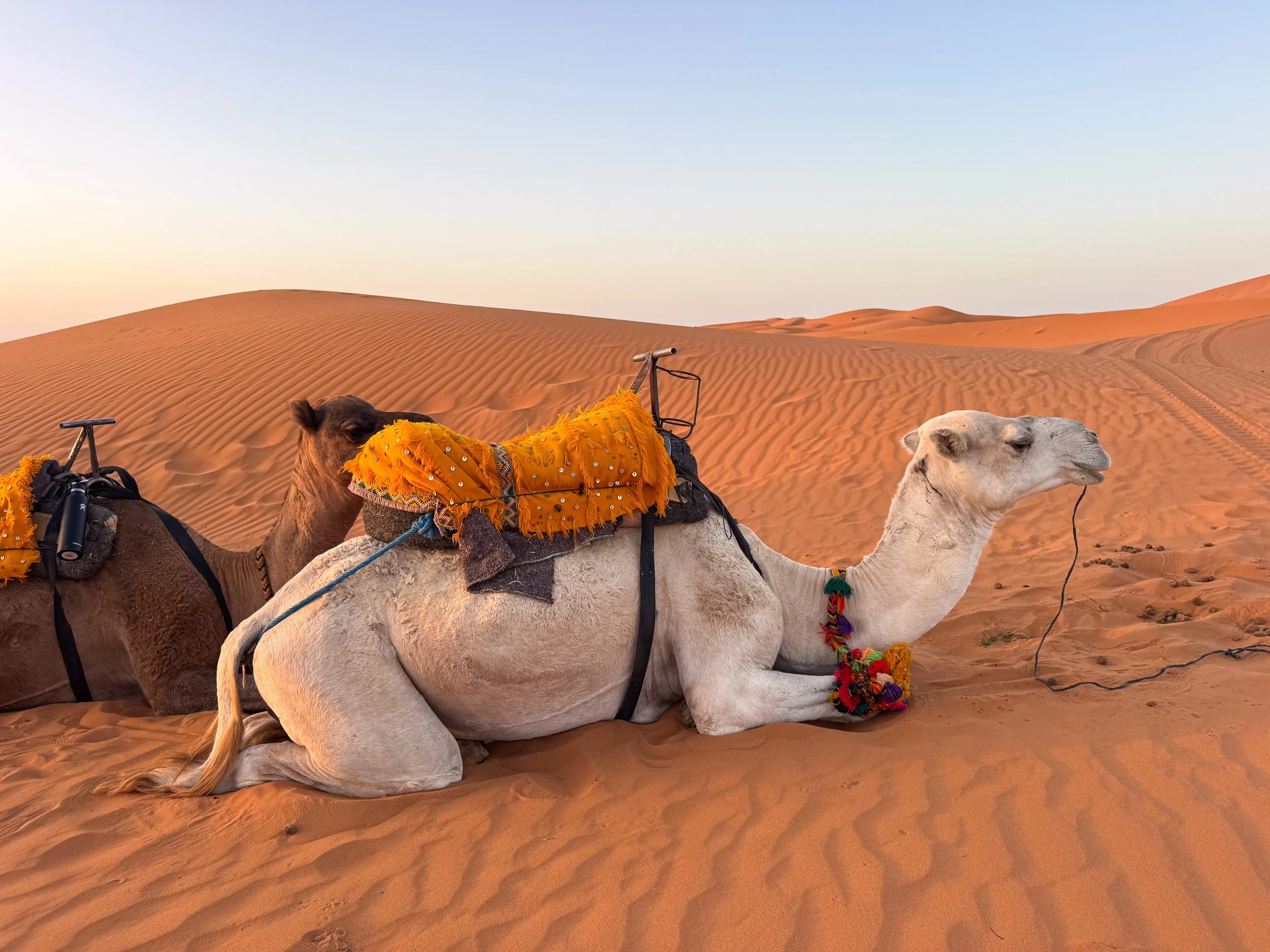
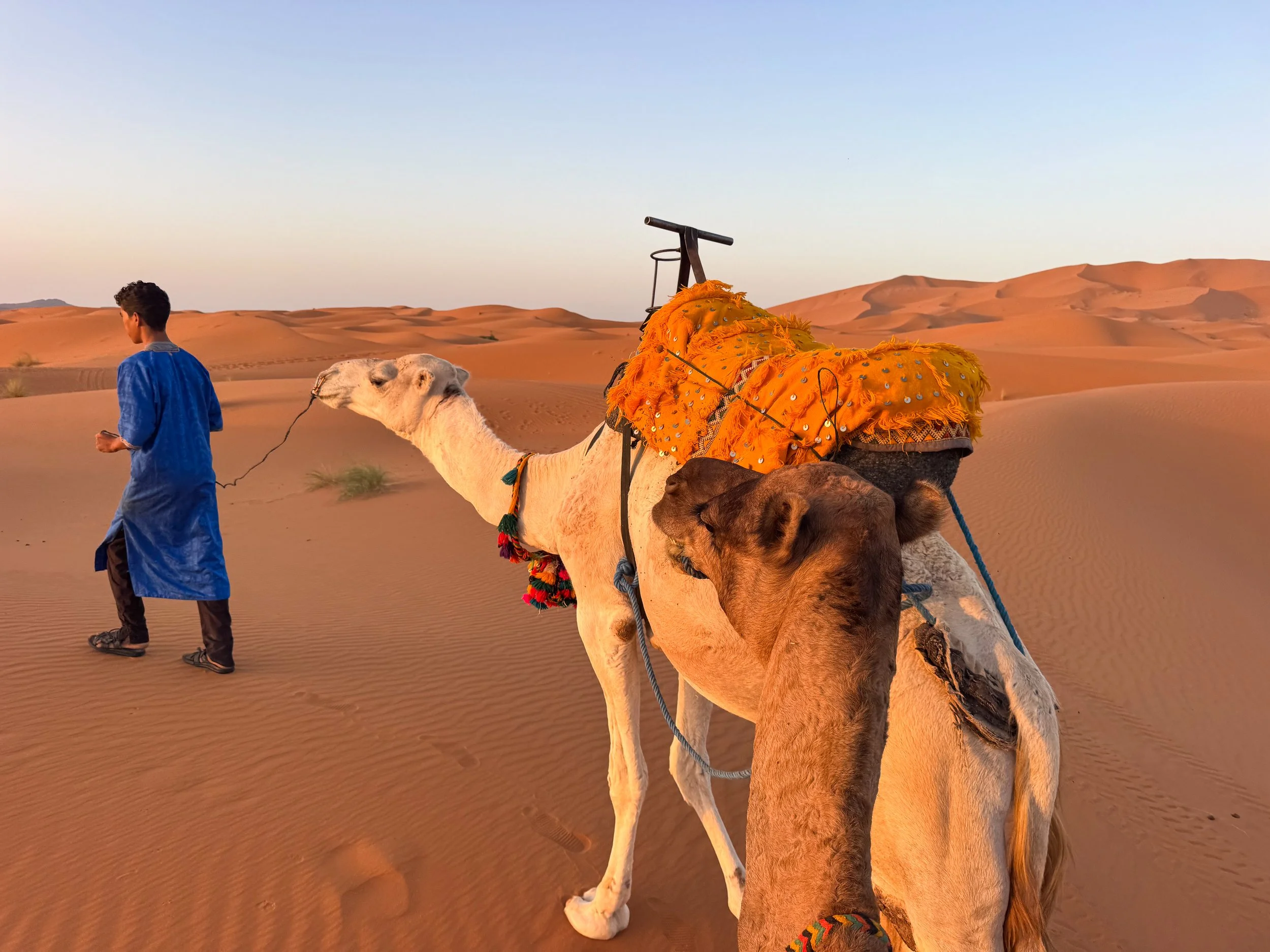
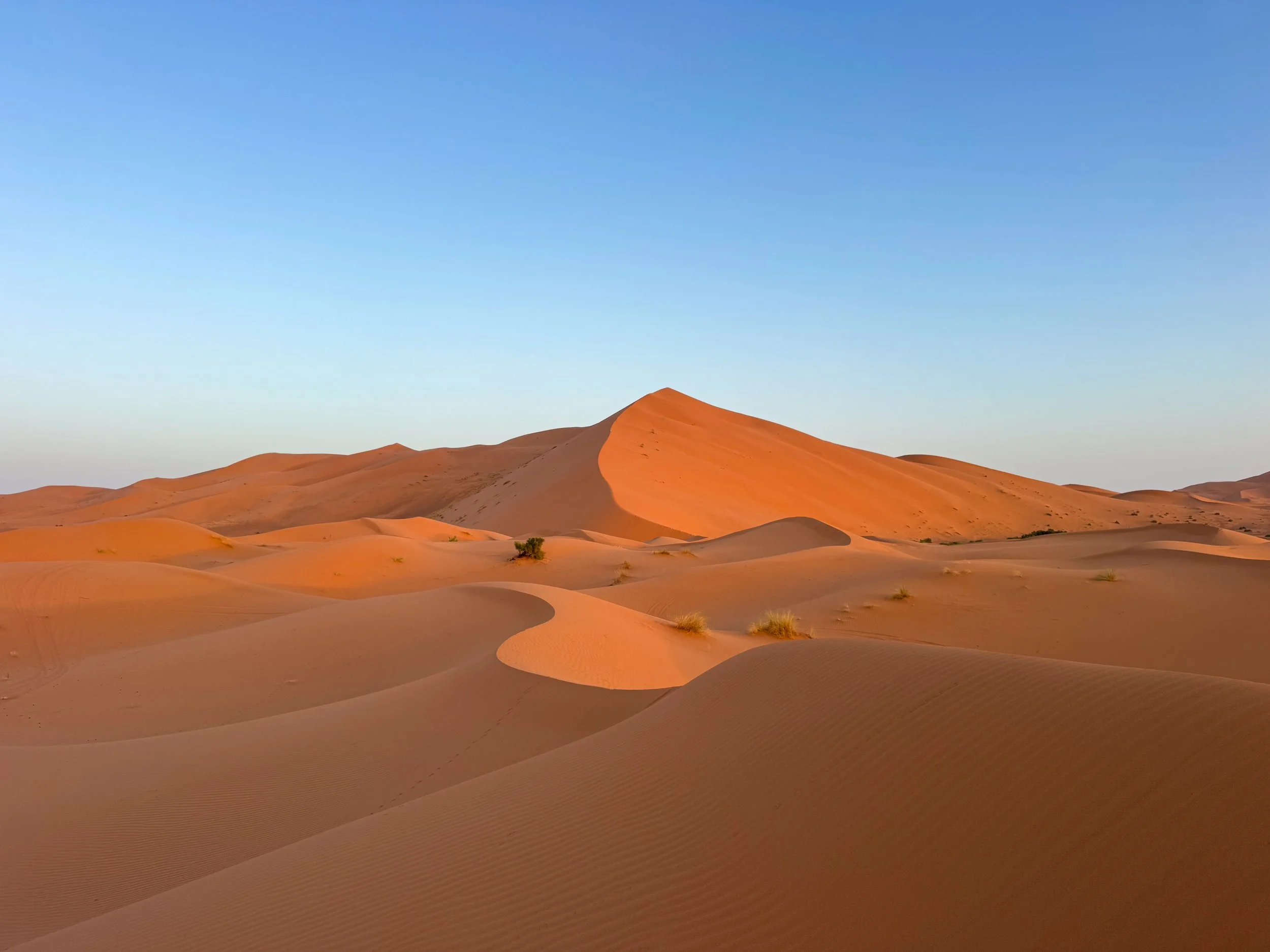
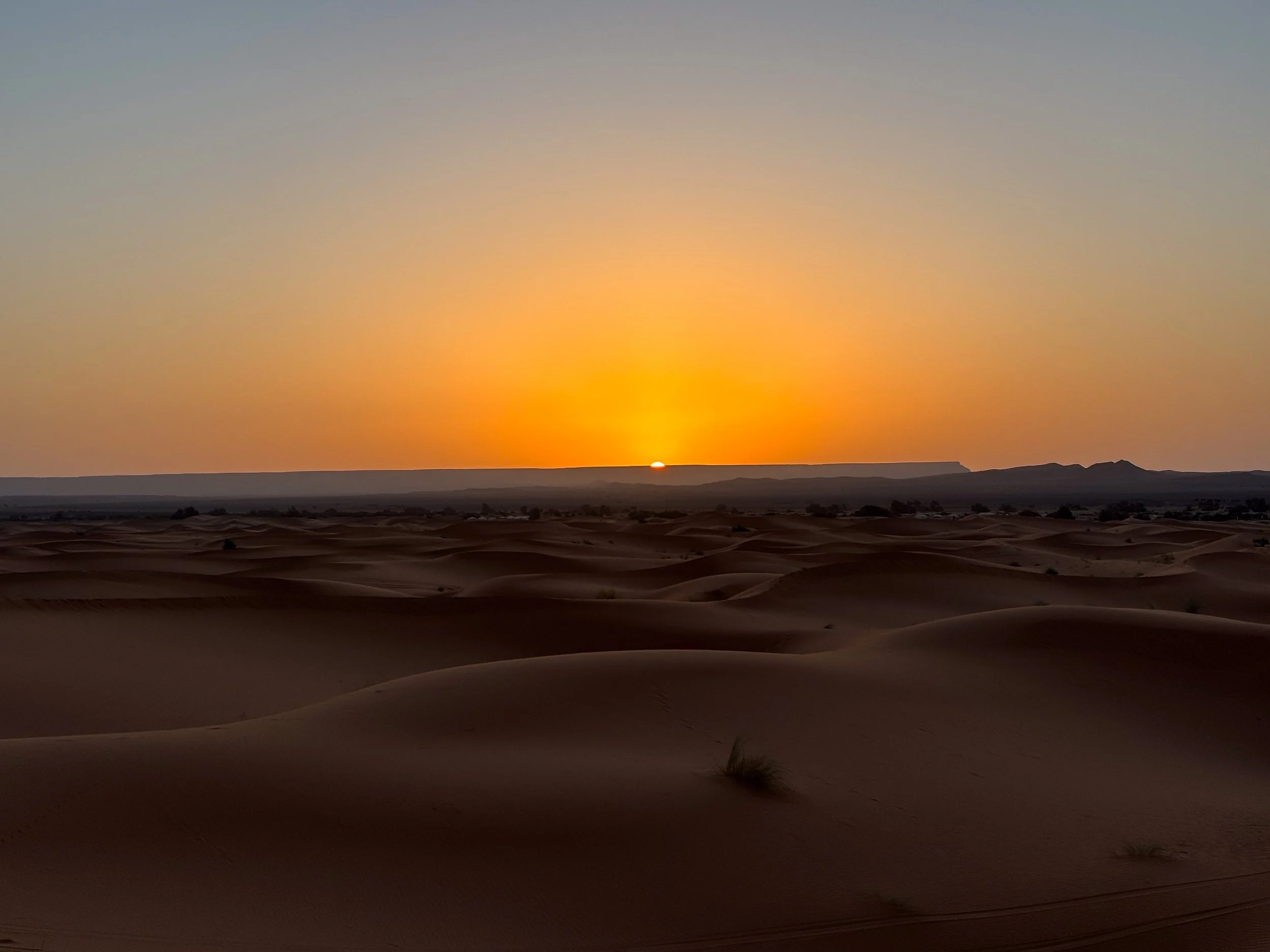
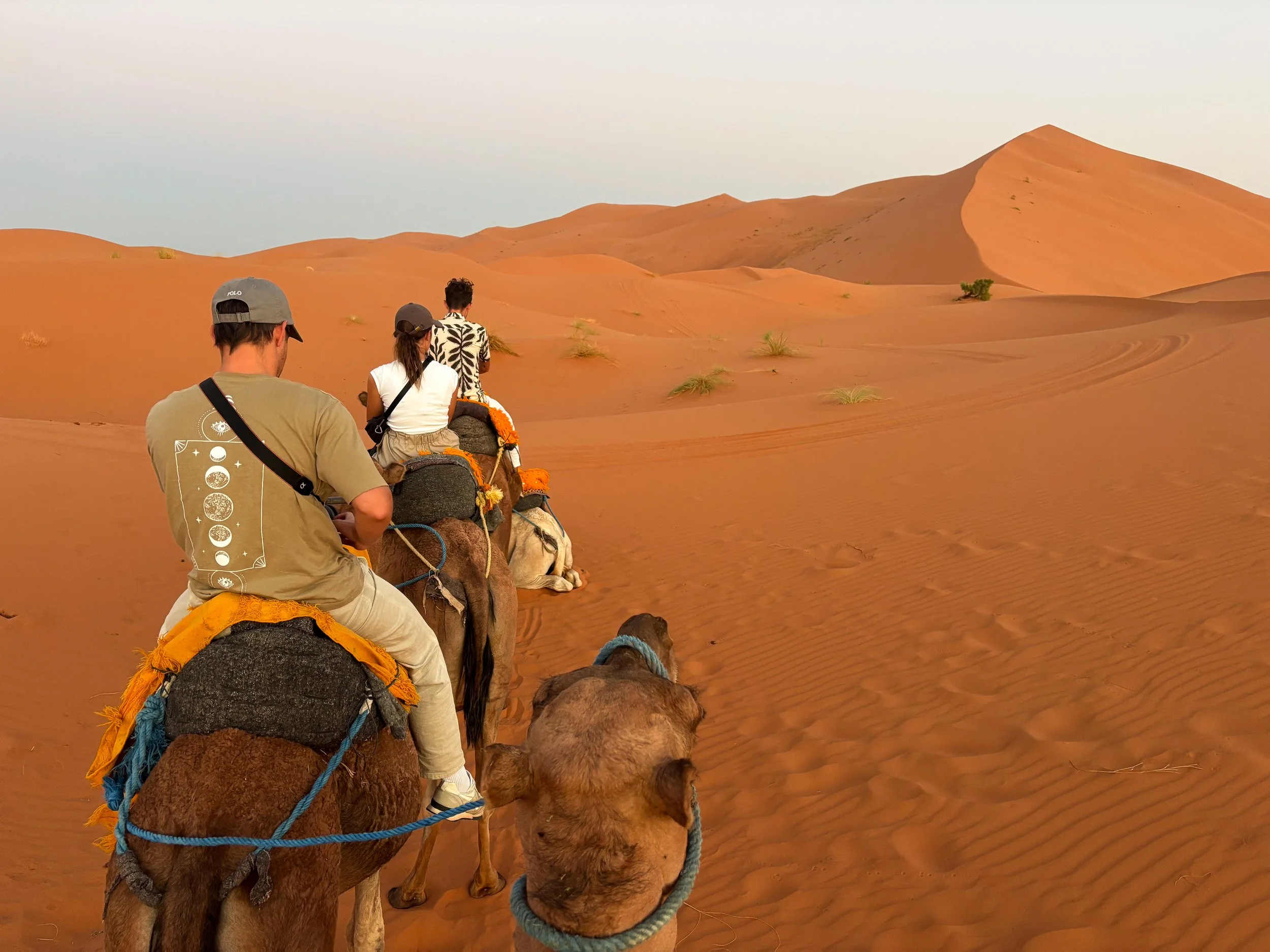
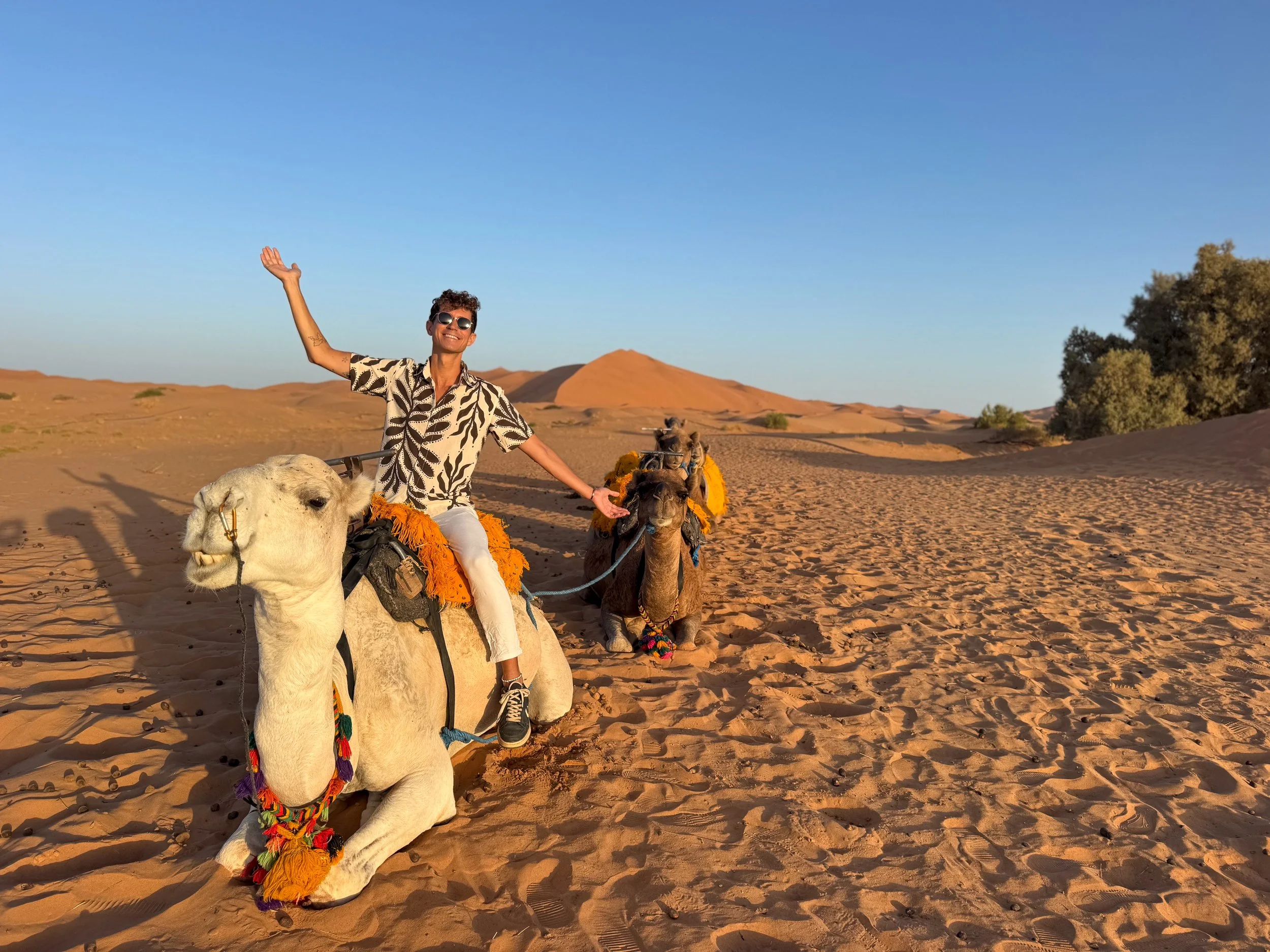
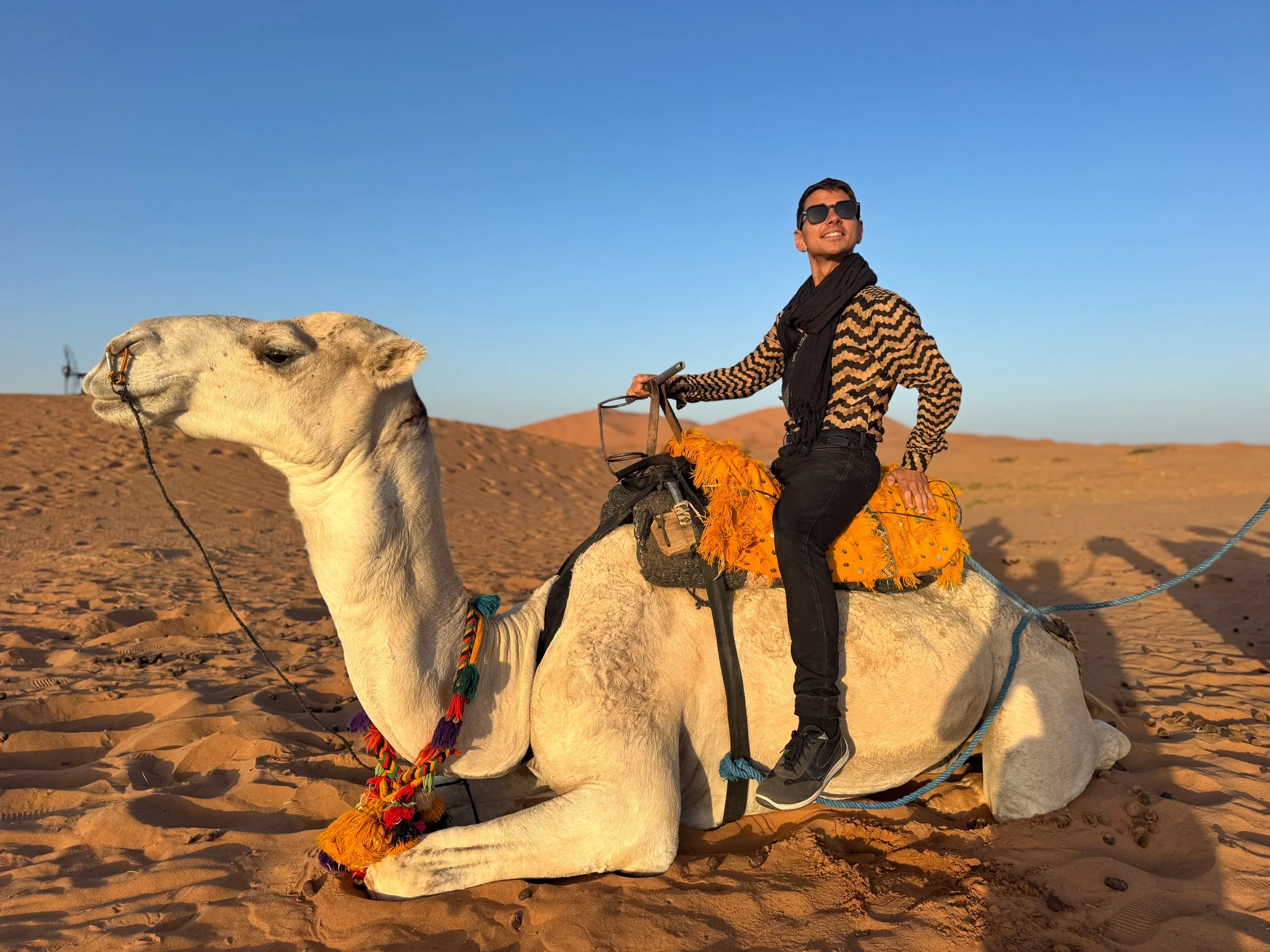
Sunrise Camel Trekking. Berber men lead caravans of camels and campers into the dunes to watch the sunrise. We rode a pair to a scenic point in the desert. The camels steadily paced across the dunes with us on their humped backs. The desert landscape glowed as the warm sun rose across the orange sand.
Good to Know. Berber camels are very well treated, given time to rest, eat and drink between walks.
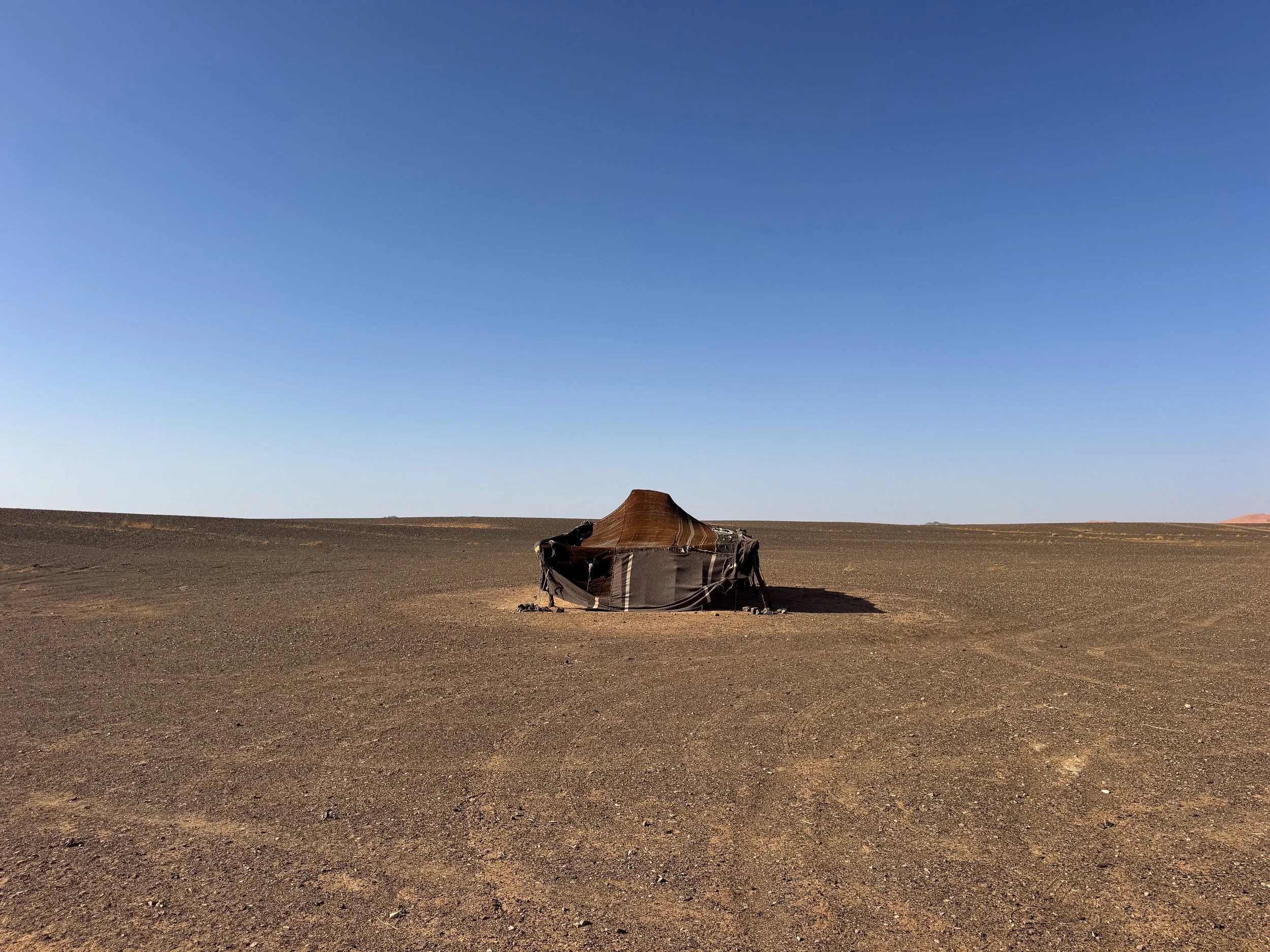
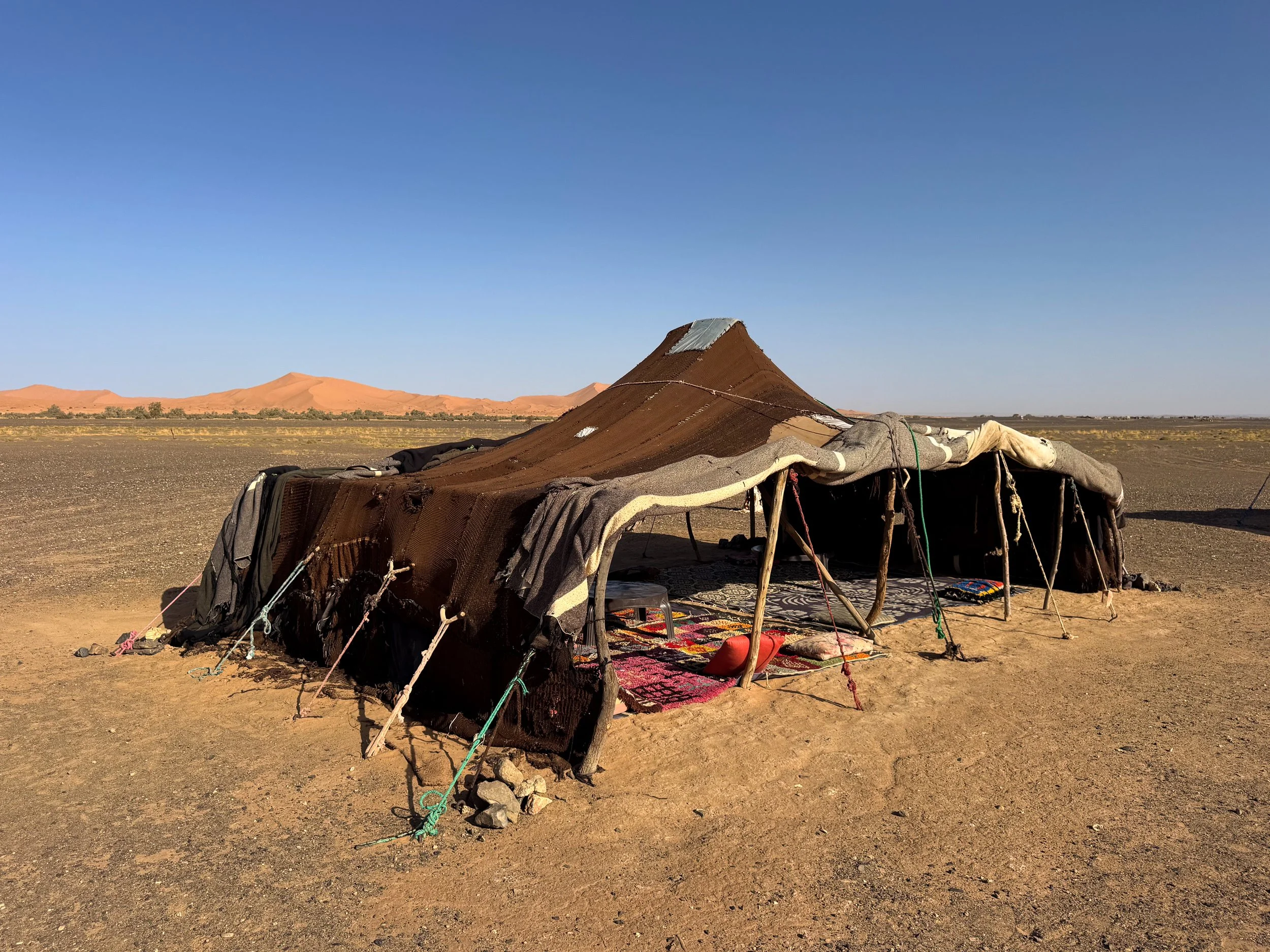
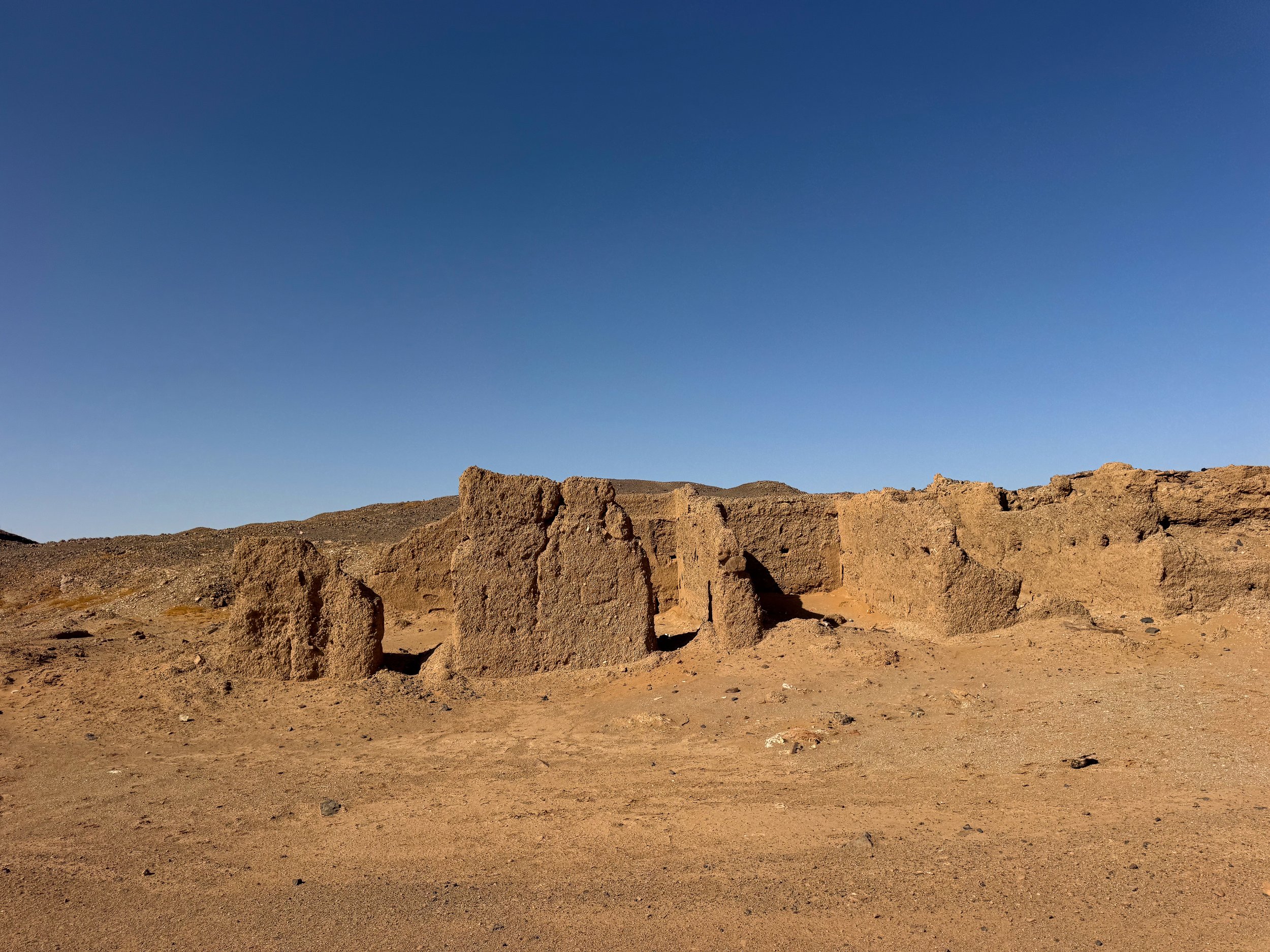
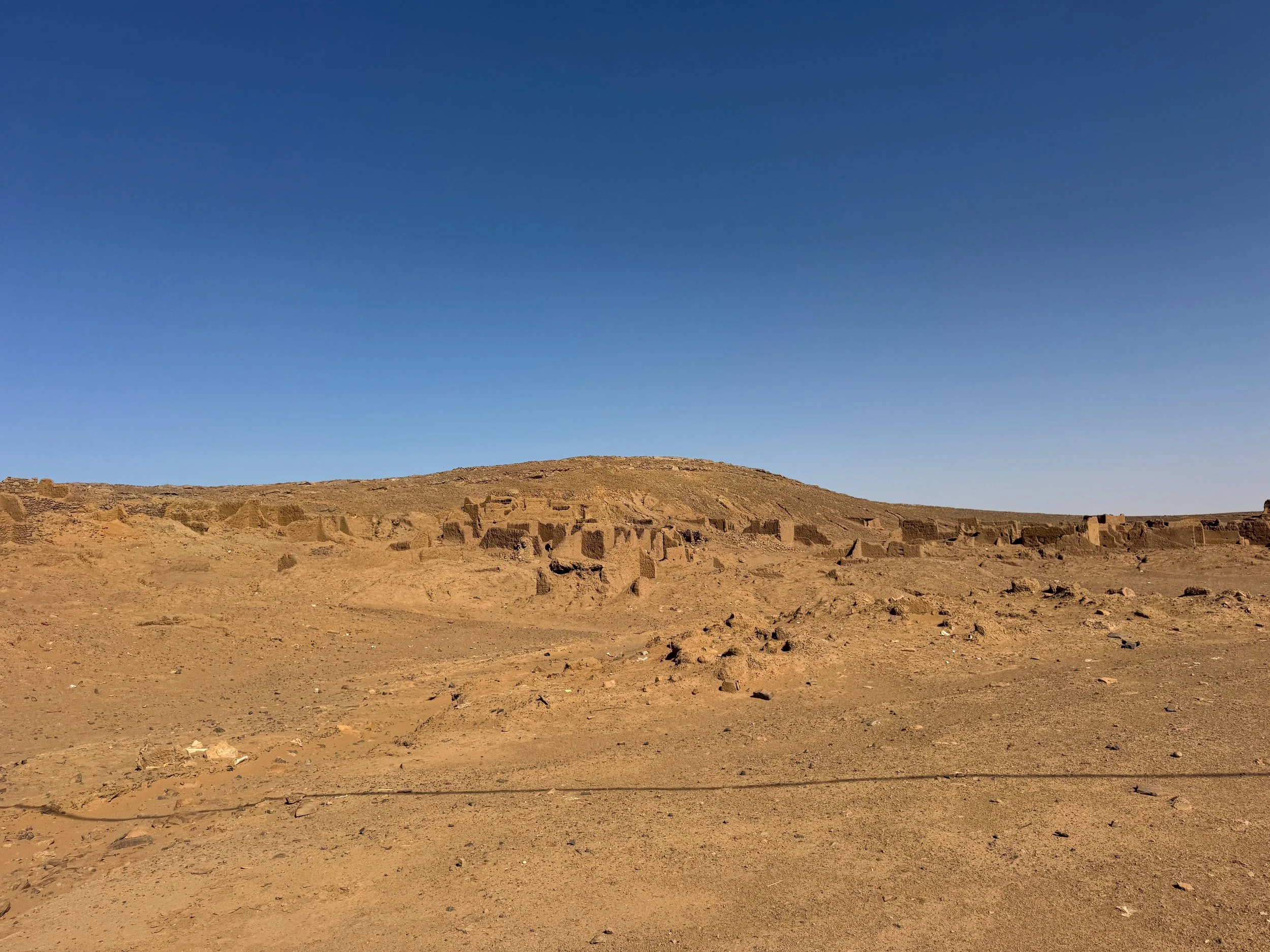
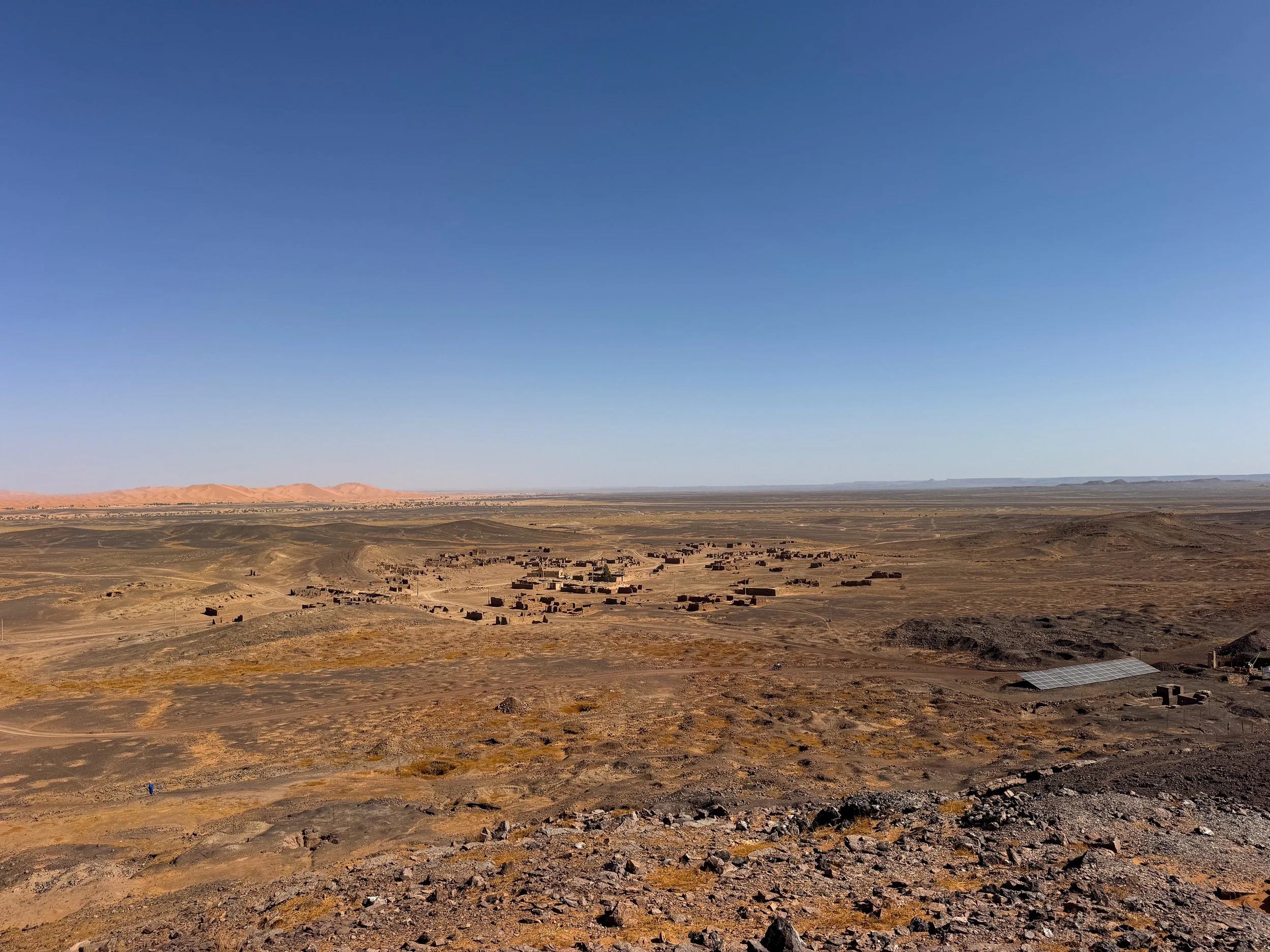
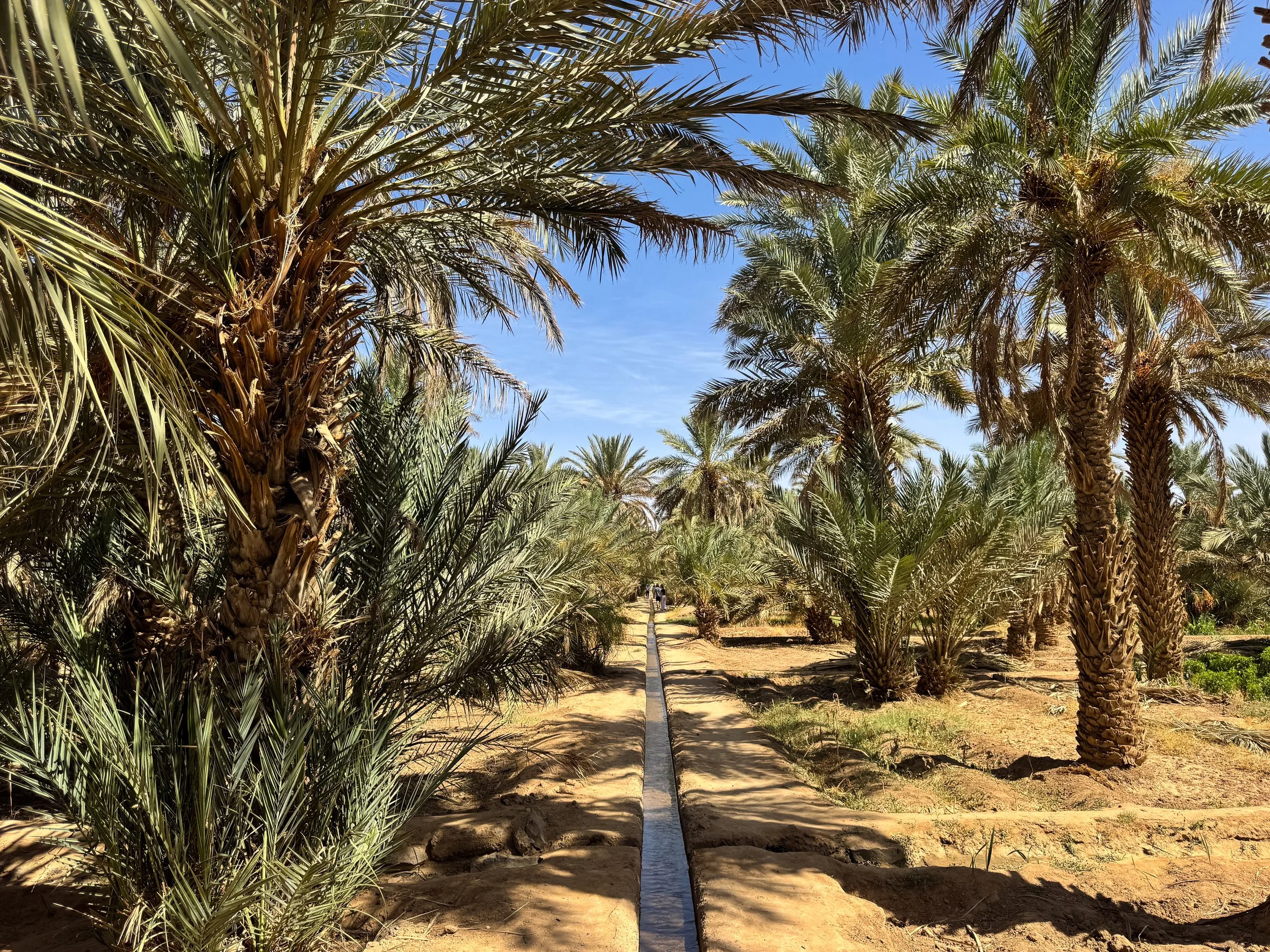
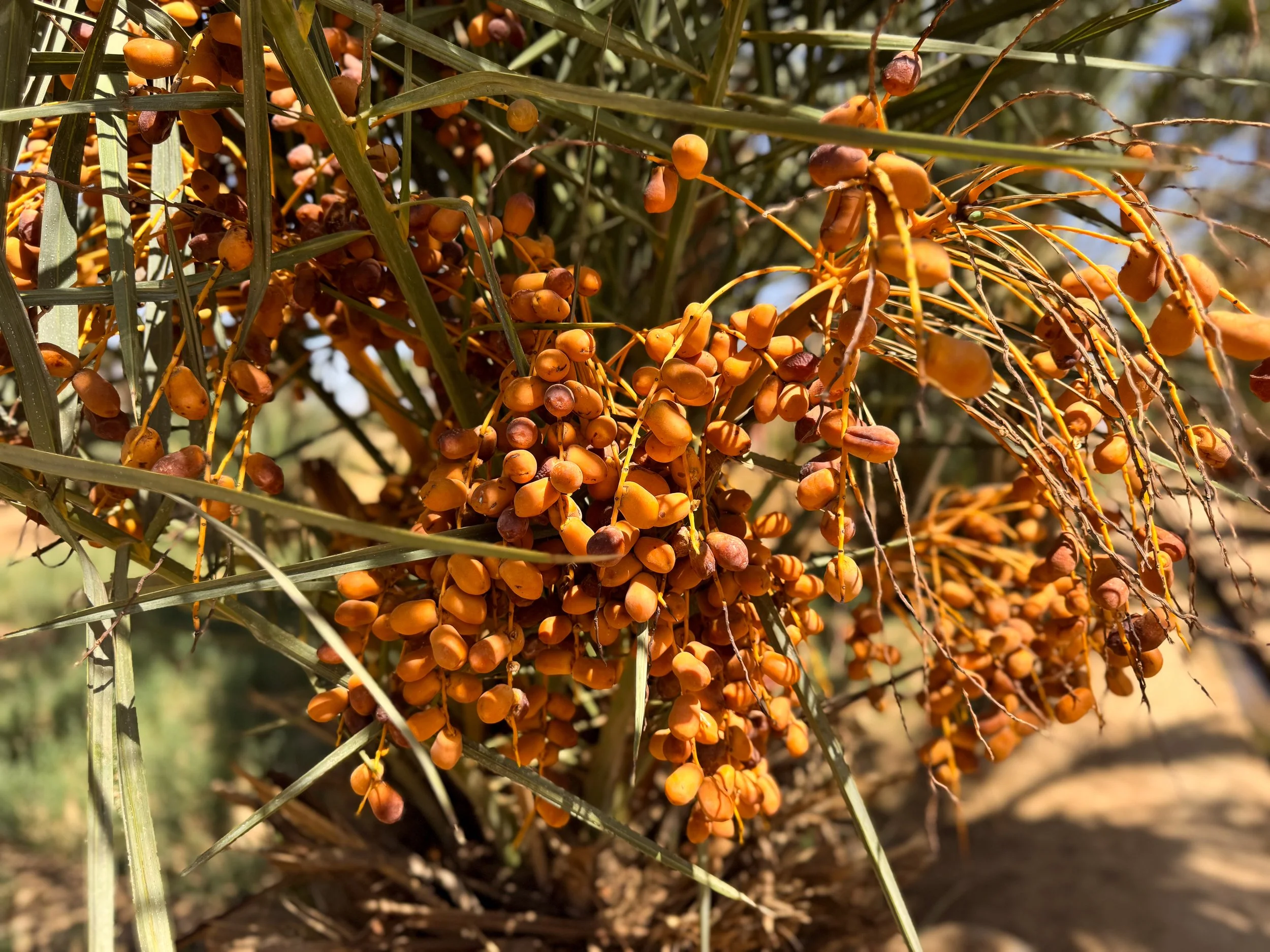
Merzouga Tour. The camp offers an experience to learn about the local culture, history and nomadic peoples of Merzouga Desert. We started the morning by sipping on mint tea with a Berber family. We listened to the rhythmic drums and chants of a Gnawa musical performance. Our guide brought us to an abandoned mining town to hike and shop for Paleozoic era fossils found in the area. We visited a community farm and harvested fresh dates. The tour ended with an adventurous dune ride back to camp.
Tips for Visiting The Merzouga Desert:
Getting Here. The Merzouga Desert is reachable from the Todra Gorge by car. It takes between 3-4 hours to reach if driving. The camp is reachable by SUV or camel trekking across the dunes.
Camp Fees. Staying at the camp is very inexpensive. Optional activities, meals and transportation cost extra, however prices can be negotiated.
Desert Activities. Once at the camp, what you make of the experience is entirely up to you. Simply relax, explore on your own or book paid activities. For the full experience, plan to stay more than one night.
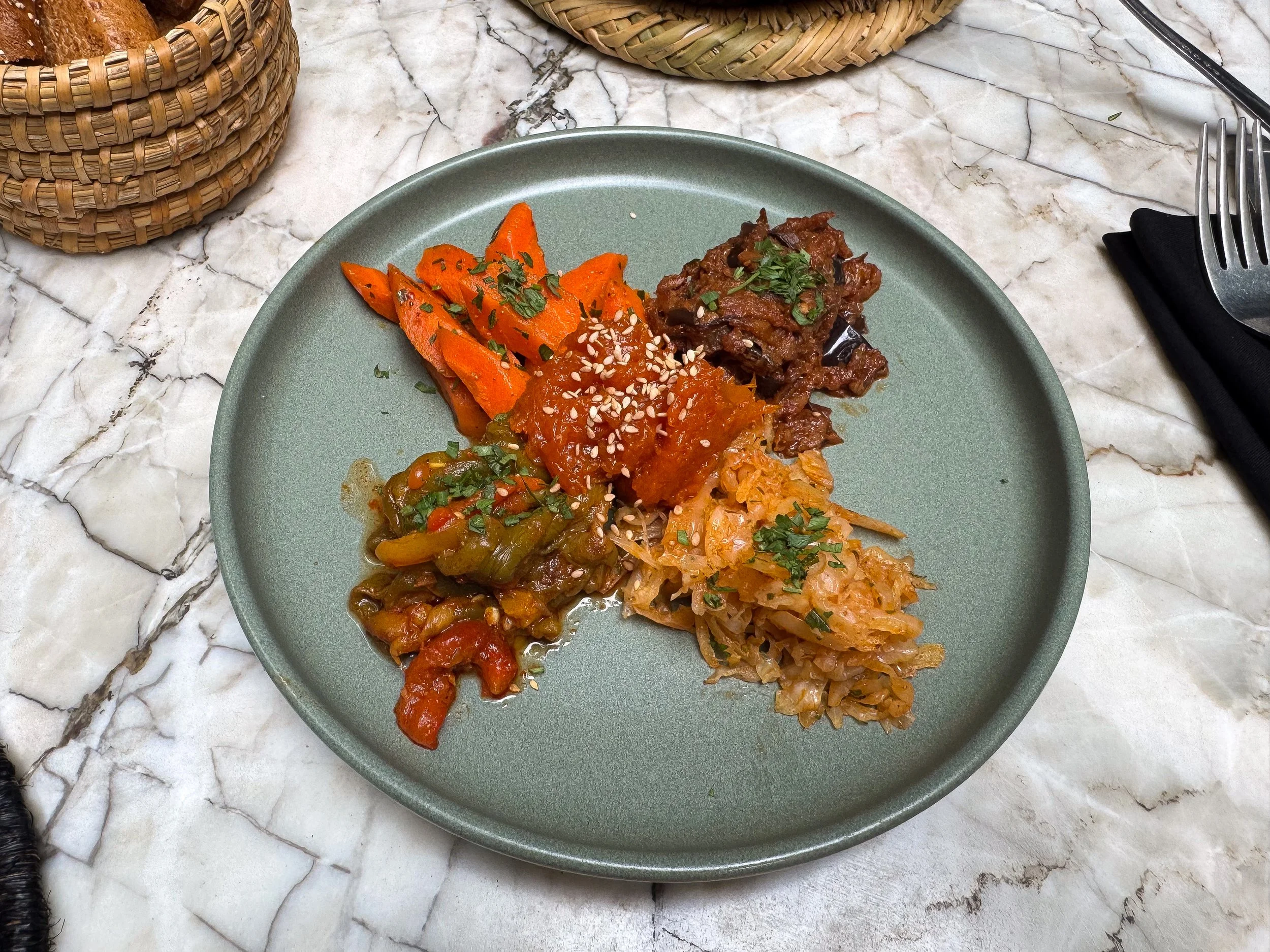
Camp Meals. The meals are one of the highlights of the desert camp. The chef prepares individually made meals for each guest. We enjoyed Berber omelettes, vegetable tagines and Moroccan spreads.
Daytime Heat. The interiors of the tents get extremely hot during the day. It’s best to relax in the shaded open air tents and enjoy the peacefulness of the desert.
Attire. Wear flowy and light colored clothes during the day. Bring sunglasses. Dress in layers during the cool evenings. Check the forecast ahead of time.
Moroccan & Berber Cuisine
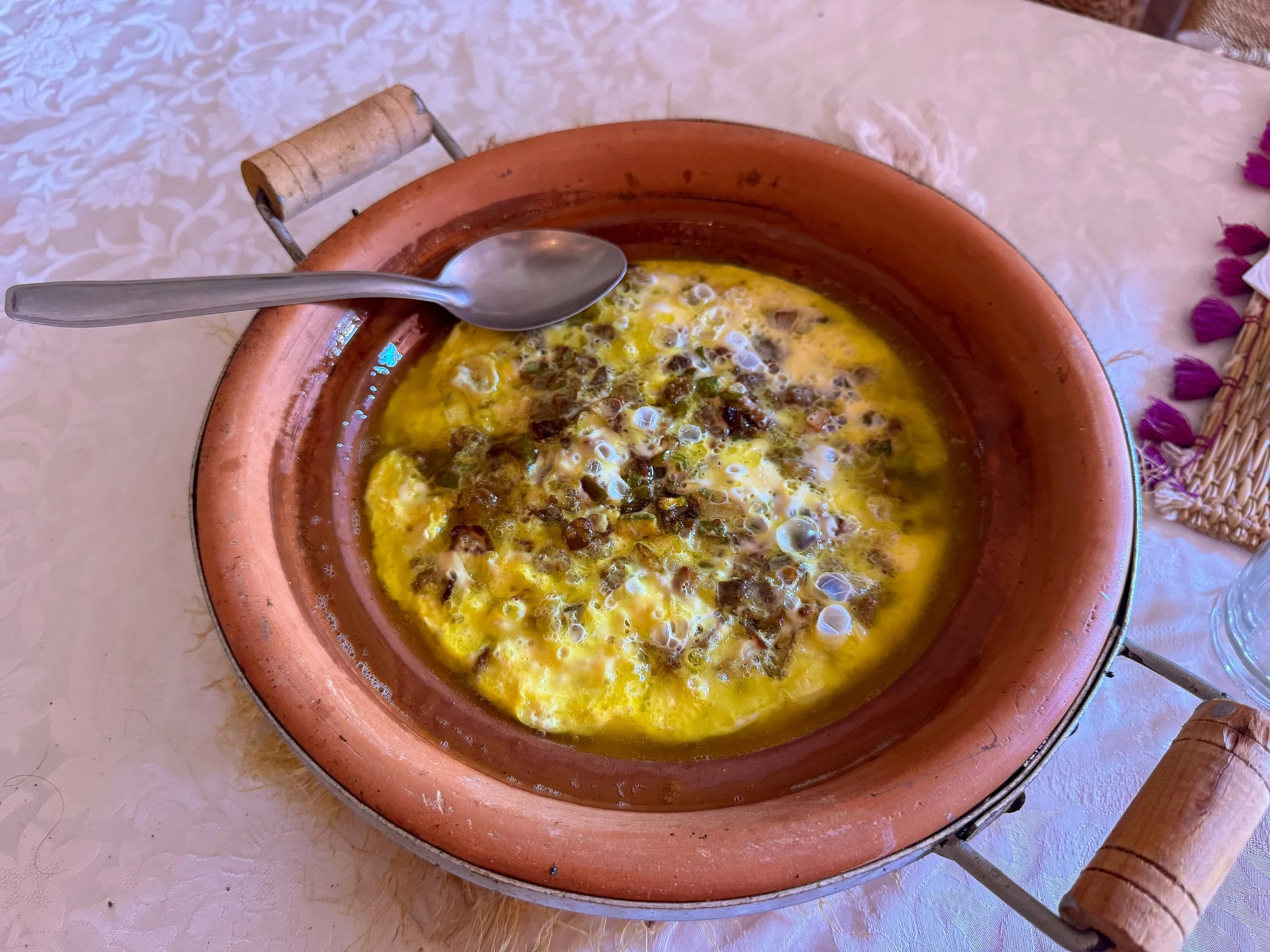
Berber Omelette. An omelette cooked in a tagine with olive oil, onions and spices. It’s common in the Berber regions of Morocco like the desert and mountains.
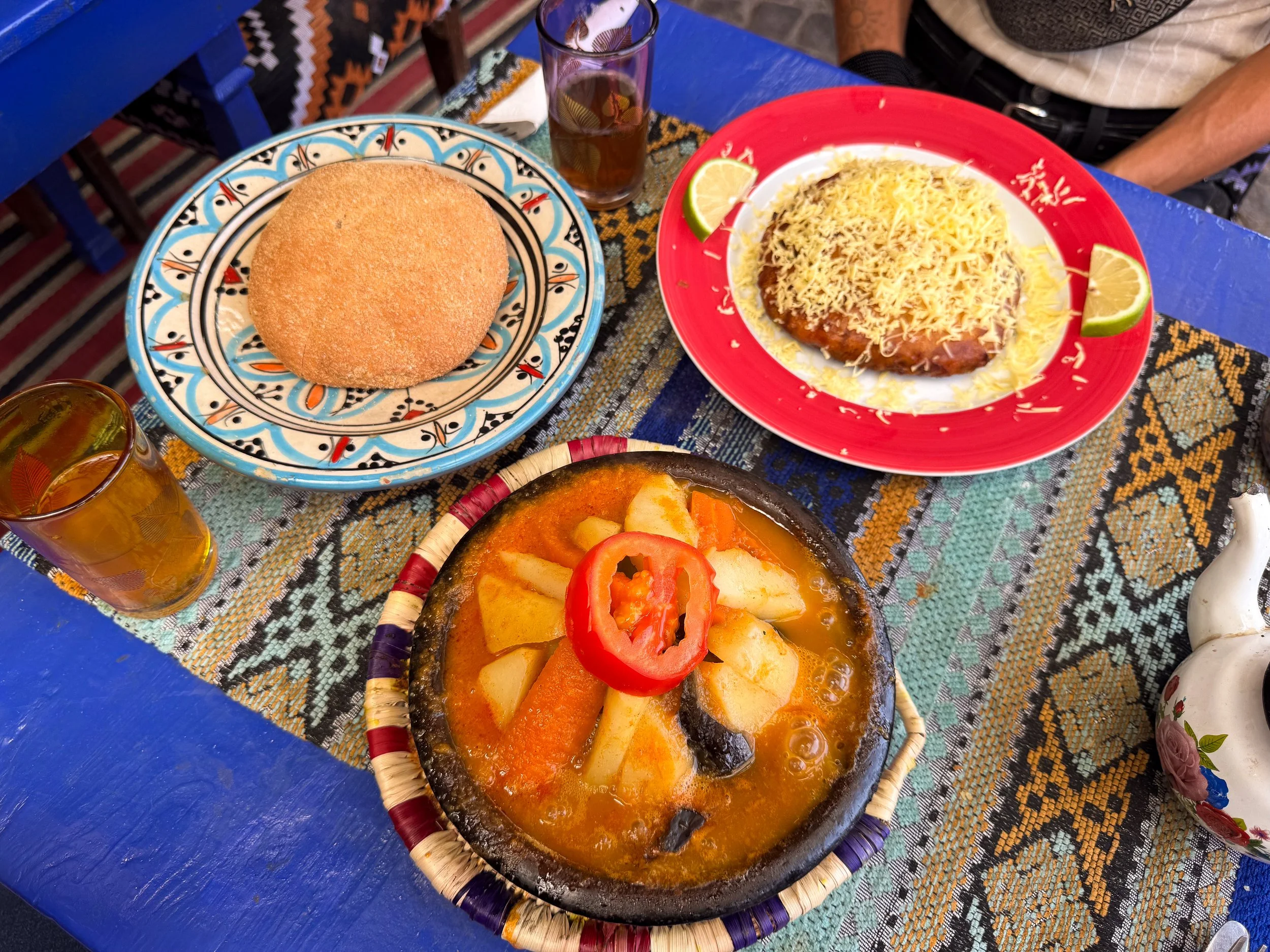
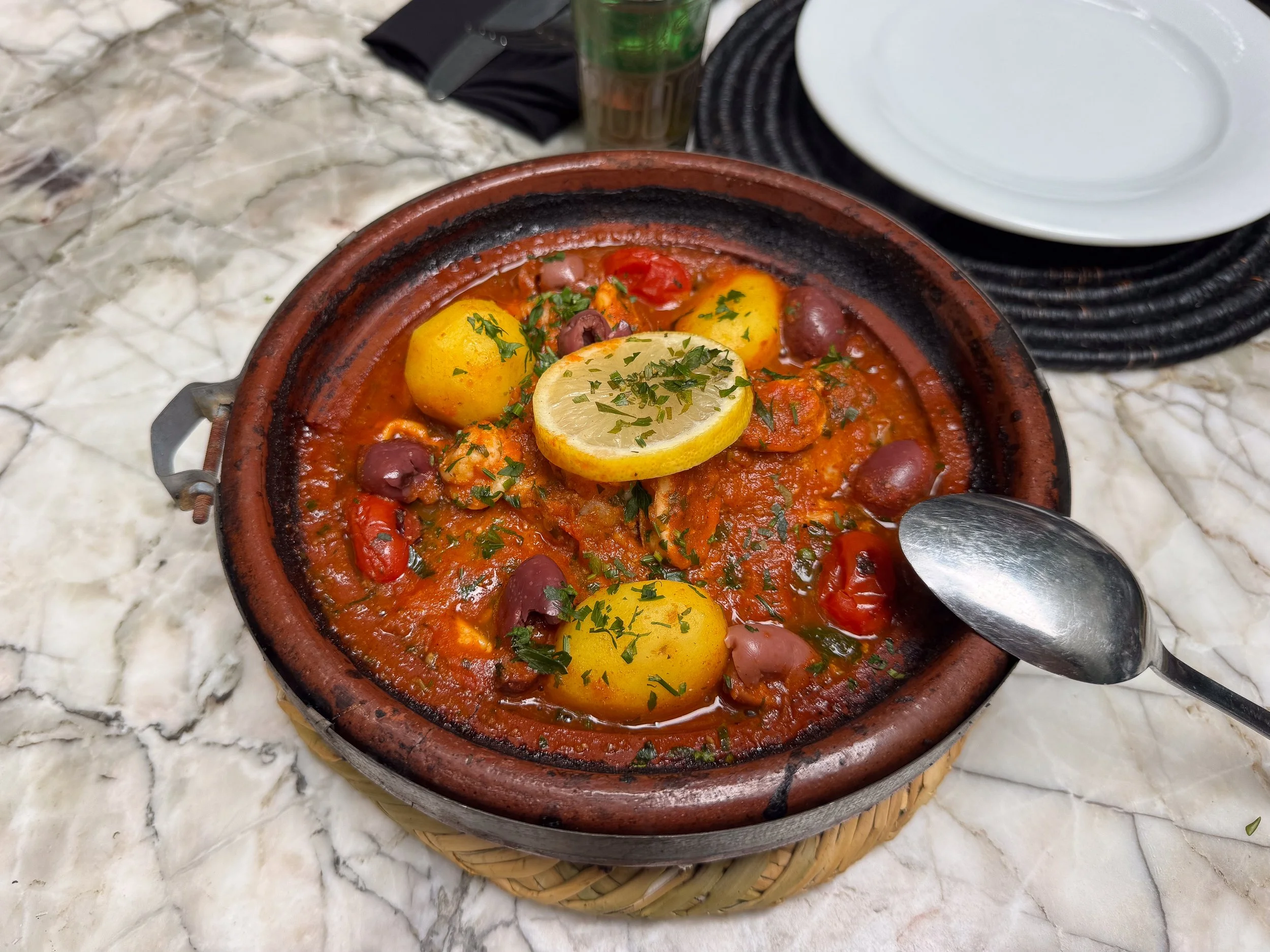
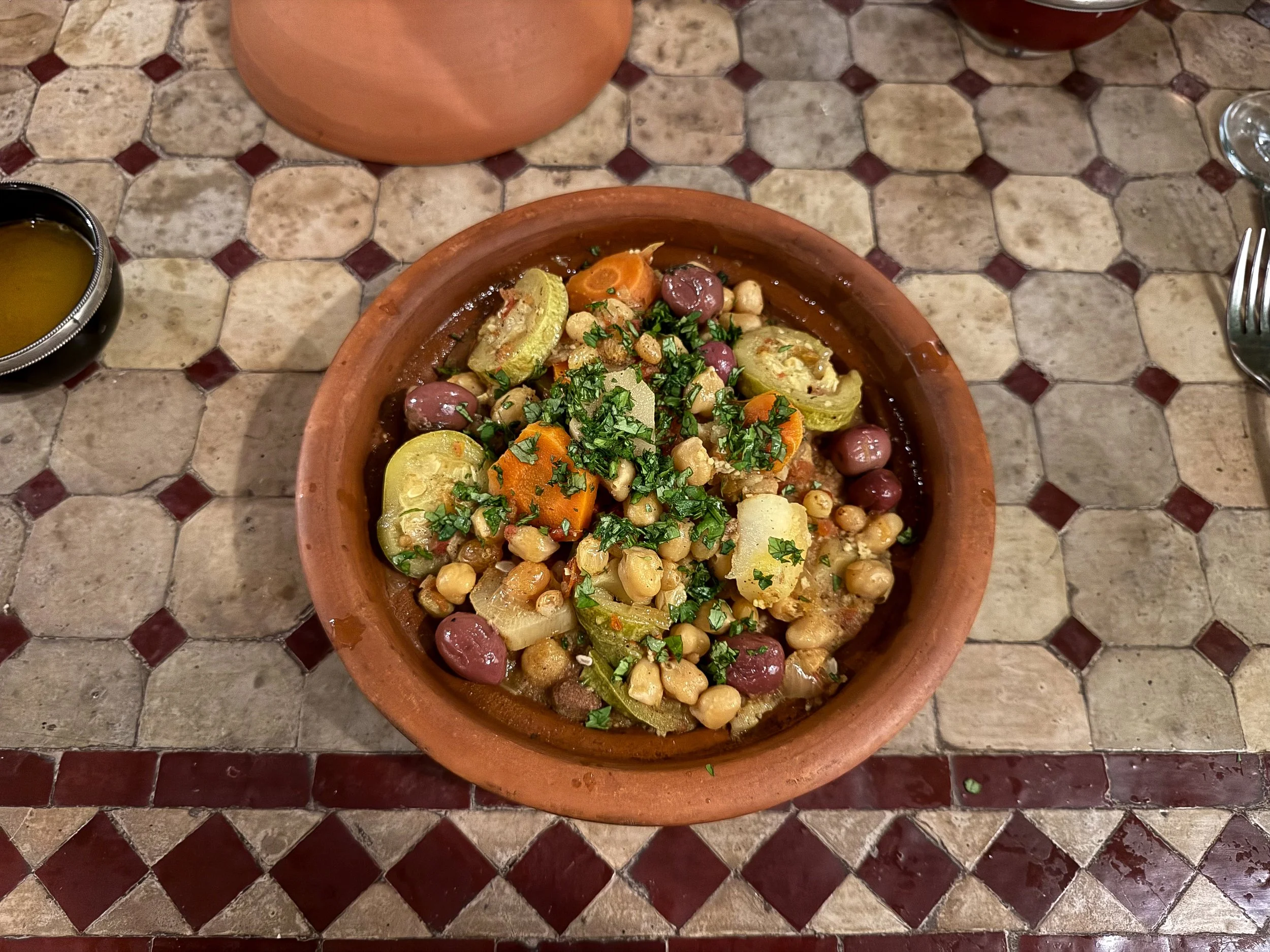
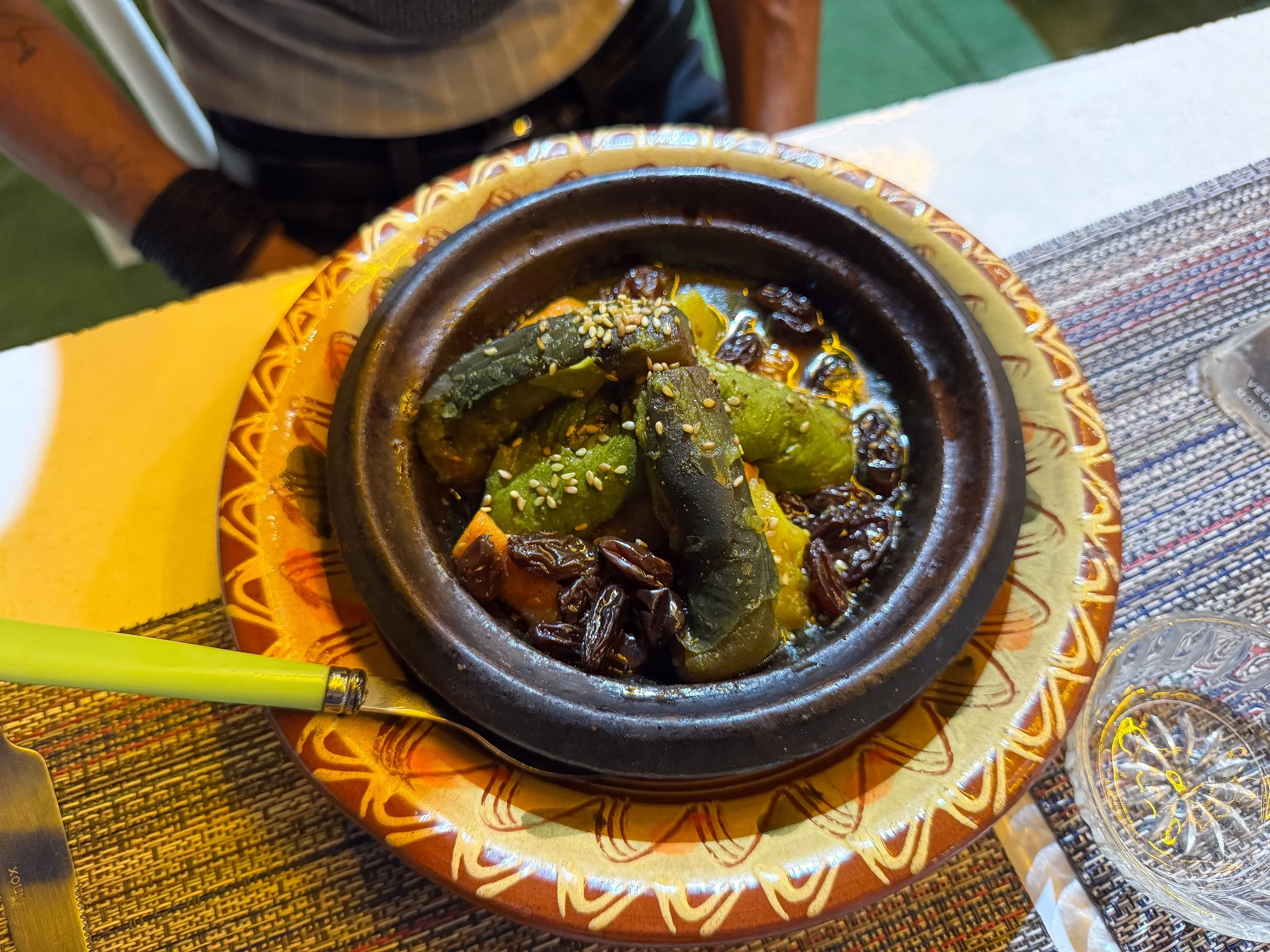
Tagine. A mixture of vegetables, meats, dried fruits and spices stewed together in a conical clay dish. It’s a staple dish of Moroccan cuisine.
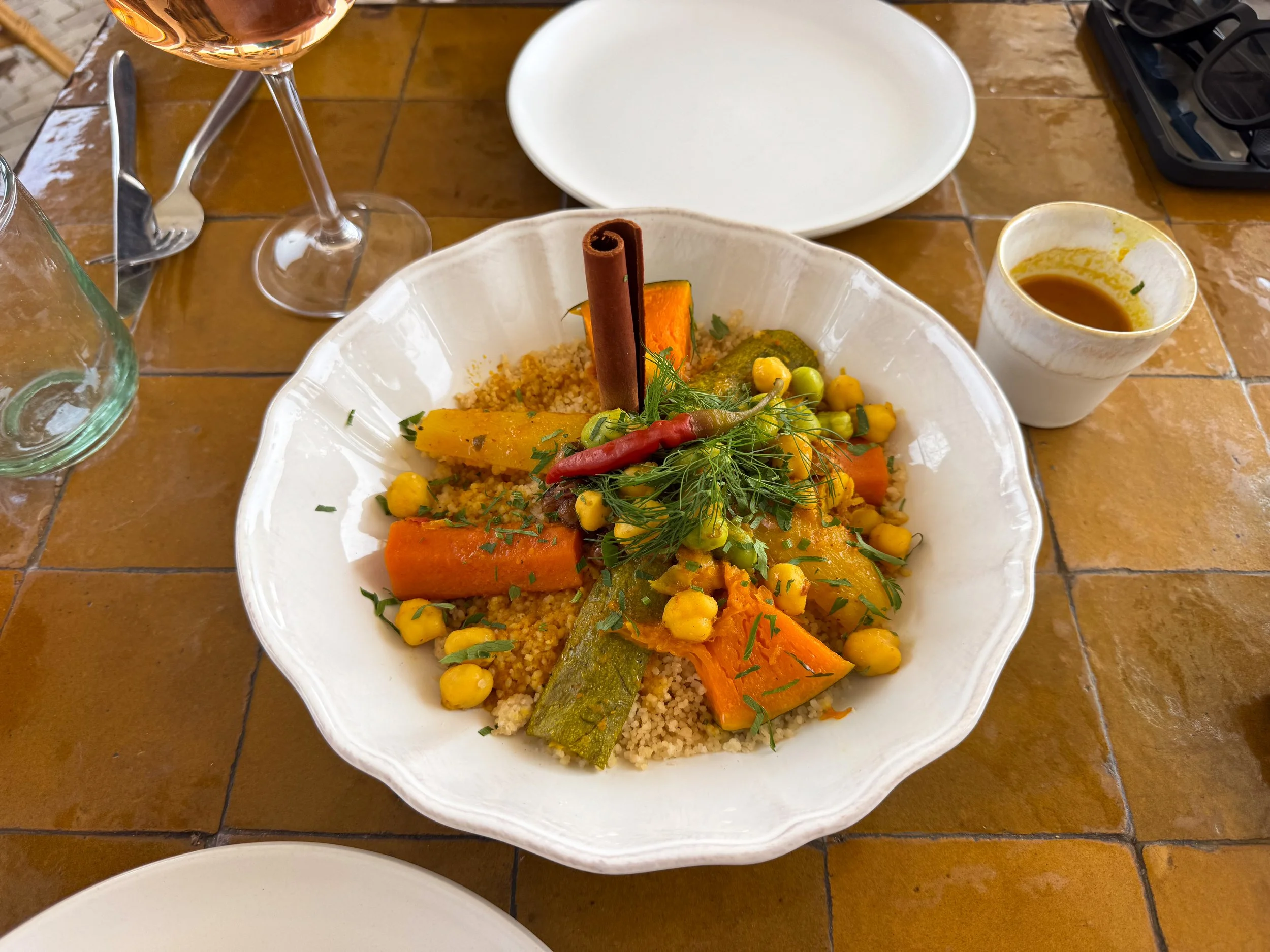
Couscous. A steamed grain covered in a savory broth and garnished with vegetables and meats.
Khobs Bread. A light and airy flatbread served with every meal. It’s fresh baked daily and can be bought for 1 DH from local bakeries.
Mint Tea. Hot tea made with fresh mint leaves and sugar cubes. It’s served as a common welcome drink.
Orange Drinks. Orange is one of the most popular flavors in Morocco. Fresh squeezed orange juice and sodas are commonly drunk. Try Orangina or Hawai.
Dates. A dried fruit from the date palm tree. They come in dozens of varieties and can be found across Morocco. They’re eaten at breakfast or as snacks. Try them stuffed with a walnut.
Driving in Morocco
Driving in Morocco comes with benefits and challenges. While we enjoyed our road trip, we have some pros, cons and lessons learned we wish we knew beforehand.
Pros. The roads are well maintained, gas stations are frequent, the landscape is beautiful and you have the freedom of being on your own schedule.
Cons. Fake speed traps, police corruption and reckless drivers make driving in Morocco stressful and difficult.
Where to Rent. We rented from Sixt at the Marrakech airport and returned it at the Fez airport a week later.
Rest Stops. Half the joy of taking a road trip is making unexpected stops when something catches your eye. We stopped several times throughout our journey to check something out including remote roadside cafes, camel crossings, panoramic viewpoints, Berber craft stands and fossil and meteorite shops.
Corrupt Speed Traps
Corrupt speed traps are common across Morocco. If driving, you’re all but guaranteed to be fined by police officers. Patrols of the Royal Moroccan Gendarmerie will signal you to pull over, confiscate your license and passport, then ask you to pay a cash fine for any number of reasons.
Examples of Traps:
Reduced Speed Signs. Police set up a series of rapidly descending speed limit signs spaced mere meters apart hoping to entrap drivers.
Hidden Stop Signs. Police place hidden stop signs directly behind speed limit signs to entrap drivers.
Painted Speed Signs. Police paint over posted speed limit signs to obscure the actual speed.
How to React:
Option 1. Pay the cash “fine.” They typically request 300-400 Dirham. They will not provide a ticket or receipt.
Option 2. Respectfully dispute the “fine.” Push back and ask for evidence as well as a formal written ticket. If legitimate, this needs to be paid in cash on the spot or at a police station.
Option 3. Respectfully dispute the “fine.” Push back and let the police know you did not violate the traffic laws. Mention that you’ve already been pulled over, paid a fine and reported the past incident to your embassy. Corrupt police will back down in fear of being reported at the mention of diplomatic support.
Document Evidence. When approaching a speed trap, immediately slow down to 20km and have a passenger record the speedometer and posted signs. This can be used as proof to dispute the “traffic violation.” Document evidence of the encounter including the time, location, officer names and badge numbers. Be careful not to directly photograph or record the police. This is considered “illegal journalism” in Morocco.
Arabic Words & Phrases
Knowing a few words and phrases in Arabic goes a long way in Morocco when interacting with locals. Some of the most common and easy to remember are:
Hello = Salama
Goodbye = Beslama
Thank you = Shukran
You’re welcome = Marhaba
Location Specifics
When to Visit. September is the best month of the year to visit Morocco. It’s just before peak travel season with hot to moderate temperatures.
Language. Arabic, French and English are commonly spoken by many people, seen on signage and menus.
Cash vs. Card. Cash is the preferred and often only accepted method of payment at many businesses. Confirm before ordering at restaurants or agreeing to services.
Safety. Morocco is a generally safe destination to visit. Be aware of your surroundings and keep hold of personal belongings to avoid pickpocketing.
Drinking Water. Tap water is not safe for consumption or using to cook with. Only use bottled water.
Alcohol. The sale of alcohol is heavily controlled throughout the country. Only some restaurants will serve cocktails, beer and wine.
LGBTQ+ Safety. Moroccan laws and customs are not very accepting of LGBTQ+ individuals. Stay up to date with the latest laws and suggestions while traveling. Refer to our guide on LGBTQ+ Travel Safety for more advice.
Elsewhere in Morocco
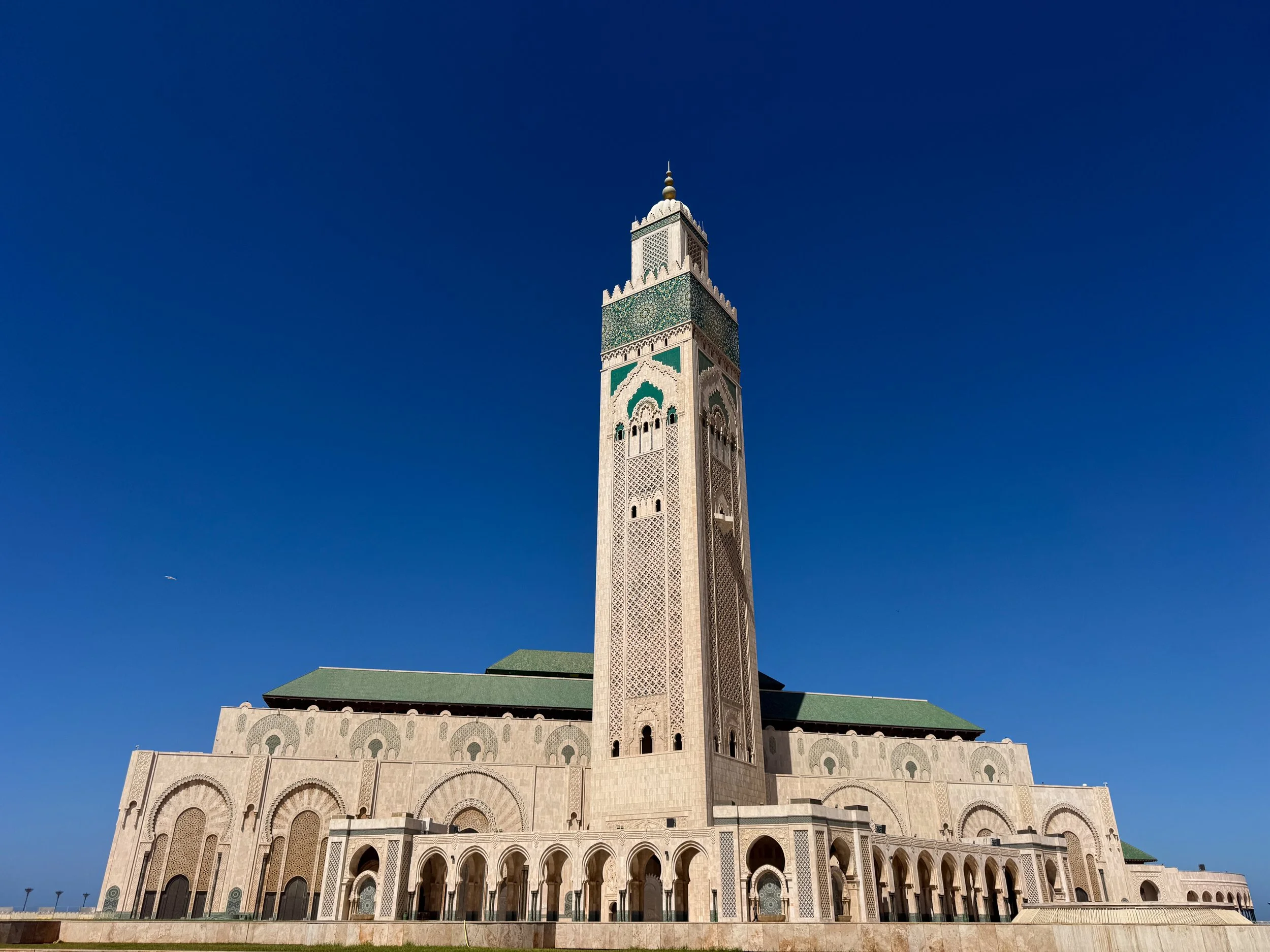
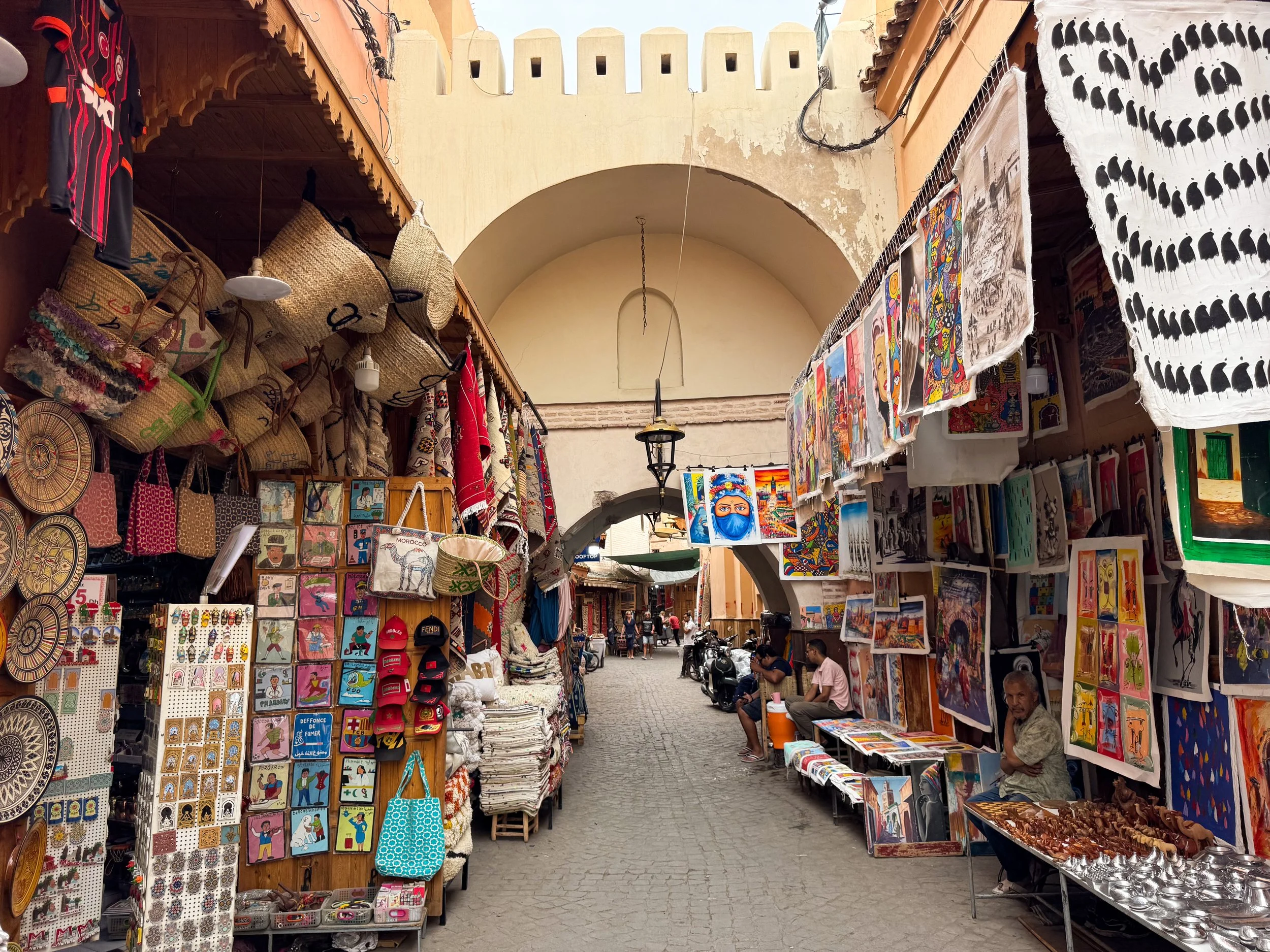
From the Sahara Desert and Berber villages to the medinas of Marrakech and Fes, Chefchaouen's mountain streets and Casablanca's coastline, explore more of Morocco through these travel guides:
Marrakech Travel Guide: Medina, Souks & Moroccan Cuisine. Get lost in Marrakech's maze-like alleyways where vibrant souks, elaborate palaces and historic mosques bring centuries of Moroccan culture, cuisine & tradition to life.
Fes Travel Guide: Medina, Tanneries & Islamic History. Step into Fes's ancient medina where Islamic landmarks, historic tanneries, traditional riads and skilled artisans preserve centuries of Moroccan heritage and tradition.
Chefchaouen Travel Guide: The Blue City, Medina & Local Culture. Stroll through Chefchaouen's blue painted medina where historic mosques, fresh juice vendors, Berber artisans and mountain scenery reveal a tranquil side of Morocco.
Casablanca Travel Guide: Hassan II Mosque, Local Markets & Moroccan Cuisine. Wander through Casablanca's ancient medina, palm lined avenues and seaside promenades where the Hassan II Mosque and local food markets reflect Morocco's culture.
For Next Time…
The Atlas Mountains and desert landscape of Morocco is a beautiful place, especially with extra time.
Stay in Ouarzazate. We recommend spending at least one night here to experience the town, its souks and movie studios in depth.
Merzouga Lake. A seasonal lake formed during the Merzouga Desert’s August rains. It’s a popular place to spot migratory flamingos.
Ozoud Waterfalls. A series of cascading waterfalls in the High Atlas Mountains. Trails lead up the falls to natural swimming pools.
Chefchaouen Travel Guide: The Blue City, Medina & Local Culture
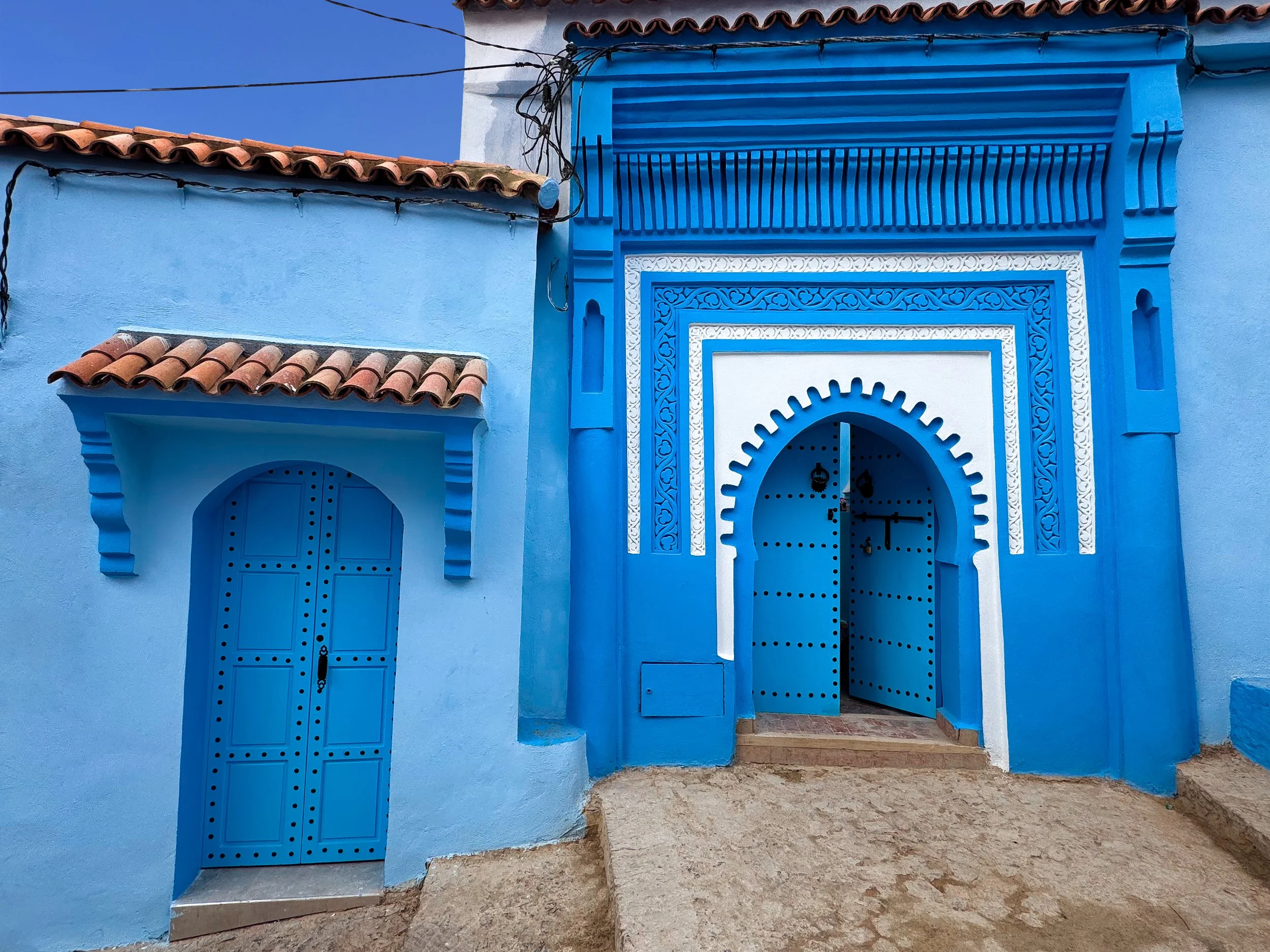
Stroll through Chefchaouen's blue painted medina where historic mosques, fresh juice vendors, Berber artisans and mountain scenery reveal a tranquil side of Morocco.
Chefchaouen, The Blue City
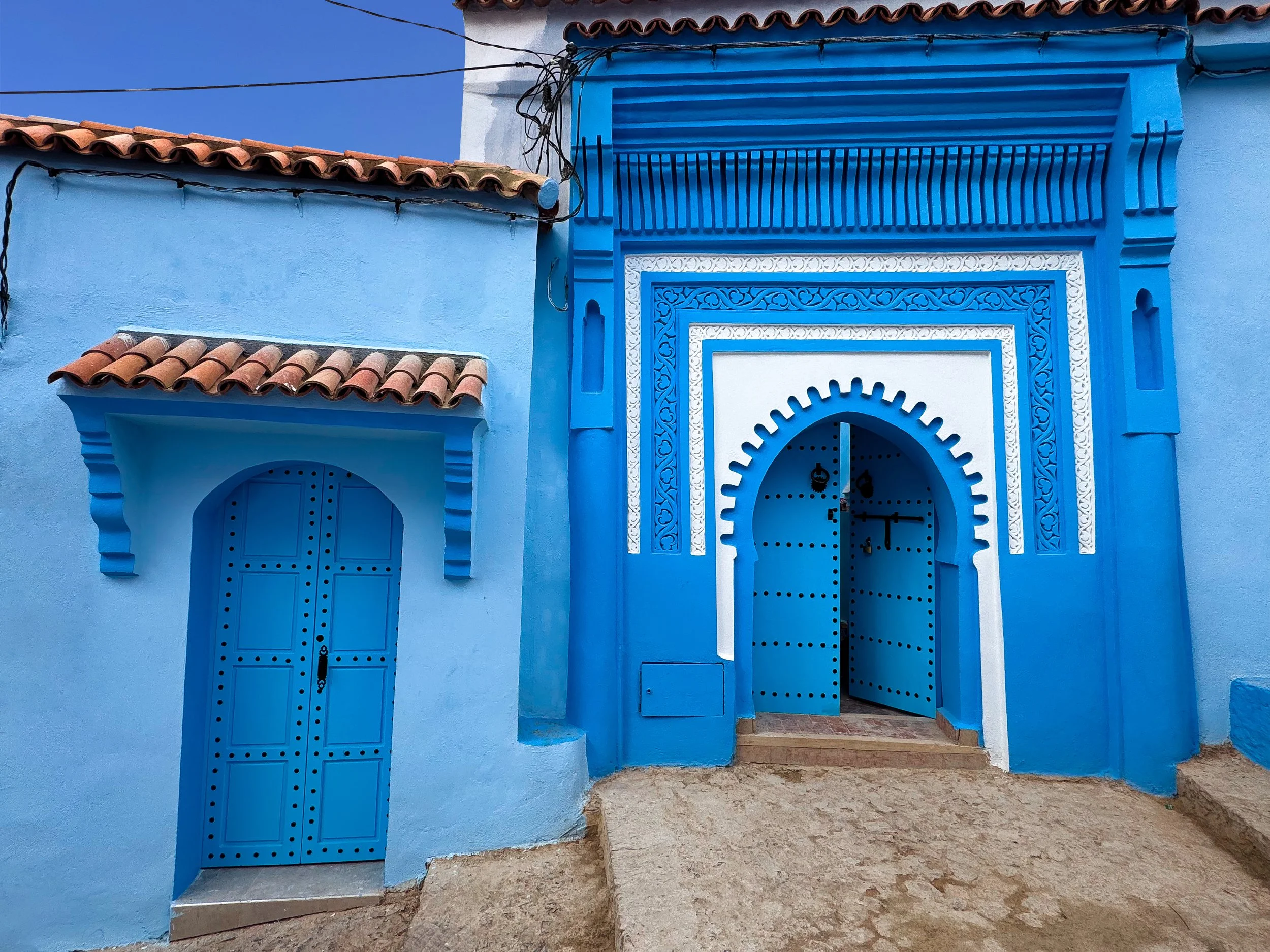
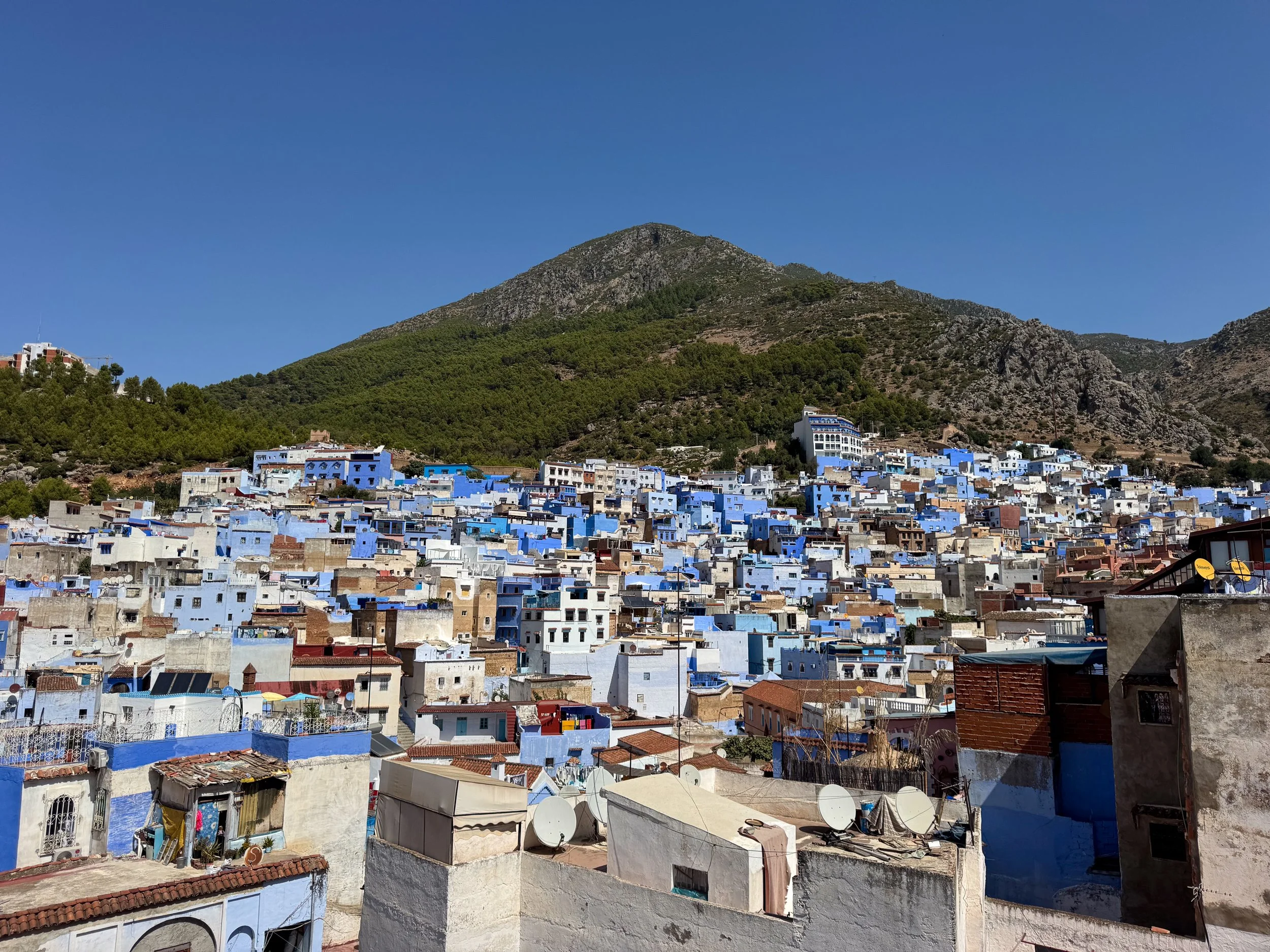
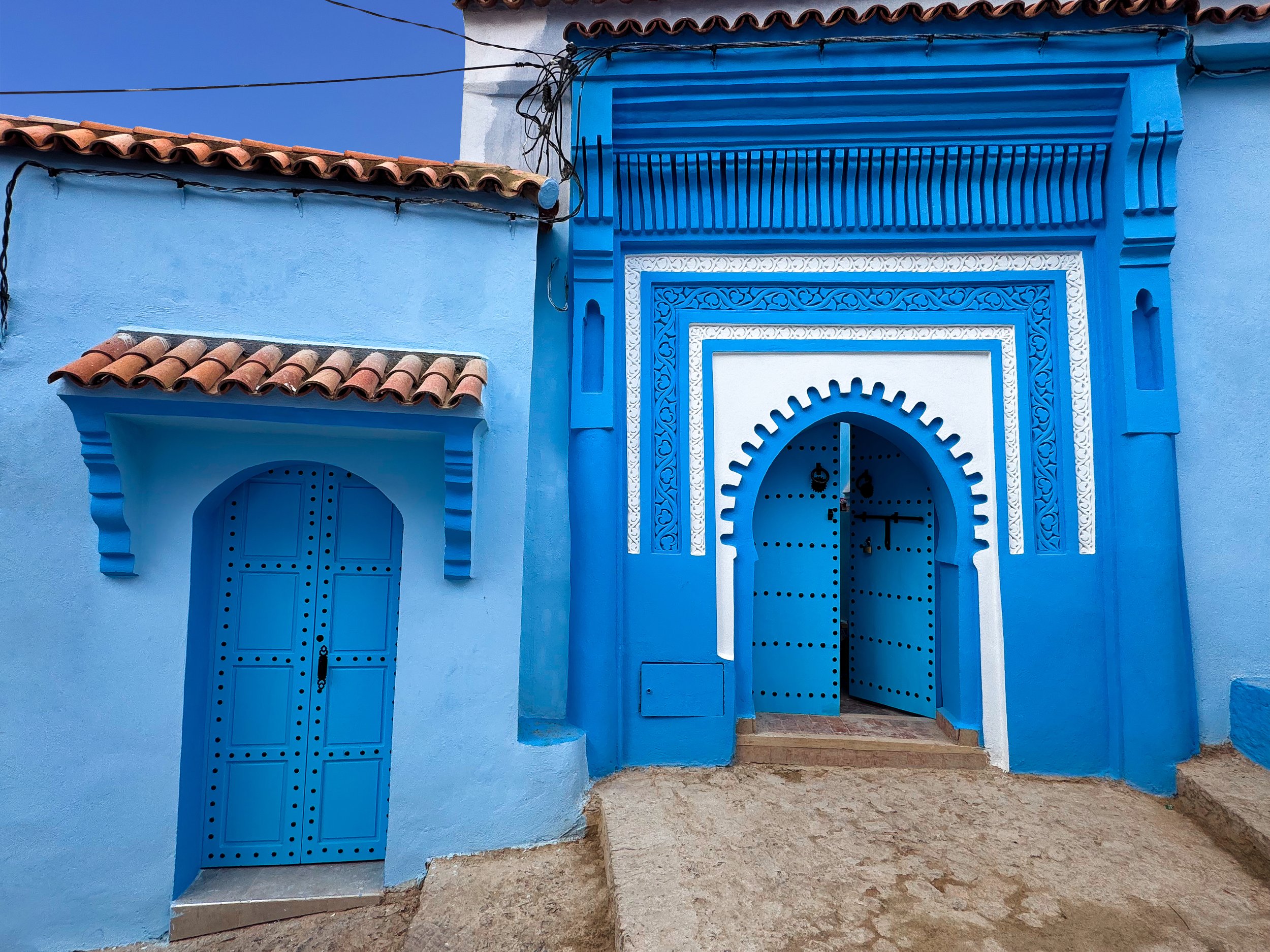
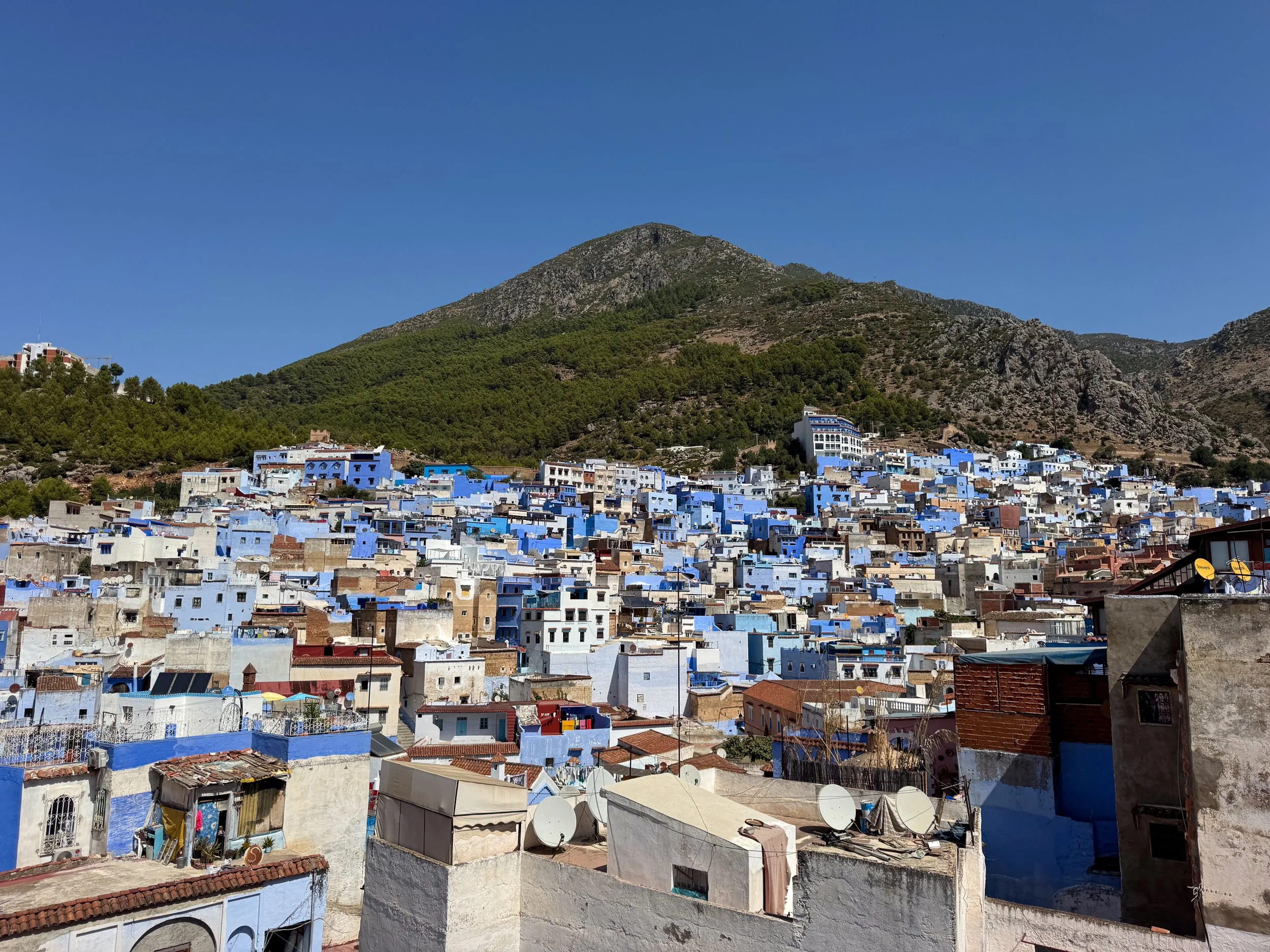
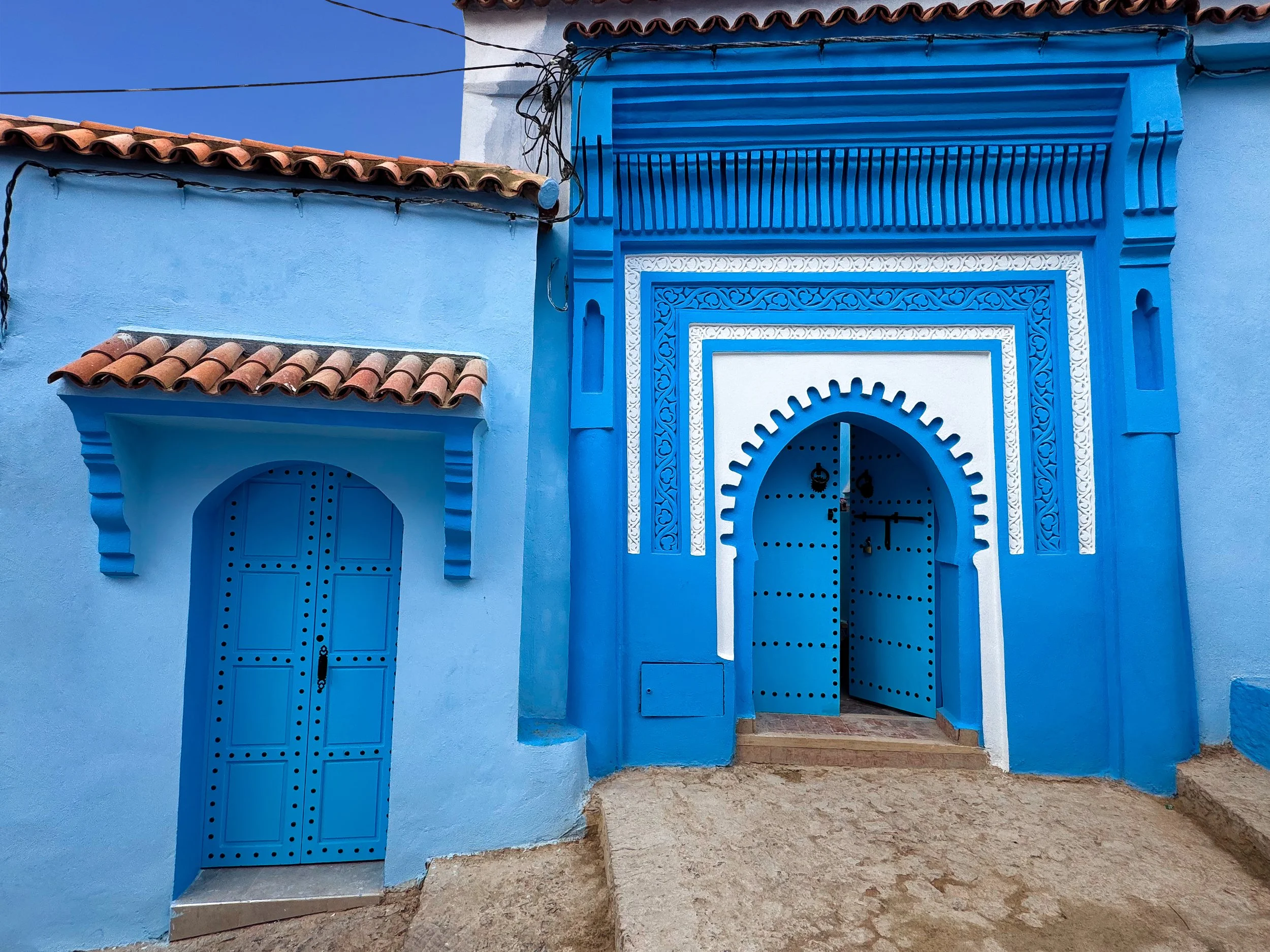
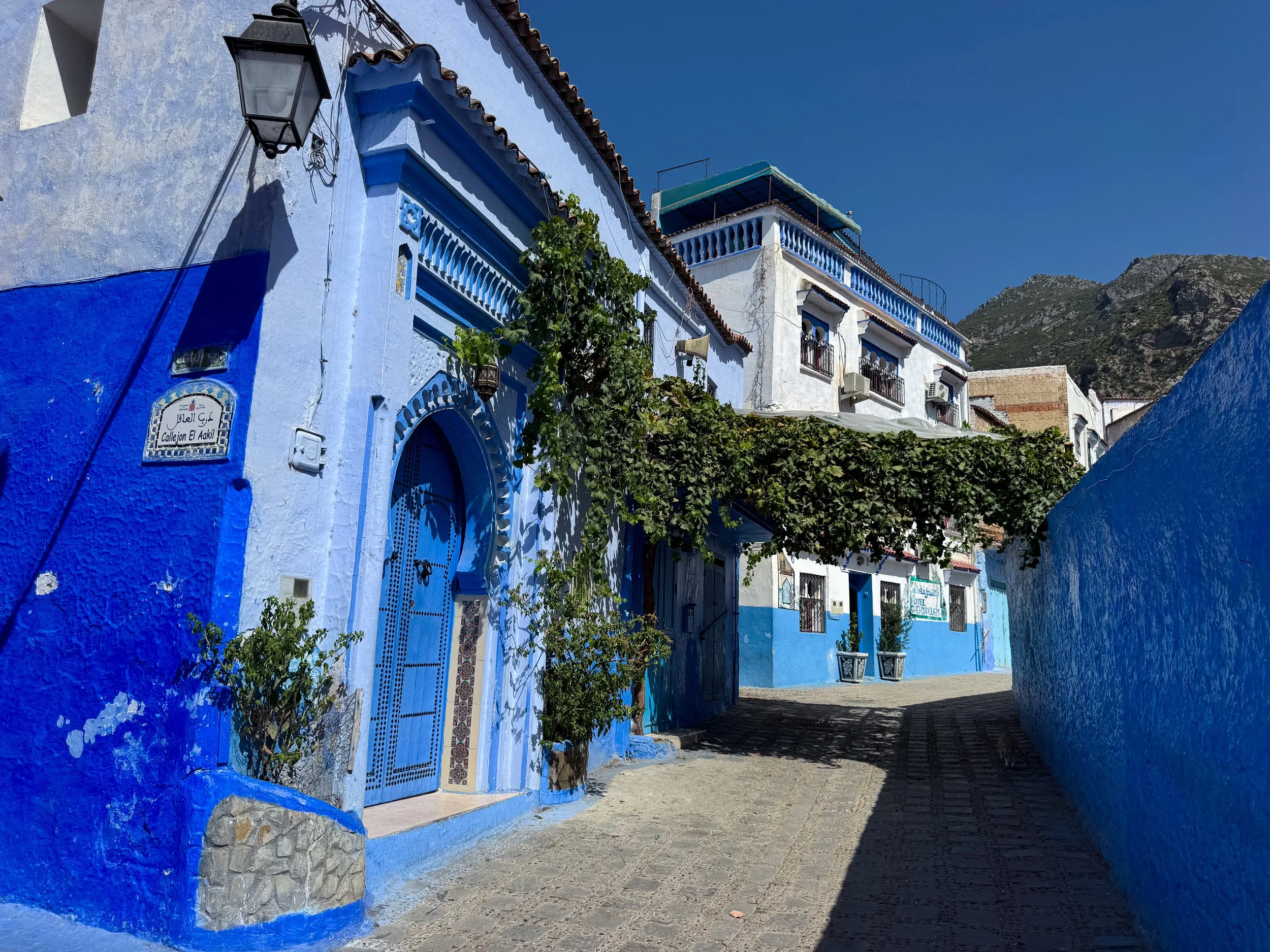
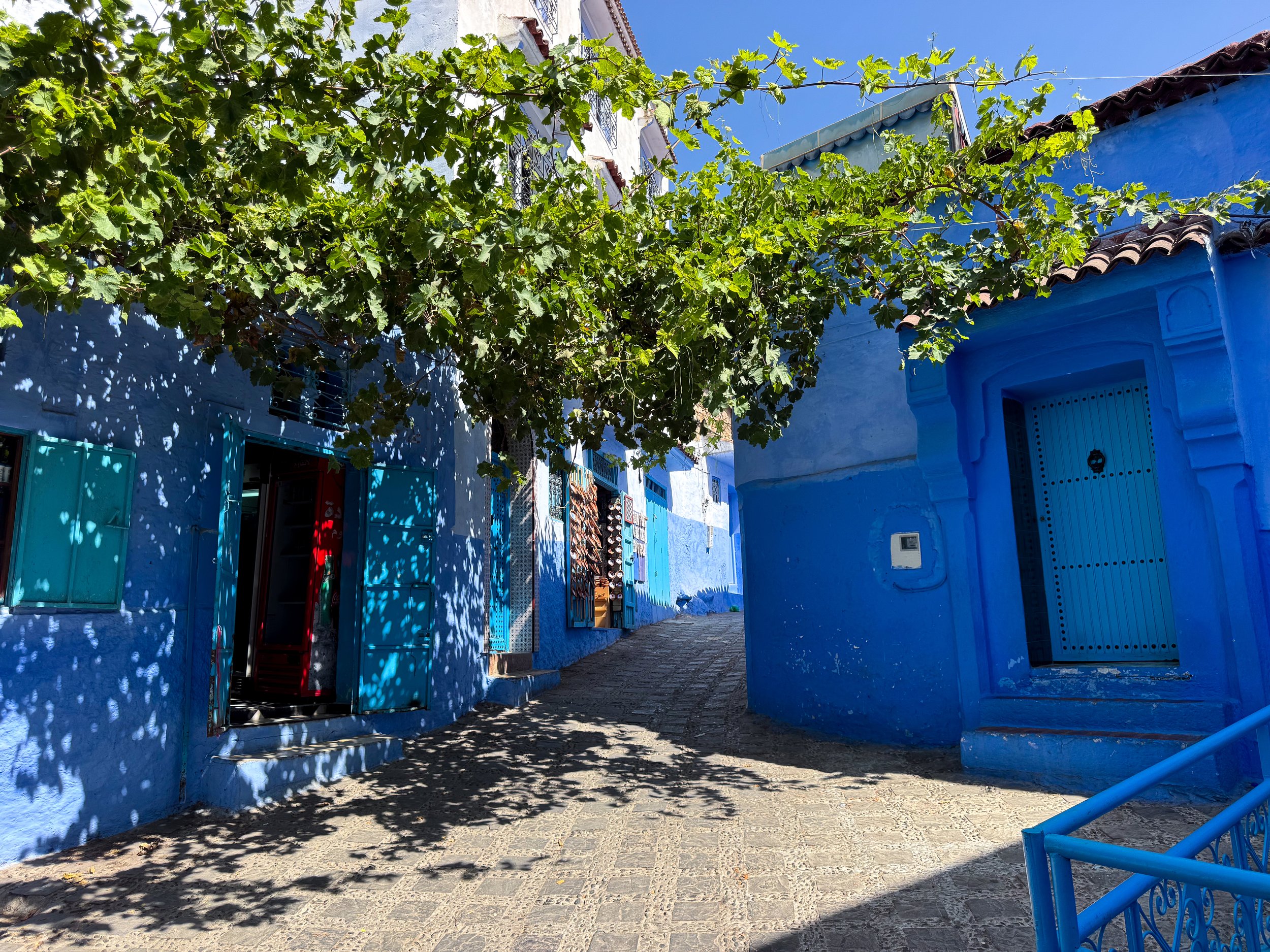
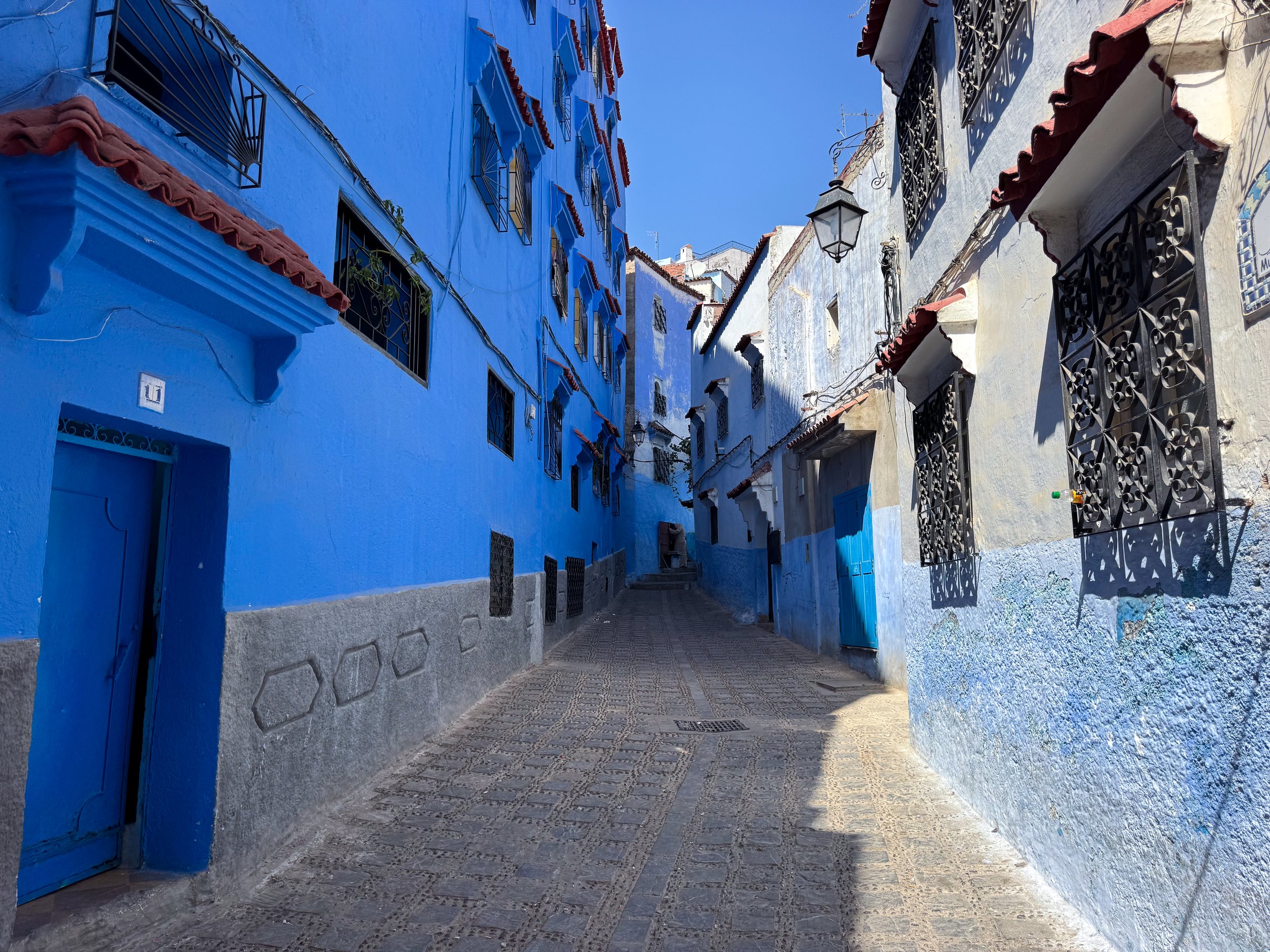
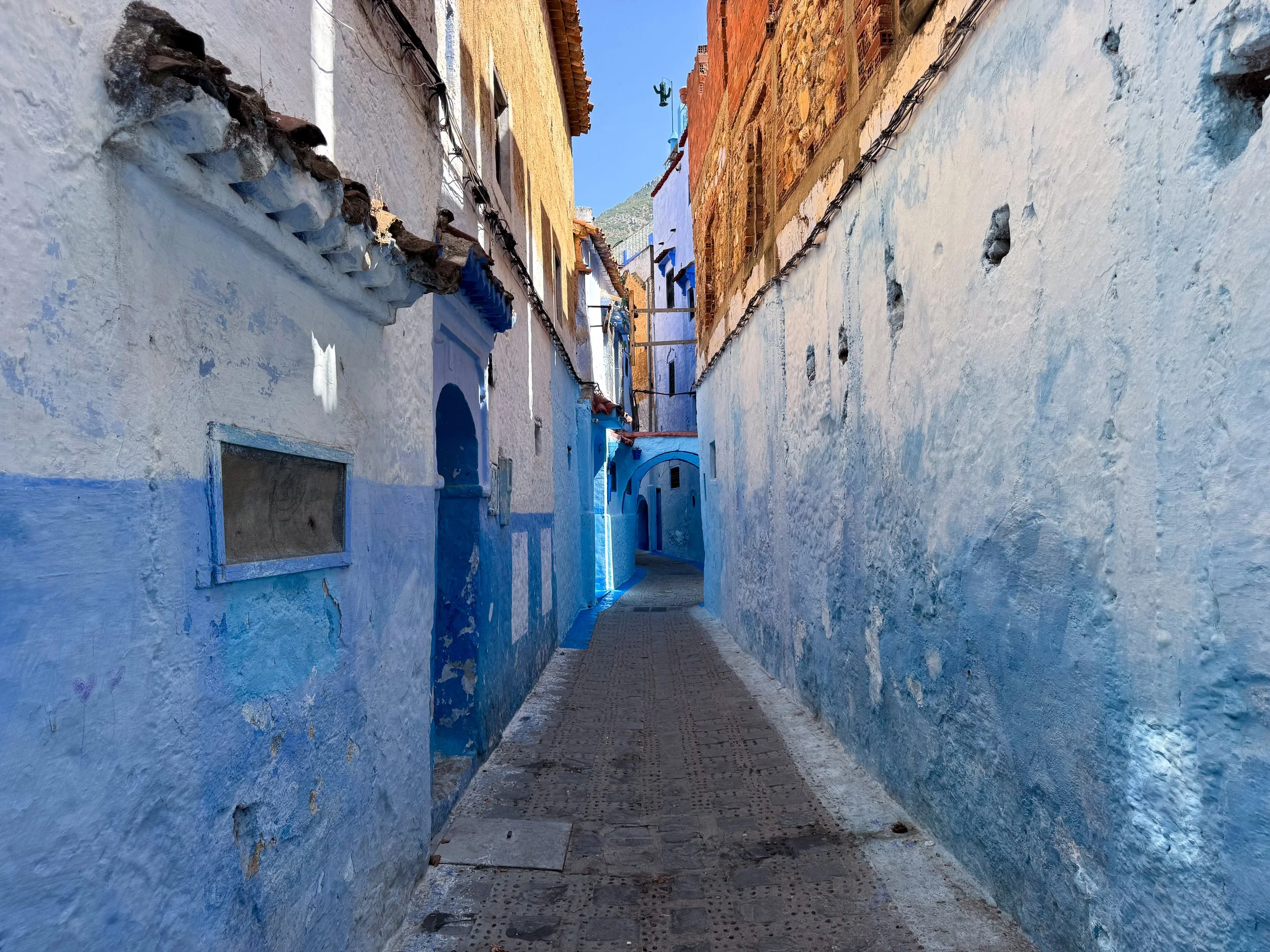
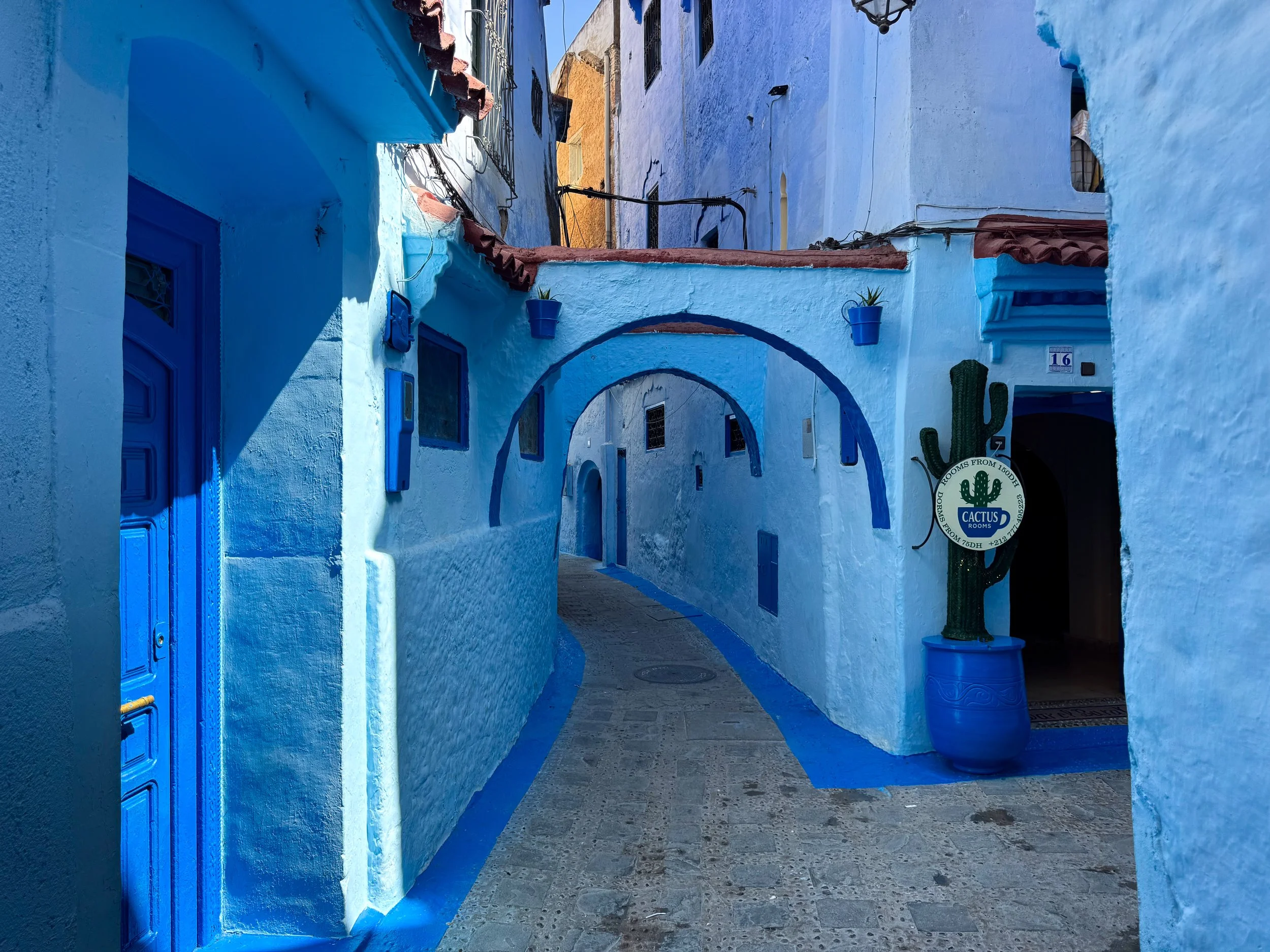
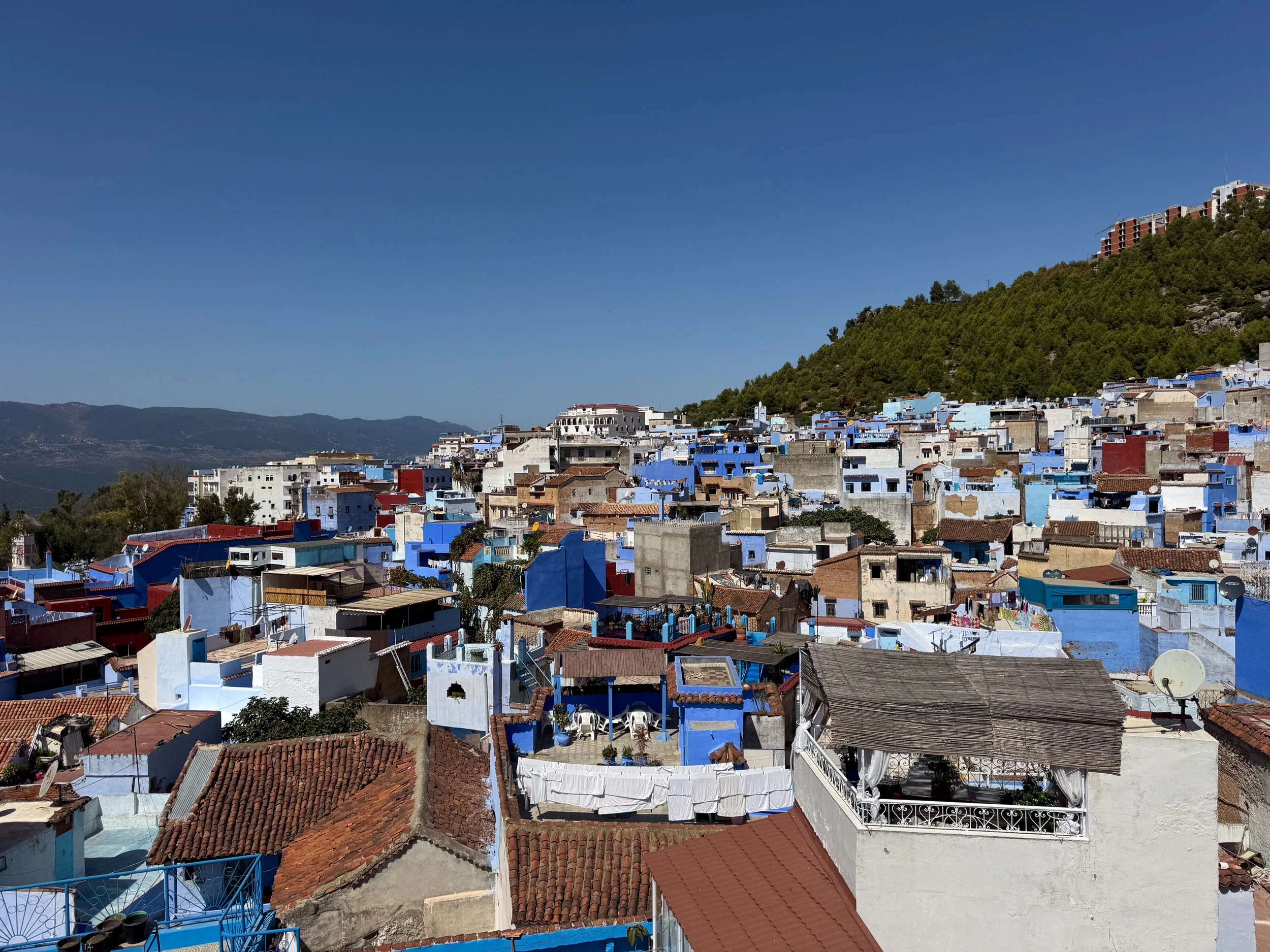
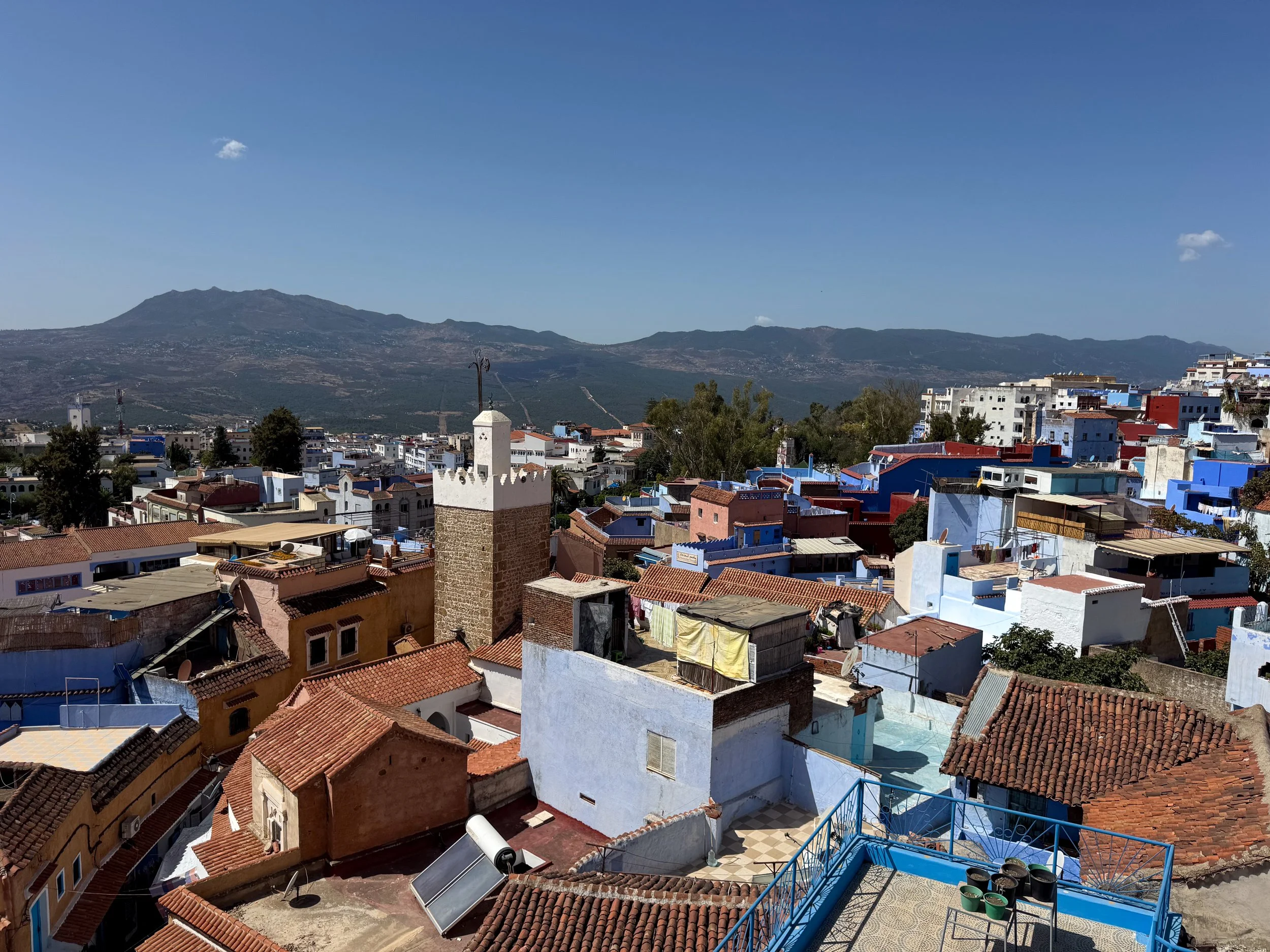
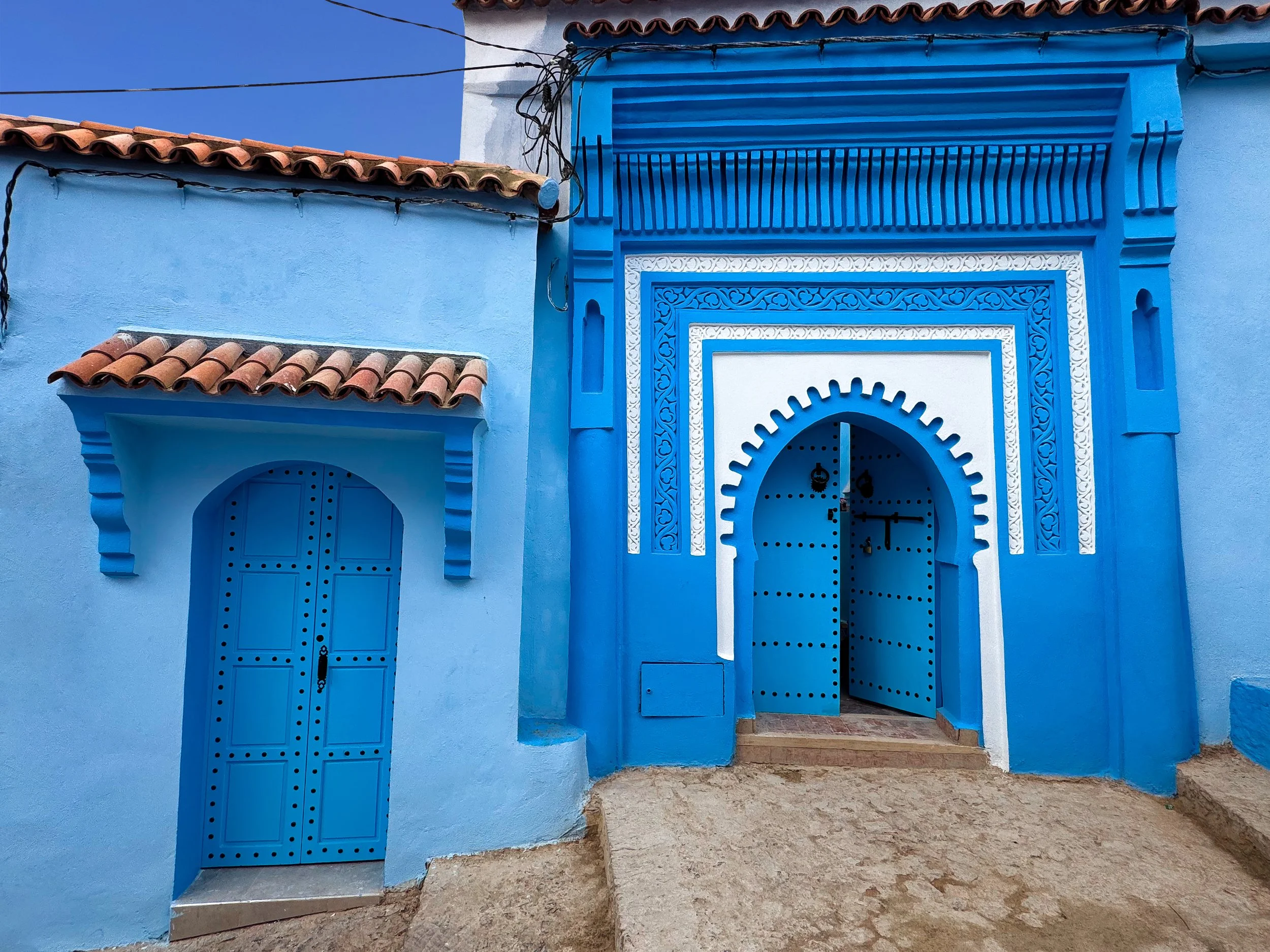
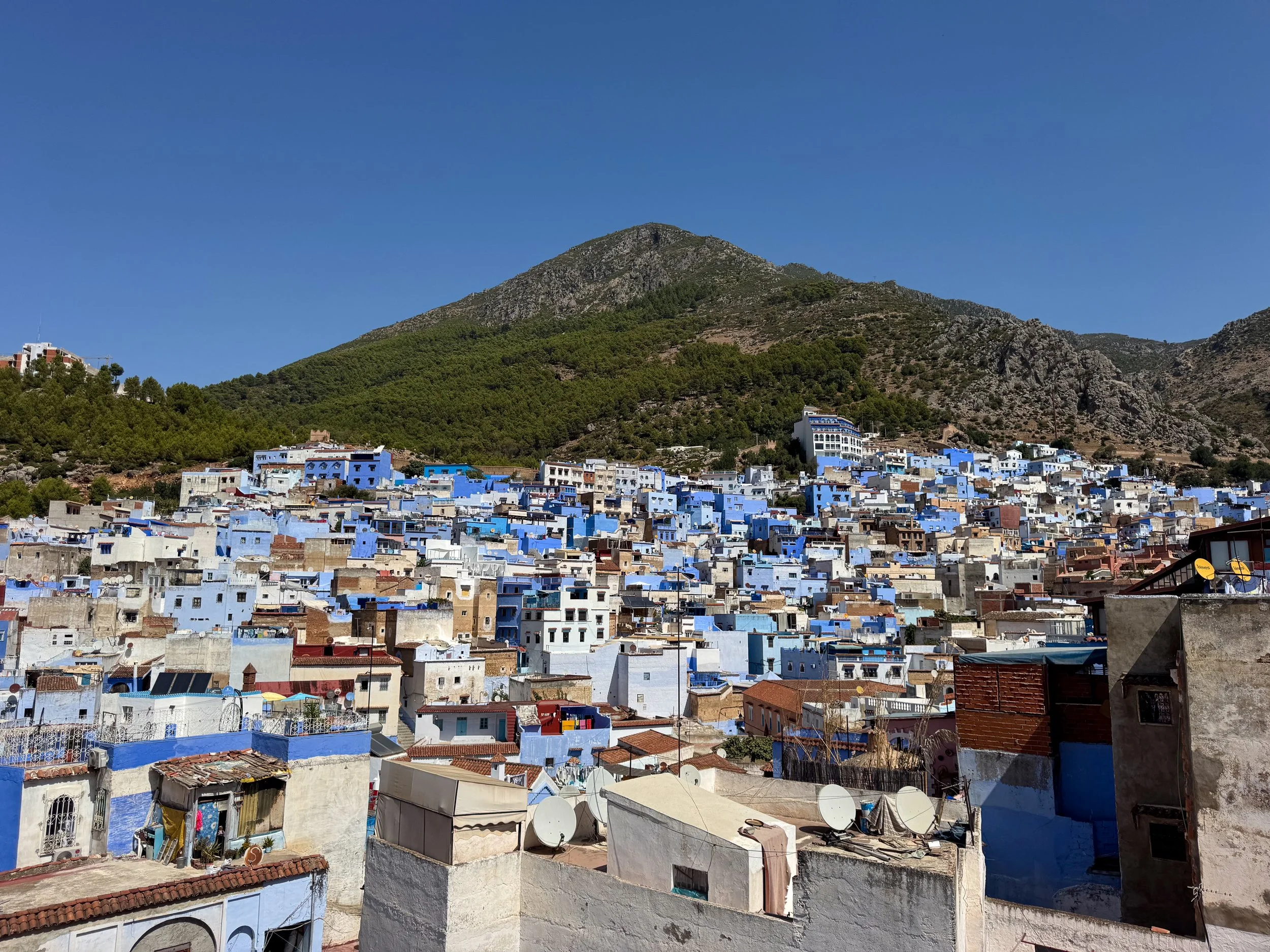
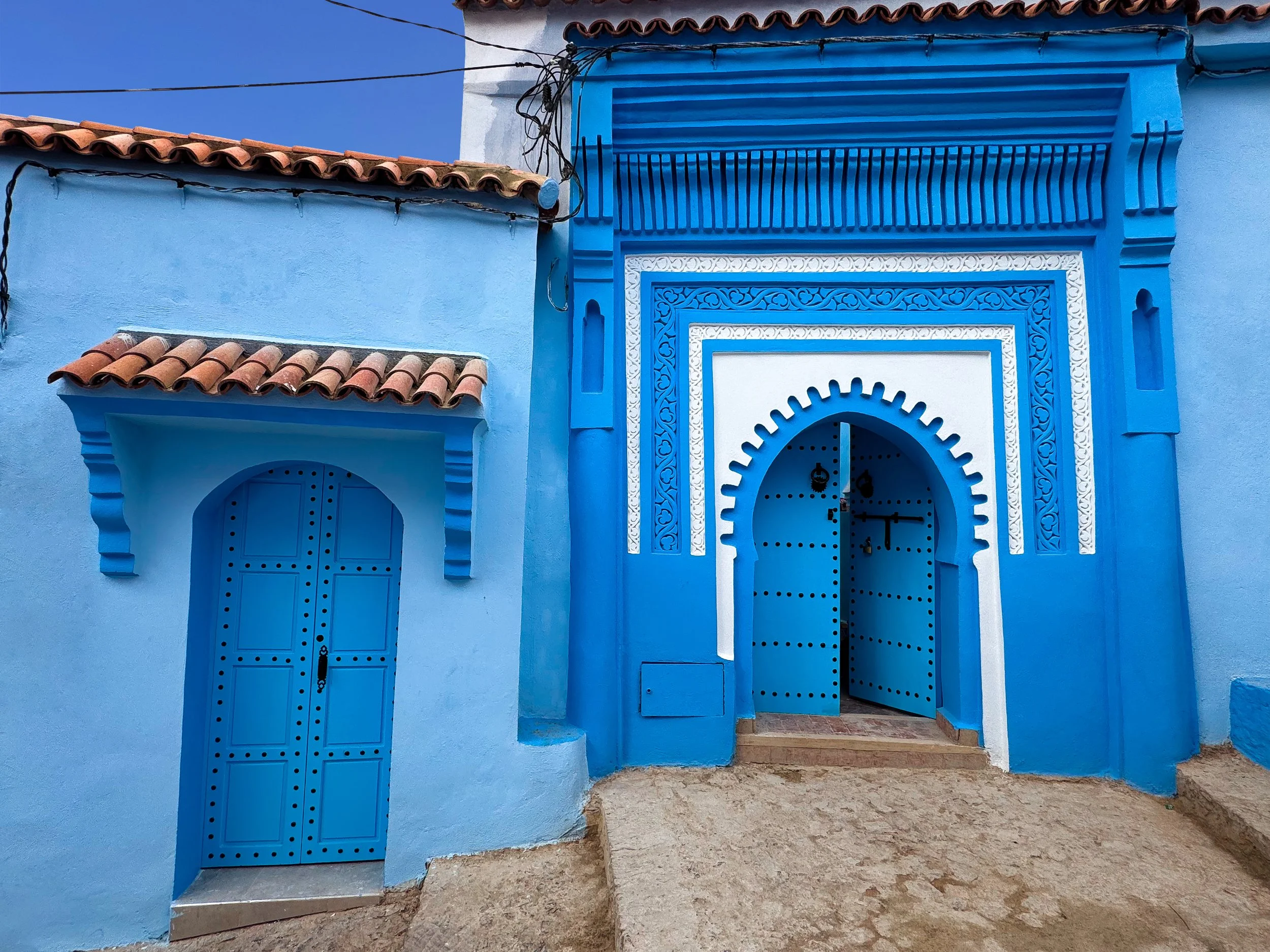
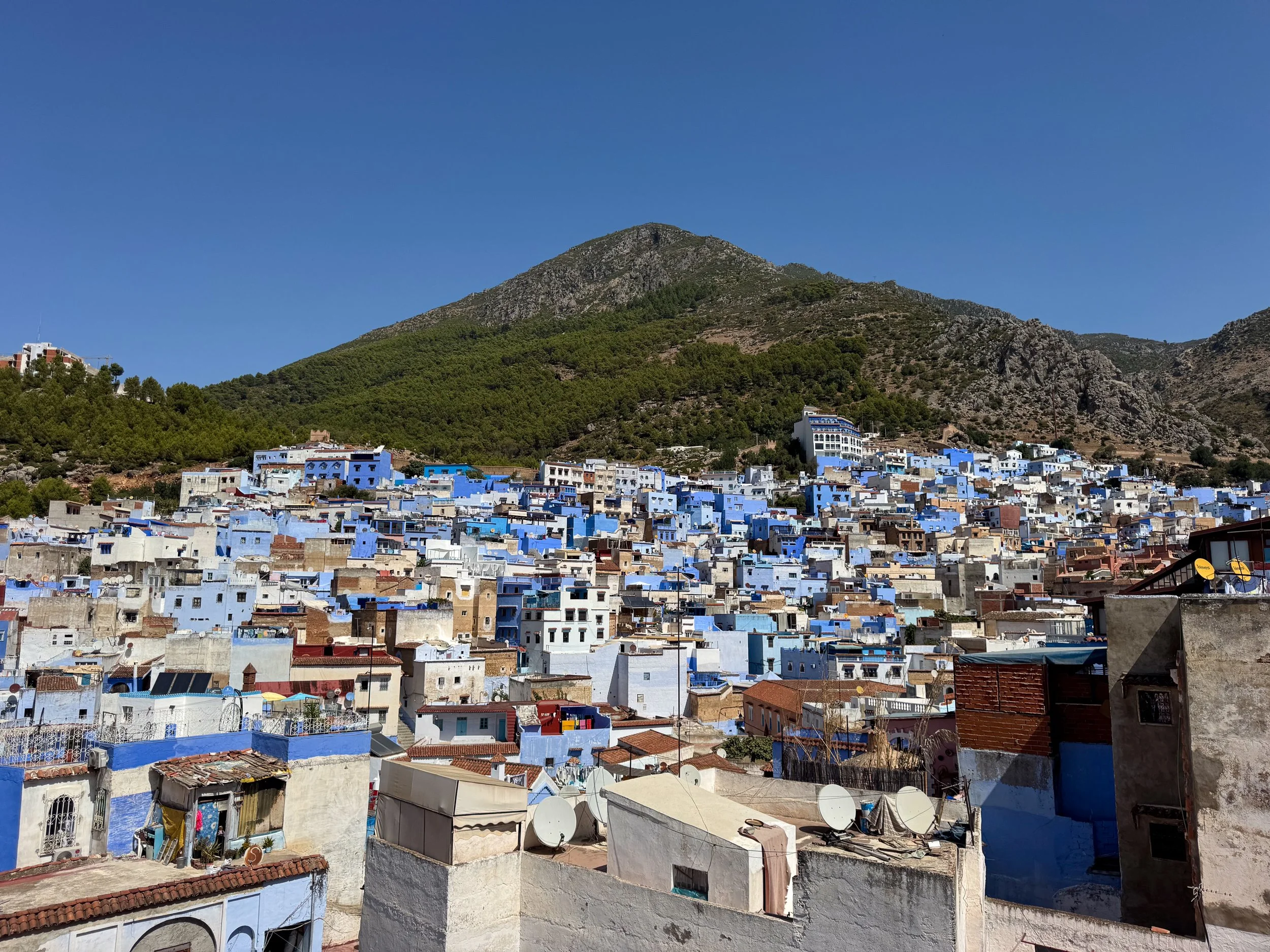
Chefchaouen, known as The Blue City, is famed for its azure and sky blue painted medina. Historic mosques and a medieval kasbah tower above Moorish plazas. Water flows from vividly tiled fountains. Moroccan artisans display handmade crafts along narrow streets. Vendors sell fresh fruit juices to thirsty customers. Stray cats and kittens roam everywhere. Trails lead up rugged hillsides with panoramic views.
The Historic Medina
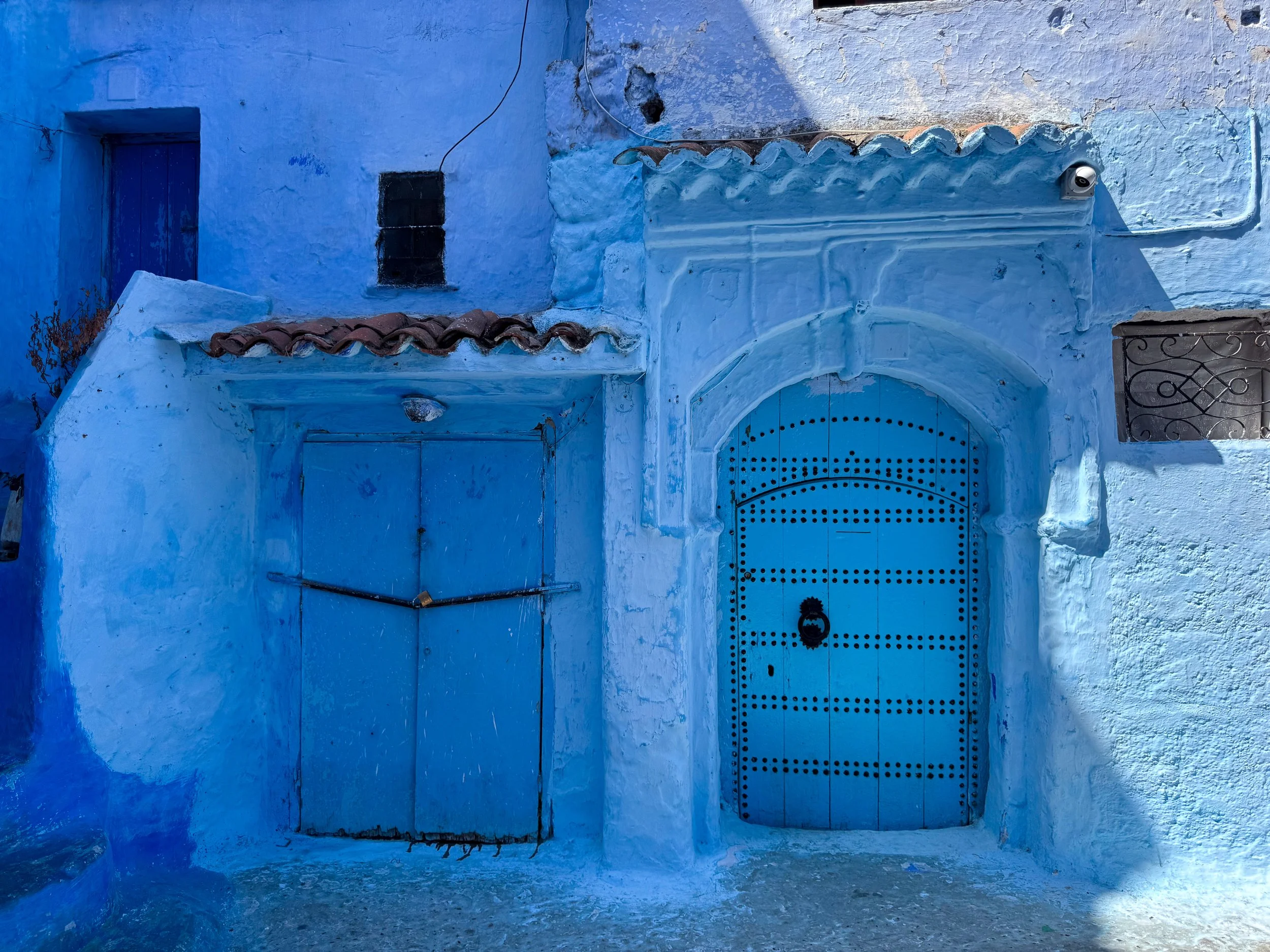
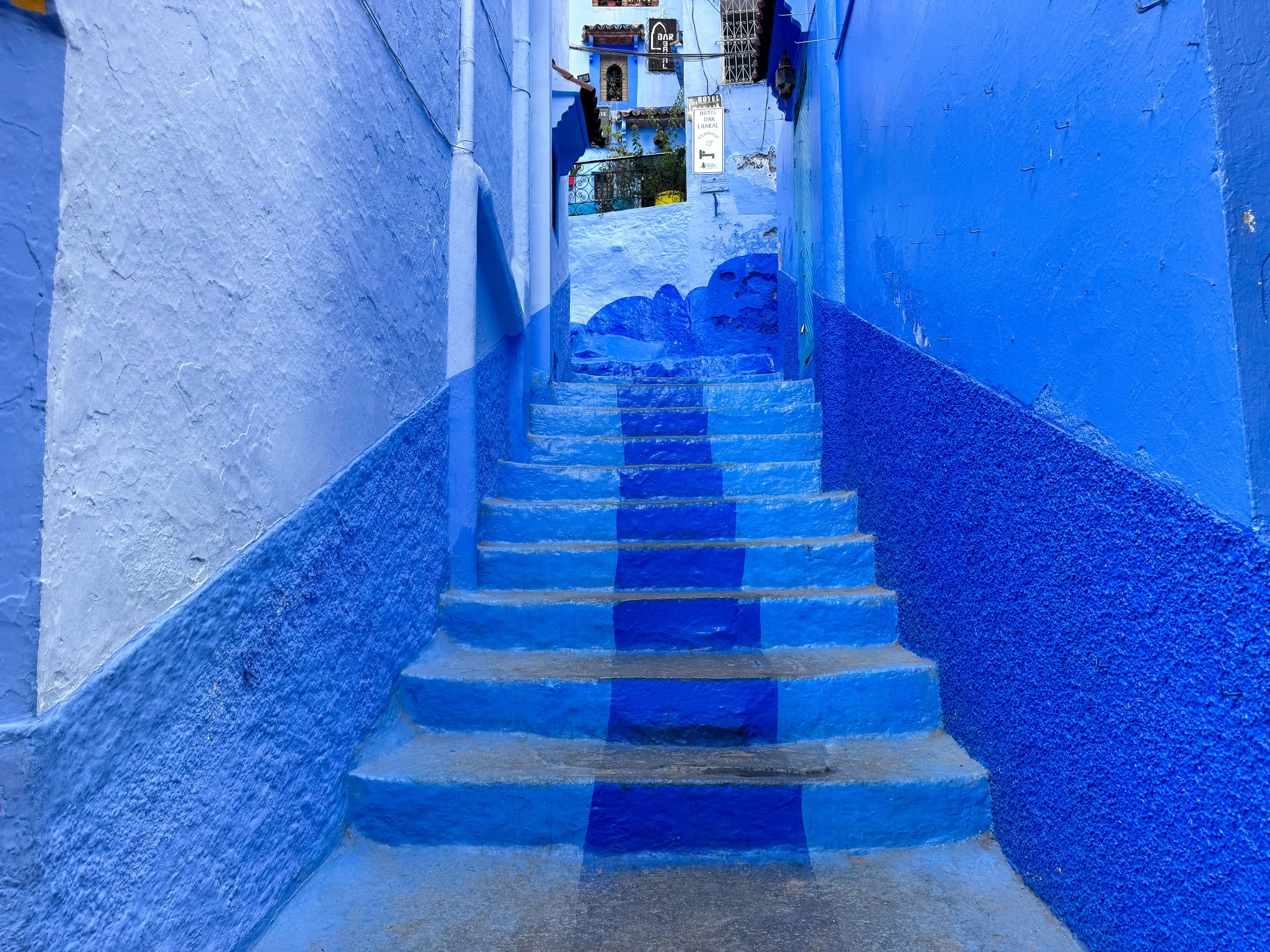
Chefchaouen’s historic medina is the oldest section of the city with the highest concentration of blue painted buildings. Its labyrinth of walkways passes beneath blue colored archways and canopies of leafy grape vines. Cobblestone alleys meander past quiet residences and through lively souks. Picturesque staircases dead end at cobalt hued doors. The medina is truly a photographer’s dream.
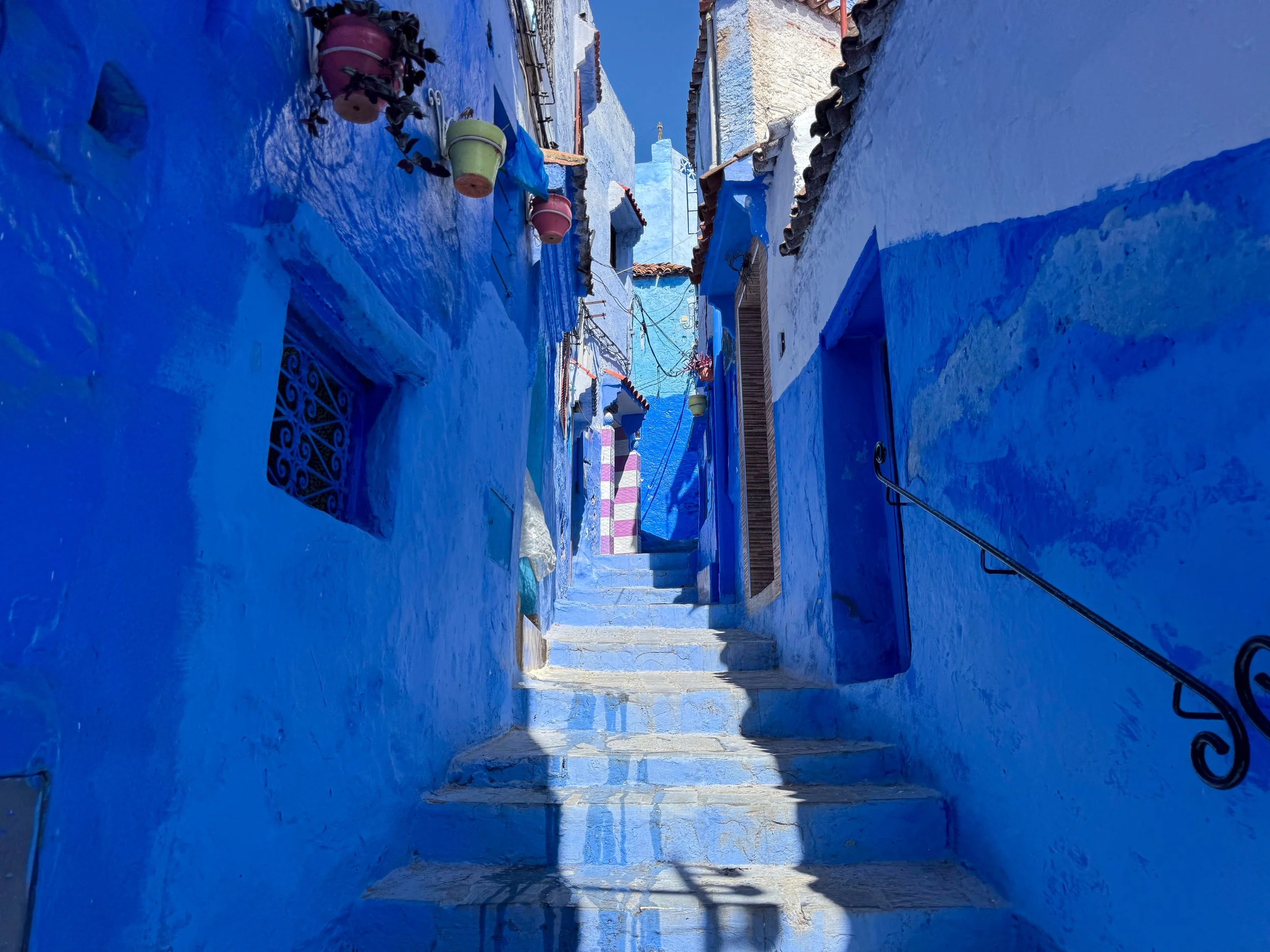
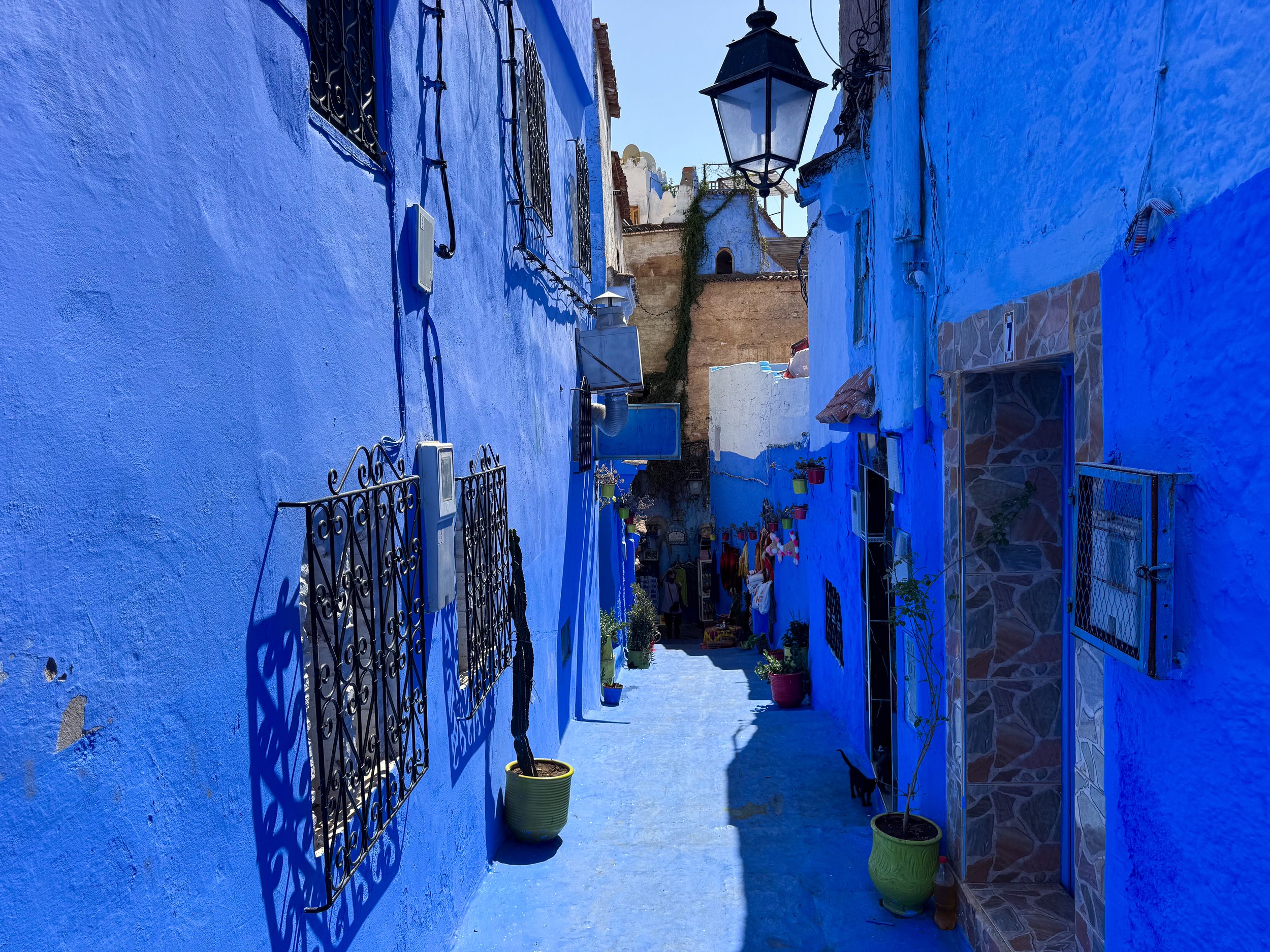
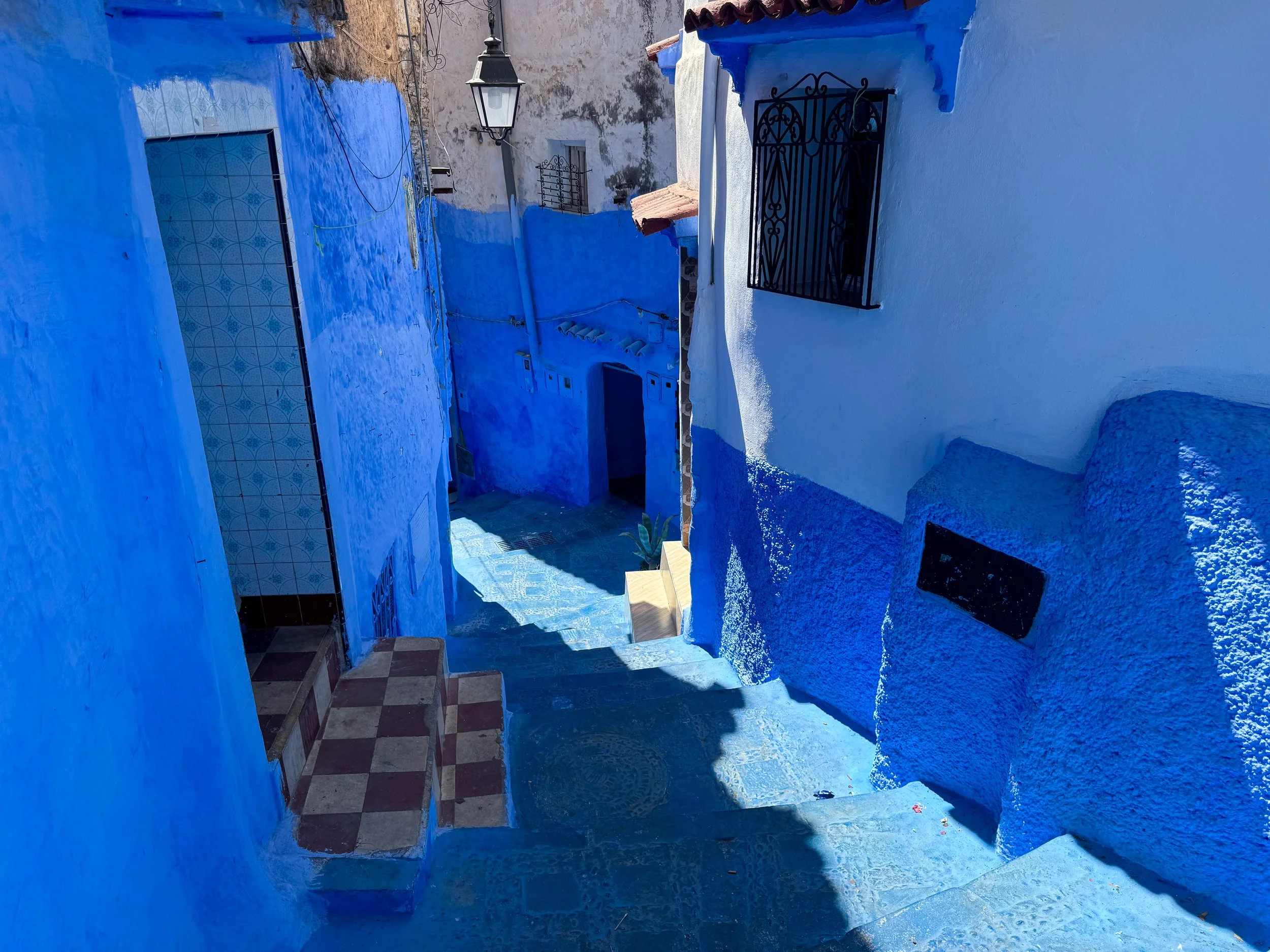
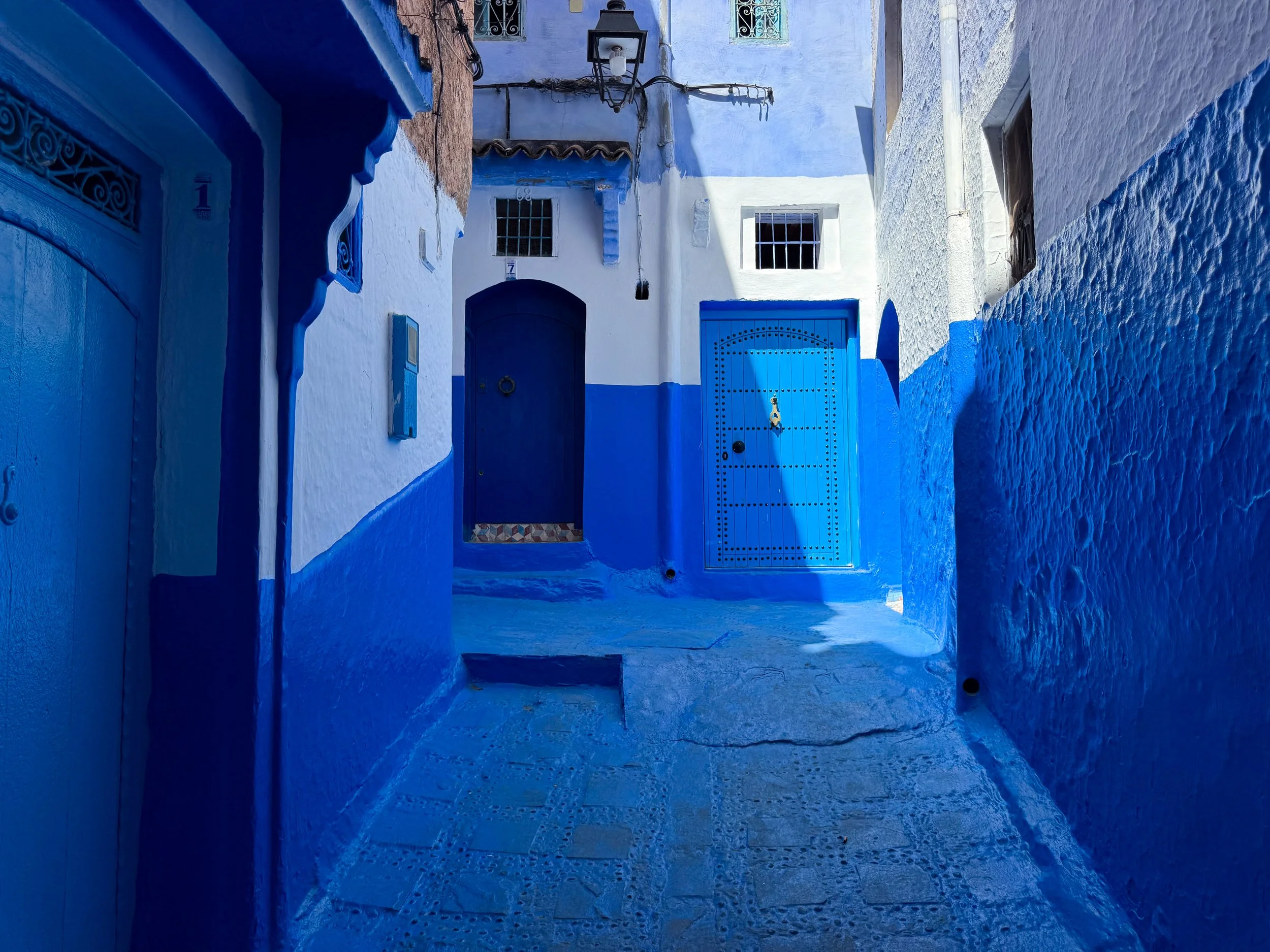
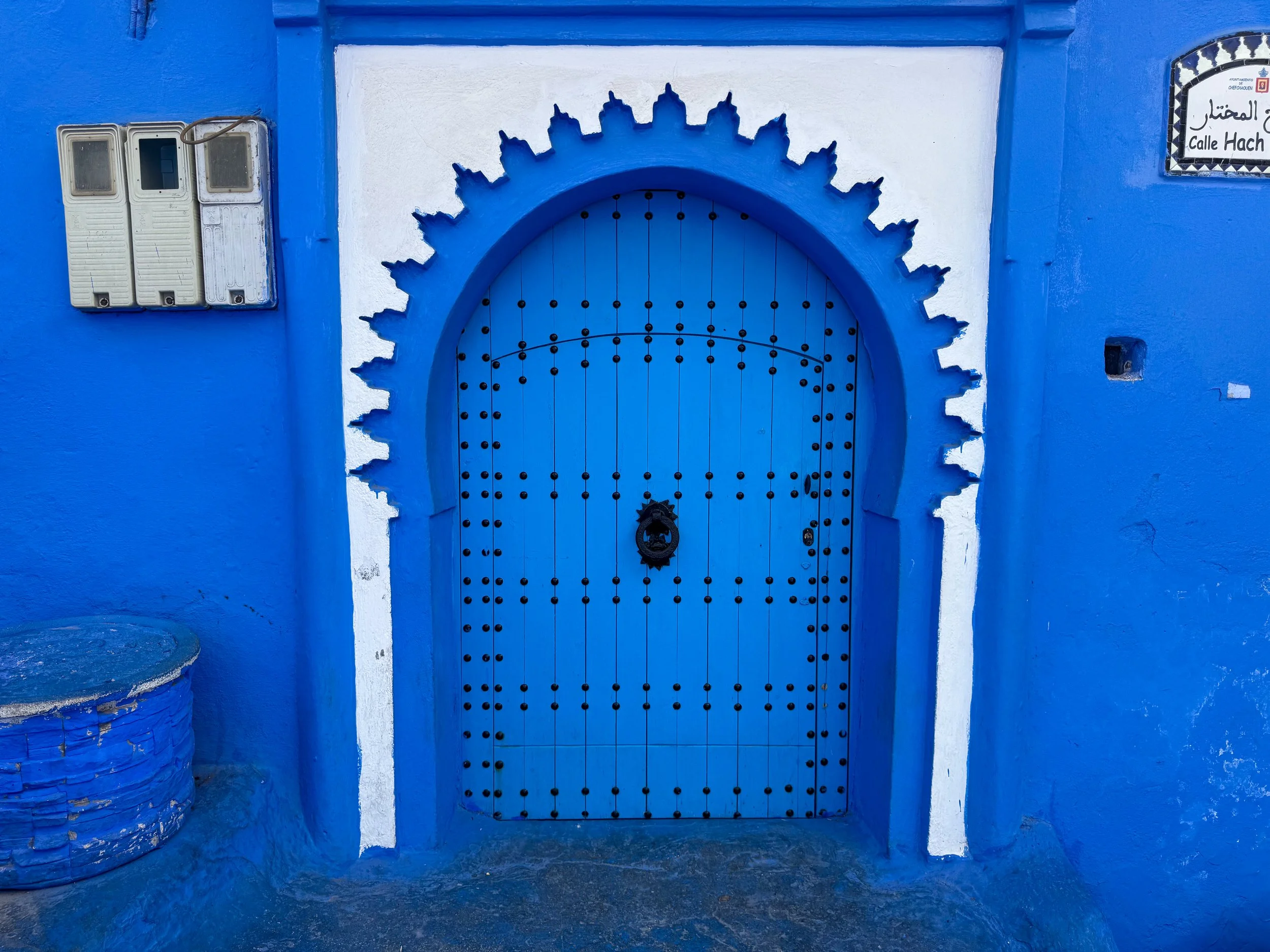
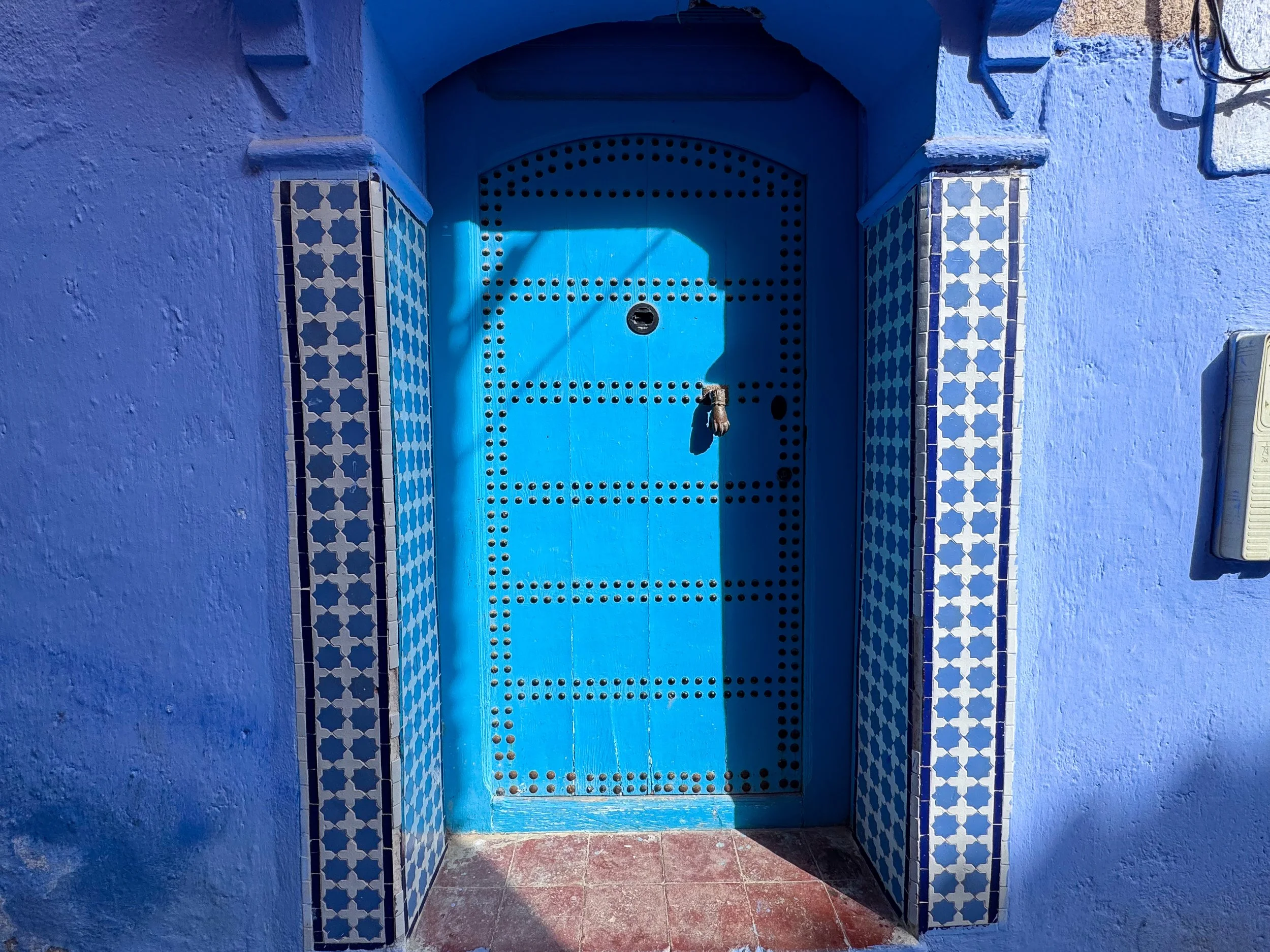
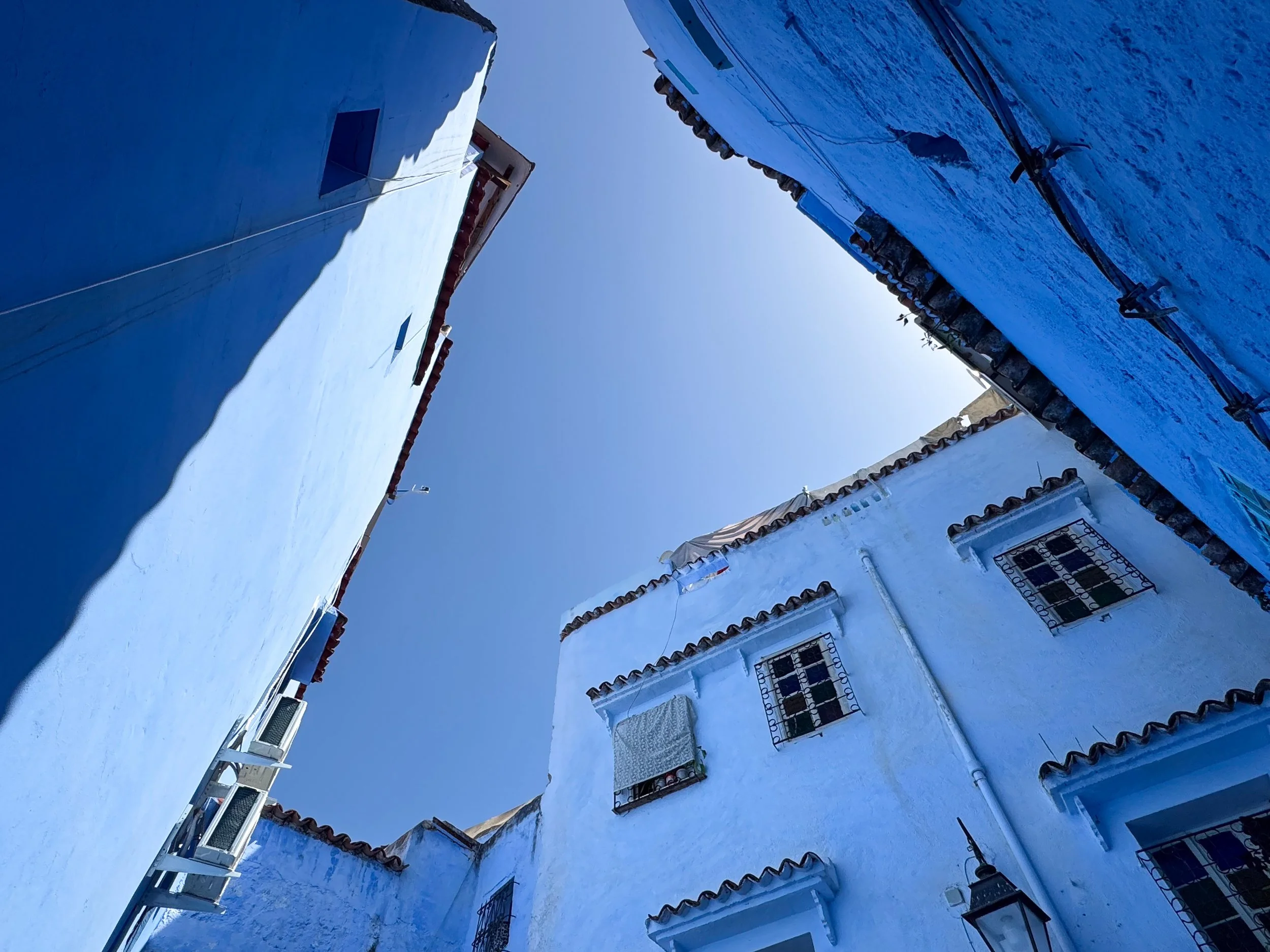
Callejon El Asri. One of the most vibrantly blue colored streets in the medina. Picturesque staircases and narrow alleyways branch off on both sides as it meanders through the town.
Rue Ibn Asskar. A blue street weaving through the center of the medina along a series of staircases, arched walkways, decorated staircases, tiled fountains and artisan vendors.
Rue Imman Chadili. A souk street with blue painted walls covered in colorful decor, baskets, clothes, ceramics and woven goods.
See the Sights
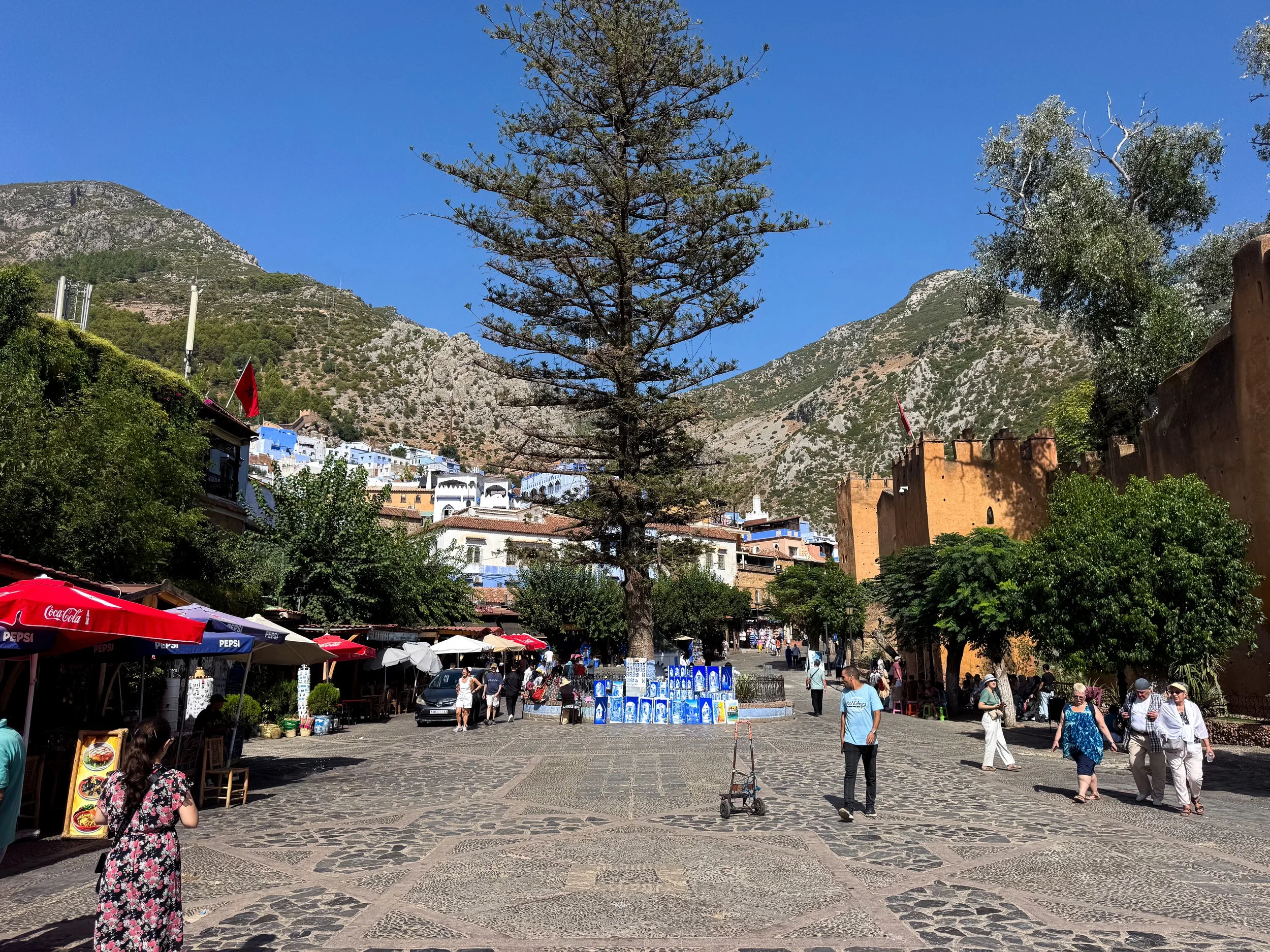
Plaza Uta el Hamman. A cobblestone plaza lies at the heart of the medina, framed by tree covered buildings and historic landmarks. Serving as the main hub for sightseeing, dining, and shopping, it features a Moorish fountain at its center, with the Grand Mosque and the Kasbah flanking one side. Restaurants, cafes, and shops line its perimeter, while narrow streets and walkways branch out in all directions.
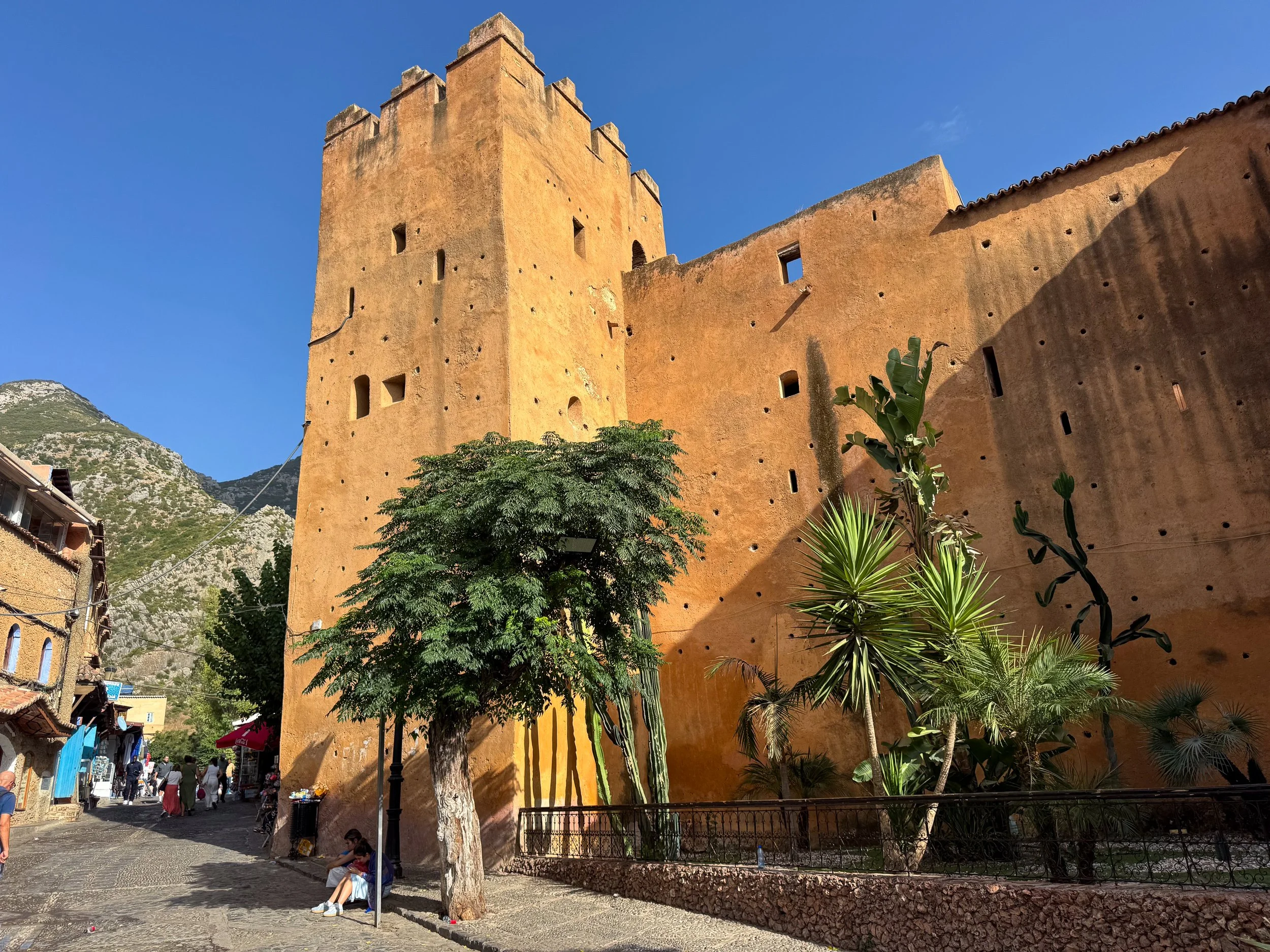
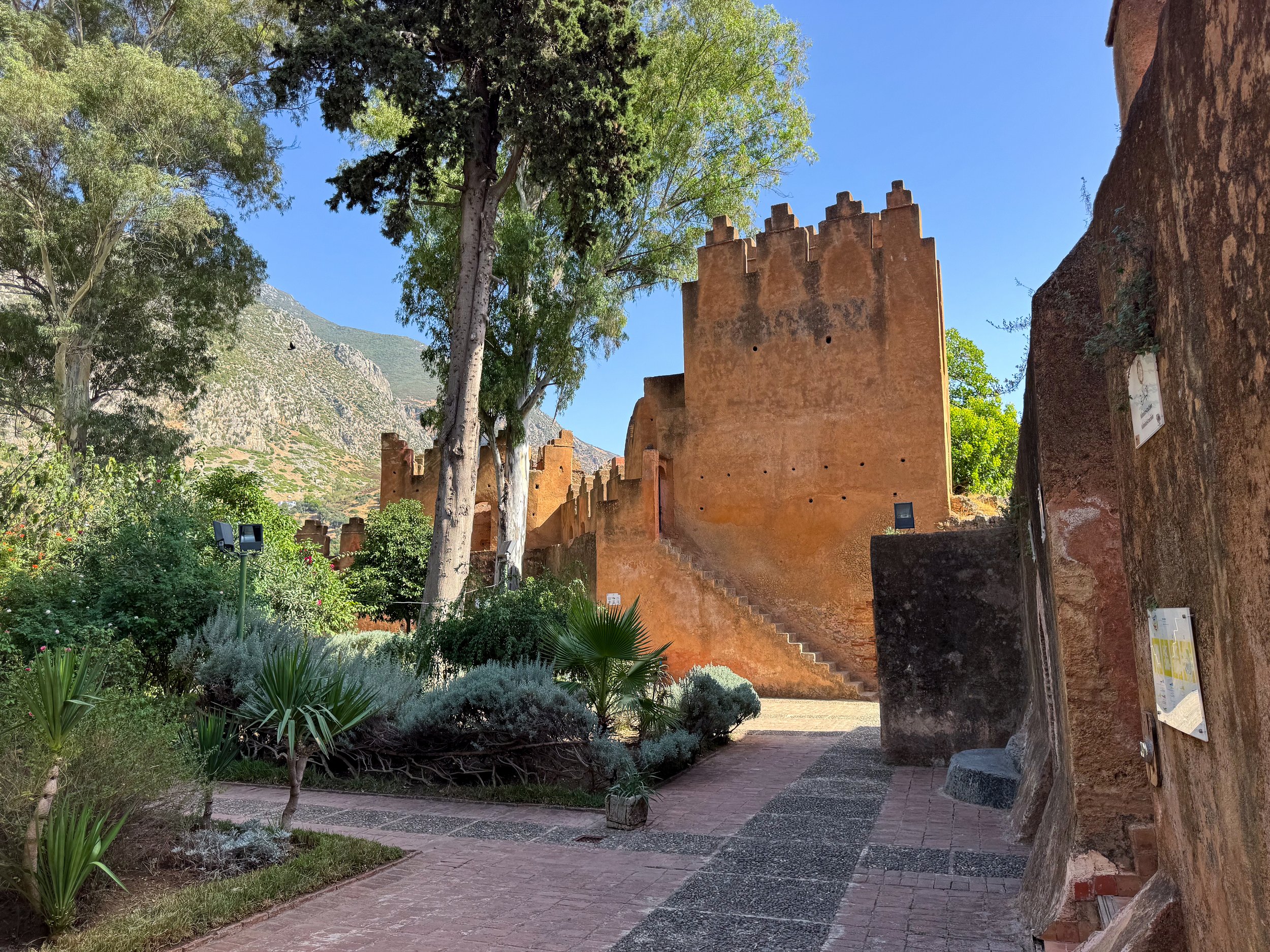
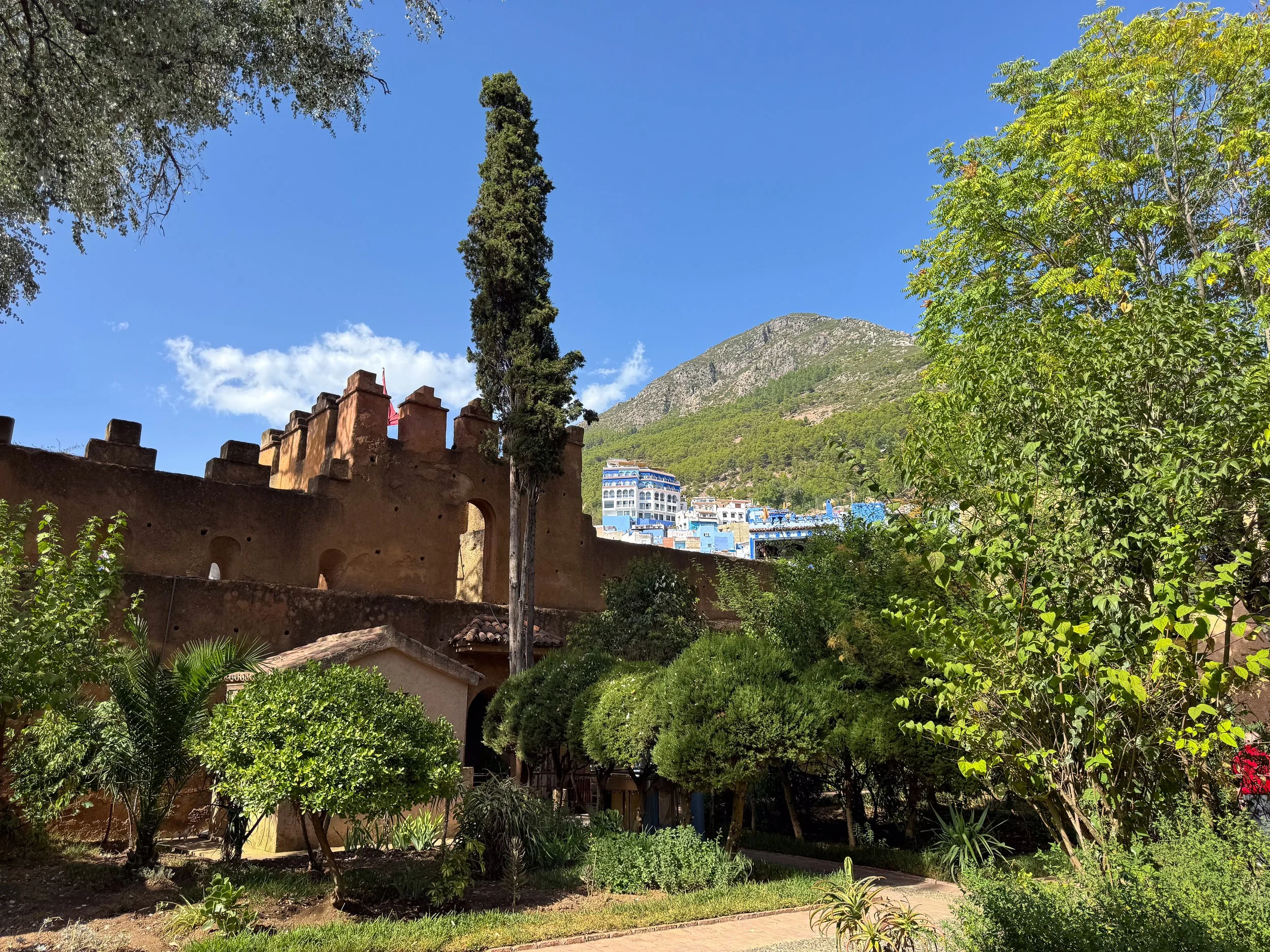
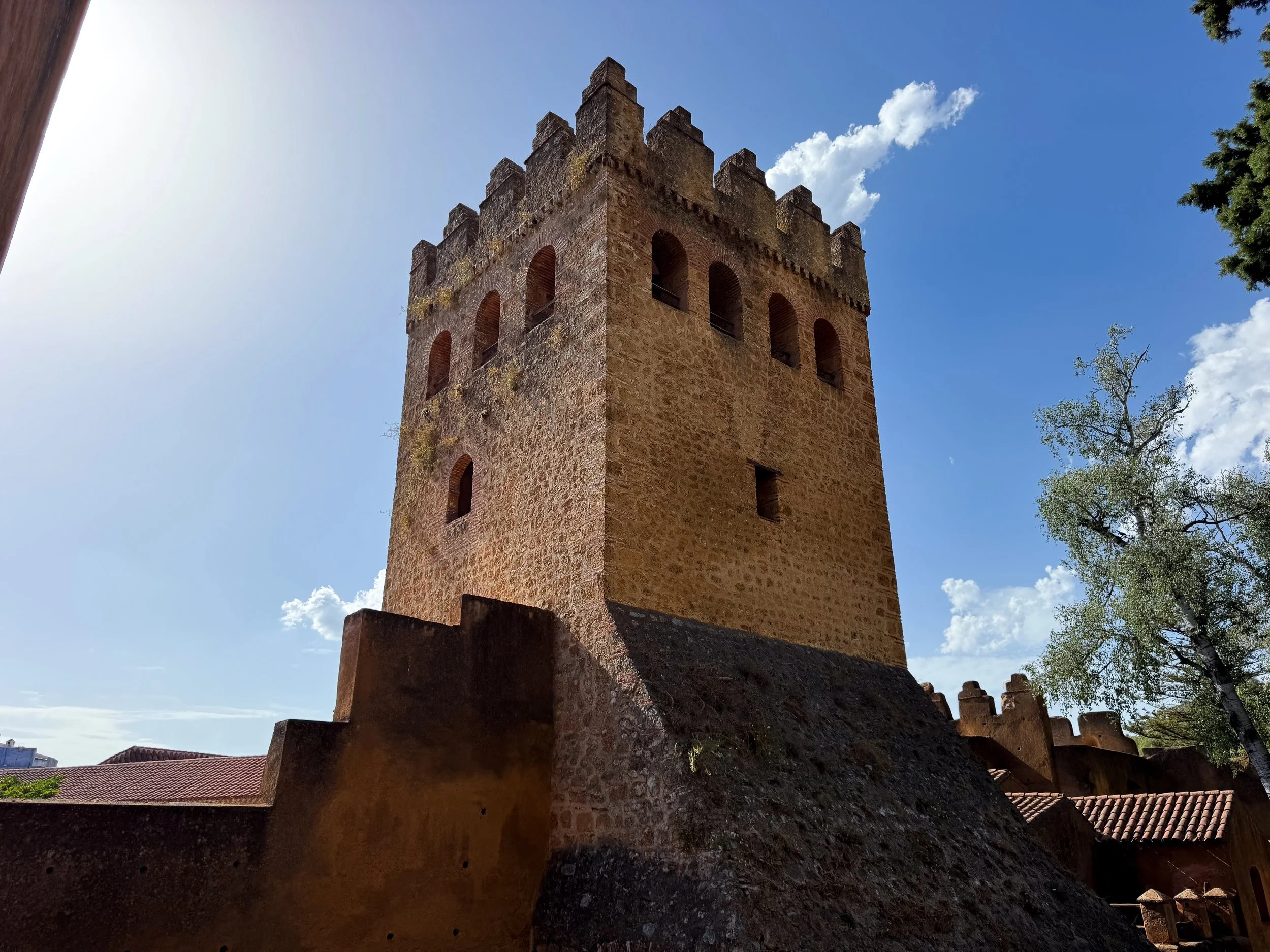
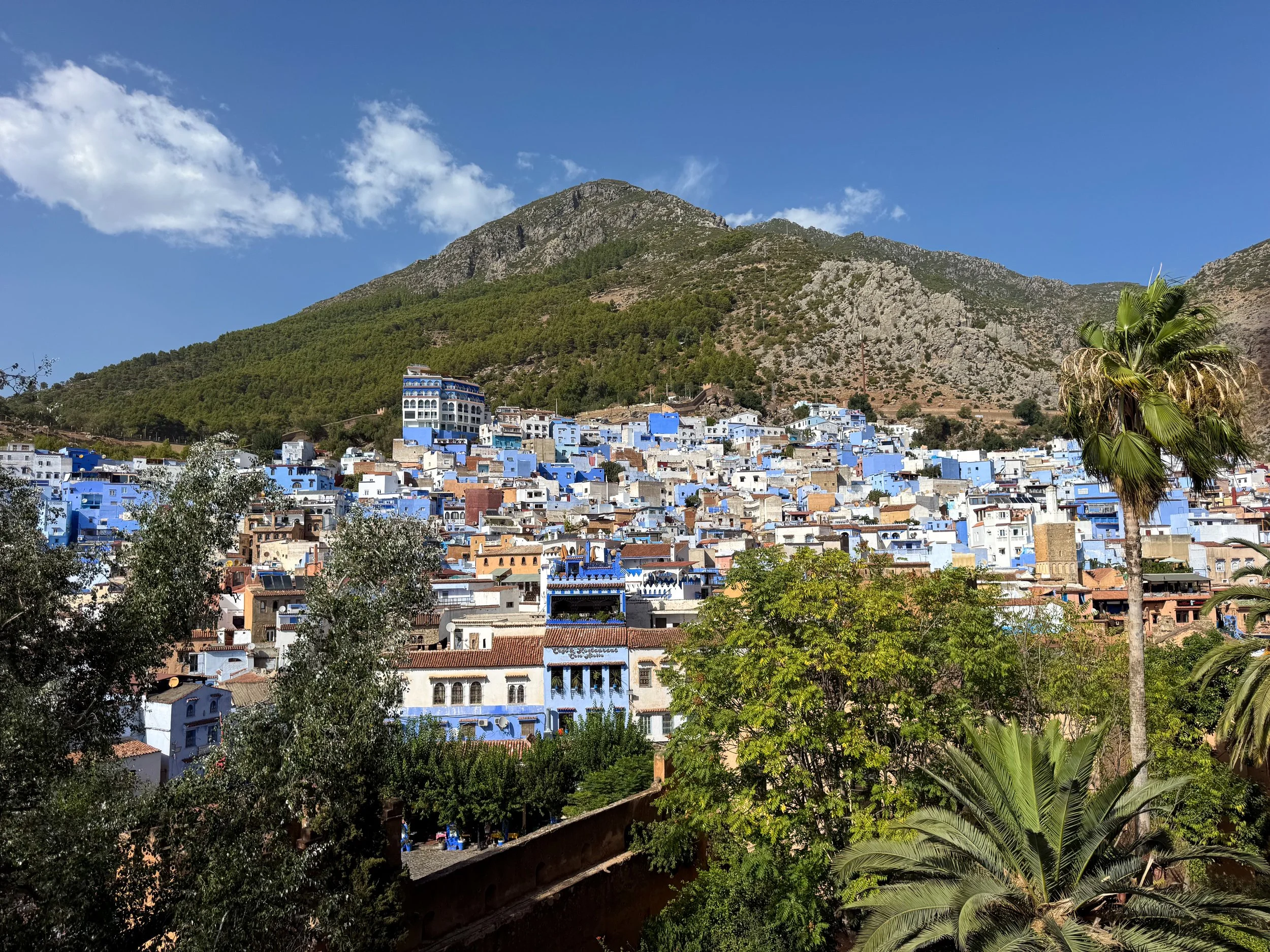
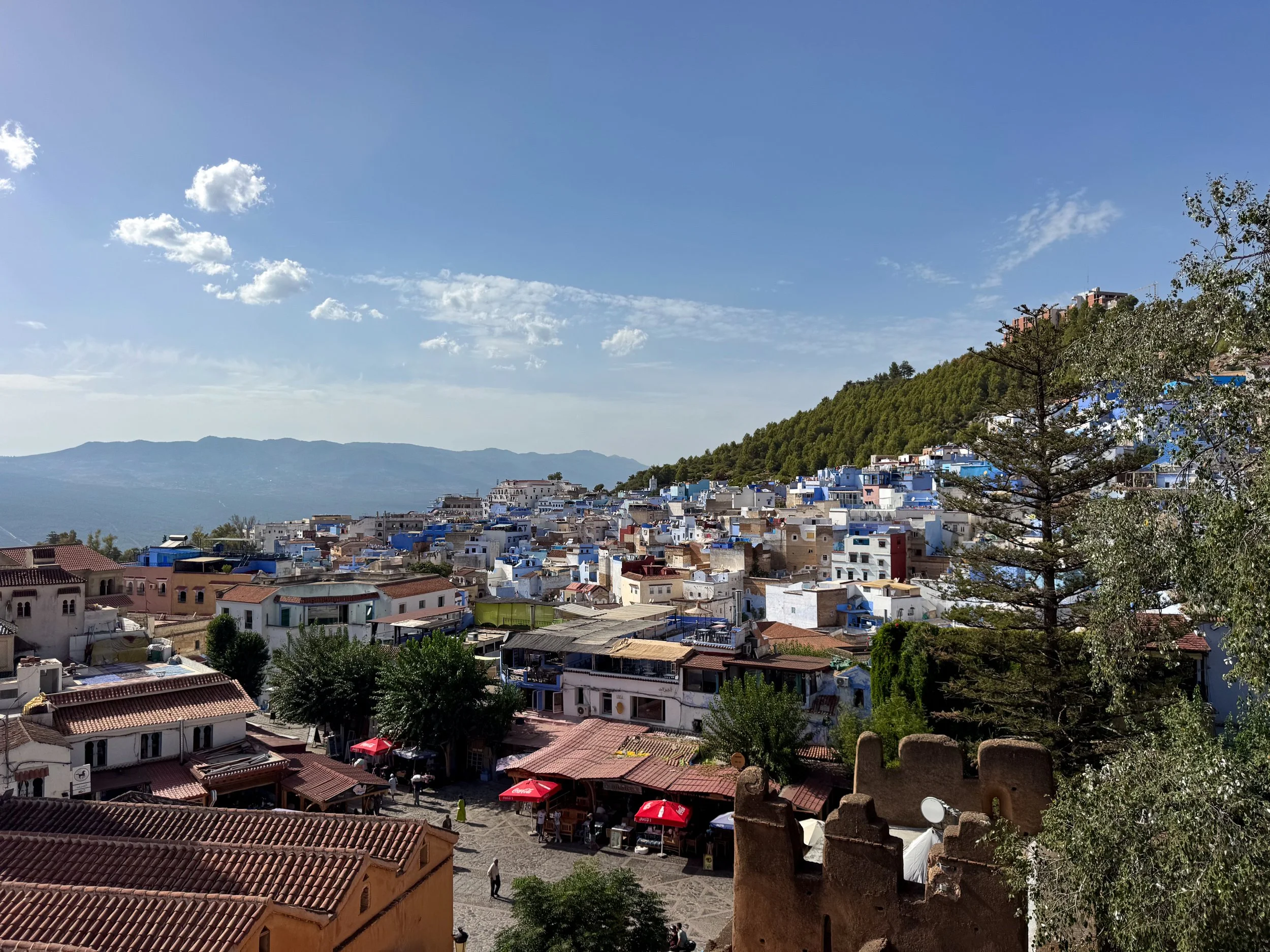
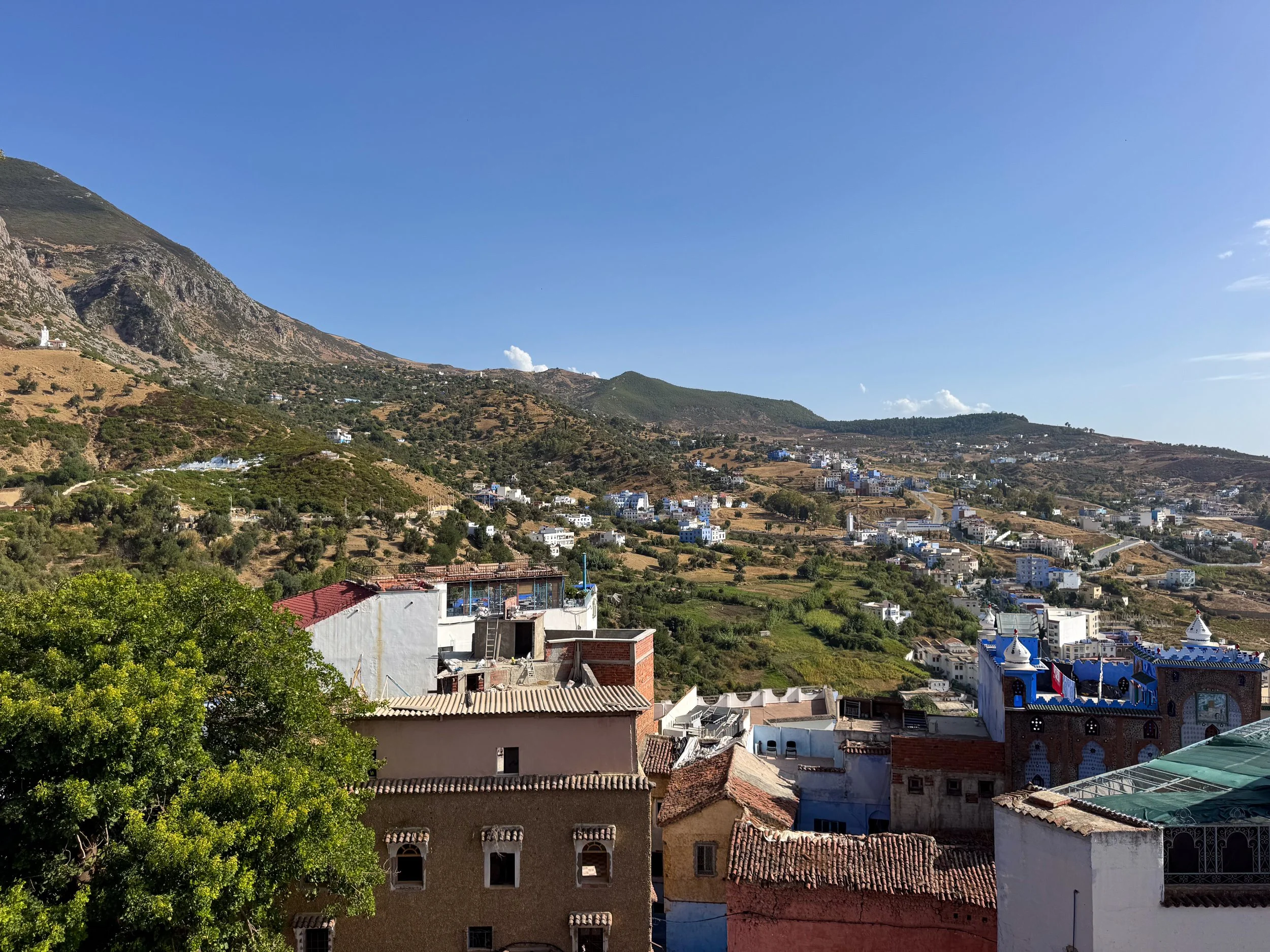
The Kasbah. A medieval fortress stands at the center of the medina. It’s defined by sand colored adobe walls, battlement towers, former prison and lush courtyard garden filled with palms, cacti, and diverse plant life. One of its towers houses a museum showcasing traditional Moroccan plaster, tile, and woodwork. The upper levels of another provide sweeping views of the blue city and forested hillside.
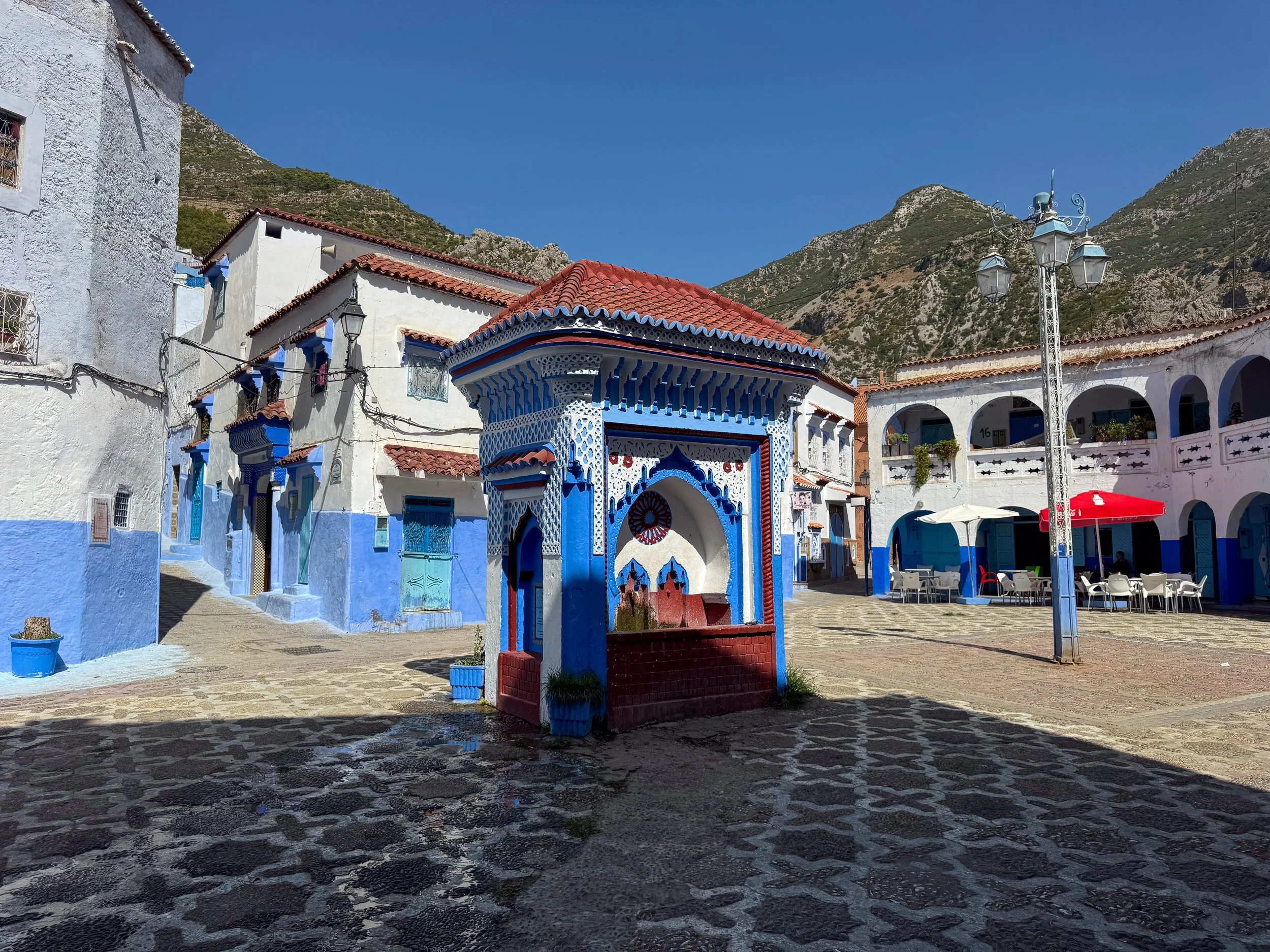
Place El Haouta. A stone paved plaza in the medina centered on a small yet ornate Moorish style fountain. It’s surrounded by blue and white painted buildings topped with terracotta roofs. Intimate cafés and shops line its perimeter offering scenic views of the rugged mountainside.
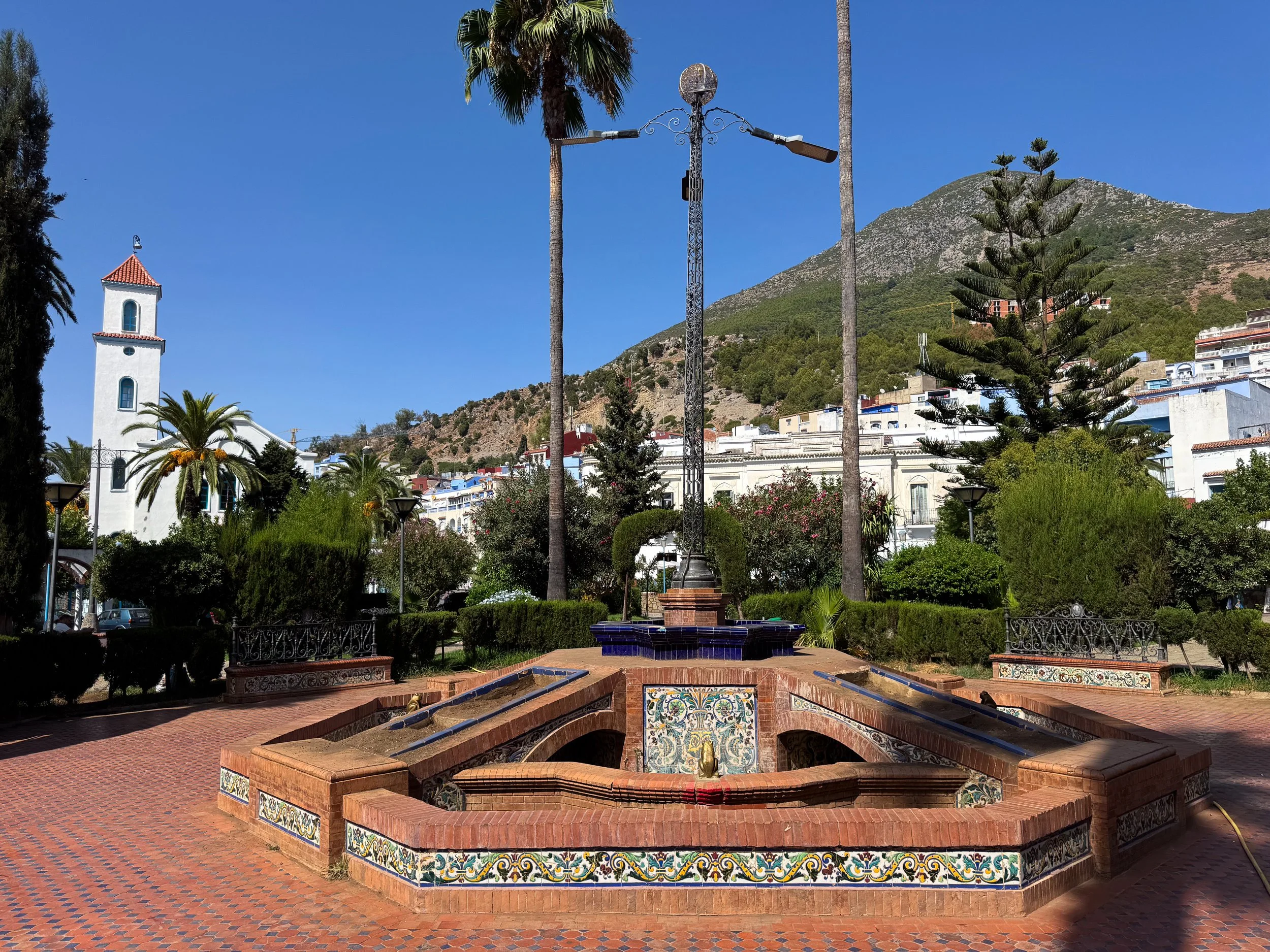
Plaza Mohammed V. Just outside the medina, a circular plaza provides a tranquil place to rest and views of historic buildings. It features brick and Spanish-tiled fountains and benches. Lush flower beds and verdant trees grow amid grassy lawns. Visitors can walk beneath grapevine covered pergolas and sculpted bushes.
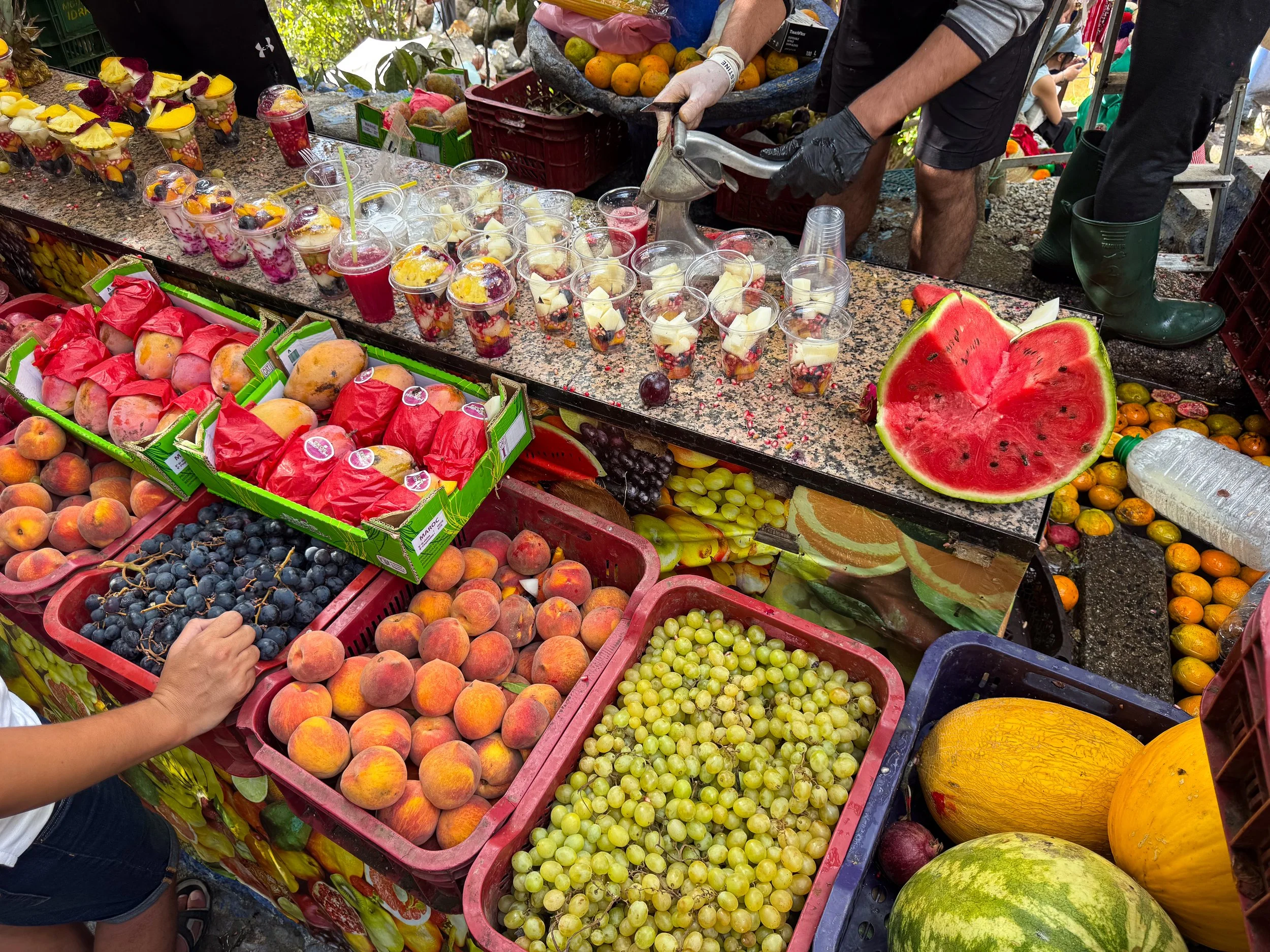
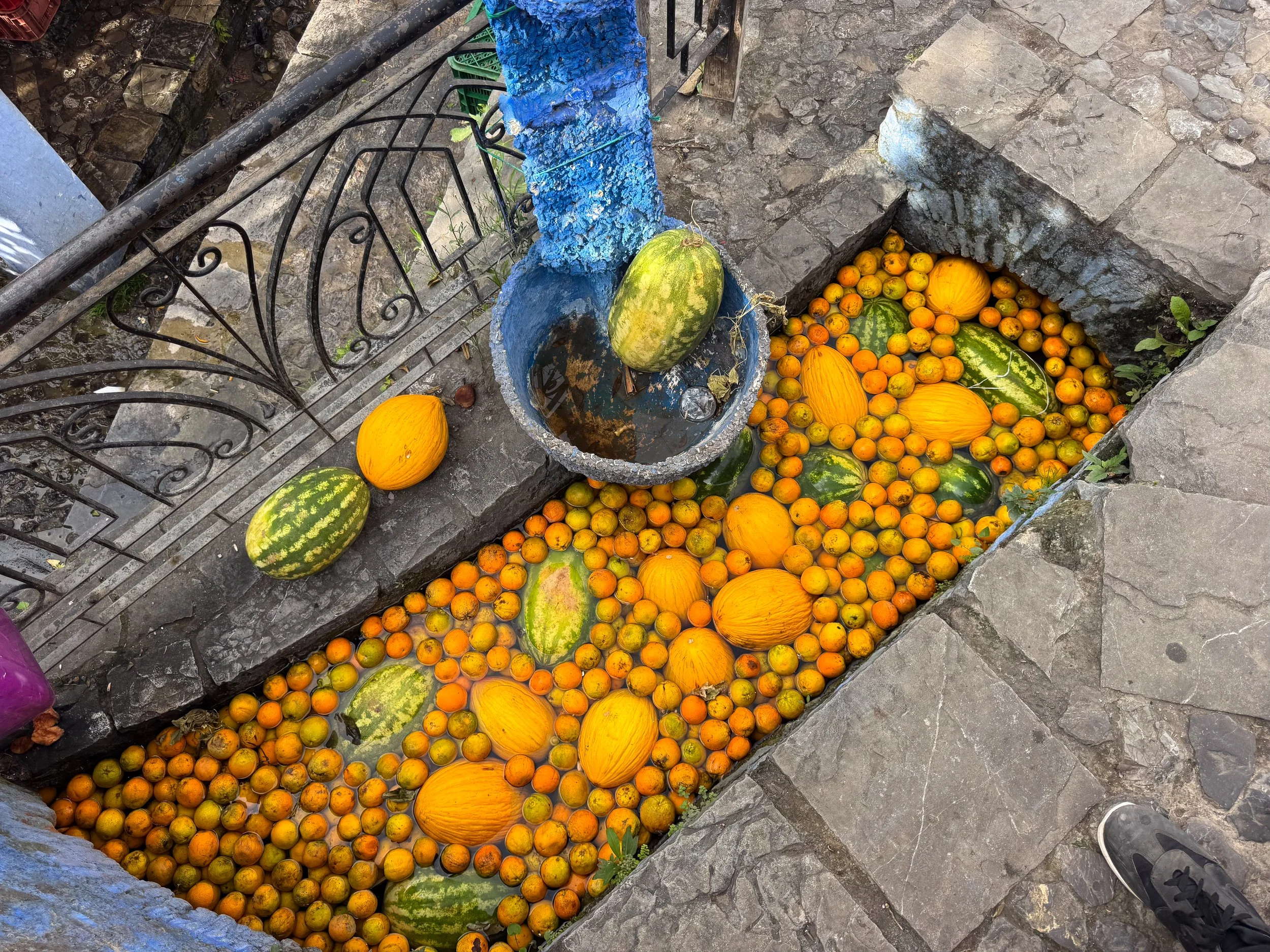
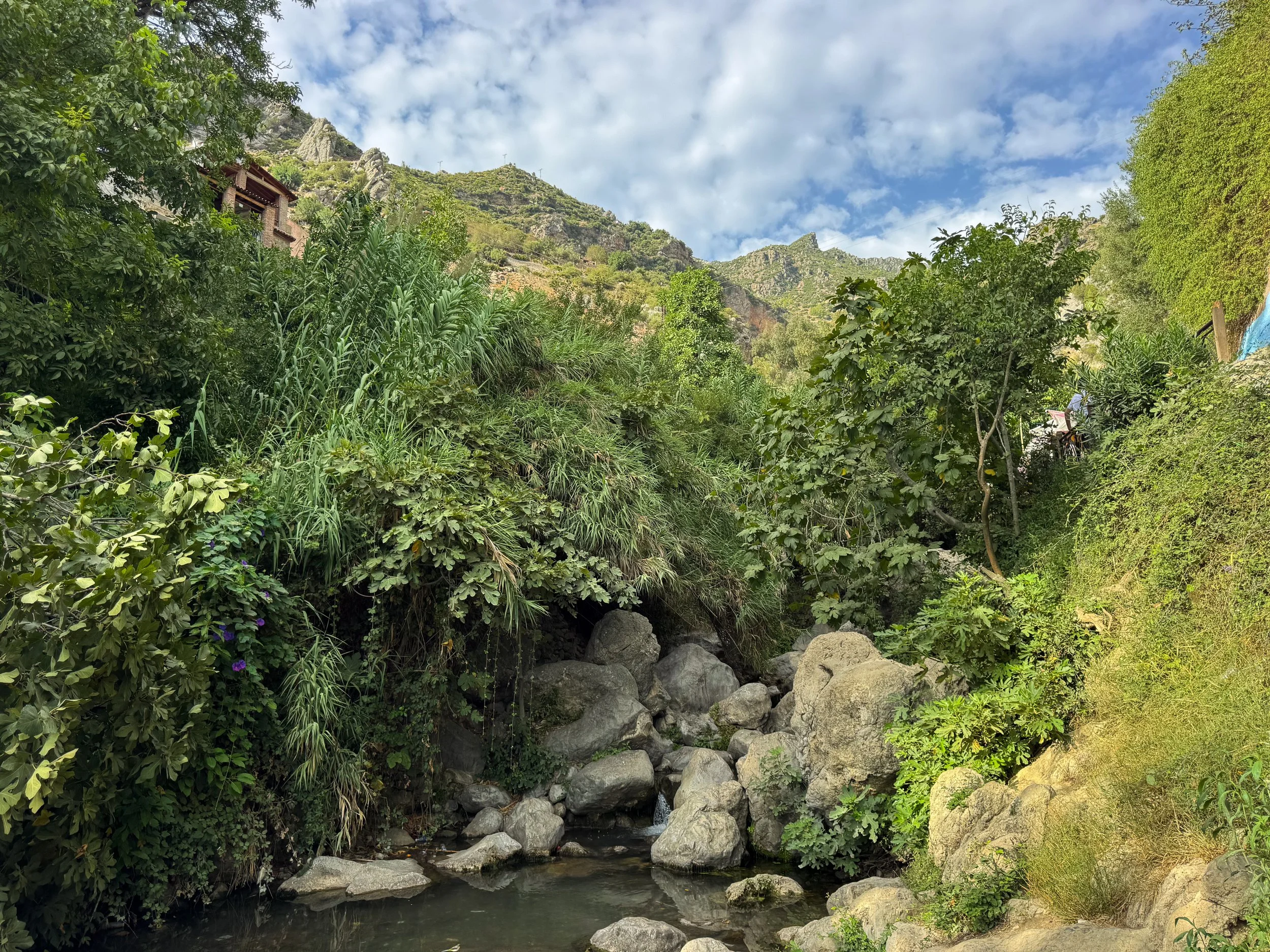
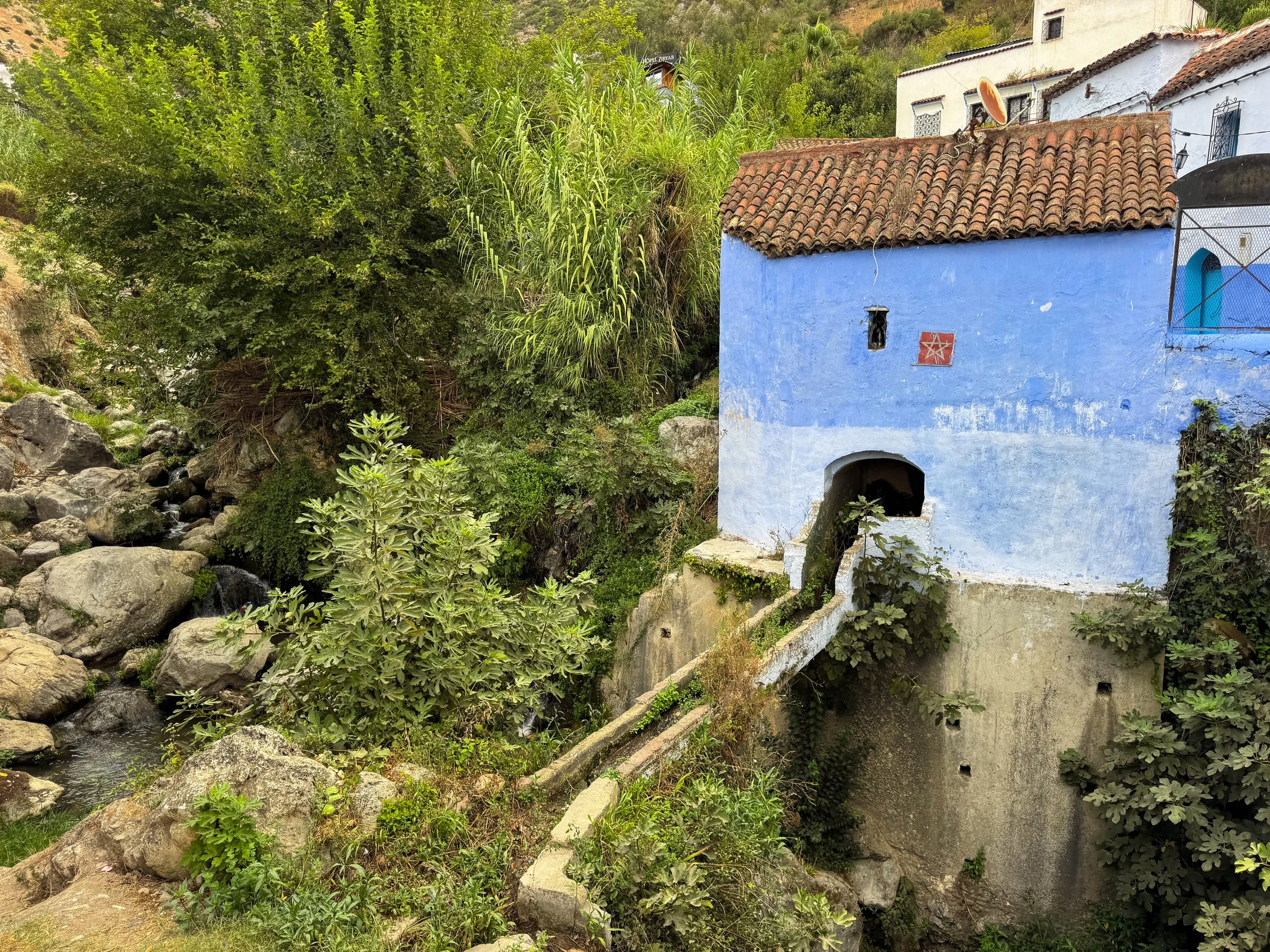
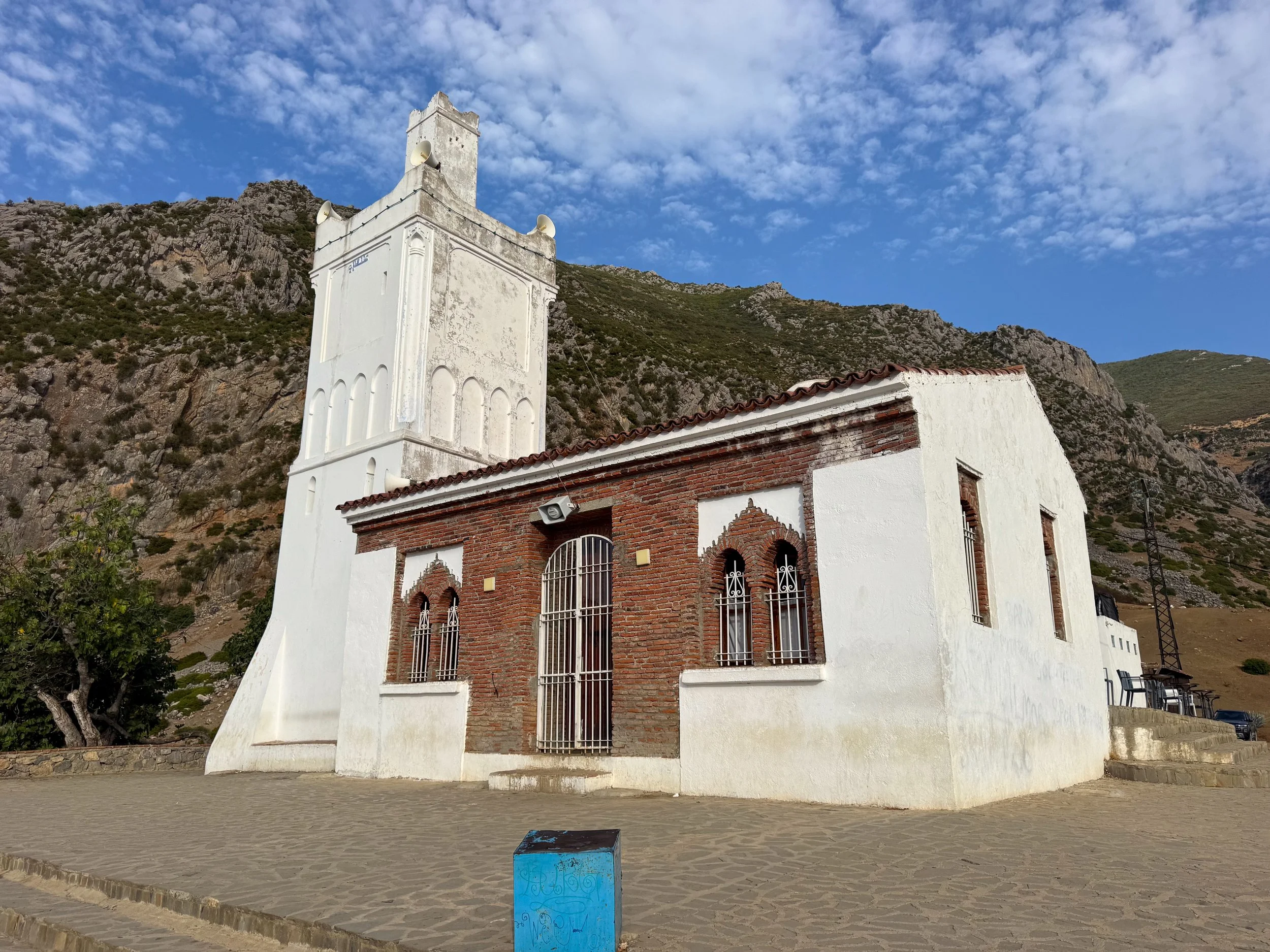
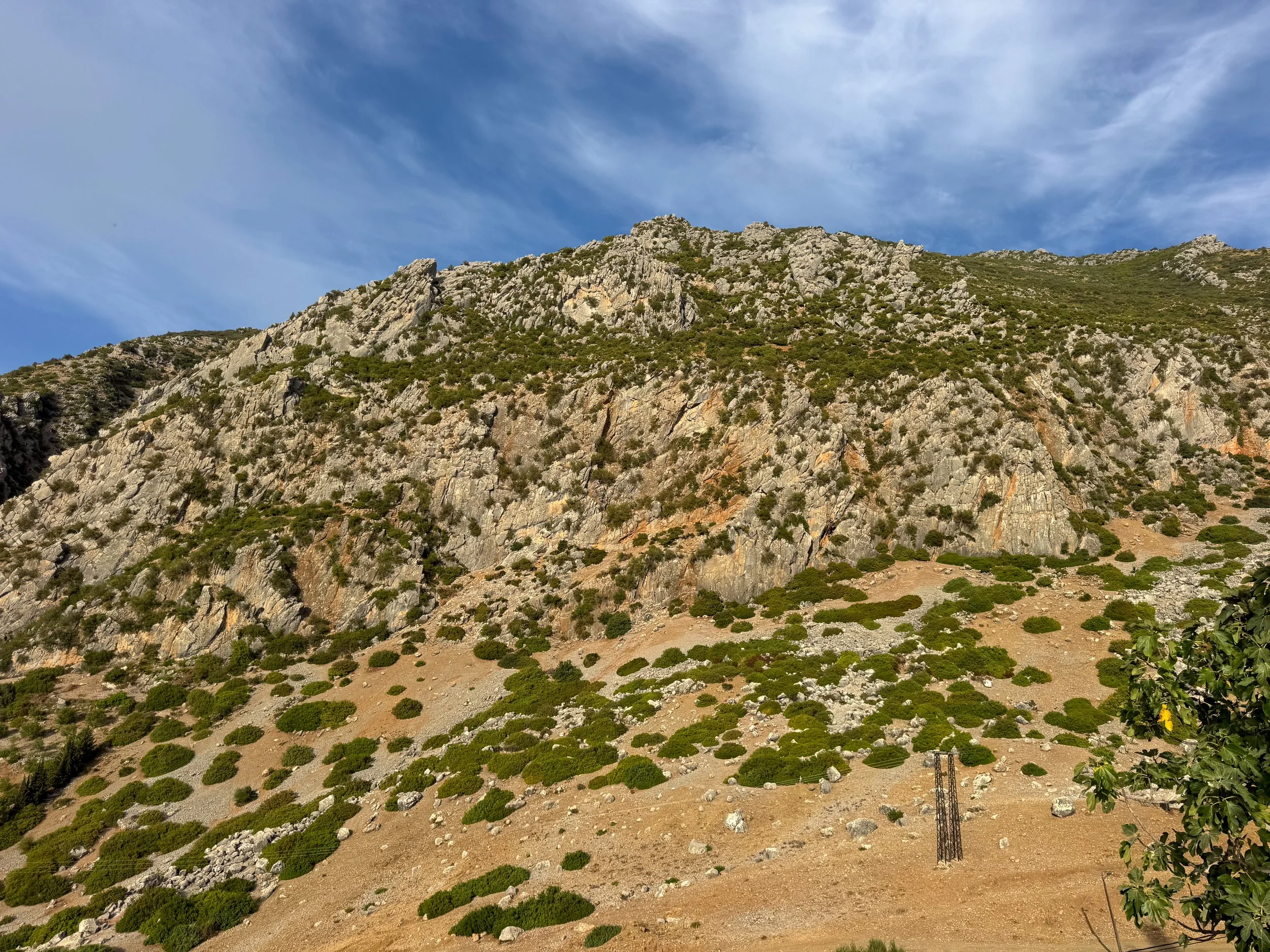
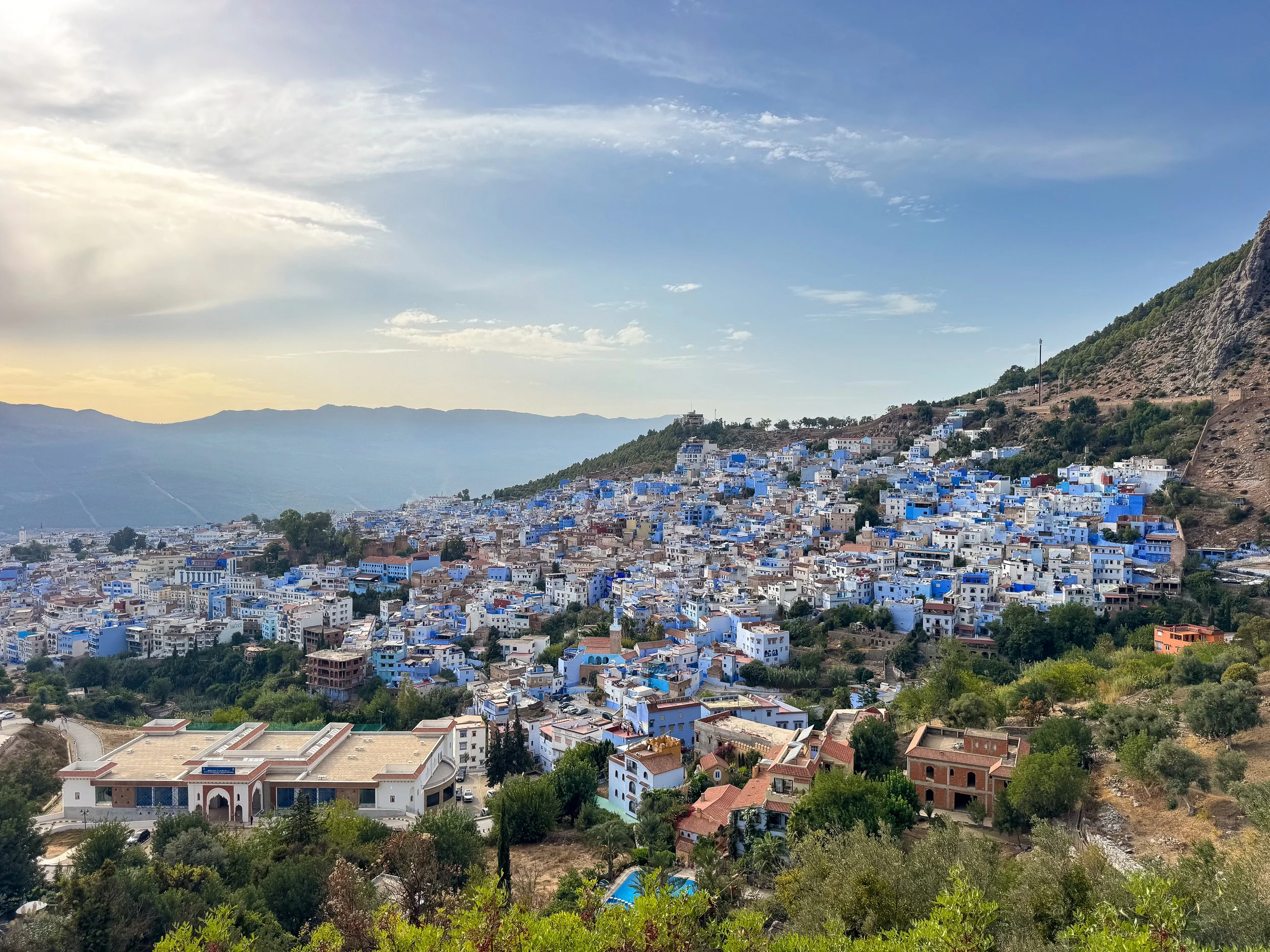
Lavadero de la Ciudad. A freshwater stream once used for washing laundry now serves as a lively gathering place lined with juice bars and cafés. Oranges, pomegranates and melons float in canals of cool water as vendors hand press fresh juices. Locals relax along the stream, enjoying refreshments before or after hiking to the Bouzafer Mosque. Juices typically cost 15–20 DH.
Bouzafer Mosque. A small hilltop mosque with panoramic views of the blue city, surrounding mountains and sunset. It’s a scenic 15 minute walk from the Lavadero de la Ciudad. Along the route, vendors often sell cookies to passersby.
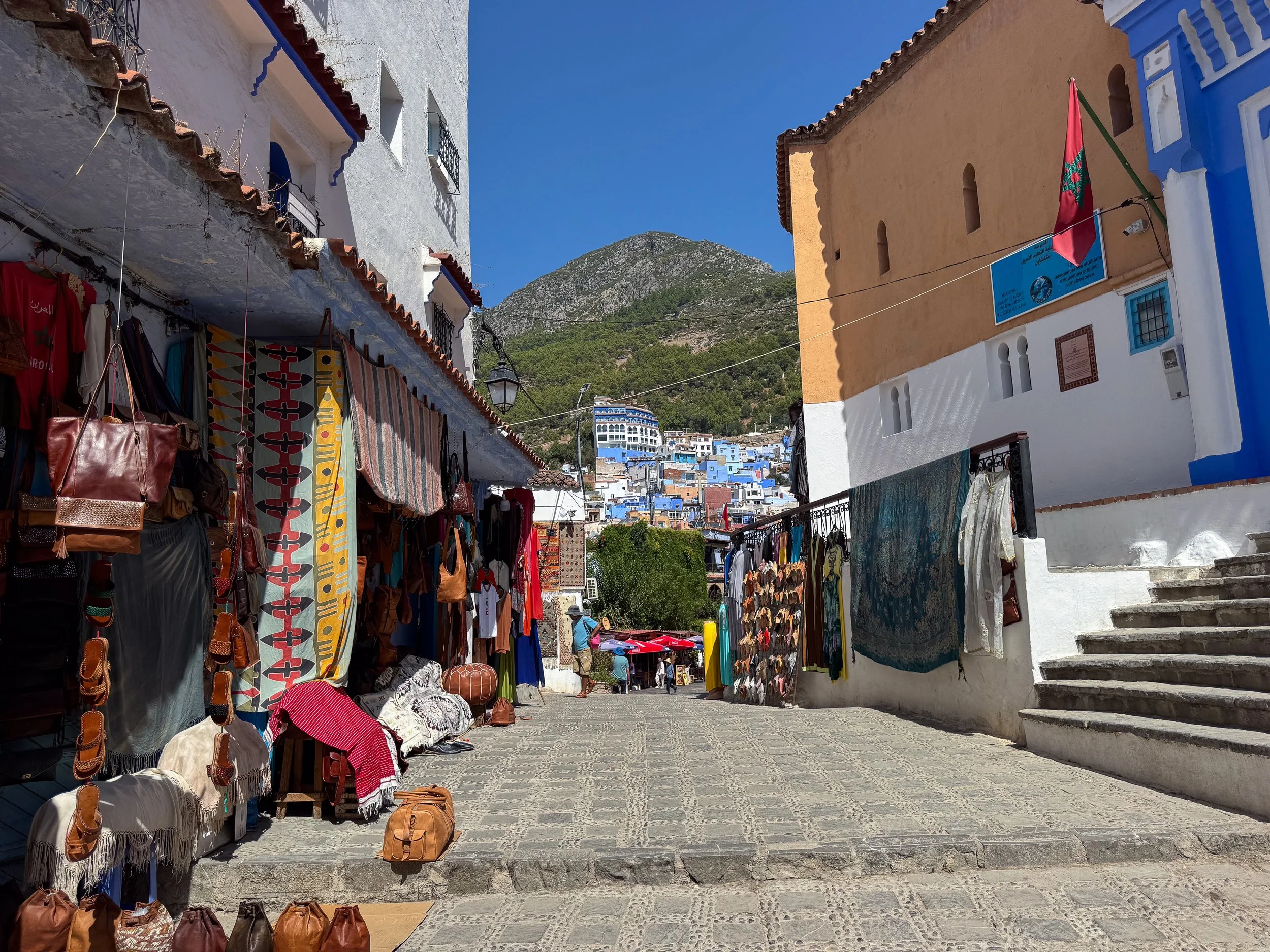
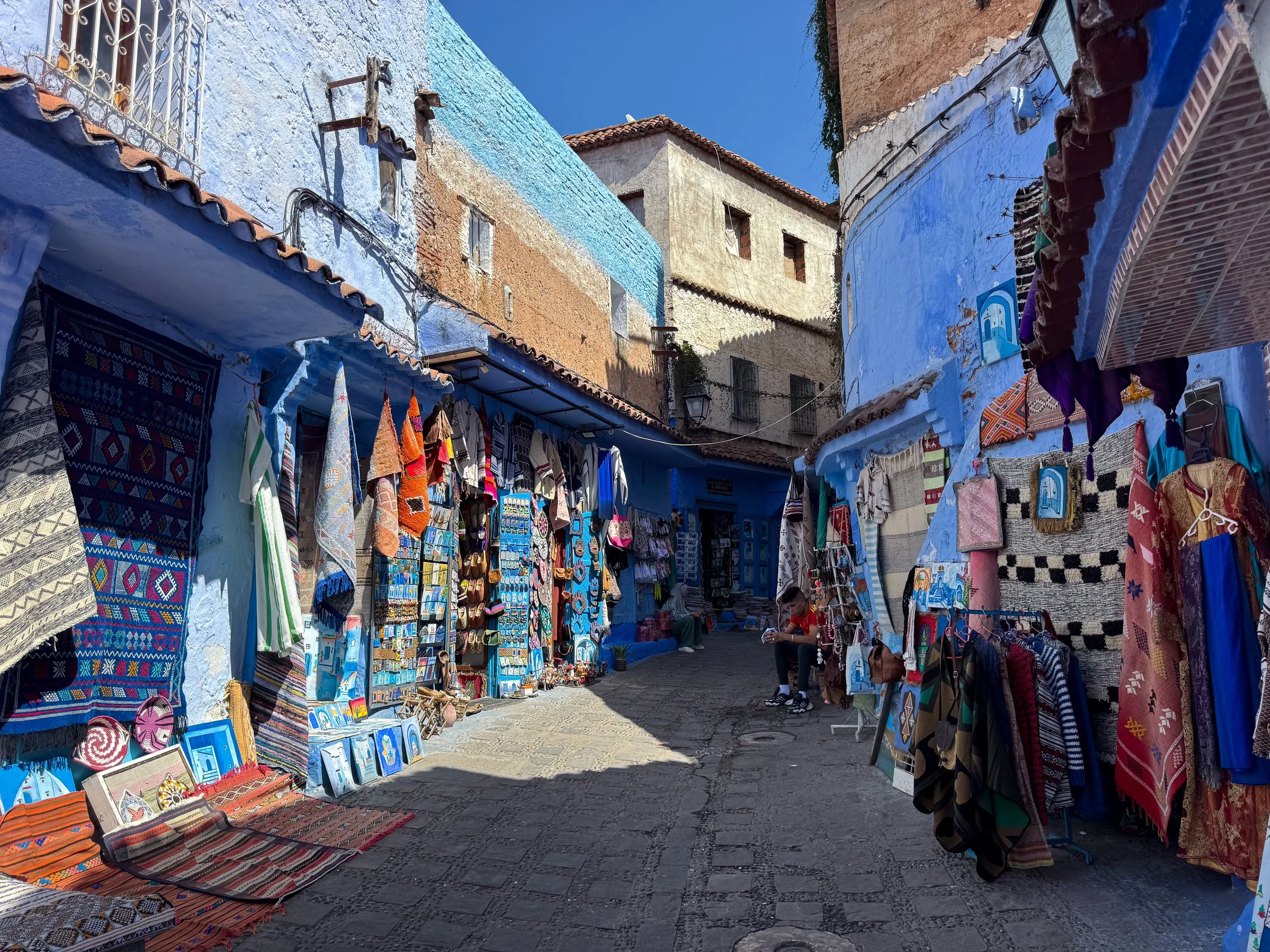
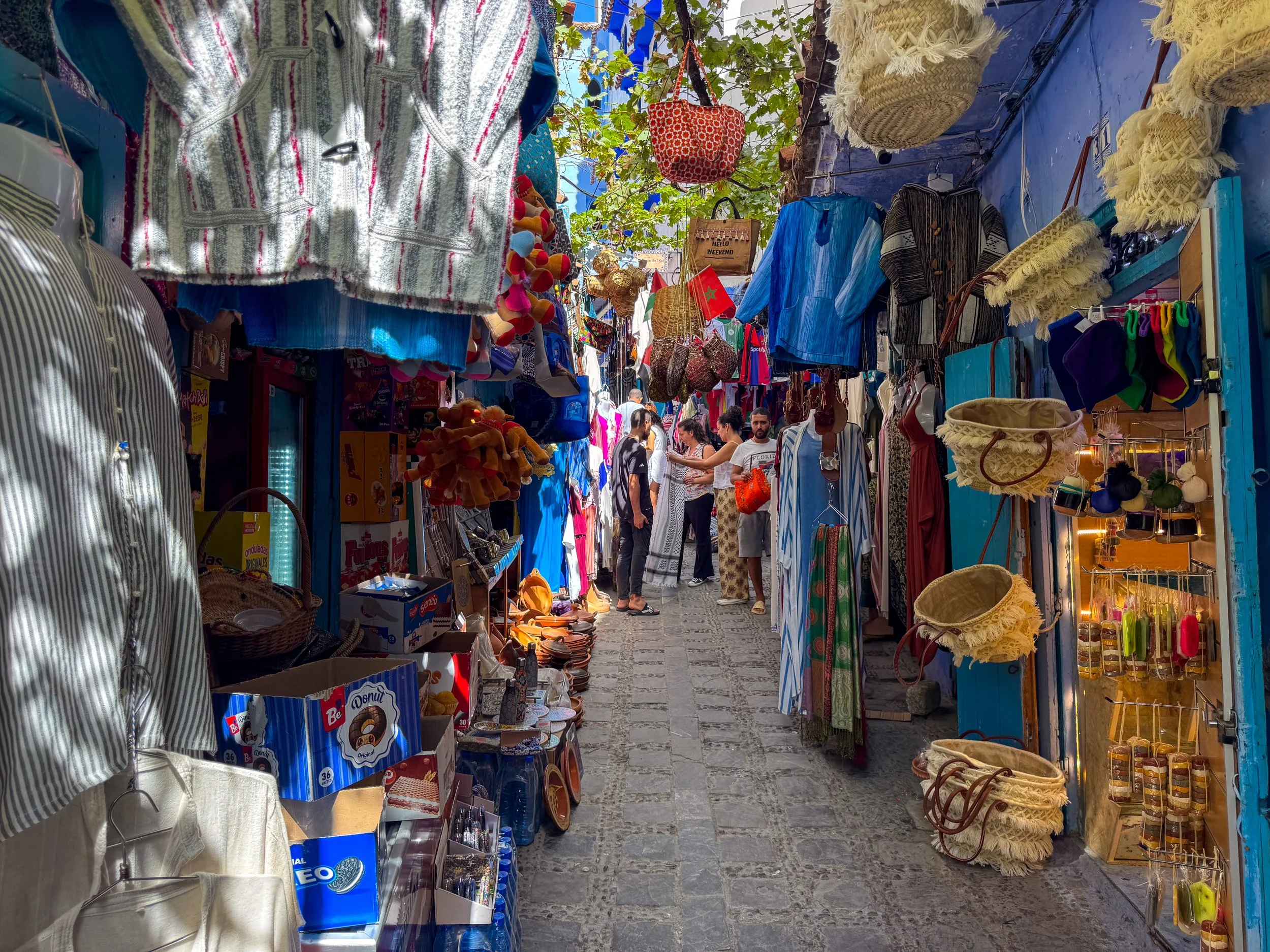
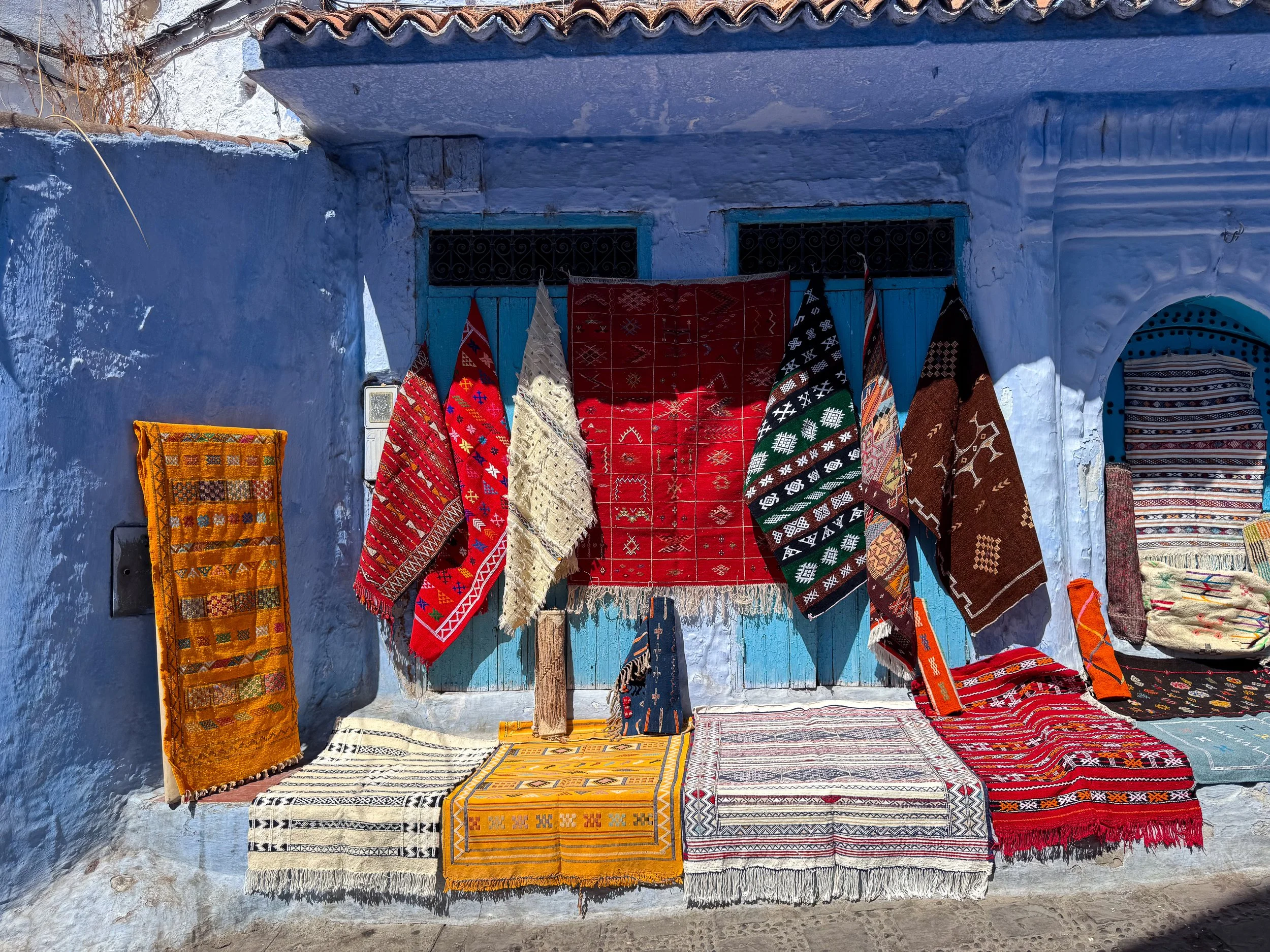
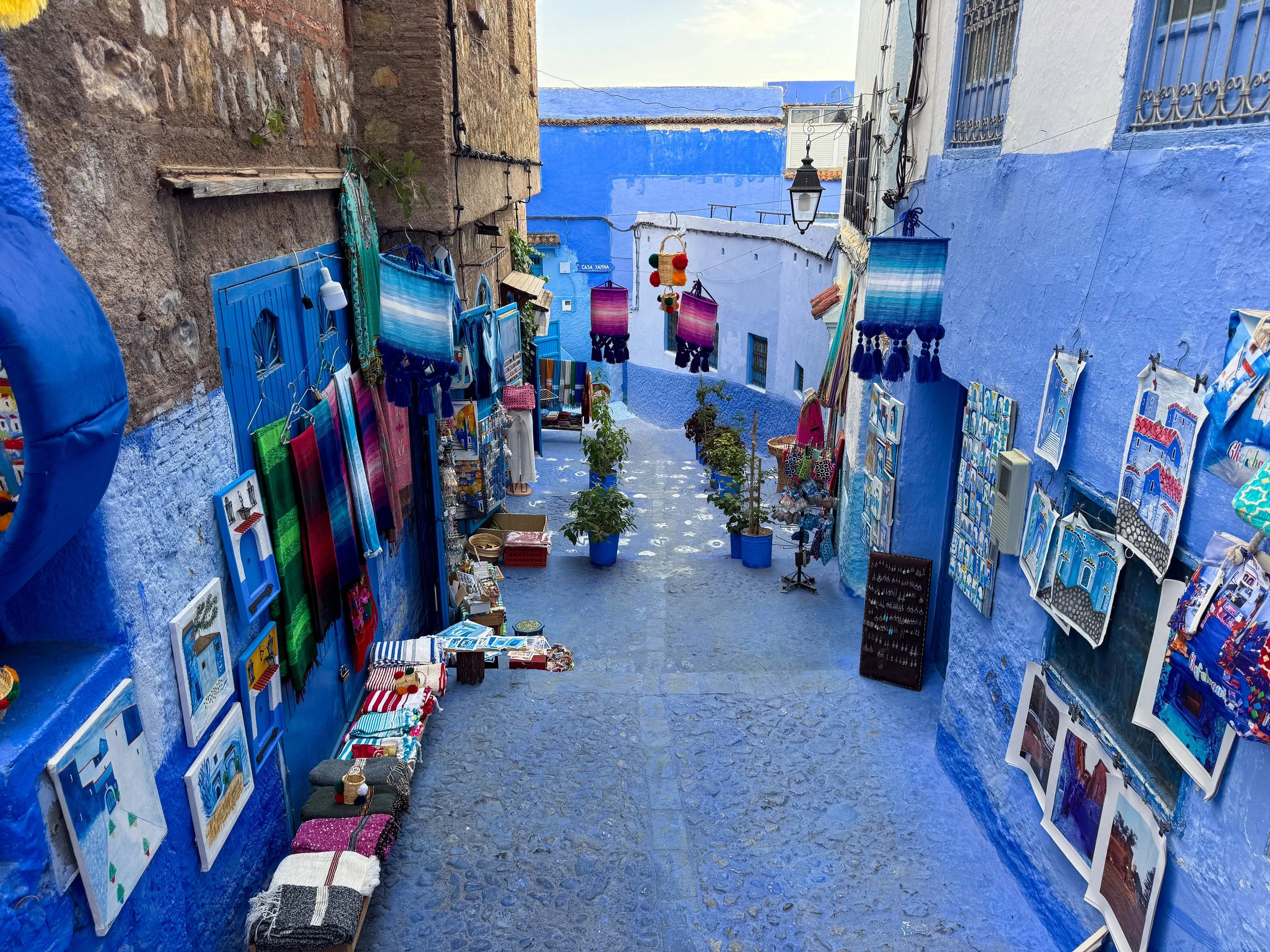
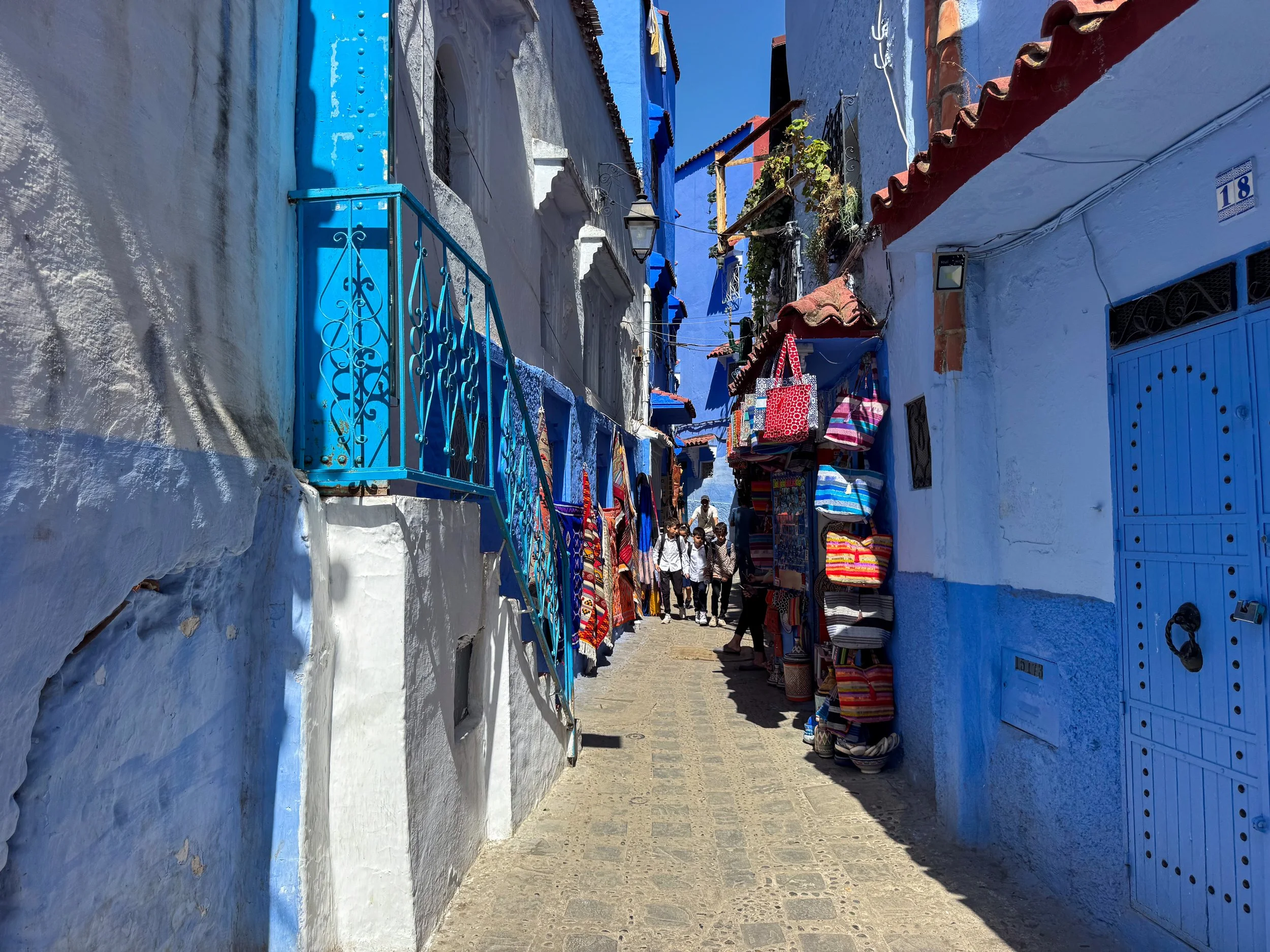
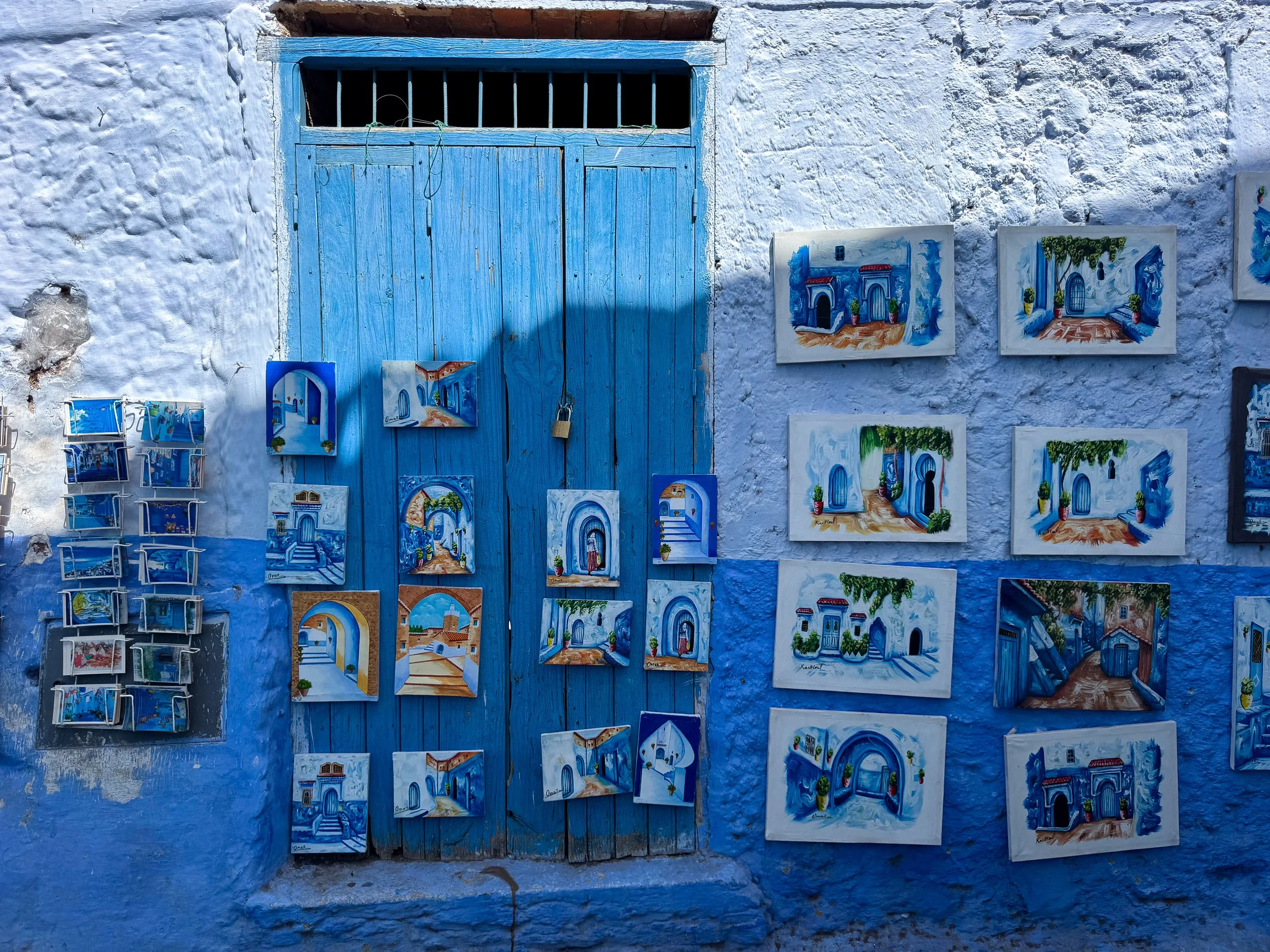
Artisan Alleys. The blue painted alleys of Chefchaouen are home to artisan vendors selling Moroccan textiles and rugs, handmade paintings, brass artifacts, jewelry, ceramics, baskets, amlou paste, teas, spices and souvenirs. Artisans are generally friendly but can seem aggressive knowing that most visitors are only in Chefchaouen for a short period of time. Like in all souks, haggling is encouraged.
Places to Eat & Drink
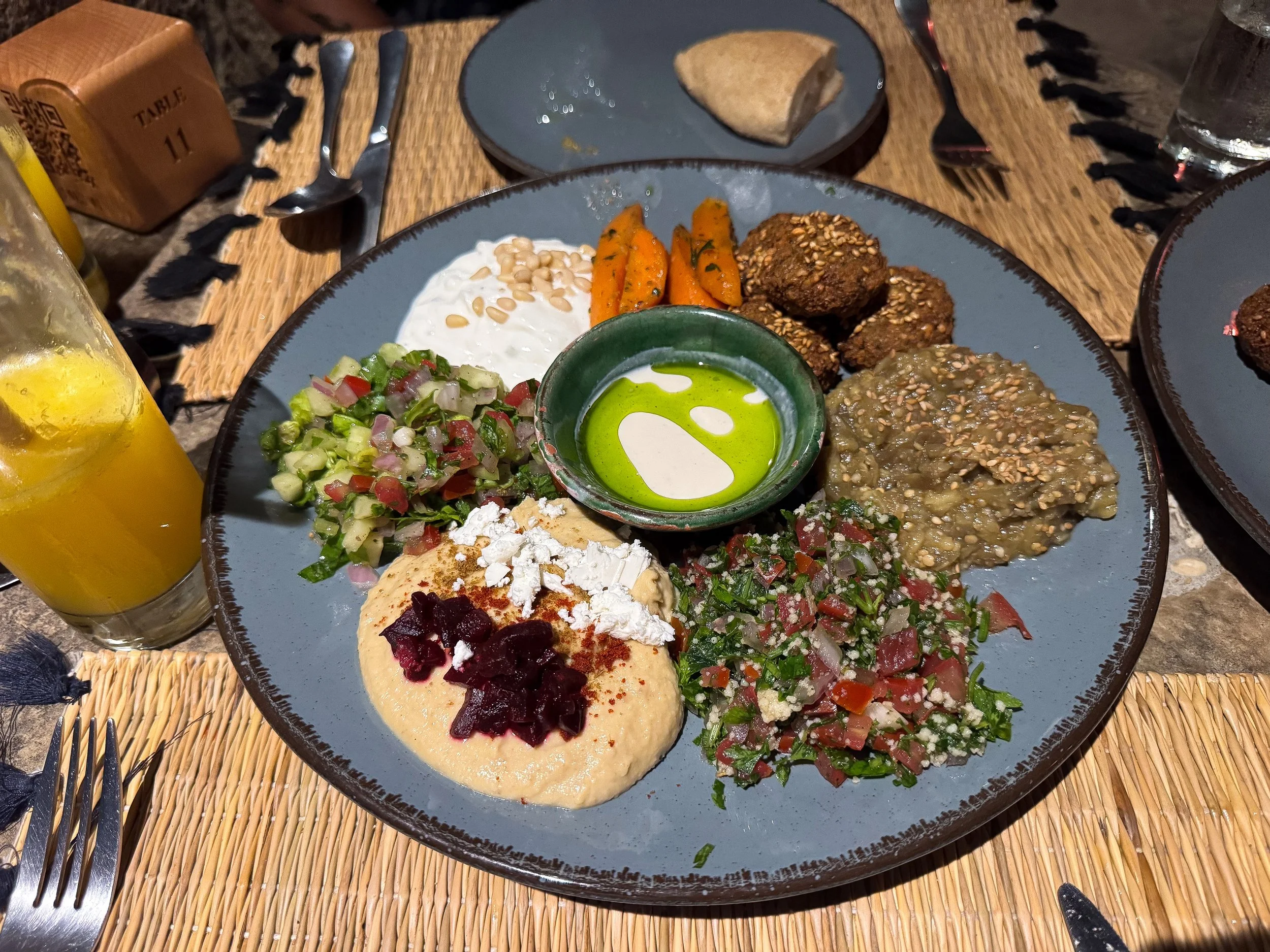
El Cielo Restaurant. A semi secluded restaurant located in a garden of the Medina next to a historic mosque. Their menu features Mediterranean and Moroccan spreads, tagines, kebabs and pitas. For dessert, try the Jawhara, a flaky pastry layered between tiers of custard. Reserve a spot in the garden ahead of time.
Pain Chaouen. A small bakery with a large range of French and Moroccan patisserie. Come here for the flaky croissants, butter cookies and glazed donuts.
Break Coffee. A takeaway café with all the usual types of coffees. It’s open early and stays open late for those in need of a caffeine fix.
Where to Stay
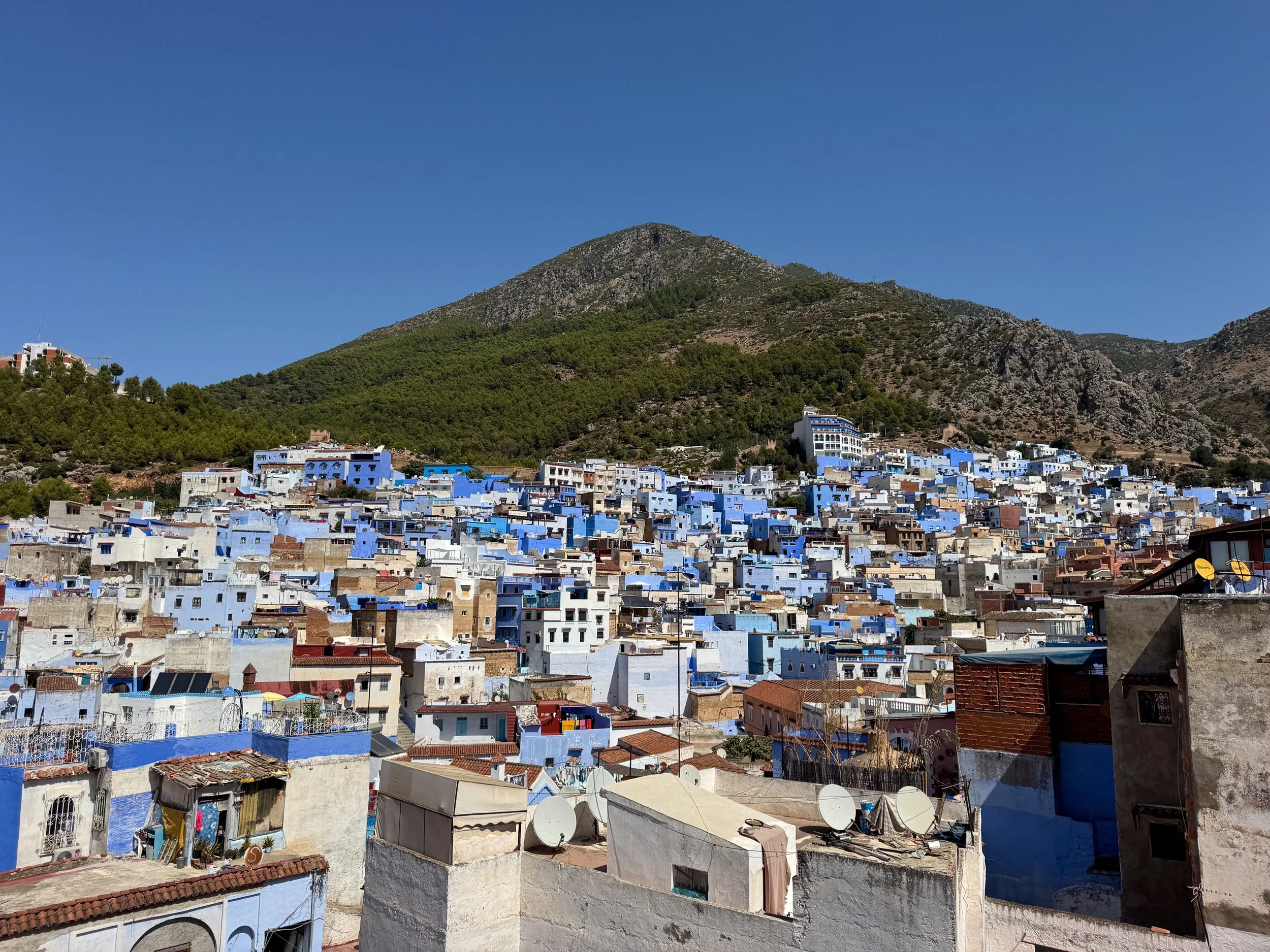
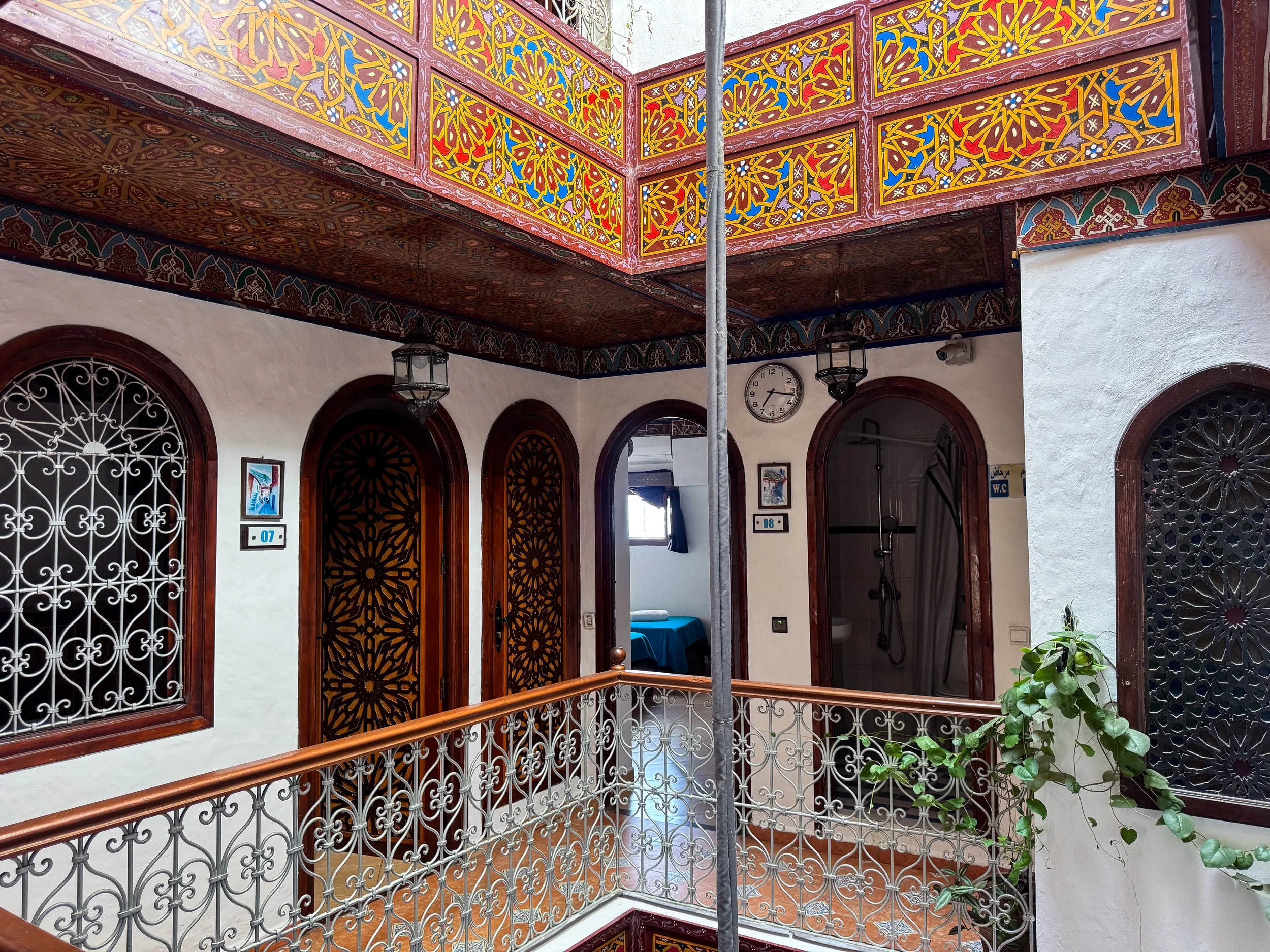
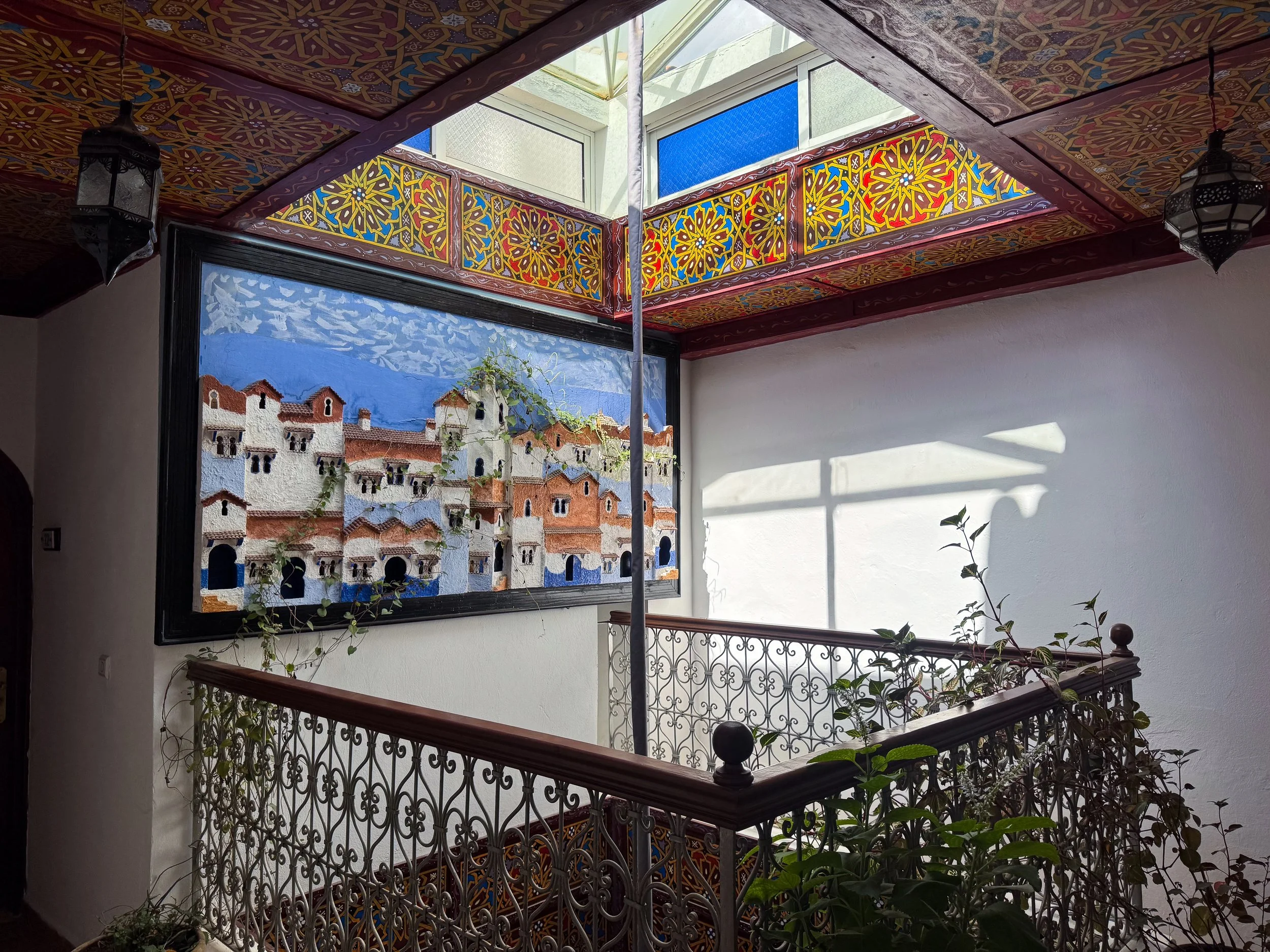
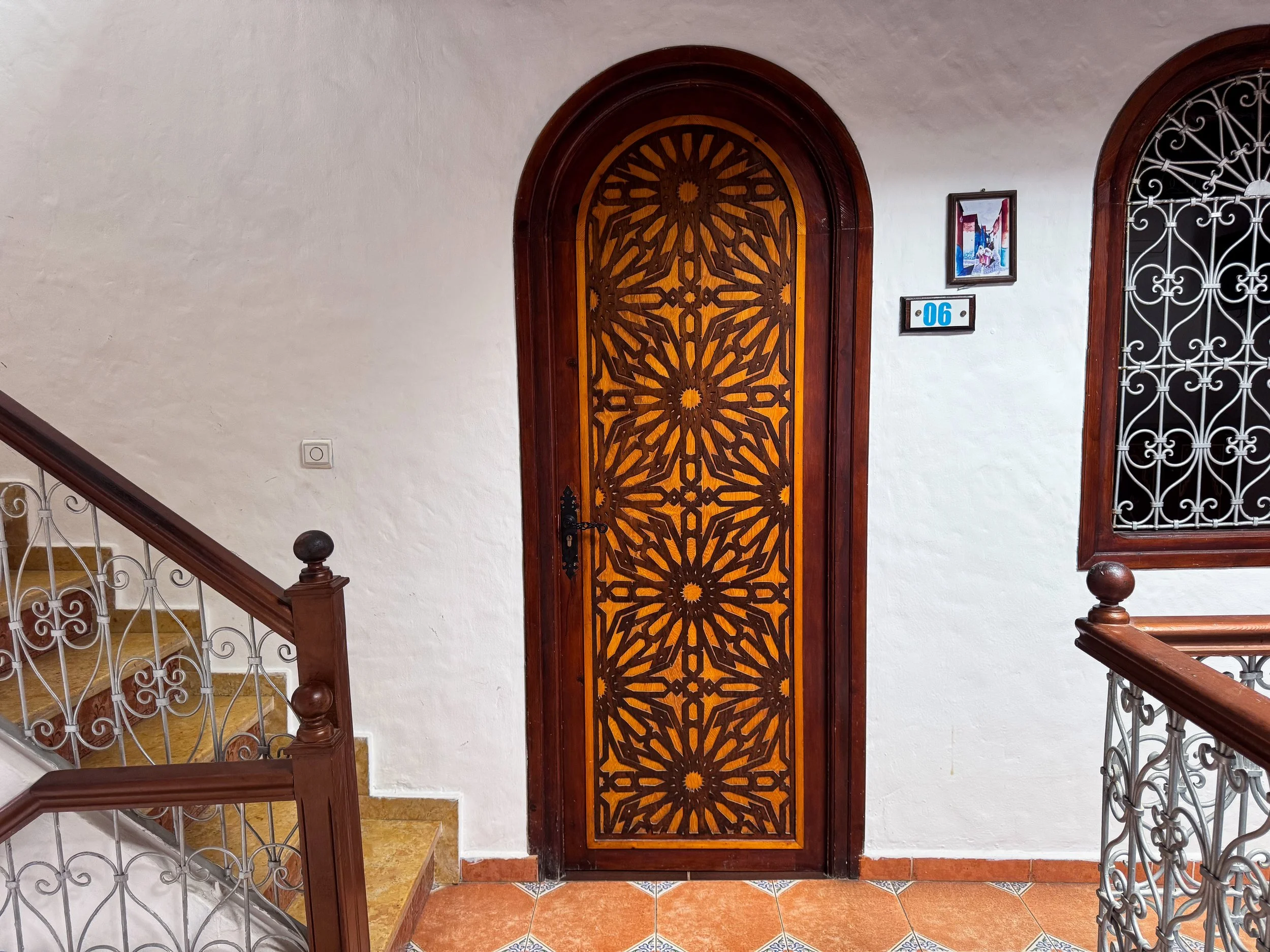
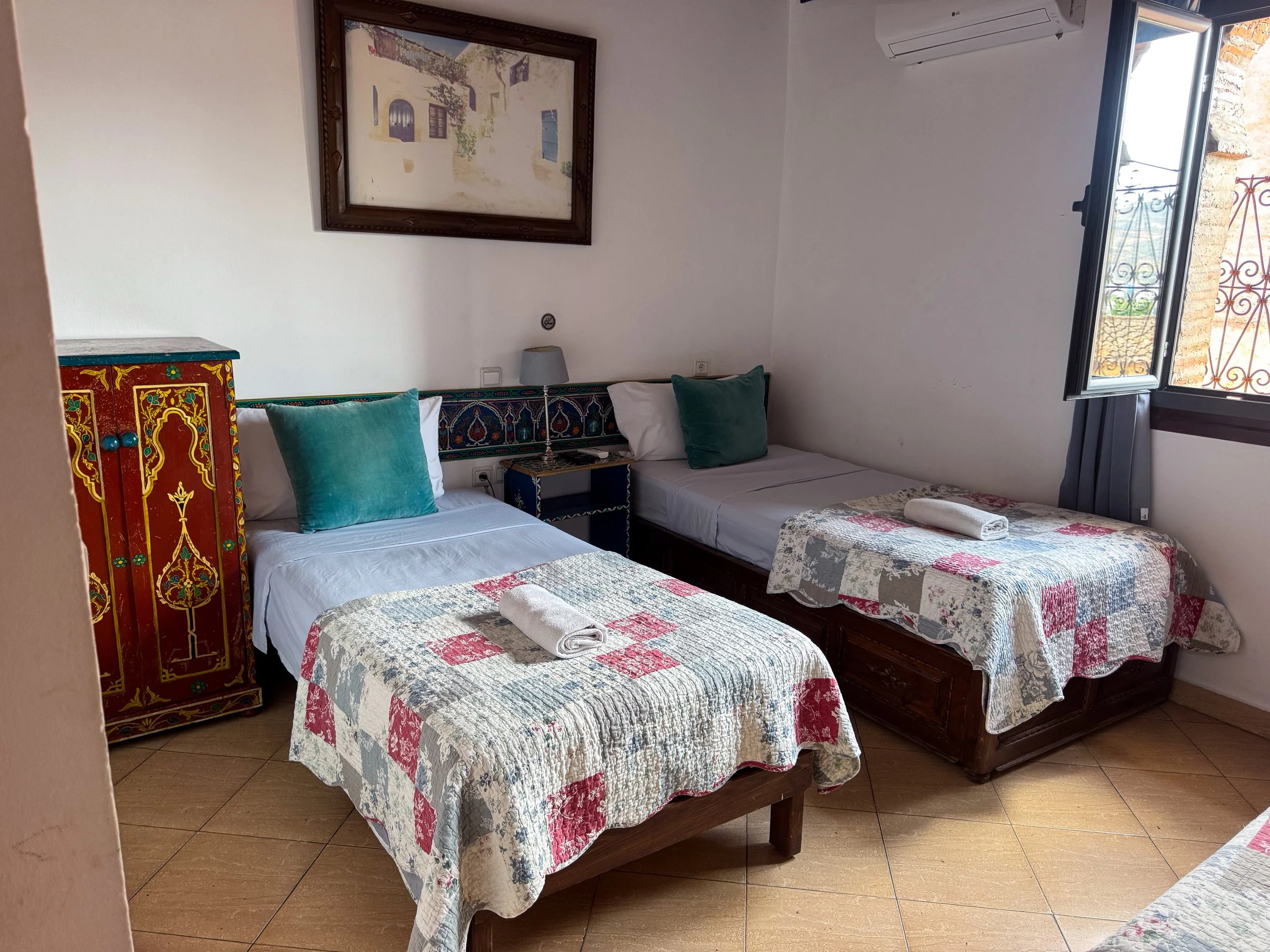
Hotel Chams. A small hotel located in the center of the medina near the Plaza Uta el Hamman. Each floor has multiple sized rooms and a shared bathroom. A rooftop terrace offers panoramic views of the city and mountainside. Reserve on Booking.
Getting to Chefchaouen
Chefchaouen is reachable from Fes by shuttle. Shared shuttles transfer passengers between both cities multiple times daily. The route takes about 4 hours one way. We booked with 3T Travel on Get Your Guide.
Location Specifics
Photo Fees. Many homeowners charge a small fee ranging from 10-20 DH for a photo of their door, house, alleyway, etc. Carry small bills and coins for payments.
How Long to Visit. Chefchaouen can be explored in a half day but it’s best to stay for at least one night to watch the sunset and explore in the early morning.
Early Mornings. Plan to explore the Medina in the early morning to see its blue painted streets and staircases before vendors display their goods. Much like Fes, most shops don’t begin setting up until 10am.
Blue Stains. Be careful when leaning against or sitting on blue painted surfaces. The pigment can rub off and stain light clothes.
Illegal Drugs. Drug dealers commonly try to sell hashish and cannabis to tourists. They may also invite you to visit their farm. Simply tell them no thank you if not interested and they’ll leave you alone.
LGBTQ+ Safety. Moroccan laws and customs are not very accepting of LGBTQ+ individuals. Stay up to date with the latest laws and suggestions while traveling. Refer to our guide on LGBTQ+ Travel Safety for more advice.
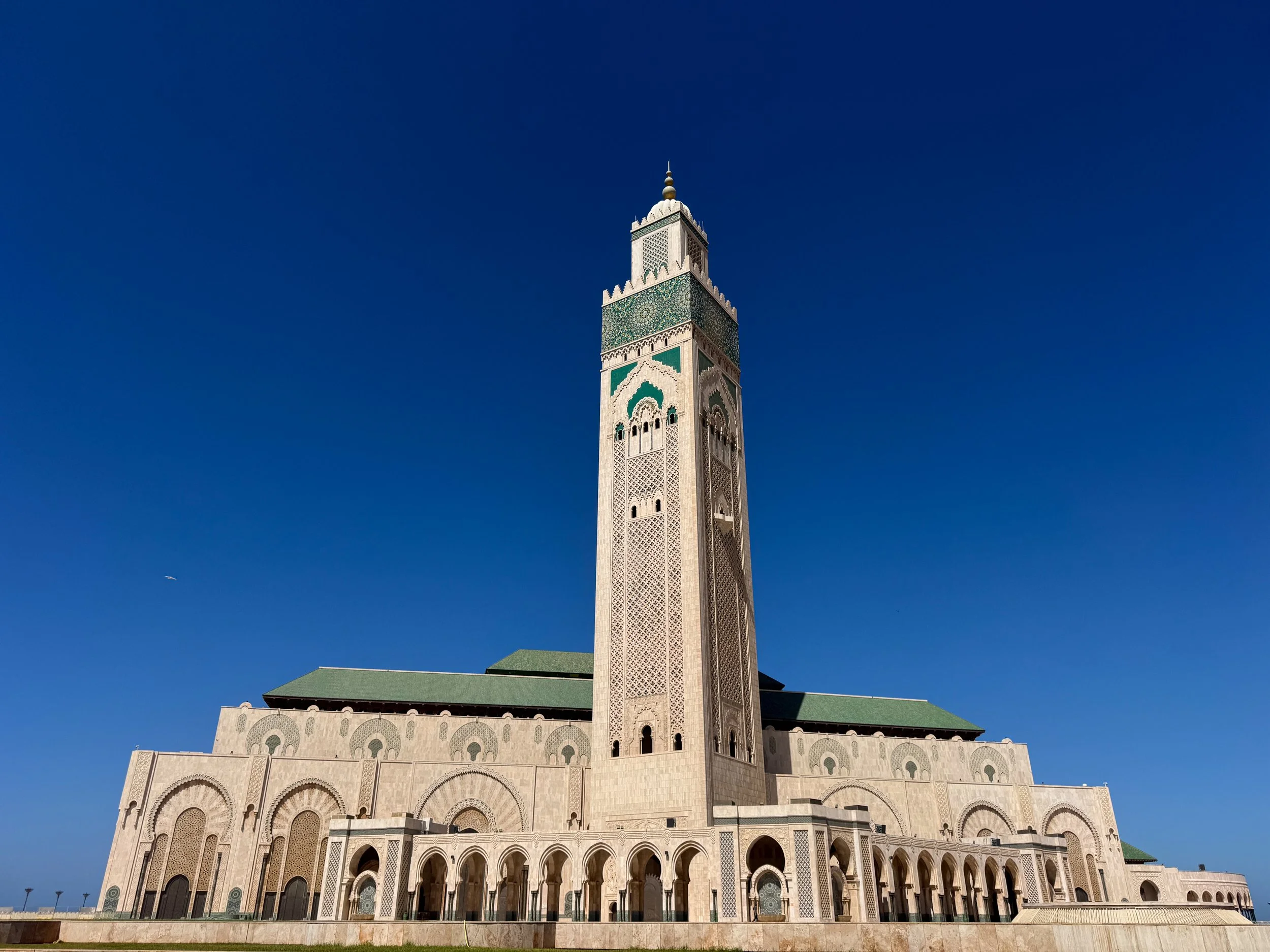
Elsewhere in Morocco
From Chefchaouen's blue painted streets to Morocco's historic medinas, Sahara landscapes and Atlantic coastline, discover more of the country's diverse regions through these travel guides:
Marrakech Travel Guide: Medina, Souks & Moroccan Cuisine. Get lost in Marrakech's maze-like alleyways where vibrant souks, elaborate palaces and historic mosques bring centuries of Moroccan culture, cuisine & tradition to life.
Fes Travel Guide: Medina, Tanneries & Islamic History. Step into Fes's ancient medina where Islamic landmarks, historic tanneries, traditional riads and skilled artisans preserve centuries of Moroccan heritage and tradition.
Morocco Road Trip Guide: Sahara Desert, Kasbahs & Berber Culture. Road trip across Morocco's dramatic landscapes where palm oases, ancient kasbahs, towering dunes and Berber camps create an unforgettable Saharan adventure.
Casablanca Travel Guide: Hassan II Mosque, Local Markets & Moroccan Cuisine. Wander through Casablanca's ancient medina, palm lined avenues and seaside promenades where the Hassan II Mosque and local food markets reflect Morocco's culture.
For Next Time…
Morocco is a beautiful destination with historic cities, scenic landscapes and cultural allure. We have a shortlist of places to visit when we return.
Meknes. An ancient city at the heart of Morocco’s wine producing region. Its nearby vineyards offer tours, tastings and wine pairings.
Volubilis. An ancient Roman city with well preserved ruins and mosaics from the former empire.
Essaouira. A port city on the Atlantic with a picturesque medina, coastal ramparts and fresh seafood restaurants.
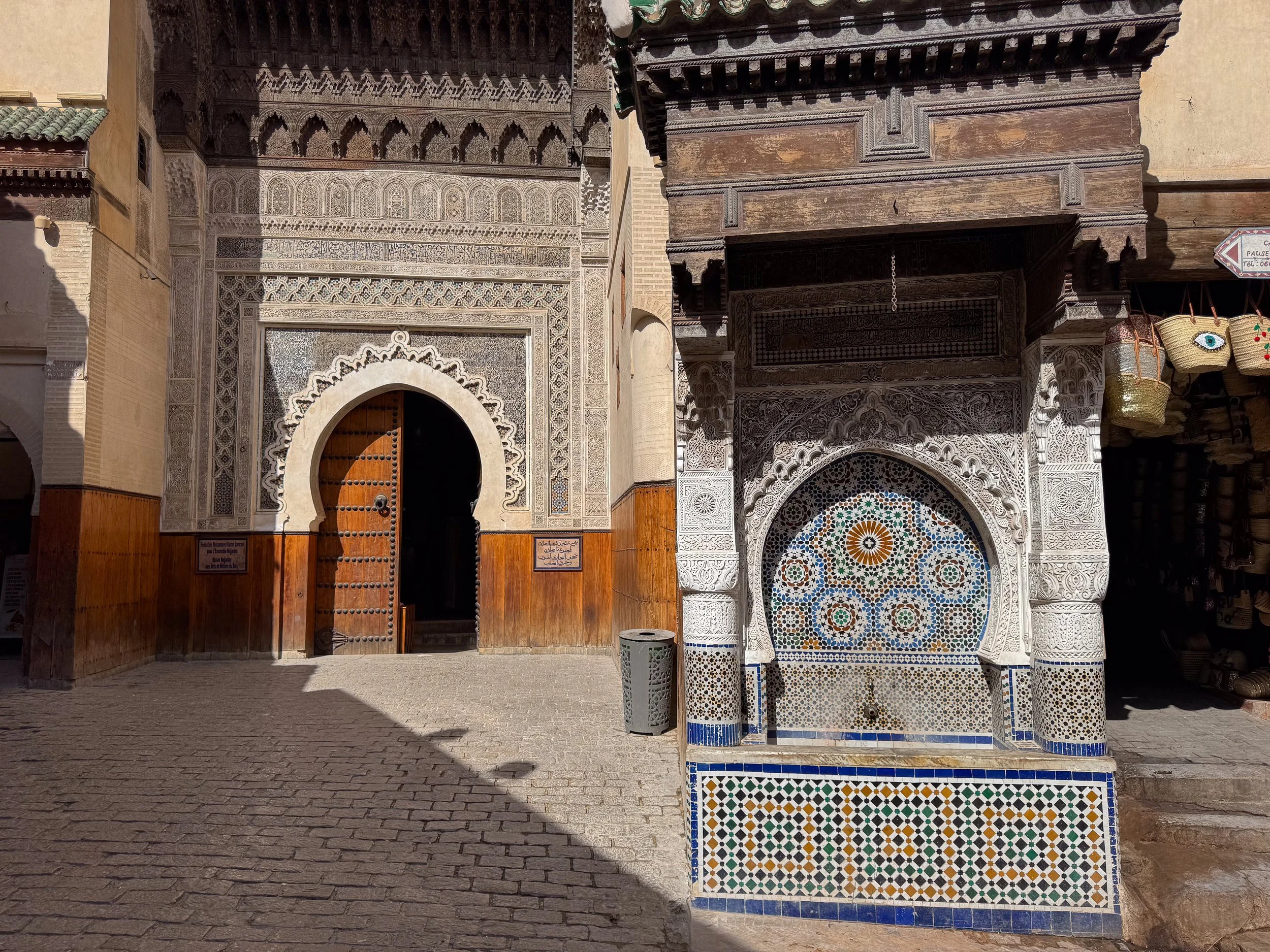
Fes Travel Guide: Medina, Tanneries & Islamic History
Step into Fes's ancient medina where Islamic landmarks, historic tanneries, traditional riads and skilled artisans preserve centuries of Moroccan heritage and tradition.
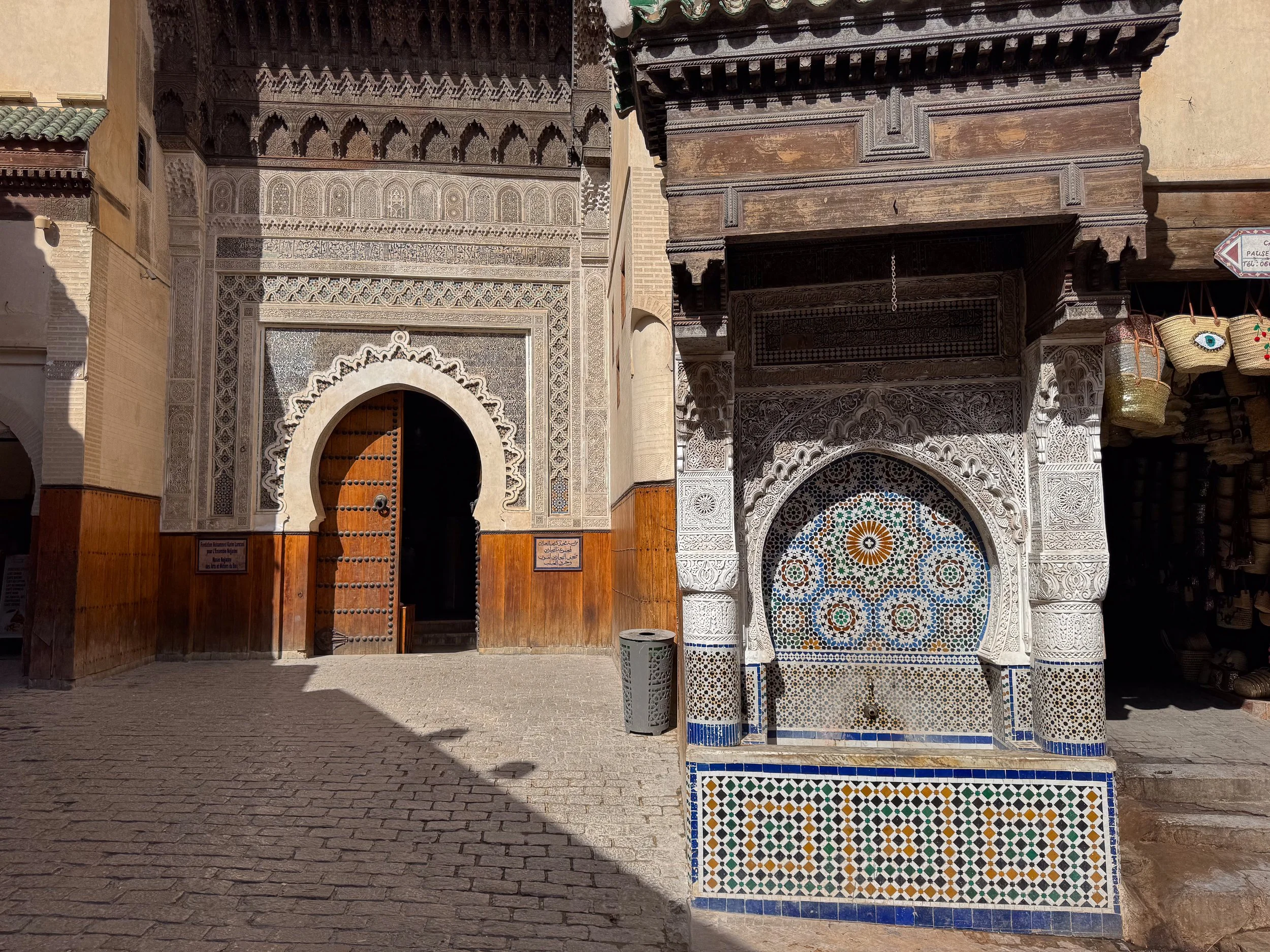
Fes, Morocco
Fes is an ancient city and the cultural heart of Morocco. Centuries of craft and tradition continue in the souks as artisans shape metal, dye leather, weave carpets and haggle with curious customers. Picturesque mosques, soaring minarets and madrassas rise above maze-like alleyways that weave through the sprawling medina. Historical museums recount its place in Moroccan history while the royal palace emphasizes its continued influence. Luxurious riads offer a calming retreat from the bustle of the city that continues to attract worldly travelers.
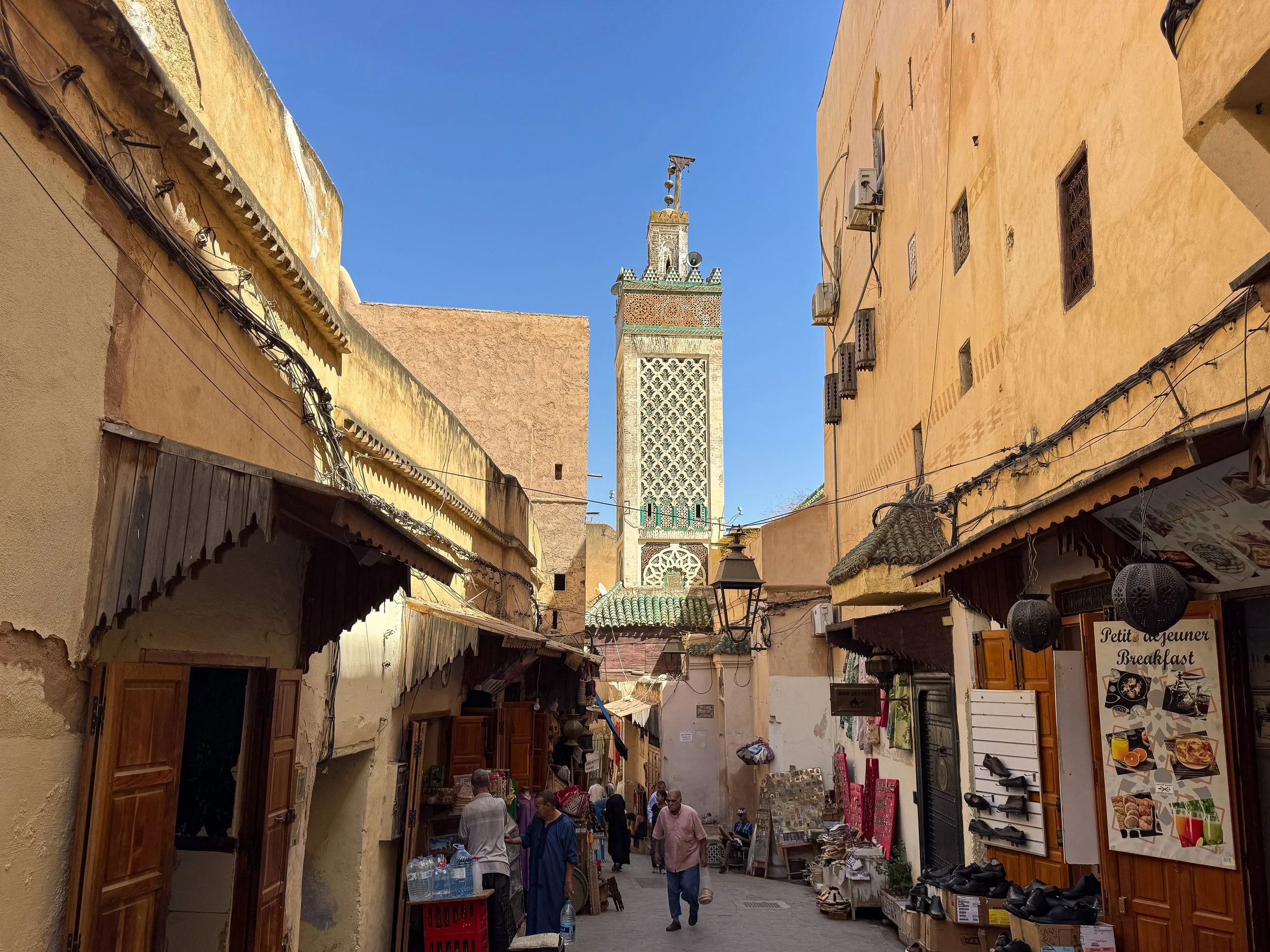
Fes el Bali (The Old Medina)
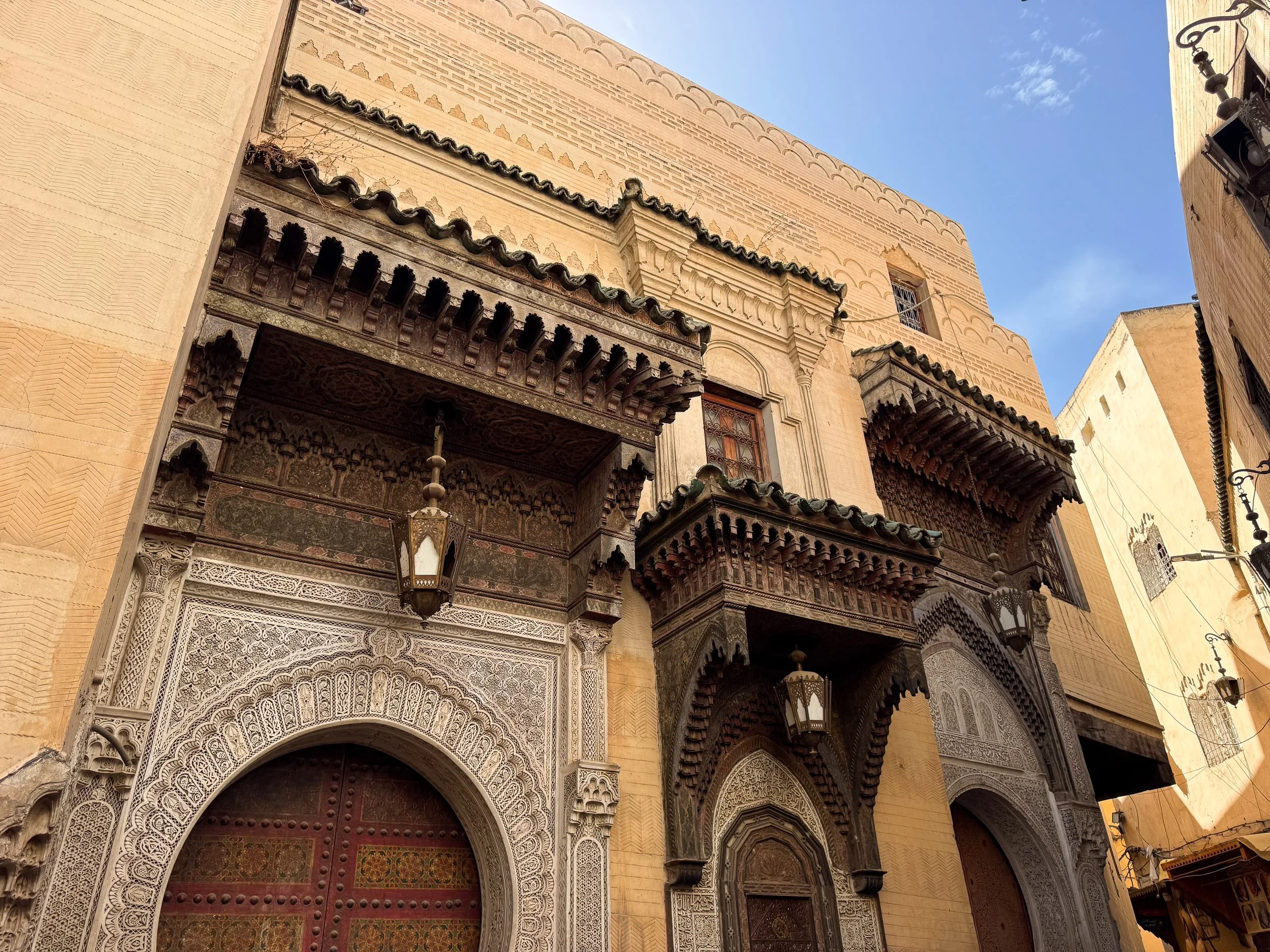
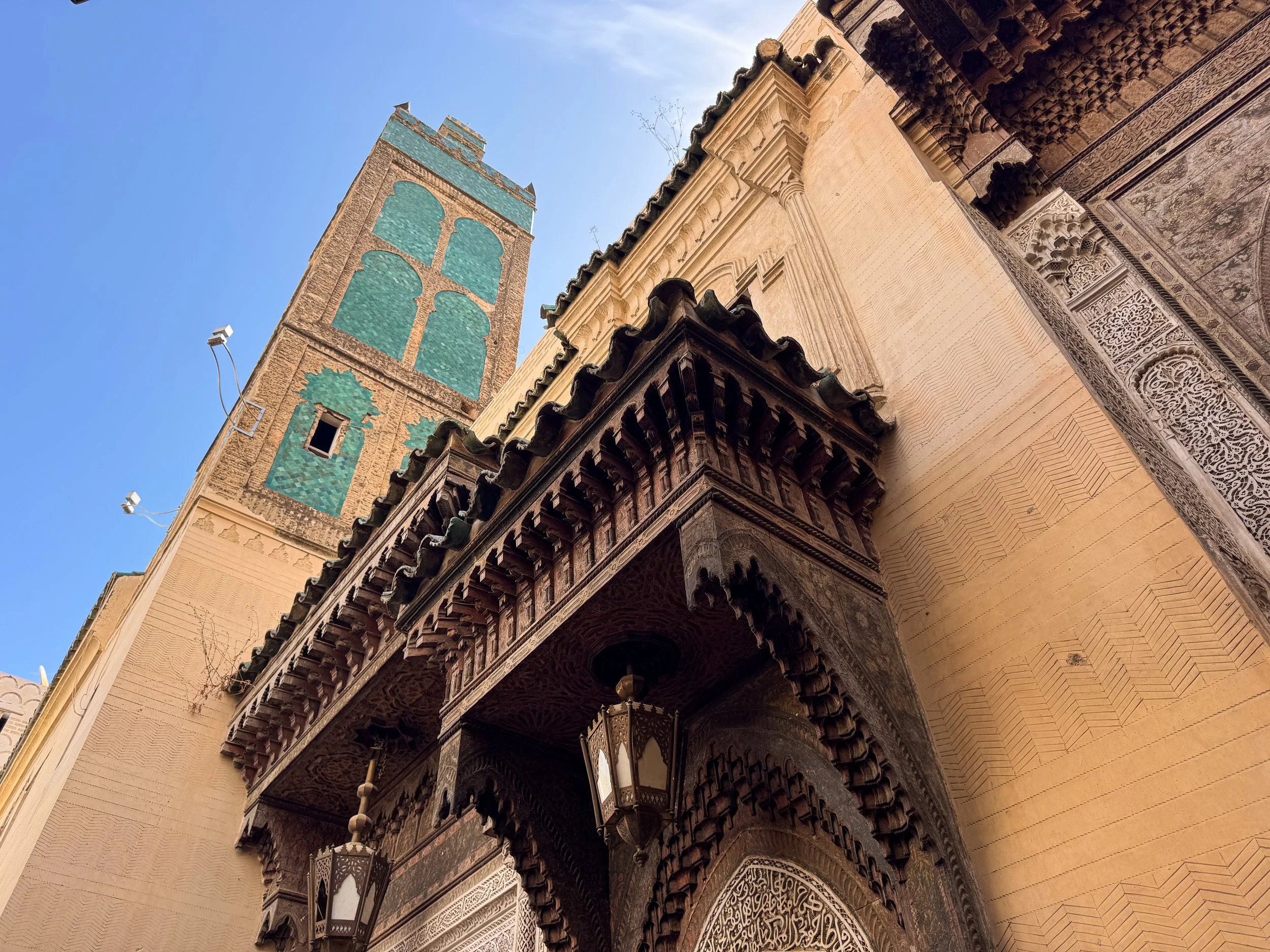
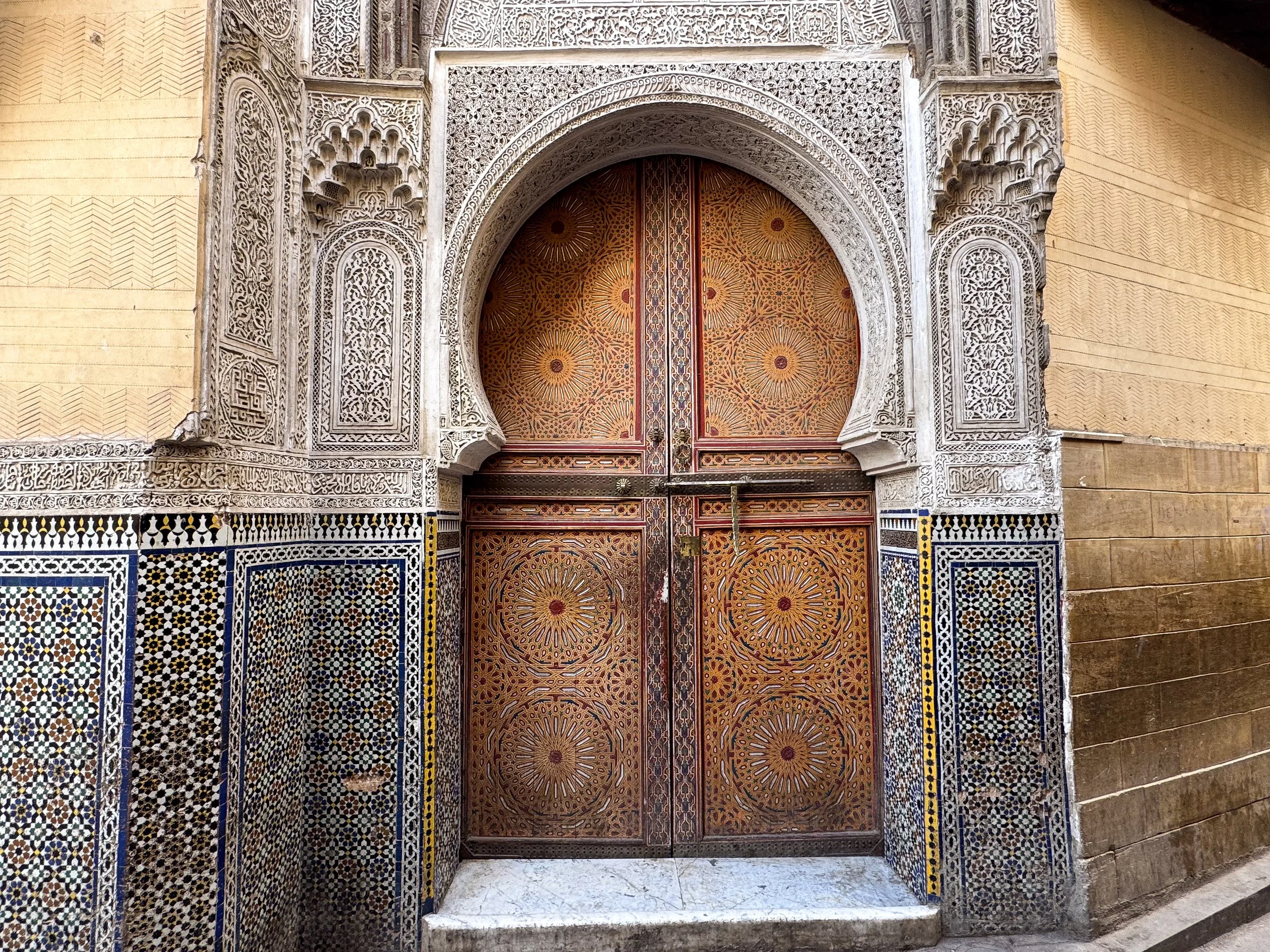
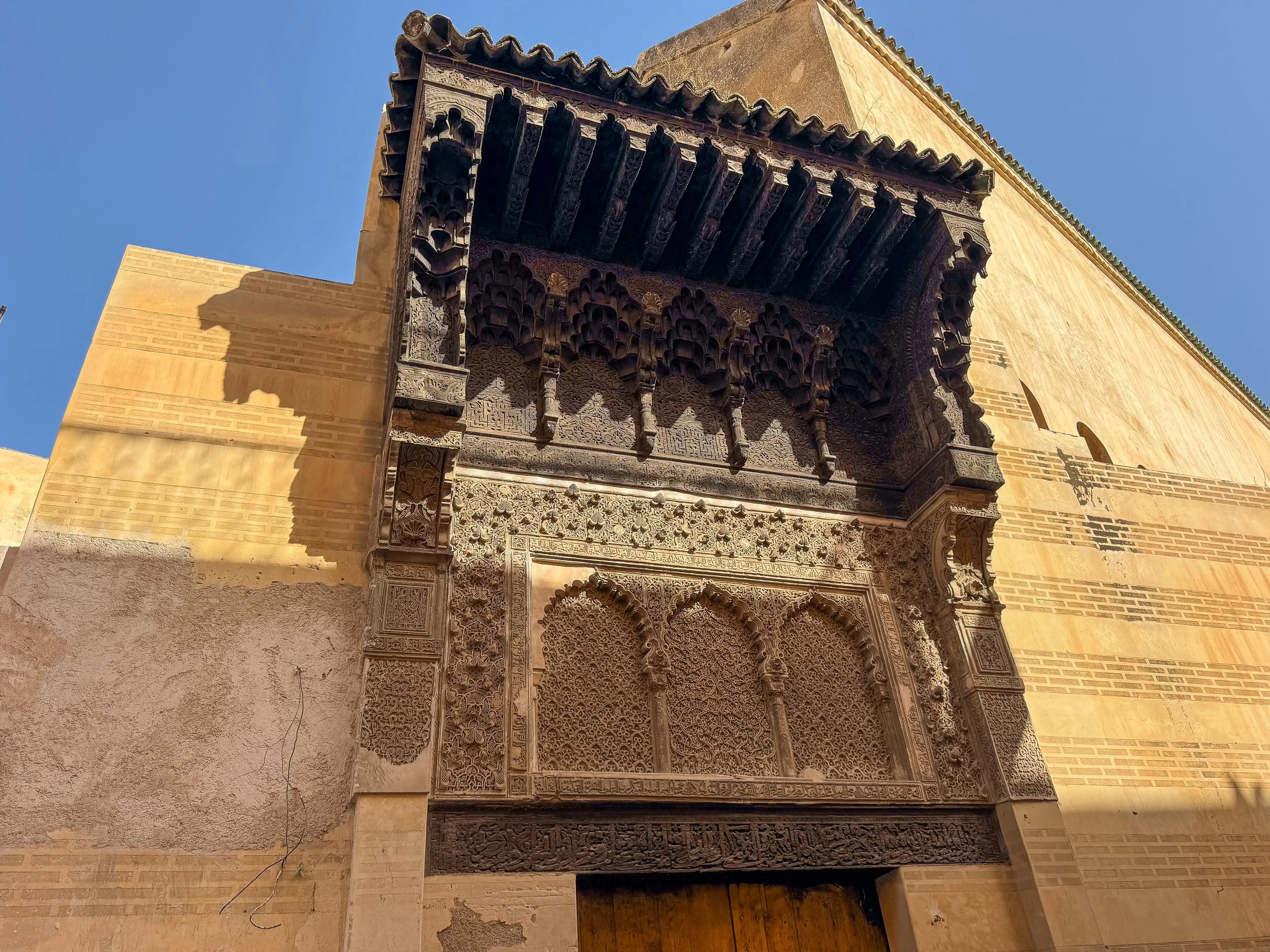
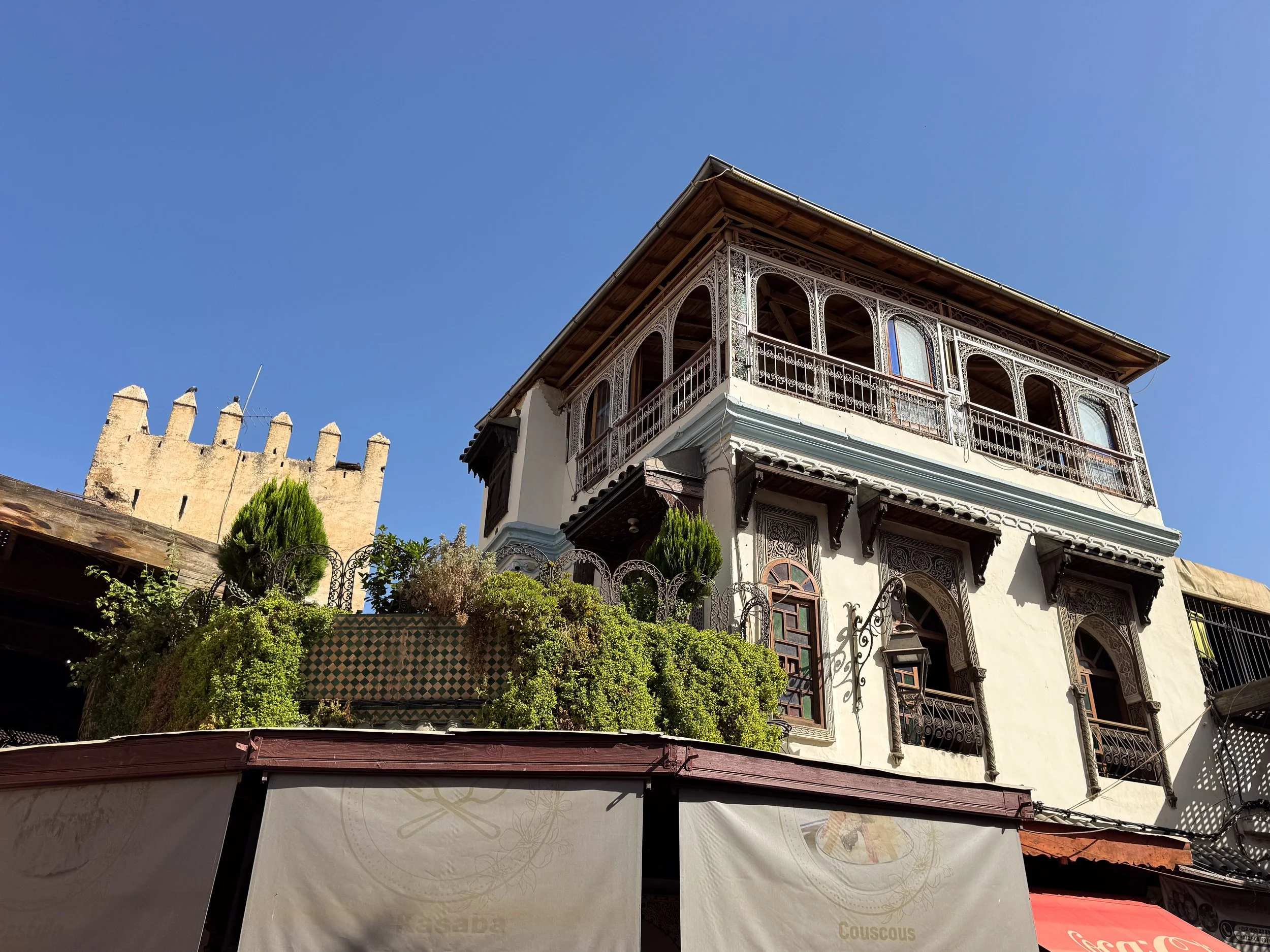
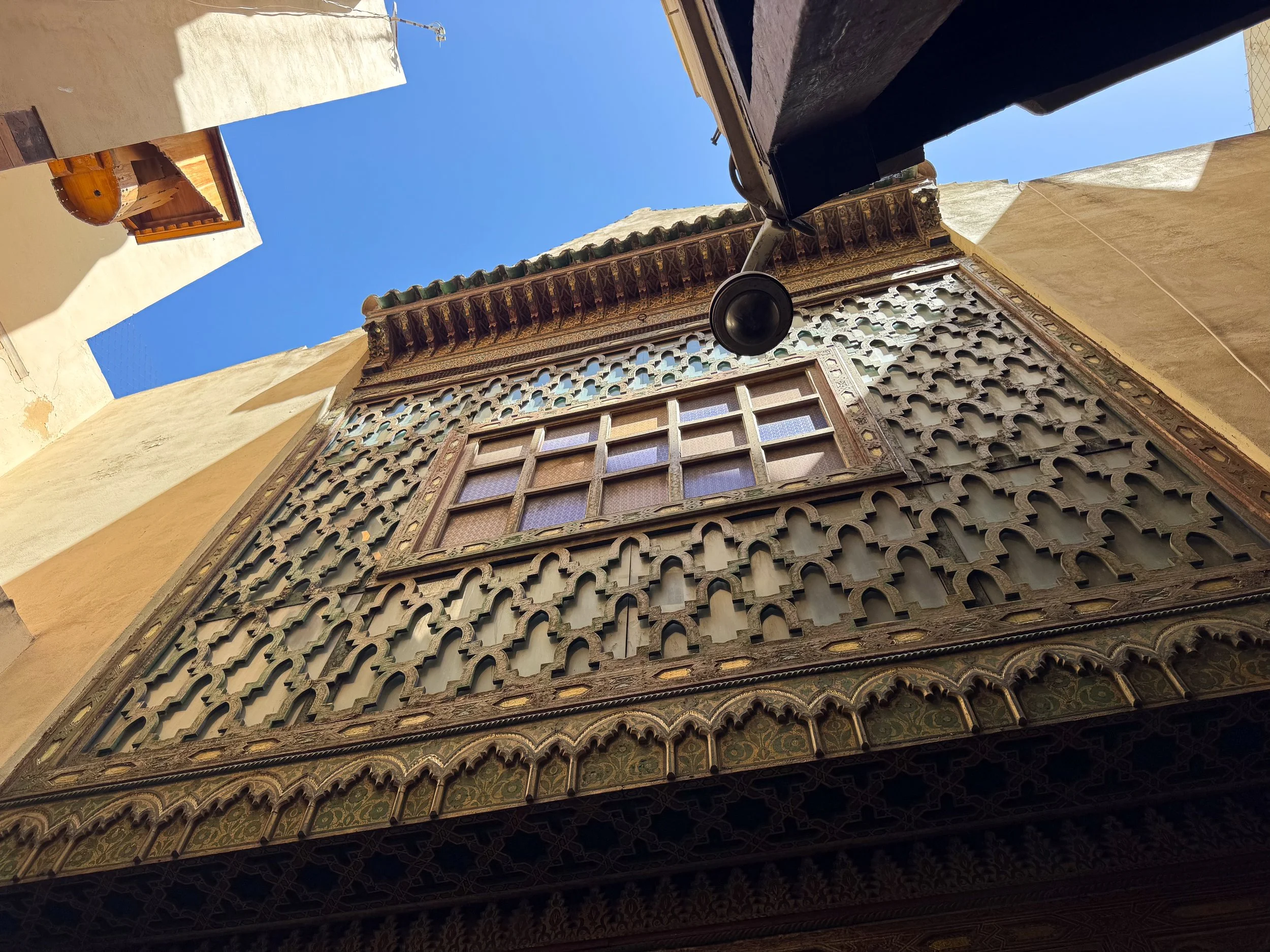
Fes el Bali is the historic medina at the heart of Fes. It’s a living labyrinth of narrow alleys and hilly paths that overwhelm the senses. Quiet mornings and empty streets transition into bustling souks teeming with artisan goods. Throngs of people press through as vespas part crowds and stray cats slip through shadows. The call to prayer echoes from towering minarets. Islamic monuments, tiled fountains and medieval architecture layer the medina in history and intricate patterns. Wooden beams stretch between structures as if holding one another upright. Centuries-old doors open into hidden riads while dark passageways lead through ancient buildings like subterranean tunnels. The best way to truly experience the medina is to get lost within it.
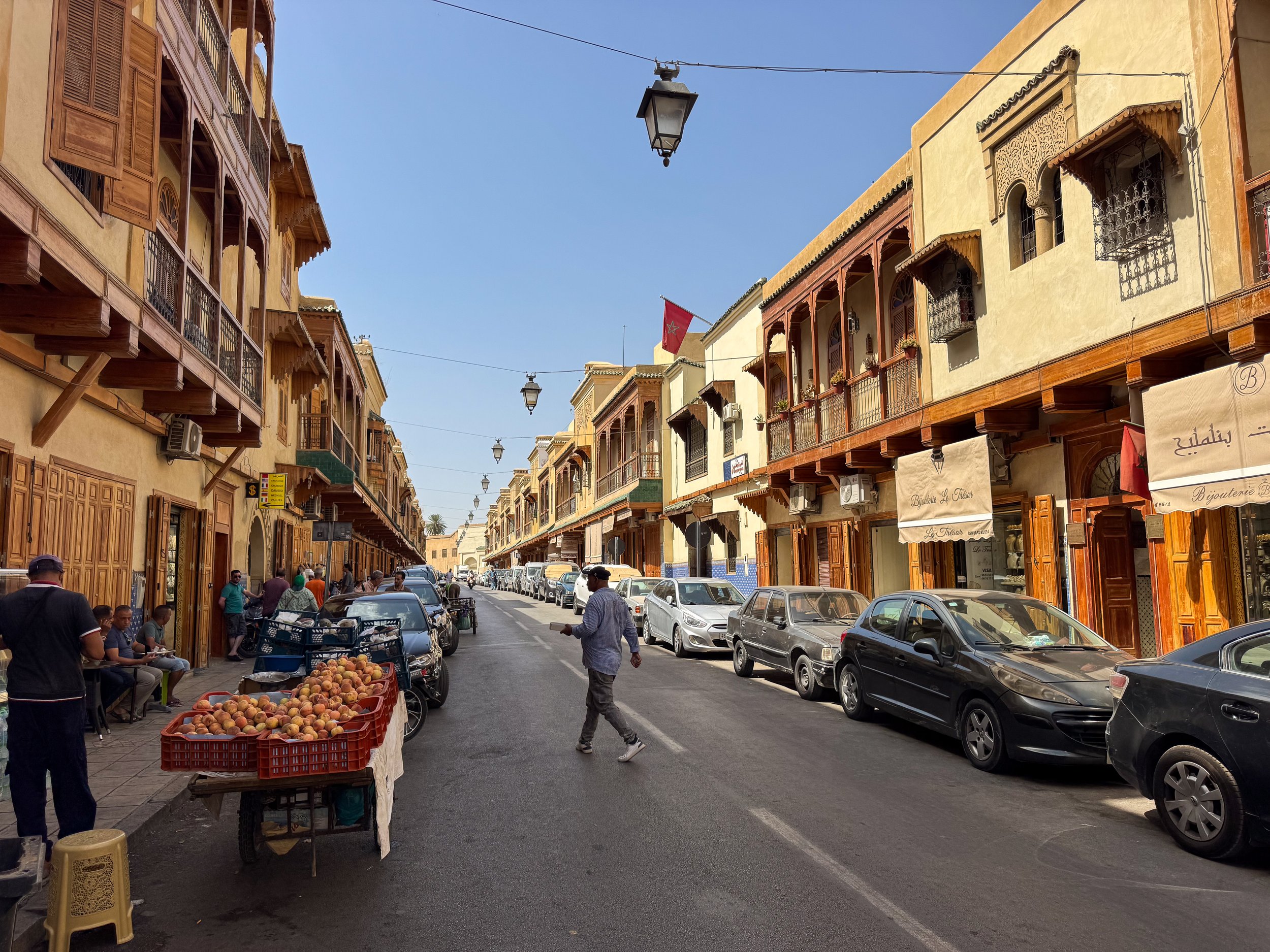
Fes El-Jedid. Established in the 17th century around the royal palace and gardens, the “new medina” is a largely residential area of Fes. It combines narrow alleyways with wider commercial streets, local souks and scattered artisan shops. It offers a quieter glimpse into daily life and Moroccan traditions.
Souks & Markets
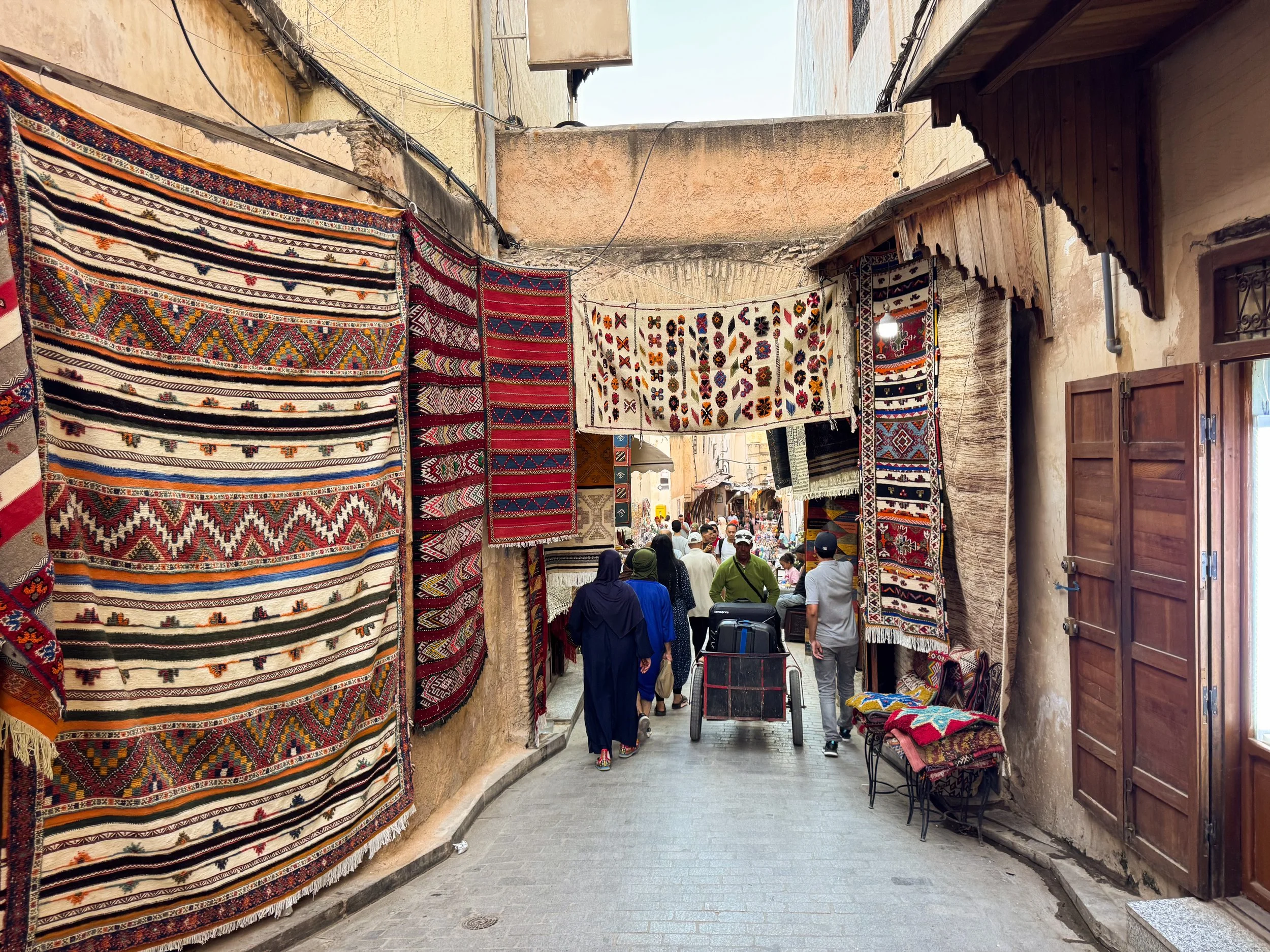
Souks, traditional Moroccan markets, weave through the medina in bustling alleyways of shops and vendors. They’re a wonderful place to experience Moroccan culture! They brim with vibrant colors, fragrant scents and lively sounds of haggling customers. Stalls overflow with aromatic goods like spices, teas and perfumes while others showcase artisan crafts like Berber carpets, brass lamps and leather goods.
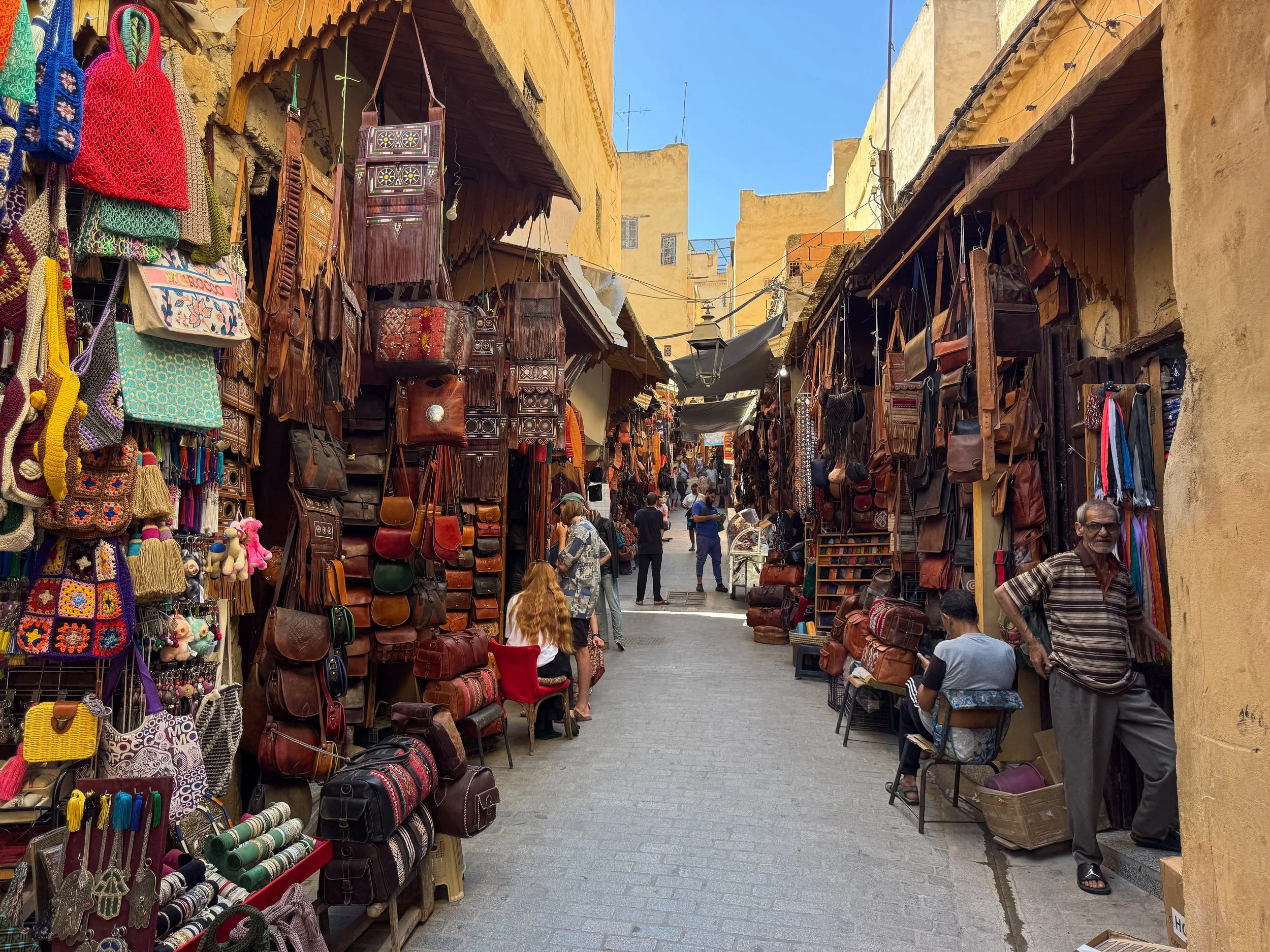
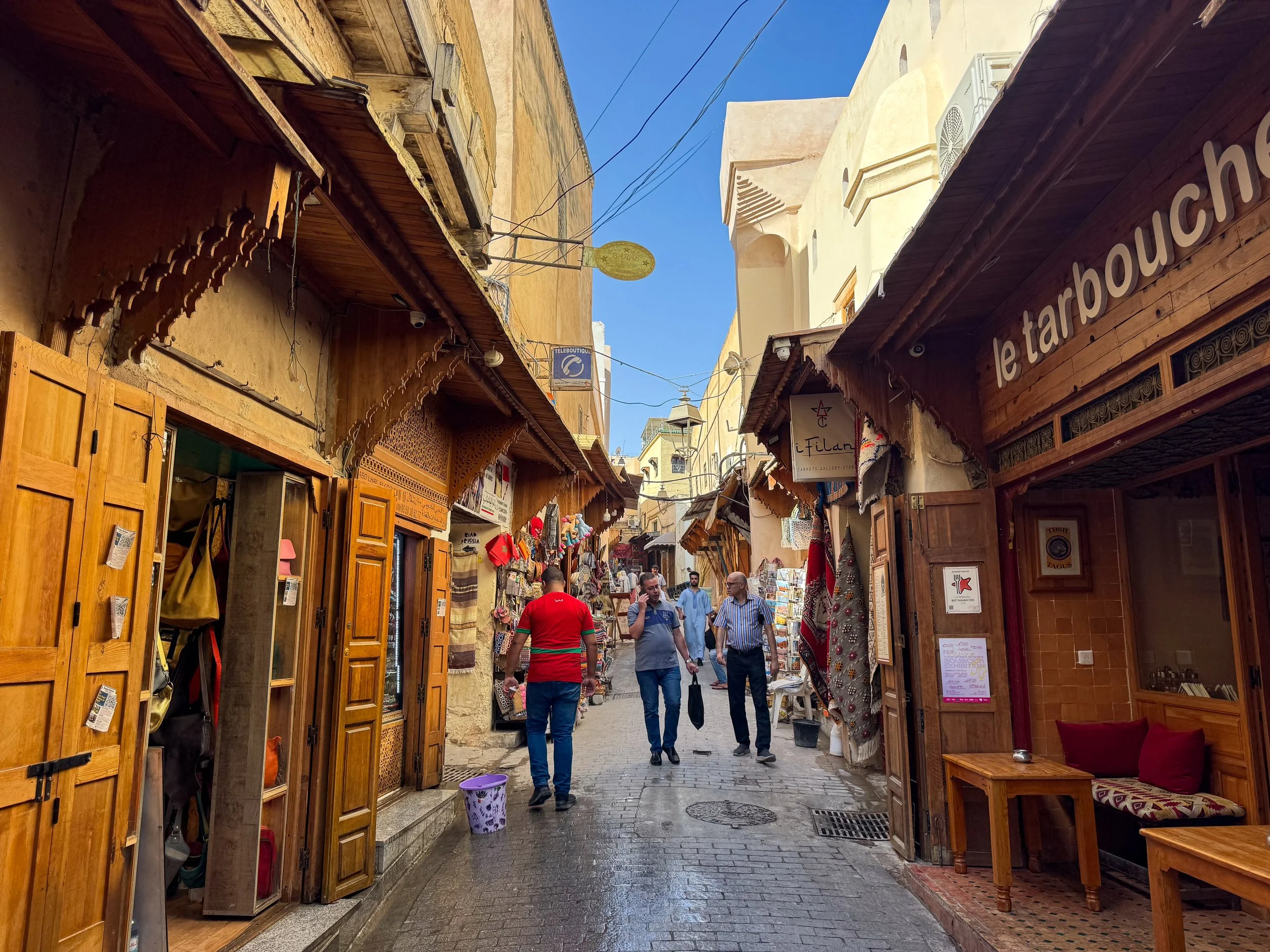
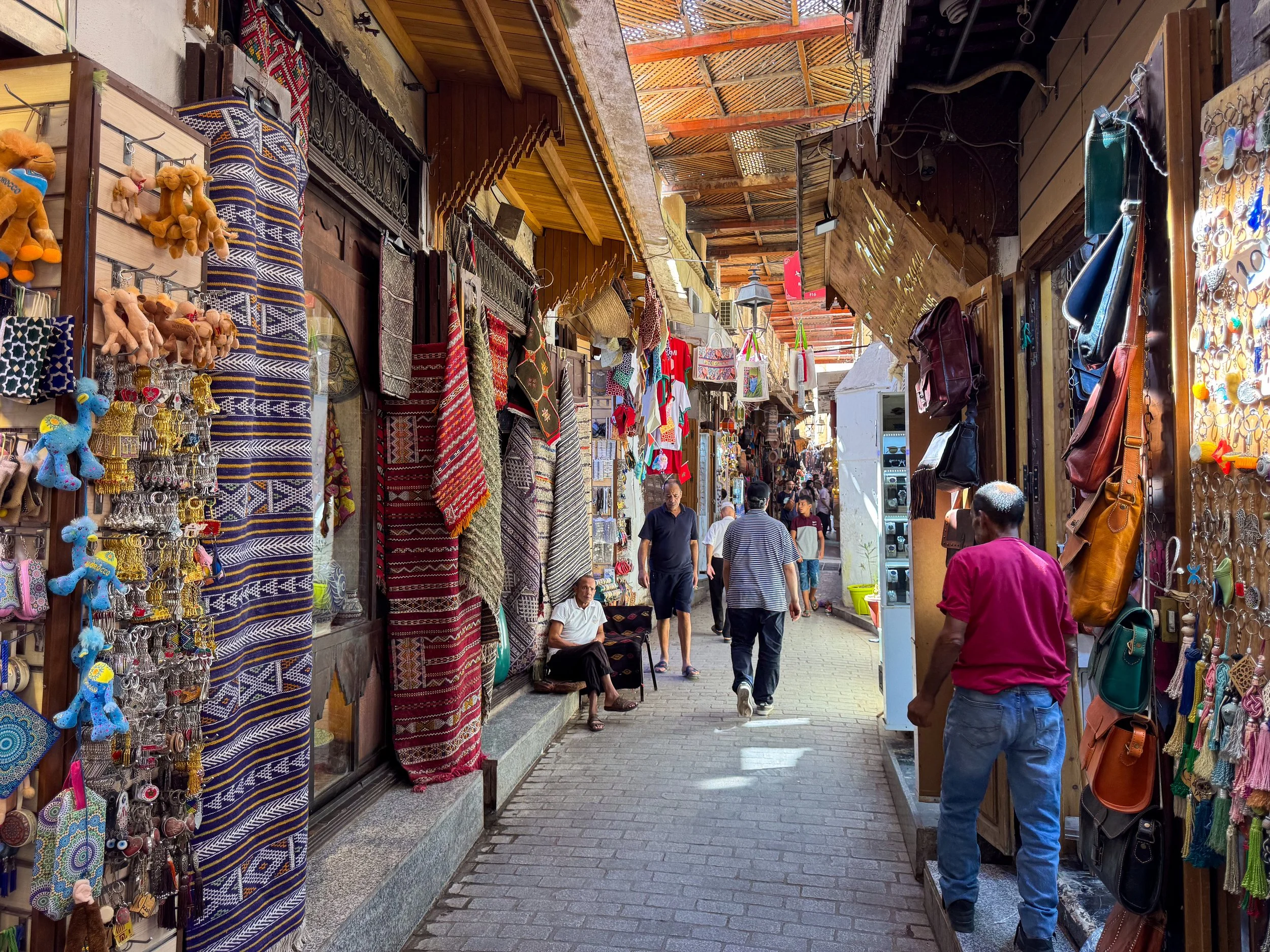
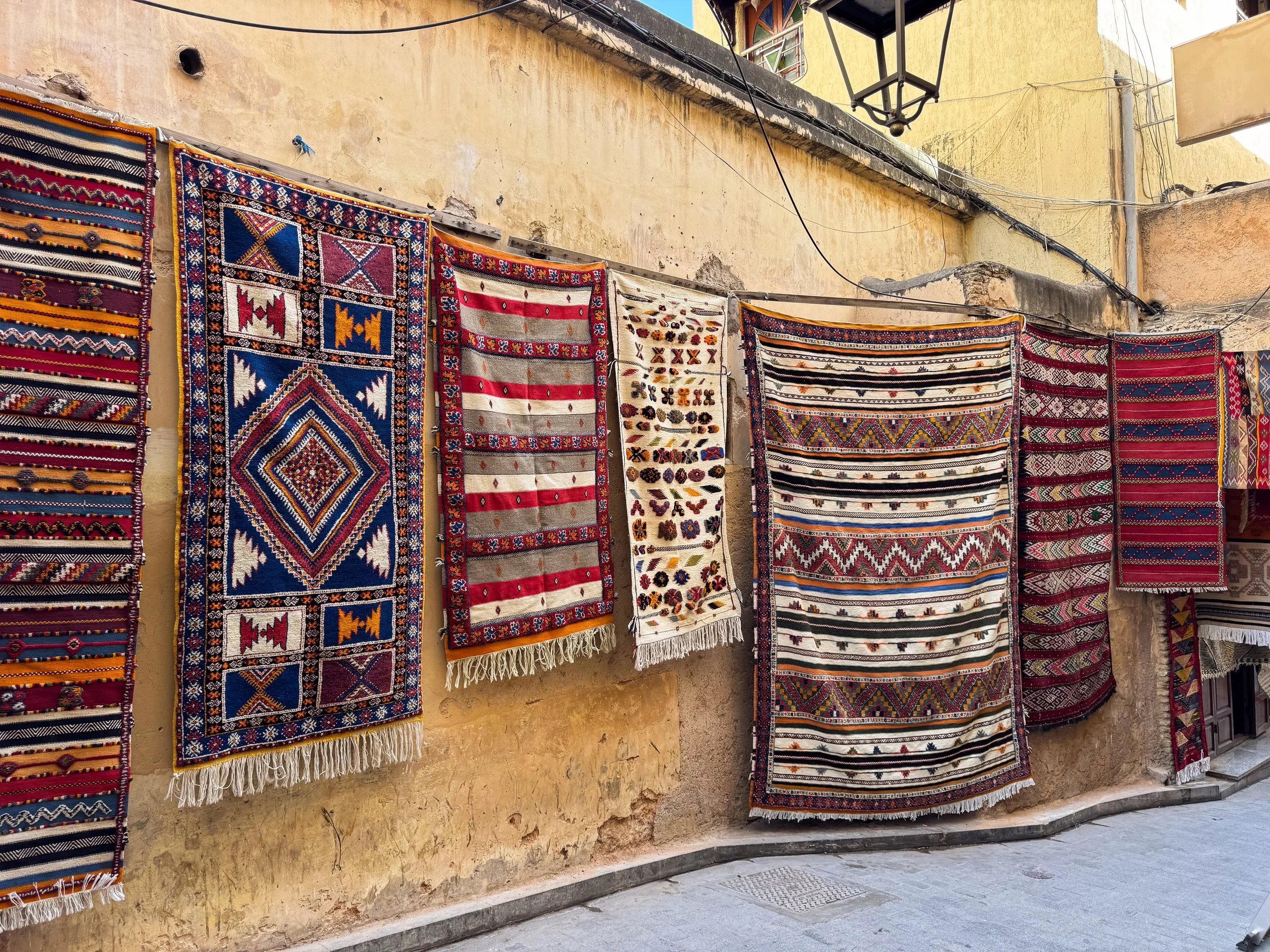
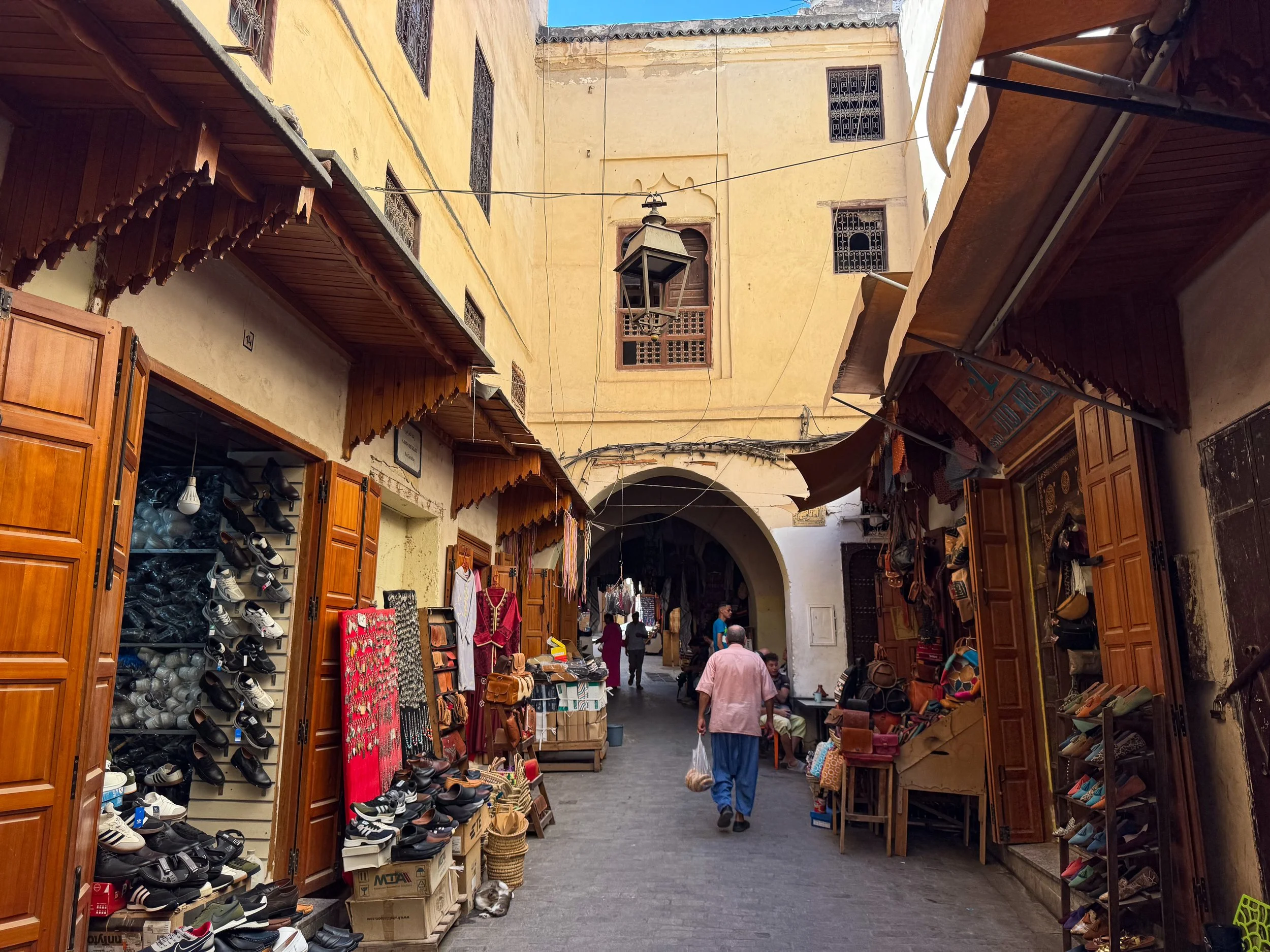
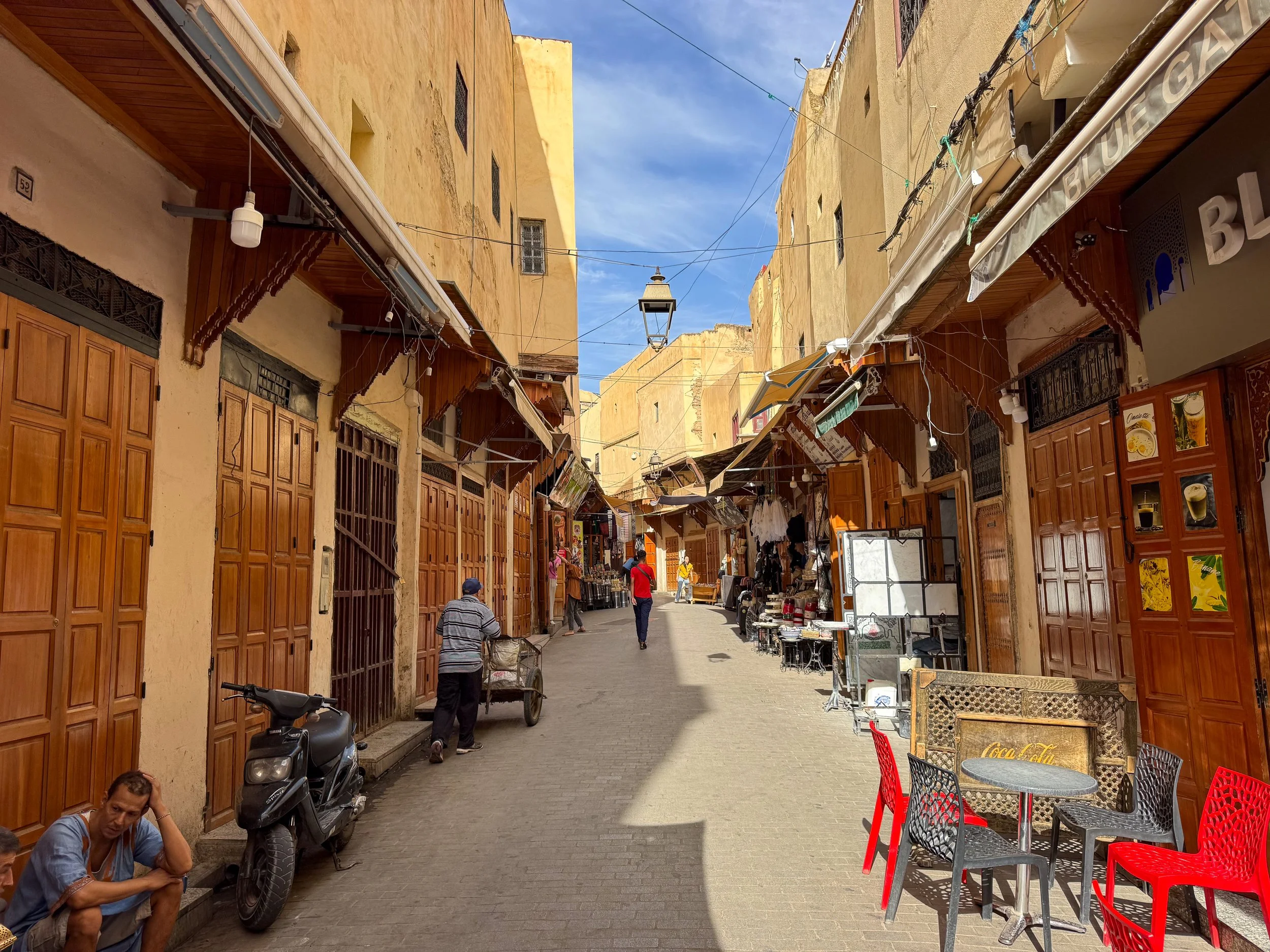
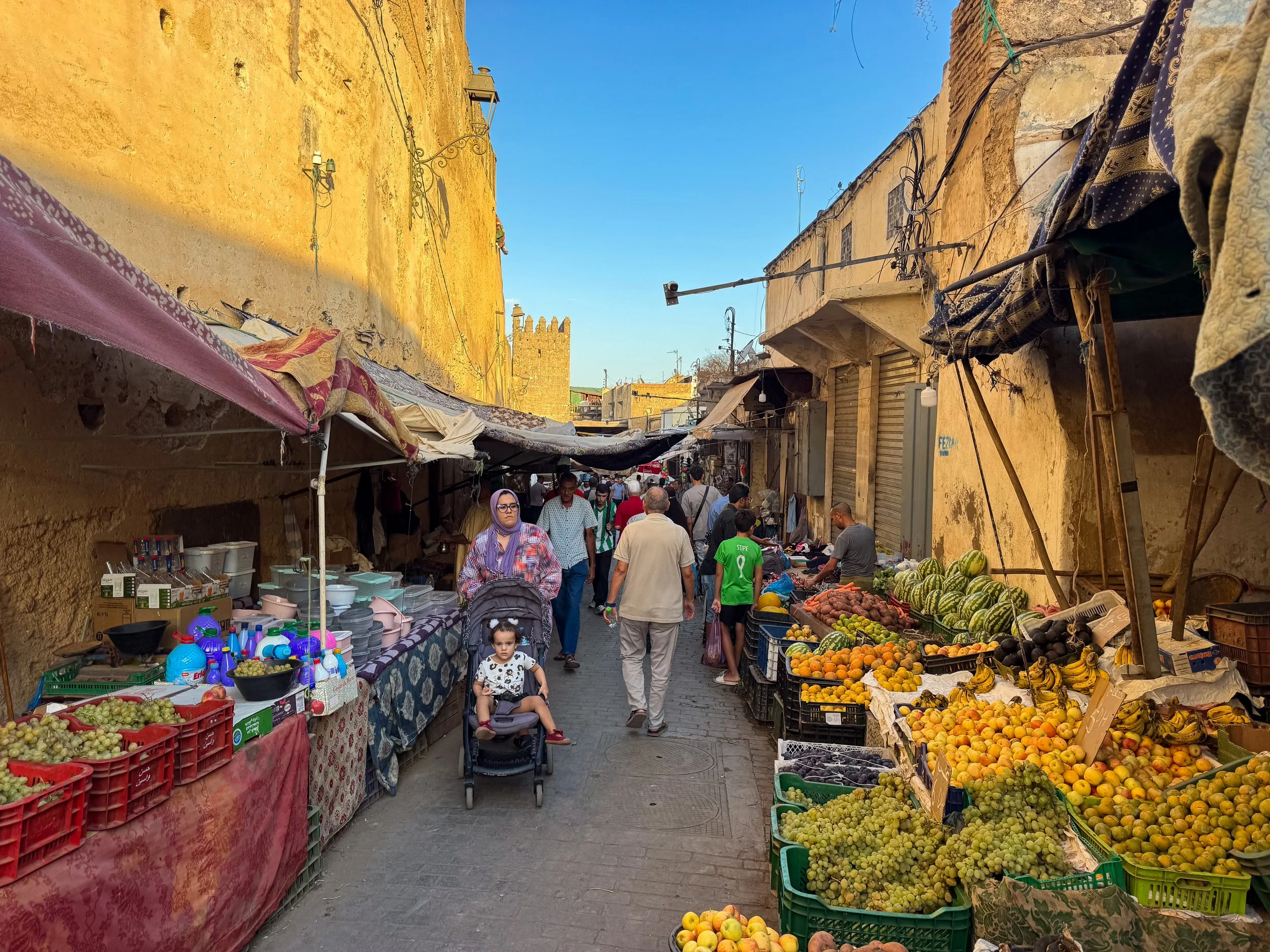
Rue Talaa Kebira. A lengthy souk street meandering through the center of the old medina. Beginning near the Al Attarine Madrasa, it climbs uphill toward Bab Boujloud. The souk’s rich tapestry of artisans and vendors display Moroccan home decor such as rugs, poufs and brass lanterns. Merchants and customers haggle over leather goods, scarves and jewelry. Spice shops, small cafés and unassuming eateries add local flavors to the mix. A farmers market provides locals with fresh produce, meats and grains. Narrow alleyways continually branch off, leading deeper into the medina. Visit the souk street of Rue Talaa Sghira for a similar experience.
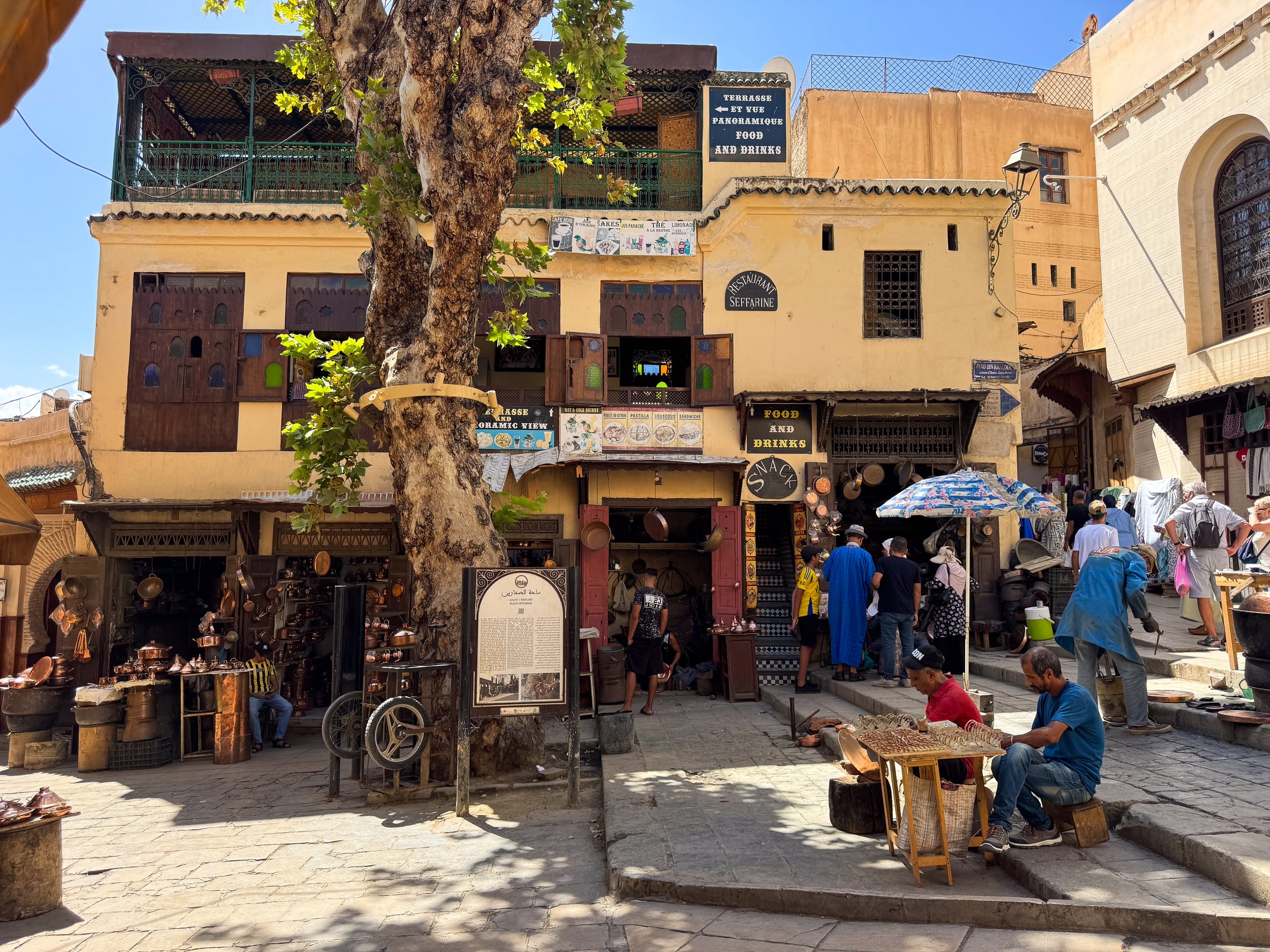
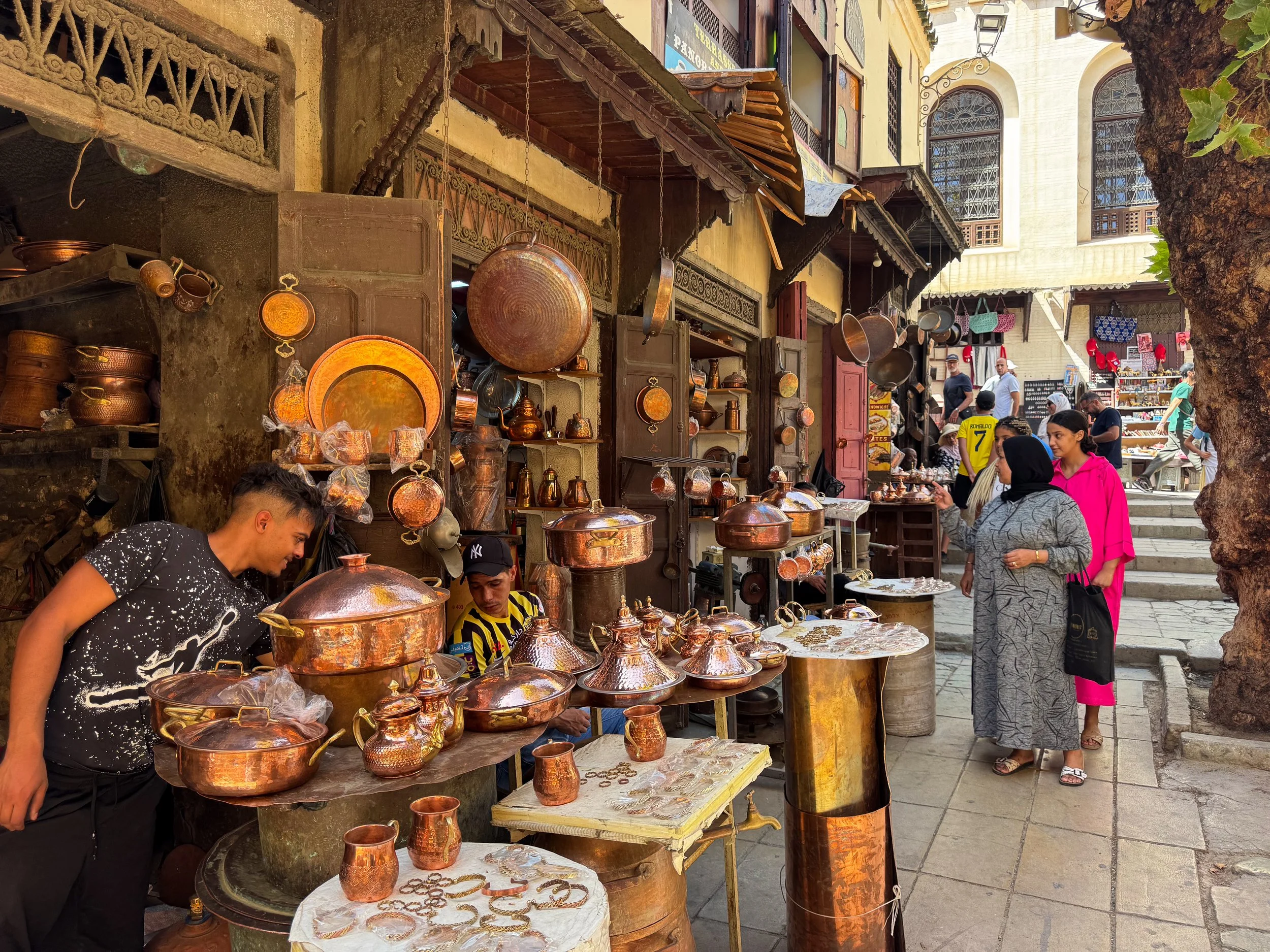
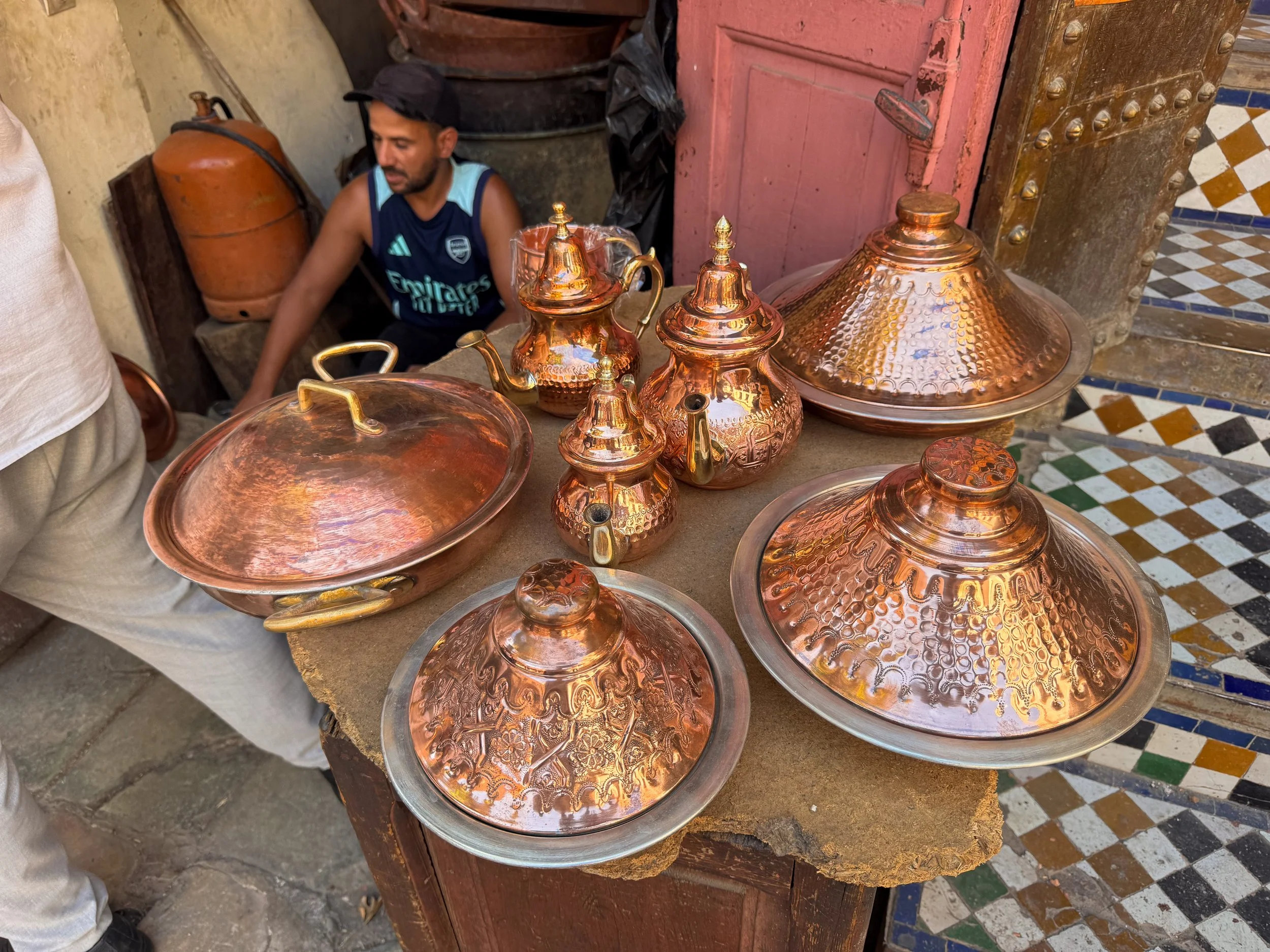
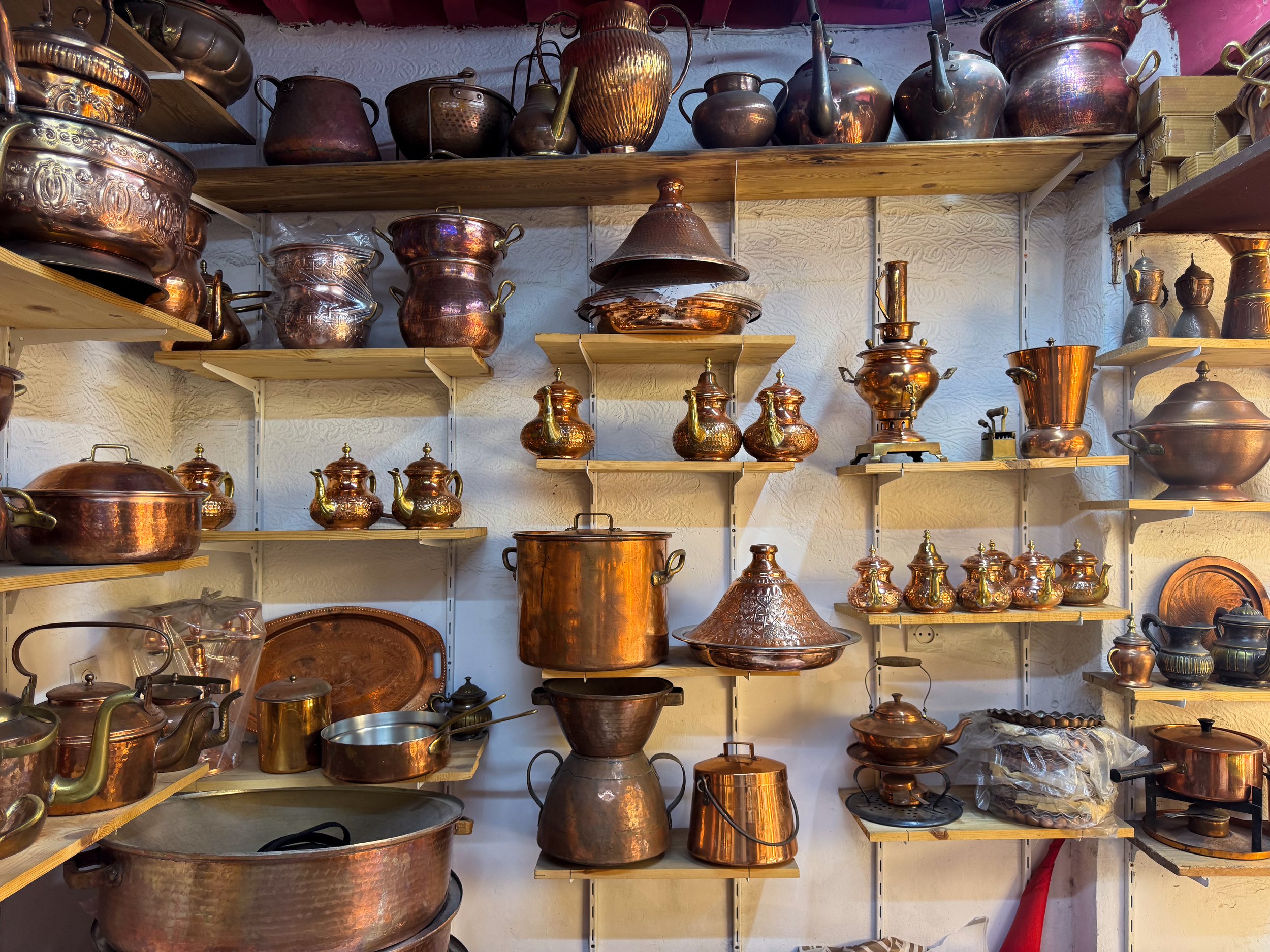
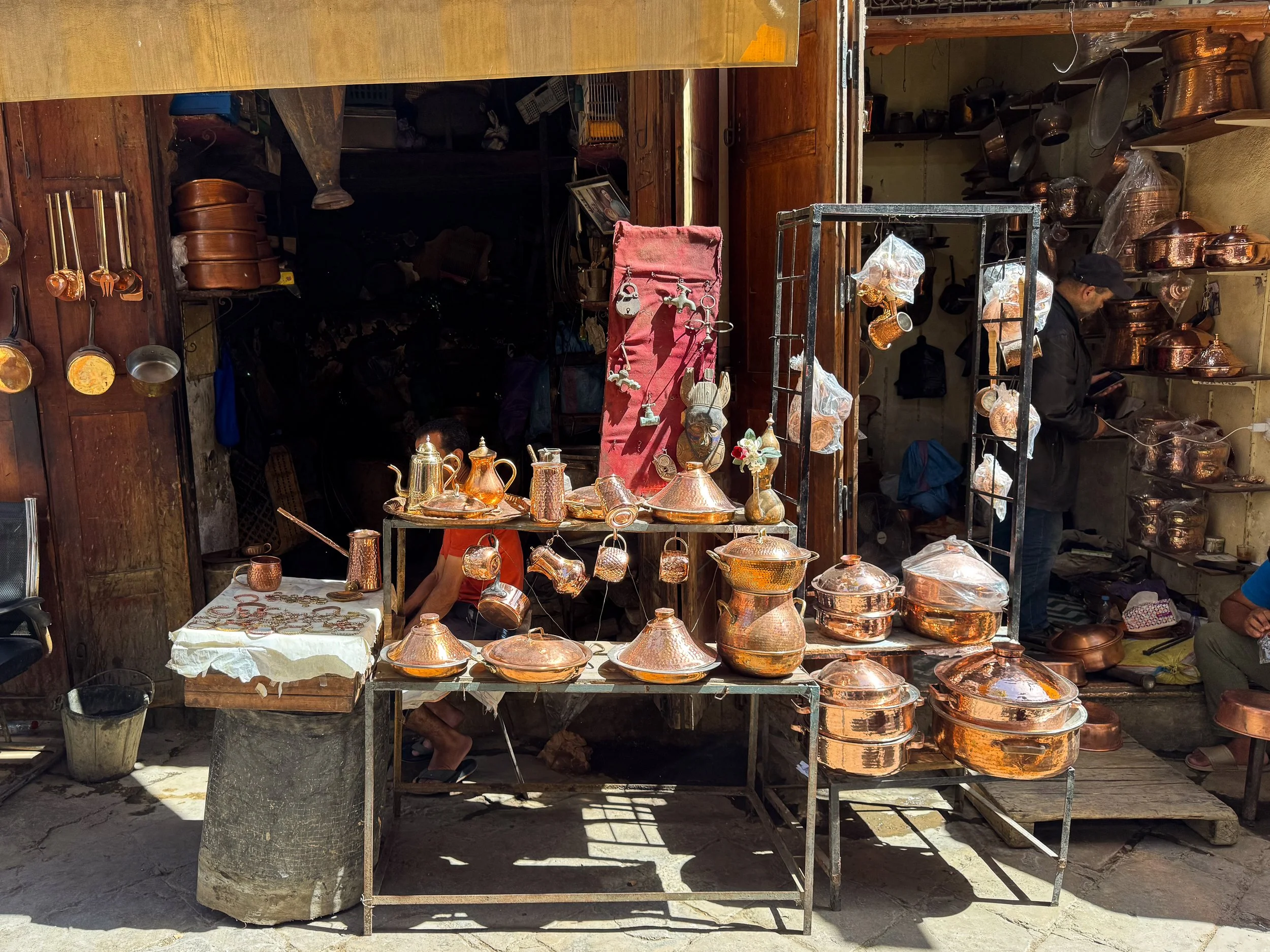
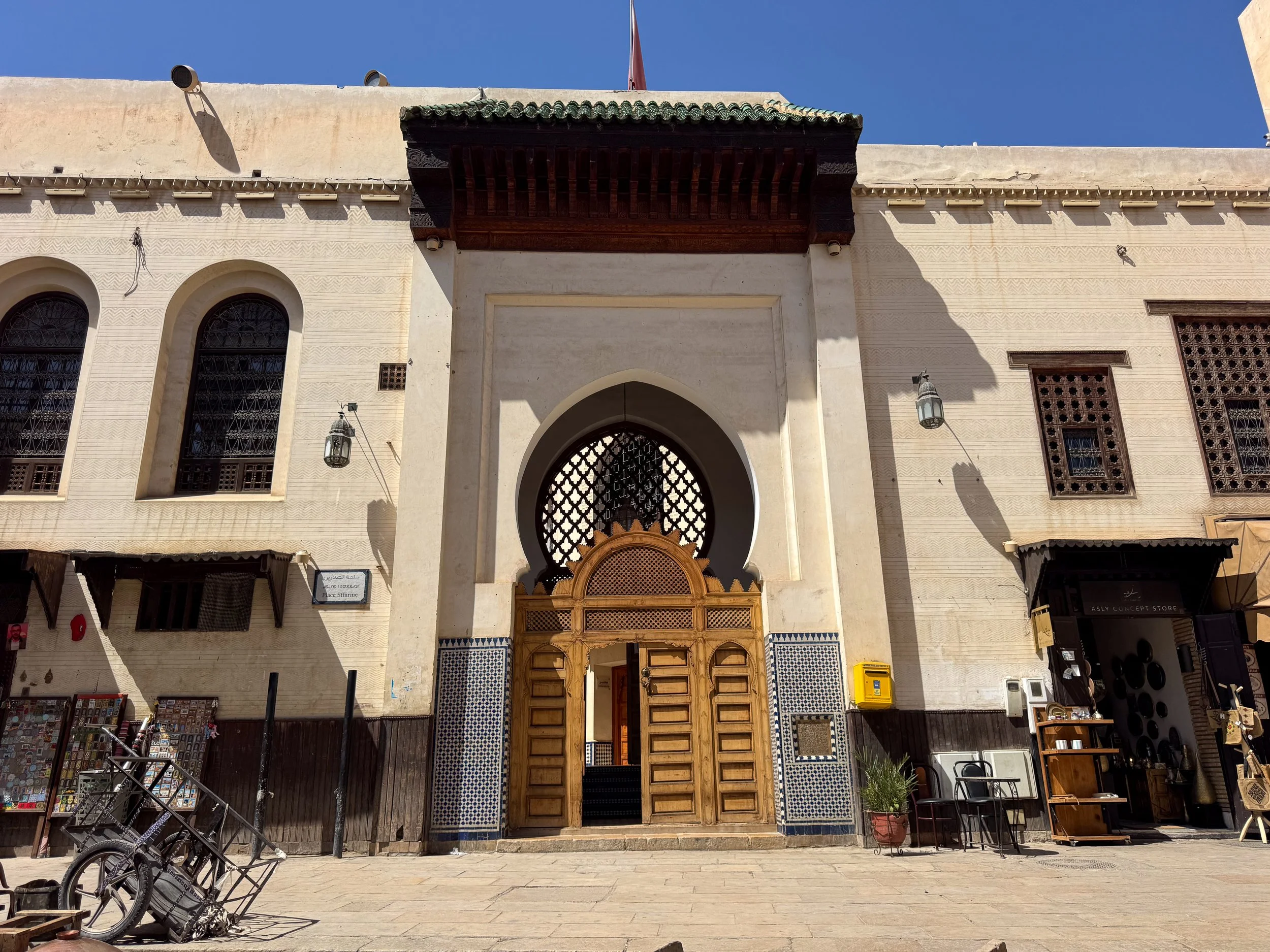
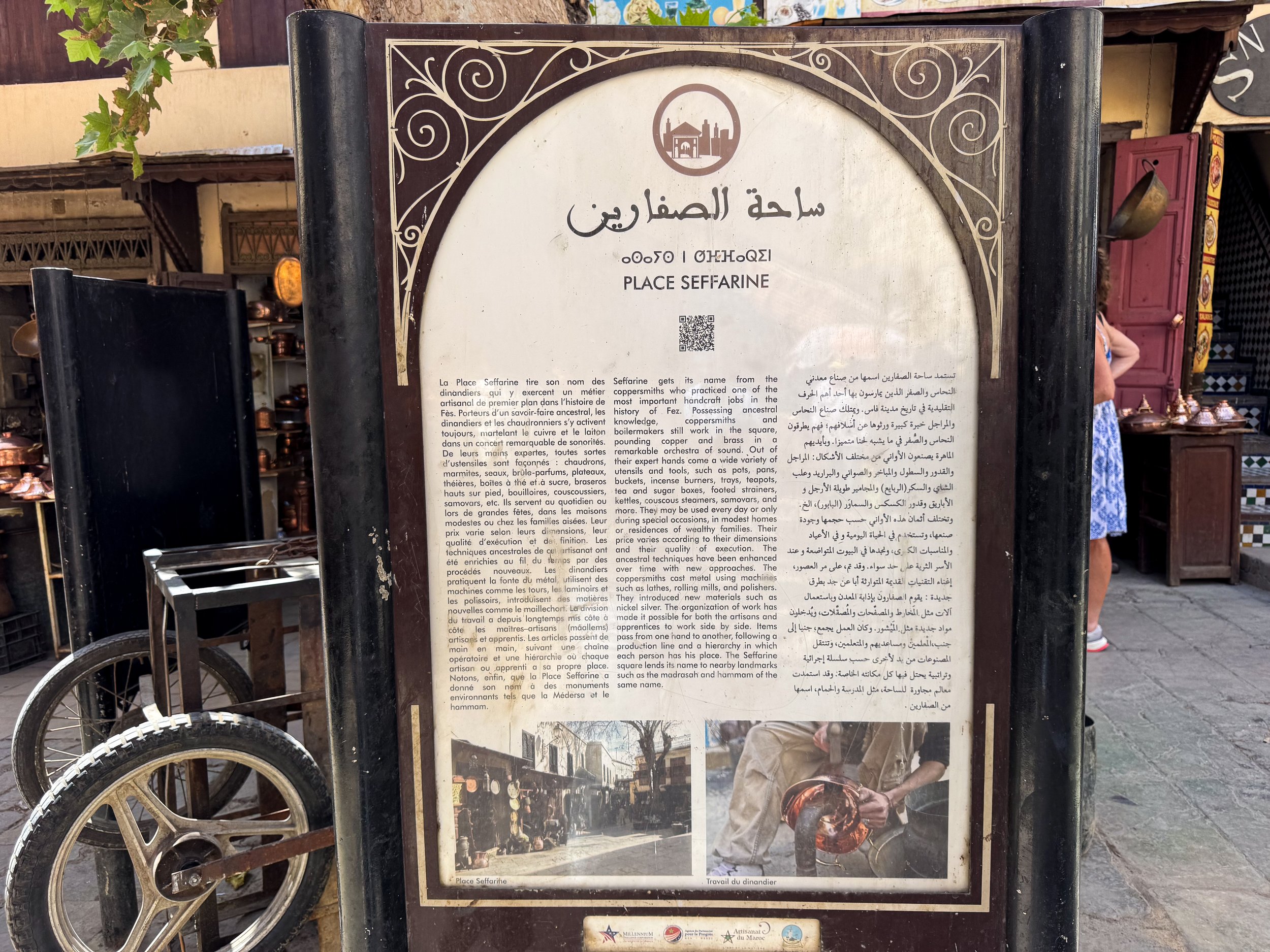
Souk Seffarine. A metalworking souk centered around a small plaza in the old medina. The rhythm of sharp clangs echo throughout the air as artisans hammer copper disks into dishes to cook Moroccan pastilla. Metalworkers labor in the open plaza and inside cluttered studios while shopkeepers display copper tagines, teapots, brass lamps, antiques and a variety of goods.
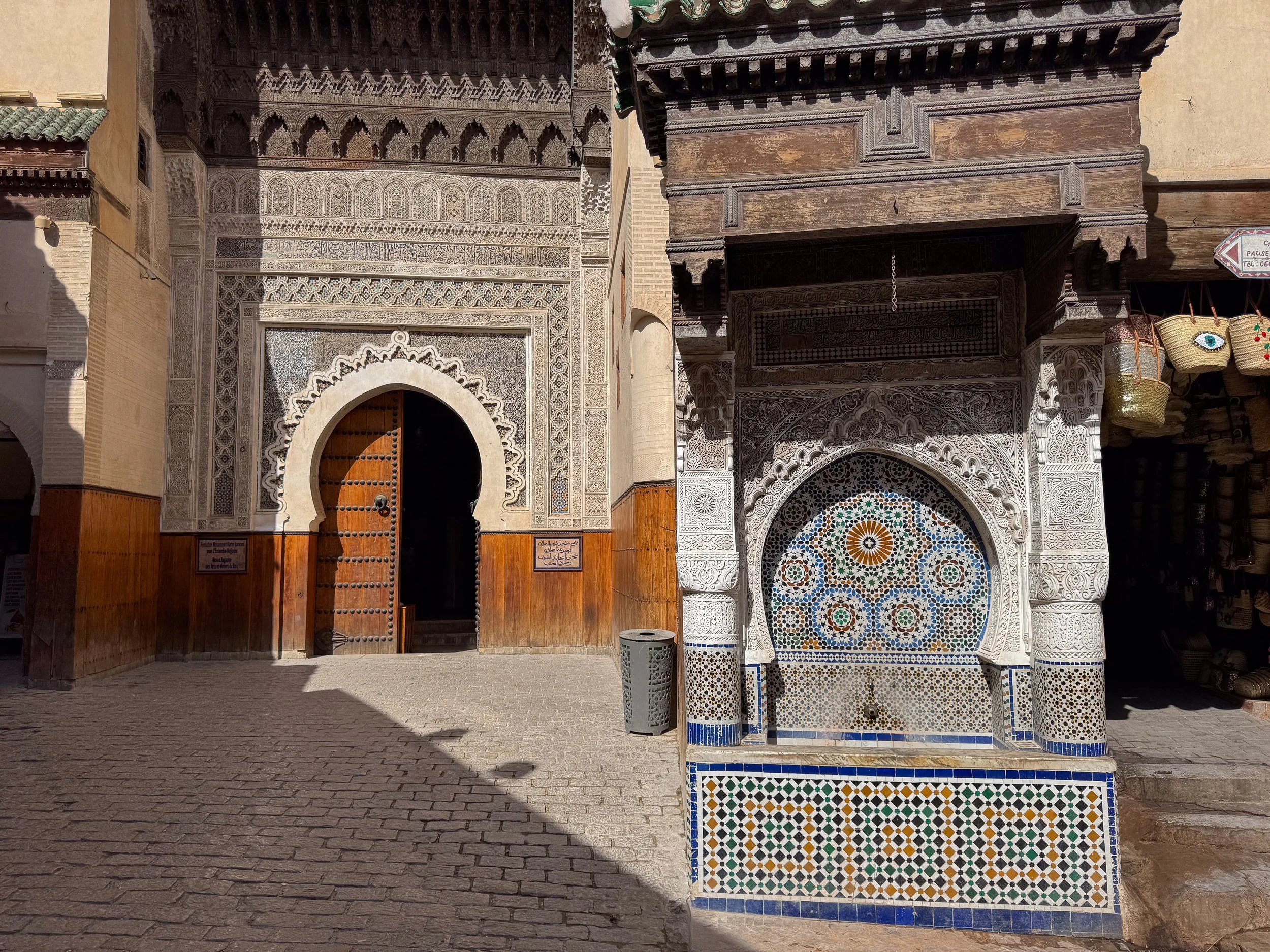
Souk Nejjarine. A small woodworking souk in the plaza outside of the Nejjarine Museum. Artisans chisel away at blocks of wood, whittle figurines and spin lathes to create decorative boxes, berber locks and ornate reliefs.
See the Sights
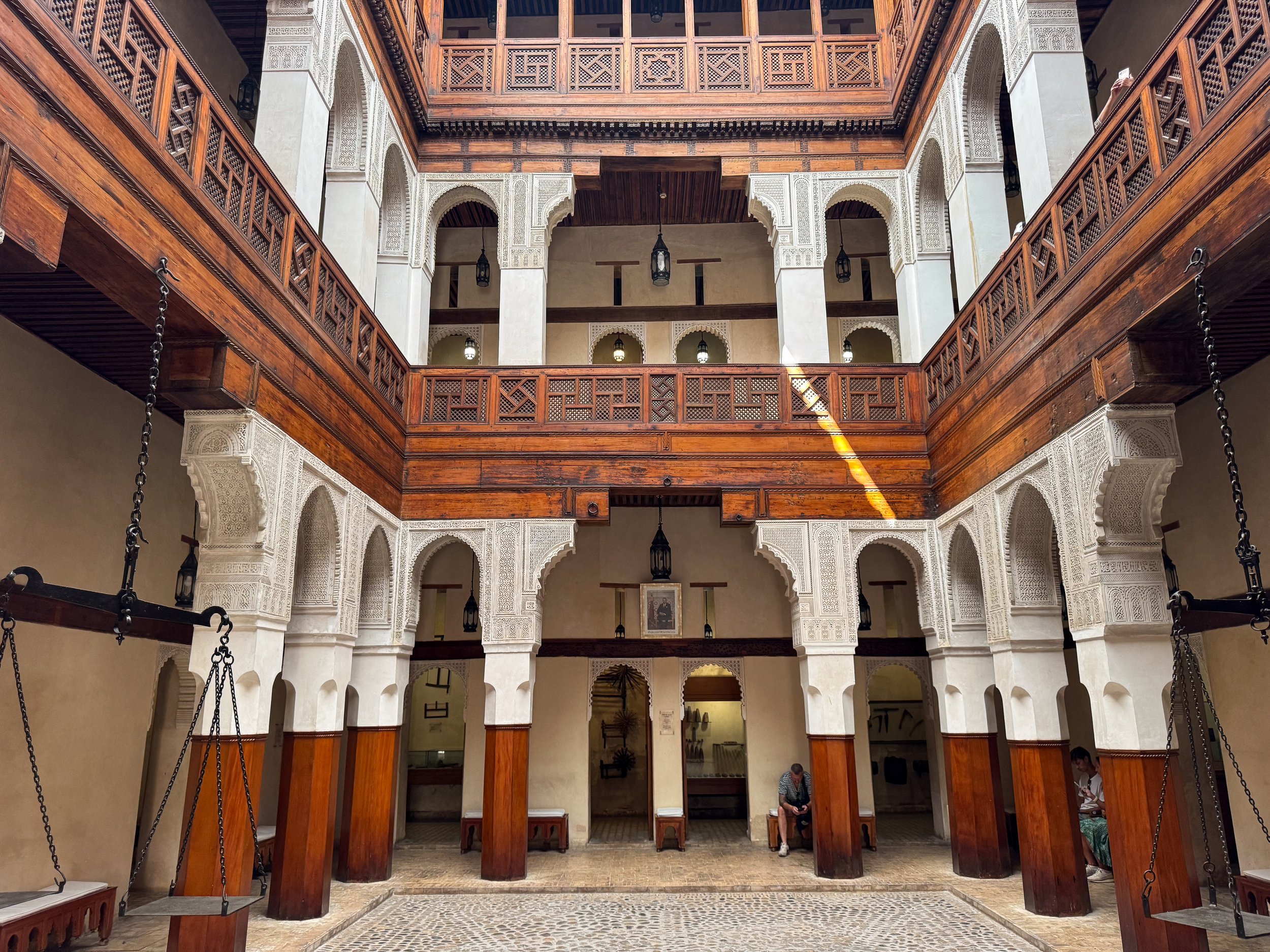
Nejjarine Museum. A museum showcasing Morocco’s wooden craftsmanship. Housed in a restored wooden building, three floors of galleries focus on different aspects of woodworking. Exhibits display Moroccan wood species, woodworking tools, home decor, musical instruments and architectural elements.
Nejjarine Museum Rooftop. The rooftop of the Nejjarine Museum offers panoramic views of the medina while woodworking artisans display their craft in the plaza below. There is a small café up here serving coffees and Moroccan teas.
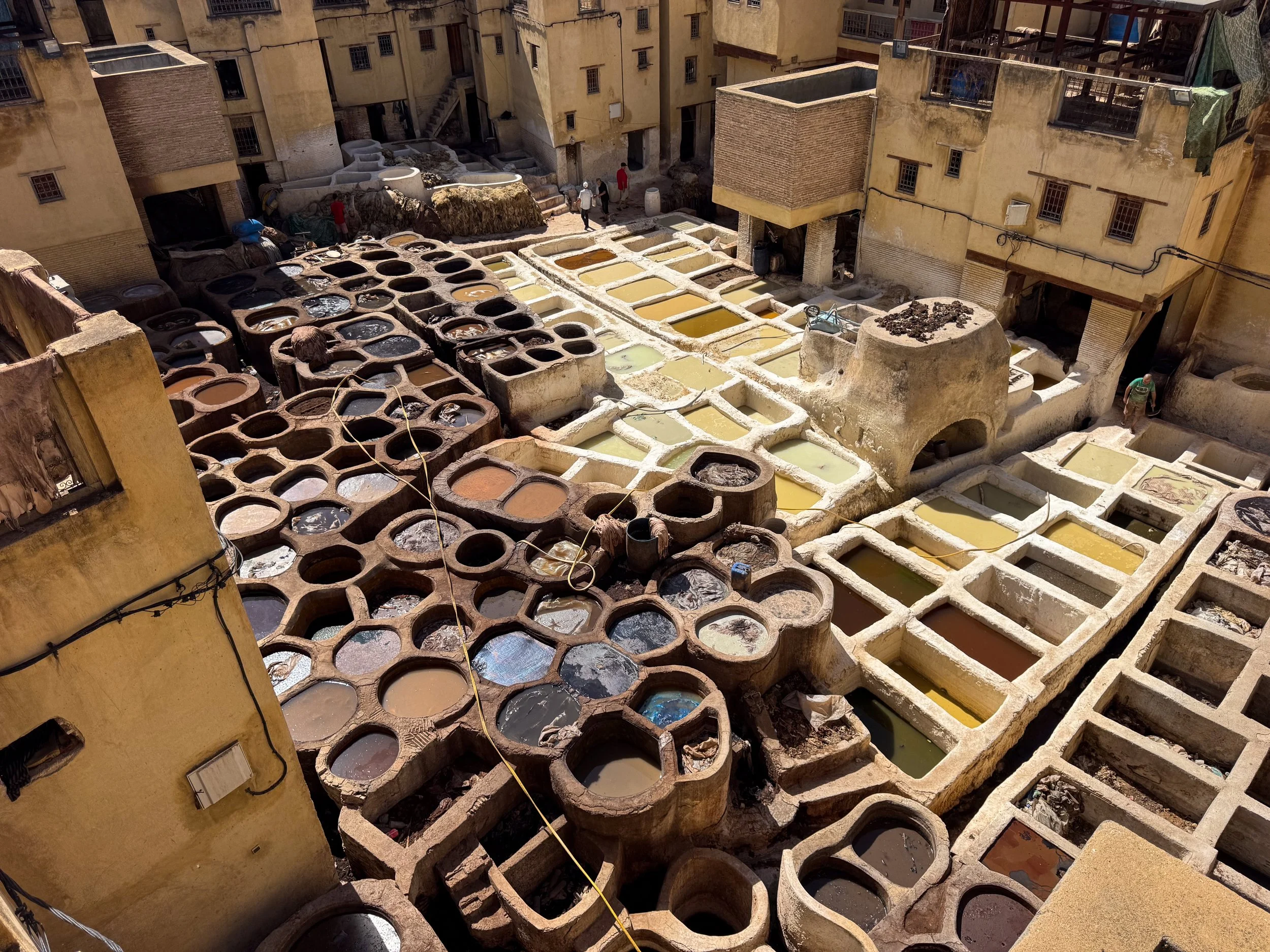
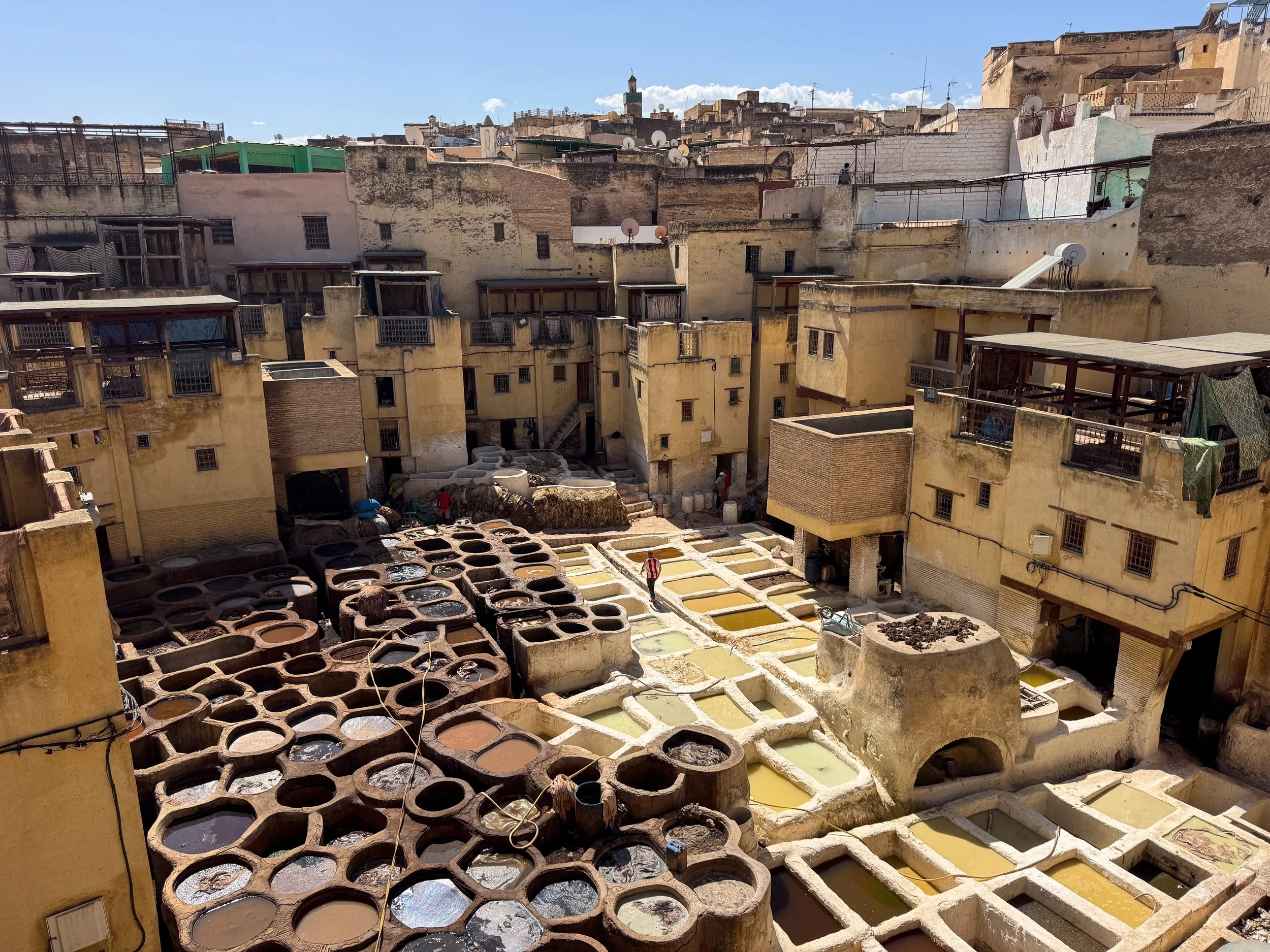
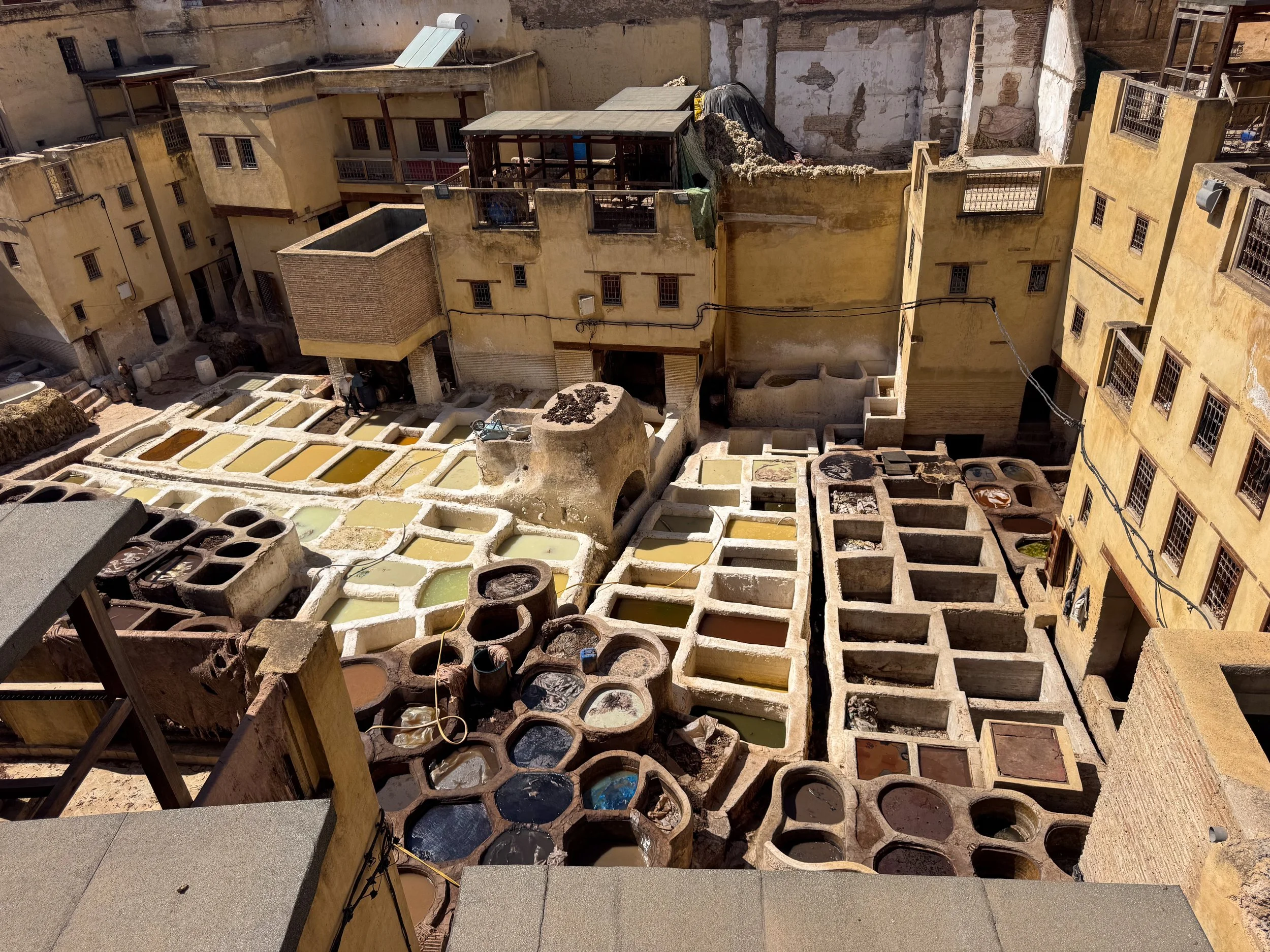
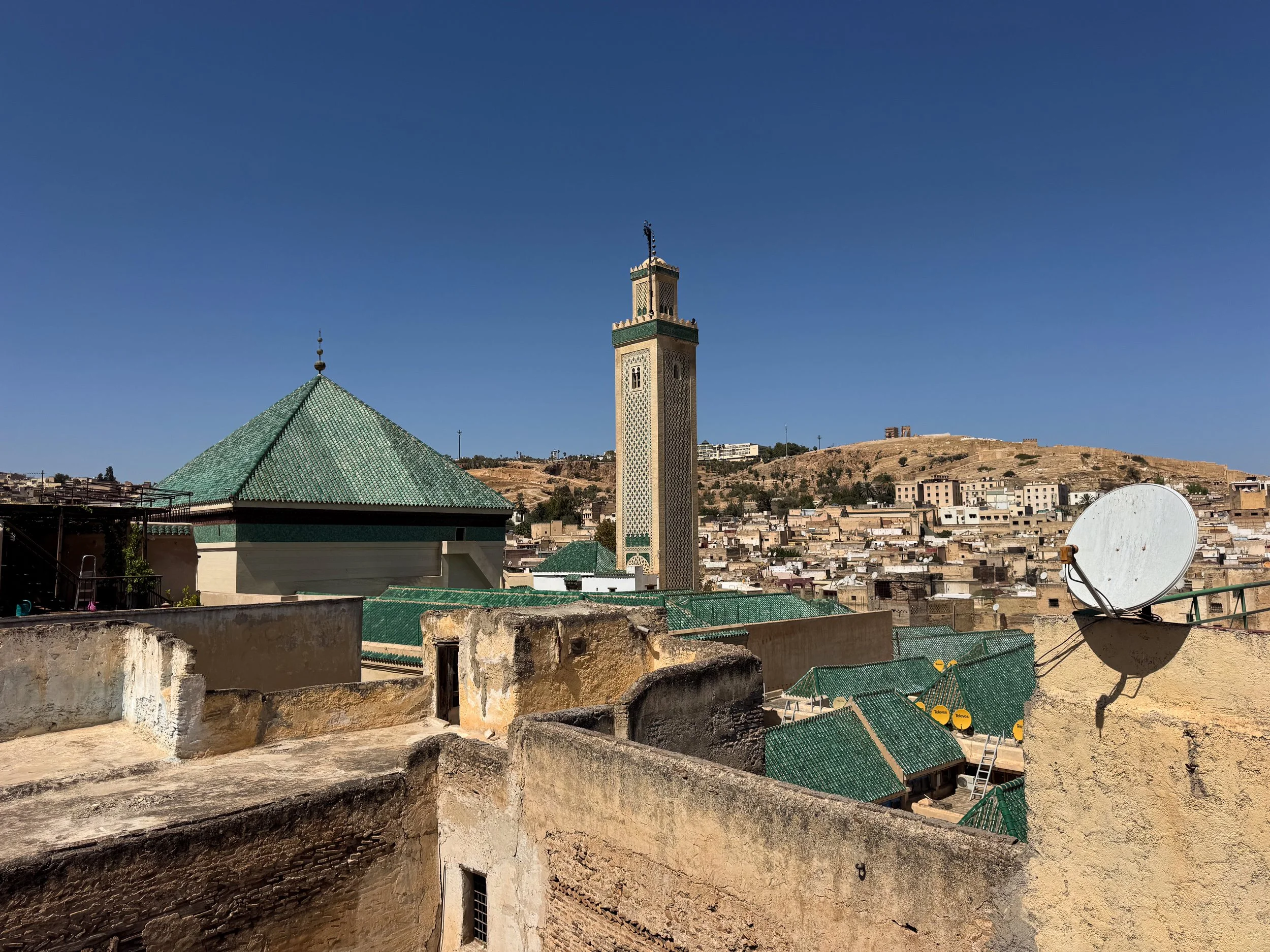
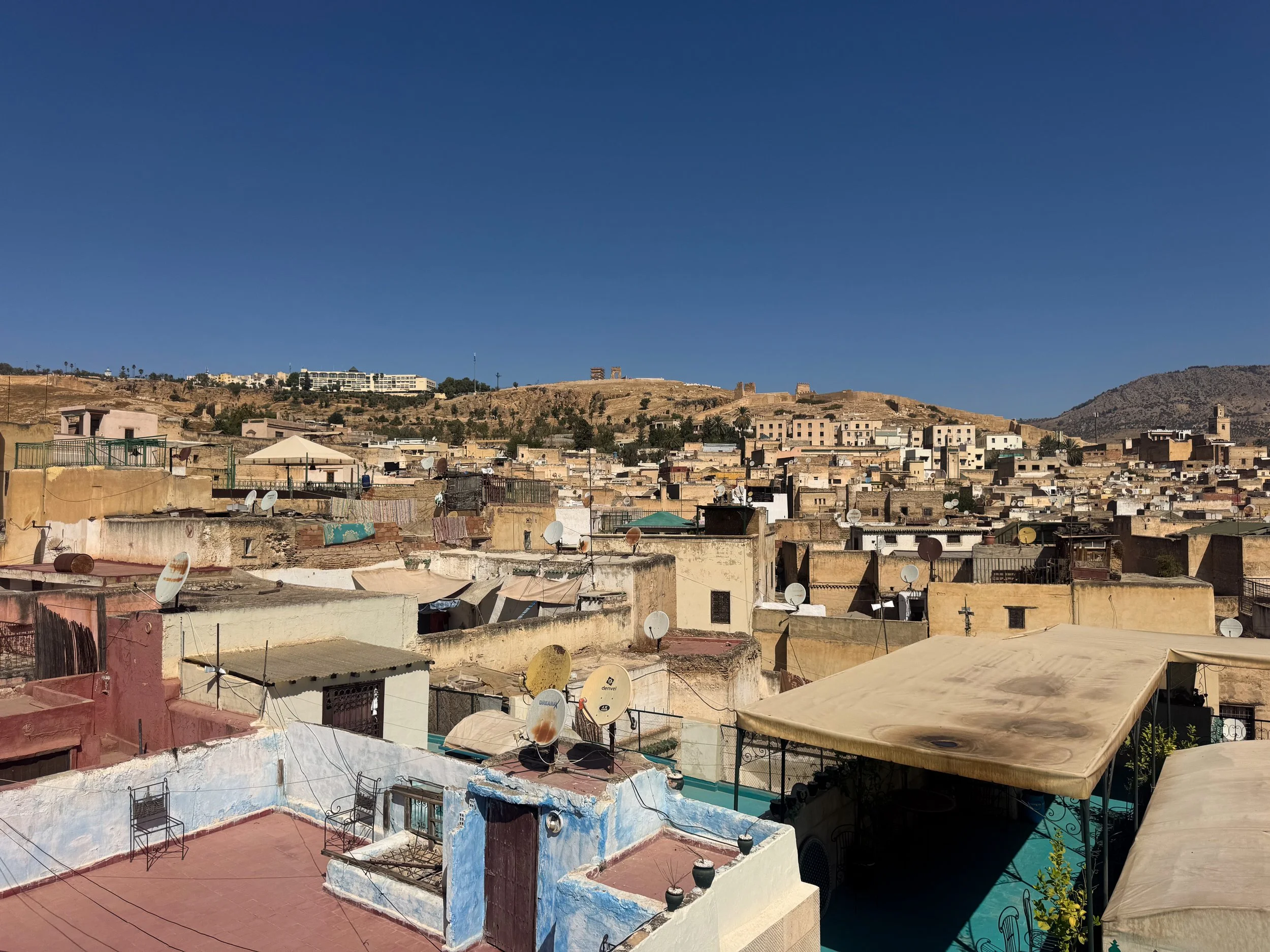
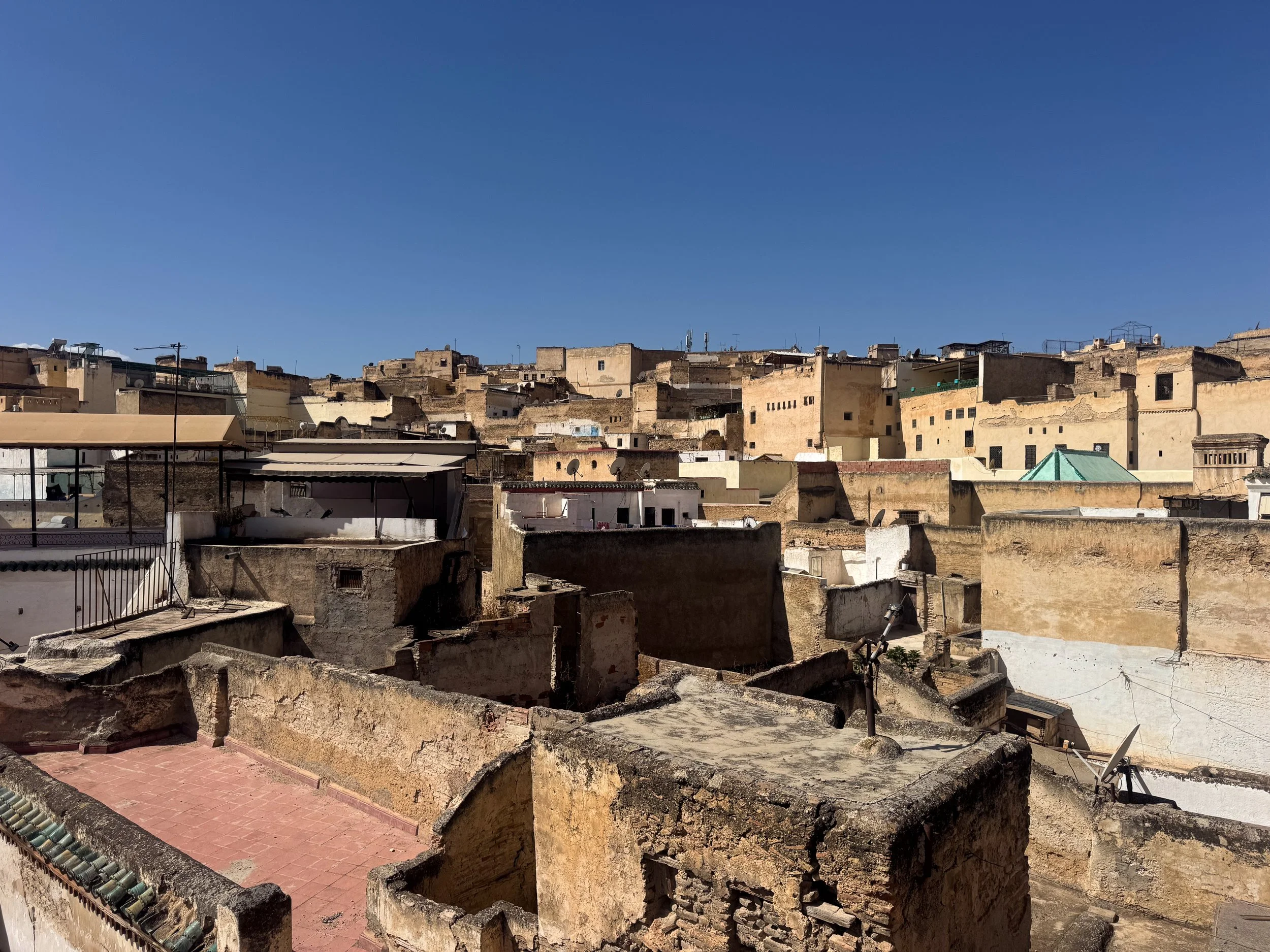
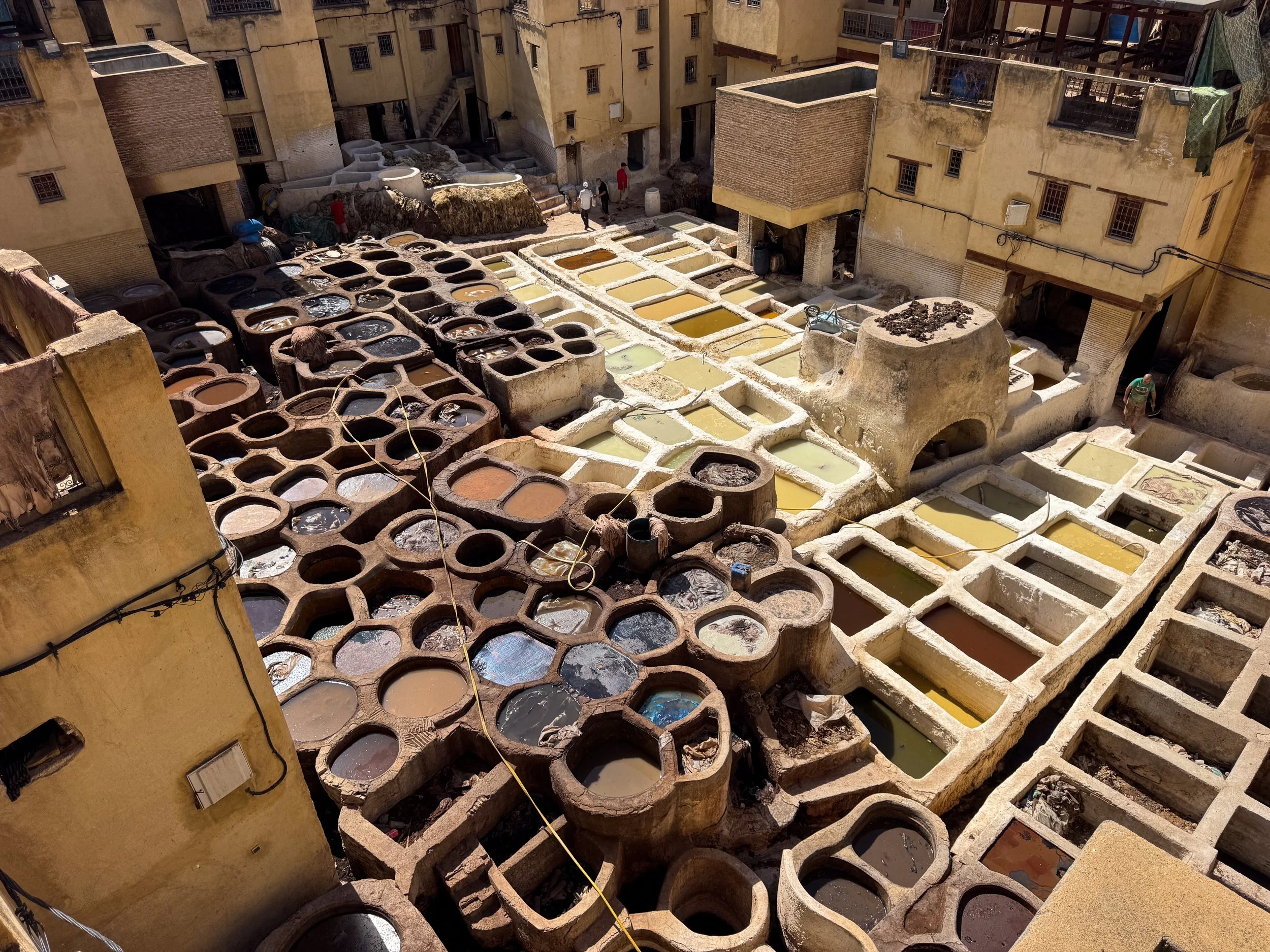
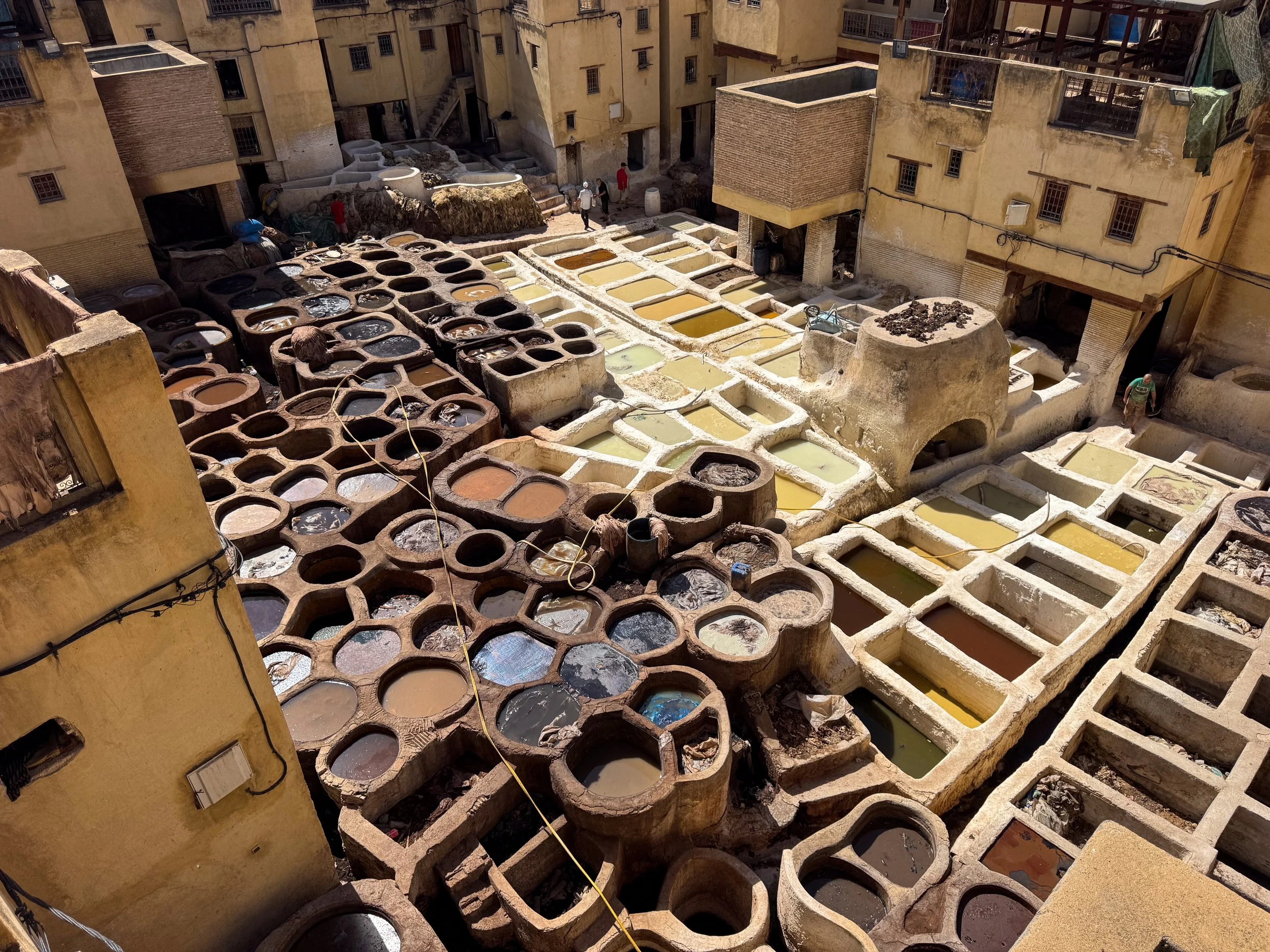
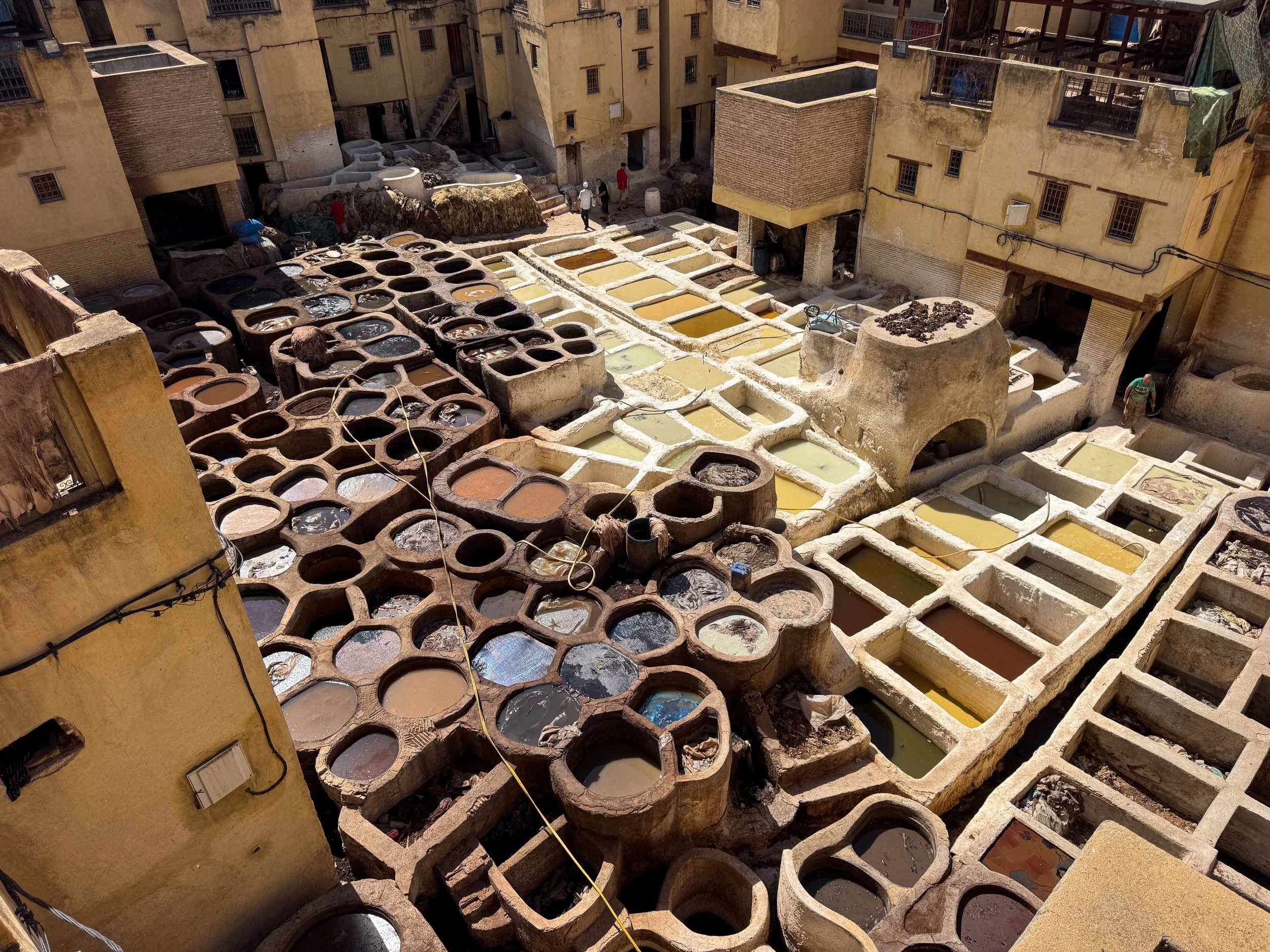
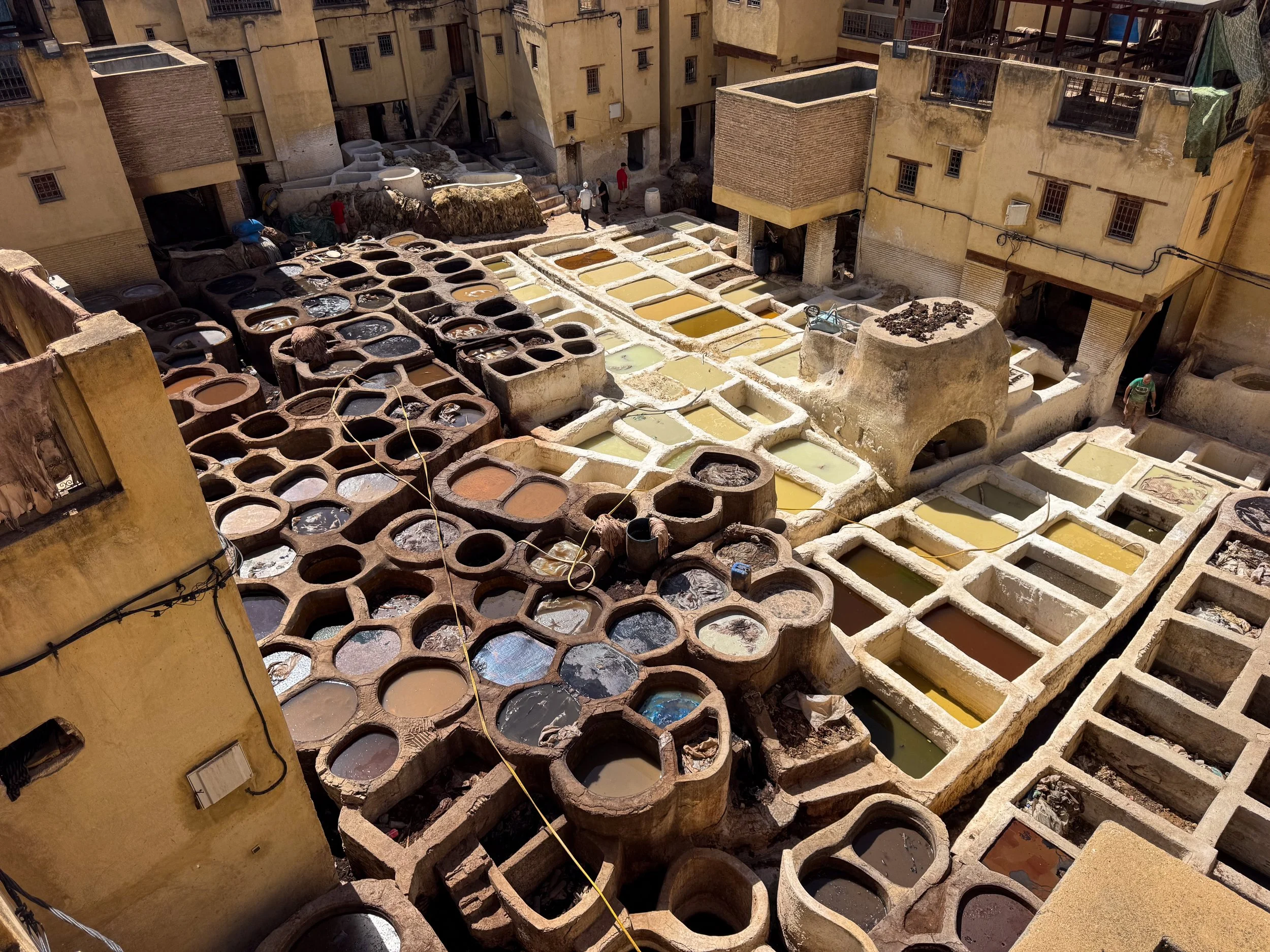
Tanneries de Fes. A historic tannery that offers a vivid glimpse into traditional Moroccan leather making. A series of layered vats filled with chemical solutions and dyes sprawls across the tannery. The air is pungent but manageable. Stacks of cow, goat, camel and sheep skins wait to be processed. Wooden water wheels tumble and wash hides as workers soften them with wooden mallets and dry treated pieces on covered racks. The process can be observed from surrounding rooftops. Finished leather goods are sold in nearby shops and souks.
Getting Here. Walk through a passageway on the left side of the Nejjarine Museum. There is a leather goods shop with rooftop views of the tanneries. They allow free access in exchange for perusing their products.
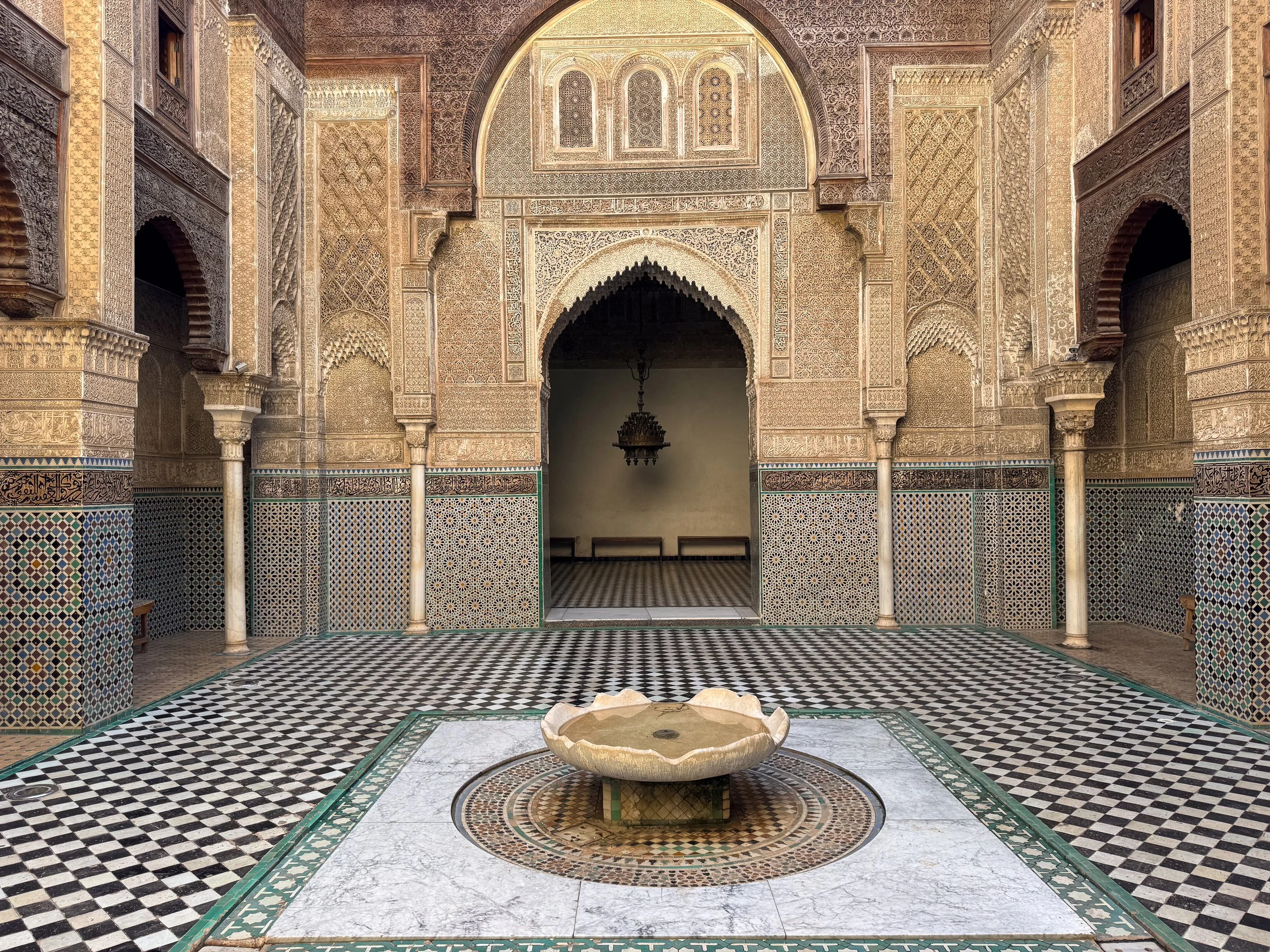
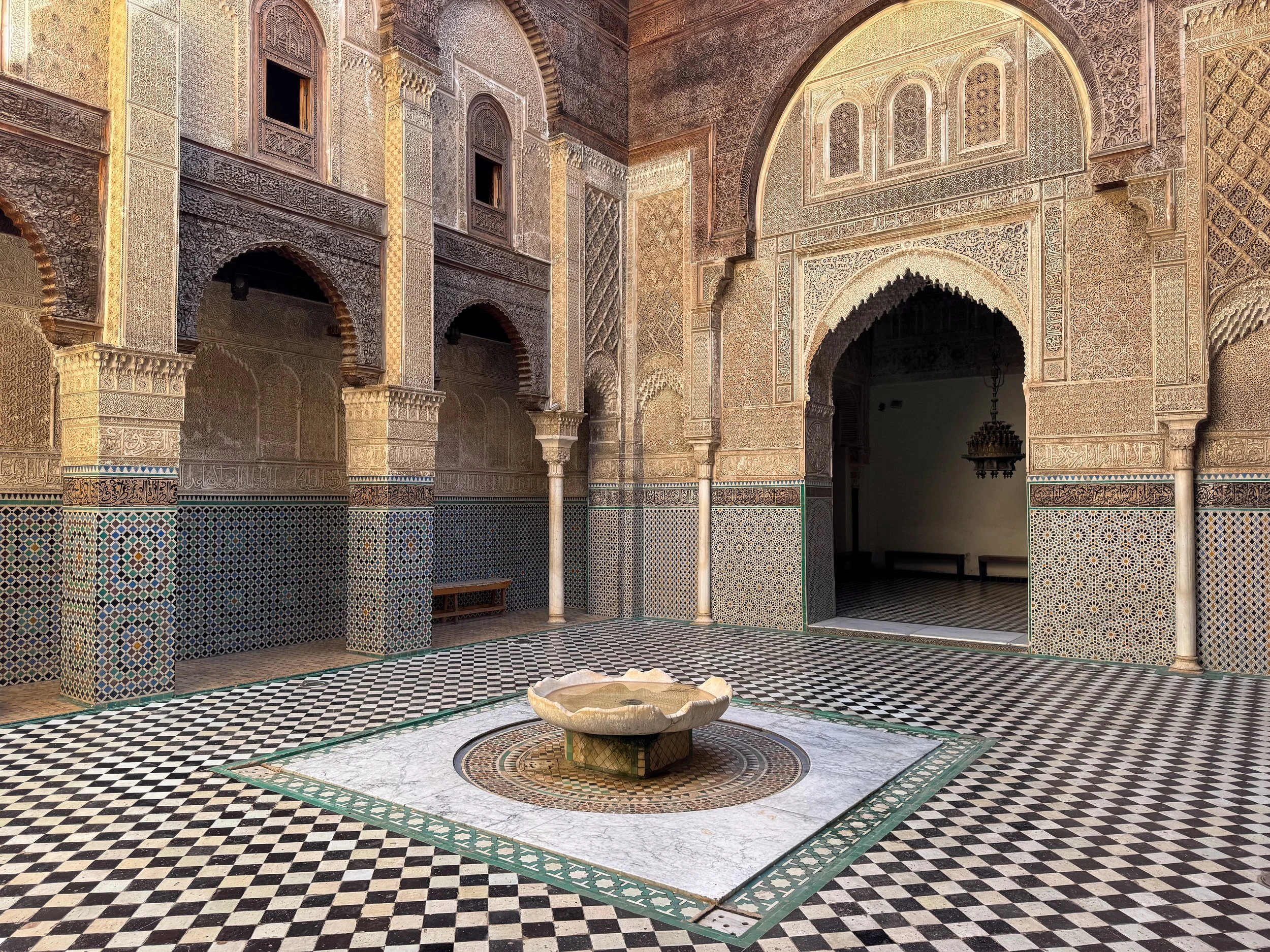
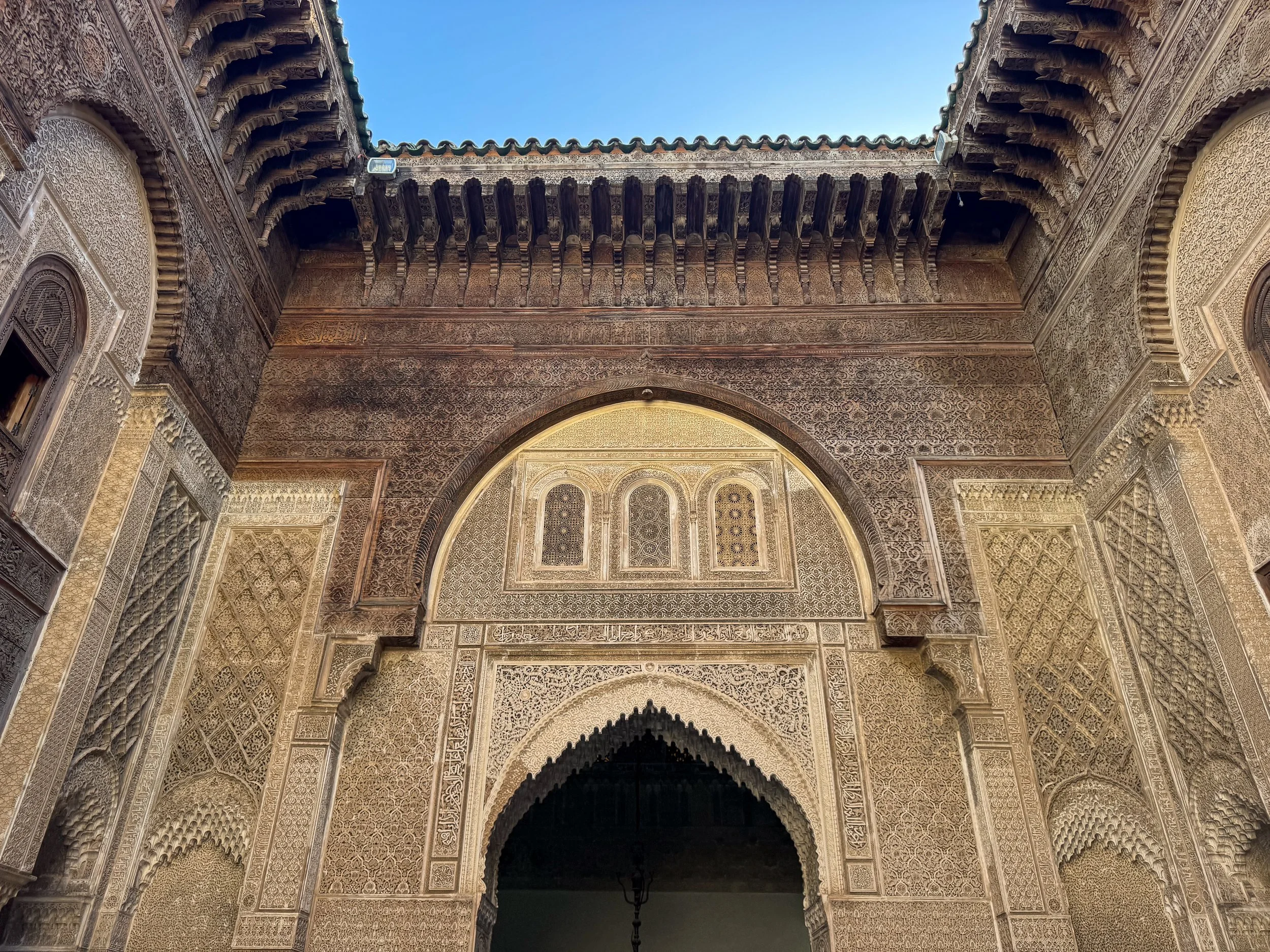
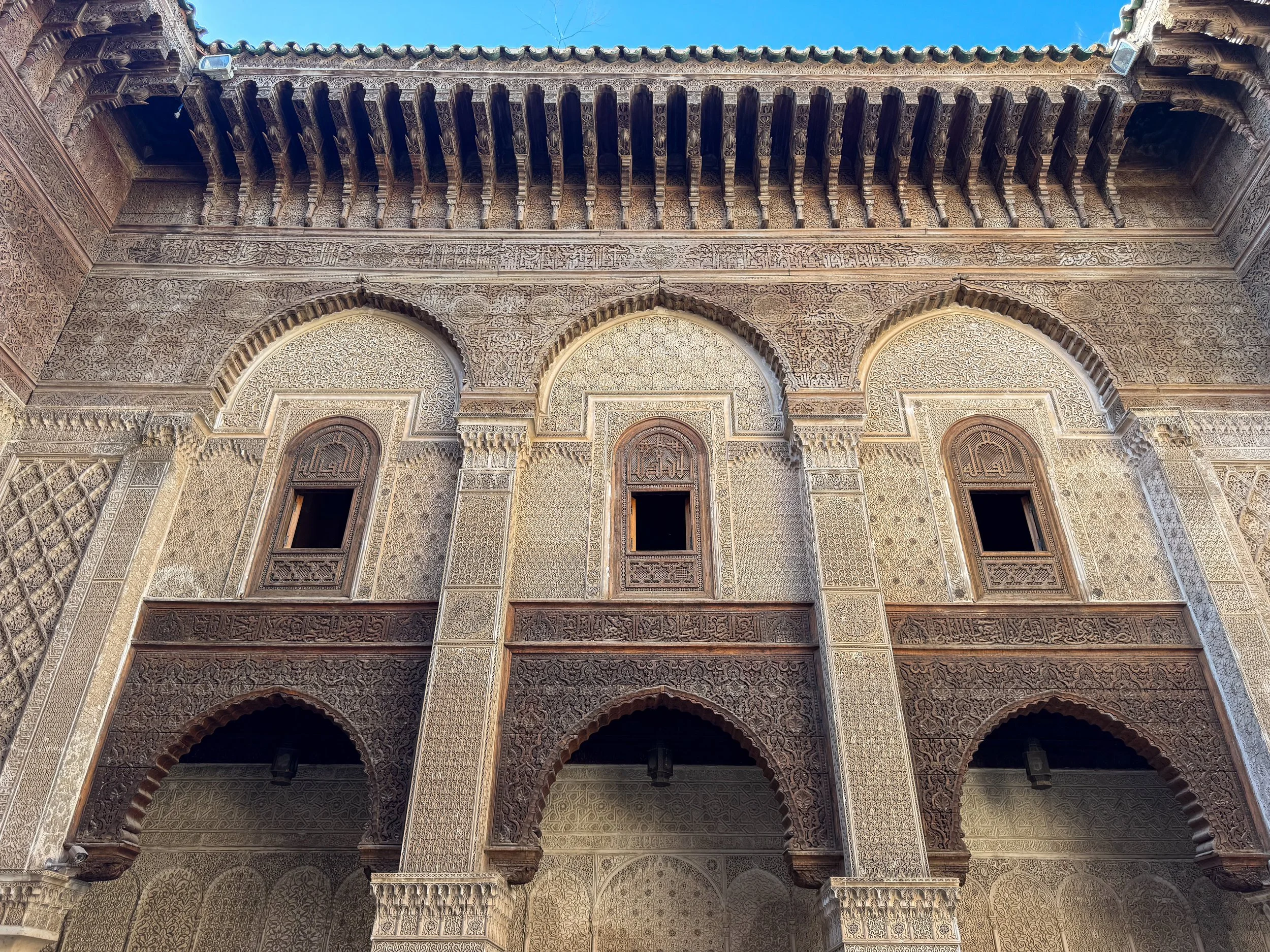
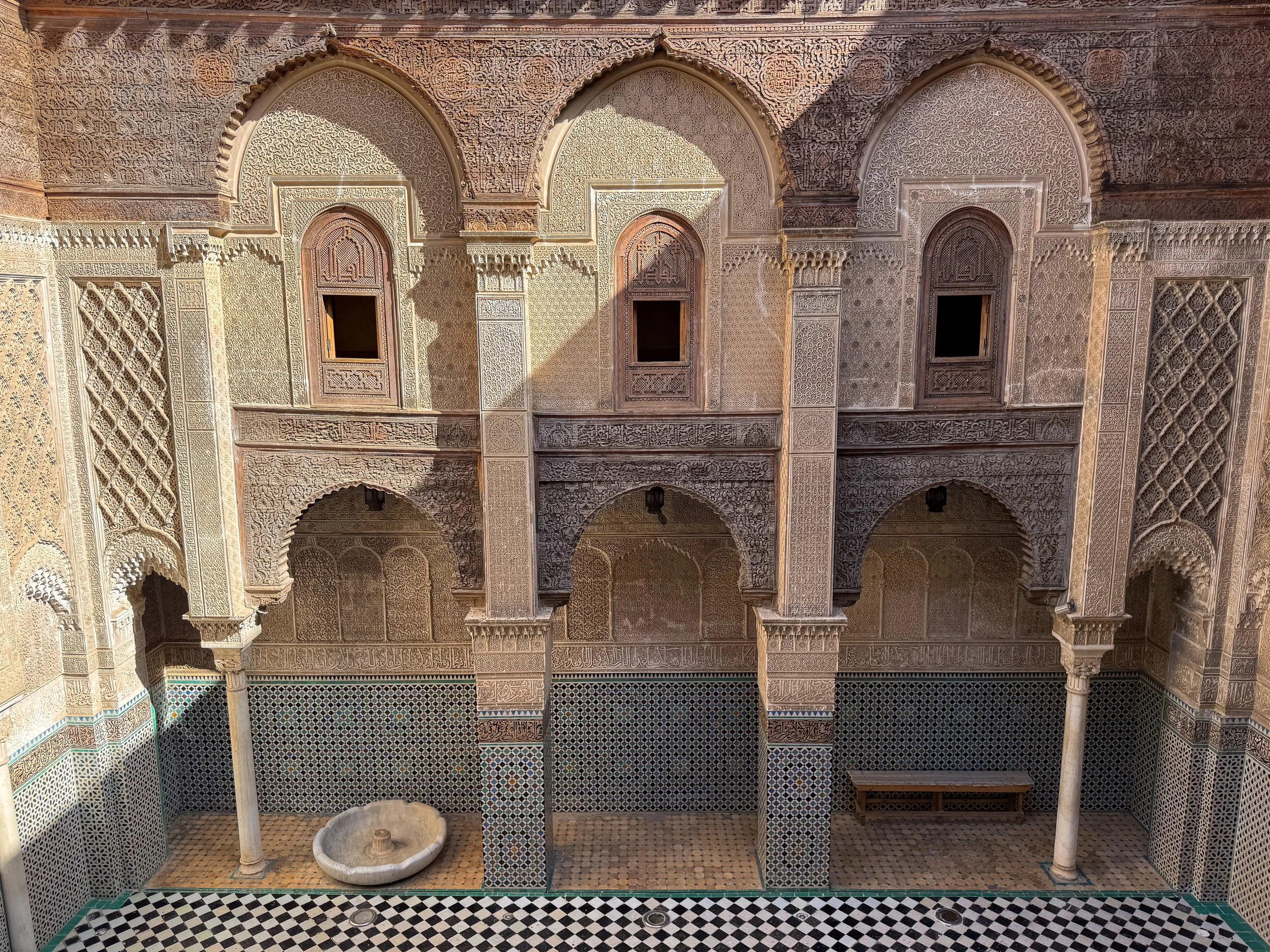
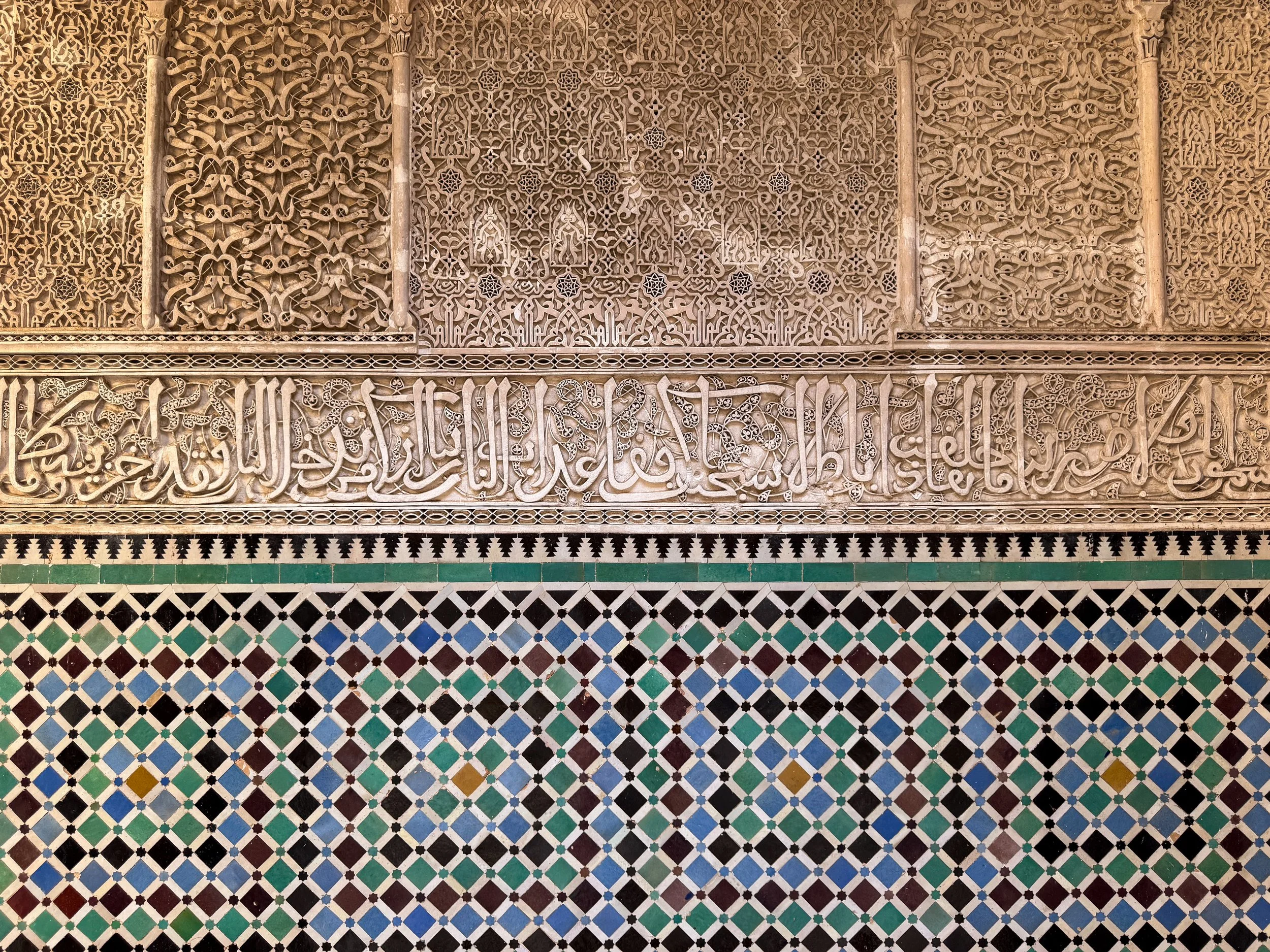
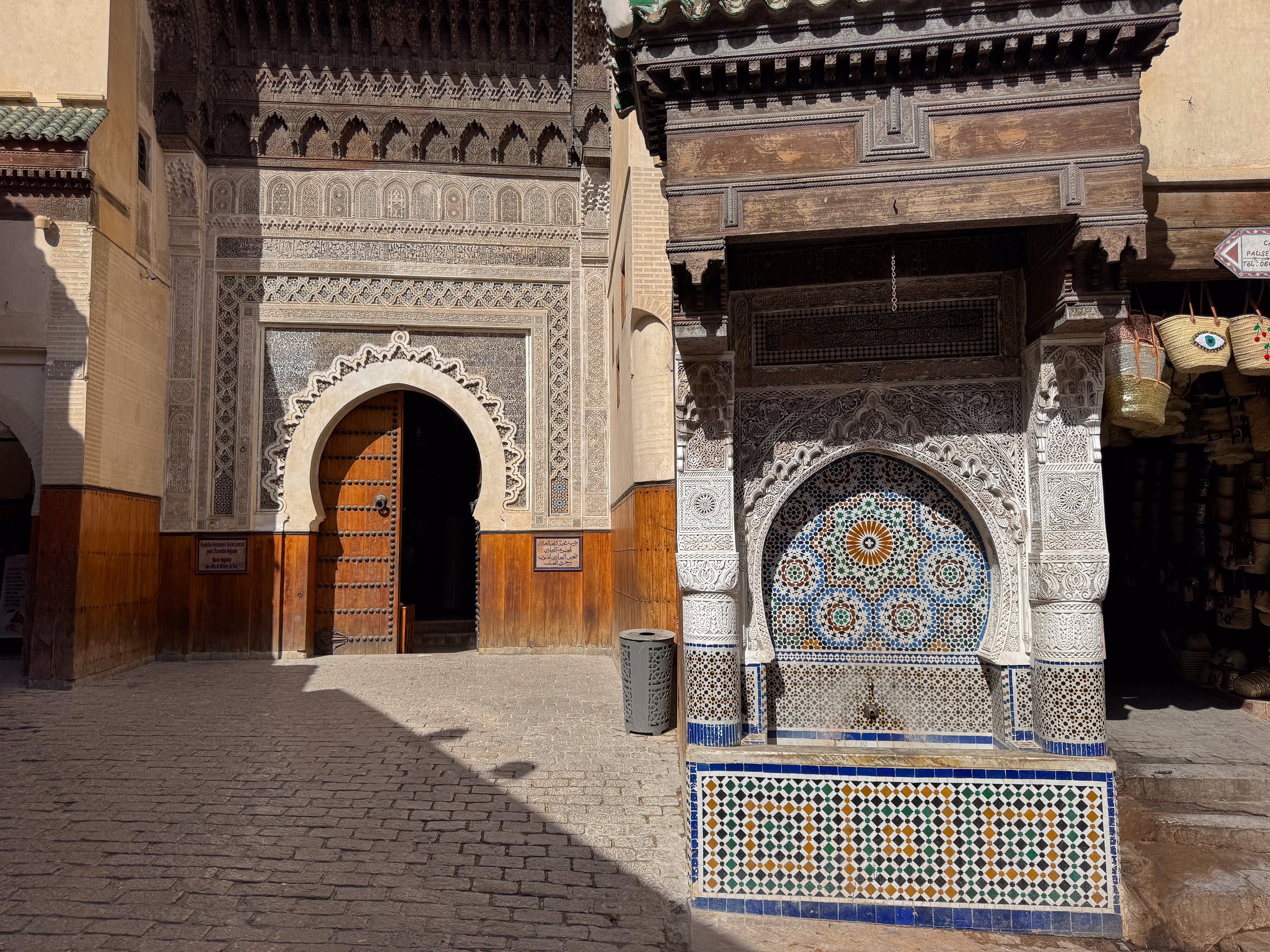
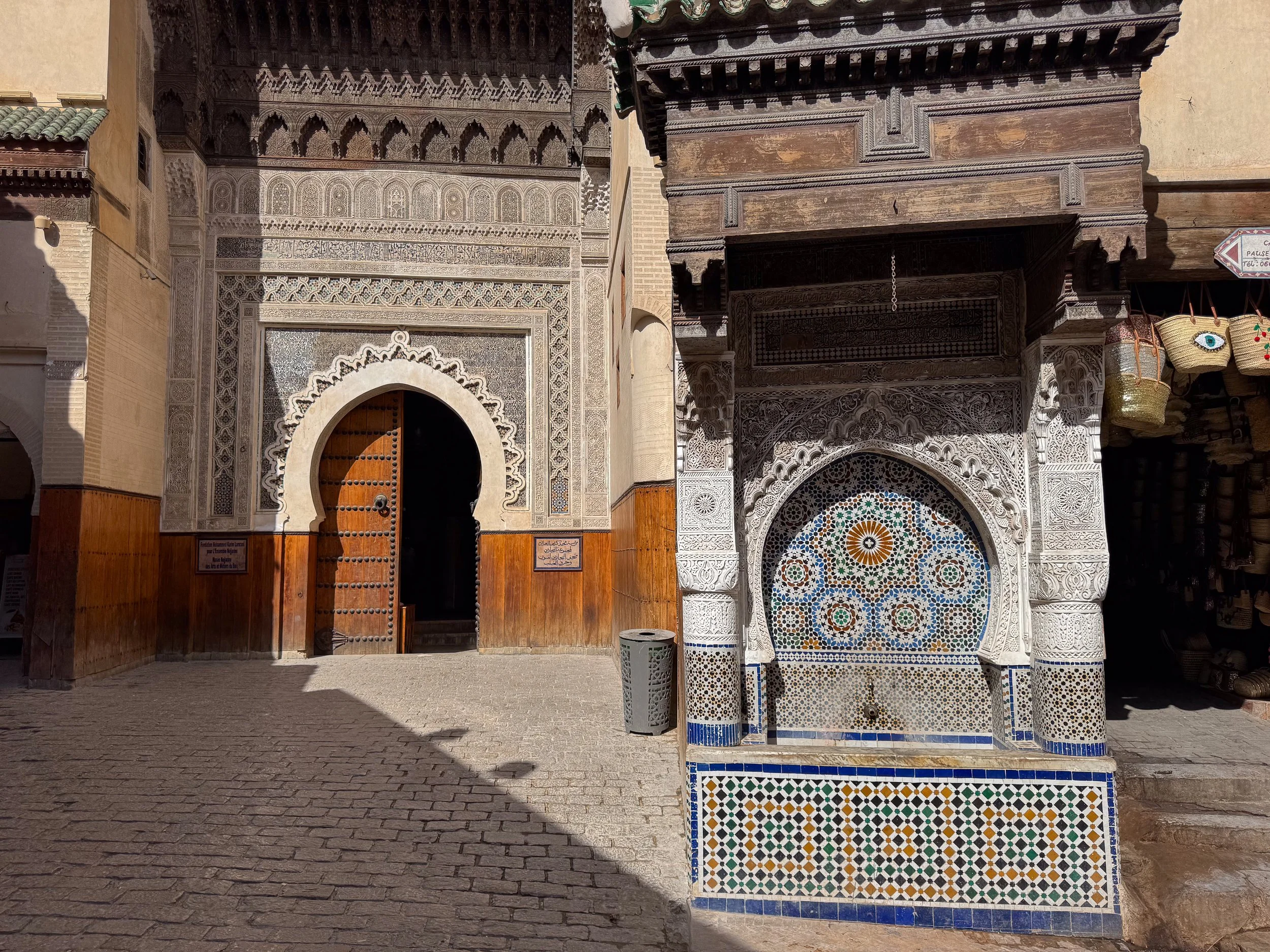
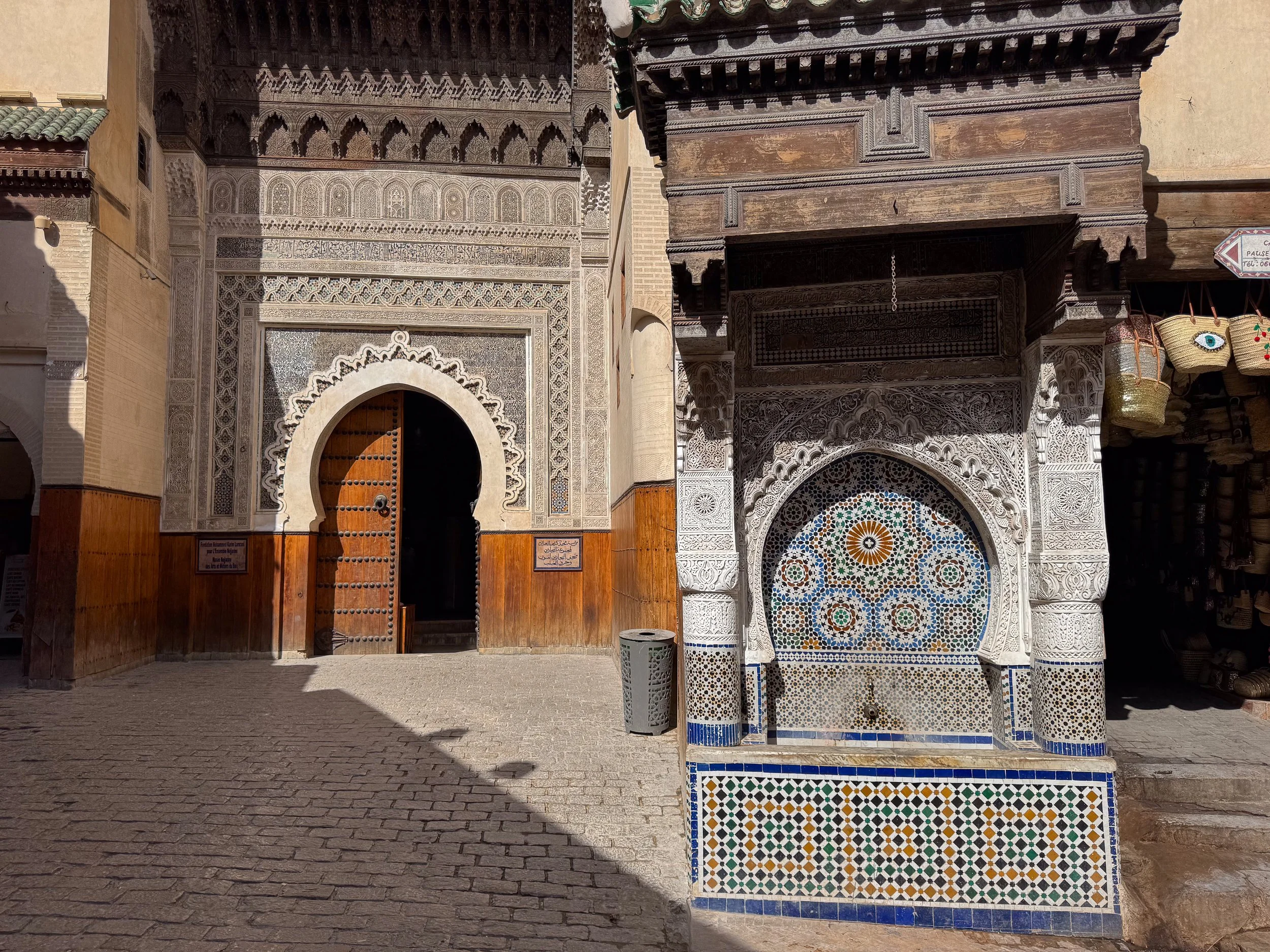
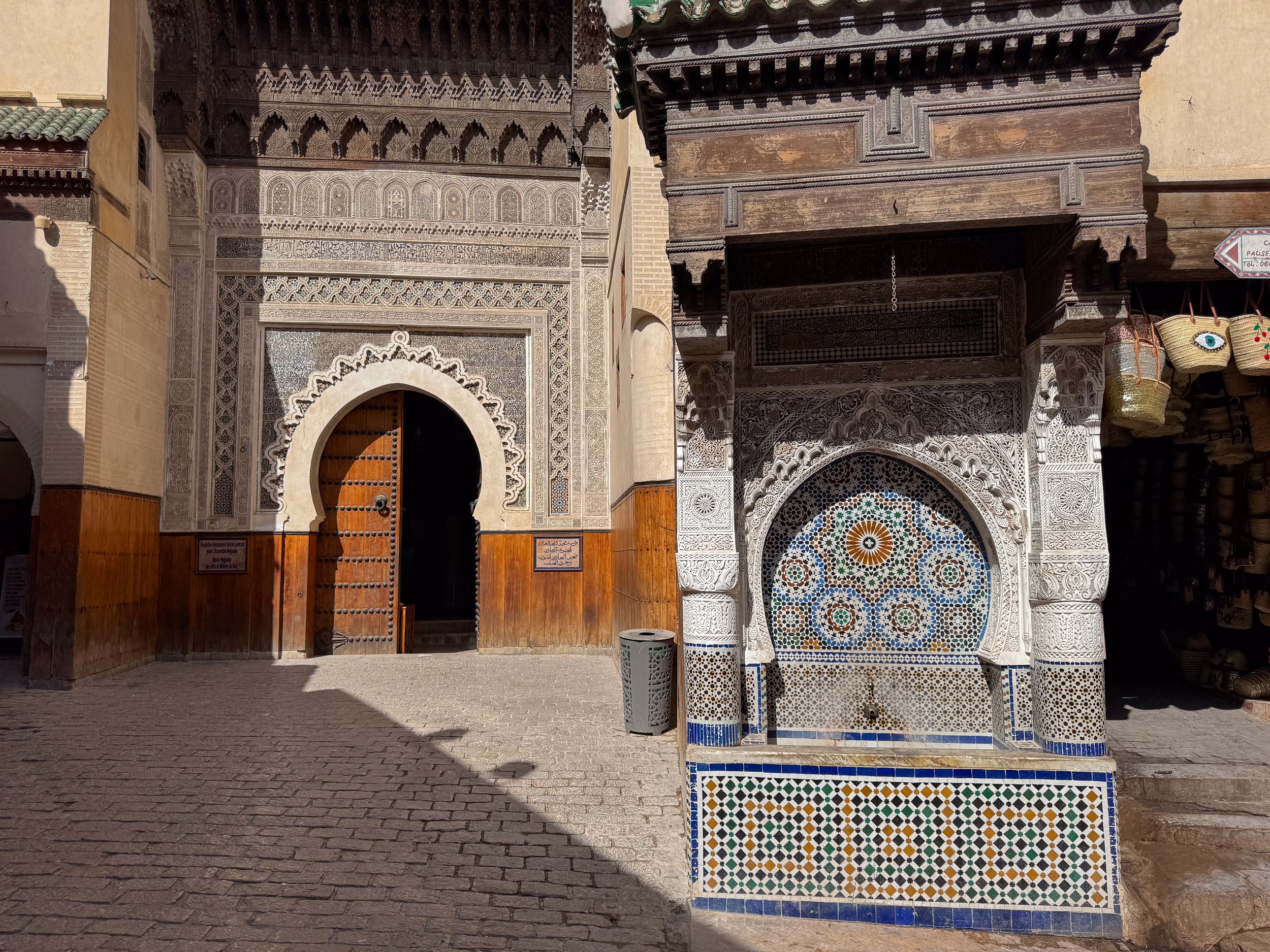
Al Attarine Madrasa. A remarkably ornate 14th century university located in the old medina. At its heart lies an open air courtyard layered with intricately styled plasterwork, finely carved wooden features and multi colored geometric tiles. Floors of private study rooms surround it, creating a space that blends Islamic scholarship and craftsmanship.
Pro Tip. Arrive at 10am when it opens before large tour groups arrive.
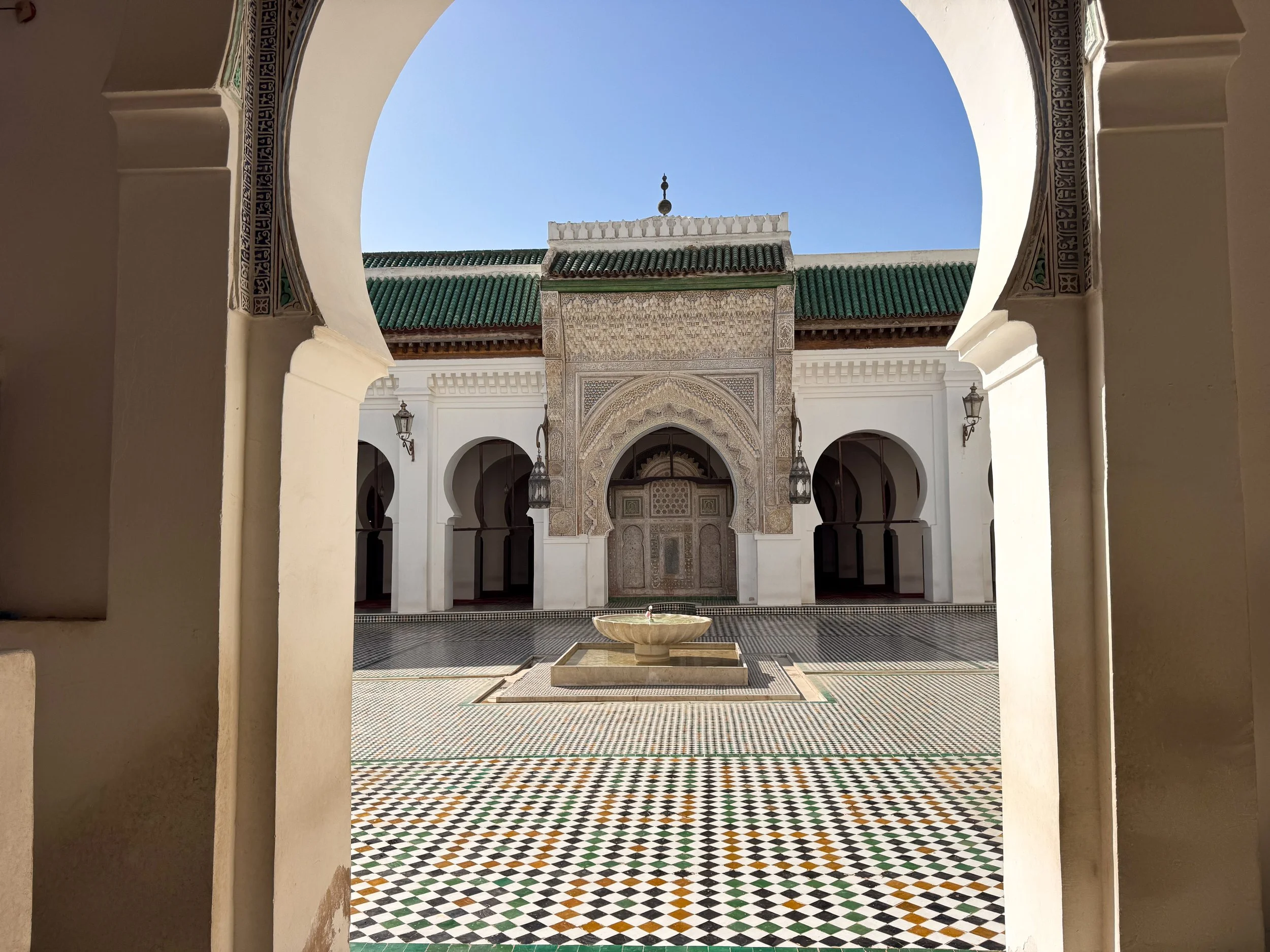
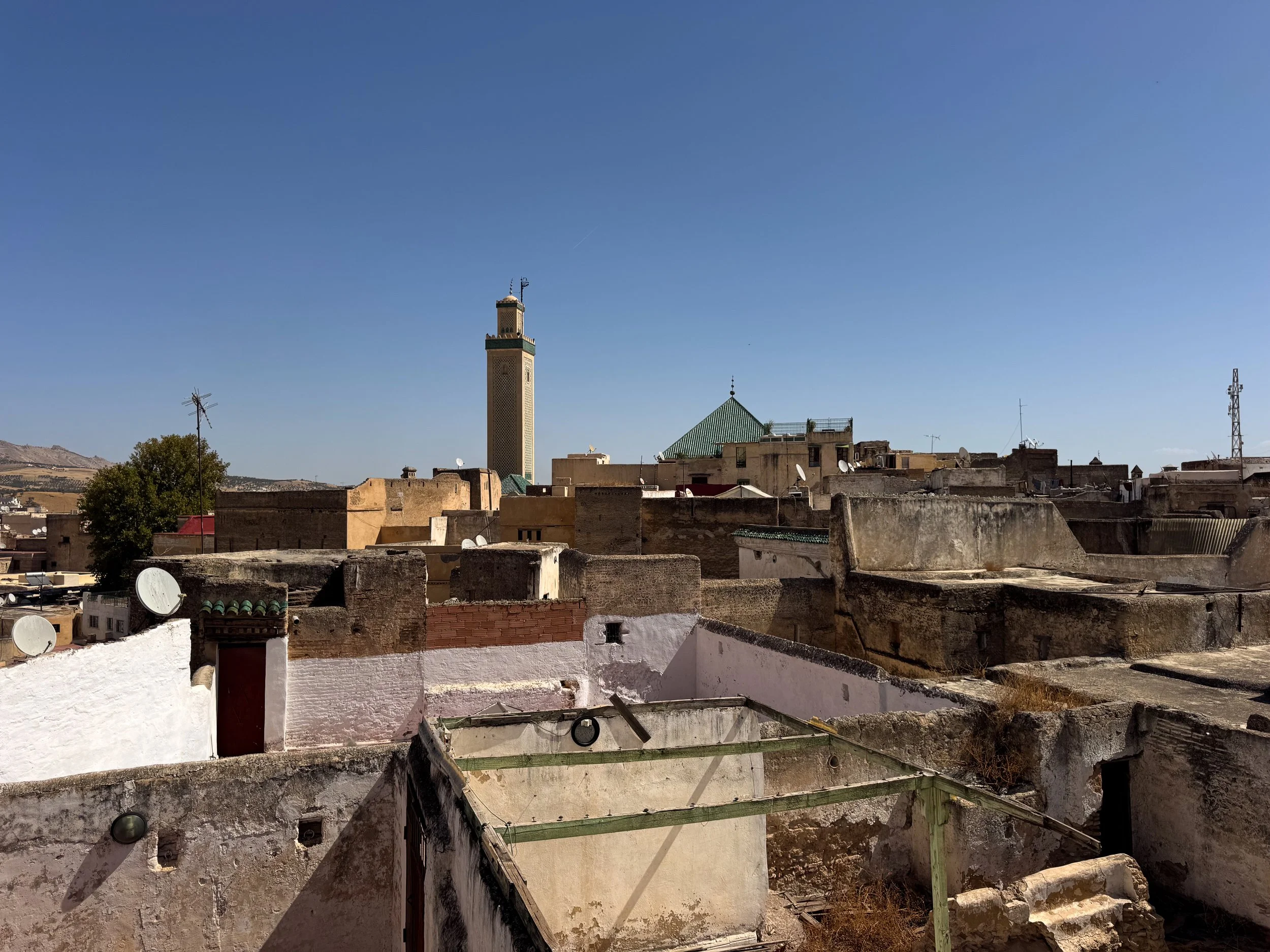
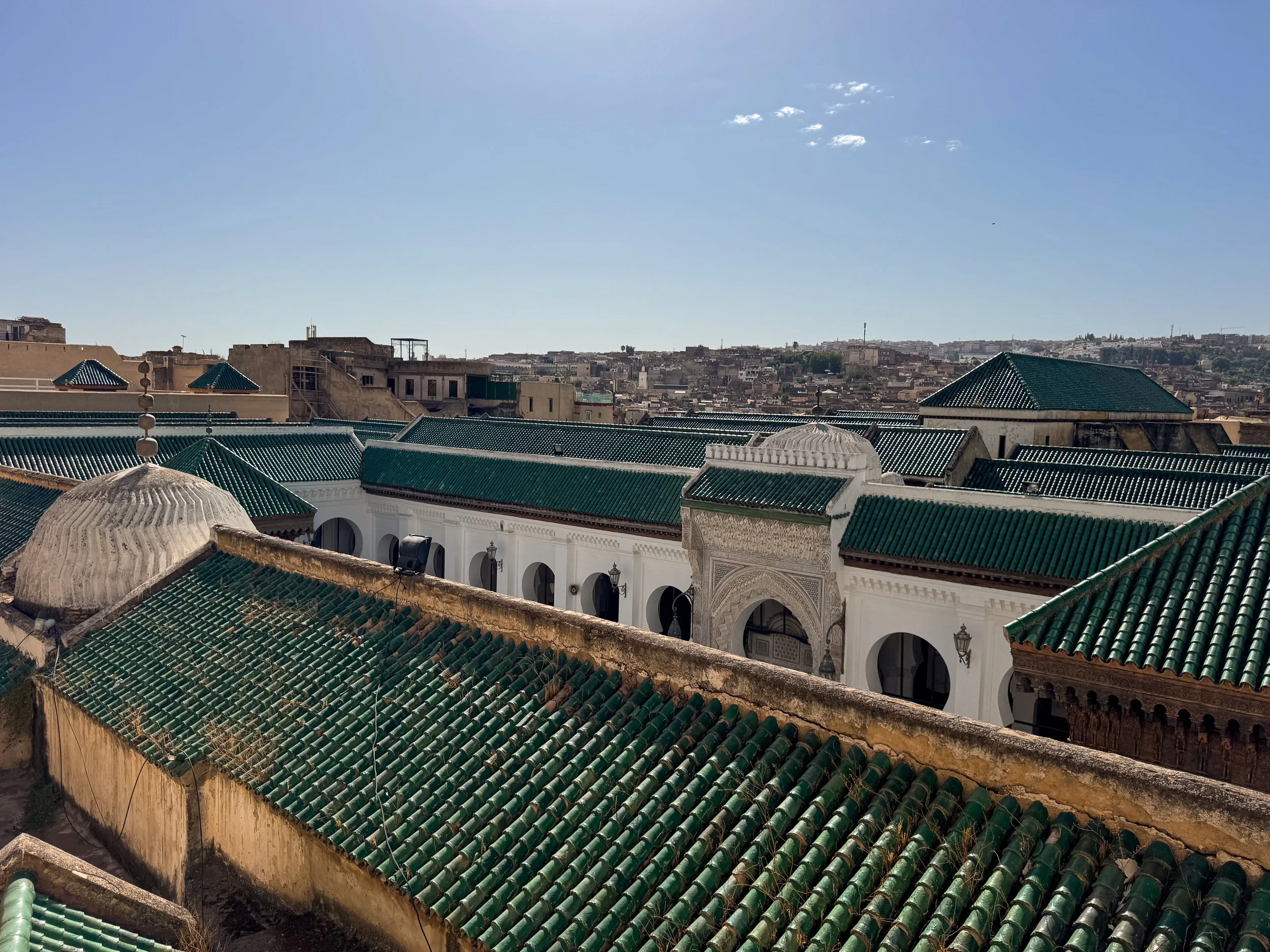
Al Quaraouiyine. A massive mosque and madrasa home to the world’s oldest university, founded in 859 CE. Non Muslims can admire its exquisite courtyard through the arched wooden doors. The mosque’s distinctive green tiled roof and minaret are visible from the nearby Al Attarine Madrasa.
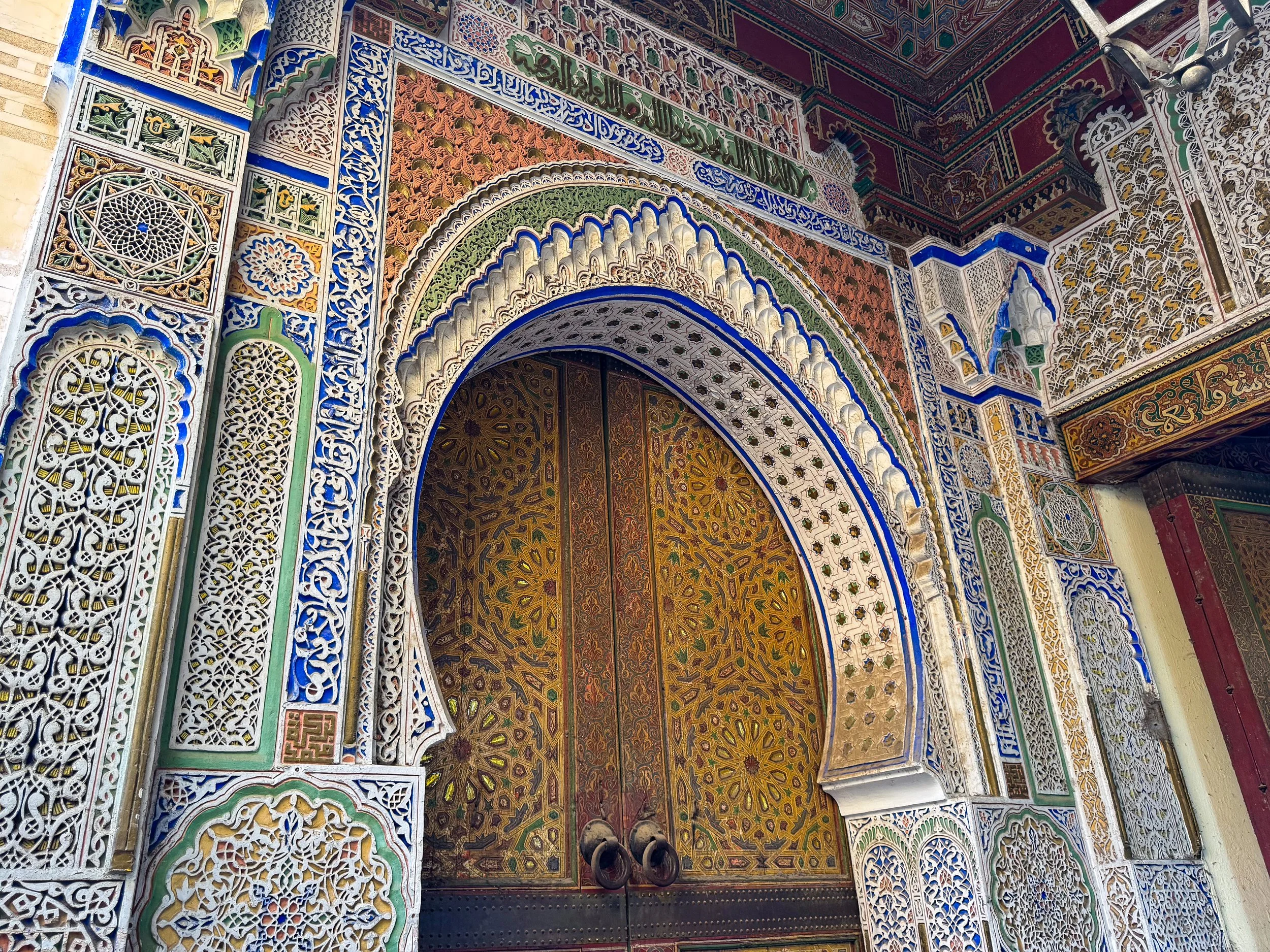
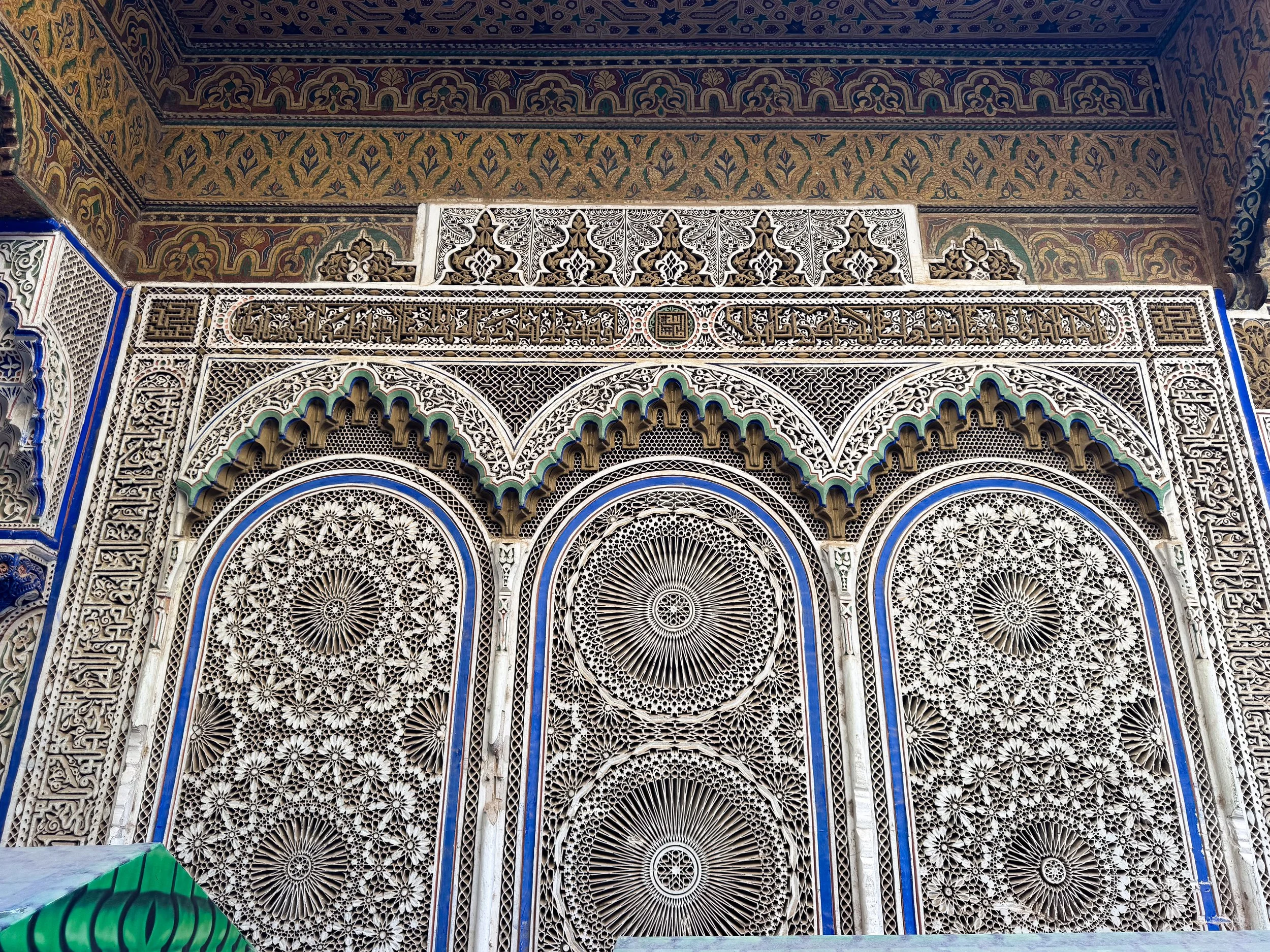
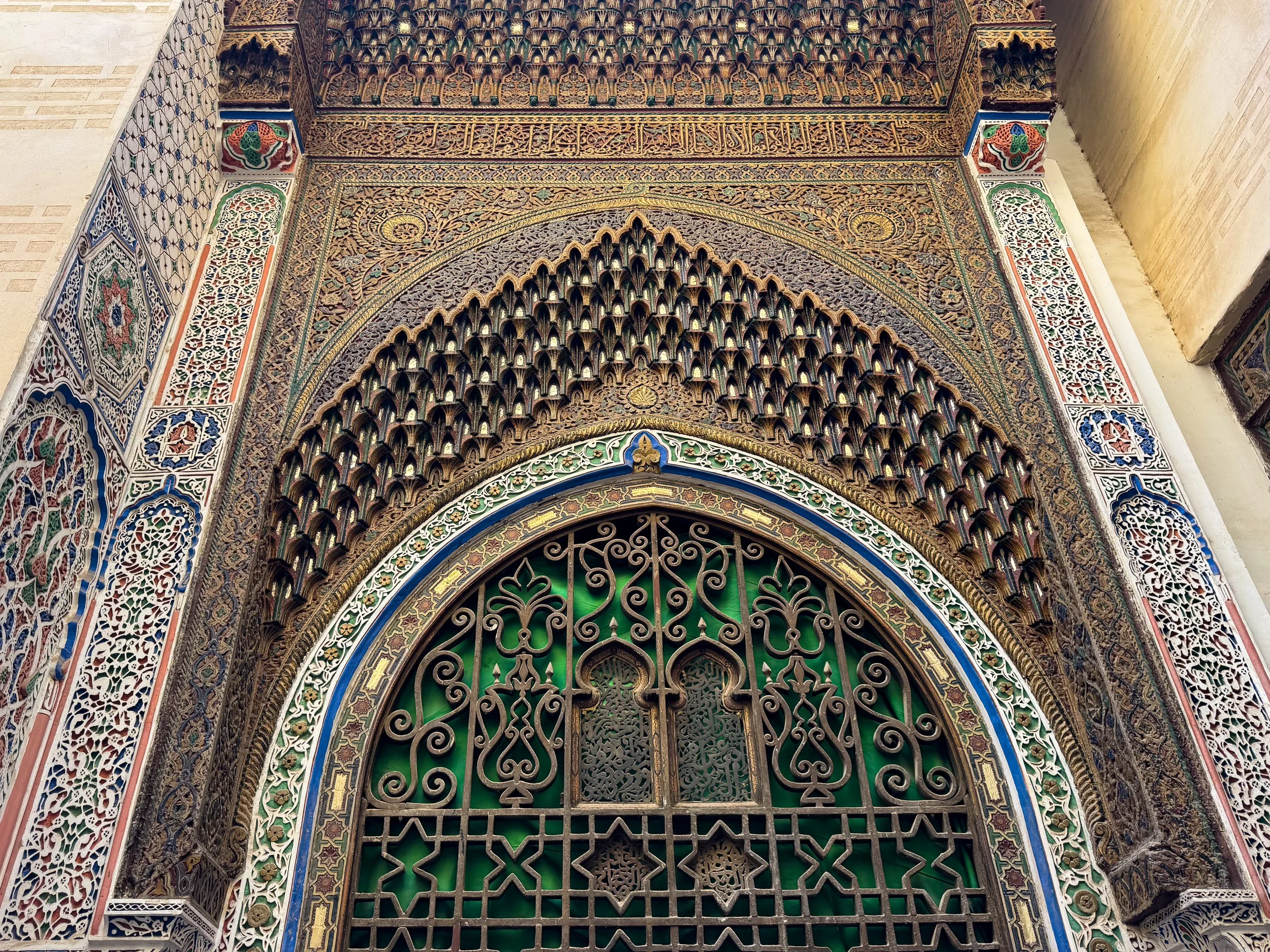
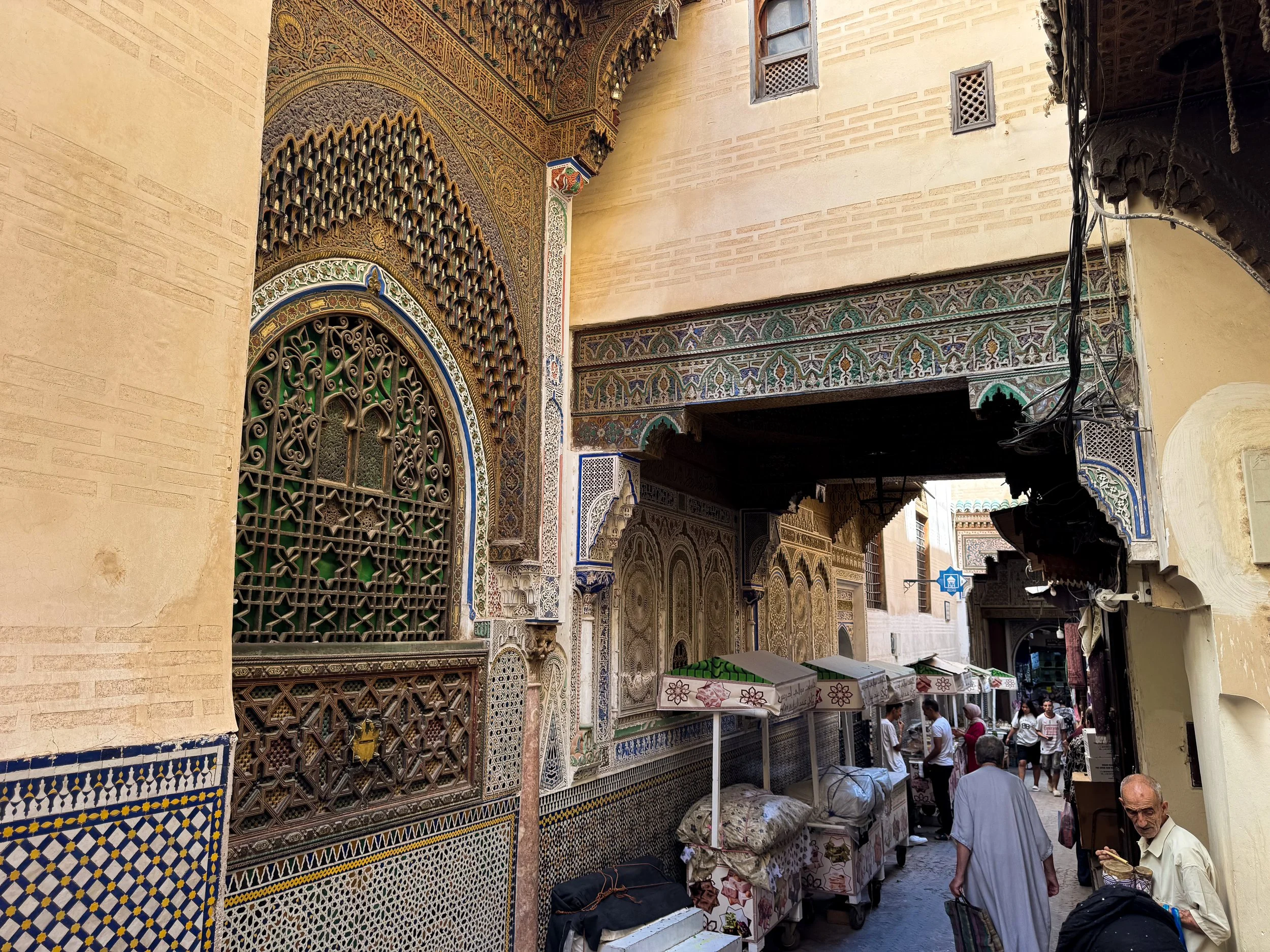
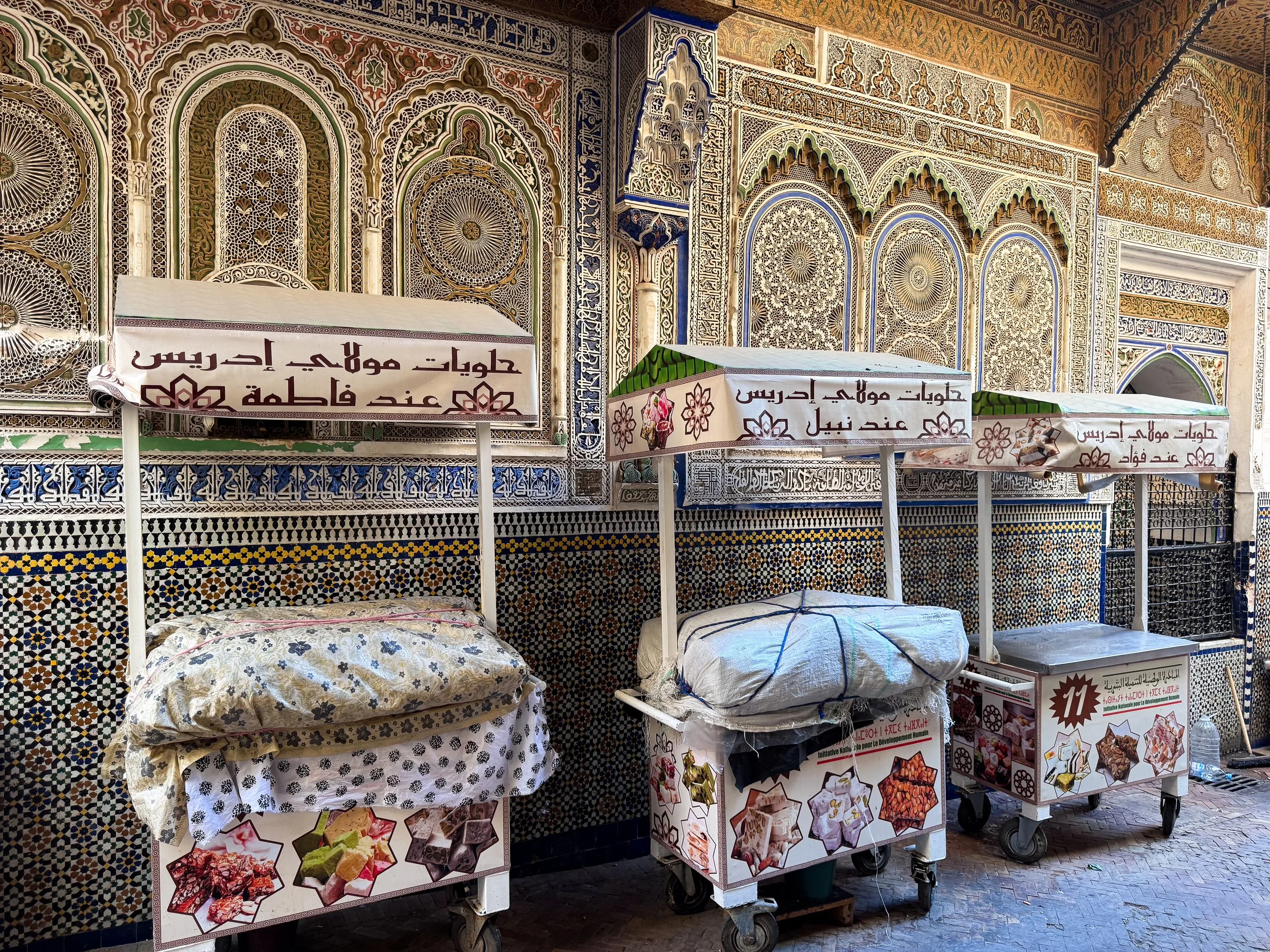
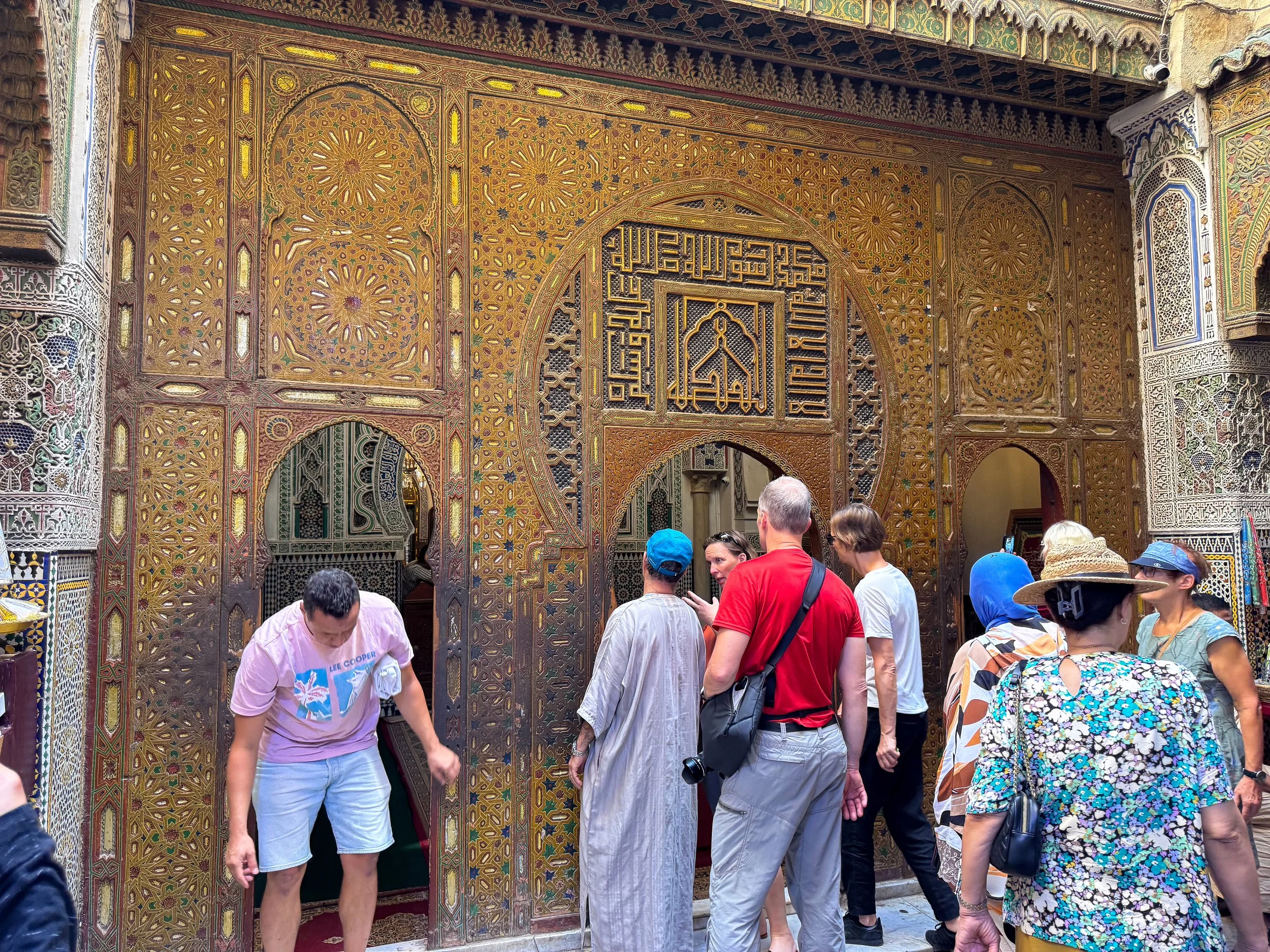
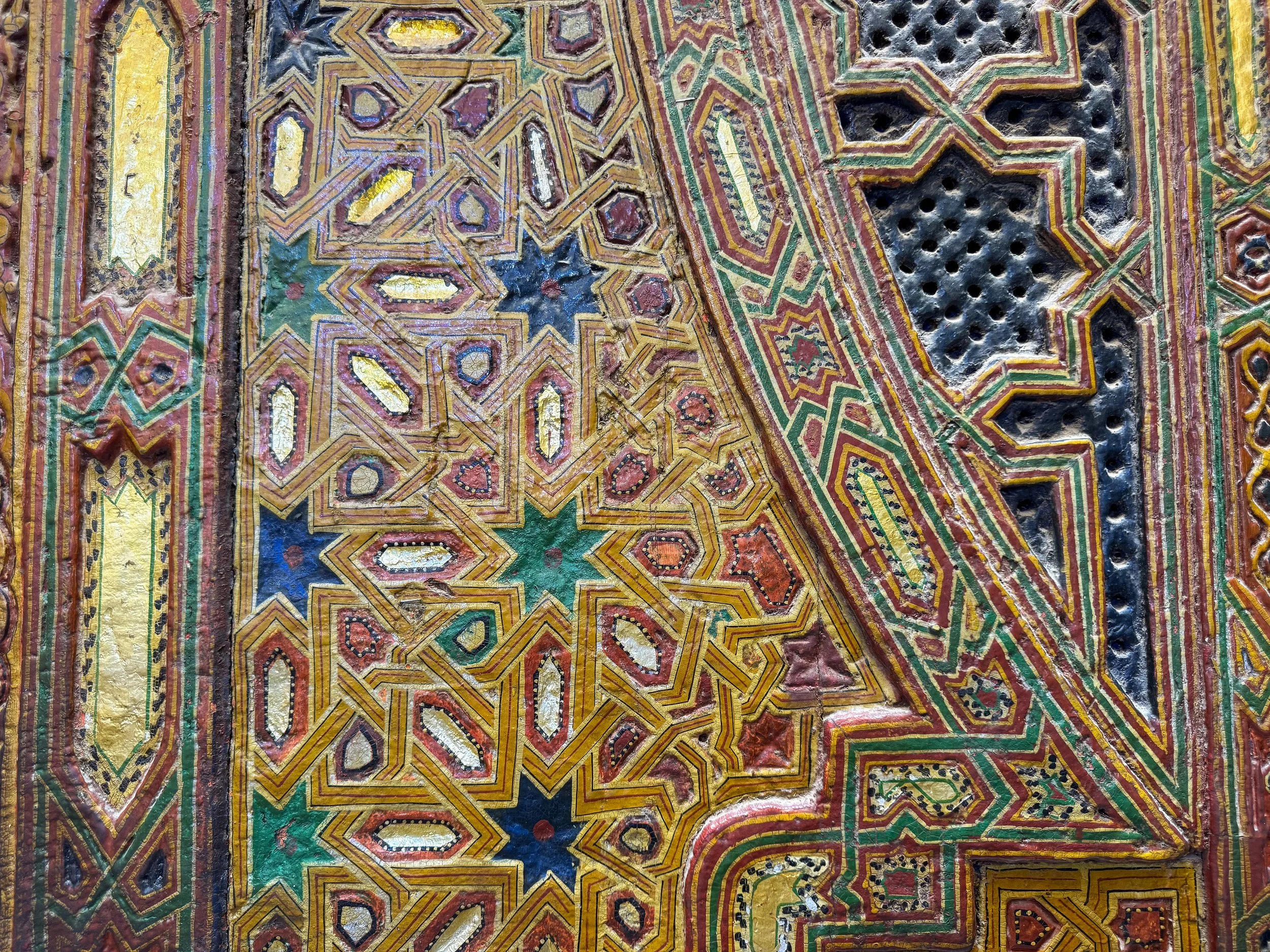
Tomb of Moulay Idriss. An ornate 8th century tomb, dedicated to the founder of Fes. Its interior is reserved for Muslims while the exterior can be viewed by all. Its facade is decorated with elaborate plasterwork, intricately arranged tiles and gold painted designs. Vendors line the street surrounding it, offering sand brewed spice coffee and sweet nougats.
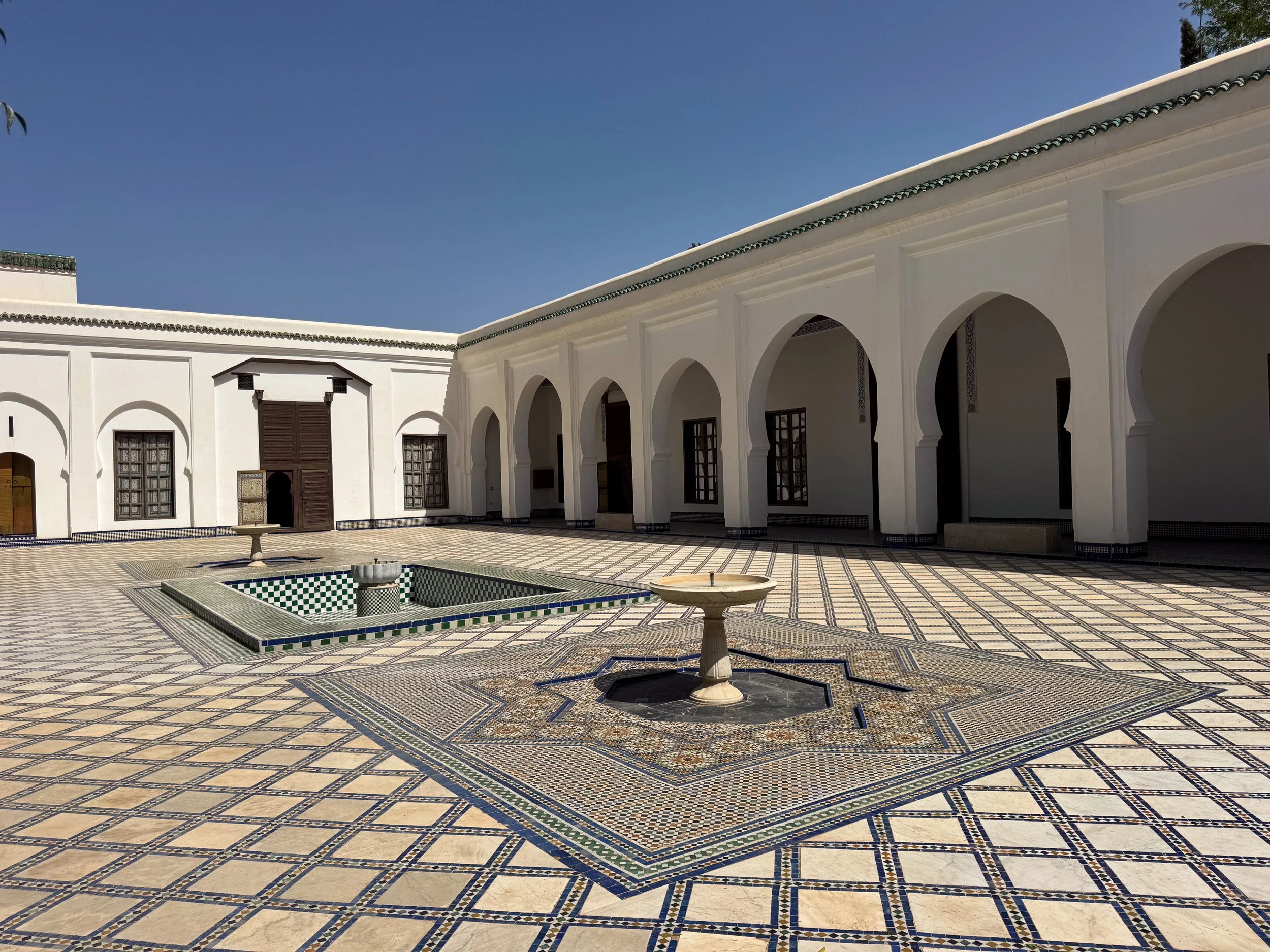
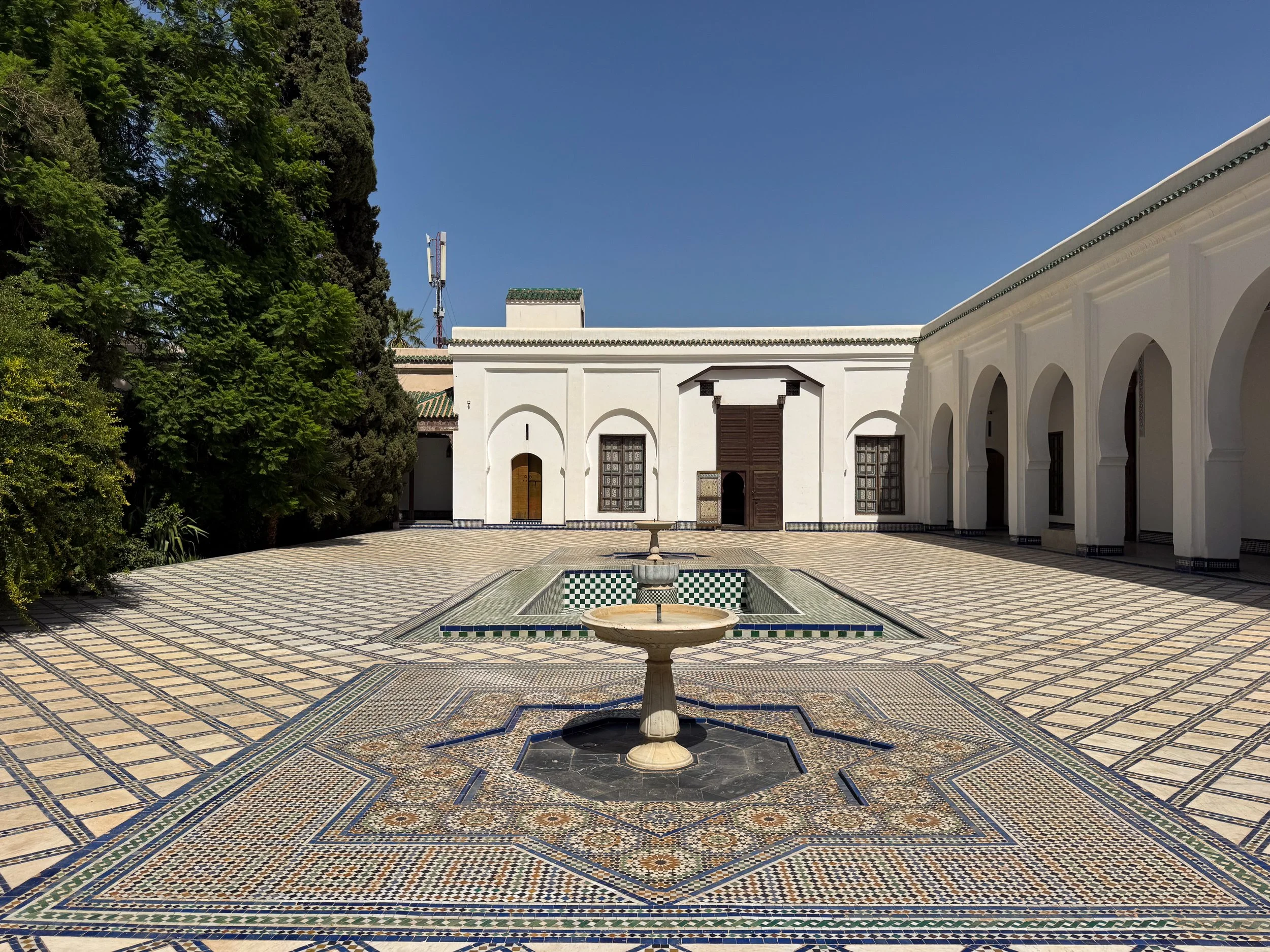
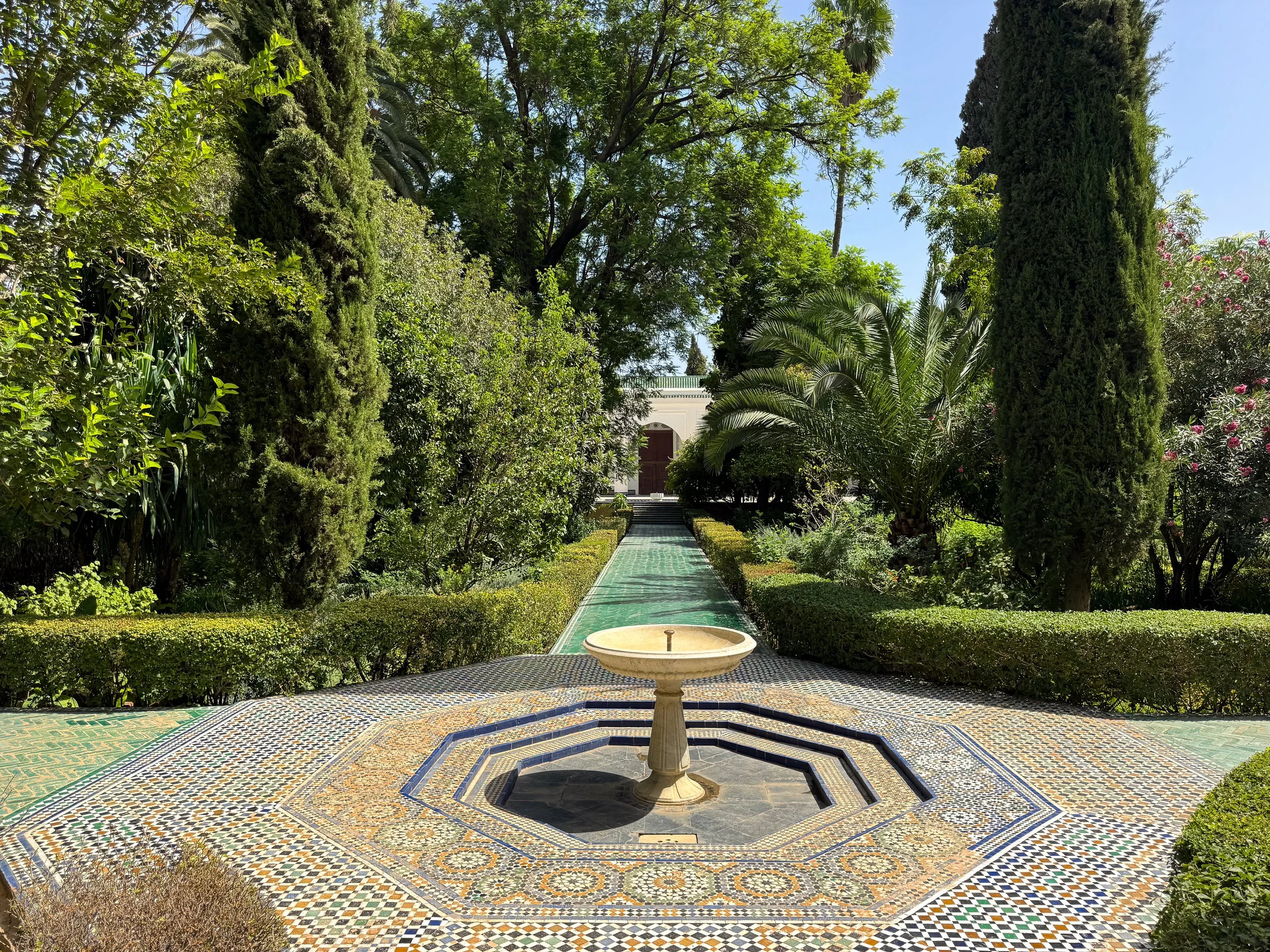
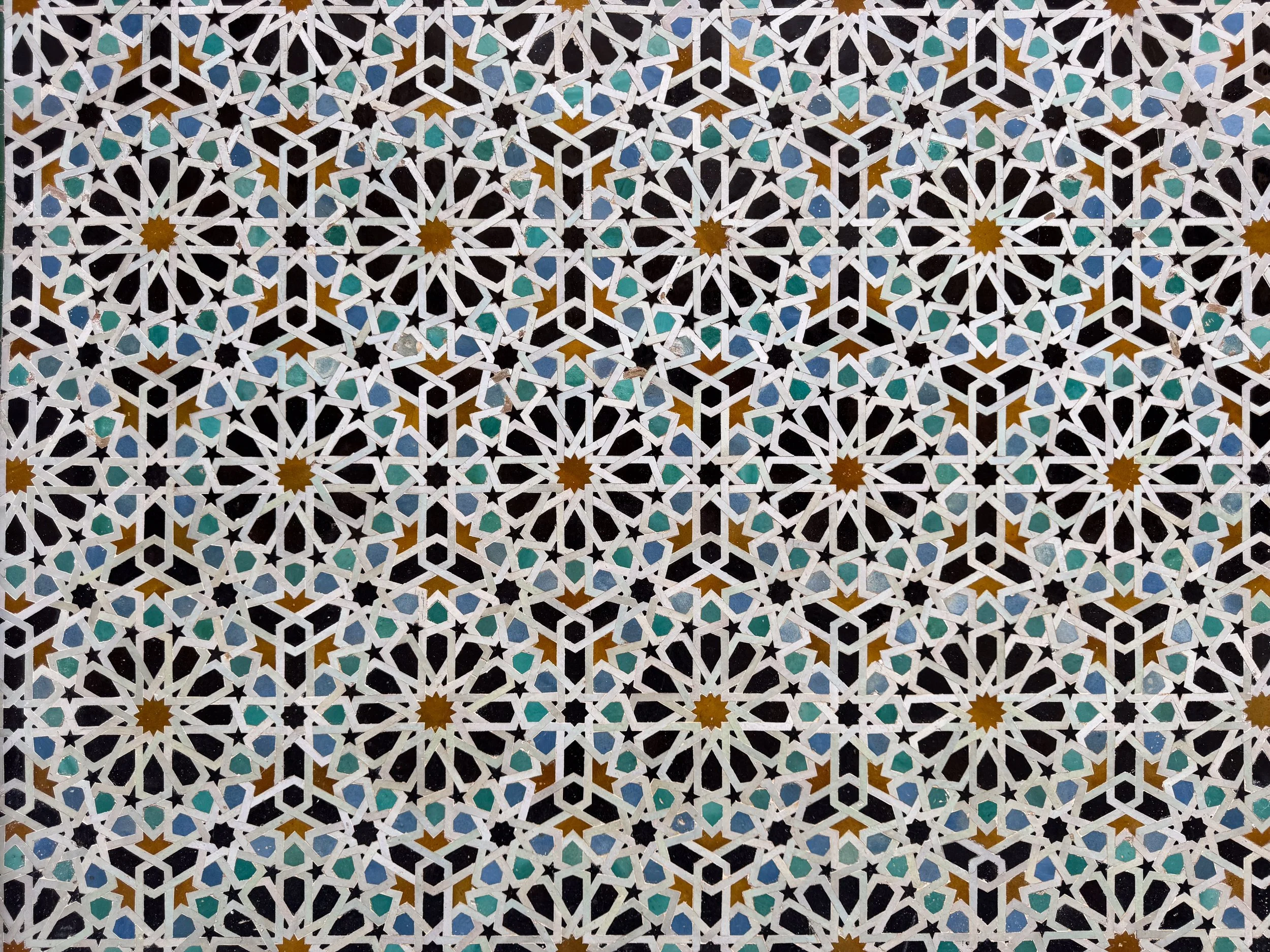
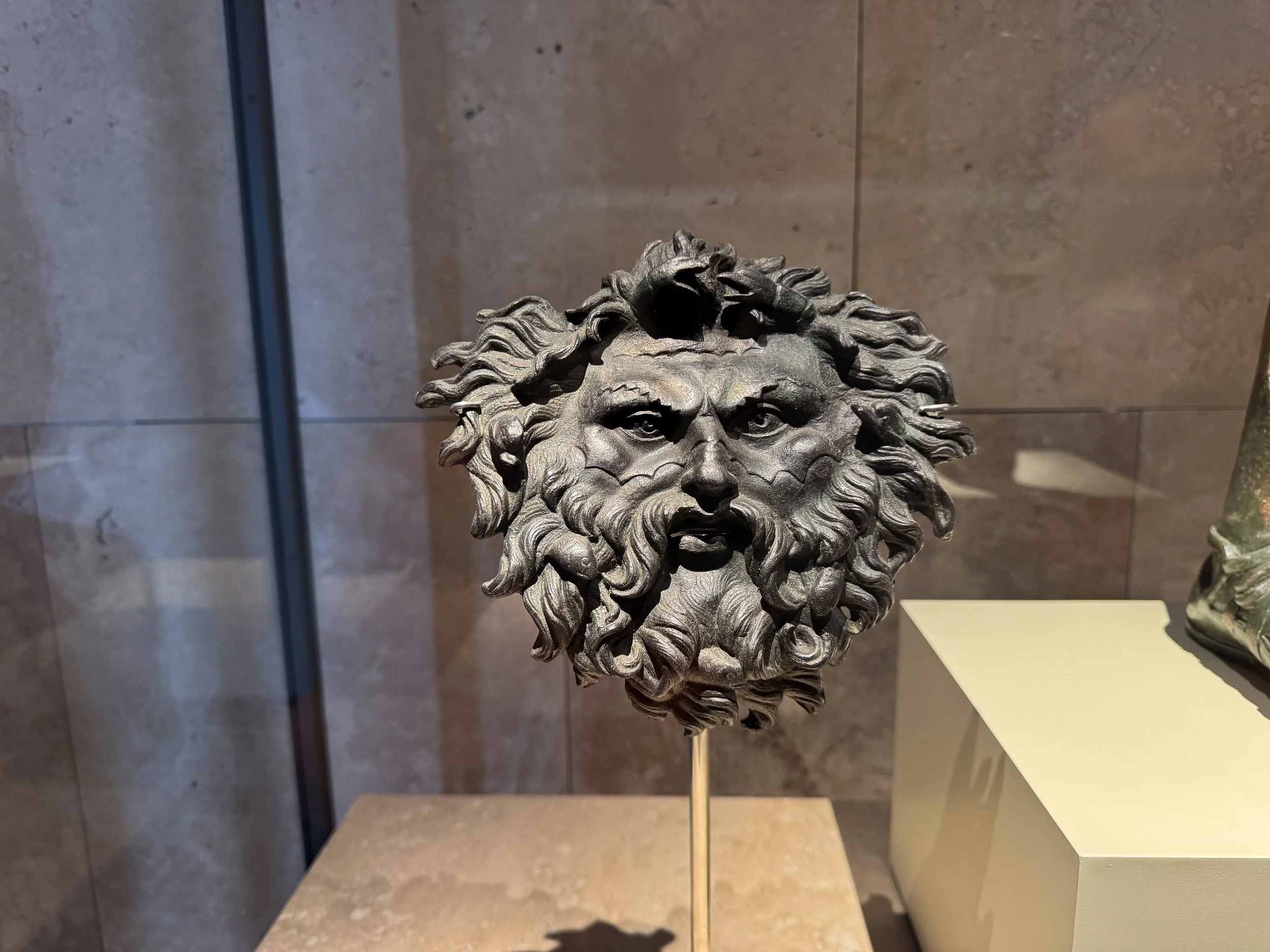
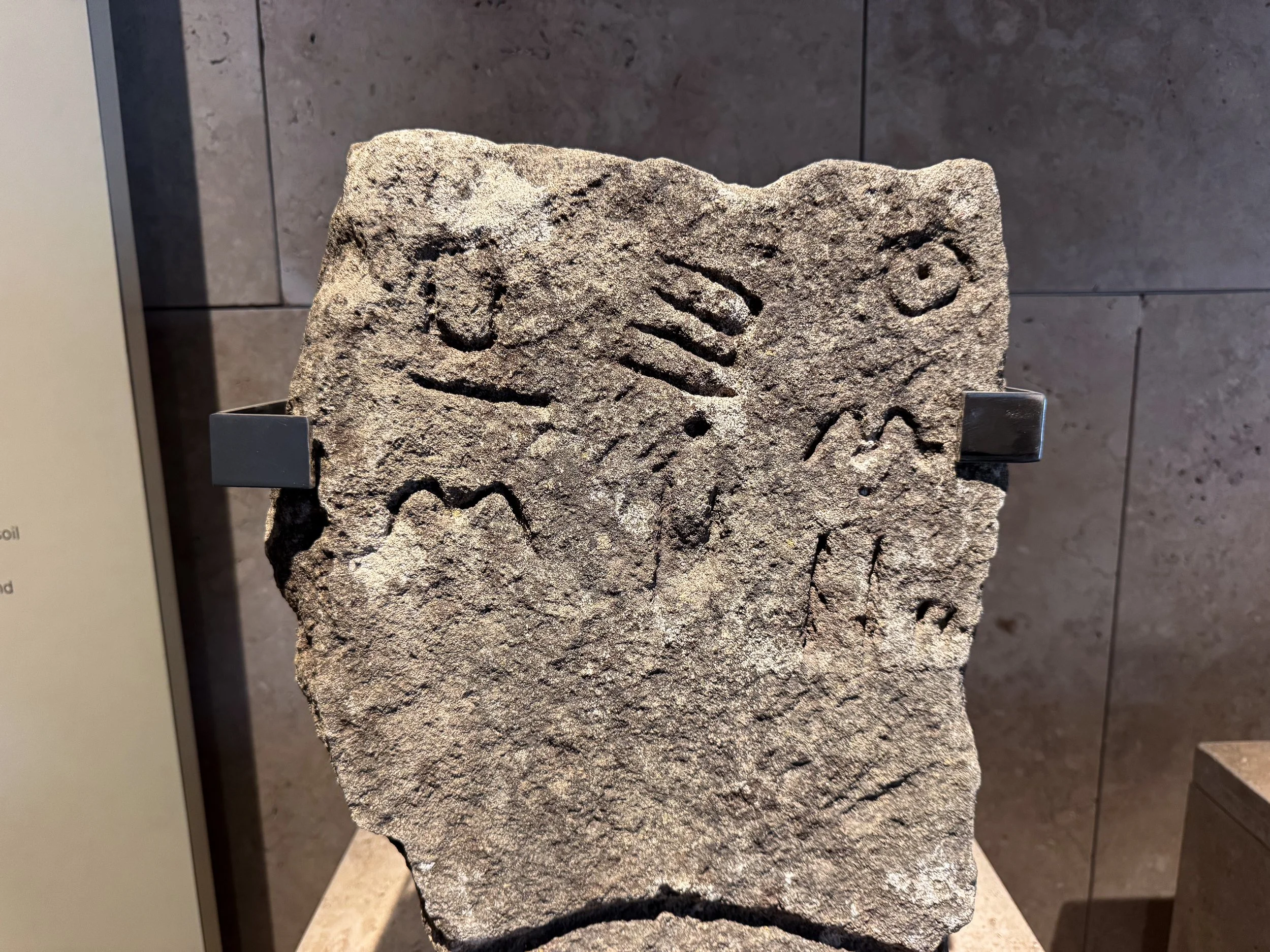
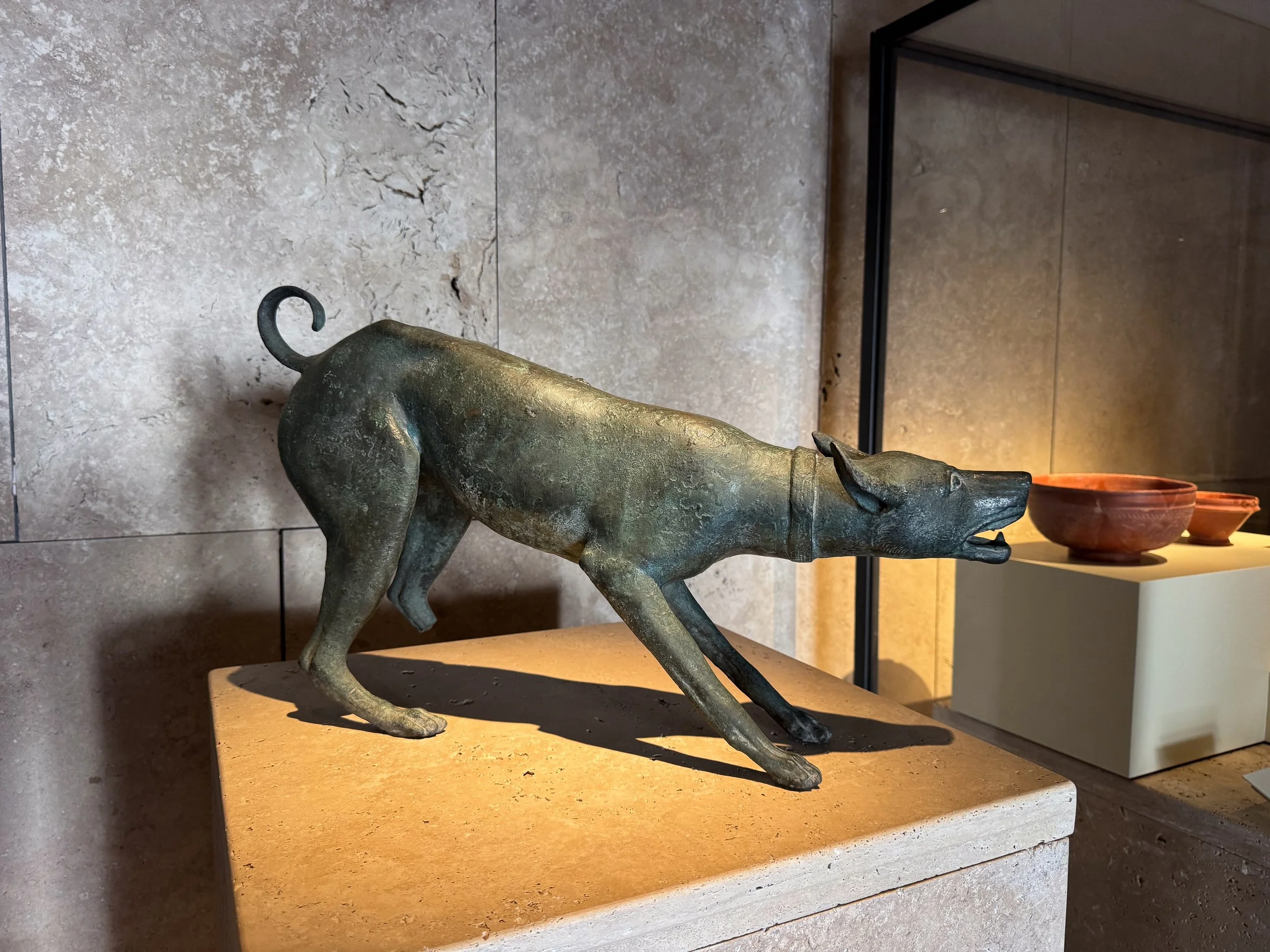
Dar Batha Museum. Housed in a former royal palace, this historical museum showcases artifacts distinct to Moroccan craftsmanship, scientific advancements and cultural identity. Exhibits include early Quranic calligraphy, architectural elements from Fes' first mosques and the art of Zellige tilework. Other galleries feature objects like woven rugs, textiles, pottery, jewelry and weaponry, and highlight sciences like geometry, astronomy and horology, as well as the role of water and light in designing tiled fountains and intricate brass lamps.
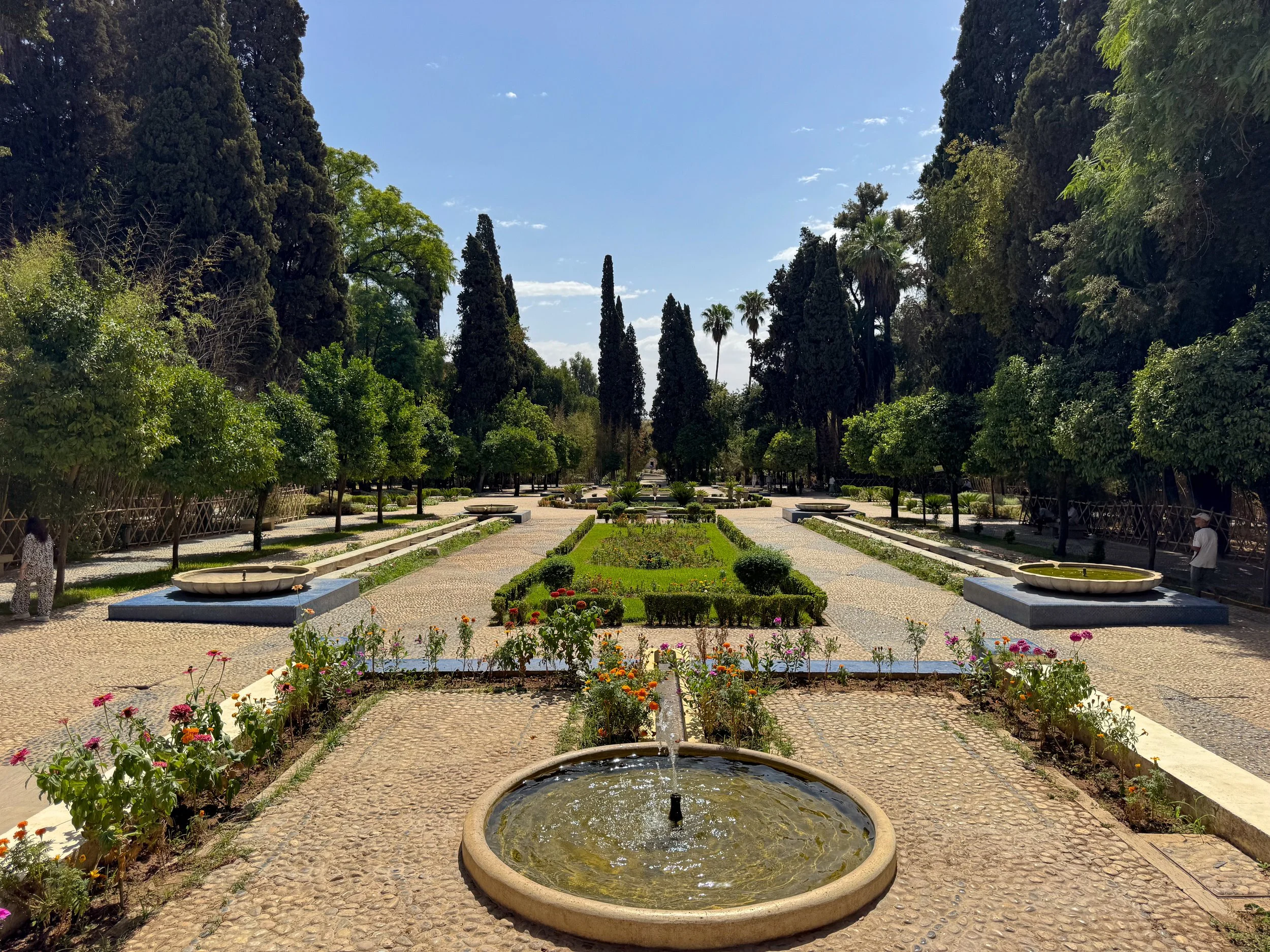
Jnan Sbil. A city park located between the new and old medinas. Its shaded walkways, sputtering fountains and alley of towering palm trees attract locals and lost tourists looking for a quiet escape from the chaos of the souks.
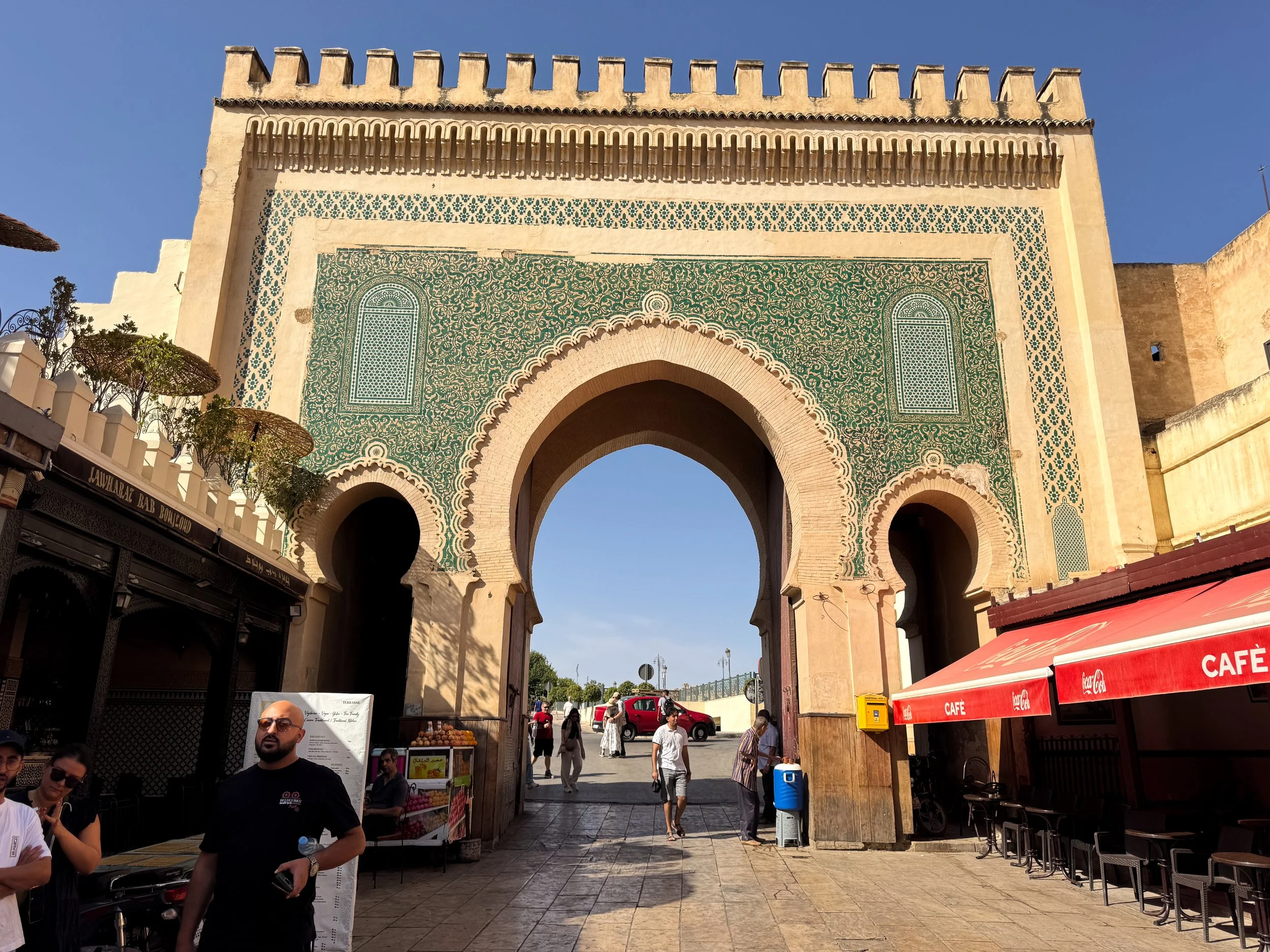
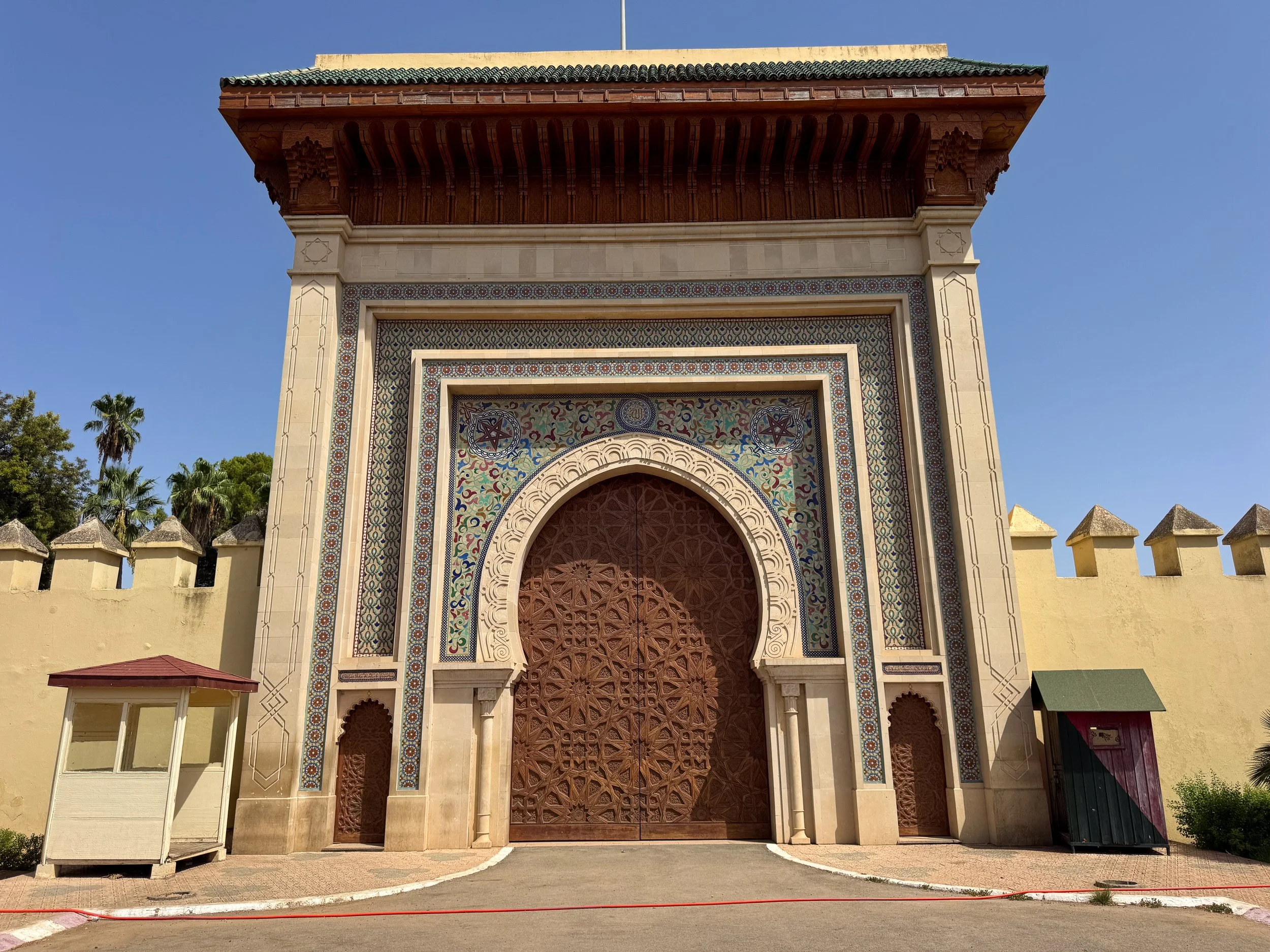
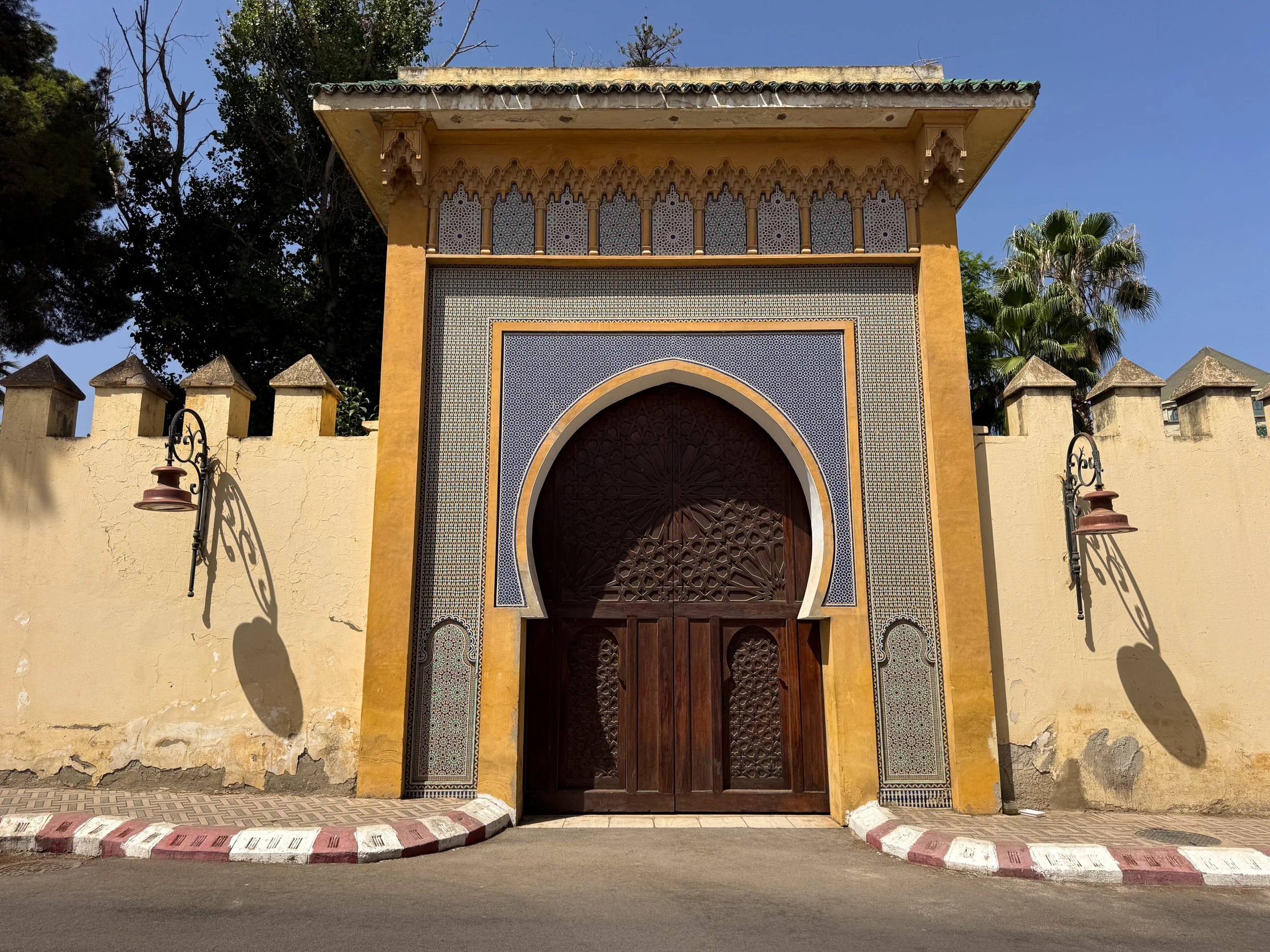
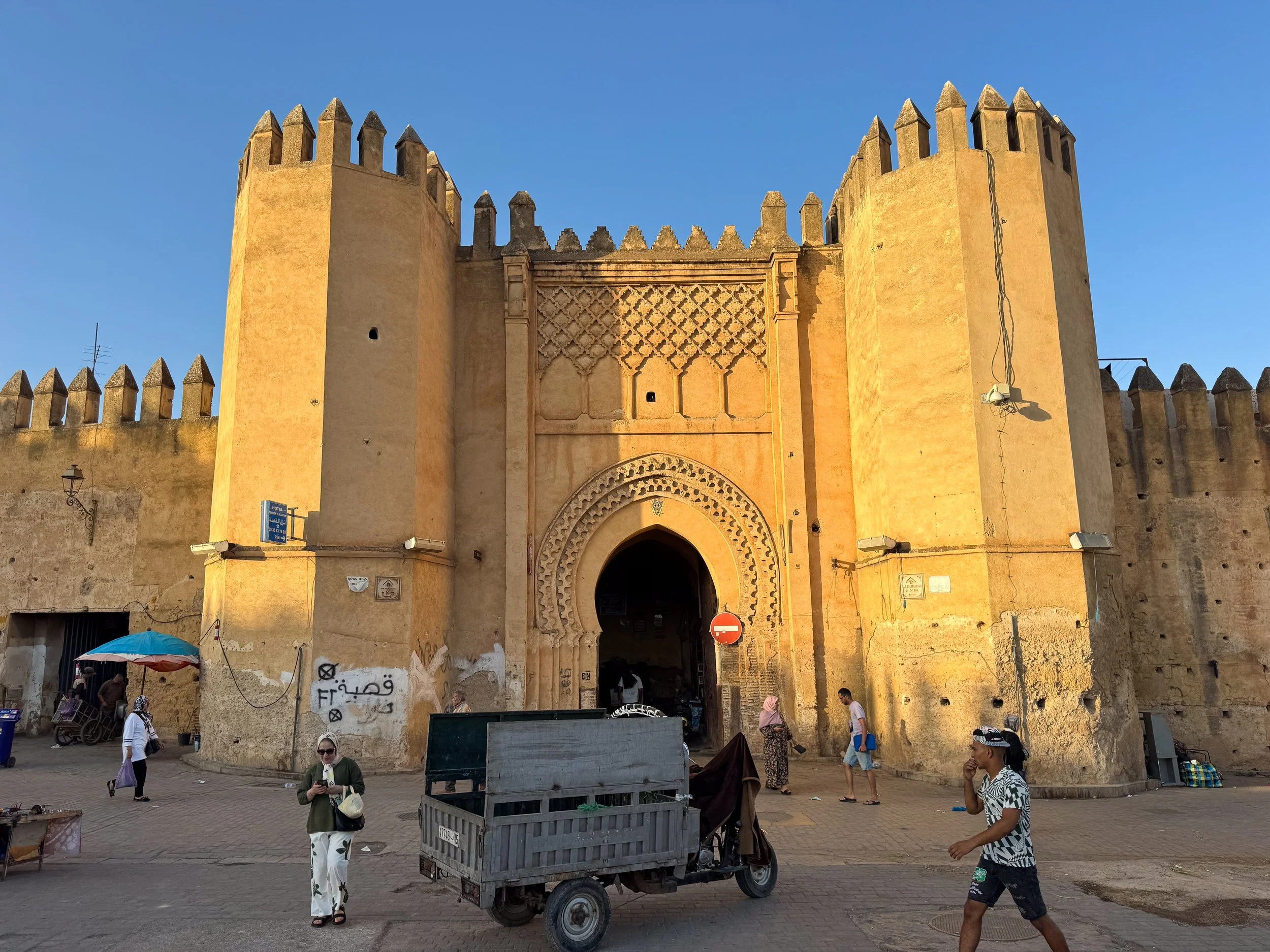
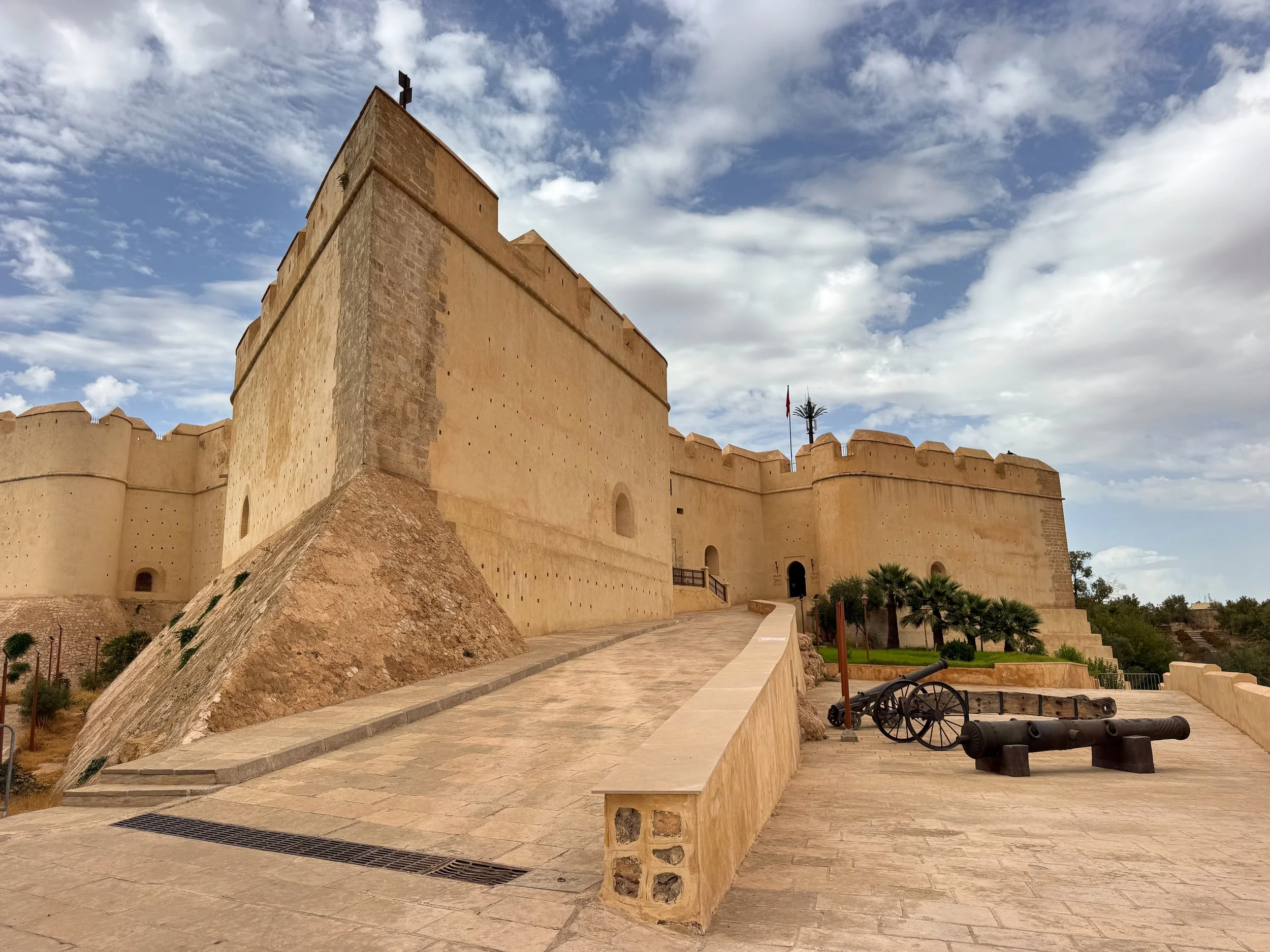
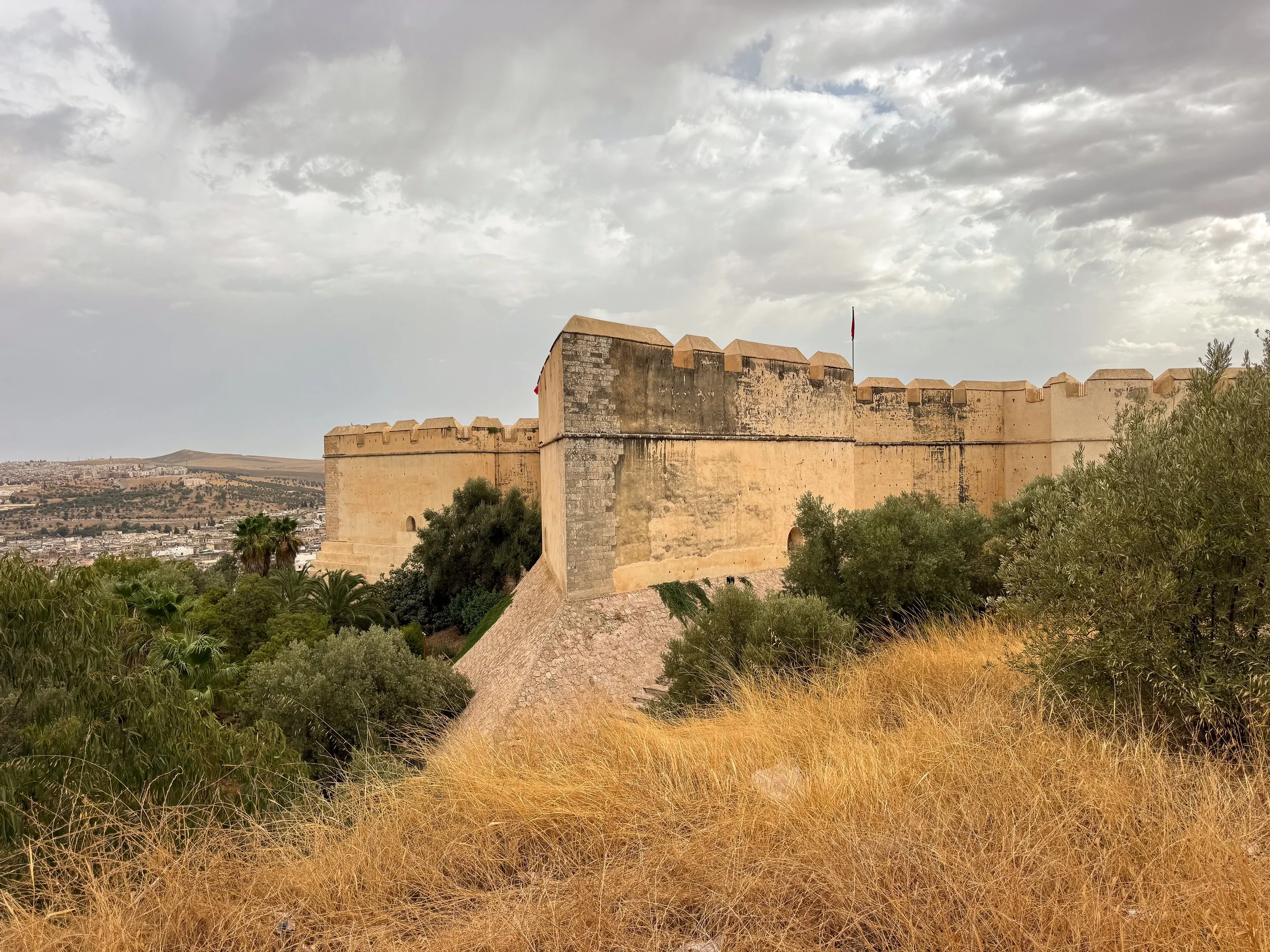
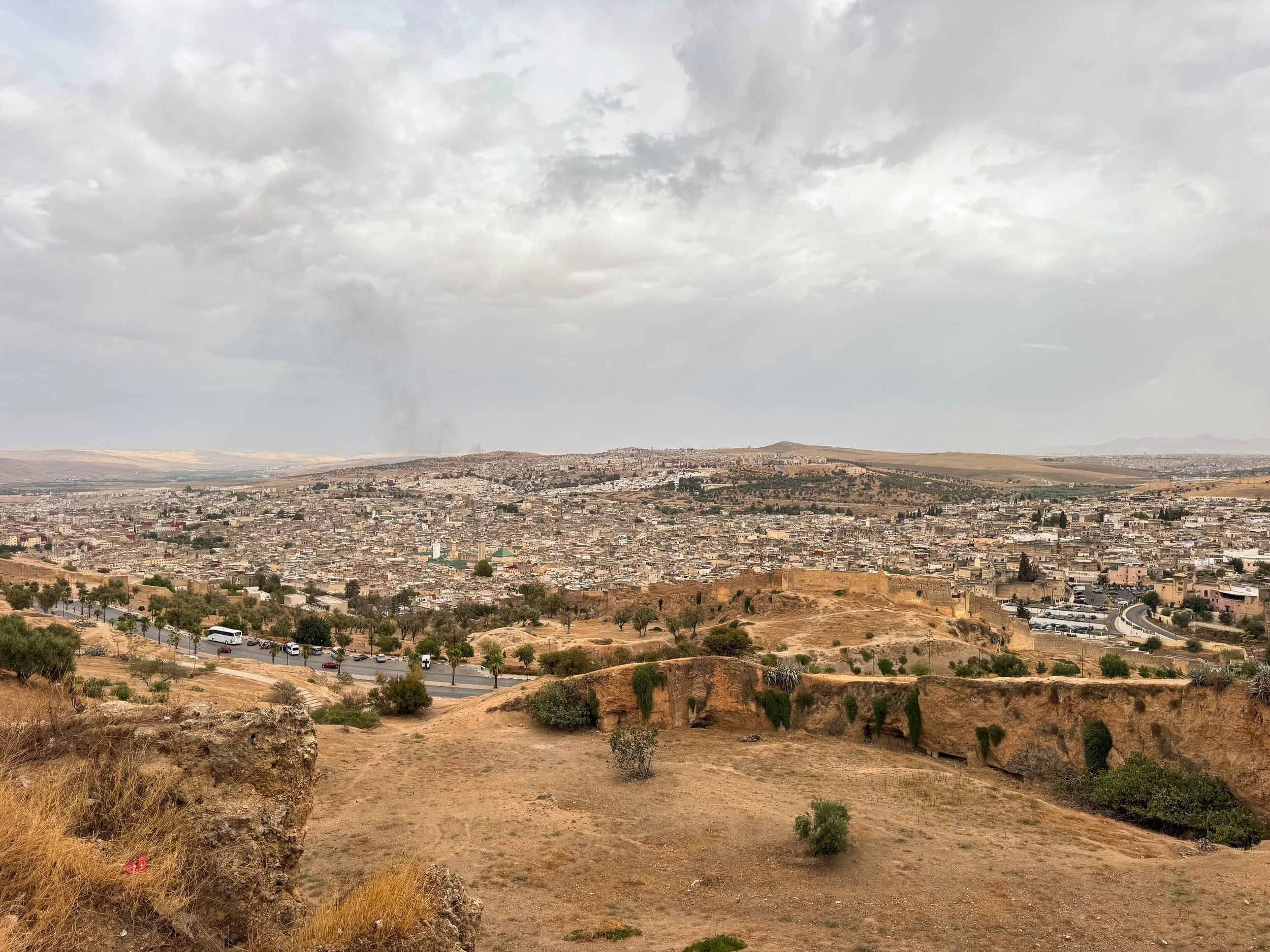
Fes Ancient Wall. The medina of Fes is surrounded by an ancient stone wall with several ornately tiled and arched gates. Outer walls and fortresses provided additional layers of protection during the medieval period.
Bab Boujeloud. A beautifully tiled arched gate marking a main entrance to the old medina. Its exterior side is clad in ornate blue tiles and the interior in green. The lively street beyond is lined with shops, restaurants, and tea houses, opening onto a large plaza outside.
Borj Nord Lookout Point. A defensive fortress built beyond the medina’s walls. It houses an arms museum displaying historic weapons and armor. Its elevated position, along with nearby cliffside lookouts, offer expansive views over the city and surrounding countryside.
Join a Weaving Workshop
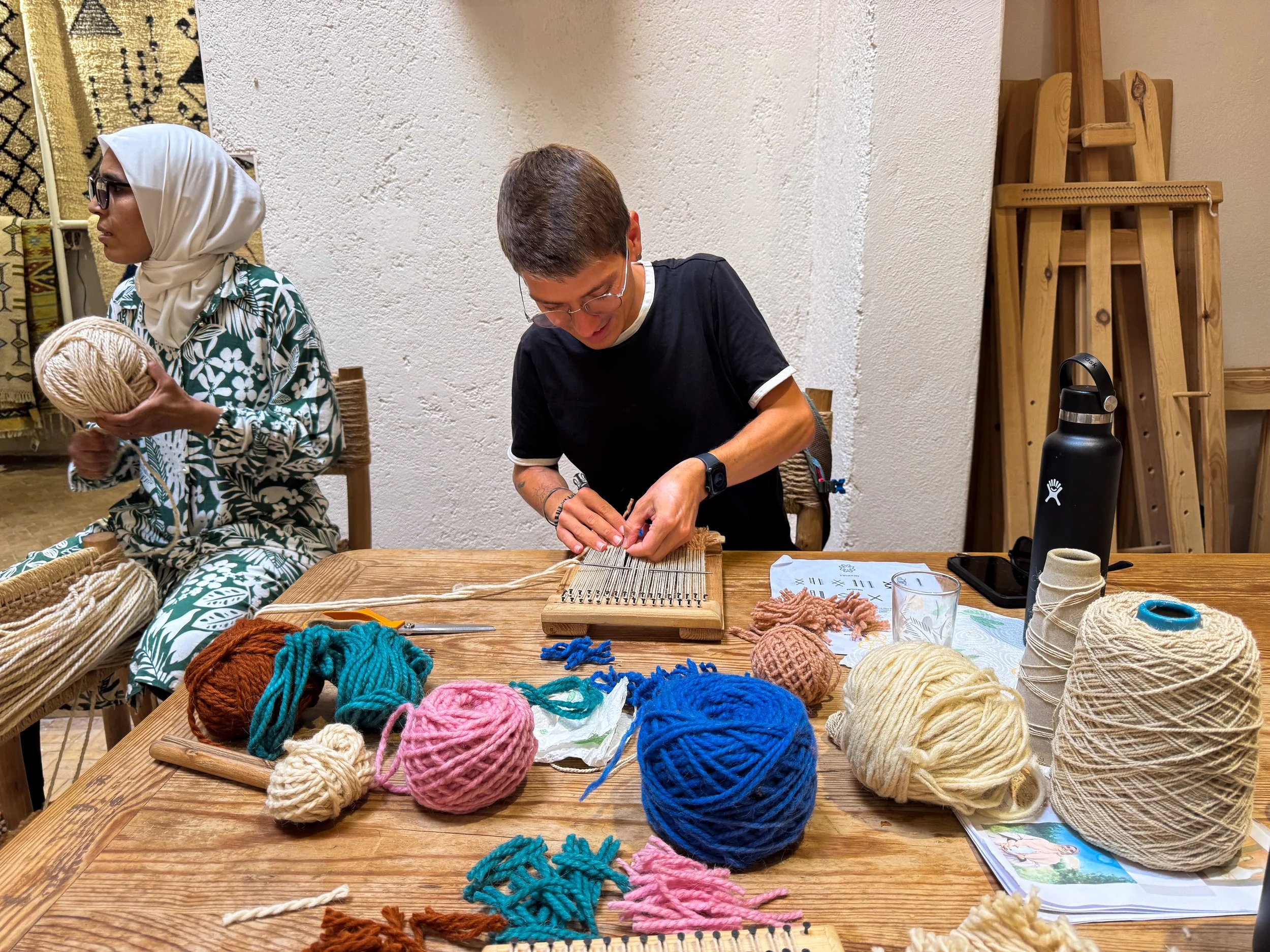
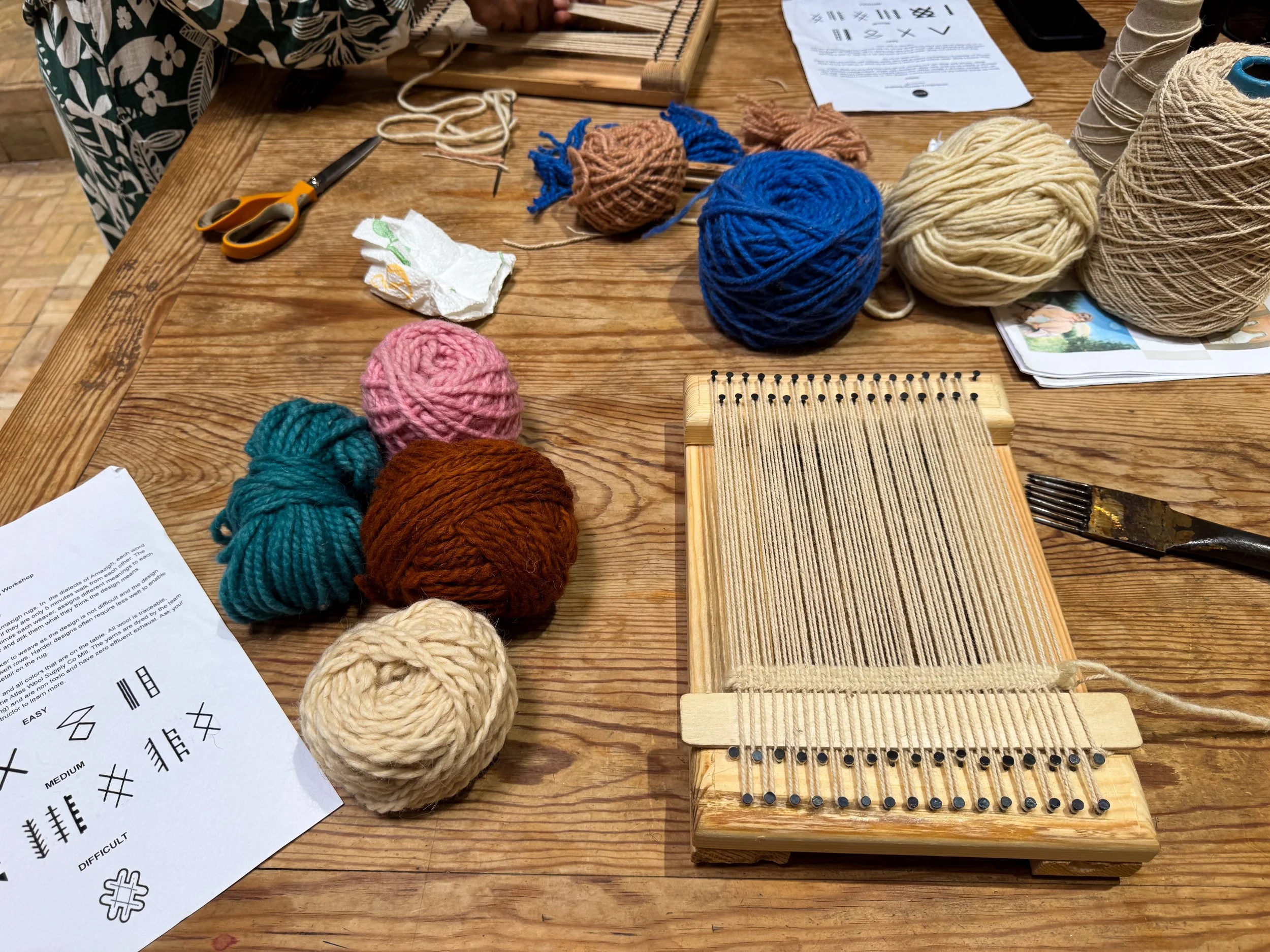
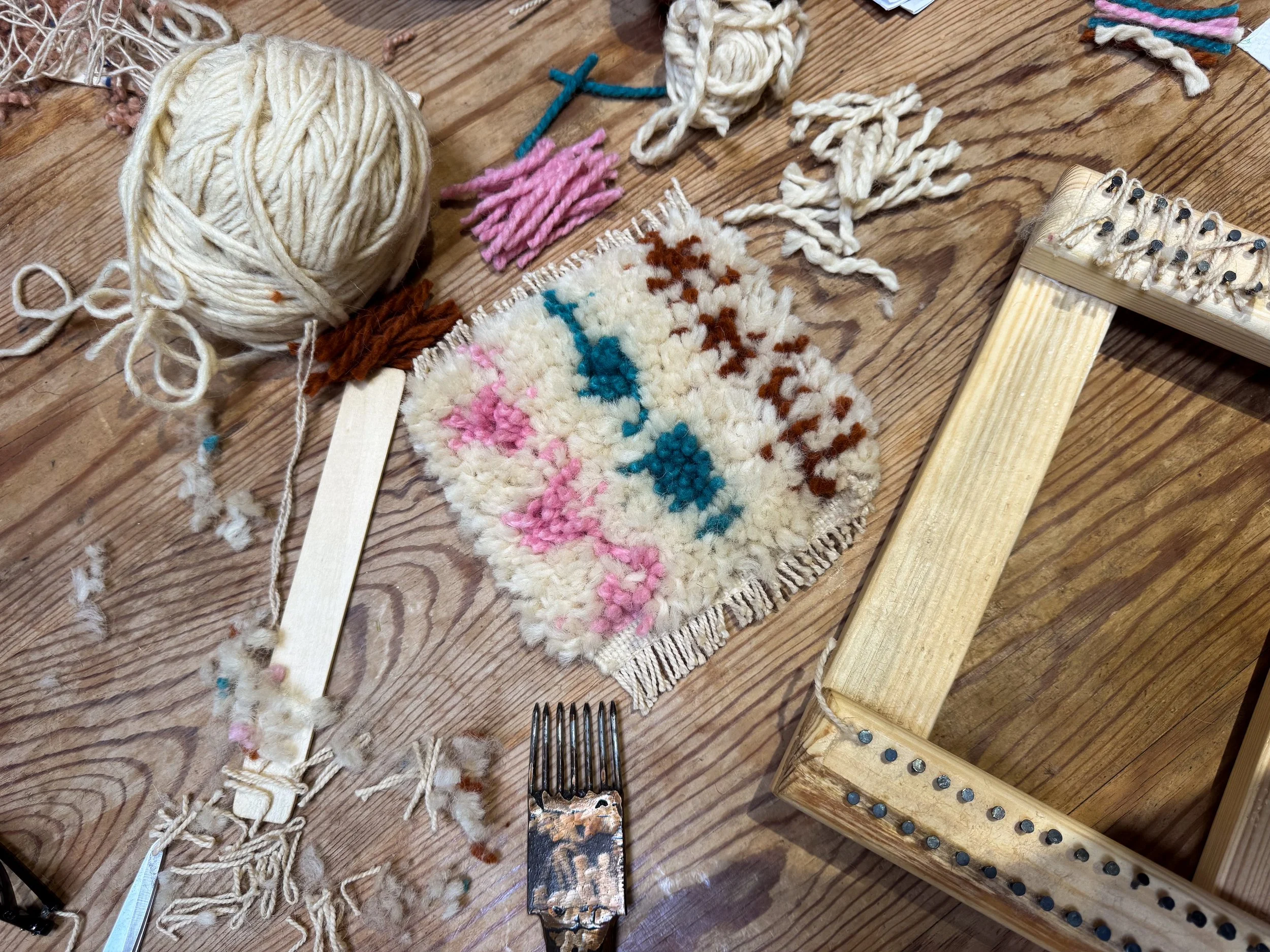
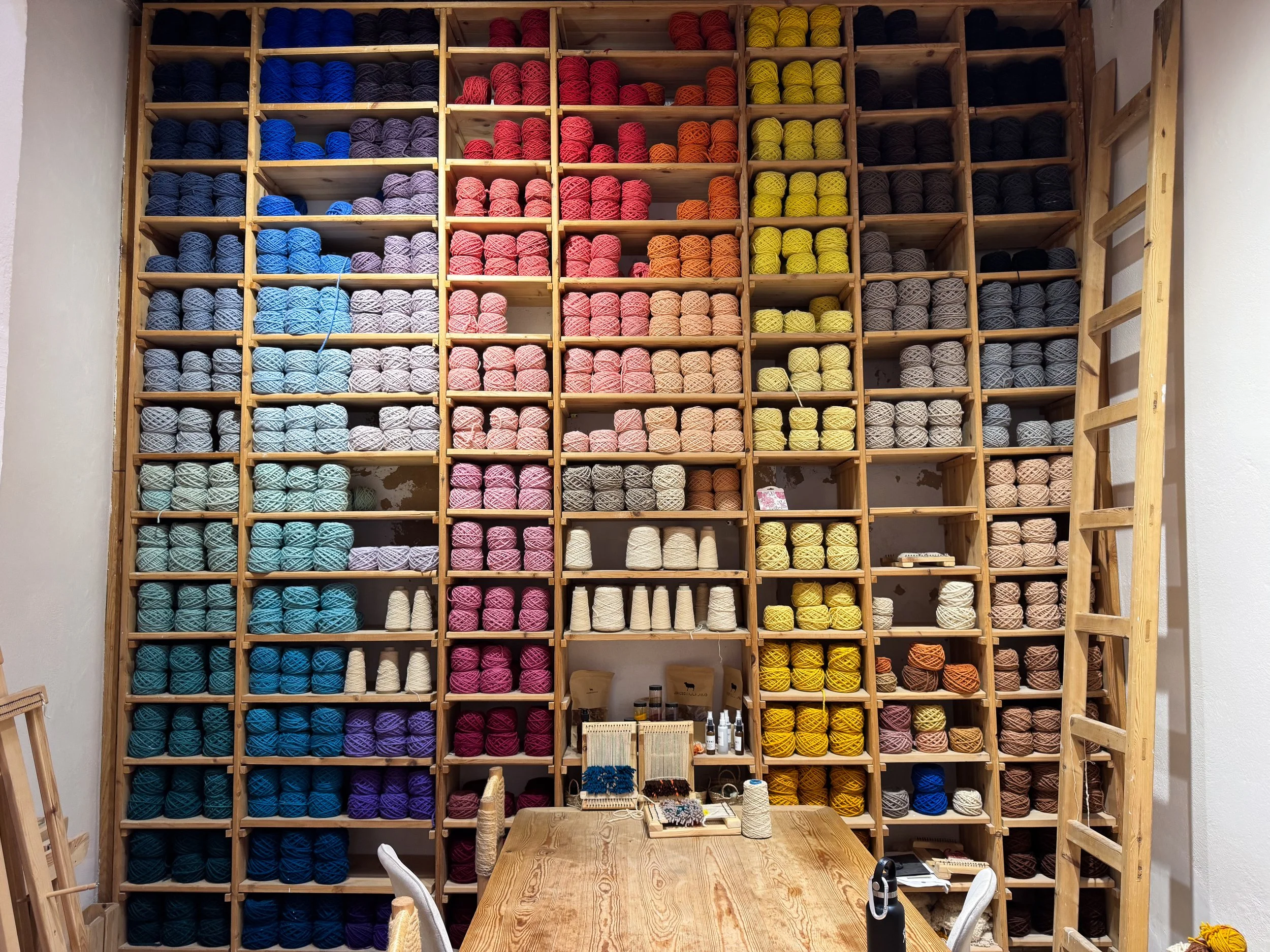
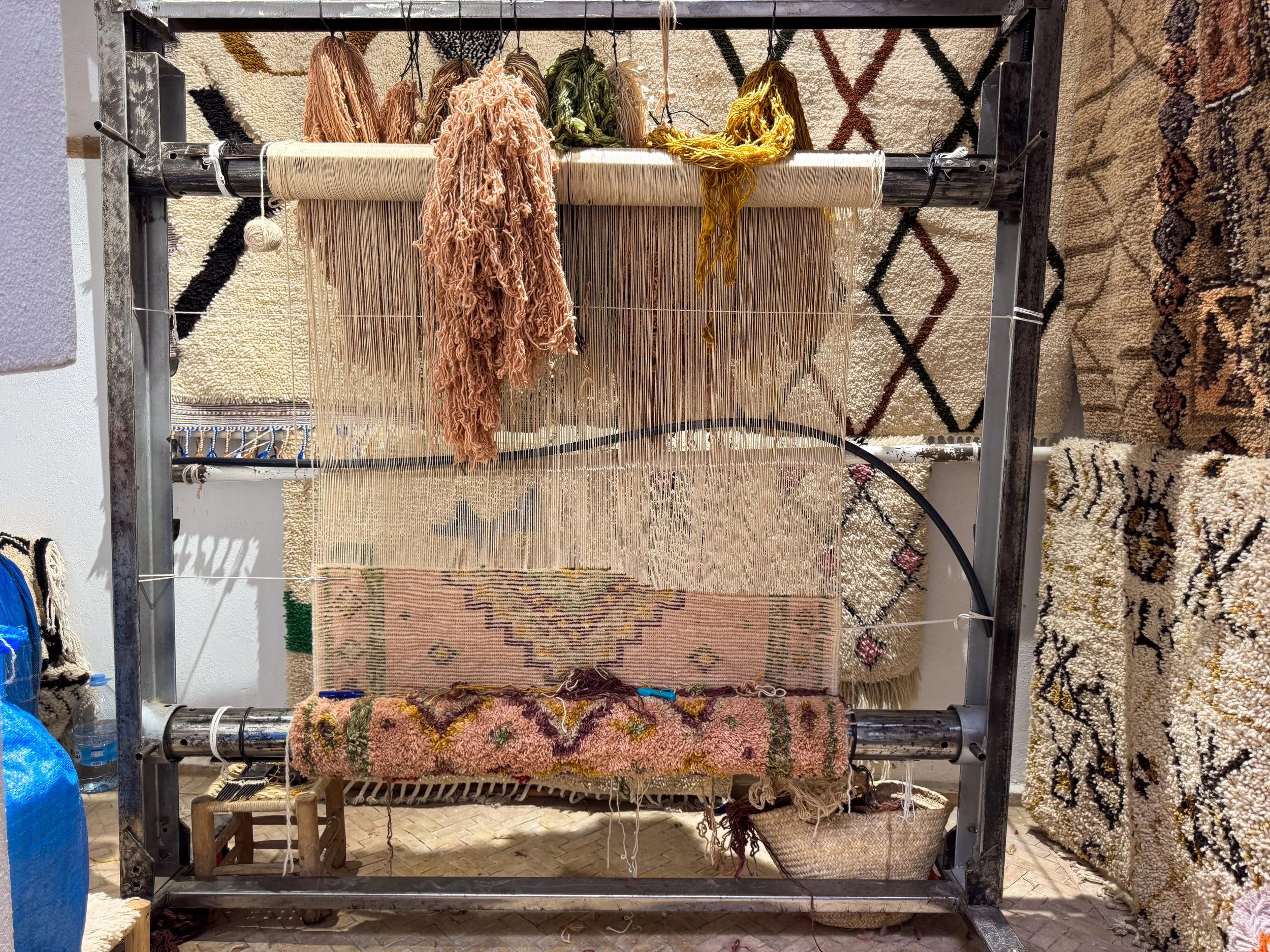
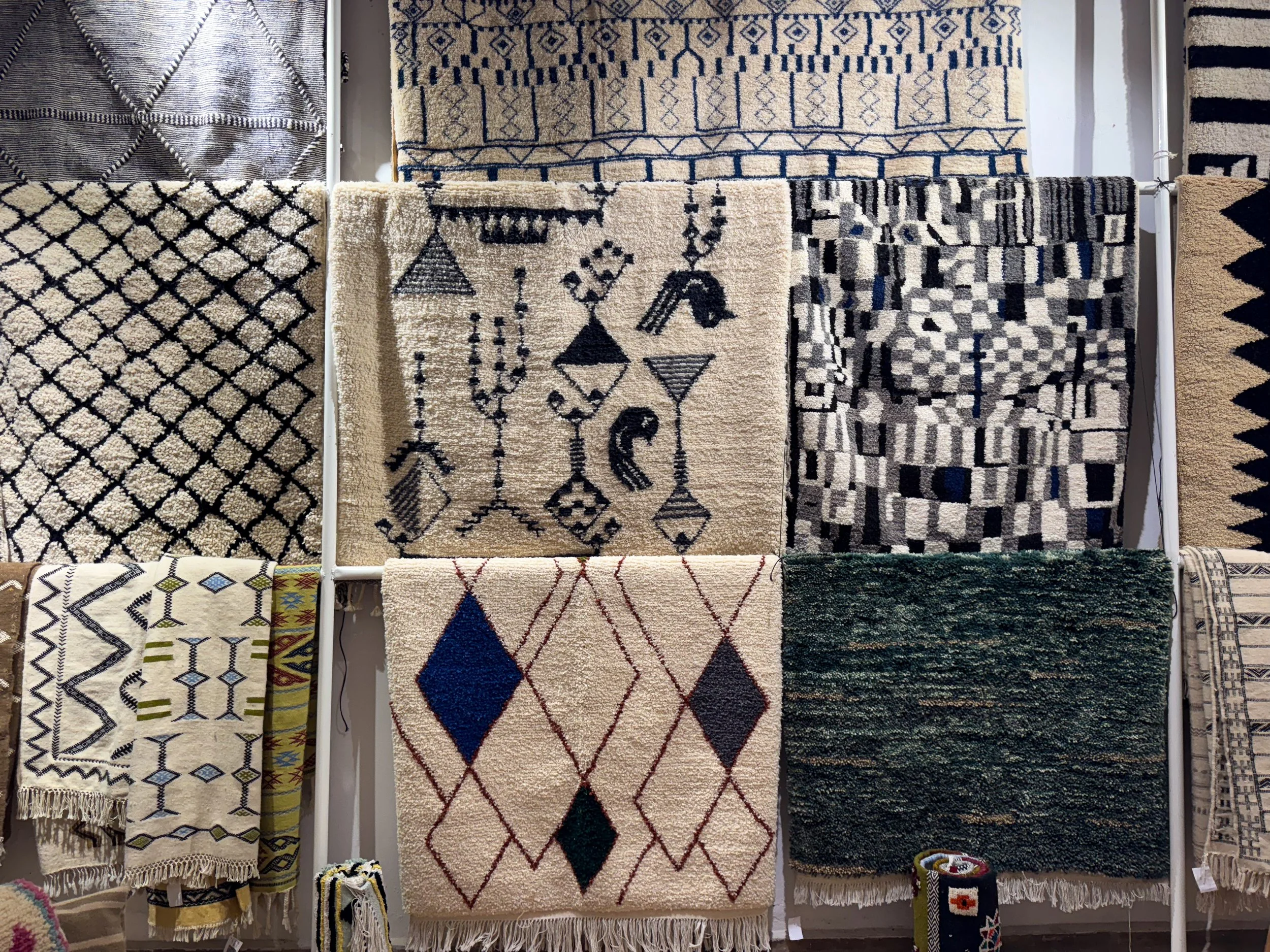
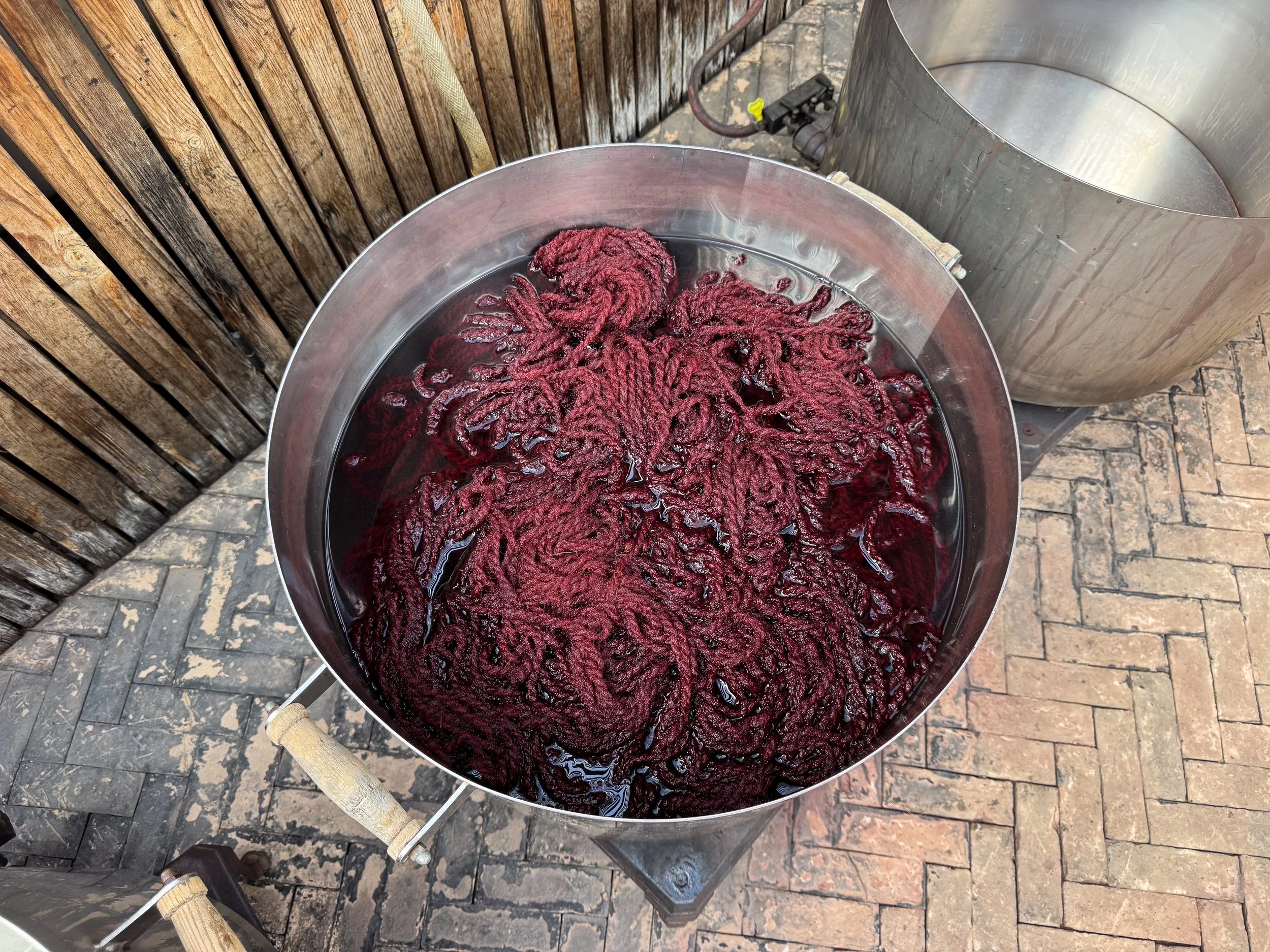
The Anou Cooperative. A cooperative uniting female weavers from communities across Morocco. It allows them to sell their work directly rather than through souk wholesalers, supporting their livelihoods and preserving traditional craft. The studio offers artisan led workshops and weaving residencies, including a half day workshop where we learned to hand knot our own miniature rugs. A small showroom displays unique rugs, hand dyed yarns and other woven items. Custom items can be ordered through their Online Shop.
Places to Eat & Drink
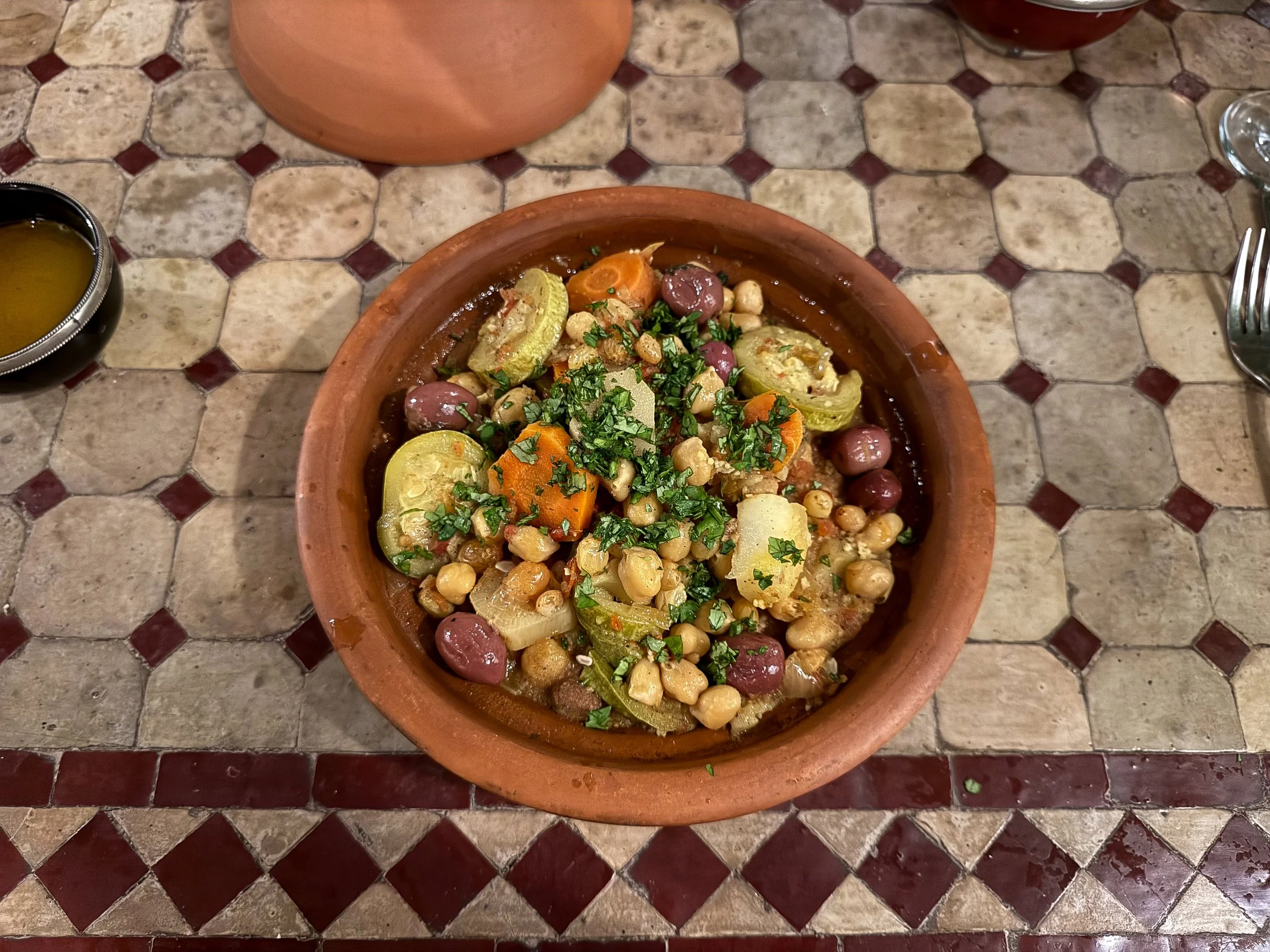
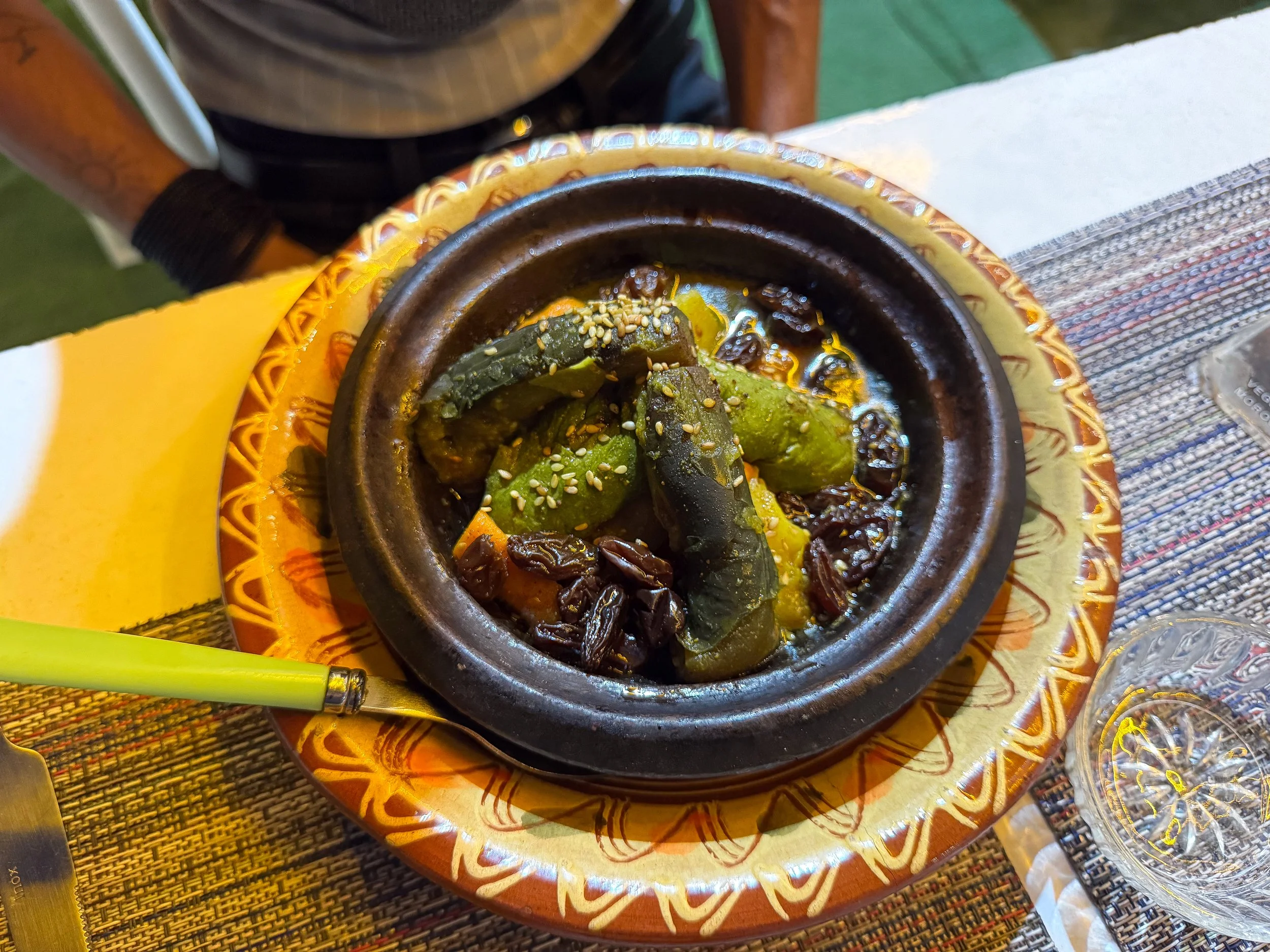
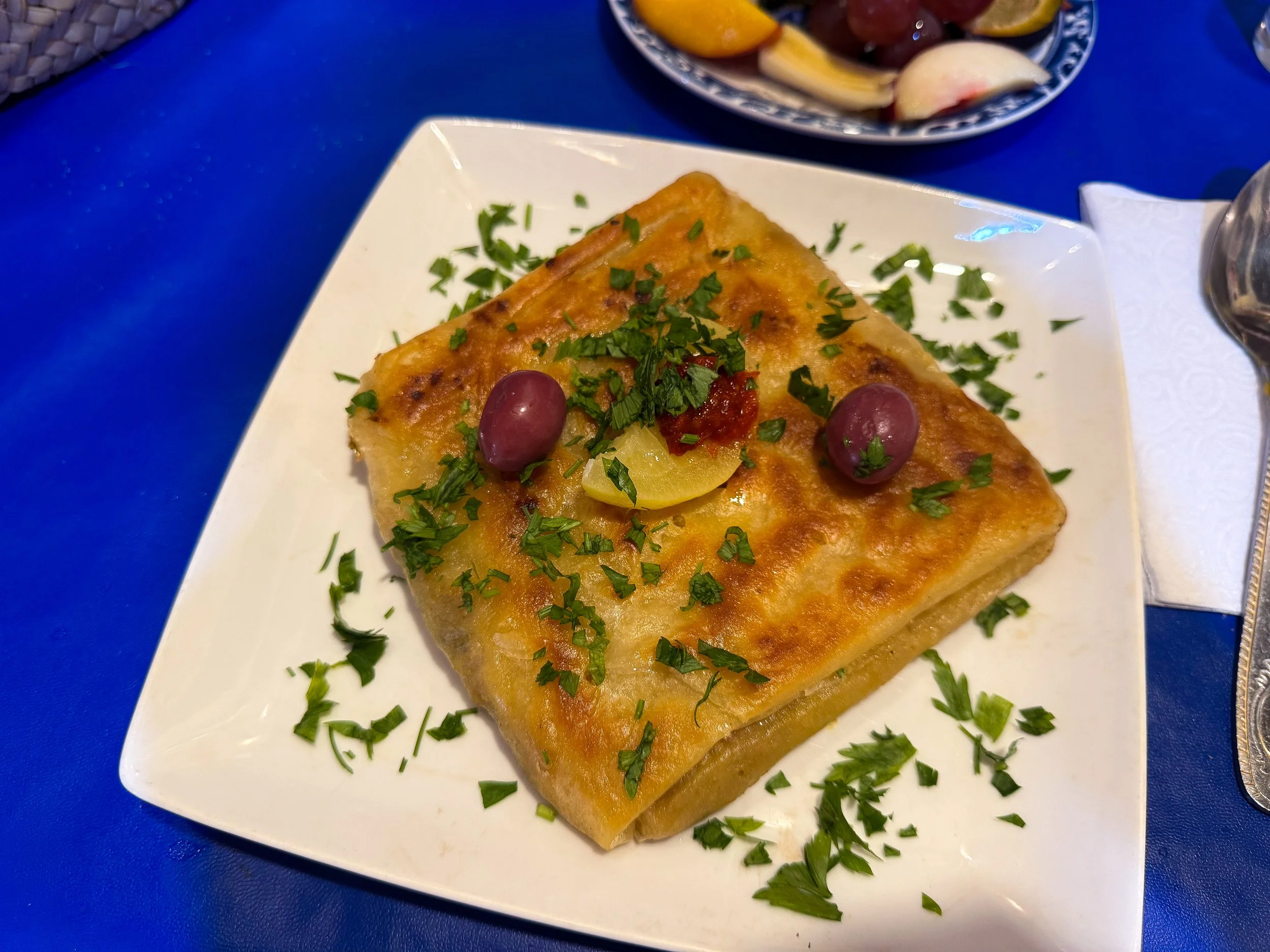
Restaurant Dar Khabya Original. Hidden within the edge of the souks, a small and unassuming restaurant with some of the tastiest Moroccan cuisine, including vegetarian options like pastilla, tagine and fruit juices. Prices are inexpensive and portions are generous.
Café Clock. An alleyway coffee shop with a terrace overlooking a neighboring minaret and the rooftops of Fes. Come here for Moroccan coffees, cookies and local dishes.
Coffee Kortoba El Karaouine. A street-side bakery with freshly made trays of Moroccan patisserie like Gazelle Horns, crescent shaped pastries filled with almond paste, or Ghriba, crumbly almond cookies.
Moroccan Cuisine
Tagine. A mixture of vegetables, meats, dried fruits and spices stewed together in a conical clay dish. It’s a staple dish of Moroccan cuisine.
Couscous. A steamed grain covered in a savory broth and garnished with vegetables and meats.
Harira. A Moroccan soup made from tomatoes, chickpeas, fresh herbs and aromatic spices. It’s usually vegetarian.
Khobs Bread. A light and airy flatbread served with every meal. It’s fresh baked daily and can be bought for 1 DH from local bakeries.
Msemmen. A flaky and layered pan fried flat bread often eaten at breakfast with honey. It’s commonly cooked by street vendors on flat top griddles.
Sfenj (Moroccan Donuts). Yeasty rings of fried dough heavily coated in plain sugar. They’re a common street food snack and usually paired with a tiny cup of coffee.
Mint Tea. Hot tea made with fresh mint leaves and sugar cubes. It’s served as a common welcome drink.
Fresh Squeezed Juice. Juices are commonly drank across Morocco. Try fresh squeezed orange, pomegranate or sugar cane from a street side juice cart.
Moroccan Orange Soda. Orange is one of the most popular flavors in Morocco. Try a Moroccan orange soda like Orangina or Hawai.
Stay in a Riad
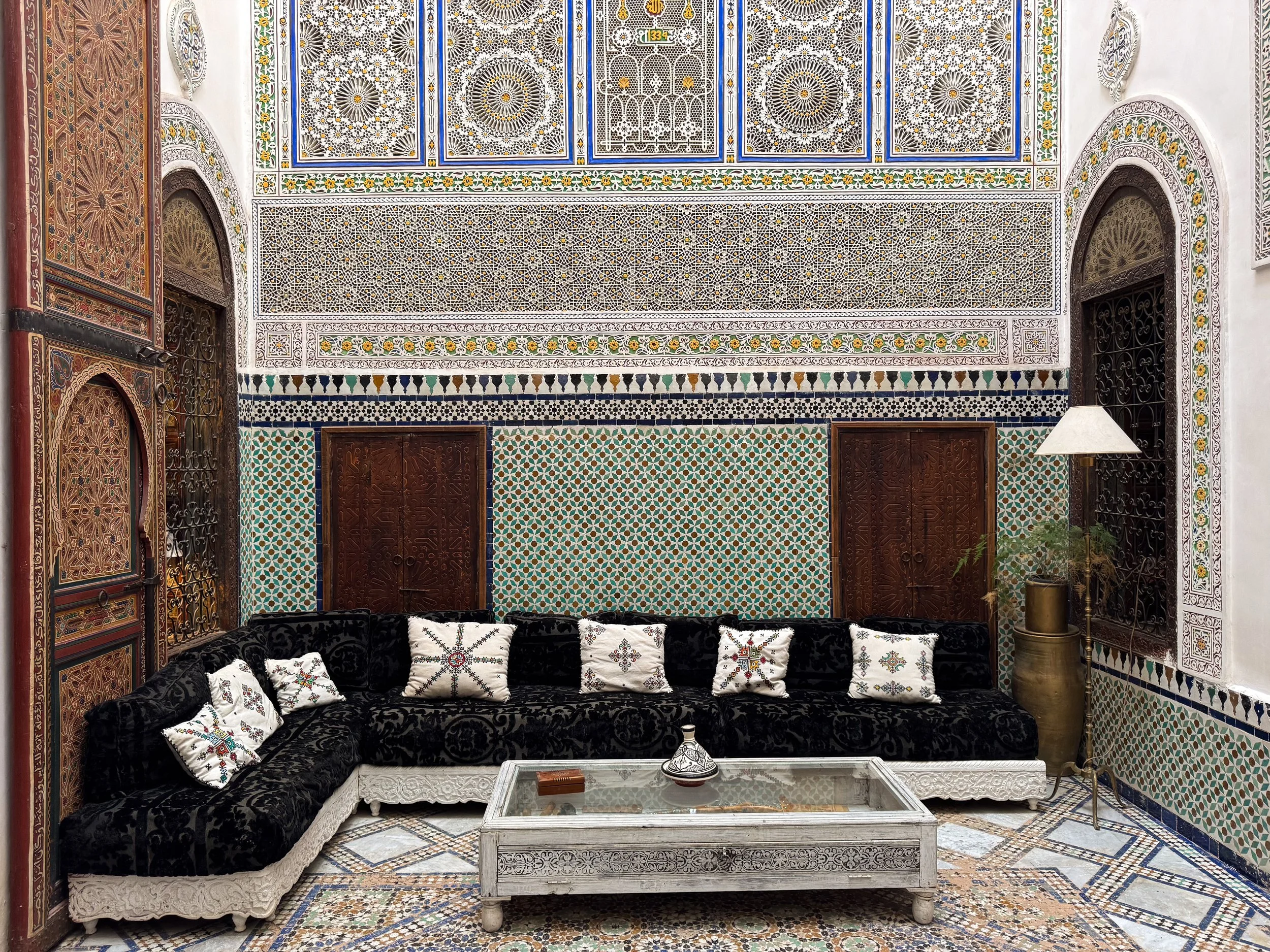
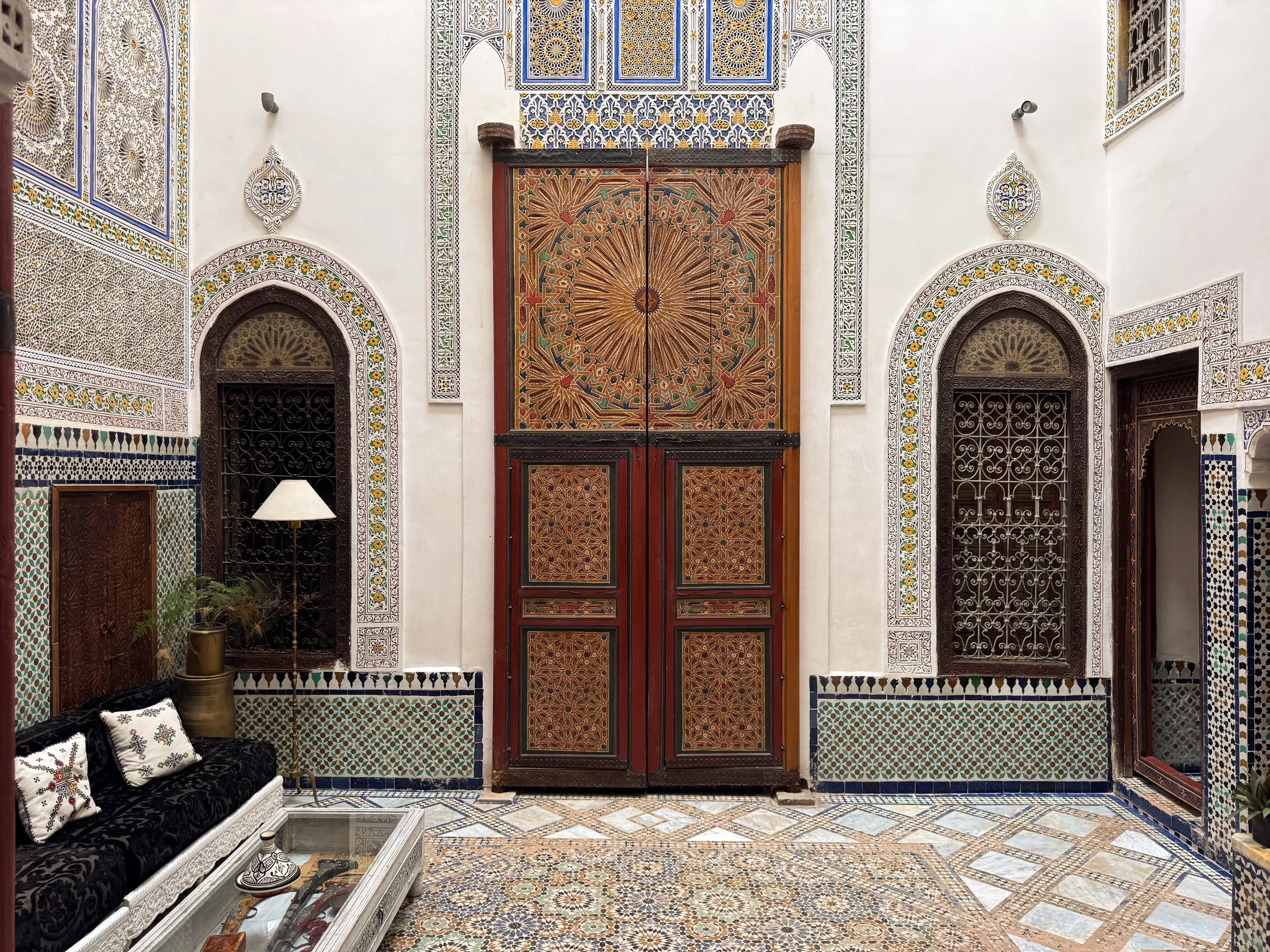
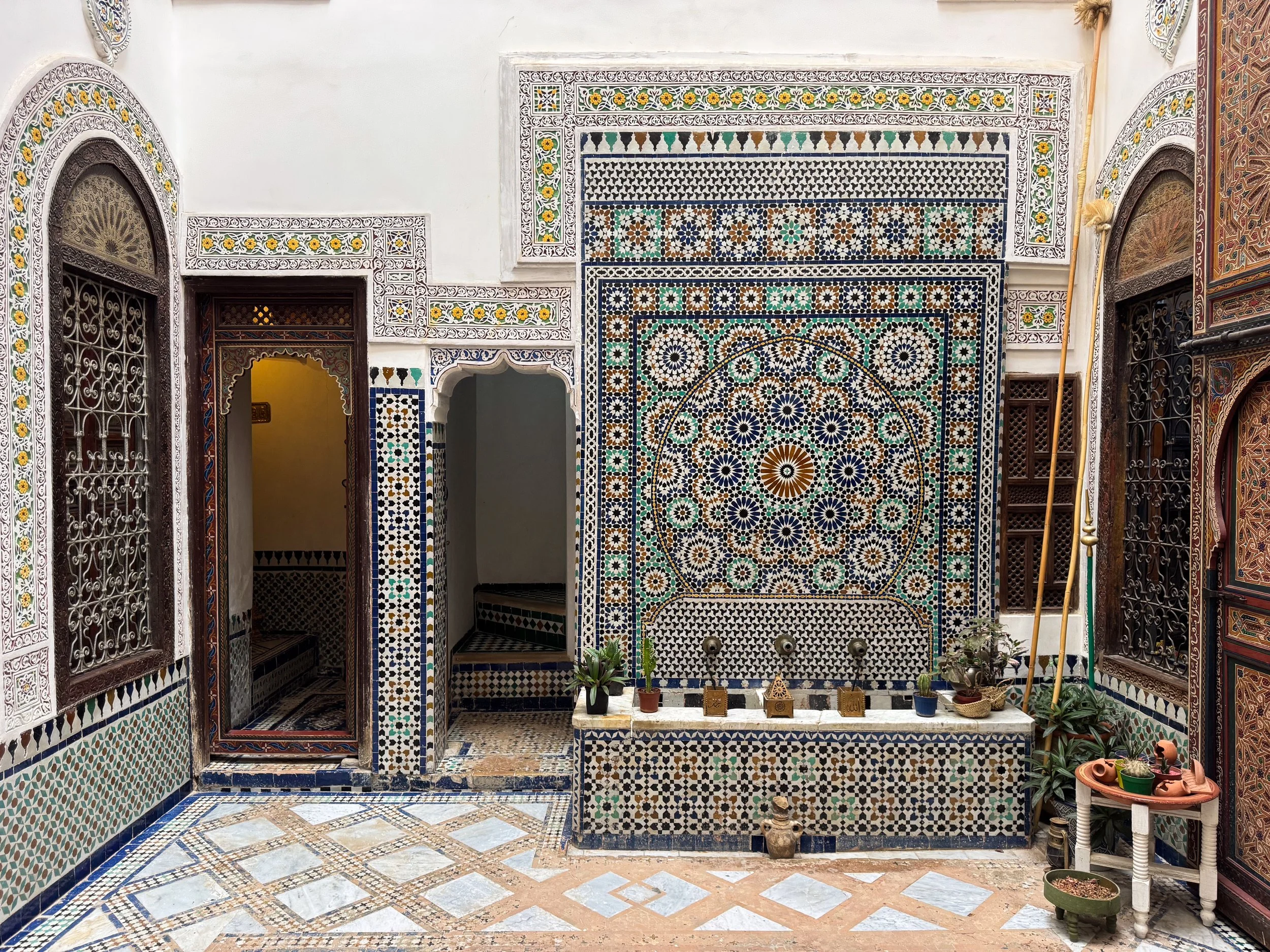
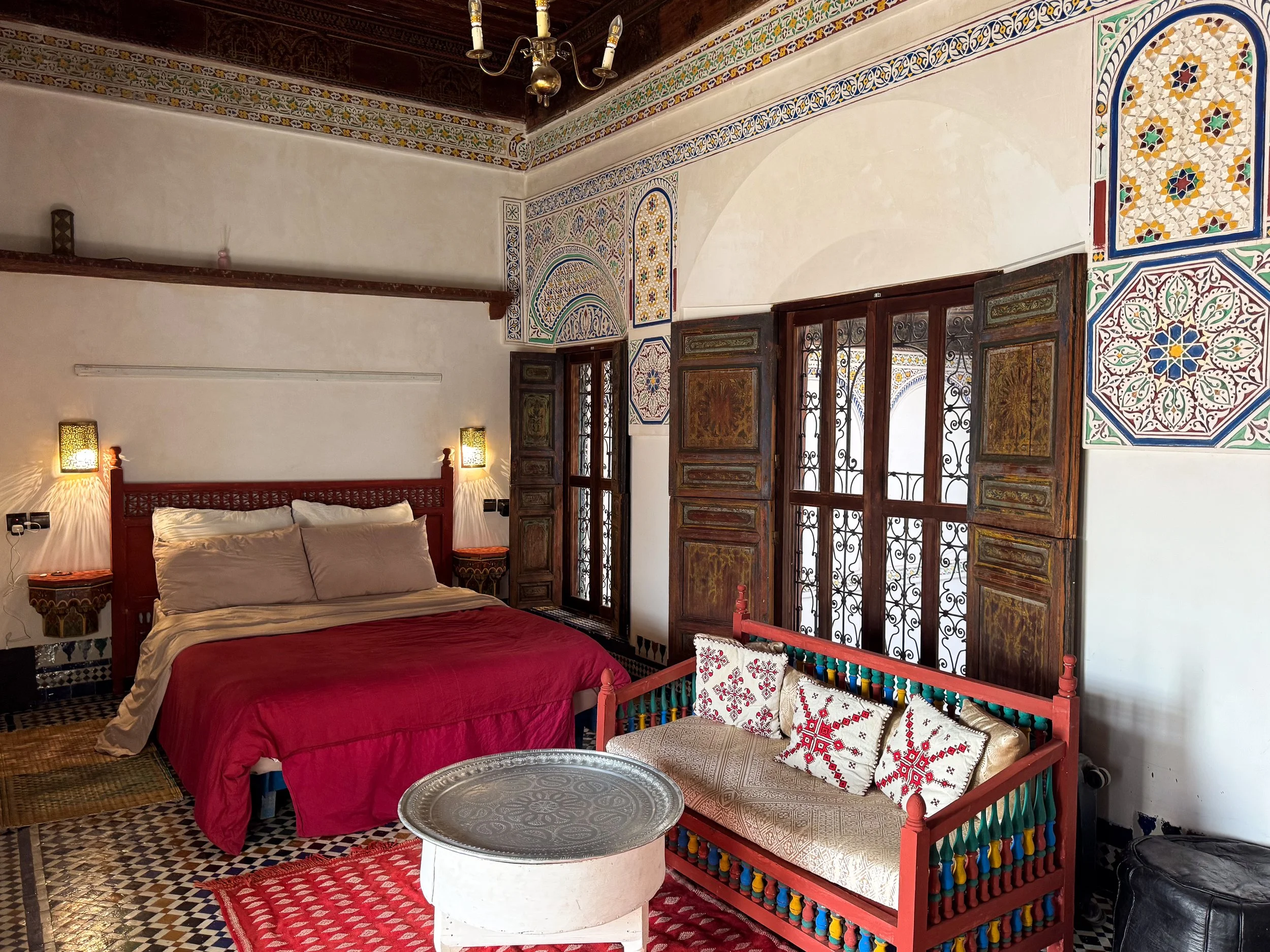
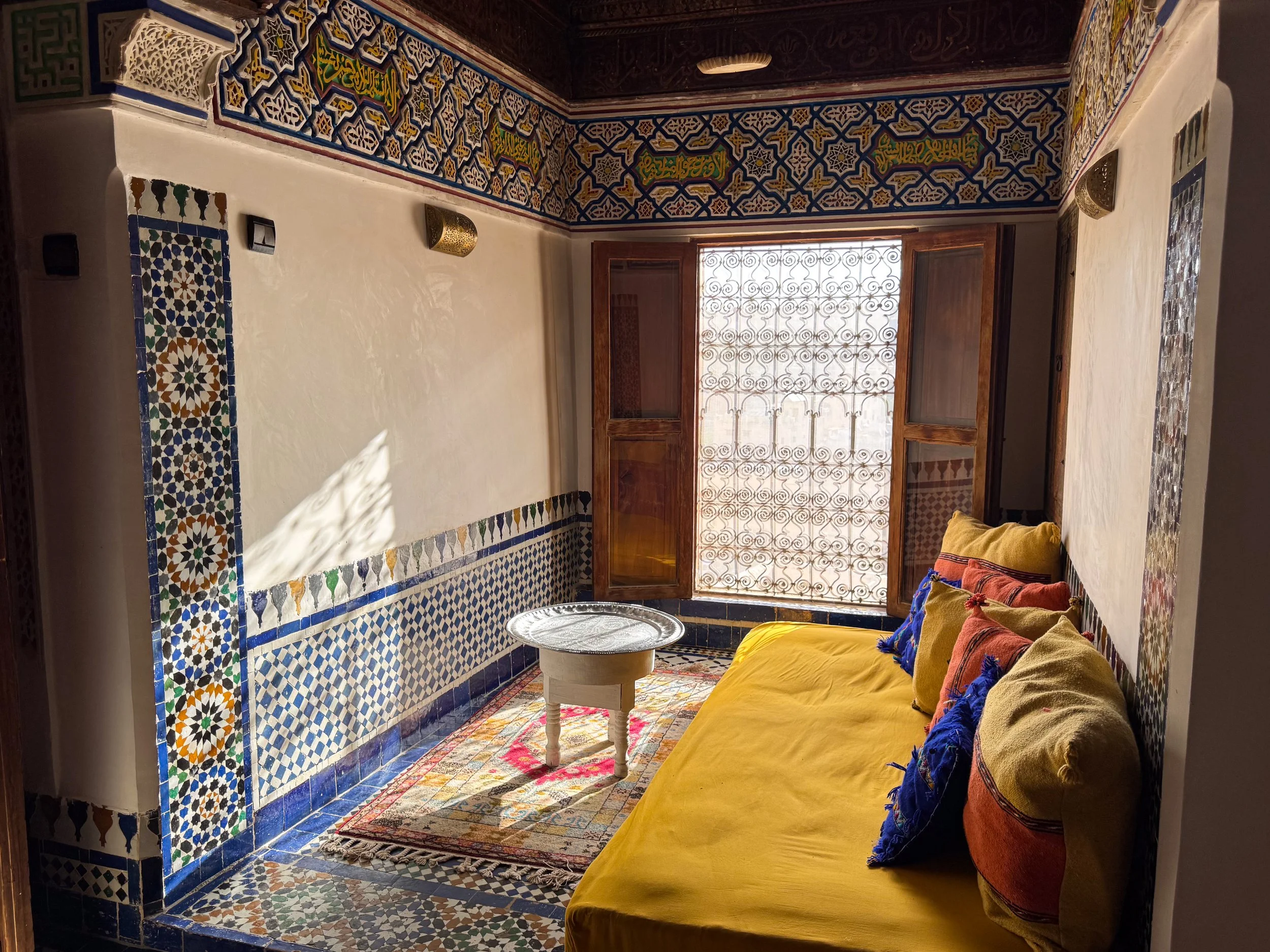
Fes is famed for its elaborate Riads, traditional Moroccan guest houses. They offer tranquil places to stay within the heart of the chaotic medina.
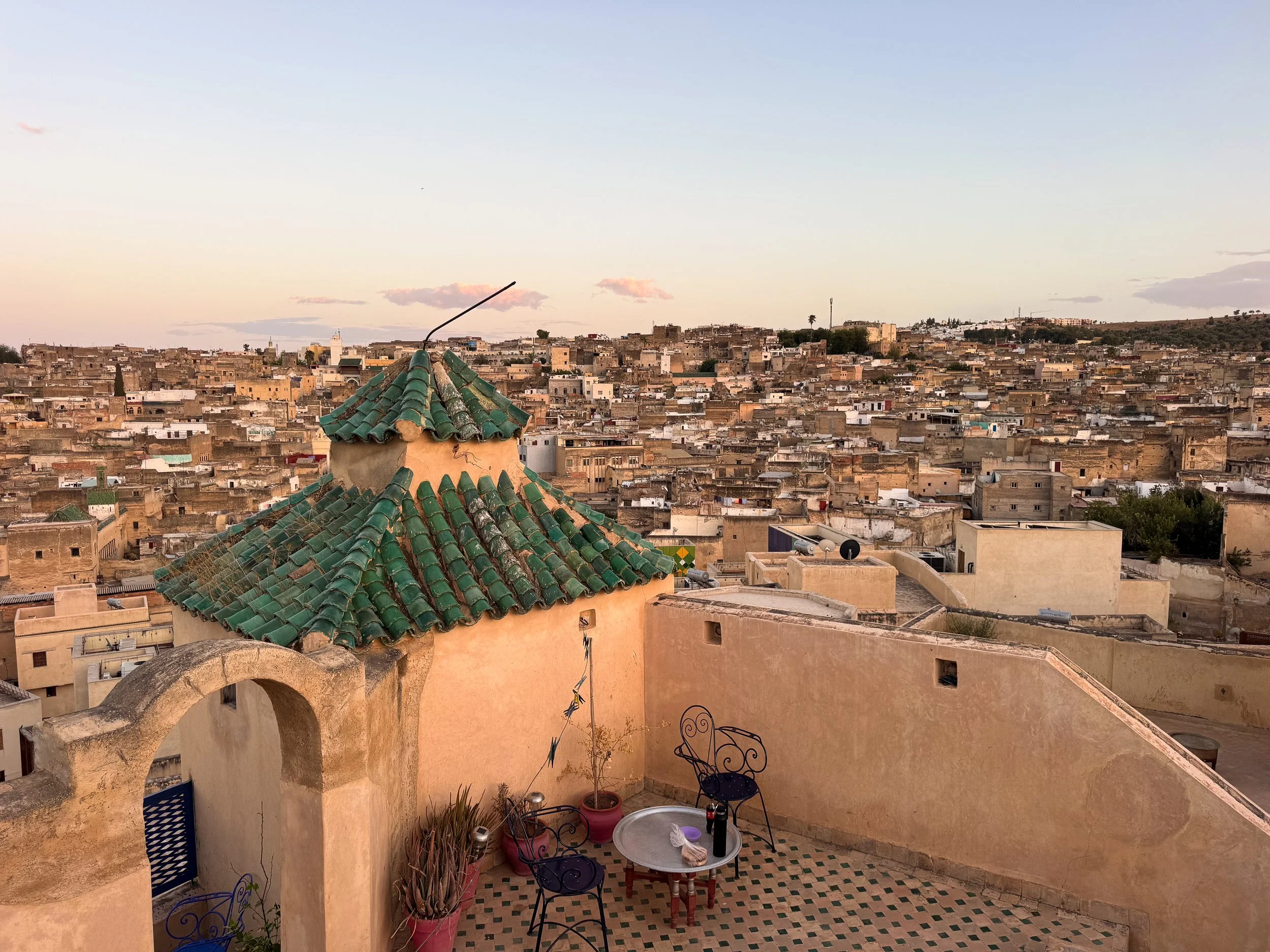
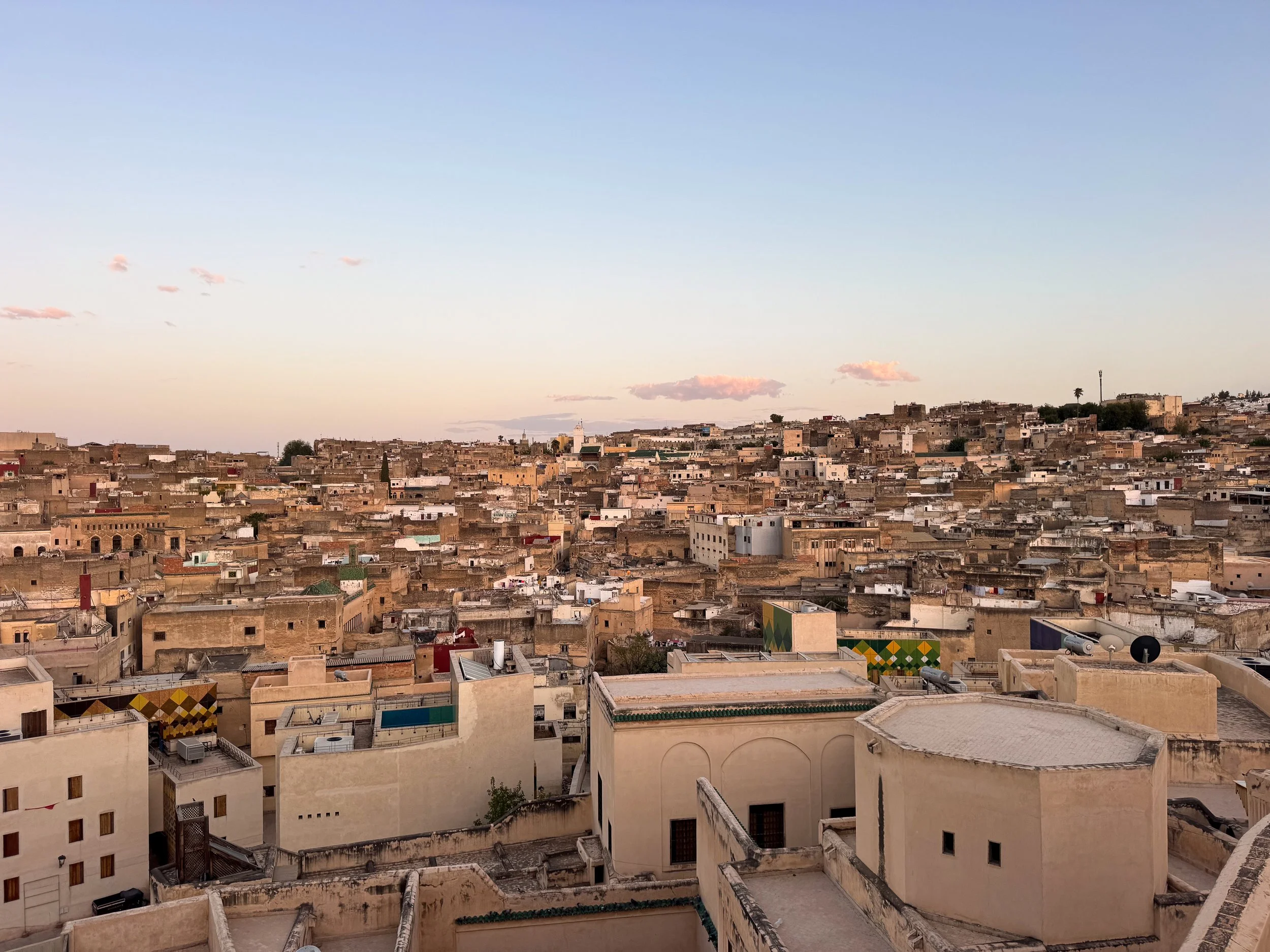
Riad in Old Fes Place Seffarine. A maze of narrow alleyways leads through the souks to this hidden gem in the medina. Its door opens up to an elaborate courtyard decorated in Moroccan tiles, exquisite plasterwork and carved wooden panels. A tiled stairway leads to tiny seating areas and a rooftop with panoramic views of Fes. Grand suites fit for the sultans of old provide travelers with a luxurious Moroccan experience. We booked our stay 6 months in advance on Airbnb.
Getting Around
On Foot. Fes and its medina are best explored on foot. The maze of winding streets and narrow alleyways offers a true glimpse into the history of the city. While the medina is large and hilly, most walkways are covered, providing welcome shade from the hot sun. You don’t need a guide; expect to get lost, turned around and come to dead ends. Navigating gets easier after the first day.
Good to Know. Ignore people trying to offer directions. They may ask where you’re going, tell you a road or place is closed, try leading you into a shop or ask for a tip.
Petit Taxi. Small red taxis are present throughout the city. They’re safe, affordable and quick when getting around. Hail one off the street or near a gate to the medina. Fares cost between 10-20 Dirham for short distances and up to 100 Dirham between the medina and airport. Always confirm price and destination before getting in. Petit taxis are shared so drivers may stop to pick up other passengers along the route.
Arabic Words & Phrases
Knowing a few words and phrases in Arabic goes a long way in Morocco when interacting with locals. Some of the most common and easy to remember are:
Hello = Salama
Goodbye = Beslama
Thank you = Shukran
You’re welcome = Marhaba
Location Specifics
When to Visit. September is the best month of the year to visit Morocco. It’s just before peak travel season with hot to moderate temperatures.
Language. Arabic, French and English are commonly spoken by many people, seen on signage and menus.
Cash vs. Card. Cash is the preferred and often only accepted method of payment at many businesses. Confirm before ordering at restaurants or agreeing to services.
Safety. The medina is a generally safe destination to visit. Be aware of your surroundings and keep hold of personal belongings to avoid pickpocketing.
Dress Conservatively. Don’t show too much skin, try to cover most tattoos and remove piercings.
Berber Hospitality. Shopkeepers often offer mint tea when visiting their shops; it’s respectful to accept.
Drinking Water. Tap water is not safe for consumption or using to cook with. Only use bottled water.
Alcohol. The sale of alcohol is heavily controlled throughout the country. Very few establishments serve cocktails, beer or wine in Fes.
Slow Mornings. Mornings in Fes are slow. Most businesses and shops don’t open until at least 10am.
Friday Closures. Friday is a day of prayer and rest in Islam. The city is quieter than other days. Many shops, restaurants and businesses are closed during this time.
LGBTQ+ Safety. Moroccan laws and customs are not very accepting of LGBTQ+ individuals. Stay up to date with the latest laws and suggestions while traveling. Refer to our guide on LGBTQ+ Travel Safety for more advice.
Elsewhere in Morocco
From Fes's historic medina and Islamic heritage to Marrakech's markets, Chefchaouen's mountain charm and the vast Sahara Desert, continue exploring Morocco through these travel guides:
Marrakech Travel Guide: Medina, Souks & Moroccan Cuisine. Get lost in Marrakech's maze-like alleyways where vibrant souks, elaborate palaces and historic mosques bring centuries of Moroccan culture, cuisine & tradition to life.
Morocco Road Trip Guide: Sahara Desert, Kasbahs & Berber Culture. Road trip across Morocco's dramatic landscapes where palm oases, ancient kasbahs, towering dunes and Berber camps create an unforgettable Saharan adventure.
Chefchaouen Travel Guide: The Blue City, Medina & Local Culture. Stroll through Chefchaouen's blue painted medina where historic mosques, fresh juice vendors, Berber artisans and mountain scenery reveal a tranquil side of Morocco.
Casablanca Travel Guide: Hassan II Mosque, Local Markets & Moroccan Cuisine. Wander through Casablanca's ancient medina, palm lined avenues and seaside promenades where the Hassan II Mosque and local food markets reflect Morocco's culture.
For Next Time…
Morocco is a beautiful destination with historic cities, scenic landscapes and cultural allure. We have a shortlist of places to visit when we return.
Meknes. An ancient city at the heart of Morocco’s wine producing region. Its nearby vineyards offer tours, tastings and wine pairings.
Volubilis. An ancient Roman city with well preserved ruins and mosaics from the former empire.
Essaouira. A port city on the Atlantic with a picturesque medina, coastal ramparts and fresh seafood restaurants.
Marrakech Travel Guide: Medina, Souks & Moroccan Cuisine
Get lost in Marrakech's maze-like alleyways where vibrant souks, elaborate palaces and historic mosques bring centuries of Moroccan culture, cuisine and tradition to life.
Marrakech, Morocco
Marrakech is an intoxicating destination, both chaotic and charming. Maze-like alleyways wind through the walled medina, past historic buildings adorned with intricate architectural details. Bustling souks brim with artisans and colorful displays of rugs, luminous brass lamps, vivid spices and Moroccan sweets. Narrow streets open to lively plazas filled with performers and vendors, as the scents of mint tea and tagines drift through the air.
The Medina
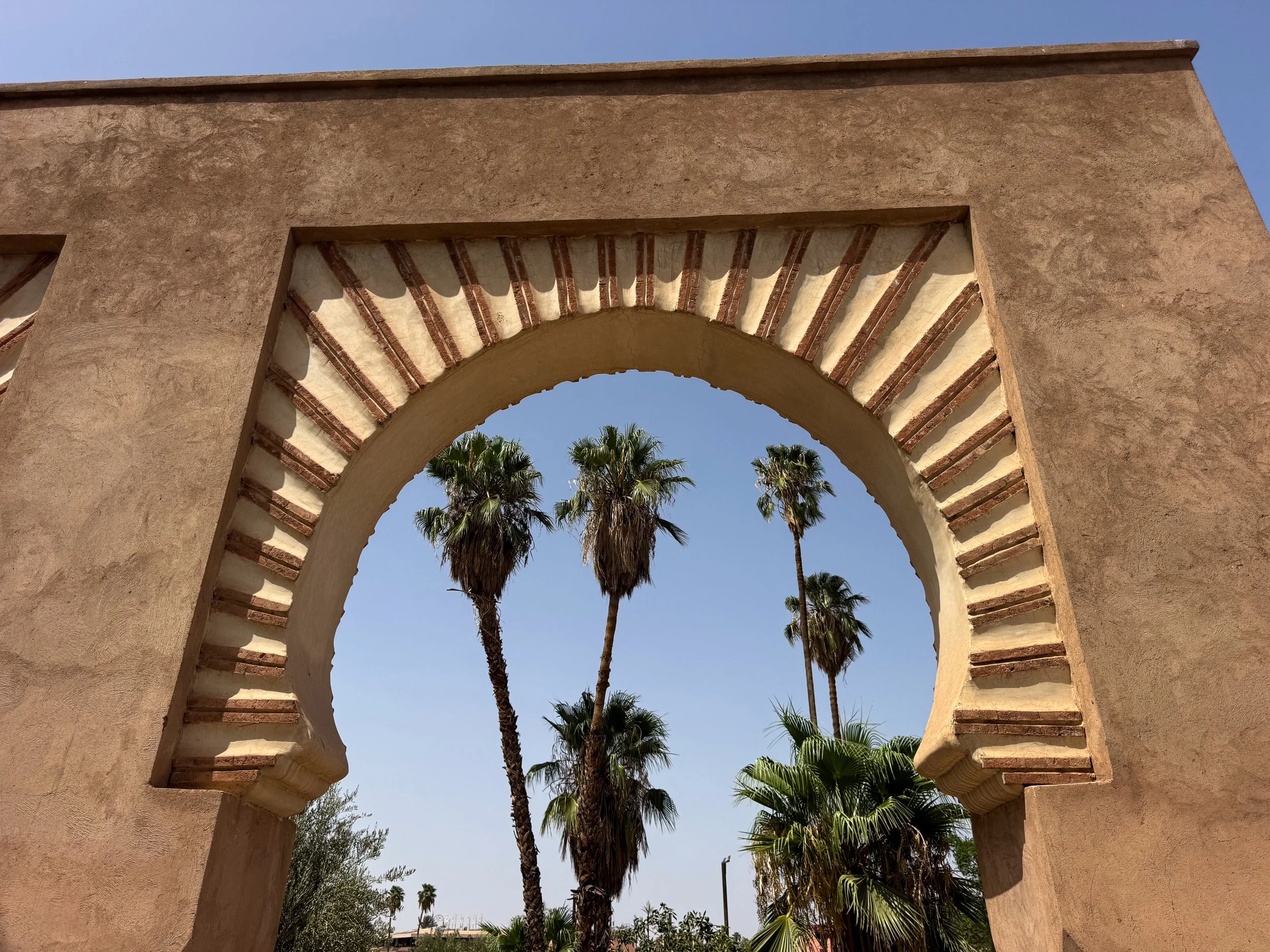
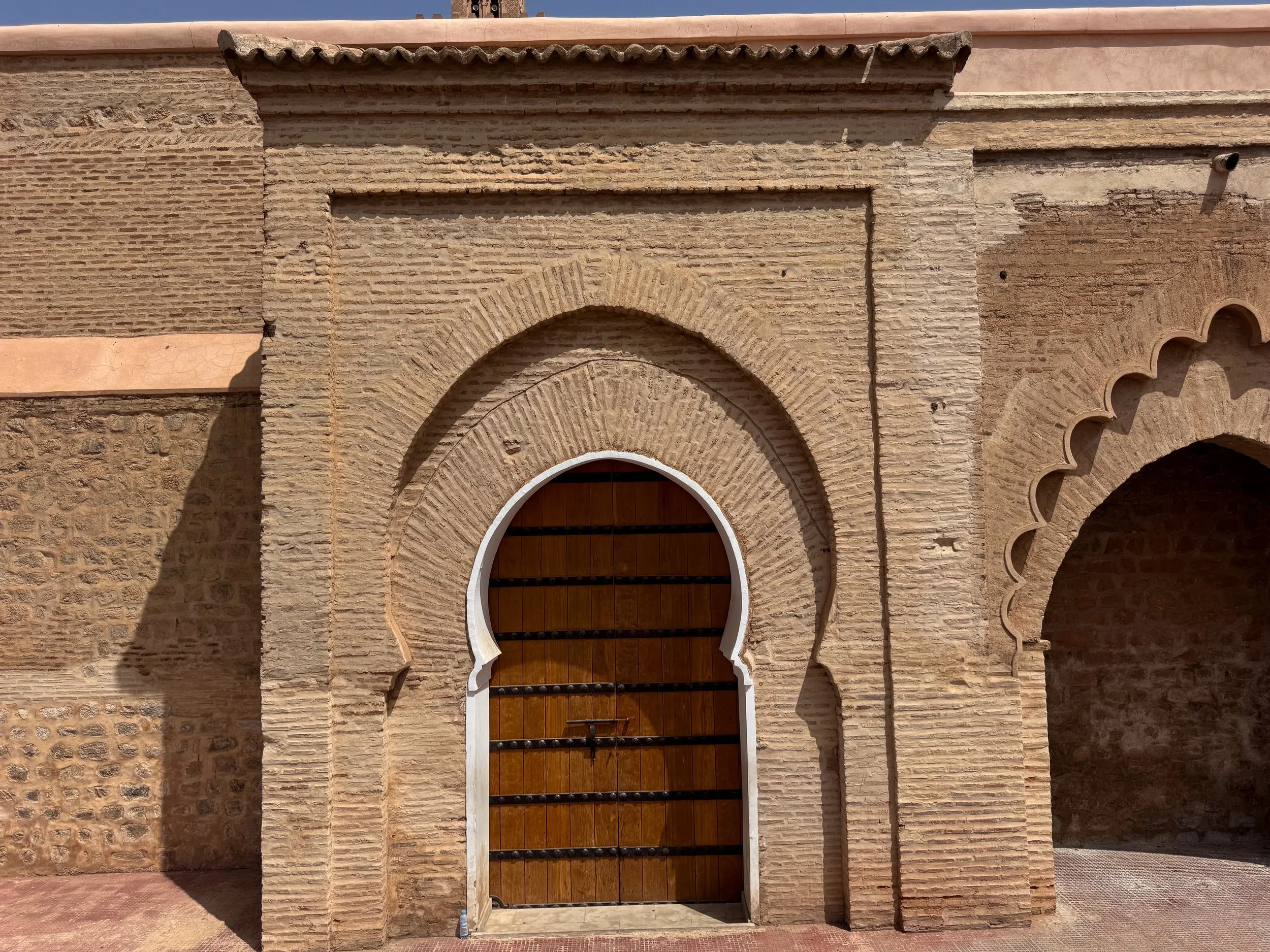
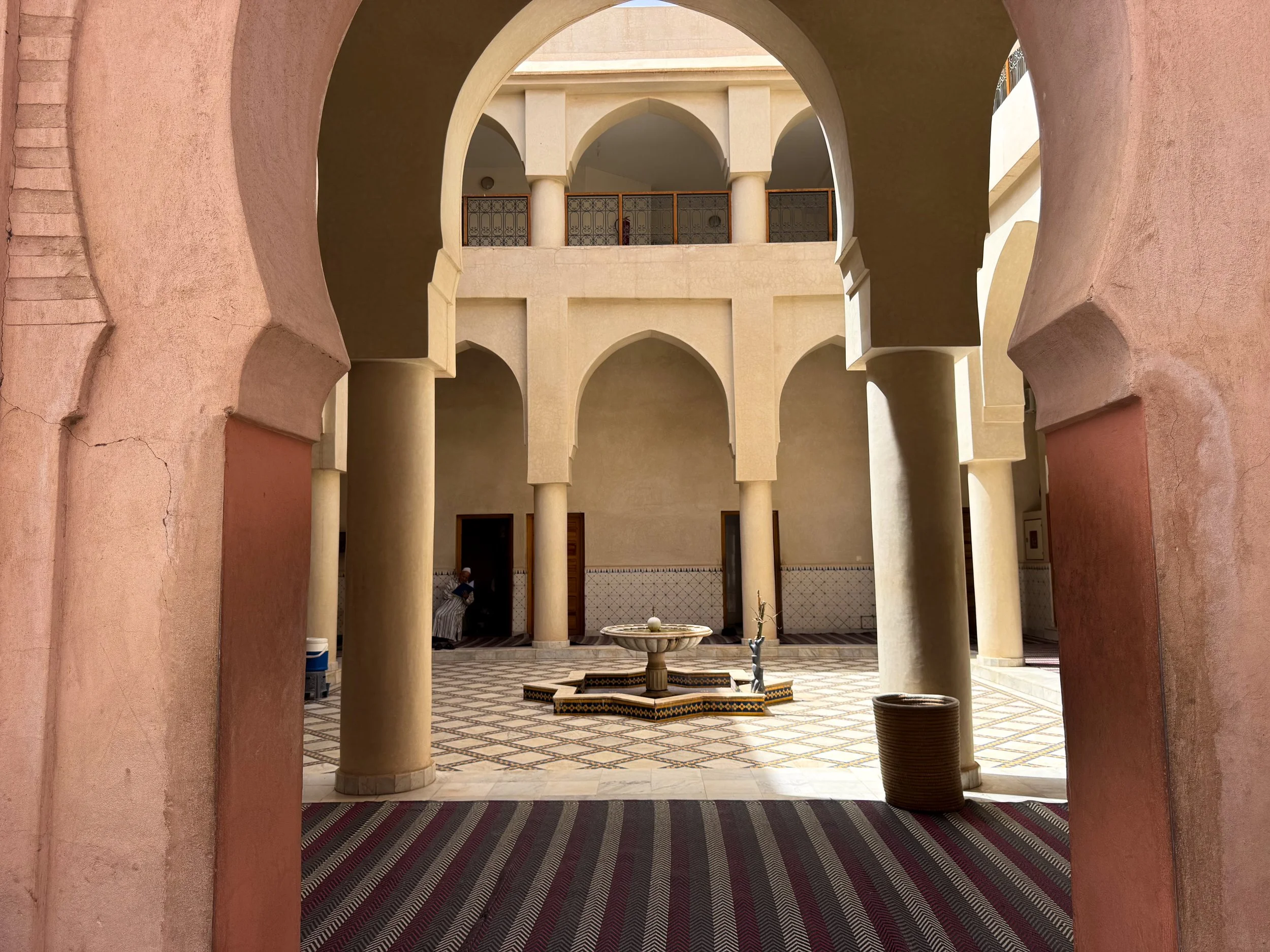
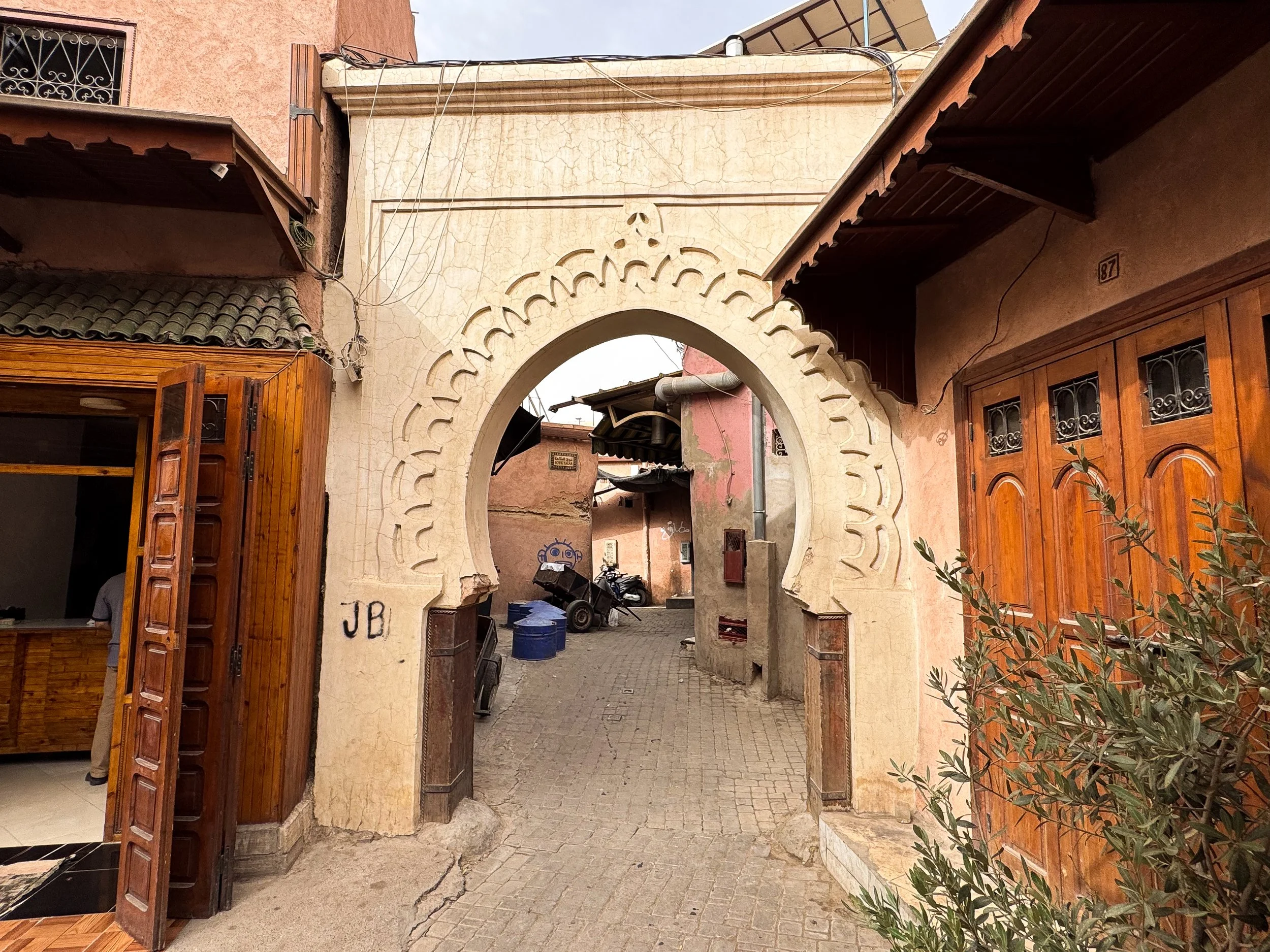
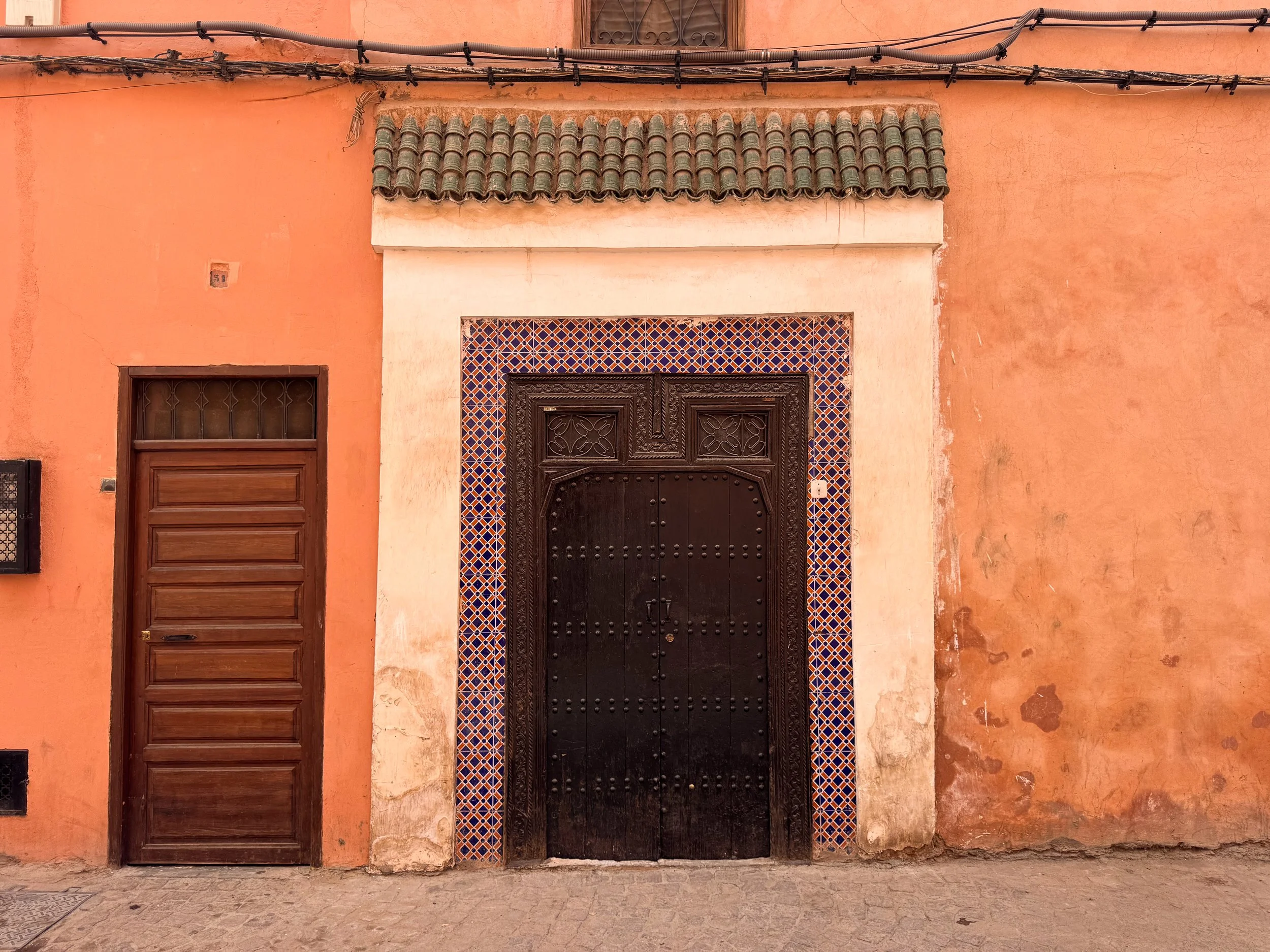
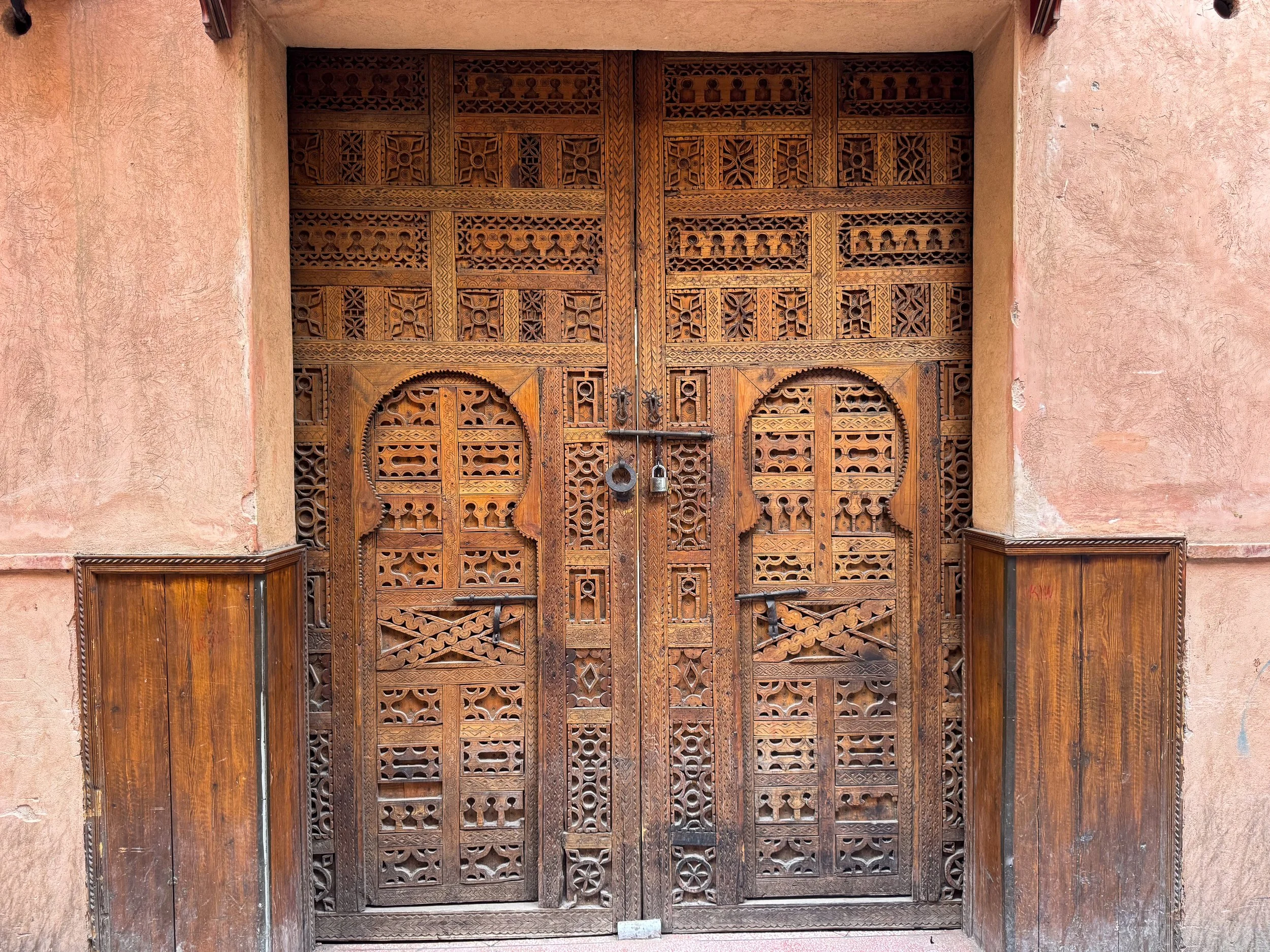
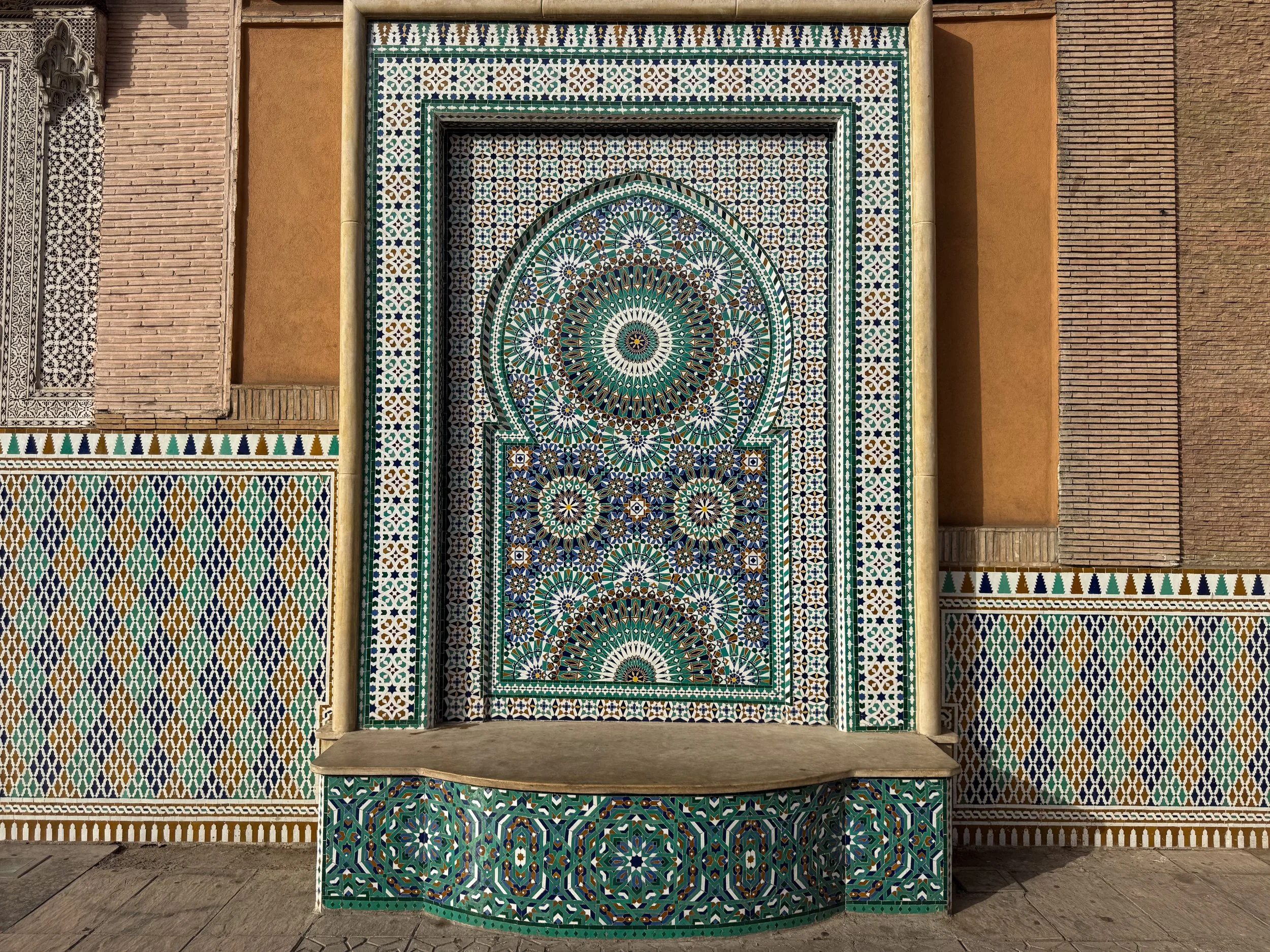
The medina is the historic center of Marrakech. Arched gates lead into a maze of winding alleys and shadowed passageways. Warm sandstone buildings line cobblestone streets, their adobe facades softened by time. Ornate wooden doors and intricate archways lead to Islamic landmarks. Roadside stalls overflow with vegetables and spices as donkey carts rattle past. Crowds move through bustling souks, haggling with shopkeepers, while restaurants and cafes compete for attention. Riads provide calm retreats from the chaos and heat while rooftop terraces offer sweeping views of the ancient city and its towering minarets.
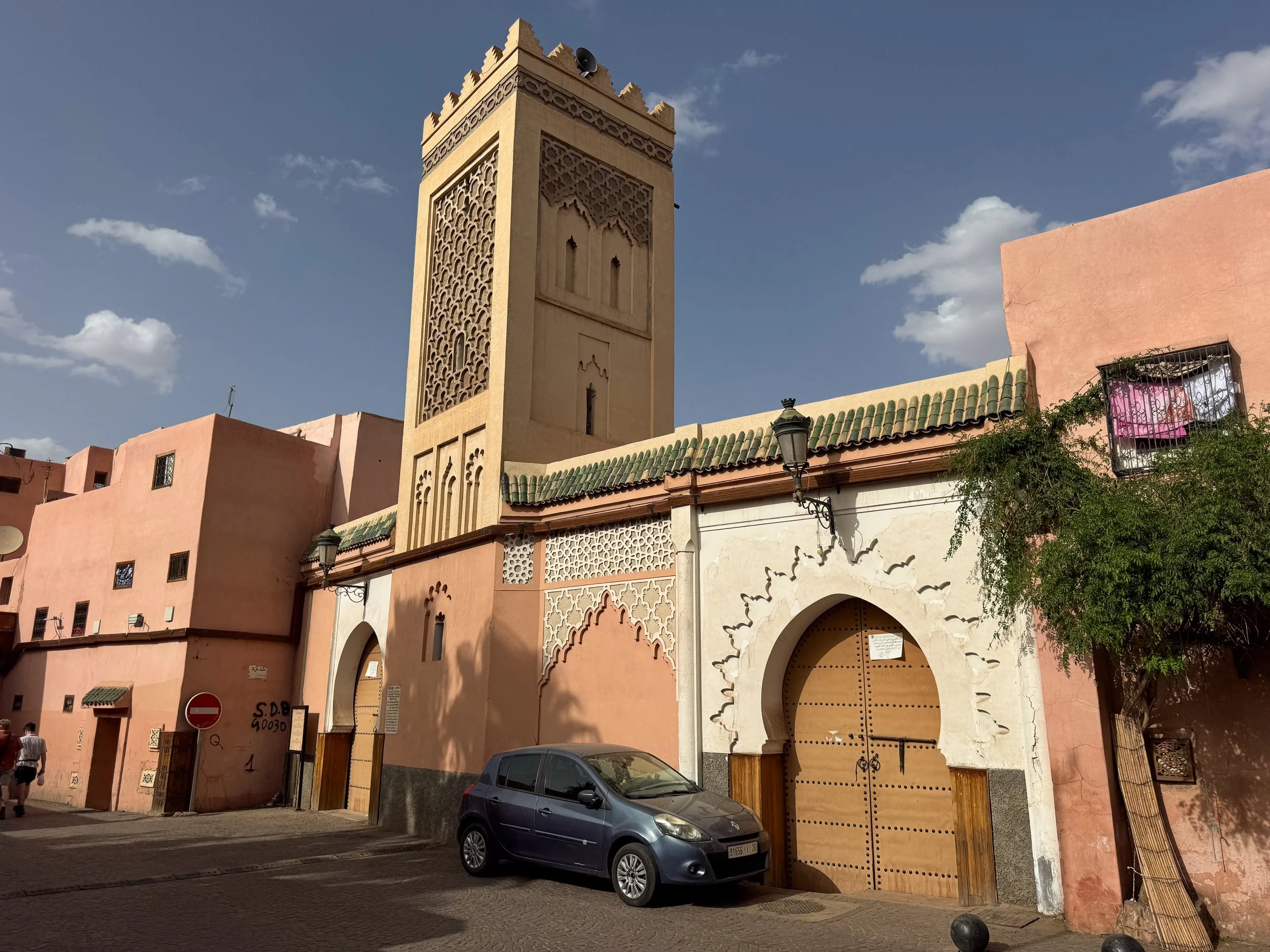
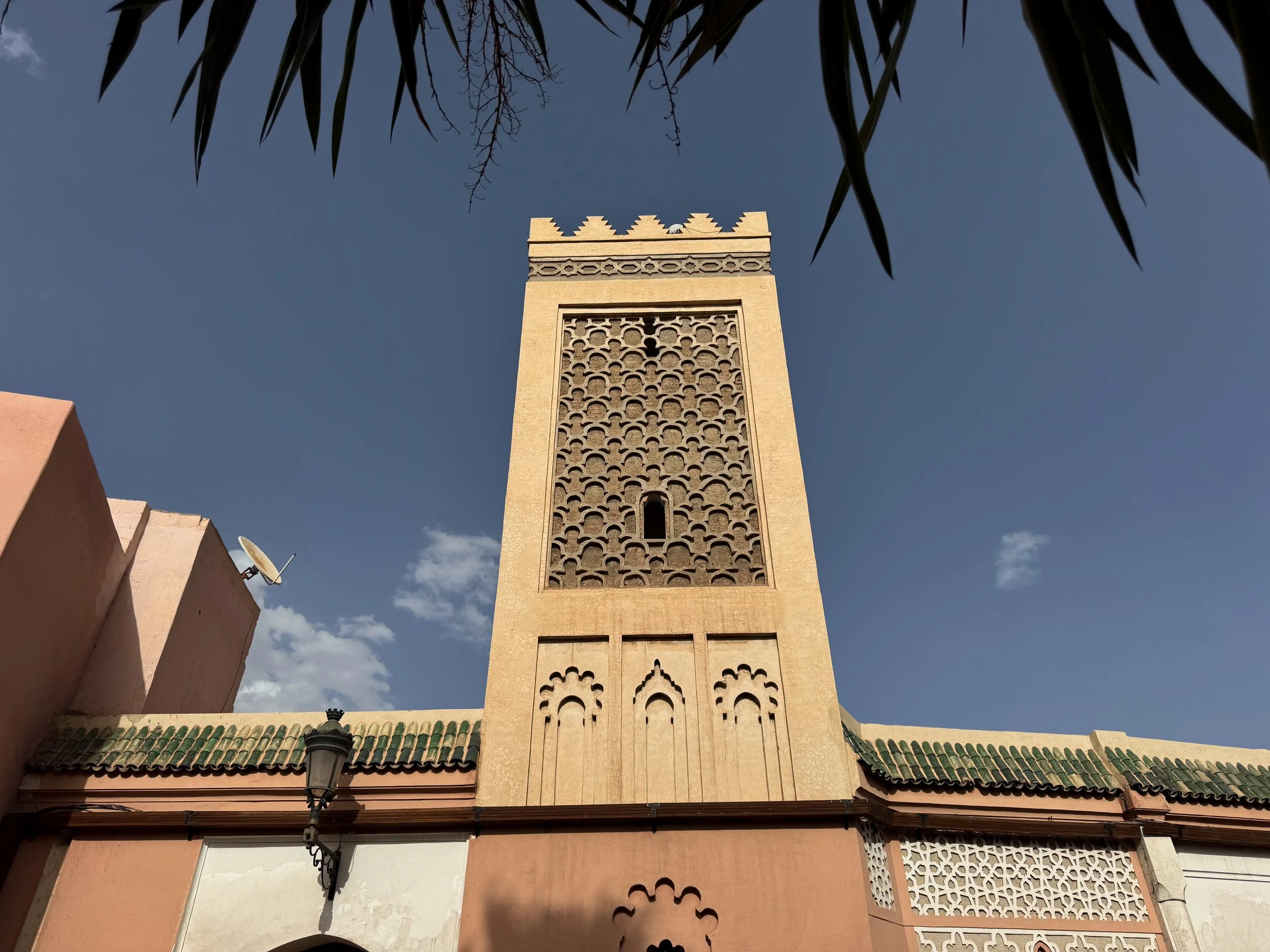
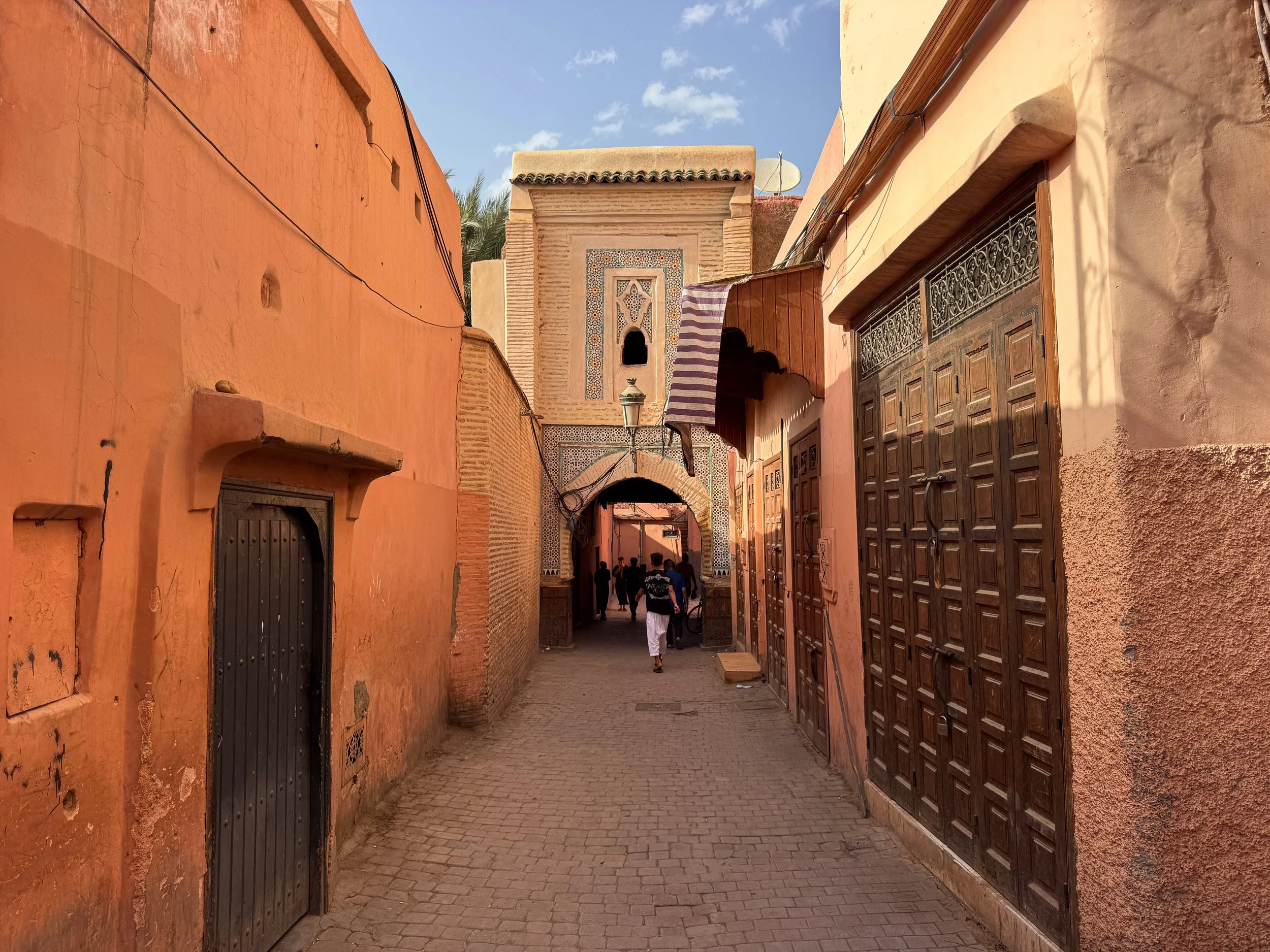
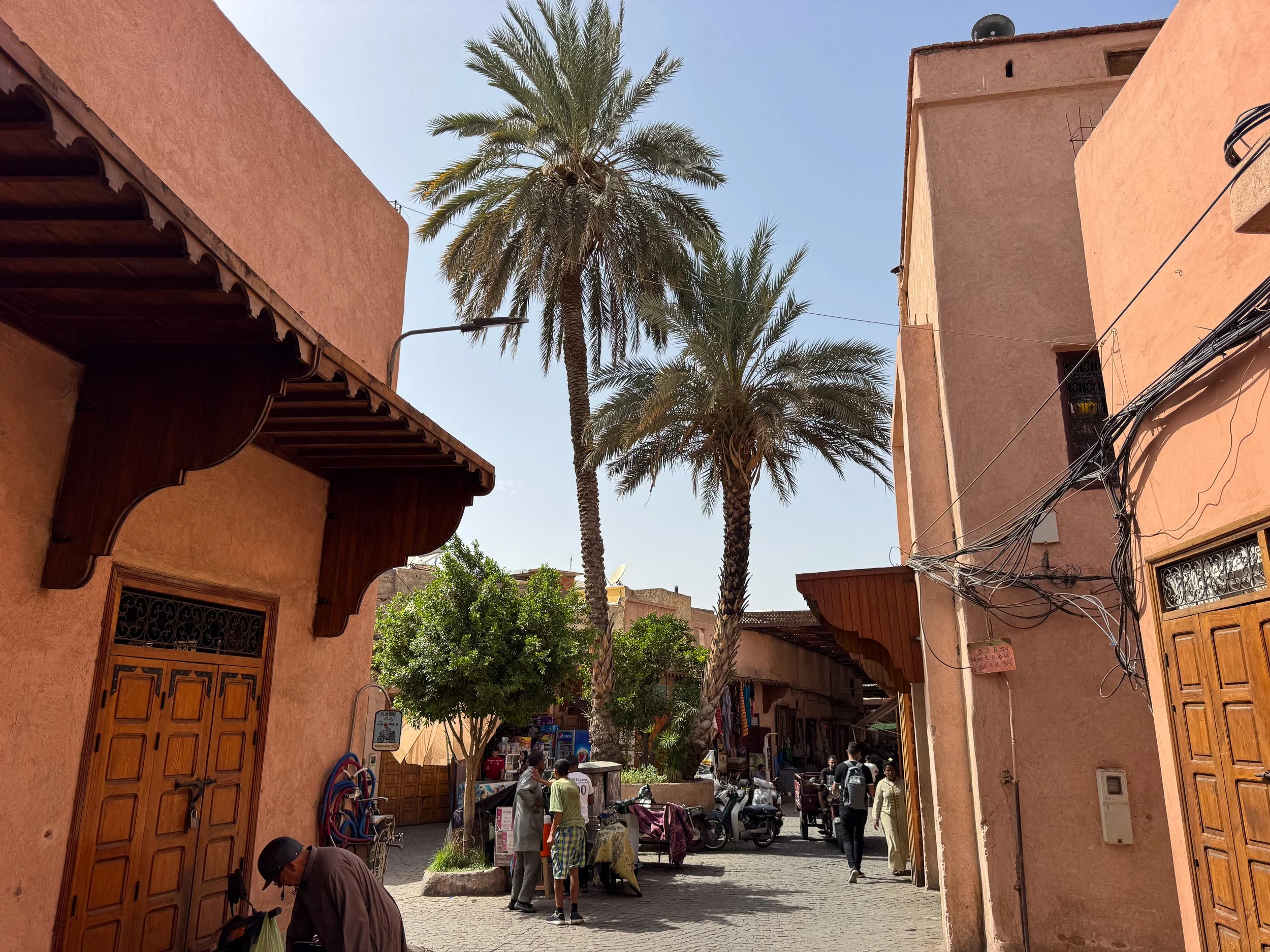
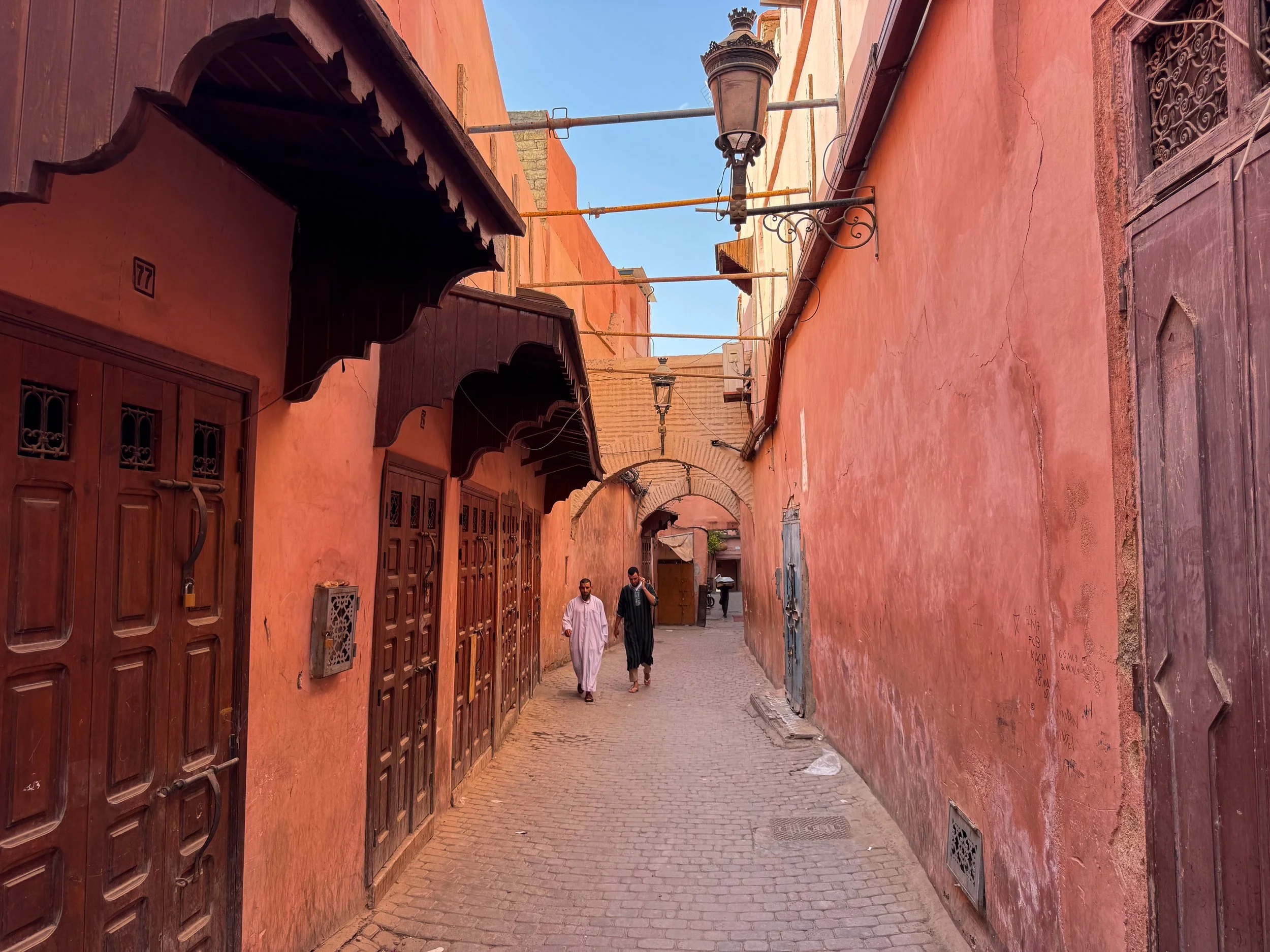
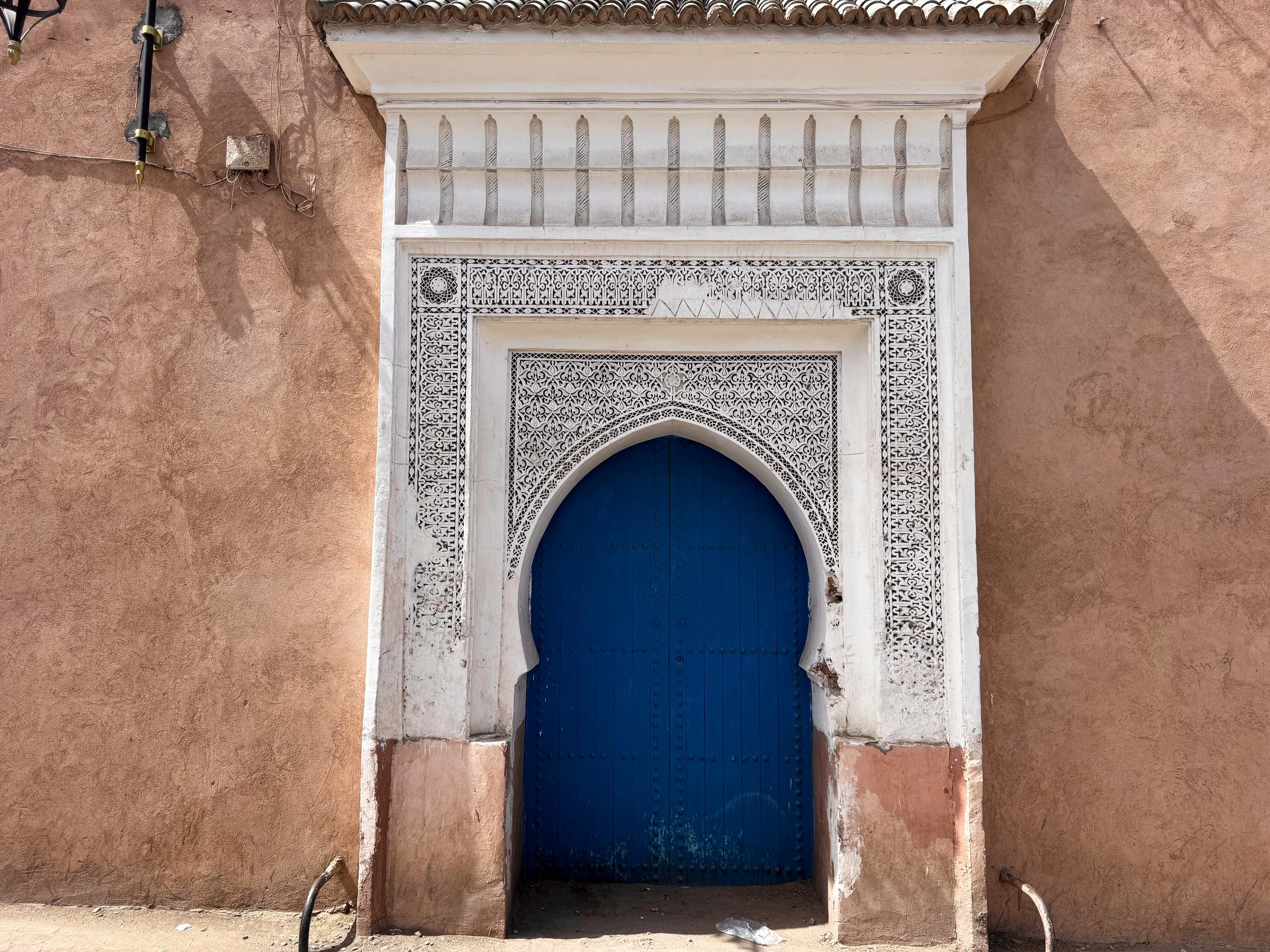
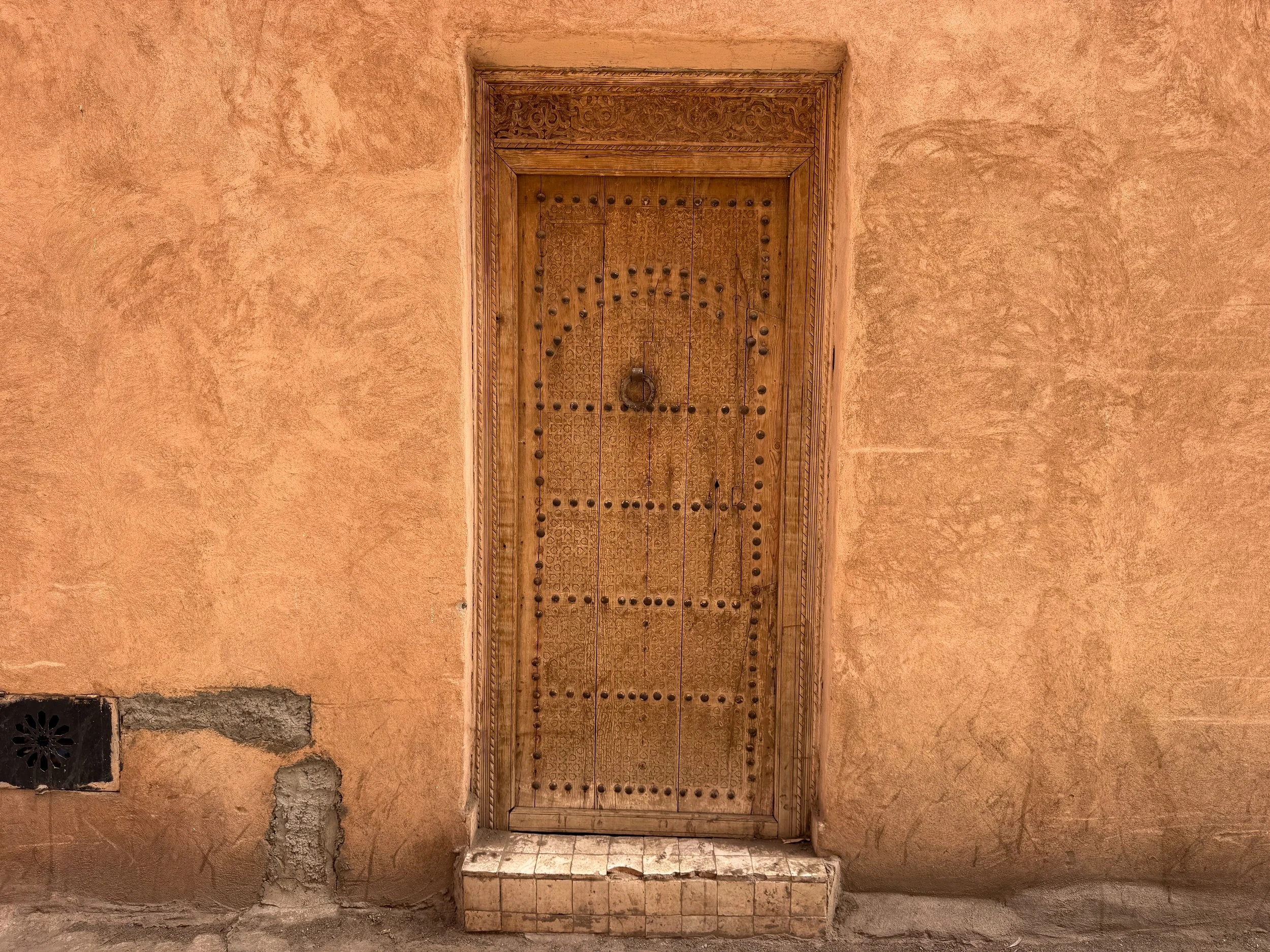
Bab Doukkala. Daily life unfolds in this traditional corner of the medina. Small souks and street vendors cater to local needs. Intimate tea houses and neighborhood restaurants bring together locals and tourists. Side streets branch into alleyways and dead ends, often revealing the calm rhythm within the maze.
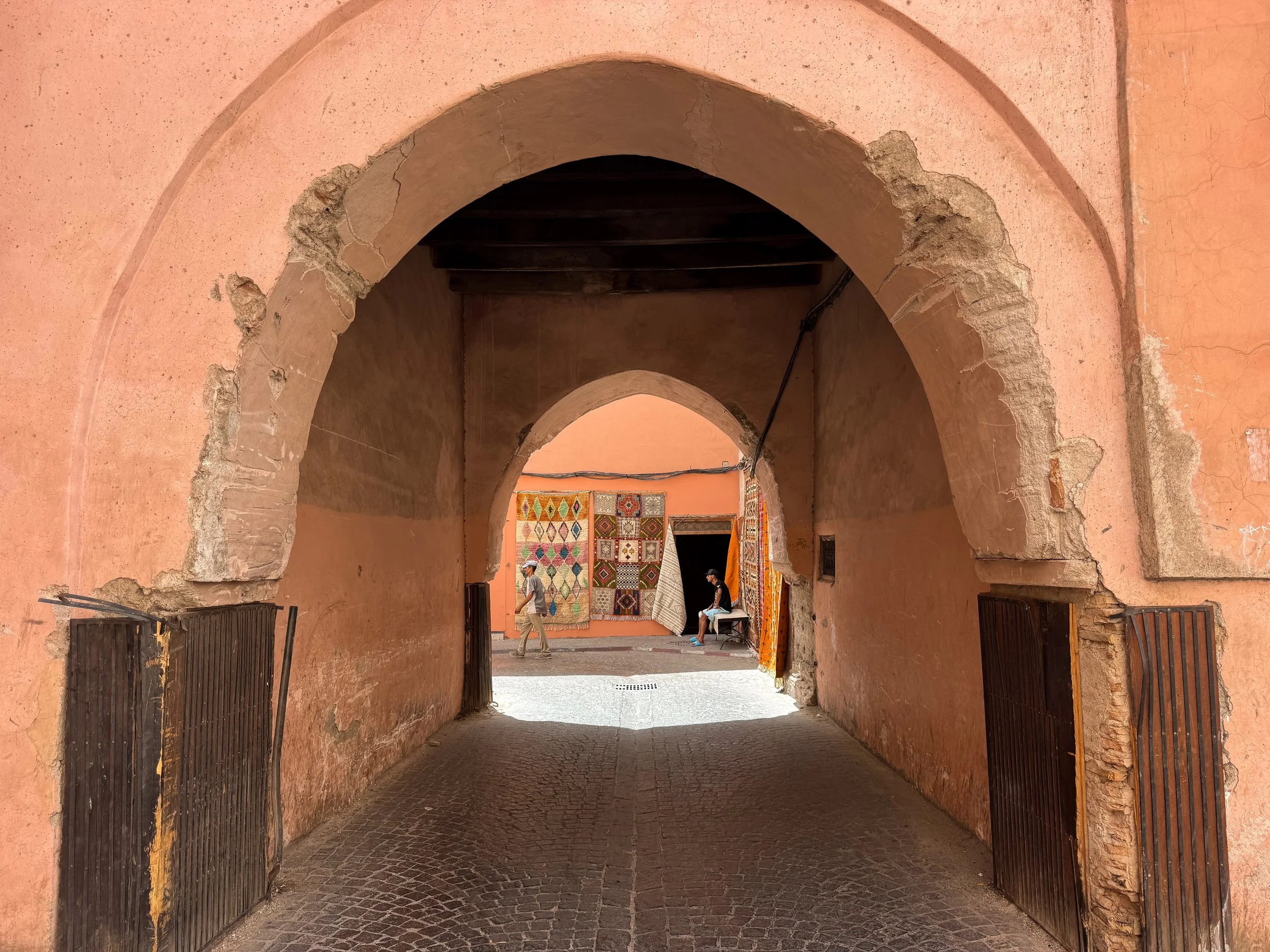
Mellah. The old Jewish quarter offers a glimpse into everyday life. Shaded arcades support lively souks while side streets lead to quiet residential areas. The scent of warm baked breads drifts from bakeries. Visible signs of earthquake damage and ongoing repairs mark the resilience and enduring character of the neighborhood.
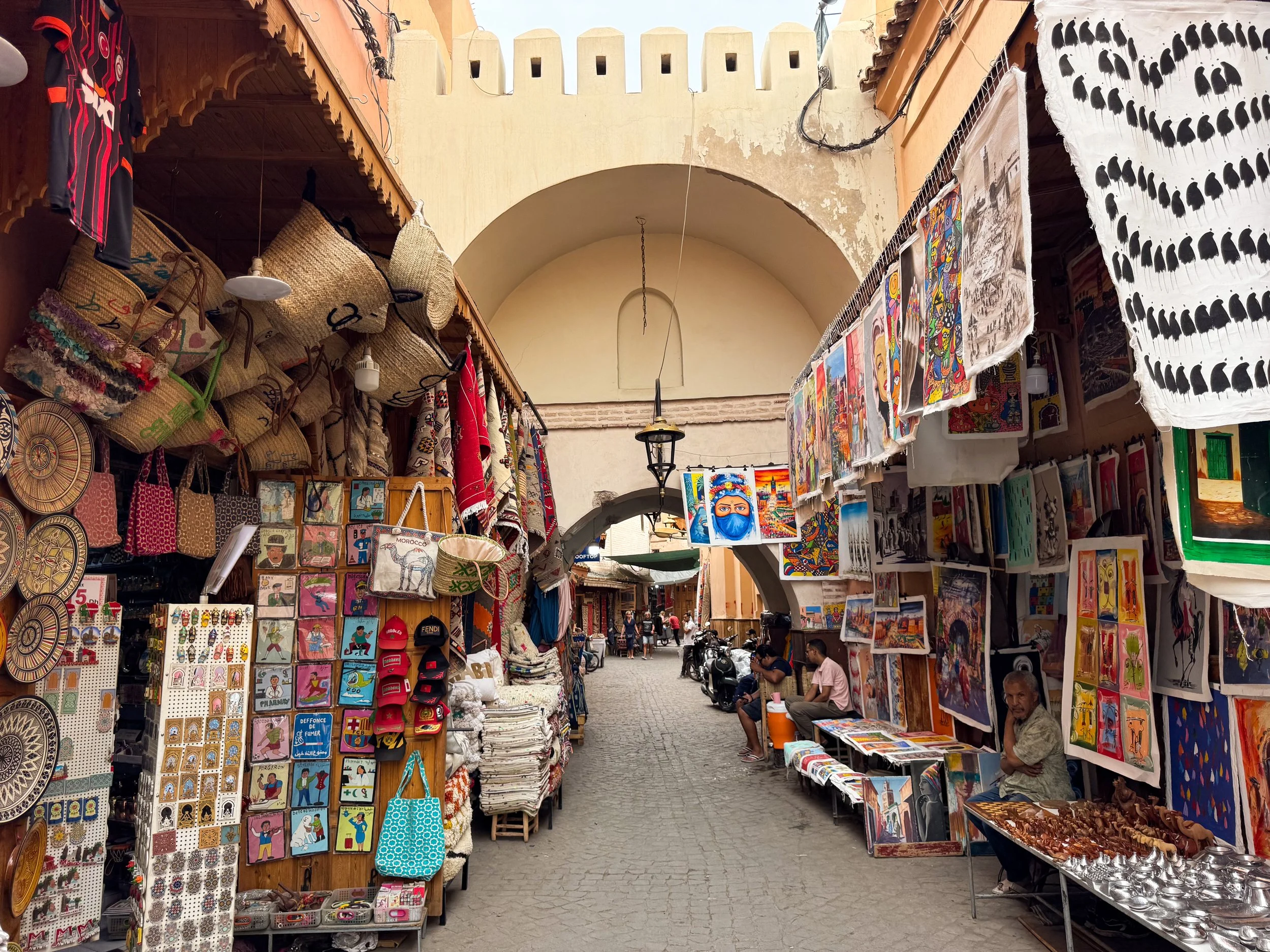
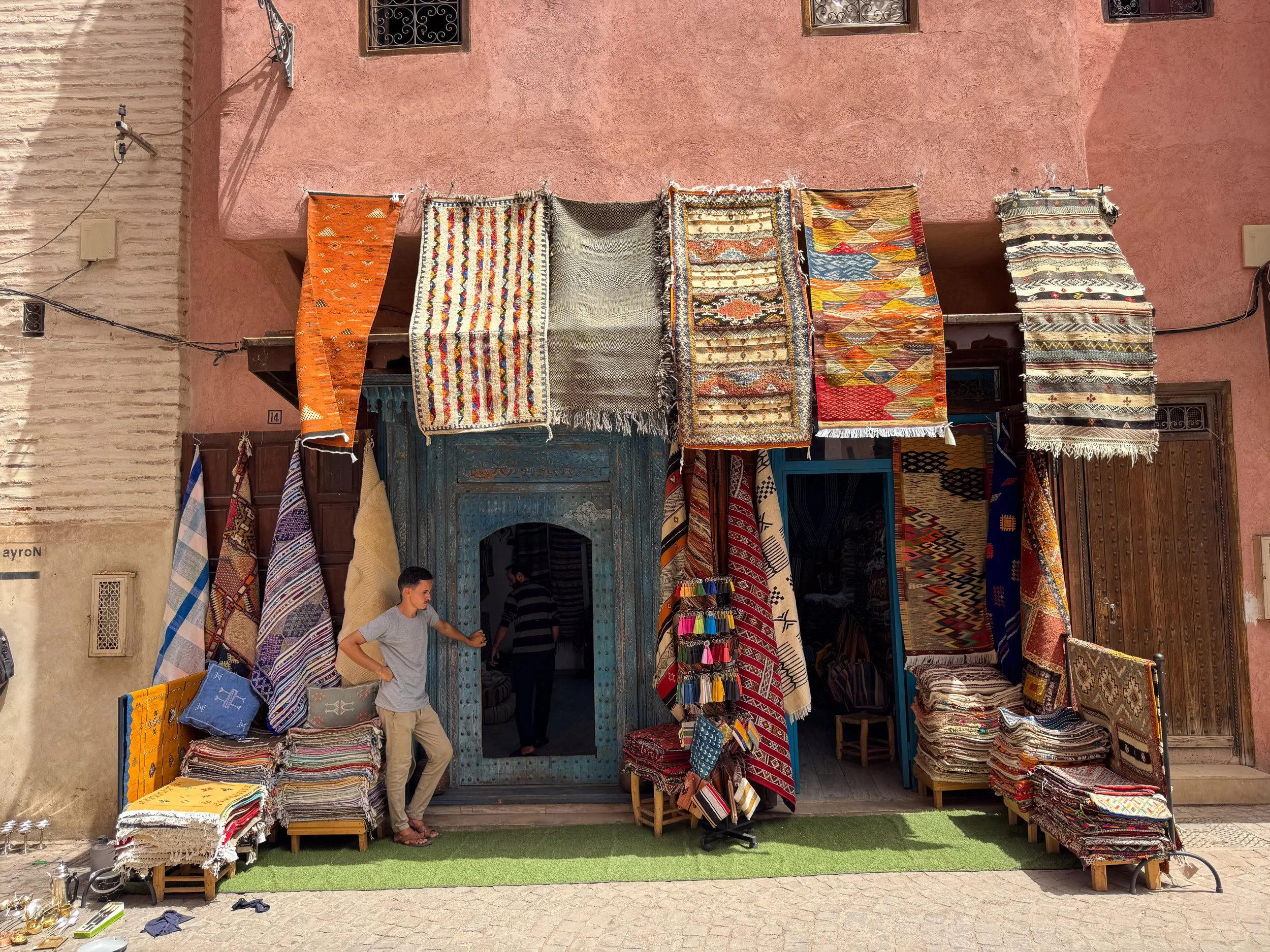
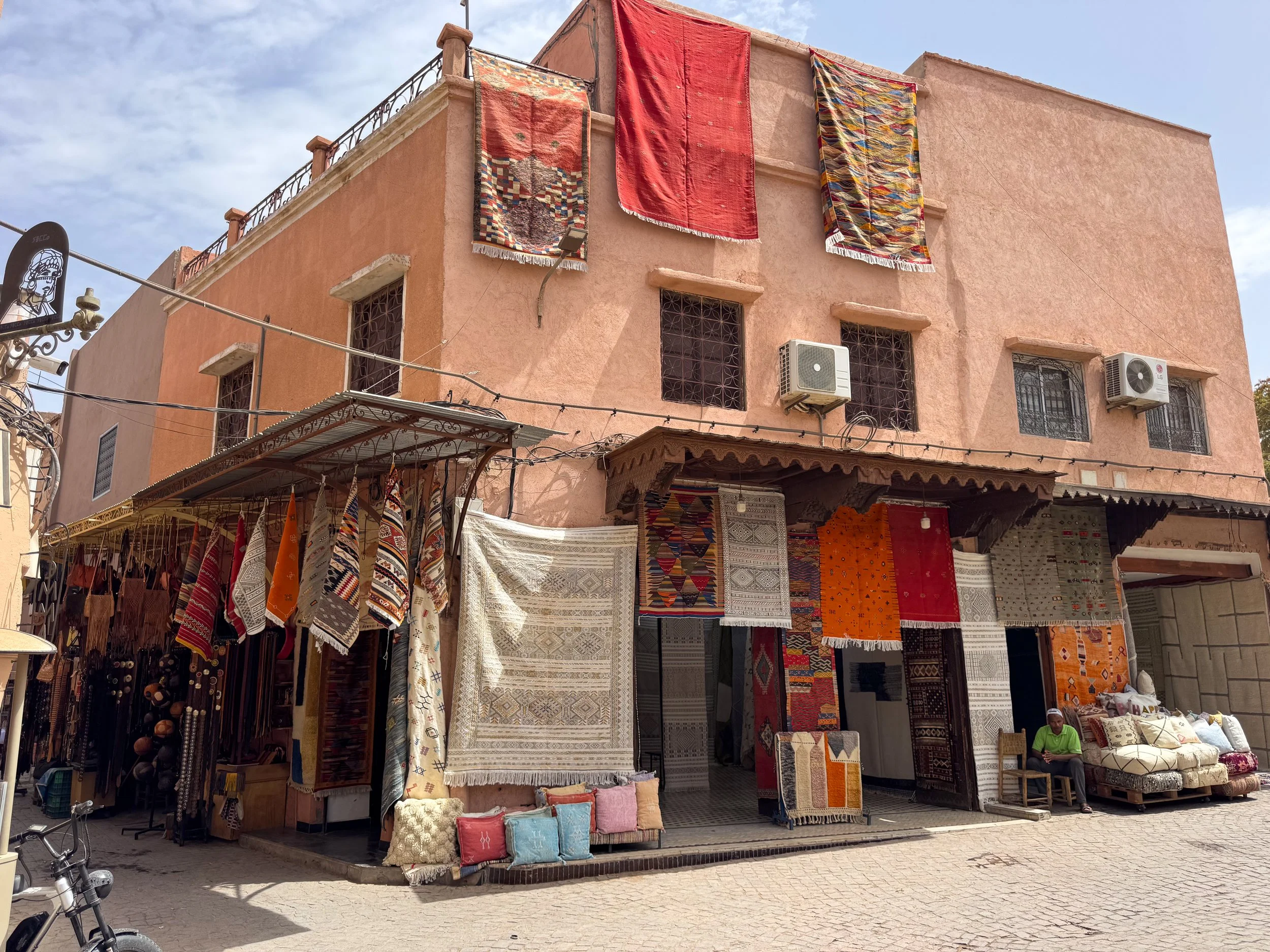
Shop the Souks & Markets
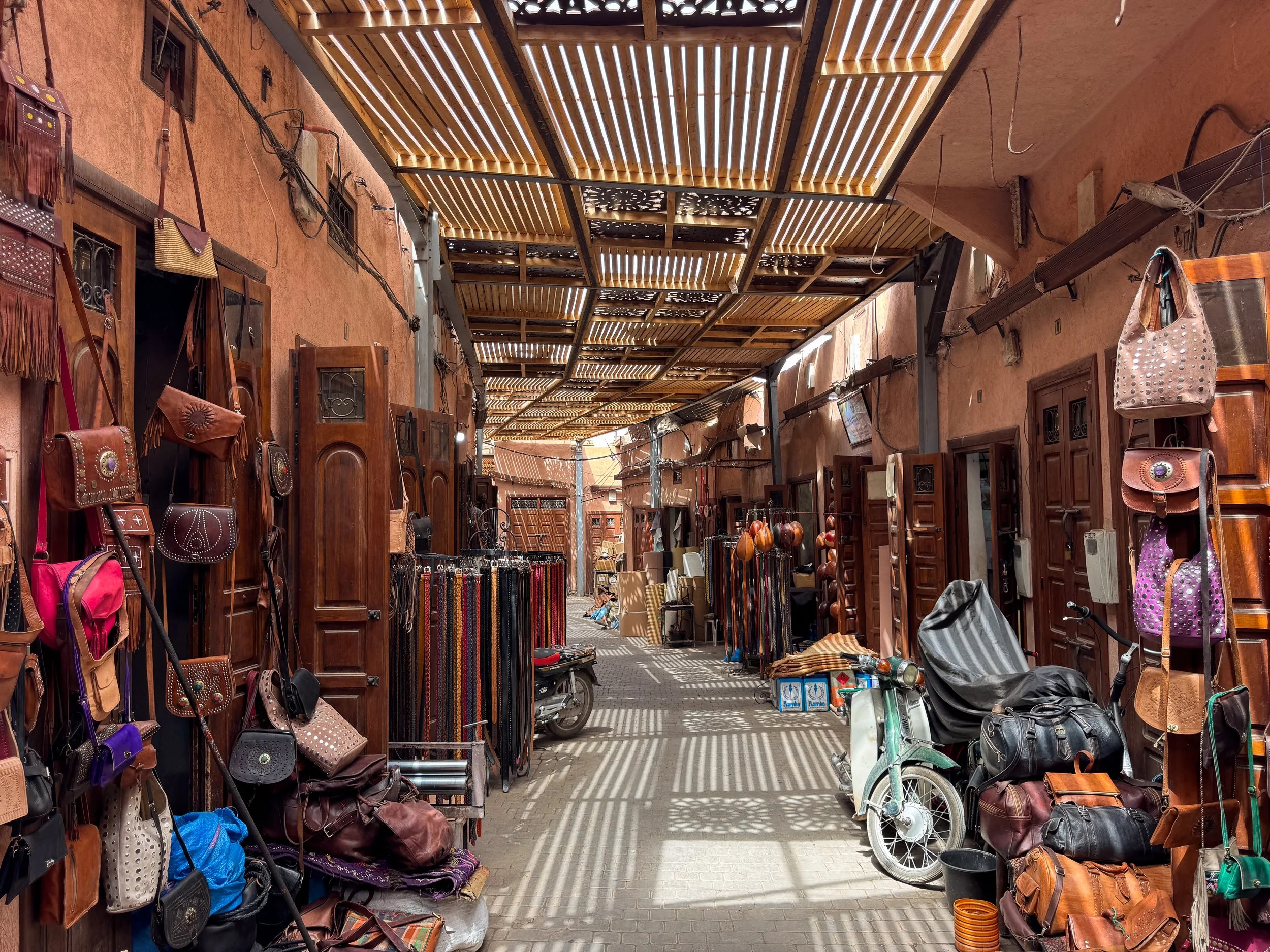
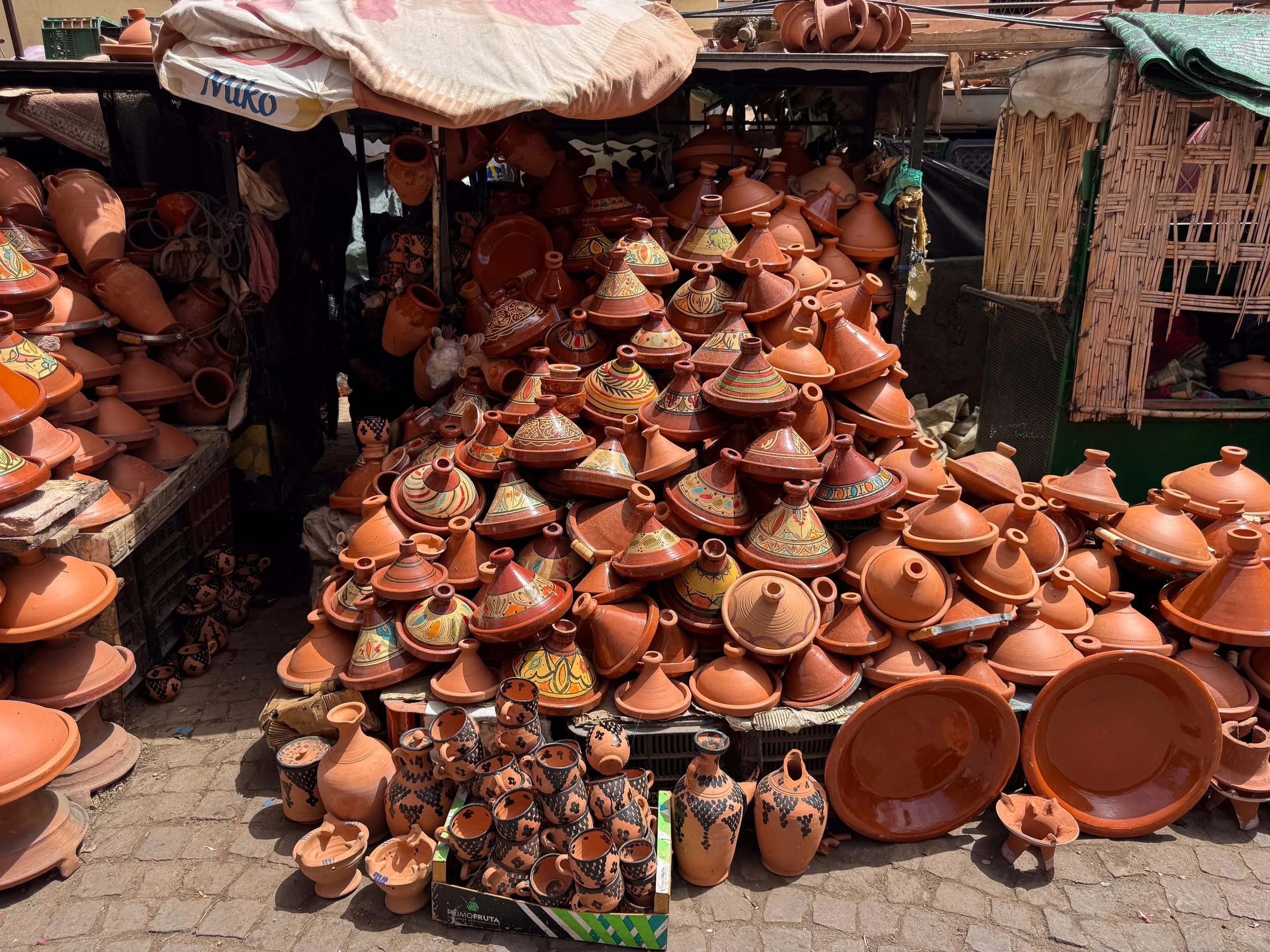
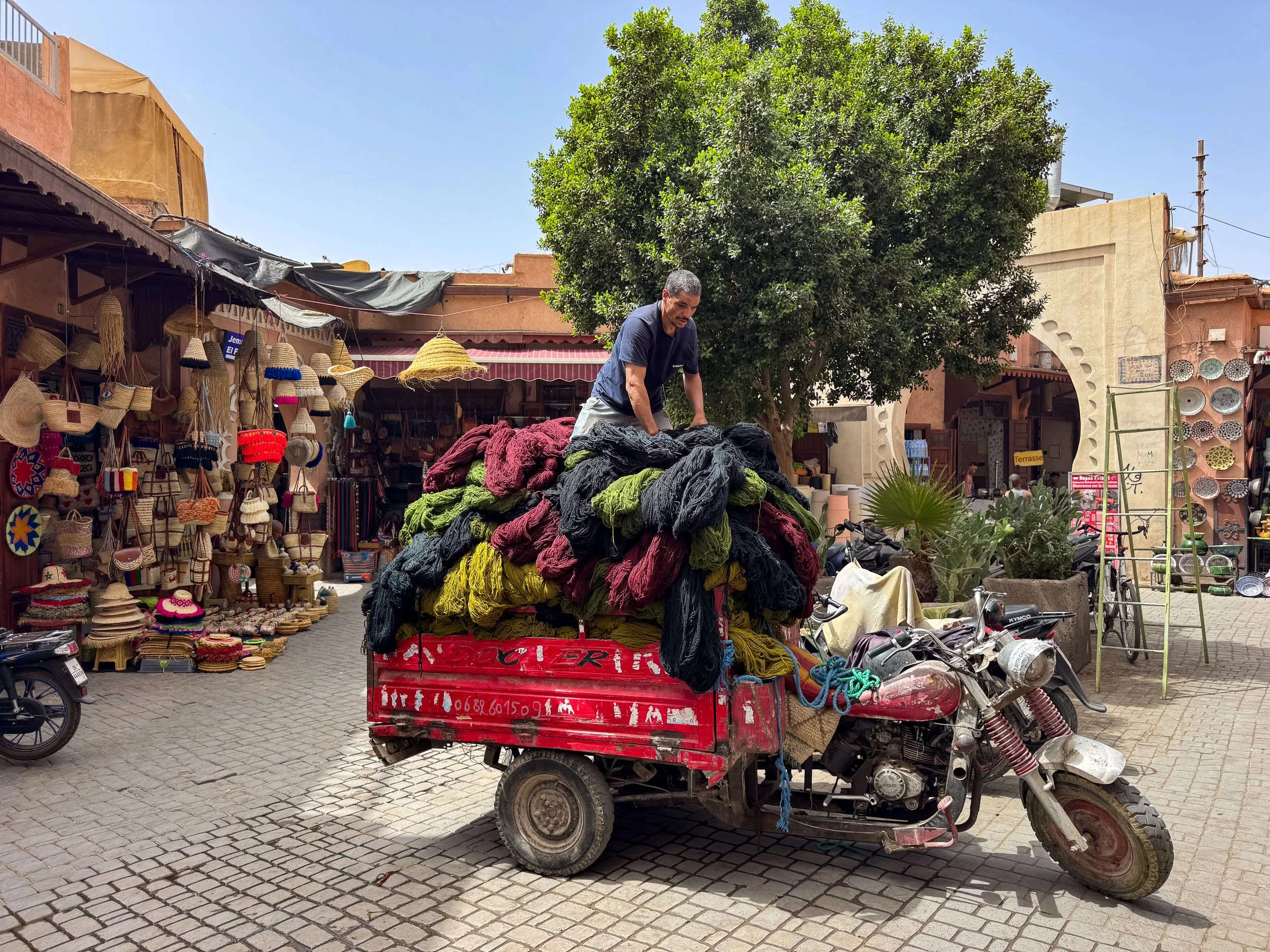
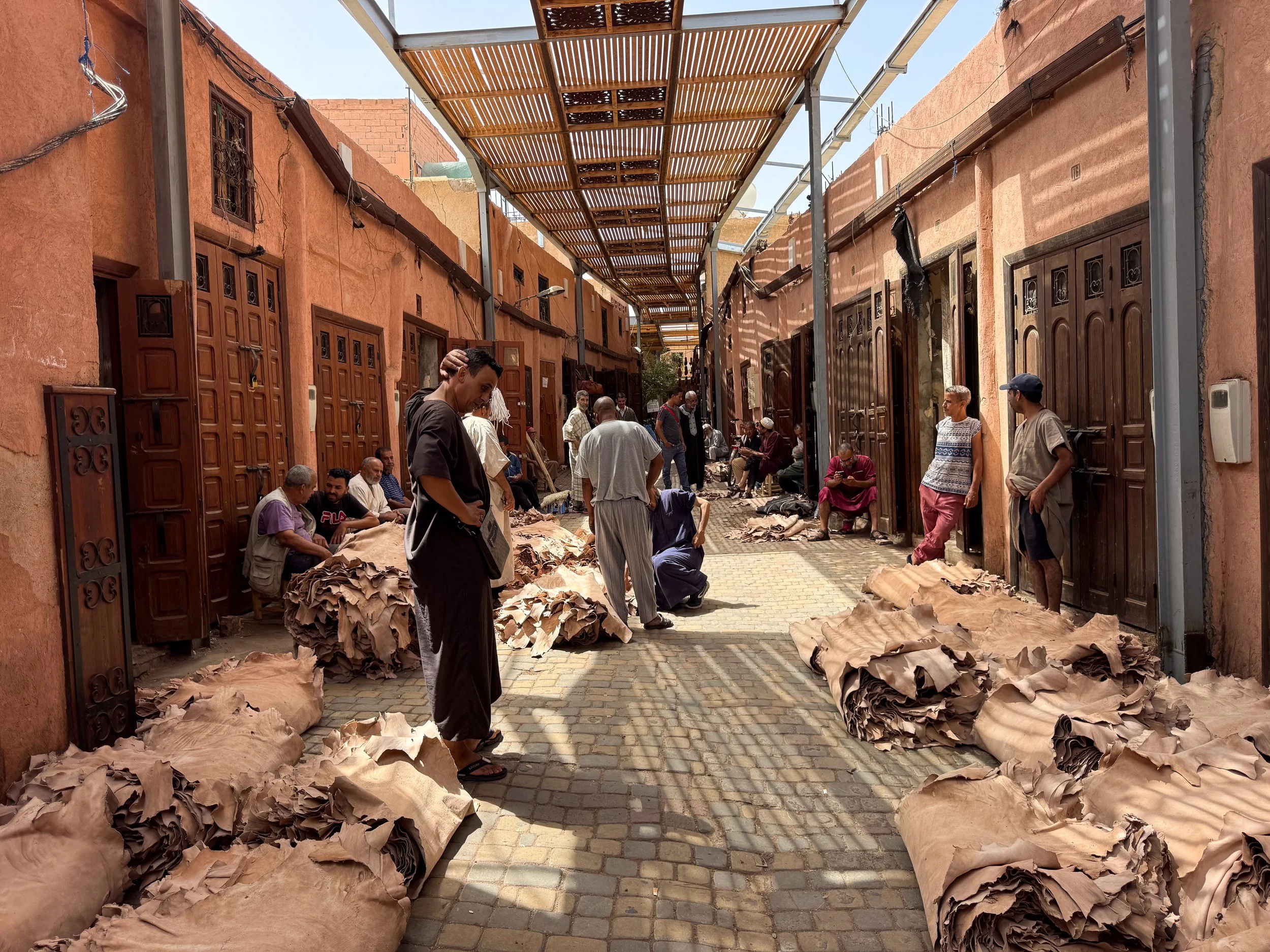
Souks, traditional Moroccan markets, weave through the medina in bustling alleyways of shops and vendors. They’re a wonderful place to experience Moroccan culture! They brim with vibrant colors, fragrant scents and lively sounds of haggling customers. Stalls overflow with aromatic goods like spices, teas and perfumes while others showcase artisan crafts like Berber carpets, brass lamps and leather goods.
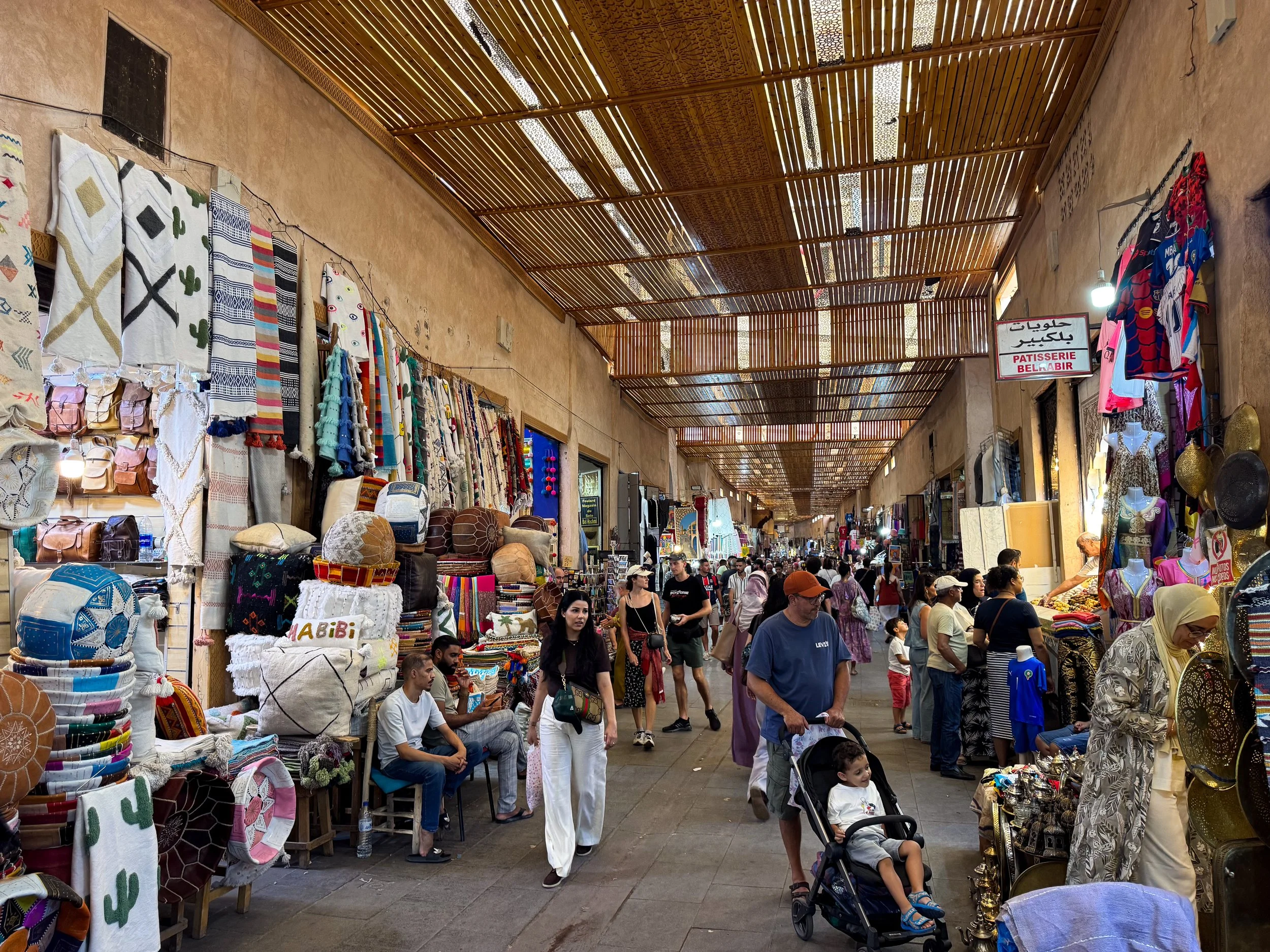
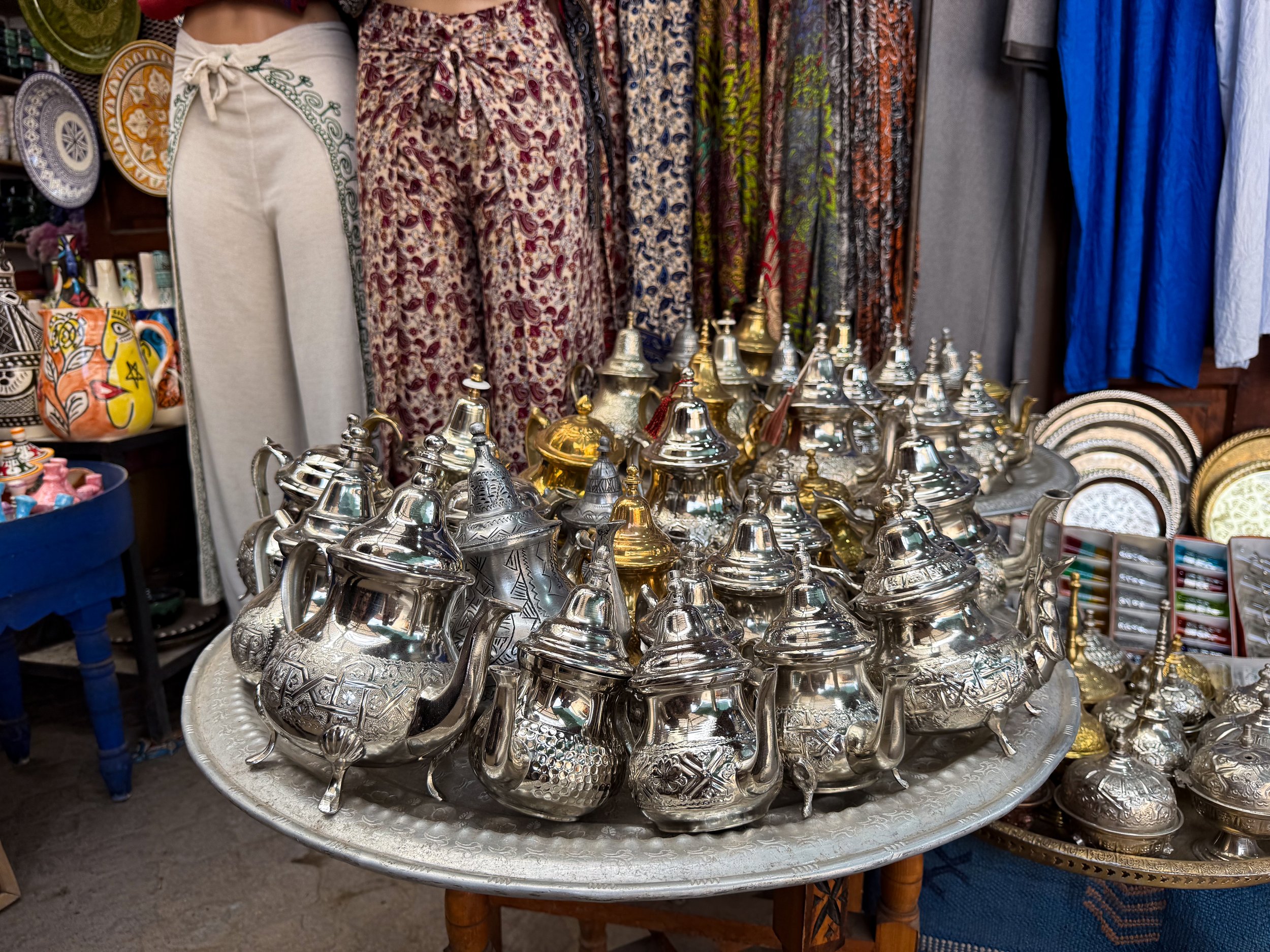
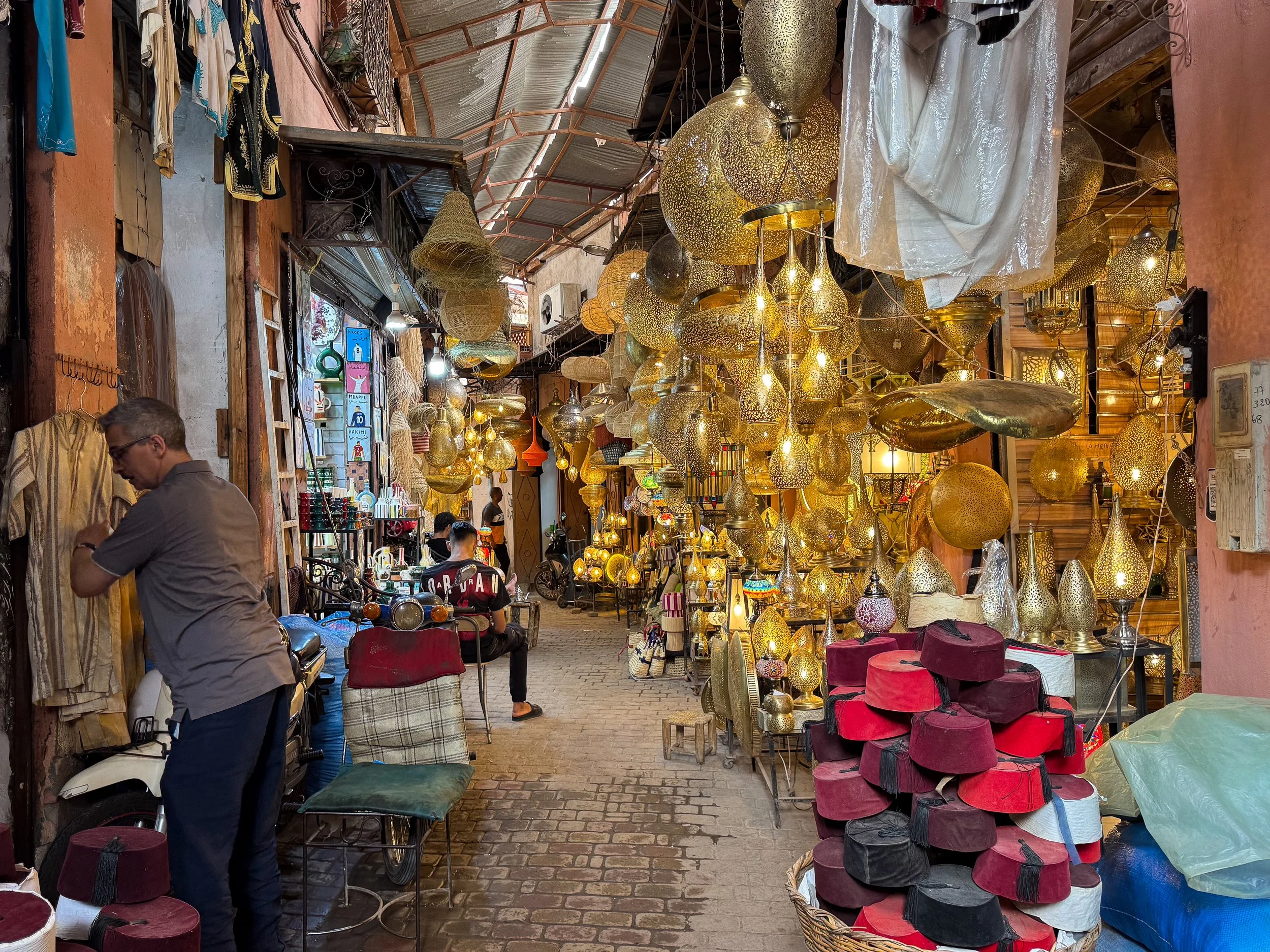
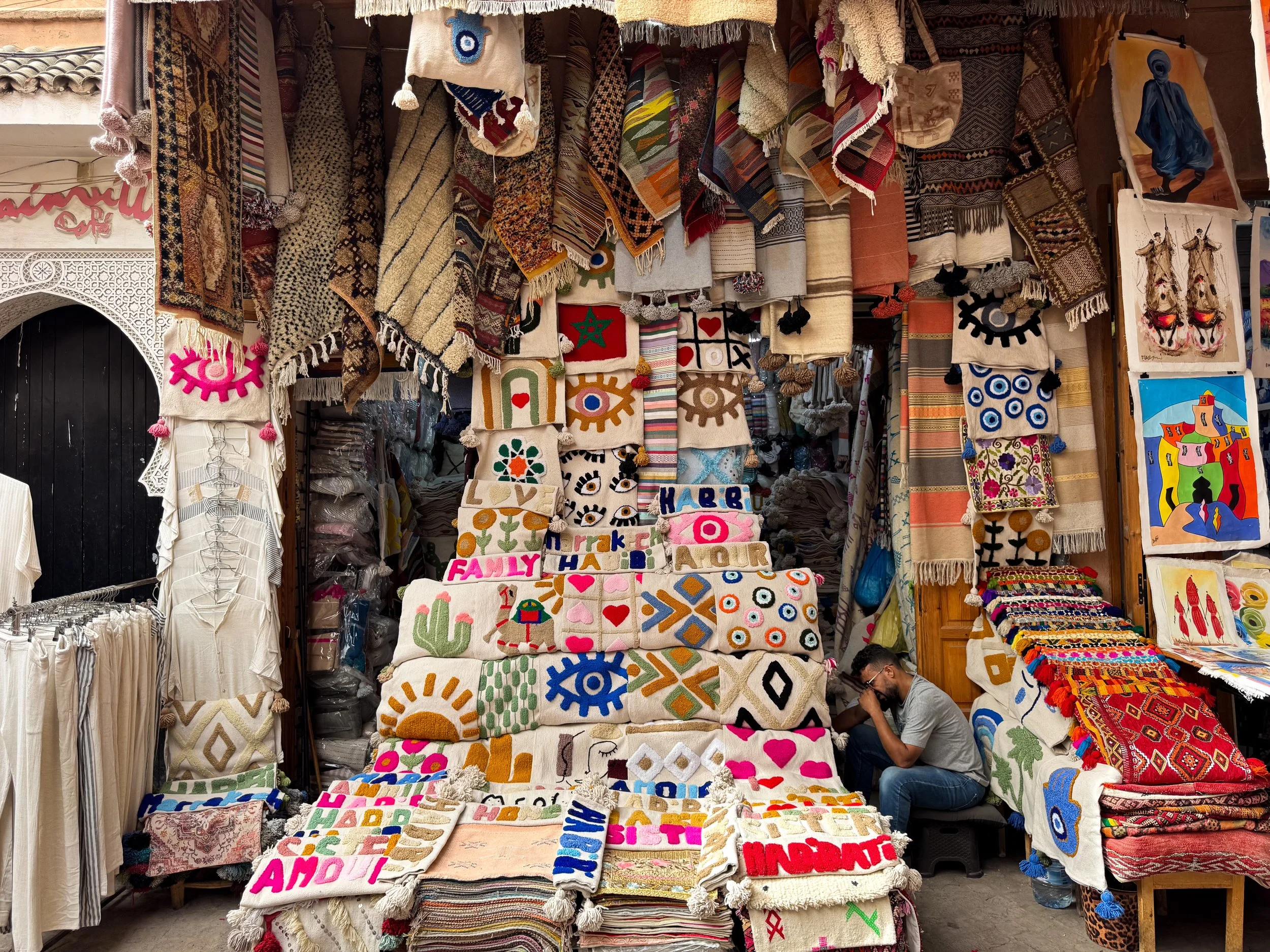
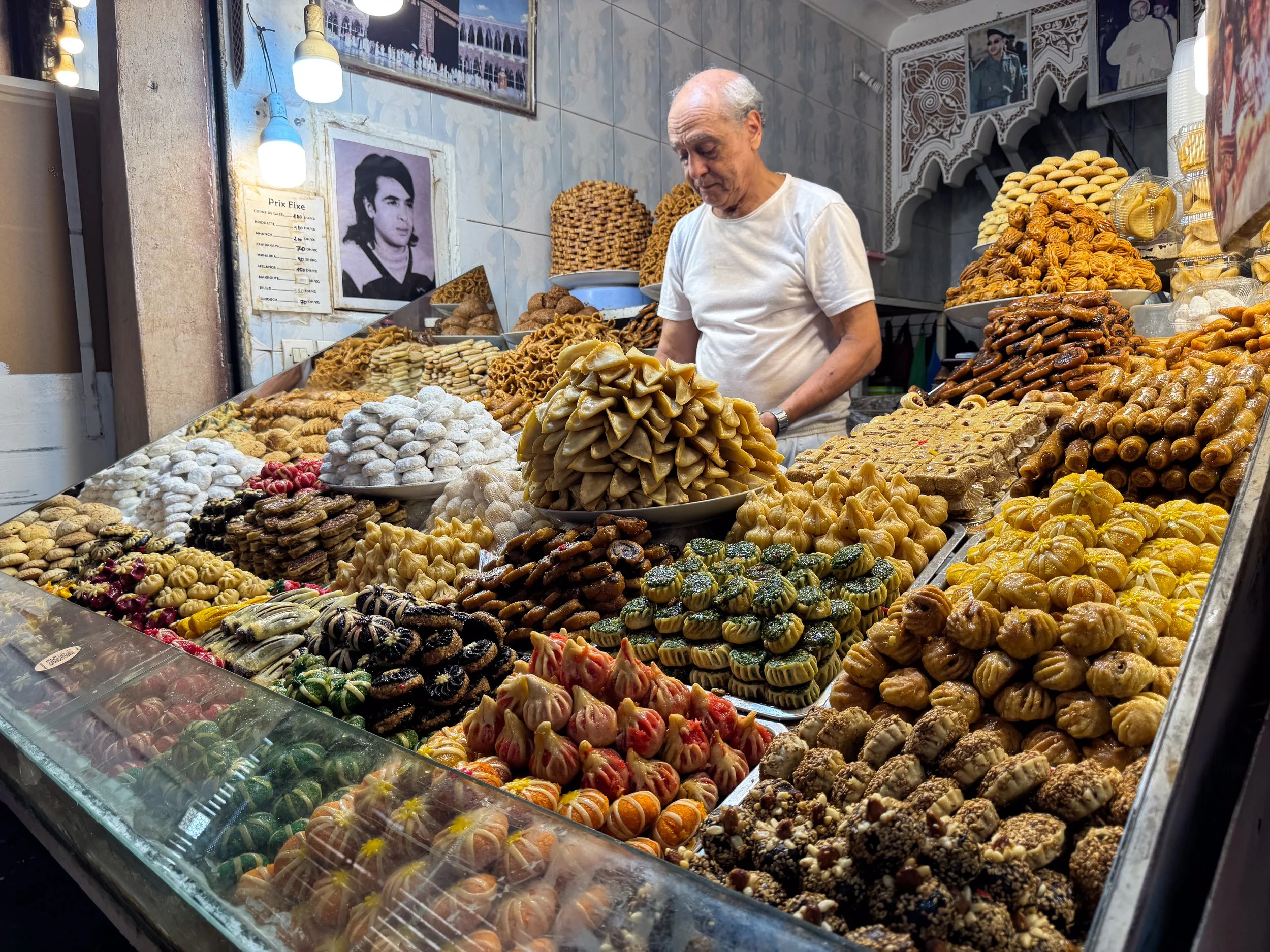
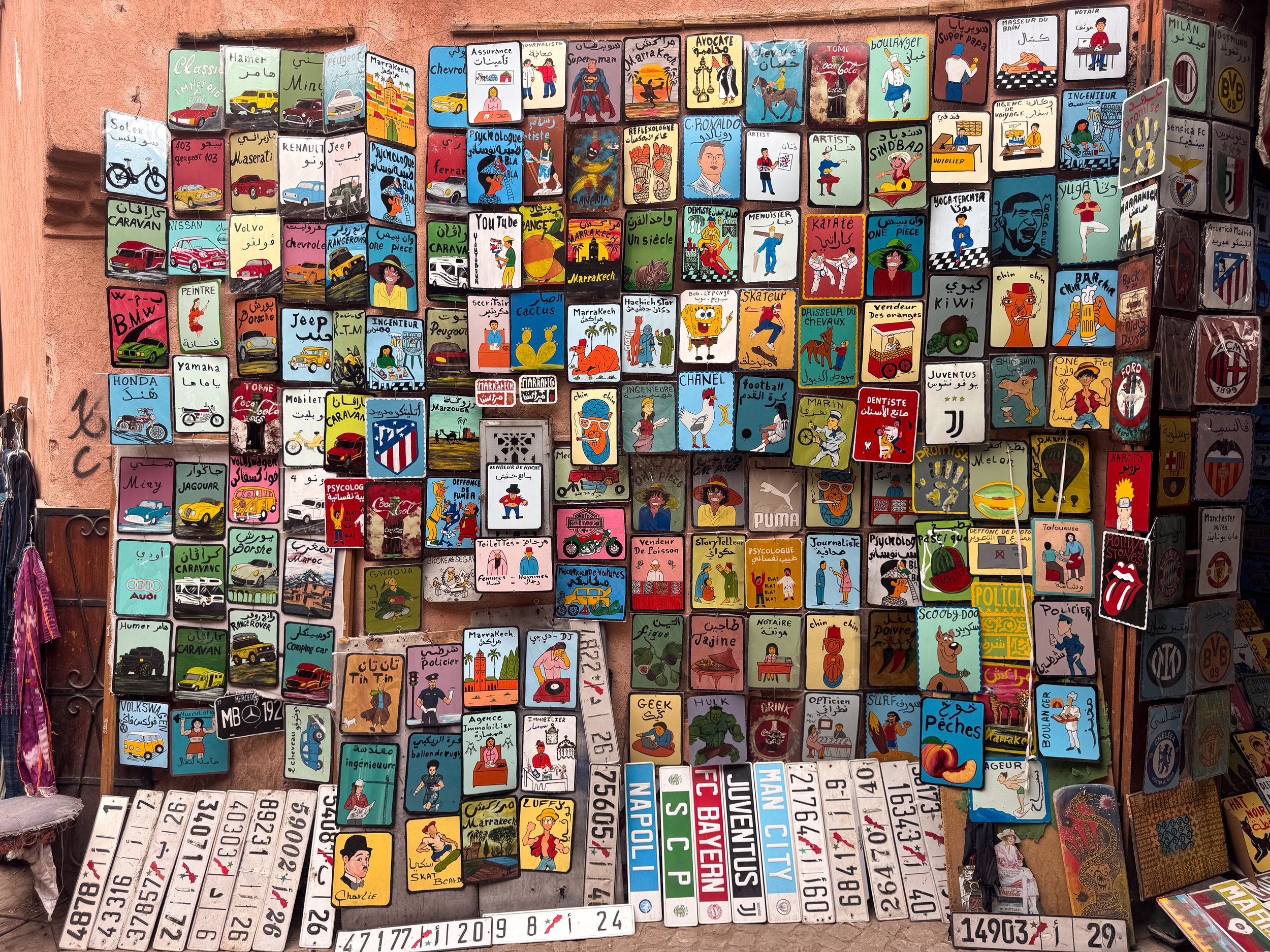
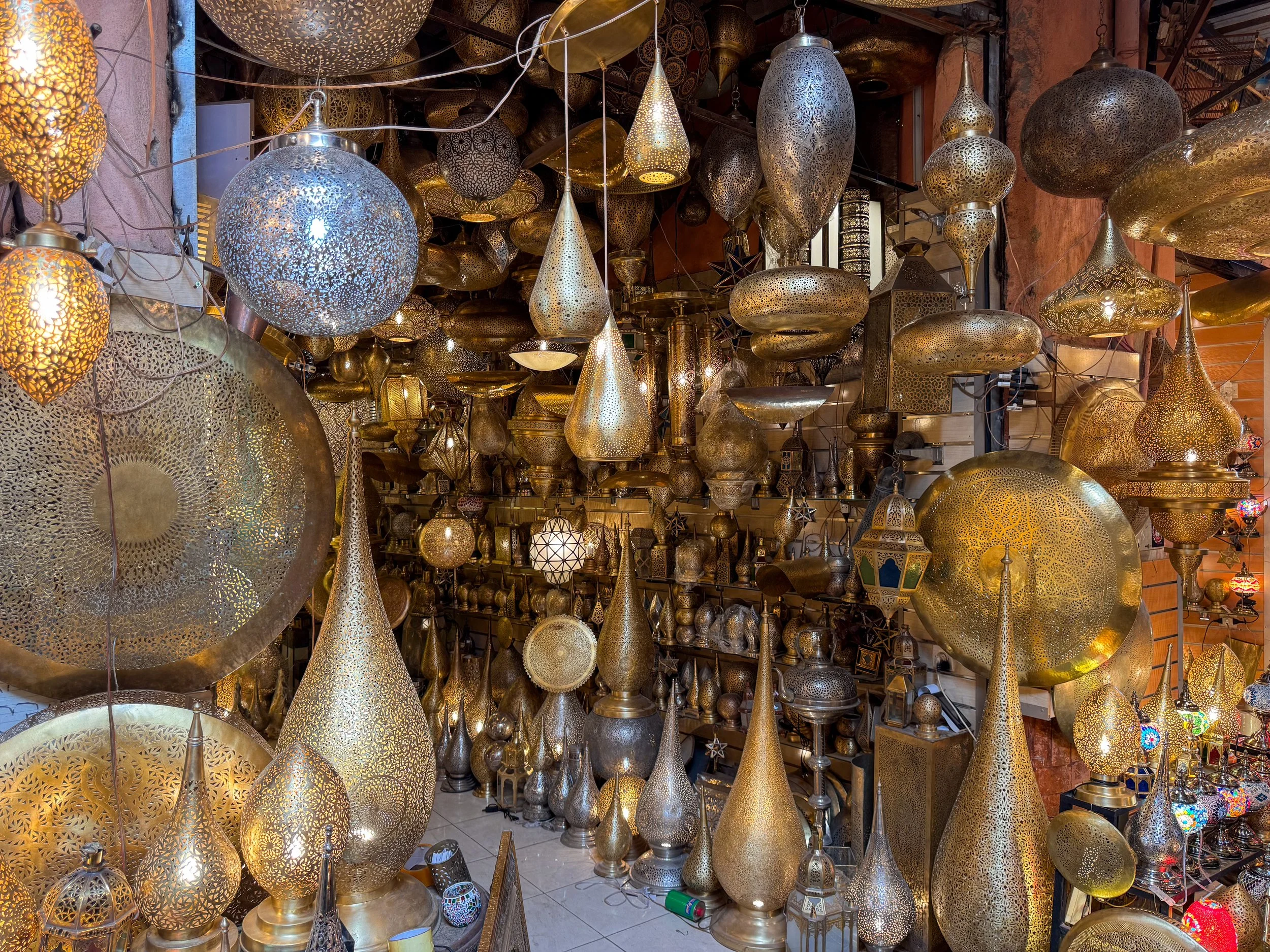
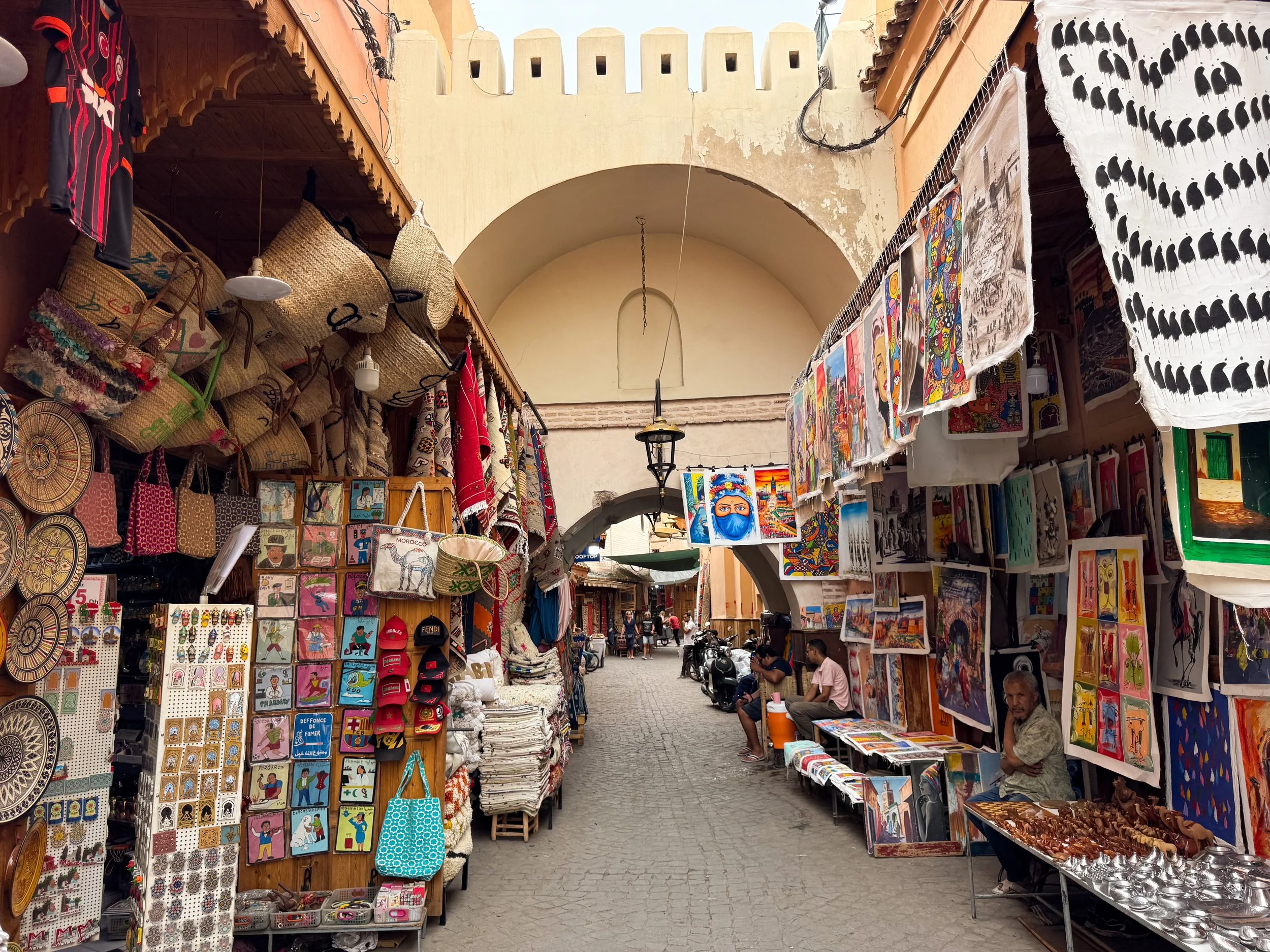
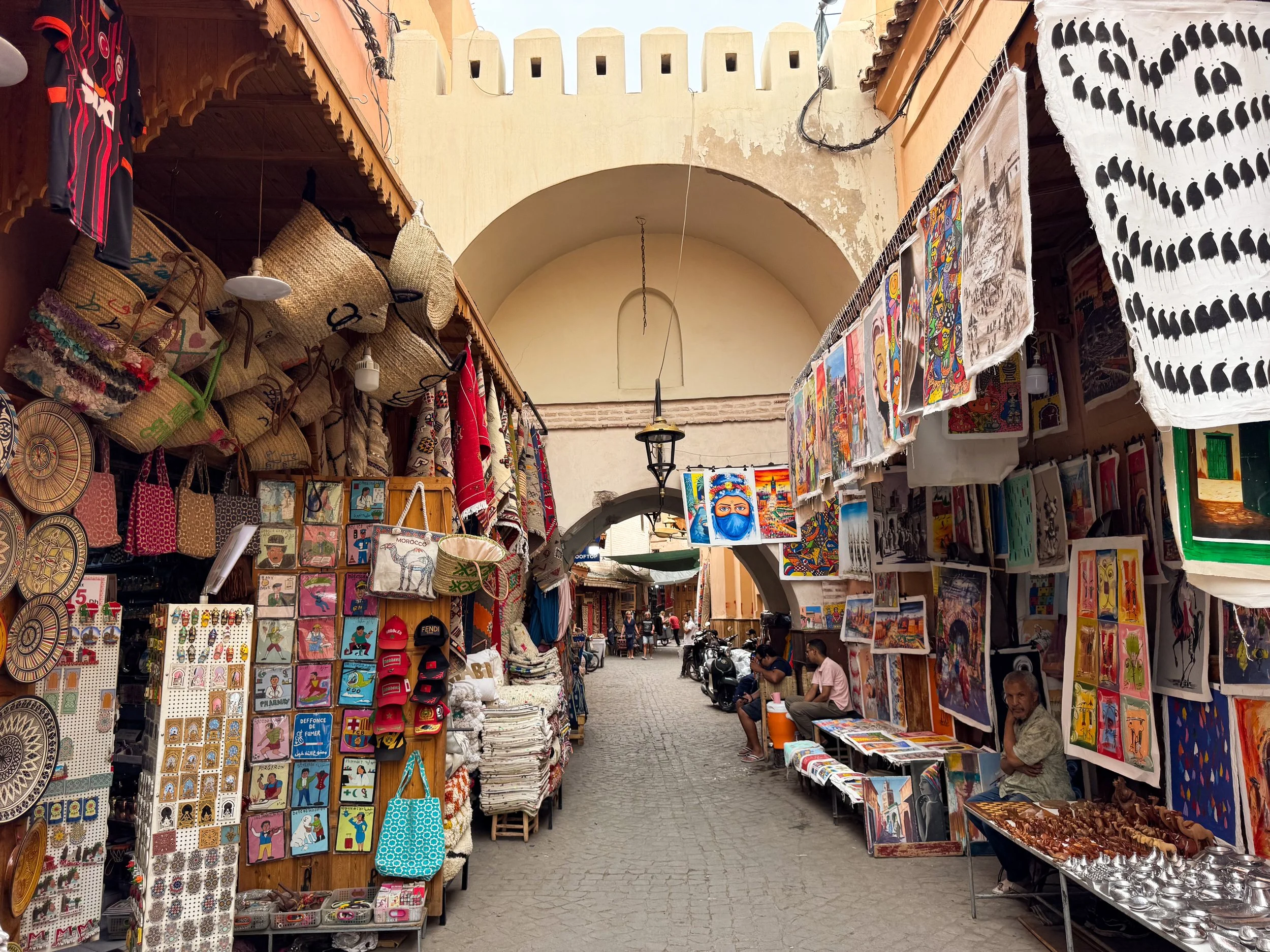
Souk Semmarine. A sprawling souk and the largest in Marrakech. Its vibrant tapestry of Moroccan goods draws multitudes of visitors. Shopkeepers swing open large wooden doors to reveal dazzling displays. Berber vendors sell patterned rugs, colorful poufs and fuzzy pillows alongside linen scarves, leather goods and vivid paintings. Hammered brass lamps shimmer alongside copper teapots, inlaid wooden boxes, clay tagines and ceramics. Bins overflow with herbal teas, spices, dates, snack mixes and pastries. Alleys of vendors branch off from this bustling souk while its main passageway leads visitors to the famed Jemaa el-Fnaa Square.
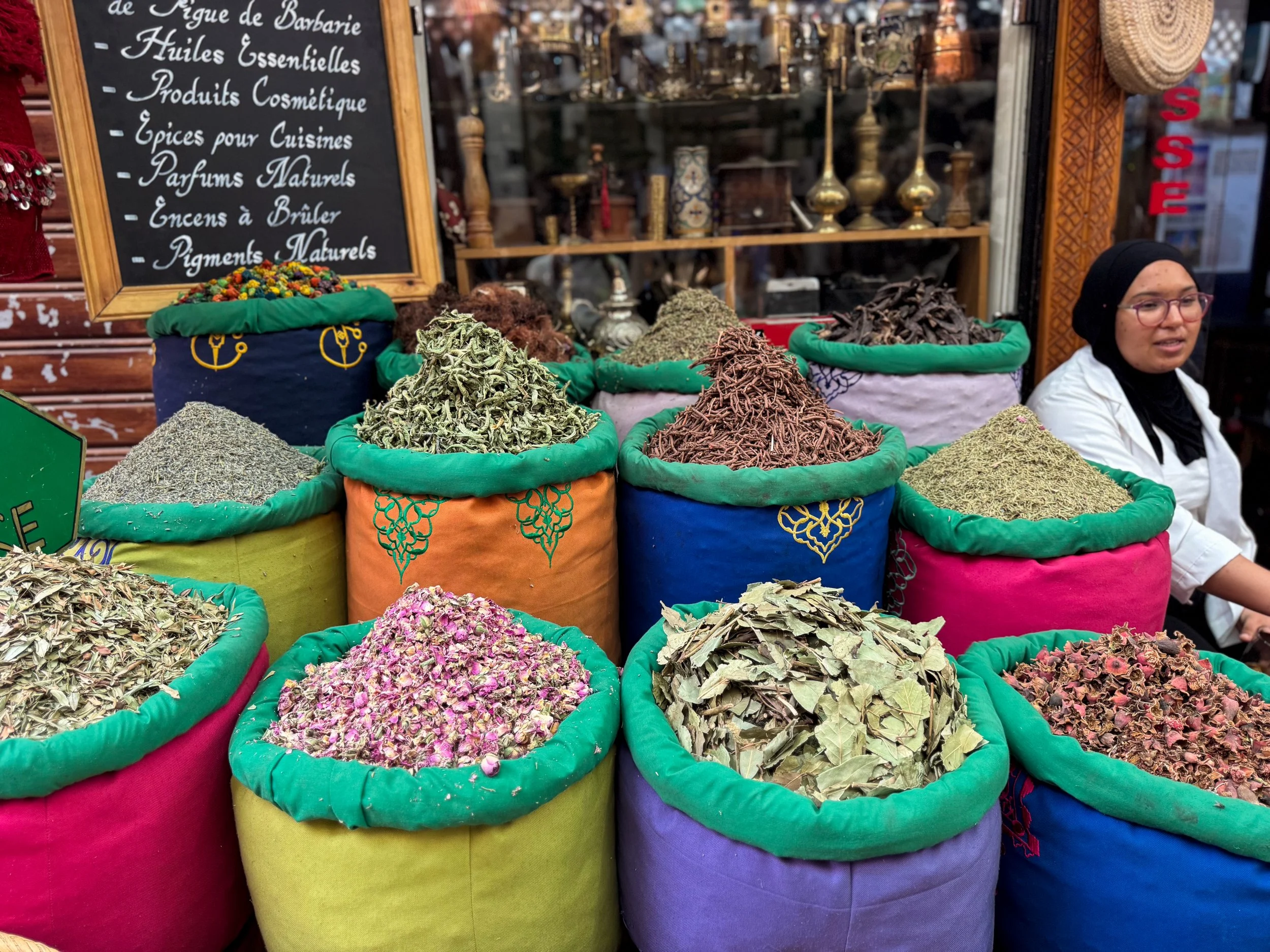
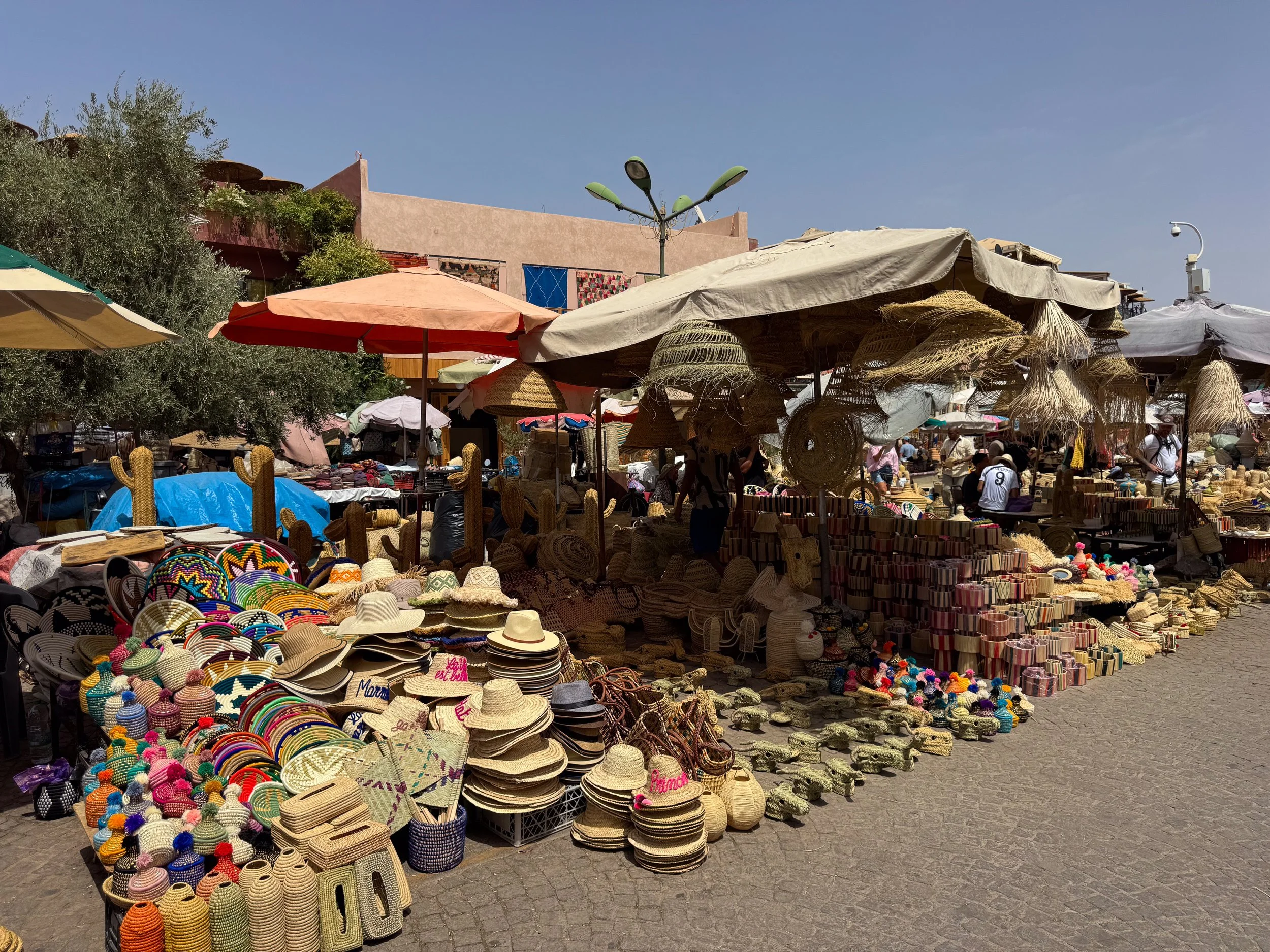
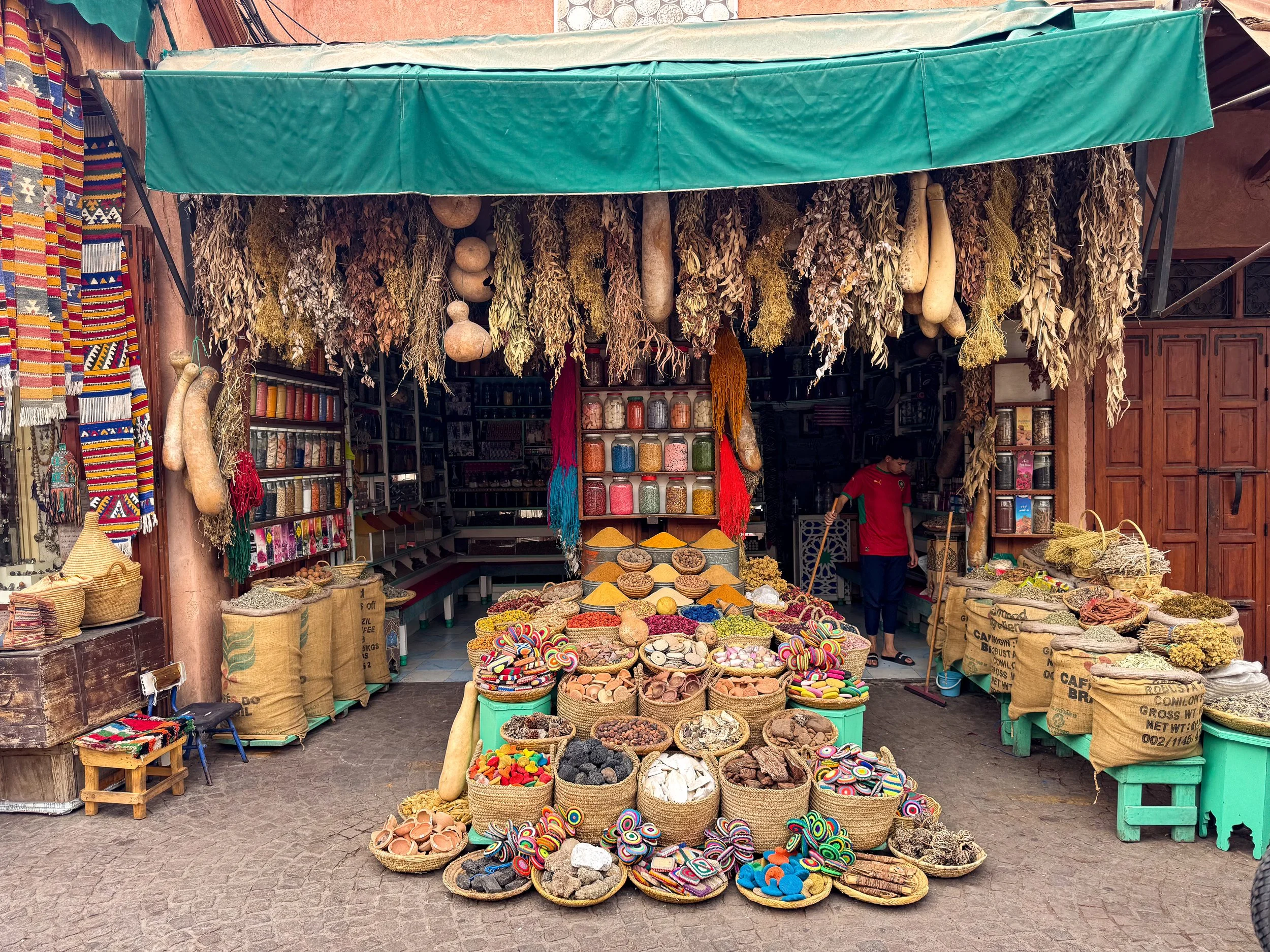
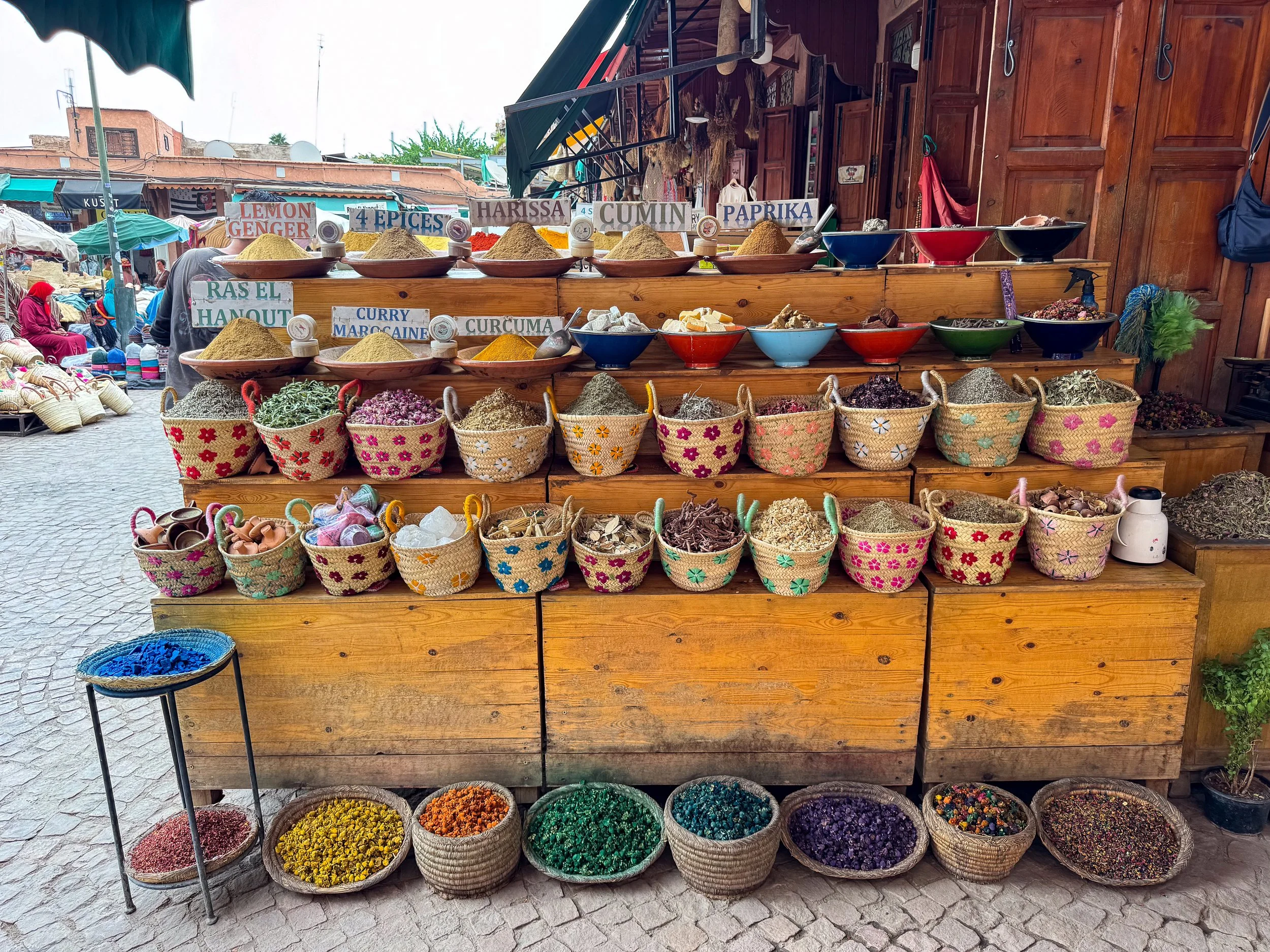
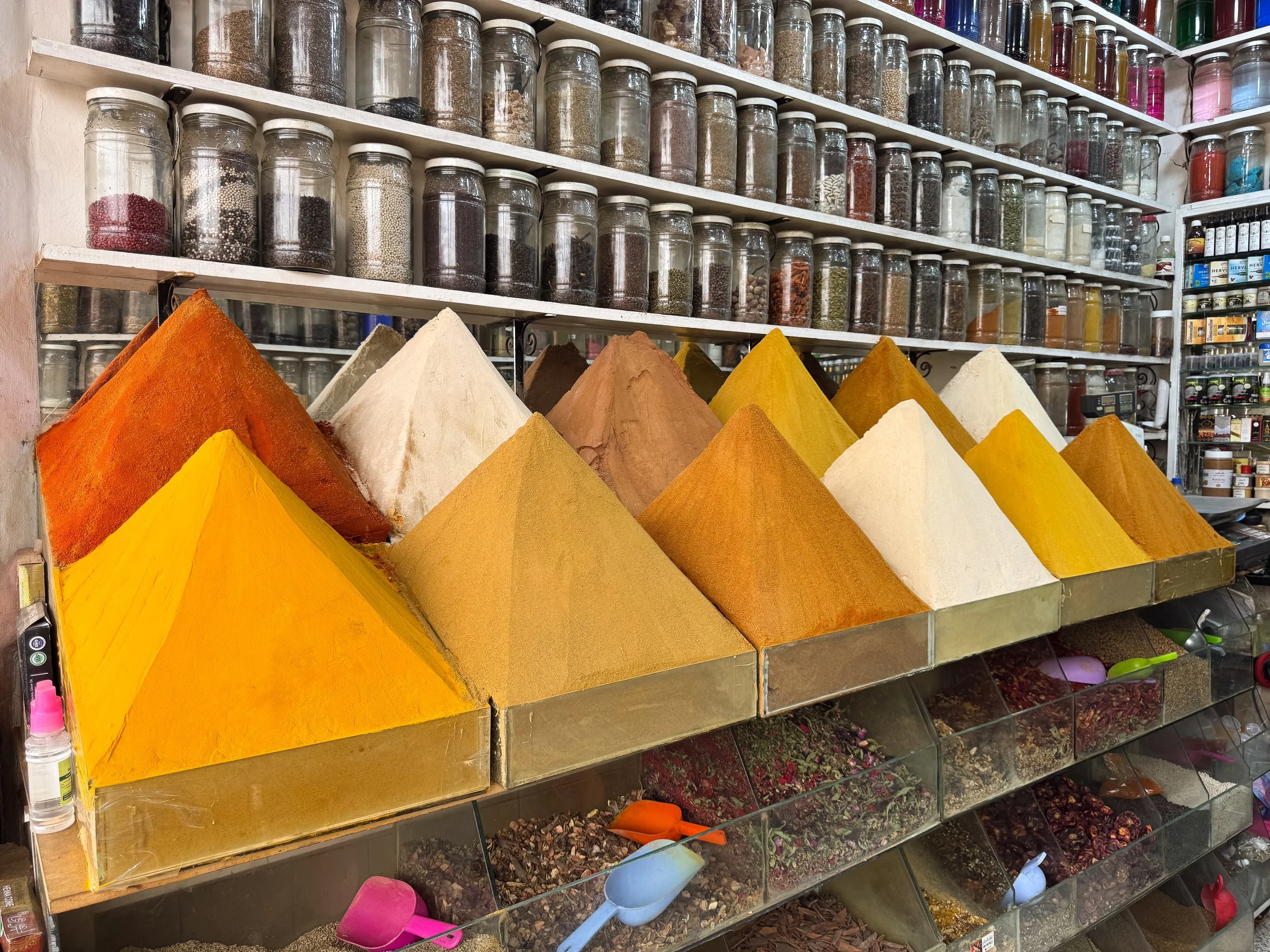
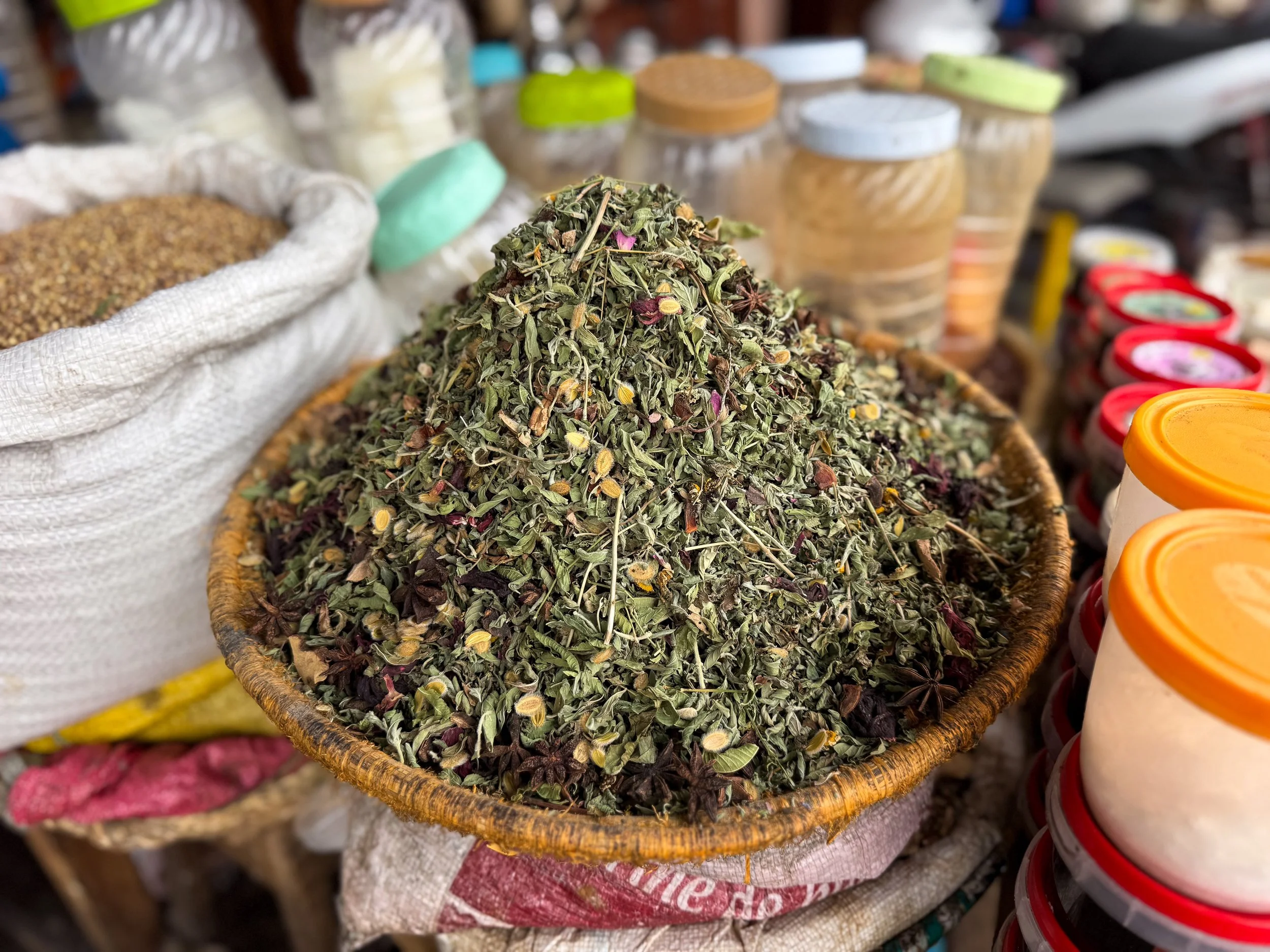
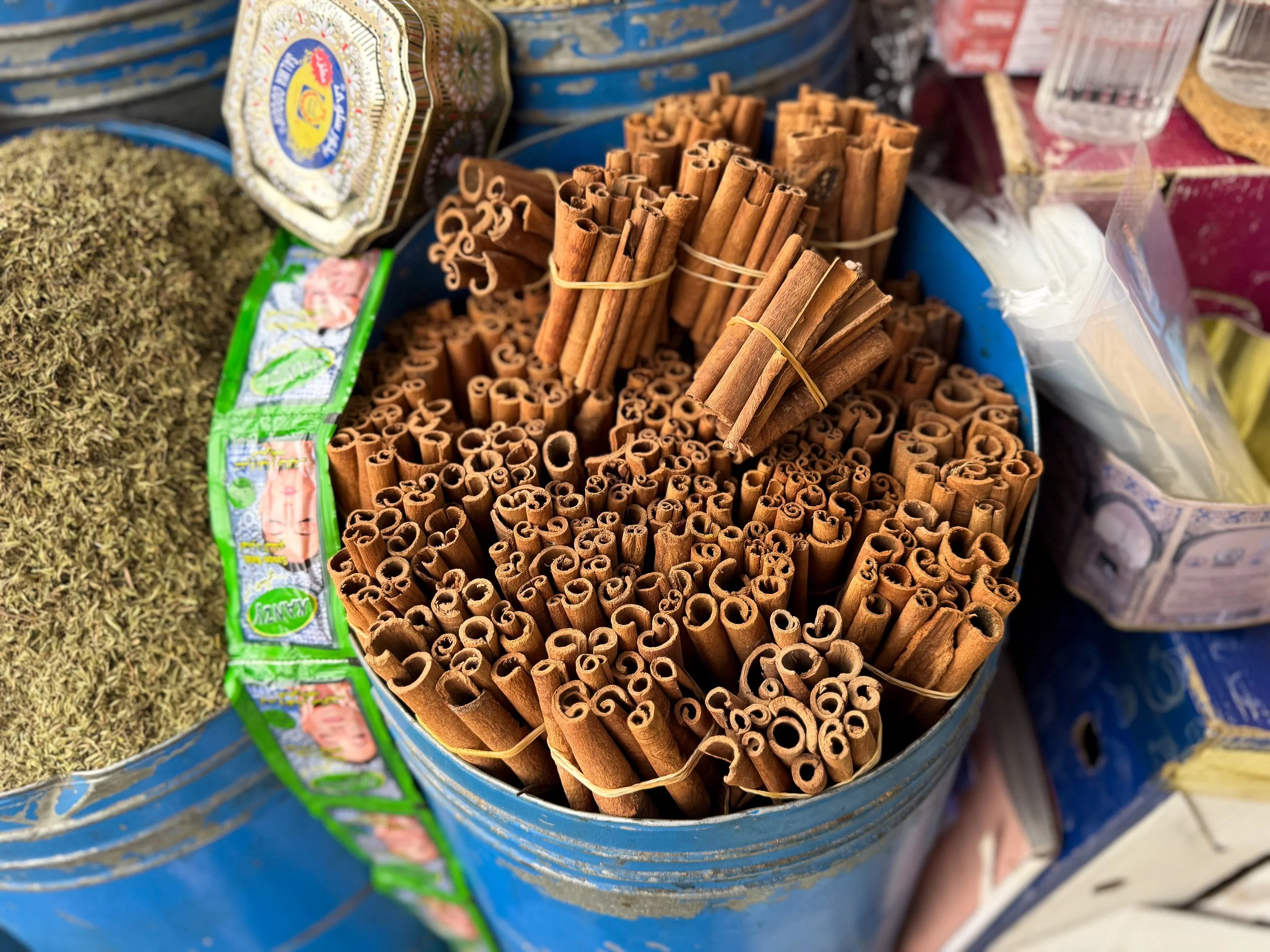
Places des Epices. A bustling plaza lined with merchants selling pyramids of ground spices, jars of herbs, dried flowers, teas and perfumes. Shopkeepers invite customers to taste and smell samples of their products then haggle over price. Souk vendors fill the center of the plaza with Moroccan rugs, stacked poufs, wicker baskets and colorful decor. Cafes serving Berber tea and spiced coffee surround the plaza offering rooftop and street side seating.
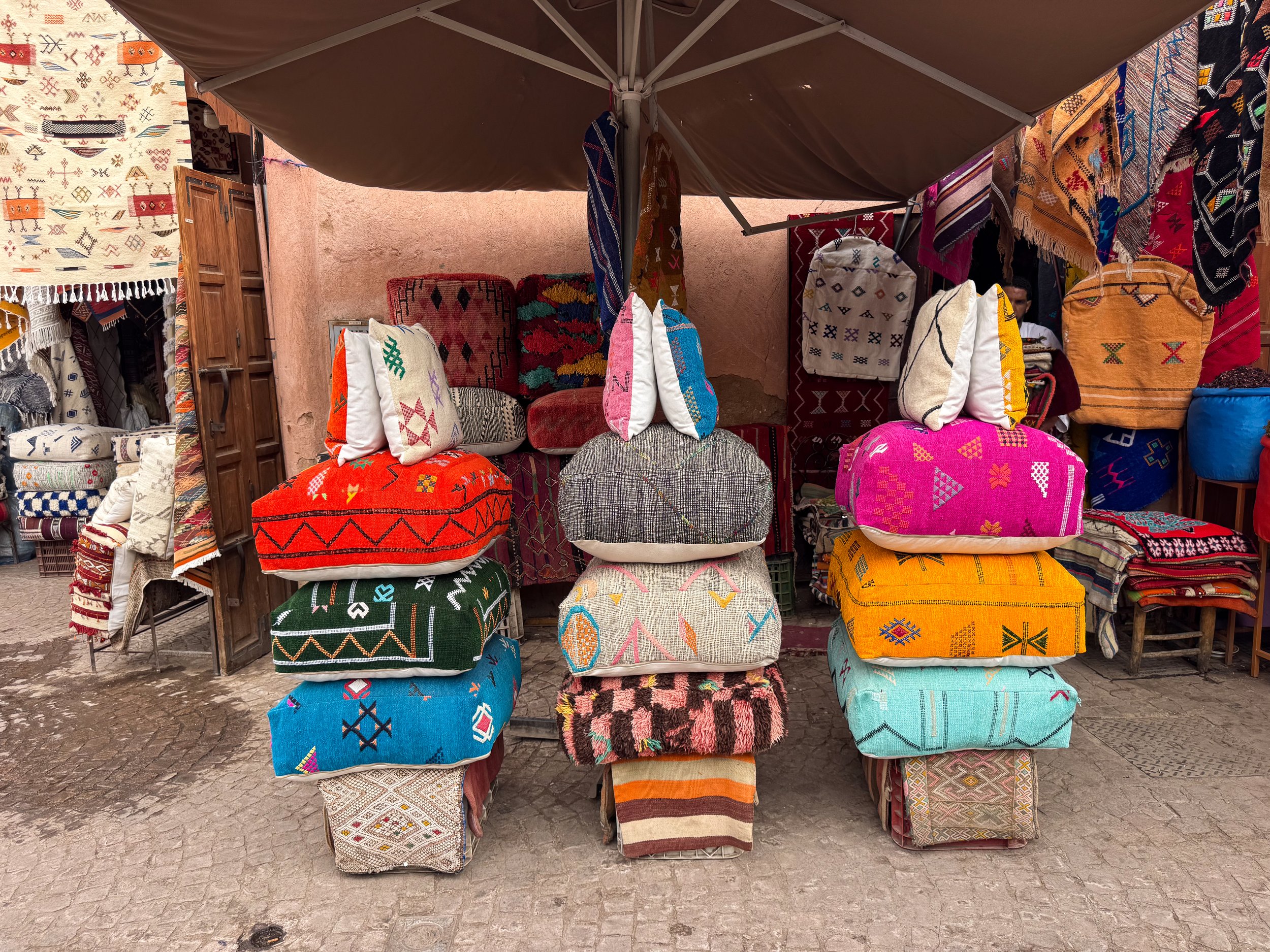
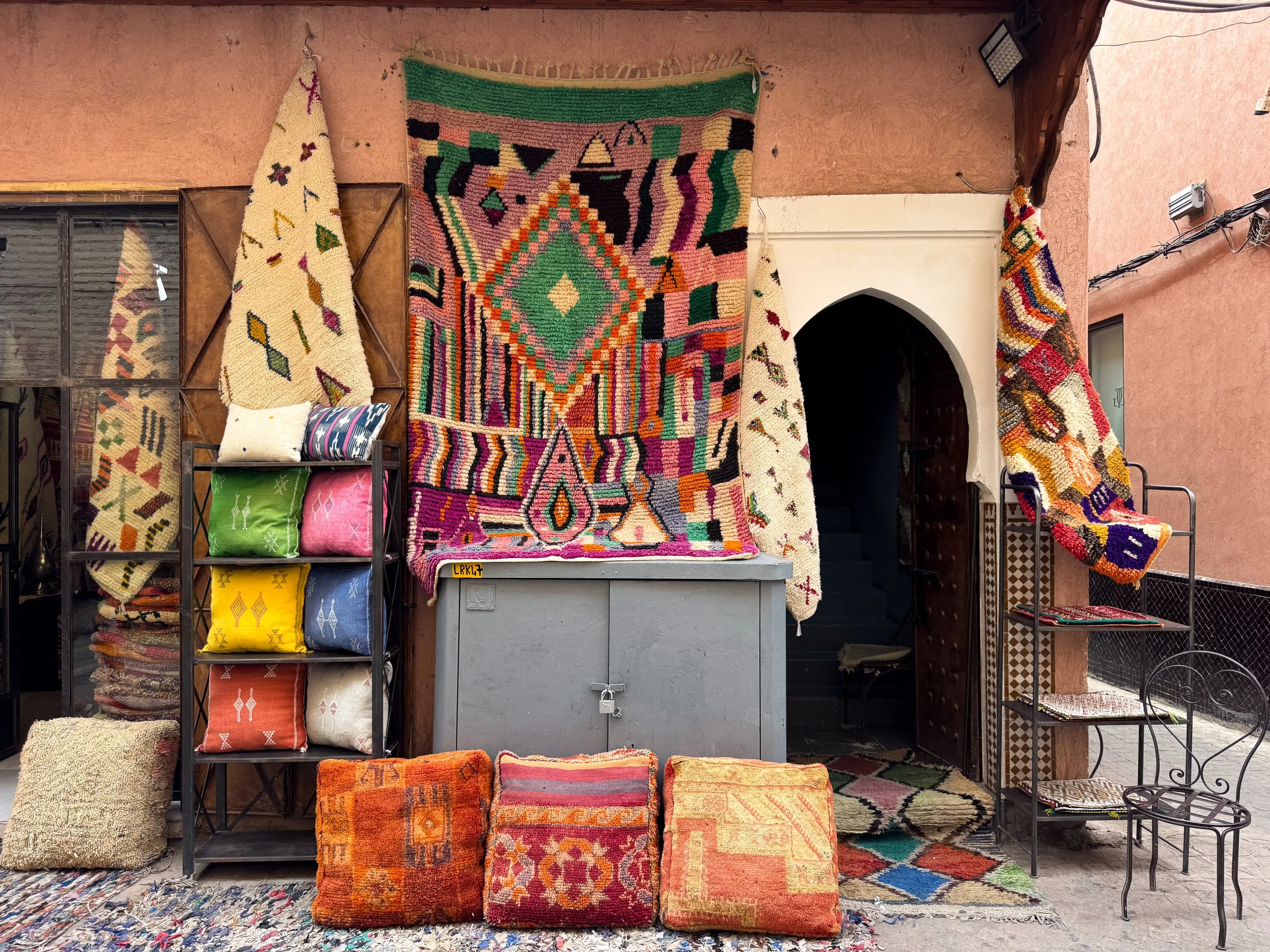
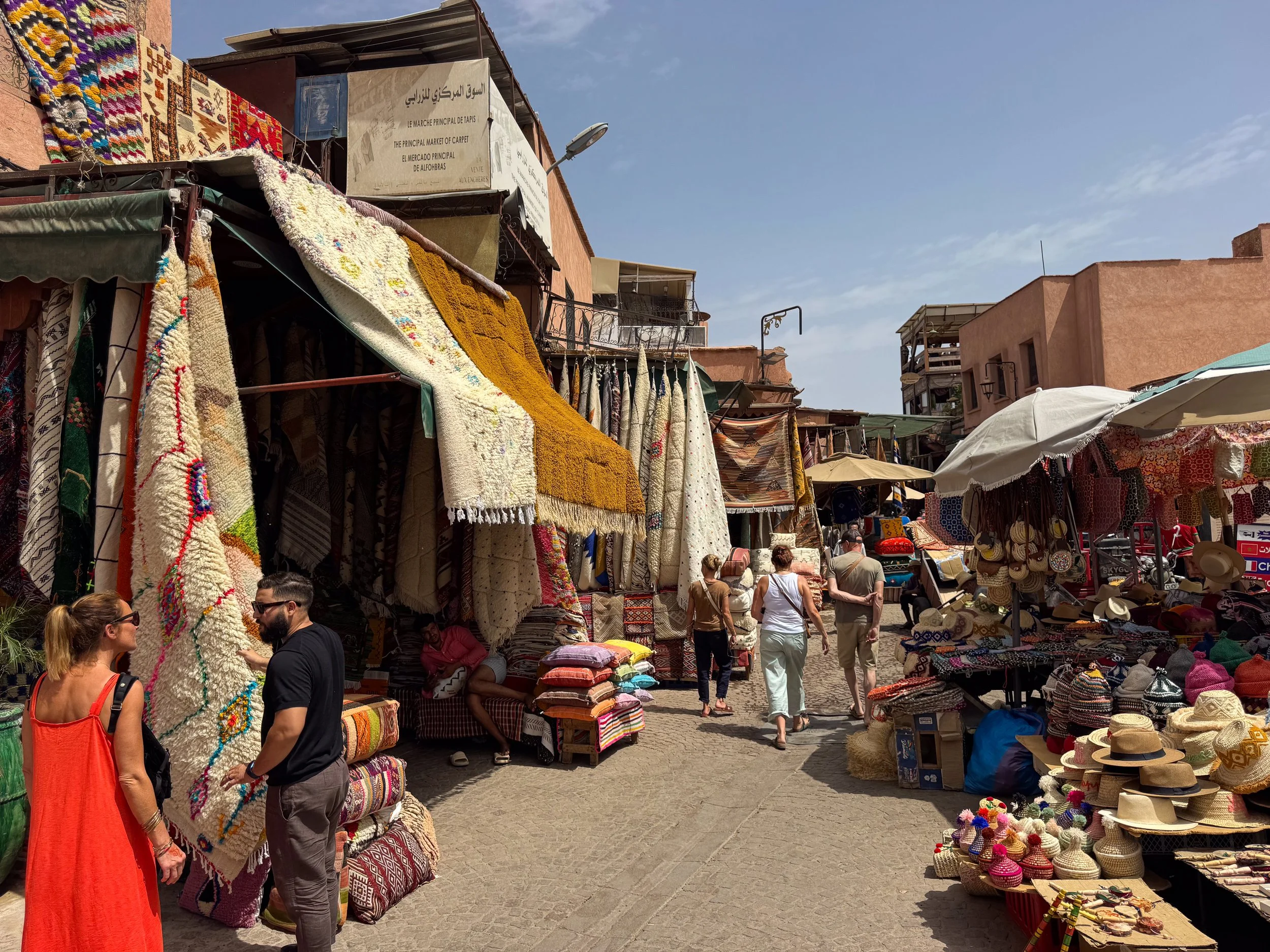
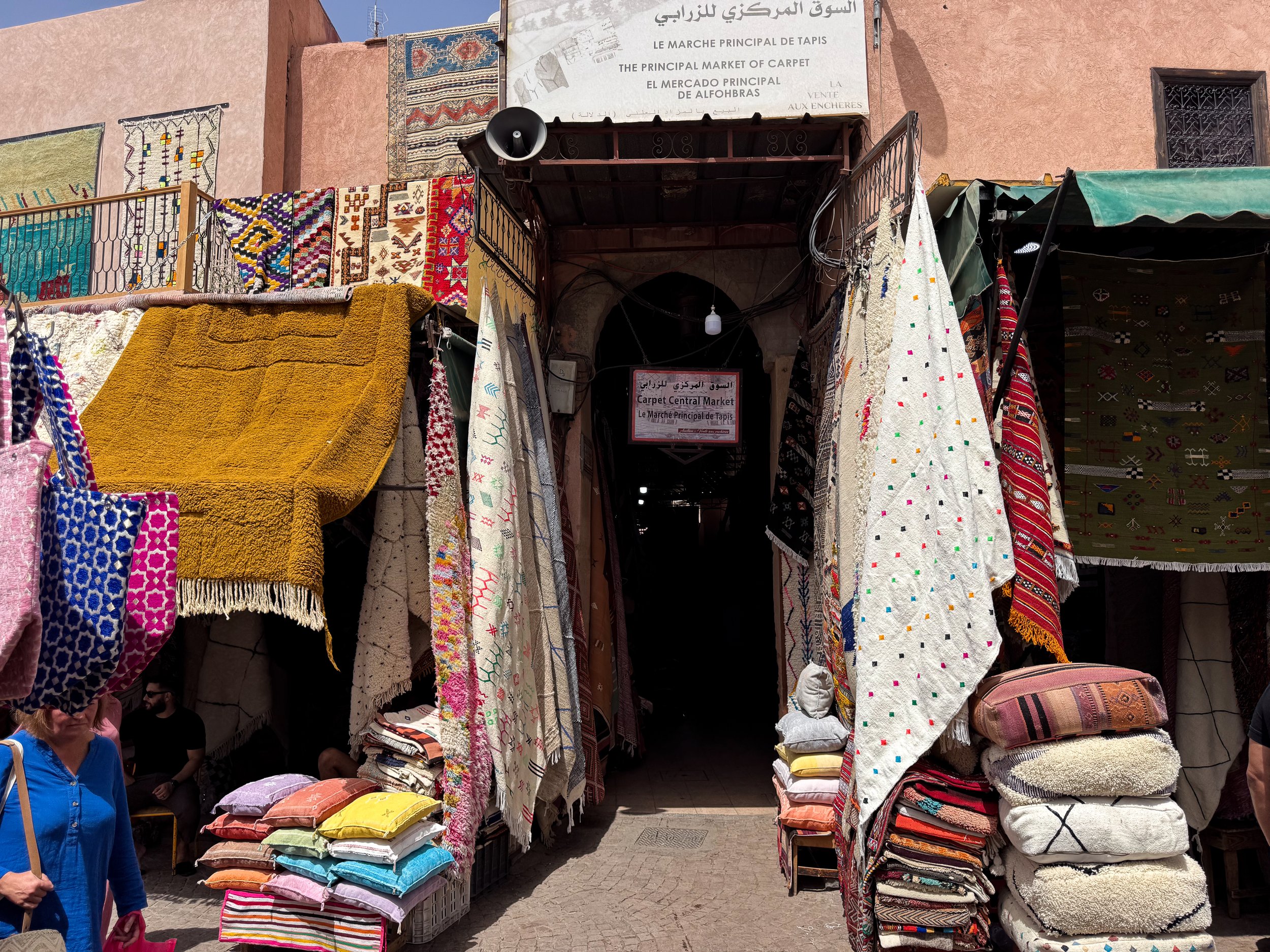
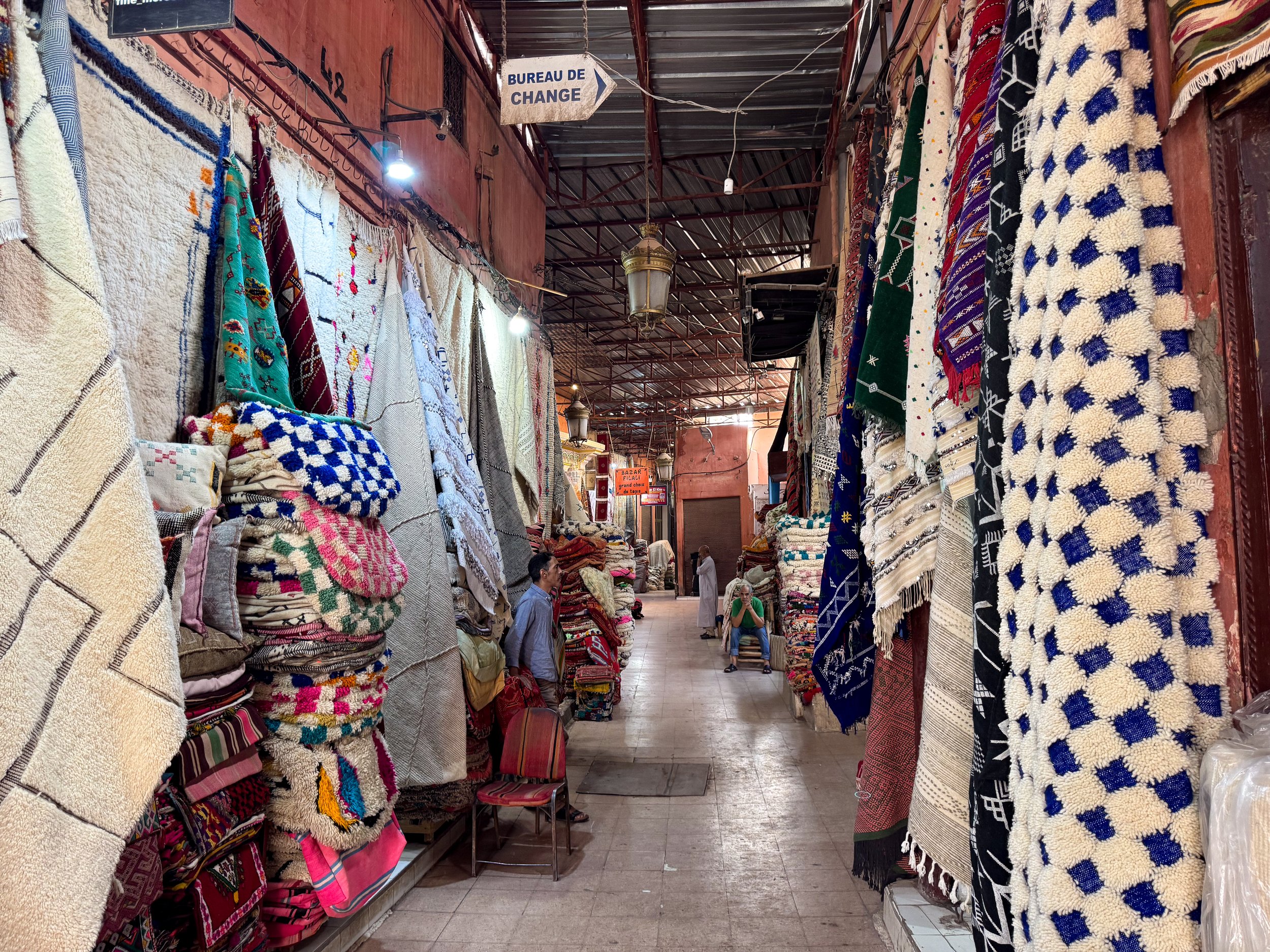
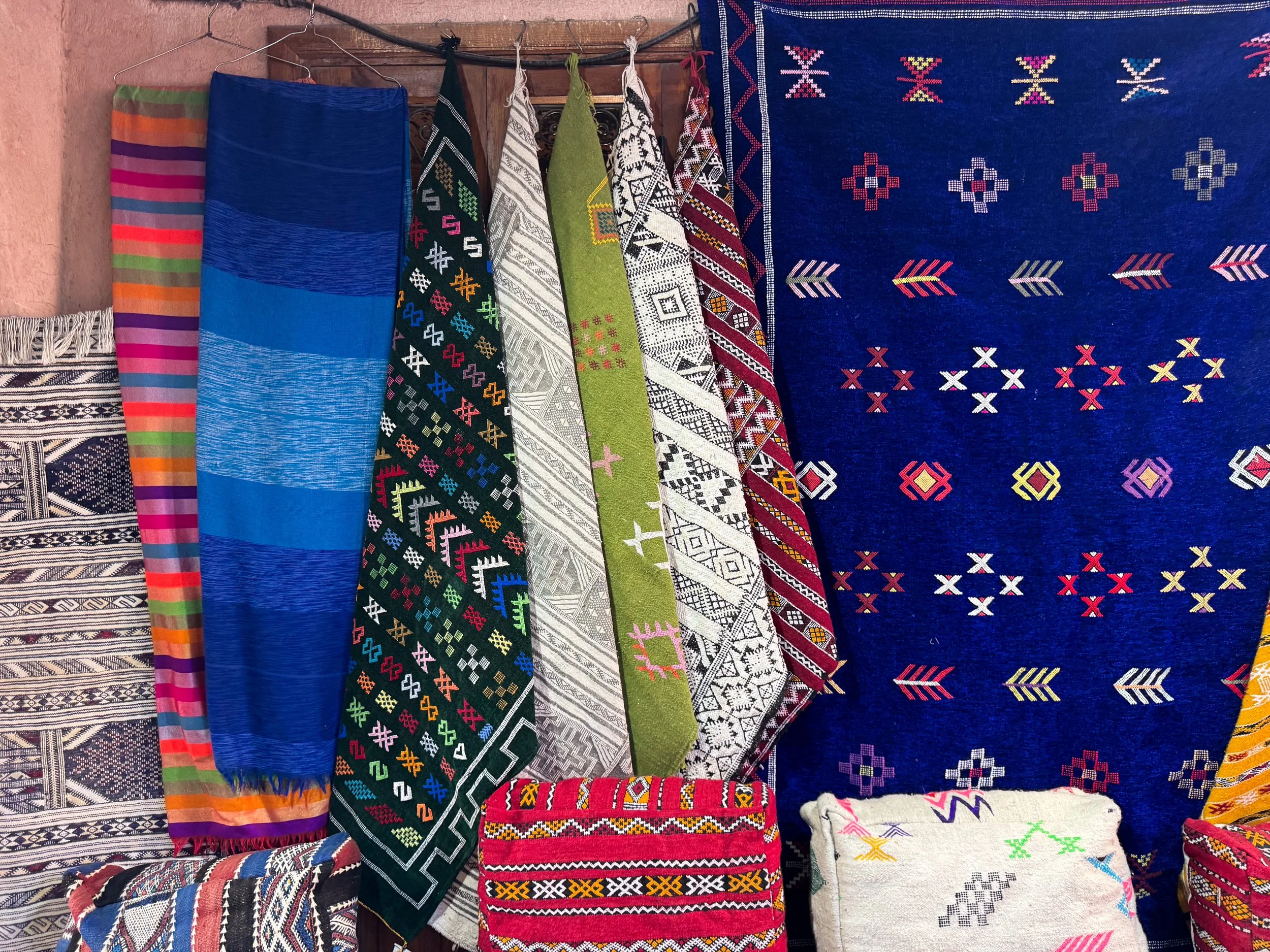
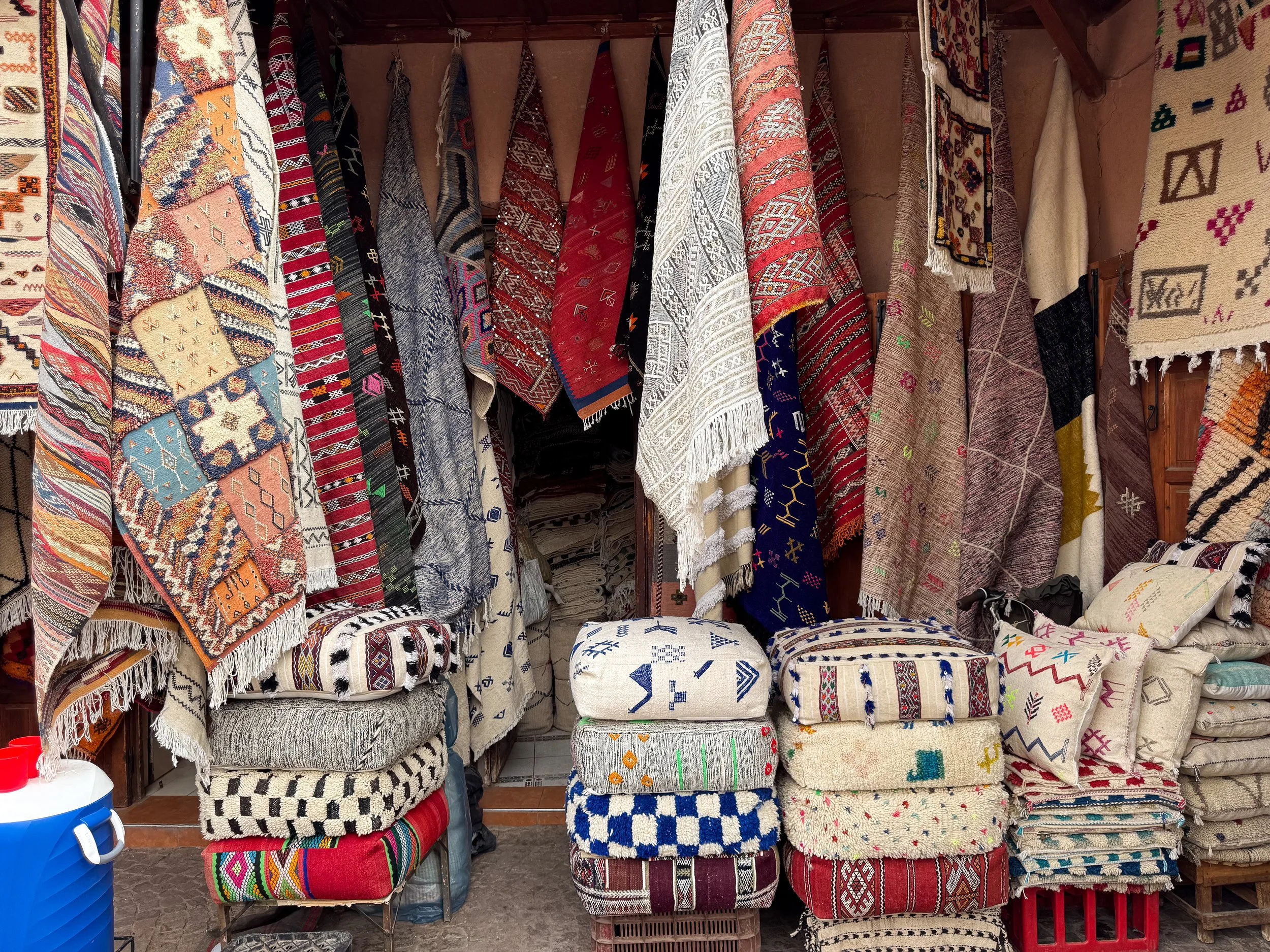
Souk des Tapis. A large market showcasing Moroccan and Berber carpets. Stacks of folded rugs rise from floor to ceiling of showrooms while large pieces are displayed on walls. Each rug is unique, ranging from traditional to modern weaves and vintage designs. Vendors guide visitors through their shop and nearby warehouses, offering mint tea as they unfurl multiple rugs. After viewing a dozen designs, it’s time to narrow choices and haggle or thank the vendor and leave.
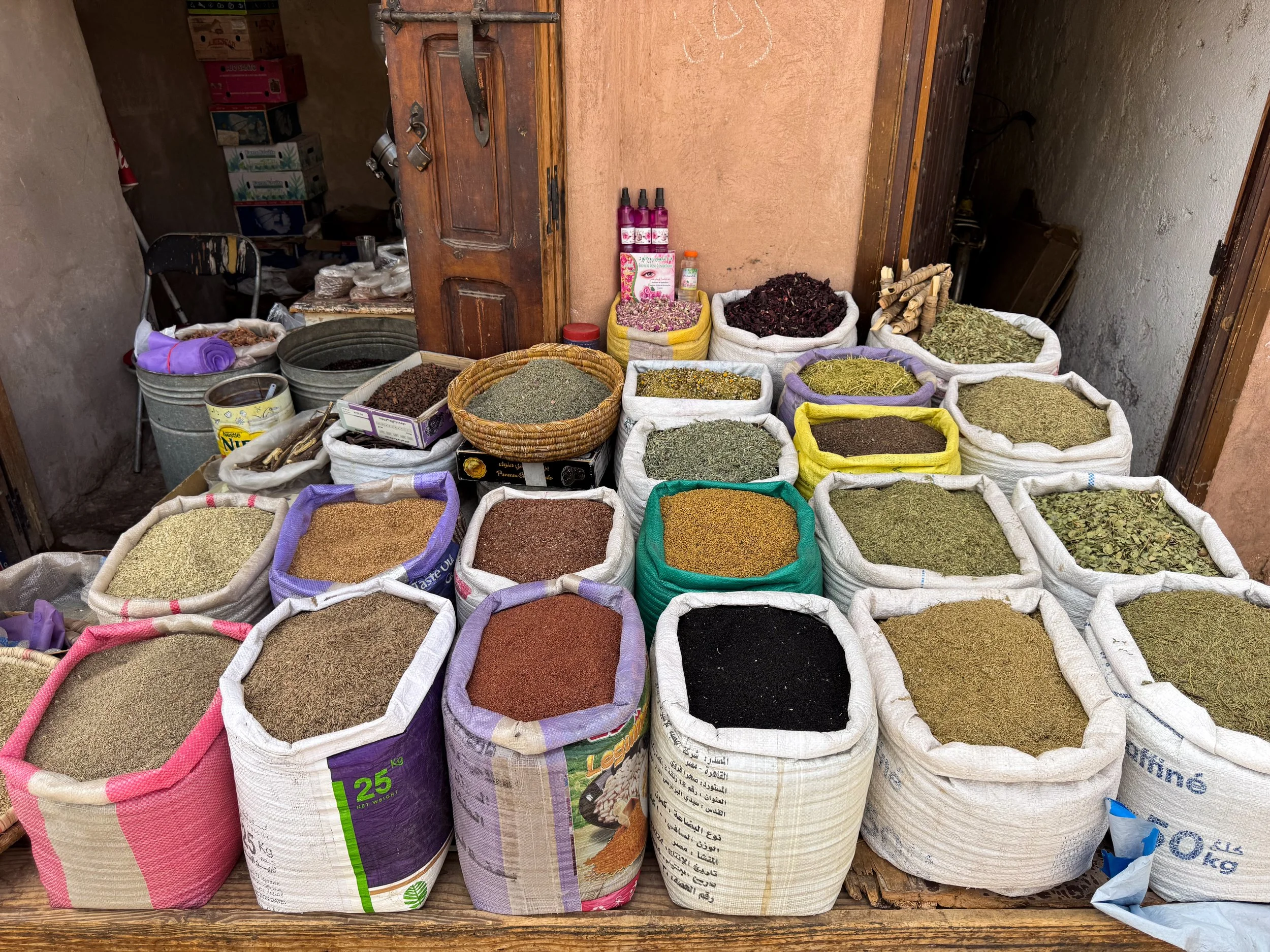
Roadside Markets. Locals buy groceries from small roadside markets and stands. Baskets brim with fresh vegetables, fruits, herbs and eggs. Butchers display meat on hooks or tabletops. Drums hold pickled olives, flours and grains like lentils, couscous and beans. Prices are refreshingly fair; no haggling required. Small convenience stores called Hanouts are best for dairy, beverages and everyday essentials.
Tips for Haggling:
Engage with locals. Most are genuinely friendly.
Haggling is expected and part of the culture.
Prices start high. Never accept the first price.
Offer one quarter of the asking price and aim to pay no more than half.
Be ready to walk away after your “last final” offer; vendors often reconsider.
Walk away if not interested or uncomfortable.
Only haggle if you’re serious about purchasing.
See the Sights
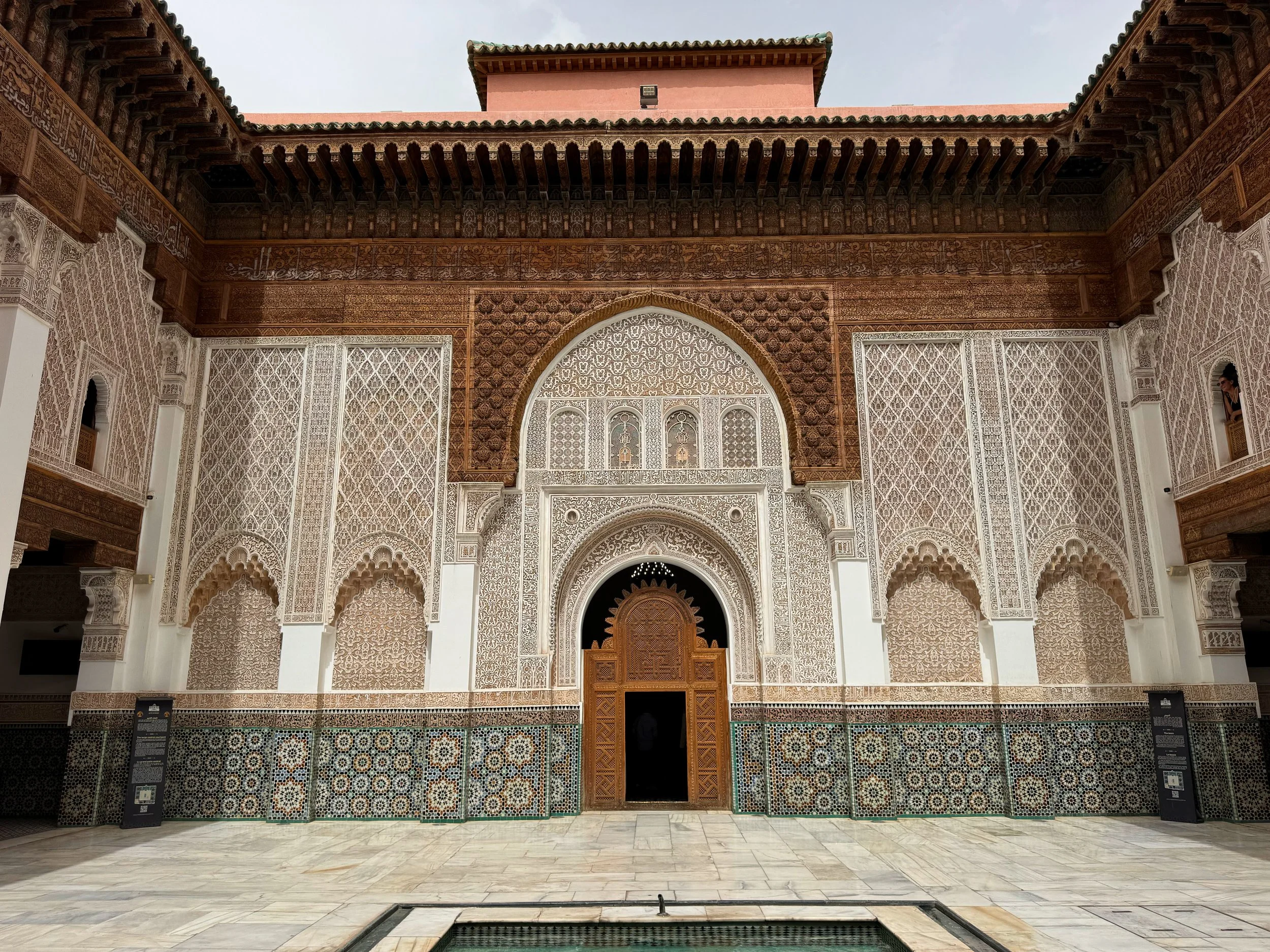
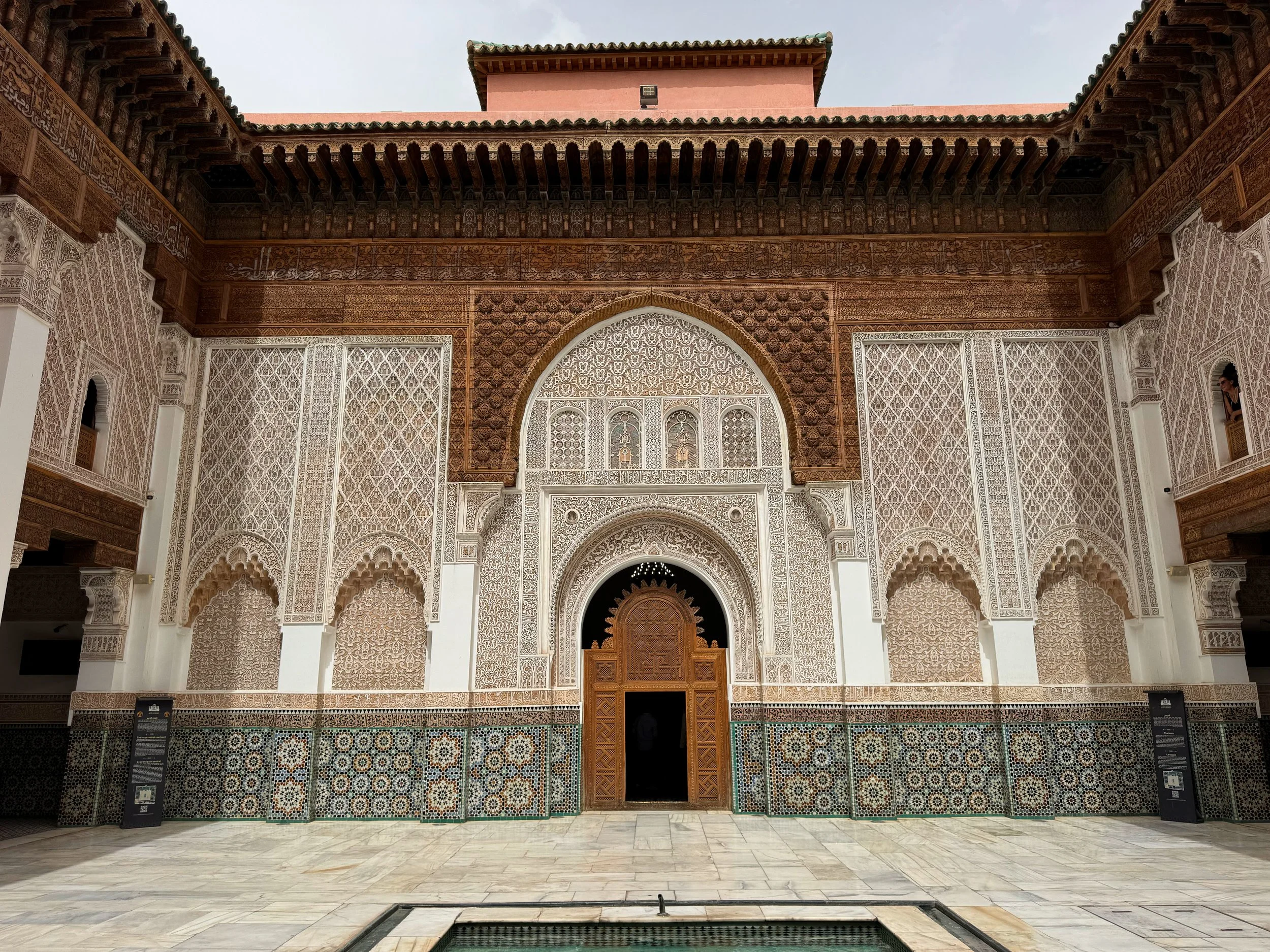
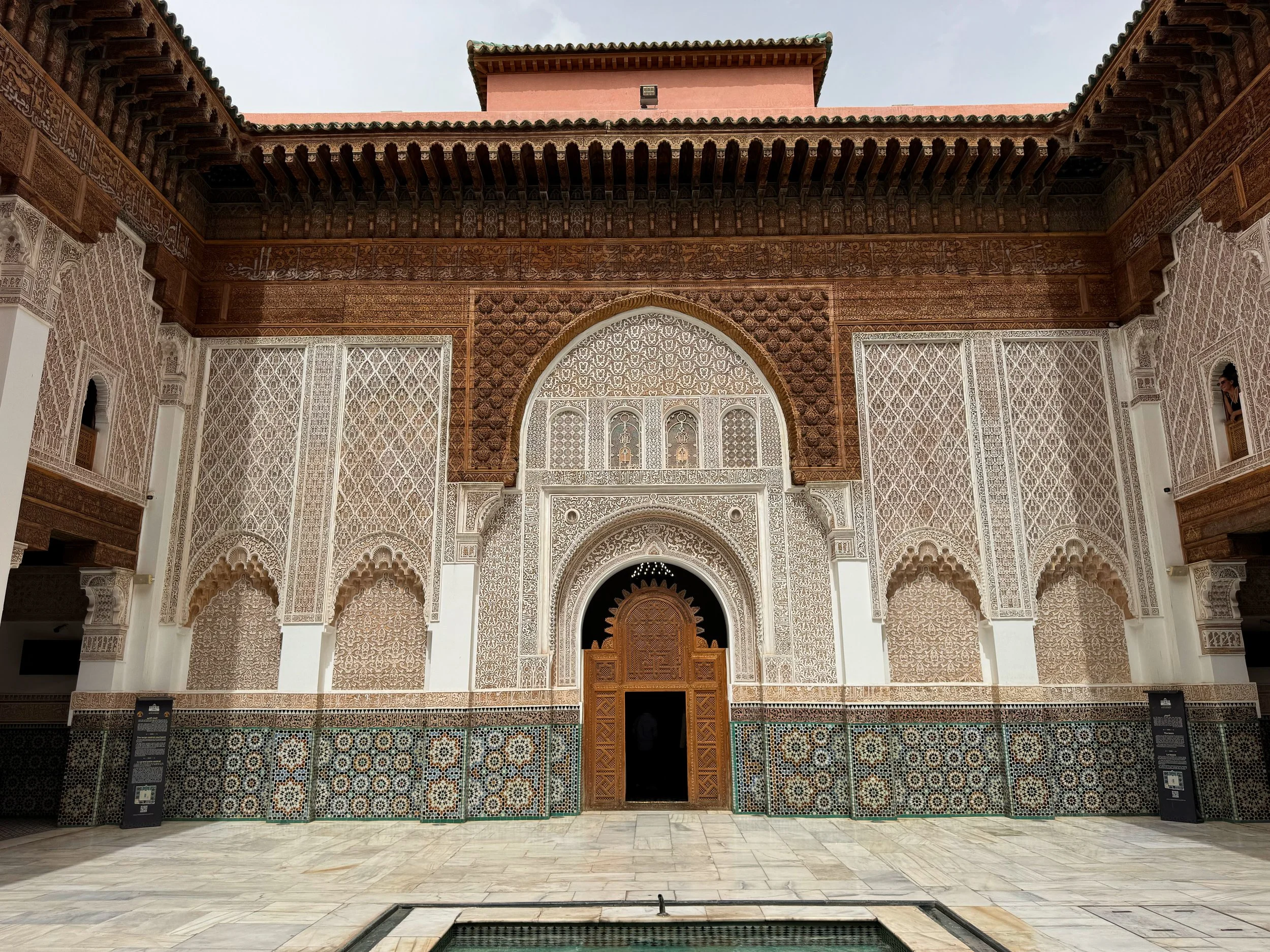
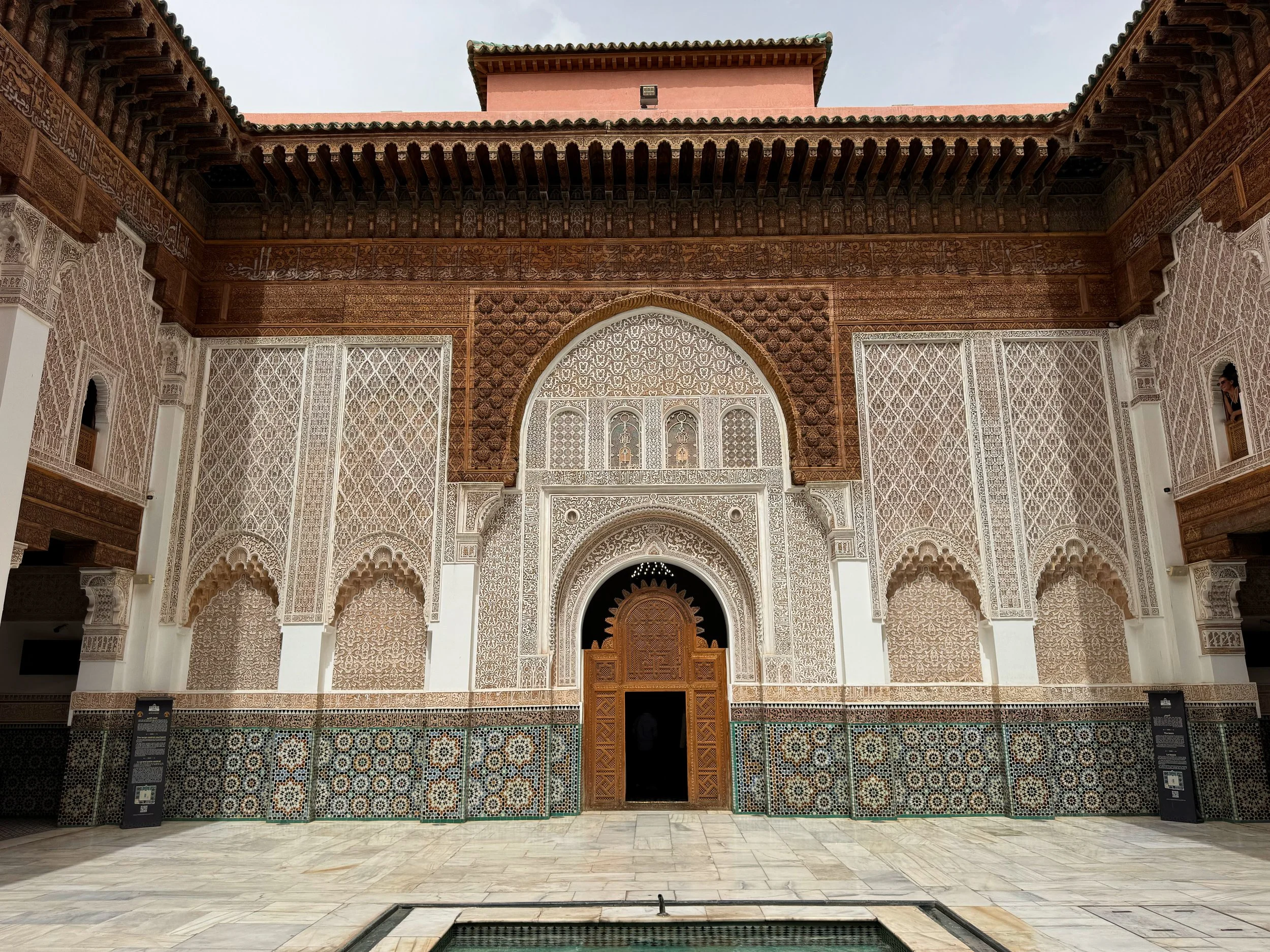
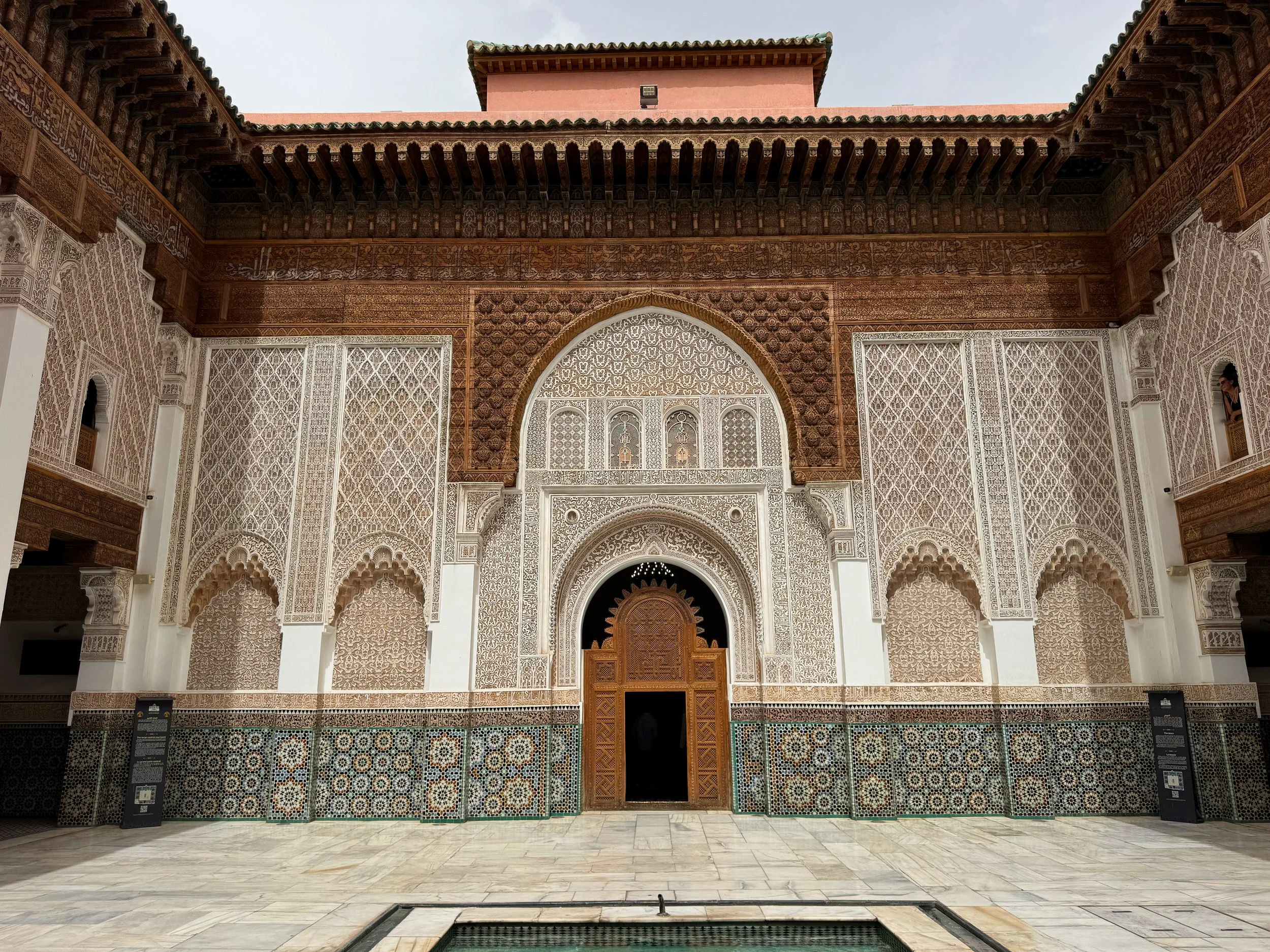
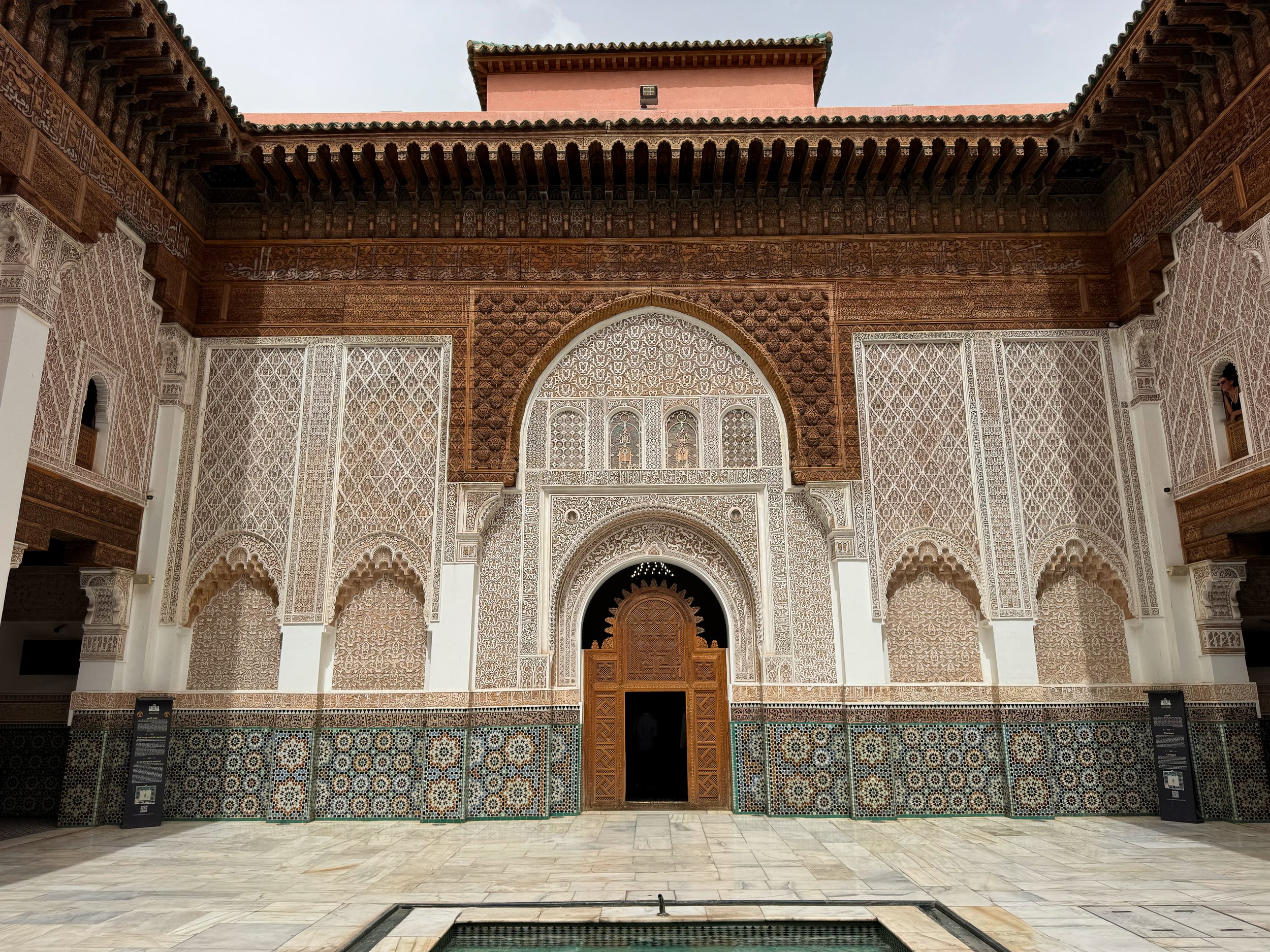
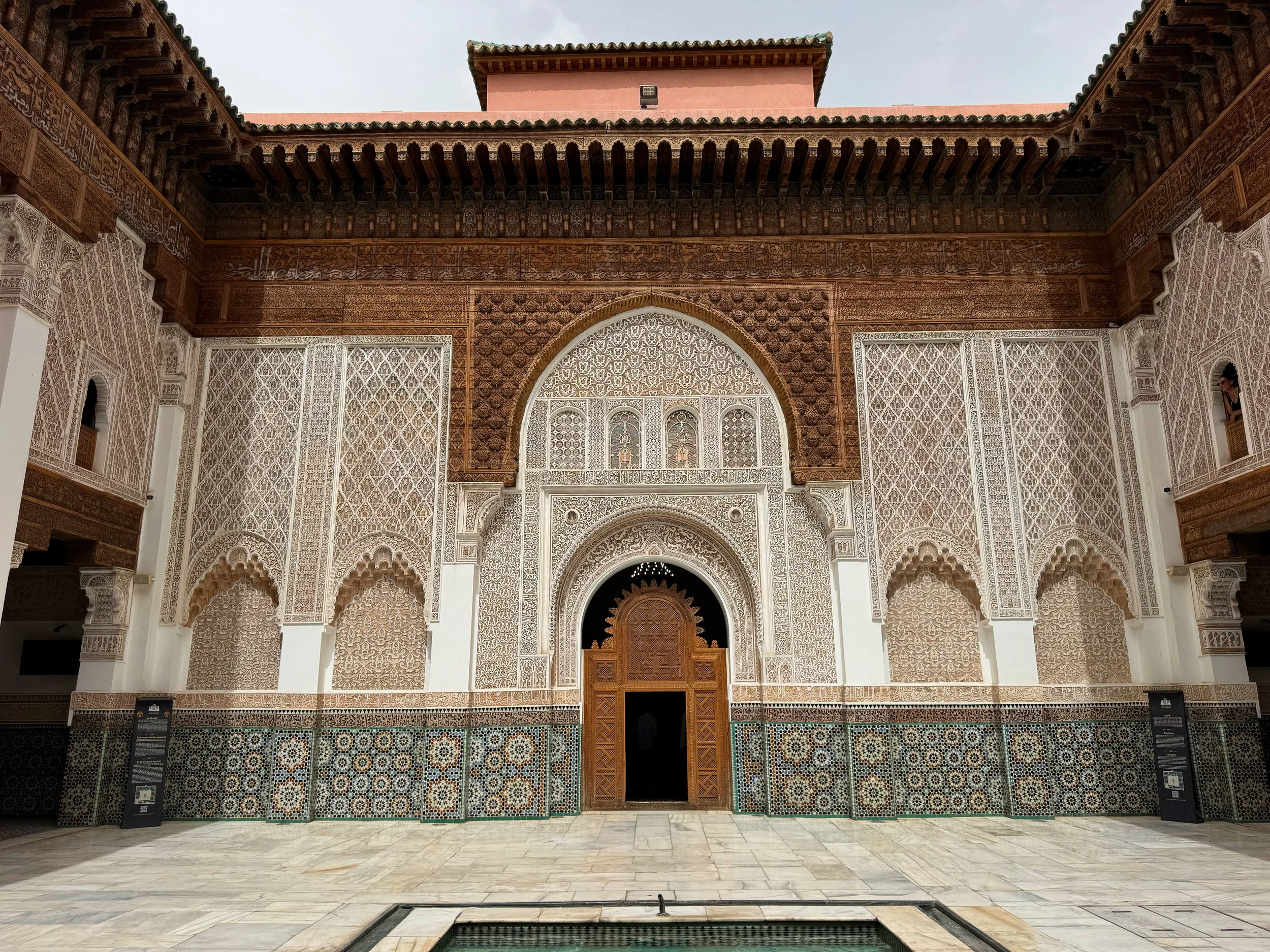
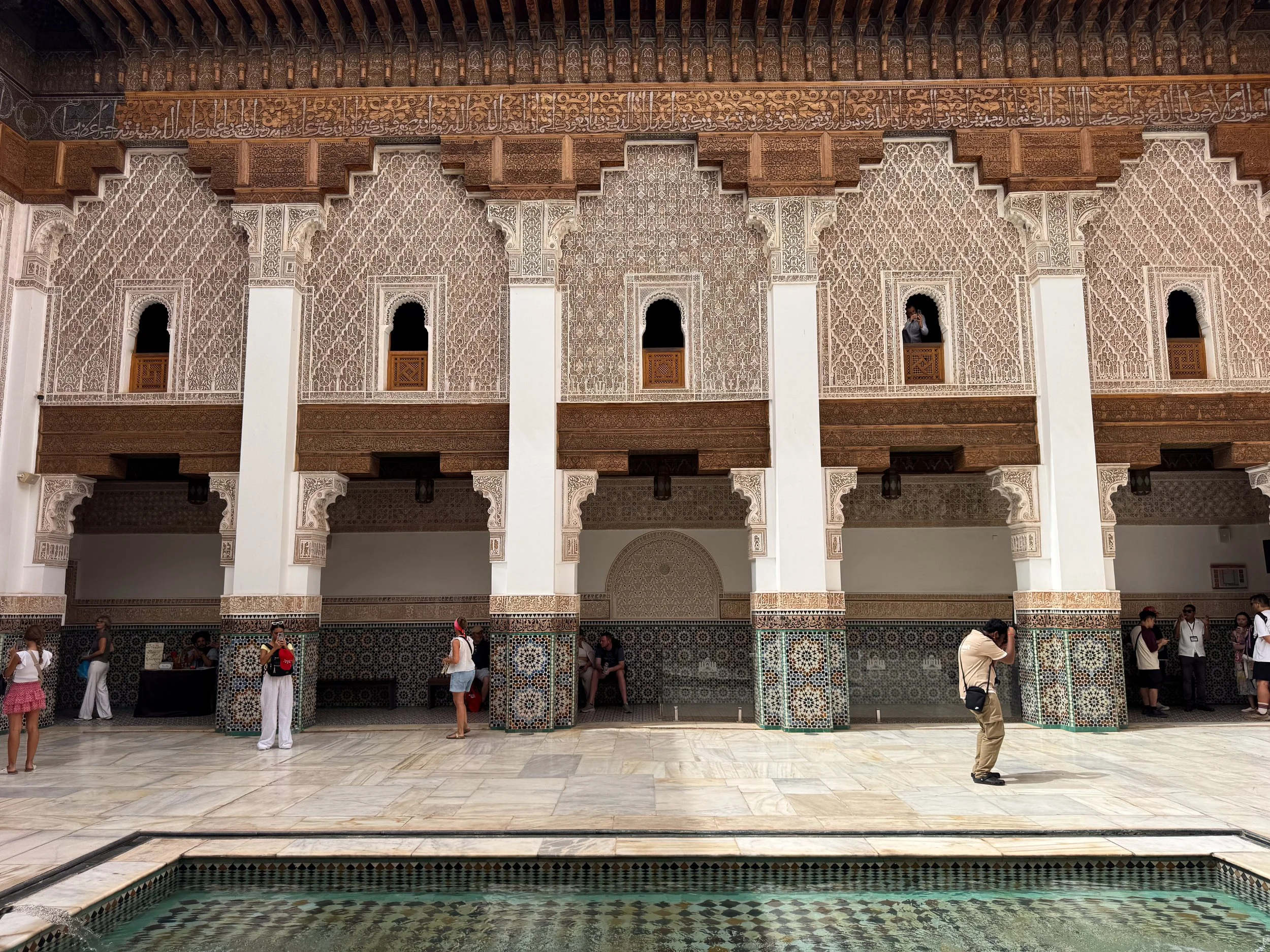
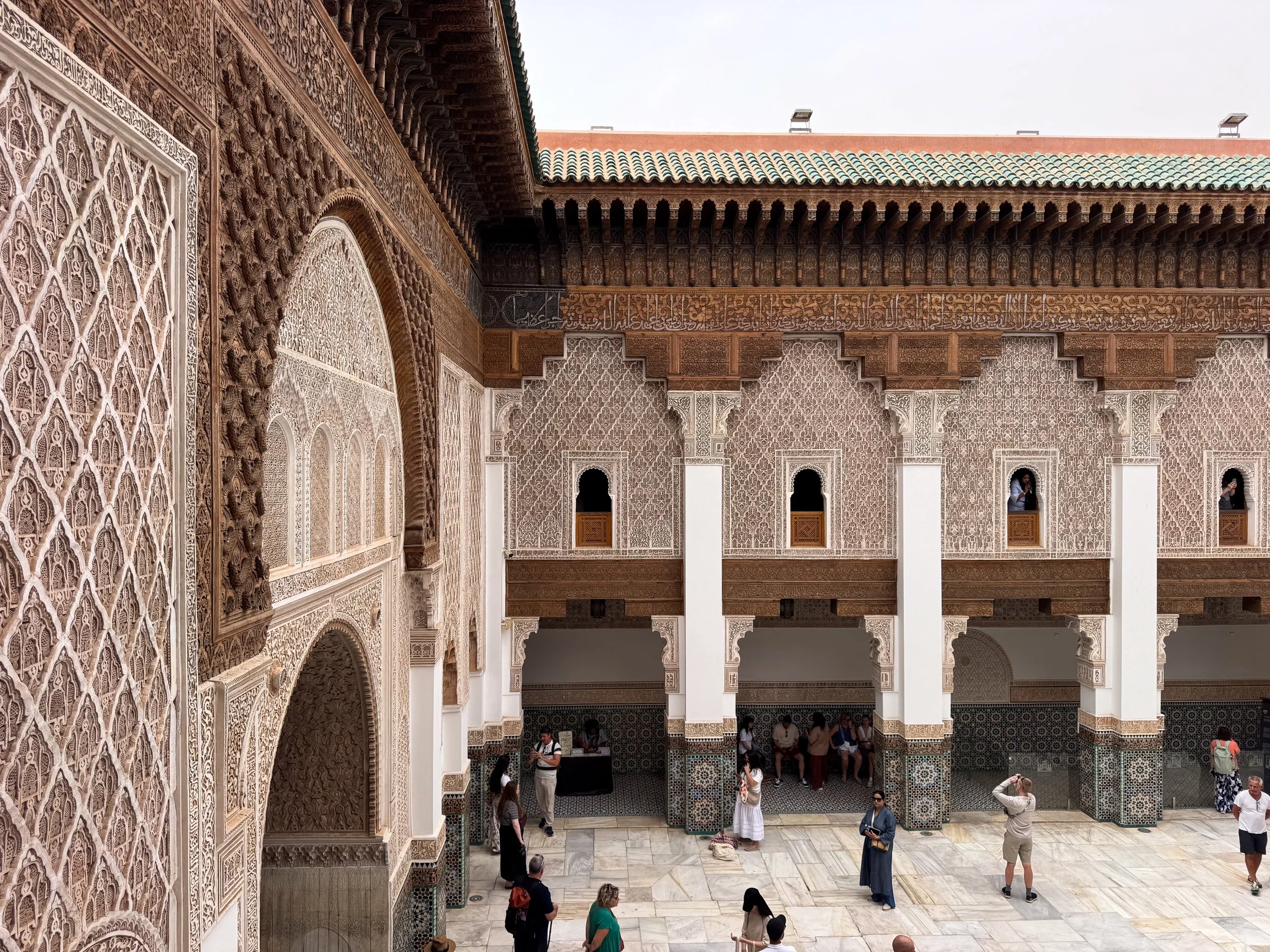
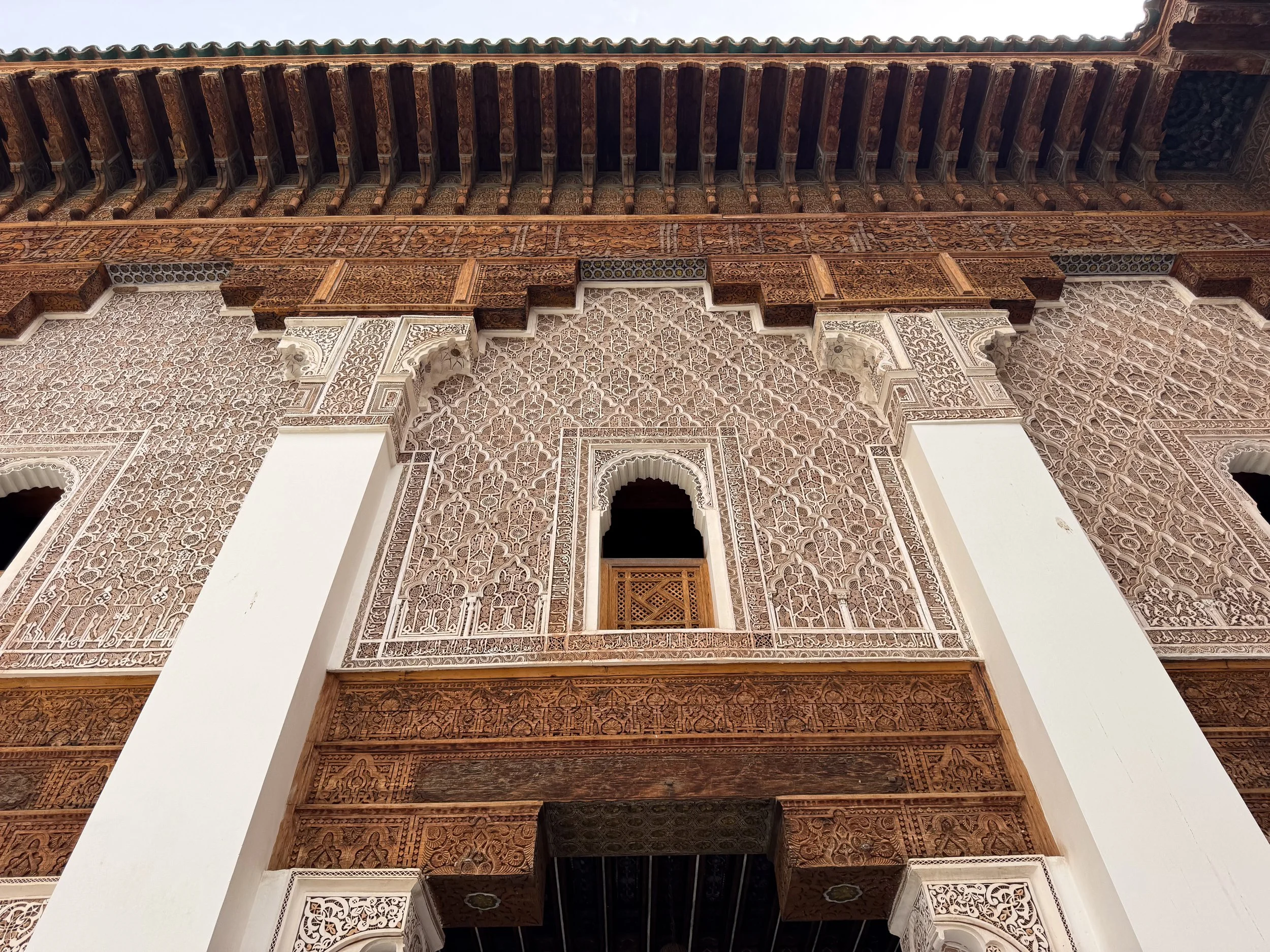
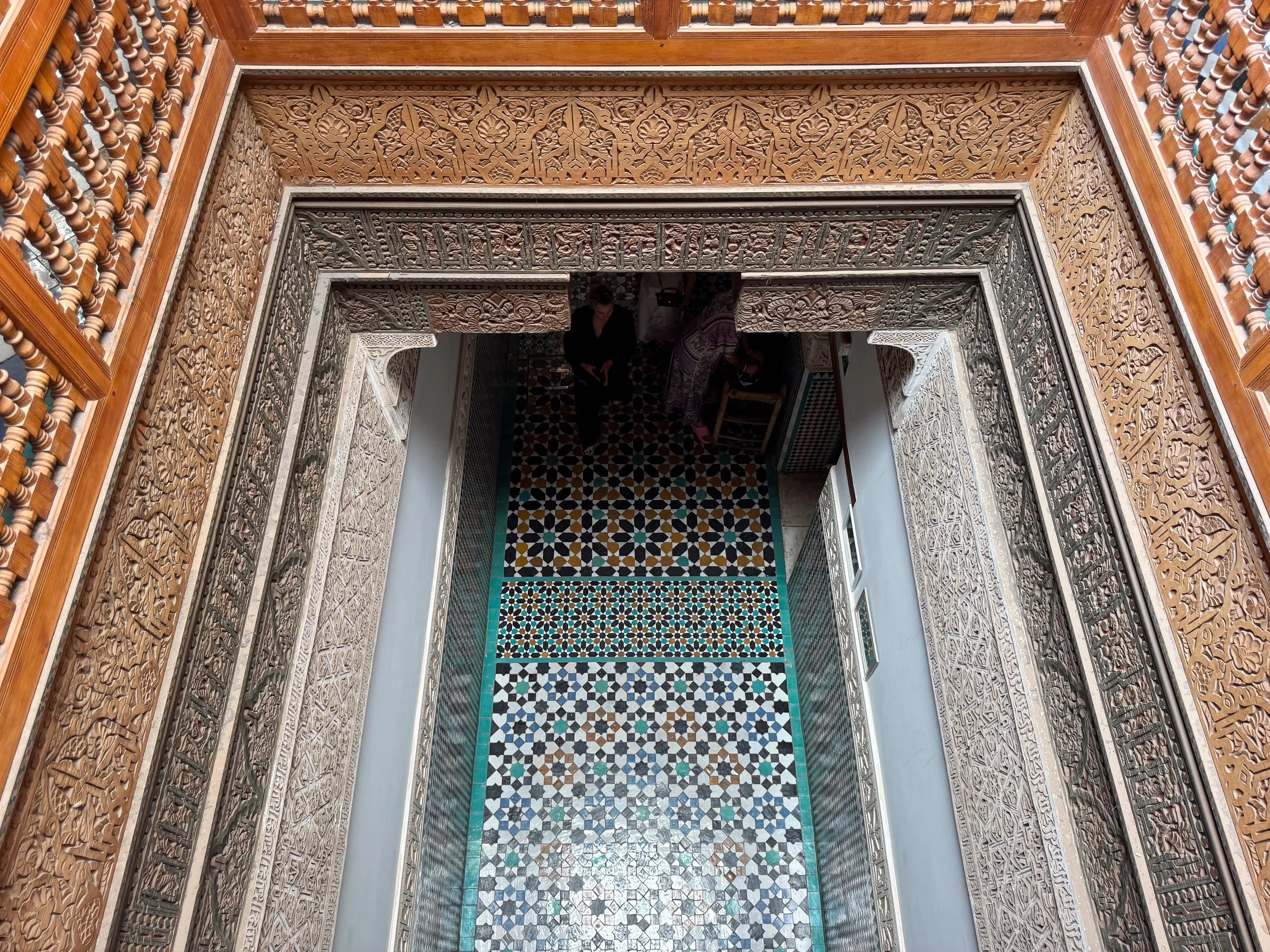
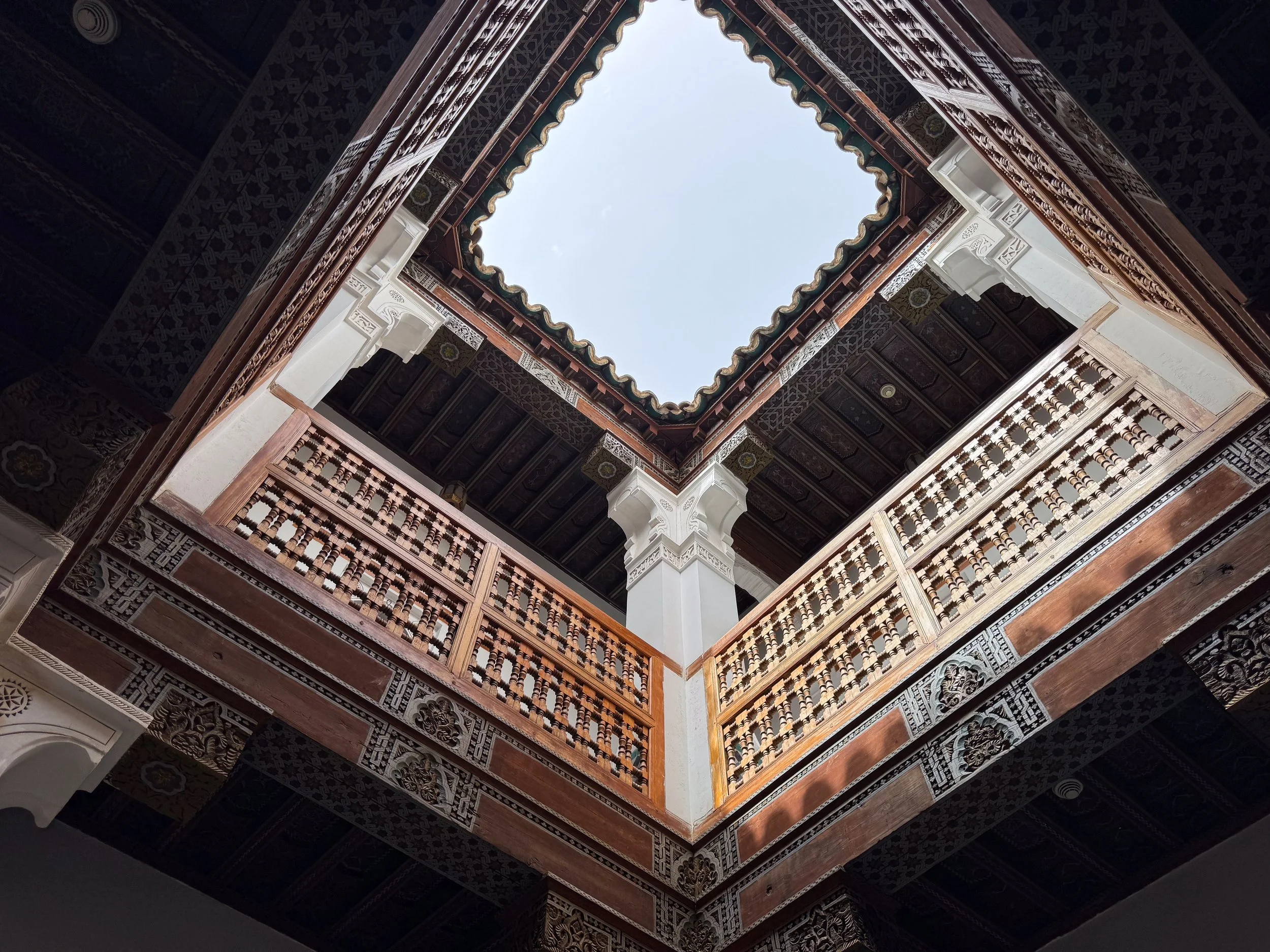
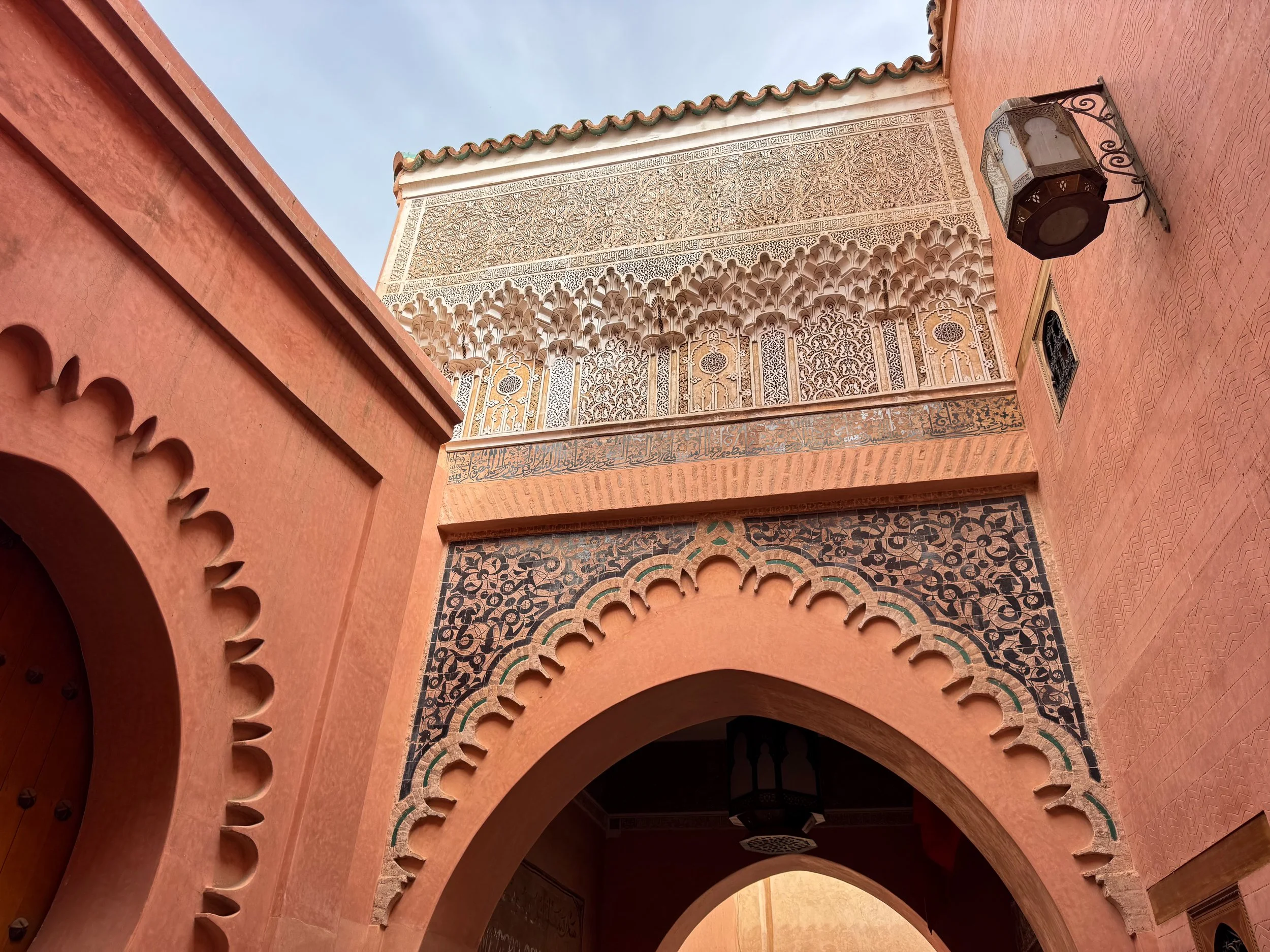
Madrasa Ben Youssef. A 14th century Islamic school famed for its sophisticated design and intricate details. Its central courtyard is one of the finest examples of Moroccan architectural style. Kaleidoscopic tiles, chiseled plaster and carved wooden elements define the space. Zellige patterns and Quranic text adorn its many surfaces. White marble floors surround a tiled reflecting pool. Arched windows look out from the second floor where dozens of private study rooms line hallways and interior light wells.
Pro Tip. Arrive at opening to see the courtyard with the fewest visitors.
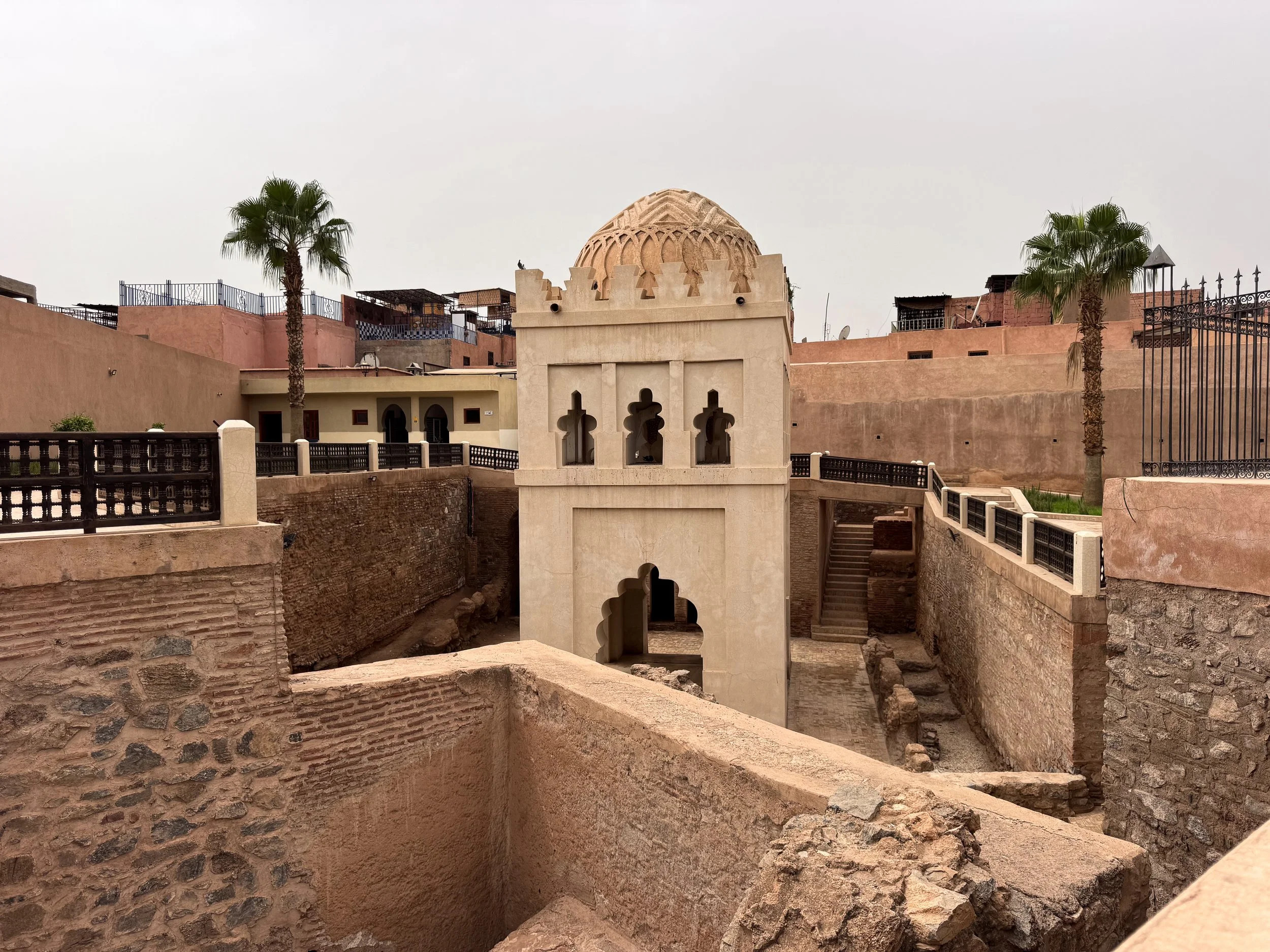
Almoravid Koubba. A 12th century mosque and the oldest surviving structure in the medina. A small domed tower stands within an excavated pit surrounded by stone ruins. It’s off-limits to non-Muslims but viewable from beyond a gated perimeter.
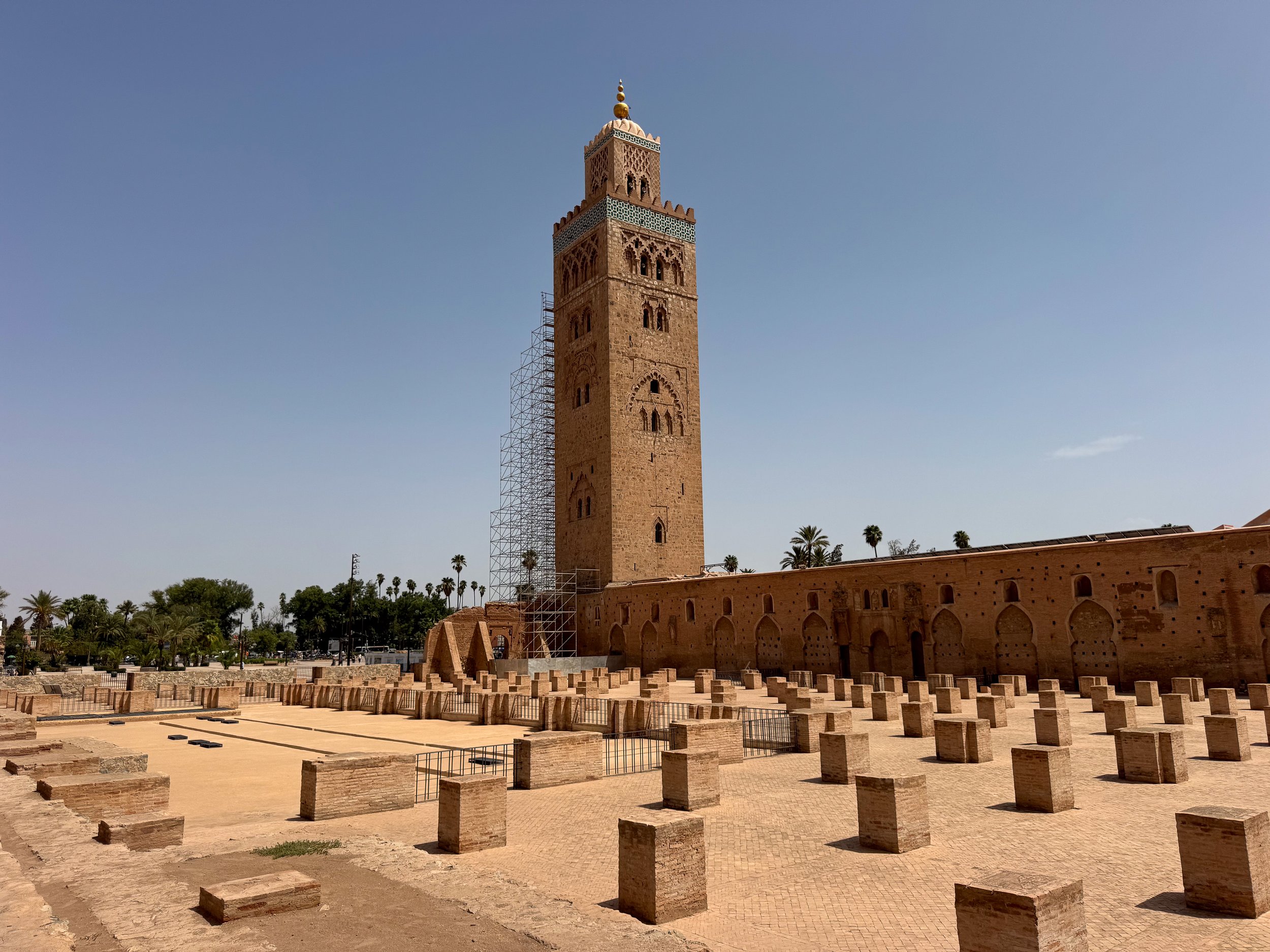
Koutoubia Mosque. A historic mosque with the tallest minaret in the medina. The existing building and surrounding ruins date back to the 12th century. Its sandstone and tan brick facade feature Moorish arches and minimal ornamentation distinctive of the period. The mosque is off limits to non-Muslims but viewable from the outside. A large park with lush palm gardens, shaded walkways, fountains and benches encompasses it.
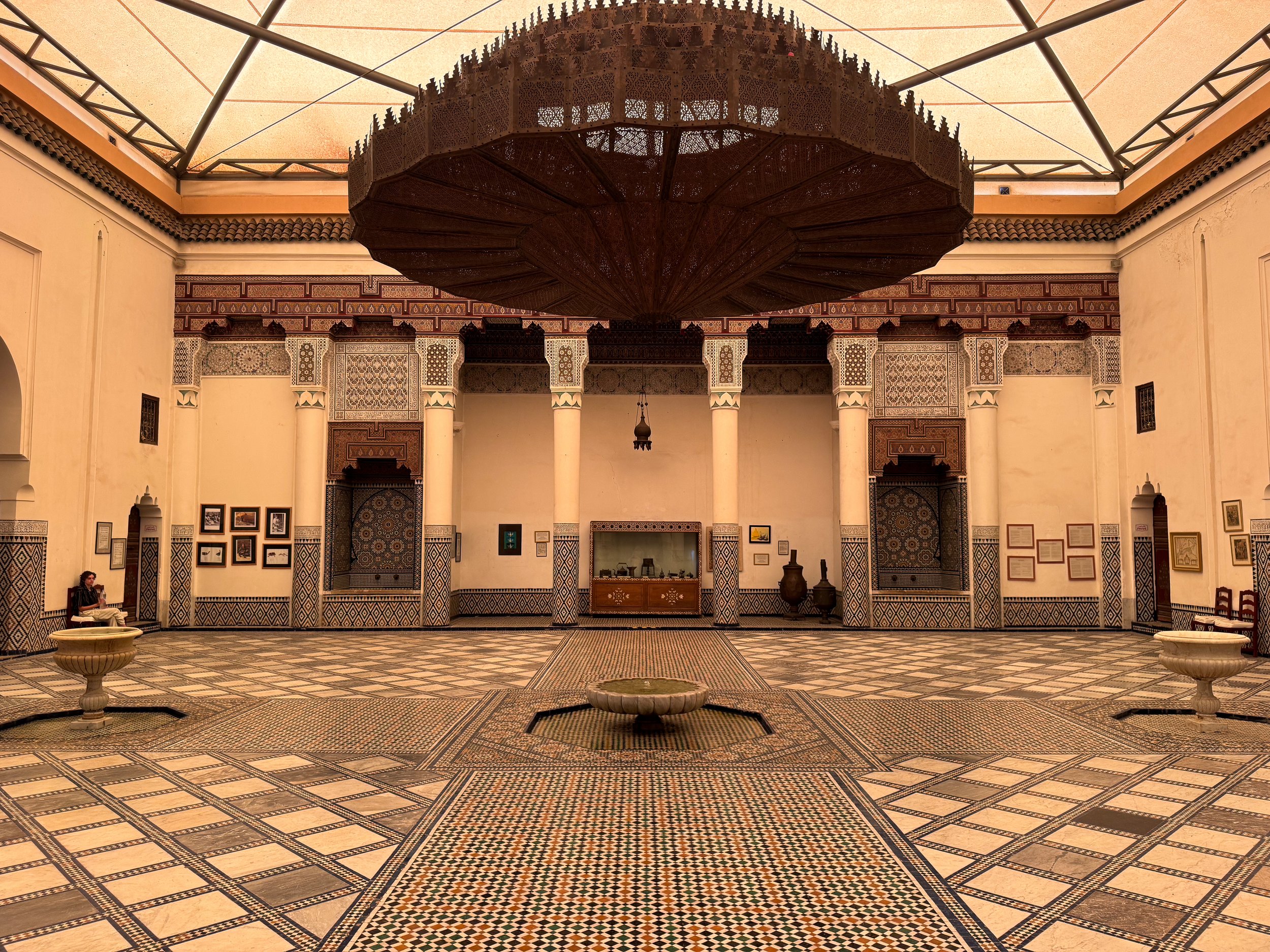
Marrakech Museum. A former palace converted into a Moroccan art and history museum. Small galleries house historic artifacts including clothing, pottery, jewelry and furniture. Contemporary artwork and photographs depict Marrakech, the Atlas Mountains and the local people. Through its interiors, visitors can admire the former palace’s architectural features and intricate designs.
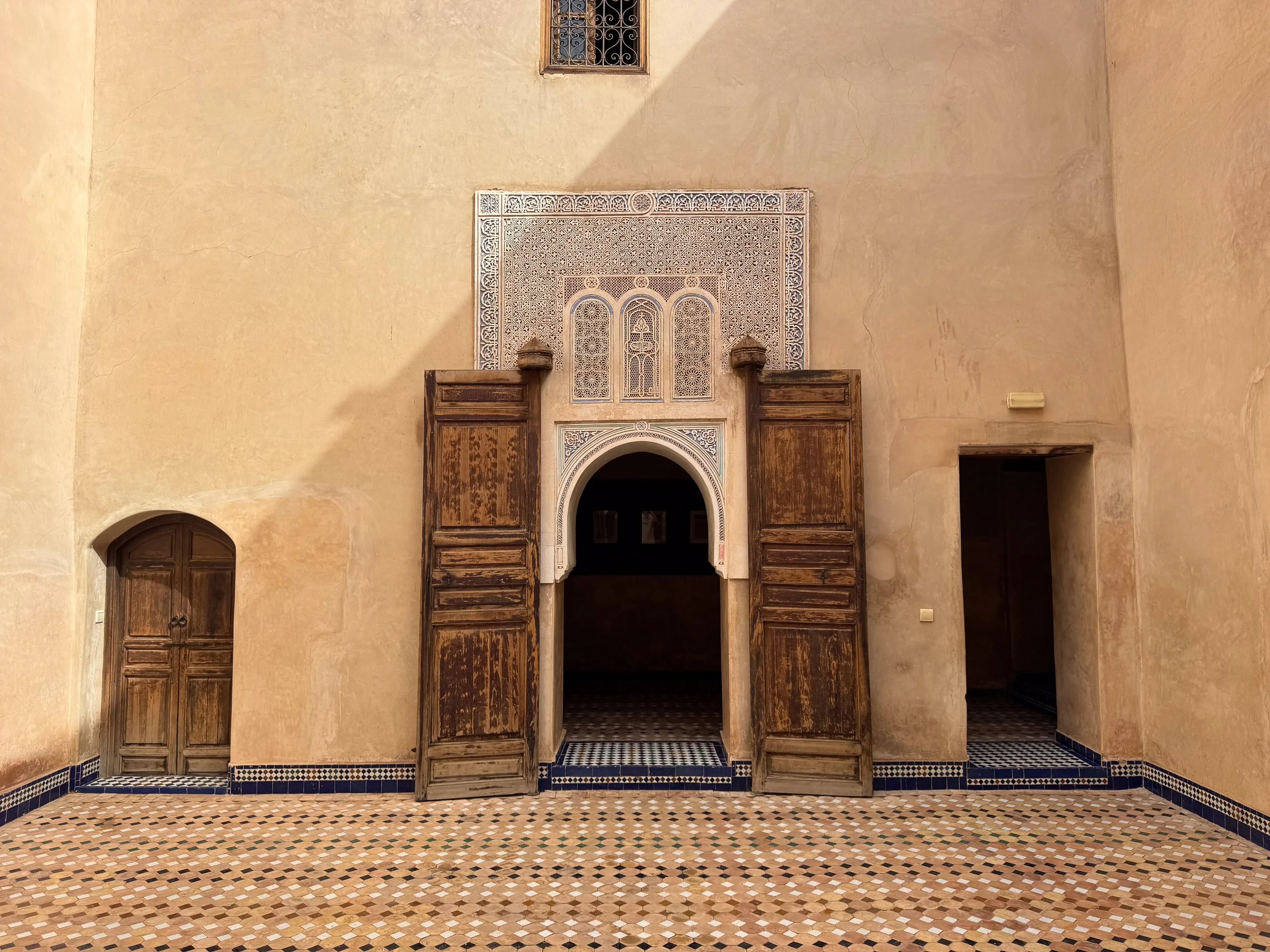
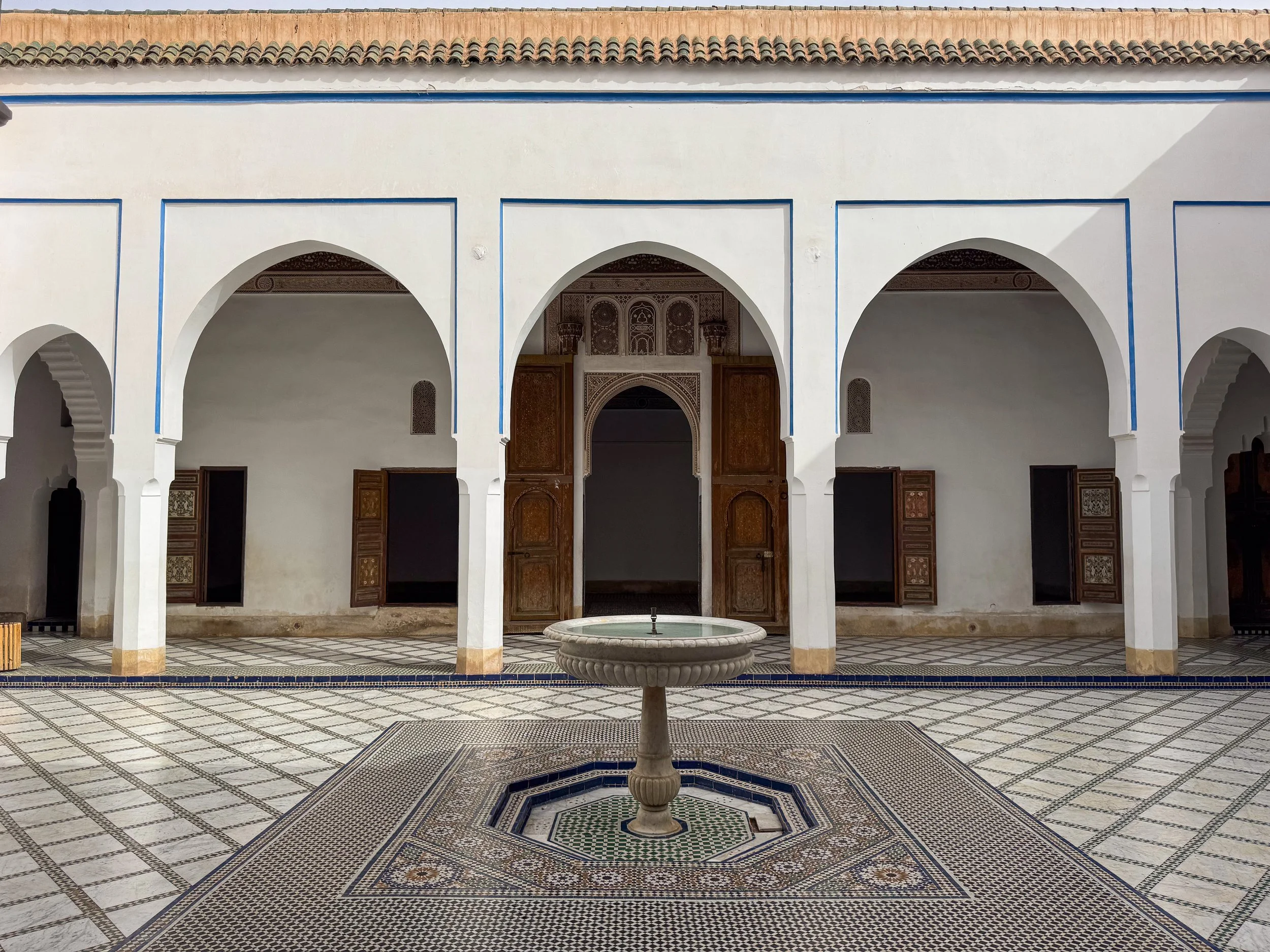
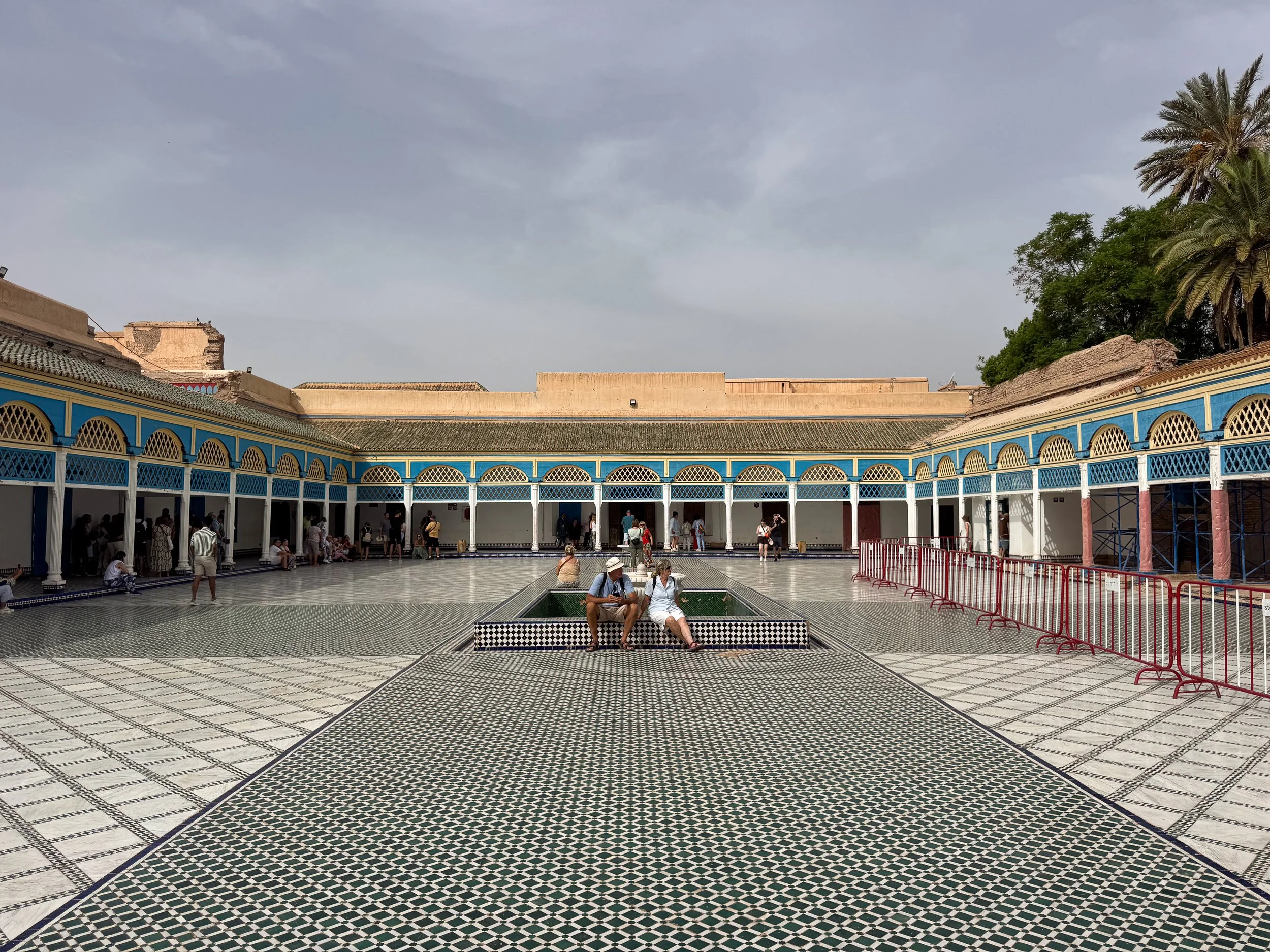
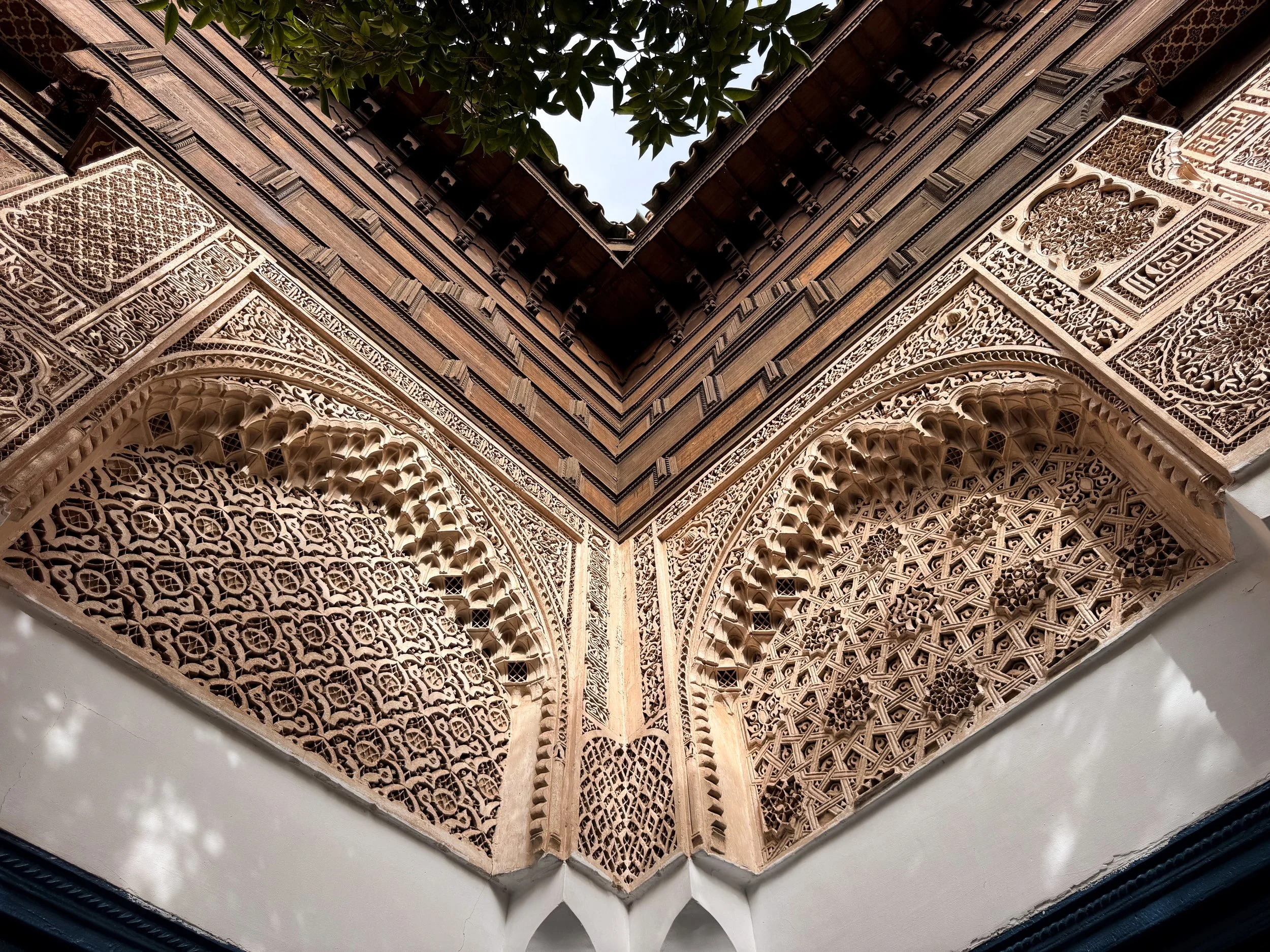
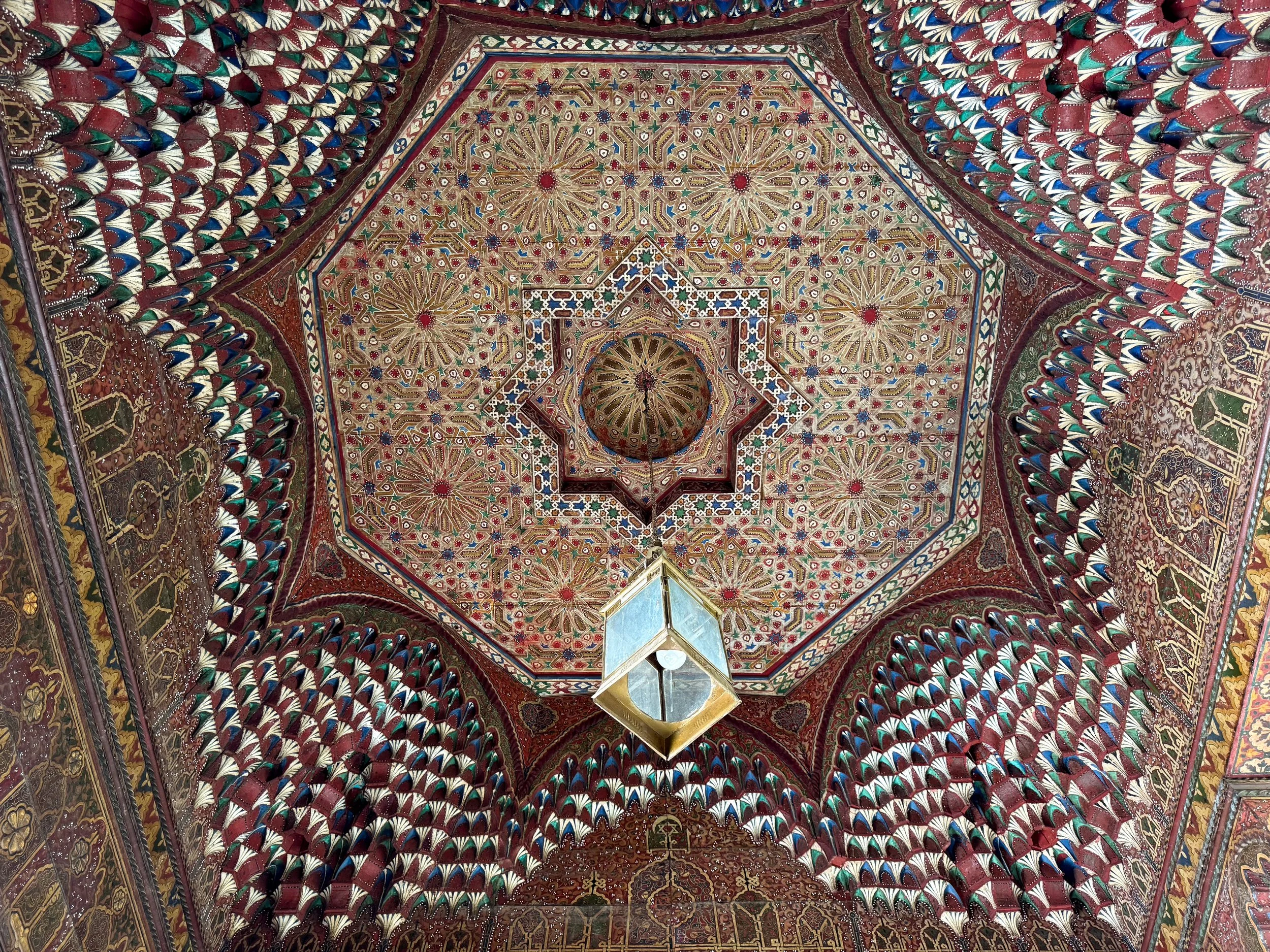
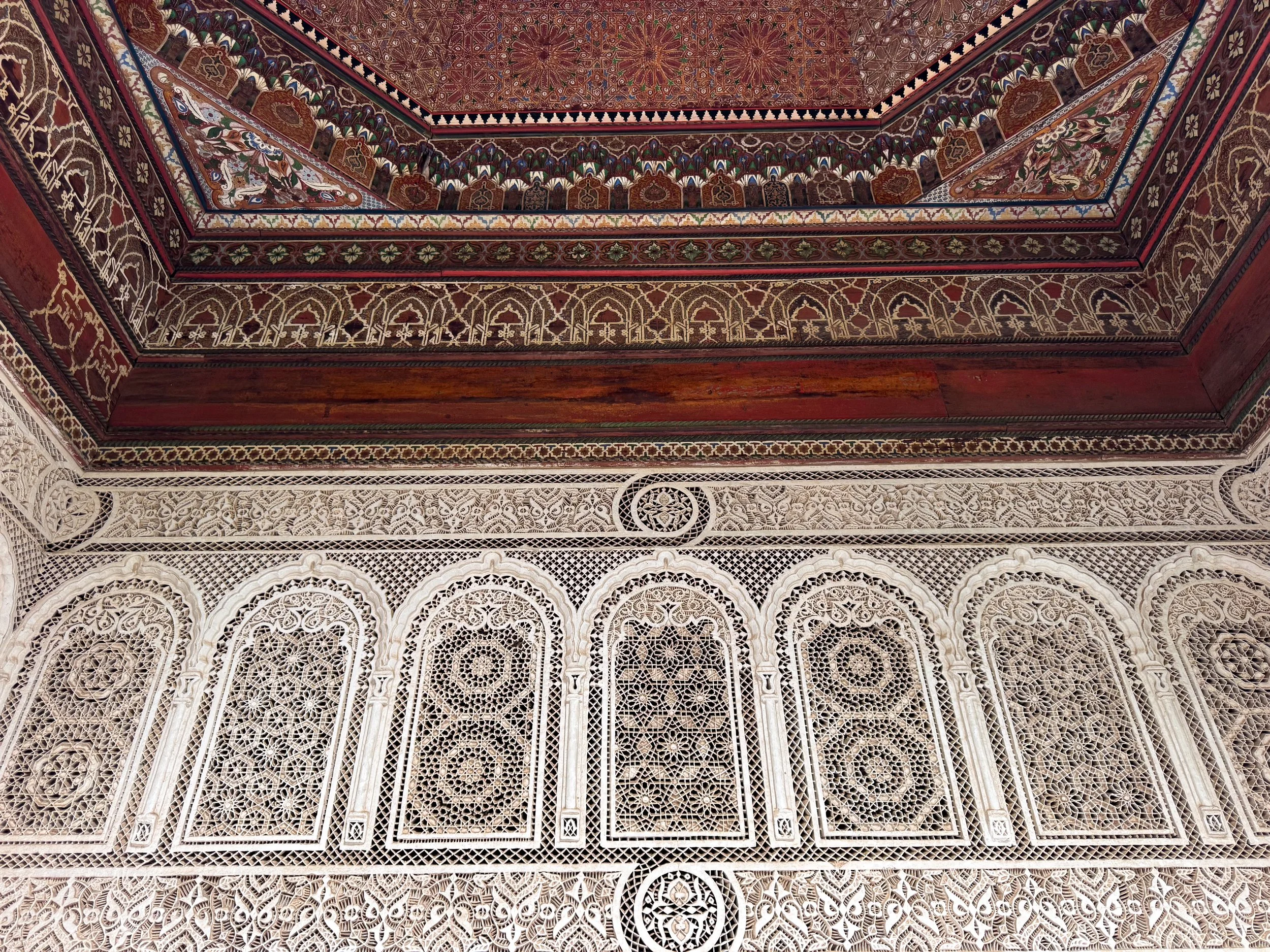
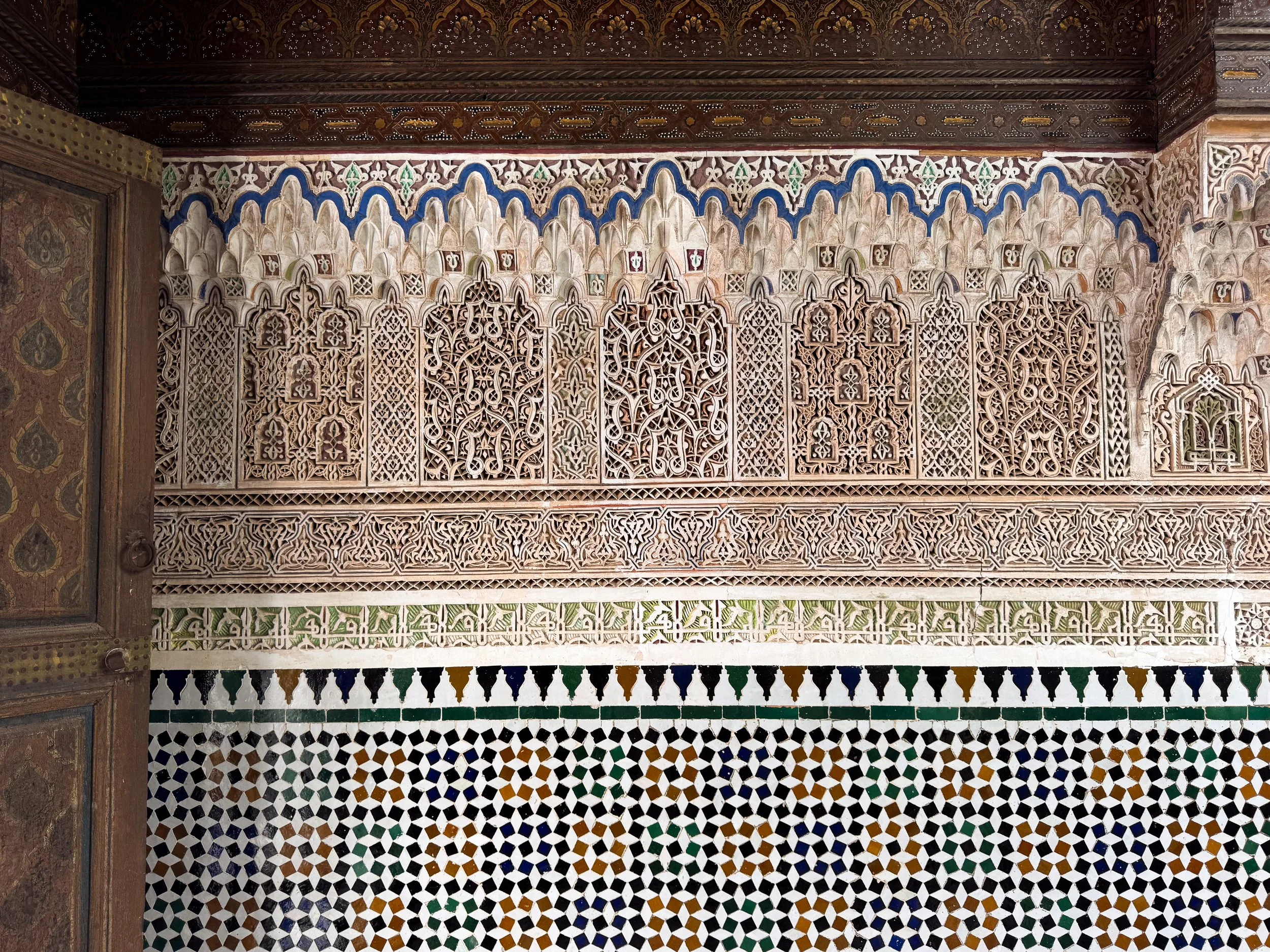
Bahia Palace. A 19th century palace renowned for its stylized rooms, expansive courtyards and elaborate craftsmanship. It’s regarded as one of the best examples of Moroccan architecture. Its interior halls and chambers are decorated with intricately carved woodwork and plaster designs. Brass chandeliers hang from meticulously painted ceilings. Finely tiled surfaces cover columns, fireplaces and floors. The palace was heavily damaged by the earthquake but remains open during restoration.
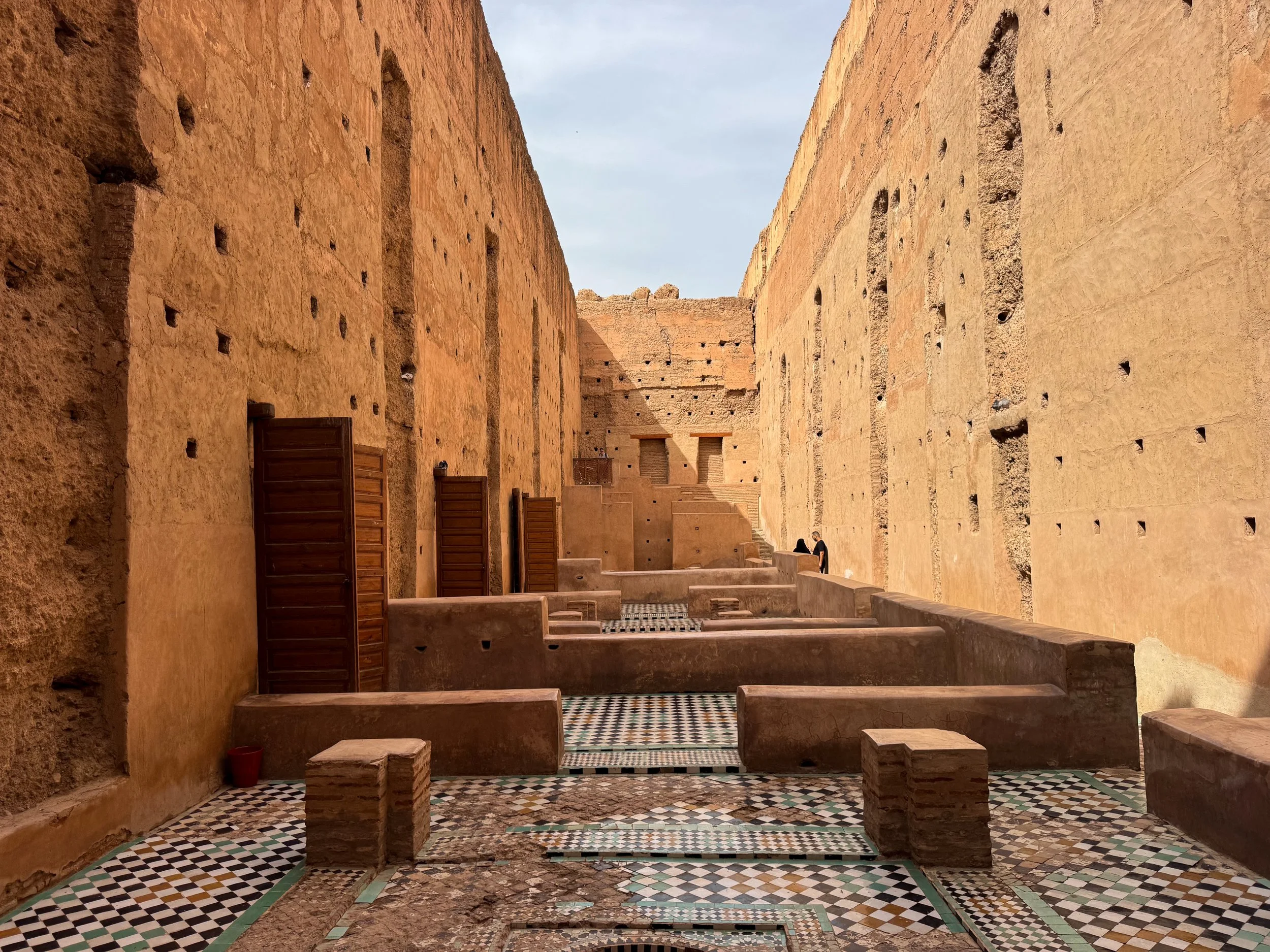
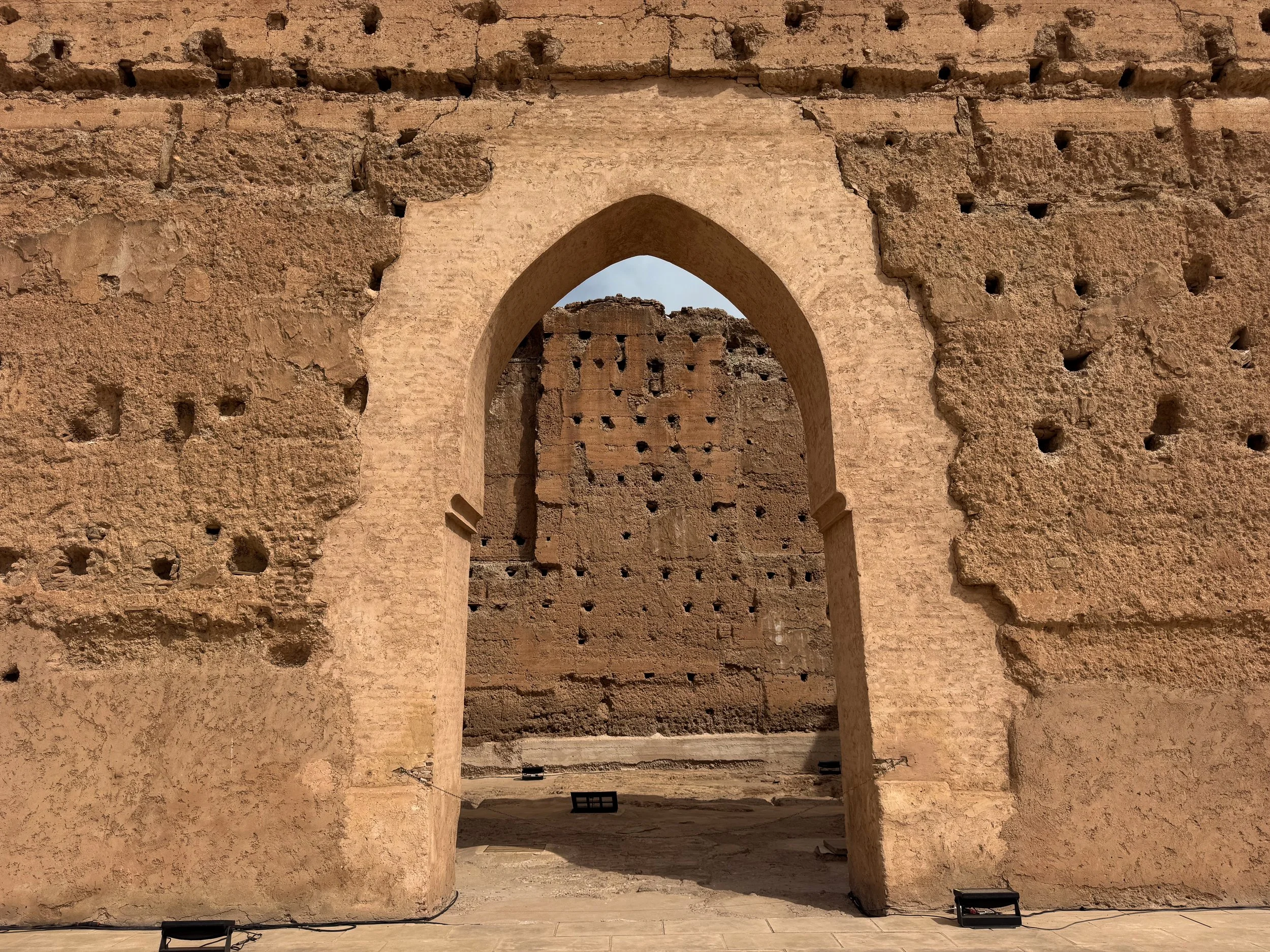
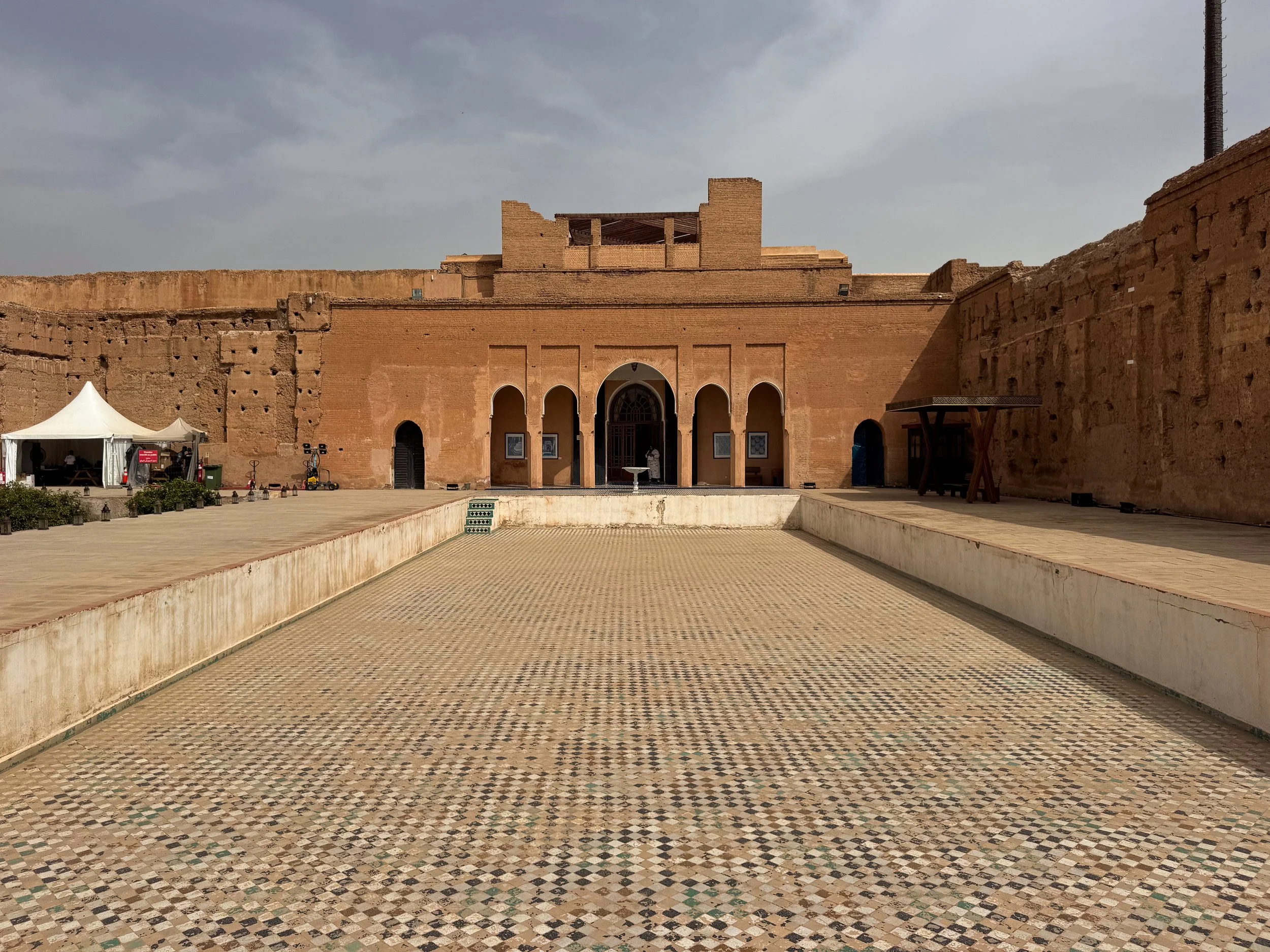
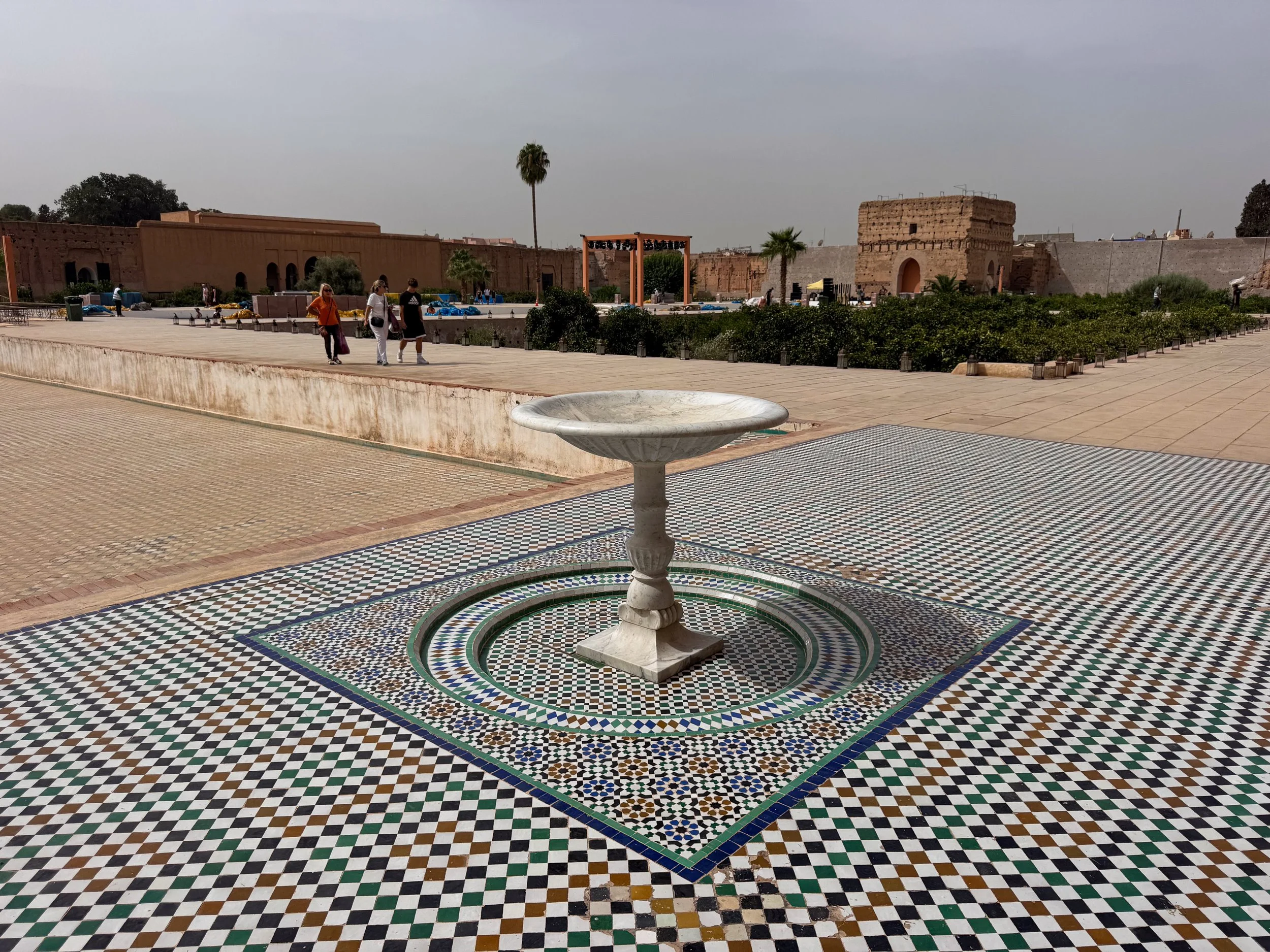
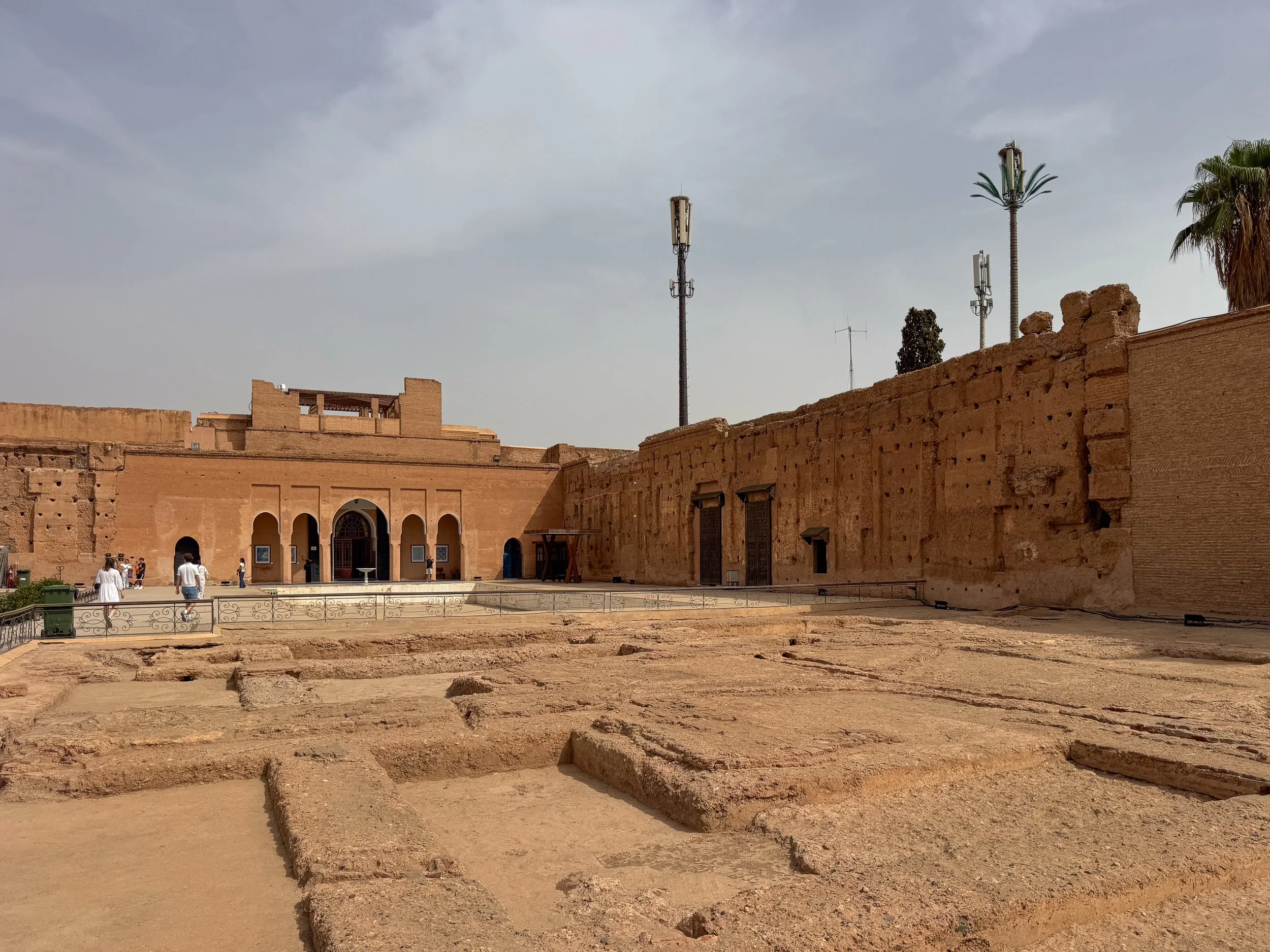
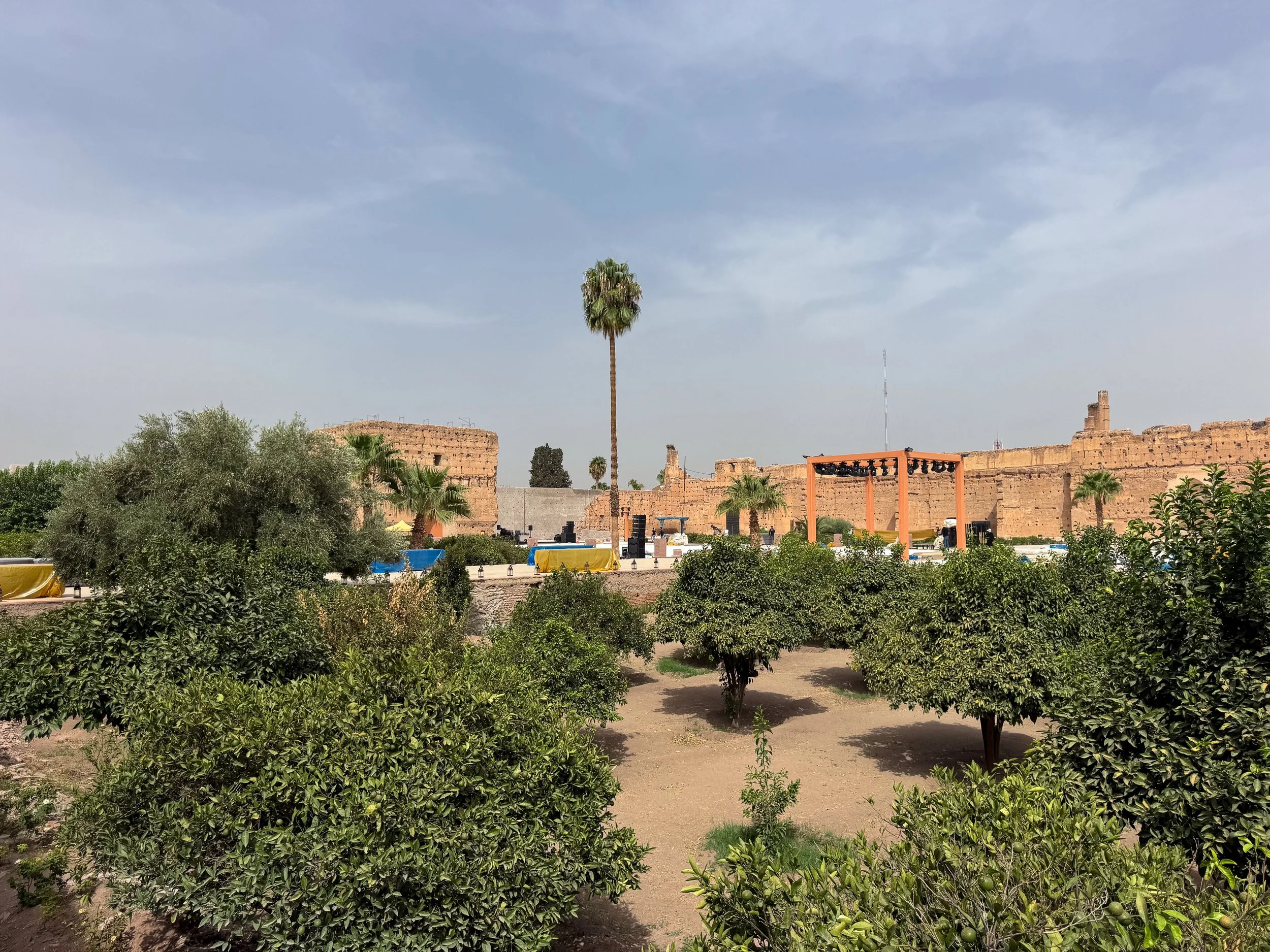
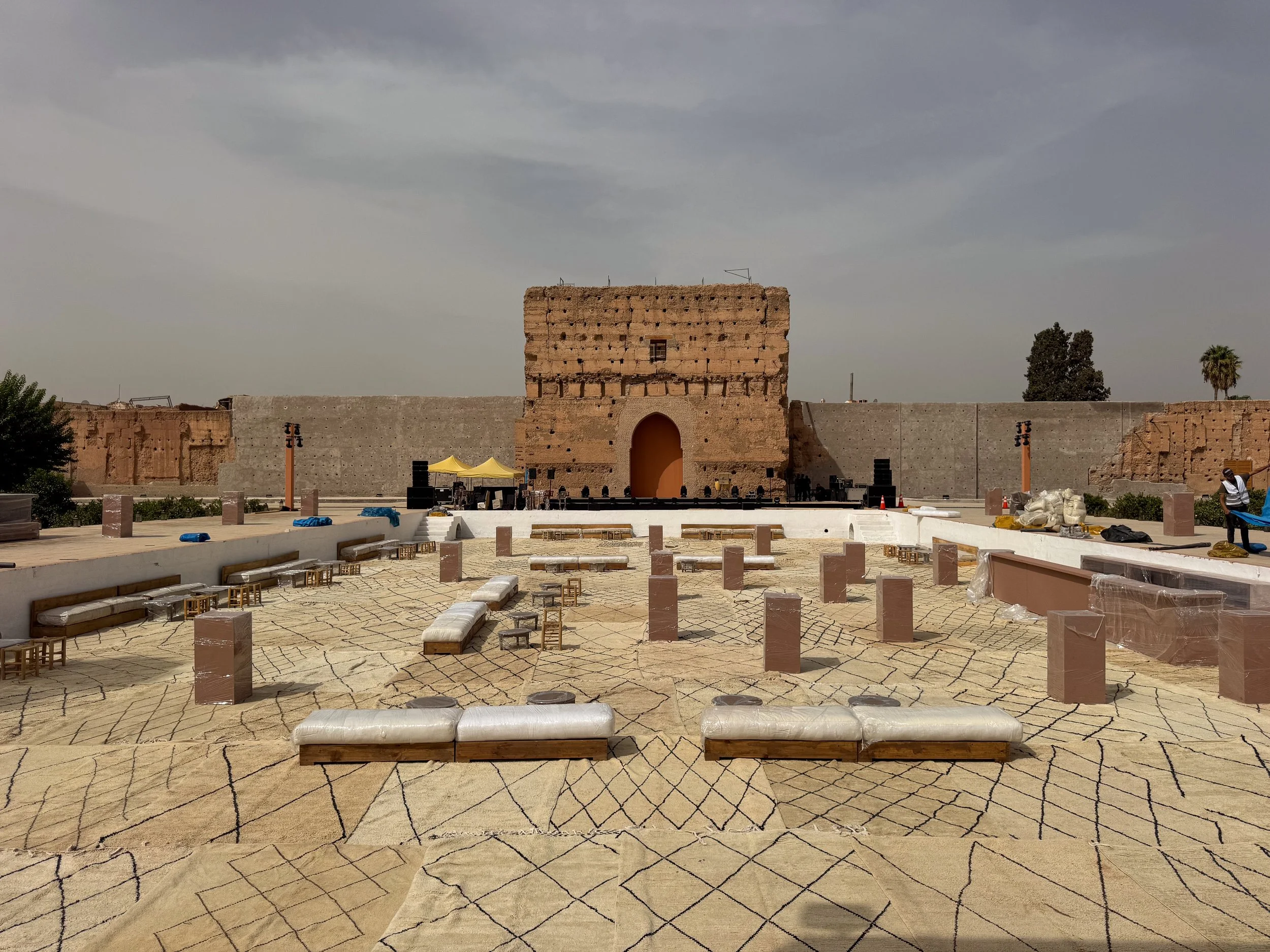
Badi Palace. A 16th century palace characterized by its crumbling ruins, stone walls and vast courtyard. Underground tunnels lead to exposed ruins of guest quarters. Pitted sandstone walls with Arabesque arches surround the courtyard. Emptied pools reveal mosaic tiled floors while citrus trees grow from gardens in its four quadrants. Galleries display photographs of old Marrakech and artifacts discovered during the palace’s excavation, including tools, pottery, coins and scrolls.
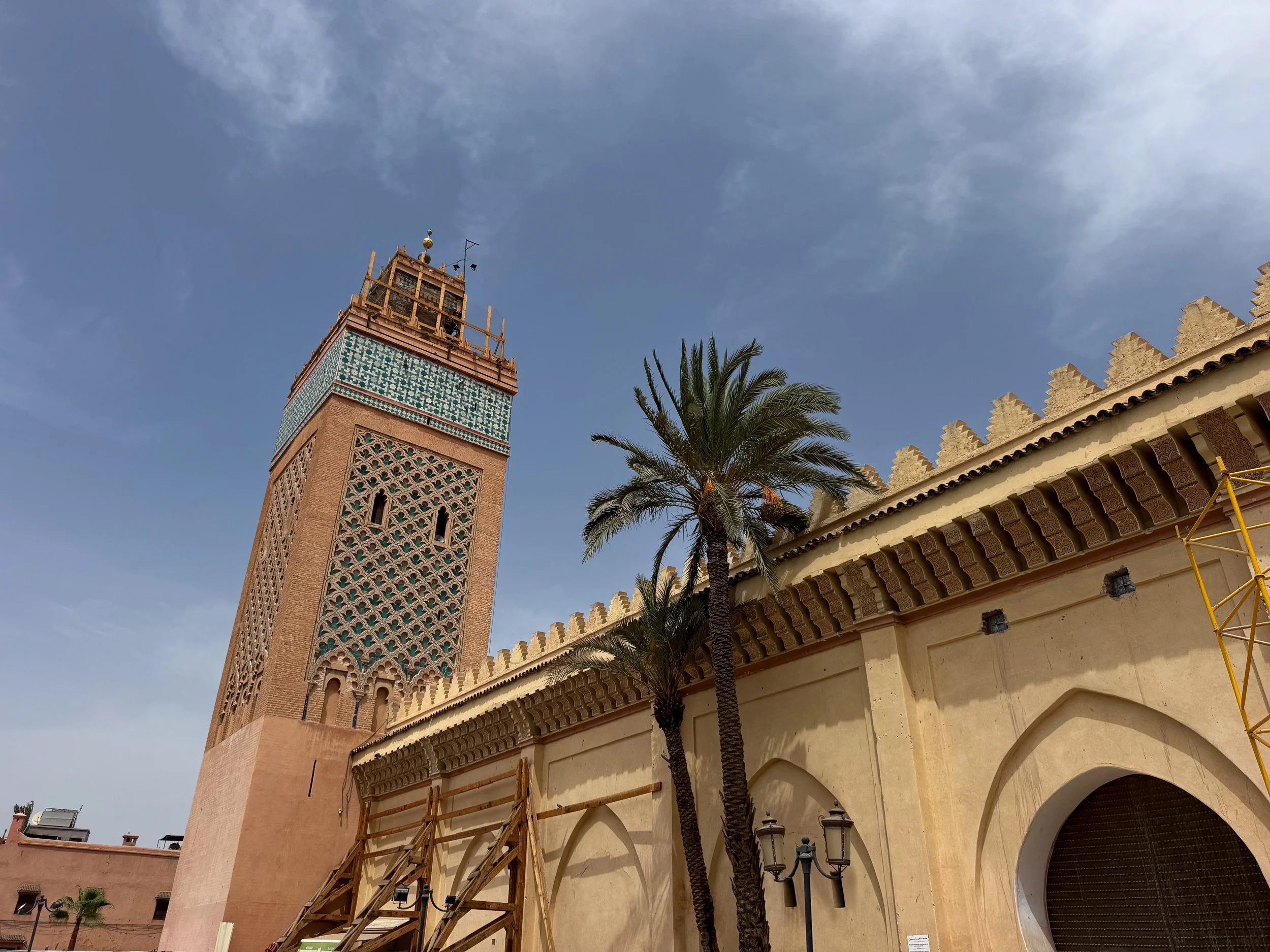
Saadian Tombs. A mausoleum containing the tombs of a former sultan and many of his family members. The tombs are treasured for their Moorish design, white marble chambers, Zellij tile work and delicate plaster details. They were heavily damaged during the 2023 earthquake and closed for viewing. Their Moorish exterior and the adjacent mosque are still undergoing restoration.
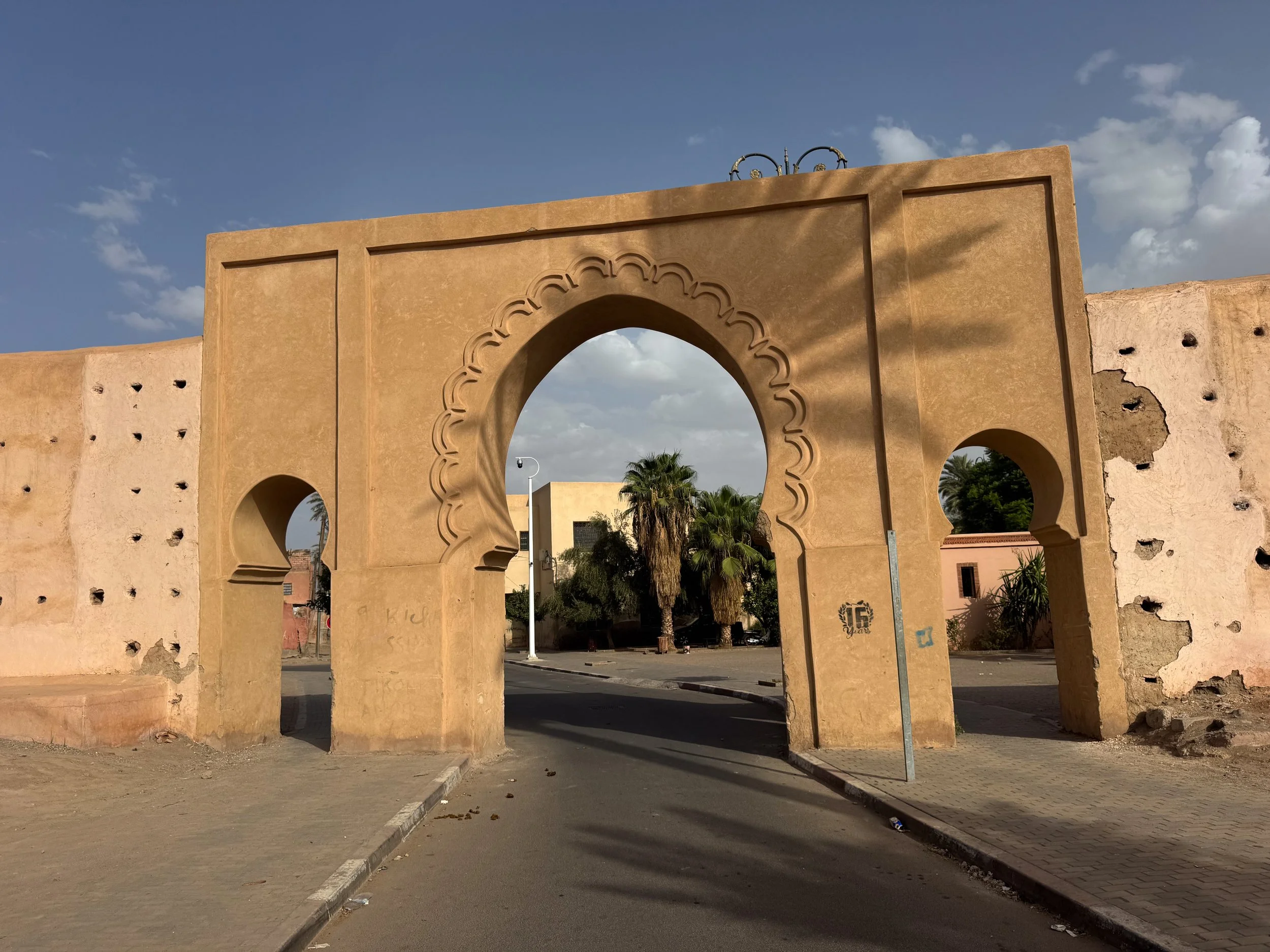
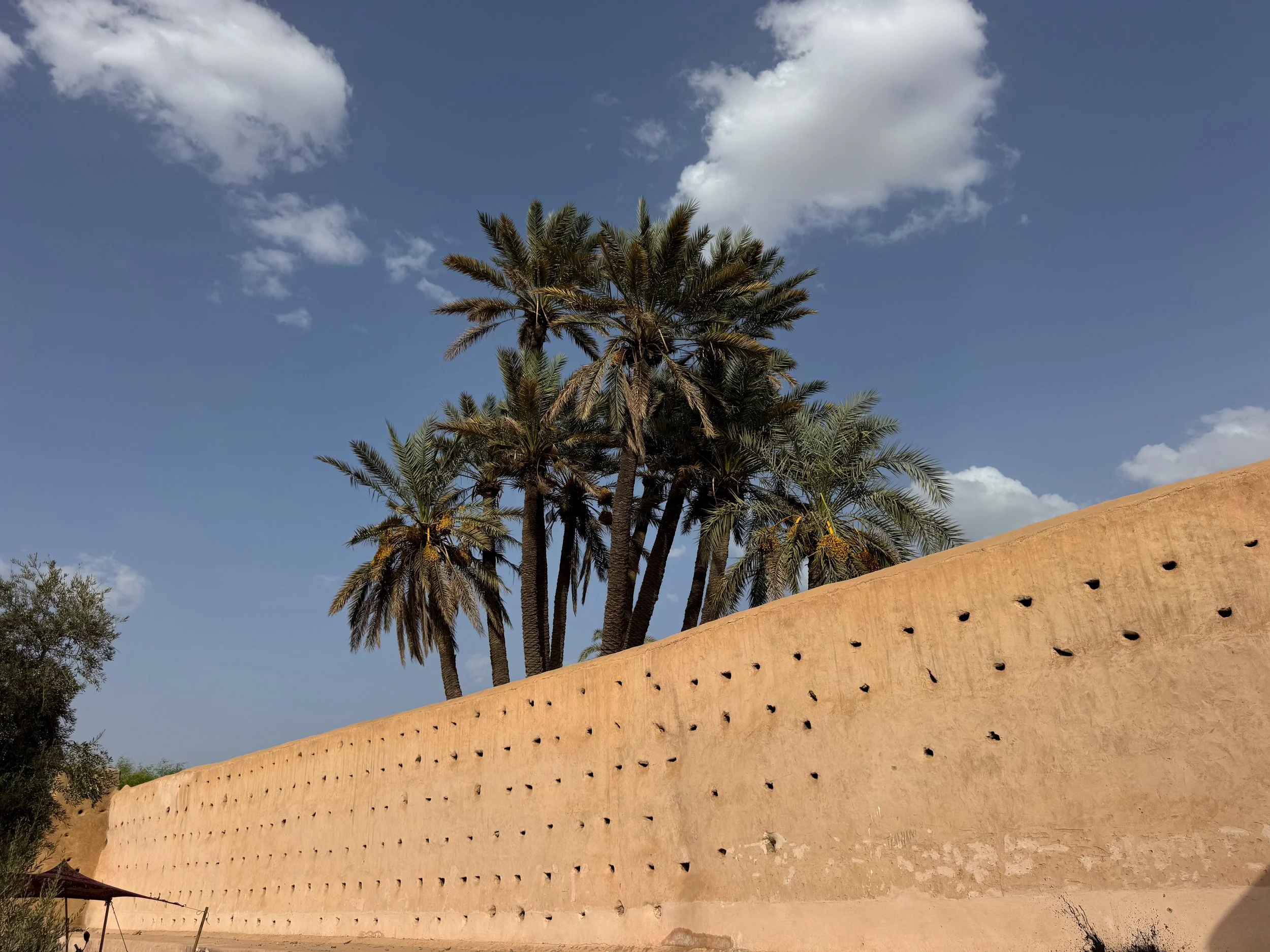
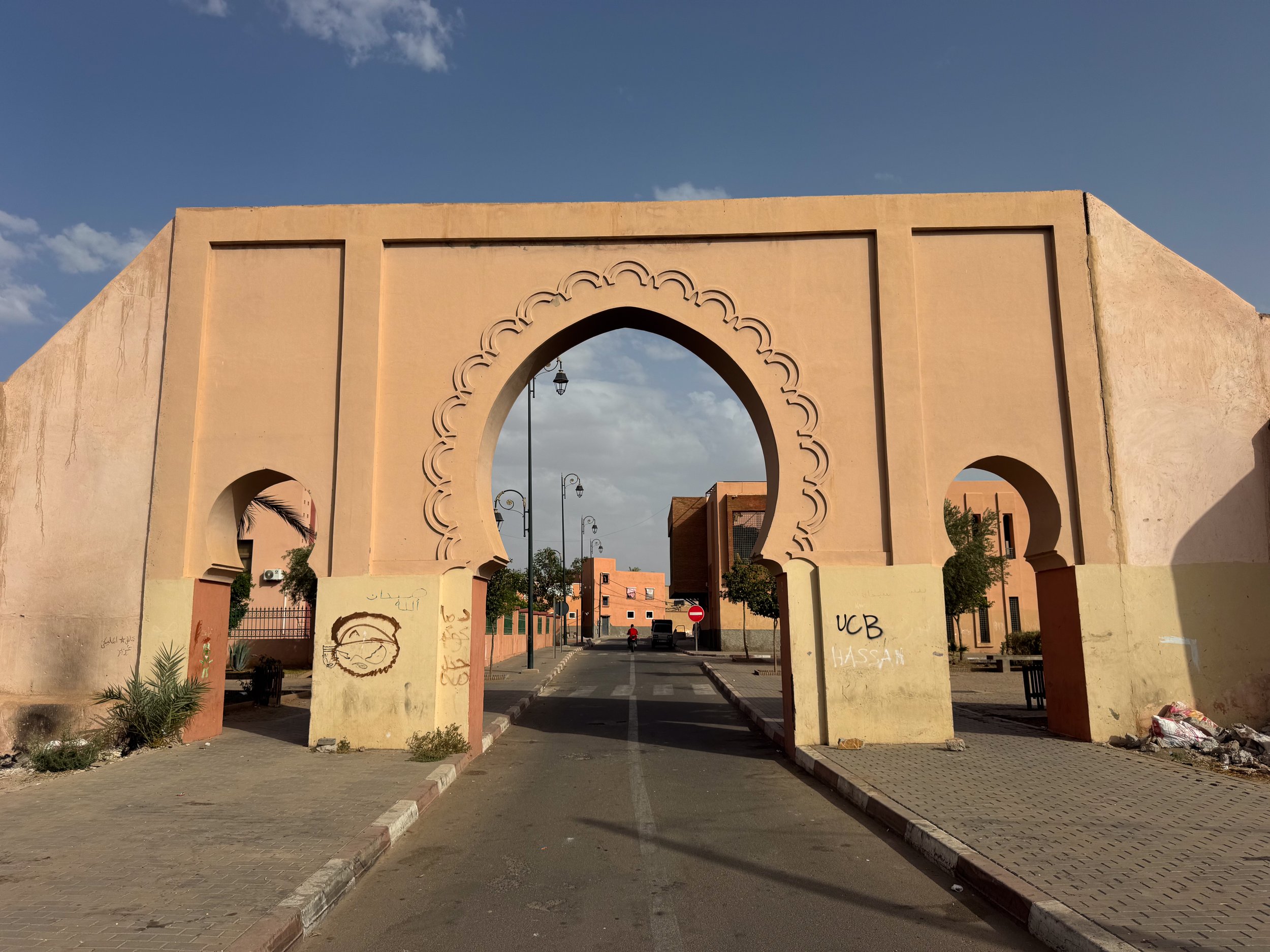
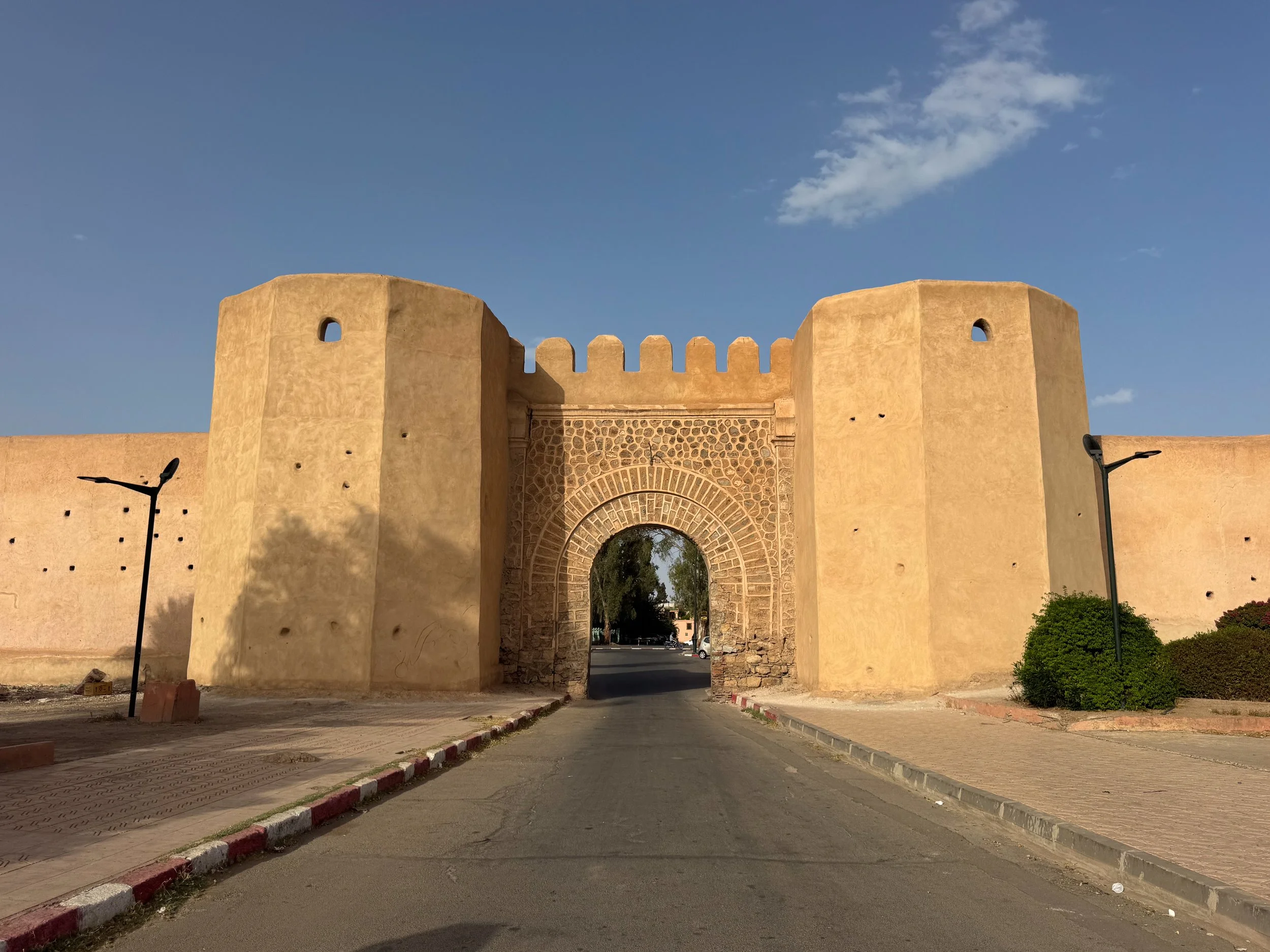
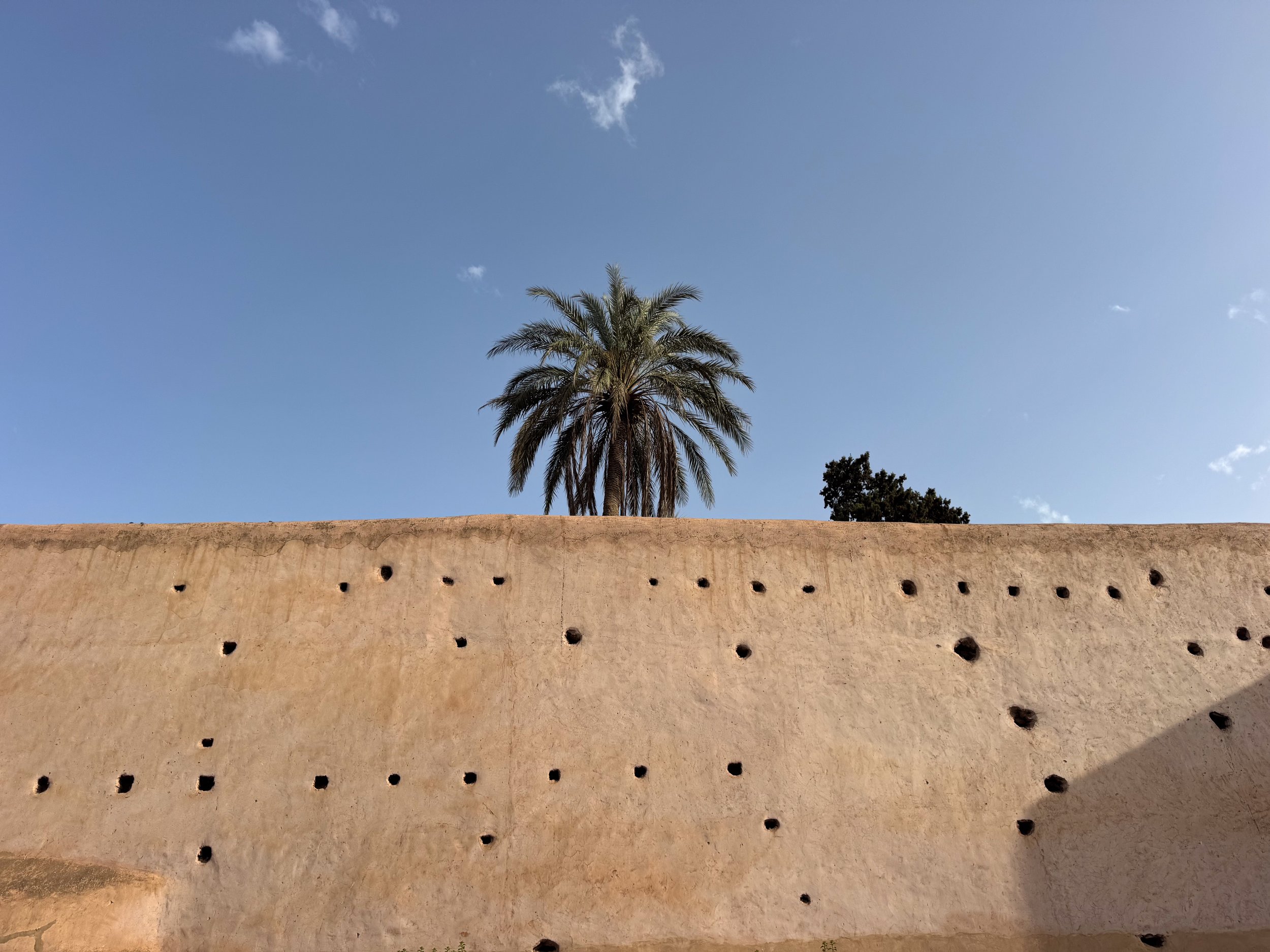
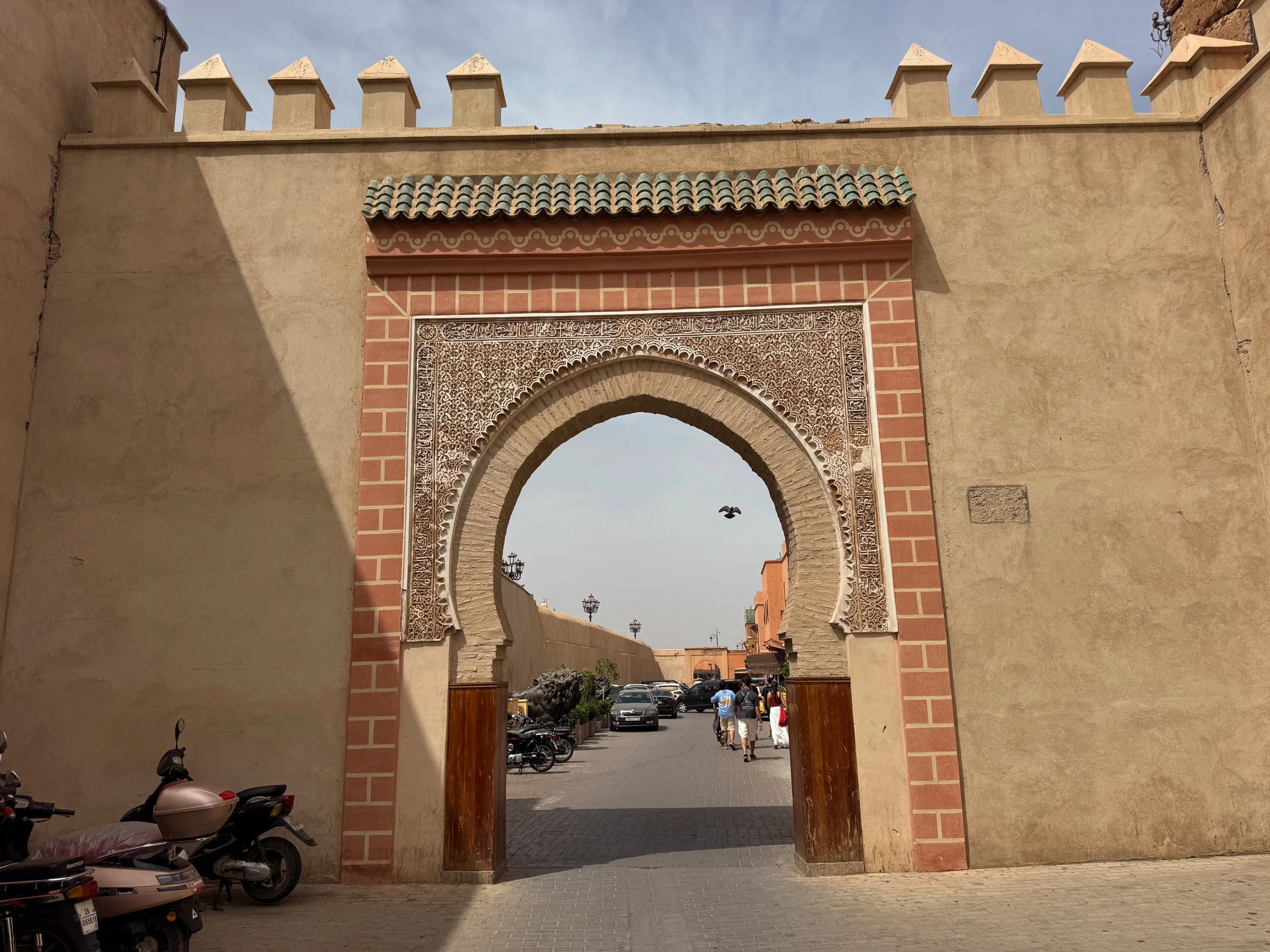
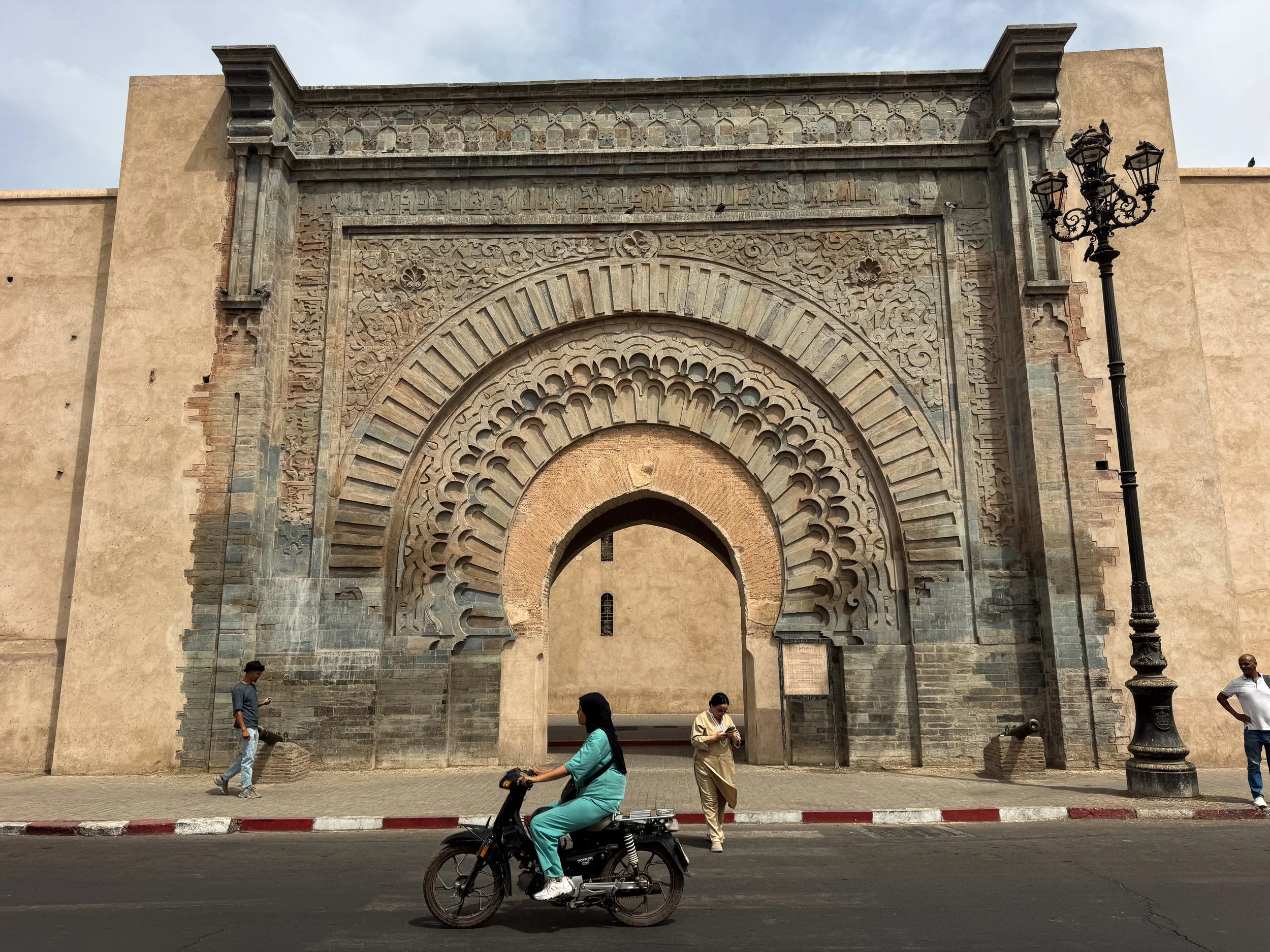
Walls of Marrakech. The medina is surrounded by a series of protective walls and arched gates that allow movement in and out of the old city. It spans nearly 22km with sections reaching over 10 meters high.
Bab el Raha. A pristine section of wall is marked by one of the medina’s most imposing entrances, where twin octagonal towers flank an arched stone gate.
Bab Agnaou. A 12th century archway featuring an ornately carved grey stone facade. It was used as the main entrance to the Badi Palace within the medina.
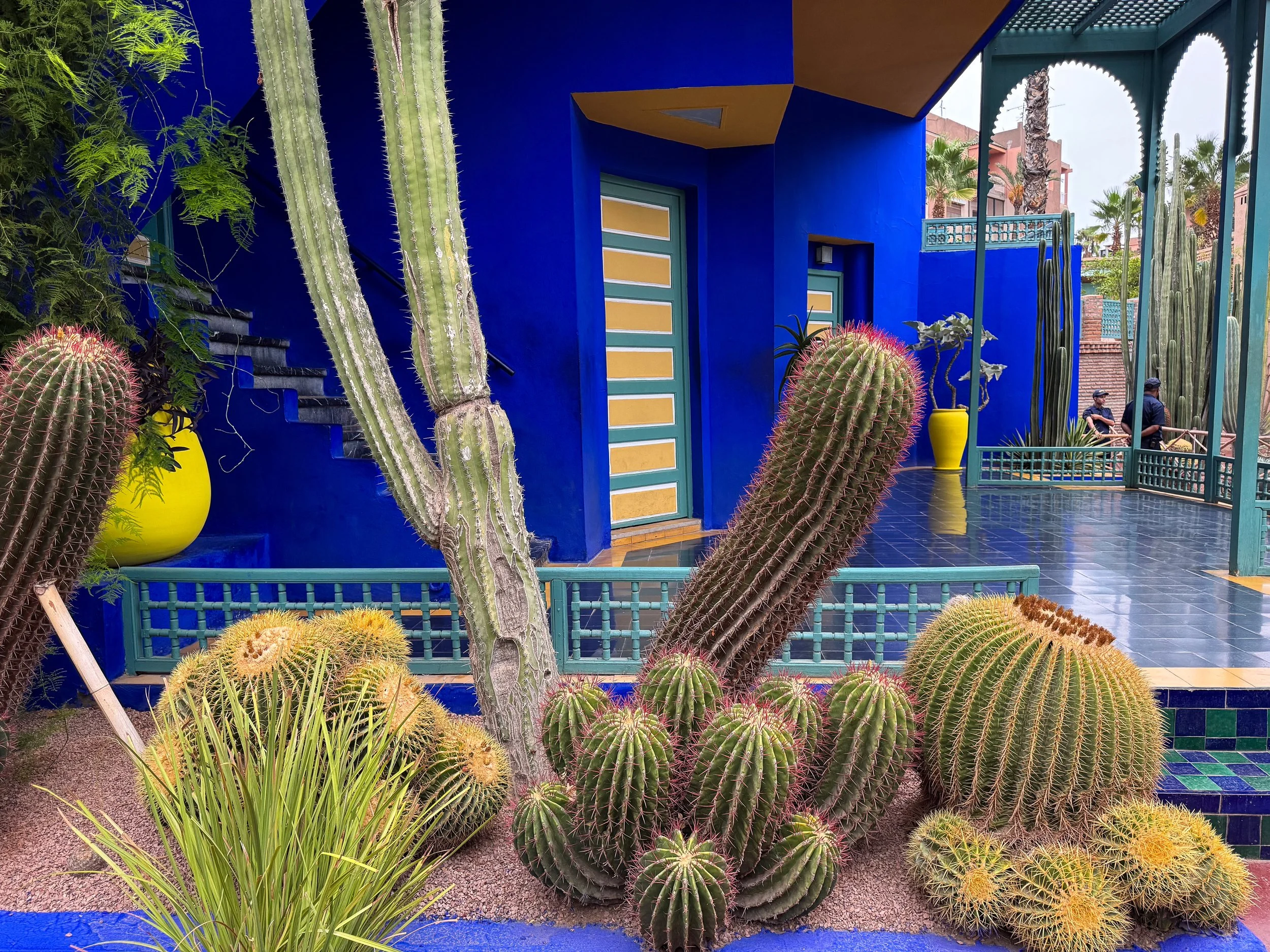
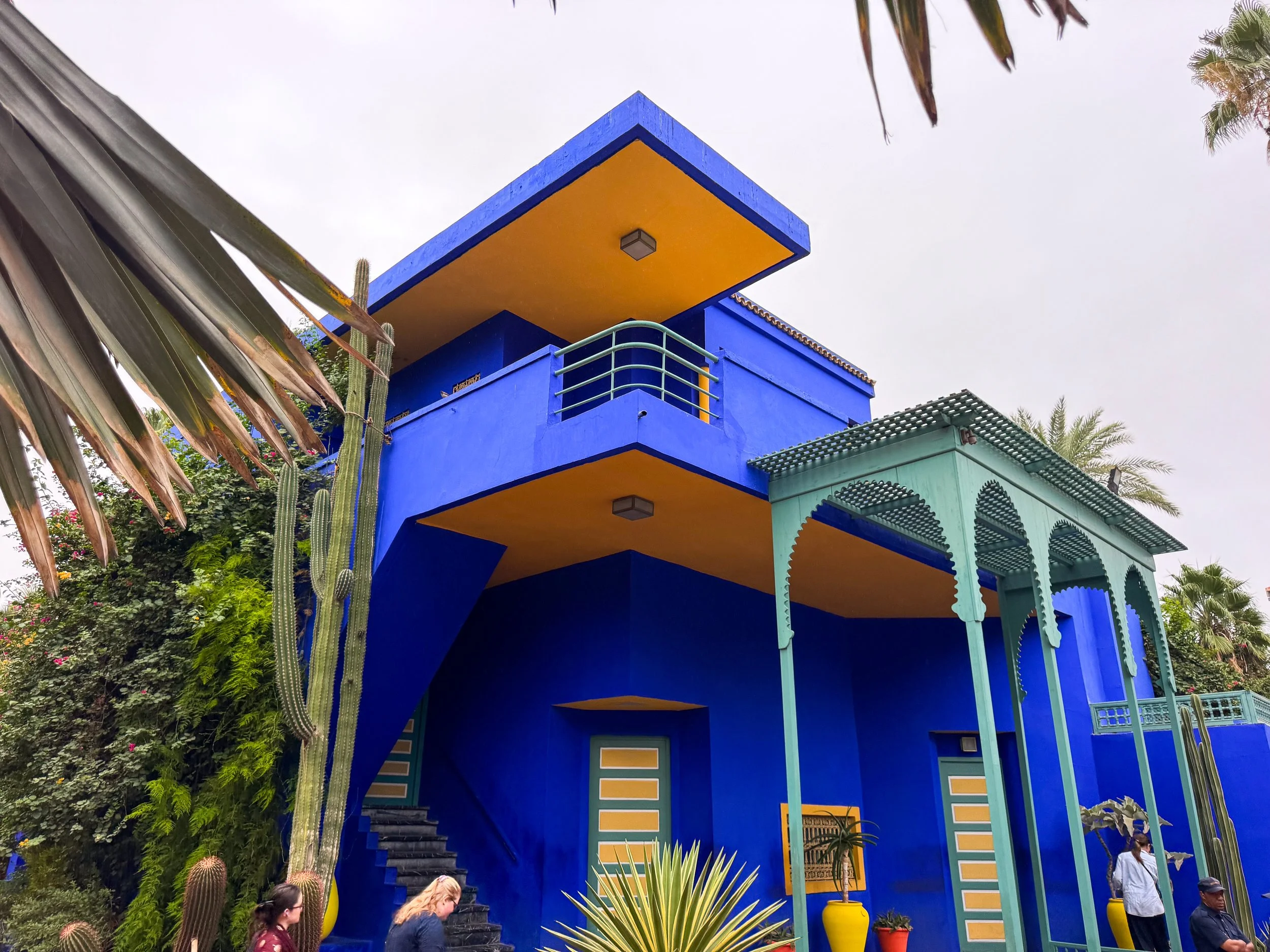
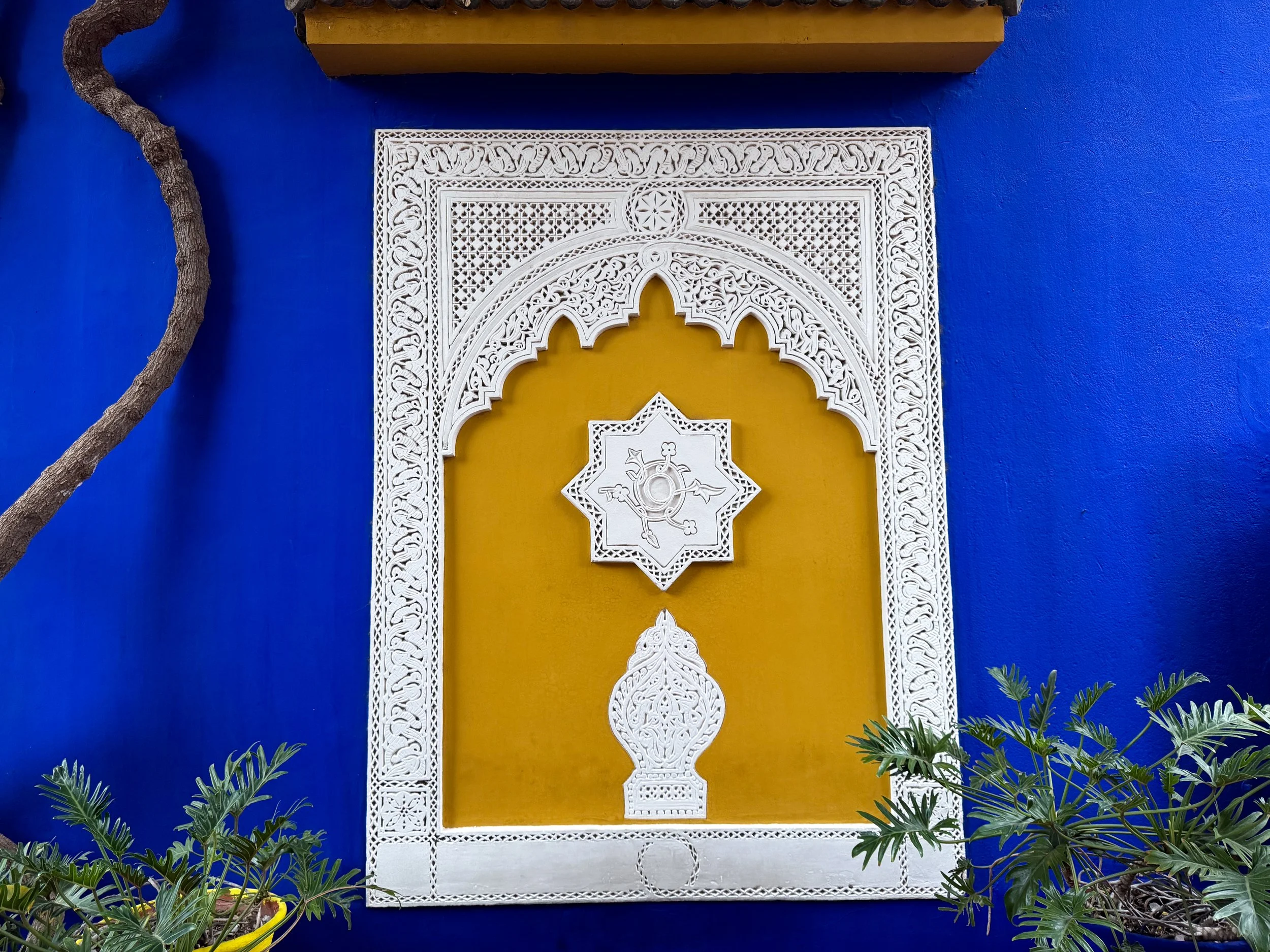
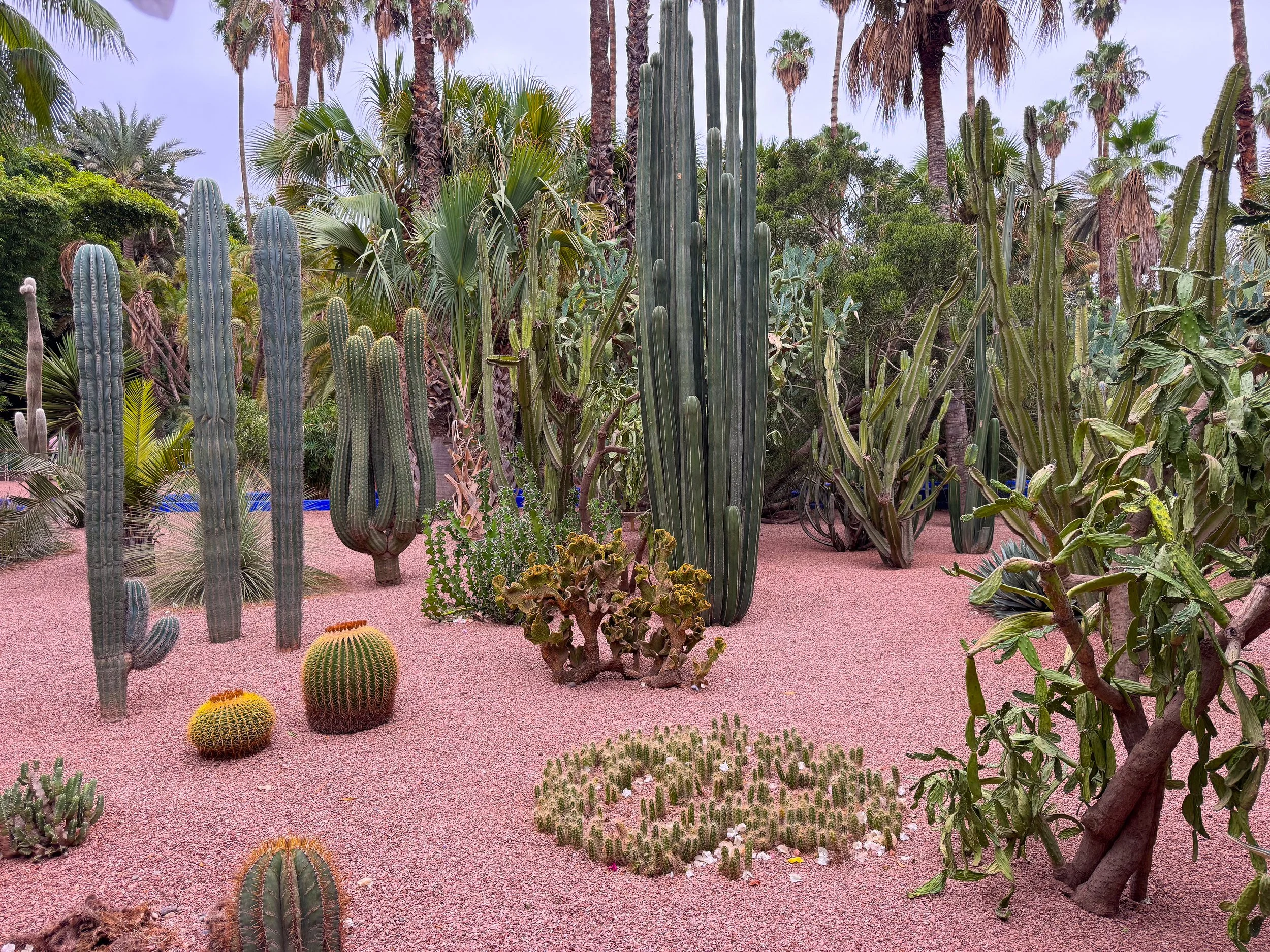
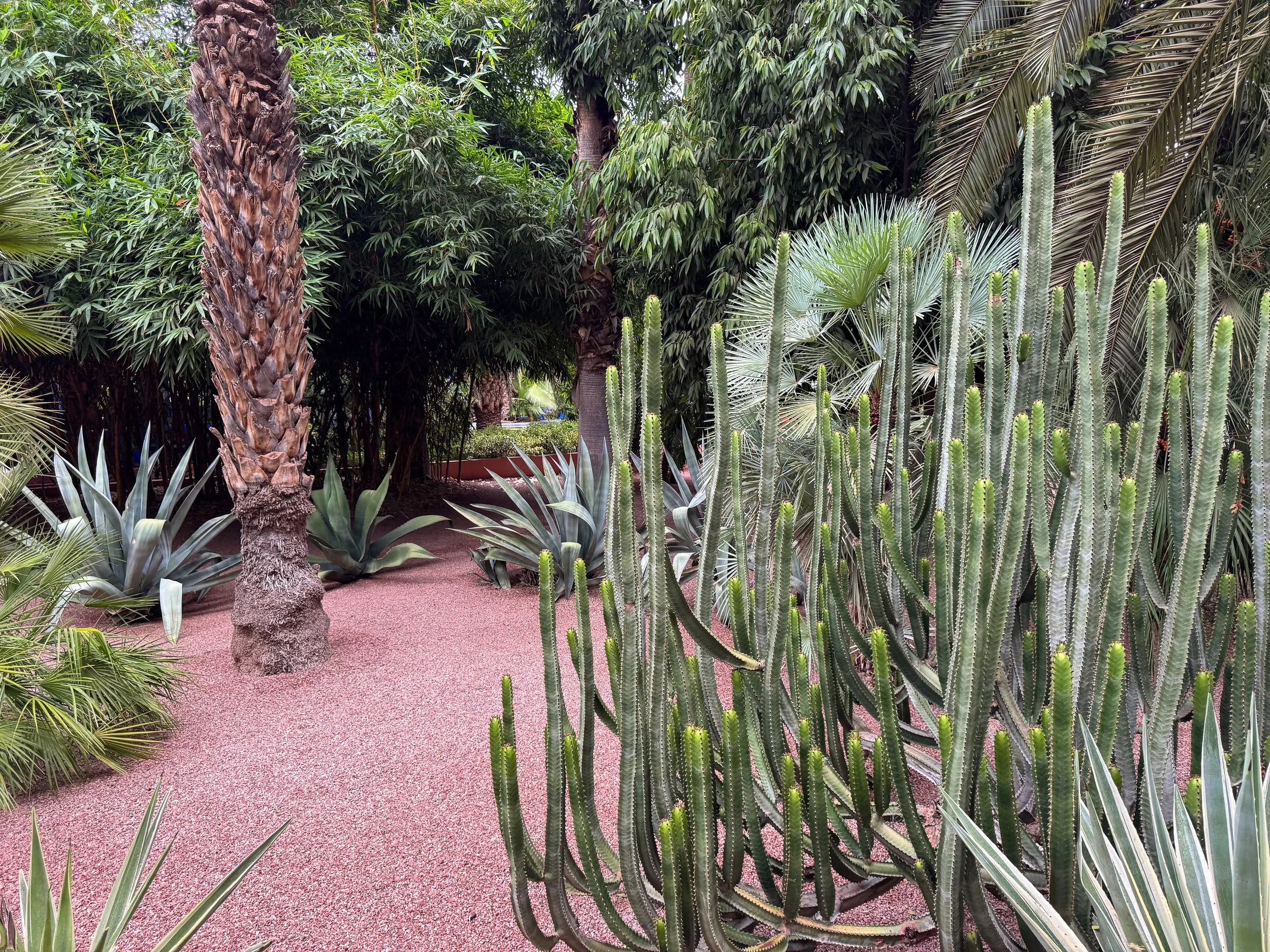
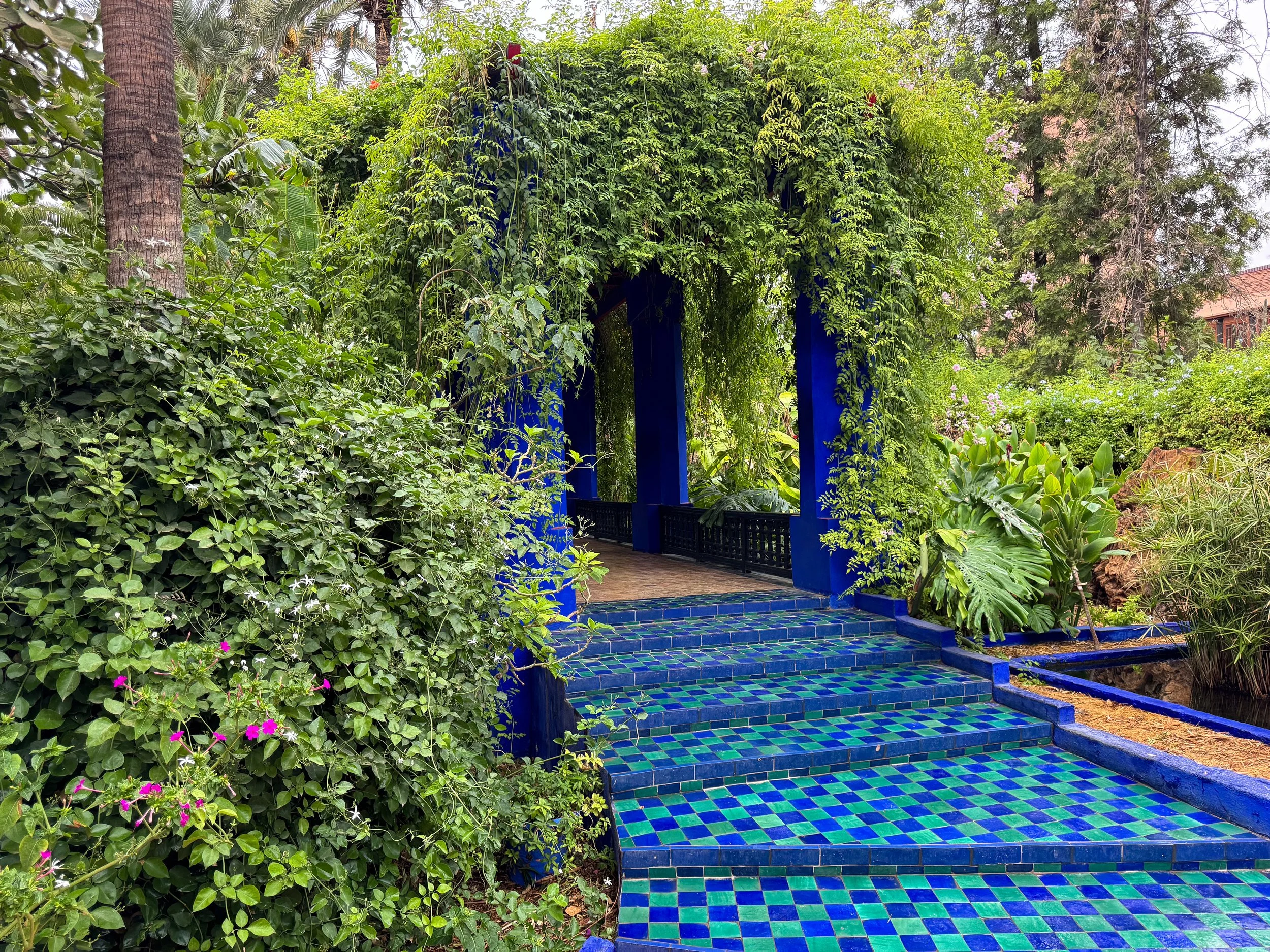
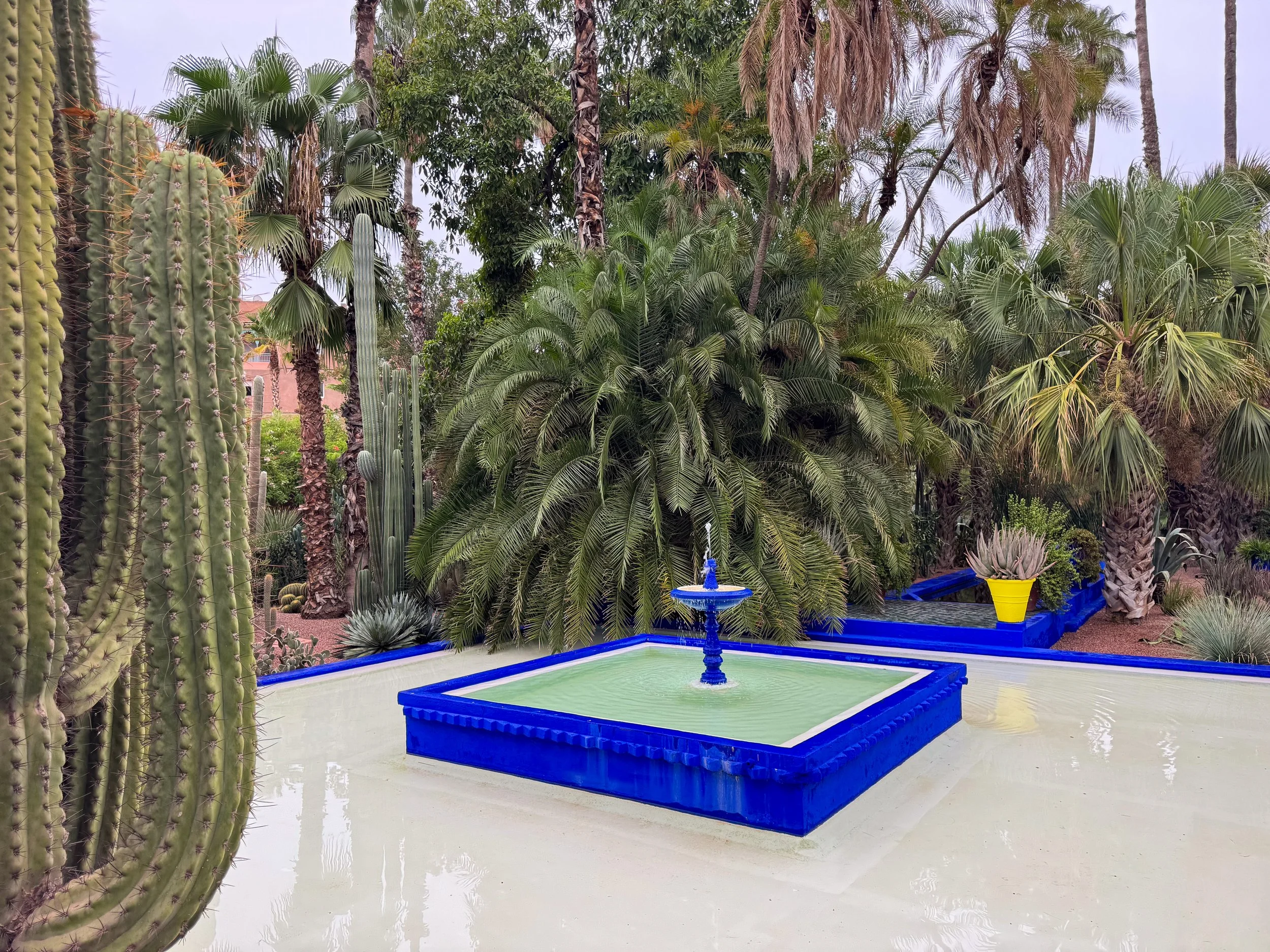
Le Jardin Majorelle. A famed botanical garden featuring a collection of cacti and dry palms from around the world. Red painted pathways lead through the garden past small reflecting pools and lily ponds to a historic blue villa. The richly painted house is accented with Moroccan designs and houses a Berber craft museum. Its galleries are curated with artifacts from tribes across the Atlas Mountains including jewelry, clothing, pottery, tools and weapons. No photos are allowed inside.
Pro Tip. Reserve 9am tickets a couple weeks in advance to avoid the crowds.
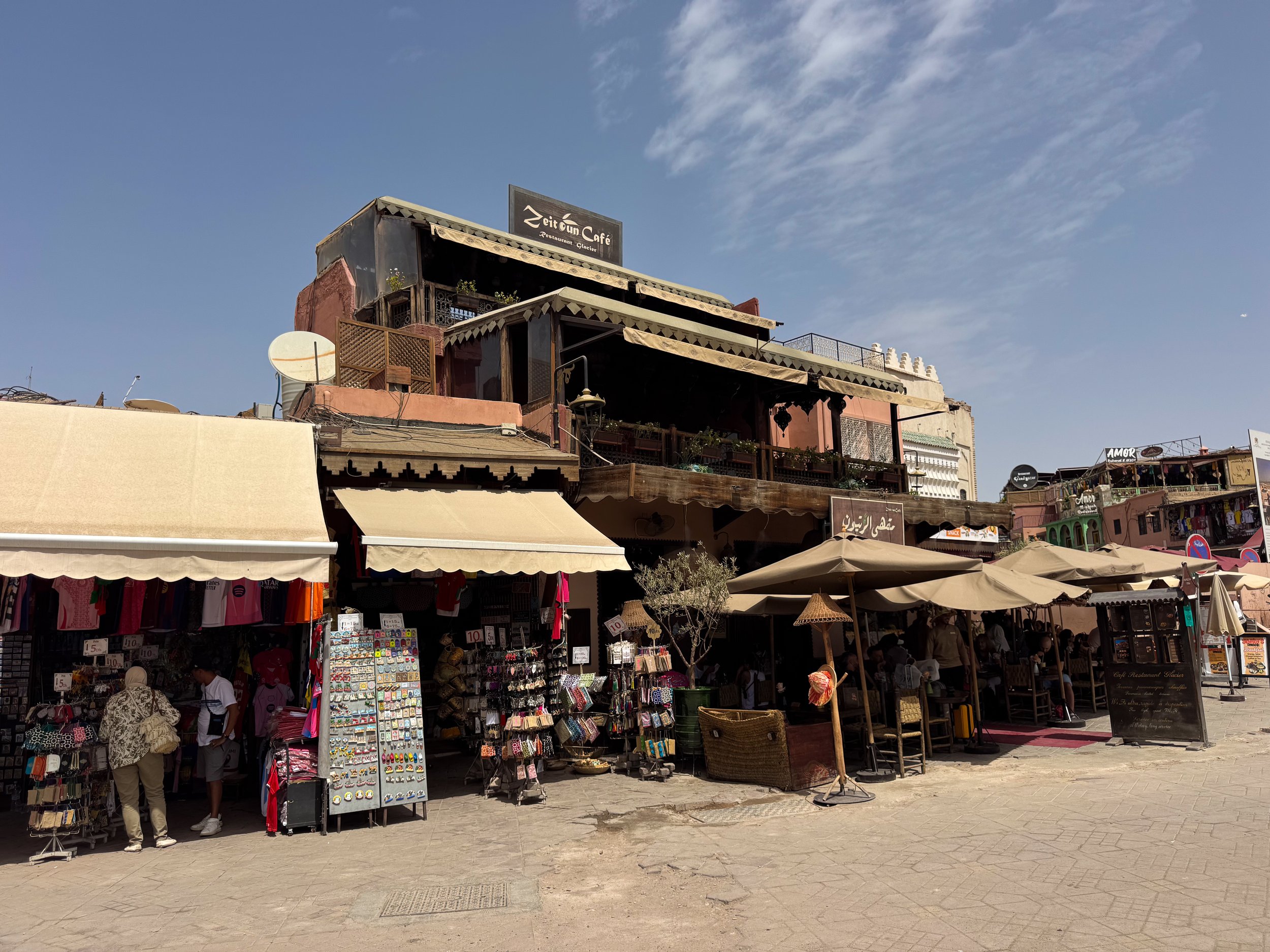
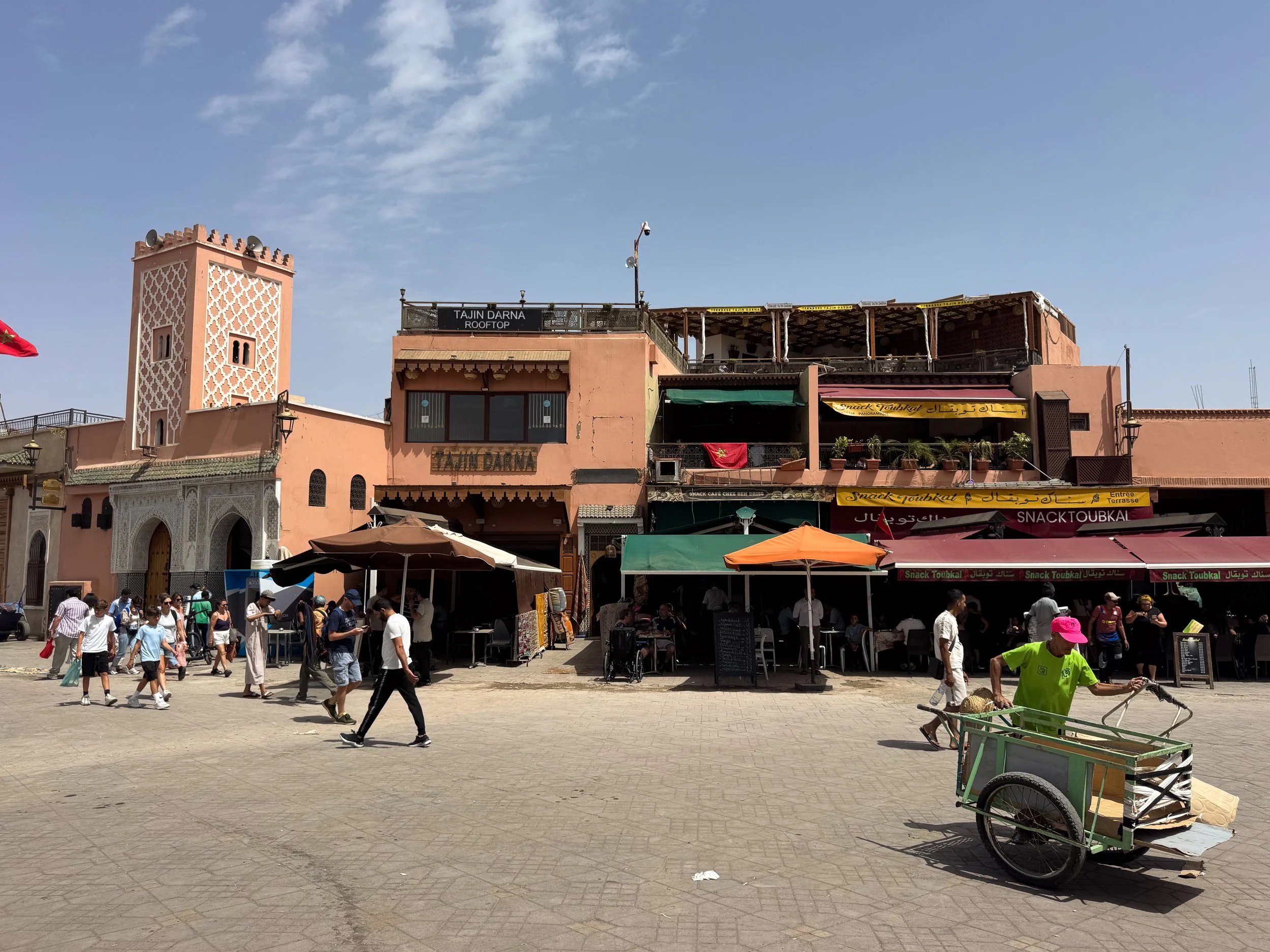
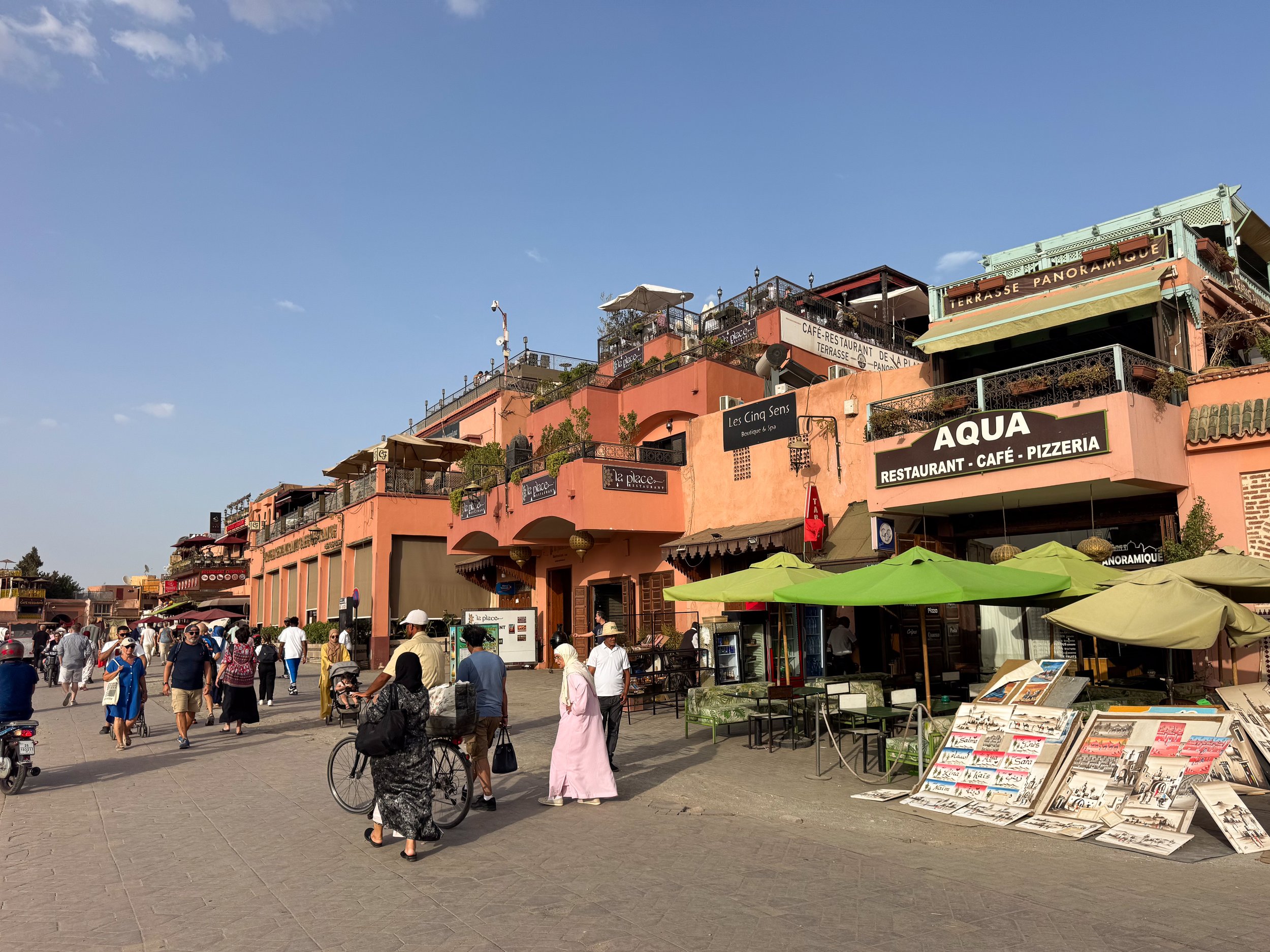
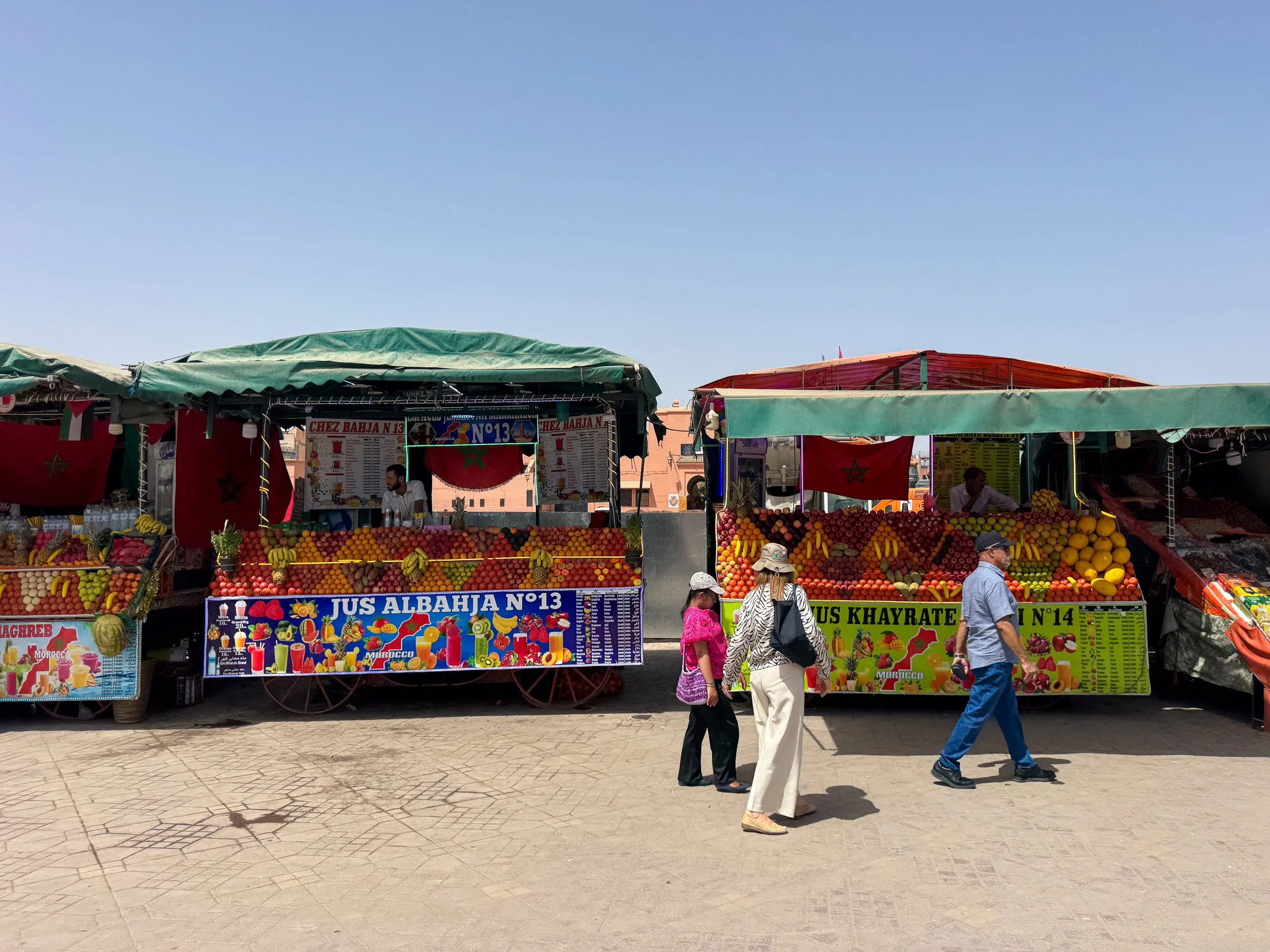
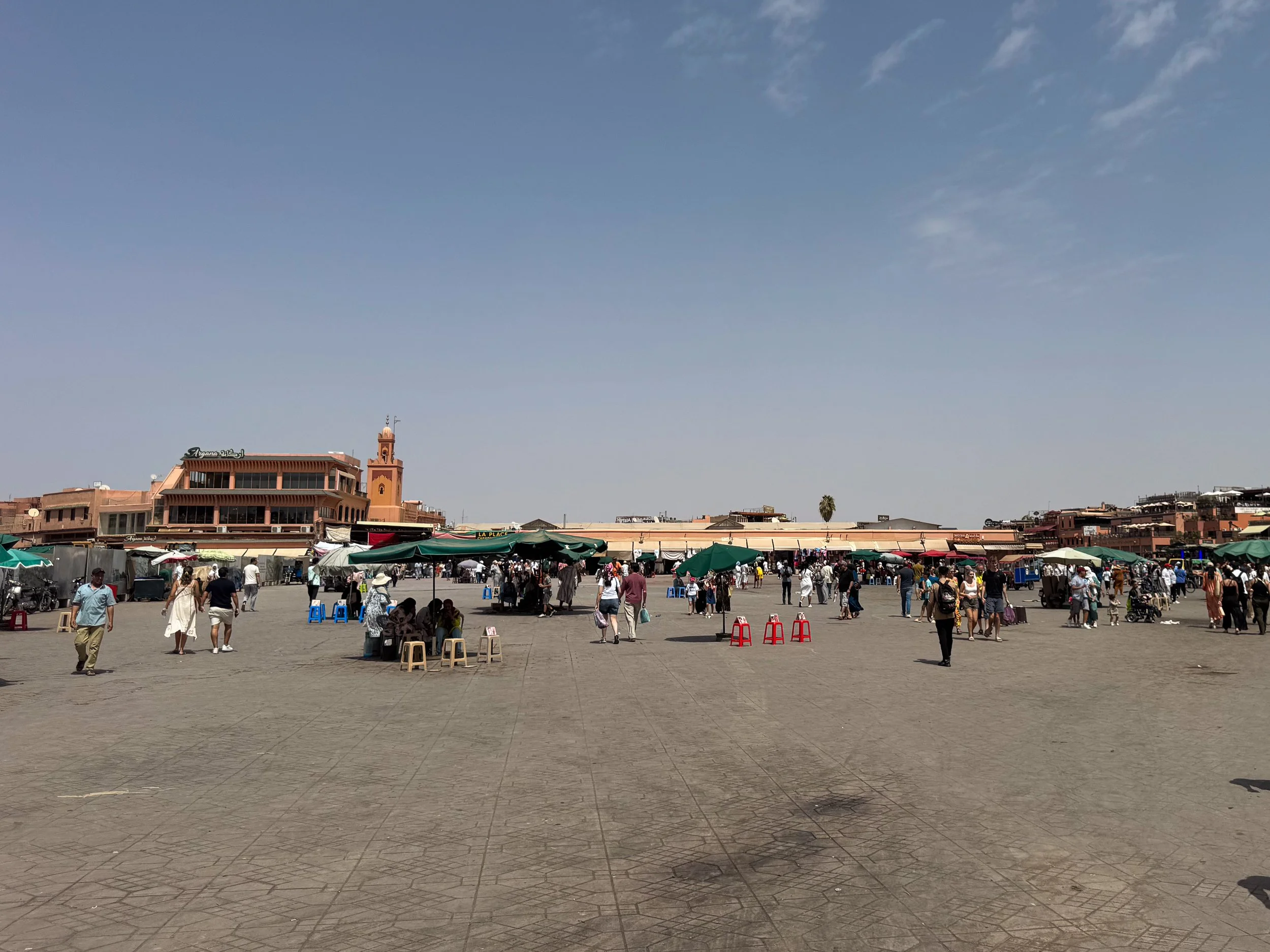
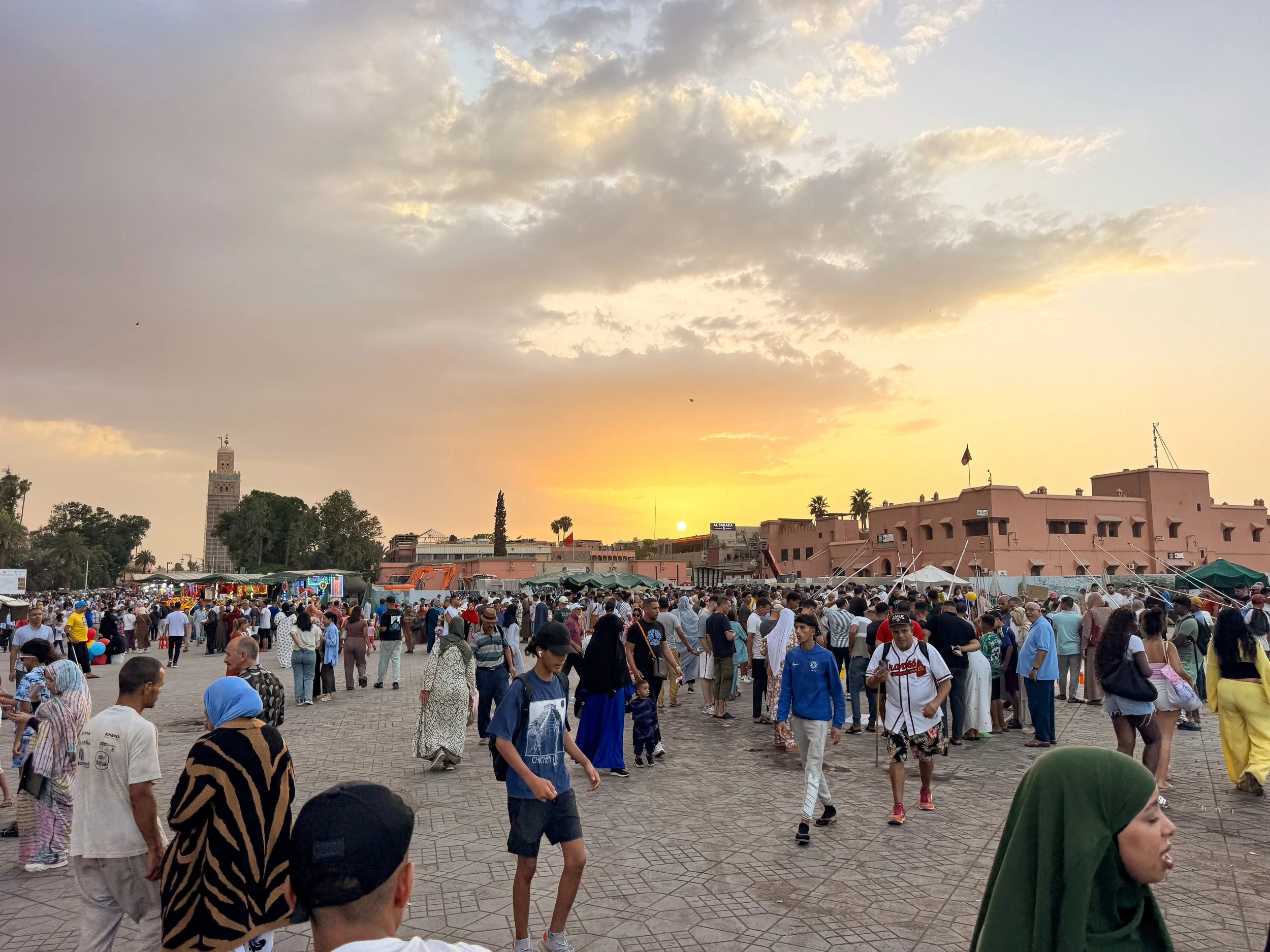
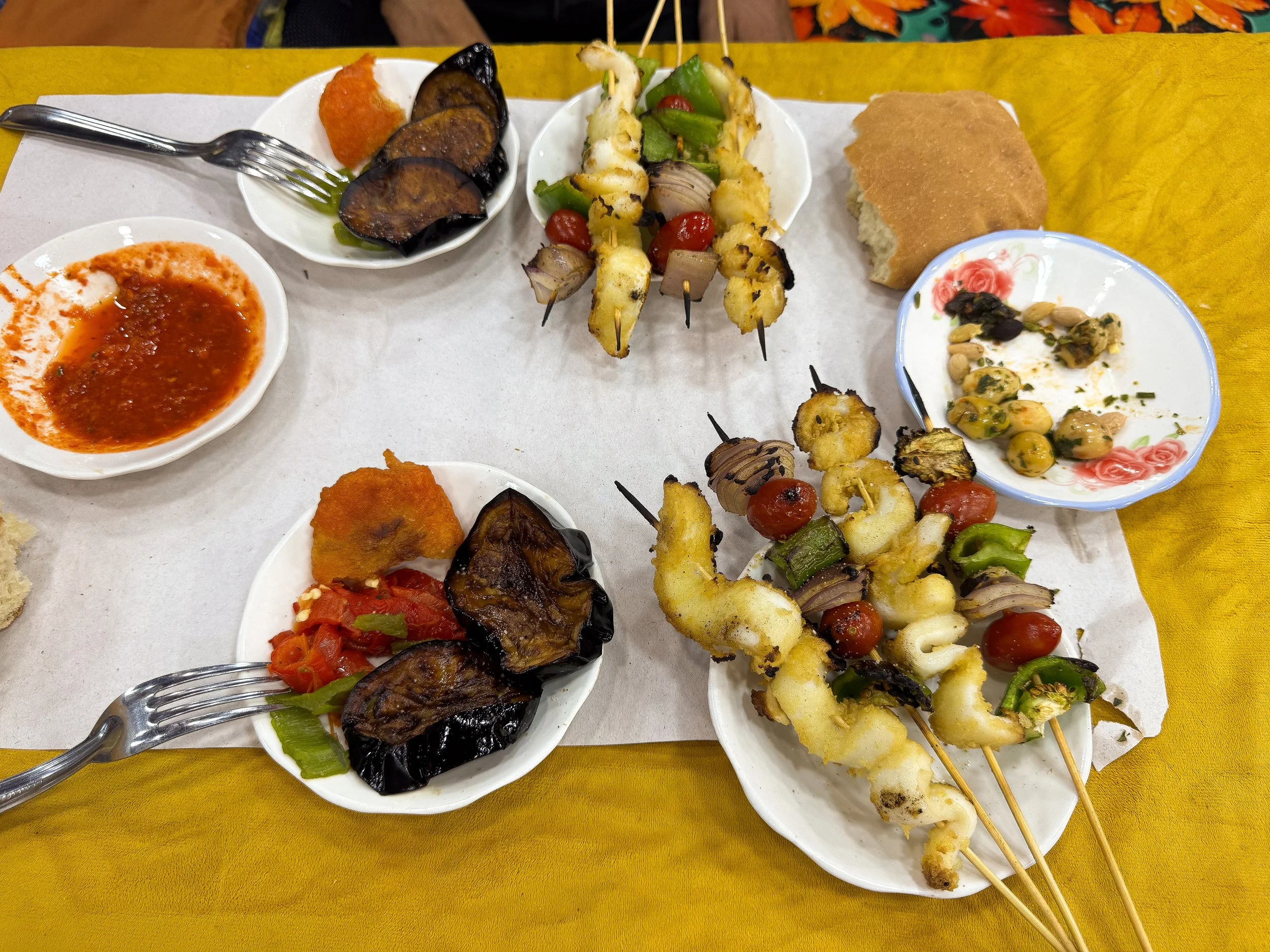
Jemaa El-Fnaa Square. A vast plaza known for its street performers, food stalls and rooftop terraces. Its energy shifts dramatically from day to night. Juice carts, henna artists and ethically questionable street performers with live animals buzz about the square by day. As evening falls, the spectacle gives way to rows of food stands serving grilled kebabs and sizzling tagines. Hype men lure diners, though most stalls offer identical dishes at similar prices. Negotiate for a free appetizer and confirm the final cost before ordering.
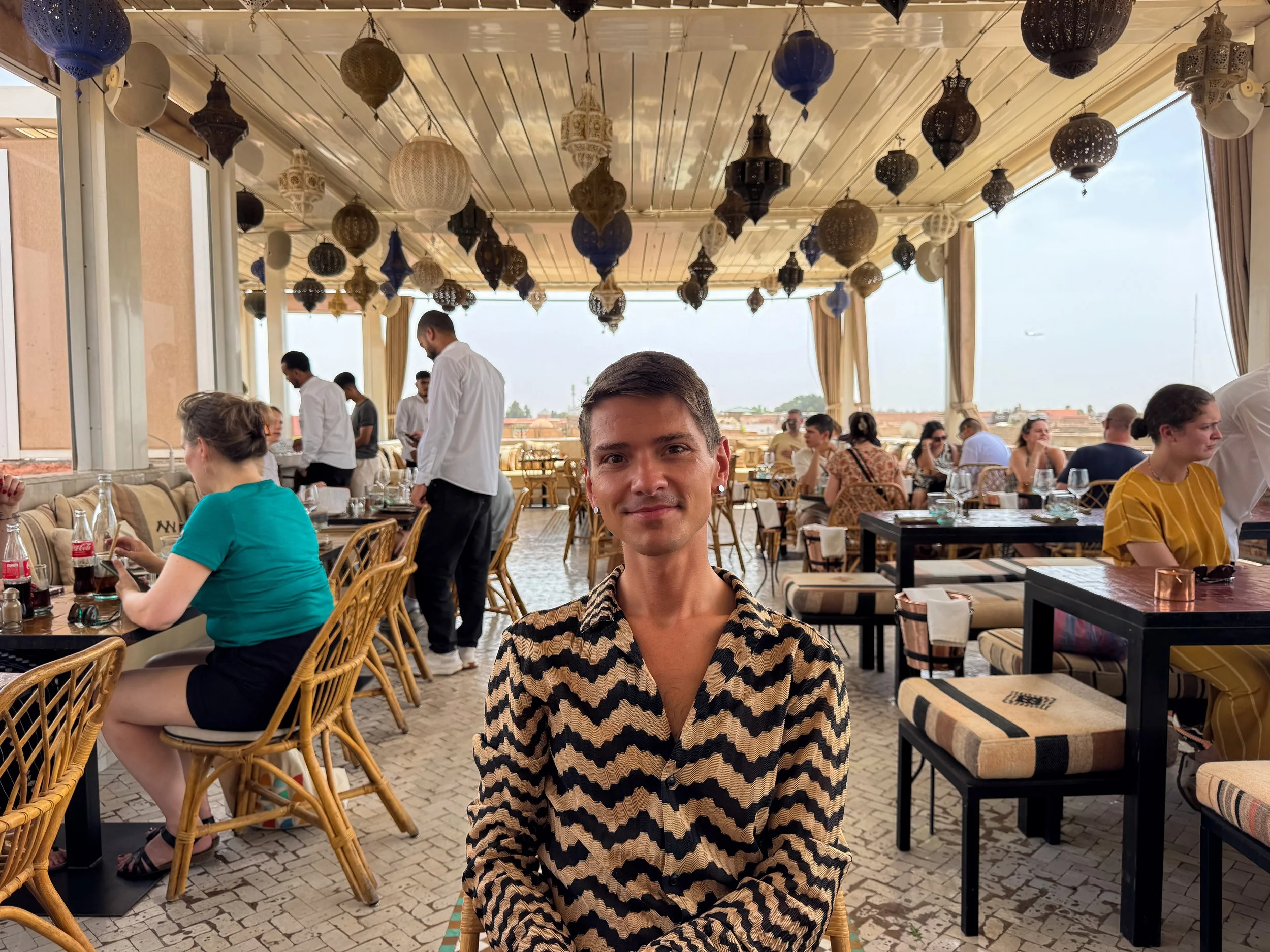
Places to Eat & Drink
Restaurant Dardar. A rooftop eatery with panoramic views of the medina and its tan buildings. It has a hidden feel to it, nestled within a souk and only reachable by a dark-green tiled staircase. Come here for Moroccan wines and traditional dishes.
Zouhal Food. A street side restaurant in the medina offering vegetarian versions of traditional Moroccan dishes like tagines, pastilla and couscous. The flavors are savory, the prices are affordable and the service is excellent.
Café Arabe. A shaded rooftop terrace with a full bar. Come here to escape the mid-afternoon sun, sip on refreshing cocktails and enjoy picturesque views of Marrakech.
Le Jardin. A garden restaurant nestled within a lush courtyard. They serve a variety of contemporary Mediterranean and Moroccan dishes and cold pressed juices.
Café des Epices. A large café in the Places des Epices brewing spiced coffees and mint teas. Their ground floor patio spills into the plaza while their rooftop overlooks the chaotic souk below.
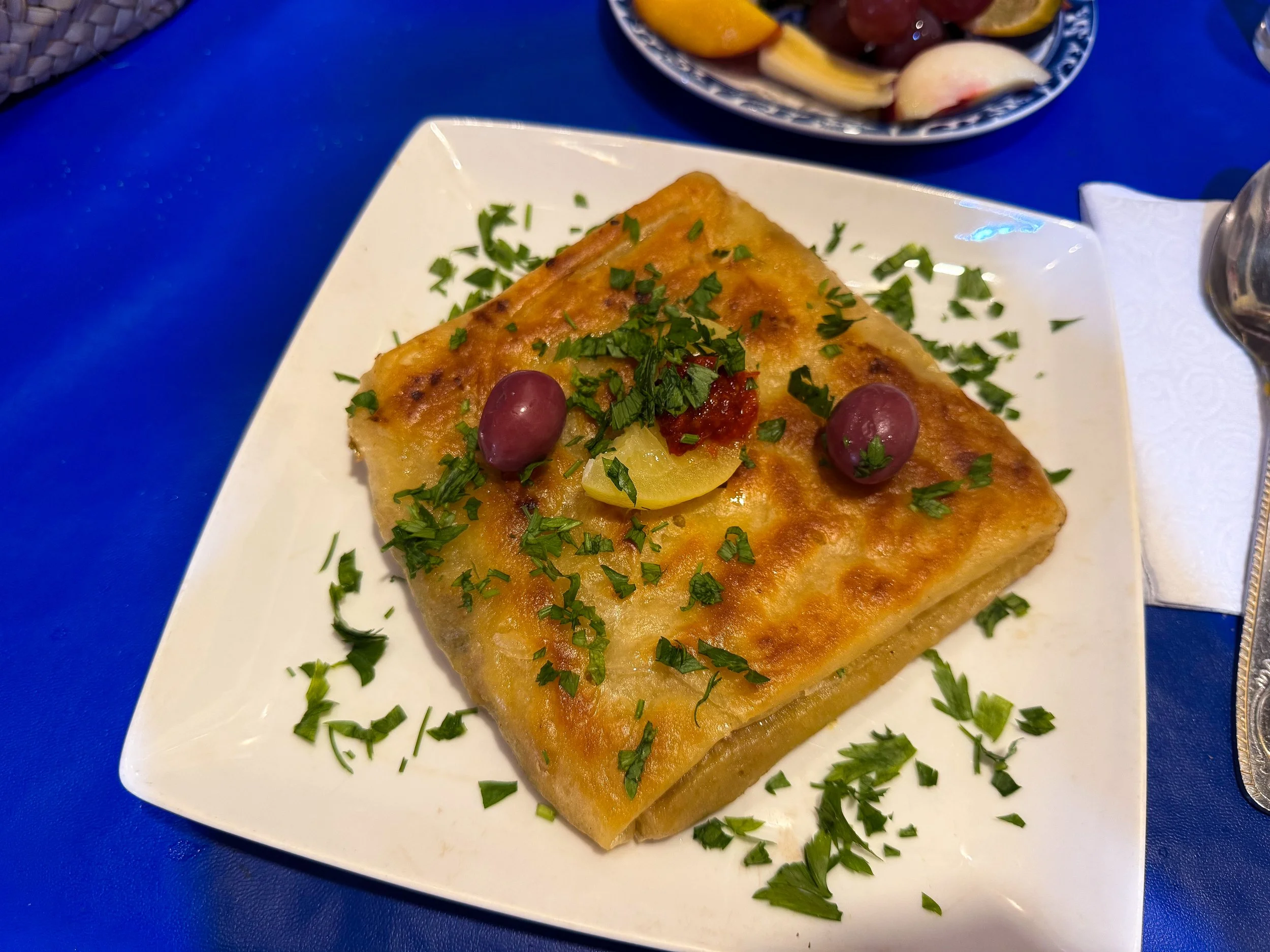
Sweet & Sook. A frozen sweets shop with Moroccan flavors of sorbet and ice cream. We visited twice, trying a scoop of everything on the menu! The orange cinnamon sorbet and the chebakia ice cream made with orange blossom, almond, honey, cinnamon and sesame were our favorites.
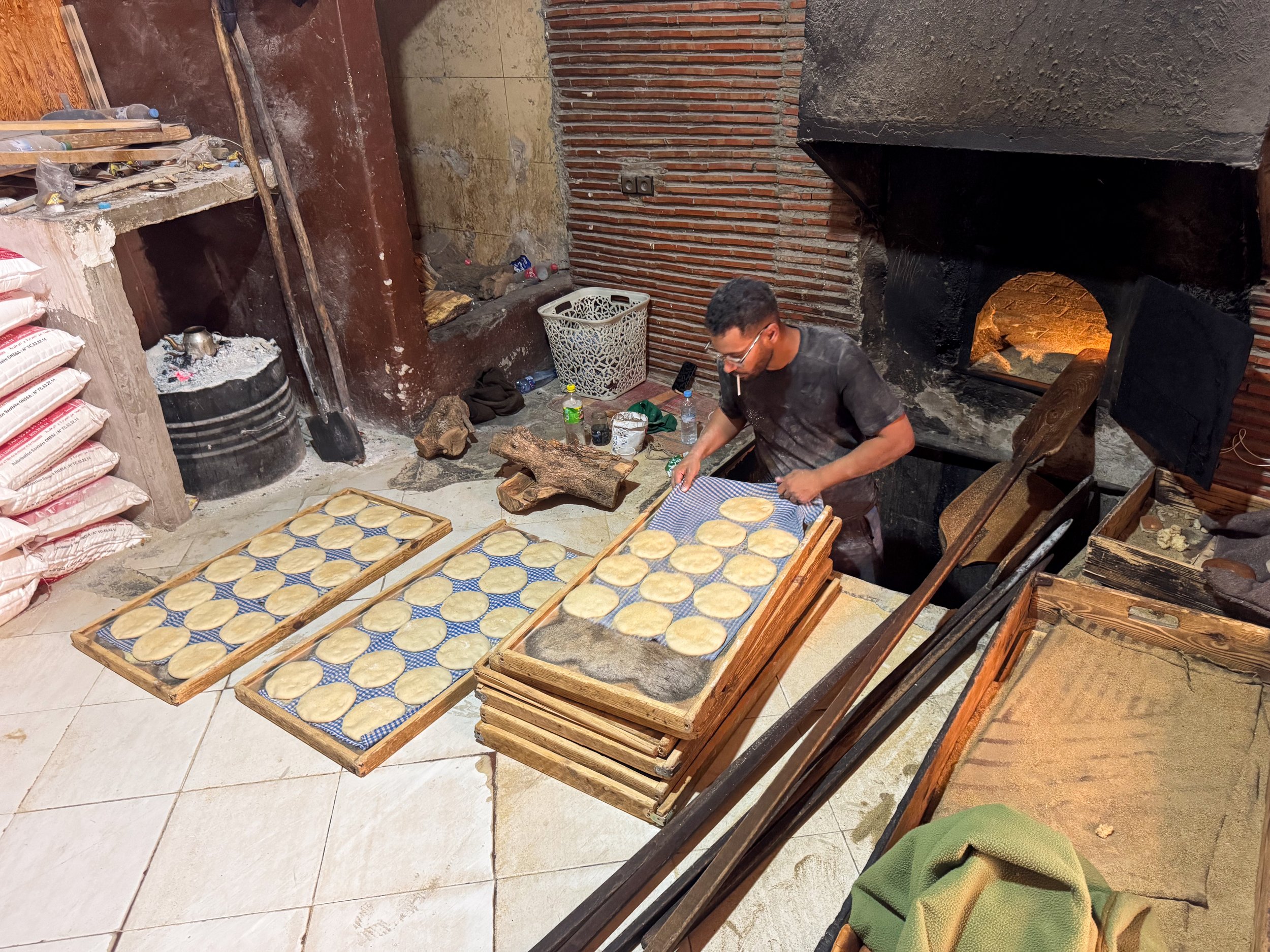
Khobs Bakery. A bakery specializing in the Moroccan bread, khobs. A baker invited us to watch as the team worked the dough, leavened the bread, loaded the oven and stacked bakes into baskets for delivery. Not officially named, use this Map Pin to find it.
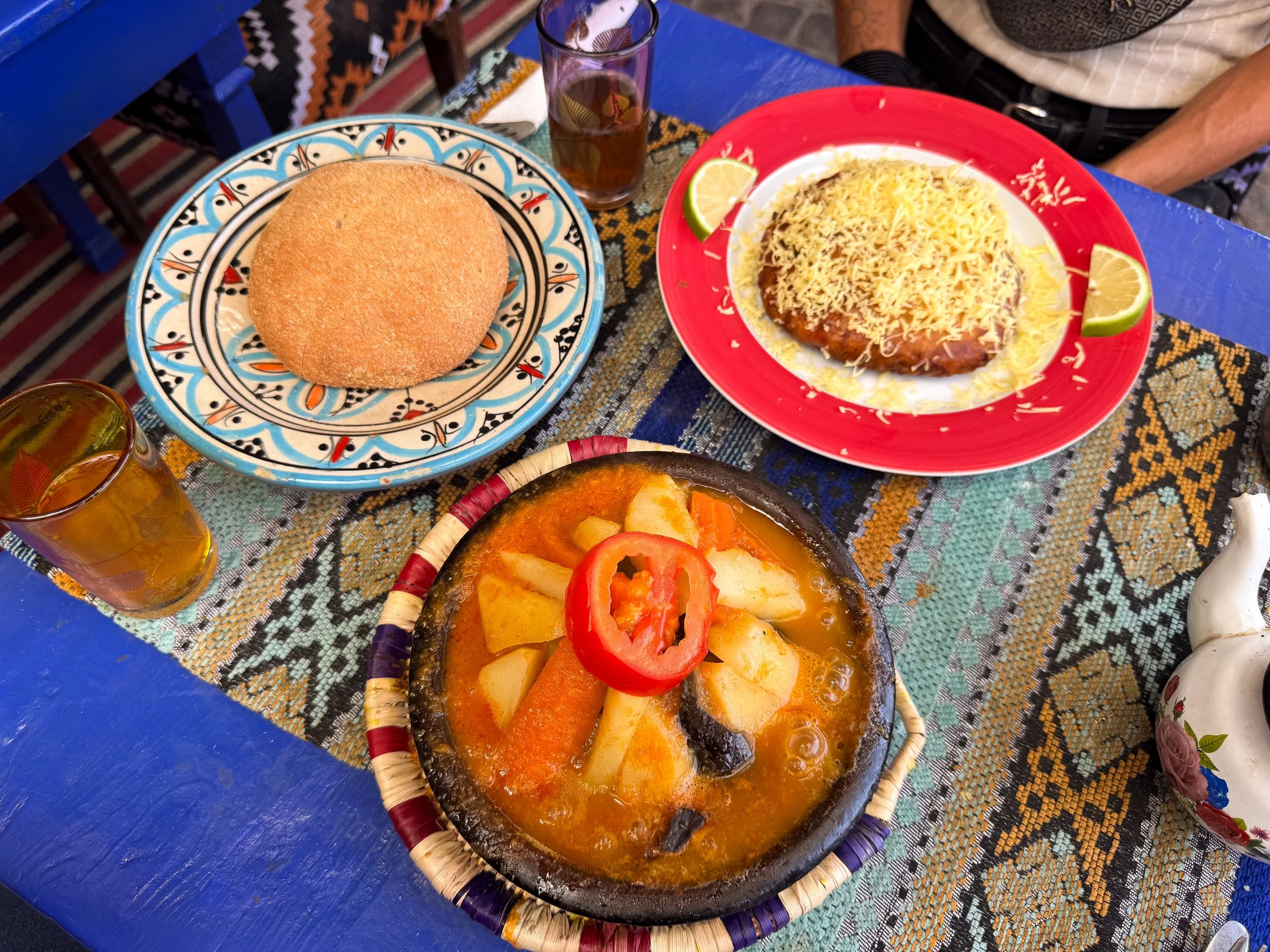
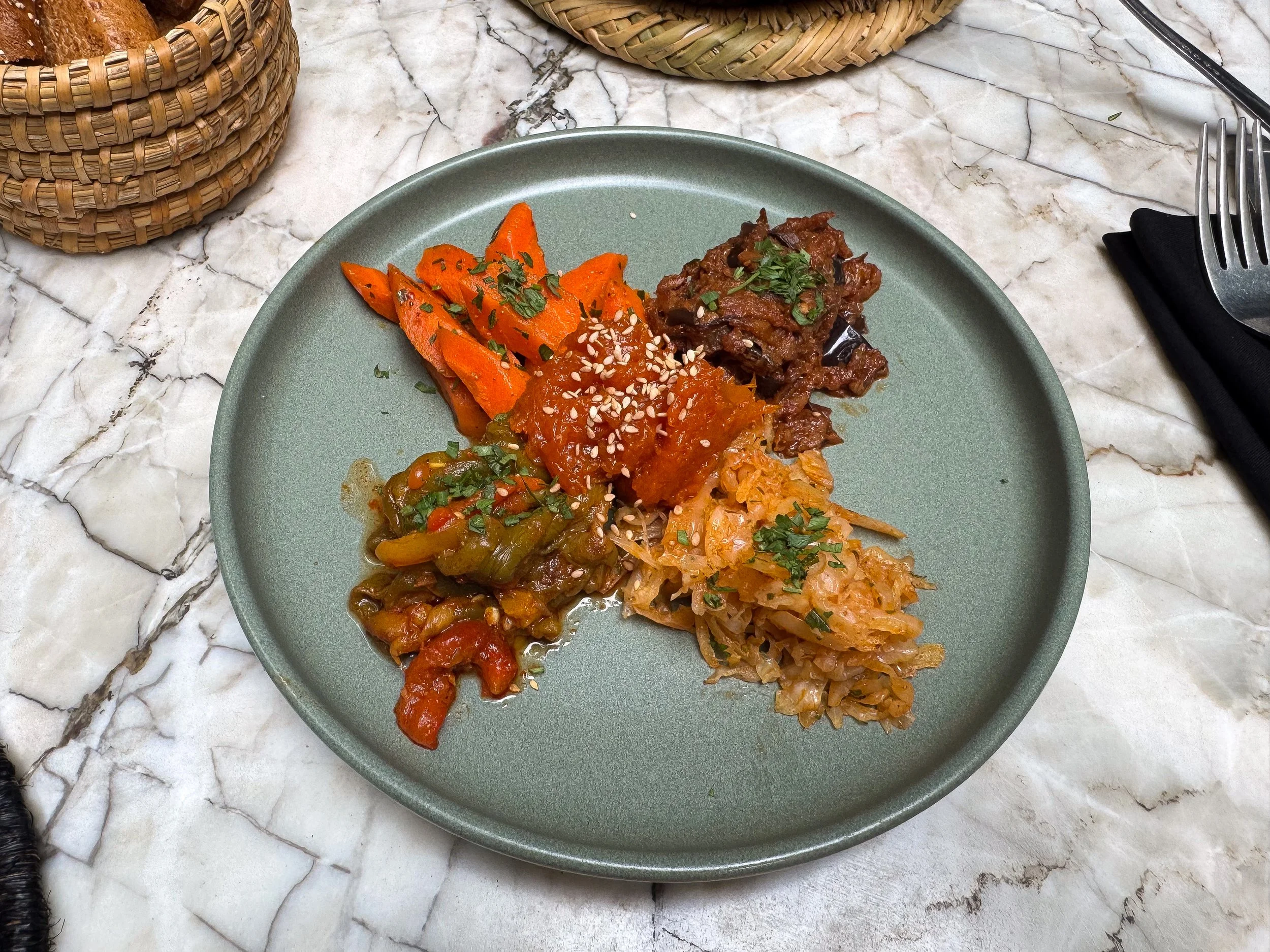
Moroccan Cuisine
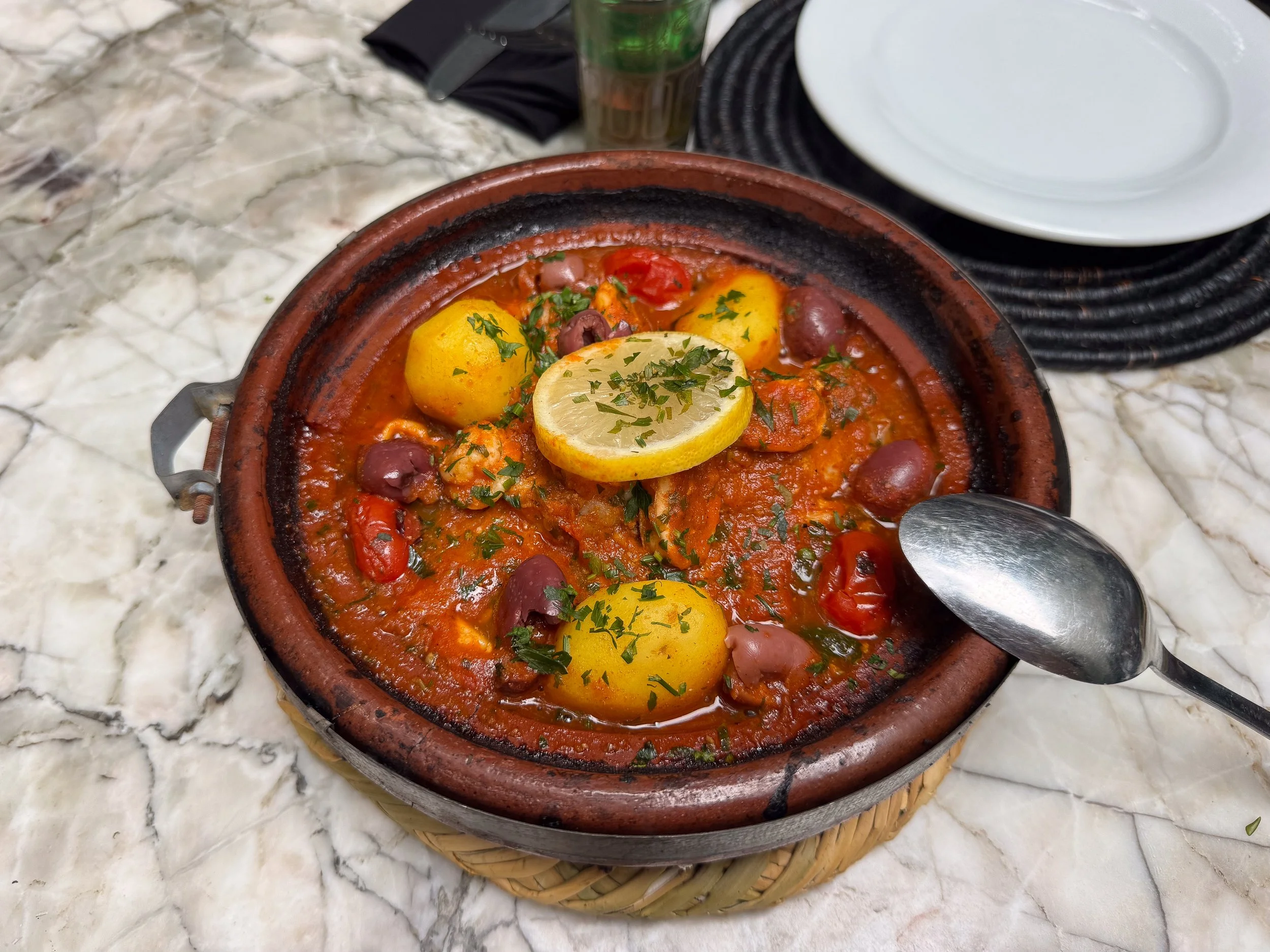
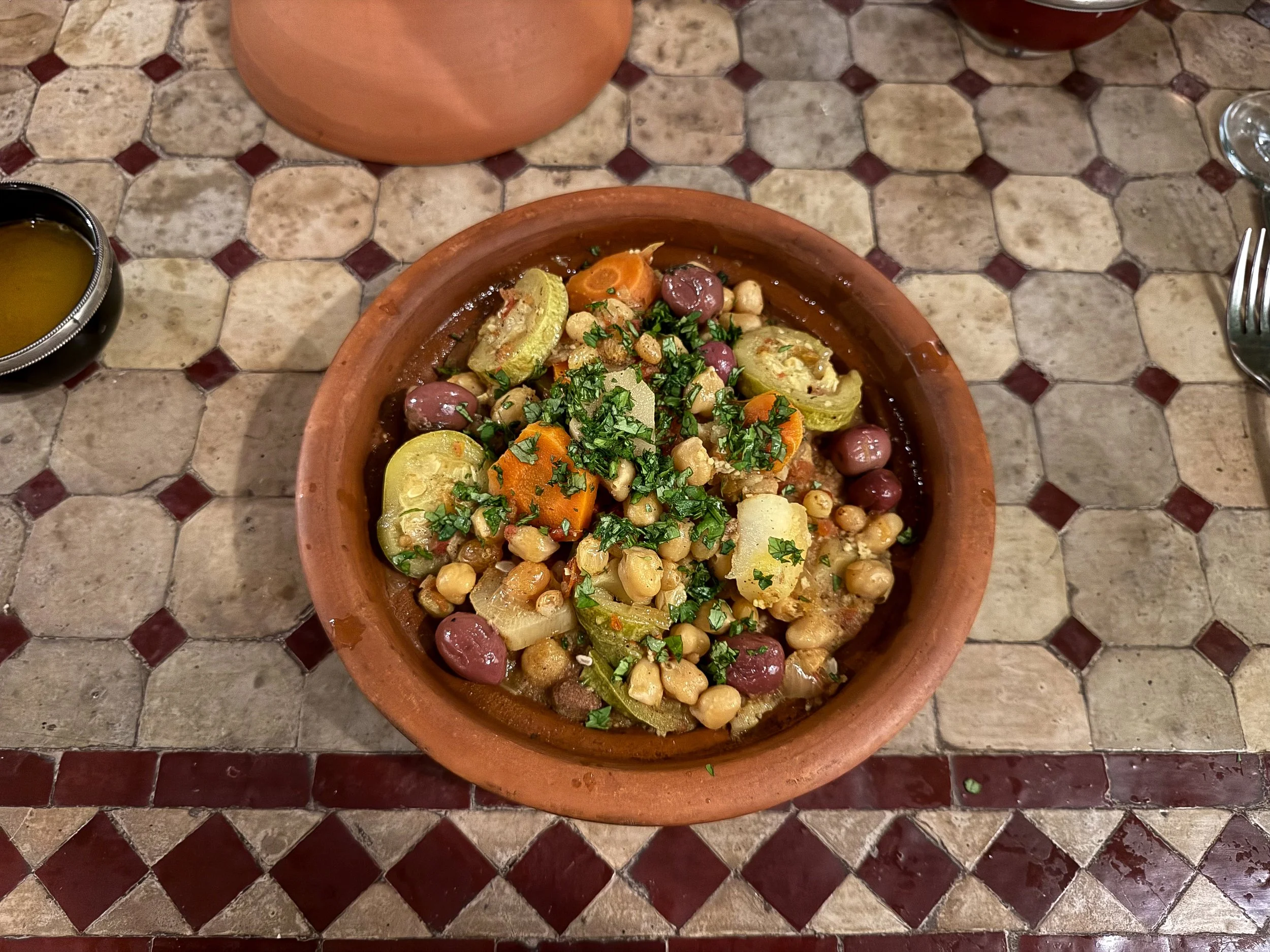
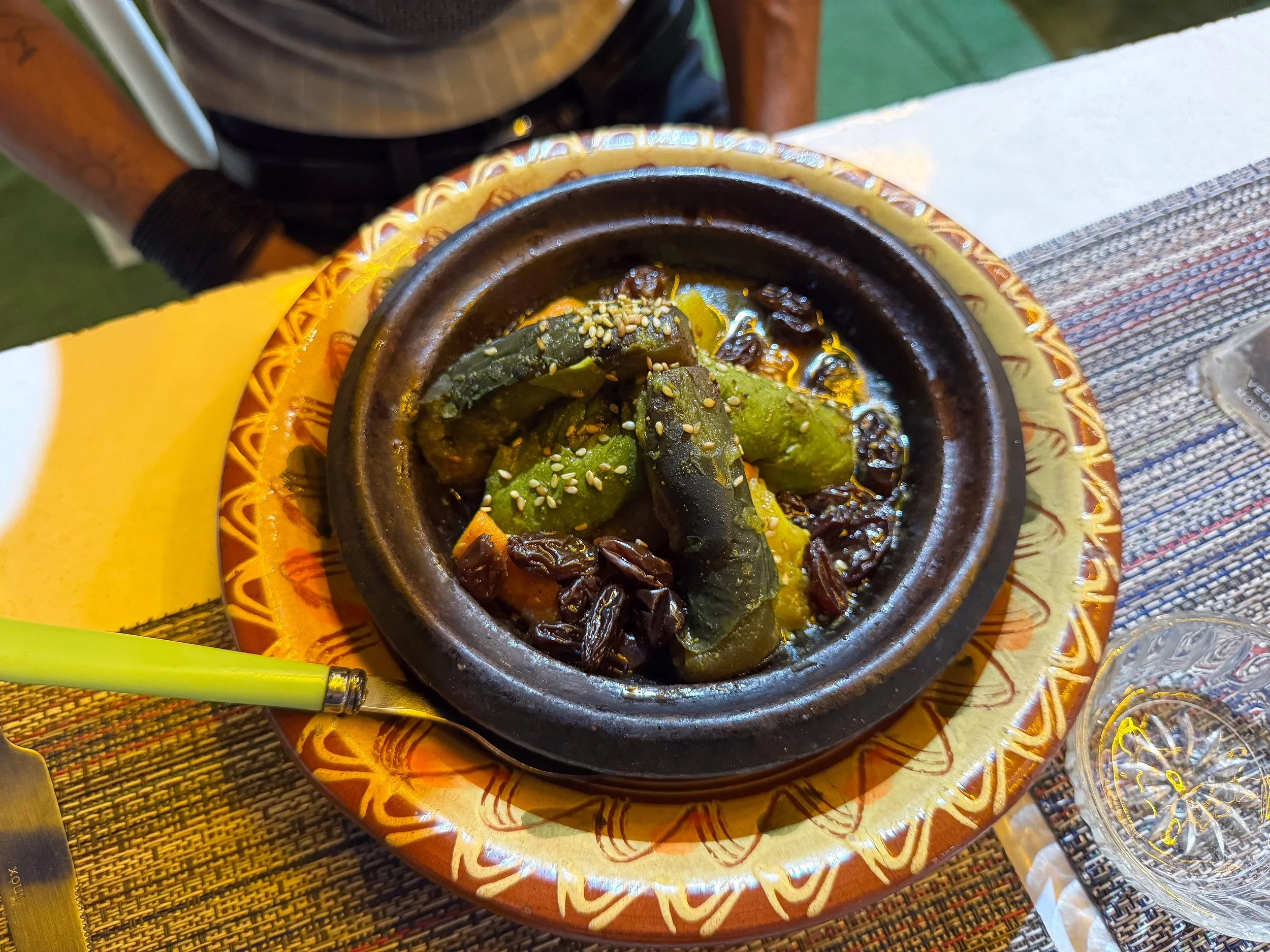
Tagine. A mixture of vegetables, meats, dried fruits and spices stewed together in a conical clay dish. It’s a staple dish of Moroccan cuisine.
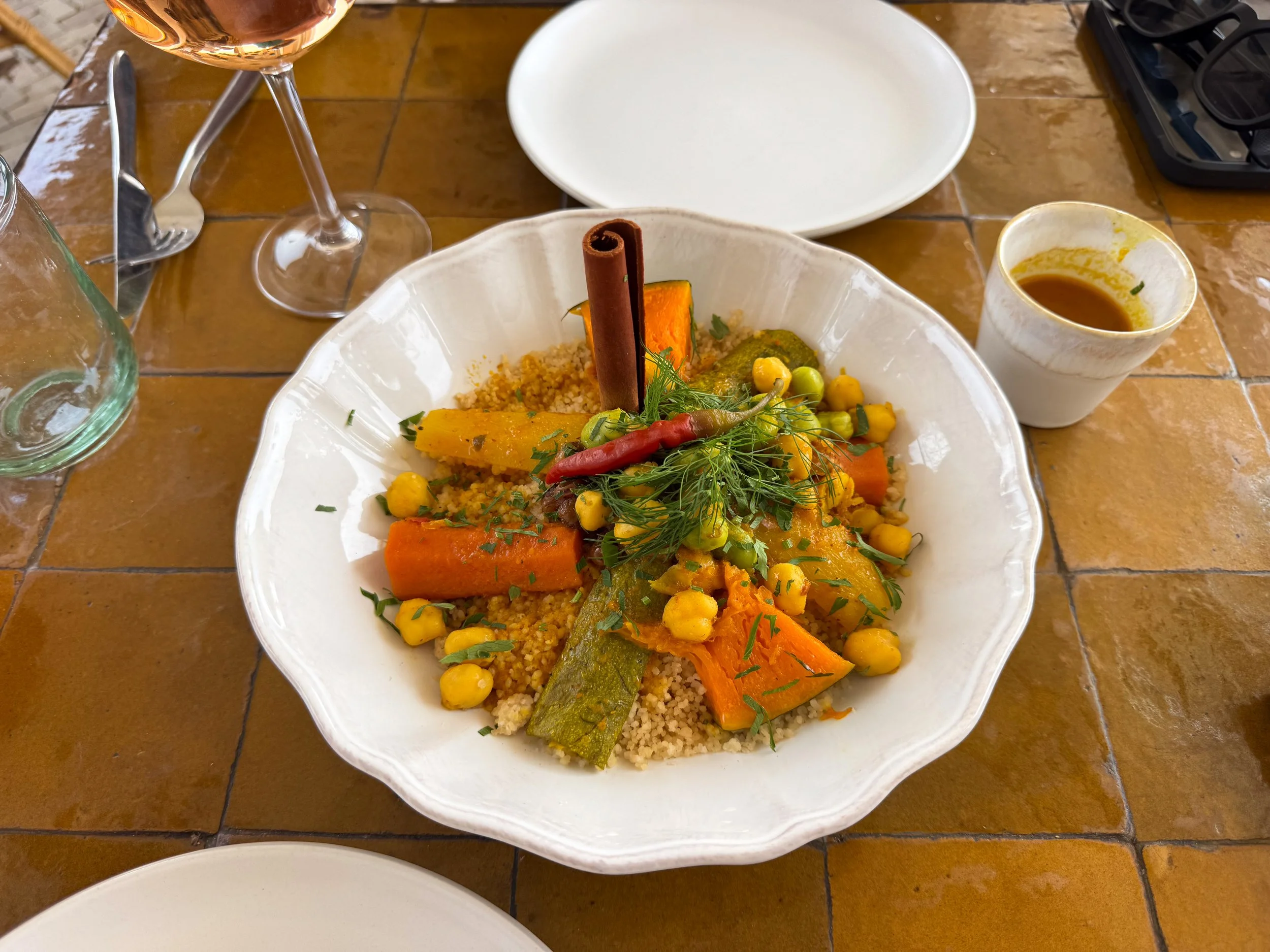
Couscous. A steamed grain covered in a savory broth and garnished with vegetables and meats.
Harira. A Moroccan soup made from tomatoes, chickpeas, fresh herb and aromatic spices. It’s typically vegetarian.
Khobs Bread. A light and airy flatbread served with every meal. It’s fresh baked daily and can be bought for 1 DH from local bakeries.
Msemmen. A flaky and layered pan fried flat bread often eaten at breakfast with honey. It’s commonly cooked by street vendors on flat top griddles.
Sfenj (Moroccan Donuts). Yeasty rings of fried dough heavily coated in plain sugar. They’re a common street food snack and usually paired with a tiny cup of coffee.
Mint Tea. Hot tea made with fresh mint leaves and sugar cubes. It’s served as a common welcome drink.
Fresh Squeezed Juice. Juices are commonly drank across Morocco. Try fresh squeezed orange, pomegranate or sugar cane from a street side juice cart.
Moroccan Orange Soda. Orange is one of the most popular flavors in Morocco. Try a Moroccan orange soda like Orangina or Hawai.
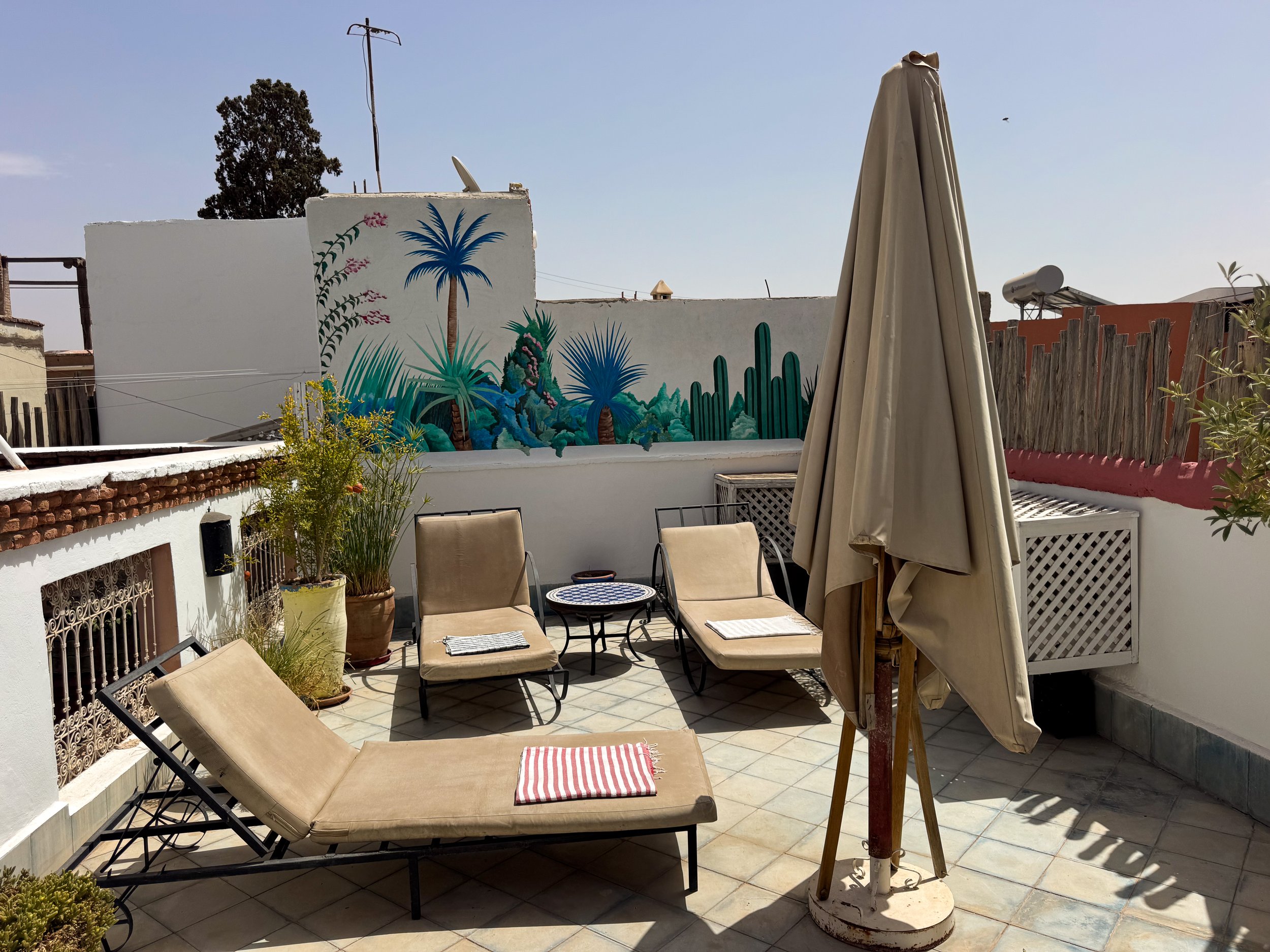
Stay in a Riad
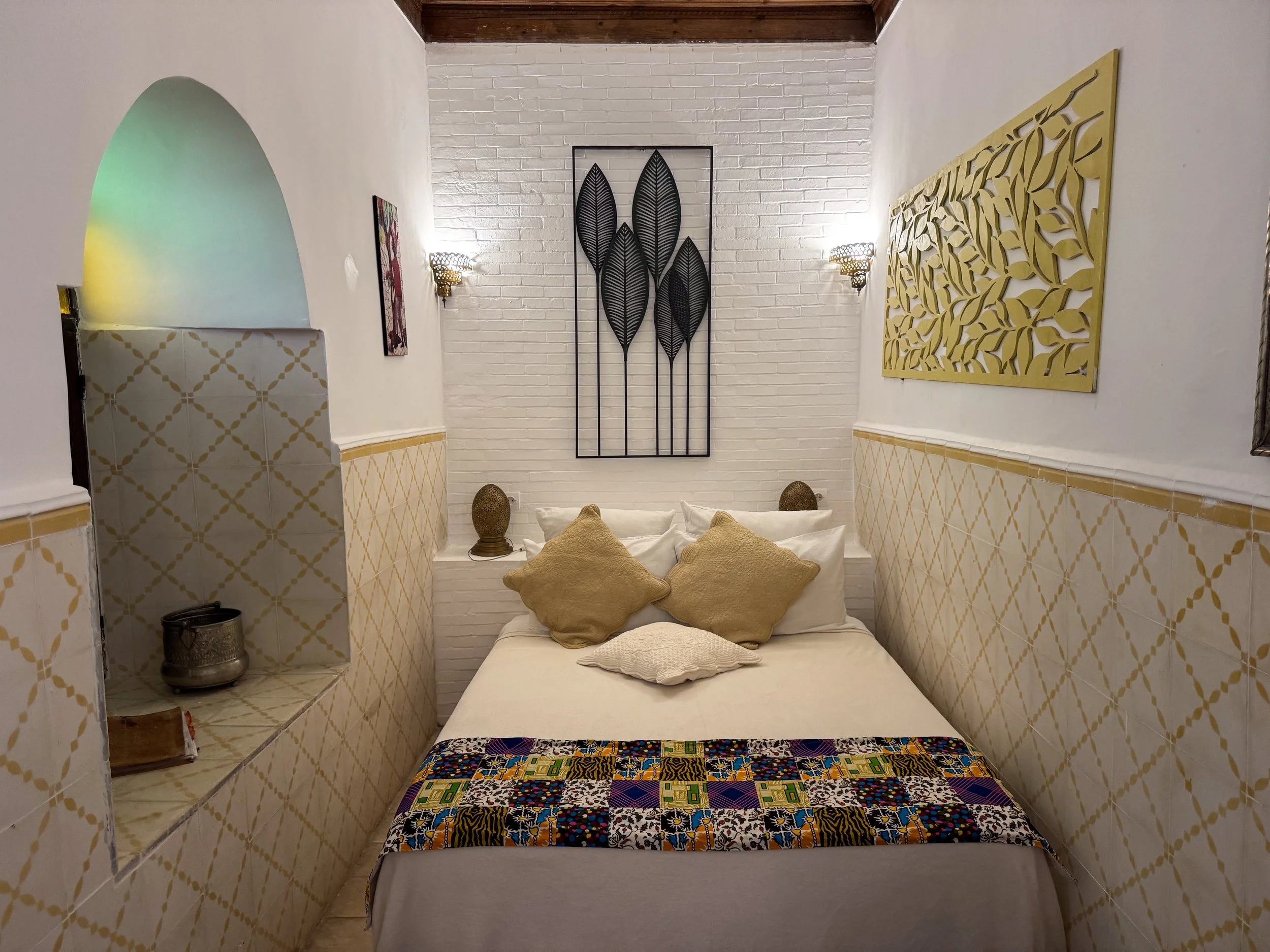
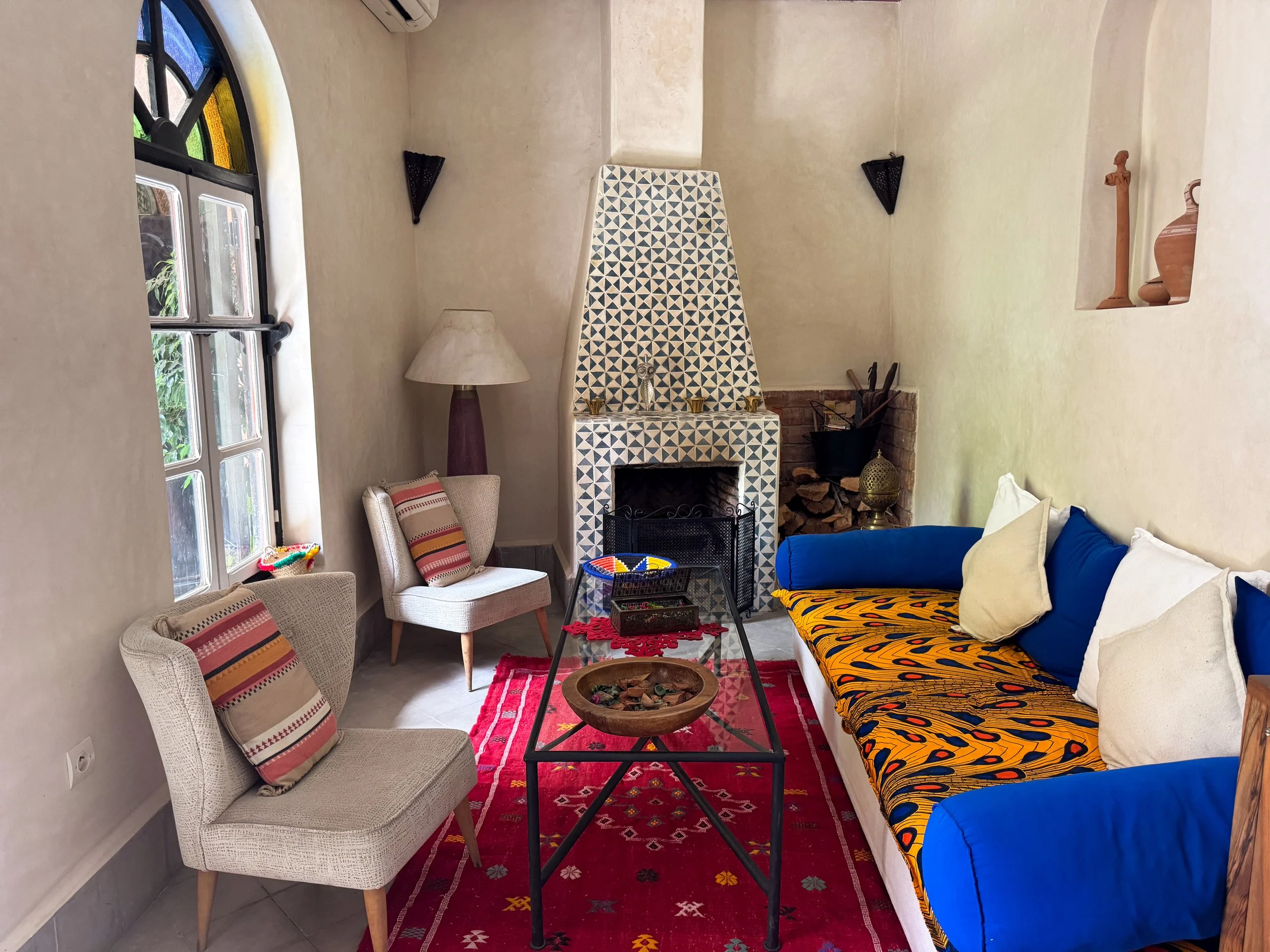
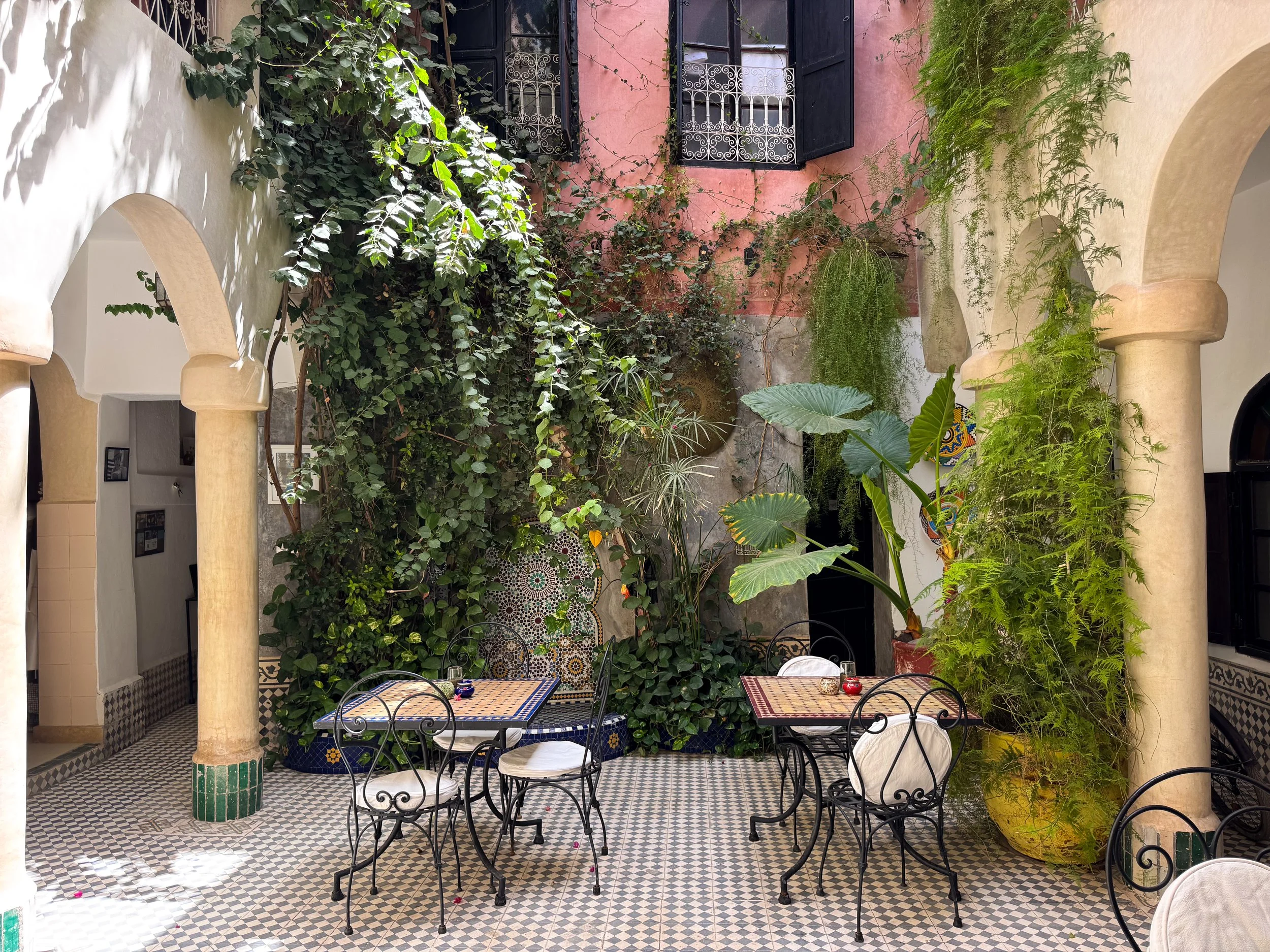
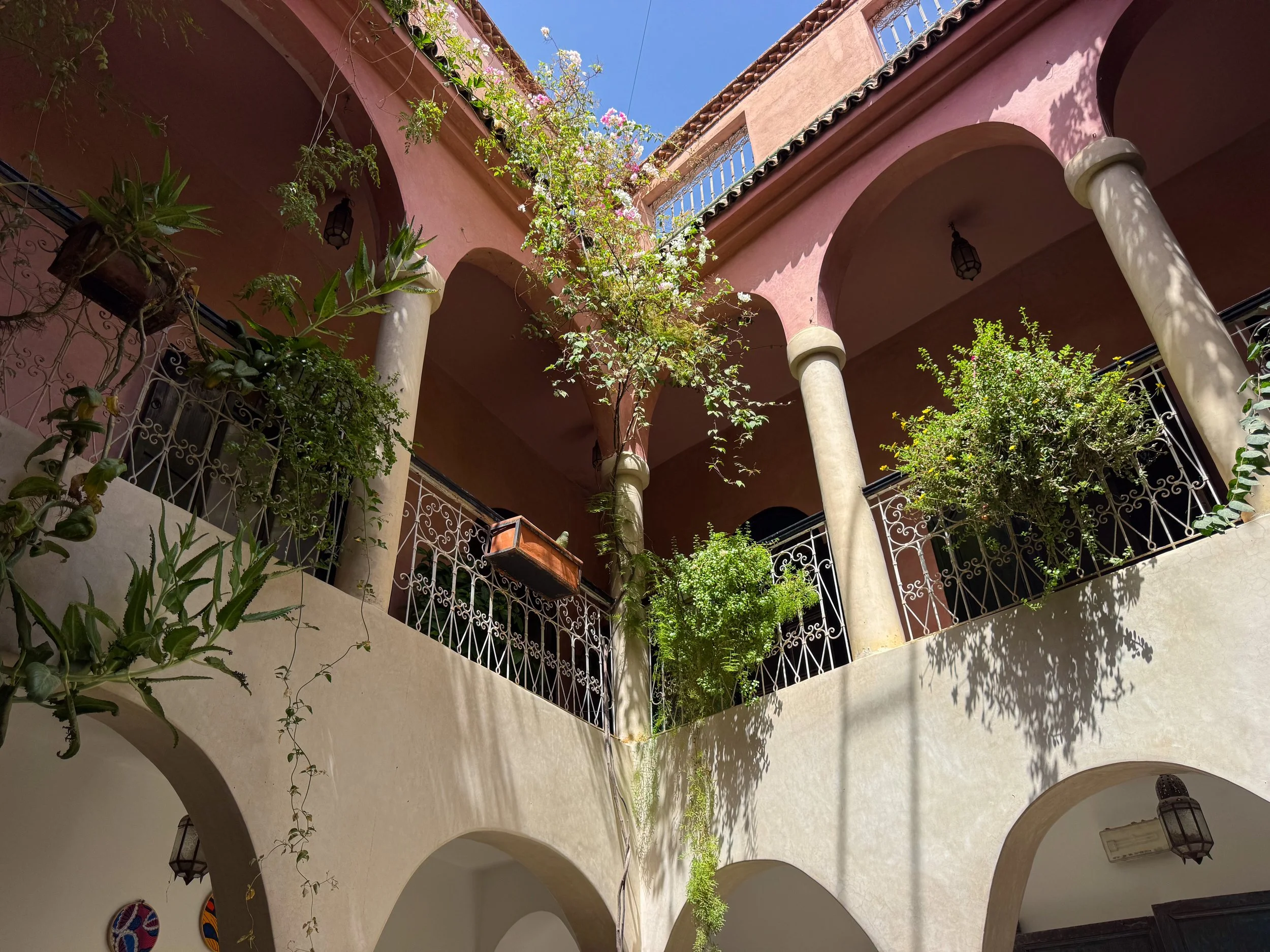
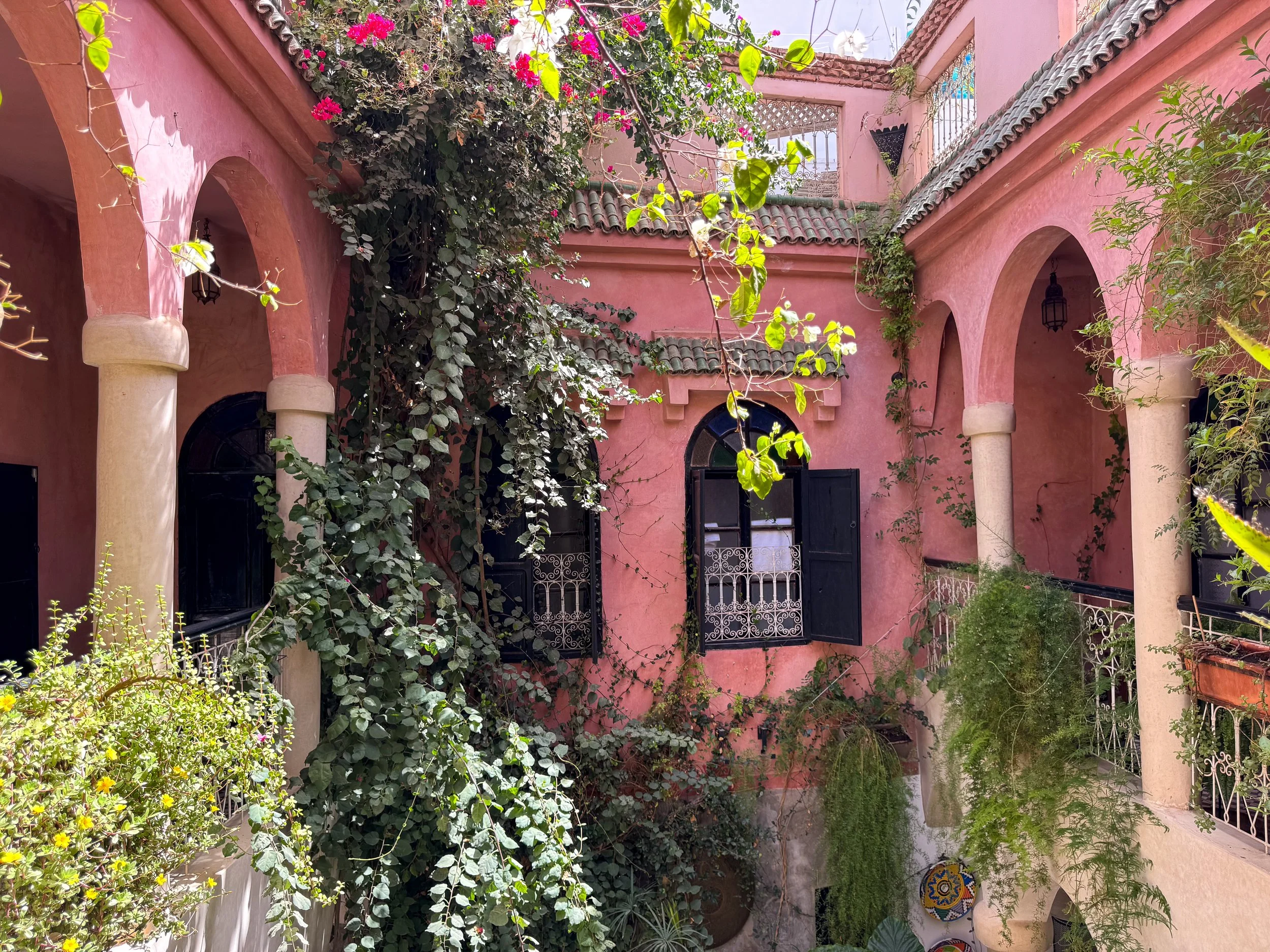
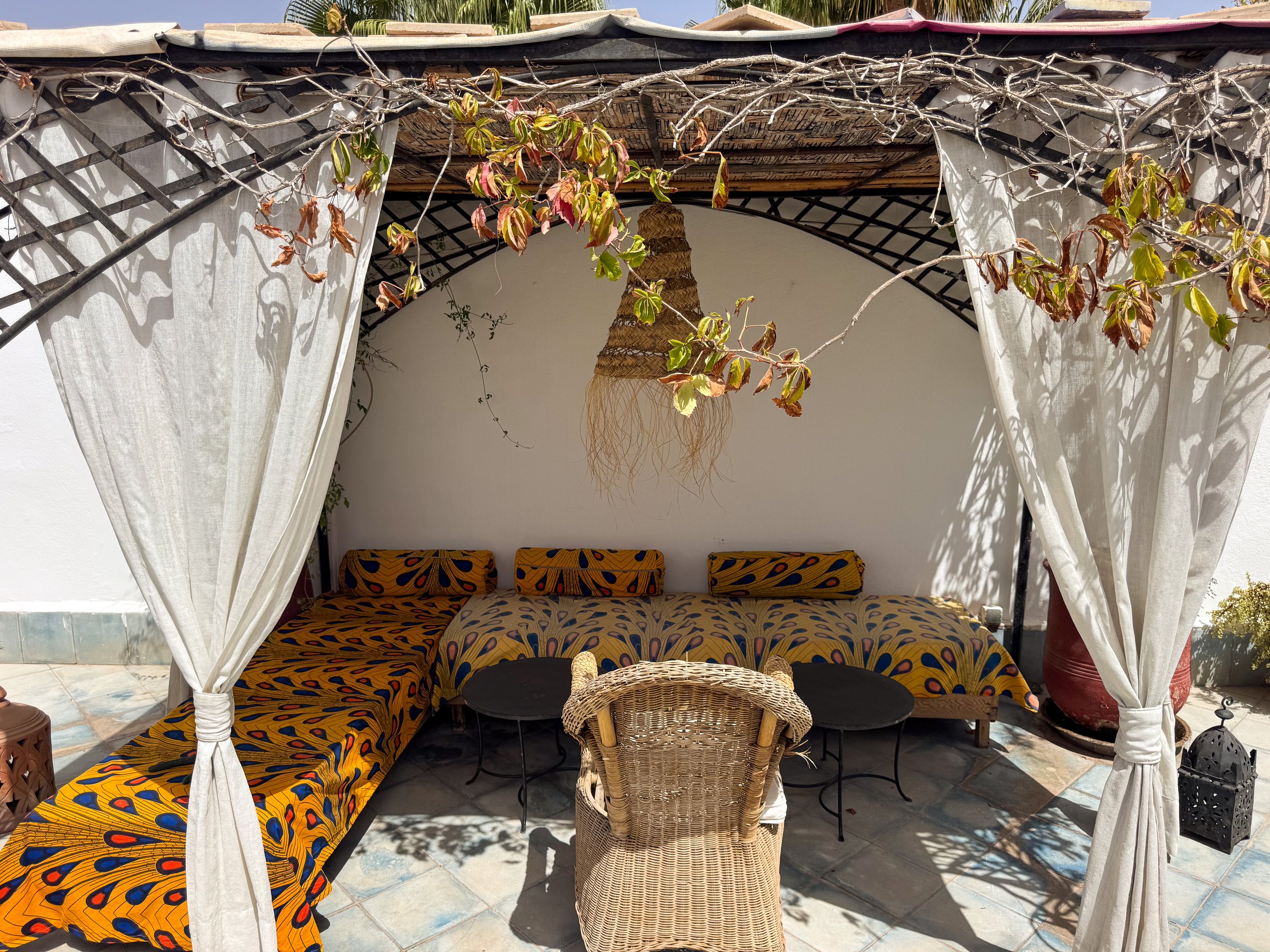
Riads are traditional Moroccan hotels built around a central courtyard. They offer tranquil places to stay within the heart of the chaotic Medina.
Riad Merstane. Tucked away at the end of a winding alley, the riad is a peaceful retreat just steps from the nearby souks and sights of the medina. Comfortable rooms open up to a sunlit courtyard filled with lush greenery. Moroccan decor and artwork add style and authenticity to the space. A second floor living room and spacious rooftop offer places to relax and unwind. A well equipped kitchen provides the chance to prepare Moroccan meals while each morning begins with a generous breakfast spread. Reserve on Booking.
Getting Around
On Foot. Marrakech and its medina are best explored on foot. The maze of winding streets and narrow alleyways offers a true glimpse into the history of the city. Expect to get lost, turned around and come to dead ends. Navigating gets easier after the first day.
Good to Know. Ignore people trying to offer directions. They may ask where you’re going, tell you a road or place is closed, try leading you into a shop or ask for a tip.
Airport Taxi. Taxis between the medina and airport cost around 100dh. Most riads can arrange for one, otherwise hail one on the street or near a gate to the medina. Always confirm price and destination before getting in.
Arabic Words & Phrases
Knowing a few words and phrases in Arabic goes a long way in Morocco when interacting with locals. Some of the most common and easy to remember are:
Hello = Salama
Goodbye = Beslama
Thank you = Shukran
You’re welcome = Marhaba
Location Specifics
When to Visit. September is the best month of the year to visit Morocco. It’s just before peak travel season with hot to moderate temperatures.
Language. Arabic, French and English are commonly spoken by many people, seen on signage and menus.
Cash vs. Card. Cash is the preferred and often only accepted method of payment at many businesses. Confirm before ordering at restaurants or agreeing to services.
Safety. Marrakech’s medina is a generally safe destination to visit. Be aware of your surroundings and keep hold of personal belongings to avoid pickpocketing.
Drinking Water. Tap water is not safe for consumption or using to cook with. Only use bottled water.
Alcohol. The sale of alcohol is heavily controlled throughout the country. Only some restaurants will serve cocktails, beer and wine.
Earthquake Damage. Marrakech is still recovering from the devastating 2023 earthquake. Several historic sites remain closed or partially opened as renovations continue.
LGBTQ+ Safety. Moroccan laws and customs are not very accepting of LGBTQ+ individuals. Stay up to date with the latest laws and suggestions while traveling. Refer to our guide on LGBTQ+ Travel Safety for more advice.
Elsewhere in Morocco
From Marrakech's vibrant souks and culinary traditions to the ancient medinas of Fes, the Sahara Desert and the blue streets of Chefchaouen, discover more of Morocco through these travel guides:
Fes Travel Guide: Medina, Tanneries & Islamic History. Step into Fes's ancient medina where Islamic landmarks, historic tanneries, traditional riads and skilled artisans preserve centuries of Moroccan heritage and tradition.
Morocco Road Trip Guide: Sahara Desert, Kasbahs & Berber Culture. Road trip across Morocco's dramatic landscapes where palm oases, ancient kasbahs, towering dunes and Berber camps create an unforgettable Saharan adventure.
Chefchaouen Travel Guide: The Blue City, Medina & Local Culture. Stroll through Chefchaouen's blue painted medina where historic mosques, fresh juice vendors, Berber artisans and mountain scenery reveal a tranquil side of Morocco.
Casablanca Travel Guide: Hassan II Mosque, Local Markets & Moroccan Cuisine. Wander through Casablanca's ancient medina, palm lined avenues and seaside promenades where the Hassan II Mosque and local food markets reflect Morocco's culture.
For Next Time…
Morocco is a beautiful destination with historic cities, scenic landscapes and cultural allure. We have a shortlist of places to visit when we return.
Meknes. An ancient city at the heart of Morocco’s wine producing region. Its nearby vineyards offer tours, tastings and wine pairings.
Volubilis. An ancient Roman city with well preserved ruins and mosaics from the former empire.
Essaouira. A port city on the Atlantic with a picturesque medina, coastal ramparts and fresh seafood restaurants.