Chefchaouen, The Blue City
Chefchaouen, The Blue City
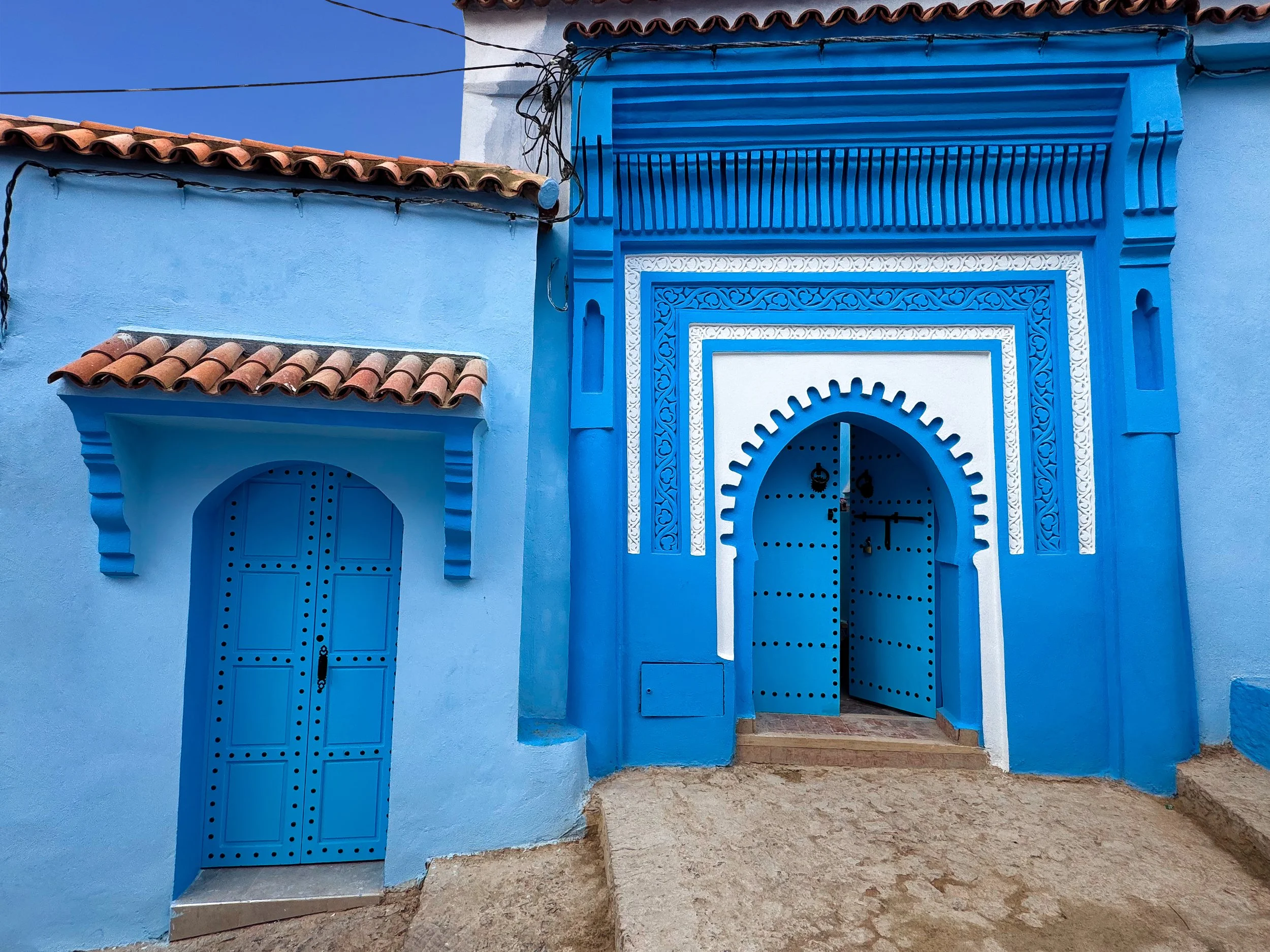
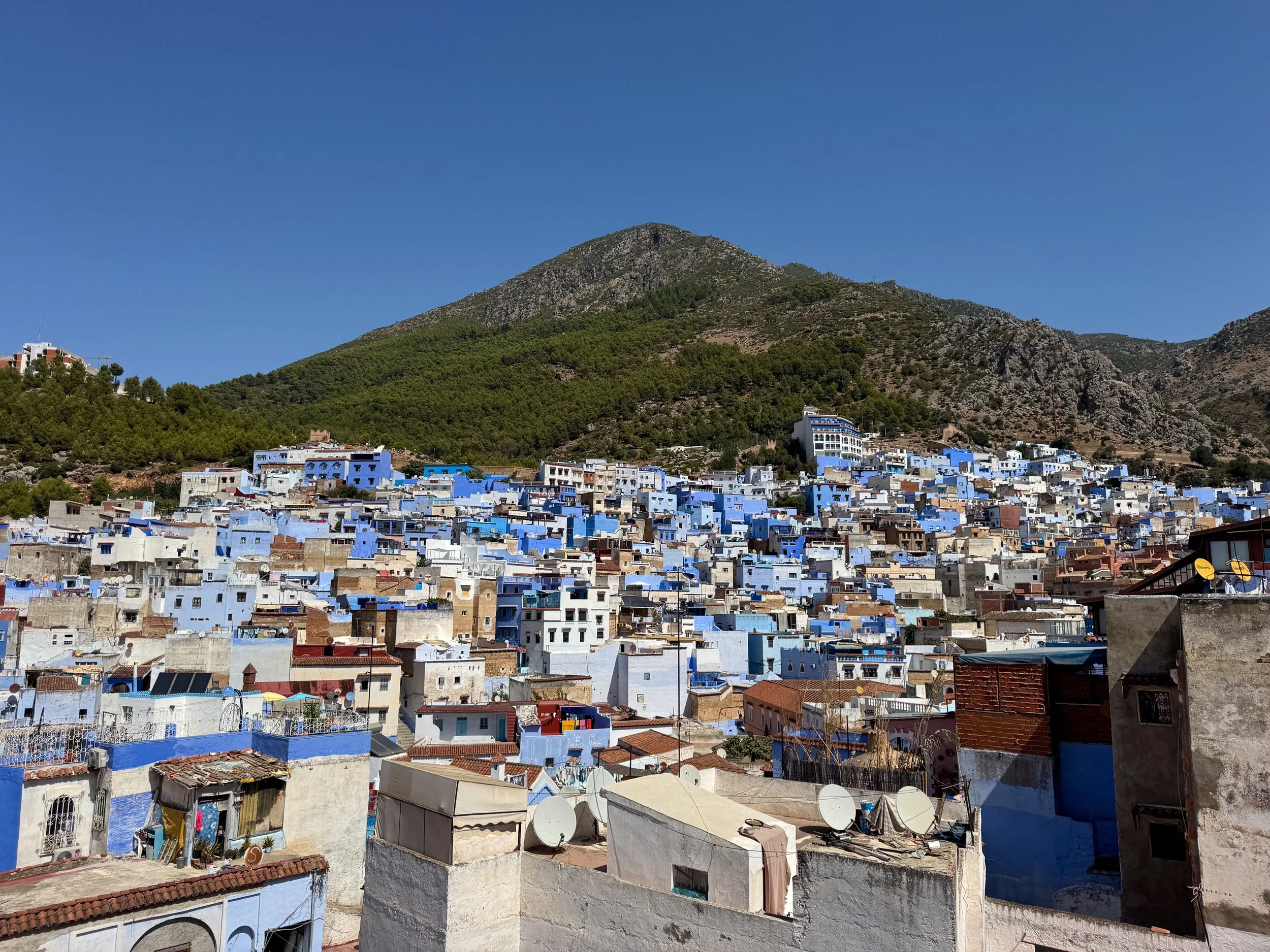
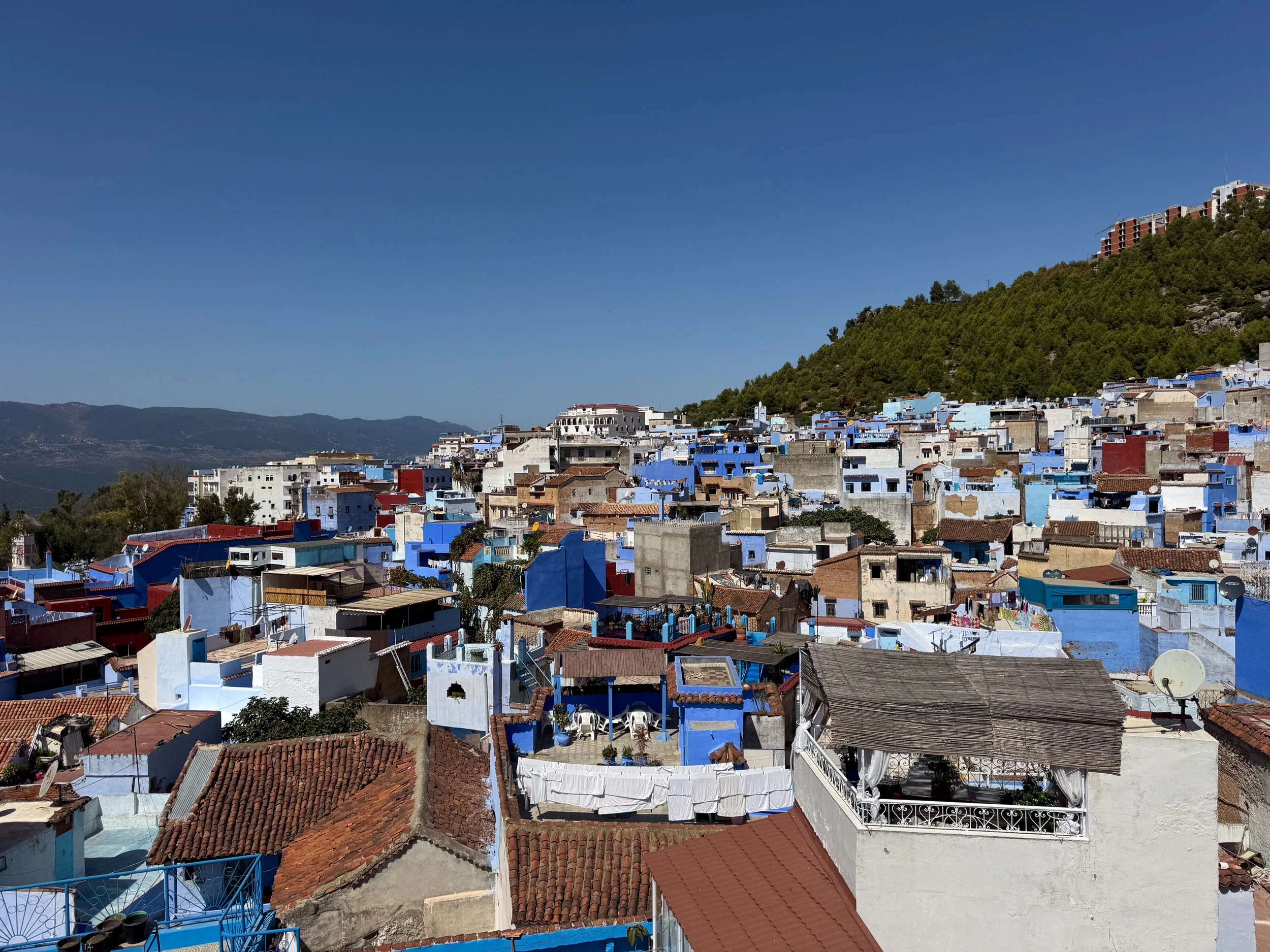
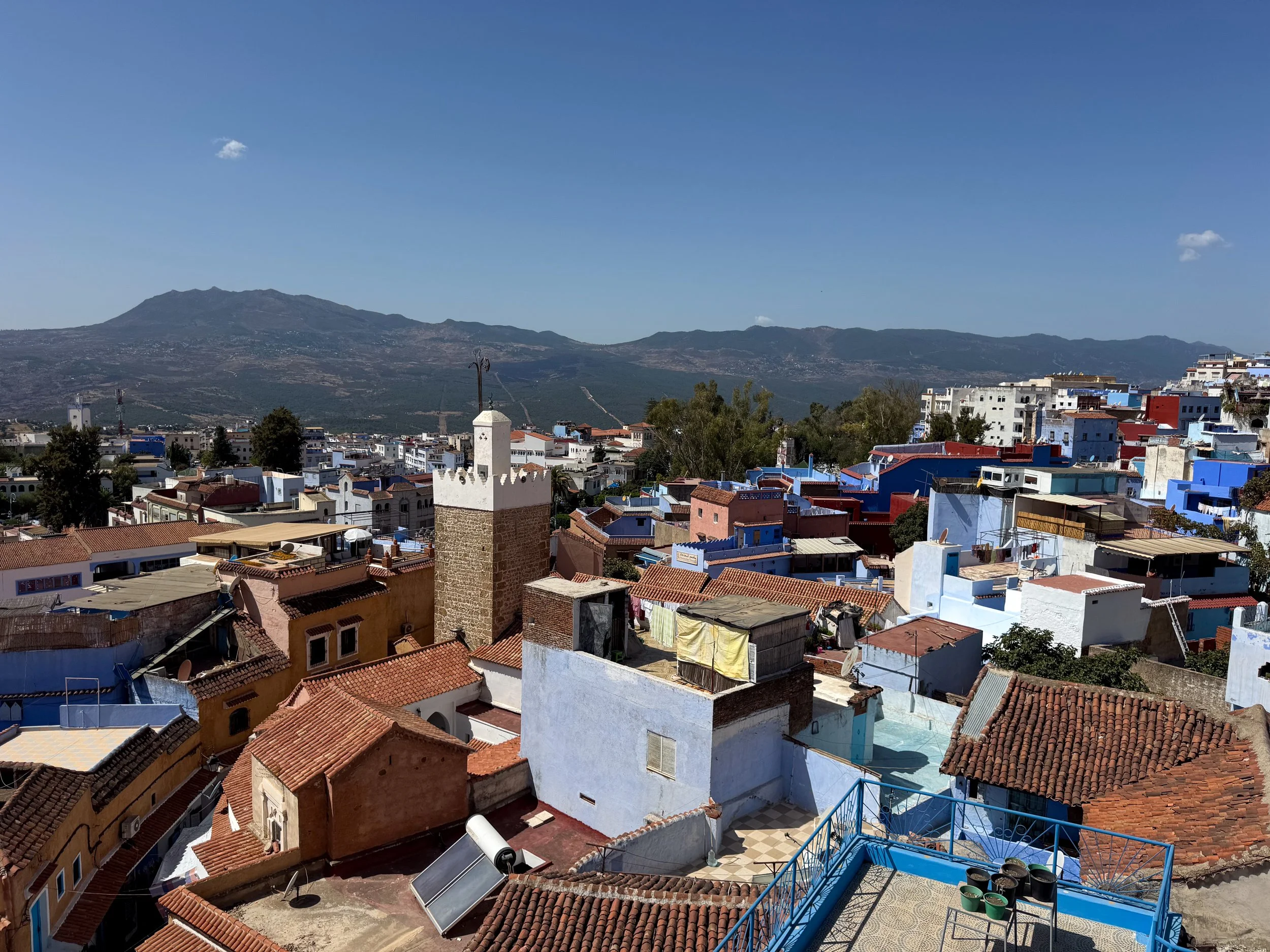
Chefchaouen, known as The Blue City, is famed for its azure and sky blue painted medina. Historic mosques and a medieval kasbah tower above Moorish plazas. Water flows from vividly tiled fountains. Moroccan artisans display handmade crafts along narrow streets. Vendors sell fresh fruit juices to thirsty customers. Stray cats and kittens roam everywhere. Trails lead up rugged hillsides with panoramic views.
The Historic Medina
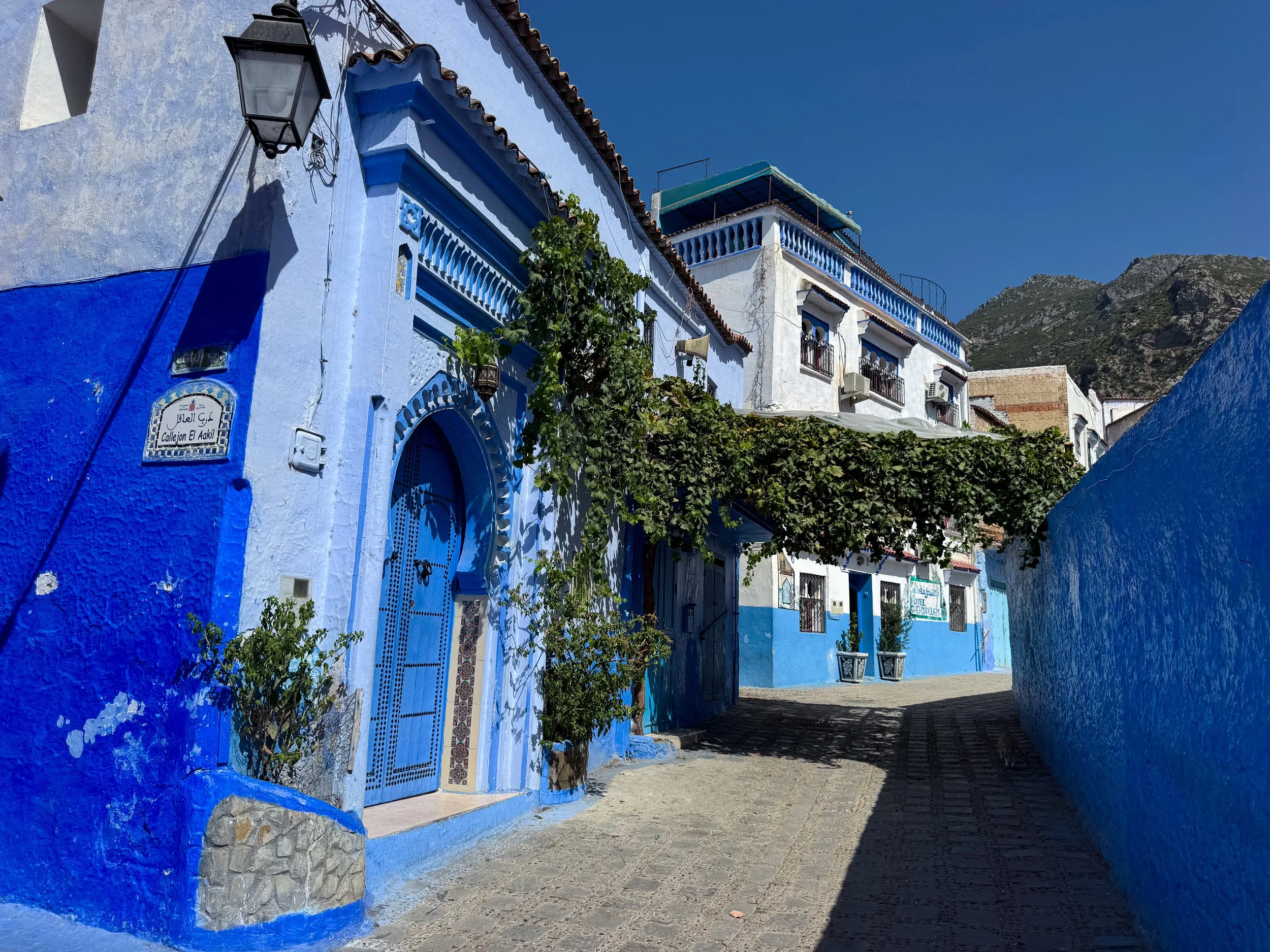
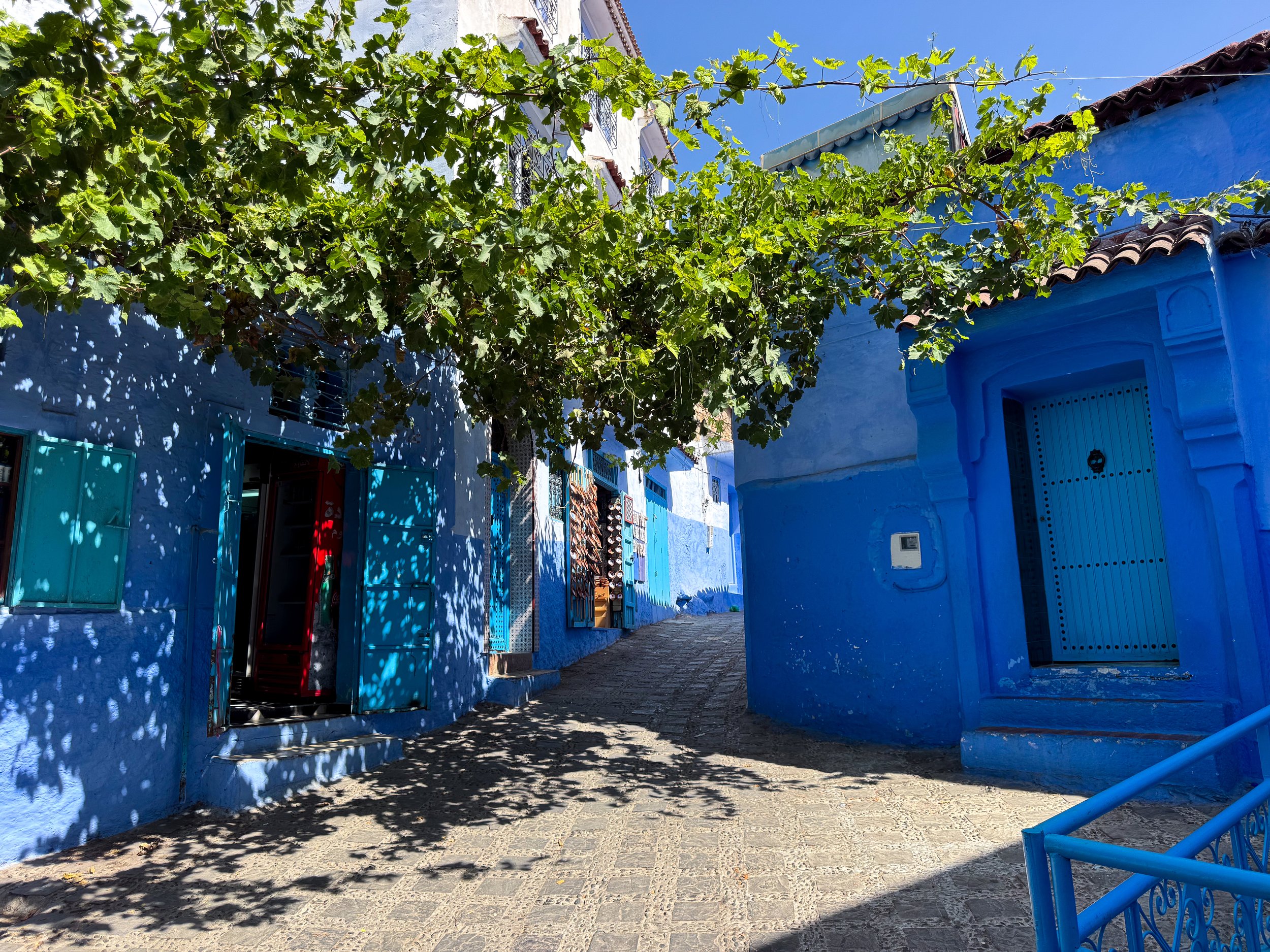
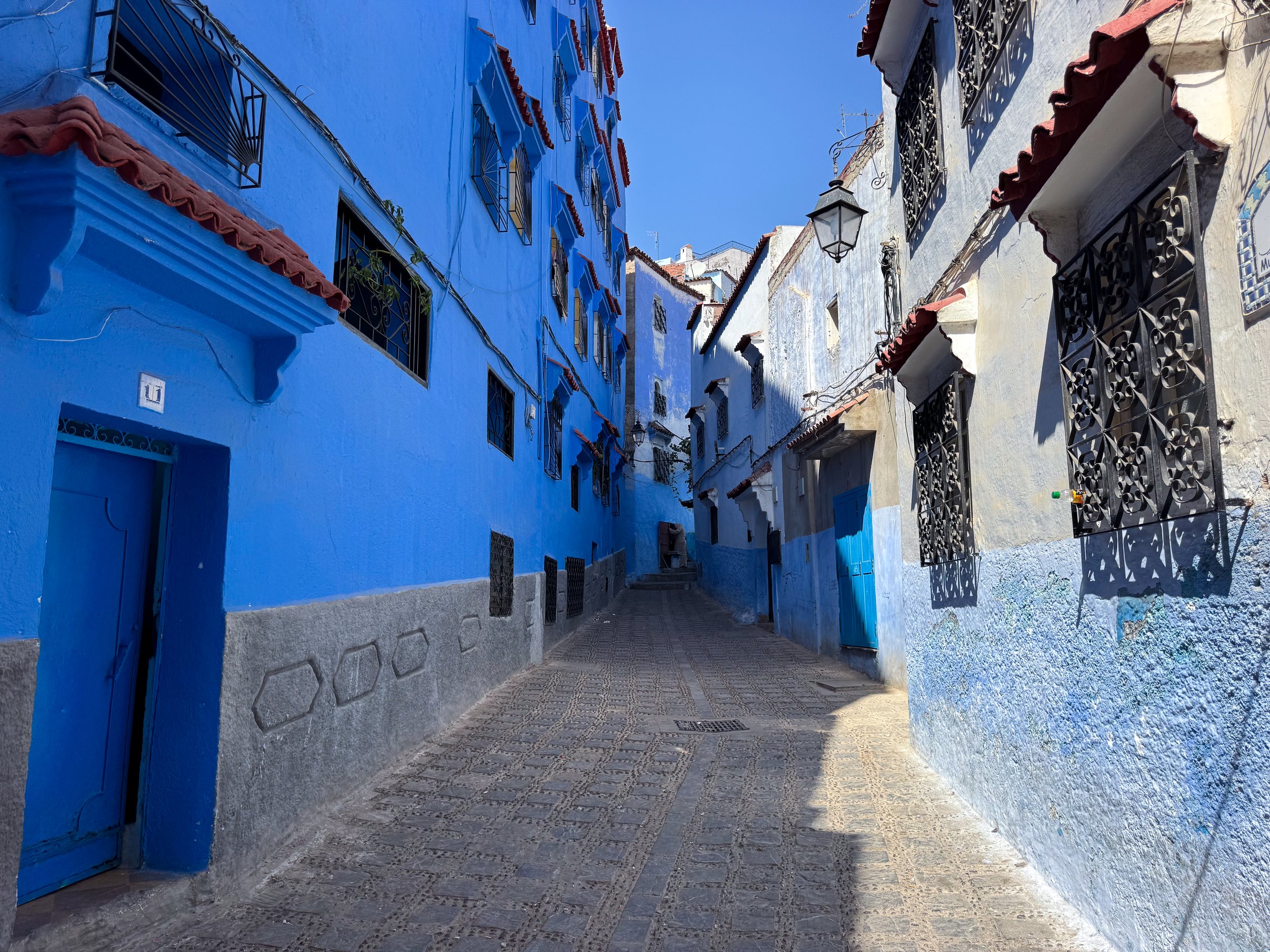
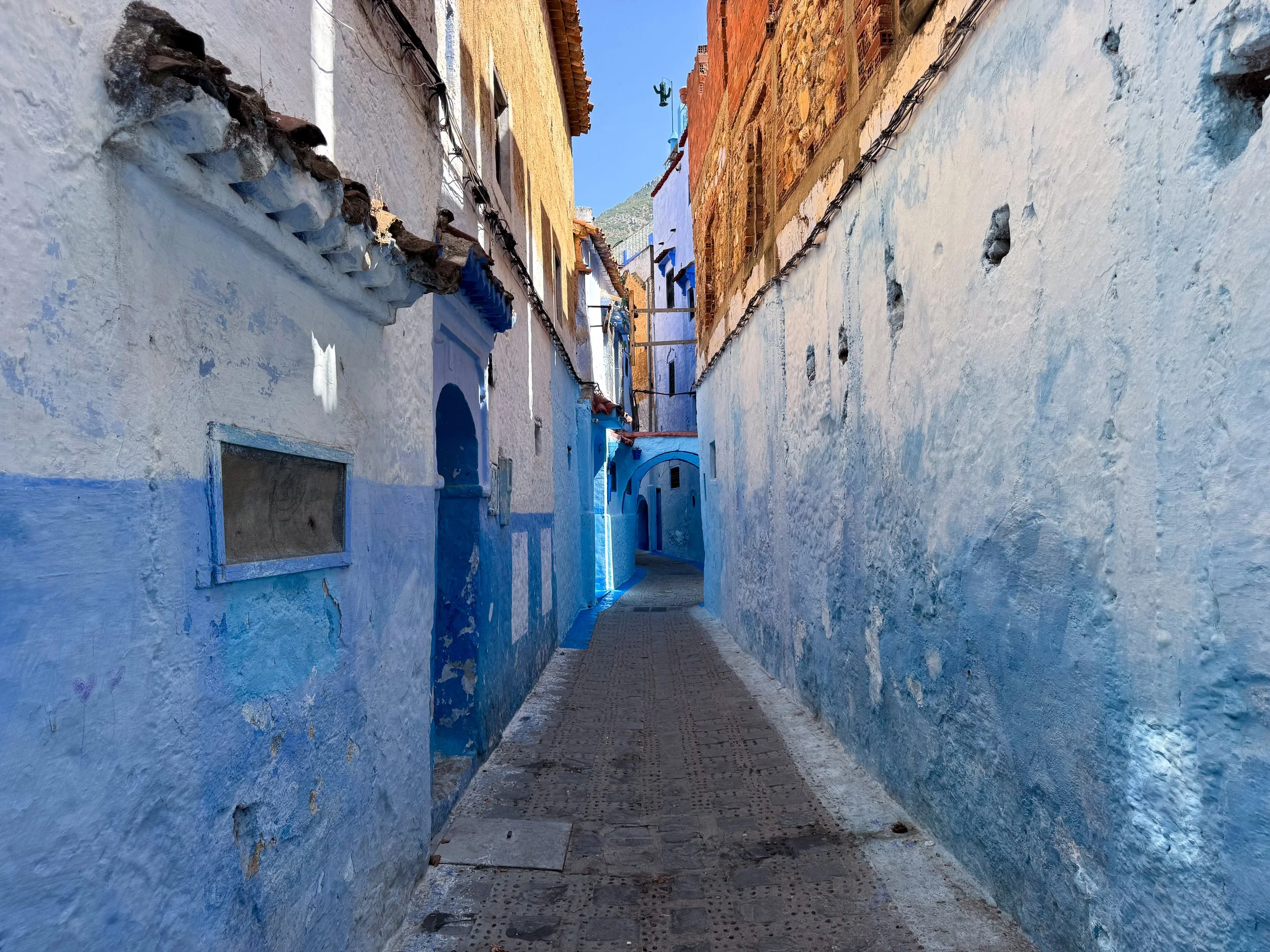
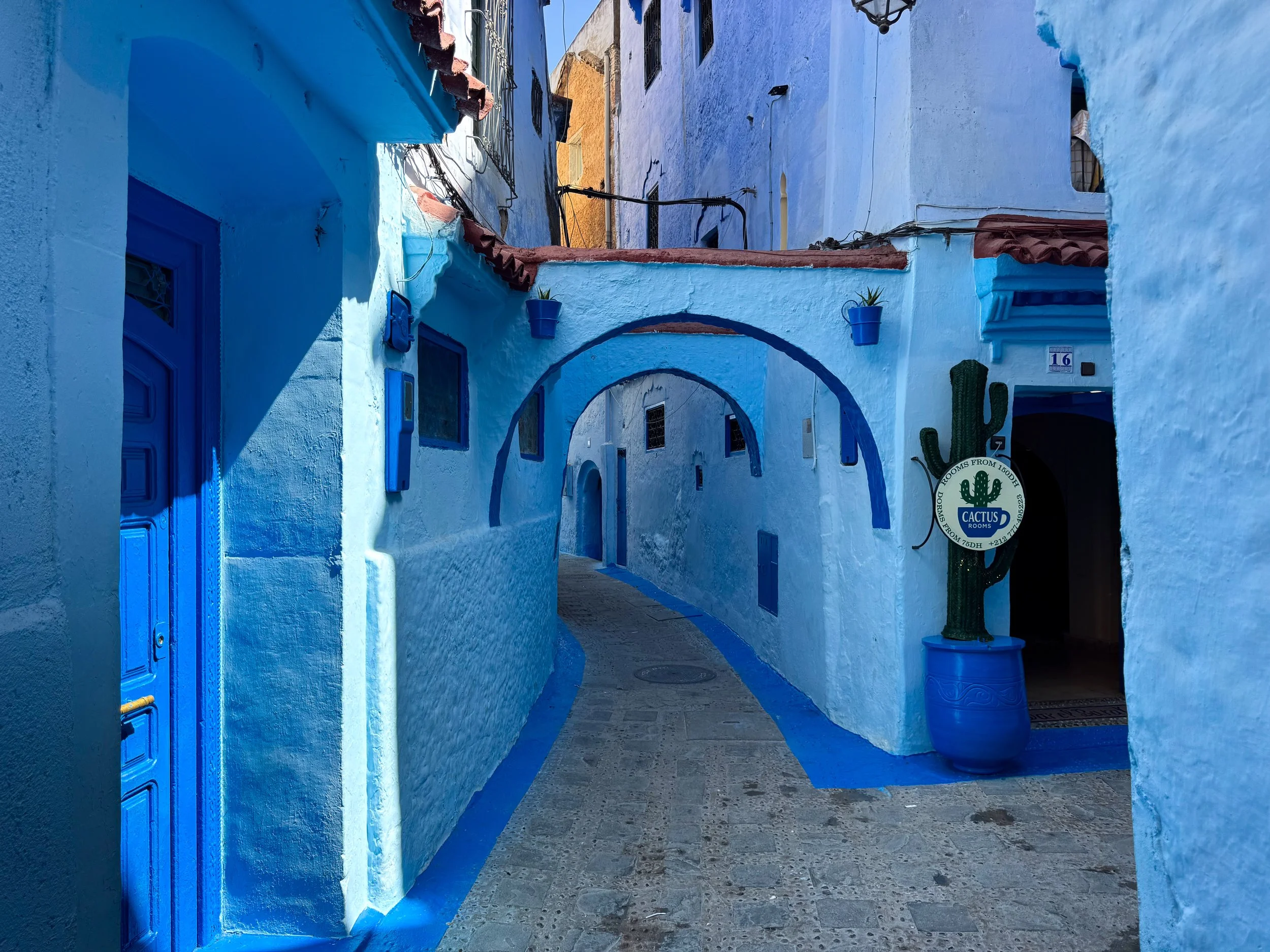
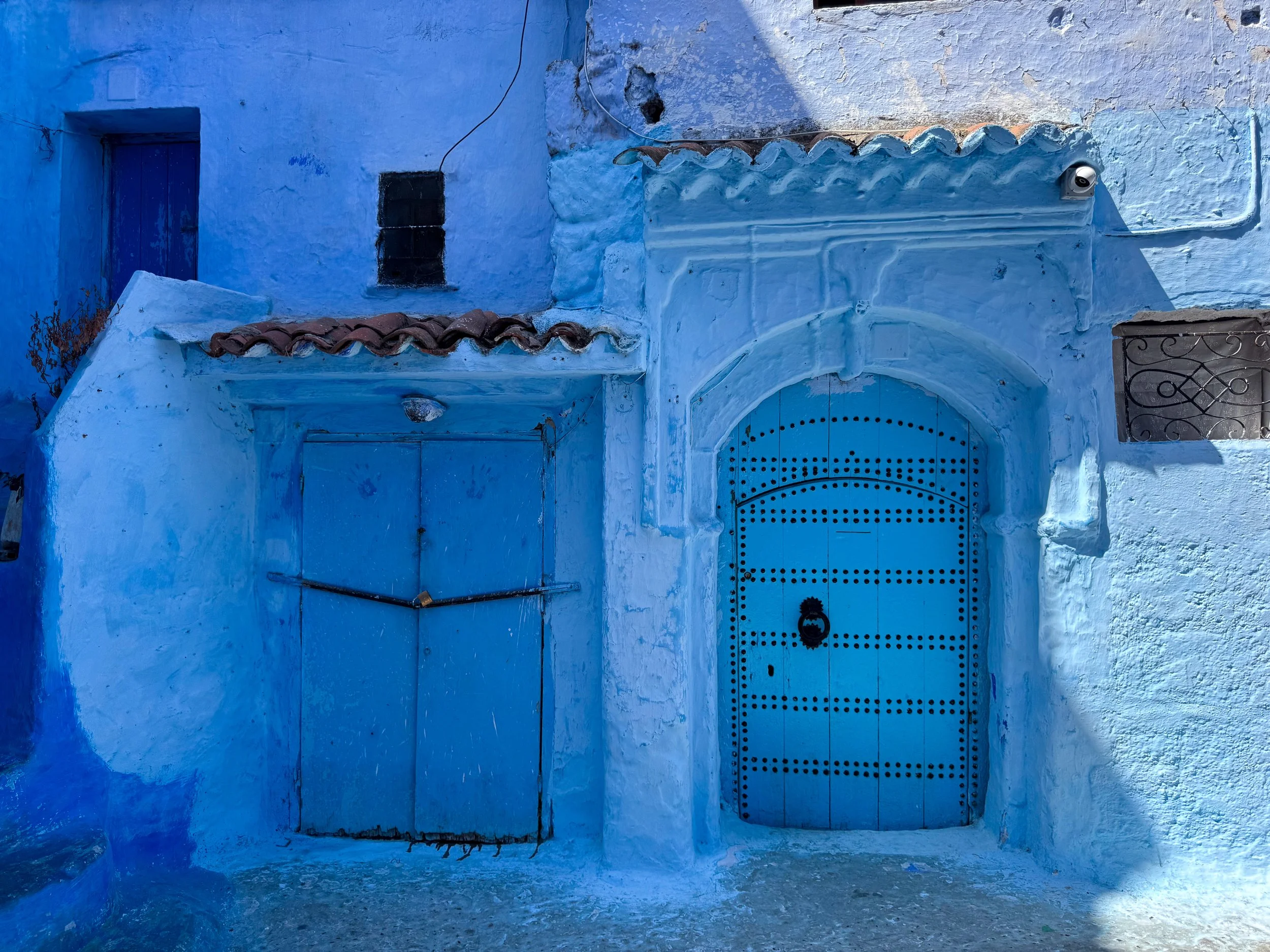
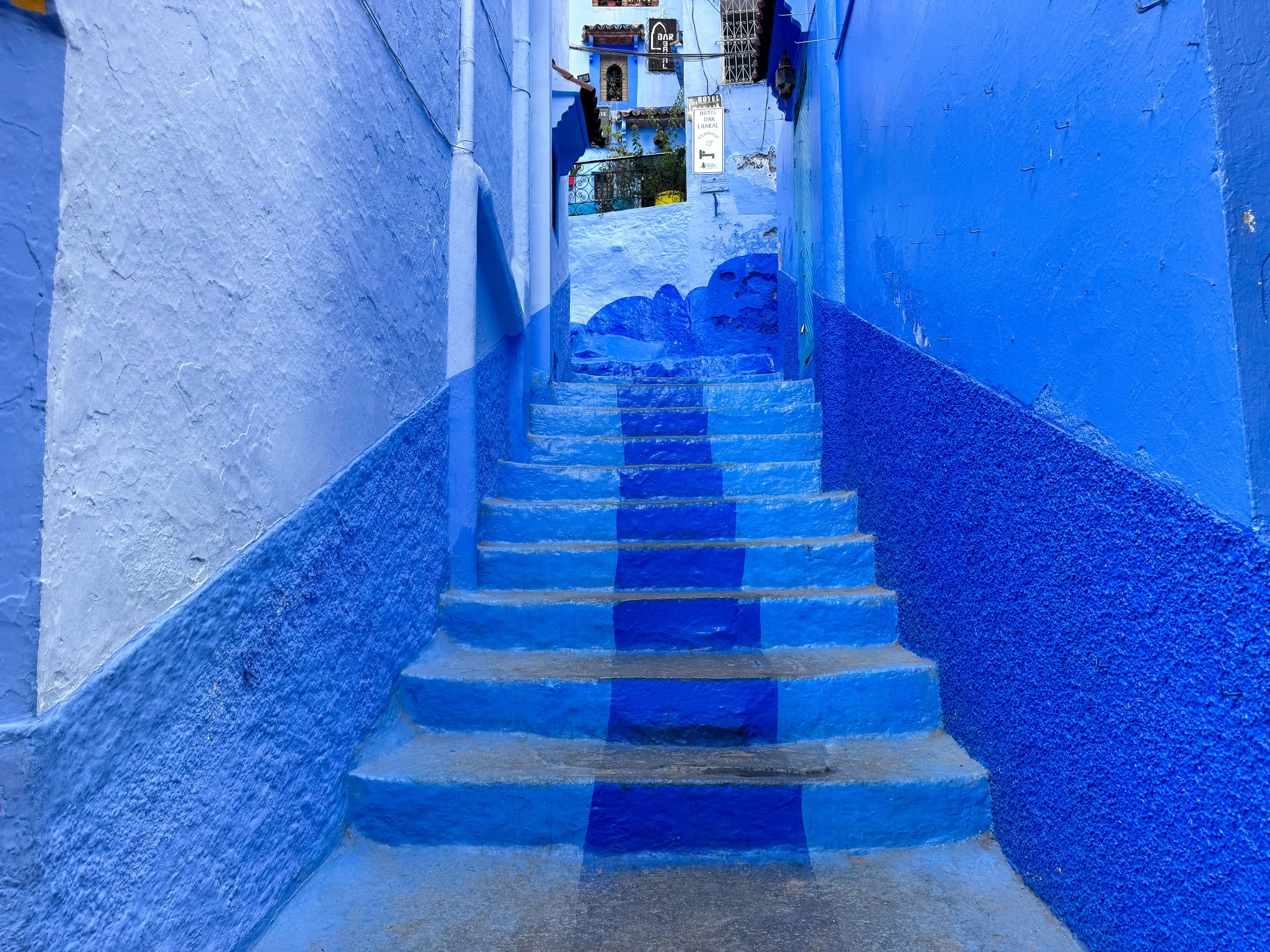
Chefchaouen’s historic medina is the oldest section of the city with the highest concentration of blue painted buildings. Its labyrinth of walkways passes beneath blue colored archways and canopies of leafy grape vines. Cobblestone alleys meander past quiet residences and through lively souks. Picturesque staircases dead end at cobalt hued doors. The medina is truly a photographer’s dream.
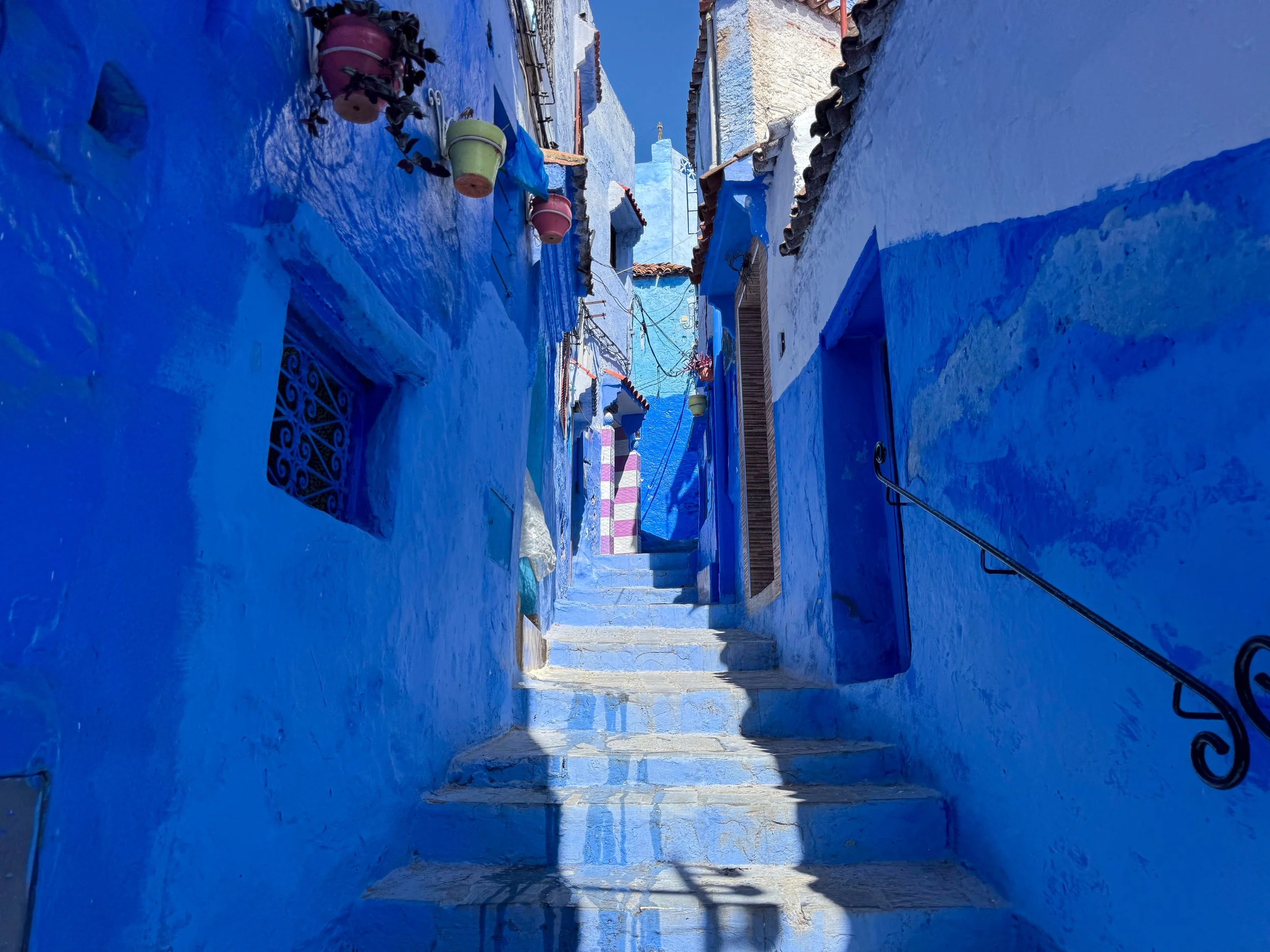
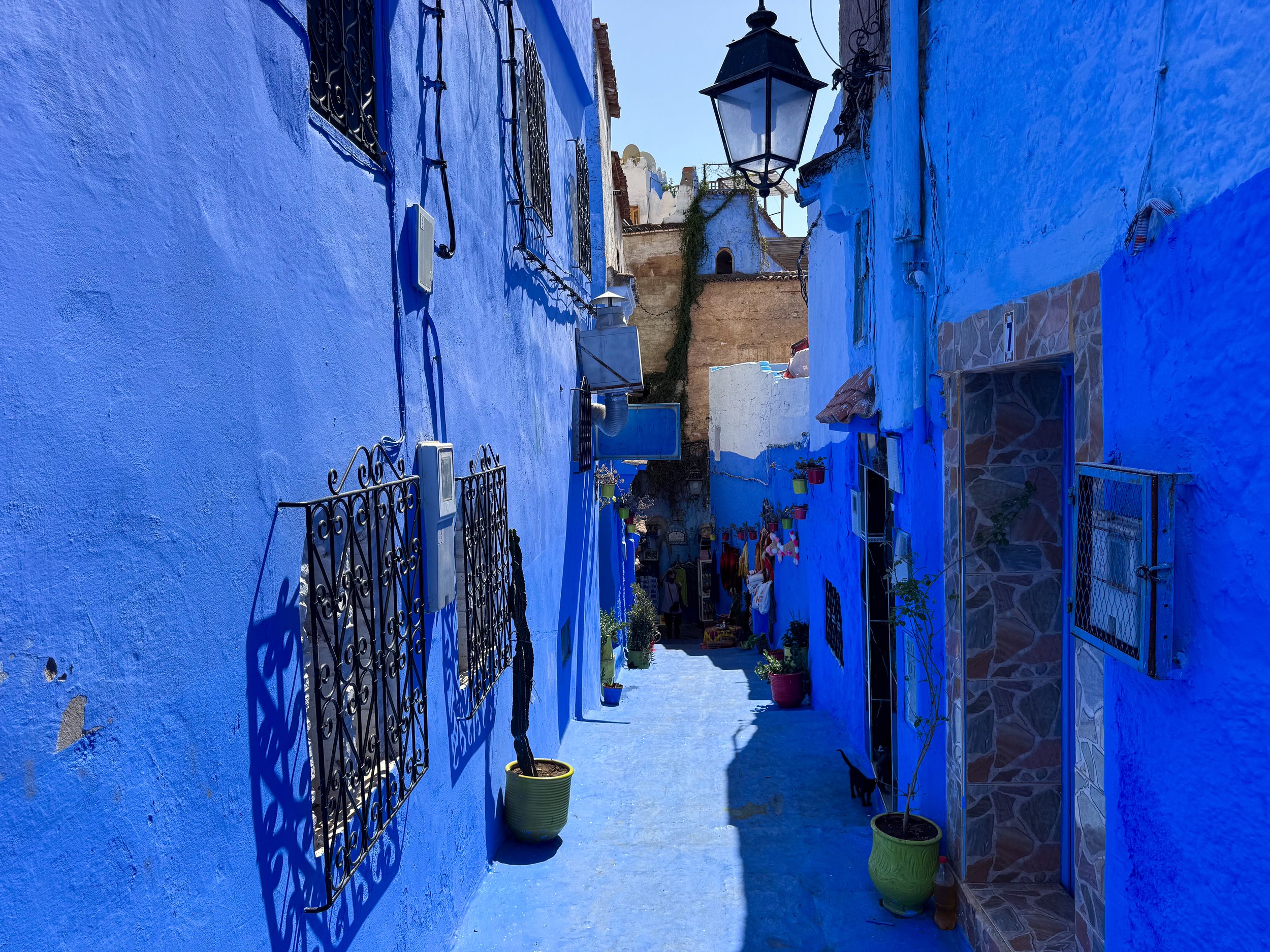
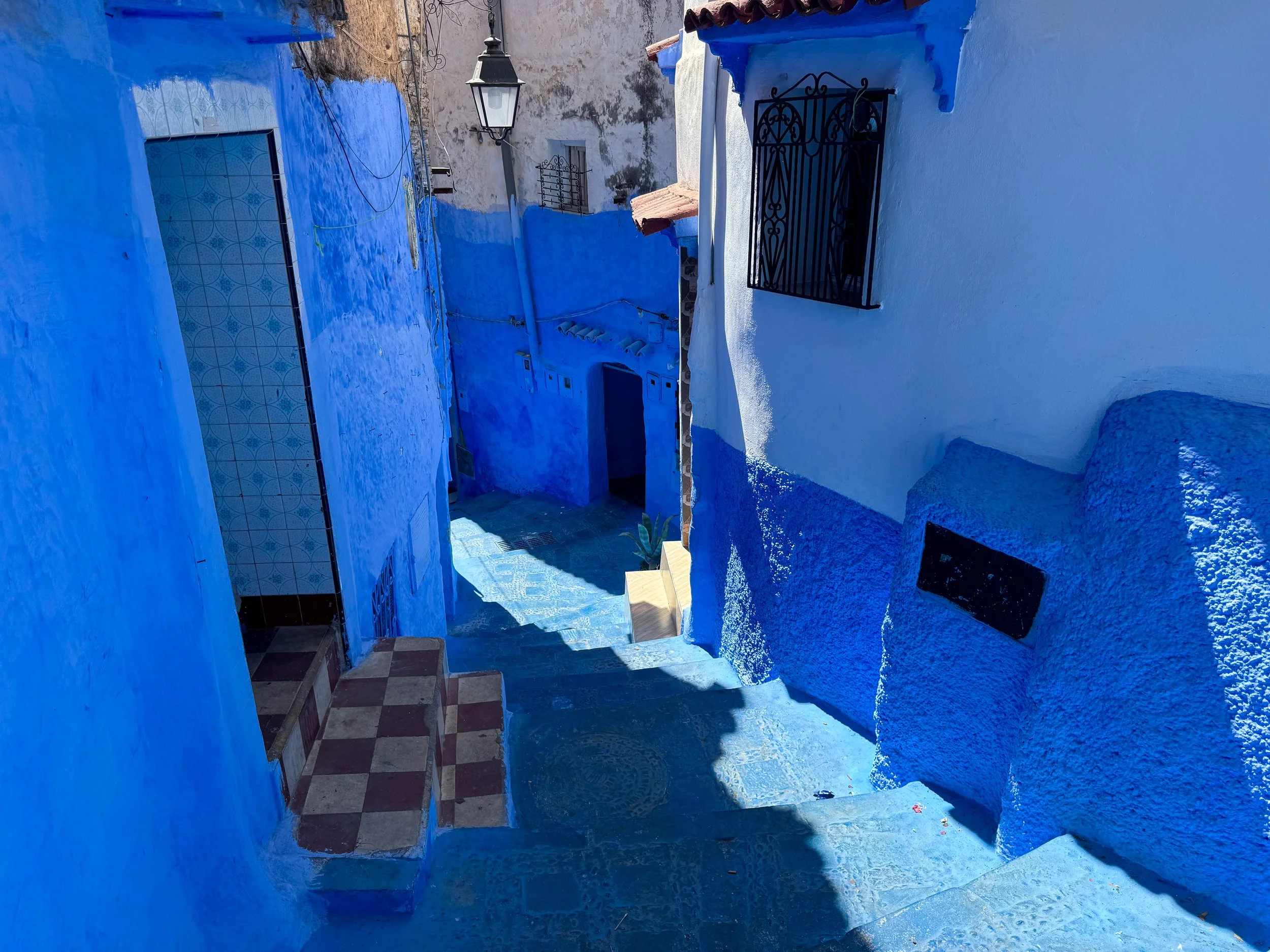
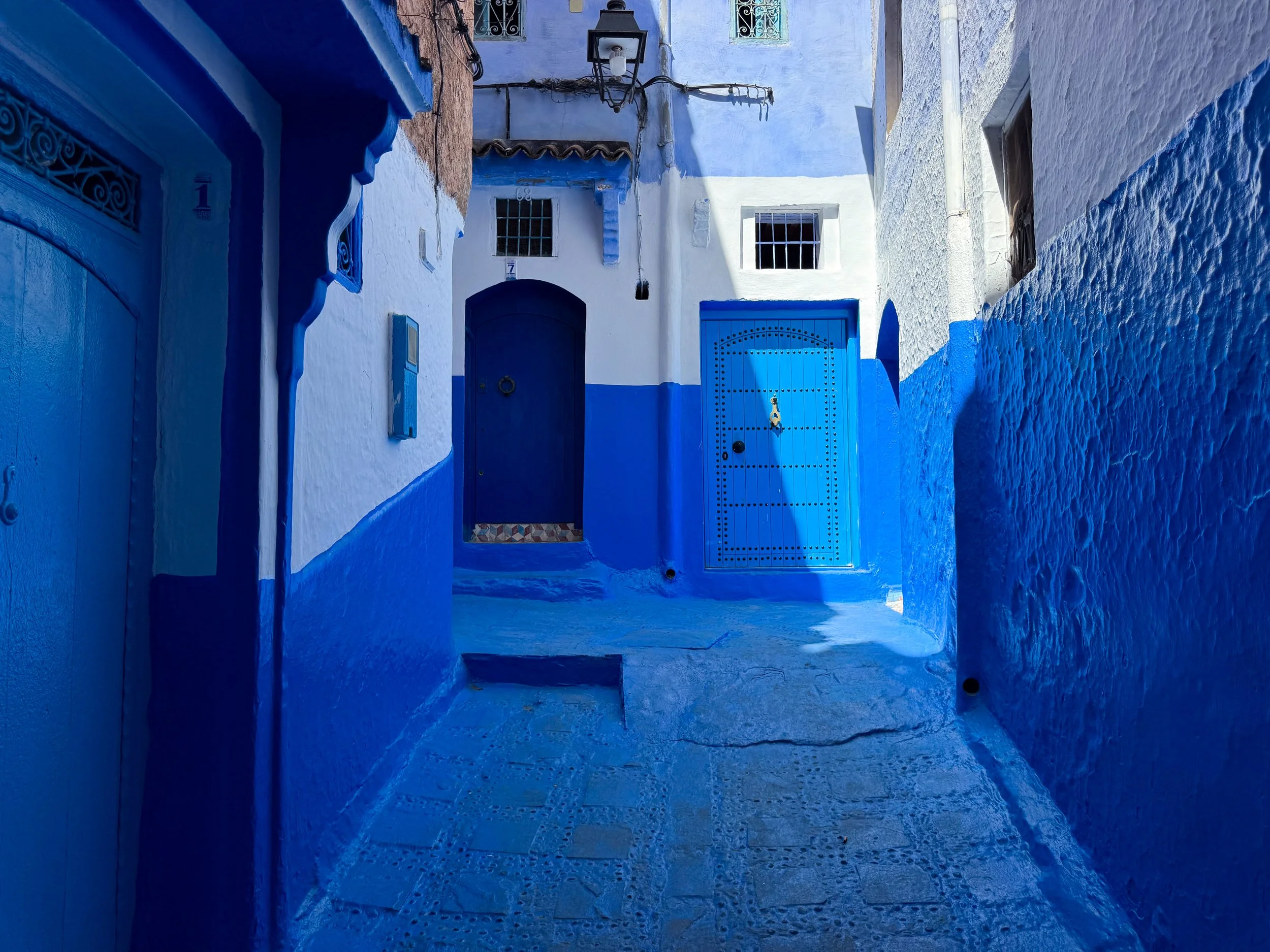
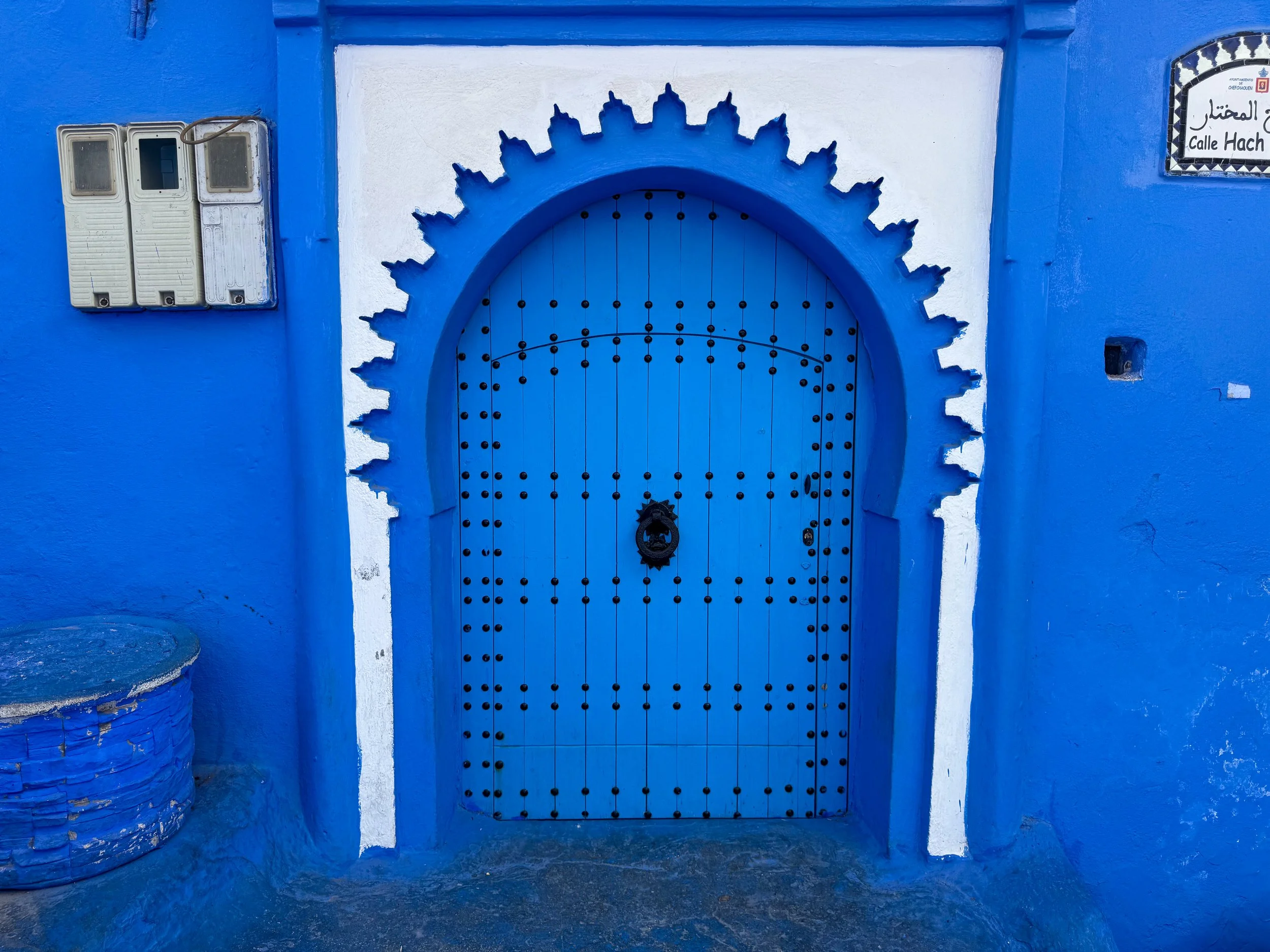
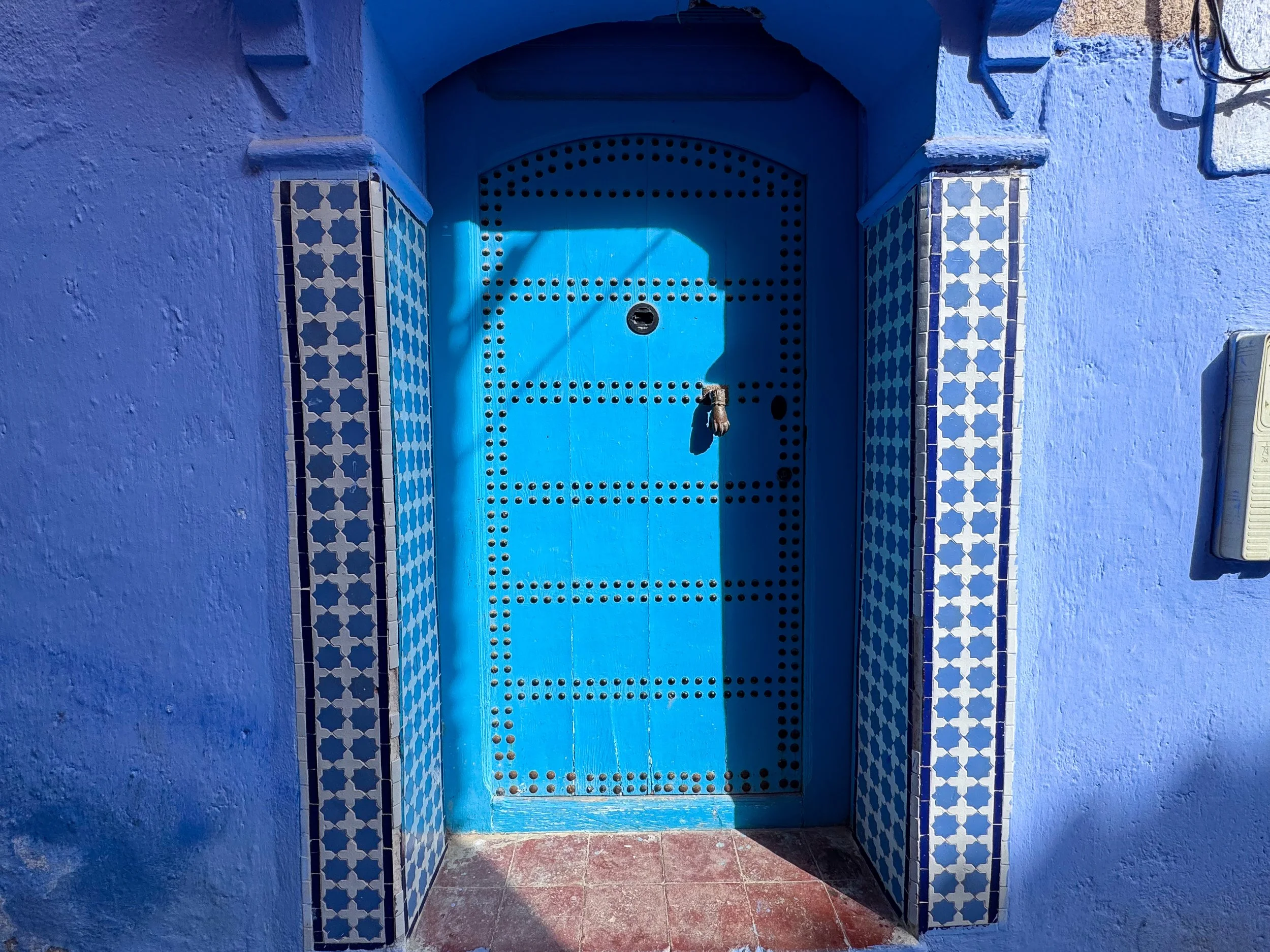
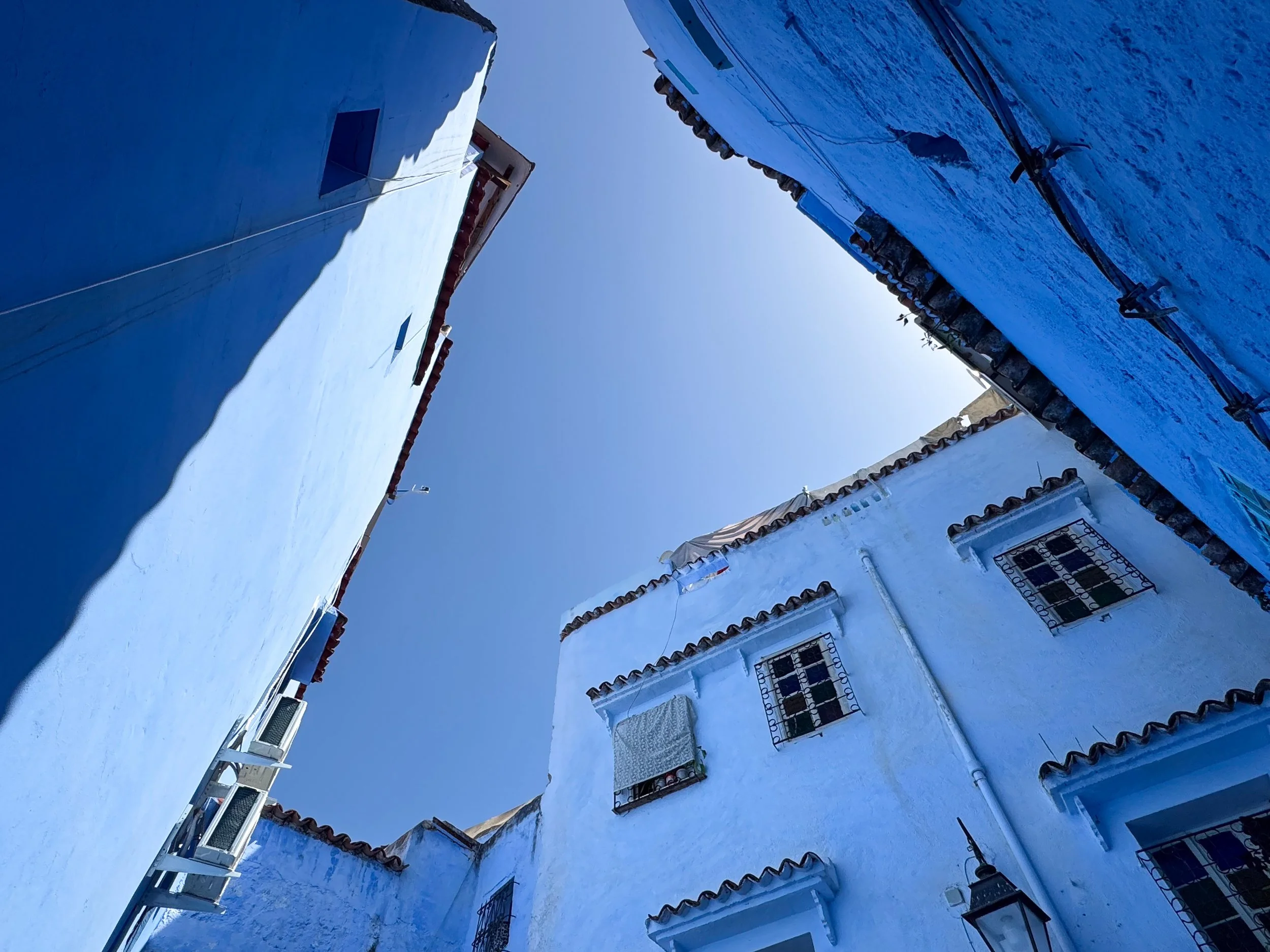
Callejon El Asri. One of the most vibrantly blue colored streets in the medina. Picturesque staircases with and narrow alleyways branch off on both sides as it meanders through the town.
Rue Ibn Asskar. A blue street weaving through the center of the medina along a series staircases, of arched walkways, decorated staircases, tiled fountains and artisan vendors.
Rue Imman Chadili. A souk street with blue painted walls covered in colorful decor, baskets, clothes, ceramics and woven goods.
See the Sights
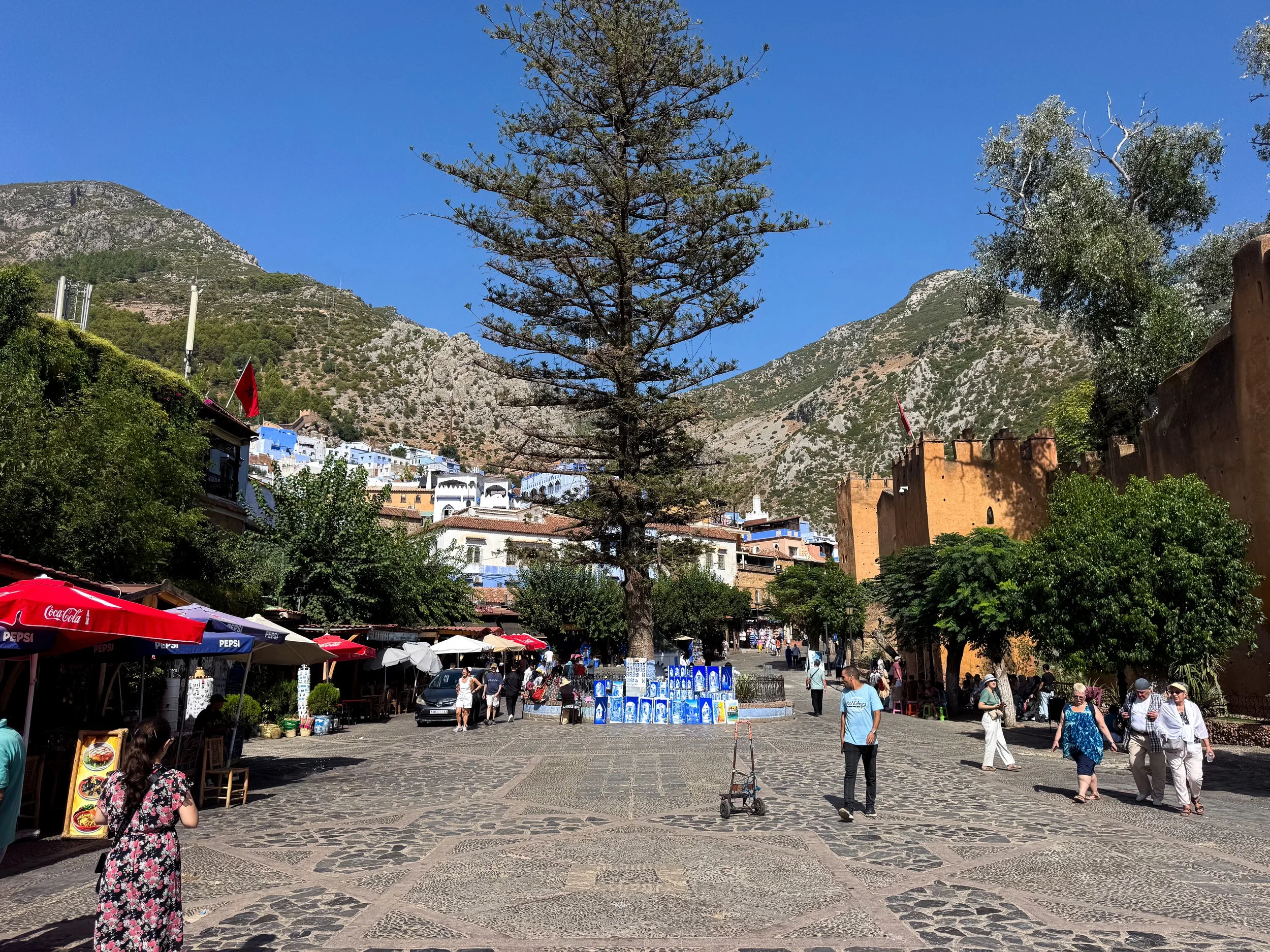
Plaza Uta el Hamman. A cobblestone plaza lies at the heart of the medina, framed by tree covered buildings and historic landmarks. Serving as the main hub for sightseeing, dining, and shopping, it features a Moorish fountain at its center, with the Grand Mosque and the Kasbah flanking one side. Restaurants, cafes, and shops line its perimeter, while narrow streets and walkways branch out in all directions.
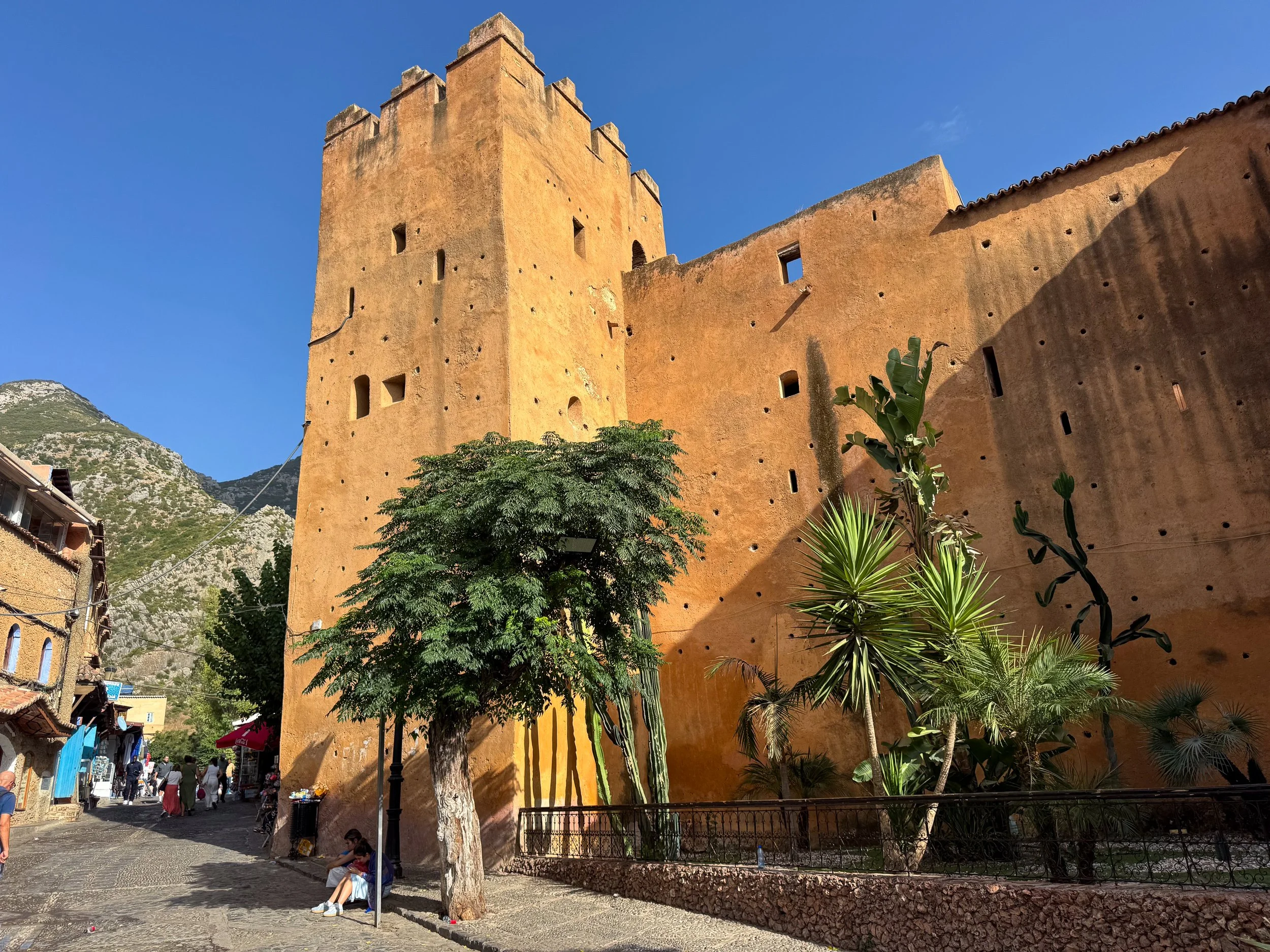
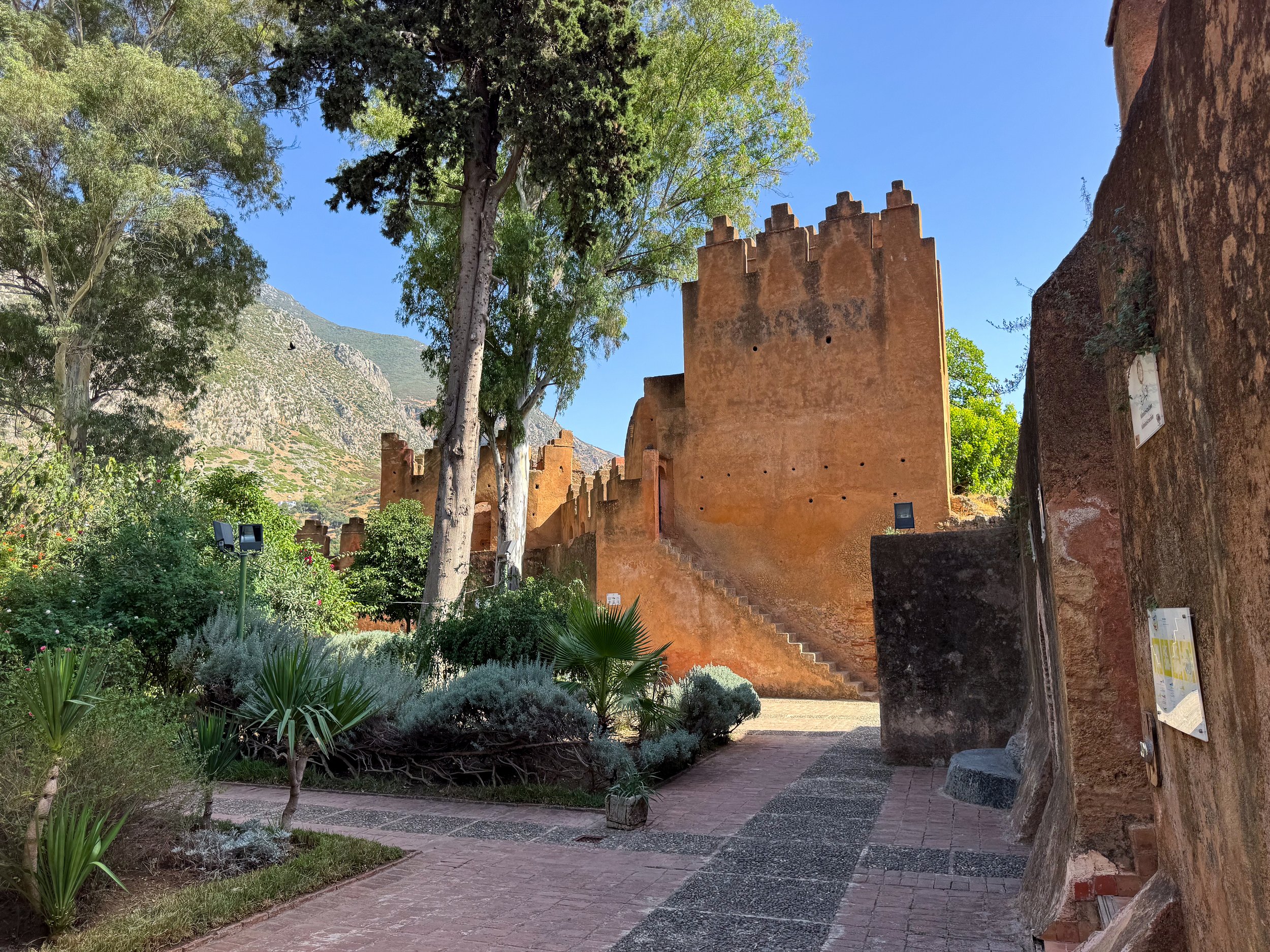
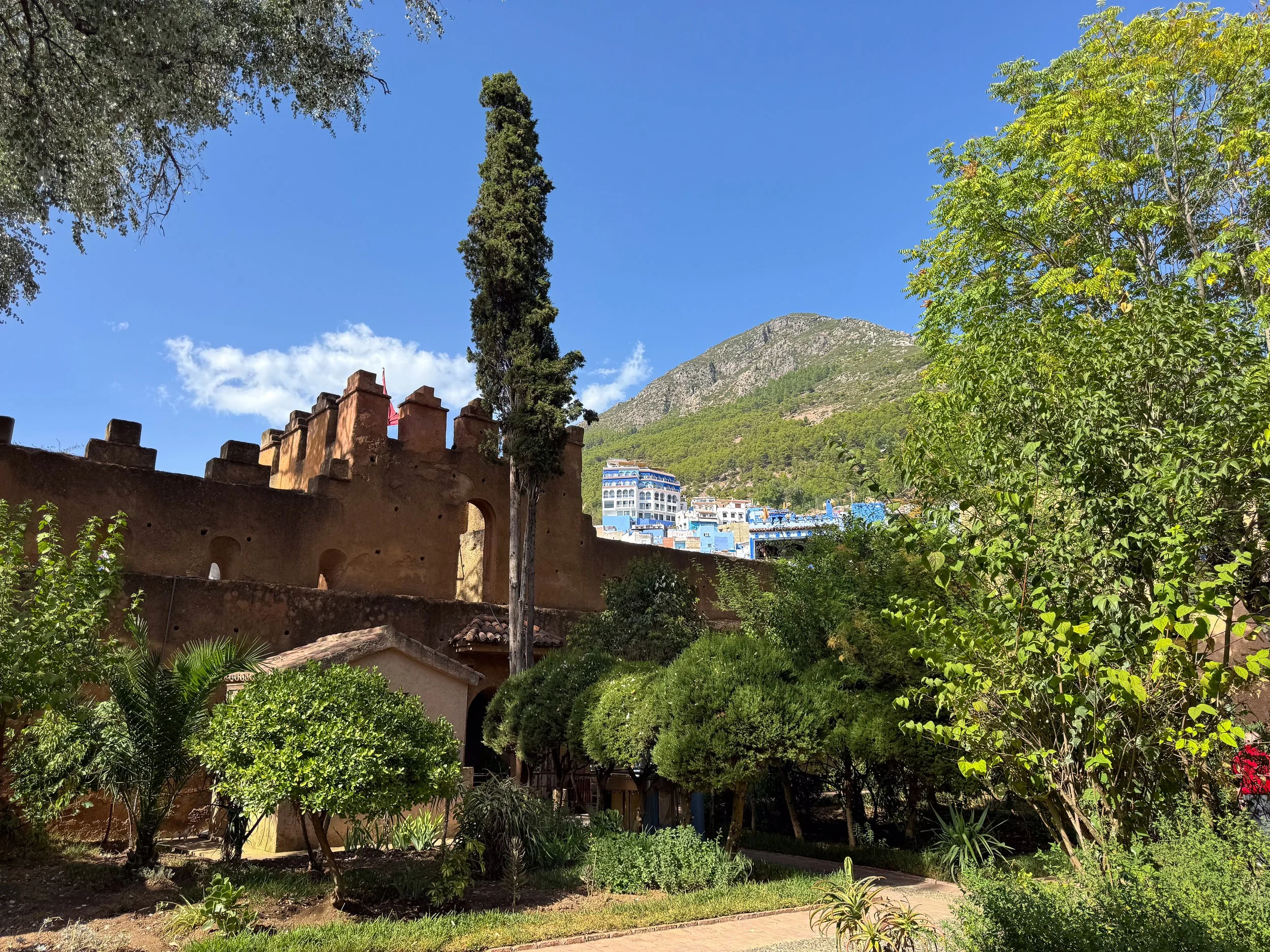
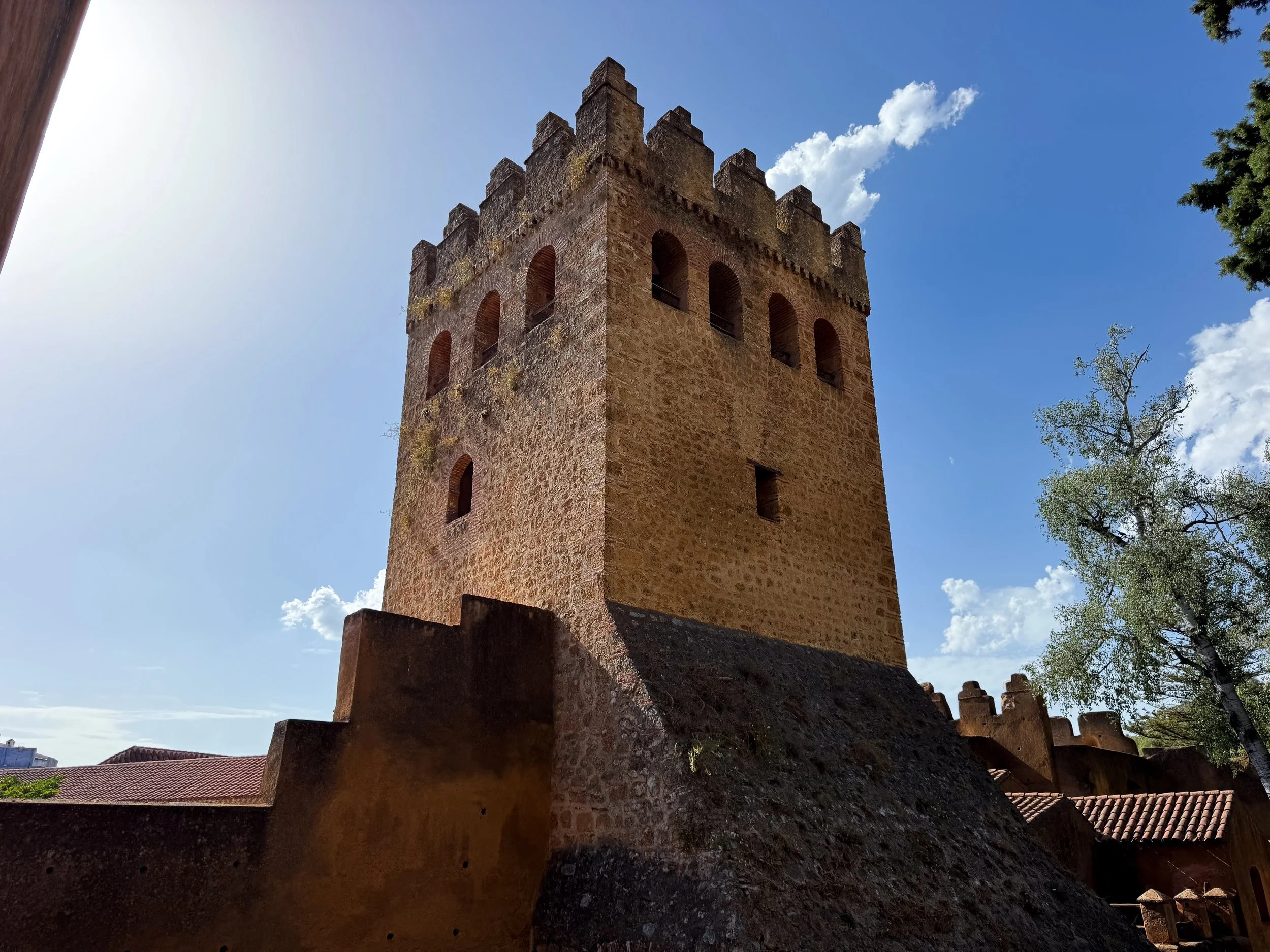
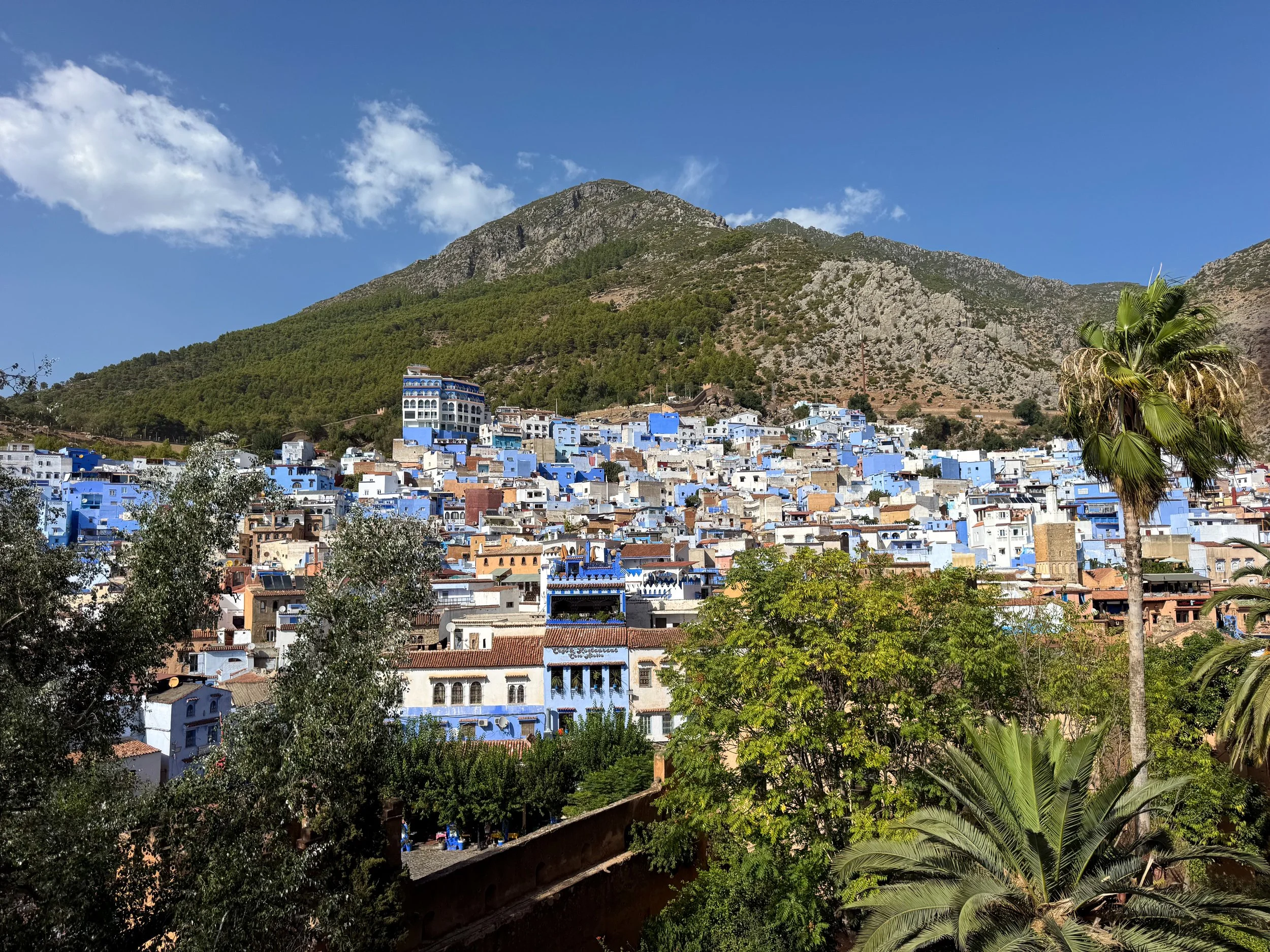
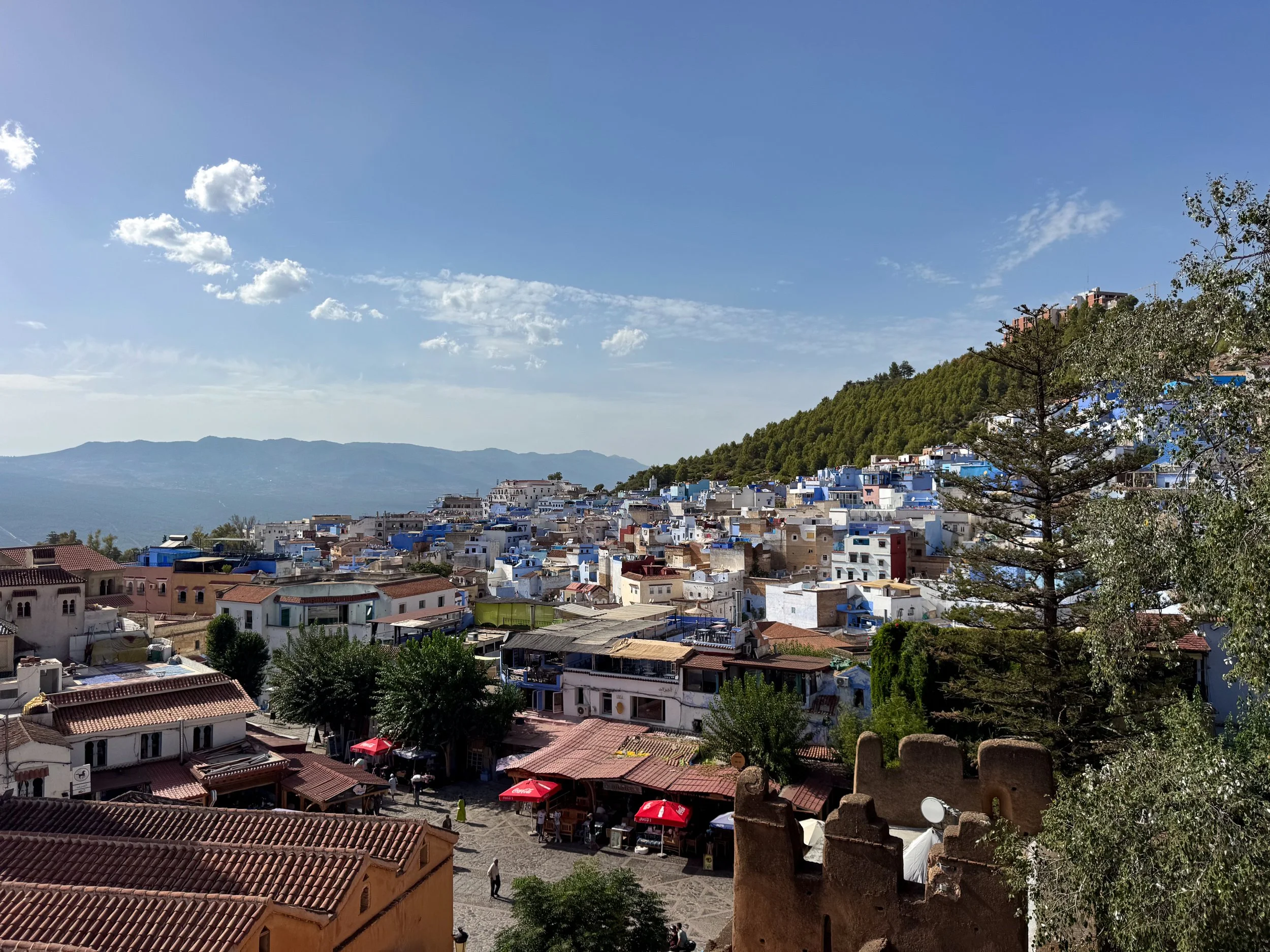
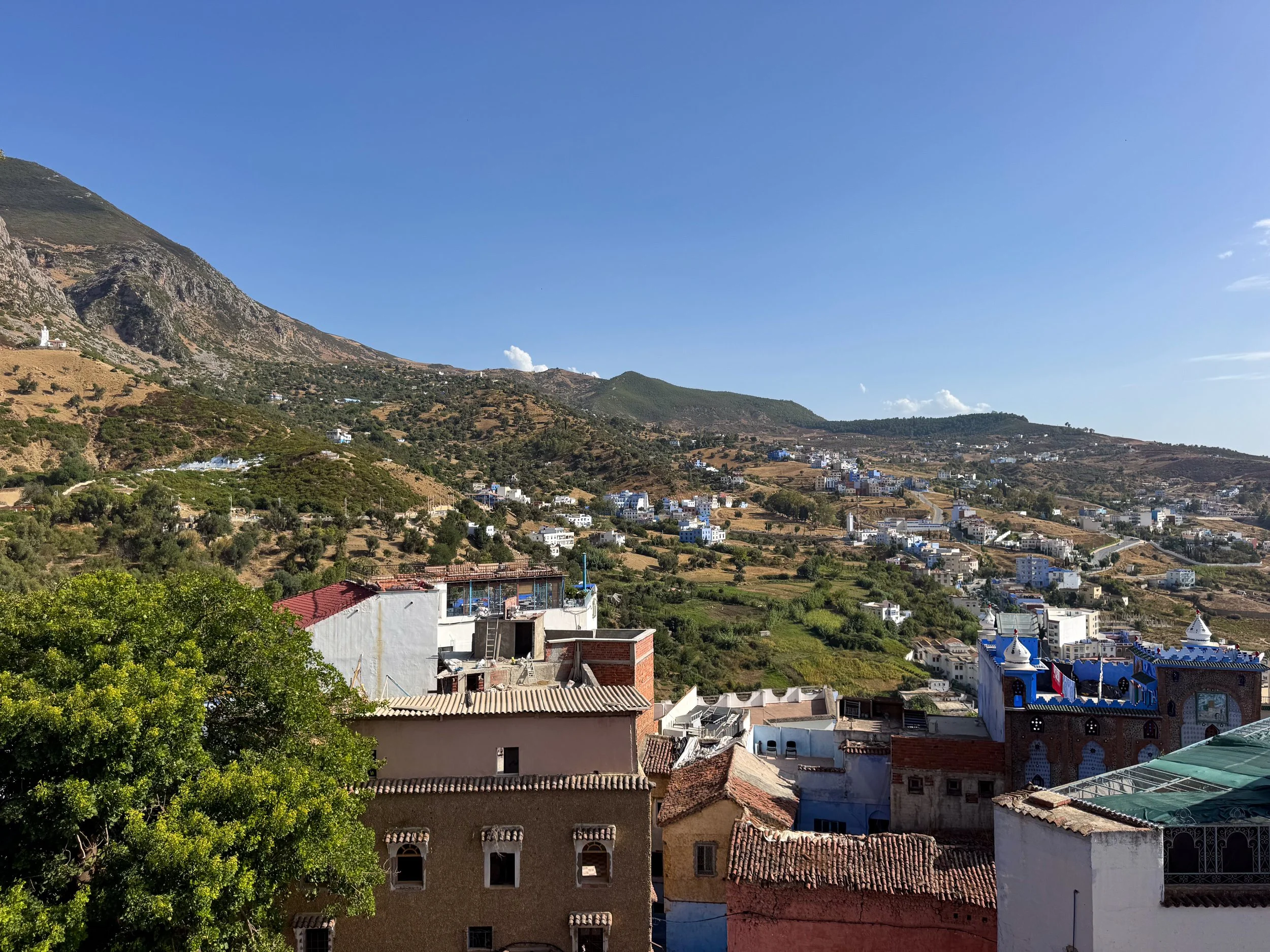
The Kasbah. A medieval fortress stands at the center of the medina. It’s defined by sand colored adobe walls, battlement towers, former prison and lush courtyard garden filled with palms, cacti, and diverse plant life. One of its towers houses a museum showcasing traditional Moroccan plaster, tile, and woodwork. The upper levels of another provide sweeping views of the blue city and forested hillside.
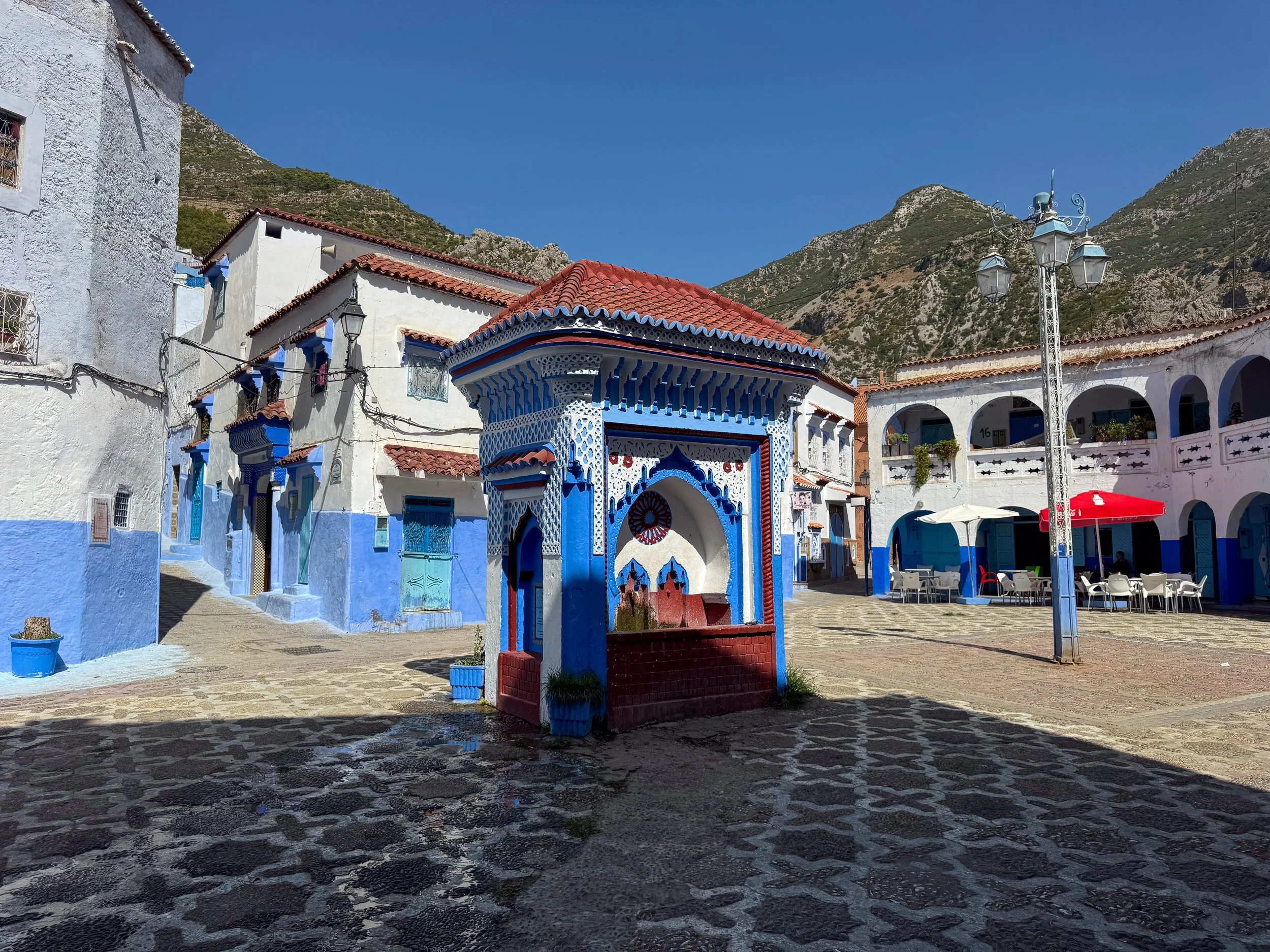
Place El Haouta. A stone paved plaza in the medina centered on a small yet ornate Moorish style fountain. It’s surrounded by blue and white painted buildings topped with terracotta roofs. Intimate cafes and shops line is perimeter offering scenic views of the rugged mountainside.
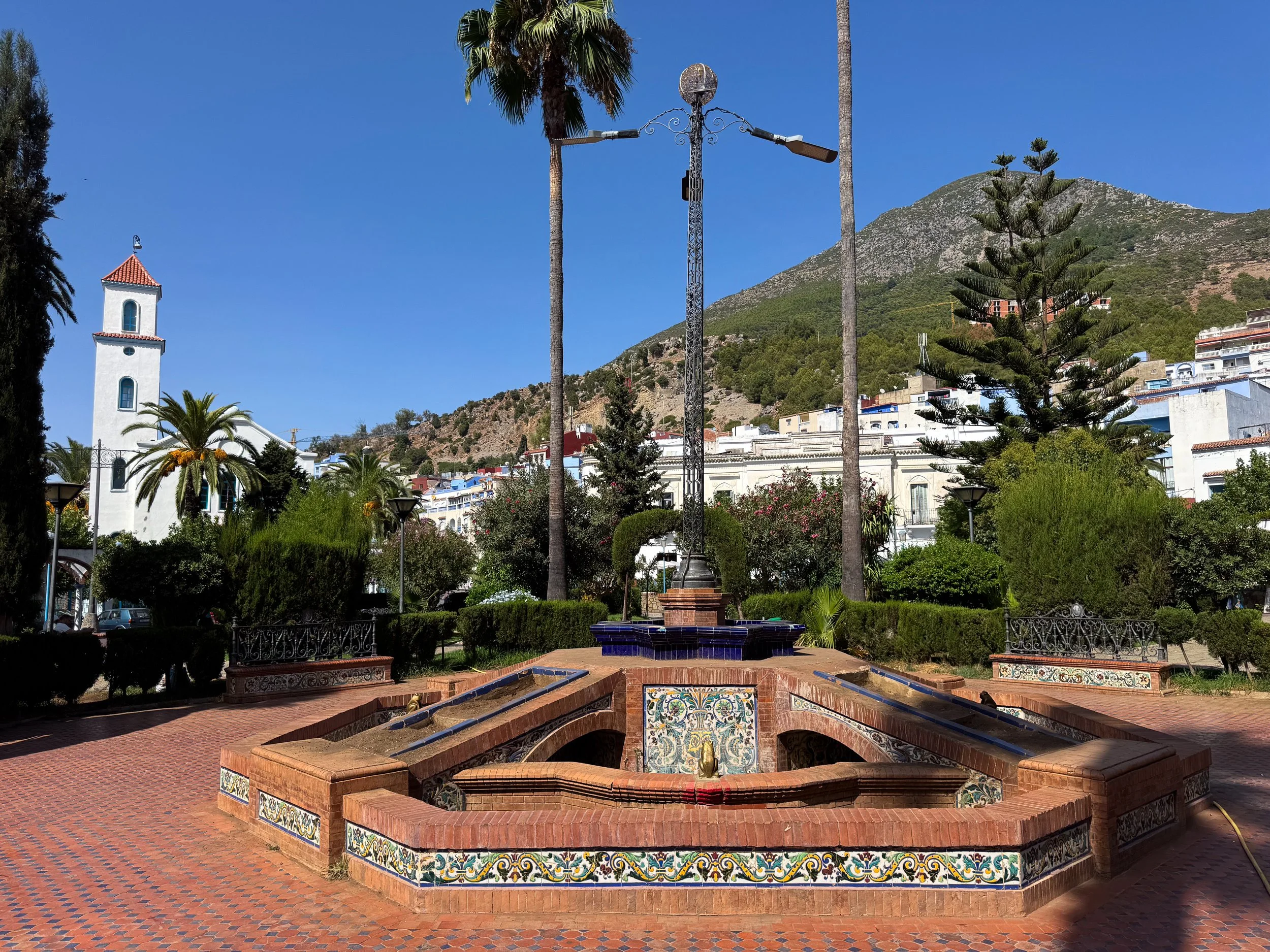
Plaza Mohammed V. Just outside the medina, a circular plaza provides a tranquil place to rest and views of historic buildings. It features brick and Spanish-tiled fountains and benches. Lush flower beds and verdant trees grow amid grassy lawns. Visitors can walk beneath grapevine covered pergolas and sculpted bushes.
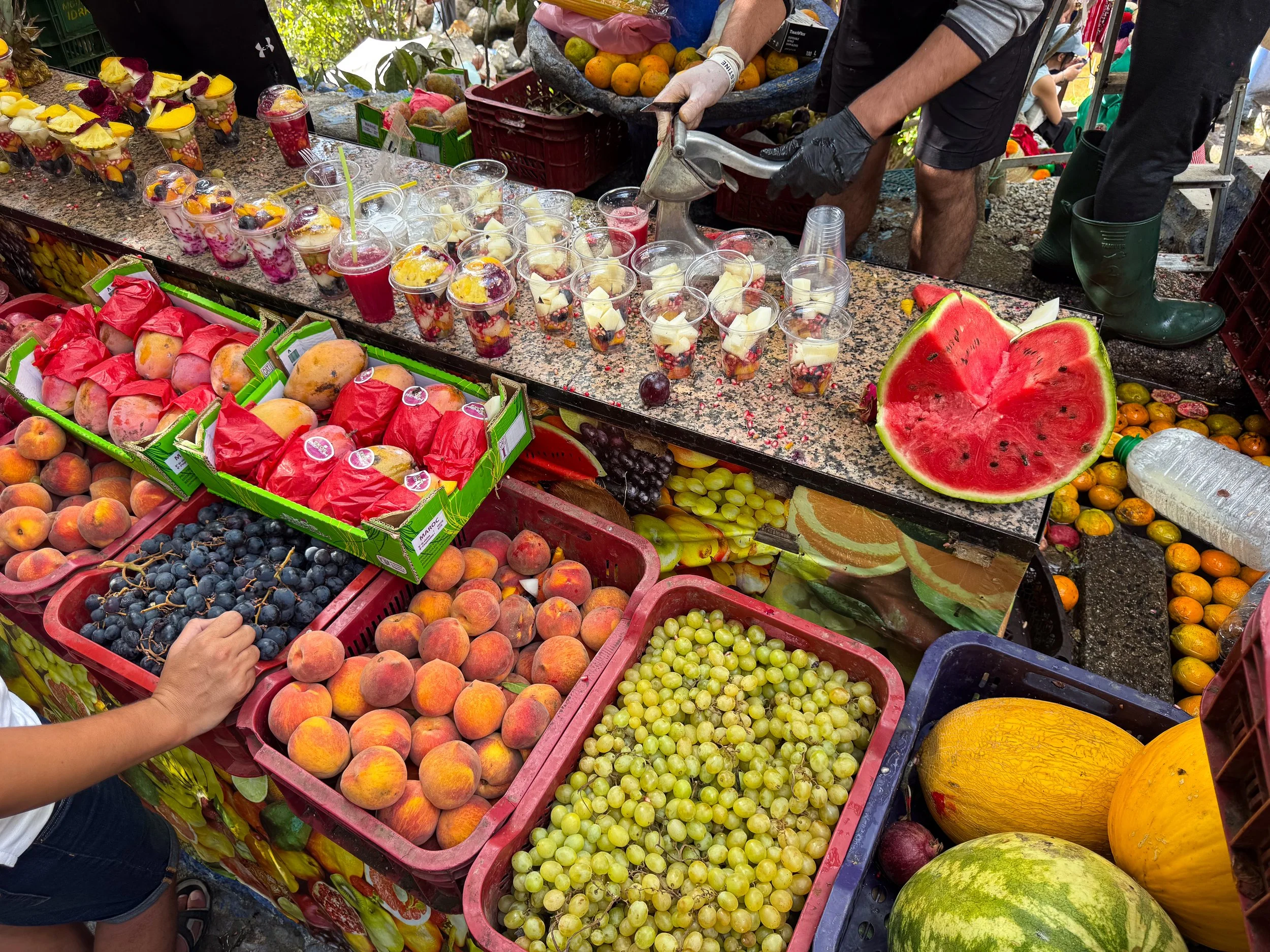
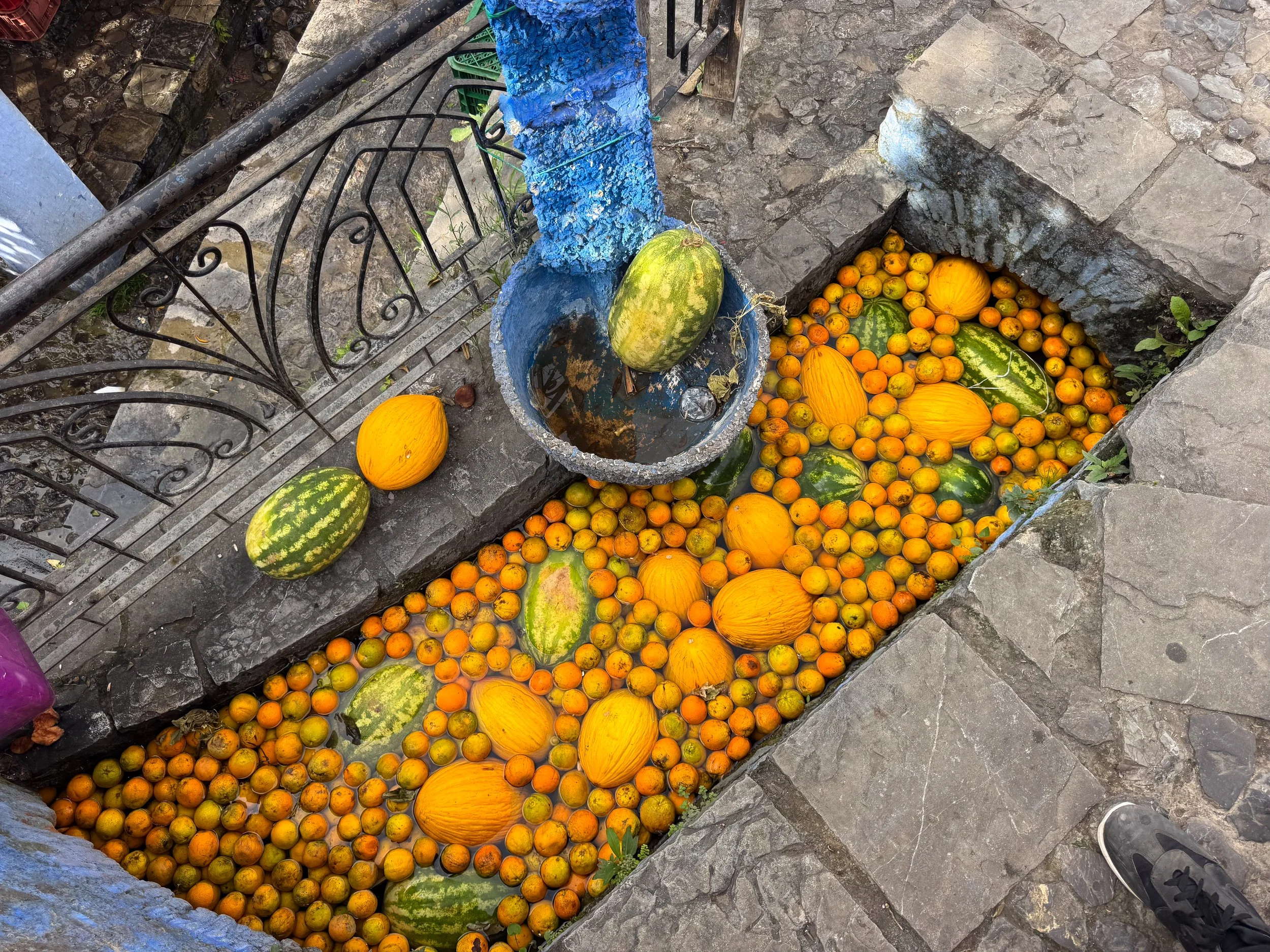
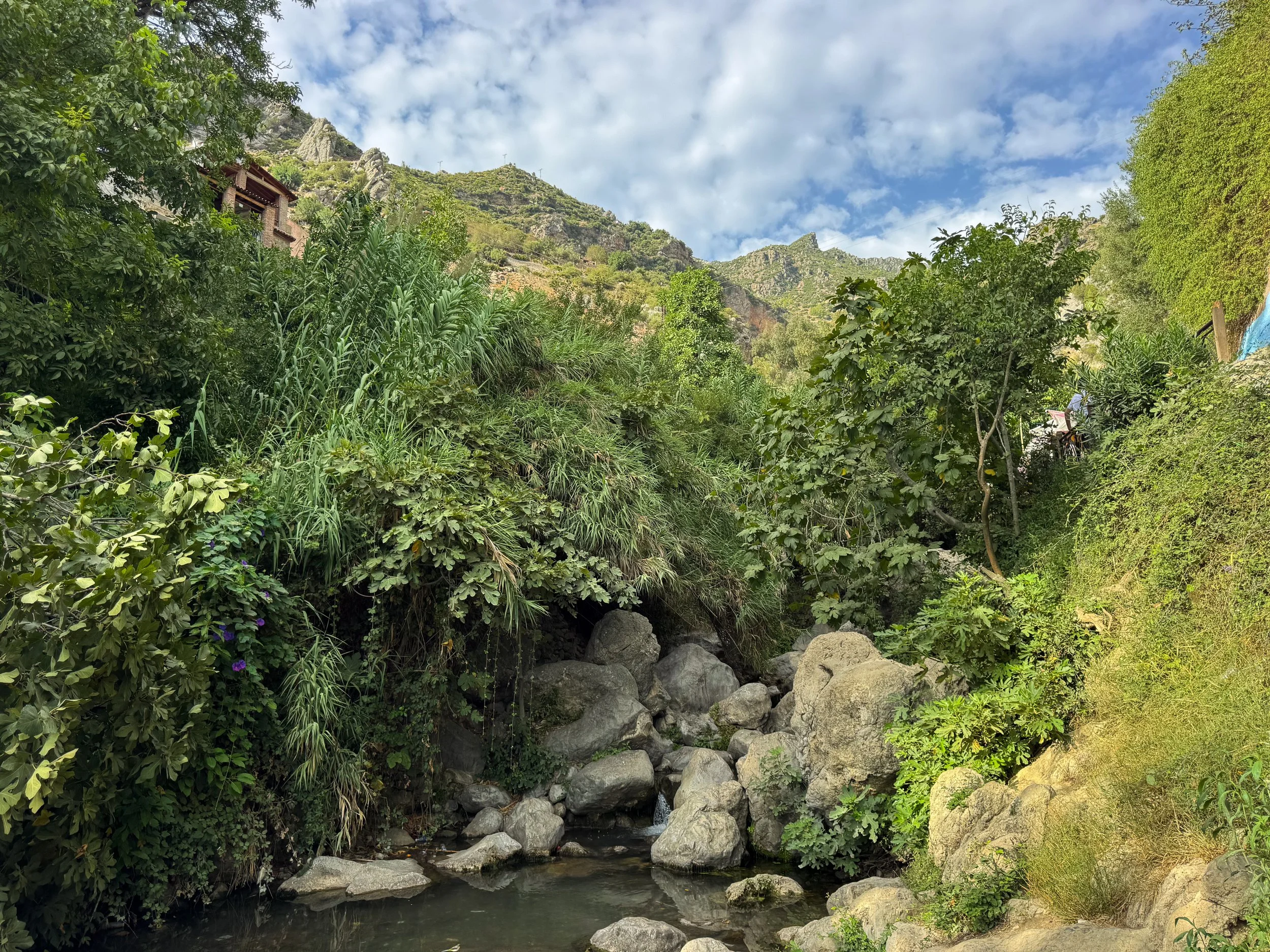
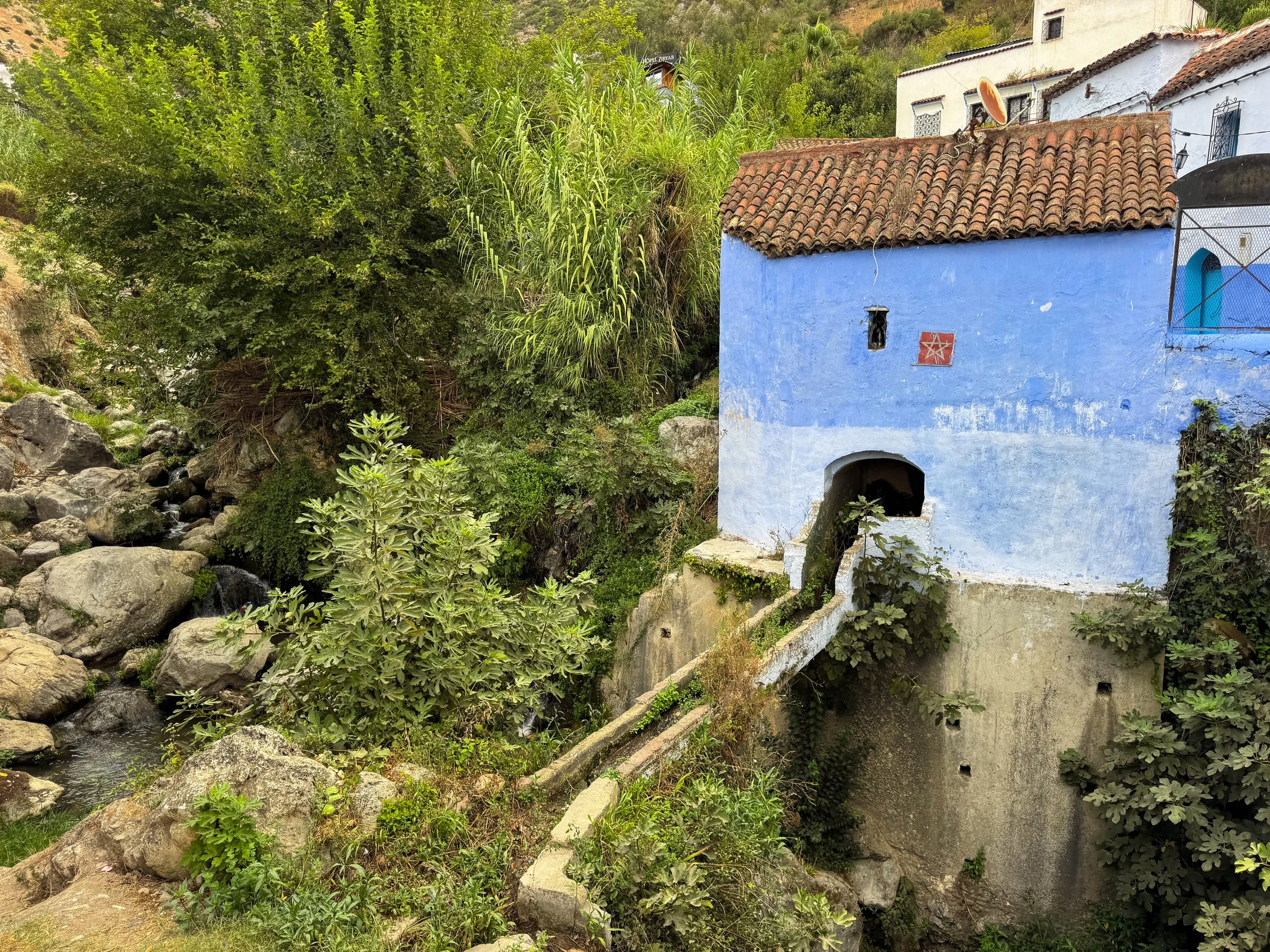
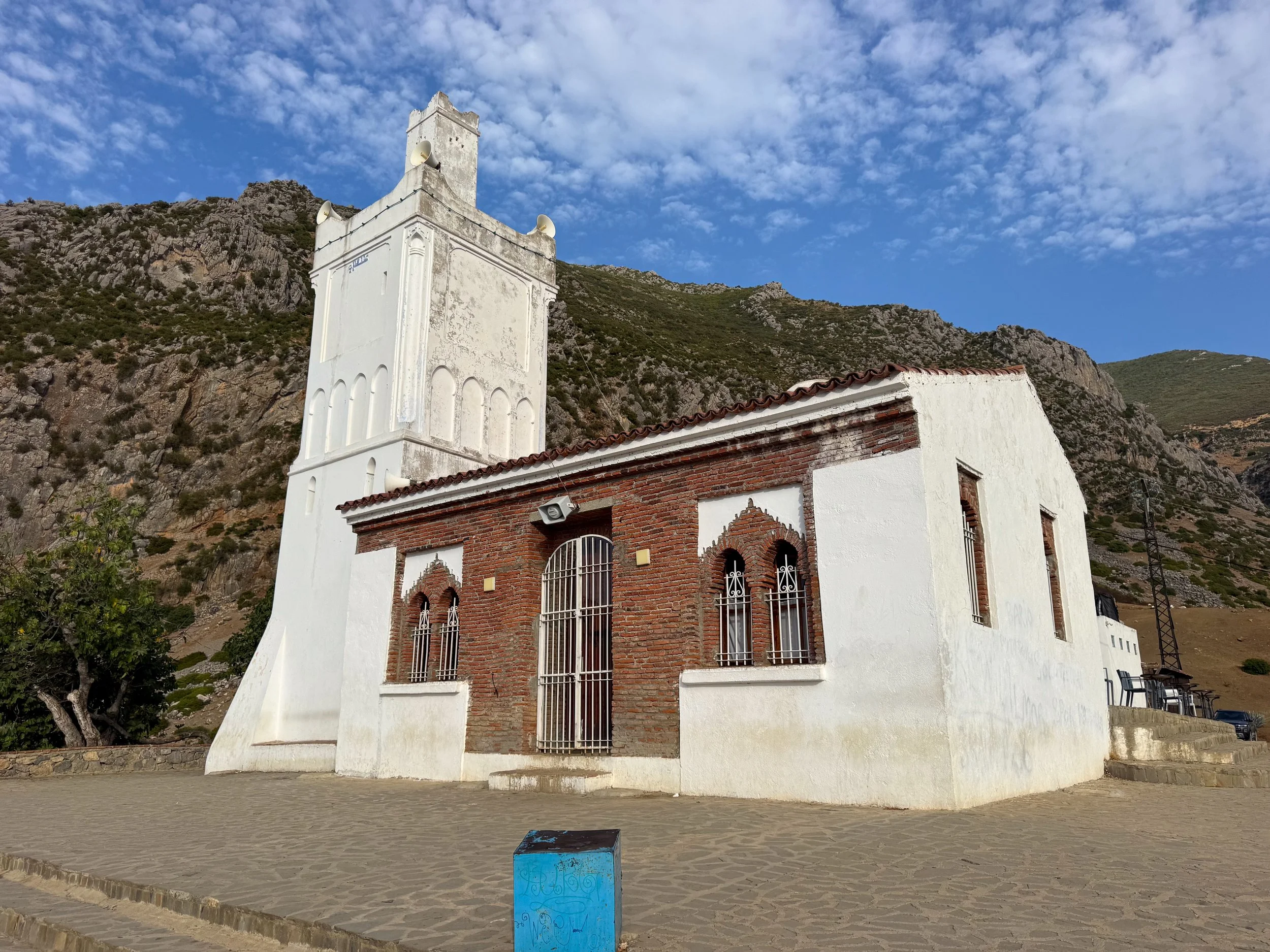
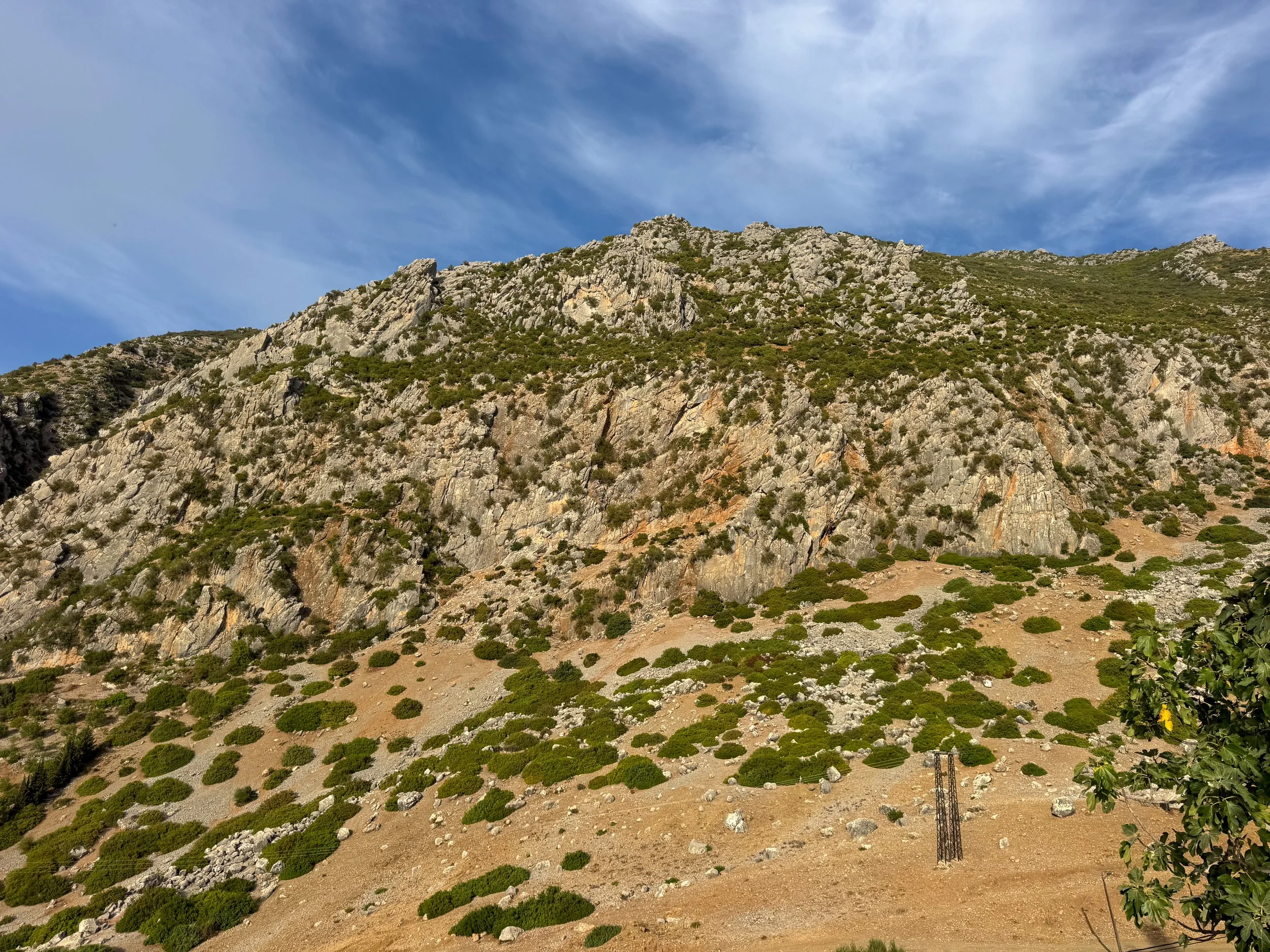
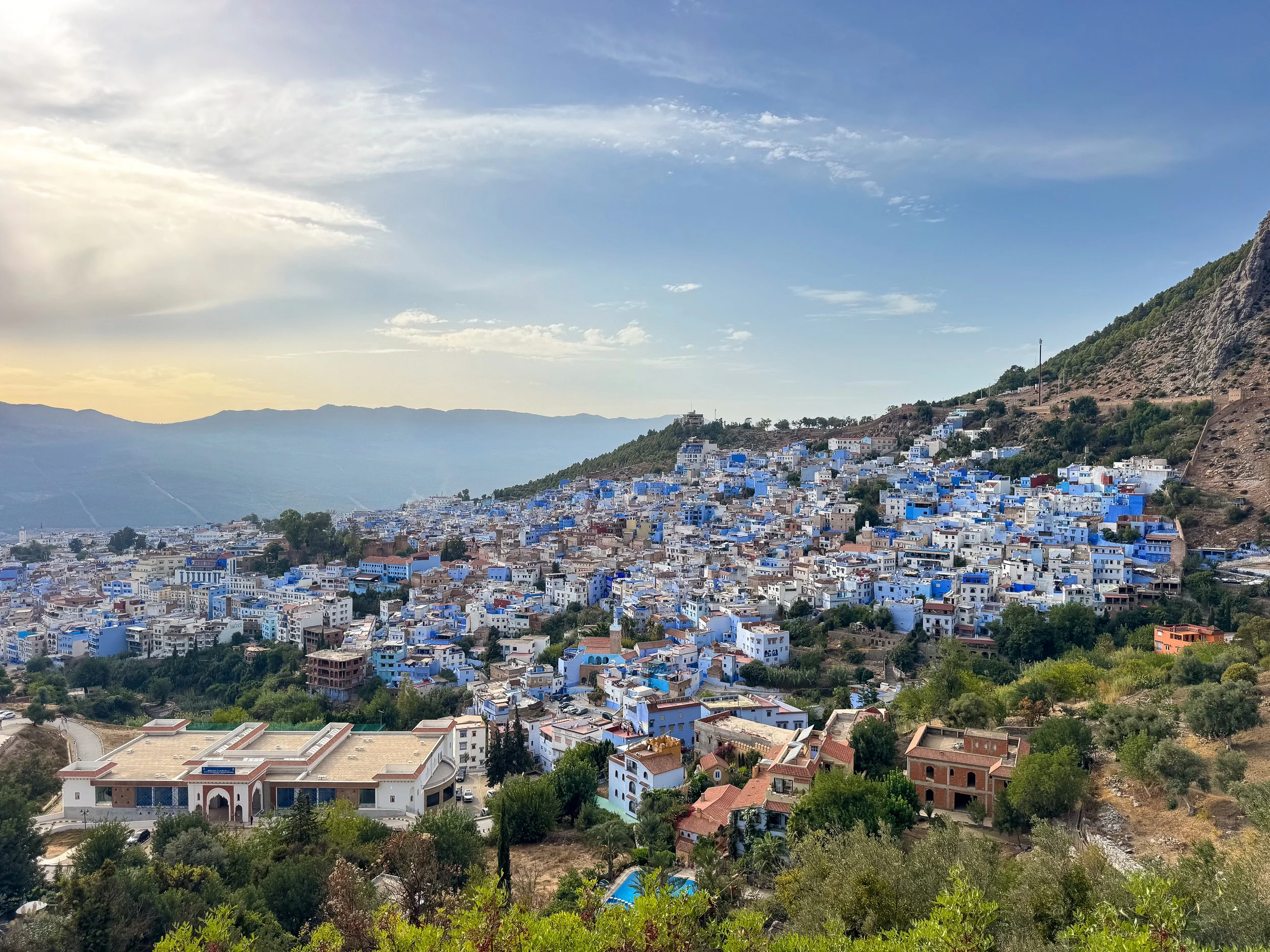
Lavadero de la Ciudad. A freshwater stream once used for washing laundry now serves as a lively gathering place lined with juice bars and cafes. Oranges, pomegranates and melons float in canals of cool water as vendors hand press fresh juices. Locals relax along the stream, enjoying refreshments before or after hiking to the Bouzafer Mosque. Juices typically cost 15–20 DH.
Bouzafer Mosque. A small hilltop mosque with panoramic views of the blue city, surrounding mountains and sunset. It’s a scenic 15 minute walk from the Lavadero de la Ciudad. Along the route, vendors often sell cookies to passersby.
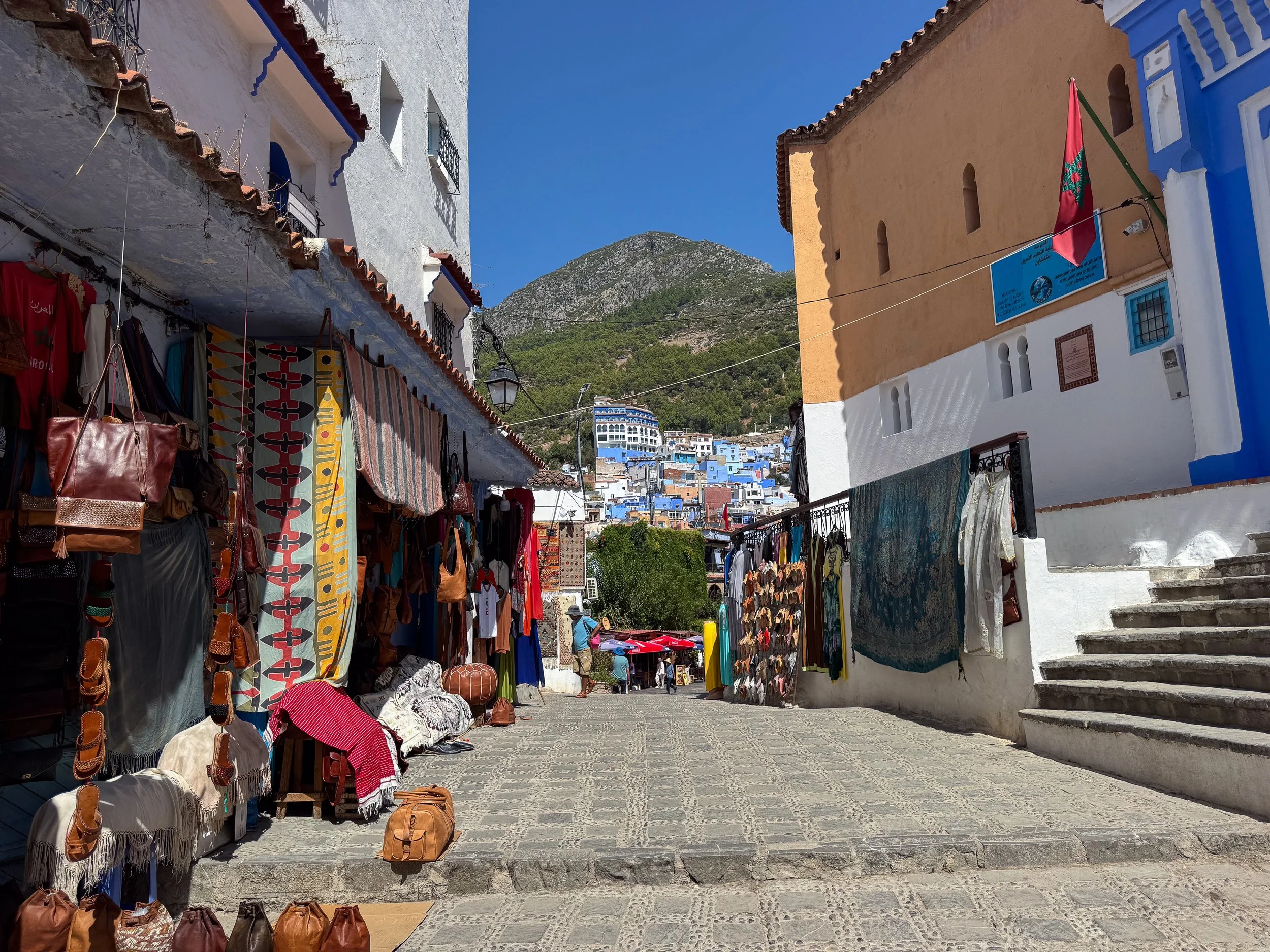
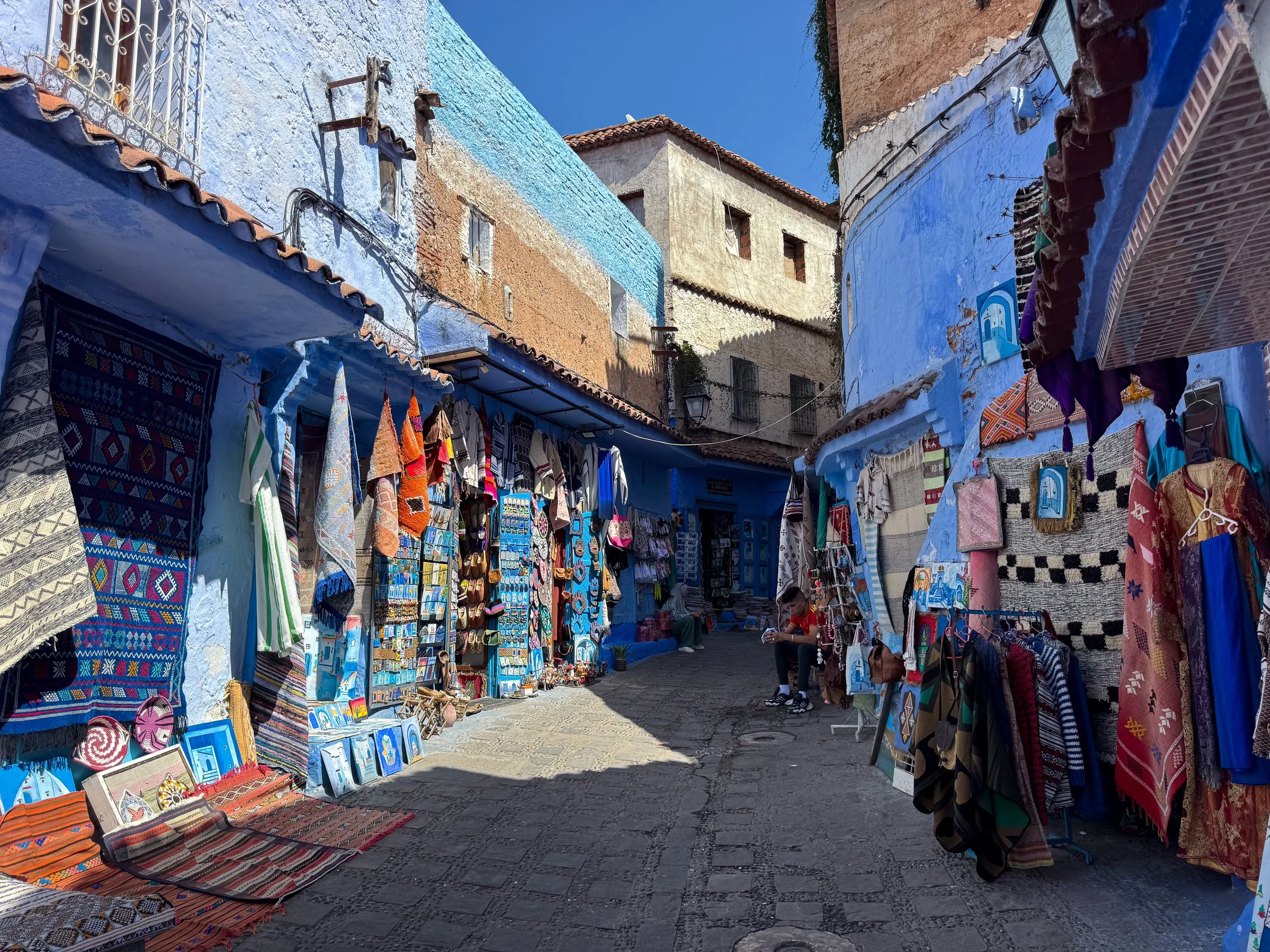
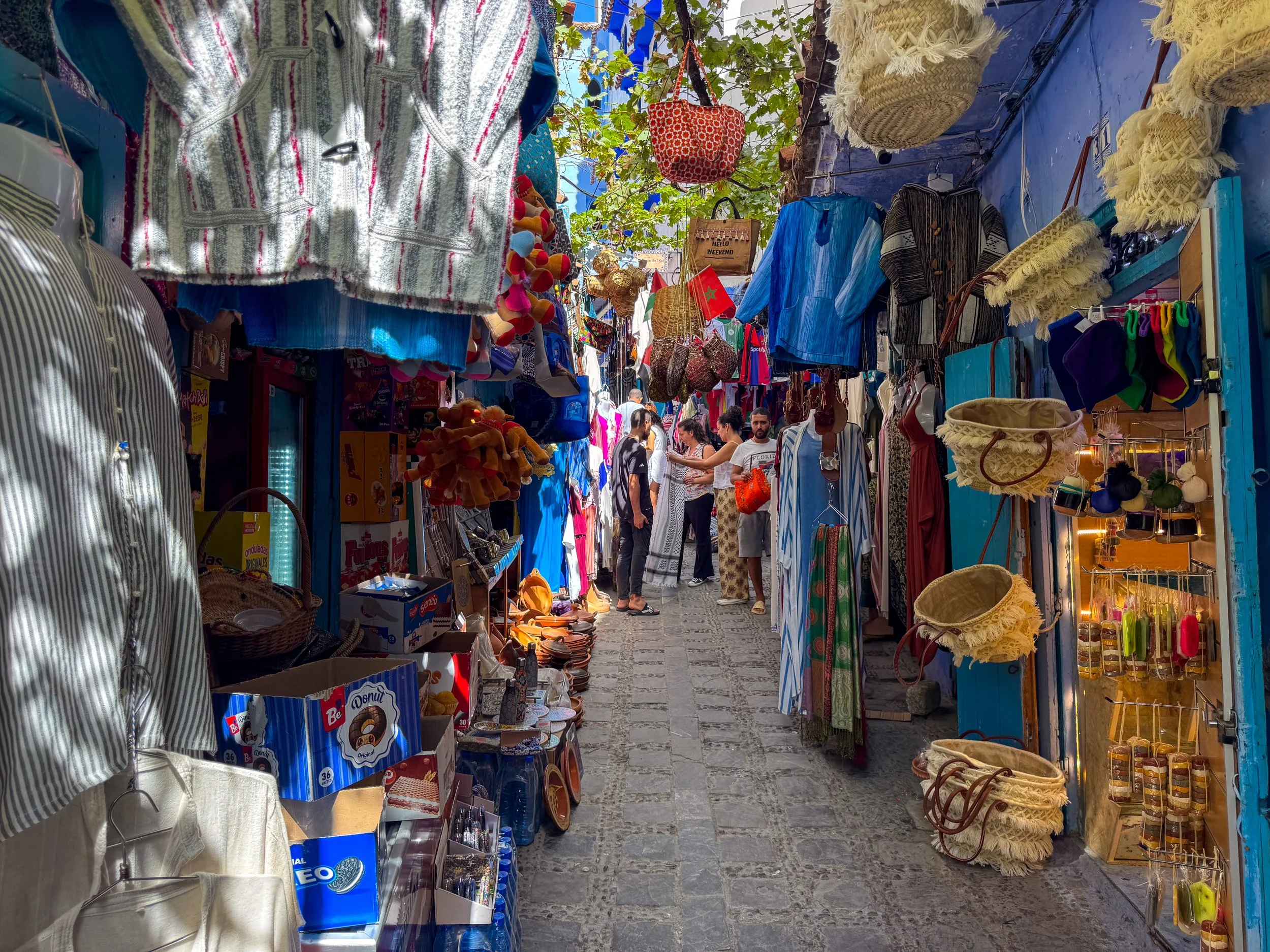
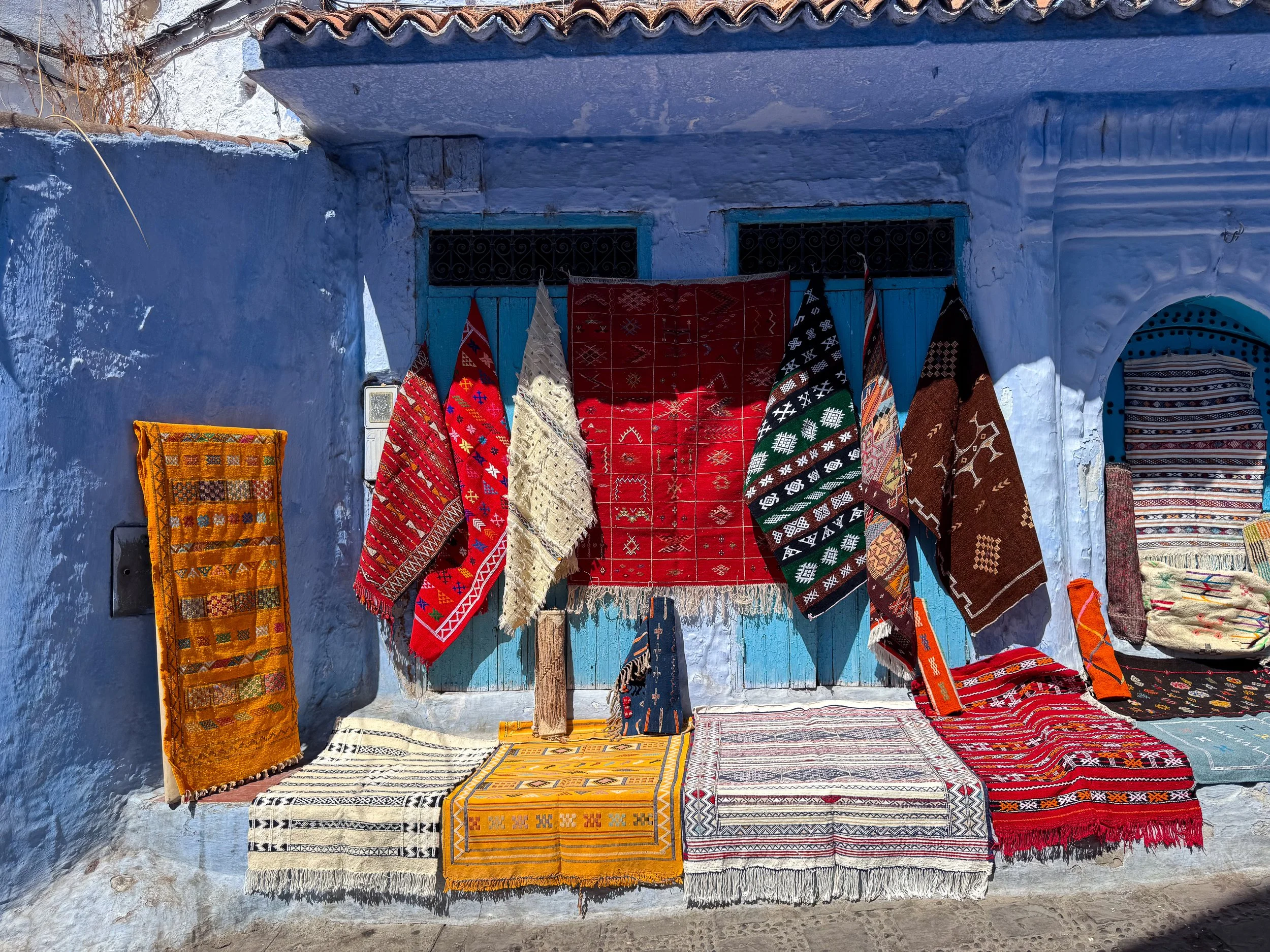
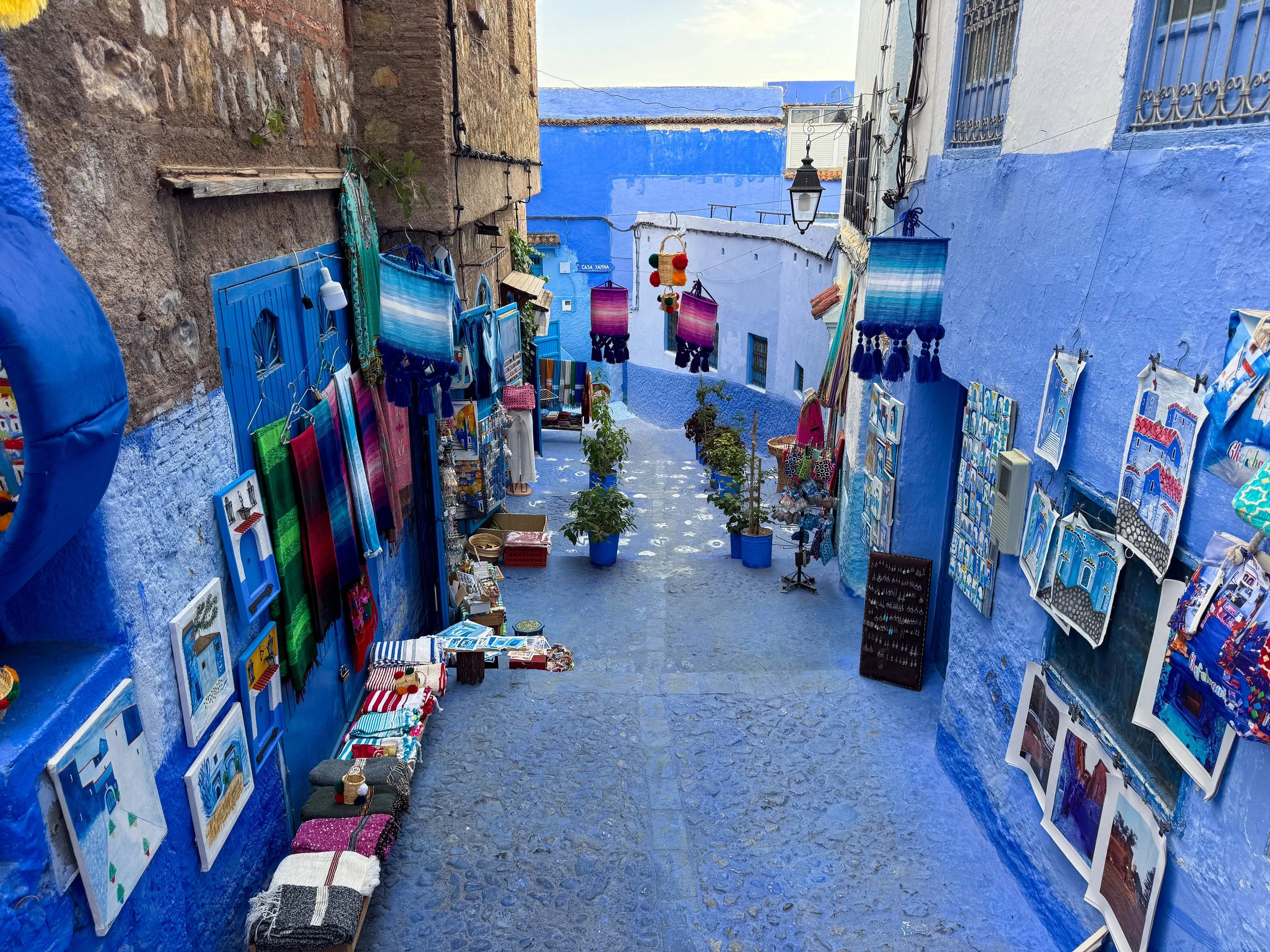
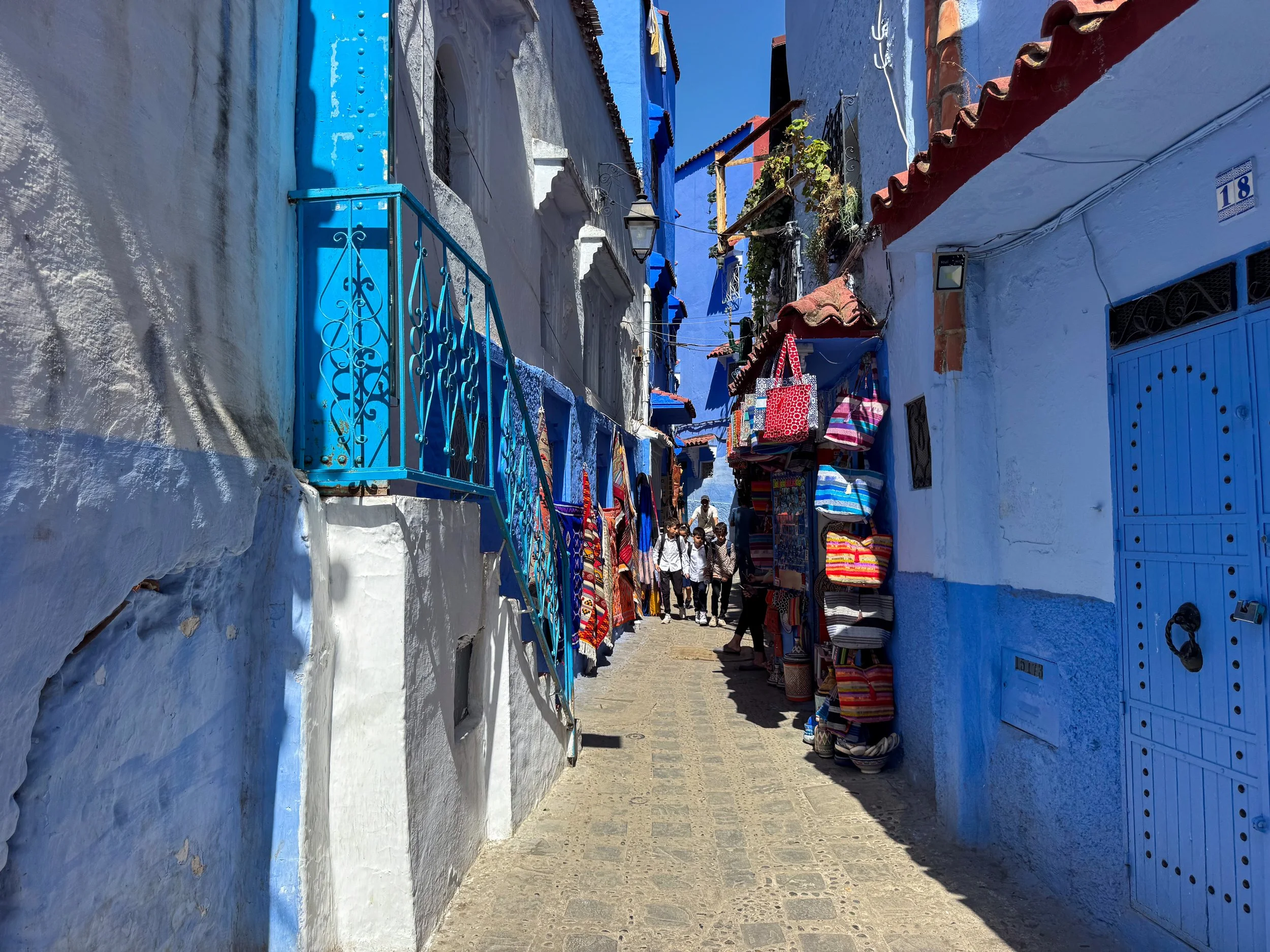
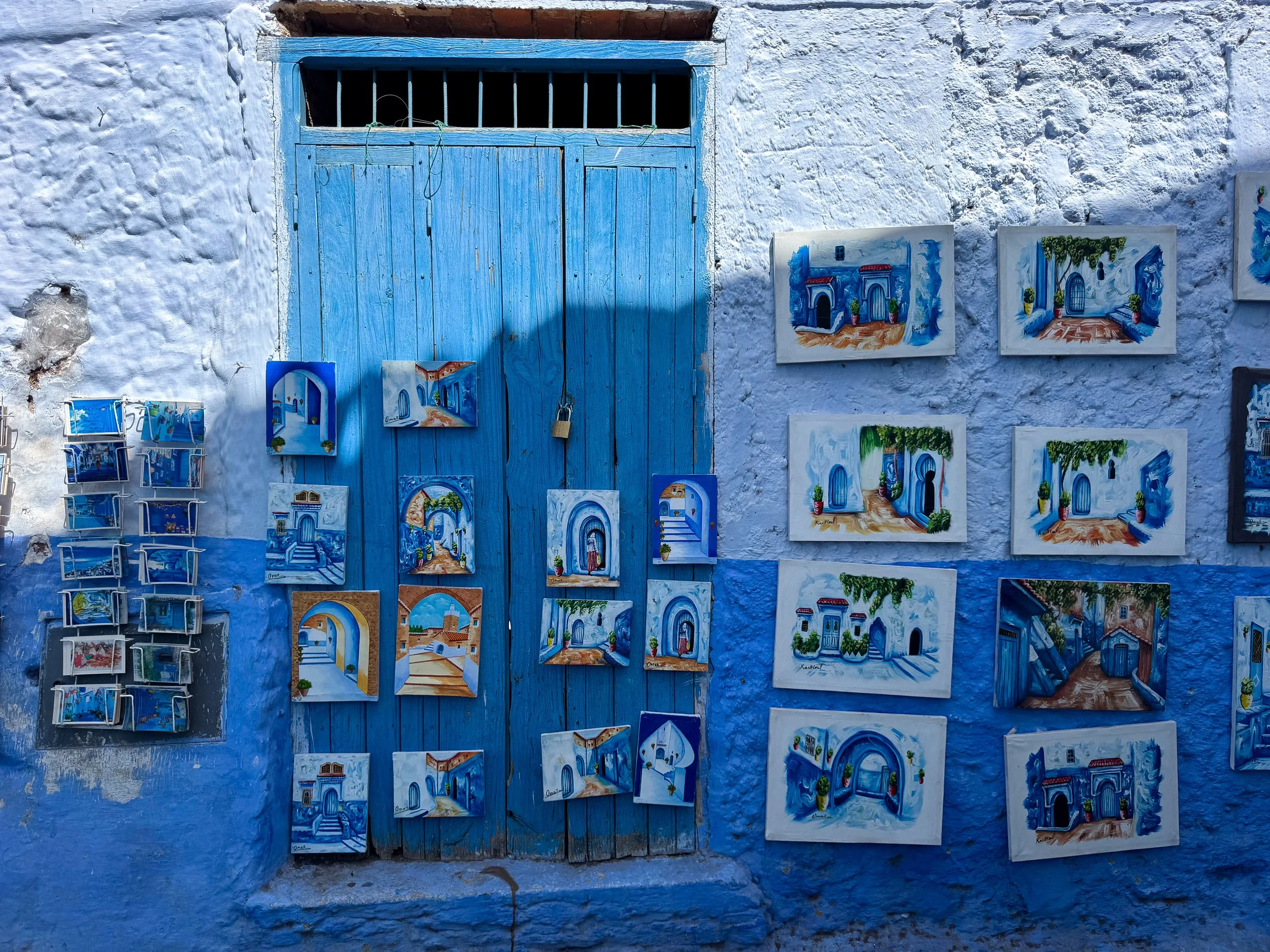
Artisan Alleys. The blue painted alleys of Chefchaouen are home to artisan vendors selling Moroccan textiles and rugs, handmade paintings, brass artifacts, jewelry, ceramics, baskets, amlou paste, teas, spices and souvenirs.Artisans are generally friendly but can seem aggressive knowing that most visitors are only in Chefchaouen for a short period of time. Like in all souks, haggling is encouraged.
Places to Eat & Drink
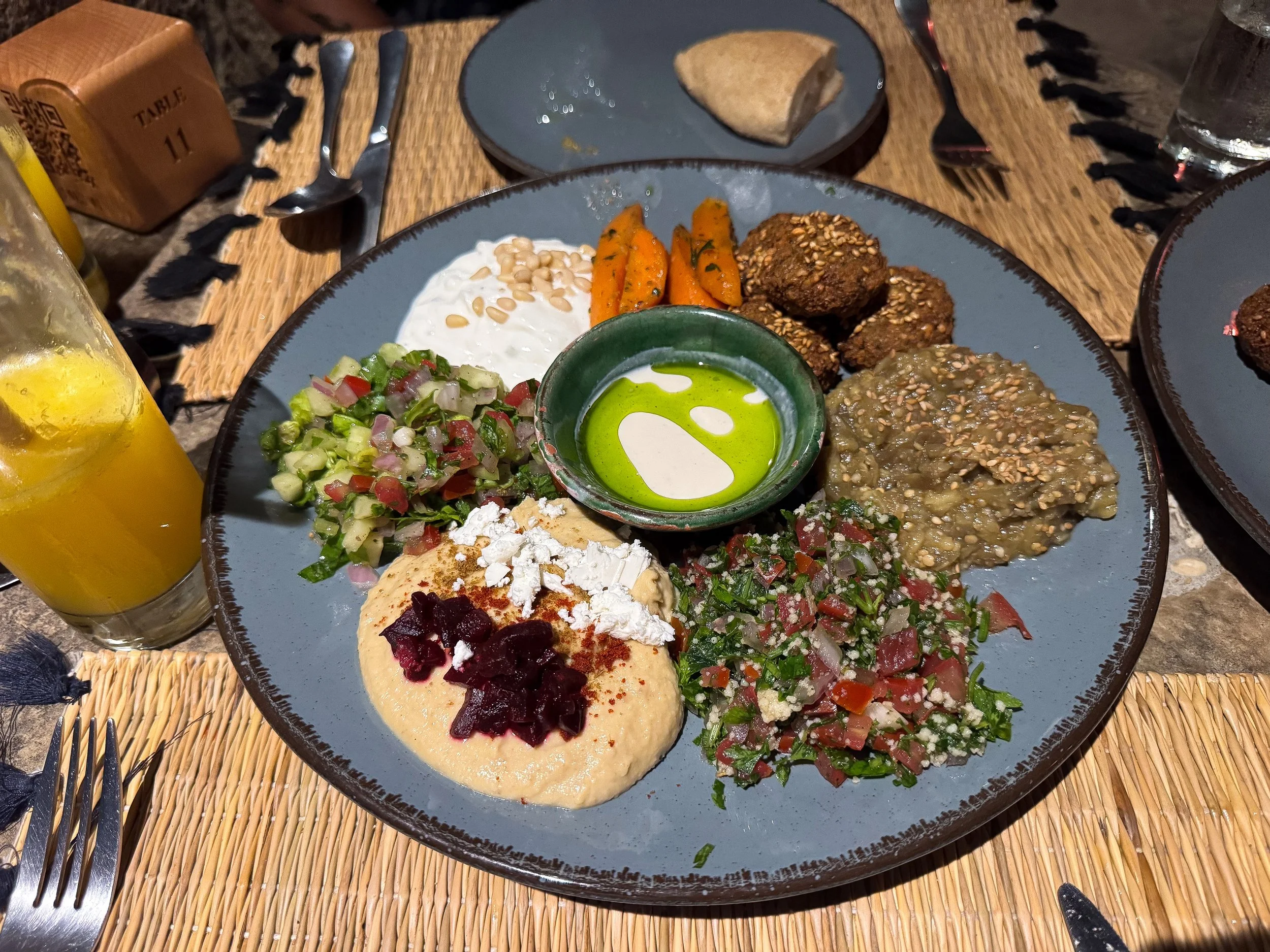
El Cielo Restaurant. A semi secluded restaurant located in a garden of the Medina next to a historic mosque. Their menu features Mediterranean and Moroccan spreads, tagines, kebabs and pitas. For dessert, try the Jawhara, a flaky pastry lawyered between tiers of custard. Reserve a spot in the garden ahead of time.
Pain Chaouen. A small bakery with a large range of French and Moroccan patisserie. Come here for the flaky croissants, butter cookies and glazed donuts.
Break Coffee. A takeaway cafe with all the usual types of coffees. It’s open early and stays open late for those in need of a caffeine fix.
Where to Stay
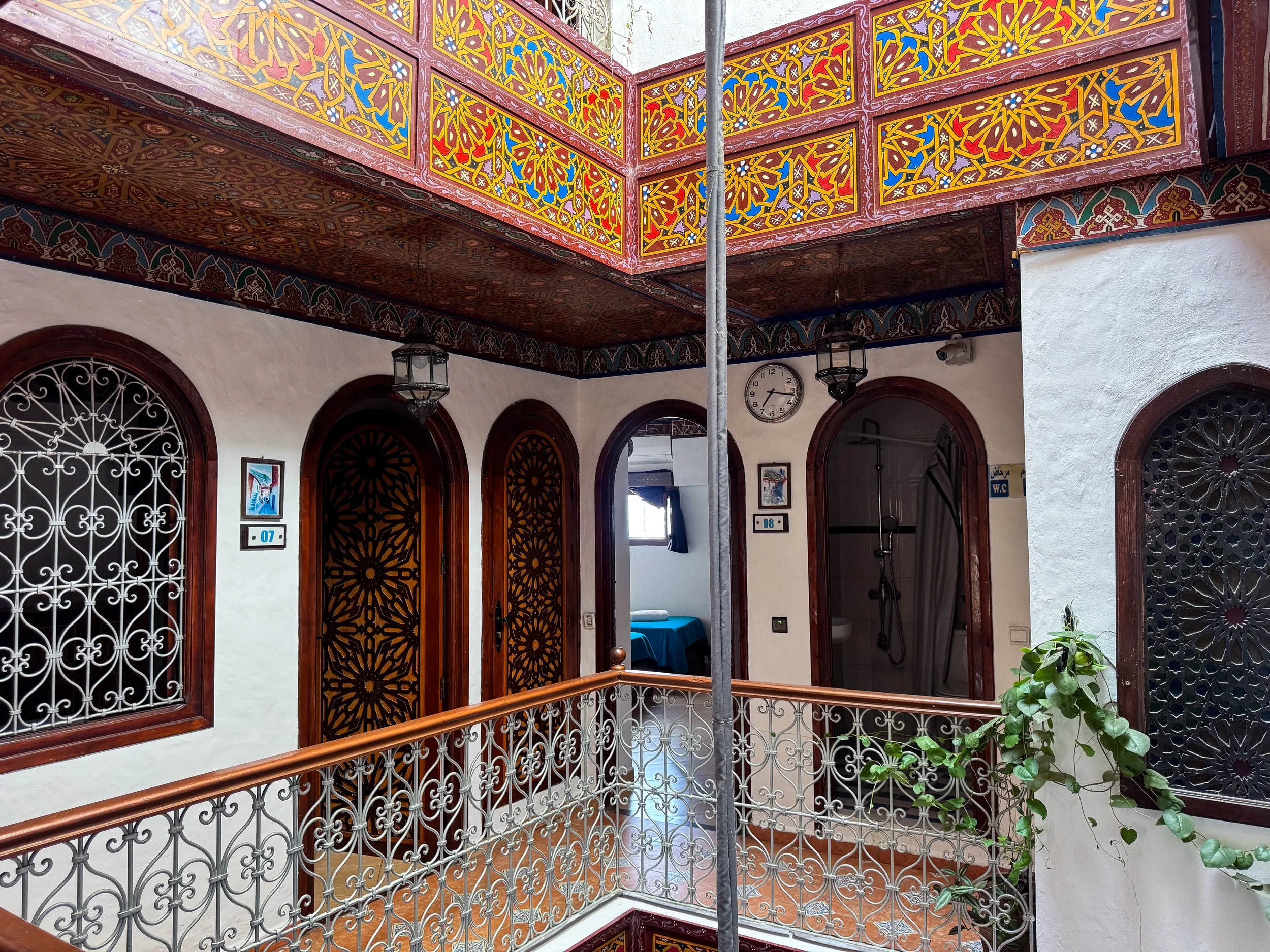
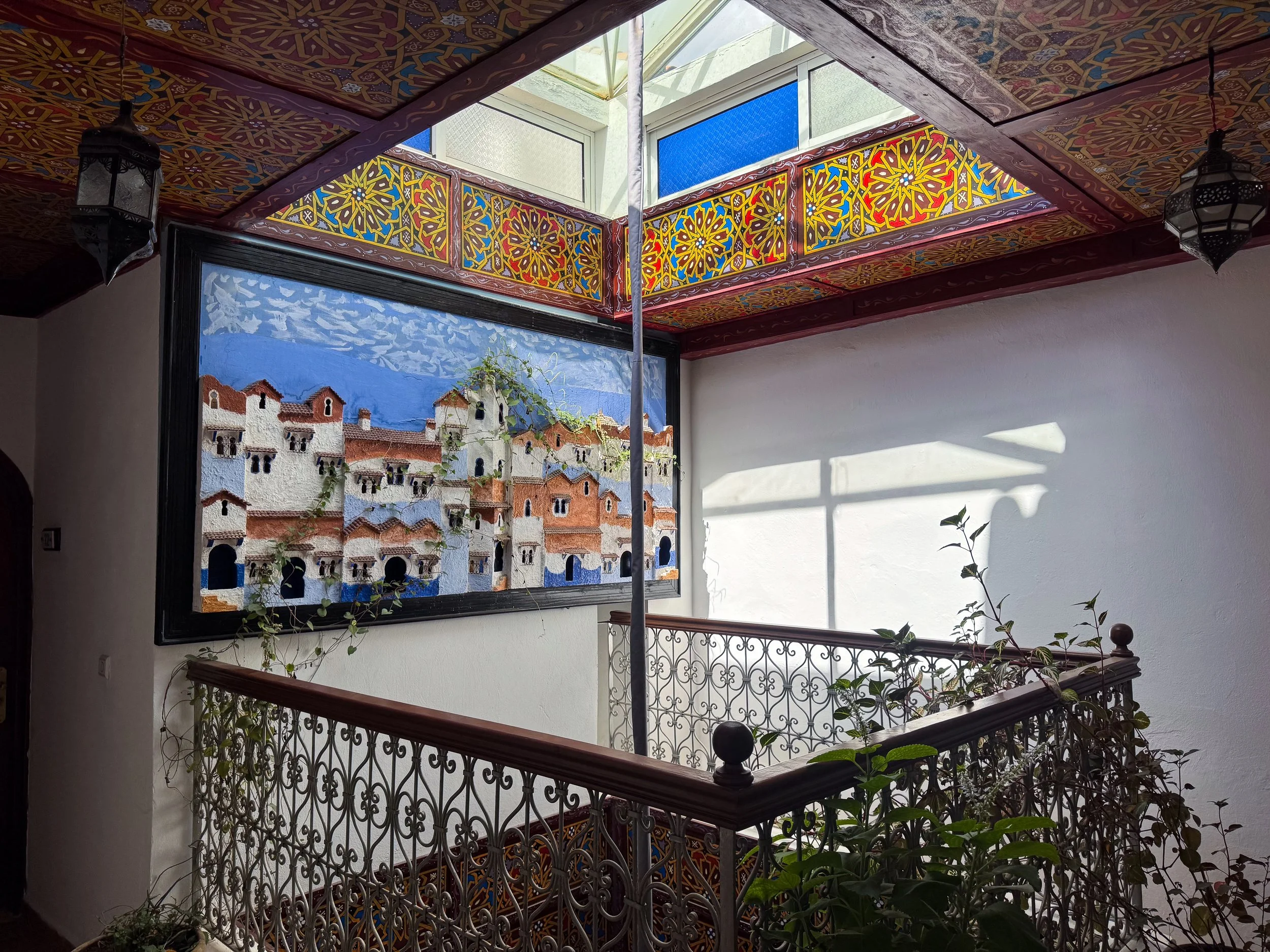
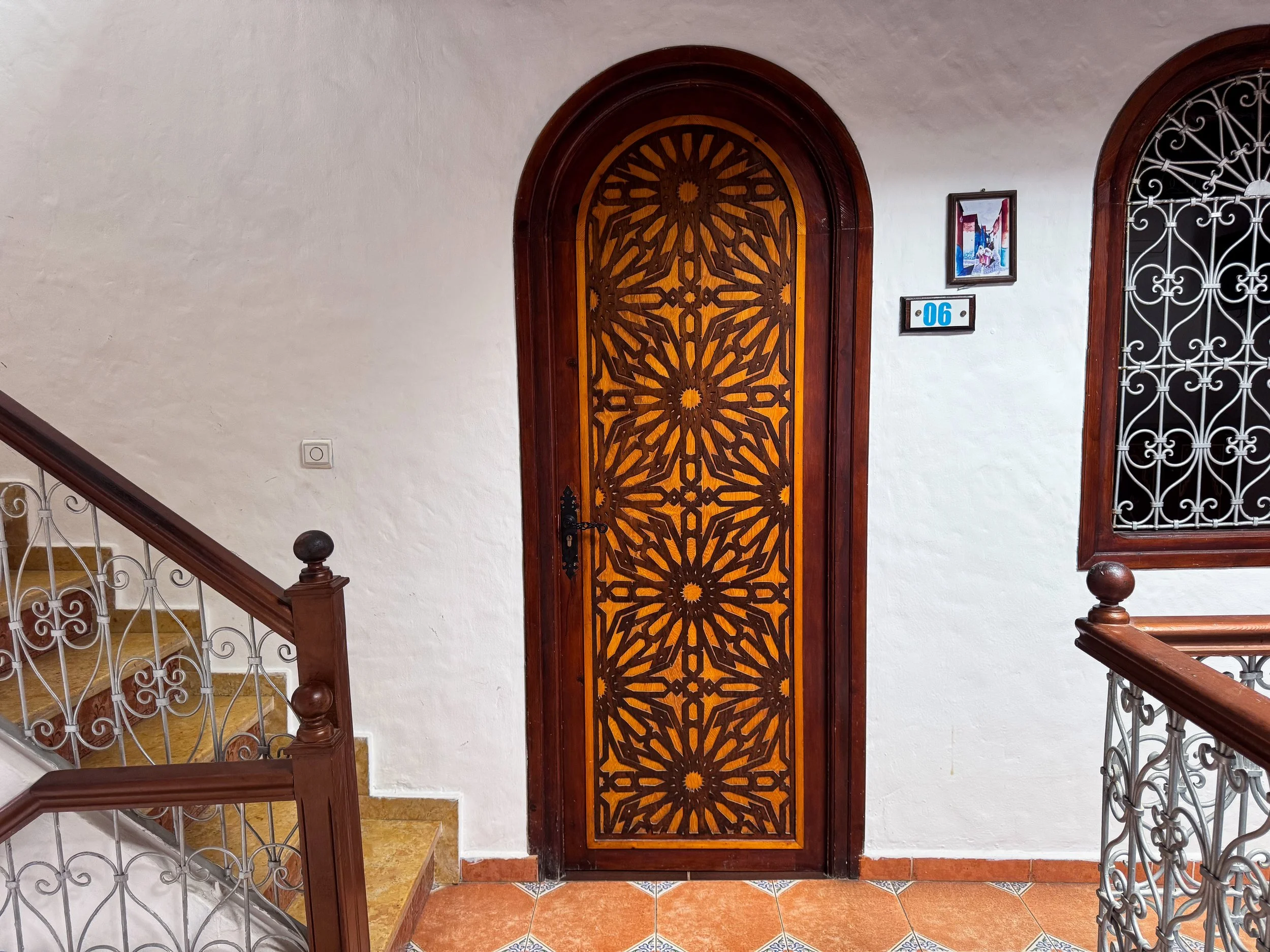
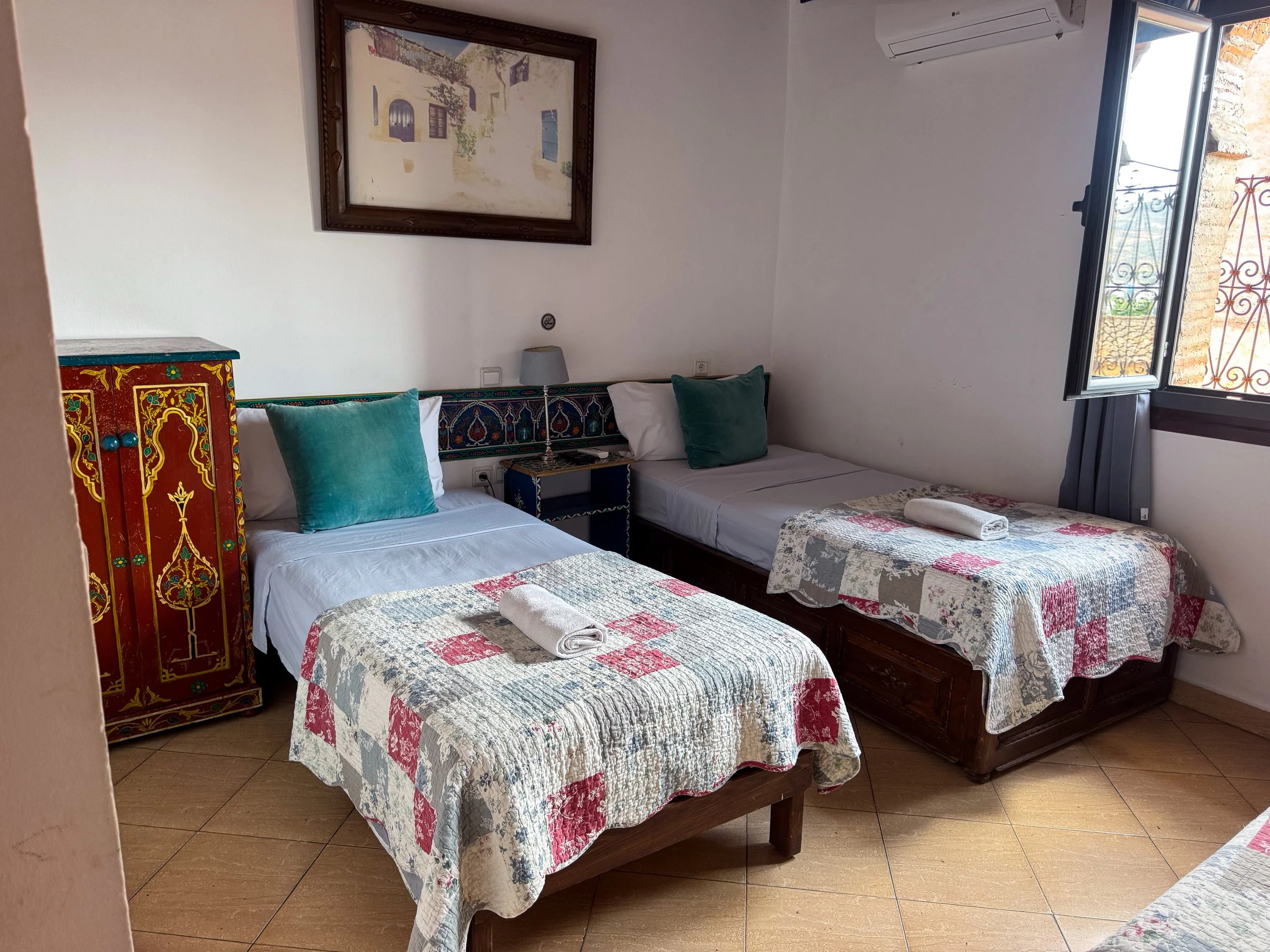
Hotel Chams. A small hotel located in the center of the medina near the Plaza Uta el Hamman. Each floor has multiple sized rooms and a shared bathroom. A rooftop terrace offers panoramic views of the city and mountainside. Reserve on Booking.
Getting to Chefchaouen
Chefchaouen is reachable from Fes by shuttle. Shared shuttles transfer passengers between both cities multiple times daily. The route takes about 4 hours one way. We booked with 3T Travel on Get Your Guide.
Location Specifics
Photo Fees. Many homeowners charge a small fee ranging from 10-20 DH for a photo of their door, house, alleyway, etc. Carry small bills and coins for payments.
How Long to Visit. Chefchaouen can be explored in a half day but it’s best to stay for at least one night to watch the sunset and explore in the early morning.
Early Mornings. Plan to explore the Medina in the early morning to see its blue painted streets and staircases before vendors display their goods. Much like Fes, most shops don’t begin setting up until 10am.
Blue Stains. Be careful when leaning against or sitting on blue painted surfaces. The pigment can rub off and stain light clothes.
Illegal Drugs. Drug dealers commonly try to sell hashish and cannabis to tourists. They may also invite you to visit their farm. Simply tell them no thank you if not interested and they’ll leave you alone.
LGBTQ+ Safety. Moroccan laws and customs are not very accepting of LGBTQ+ individuals. Stay up to date with the latest laws and suggestions while traveling. Refer to our guide on LGBTQ+ Travel Safety for more advice.
Elsewhere in Morocco
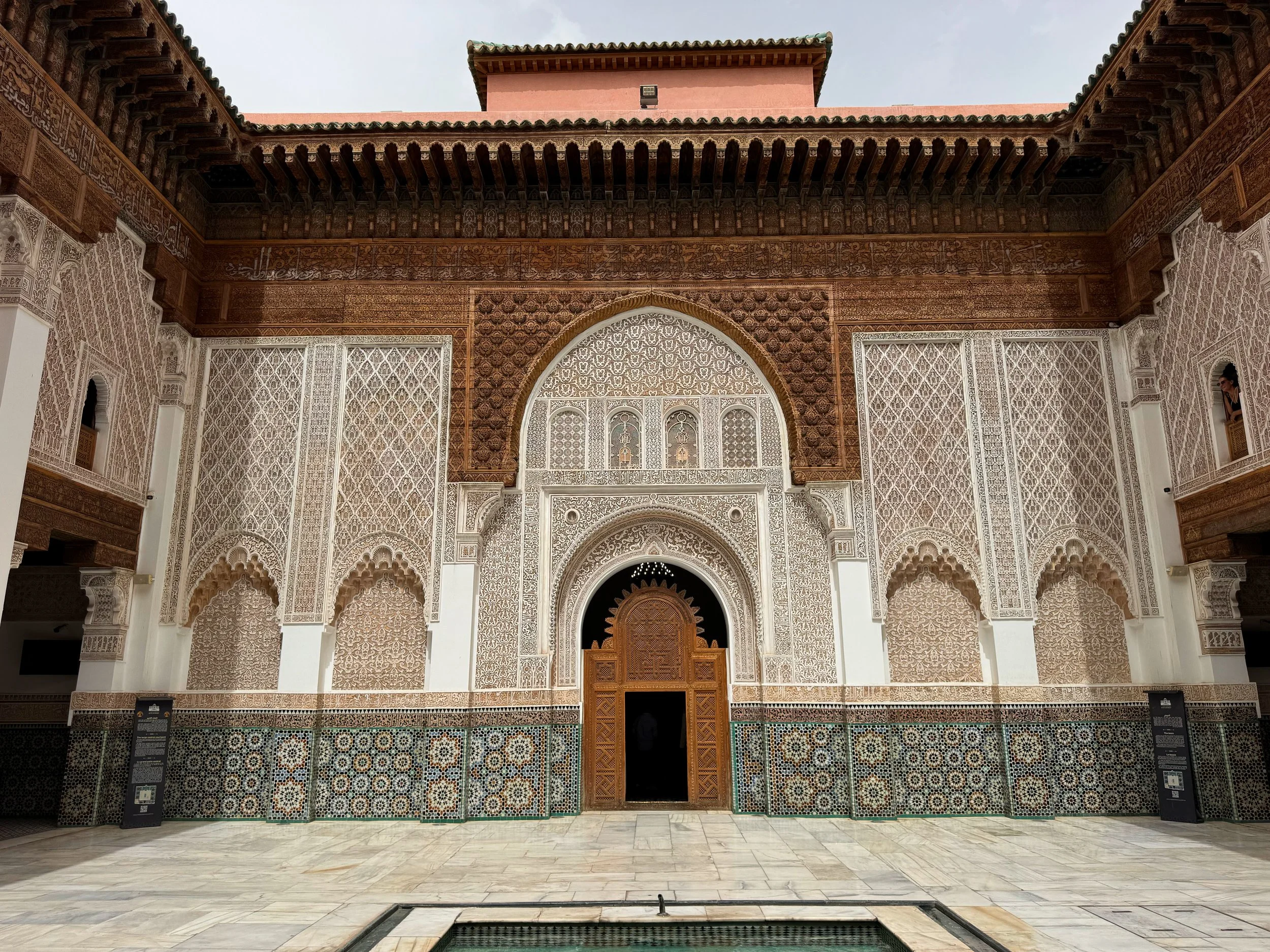
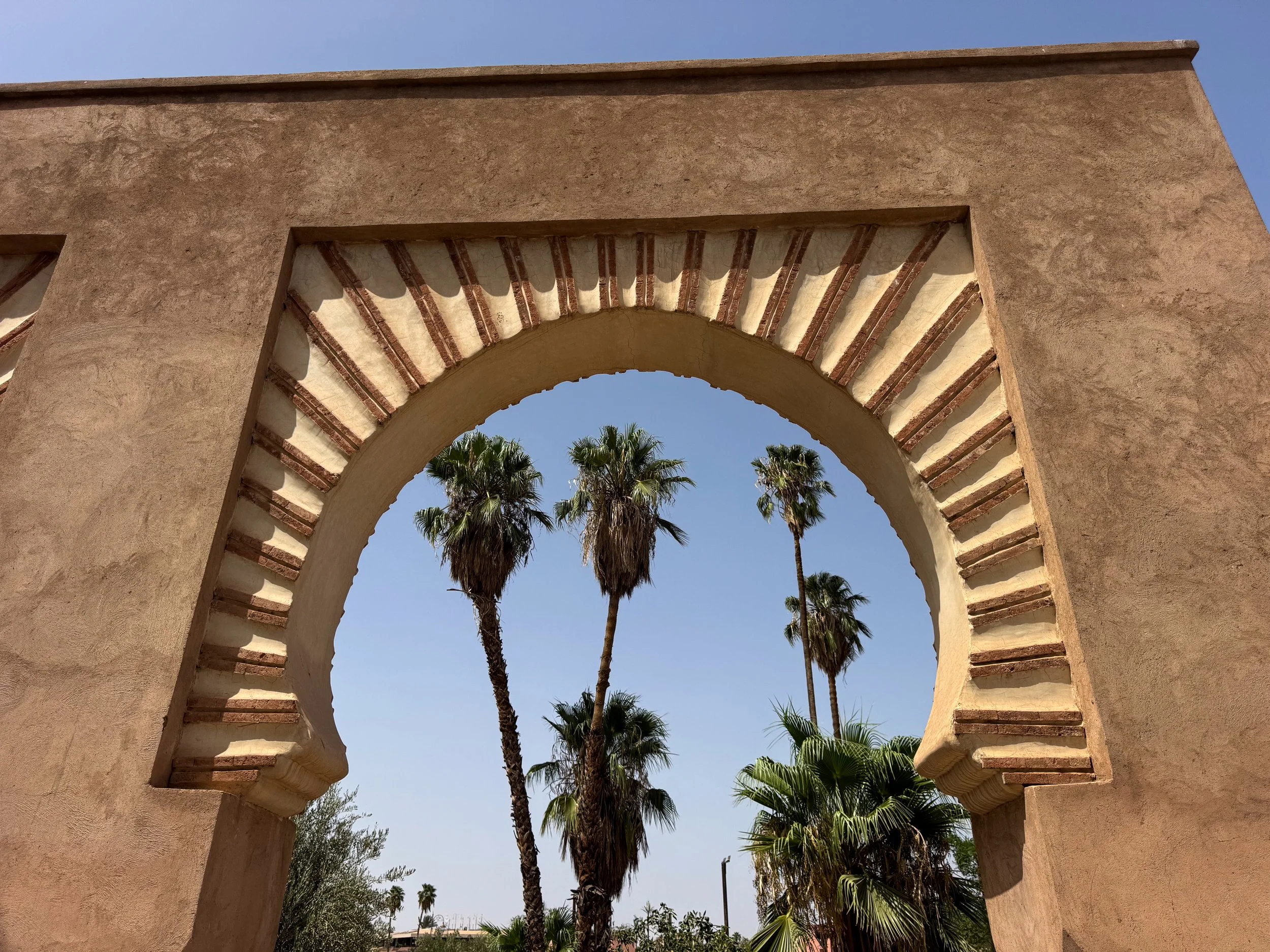
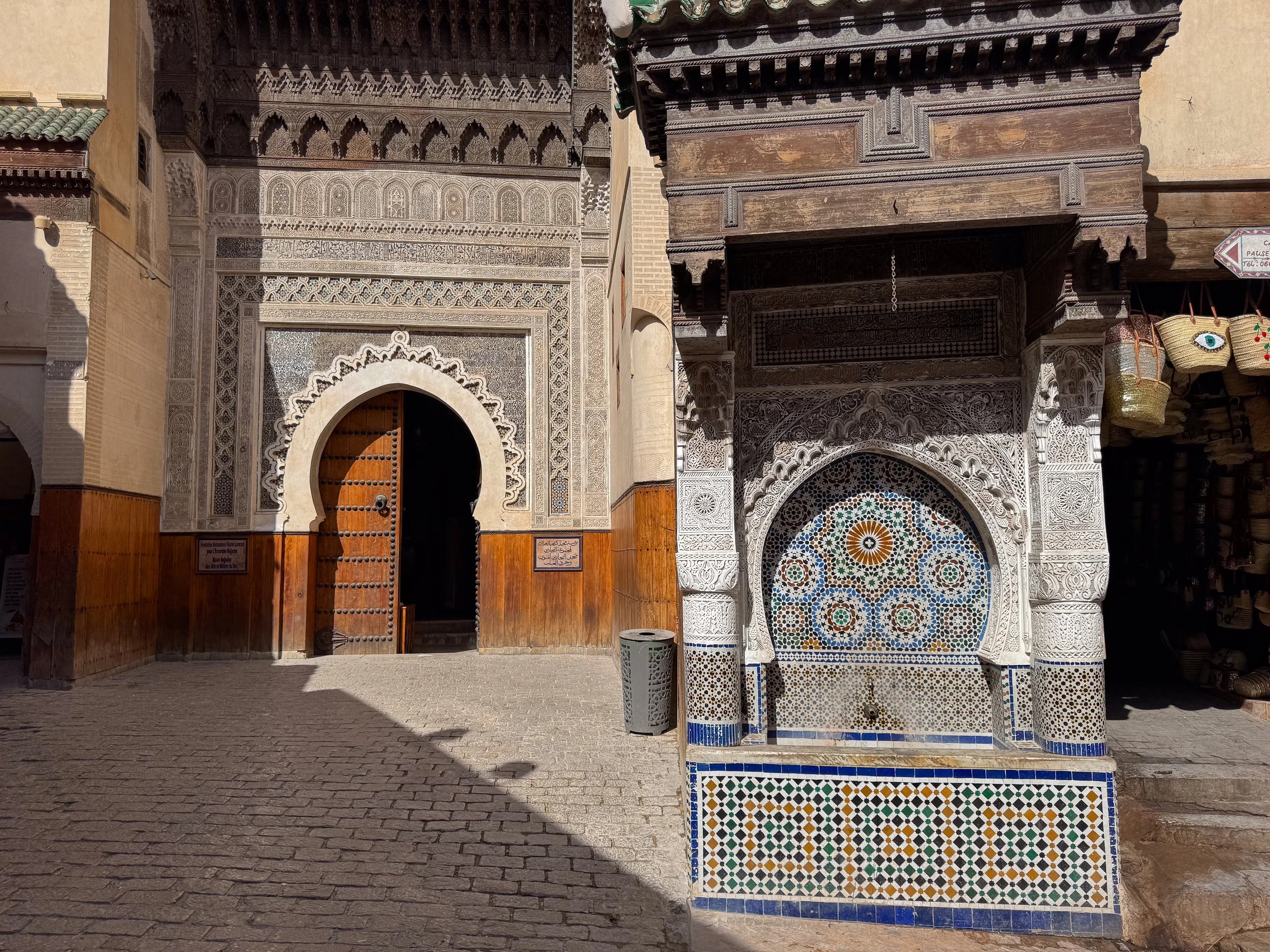
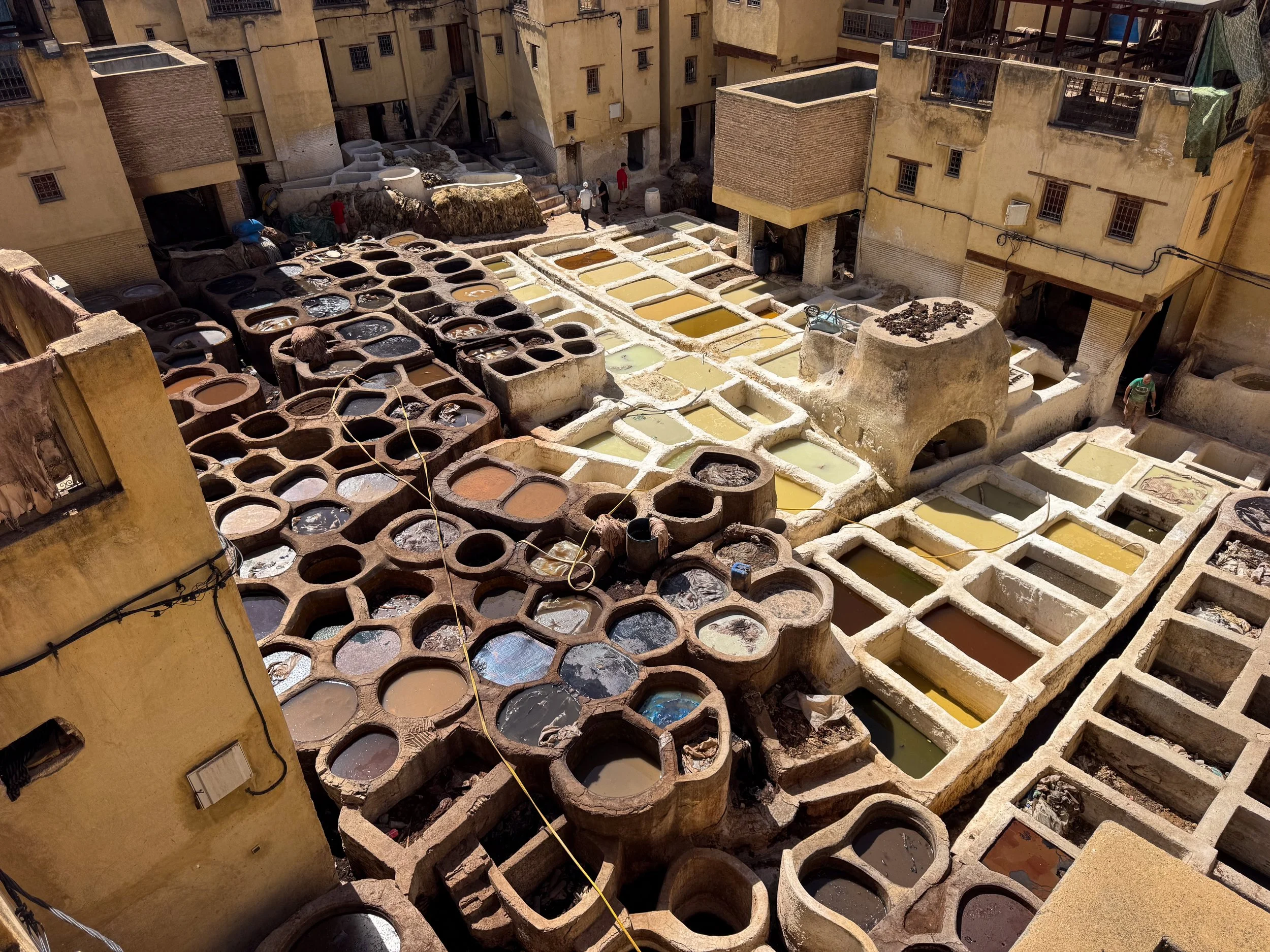
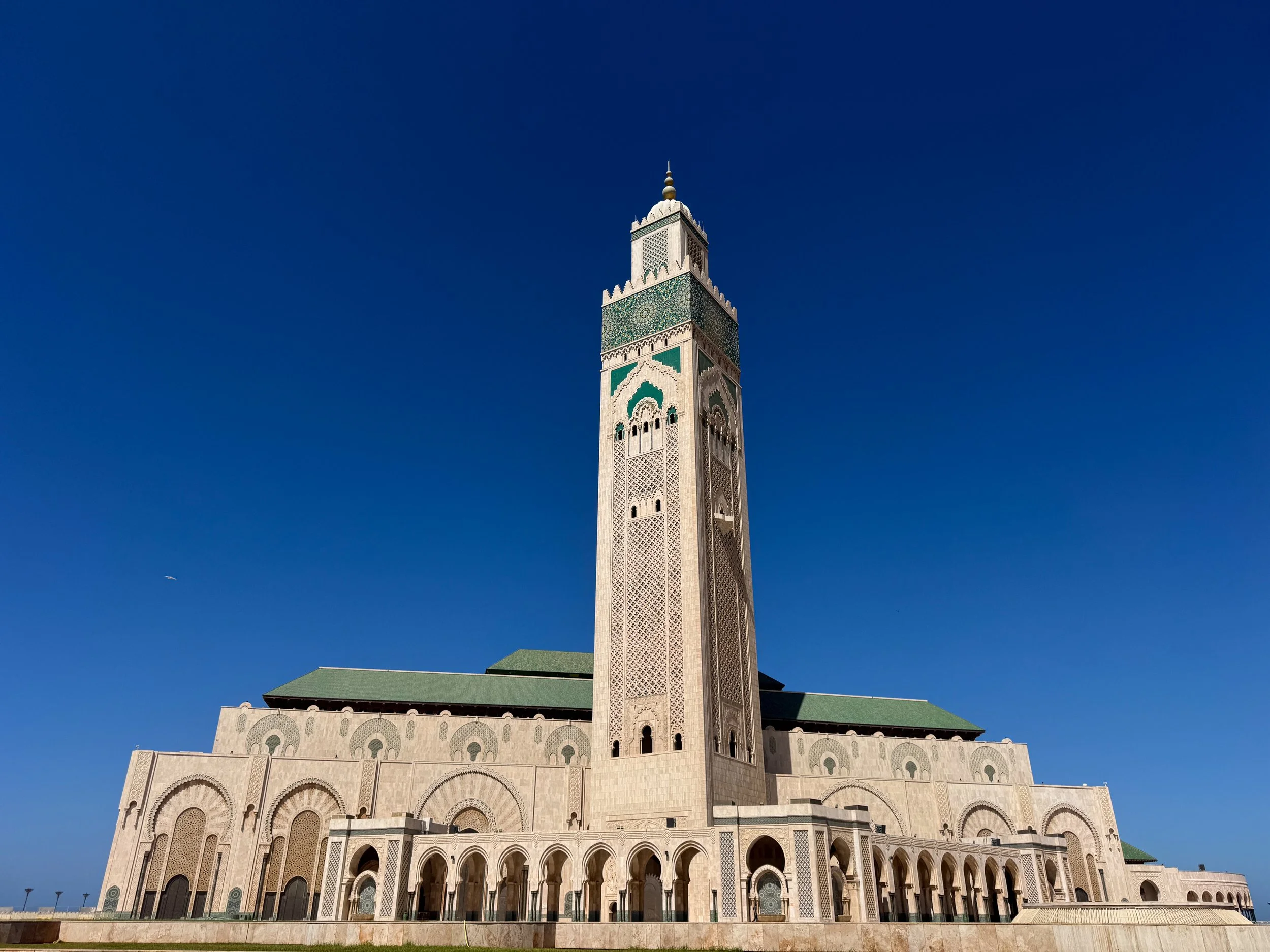
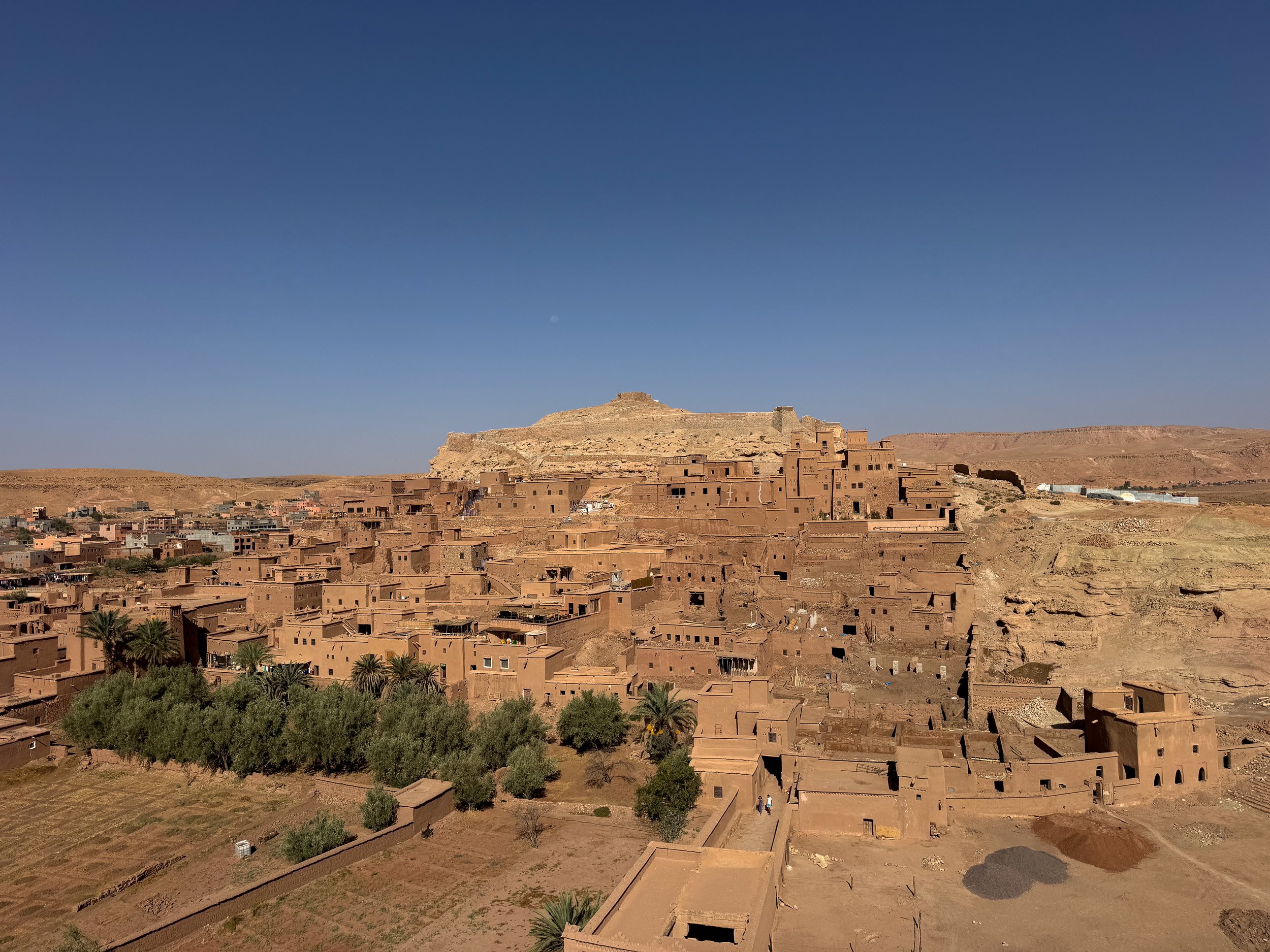
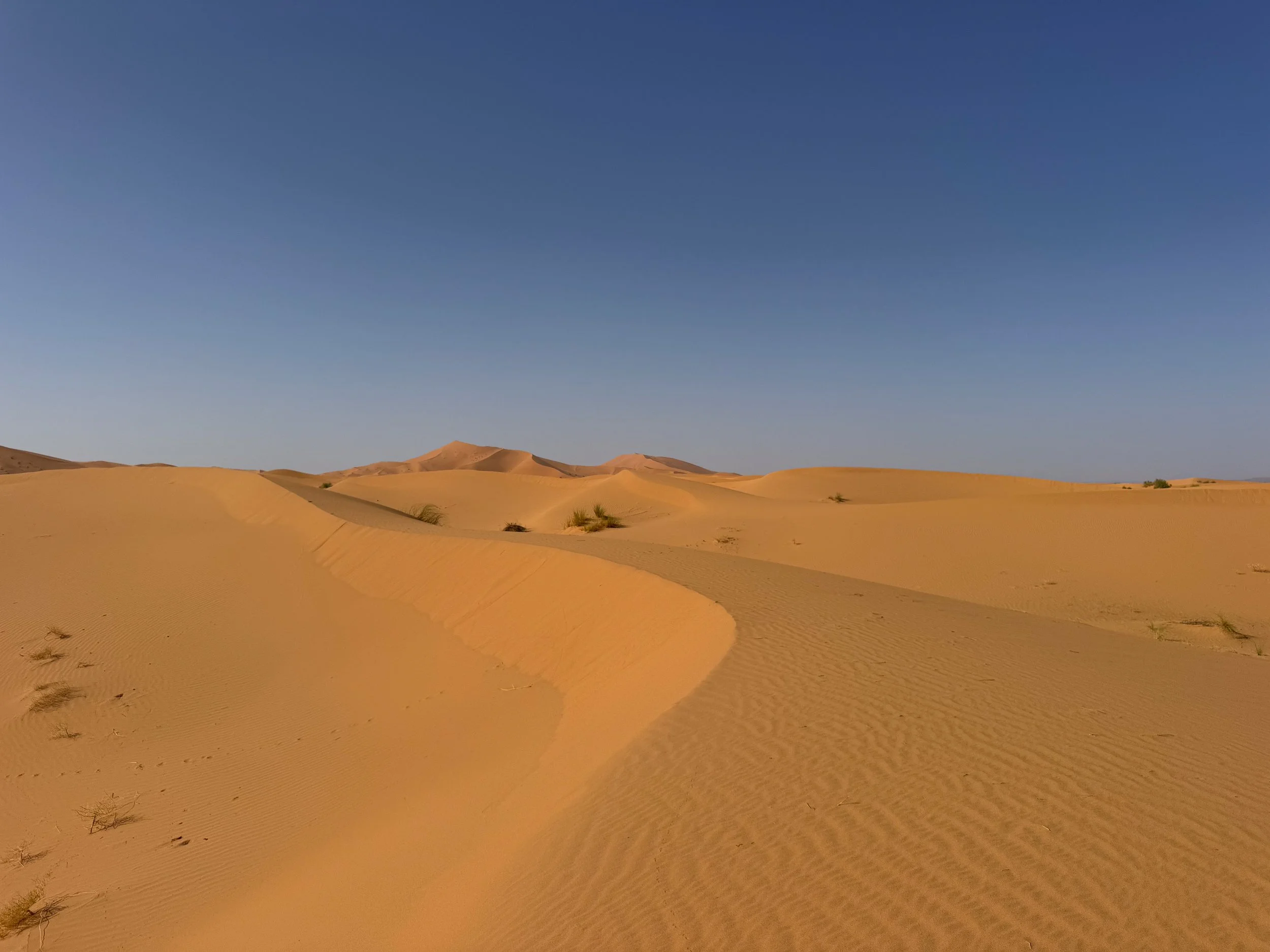
We spent a little over three weeks traveling across Morocco, experiencing so much of the country’s culture, cuisine and history. Drive across the Atlas Mountains to the Sahara Desert, making stops at palm oases and crumbing Kasbahs on a Moroccan Roadtrip. Get lost in the chaotic alleyways, spice markets and souks of Marrakesh. Explore the ancient medina and historic Islamic sights of Fes. Enjoy the coastal atmosphere and influences of in Casablanca.
For Next Time…
Morocco is a beautiful destination with historic cities, scenic landscapes and cultural allure. We have a shortlist of places to visit when we return.
Meknes. An ancient city at the heart of Morocco’s wine producing region. Its nearby vineyards offer tours, tastings and wine pairings.
Volubilis. An ancient Roman city with well preserved ruins and mosaics from the former empire.
Essaouira. A port city on the Atlantic with a picturesque medina, coastal ramparts and fresh seafood restaurants.