Moroccan Roadtrip
From The Atlas to The Sahara
Morocco is a mesmerizing country with scenic landscapes, enchanting kasbahs and rich cultural influences. We spent a week roadtripping between the historic medinas of Marrakesh and Fez. The journey led us through the Atlas Mountains to desert towns, crumbling ksars, palm covered oases, steep gorges, sprawling sand dunes and Berber camps of the Sahara Desert.
Ait Ben Haddou
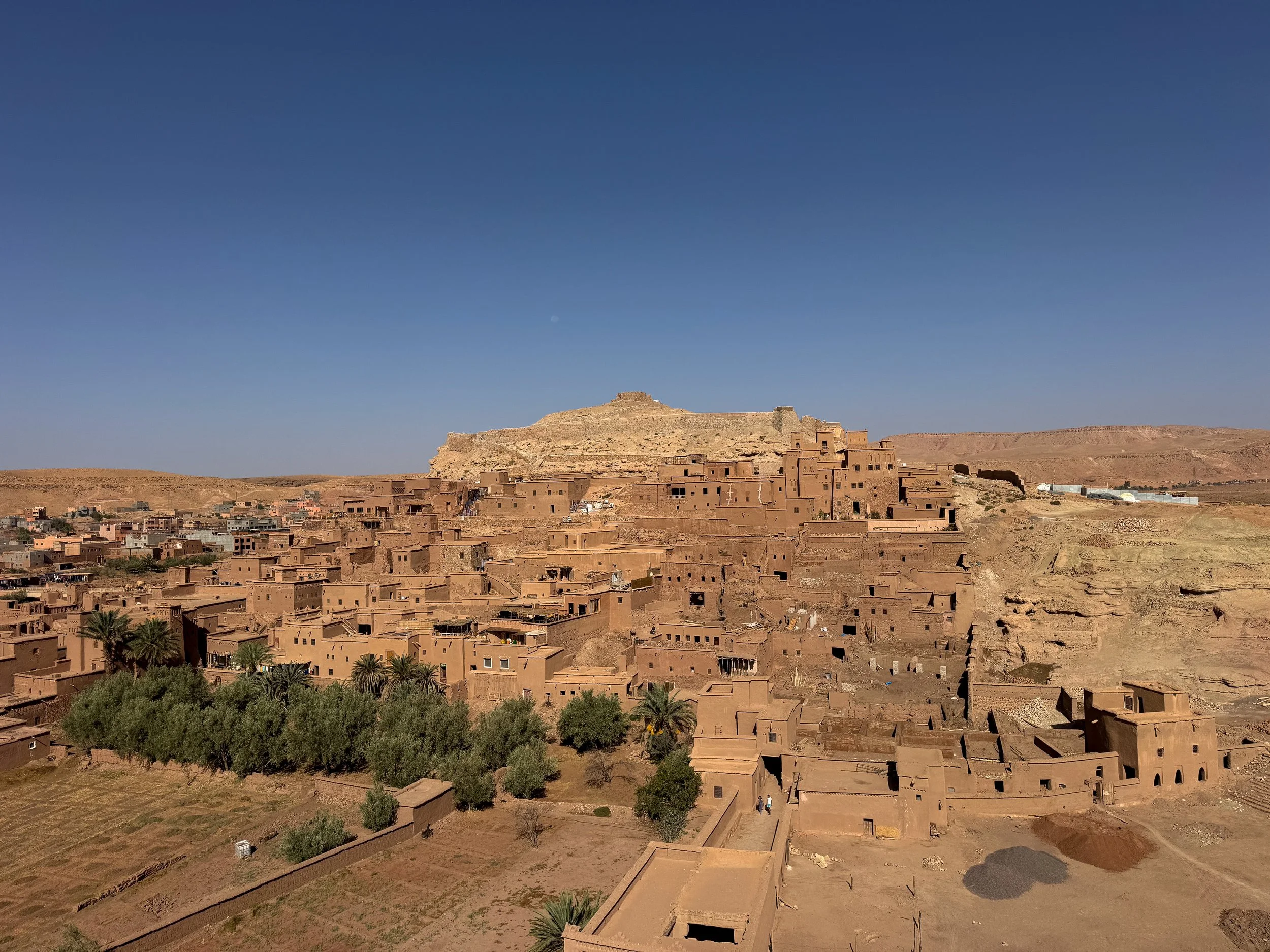
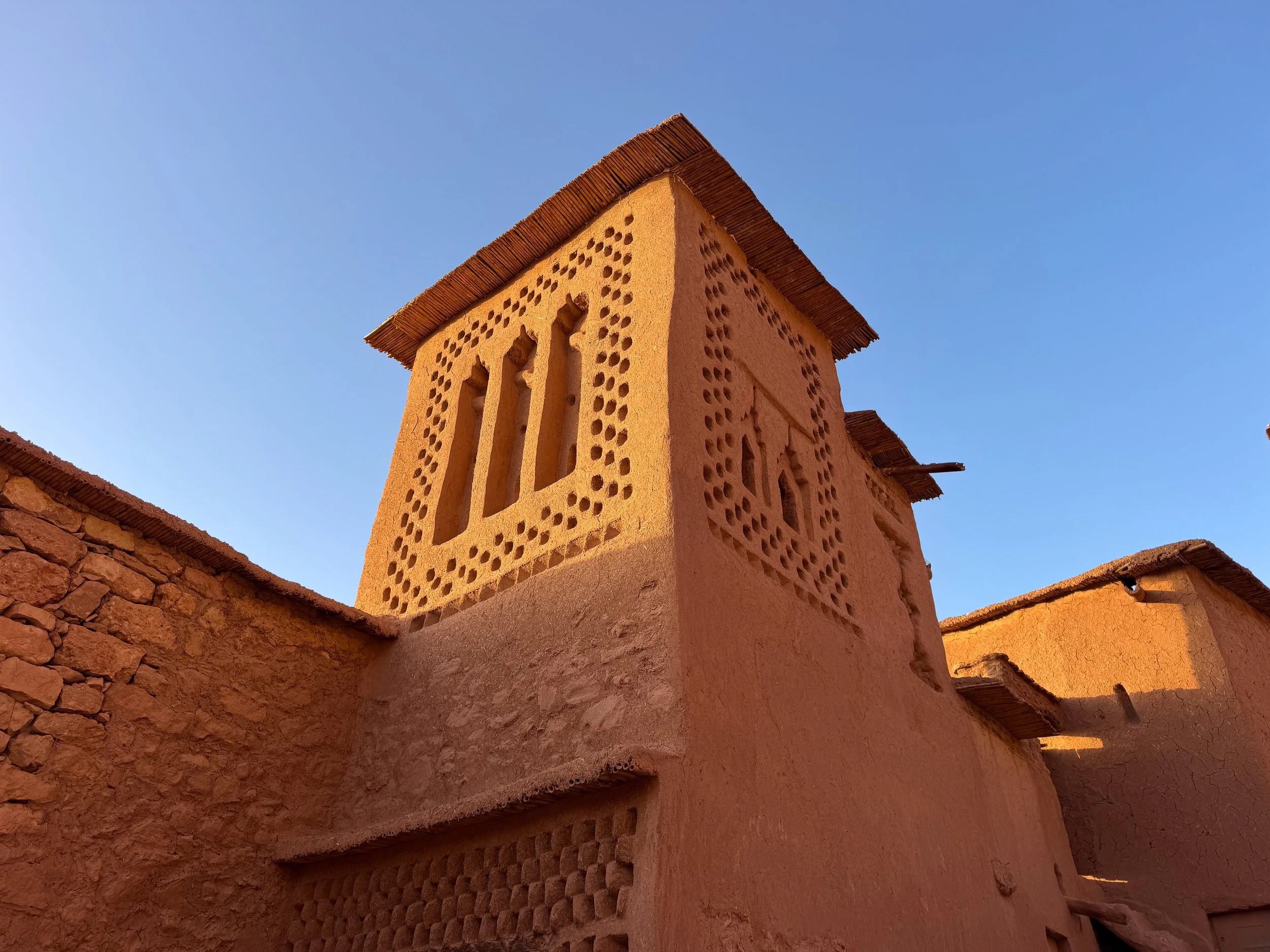
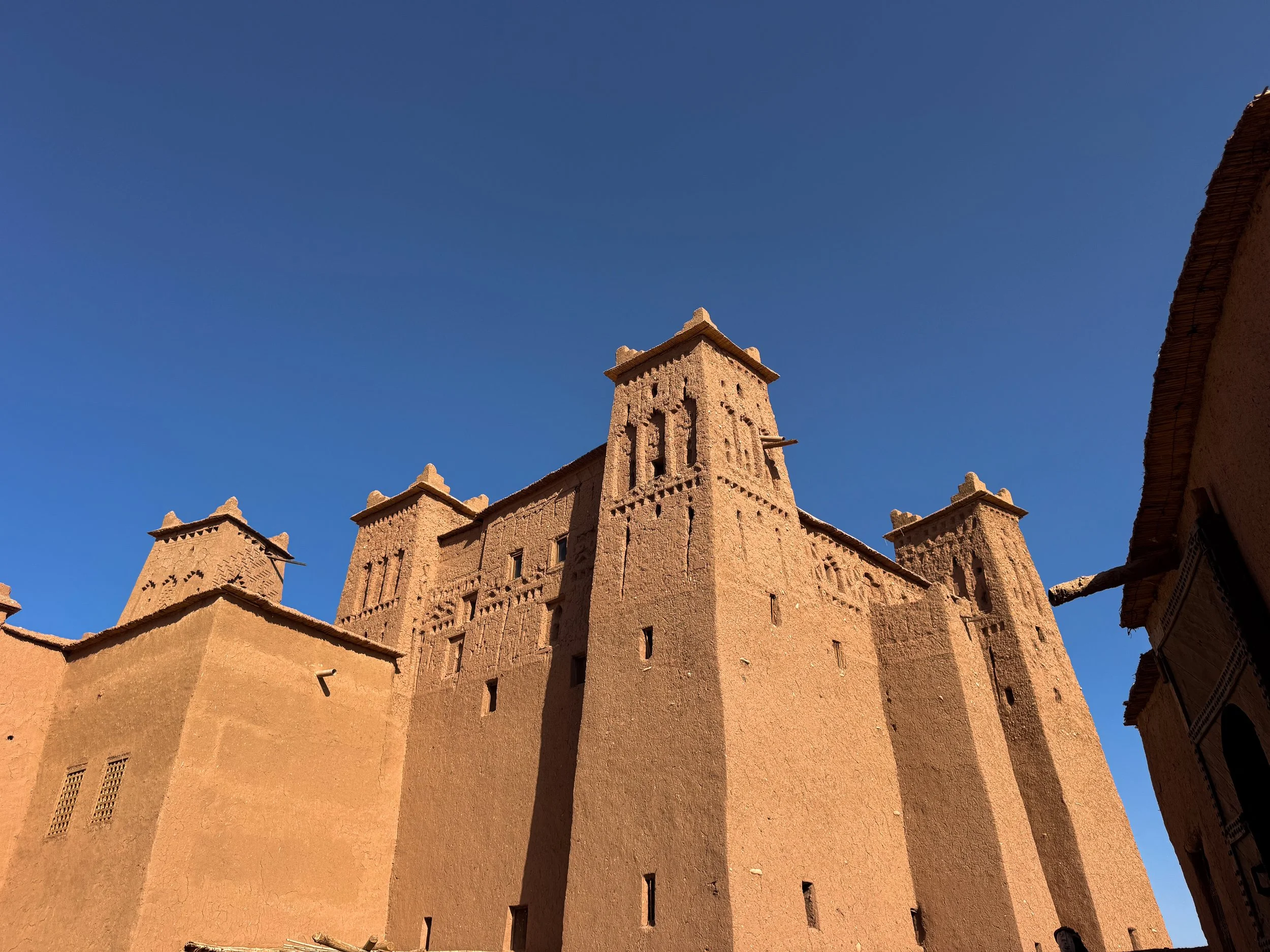
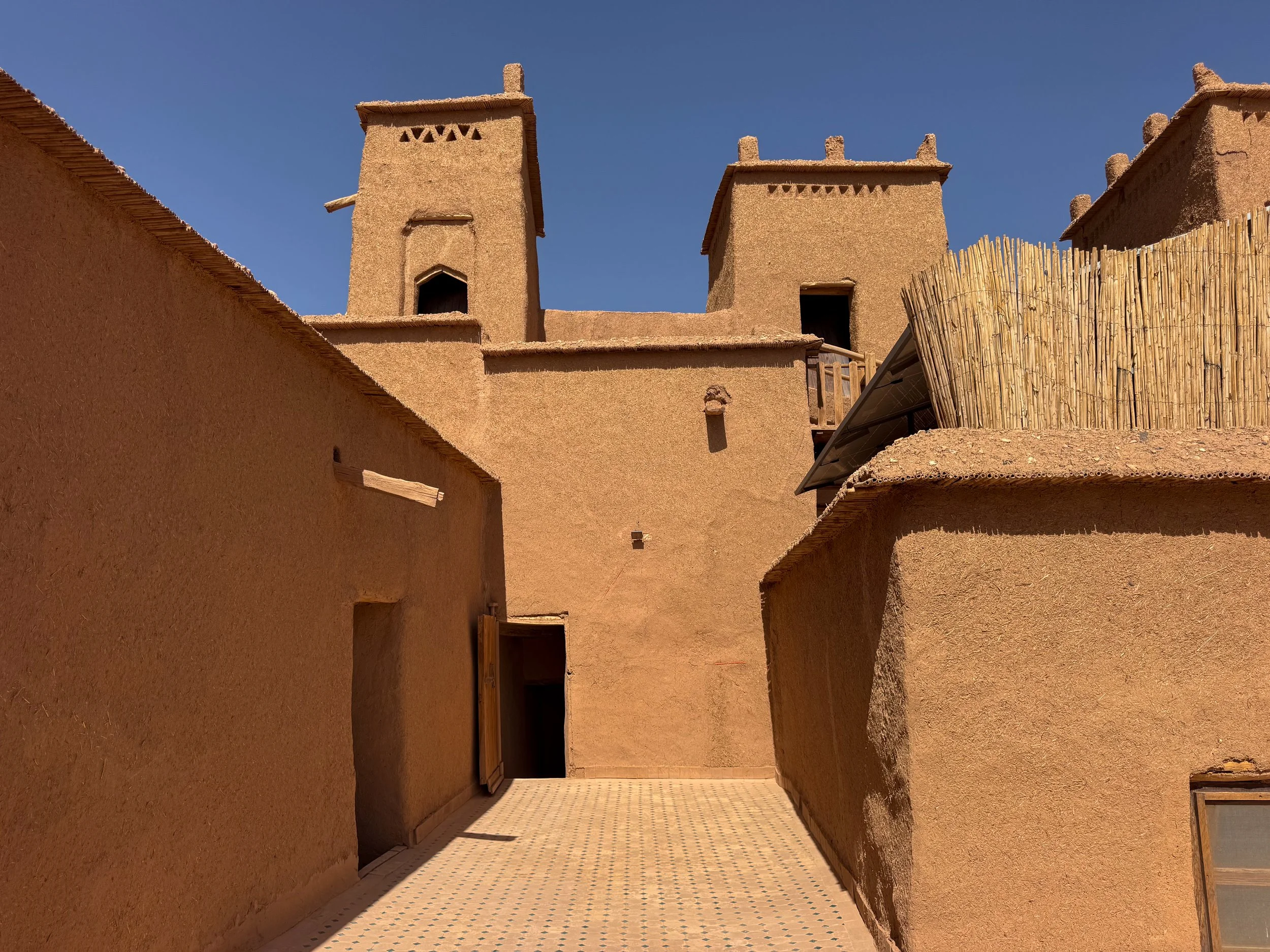
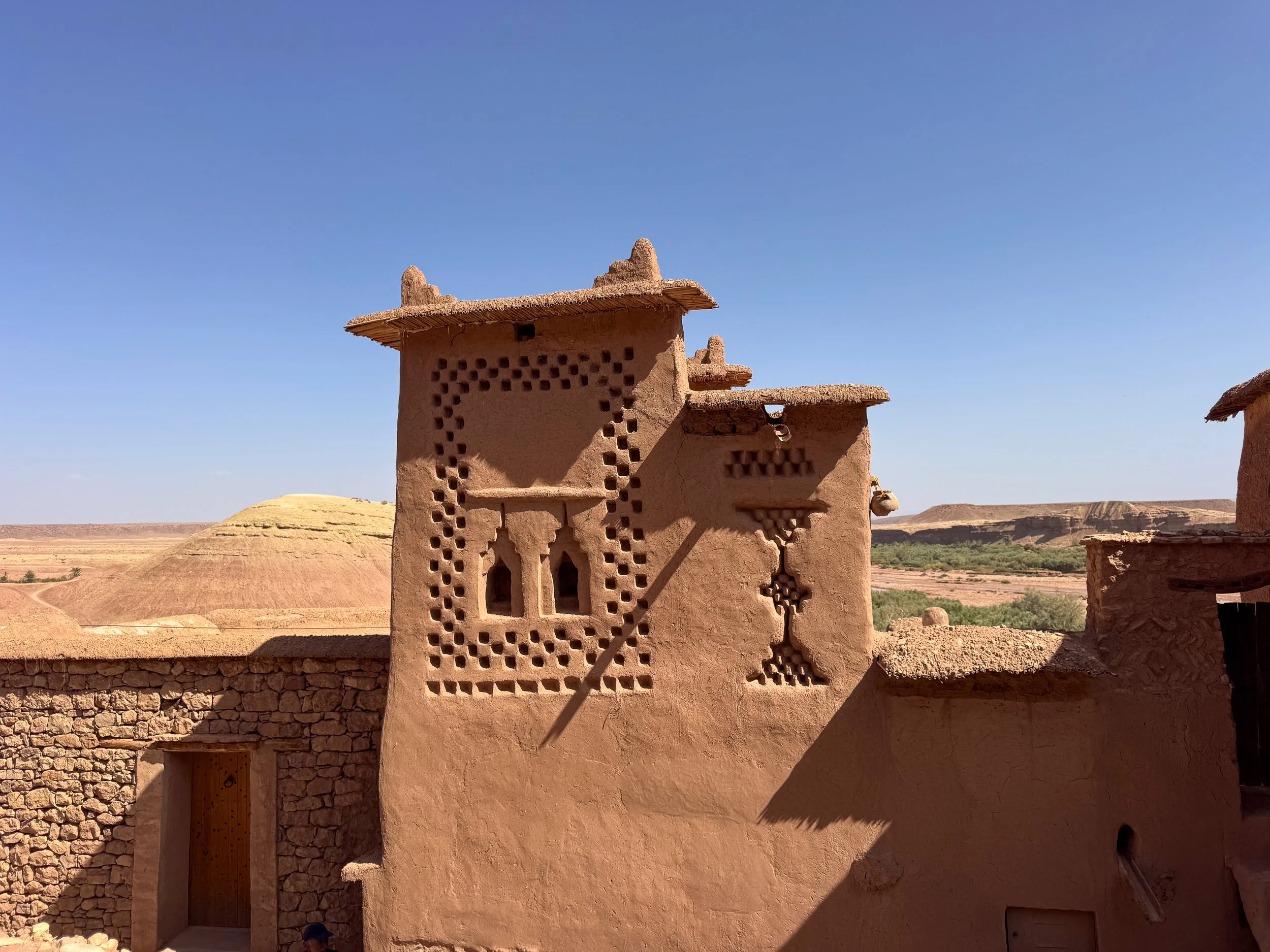
Ait Ben Haddou is a desert town famed for its ancient ksar, towering kasbahs and Berber culture.
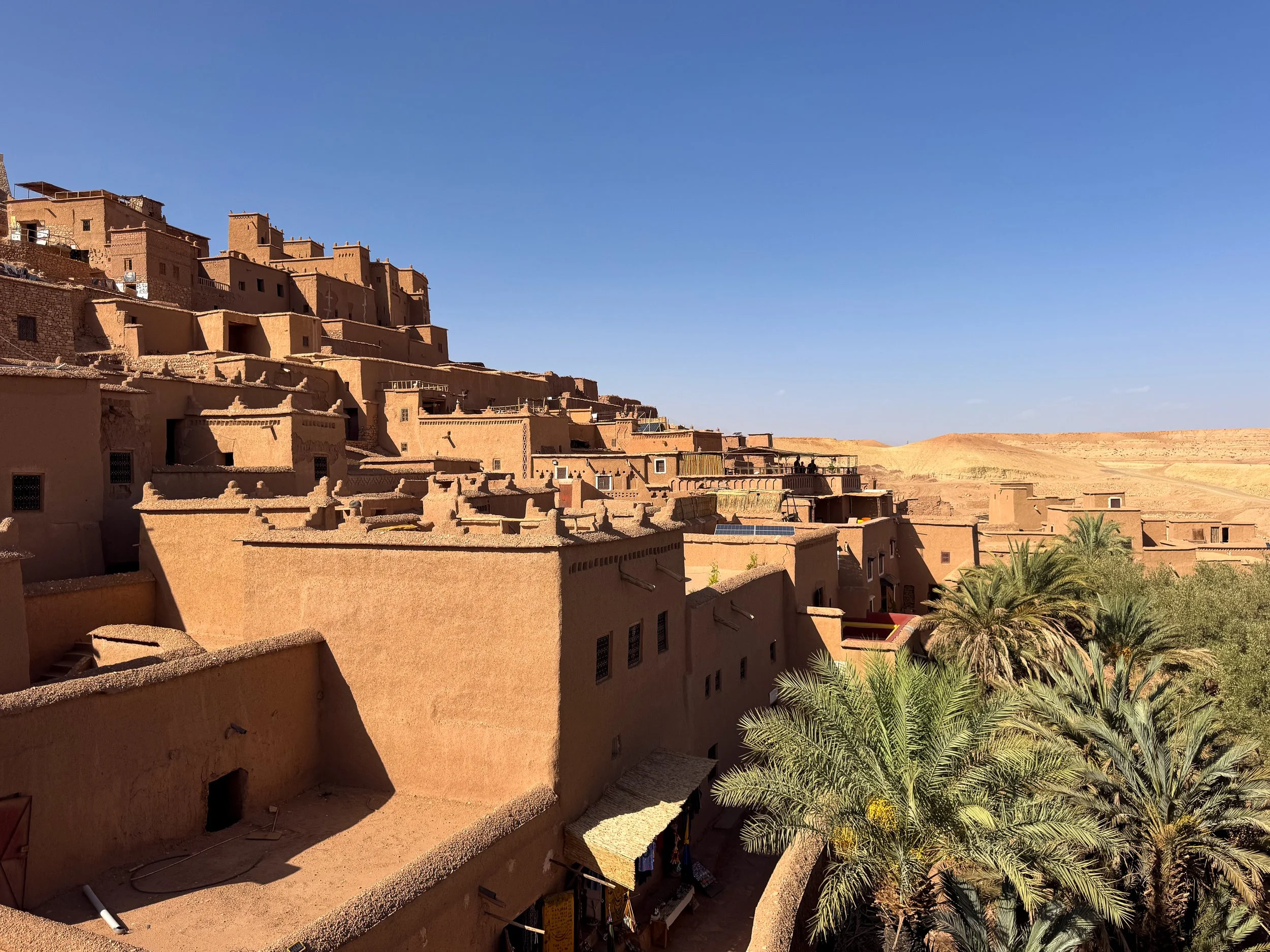
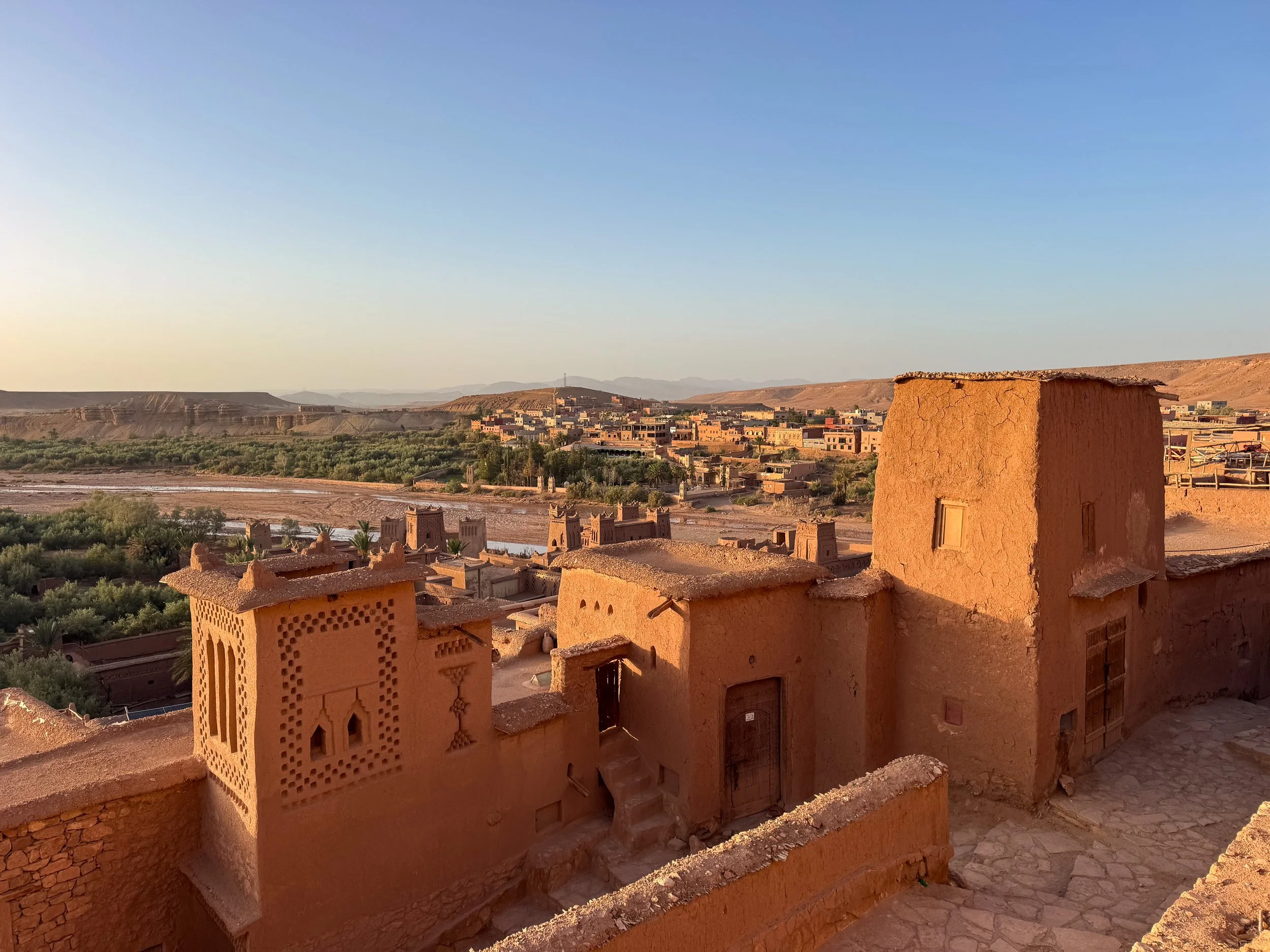
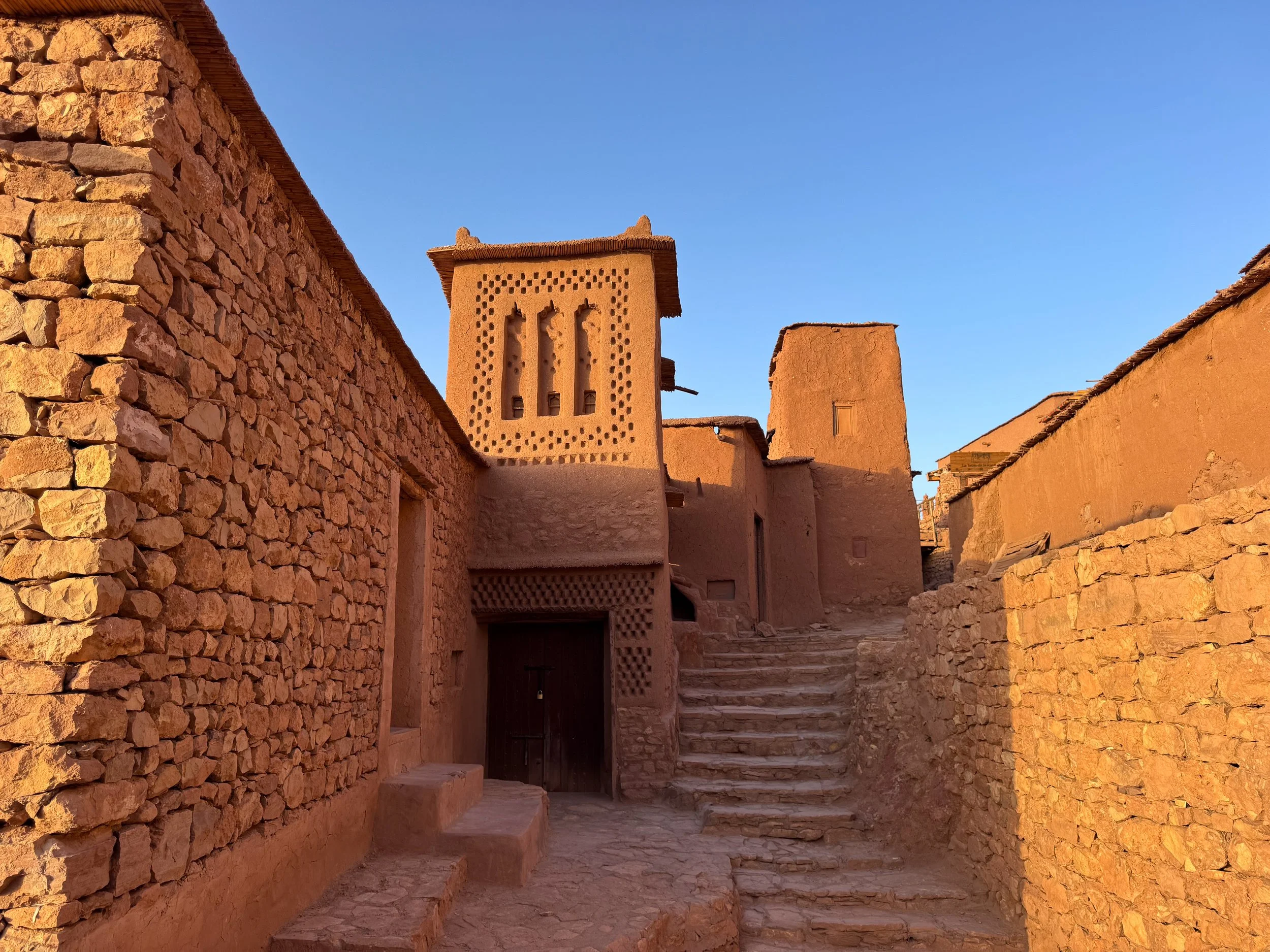
The Ancient Ksar. Adobe buildings and four towered kasbahs rise from the hillside of the ancient ksar. Their sand hued facades blend in with the desert landscape. Berber patterns and geometric designs decorate their outer walls. Narrow streets and passageways meander past cafes with rooftop terraces and vendors selling Berber goods.
Pro Tip. Walk through the empty streets of the ksar after the sun rises.
The Modern Village. A contemporary expansion of the ancient ksar. Its sand hued buildings are home to local residents, tourist hotels, Moroccan restaurants and artisan. Rooftop terraces overlook the ancient ksar offering panoramic views of its grandeur and the surrounding landscape.
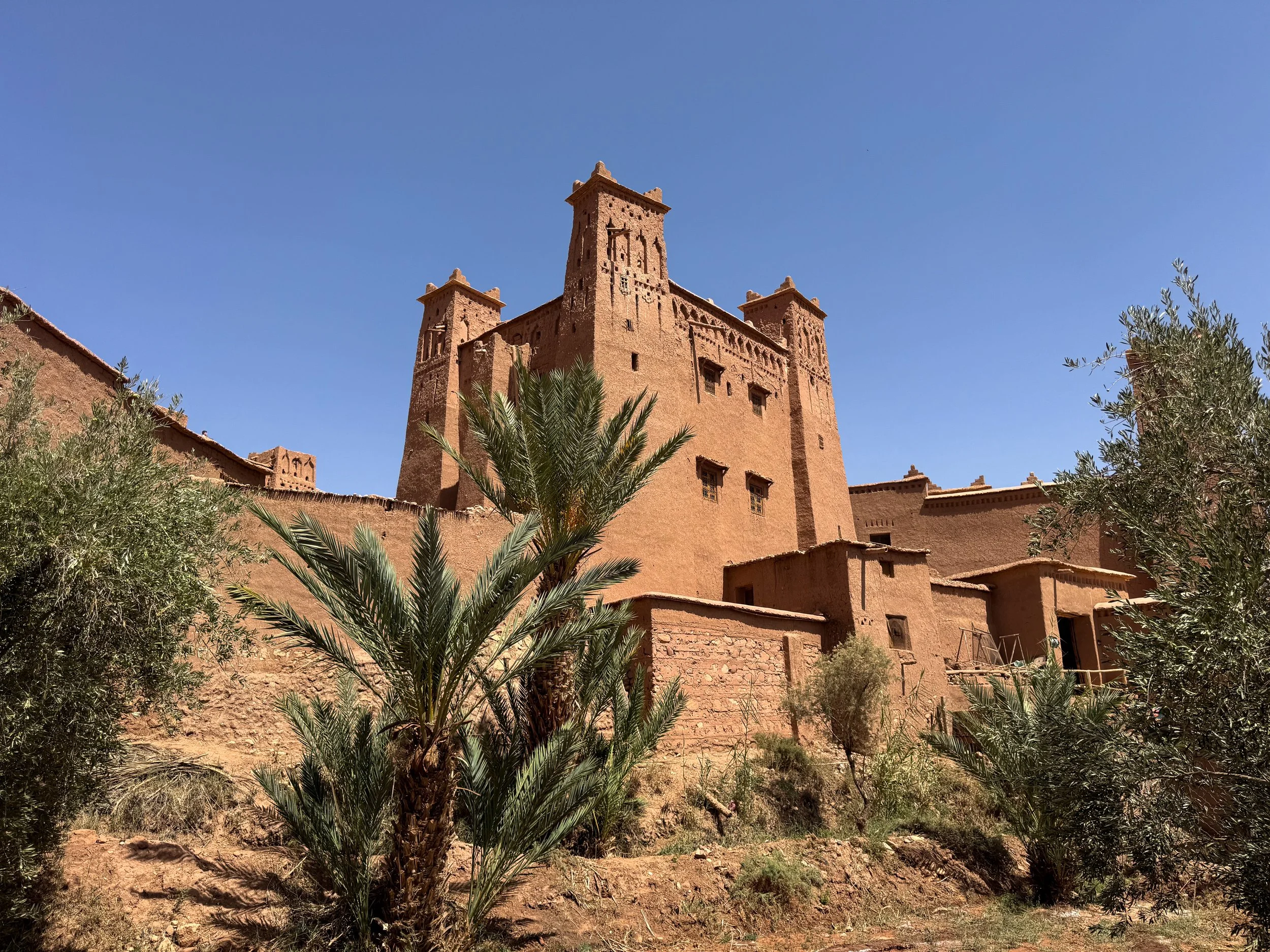
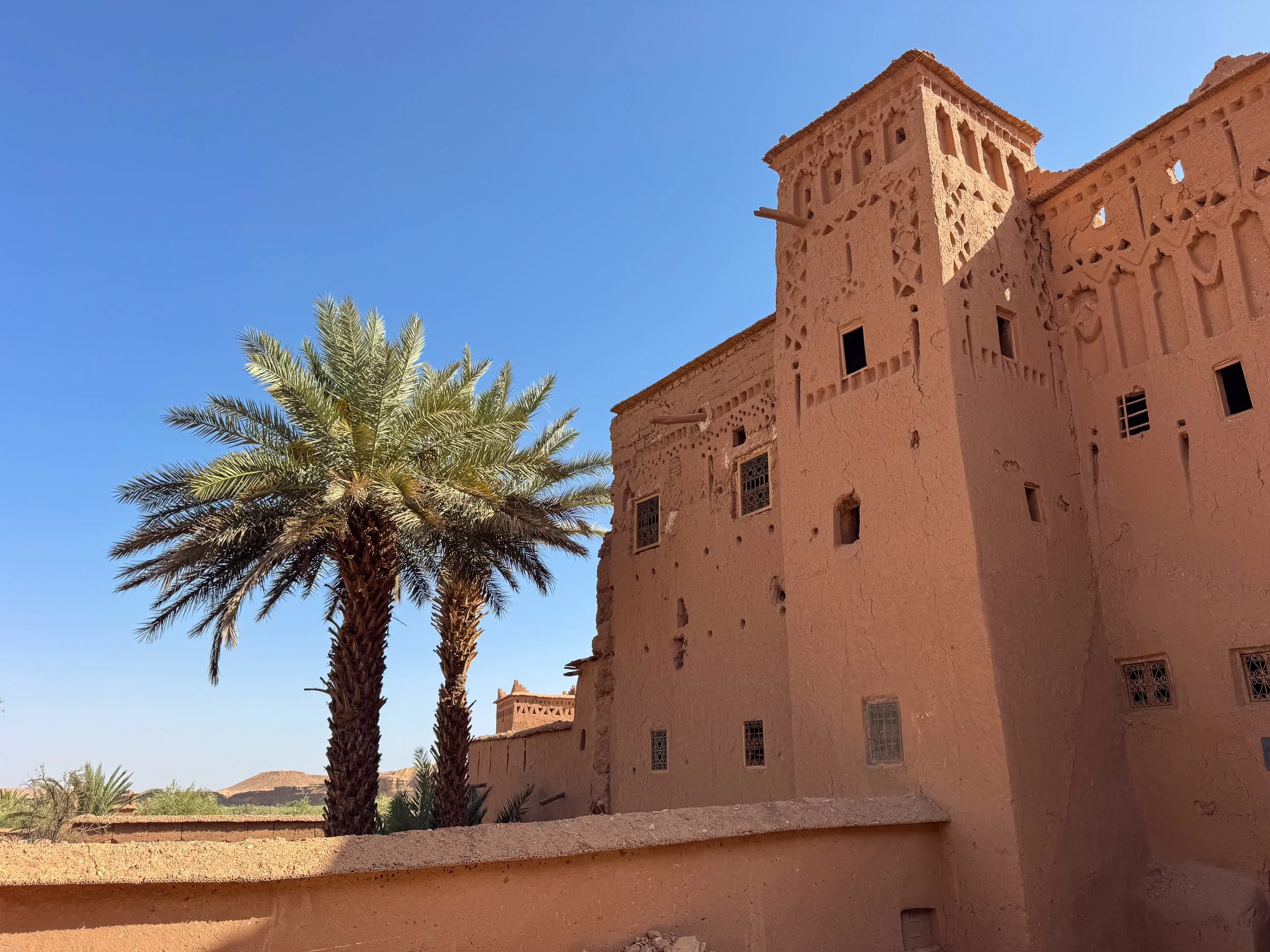
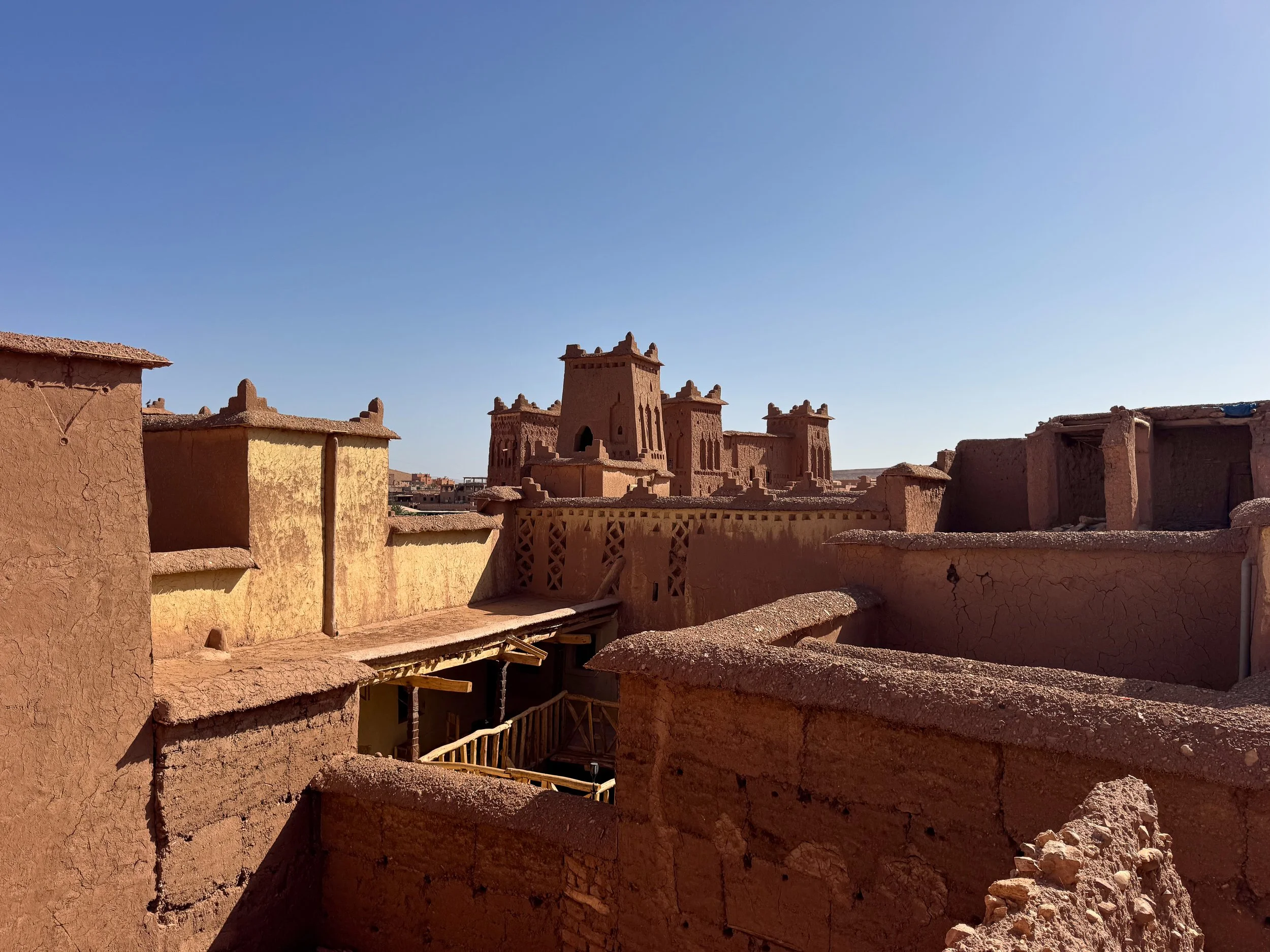
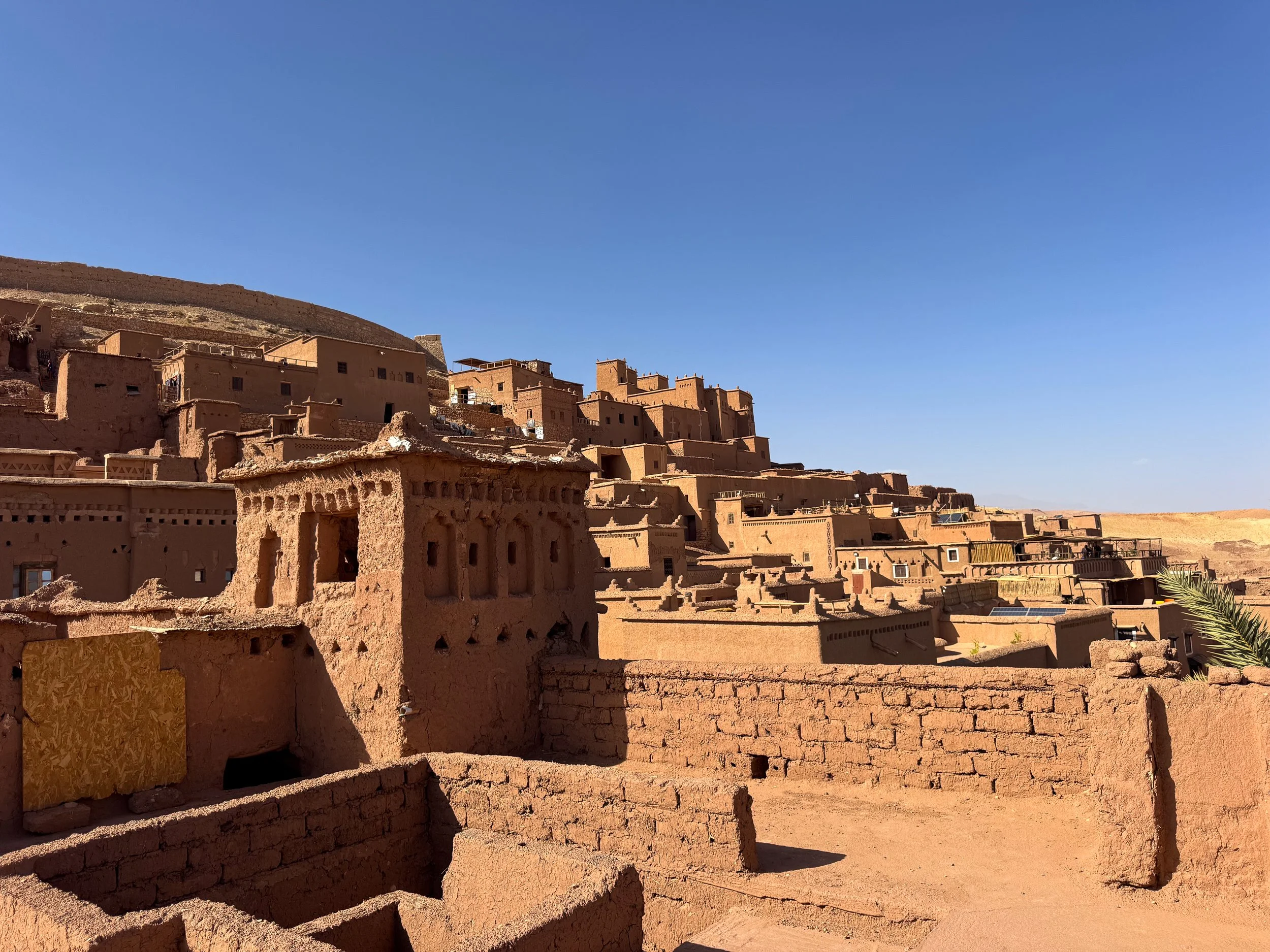
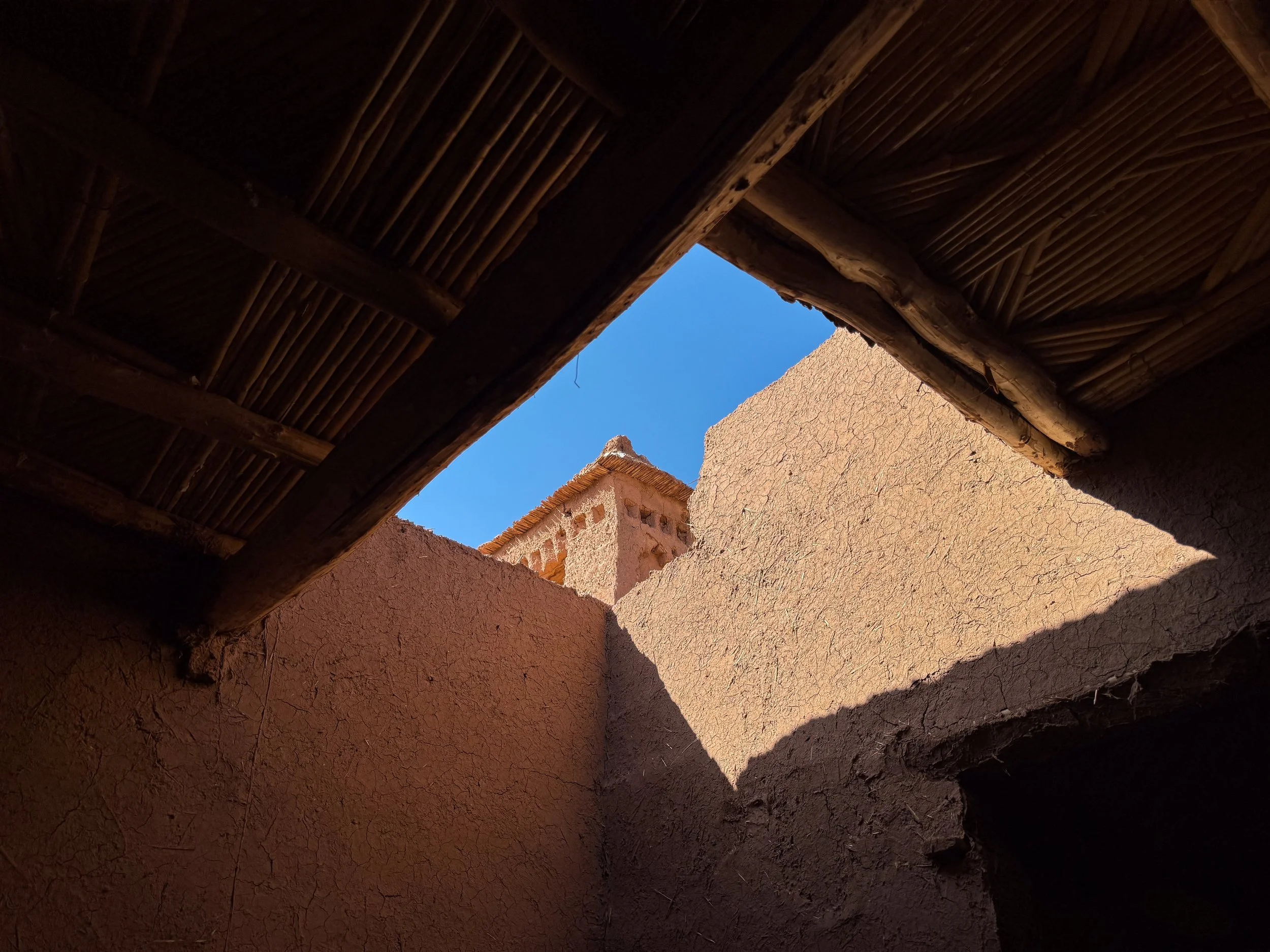
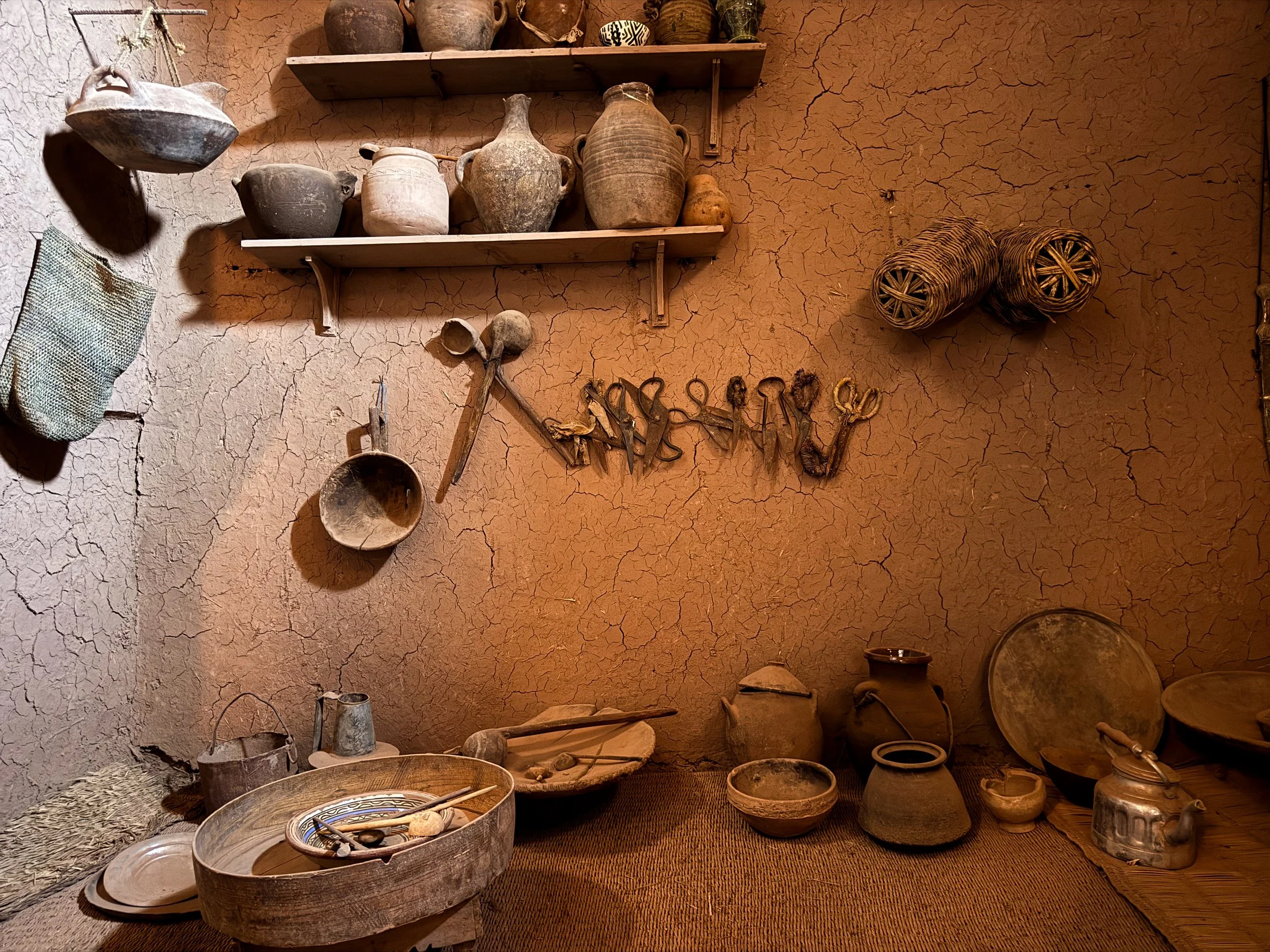
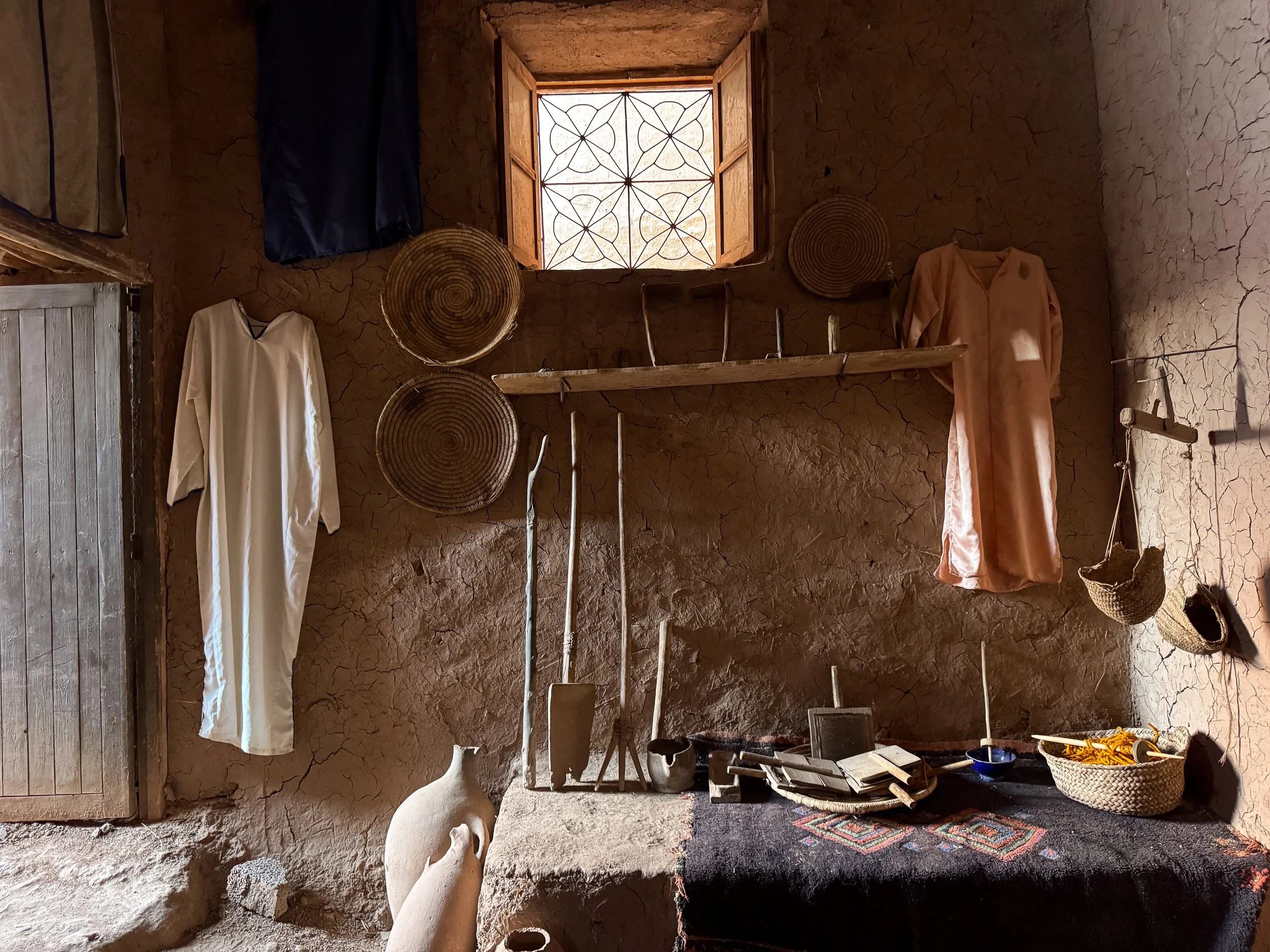
Tour The Kasbahs. Ait Ben Haddou’s kasbahs are worth visiting to experience local life and traditions. Their owners typically charge a small fee to enter.
The Museum Kasbah. A large kasbah with several connected rooms and a central staircase leading to the upper floors and the roof. Traditional tools, ceramics and textiles are displayed on interior walls. The roof offers views of the ancient ksar, its neighboring kasbahs and adobe houses.
The Widow’s Kasbah. A crumbling kasbah still inhabited by an older woman. She toured us through the ground floor, showing us her kitchen, bedroom and living area where she weaves. She let us explore the abandoned upper floor.
Maison de l'Oralité. A large kasbah converted into a museum and cultural center dedicated to Berber arts, language and traditions. Its exhibits feature traditional musical instruments, weaving tools and looms, historic photos and stories of local folklore. The kasbah is one of the best preserved and still half occupied by a local family.Visit its rooftop for views of the ksar and surrounding landscape.
Ksar vs Kasbah. Two terms used to describe the architecture of desert villages like Ait Ben Haddou.
Ksar refers to the walled city or fortified village made up of one or multiple kasbahs and surrounding houses.
Kasbah is a wealthy family’s house, often built within a ksar. They’re larger than surrounding houses and defined by their four cornered towers.
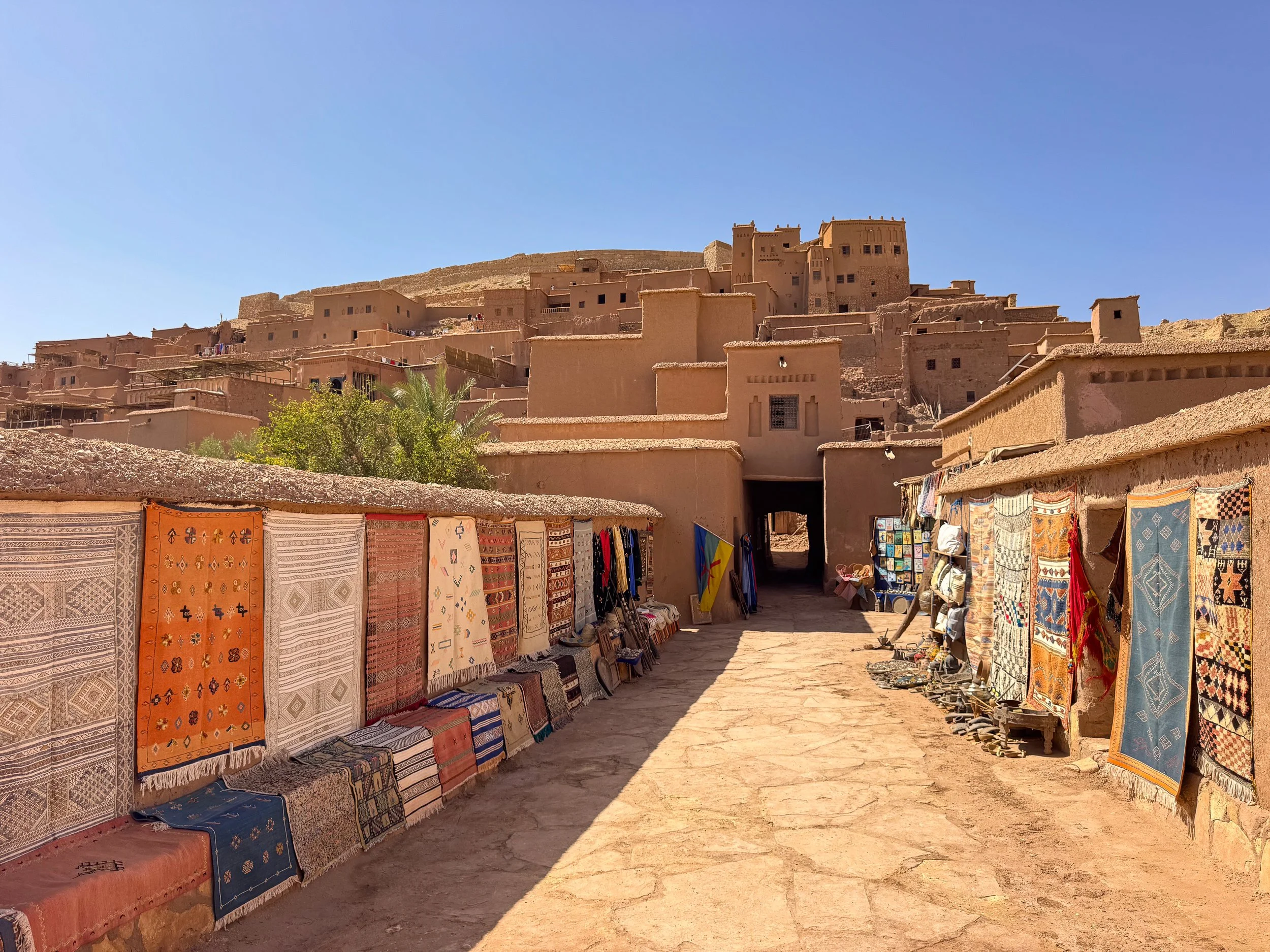
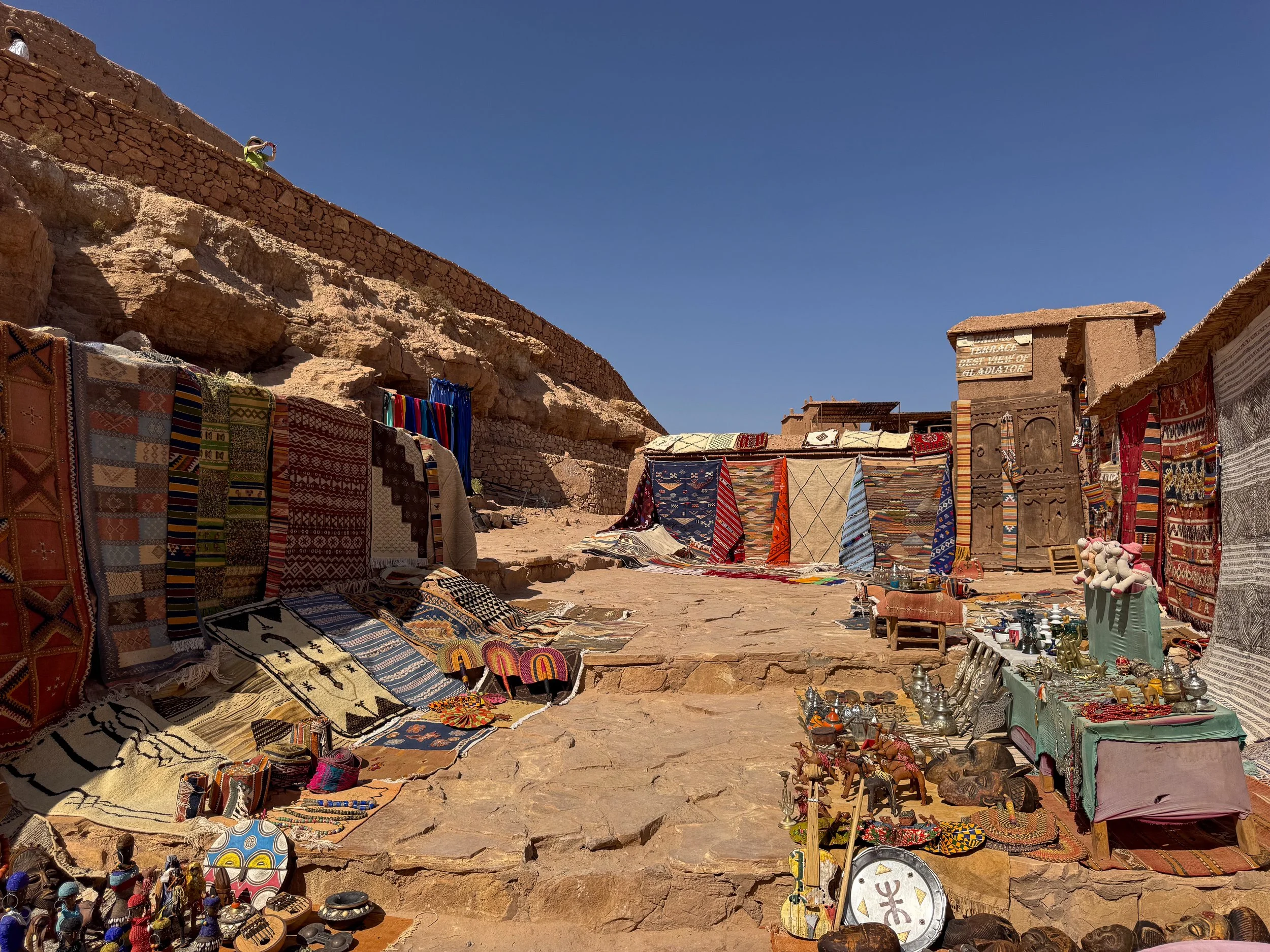
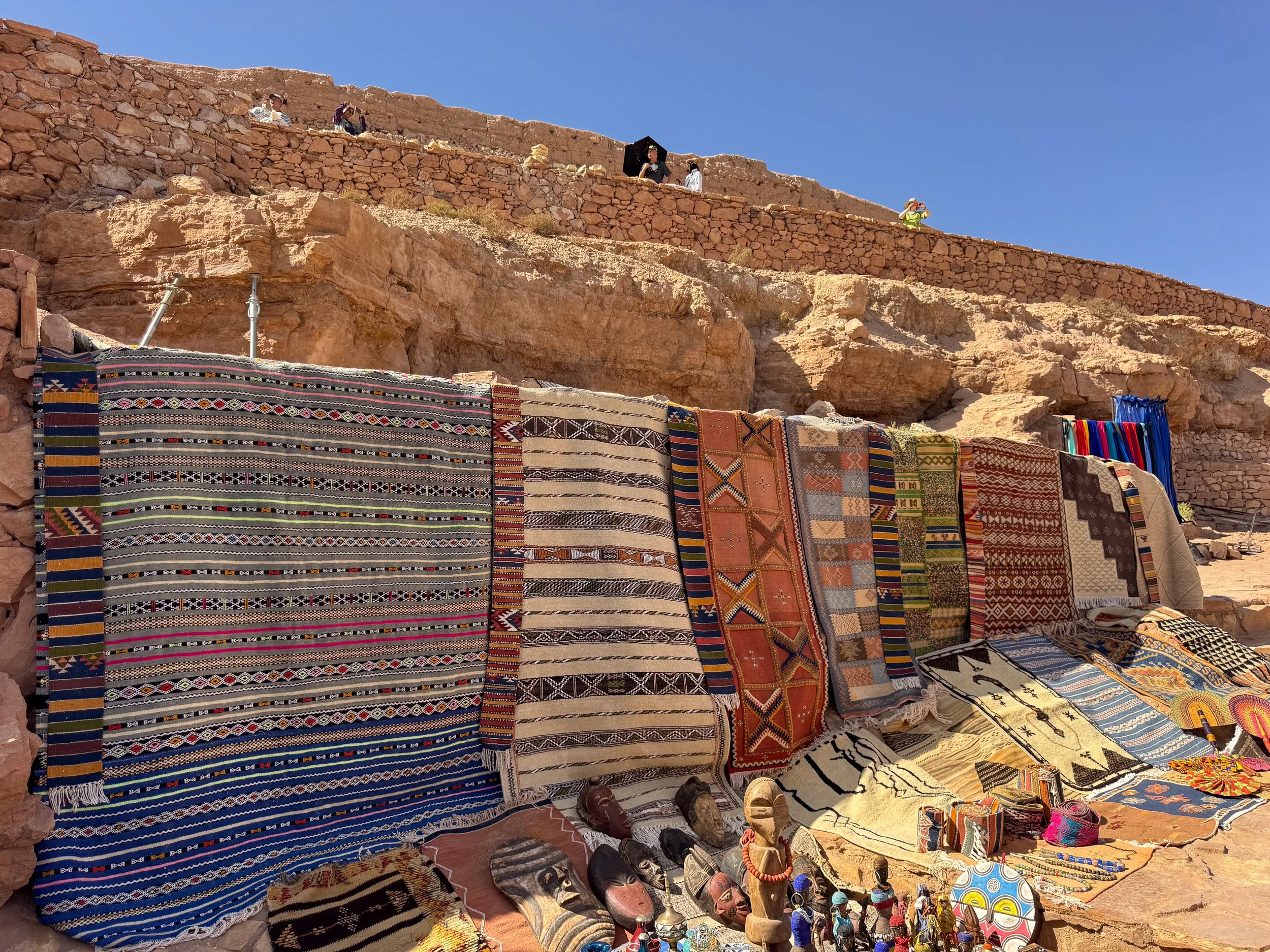
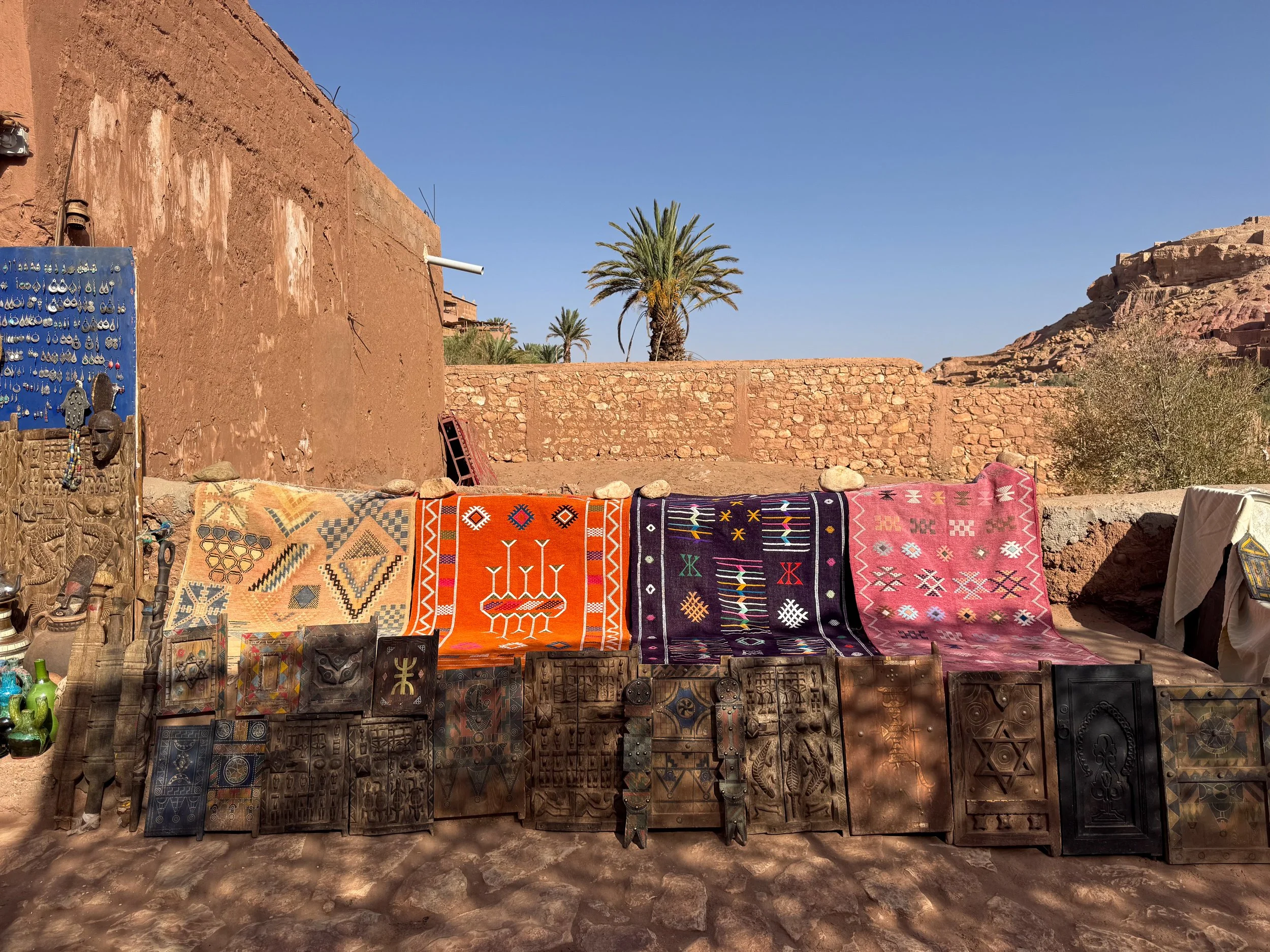
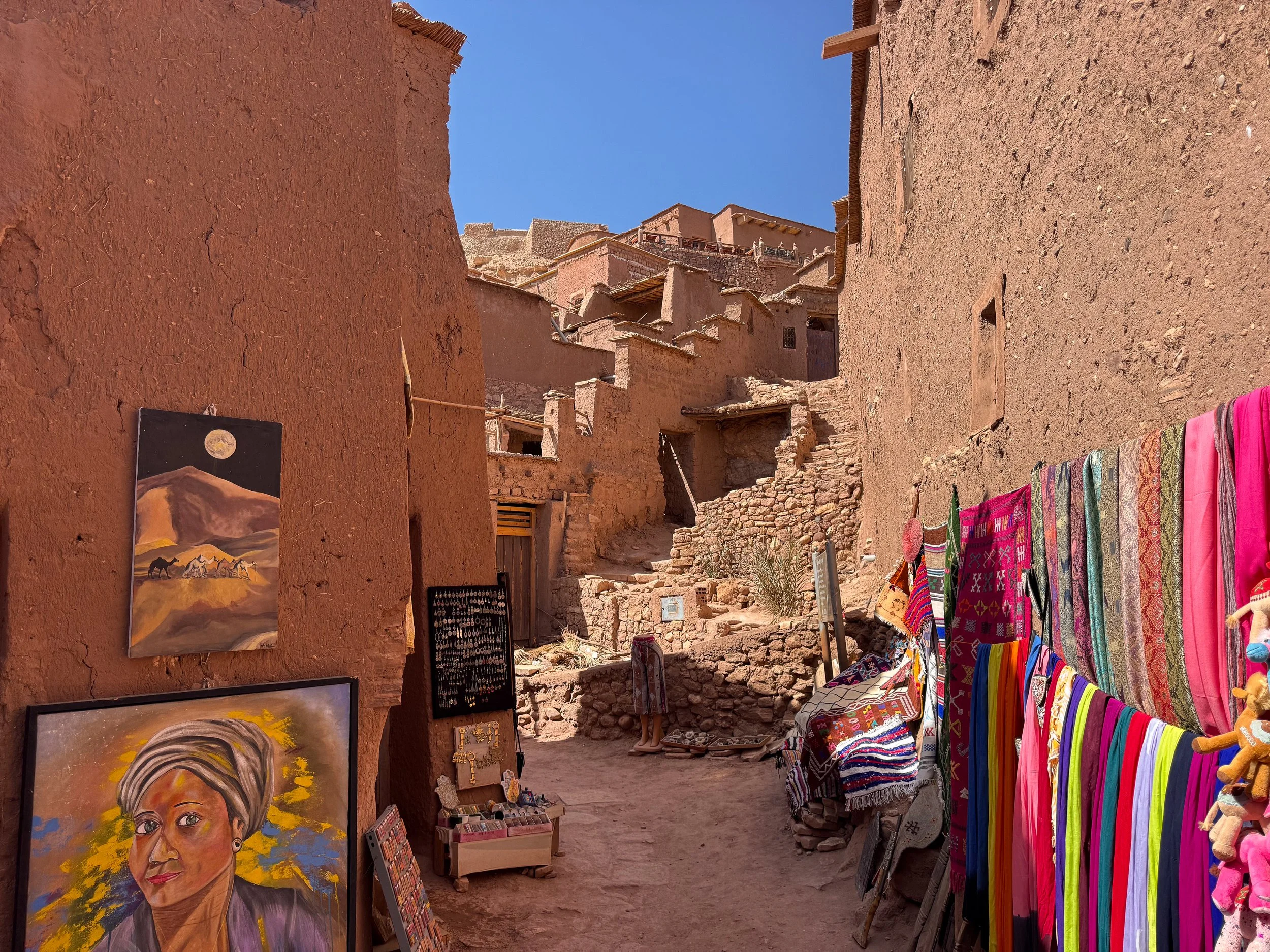
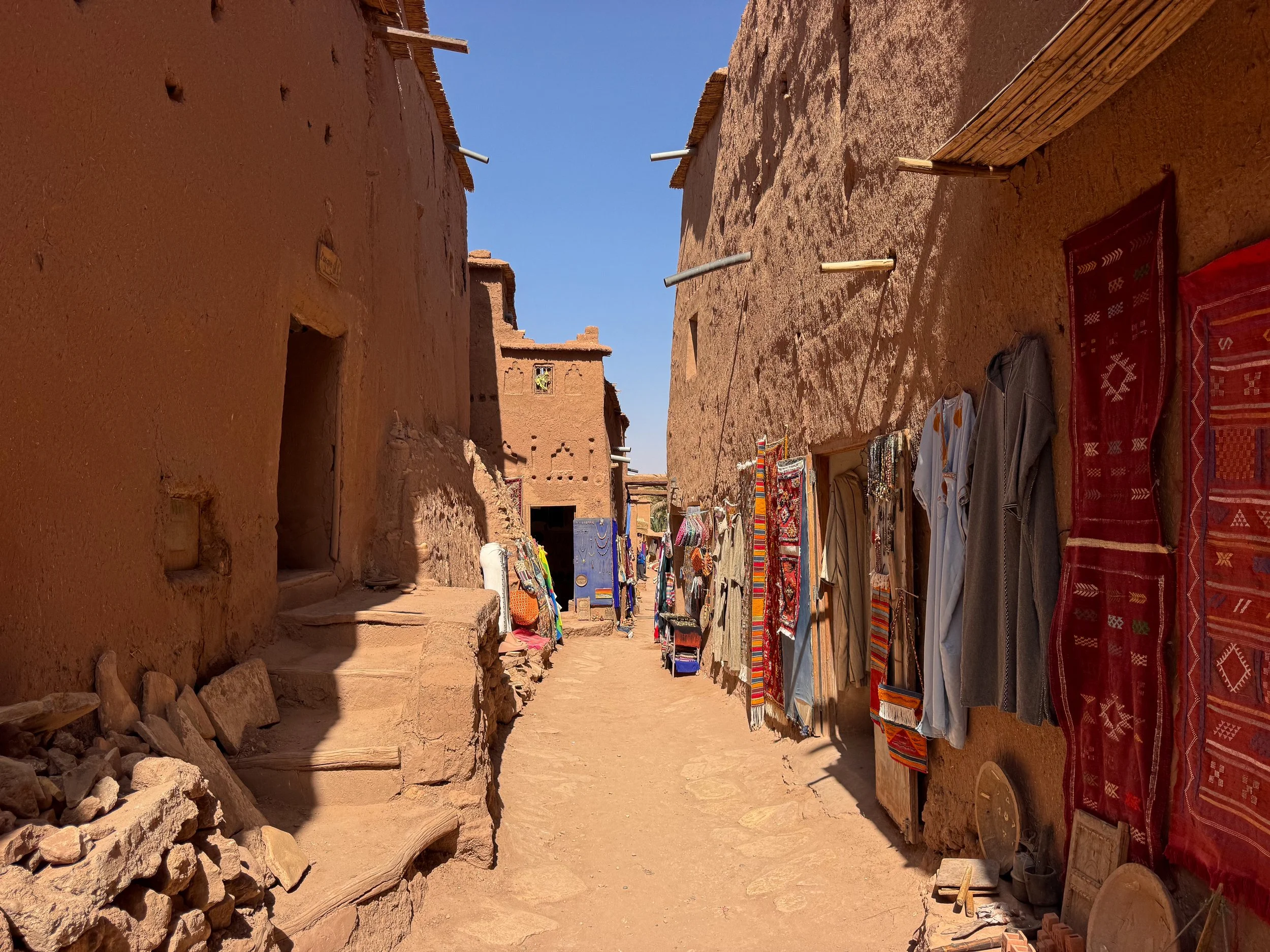
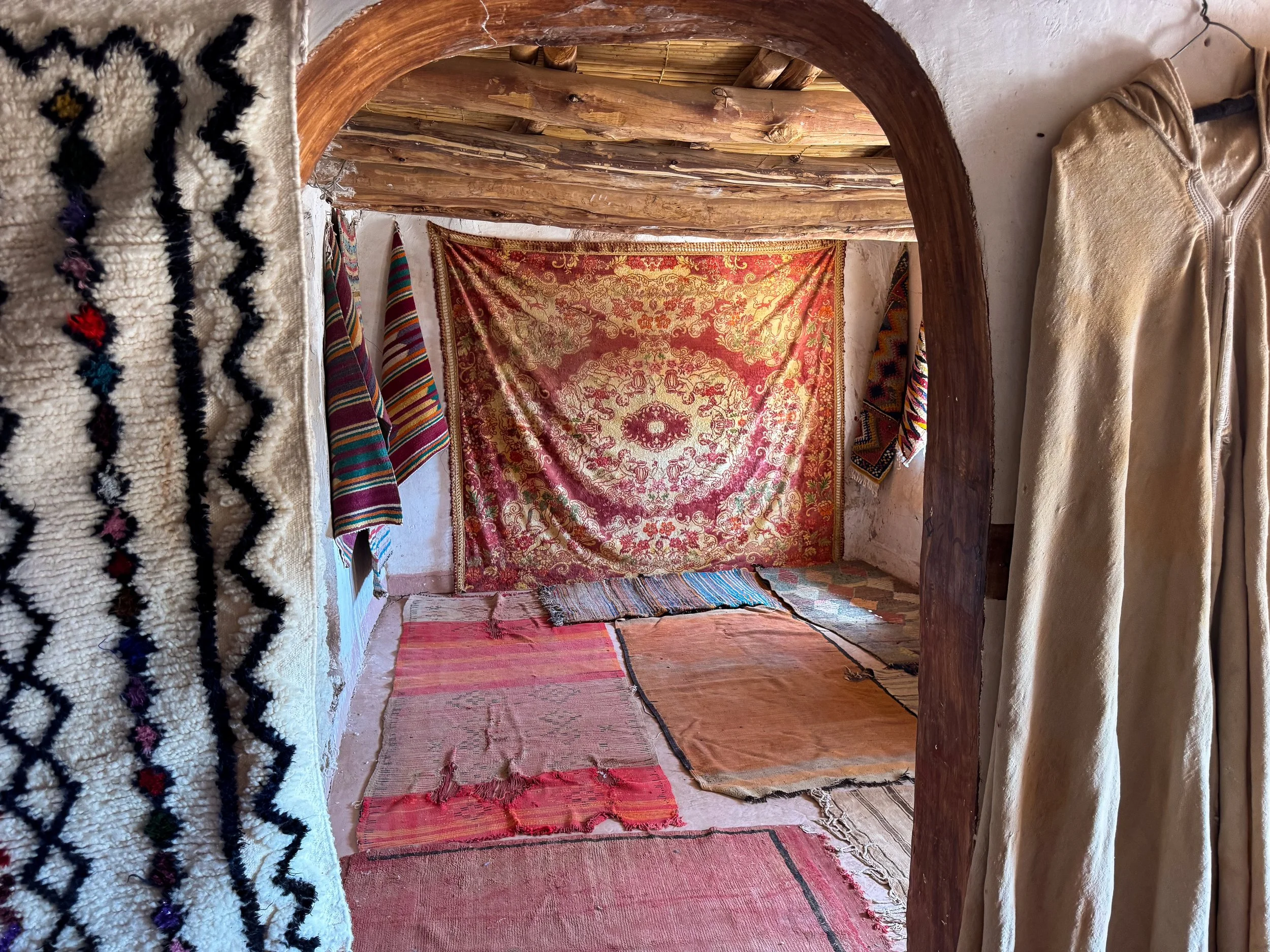
Berber Souks. Ait Ben Haddou was built along an ancient Berber caravan route. Berber craft and culture continues to prosper in souks of the ancient ksar. The narrow alleyways are lined with vendors displaying traditional goods and antiques. Shops sell metal jewelry, patterned rugs, colorful scarves, desert knives, brass lamps, clay pottery, carved wooden locks and paintings.
Good to Know. Accept mint tea if offered by a shopkeeper, it’s Berber hospitality. Sit down and chat for a few minutes. Leave when ready and don’t feel pressured to buy anything.
Pro Tip. Ait Ben Haddou is a good place to buy Moroccan and Berber made items. Vendors are less aggressive than in larger cities and prices are often reasonable.
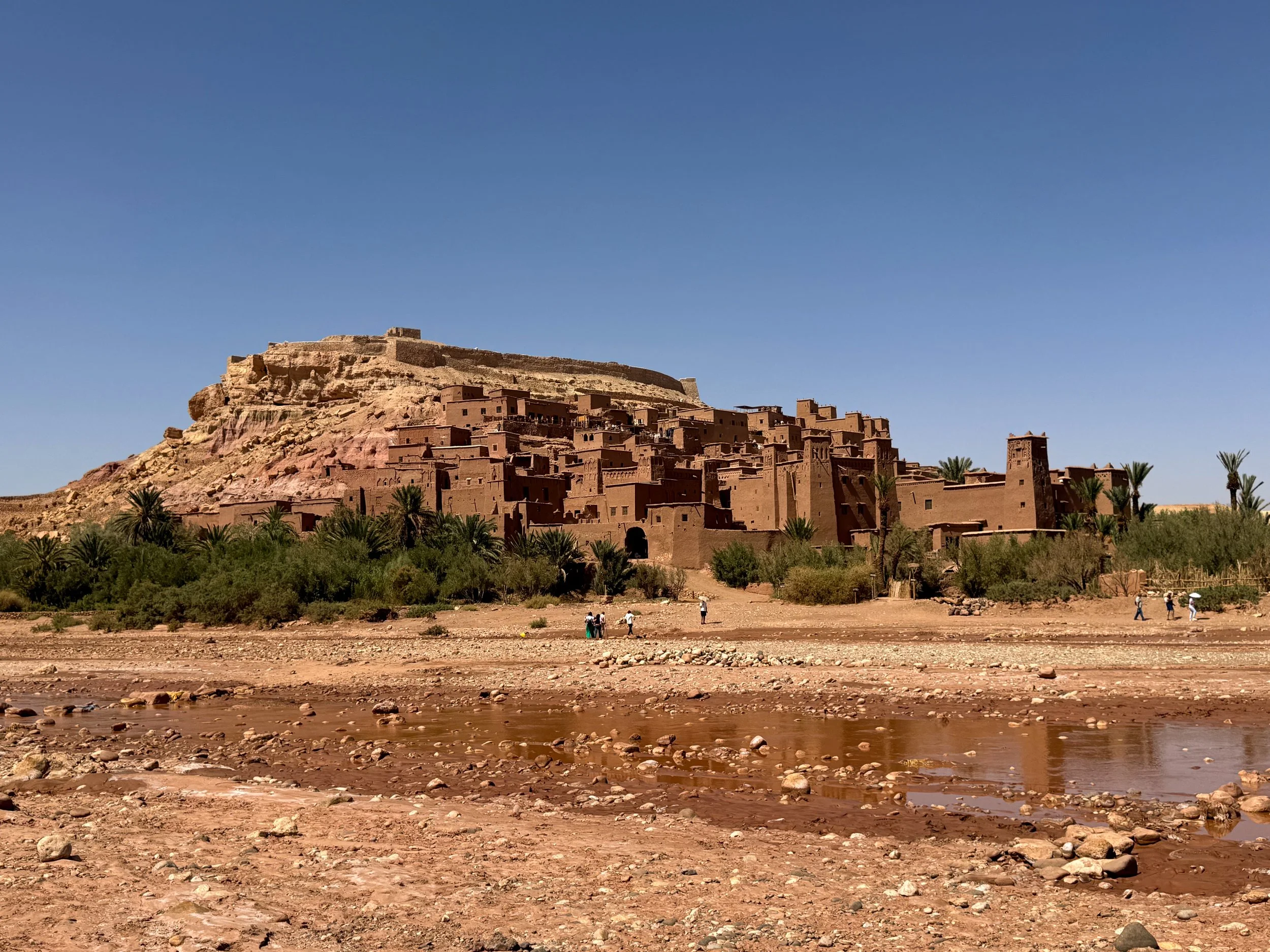
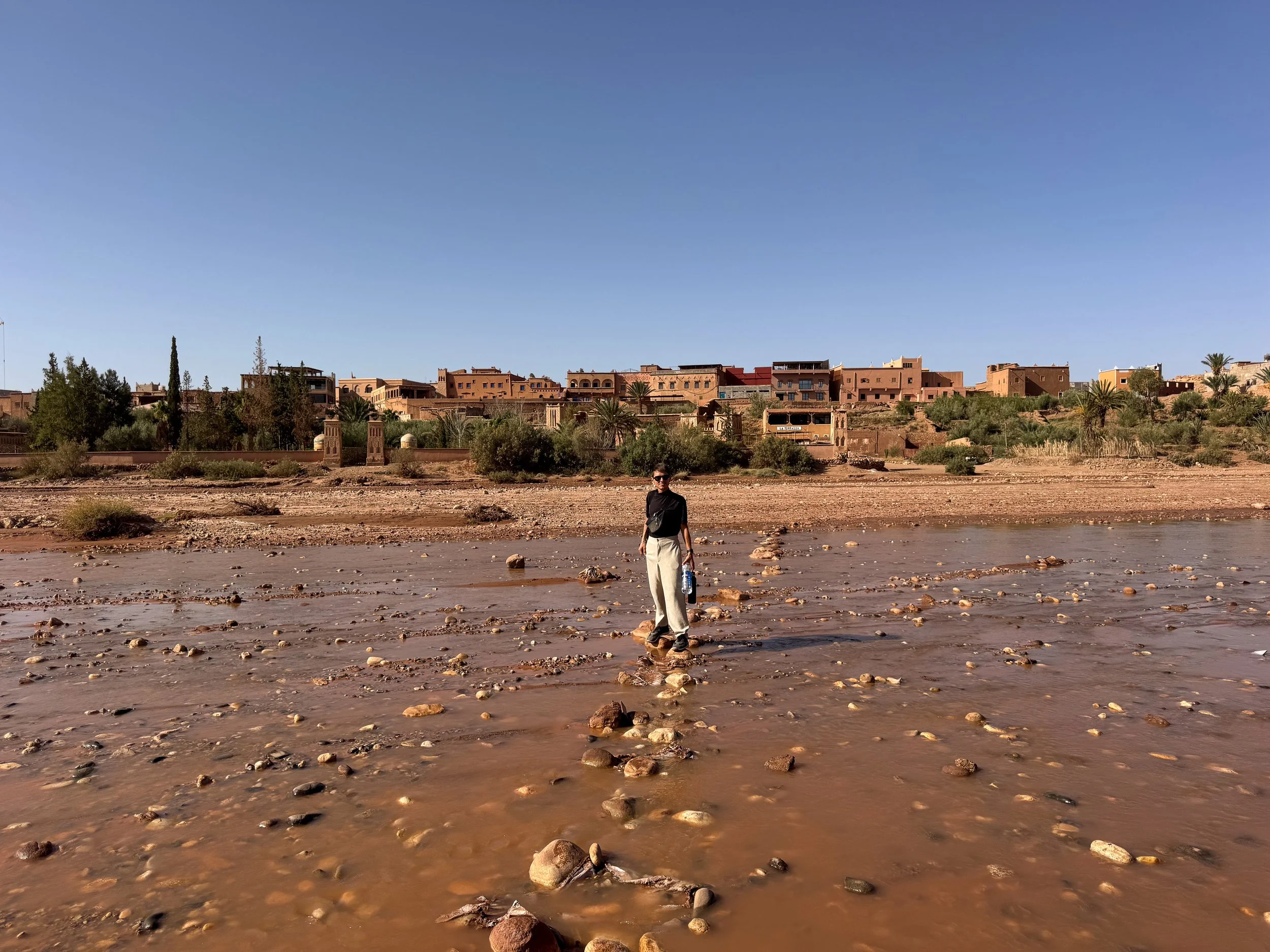
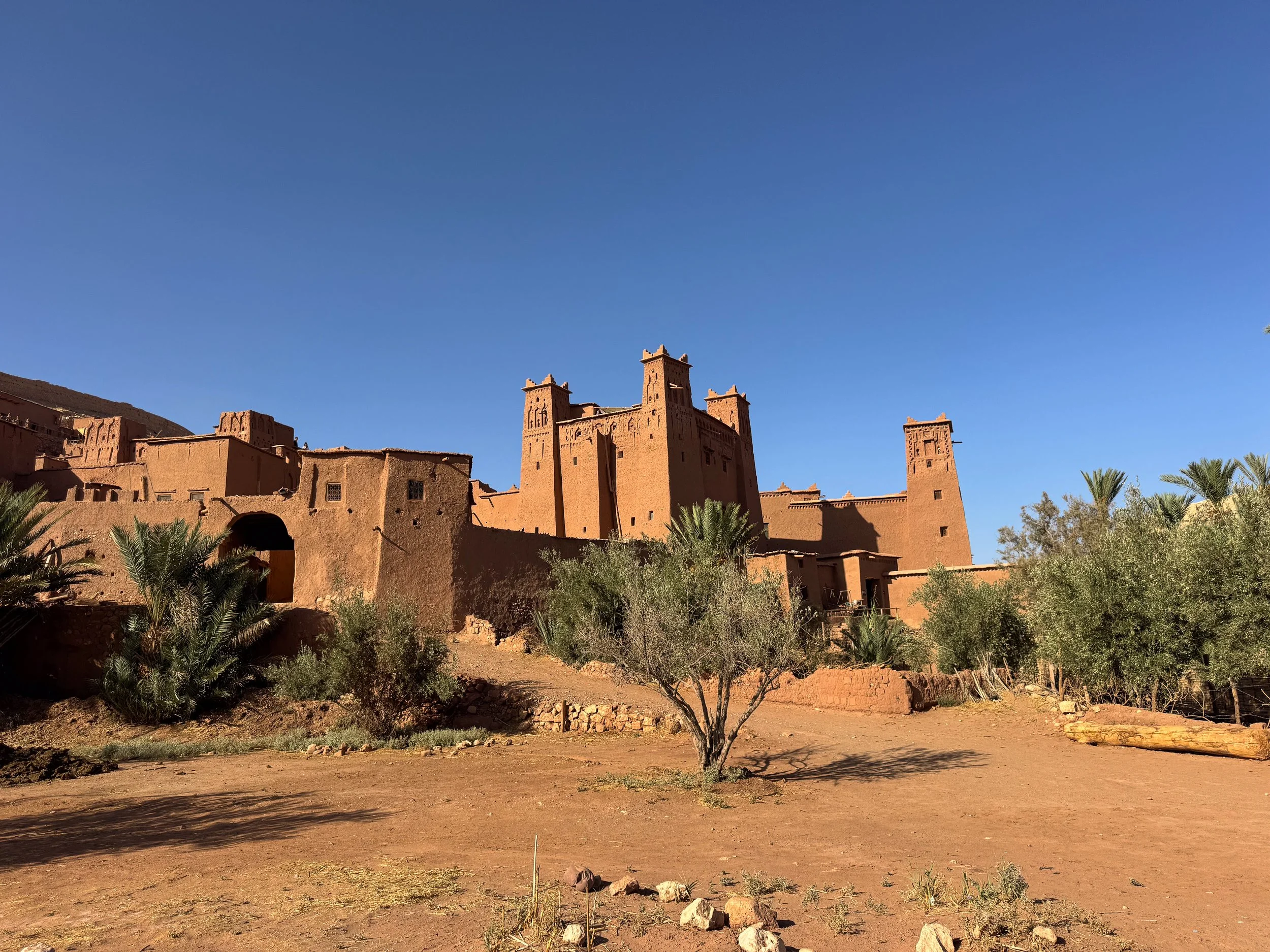
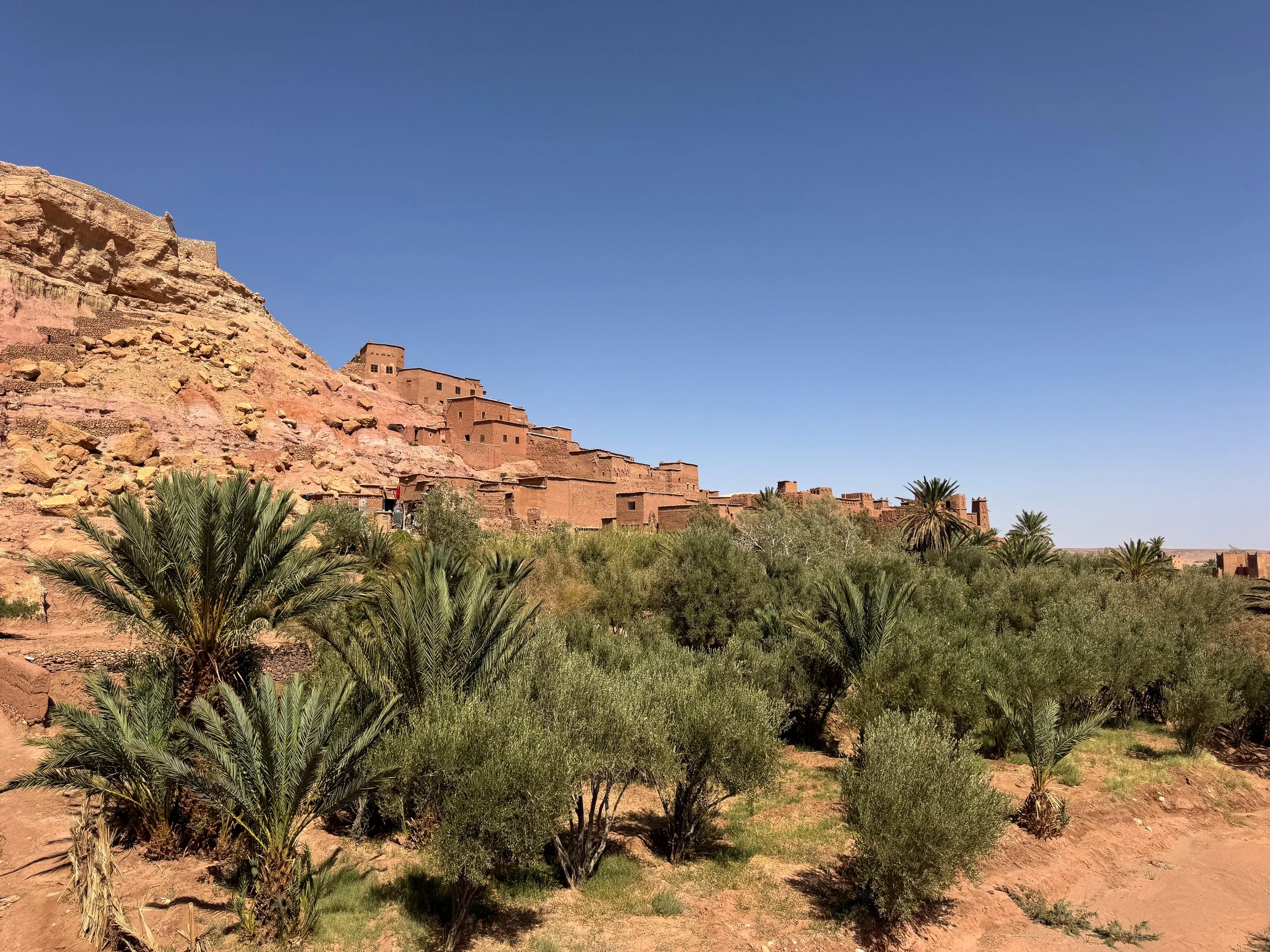
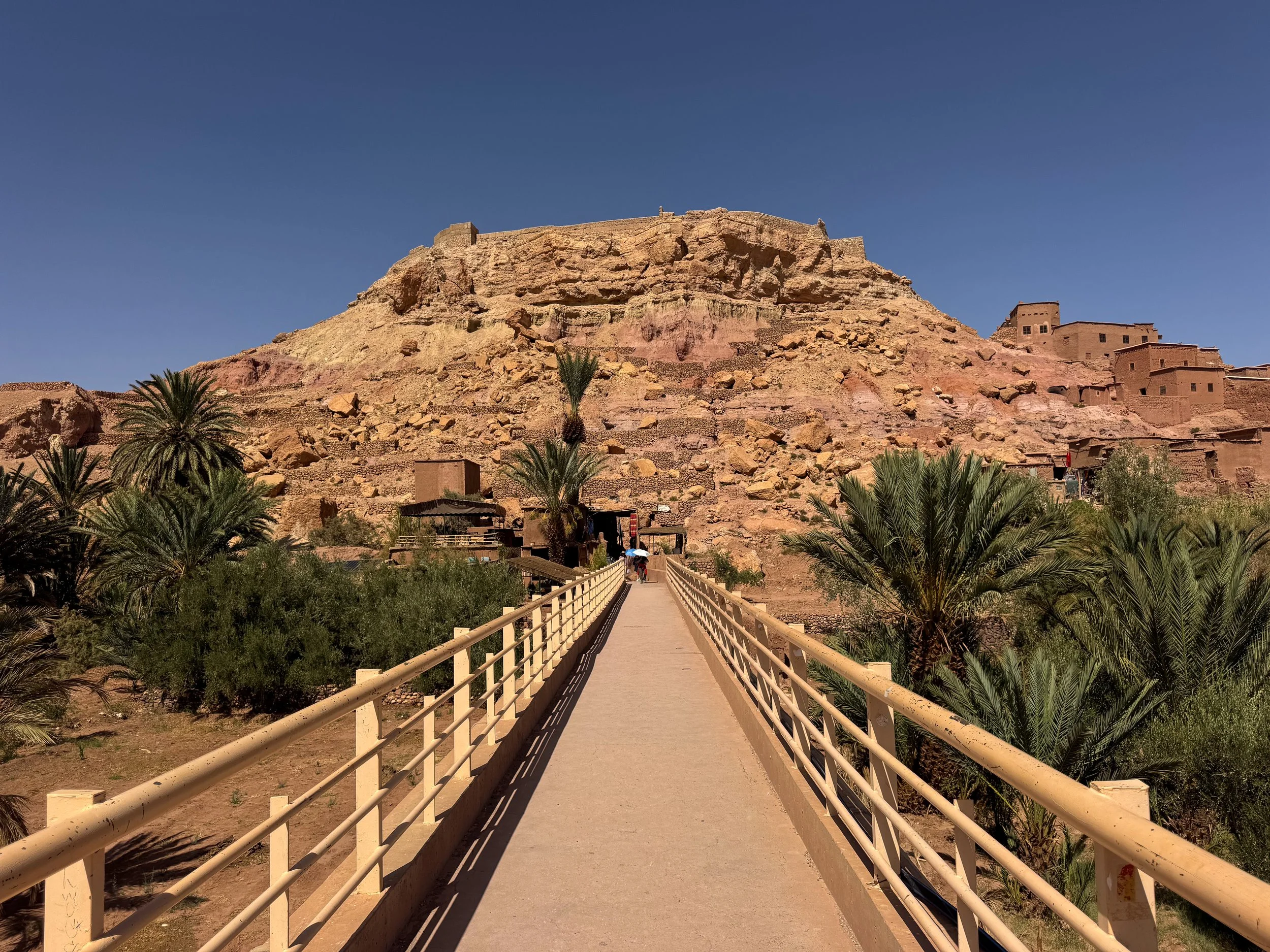
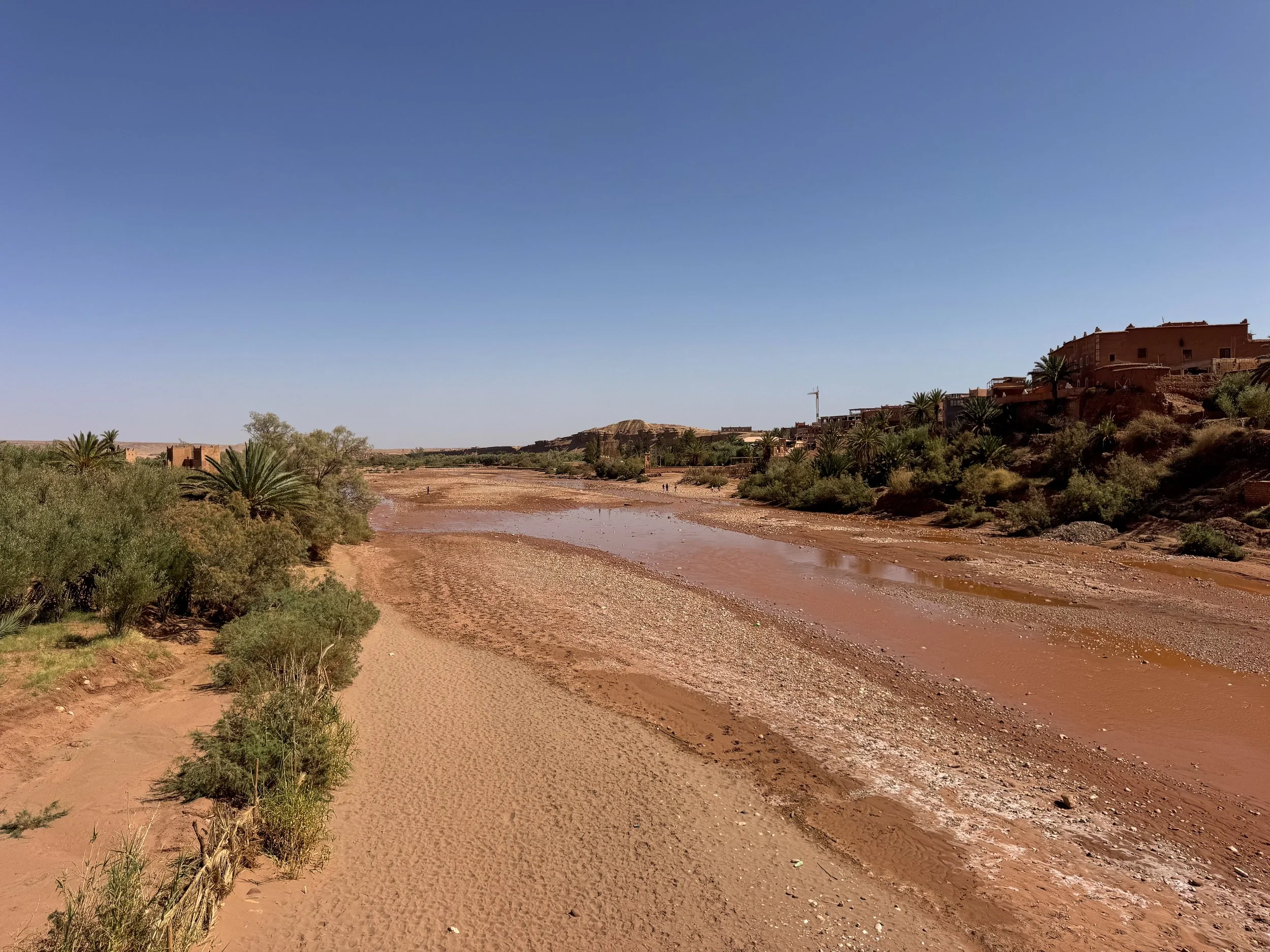
The Ounila River. A river separating The Ancient Ksar and Modern Village. Walk across its foot bridge or the stepping stones to transit in-between.
Foot Bridge. A pedestrian bridge leading directly between the modern village and ancient ksar. It’s free to cross and flanked by local restaurants and vendors.
Stepping Stones. During the dry season, stepping stones and sand bags create makeshift paths across the muddy river. This route offers scenic views of the ksar and its kasbahs.
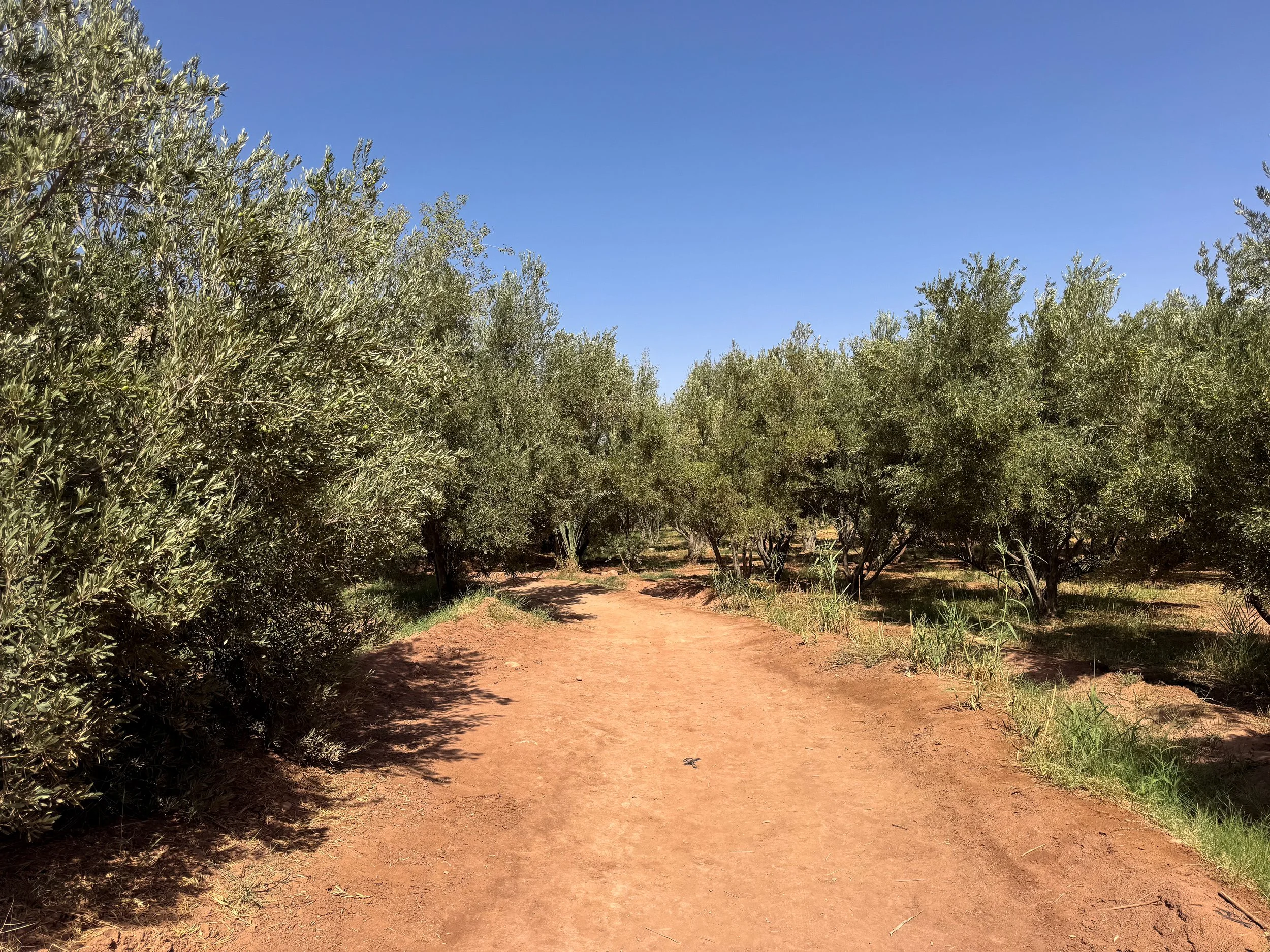
Pro Tip. Follow the stepping stones across the river and walk downstream to the olive groves. A trail passes through them leading to the ksar’s eastern gate. This route avoids paying to enter or exit through the kasbahs.
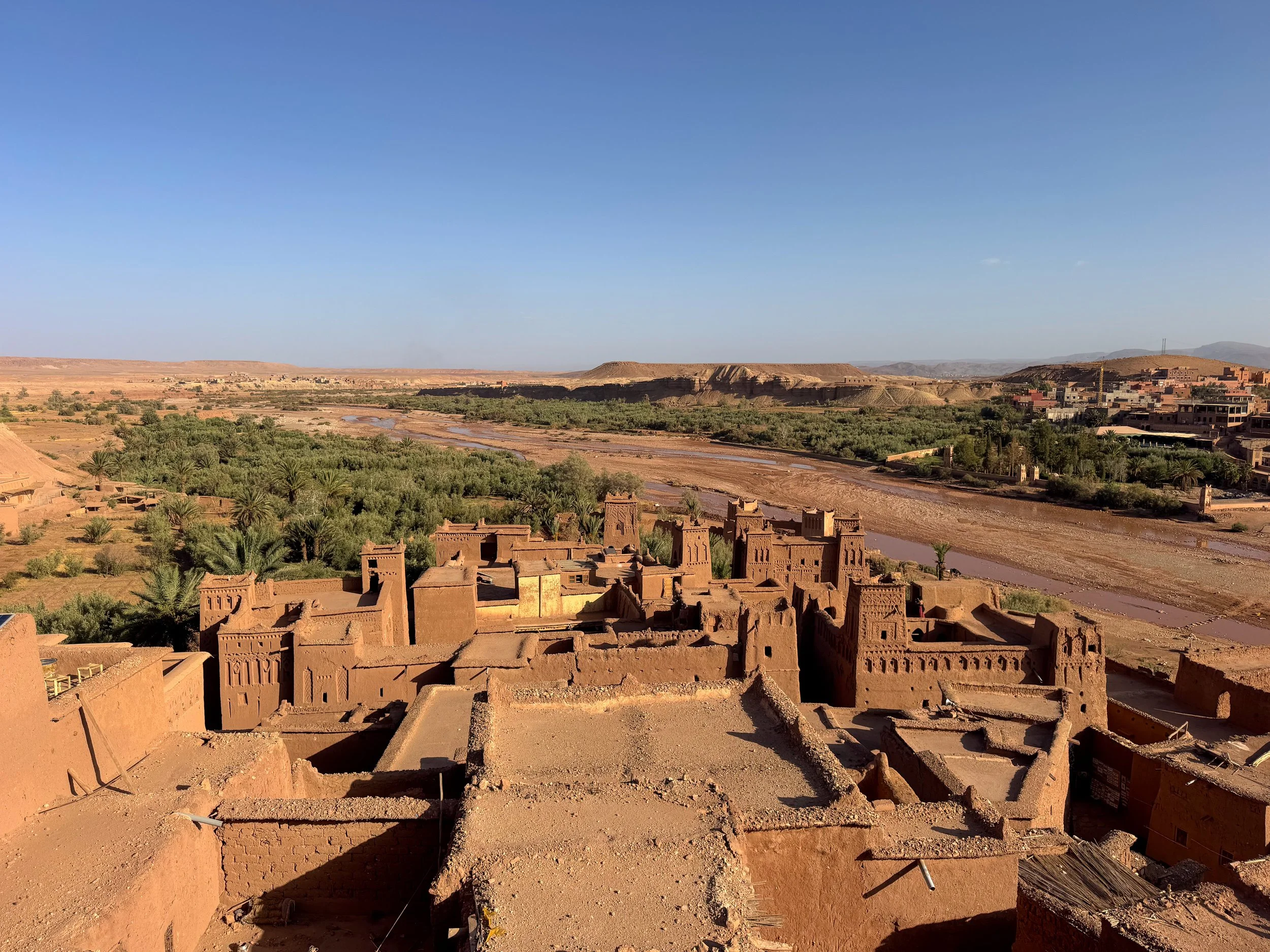
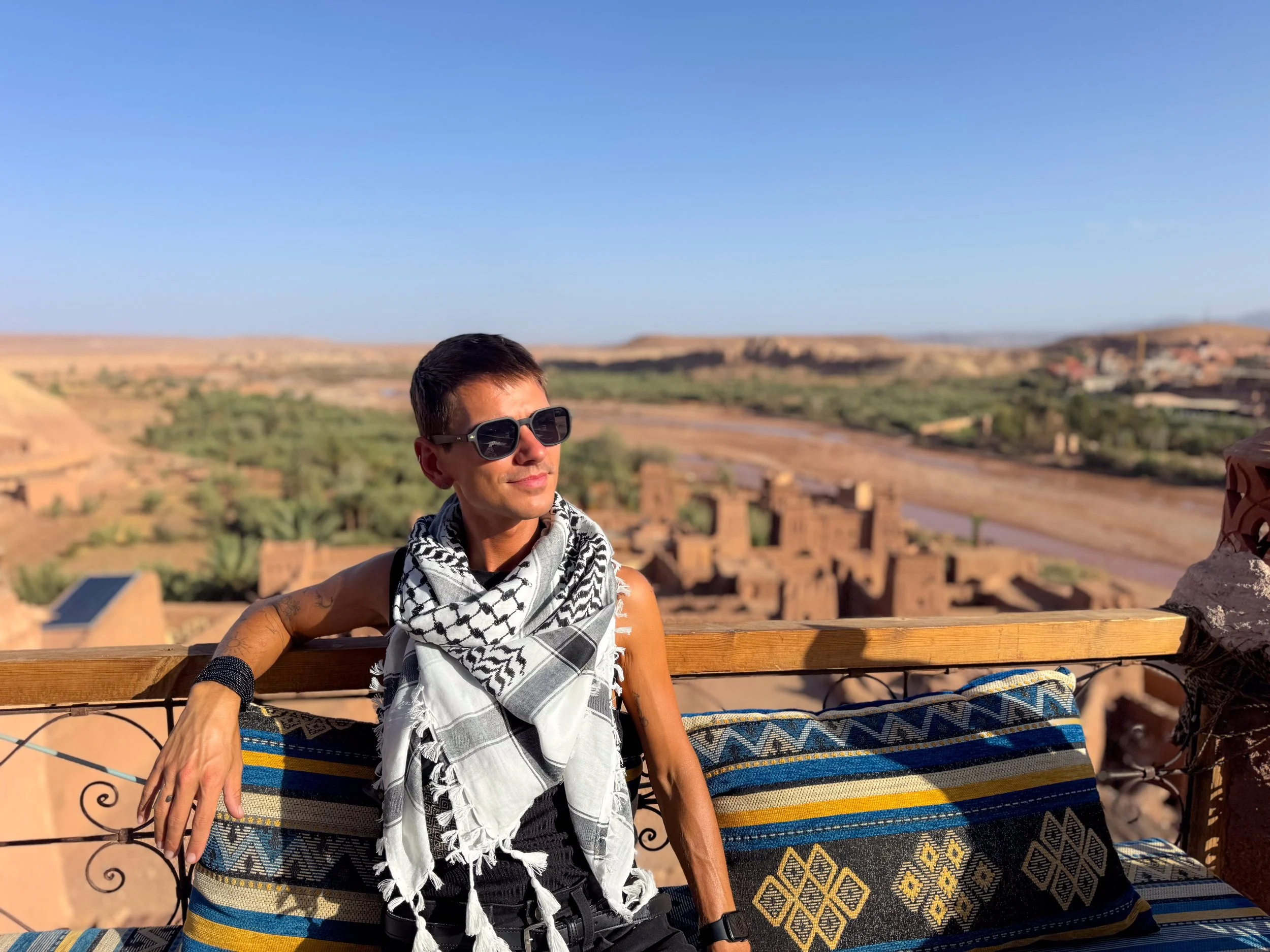
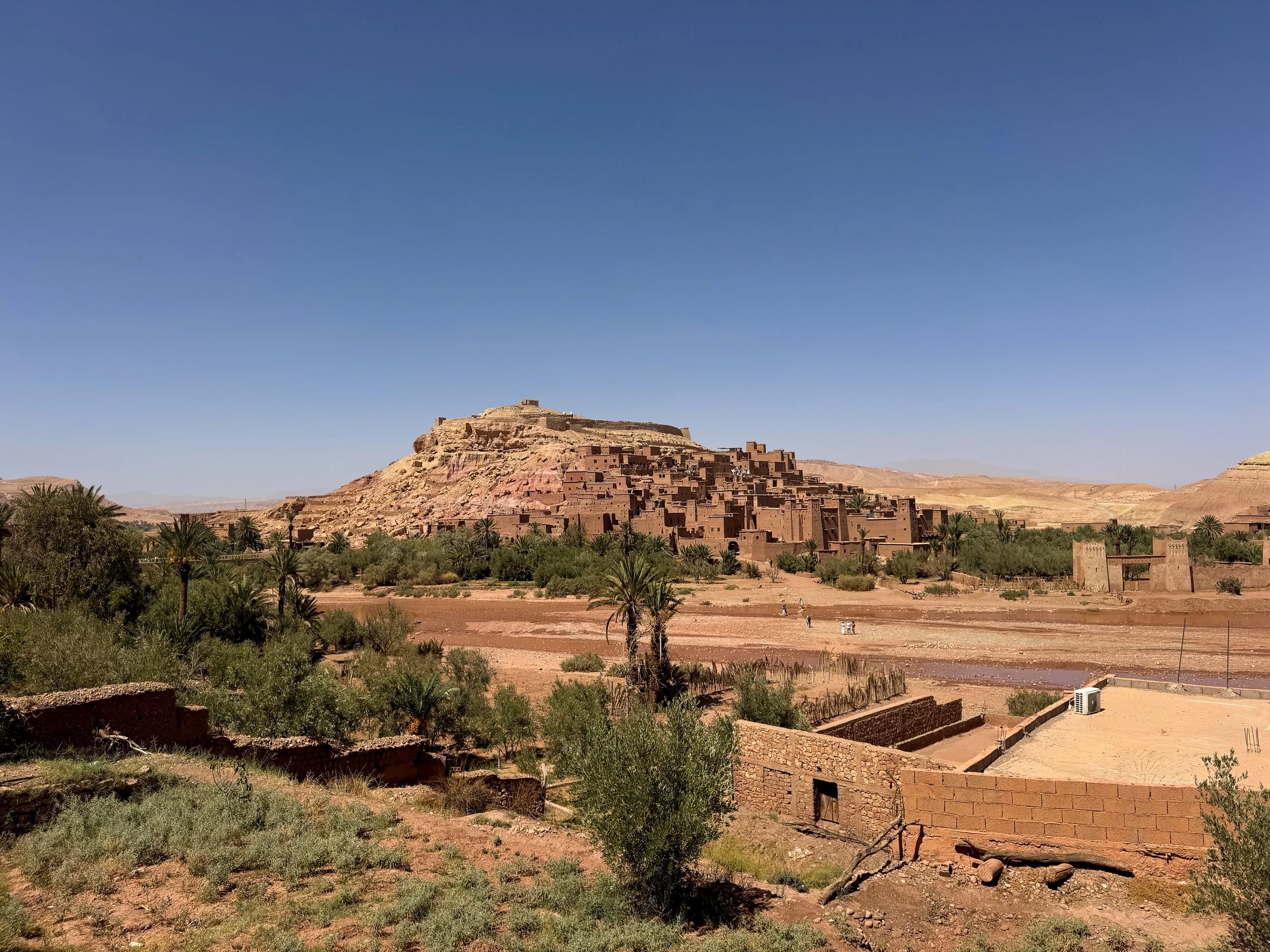
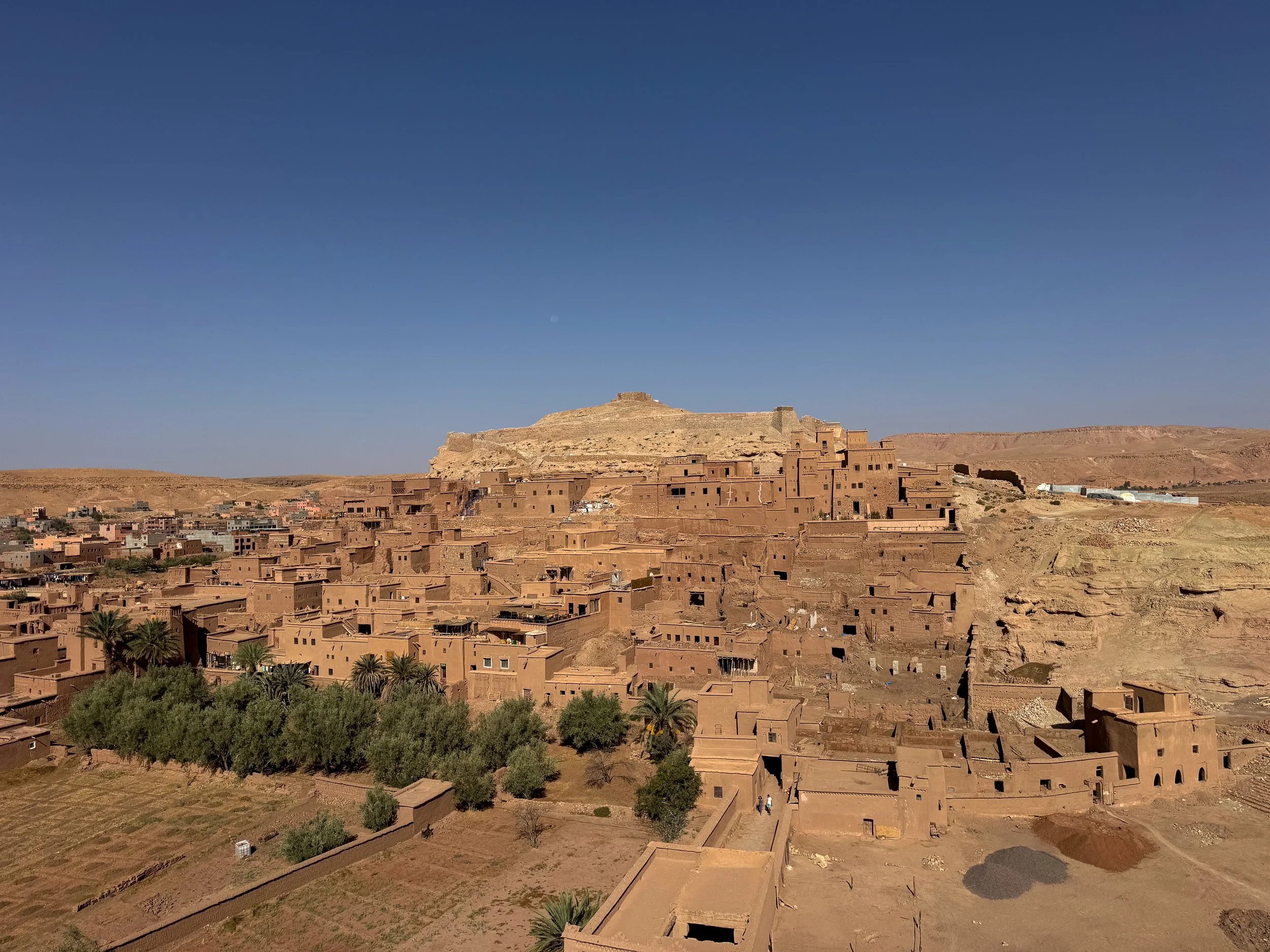
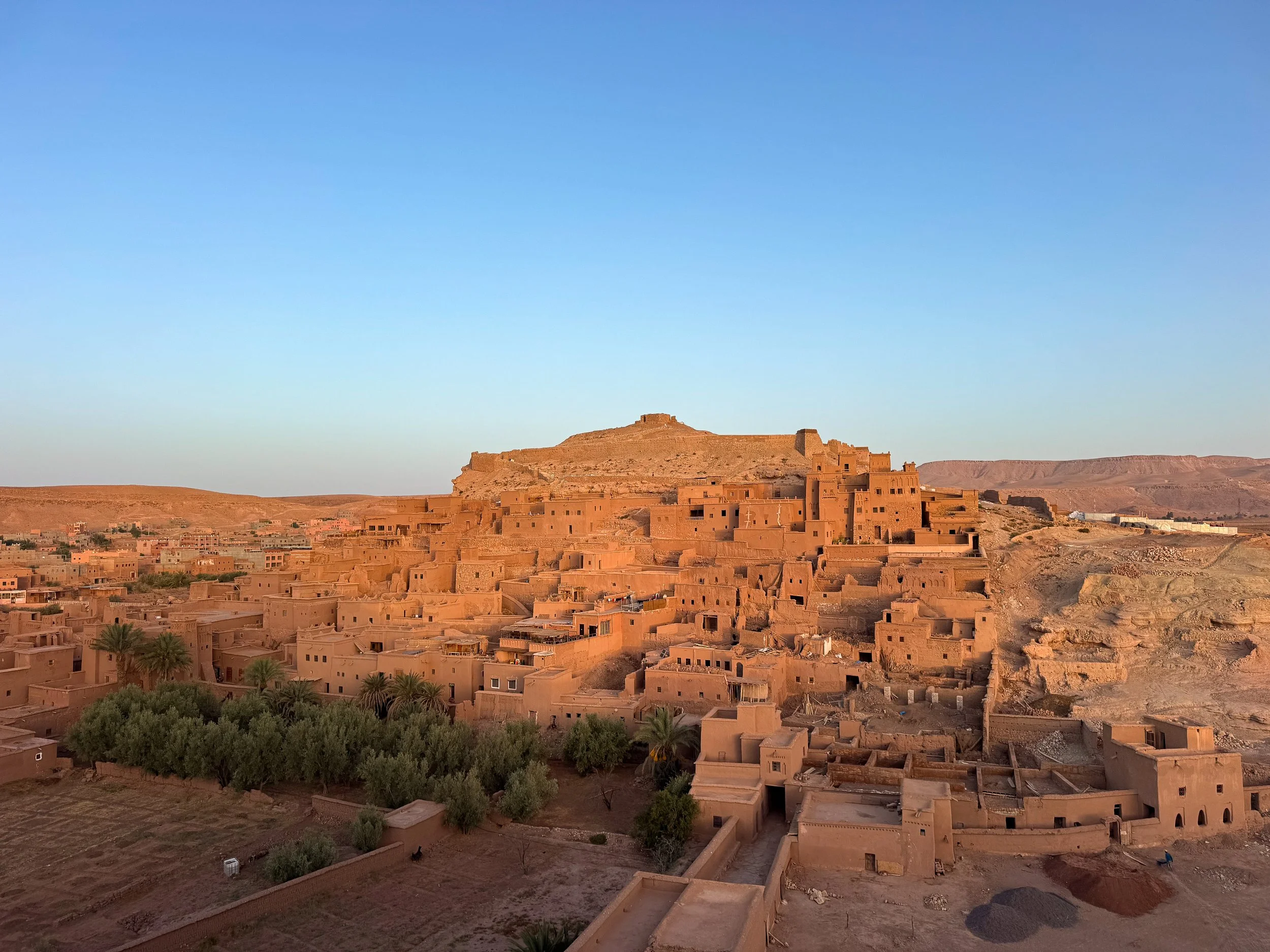
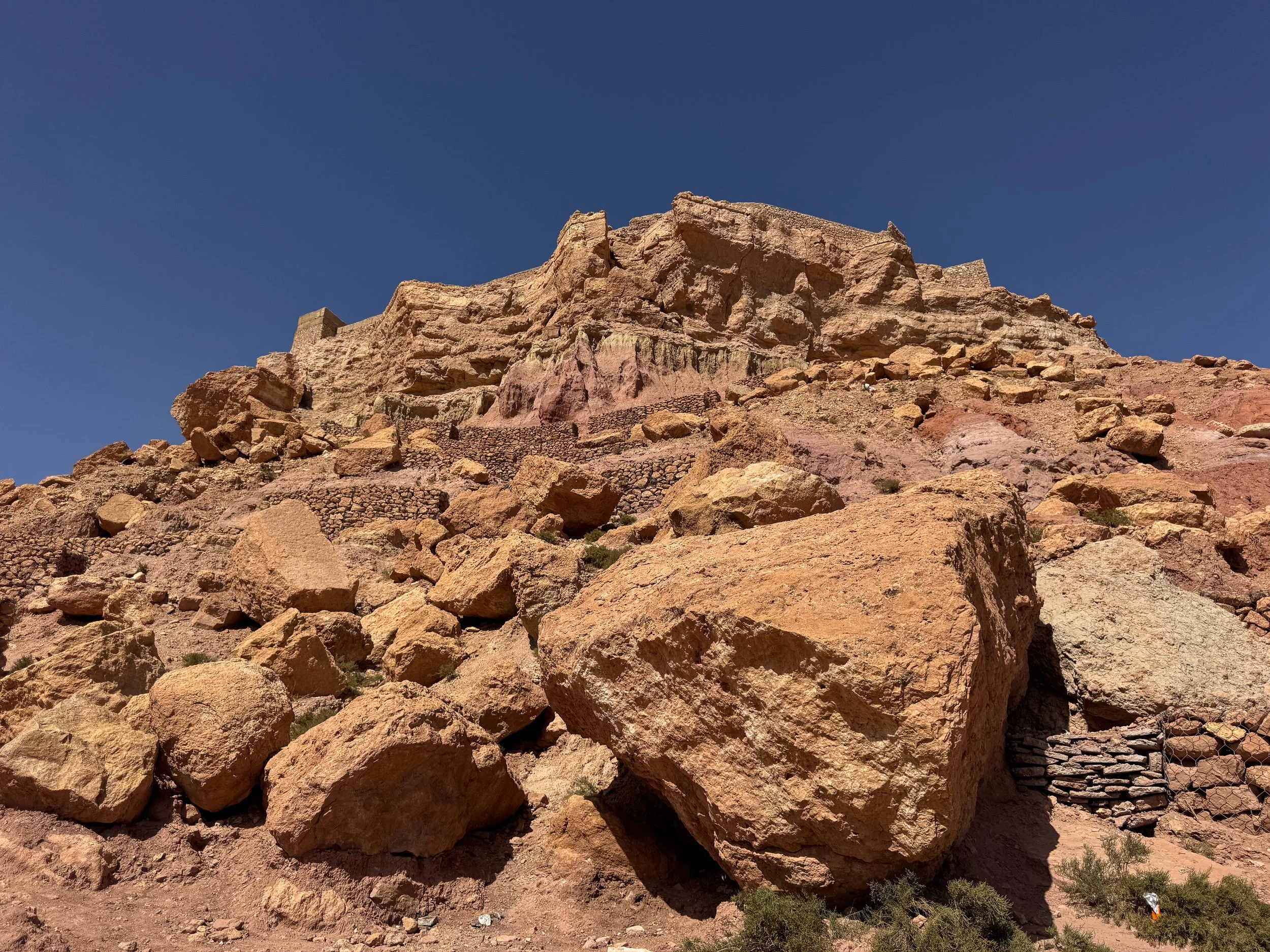
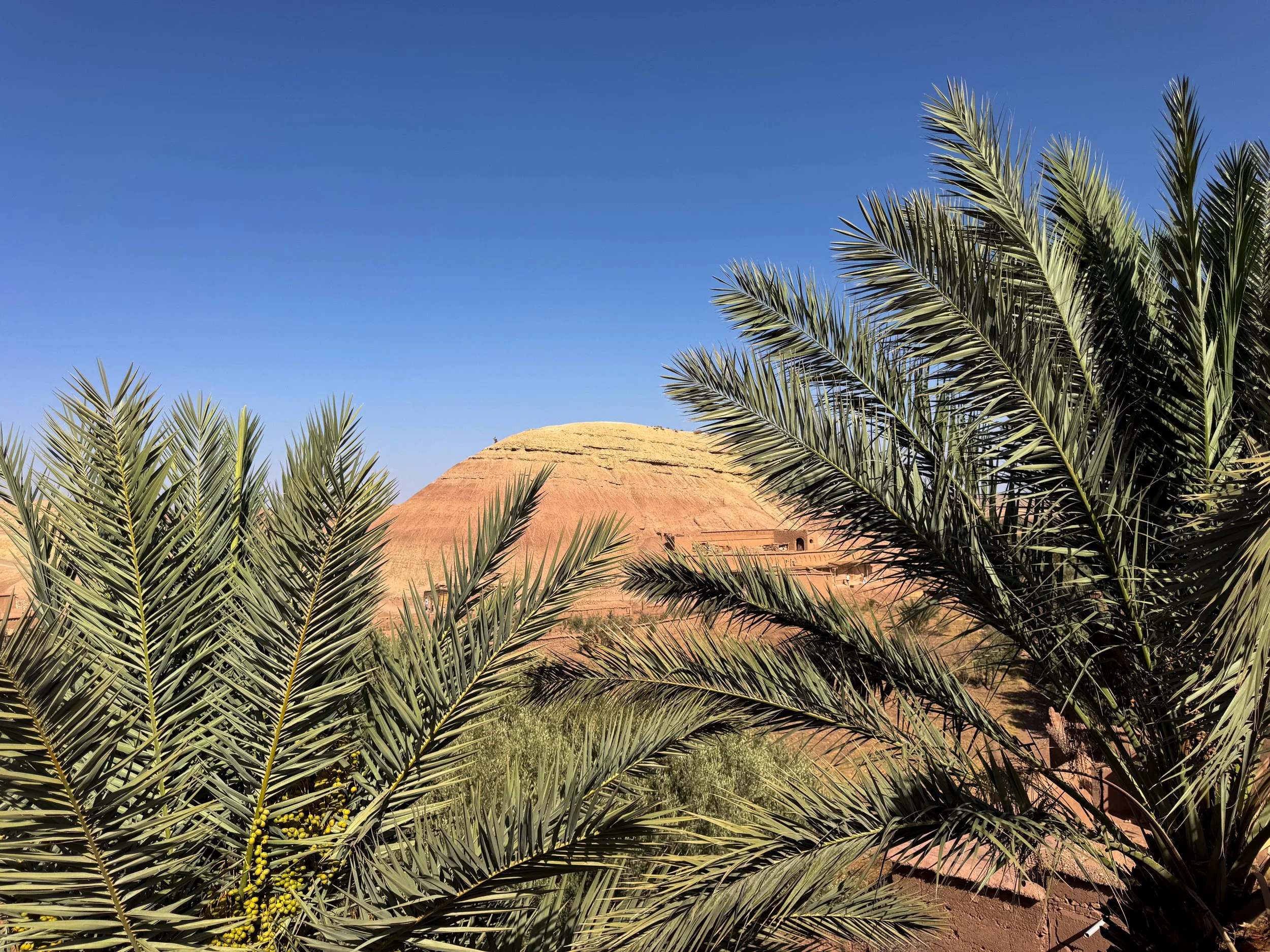
Ait Ben Haddou Viewpoints. The ancient ksar is surrounded by different photogenic viewpoints from hilltop lookouts, rooftop terraces and street scenes.
Ksar d'Aït Ben Haddou Sunset Point. A viewpoint on the narrow road near the top of the ksar. It offers panoramic views of the city and desert landscape. It’s especially popular at sunset but good to visit at any time of day.
Viewpoint Ait Ben Haddou. A hilltop viewpoint with panoramic views of the ancient ksar and its adobe buildings. Visit at sunrise to see the sand hued city illuminated in an orange glow. Revisit during the mid morning to admire all of its intricate designs and details in full daylight.
Street Viewpoint for Aït Benhaddou. A sandstone roadway in the modern village leading towards the Ounila River and ancient ksar.
La Table de la Kasbah Ait Ben Haddou. A rooftop cafe in the ancient ksar with views of its adobe kasbahs and the desert landscape. The stylish terrace is decorated in Moroccan poofs, rugs and pillows. Visit during golden hour or sunset to enjoy a pot of mint tea with Moroccan pastries.
Places to Eat, Drink & Stay
La Terrazza. A restaurant with Moroccan style pizzas topped with local ingredients like olives, eggplant, tomato and zucchini. It’s one of the few restaurants that offers alcoholic drinks.
Tawesna Salon de Thé. A bakery and tea house in the ancient ksar next to the bridge. Come here to enjoy a pot of mint tea with a spread of sweet and buttery Moroccan cookies.
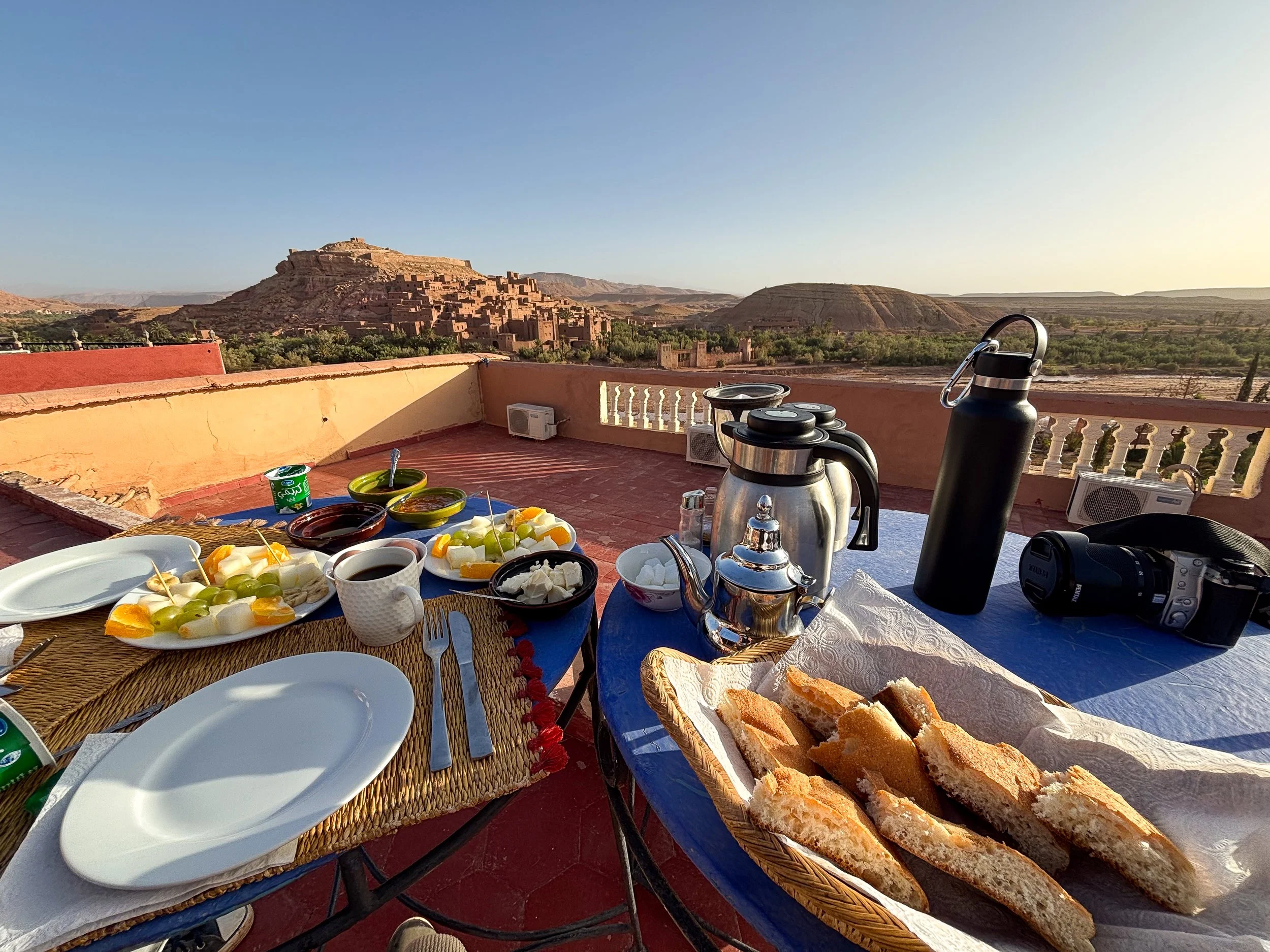
La Fibule Dor Ait Ben Haddou. An adobe style hotel in the modern village. Its rooms are decorated with Moroccan lamps, Berber textiles and handmade artwork. Its rooftop and many rooms boast panoramic views of the ancient ksar. Our stay included a Moroccan breakfast with a spread of cheeses, jams, dates, olives, eggs and bread. We booked on Airbnb.
Tips for Visiting Ait Ben Haddou:
Stay Overnight. Plan to stay at least one night in Ait Ben Haddou to get the most out of visiting the ancient ksar.
Visit Solo. Avoid group tours and visit in your own. You’ll have more time to explore freely.
Time of Day. Visit before 8:30am to avoid crowds.
Cash vs Credit. Carry cash and small coins for most payments. Credit card is not commonly accepted.
Drink Water. Stay hydrated and carry water when walking around, especially during the afternoon heat.
Getting Here. Ait Ben Haddou is reachable from Marrakesch by car. The scenic drive leads 3 hours through the foot hills of the Altas Mountains.
Ouarzazate
Ouarzazate is a desert city renowned for its movie studios and historic kasbahs. It’s often referred to as “The Moroccan Hollywood” and “The Gateway to the Desert.”
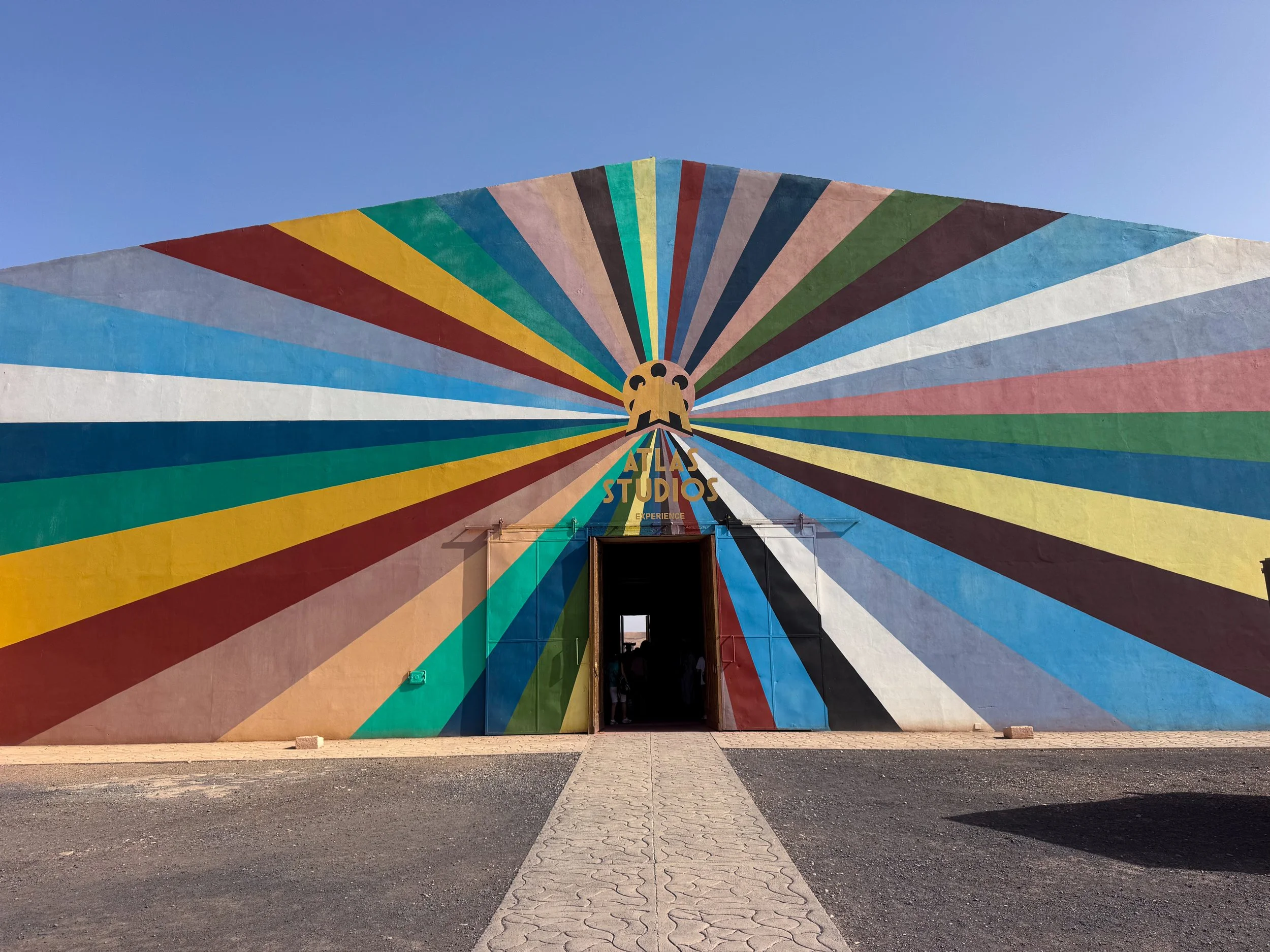
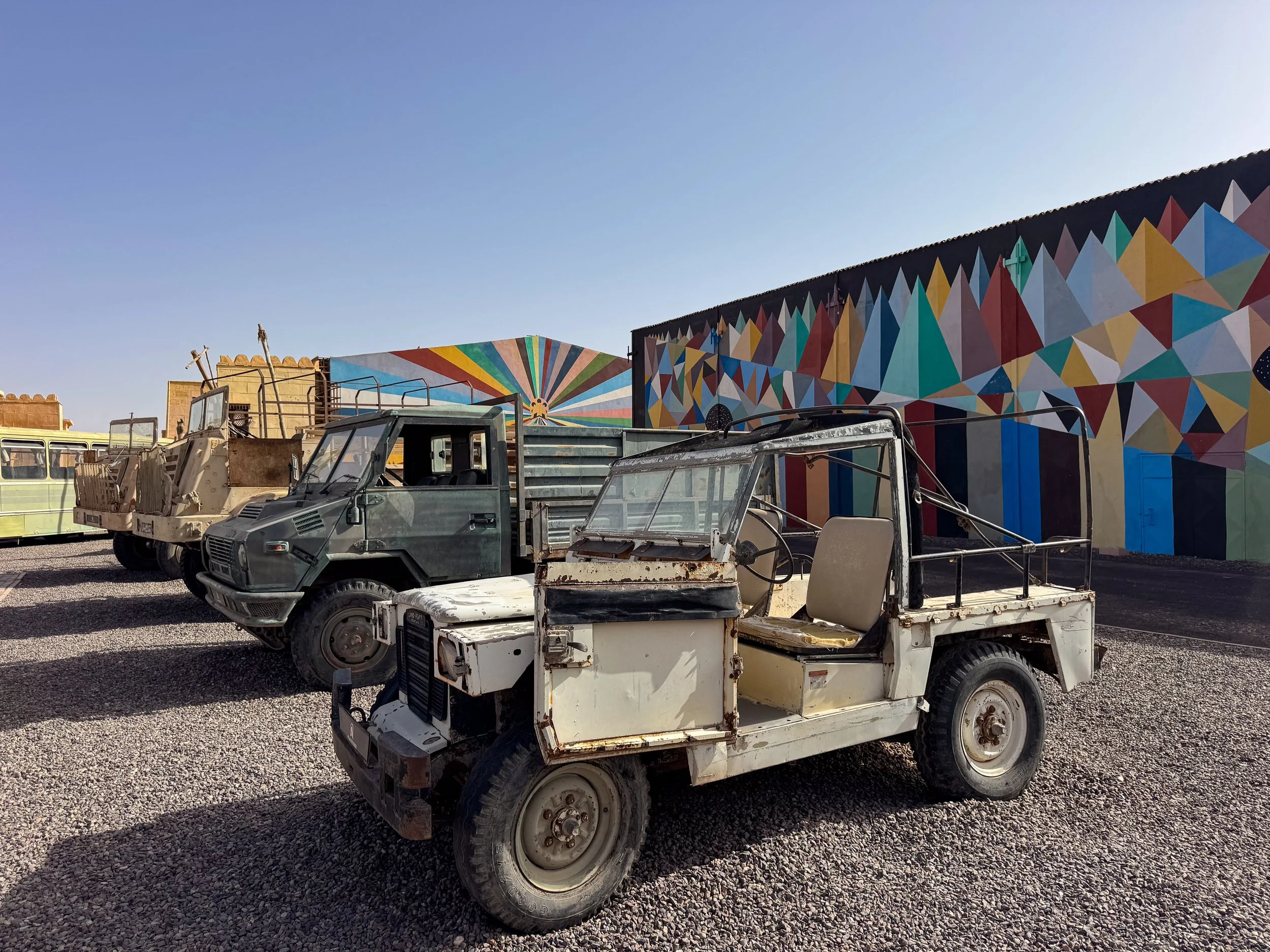
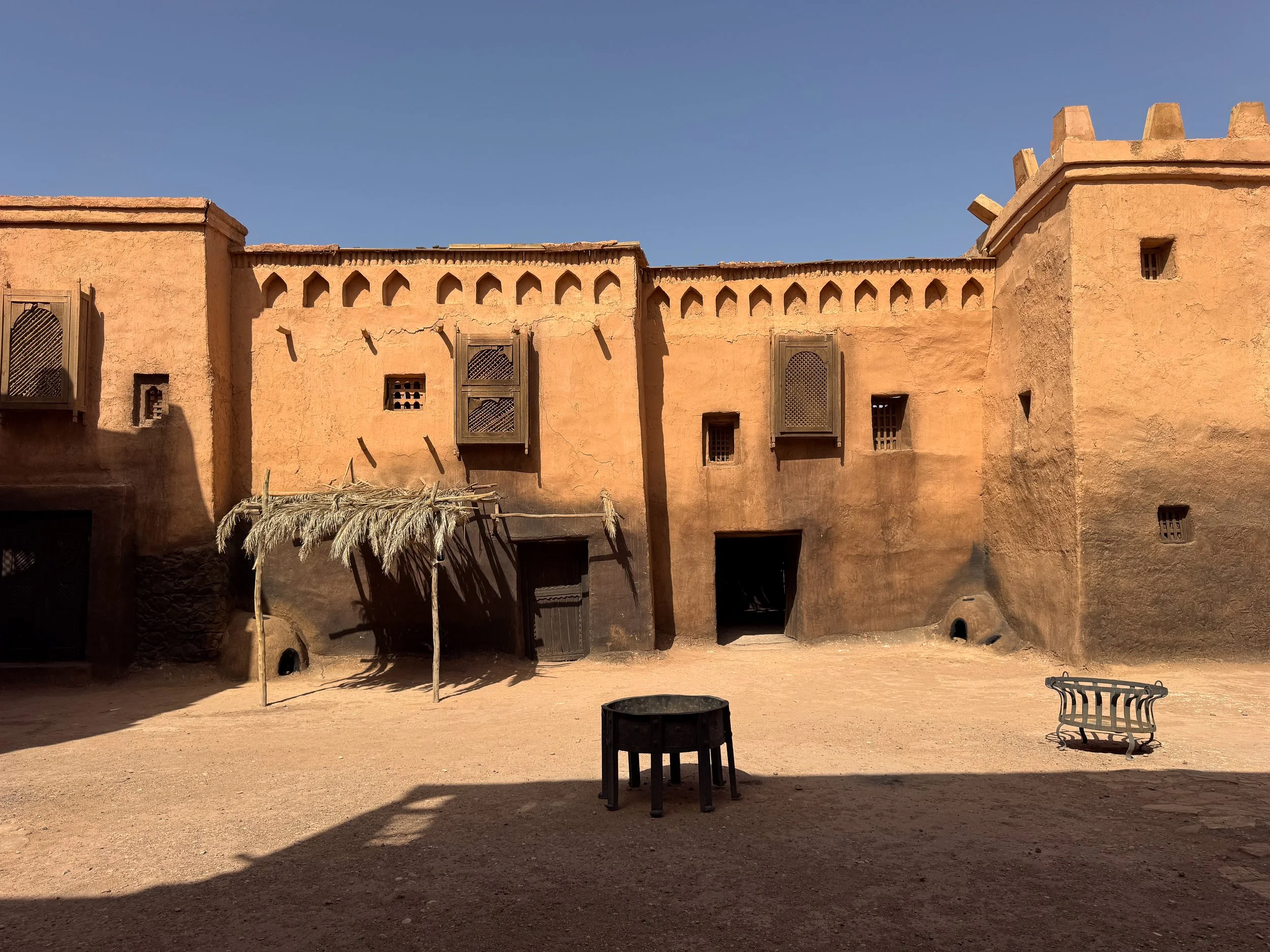
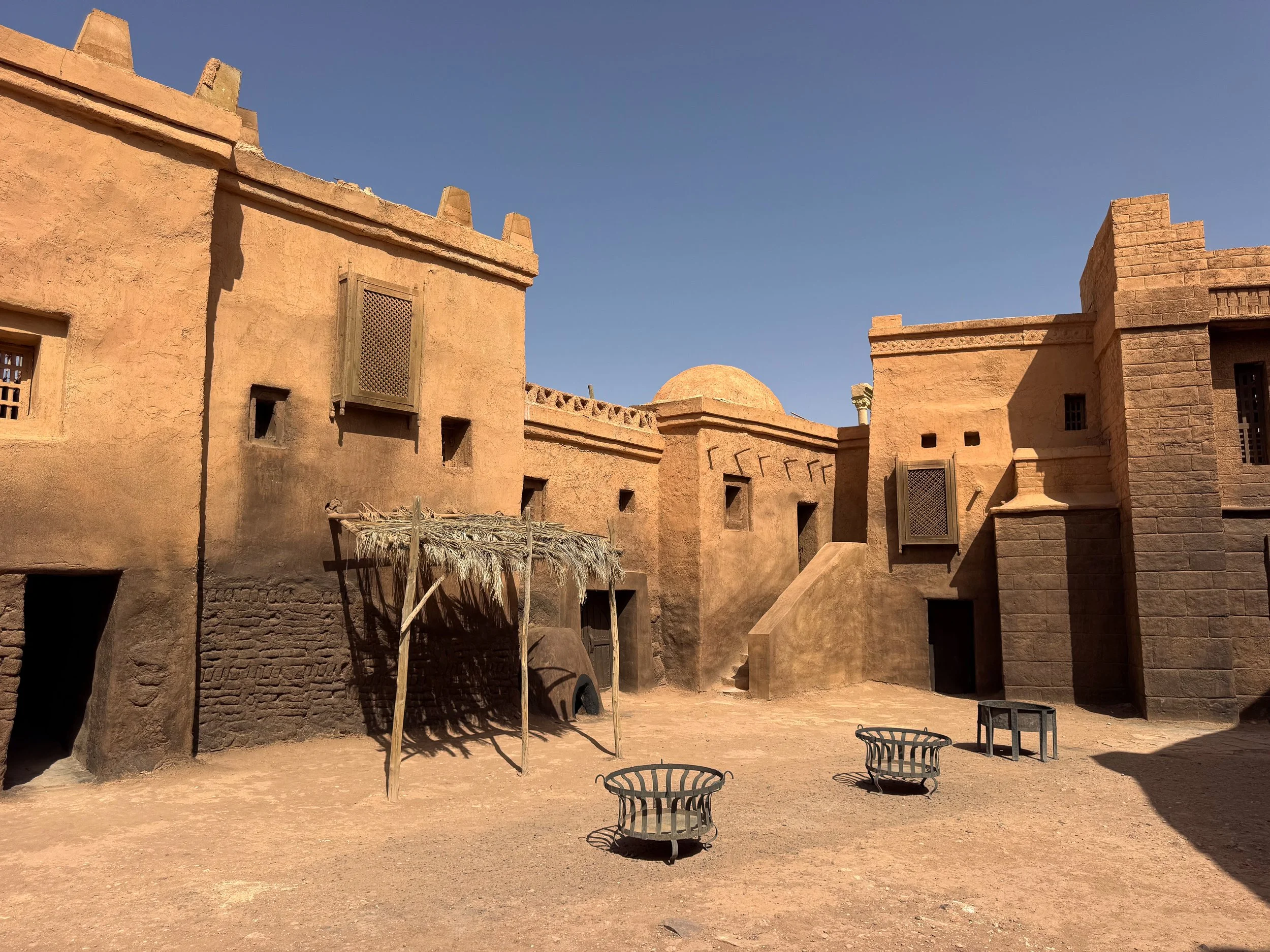
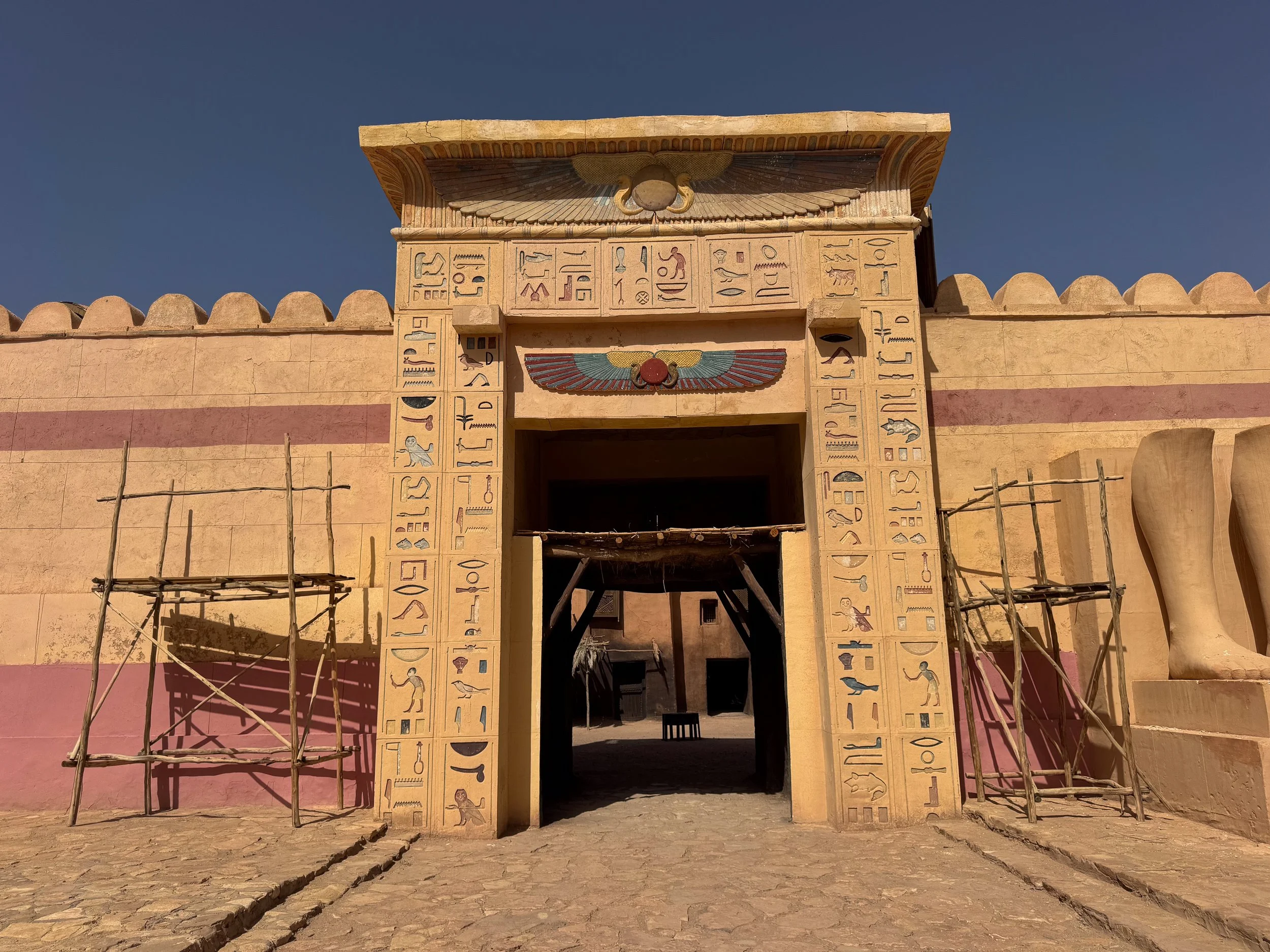
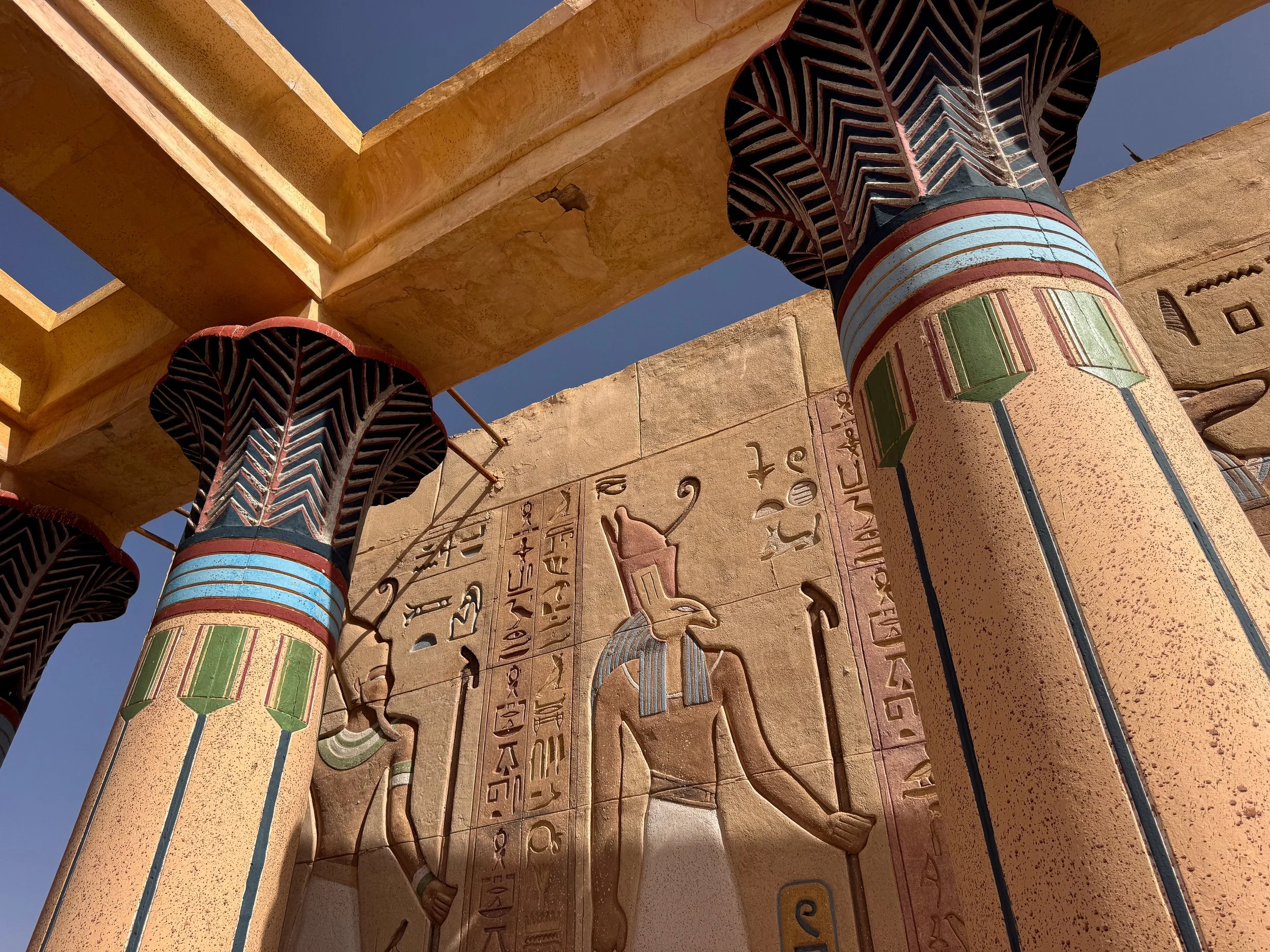
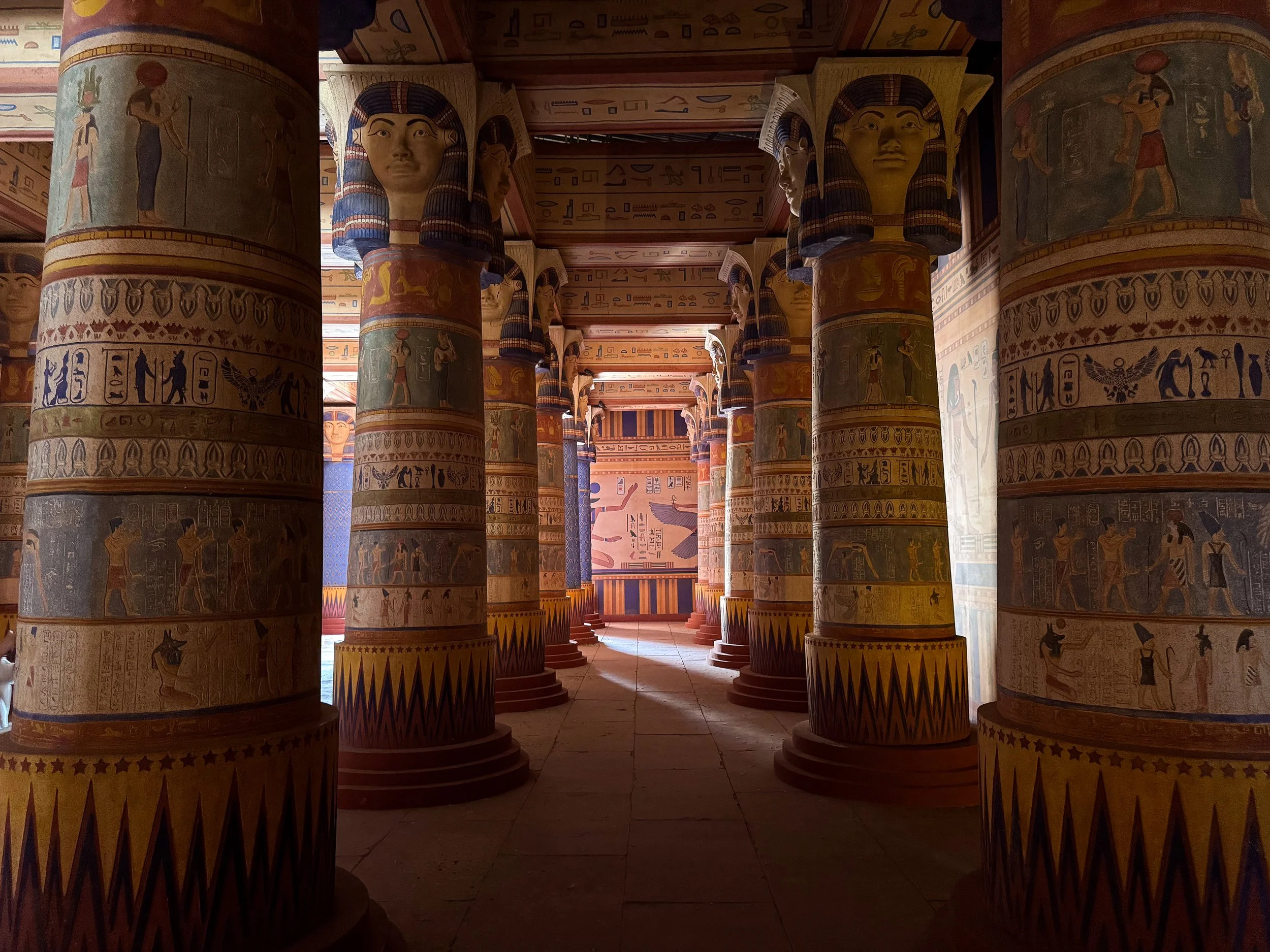
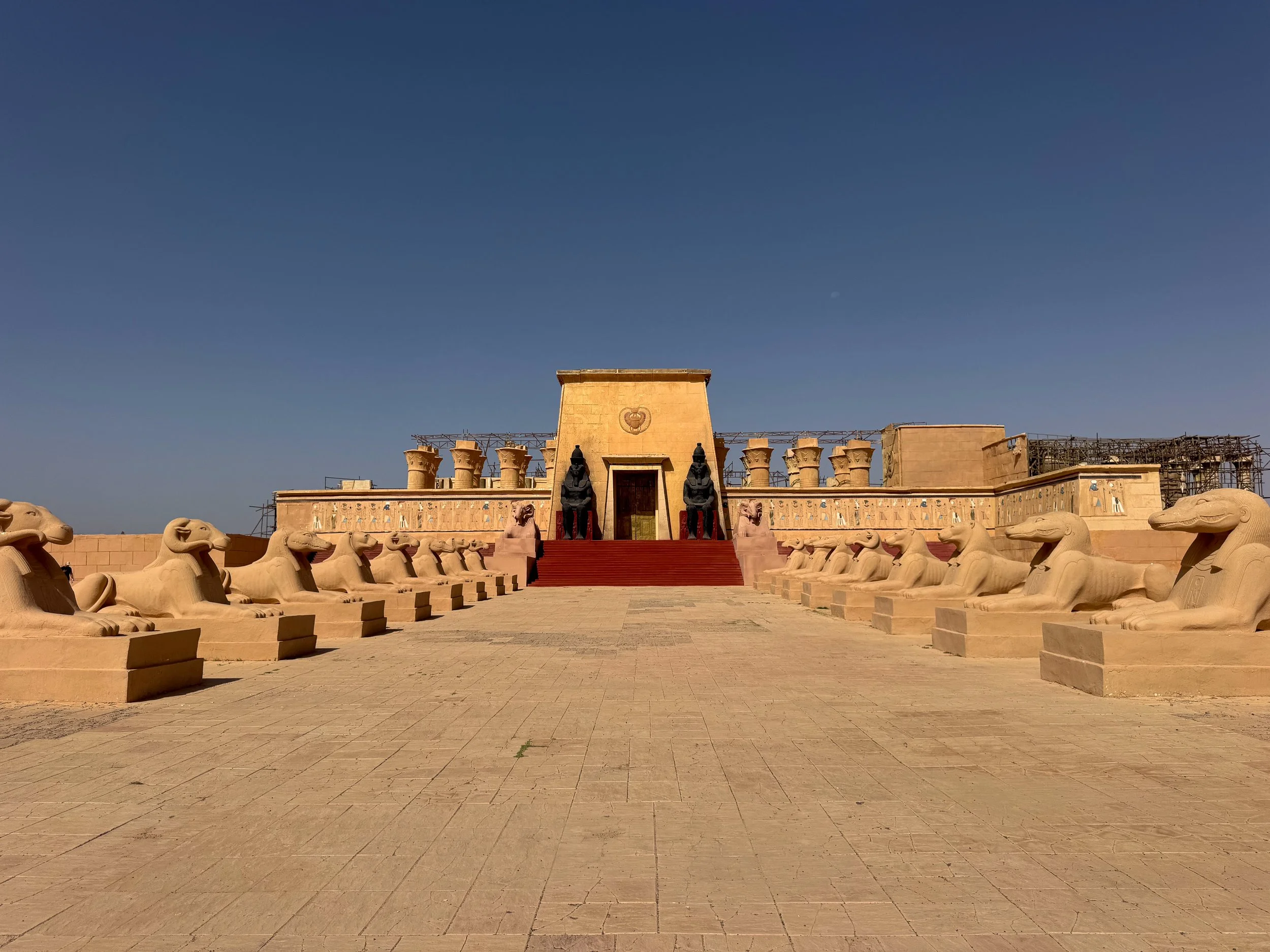
Atlas Studios. A vast film studio and one of Ouarzazate’s most famous with sets dating back to the 1960s. It’s particularly eye catching for its large scale Egyptian sets comprised of colorful temples, tombs and statues. Sets blur into one another, transitioning between Egyptian, Roman, medieval and desert towns. Vehicles like gladiator chariots, military trucks, replica sports cars, viking ships and aircraft are displayed throughout. Scenes from the Mummy, Gladiator and James Bond have all been filmed here. Tickets include guided tours of the sets with movie references, photo opps and free time to explore at your own pace afterwards.
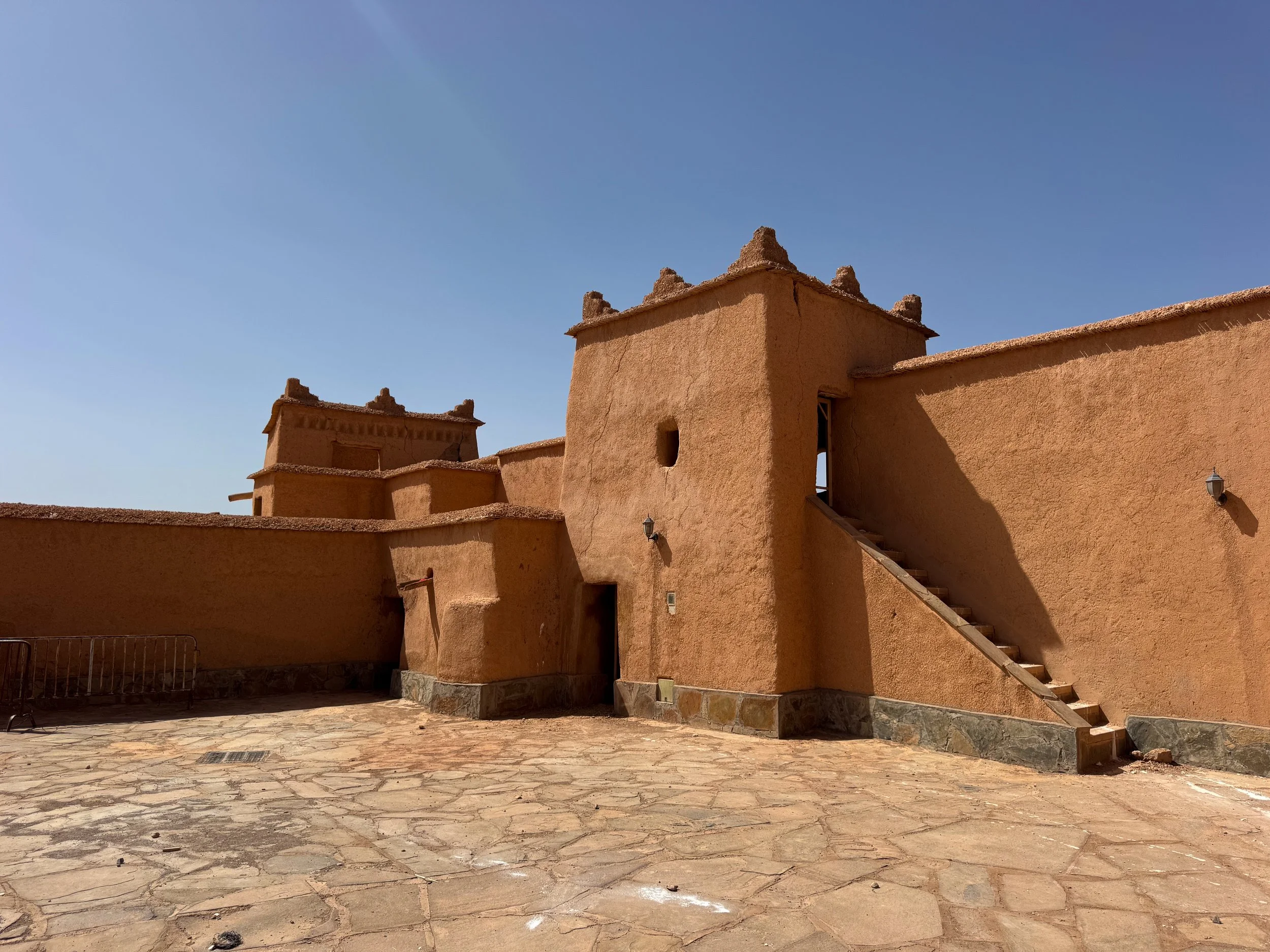
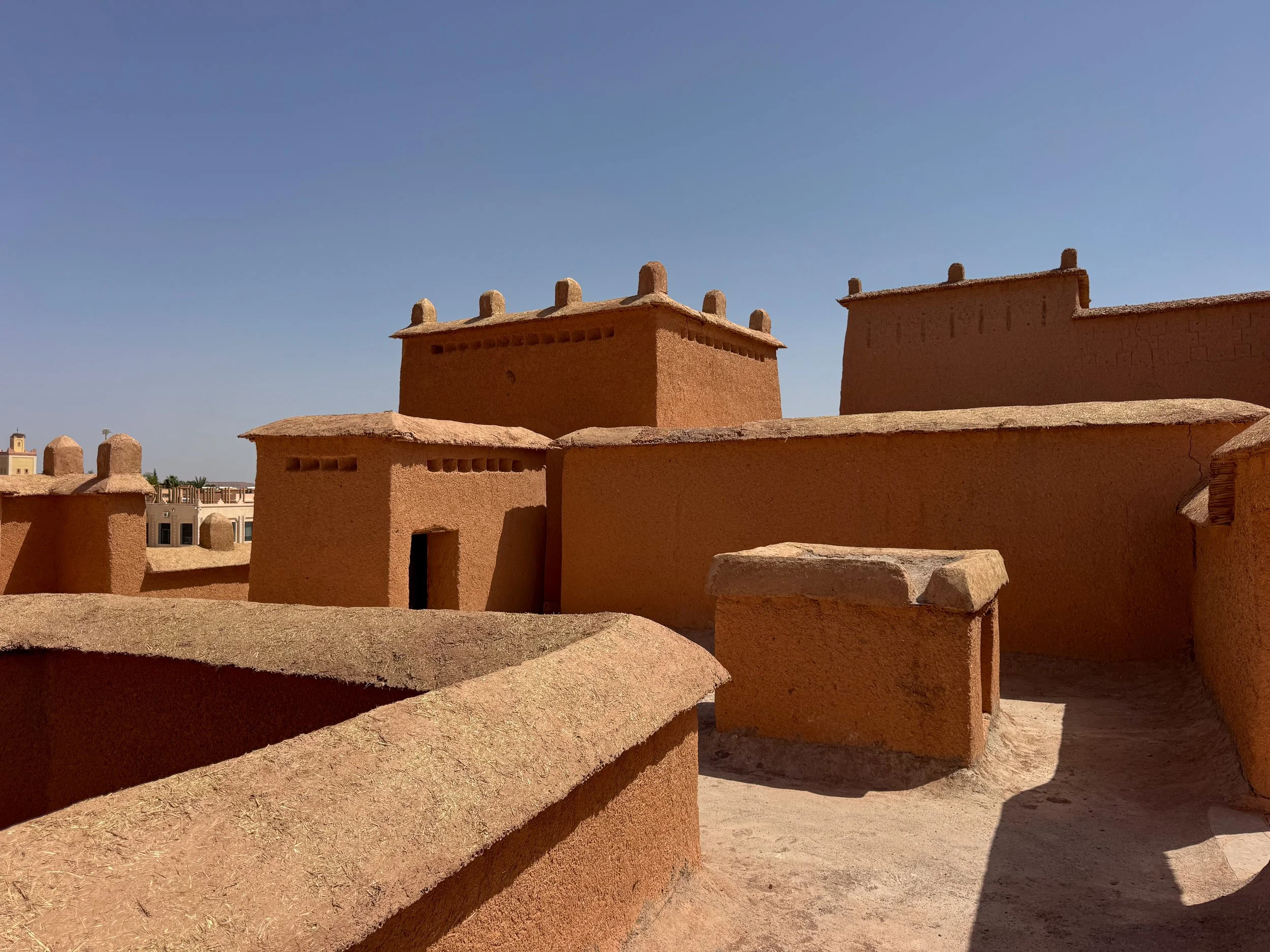
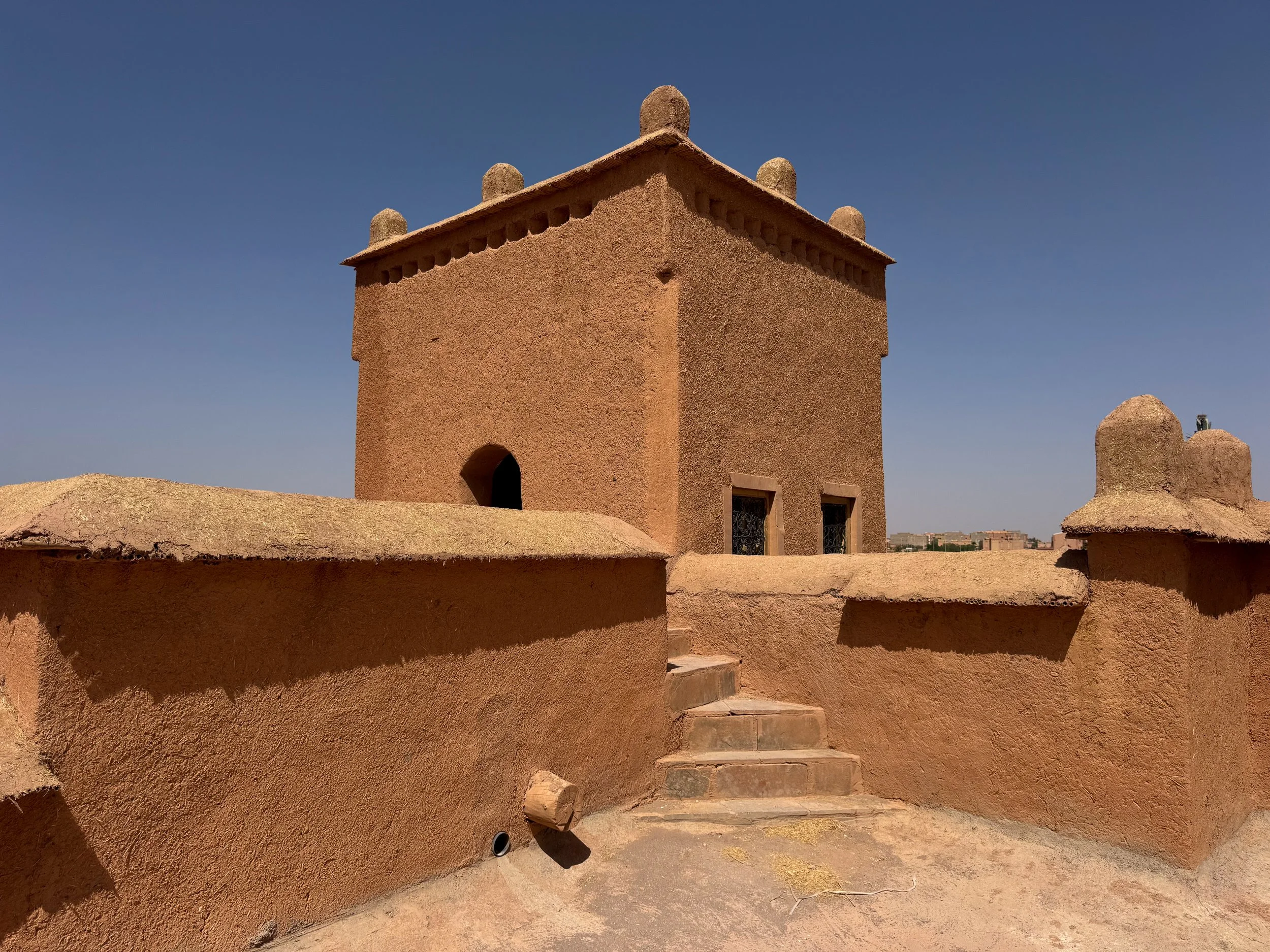
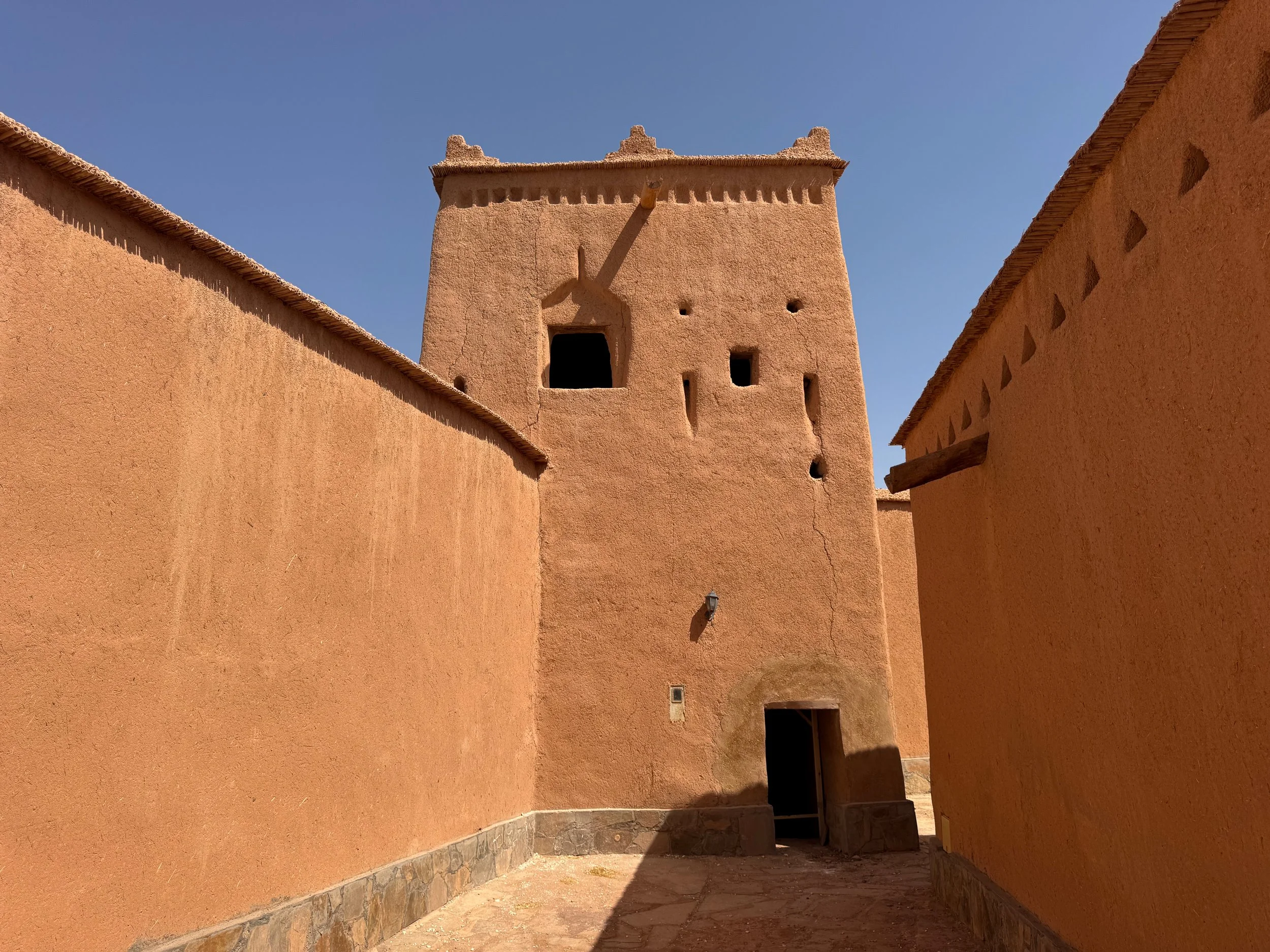
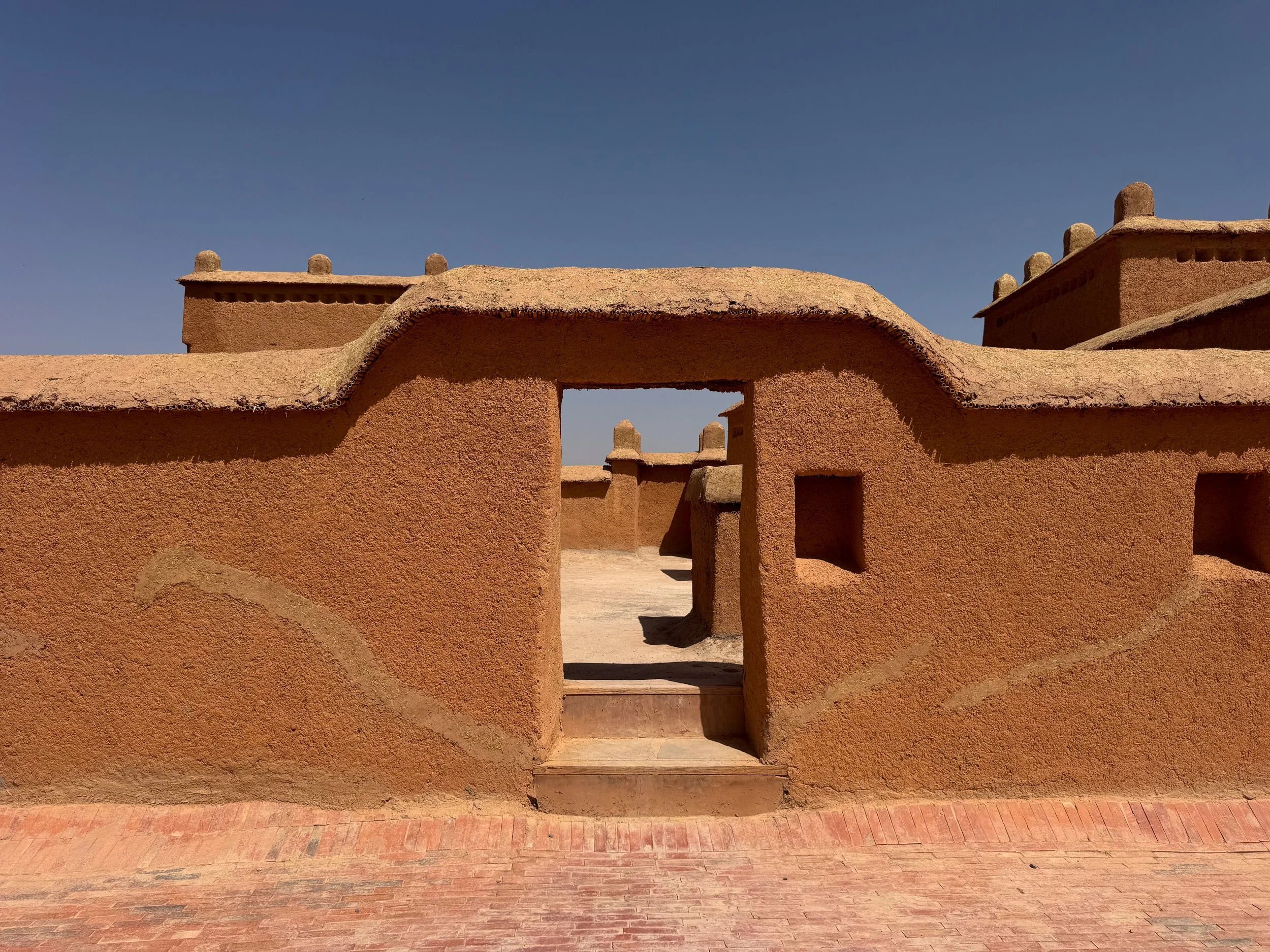
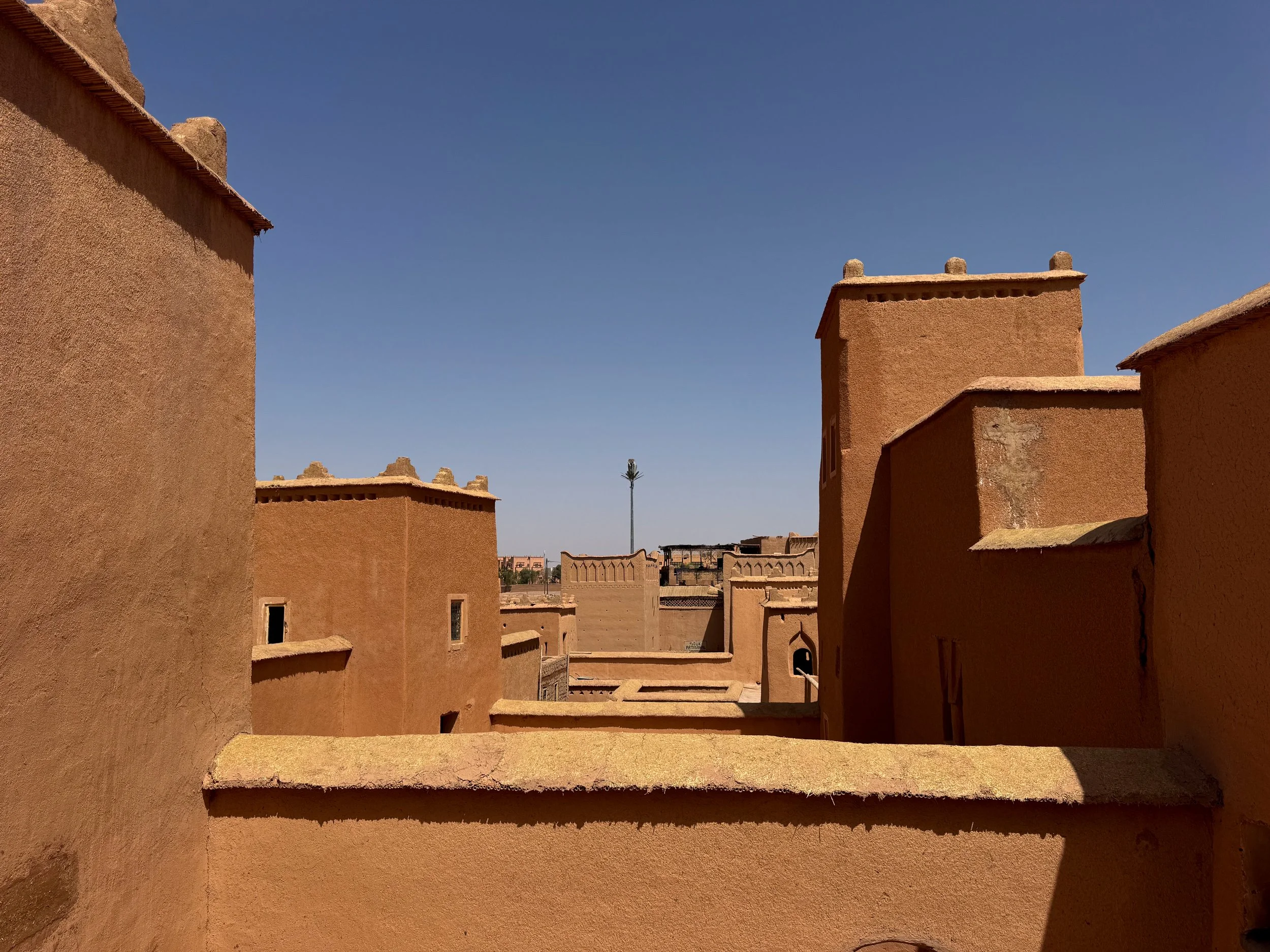
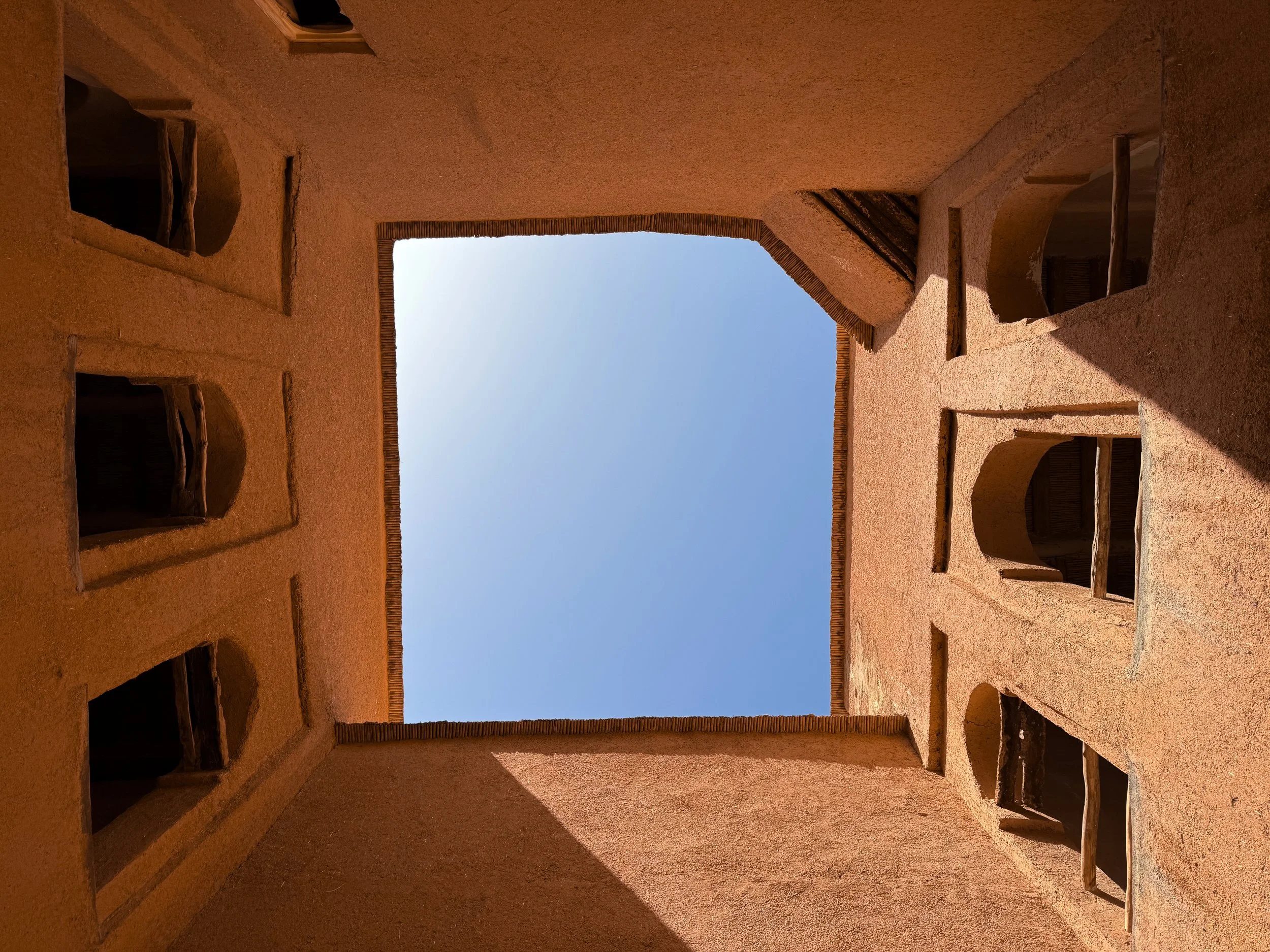
Taourirt Kasbah. A large and once prosperous kasbah in the center of Ouarzazate. It’s comprised of orange hued adobe buildings embossed with Berber patterns and geometric shapes. Their maze-like interiors are comprised of staircases and passageways that lead between disparate rooms, multiple levels and rooftop terraces. Repairs have been ongoing since the 2023 earthquake. Workers mix piles of mud, straw and water to create adobe bricks and plaster.
Getting Here. Ouarzazate is reachable from Ait Ben Haddou by car. It takes less than 1 hour to reach if driving.
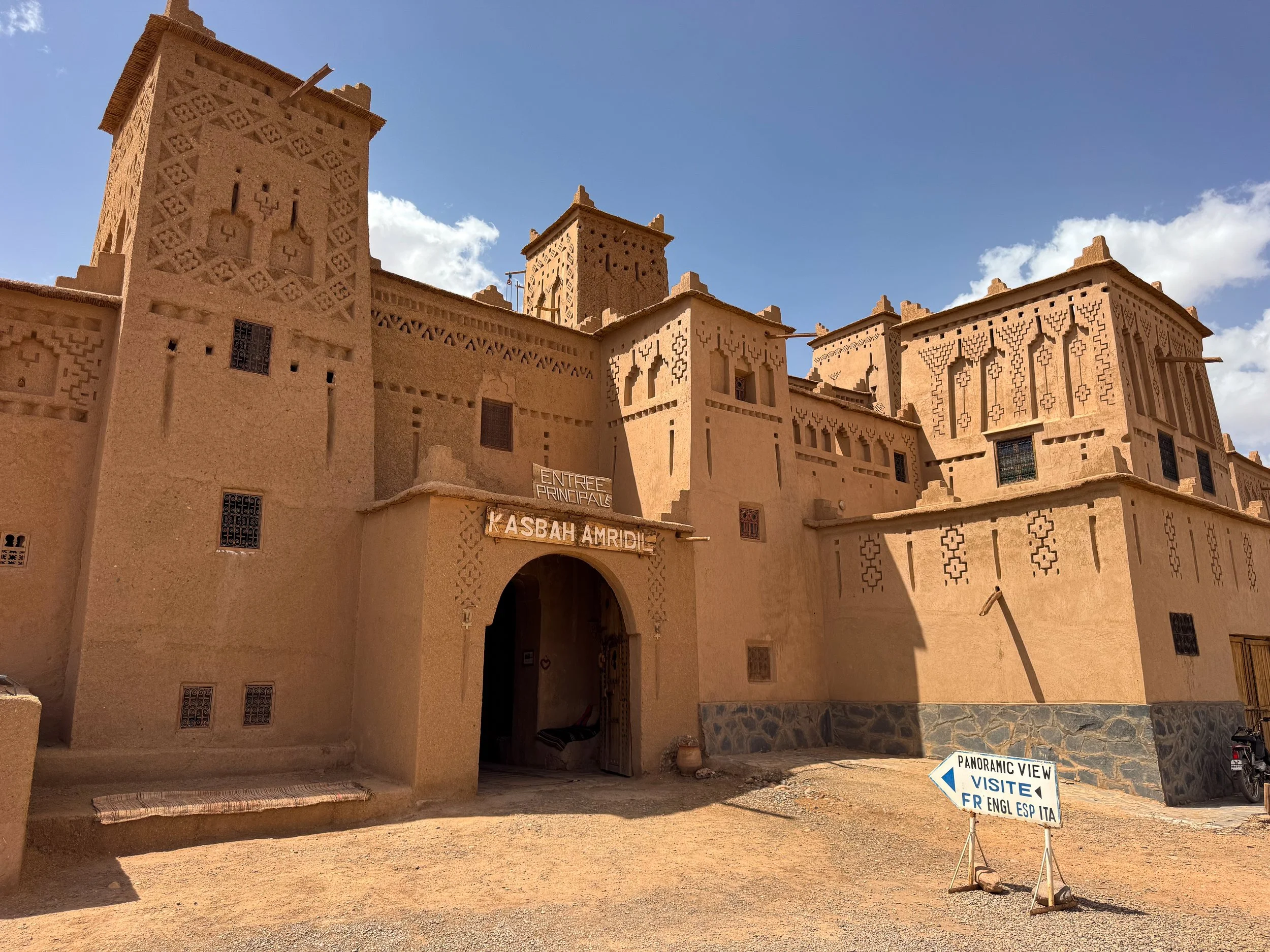
Kasbah Amridil
Kasbah Amridil is one of the largest and best preserved kasbahs in Morocco. Its sprawling structure is situated in the middle of the Skouras Palmerie, a palm covered oasis home to dozens of historic kasbahs and crumbling adobe ruins. The kasbah’s sand colored facade and adobe towers are decorated in intricate Berber patterns. It’s divided into three sections including two museums and a restaurant.
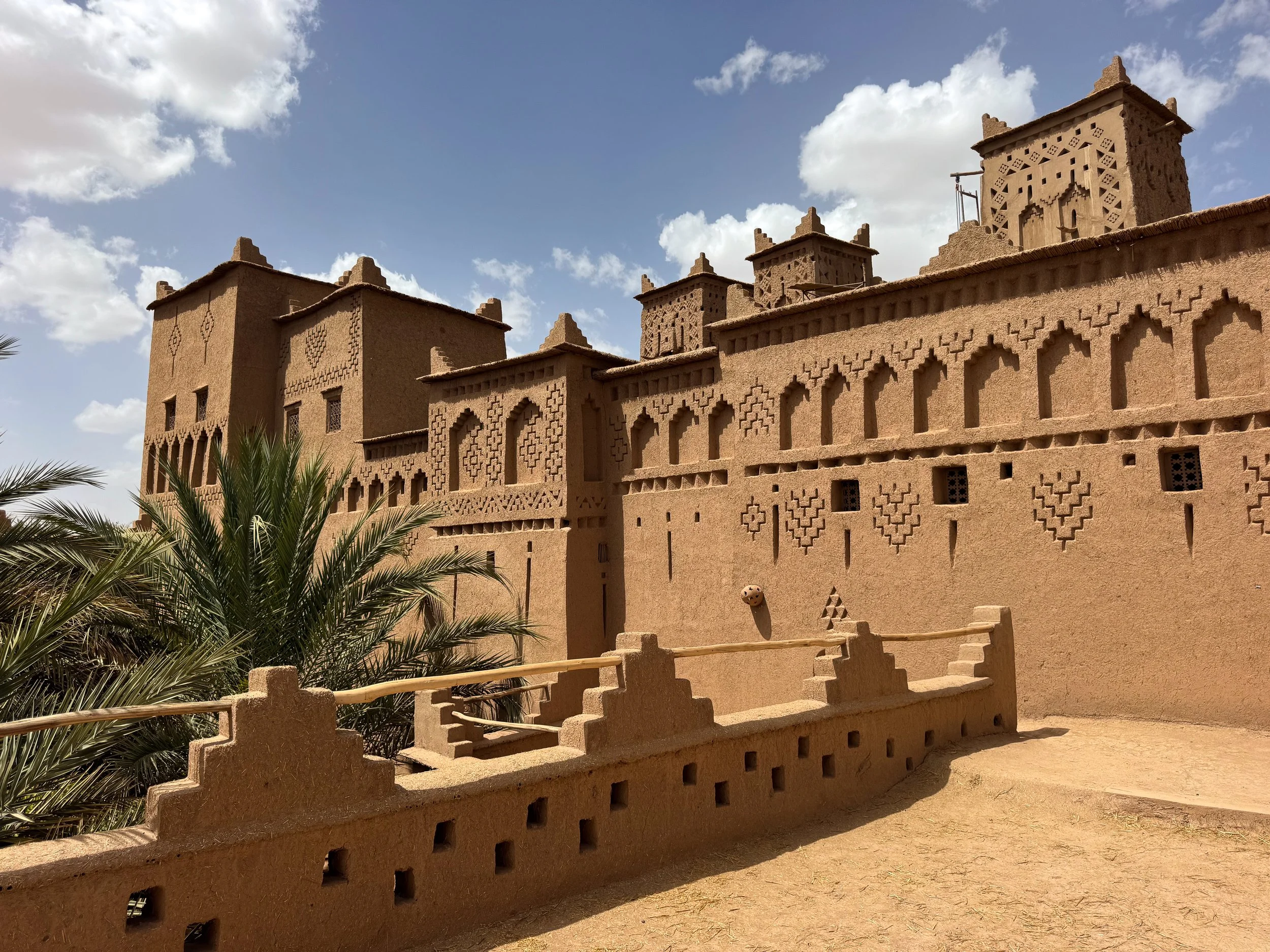
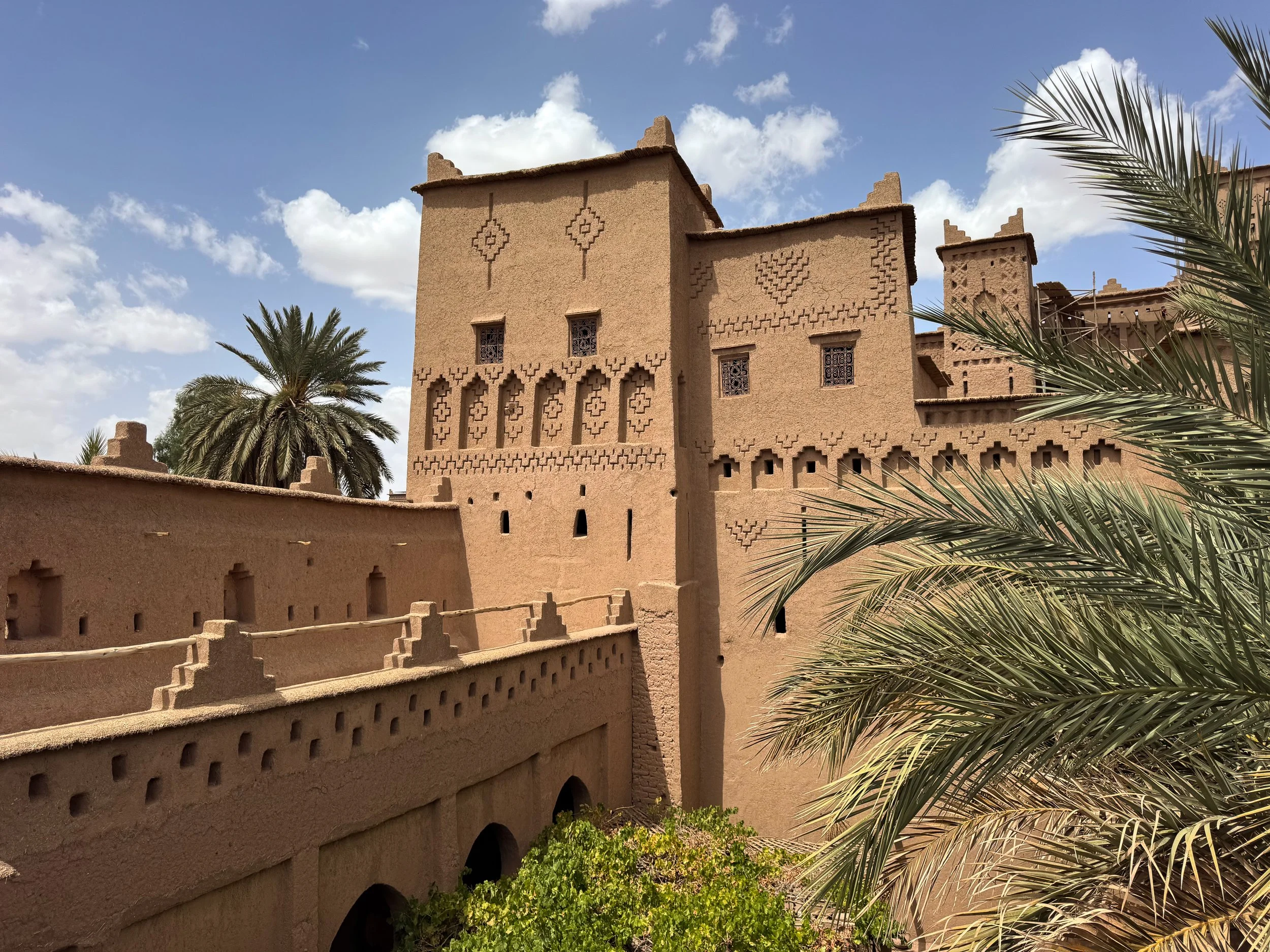
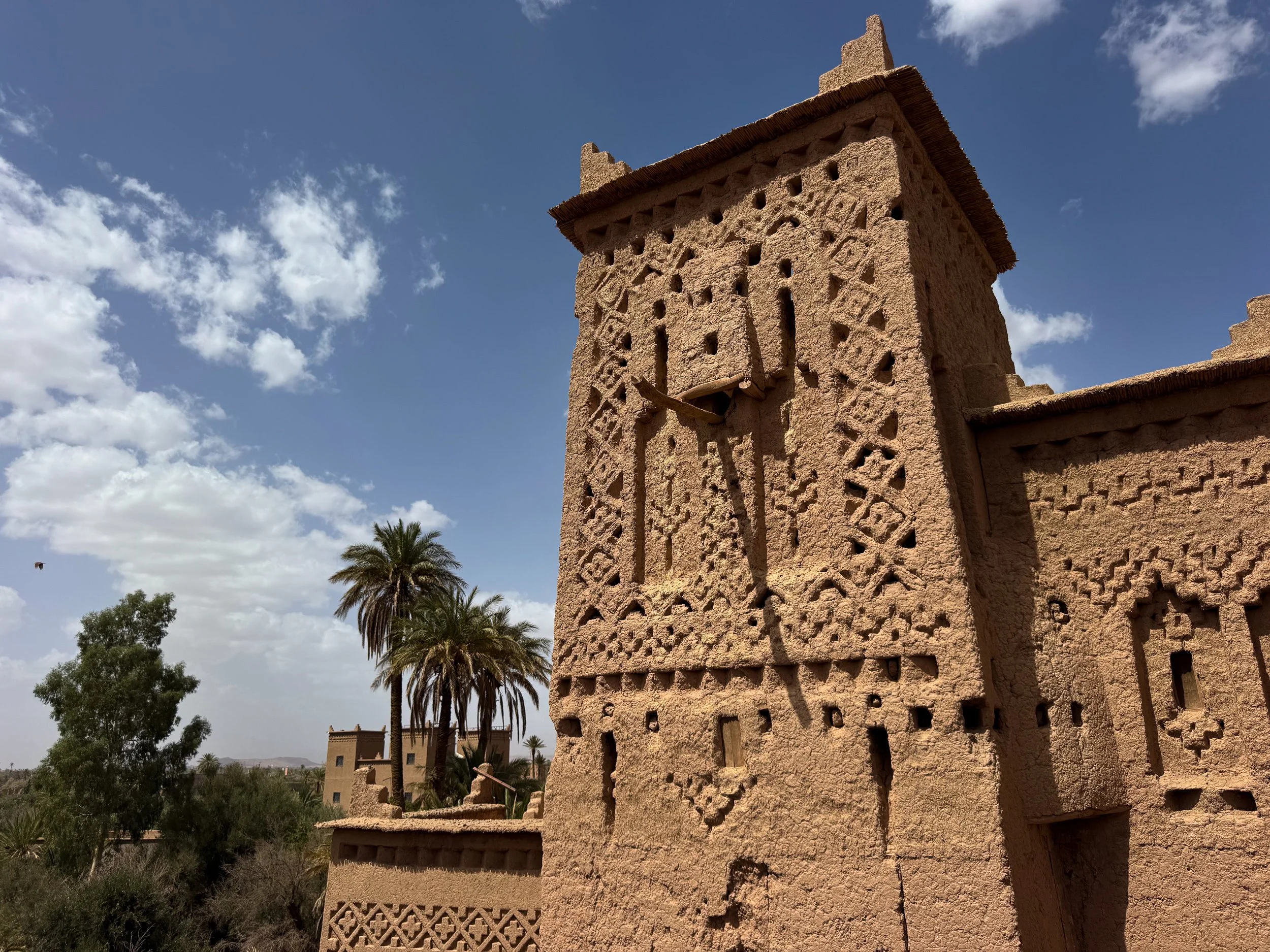
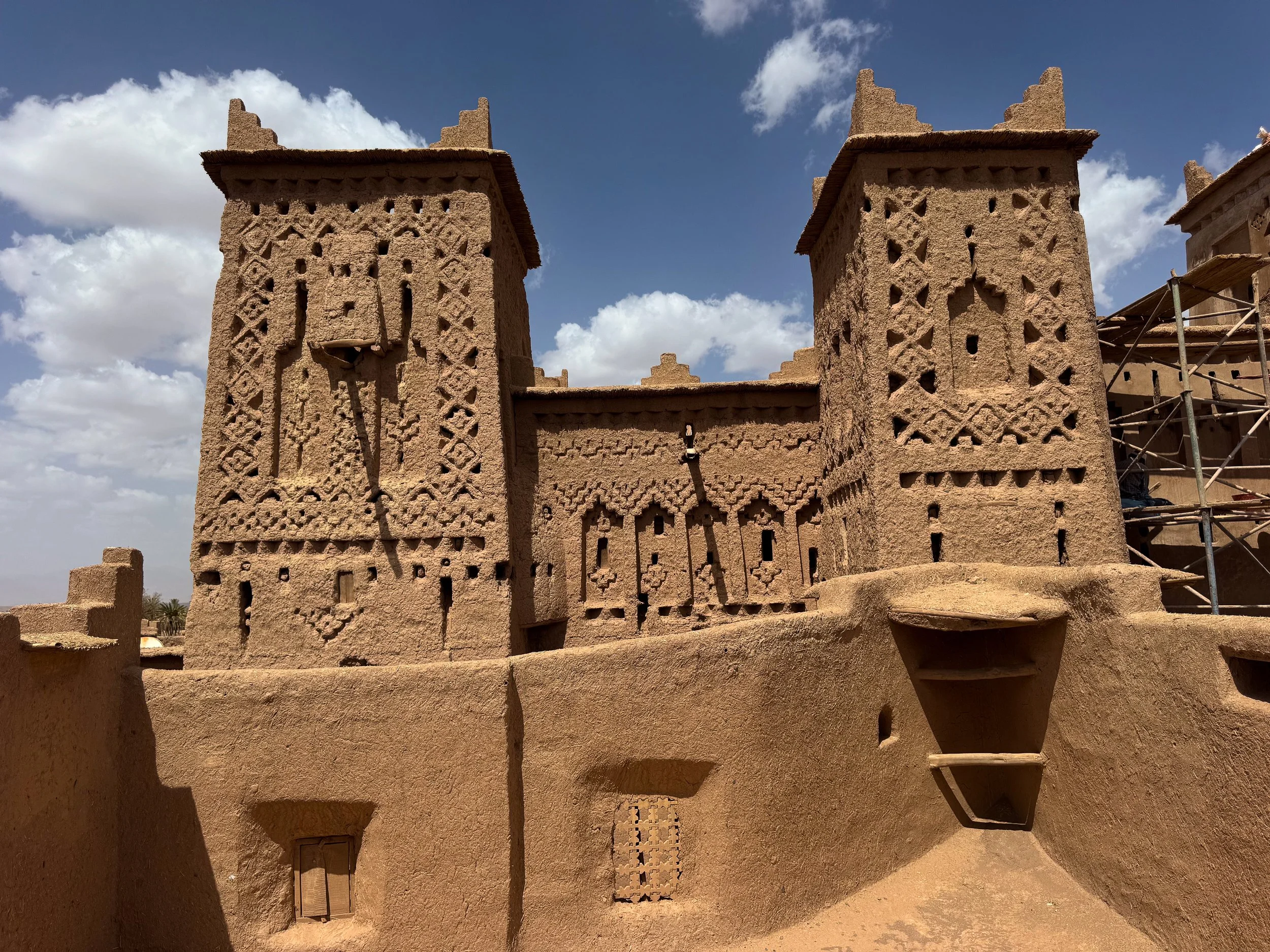
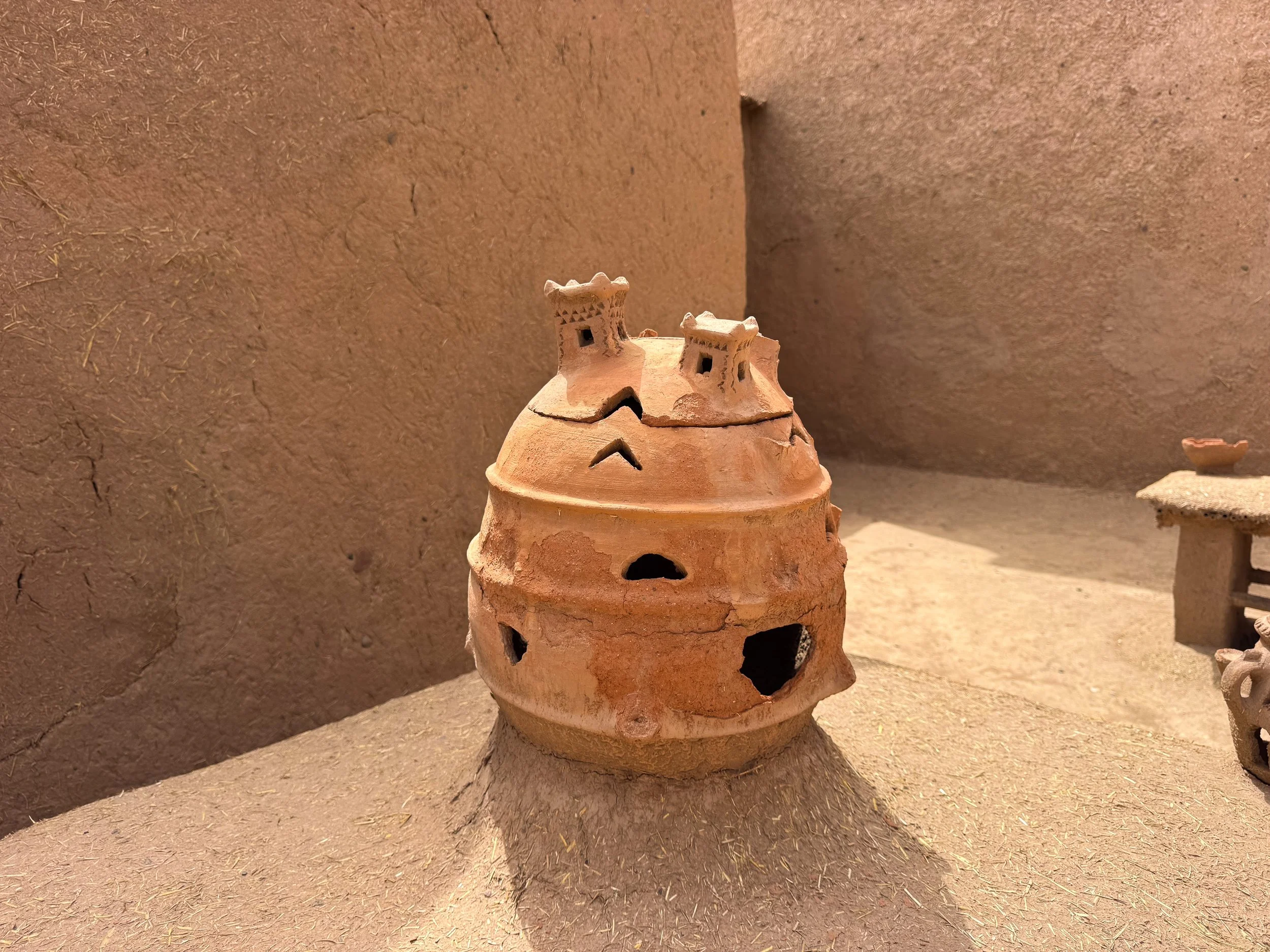
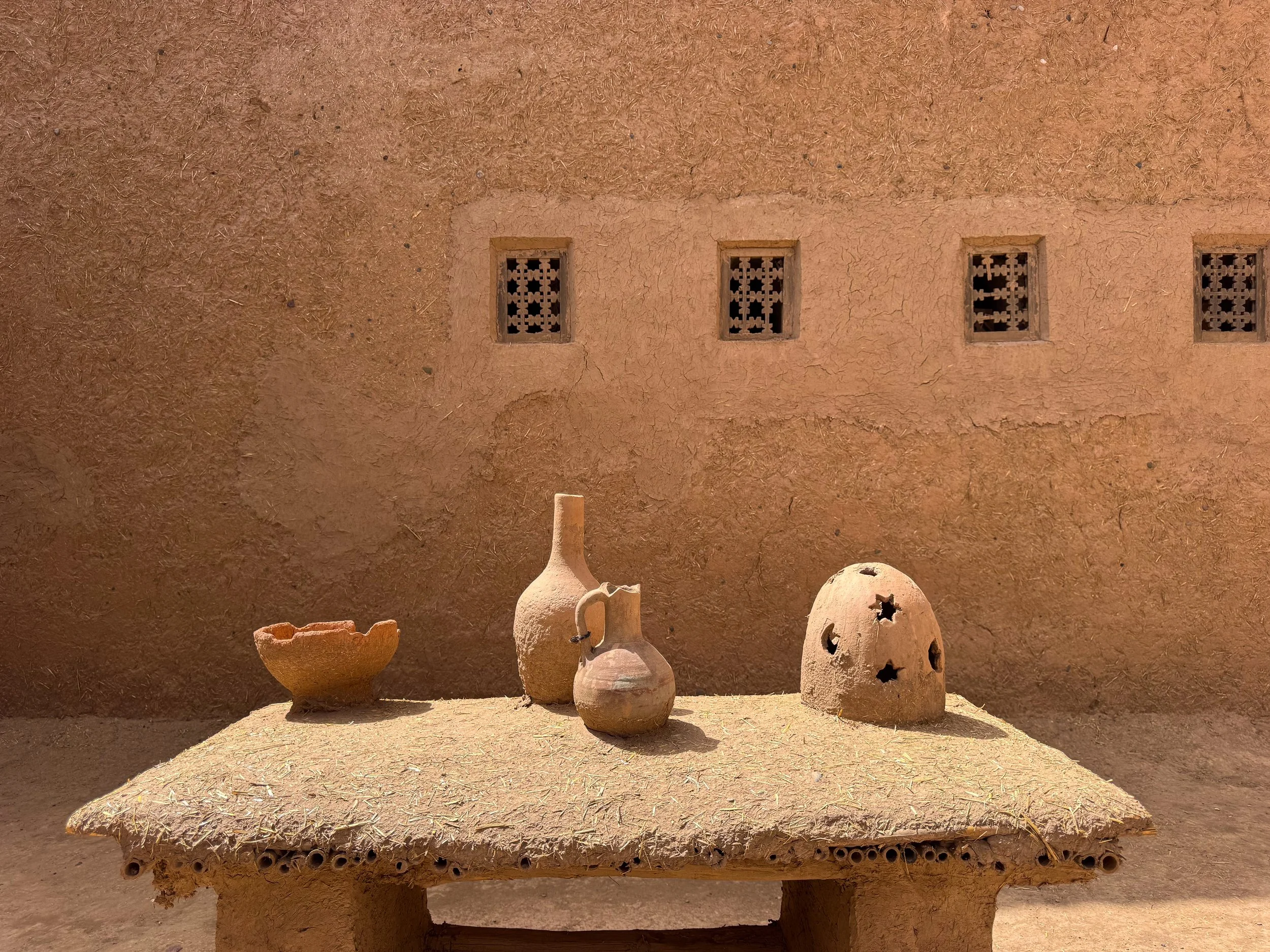
L’Entree Officelle. One of two museum entrances to Kasbah Amridil. Its historic interiors and rooms are restored with beige plastered walls and diamond tiled floors. A light-well illuminates its center while a staircase leads to the its floors, rooftop terrace and towers. The upper courtyard features Arab and Moorish style arches. It overlooks the palm covered oasis, neighboring kasbahs and crumbling ruins.
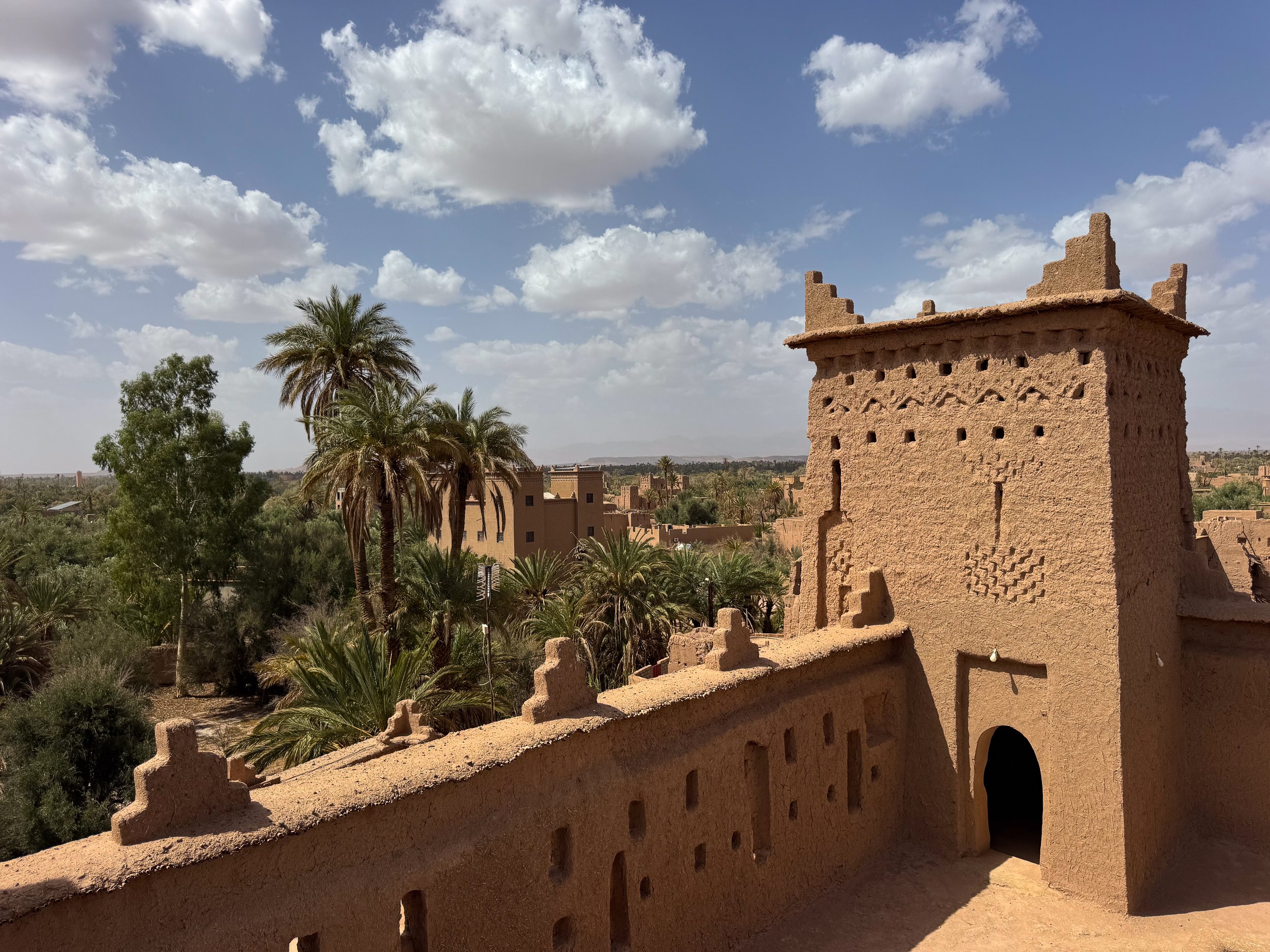
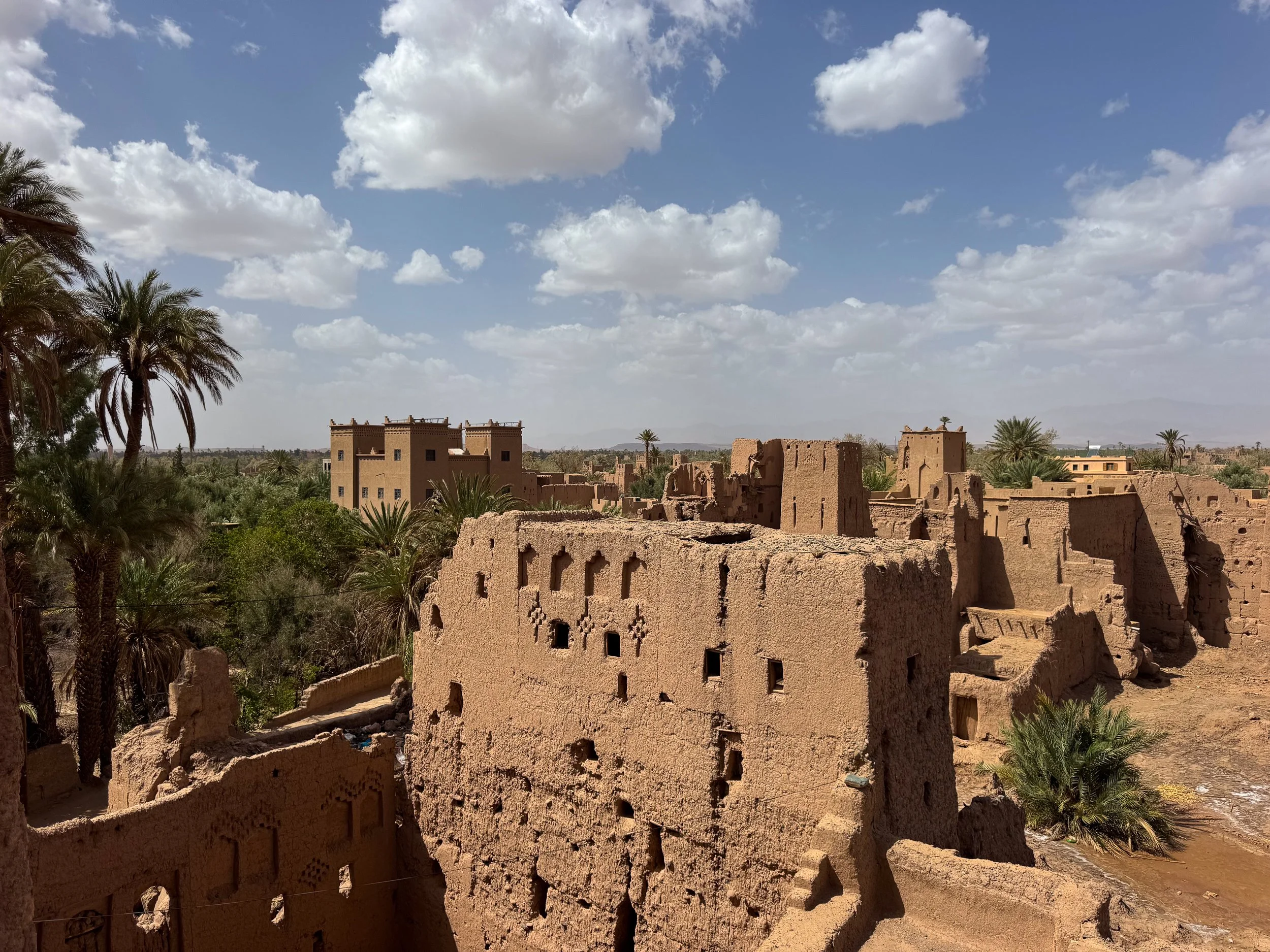
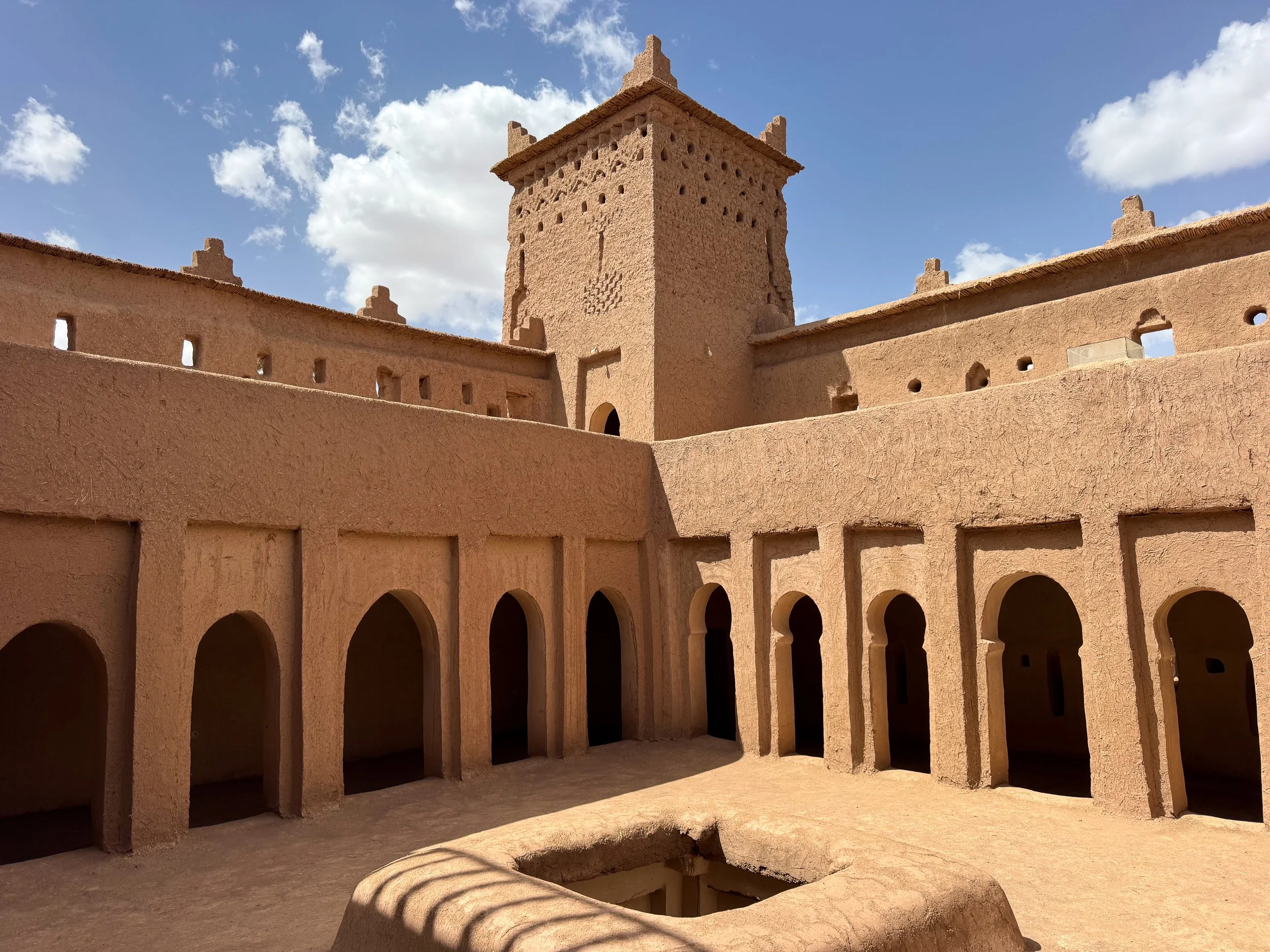
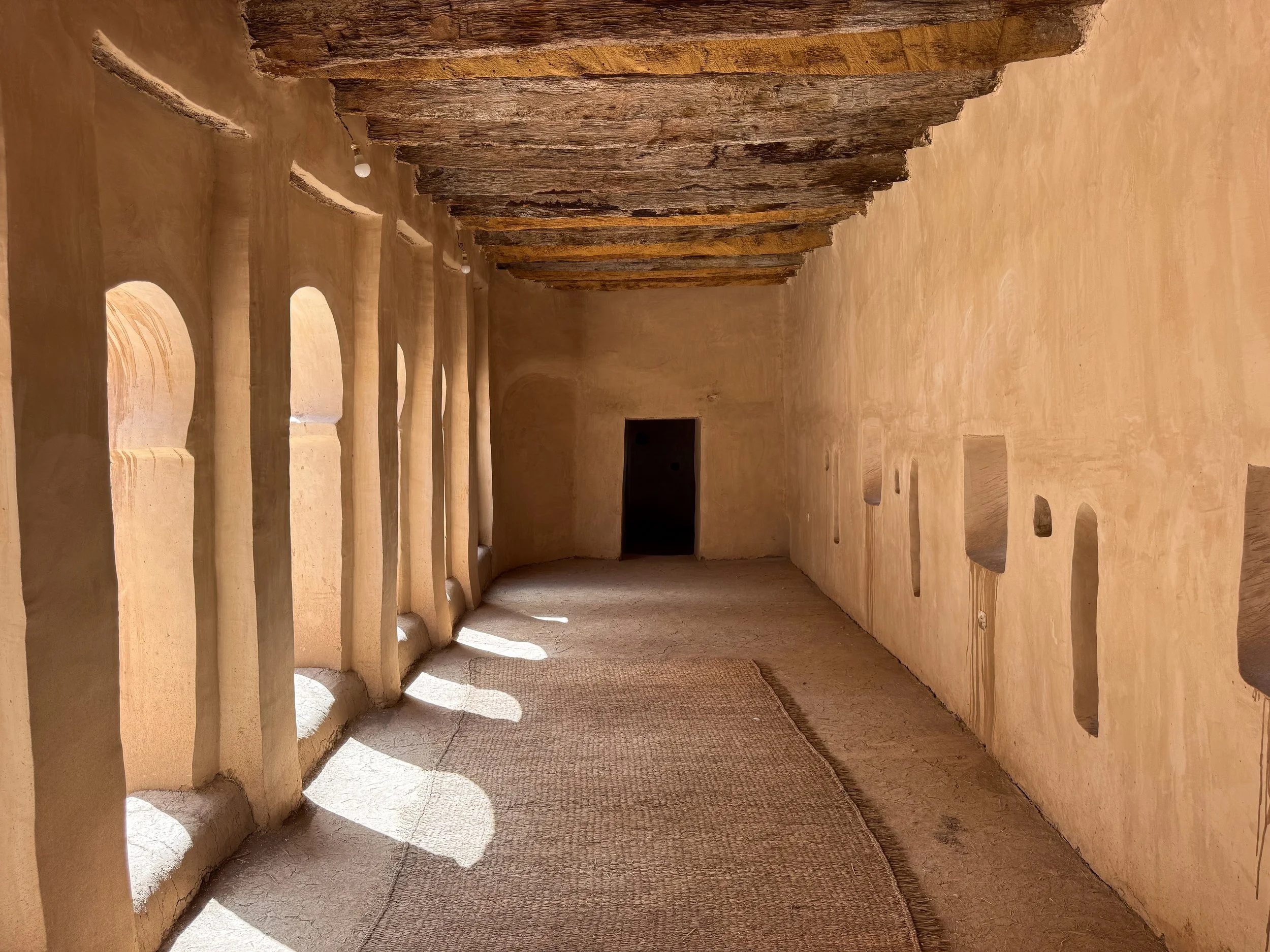
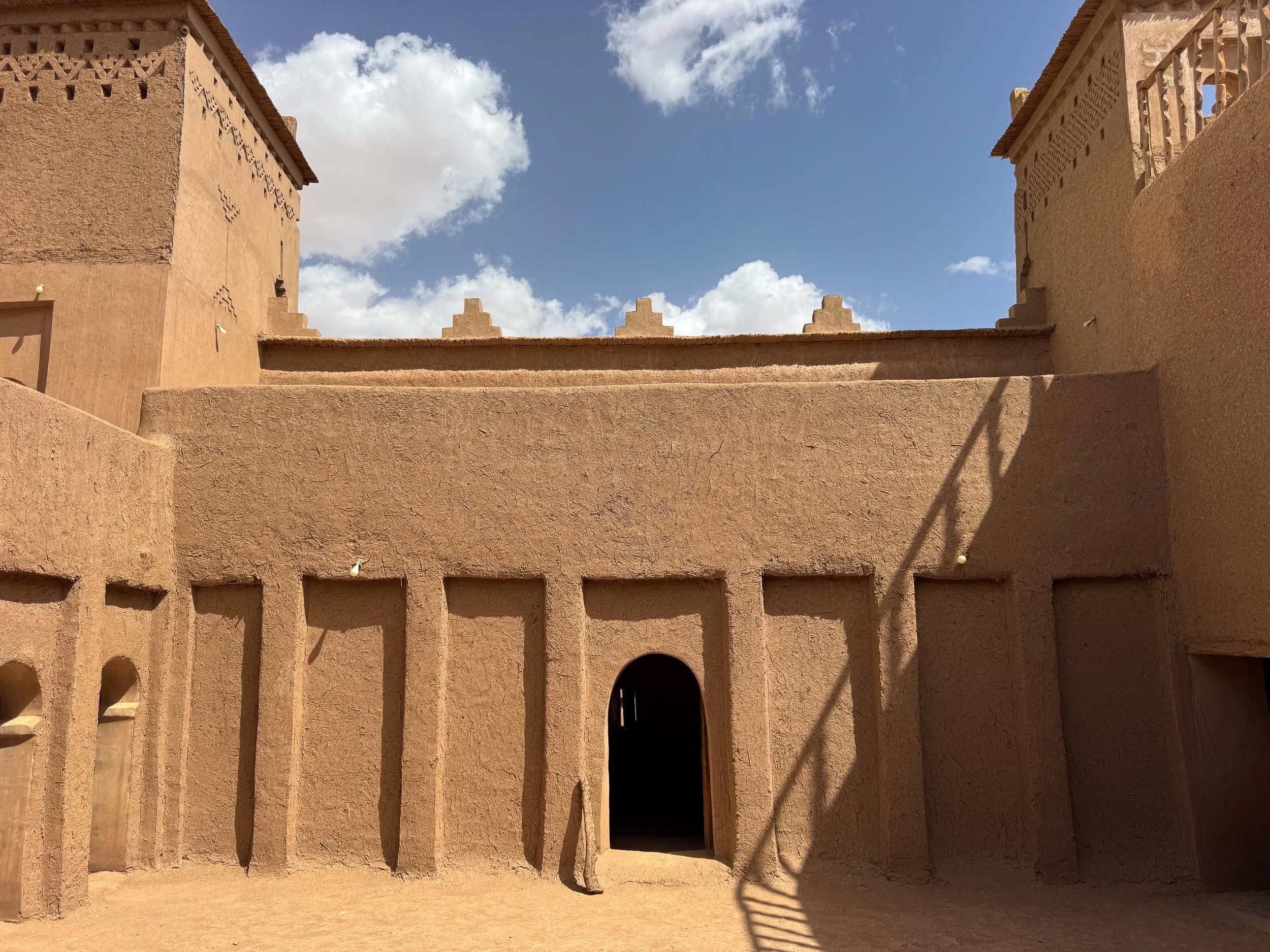
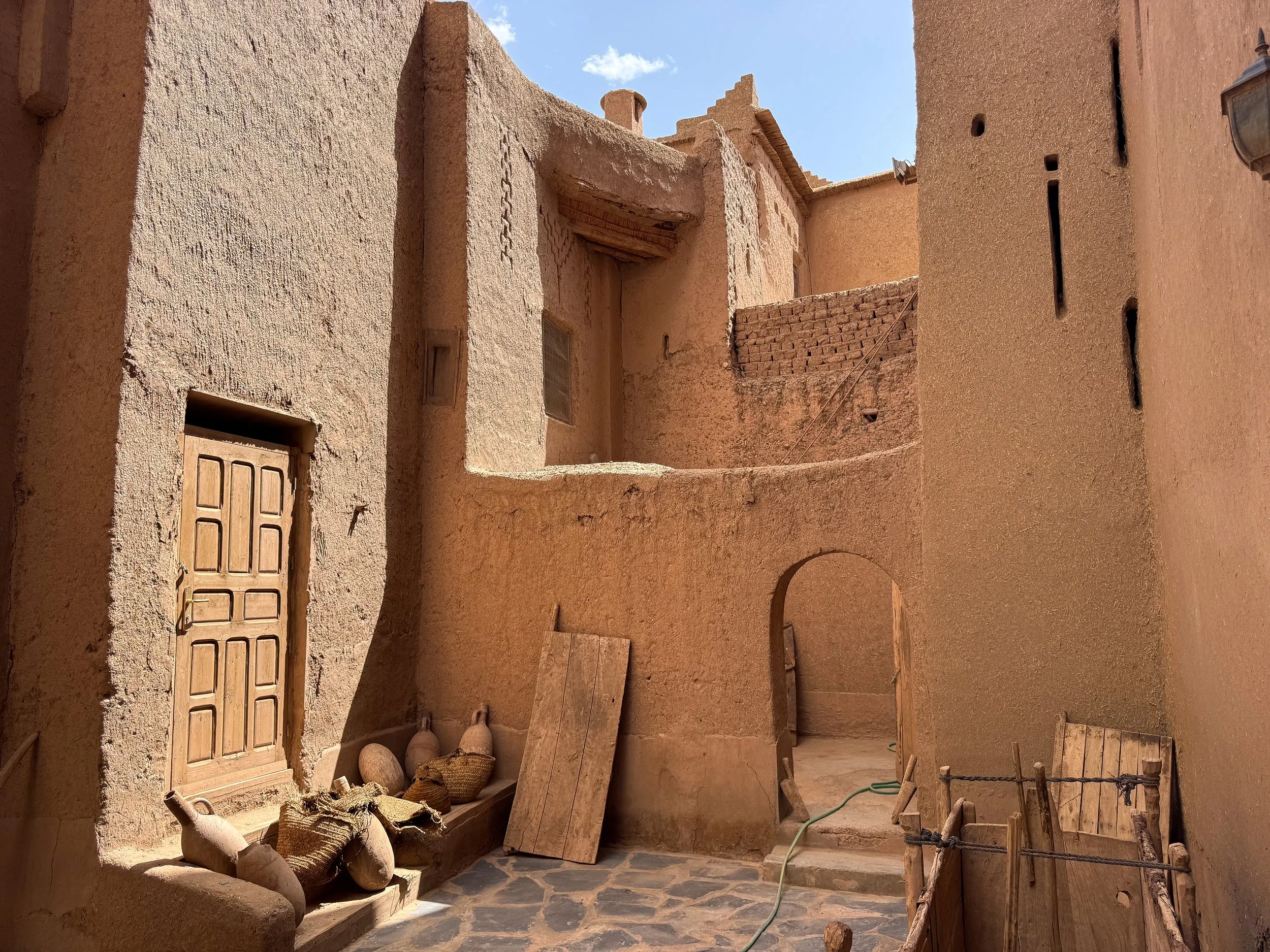
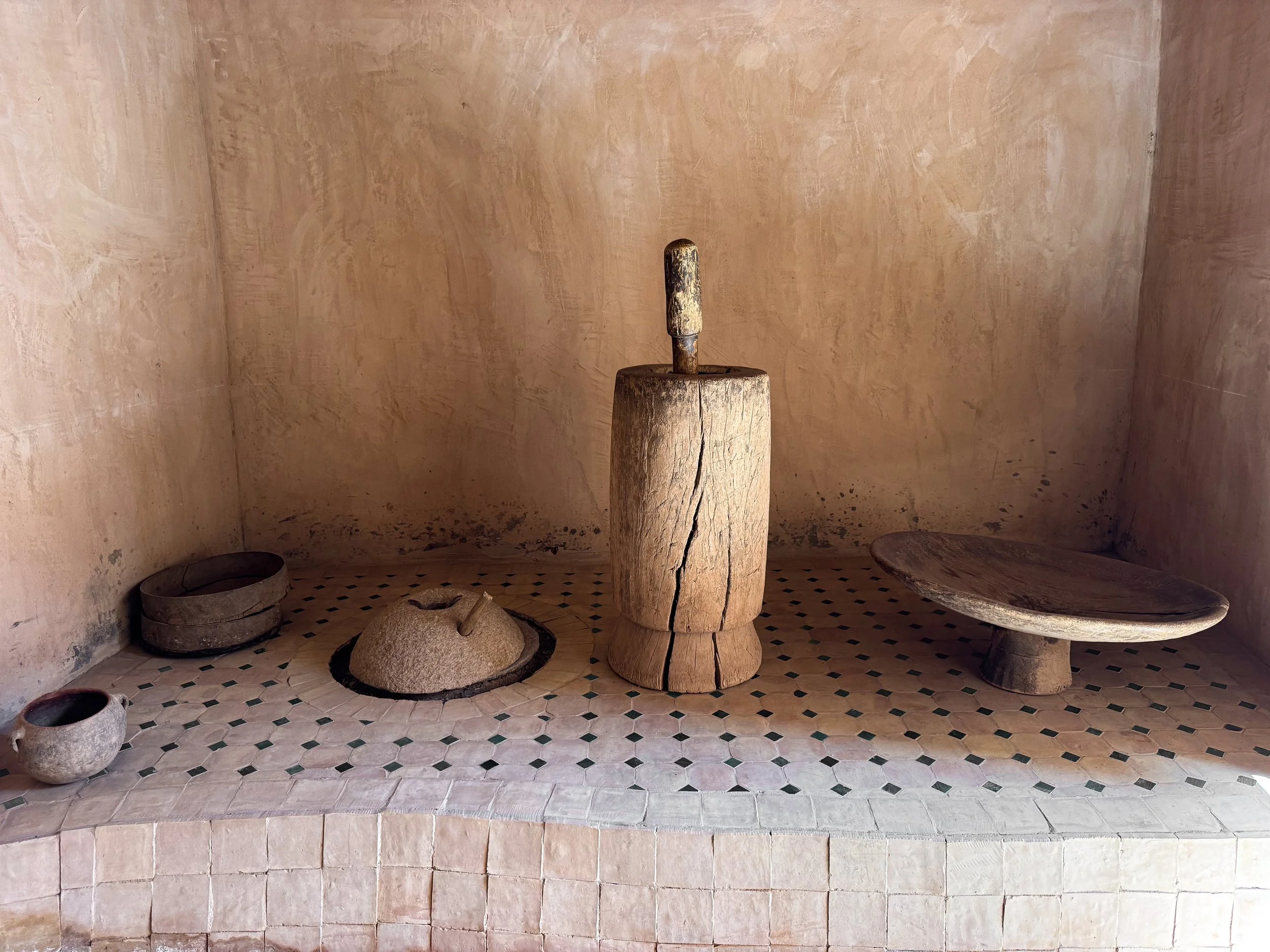
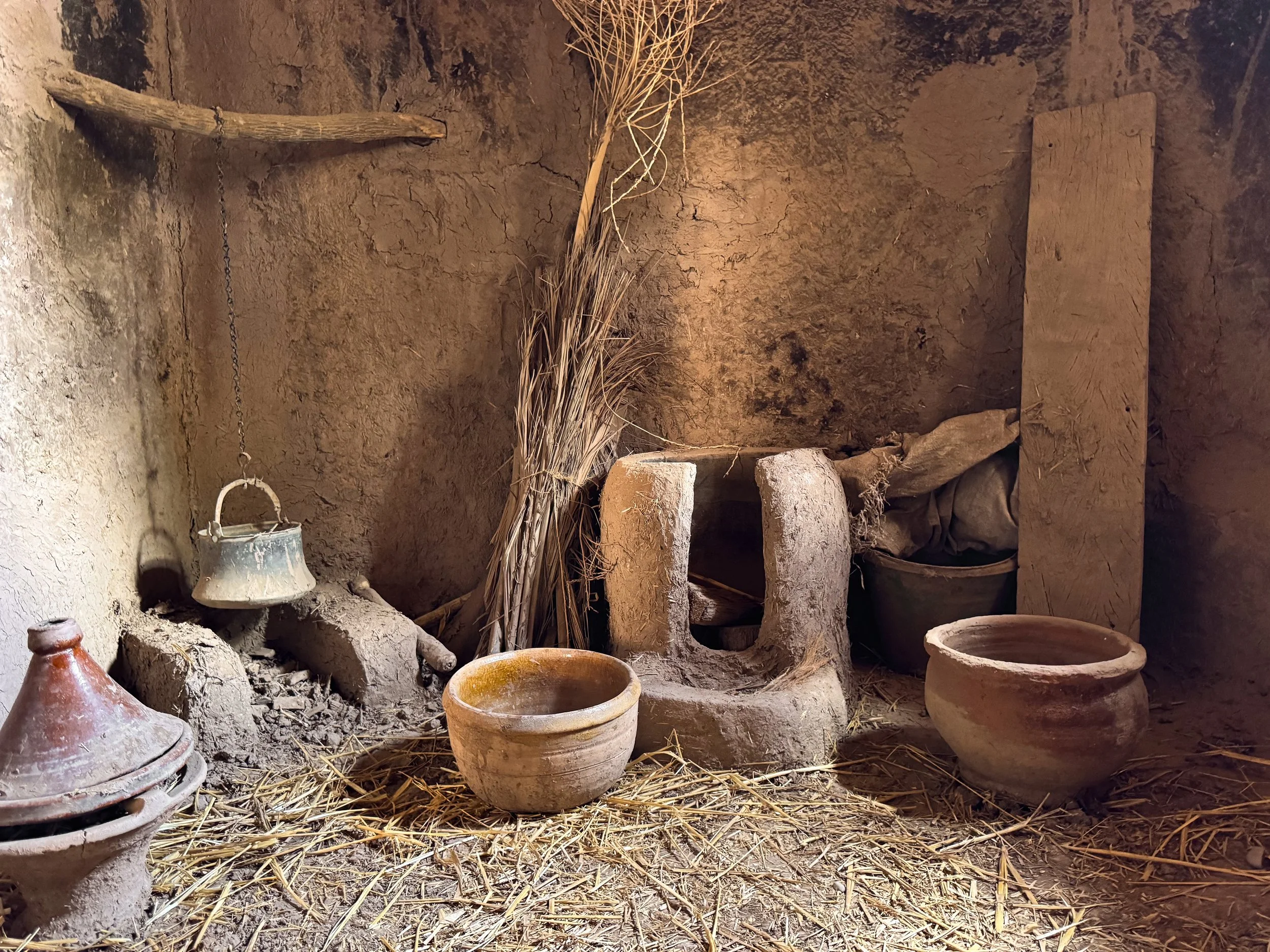
Entree Principale. The second museum entrance to Kasbah Amridil. It’s the most historic and originally maintained section. It features adobe walls, straw and mud floors, kitchens with clay ovens and displays with antique tools. Stairs lead from an open air courtyard to the upper floors and rooms. Rooftop terraces offer views of the kasbah towers and oasis.
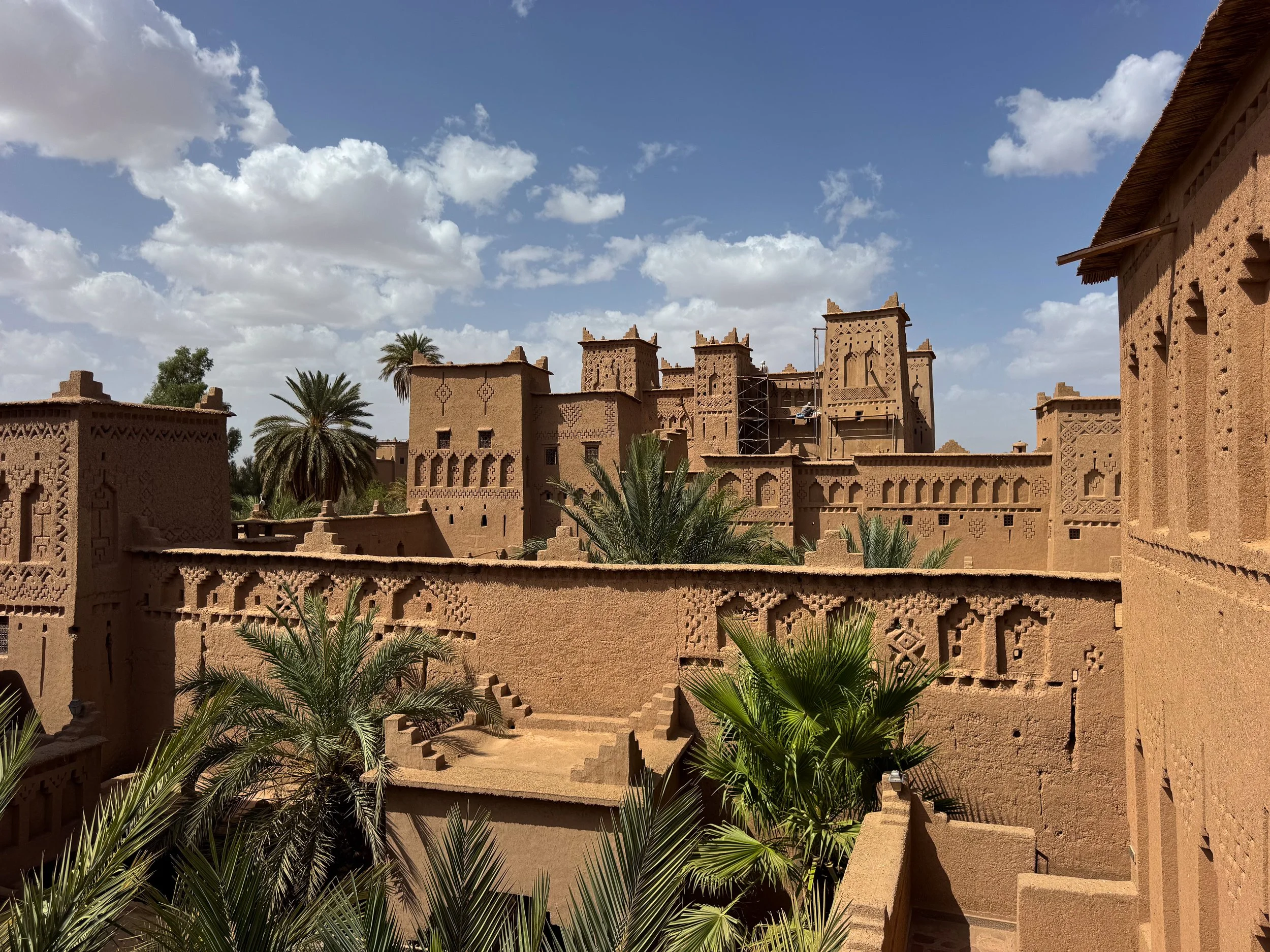
Kasbah Amridil Restaurant. The third section of the kasbah is a restaurant. Its second floor terrace has the best views of the entire kasbah and Skouras Palmerie. Visit here last for a light meal and afternoon mint tea.
Tips for Visiting Kasbah Amridil
Tickets. Tickets cost 40 DH per person for each L’Entree Officelle and Entree Principale. If you only have time to visit one section of the Kasbah, visit the Entree Principale.
Getting Here. The Skouras Palmerie and Kasbah Amridil are reachable from Ouarzazate by car. It takes about 1-1/2 hours to reach if driving.
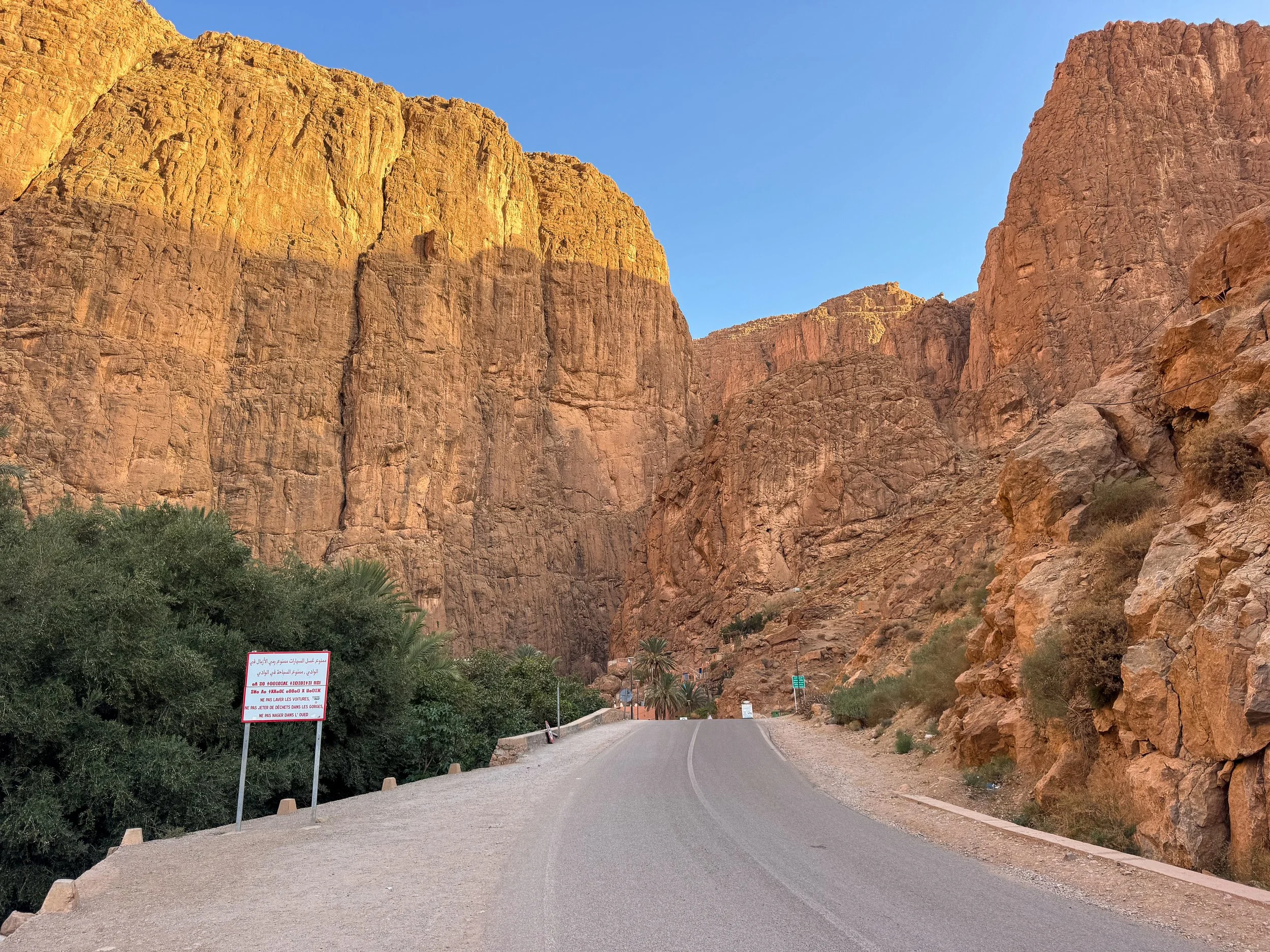
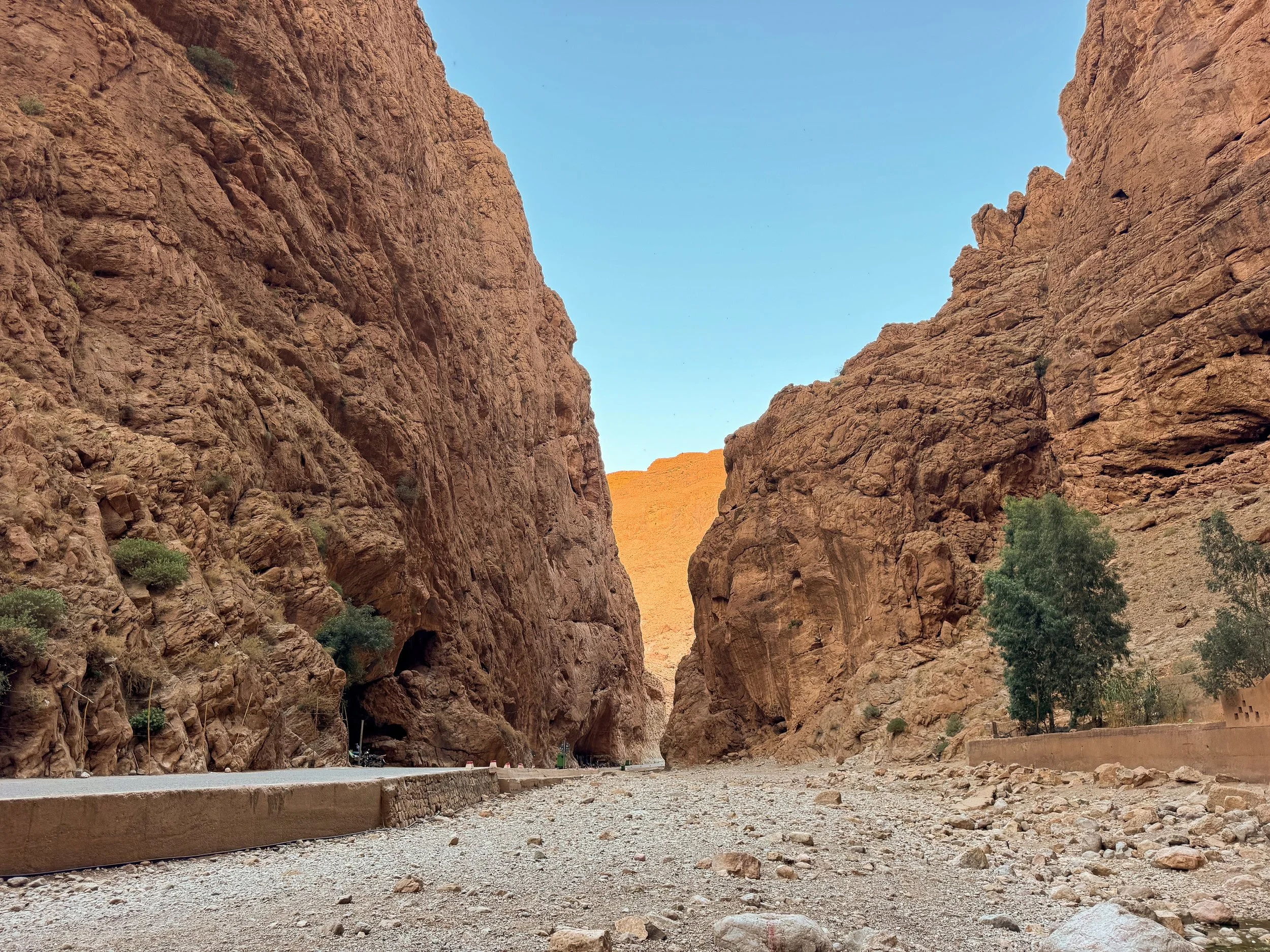
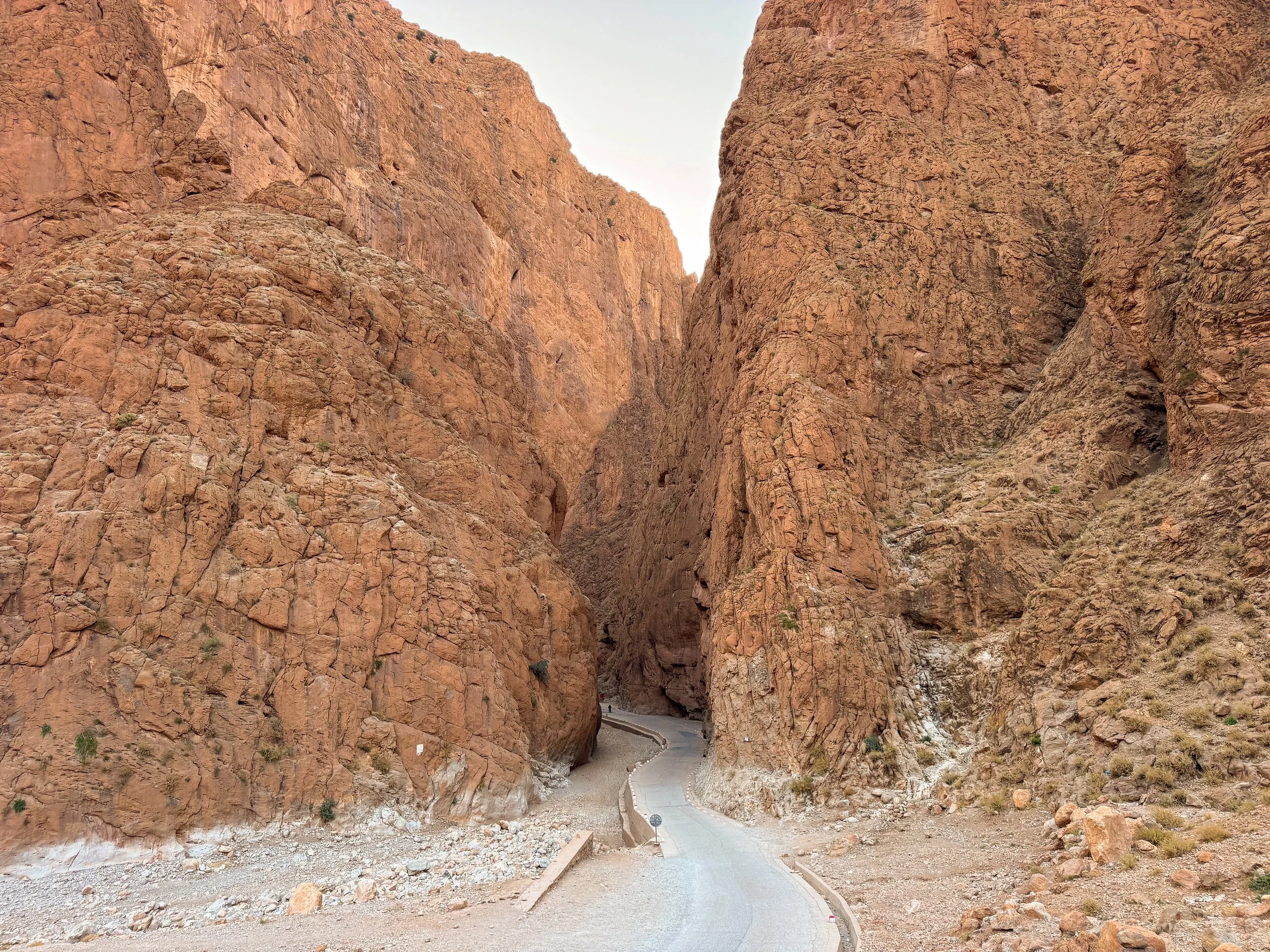
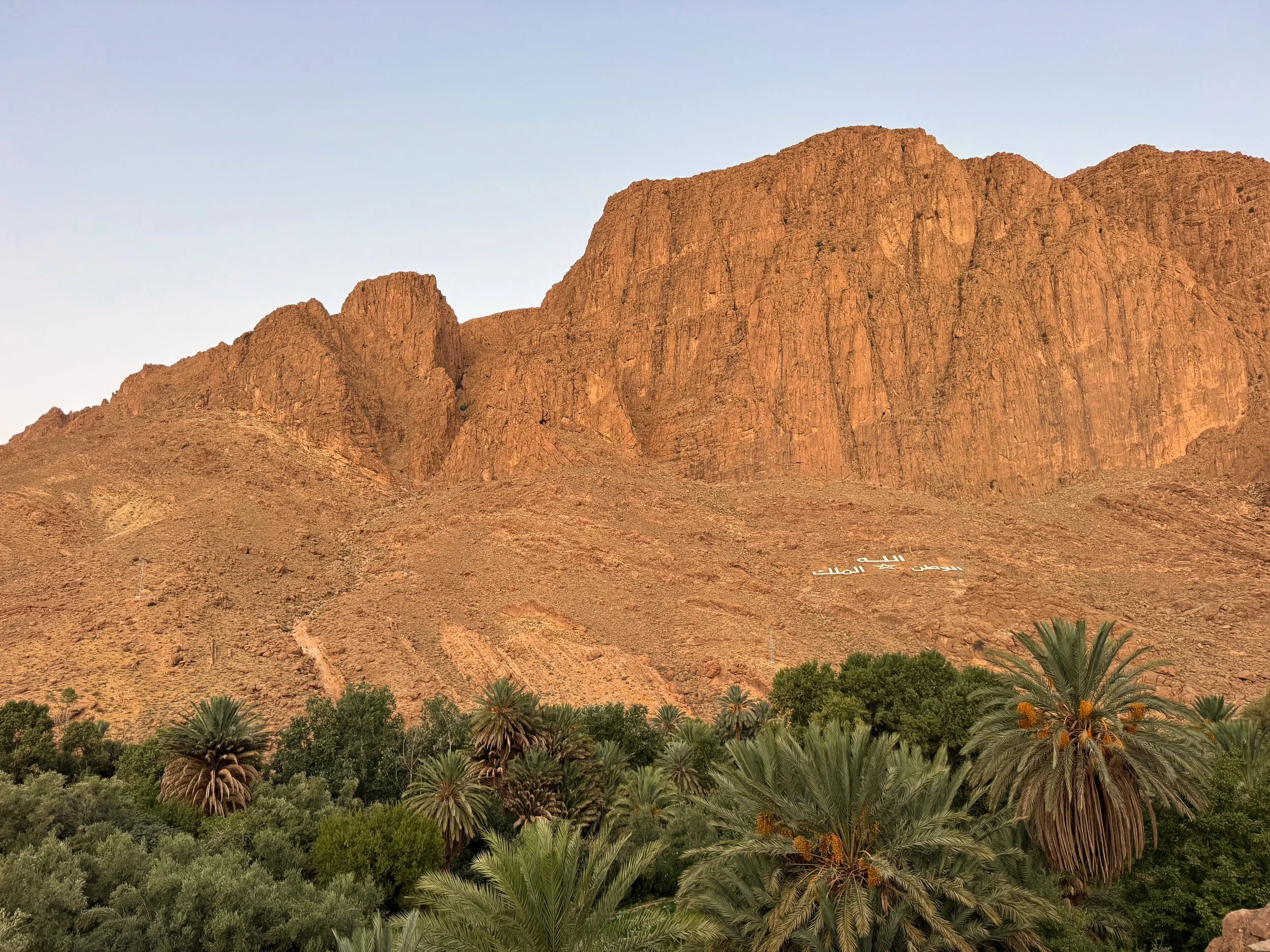
Todra Gorge
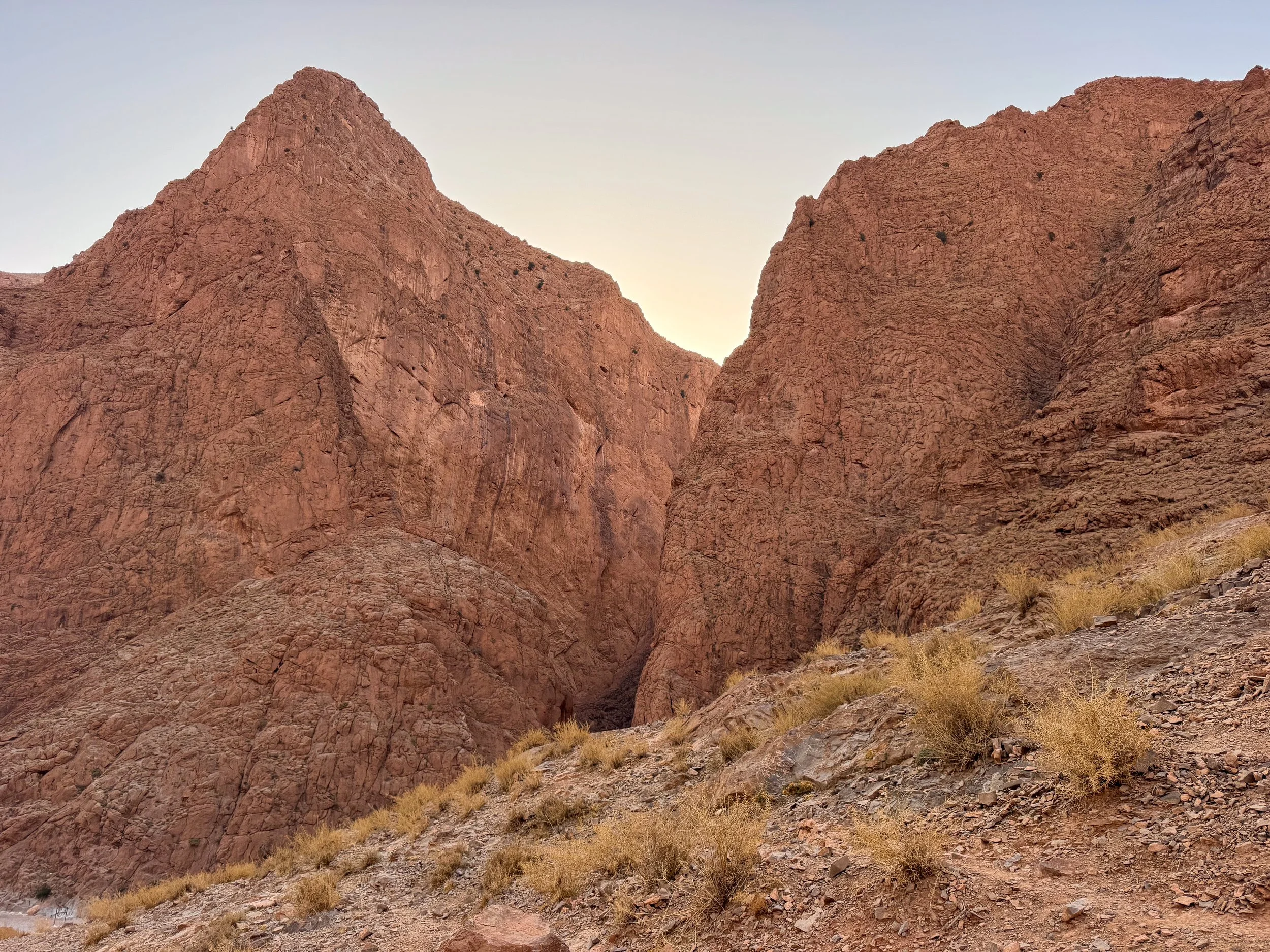
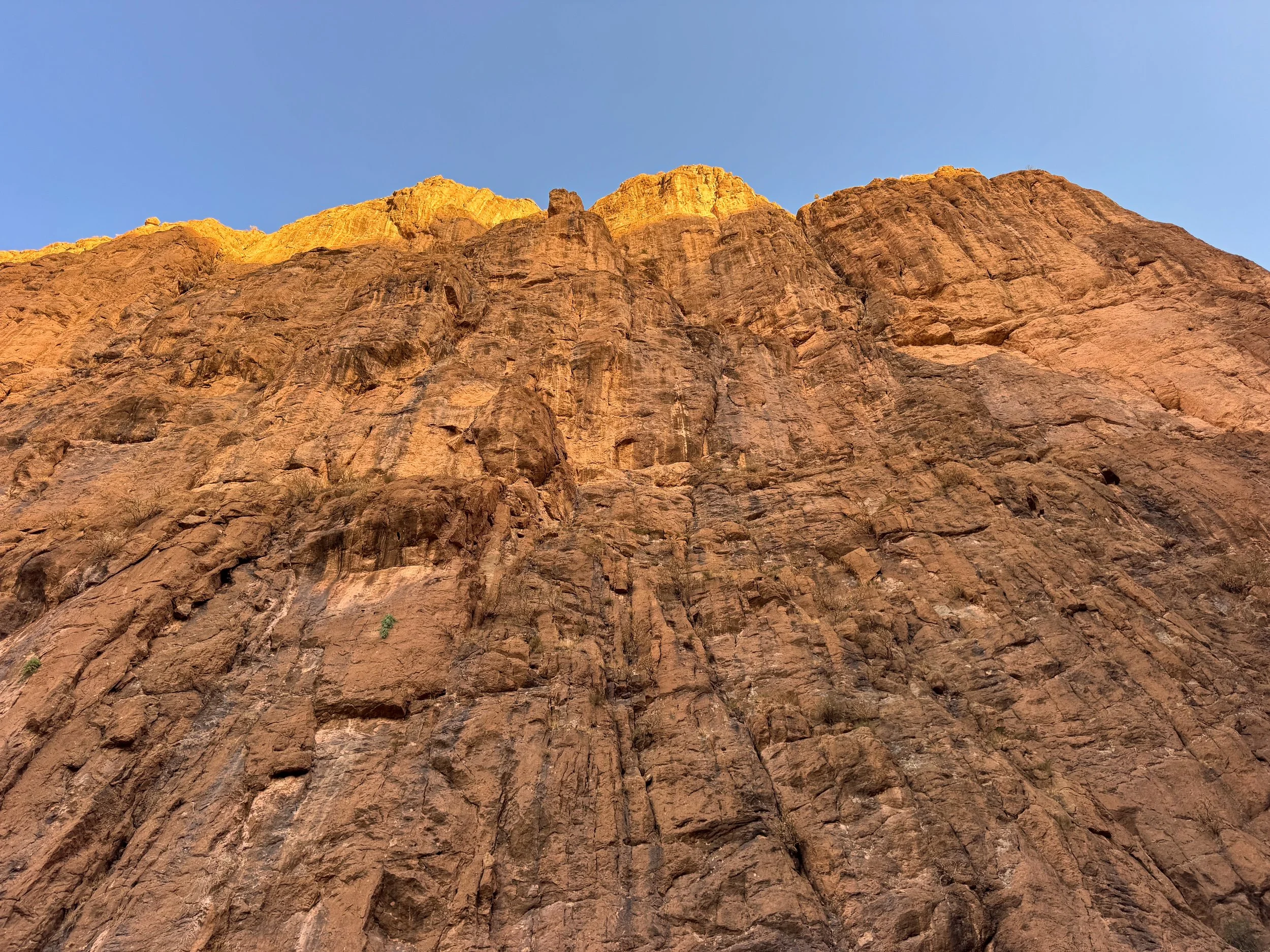
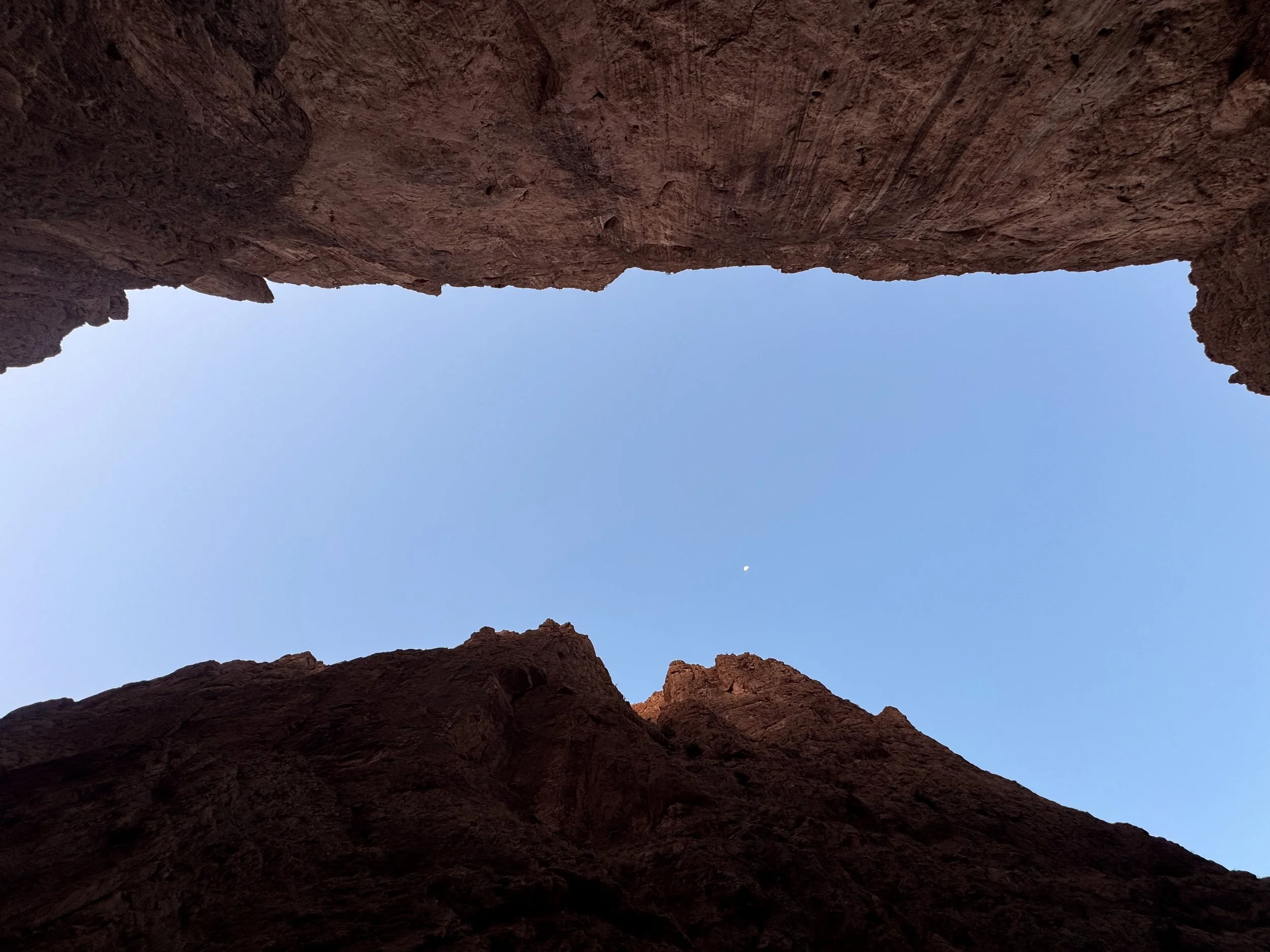
The Todra Gorge is a massive river canyon in the High Atlas Mountains with steep walls, a natural spring and a palm oasis. Its orange and brown rock walls rise hundreds of feet above the river bed. A natural spring bubbles from the ground supplying the river and oasis with a continual supply of fresh water.
Hiking and Rock Climbing. A hiking trail begins at the parking lot past the narrowest section of the gorge. It loops 13km across the desert landscape. We only hiked 1km due to lack of time. The walls of the gorge are popular with experienced rock climbers.
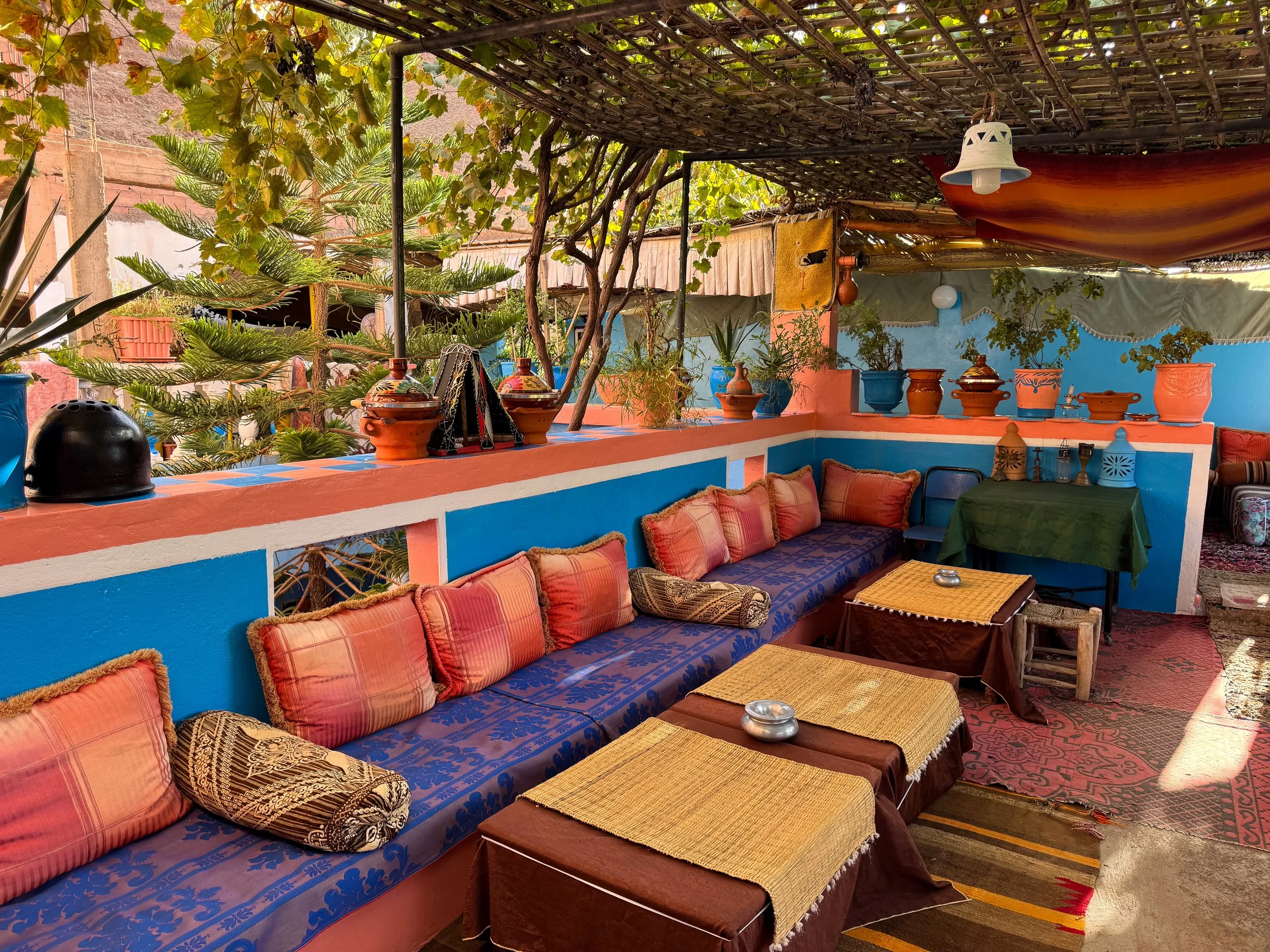
La Maison d’Hotes Riad Todra. A small hotel at the mouth of the Todra Gorge. Its rooms are basic but suitable for a single night stay. It has a restaurant with Moroccan lounges overlooking a small oasis. The host prepared a vegetable tagine for dinner and spread for breakfast. We booked on Airbnb.
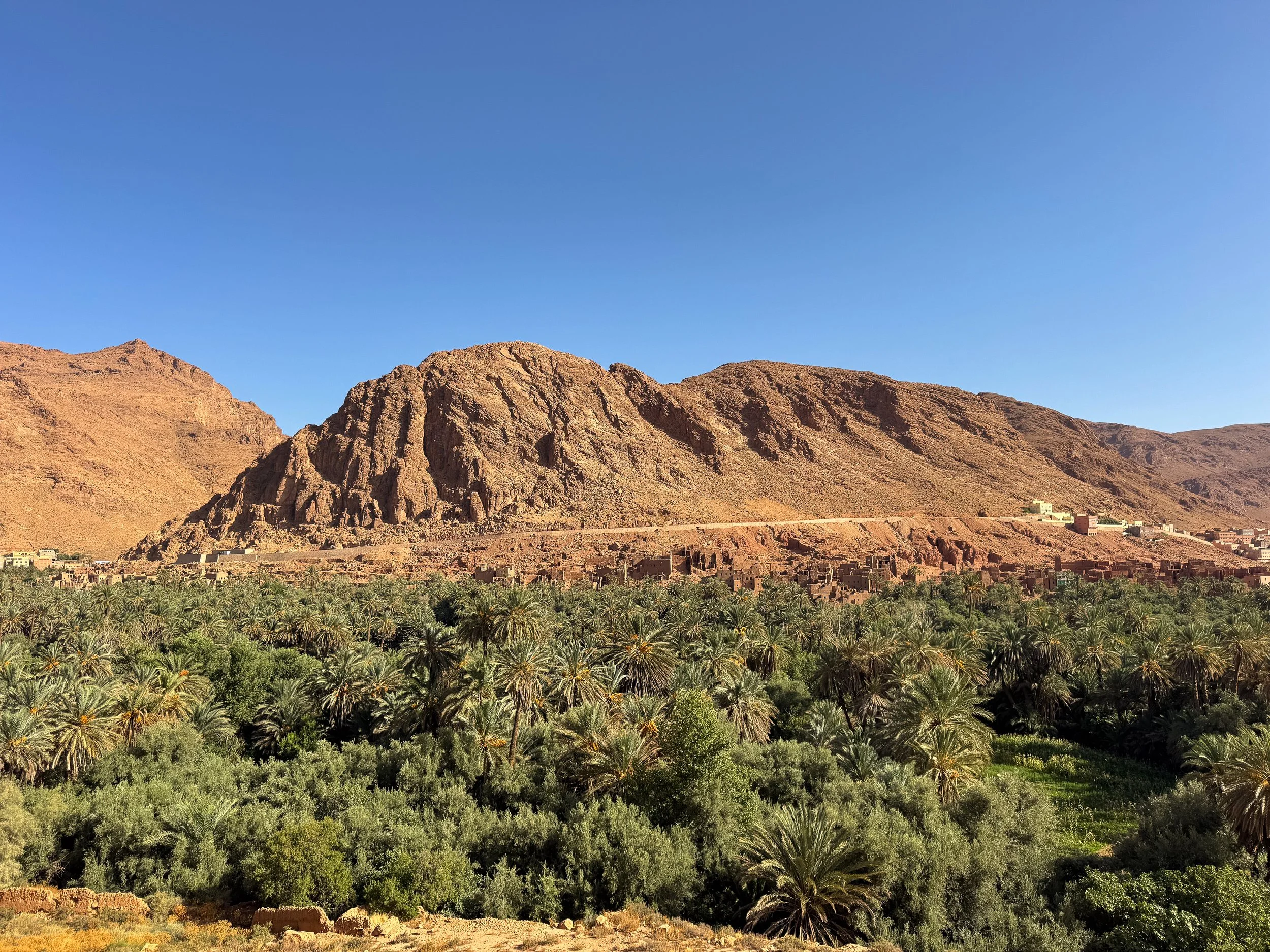
Palmeraie de Tinghir. A vast oasis stretching from the mouth of the Todra Gorge to the city of Tinghir. Groves of fig, olive, date and pomegranates trees grow in the verdant valley. Crumbling ruins of historic kasbahs line its rugged edges. Roadside lookouts offer panoramic views of surrounding landscape.
Mirador de Palmeraie. A roadside viewpoint of the palm covered oasis, its abandoned adobe kasbahs and the mountainside. Use this Map Pin for the location.
Oasis de Toudgha Vue Panoramique. A lookout point closer to town with sweeping views of the oasis, its farmland and distant mountains. Use this Map Pin for the location.
Tips for Visiting The Todra Gorge:
Visit Early. Arrive in the early morning, just after sunset to see the gorge in its most natural state without any vendors or tour buses.
Beware of Dogs. Packs of stray dogs can be aggressive. Even if unprovoked, they try to bite at people’s ankles. Raise your hand in a fist and shout at them if they get too close.
Getting Here. The Todra Gorge is reachable after driving 3 hours from the Skouras Palmerie.
Merzouga Desert
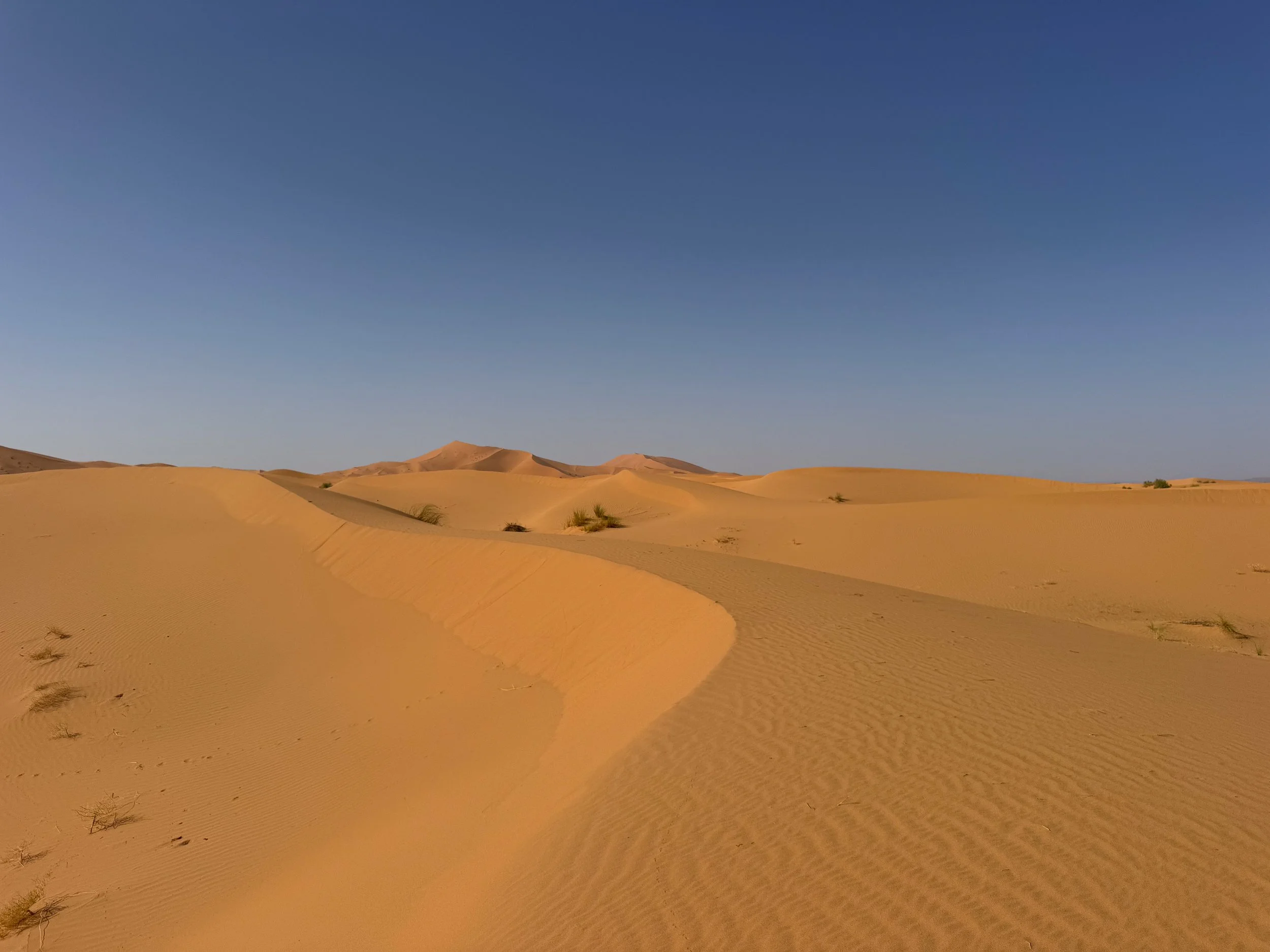
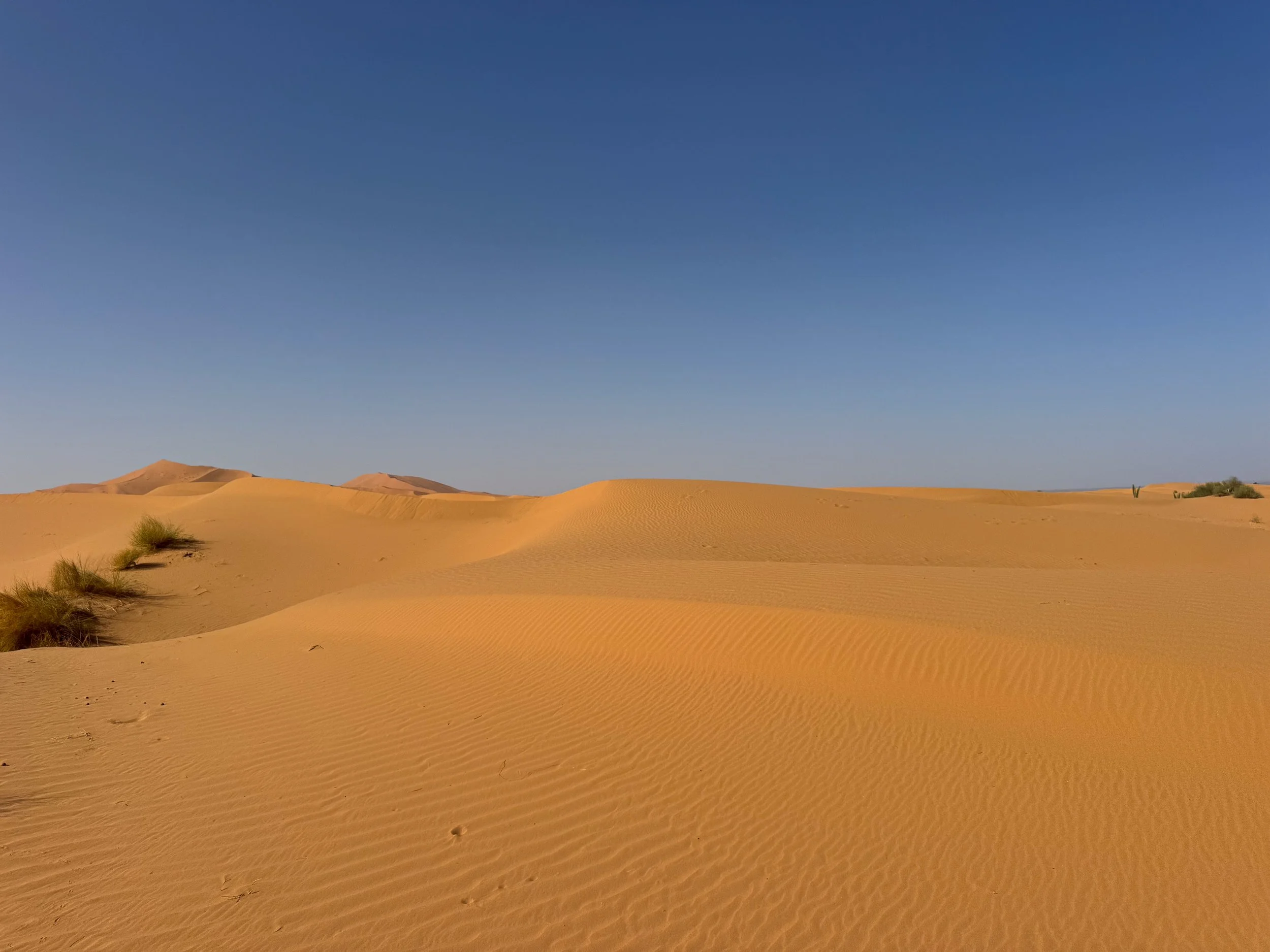
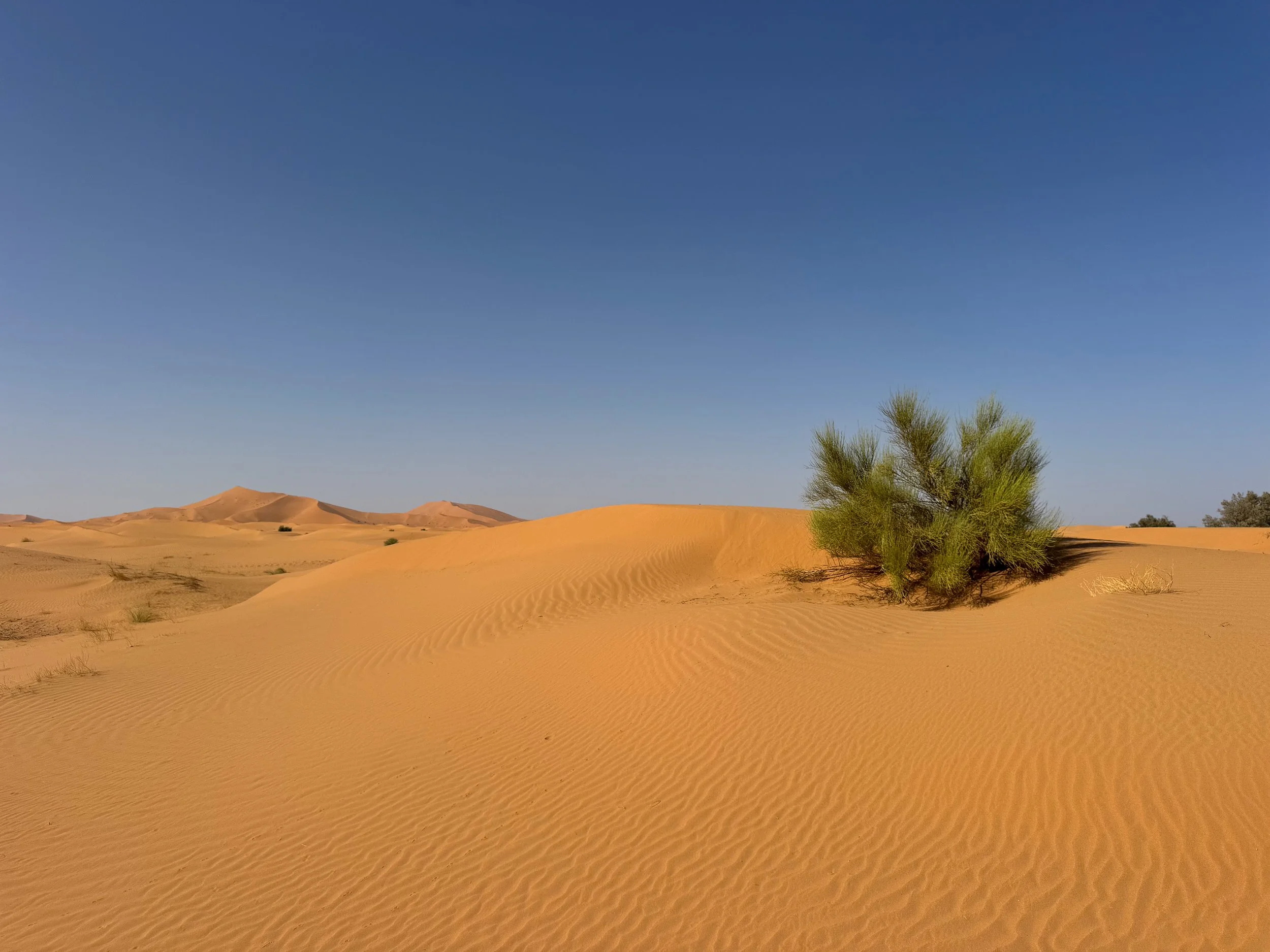
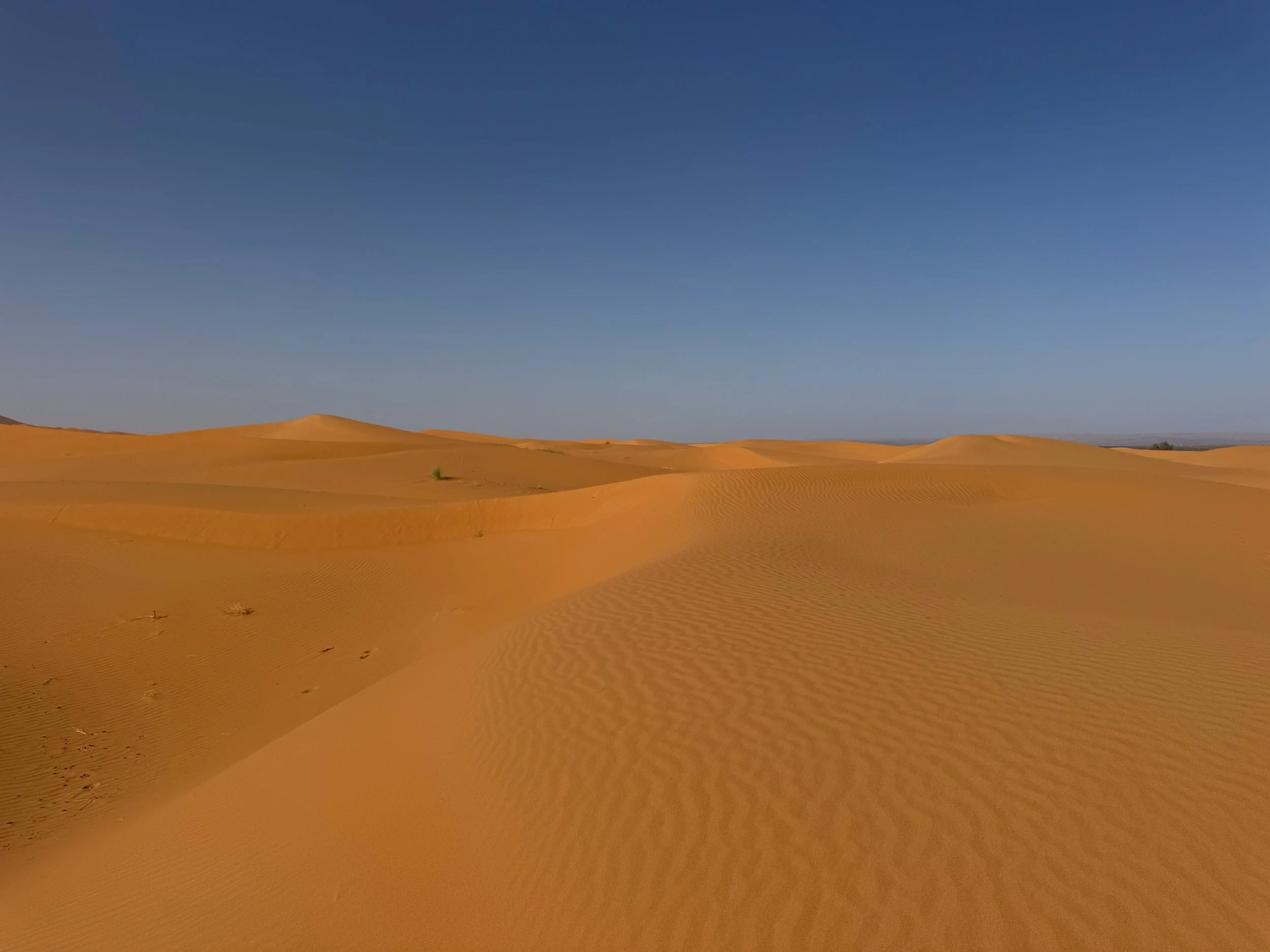
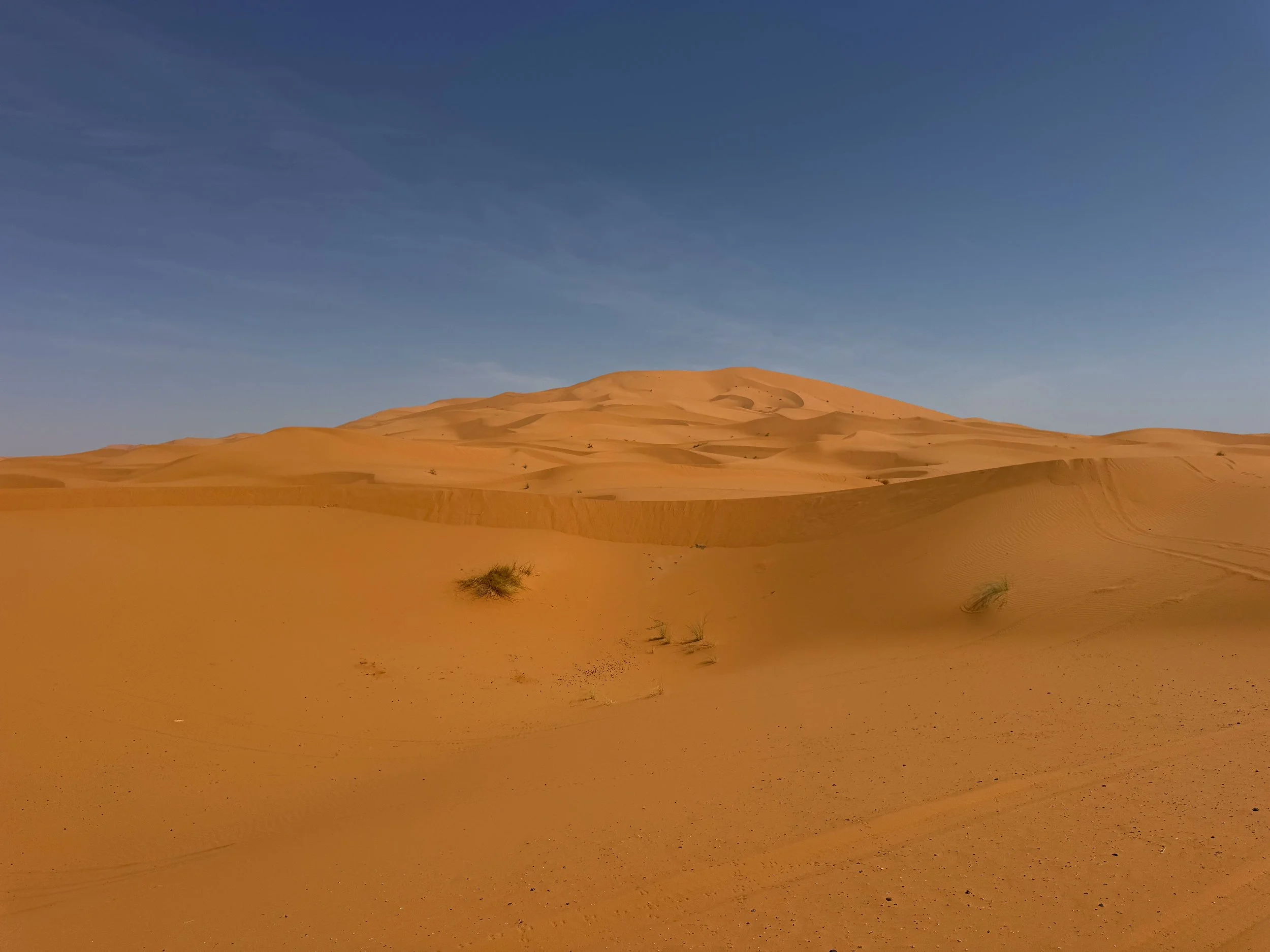
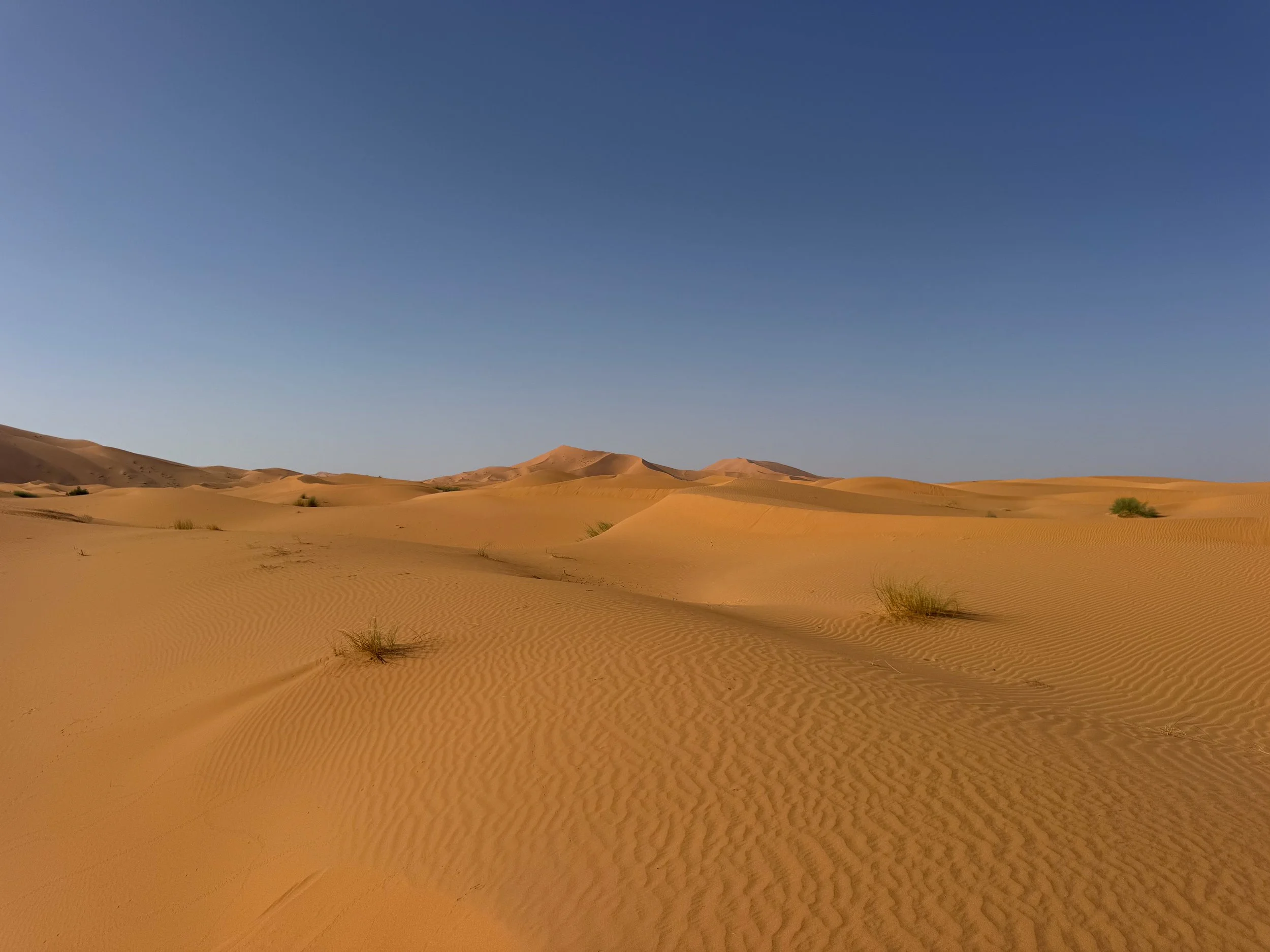
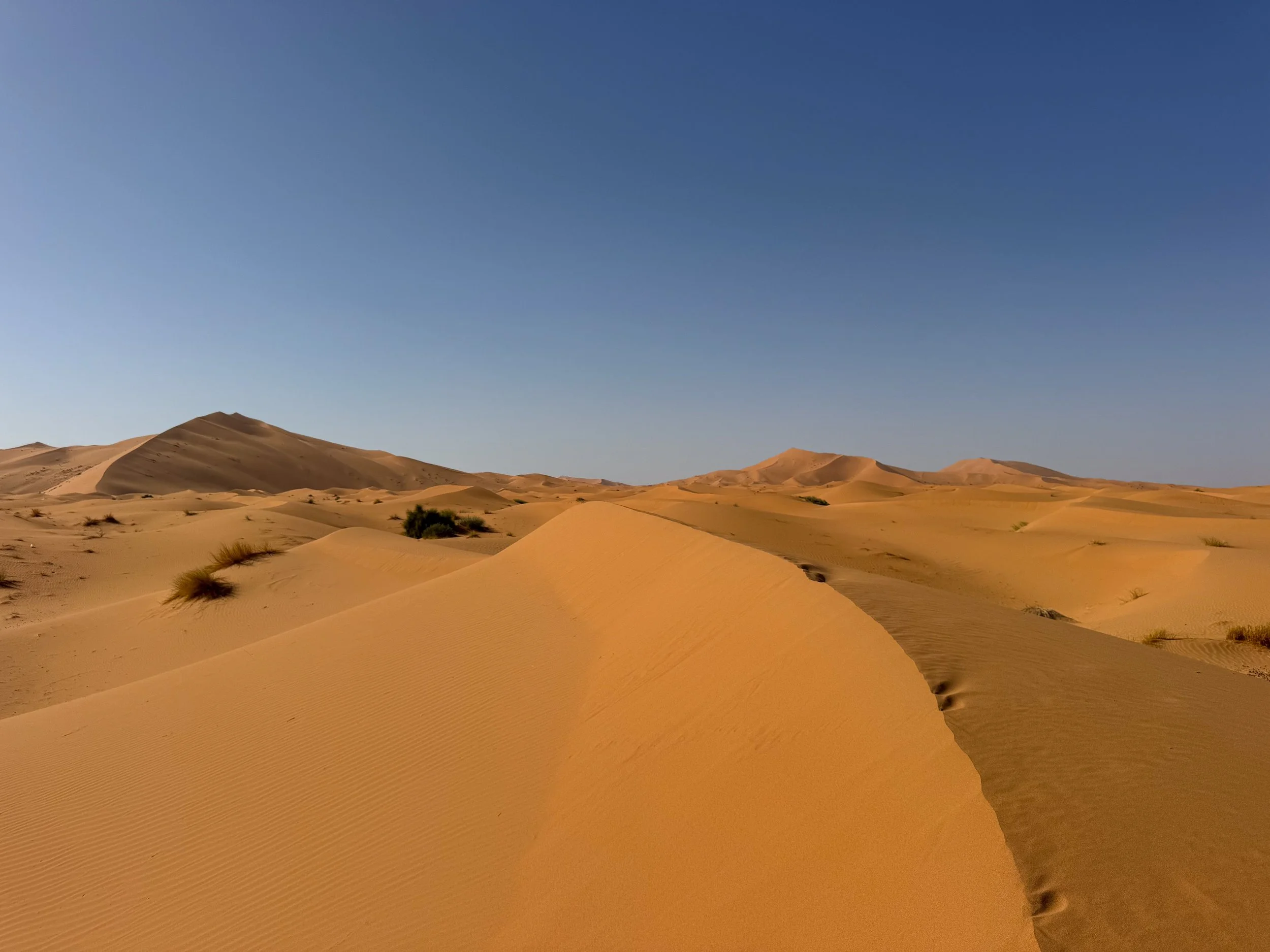
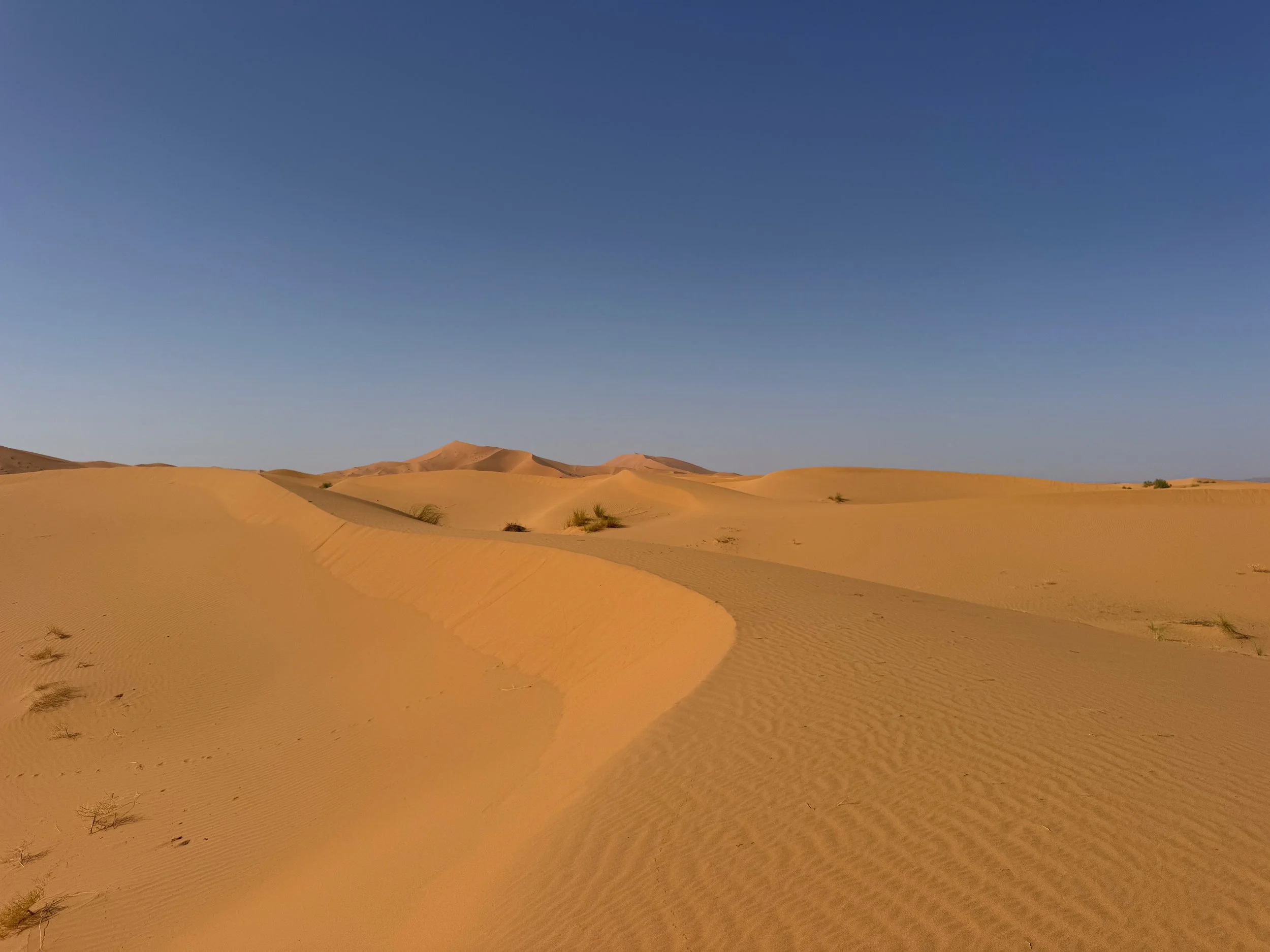
The Merzouga Desert is an expansive area with towering orange dunes and desert camps on the edge of the Sahara. It’s a popular place for camel trekking, dune exploration and stargazing.
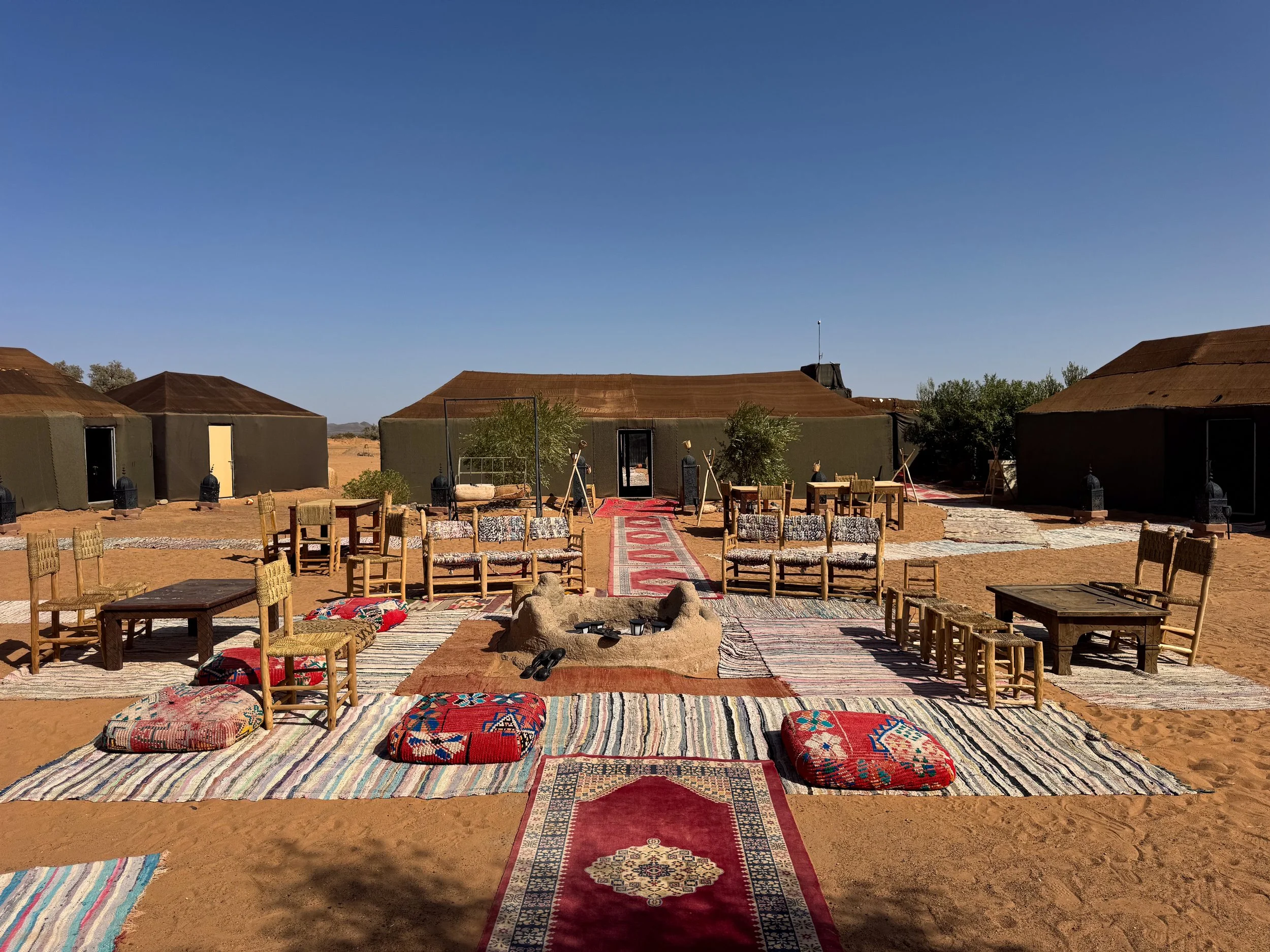
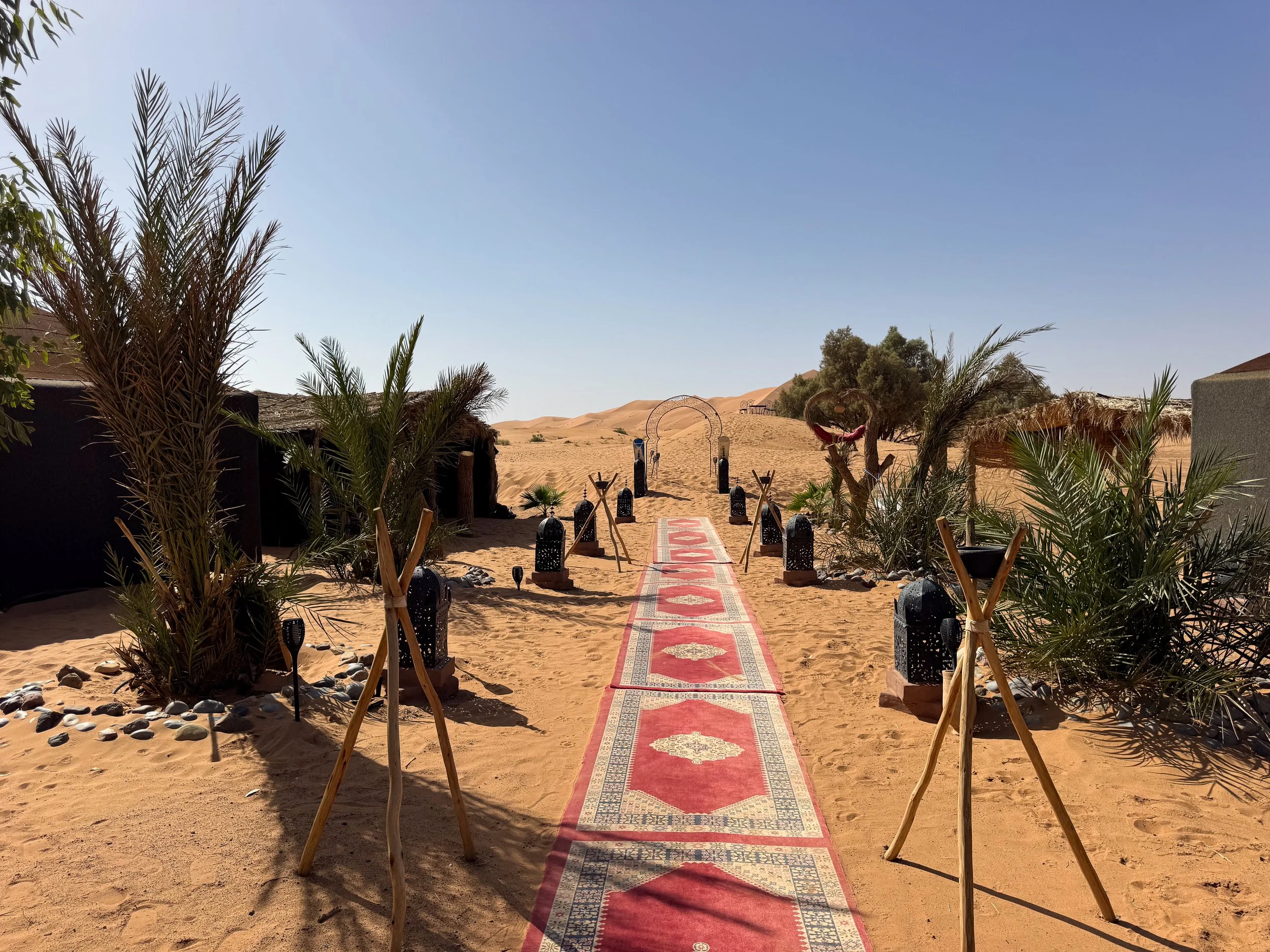
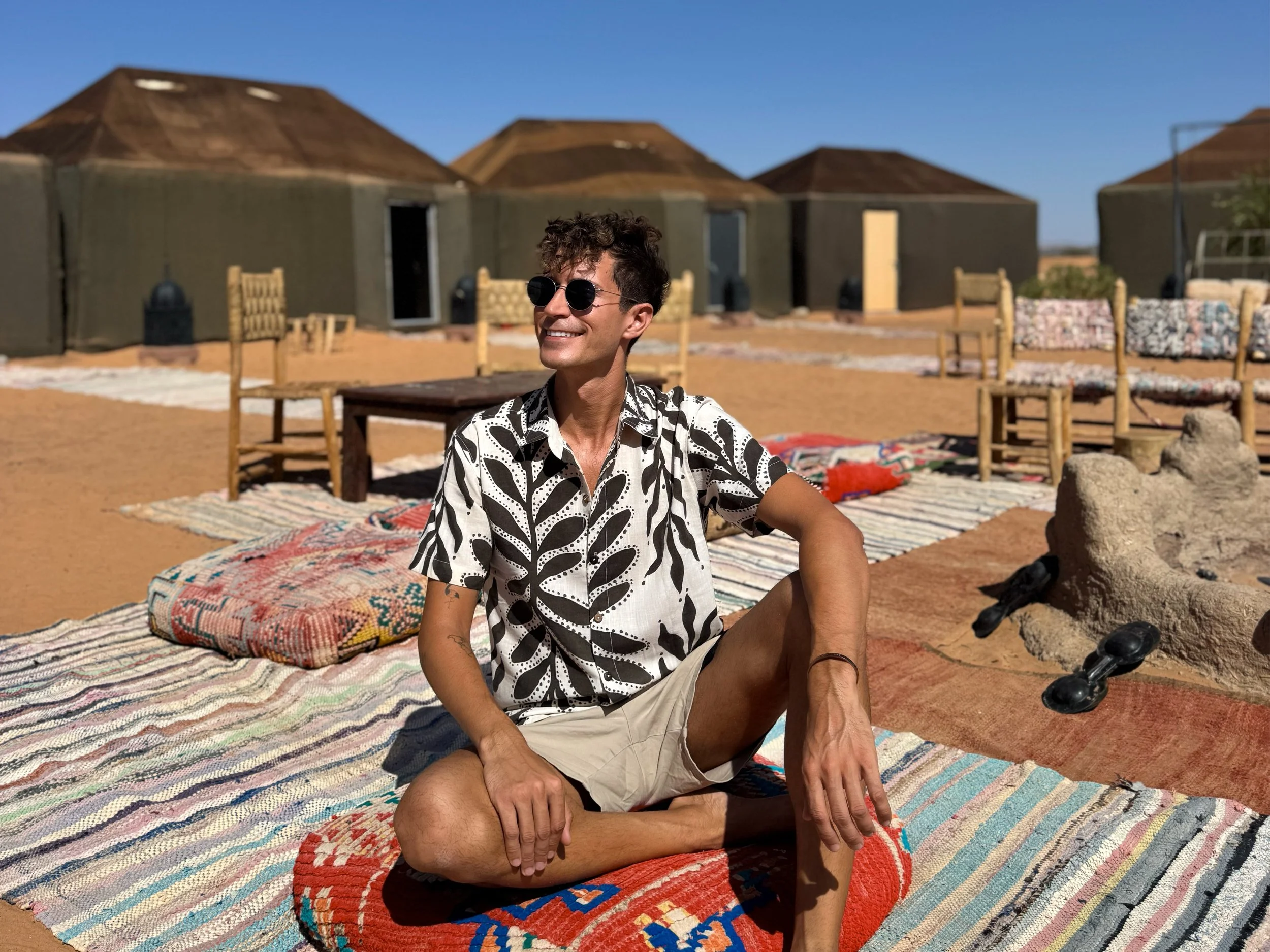
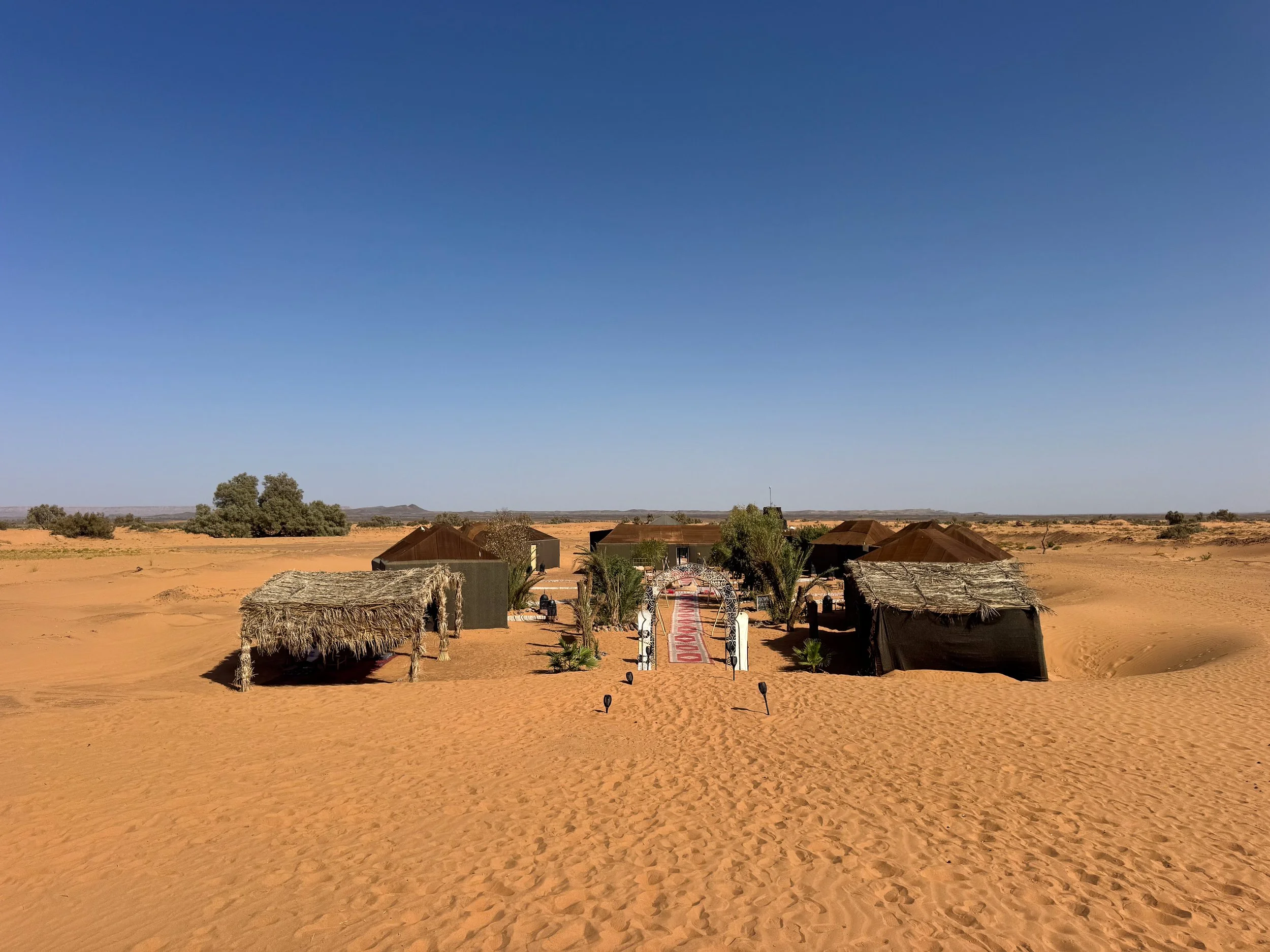
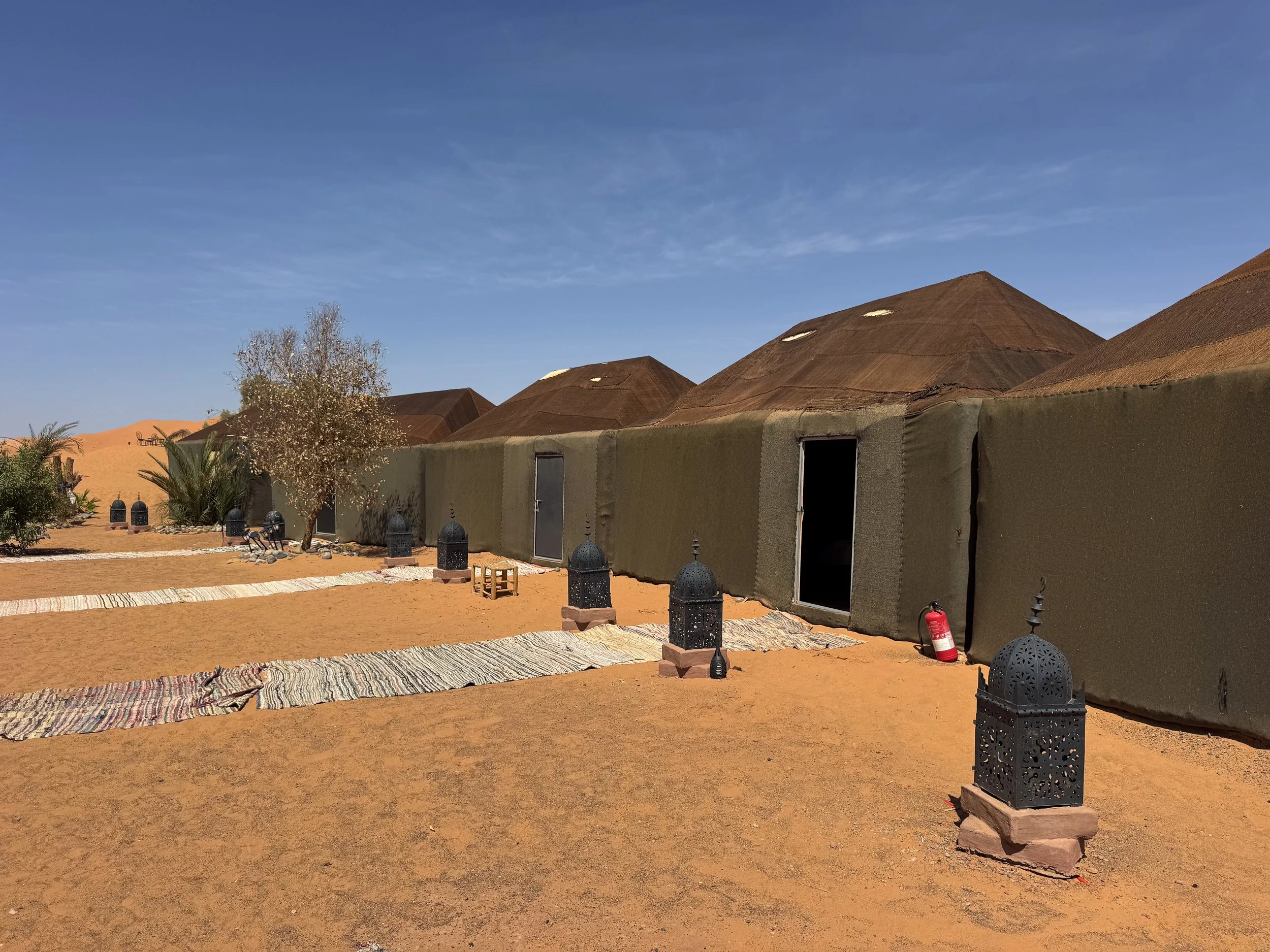
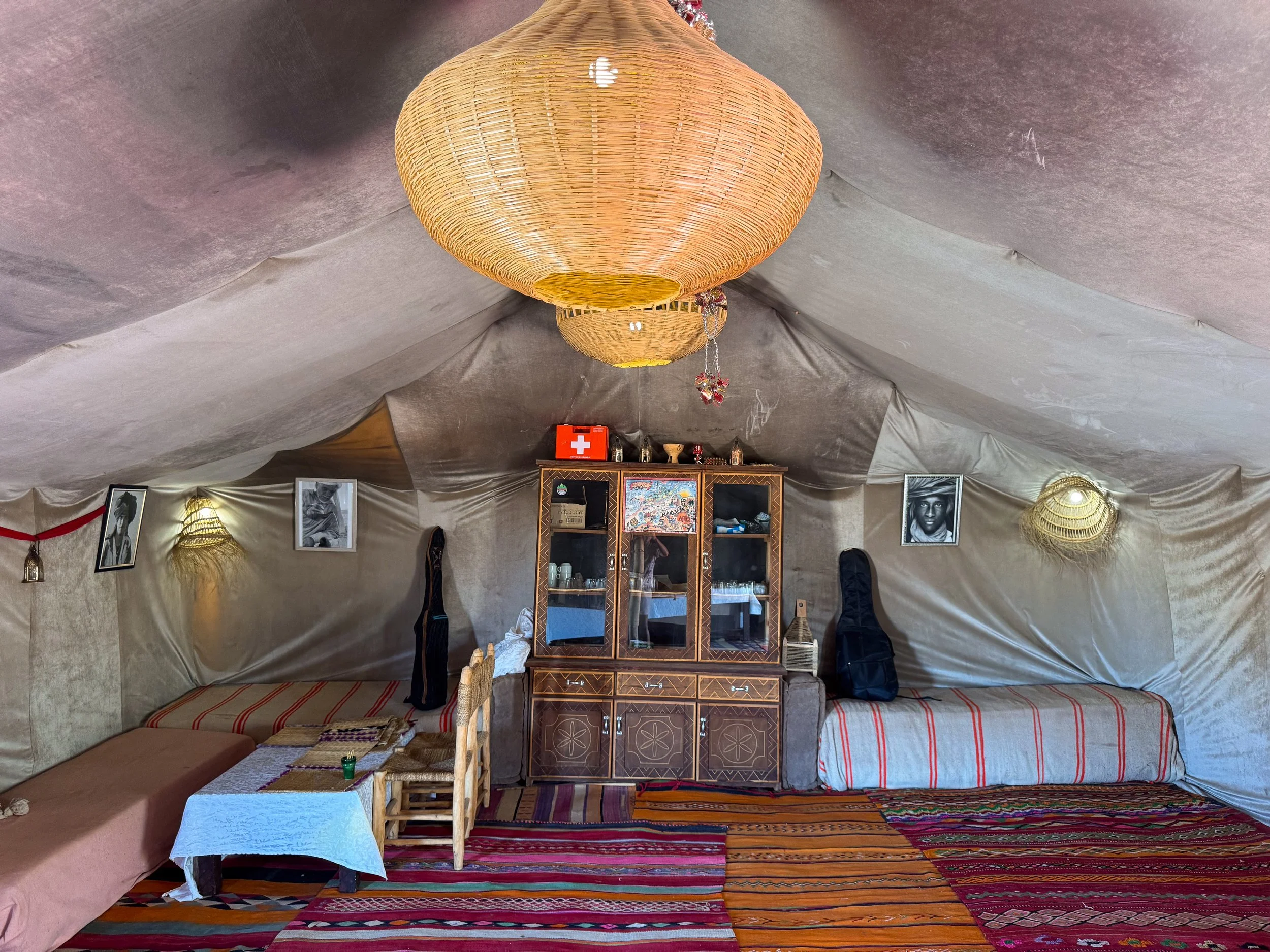
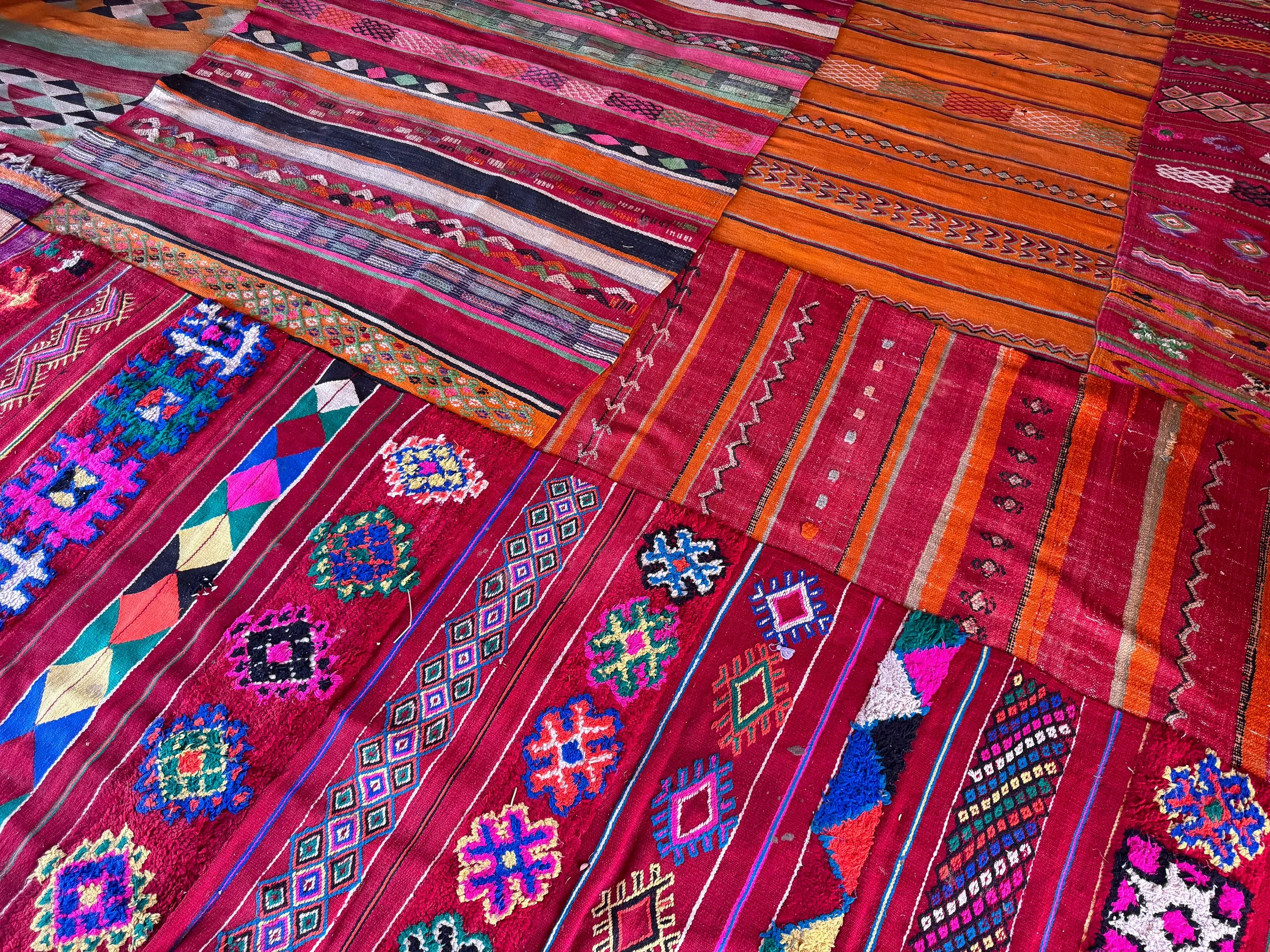
Sahara Wellness Camp
The Sahara Wellness Camp is a Berber style desert camp nestled between sand dunes on the edge of the Merzouga Desert. It offers traditional accommodations, desert excursions and Moroccan meals. Reserve on Booking.
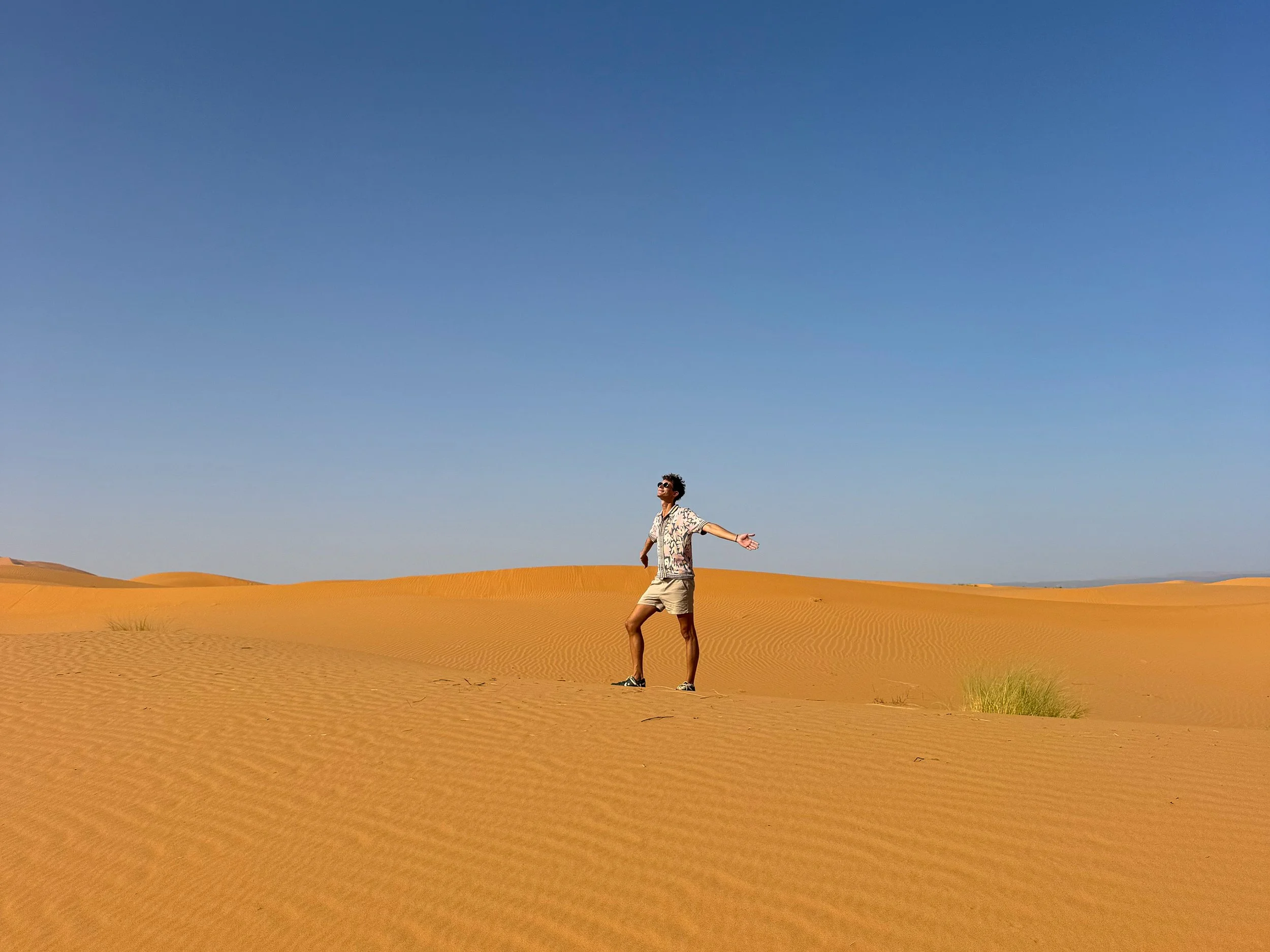
Dune Hikes. Hiking the dunes is one of the best ways to experience the Merzouga Desert. Meander along their sandy crests, steep slopes and shifting terrain. The rippled sand is often covered in signs of life. Look for animal prints from migratory birds, tiny mice and desert foxes. Patches of green grasses flourish from otherwise barren desert after seasonal rains.
Pro Tip. Plan to hike the dunes in the early morning or late afternoon. Bring enough water to stay hydrated. For safety, let the camp know where you’ll be hiking and when you expect to return.
Watch the Sunset. Sunset in the desert is a magical time of day. The sun casts long shadows across the dunes as it slips below their crests. It makes way to the starry night sky and cool evenings. We watched from atop a small dune while sipping on glasses of Moroccan wine.
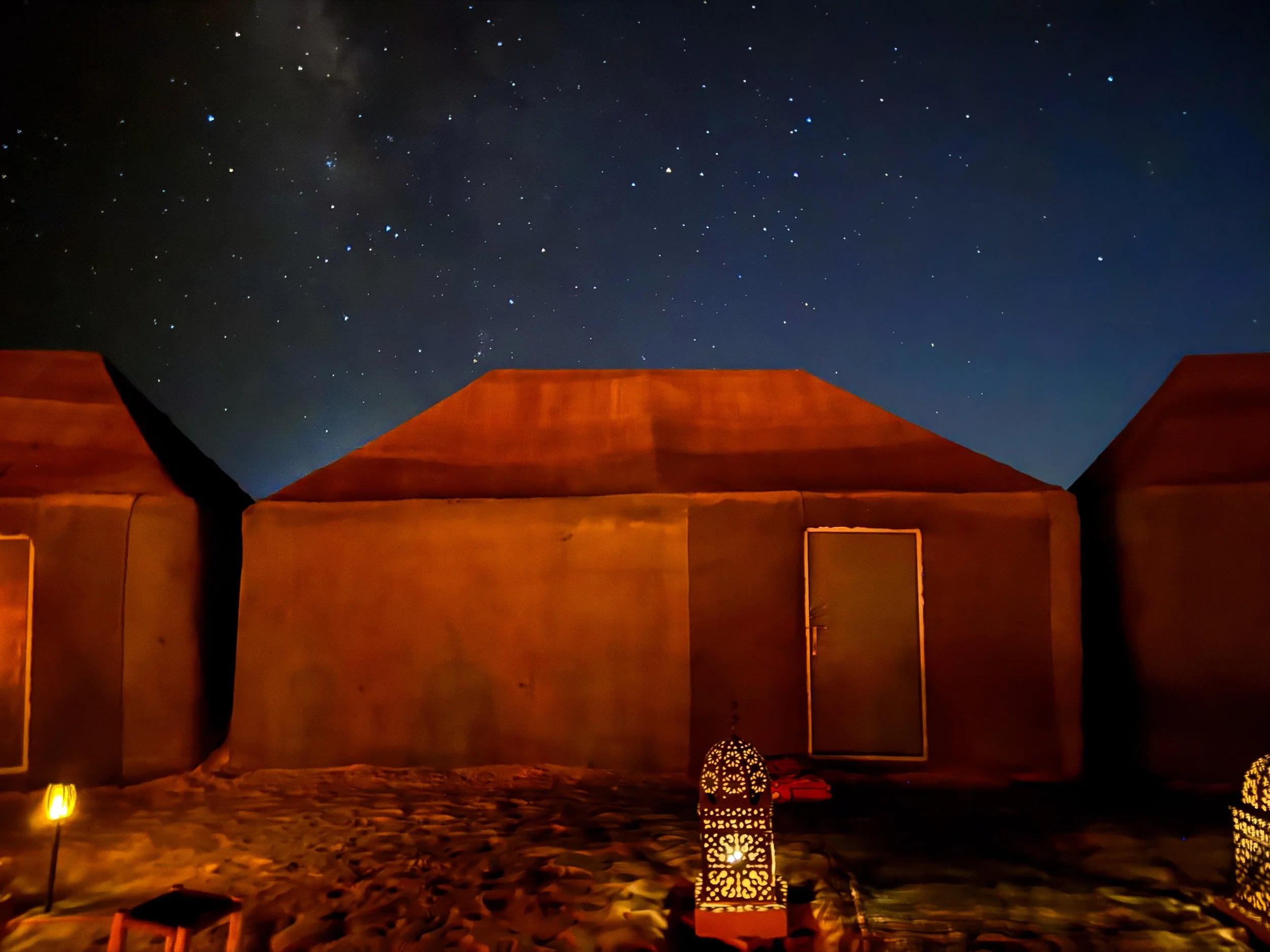
Stargazing. The Merzouga Desert is a dark sky area with stunning views of the starry night sky. We saw meteors streak across the heavens, watched satellites orbit overhead, spotted planets, stars and constellations. Download Sky Tonight, a free star spotting app utilizing augmented reality.
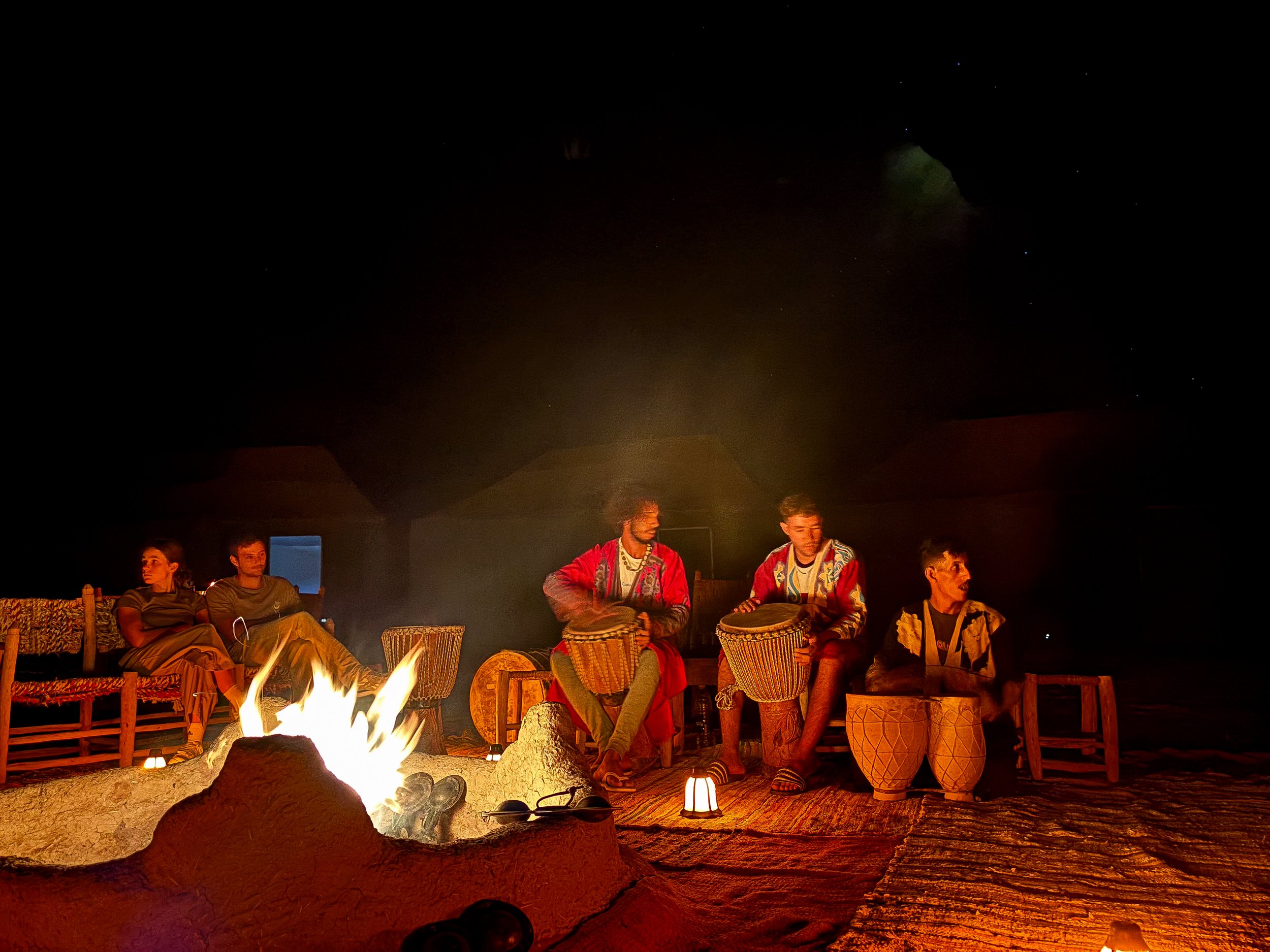
Amazigh Music. On most nights, the camp staff will light a bonfire and perform traditional Amazigh music using drums and tambourines. The beat is very rhythmic, creating a relaxing atmosphere for the end of the night.
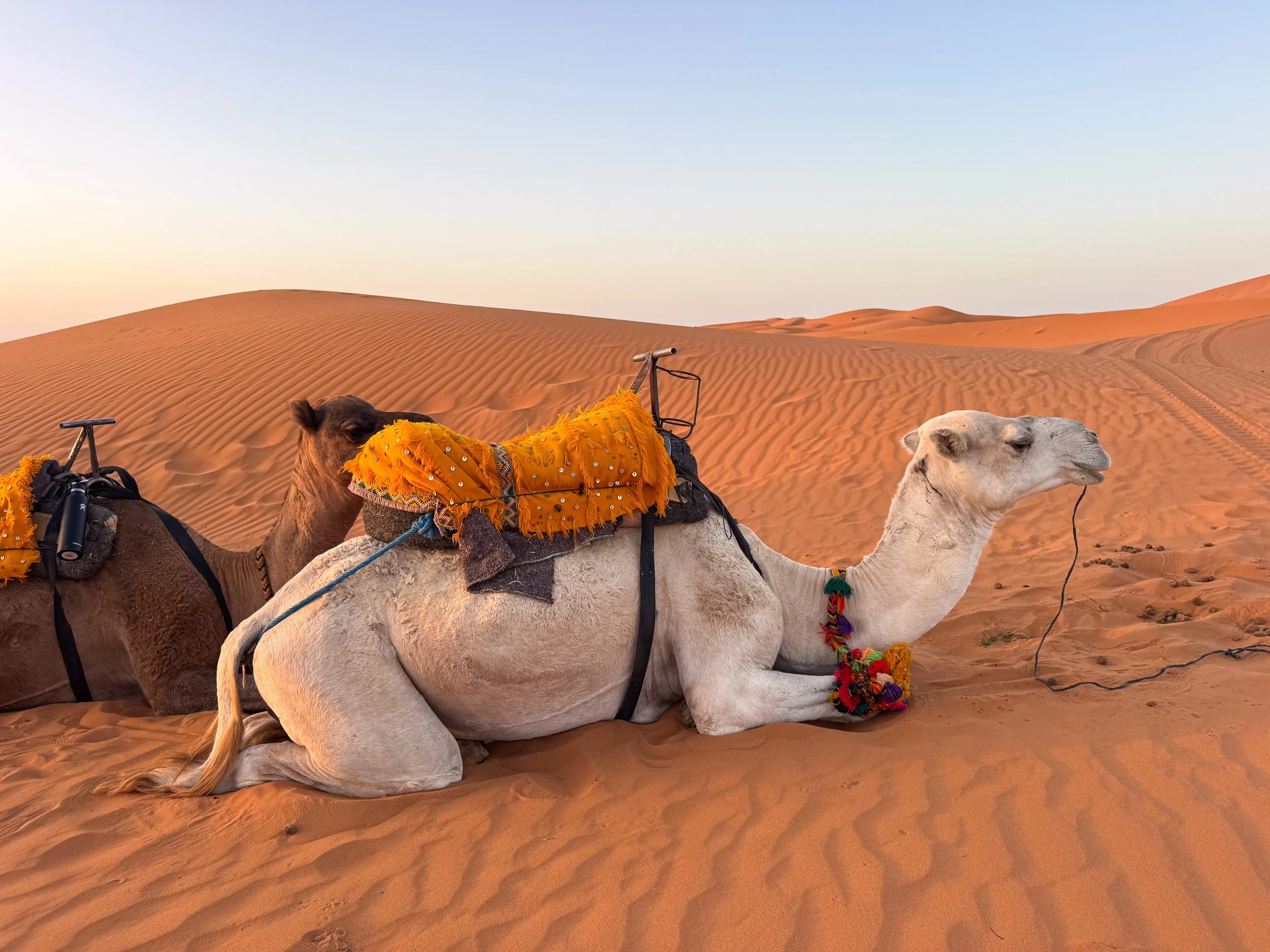
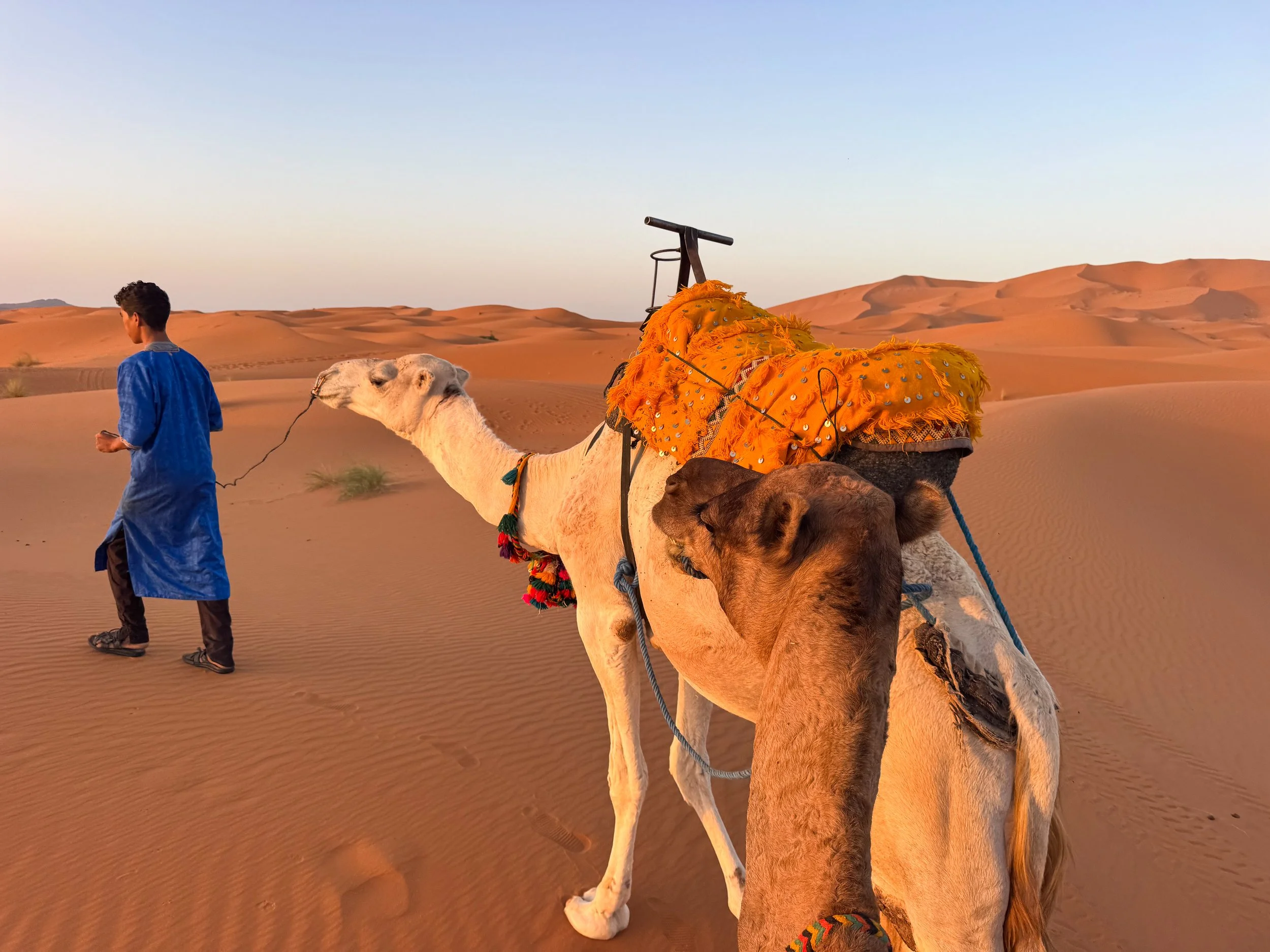
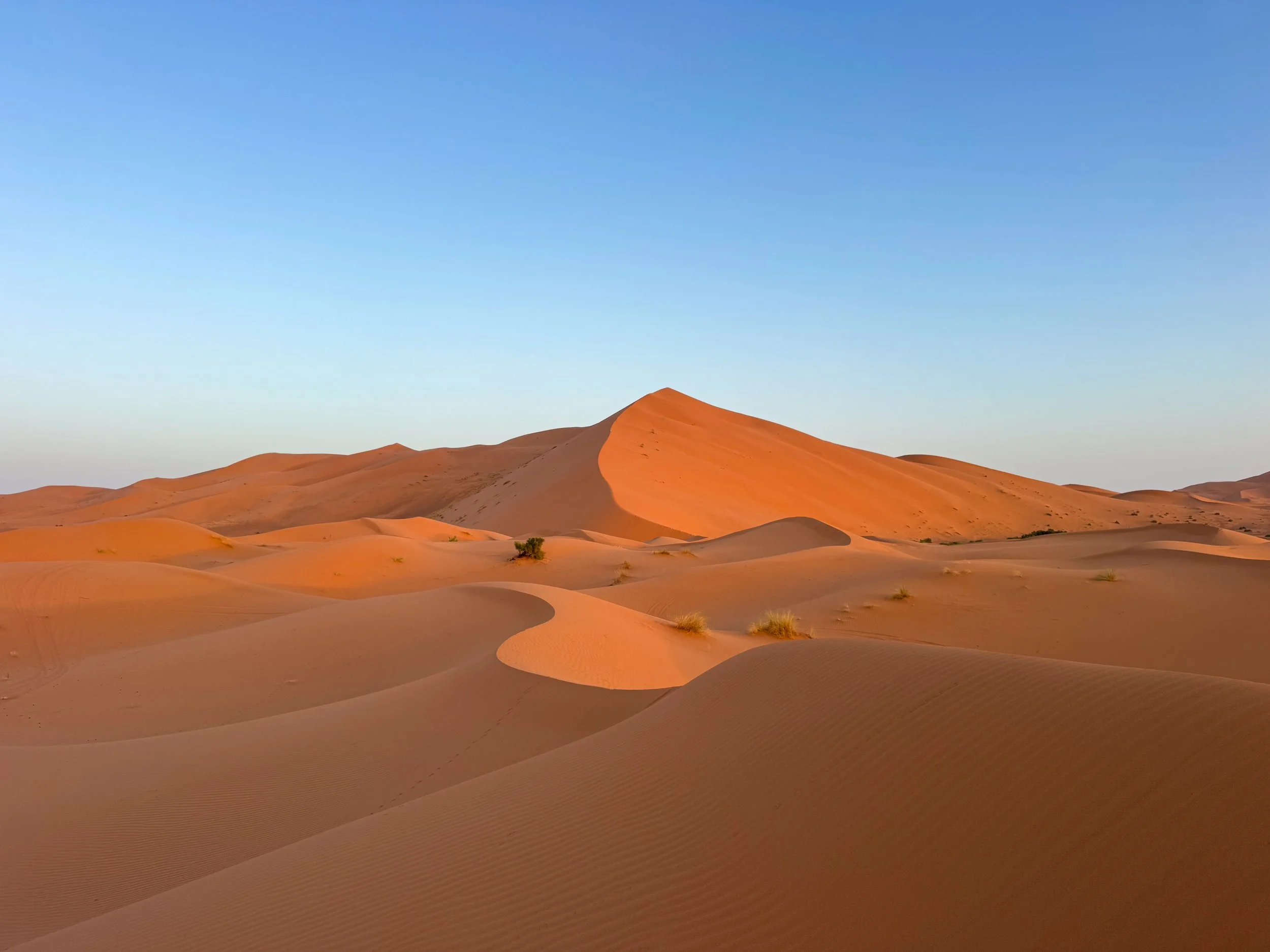
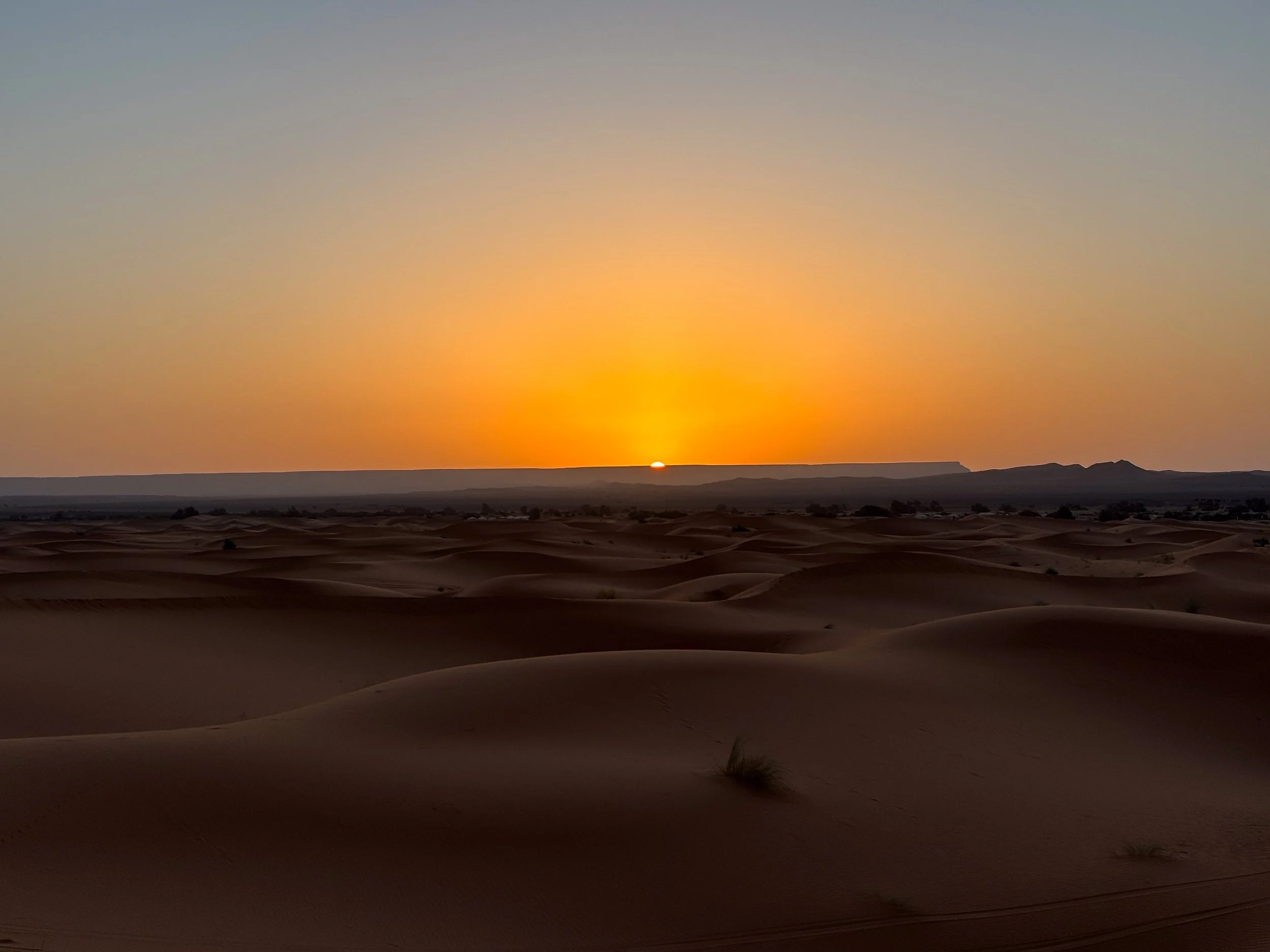
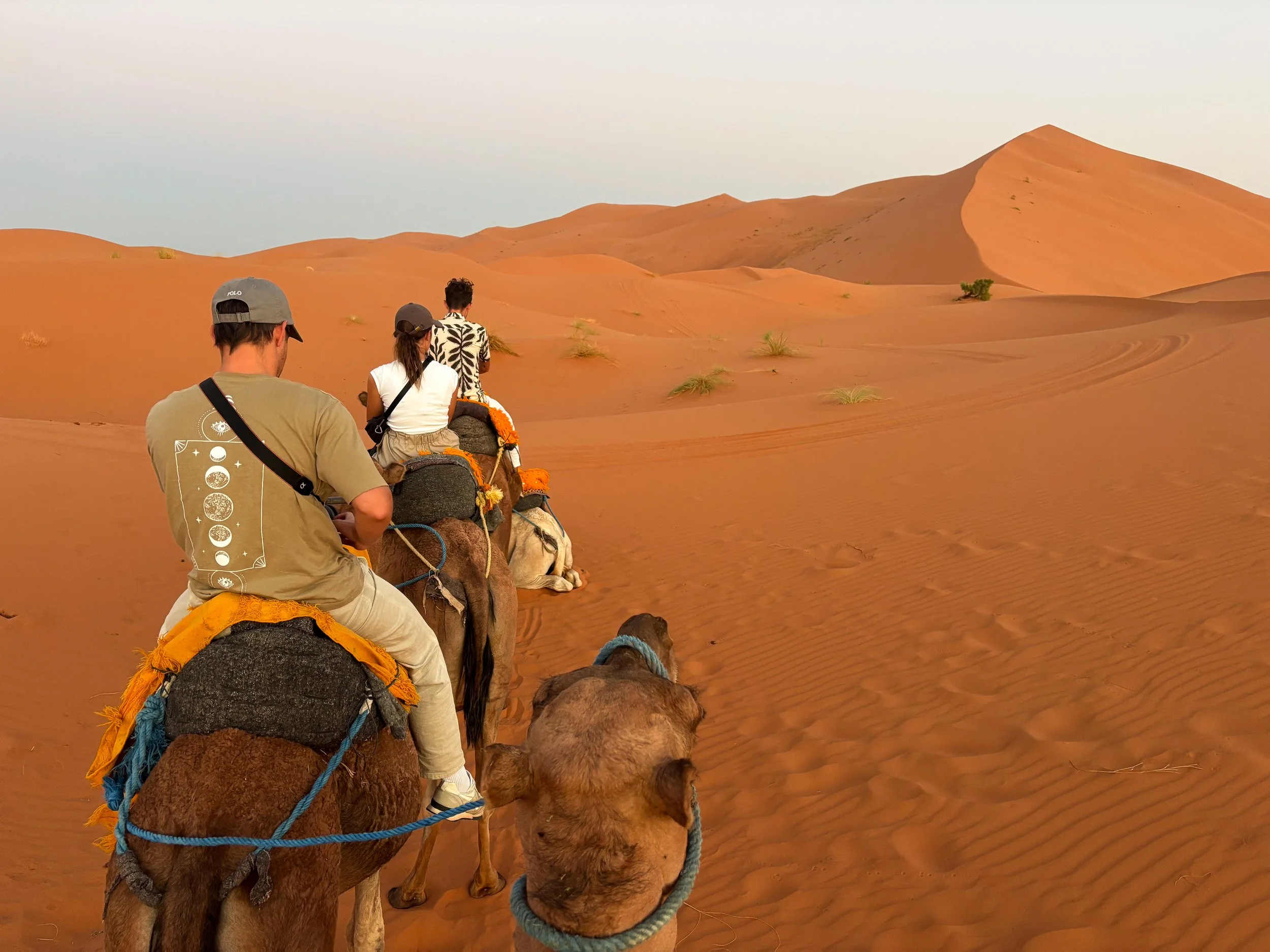
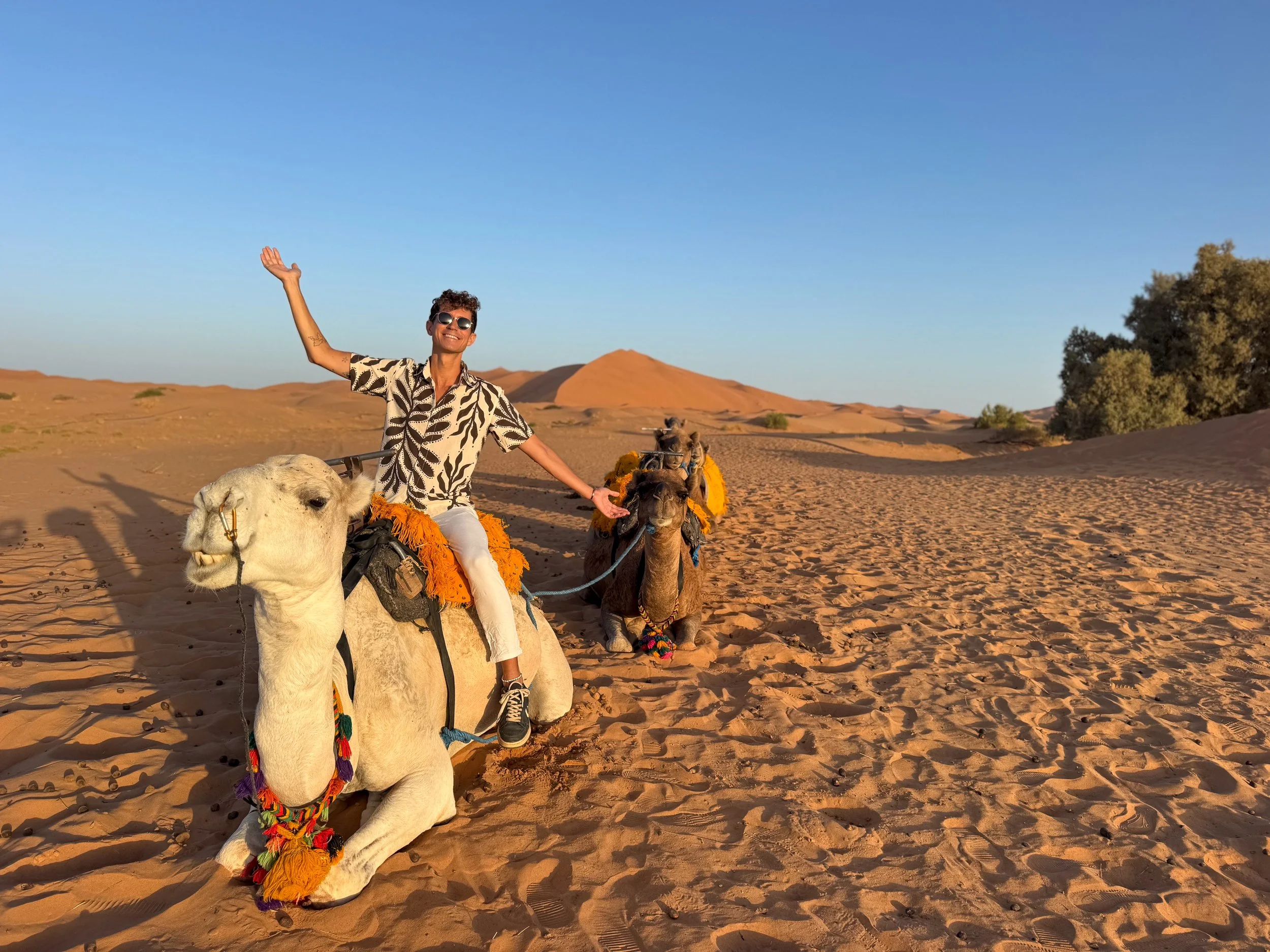
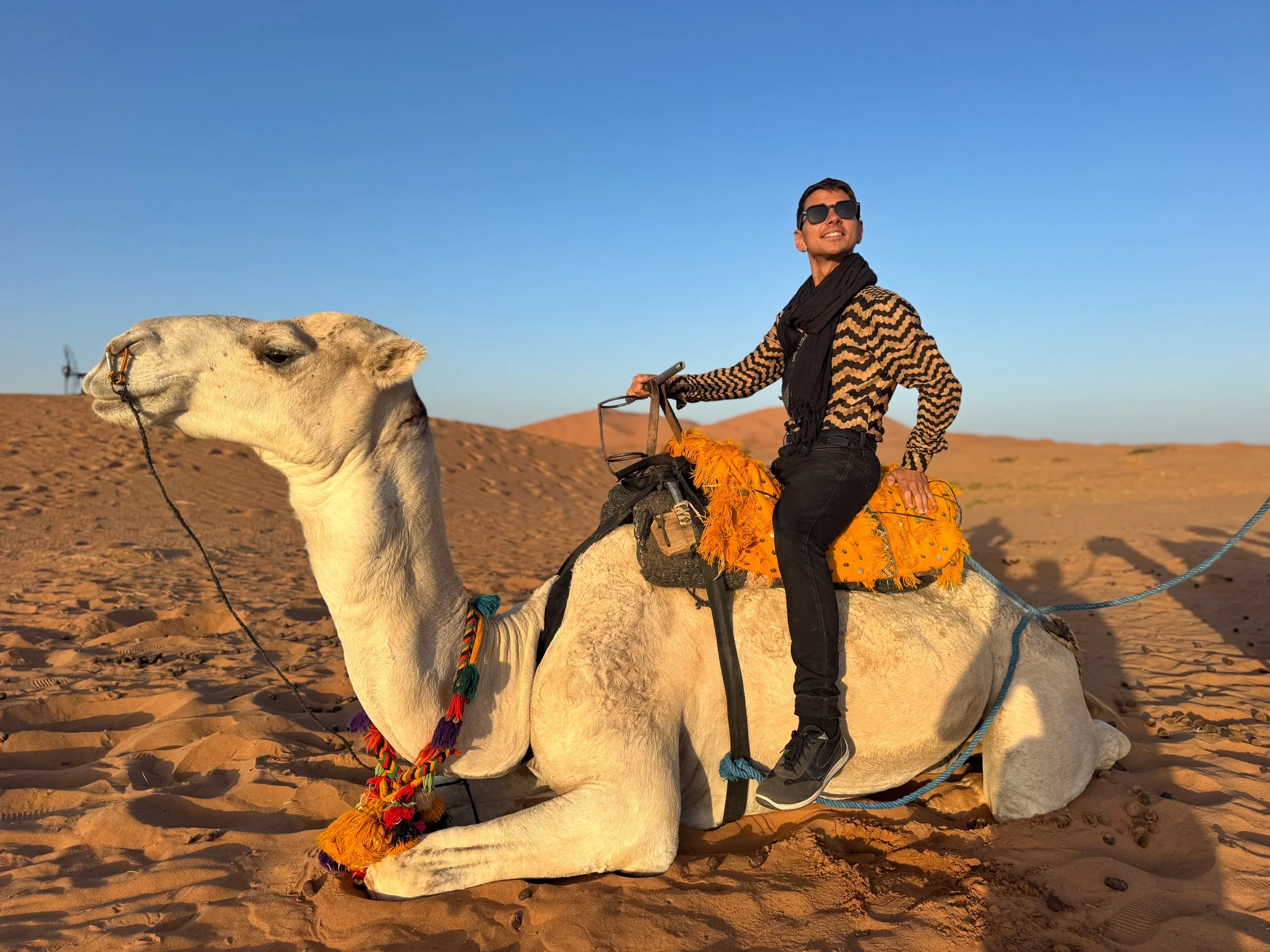
Sunrise Camel Trekking. Berber men lead caravans of camels and campers into the dunes to watch the sunrise. We rode a pair to a scenic point in the desert. The camels steadily paced across the dunes with us on their humped backs. The desert landscape glowed as the warm sun rose across the orange sand.
Good to Know. Berber camels are very well treated, given time to rest, eat and drink between walks.
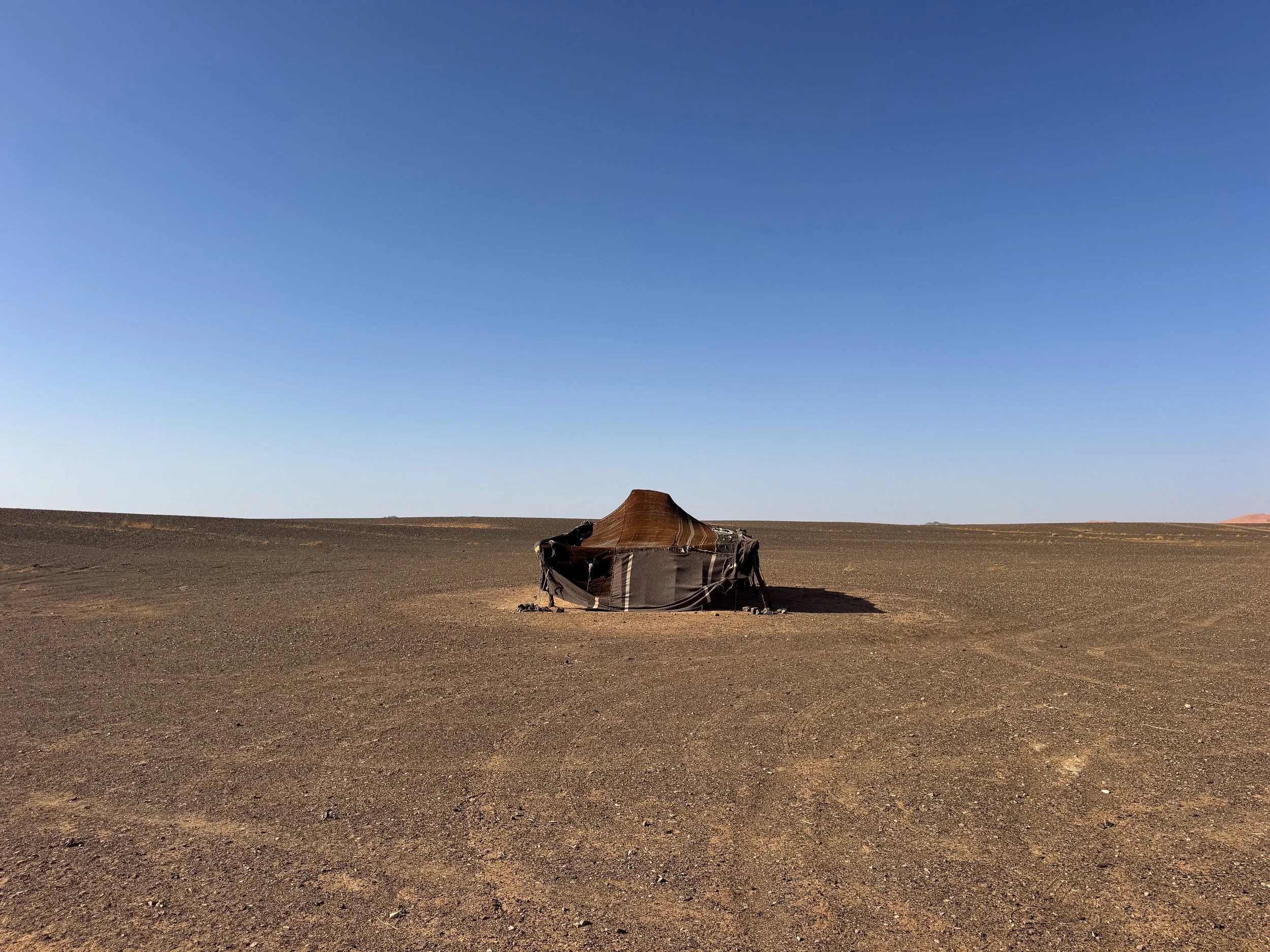
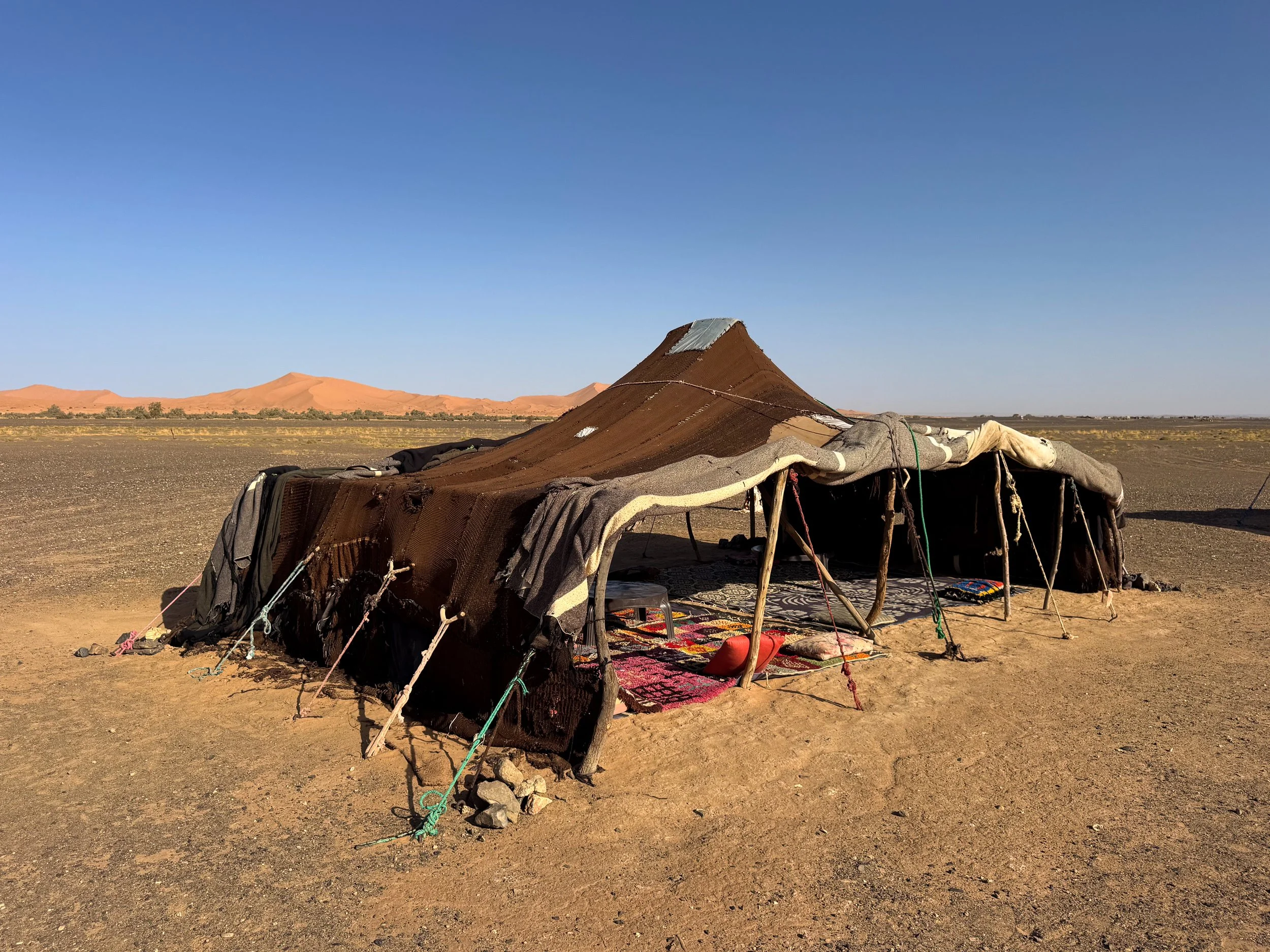
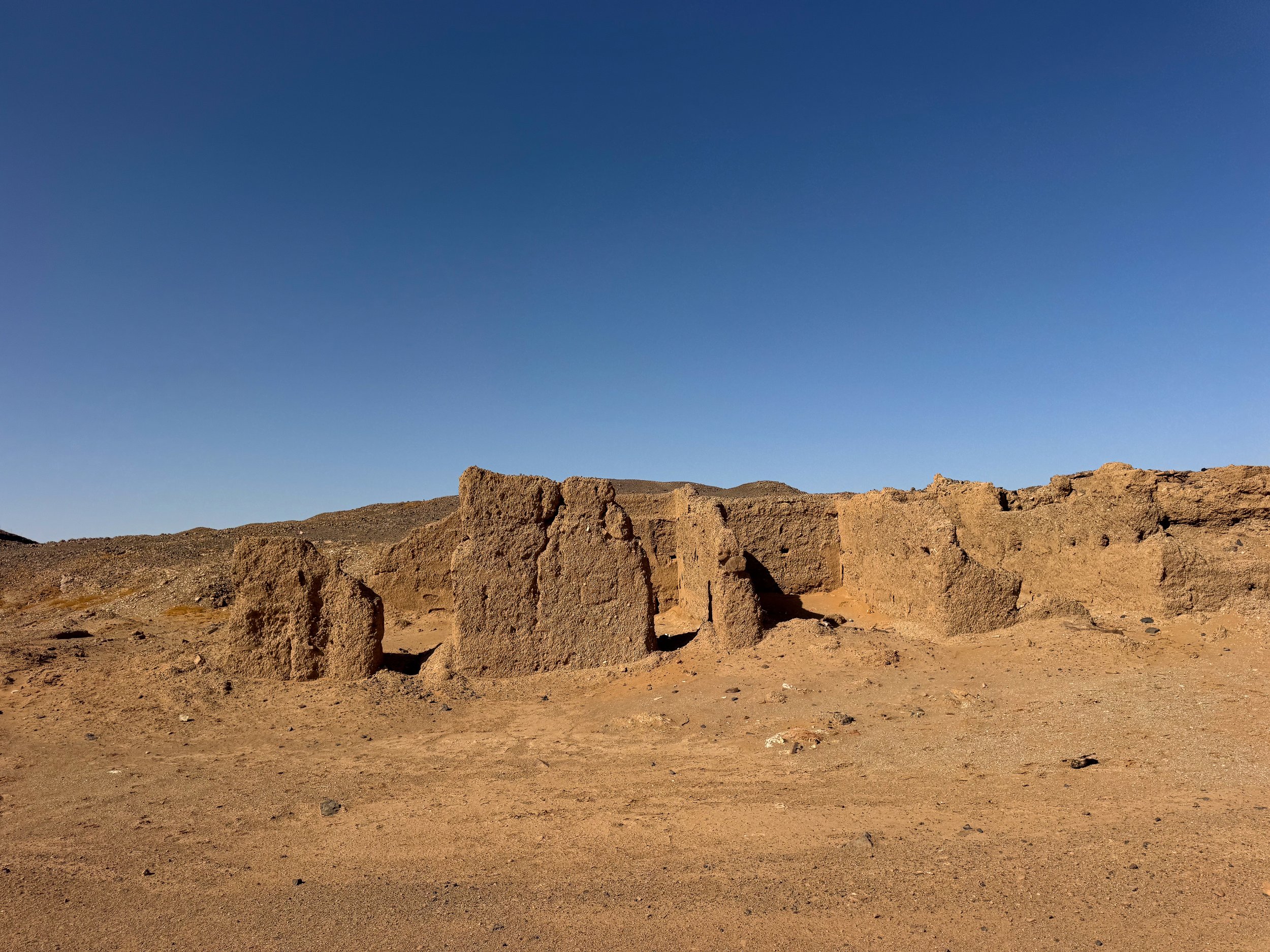
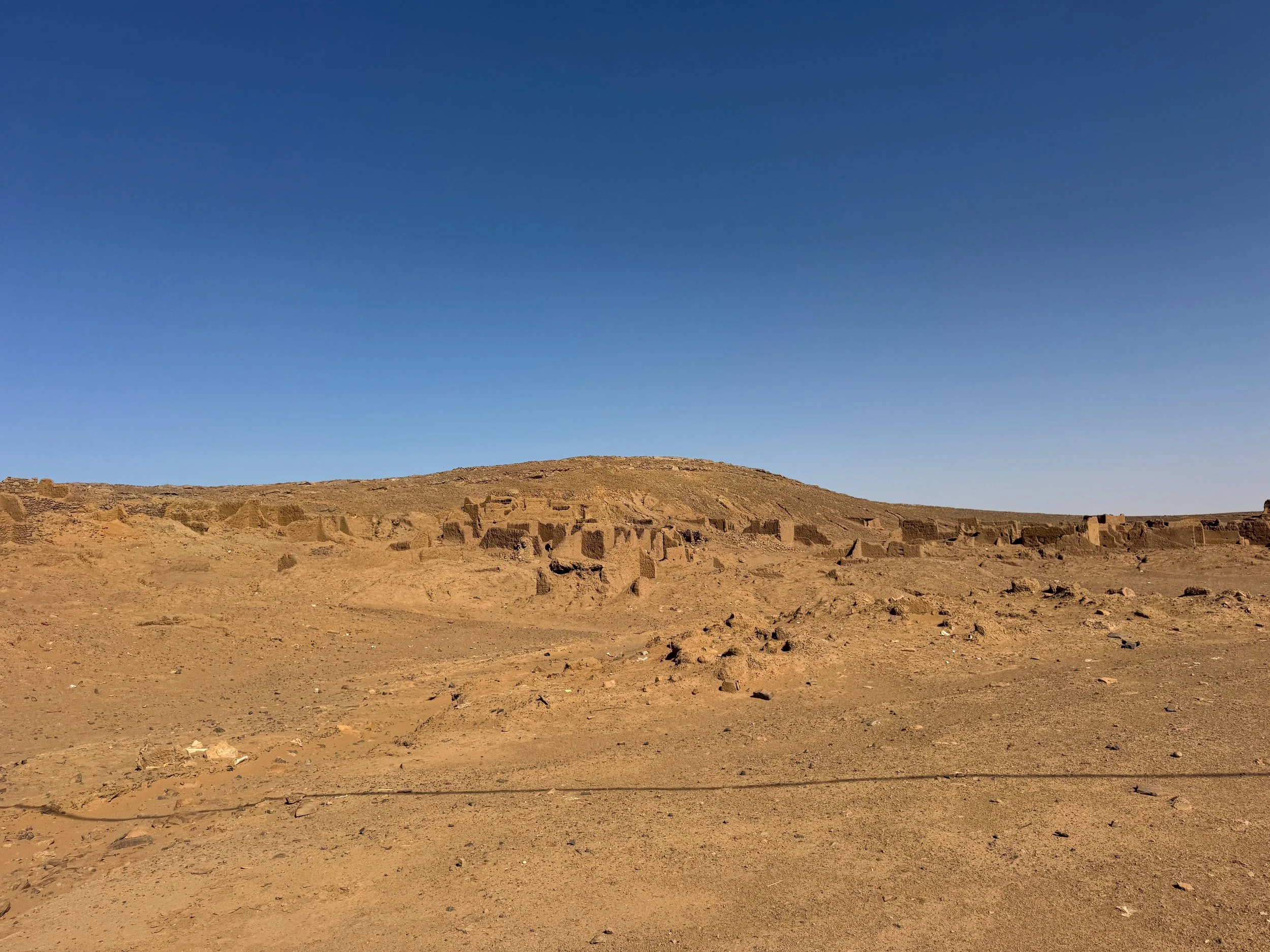
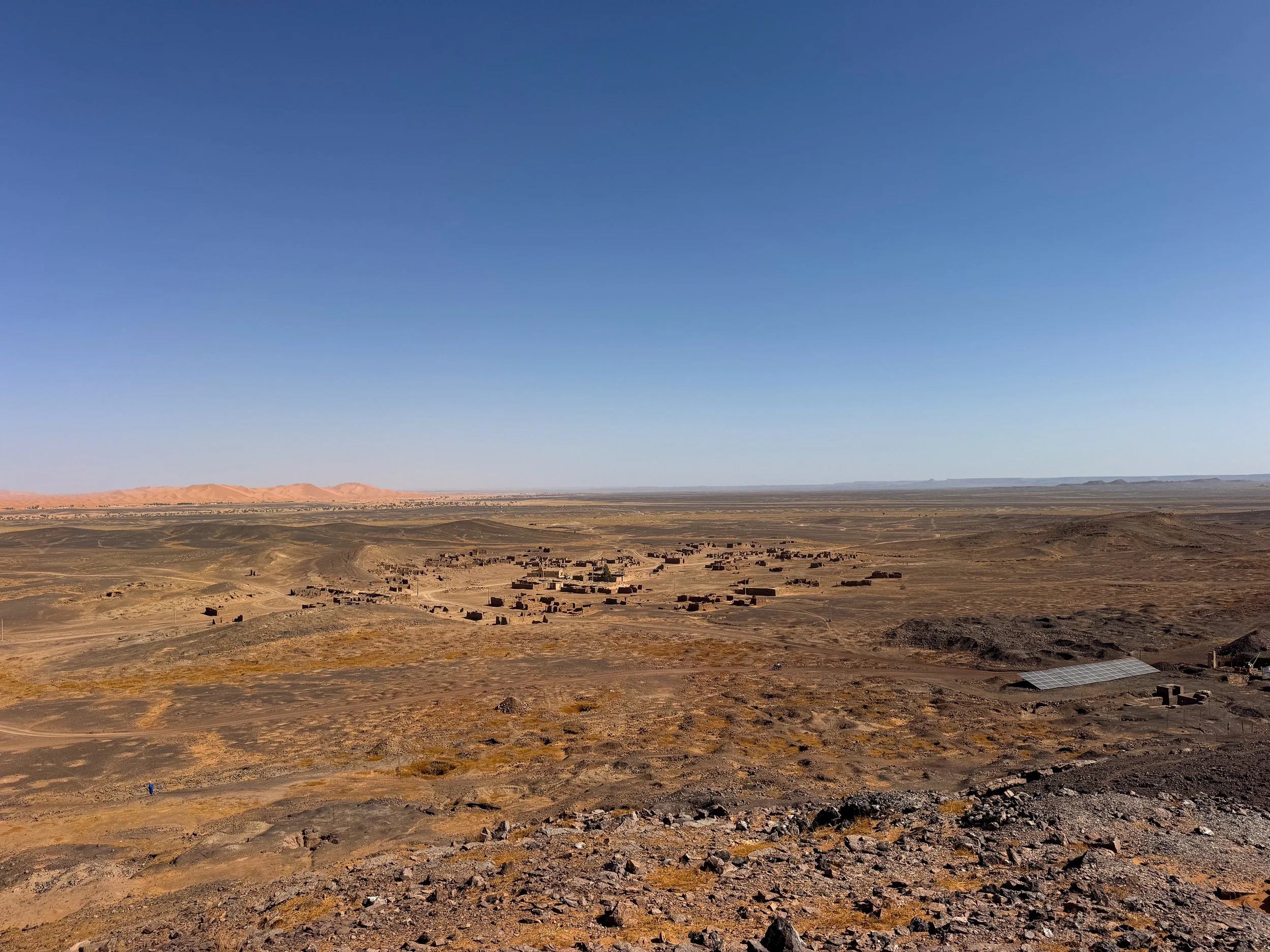
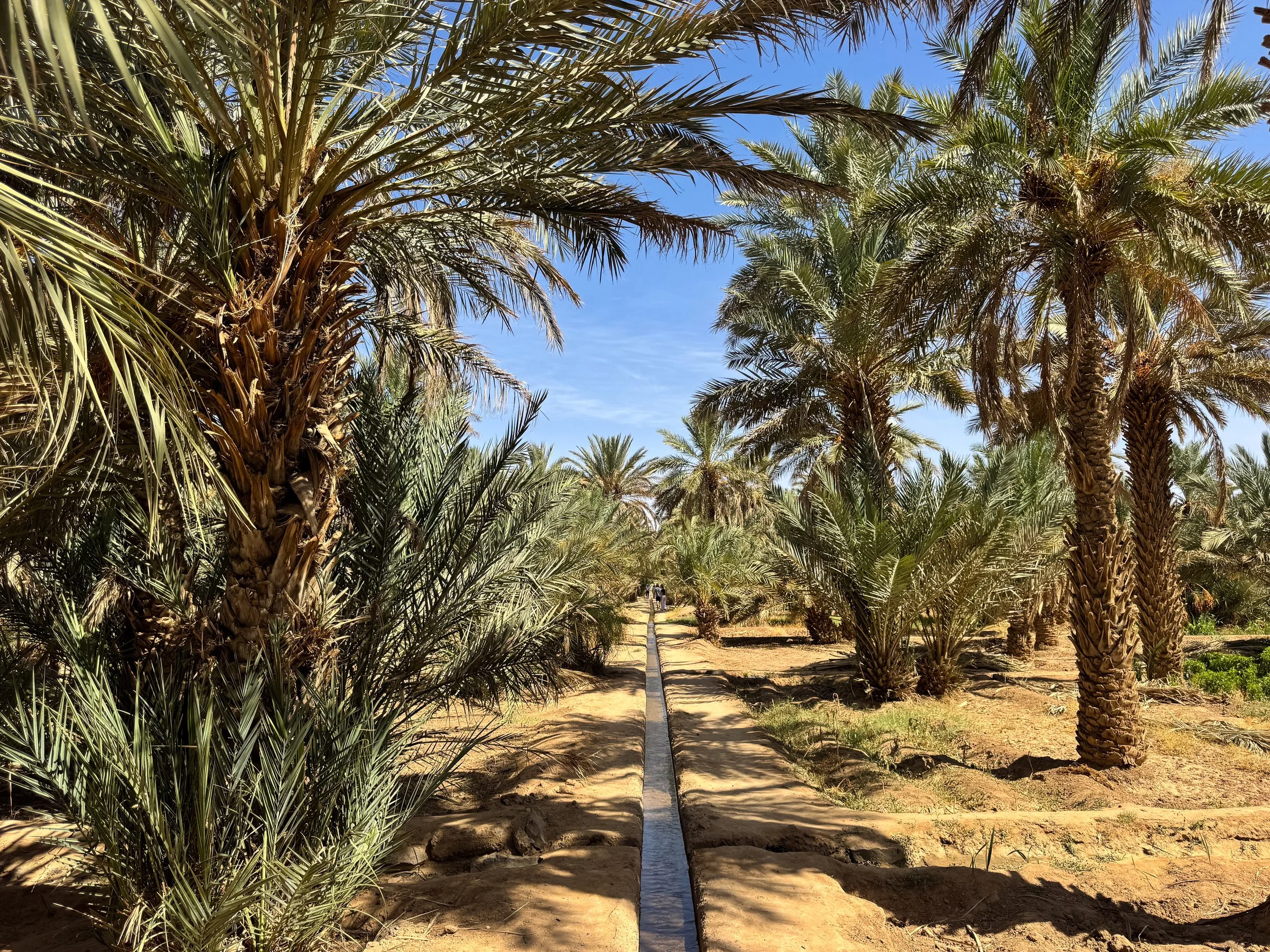
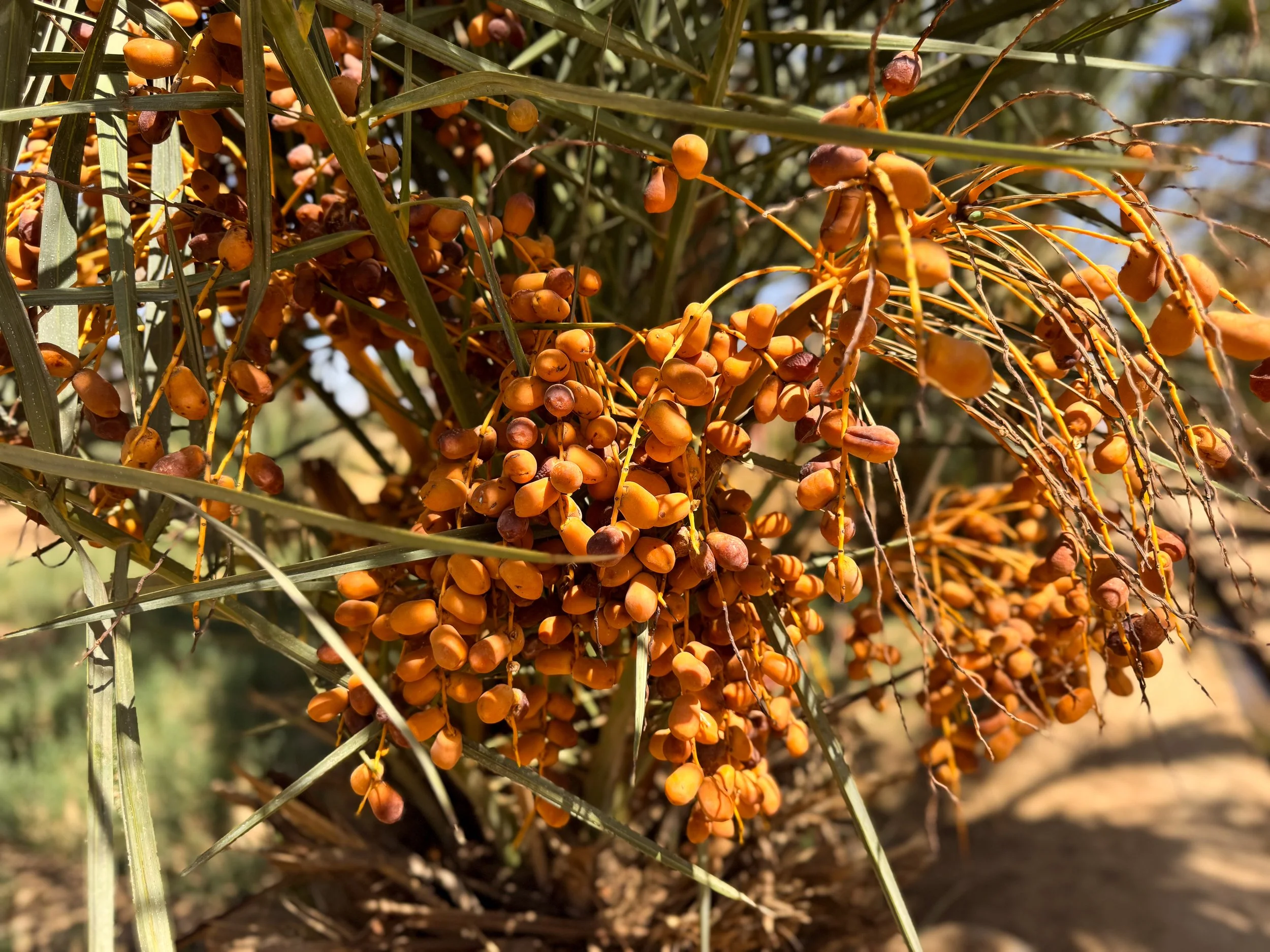
Merzouga Tour. The camp offers an experience to learn about the local culture, history and nomadic peoples of Merzouga Desert. We started the morning by sipping on mint tea with a Berber family. We listened to the rhythmic drums and chants of a Gnawa musical performance. Our guide brought us to an abandoned mining town to hike and shop for Paleozoic era fossils found in the area. We visited a community farm and harvested fresh dates. The tour ended with an adventurous dune ride back to camp.
Tips for Visiting The Merzouga Desert:
Getting Here. The Merzouga Desert is reachable from the Todra Gorge by car. It takes between 3-4 hours to reach if driving. The camp is reachable by SUV or camel trekking across the dunes.
Camp Fees. Staying at the camp is very inexpensive. Optional activities, meals and transportation cost extra however prices can be negotiated.
Desert Activities. Once at the camp, what you make of the experience is entirely up to you. Simply relax, explore on your own or book paid activities. For the full experience, plan to stay more than one night.
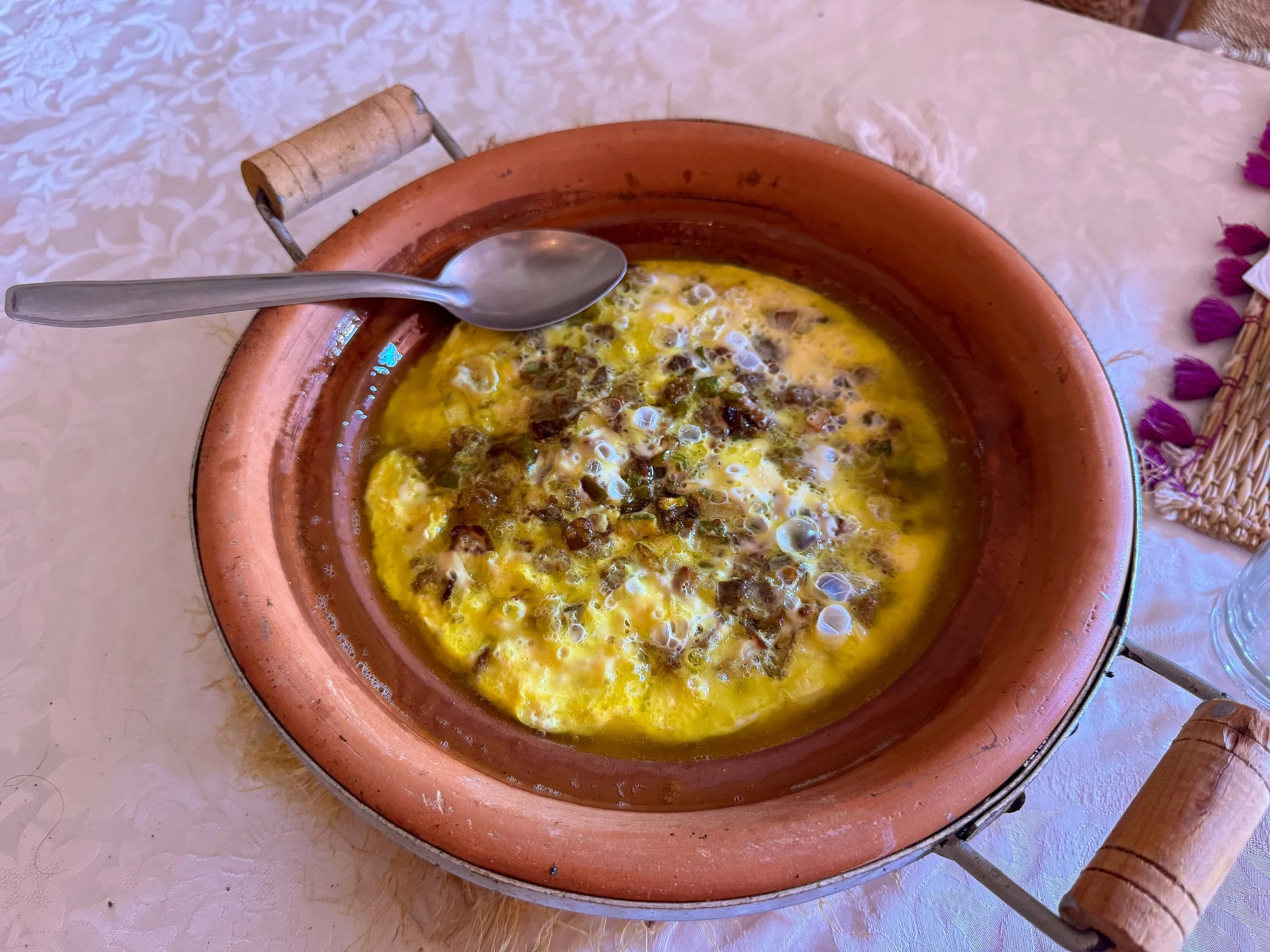
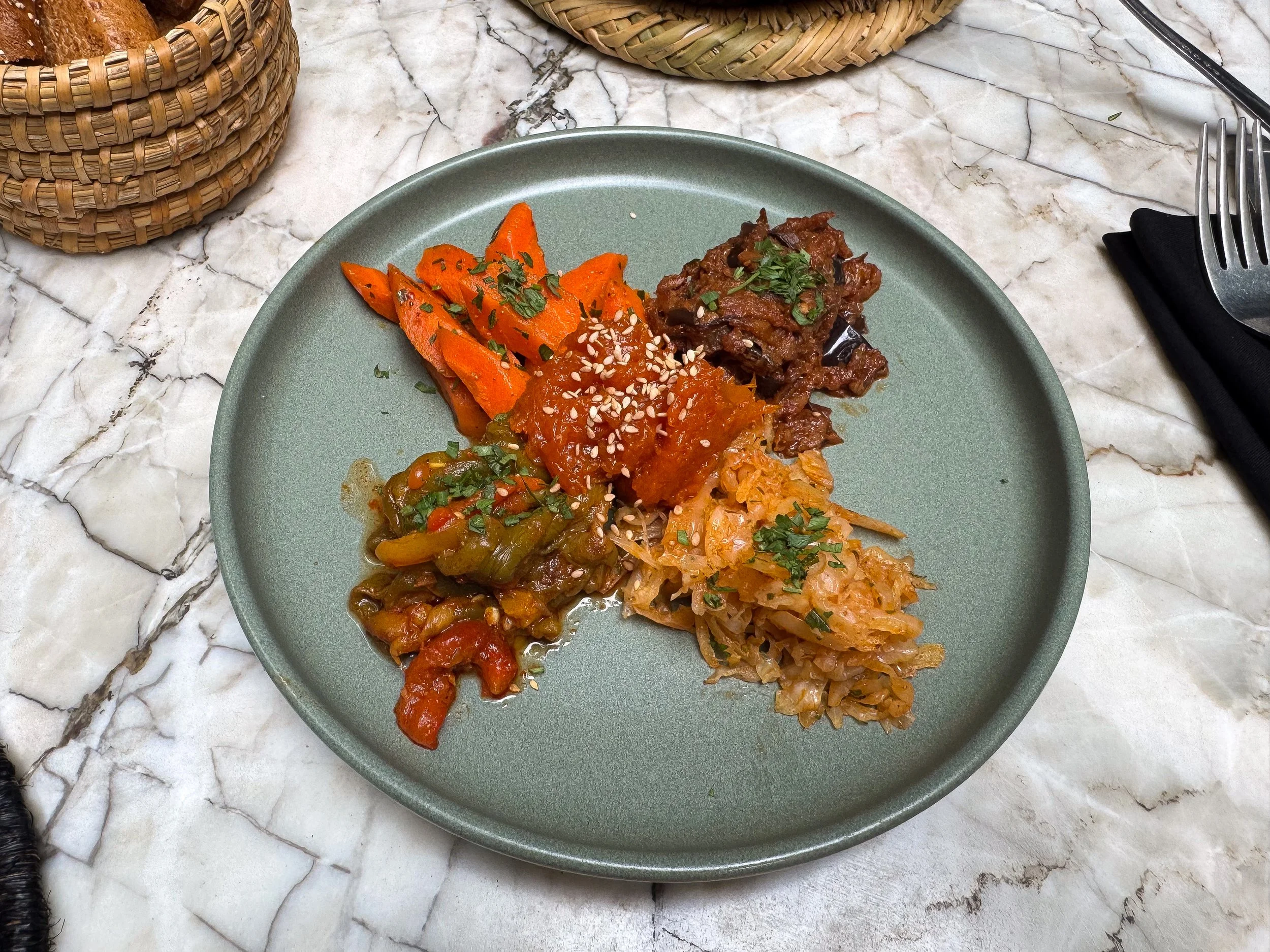
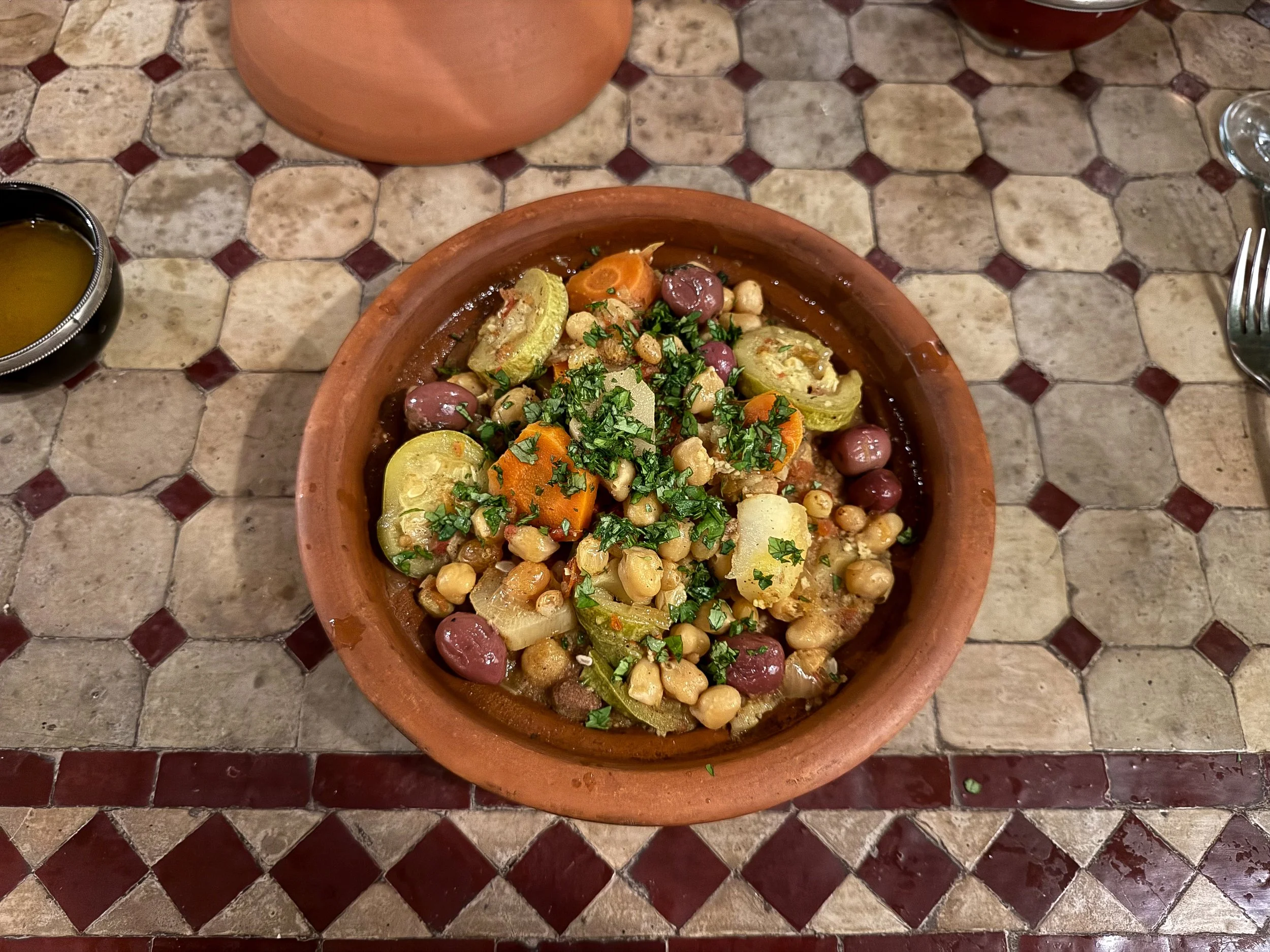
Camp Meals. The meals are one of the highlights the desert camp. The chef prepares individually made meals for each guest. We enjoyed Berber omelettes, vegetable tagines and Moroccan spreads.
Daytime Heat.The interiors of the tents get extremely hot during the day. It’s best to relax in the shaded open air tents and enjoy the peacefulness of the desert.
Attire. Wear flowy and light colored clothes during the day. Bring sunglasses. Dress in layers during the cool evenings. Check the forecast ahead of time.
Moroccan & Berber Cuisine
Berber Omelette. An omelette cooked in a tagine with olive oil, onions and spices. It’s common in the Berber regions of Morocco like the desert and mountains.
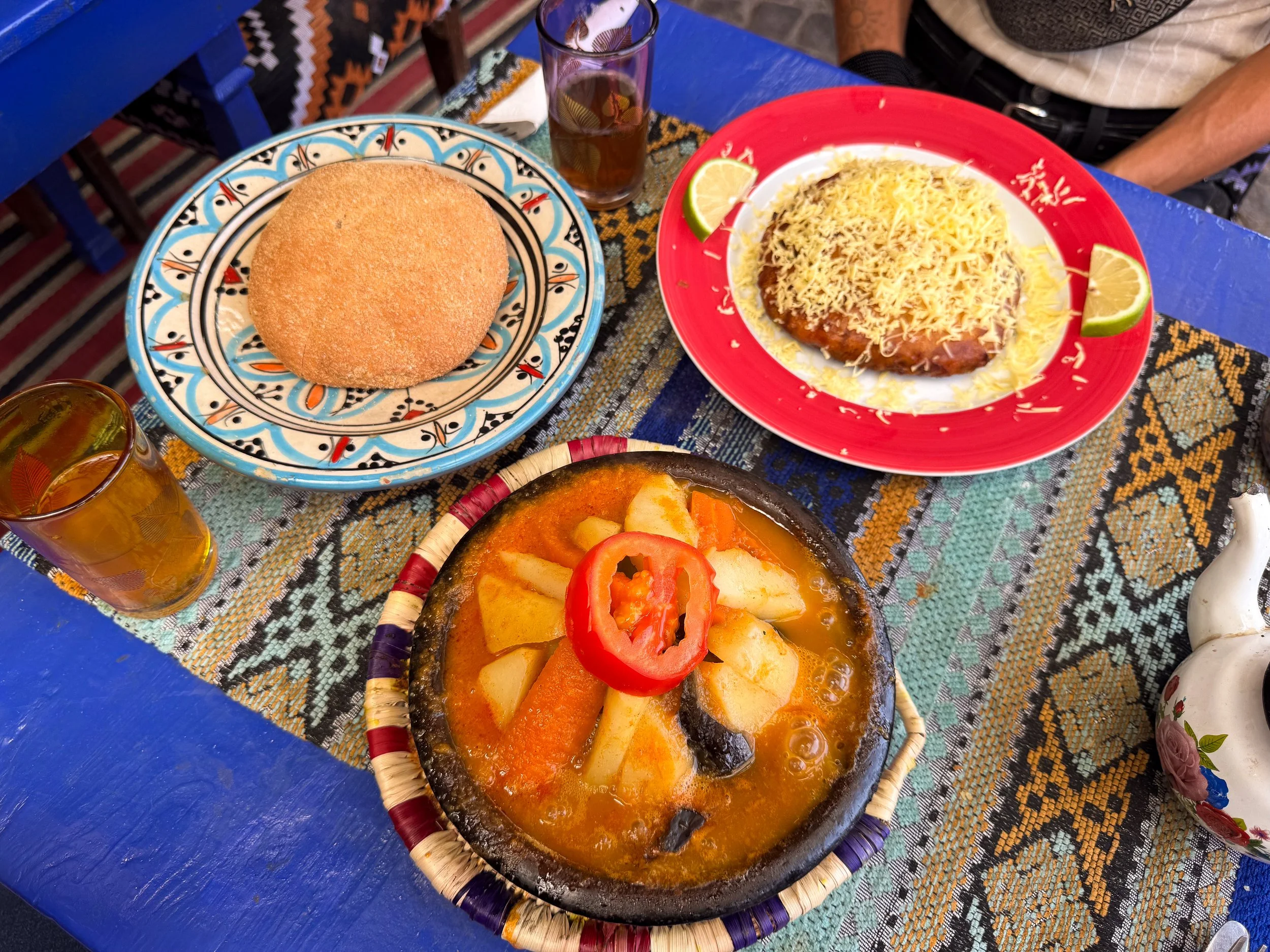
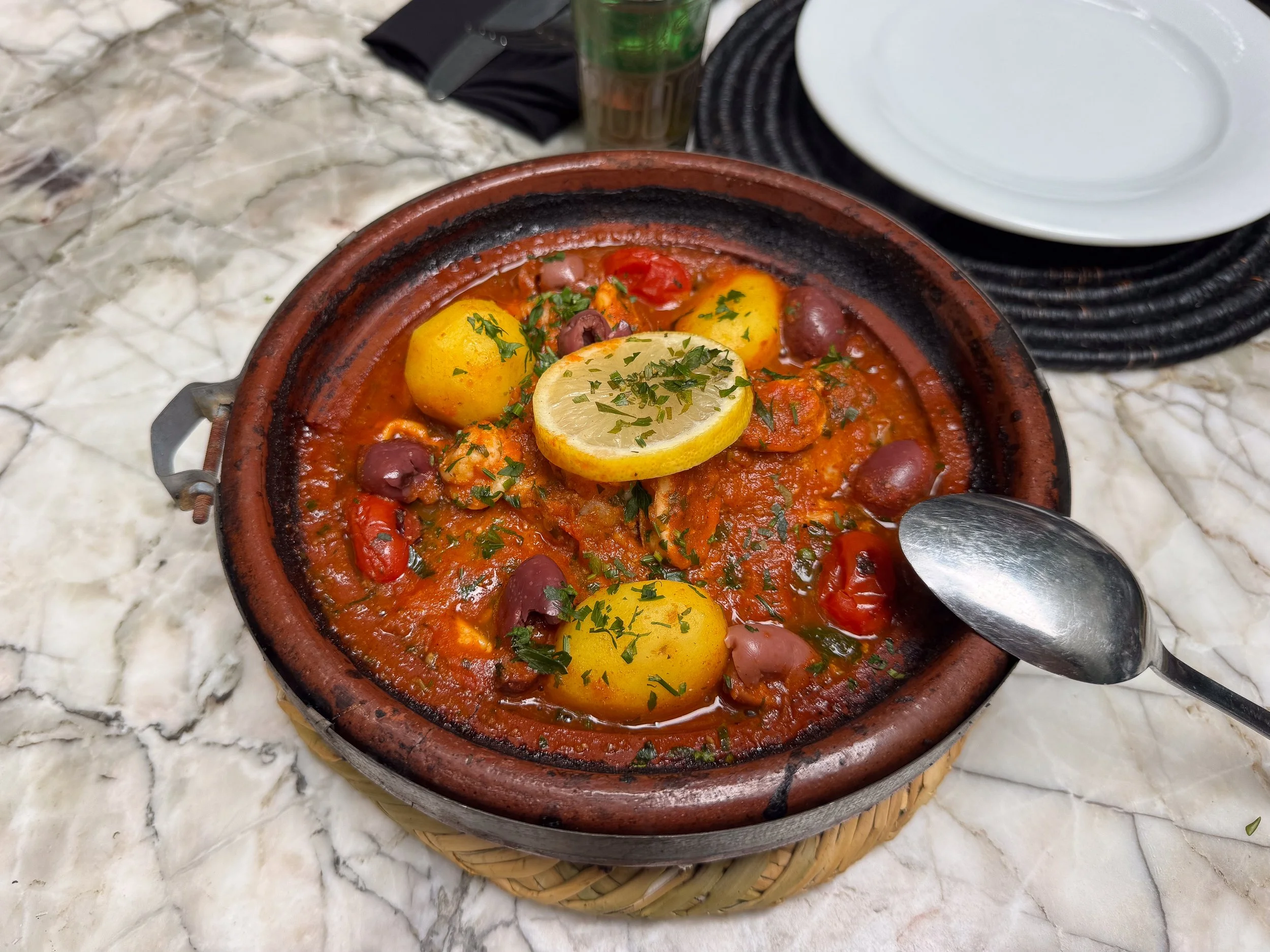
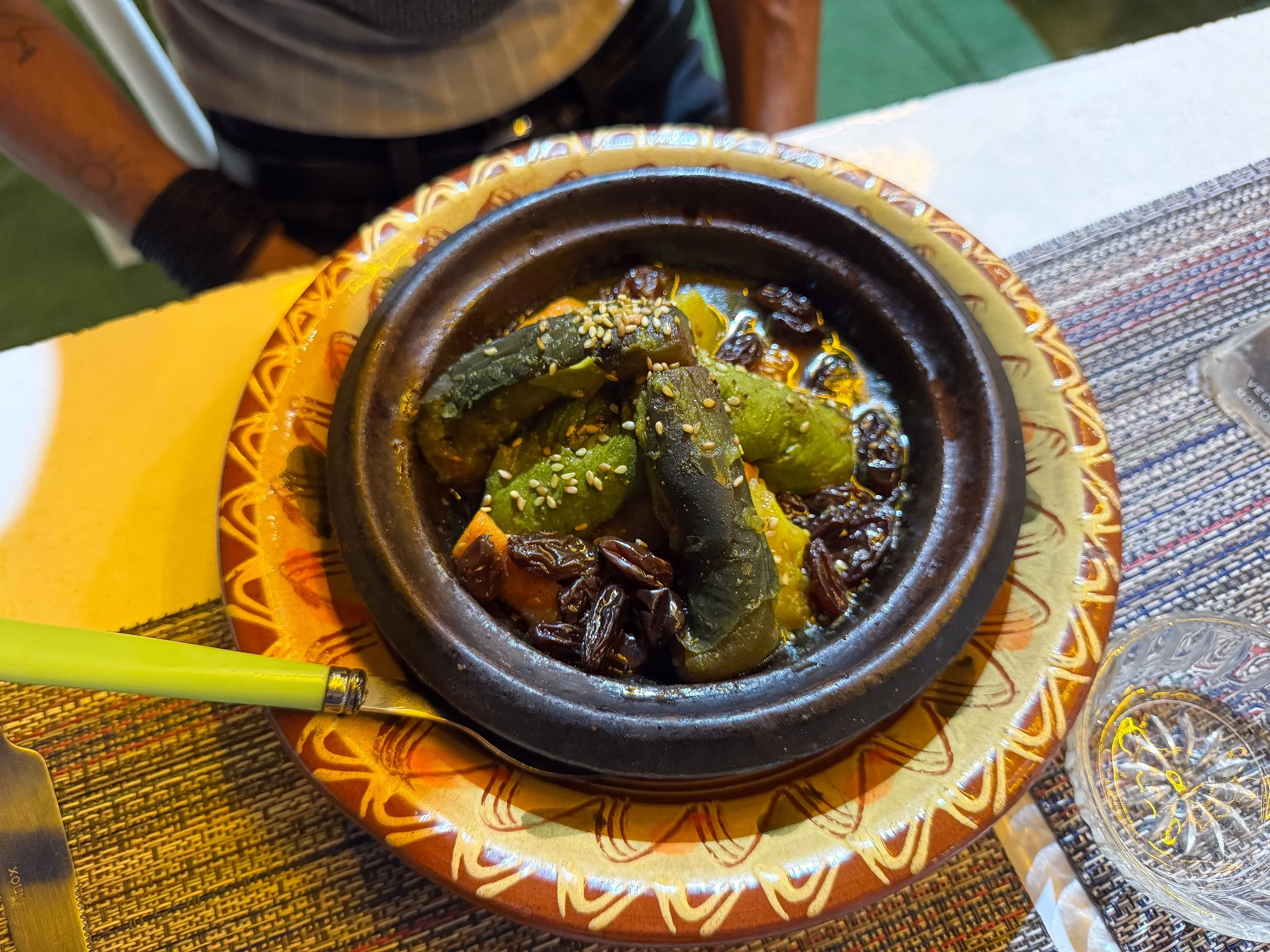
Tagine. A mixture of vegetables, meats, dried fruits and spices stewed together in a conical clay dish. It’s a staple dishes of Moroccan cuisine.
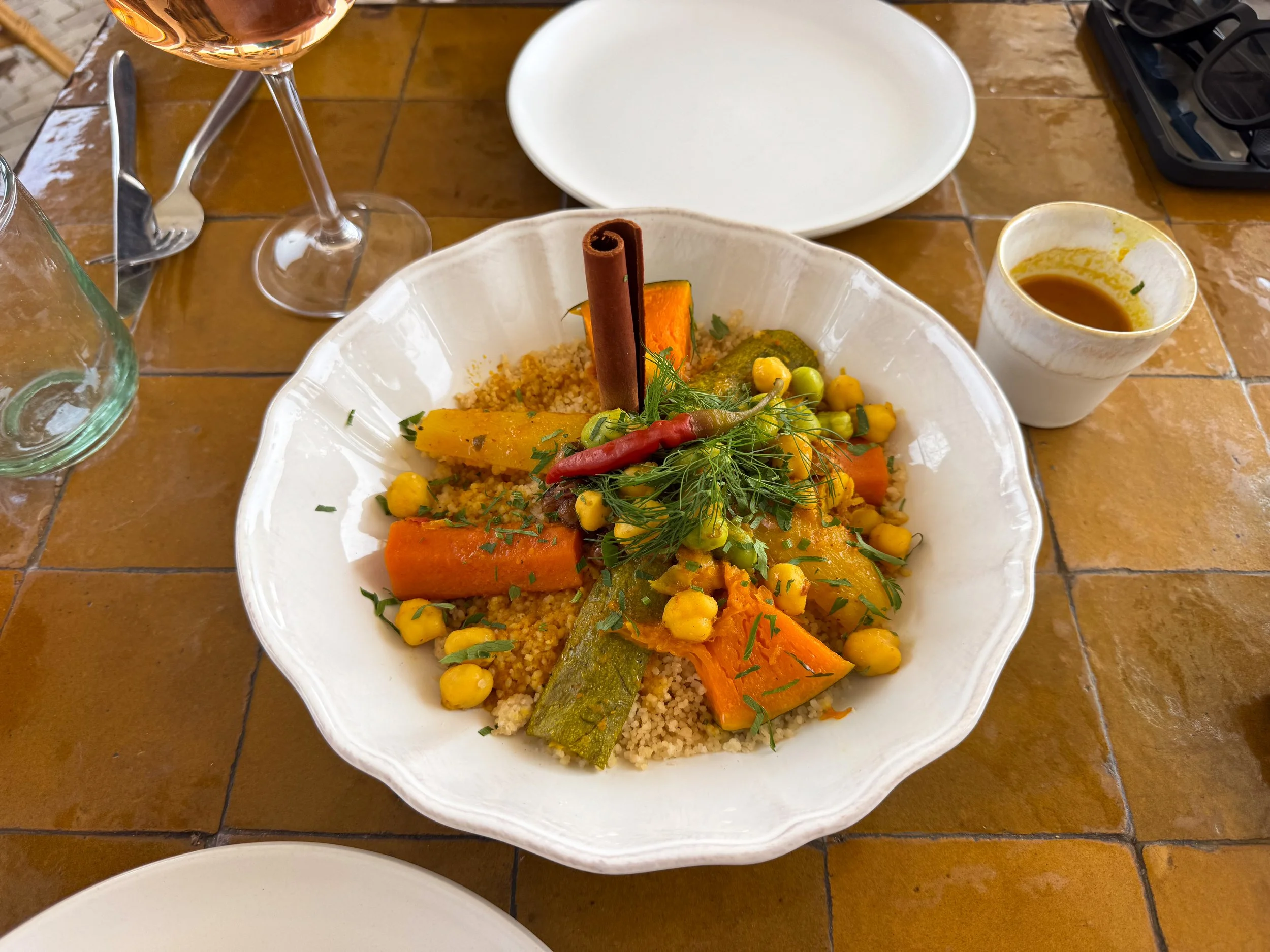
Couscous. A steamed grain covered in a savory broth and garnished with vegetables and meats.
Khobs Bread. A light and airy flatbread served with every meal. It’s fresh baked daily and can be bought from for 1 DH from local bakeries.
Mint Tea. Hot tea made with fresh mint leaves and sugar cubes. It’s served as a common welcome drink.
Orange Drinks. Orange is one of the most popular flavors in Morocco. Fresh squeezed orange juice and sodas are commonly drank. Try Orangina or Hawai.
Dates. A dried fruit from the date palm tree. They come in dozens of variety and can be found across Morocco. They’re eat at breakfast or as snacks. Try them stuffed with a walnut.
Driving in Morocco
Driving in Morocco comes with benefits and challenges. While we enjoyed our roadtrip we have some pros, cons and lessons learned we wish we knew beforehand.
Pros. The roads are well maintained, gas stations are frequent, the landscape is beautiful and you have freedom of being on your own schedule.
Cons.Fake speed traps, police corruption and reckless drivers make driving in Morocco stressful and difficult.
Where to Rent. We rented from Sixt at the Marrakech airport and returned it at the Fez airport a week later.
Rest Stops. Half the joy of a taking a roadtrip is making unexpected stops when something catches your eye. We stopped several times throughout our journey to check something out including remote roadside cafes, camel crossings, panoramic viewpoints, Berber craft stands and fossil and meteorite shops.
Corrupt Speed Traps
Corrupt speed traps are common across Morocco. If driving, you’re all but guaranteed to be fined by police officers. Patrols of the Royal Moroccan Gendarmerie will signal you to pull over, confiscate your license and passport, then ask you to pay a cash fine for any number of reasons.
Examples of Traps:
Reduced Speed Signs. Police set up a series of rapidly descending speed limit signs spaced mere meters apart hoping to entrap drivers.
Hidden Stop Signs. Police place hidden stop signs directly behind a high speed limit signs to entrap drivers.
Painted Speed Signs. Police paint over posted speed limit signs to obscure the actual speed.
How to React:
Option 1. Pay the cash “fine.” They typically request 300-400 Dirham. They will not provide a ticket or receipt.
Option 2. Respectfully dispute the “fine.” Push back and ask for evidence as well as a formal written ticket. If legitimate, this needs to be paid in cash on the spot or at a police station.
Option 3. Respectfully dispute the “fine.” Push back and let the police know you did not violate the traffic laws. Mentioned that you’ve already been pulled over, paid a fine and reported the past incident to your embassy. Corrupt police will back down in fear of being reported at the mention of diplomatic support.
Document Evidence. When approaching a speed trap, immediately slow down to 20km and have a passenger record the speedometer and posted signs. This can be used as proof to dispute the “traffic violation.” Document evidence of the encounter including the time, location, officer names and badge numbers. Be careful not to directly photograph or record the police. This is considered “illegal journalism” in Morocco.
Arabic Words & Phrases
Knowing a few worlds and phases in Arabic goes a long way in Moroccan when interacting with locals. Some of the most common and easy to remember are:
Hello = Salama
Goodbye = Beslama
Thank you = Shukran
You’re welcome = Marhaba
Location Specifics
When to Visit. September is the best month of the year to visit Morocco. It’s just before peak travel season with hot to moderate temperatures.
Language. Arabic, French and English are commonly spoken by many people, seen on signage and menus.
Cash vs Card. Cash is preferred and often only accepted method of payment at many businesses. Confirm before ordering at restaurants or agreeing to services.
Safety. Morocco is a generally safe destination to visit. Be aware of your surrounding and keep hold of personal belonging to avoid pick pocketing.
Drinking Water. Tap water is not safe for consumption or cooking with in Morocco. Only use bottled water.
Alcohol. The sale of alcohol is heavily controlled throughout the country. Only some restaurants will serve cocktails, beer and wine.
LGBTQ+ Safety. Moroccan laws and customs are not very accepting of LGBTQ+ individuals. Stay up to date with the latest laws and suggestions while traveling. Refer to our guide on LGBTQ+ Travel Safety for more advice.
Elsewhere in Morocco
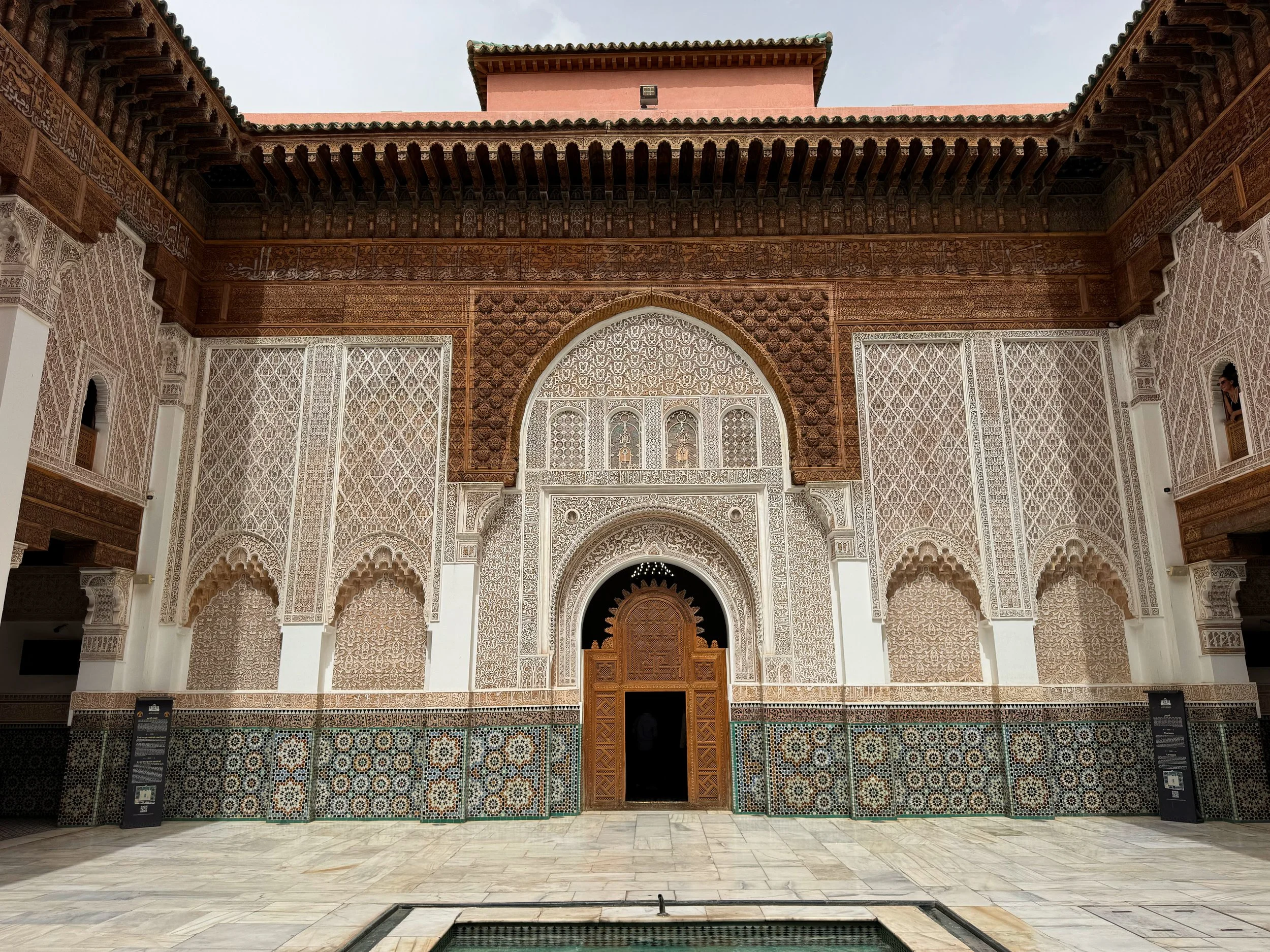
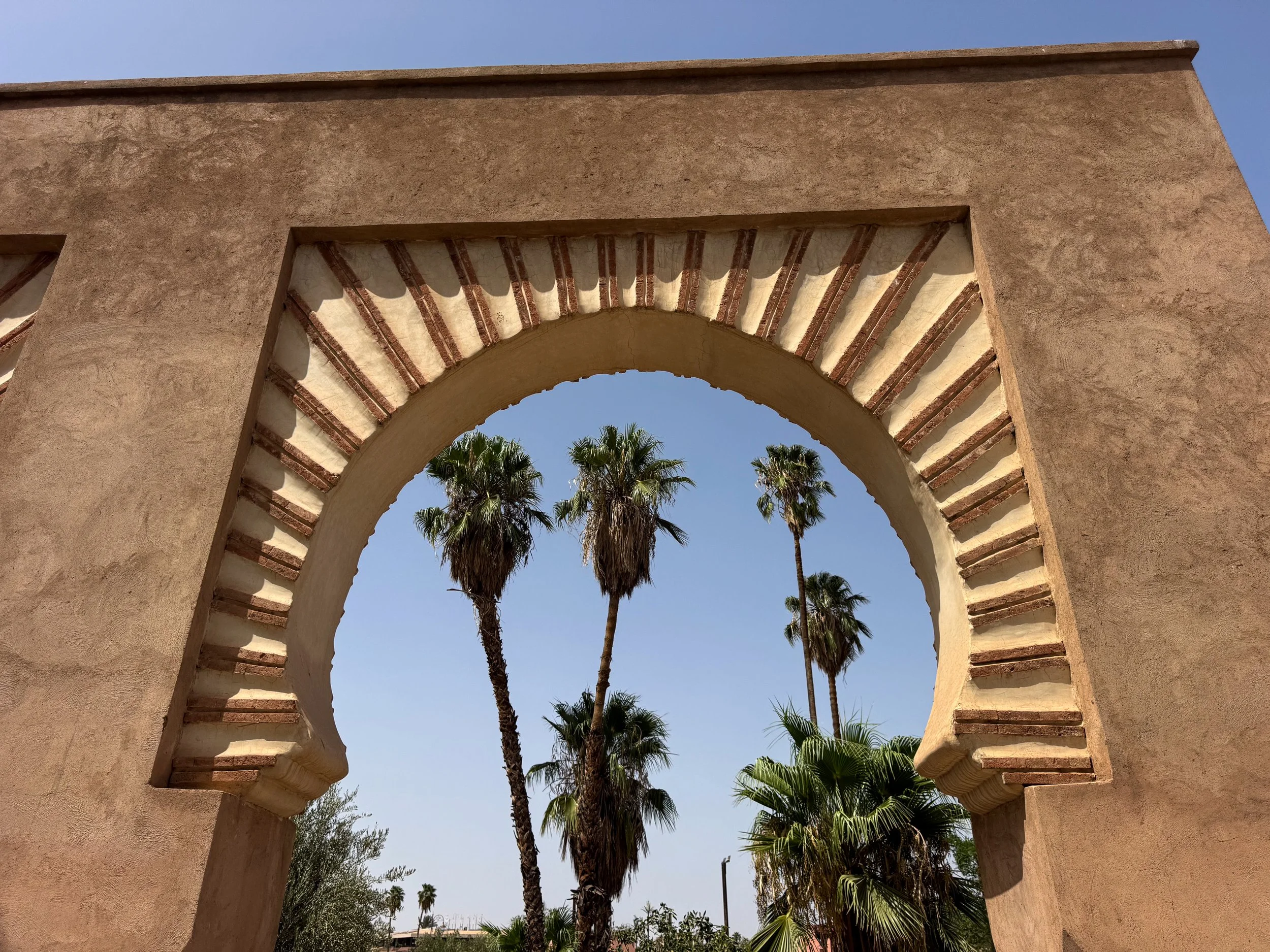
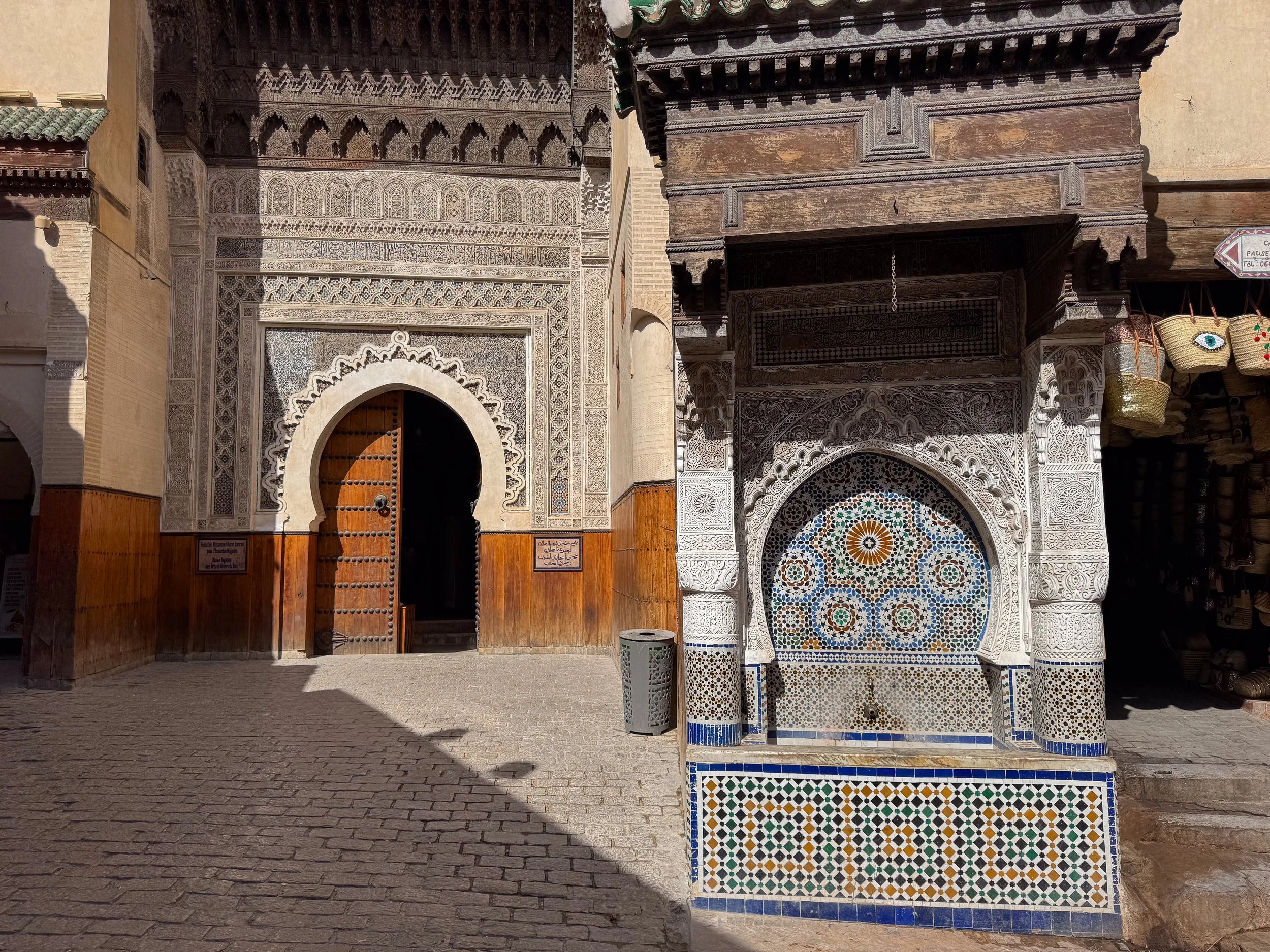
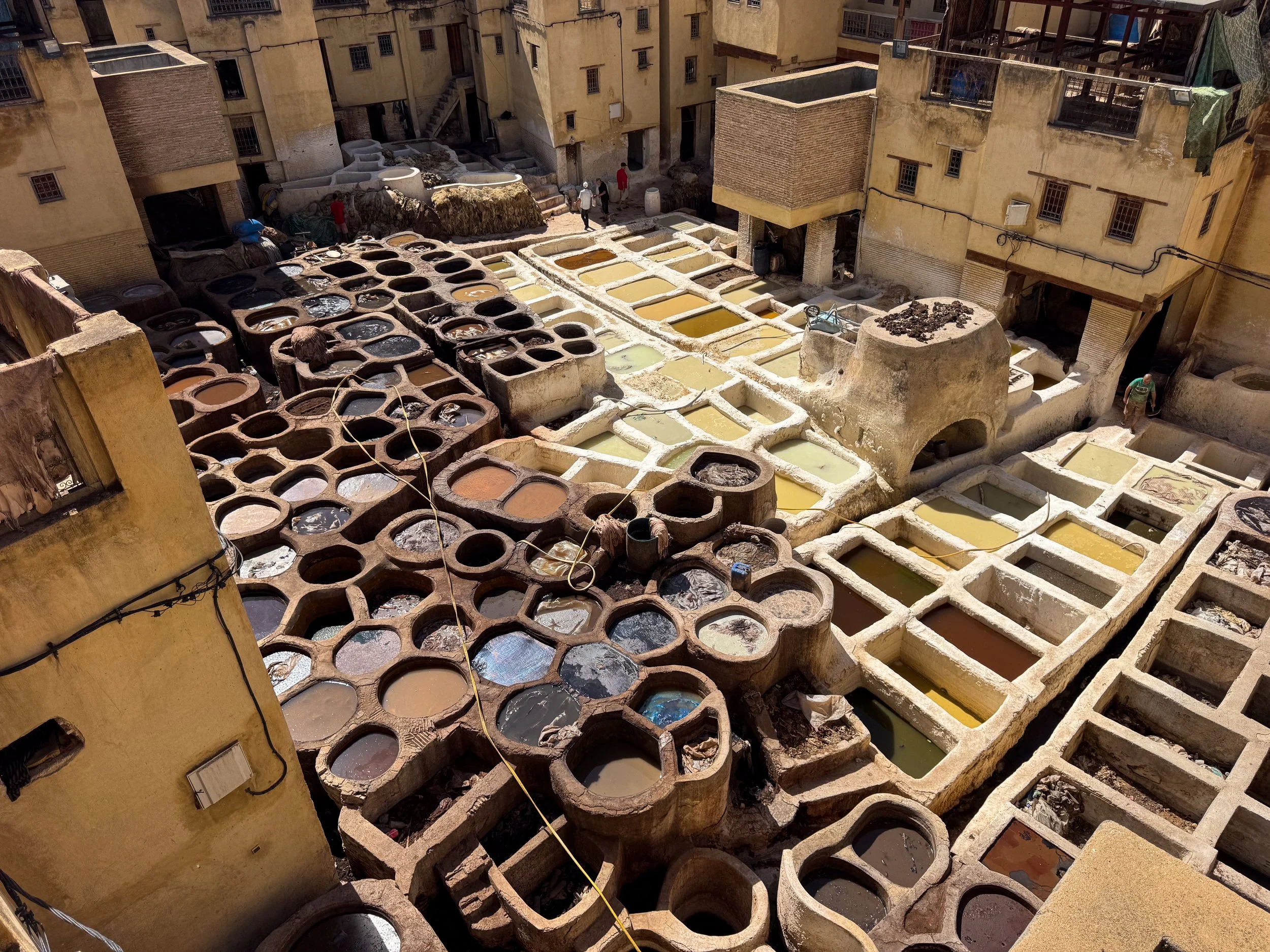
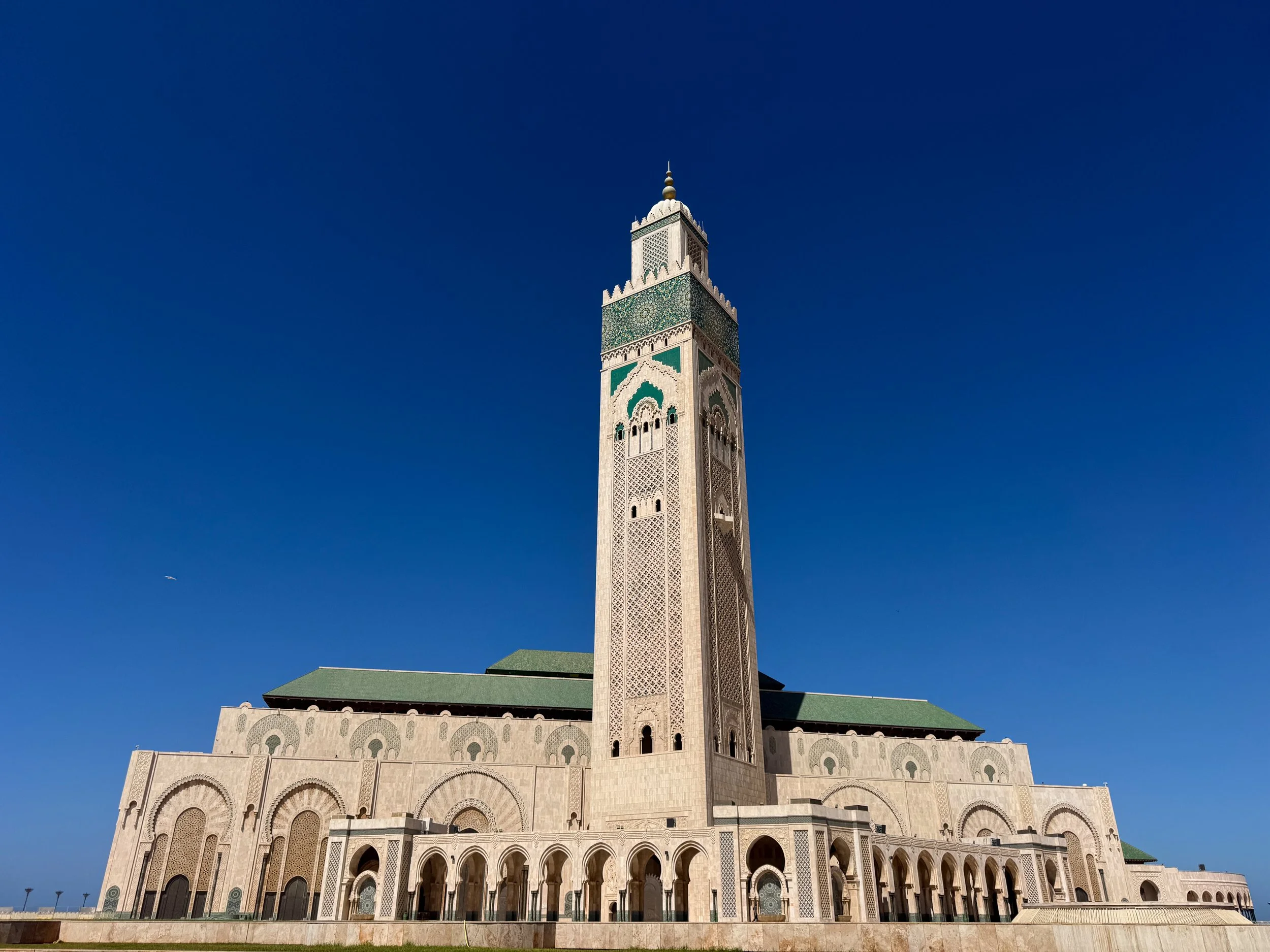
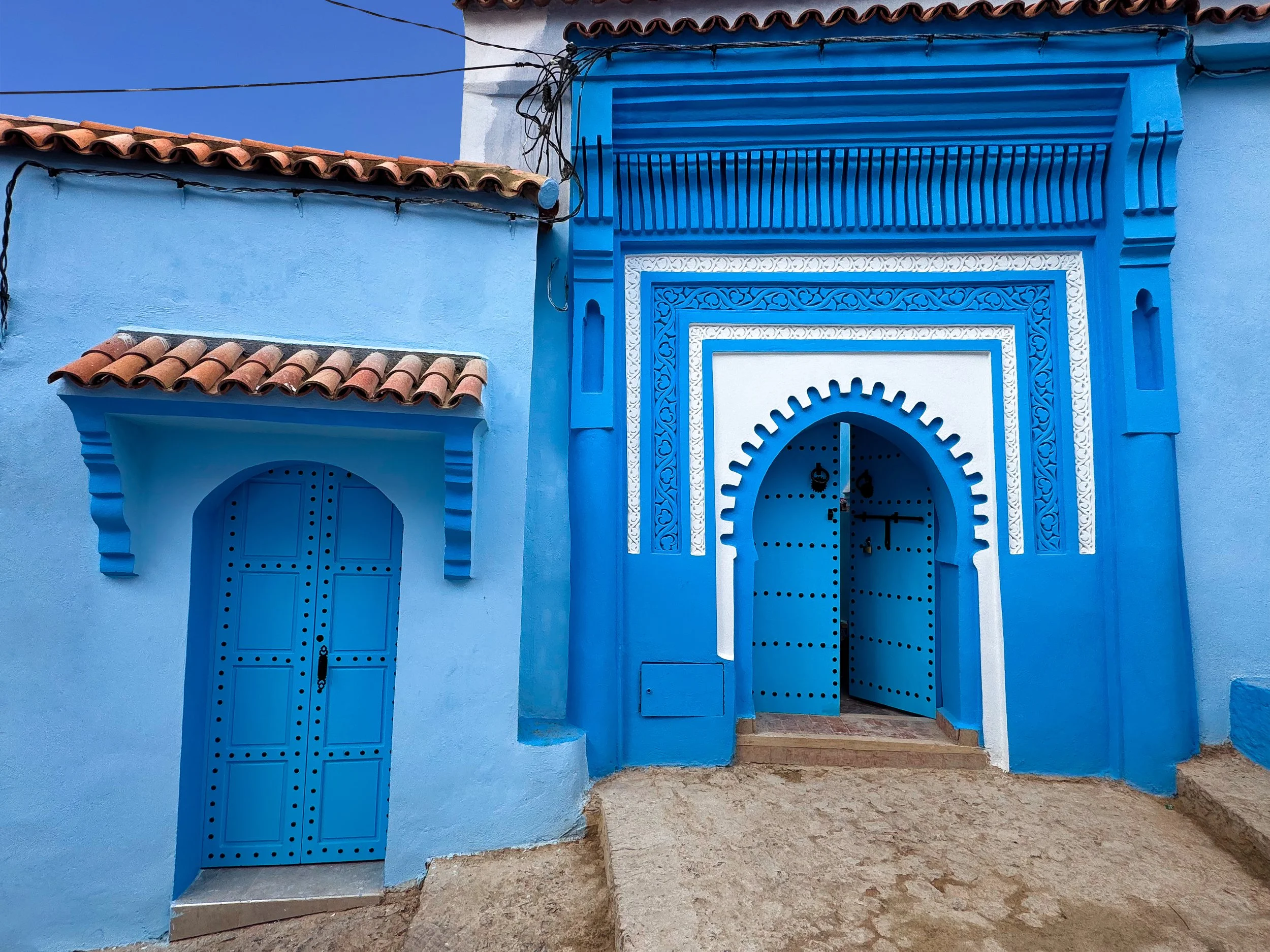
We spent a little over three weeks traveling across Morocco, experiencing so much of the country’s culture, cuisine and history. Get lost in the chaotic alleyways, spice markets and souks of Marrakesh. Explore the ancient medina and historic Islamic sights of Fes. Wander the azure streets and hillside of Chefchaouen, The Blue City. Enjoy the coastal atmosphere and influences of in Casablanca.
For Next Time…
The Atlas Mountains and desert landscape of Morocco is a beautiful place, especially with extra time.
Stay in Ouarzazate. We recommend spending at least one night here to experience the town, its souks and movie studios in depth.
Merzouga Lake. A seasonal lake formed during the Merzouga Desert’s August rains. It’s a popular place to spot migratory flamingos.
Ozoud Waterfalls. A series of cascading waterfalls in the High Atlas Mountains. Trails leads up the falls to natural swimming pools.