Ponce Puerto Rico Travel Guide: History, Architecture & Local Culture
Ponce, The Pearl of the South
Ponce, known as “The Pearl of the South,” is famed for its historic architecture, cultural landmarks, Taíno archaeological sites and annual carnival traditions.
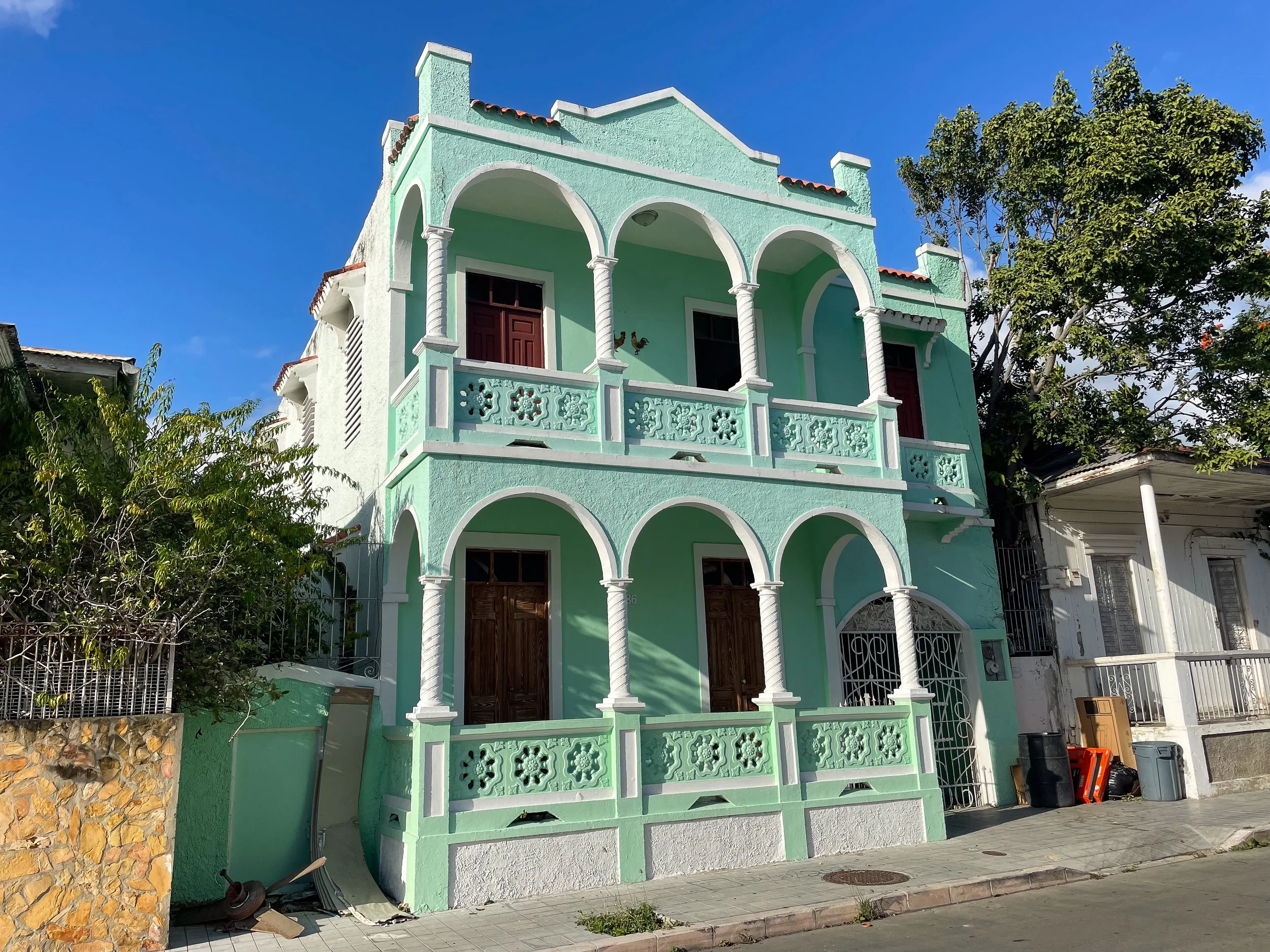
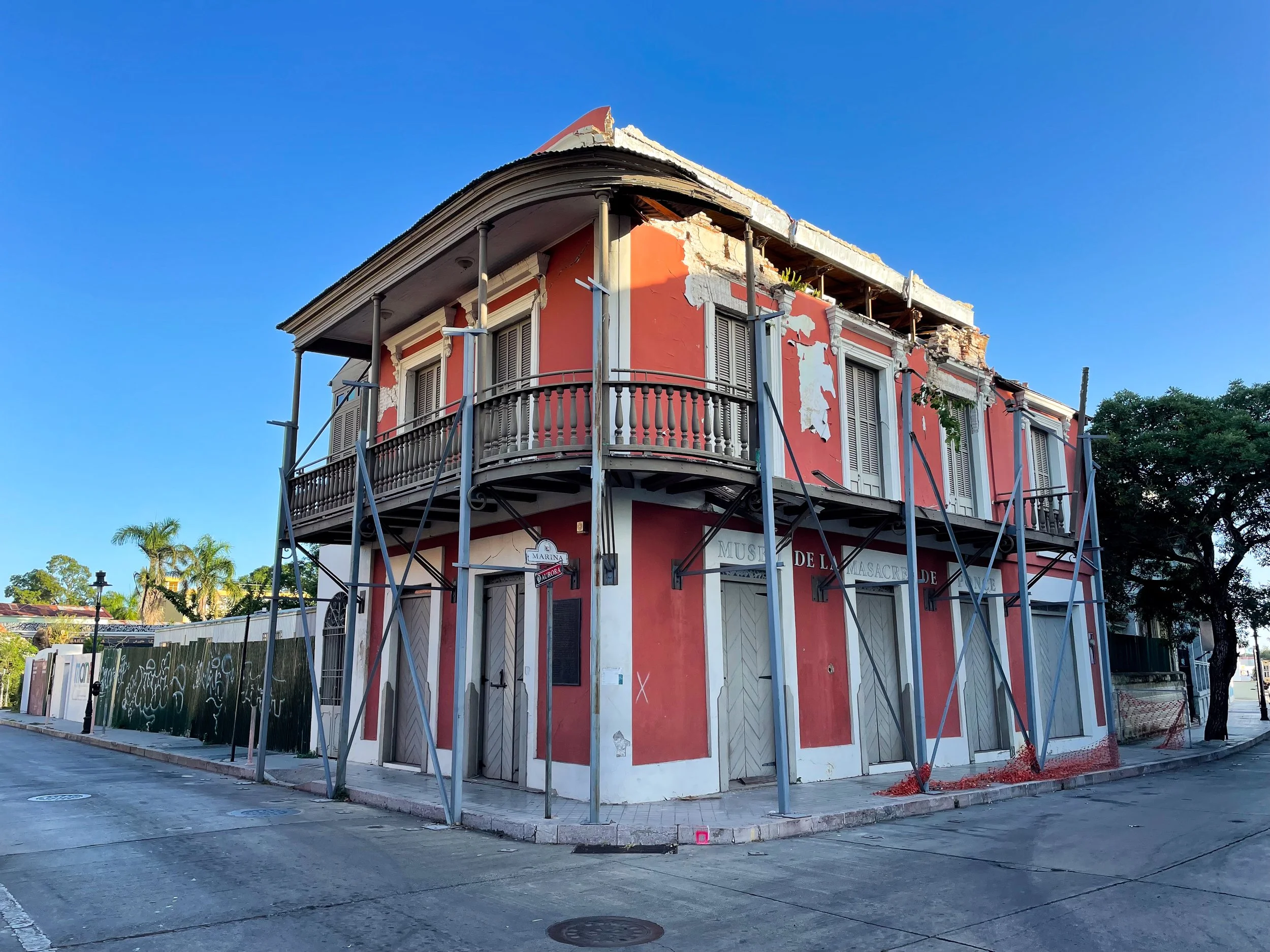
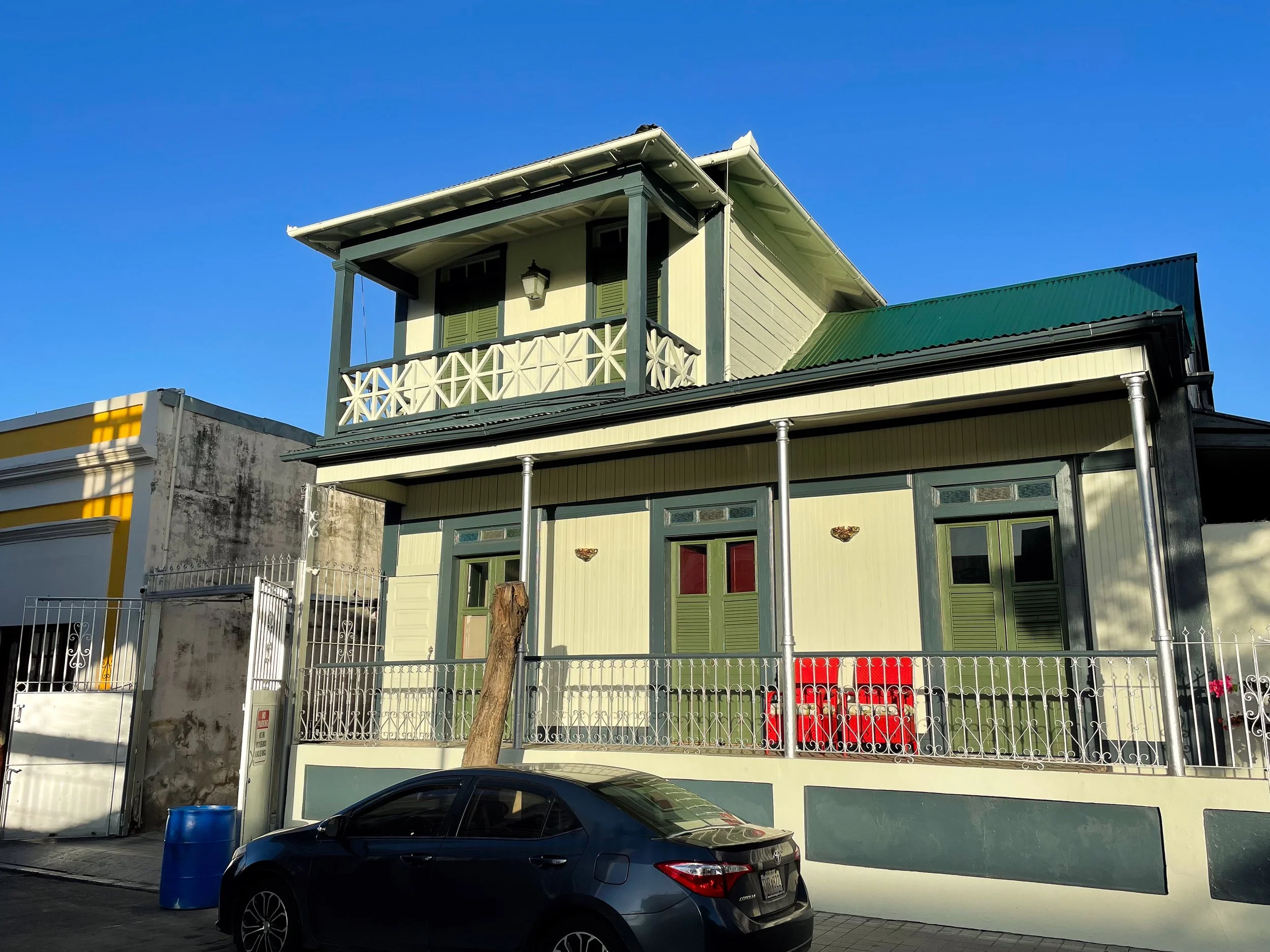
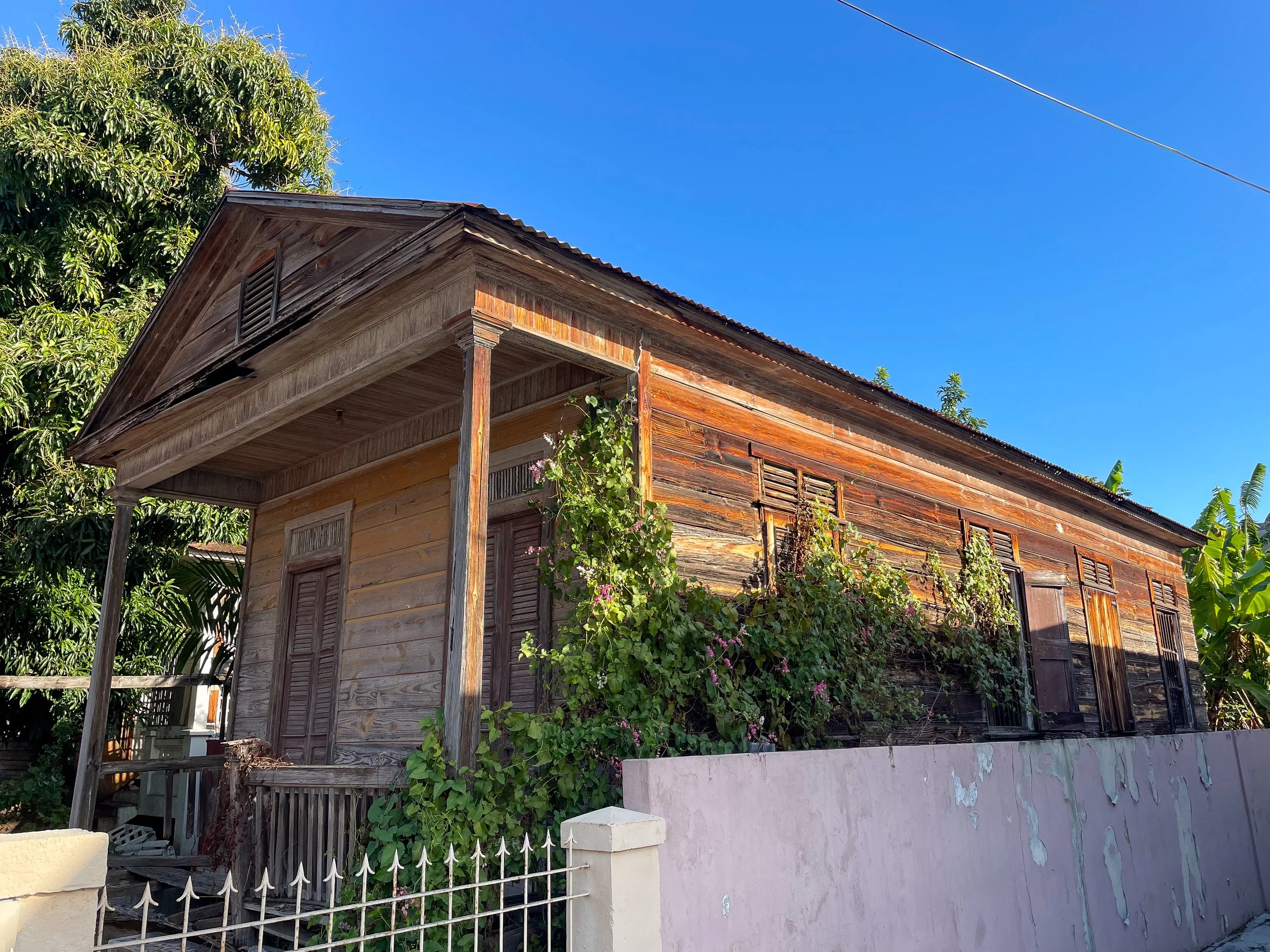
Architectural Styles
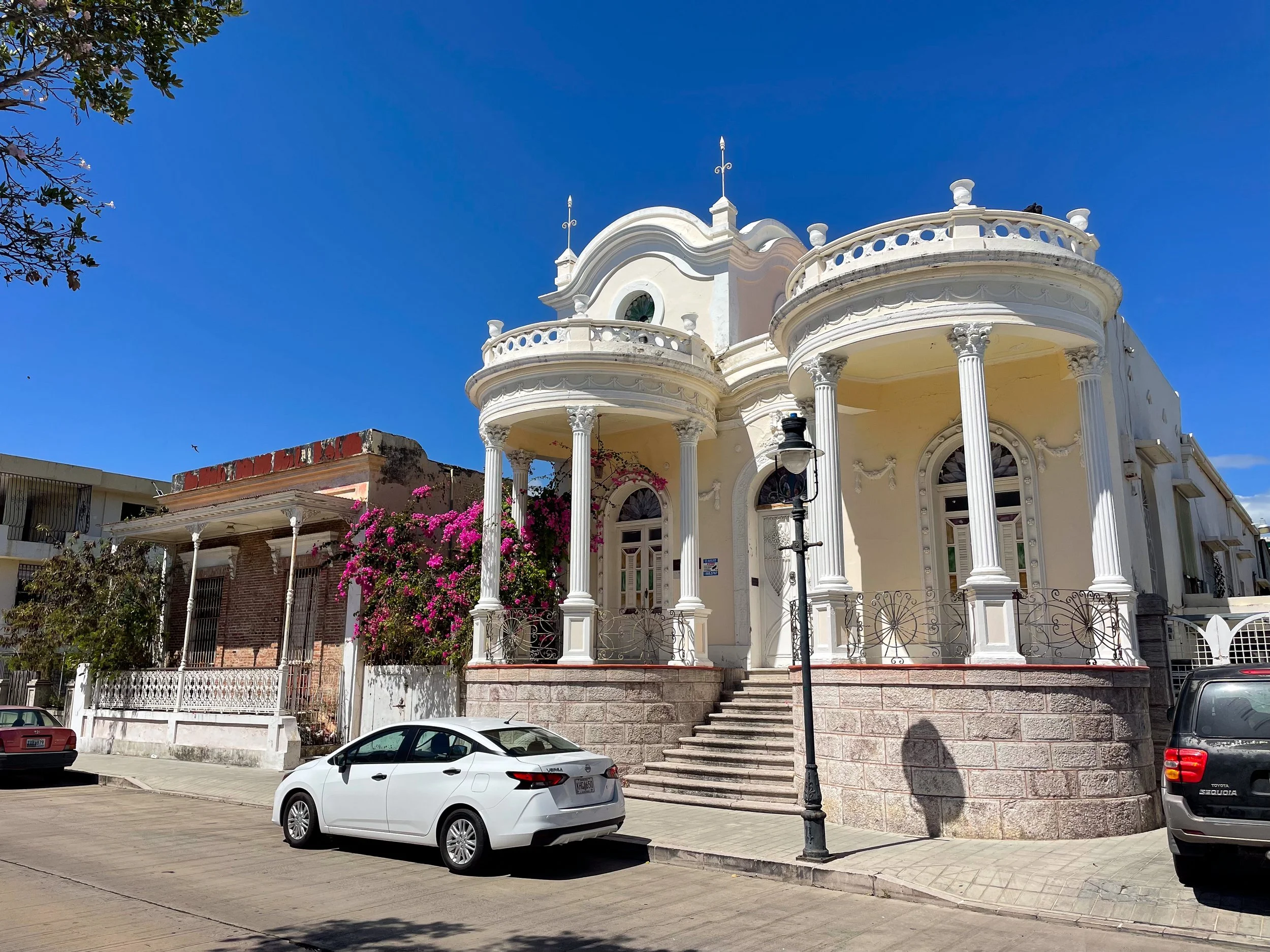
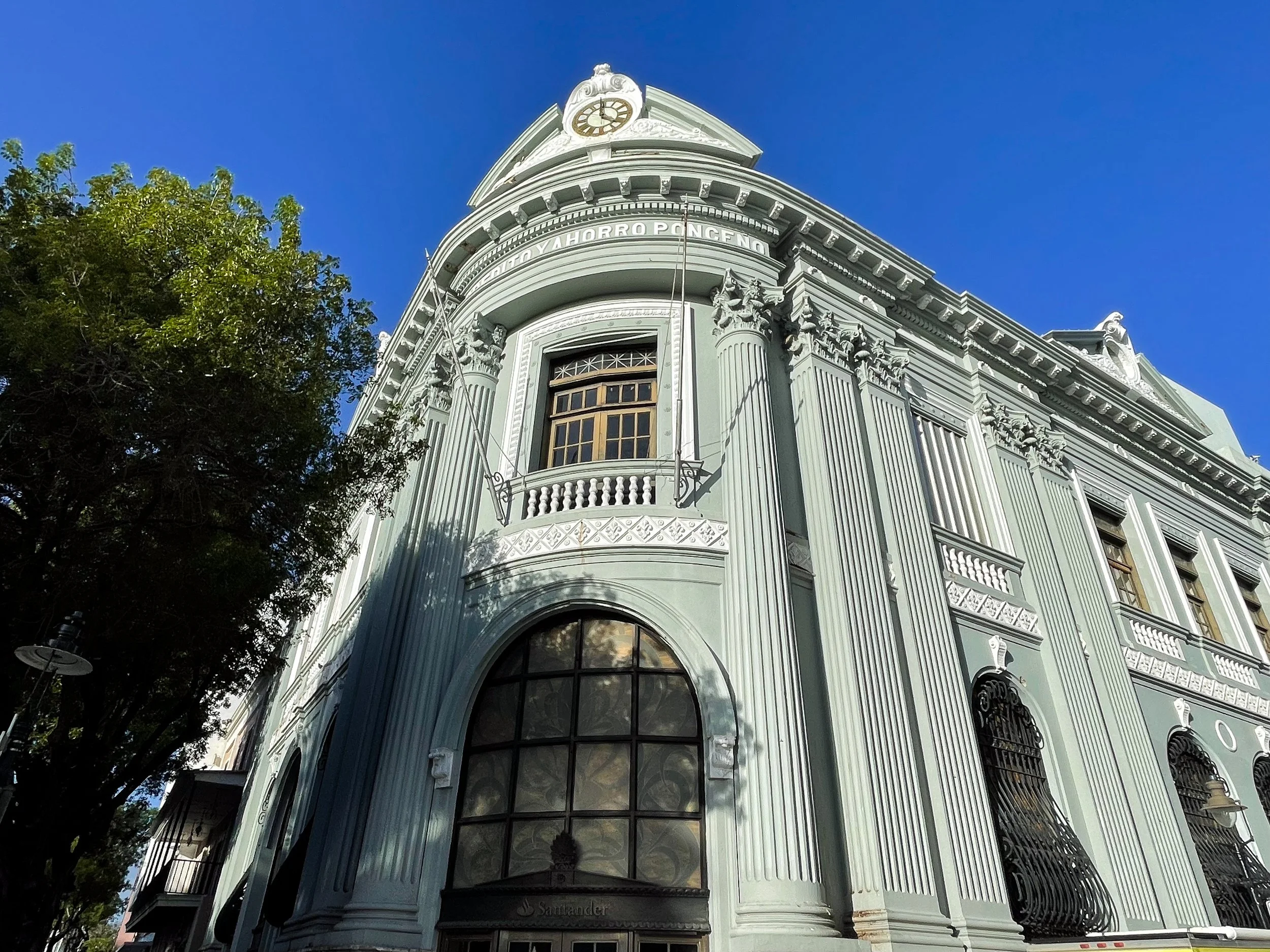
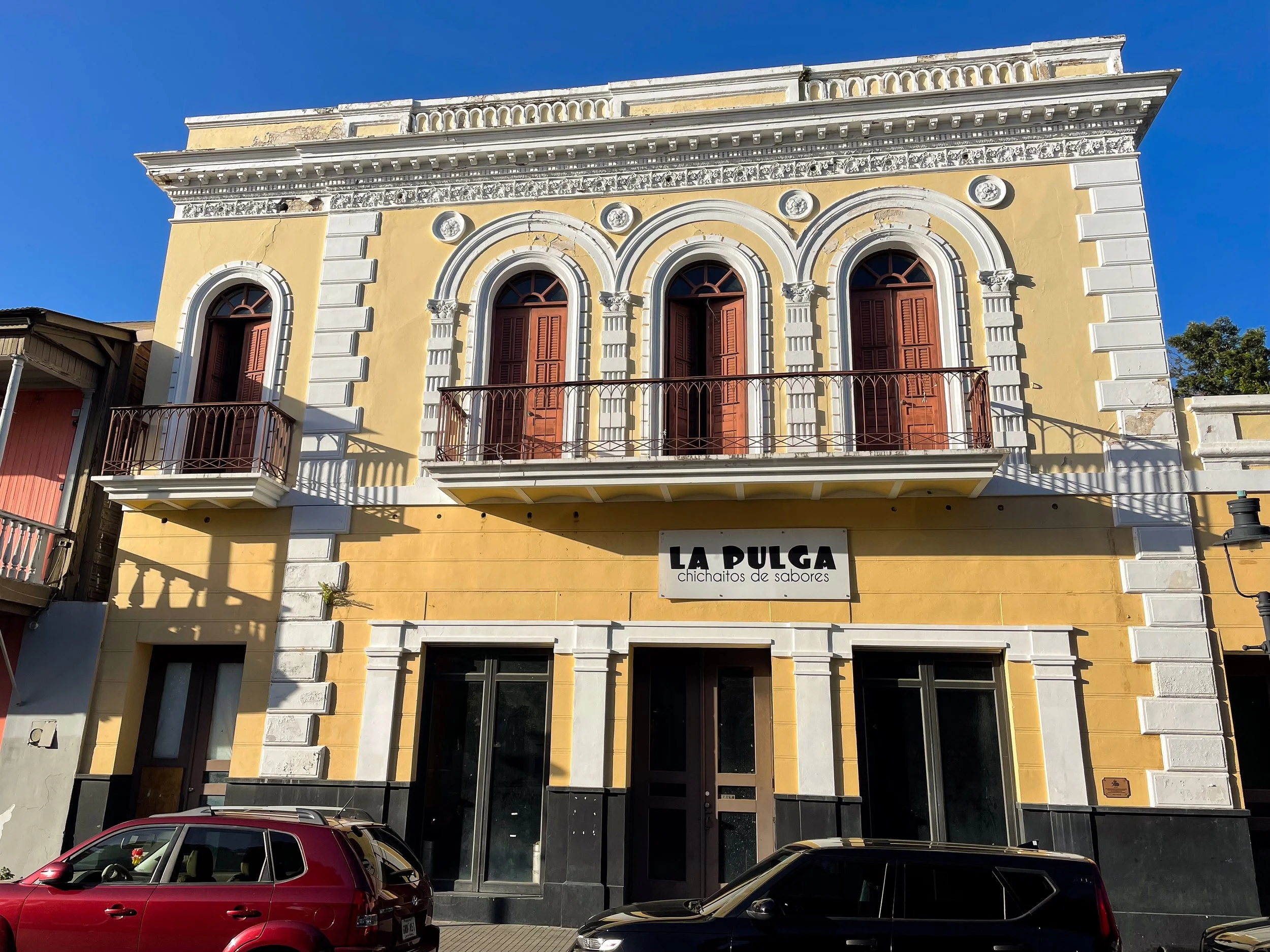
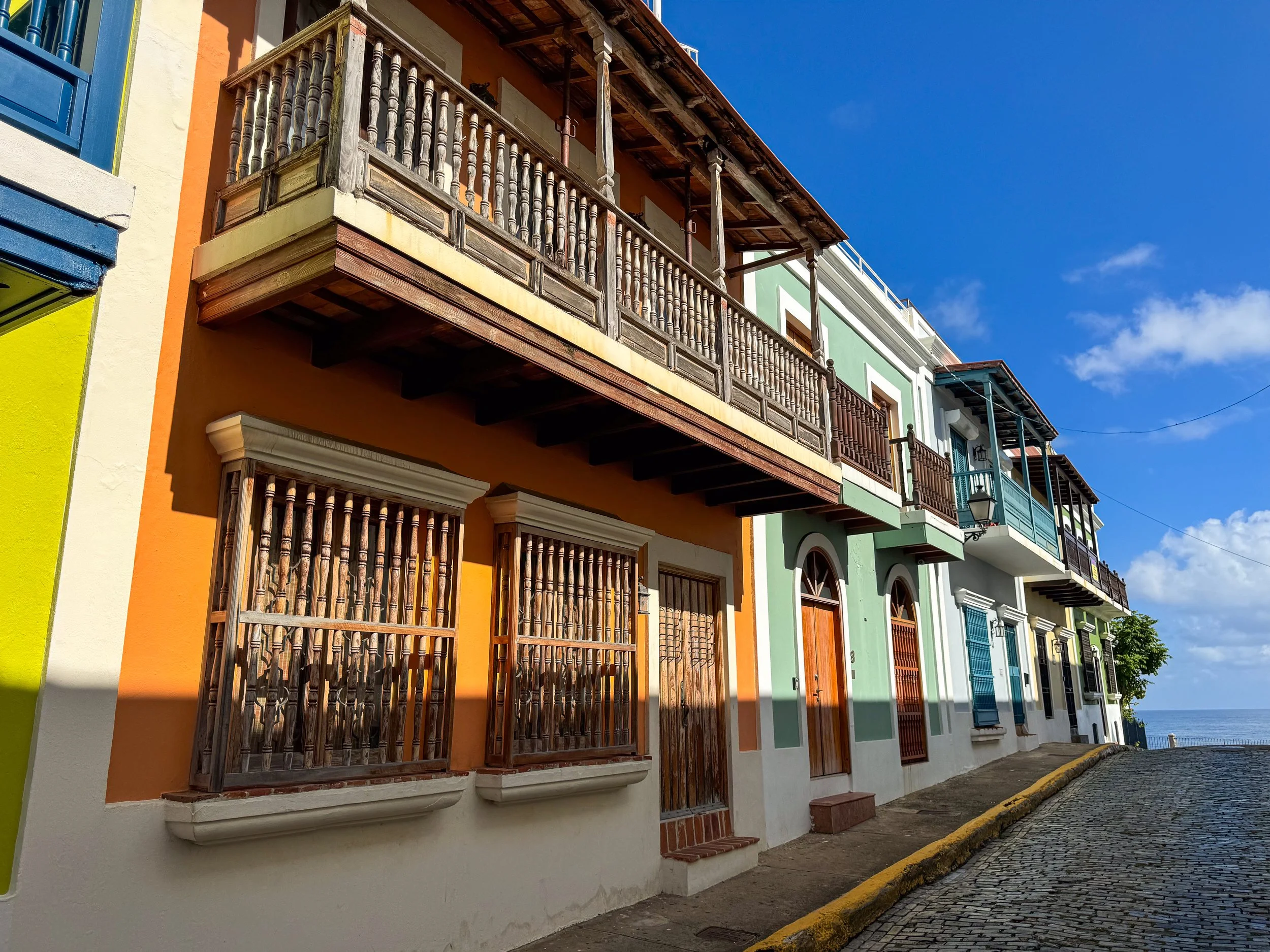
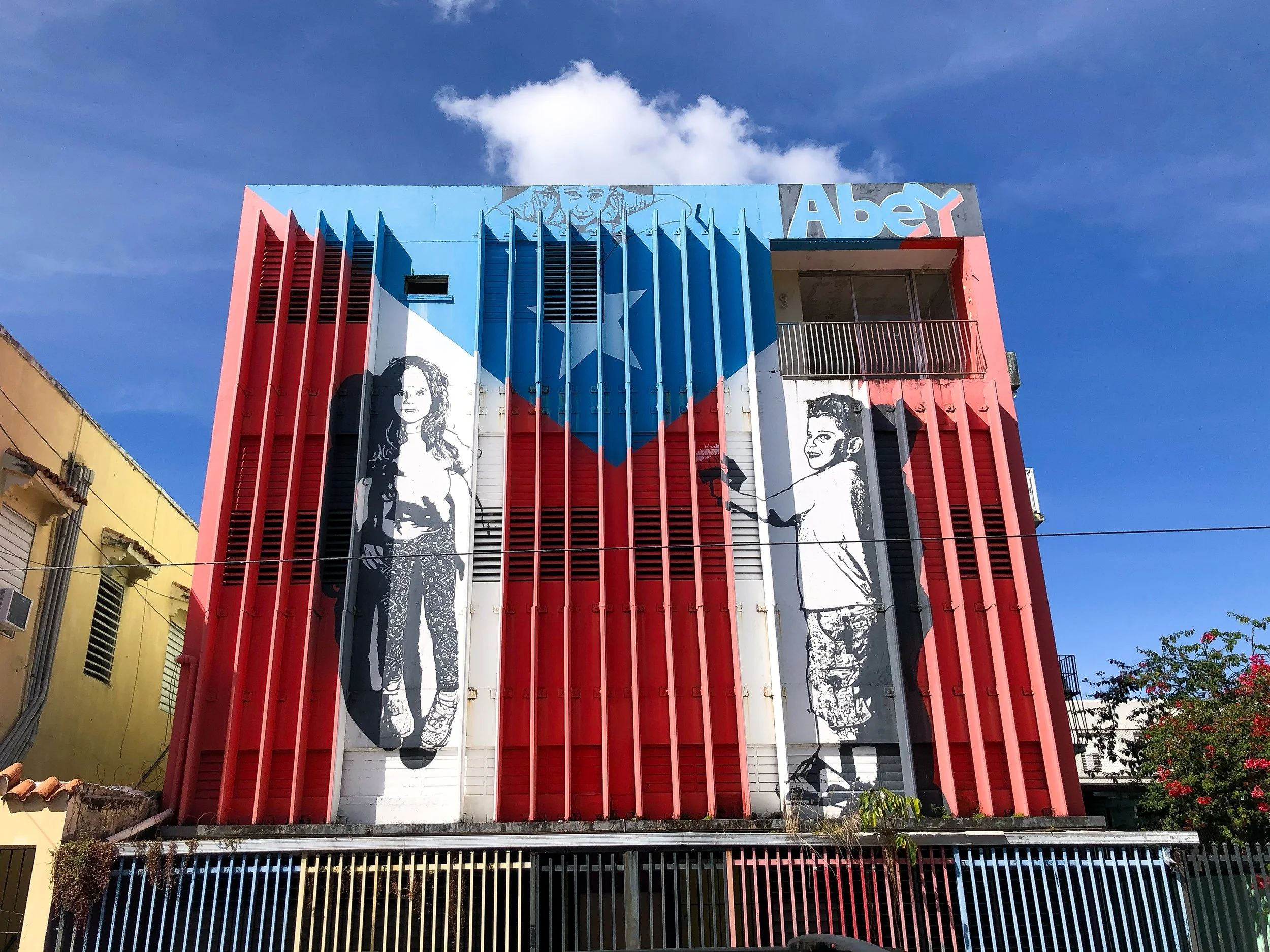
Ponce is a historic city with multitudes of architectural styles and colorful buildings. We spent an afternoon wandering the streets to see the mix of Creole, Colonial, Neoclassical, Spanish Revival, Miami Art Deco, Arabesque and 90s Modernist style buildings.
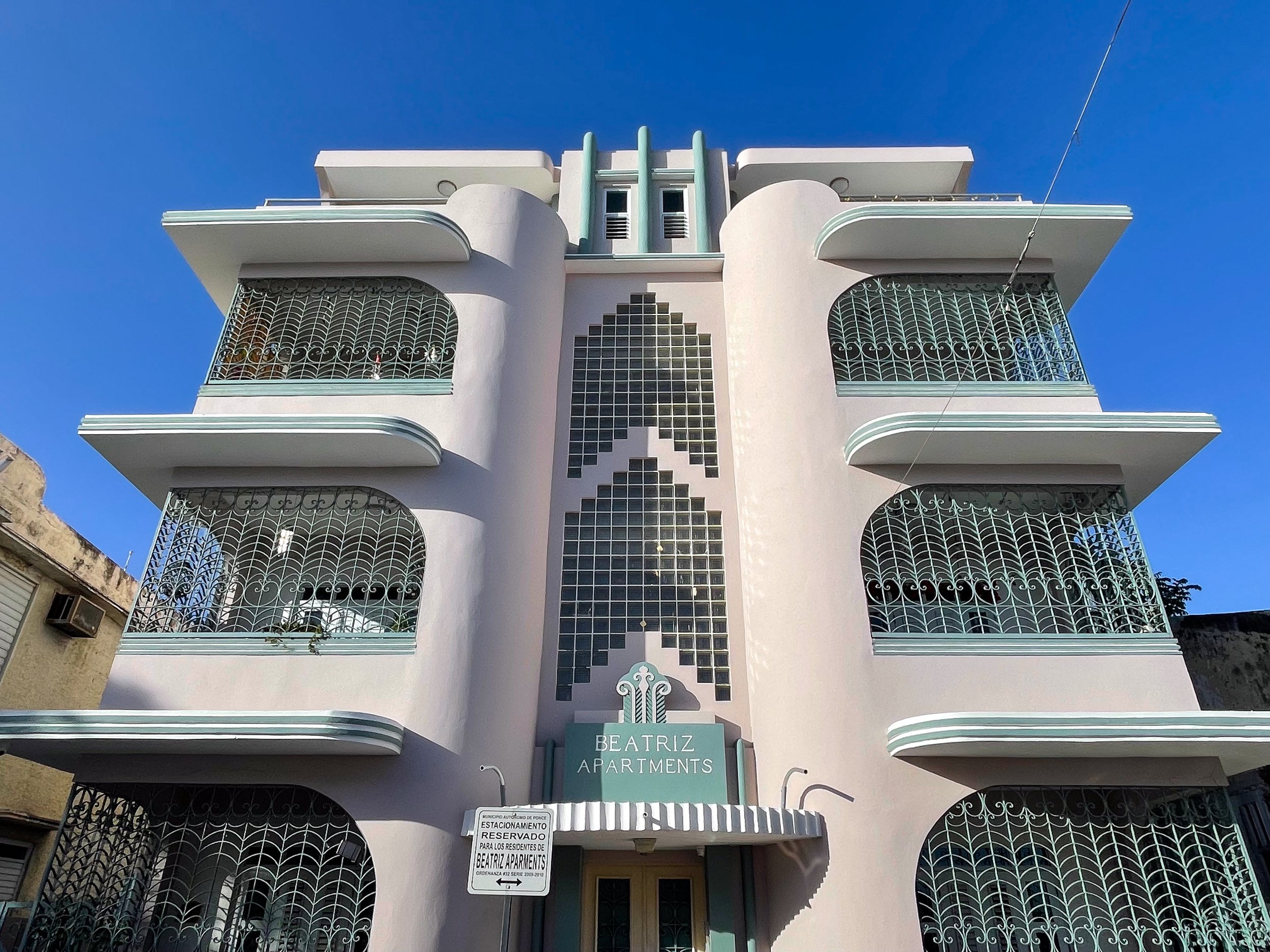
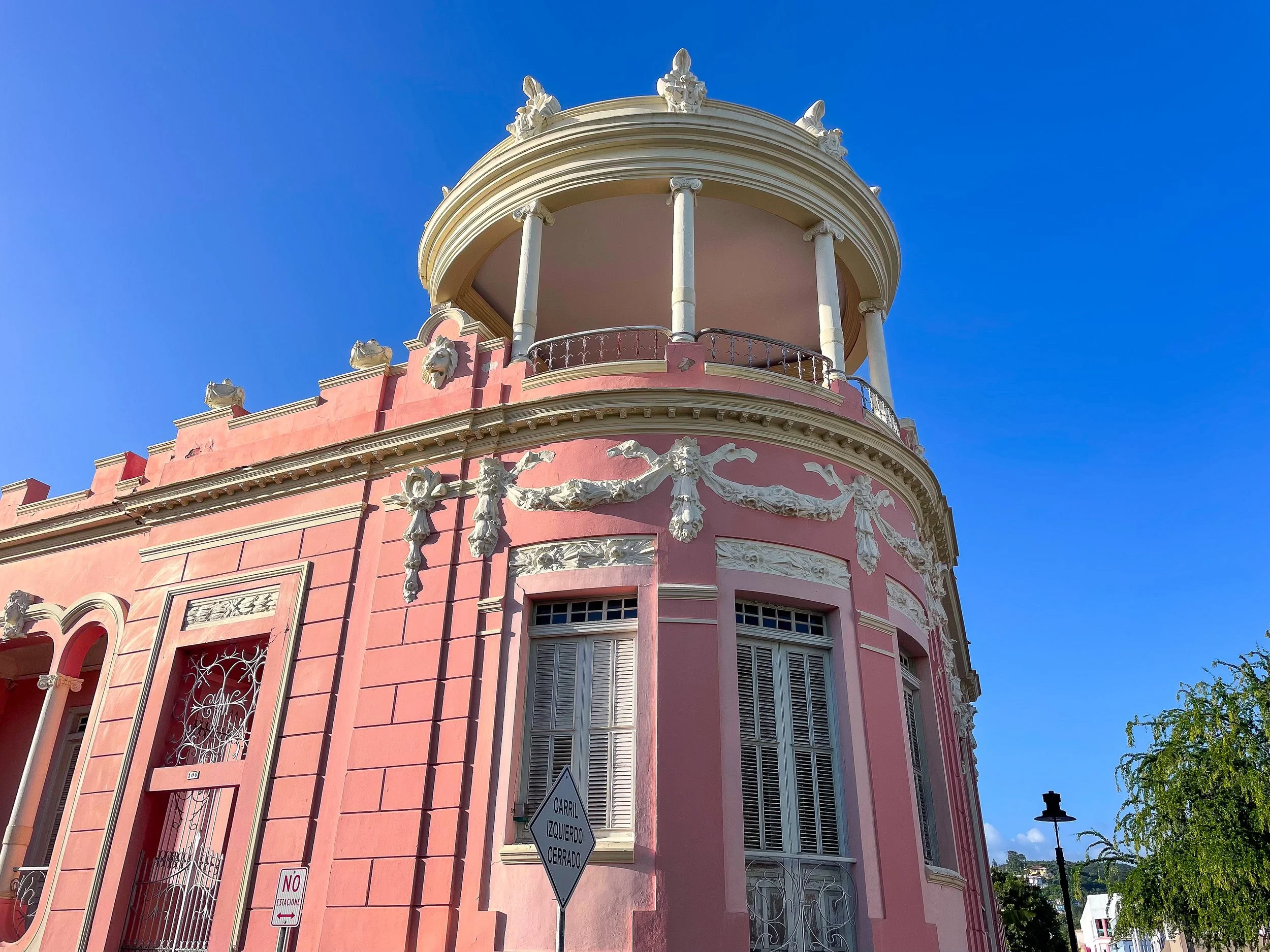
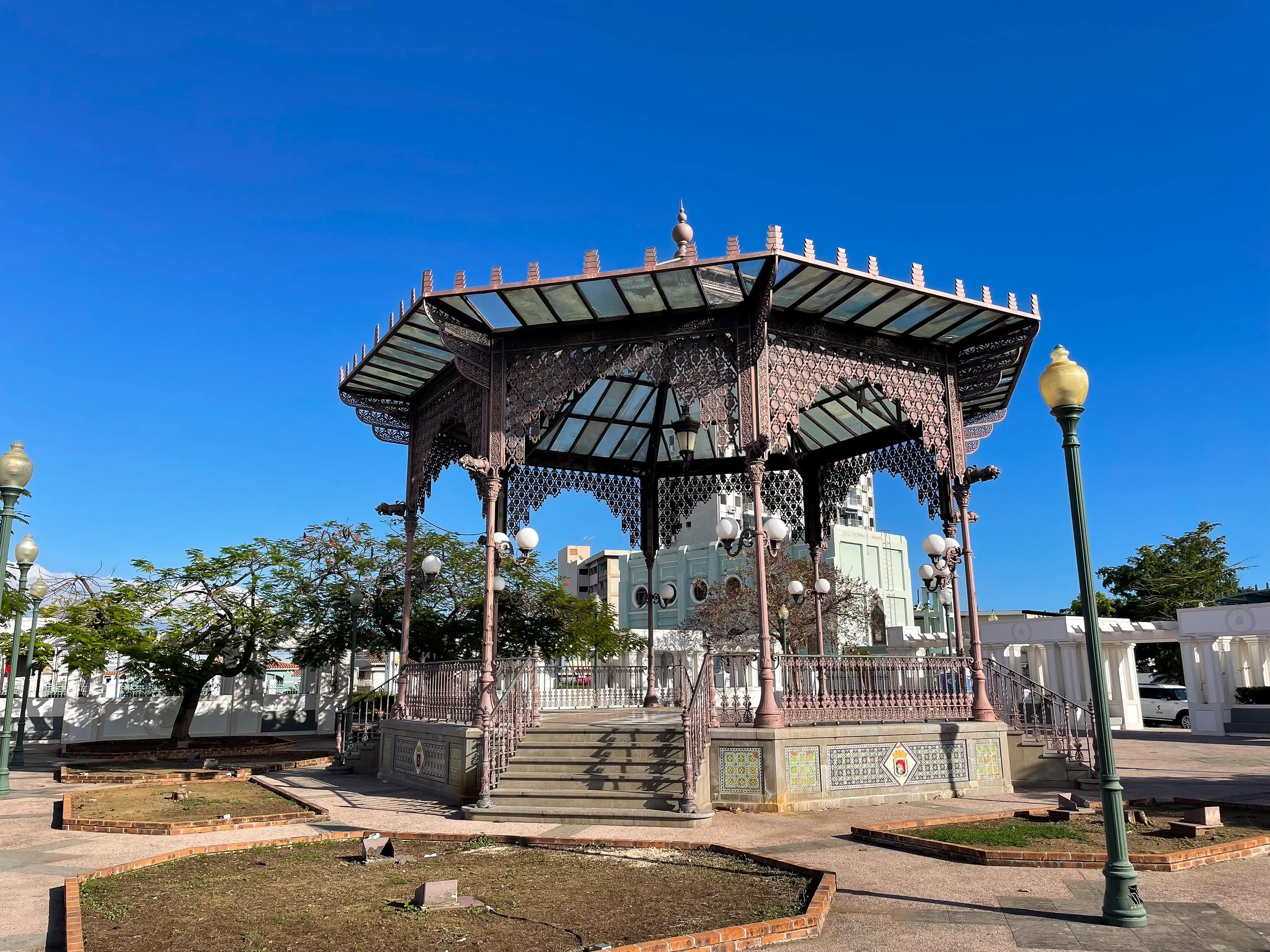
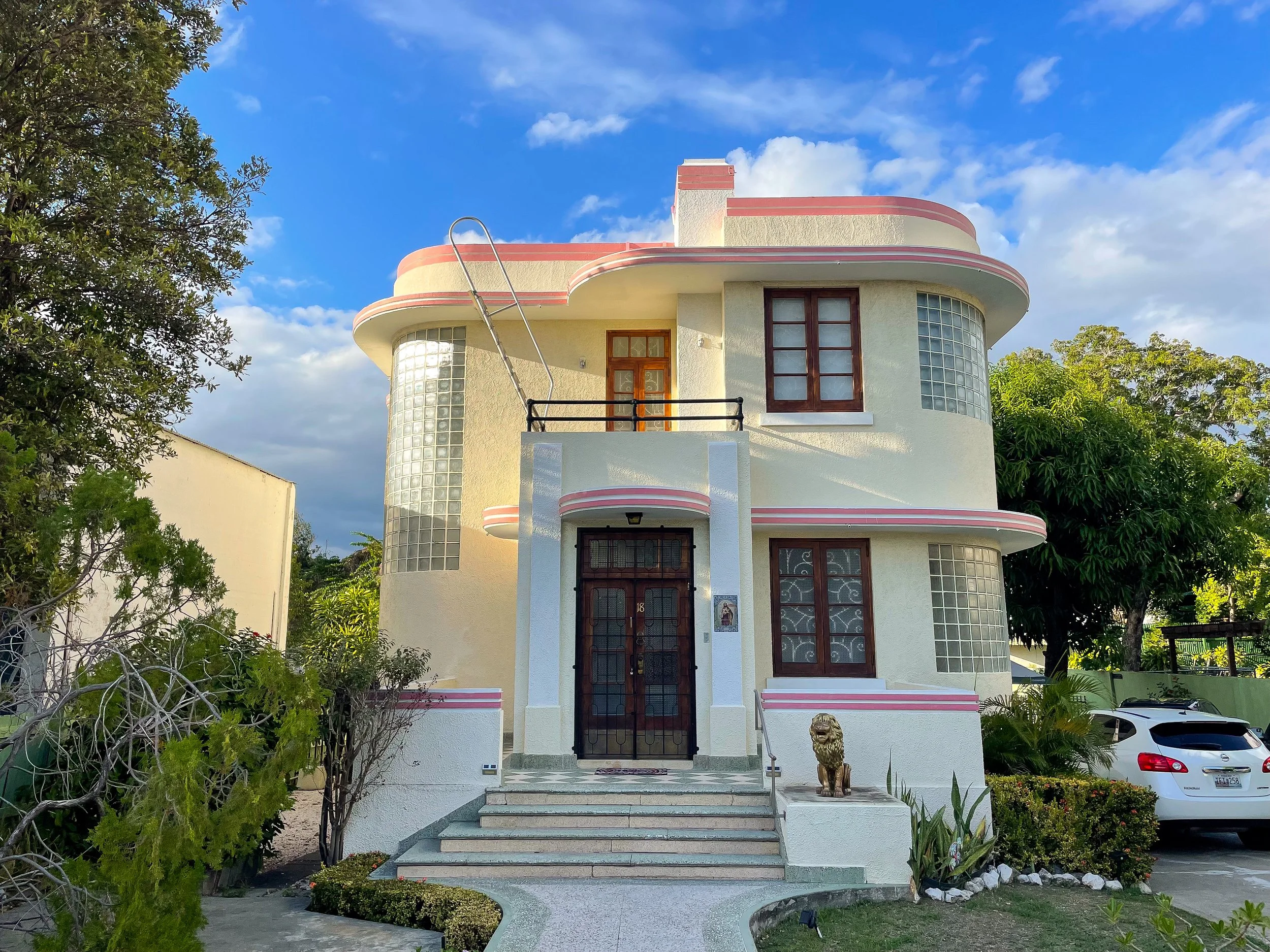
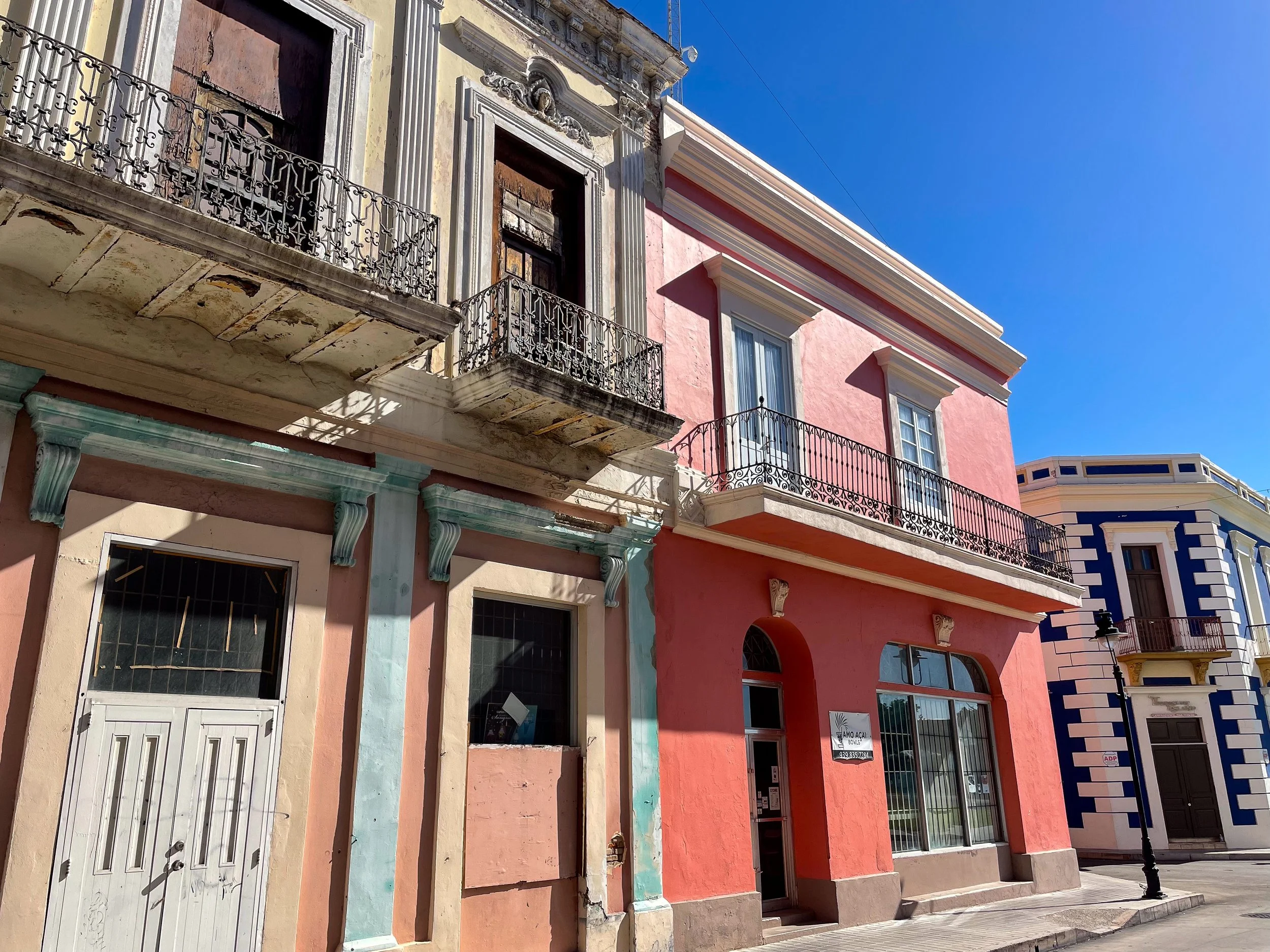
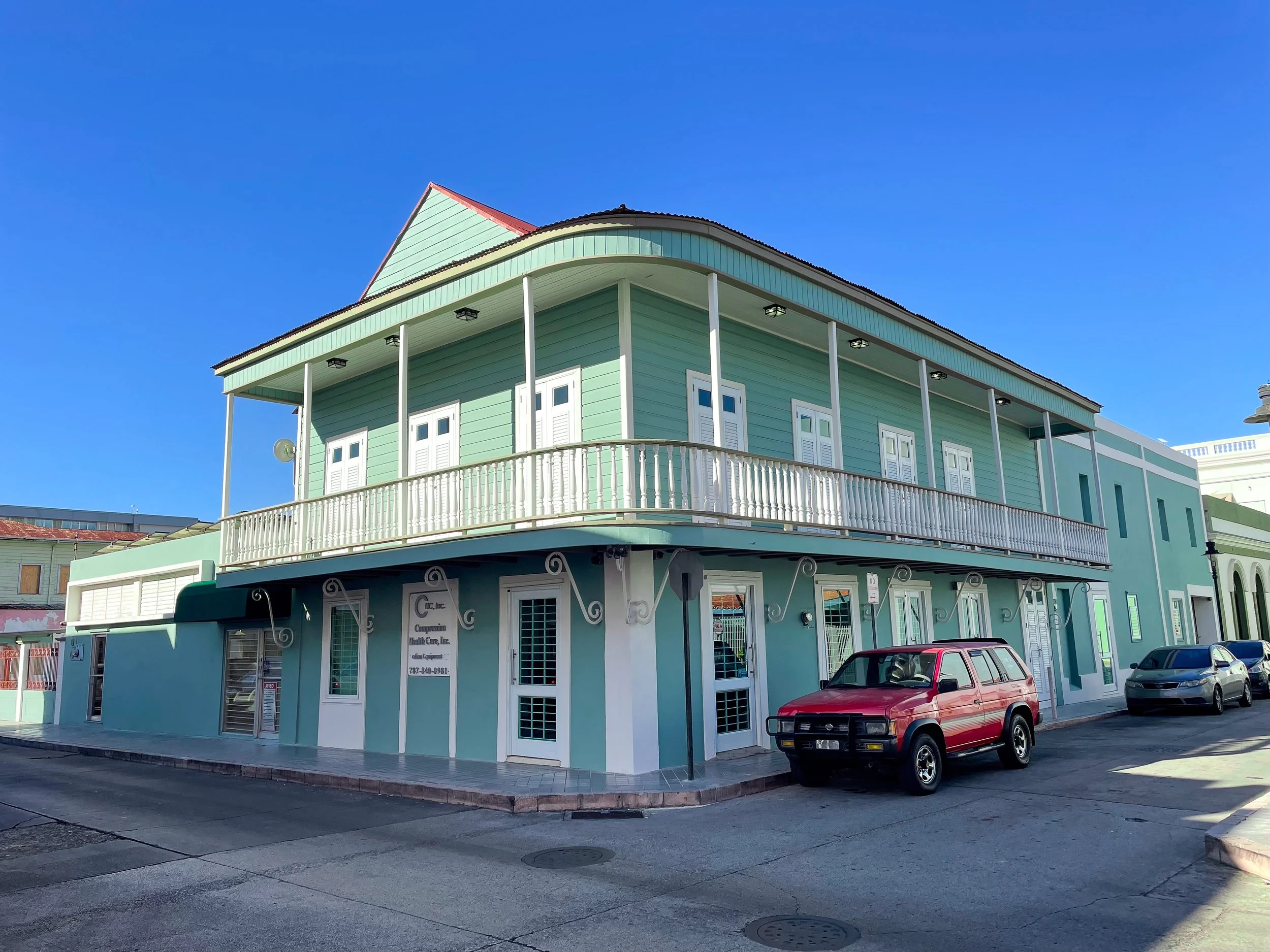
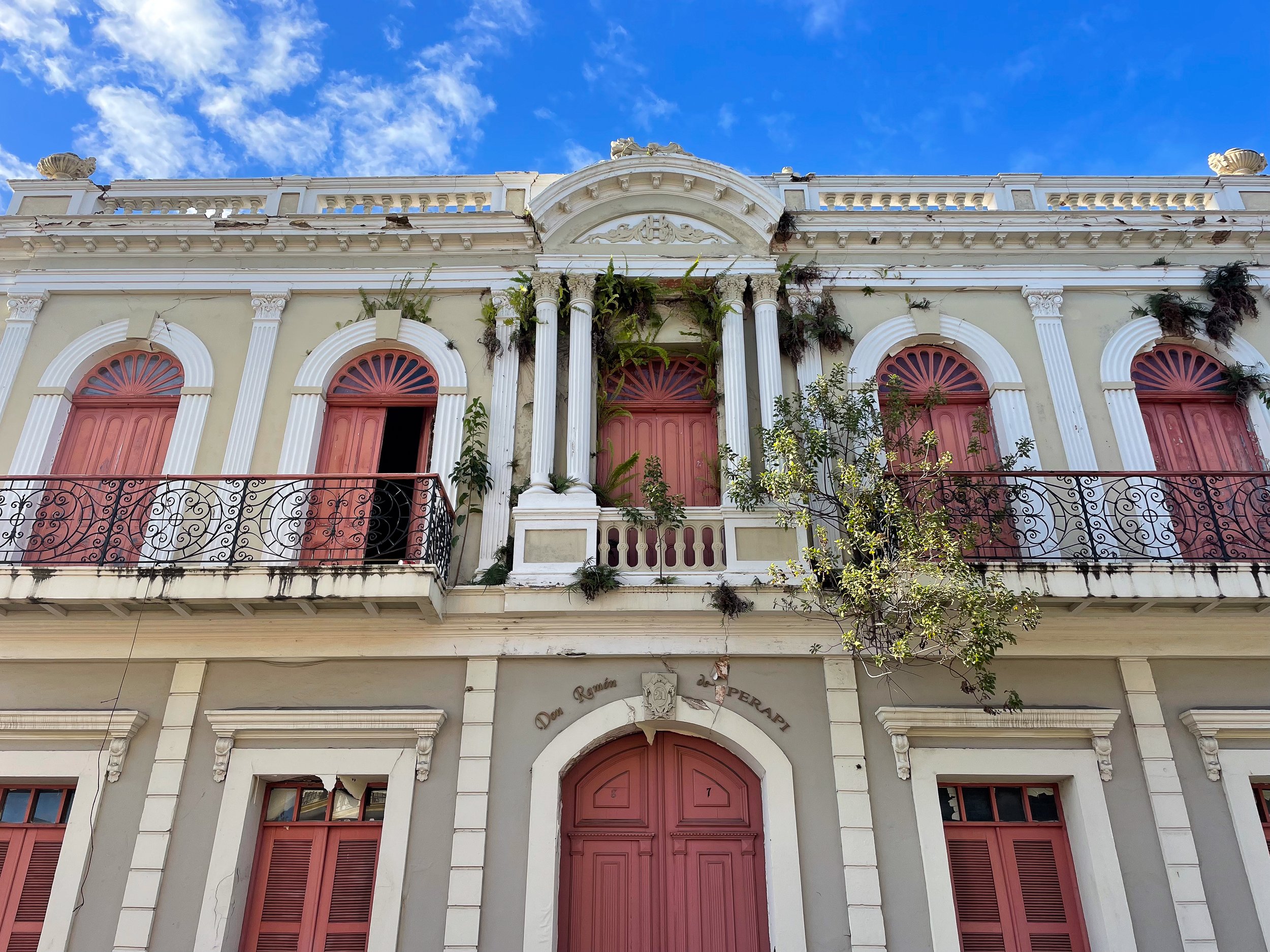
An Underdog
The city is a bit of an underdog; recovering from hurricanes, earthquakes and the effects of the pandemic. Though quieter and less traveled to, it has a charming local ambiance that can’t be overlooked. Like many Ponceños, we’re rooting for this beautiful city!
Visit the Sights & Museums
Plaza de las Delicias. The lush town square and historical center of Ponce with monuments, statues, landmark buildings and adjacent restaurants.
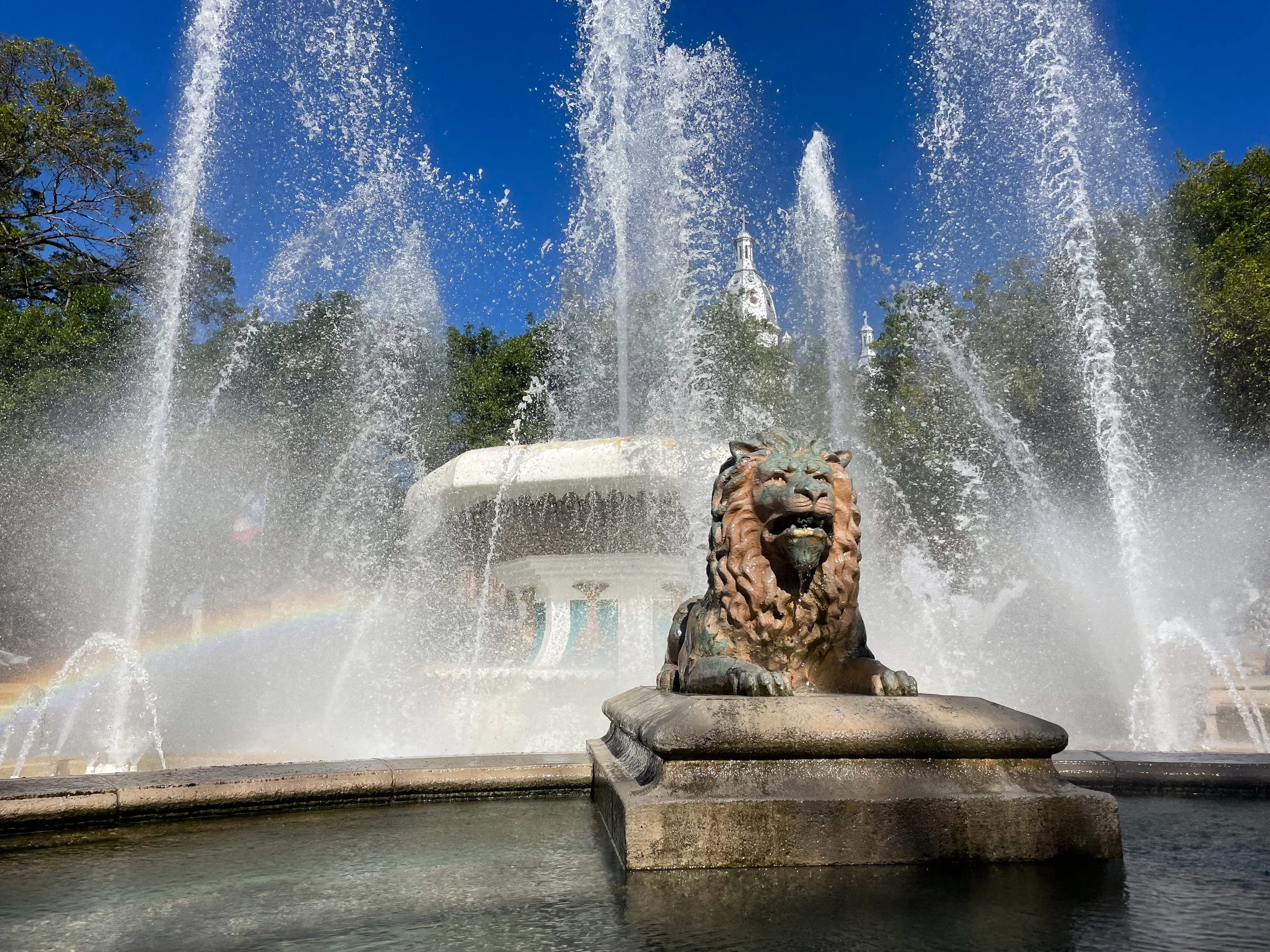
Fuente de los Leones. A large two tiered fountain with statues of lions, a symbol of strength and of Ponce.
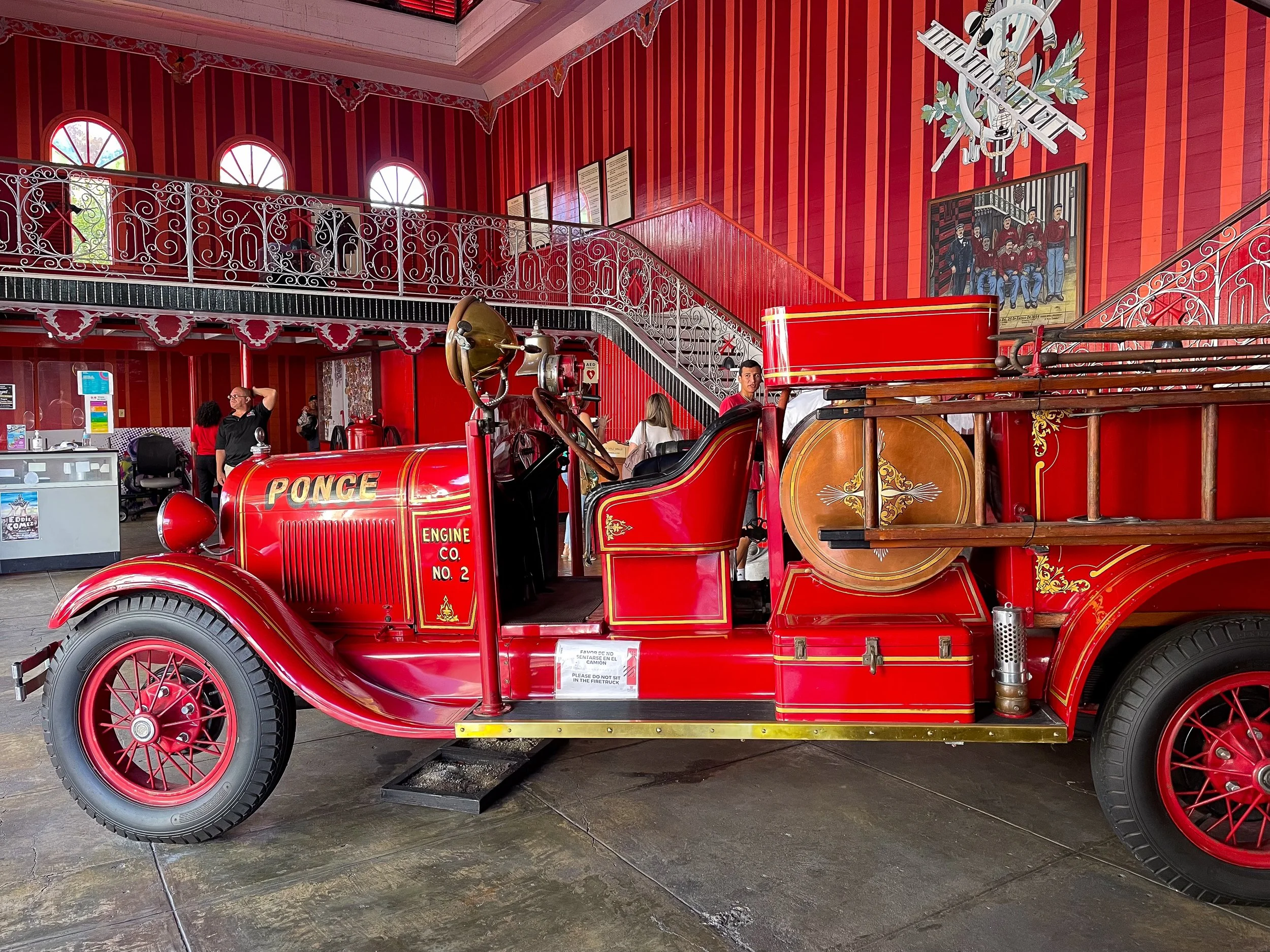
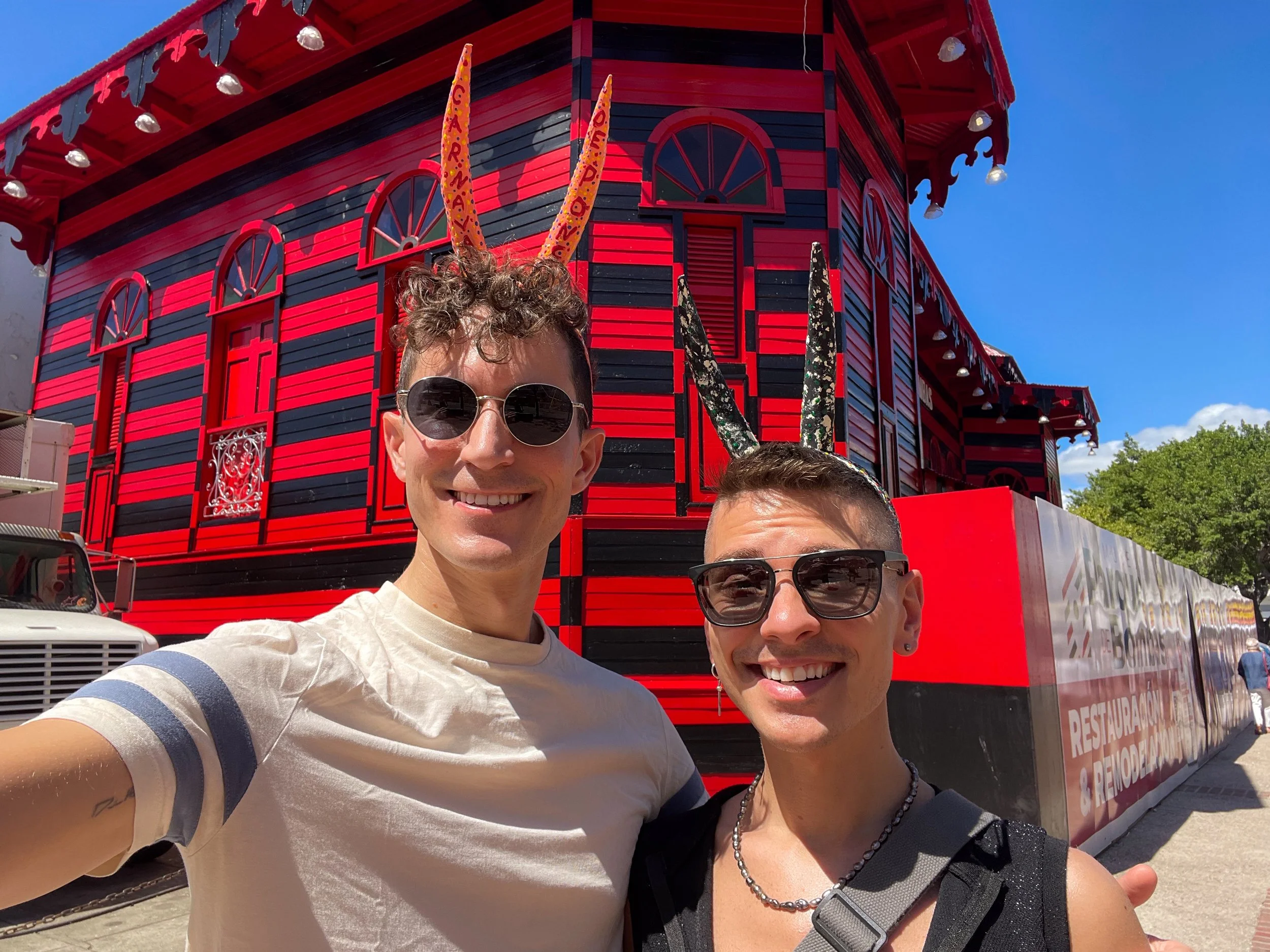
Parque de Bombas. Ponce’s iconic red and black striped former fire station and now museum.
Museo de la Historia de Ponce. Ponce’s historical museum with galleries explaining the significance of the city, its history, politics, architecture and cultural impacts on Puerto Rico as a whole. A local historian, Ronald, gave us a tour, recommended places to eat in Ponce and nearby places to visit.
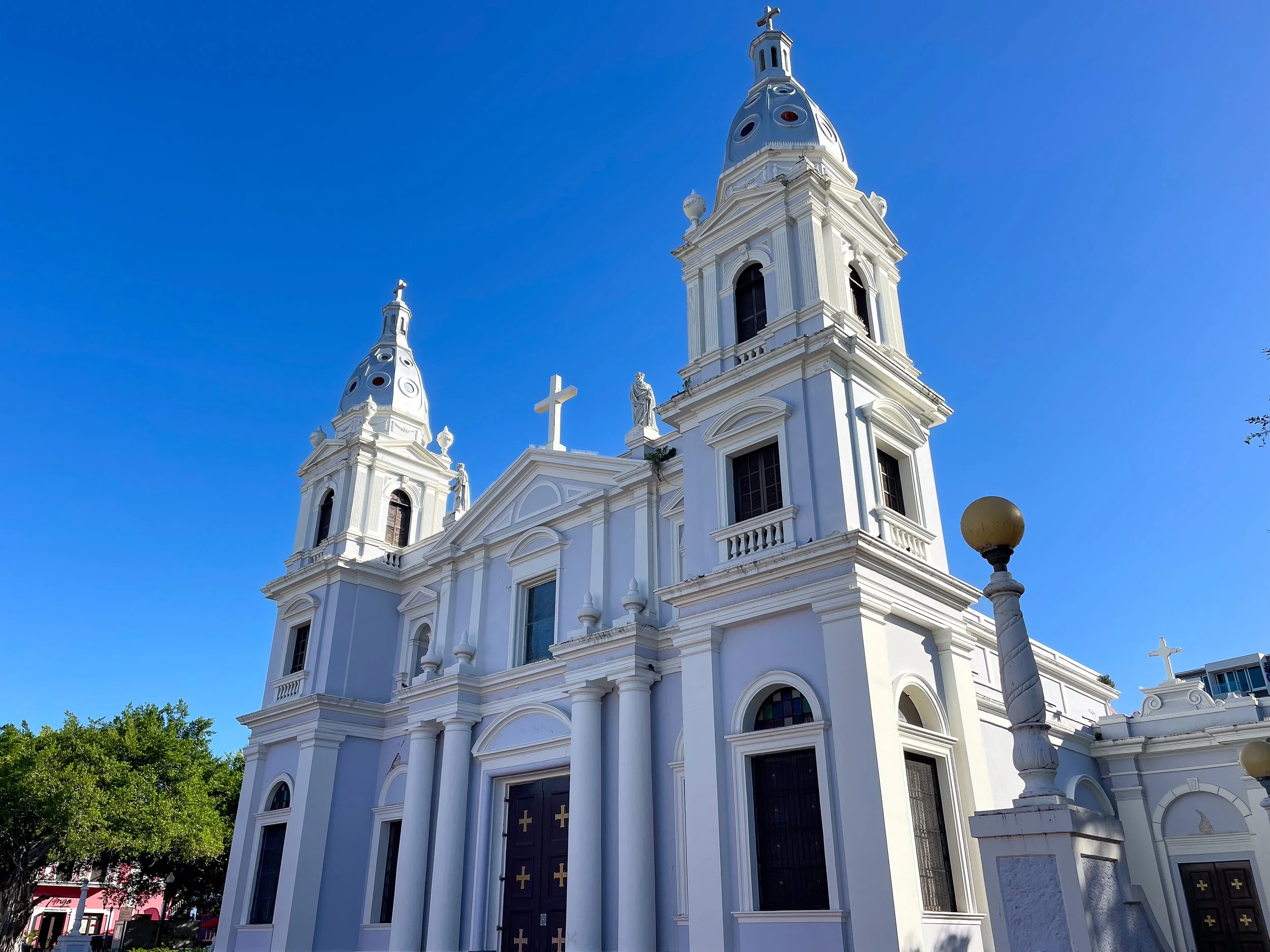
Ponce Cathedral. A large light blue and white neoclassical cathedral that divides the plaza.
La Guancha. A waterfront boardwalk and beach with restaurants, kiosks, a marina and an observation tower. Hurricane Fiona caused structural damage to the boardwalk. Many restaurants have since opened food trucks along a road in the parking area.
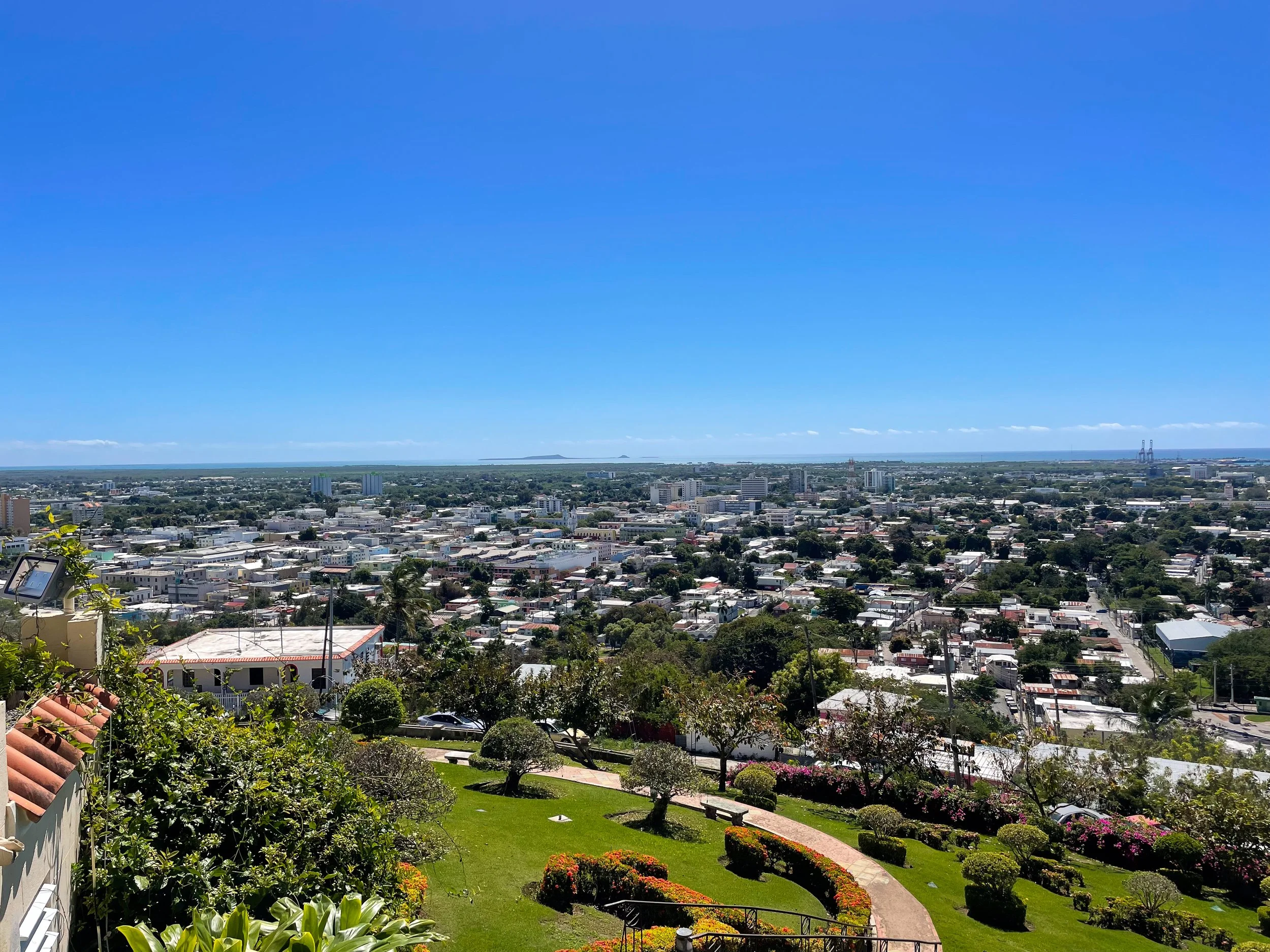
Museo Castillo Serrallés. A large mansion overlooking the city that once belonged to a sugar cane and rum baron. It’s now a museum and event venue with lush gardens and city views. Come to tour its grounds and interiors while sipping on a Don Q piña colada from its cafe.
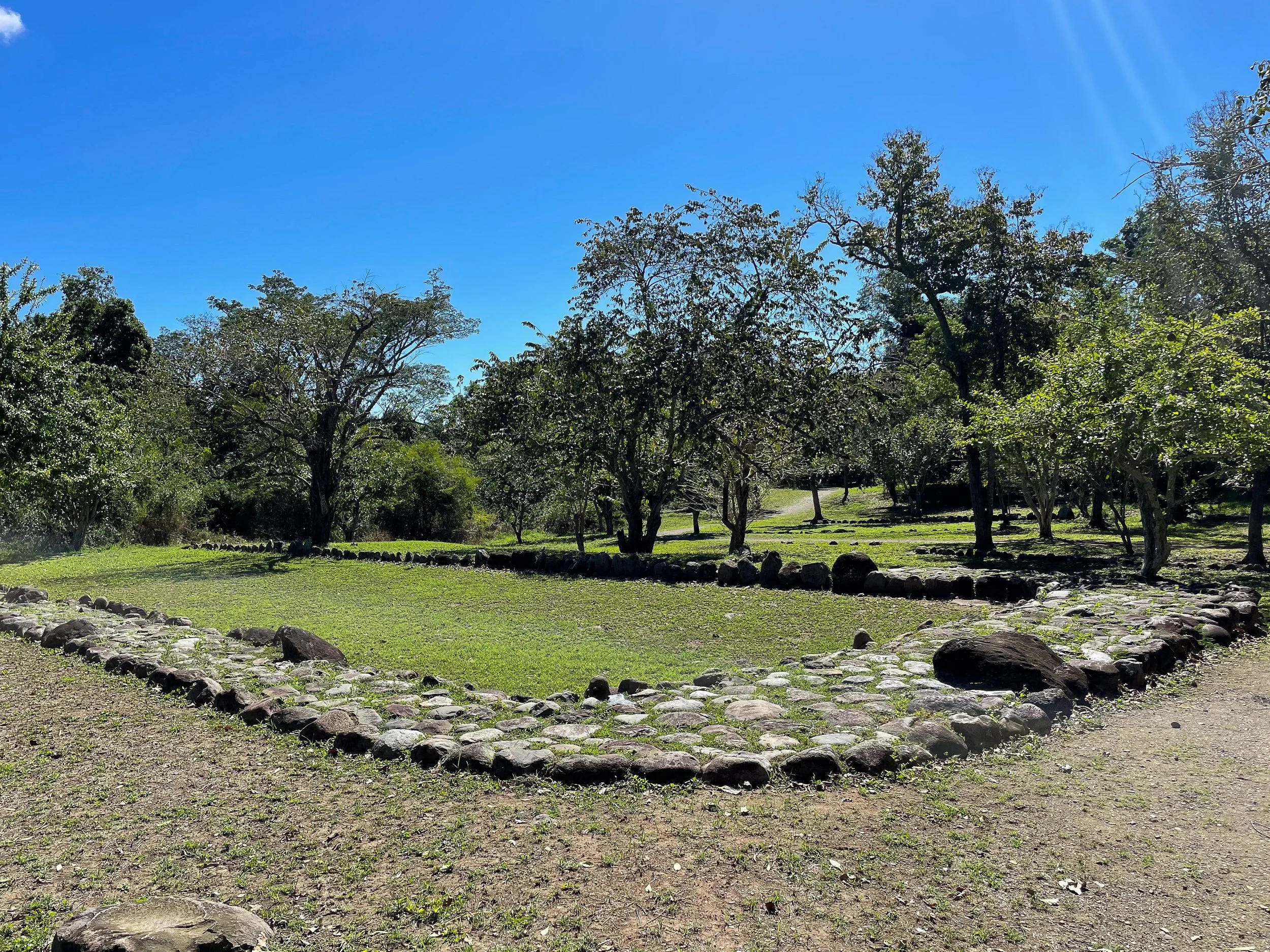
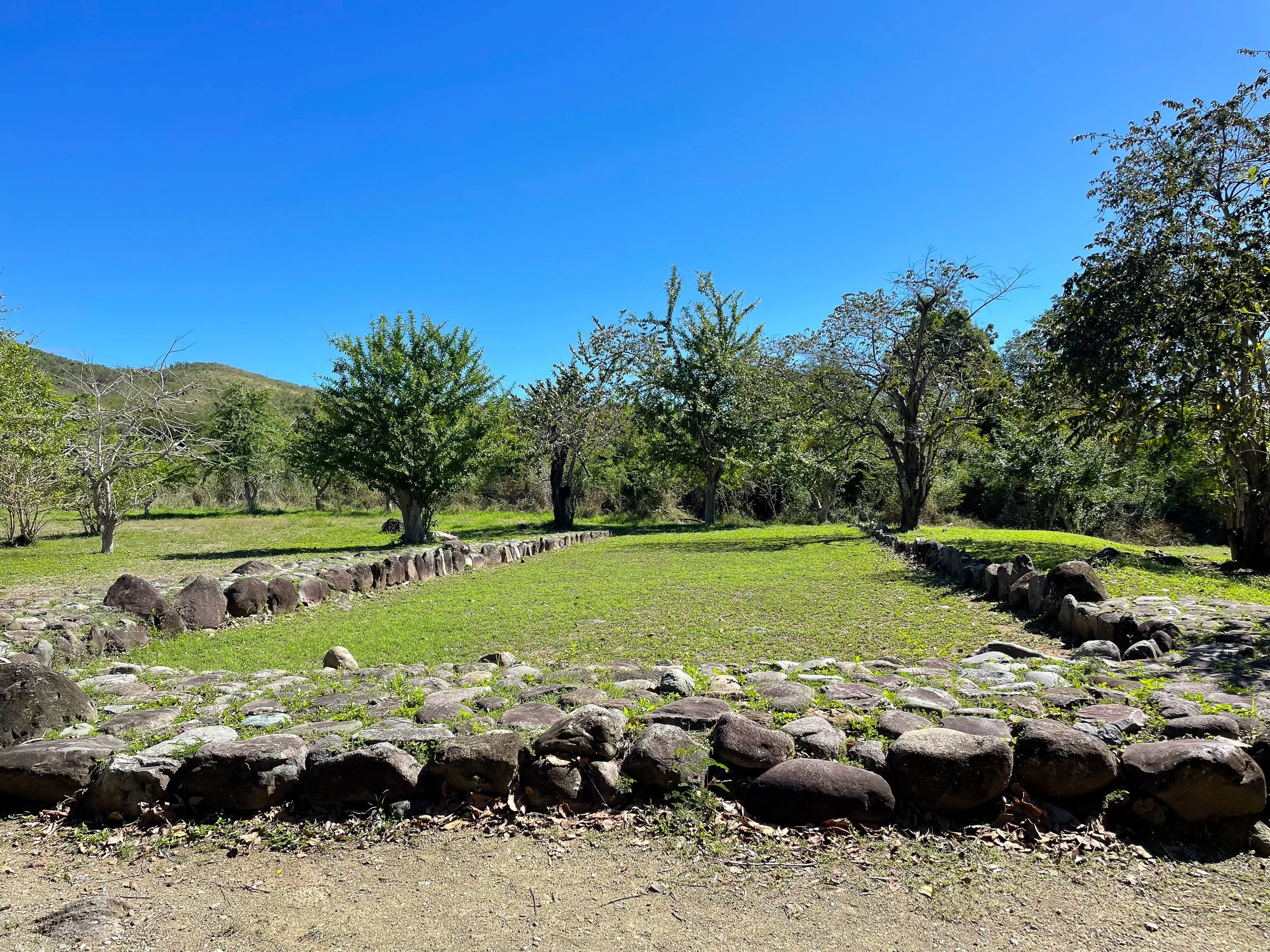
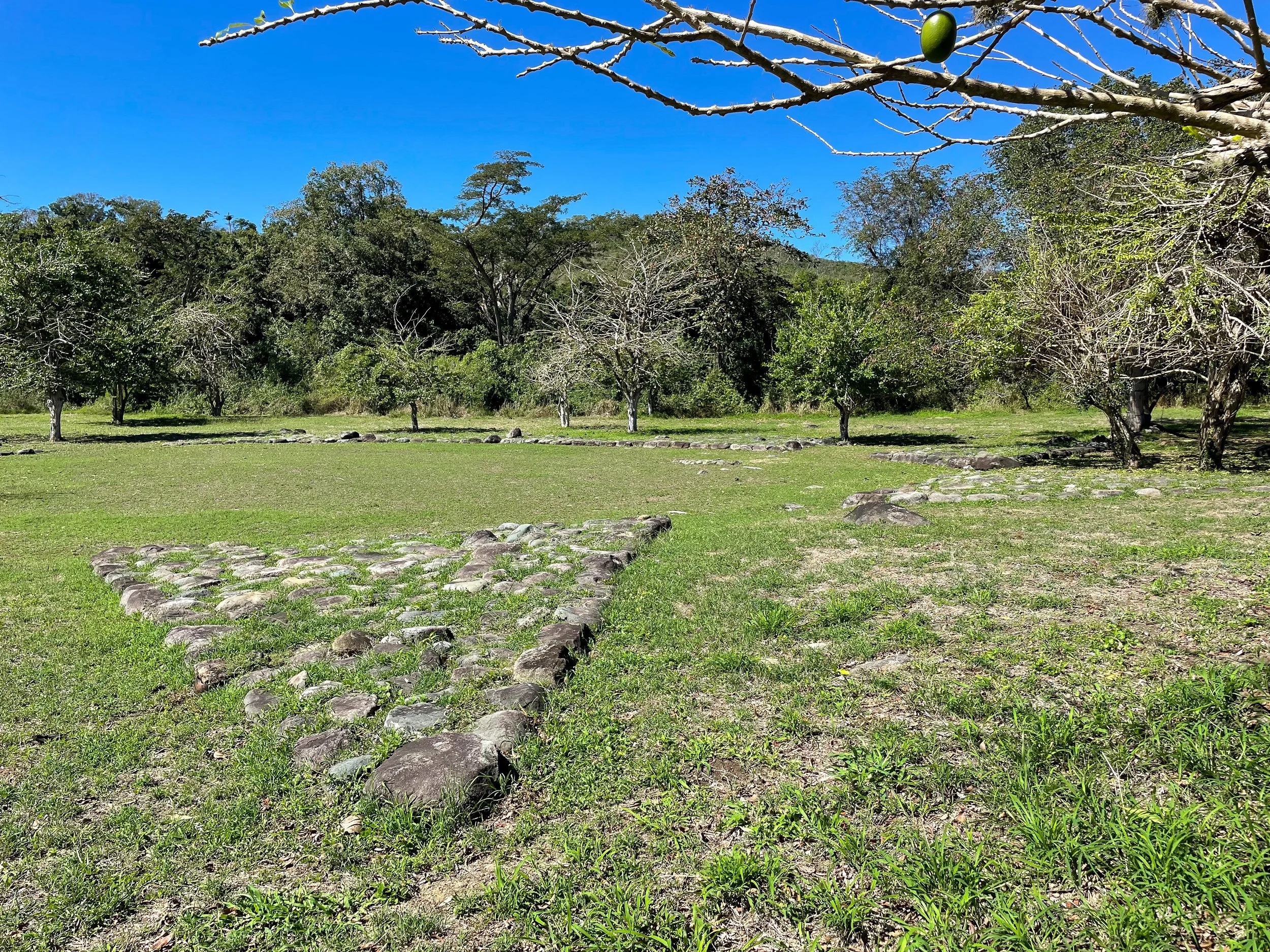
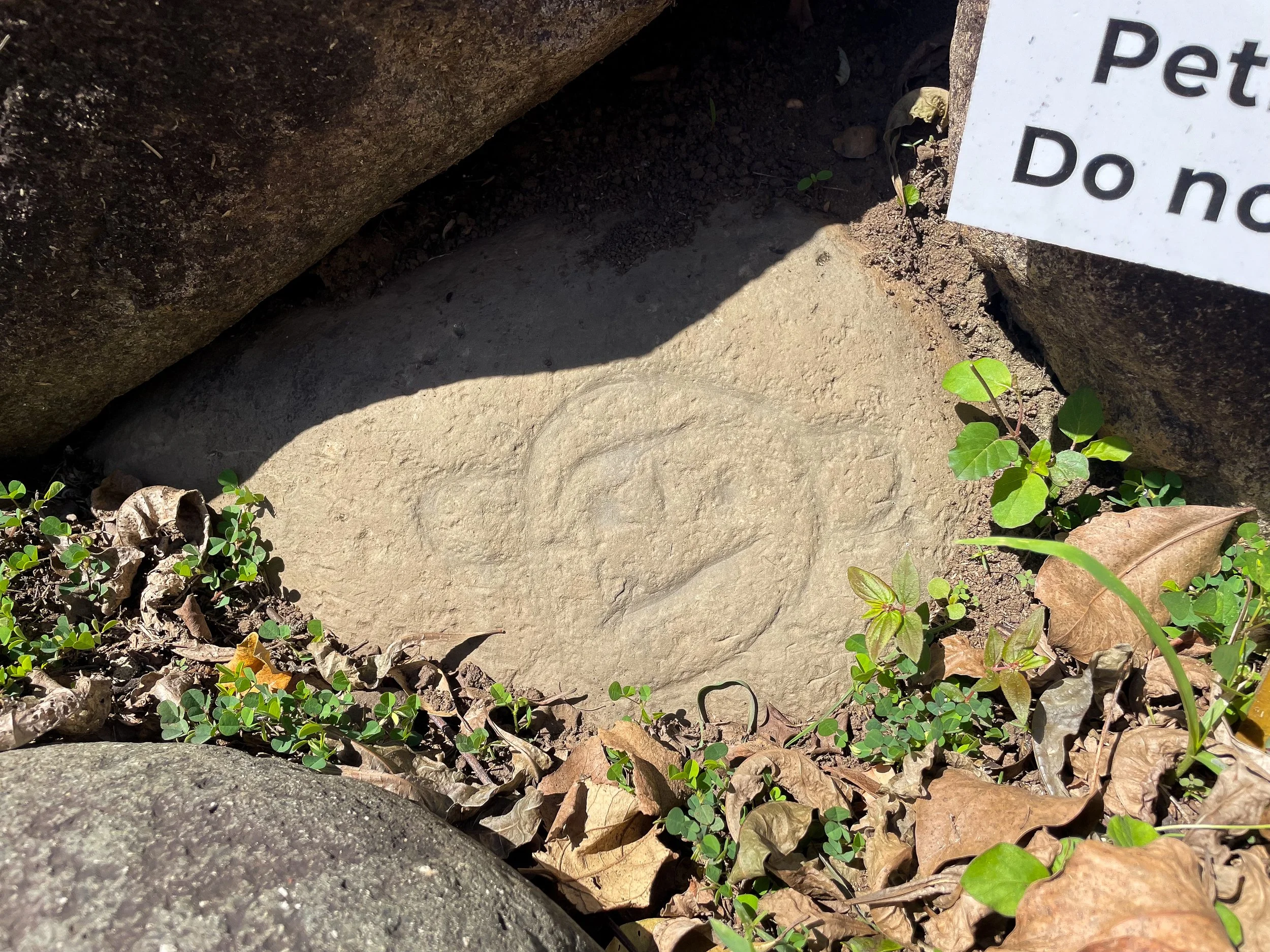
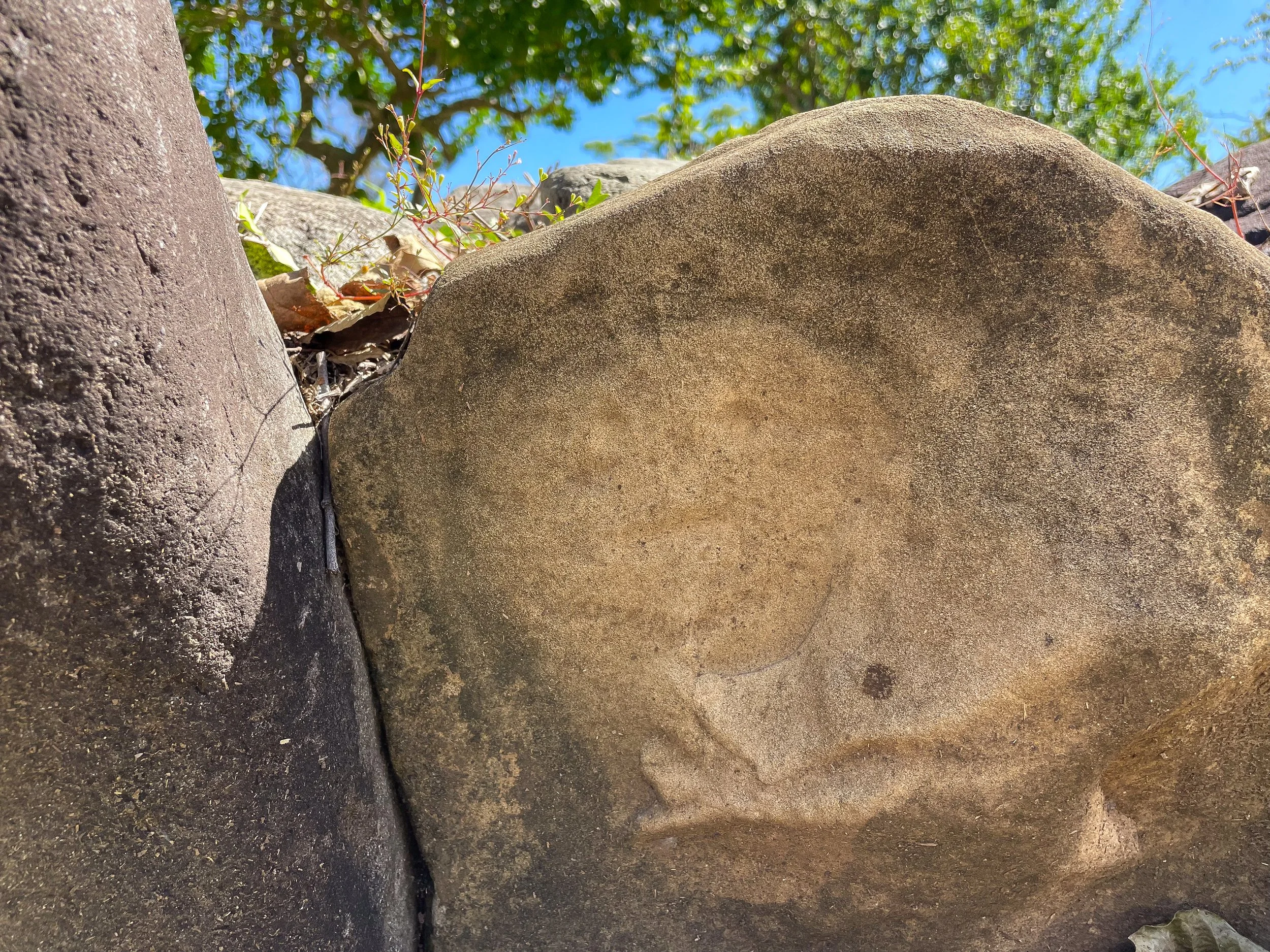
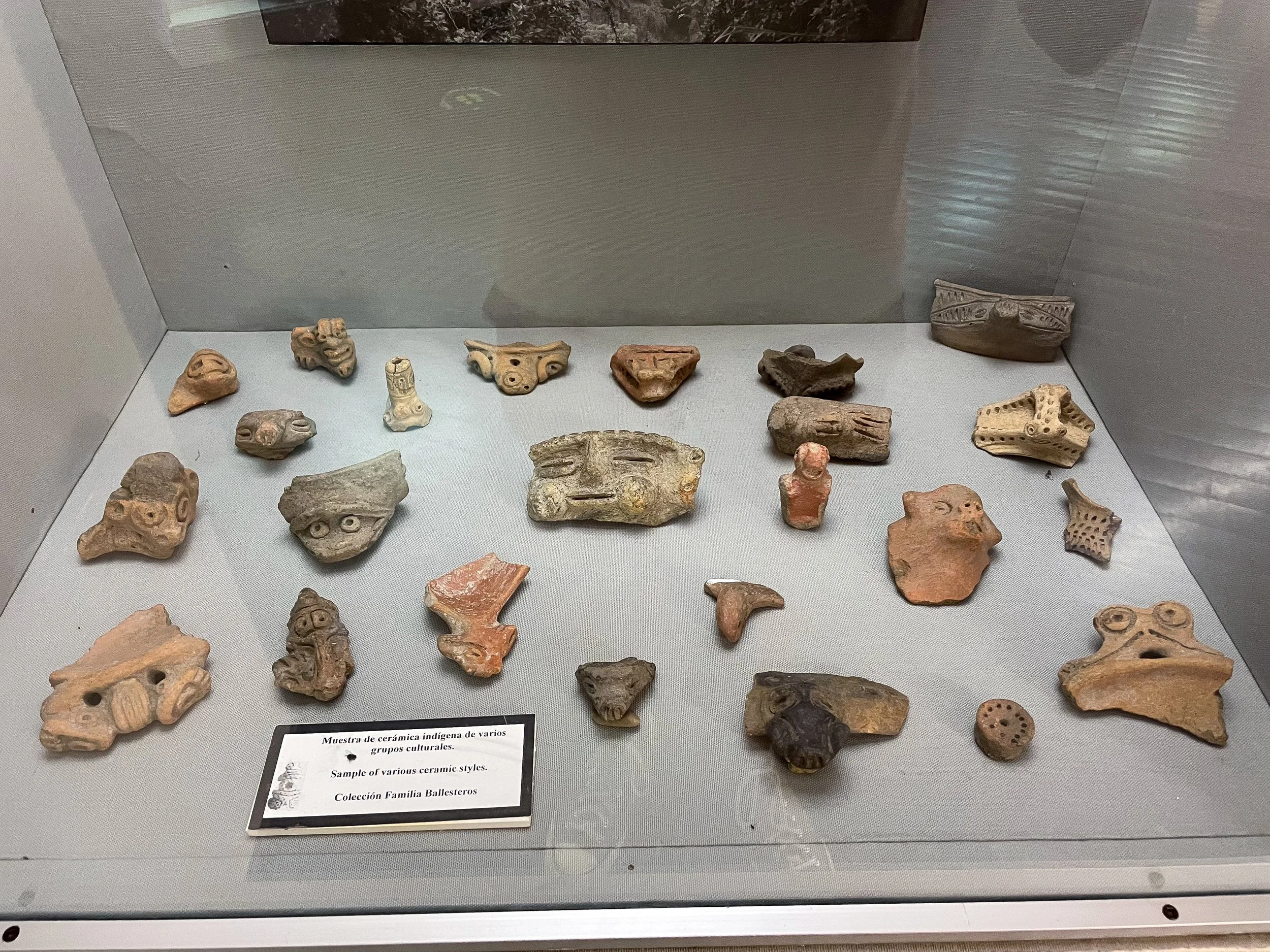
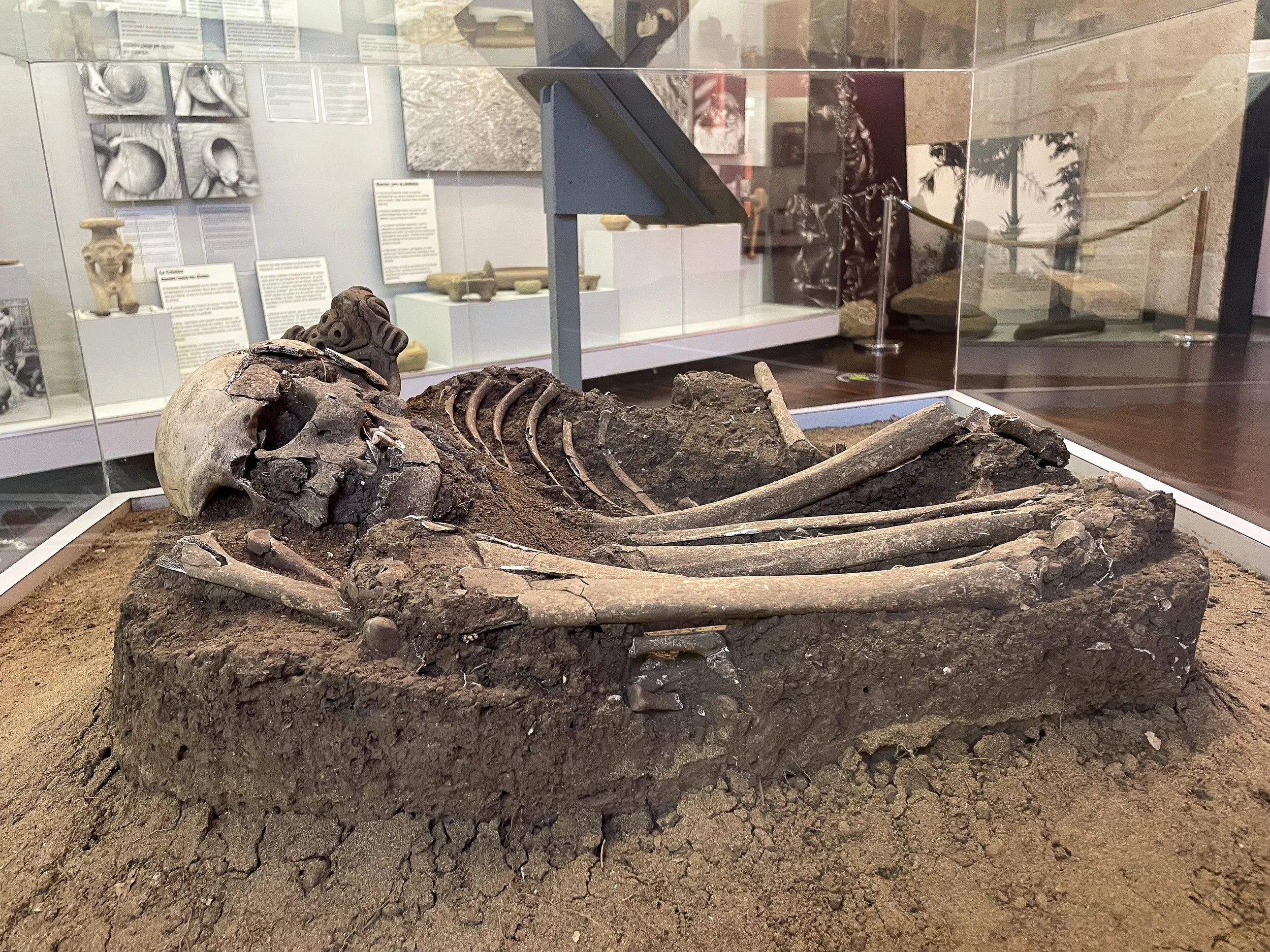
Centro Ceremonial Indígena de Tibes. A free archeological museum dedicated to the Taíno people with exhibits displaying artifacts including pottery, stone tools, shell jewelry and human remains. A short walk behind the museum is an open air exhibit with uncovered petroglyphs, stone platforms, ball courts and a plaza.
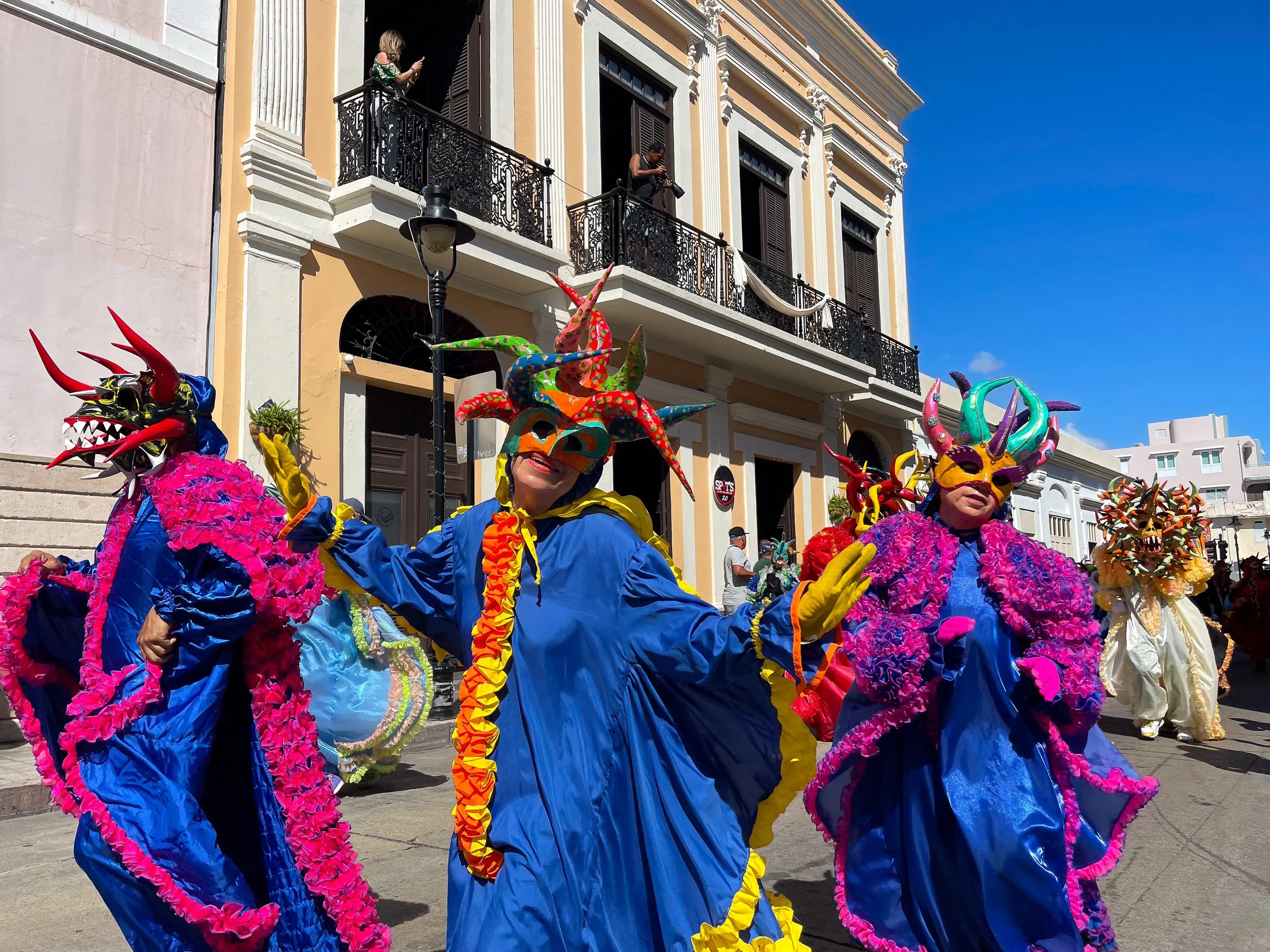
Carnaval Ponceño (Festival of Masks)
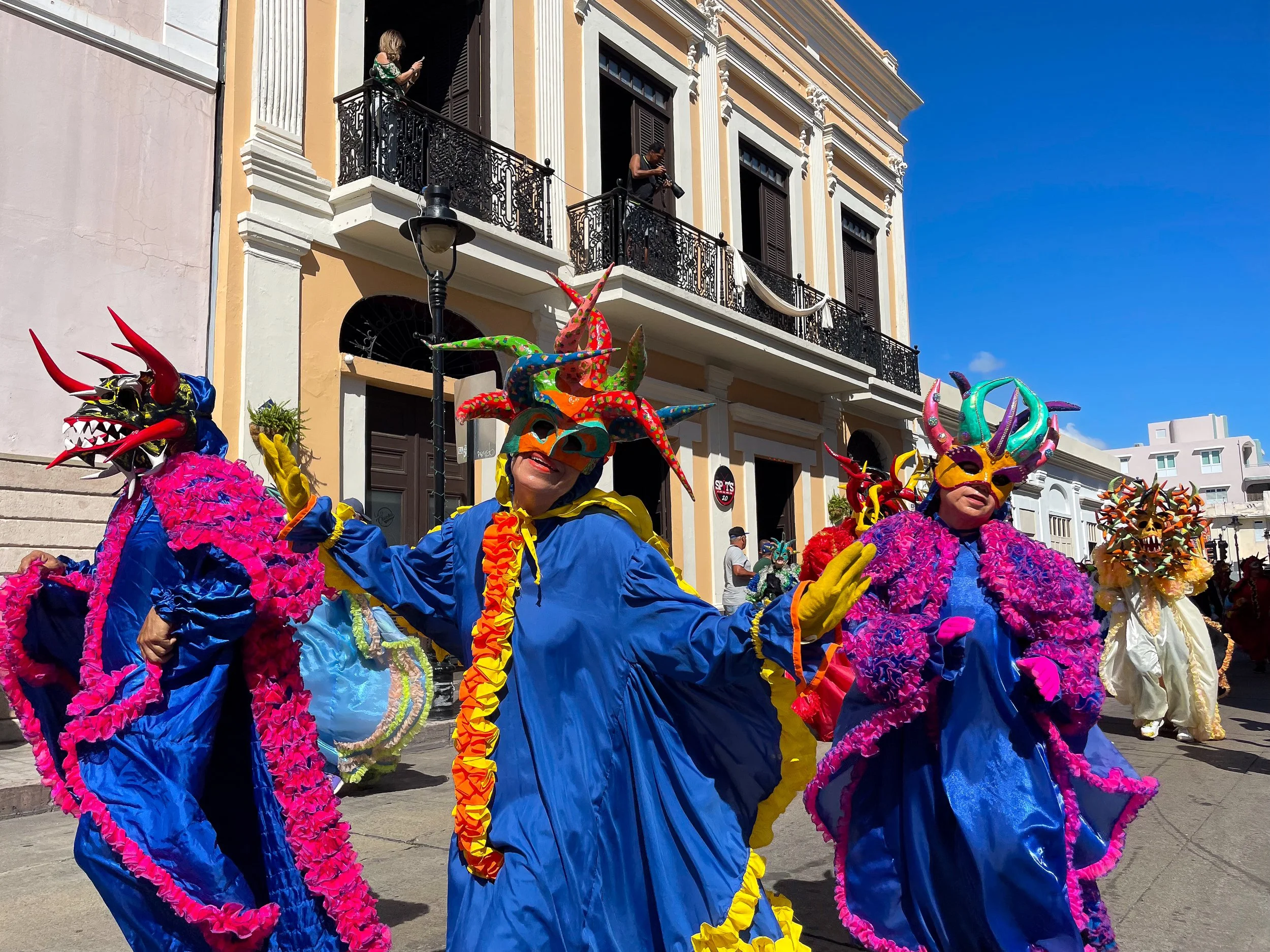
Ponce’s week long carnival festival included nightly events, parades, performances and the famous Vejigantes leading up to carnival Tuesday.
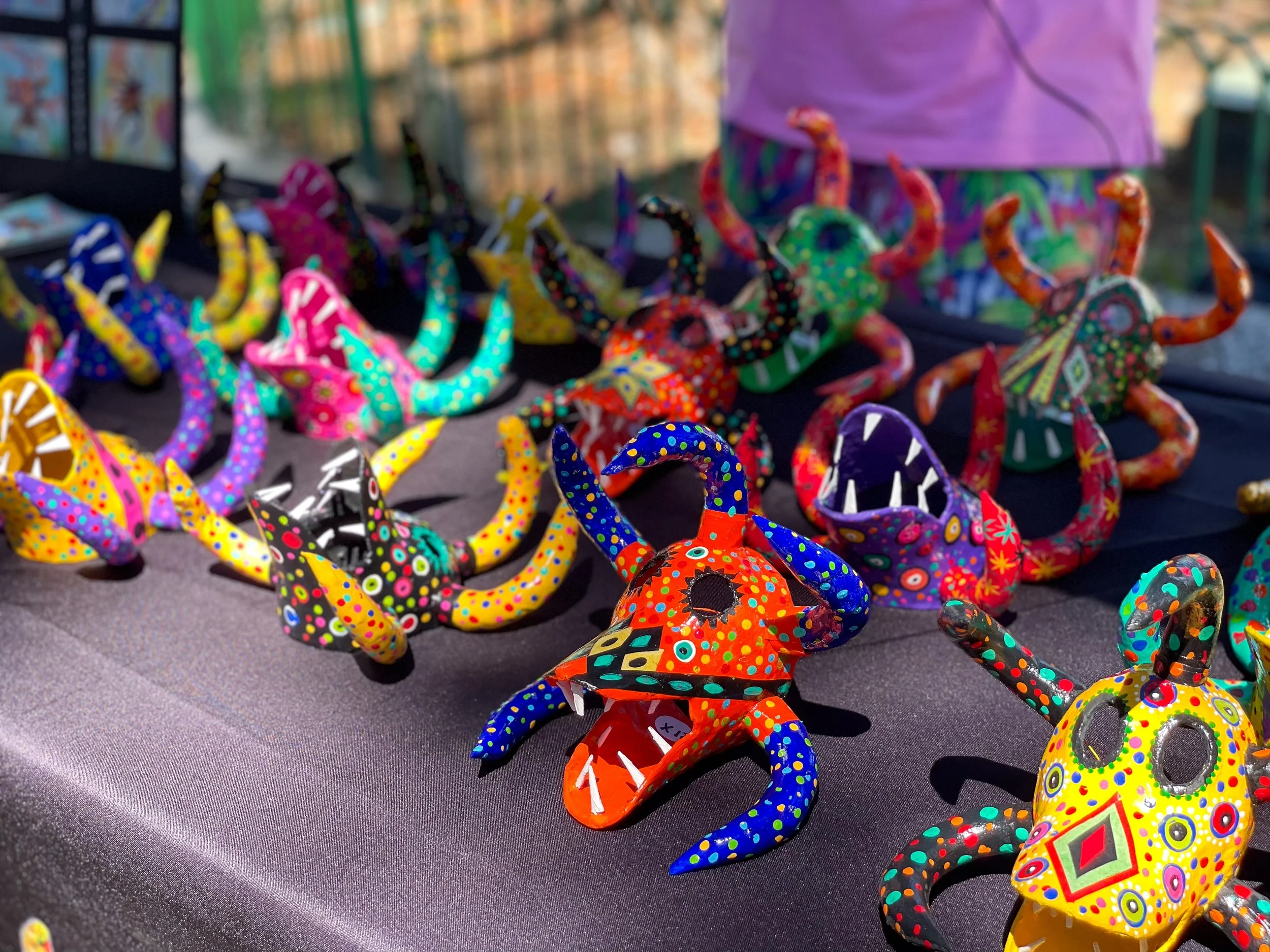
Vejigantes
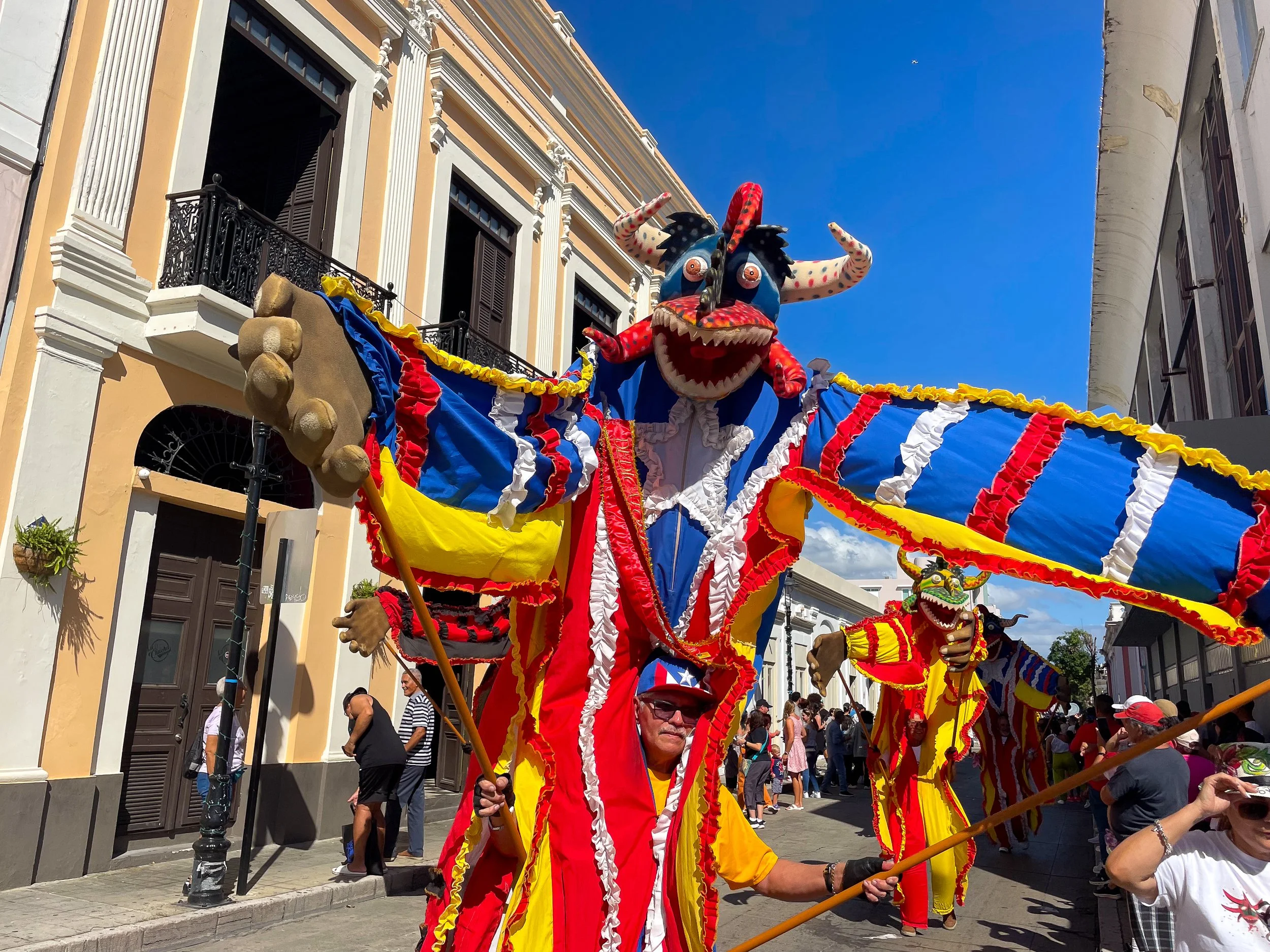
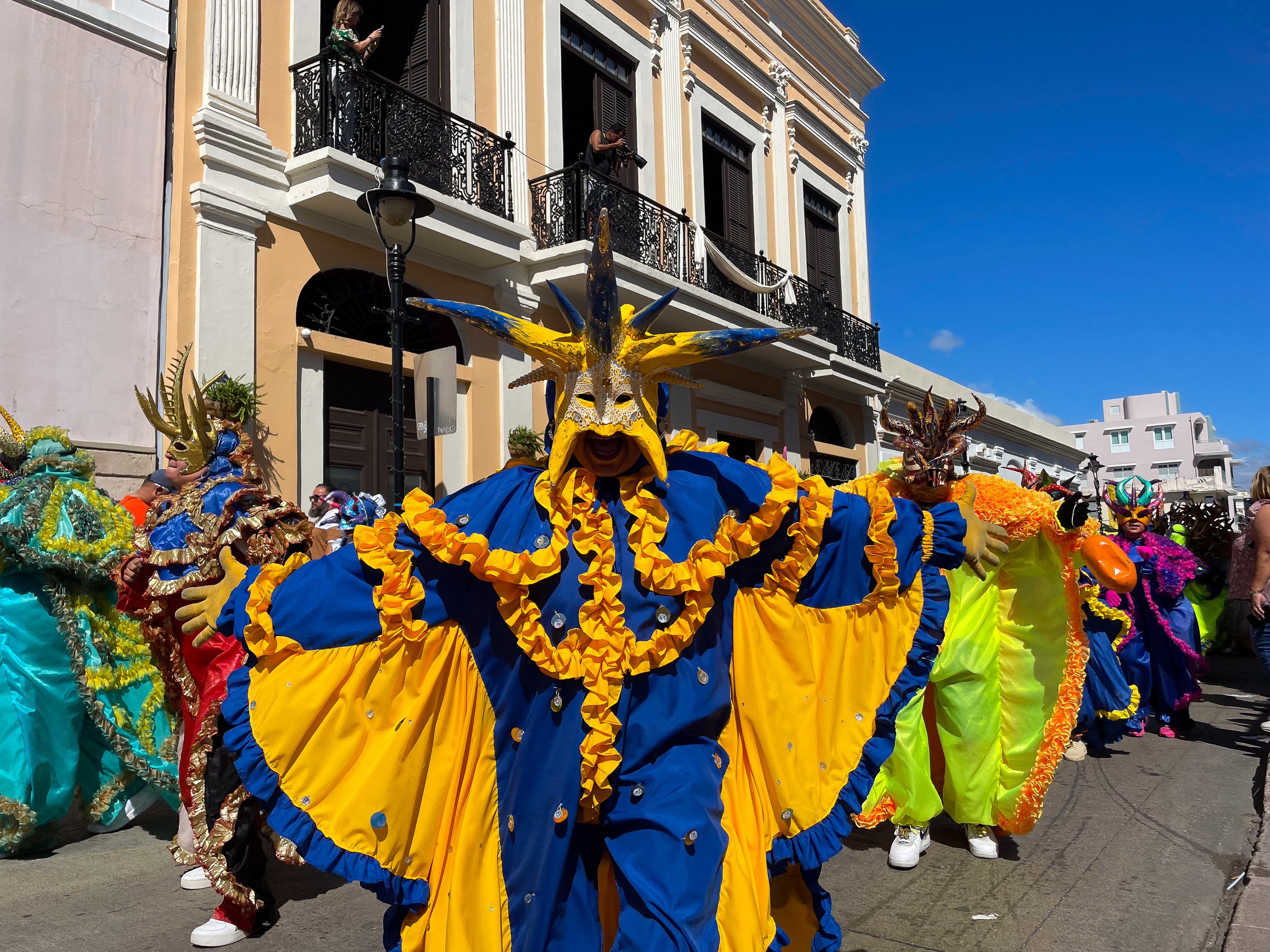
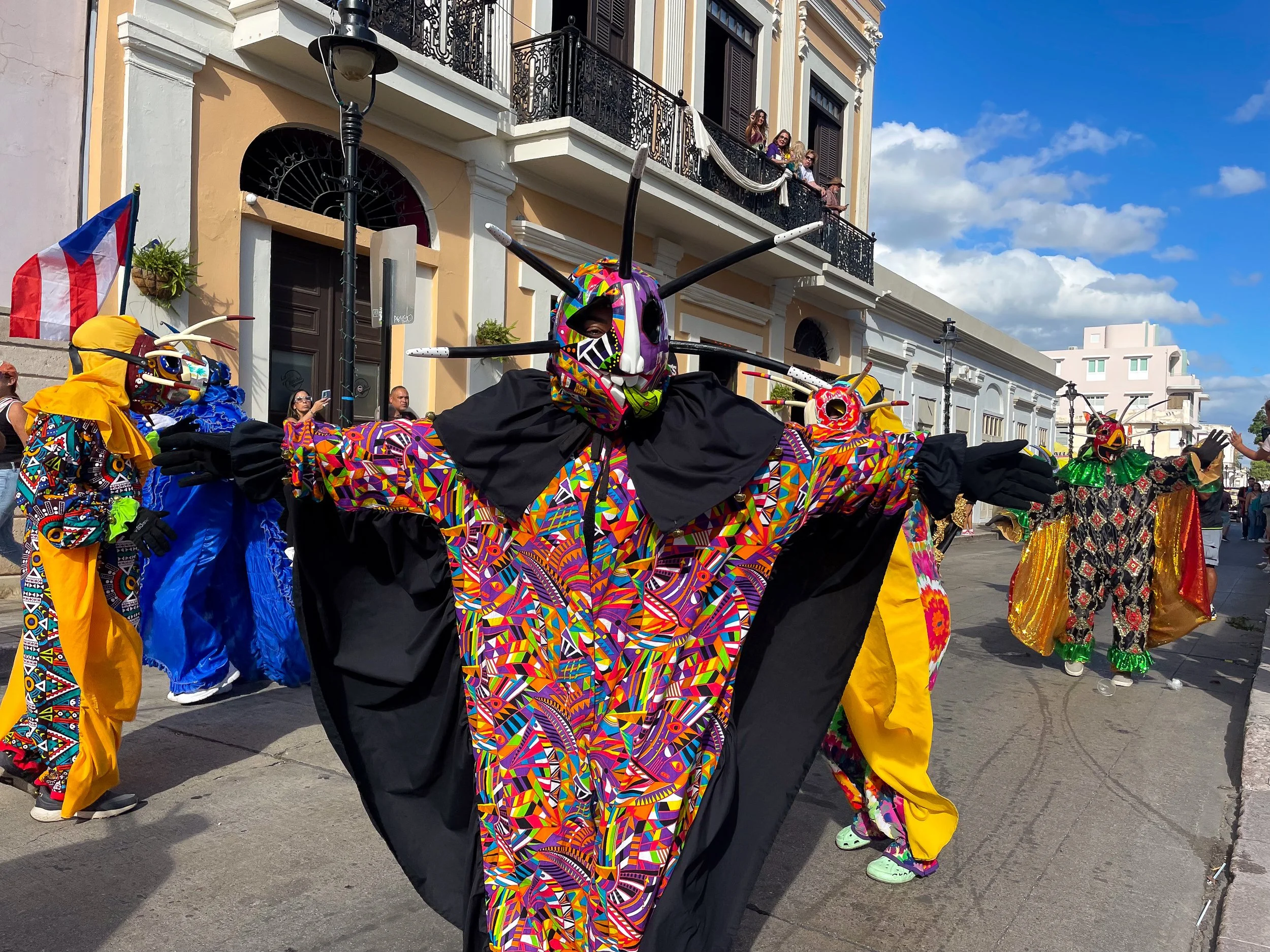
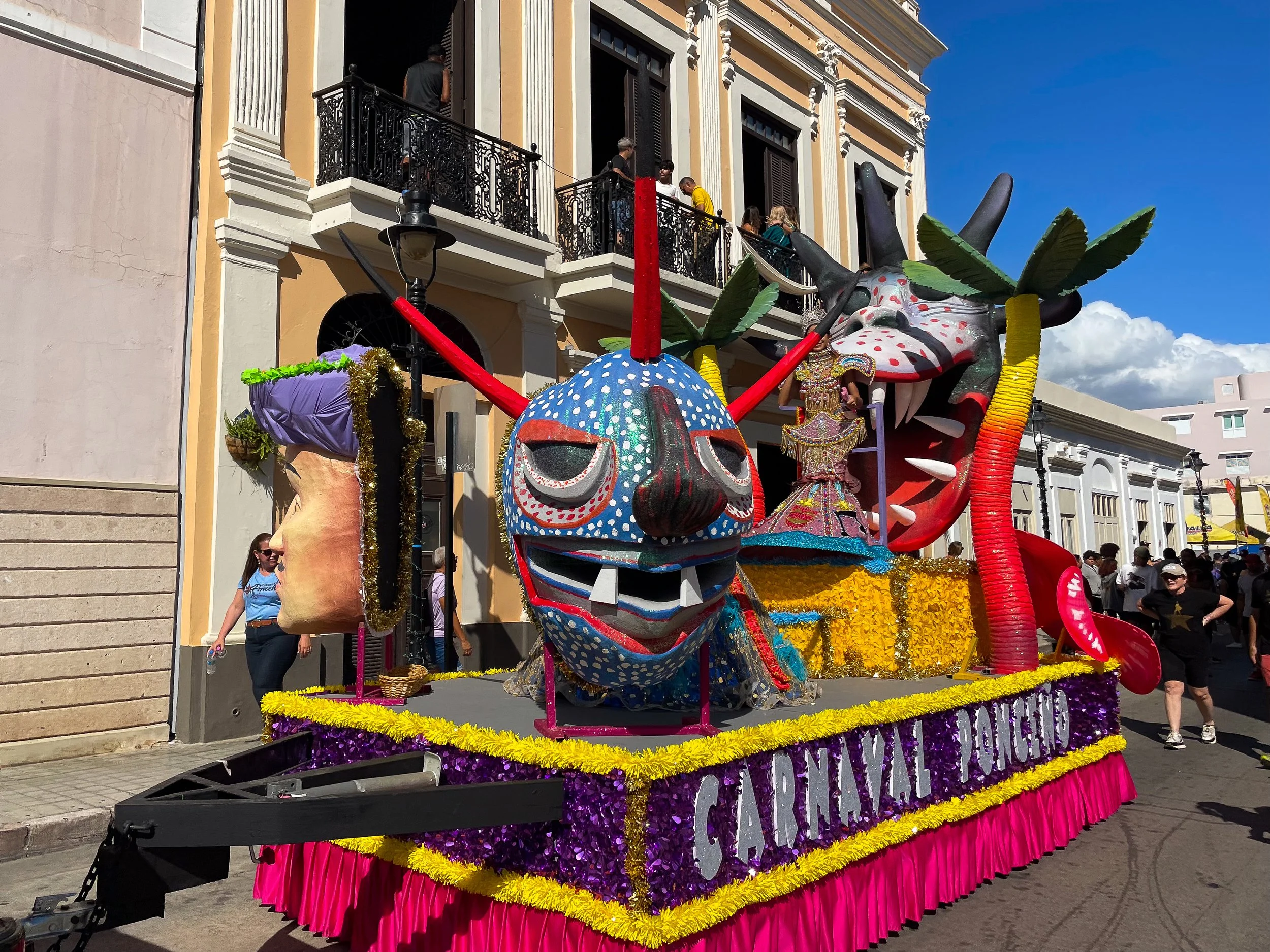
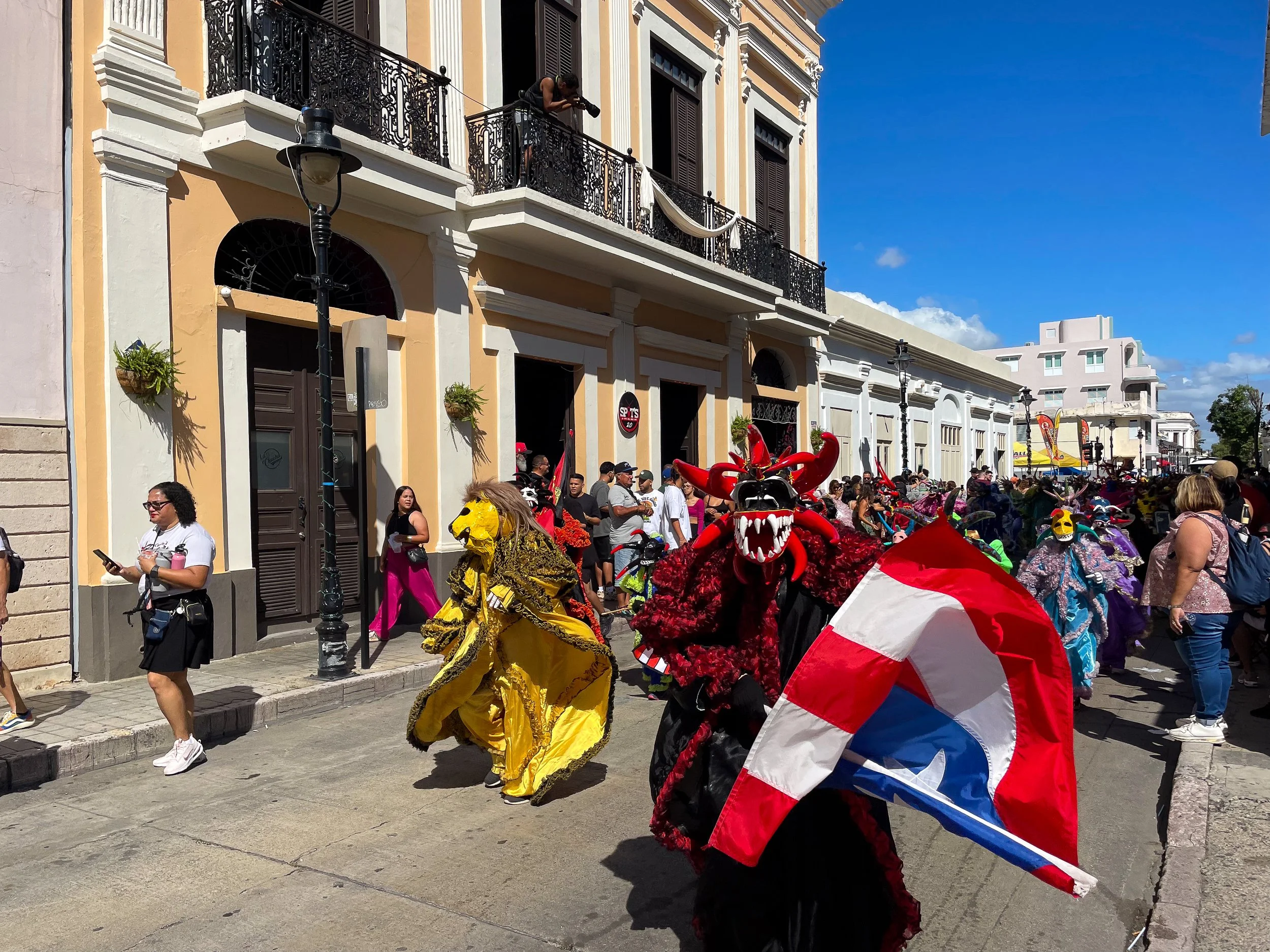
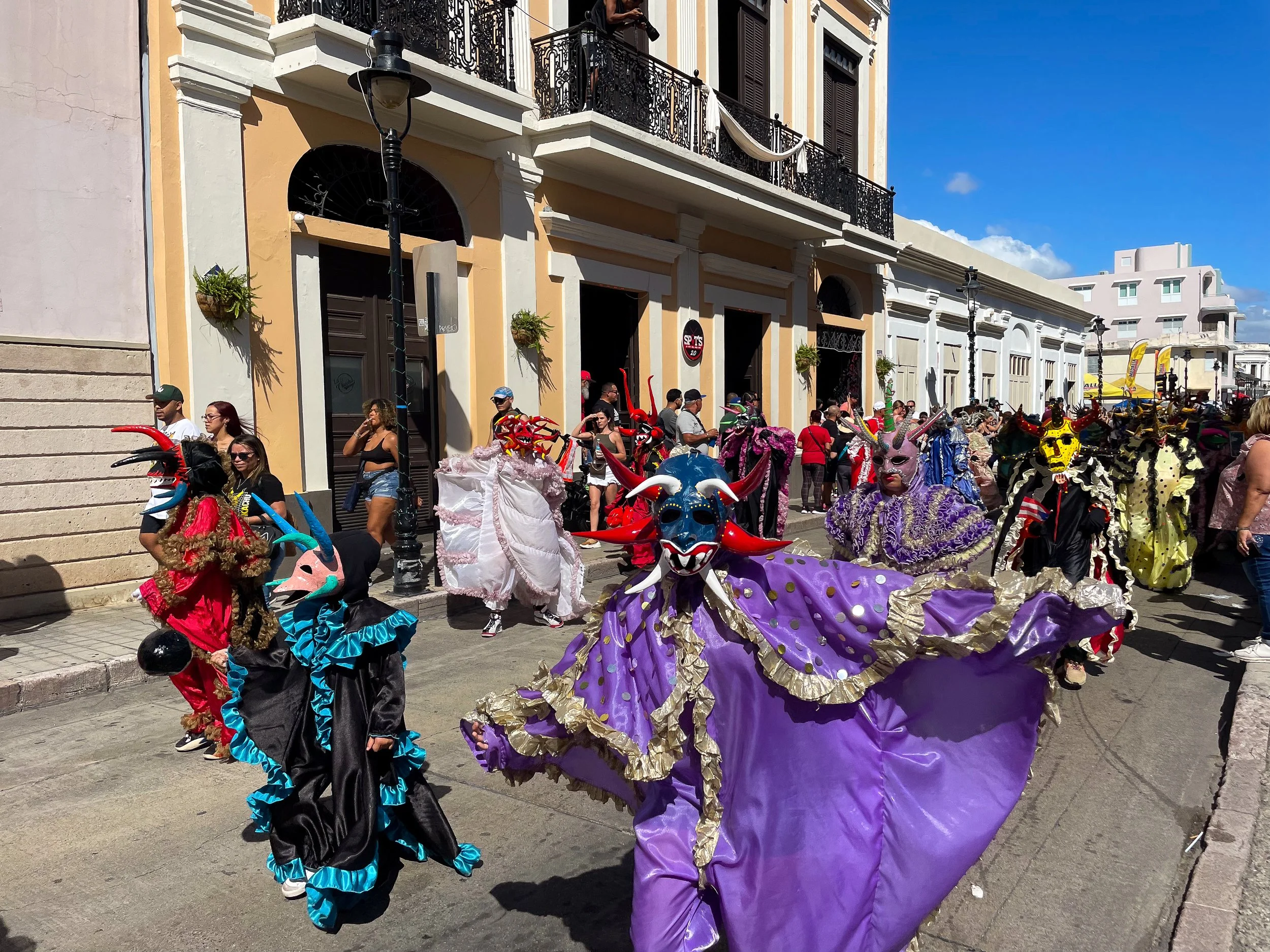
Carnaval Ponceño, also known as The Festival of Masks, is famous for the Puerto Rican Vejigantes, elaborately painted paper mache masks decorated with pointed horns, jagged teeth and worn with colorful jumpsuits. The Vejigantes are the symbol of the carnival and traditionally act as a reminder of evil spirits. Nowadays, they’re an expression of Puerto Rican culture.
The Festival
Plaza de las Delicias is turned into a fair with food, drink and craft vendors, amusement park rides and a main stage hosting musical performances and announcing the events of the carnival. Unlike what’s typically expected from carnival, Ponce’s is very family friendly.
Food vendors fry all types Puerto Rican dishes like mero (grouper), mofongo bites (mashed plantain), bacalaitos (cod fritters) and cheese. Full bars serve Medalla, the local beer, and a list of cocktails like piña coladas, cuba libres and rum punch. Craft vendors sell handmade items like Vejigante pins, masks, horns and painted jackets. We bought and wore a pair of horns, similar to the full face masks worn by the Vejigantes.

The Main Parade
The main parade is the largest event of the carnival celebrations with Vejigantes, marching bands, floats, the queens of the carnival, classic cars and loud speaker trucks. The parade travels west down Calle Reina towards Plaza de las Delicias and ending in front of the main stage. The parade happens on Sunday afternoon before carnival Tuesday. It started around 2:30pm and lasted into the evening with festivities lasting even longer. Most people arrive by late morning and set up chairs along the shaded side of Calle Reina for the best views.
Places to Eat & Drink
Campioni Pizza Birra & Tapas. A popular restaurant for Puerto Rican style pizza (thin crust pizza cooked in a wood fired oven). Order the fruto del mar pizza topped with shrimp, calamari and octopus with a red sangria.
Lola Eclectic Cuisine. An elevated restaurant serving international cuisine. Try the tuna tartare wonton tacos, grilled salmon on a taro cake, sea bass over lentils and ice-cream on a fried plantain.
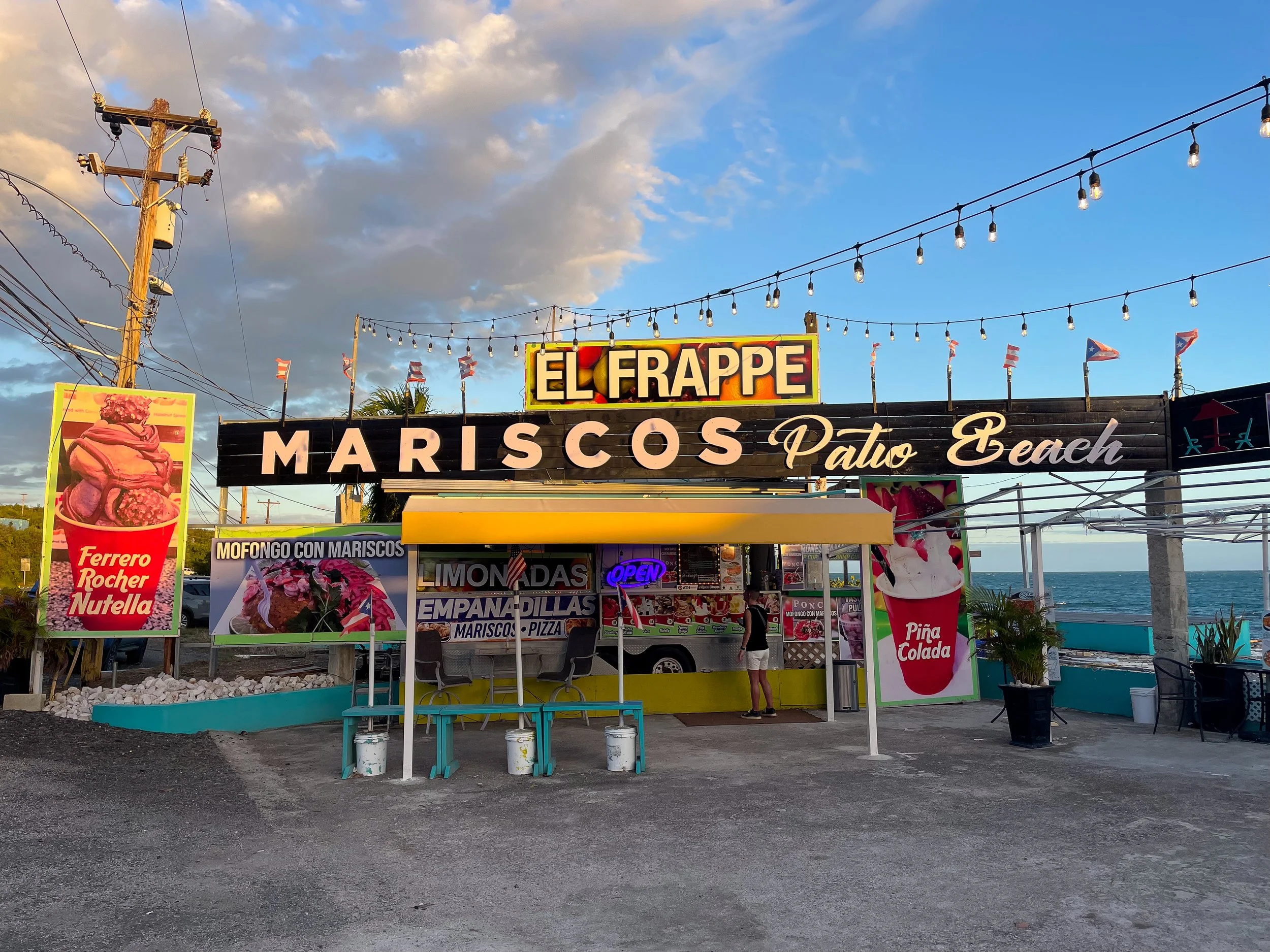
Mariscos Patio Beach. A roadside seafood kiosk overlooking the Caribbean with fresh and fried seafood dishes. Try the octopus salad, shrimp salad and tostones.
Tazza D' Oro Caffé. A breakfast and brunch spot across from Plaza de las Delicias. Try the egg quesadilla or eggs Benedict on brioche. They serve Gusto’s coffee, a Puerto Rican coffee roaster.
Con Leche. A breakfast and brunch cafe. Try the Mallorca egg sandwich or breakfast wrap made with eggs and salsa roja.
Chango Bar. A dive bar named after the little black birds seen across Puerto Rico. Come here for a Medalla or glass of Don Q served neat.
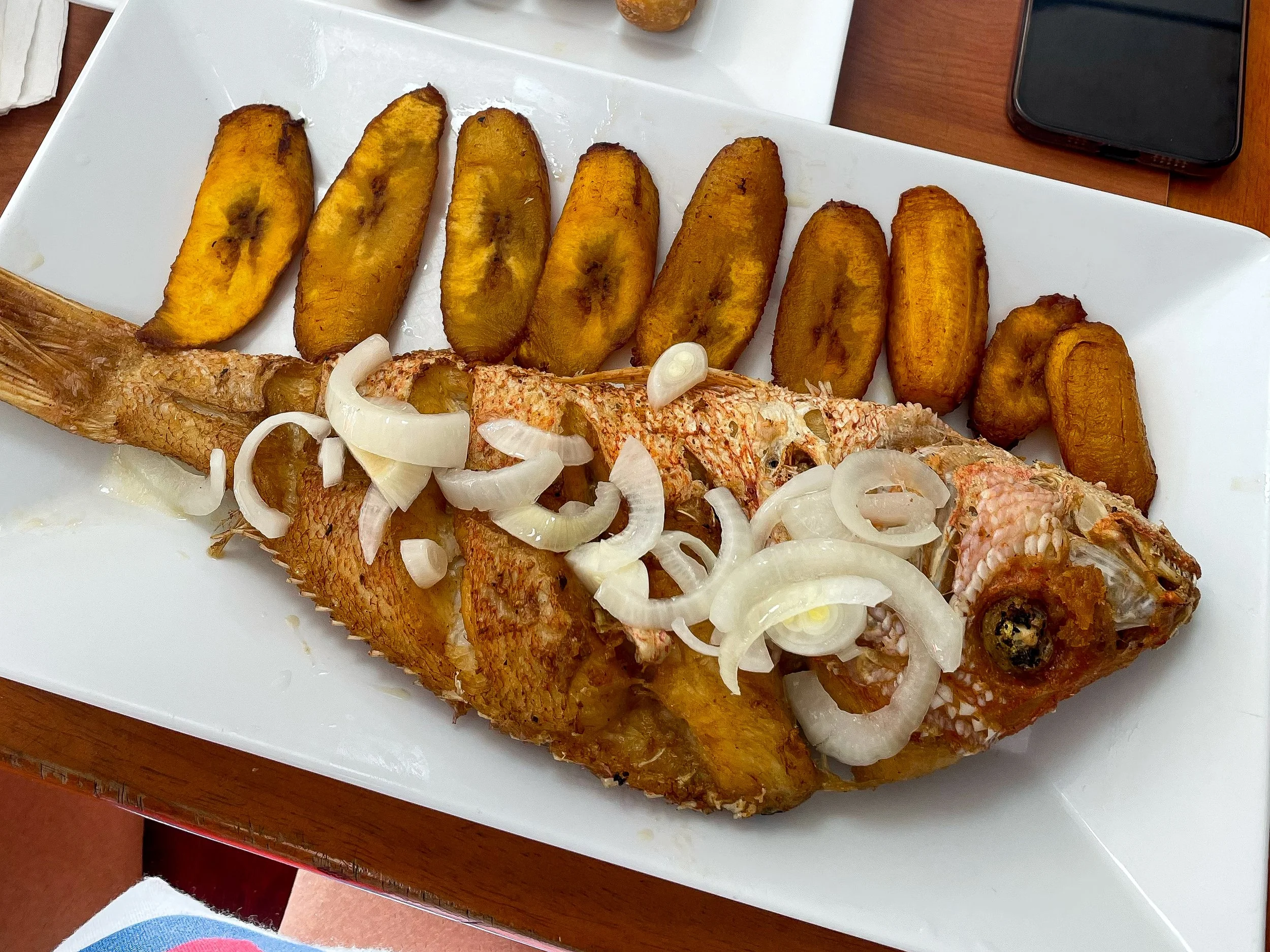
Puerto Rican Cuisine
Chillo Frito Entero. A fried red snapper served whole with crispy skin, tender meat and squeezed with lime. It’s usually accompanied by fried plantains like tostones, mofongo or amarillos.
Mofongo. Fried plantain mashed with garlic and butter. It’s often served plain or stuffed with an option of seafood. If prepared with breadfruit and yucca, it’s known as trifongo.
Empanadillas. Puerto Rican style fried empanadas stuffed with a range of fillings like octopus, conch, cod, shrimp, crab and pizza.
Pinchos. Grilled meats served on a stick often served at beaches or roadside kiosks. Our favorites are shark and shrimp.
Mojo Isleño. A savory sauce made from tomato, onion, bell pepper, garlic, olives and bay leaves. It’s often served on fried red snapper, lobster or mixed with octopus and conch.
Mallorca. A Puerto Rican pastry often shaped like a bun or swirled roll and dusted in powdered sugar. Our favorite preparations are pressed with guava and cheese or egg and cheese.
Coco Frio. A cold and freshly opened coconut. Drink the coconut water inside then eat the sweet meat inside. Alternatively, enjoy it with coconut rum to create a tropical cocktail.
Rum. Puerto Rico is unarguably the rum capital of the Caribbean with several distilleries and local brands served in bars across the island. Order it on the rocks, in a Piña Colada or other tropical cocktail.
Medalla. The island’s most popular local beer, recognizable by its small golden can. It has a light slightly nutty flavor and is served everywhere. Buy a 6 pack for the beach!
Where to Stay
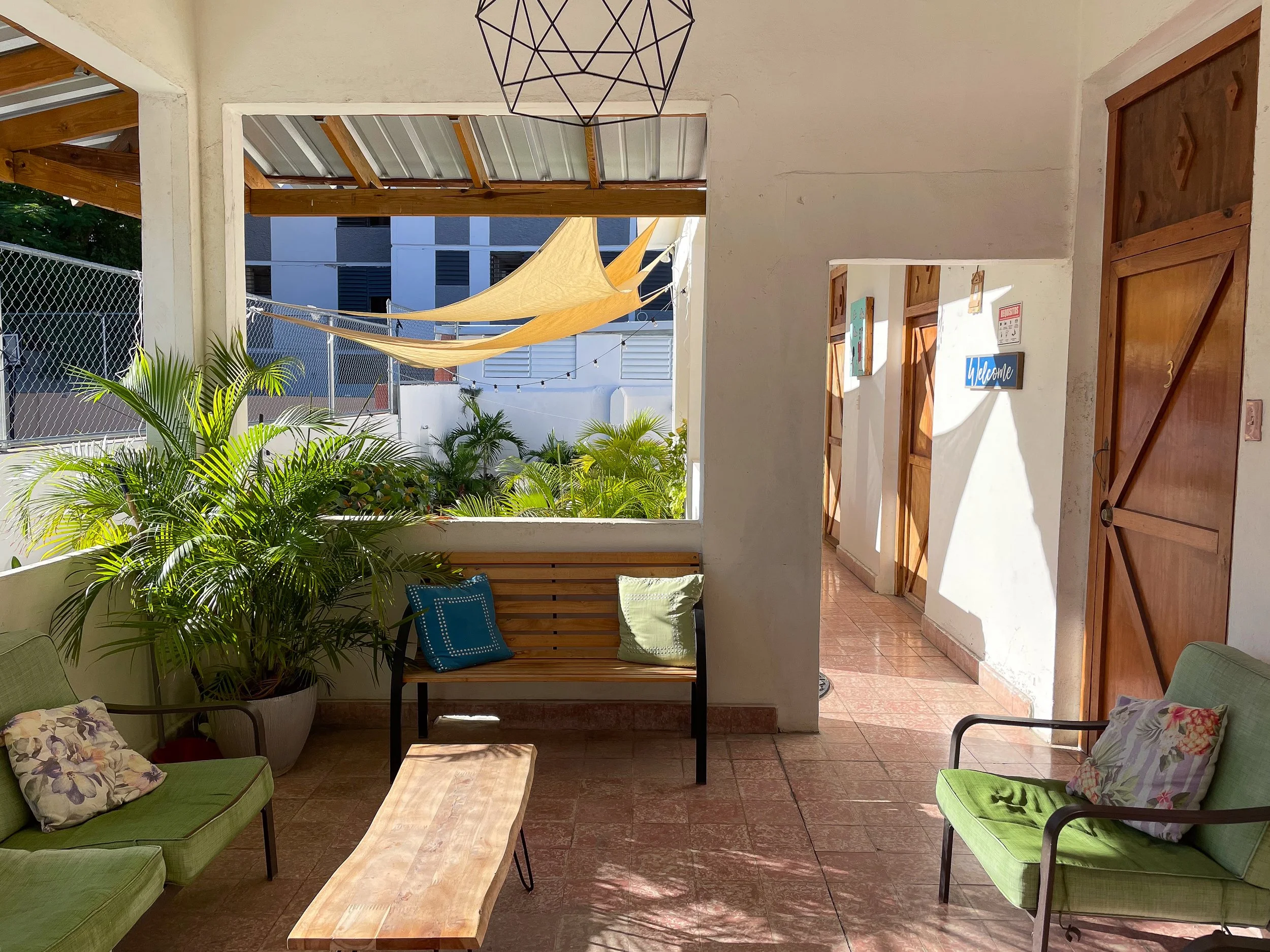
Casa Luna. An inexpensive hotel in a neon green Creole style building located 2 streets away from Plaza de las Delicias in Ponce’s city center. It has multiple private rooms with bathrooms, a public patio and outdoor kitchen. Book on Airbnb.
Location Specifics
Respect the Culture. Puerto Ricans are very proud of their island, culture and heritage. Please show respect when discussing local issues and topics. Don’t be afraid to ask questions and learn about the culture and island.
US Territory. Puerto Rico is a US Territory meaning US citizens can visit the island without a passport.
Language. Spanish is the primary language spoken in Puerto Rico. English is widely spoken as a second language. Knowing basic Spanish words and phrases is helpful and beneficial when visiting.
Currency. Puerto Rico uses the US Dollar.
Metric vs. Imperial. Puerto Rico uses a combination of the Metric and Imperial systems. Speed limits are marked in mph while distances are marked in kilometers. Gasoline is sold by the liter instead of by the gallon.
Cash vs. Card. Credit and debit cards are widely accepted across the island. Cash is preferred by most vendors at markets, kiosks and some businesses.
Power Outages. The electrical grid is fragile due to devastation from past natural disasters. While power outages rarely affect tourists, they do happen. It’s a difficult part of life for many Puerto Ricans.
Tap Water. Tap water is generally safe for consumption around the island.
Tropical Weather. Puerto Rico experiences tropical weather. Carry an umbrella in case of afternoon and evening rain storms. Tropical storms and hurricanes are possible from June through November with September through October being the most active.
Swimming. Mind the warning signs and red flags advising about dangerous ocean currents. Pay attention to where others are and are not swimming.
Sun Protection. The harsh UV is dangerous in Puerto Rico. Wear sun block when outside, even on cloudy days.
Insect Repellent. Mosquitos are prevalent across the island with mosquito borne illnesses on the rise. Wear insect repellent to minimize bites.
Clothing. Shorts and tank tops are generally acceptable to wear, keep the swimwear for the beach and plan to change into pants while dining out or visiting local spots.
Elsewhere in Puerto Rico
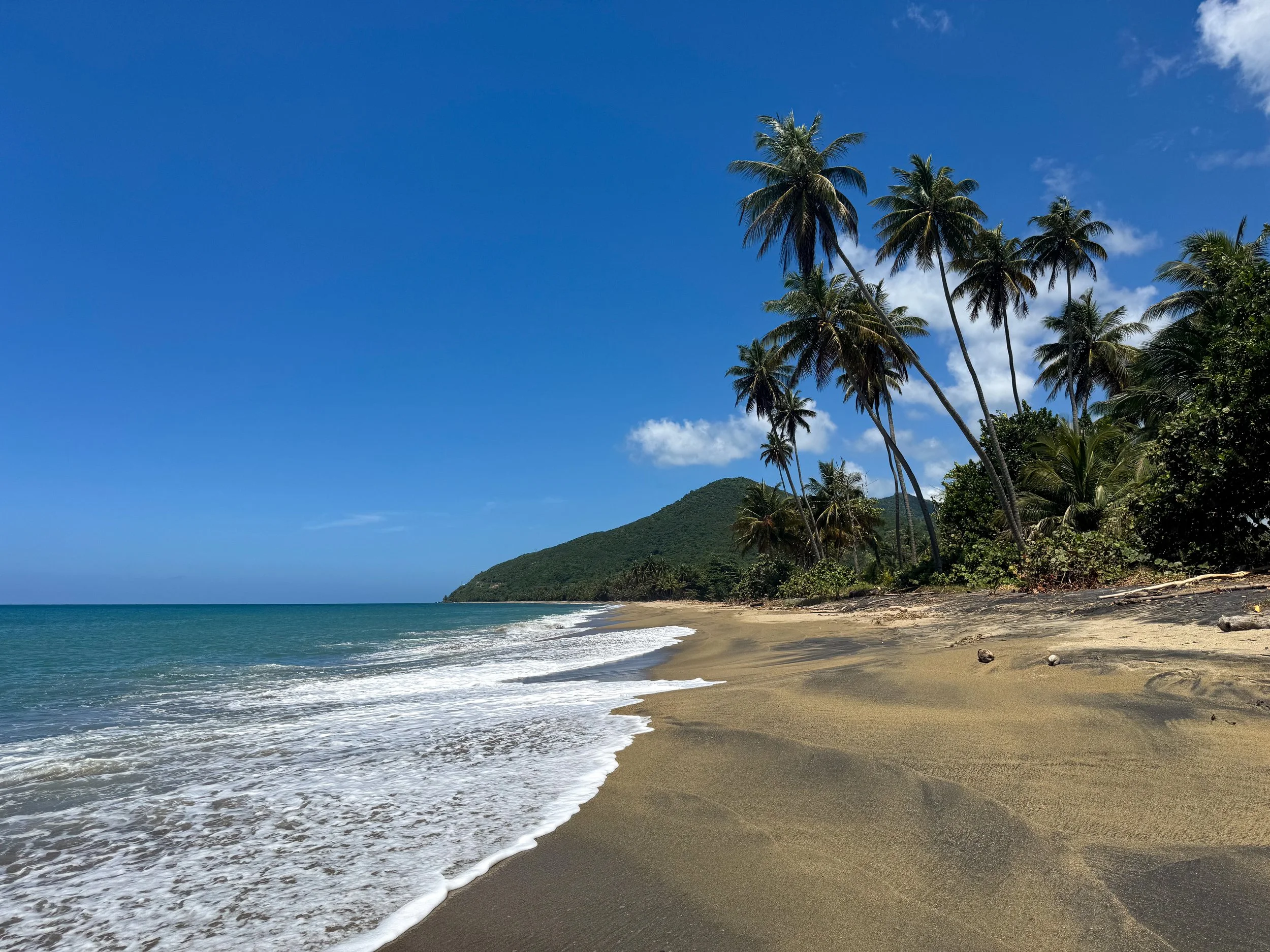
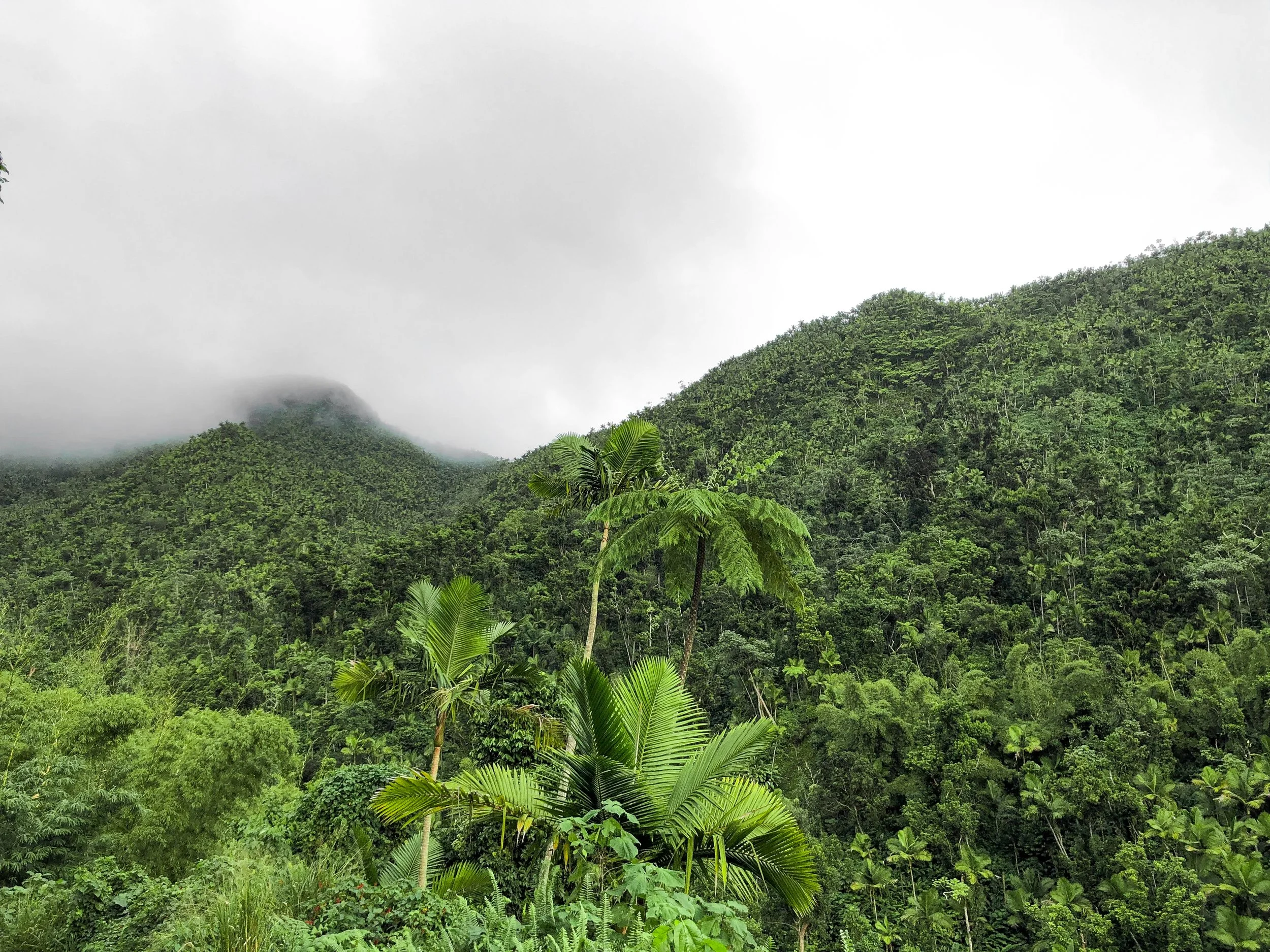
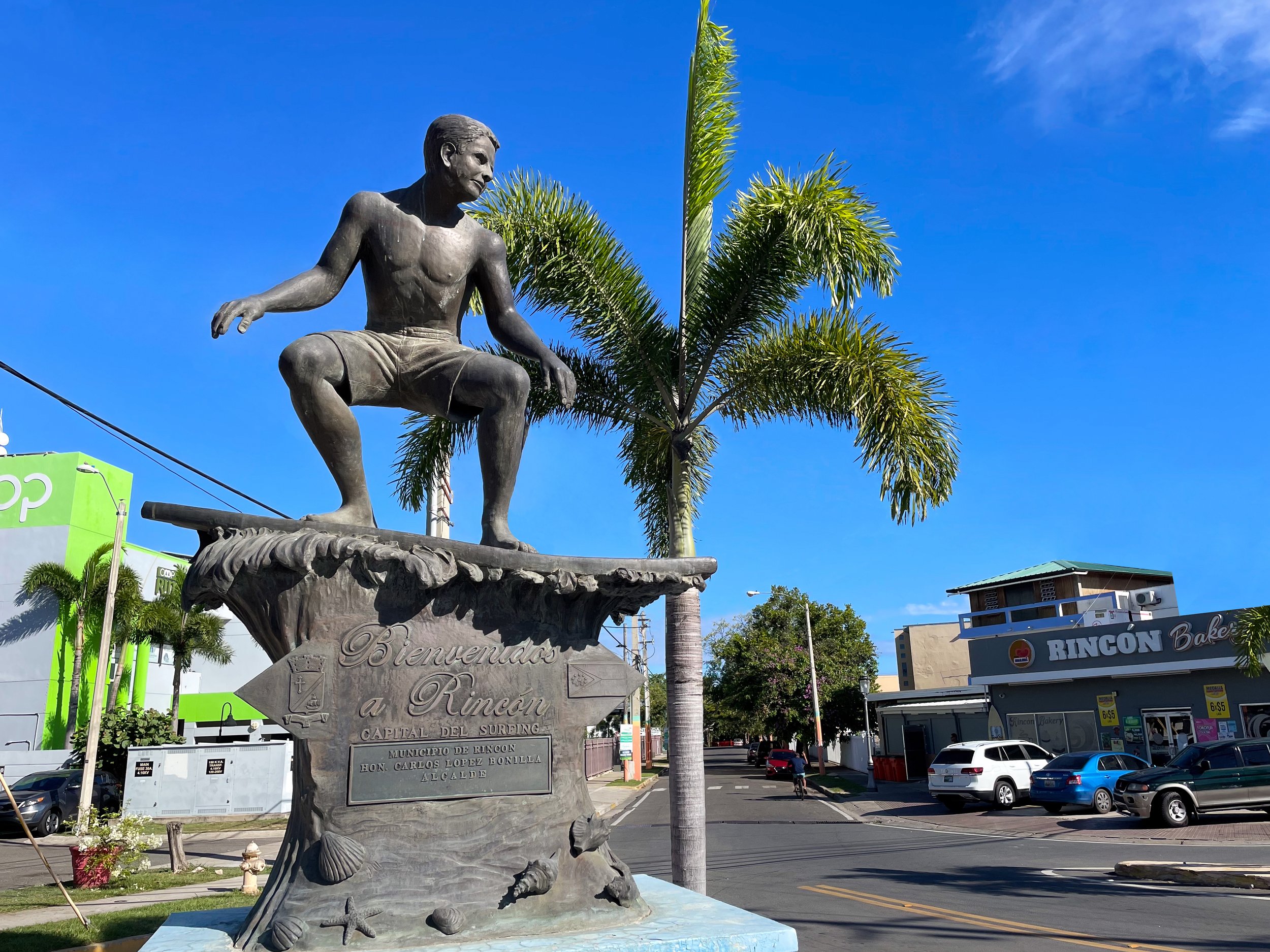
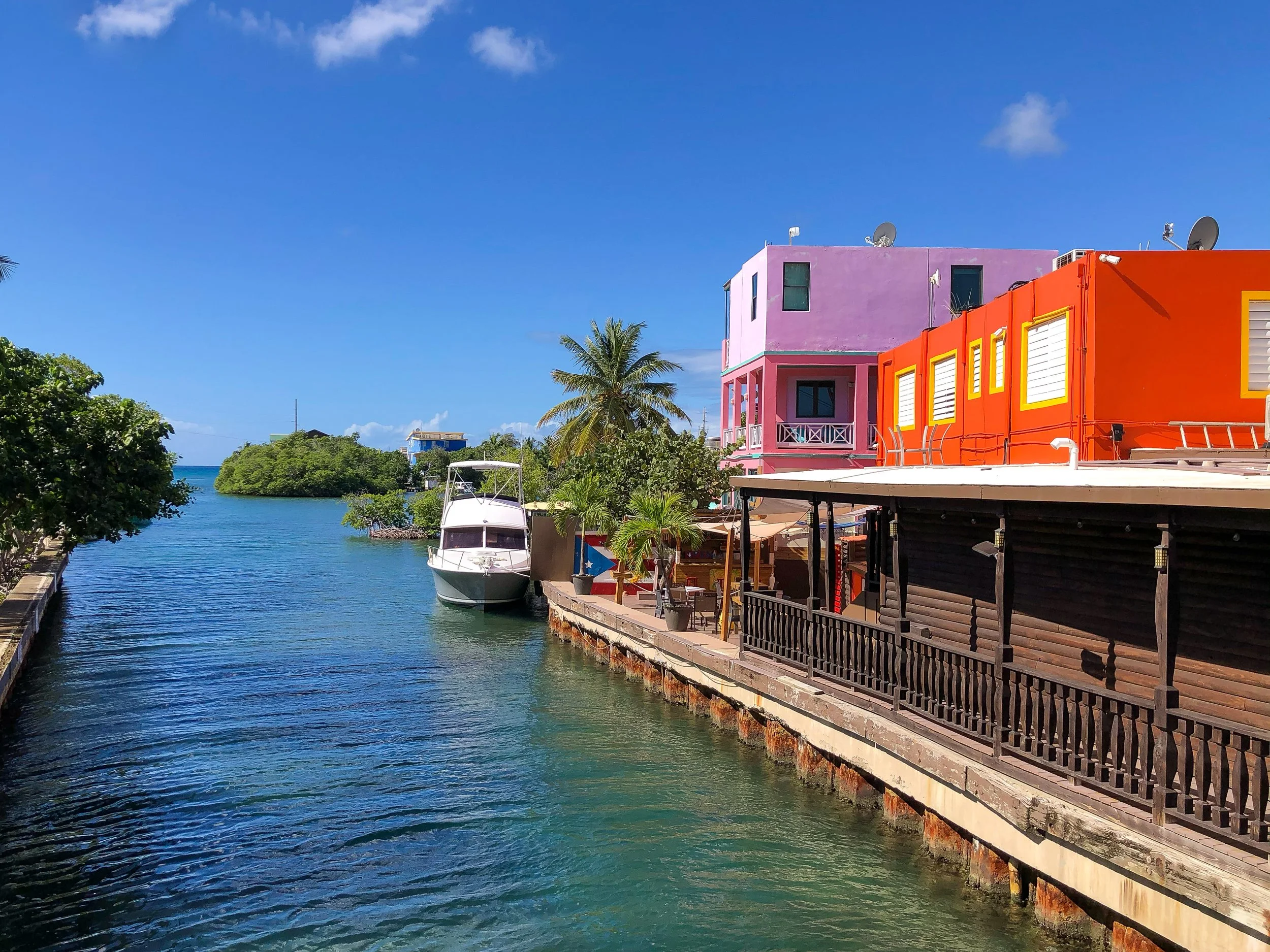
From rainforest adventures and surf towns to offshore islands and the colorful streets of Old San Juan, explore more of Puerto Rico beyond Ponce through these travel guides:
San Juan Puerto Rico Travel Guide: Beaches, Food & Local Culture. Wander between San Juan's sunny beaches, lively plazas and colorful neighborhoods while experiencing the food, music and culture that makes Puerto Rico unique.
Old San Juan Travel Guide: Historic Streets, Food & Colonial Charm. Stroll through Old San Juan's cobblestone streets, historic forts and colorful architecture while discovering the colonial charm of Puerto Rico's most iconic neighborhood.
Eastern Puerto Rico Travel Guide: El Yunque, Bioluminescent Bays & Beaches. Explore Eastern Puerto Rico's lush El Yunque rainforest, glowing bioluminescent bays and tropical beaches where island adventures and local culture converge.
Western Puerto Rico Travel Guide: Rincón, Beaches & Surfing. Chase waves and sunsets across Western Puerto Rico's tropical beaches, sleepy surf towns and coastal landscapes where island life and adventure converge.
Southwestern Puerto Rico Travel Guide: Cabo Rojo, La Parguera & Beyond. Journey through Southwestern Puerto Rico where historic towns, Caribbean cayos, pristine beaches, bioluminescent bays and dry forests reflect the island’s diverse character.
Central Puerto Rico Travel Guide: Mountains, Hiking & Taino Sites. Discover Central Puerto Rico's lush mountain landscapes, waterfalls, ancient cave systems, scenic hiking trails and Taíno archaeological sites beyond the island's beaches.
Vieques Puerto Rico Travel Guide: Mosquito Bay, Beaches & Island Adventures. Island hop to Vieques to experience the bioluminescent waters of Mosquito Bay, wild horses and black sand beaches on an unforgettable island adventure.
Culebra Puerto Rico Travel Guide: Beaches, Sea Turtles & Island Adventures. Voyage to the tiny island of Culebra to discover its pristine beaches, turquoise waters, vibrant marine life and a sleepy beach town.
For Next Time…
Whether a spontaneous weekend trip or planned vacation, we will certainly be back to Puerto Rico many more times! We have our eyes set on experiencing things we’ve missed during past trips around the southern side of Puerto Rico including:
Whether a spontaneous weekend trip or planned vacation, we will certainly be back to Puerto Rico many more times! We have our eyes set on visiting Isla Caja De Muertos, a secluded nature reserve off the coast of Ponce home to a dry forest, many species of birds, coral reefs for snorkeling and diving, sandy beaches, turquoise water, hiking trails and mangroves. It can only be reached by boat however most ferries and tour operators have stopped visiting the island since hurricane Fiona and a series of earthquakes.