

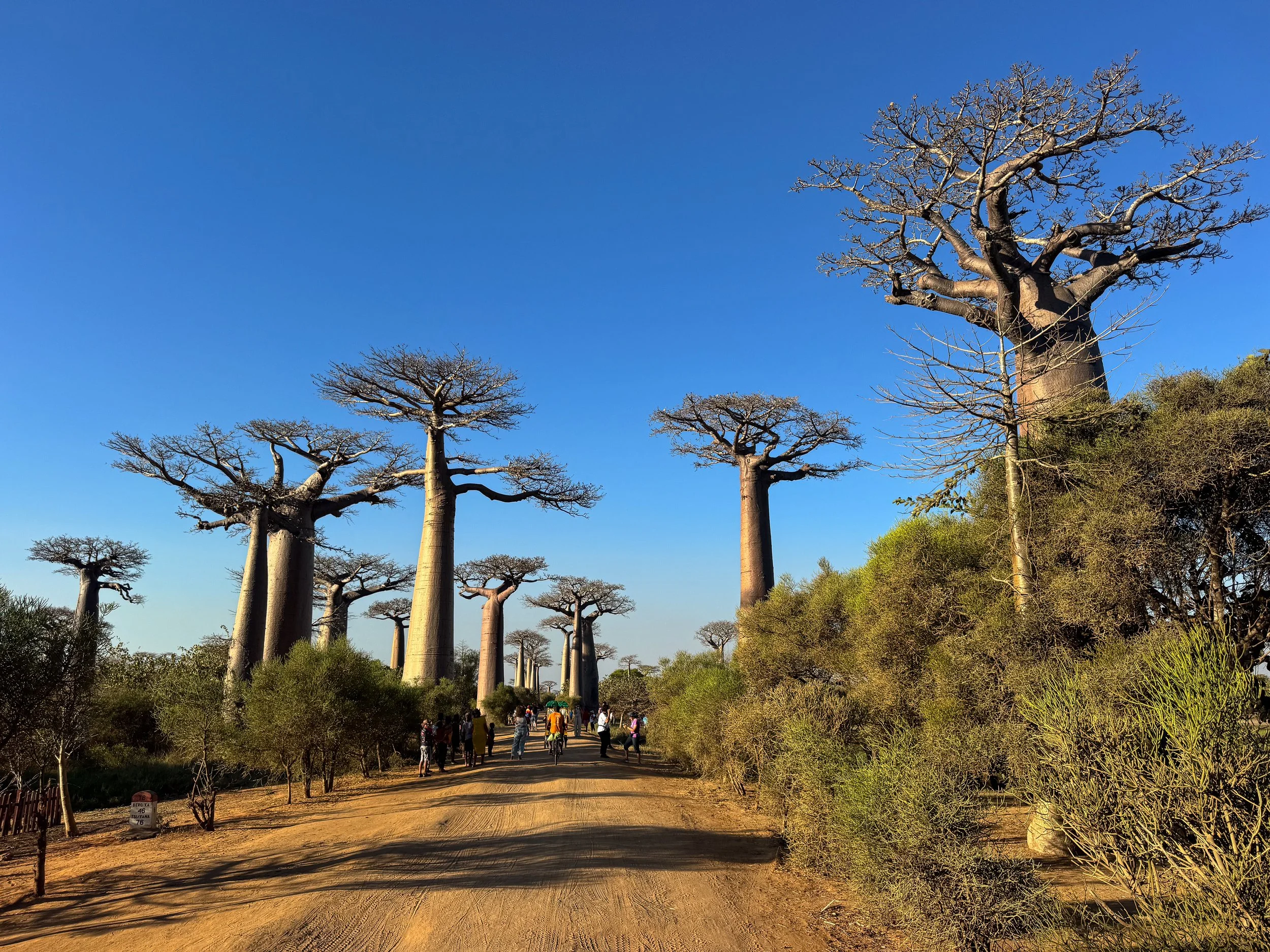
Madagascar Travel Guide: Baobabs, Tsingy, Lemurs & Malagasy Culture
Explore Madagascar's extraordinary landscapes and remote villages where towering baobabs and unique wildlife reveal a place unlike anywhere else on Earth.
Madagascar
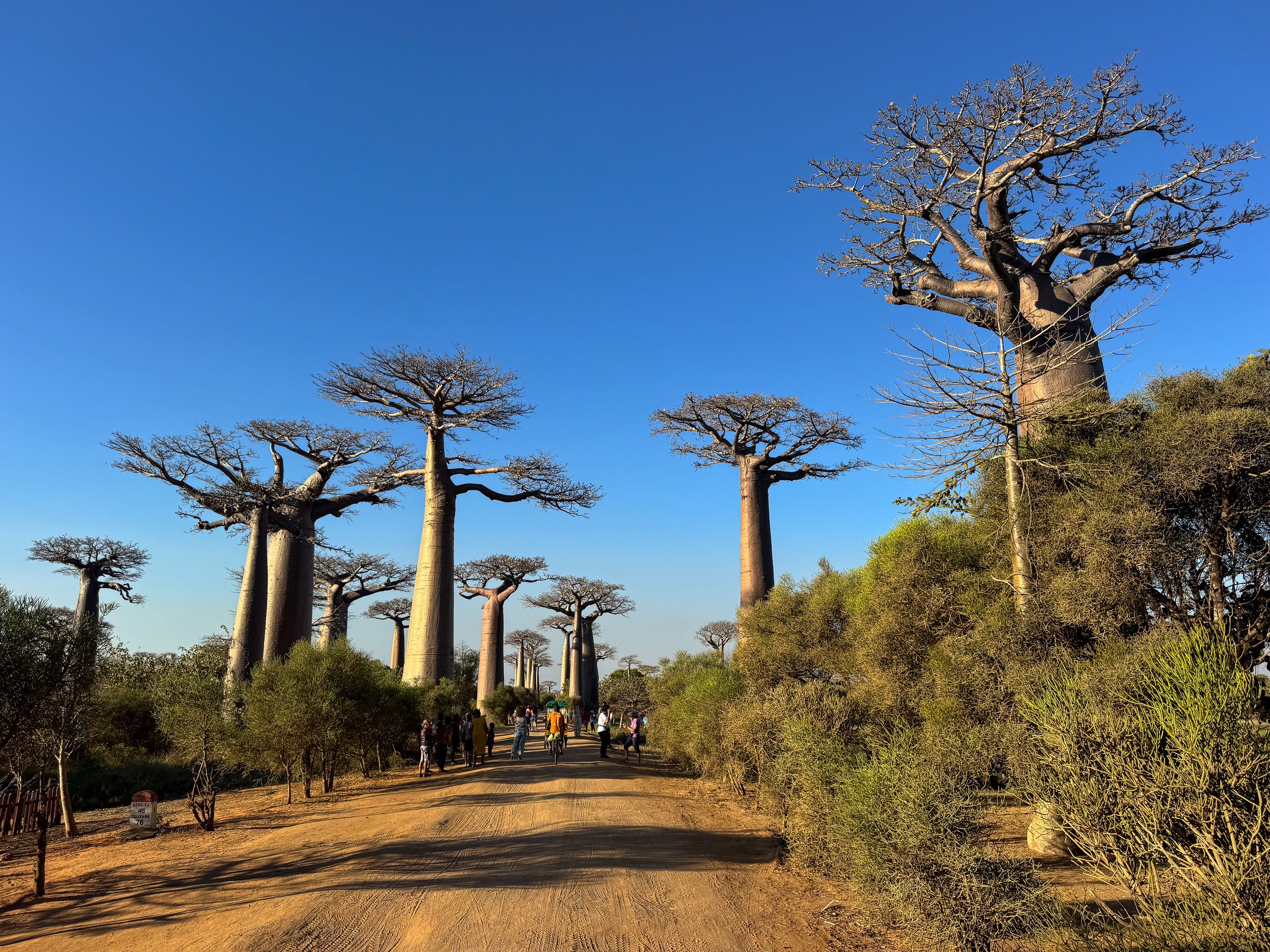
Madagascar is a vast island nation famed for its exotic biodiversity and stunning landscapes. Baobab trees tower across the horizon. Endangered lemurs leap through dense forests. Colorful chameleons lurk in the jungle. Jagged rock formations carve through the landscape. Orange sunsets make way to starry night skies. Back roads lead past remote villages. Restaurants serve Malagasy cuisine and locally infused rums. Wooden ships and outrigger canoes take sail from coastal towns. Calm waves lap onshore white sand beaches and desert islands. Whales migrate in the deep coastal waters. Madagascar is truly an under the radar destination full of wonders. We spent 10 days exploring the country and experiencing its vast beauty.
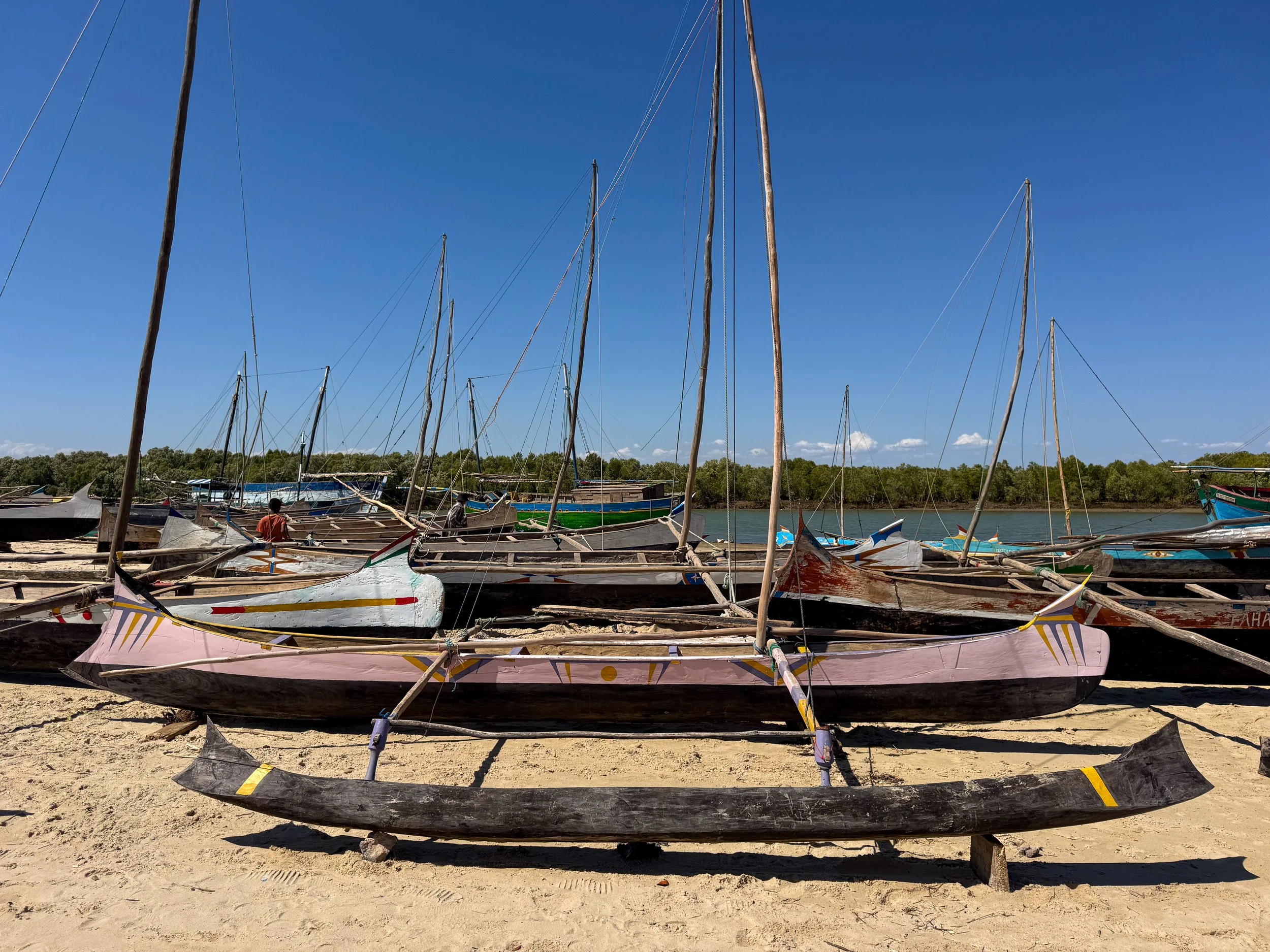
Morondava
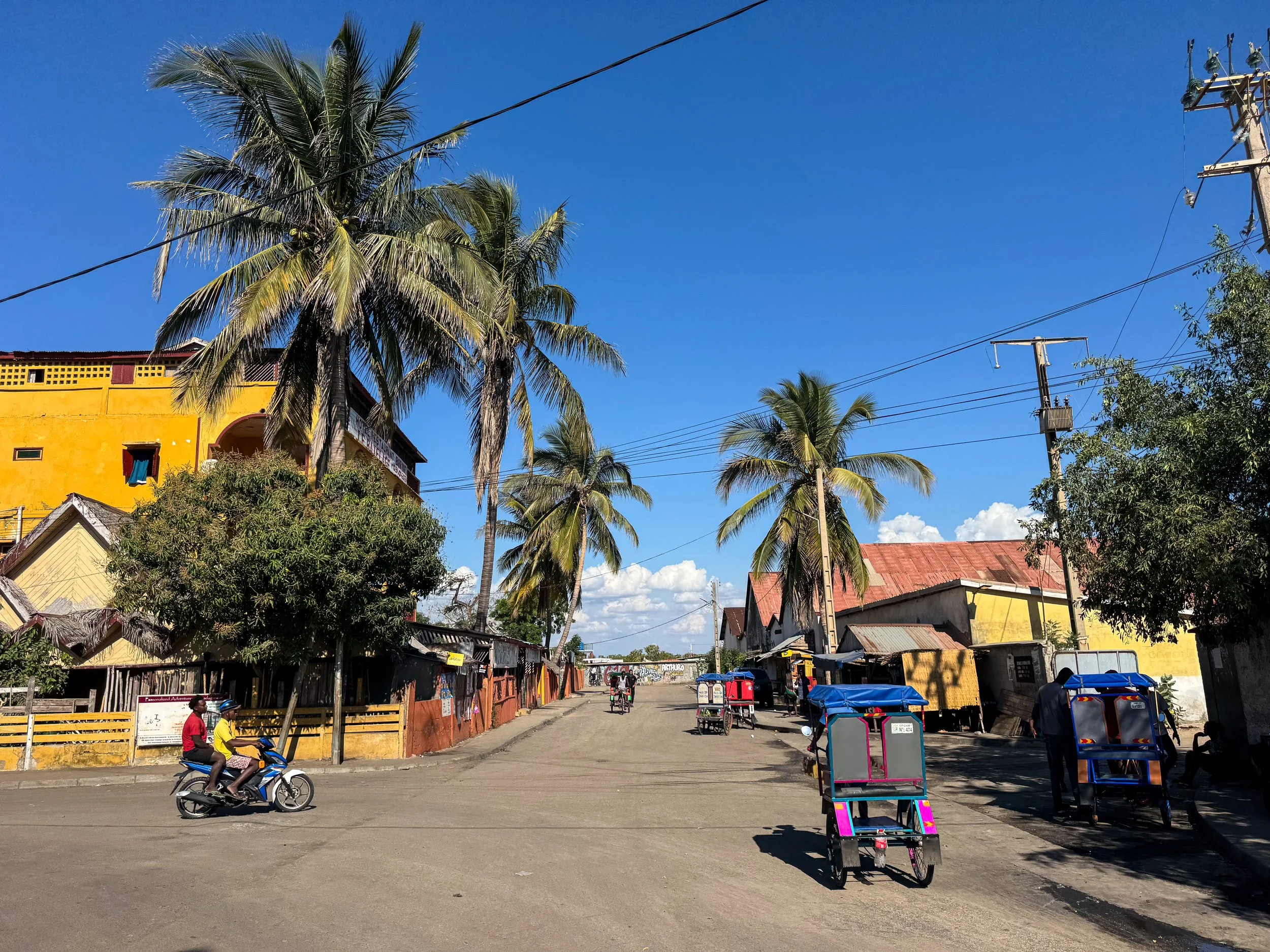
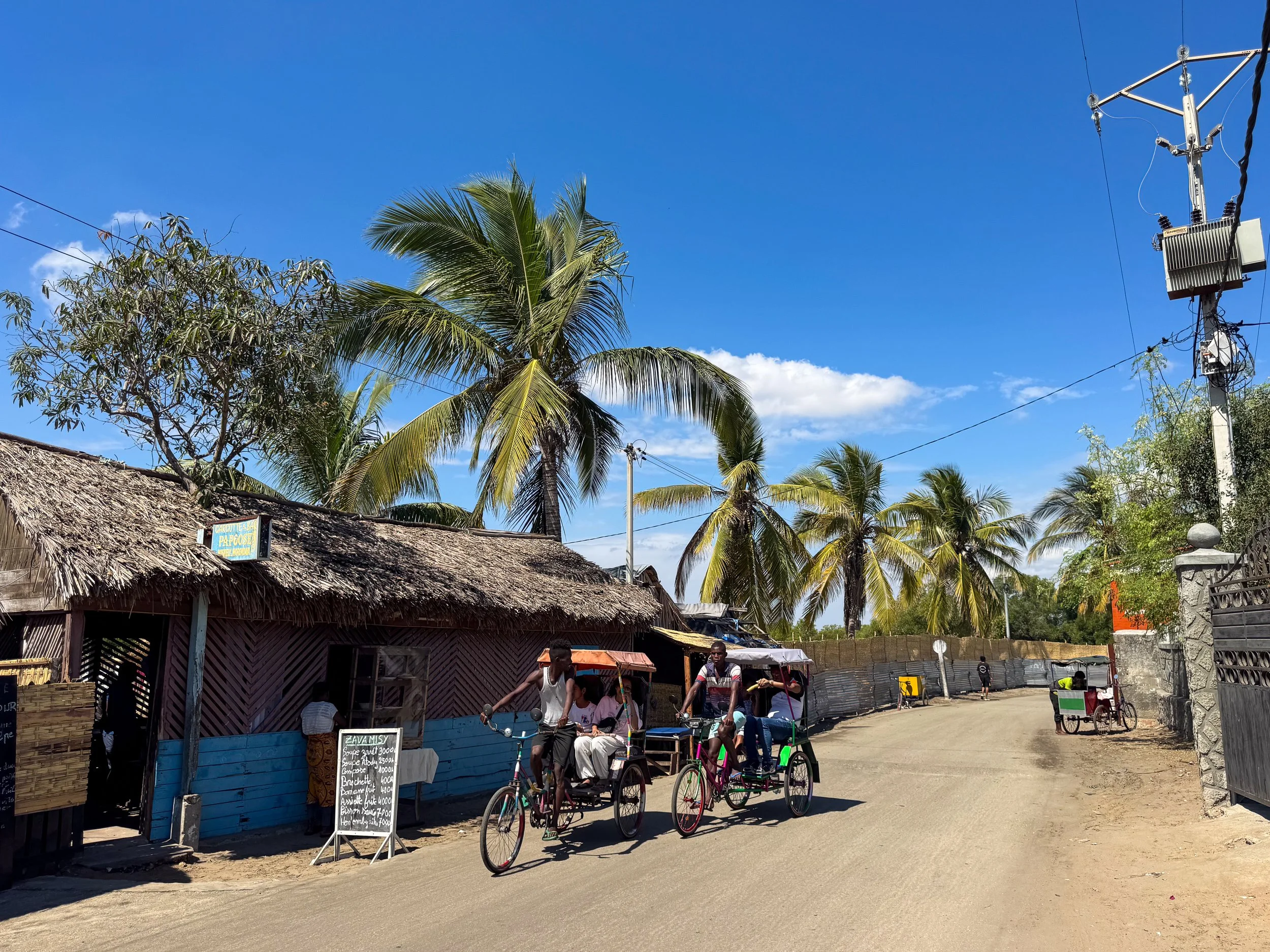
Morondava is a tropical fishing town on the western coast of Madagascar. It’s a hub for the natural wonders like The Avenue of the Baobabs, Kirindy Forest and Tsingy National Park.
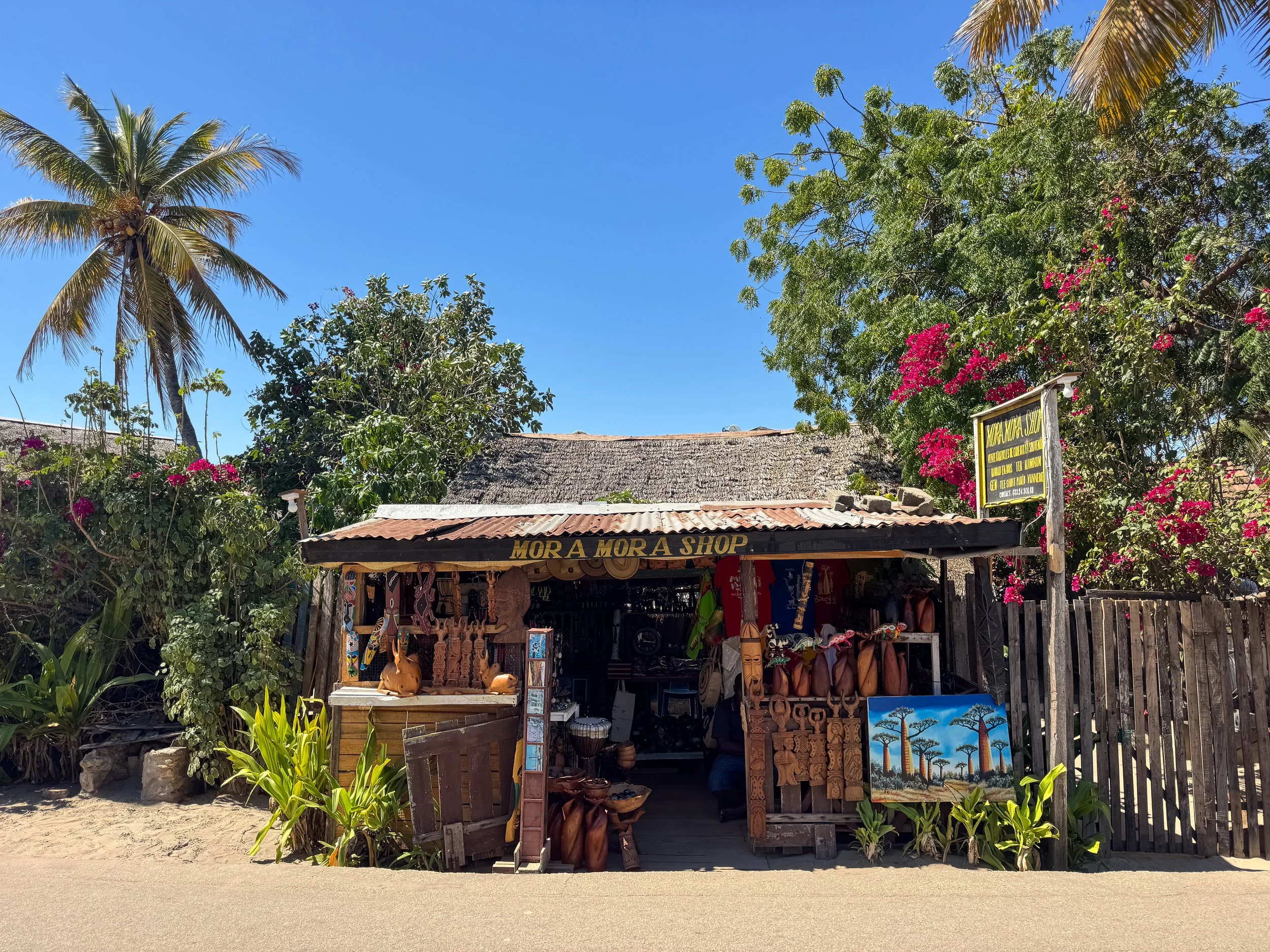
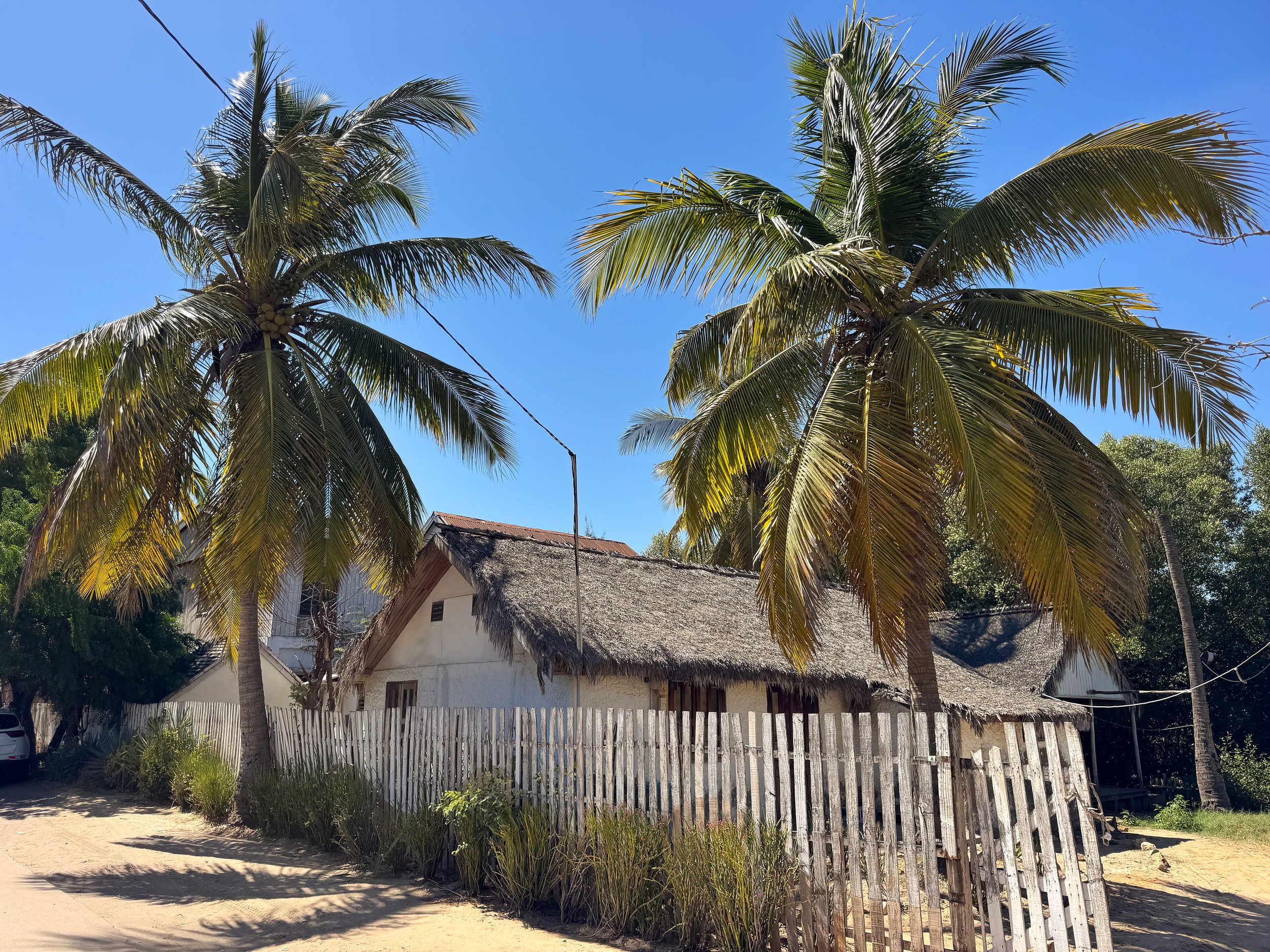
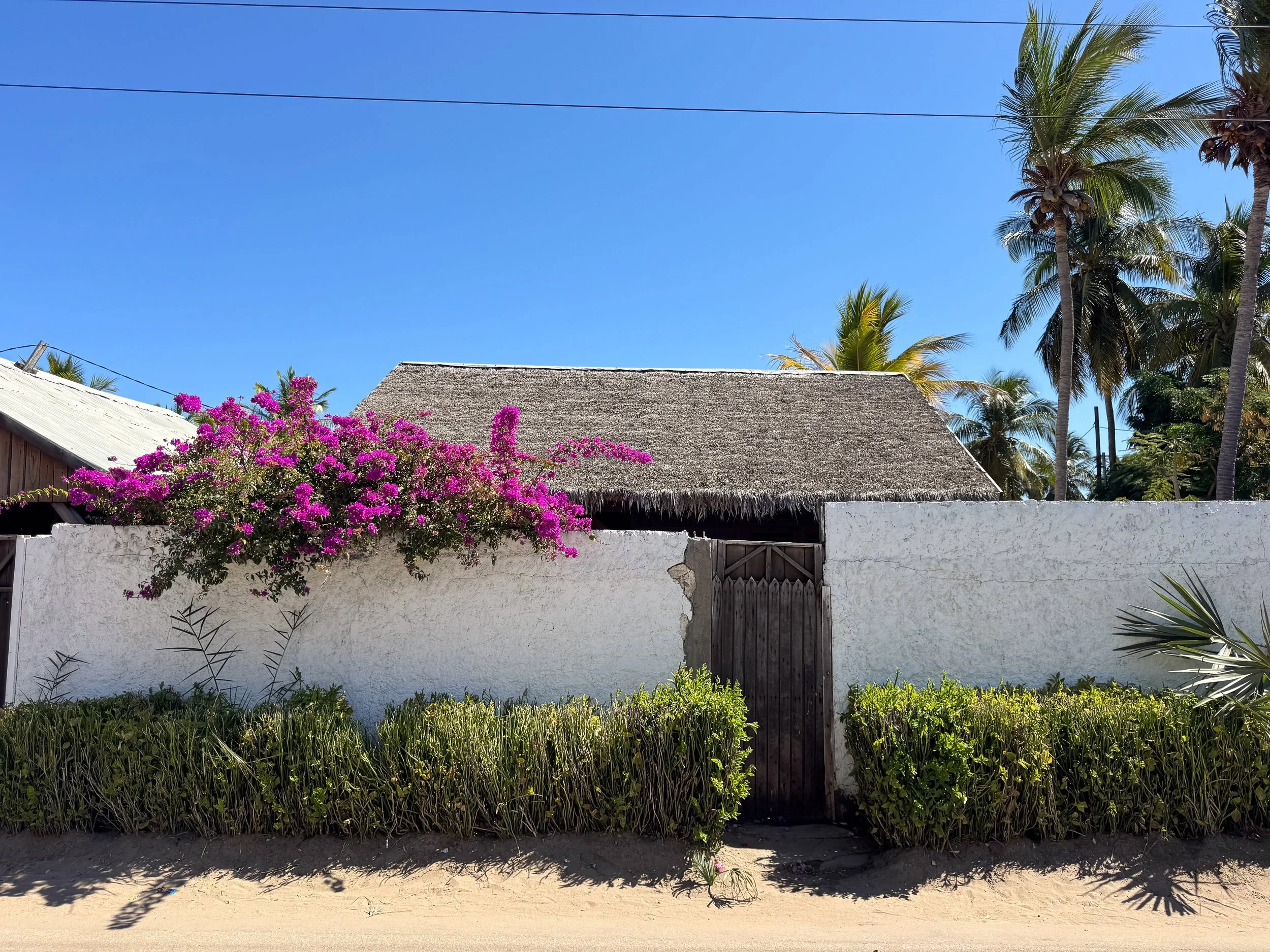
Nosy Kely. A seaside neighborhood in Morondava located between the town’s beach and mangrove forest. It has a tropical and authentic Malagasy atmosphere, accommodating both residents and visitors. Palm trees sway above thatched wooden homes and locally operated hotels. Restaurants and roadside kiosks serve freshly caught seafood and Malagasy dishes.
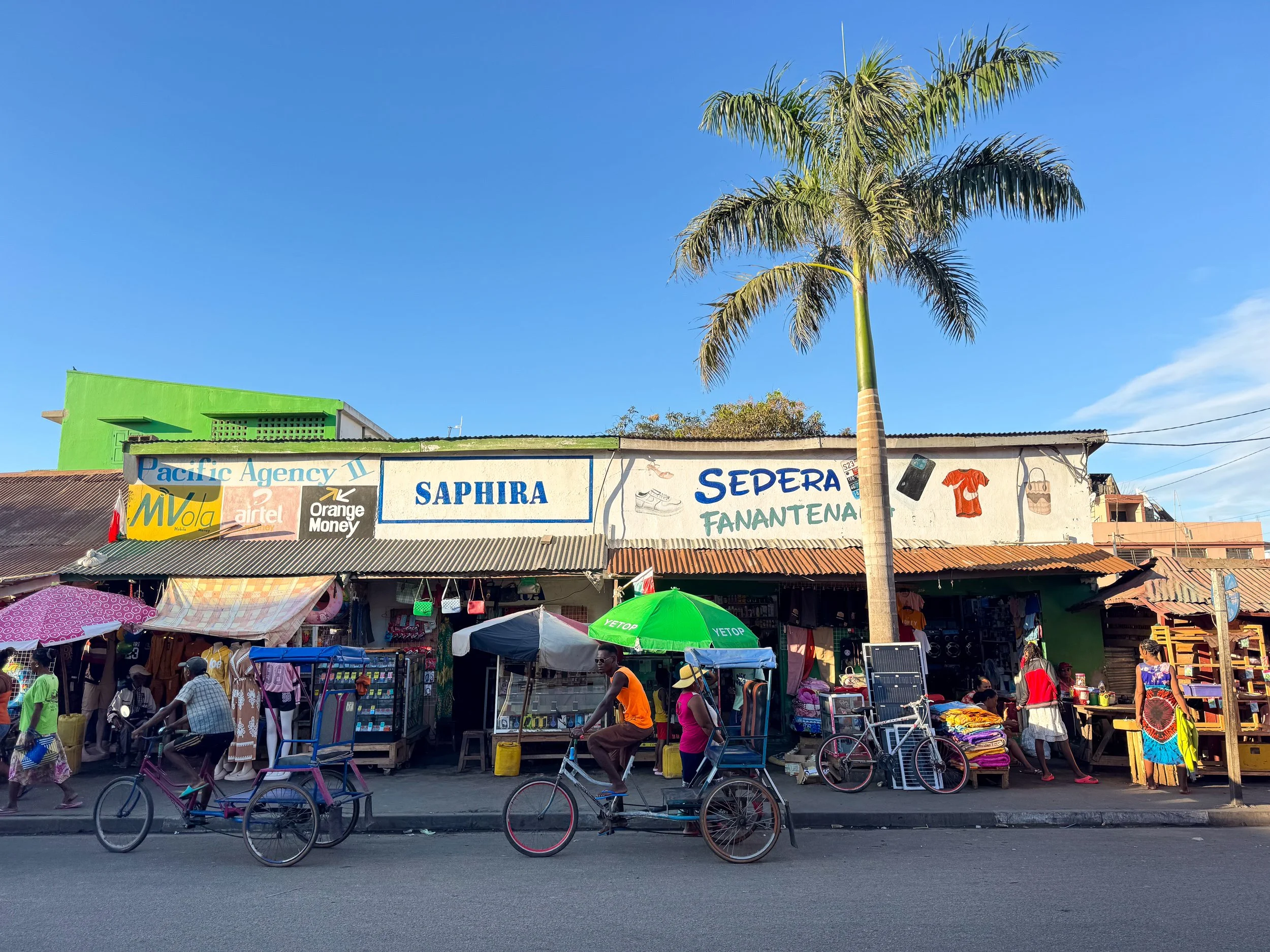
Route Nationale 35. Morondava’s main road and the start of one of the country’s central highways. It’s bustling with people, rickshaws and tuk tuks. Roadside shops sell fresh produce, live ducks, French baguettes and miscellaneous items ranging from clothes to solar panels. It’s a convenient location for travel necessities. There are several banks with ATMs, grocery stores and pharmacies.
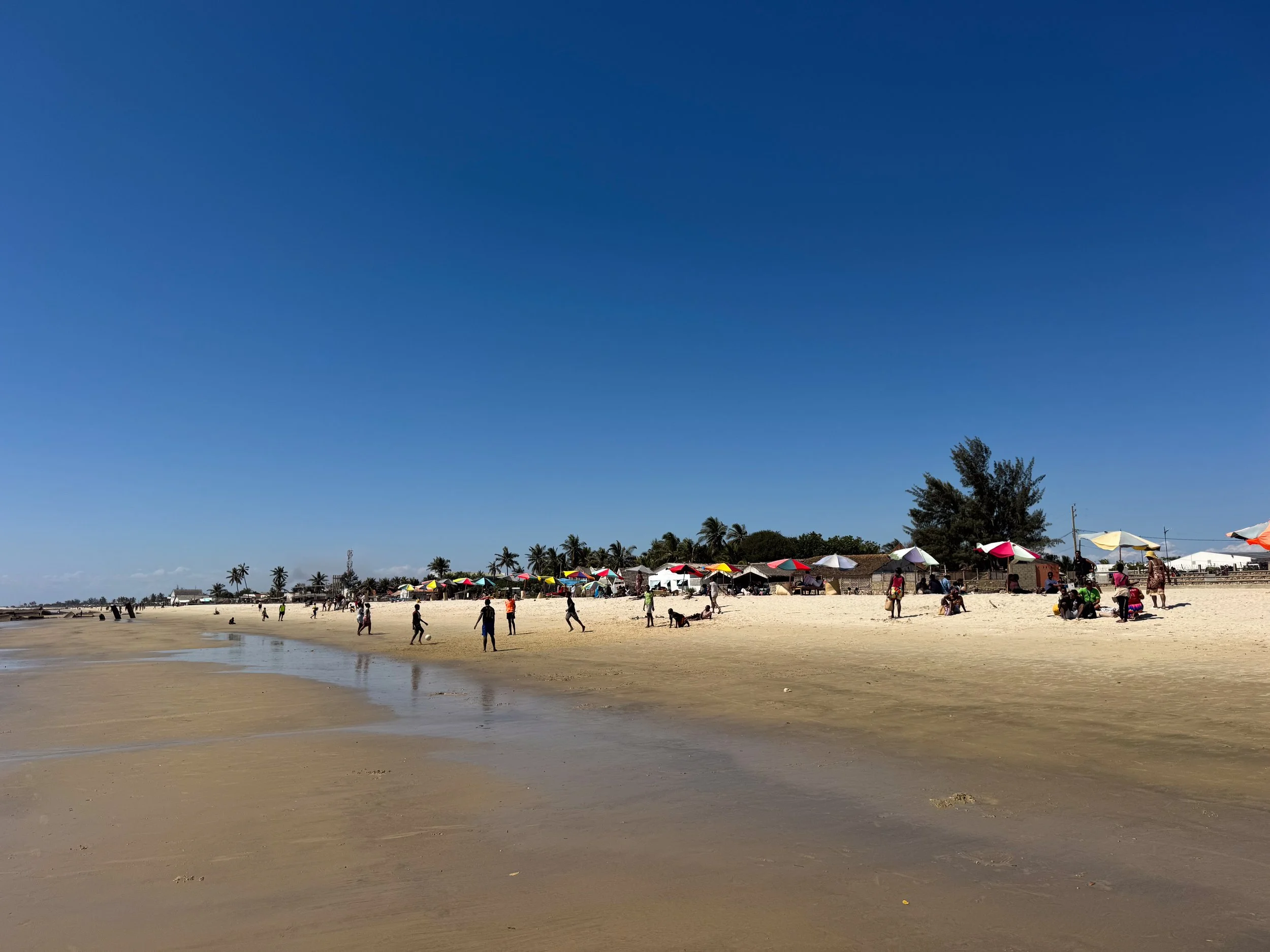
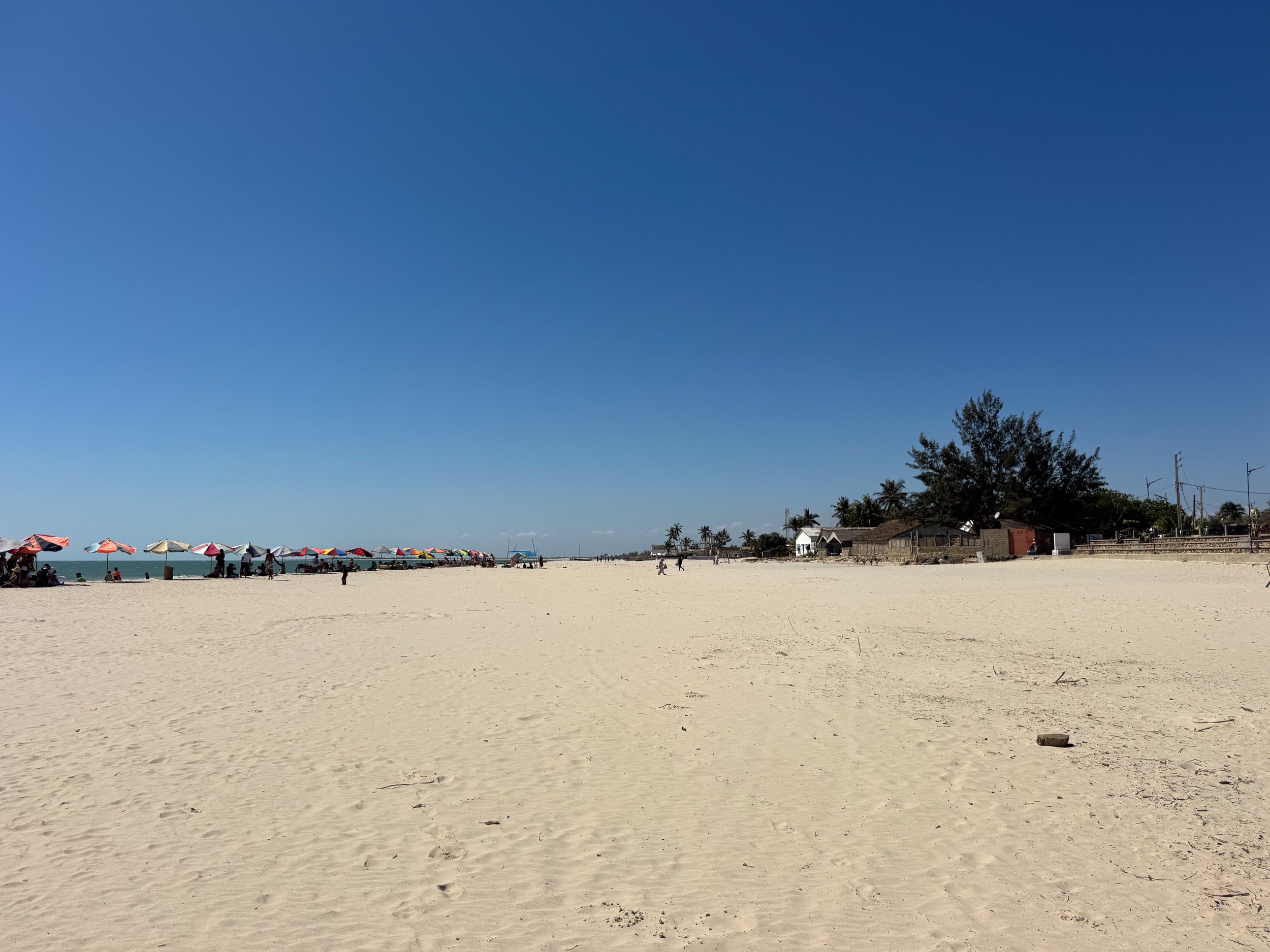
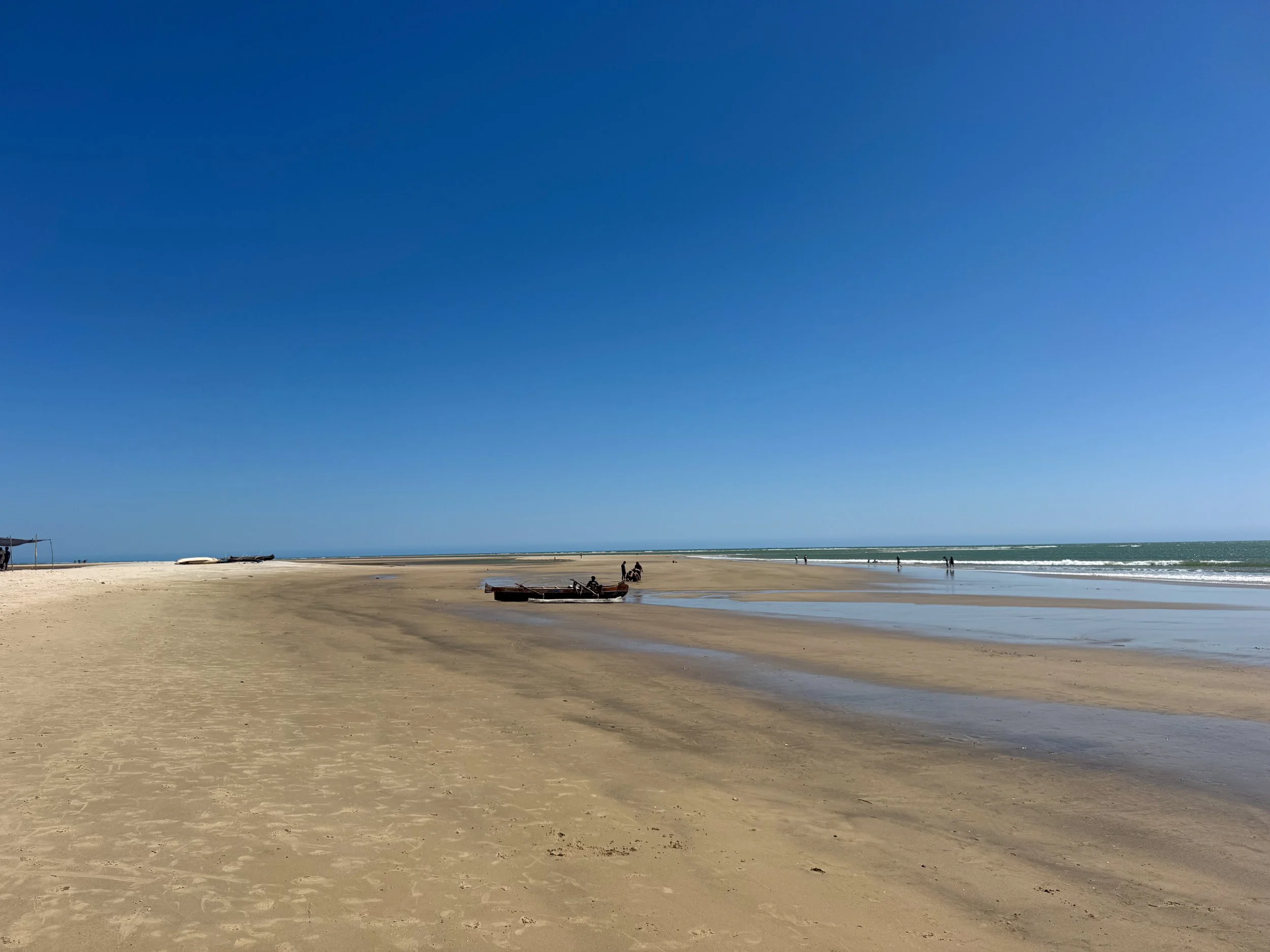
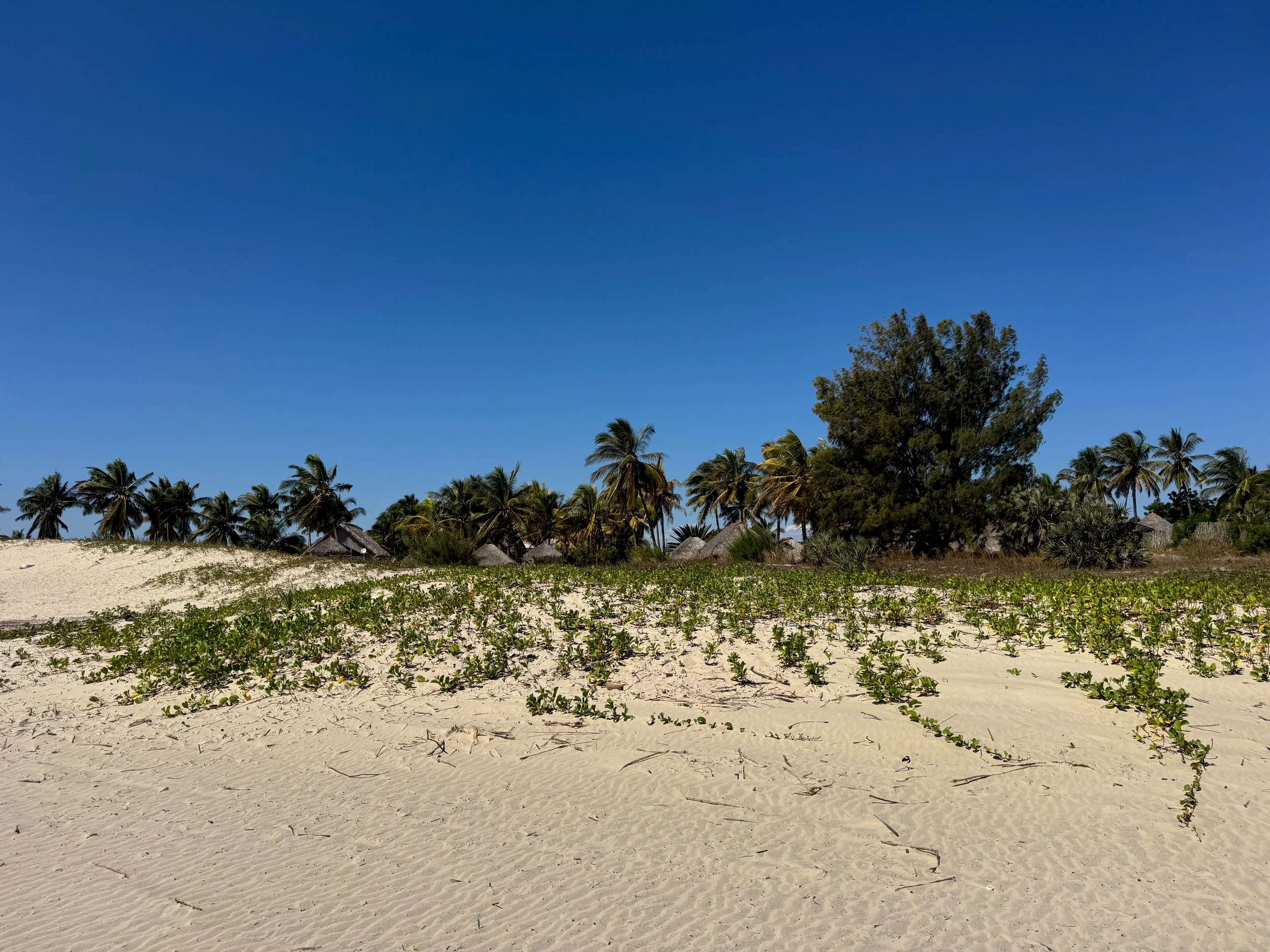
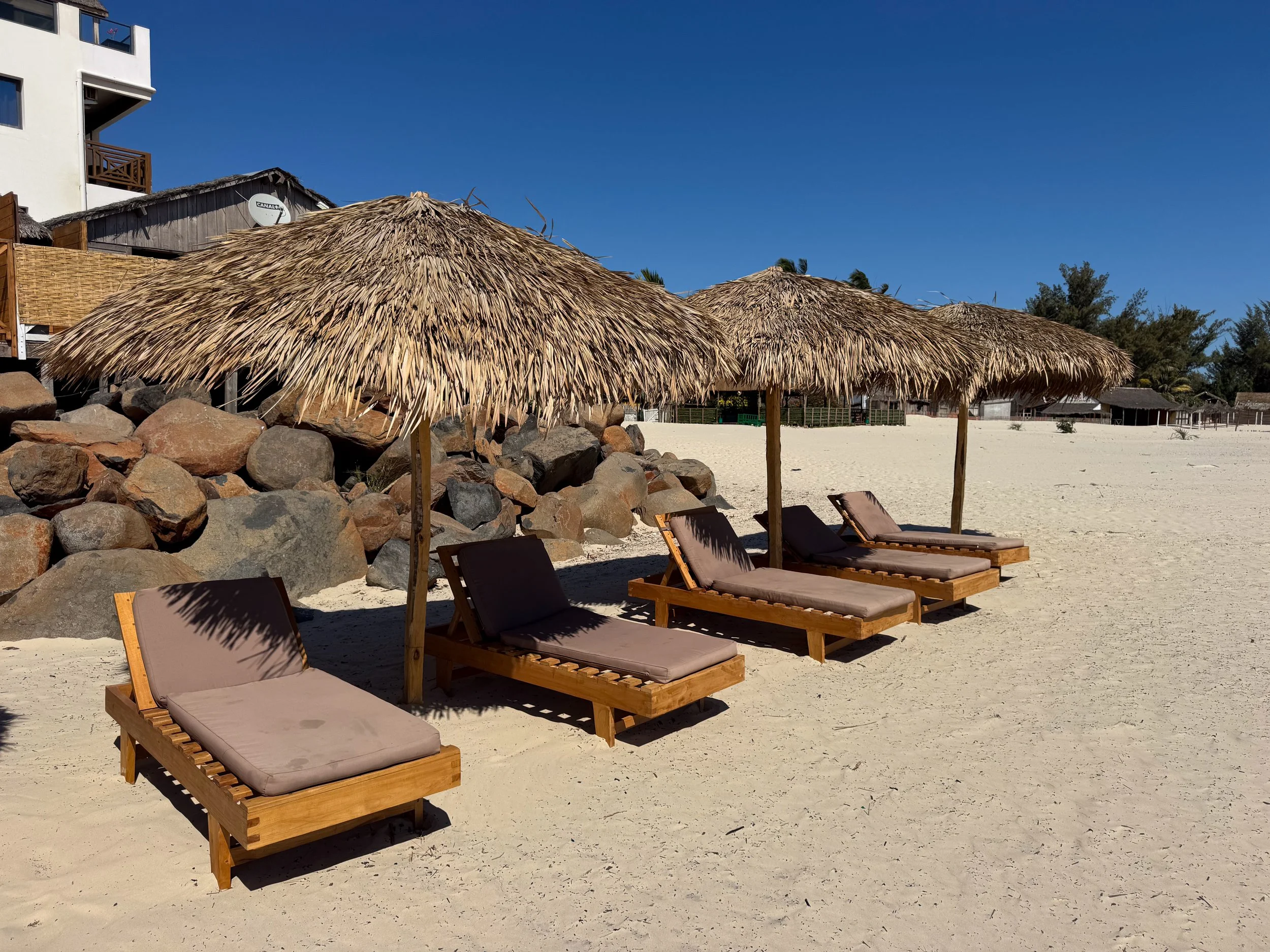
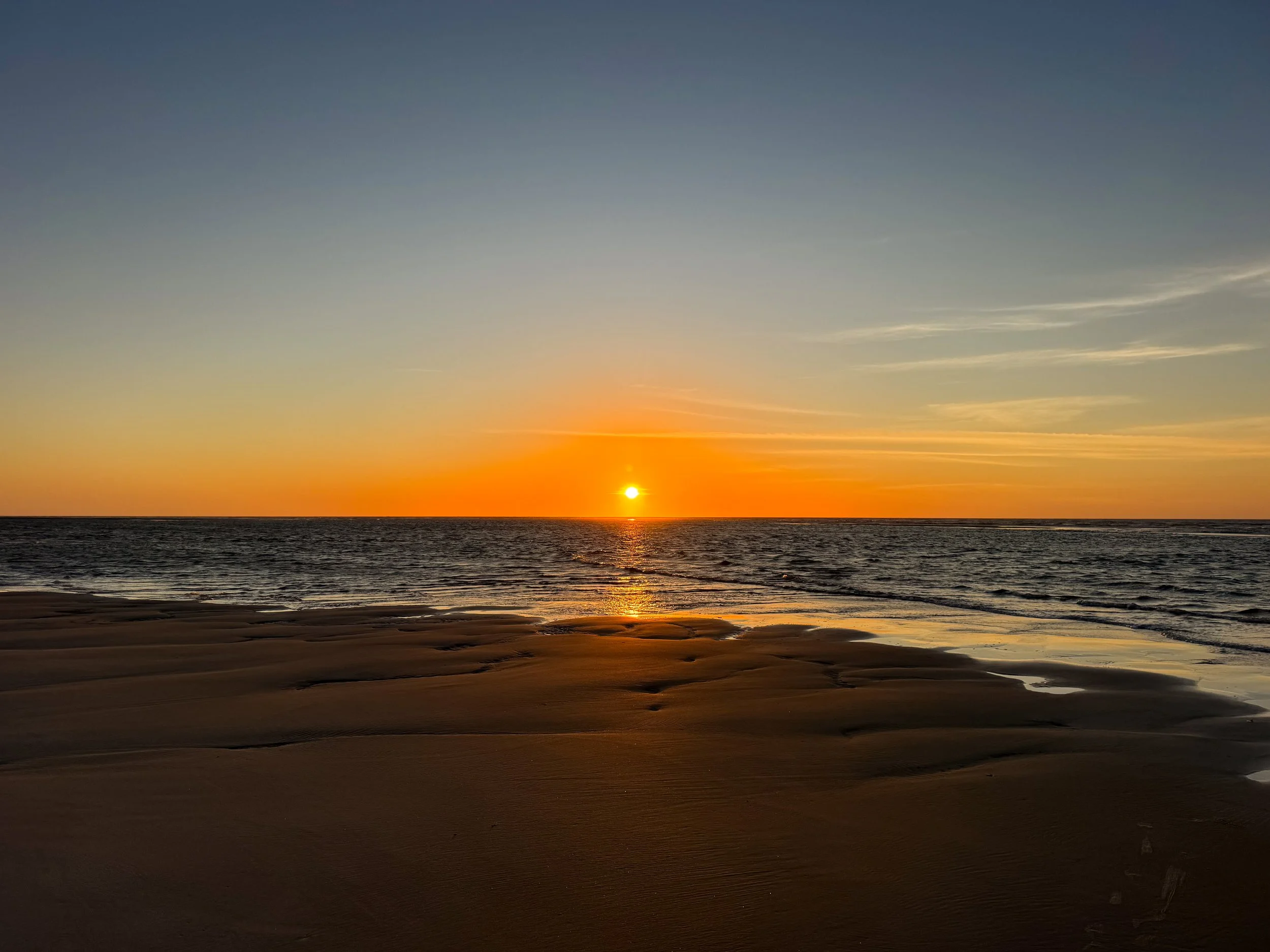
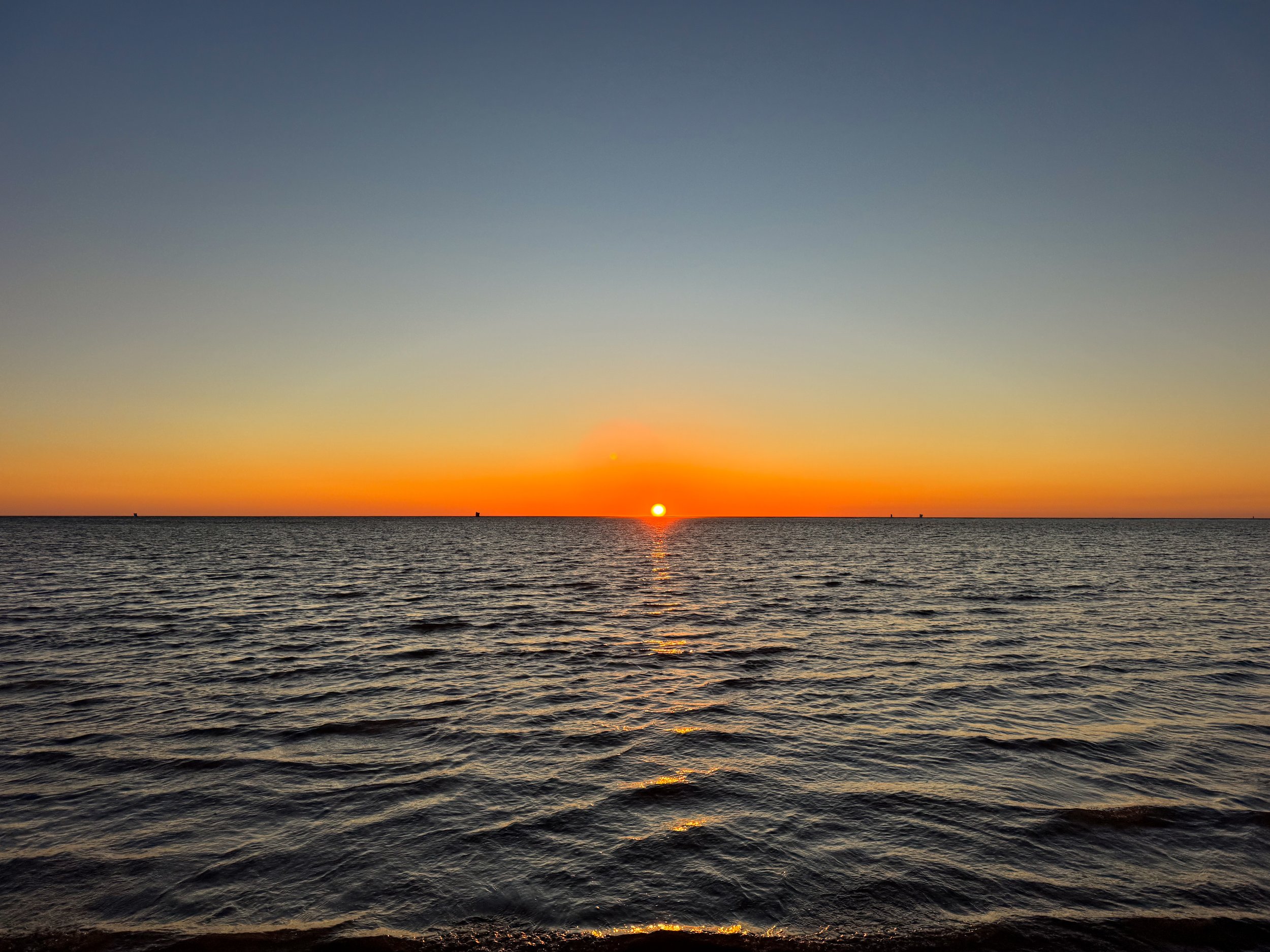
Morondava Beach. A vast sandy beach spanning Morondava’s shoreline. Locals and travelers come here to swim, picnic and sunbathe. Fisherman catch live seafood. Large sailing ships ferry goods along Madagascar’s western coast. Nightly sunsets bathe the shoreline in golden hues. We were even lucky enough to see the green flash!
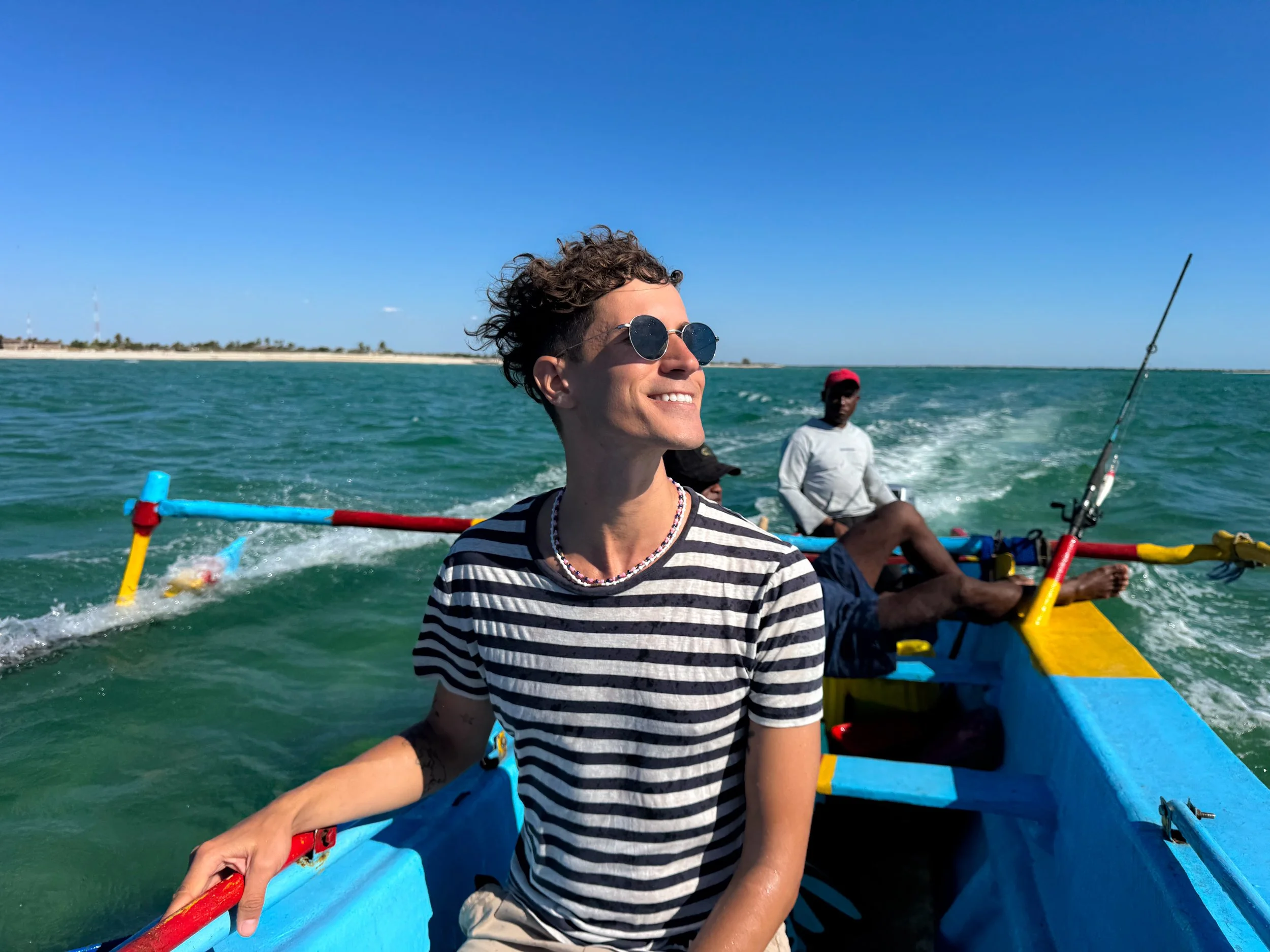
Outrigger Canoeing
Outrigger canoes are one of the main methods of transportation along Morondava’s coast. We joined a pair of fishermen at sea on two days of our trip. We accompanied them while fishing, went whale watching, visited a remote desert island and explored the ship building village of Belo sur Mer. Book with Eto Morondava.
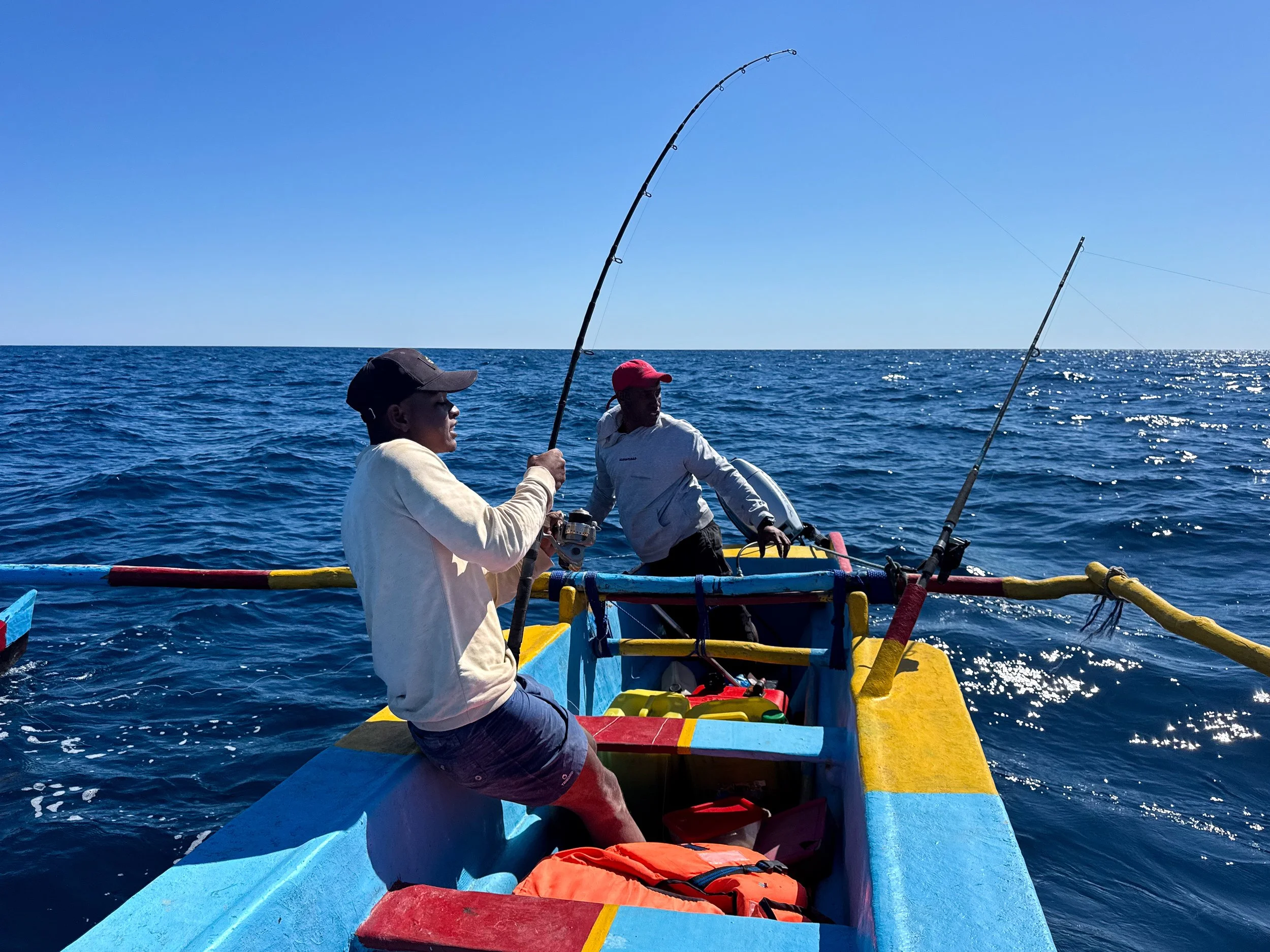
Deep Water Fishing. Fishing makes up a large part of the local economy in Morondava. Colorful outrigger canoes and wooden ships line the shores and mangrove channels. We joined two fishermen on their outrigger for a morning voyage deep into the Mozambique Channel. Far offshore, the coastline of Madagascar was no longer visible. The vast blue of the ocean spanned across the horizon in all directions. The fishermen dragged two lines behind the boat, hoping to hook a barracuda, shark or tuna. After hours battling strong winds and fighting fish, they hooked and pulled an amberjack from the sea.
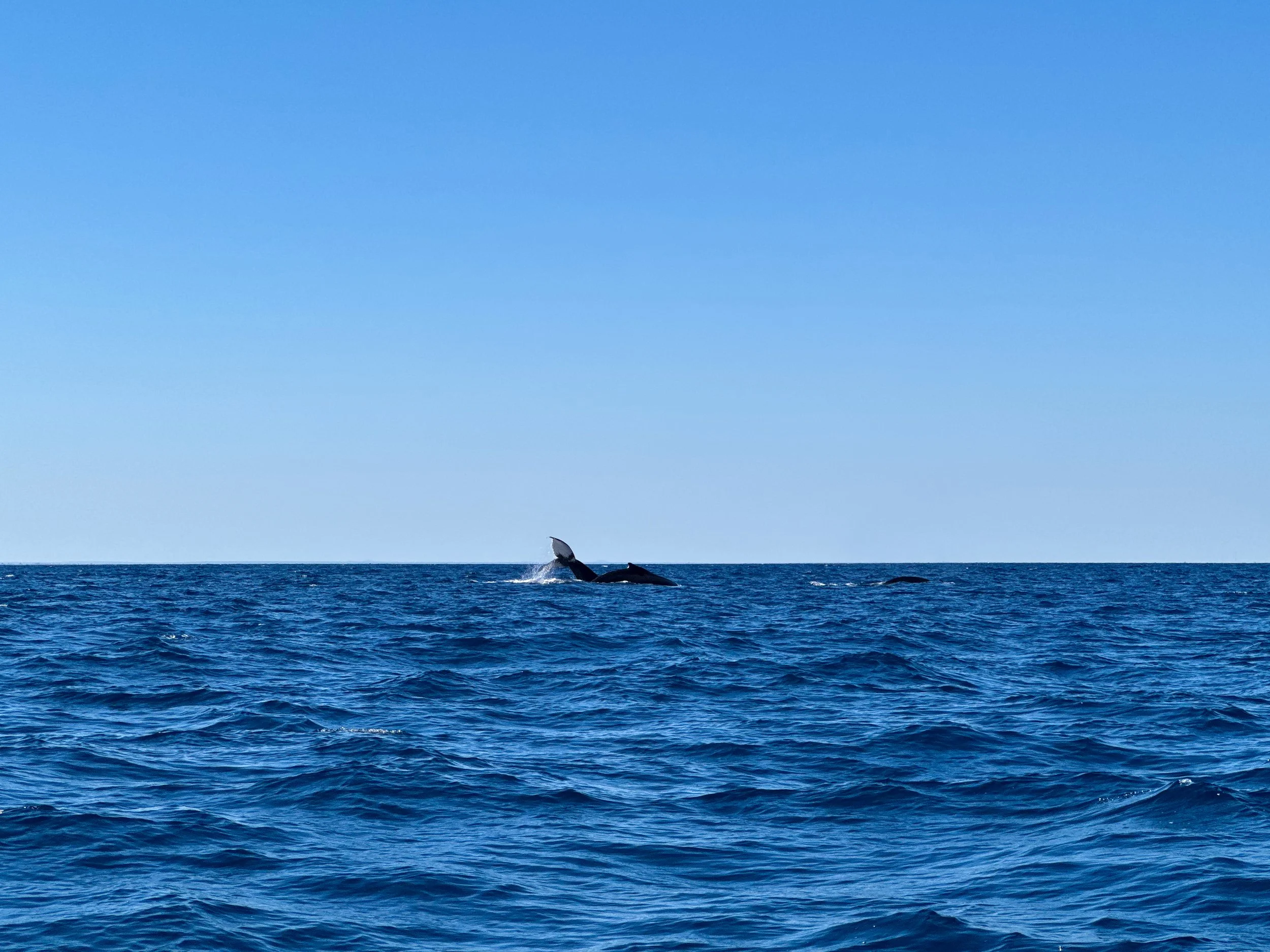
Whale Watching. Humpback Whales migrate along the coast of Madagascar in the Mozambique Channel separating the island nation from mainland Africa. Jets of mist appeared on the horizon as a pod of humpback whales migrated through the waters. The pod surfaced every few minutes, exposing their iconic hump backs and giant finned tails. Even from a distance, their grand size dwarfed our captain’s outrigger canoe. Before disappearing into the depths, one whale continually slapped its fins against the surface of the water, as if waving us goodbye. Peak migration happens between July and September.
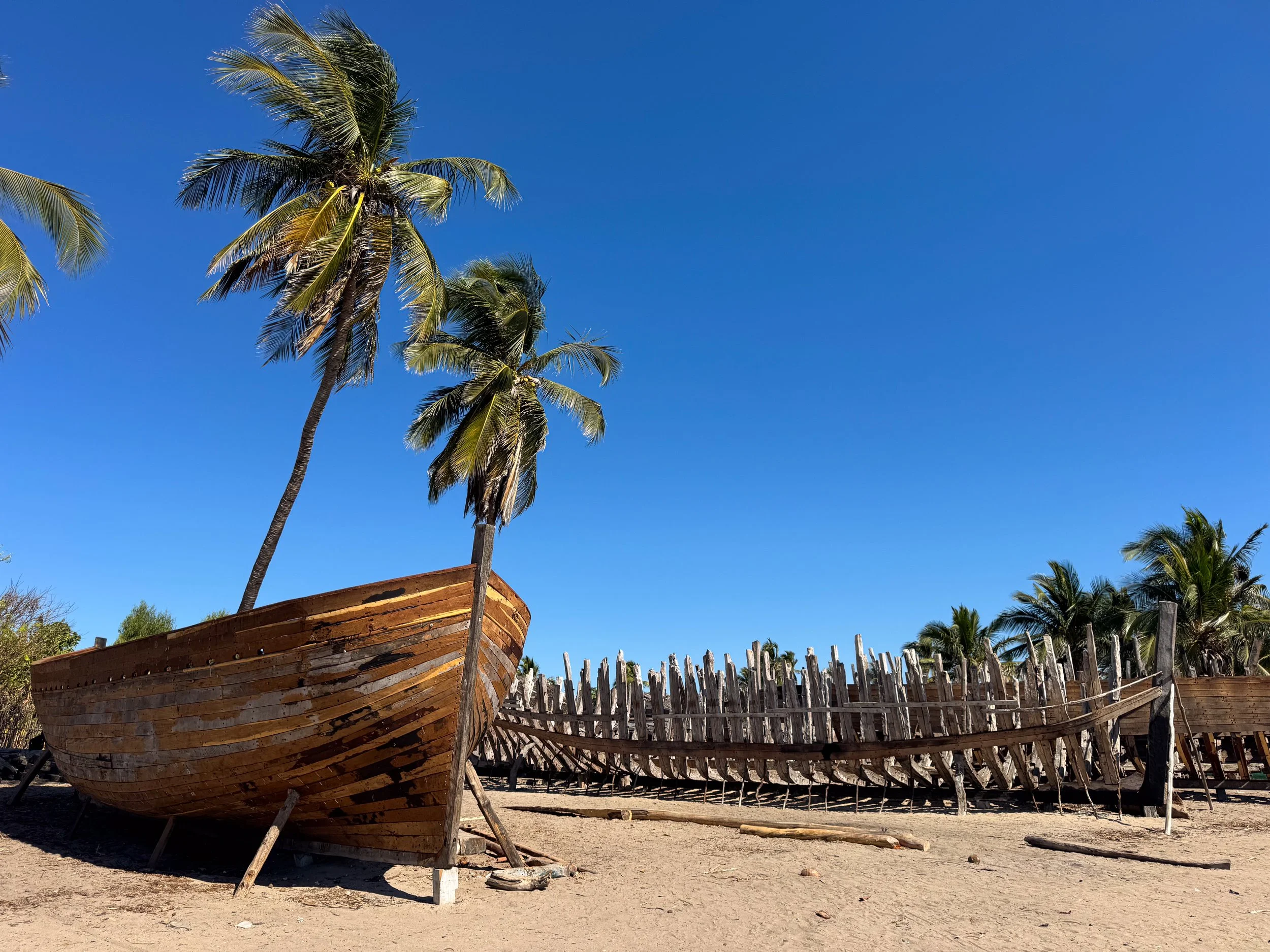
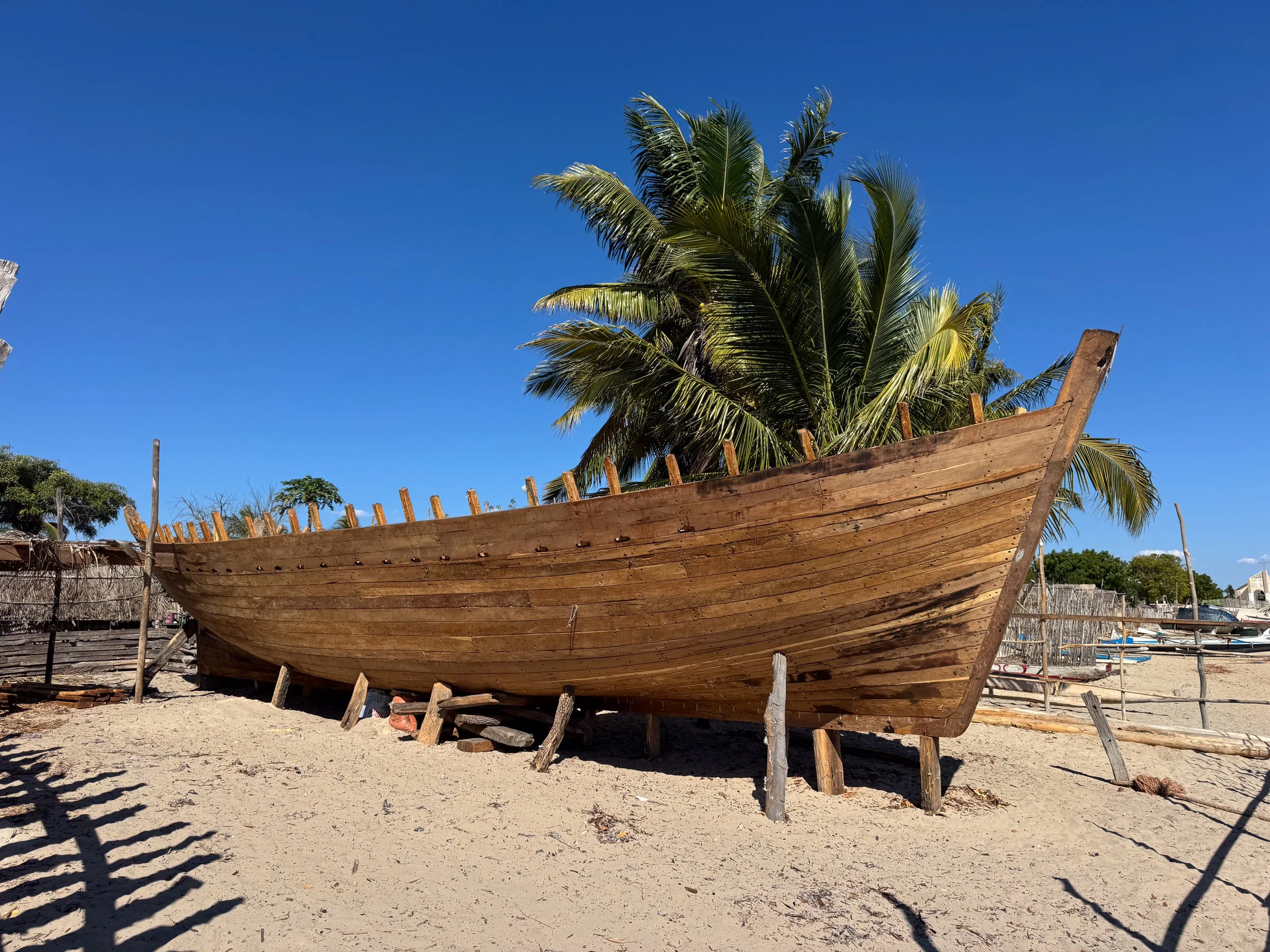
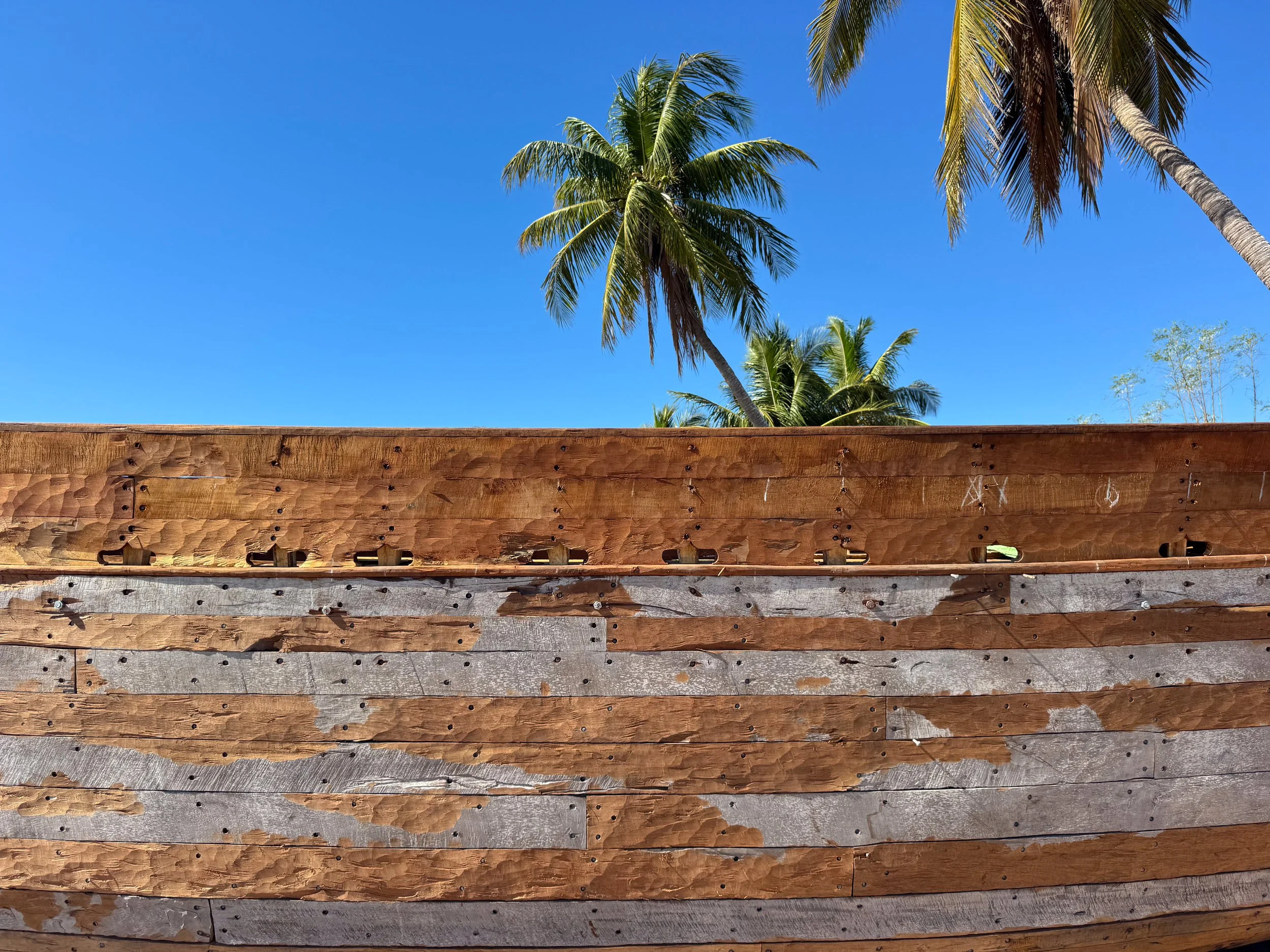
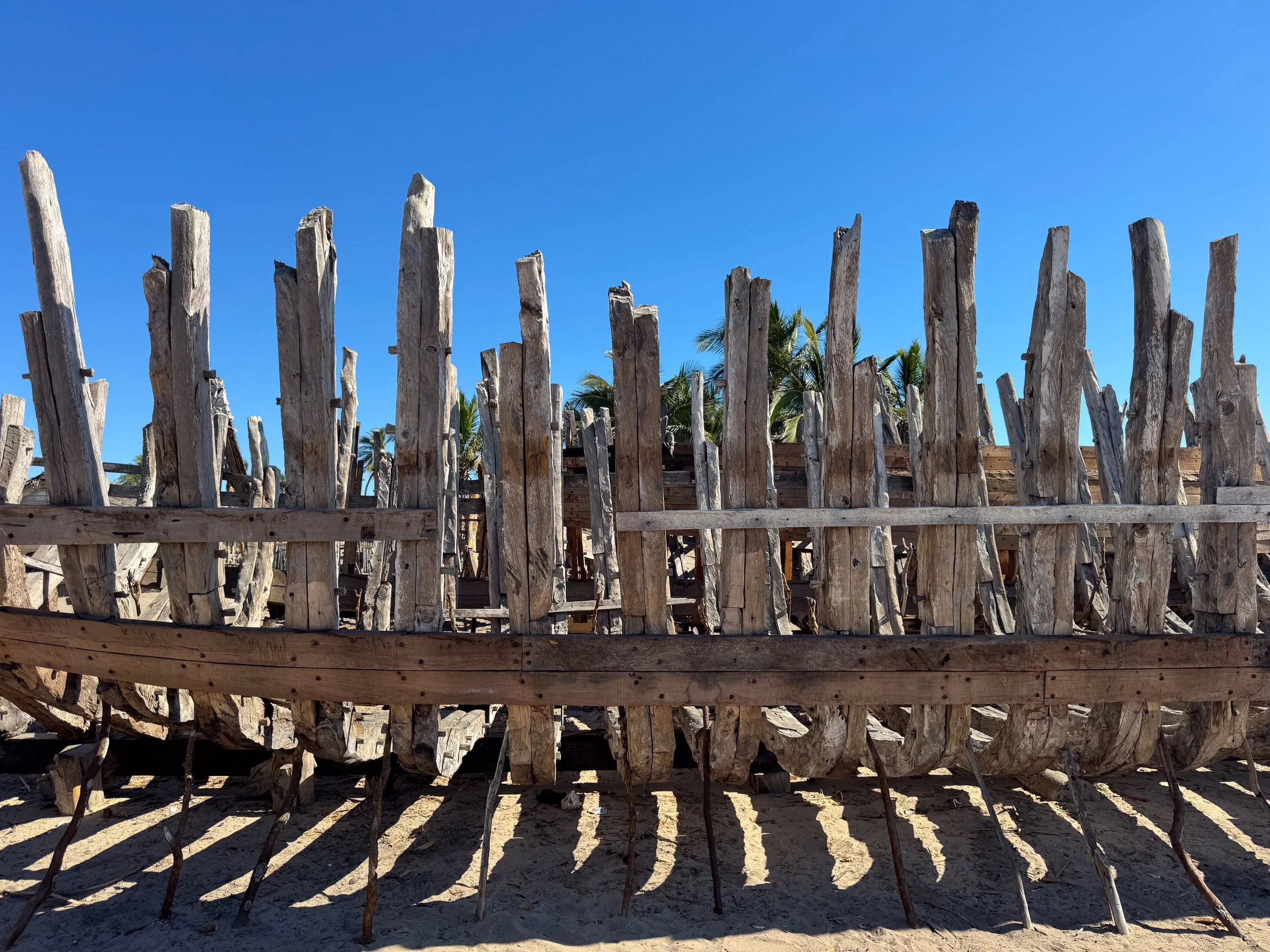
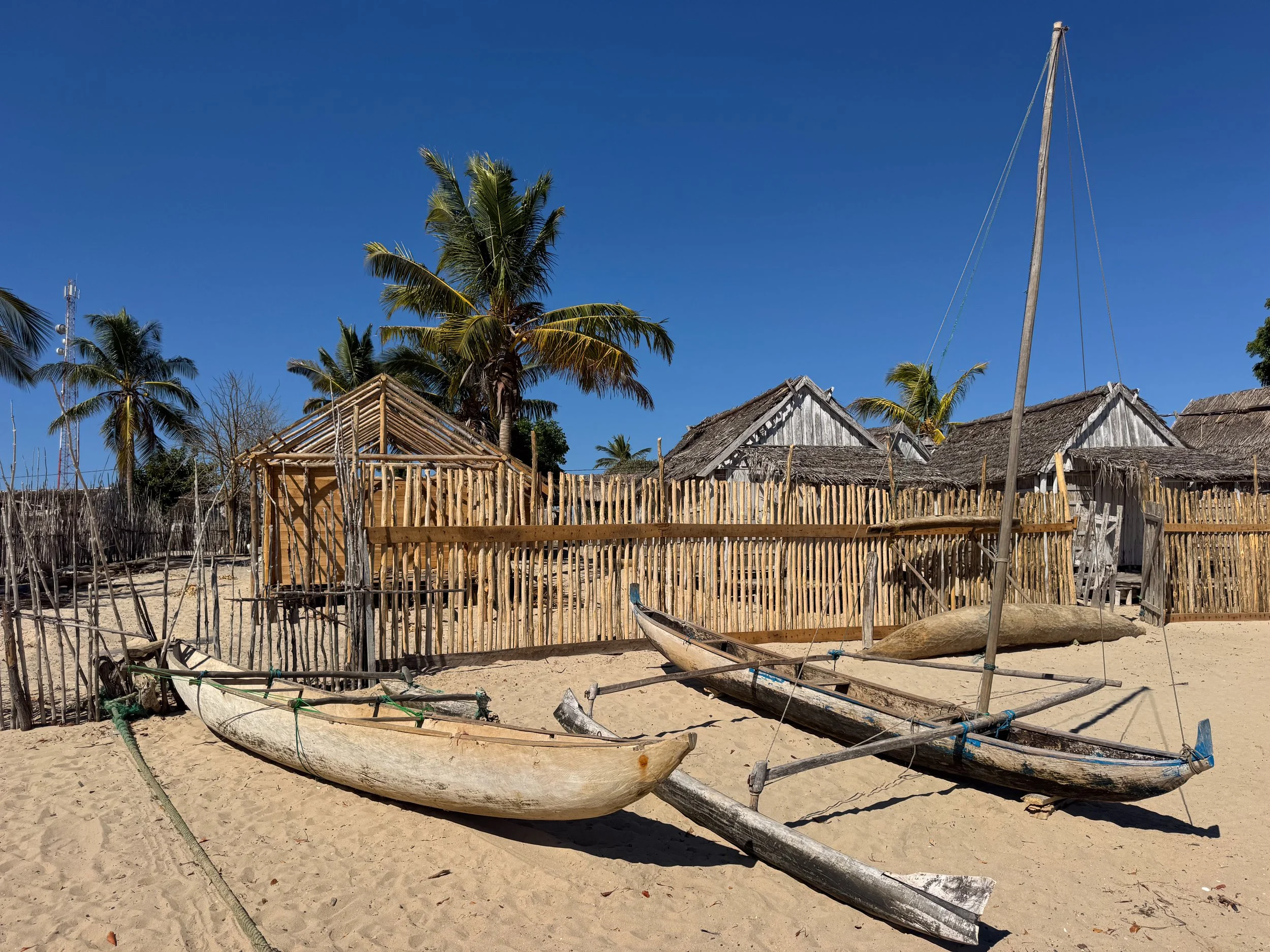
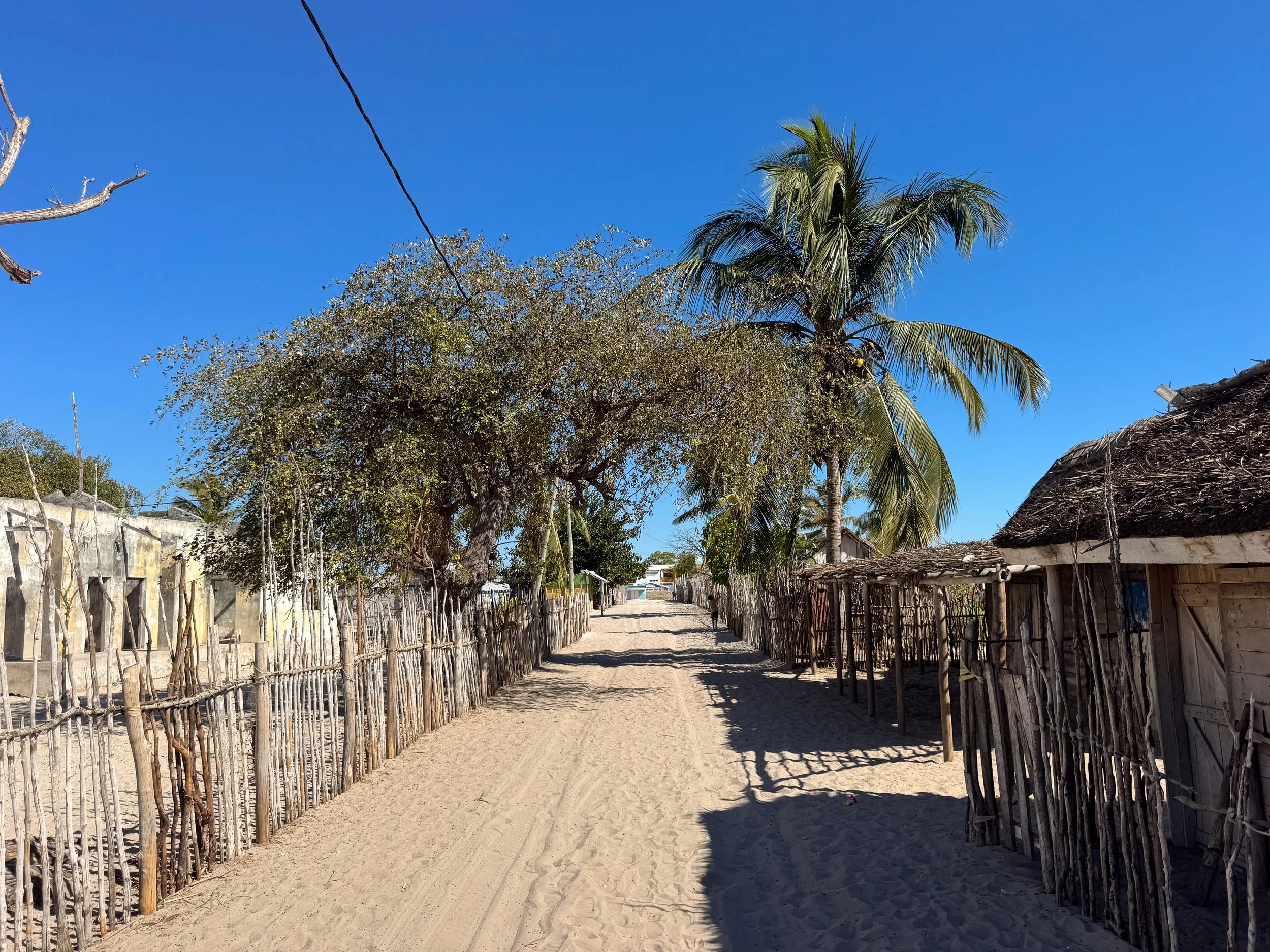
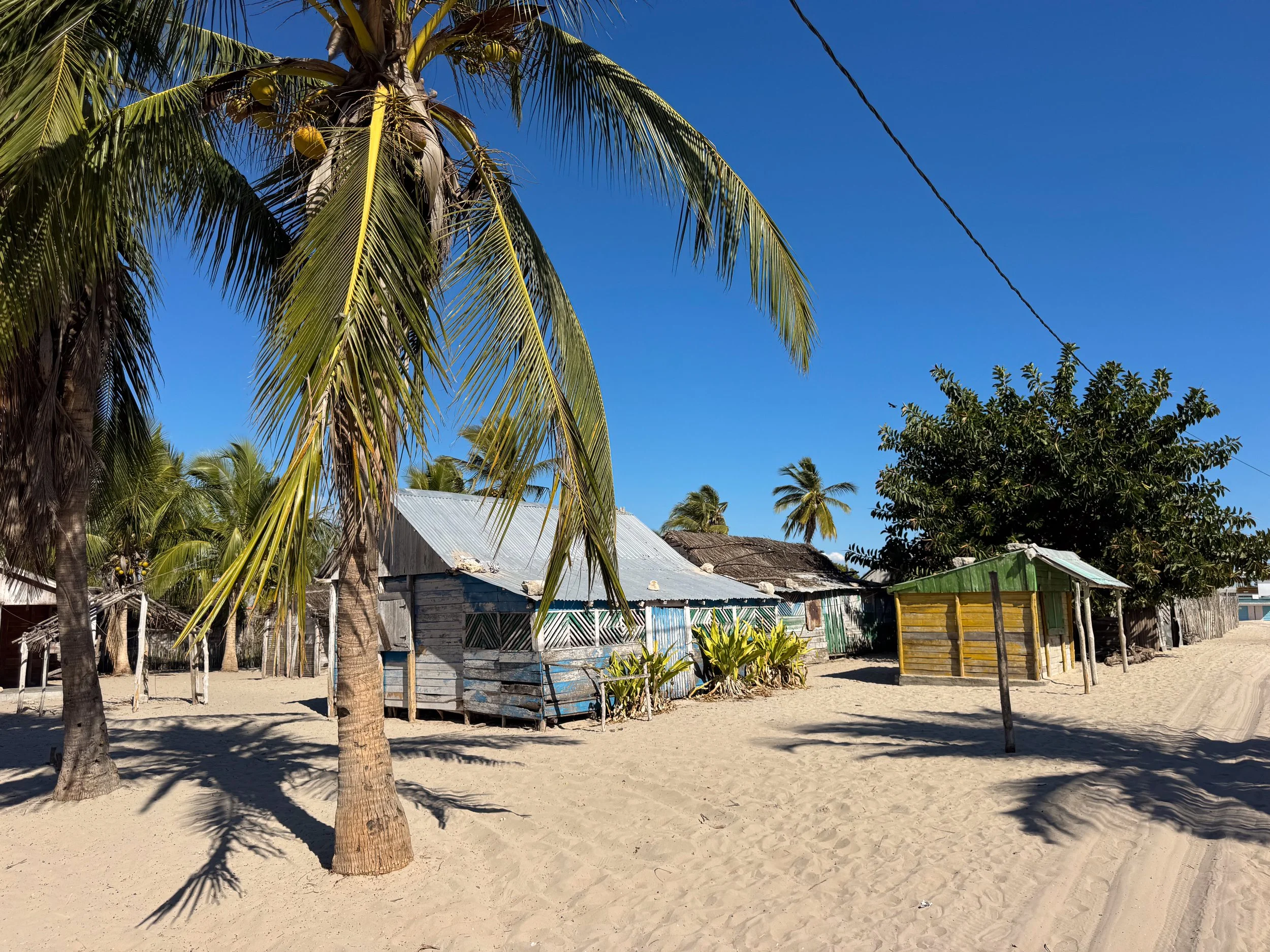
Belo sur Mer Village. Belo sur Mer is a remote coastal village renowned for its hand built wooden ships. The village’s beach is lined with dozens of ship yards, colorfully painted vessels, dugout canoes and outrigger boats. Many of the traditional ships range in level of progress. Skeleton frames and partially planked sides stand onshore. Men chisel wooden pieces, hammer nails into boards and seal seams. Completed ships float offshore in the village’s natural harbor. Sandy streets and pathways meander further inland. Stickbuilt enclosures surround traditional houses made from wooden walls and thatched roofs. It’s a beautiful and remote destination with unique traditions.
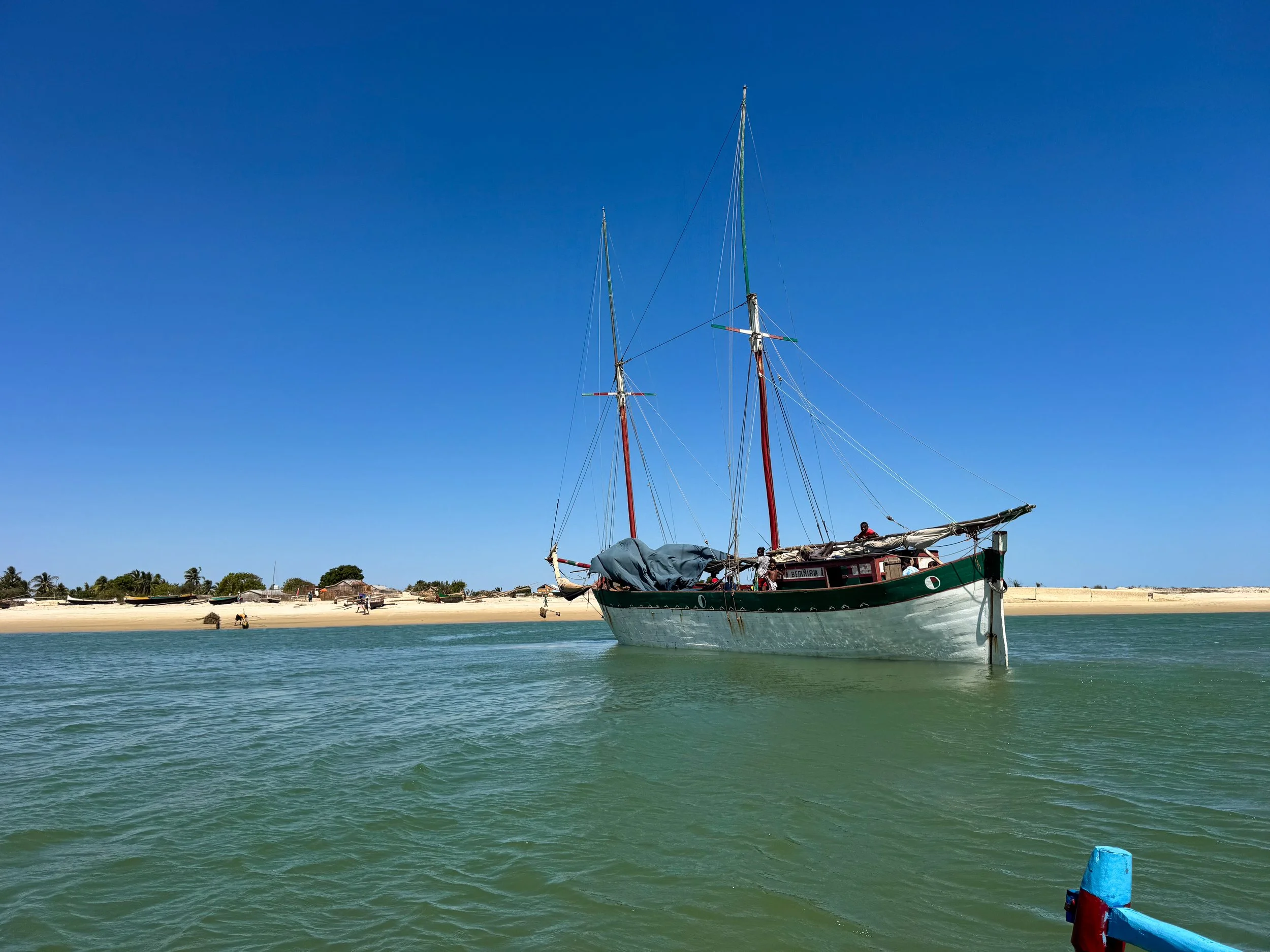
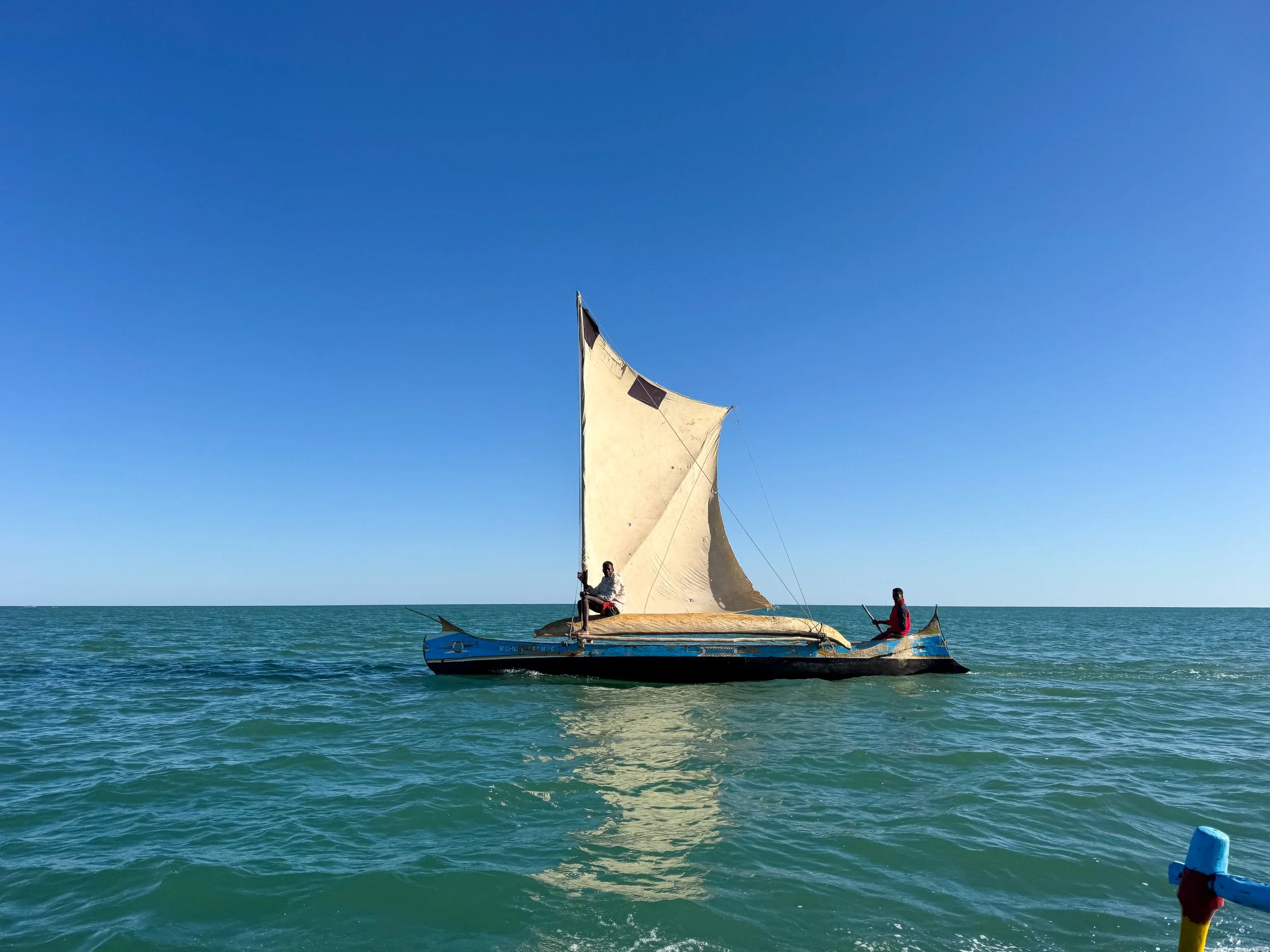
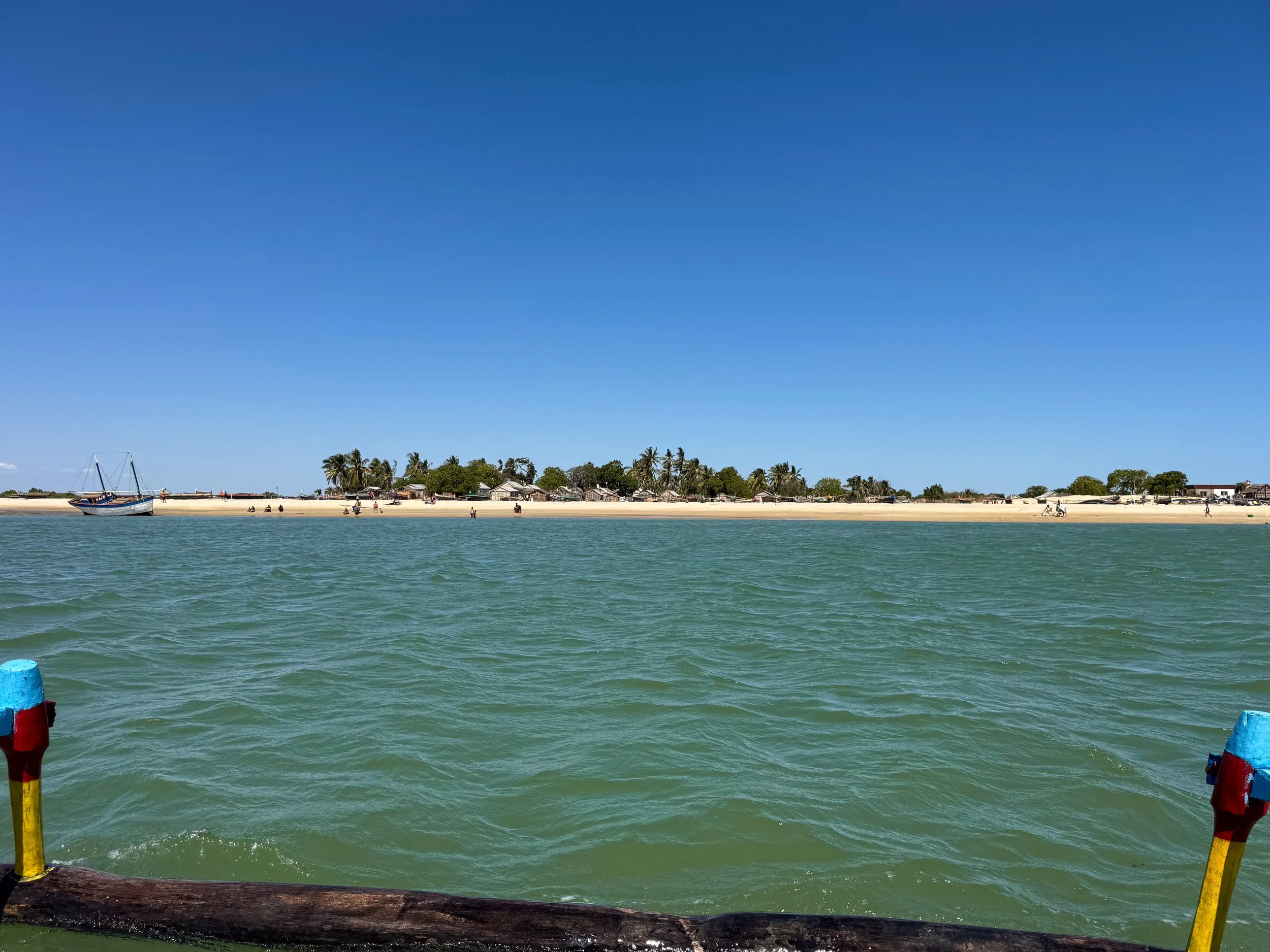
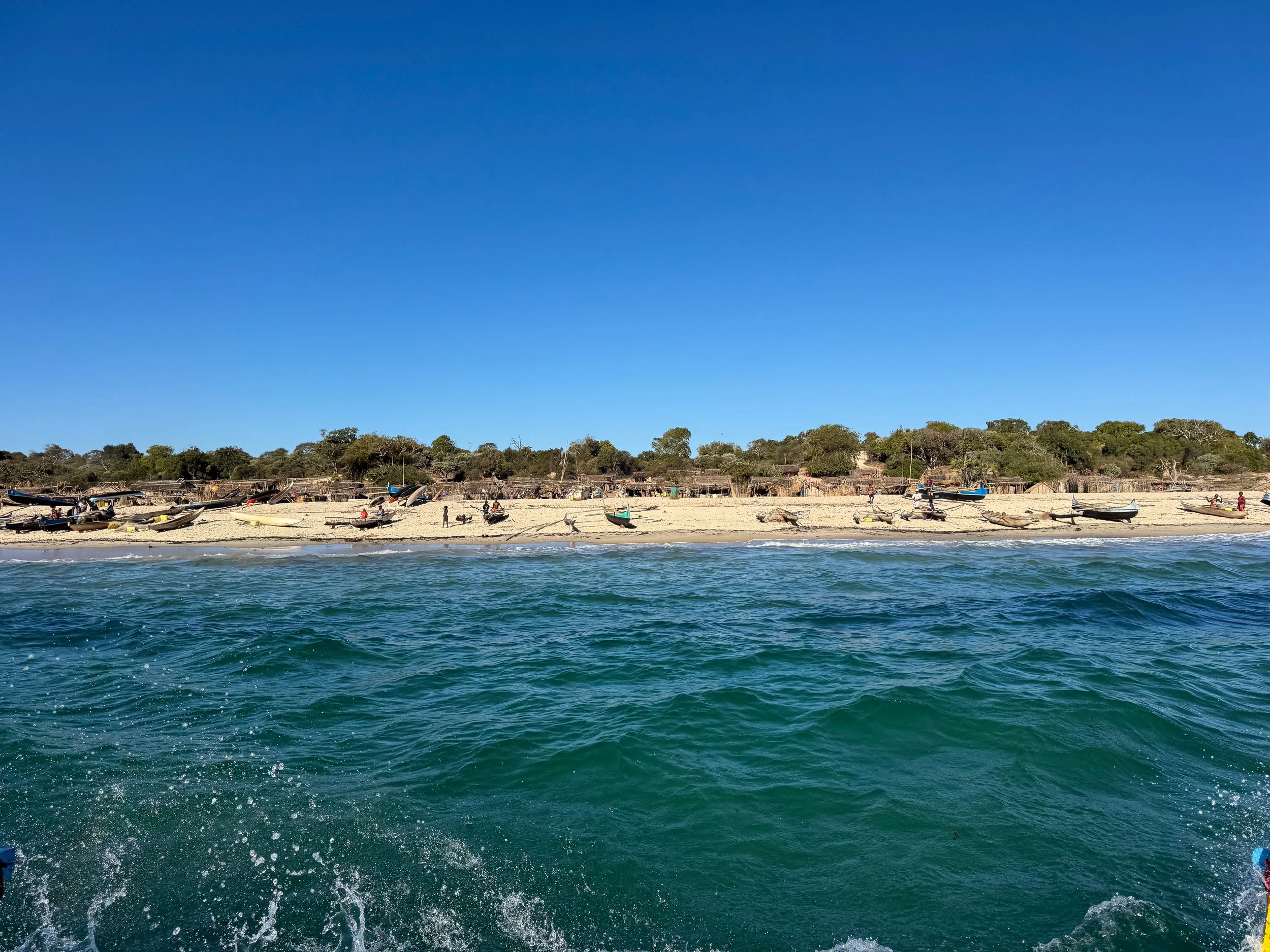
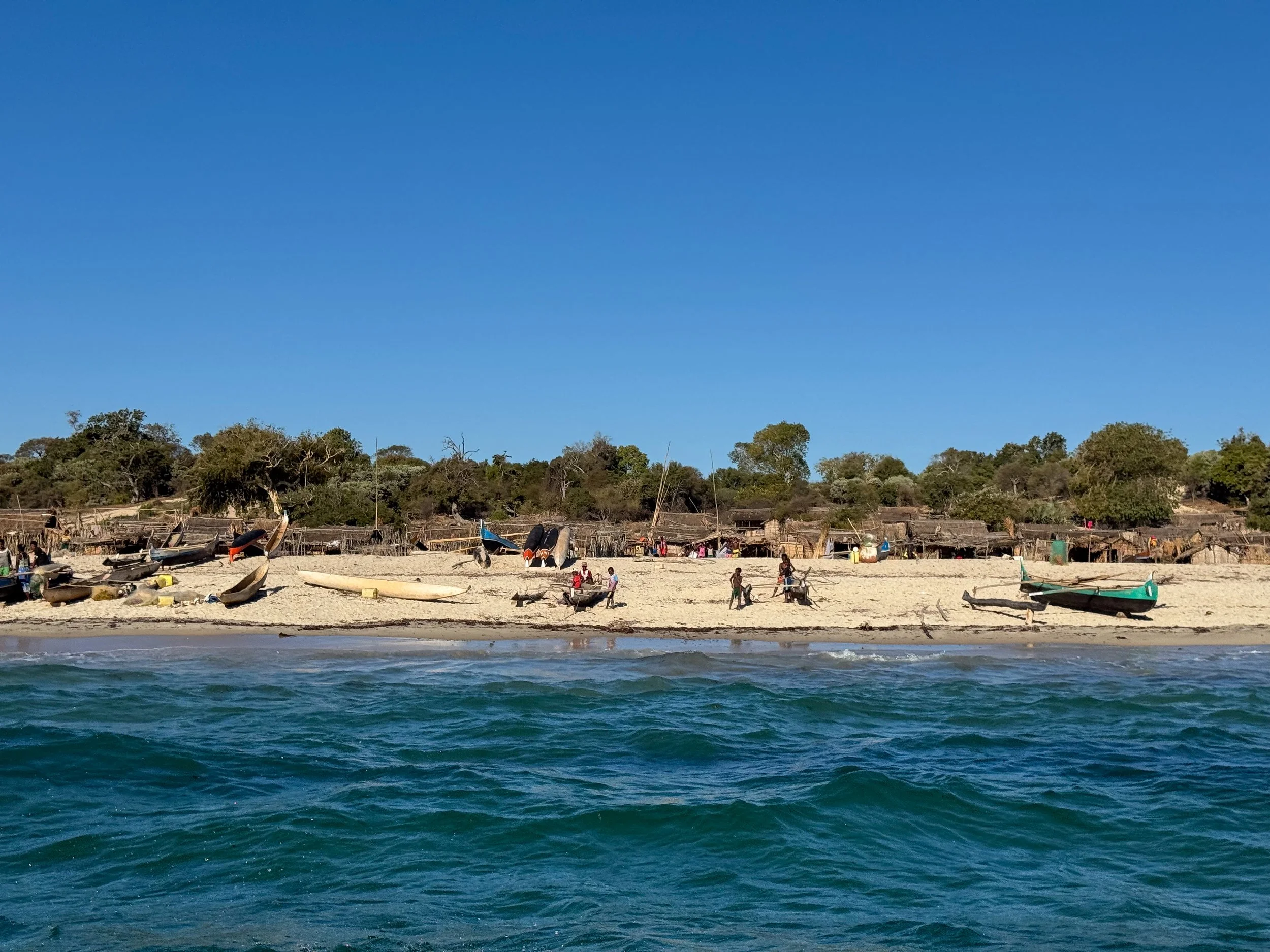
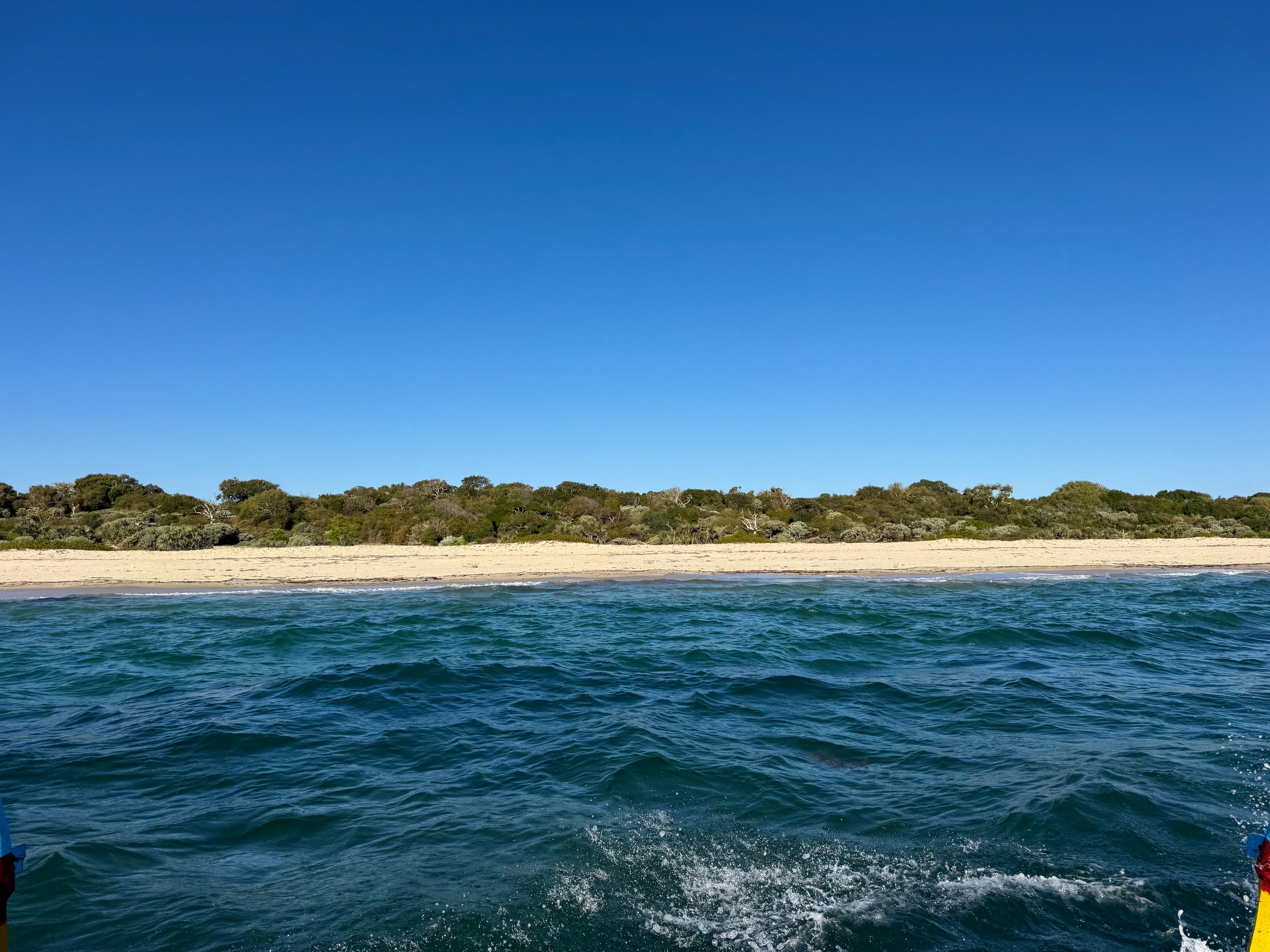
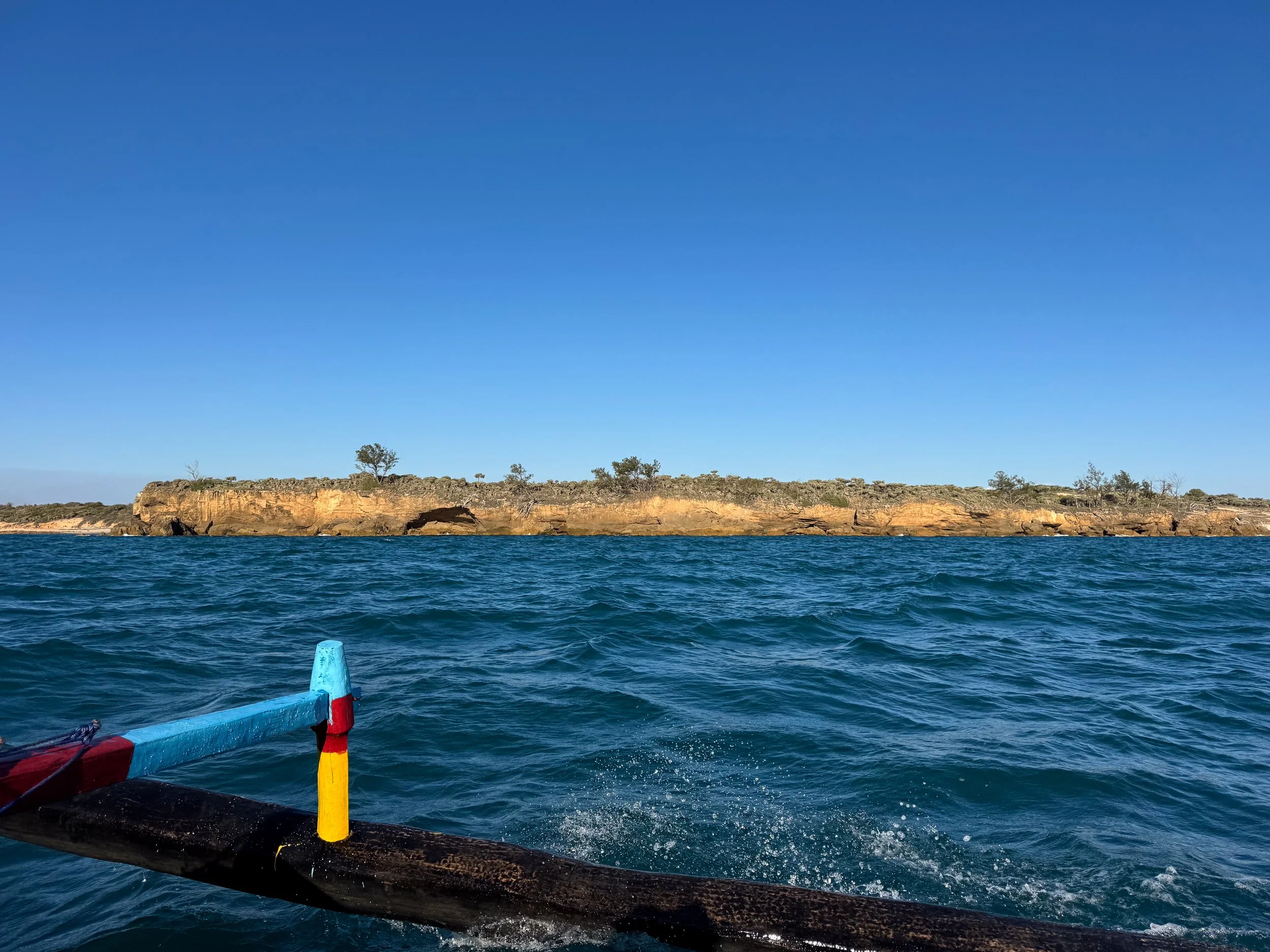
Belo sur Mer Voyage. Belo sur Mer is located 100km south of Morondava. The voyage between takes between 3-4 hours, offering scenic glimpses into the coastal landscape and remote villages. Untouched forests, white sand beaches, steep dunes and sheer rocks cliffs cover the coast. Small villages with thatched huts, beached dug out canoes and local people line pockets of the shoreline. Fishing vessels with rectangular sails billow across the sea like sheets in the wind.
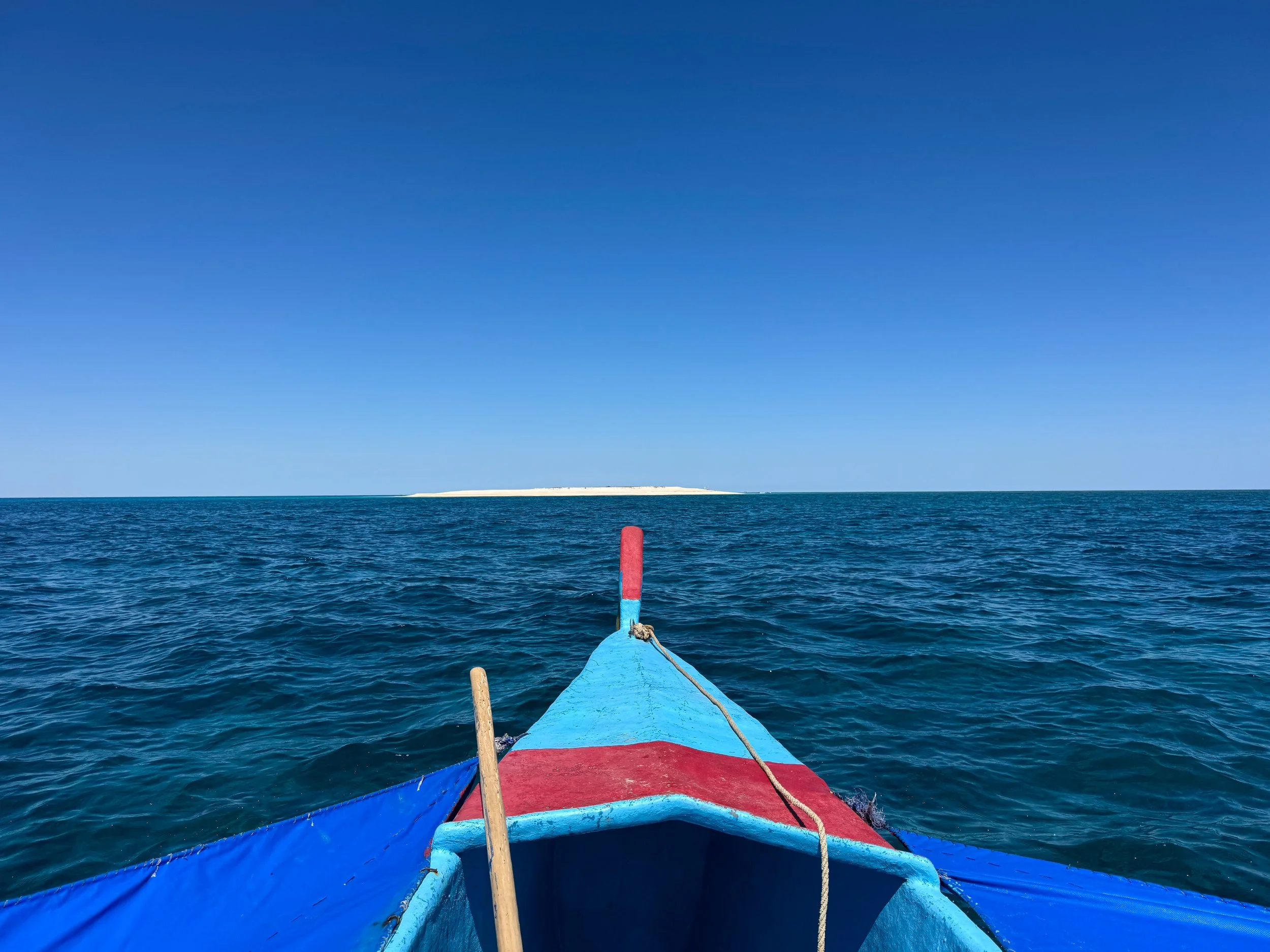
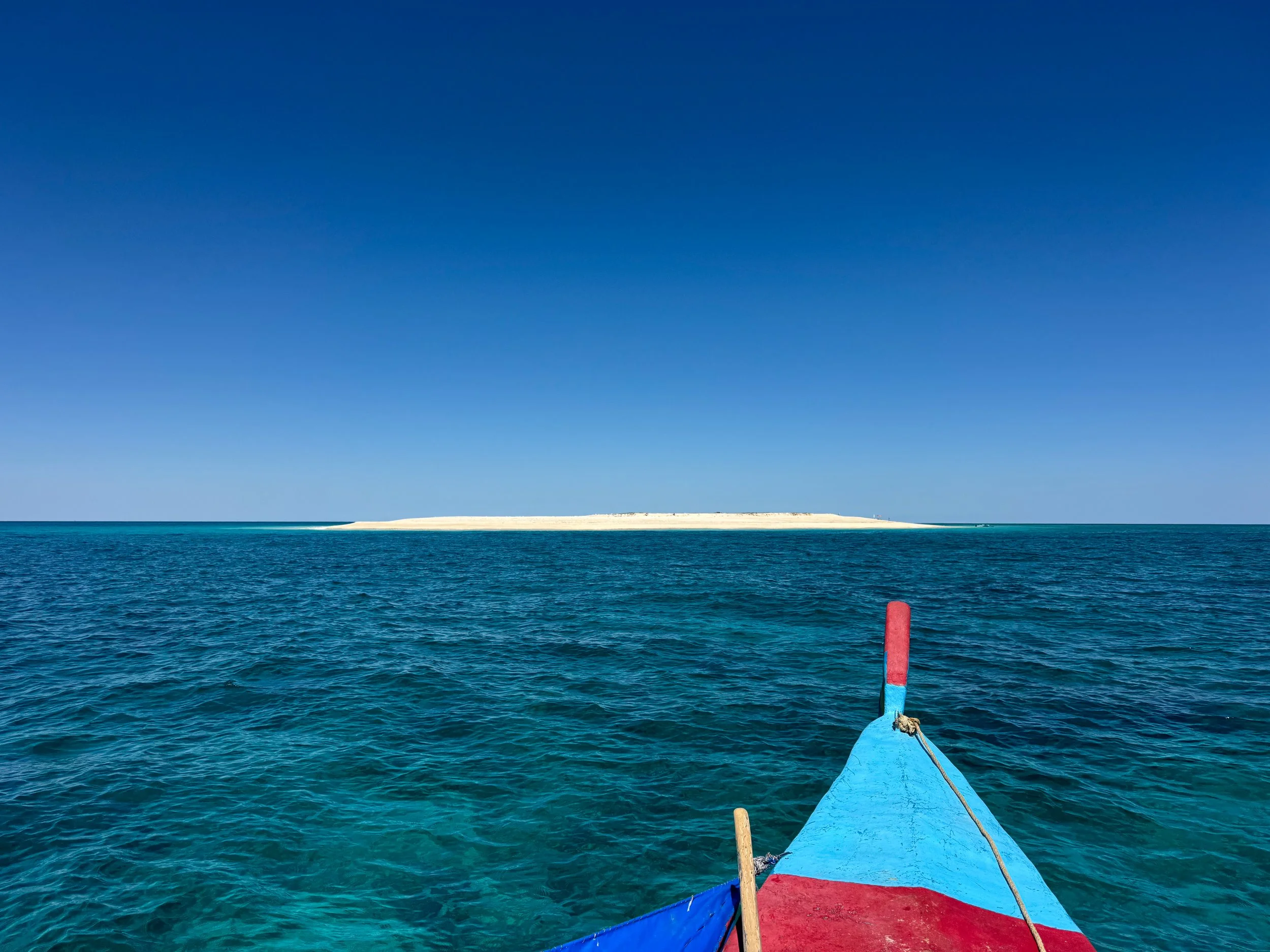
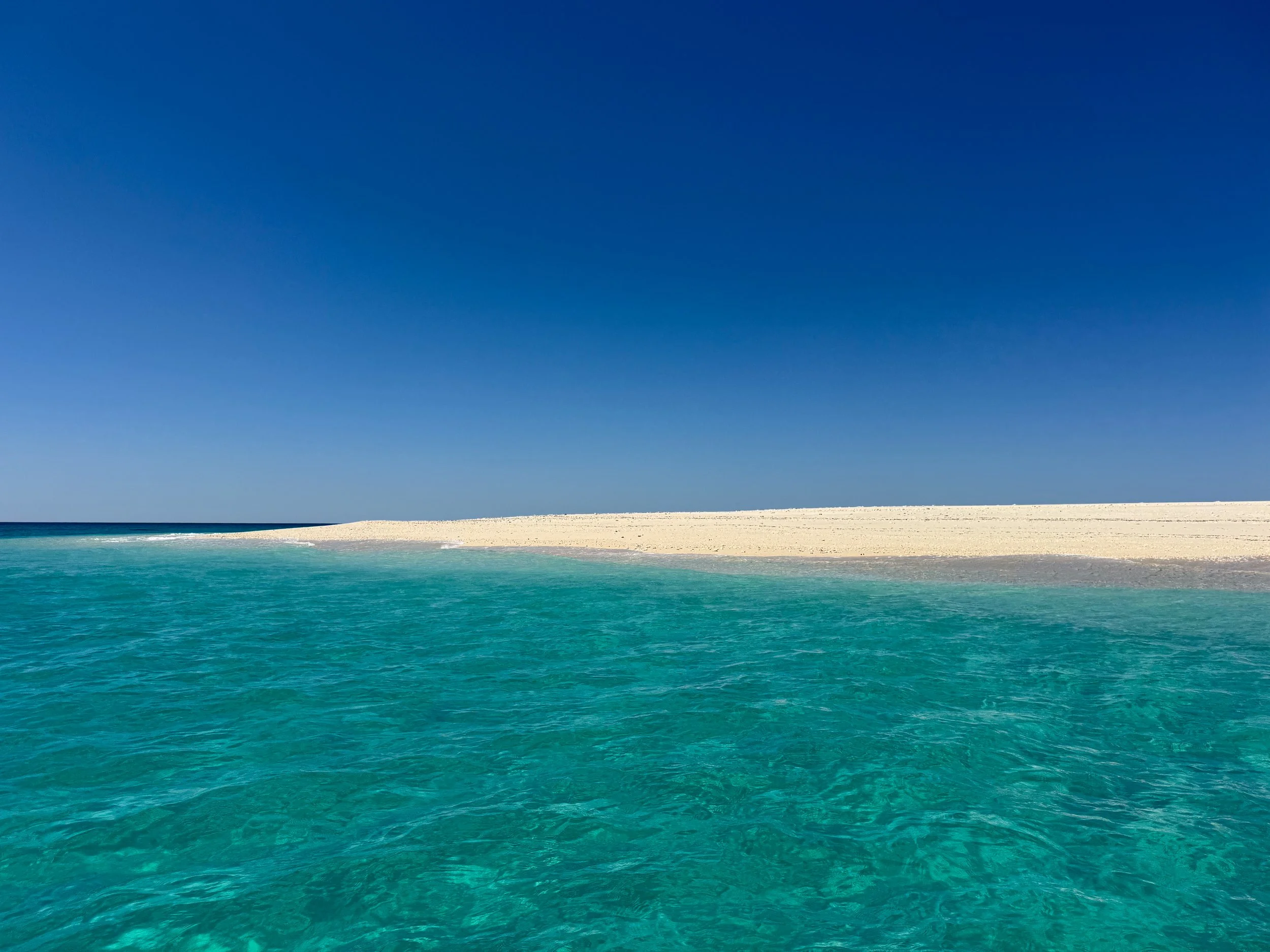
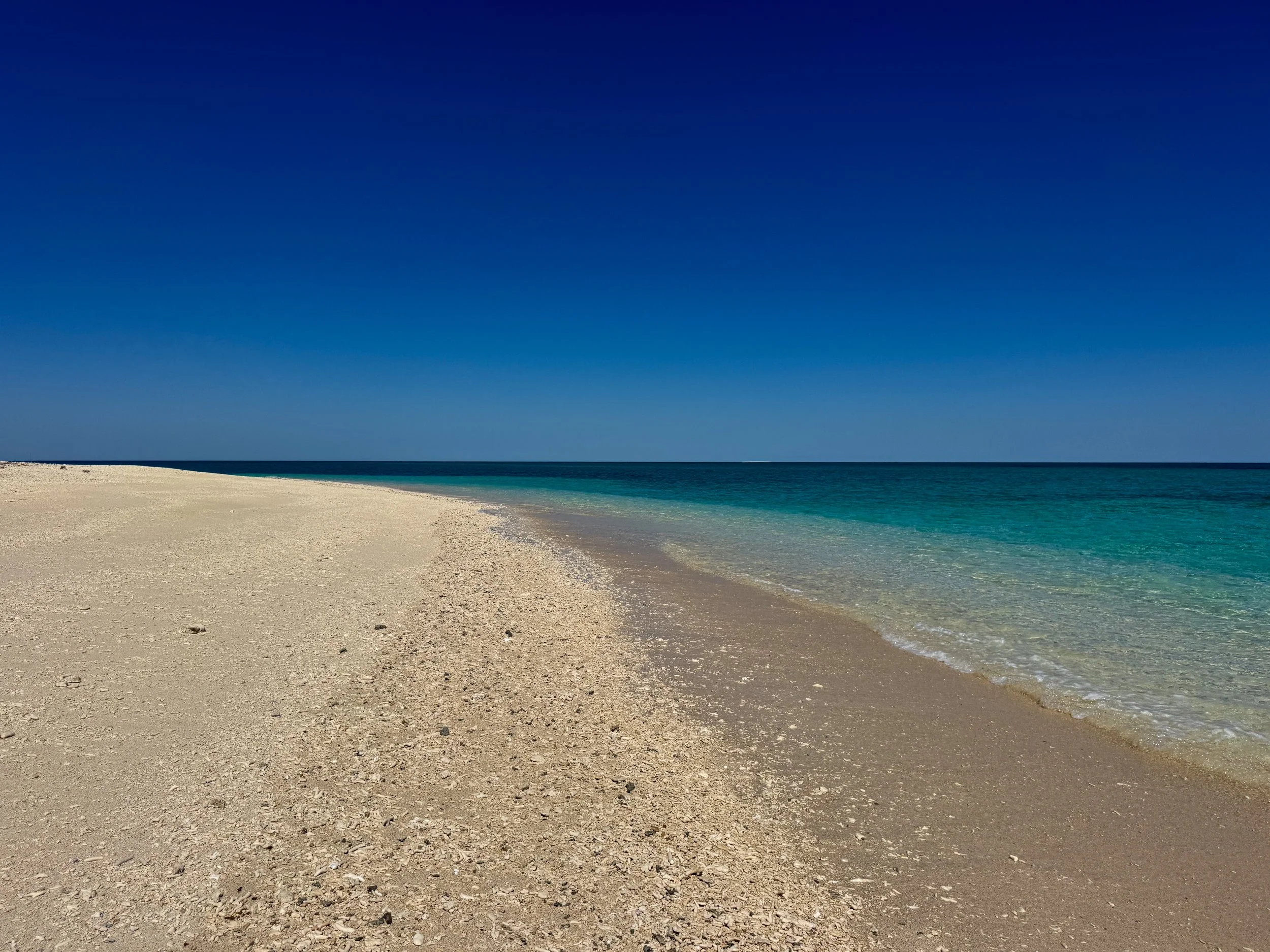
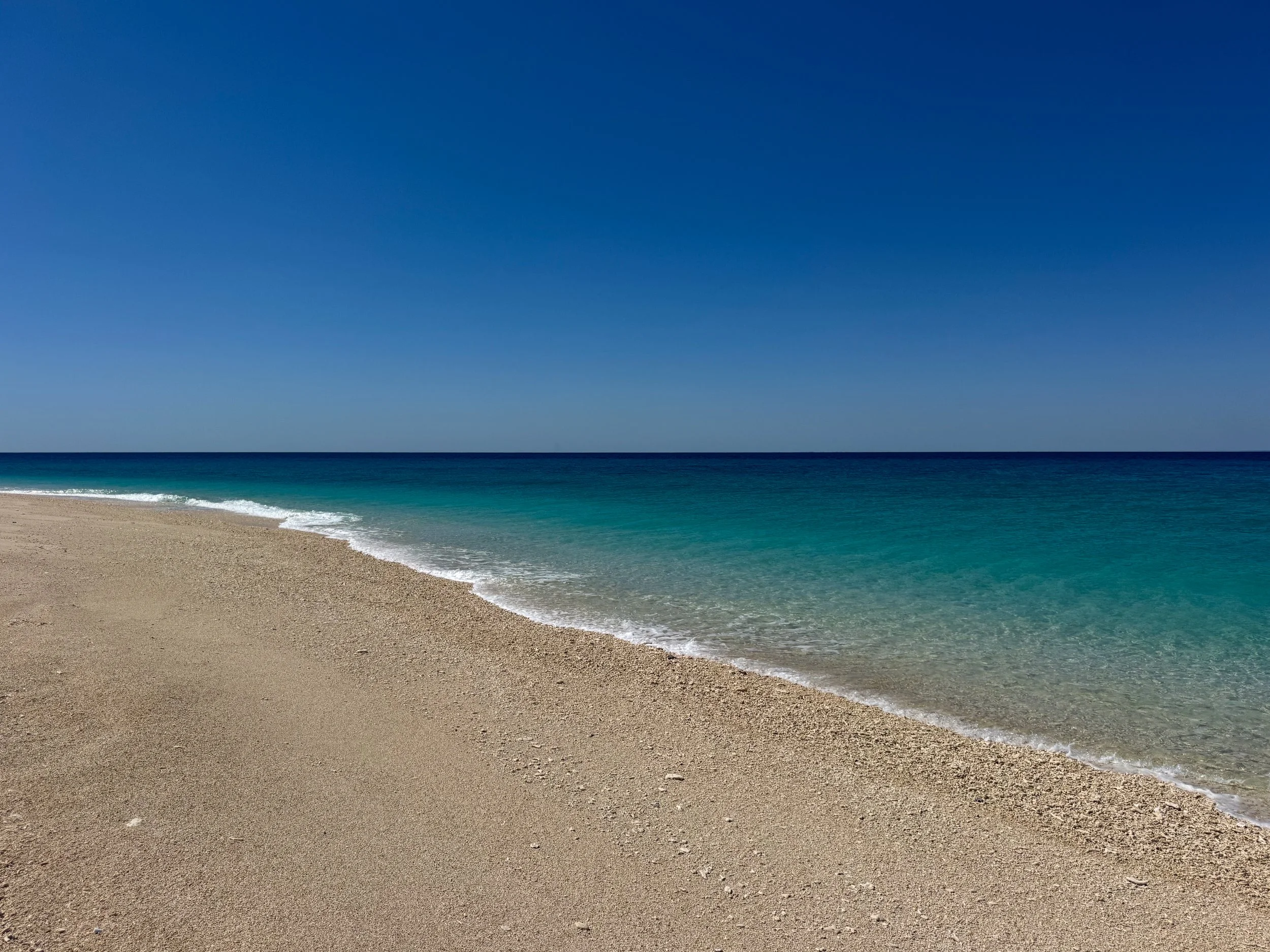
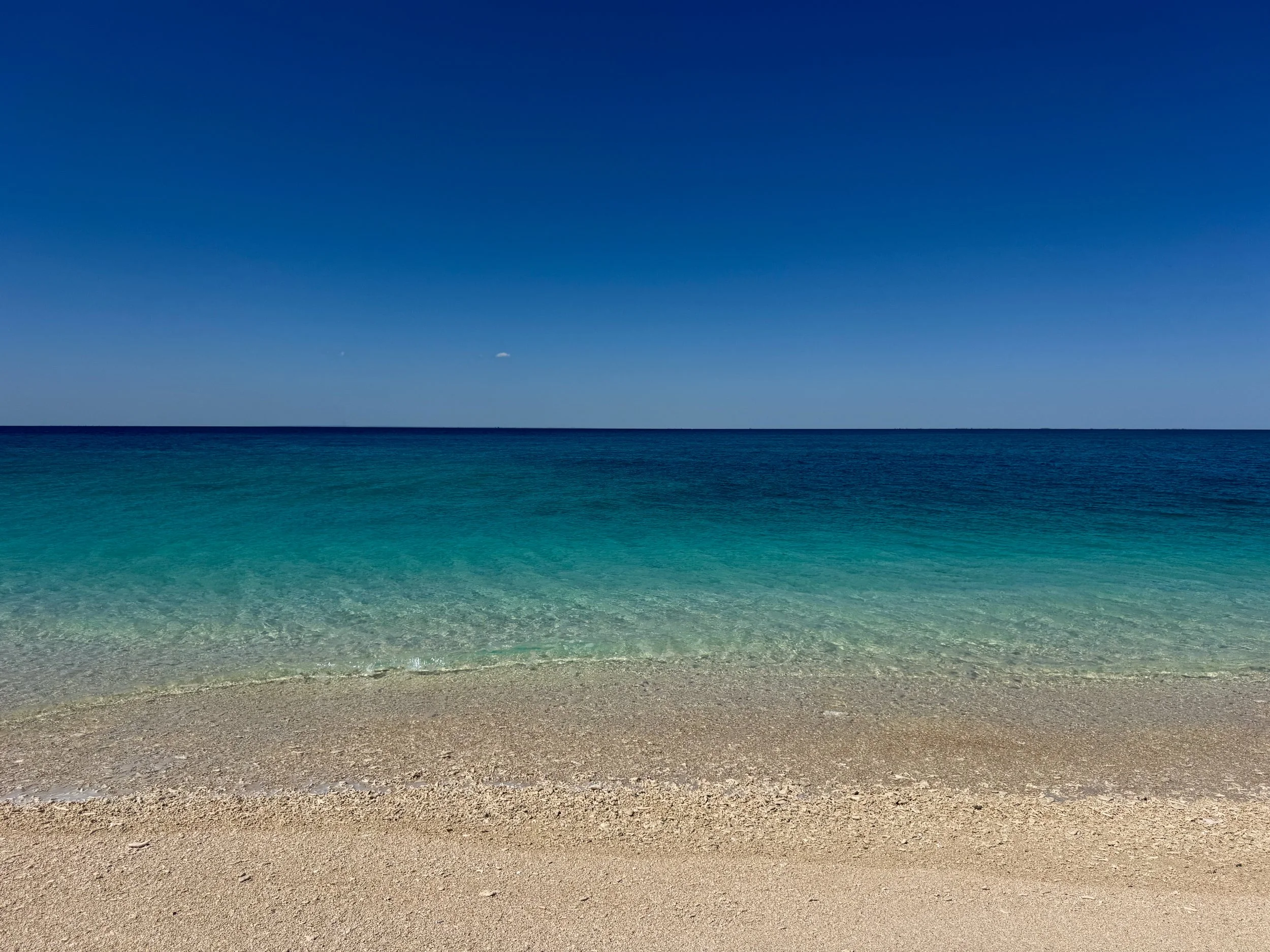
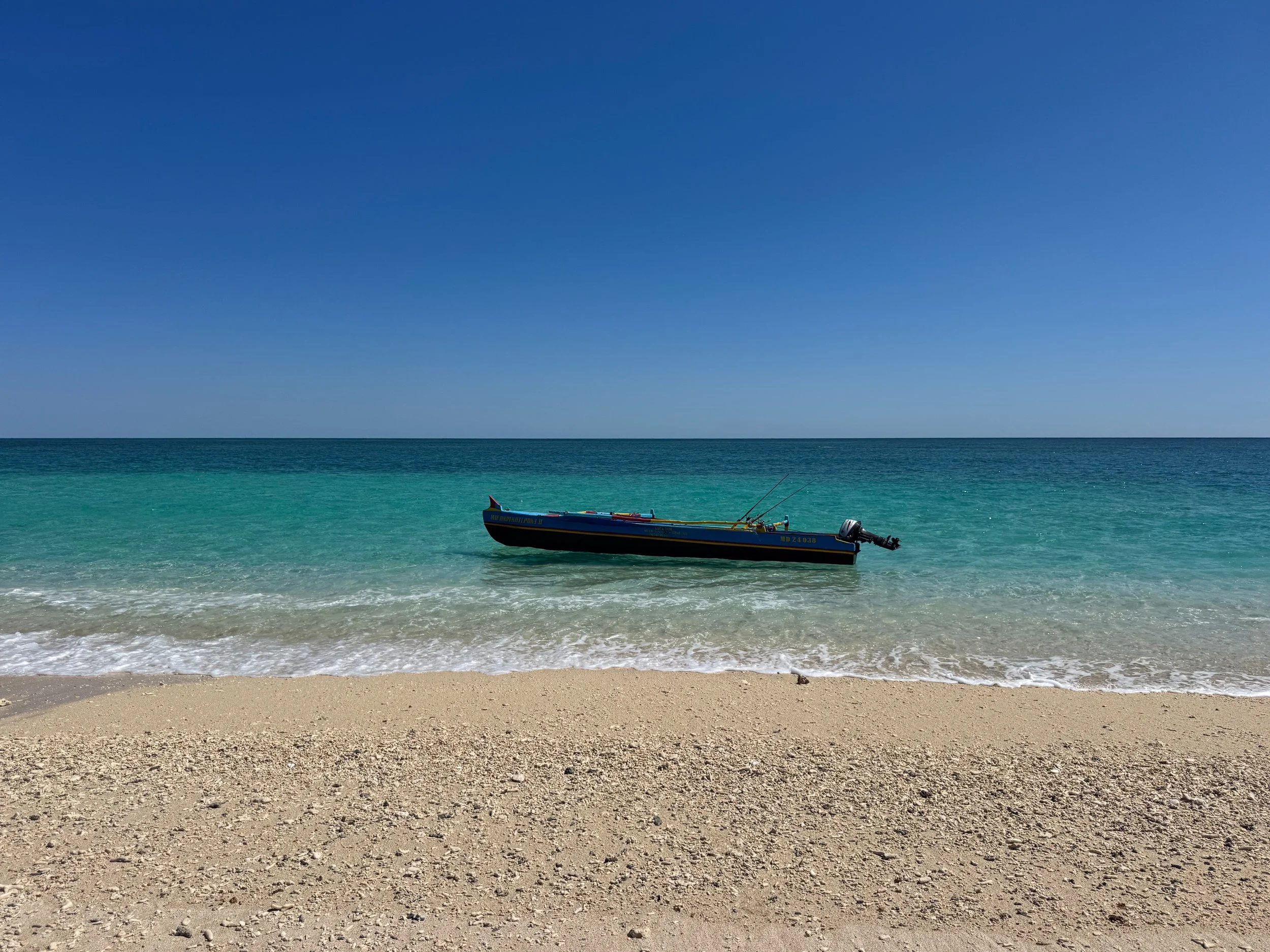
Nosy Andrahavo. Nosy Andrahavo is a lonely desert island in the deep blue ocean. It appears as a yellow sand dune rising from the sea, surrounded by the most vibrant shades of turquoise, aquamarine and blue. Bleached corals and shells decorate the shores. It’s possible to walk the circumference of the island in half an hour. There is no natural shade on the island though the cool waters offer a refreshing escape. The crew prepared us a Malagasy meal on the beach, Trondro Gasy, a dish made from stewed fish with a tomato base, bell peppers and onions.
Avenue of the Baobabs
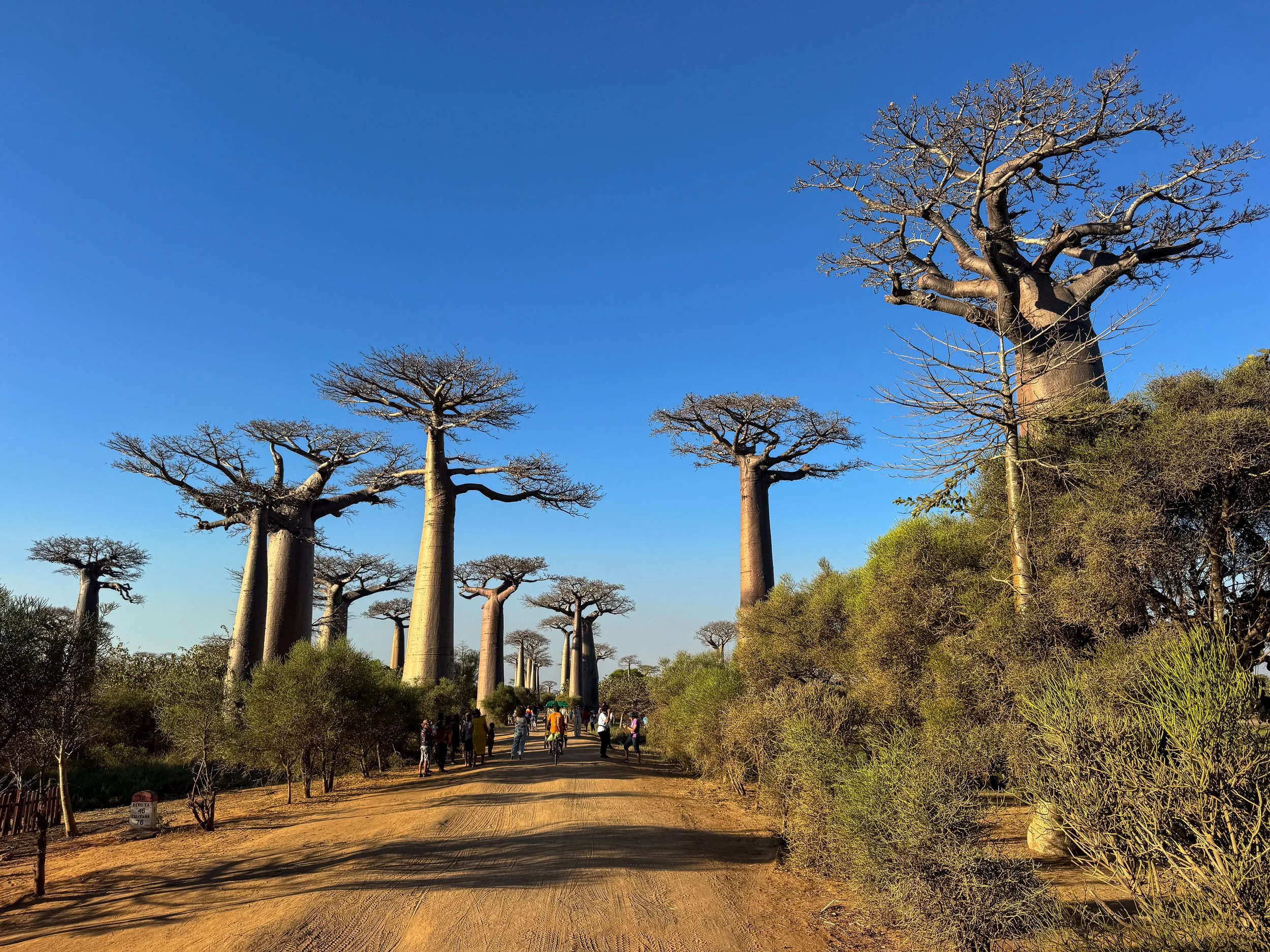
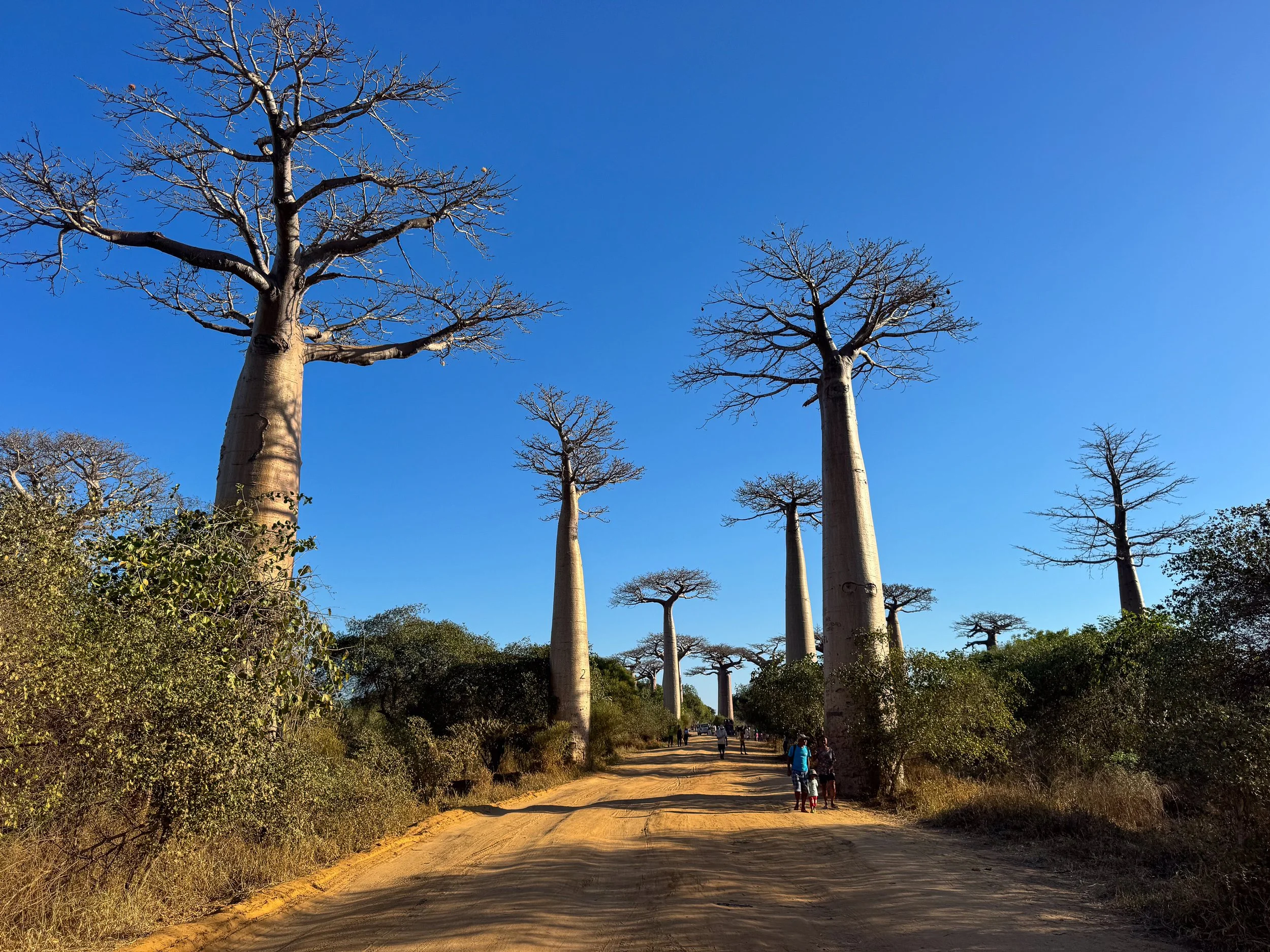
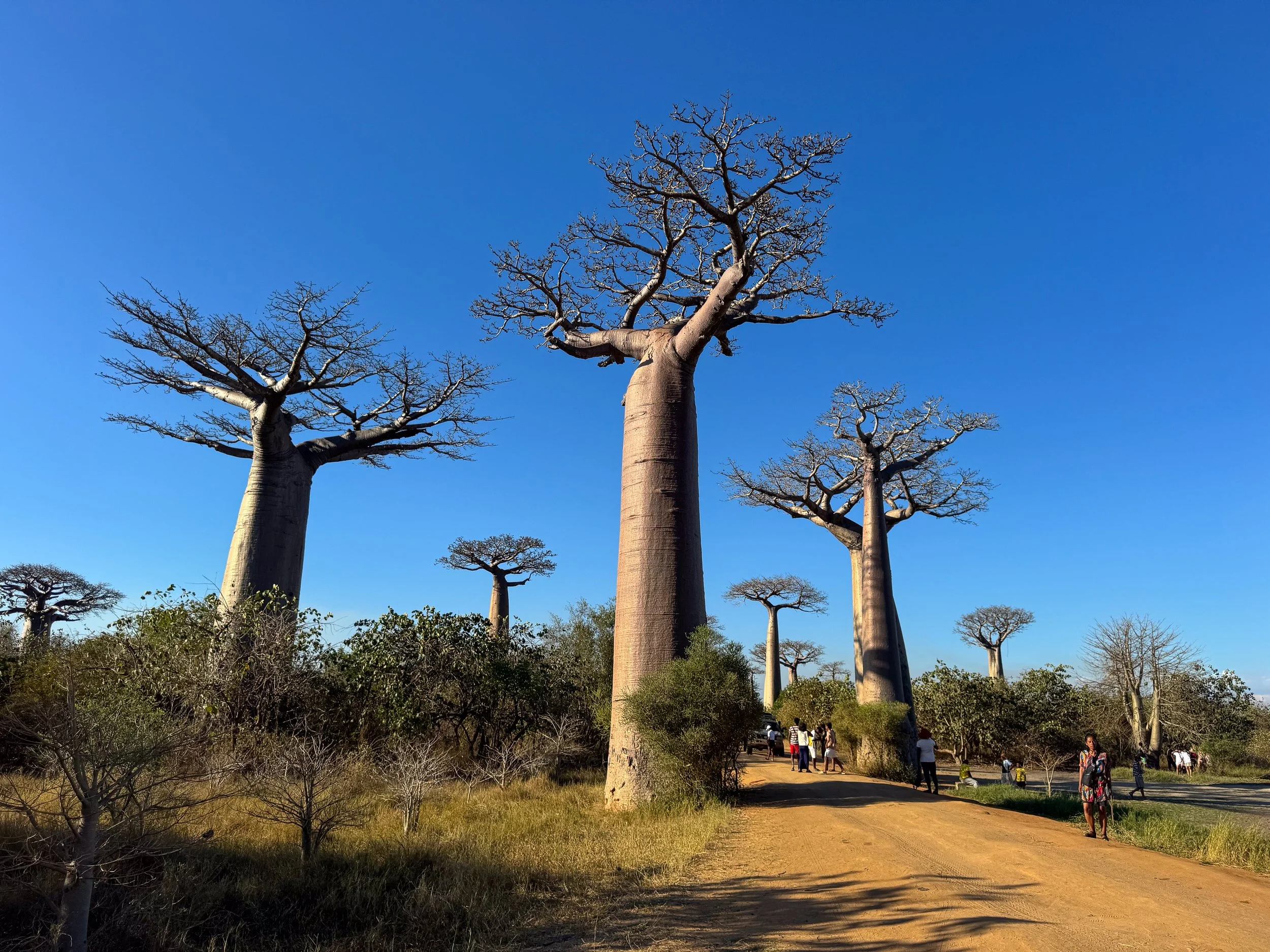
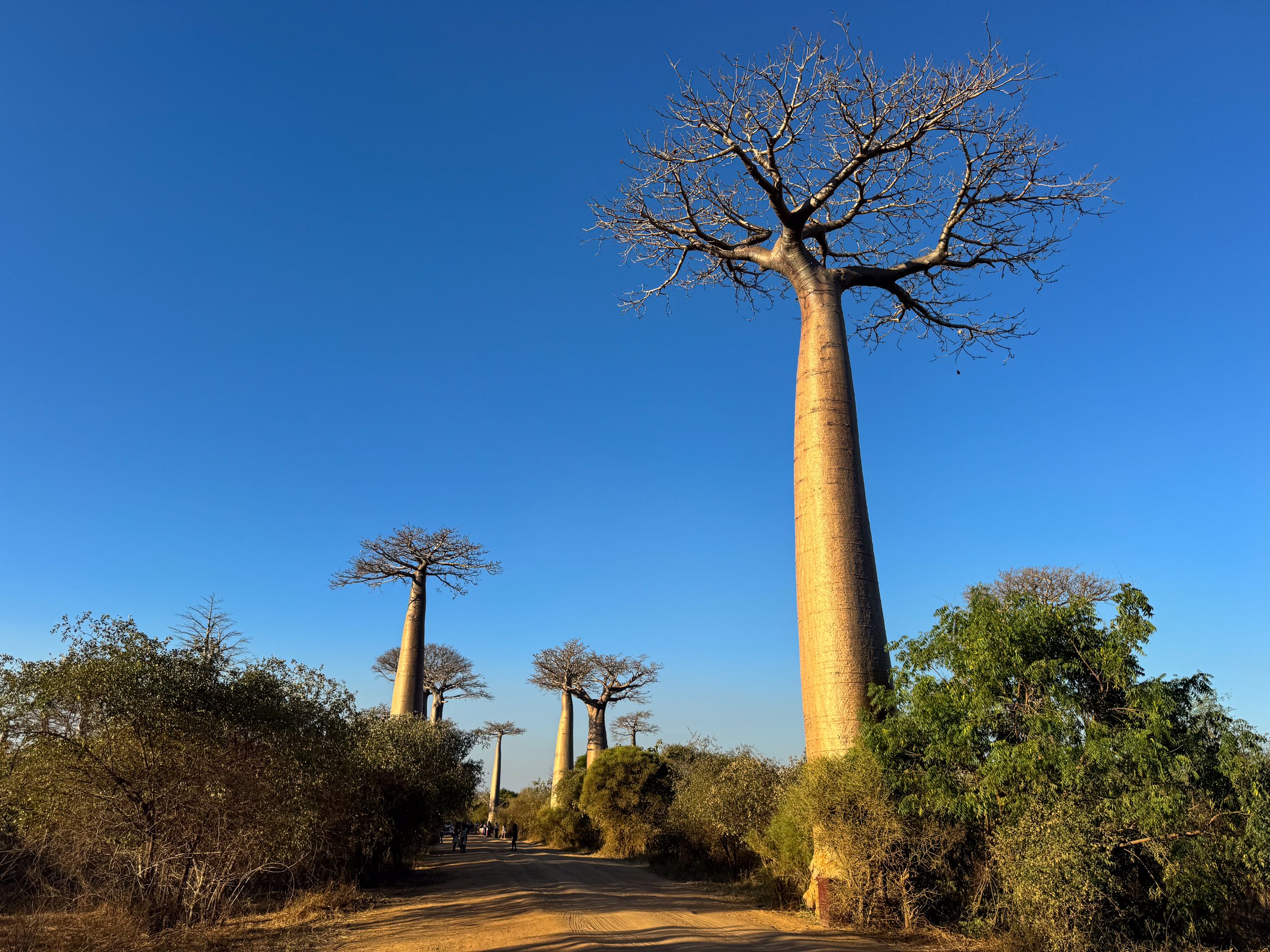
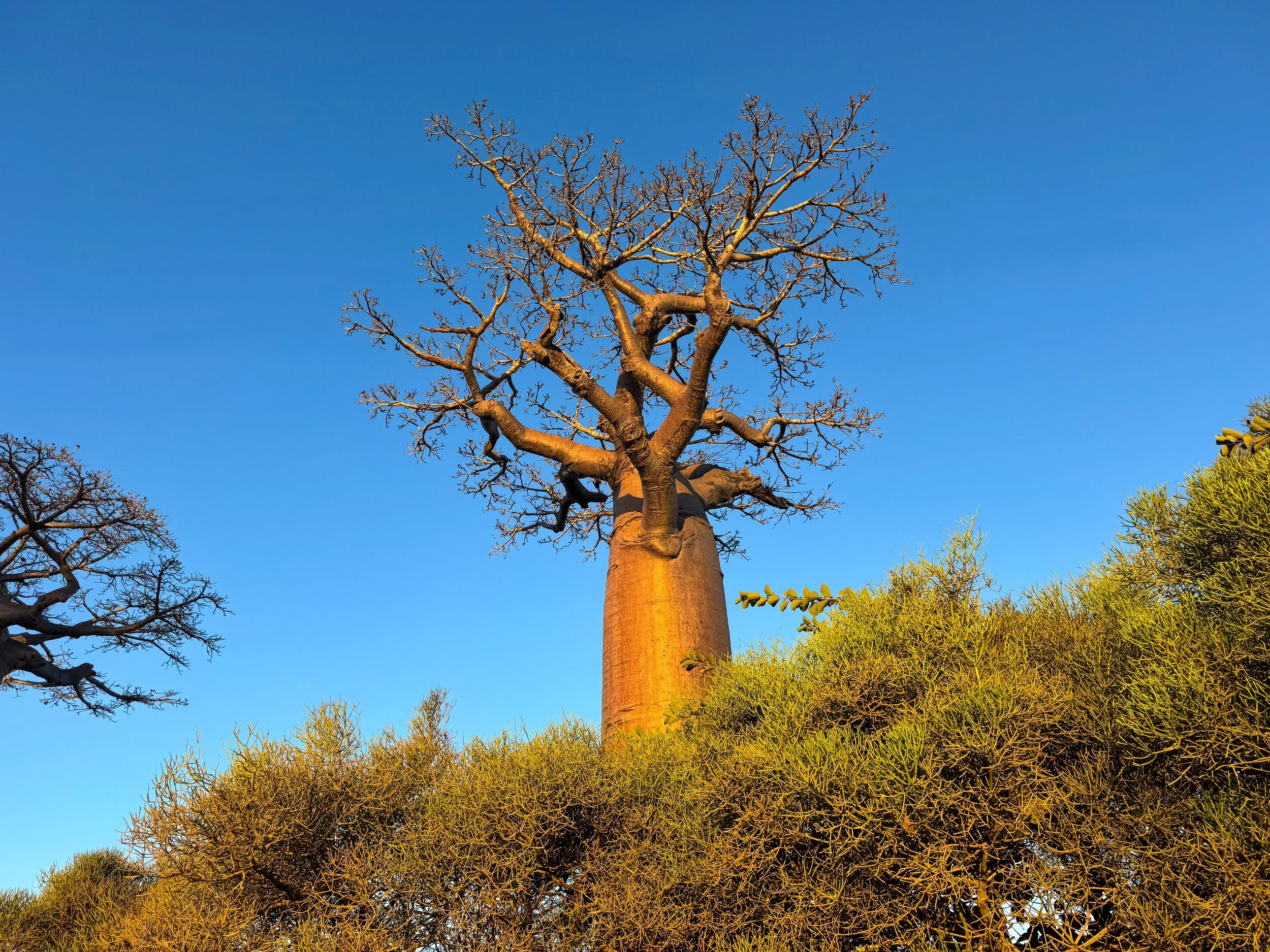
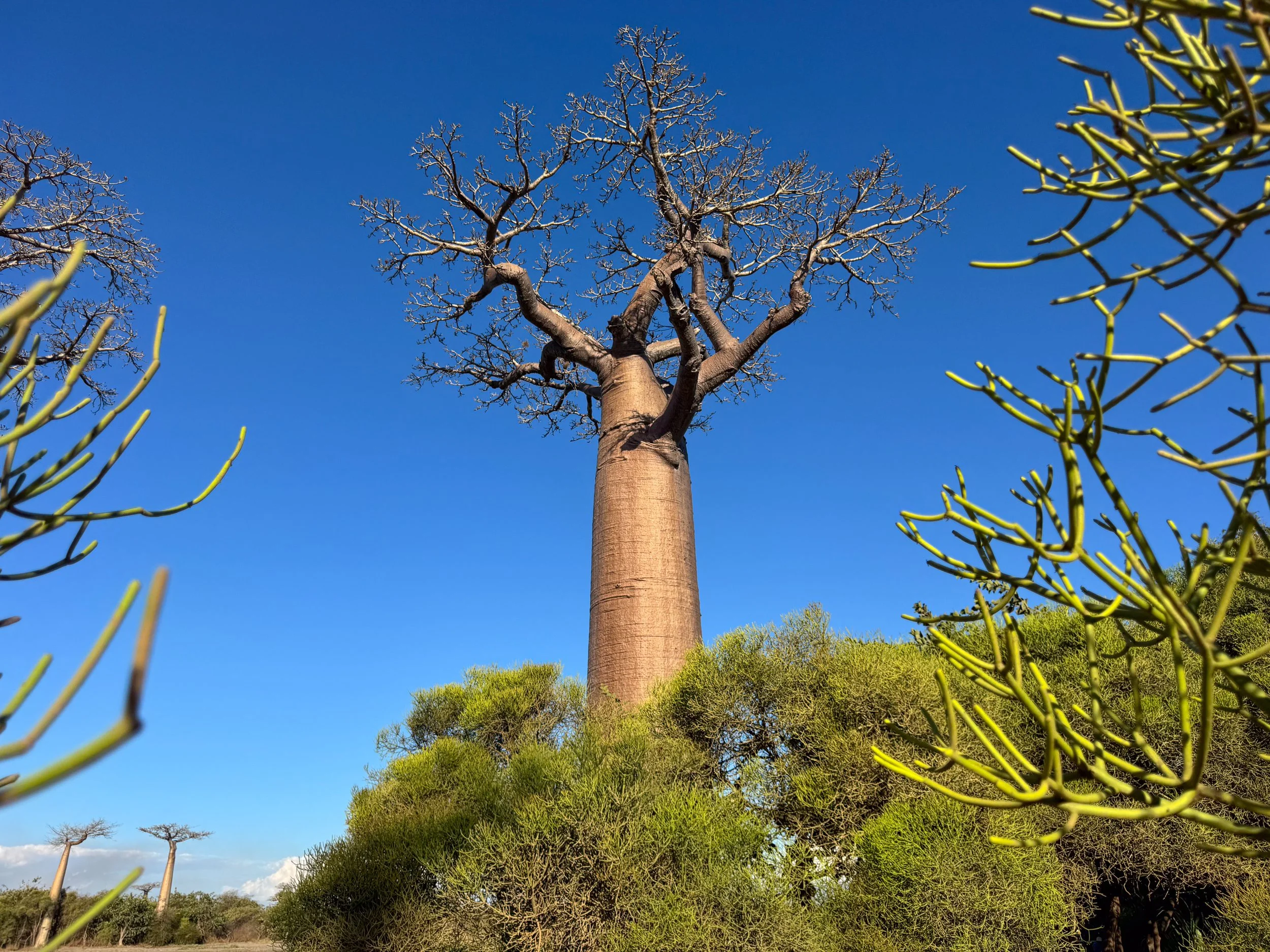
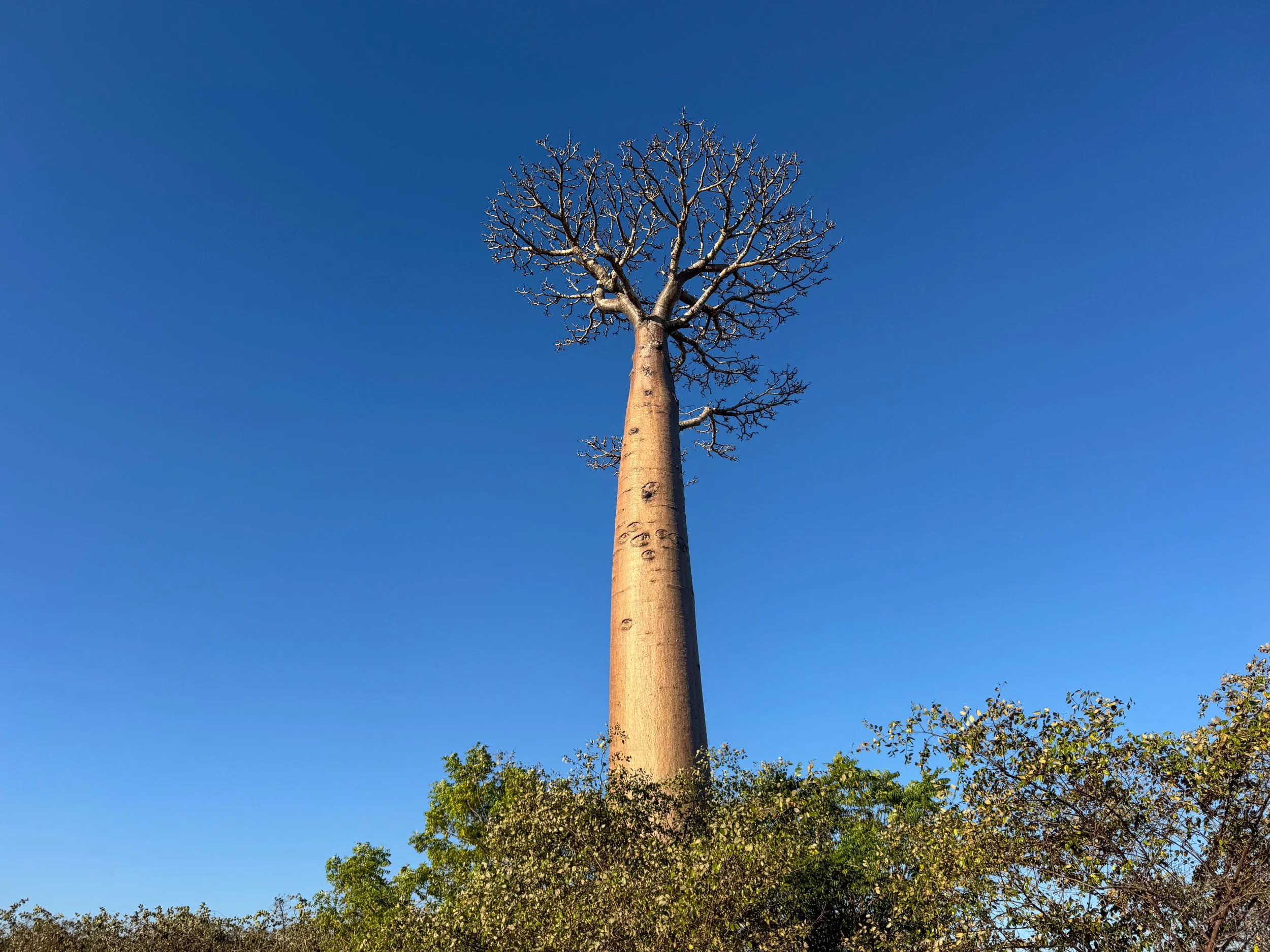
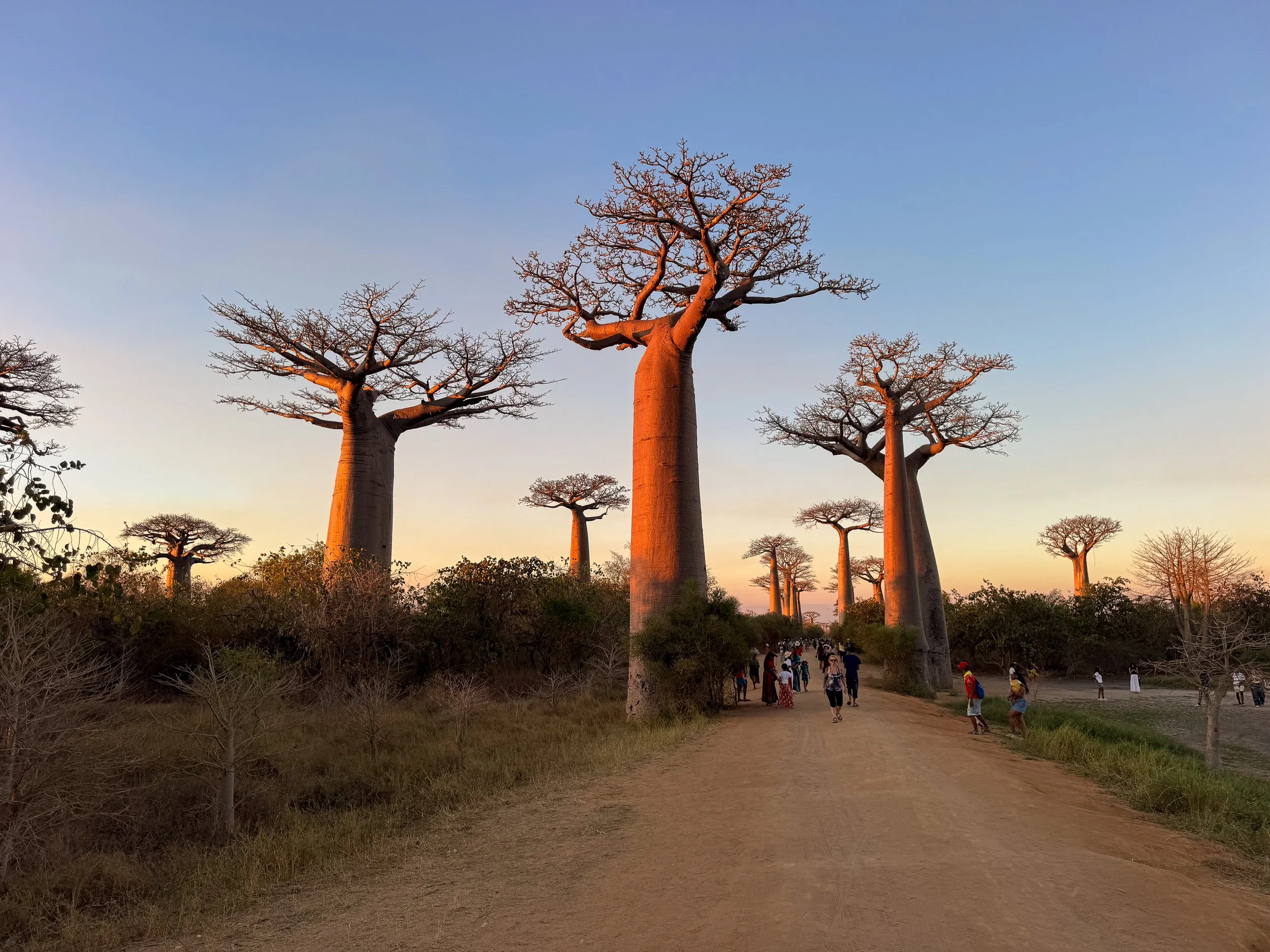
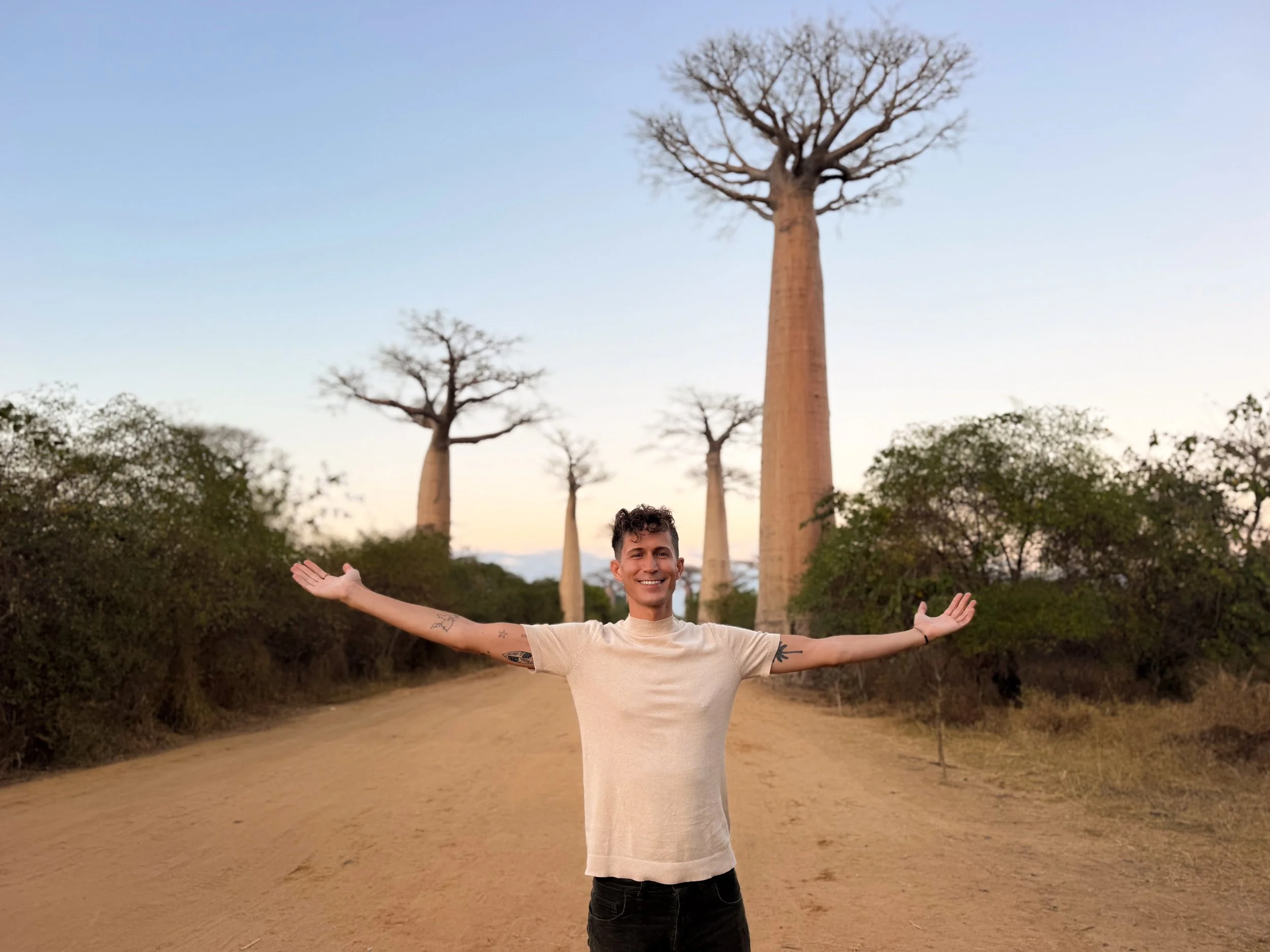
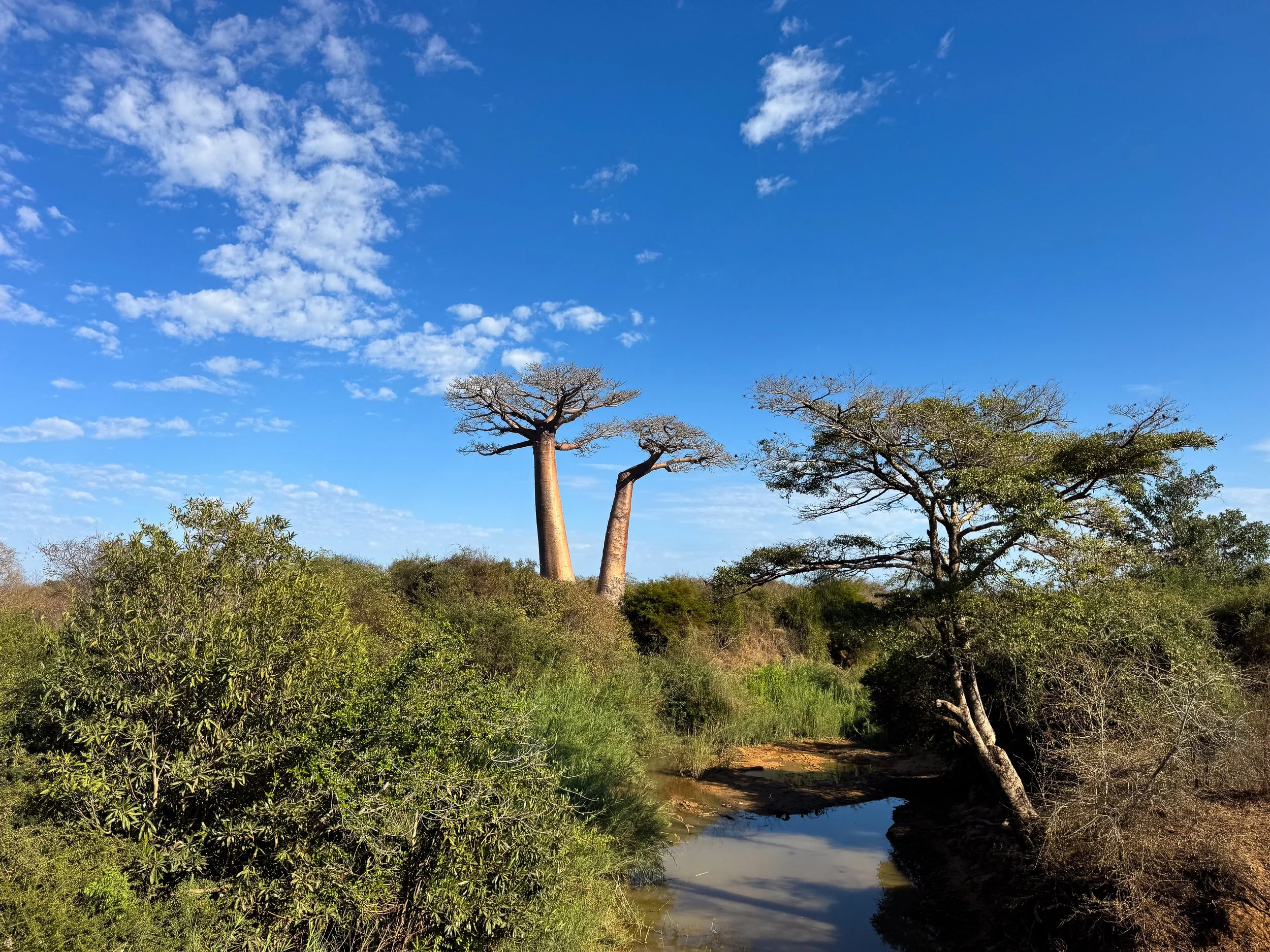
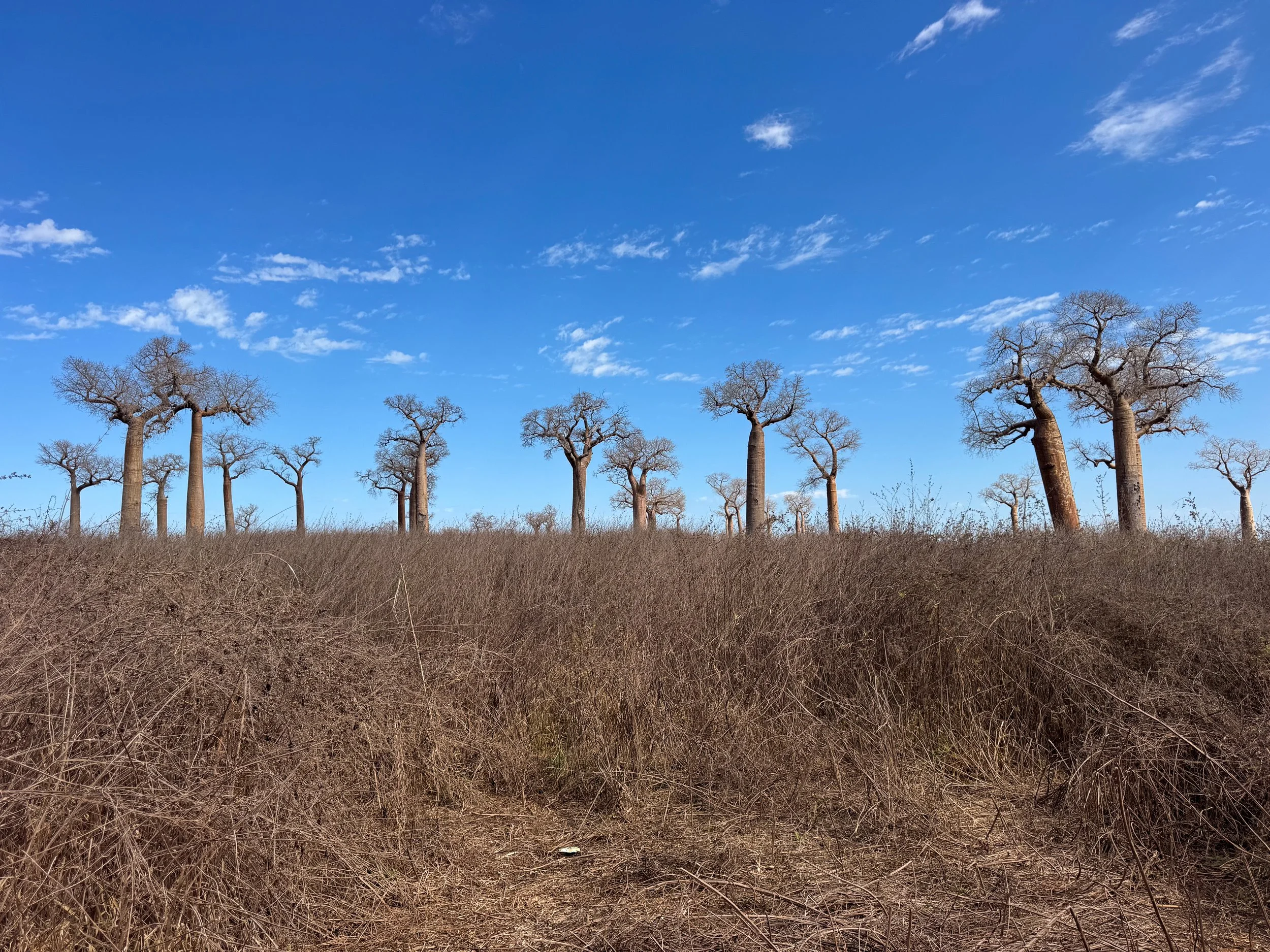
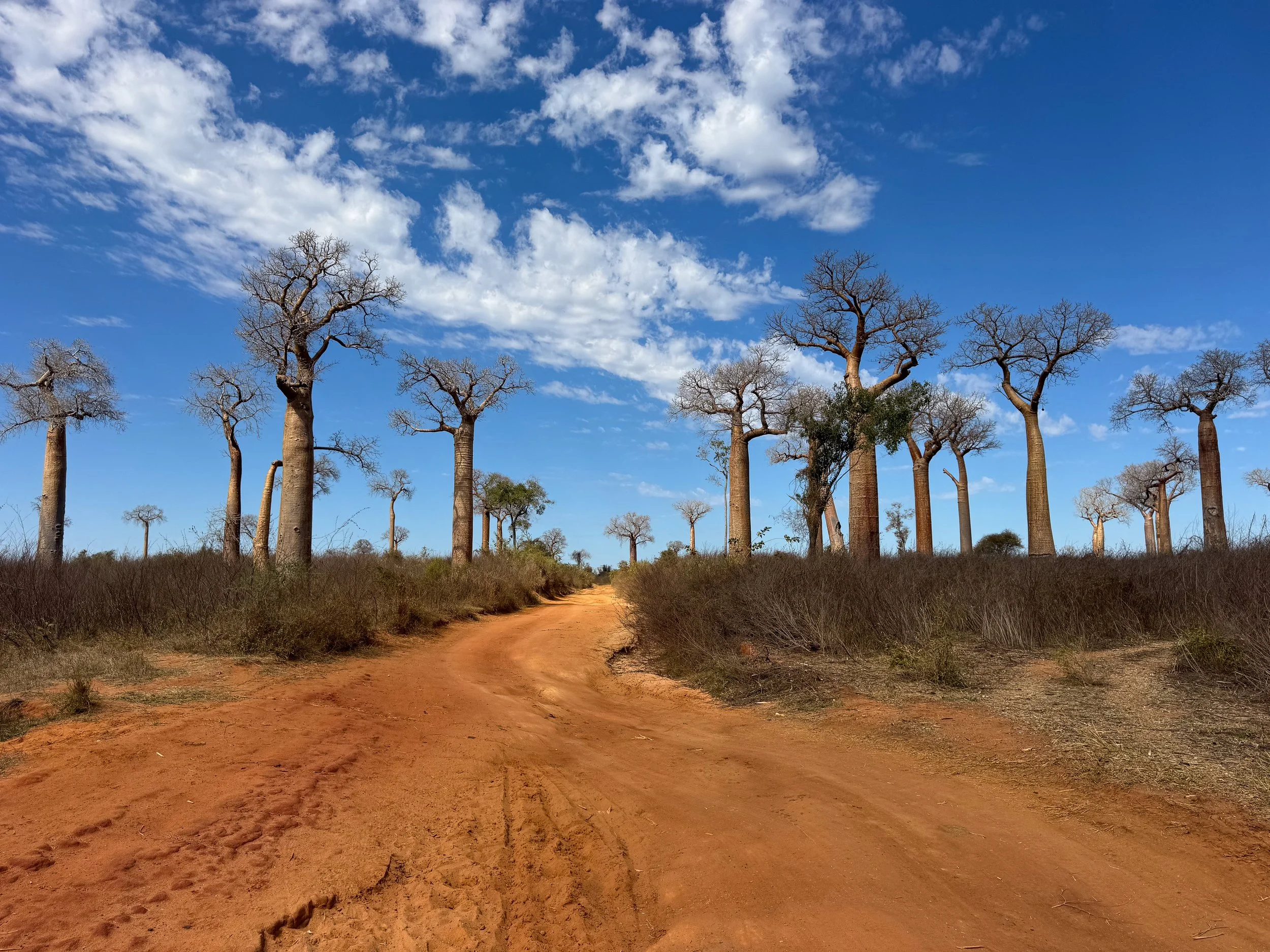
The Avenue of the Baobabs is one of Madagascar’s most iconic sights. Dozens of towering baobab trees flank both sides of a dirt road, creating a dramatic and picturesque landscape. Baobab trees are recognizable by their massive trunks, smooth bark and uniquely shaped canopy of branching limbs. We visited for the sunrise and sunset, getting to experience the avenue in all its grandeur. Book with Eto Morondava.
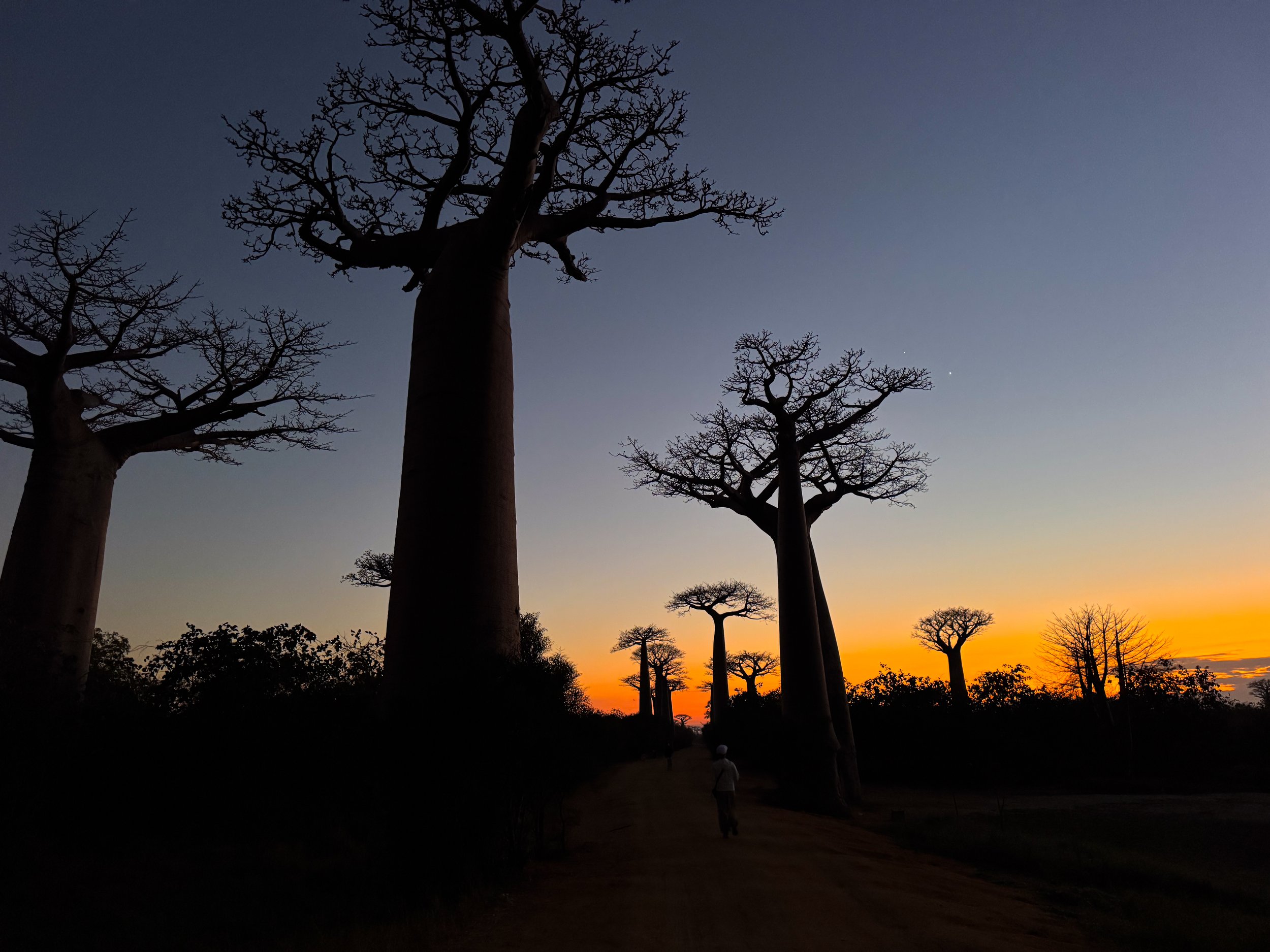
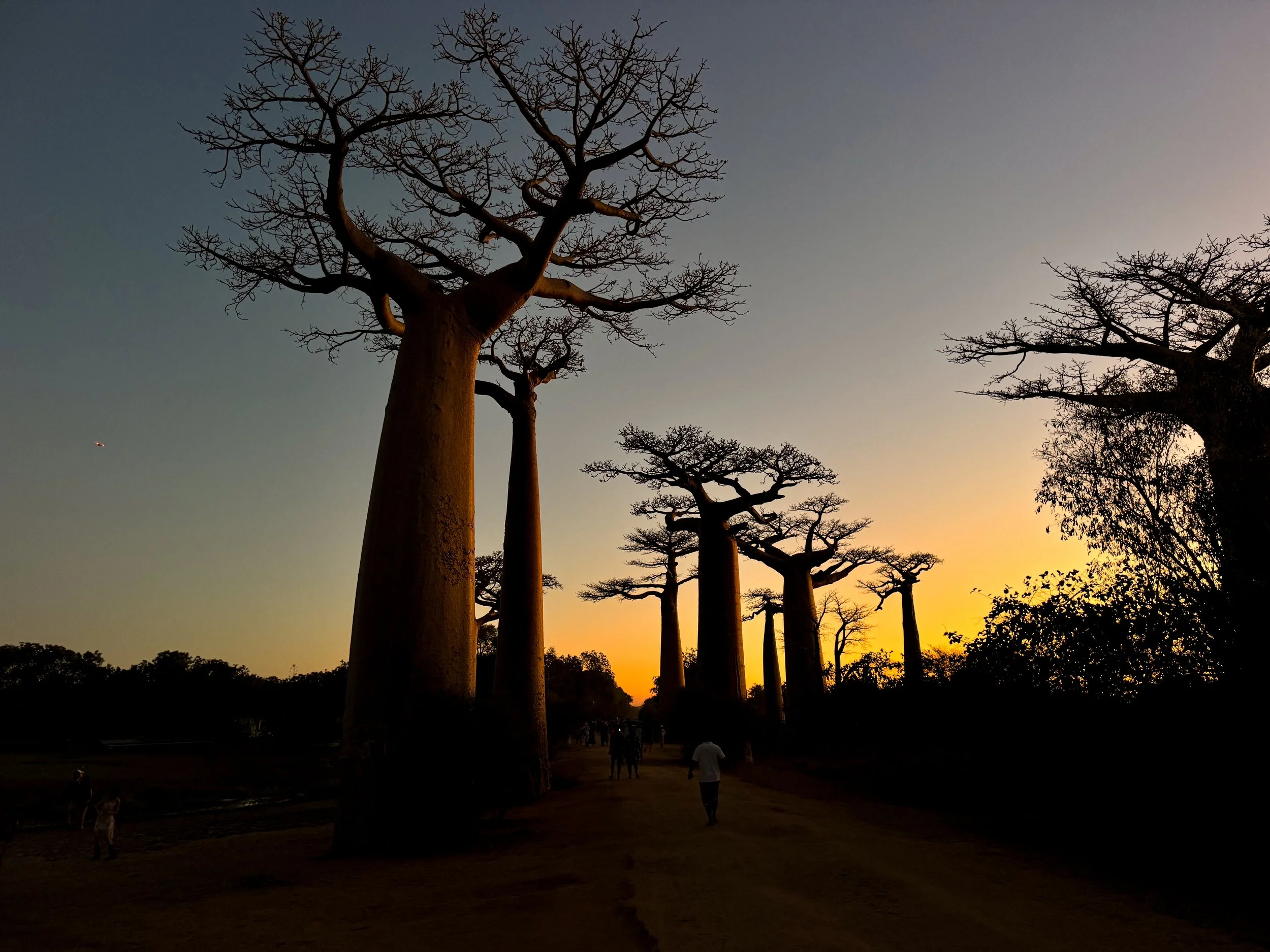
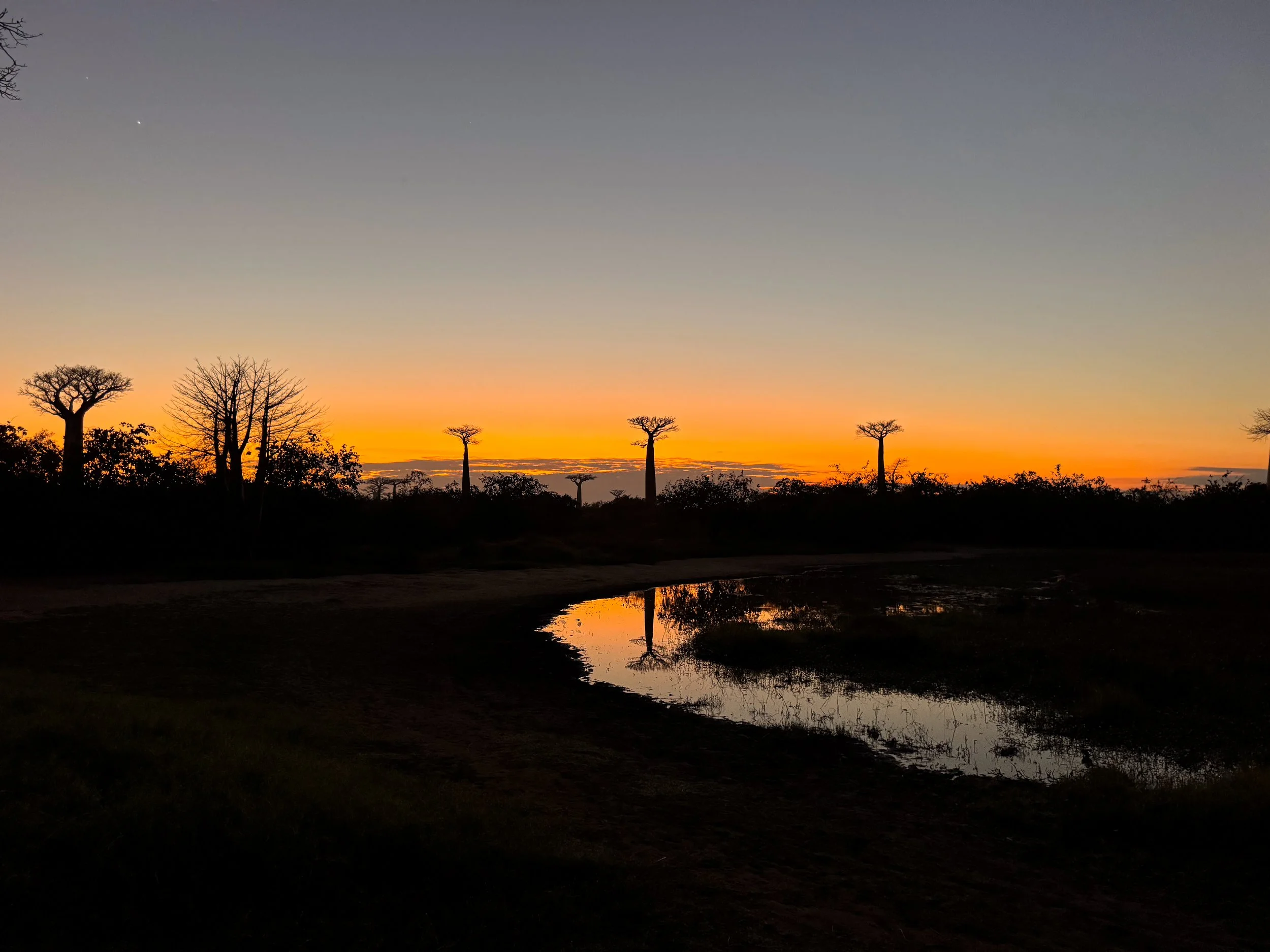
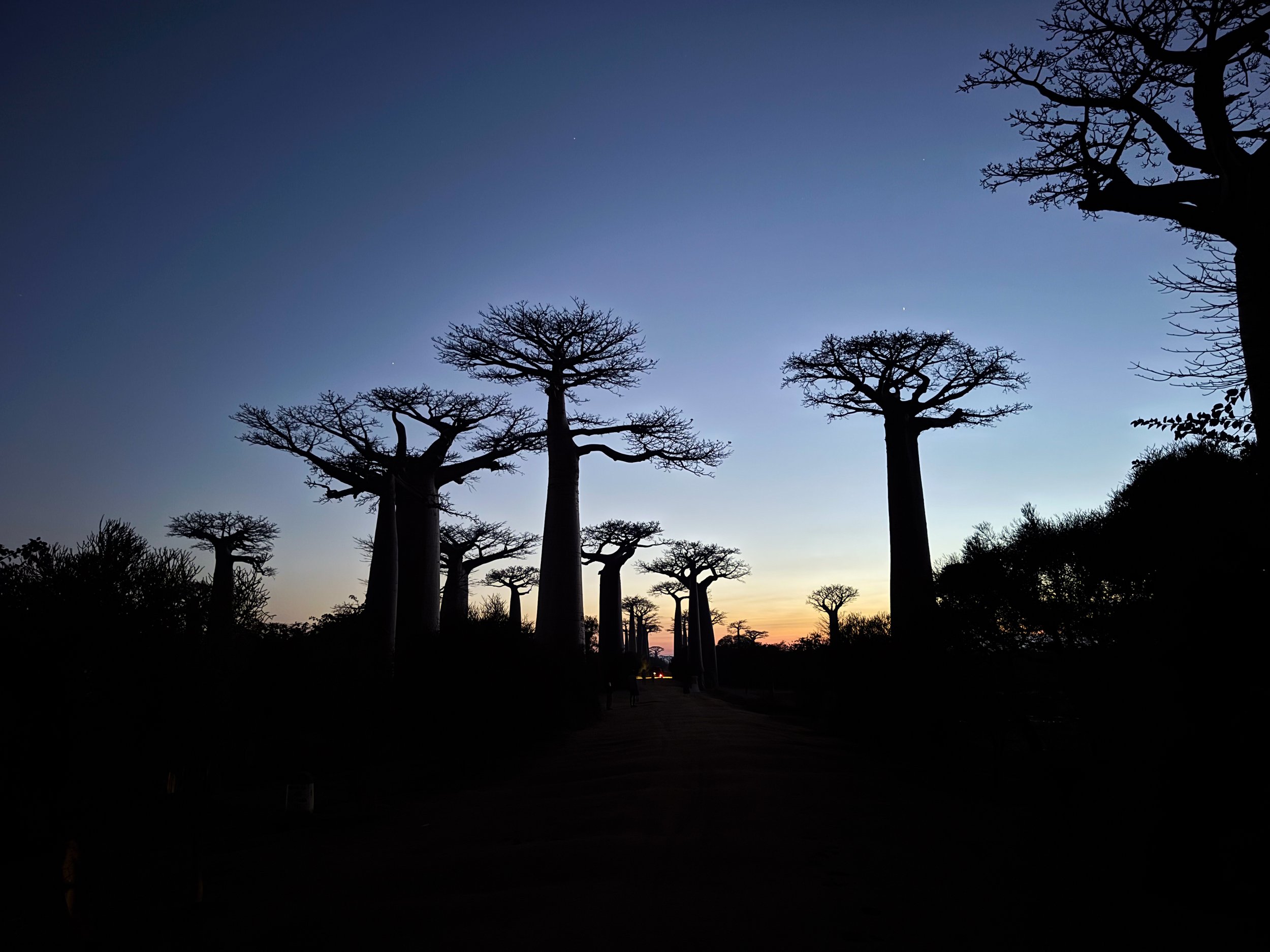
Sunrise at The Avenue of the Baobabs. The sunrise is a tranquil time to experience the Avenue of the Baobabs. The starry night sky quickly brightens with colors of purple, orange and yellow. The silhouettes of the baobabs take on more definition as daylight breaks.
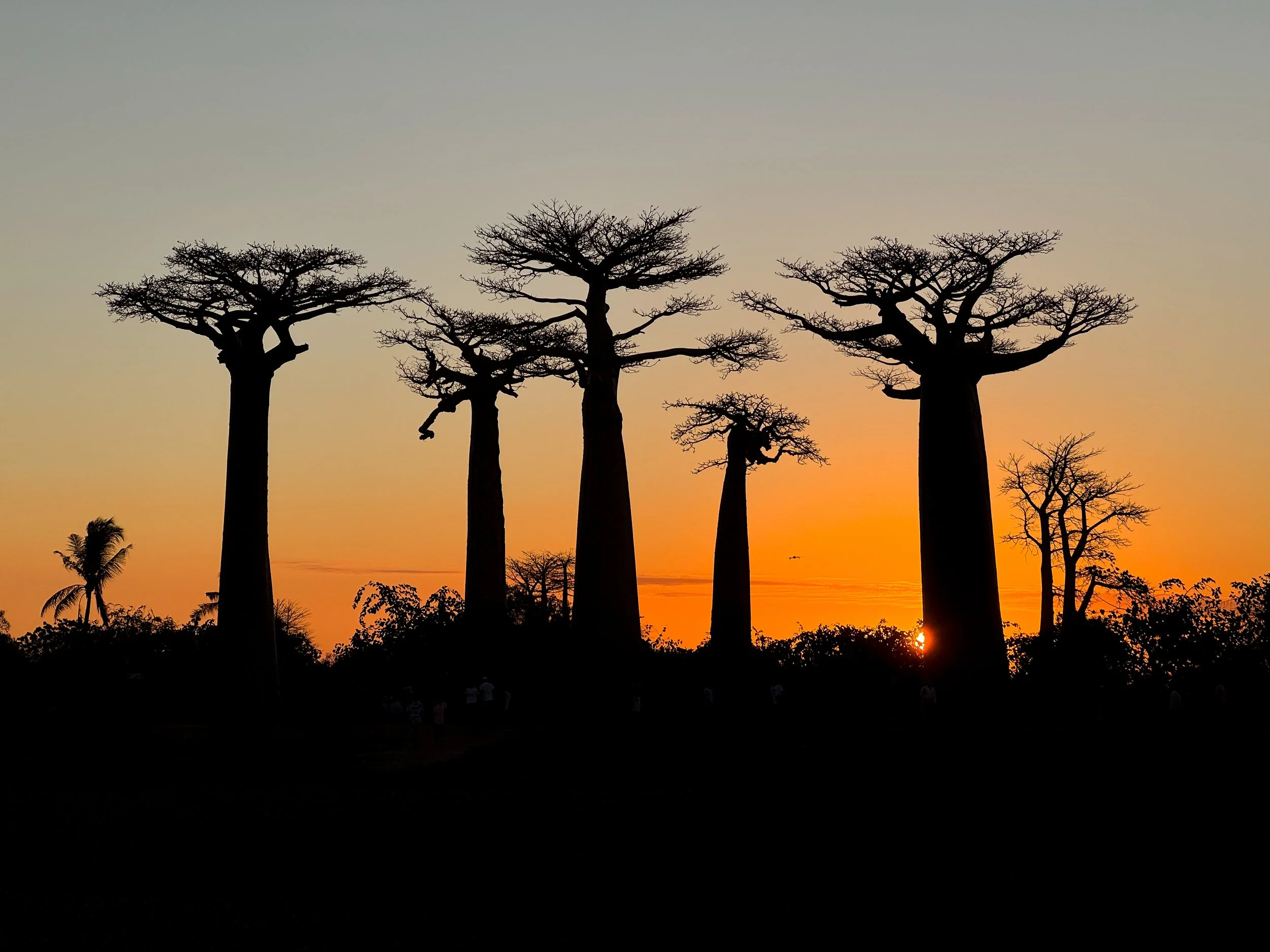
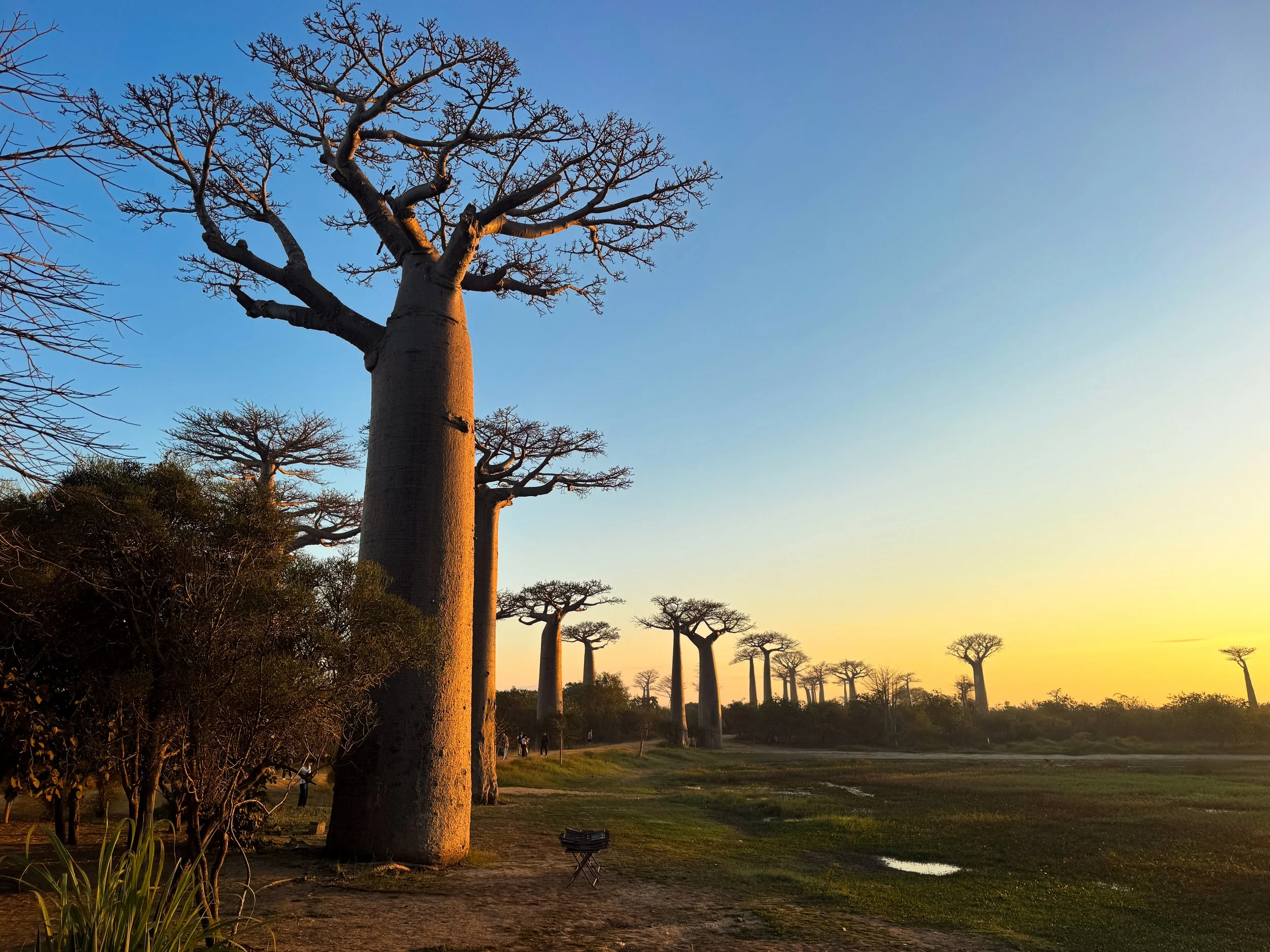
Sunset at The Avenue of the Baobabs. The sunset is the most popular time of day to visit the Avenue of the Baobabs. Arrive in the late afternoon to experience the baobabs in full daylight. Watch as the setting sun illuminates them in a golden glow. Their silhouettes provide a dramatic contrast against the orange sky. We visited twice on our returns from Kirindy and Tsingy.
Pro Tip. The best view is across a pond looking west towards the avenue and the sunset.
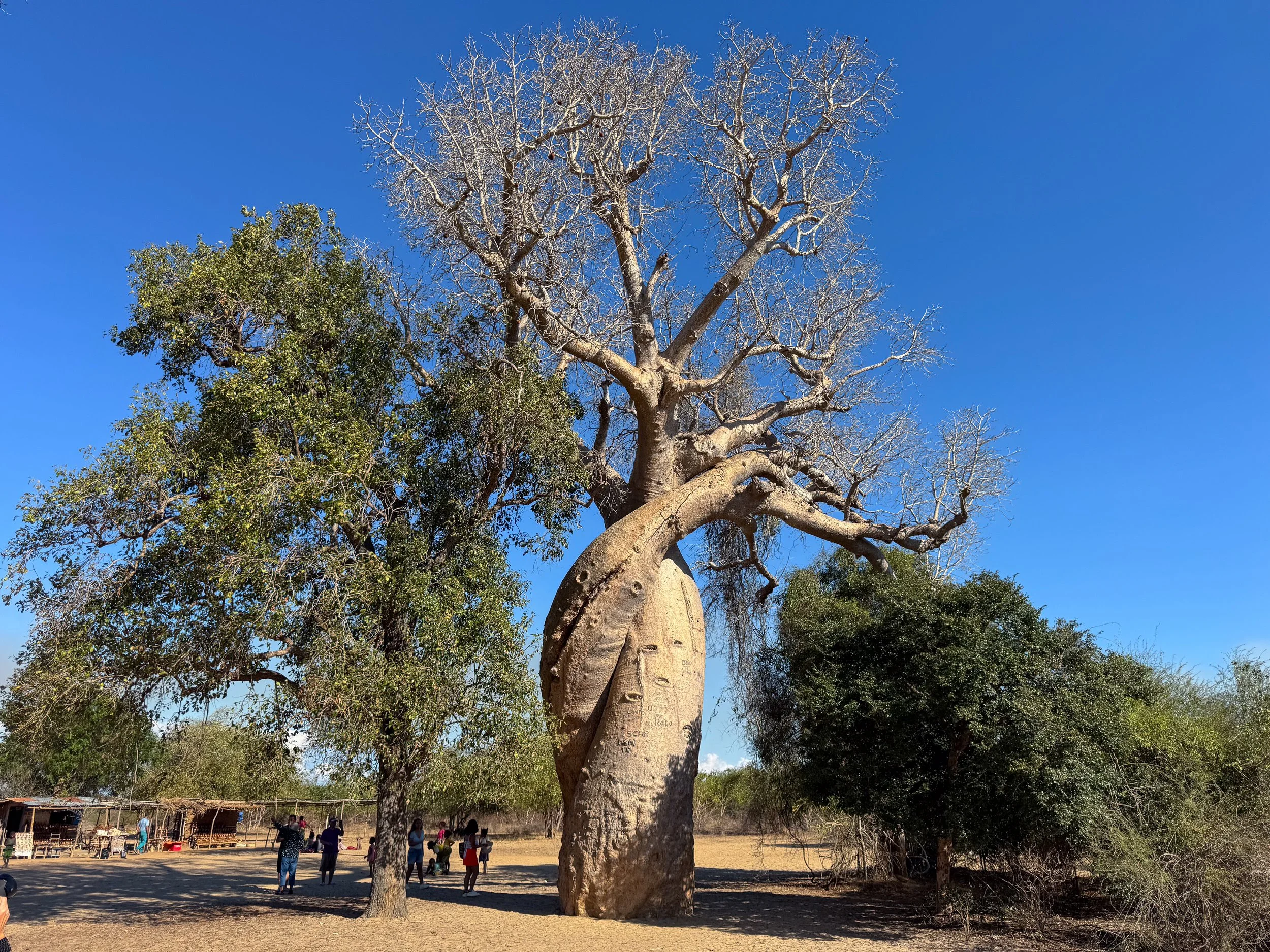
Famous Baobabs
Baobabs in Love. The Baobabs in Love are two baobabs trees growing around each other in a loving embrace. The phenomenon is uncommon making the two trees a beloved landmark.
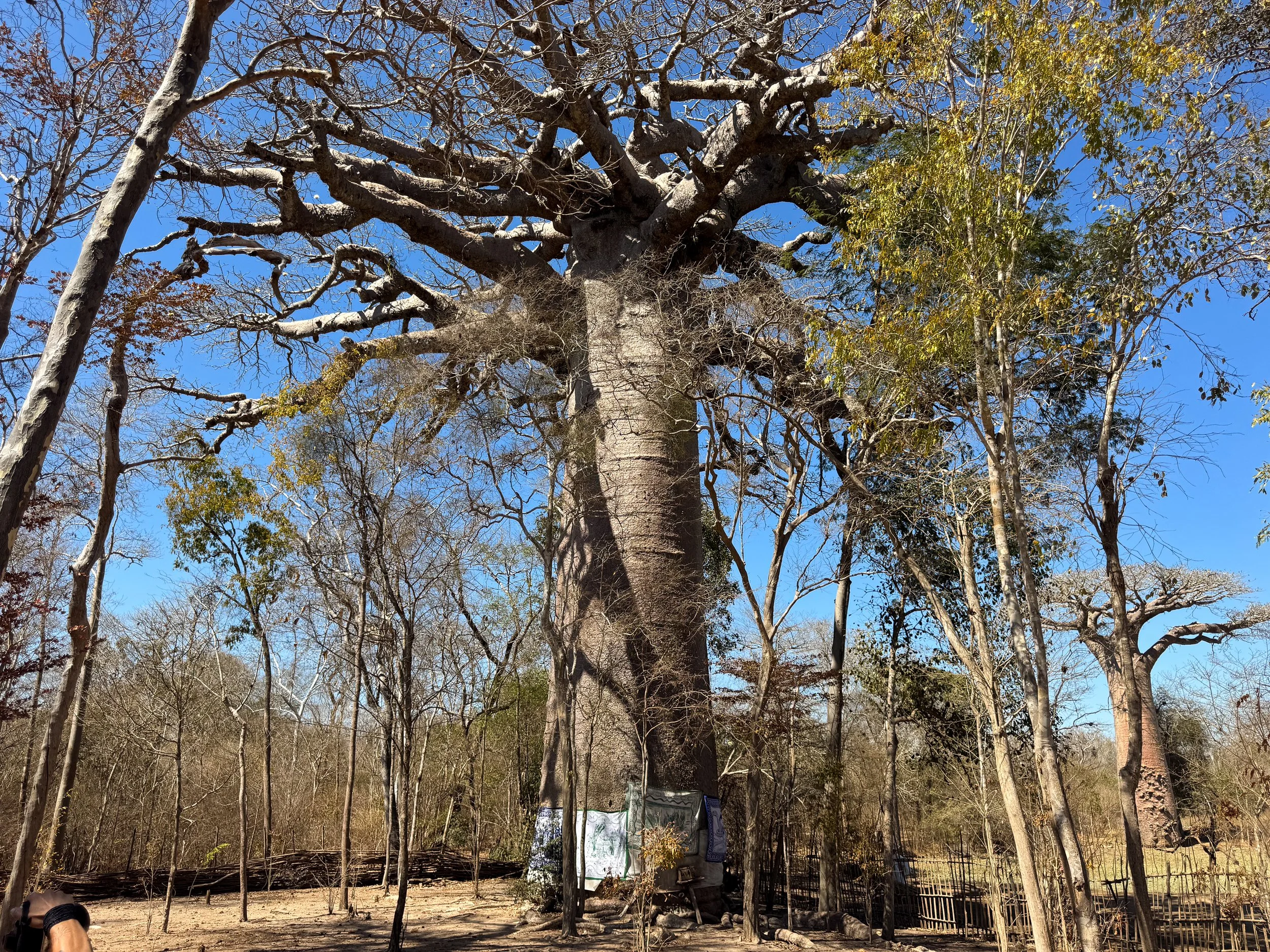
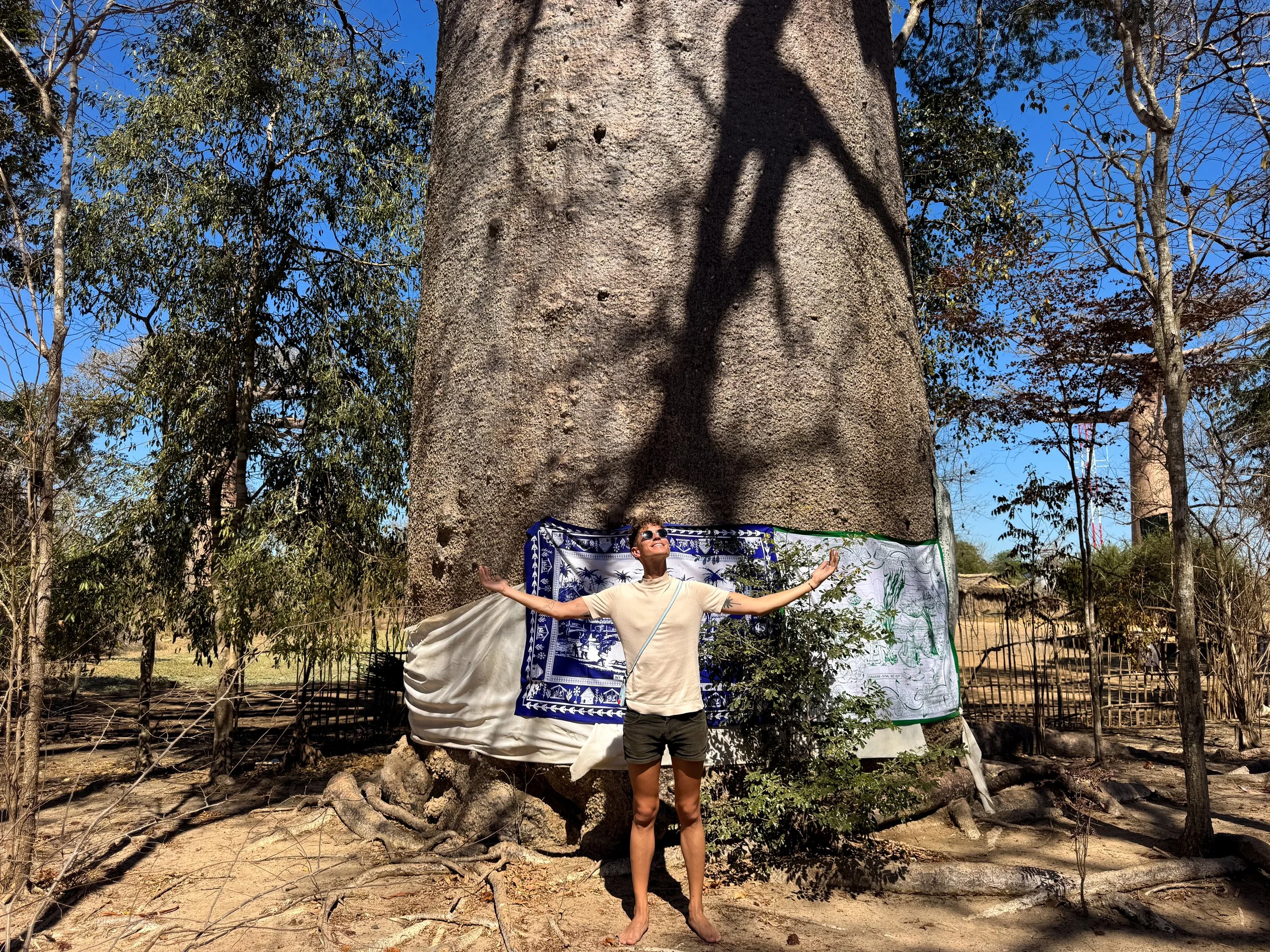
The Sacred Baobab. The Sacred Baobab is a massive baobab tree sacred to the local people. Villagers come here to pray beneath it for rain, good harvest and pregnant cattle. The shrine surrounding the tree must be entered barefoot, connecting one’s self to nature.
Forest of the Baobabs. A vast area with thousands of densely clustered baobabs covering the landscape in between farmland. It’s an impressive sight to witness, located over an hour past the Avenue of the Baobabs on the route to Tsingy National Park.
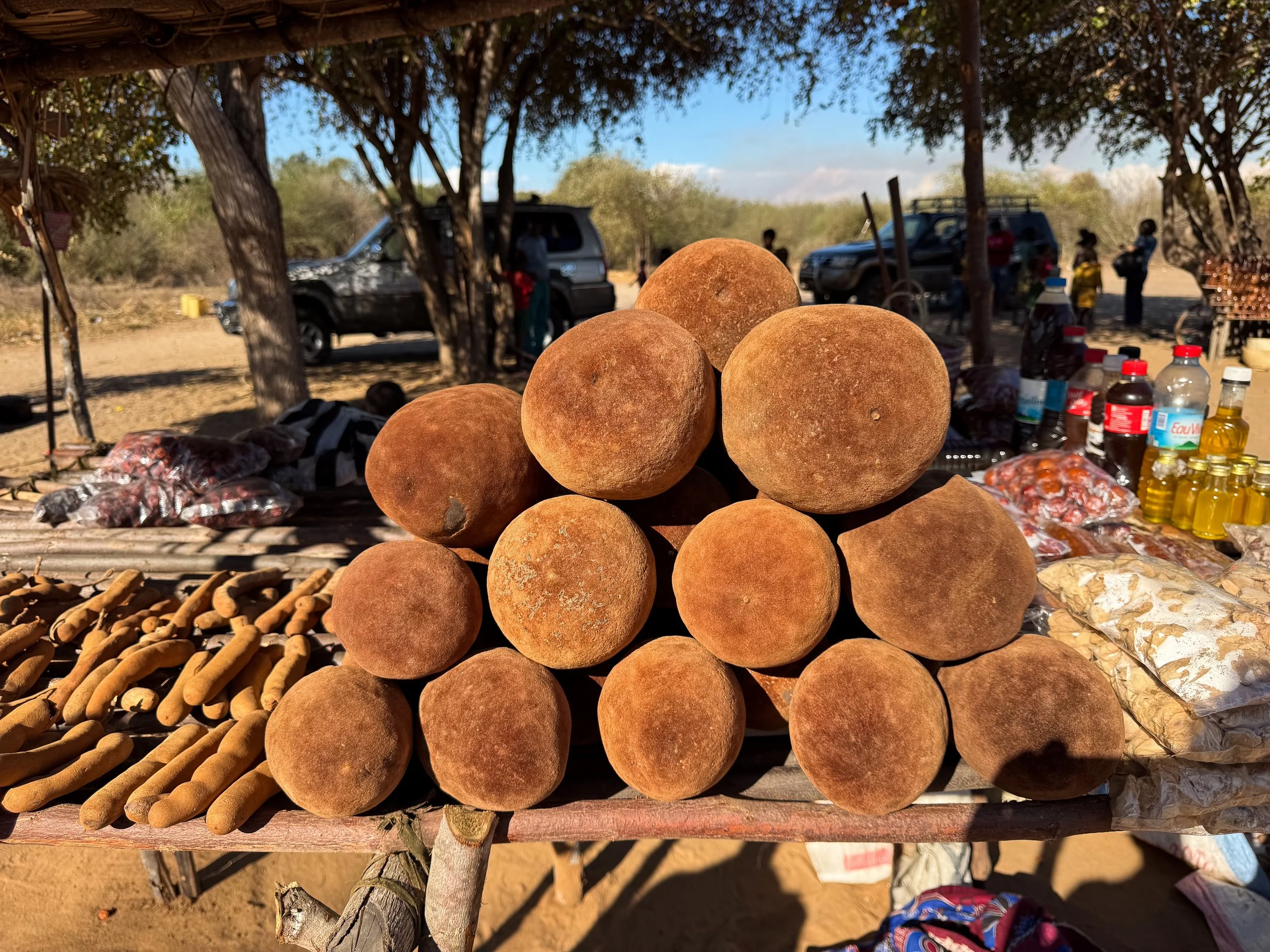
Baobab Vendors. Local roadside vendors operate kiosks nearby most of the iconic baobab sights. They sell statuettes of carved wooden baobabs, baobab fruits, baobab honey and snacks. We sipped on coffee with Mofo Gasy, a Malagasy pancake made from rice flour.
Good to Know. The baobabs lose their leaves during the dry season, exposing their nebulous limbs. The dry season happens between May and October.
Kirindy Forest
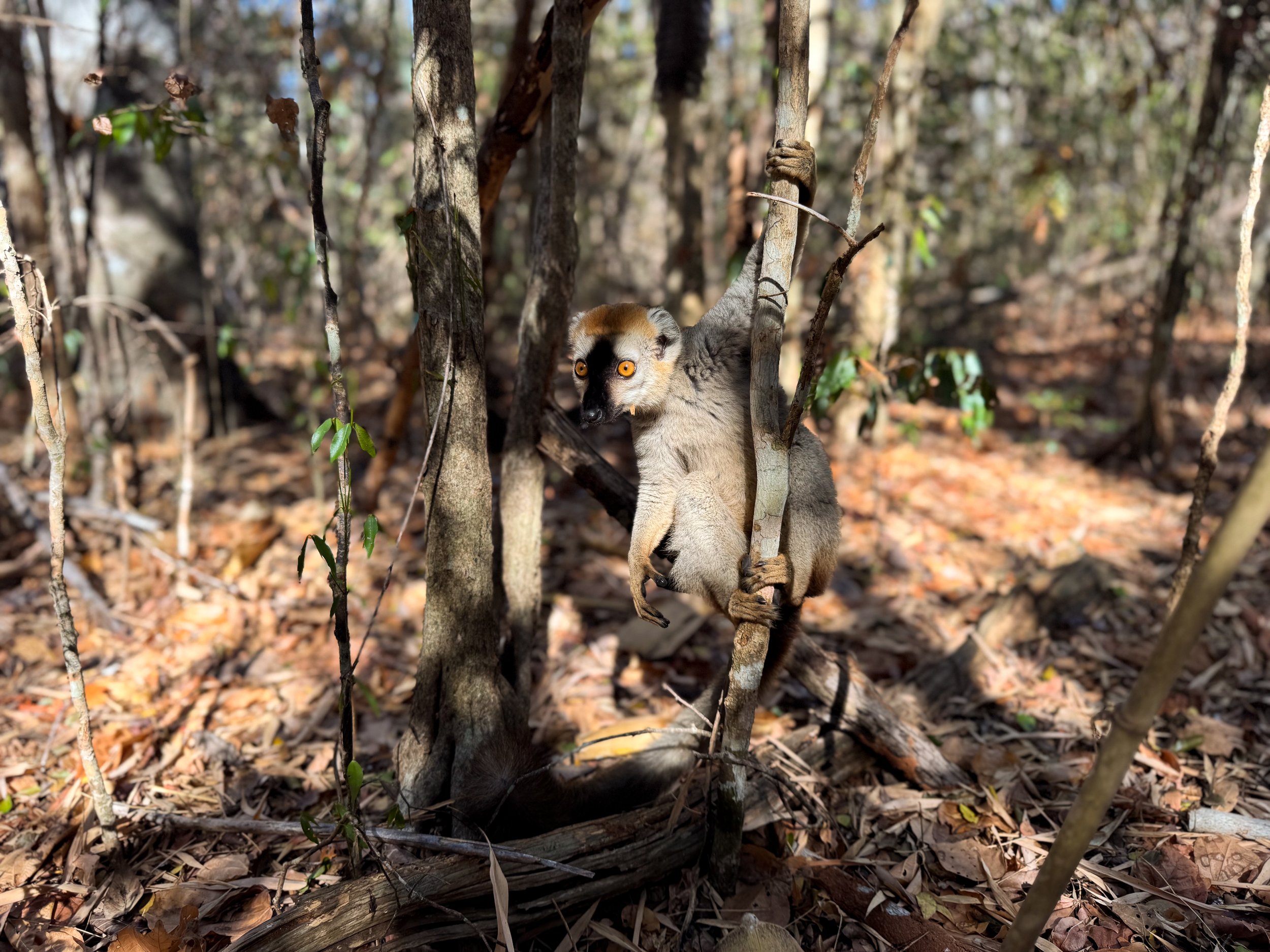
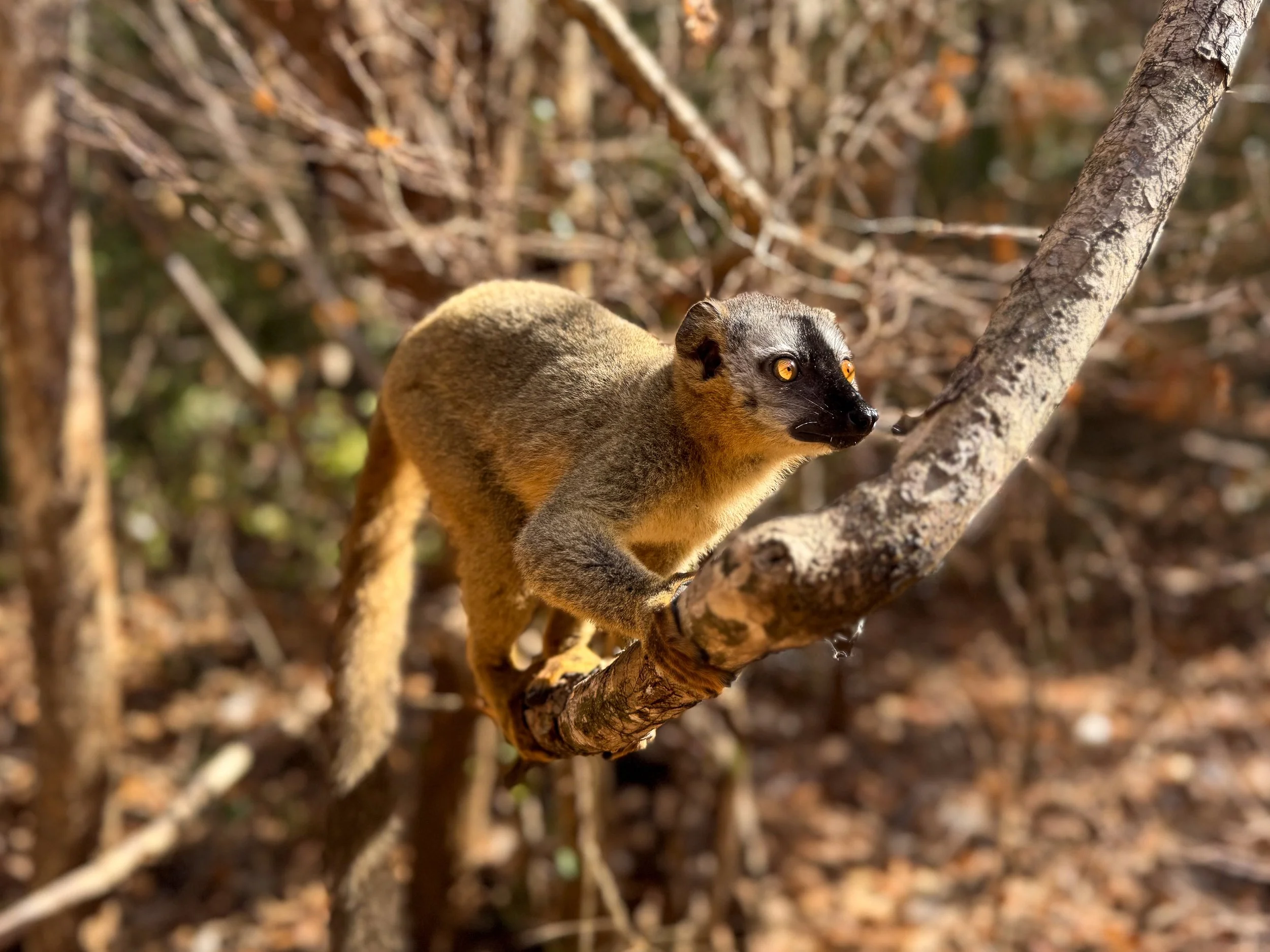
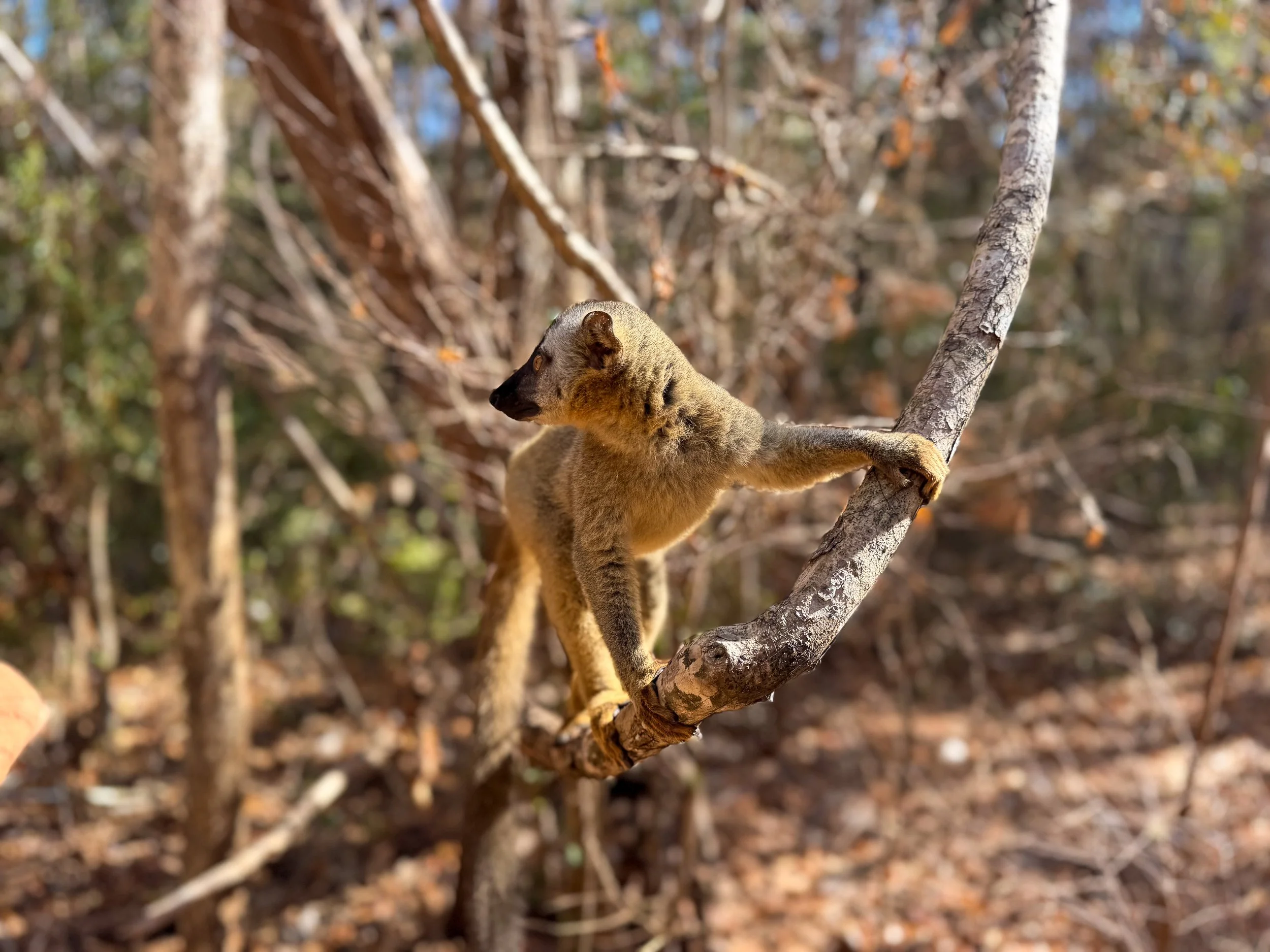
Kirindy Forest is a protected nature reserve home to wild lemurs, exotic birds and snails. Trails lead through dense thicket of small trees with the occasional baobab towering above the surrounding forest. Book with Eto Morondava.
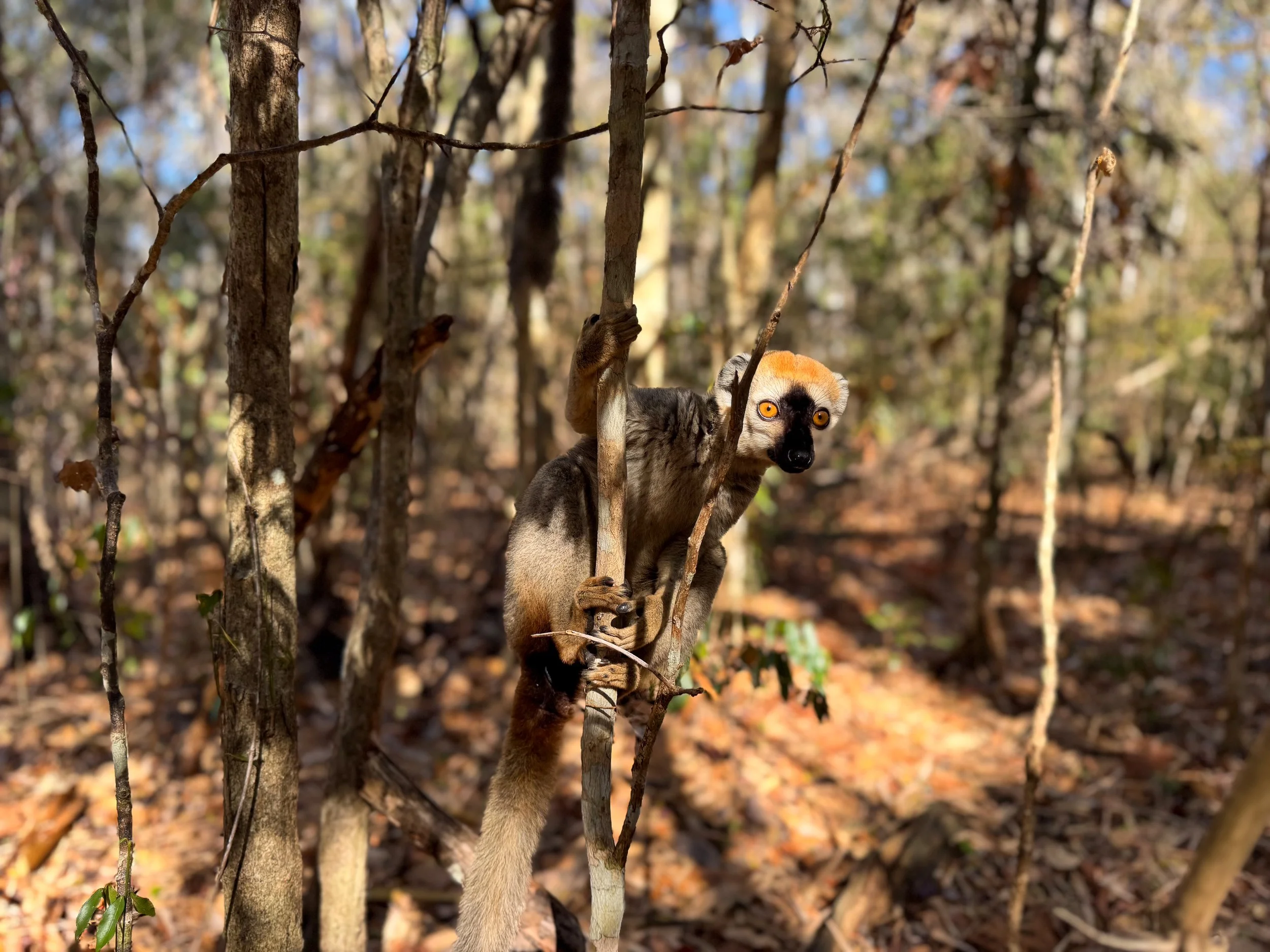
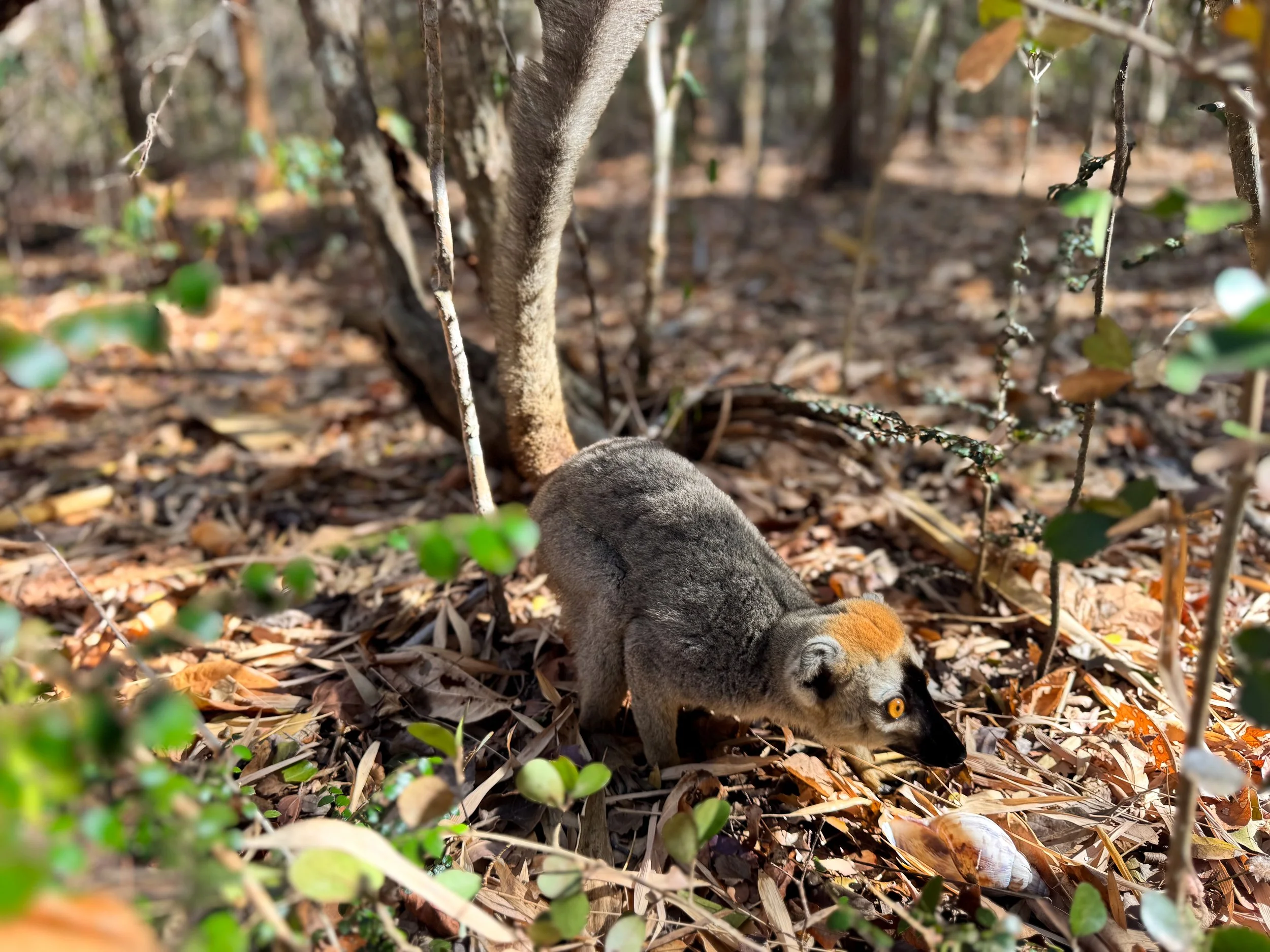
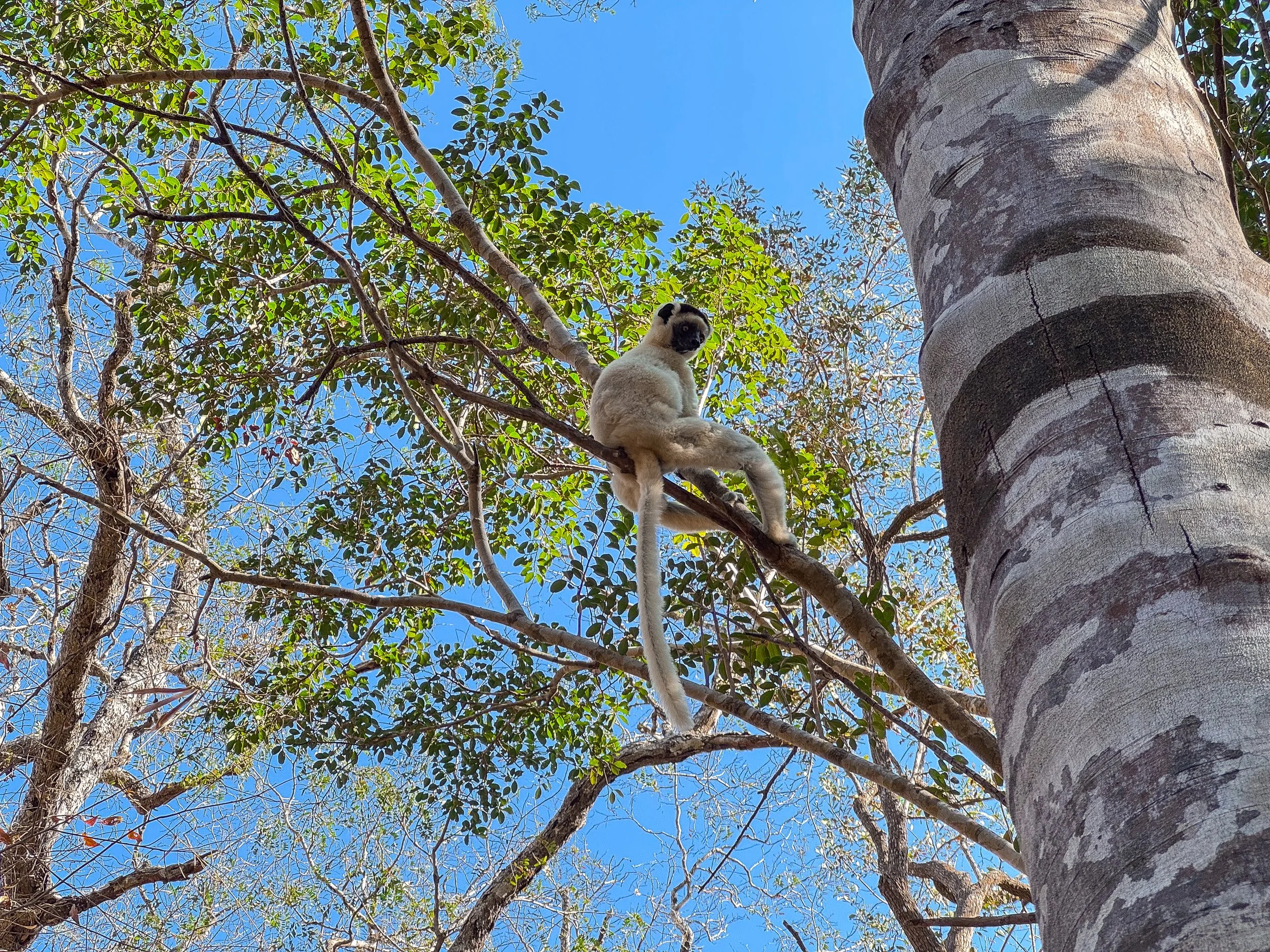
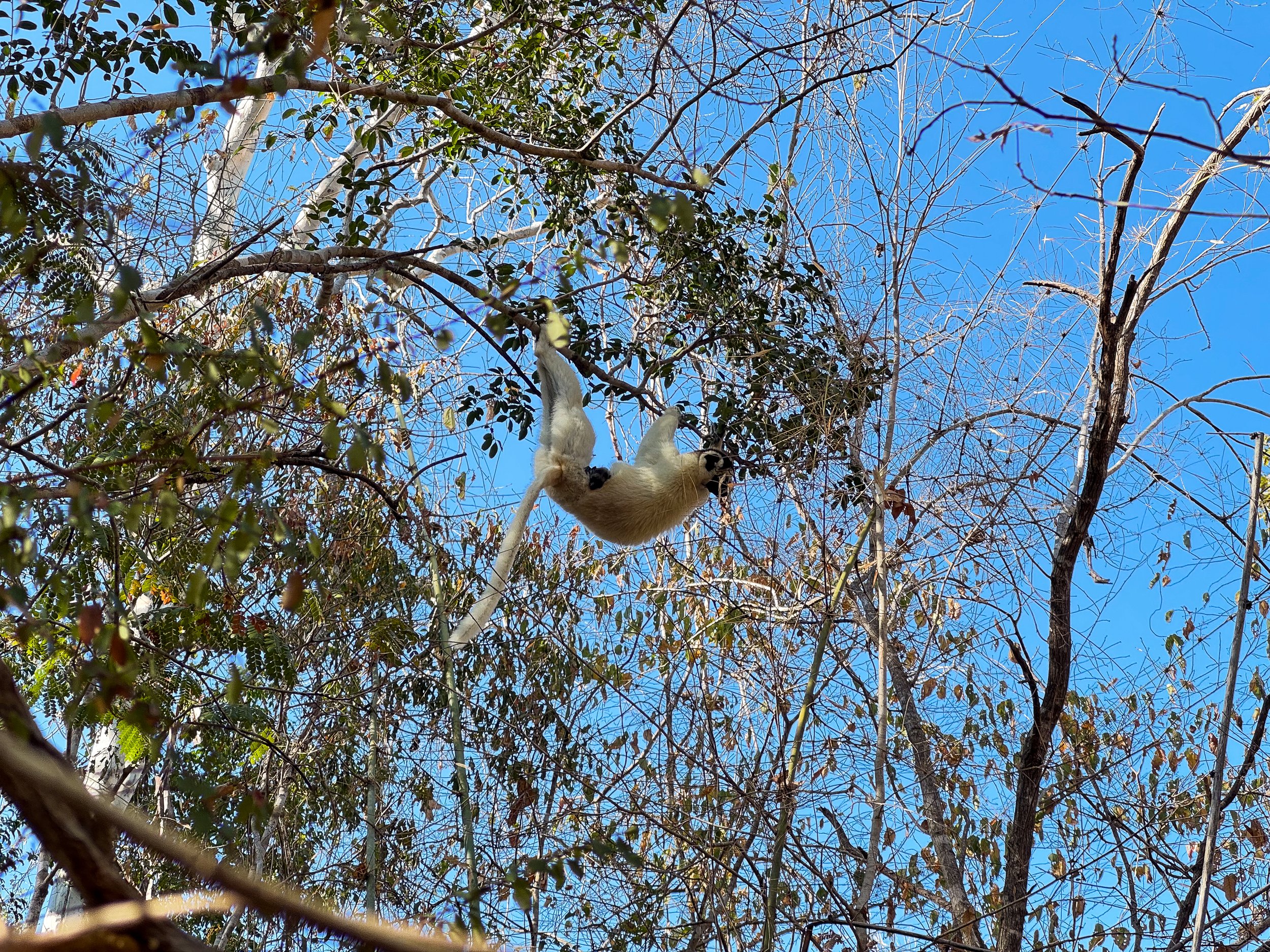
Lemur Tracking. Led by a guide, we tracked two groups of brown lemurs and one group of white lemurs. The brown lemurs nibbled on fruits in the treetop canopy while others foraged along the forest floor. Some were very curious, approaching close enough to see their amber eyes and long fuzzy tails in detail. The group of white lemurs stayed higher in the trees. They leapt great distances, springing quickly from tree to tree. One perched on a branch as its baby held closely onto its chest.
Pro Tip. Visit during the dry season when the forest is mostly bare for the best chance of spotting lemurs.
Good to Know. It’s strictly forbidden to feed lemurs in order to prevent dependencies on humans. Guides however leave water in snail shells for them to drink from.
Getting Here. The route to Kirindy Forest is a bumpy adventure down a pitted dirt road. It’s located an hour beyond the Avenue of the Baobabs and only reachable by 4x4.
Places to Eat & Drink in Morondava
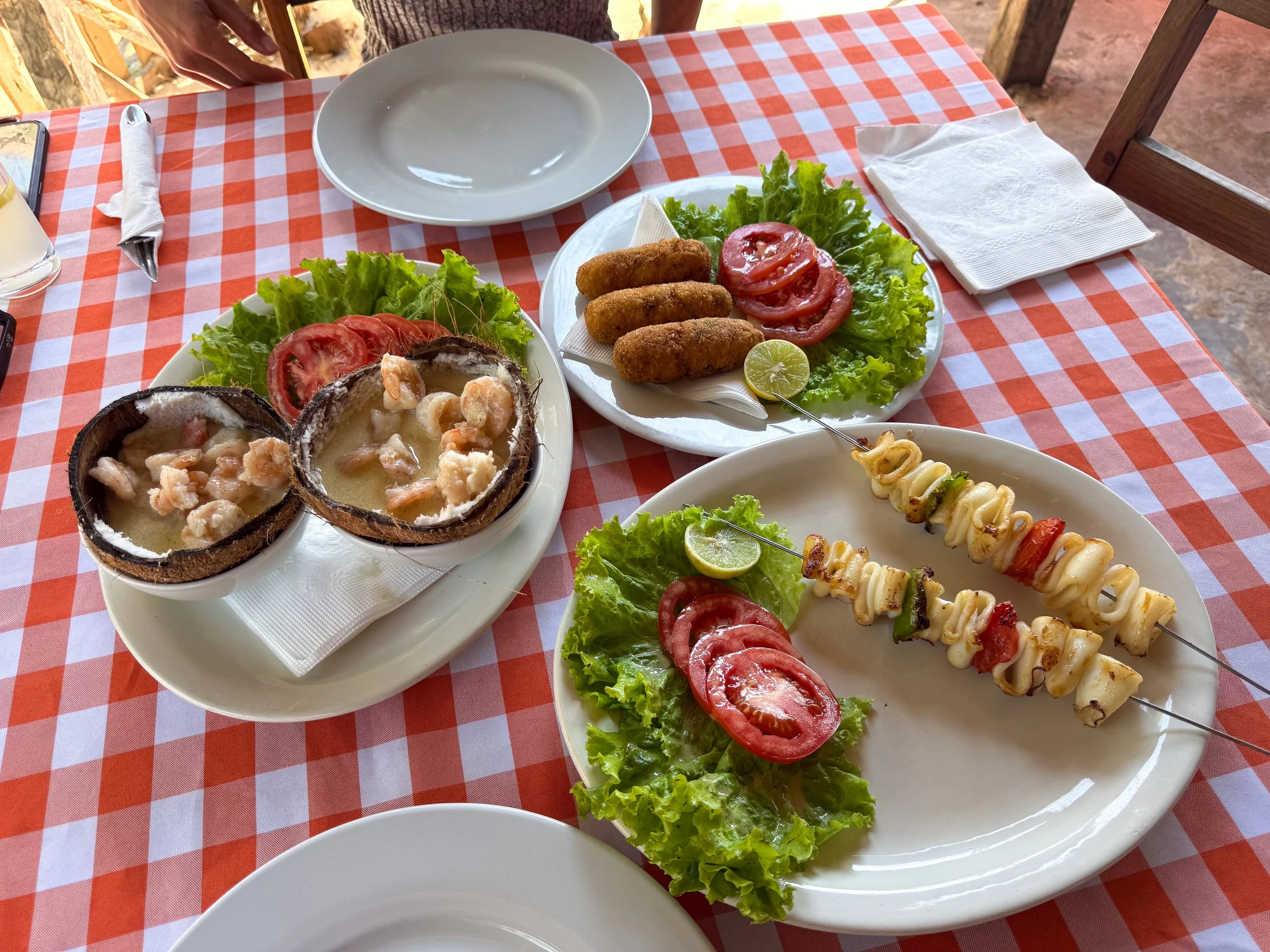
Le Corail. A Malagasy restaurant with freshly caught seafood. We visited for our first lunch, sharing a spread of dishes including coconut shrimp, crab croquettes and squid skewers while sipping on Rhum au Coco and Ti Punch.
Bleu Soleil. A beachfront restaurant with a chalk board menu featuring a list of “plats des jour” and the daily catch. We ordered the coconut stewed octopus and grilled tuna steaks bathed in a savory seafood broth.
Bleu Soleil Glace. An ice cream shop attached to the Bleu Soleil Restaurant. They serve freshly made soft serve ice cream using local fruits and flavors like Madagascar vanilla, coconut, baobab, chocolate and coffee.
L'Etoile. A bar with house infused Malagasy rums. A spectrum of bottles are displayed on a shelf behind the bar, each with a different rum infusion. We each sampled and sipped on several rums infused with vanilla, cola, herbs, coffee, dates, anise, baobab, coconut and cocoa. At night, a live band plays Malagasy music.
Hotely Gasy. A popular street food kitchen with Malagasy dishes displayed in a glass case. We ordered a whole fish, boiled cassava, cucumber salad and fry breads. It’s a very affordable way to taste the local cuisine.
Casa Marina Restaurant. A hotel restaurant on Morondava Beach with free sun lounges and thatched umbrellas for customers and guests. We ordered cocktails from the bar and laid out for the afternoon.
Law Milka Boulangerie Patisserie. A locally famous bakery with French style pastries, classic baguettes and cakes. We ordered an eclair, pain au chocolat and custard raisin roll.
Where to Stay in Morondava
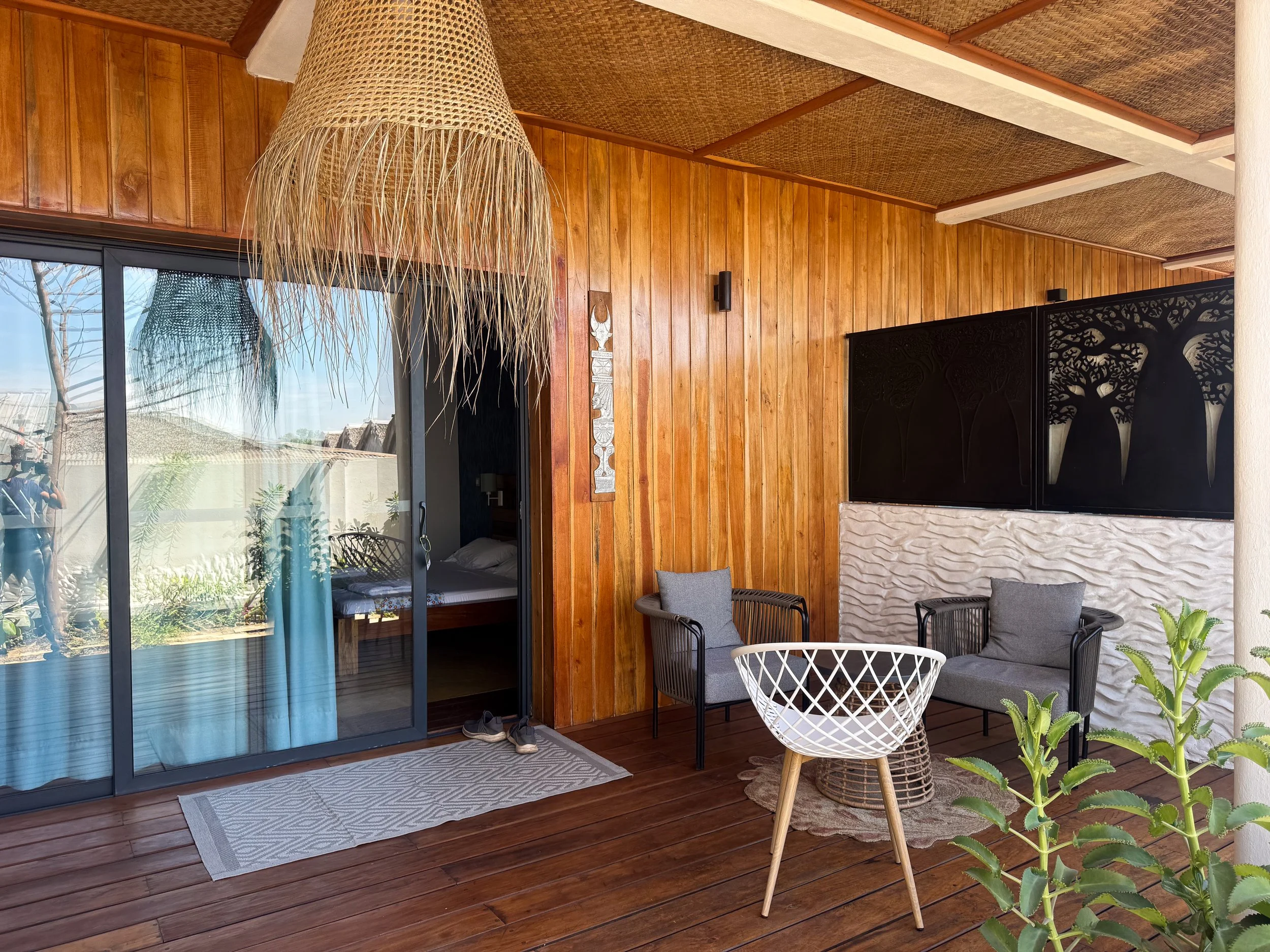
Kily House. A boutique hotel in Nosy Kely with spacious and well designed rooms with outdoor patios. The hotel is located nearby several Malagasy restaurants and the town’s main beach. They offer coffee and breakfast, arrange tours and transfers. Reserve on Booking.
Good to Know. There are scheduled nightly power outages between 6-10pm each night. Most businesses and hotels have generators to compensate.
Tsingy National Park
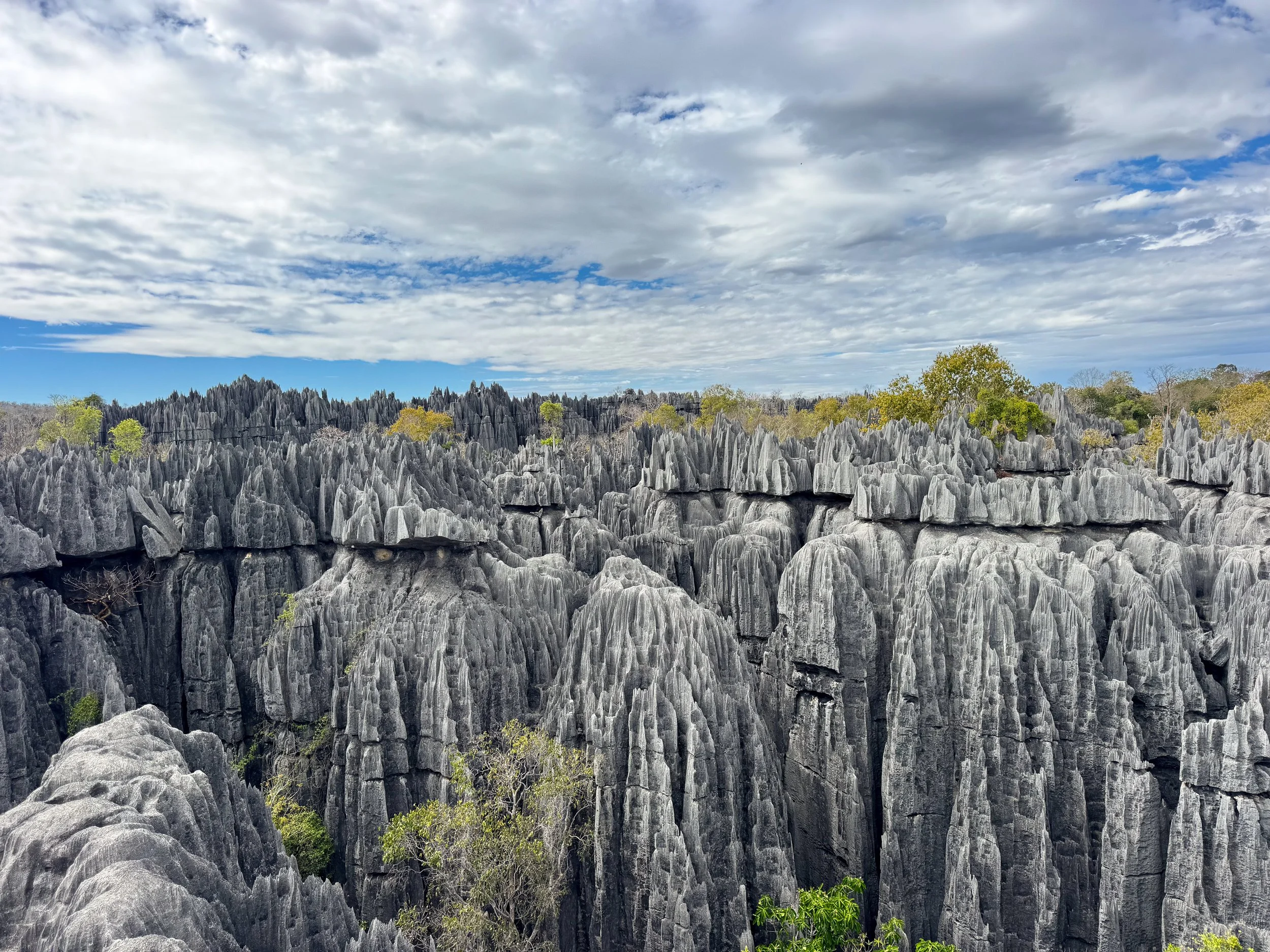
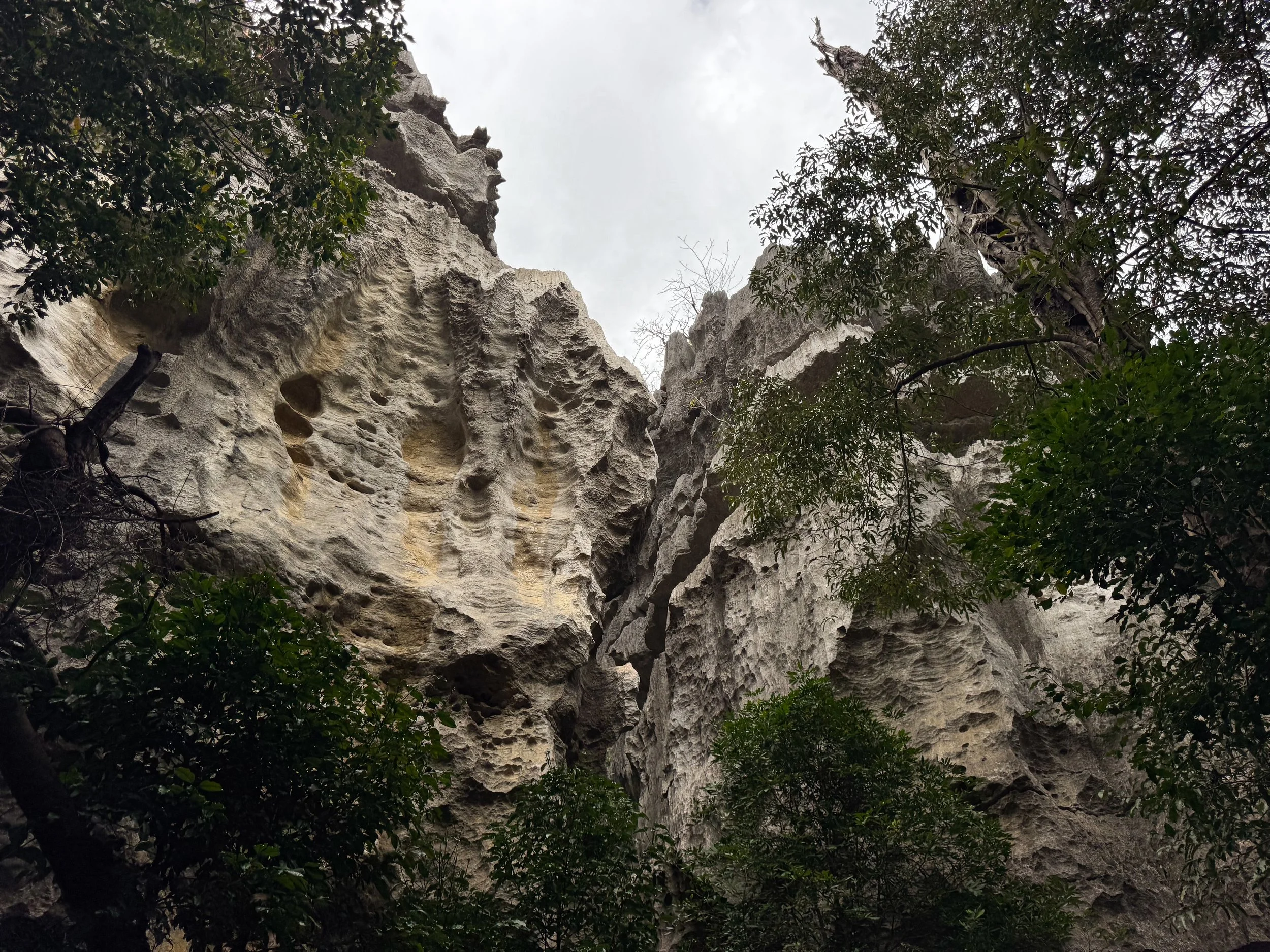
Tsingy National Park is a stone forest with a labyrinth of jagged and cathedral-like limestone formations. A series of walkways, suspension bridges and ladders weave through the park’s two sections, Grand Tsingy and Petite Tsingy. Book with Eto Morondava.
Grand Tsingy
Grand Tsingy is the largest and most impressive section of Tsingy National Park. The best way to experience it is on the Andamozayaky Trail. It leads through the rock forest and cathedral to reach The Tsingy.
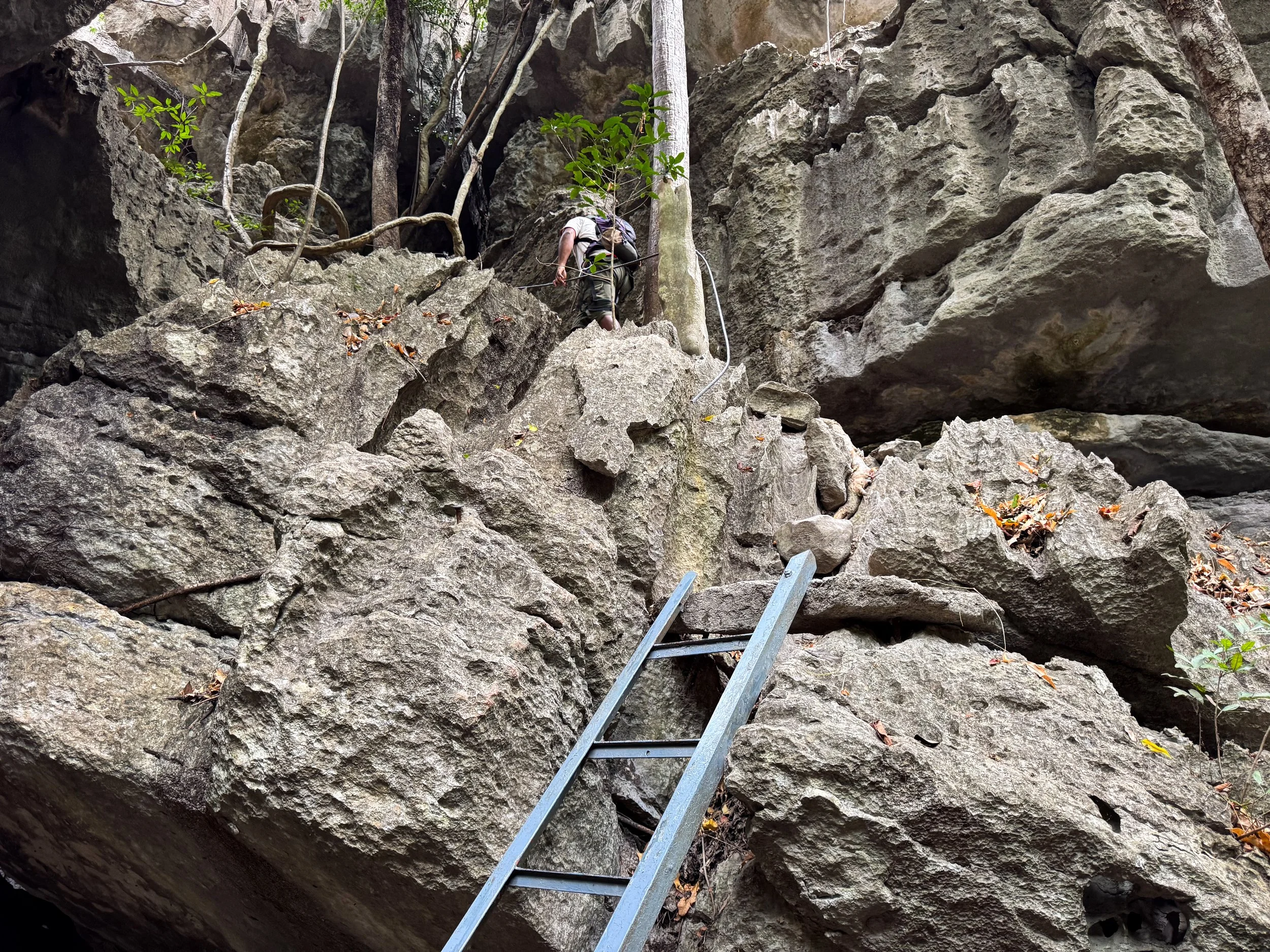
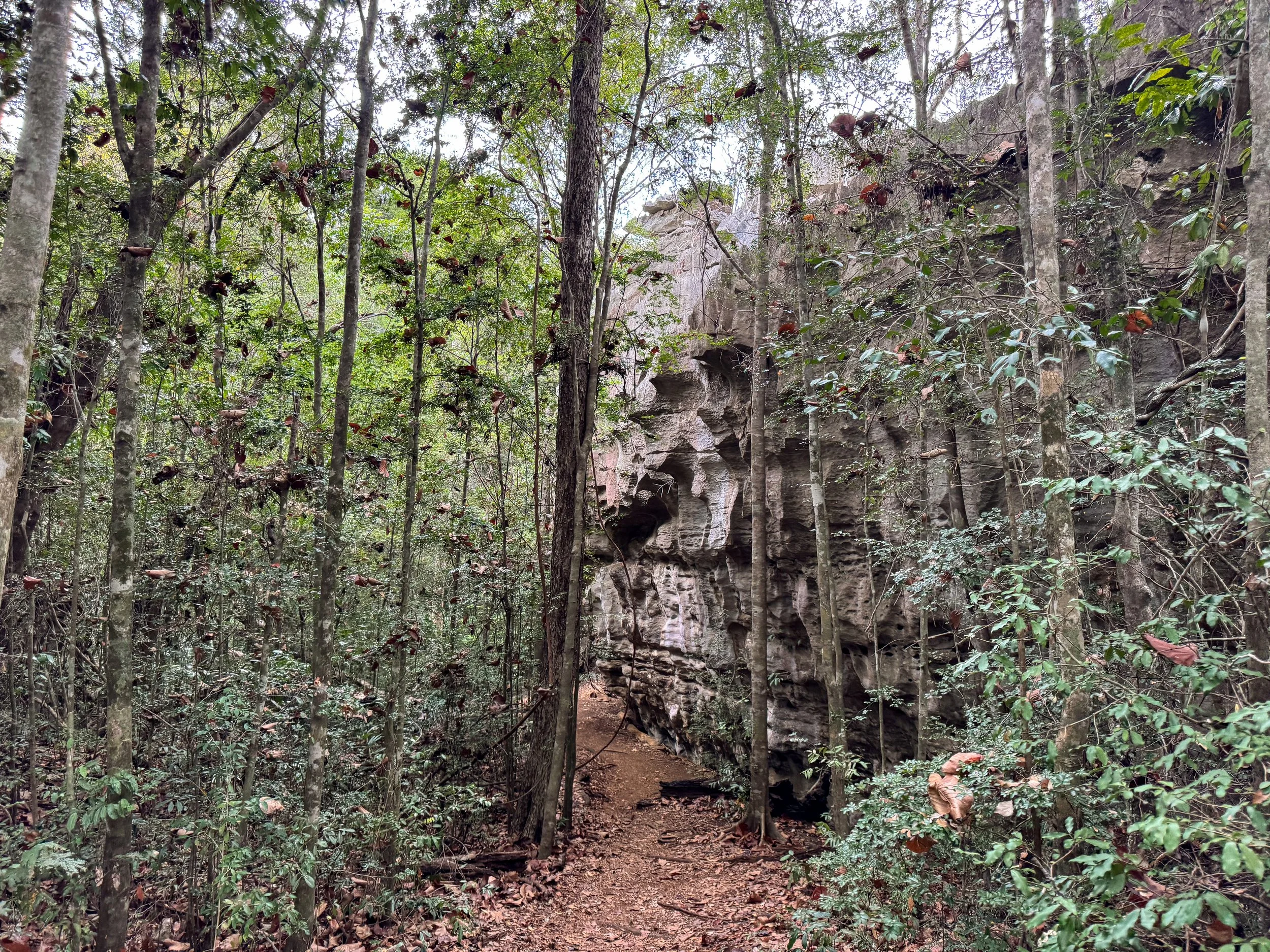
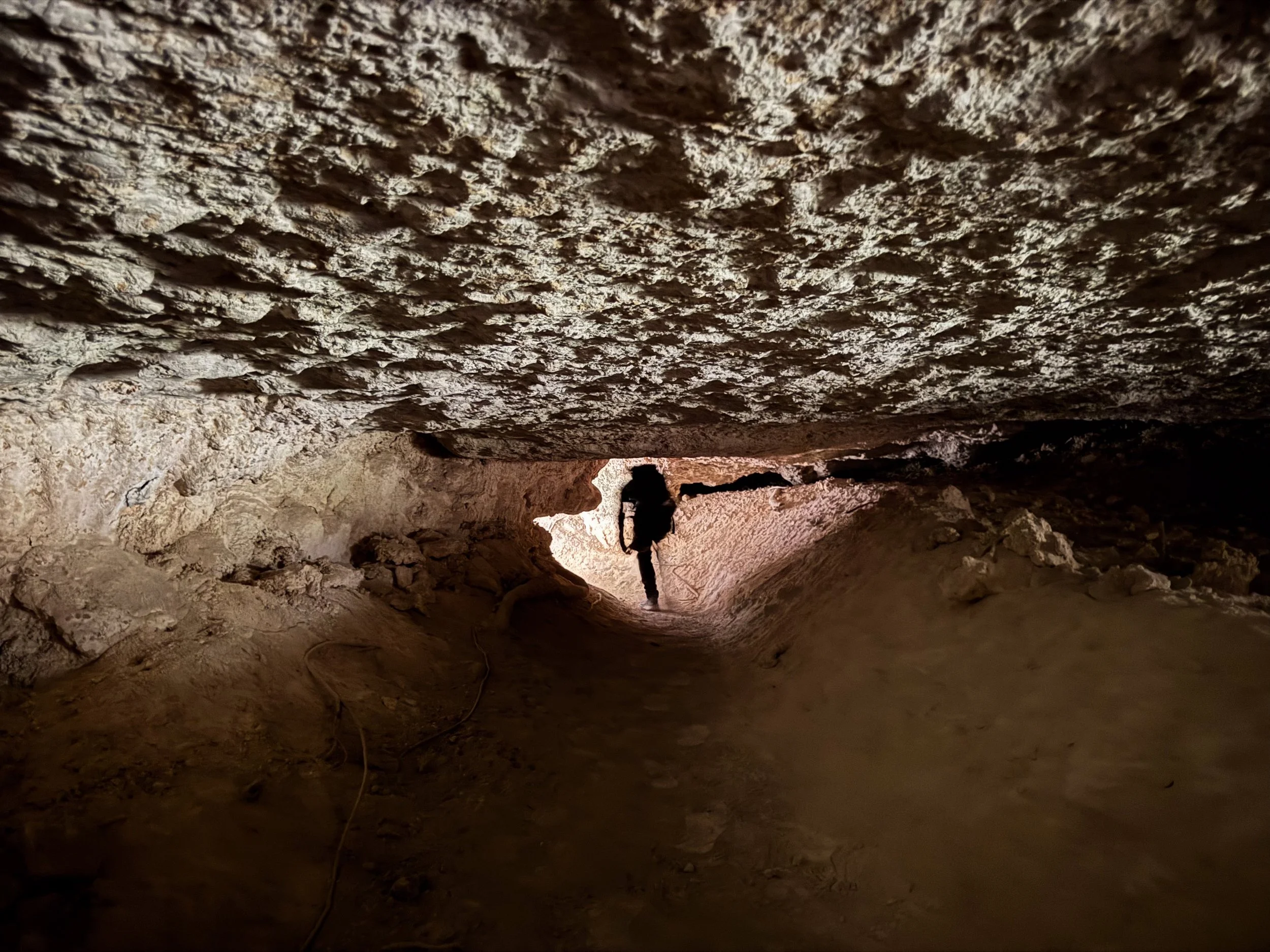
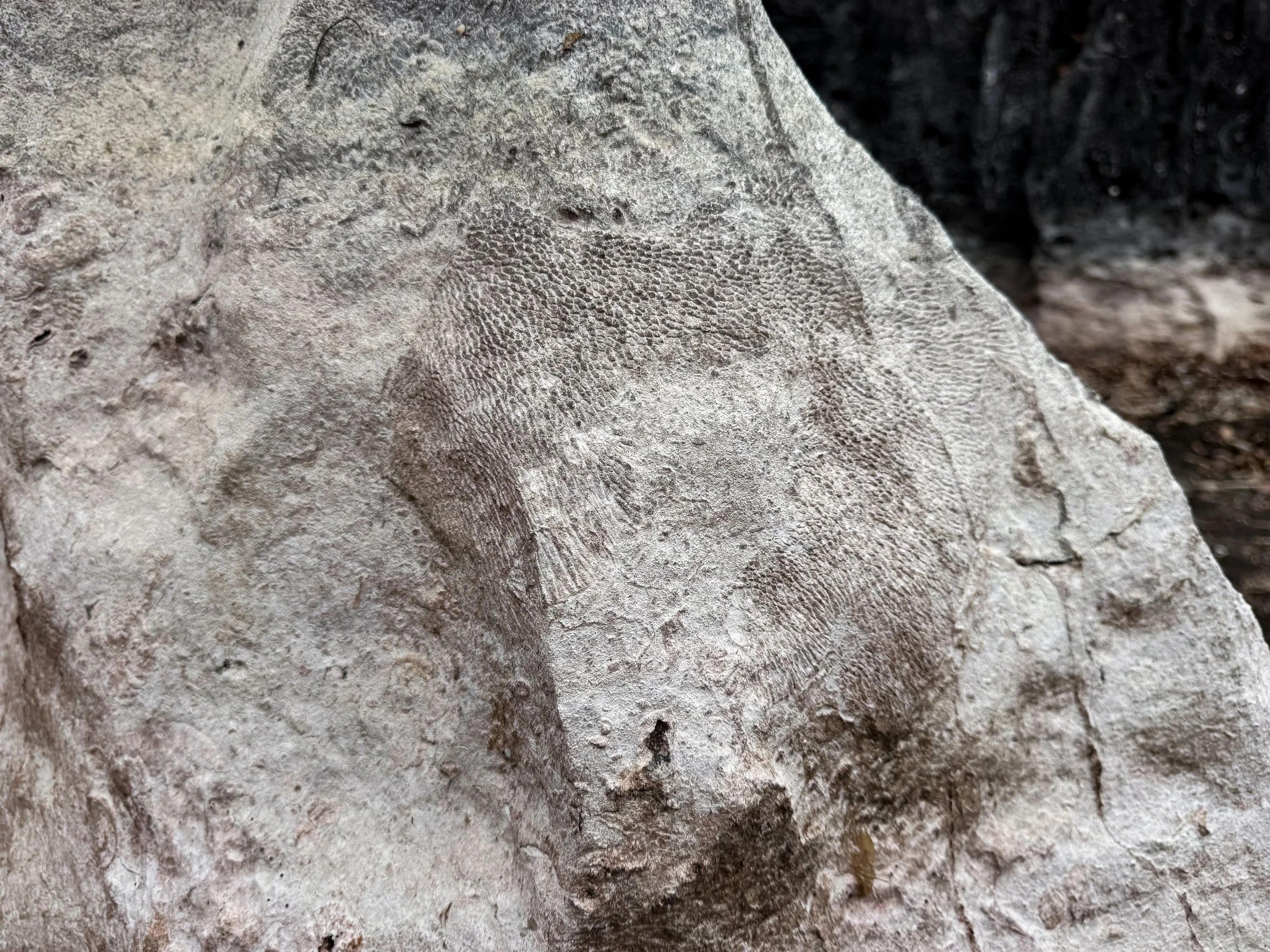
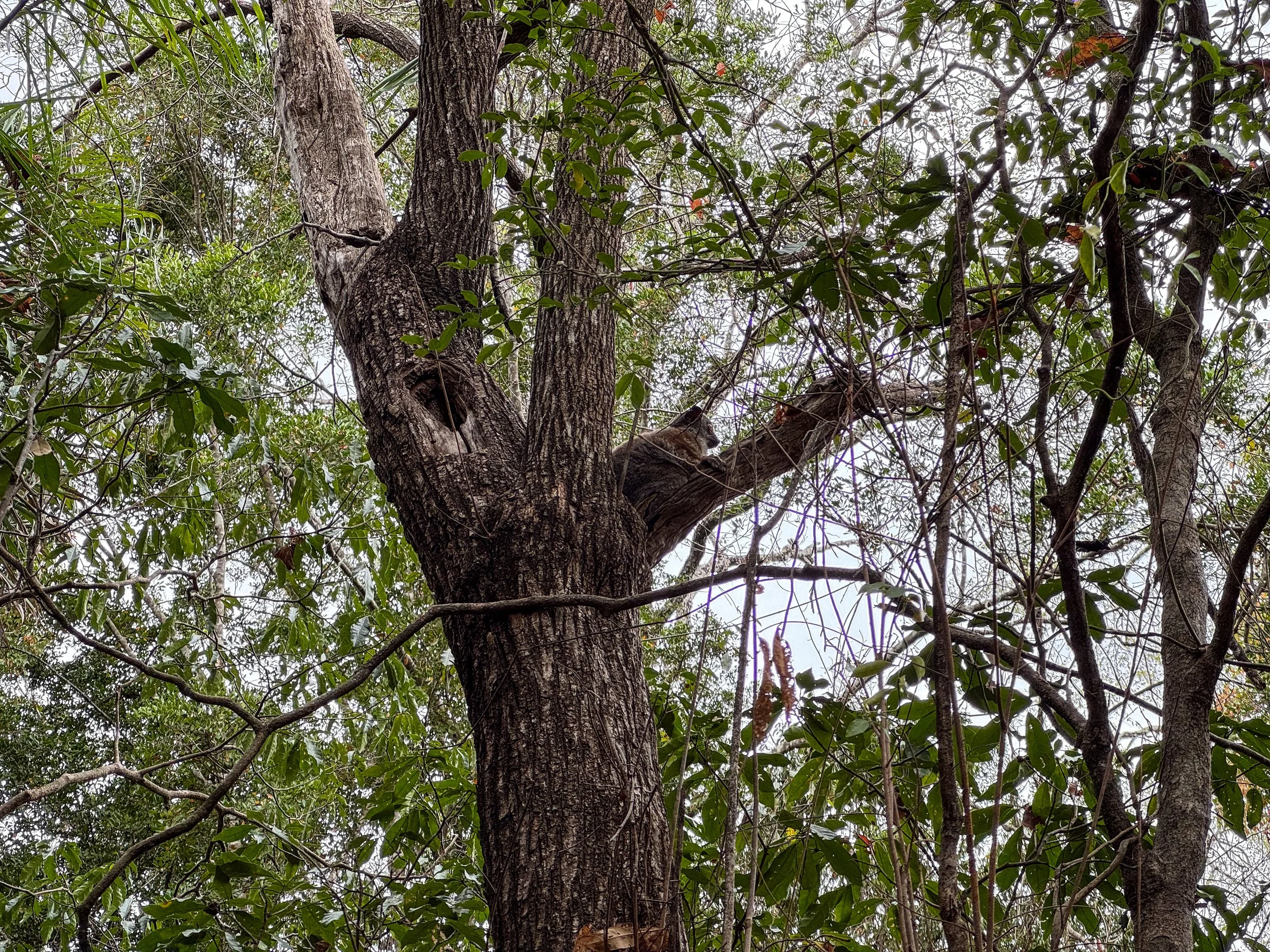
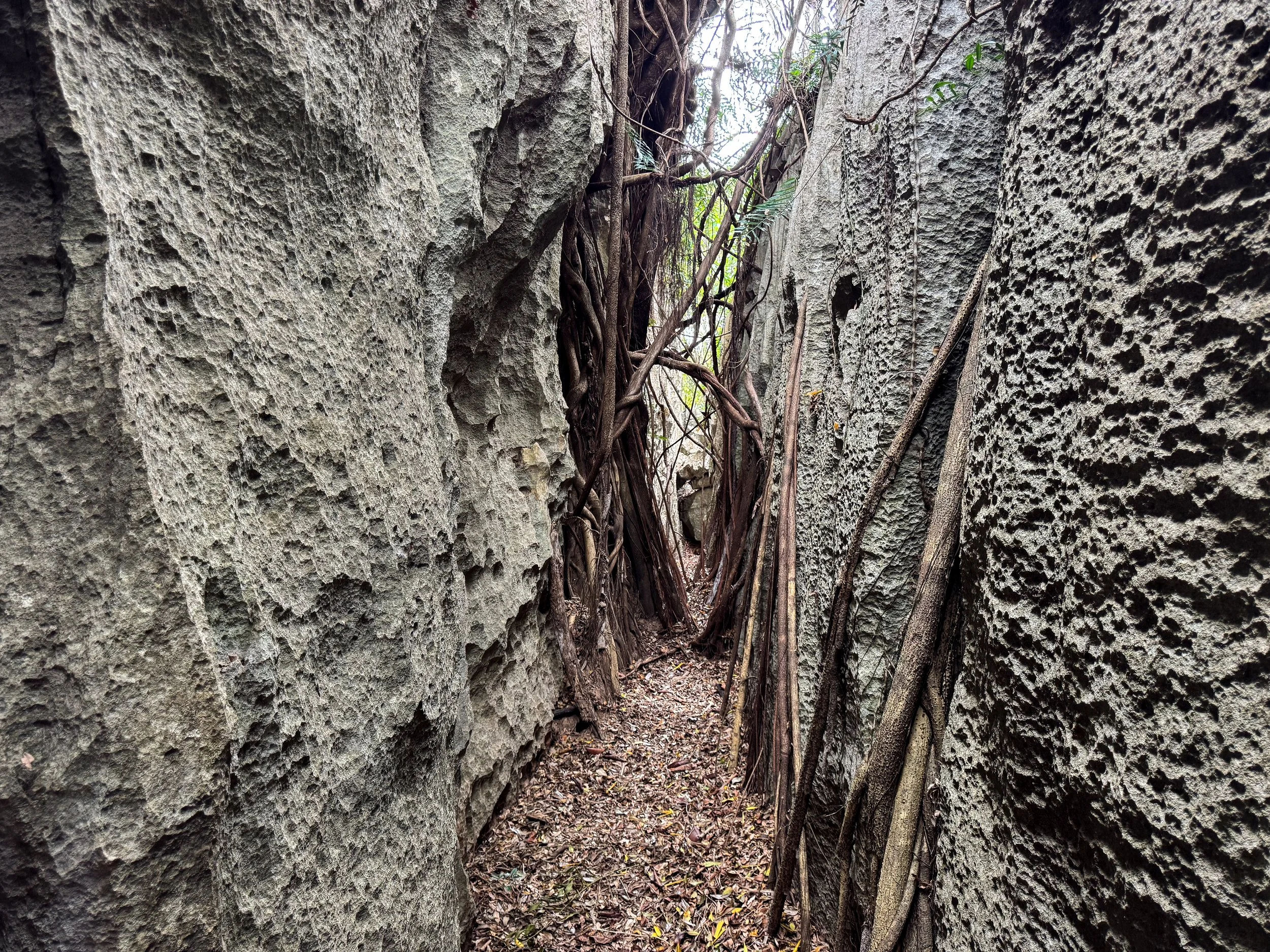
The Rock Forest. The Rock Forest is a tree covered area with craggily rock formations. Ladders lead through steep crevices and over large boulders. Tree roots and vines are frequently used for support and balance. It’s a habitat for primates like the Sportive Lemur. Fossils of Jurassic period corals are visible in the bleached limestone. A shallow cave leads through the final section of The Rock Forest into the beginning of The Cathedral.
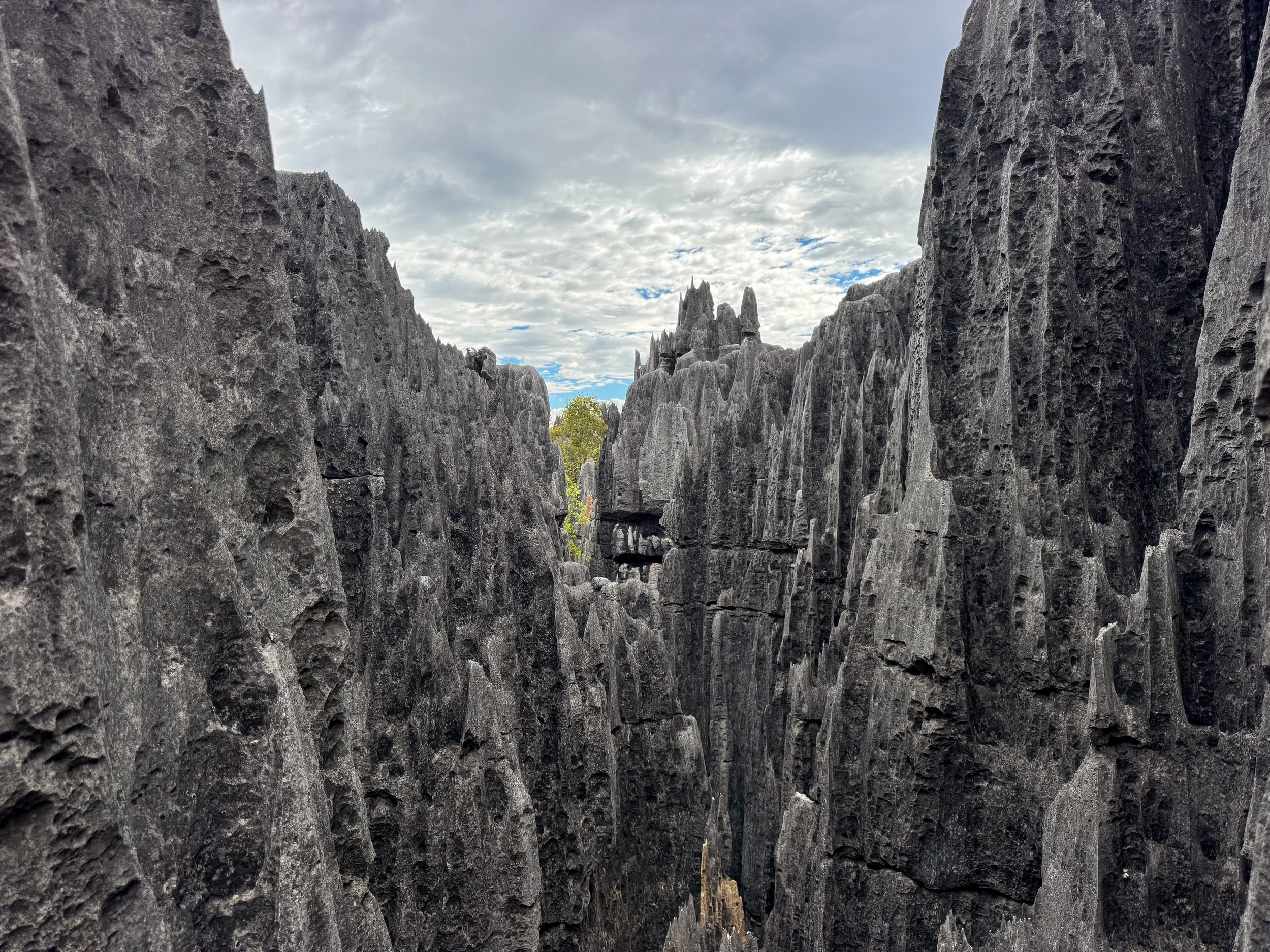
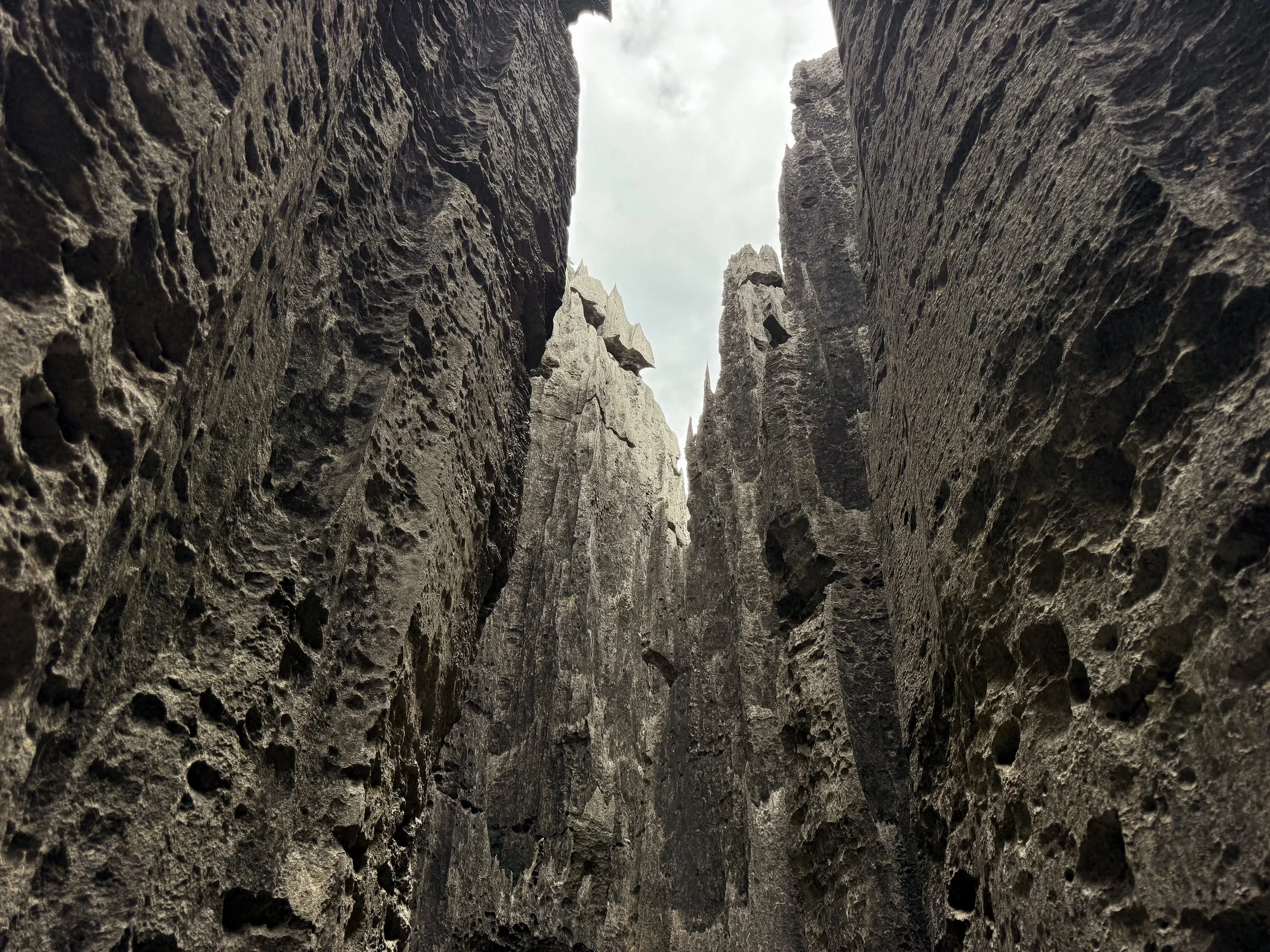
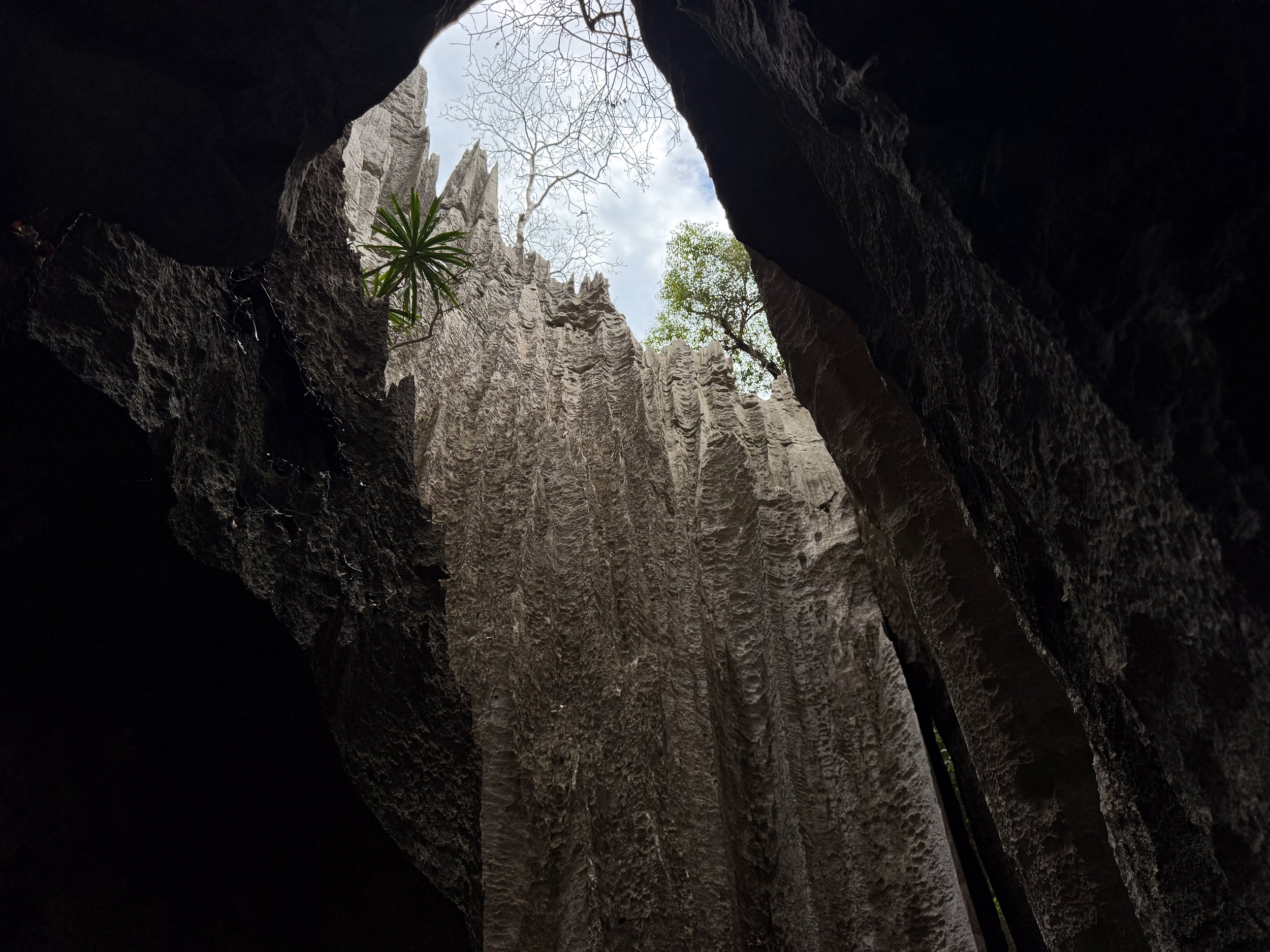
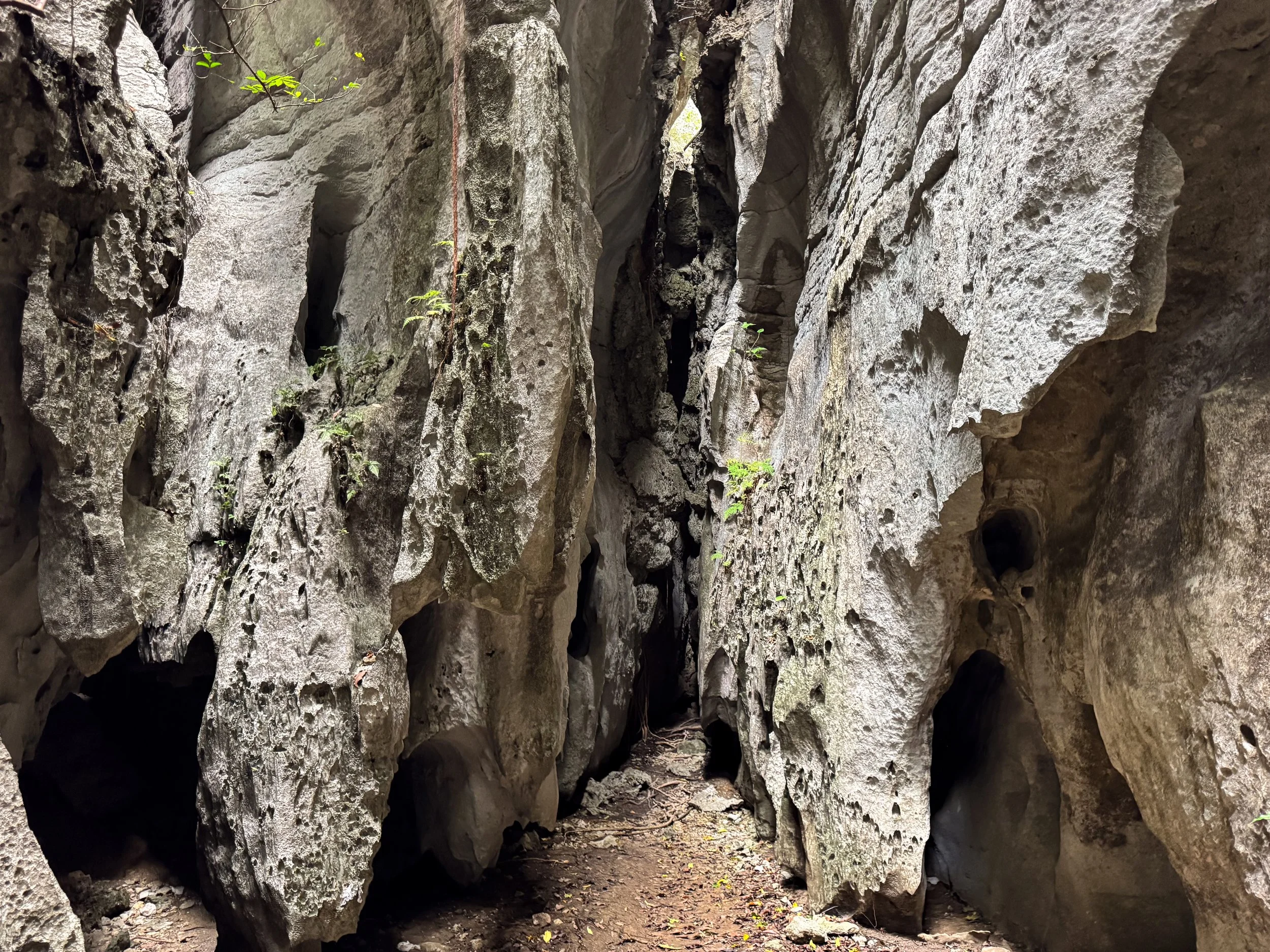
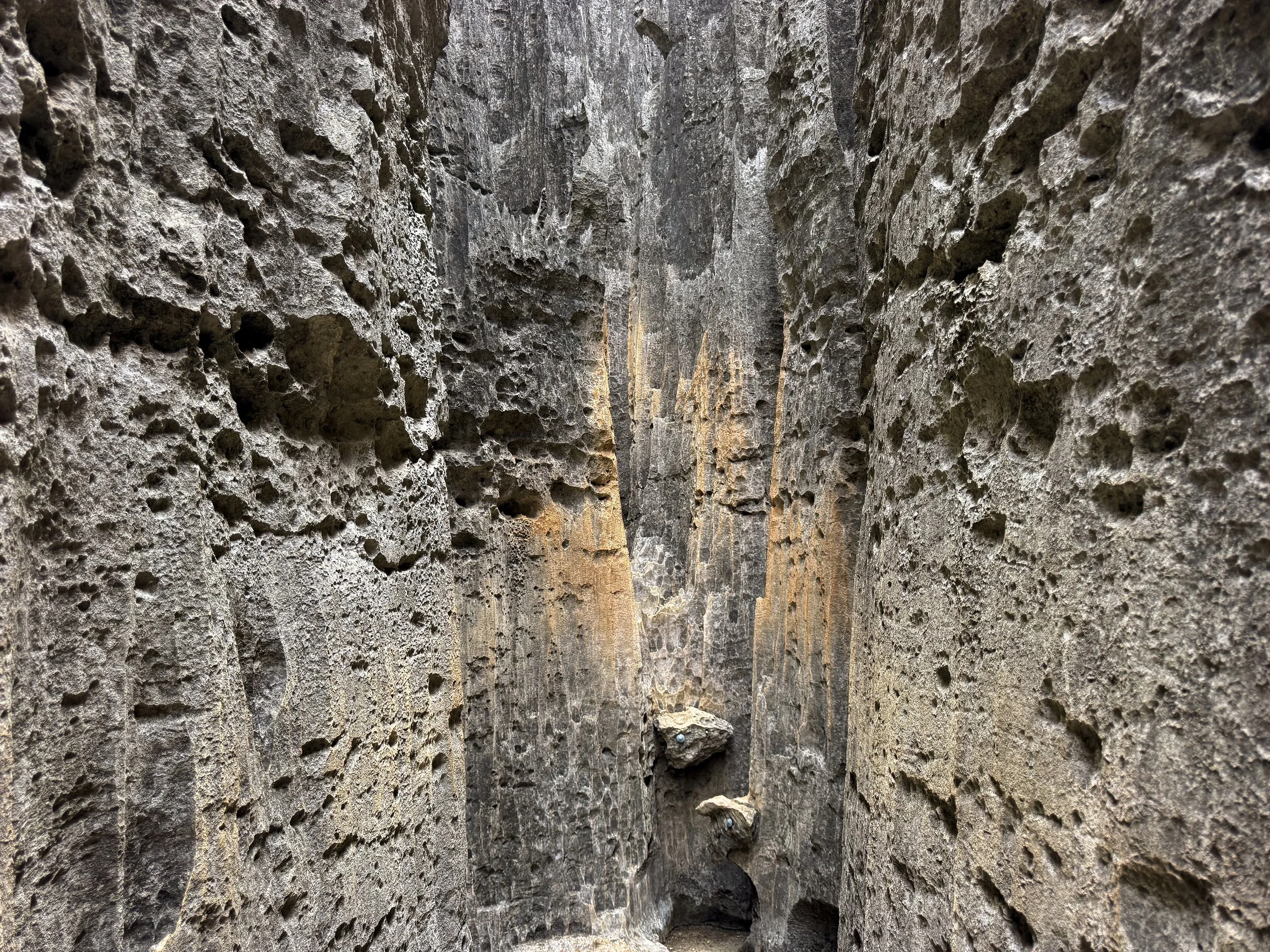
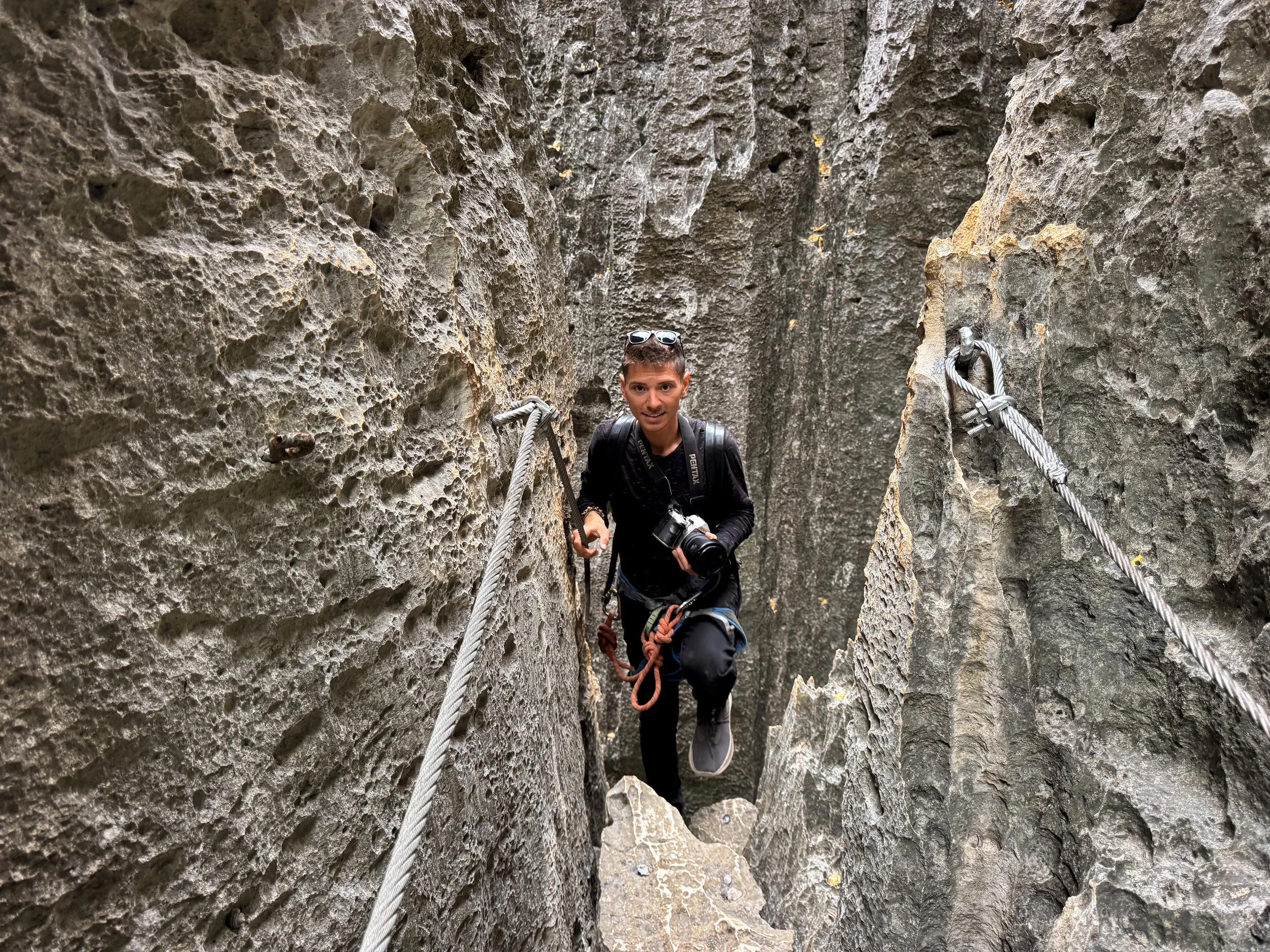
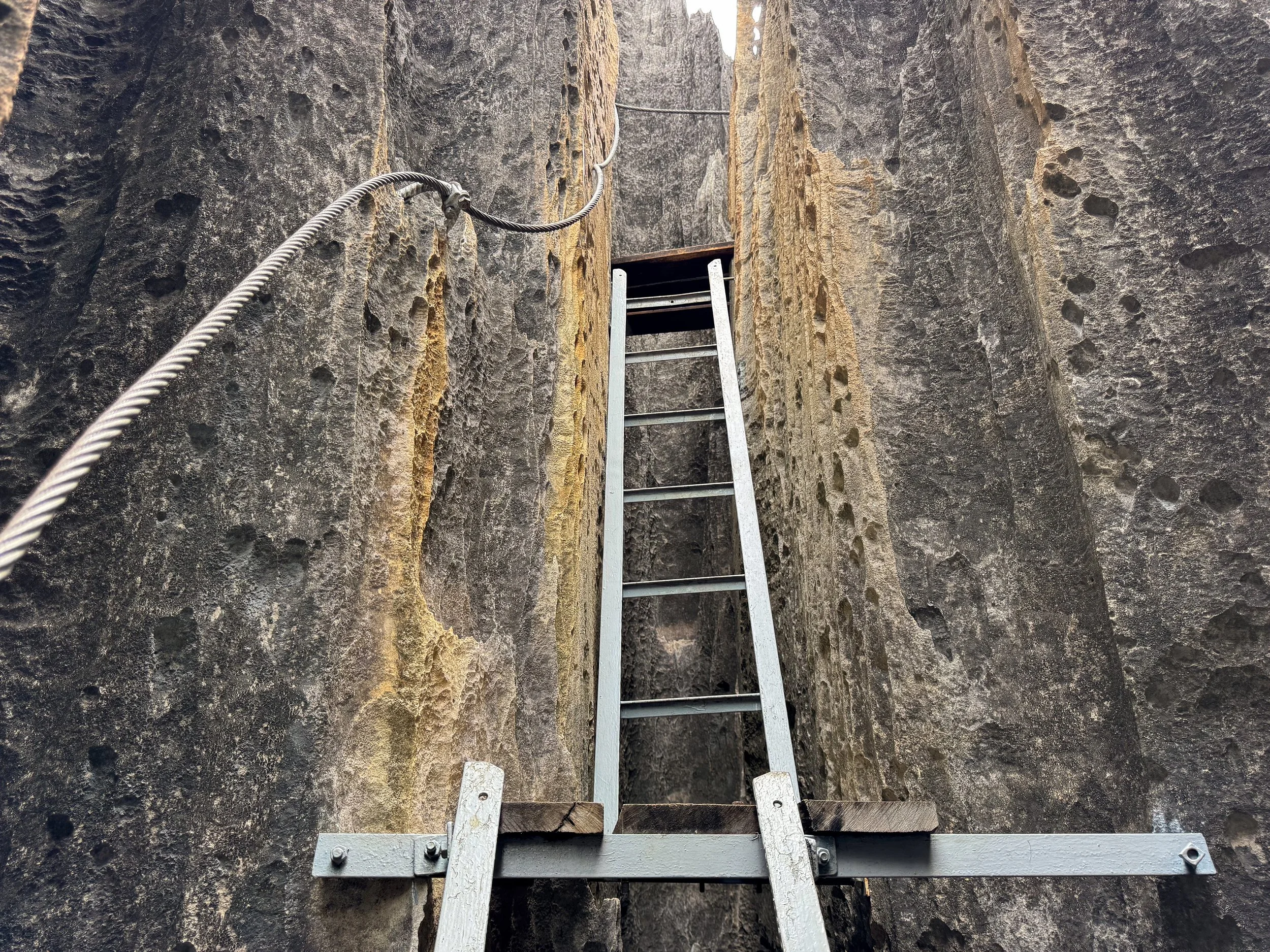
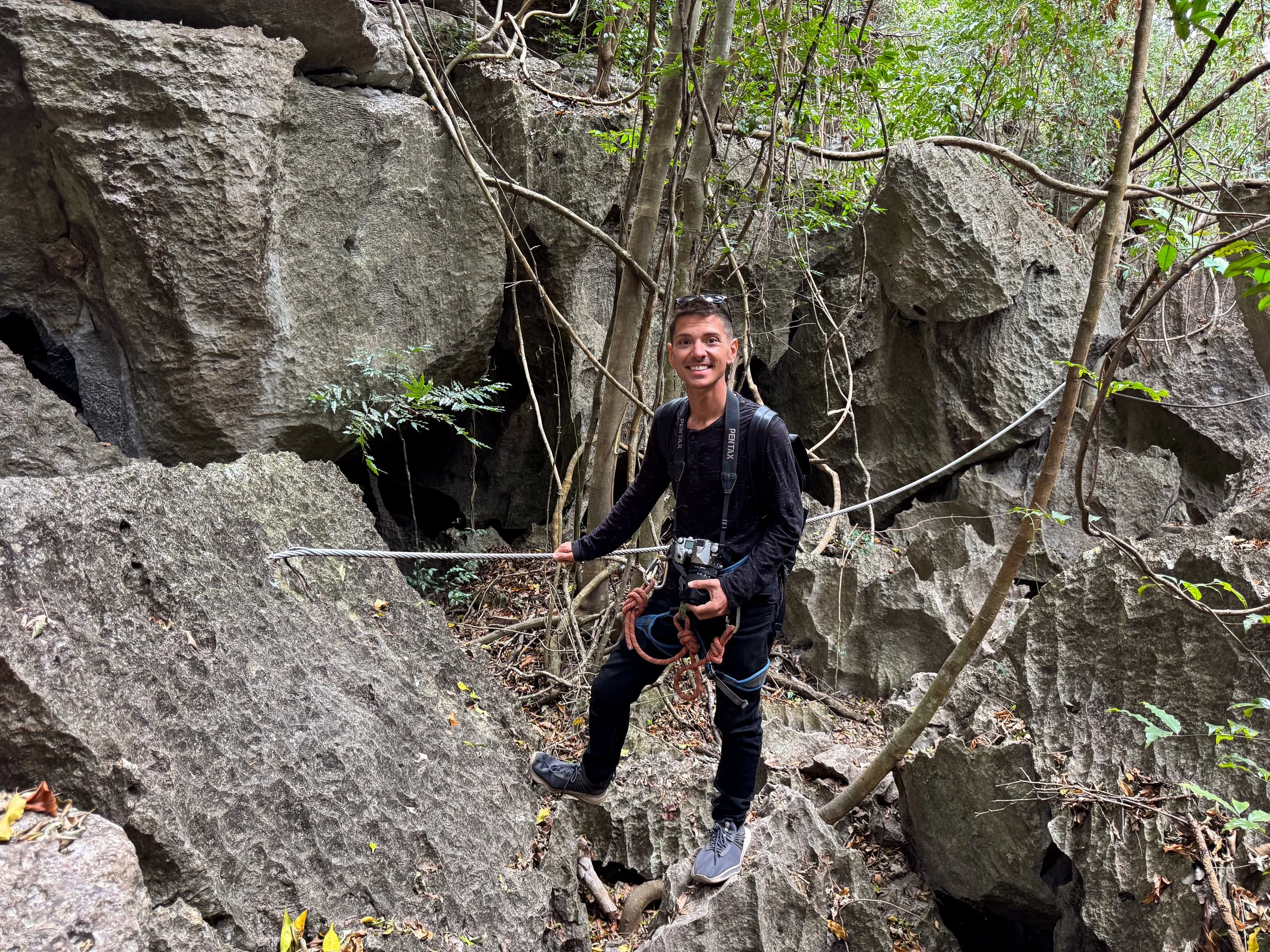
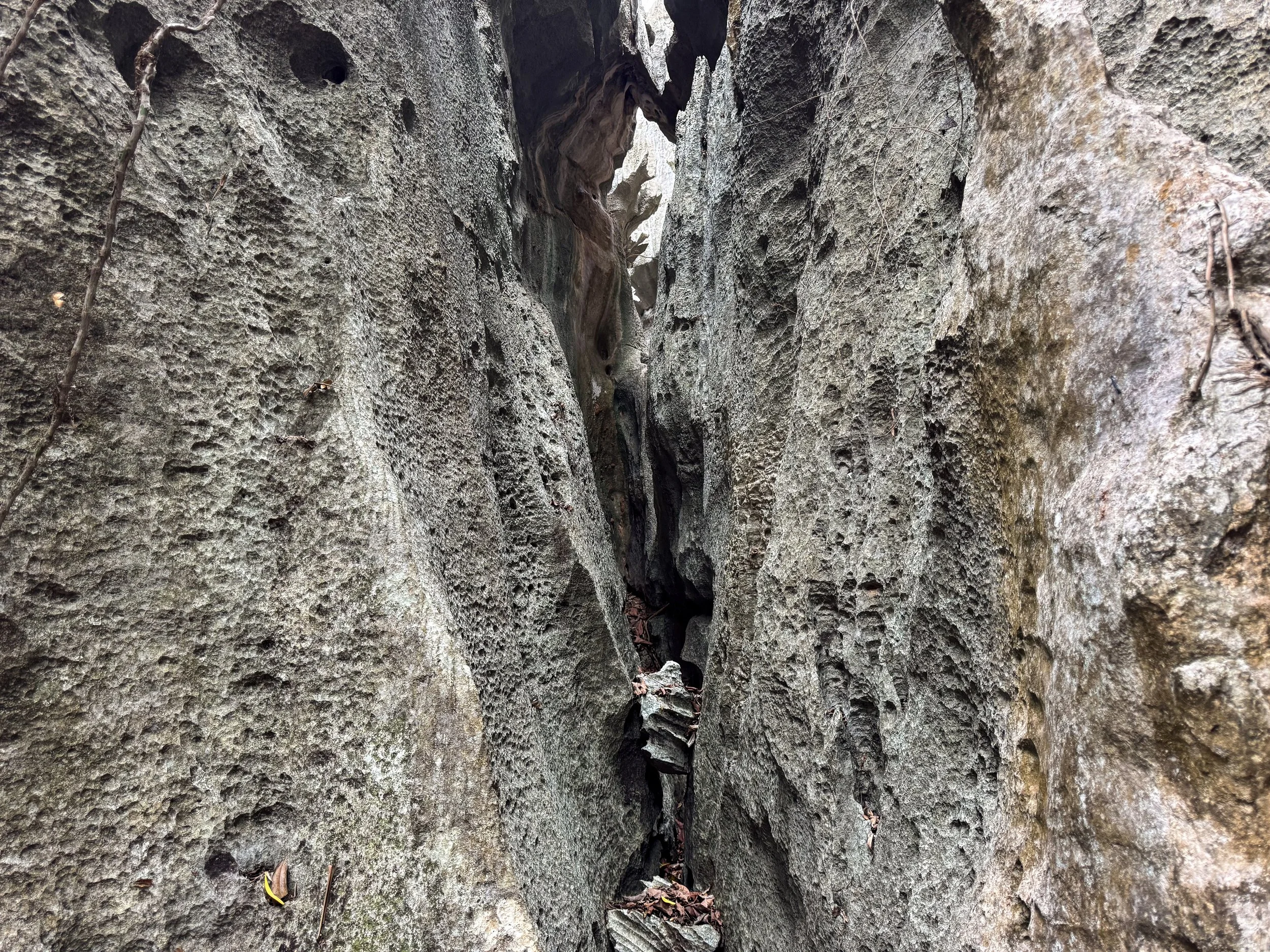
The Cathedral. The Cathedral is an area with vertical sections and towering stone walls that open to sky above. The trails are technical and more challenging than in The Rock Forest. The route leads through caves, between narrow openings, up mounted stone steps and over abysses on wooden platforms. We attached our harnesses to cables for safety along jagged crevices and on steep ladders to reach The Tsingy.
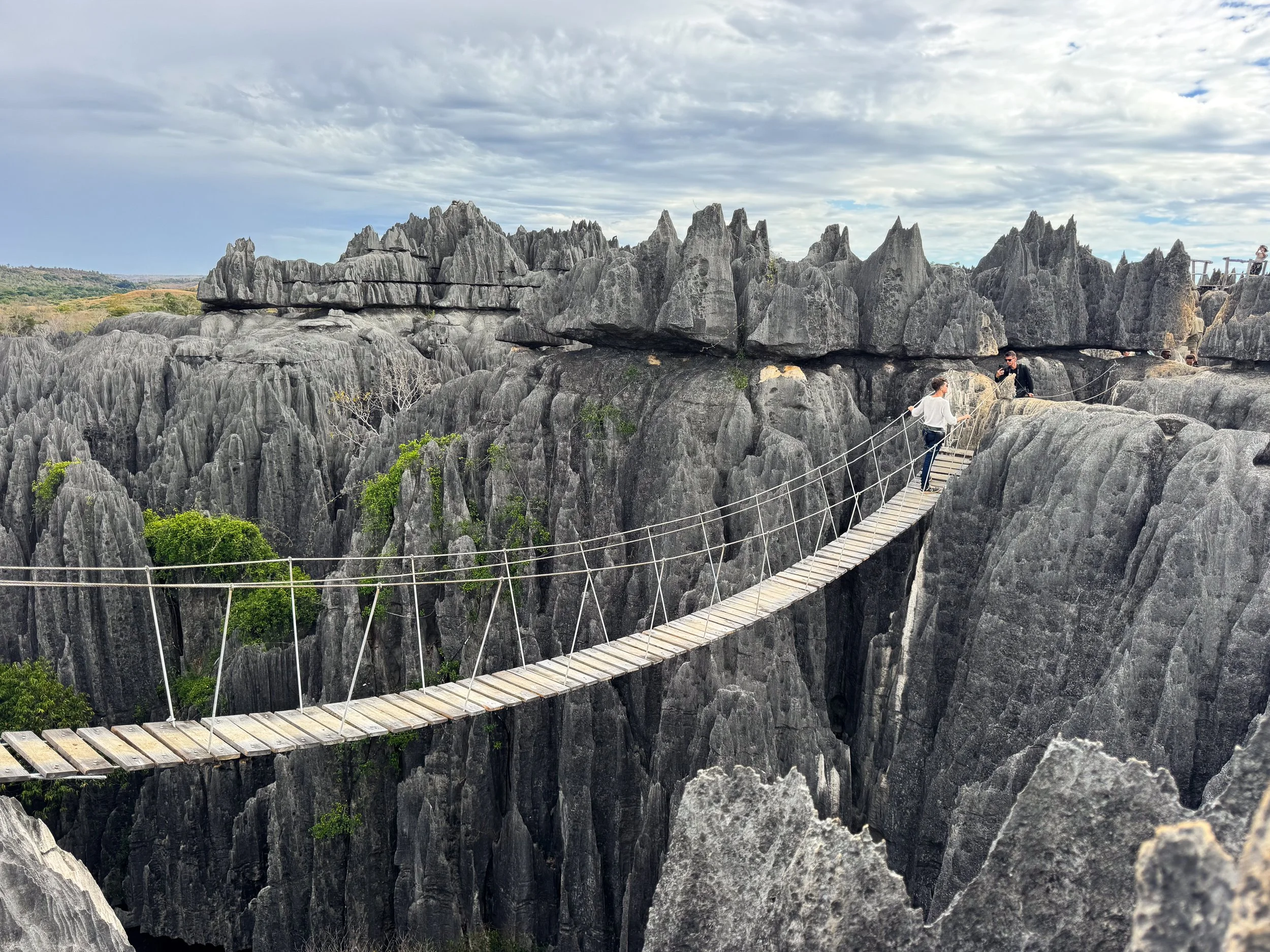
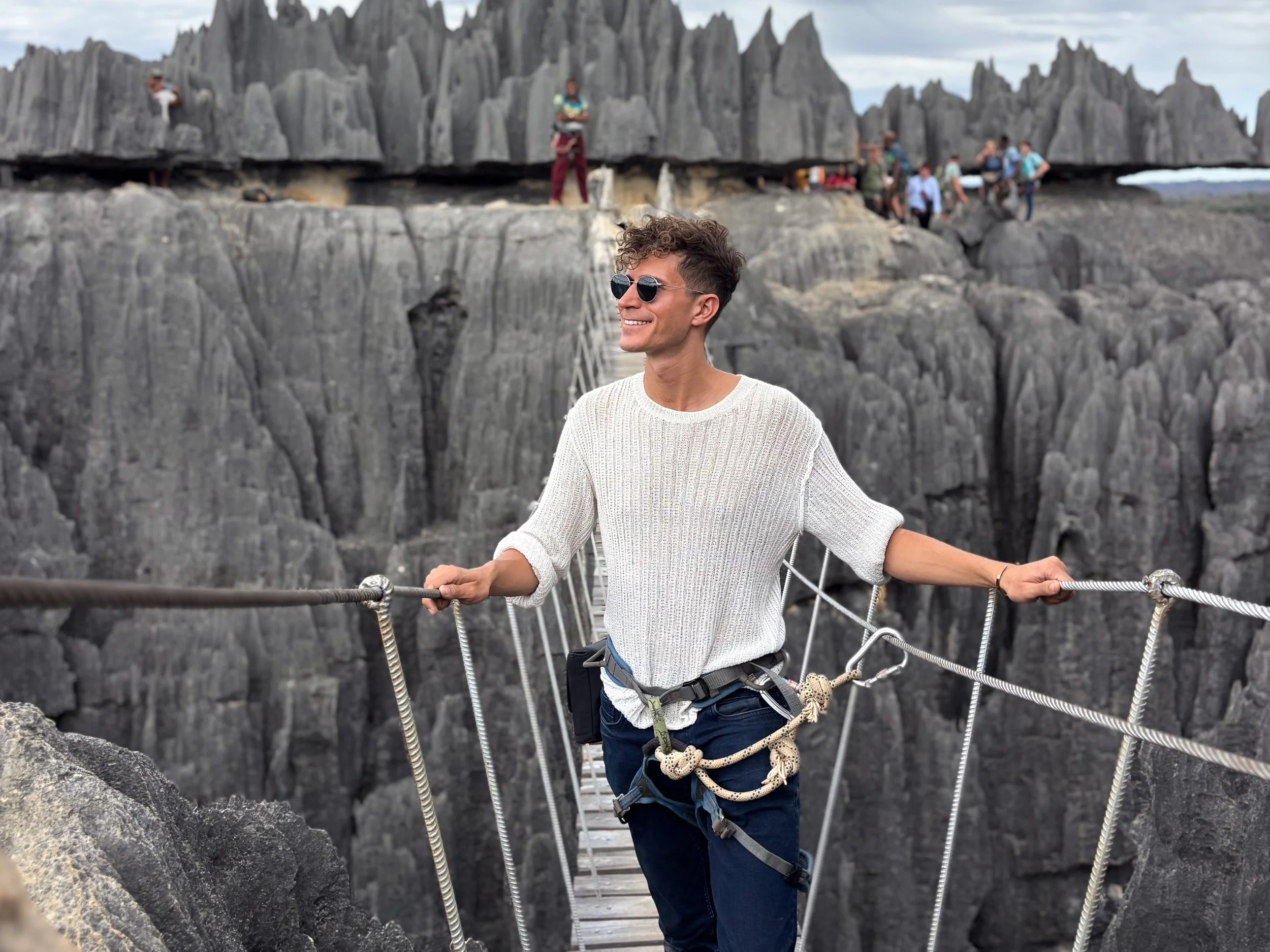
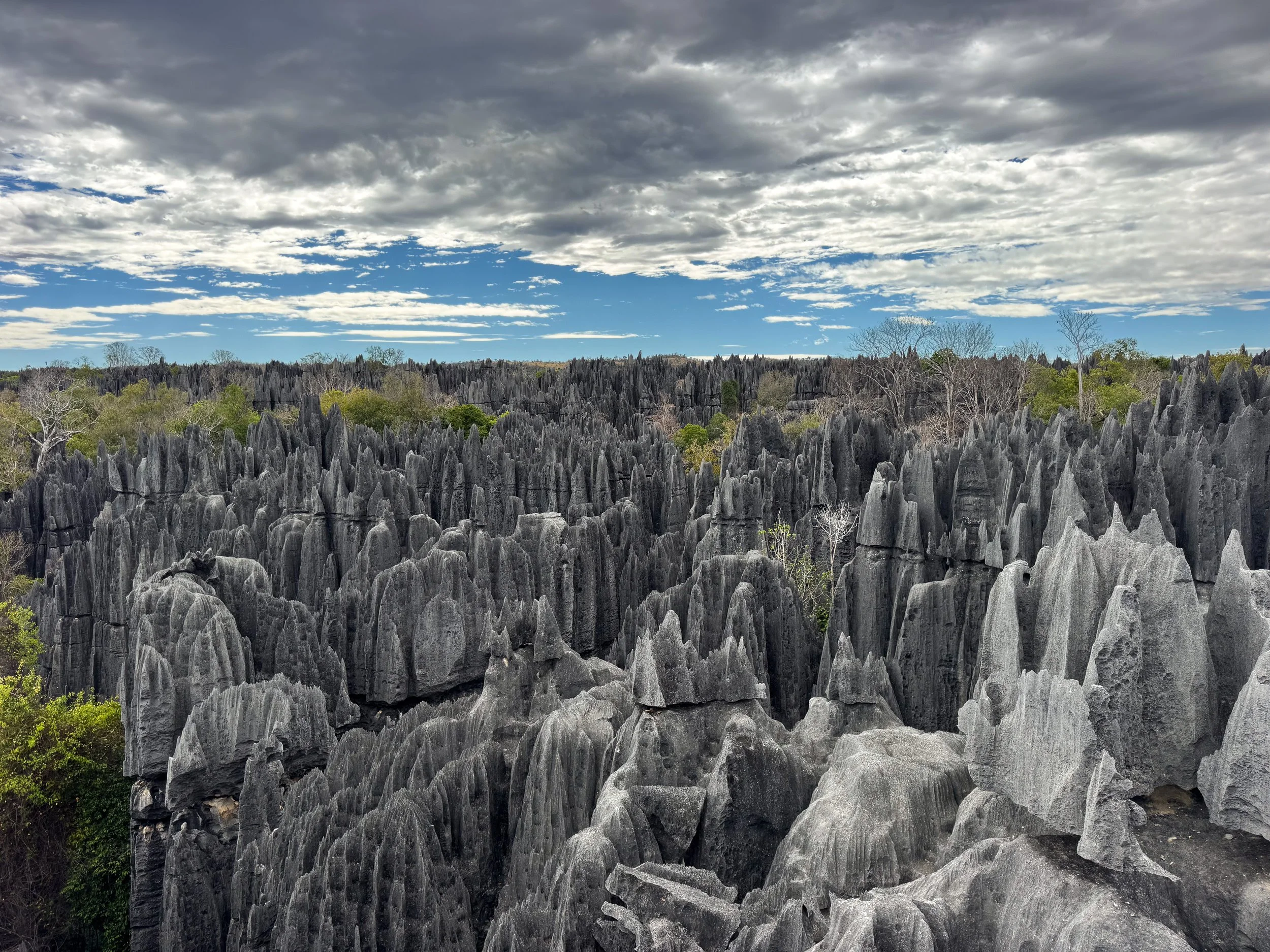
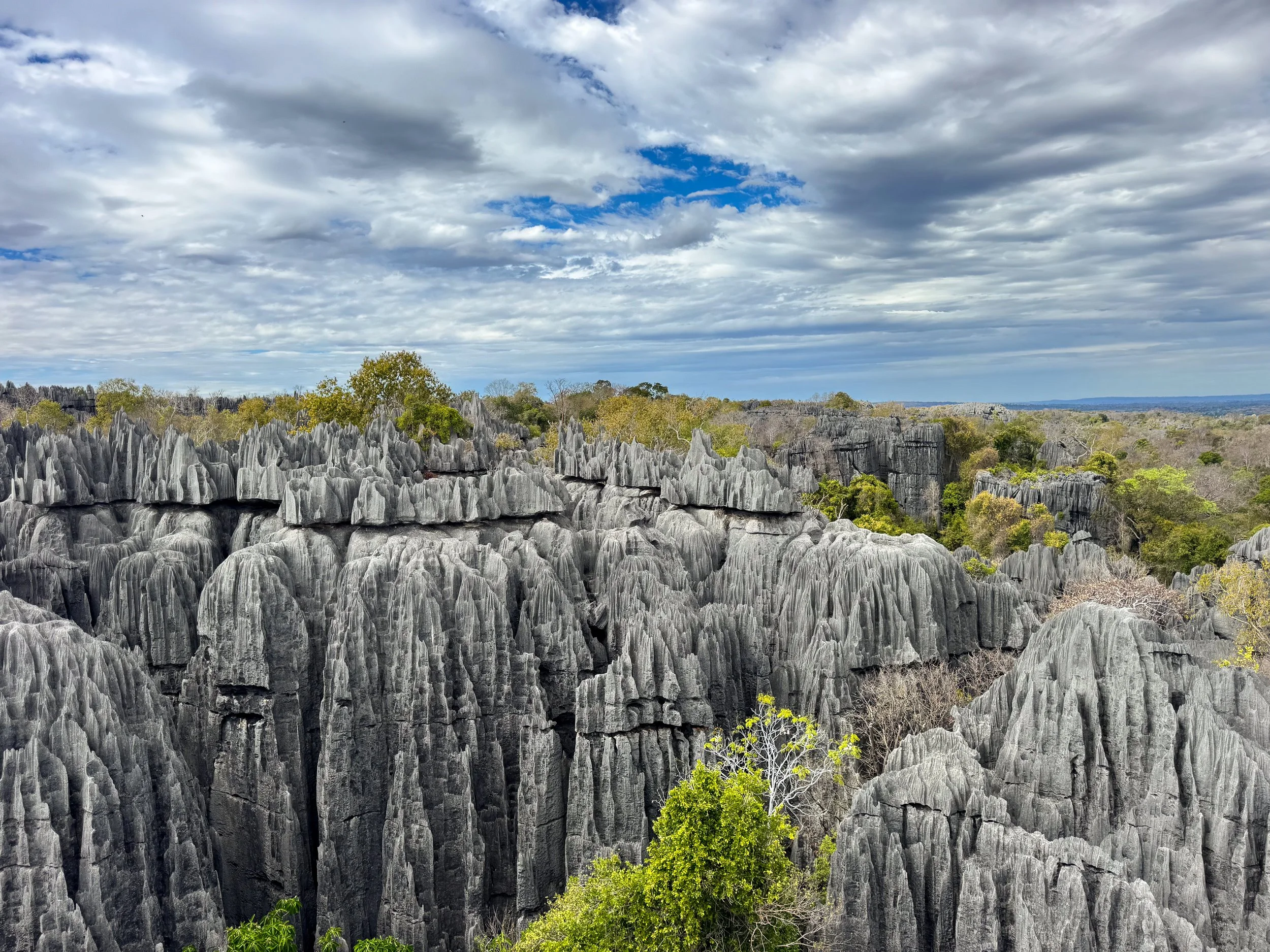
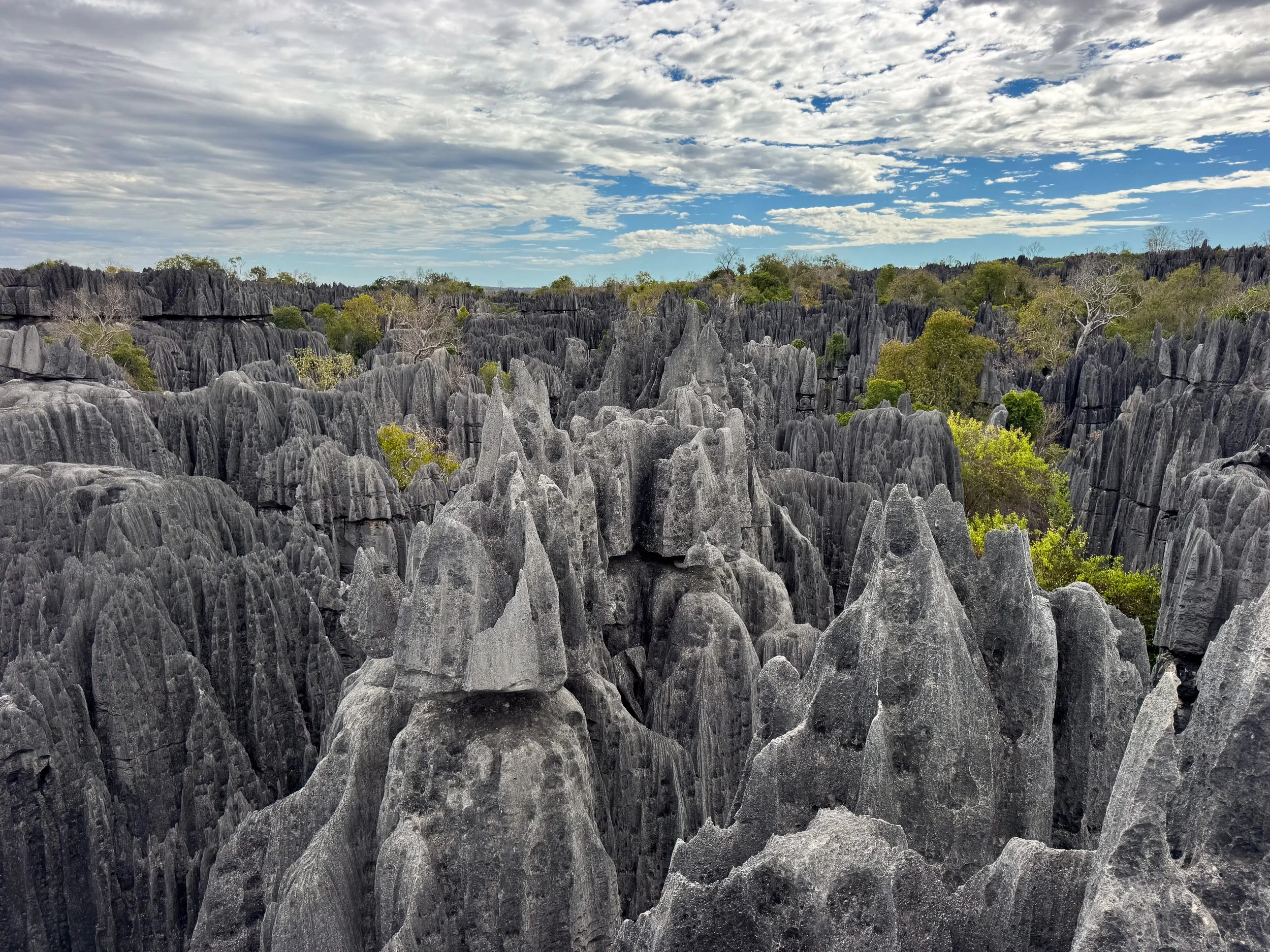
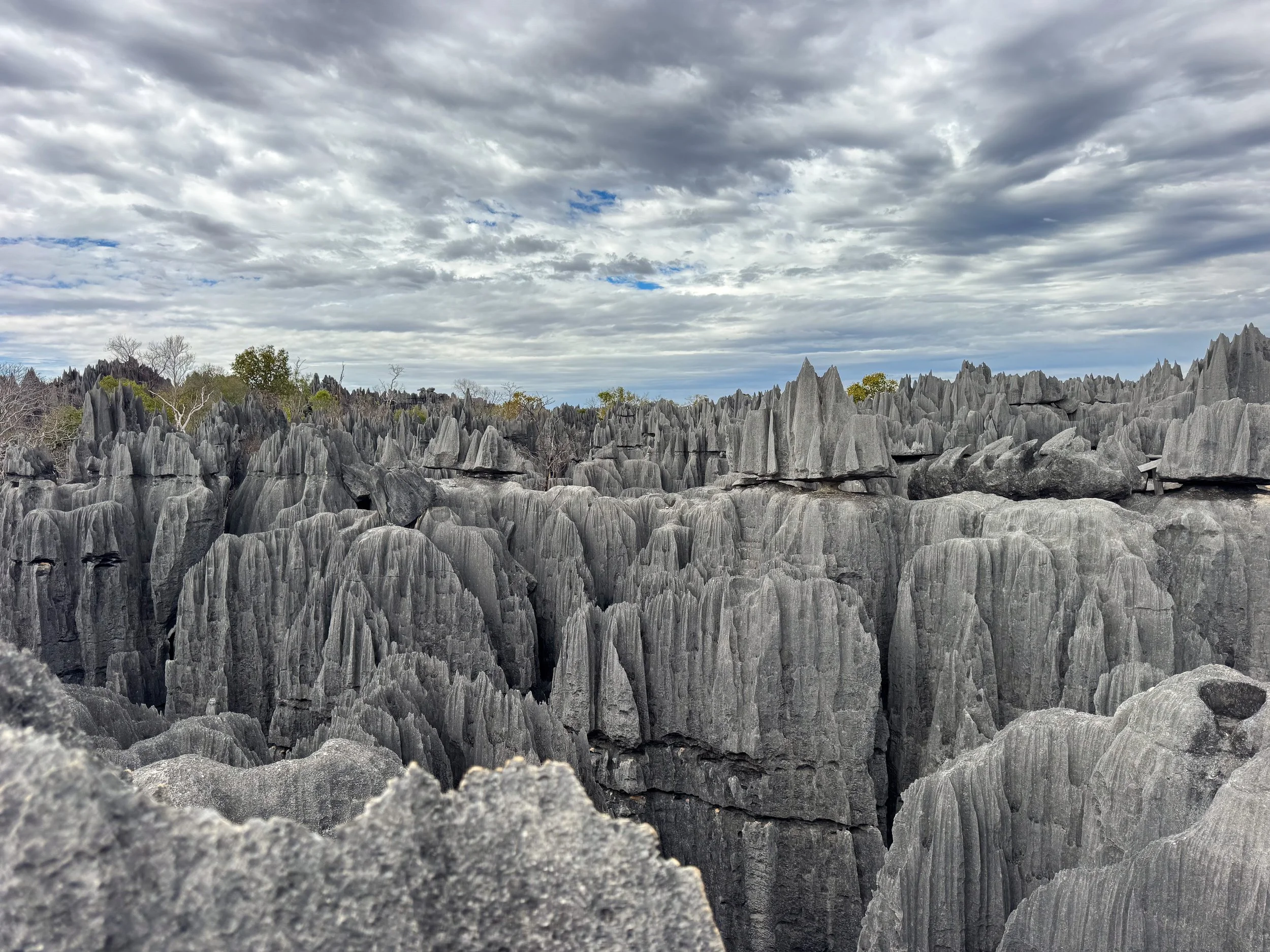
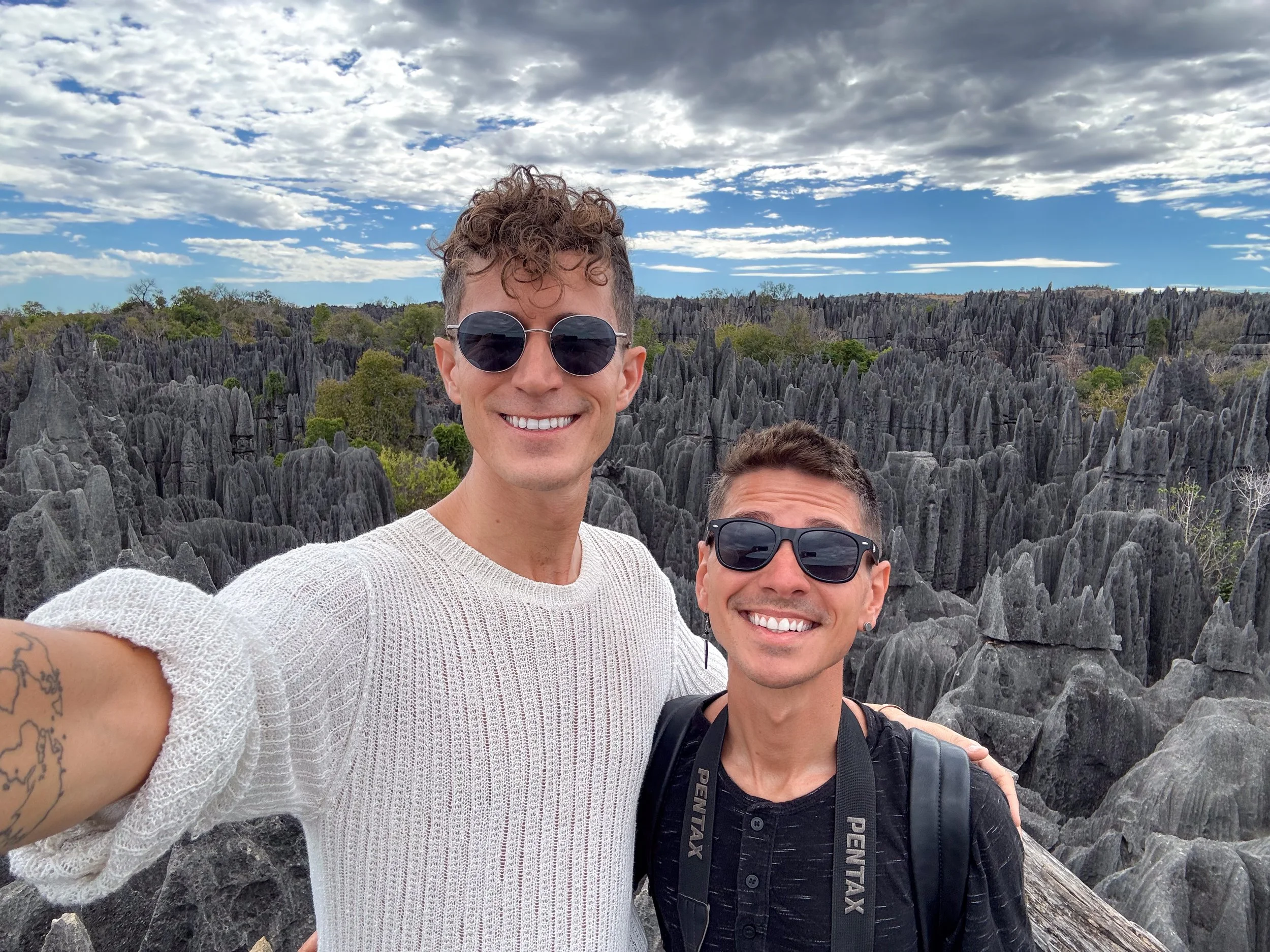
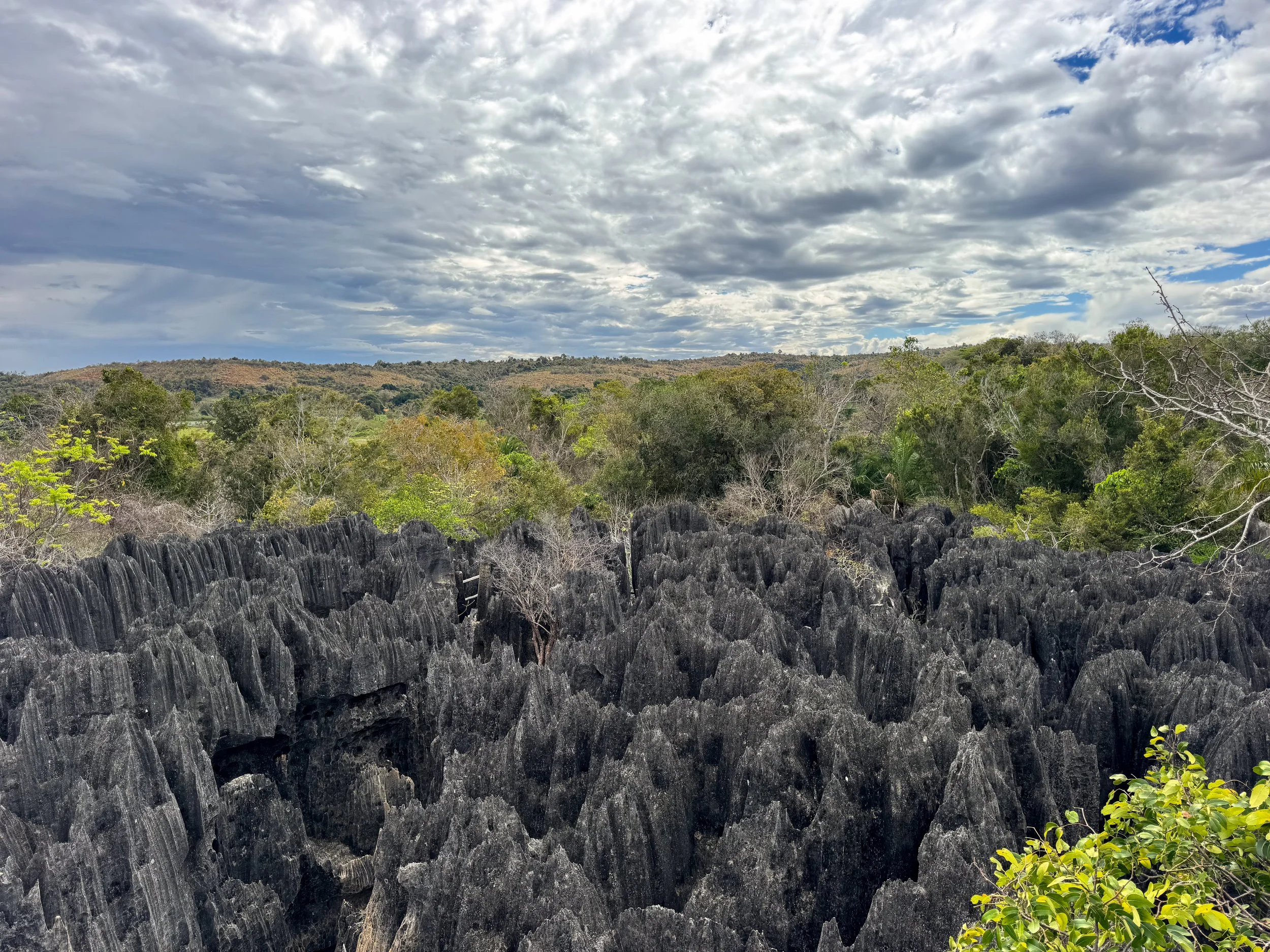
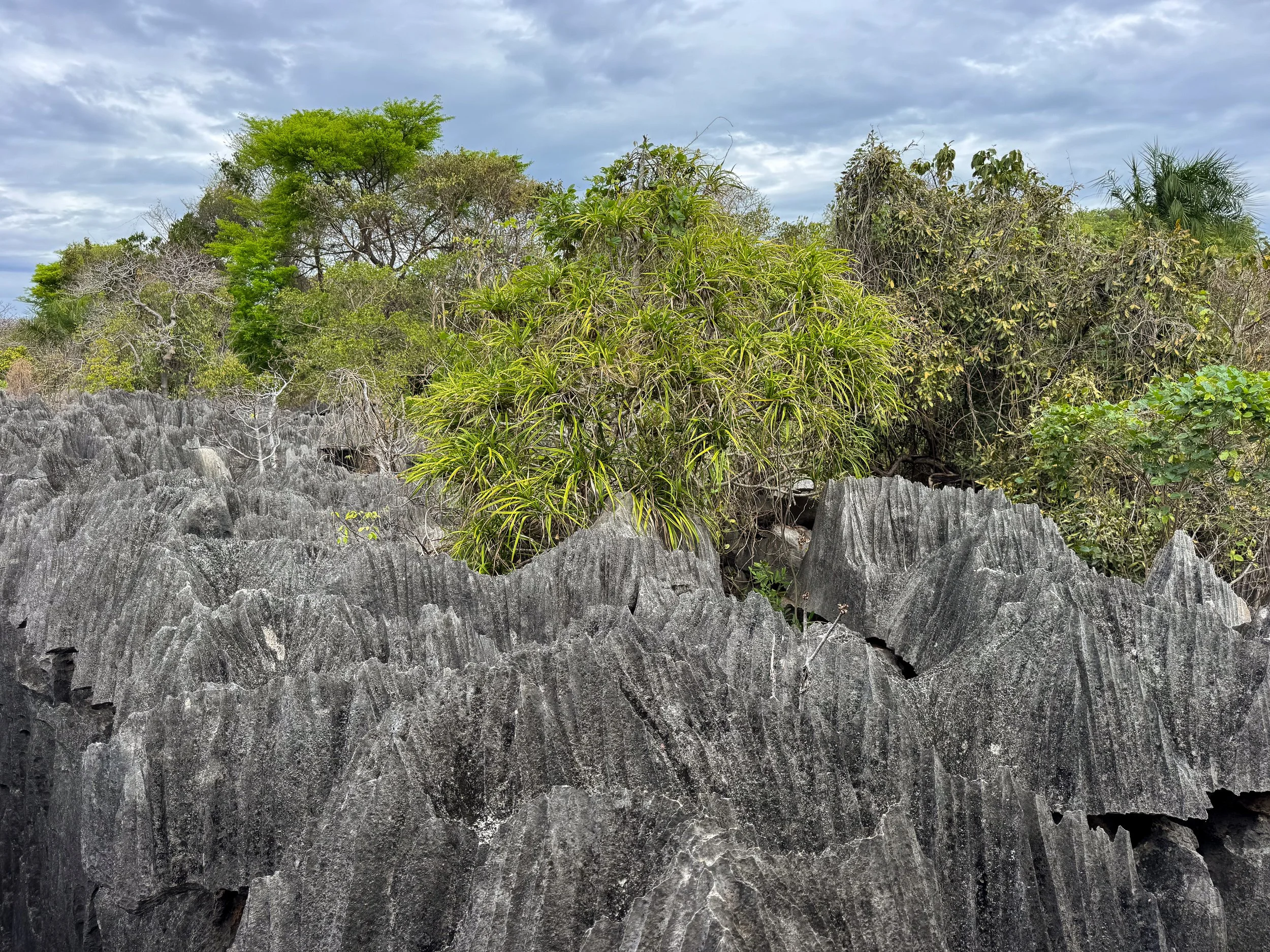
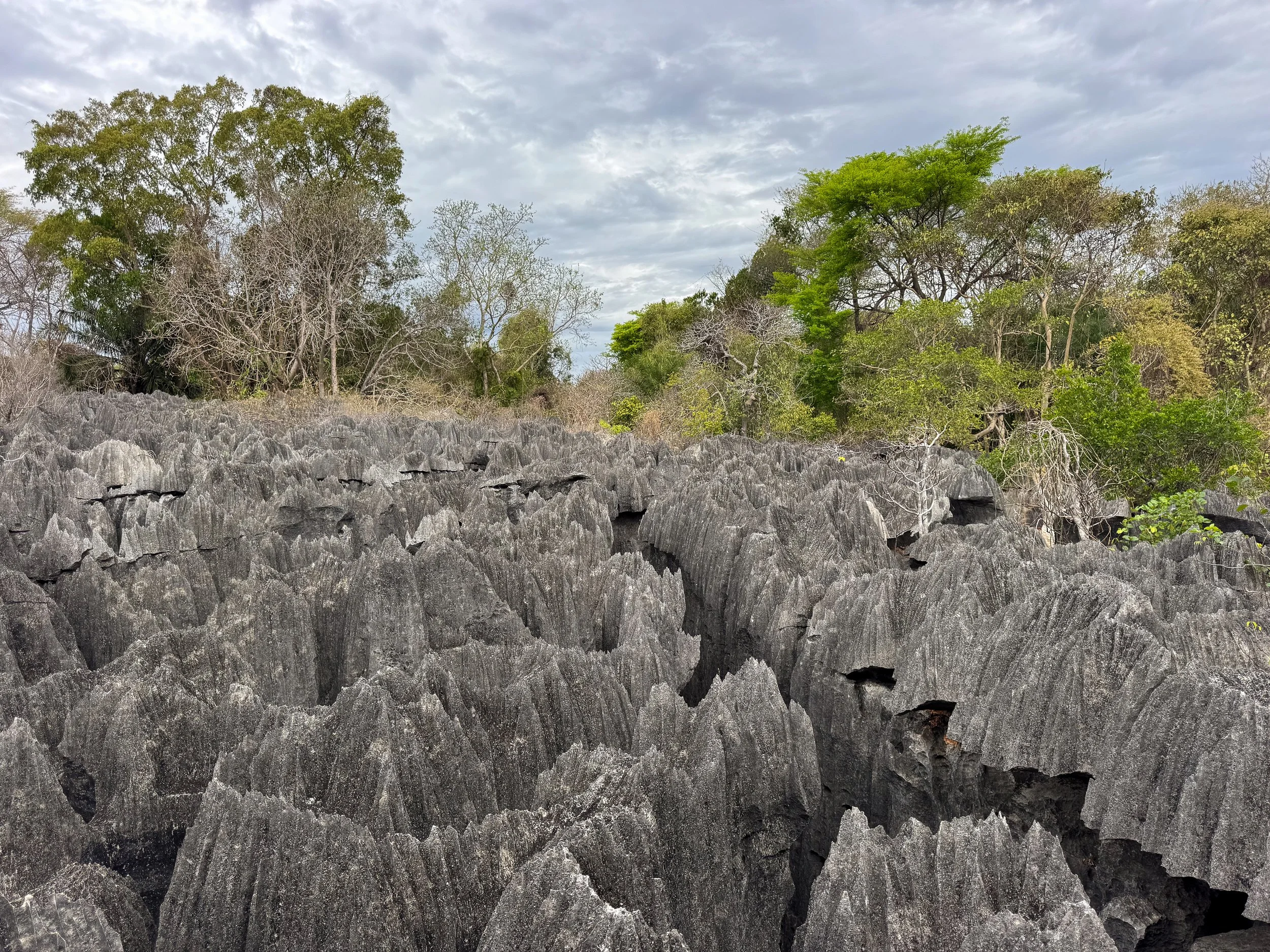
The Tsingy. The Tsingy is the most dramatic area of the national park. Thousands of eroded limestone formations point upwards like Gothic style spires. Cantilevered sections appear to be floating. Lookout platforms offer panoramic views of the sharp and jagged landscape. A suspension bridge crosses a steep ravine separating both viewpoints.
Petite Tsingy
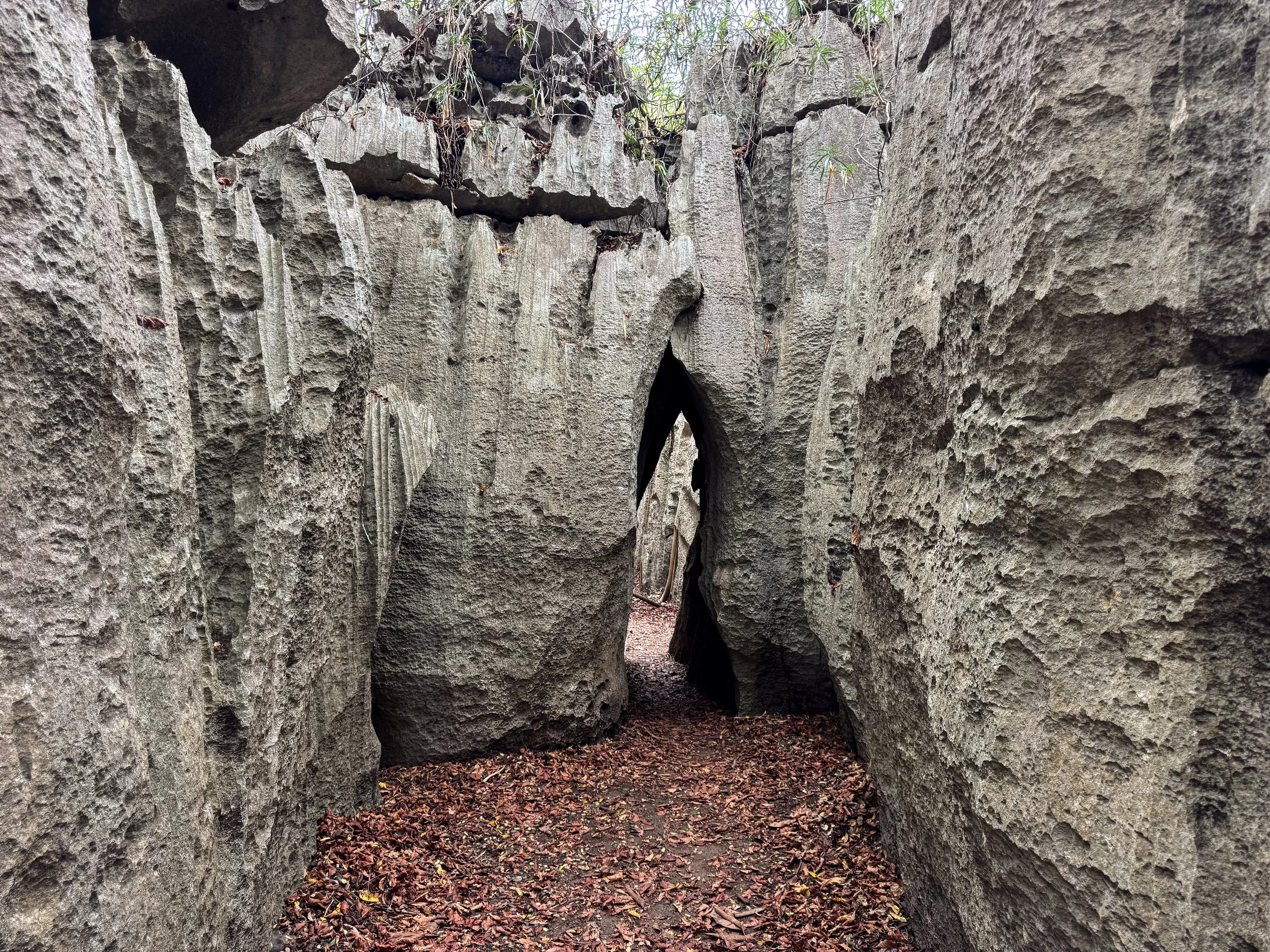
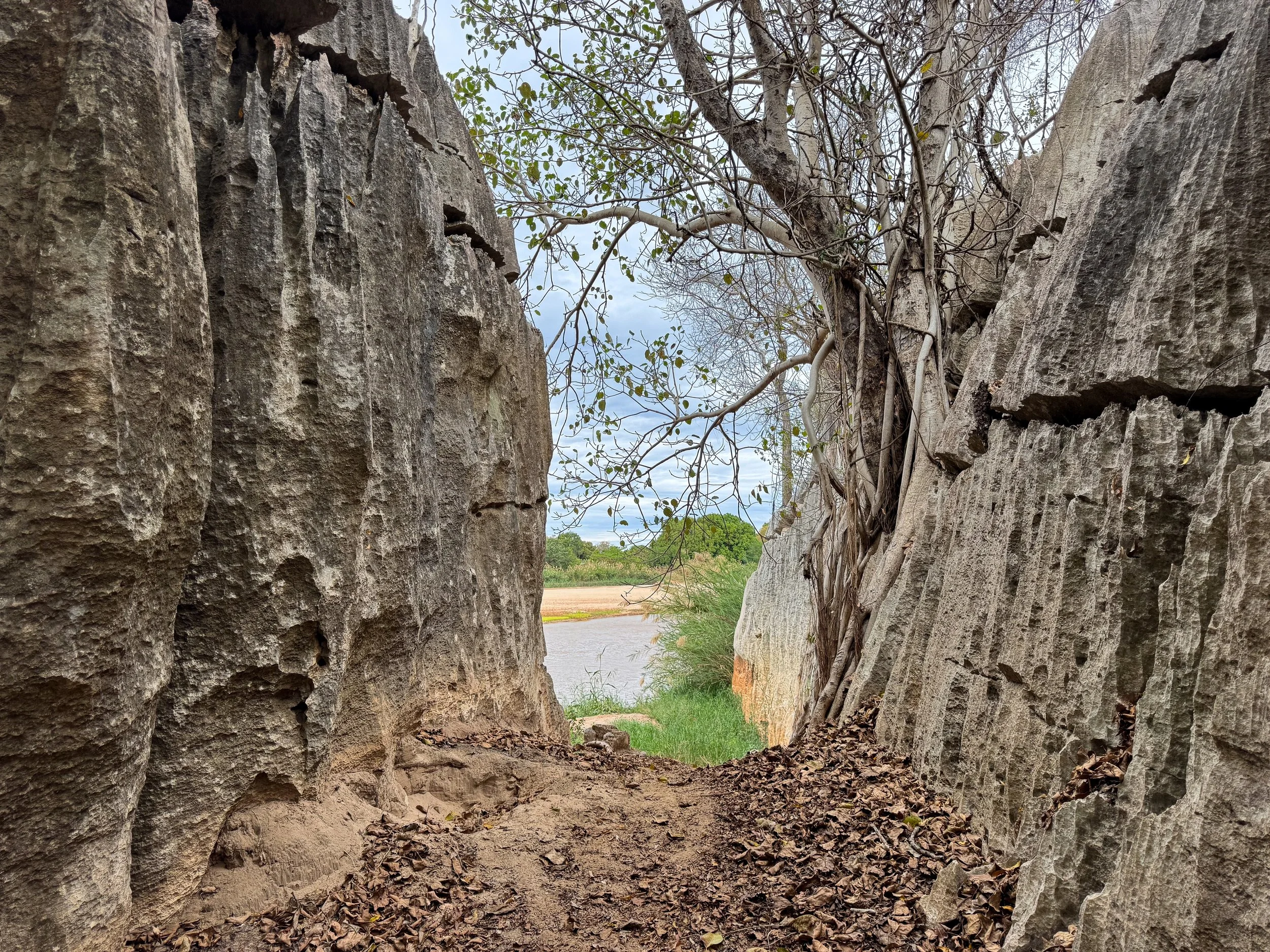
Petite Tsingy, as its name implies, is a smaller version of Grand Tsingy. It’s located along the banks of the Manambolo River in Bekopaka. A lush trail meanders into the jagged rock forest and labyrinth of crevices through a Gothic arched tunnel. The series of crevices slice through the jungle, some barely wide enough to shimmy through. Vines and roots drape down their rock walls. Flooded channels remain from the wet season. The trail ascends to an observation deck with views of the jagged limestone spires and surrounding forest.
Getting to Tsingy National Park
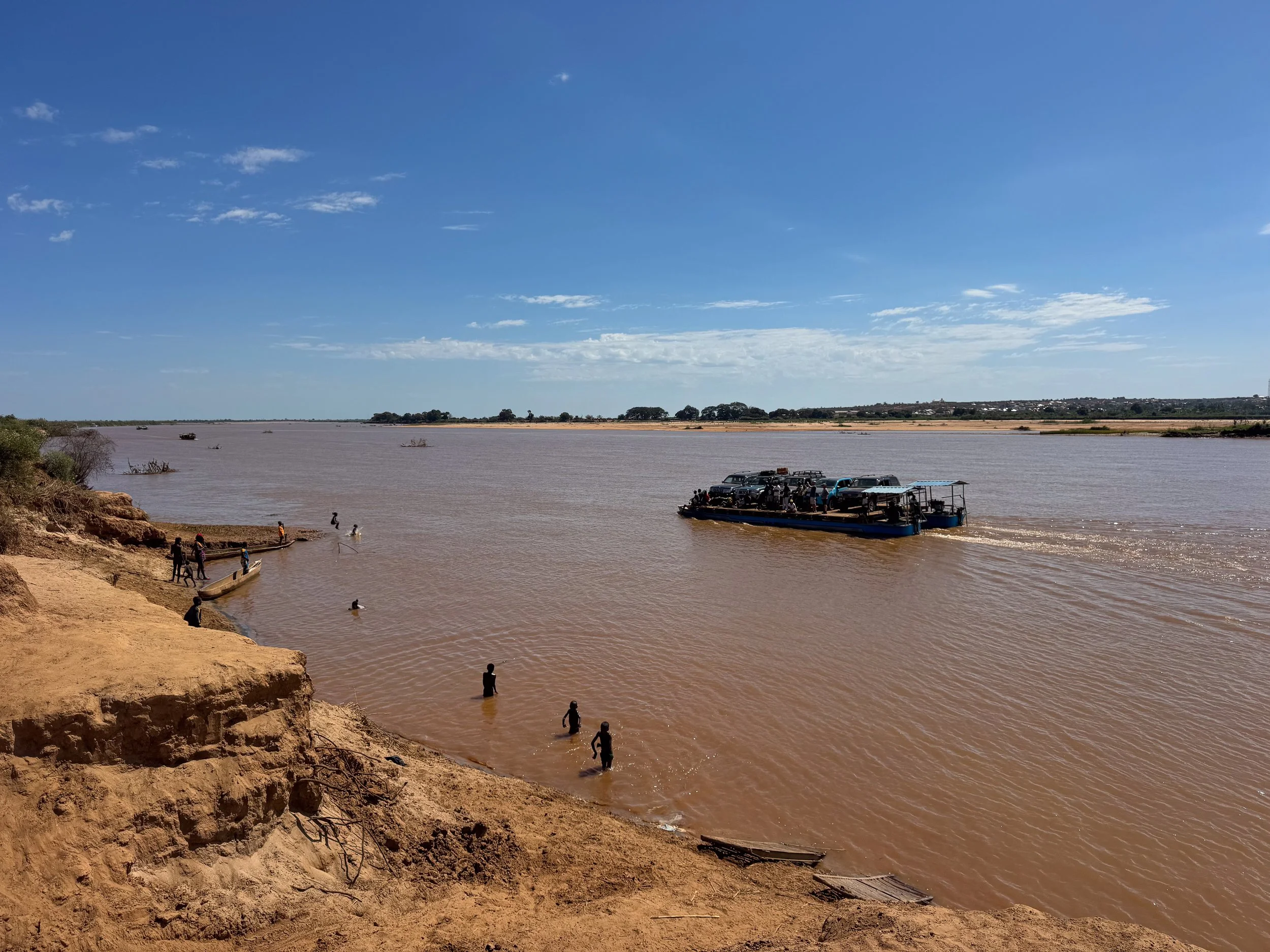
Getting to Tsingy National Park from Morondava is part of the adventure. It takes a full day to reach in a hired 4x4 vehicle. The route is only accessible during the dry season between June and November. It leads along unmarked back roads, across rivers on barges, past rural villages and through baobab forests. It includes stops at Belo Tsiribihina for lunch and a multi night stay in the village of Bekopaka.
Good to Know:
Book a guided tour with transportation to Tsingy in advance.
A local guide is required to enter the national park. They can be hired from the Tsingy National Park office in Bekopaka.
Visit before 7am. The sun and the heat can be overwhelming by mid morning.
Tsingy is pronounced “chingy.”
Lunch in Belo Tsiribihina
Belo Tsiribihina is a large town along the Mania River. It’s the halfway point between Morondava and Tsingy National Park making it a frequent lunch stop.
Karibo Restaurant. A hotel restaurant with a chalkboard menu of daily dishes. We ordered a shrimp cocktail and tomato salad while on our way to Tsingy.
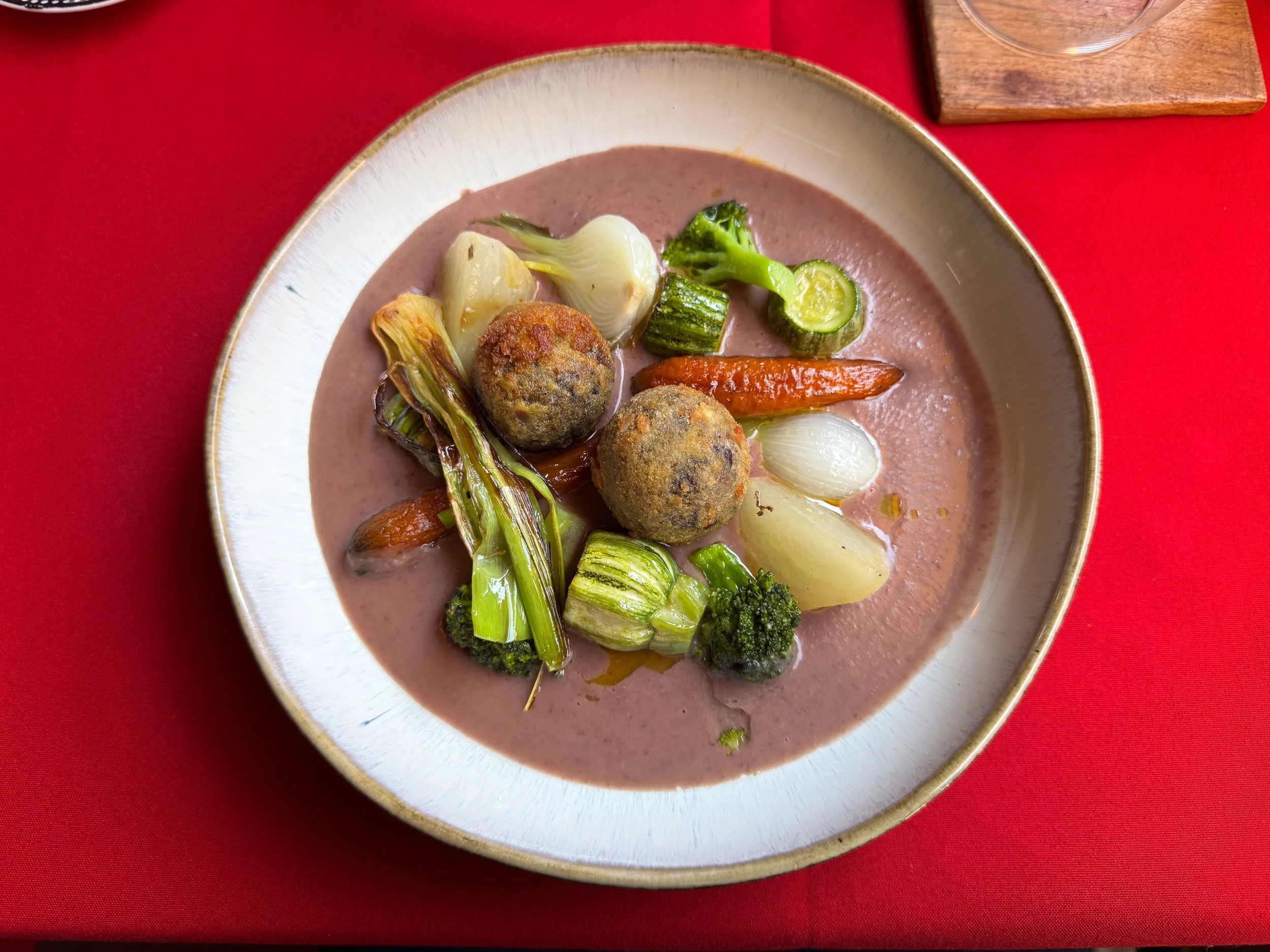
Mad Zebu. A very popular restaurant with Malagasy and Italian fusion dishes. We ordered two vegetarian plates to share, the tomato sweet potato gnocchi and red bean and coconut veloute with black rice arancini.
Bekopaka Village
Bekopaka is a remote village along the Manambolo River outside Tsingy National Park. It serves as an entry point to the park and as a location to stay with various hotels and campgrounds.
Where to Stay in Bekopaka
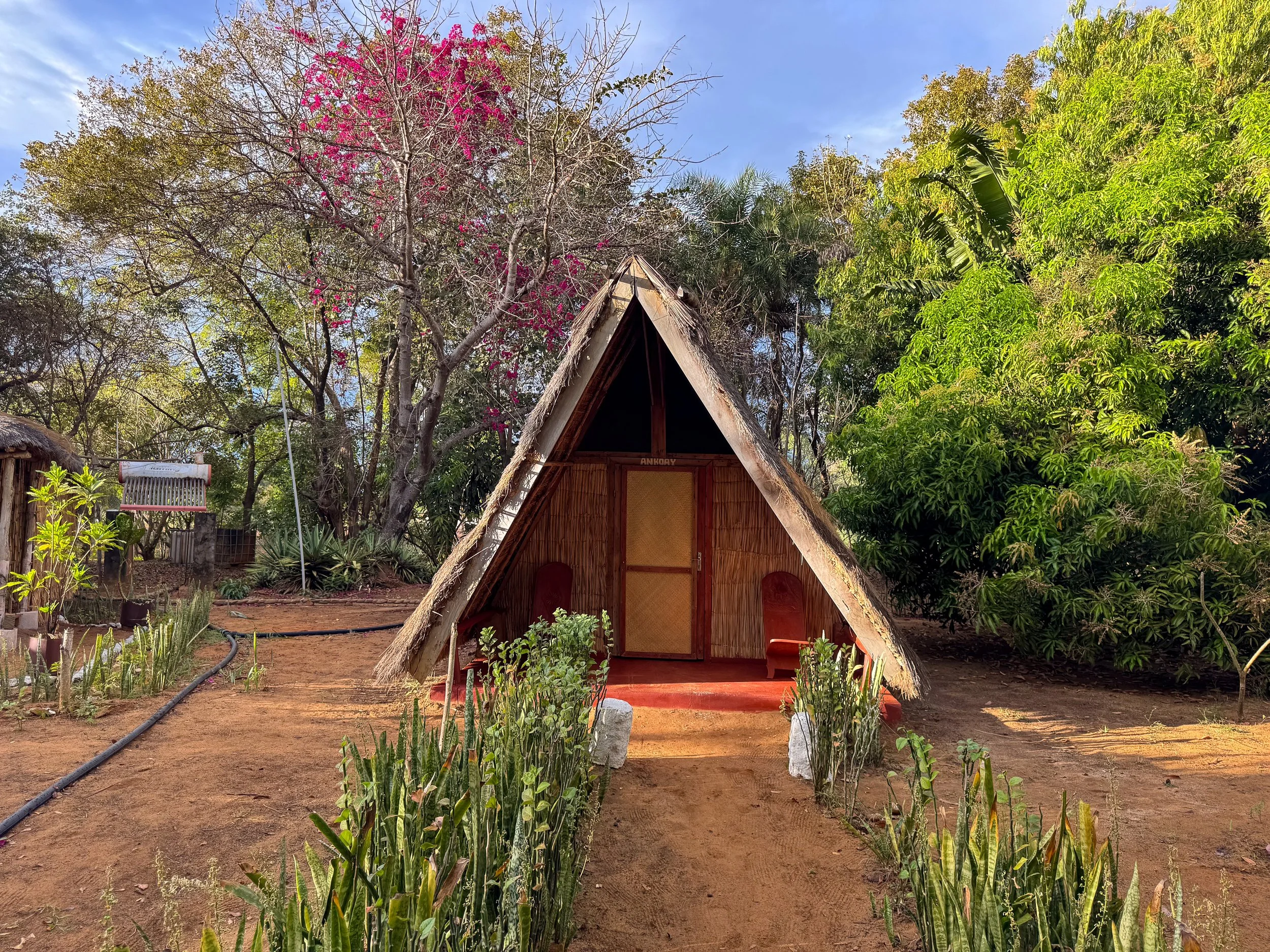
Tanankoay. An eco hotel and campground with a range of thatched cabins and campsites in Bekopaka near Tsingy National Park. We slept in a cozy A frame style cabin. The hotel has a small restaurant with a range of Malagasy and French dishes. Try the ratatouille, spiced rice and Kabaro au Curry, a local dish made from coconut curry stewed beans.
Bekopaka Night Walk
Madagascar’s forests come to life with nocturnal animals as night falls across the landscape. Led by a guide from the Bekopaka Village, we explored the forested trails behind the Tsingy National Park office.
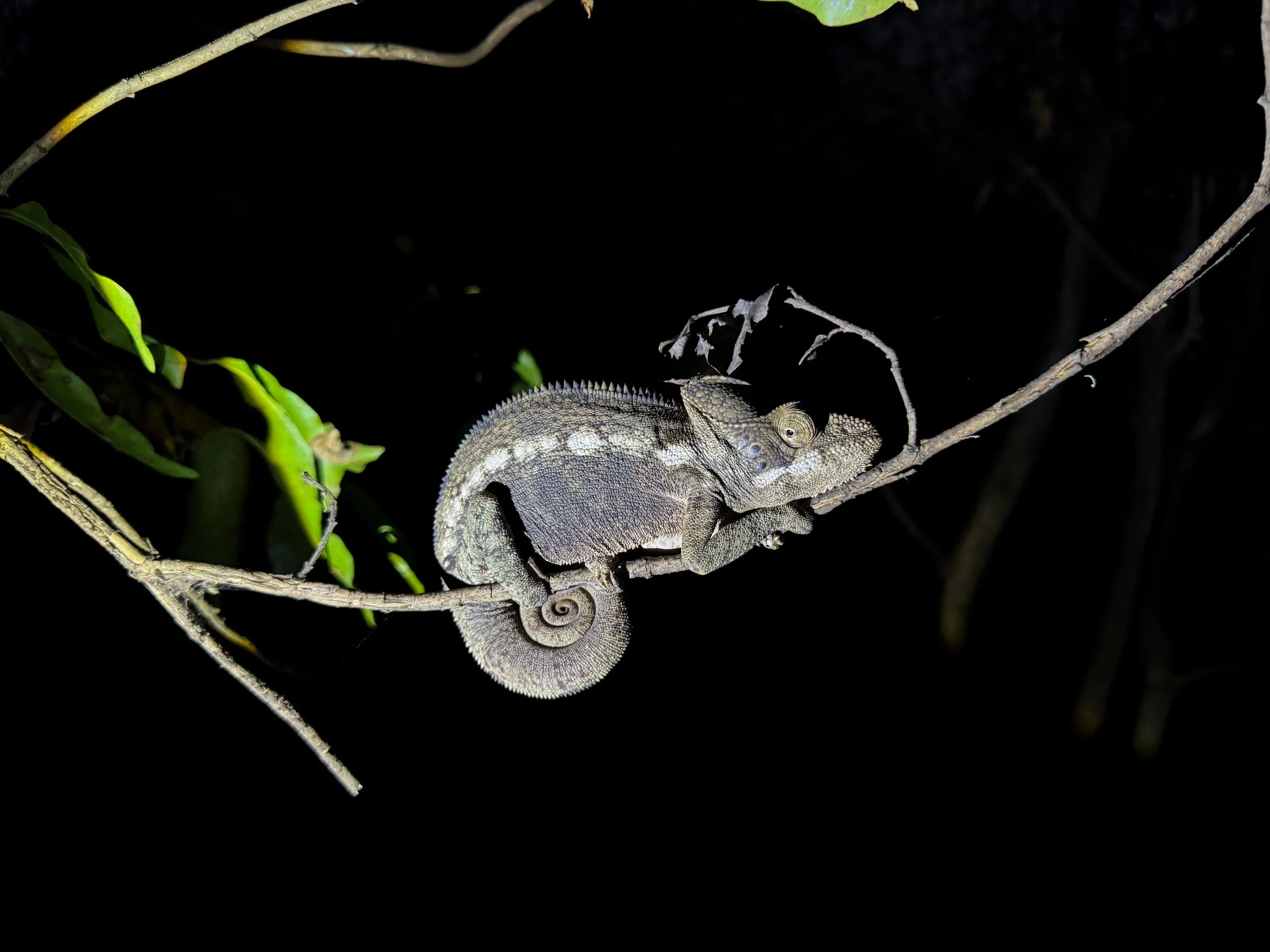
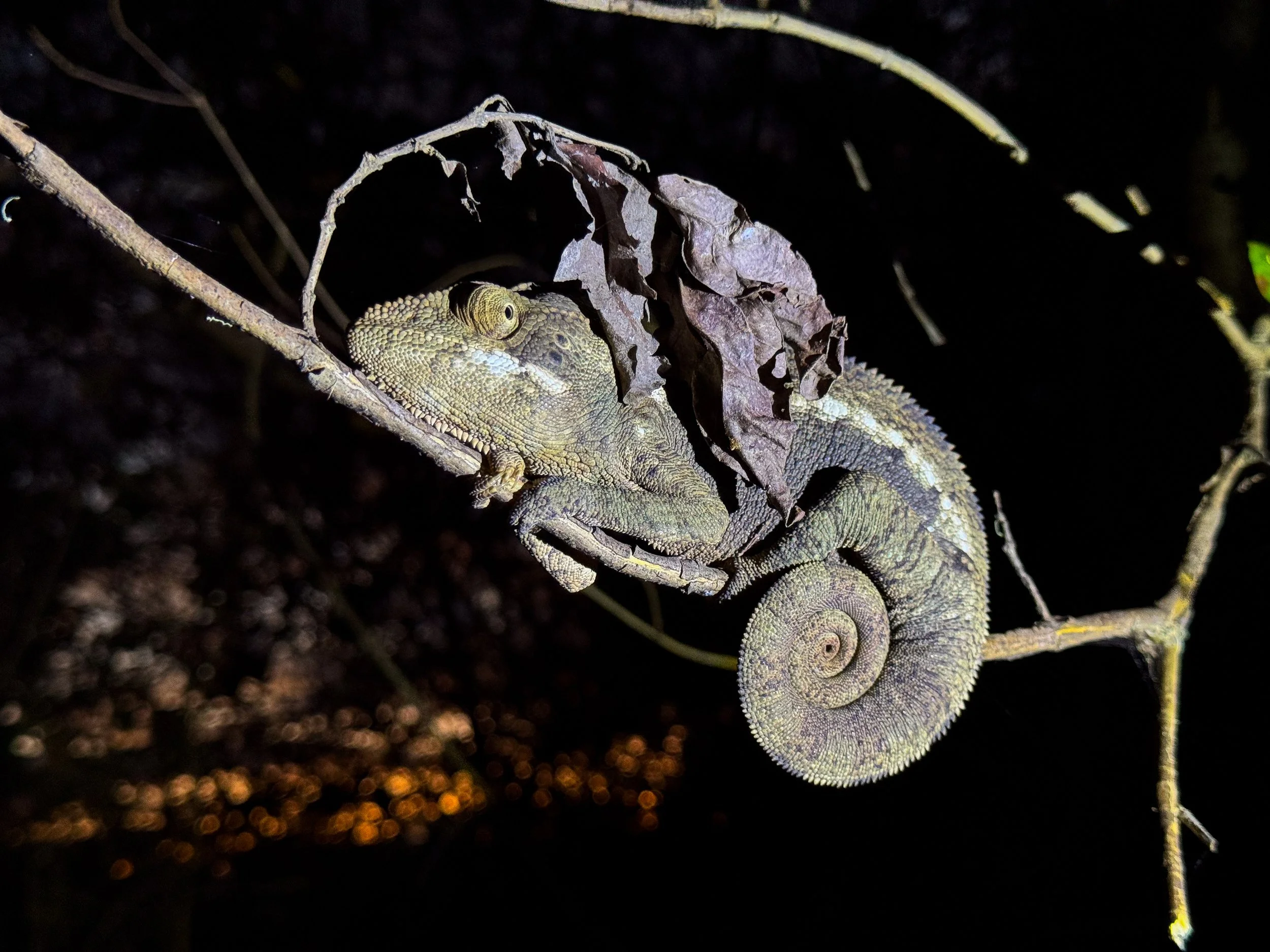
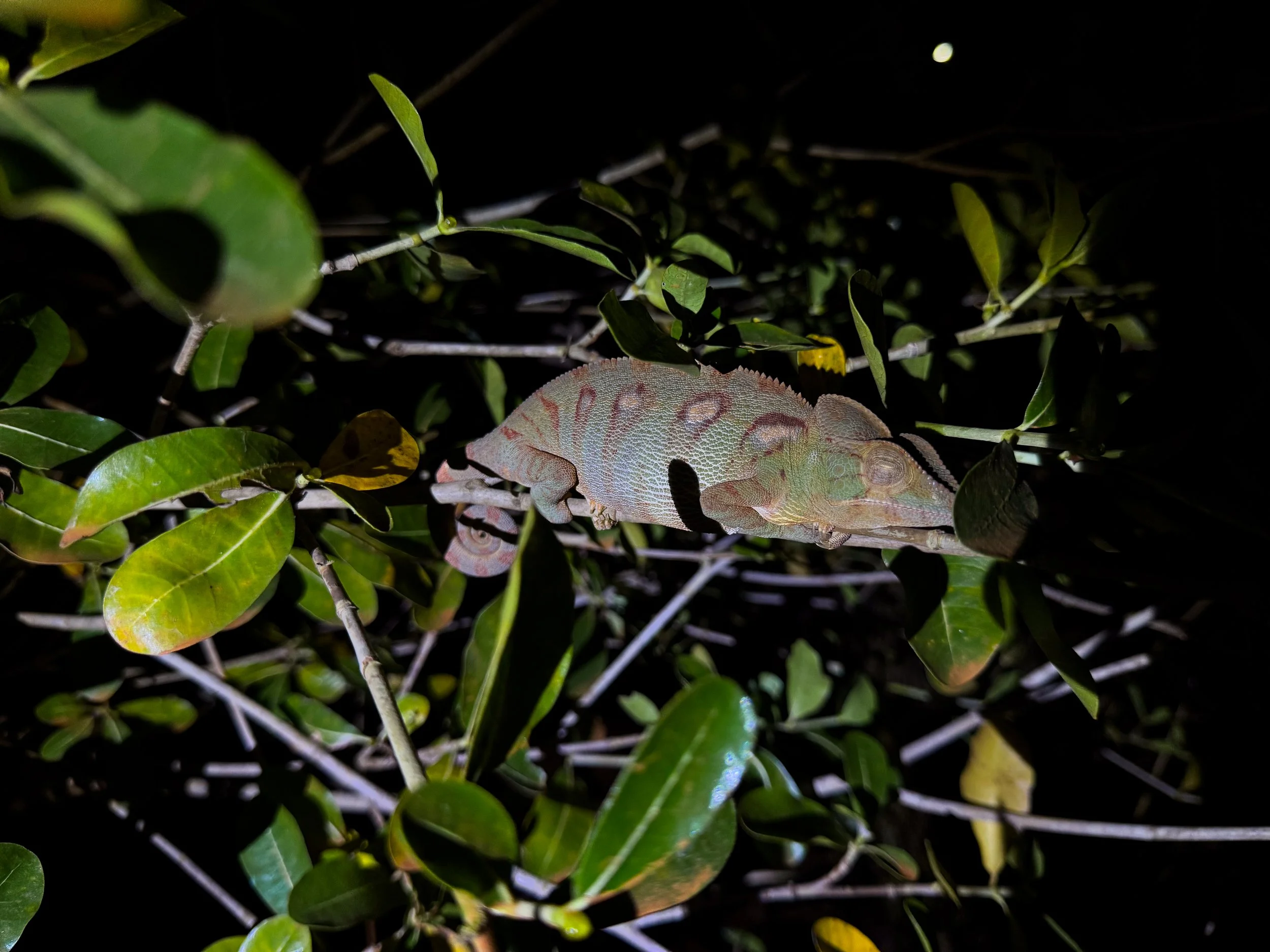
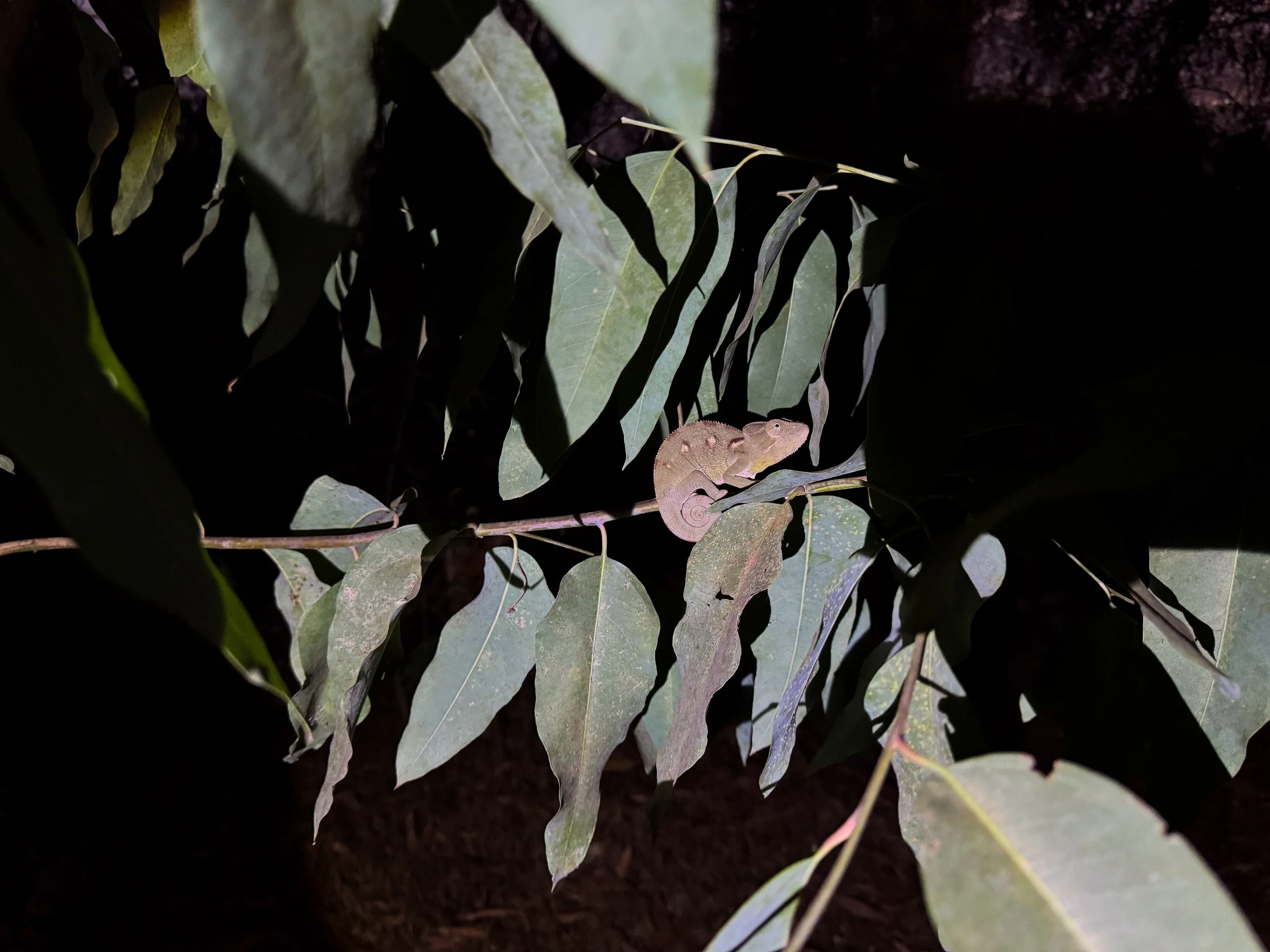
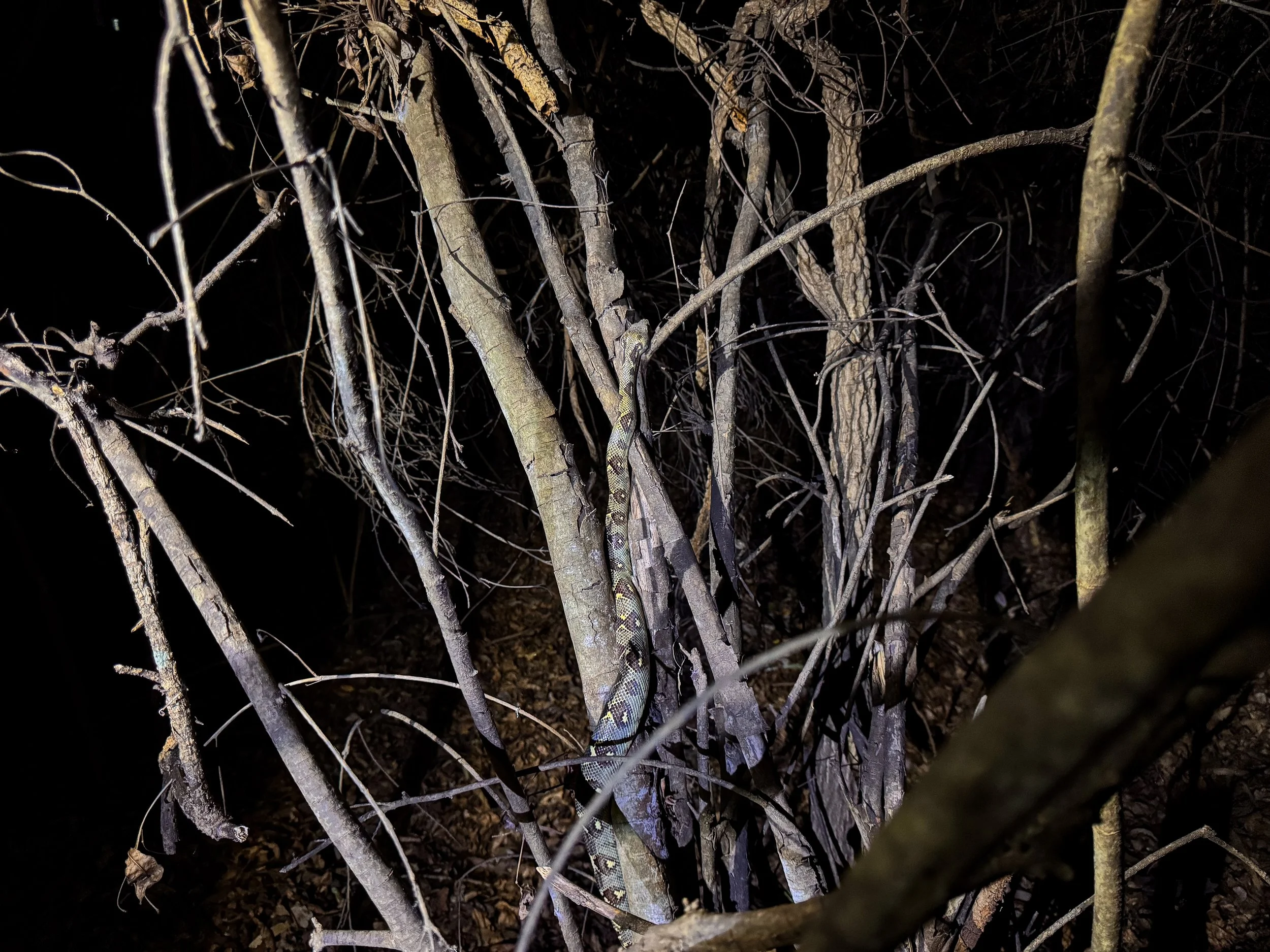
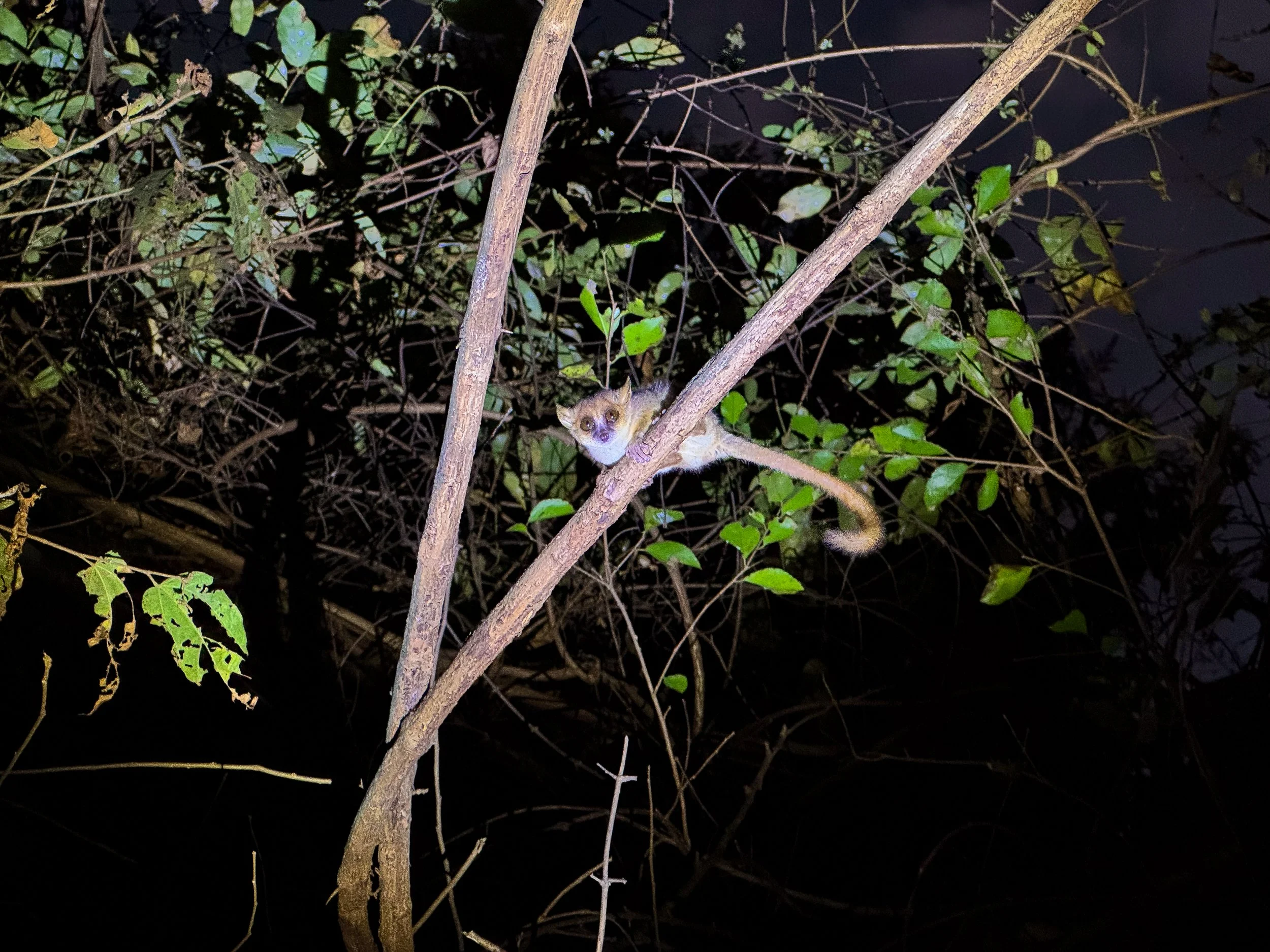
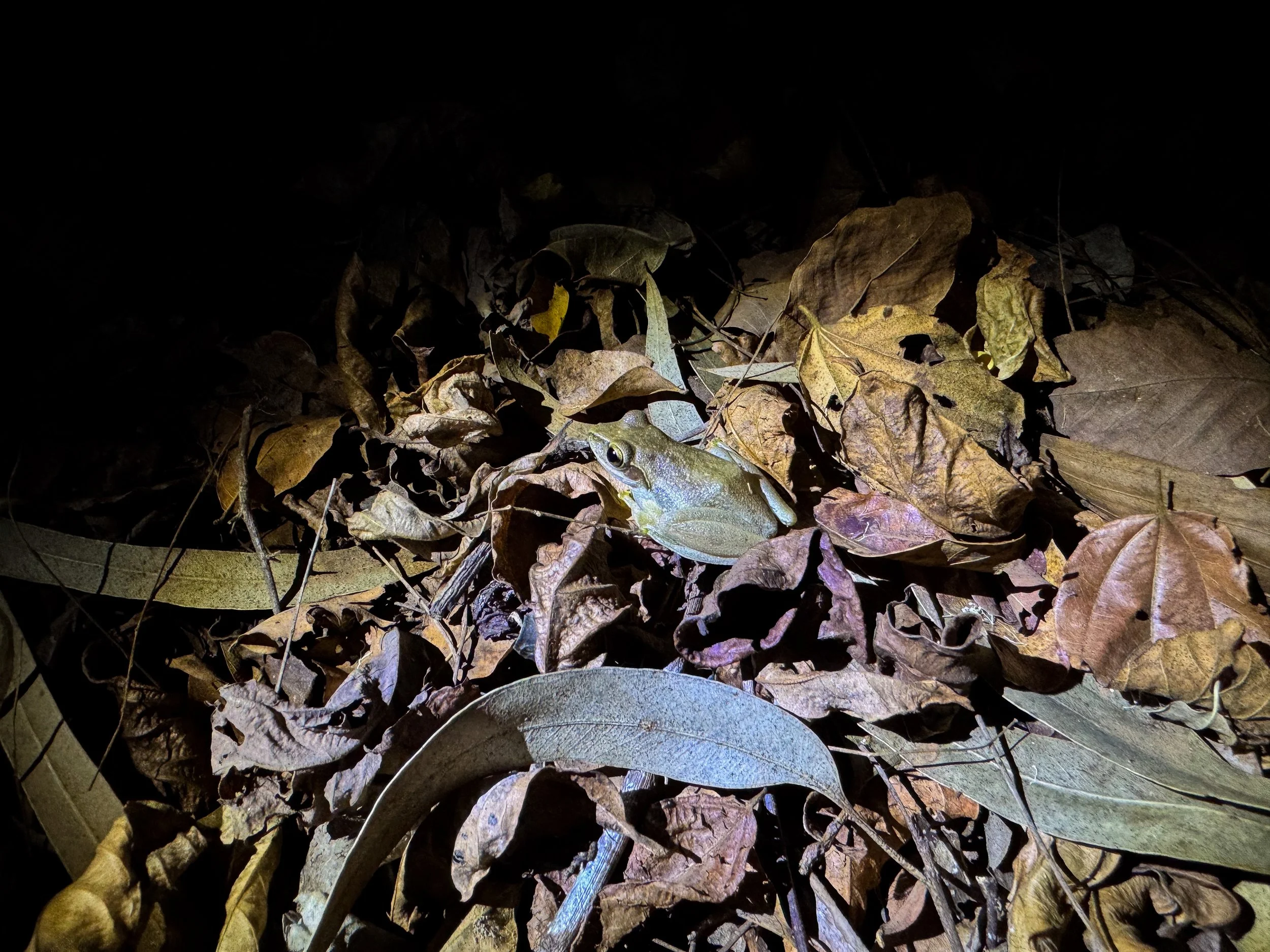
Nocturnal Animals. We immediately began spotting green and brown chameleons resting on tree branches and camouflaging themselves behind leaves. Their remarkable appearance is emphasized by their color changing skin, coiled tails and swiveling eyes. A pair of tiny mouse lemurs played in the dense thicket. One inspected us from a branch above our heads. Its big eyes and little body make it one of nature’s most adorable creatures. A beautifully patterned tree boa slithered up the trunk of a tree looking for its next meal. A small frog glistened on the dry leaves of the forest floor.
Good to Know. Visit the Tsingy National Park office in Bekopaka to hire a guide. The night walk lasts an hour and costs less than $10 USD per person.
Manambolo River Gorge
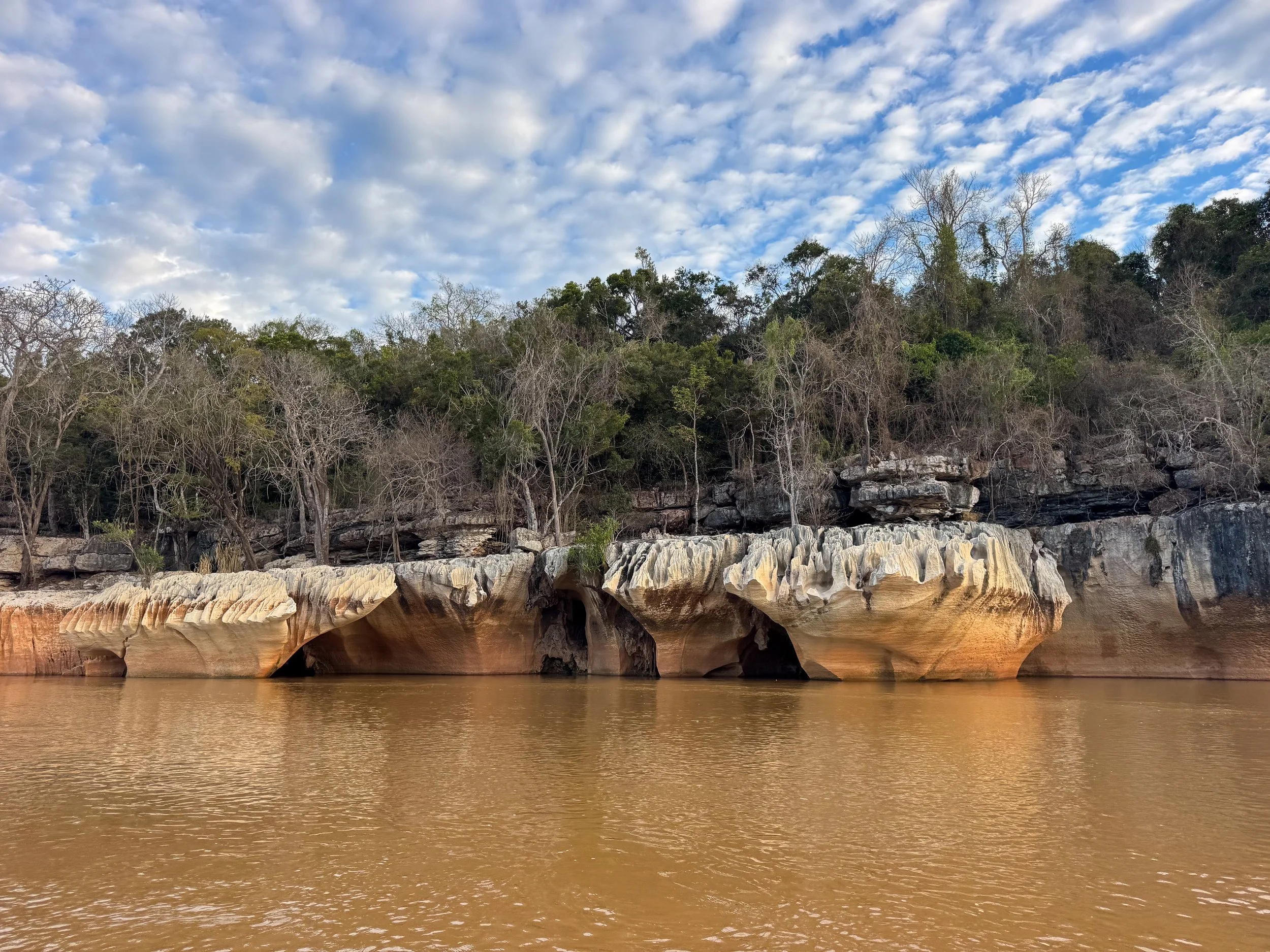
The Manambolo River Gorge is a limestone canyon carved by the Manambolo River near Tsingy National Park. Villagers from Bekopaka navigate its waters on wooden dugout canoes as a means of fishing, transporting goods and tourism.
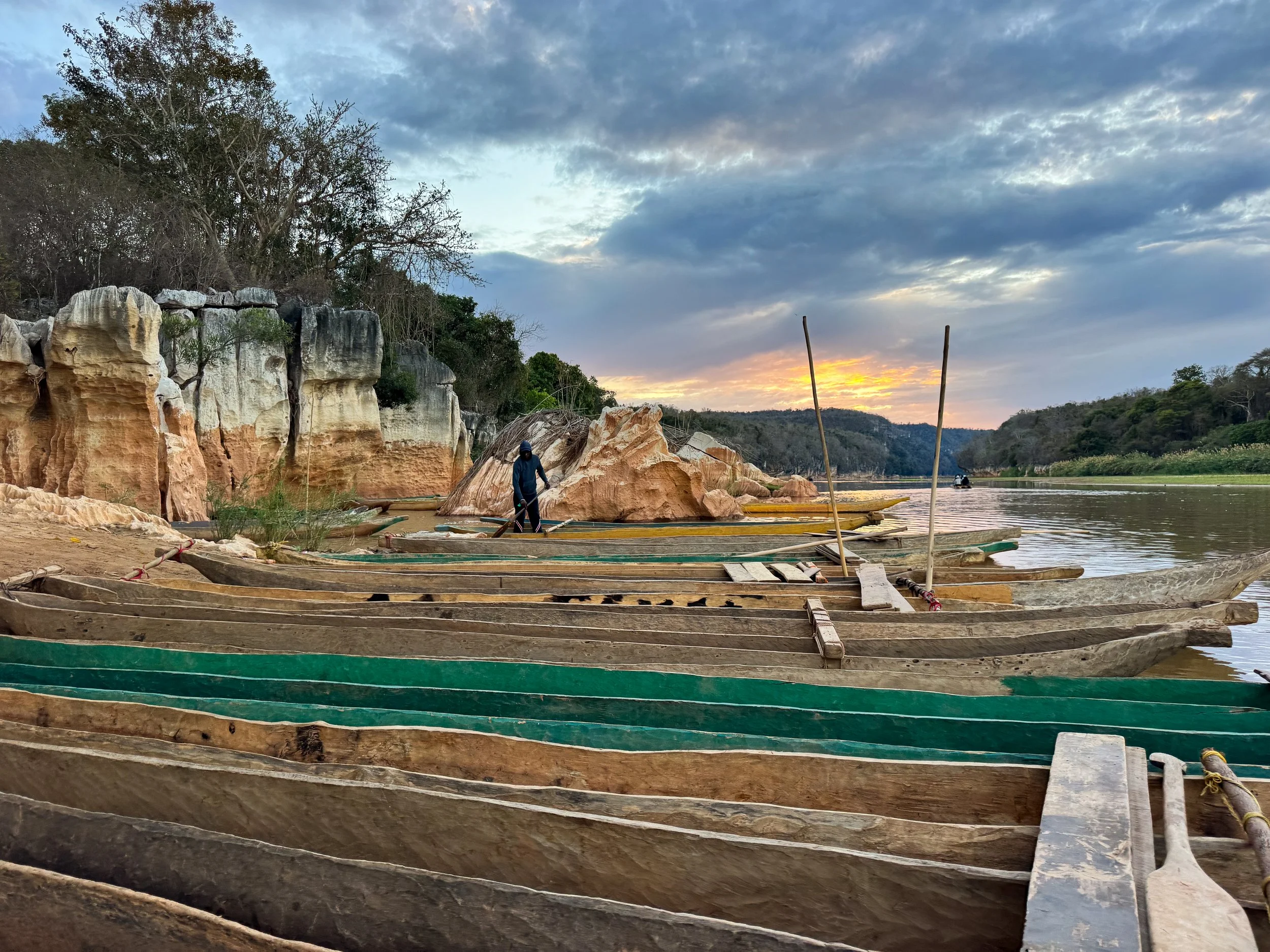
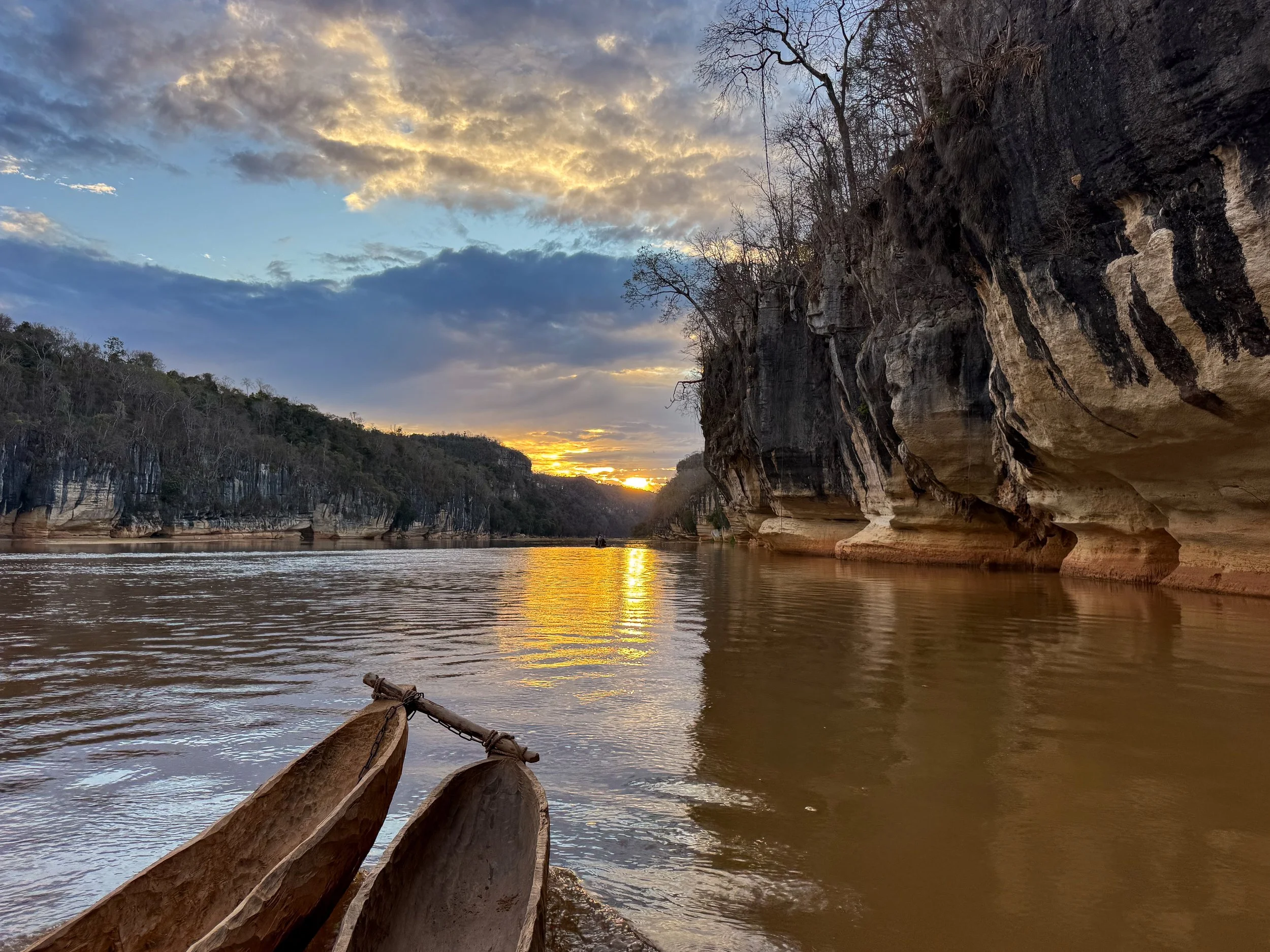
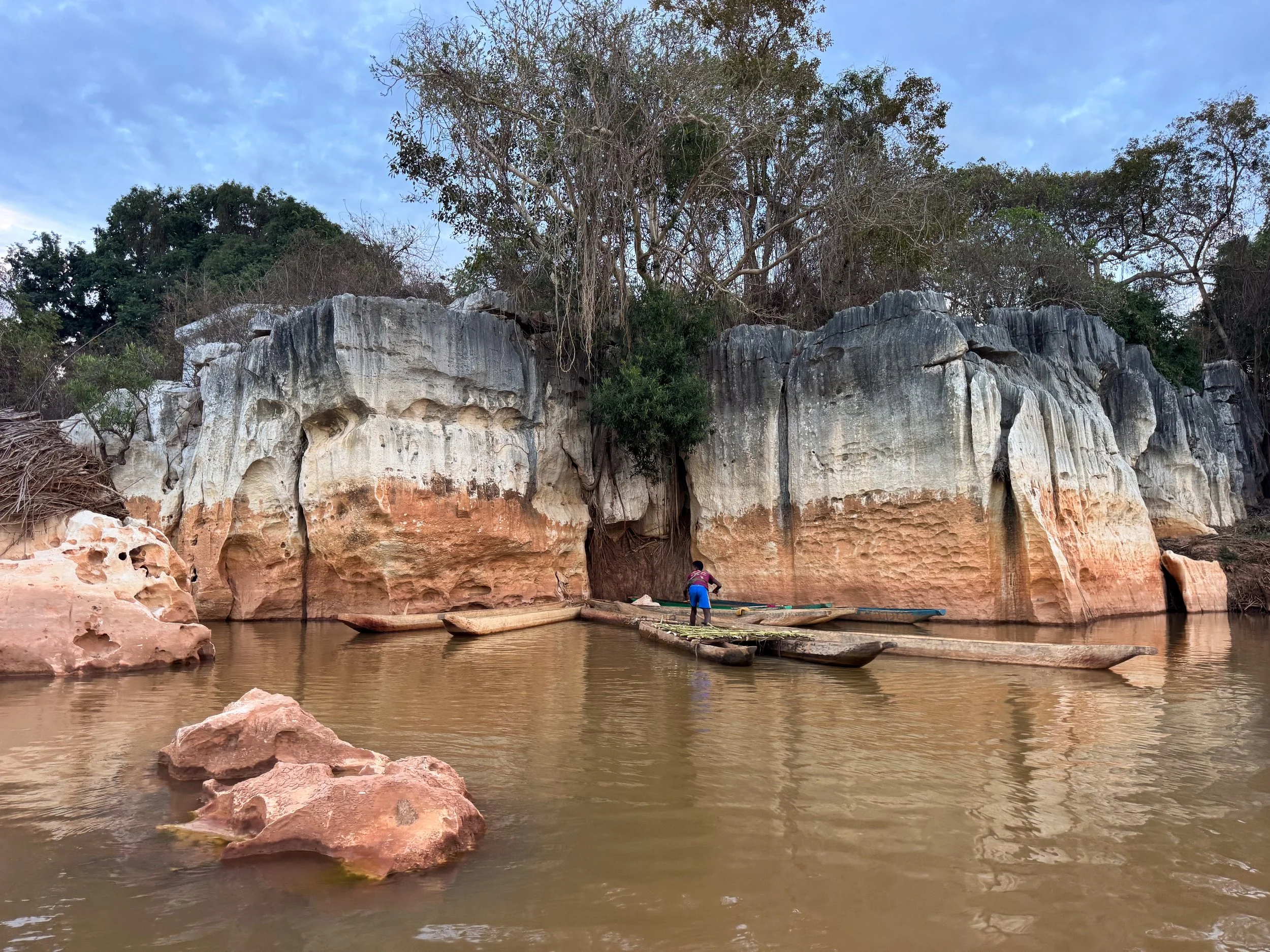
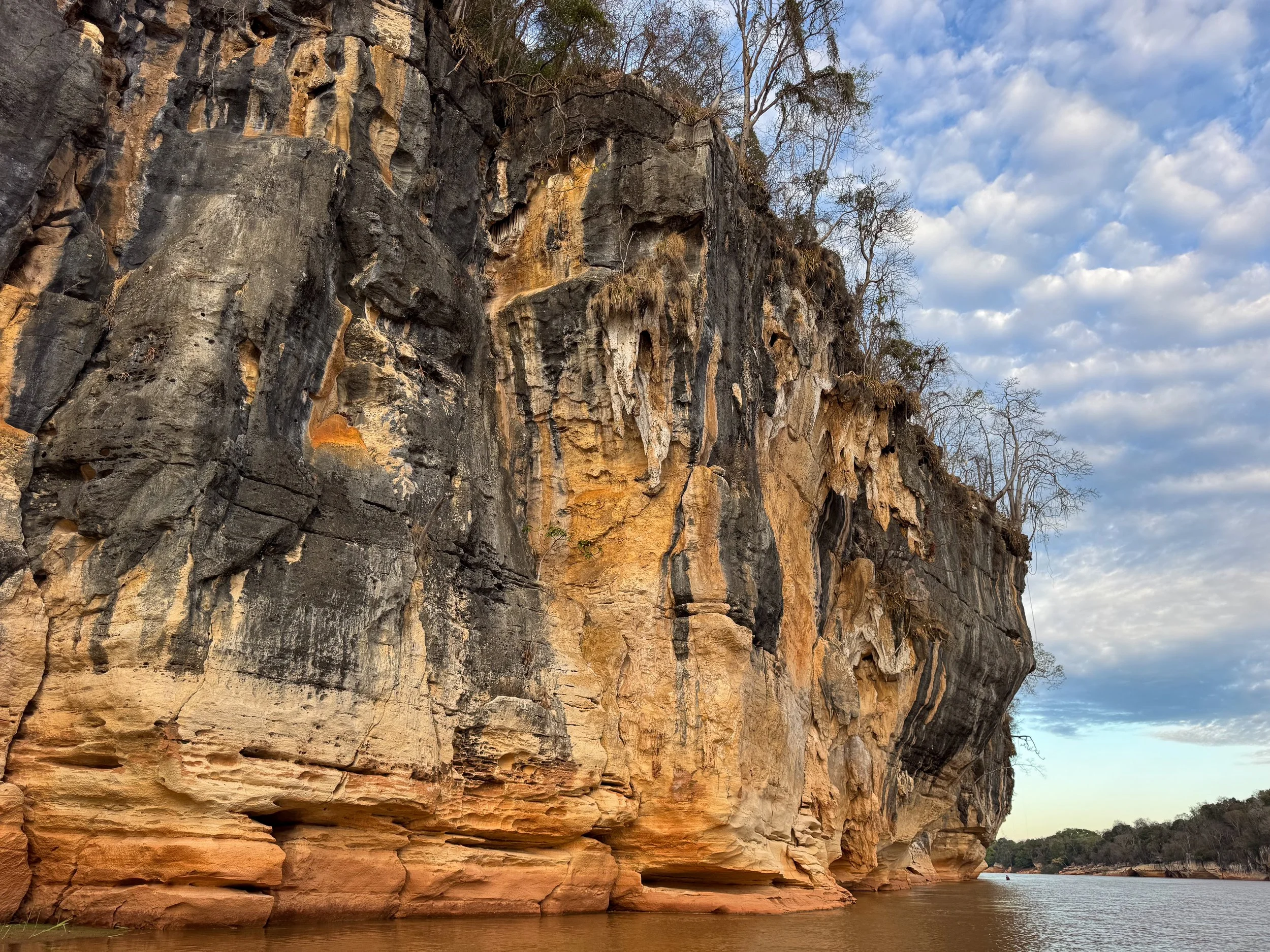
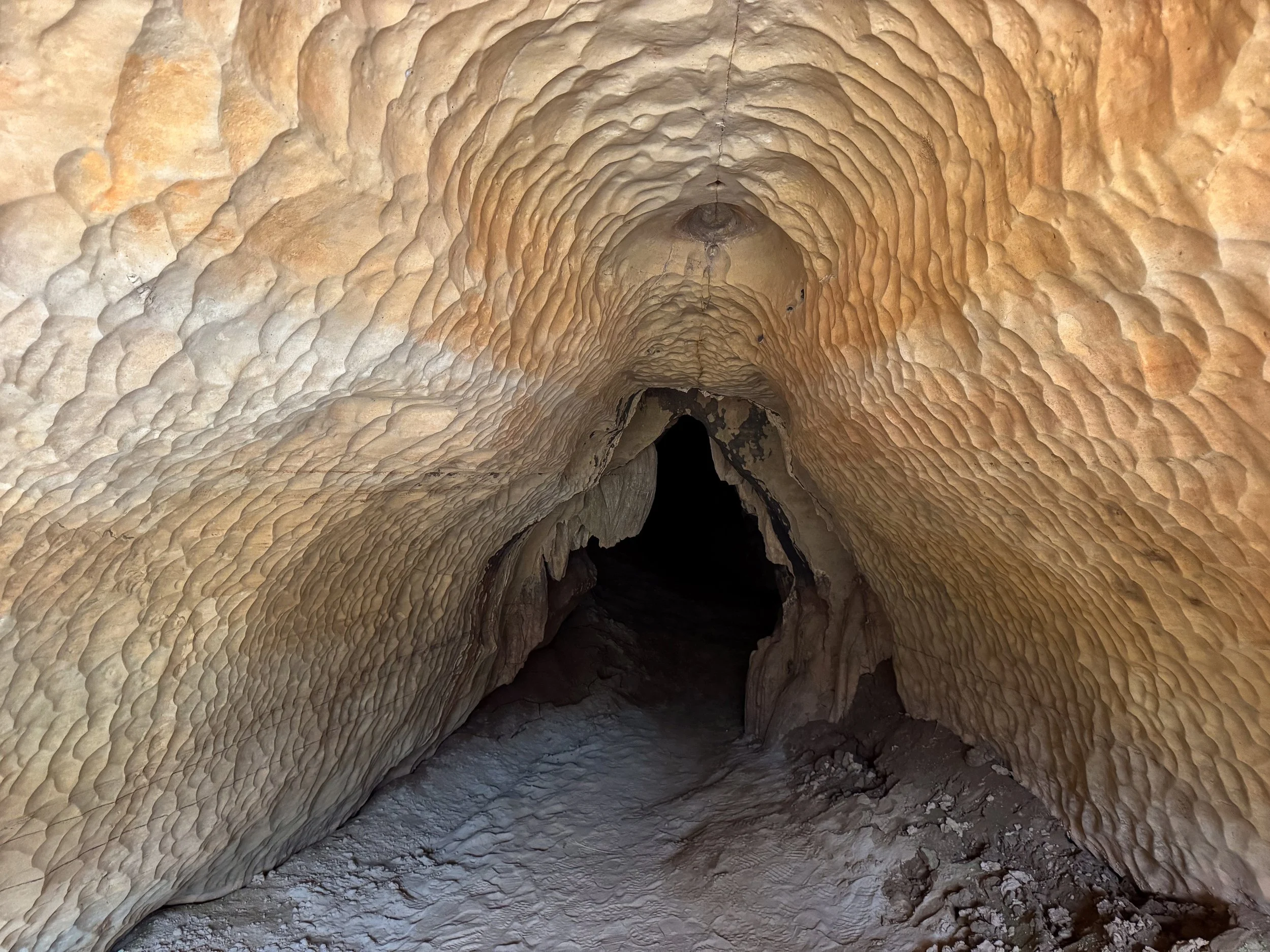
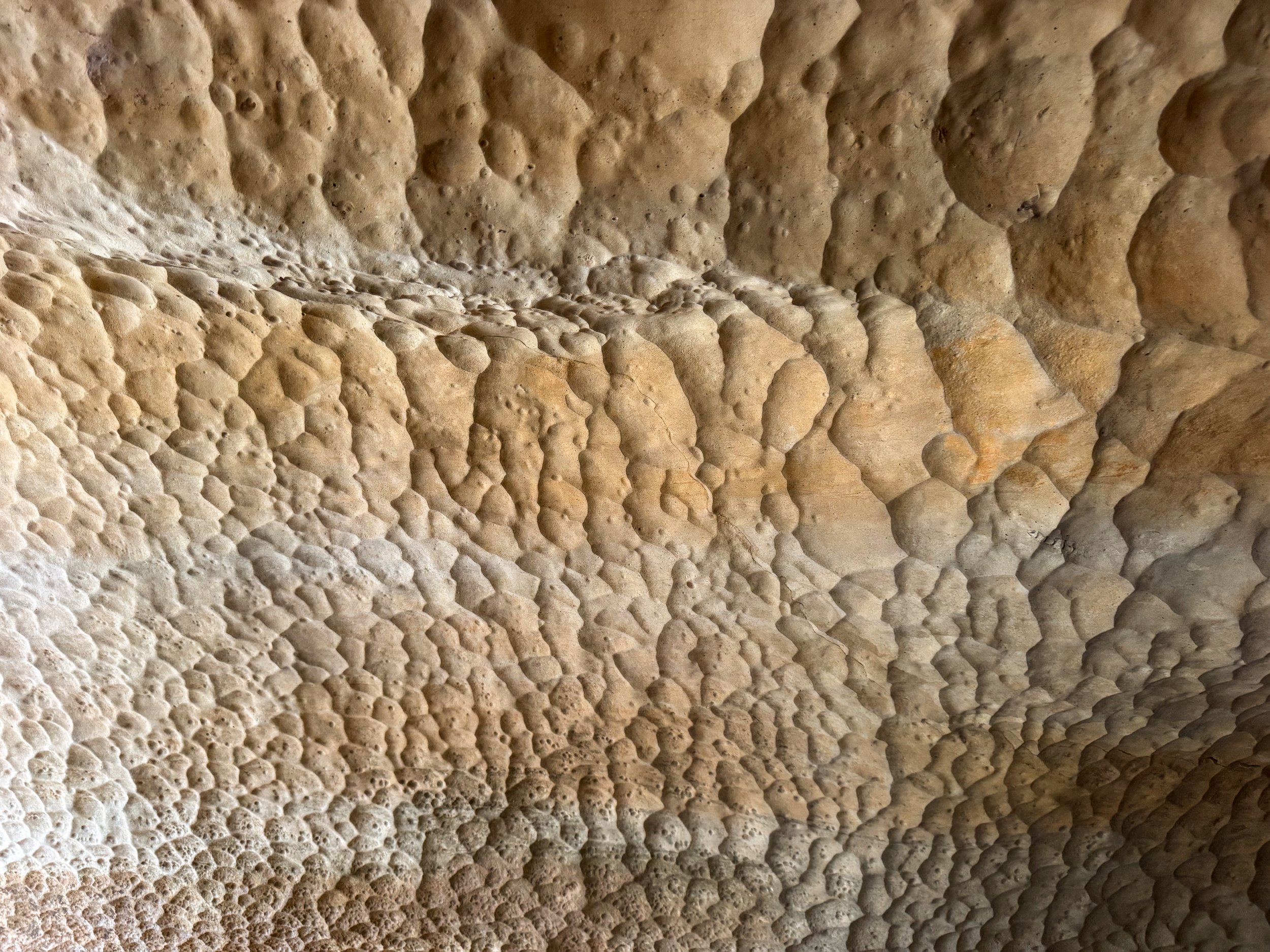
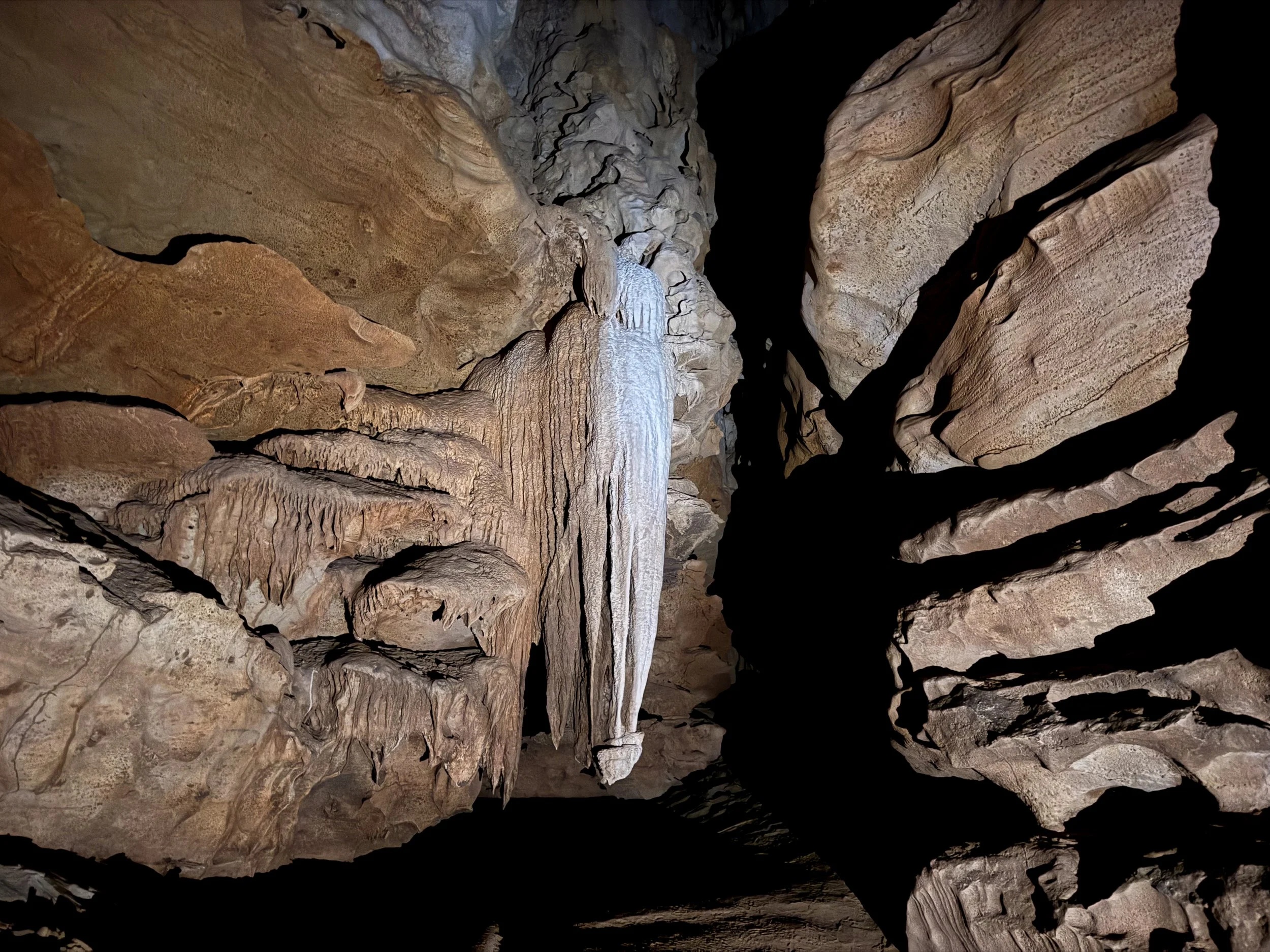
Dugout Canoeing. A local boatsman paddled us upstream on a wooden dugout canoe in the early morning. The sun rose above a bend in the river canyon, illuminating the picturesque landscape. The chocolaty brown waters paint the limestone cliffs in warm shades of orange and brown. Erosion carves small caves and crevices into the canyon walls. We walked through a rippled cave entrance and into its dark inner chamber. Our lights revealed crystalline stalactites, jagged rock formations and tree roots from the forest above.
Good to Know. Like Tsingy National Park, the Manambolo River Gorge is only accessible during the dry season between June and November.
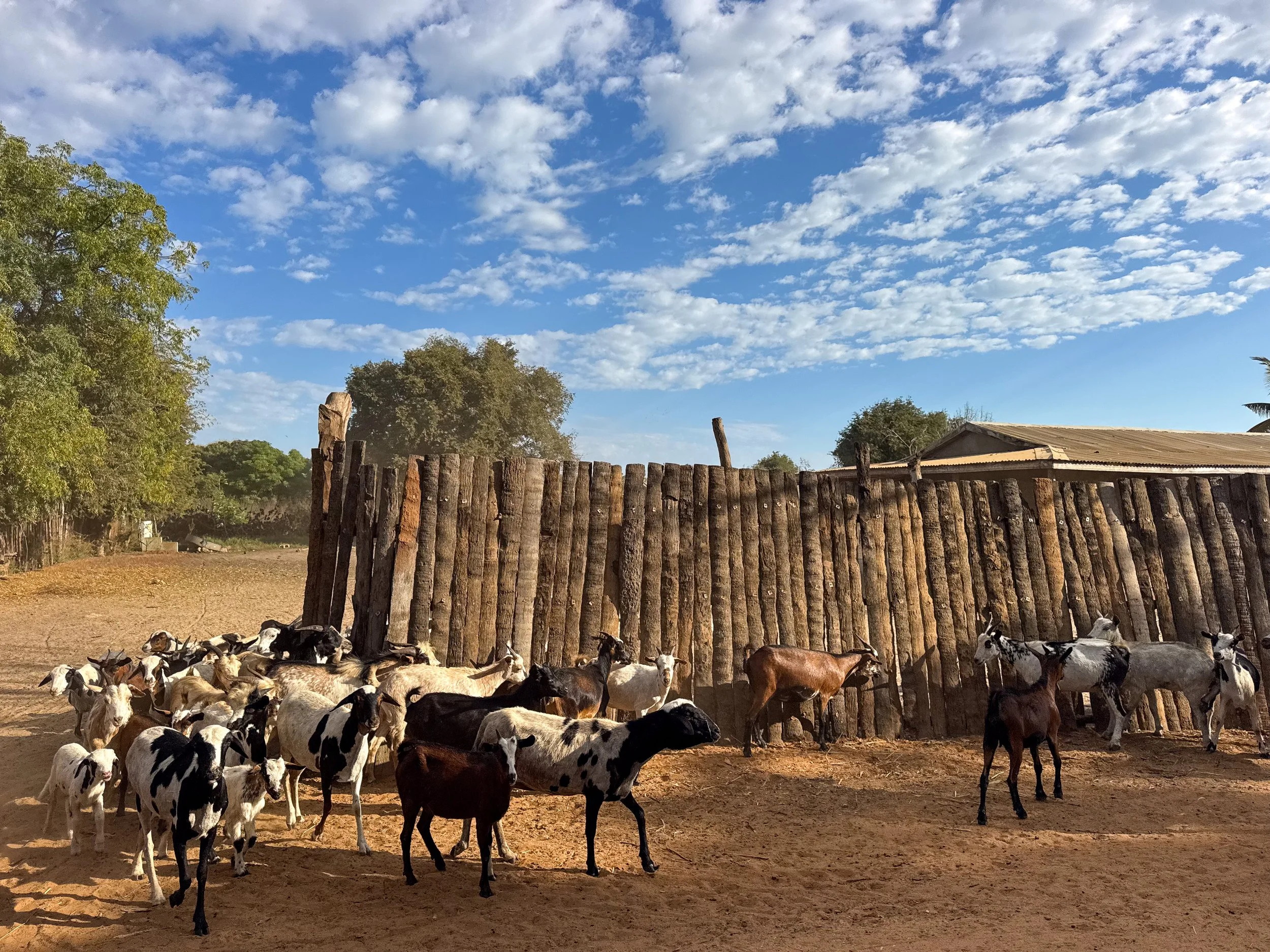
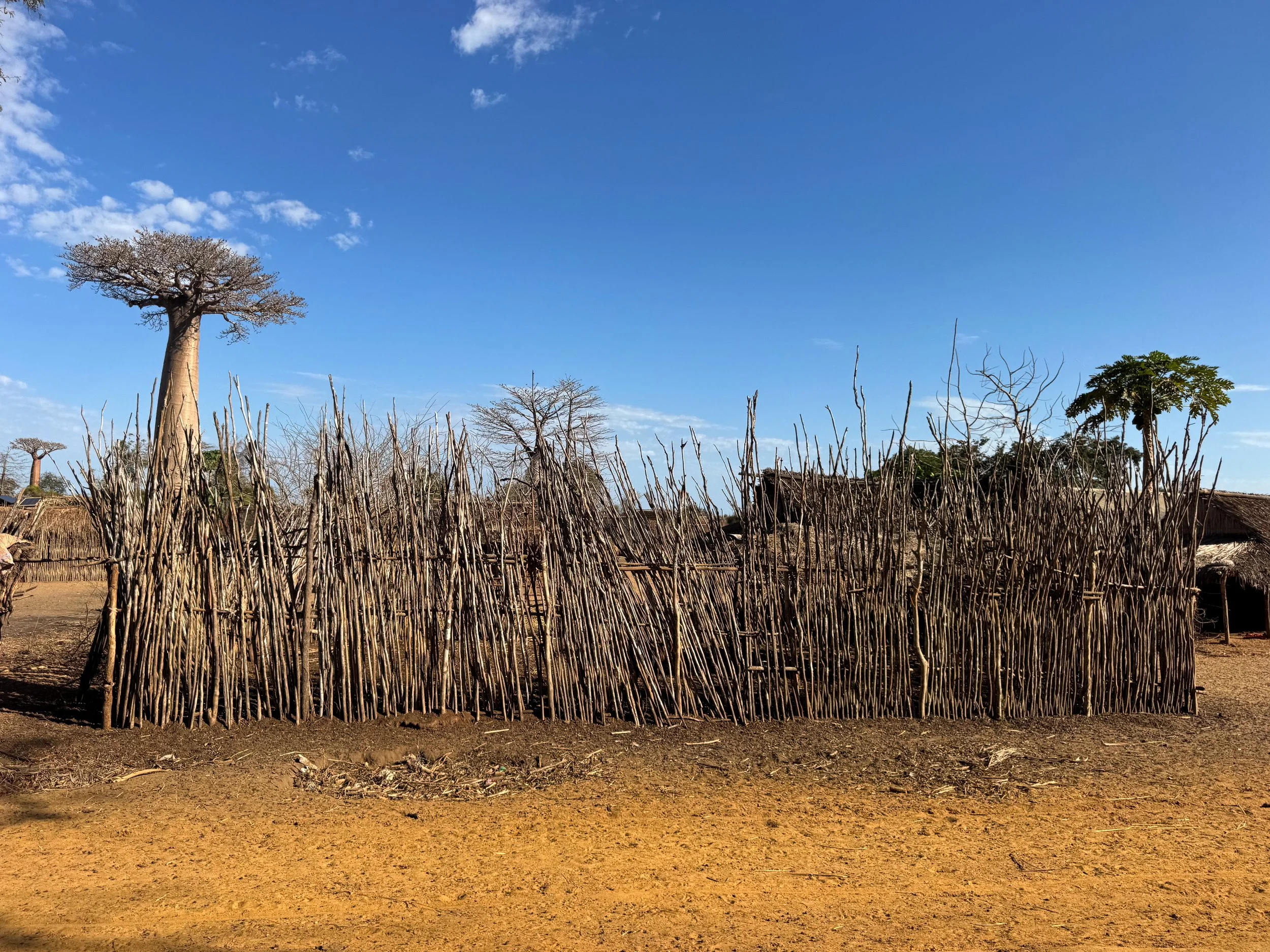
Rural Madagascar
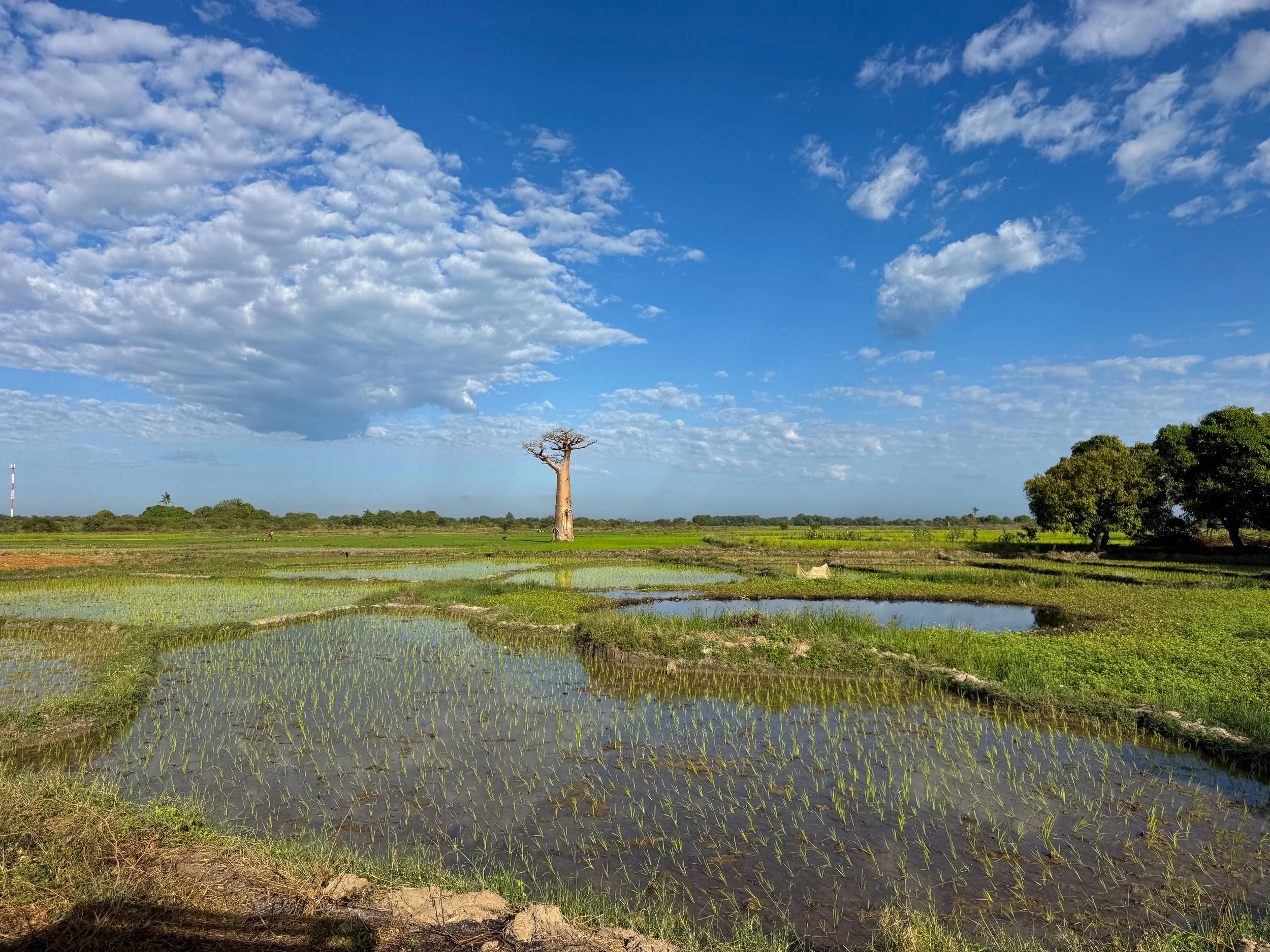
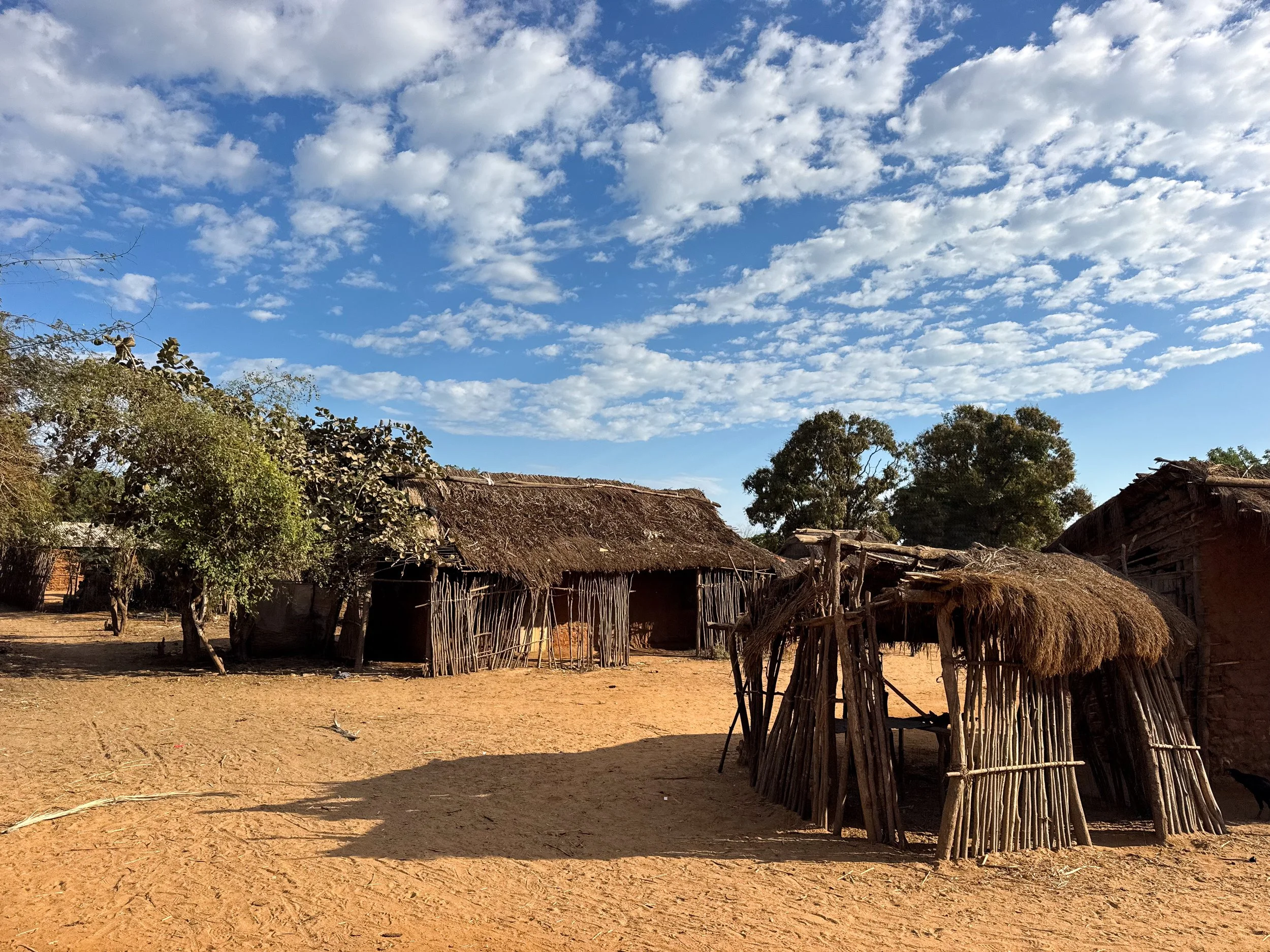
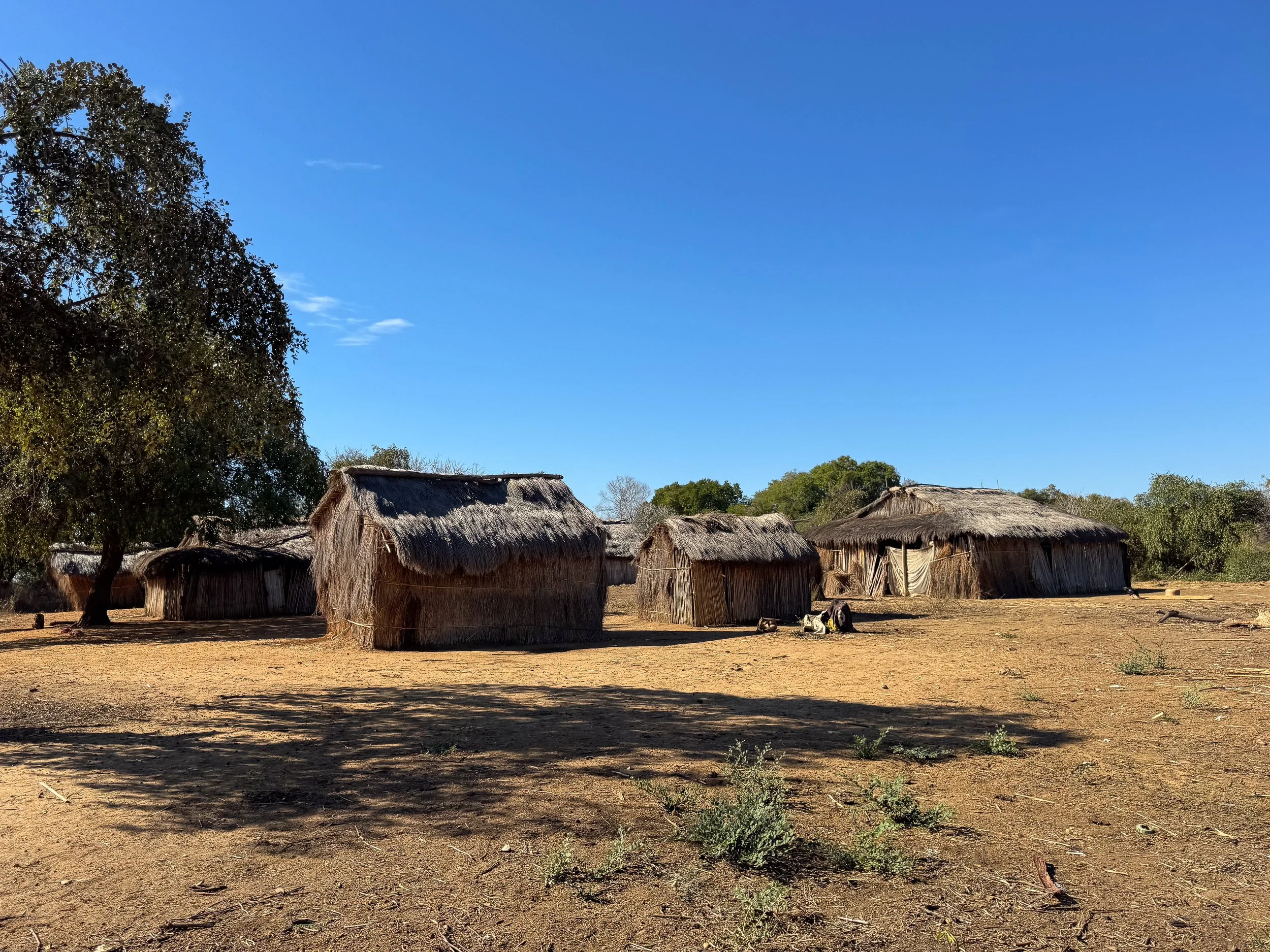
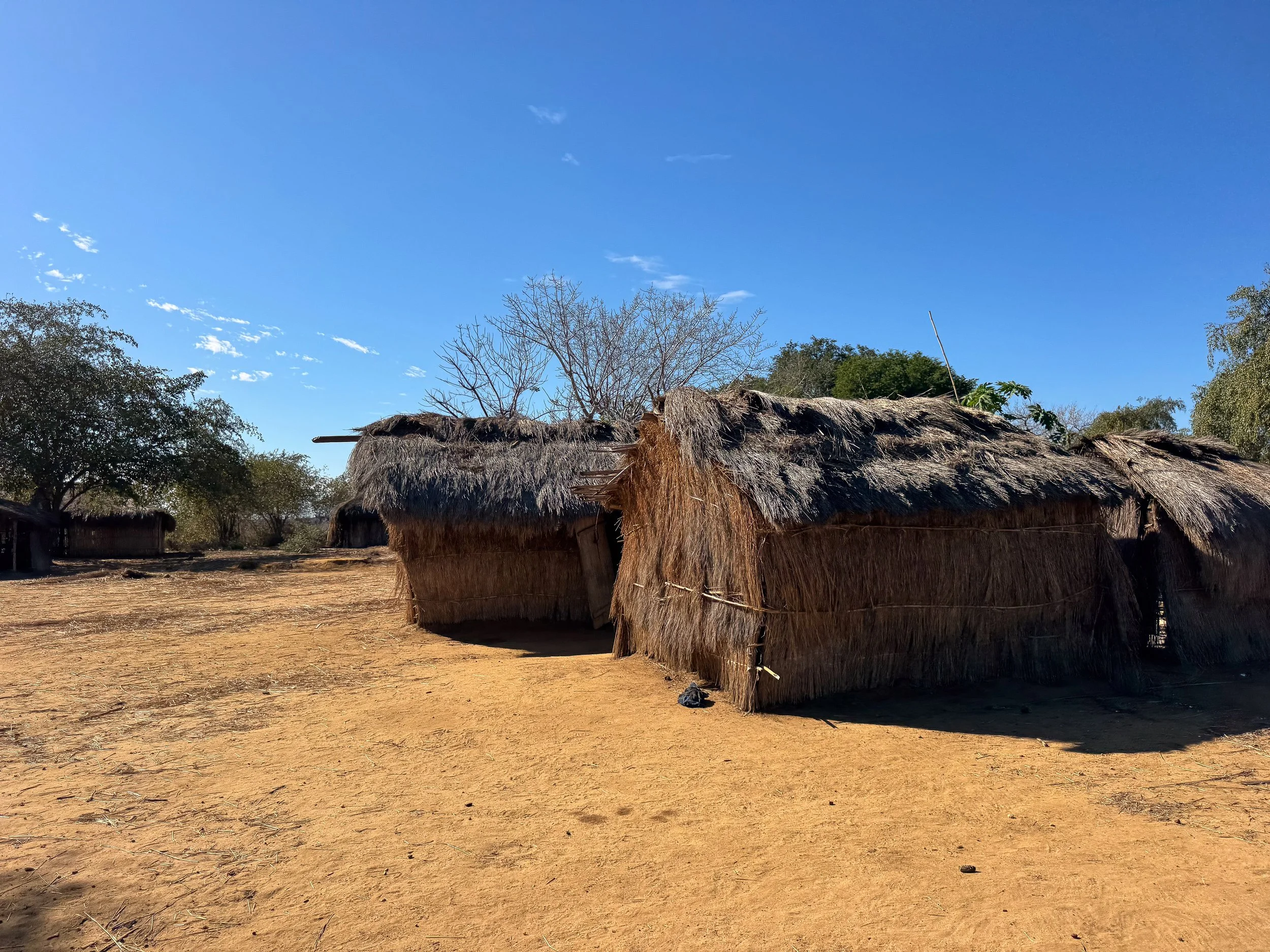
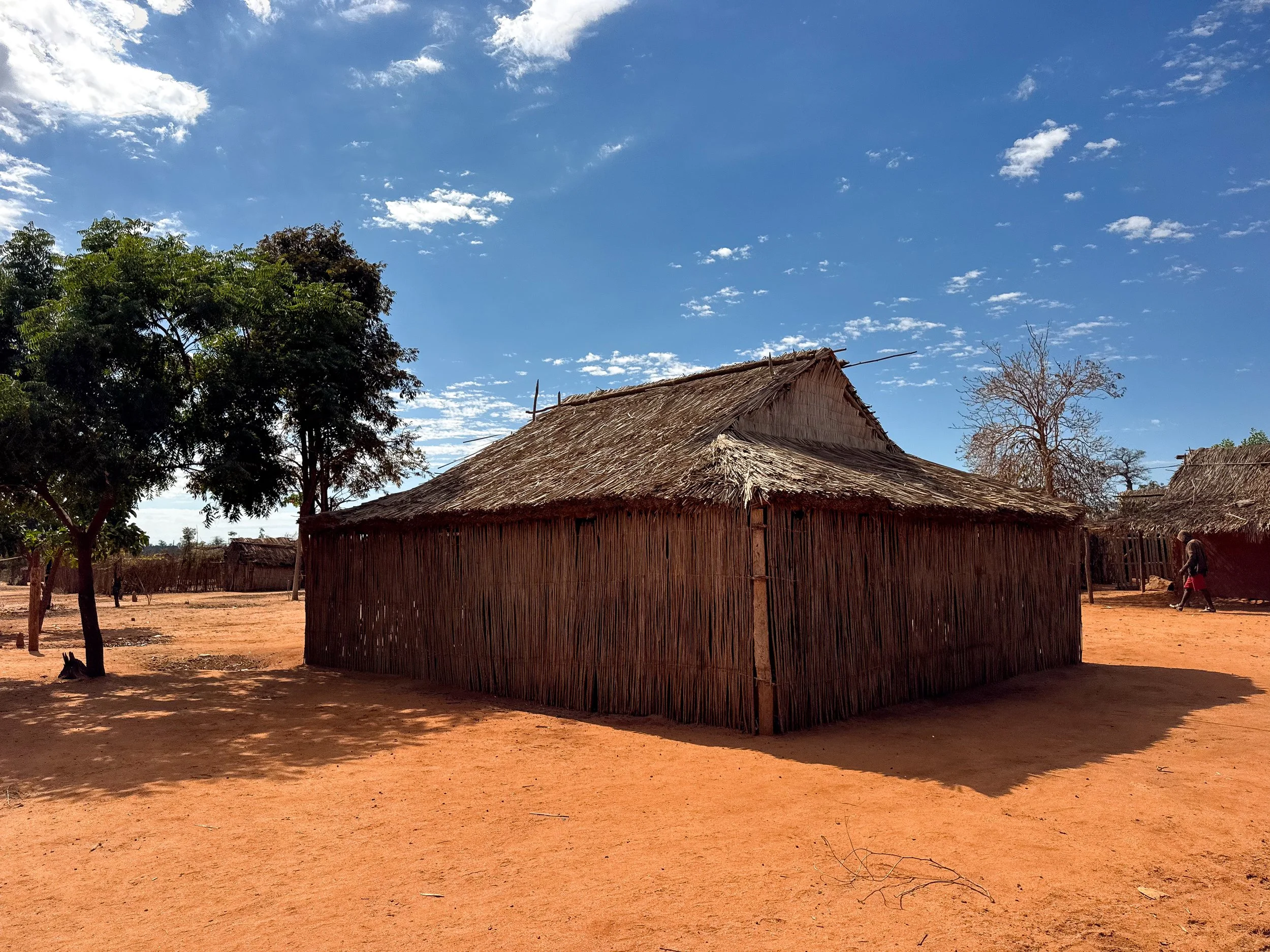
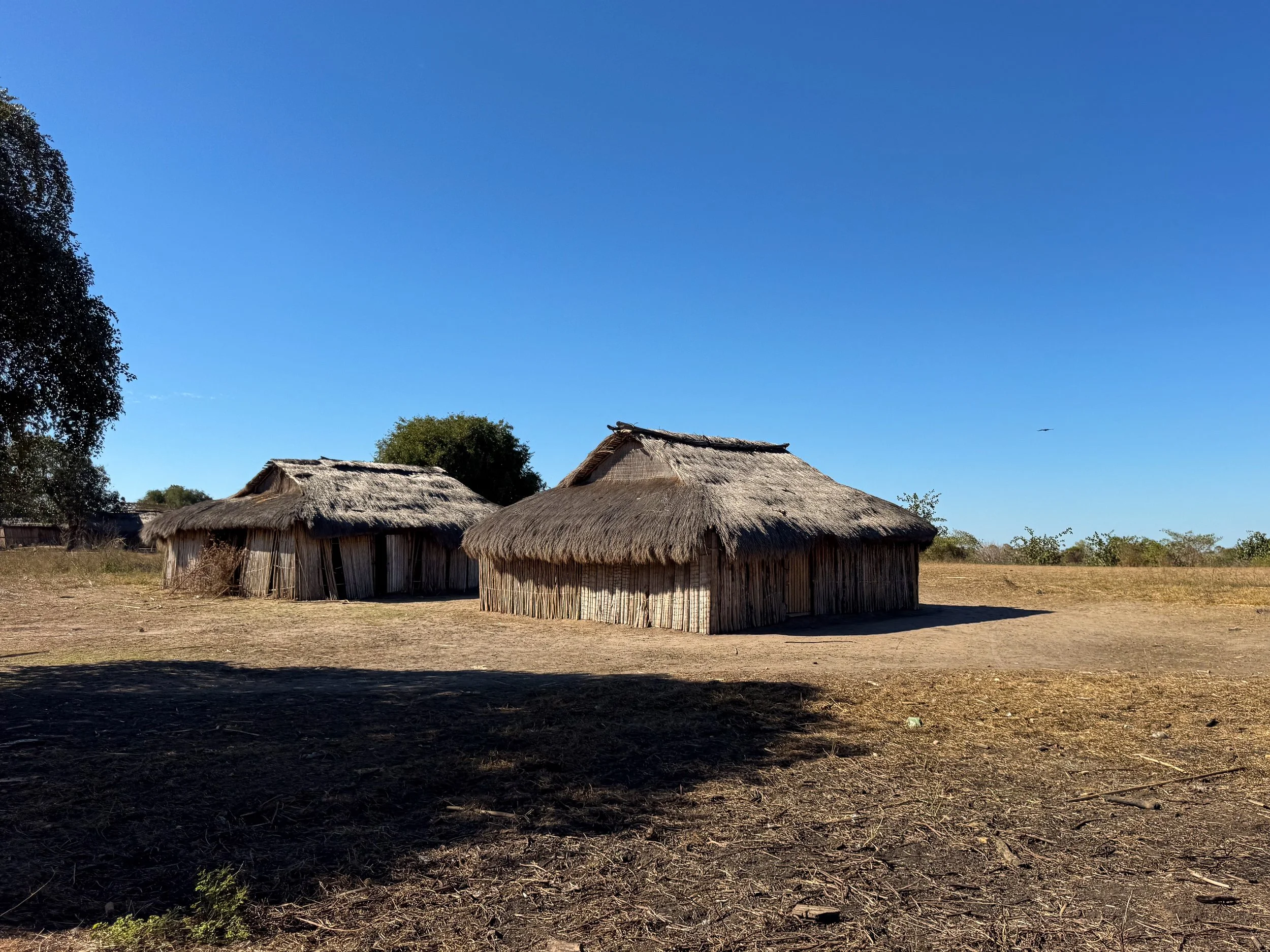
The rural landscape of Madagascar is defined by its remote villages, vast farmland and towering baobab trees. Pitted dirt roads lead across many parts of the country. Baobab trees grow from between crops and rice paddies. Small villages are comprised of straw, wooden and adobe huts. Women wear vibrant patterned outfits and mud masks as a sign of beauty and for sun protection. Men herd groups of goats and drive carts led by Zebu, the local cattle. Children wave and shout out bonjour and salama from roadsides.
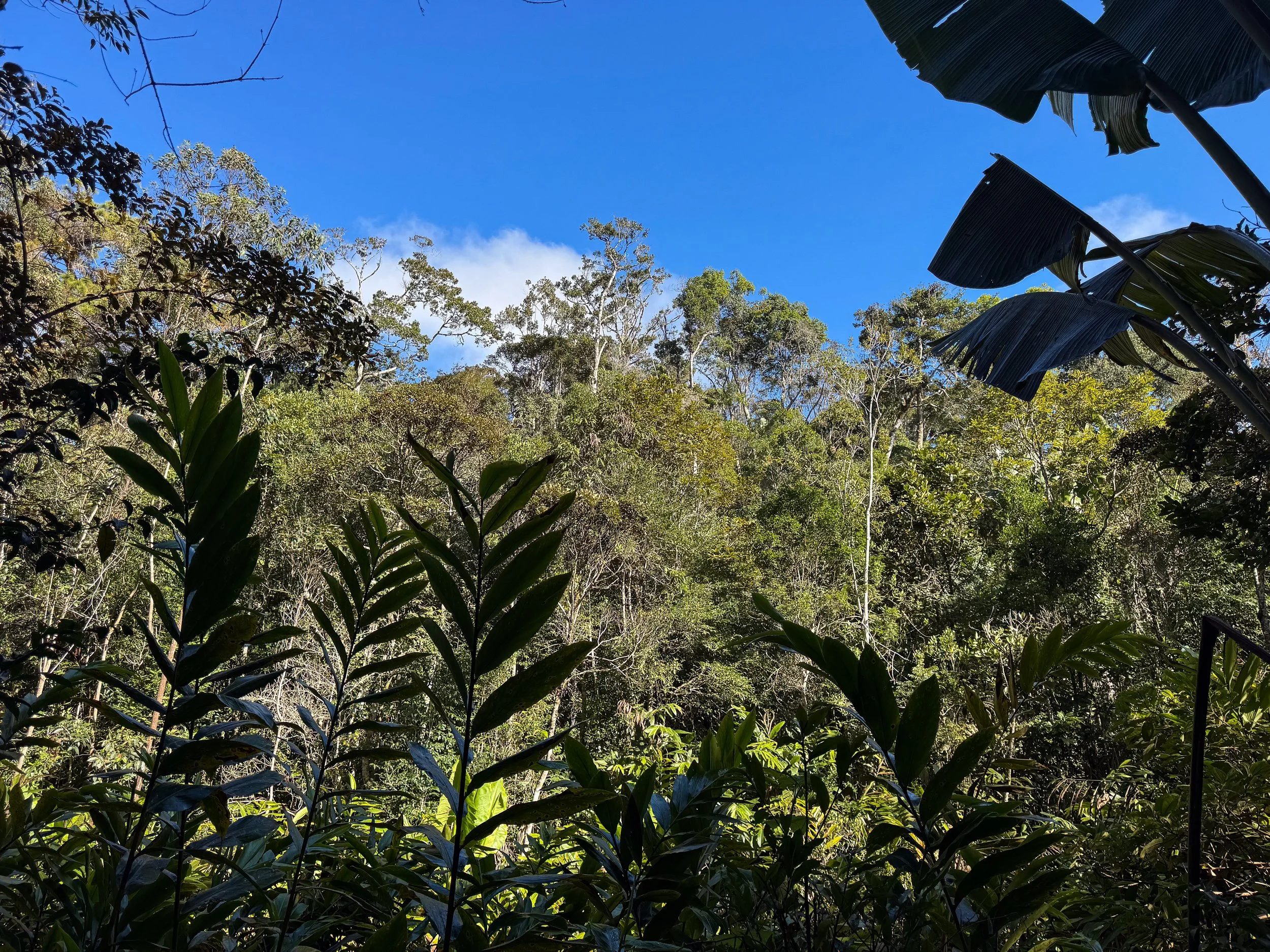
Andasibe
Andasibe is a rural town nestled in the forested hills of Eastern Madagascar. It’s an entry point to multiple nature reserves and national parks including the Mitsinjo Reserve, Analamazoatra Reserve and Mantadia National Park. The town is home to several eco-hotels, roadside restaurants and farm stands.
Mitsinjo Reserve
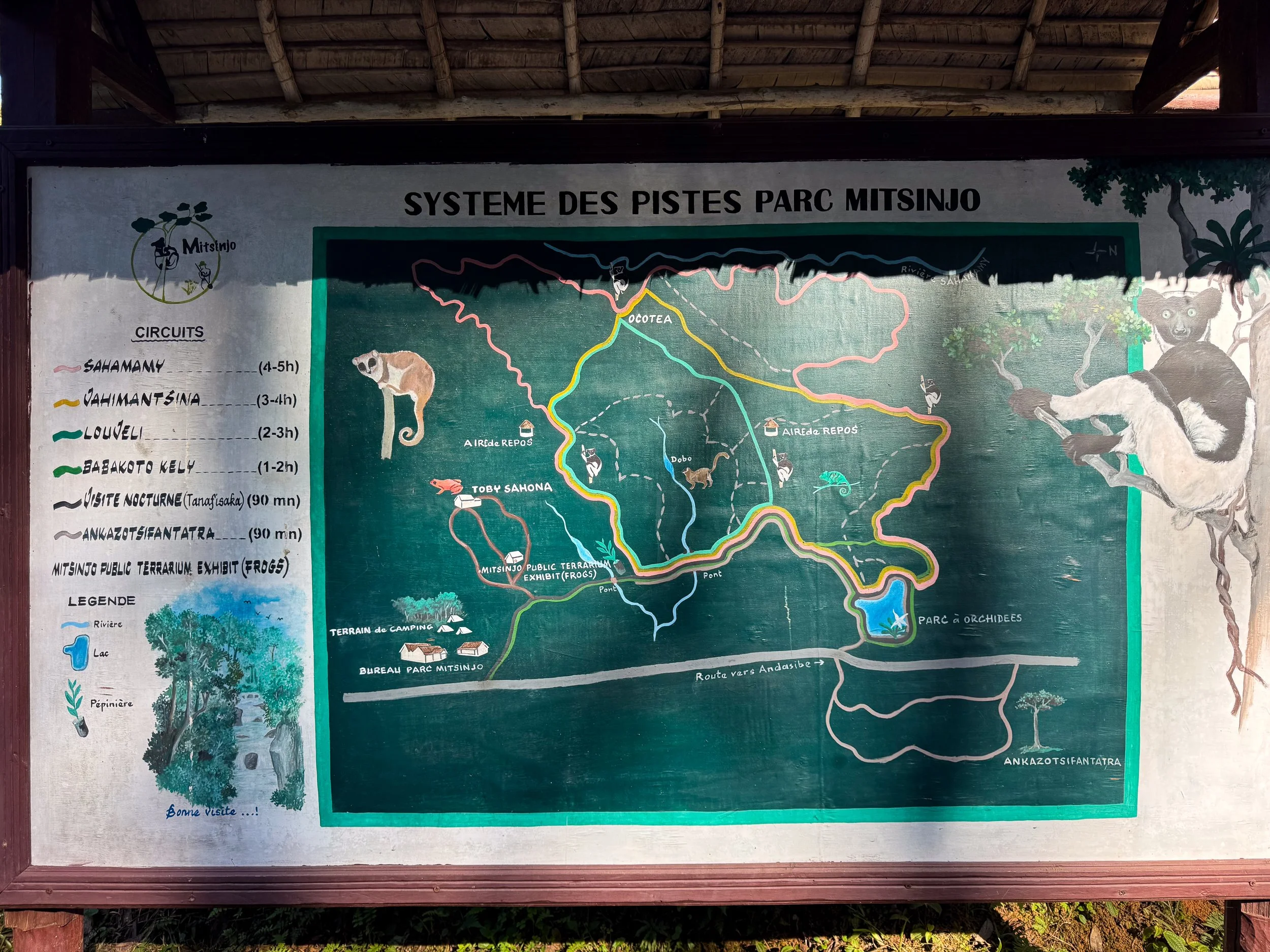
Mitsinjo is a protected forest reserve in Andasibe home to many species of wild lemurs and colorful chameleons. Guides offer nature walks and nocturnal visits through the forest’s dense trails in search of these remarkable animals. Tickets can be purchased and guides can be hired at the Mitsinjo Park Office.
The Grand Circuit (Vahimantsina Circuit). The Grand Circuit is one of four trails leading through the Mitsinjo Reserve. It allows plenty of opportunities to spot lemurs and chameleons, taking between 3-4 hours to complete.
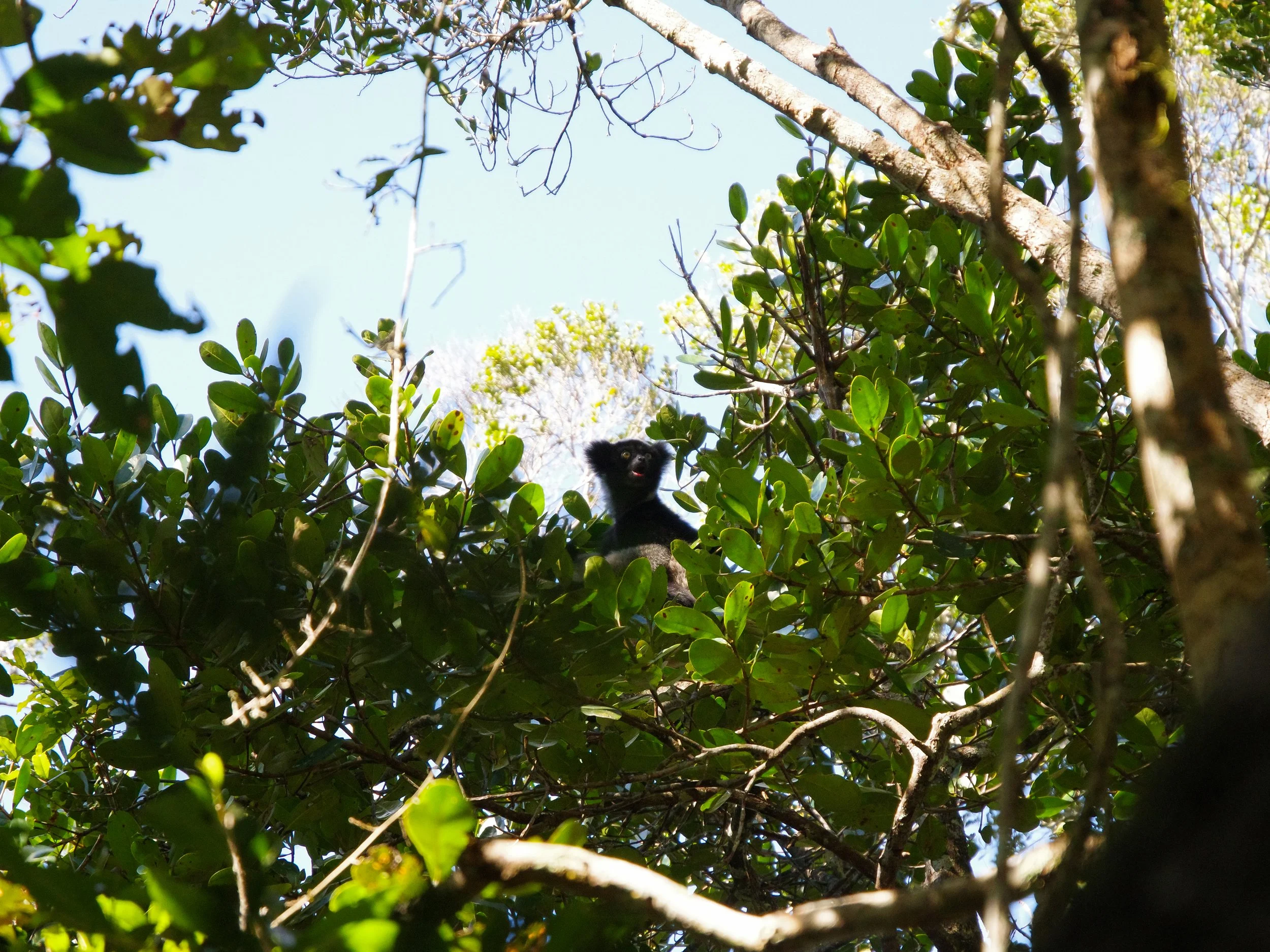
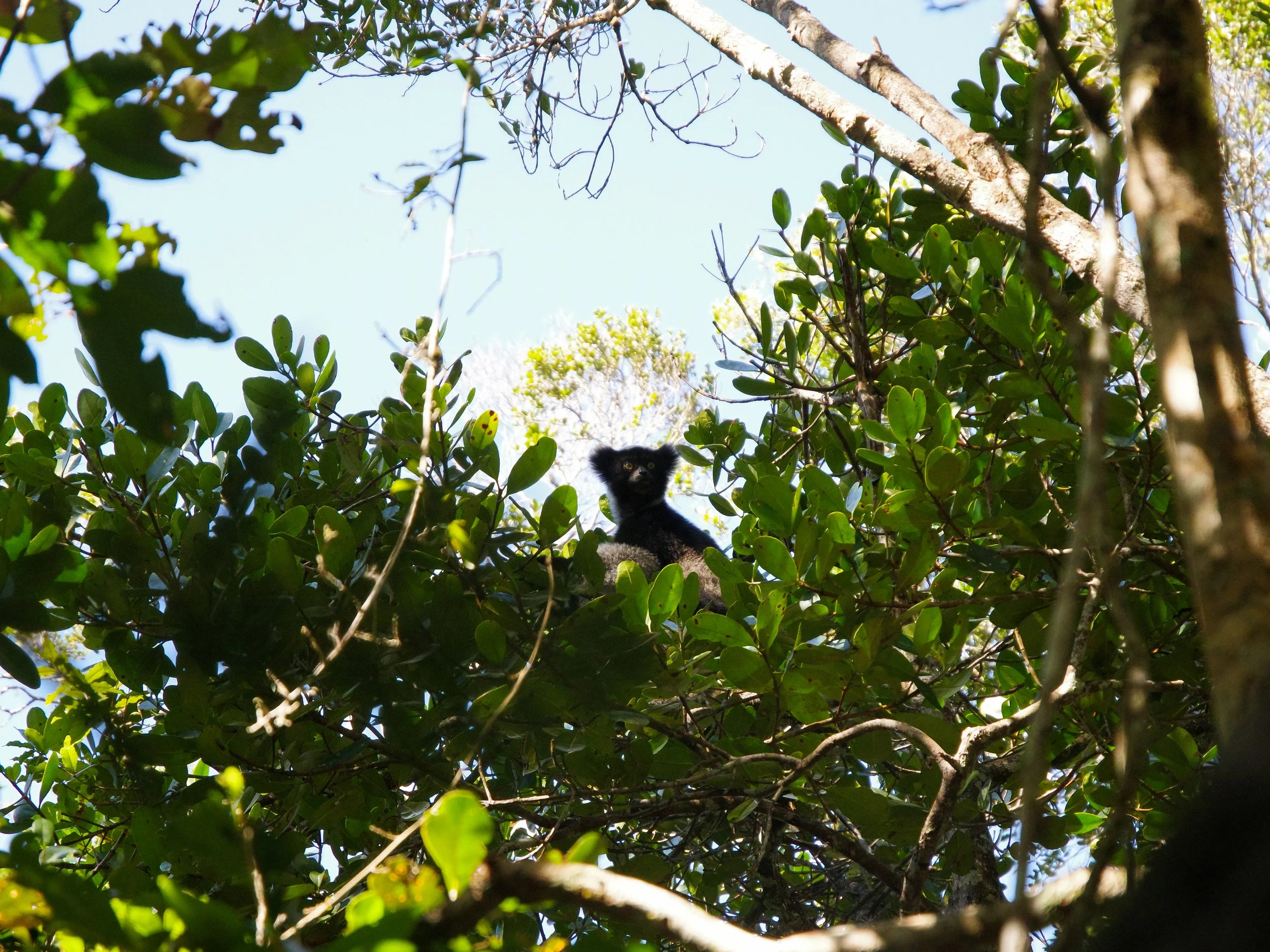
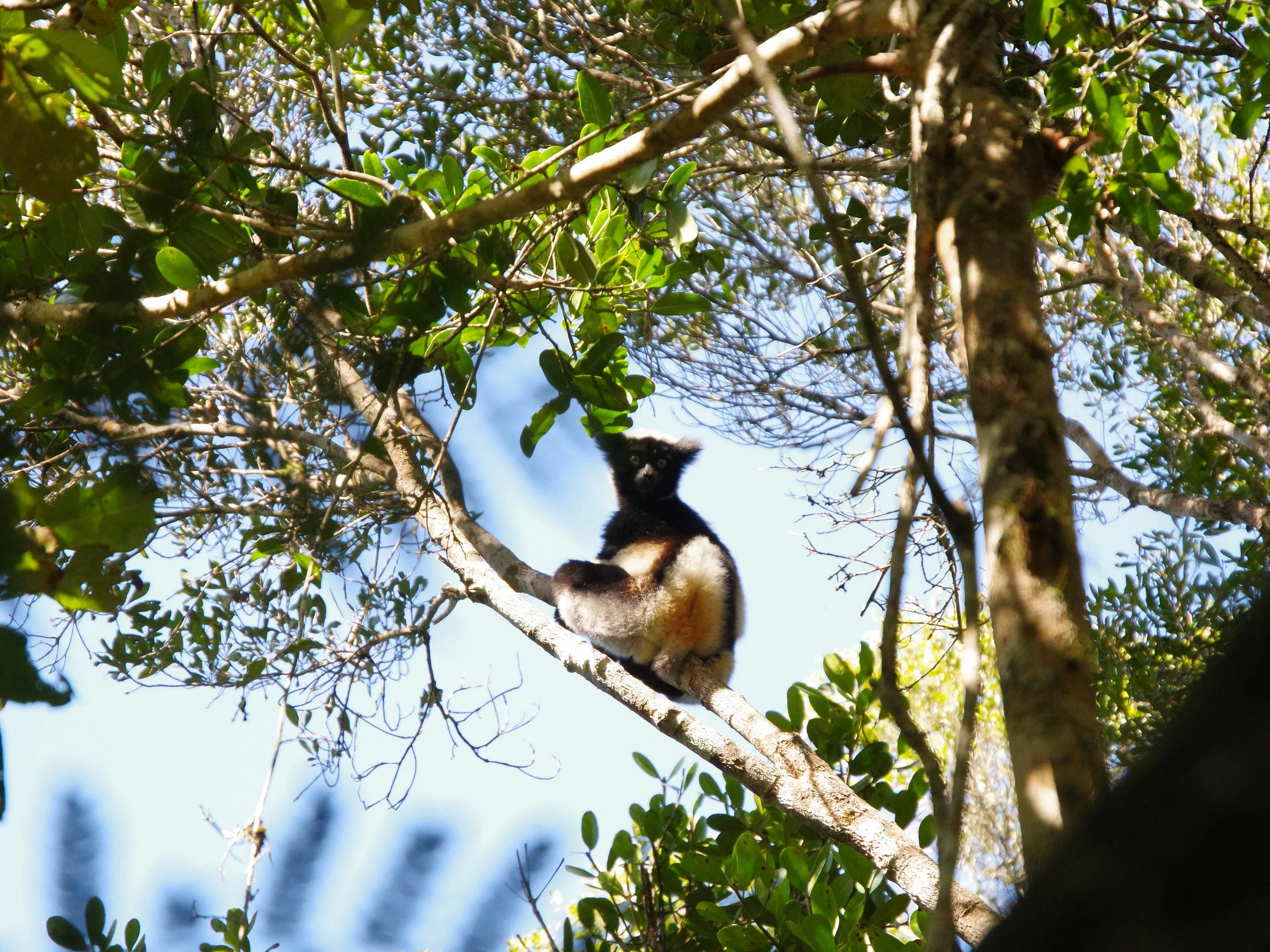
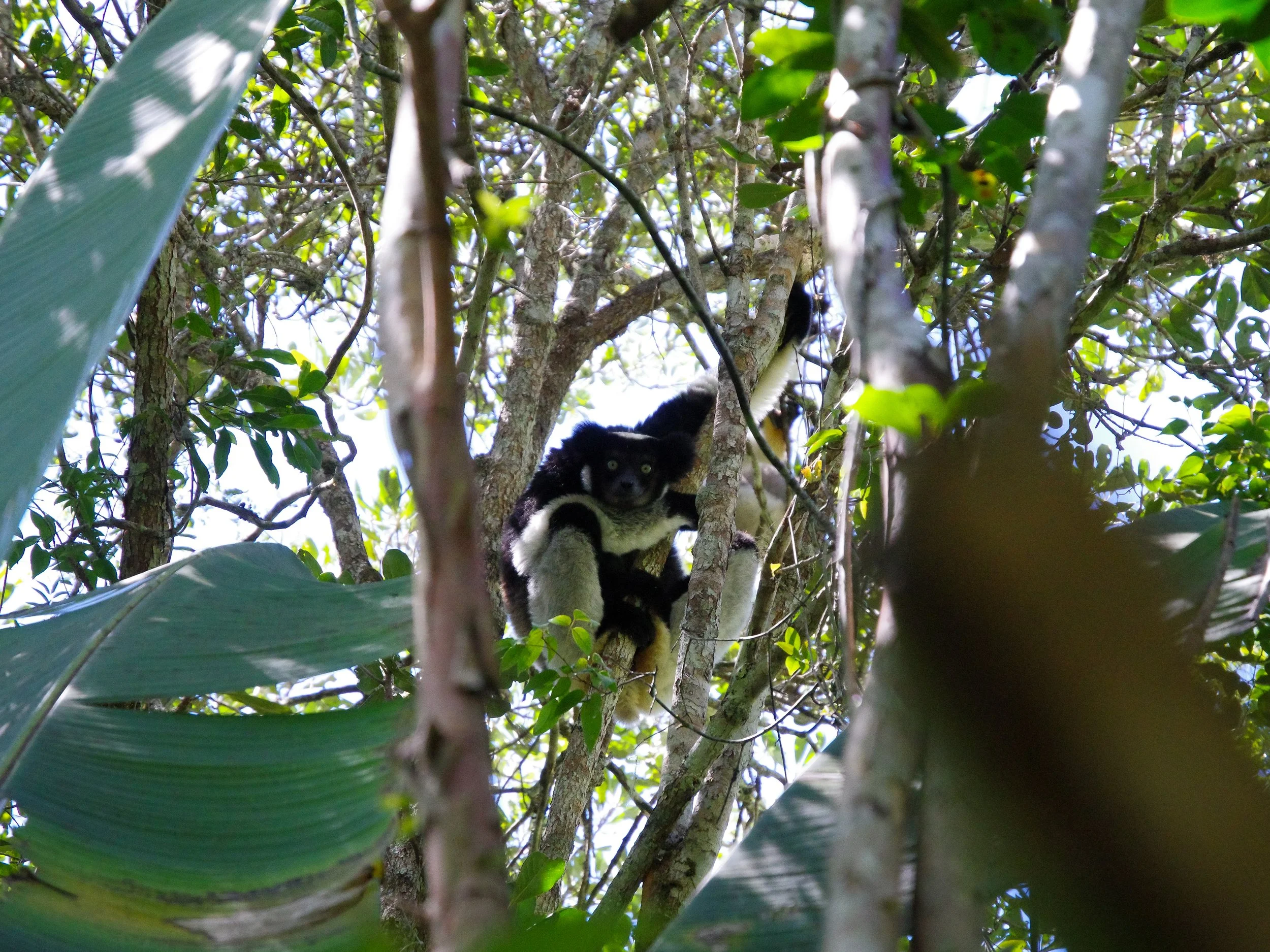
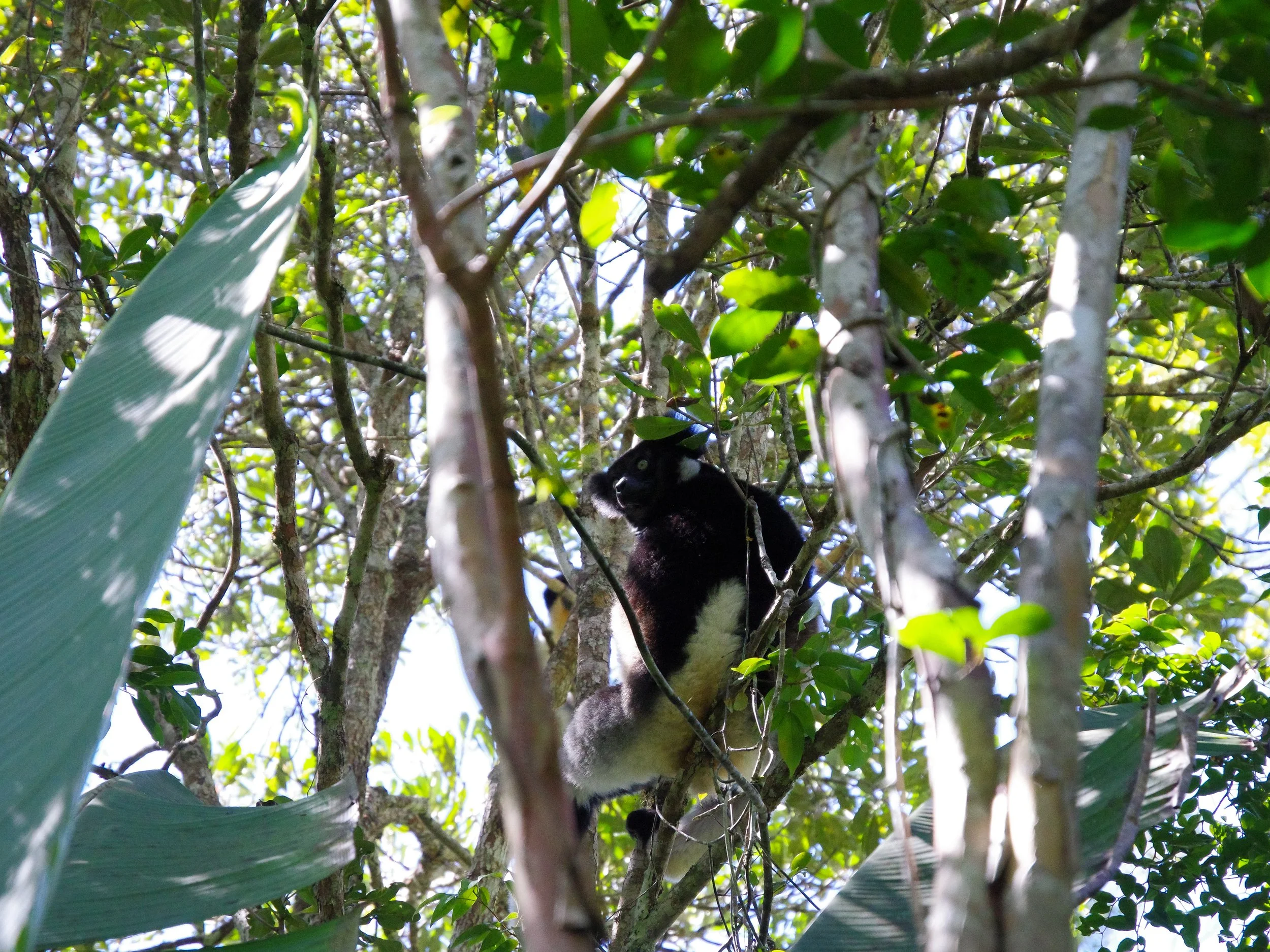
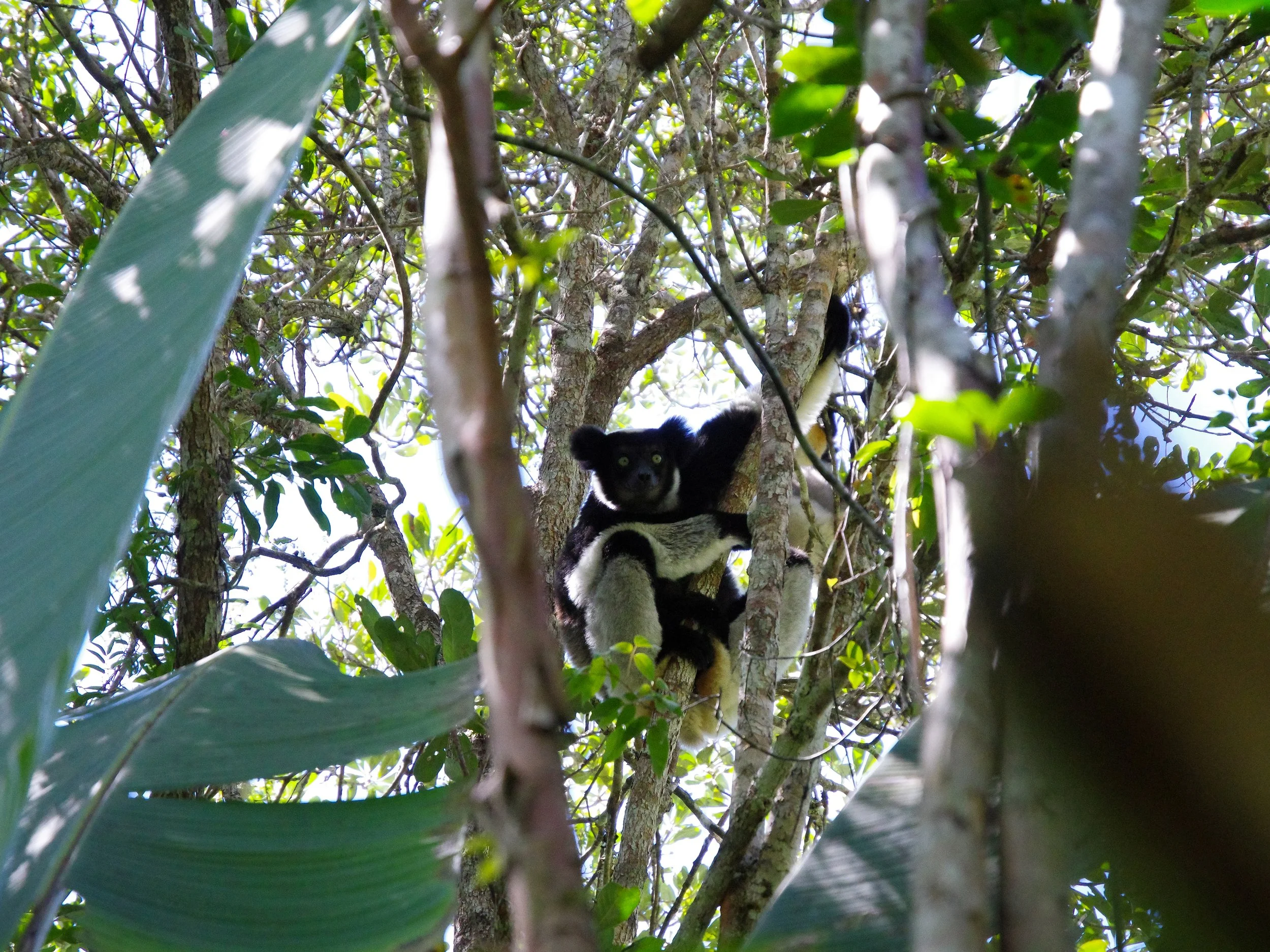
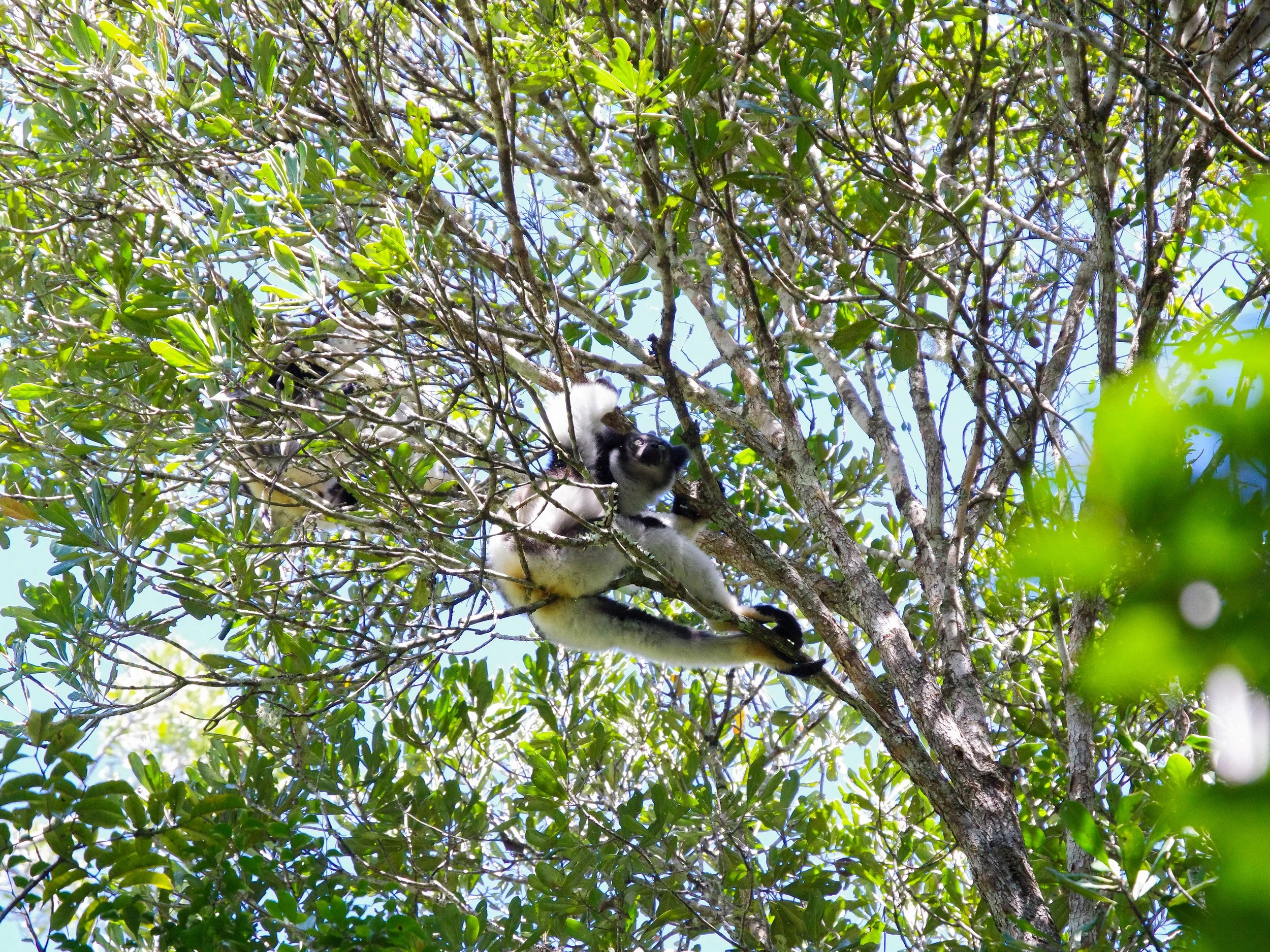
Indri Lemur. The Indri are known for their haunting calls and adorable appearance. Though critically endangered, they’re frequently seen and heard within the reserve. Our guide tracked two separate families. One group sat in the trees, chomping on leaves and testing them for softness with their tongues. Their furry black torsos and white limbs hugged the trees. Their jet black faces and greenish eyes occasionally stared down at us. We watched and listened to a second group call out. Tilting their heads back, their piercing song echoed throughout the forest.
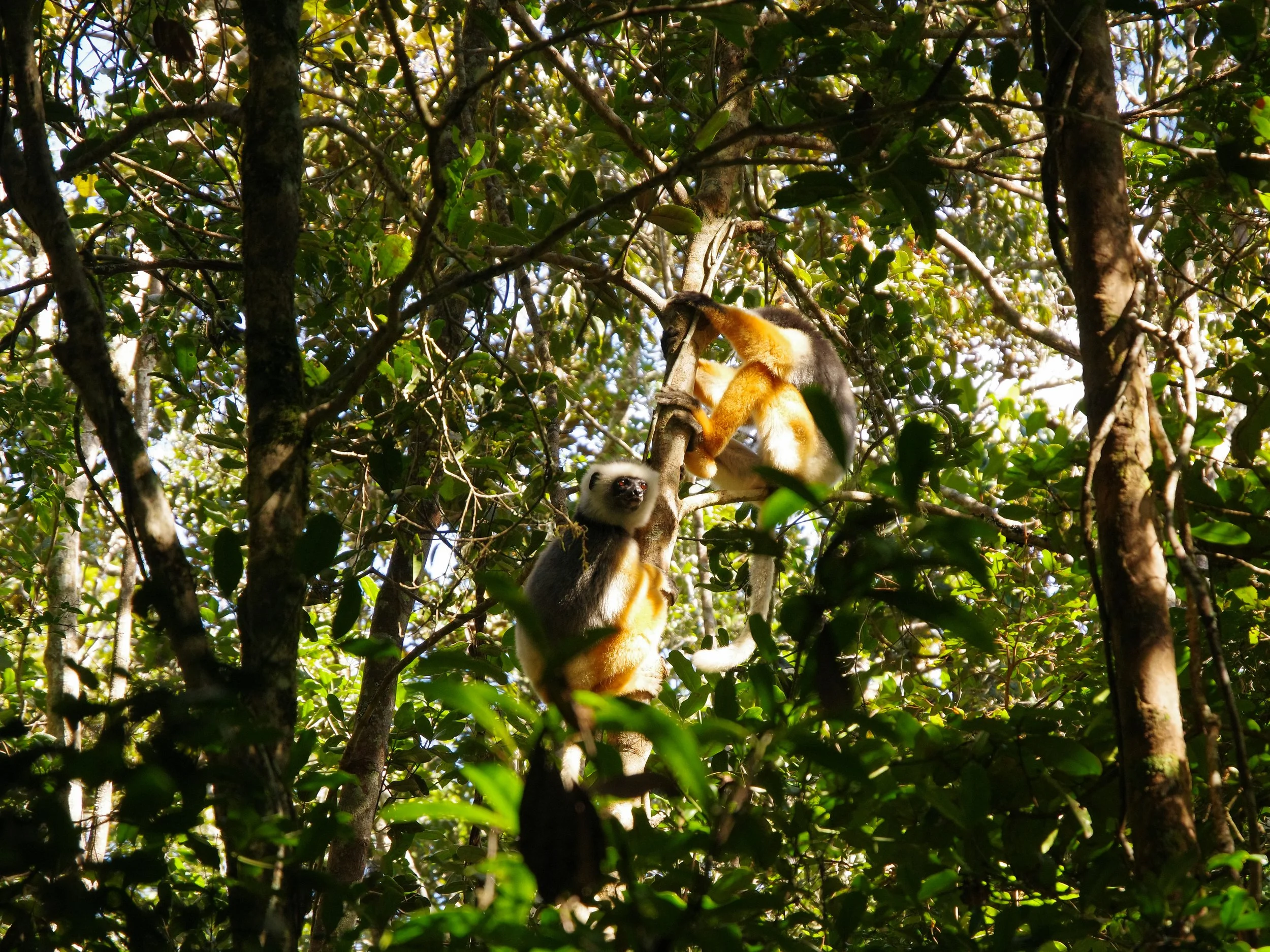
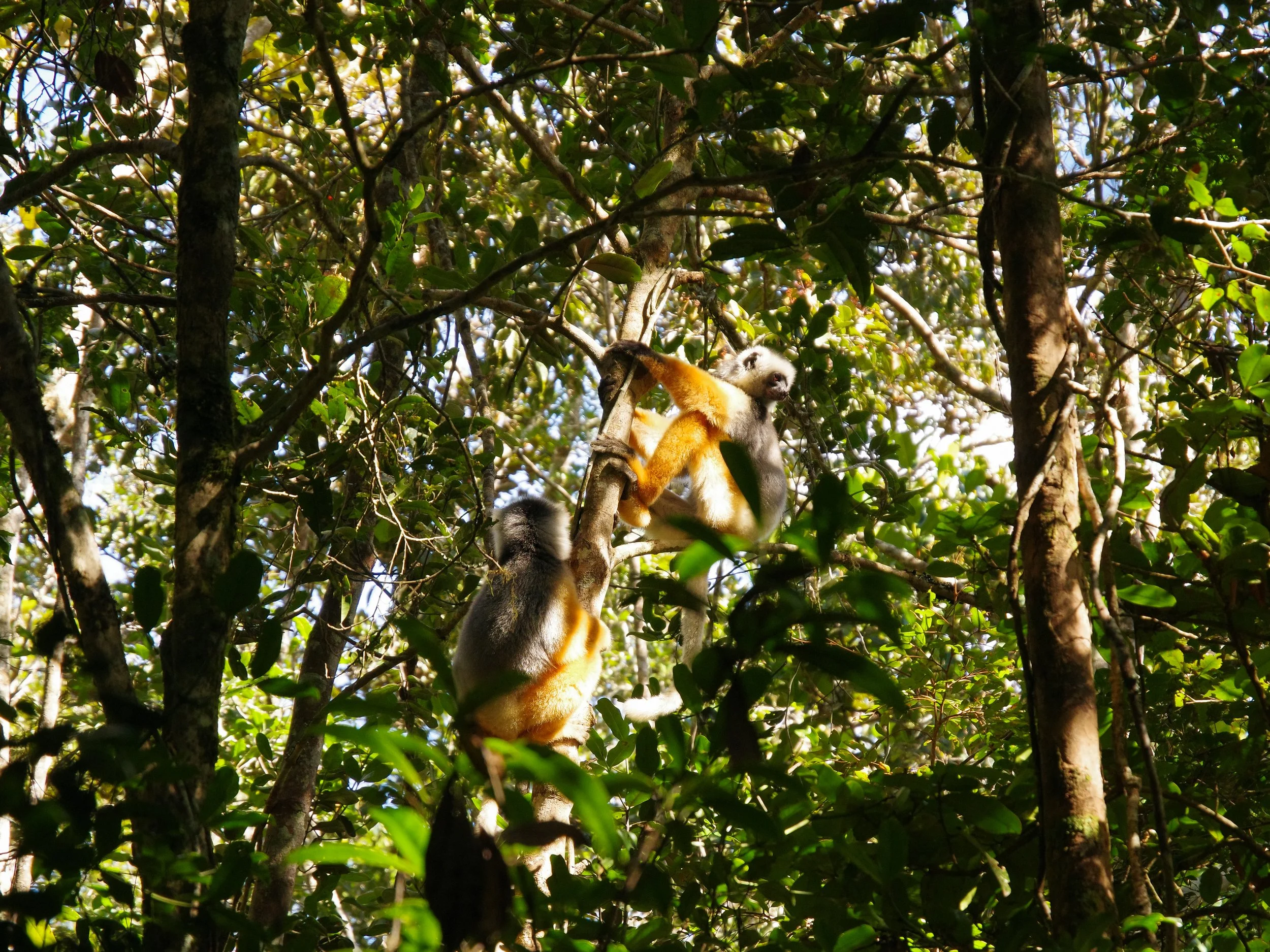
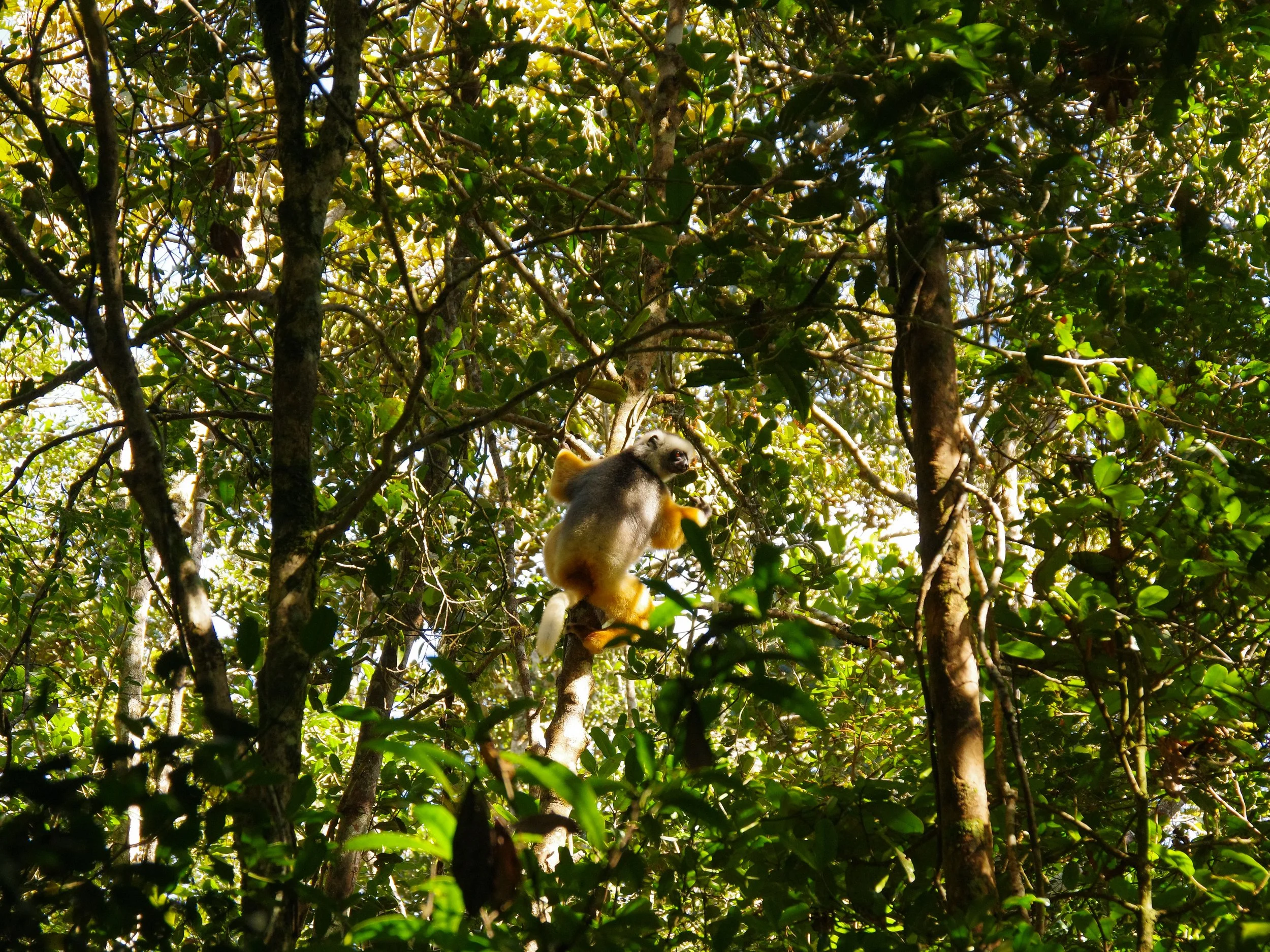
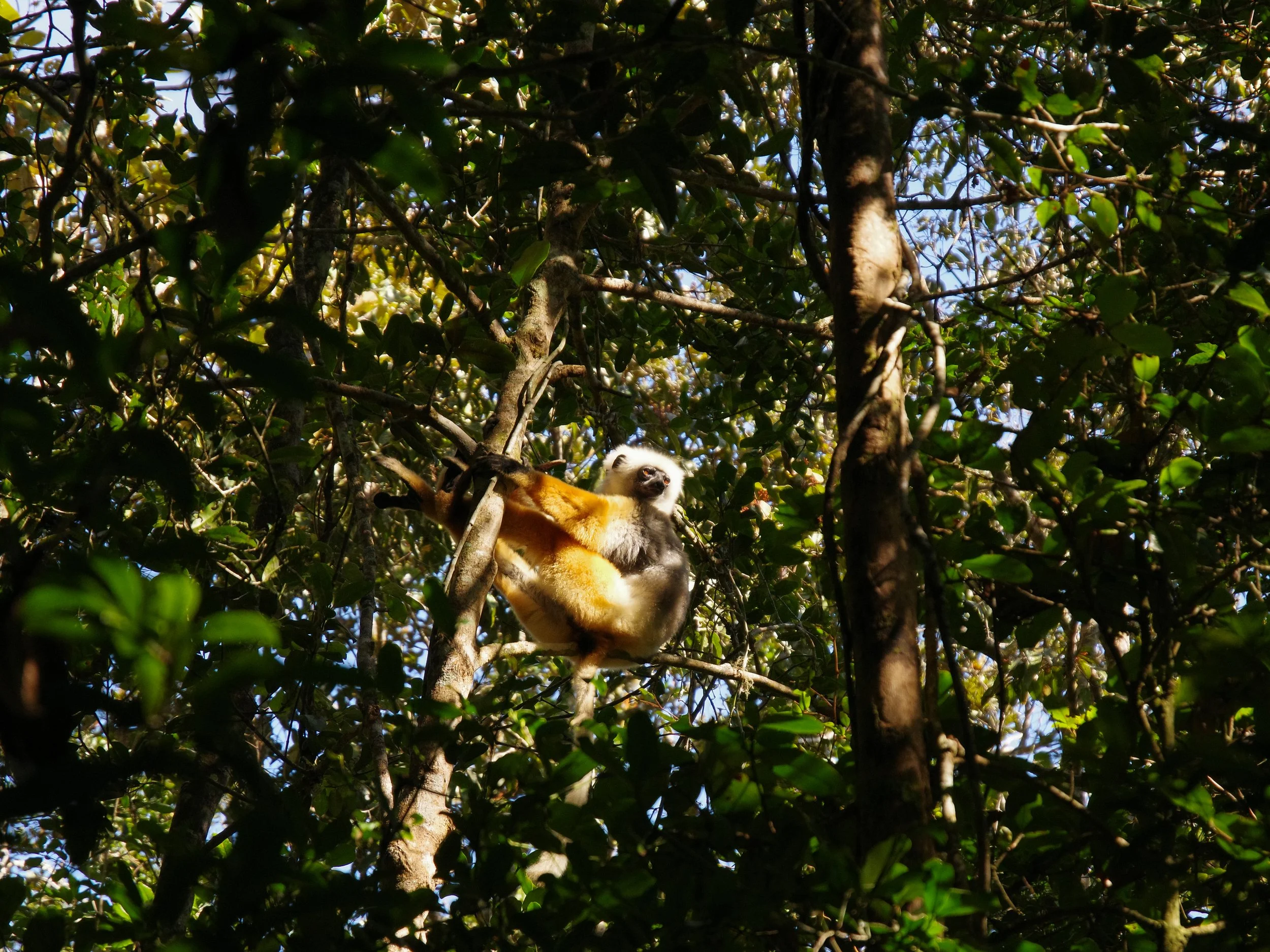
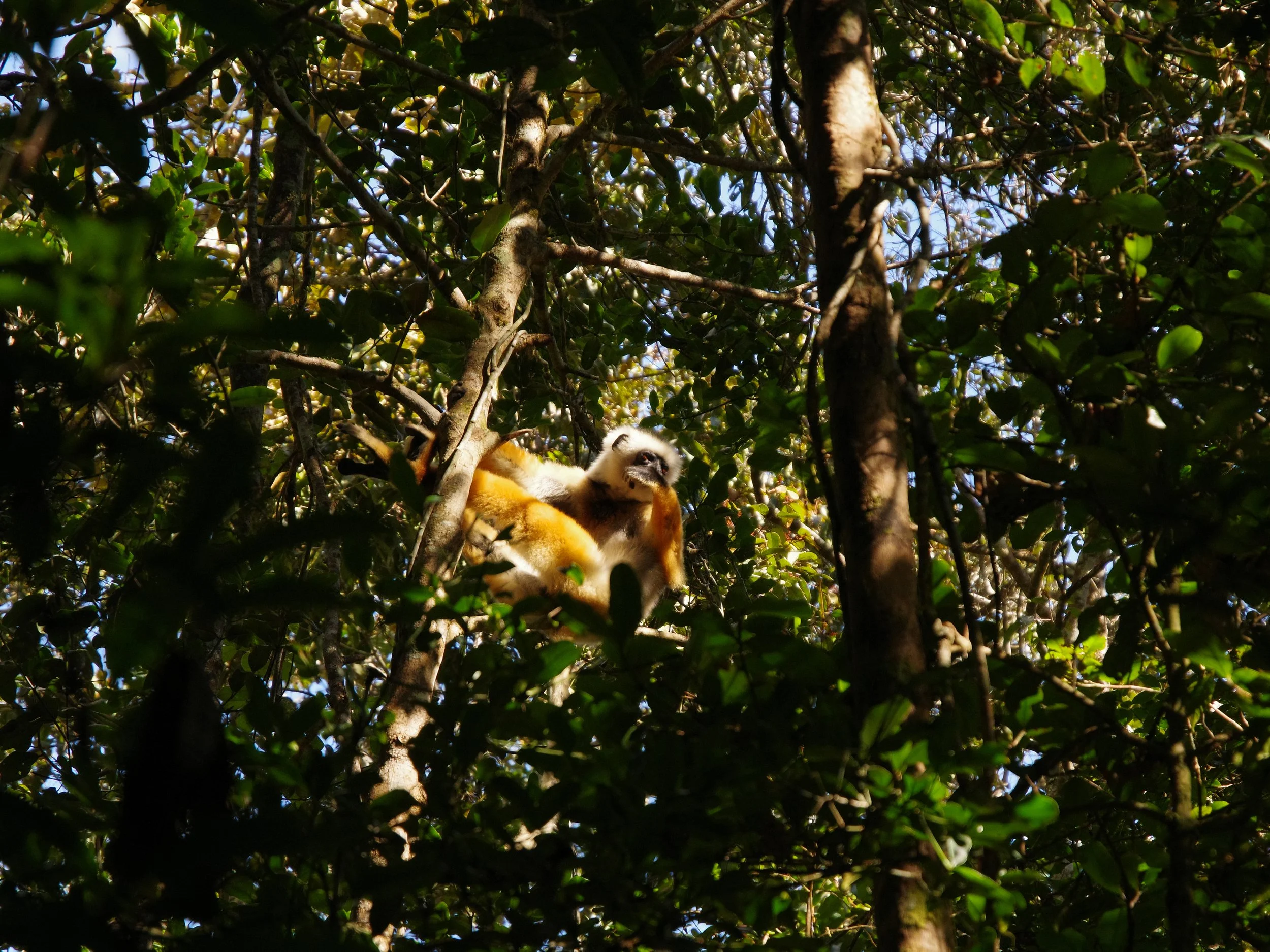
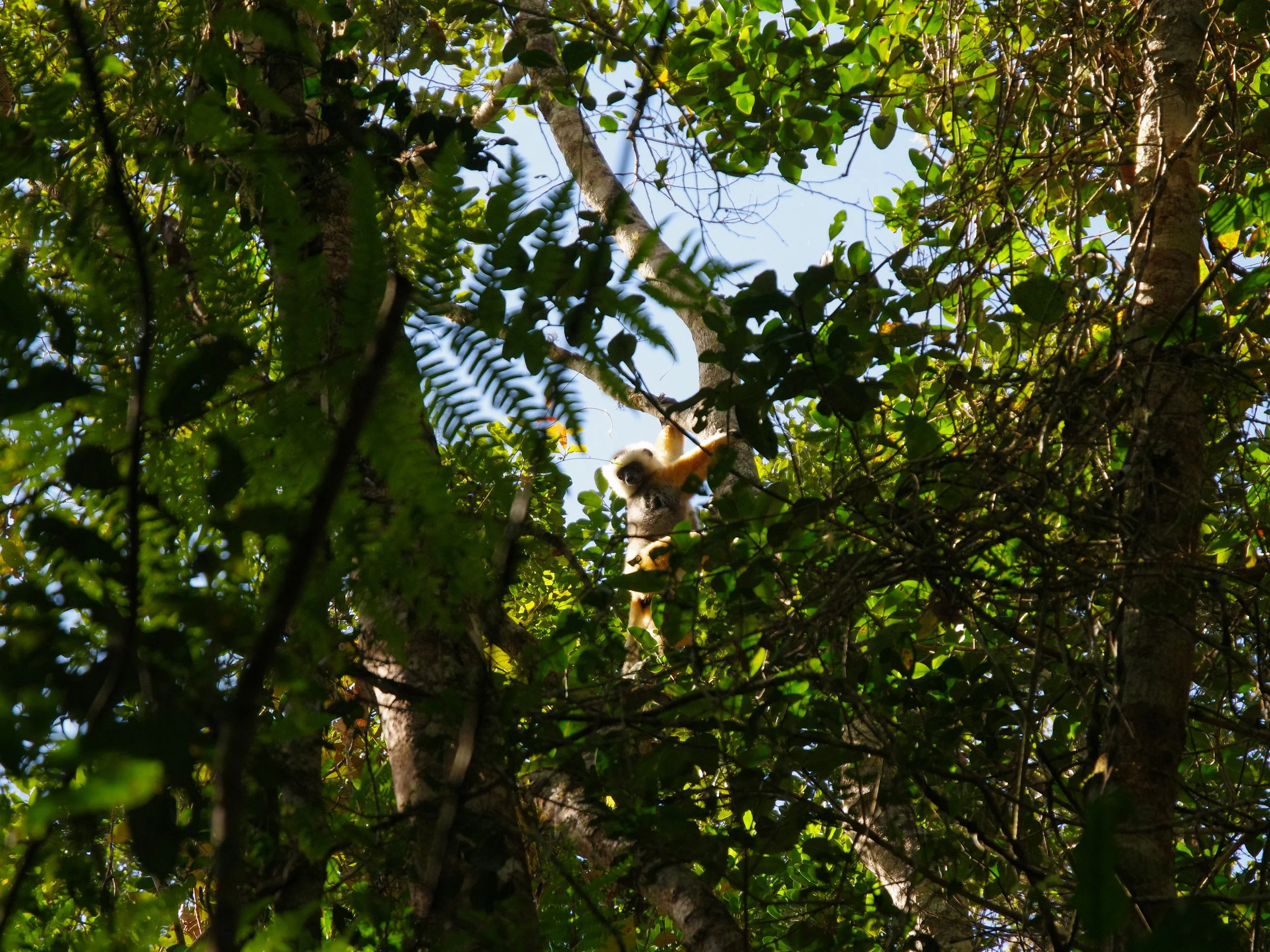
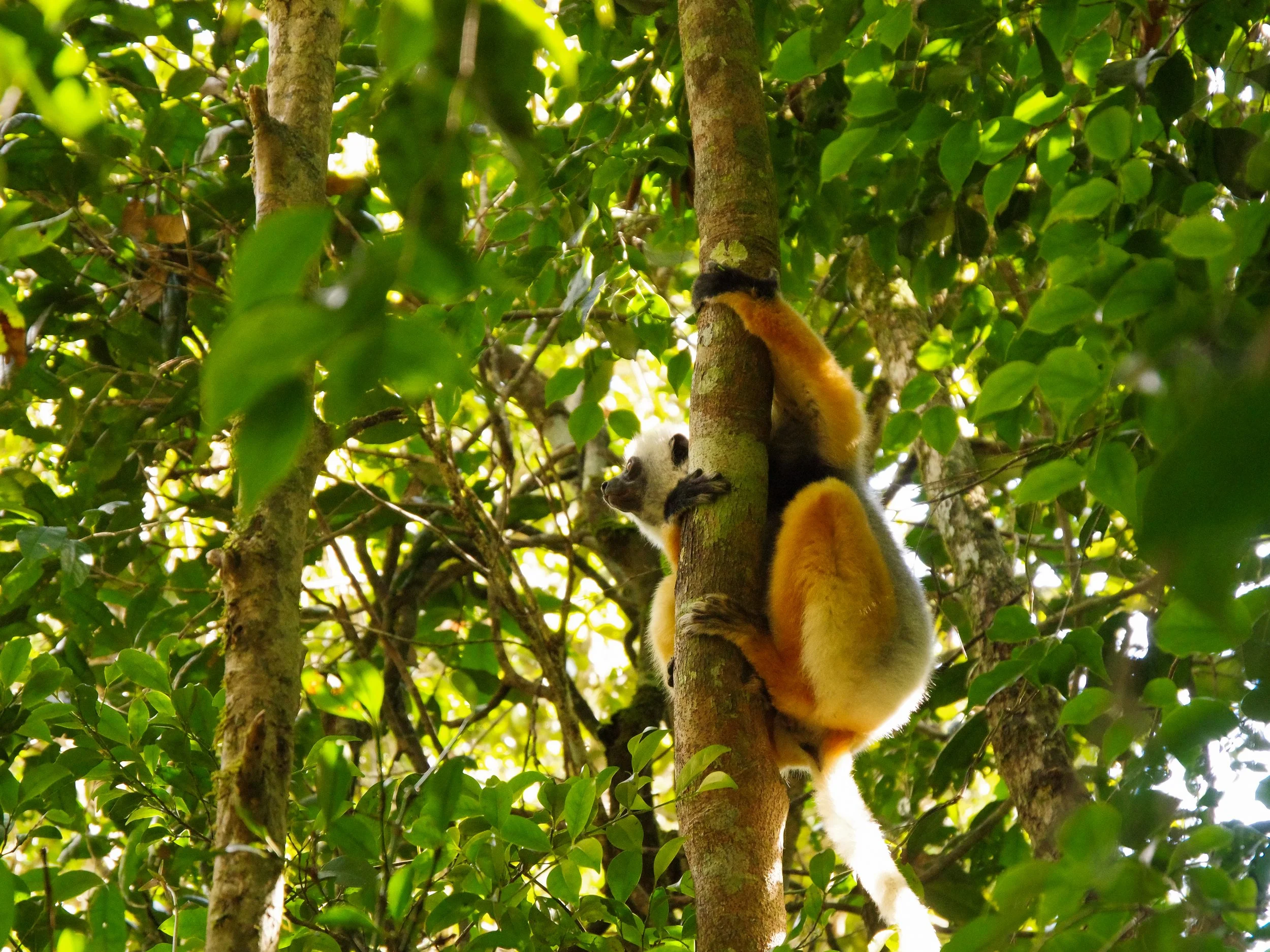
Diademed Sifaka Lemur. The Diademed Sifaka is a critically endangered species of lemur native to the forest reserve. We trudged off trail to track a small family feeding on leaves in the verdant canopy. They gracefully leapt from tree to tree, looking around before continuing their meal. The sunlight illuminated their tricolored golden, white and grey fur.
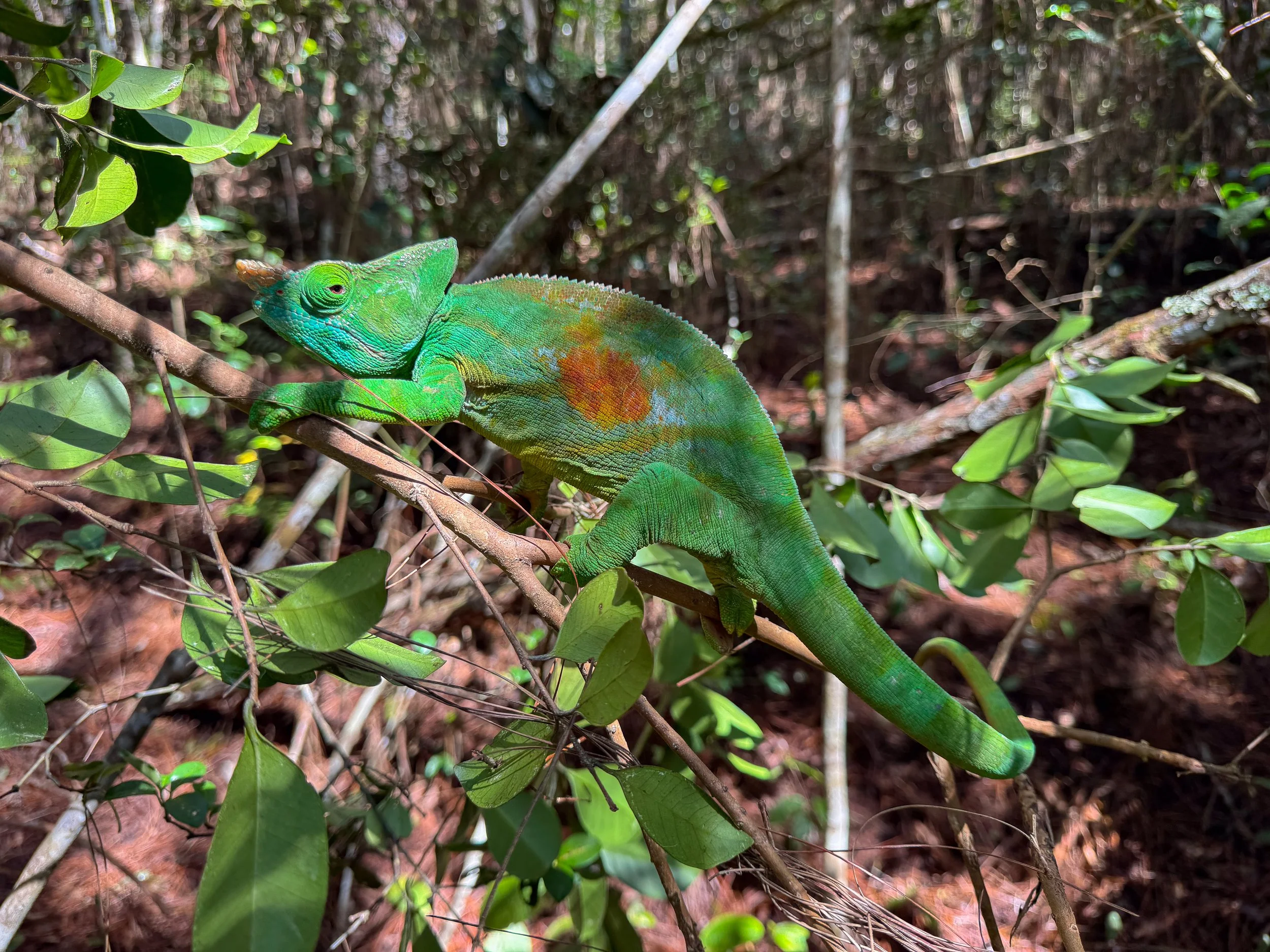
Parson's Chameleon. Chameleons are a common sight in the park, though rarer to see during the daytime. We spotted an adult Parson's Chameleon resting on a tree limb. Its vibrant green scales and brown patches blended in with its surroundings. Its long tail coiled up as it slowly walked while its independent eyes looked back at us.
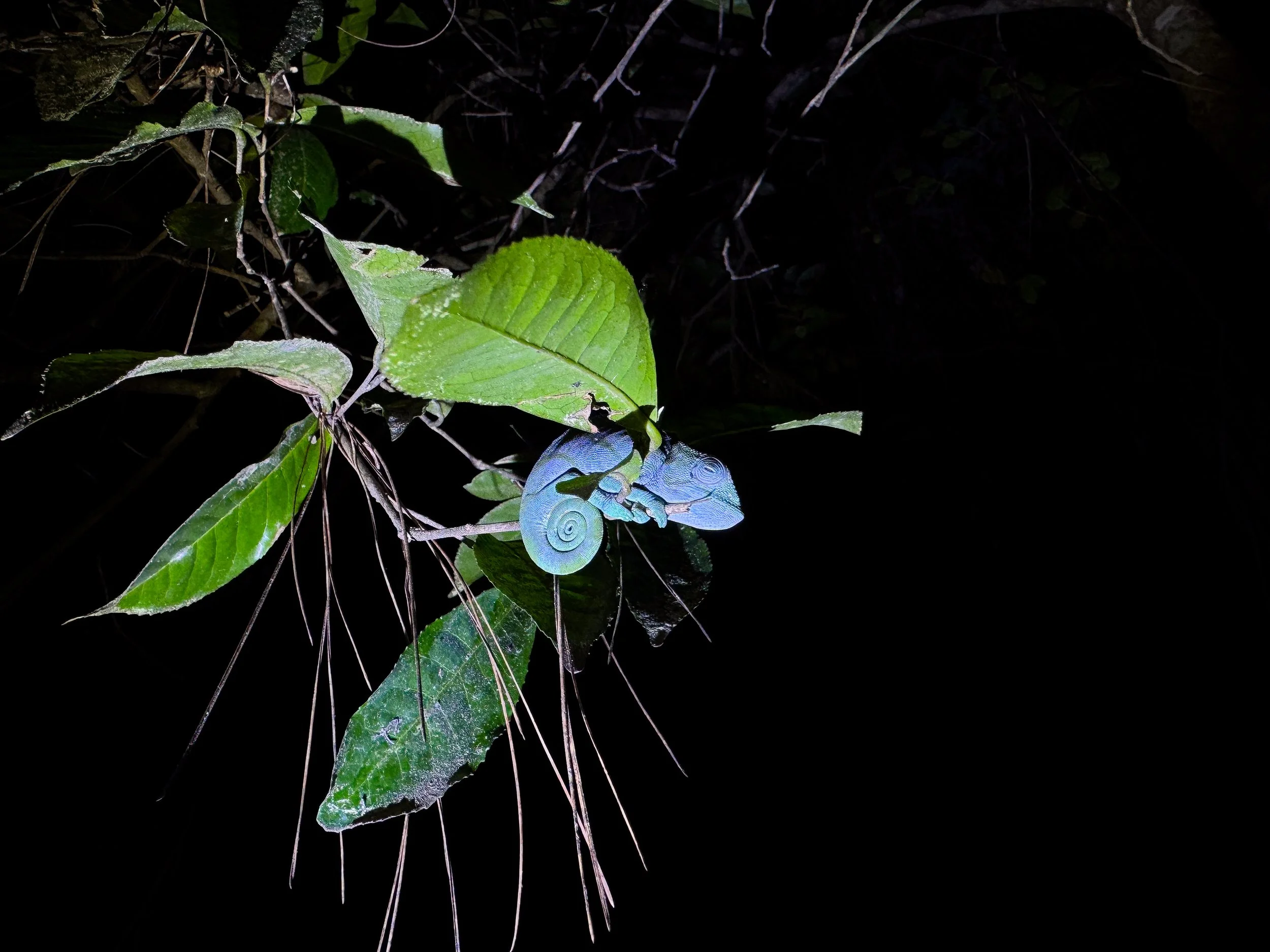
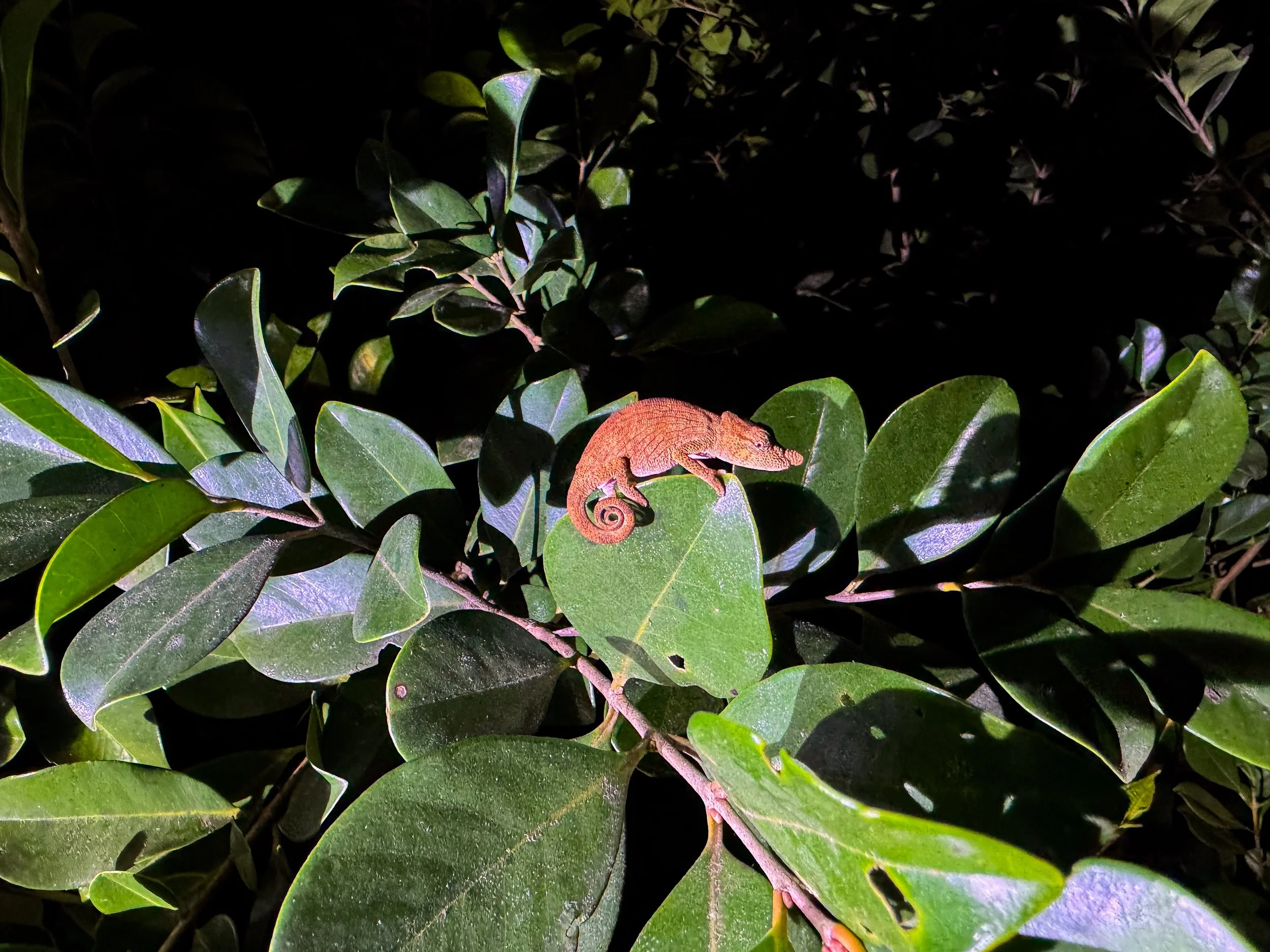
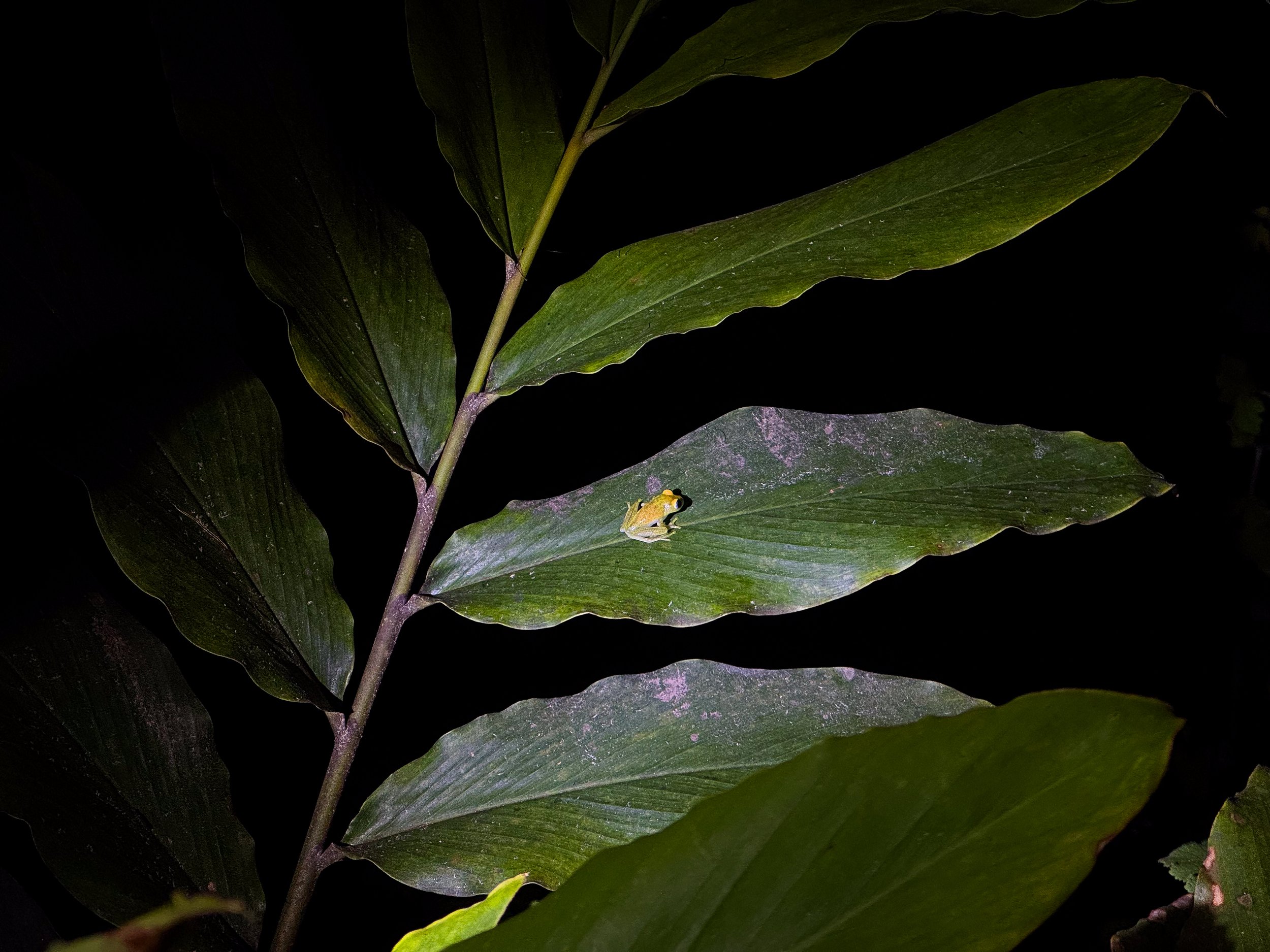
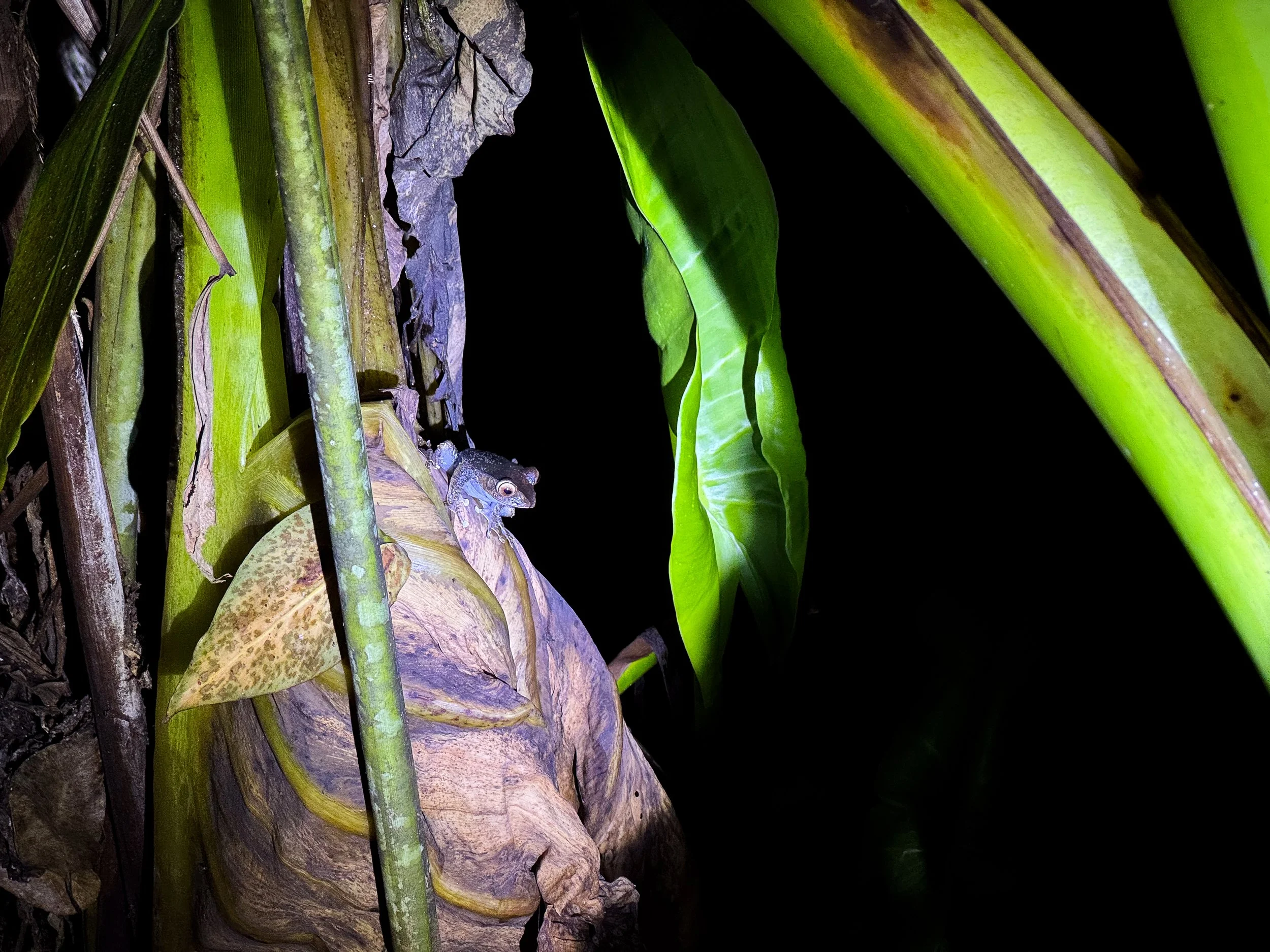
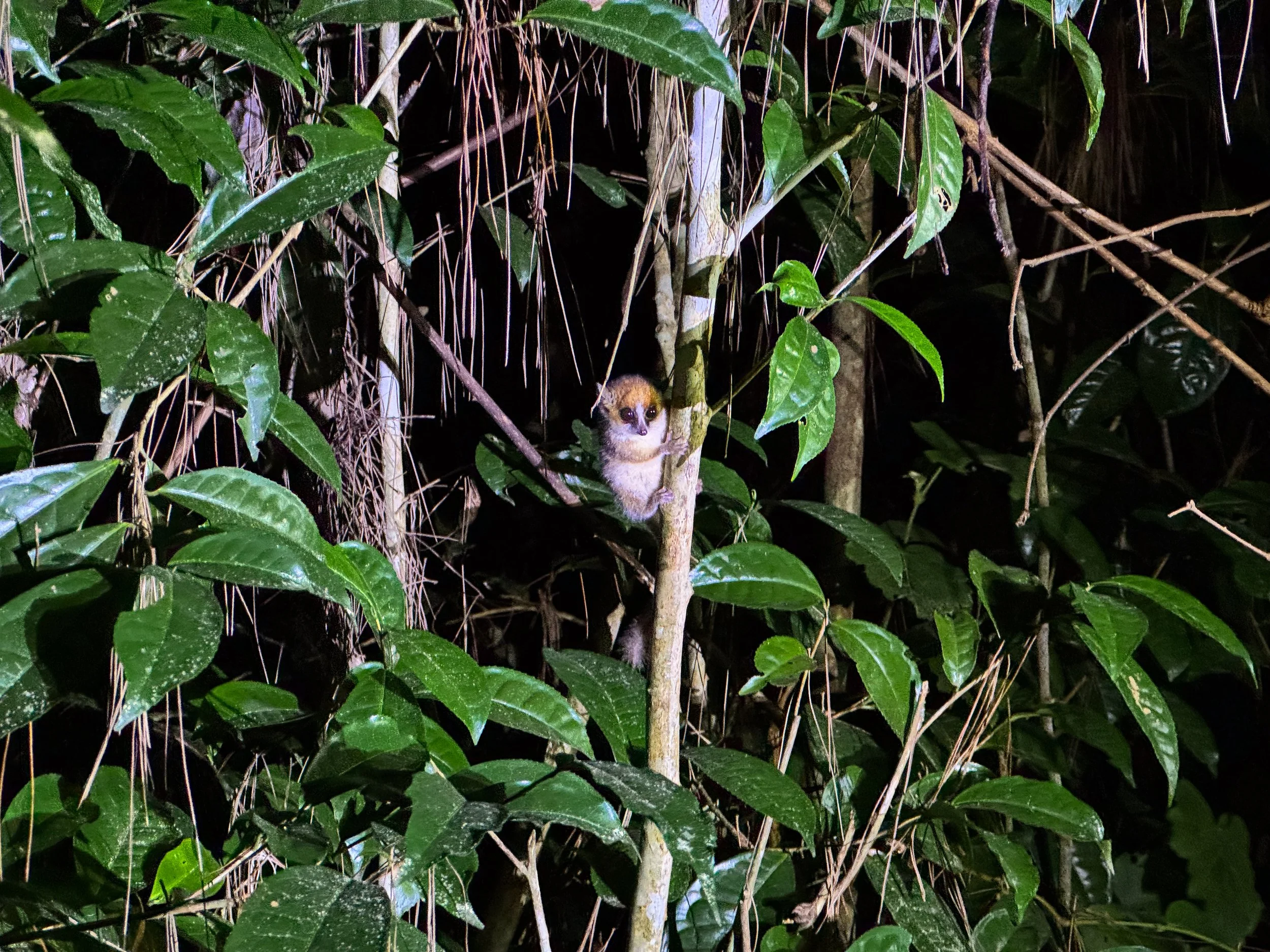
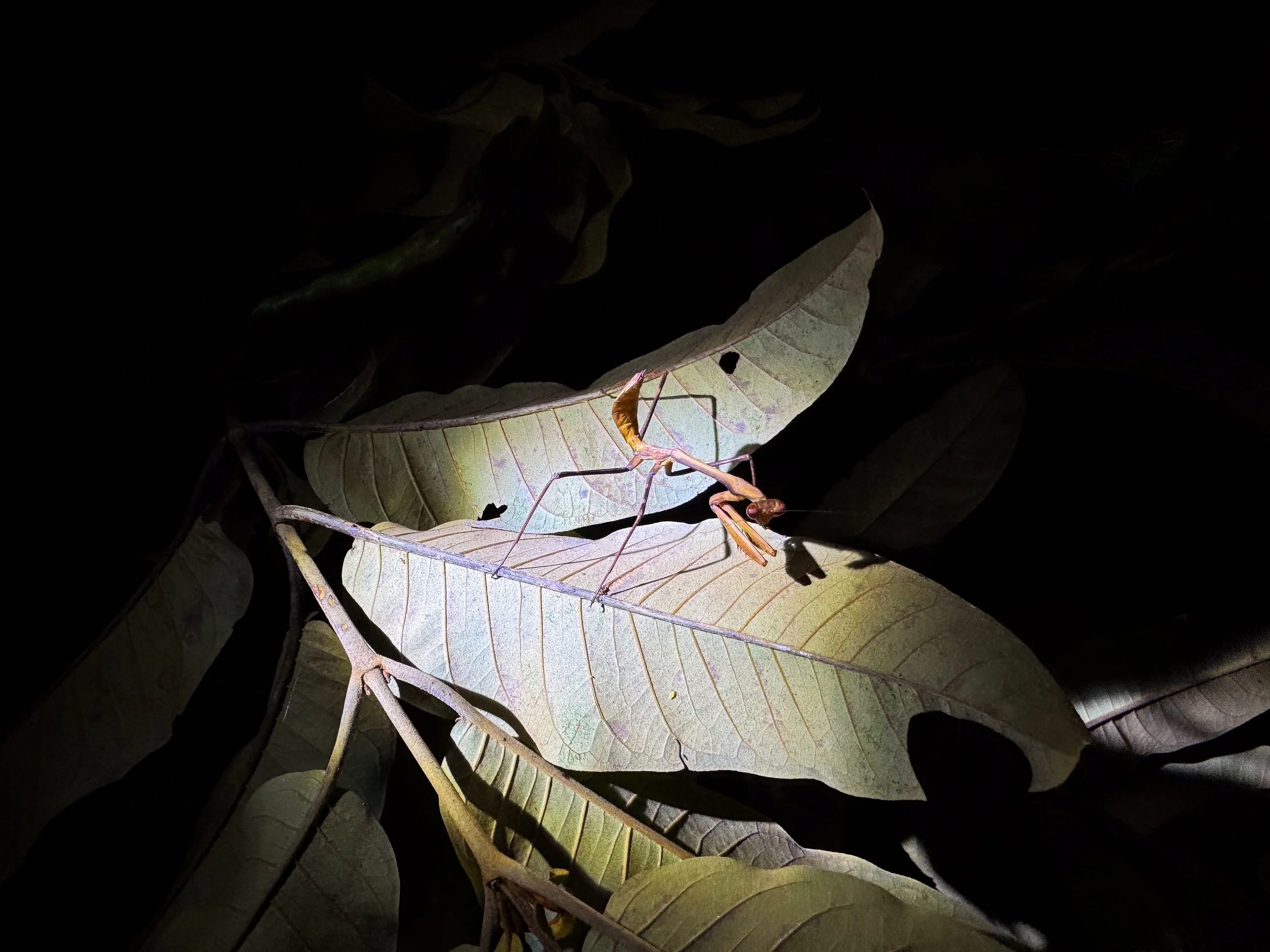
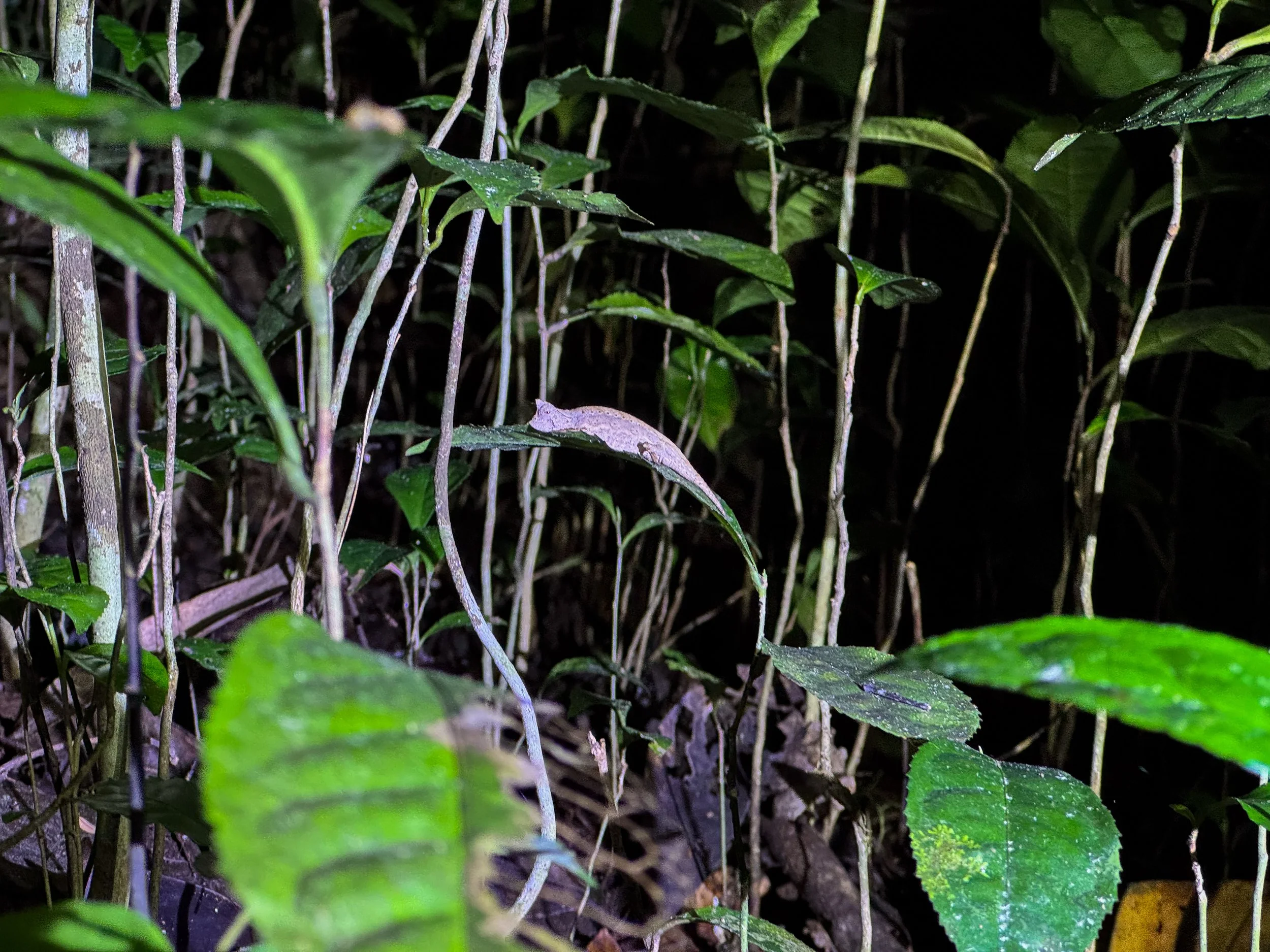
Mitsinjo Night Walk. The Mitsinjo Reserve Night Walk is one of the best ways to see all types of nocturnal creatures. Our guide led us down a dark jungle trail and along the roadside, pointing out numerous species of chameleon. We saw a sleeping baby Parson’s Chameleon, a Brown Leaf Chameleon and a Nose Horn Chameleon, the smallest species of chameleon. Mouse Lemurs ran across branches and mated in trees. Tree frogs sat on leaves, spiders lurked in webs, a mantis hunted for prey and a large moth displayed its open wings.
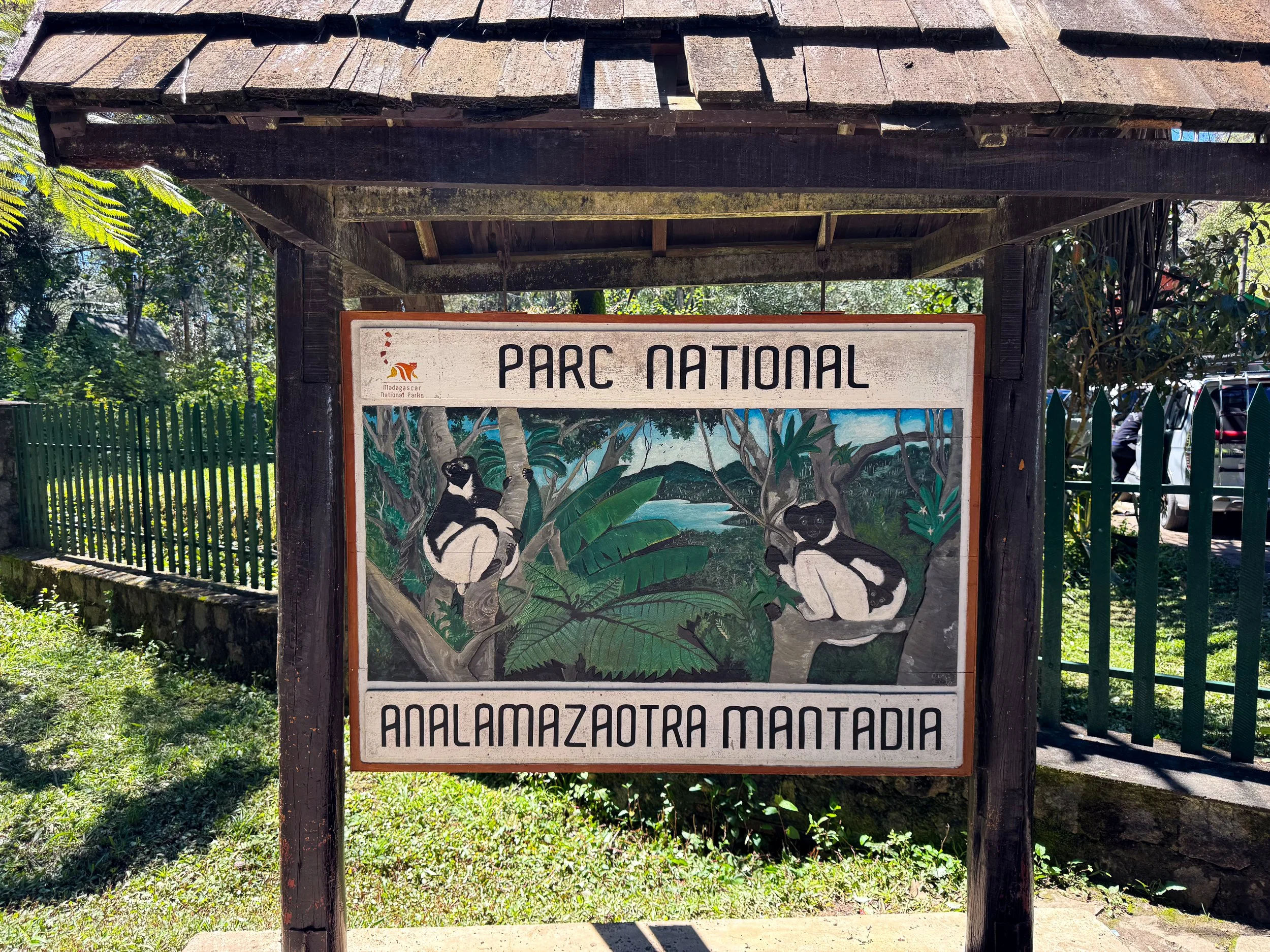
Mantadia National Park
Mantadia National Park is a vast area of primary rainforest with tropical vegetation and remote hiking trails. Multiple circuits lead through the park, offering opportunities to enjoy the untouched nature and watch for its elusive lemurs.
Visiting Mantadia National Park. The Mantadia National Park Office is located 100m down the road from the Mitsinjo Reserve. Circuits within the park are located 2 hours further by car. The muddy road in between is only accessible with a 4x4 vehicle and driver. Visit the park office a day in advance or at 7am day of to book transportation, buy tickets and hire a guide. Round trip transportation can be arranged for around $60 USD. The park office also offers guided tours of the Analamazoatra Reserve, a popular spot to listen for and spot Indri Lemurs.
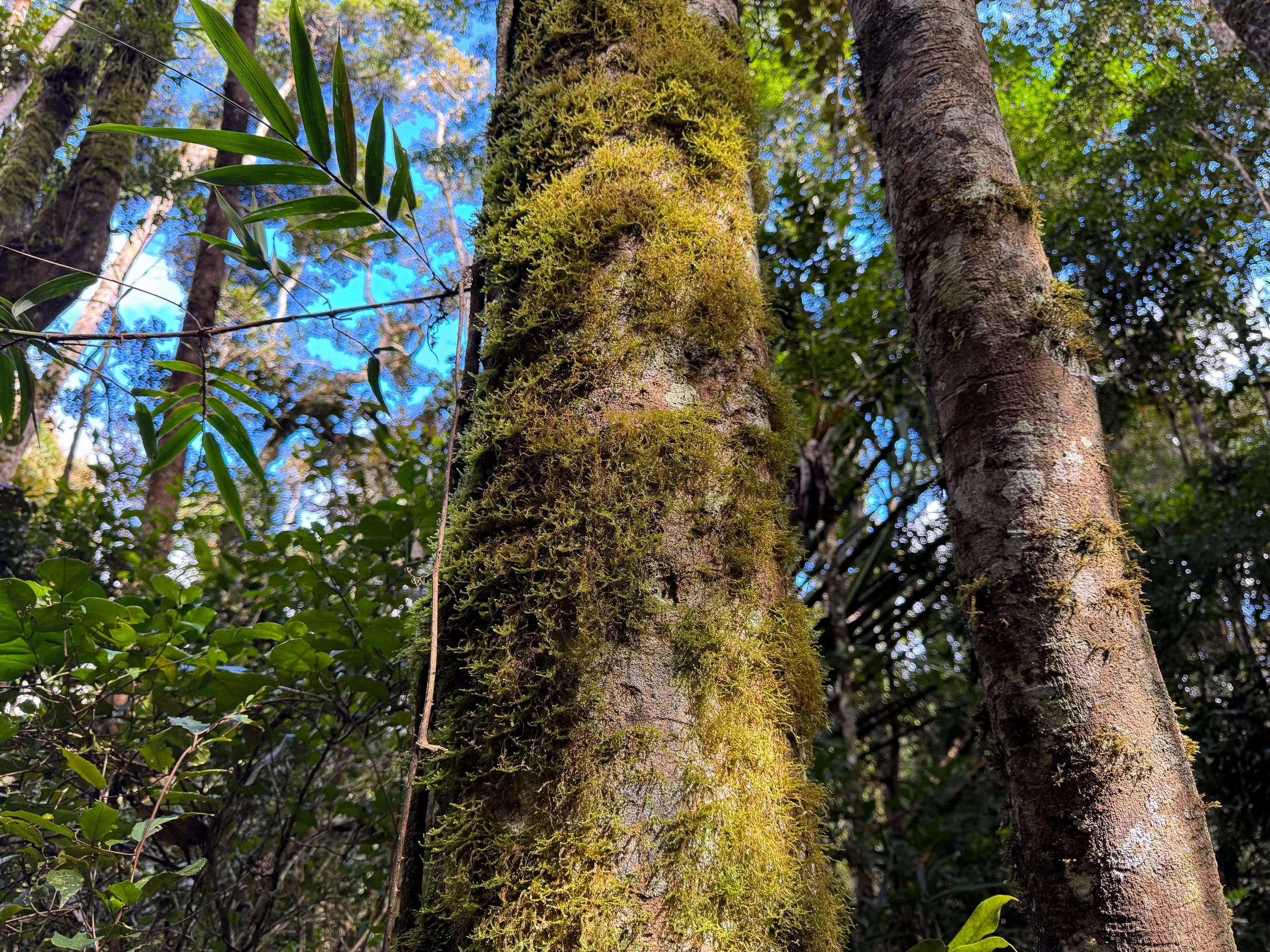
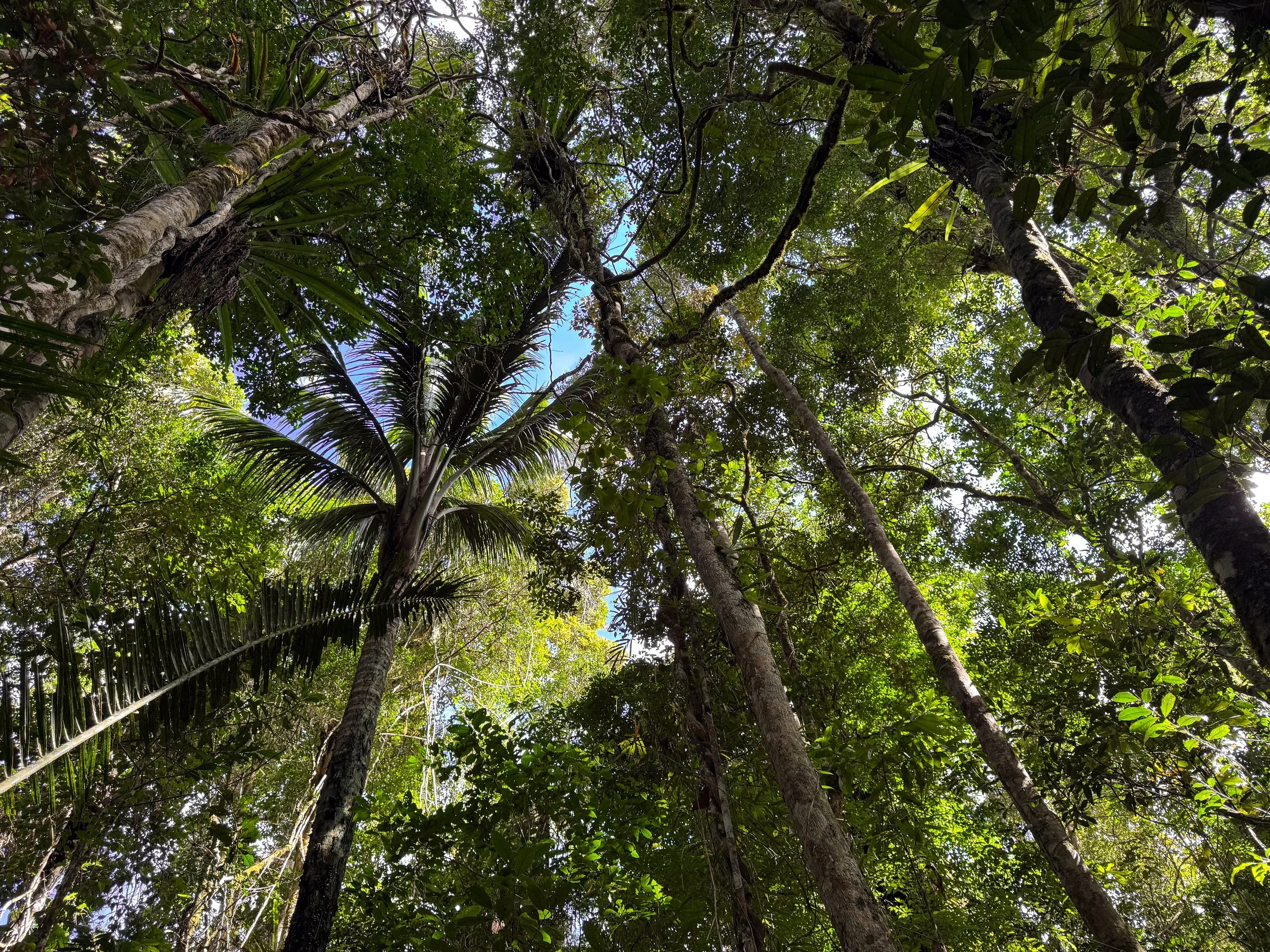
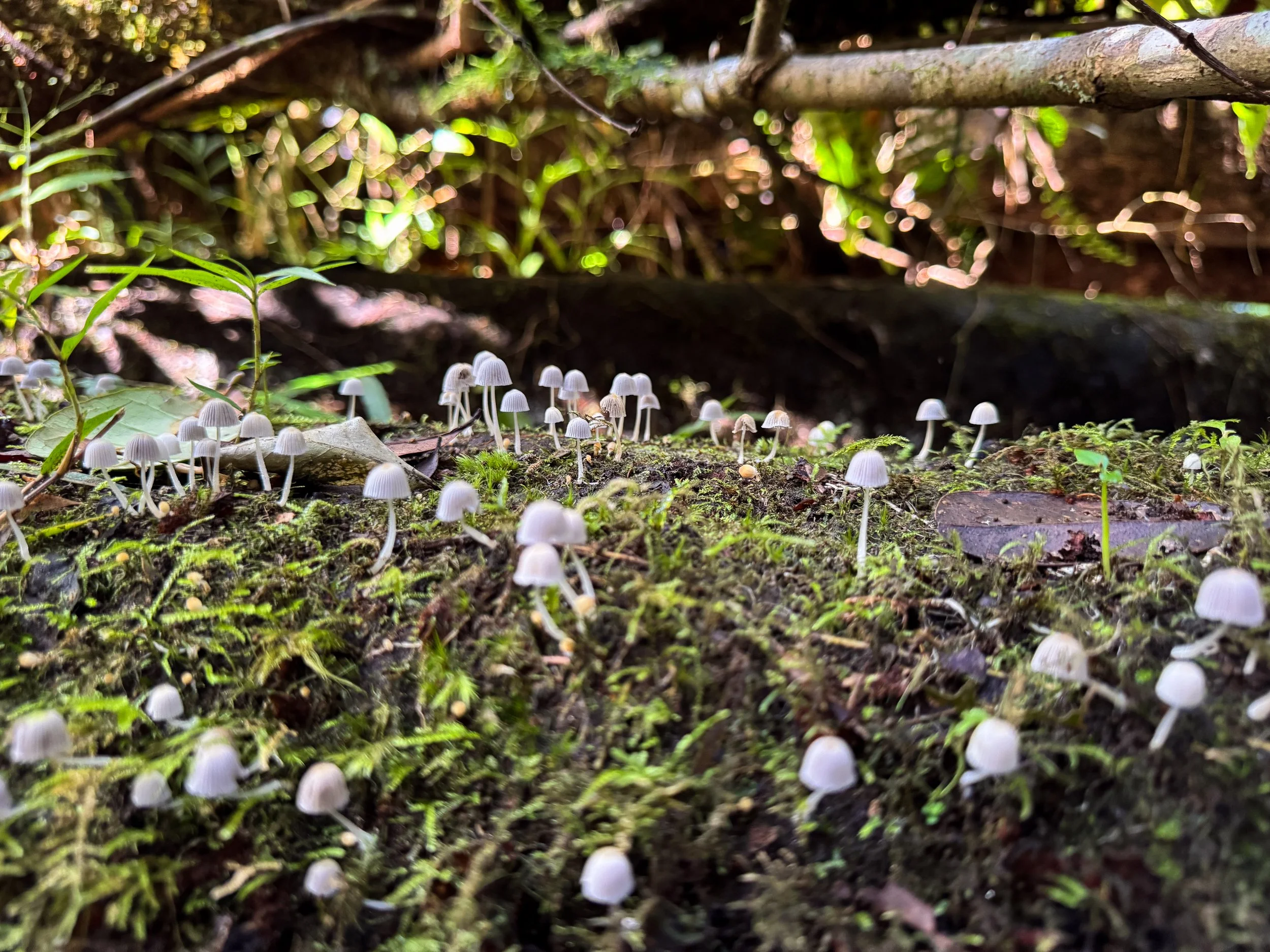
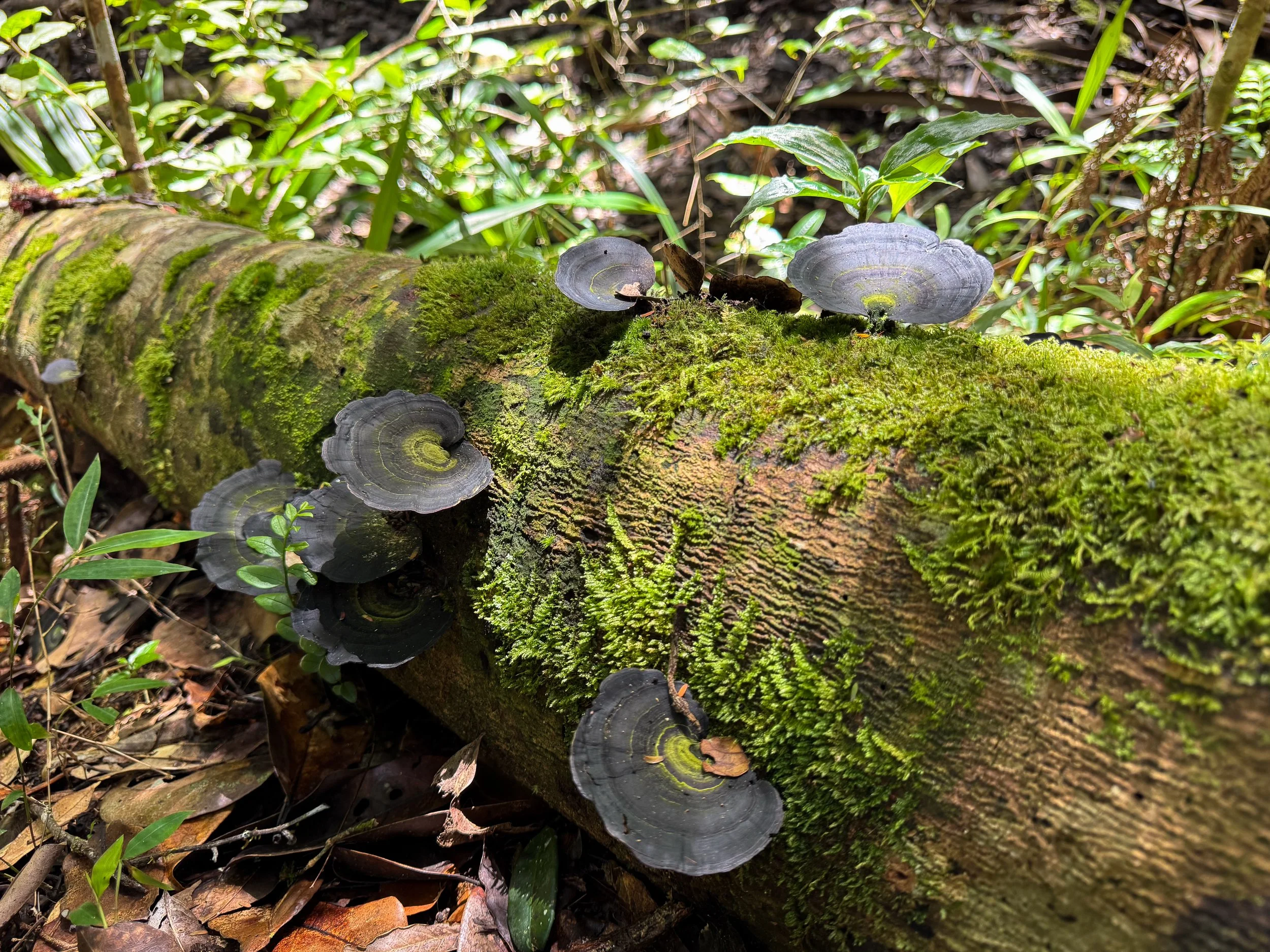
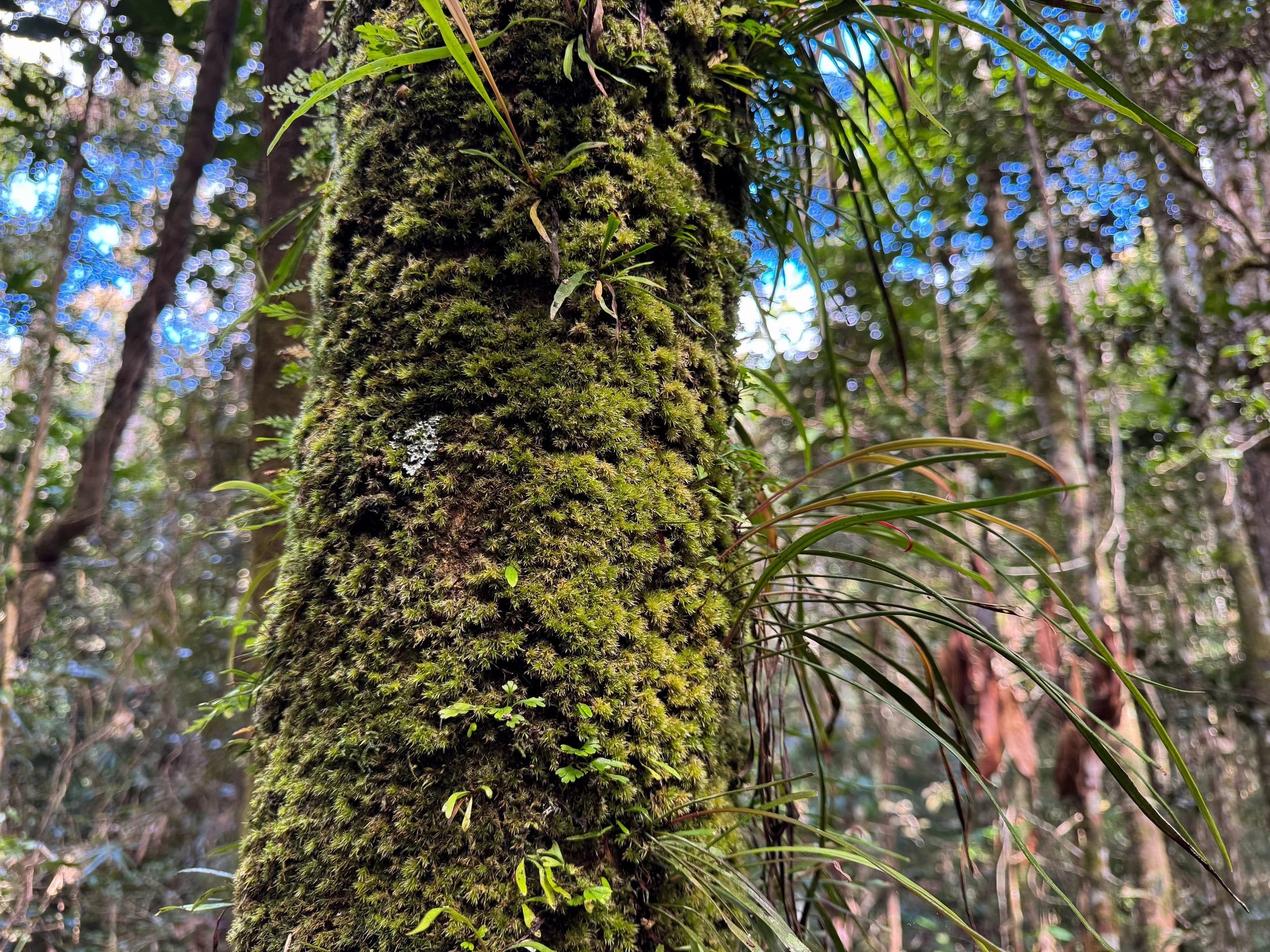
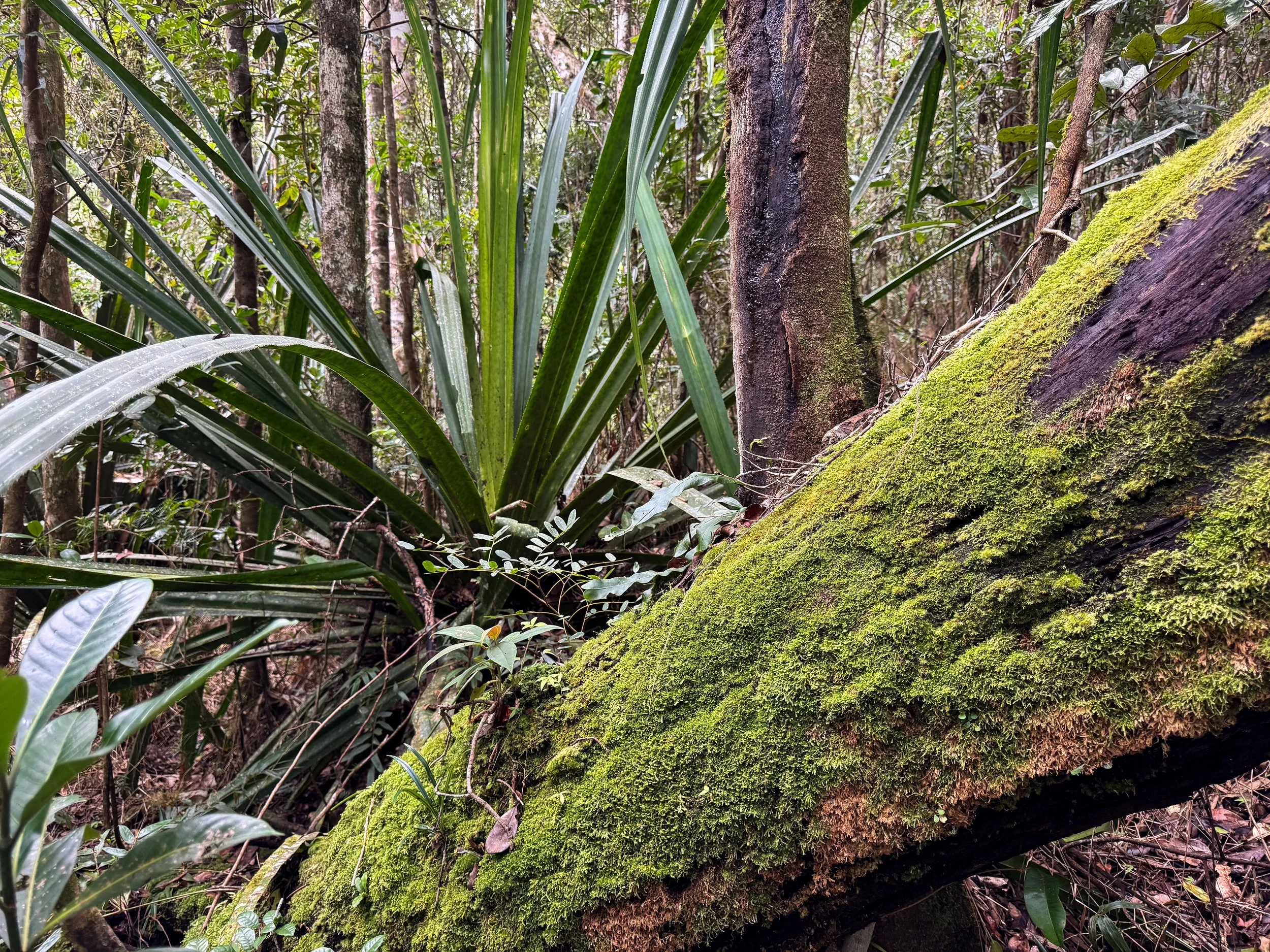
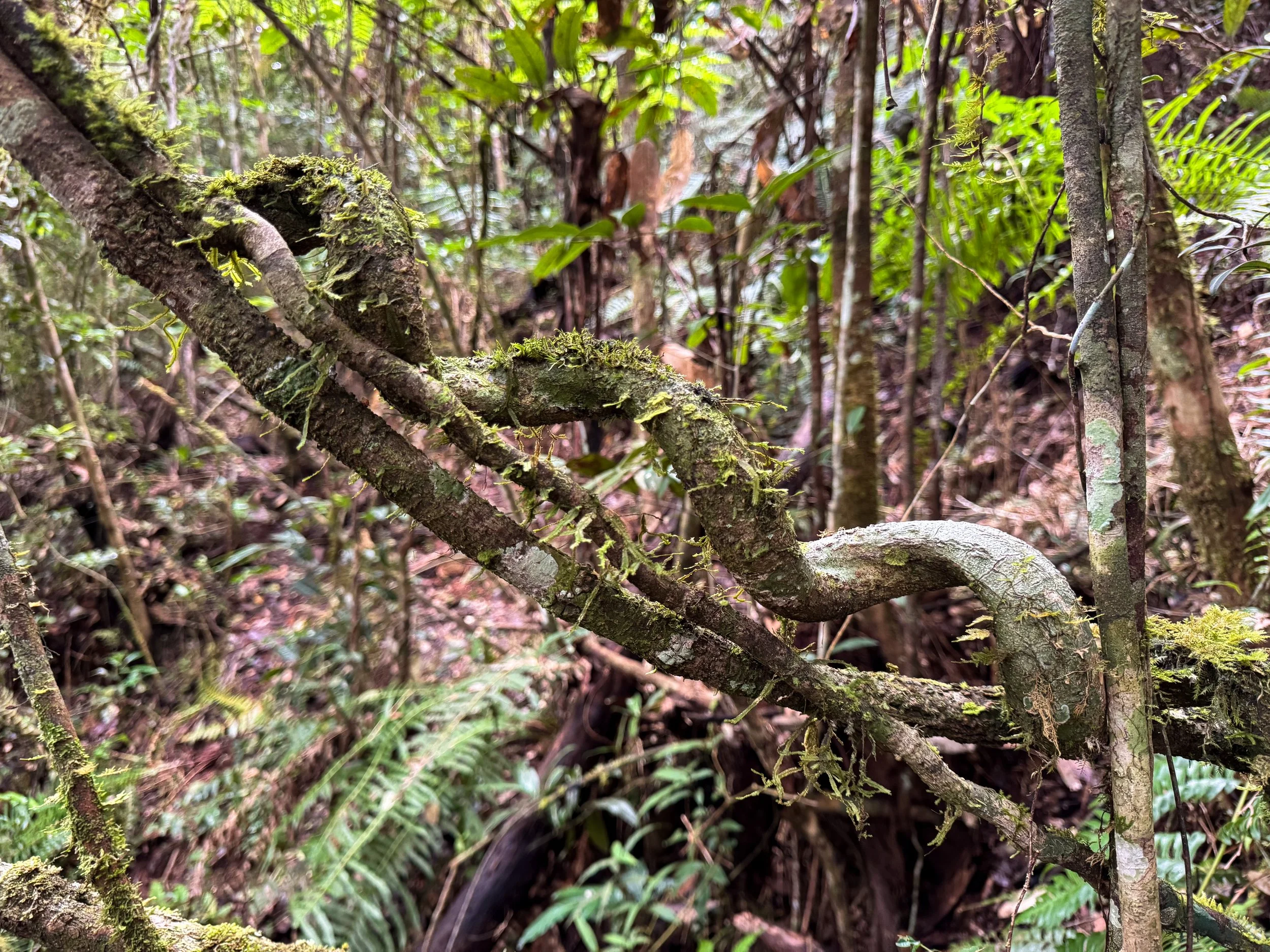
Tsakoka Circuit. A three hour trail through the Mantadia National Park. It’s regarded by local guides as the best circuit to see varying species of the park’s difficult to spot lemurs. The muddy trail leads through the lush forest past moss covered and lichen spotted tree trunks. Twisting vines and aerial roots hang from dense canopy. Large ferns and giant plants grow from the forest floor. The songs of Indri Lemurs echo through the forest while the growls and grunts of Black and White Ruffed Lemurs reverberate in the distance.
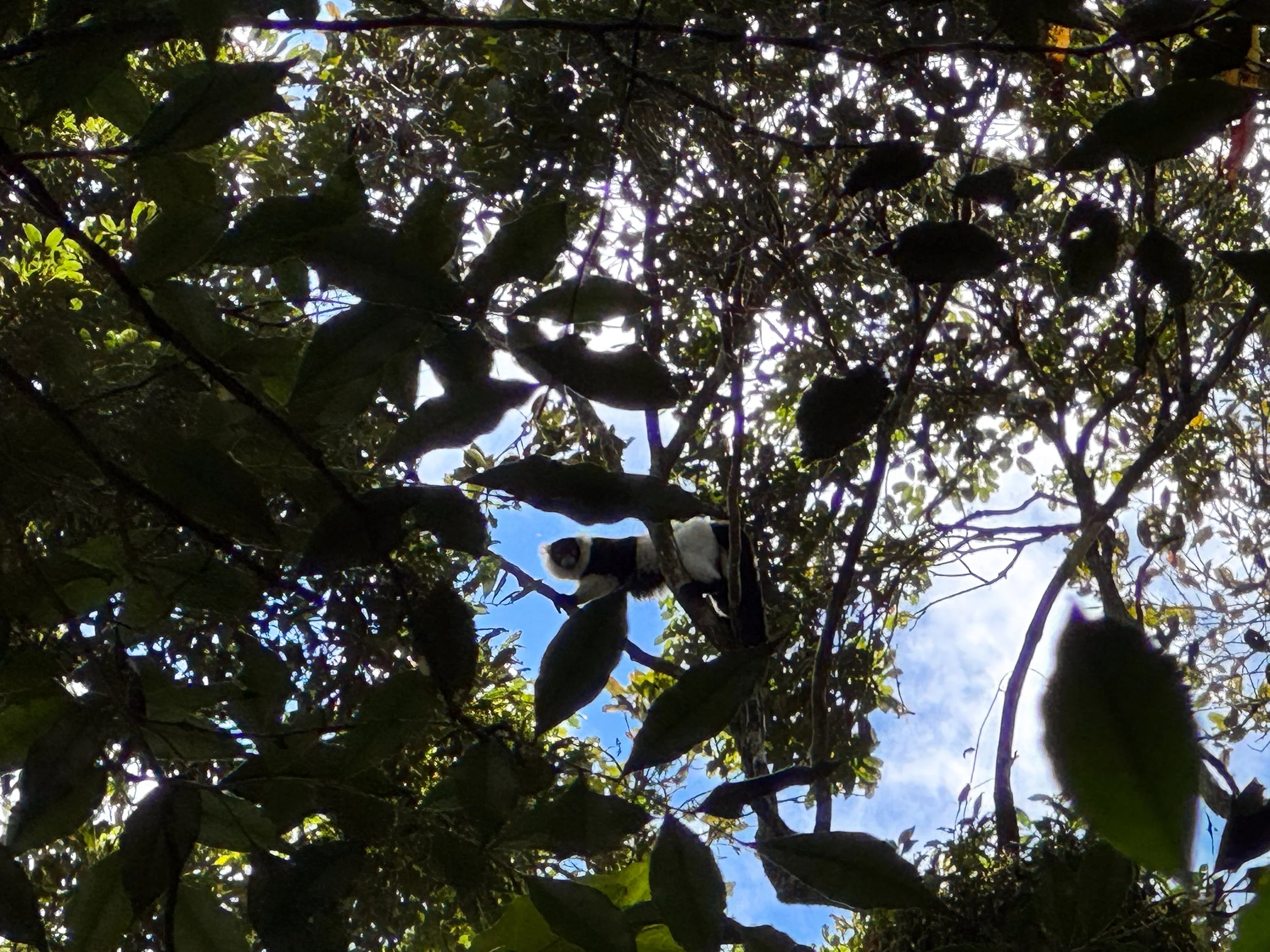
Black and White Ruffed Lemur. The park is a habitat for the critically endangered Black and White Ruffed Lemur. They’re recognizable by their fluffy black and white appearance, large size and distinctive call. It took two hours to track them by their calls. Three ate fruits and hopped between branches in the high tree top canopy.
General Park Information
There is not much info on any of the park websites about Mitsinjo Reserve or Mantadia National Park regarding basic information like opening hours, ticket prices or hiring guides. Below is some helpful advice based on our experience.
Opening Hours. The parks are open daily between 7am-4pm. Arrive before 8am when the lemurs are most active. Stay close by the park offices for easier access.
Prices. Ticket prices vary depending on the circuits chosen and their length. Expect to pay 35K to 120K Ariary per circuit. There is a daily 5K Ariary Community Development Tax. Tickets can only be purchased with cash.
Guides. Guides are required when visiting the parks and reserves. They can be hired at the park ticket offices.
Tipping. Plan to tip drivers and guides 10% - 20% of the circuit price.
Gear & Attire. The park trails are often muddy, even during the dry season. Wear boots or sturdy shoes and bring a hiking pole for extra support. The temperature is cooler in the mornings and evenings. Wear light removable layers while hiking. Bring a flashlight for night walks.
Getting to Andasibe. Andasibe is located between 3-4 hours from Antananarivo by car. Most hotels offer round trip transportation. There are also taxi stands and drivers available at the airport. Prices are very expensive regardless of the option you choose, often costing around $120 USD one way.
Where to Stay in Andasibe
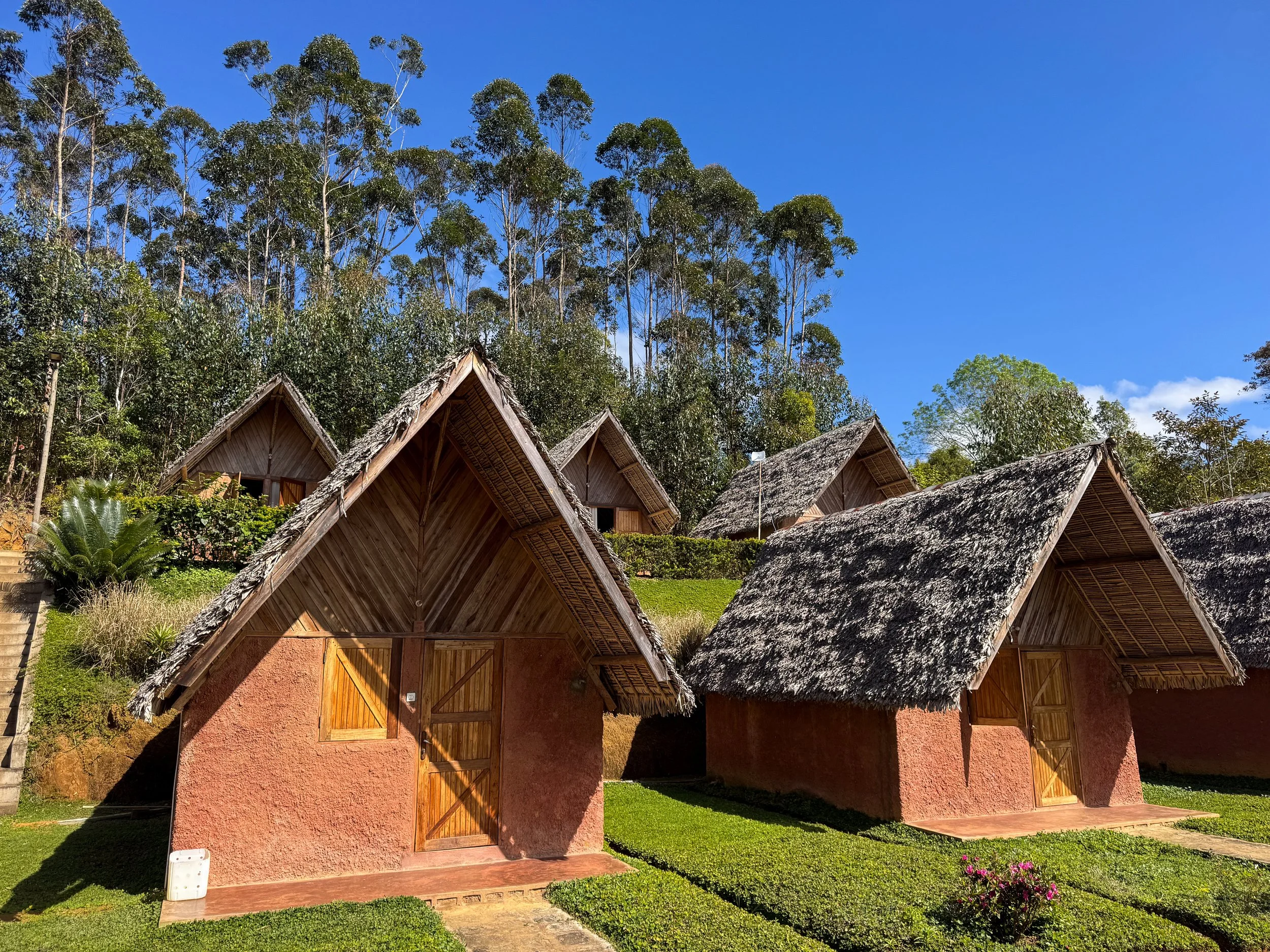
Soanala Hotel Andasibe. An eco-hotel with several A frame style bungalows built into the forested hillside of Andasibe. It's walking distance from the park entrances of the Mitsinjo Reserve, Analamazoatra Reserve and Mantadia National Park. Their restaurant offers complementary breakfast and well priced meals. Transportation to and from the airport in Antananarivo can be arranged for an additional fee. Reserve on Booking.
Location Specifics
Language. Malagasy and French are the two most widely spoken languages in Madagascar. English is rarely spoken, however several school children would often stop us to practice conversing.
Cash vs Card. Cash is king in Madagascar! The country runs on a cash based economy using the local currency, Ariary. Exchange USD or Euros at the airport or banks in town. ATMs are frequently out of cash and unreliable. Carry small bills for payments and tips.
Local Excursions. After booking an accommodation, most concierge will offer a suite of tours and excursions to book through them.
For Next Time…
Madagascar is a remarkable country and one we would love to revisit! On our next trip here, we plan to stay in Belo sur Mer to experience its local culture in depth and explore the dry tropical forest of Kirindy Mitea National Park. In Morondava, we’d spend a day touring the tidal Mangrove Forests. On the country’s east coast, we’d relax on the tropical island of Nosy Be. While in the region, we would visit other Indian Ocean Island Nations like Comoros, Mayotte, Reunion or Mauritius.
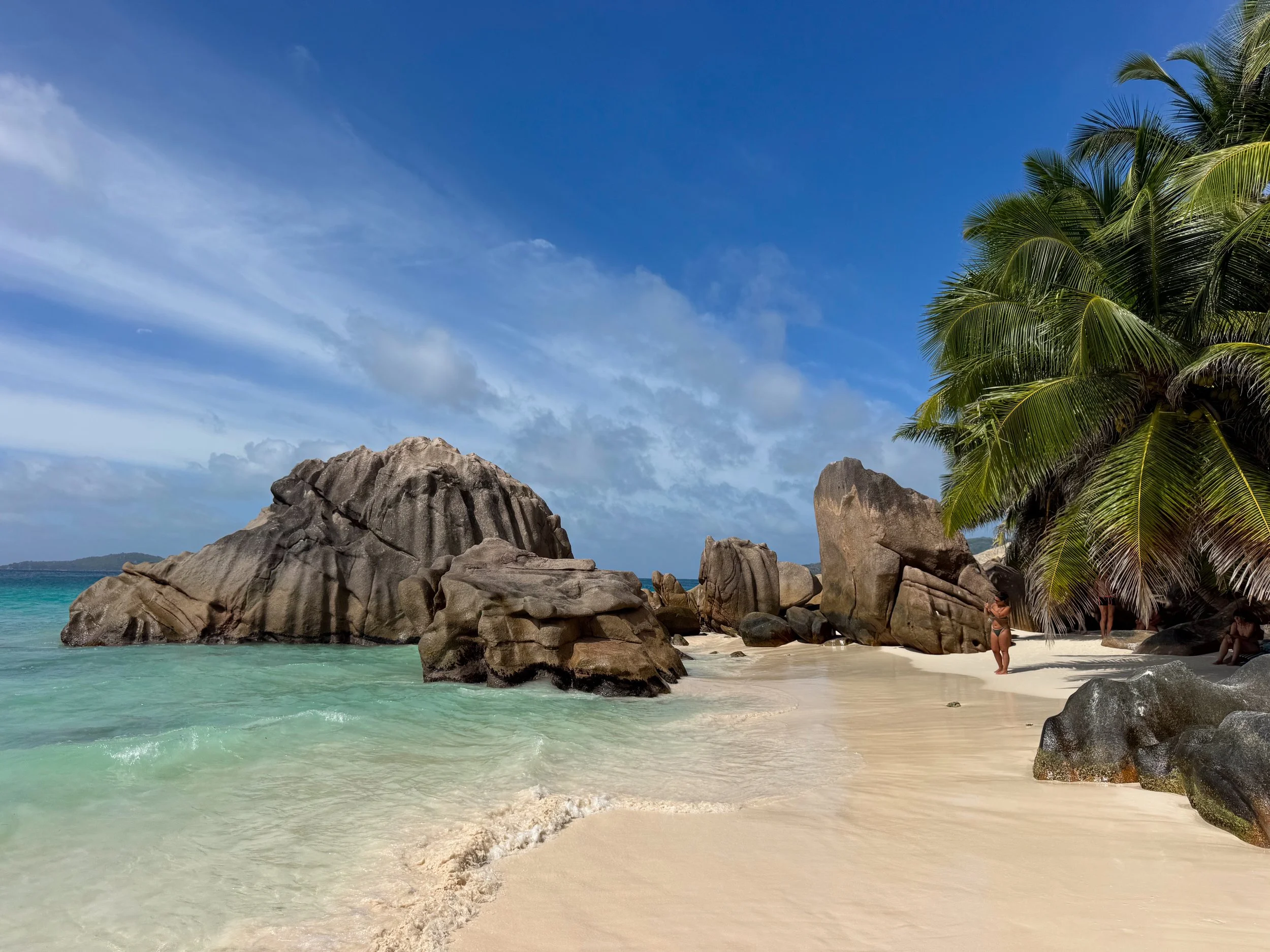
Seychelles Travel Guide: Island Hopping, Tropical Beaches & Granite Boulders
Island hop through the Seychelles where granite boulders, powdery white sand beaches and turquoise waters form one of the world's most idyllic tropical escapes.
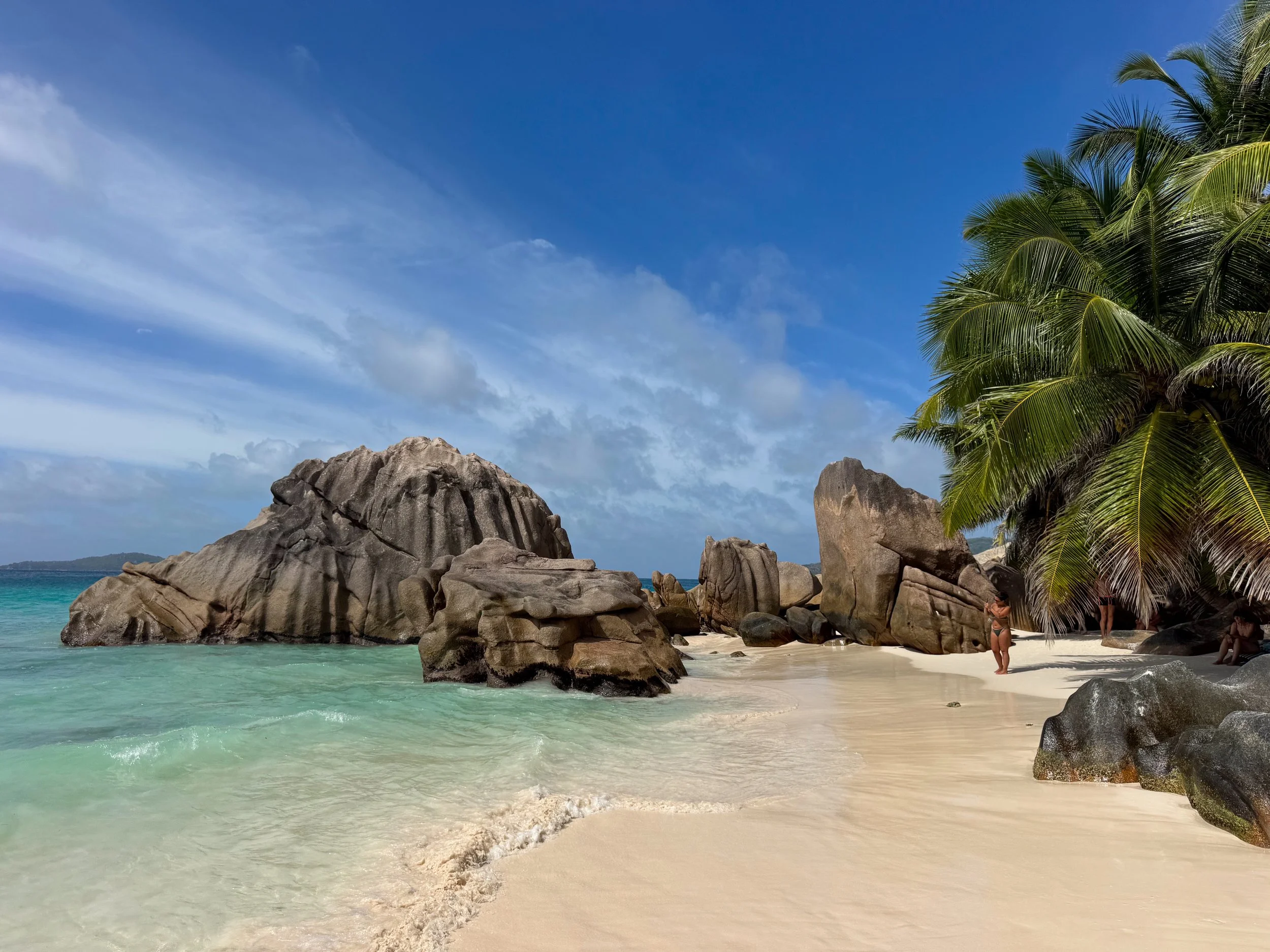
The Seychelles
The Seychelles is a remote island nation and tropical getaway in the Indian Ocean. The archipelago is famed for its powdery white sand beaches, orange granite boulders, vibrant turquoise waters, lush landscapes and scenic hiking trails. We spent a little over a week, island hopping and beach bumming between the Inner Islands of Mahe, Praslin and La Digue.
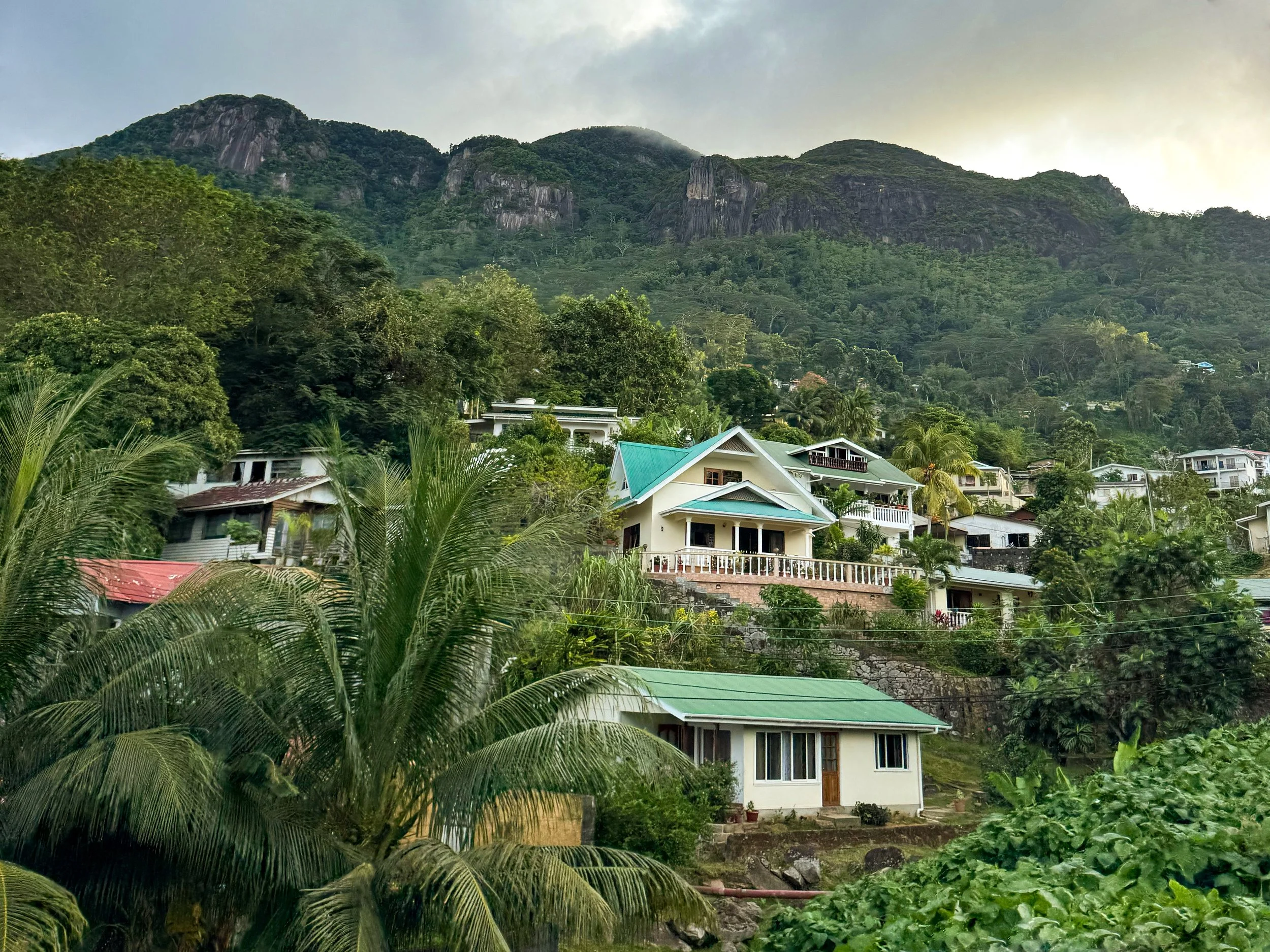
Mahe
Mahe is a seahorse shaped island with lush jungleous mountains, massive granite boulders, white sand beaches and turquoise waters. It’s the Seychelles’ largest and most populous island, hosting the capital city, Victoria, and international airport. It’s the perfect entry point to the tropical paradise!
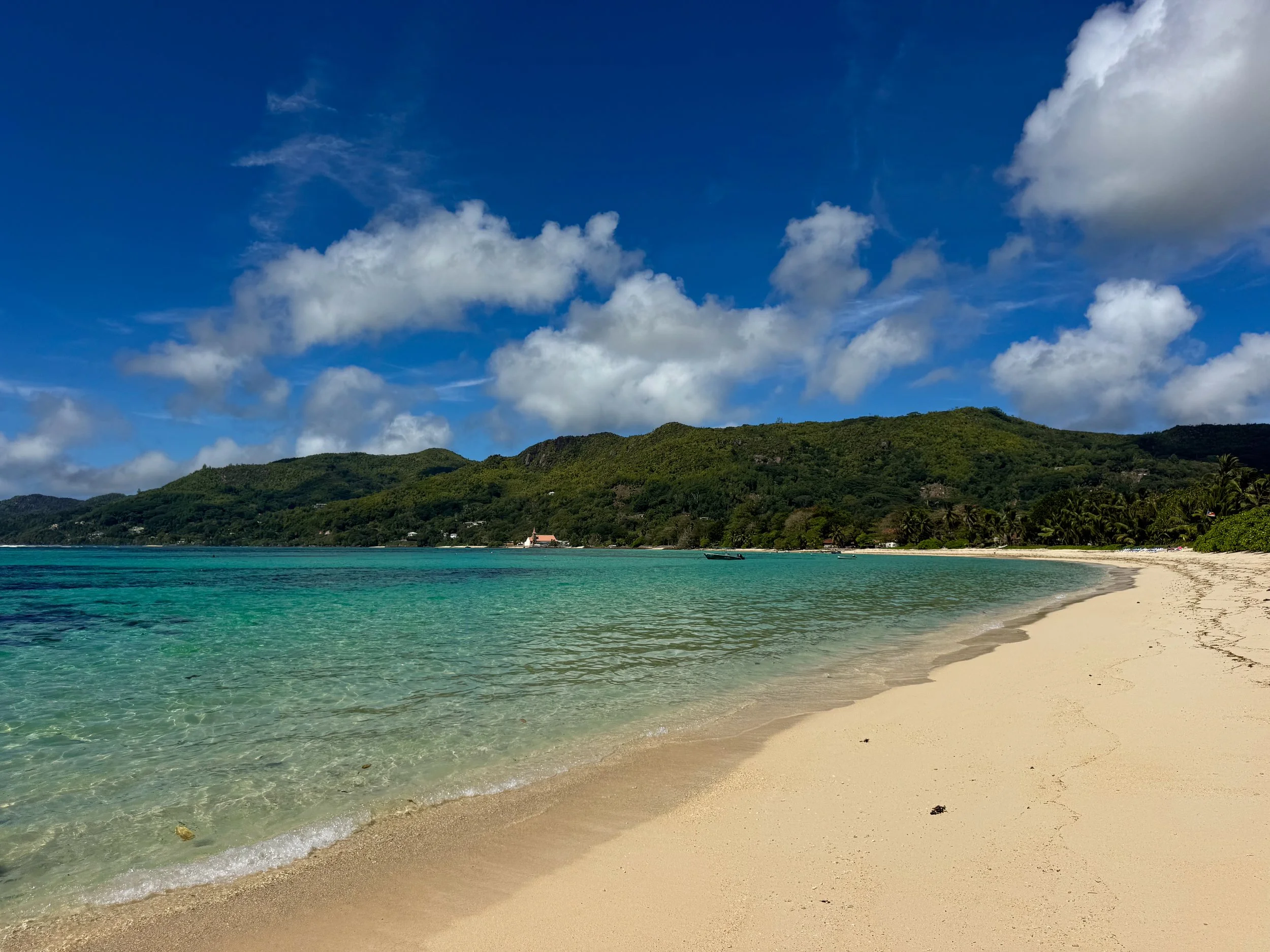
Mahe Beaches
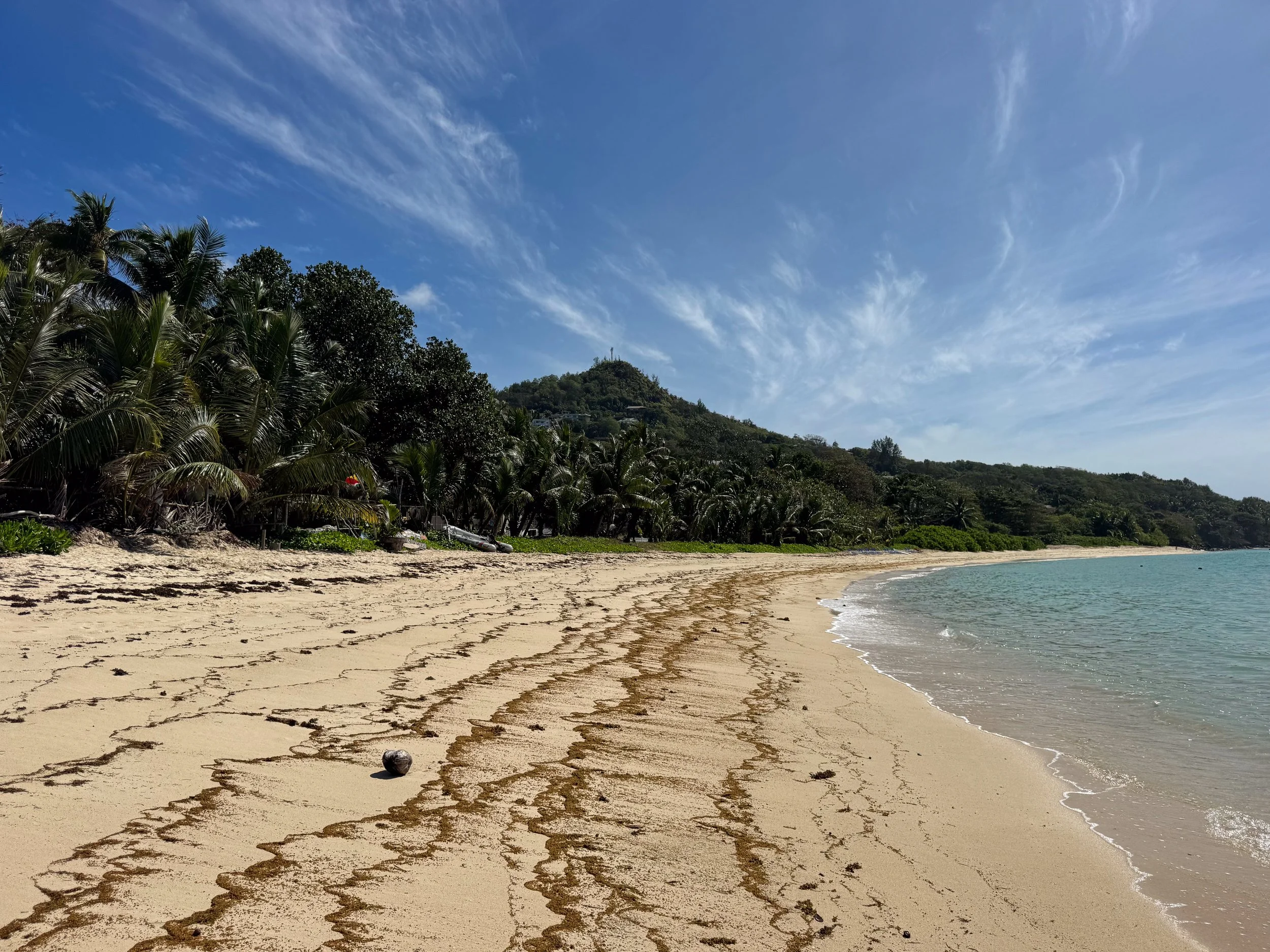
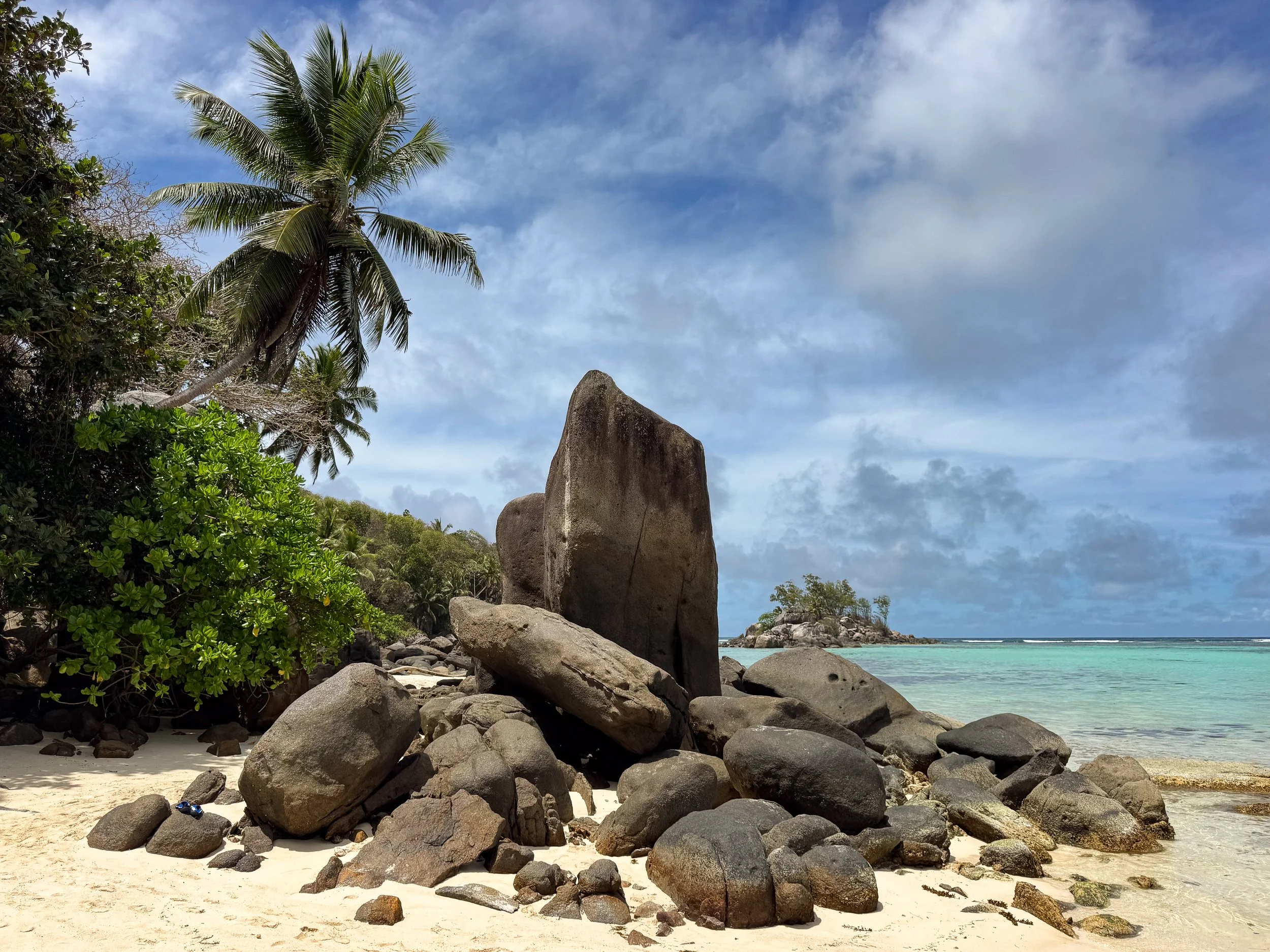
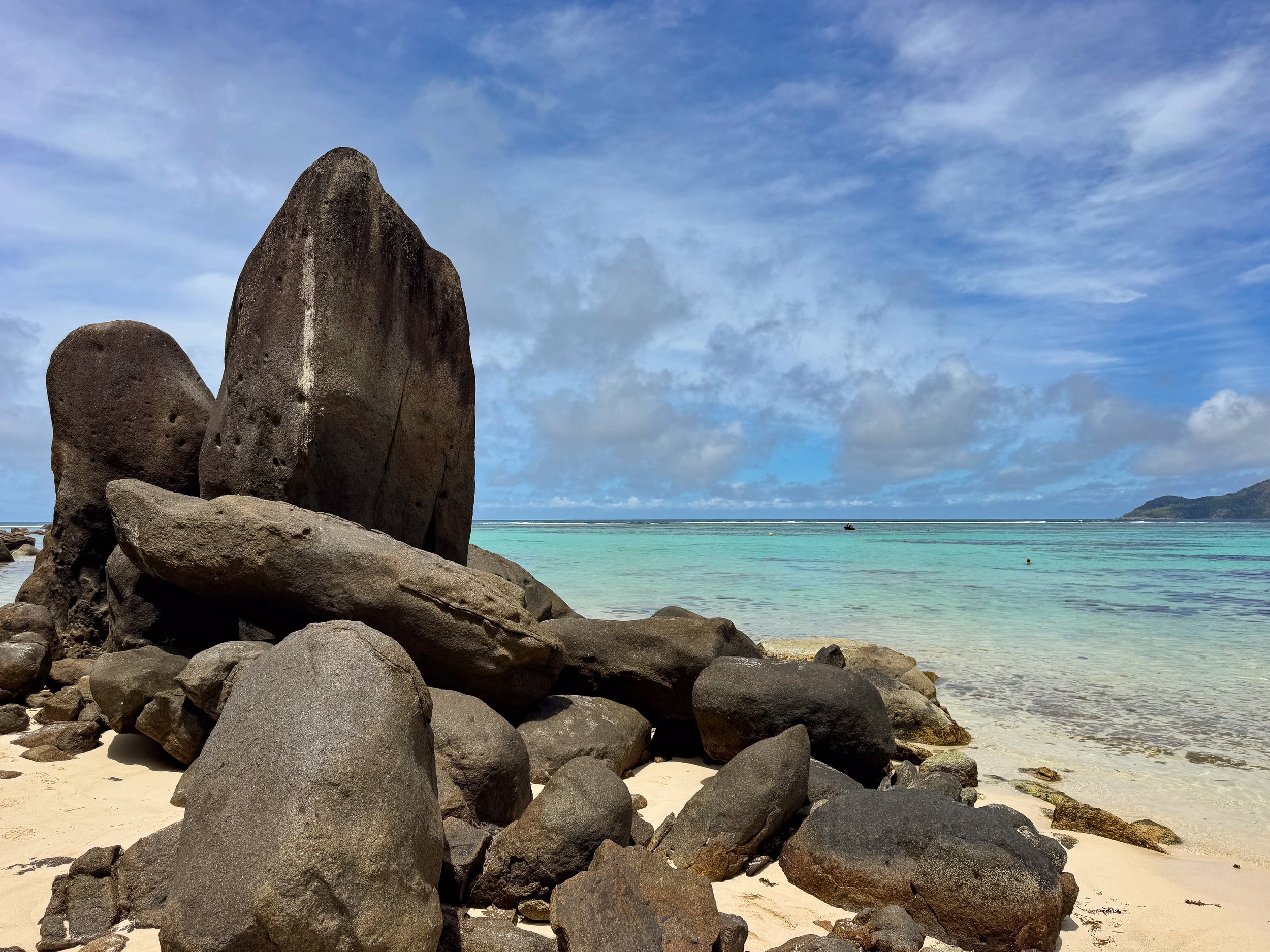
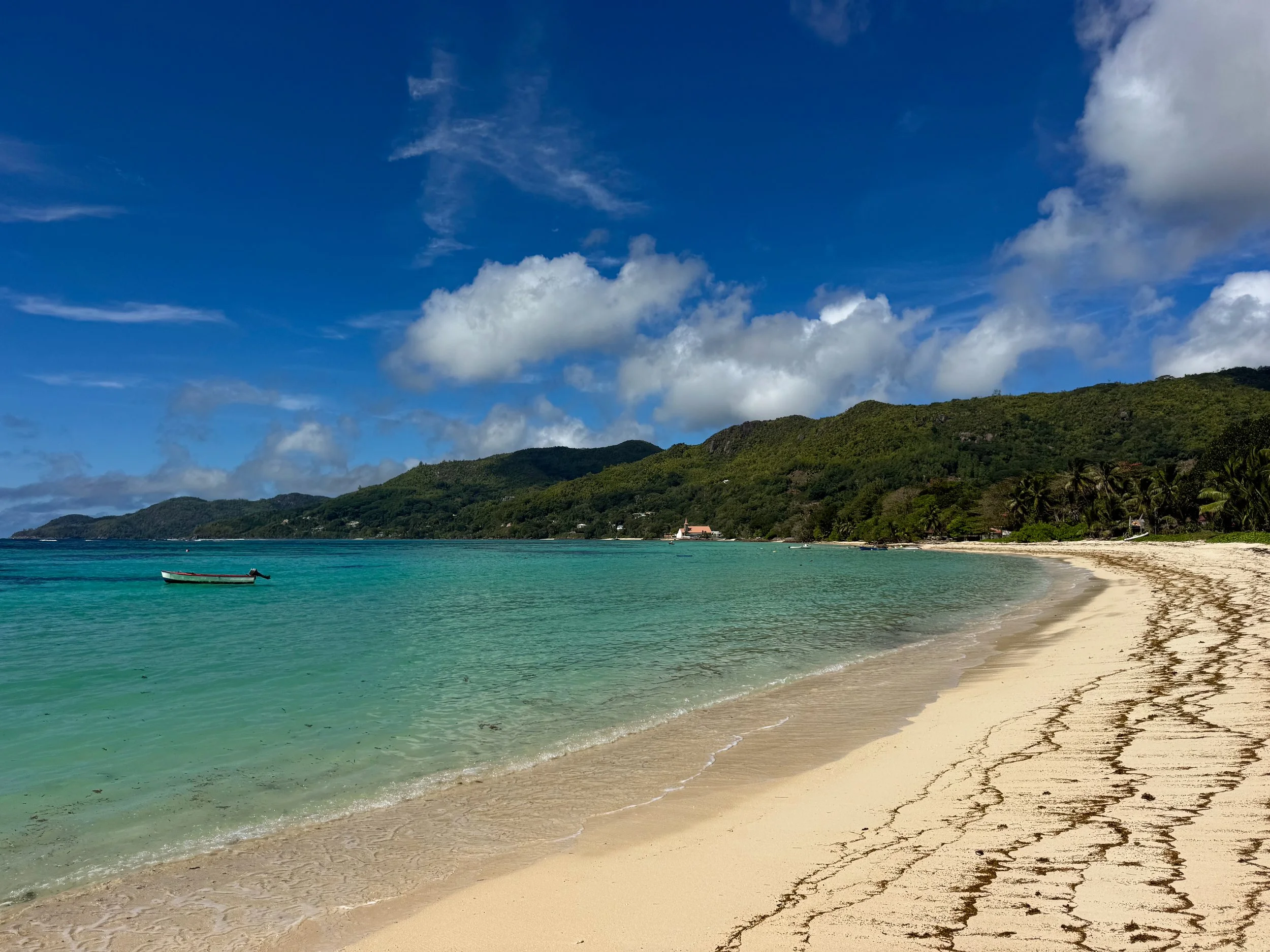
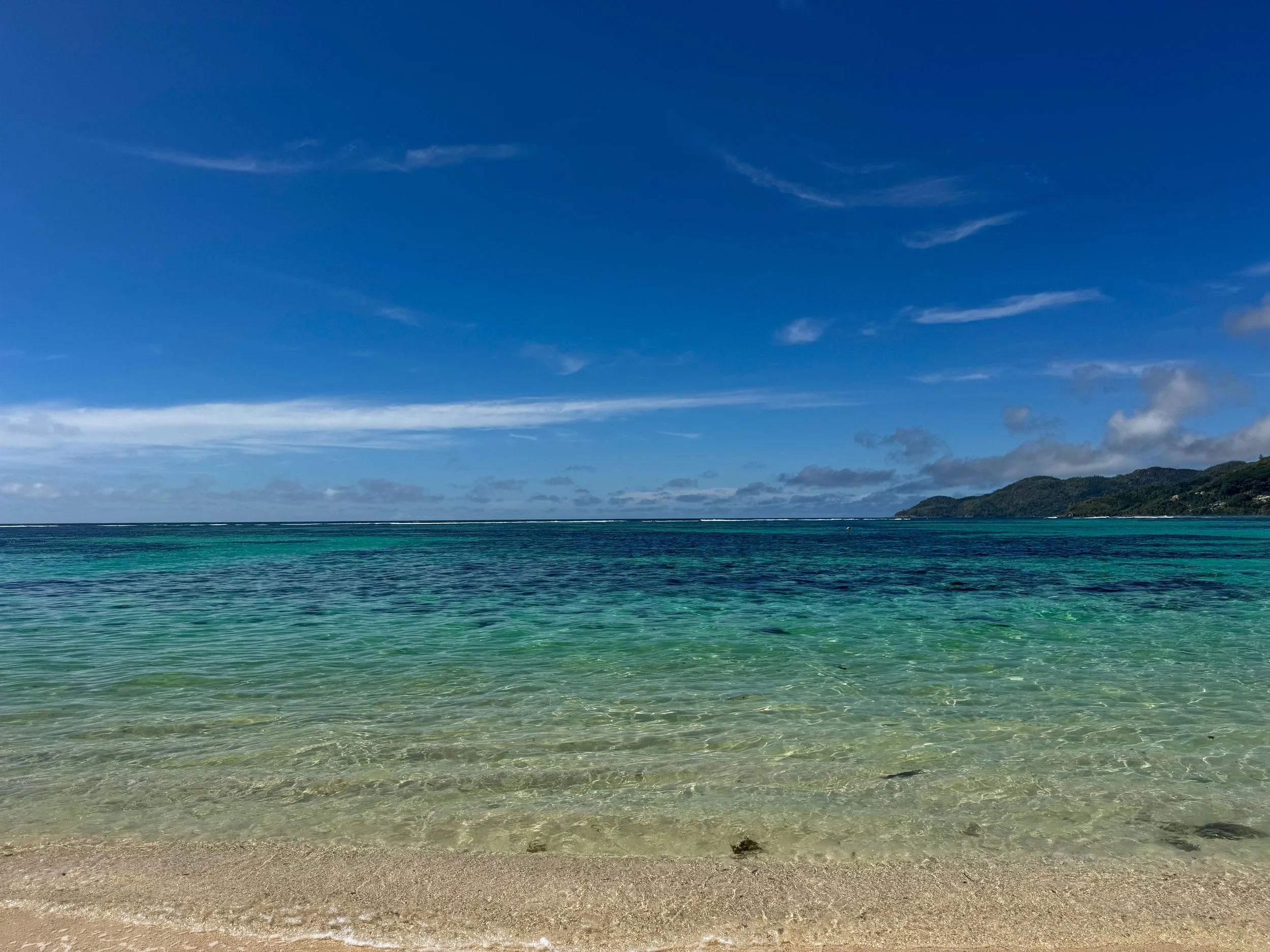
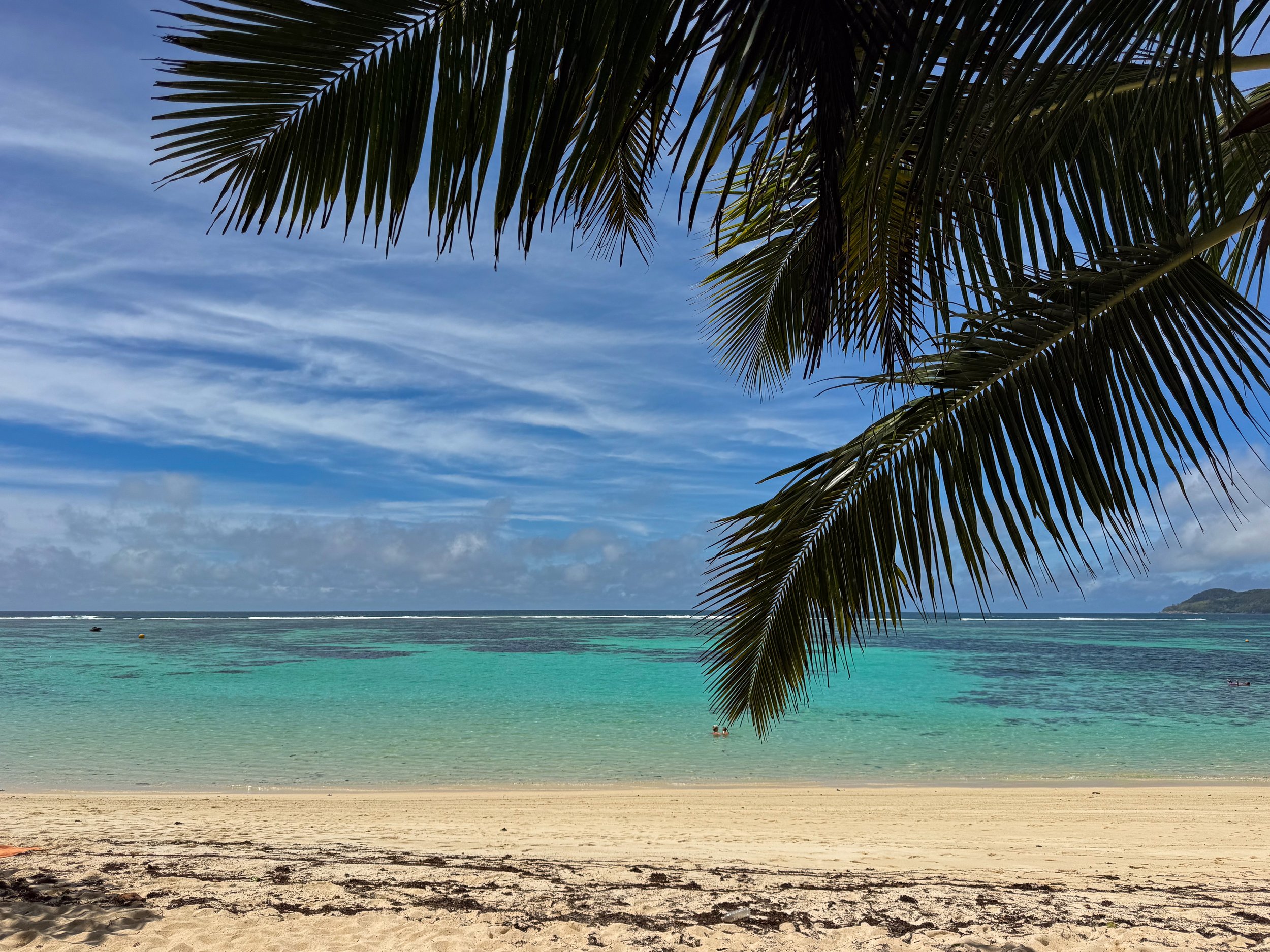
Anse Royale Beach. A crescent shaped tan sand beach with a lengthy shoreline, aquamarine waters and a swimmable bay. Photogenic granite boulders flank the north side of the beach. Pockets of palms offer a respite from the radiant sun. An offshore reef protects the bay from strong waves. A gentle current flows from north to south along the shore. Drift snorkel over fields of seagrass home to tropical fish, urchins, eels and sea cucumbers.
Pro Tip. If driving here, there is a free parking lotwith about 30 spaces. Arrive by 9am to get a spot.
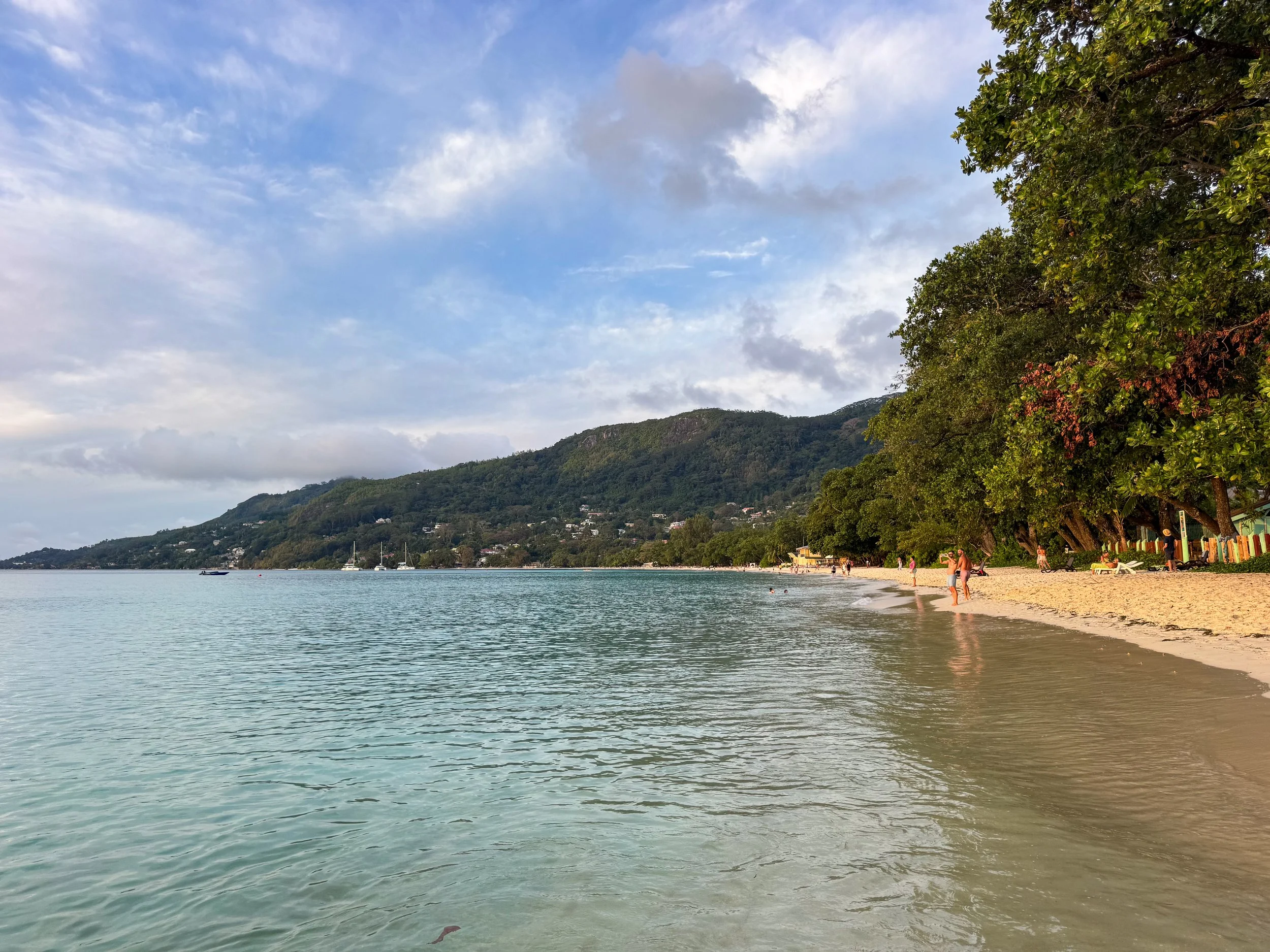
Beau Vallon Beach. A crescent shaped white sand beach with calm swimmable waters. It’s Mahe’s largest beach, stretching kilometers along the northwest coast. Come here to enjoy long walks on the beach, watch nightly sunsets and spot fruit bats fluttering between trees. Resorts and restaurants provide places to stay, eat and drink. Tour operators advertise boat trips to nearby islands and beaches.
Mahe Sights
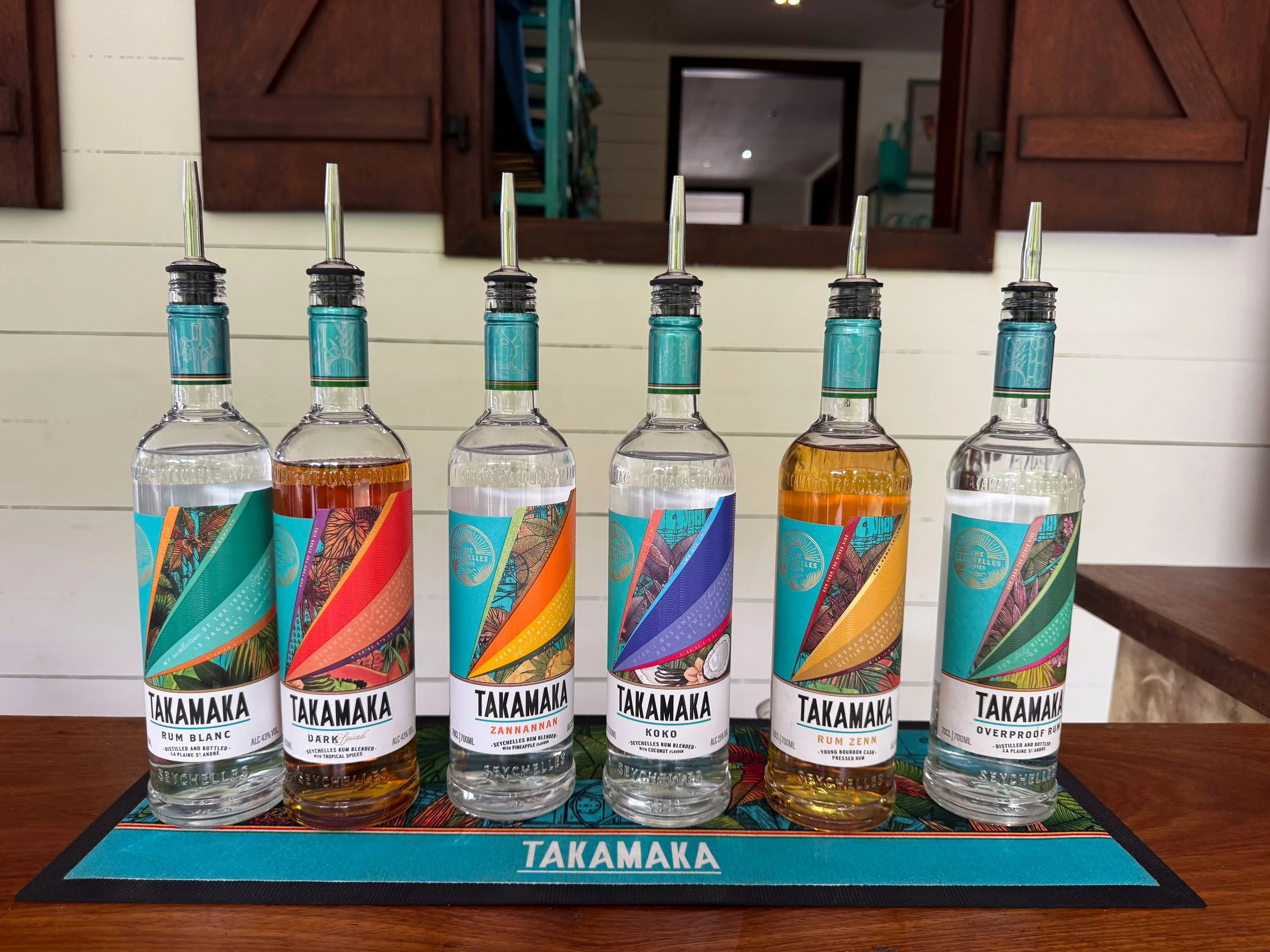
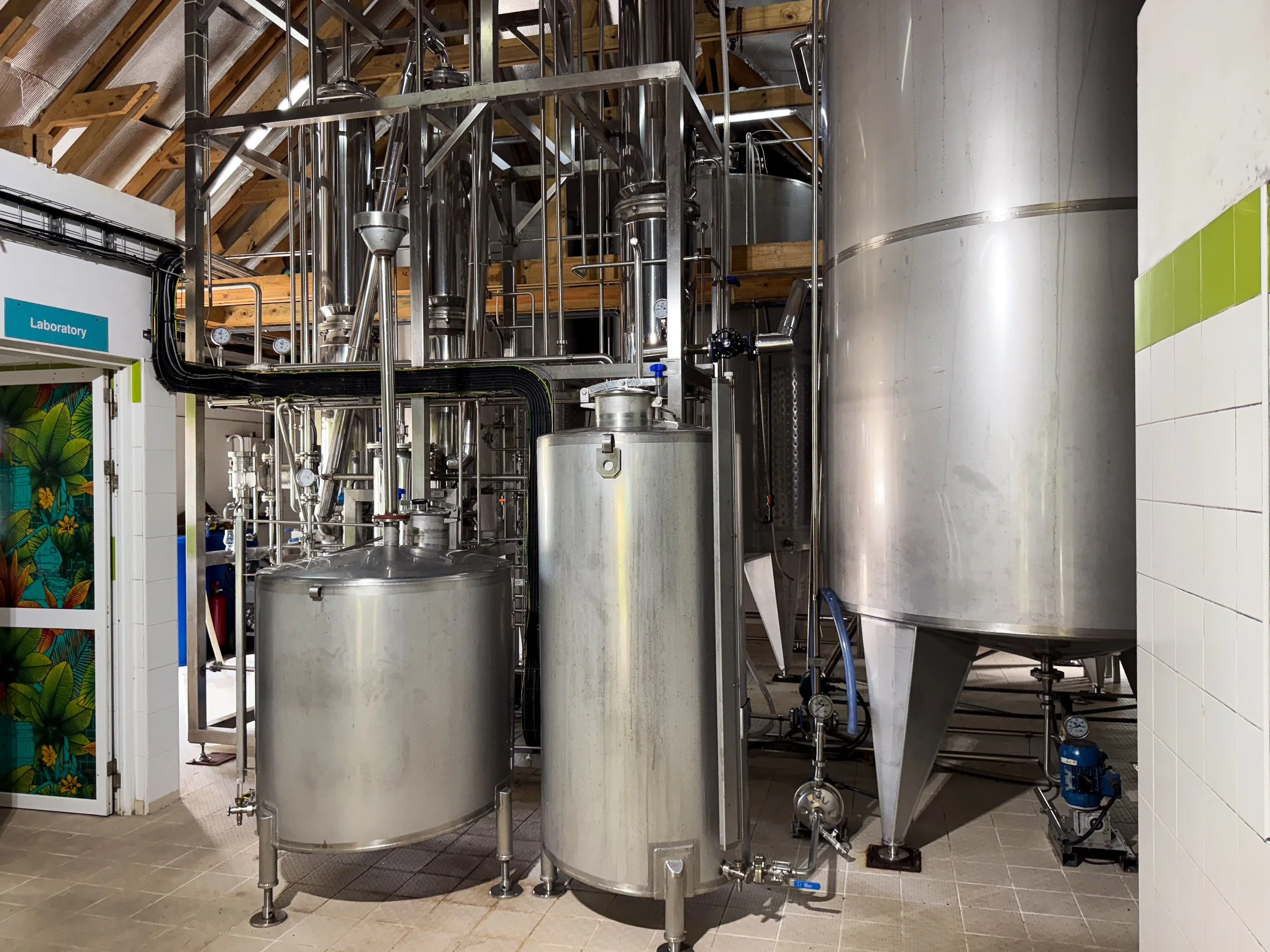
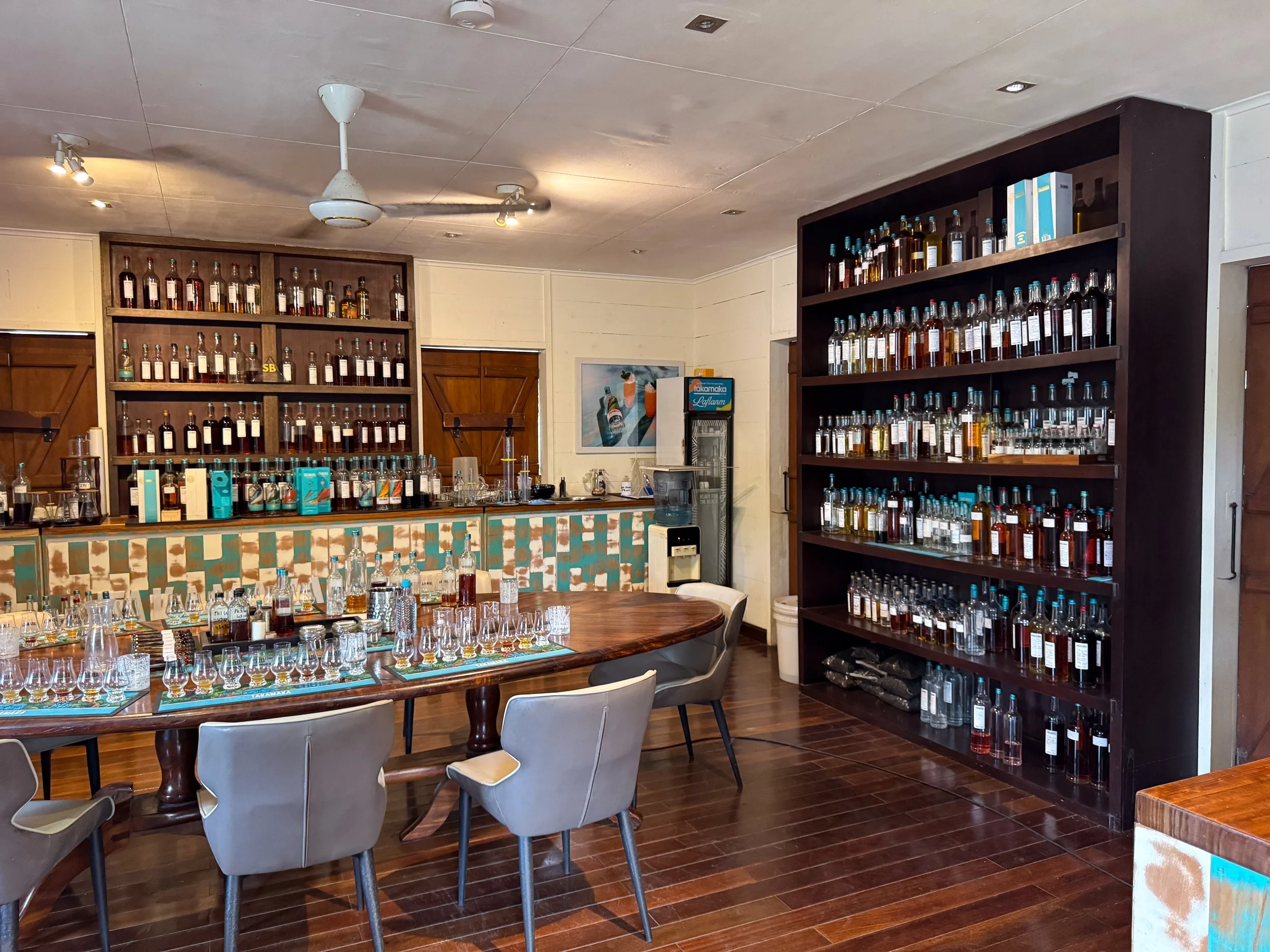
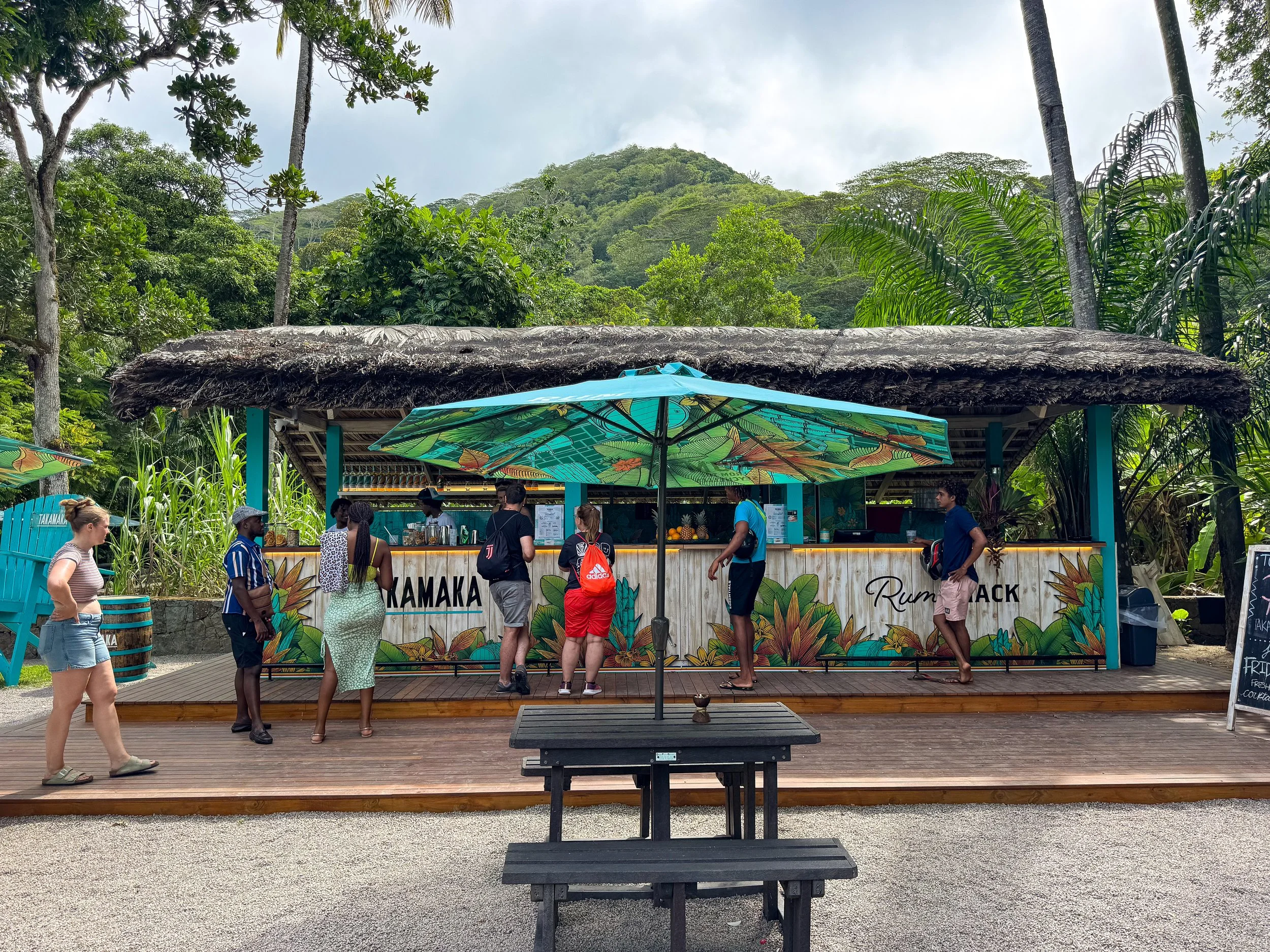
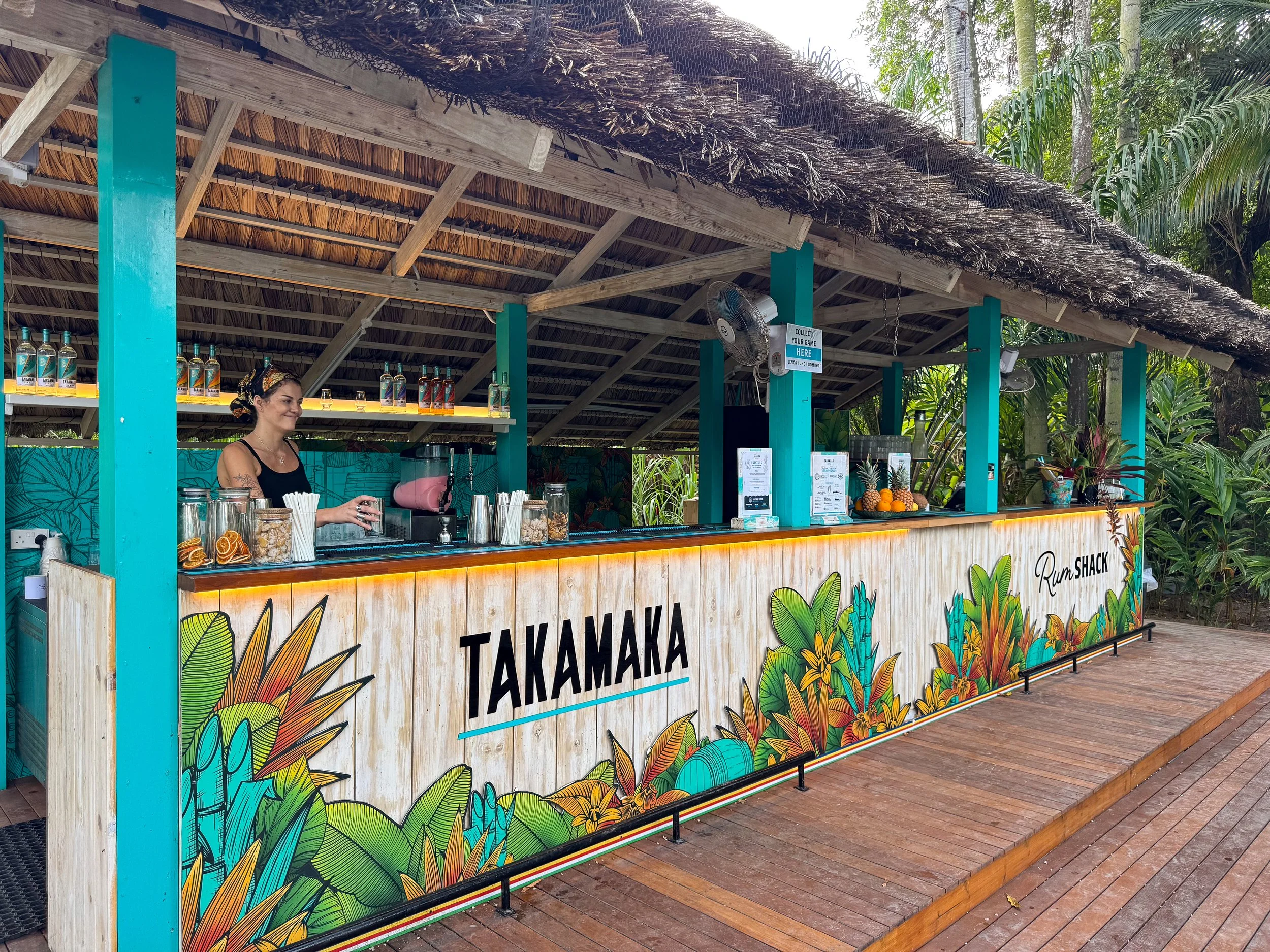
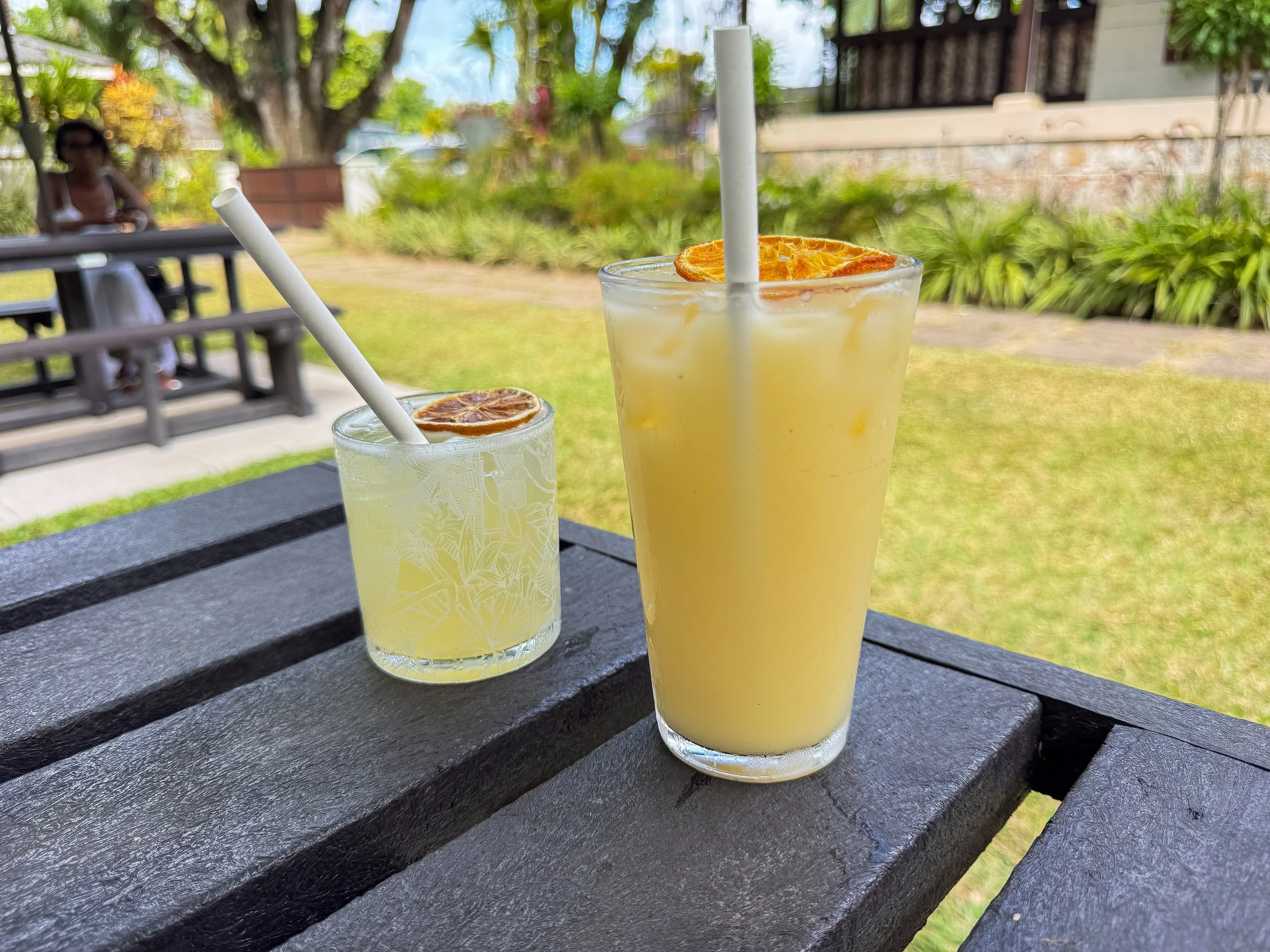
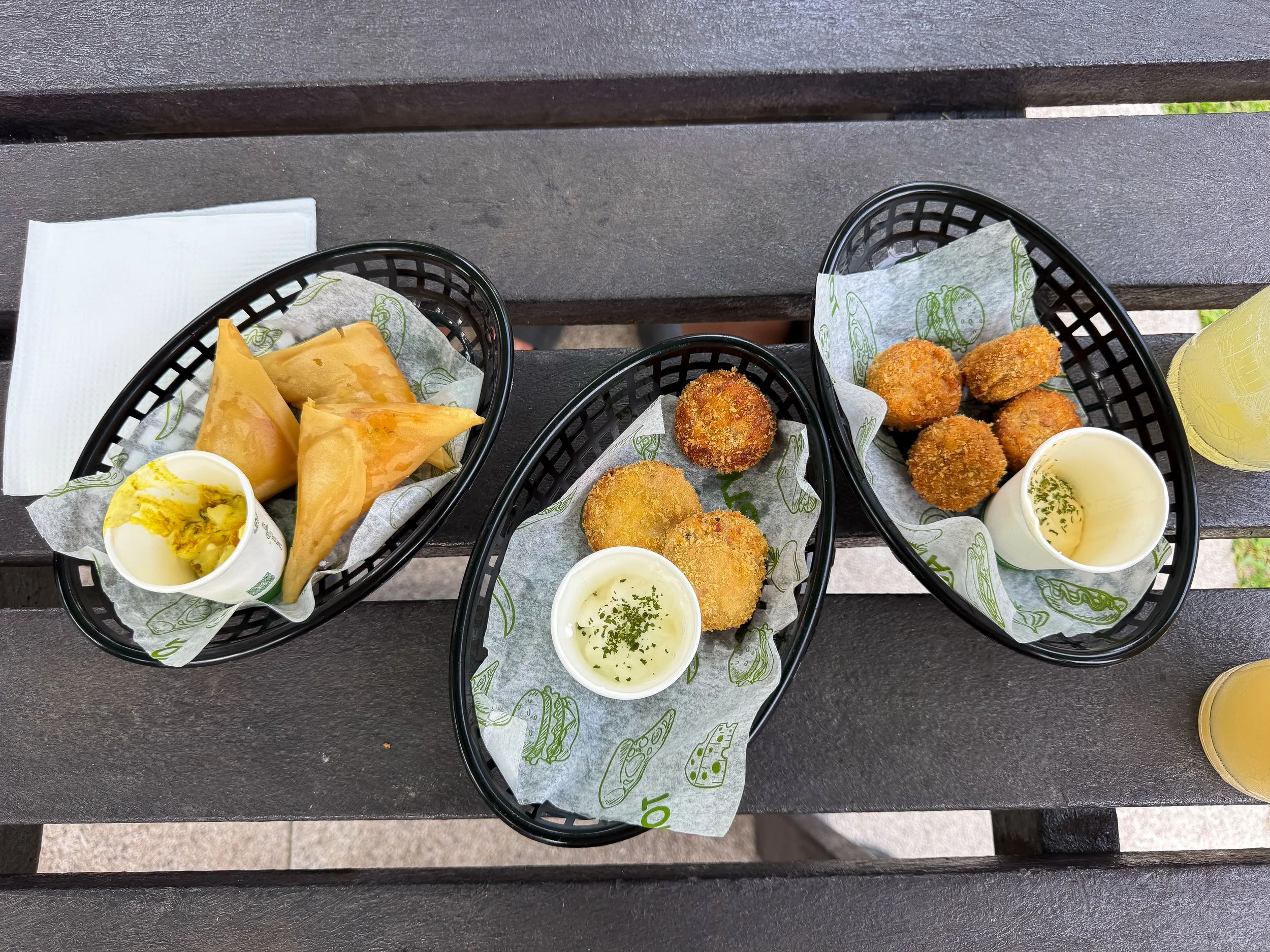
Takamaka Rum Distillery. Takamaka is the Seychelles’ only rum distillery and the archipelago’s most popular rum brand. They distill a series of rums from molasses and sugarcane including light, dark, aged, overproof and flavors infused with coconut and pineapple. The smell of molasses wafts around the property. Free tours are provided three times daily; no reservation is required. Tours last about an hour and offer glimpses inside the distillery, master blender’s workshop and museum. Finish the tour with a tasting of 8 different rums or with a cocktail at the bar. Mixologists stir and shake a range of rum cocktails. Try the Taka Dream and ZenZann. Order shareable bites like croquettes, samosas or falafel from their food stand.
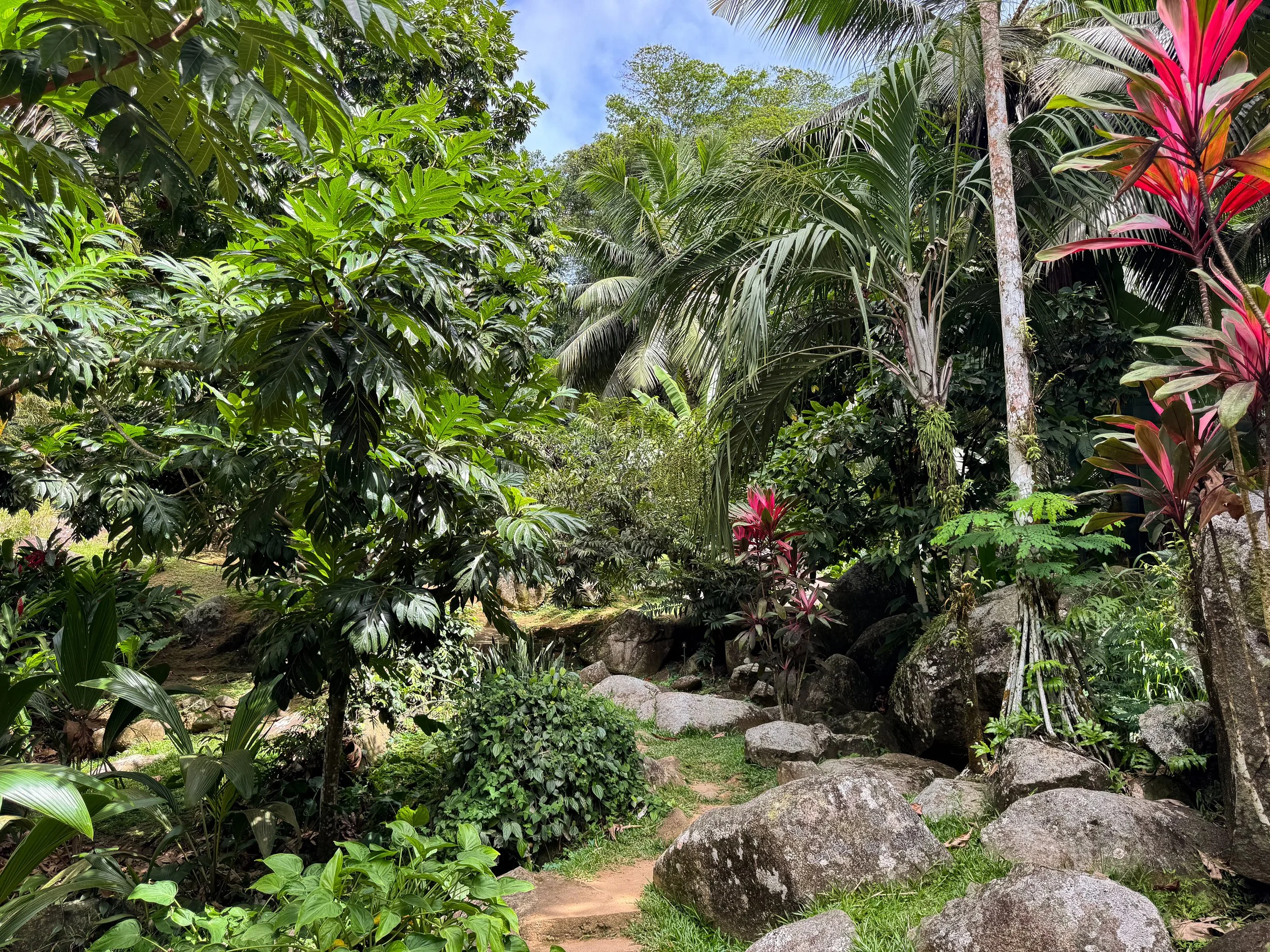
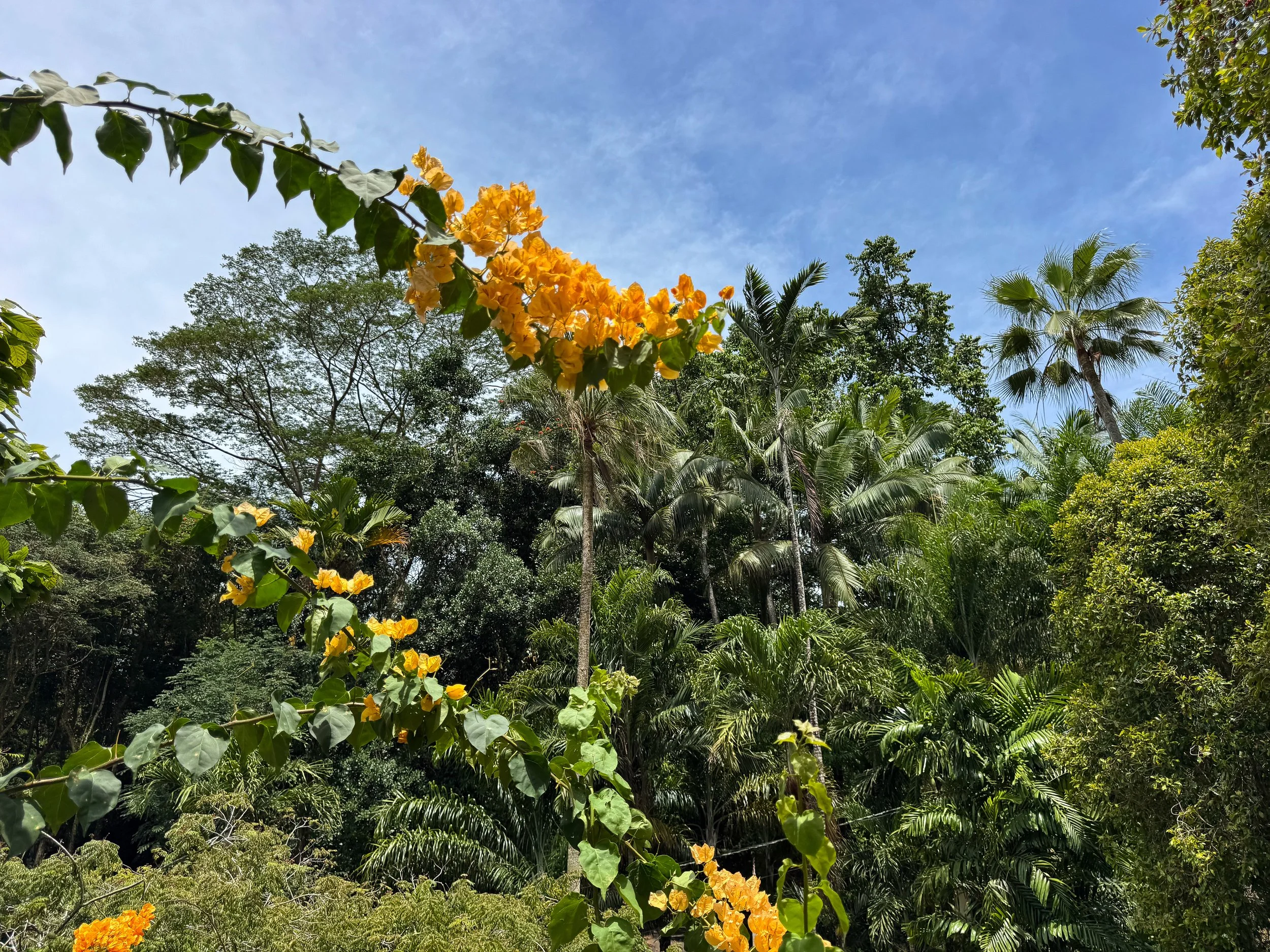
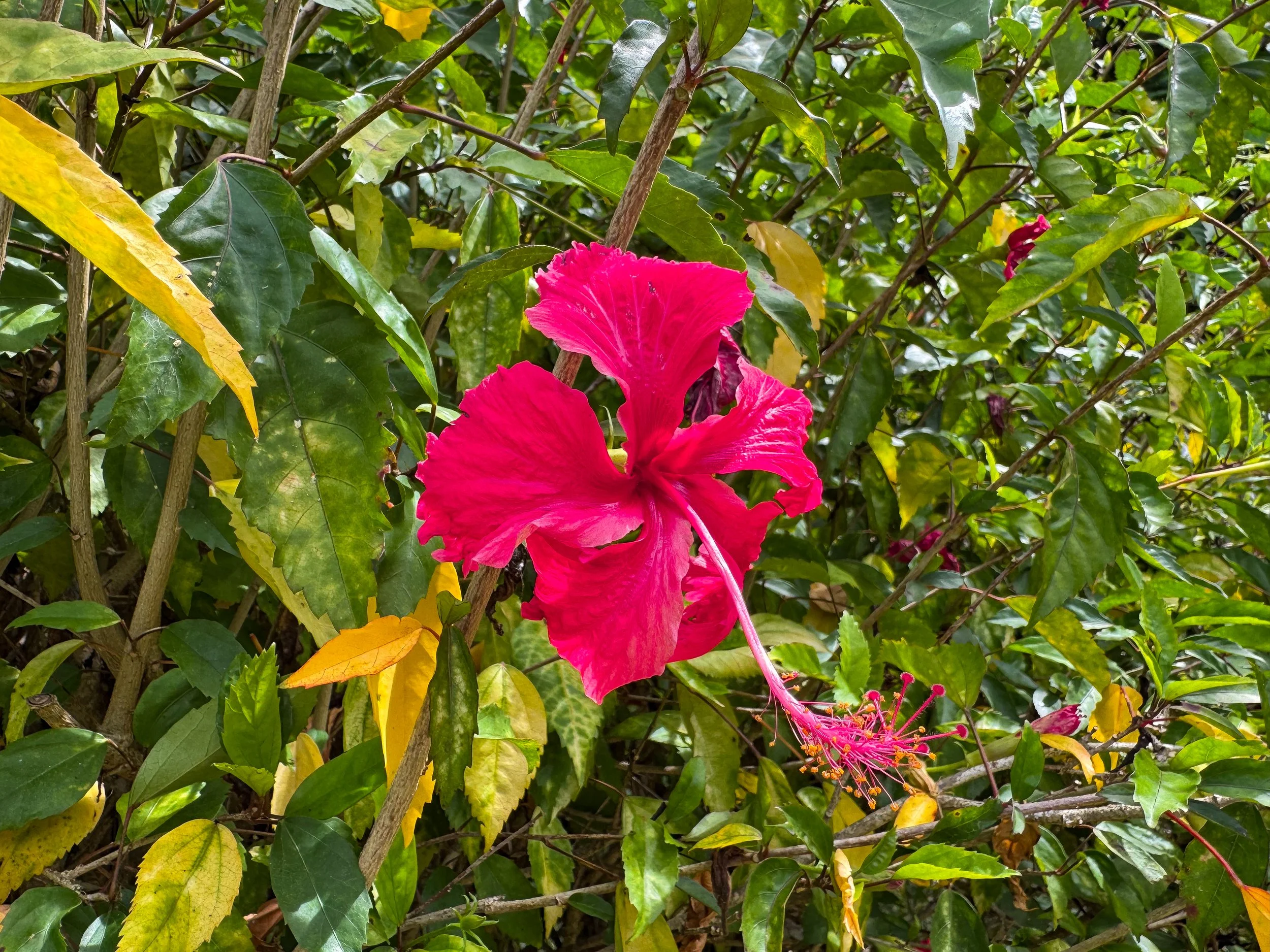
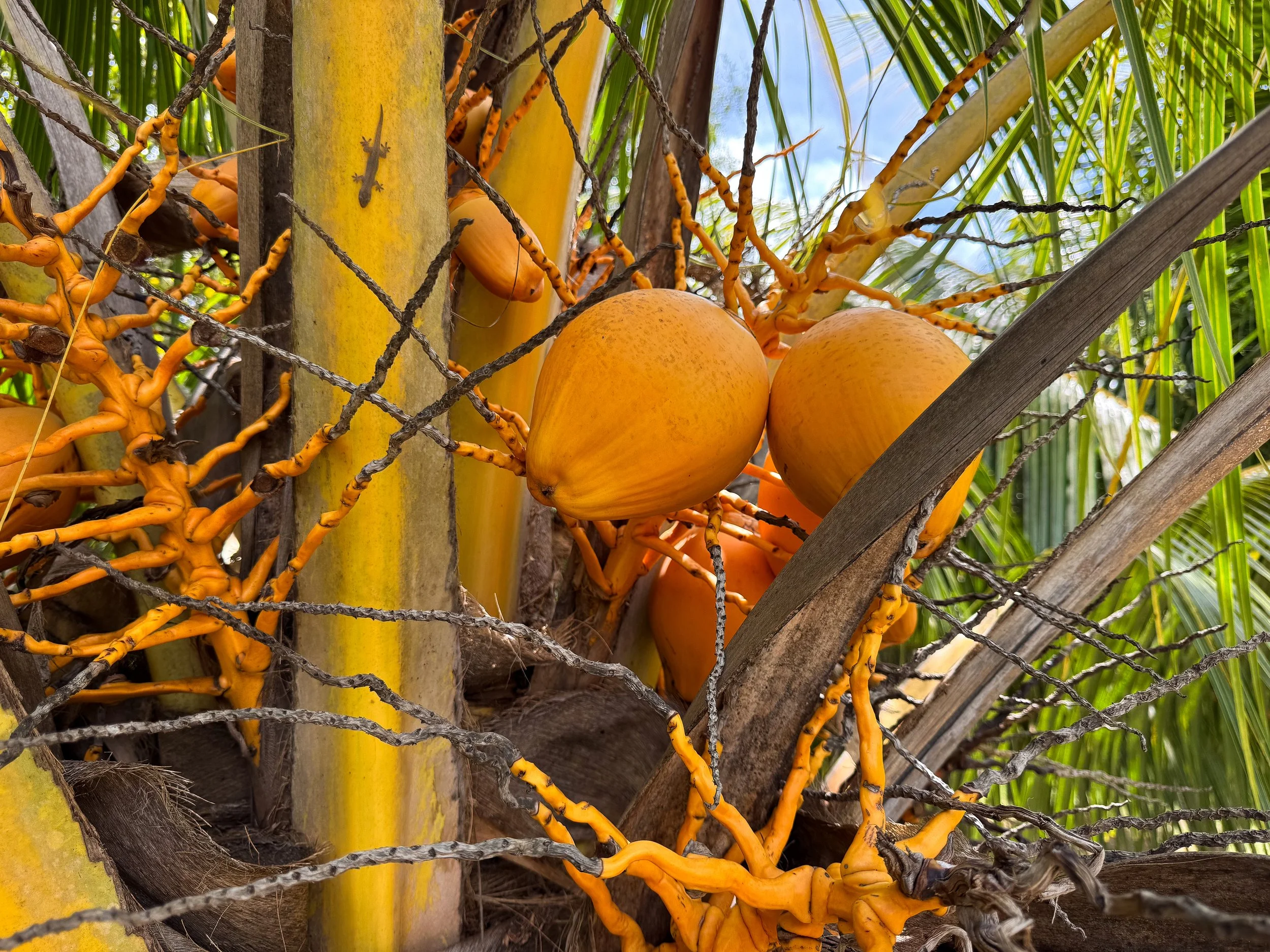
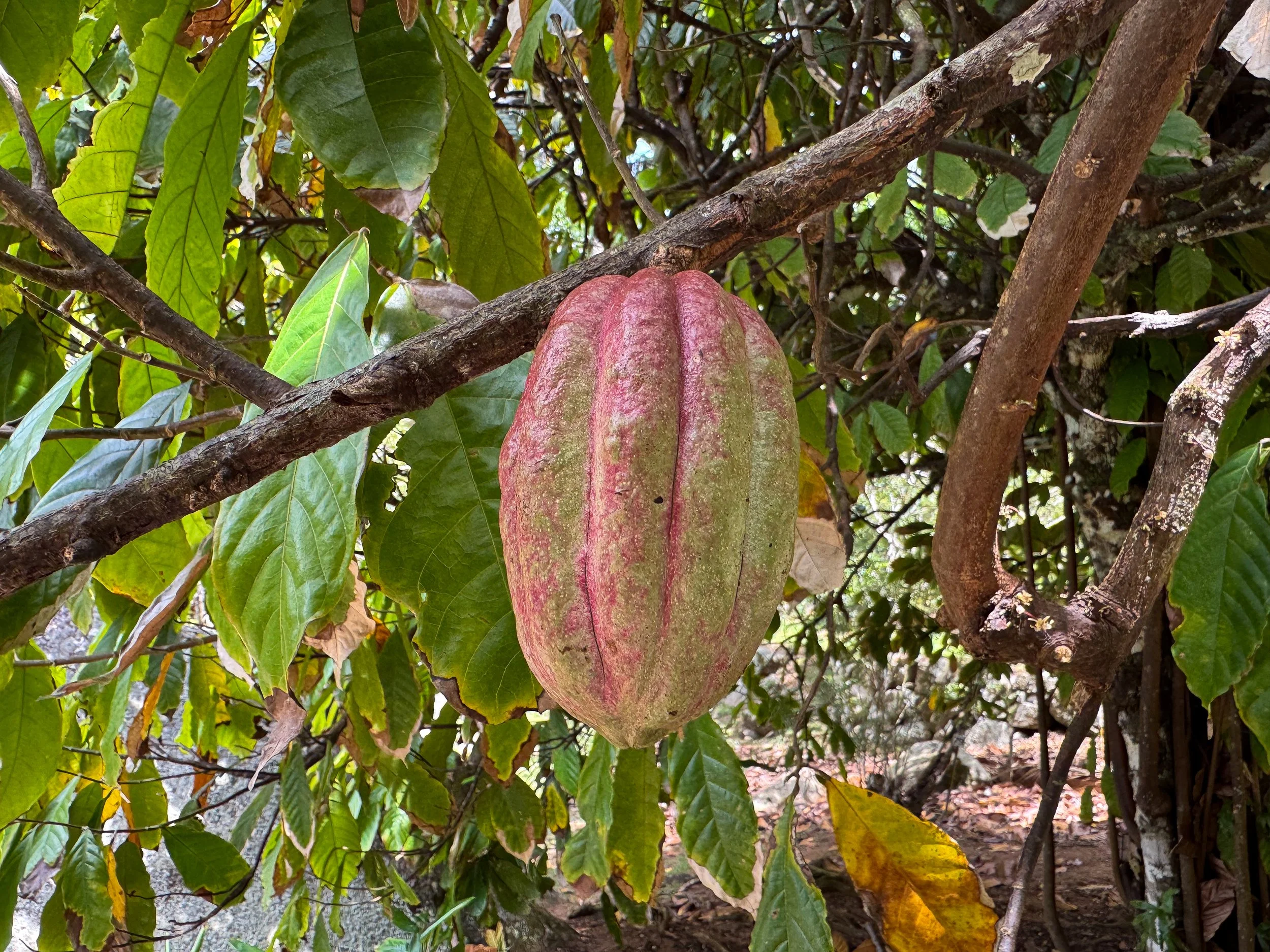
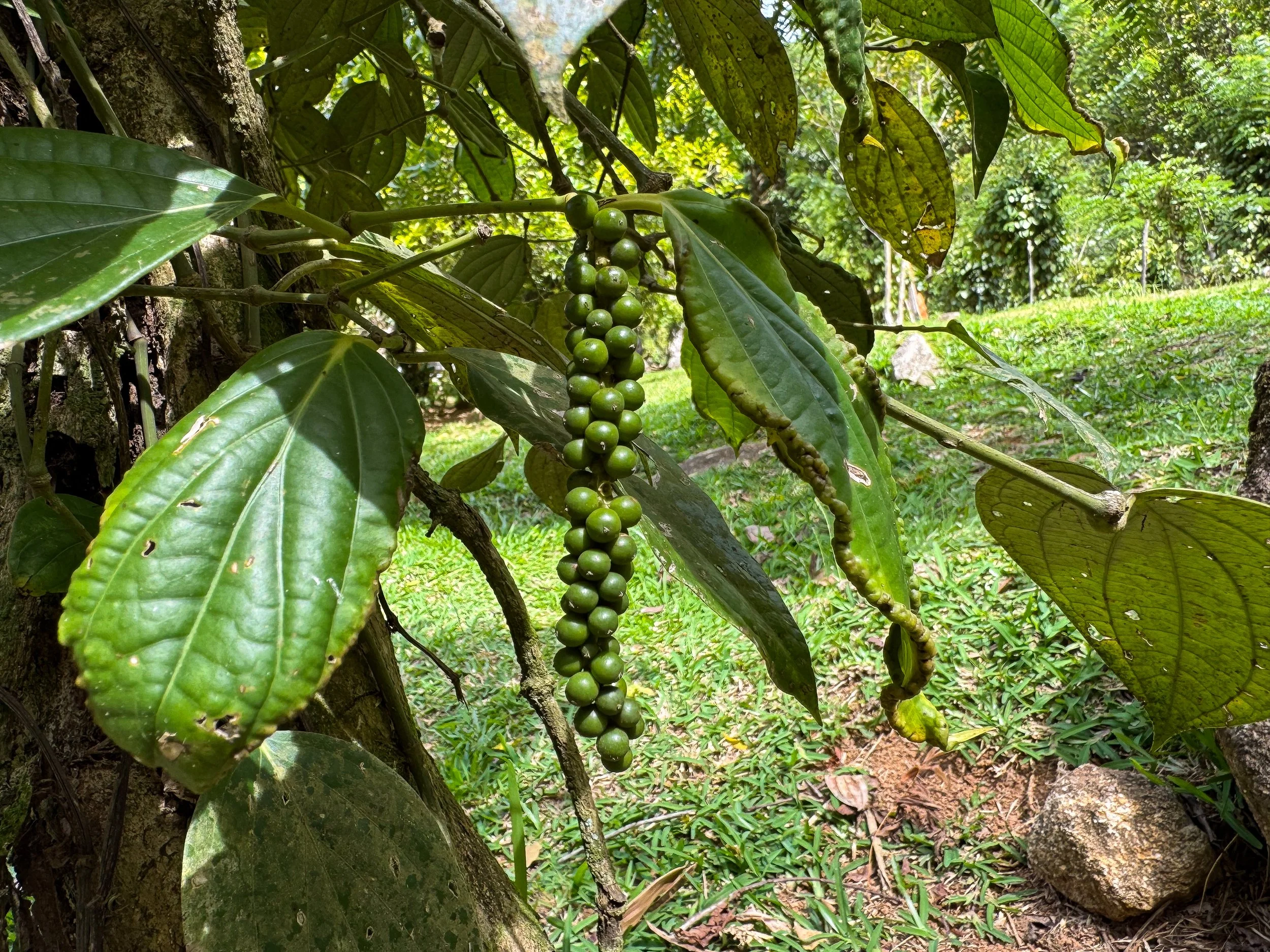
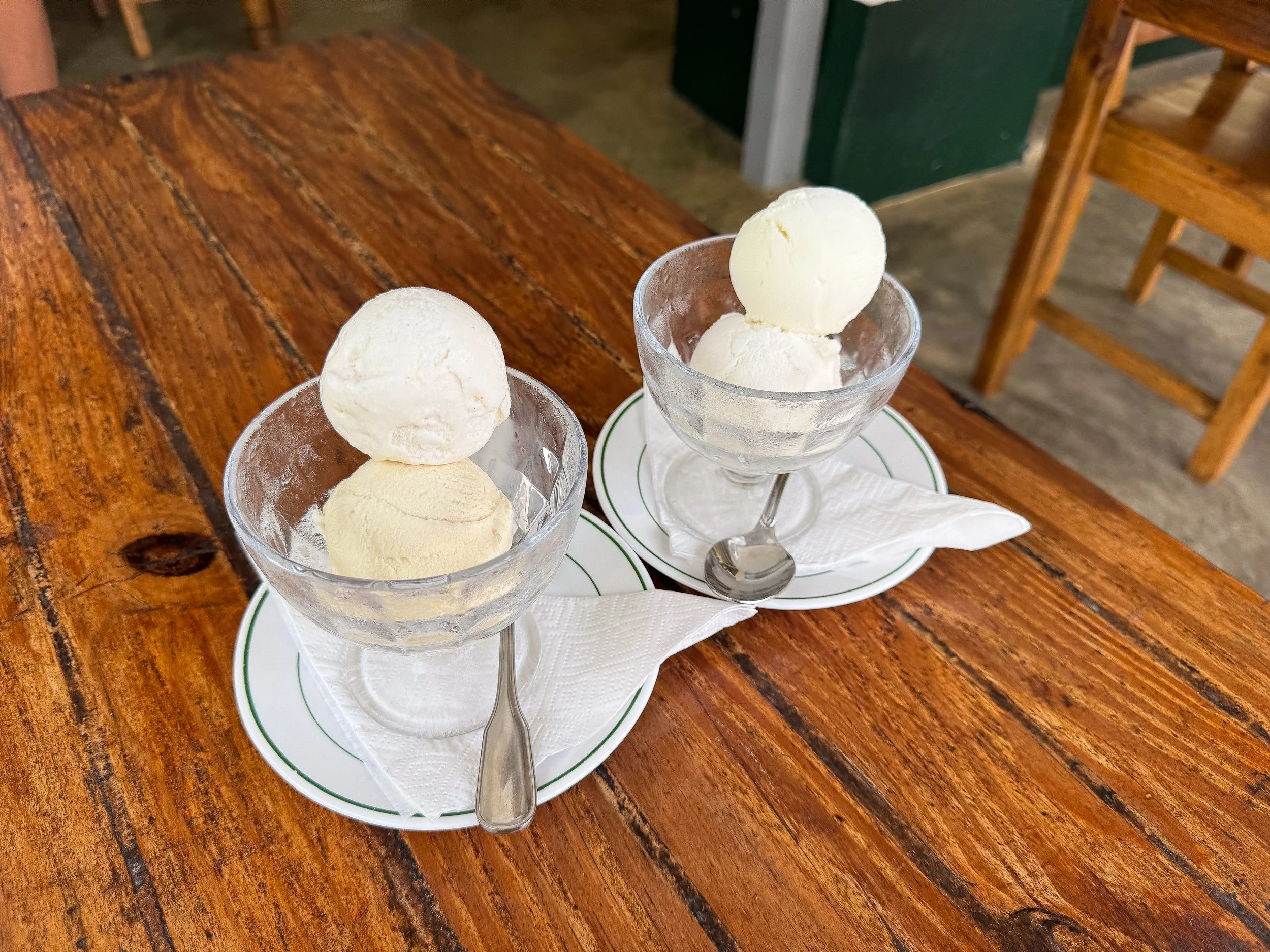
Jardin du Roi Spice. A historic garden with spices, medicinal plants, tropical fruit trees and endemic palms cultivated by the French colonizers of the Seychelles. Spend an hour walking through the trails, identifying trees and plants on a self guided tour using their map. Visit the tortoise pen with Giant Aldabra tortoises. Their restaurant offers scoops of homemade ice cream with flavors including nutmeg, vanilla, coconut and cinnamon.
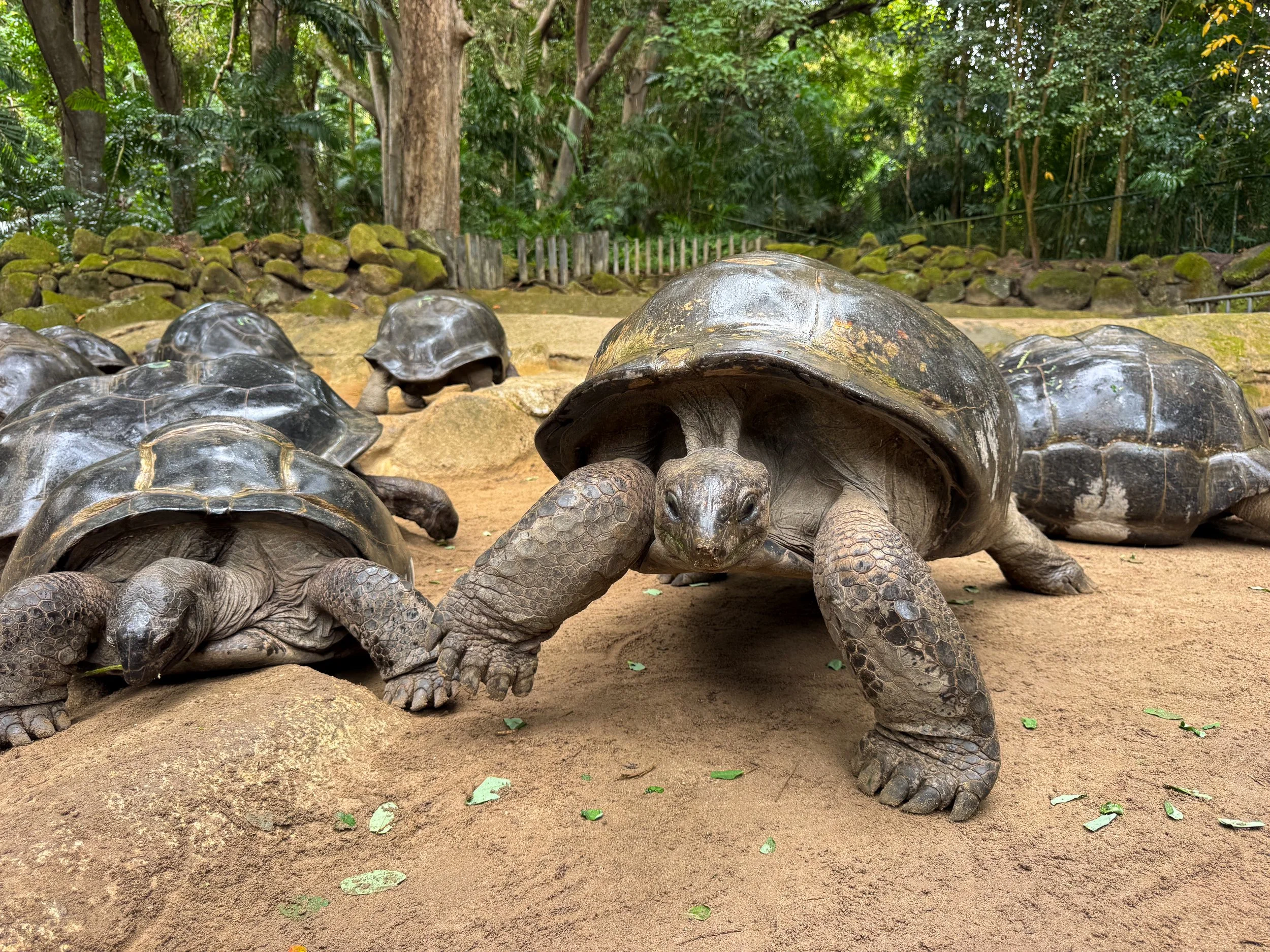
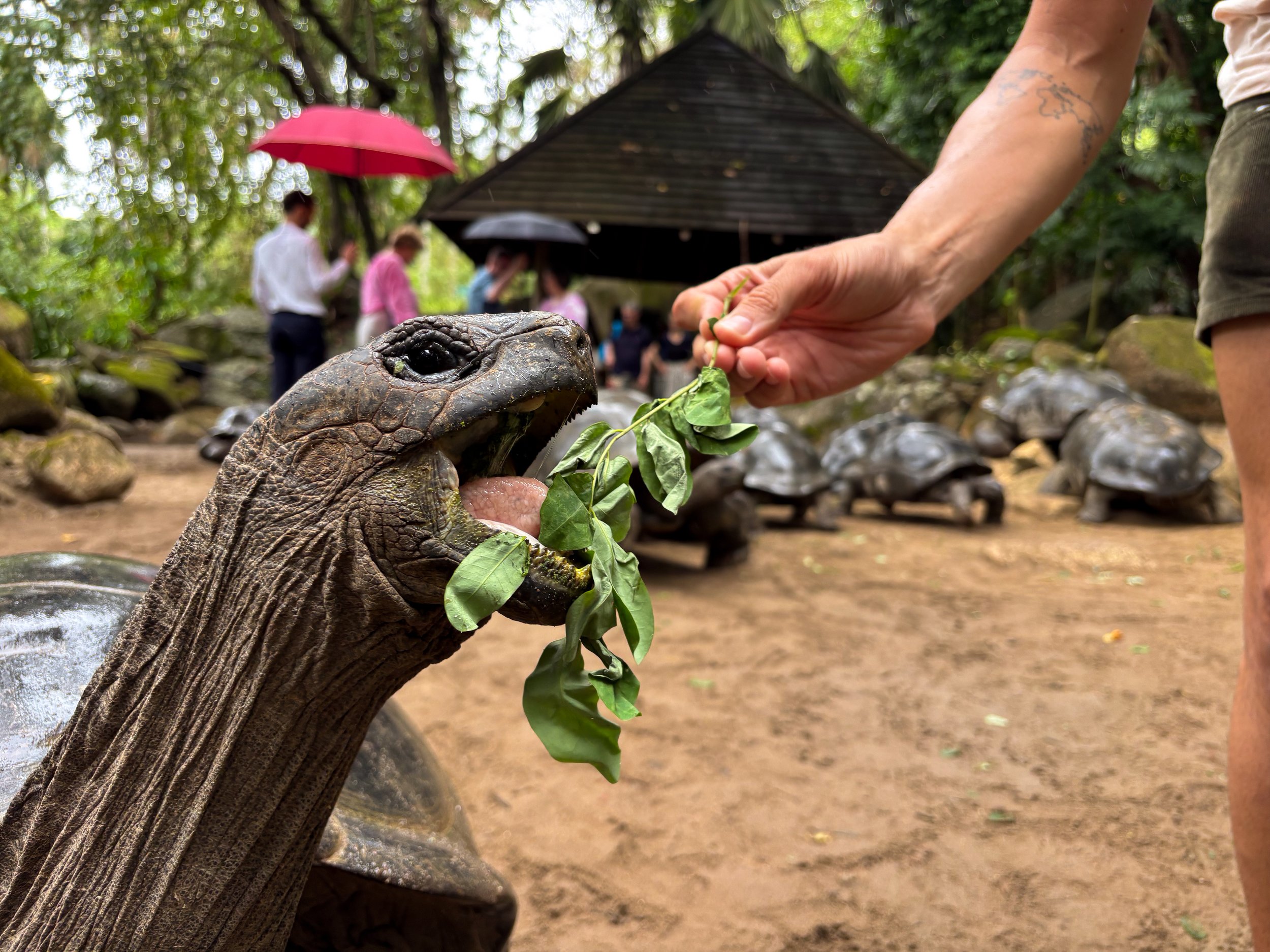
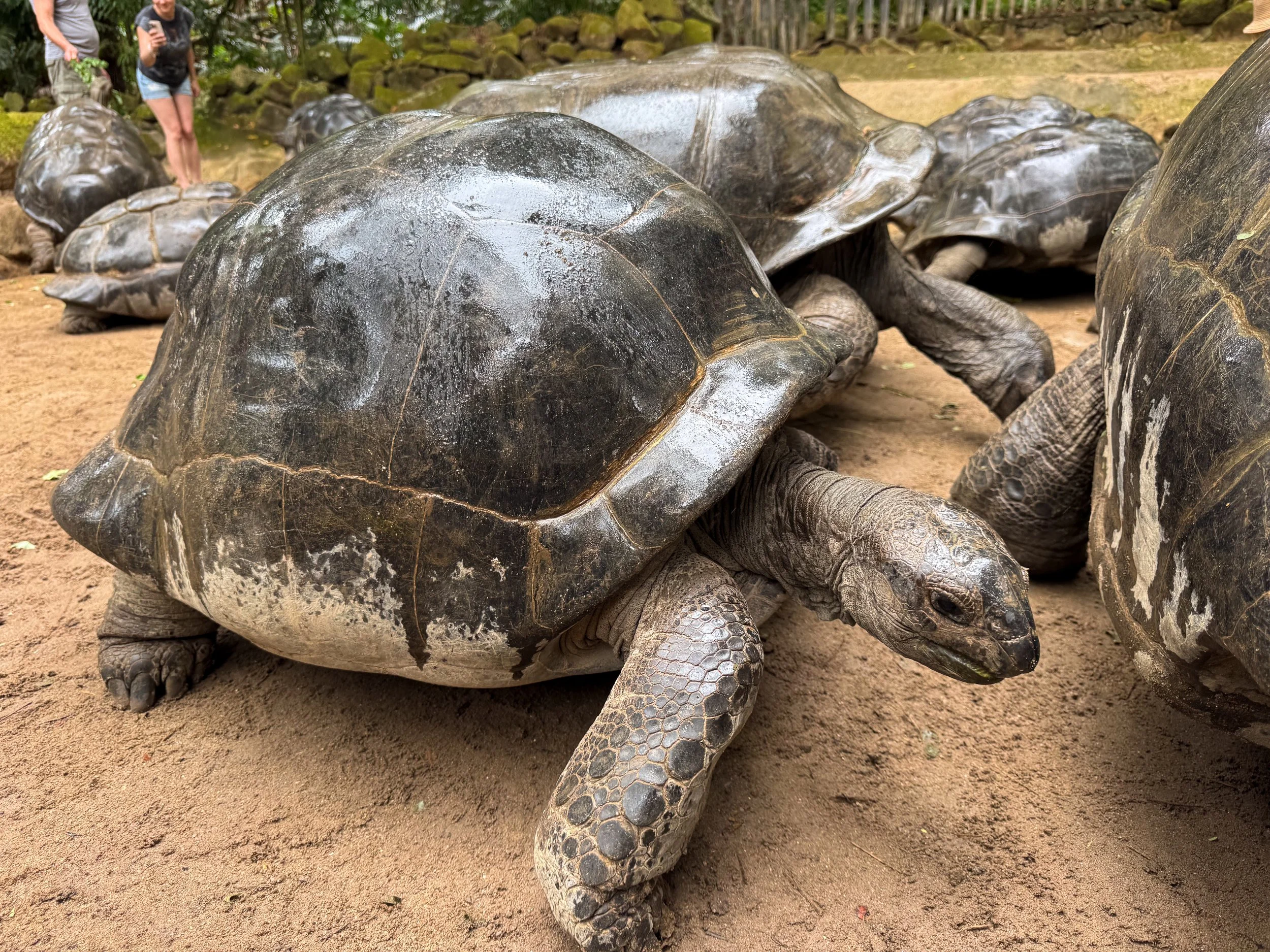
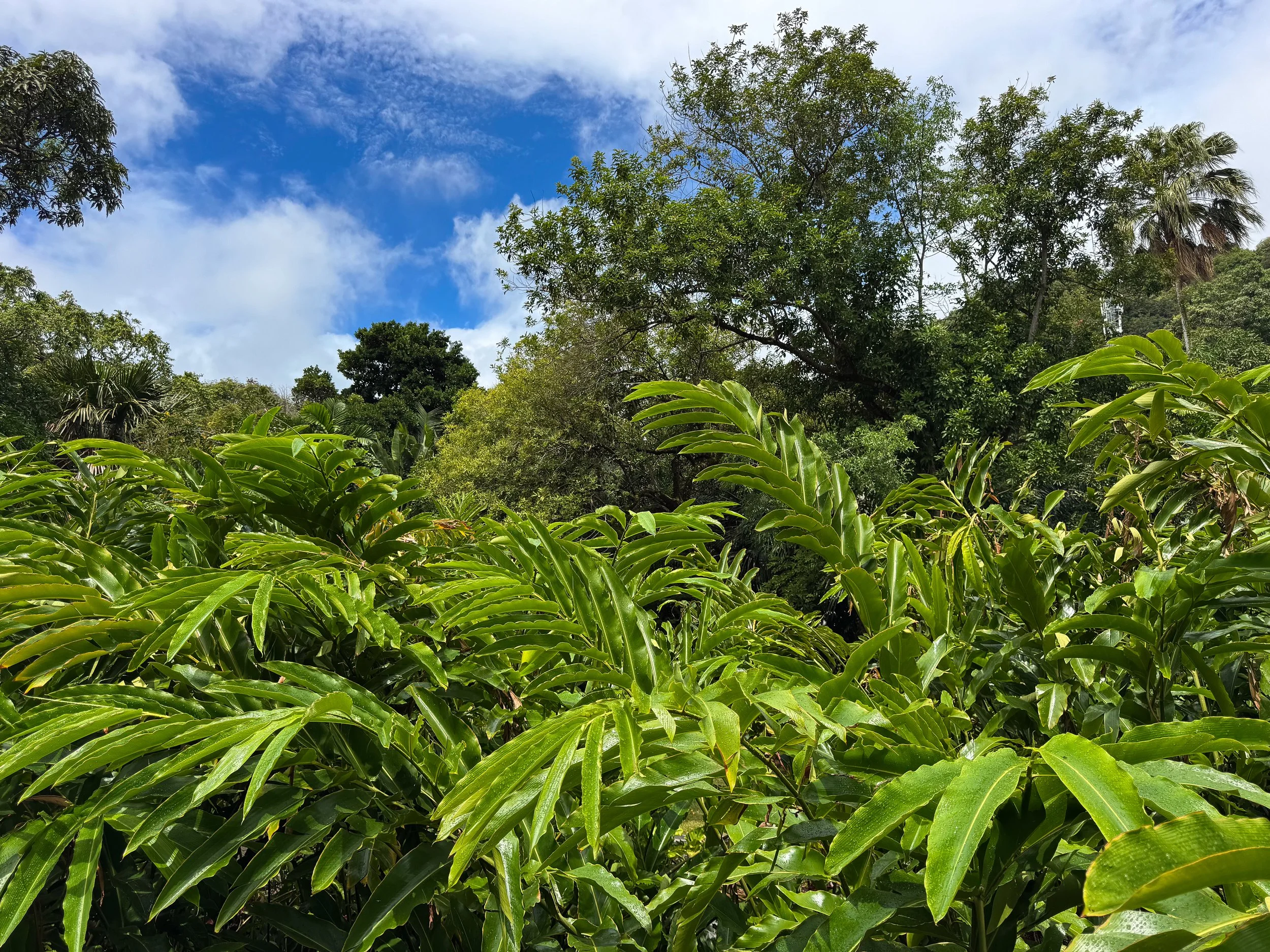
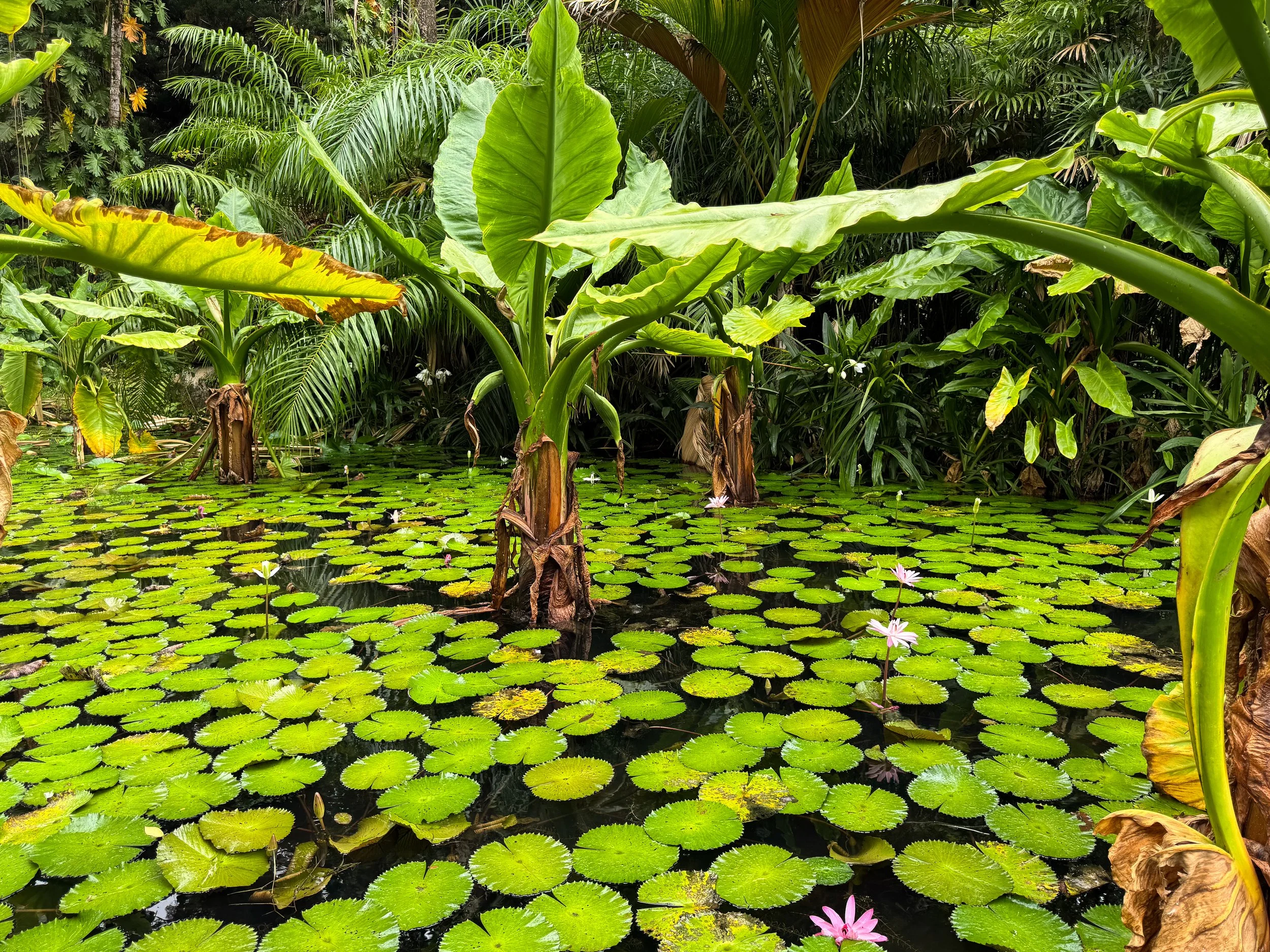
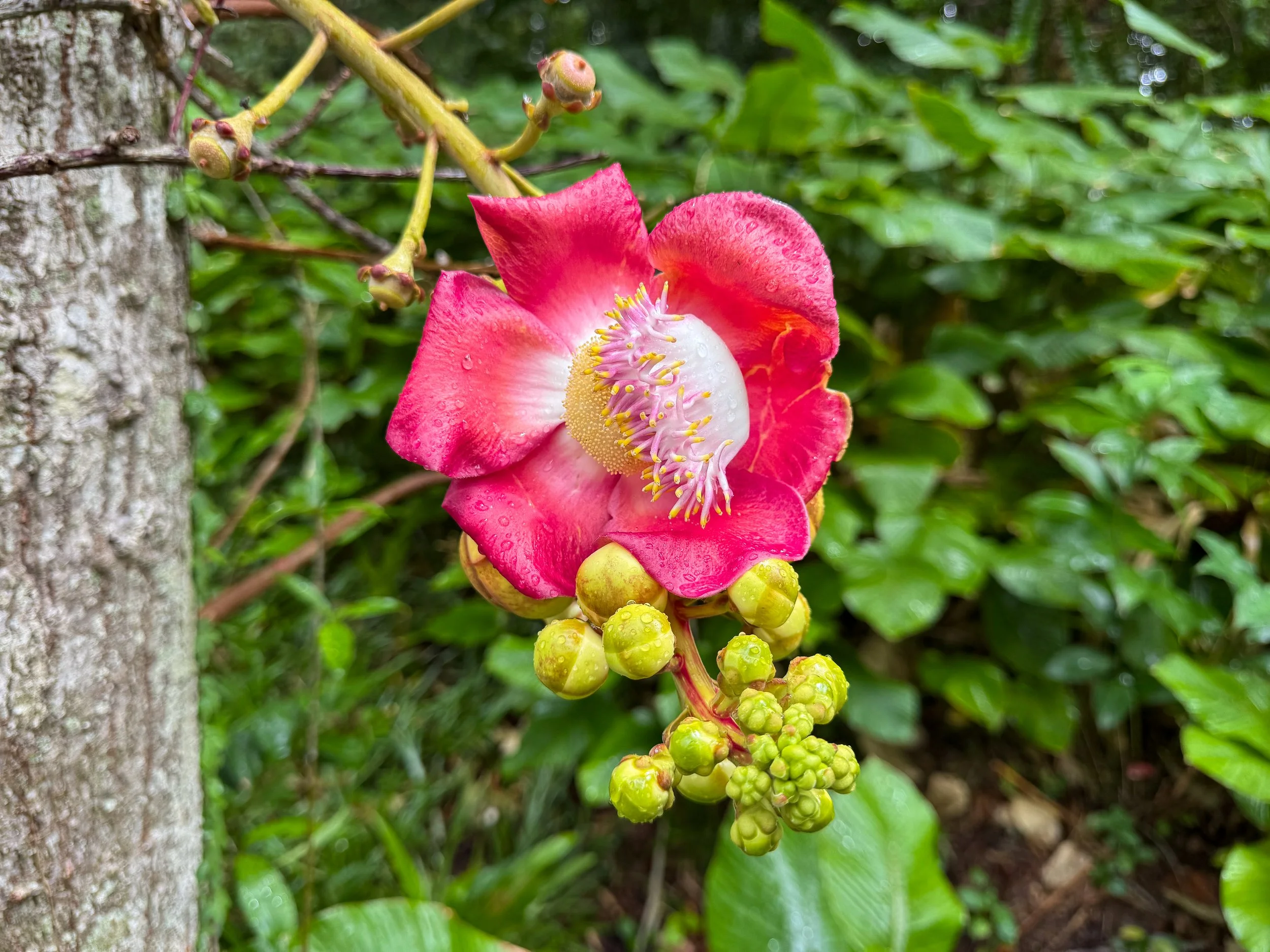
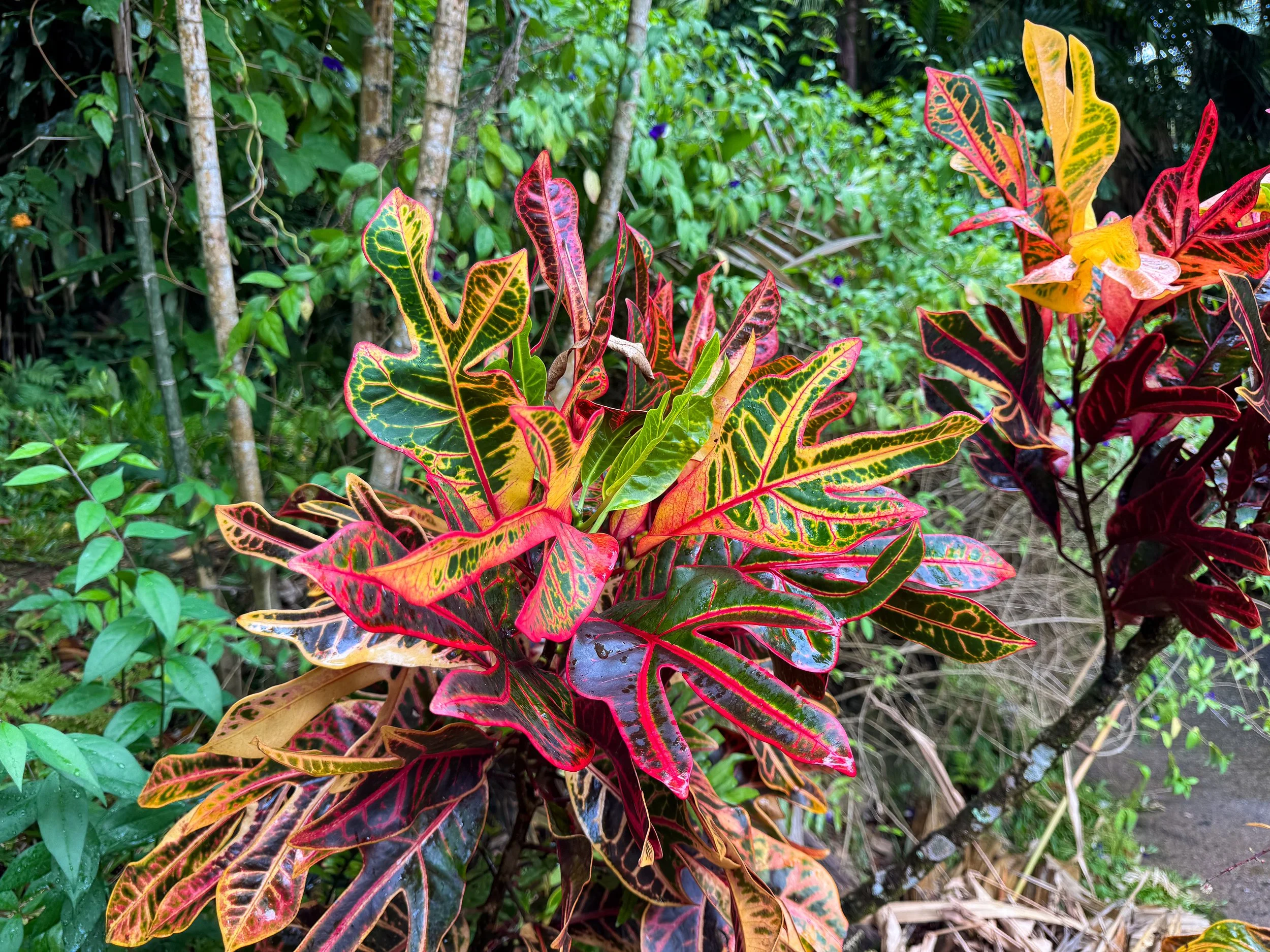
National Botanical Garden. A lush and colorful botanical garden in Victoria featuring tropical plants, fragrant flowers, spice gardens, towering palms and giant Aldabra Tortoises. The scent of the Cannonball Tree flowers and plumerias wafts through the garden. The world’s largest coconut, the Coco de Mer, hangs from its palm trees. A pen houses dozens of Aldabra Tortoises, the world’s second largest species. Enter the pen to hand feed them greens as they slowly surround you.
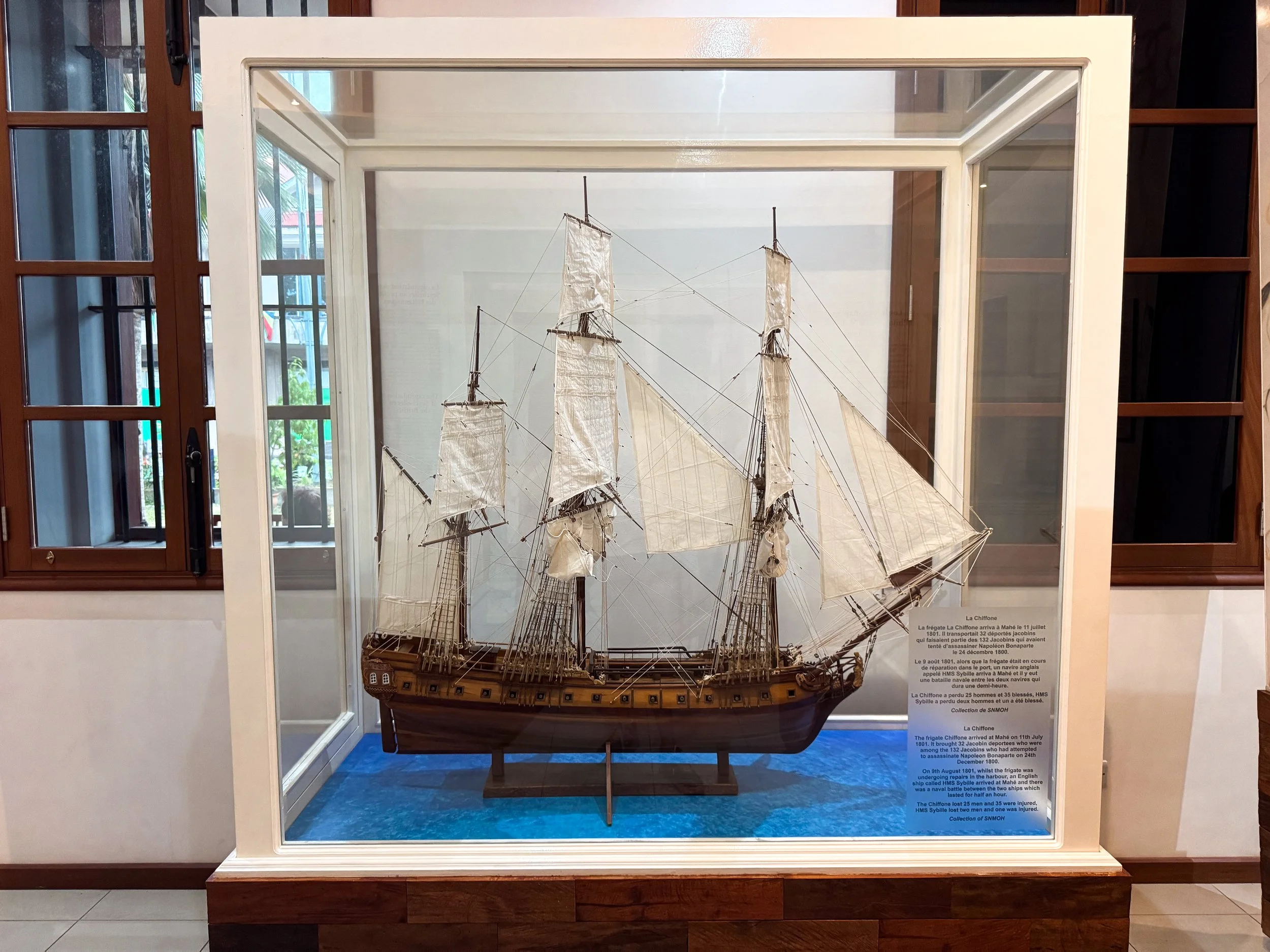
Seychelles National Museum of History. A history museum dedicated to the island’s discovery, settlement, colonial past, independence, ties to piracy, slavery and the spice trade. Its exhibits feature artifacts like treasures from sunken ships, antique maps, cannons and iron shackles. Cultural displays share stories of the island’s folklore, music and traditional homes. The museum occupies a French Creole style building that once served as bank, treasury, courthouse, telegraph office and governor’s office.
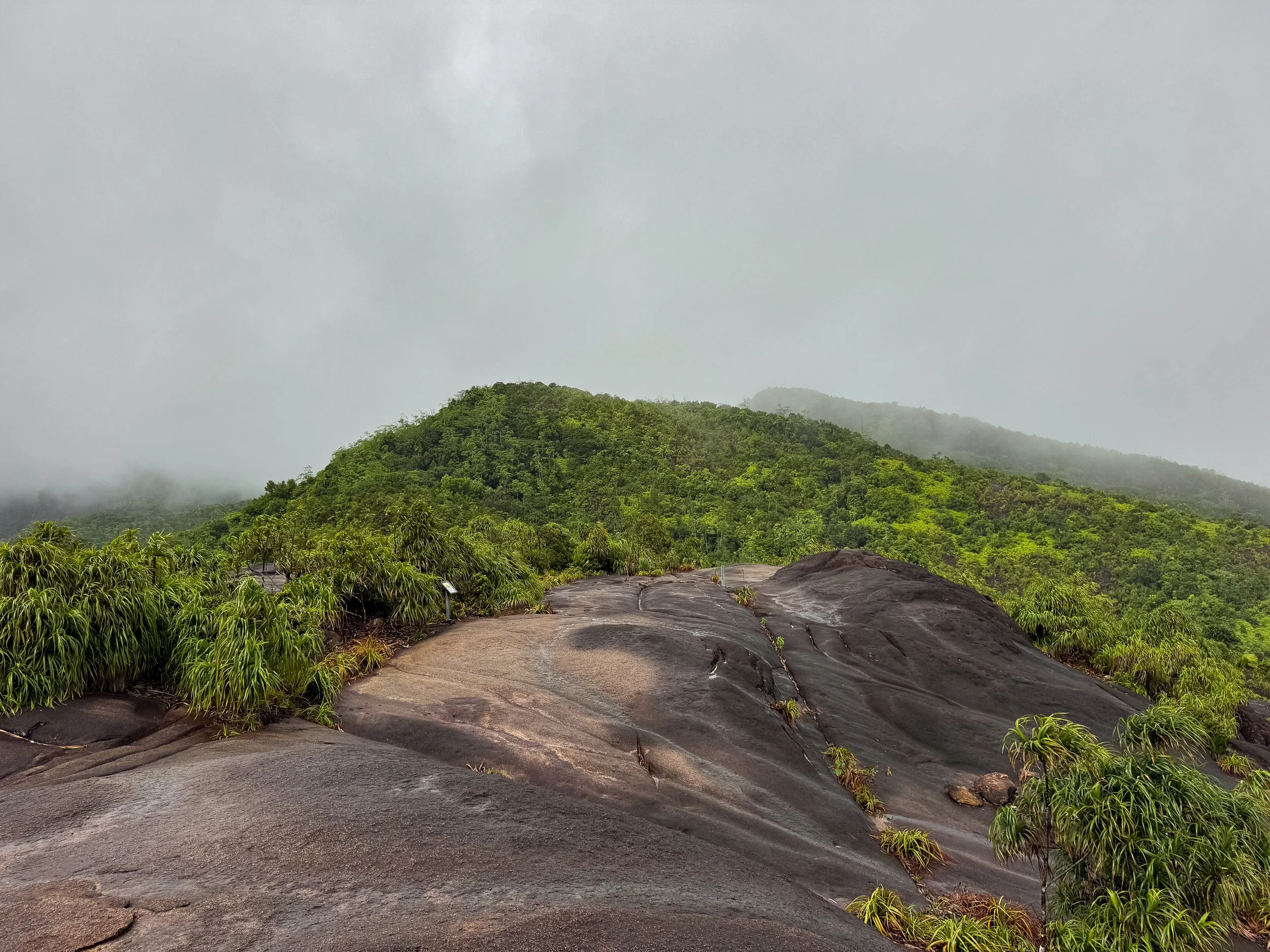
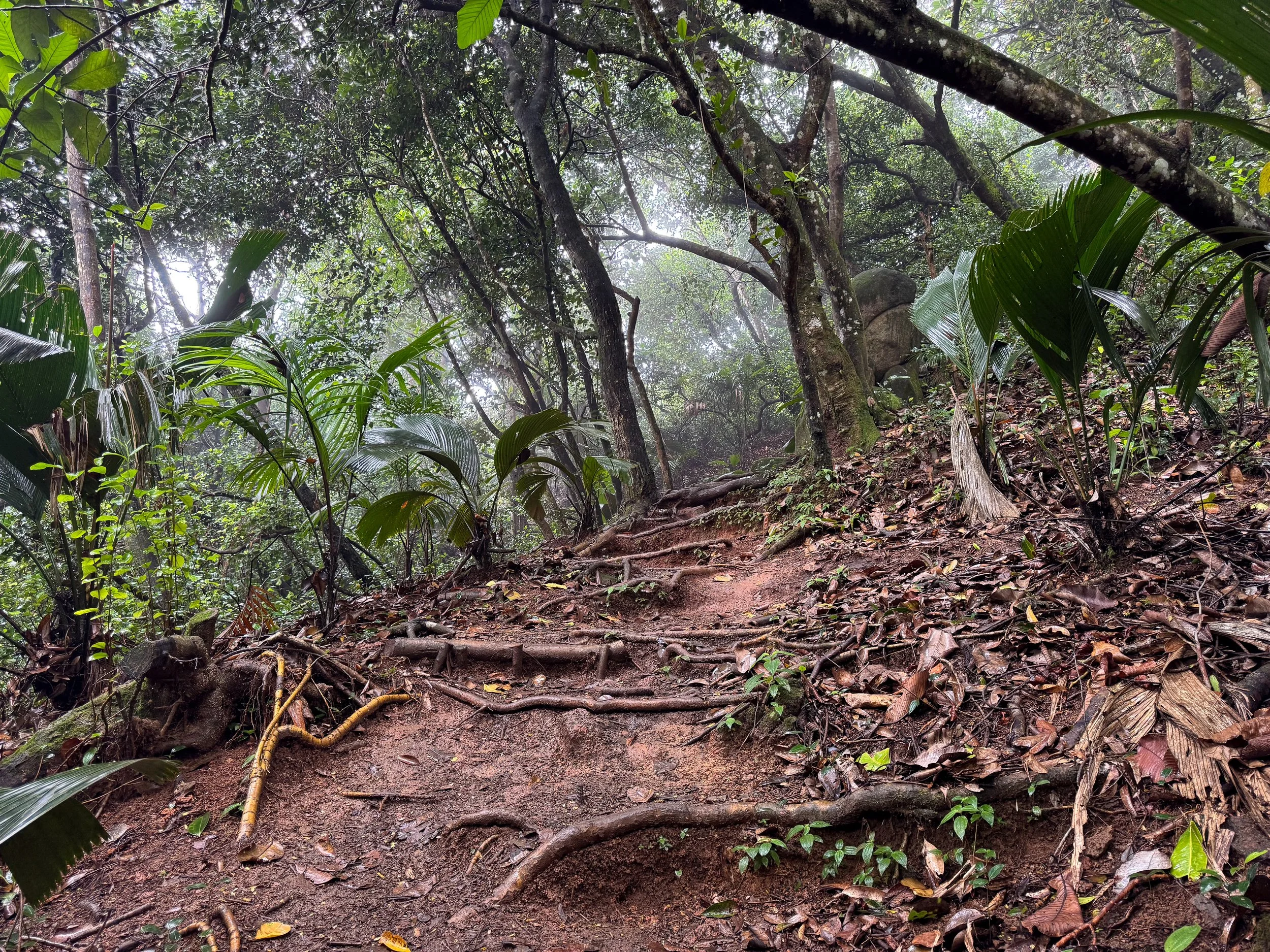
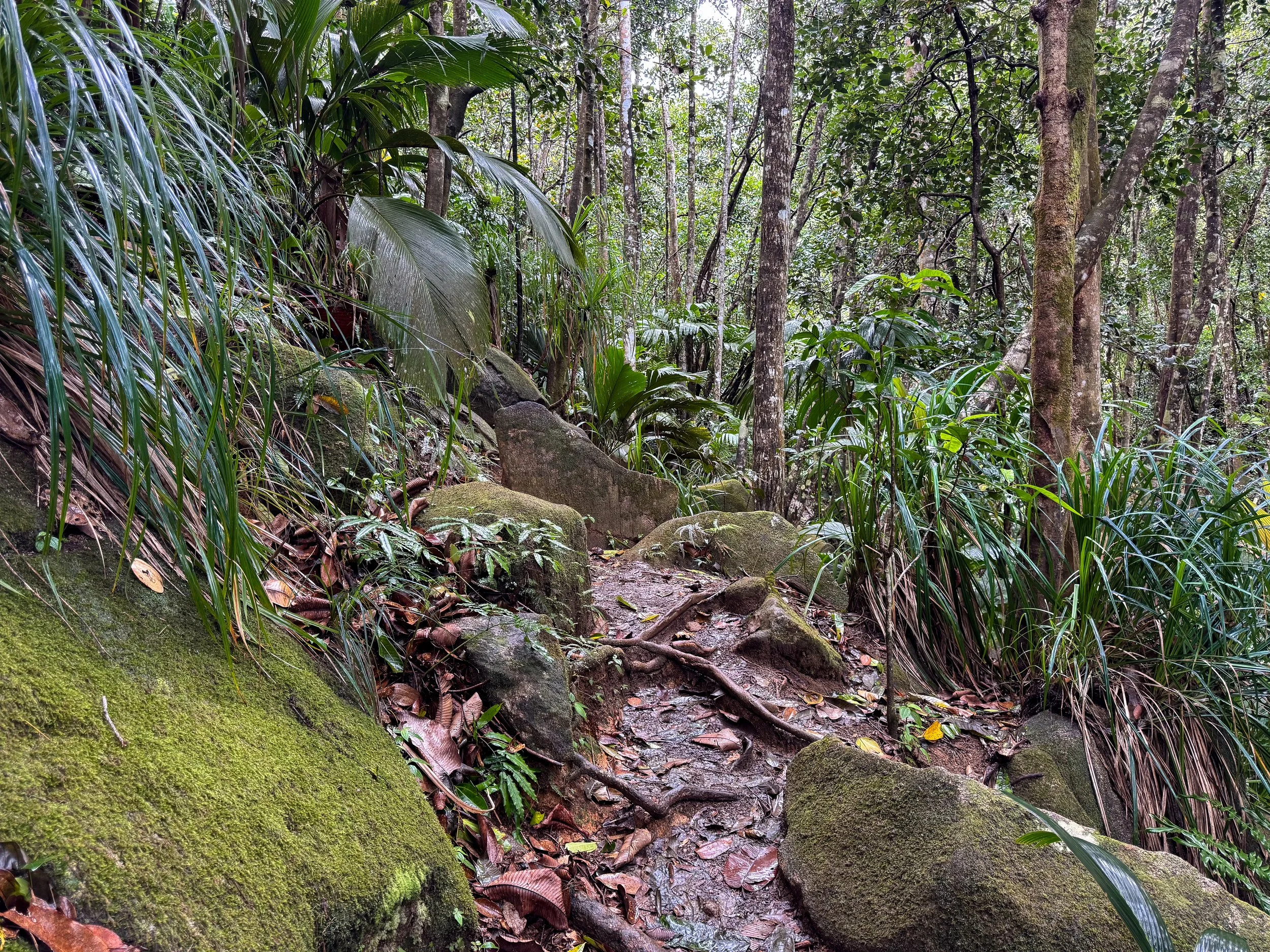
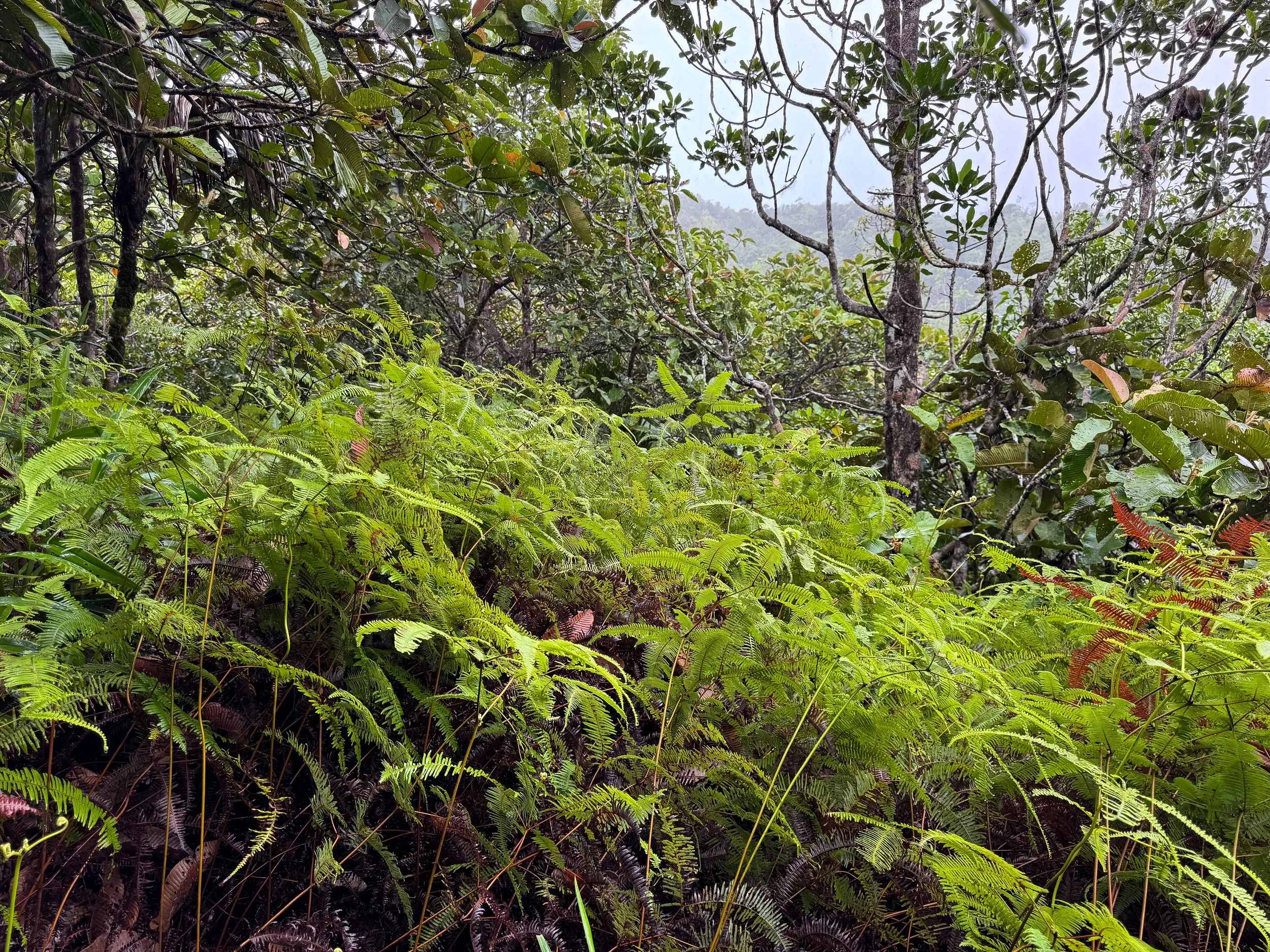
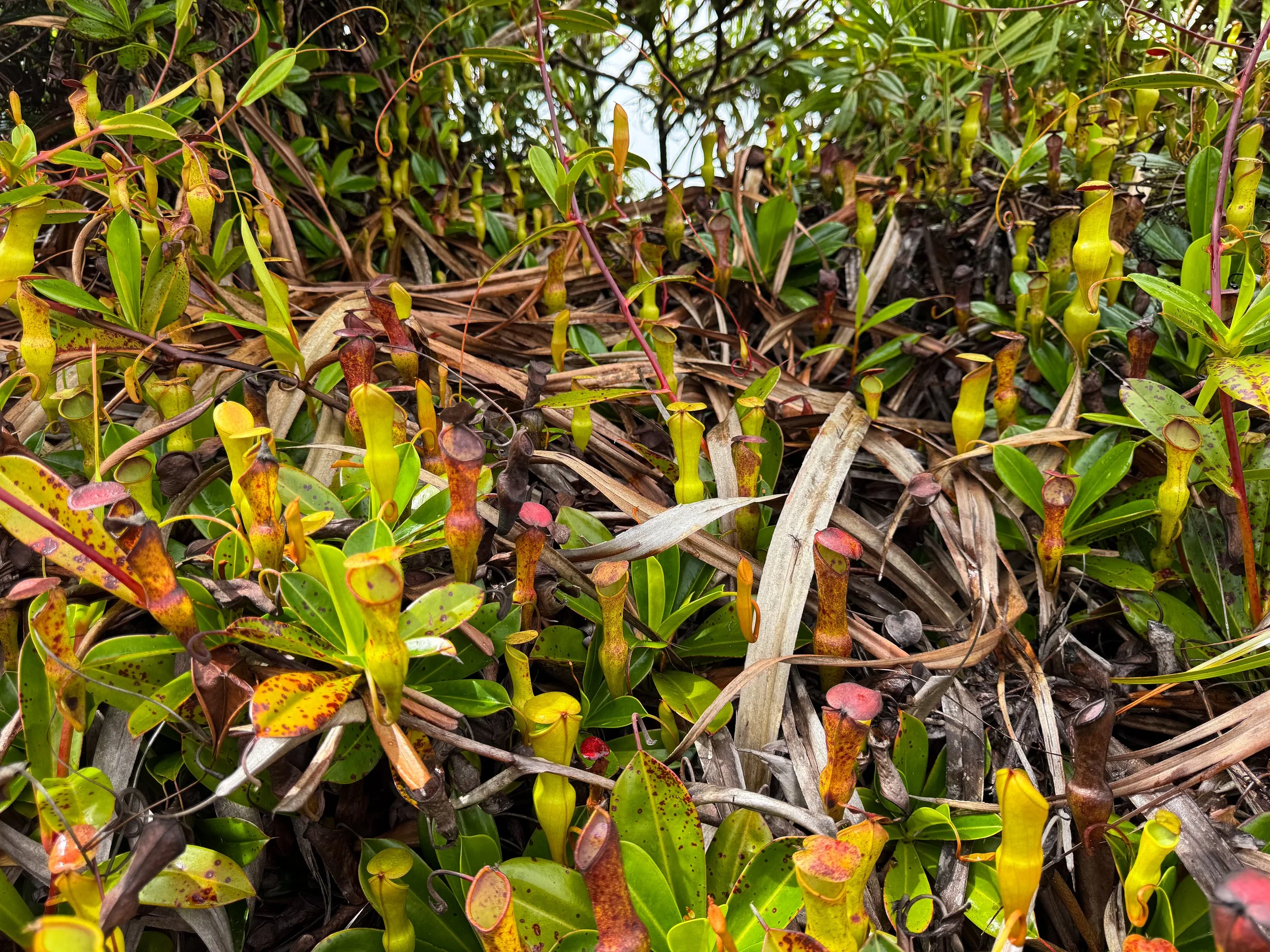
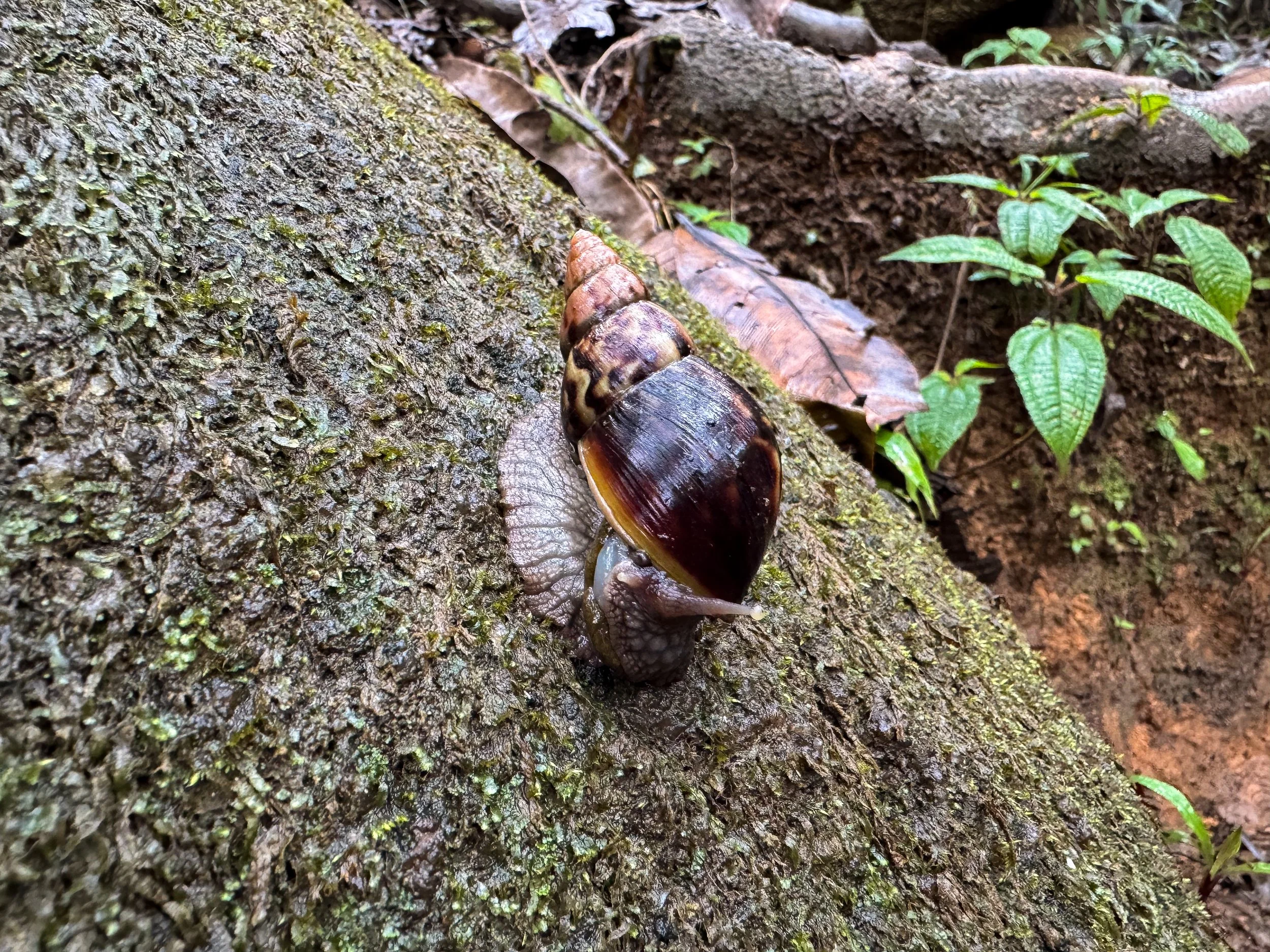
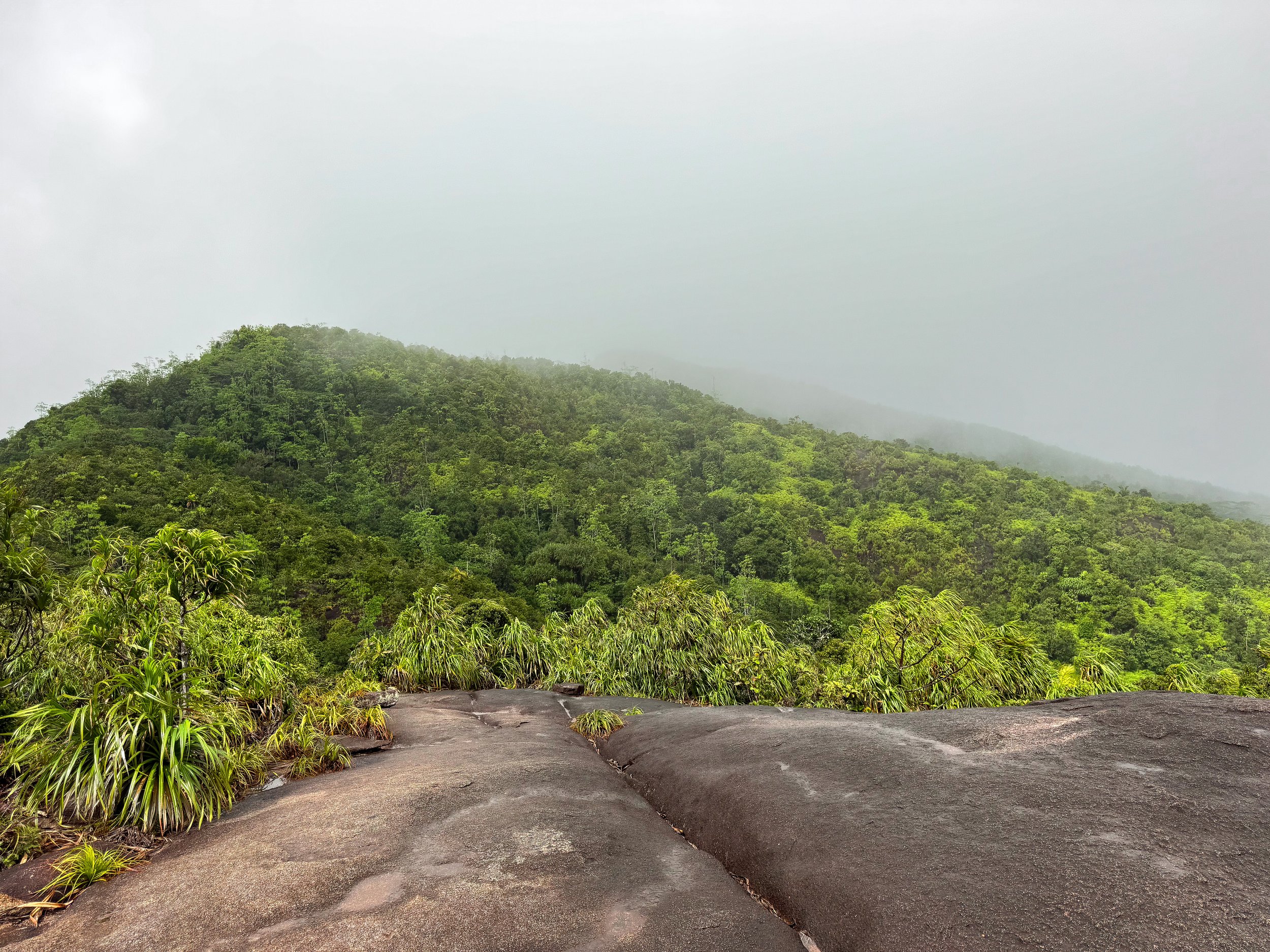
Copolia Trail. A 1.4km trail leading through the dense jungle to a granite plateau with panoramic views of Mahe. The verdant and rugged trail ascends over exposed tree roots, past moss covered granite boulders and beneath Seychelles palms. The trail ends at a small ladder leading up to the exposed granite plateau. The clearing offers views of the island, its jungleous mountains and the urban center of Victoria. There’s even a patch of carnivorous pitcher plants. The trail is a moderate hike, taking about an hour to reach the summit.
Good to Know. Free parking is available along the roadside just before the ticket office. The trail opens at 8am for 100 SCR per person.
Places to Eat & Drink on Mahe
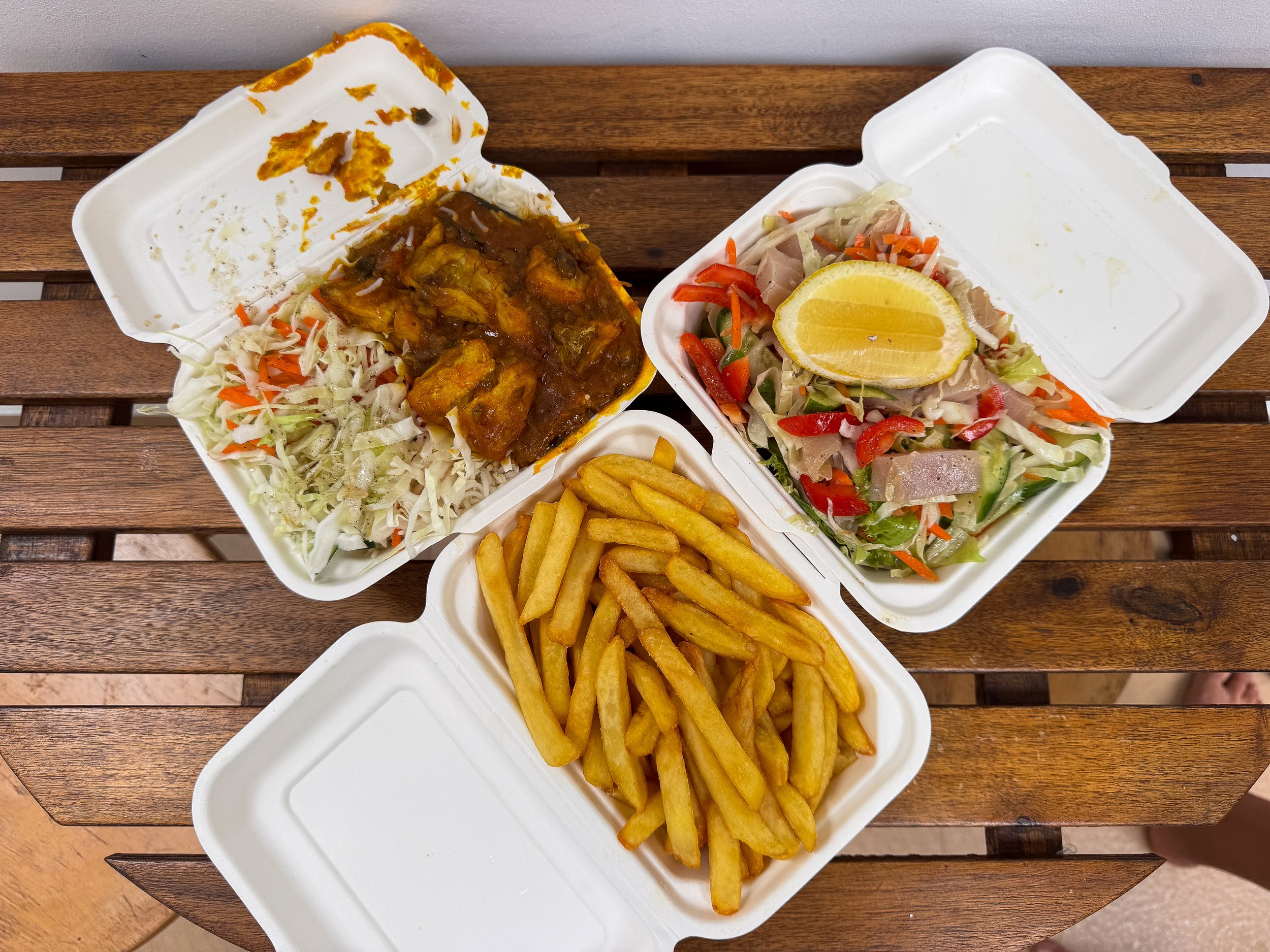
Ocean Beach Restaurant. An affordable takeaway near Beau Vallon Beach with flavorful curries, salads, noodles and rice dishes. Come here for the smoked fish salad and fish curry.
Trader Vic’s. A famed tiki bar and restaurant with locations in tropical destinations around the world. We stopped by for an original Mai Tai and a couple rum cocktails.
Café 74. A café with pastries, fruit bowls and different types of croque monsieur. Order an iced coffee and a spread of pastries for a picnic breakfast at Anse Royal.
Where to Stay on Mahe
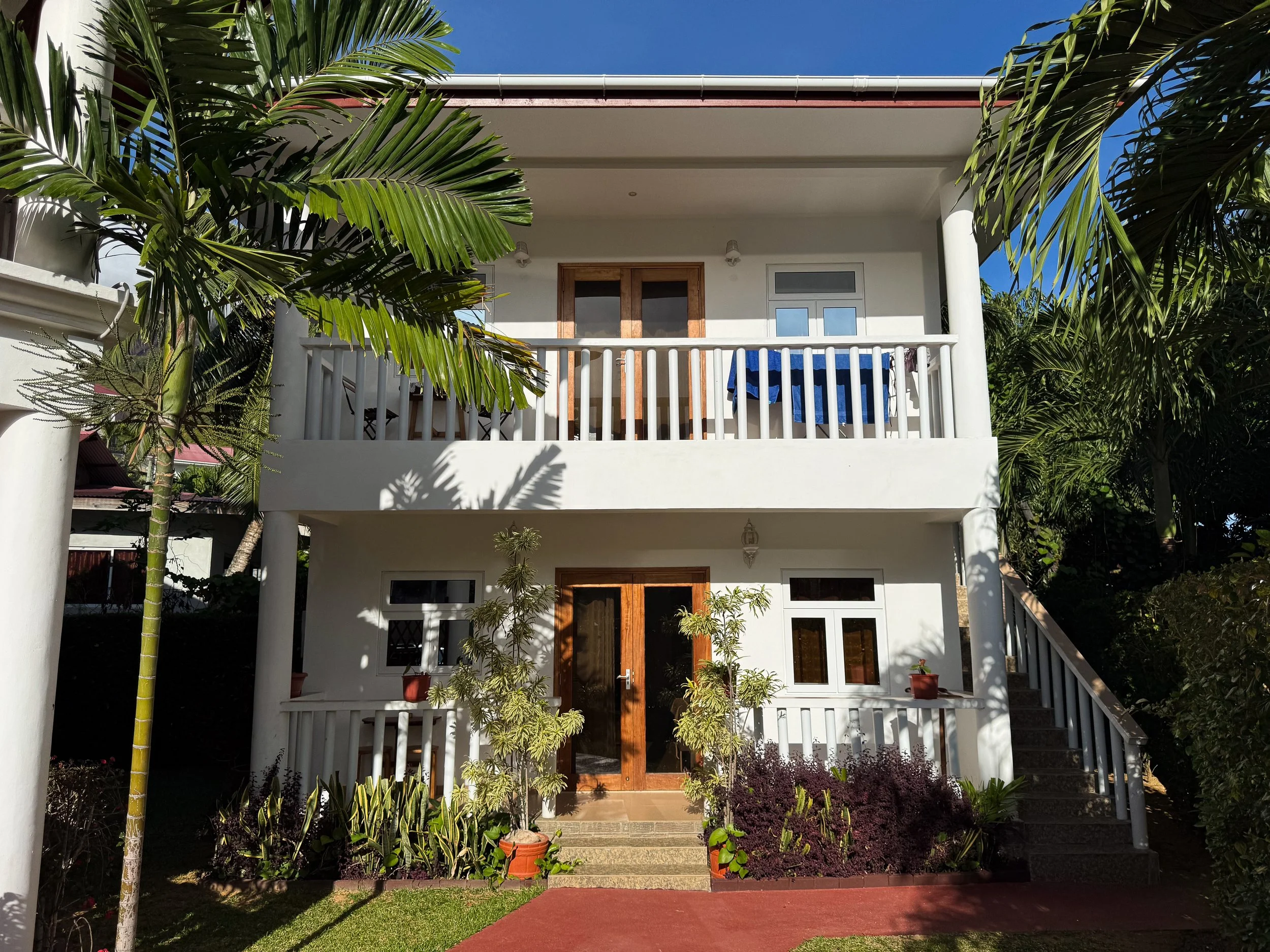
Maison Hibiscus Self Catering. A cute apartment complex with fully equipped studios for rent. It’s an affordable option nearby Beau Vallon Beach on Mahe. We booked on Airbnb.
Getting Around Mahe
Rental Car. The best way to get around Mahe when short on time is by car. Doffay Car Rentalis an extremely well reviewed and affordable rental car agency. They offer pick up from the airport and drop off at locations across the island, including the ferry jetty.
Victoria Car Park. A parking lot in the city center of Victoria. The first hour is free. A 1 hour or half day parking pass is needed for any additional time. The pass can be purchased from Antigone Bookstore down the street for 5 to 15 rupees (less than $1 USD).
Praslin
Praslin is the postcard picture of a tropical paradise. The island is the second largest in the Seychelles, famed for its idyllic beaches, tropical forests and oceanfront resorts.
Praslin Beaches
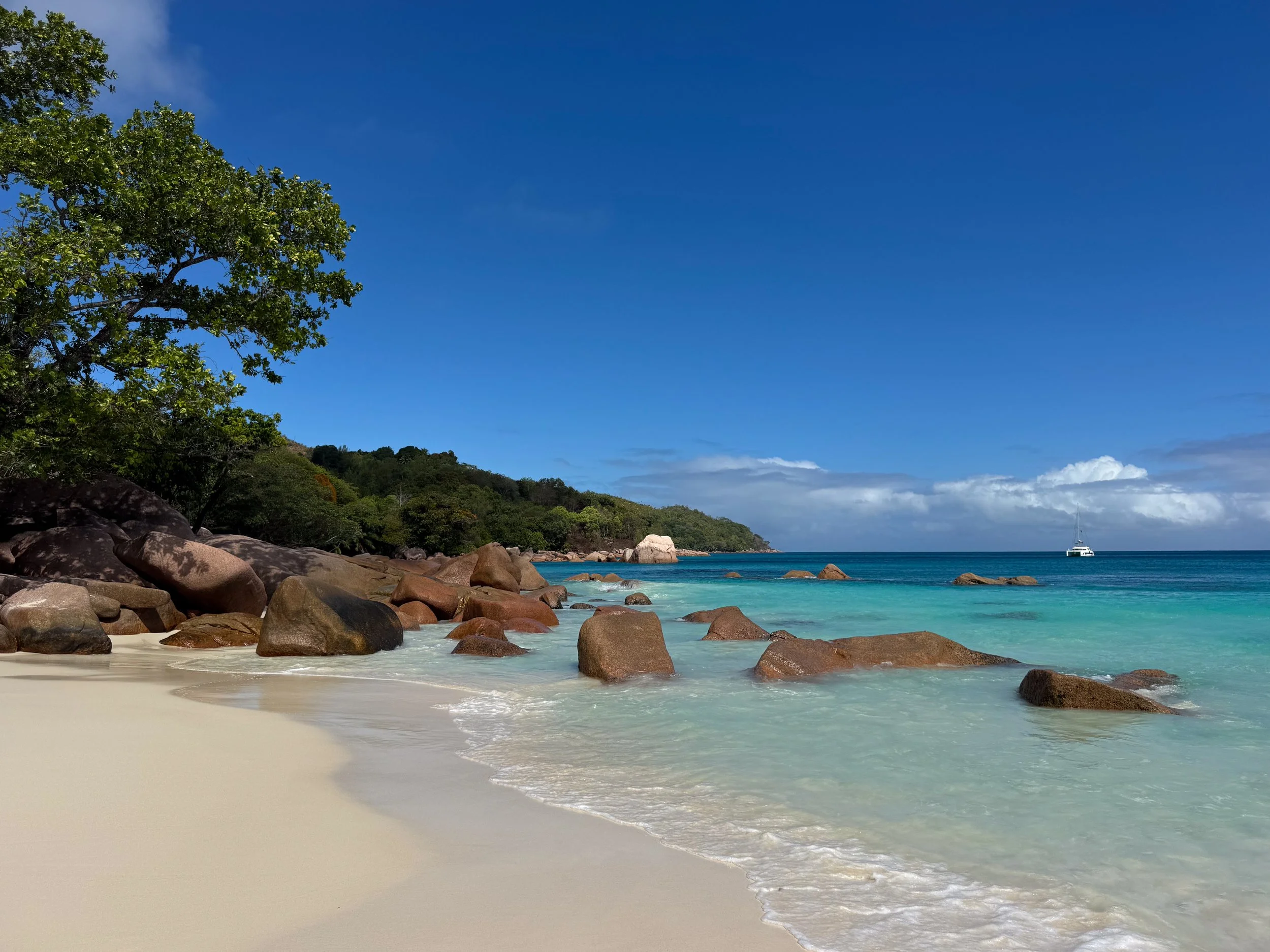
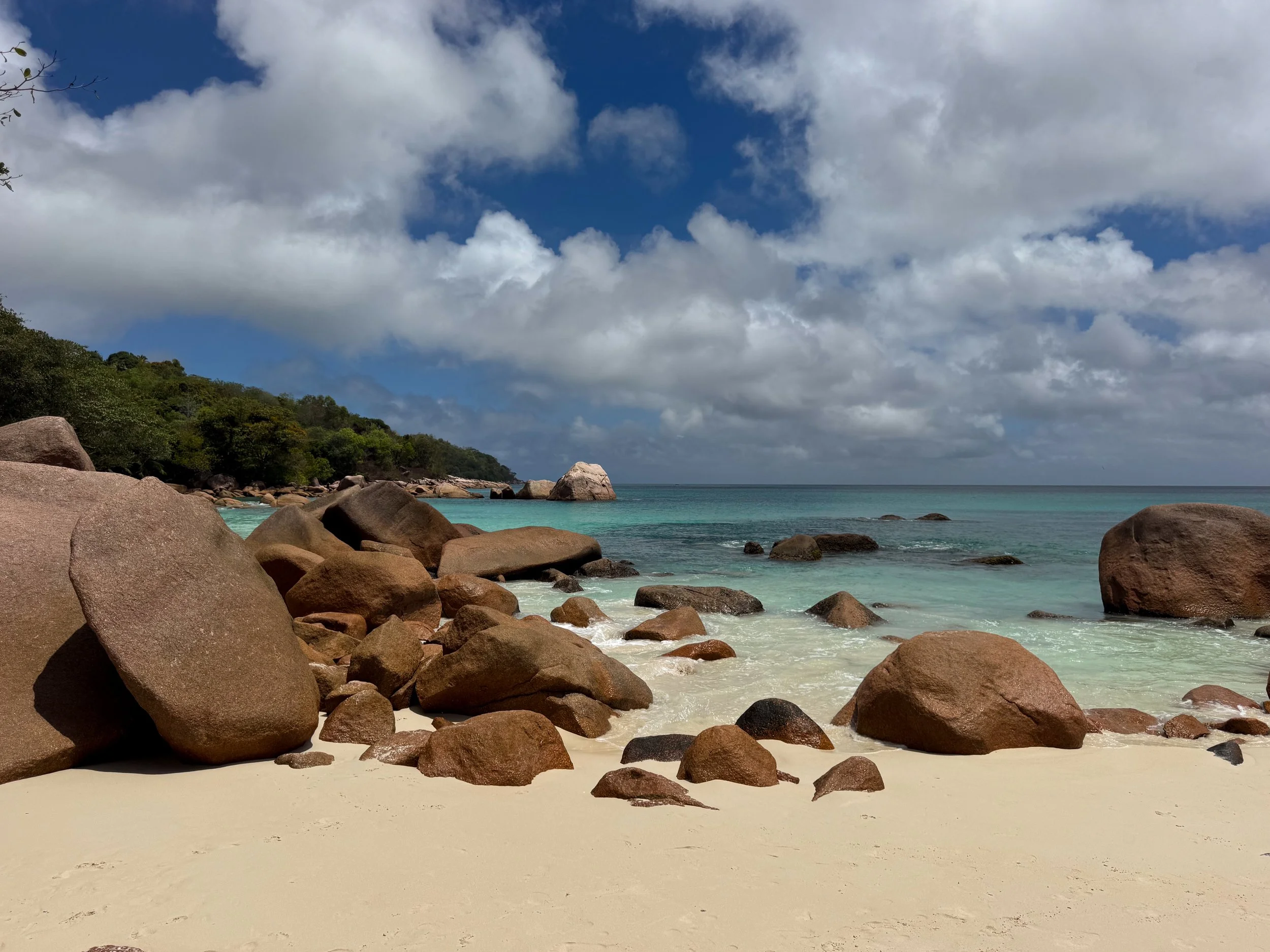
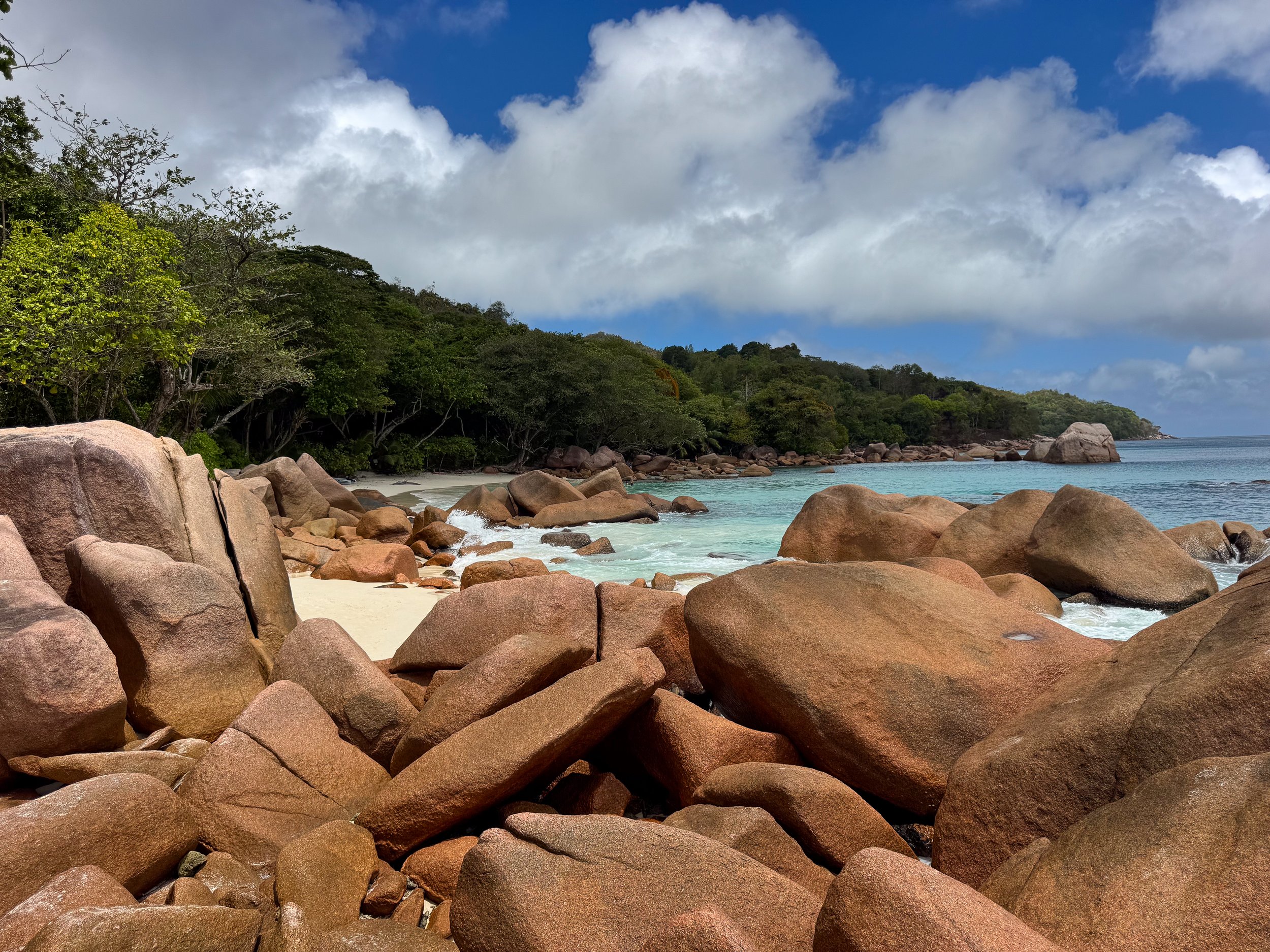
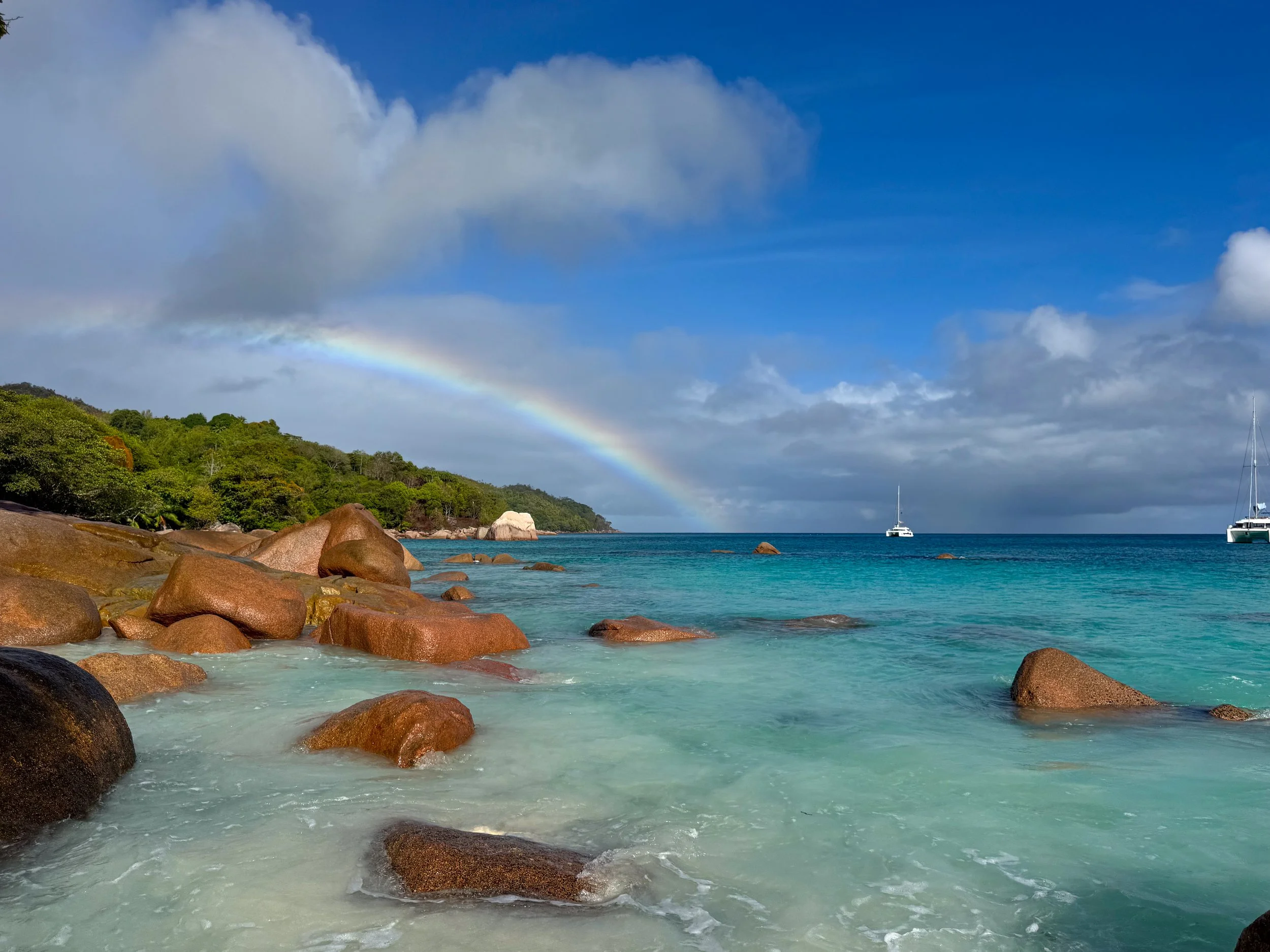
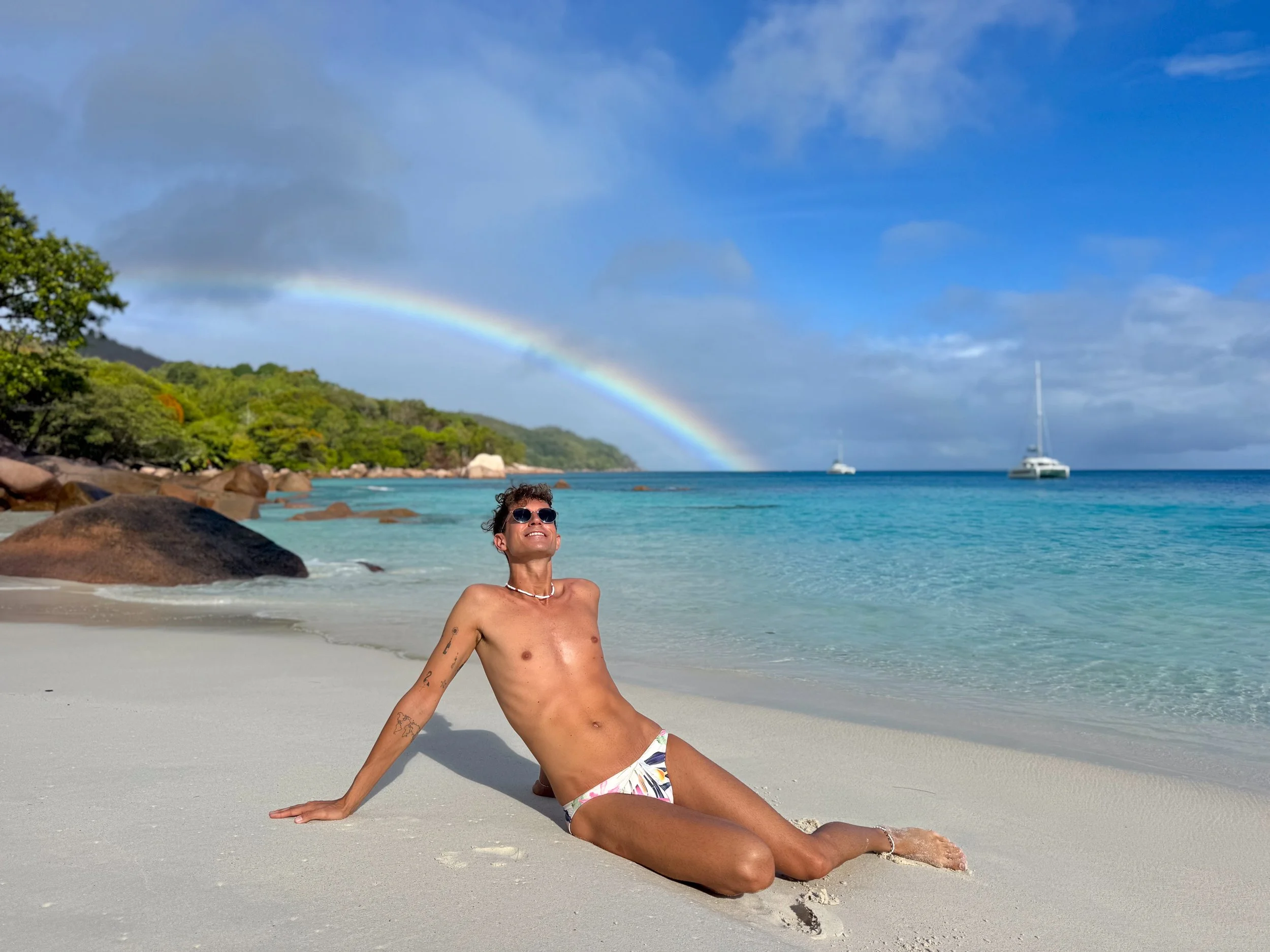
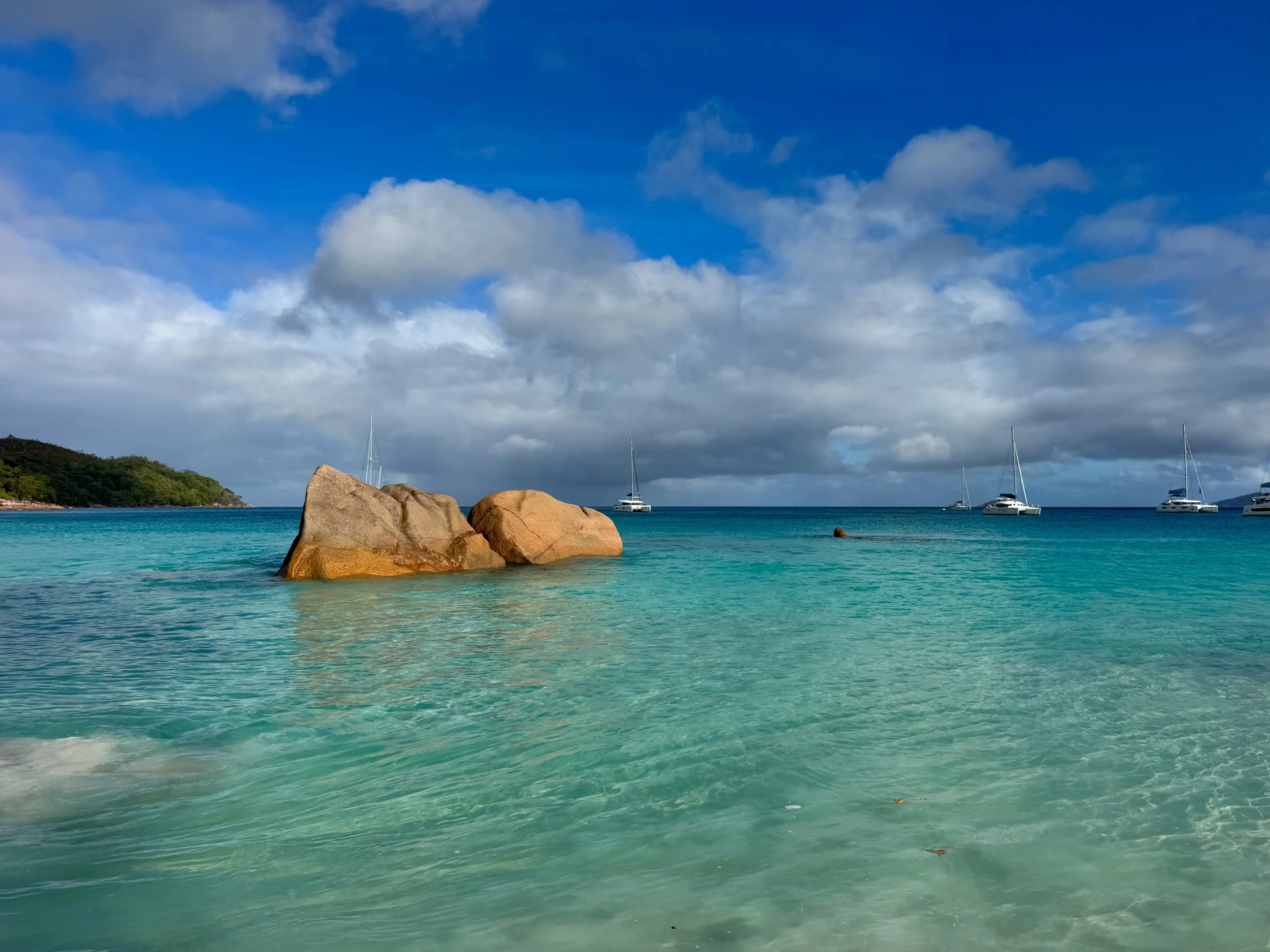
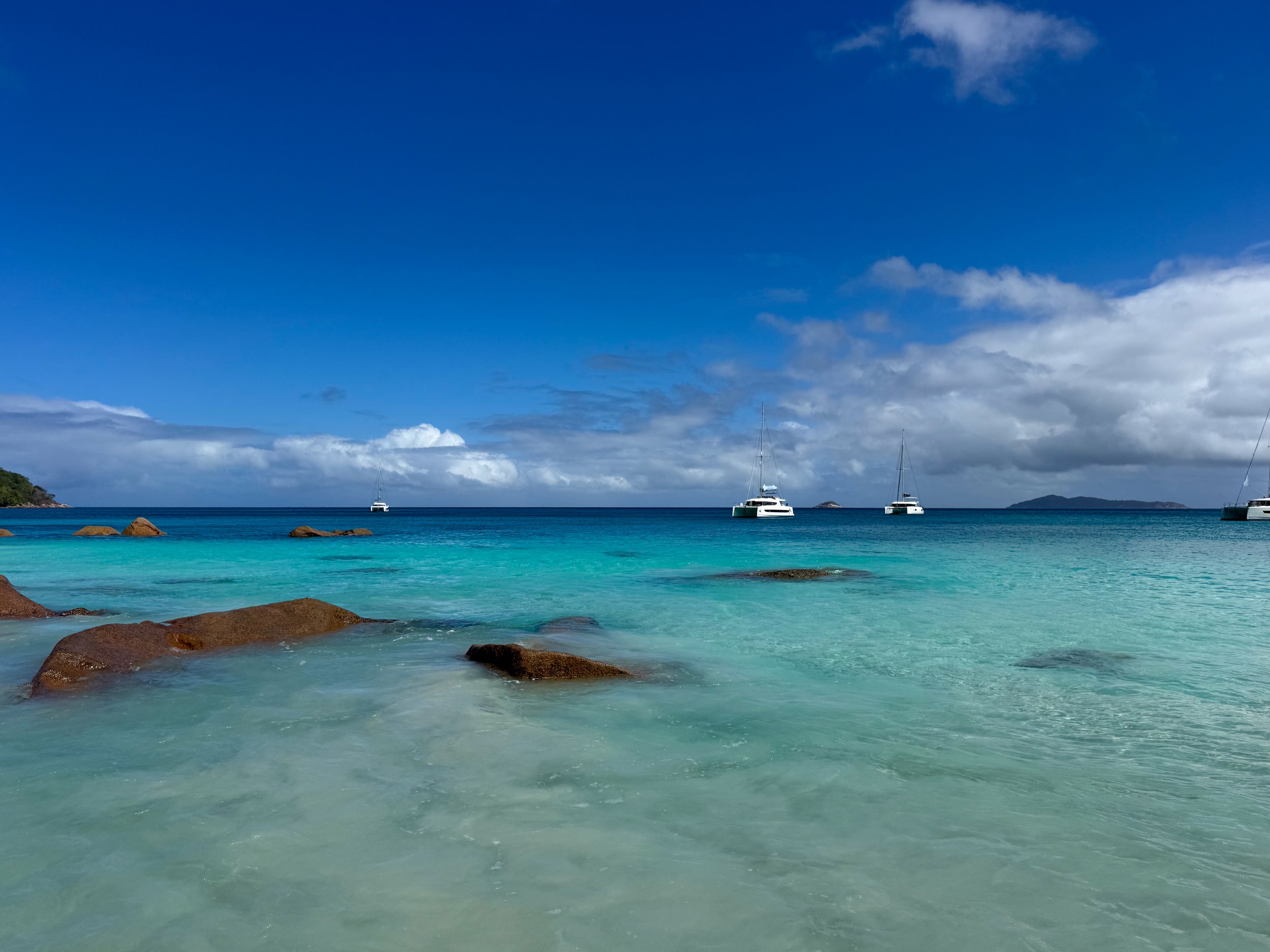
Anse Lazio. A stunning white sand beach with some of the most vibrant shades of turquoise and blue in the Indian Ocean. Large orange granite boulders flank both ends, offering quintessential views of the Seychellois shoreline. Catamarans and yachts are anchored offshore. Passing showers make way to colorful rainbows. The tree line offers plenty of places to relax in the shade and listen to the waves crashing on shore. Small hotels and take away restaurants offer lounges for rent, food and drinks. A sandy clearing on the west side is perfect for sunbathing during high tide. Beyond the western boulders is a secluded beach and hidden bar.
Getting Here. Take the bus to the Anse Boudin stop. The beach is a 20 minute walk from here.
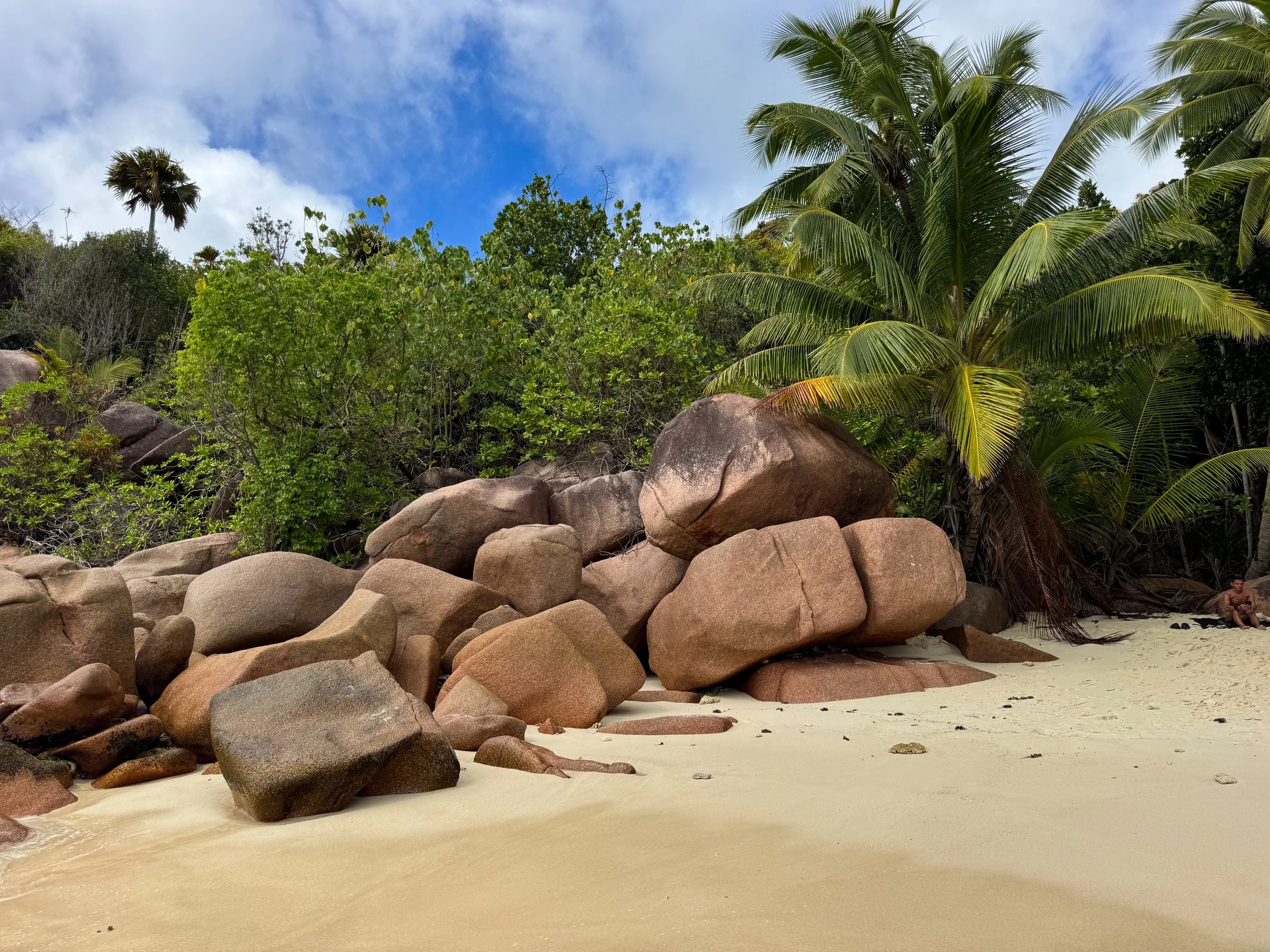
Petite Anse Lazio. A tiny white sand beach, flanked by smooth orange boulders and short leafy palm trees. It’s relatively secluded and only reachable via a trail from the eastern side of Anse Lazio. The trail leads uphill through palm thicket and over small boulders. Midway along the trail is a fork that leads to a scenic lookout of Anse Lazio.
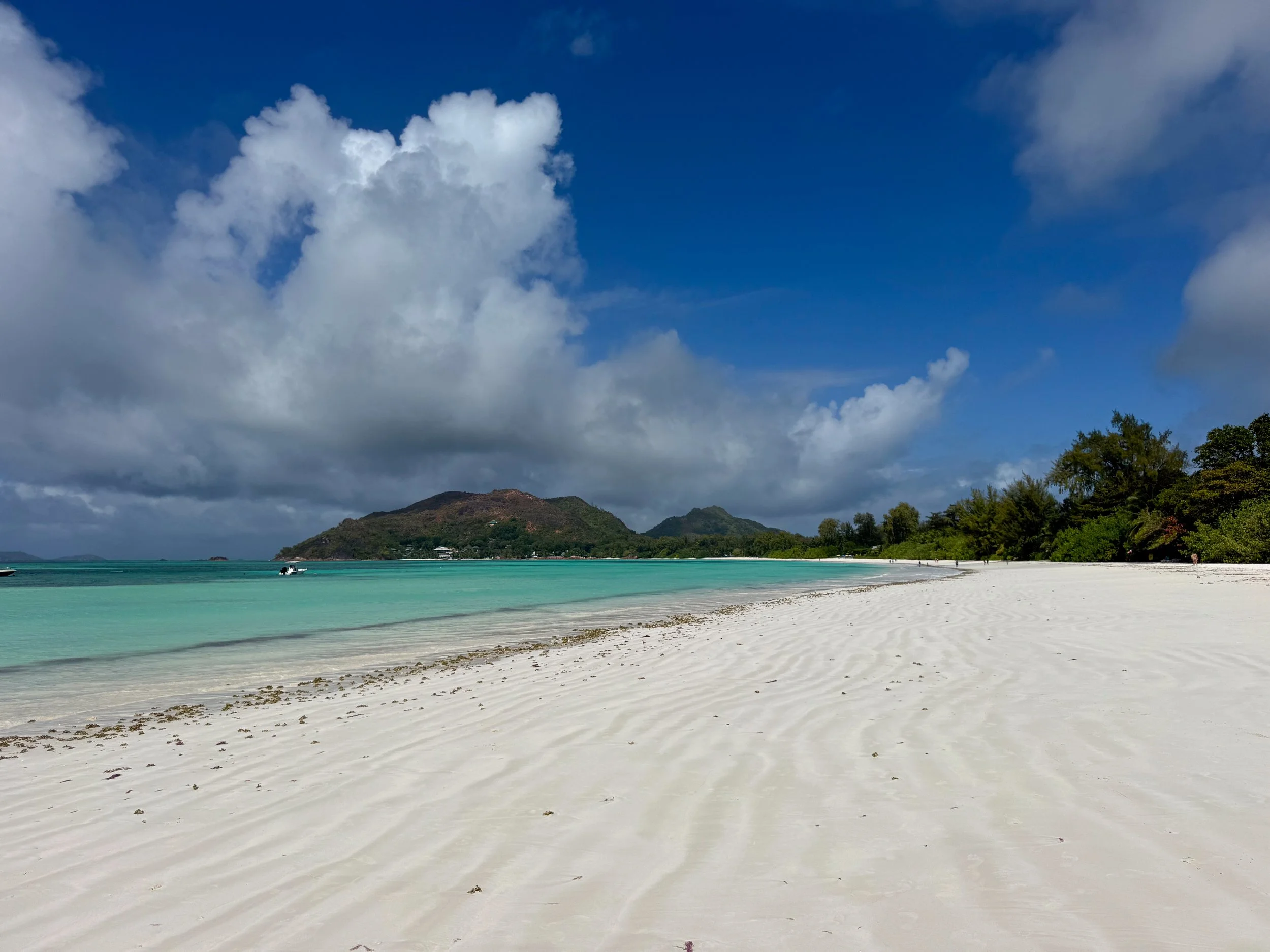
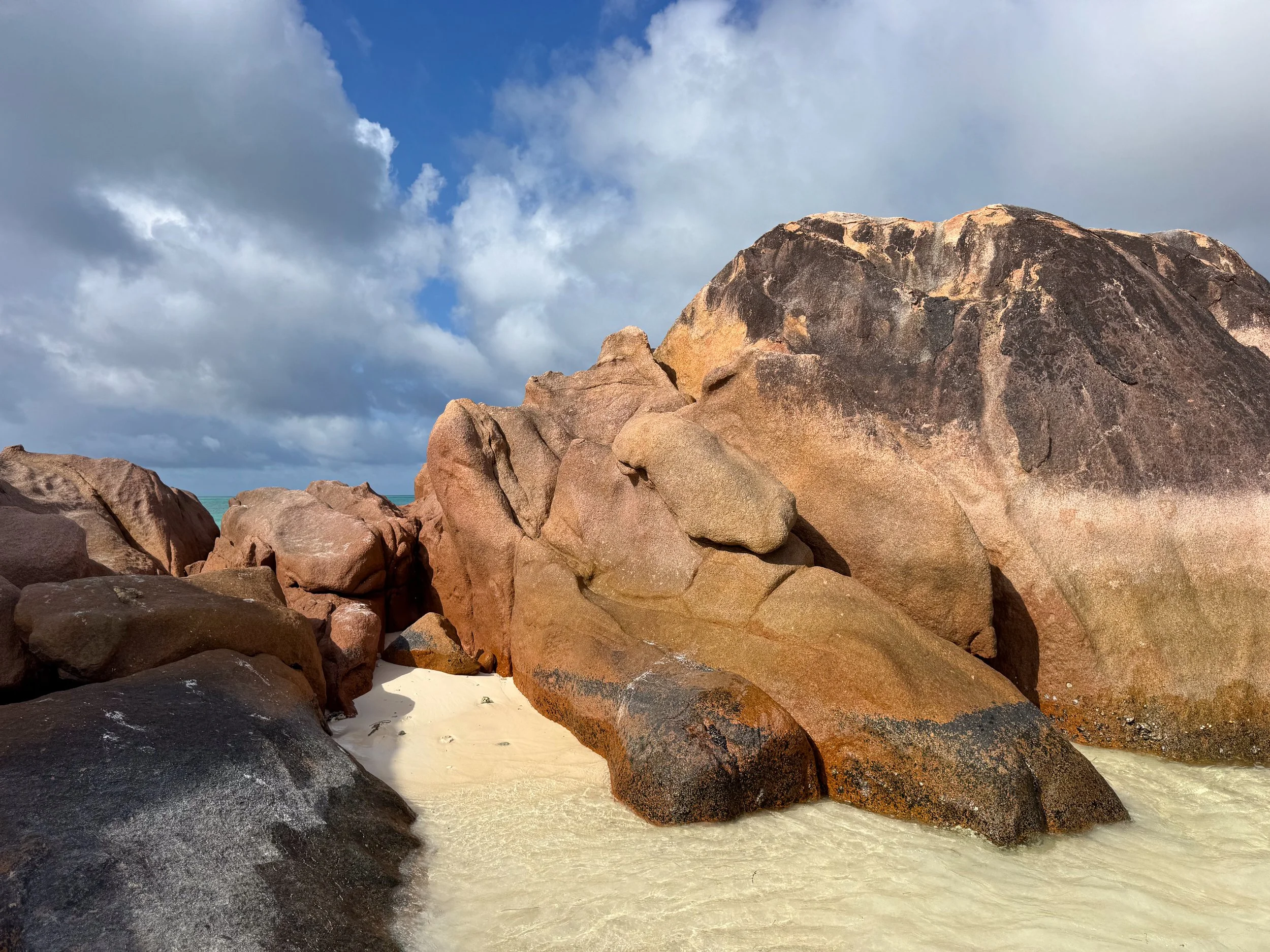
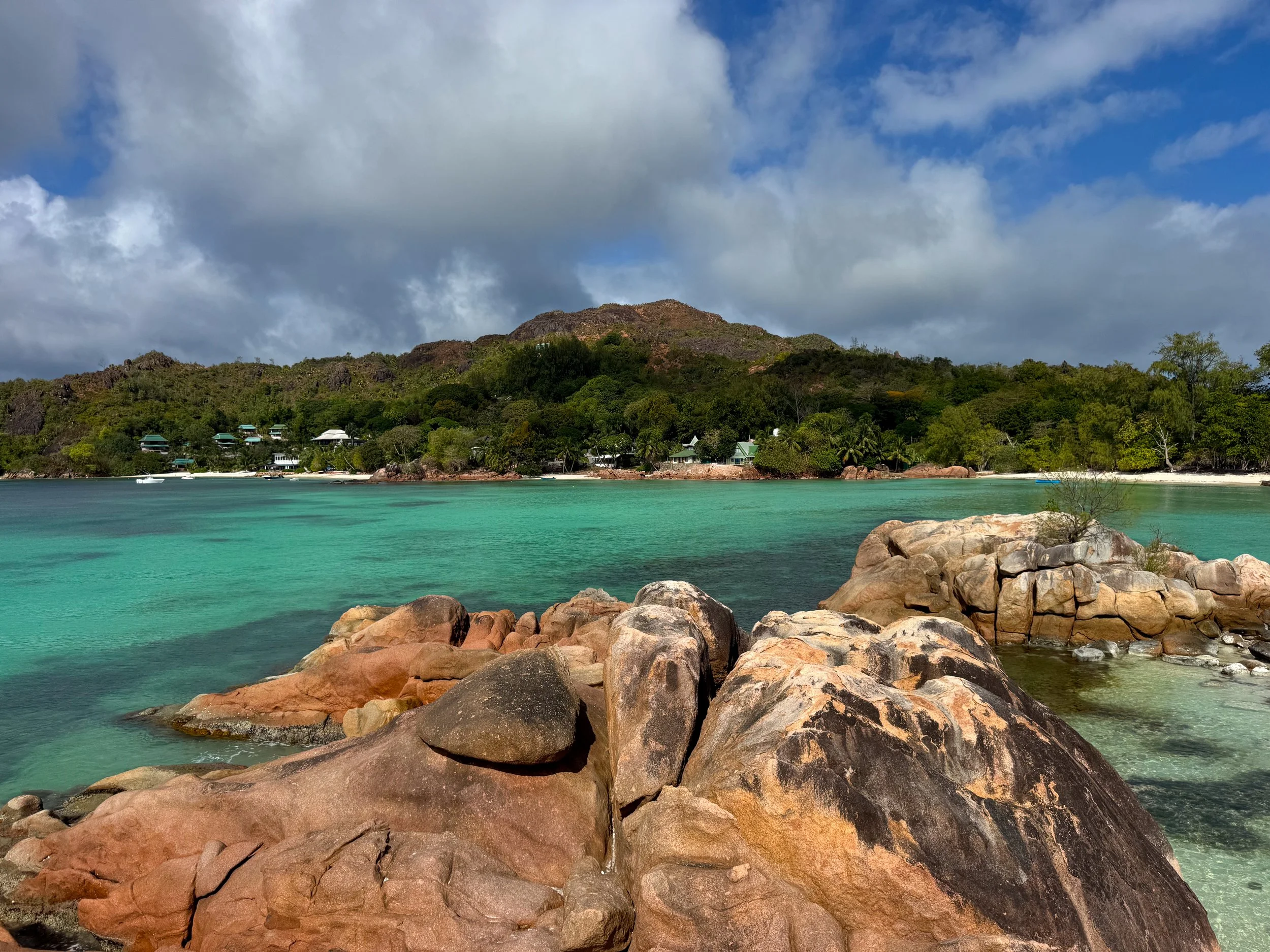
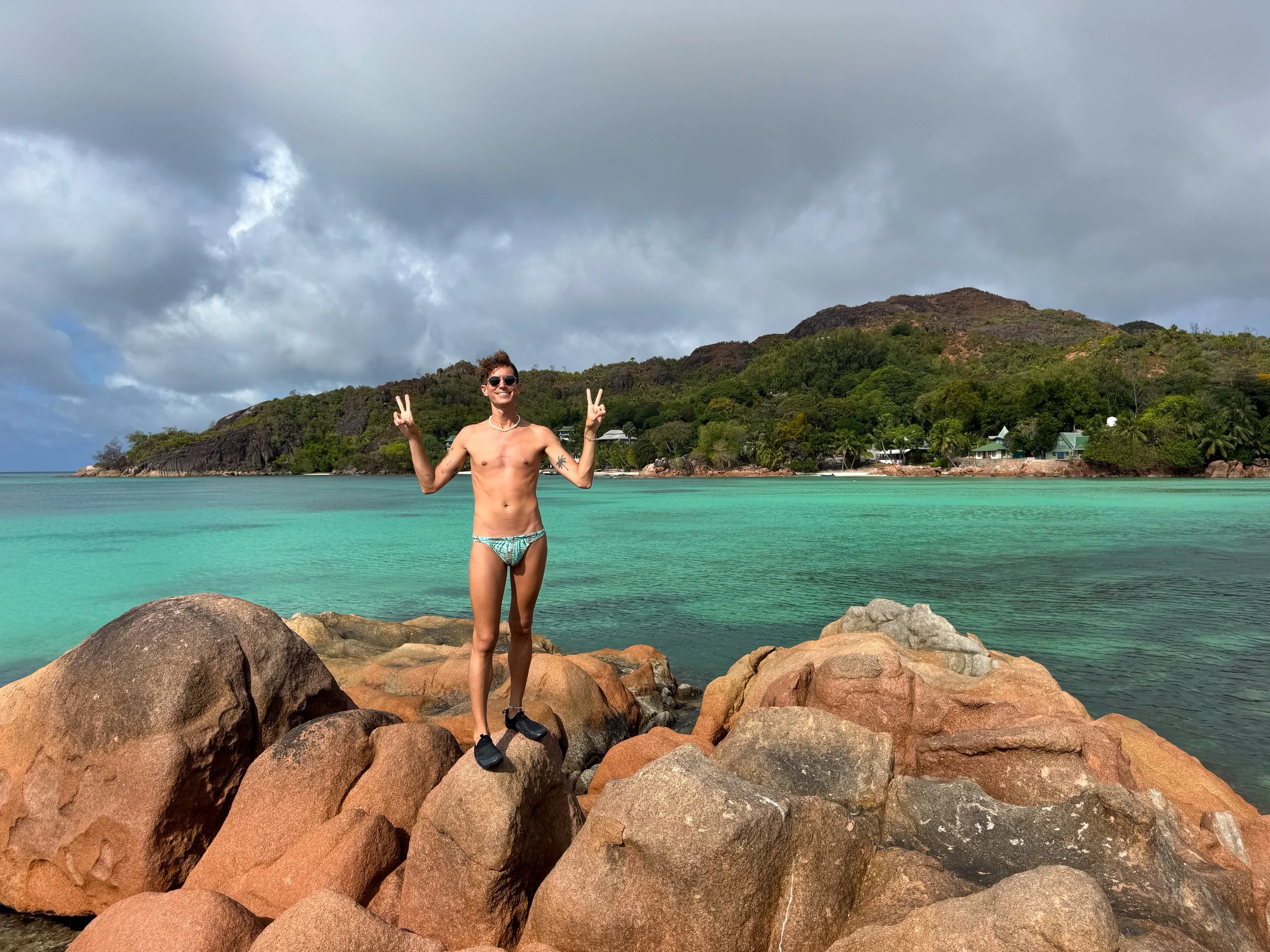
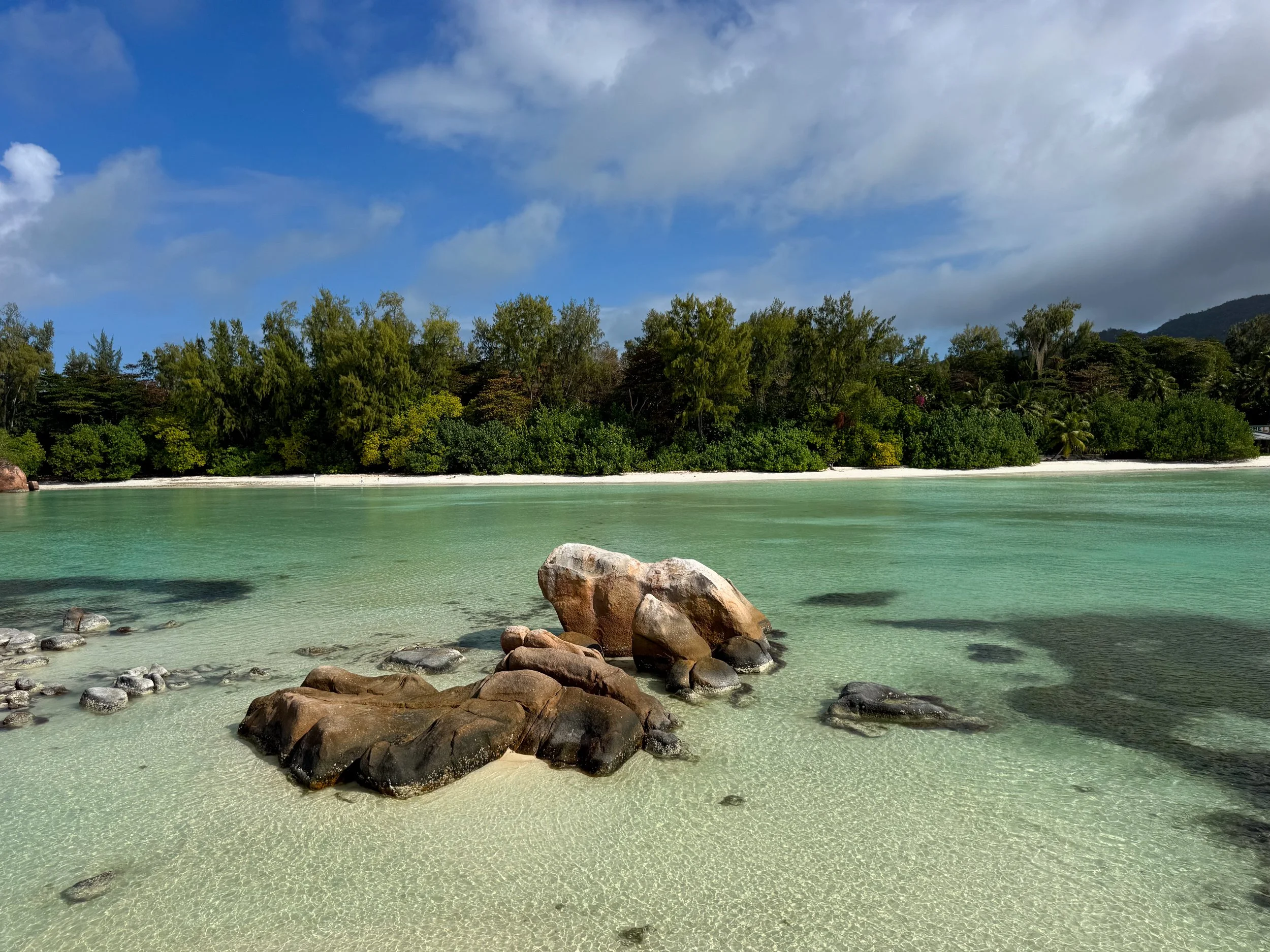
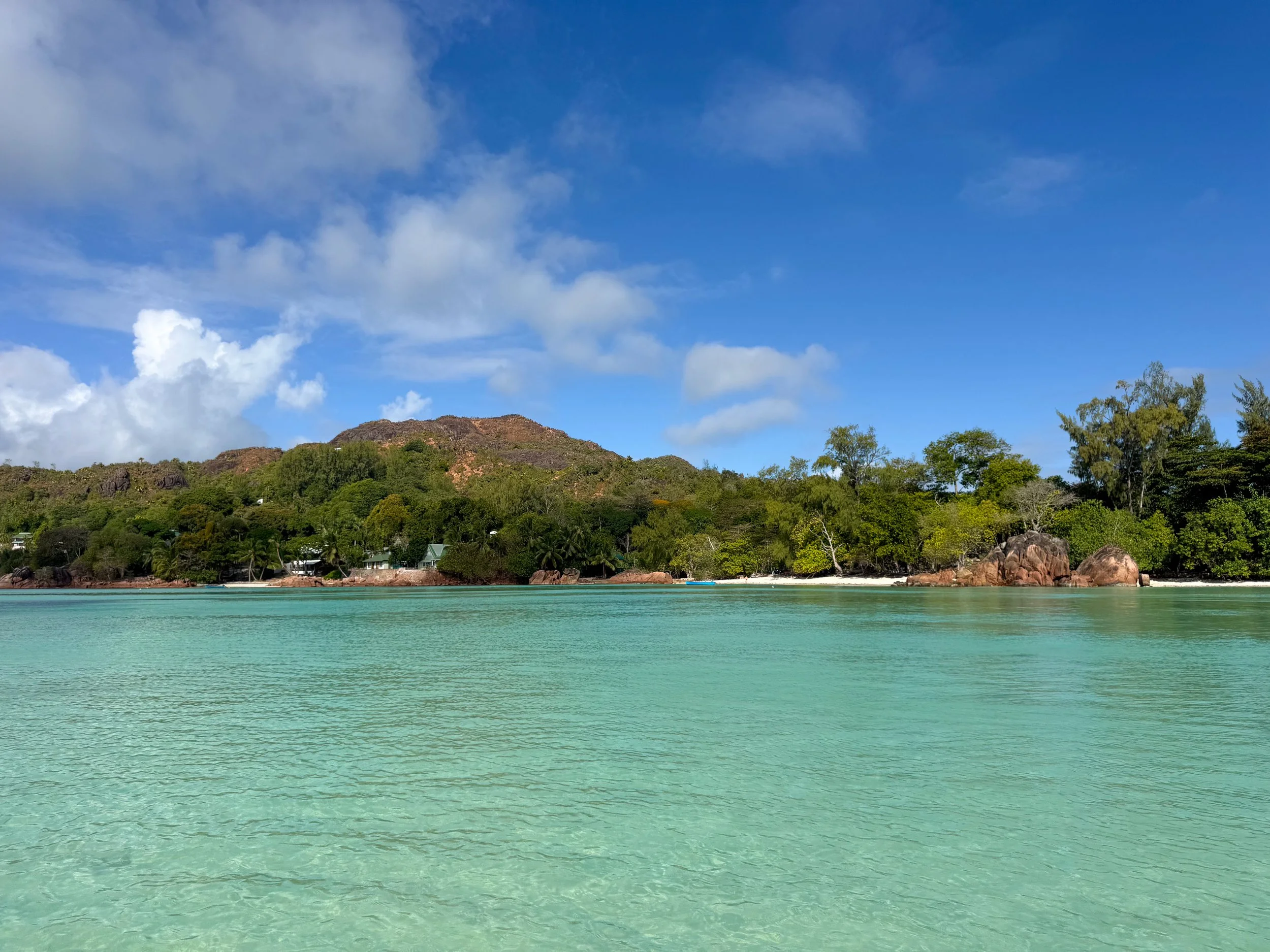
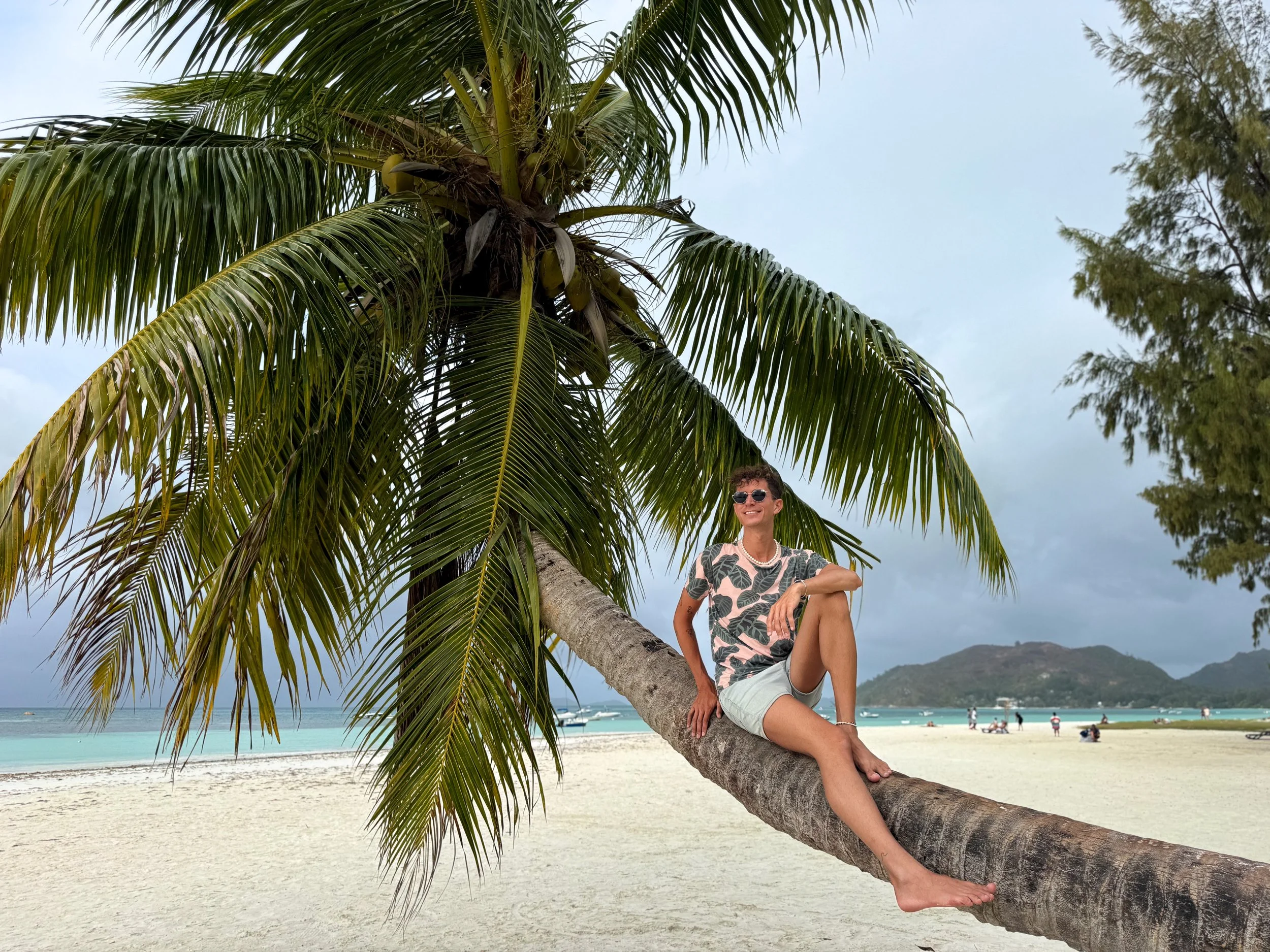
Cote d’Or Beach (Anse Volbert). A lengthy white sand beach in Anse Volbert Village. Its shallow aquamarine waters stretch hundreds of meters into the ocean. Wade through them to an outcrop of orange granite boulders on the south end of the beach. Walk towards the north end, stopping to pose with a photogenic palm tree leaning over the white sand. It’s a quiet and convenient area to stay. Small hotels, take away restaurants, grocery stores and tour operators line the beachfront road in the village.
Good to Know. Be cautious of difficult to spot stingrays. Wear water shoes for protection.
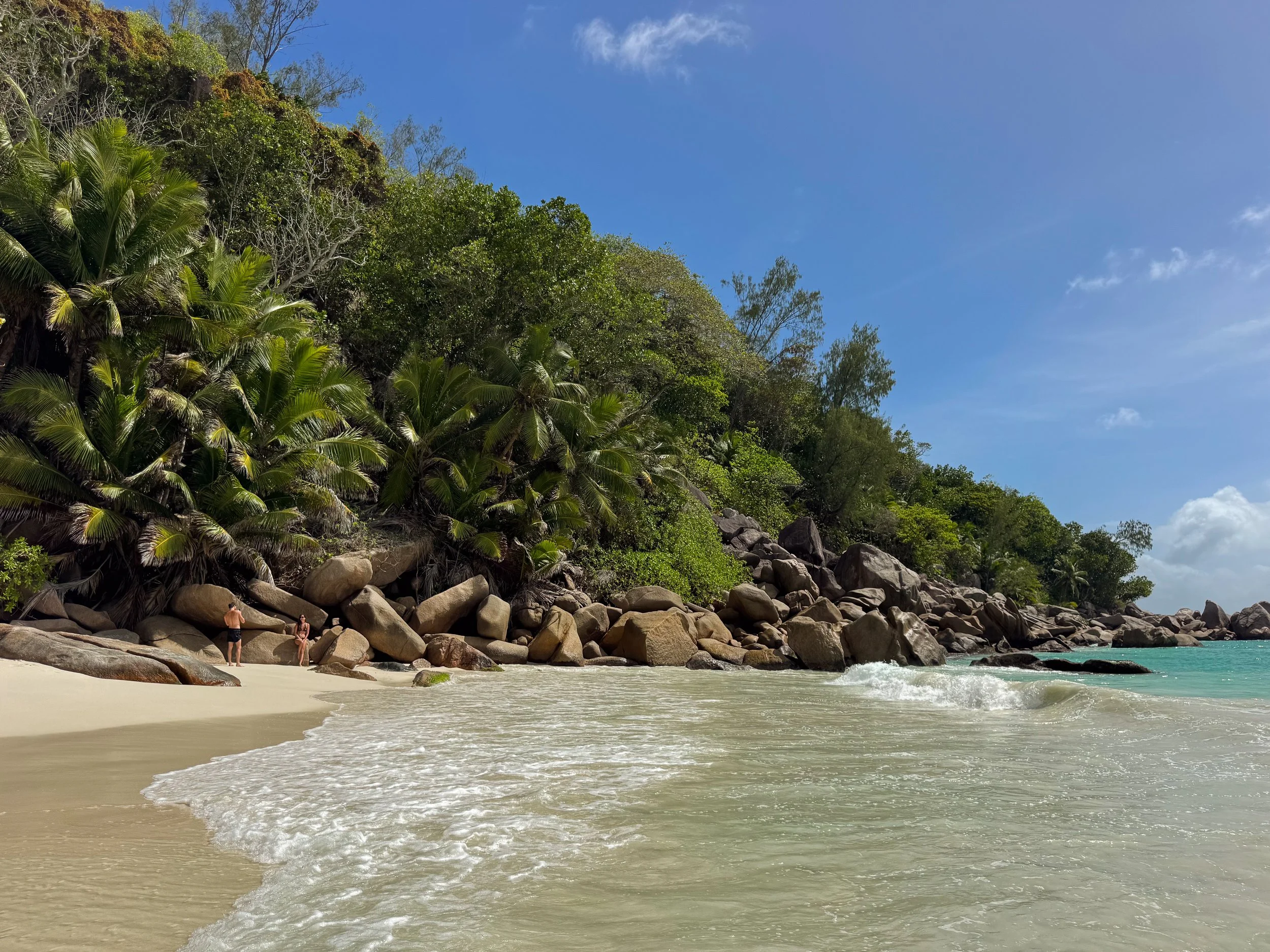
Anse Georgette. A small and secluded white sand beach at the Lemuria Resort. There are a couple fruit, juice and cocktail vendors along the tree line. Order the coconut mixed with rum and garnished with a hibiscus flower! The currents can make it difficult to swim while the waves are excellent for body surfing.
Good to Know. The number of visitors is limited but not heavily enforced. Call a week in advance to reserve a spot.
Getting Here. Take the bus to the Mont Plaisir stop. Check in at the Lemuria Resort and walk 20 minutes across the golf course to the beach.
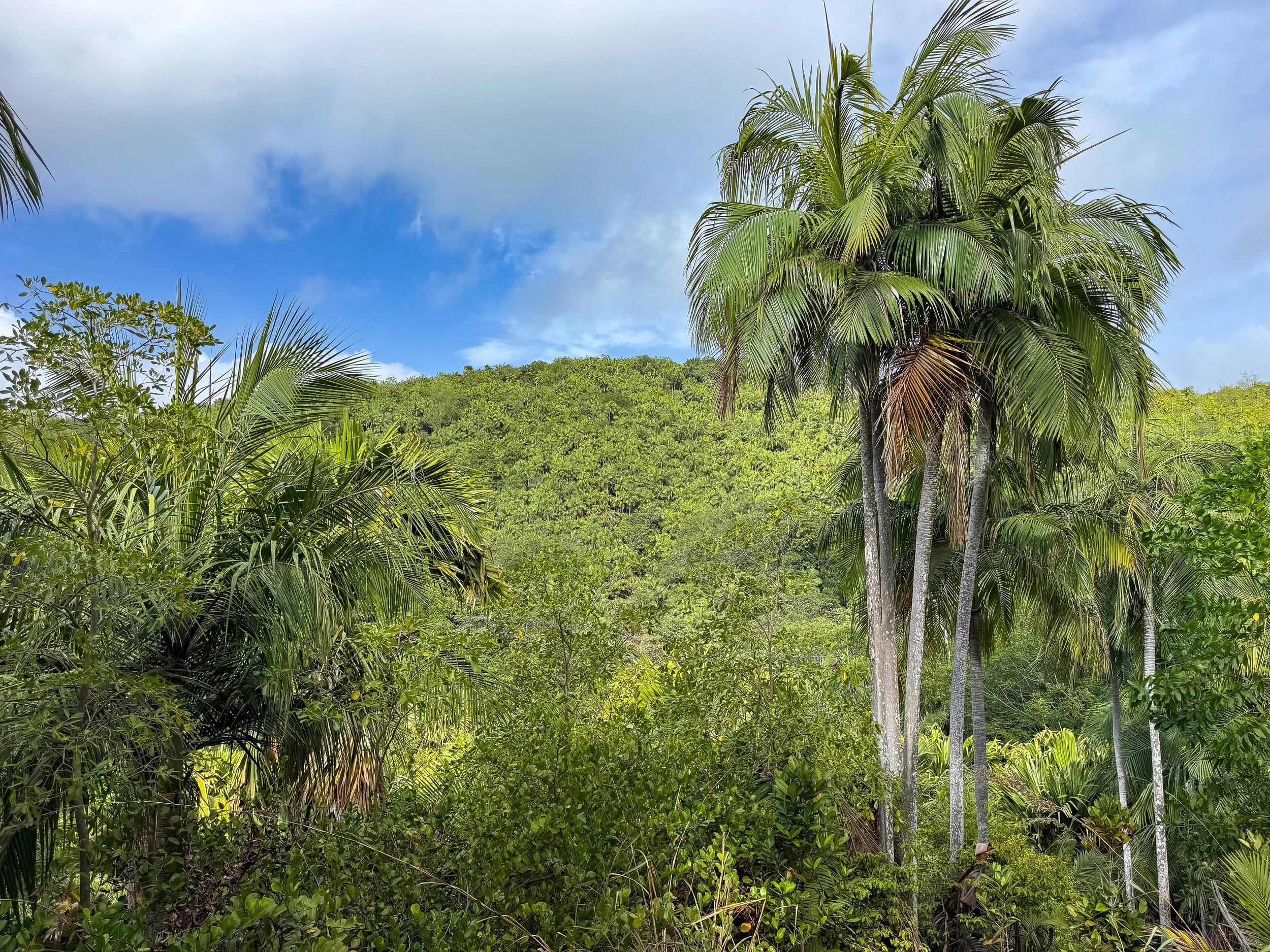
Praslin Sights
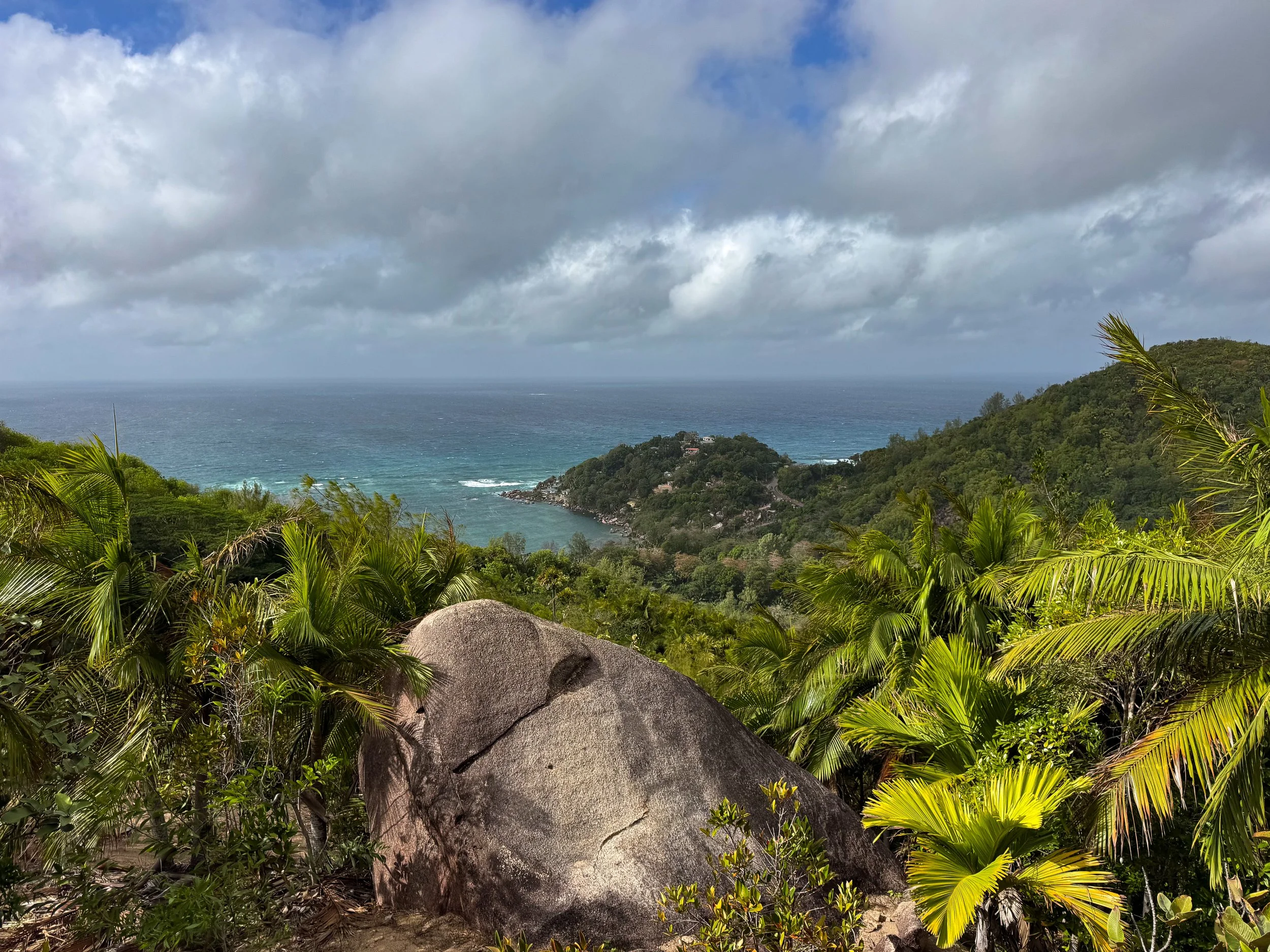
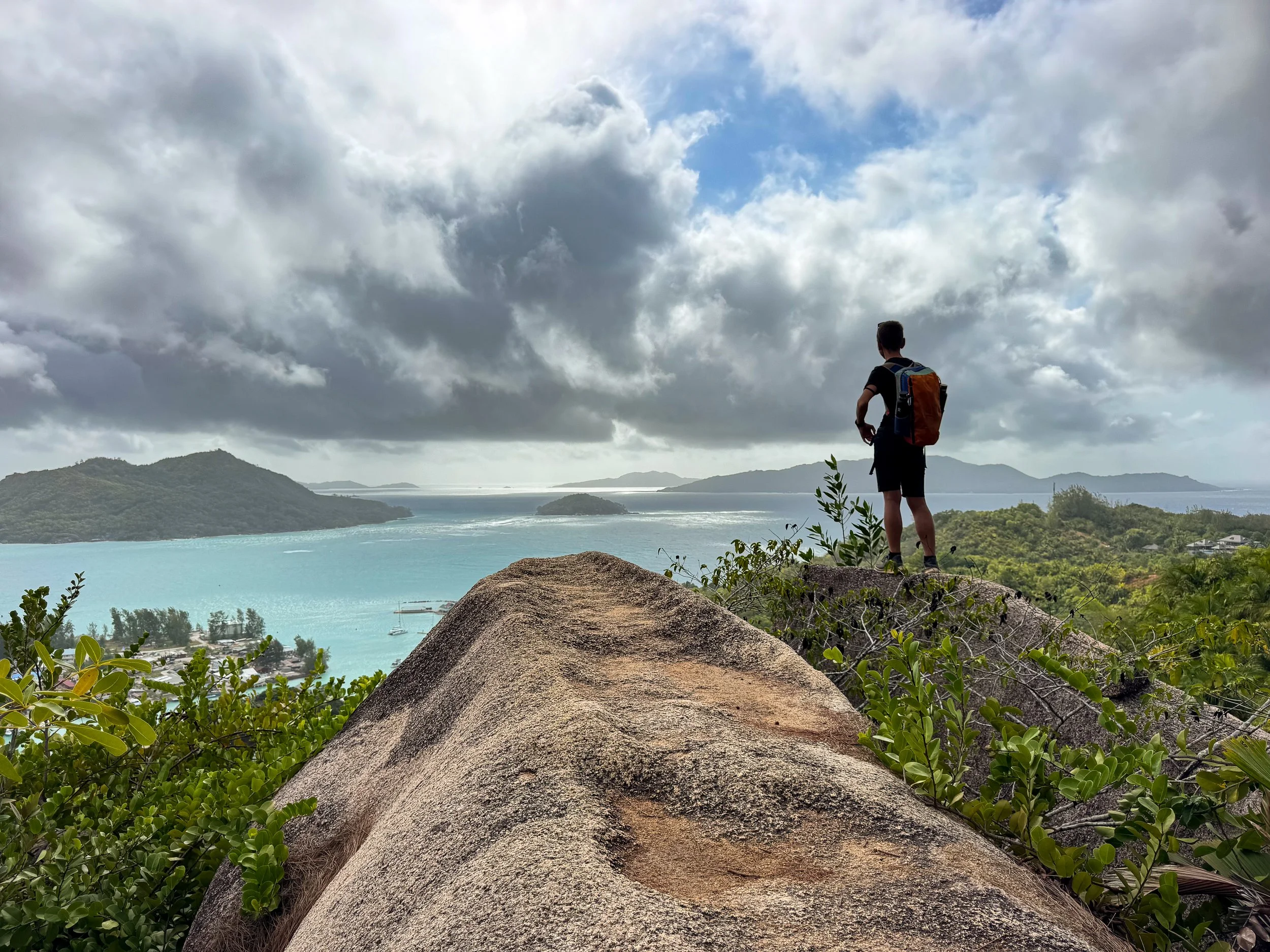
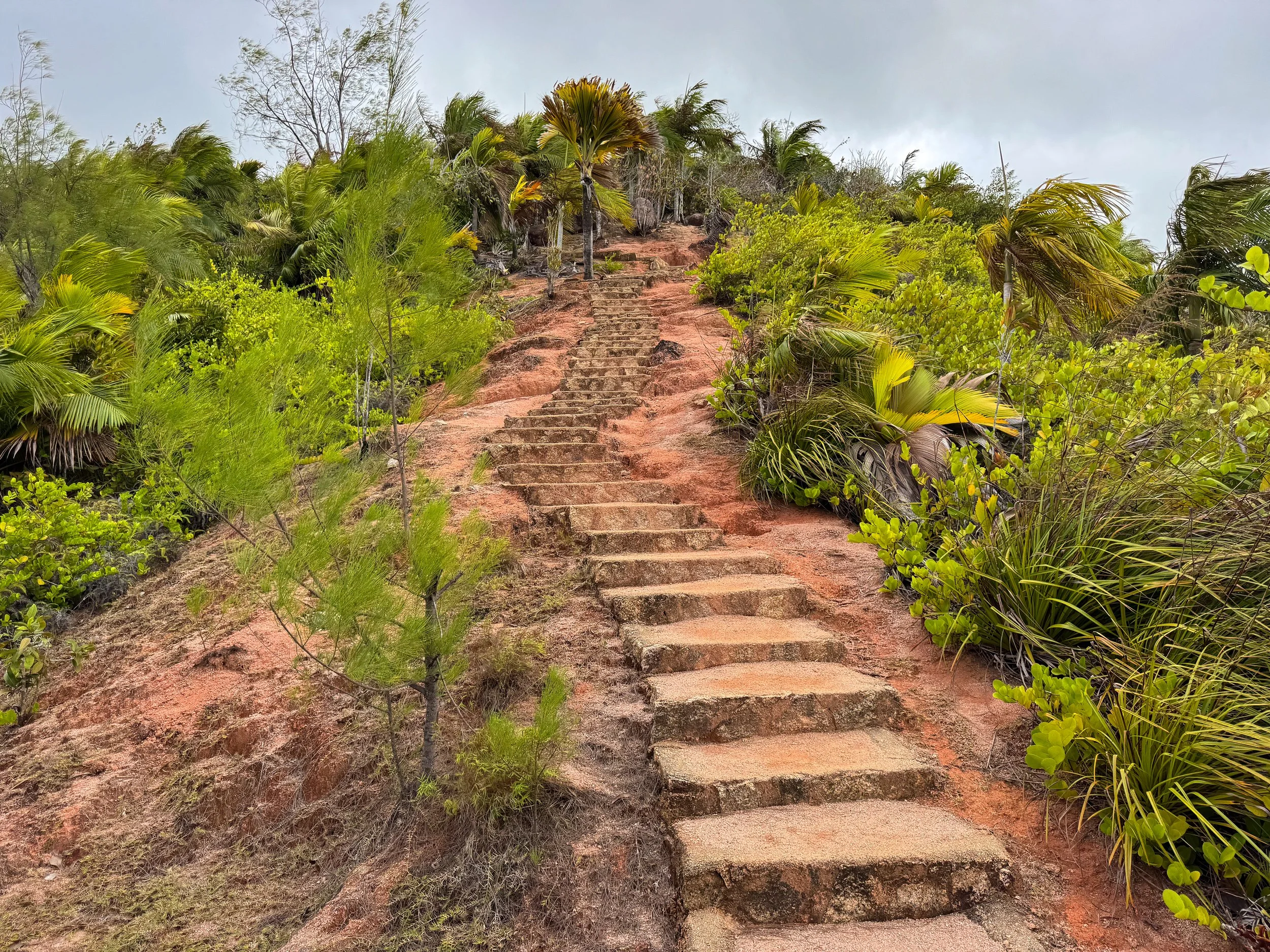
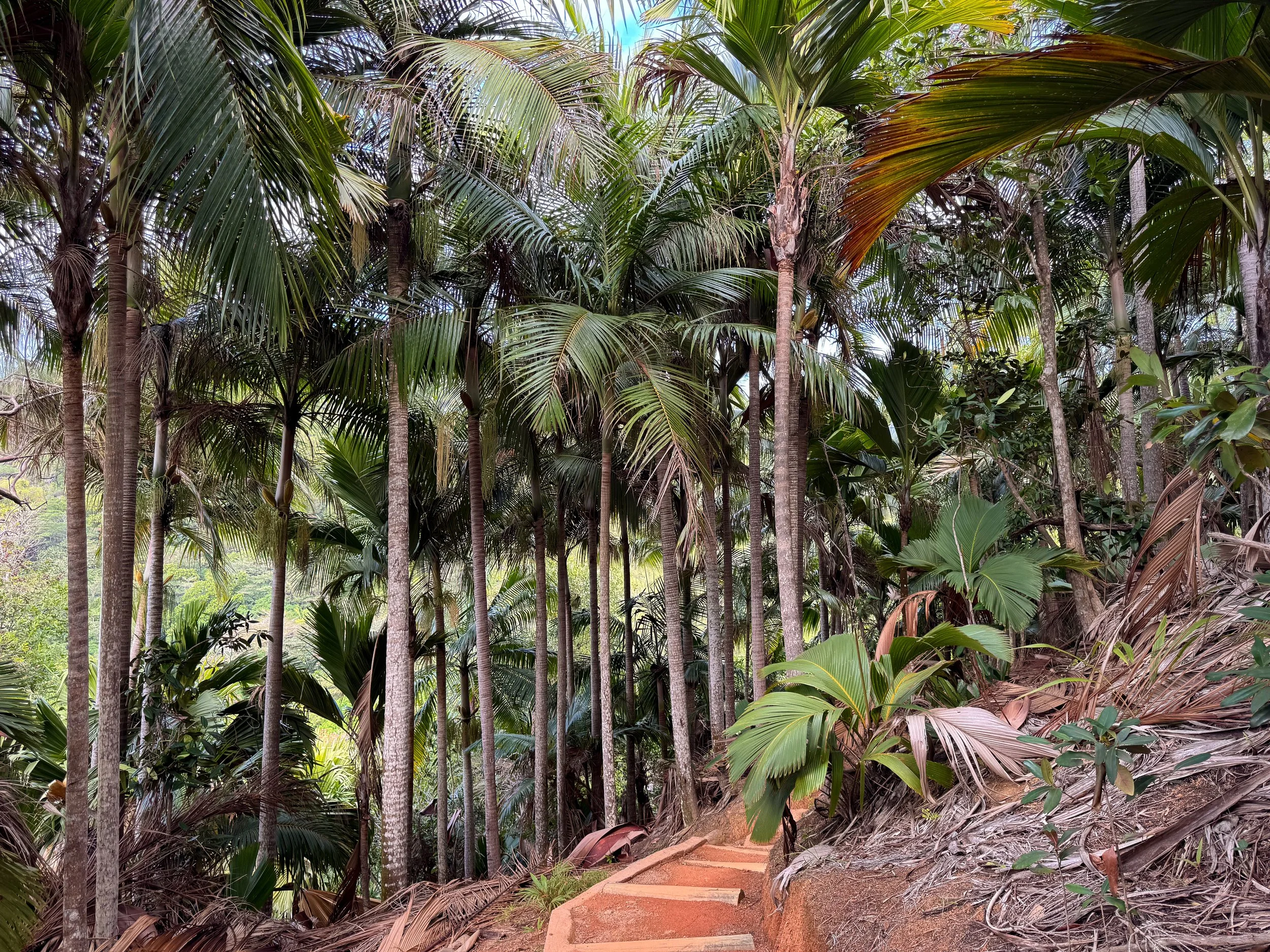
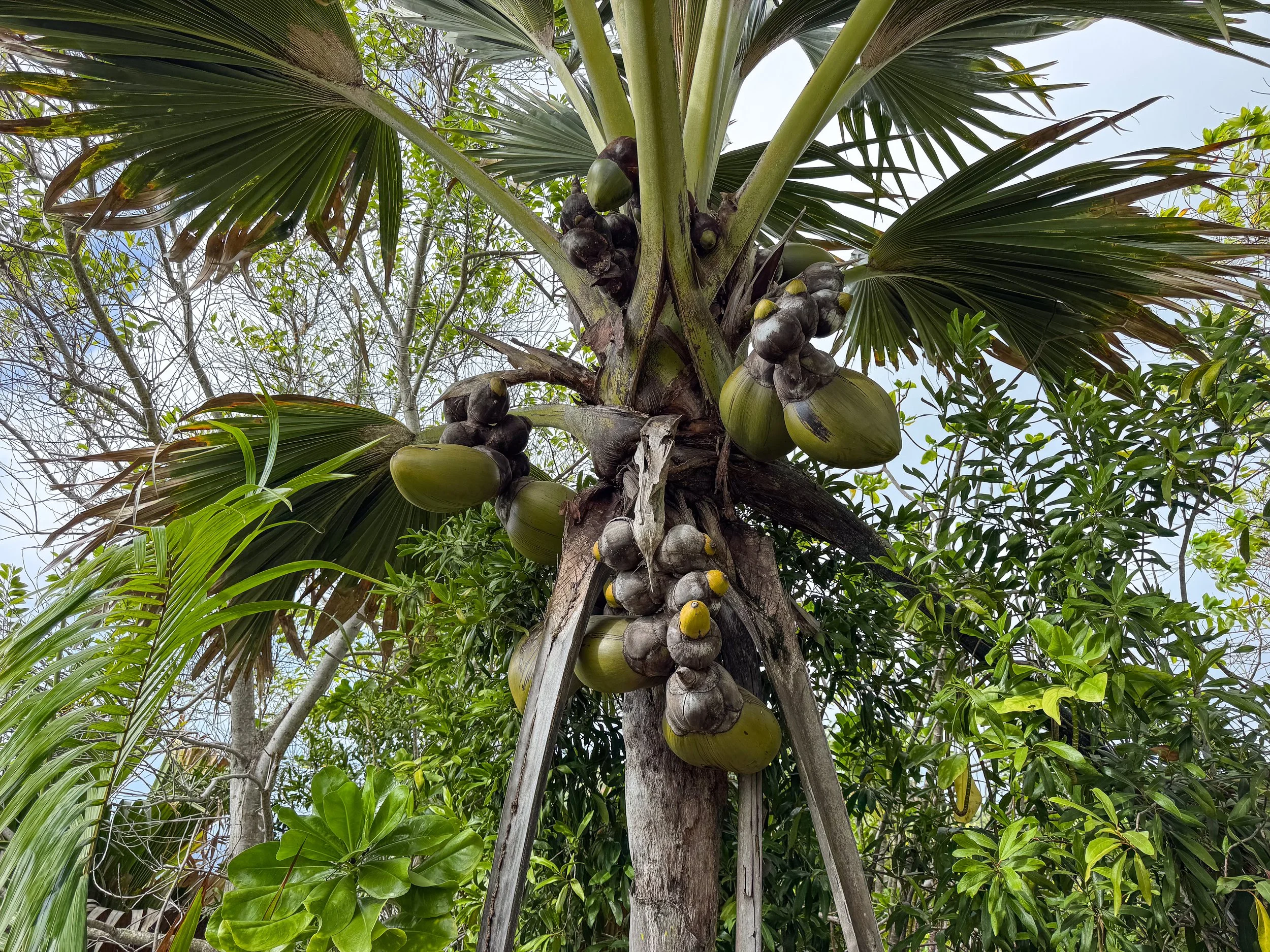
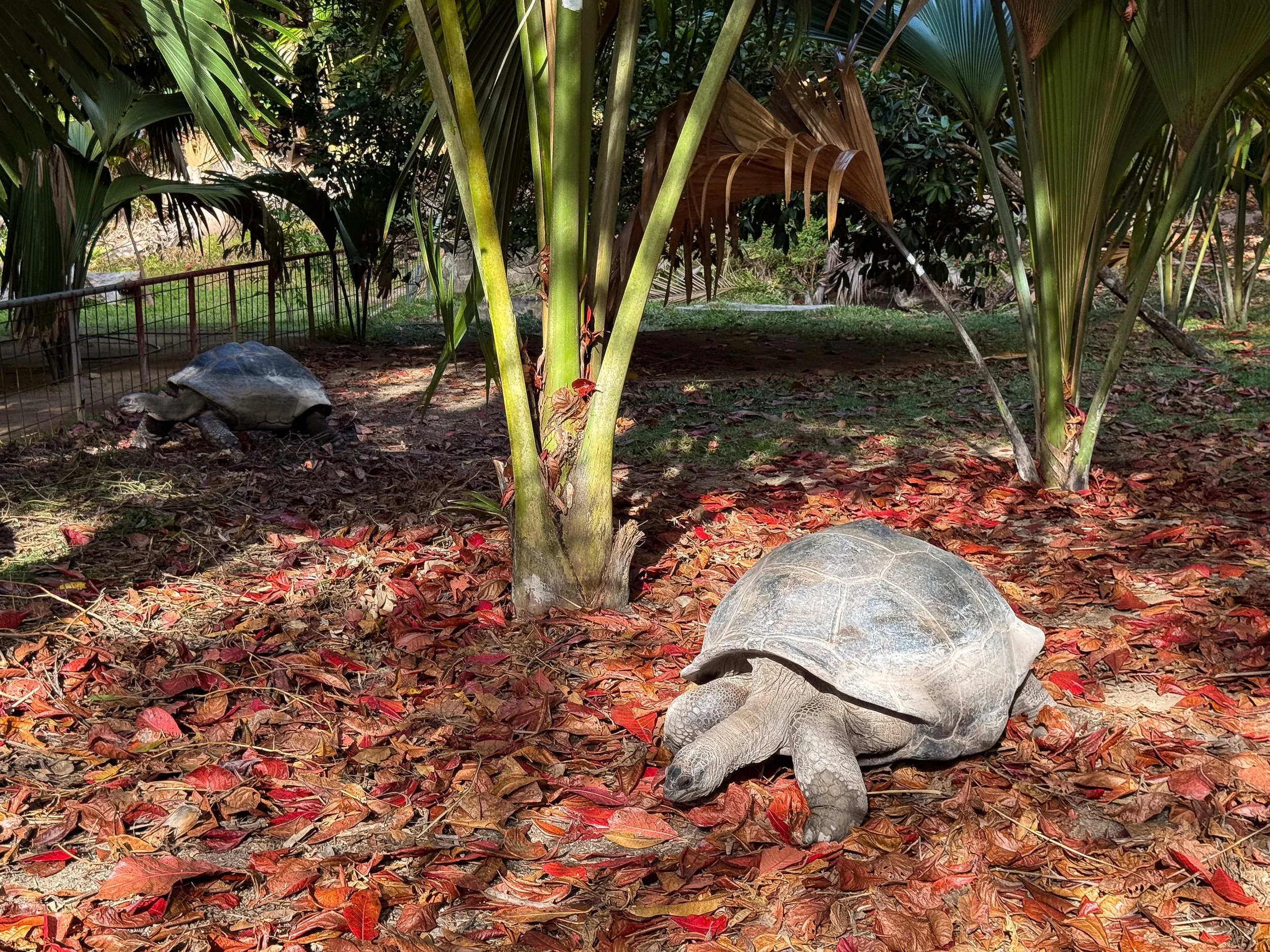
Fond Ferdinand Nature Reserve. A lush nature reserve with trails leading through the island’s tropical palm forest. Spend a couple hours walking the trails and spotting wildlife like the Seychelles Day Gecko, Seychelles Black Parrot and Seychelles Fruit Bat. Trails meander uphill through an expansive grove of Coco de Mer Palms to the reserve’s lookout point. Views from its hilltop boulders peer across St Anne’s Bay towards the Inner Islands. The high winds ruffle the fronds of giant palms and surrounding plants. Before leaving, visit a pen with two giant Aldabra tortoises.
Good to Know. The park opens at 8:30am but staff will let you in starting at 8am. Bring insect repellant.
Getting Here. Take the bus to the Anse Consolation stop. The park entrance is a quick walk away from here.
Pro Tip. Buses only pass by every 1-2 hours on this side of the island. Ask the staff at the ticket office for the current bus schedule to plan your departure time accordingly.
Places to Eat & Drink on Praslin
Leo’s Food. A beachside takeaway at Côte d’Or Beach. Come here for their Hawaiian fish burger, curry prawns in rice and Takamaka rum & coke.
Honesty Bar. A hidden bar nestled in the jungle beyond the western boulders of Anse Lazio Beach. Come here for their Creole Punch made with three shots of Takamaka Rum and your choice of fruit juice. They have the best priced drinks on the beach!
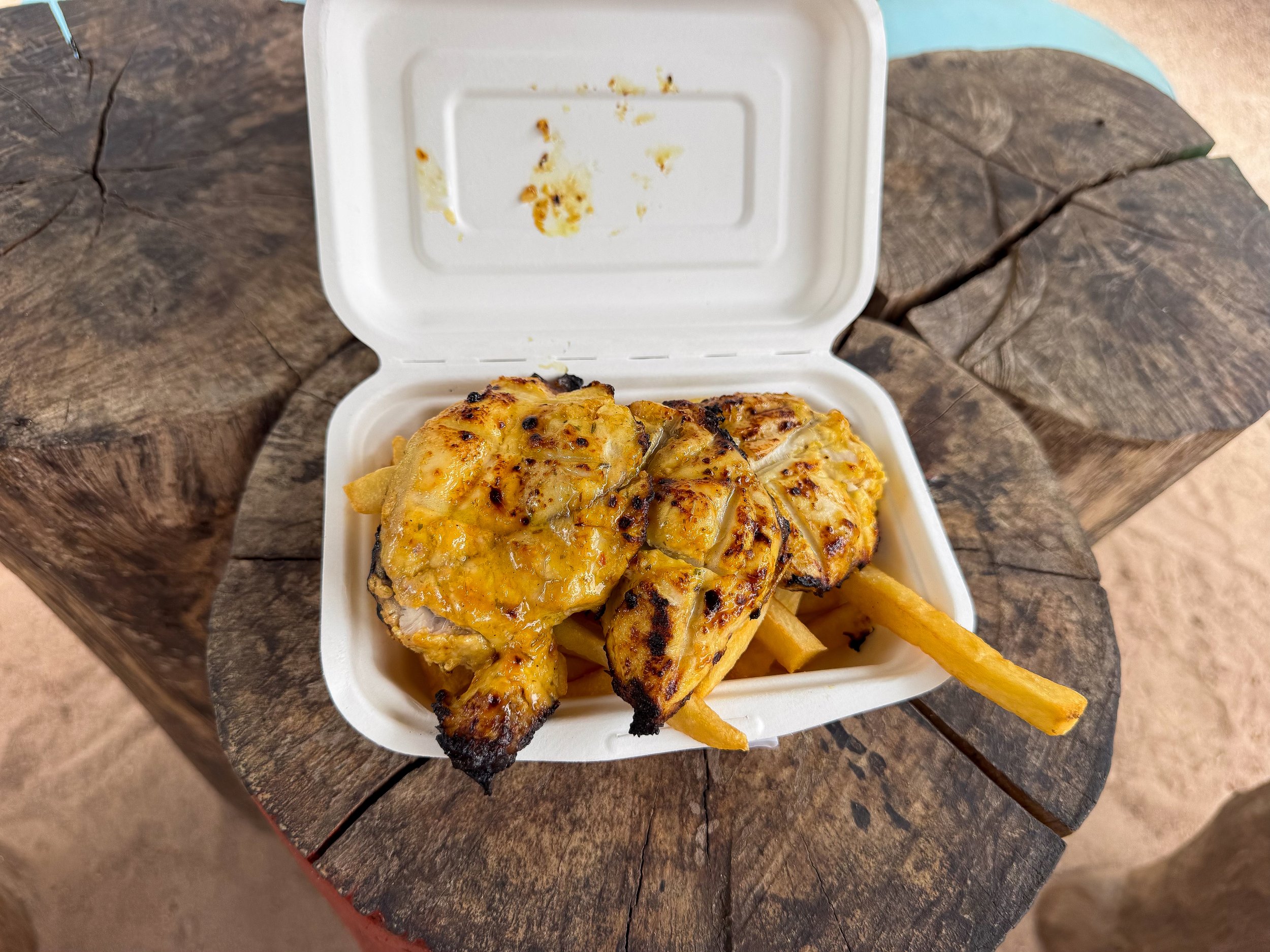
The Chill Grill. A beach front takeaway restaurant at Anse Lazio Beach with a range of grilled and fried bites. Come here for their grilled fish and chips!
Where to Stay on Praslin
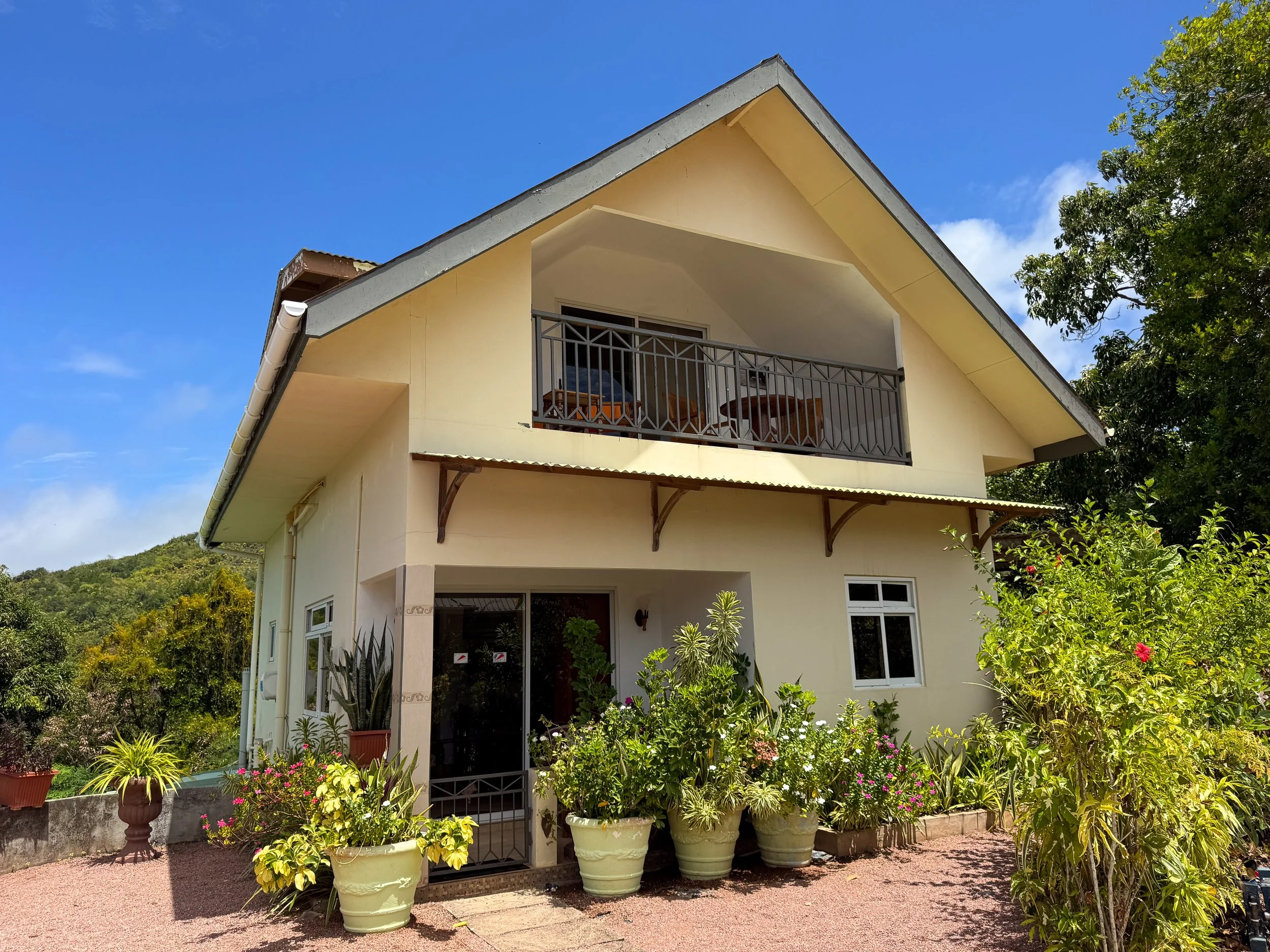
Mountain Lodge. A two floor house nestled in the lush hillside above Côte d’Or Beach in Anse Volbert Village. The spacious house has two bedrooms, a full kitchen and spacious living area. An outdoor balcony offers views of the coast, perfect for enjoying with a morning coffee. The back patio has a grill for barbecuing and relaxing during the evenings. Reserve on Booking.
Getting Around Praslin
Praslin Bus. The public bus on Praslin is the easiest and cheapest way to get around the island. Bus stops are clearly marked on the pavement. Locals and bus drivers are kind and offer to help if unsure of how to get somewhere. Refer to the Praslin Bus Route. The time tables are out of date but the routes are still accurate.
Good to Know. It’s prohibited to bring luggage besides hand bags and totes onto the bus. You need to buy a refillable SPTC card to ride the buses. Fares cost 10 SCR. The card can be purchased from convenient stores around the Praslin Ferry Jetty when arriving on the island. We bought ours at Supermarket Kot Merilin.
Taxis. As buses don’t allow luggage onboard, taxis are the only option to and from the ferry jetty and most accommodations. Unfortunately, drivers know this and charge a steep price to get anywhere on the island. A single 10 minute ride can cost €25.
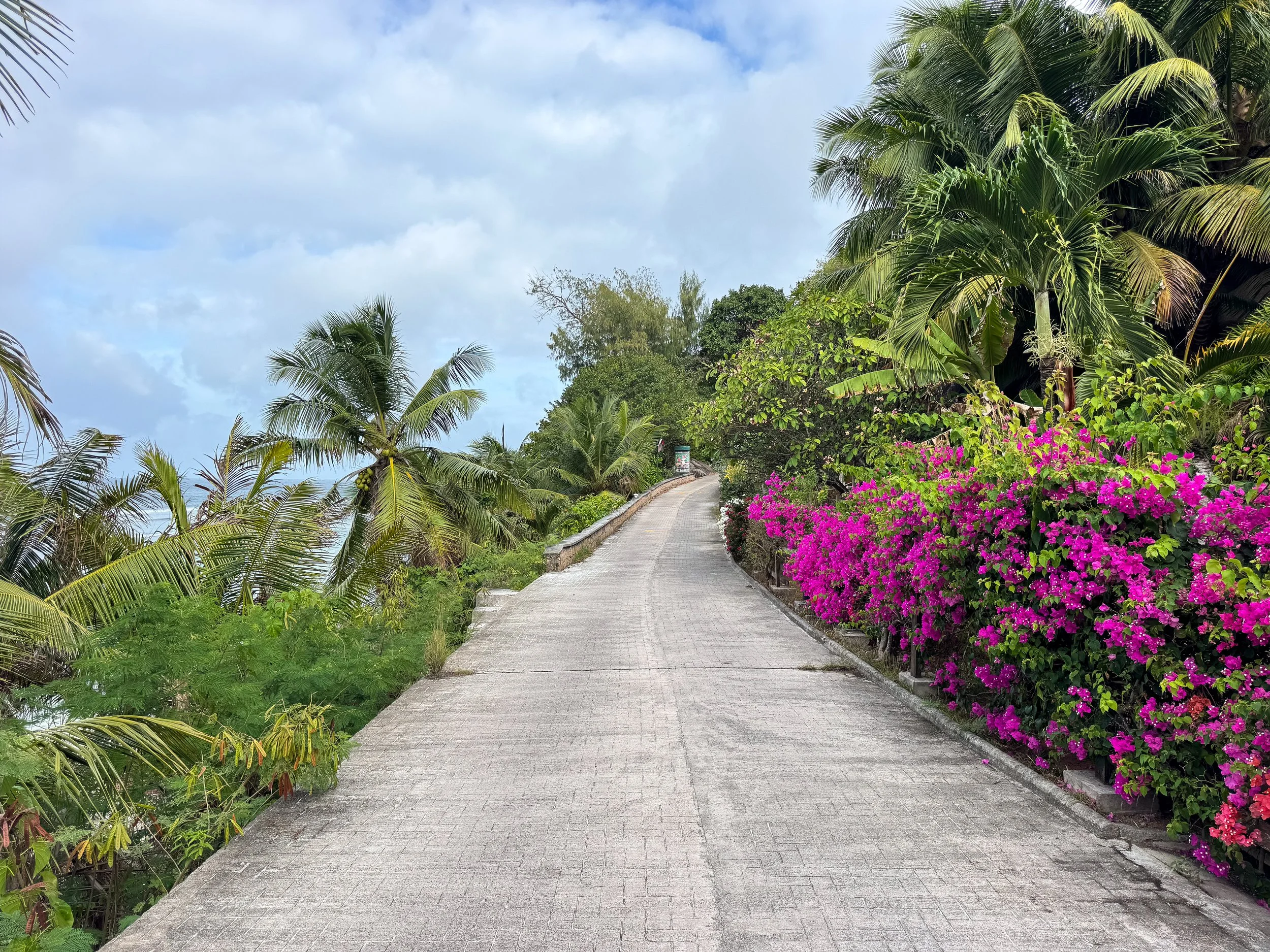
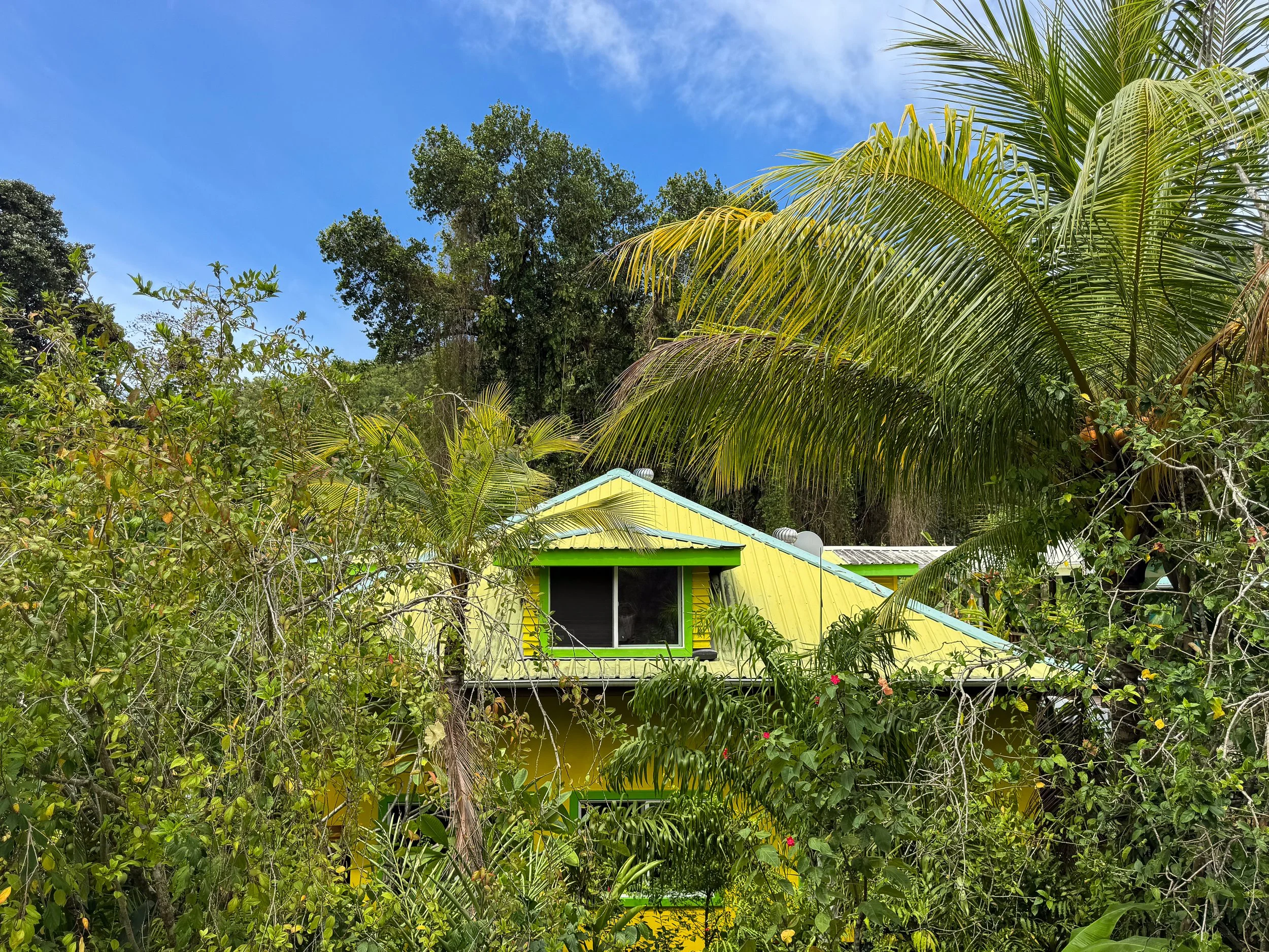
La Digue
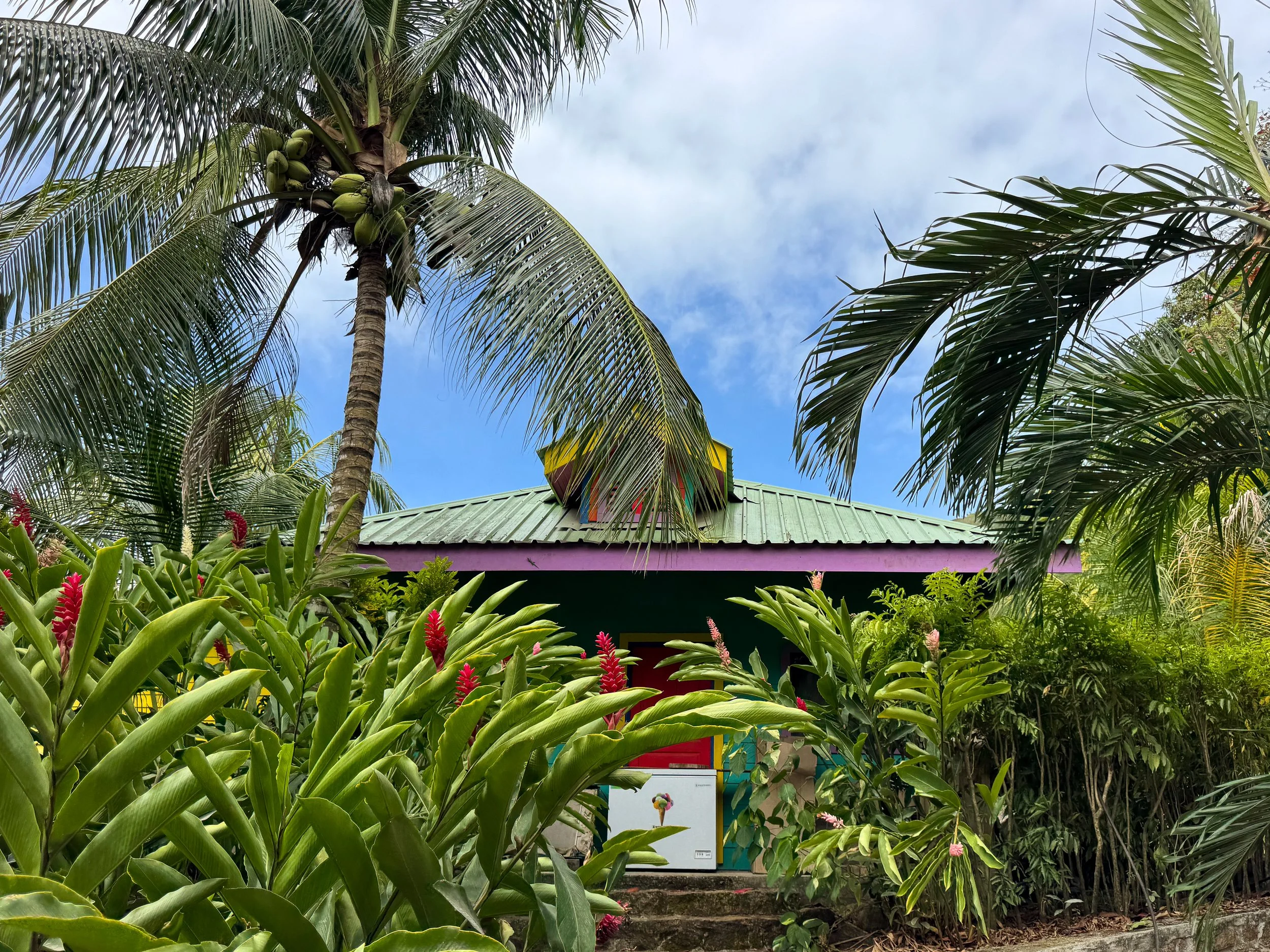
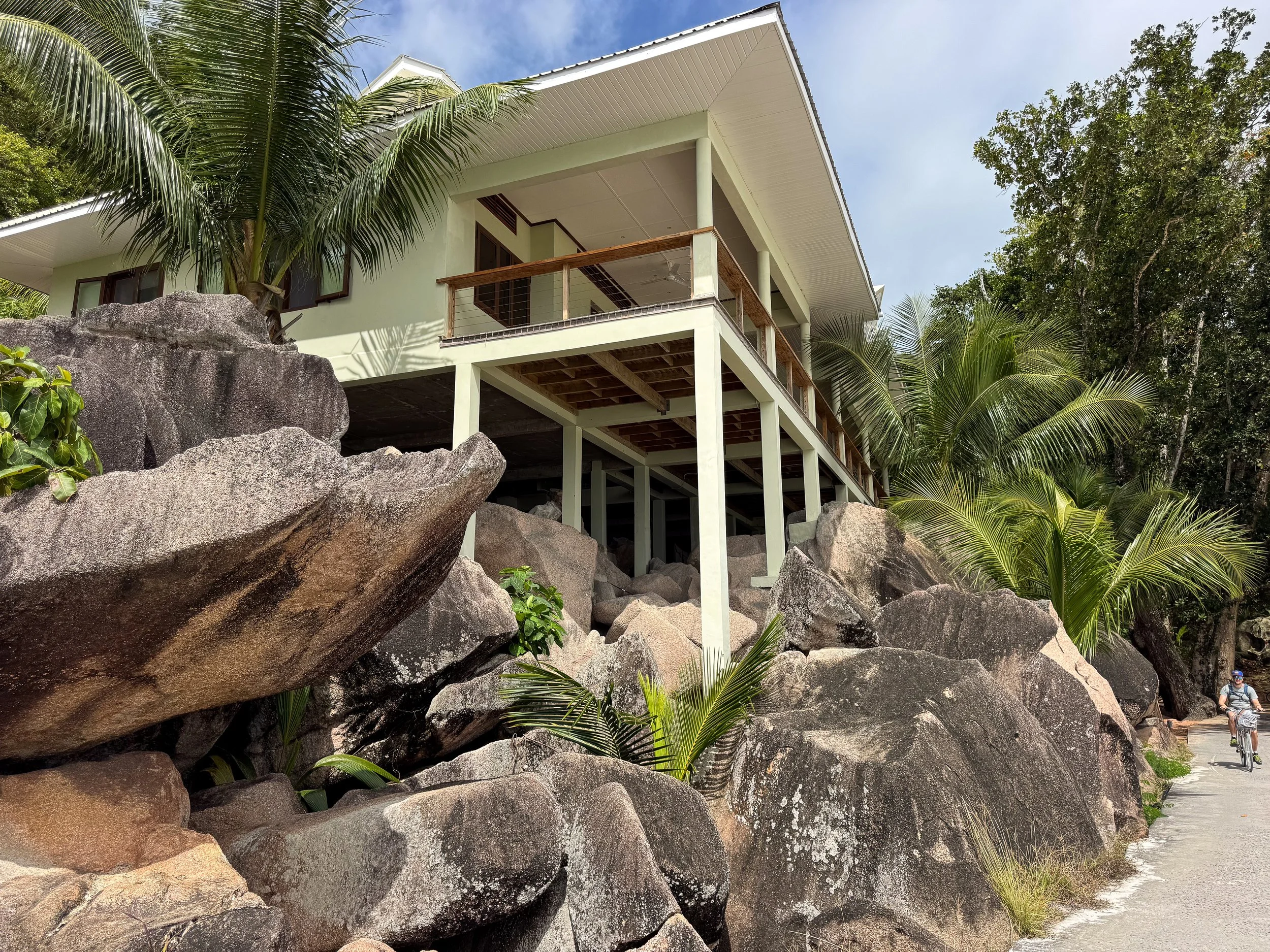
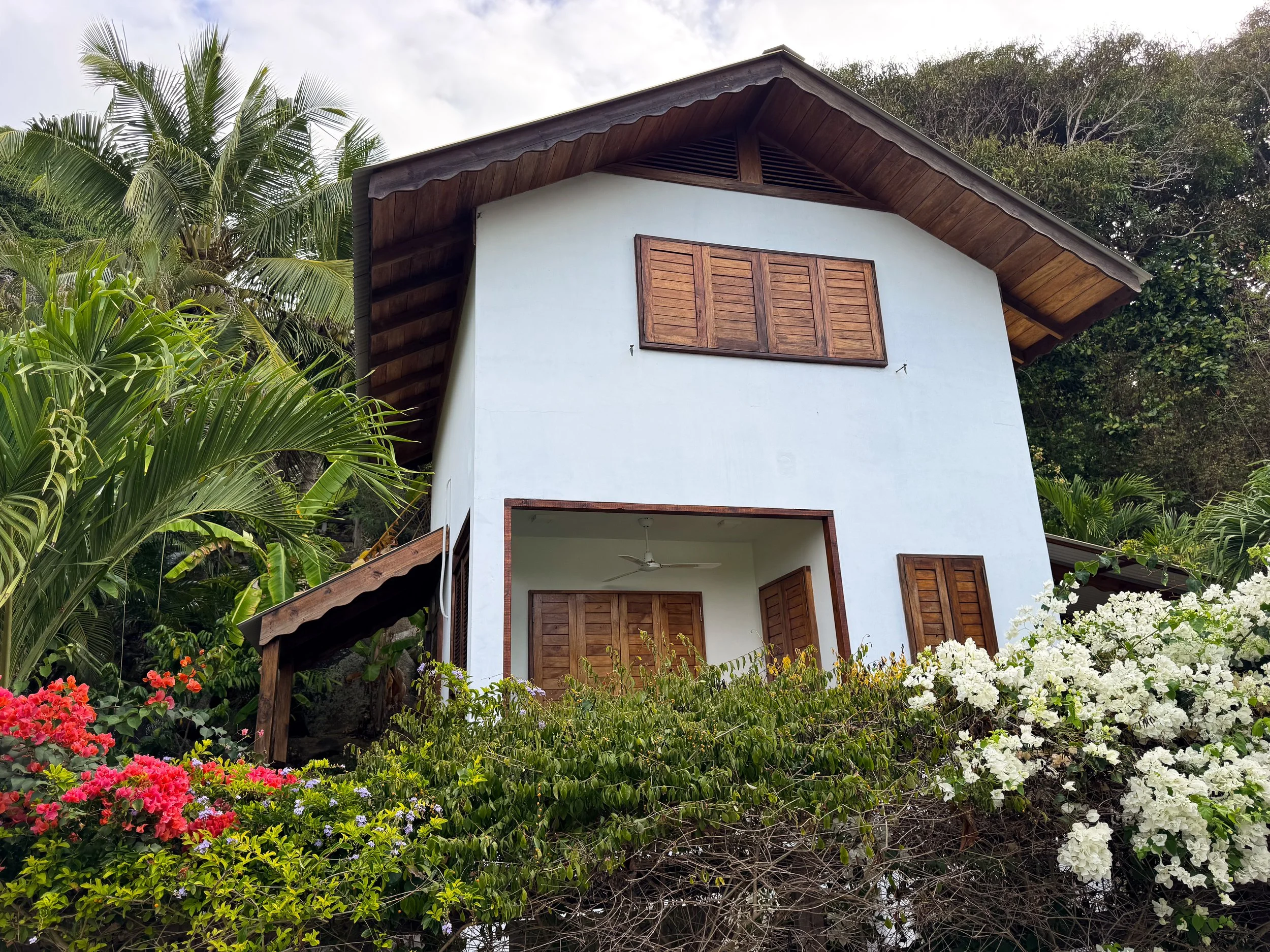
La Digue is a small and sleepy tropical island. It’s a picturesque paradise with white sand beaches, swaying palm trees, colorful flowers and iconic granite boulders. Bicycles are the main way of getting around though much of the island can be walked on foot.
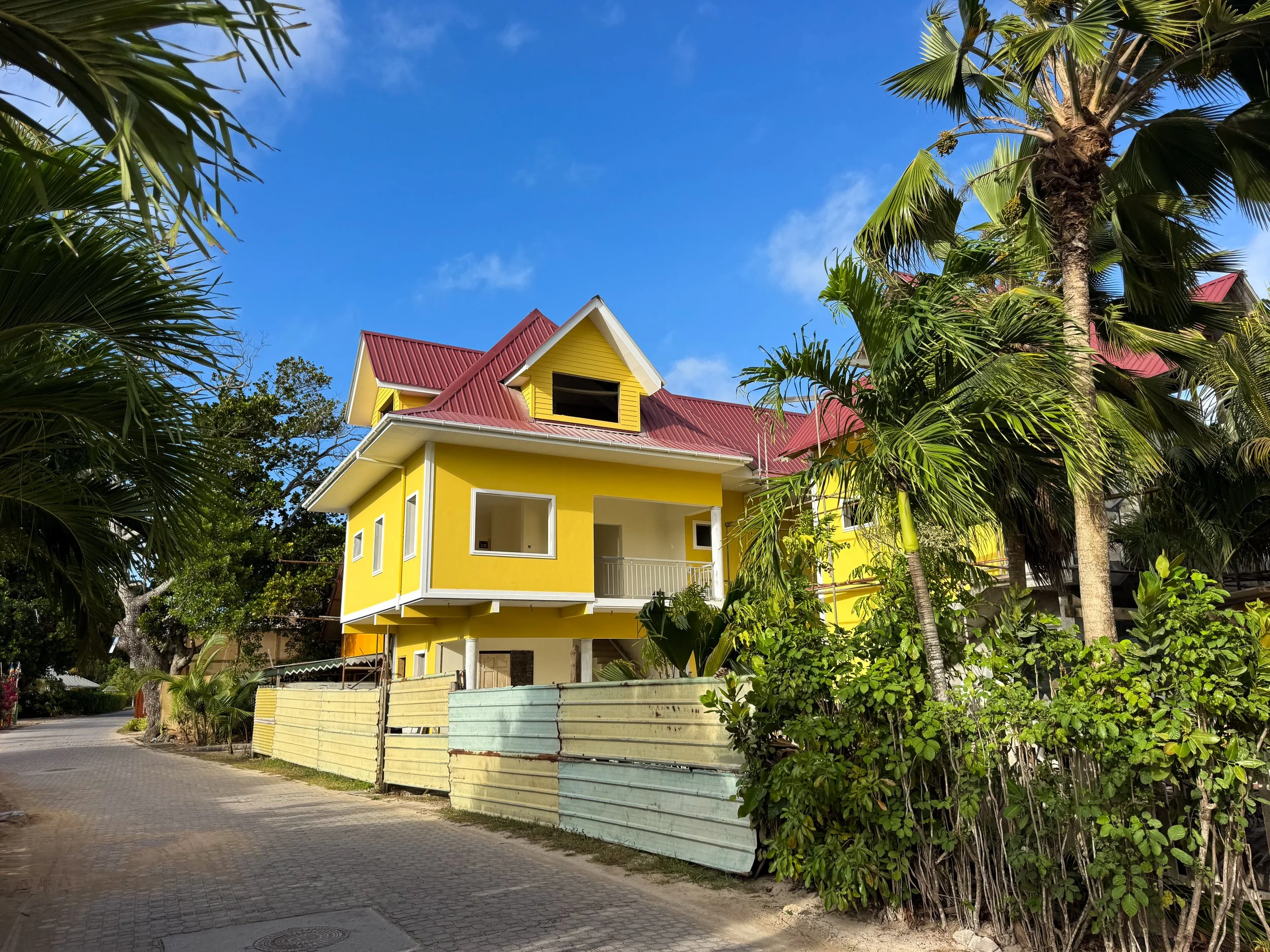
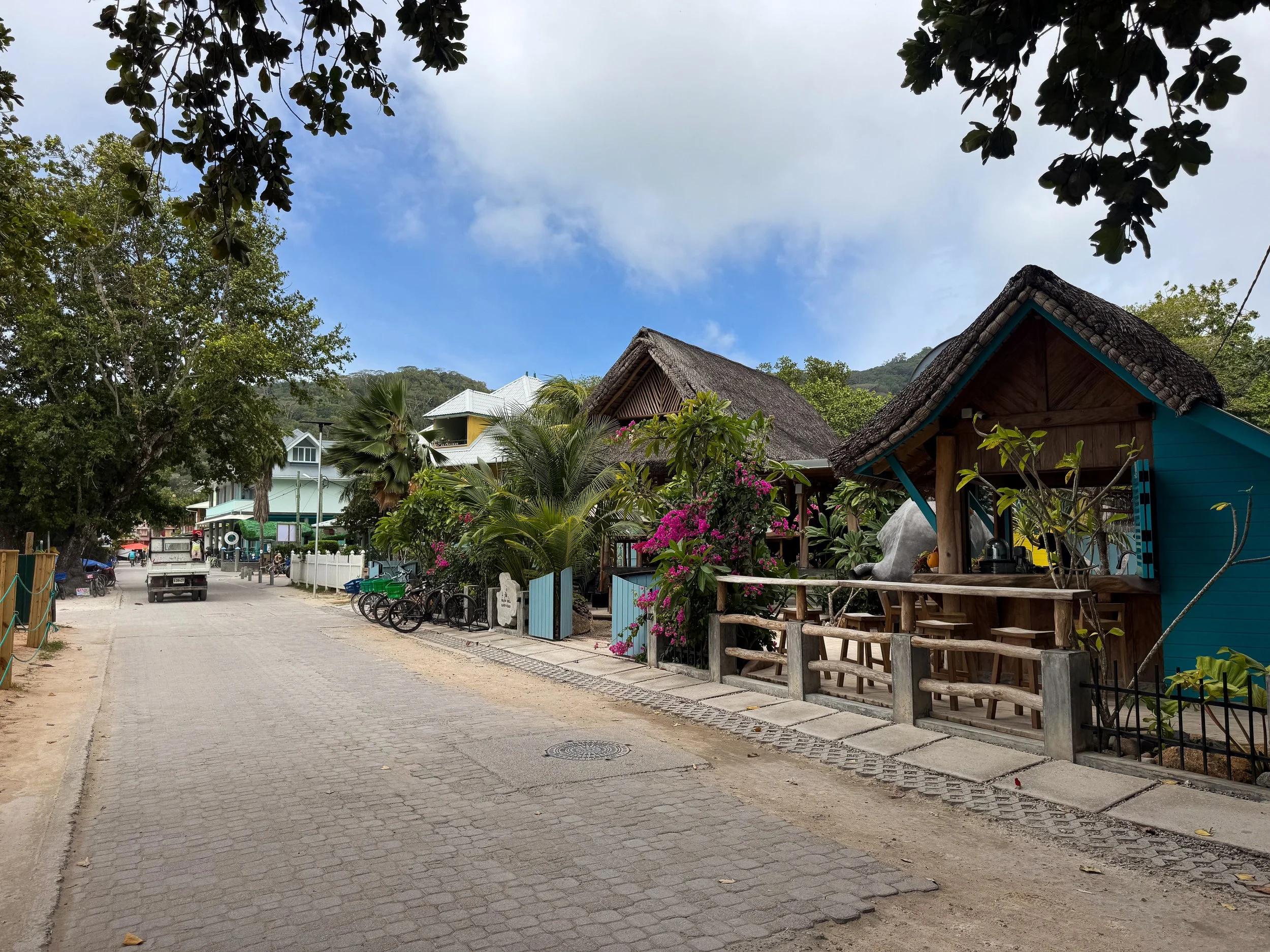
La Passe. The island’s main town. Its sandy cobblestone streets are flanked by lush palm trees and beachy buildings with hotels, tiny home stays, bike rentals, barbecue restaurants and bars. The ferry jetty welcomes new visitors and bids others bon voyage.
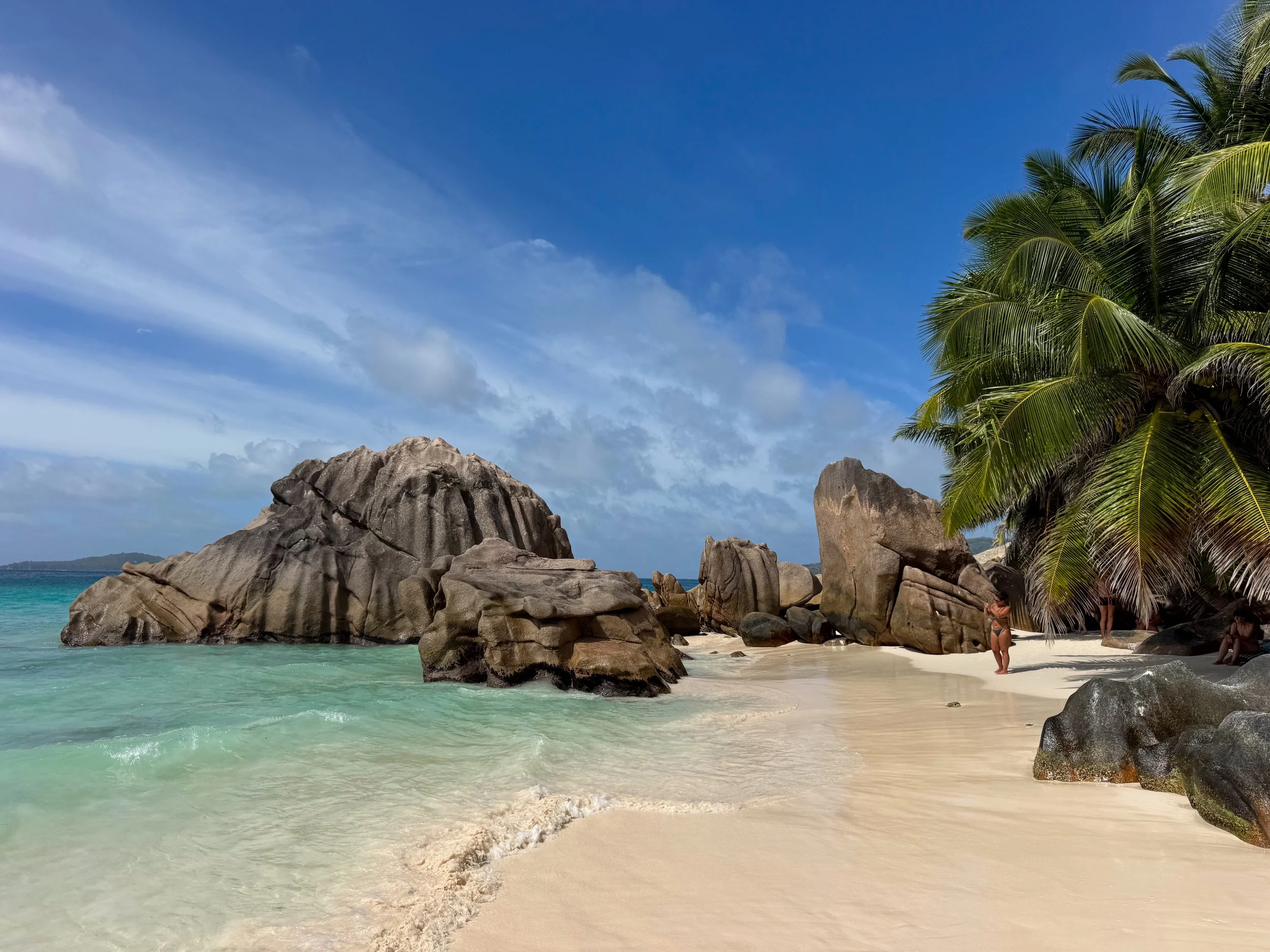
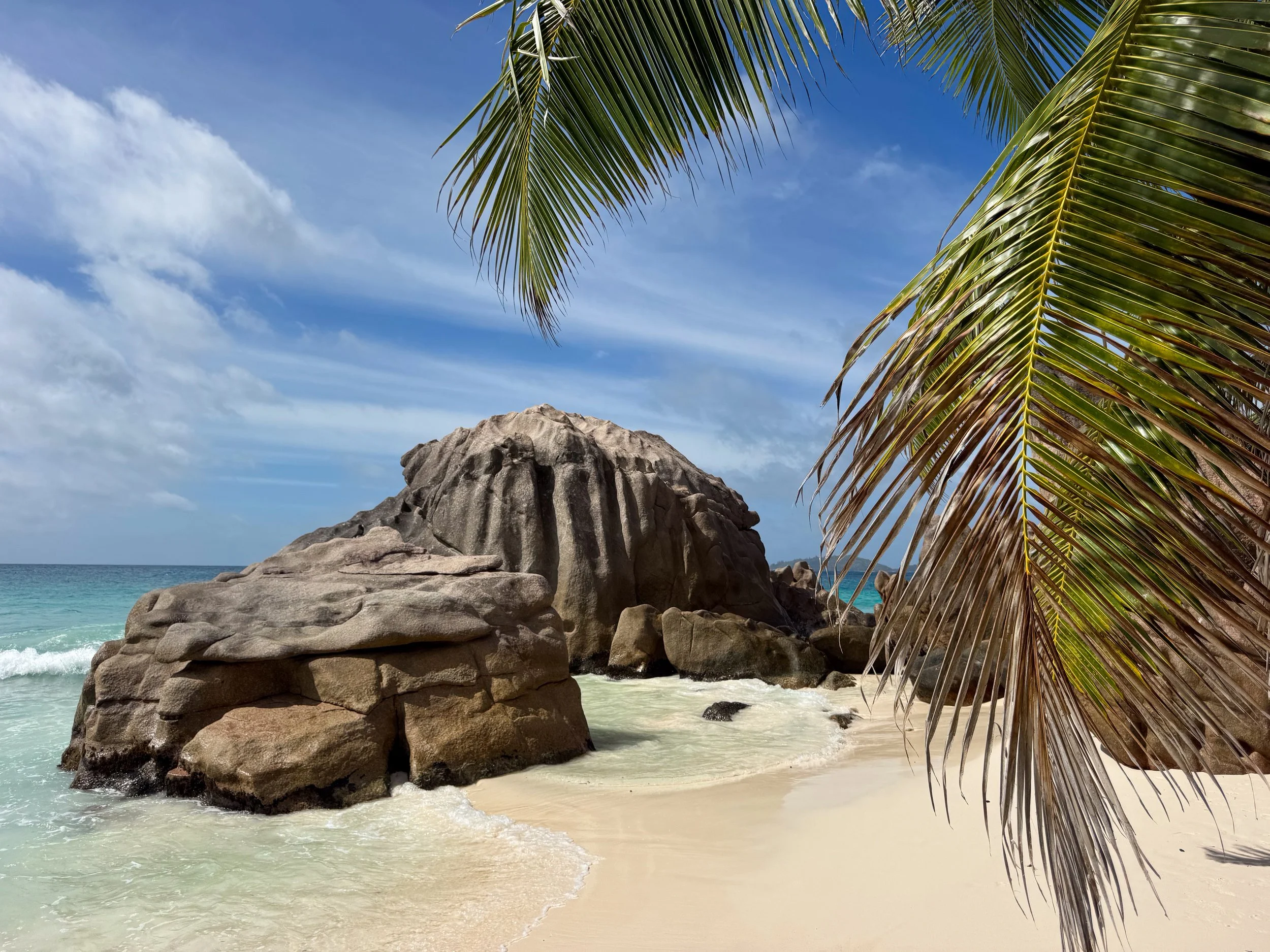
La Digue Beaches & Boulders
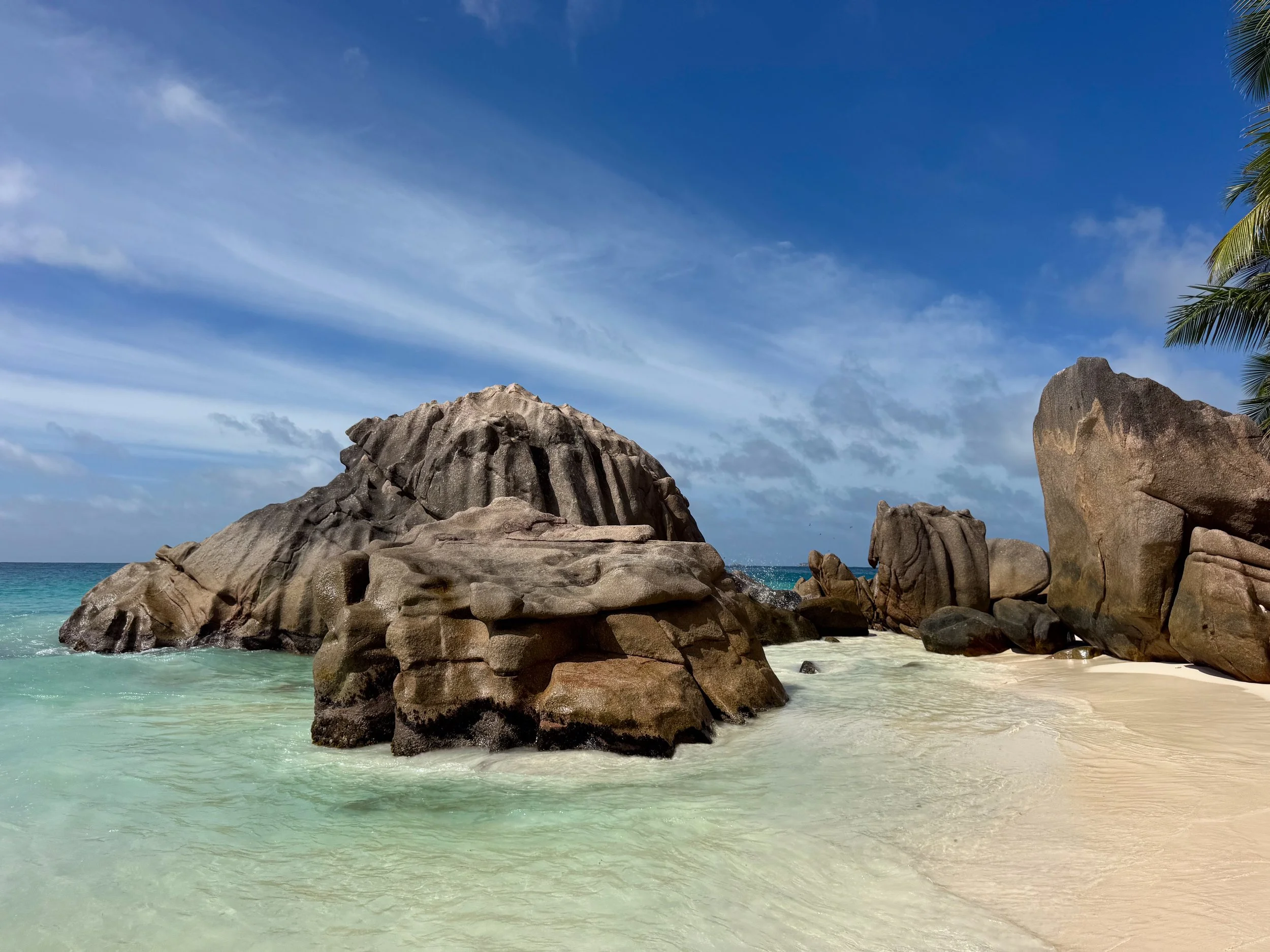
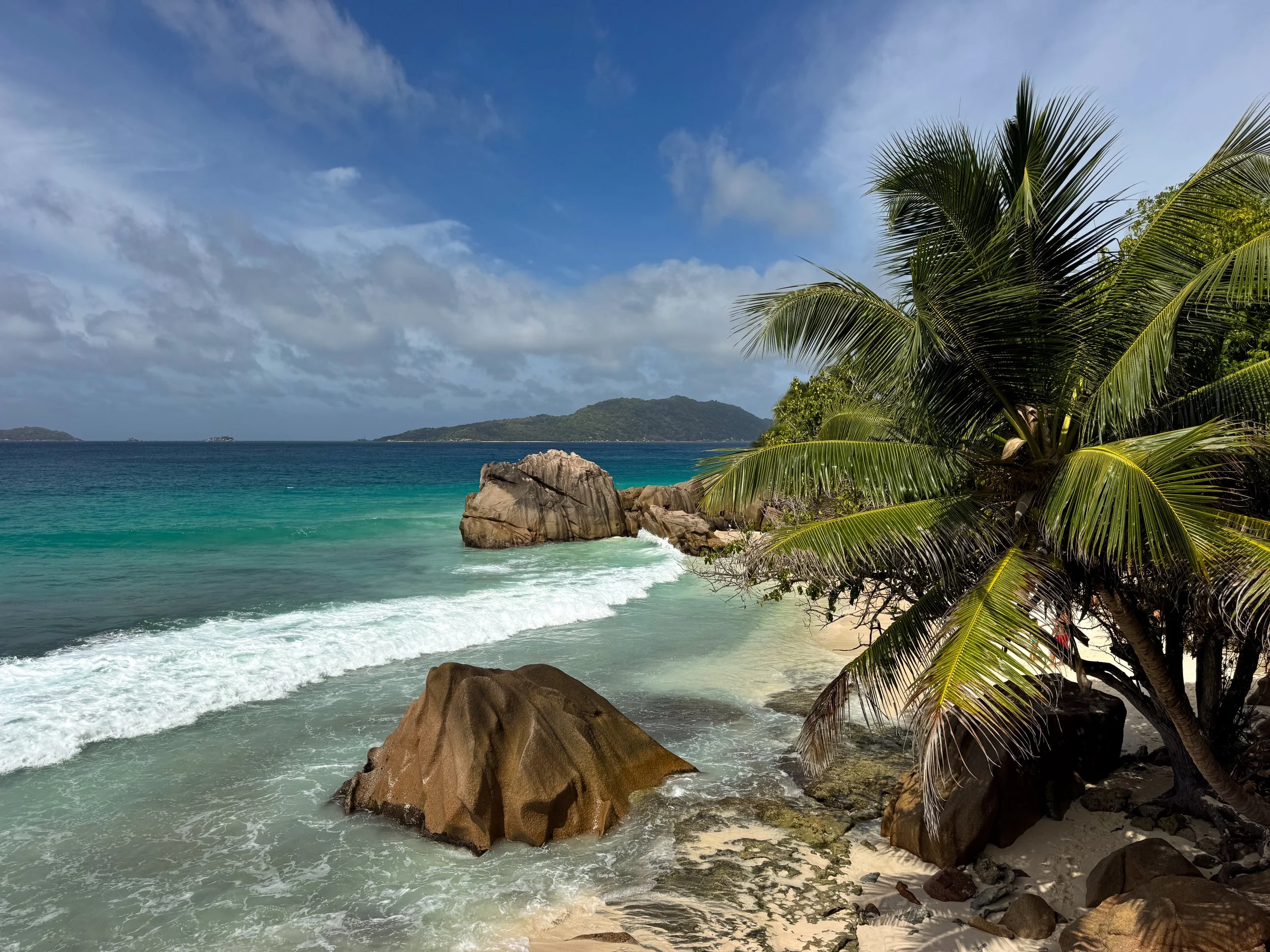
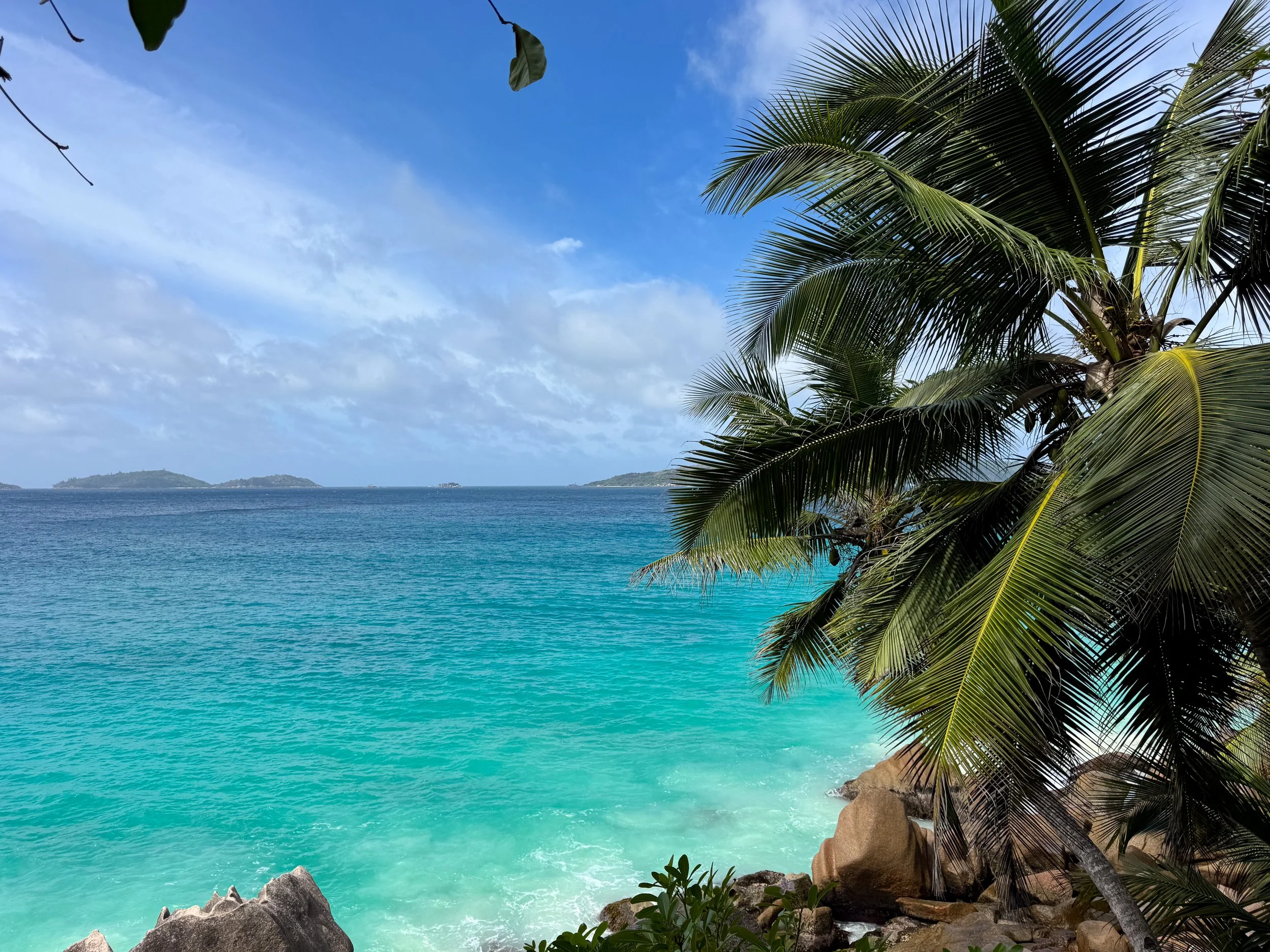
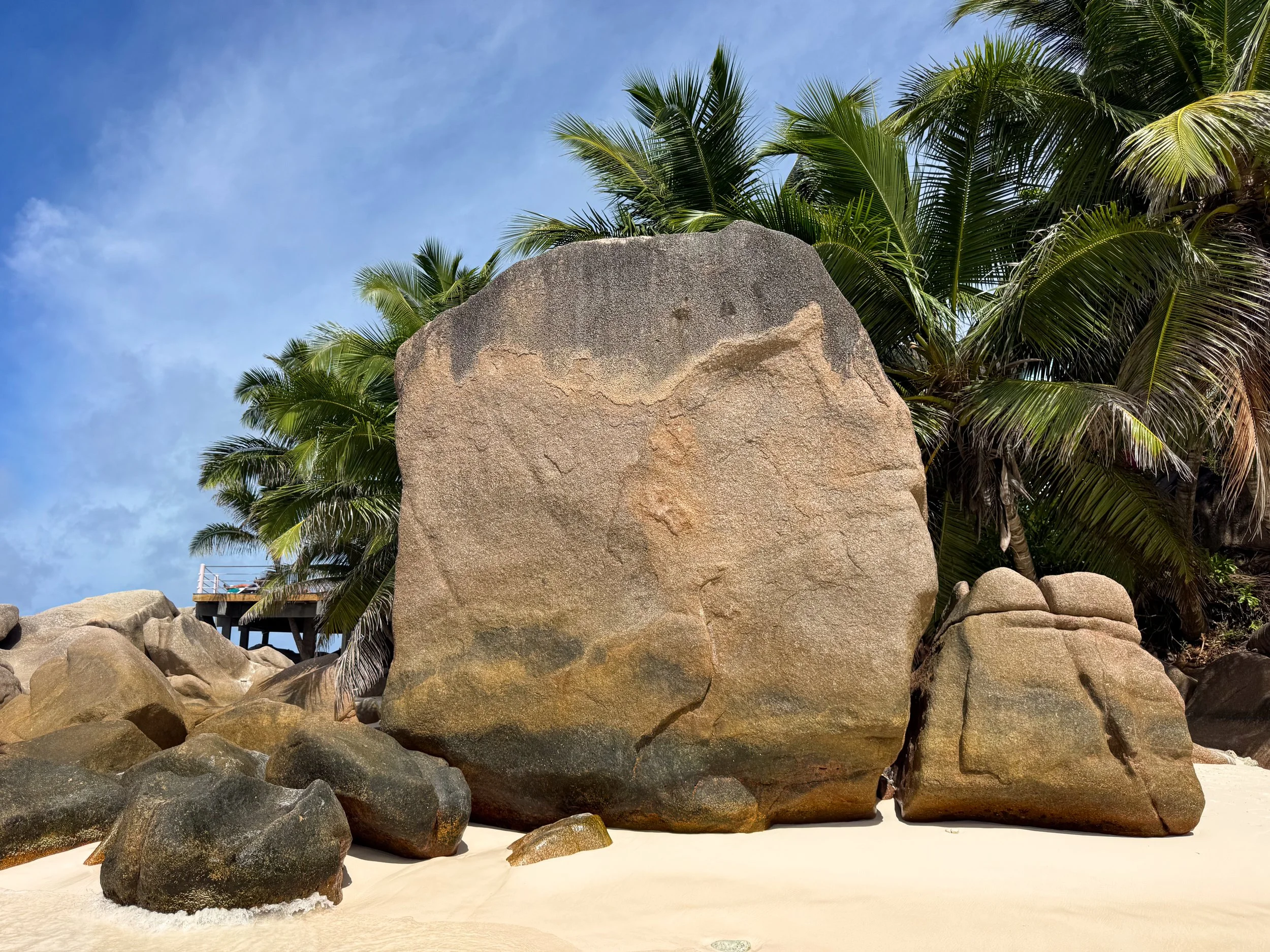
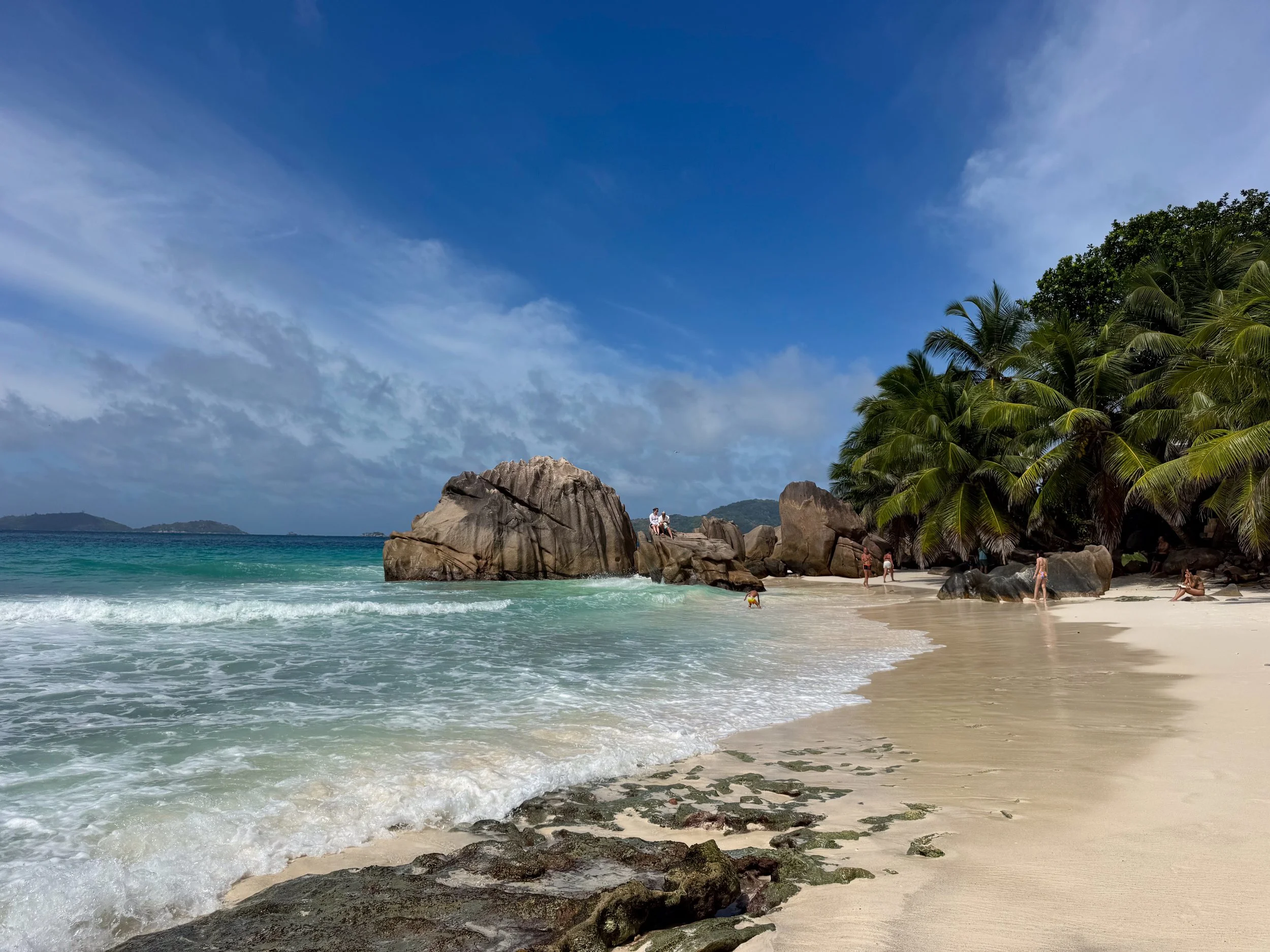
Anse Patates. A small but idyllic Seychellois beach. Its white sand shore is dappled with shade from leaning palm trees. Dramatic granite boulders flank both sides of the beach. Cerulean waters and white capped waves crash onshore. A small area between two large boulders acts as a natural wave pool. The beach is best to visit during low tide and not the safest for swimming.
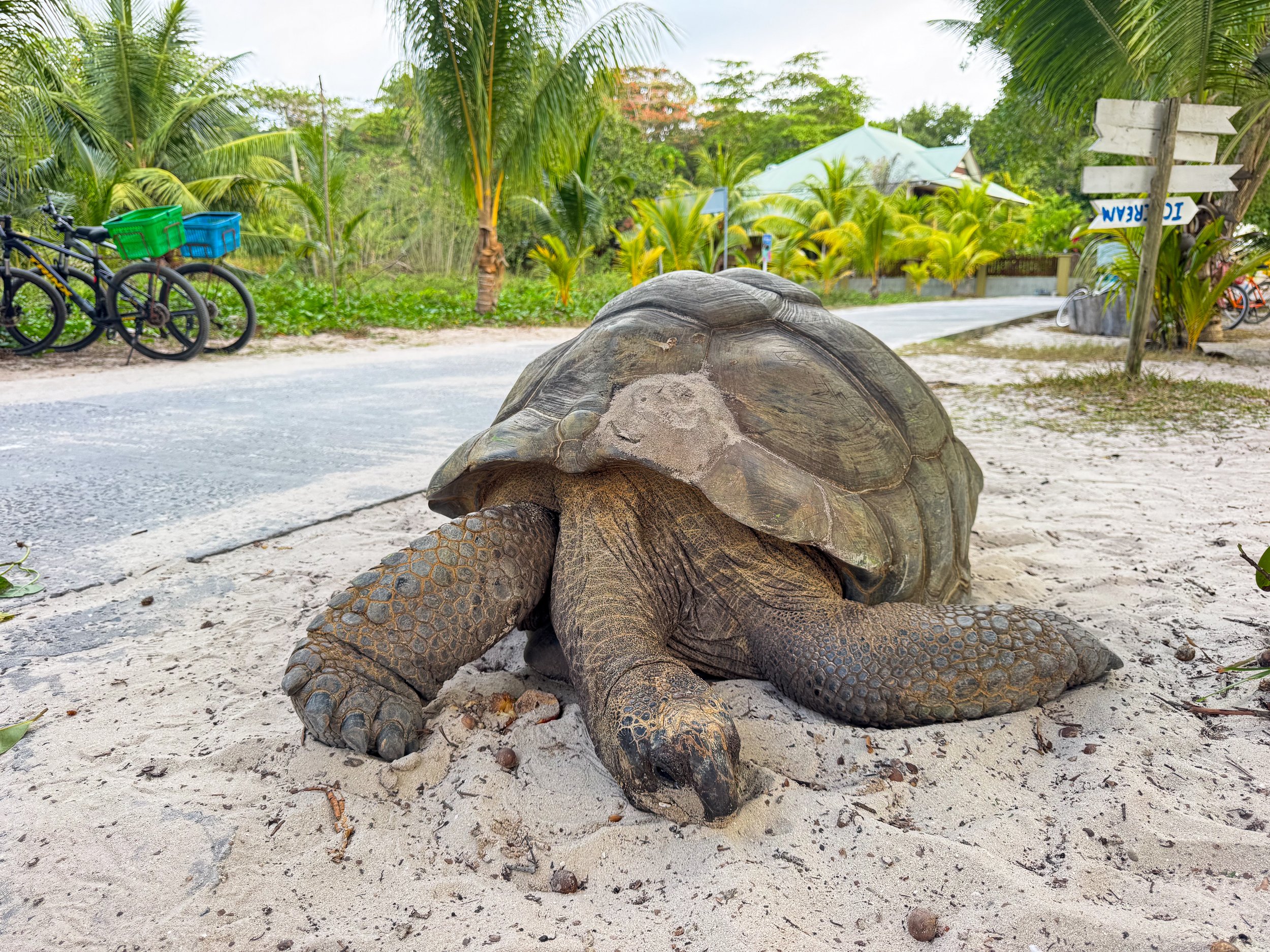
Anse Severe. A white sand beach with several beachfront shacks serving takeaway meals, fresh fruit juices and cocktails. Its views look across the Indian Ocean towards the nearby Inner Islands. Put on a pair of water shoes and wade out into the rocky shallows to spot sea creatures like rays, parrotfish and sea cucumbers. Two Giant Aldabra tortoises lounge alongside sunbathers and stray dogs.
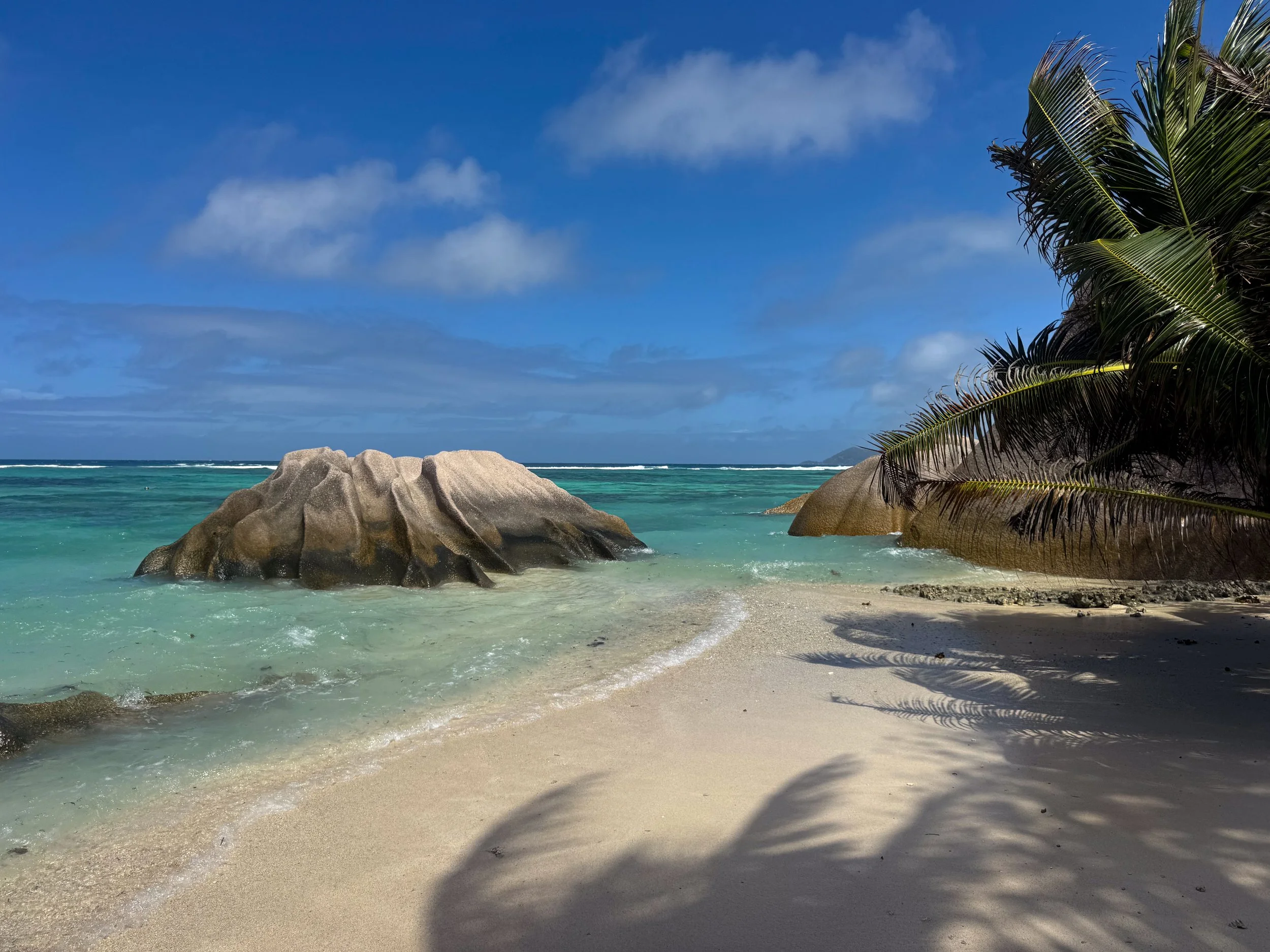
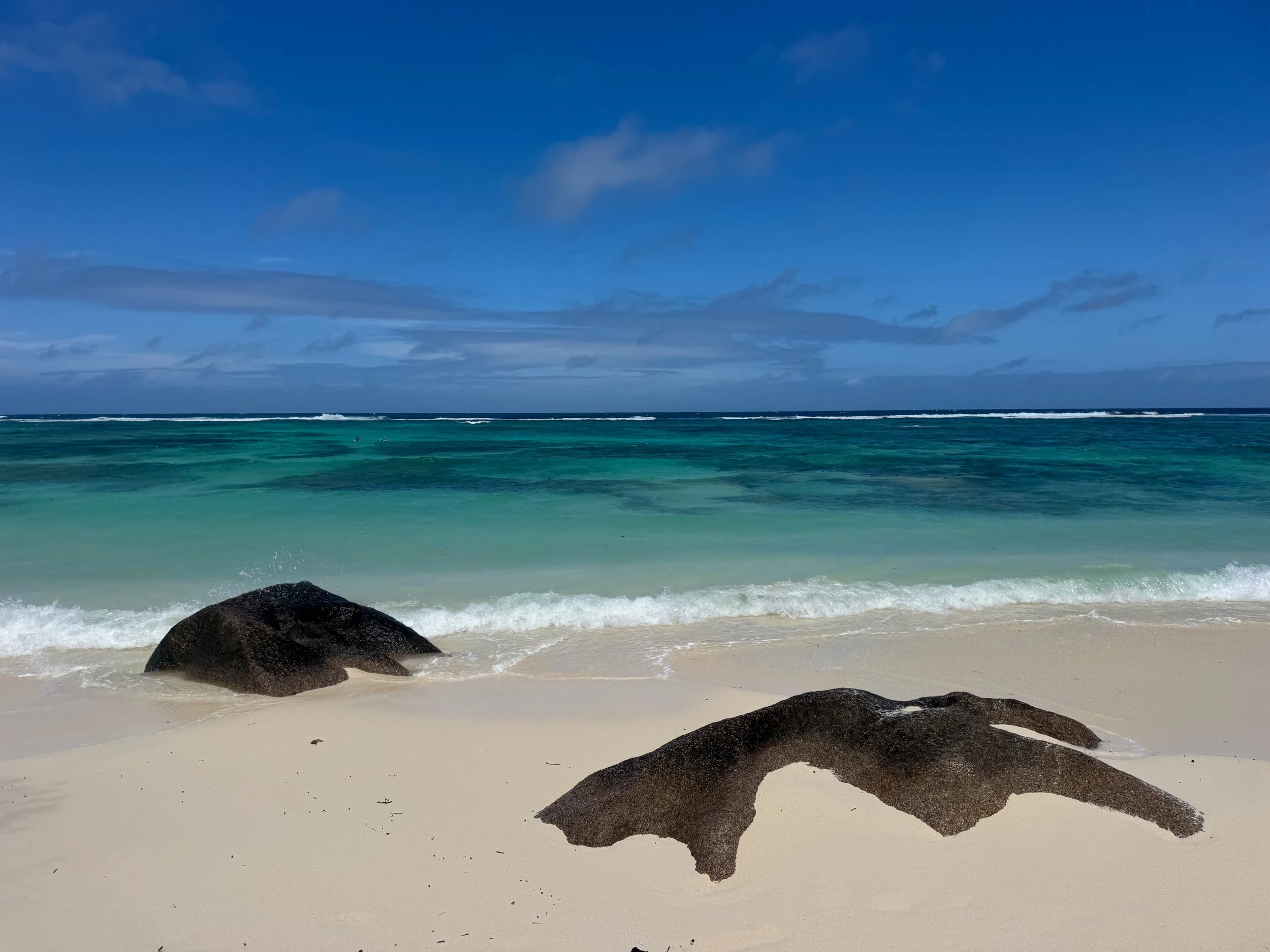
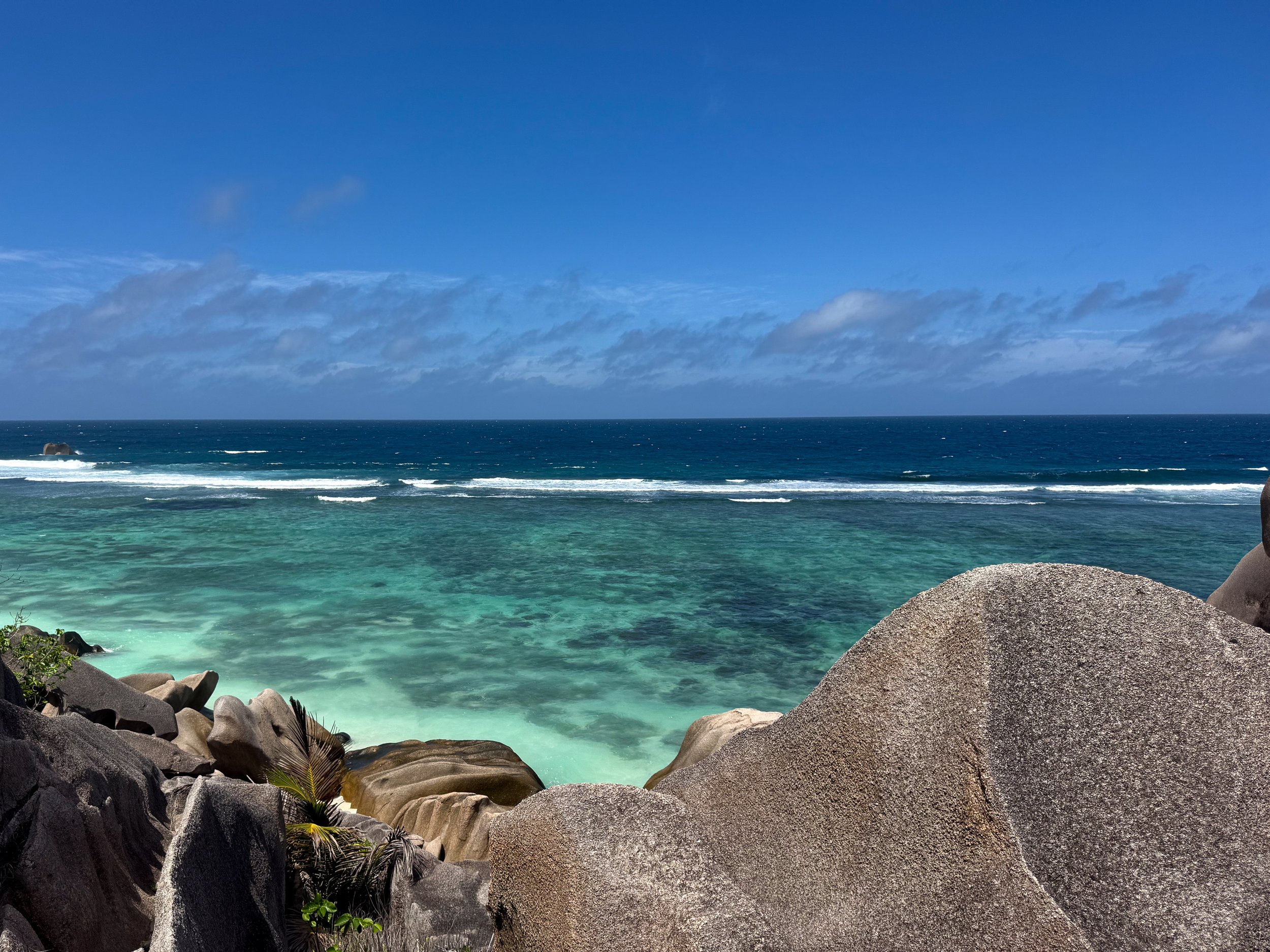
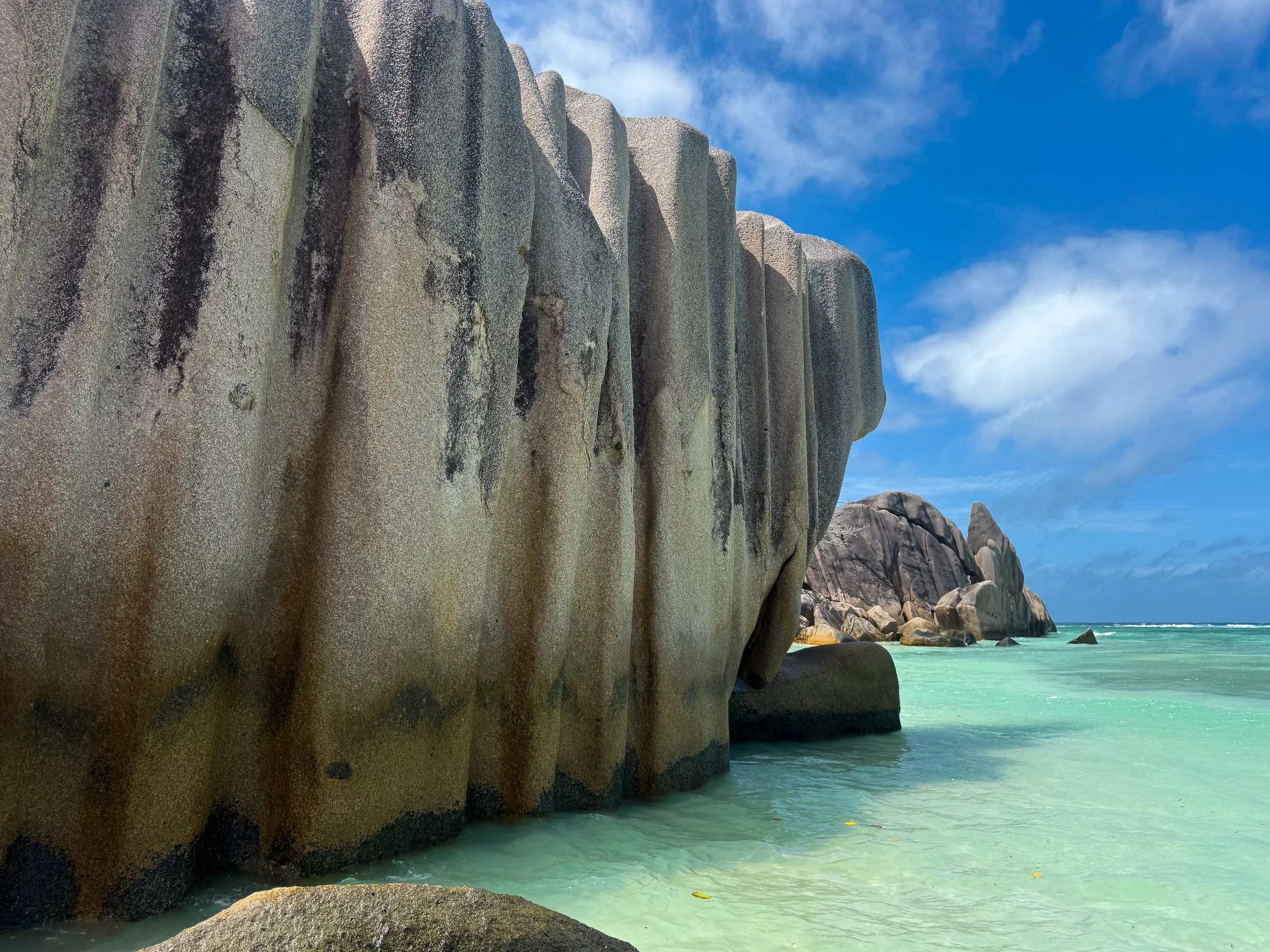
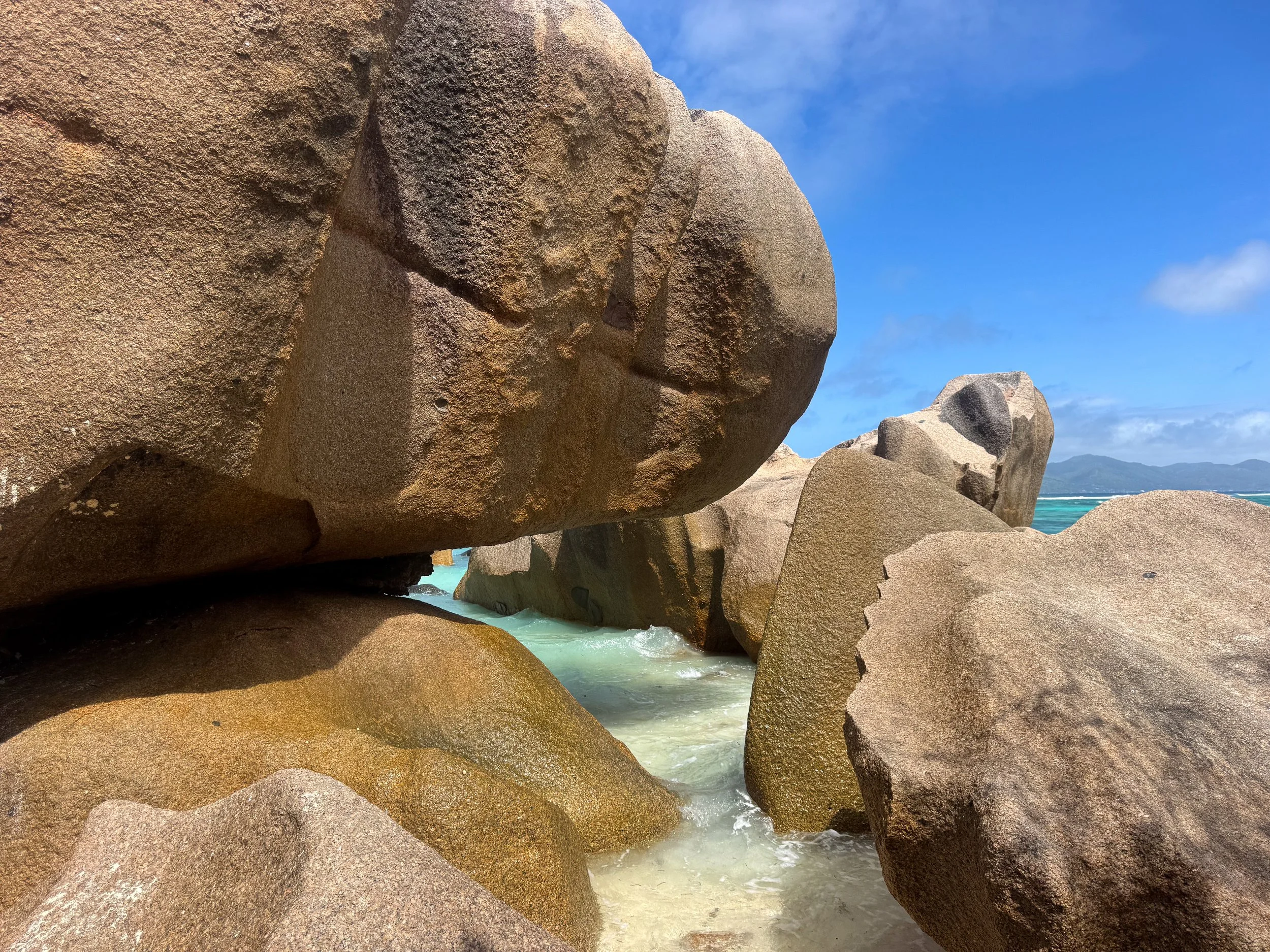
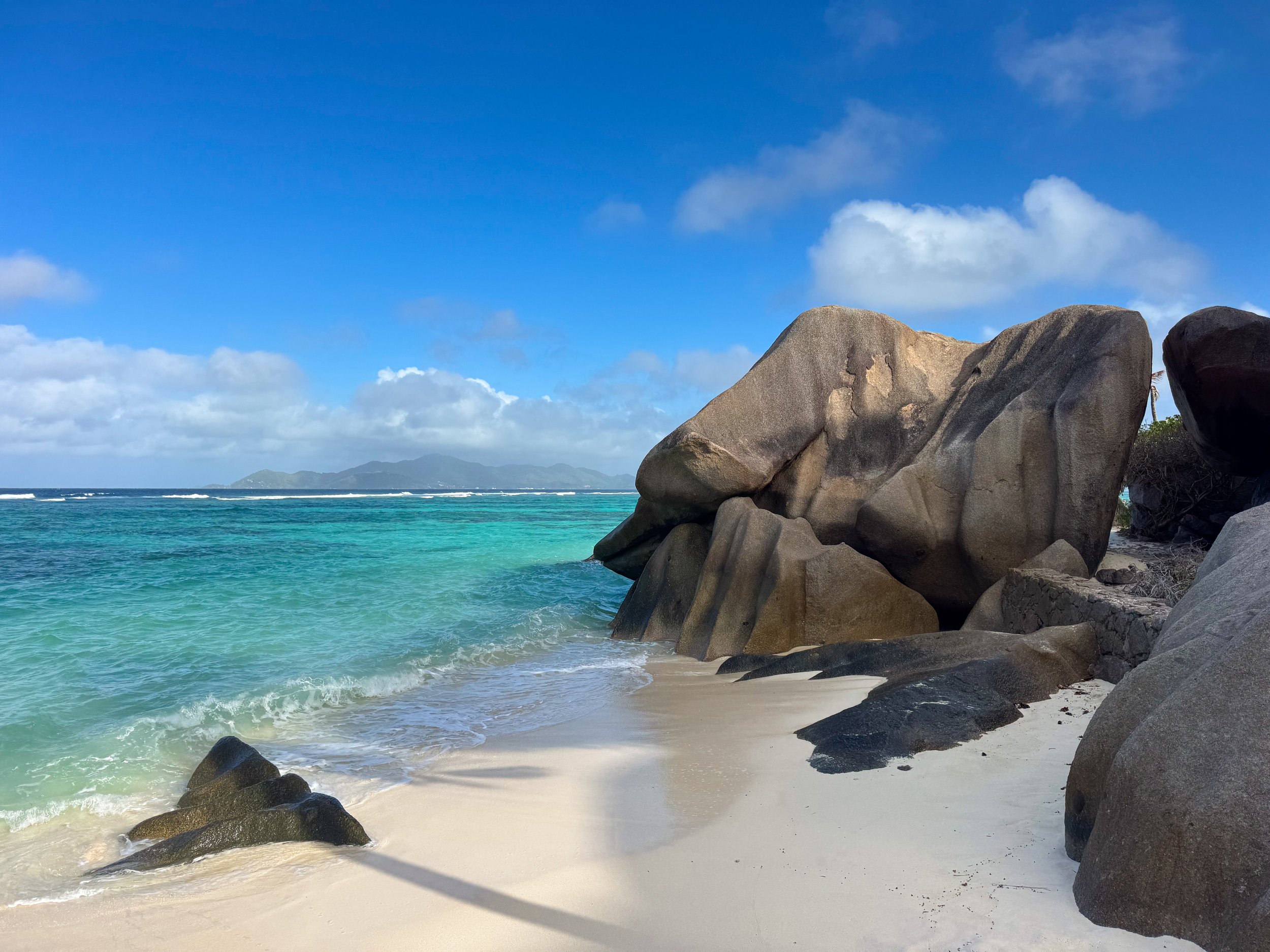
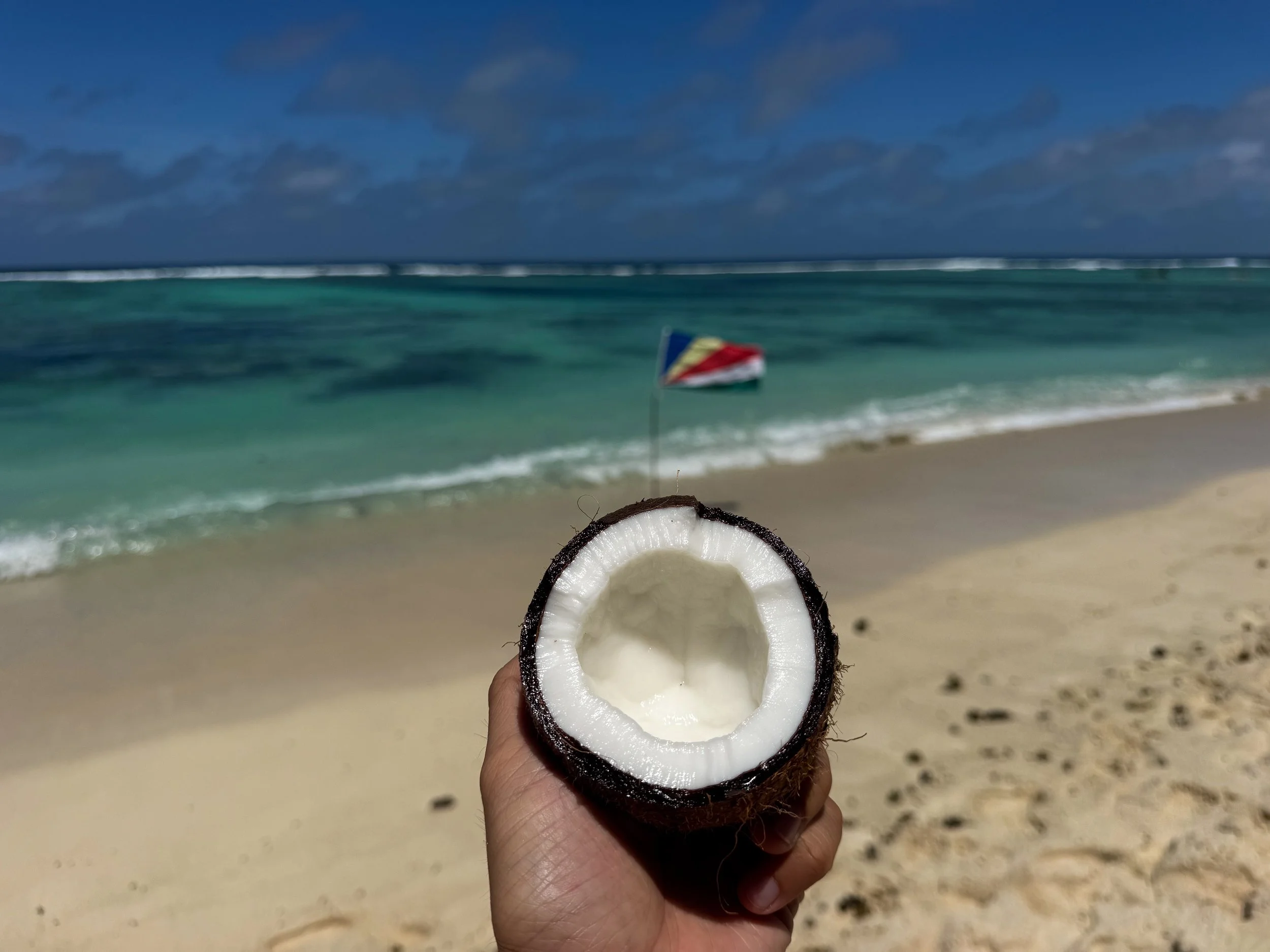
Anse Source D'Argent. A photogenic beach with large granite formations, leaning palm trees, soft white sand shores and turquoise hued waters. It’s easily one of the Seychelles’ most famous beaches. Arrive early to spend the day relaxing on shore and swimming in the vibrant waters. Fruit vendors welcome visitors with free coconuts!
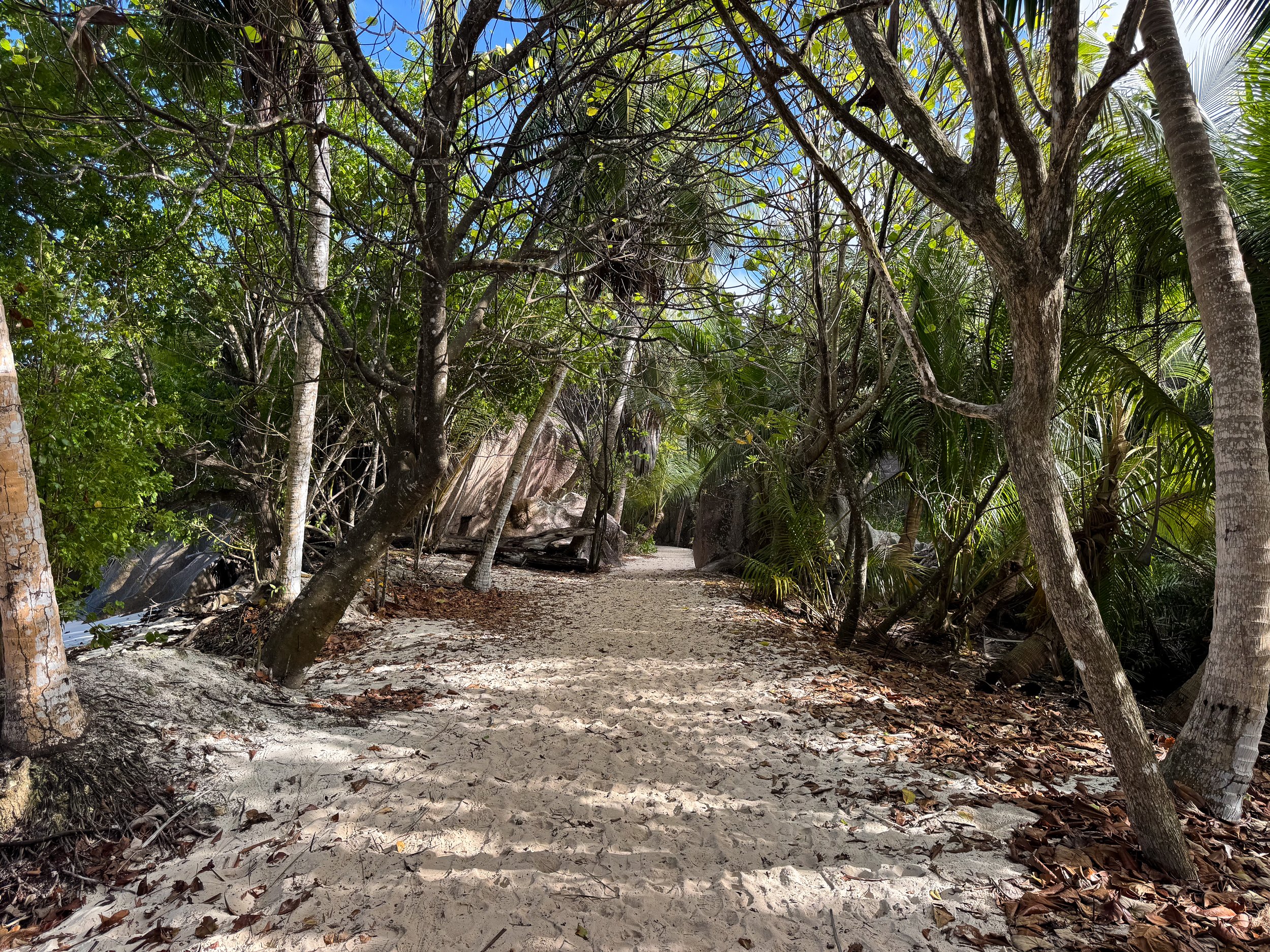
Getting Here. The beach officially opens at 8am. You have to pay to enter via L’Union Estate. Tickets cost 150 SCR per person. Walk through the estate and its spice gardens past Giant Union Rock and the Aldabra Tortoise pens to reach the scenic seaside beach trail.
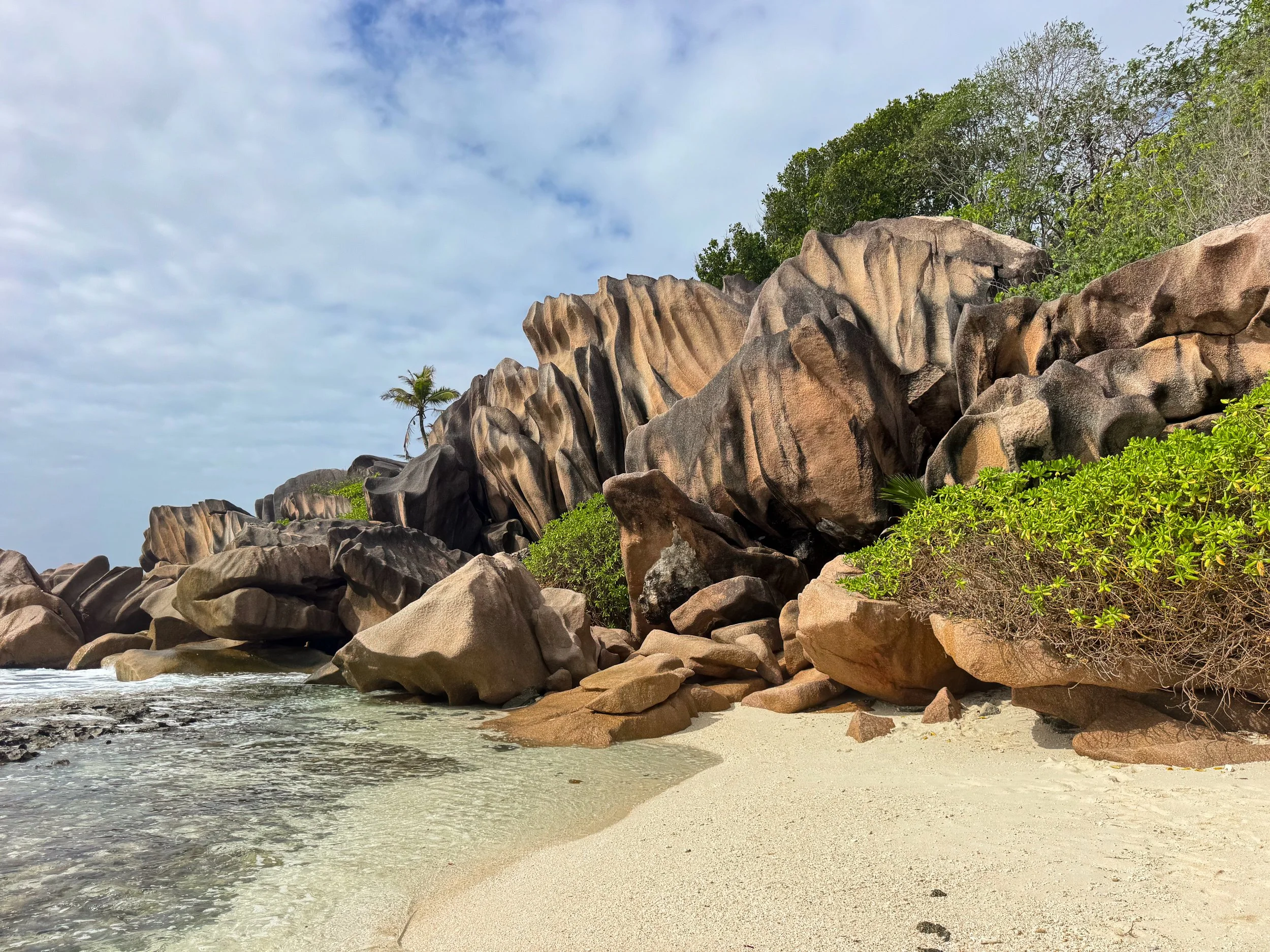
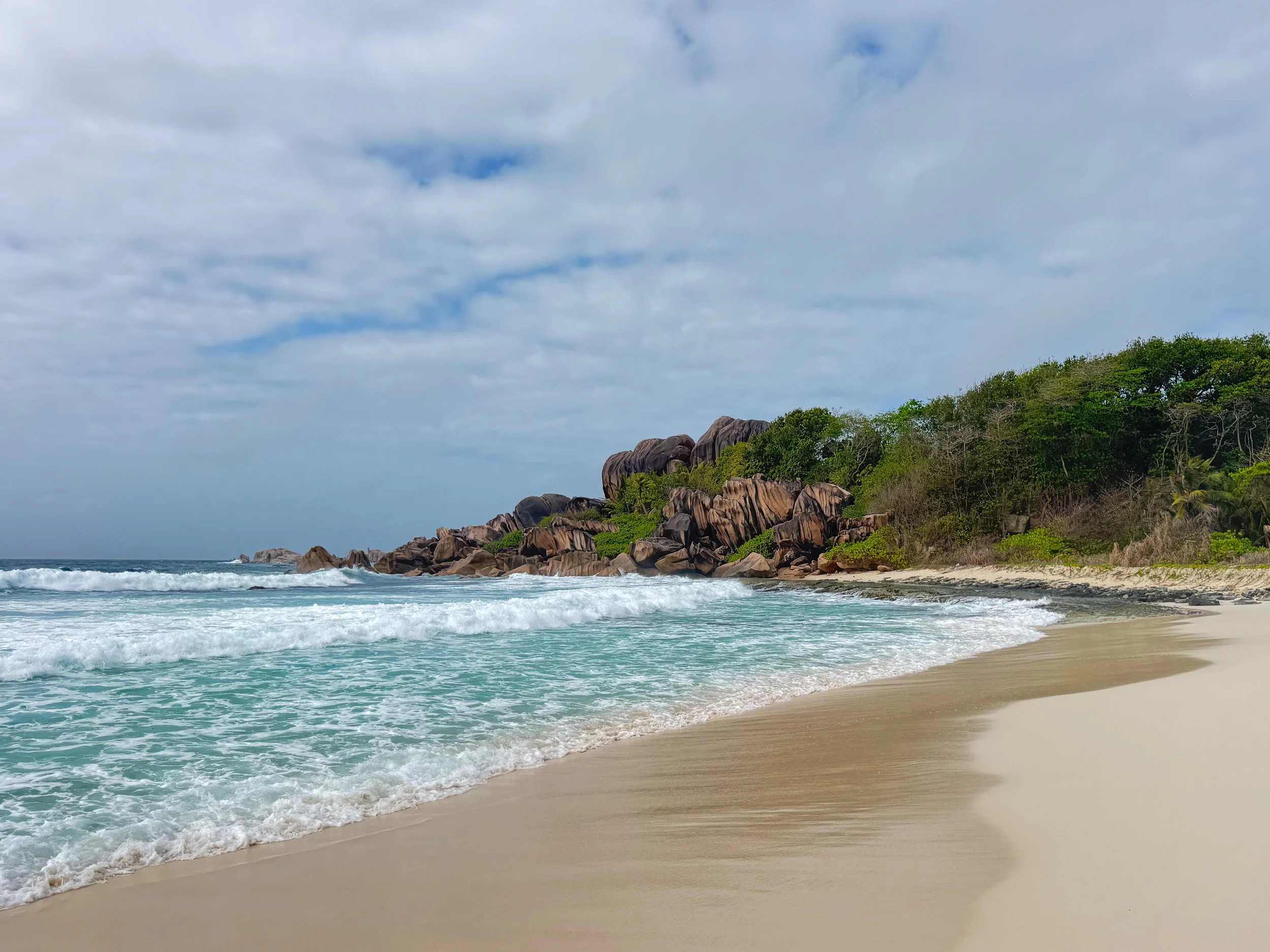
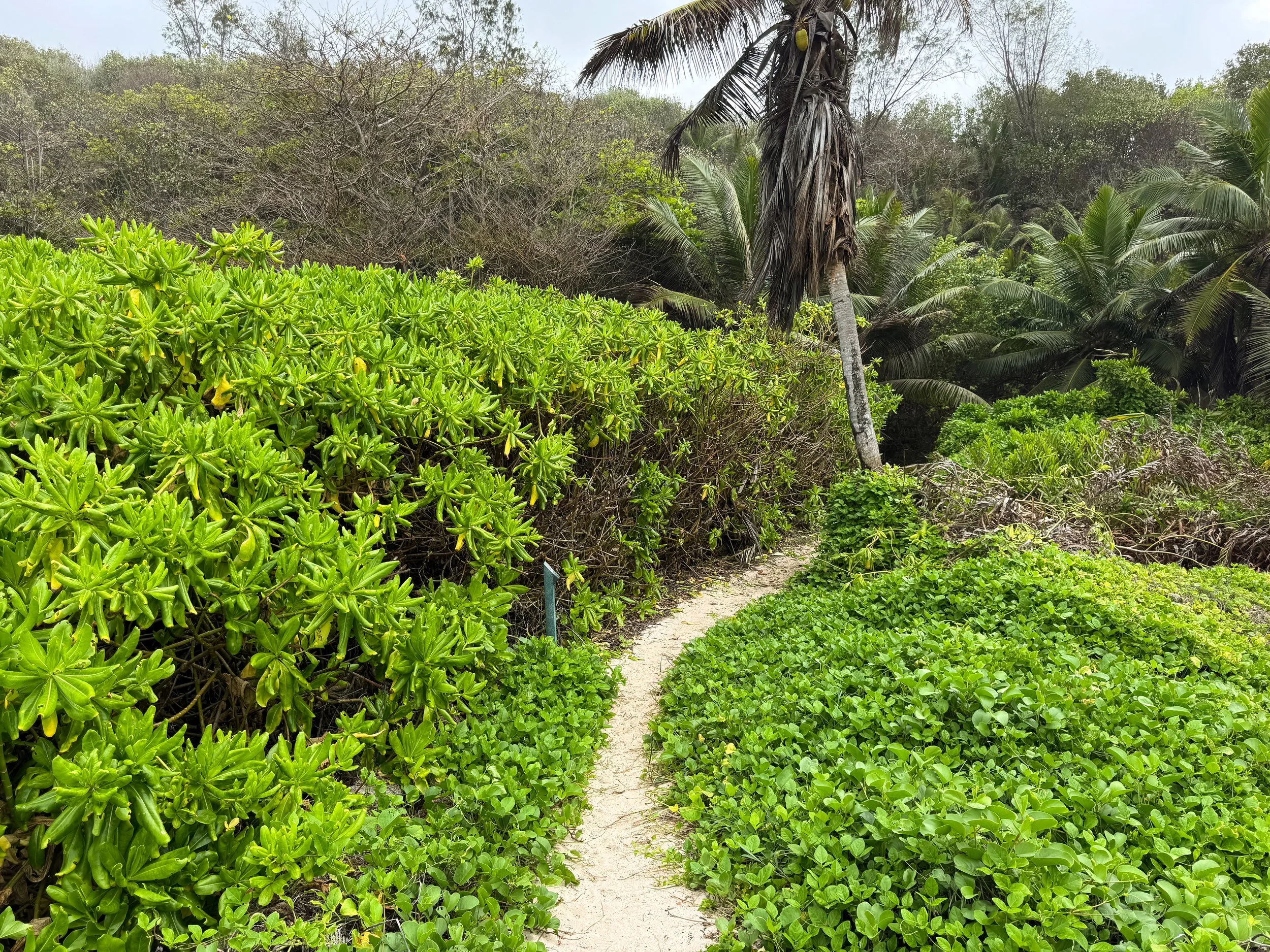
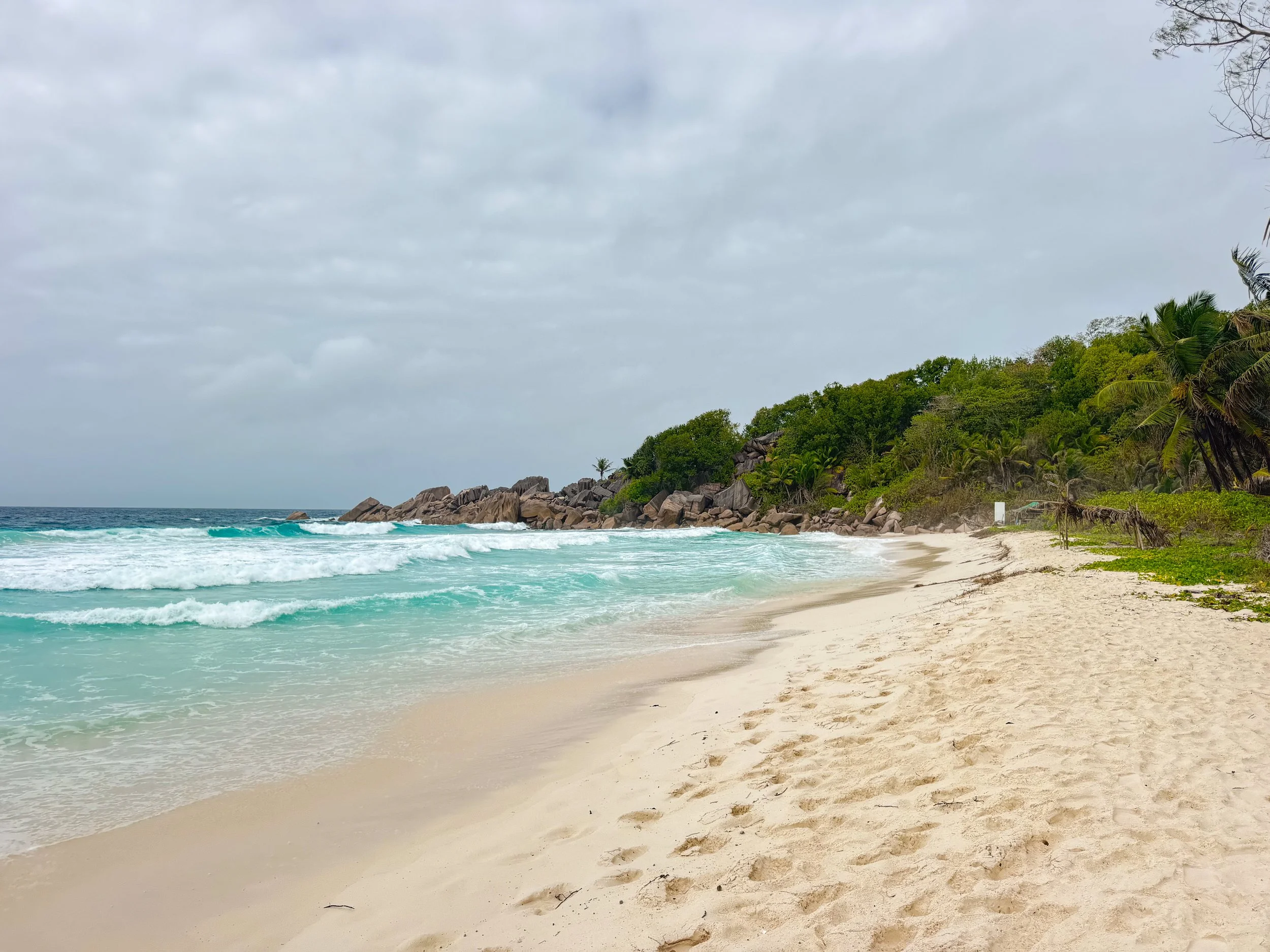
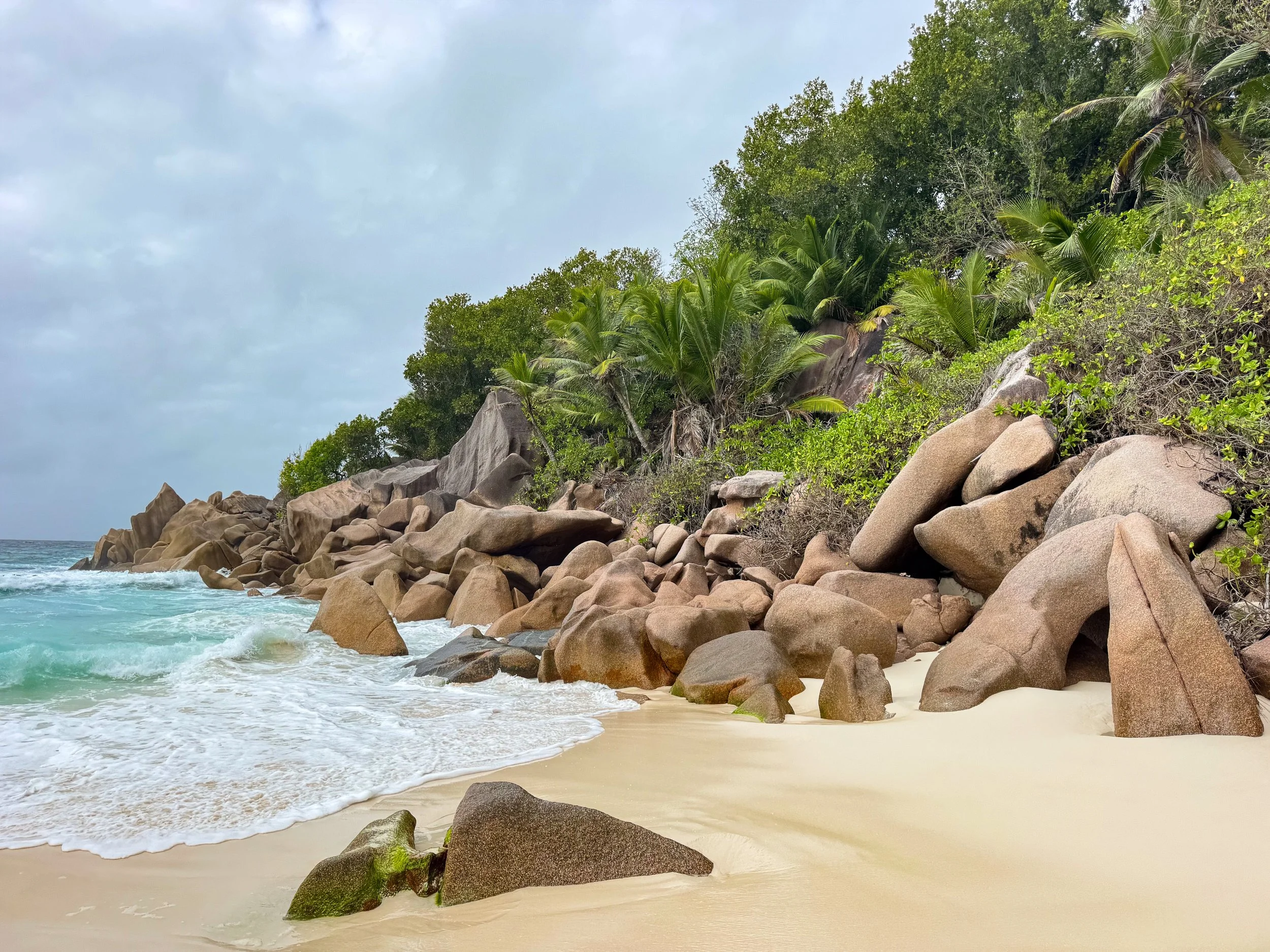
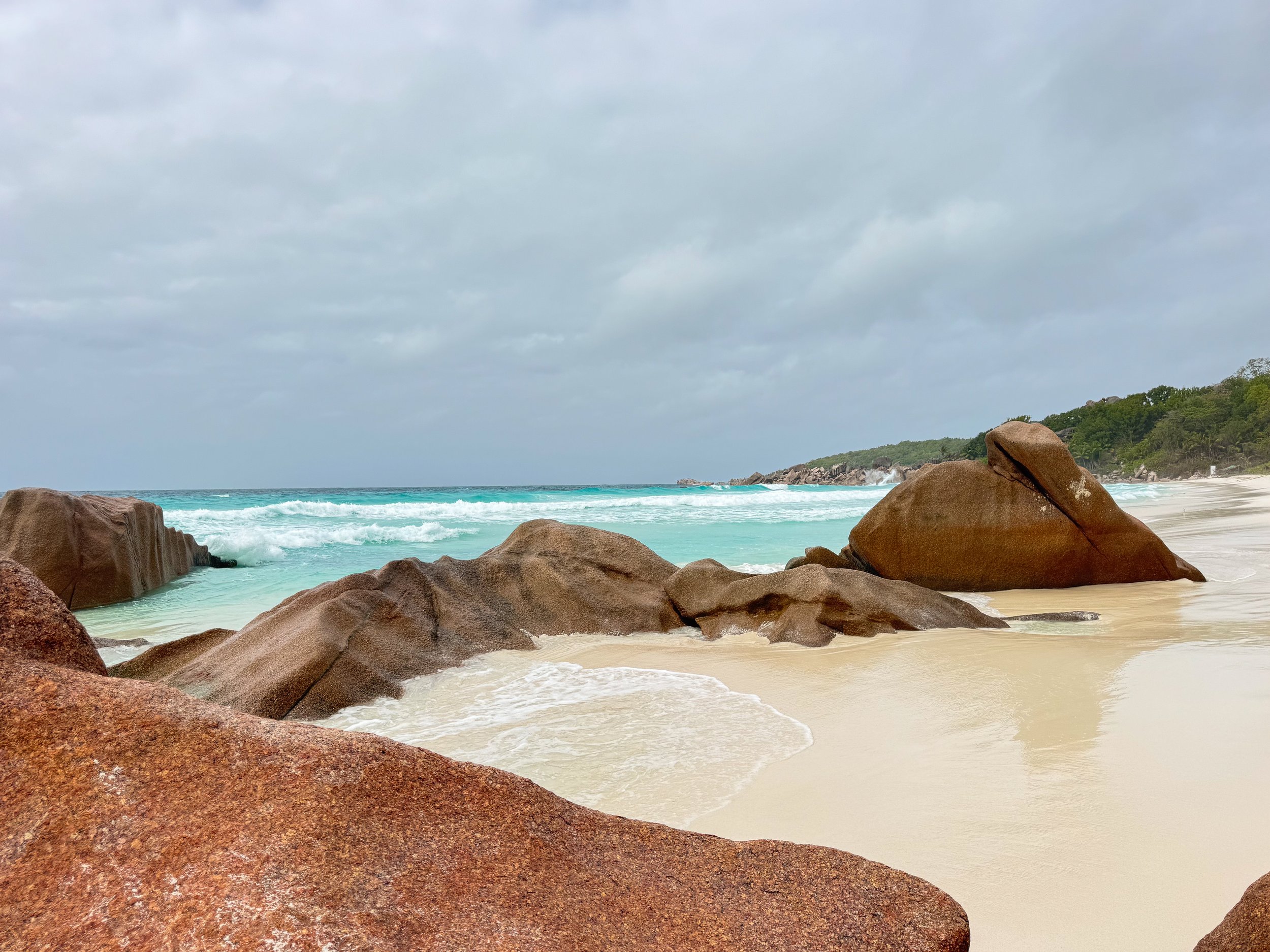
Grand Anse & Petite Anse. Two twin beaches on the south eastern coast of the island. Grand Anse is the larger of the two. Its shore is flanked by dramatic granite rock formations and boulders. The soft and cushiony white sand is perfect for laying out or picnicking. Petite Anse is the smaller of the two beaches, though still sizable, and very similar in scenery. It’s reachable via a trail on the north side of Grand Anse, taking 10 minutes to reach.
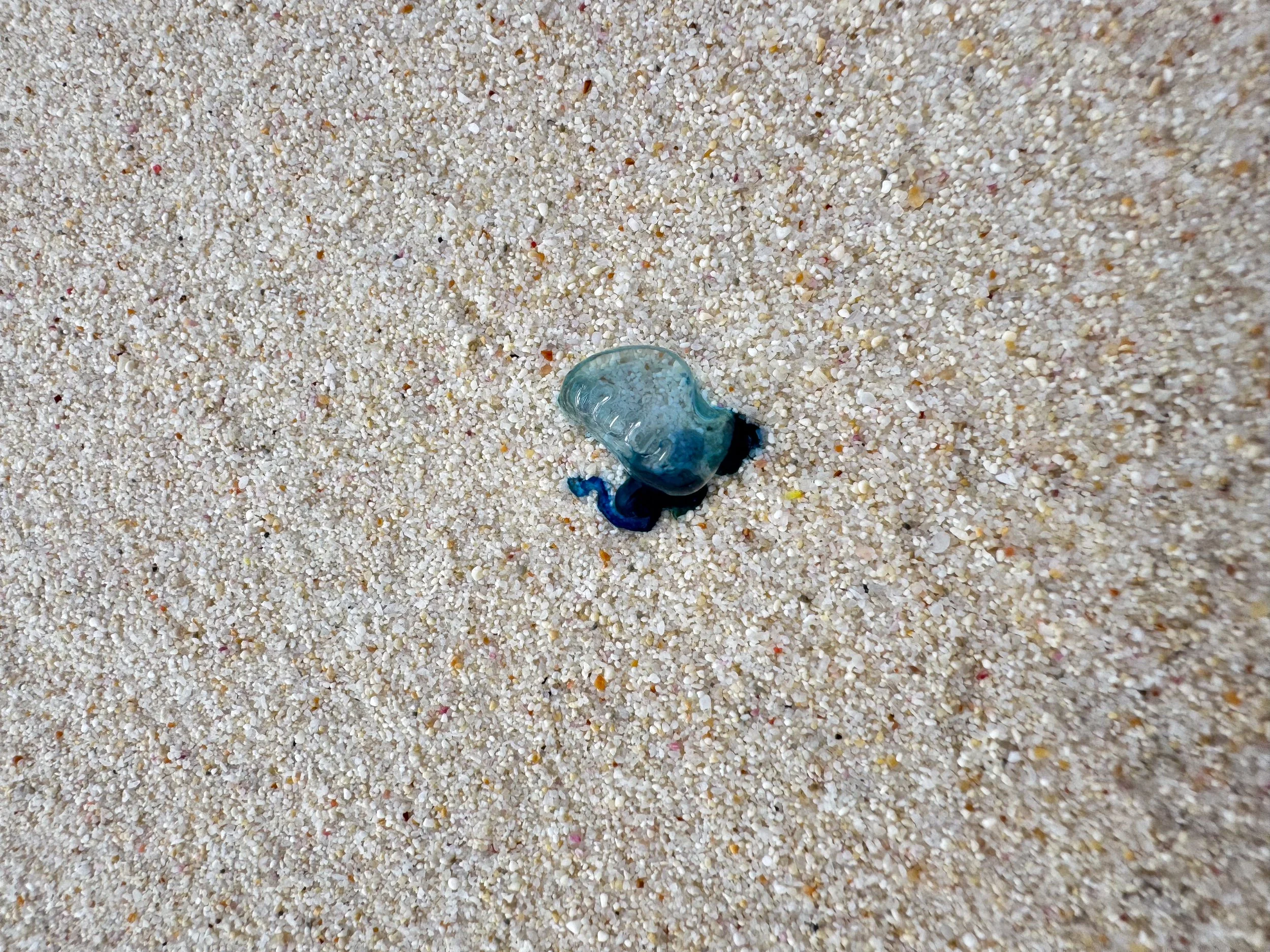
Good to Know. The waves and currents make it too dangerous to swim. Beware of Portuguese Man o' Wars or Bluebottles that wash up onshore.
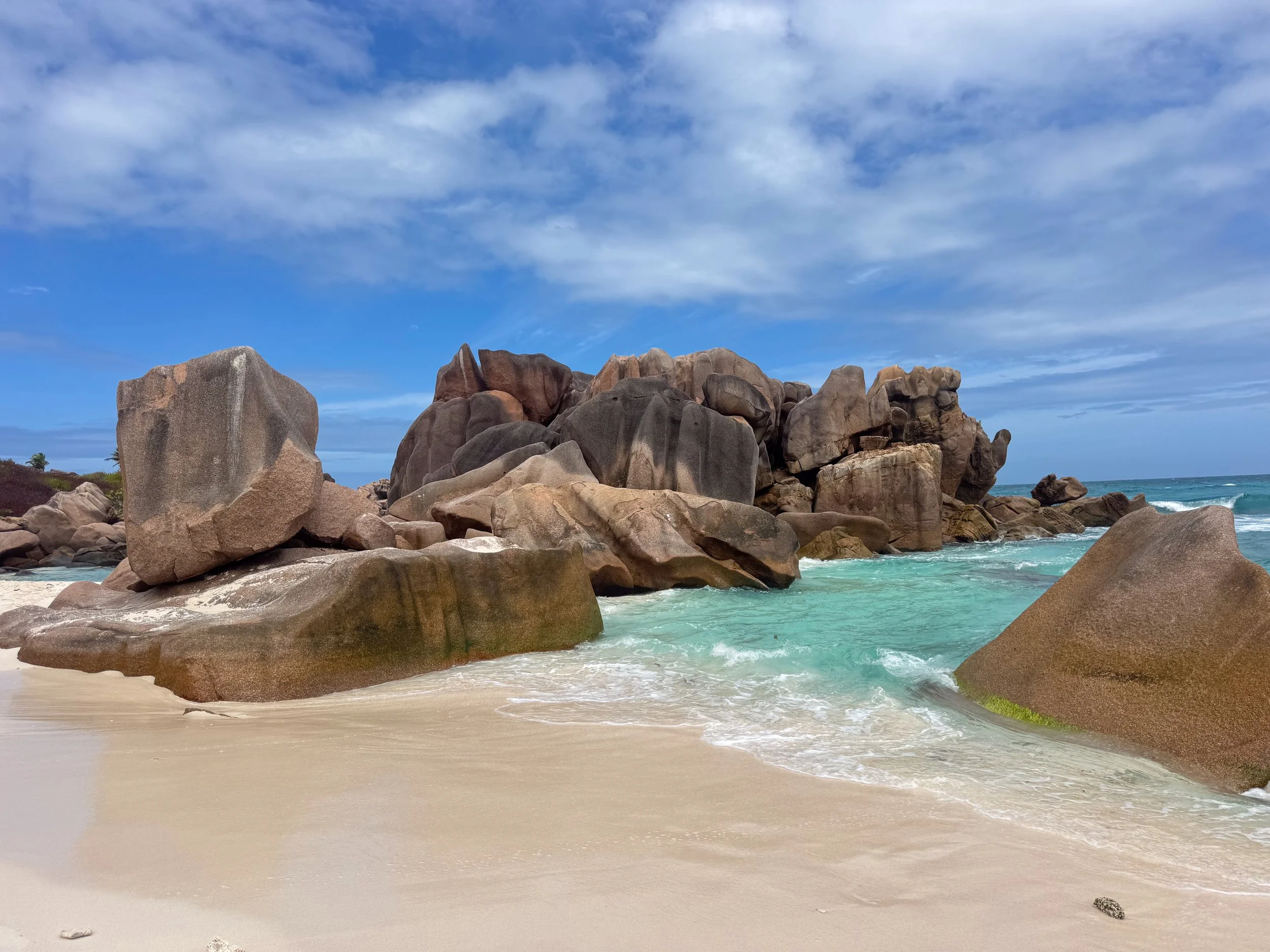
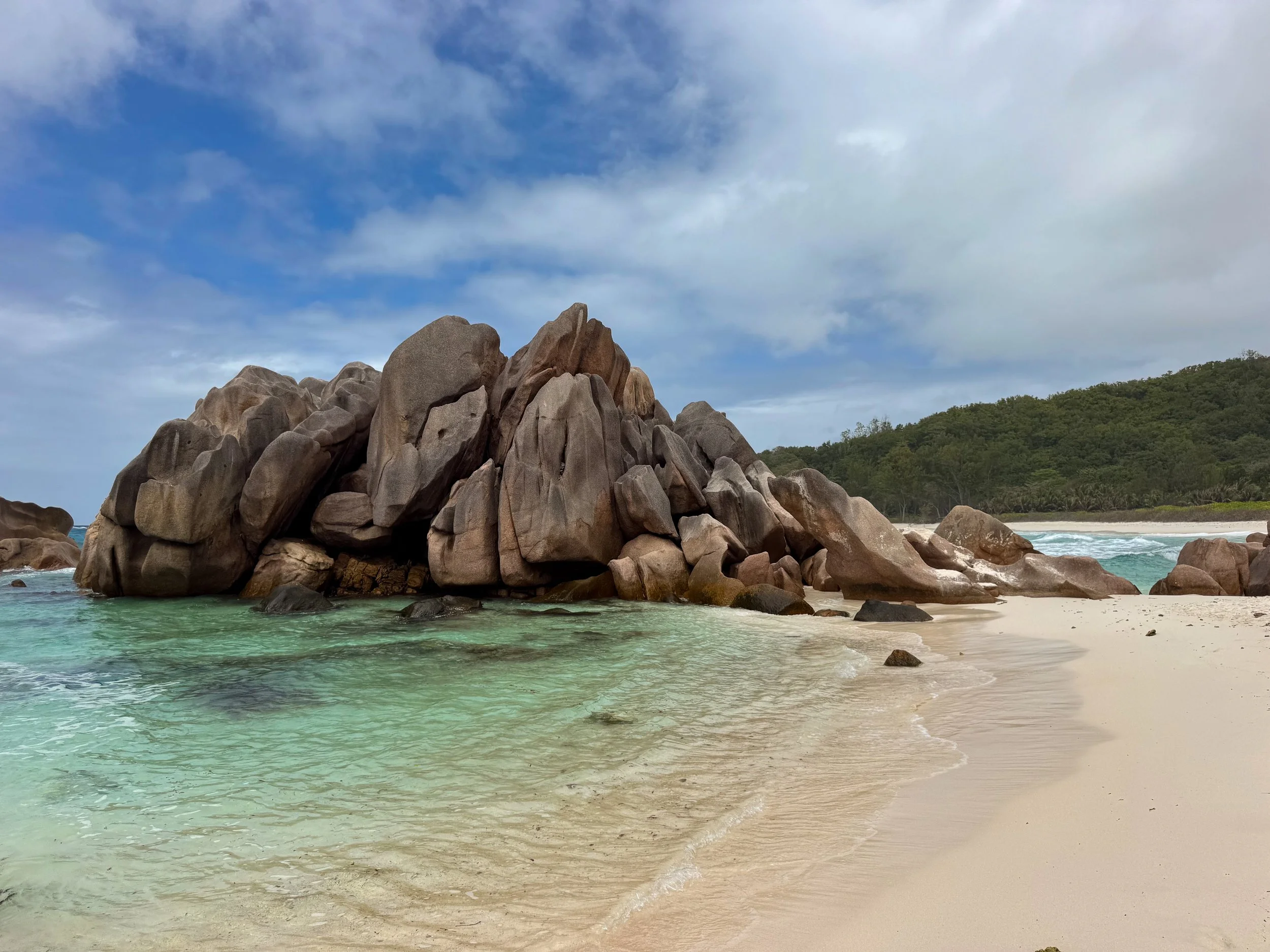
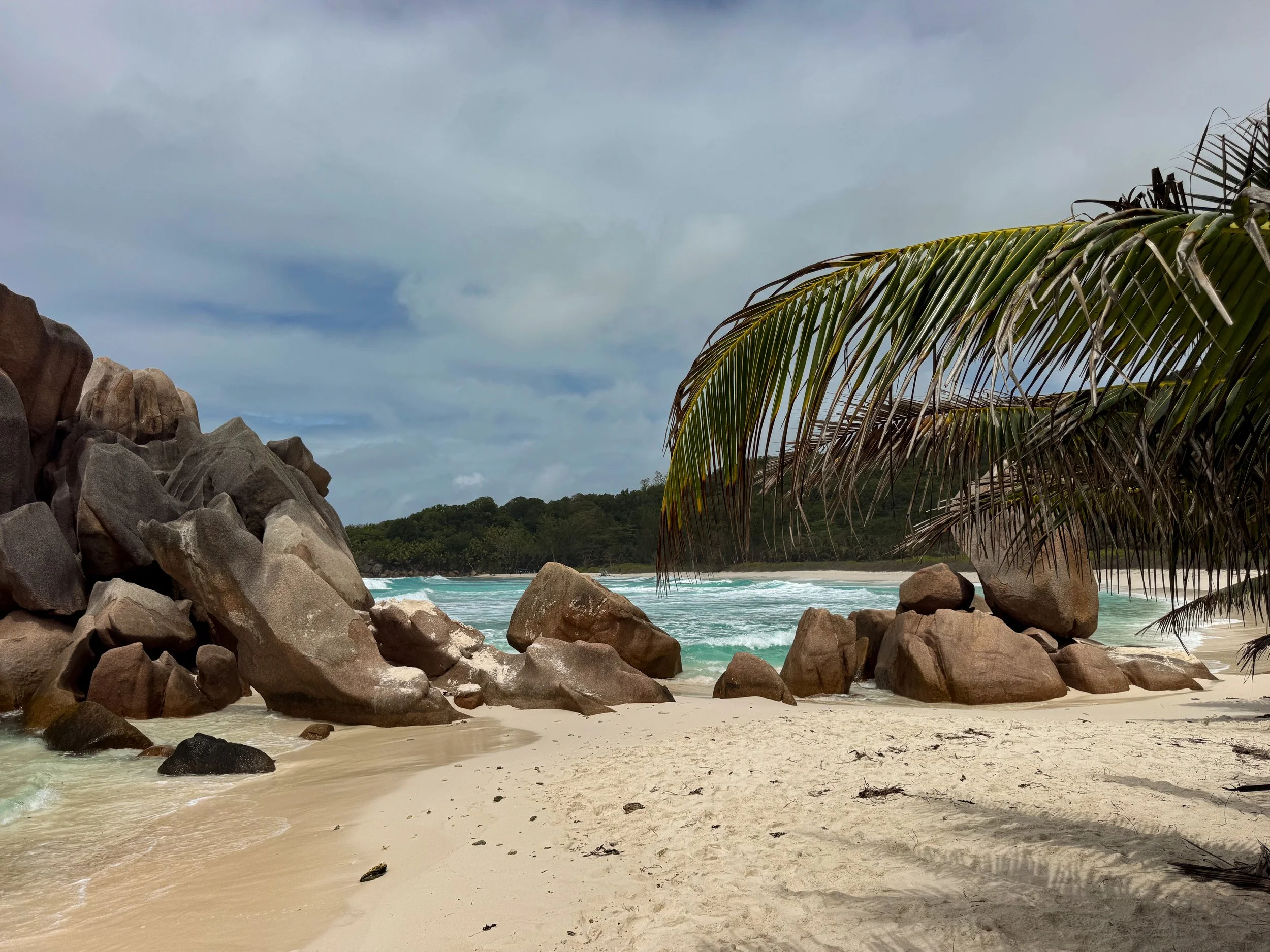
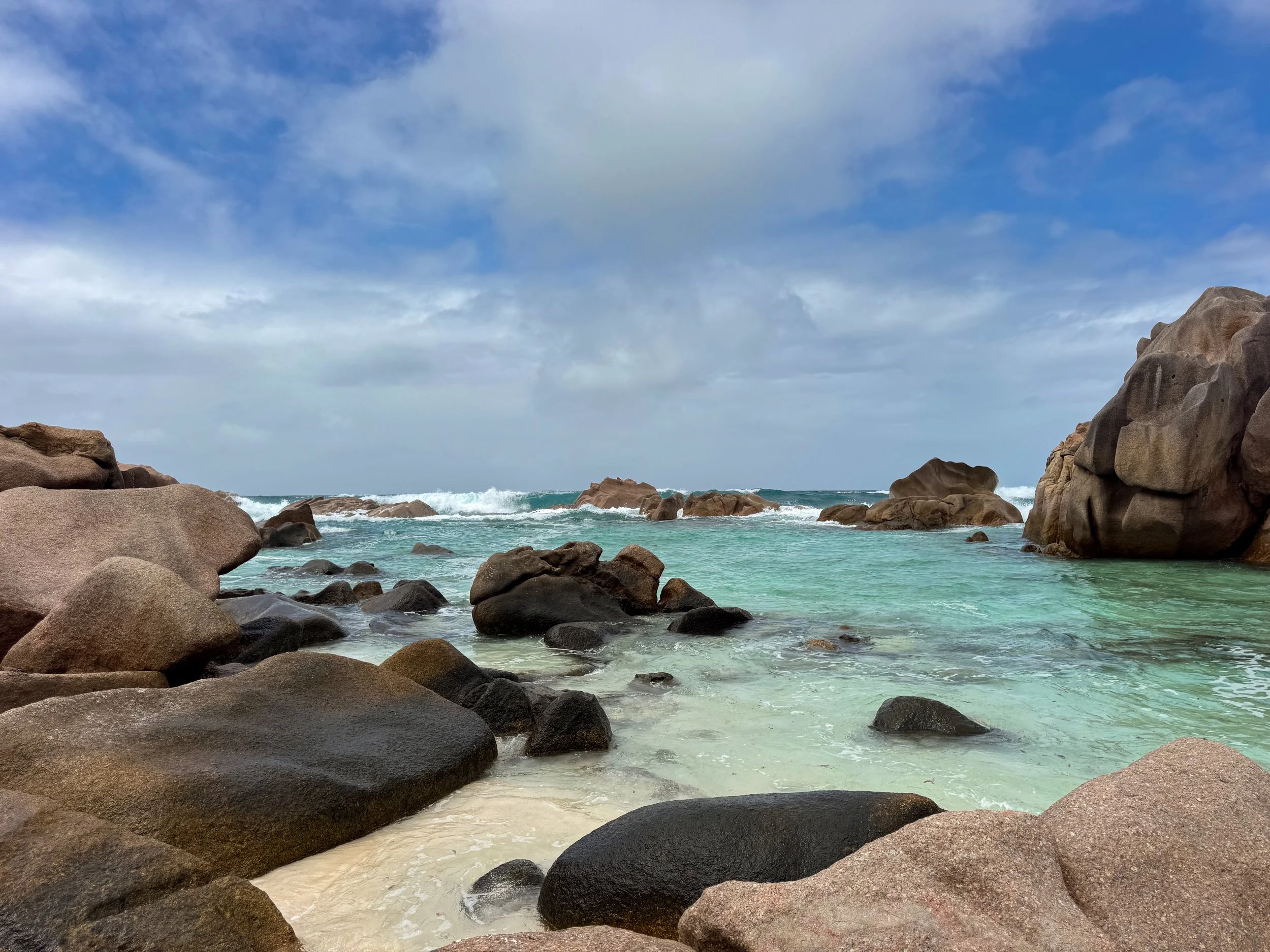
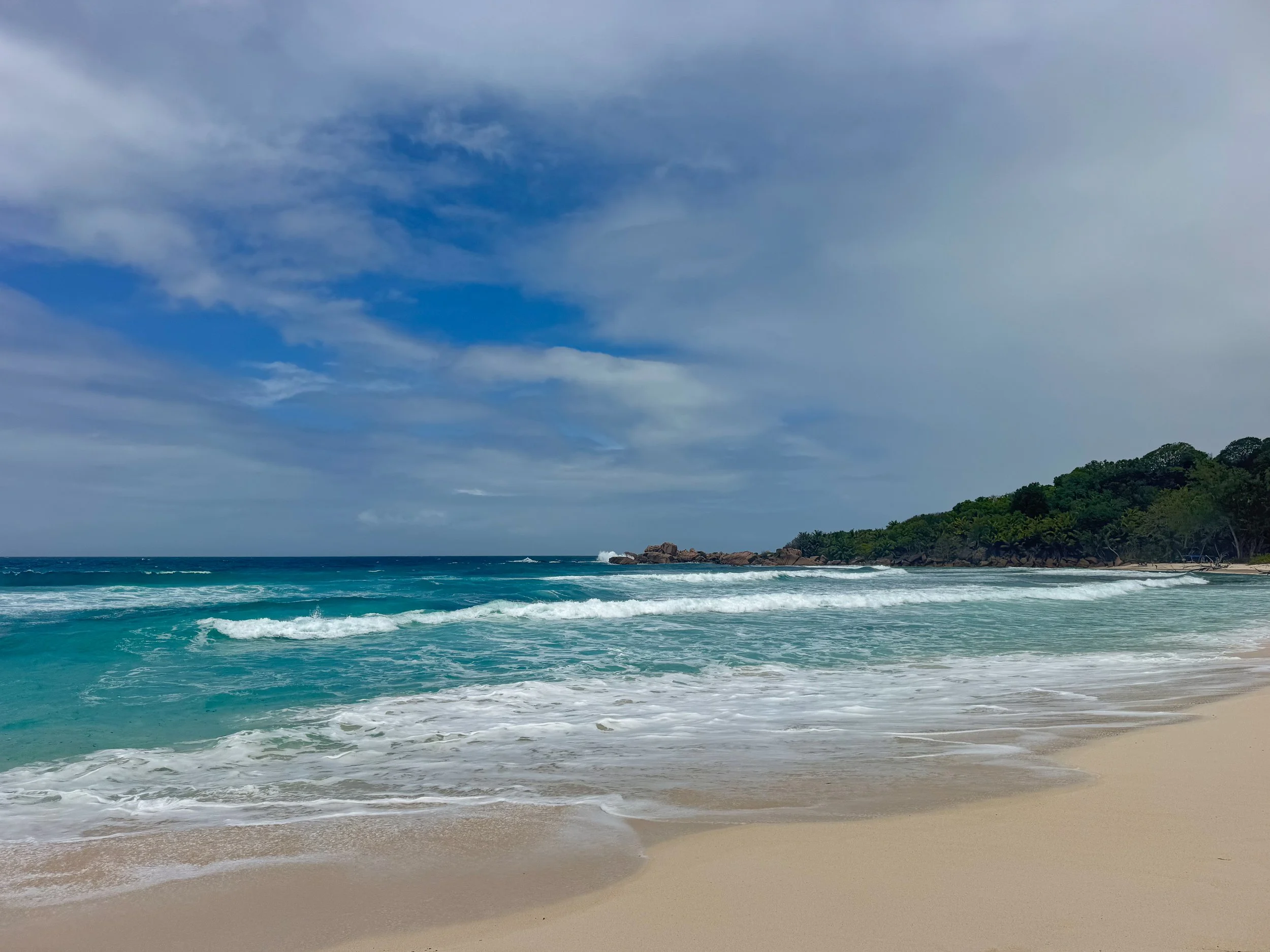
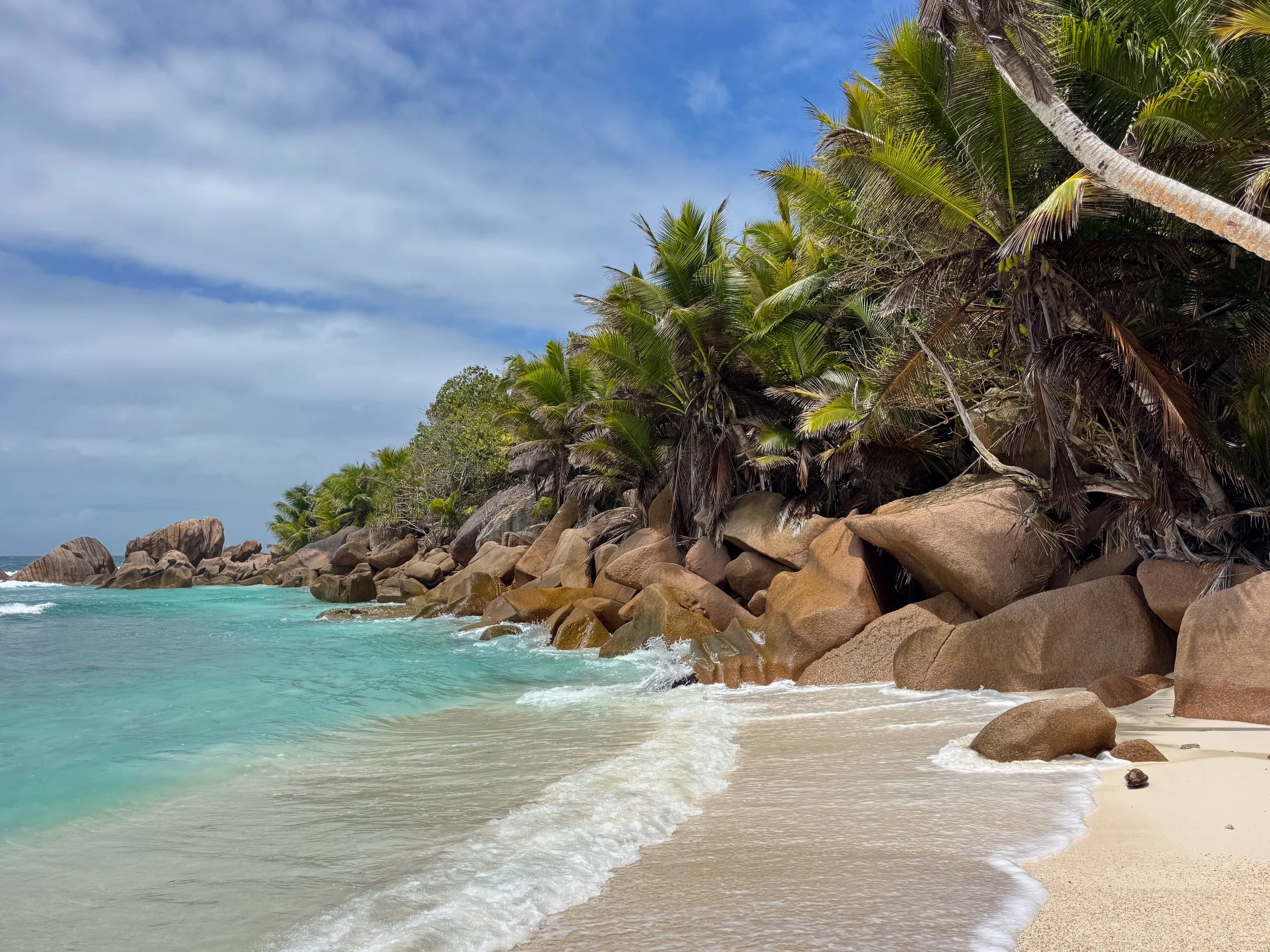
Anse Coco. A remote crescent shaped white sand beach on the south eastern side of the island. Enter the beach on the south end near Coco Bar. There is a protected cove flanked by large boulders at the north end, perfect for sunbathing and swimming. The currents and waves make the remainder of the beach too dangerous for swimming.
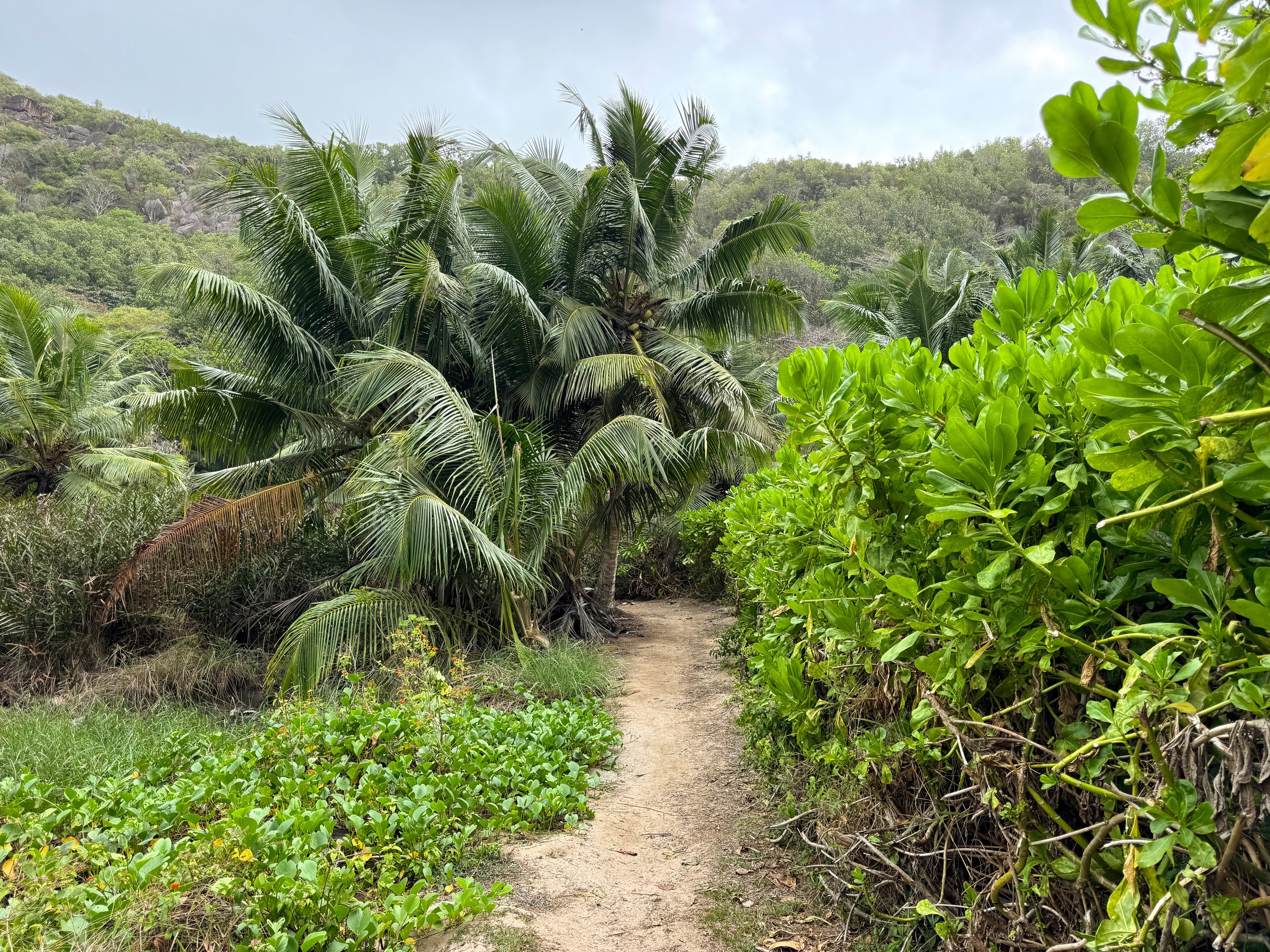
Getting Here. Anse Coco is reachable via a clearly marked trail leading from the south side of Petite Anse. The trail leads through the forest and over rocks. Keep an eye out for geckos, salamanders, crabs and giant millipedes. It takes between 20-30 minutes to reach.
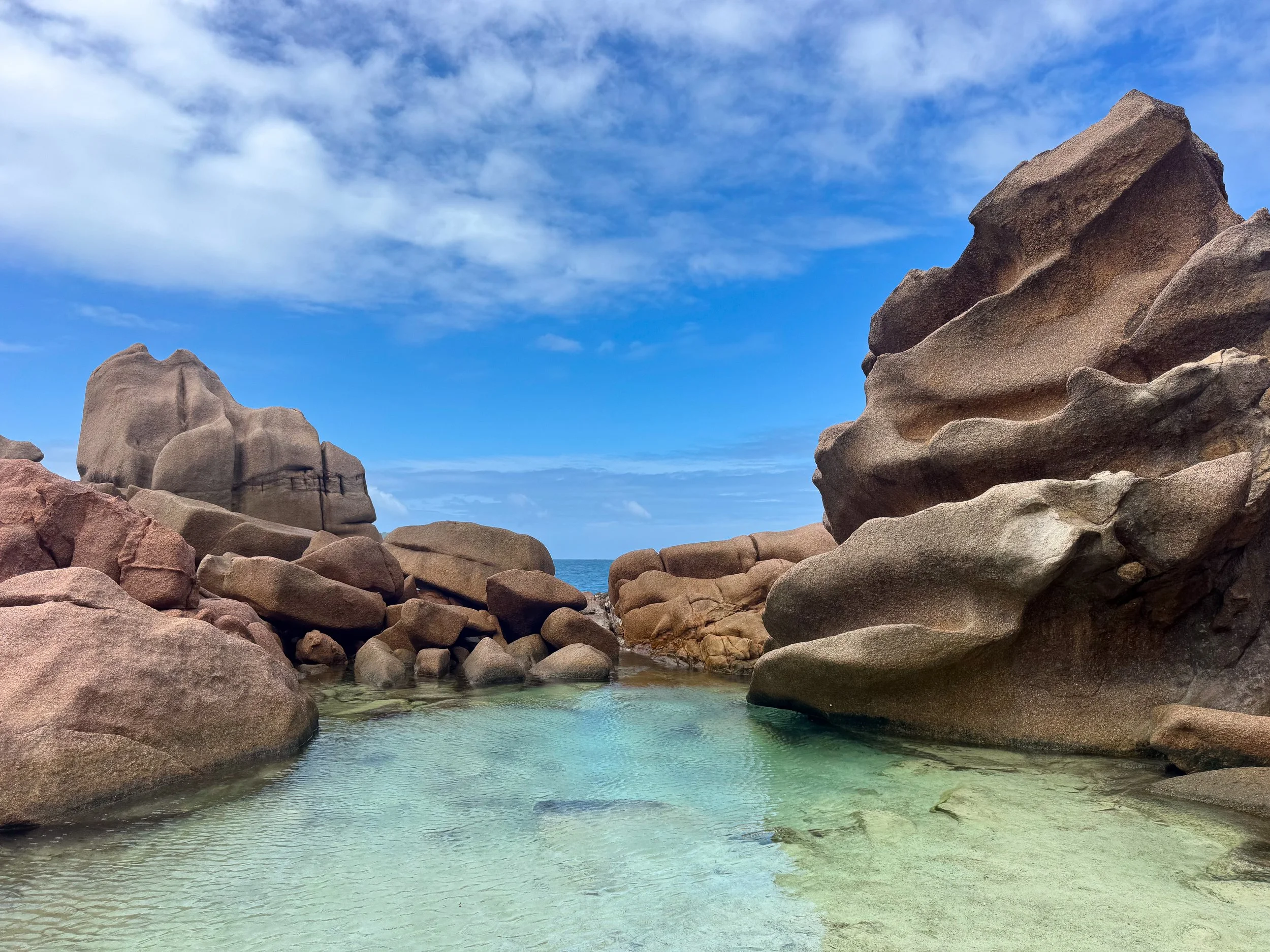
Caiman Beach. A small but swimmable beach protected by rocks. It’s reachable from Anse Coco or by hiking the Marcus Trail at the Coast. There is a small restaurant serving barbecue, fruit juices and cocktails. Beyond the bar are two large tide pools, perfect for lounging in the refreshing waters.
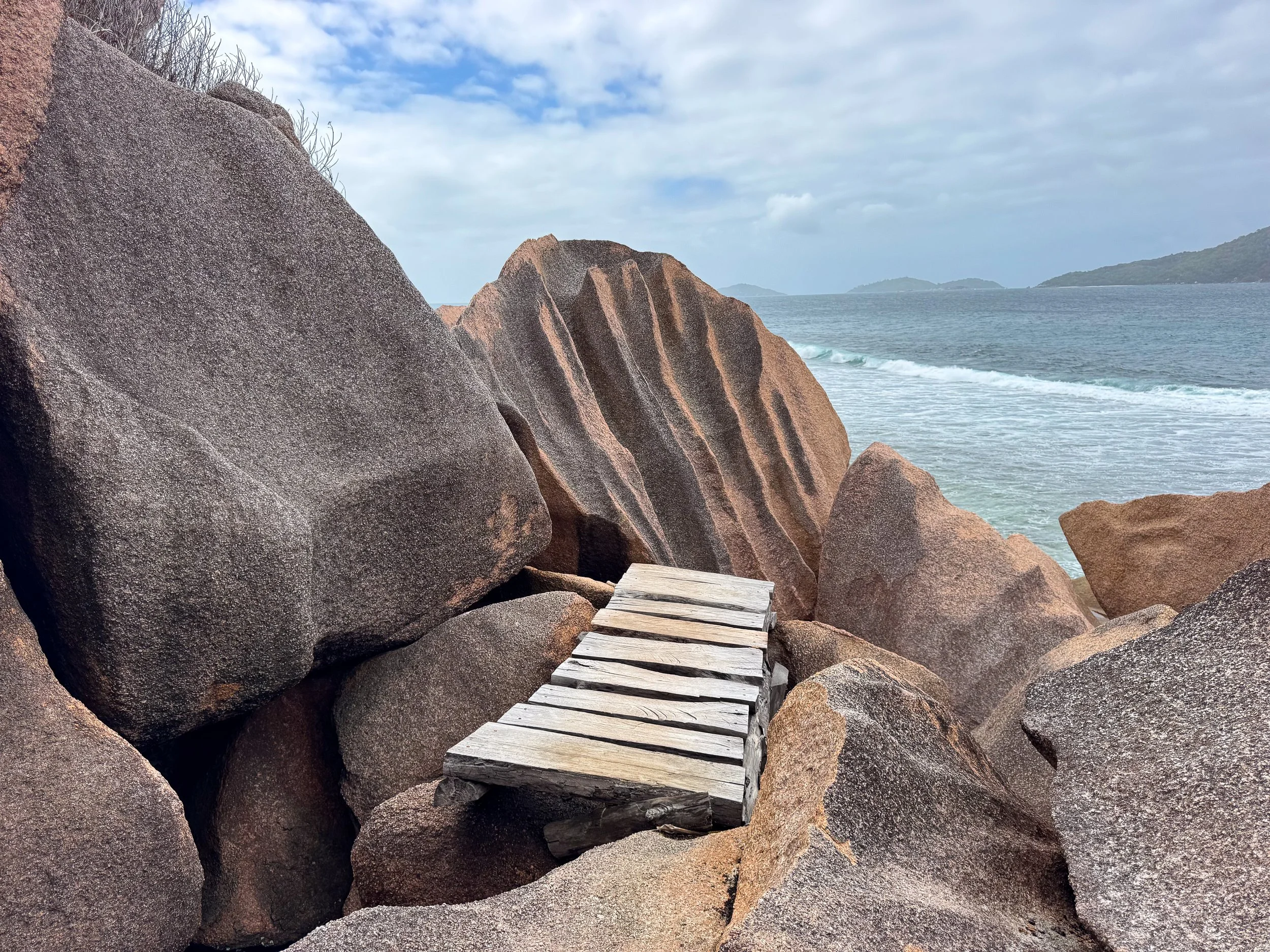
Marcus Trail at the Coast. A coastal nature trail on the eastern tip of the island. It leads from the “end of the road” near Anse Fourmis to the Caiman Beach Bar. You have to climb over boulders, through crevices, across platforms and makeshift stairs. Yellow painted arrows help point the correct direction. The trail continues onwards towards Anse Coco, Petite Anse and Grand Anse.
Places to Eat & Drink on La Digue
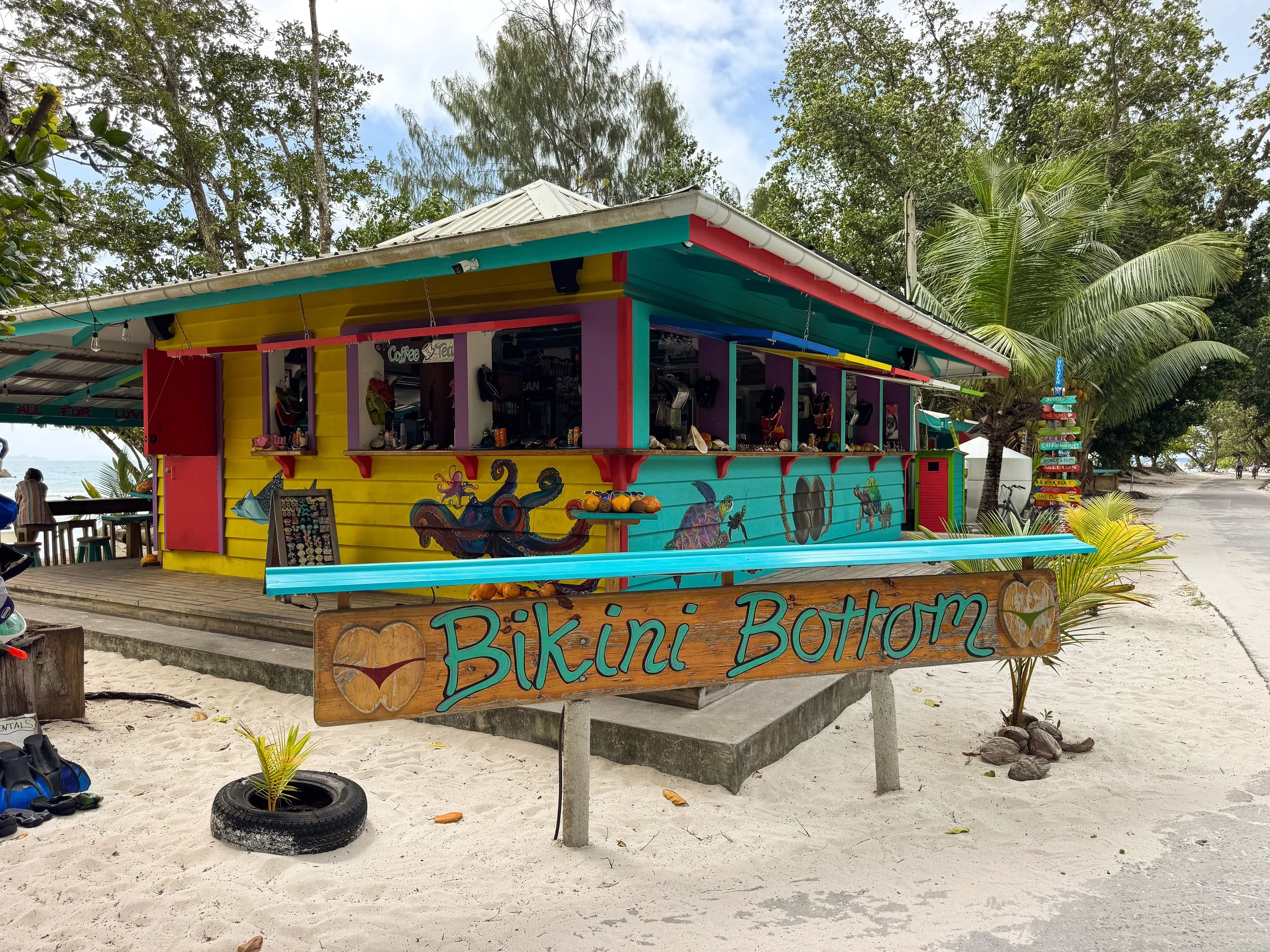
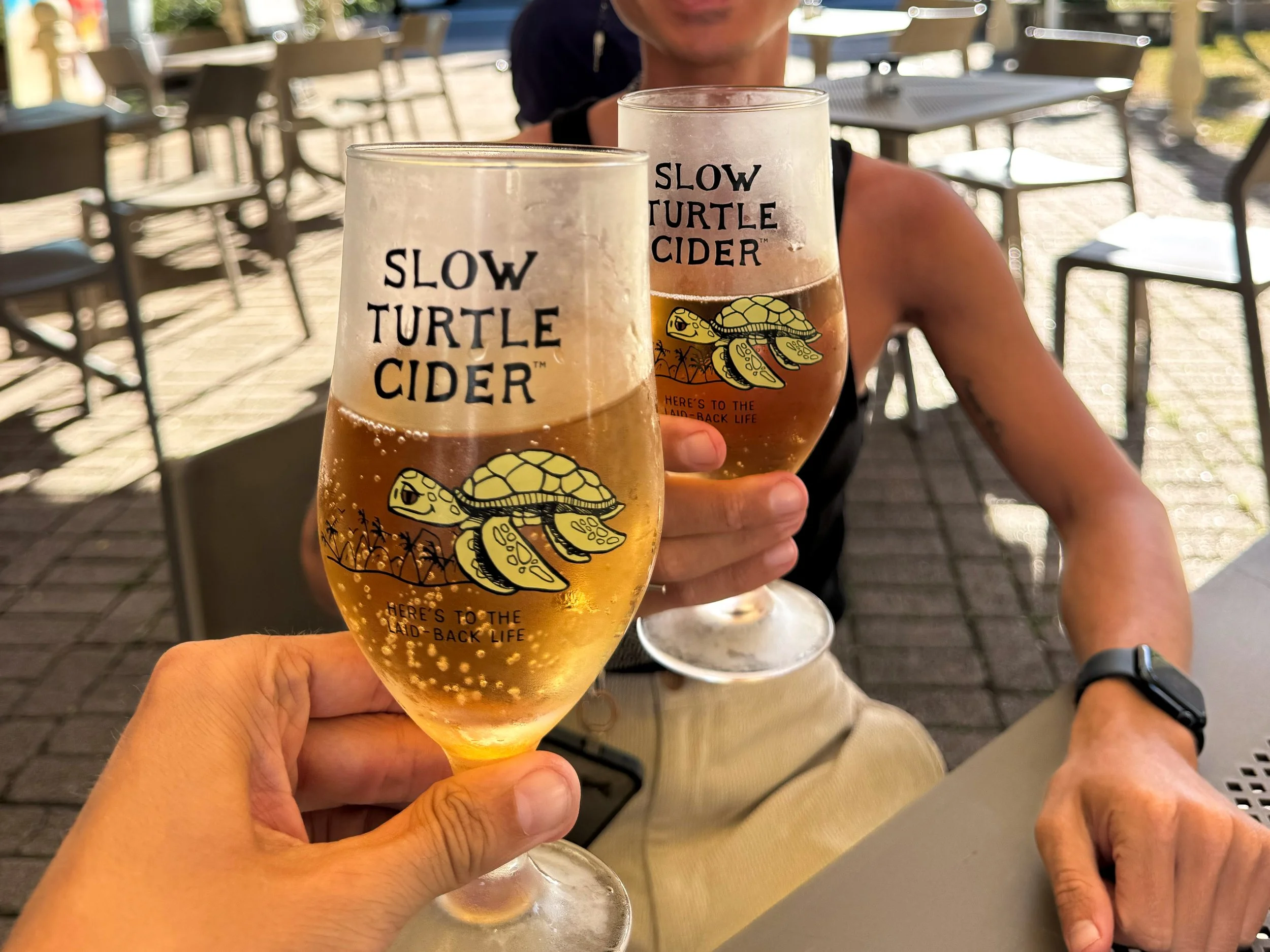
Bikini Bottom. A beach front takeaway at Anse Severe. Come here for a Slow Turtle Cider and admire the Giant Aldabra Tortoises at sunset.
Rey & Josh Takeaway. A very affordable Seychellois style takeaway with a small daily menu. Come here for the fish fillet with creole sauce and the fish curry.
Fruita Cabana Bar. A rasta themed beachfront fruit stand with vibey music at Anse Source D'Argent. They offer fresh fruit juices, coconuts and iced coffees. Try the coconut candy, fresh coconut garnished with sugar and lime juice!
Ton Greg’s Pizzeria. A local spot with well sized wood fired pizzas. Try their Seychellois pizza made with smoked fish and red onions.
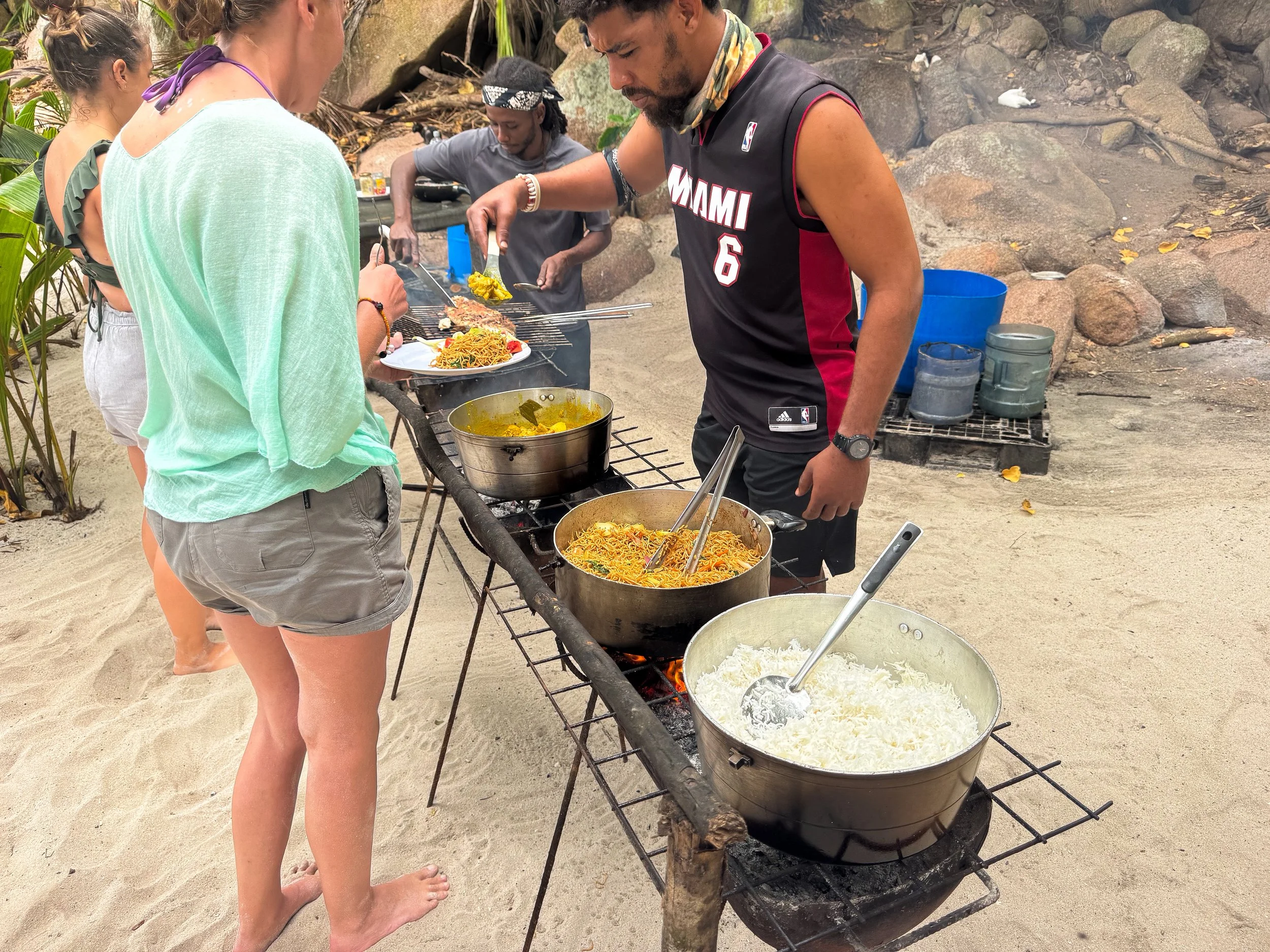
Coco Bar. A beachfront takeaway at Coco Beach offering fresh fruit juices and a barbecue lunch buffet. It’s renowned across the island for its delicious selections! They served whole grilled fish, grilled fish steaks, chicken coconut curry, chow mein, white rice and salad. Despite its remote location, dozens of people flock here around noon for a plate.
Caiman Beach Bar. A seaside bar on the eastern tip of the island. It’s reachable after a 20 minute hike from Coco Beach or 30 minute hike along the Marcus Trail at the Coast. They serve barbecue lunch, crush juices and rum cocktails. Prices here are quite expensive.
Chez Jules Restaurant. A Creole restaurant overlooking the island’s eastern coast. They serve Seychellois dishes, seafood, mocktails and Takamaka rum cocktails. We stopped in for drinks while walking around the island. Try the mango daiquiri and Taka Love, a rum and coconut concoction.
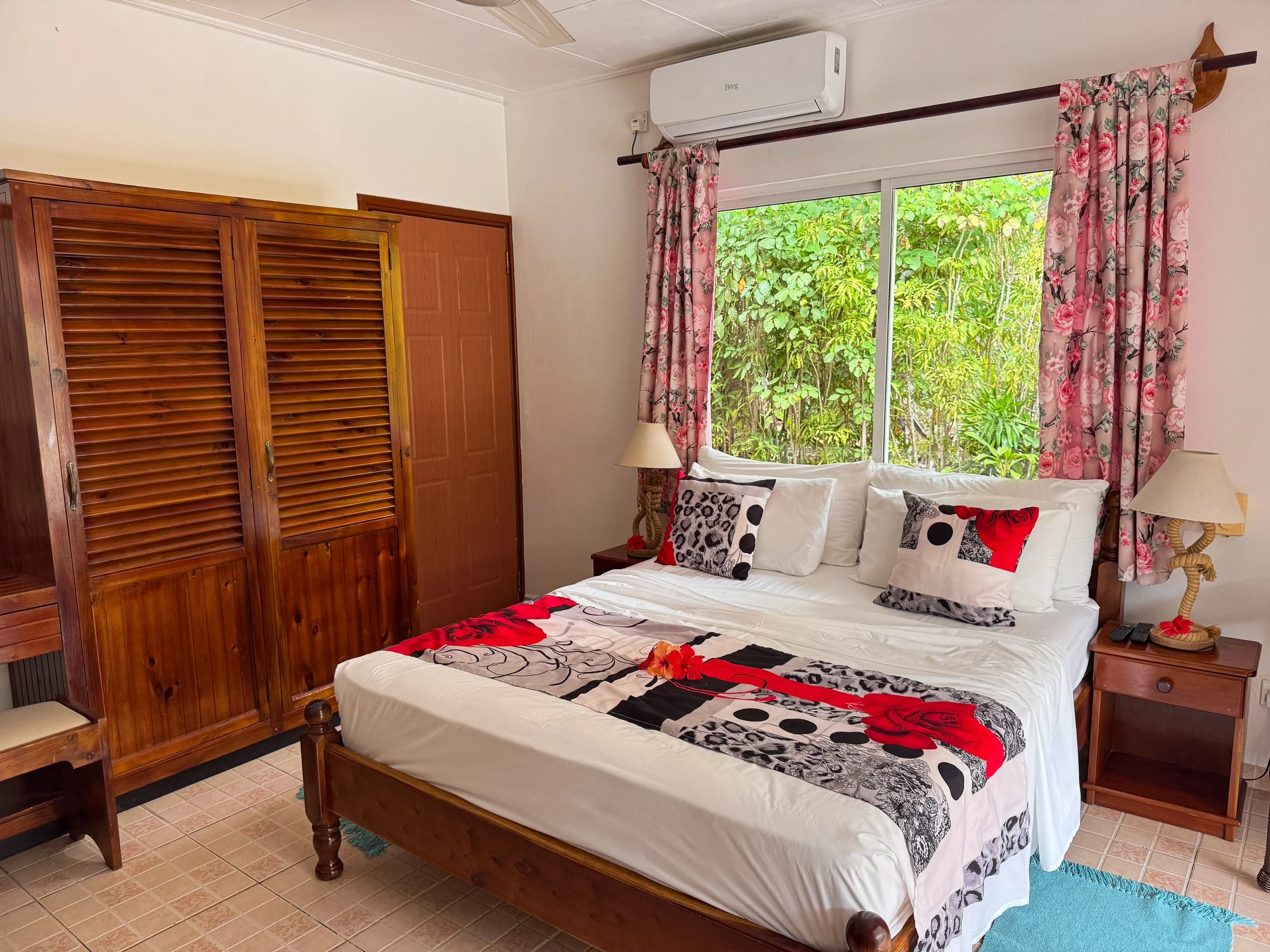
Where to Stay in La Digue
Pension Hibiscus. A “self catering” style hotel with individual apartment rentals in La Passe. Each unit has a fully equipped kitchen, private restroom, cozy bedroom and an outdoor patio. It’s within walking distance to the ferry jetty, beaches, grocery stores, restaurants and bars. Reserve on Booking.
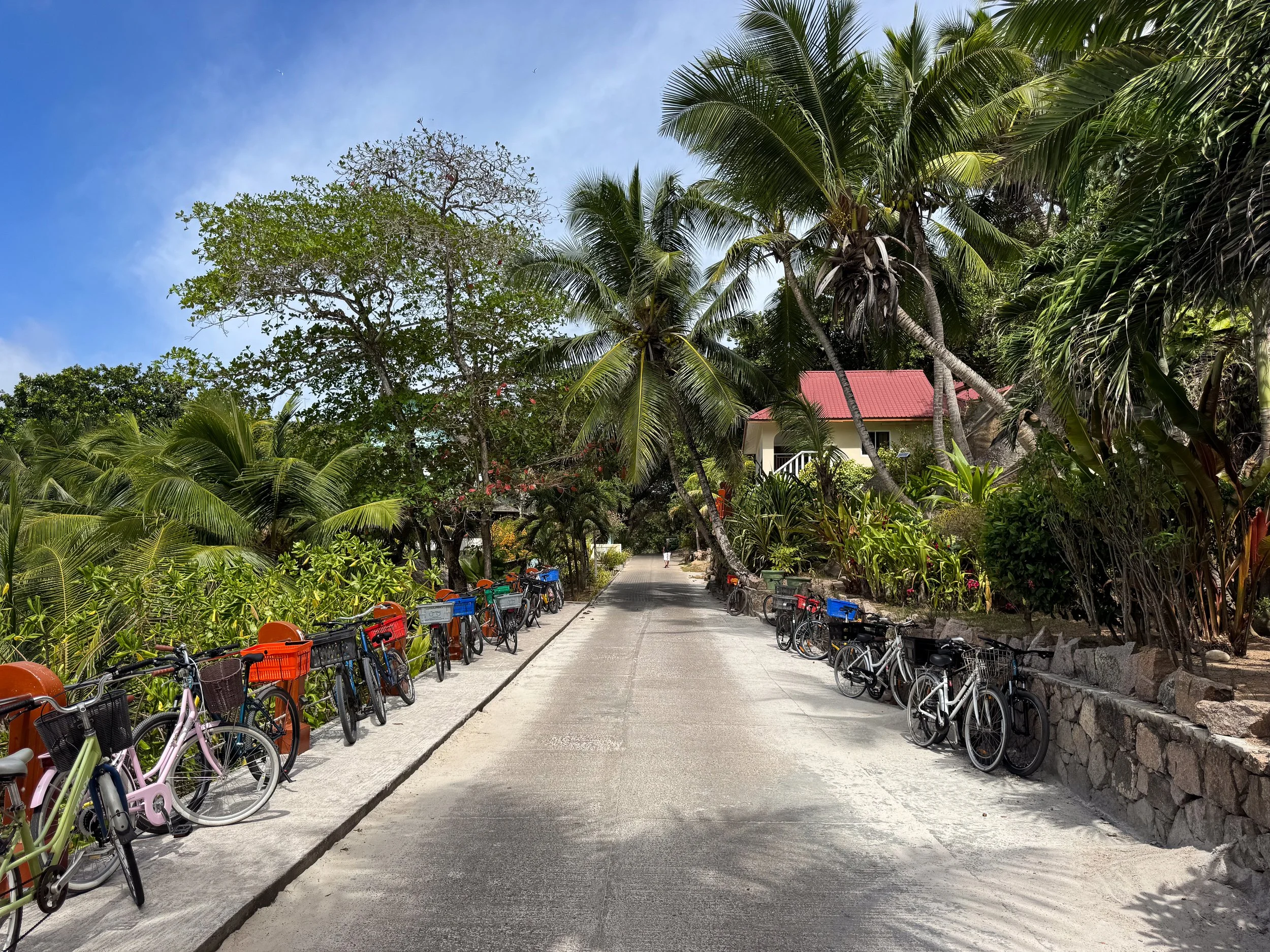
Getting Around La Digue
La Digue is a very small island, easily navigable on foot, by bike or golf cart. Most hotels provide bikes for guests to use while a few rental agencies near the La Passe ferry terminal rent golf carts and bikes by the day.
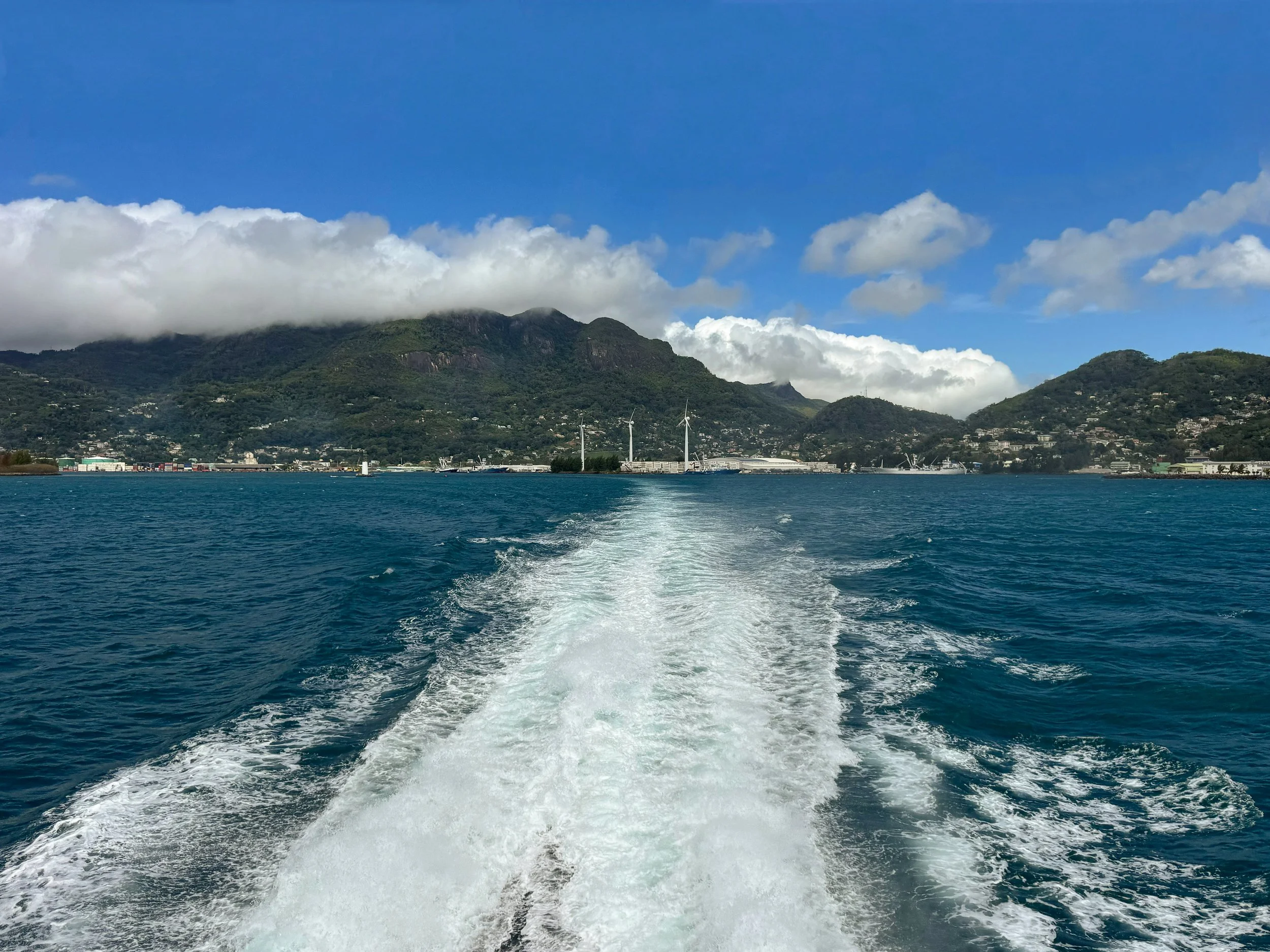
Getting Between Islands
Inner Island Ferries. Ferries are the best way to get between the Seychelles Inner Islands of Mahe, Praslin and La Digue. Cat Cocos is the main company operating routes between the islands. Book tickets with Sey Ferry online in advance to secure a seat.
Good to Know. Do not underestimate the rough seas. Many people began experiencing sea sickness about 20 minutes into the hour long voyage.
Seychelles on a Budget
The Seychelles can be a notoriously expensive destination yet easily visited on a budget. We spent 8 days here, maximizing beach time and stretching our wallet.
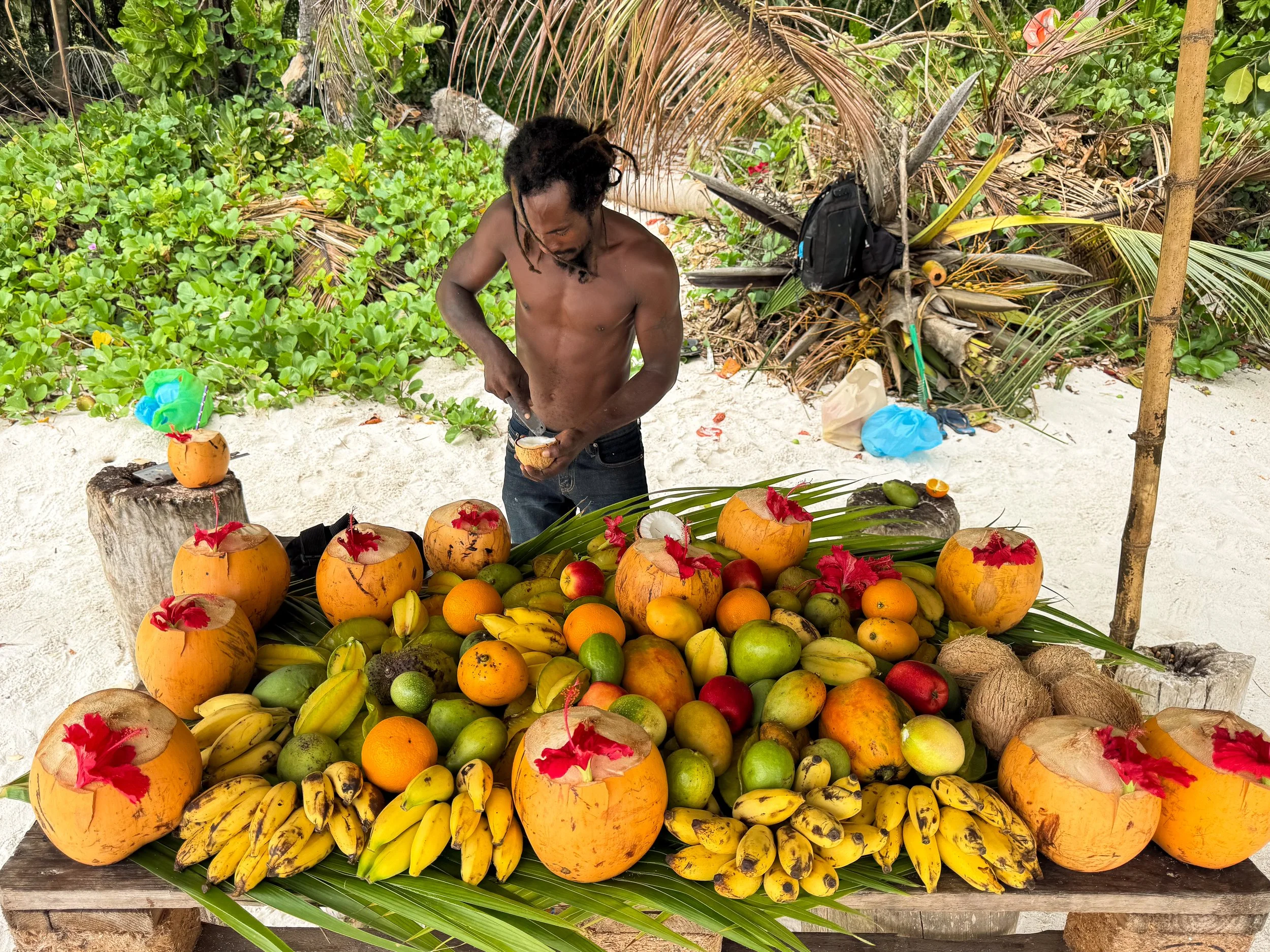
Fruit Stands. Beaches and roadsides are often dotted with fruit vendors selling freshly harvested tropical fruits. Many offer pressed juices or blended smoothies.
Public Beaches. The Seychelles are world famous for their pristine beaches. Maximize time exploring the free public beaches. Bring your own snacks and drinks to save money.
Self Catering Stays. Self Catering Stays refer to any type of guest house or vacation rental with a kitchen. They’re often the most affordable places to stay with space to cook your own meals.
Take Aways. If eating out, avoid the expensive restaurants and visit the take aways. They’re small roadside kiosks or food trucks offering affordable meals taken to go. They’re extremely popular with locals and budget travelers. Meals typically cost 100-150 rupees.
Fish Markets. Fishing is one of the Seychelles’ main businesses. Small fish markets are common along the coastal roads with fishermen selling the daily catch and barbecuing your selections for a fraction of a restaurant price.
Seychellois Cuisine
Slow Turtle Cider. An alcoholic apple cider local to the Seychelles.
Creole Curry. A mix of spices, tomatoes, onions, garlic, curry leaves, fish and sometimes coconut.
Smoked Fish Salad. Smoked fish served with mangos and papaya.
Grilled Fish. Red snapper, barracuda or parrotfish grilled over coconut husks.
Ladob. Plantain and sweet potatoes boiled with coconut milk, sugar, nutmeg and vanilla. It can be made savory by adding fish.
Breadfruit. Try it cooked over an open flame, fried, mashed or as chips.
Satini. A cooked mixture of green papaya and mango cooked with fish and coconut.
Coconut Candy. A halved coconut with its meat sliced into bite size pieces and garnished with sugar and lime. Order it from a beachside fruit stand.
Location Specifics
When to Visit. We visited the Seychelles in late August, during the peak of the dry season. Expect a mixture of sun, clouds and rain. Plan your beach days and outdoor activities accordingly.
Language. Creole, French and English are the three most commonly spoken languages across the Seychelles. Locals are more than happy to talk with visitors, provide recommendations and offer directions.
Cash vs. Card. Credit cards are accepted almost everywhere across the Seychelles. Carry some Seychelles Rupees for times when card machines are down or when buying from small roadside vendors.
Sand Flies. Sand flies are present on many of the beaches, often landing and crawling around on you while lying out. Thankfully they don’t bite but can become quite the annoyance.
Mosquitos. Bring insect repellant. Mosquitos are ever present across the Seychelles, especially in the more jungleous areas and at night.
For Next Time…
The next time we visit the Seychelles, we plan to continue island hopping and visit a few nearby locations we missed on this trip.
Silhouette Island. A large but mostly uninhabited island covered in tropical forest with hiking trails and secluded beaches.
Curieuse Island. An island home to Giant Aldabra Tortoises, Coco de Mer Palms, white sand beaches and sea turtles. It’s reachable from Praslin on many island tours.
St Pierre Island. A tiny uninhabited island off the coast from Praslin with granite rock formations, palm trees and coral reefs. It’s a popular snorkeling spot.
Felicite, Coco Island, Grand Soeur & Petite Soeur. A grouping of tiny tree covered islands surrounded by underwater marine life and snorkeling areas.
Zanzibar Travel Guide: Stone Town, Beaches & Swahili Culture
Escape to Zanzibar where historic Stone Town, fragrant spice gardens, white sand beaches and turquoise waters bring together centuries of history, culture and island life.
Zanzibar, Tanzania
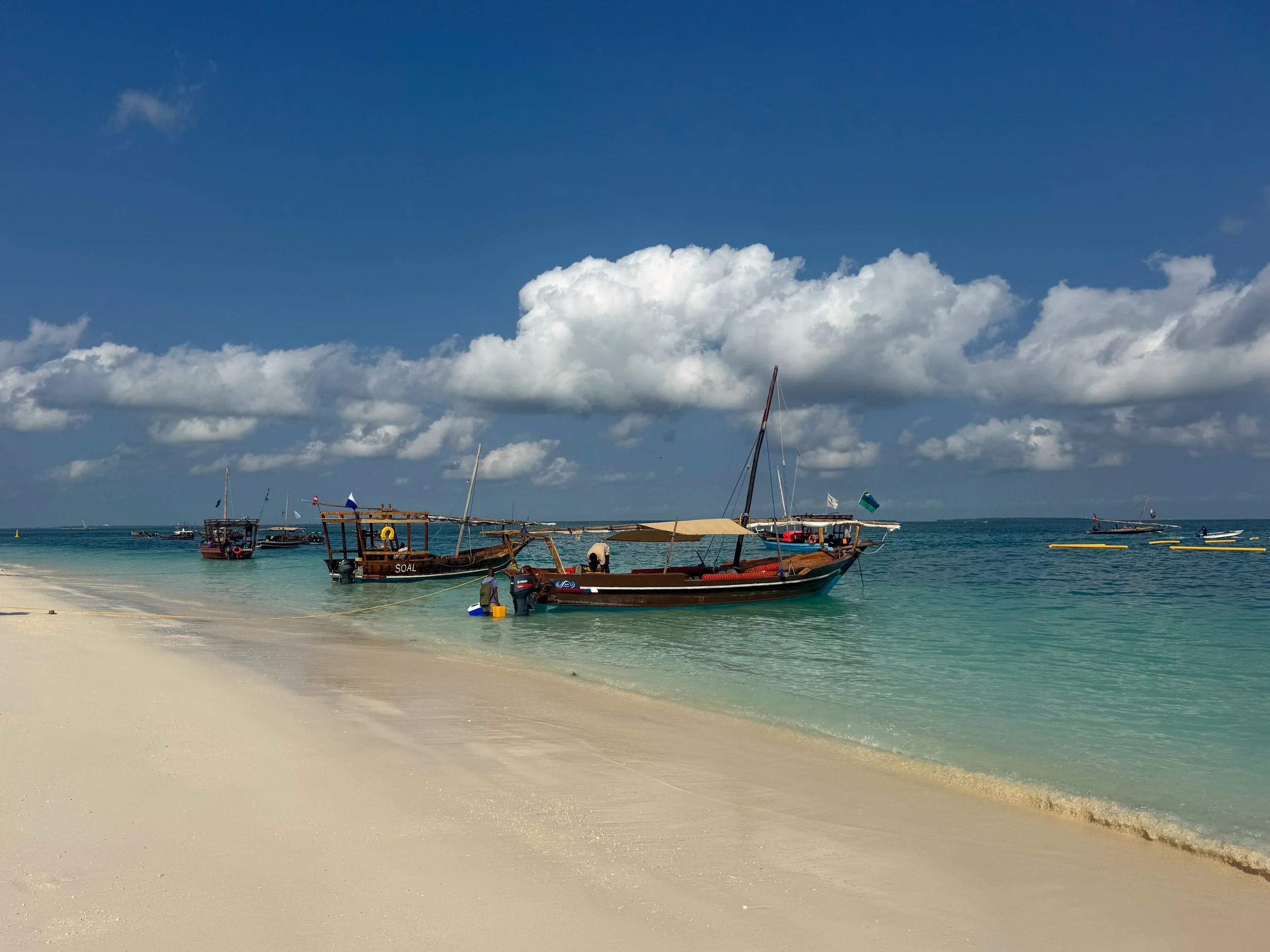
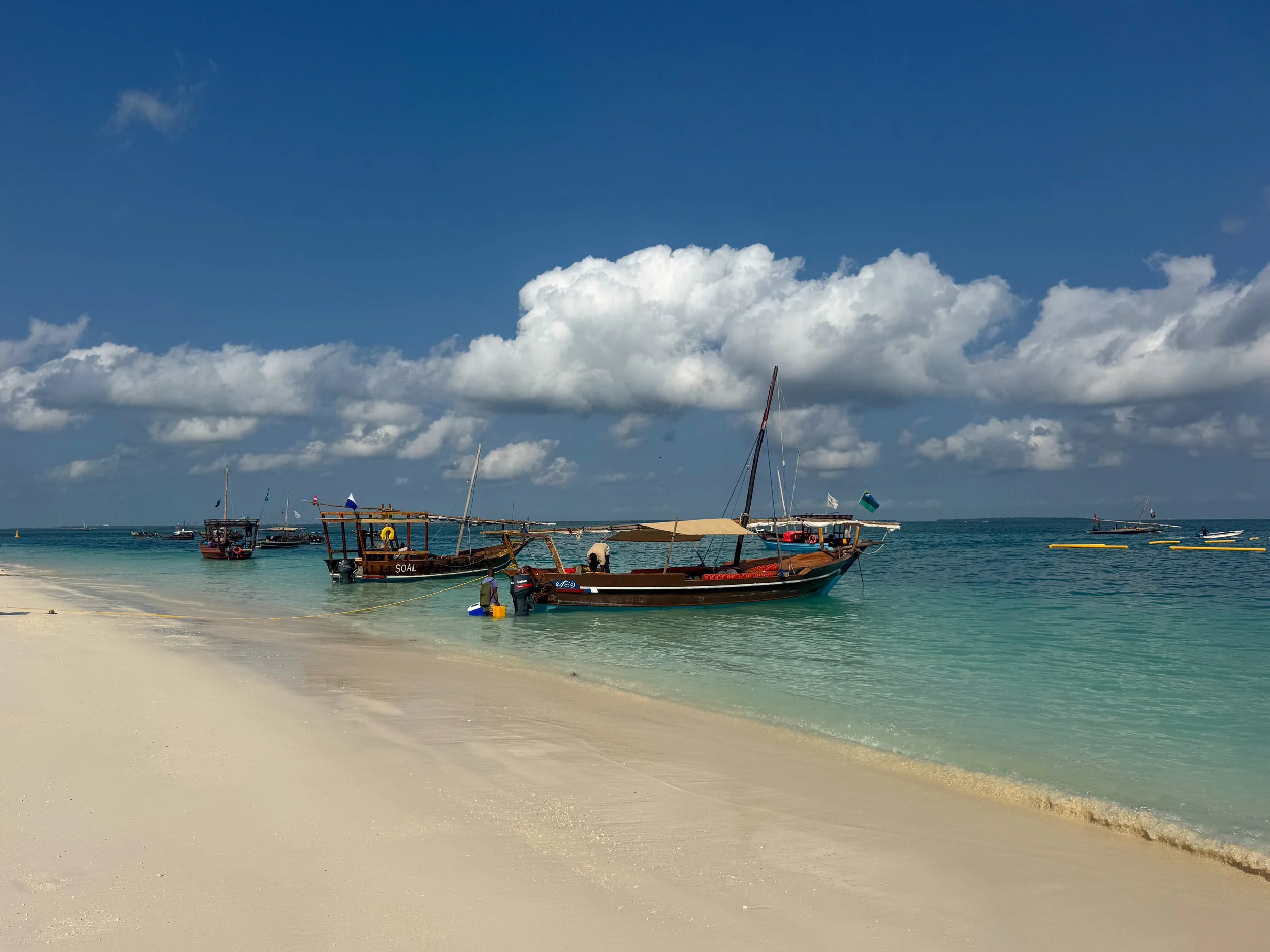
Zanzibar is an exotic island off the coast of mainland Tanzania in the Indian Ocean. It’s famed for its white sand beaches, turquoise waters and historic spice trade. History lives on in the narrow alleyways, markets and cultural sights of Stone Town. Maasai tribesmen sell beaded accessories and perform cultural dances. Swahili phrases like Hakuna Matata (no worries) and Pole Pole (slowly slowly) are the local way of life. We spent a week on the island, splitting out time between Stone Town and the beach towns of Kendwa and Nungwi.
Stone Town
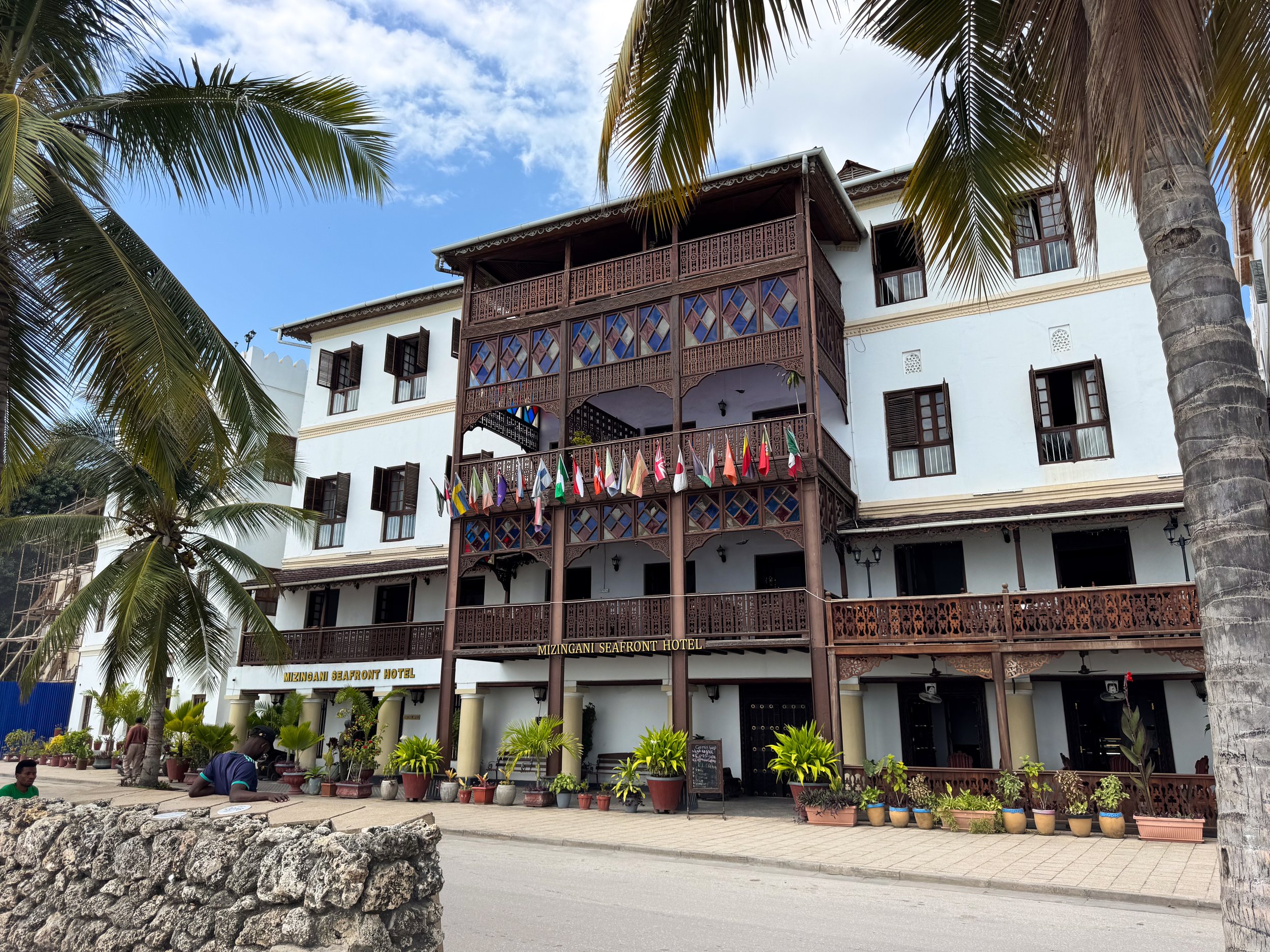
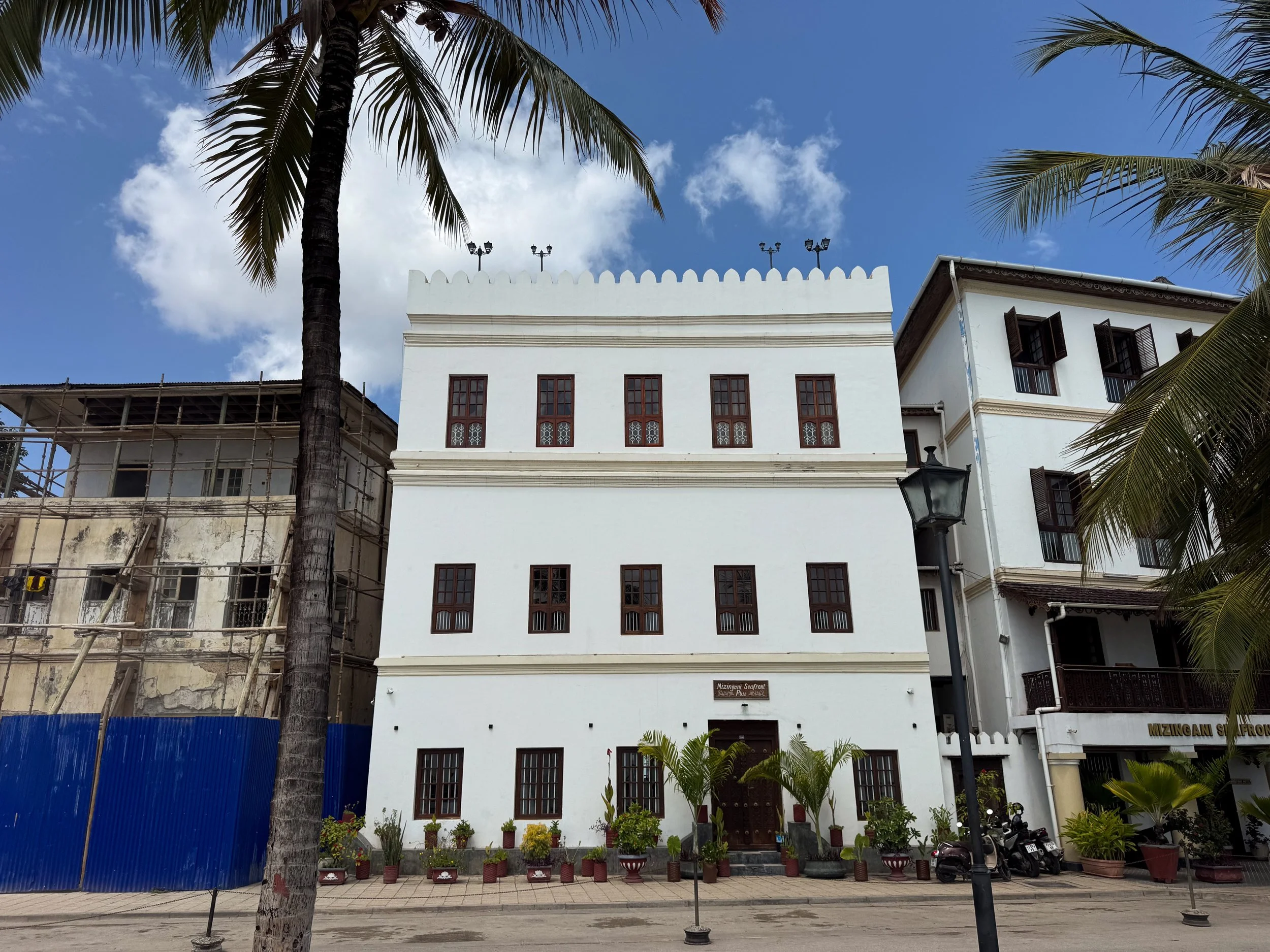
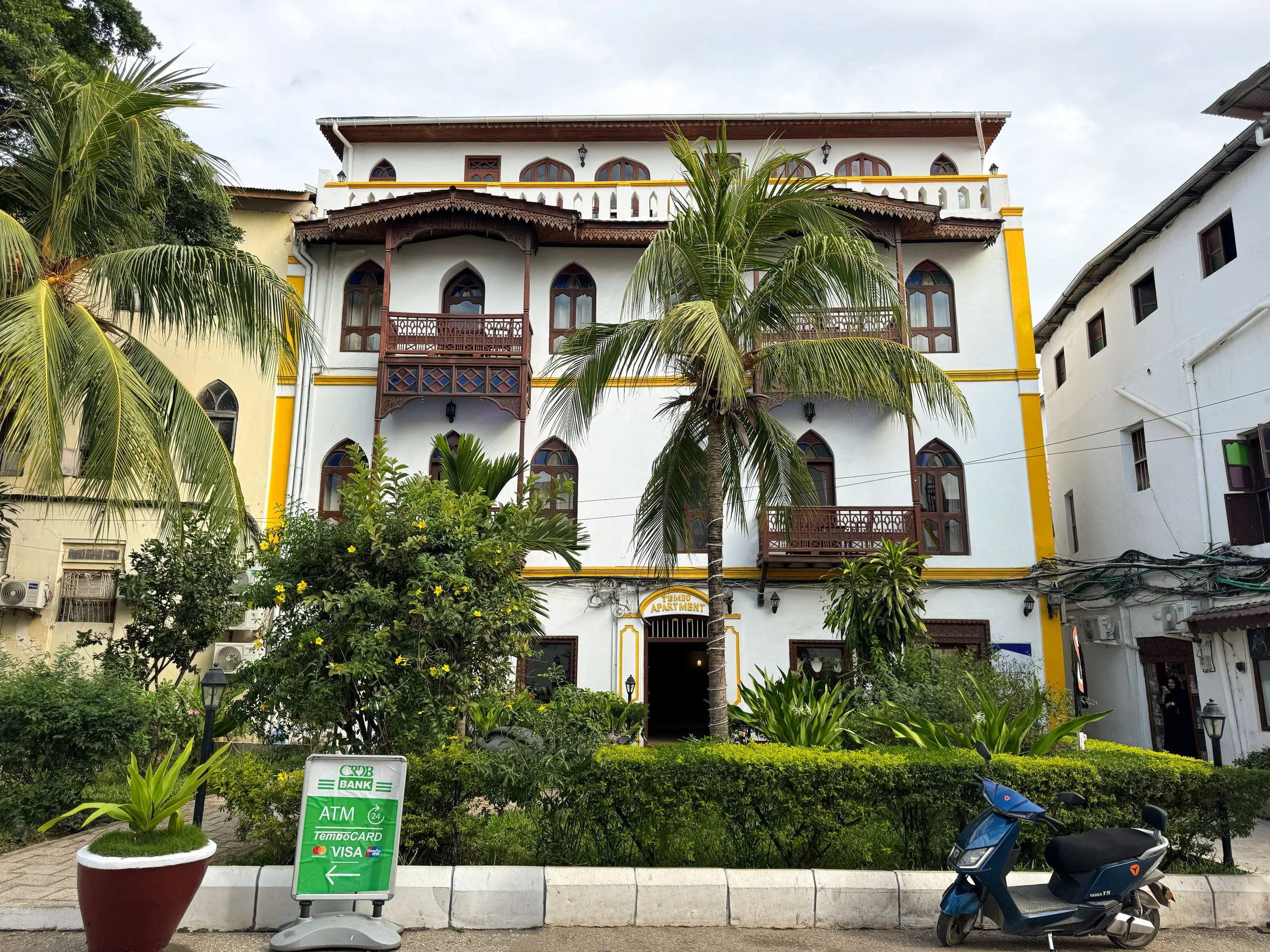
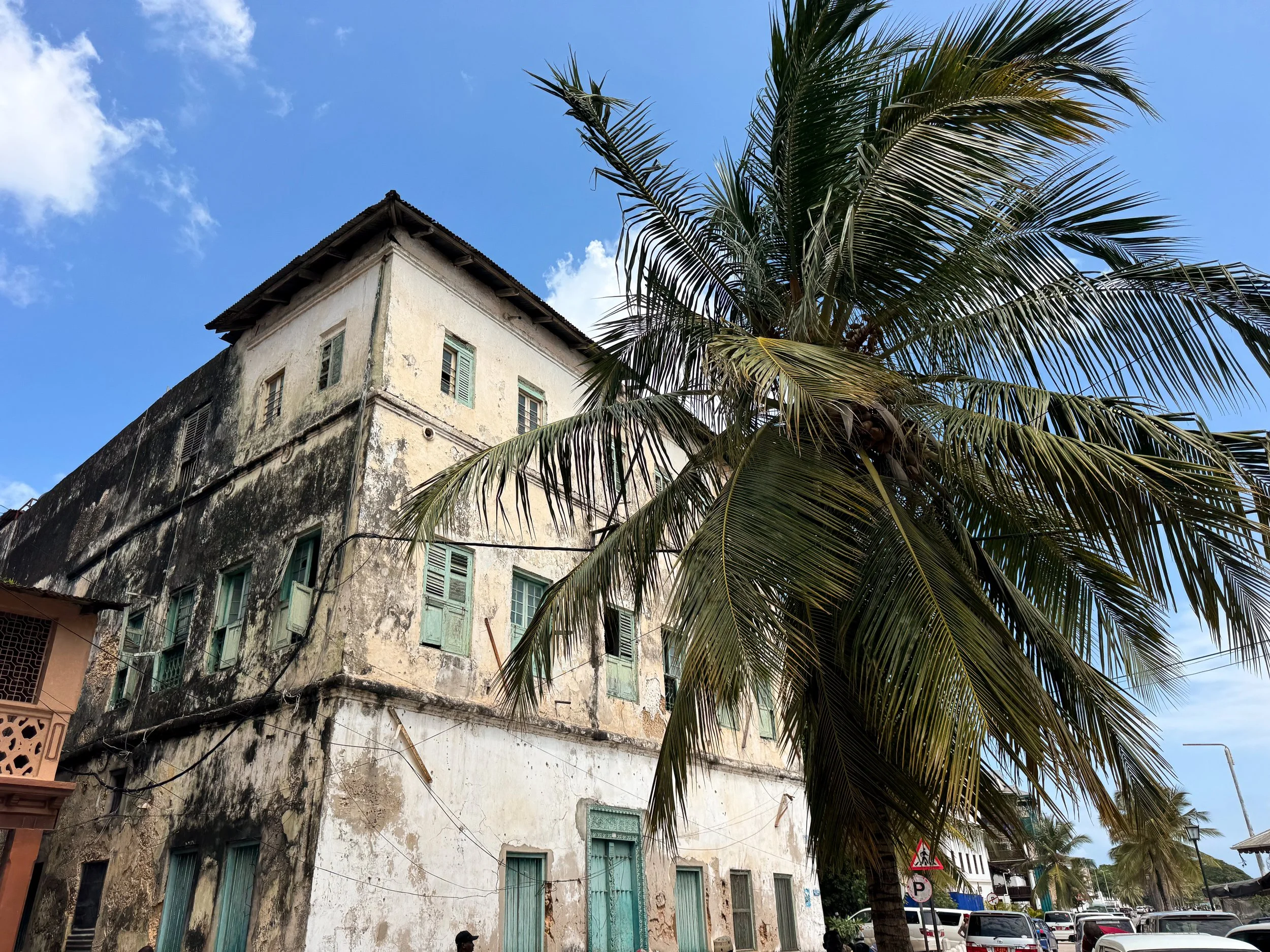
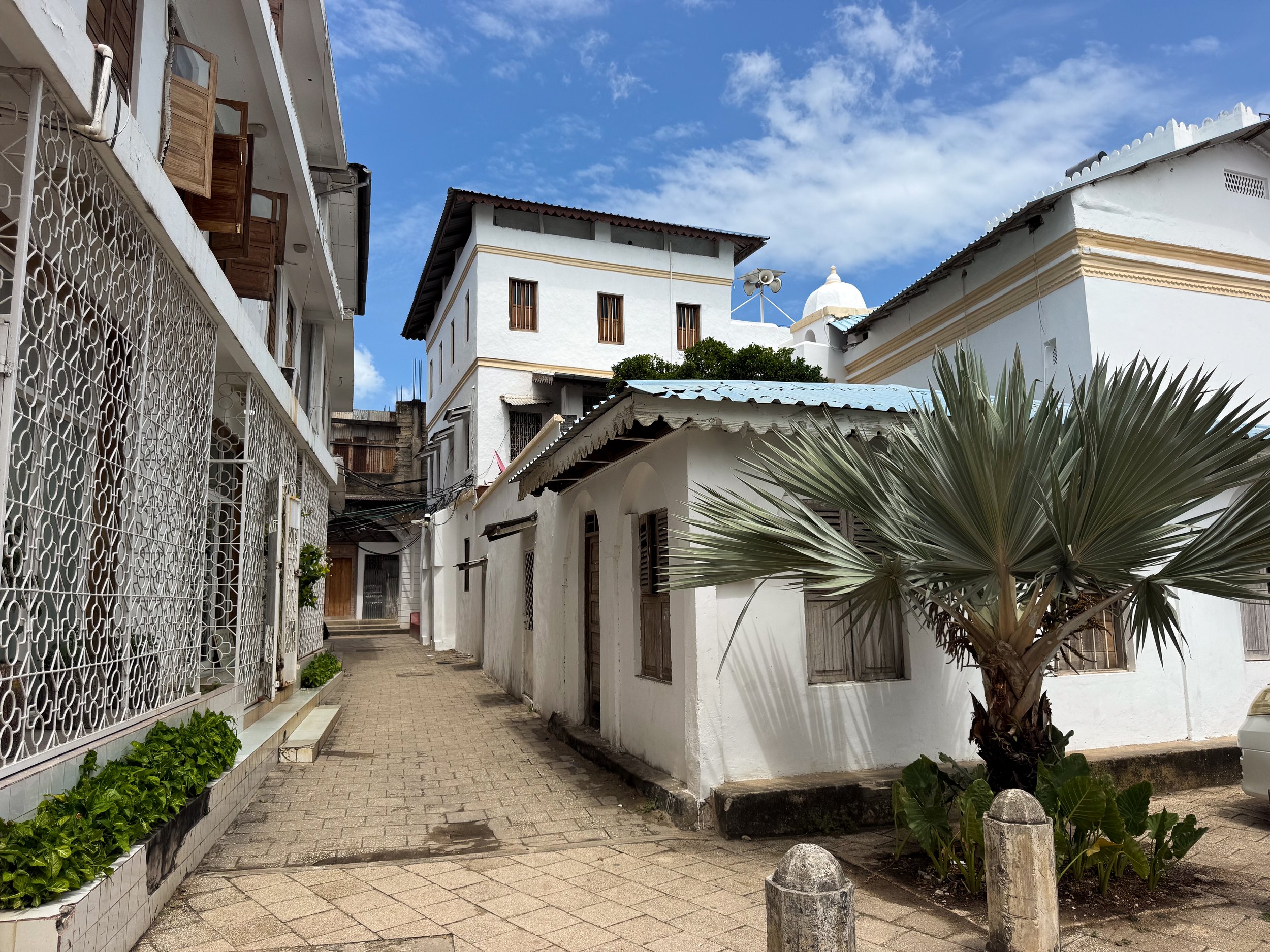
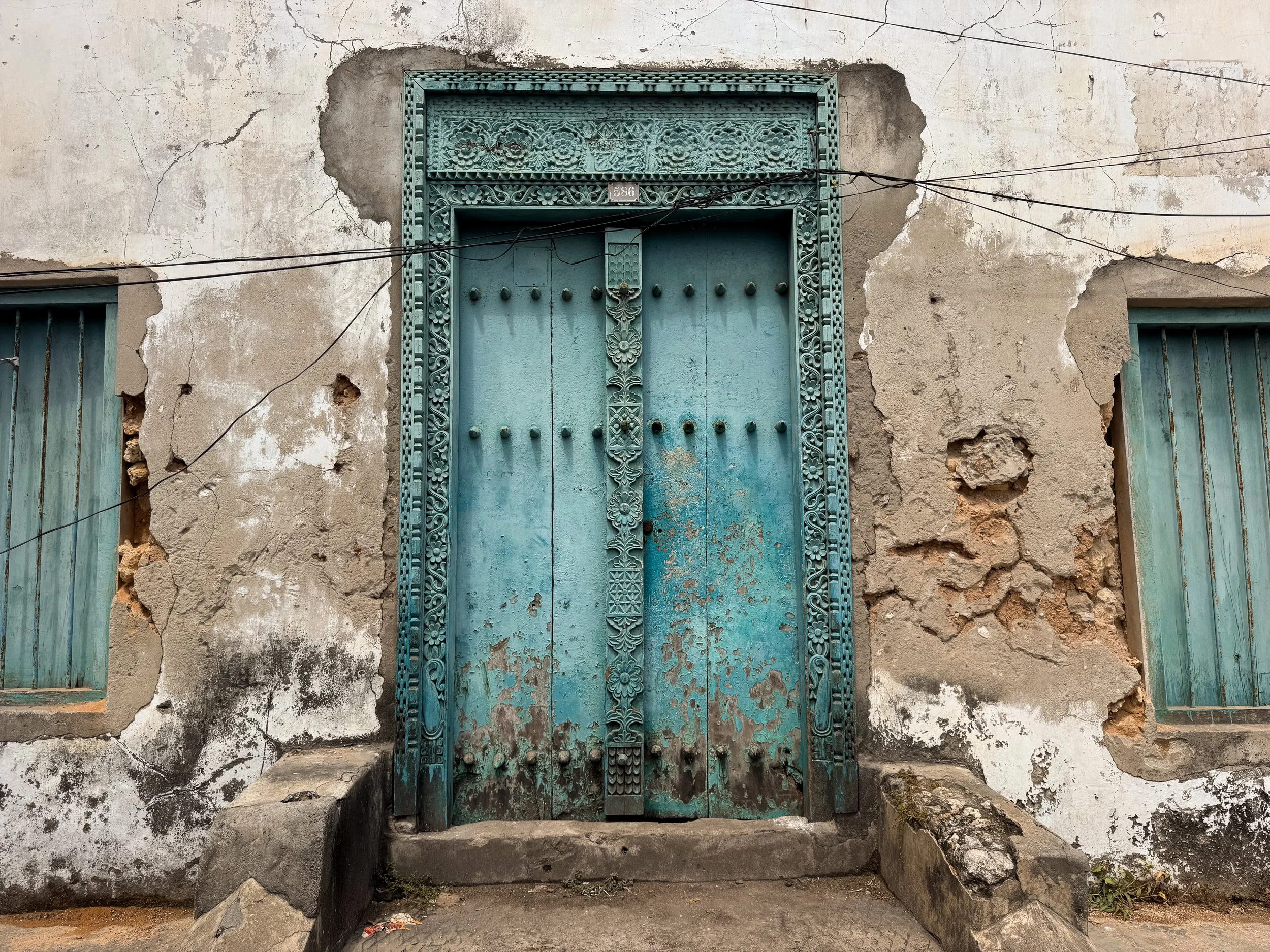
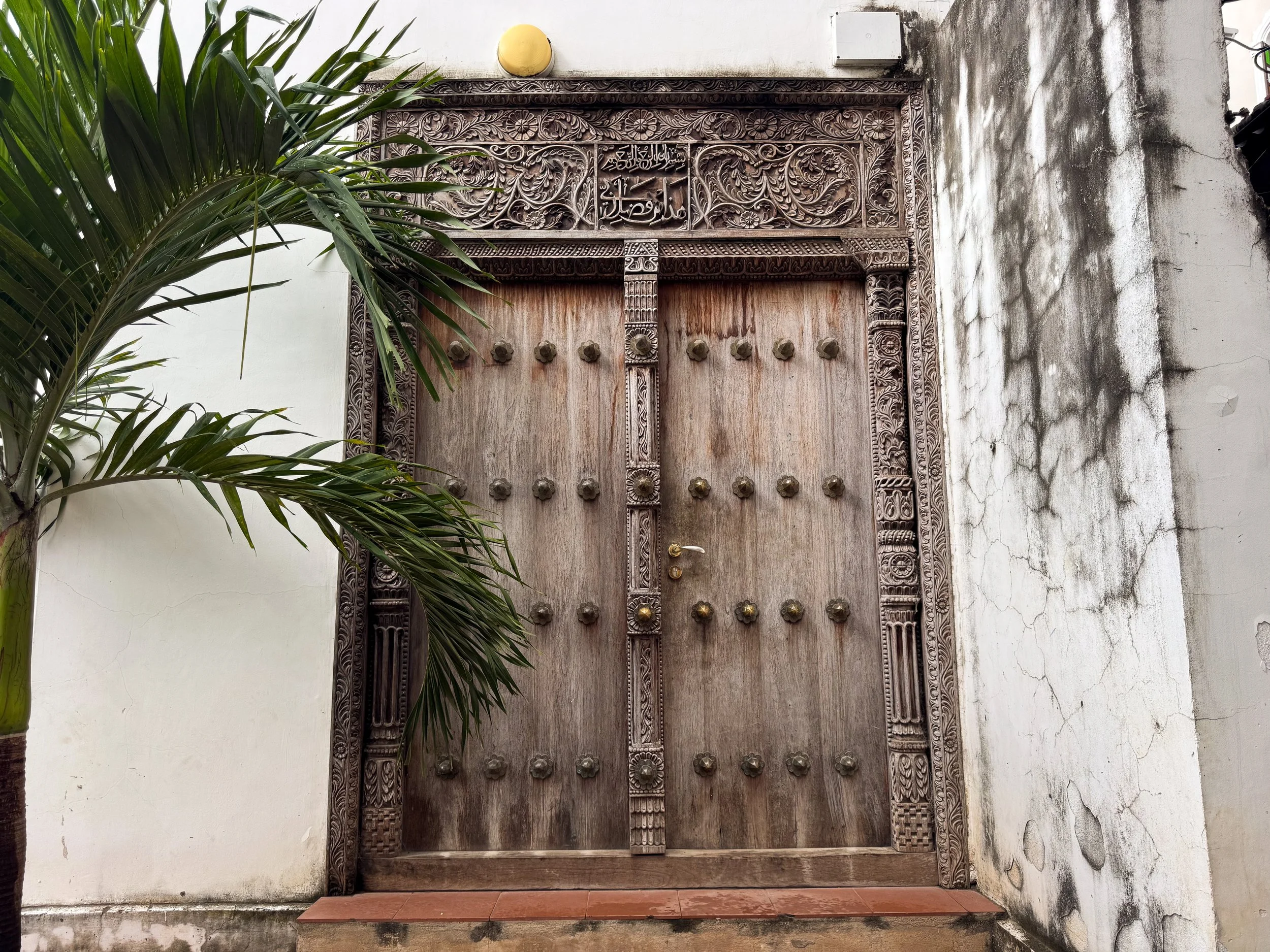
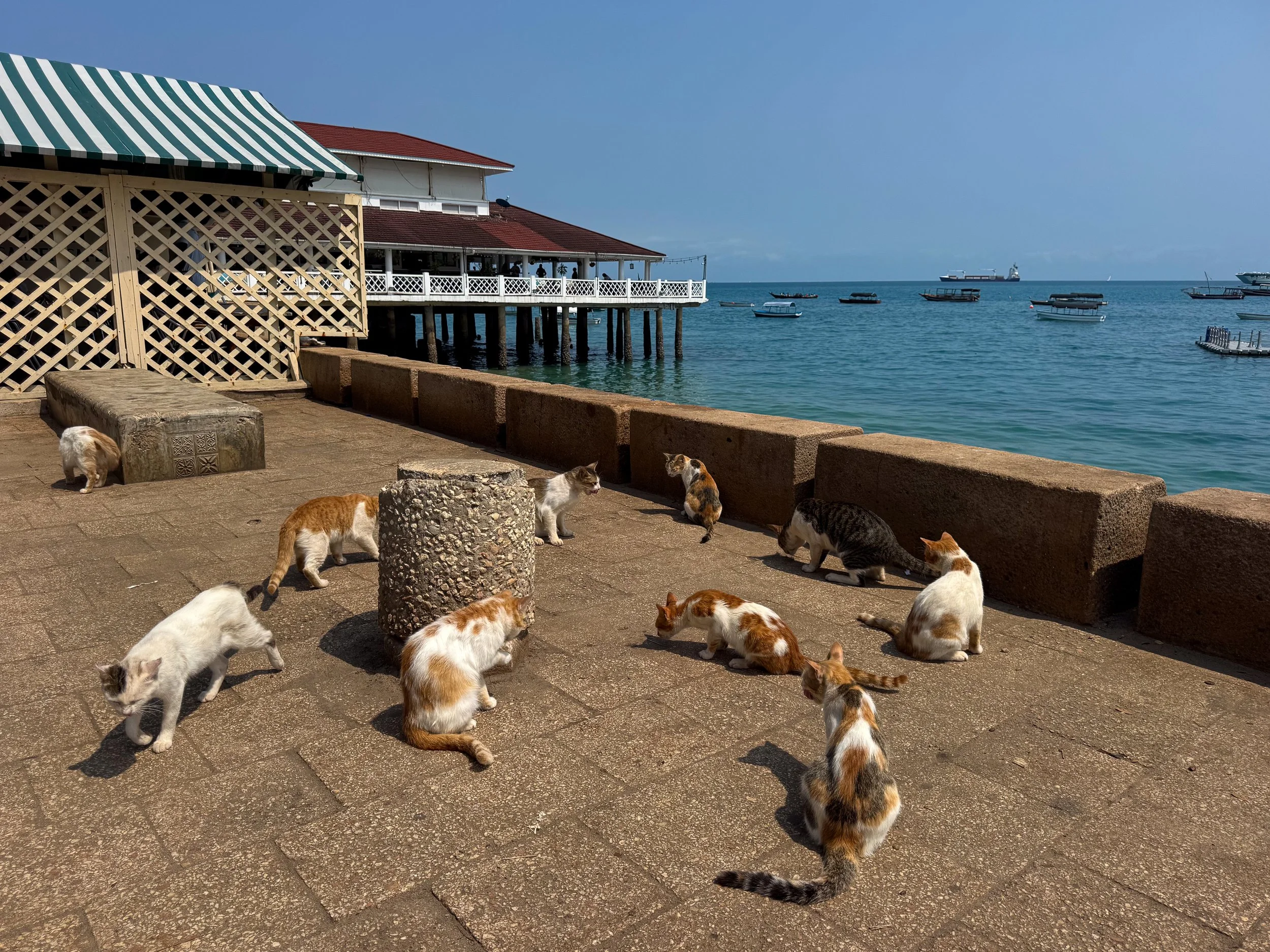
Stone Town is the historic district of Zanzibar City. Its narrow streets and winding alleyways meander between landmark buildings, former sultanate palaces and crumbling ruins. Stained glass windows, wooden balconies and ornately carved doors decorate their tan facades. Tropical plants and palm trees grow from small gardens and roadsides. Stray cats roam freely, often patrolling unoccupied stoops. Local merchants sell jewelry, spices, ebony artifacts, safari style paintings and beaded decorations. It’s a small district but easy to get lost in, making its narrow walkways even more enchanting.
Stone Town Historical Sights
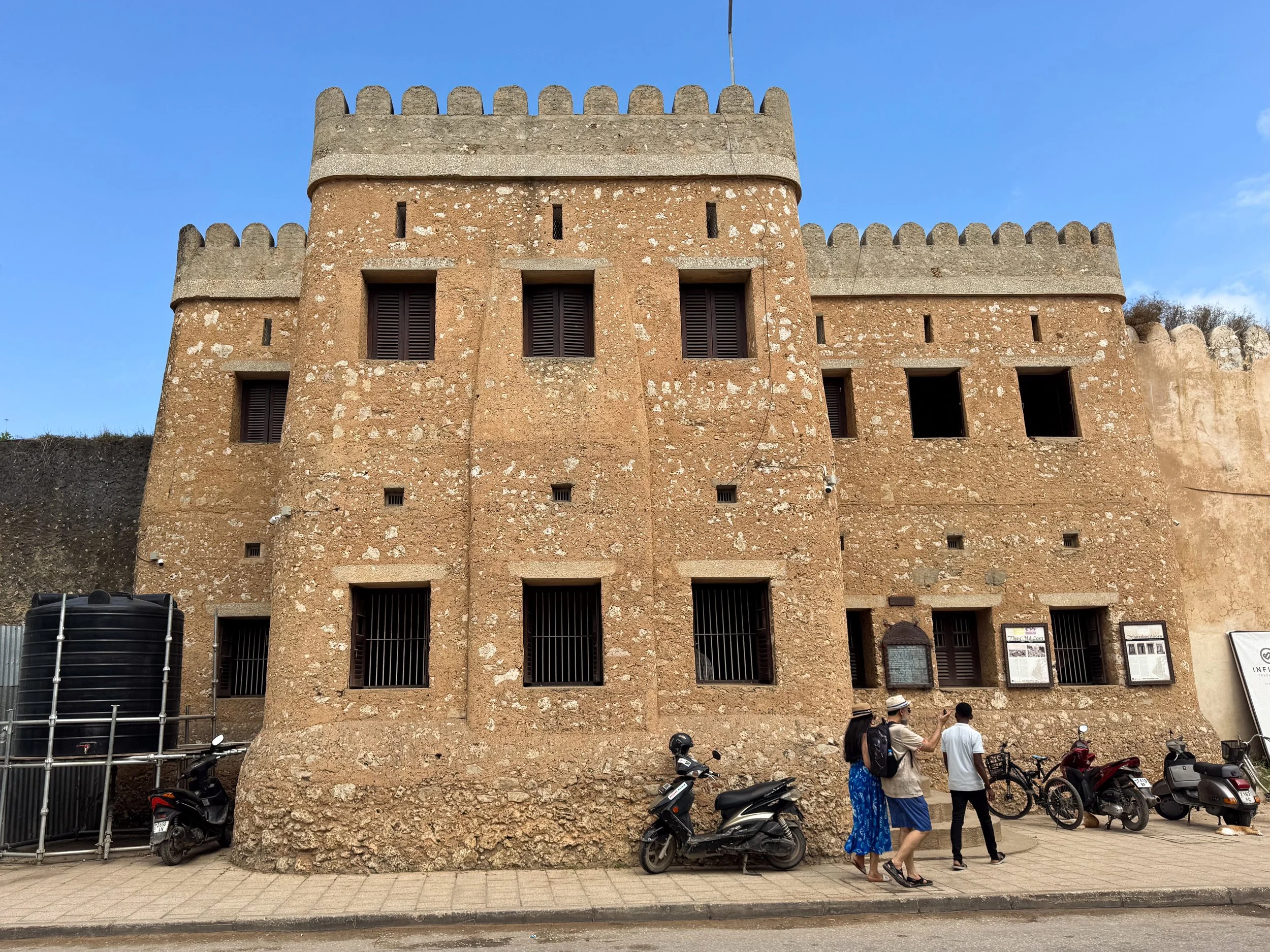
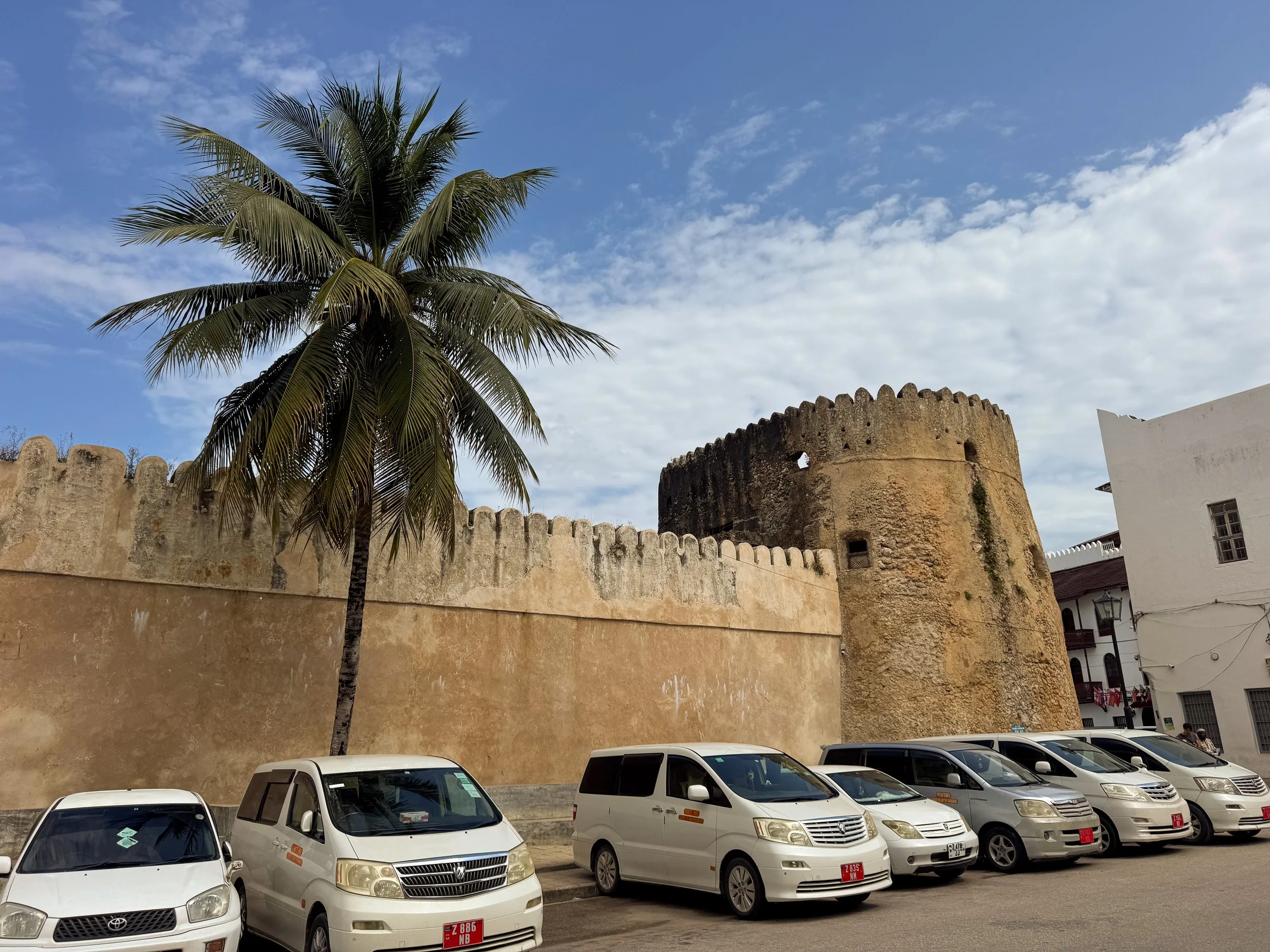
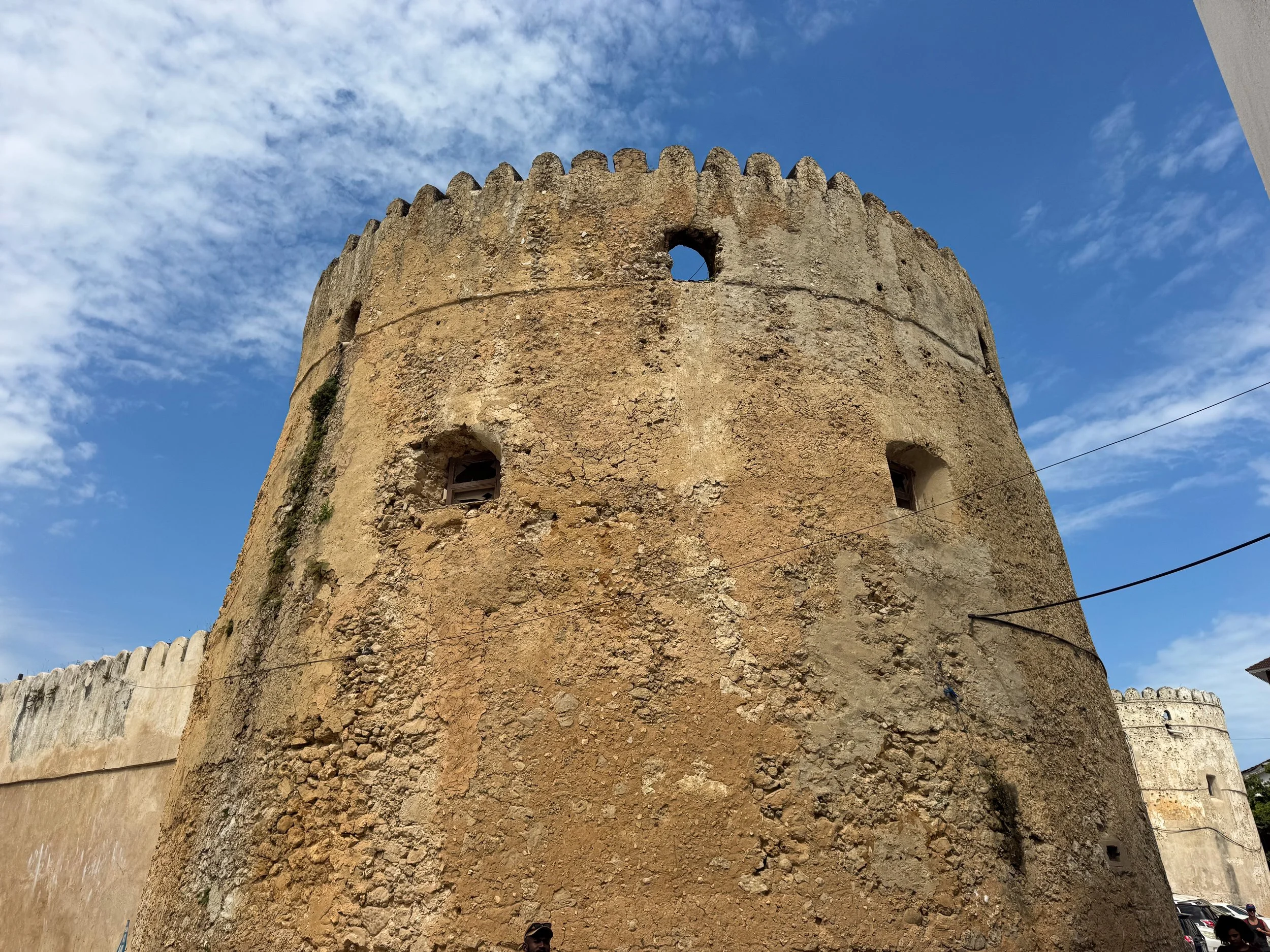
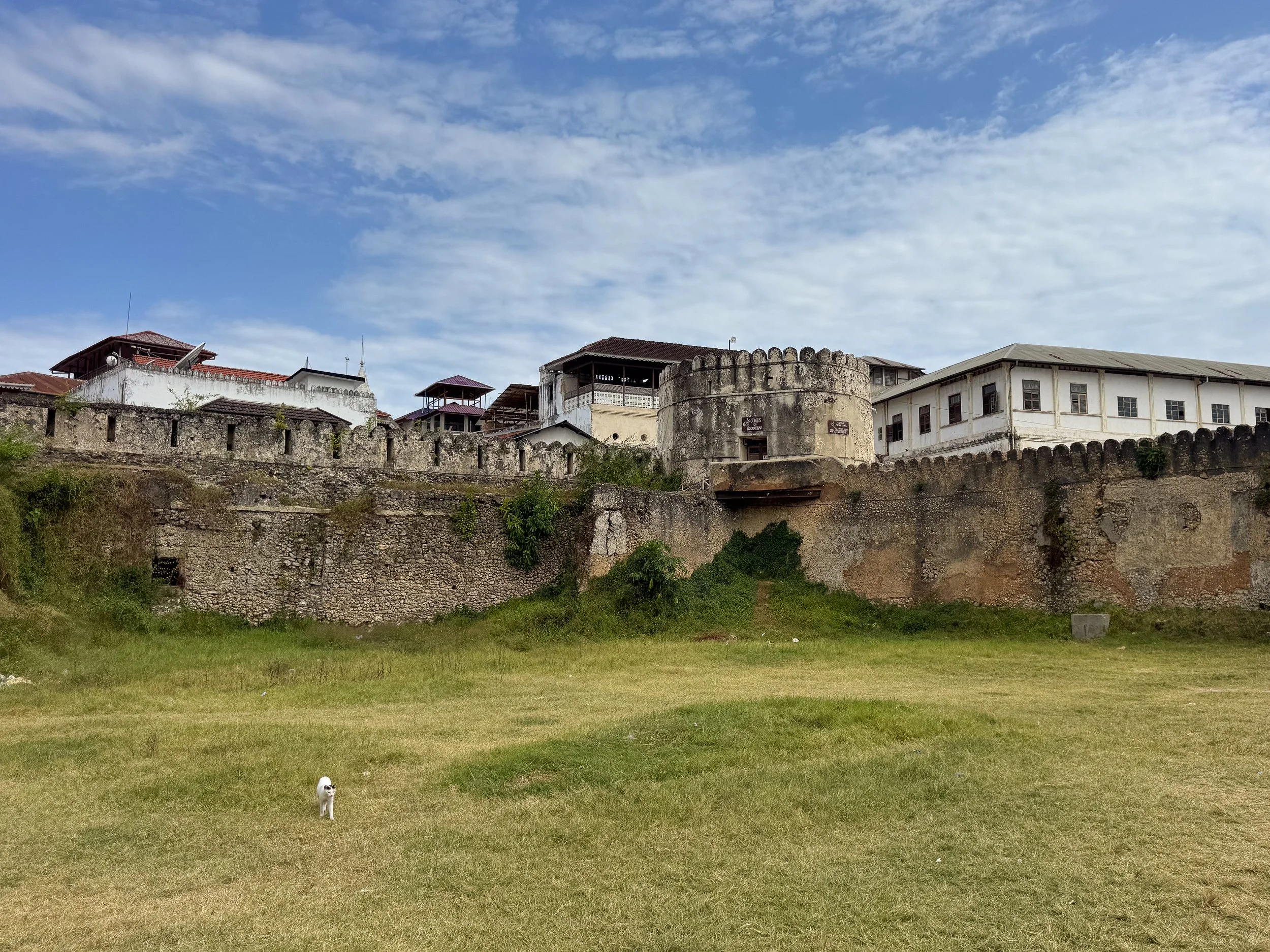
The Old Fort. An Arab style fort built to defend Zanzibar during the sultanate’s rule. Its sand colored walls, curved facade and rounded battlements are characteristic of historic forts built in Oman. The inside of the fort hosts an outdoor amphitheater with regular musical performances as well as a couple dozen craft and souvenir shops. Tourist offices advertise well priced tours, transfers and cooking classes.
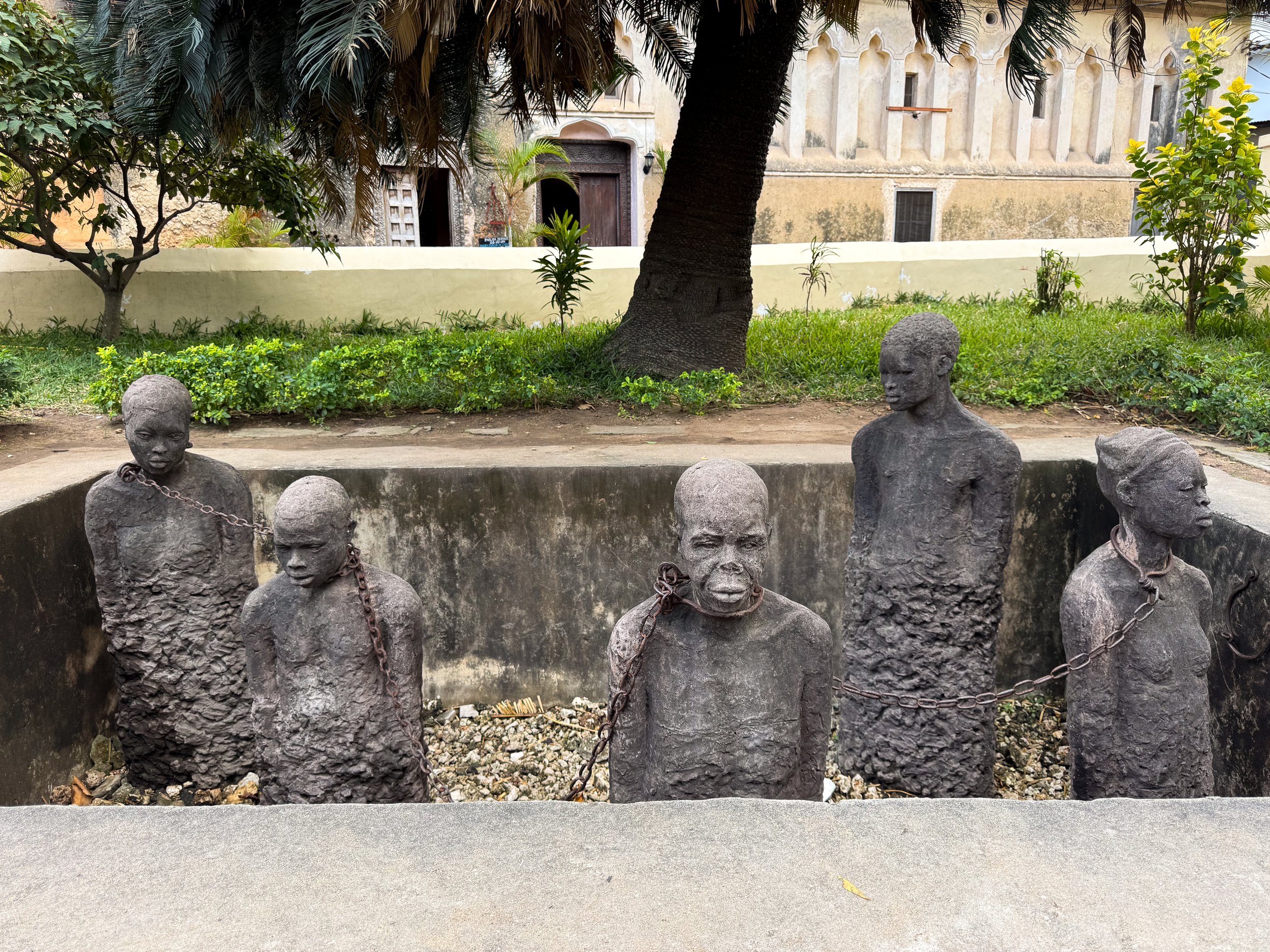
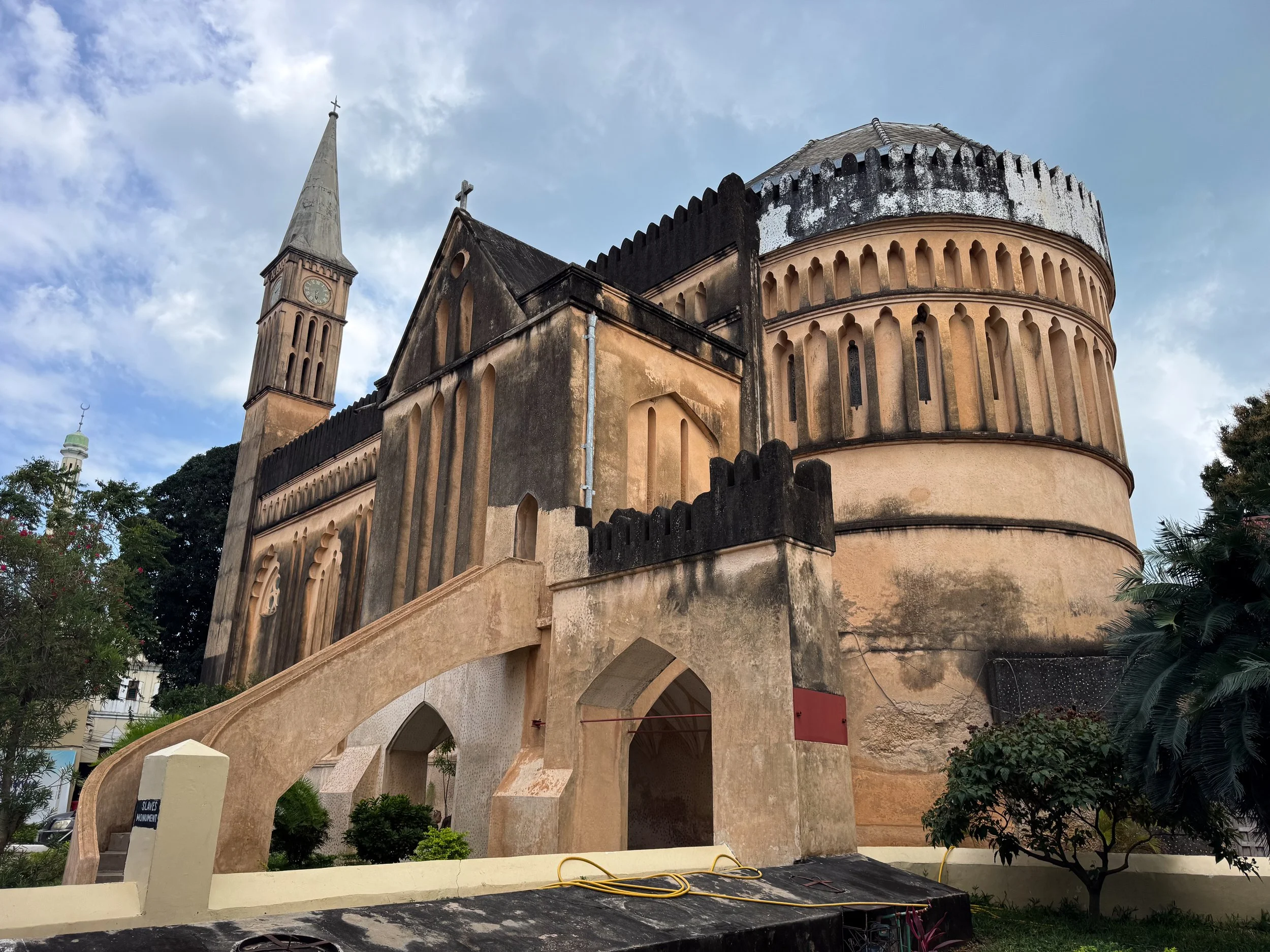
Slave Market Museum. Stone Town was one of the main port cities used during the East African Slave Trade. The town’s former slave market was a site of horrors. A museum recounts the history of the slave trade from its Portuguese colonial beginnings to expansion by the Omani sultanate and eventual abolition by the British. A church was built over the location of the slave market. Its whipping post and two former cells remain as a reminder of the period’s atrocities. Outside of the church is a sobering monument of enslaved Africans with iron chains around their necks.
Good to Know. The museum requires a guide to enter. One can be hired at the gate outside of the museum for a gratuity. Our guide shared in depth information of the history of the slave trade in Stone Town and the market’s horrific history.
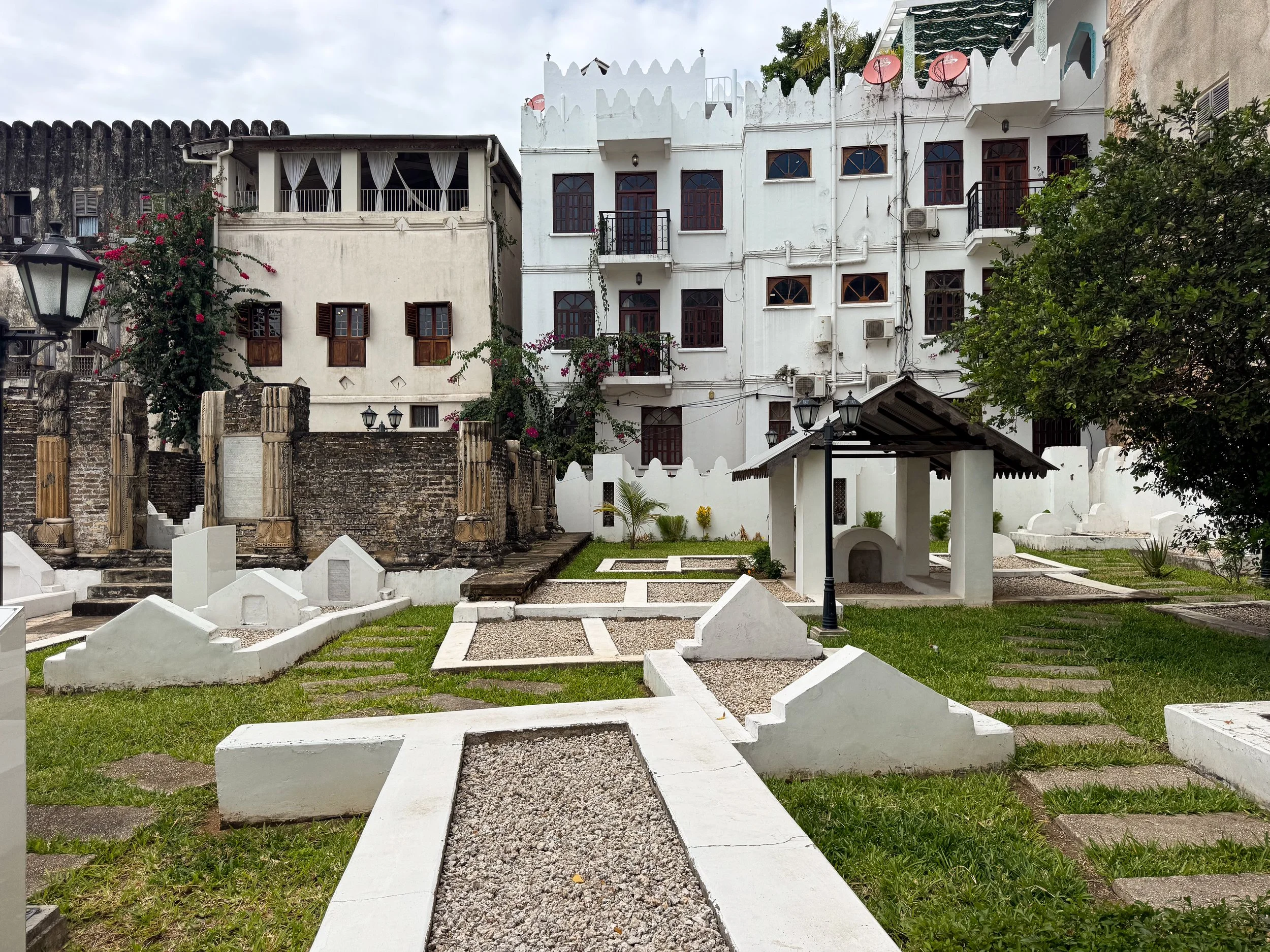
The Royal Cemetery. A cemetery and museum dedicated to the generations of sultans that ruled Zanzibar until the island’s independence. A museum curator led us through the small exhibit, recounting the history and lineage of the sultans. We visited the cemetery where most of them and their descendants are buried.
Good to Know. Both of the neighboring sultan’s palaces, The People’s Palace and House of Wonders, were closed for renovations.
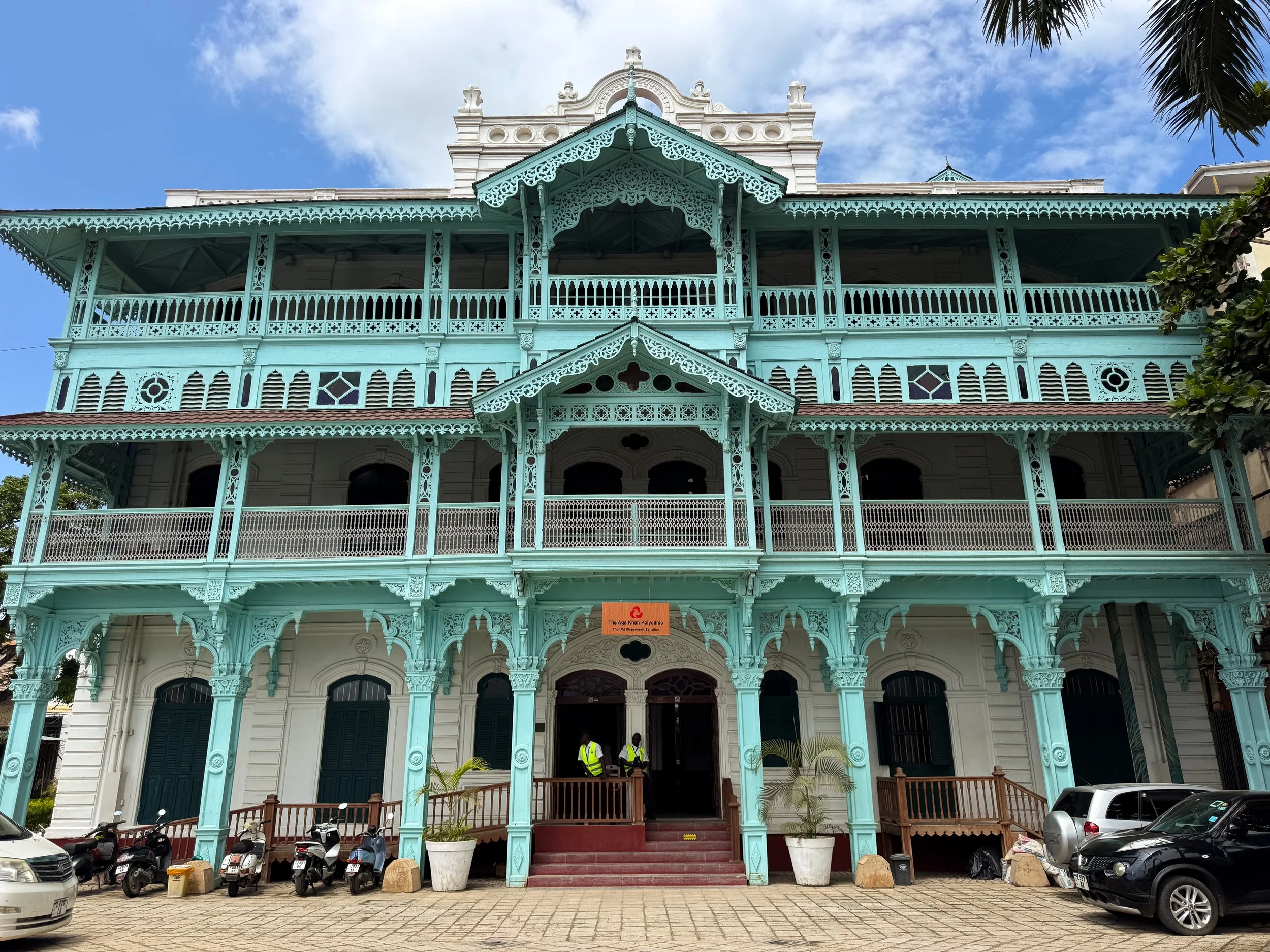
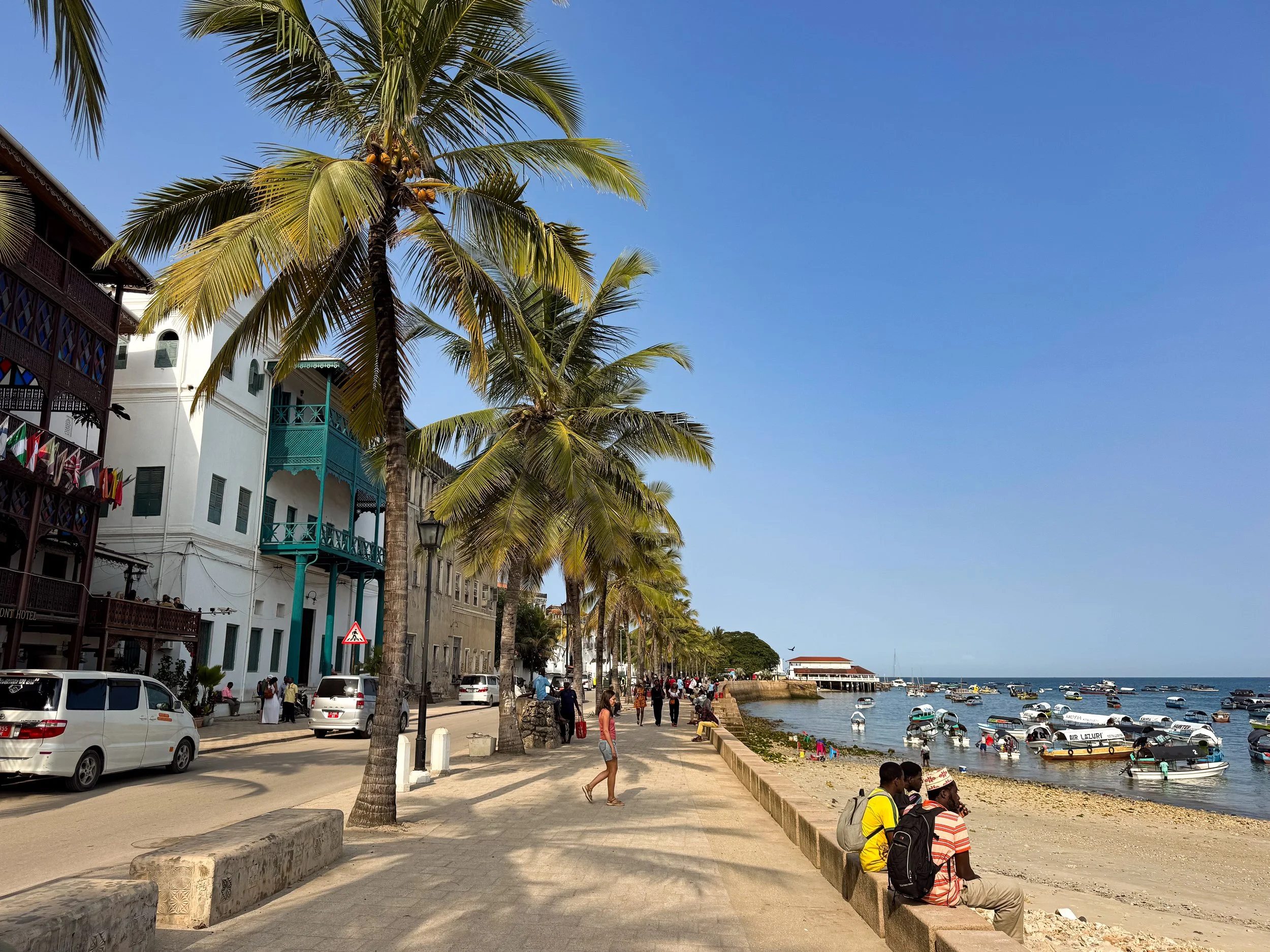
The Old Dispensary. One of Stone Town’s best preserved historic buildings. Its ornate facade is decorated in three levels of intricately carved wooden balconies. Its teal color and location along the waterfront allow it to stand out.
Stone Town Coastal Sights
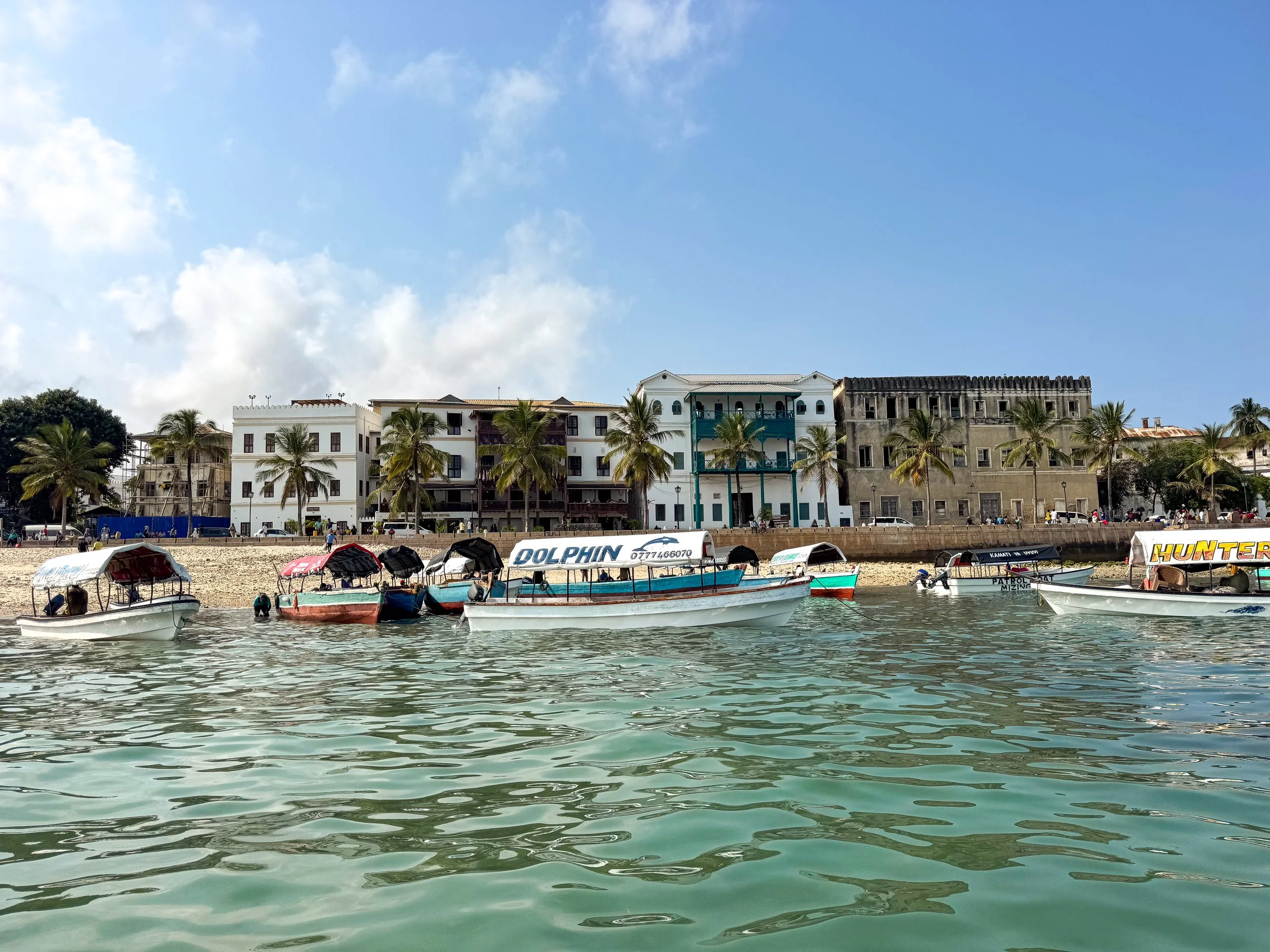
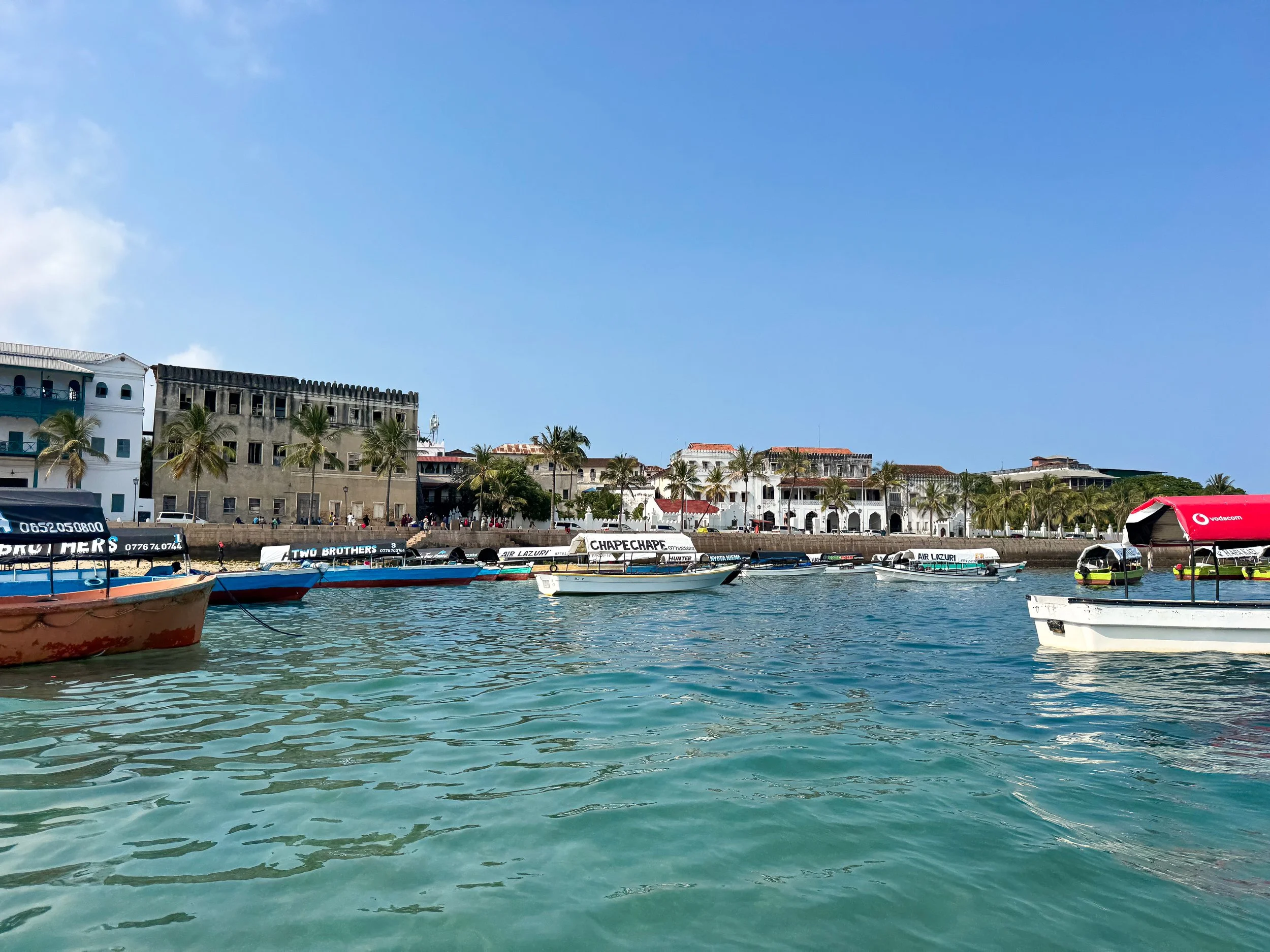
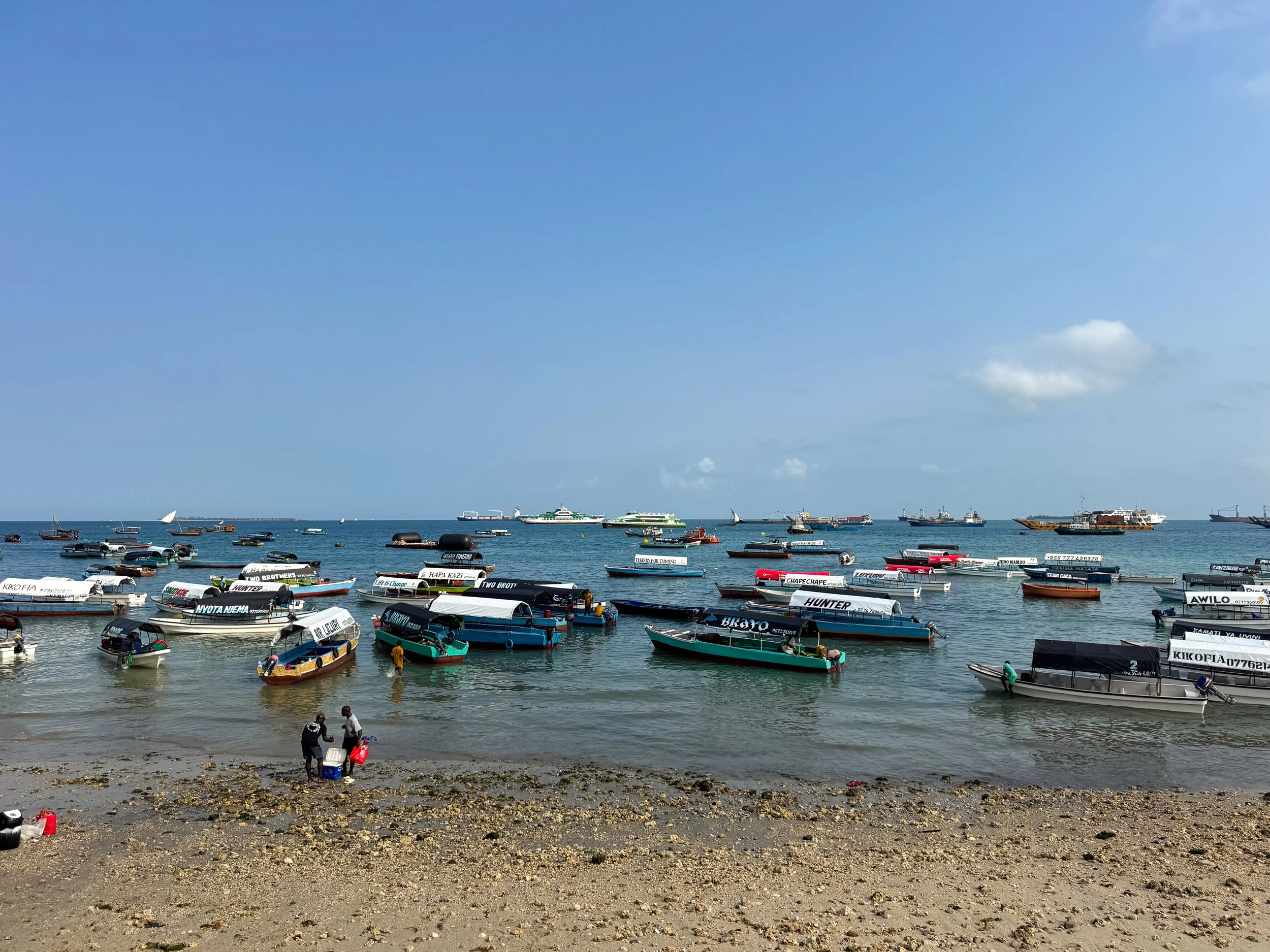
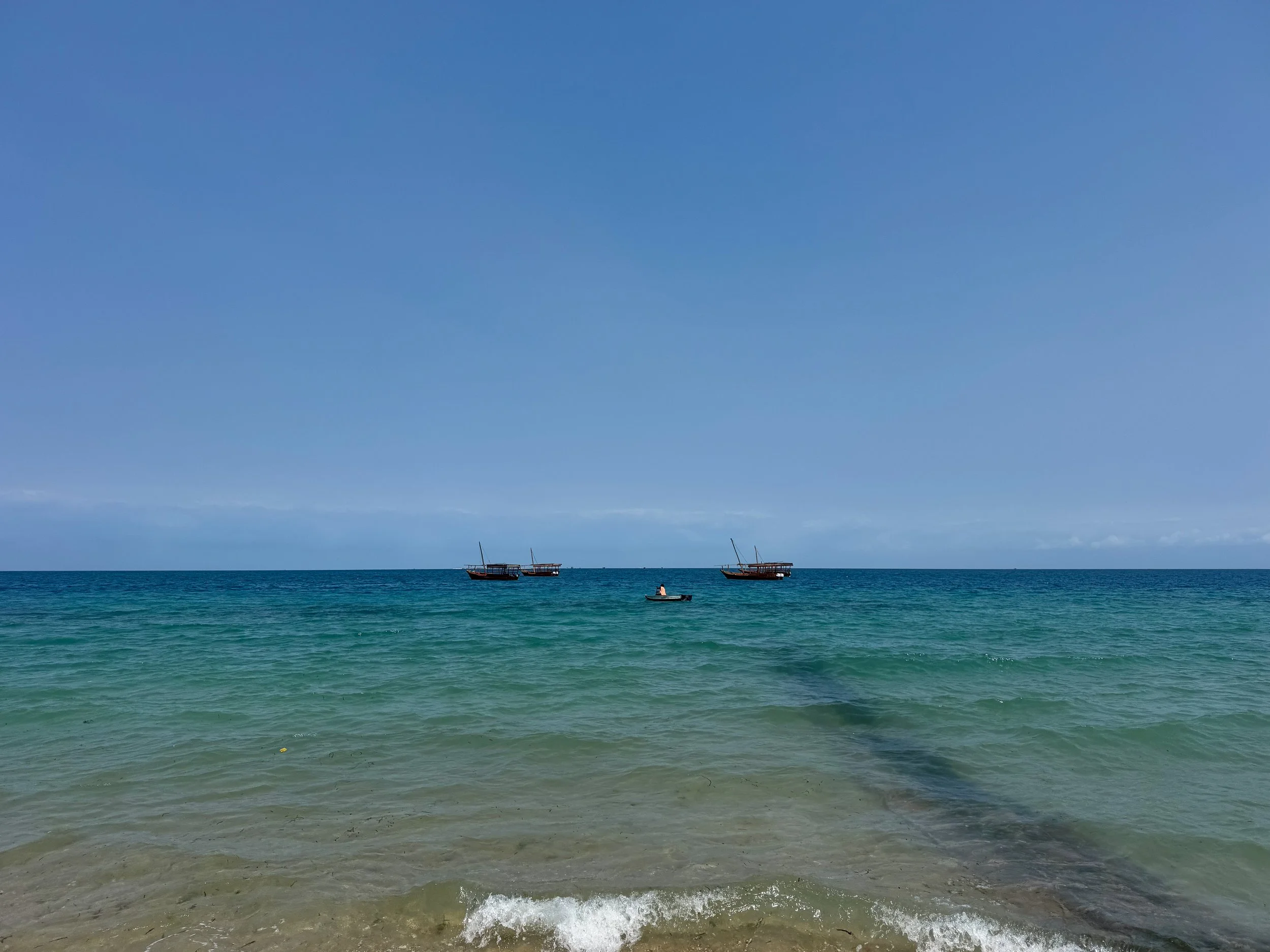
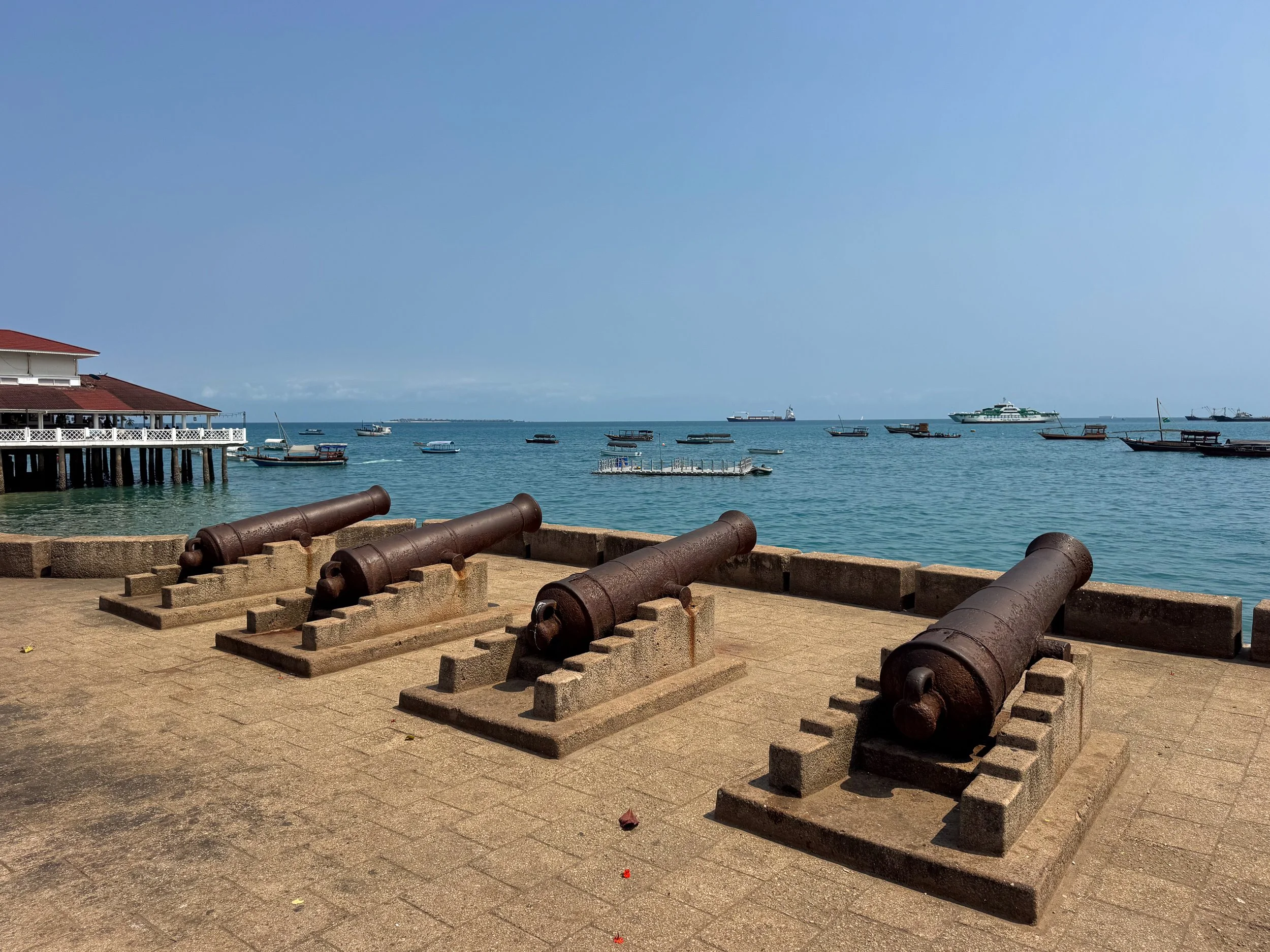
Stone Town Waterfront & Harbor. The waterfront of Stone Town is lined with historic buildings, palm lined walkways and a harbor dotted with anchored tour and fishing boats.
Forodhani Park. A lush waterfront park with palm lined walkways, flowering trees and views of Stone Town’s harbor. Local guides advertise walking tours while boat captains offer day trips to neighboring islands. Small kiosks offer light bites and drinks while the park comes to life at night for an evening street food market.
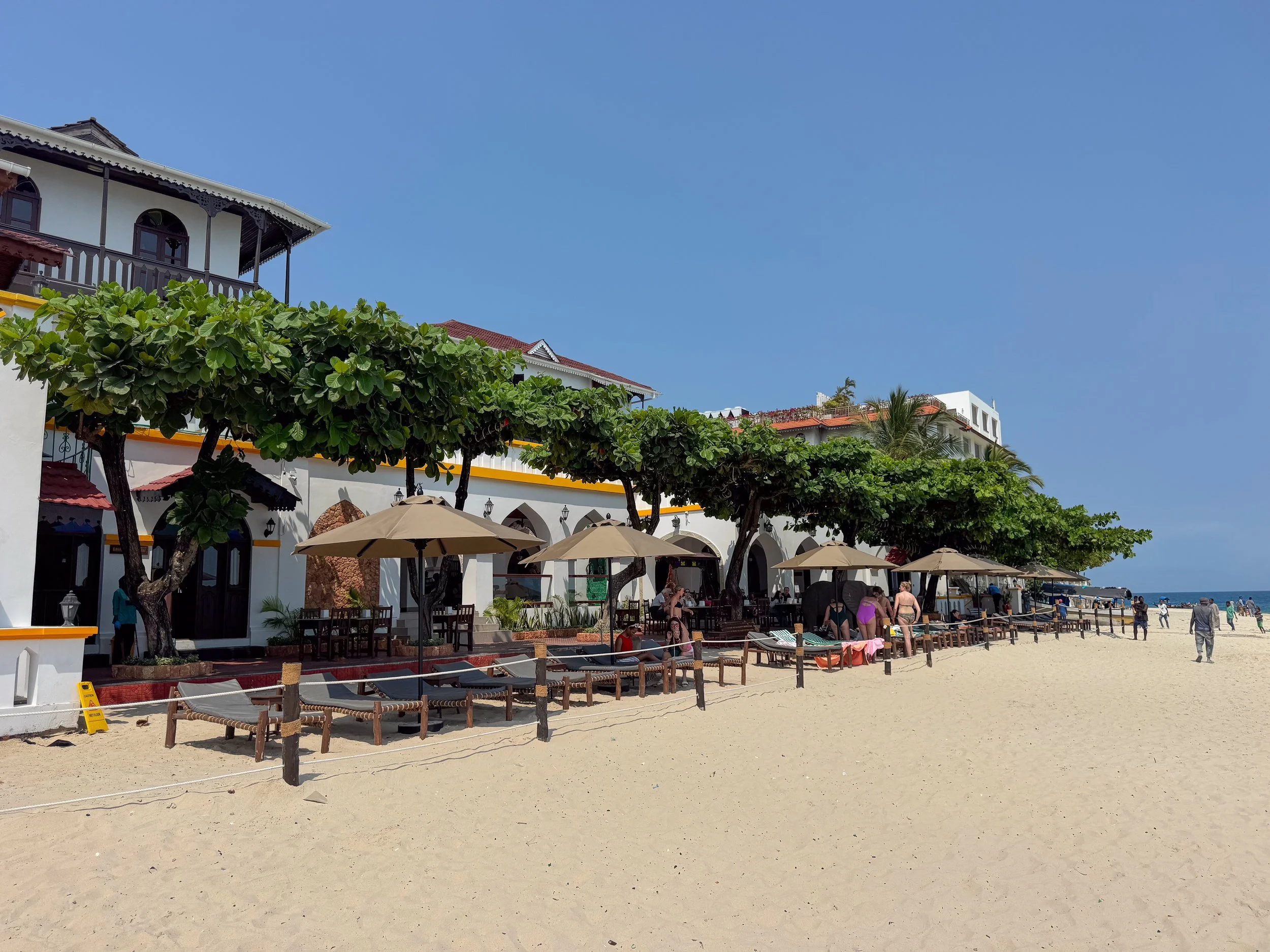
Shangani Public Beach. A yellow sand beach hooking around the western tip of Stone Town. It’s popular for sunsets, boat tours and to watch locals play beach football. Multiple luxury hotels have restaurants and pools looking out over the beach.
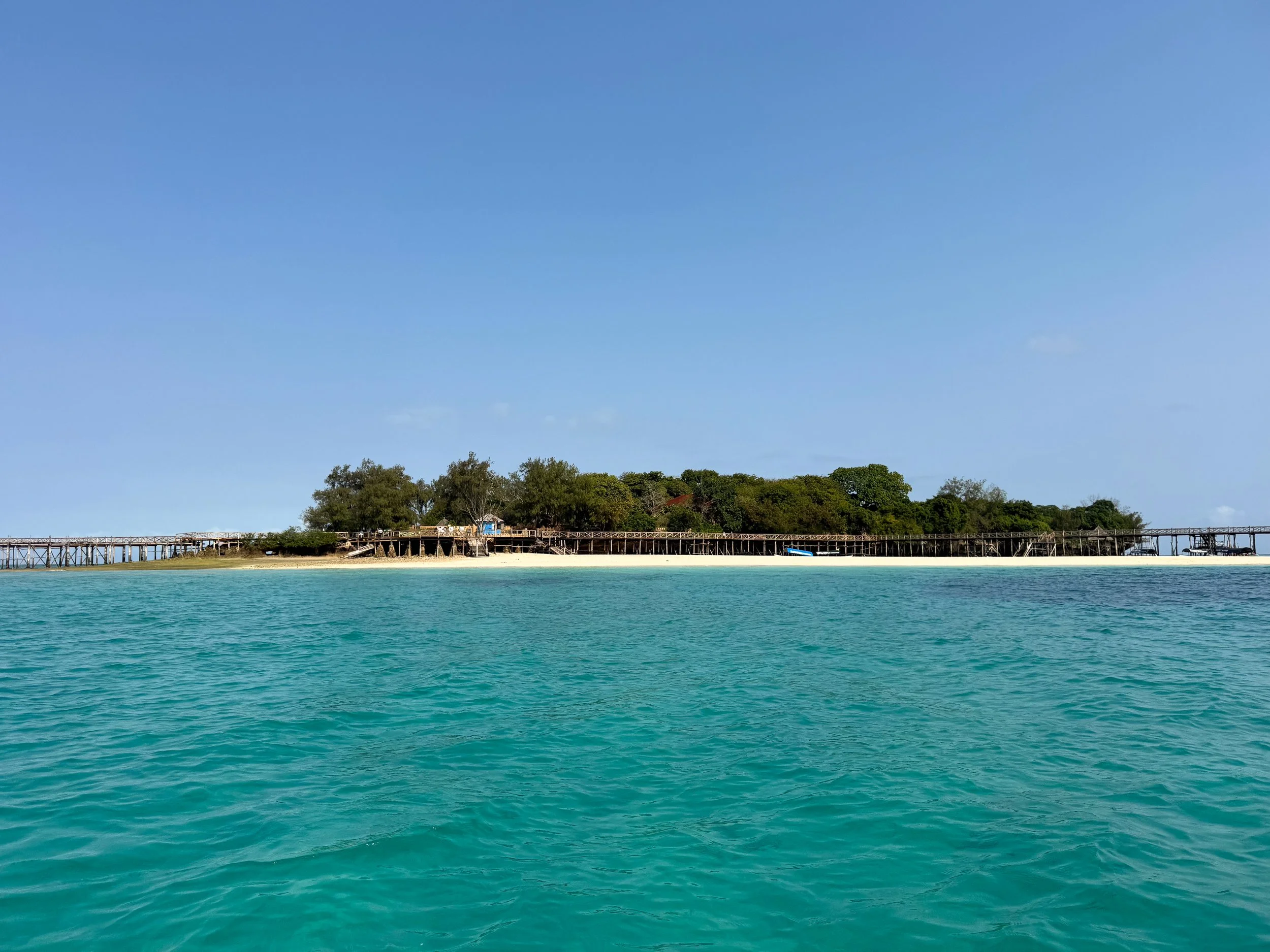
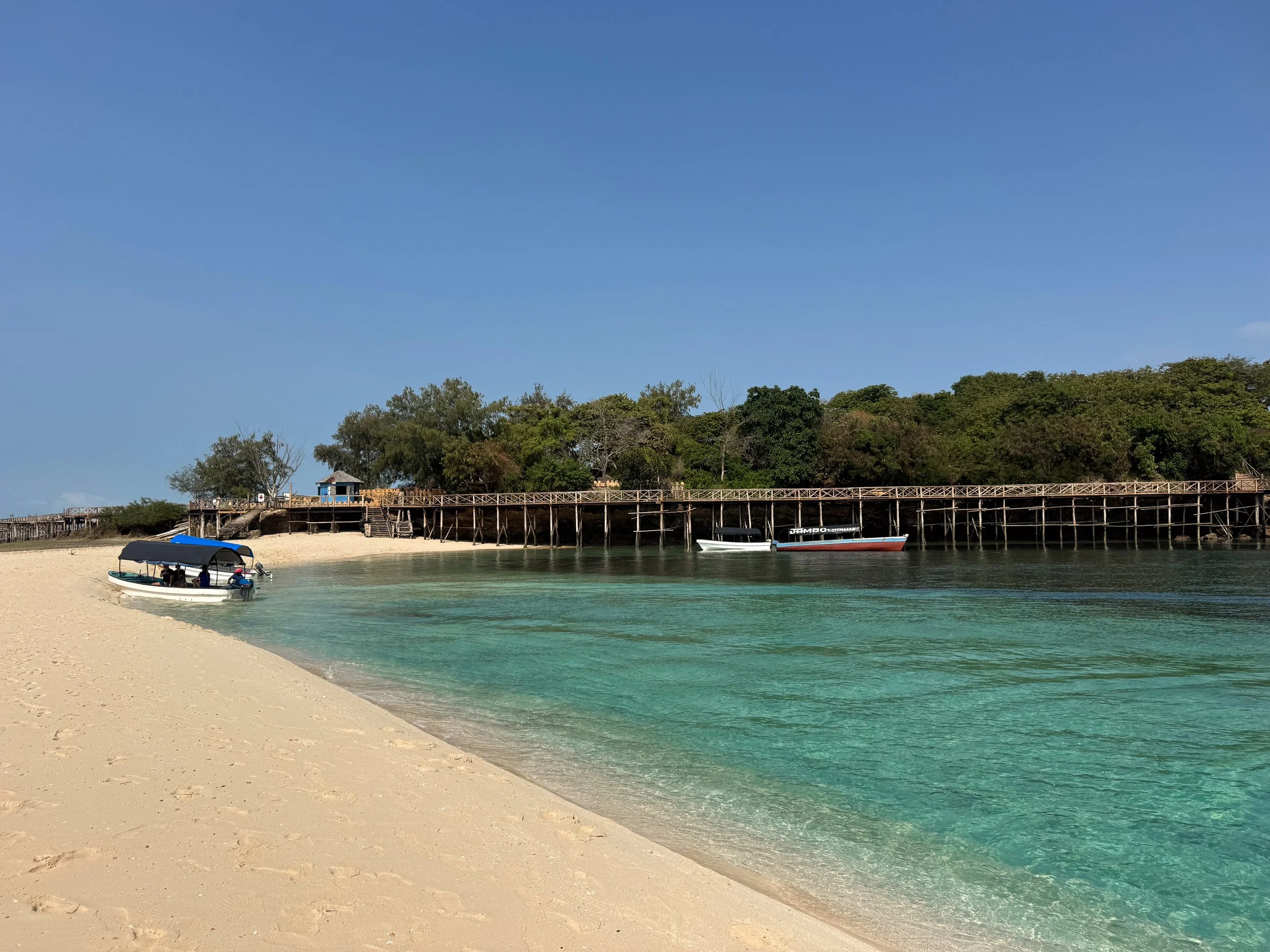
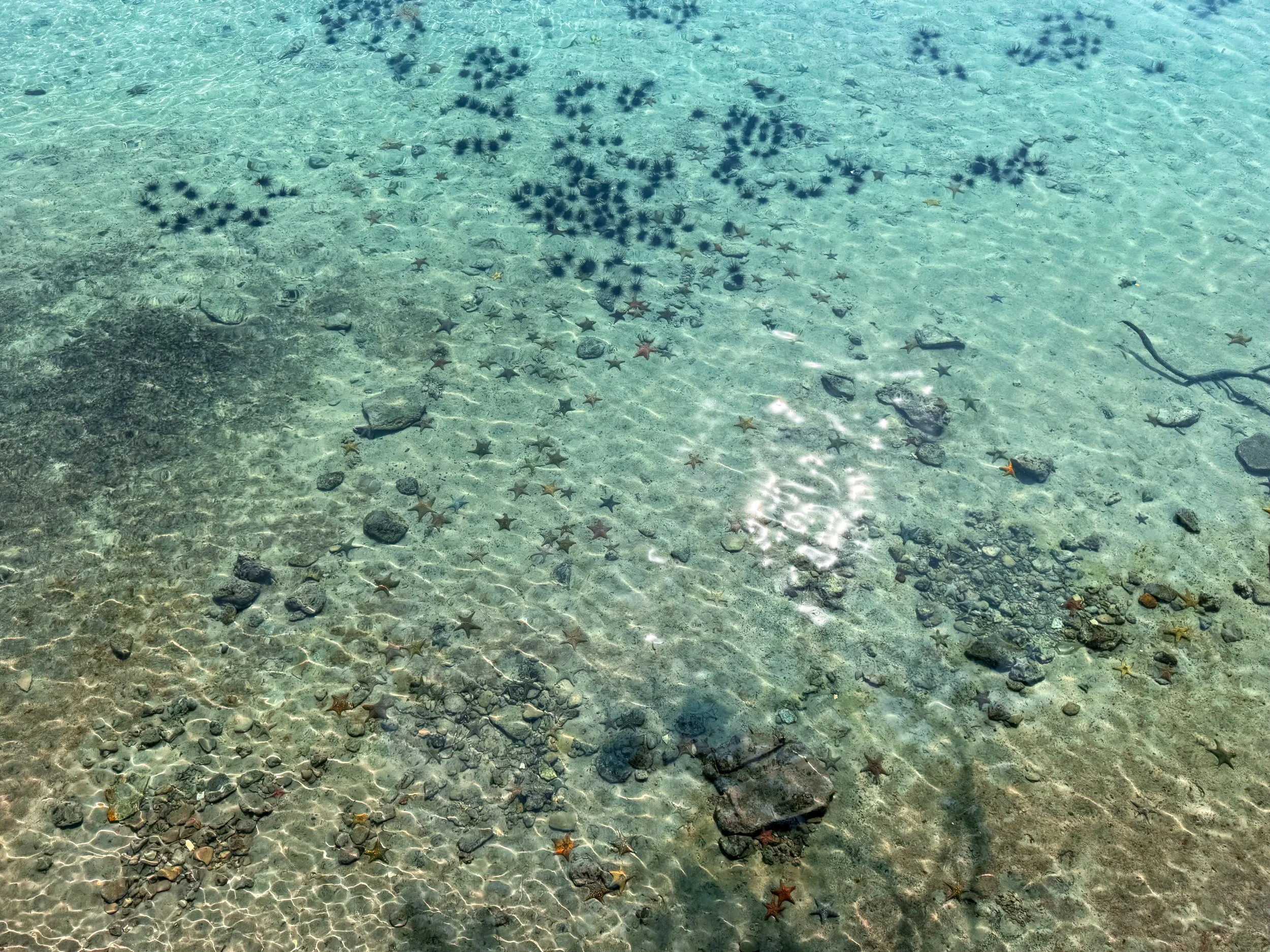
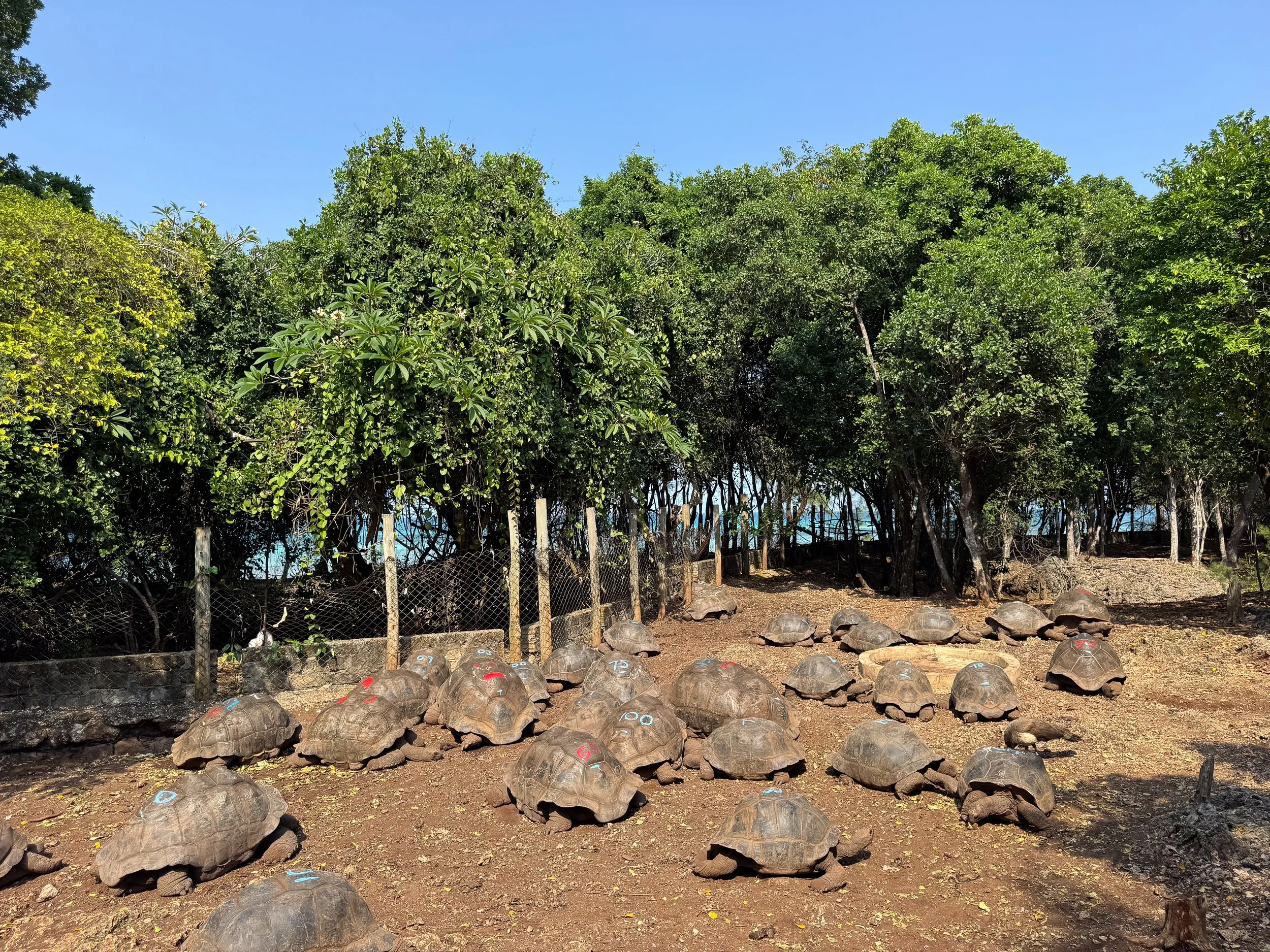
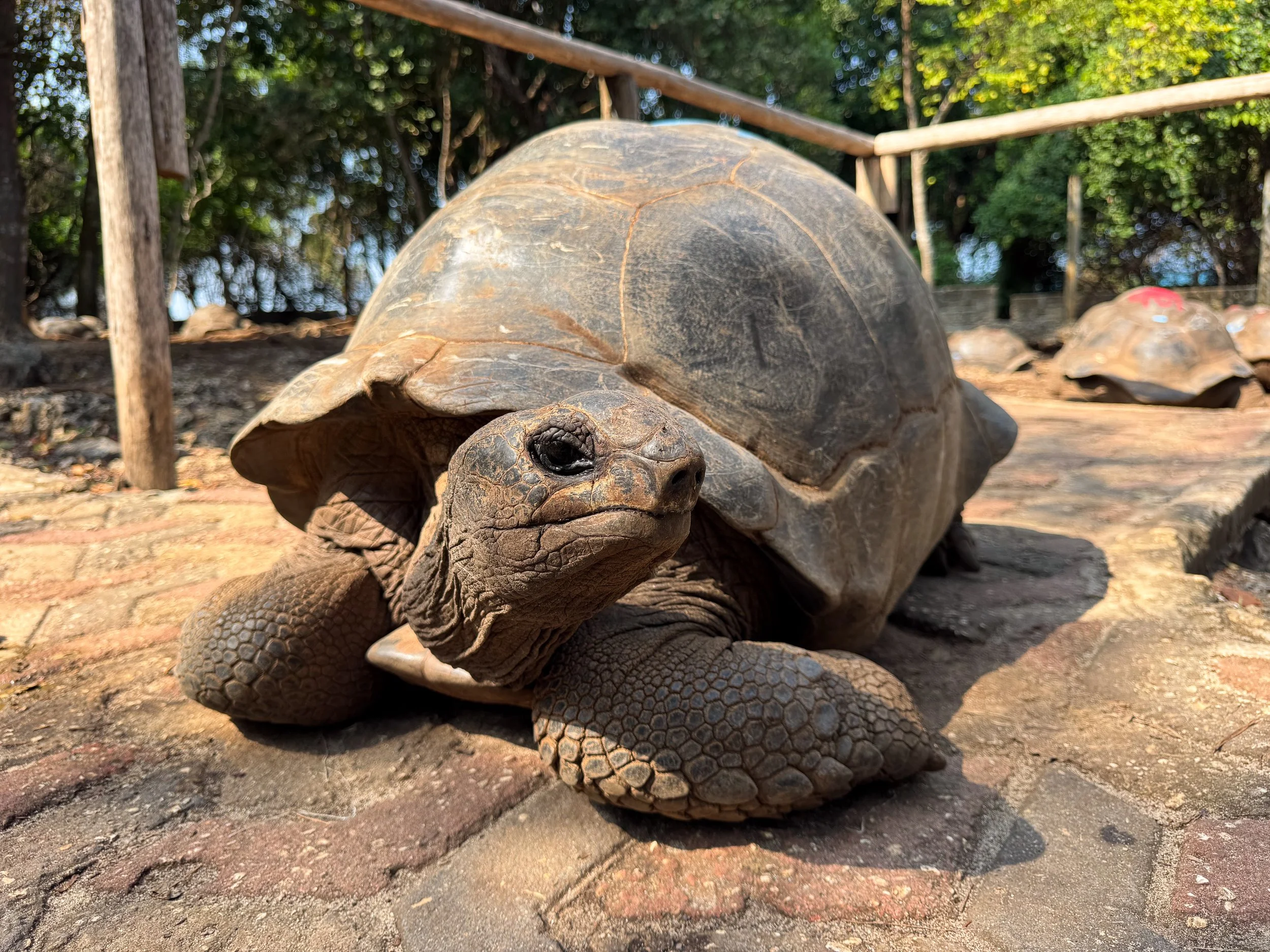
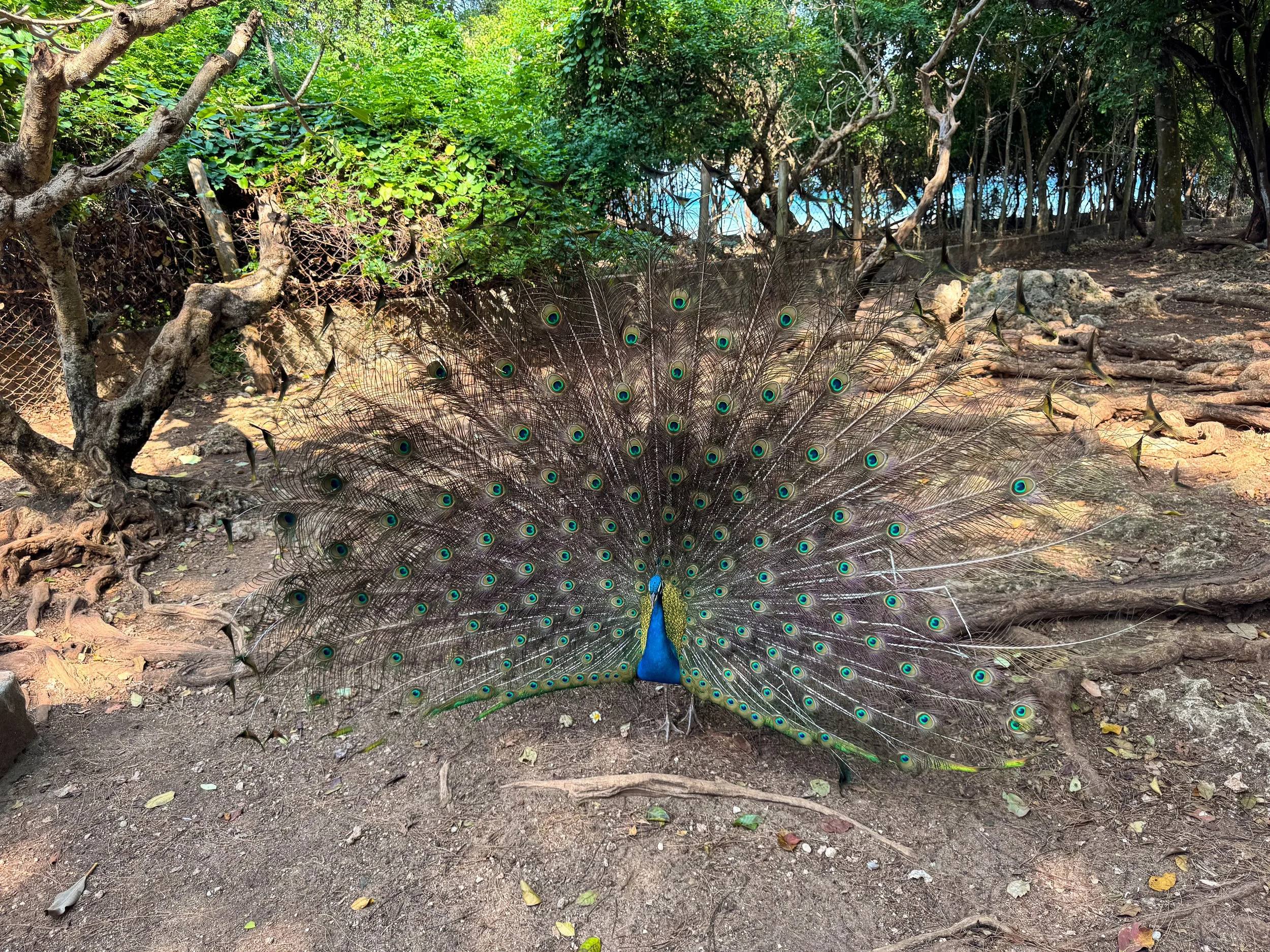
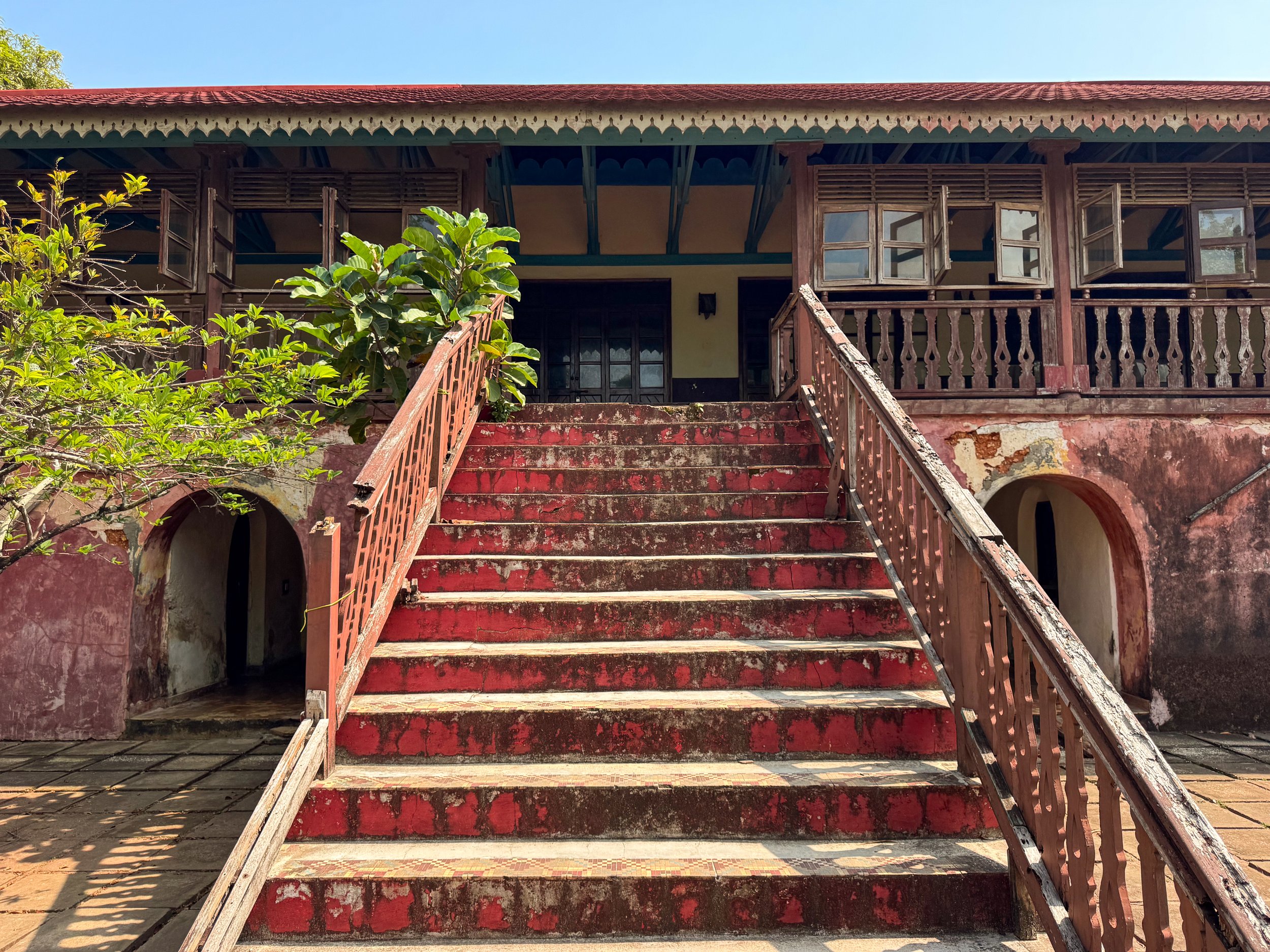
Prison Island. A small island off the coast of Zanzibar famed for its Aldabra Tortoise Sanctuary and historic ruins. The giant and slow moving tortoises roam in large pens. They range from two weeks to over two centuries old! Their shells are marked with red and blue numbers noting their age and gender. Vibrant peacocks strut around the island’s trails. The bright blue surrounding waters are home to clusters of spiky sea urchins and colorful starfish. The island is named after a prison built by the Omani sultans and later used as a quarantine camp by the British. The prison is now used as a historical exhibit for Zanzibar with shops, a restaurant and bar.
Getting Here. Boat captains leave from the beach in front of the Zanzibar Ferry Terminal. They charge $20 for a private boat and round trip transfer to Prison Island. The boat ride takes about 20 minutes.
Entrance Fees. There is a small port fee of a few dollars and separate entrance fee to visit the tortoise sanctuary.
The Island Of Spice
Zanzibar is known as The Island of Spice. Its long history of spice cultivation has influenced the island’s culture, identity and cuisine. Spice permeates throughout the flavors and aromas of local cuisine, coffees and markets. One of the best ways to experience the spices is at the source, spice farms.
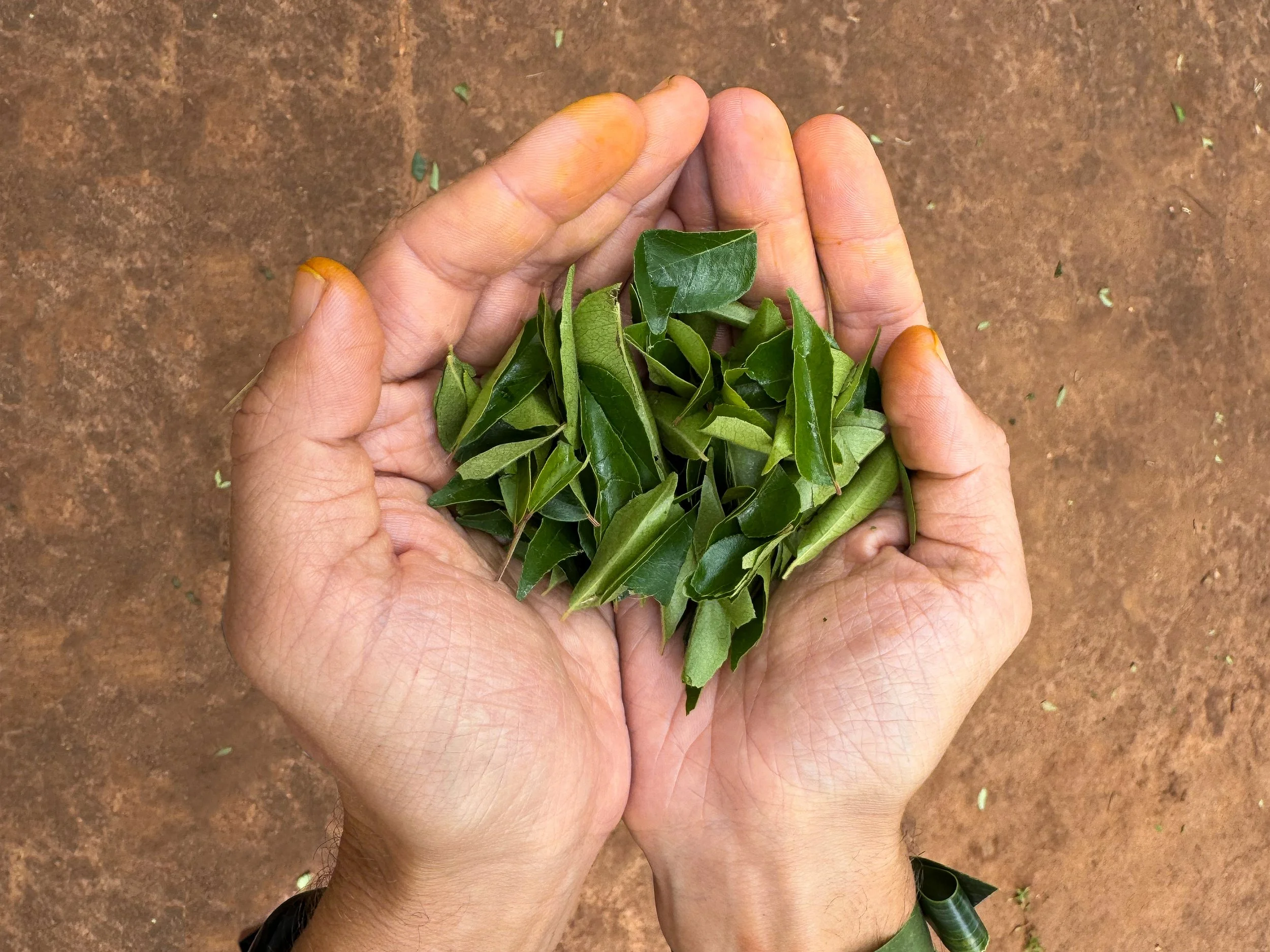
Kizimbani Spice Farm. A spice farm offering a glimpse into the wide array of spices and fruits grown on Zanzibar. A guide led us through gardens with flowers, fruits, plants and vines used to produce different spices like cardamom, peppercorn, clove, lemongrass, nutmeg, ginger, turmeric, galangal, cocoa, cinnamon (bark and root), vanilla and curry leaf. A spice hunter followed us, climbing trees, picking leaves and digging up roots to harvest raw spices as examples. At the end of the tour, we were adorned in palm leaf woven bracelets, neck ties and hats. Roadside vendors sell packets of ground spices, tea and coffee as well as soaps, perfumes and oils. Visit a fruit stand to taste a cornucopia of fruits grown on the island including grapefruit, orange, cucumber, passion fruit, avocado, mango, jackfruit, watermelon, papaya, pineapple and starfruit.
Getting Here. Hire a driver along the promenade for $30 USD round trip. No reservation is needed ahead of time. You’ll be paired with a guide and spice picker for free at the farm. The tour is free however guides operate on tips.
Shop the Markets & Bazaars
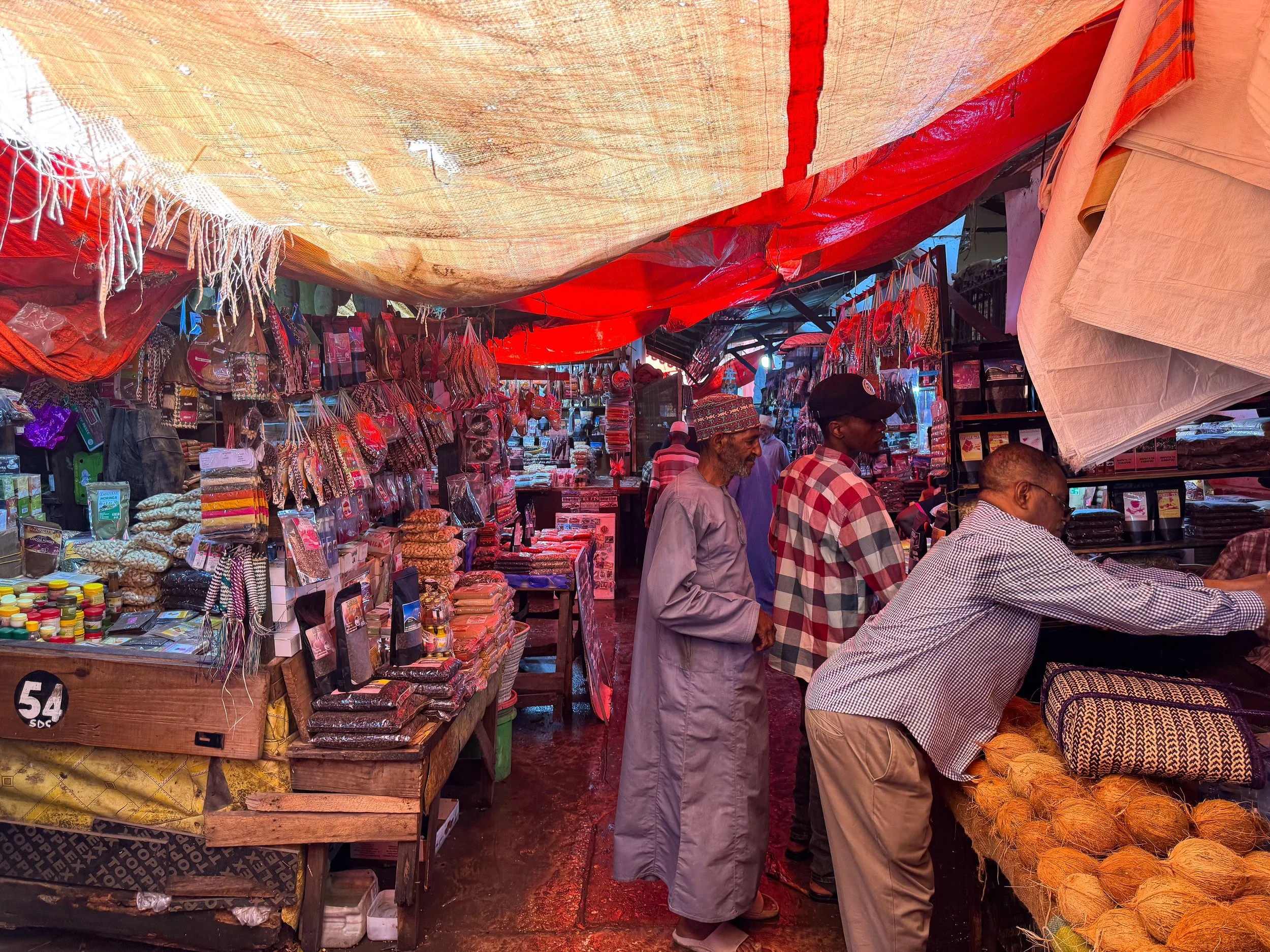
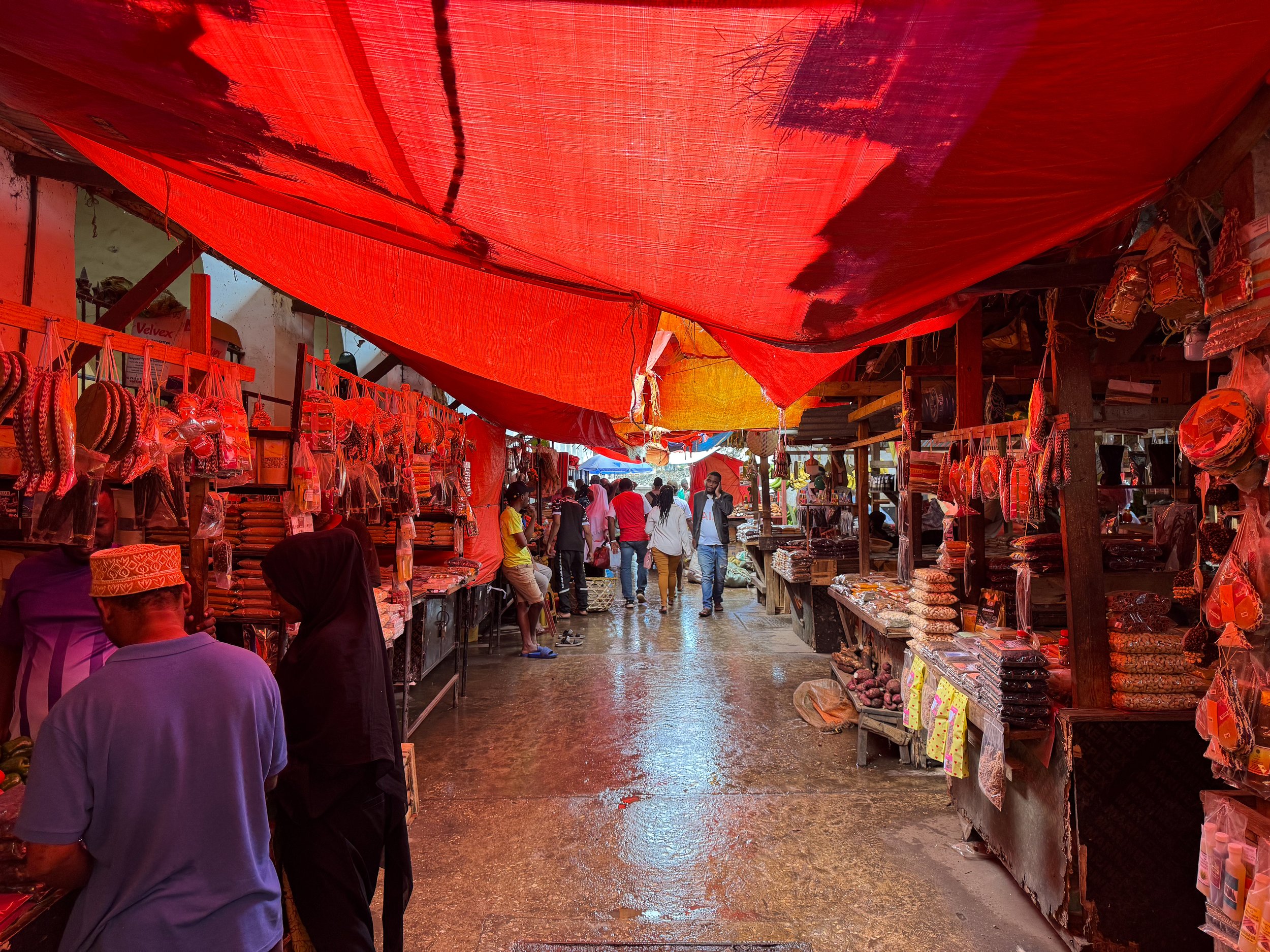
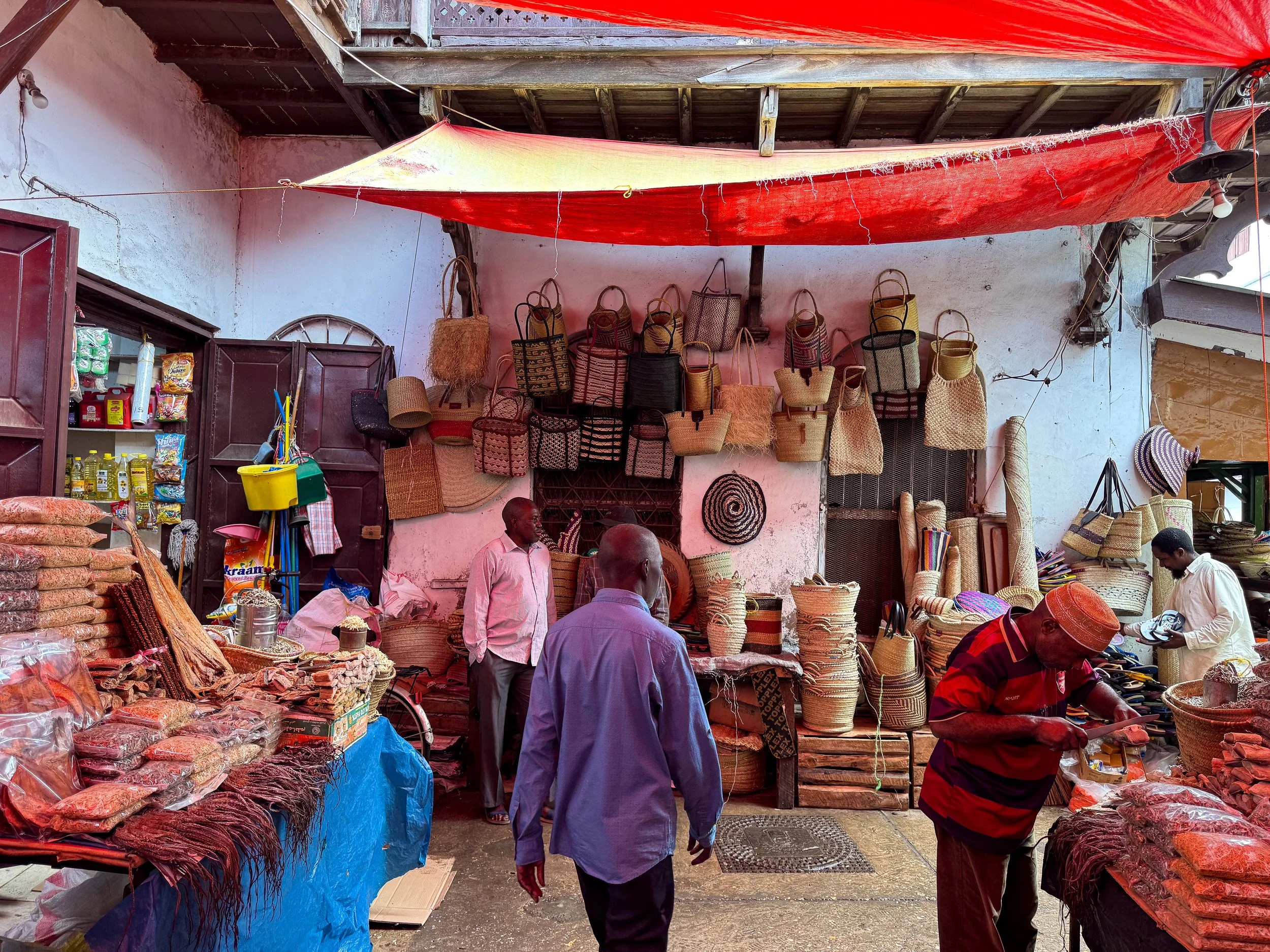
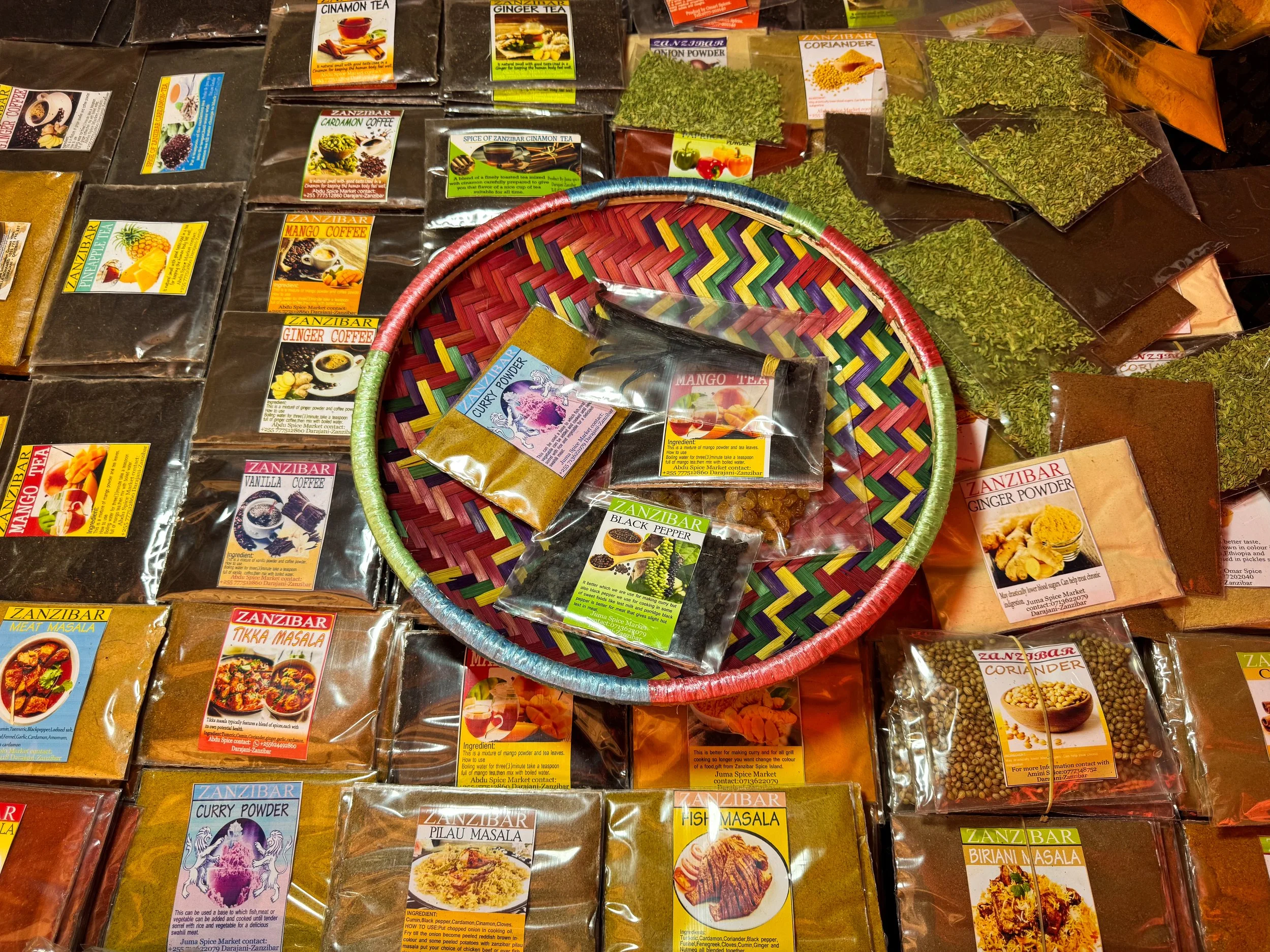
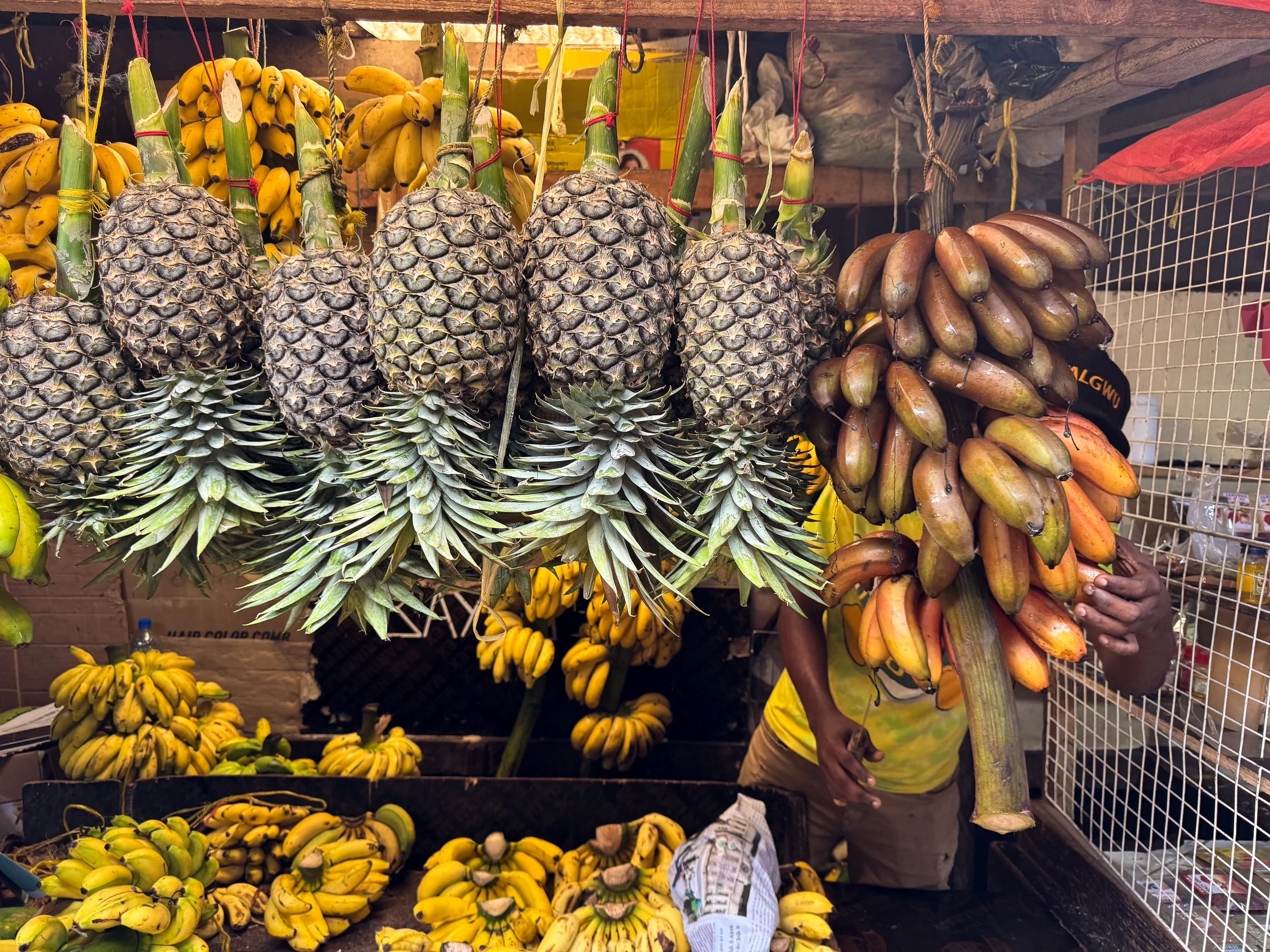
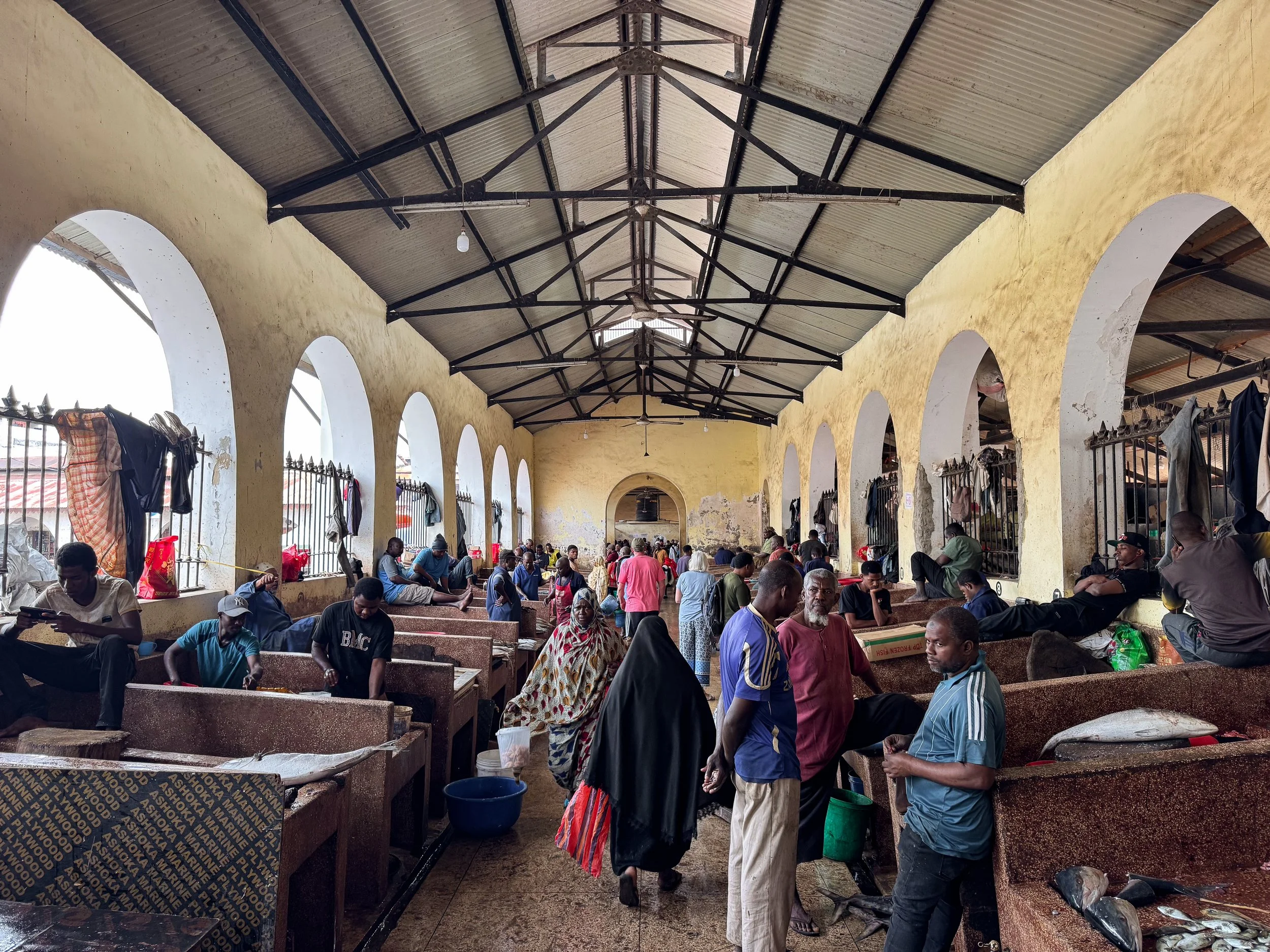
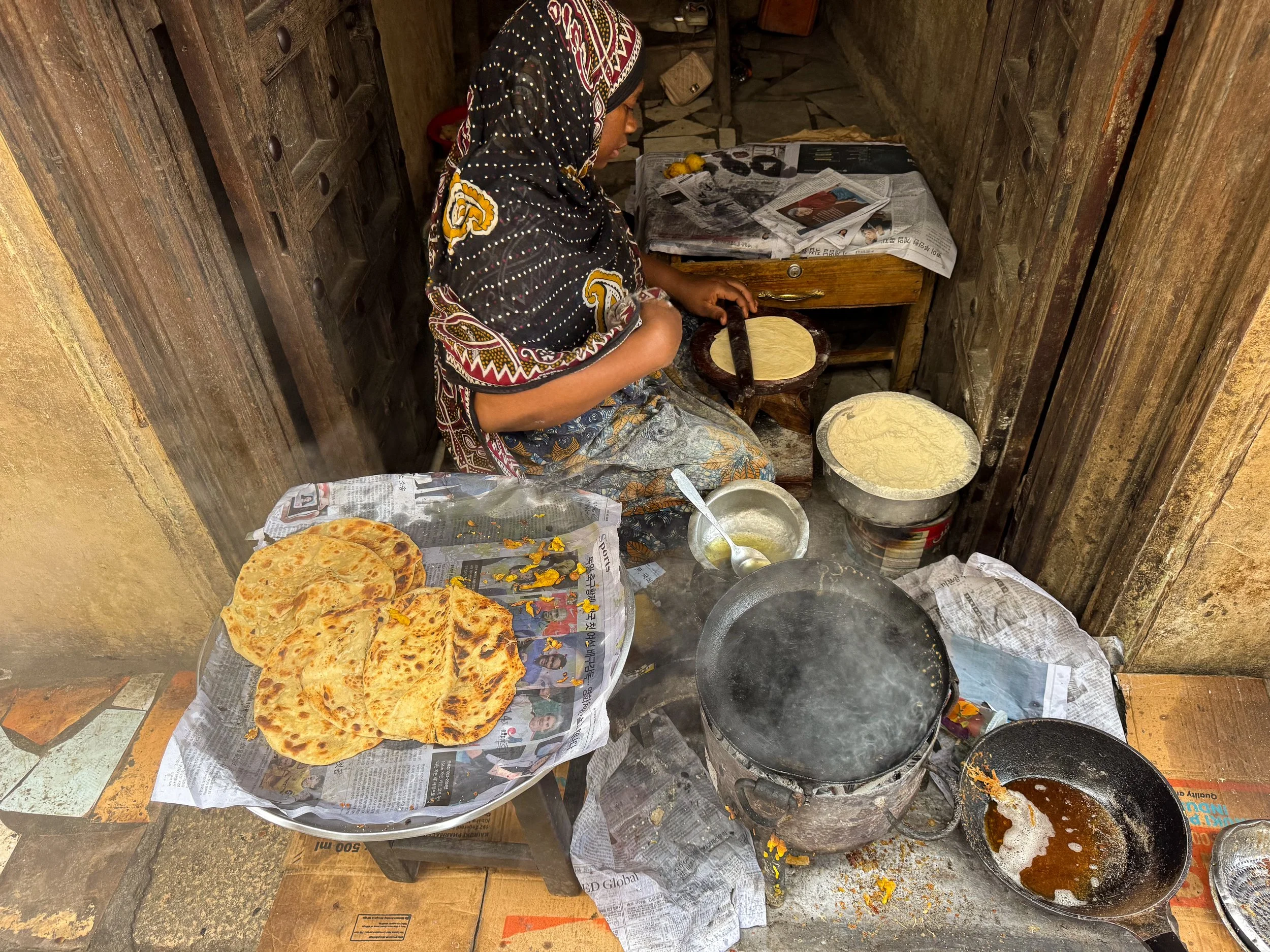
Darajani Bazaar. A small but robust market under covered alleyways and historic sheds. Merchants sell colorful packages of ground spices, spice blends, vanilla beans, teas and coffees. Vendors display piles of tropical fruits, fresh vegetables and leafy greens on tables. Butchers prepare cuts of meat while fishmongers filet the morning’s catch. Shop keepers sell traditional woven baskets. Women bake stacks of aromatic flatbreads on charcoal burning skillets. We purchased groceries for the week in addition to a refreshed supply of spices, coffees and teas.
Pro Tip. Visit in the mid morning. Prices are fair but like with all markets, haggle and negotiate for a better deal.
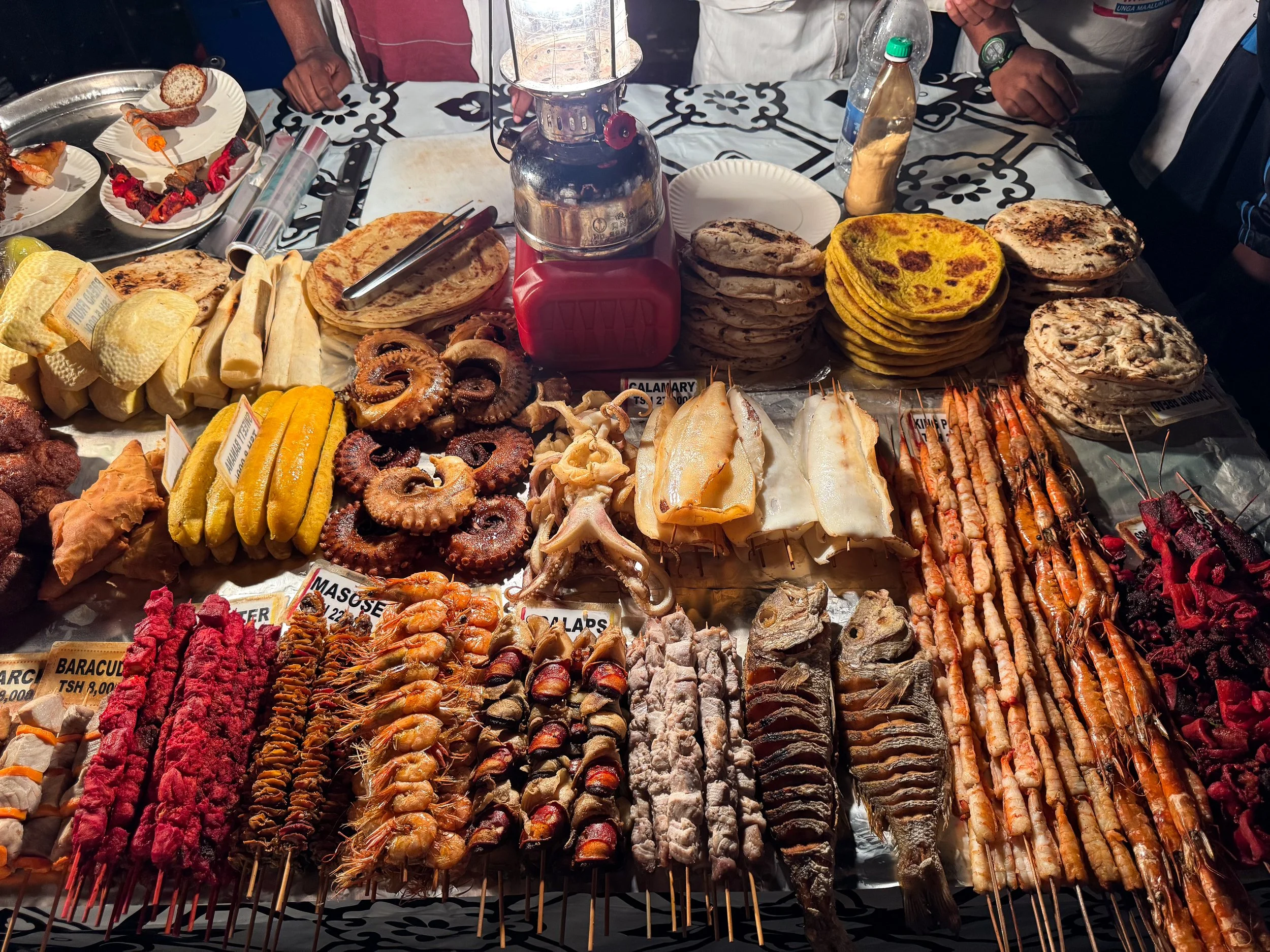
Forodhani Night Food Market. A nightly food market held in Forodhani Park. Charismatic chefs lure in customers with their persistence and genuinely tasty street food. Tables are covered in skewers of meat, seafood, starchy vegetables and flatbreads, all cooked over charcoal grills. Some chefs prepare local specialties like Urogo and Zanzibar Pizza. Juice vendors press sugarcane and ginger into a sweet blend. Shawarma carts broil and shave vertical rotisseries of meat. We came here for dinner two nights, filling up on a variety of street food.
Urojo. A Tanzanian street food soup made with a savory and sweet blend of spices, potatoes, crispy fried chickpea fritters and cassava shavings. It’s usually vegetarian by default.
Zanzibar Pizza. A thin dough wrapped around a variety of savory or sweet fillings and griddled like a pancake until cooked.
Places to Eat & Drink
Zanzibar Coffee House. A hotel café with spiced local specialties. Come here for their spice coffee made with Zanzibar spices, muesli with nuts and dates or pastries like cinnamon raisin rolls and date squares.
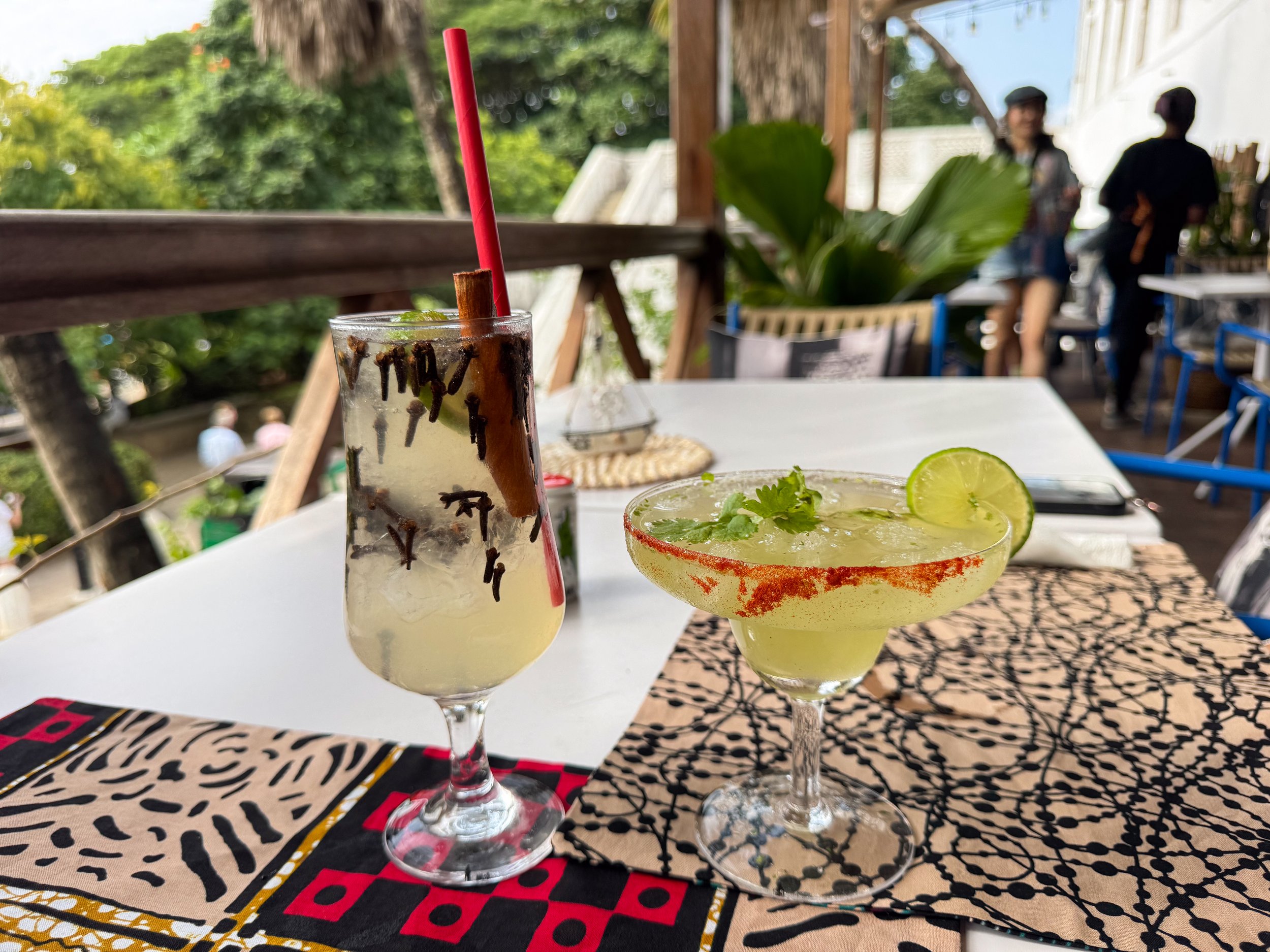
Out of Afrika. A touristy yet vibey restaurant along Stone Town’s waterfront promenade with a second floor balcony. The menu offers seafood and fruit dishes like watermelon gazpacho, pumpkin soups with coconut and the grilled sesame-crusted tuna salad. Try the Swahili cocktails like the Zanzibar spice punch or coriander and chili margarita.
Secret Garden. A cocktail bar and restaurant in the open air ruins of a historic Stone Town building. Crumbling plastered walls are covered in plants and vines. Potted palm trees were spaced between tables and chairs in front of a stage. Come here for the live music and hibiscus cocktails!
Mama Mia Gelato Italiano. A small gelato chain local to Zanzibar with classic and tropical flavors like cinnamon, vanilla and coconut.
Beach House Restaurant & Bar. A beautiful beachfront restaurant with a large outdoor patio overlooking the Indian Ocean. Come here for sunset cocktails and live music.
Kendwa & Nungwi
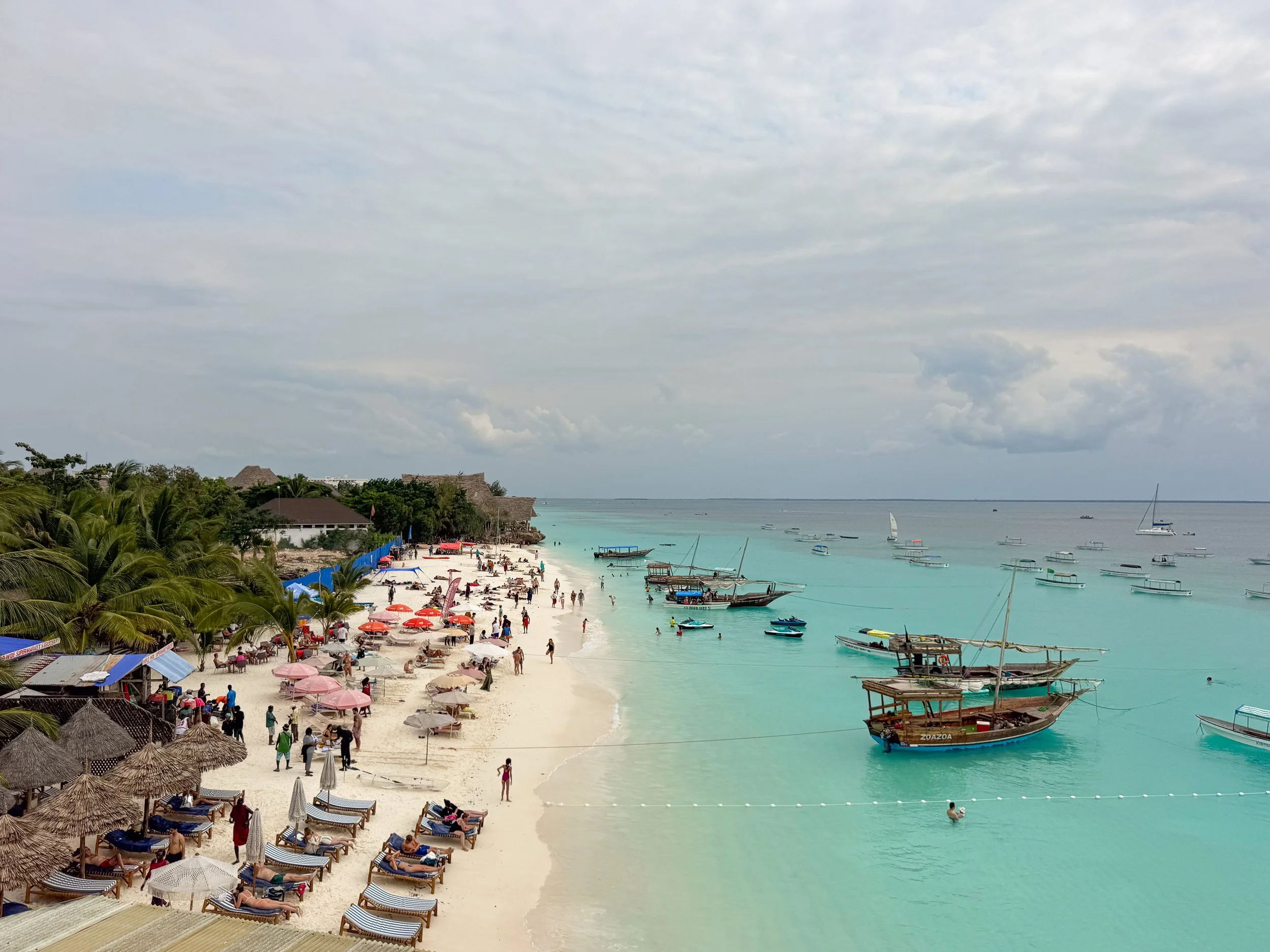
Kendwa & Nungwi are two beach towns on the northern tip of Zanzibar. They’re popular destinations with lengthy white sand beaches, swimmable turquoise waters and beachfront resorts. Restaurants serve Swahili cuisine and seafood dishes paired with local beers. Galleries and shops sell Maasai textiles, beaded jewelry, paintings and ebony figurines. Tour operators provide snorkeling excursions and sunset dhow boat cruises.
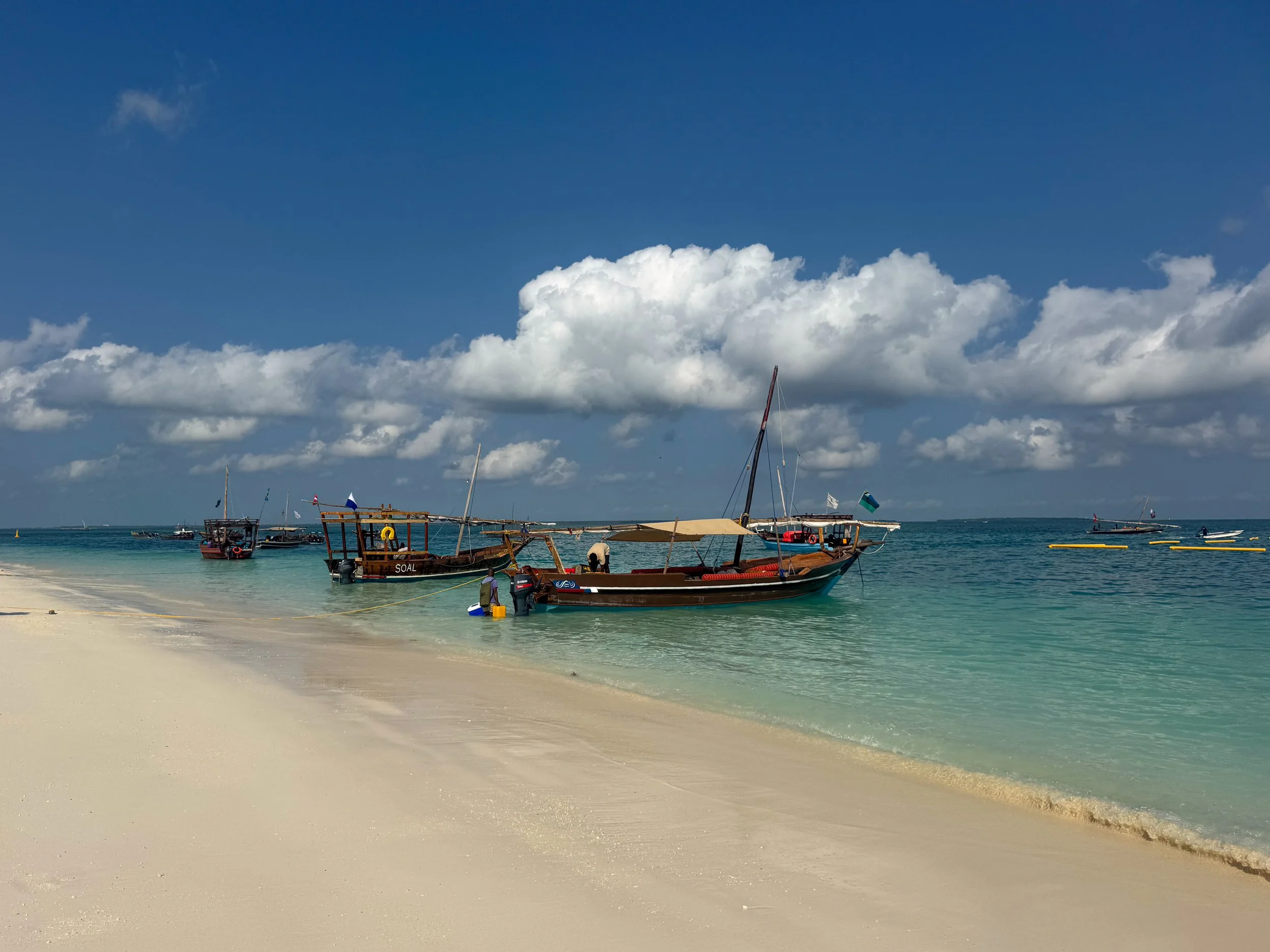
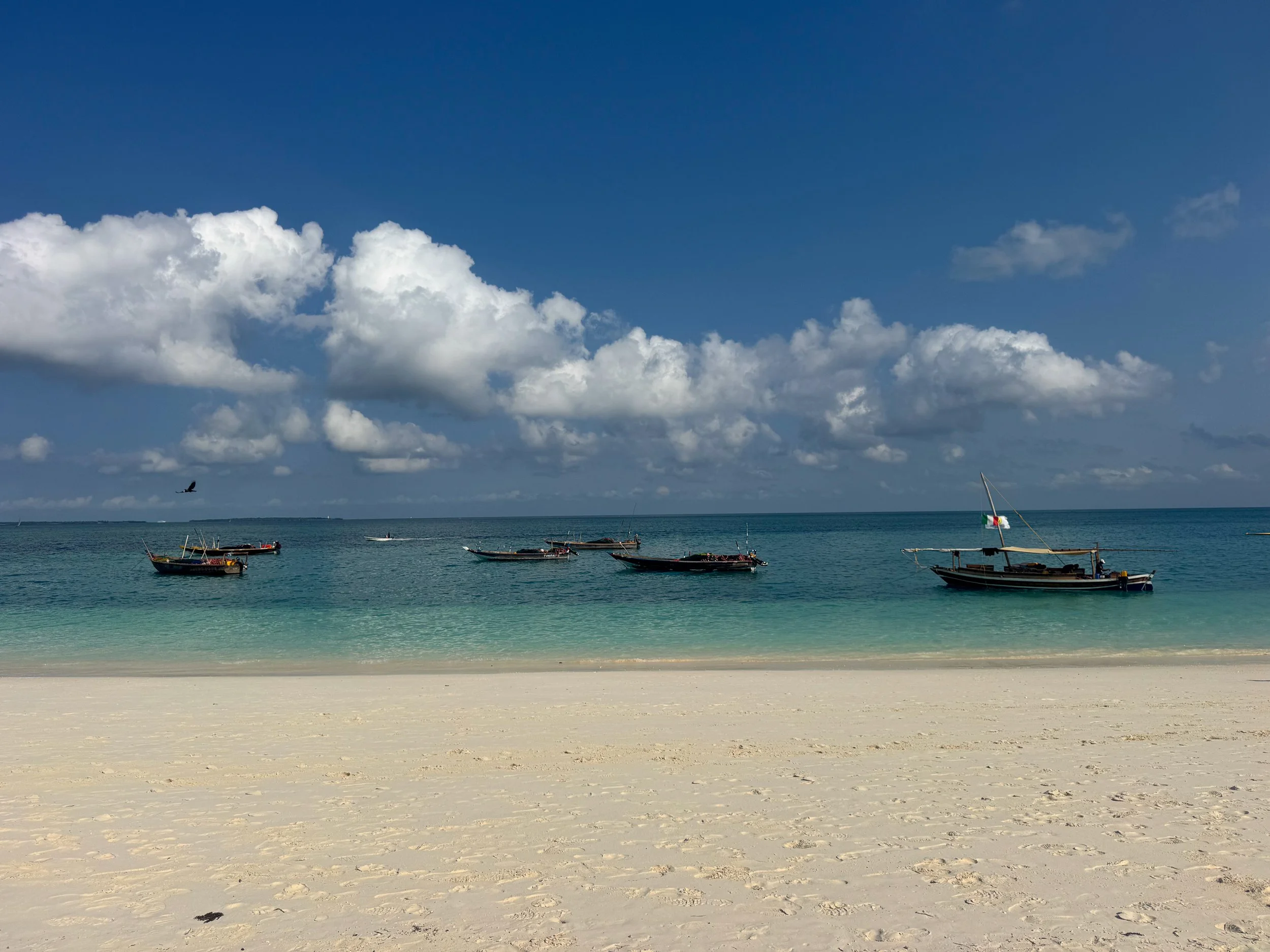
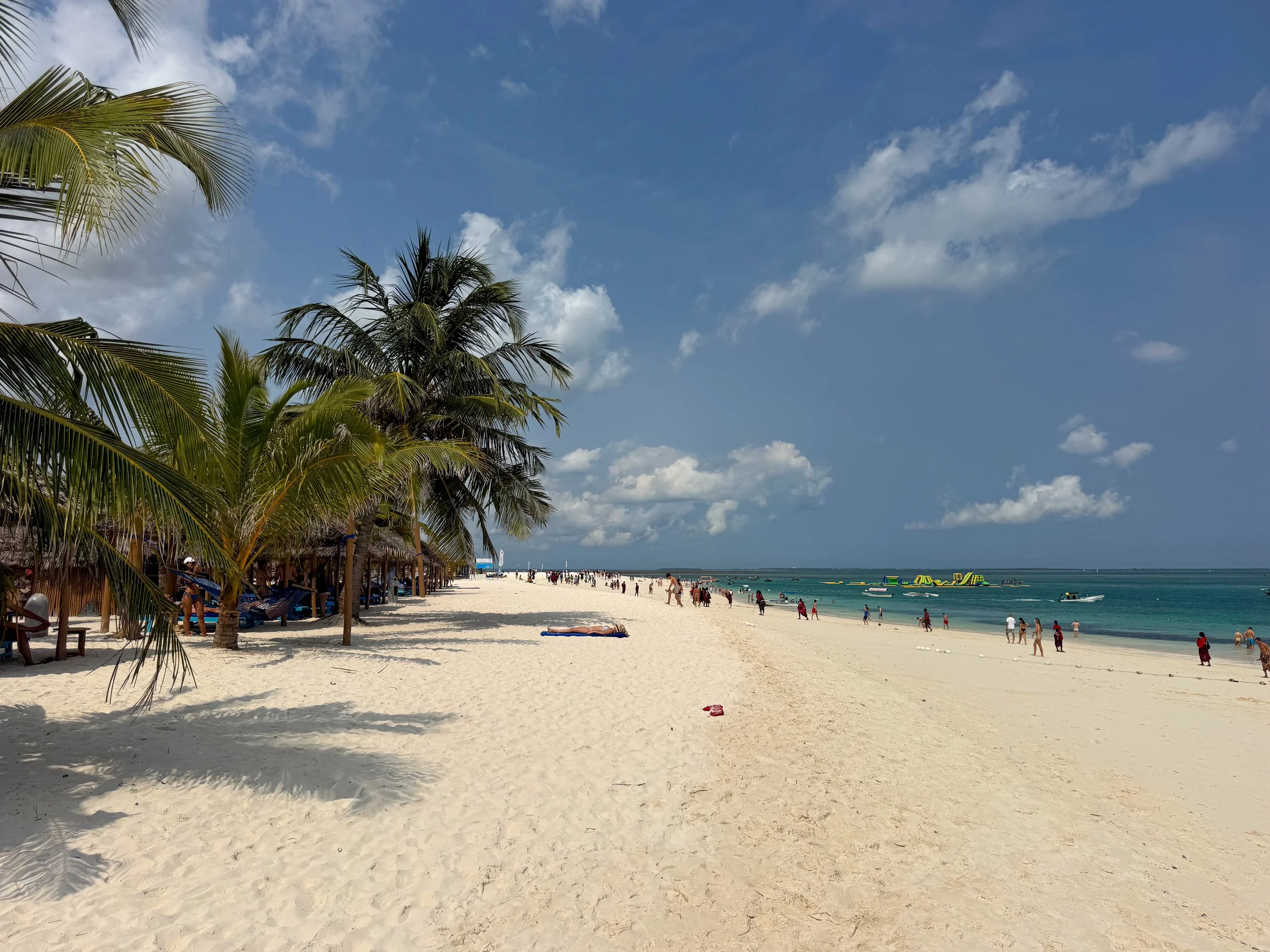
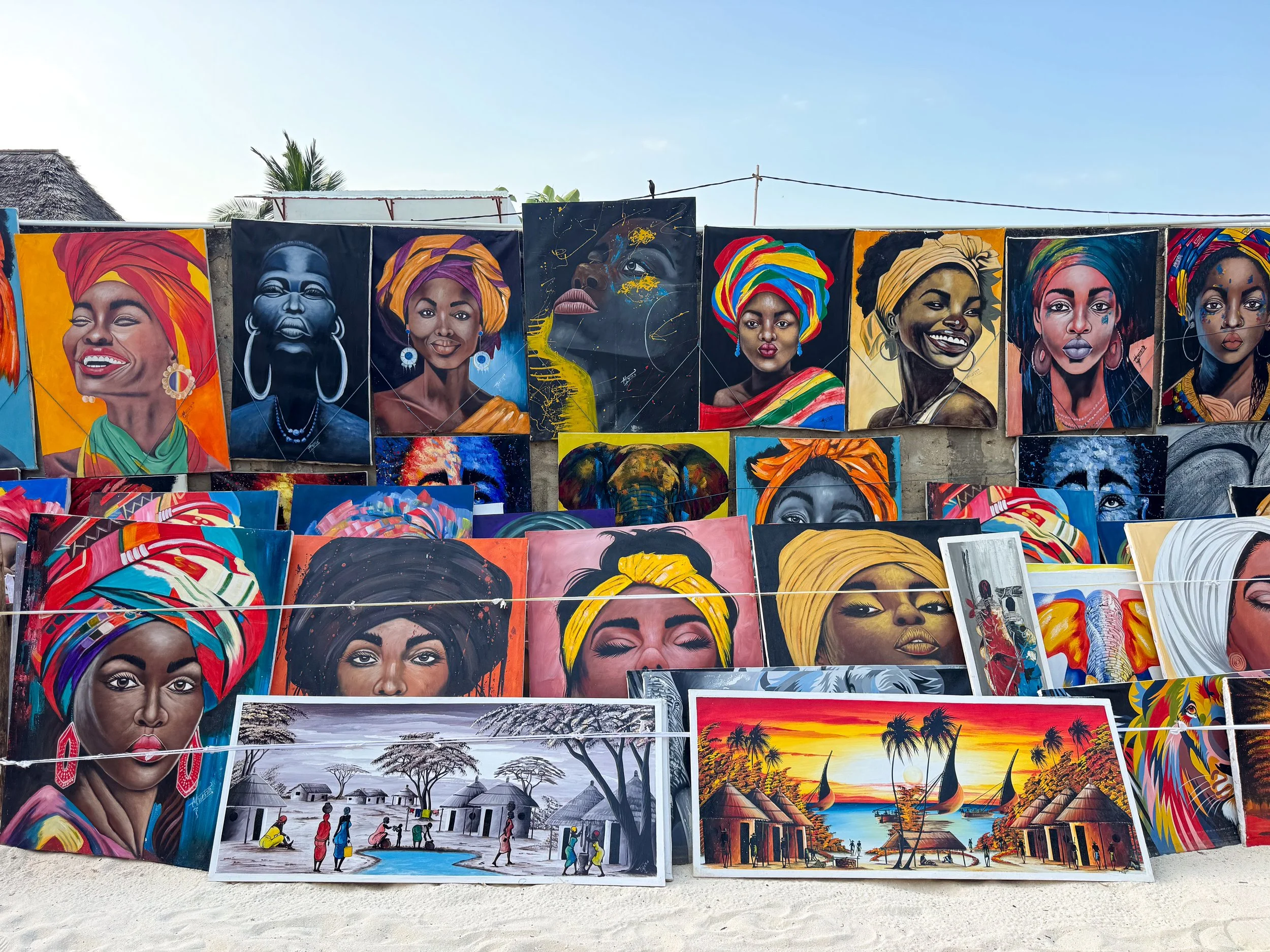
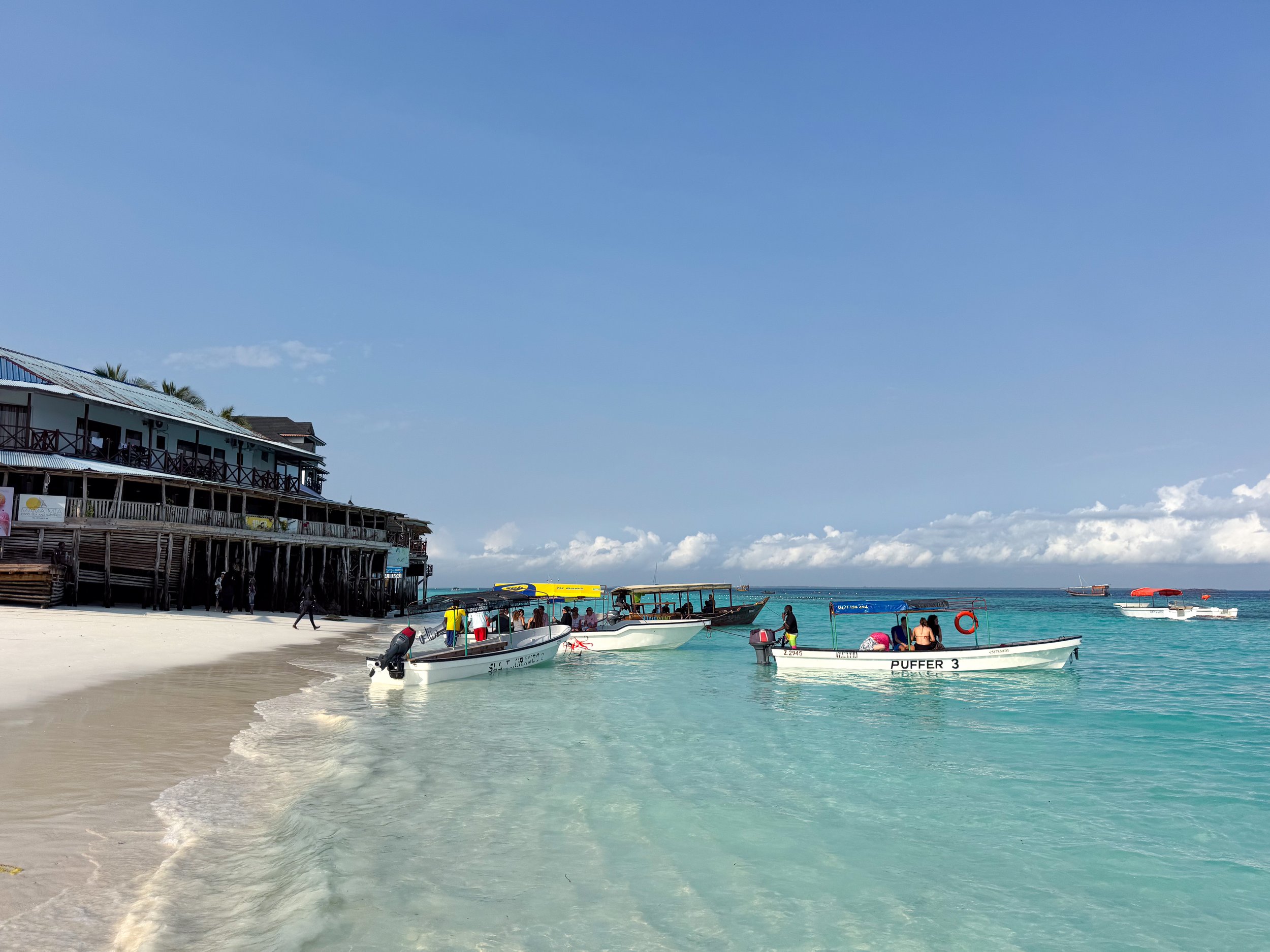
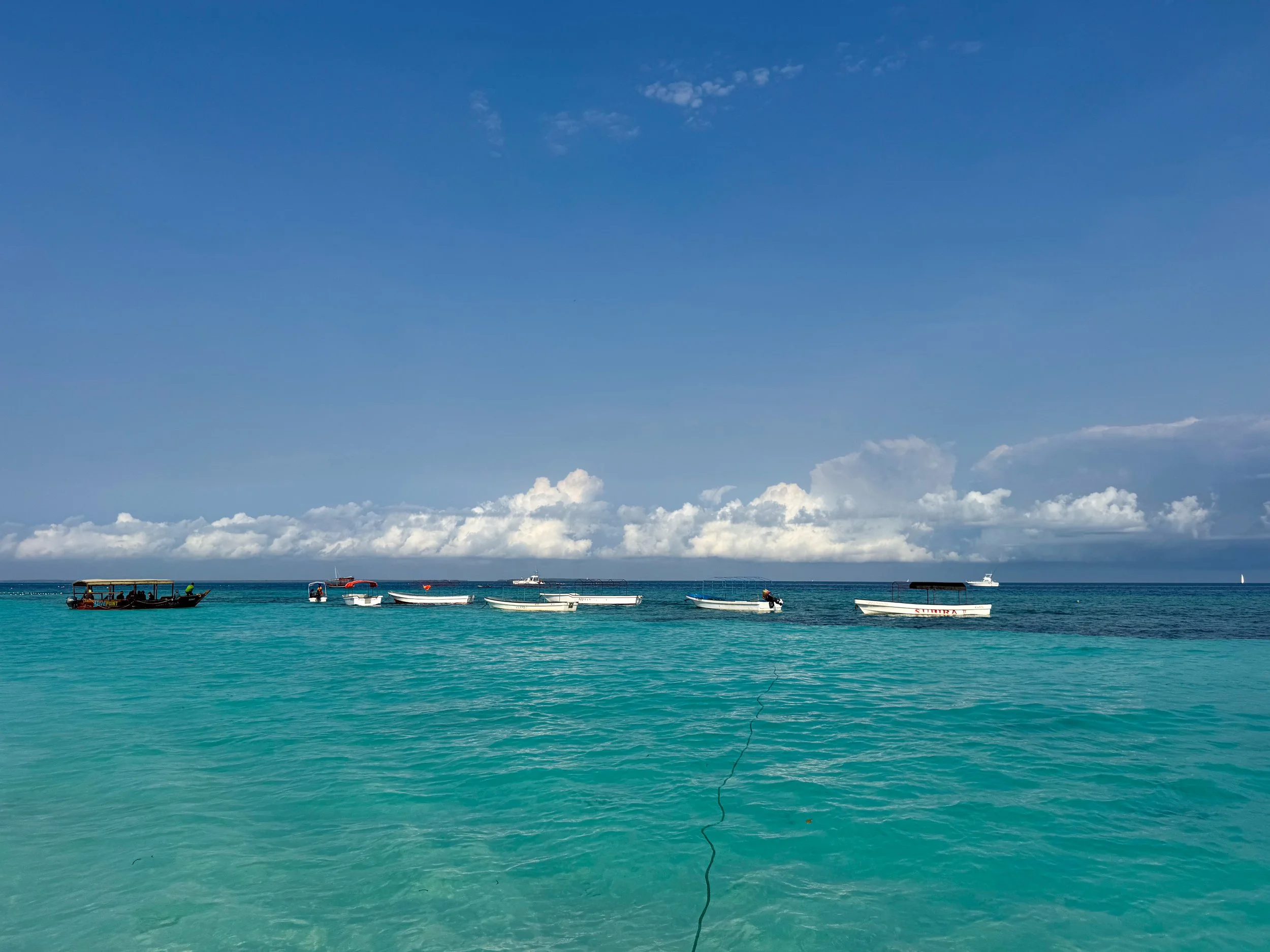
Kendwa Beach. Kendwa Beach is one of the prettiest beaches on Zanzibar! Its wide white sand shore meets the calming turquoise waters of the Indian Ocean. Several beachfront resorts and restaurants offer umbrellas and beach lounges to paying customers. Maasai tribesmen walk the beach, selling beaded jewelry, posing for photos and saying Jambo (hello) to passersby.
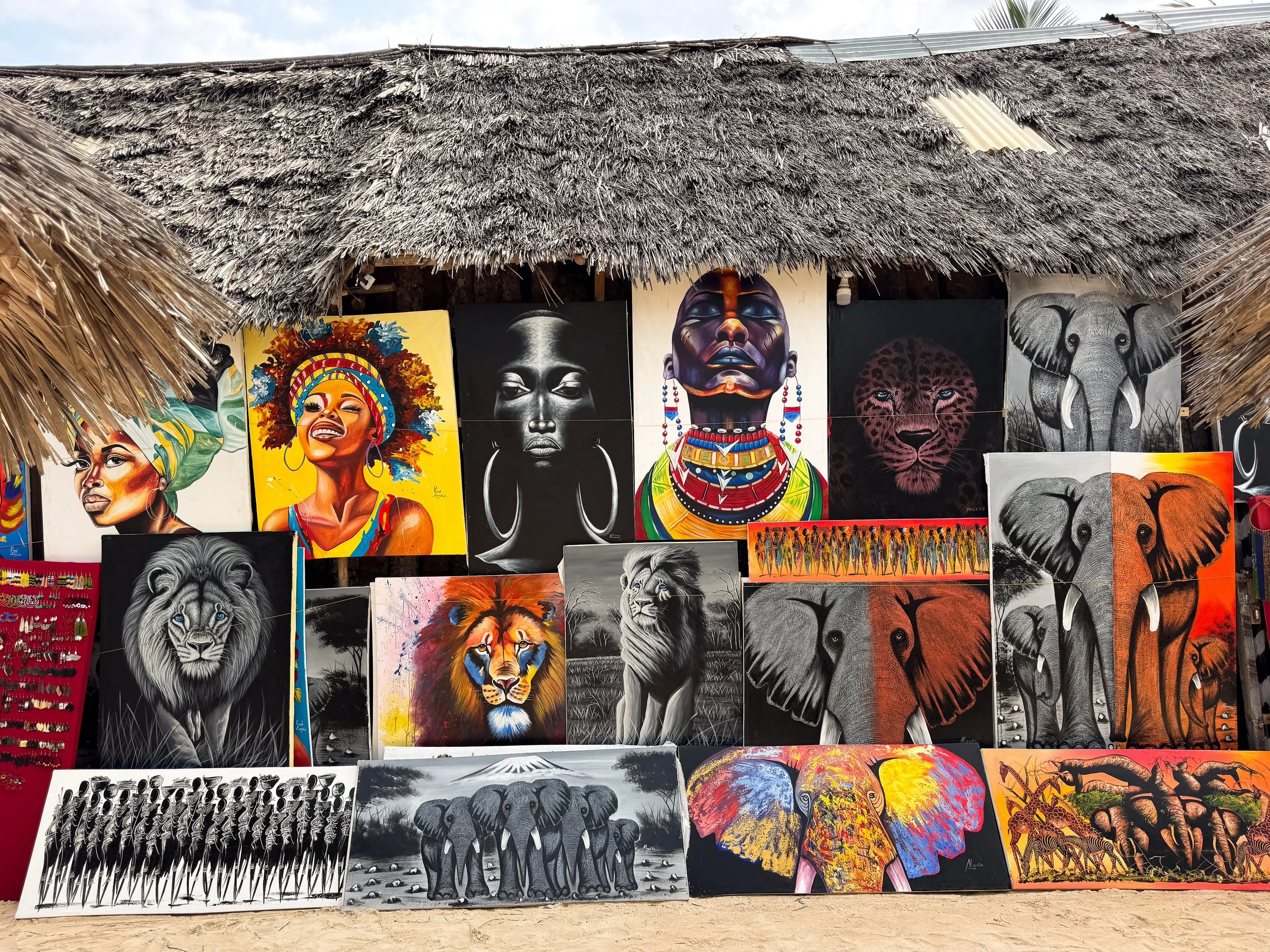
Kendwa Beach Gallery. Kendwa Beach connects to Nungwi Beach during low tide. The rock cliffs between become an art gallery with hundreds of animal and Maasai paintings.
Nungwi Beach. One of Zanzibar’s largest and most commercial beaches. Its white sand shore is lined with swimming areas, resorts, restaurants, souvenir shops and tour operators. The coast wraps around the island’s northern point making it perfect for long walks on the beach.
Good to Know. Beach vendors can be more aggressive in Nungwi than in Kendwa.
Coastal Excursions
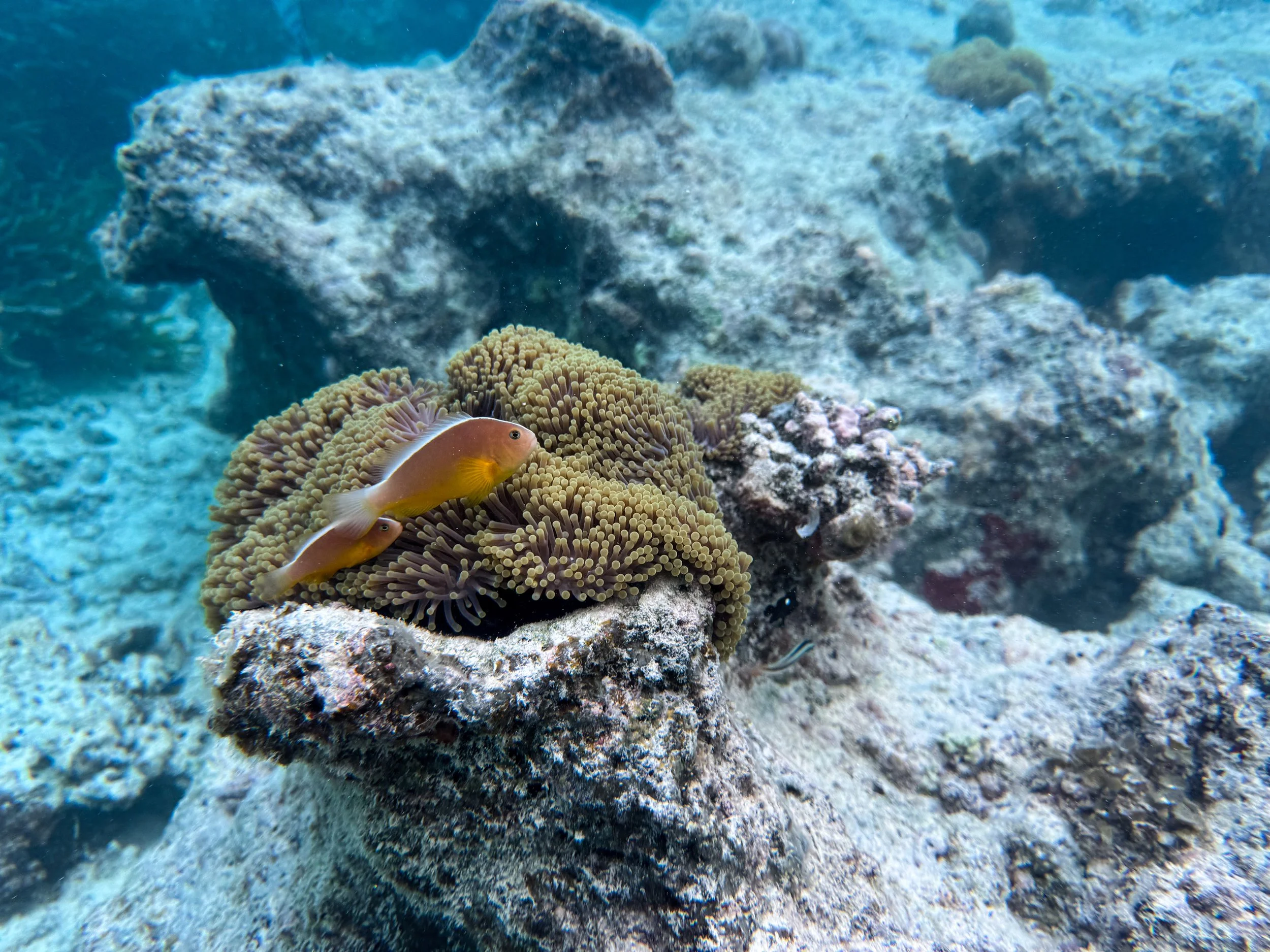
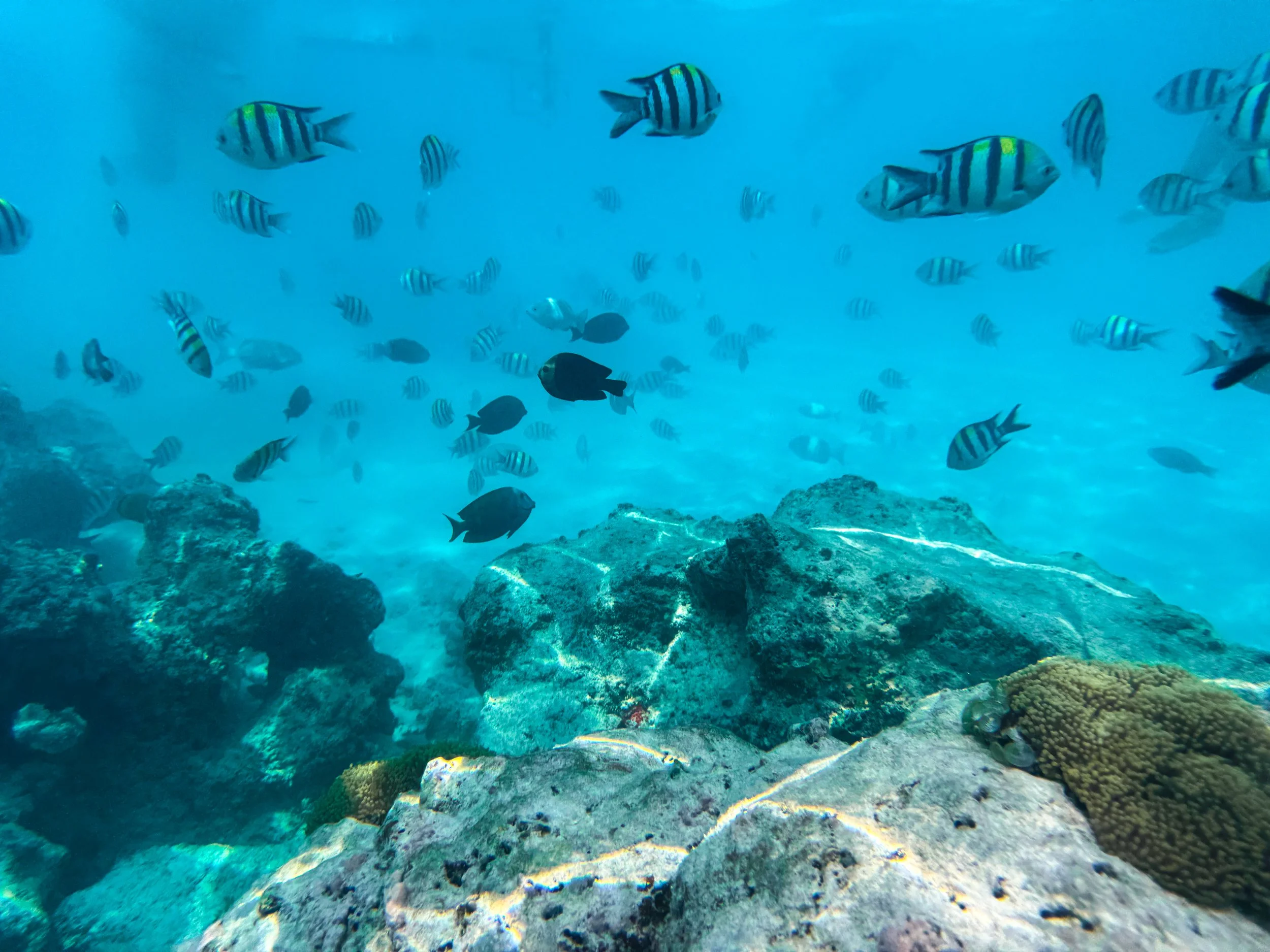
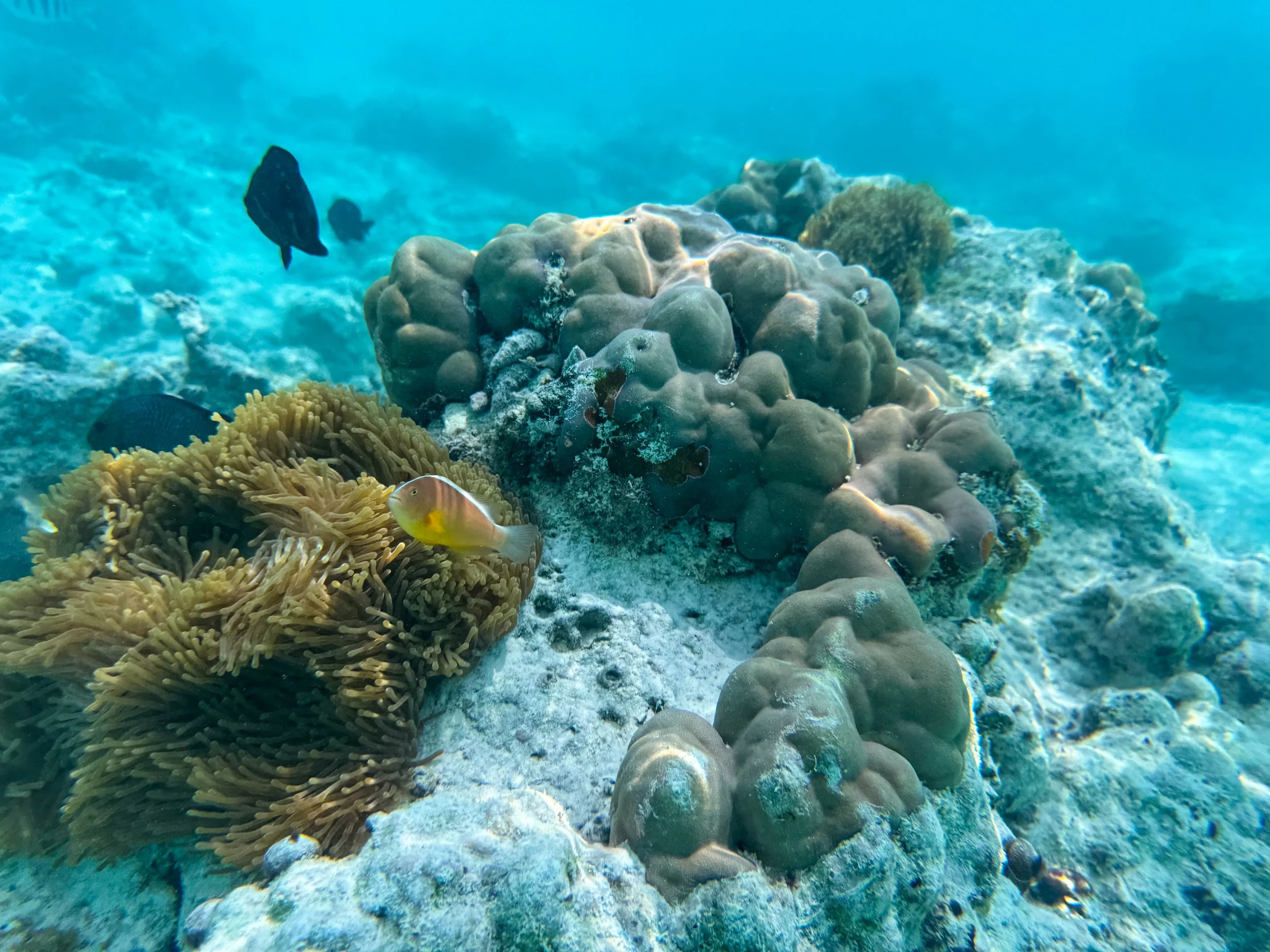
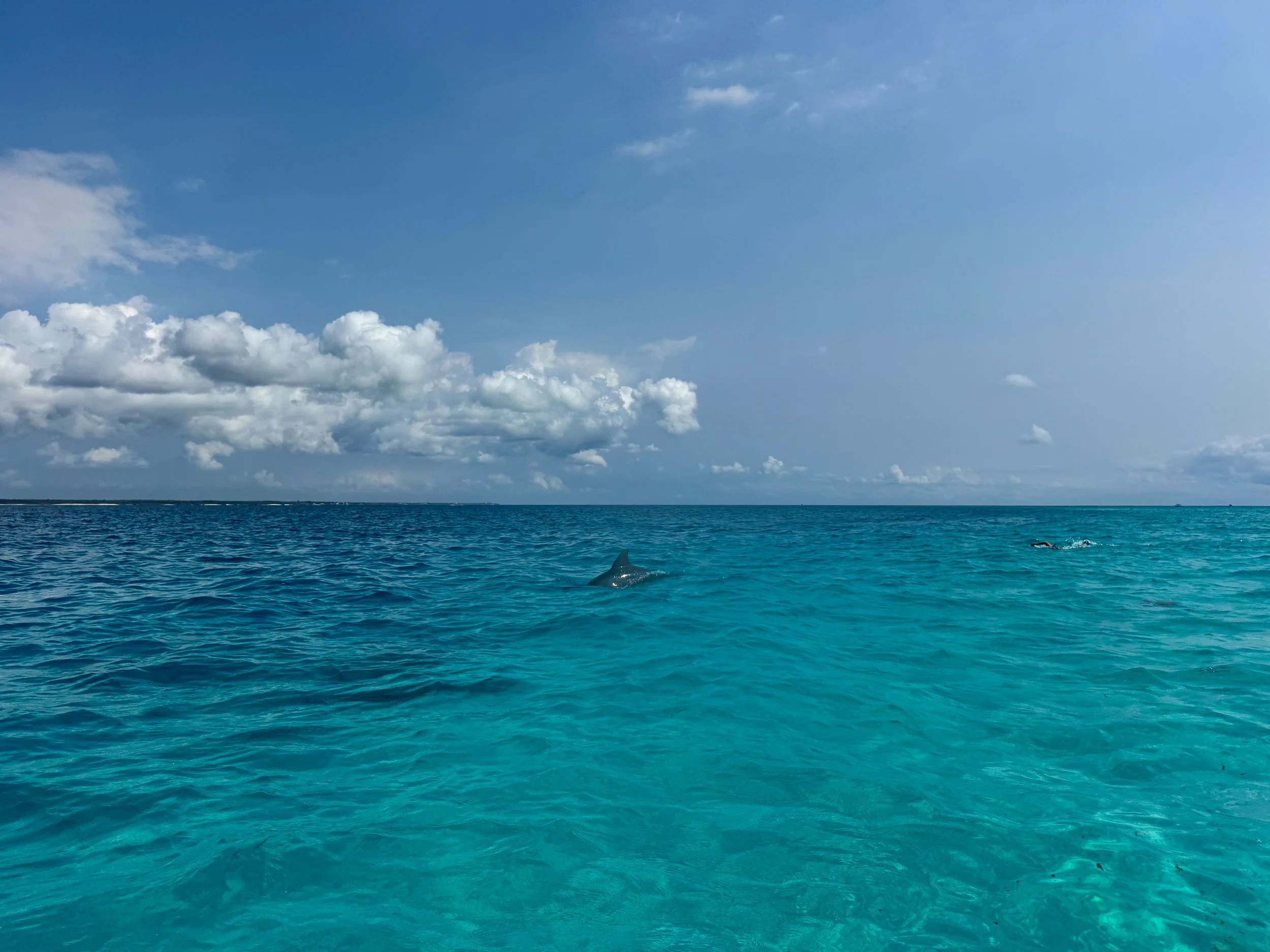
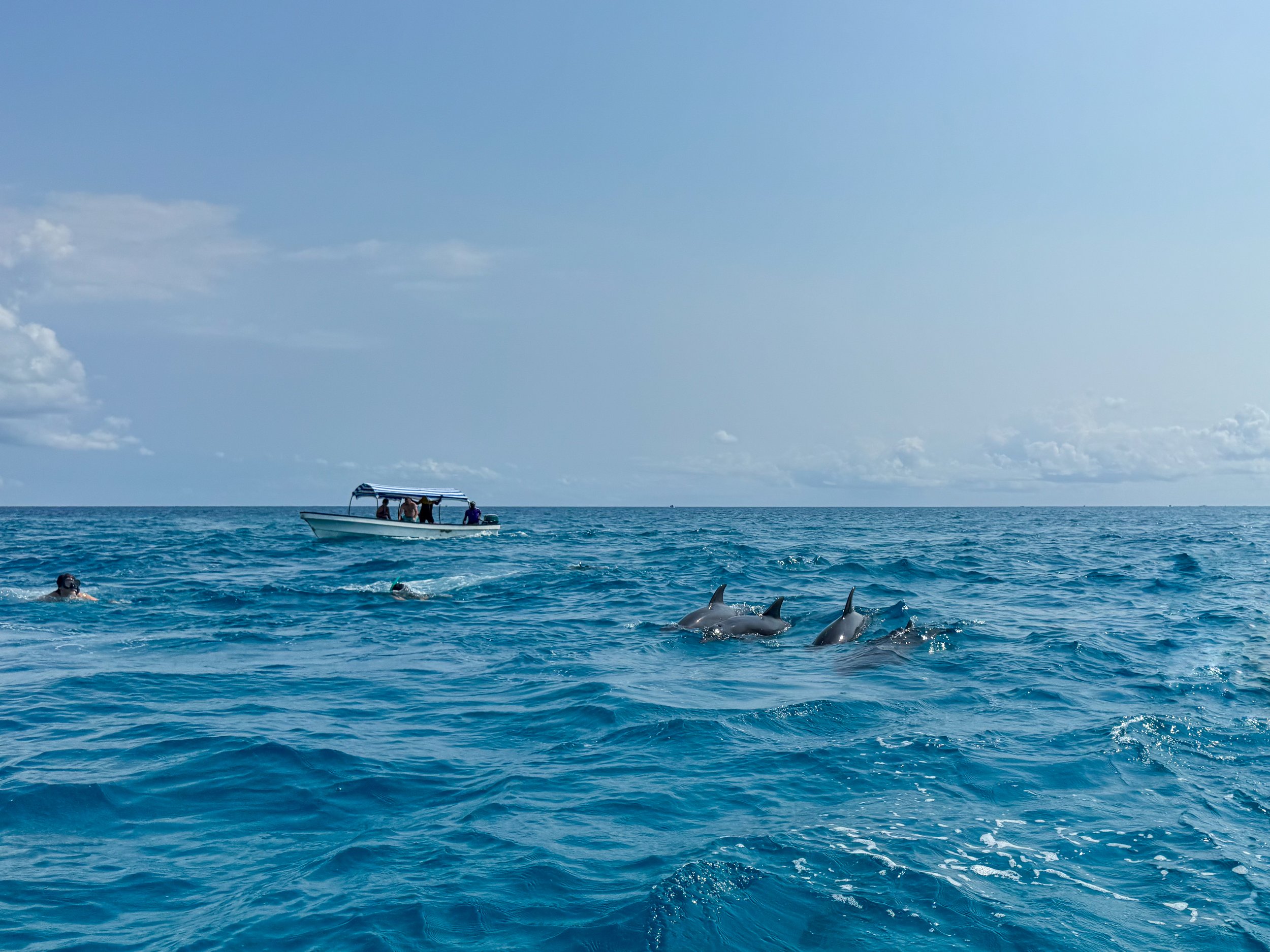
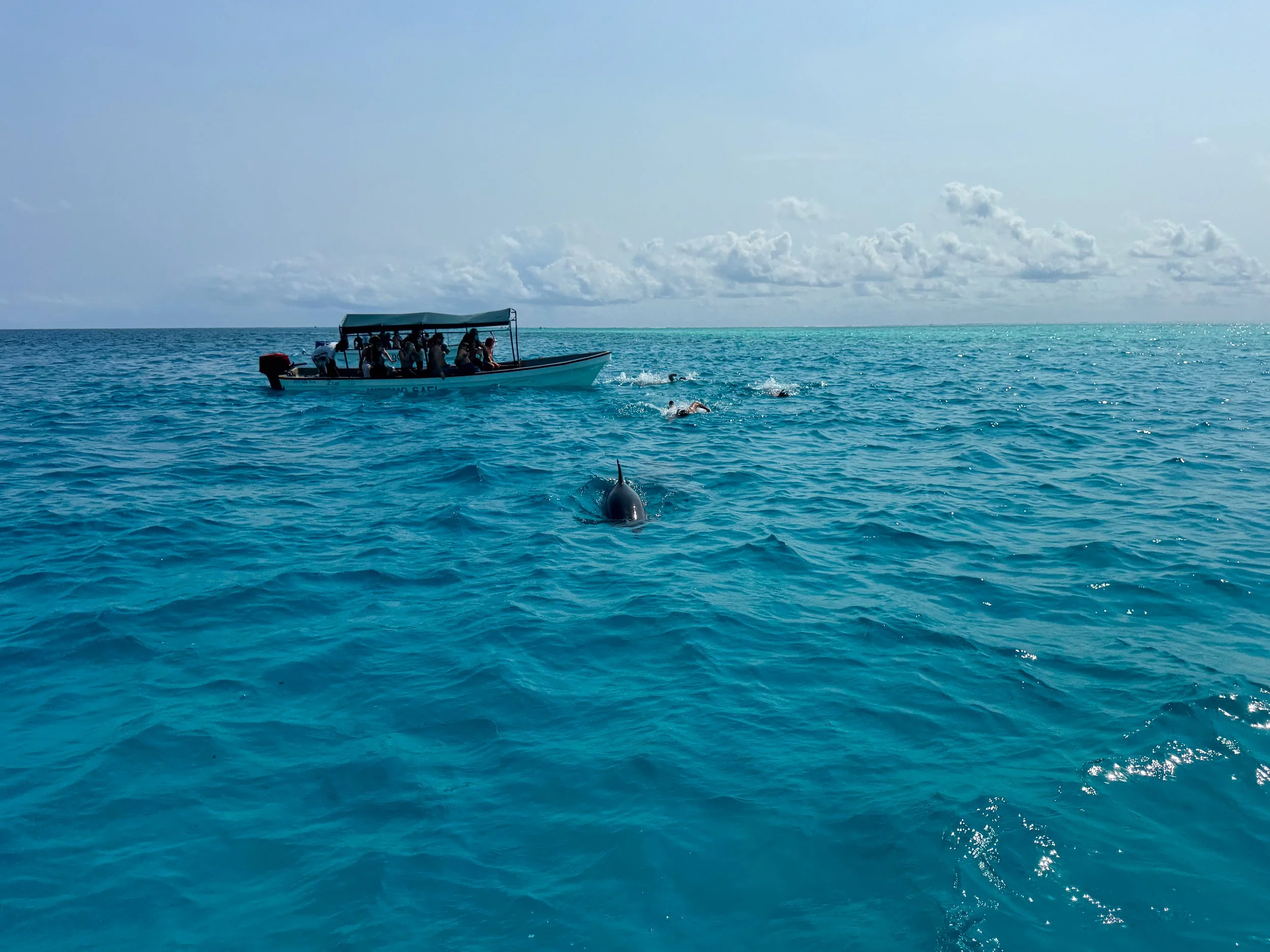
Mnemba Atoll Snorkel Tour. The Mnemba Atoll is a coastal formation with shallow sandbars, coral reefs and a singular private island. Its aquamarine waters are home to starfish, dolphins and tropical fish. Speed boats ferry passengers from Nungwi to the atoll, stopping to spot dolphins along the way. A small pod porpoised above the water as snorkelers jumped in to swim along.
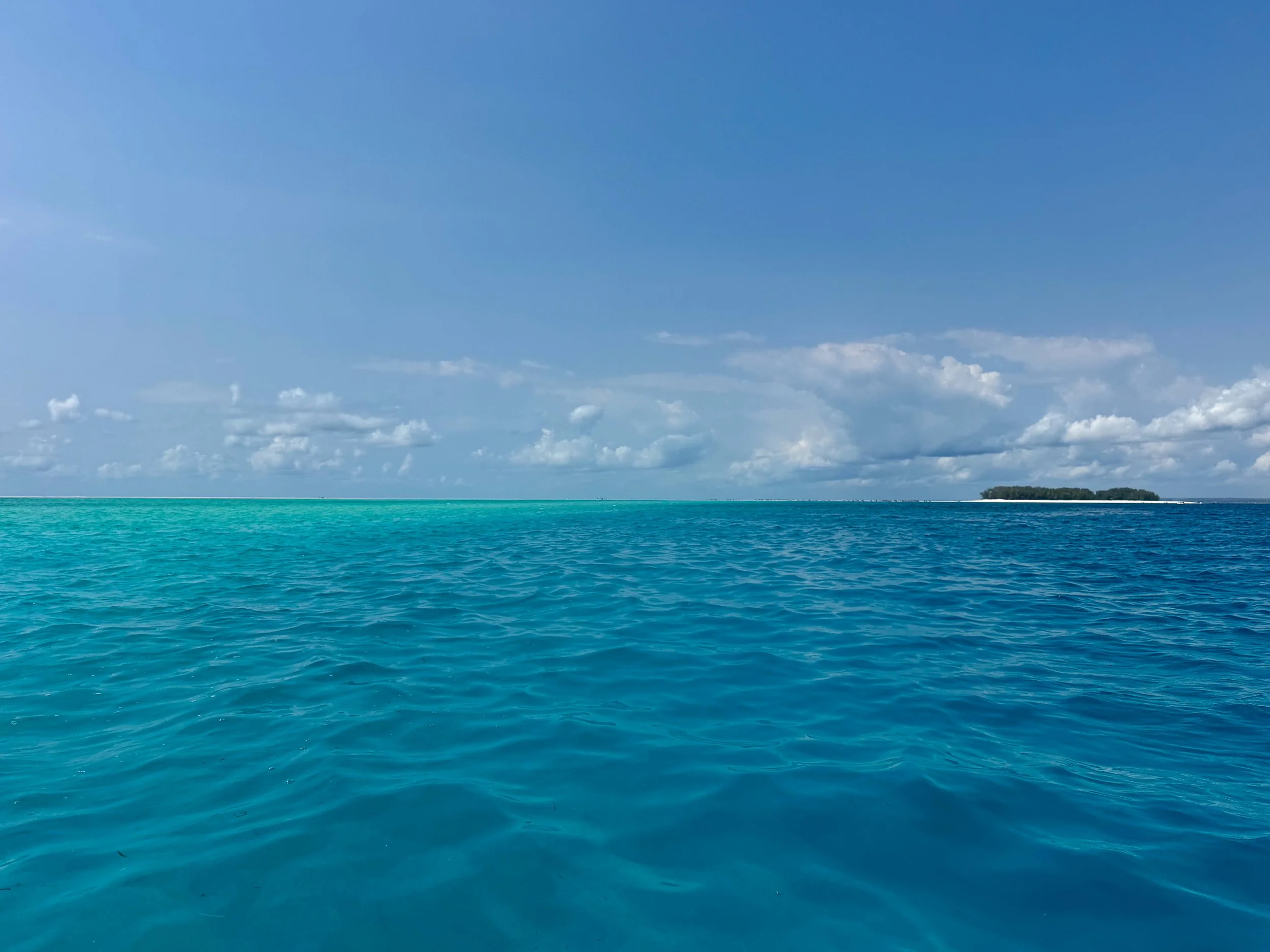
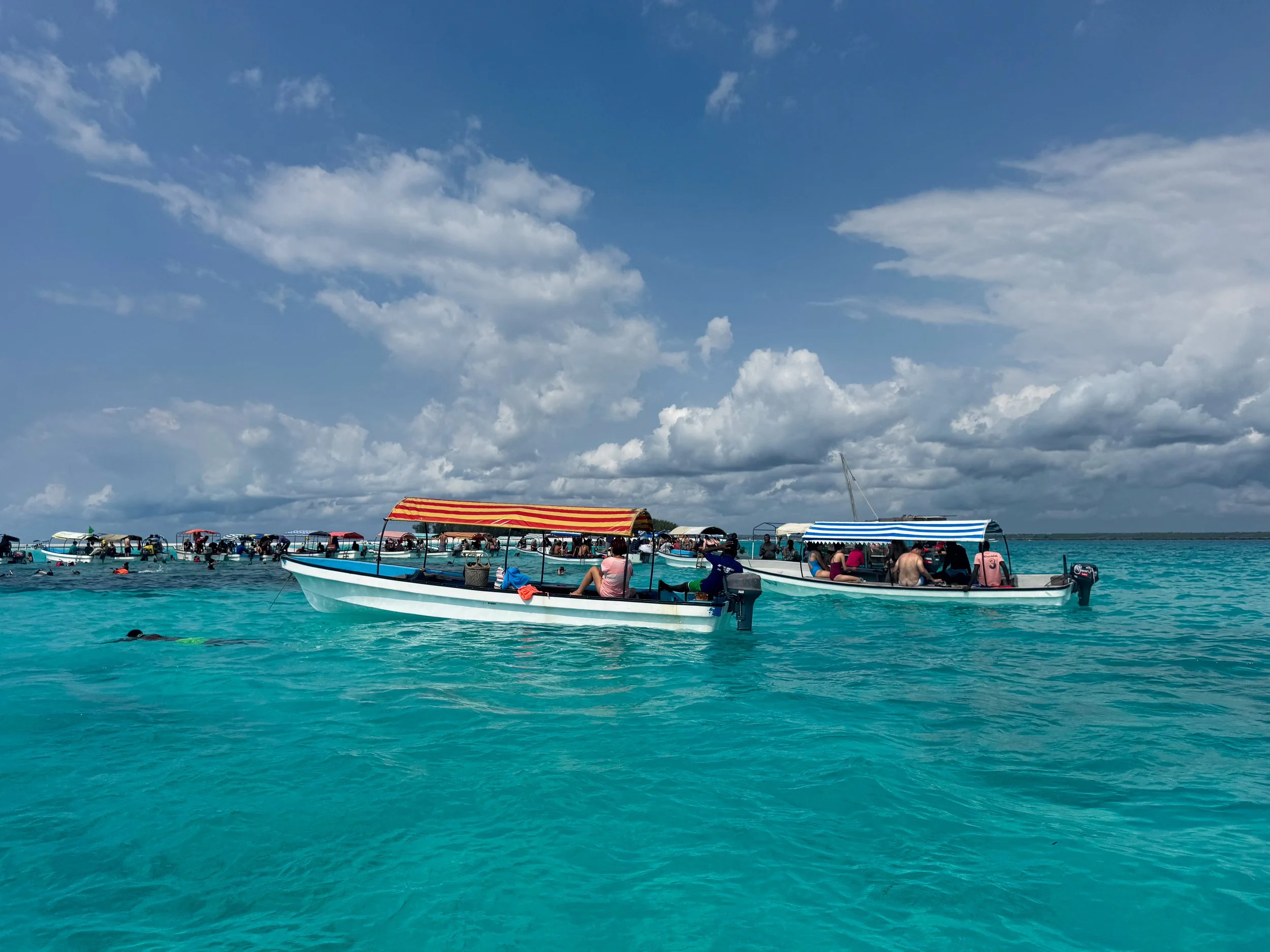
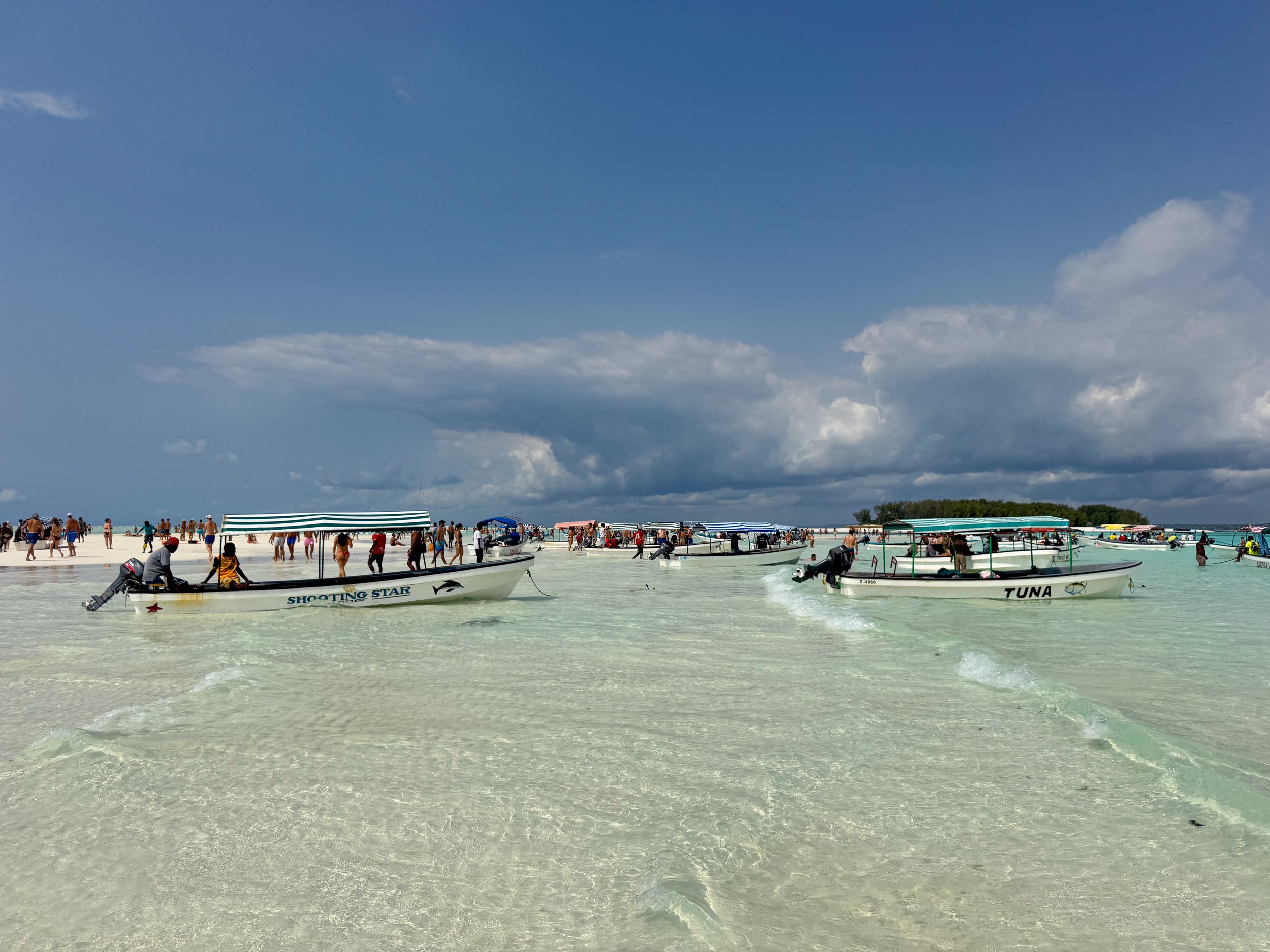
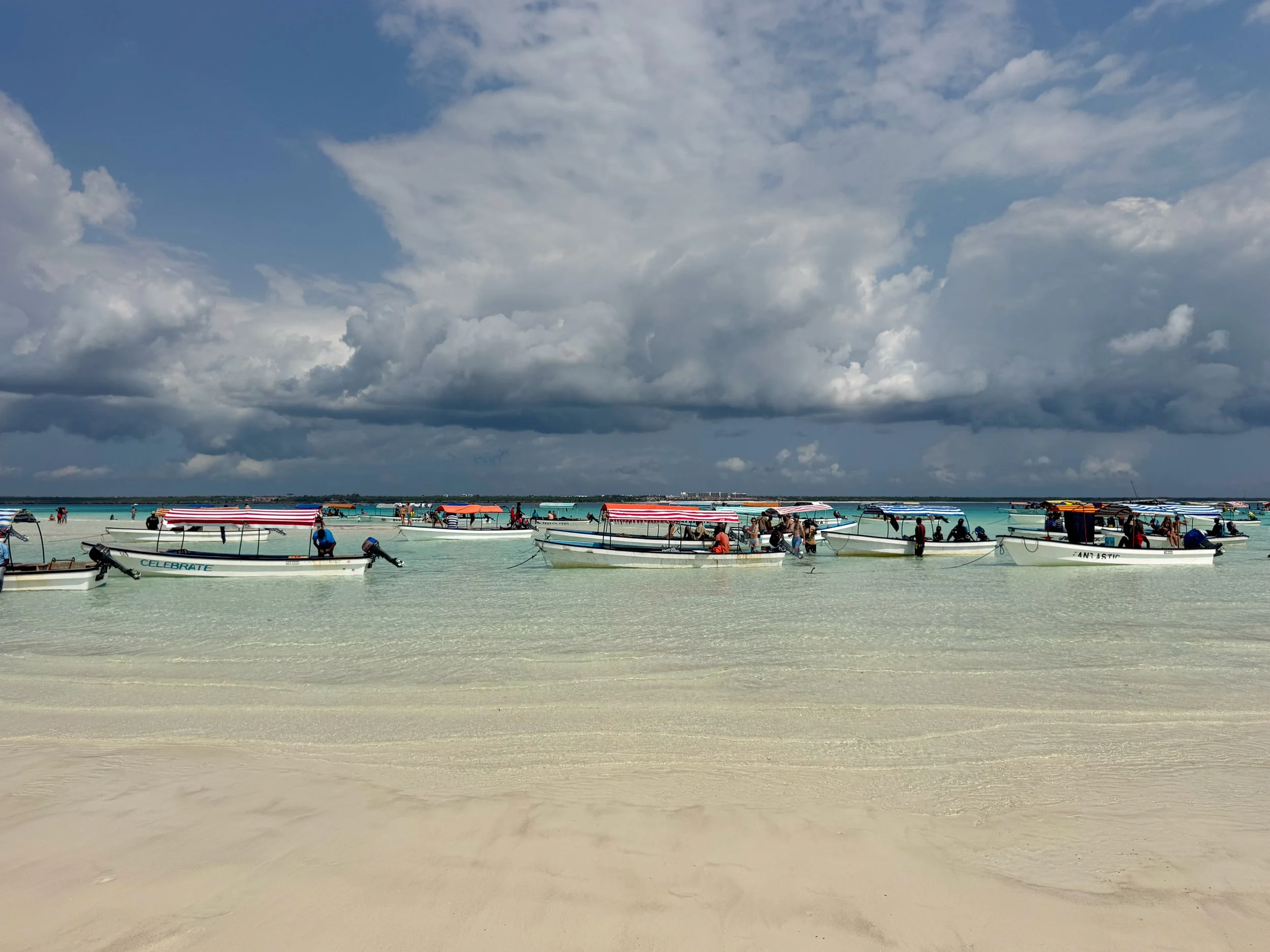
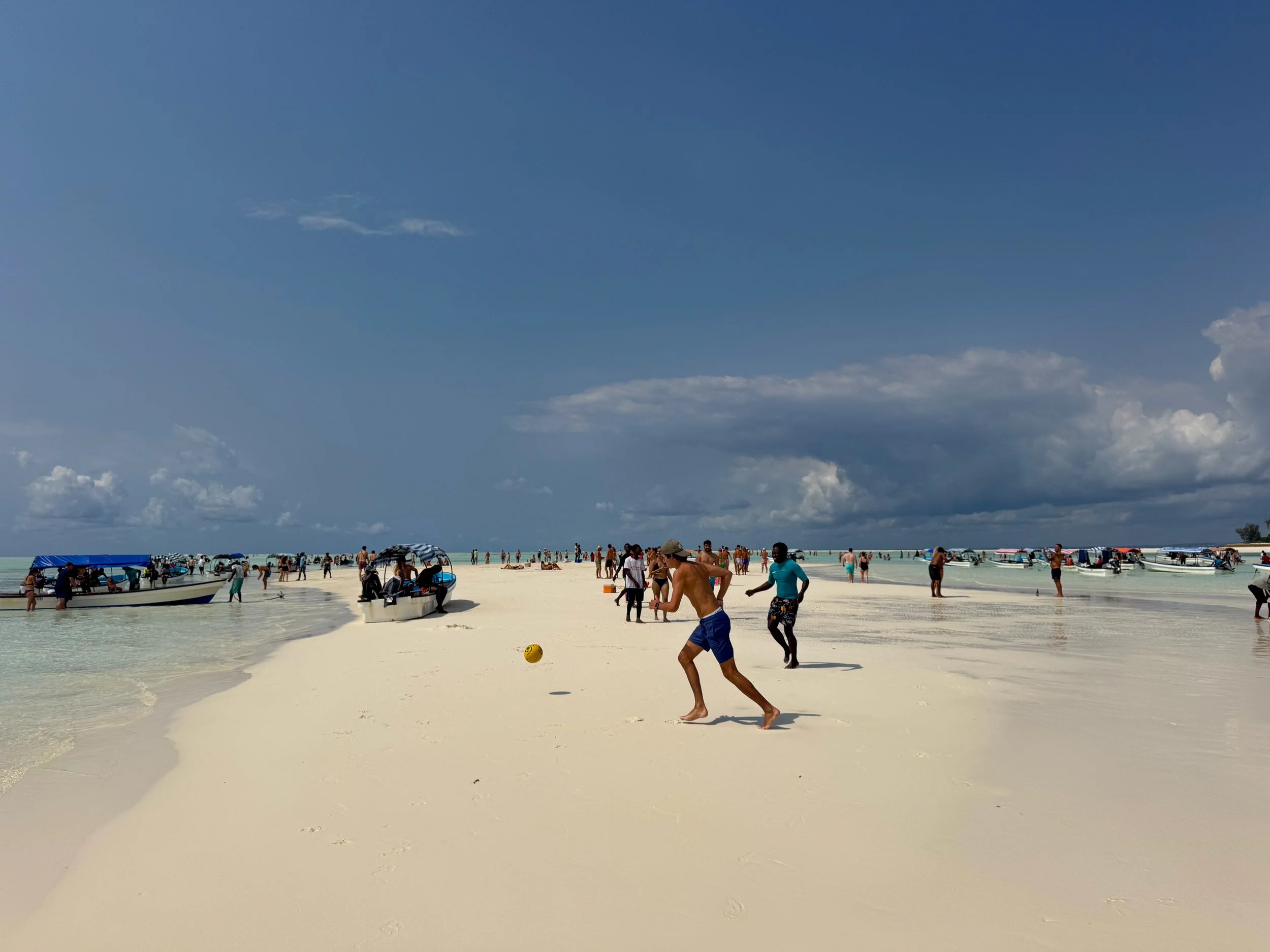
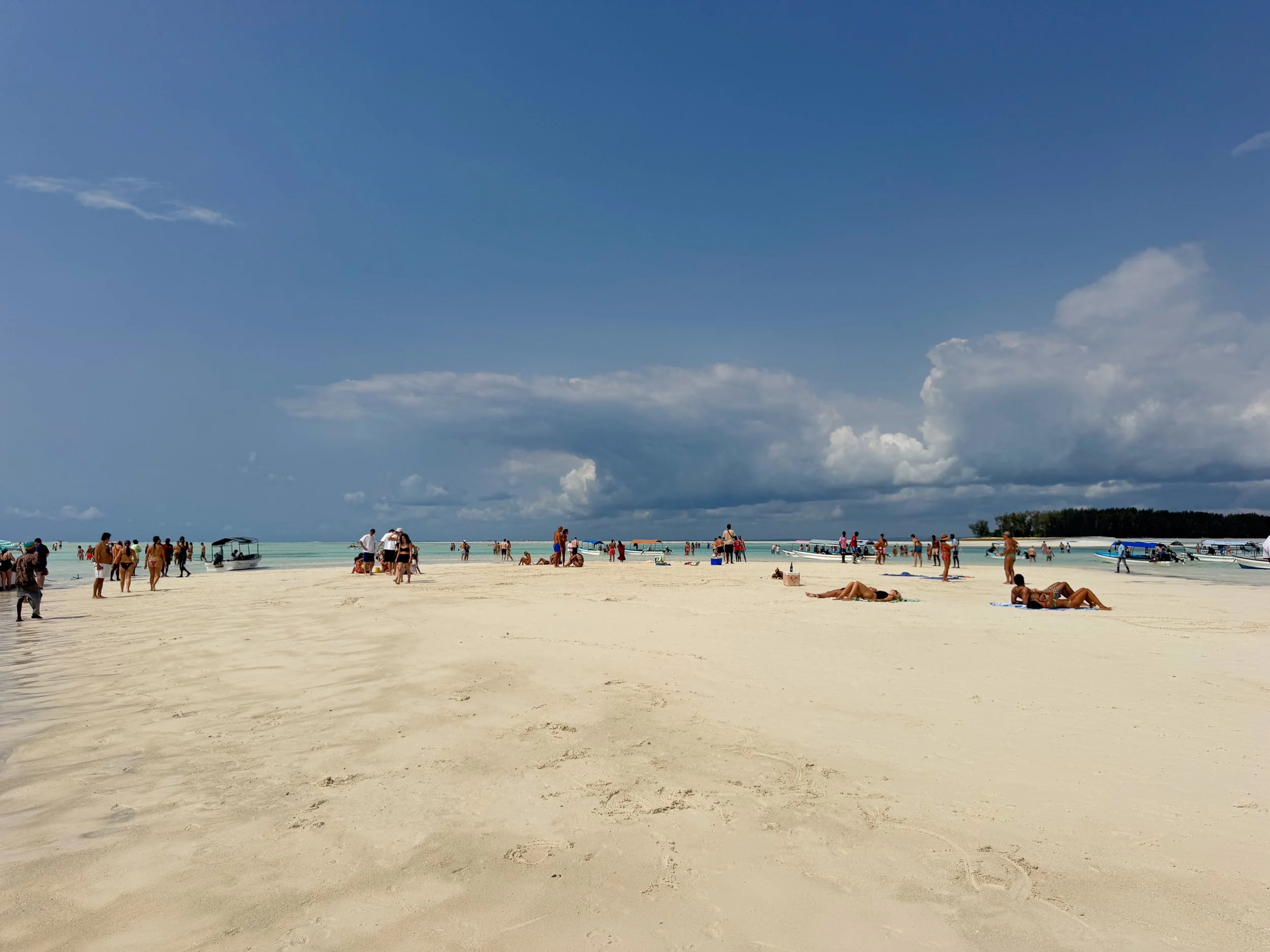
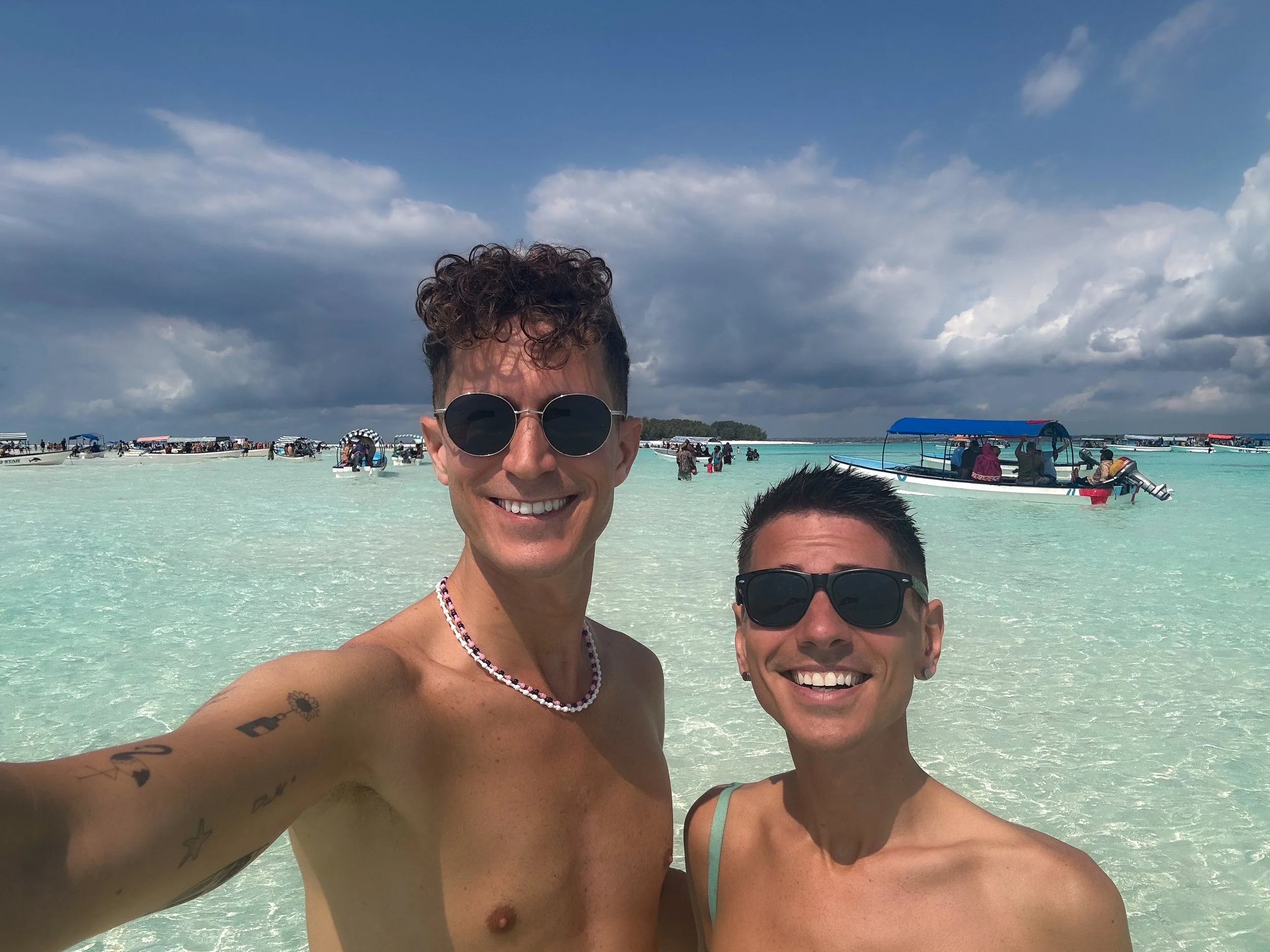
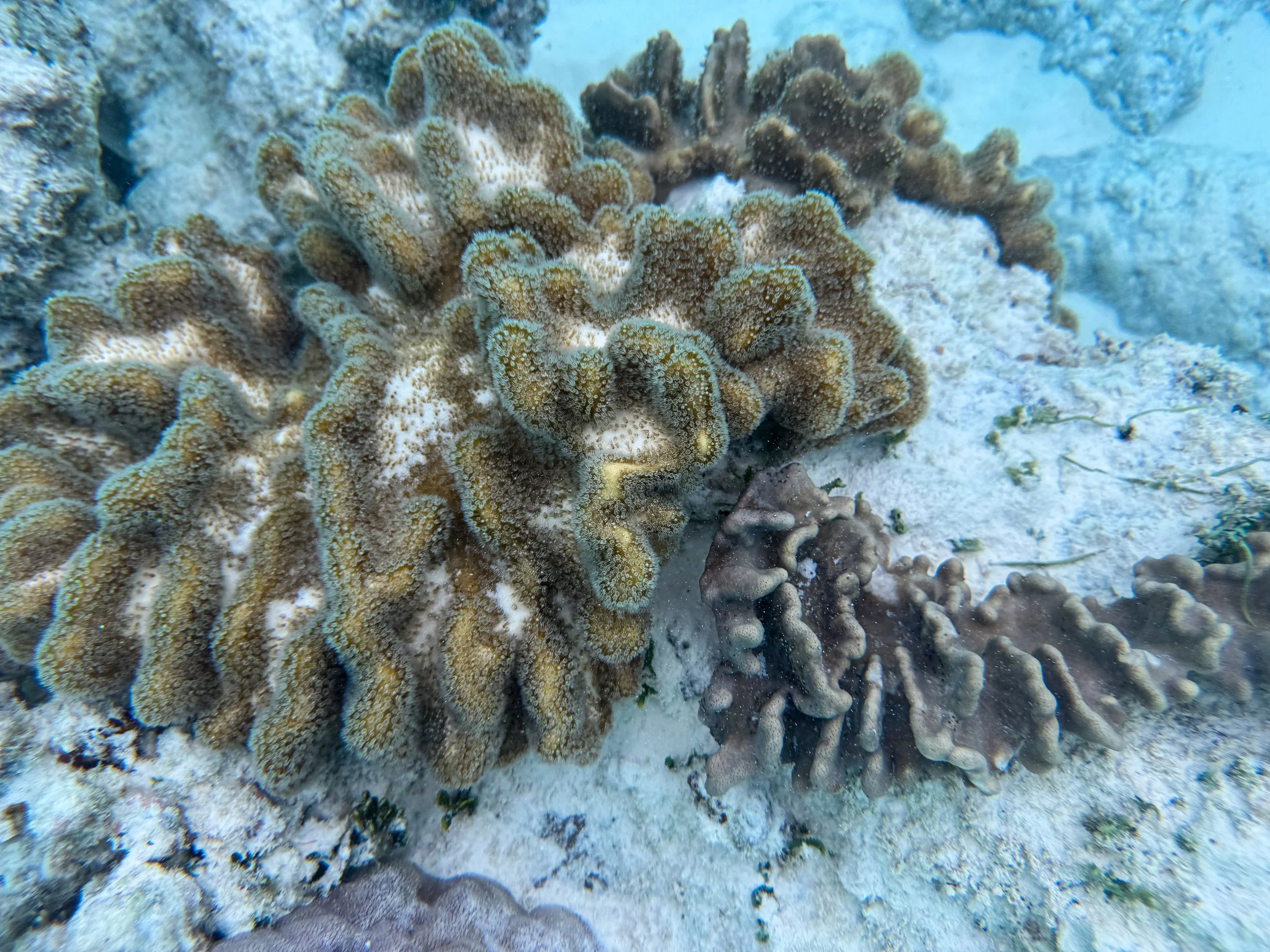
Mnemba Atoll Sand Bar. During low tide, large sandbars form around the Mnemba Atoll’s perimeter. Hundreds of boats moor in the shallows as sunbathers relax and walk along the temporary white sand beaches. Small reefs offer places to snorkel and spot tropical fish, the occasional starfish, swaying anemone and seagrasses. We booked ahead of time online with Langentours on Get Your Guide. The tour can be booked cheaper in person from any of the beach vendors.
Good to Know. Please do not remove the starfish from the water or touch them. It will seriously harm them.
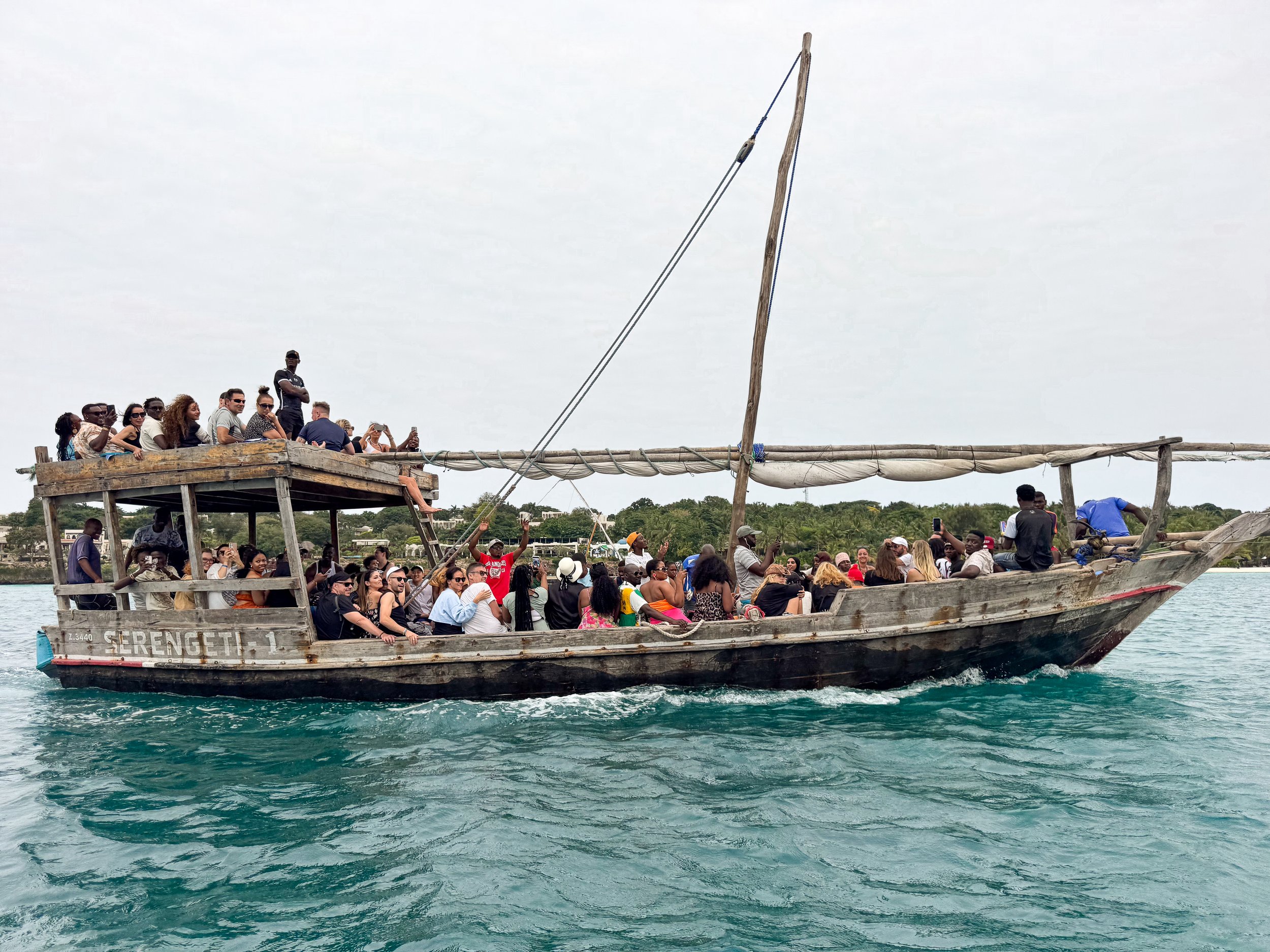
Nungwi Sunset Dhow Cruise. Dhow boats are a traditional sailing vessel used by Zanzibar’s fishermen and spice merchants. The wooden ships are characterized by their triangular canvas sail hoisted from a singular mast. They have become a quintessential part of the island’s cultural identity and heritage. Captains offer nightly sunset cruises from Nungwi and Kendwa on these unique ships. Joined by the crew, a live band and other passengers, we sailed the coastal waters for over 2 hours. The band sang in Swahili and performed using makeshift instruments during the voyage. The crew prepared fresh fruits, mixed cocktails and sold beverages and snacks. We booked ahead of time online with Uforo Tour and Travelon Get Your Guide. The tour can be booked cheaper in person from any of the beach vendors.
Pro Tip. Bring a sweater or jacket if it’s a cloudy day. It can get chilly onboard.
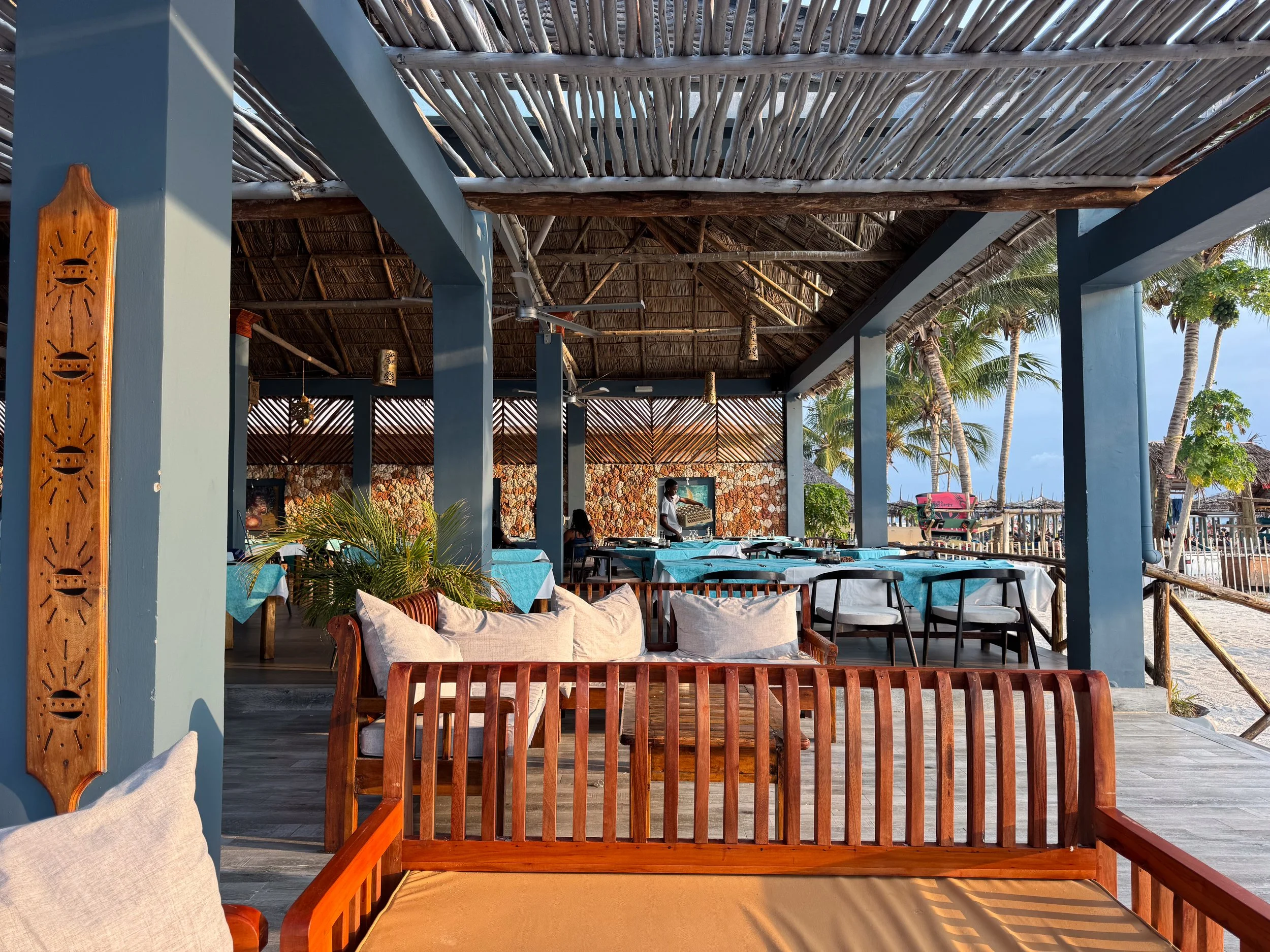
Places to Eat & Drink
ZaVa Nungwi. A smaller beachfront restaurant with local dishes, beach lounges and happy hour cocktails. We came here for afternoon beers overlooking the Indian Ocean then returned for dinner and happy hour. Try whole grilled white snapper, fish burger and Dawa cocktail.
Sunset Kendwa. A popular beach front restaurant and resort at Kendwa Beach. We stopped in for their daily happy hour, sipping on $6 cocktails.
Mococo Beach Villa. A quiet beachfront restaurant with beach lounges under thatched umbrellas and palm trees. Come here for coffees, cocktails and light bites.
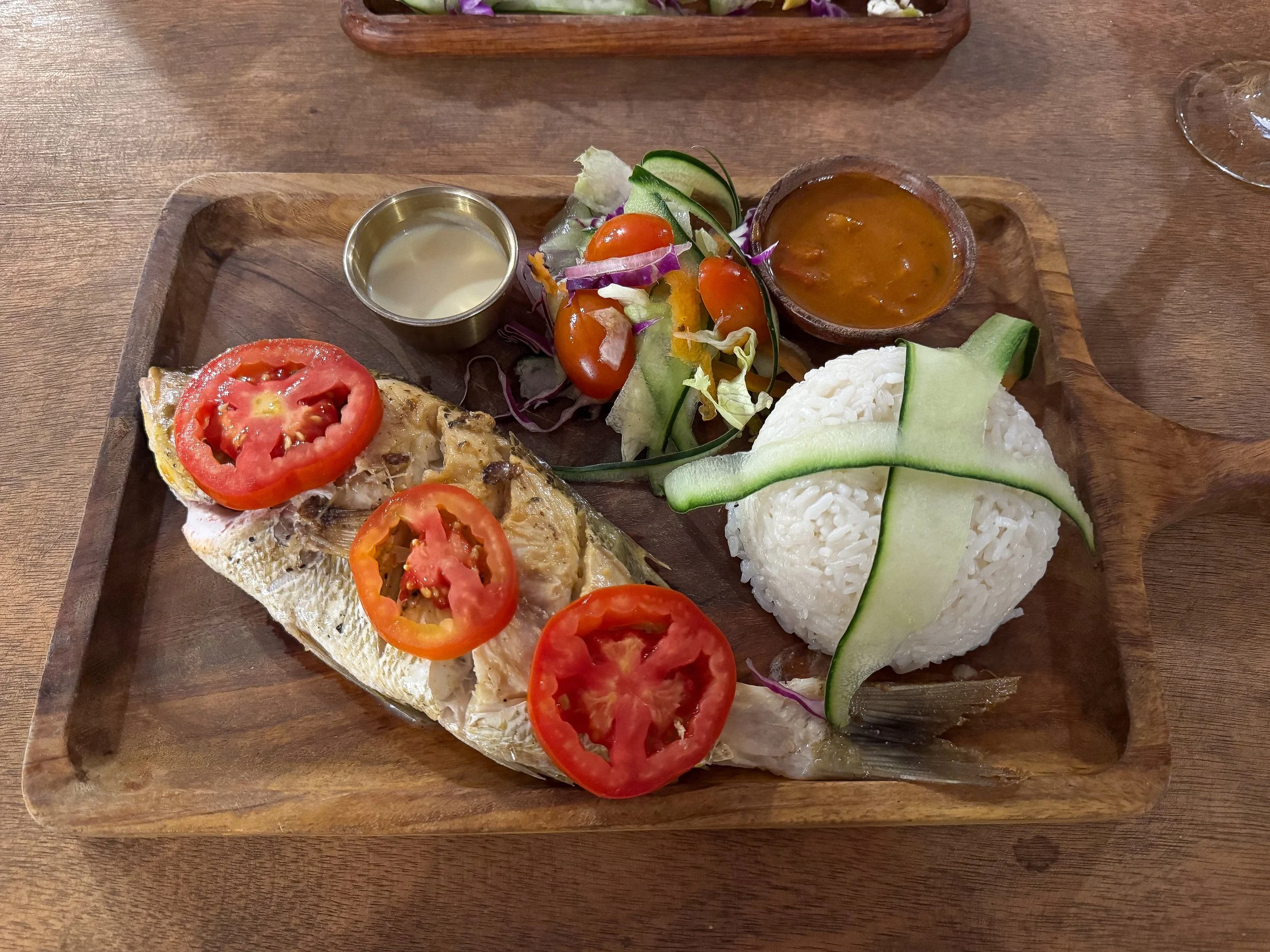
Zanzibar Cuisine
Seafood. Fresh caught fish is a common aspect of the cuisine on Zanzibar. A popular preparation is a whole fish grilled or fried.
Pilau. A hearty and flavorful “one pot” rice dish made with aromatic spices, onions, tomatoes, potatoes and a protein like beef, chicken or soy.
Sambusa. A common street food snack across Zanzibar brought over by Indian influences. The dough packets are stuffed with spices, potatoes and peas.
Curry. A common spice used to make savory stews and dishes made with meat, seafood or vegetables.
Chapati. A type of roti used to scoop stews and curries by hand.
Kachumbari. A salad made with chopped tomatoes, red onions and chili peppers.
Sugar Cane. Sugar cane is grown across the island. Street food vendors press it into juice or chop it into bite size pieces. Try it pressed with ginger!
Dawa. A commonly served local cocktail made with konyagi, lime juice, honey and tonic water.
Where to Stay
Lofihouse. A small and simple apartment with two private rooms in Stone Town’s historic center. It has a communal kitchen and laundry machine for guests. Reserve on Booking.
Kendwa Bungalow. A cute bungalow on a semi secluded property in Kendwa. It has a shared kitchen, outdoor dining room and private suite. It’s located about 15 minutes on foot from the beach. Book on Airbnb.
Location Specifics
Mandatory Inbound Travel Insurance. The semi autonomous government of Zanzibar requires all foreign visitors to purchase state sponsored travel insurance. This is regardless of any private travel insurance you may have while visiting the island. It’s a classic scam but they won’t let you enter without it. Purchase on the official government site, Visit Zanzibar, before or when arriving.
Tours & Activities. Book tours and activities in person and negotiate with local guides for the best prices. Guides frequently approach visitors offering a range of experiences including island tours, spice farm tours, walking tours and taxis. The tourist office at the Old Fort advertises well priced tours, transfers and cooking classes.
When to Visit. We visited in mid August, during Zanzibar’s peak season, coinciding with the dry season. The time of year is typically sunny and warm, with temperatures around 80F by day and 70F by night. Strangely, it was overcast most days with light rain in Nungwi and Kendwa after 11am.
Cash vs Card. Carry cash! Most businesses only accept cash, either Tanzanian Shillings or US Dollars. No one will accept US Dollars over 10 years old or with tears and writing on them.
LGBTQ+ Safety. Tanzanian laws and customs are not very accepting of LGBTQ+ individuals. Stay up to date with the latest laws and suggestions while traveling. Refer to our guide on LGBTQ+ Travel Safety for more advice.
Language. English, Italian and Swahili are commonly spoken by many people in Zanzibar.
Swahili Words & Phrases
Swahili is the local language in Zanzibar. We learned several basic words and phrases during our travels here.
Jambo. A formal greeting meaning hello.
Mambo. An informal greeting meaning hello or how are you?
Poa or Poa Poa. A common response to Mambo, meaning good or well.
Habari Asubuhi. Good morning.
Lala Salama. Good night or sleep well.
Kwa Heri. Goodbye.
Asante. Thank you.
Asante Sana. Thank you very much.
Karibu. Welcome or you’re welcome.
Hakuna Matata. The phrase made world famous by the Lion King. It’s a real Swahili phrase meaning no worries or no problems.
Pole Pole. A phrase meaning “slowly, slowly” or slow down. It’s a common expression on the island.
Getting Around
On Foot. The historic center of Stone Town is very walkable and easily the best way to see the city’s sights and experience its culture. Plan to wander the maze-like streets and get lost.
By Taxi. Hire a taxi driver from Stone Town to Kendwa or Nungwi. Drivers wait along the Mizingani Road promenade. The transfer takes about 1 hour 30 minutes. Don’t pay more than $40 USD.
Tuk Tuk. The small three wheeled vehicles are a popular way of covering short distances in Stone Town and between Kendwa and Nungwi. Prices are cheap, costing no more than 10K shillings ($4 USD).
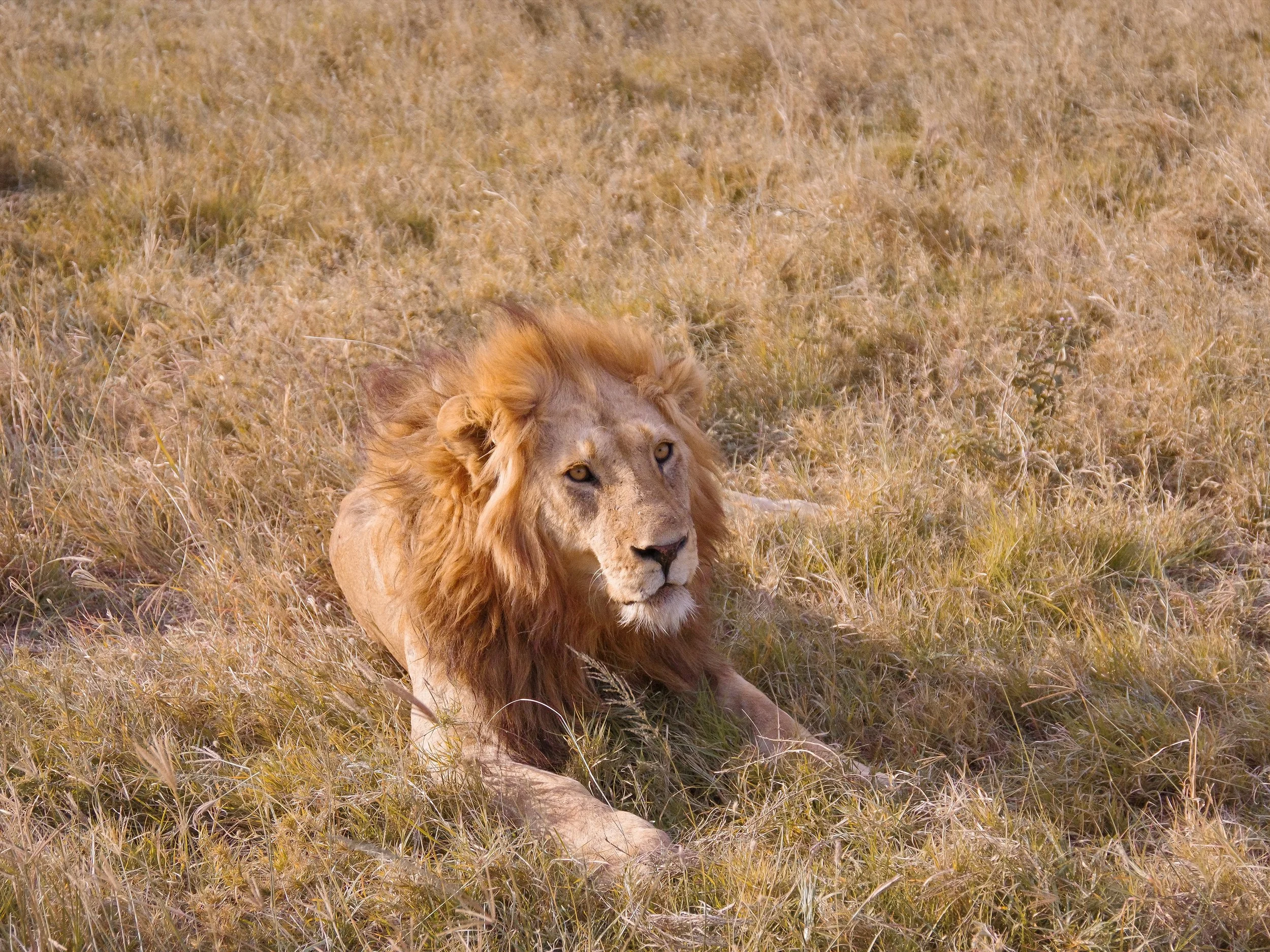
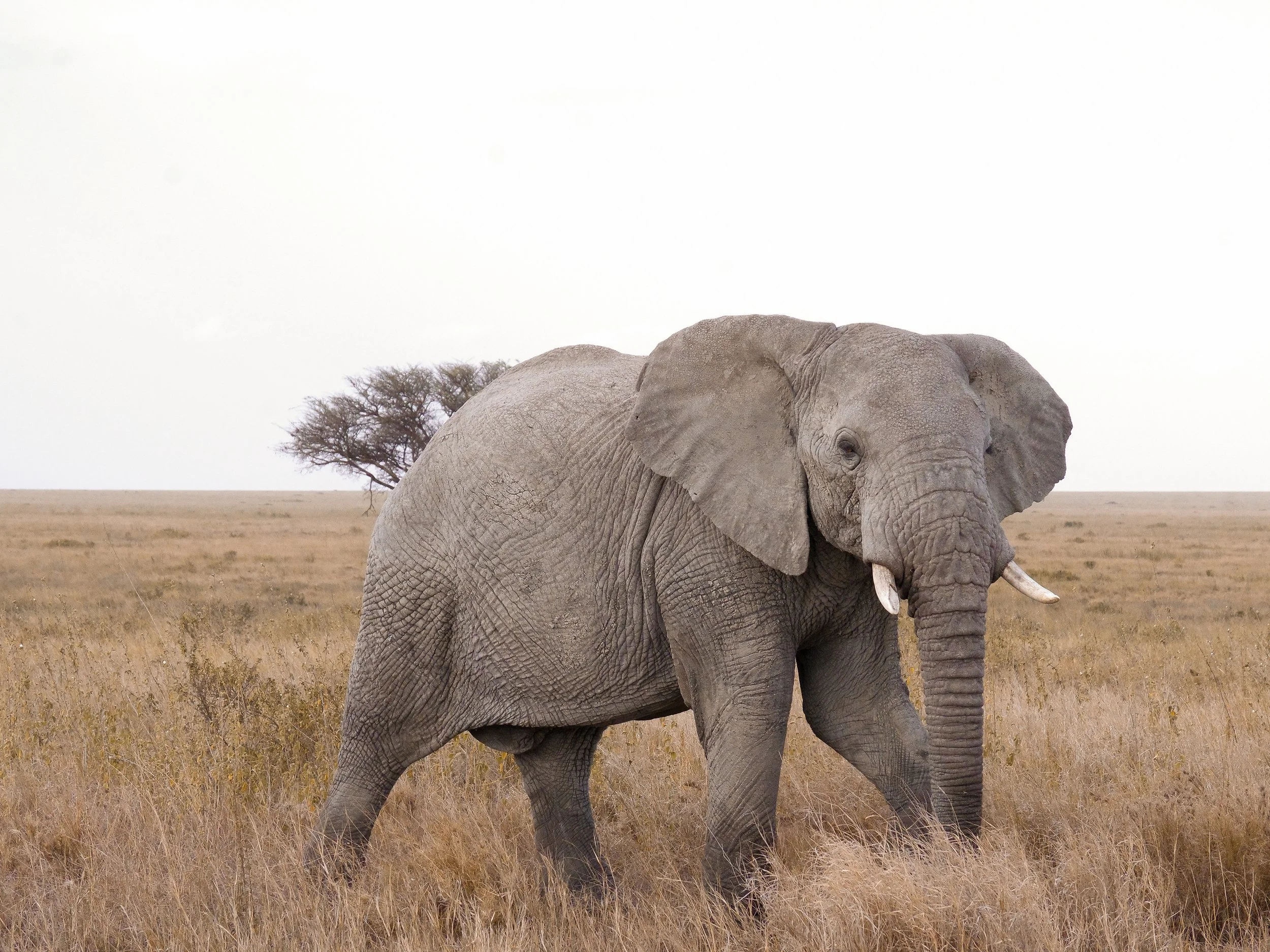
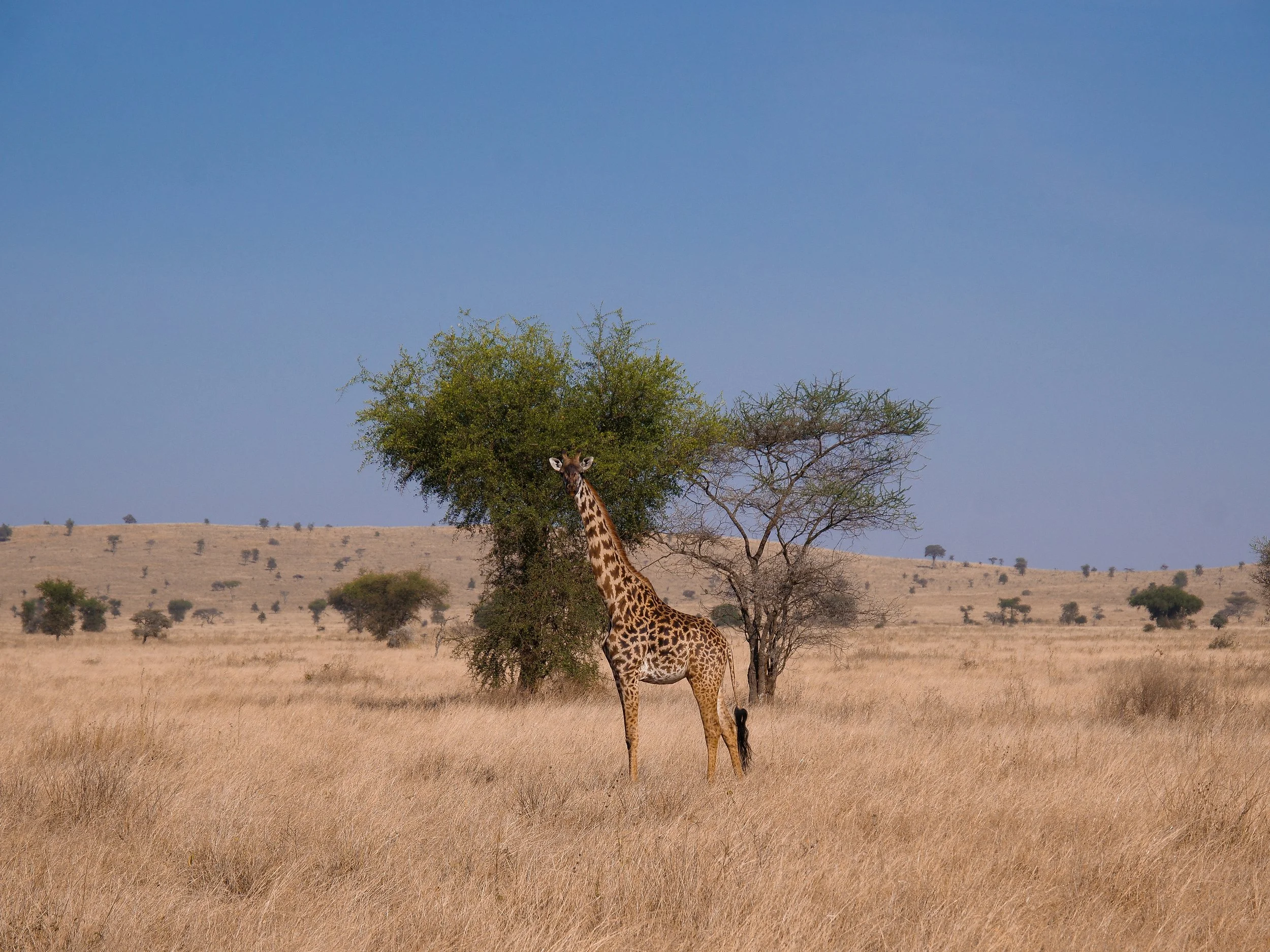
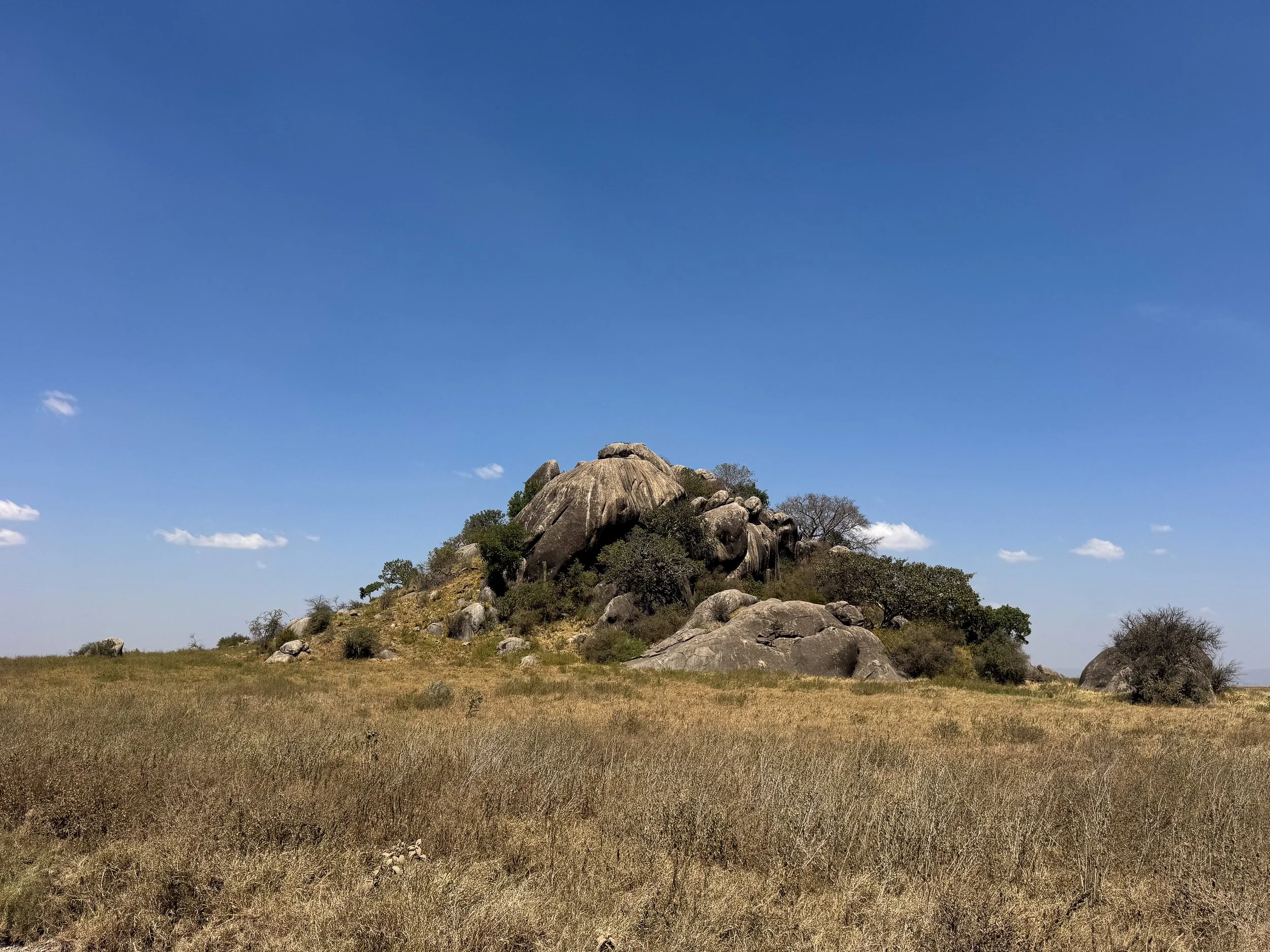
Elsewhere in Tanzania
From Zanzibar's beaches and Swahili heritage to the wildlife rich plains of the Serengeti and the heights of Mount Kilimanjaro, continue exploring Tanzania's diverse landscapes and cultures through these travel guides:
Tanzania Safari Guide: Serengeti, Ngorongoro & Wilderness Camping. Journey through Tanzania's vast landscapes where wildlife and migrating herds roam across endless plains and ancient calderas alongside remote safari camps.
Mount Kilimanjaro Guide: Lemosho Route, Mountain Camping & Uhuru Peak. Trek through Mount Kilimanjaro's changing landscapes where alpine scenery, mountain camps and summit trails lead to Africa's highest point at Uhuru Peak.
For Next Time…
One week in Zanzibar was not nearly enough time to enjoy this Indian Ocean paradise. When we return, we plan to explore the forests in the island’s interior and other nearby islands.
Jozani Forest. A tropical forest in the south of the island with rainforest, mangroves and coastal ecosystems. It’s home to chameleons, dolphins and colobus monkeys.
Pemba Island. A large island a part of the Zanzibar archipelago. It’s famed for its coral reefs, abundant marine life, white sand beaches, tropical forests and spice farms.
Mount Kilimanjaro Guide: Lemosho Route, Mountain Camping & Uhuru Peak
Trek through Mount Kilimanjaro's changing landscapes where alpine scenery, mountain camps and summit trails lead to Africa's highest point at Uhuru Peak.
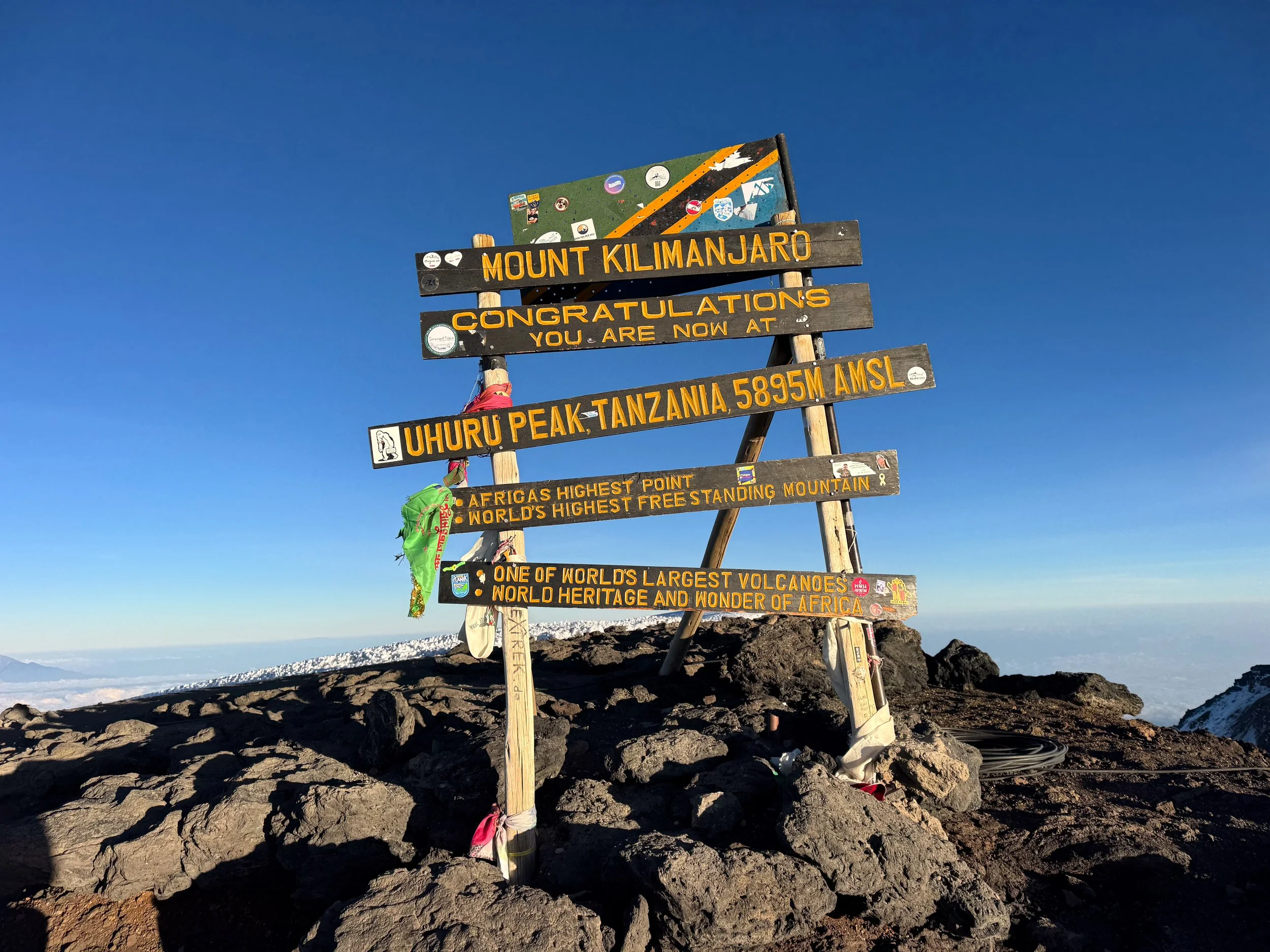
Summiting Africa’s Highest Point
Mount Kilimanjaro is Africa’s tallest mountain and one of the world’s Seven Summits. The highest point, Uhuru Peak, tops out at 5,895 meters or 19,341 feet above sea level. While difficult to hike, it’s considered a “walking mountain,” as it doesn’t require specialized equipment or experience to summit. We spent 7 days hiking the Lemosho Route, a scenic route with a higher success rate than others.
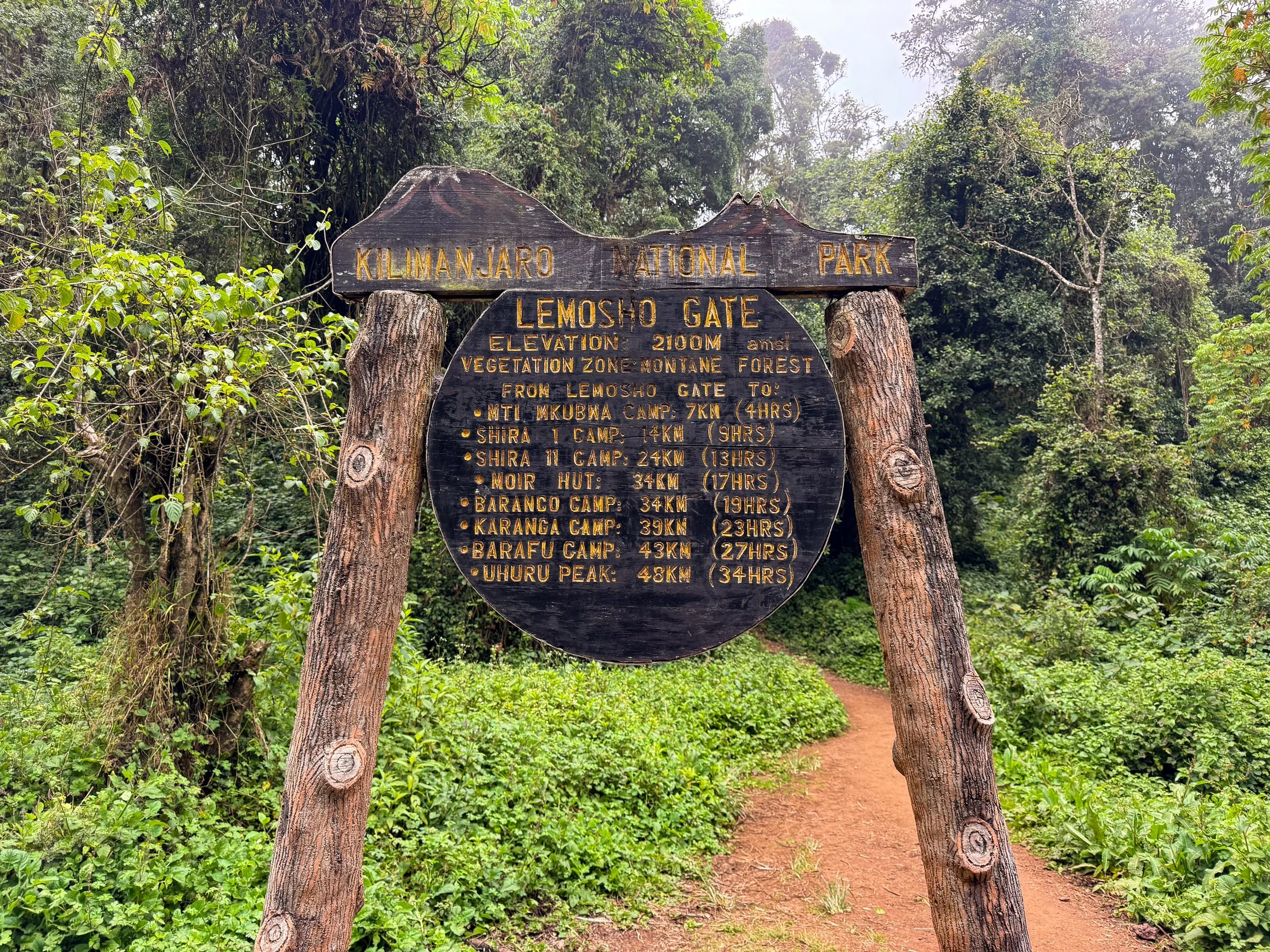
The Lemosho Route
The Lemosho Route is a multi-day trek to the summit of Mount Kilimanjaro. It’s very scenic, leading through picturesque landscapes and all of the mountain’s climate zones. The summit becomes visibly closer each day of the hike, offering rewarding views. The Lemosho Route is best for slowly acclimating to the increases in altitude. It takes 8 days but can be completed in 6 or 7 days, depending on speed and acclimatization. The route has an elevation gain of 3,795 meters (12,450 feet) to reach the summit. It covers a distance of 48km (30 miles) to the Uhuru Peak.
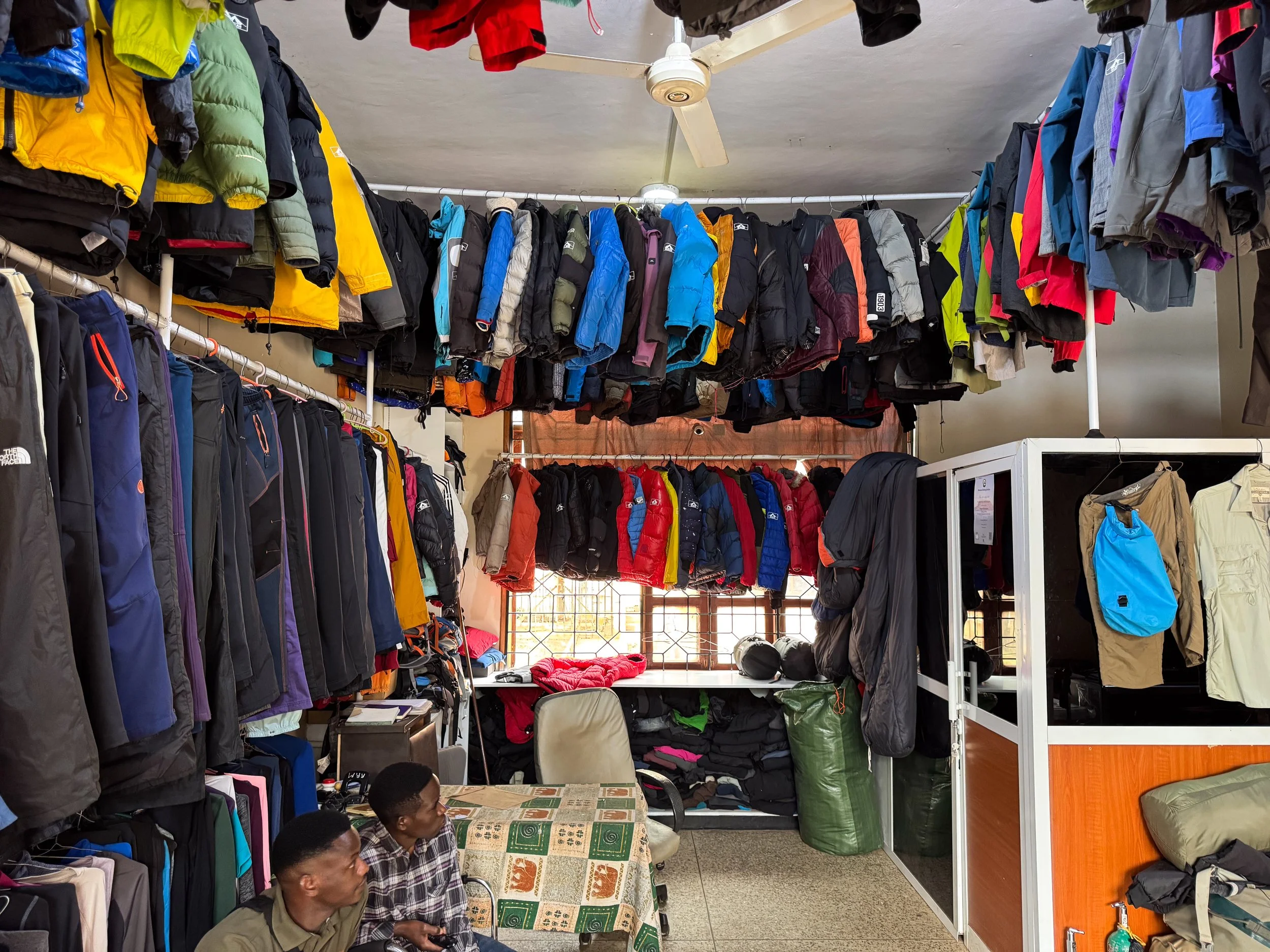
Preparation
The day prior to beginning our Mount Kilimanjaro hike gave us time to prepare for the adventure of a lifetime. We were introduced to our guide who briefed us on the week ahead and inspected our gear. He brought us to RRM Outdoor Rental Equipment Stores to rent all missing gear needed for the hike. Afterwards, we went shopping for snacks at the Rafiki Supermarket and purchased Diamox from the Mount Kibo Pharmacy. We spent the evening relaxing at our hotel and sipping on a Kilimanjaro Lager as a toast to the upcoming trek!
Note. Read further below for detailed hiking tips, our packing list, estimated costs and tipping procedures.
Day One
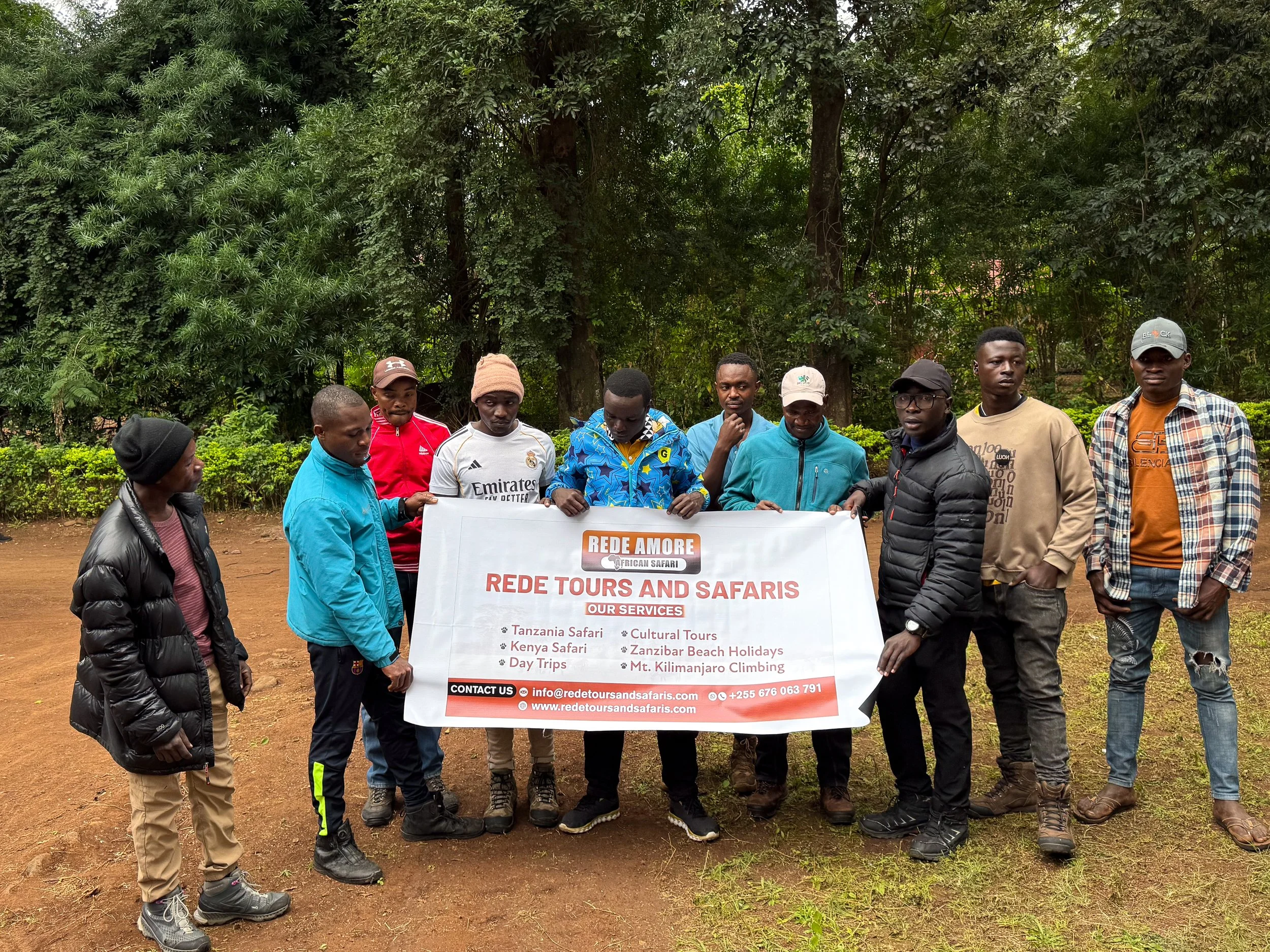
Introductions. The first day of our hike to the summit of Mount Kilimanjaro began with an introduction to the crew that would be accompanying and supporting us over the week ahead. Our guide introduced us to the assistant guide, the cook and team of 10 porters! They sang the Kilimanjaro Song, Jambo Bwana, to warmly welcome us. We later heard it countless times at camps and along the trail to the summit.
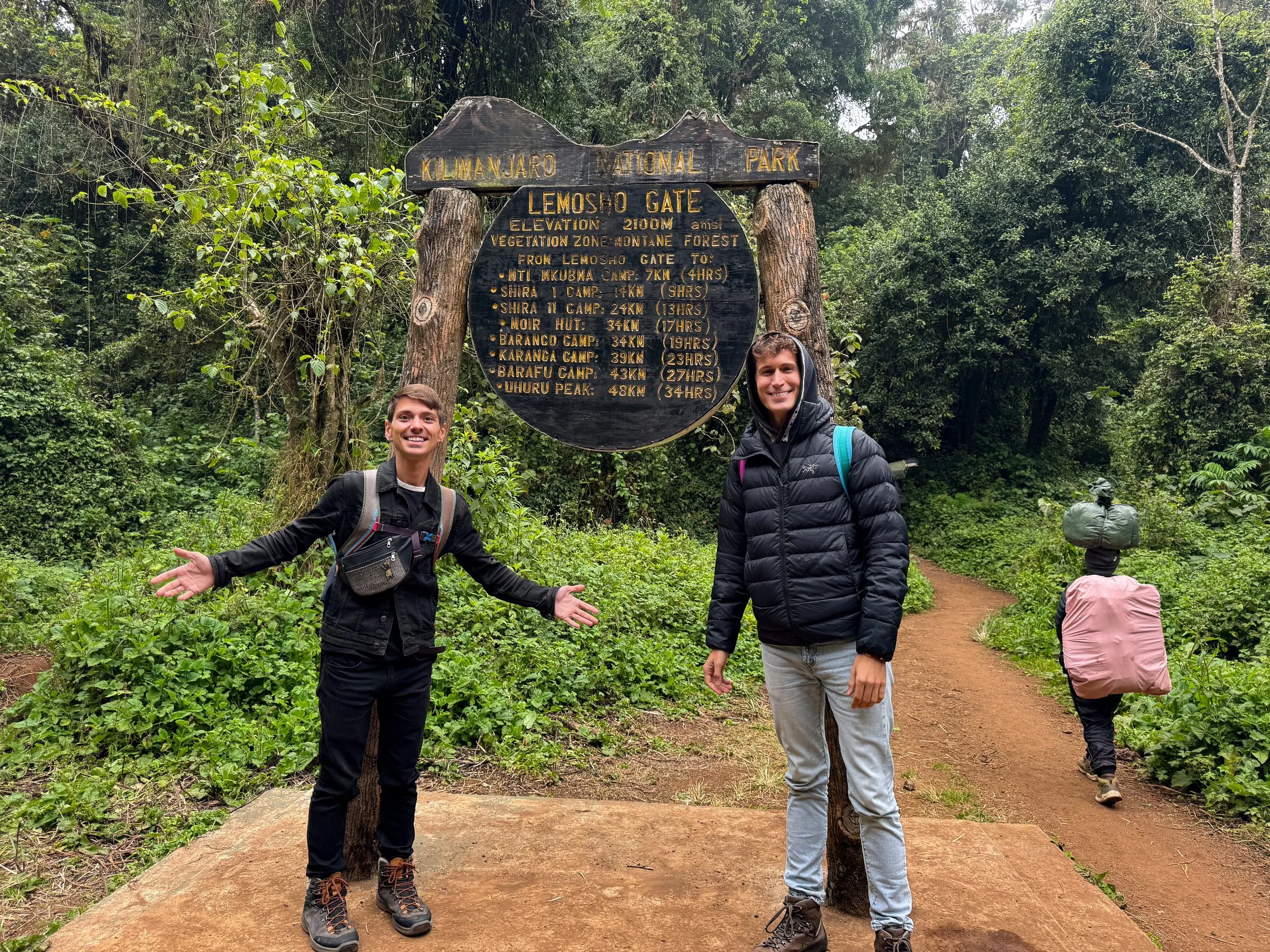
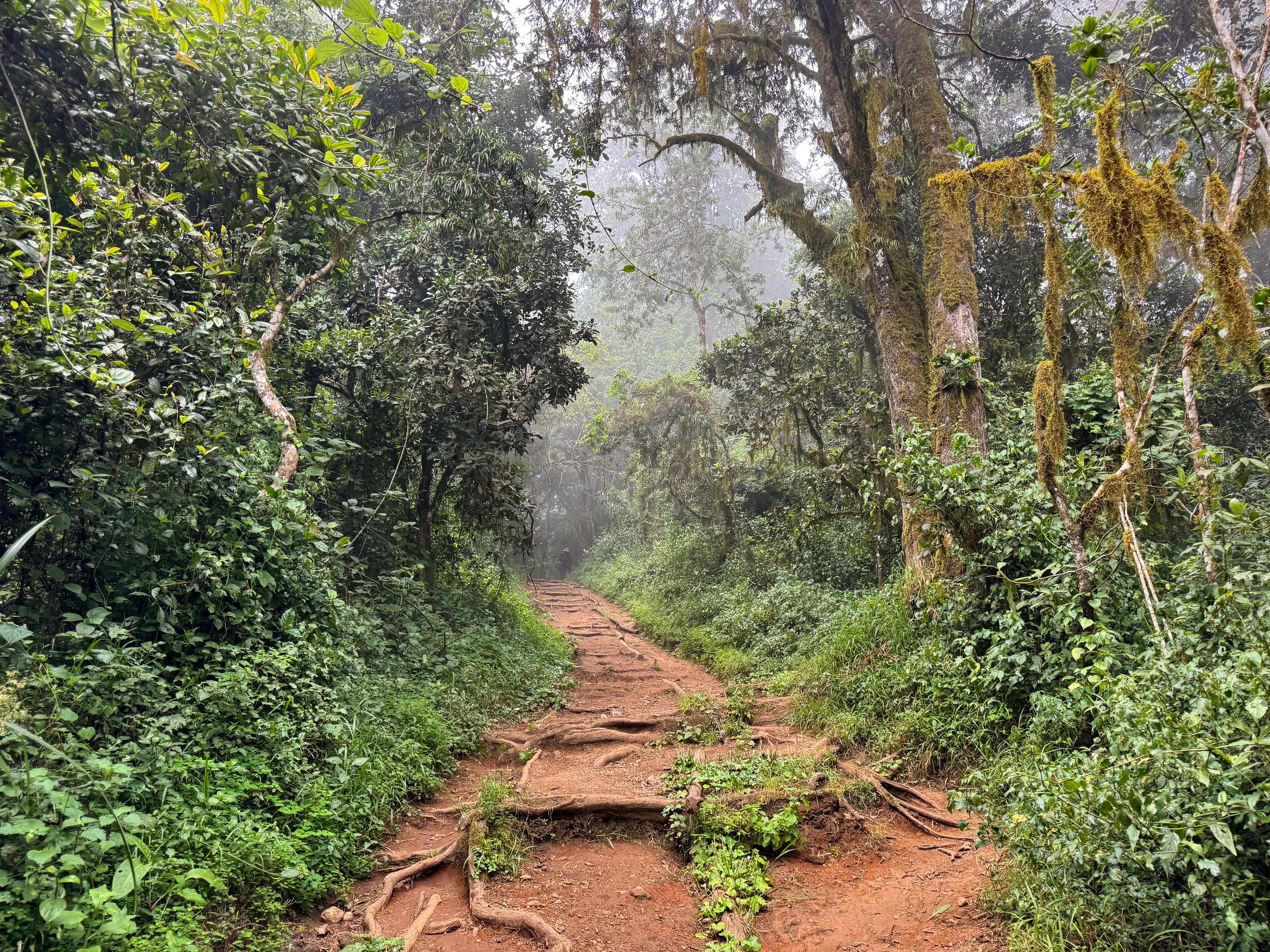
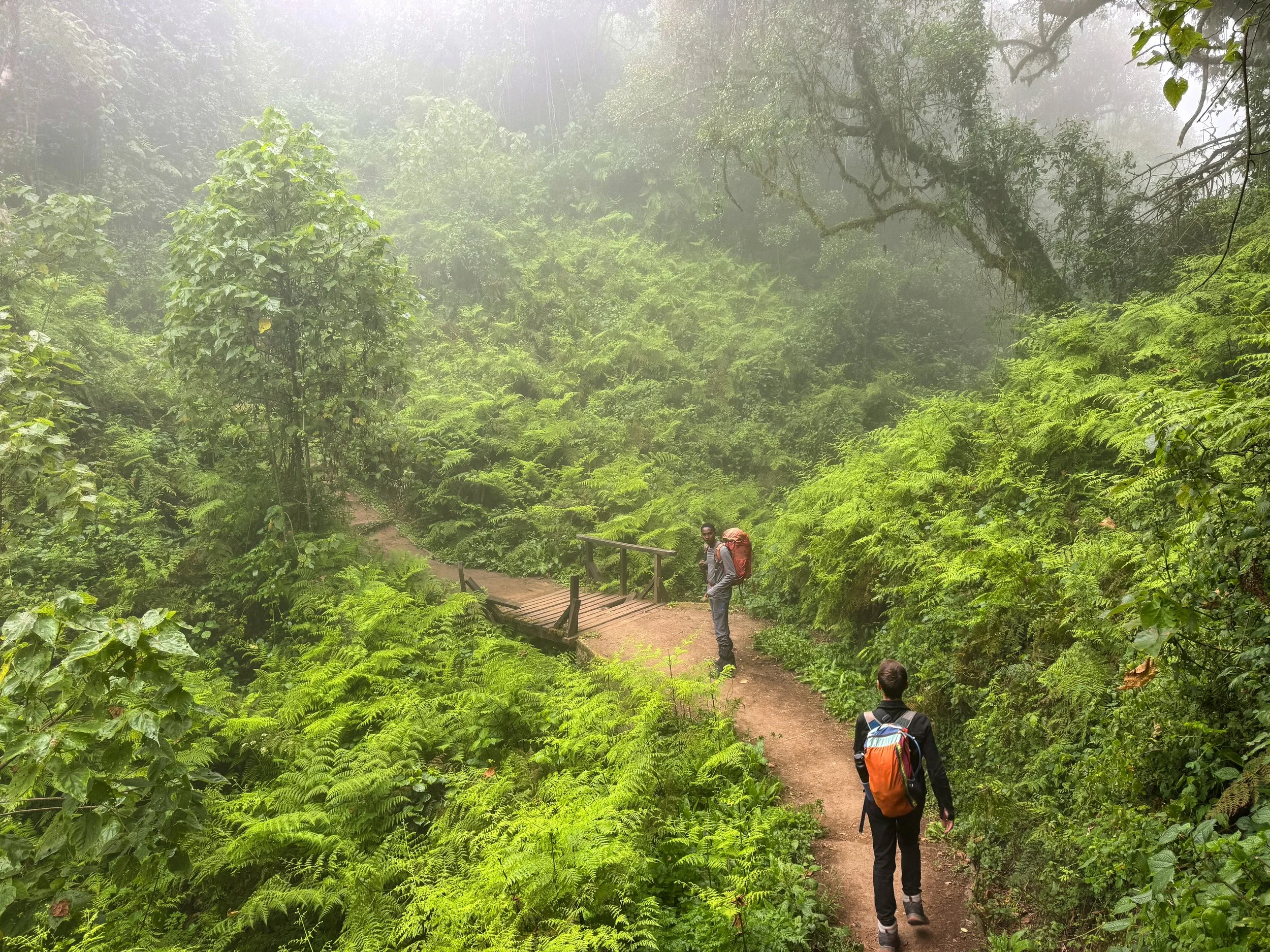
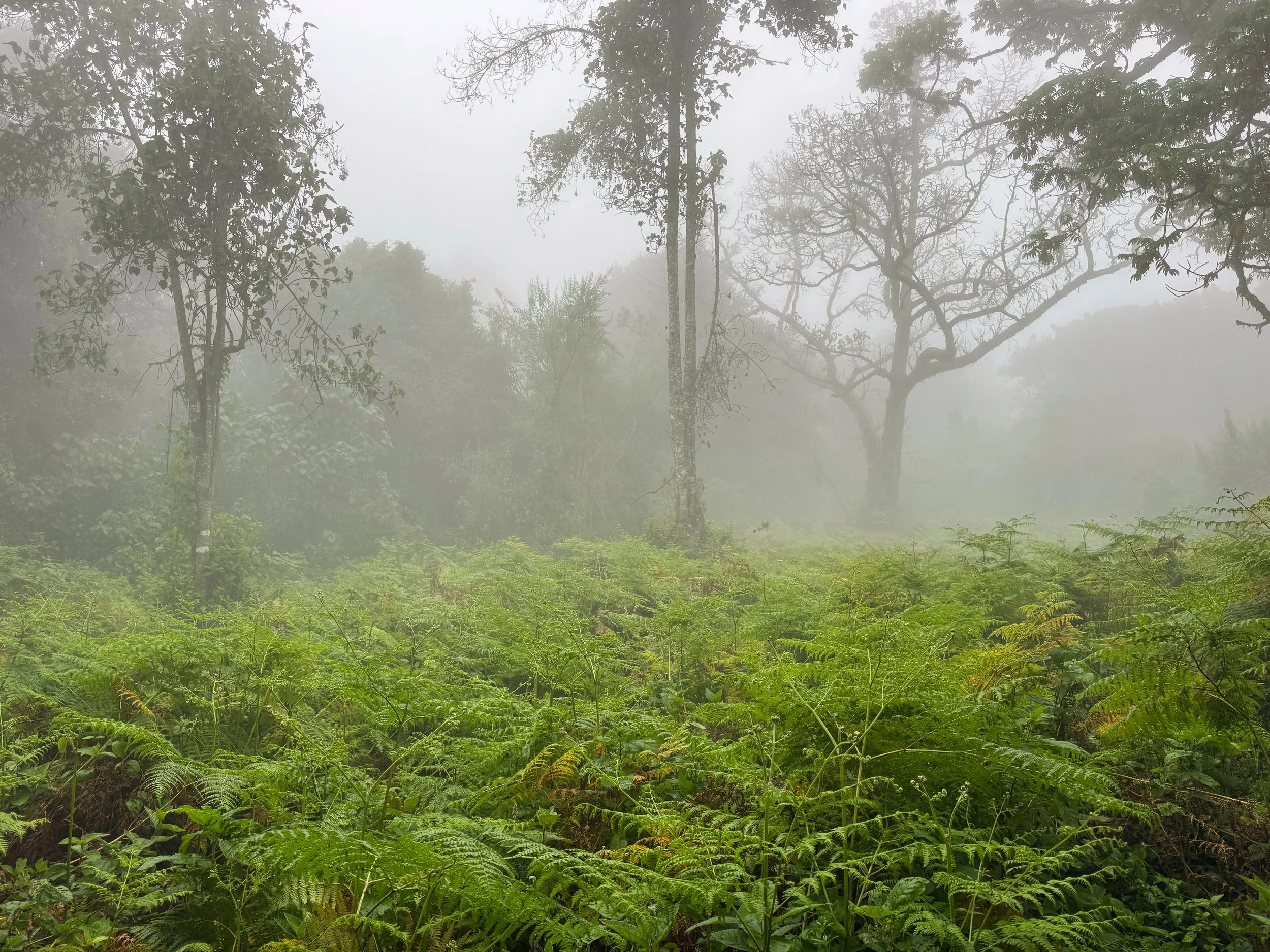
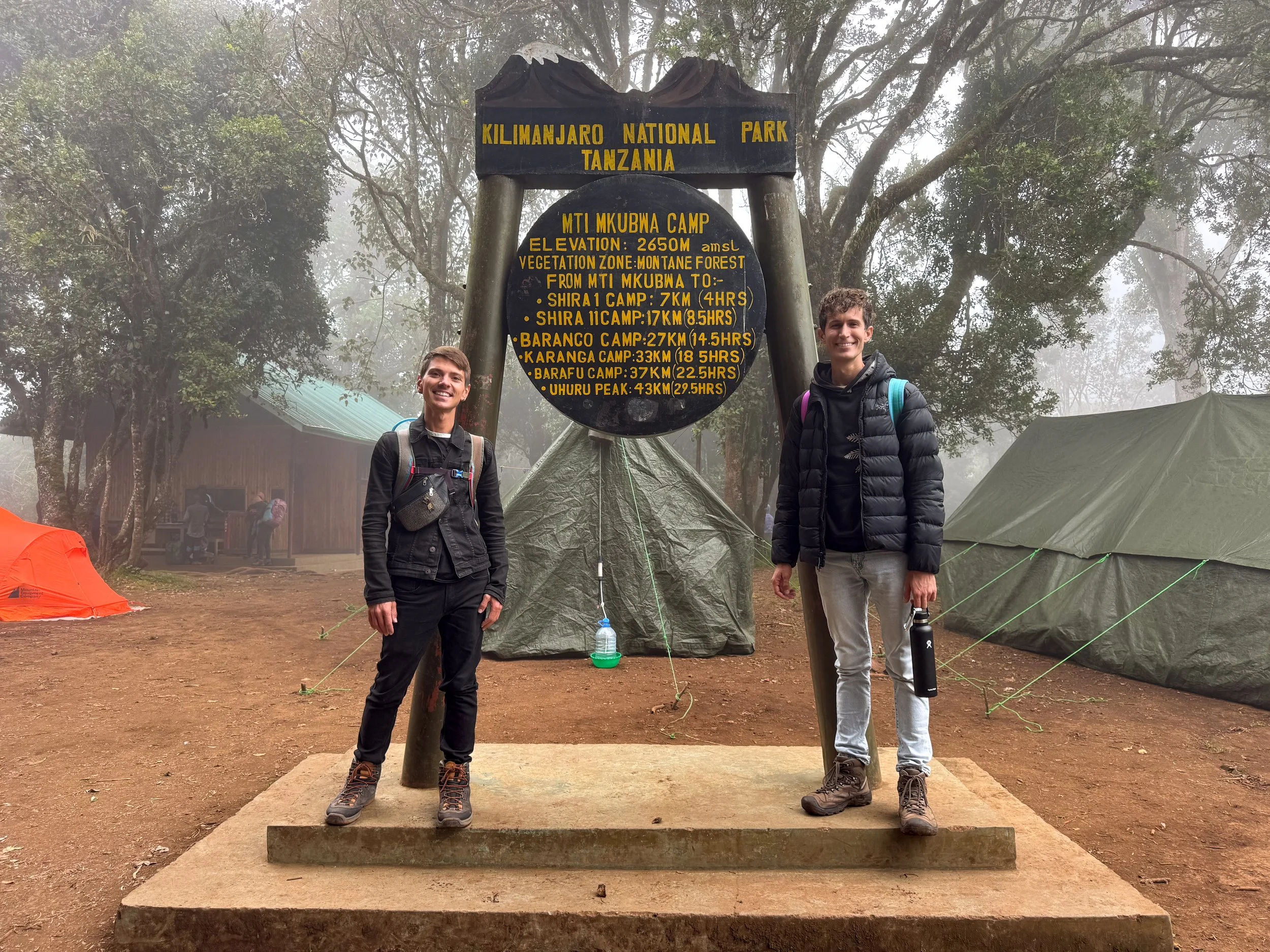
Lemosho Gate. The crew shuttled us to the Lemosho Gate for the official start of our hike. En route, we passed through The Cultivation Zone, one of five climate zones on the mountain, characterized by hilly fields of hardy crops and pine trees. The gate marks the start of the Lemosho Route, beginning at an elevation of 2,100 meters (6,890 feet). The first 7km leads through the Vegetation Zone to the Mti Mkubwa Camp.
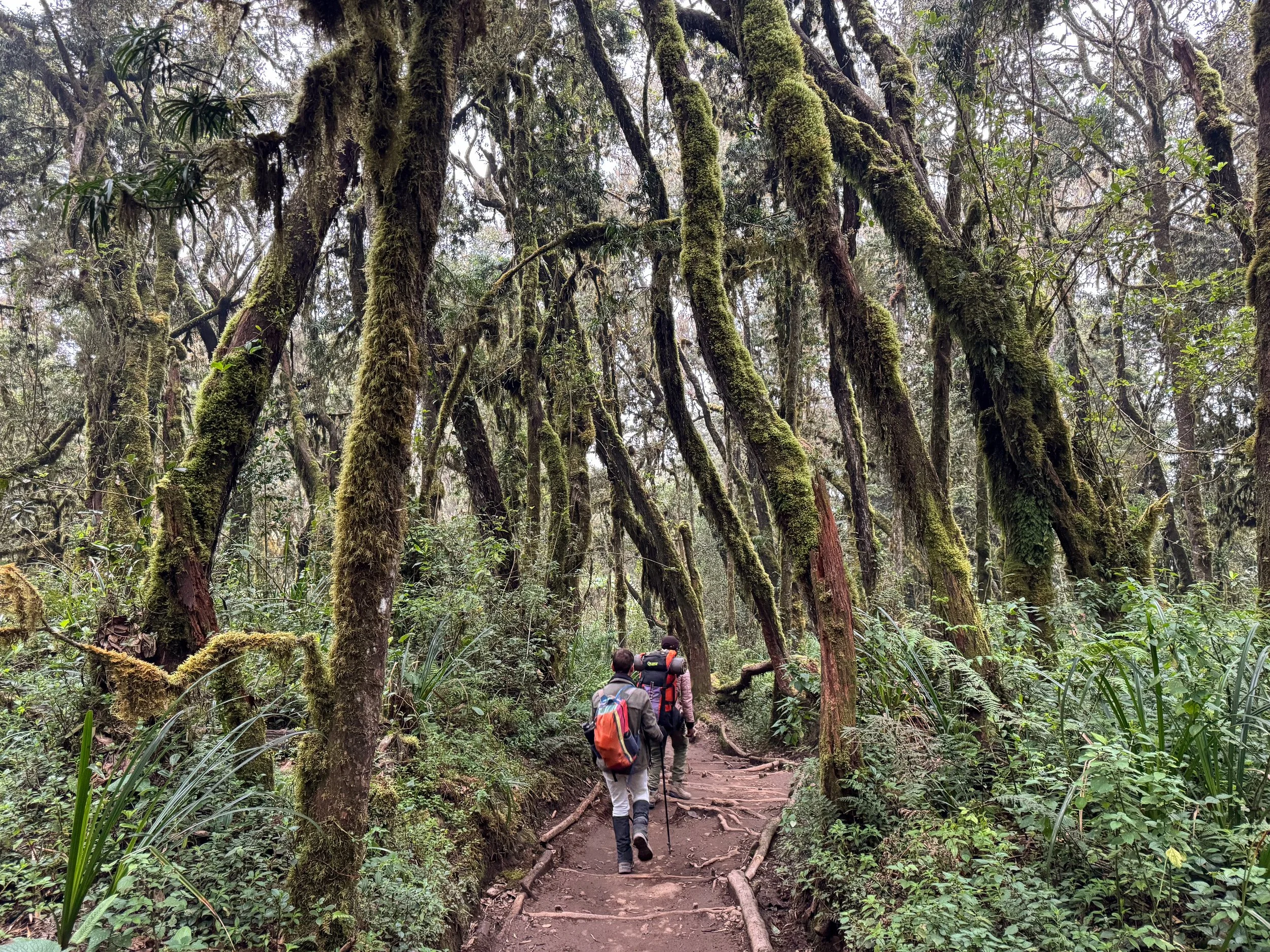
The Vegetation Zone. The Vegetation Zone is the second of five climate zones on the mountain. We hiked two hours through its verdant cloud forest and foggy pathways to reach the route’s first camp.
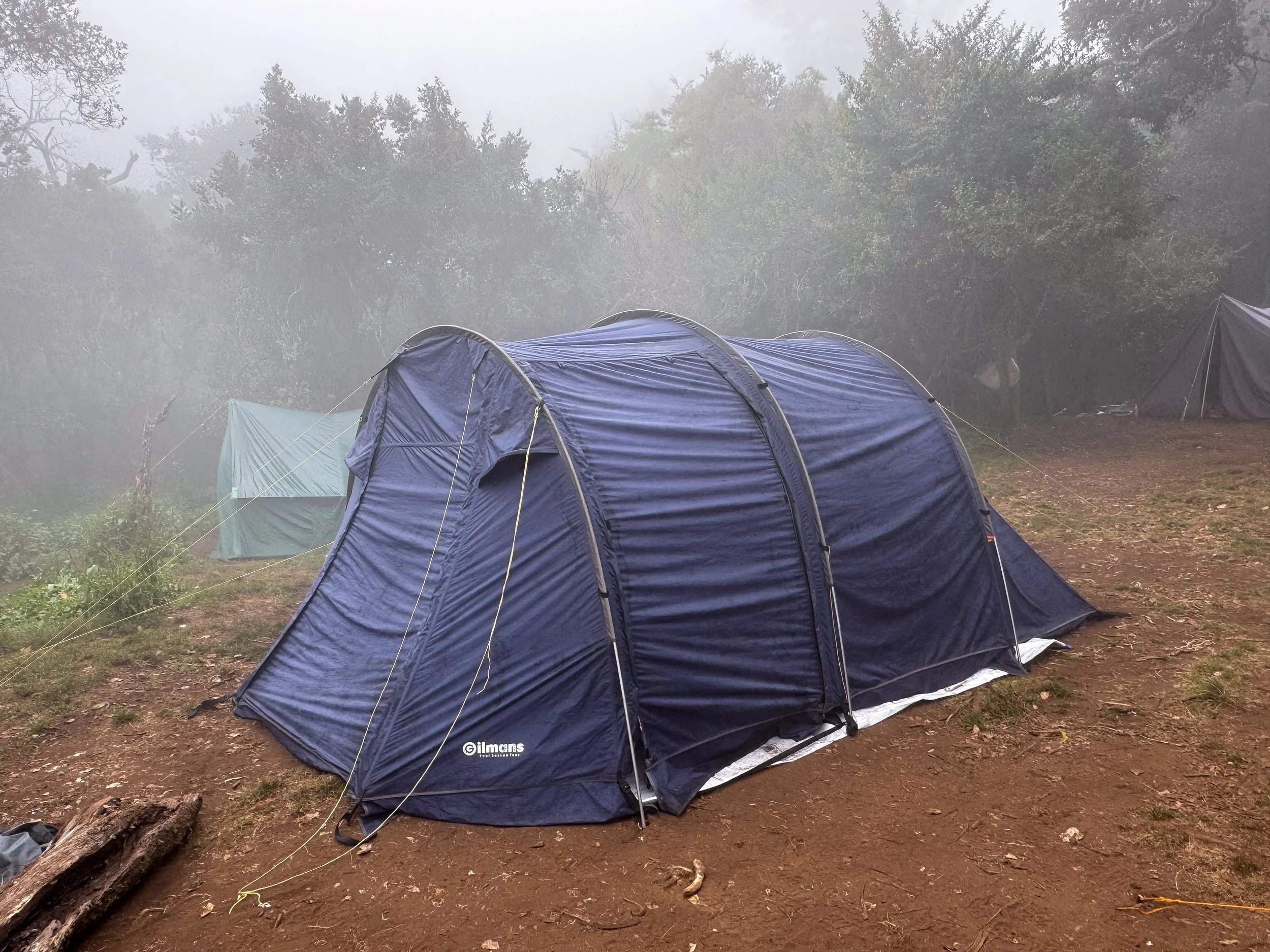
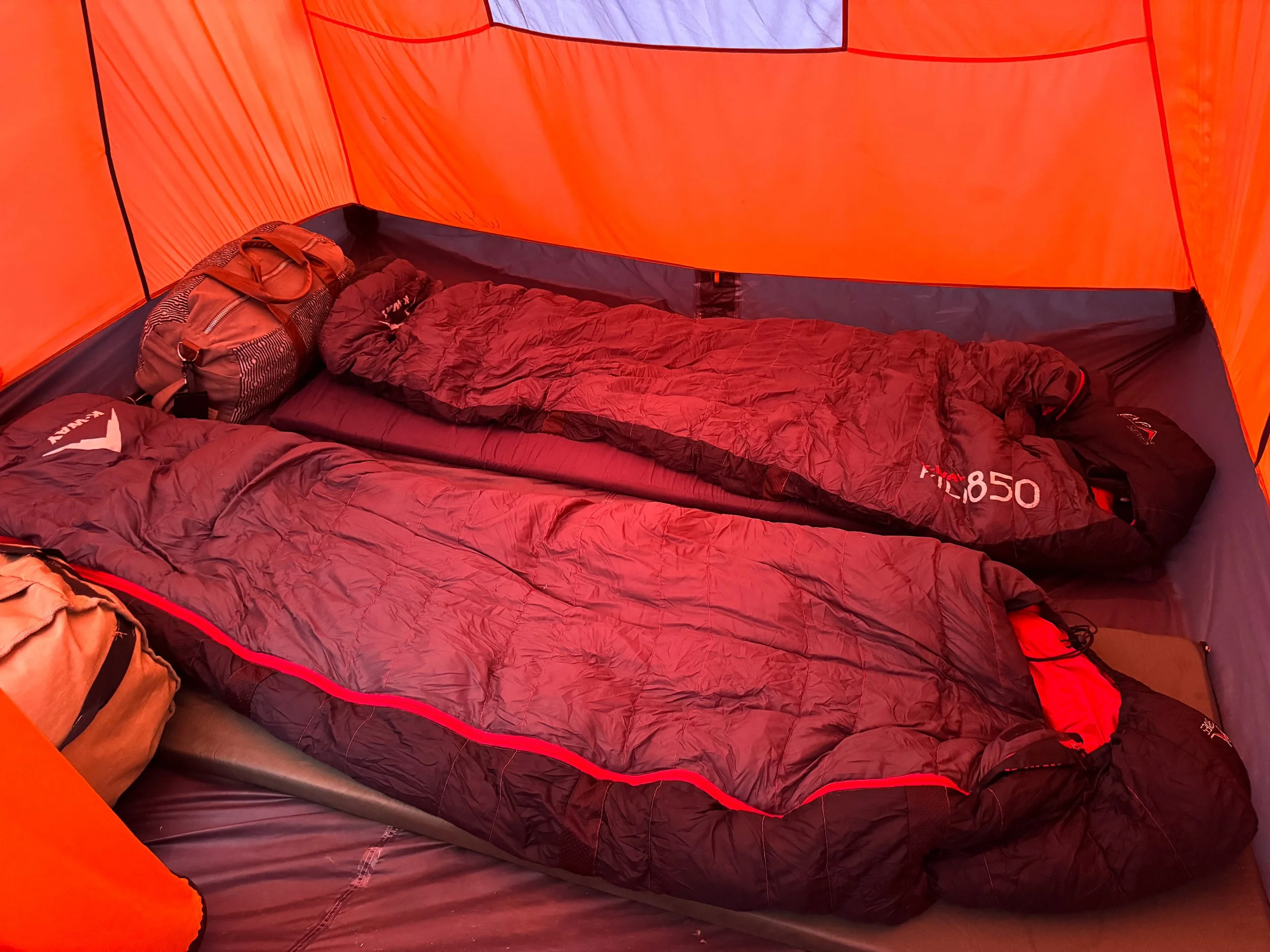
Mti Mkubwa Camp. A small forest clearing surrounded by dense trees inhabited by wild monkeys. It sits at a relatively low elevation of 2,650 meters (8,695 feet). We met our crew here for our first night on the mountain. They set up our tent and outfitted it with a small dining nook stocked with teas, coffee, spreads and snacks. The cook served us the first of many feasts to come. The meal included cucumber soup, avocado salad, fried potatoes and fish makange. We played cards before bed, waking up in the middle of the night to see the starry arms of the Milky Way stretching across the sky.
Day Two
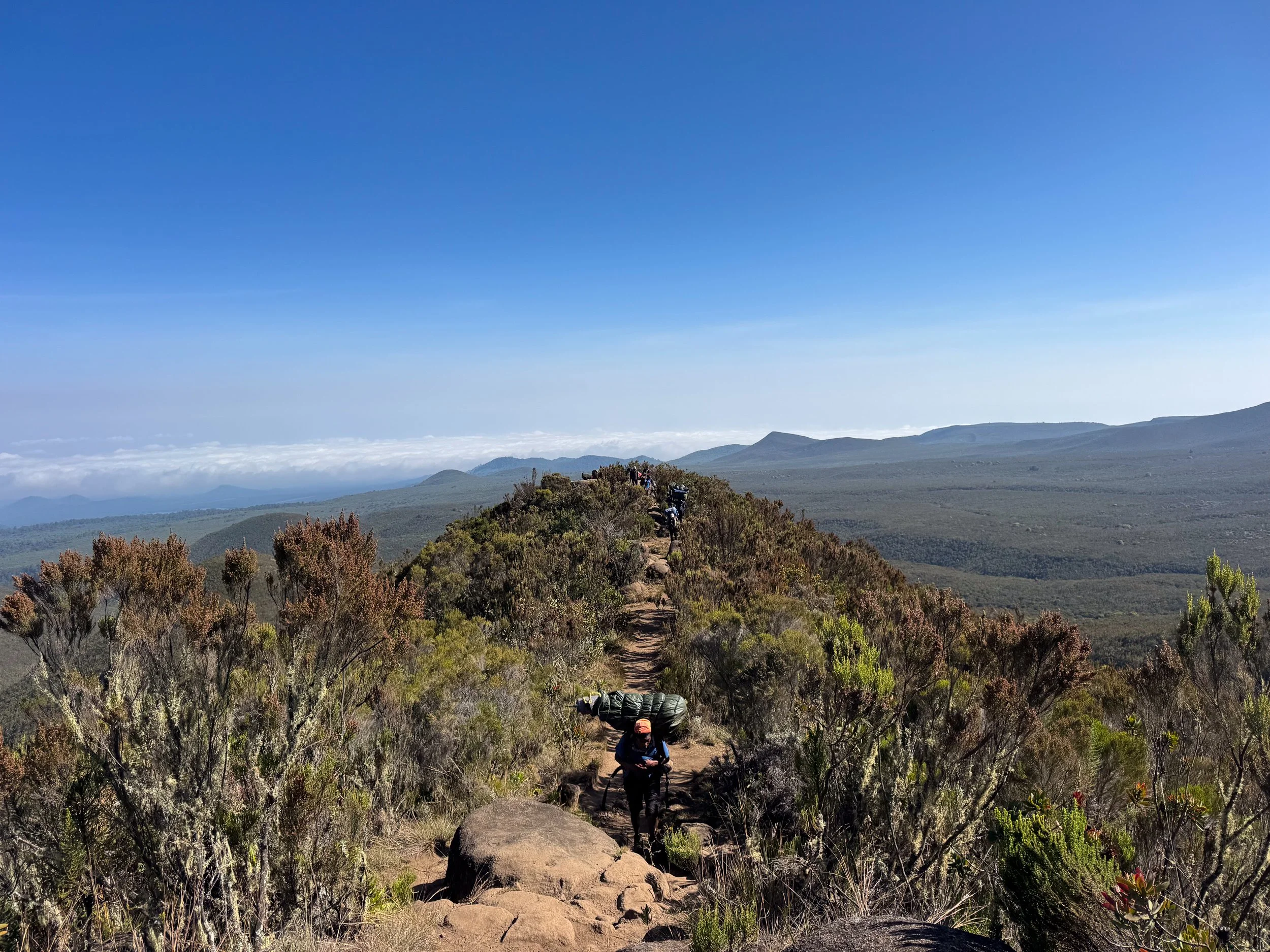
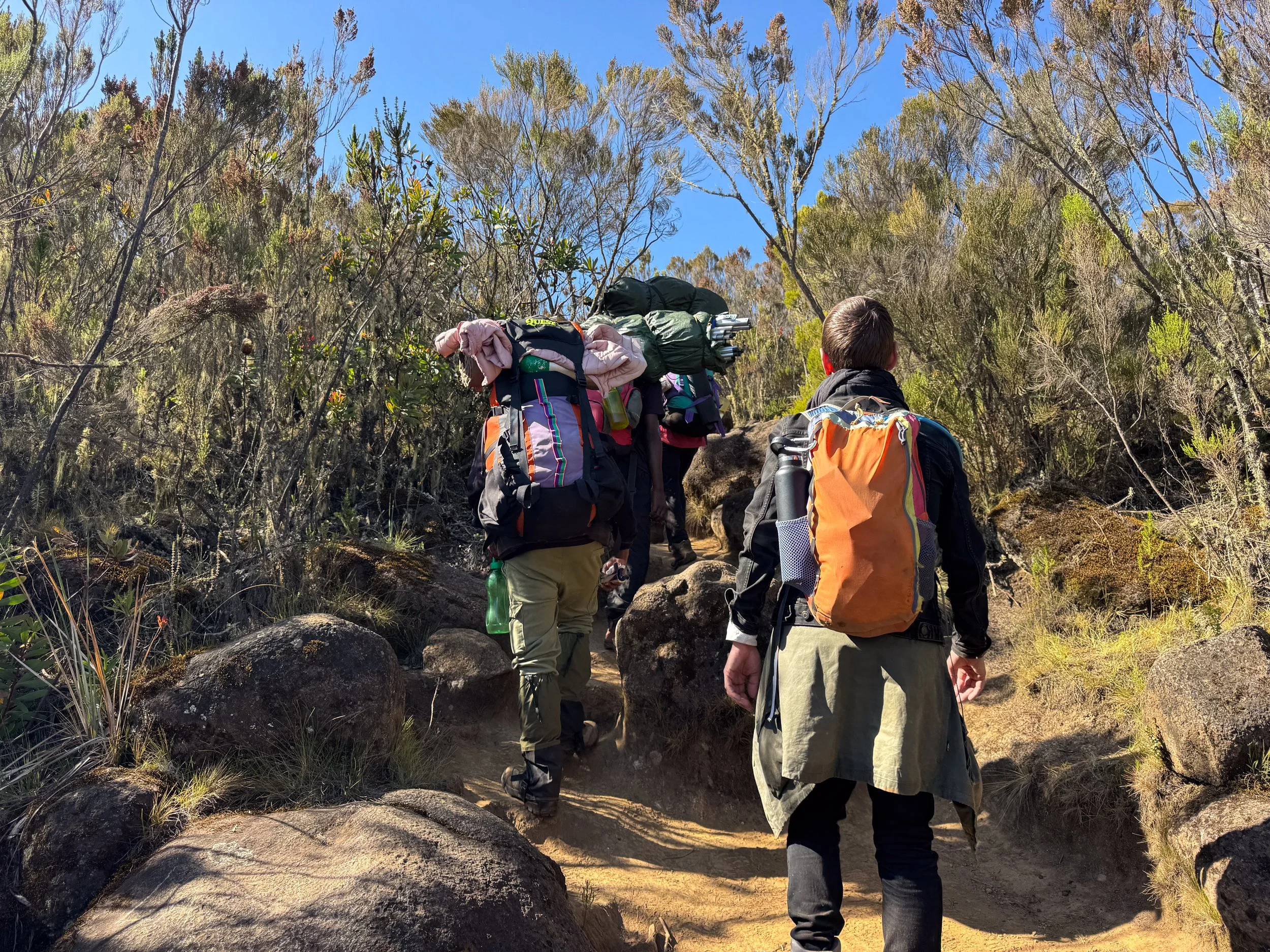
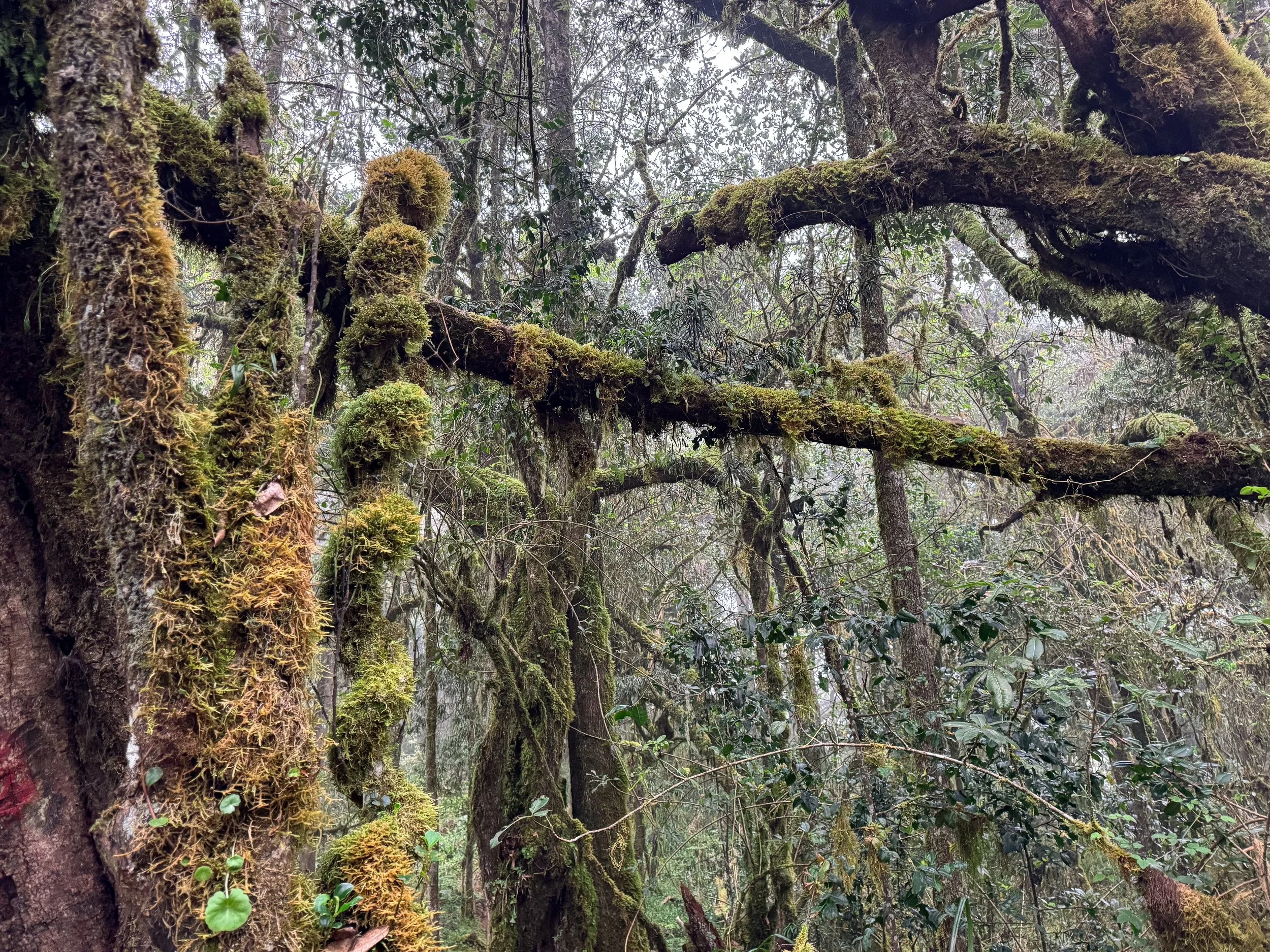
An Early Start. The day began with an early start before the sunrise. The crew prepared “bed tea,” hot water for washing and a breakfast spread comprised of porridge, crepes, omelettes and toast. Soon after, we continued our hike through the Vegetation Zone, passing moss covered trees with colobus monkeys jumping between their branches.
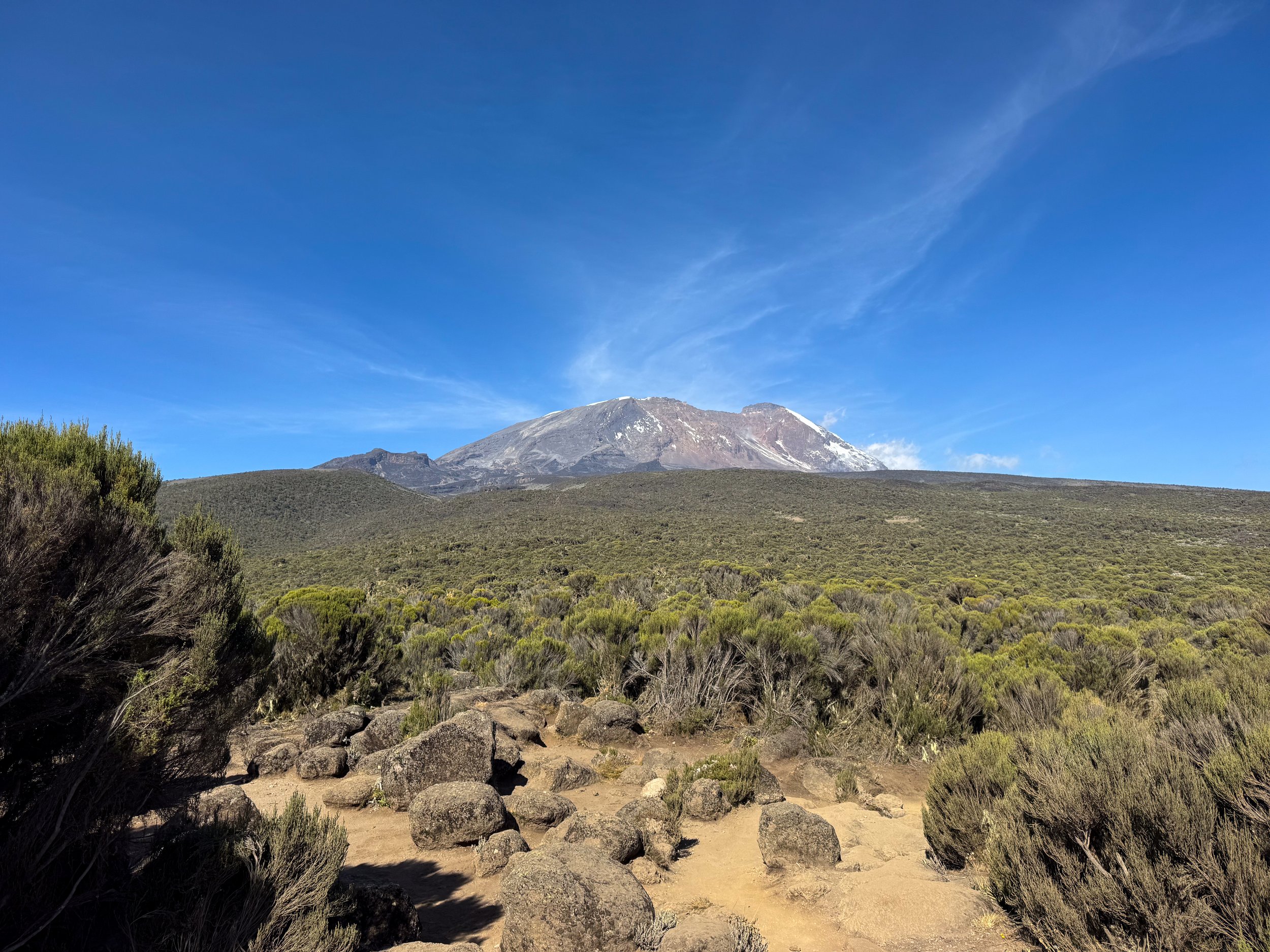
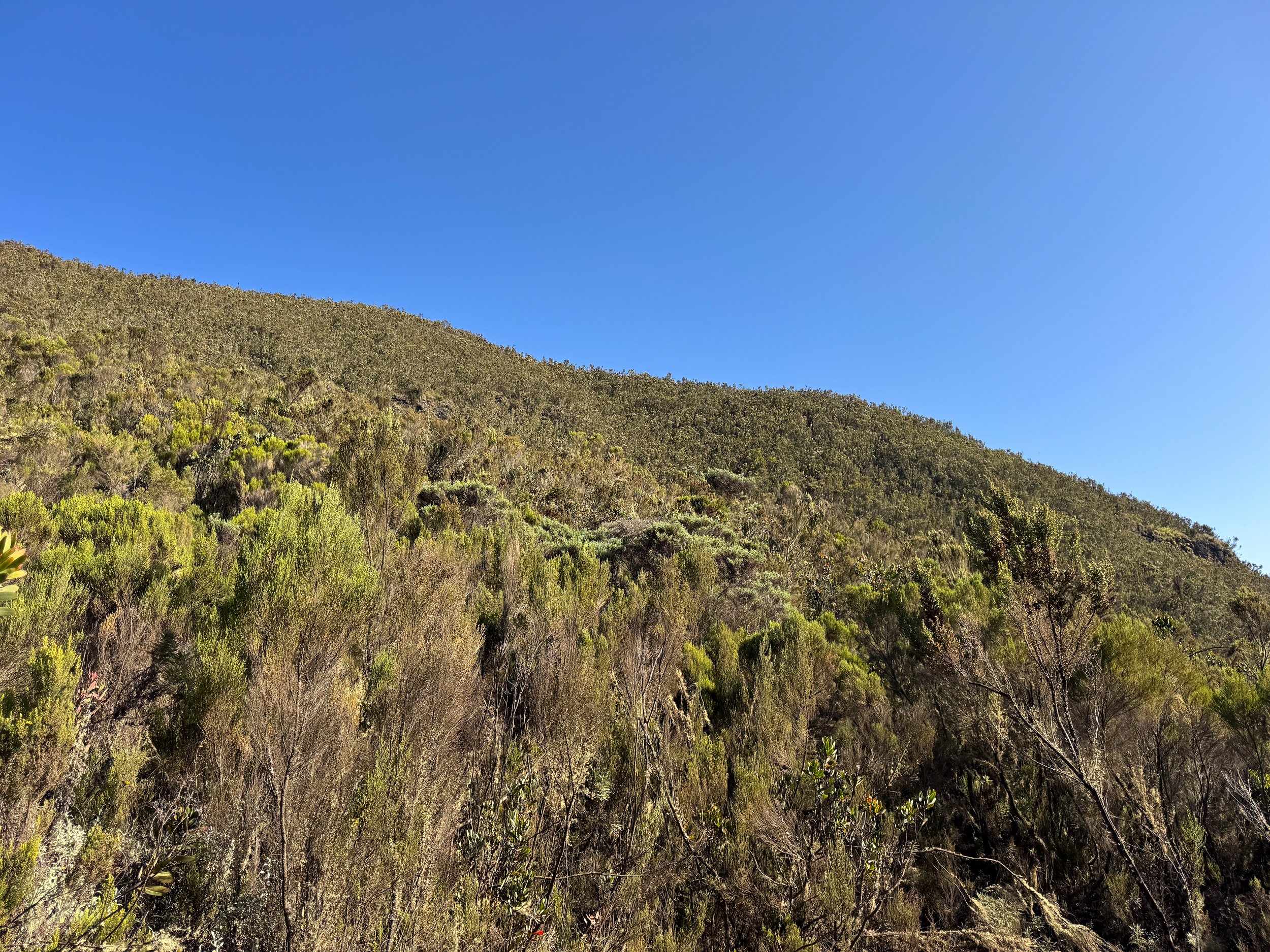
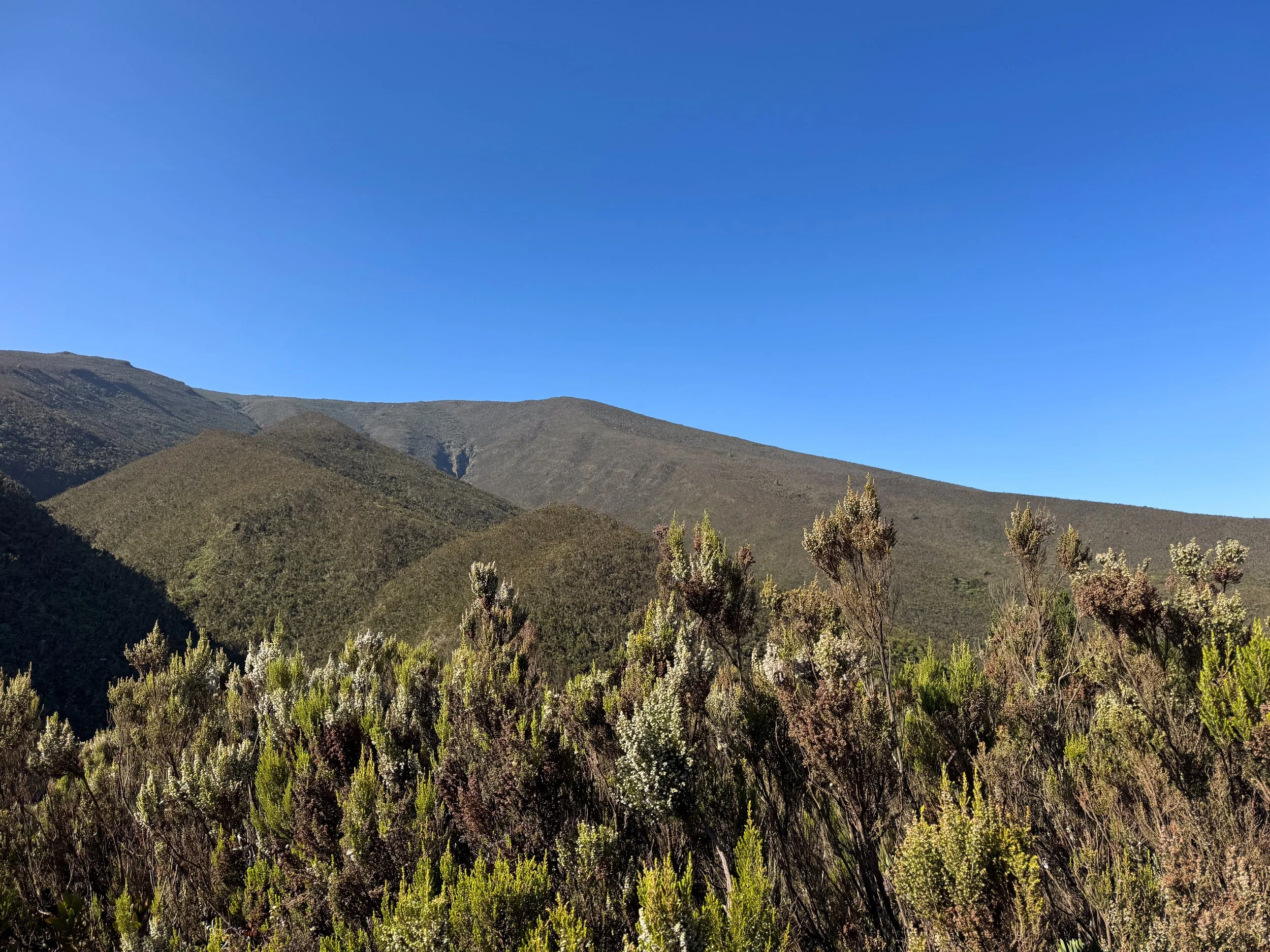
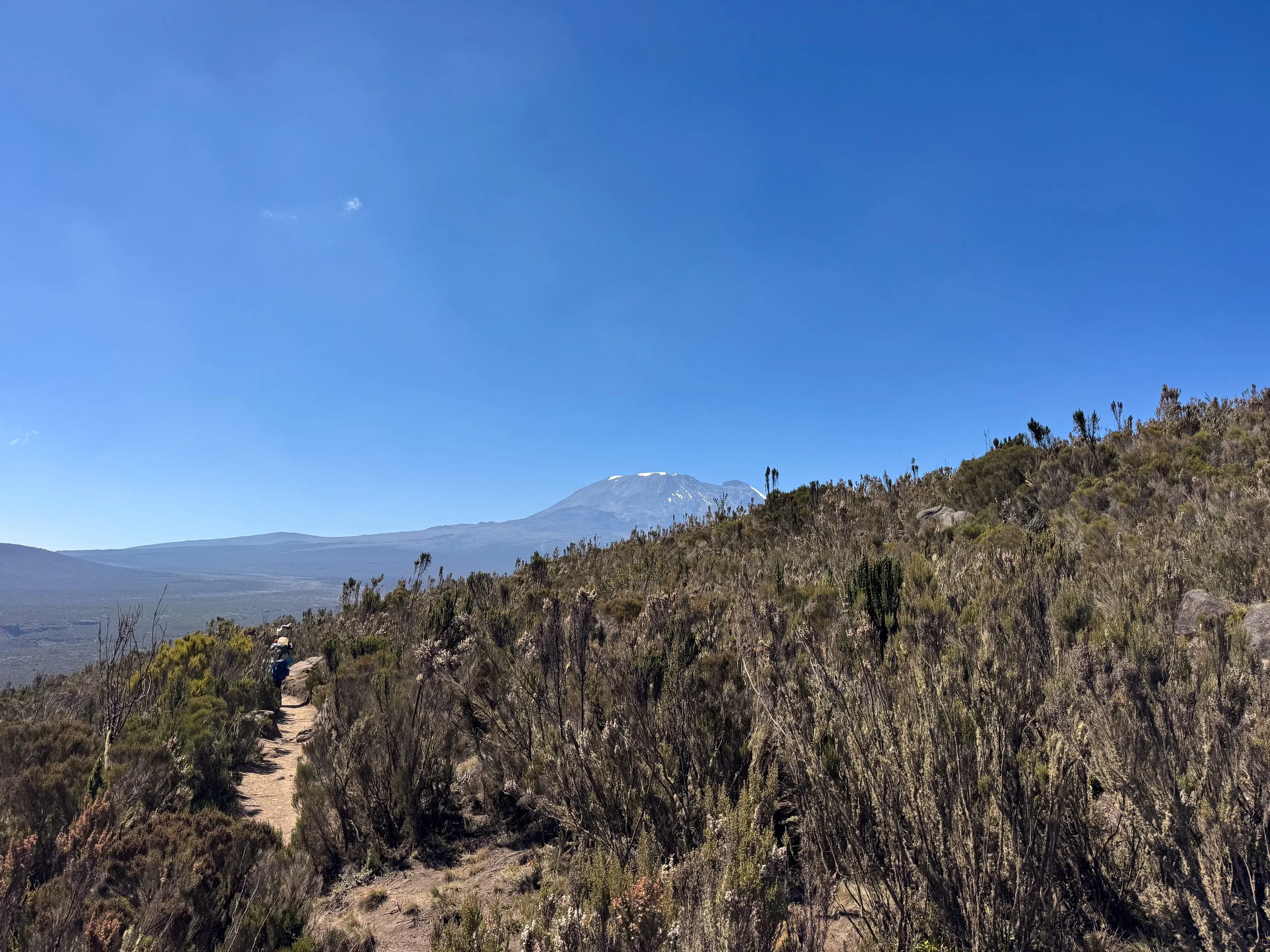
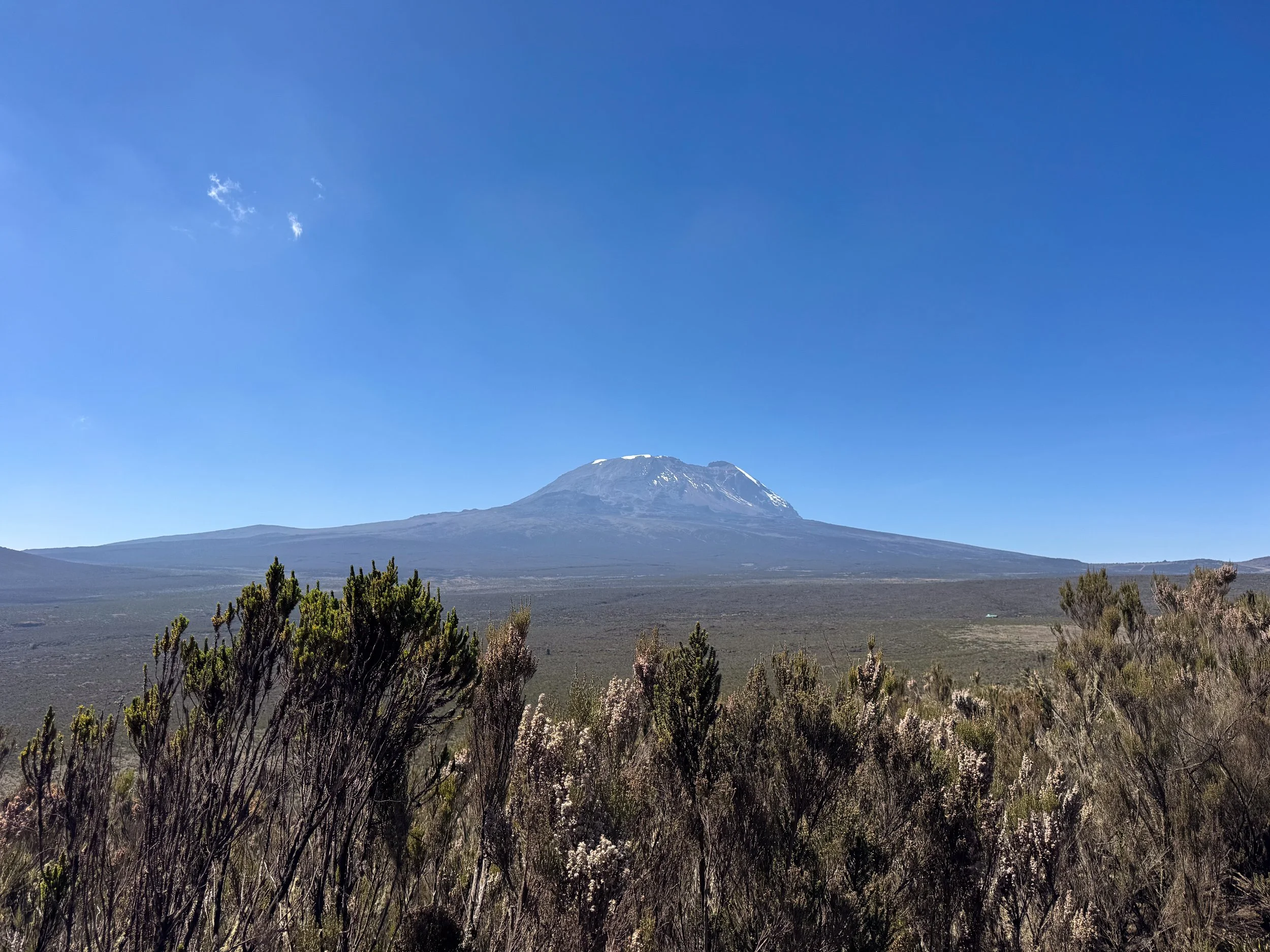
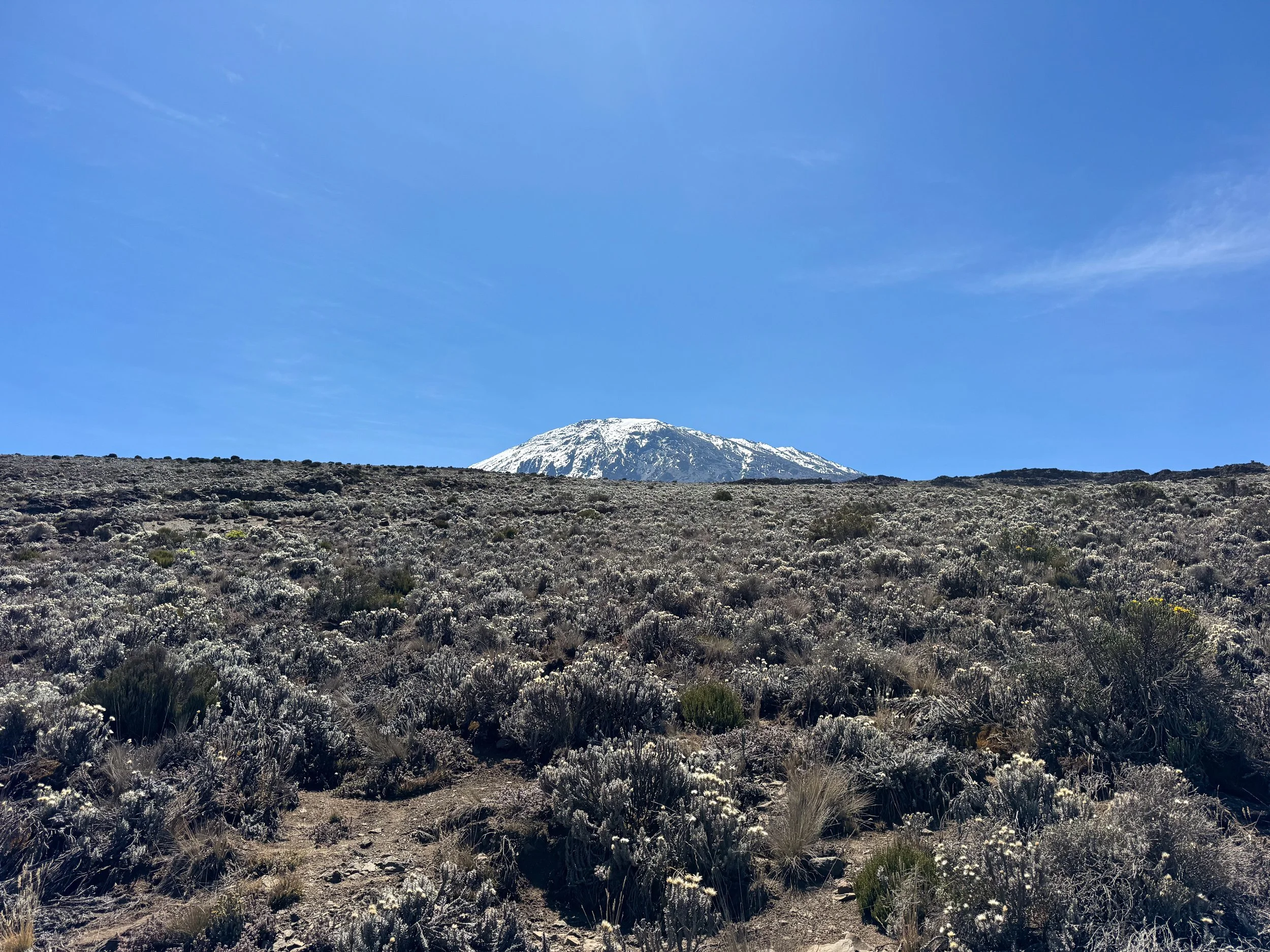
The Moorland Zone. The trail led into The Moorland Zone, the third of five climate zones on the mountain. It’s characterized by low lying bushes, dry grasses, flowering plants and small boulders. The open and dusty trail revealed scenic panoramas of the landscape and distant views of Kilimanjaro’s snow capped peak. We hiked 7km over 4 hours until reaching the Shira 1 Camp.
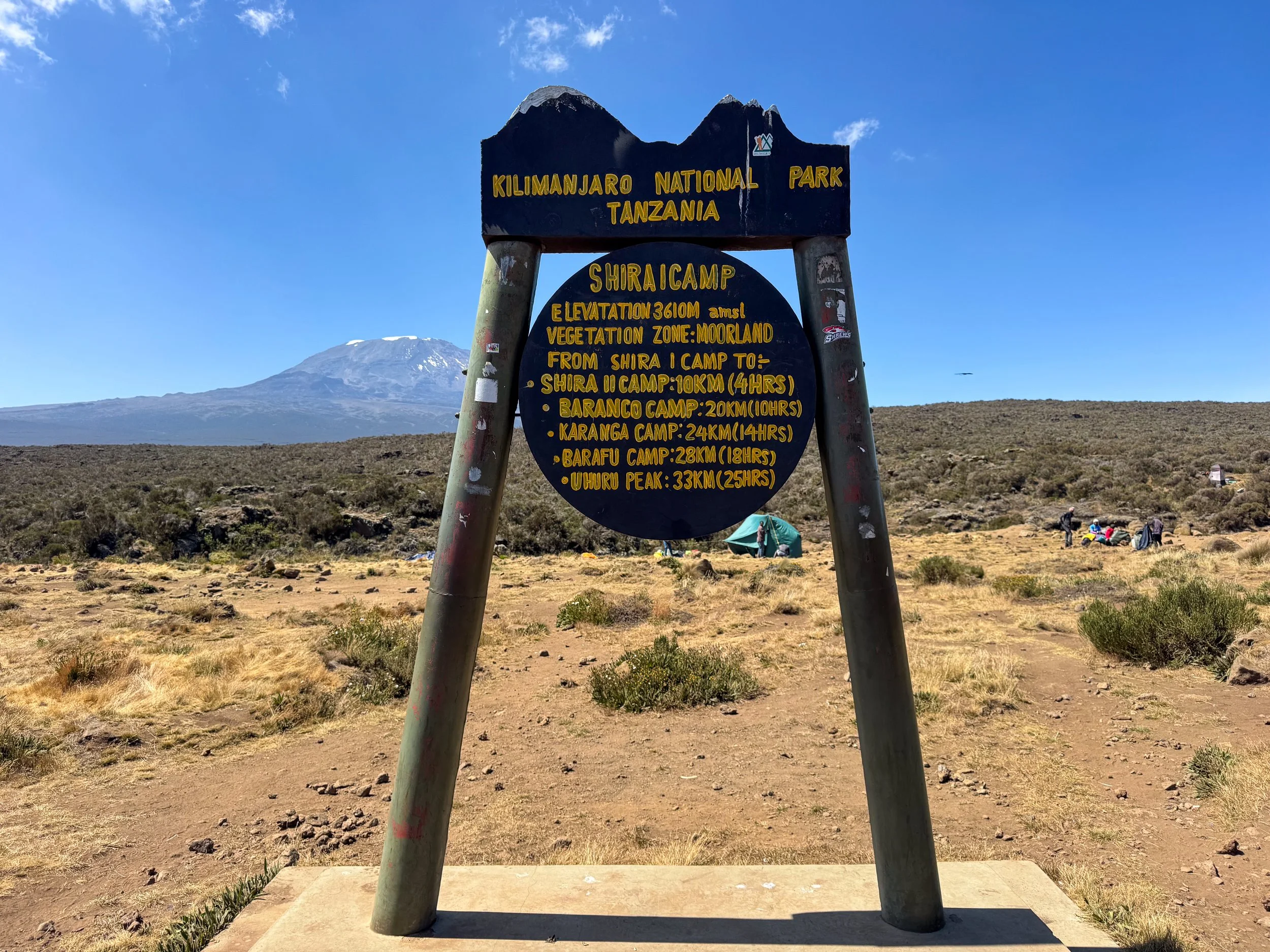
Shira 1 Camp. The first camp on the Shira Plateau, a relatively flat expanse of The Moorland Zone. The camp sits at a moderate elevation of 3,610 meters (11,844 feet). We arrived as the porters finished setting up our tent. Others arrived with large sacs balanced on their heads and packs slung over the shoulders. Ravens flew around us as we enjoyed the scenic views and ate vegetable pasta for lunch.
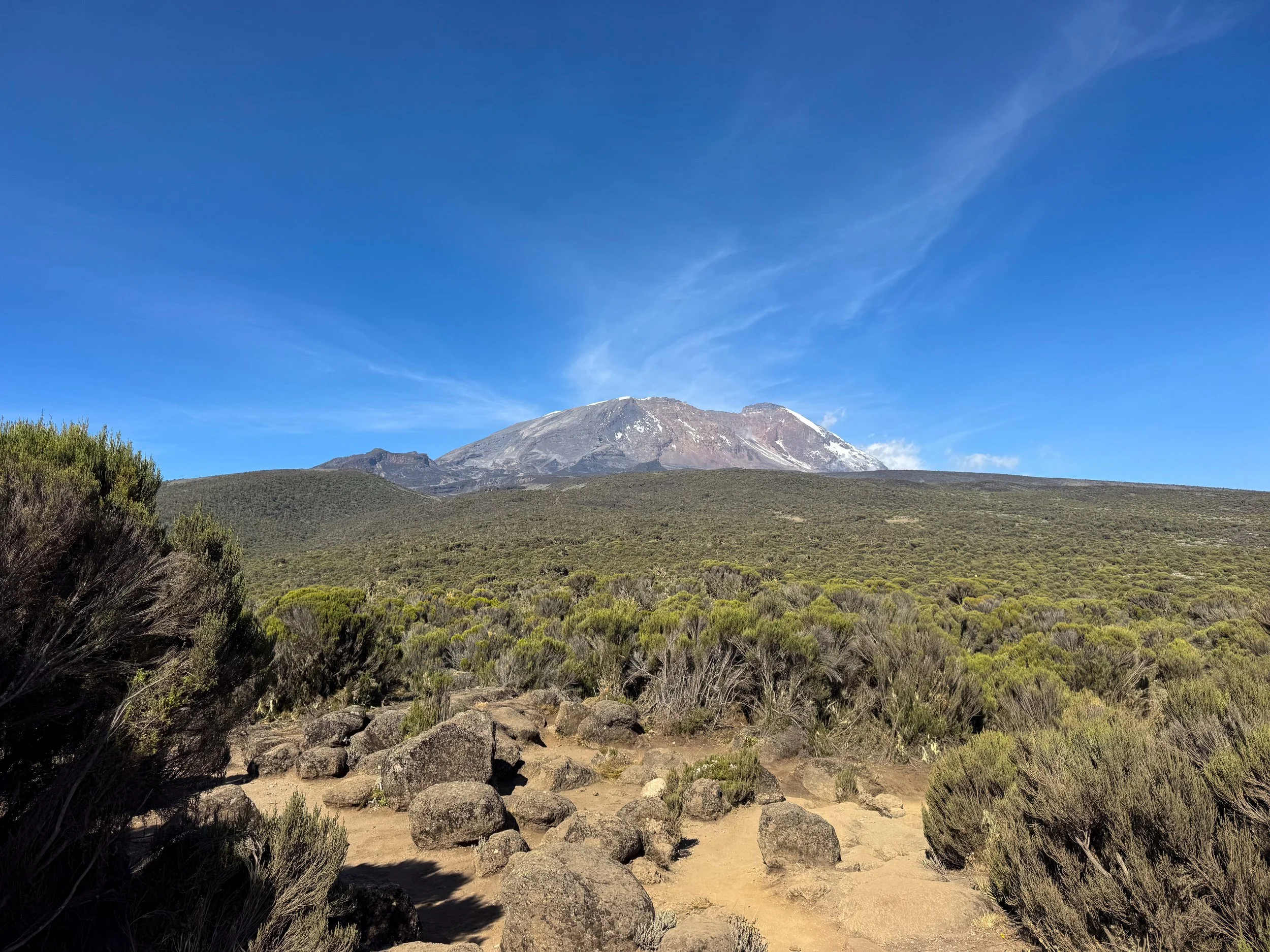
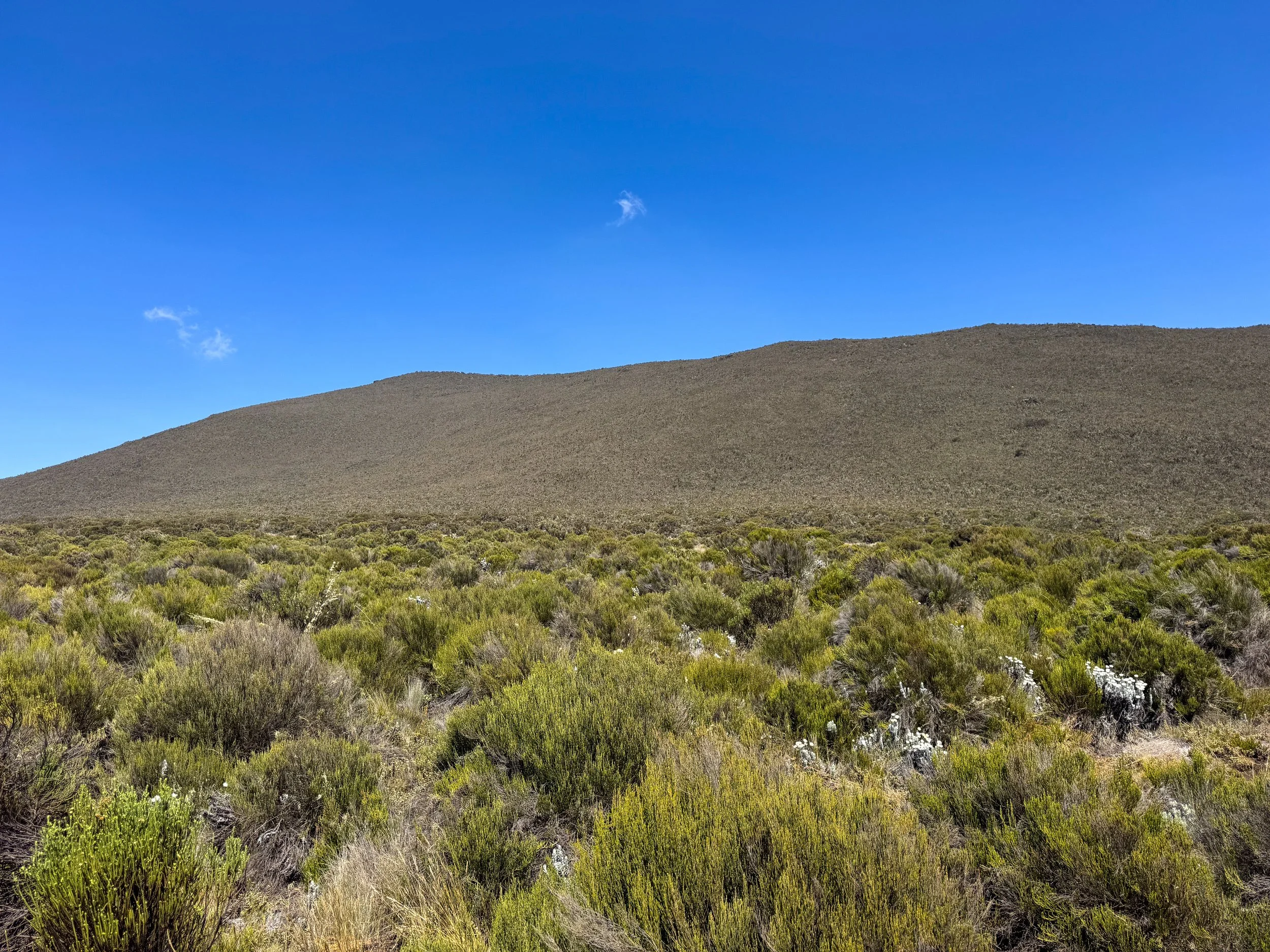
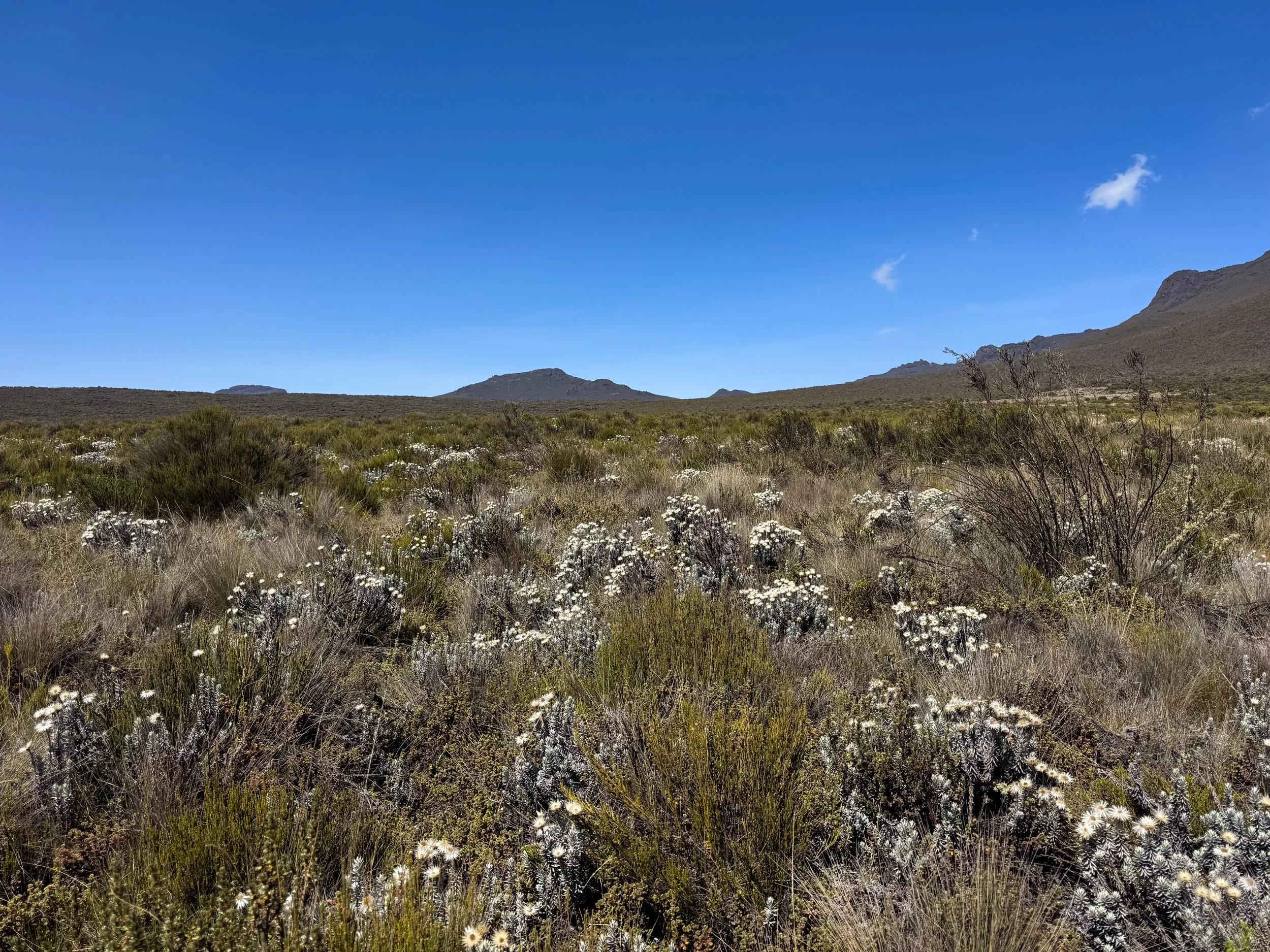
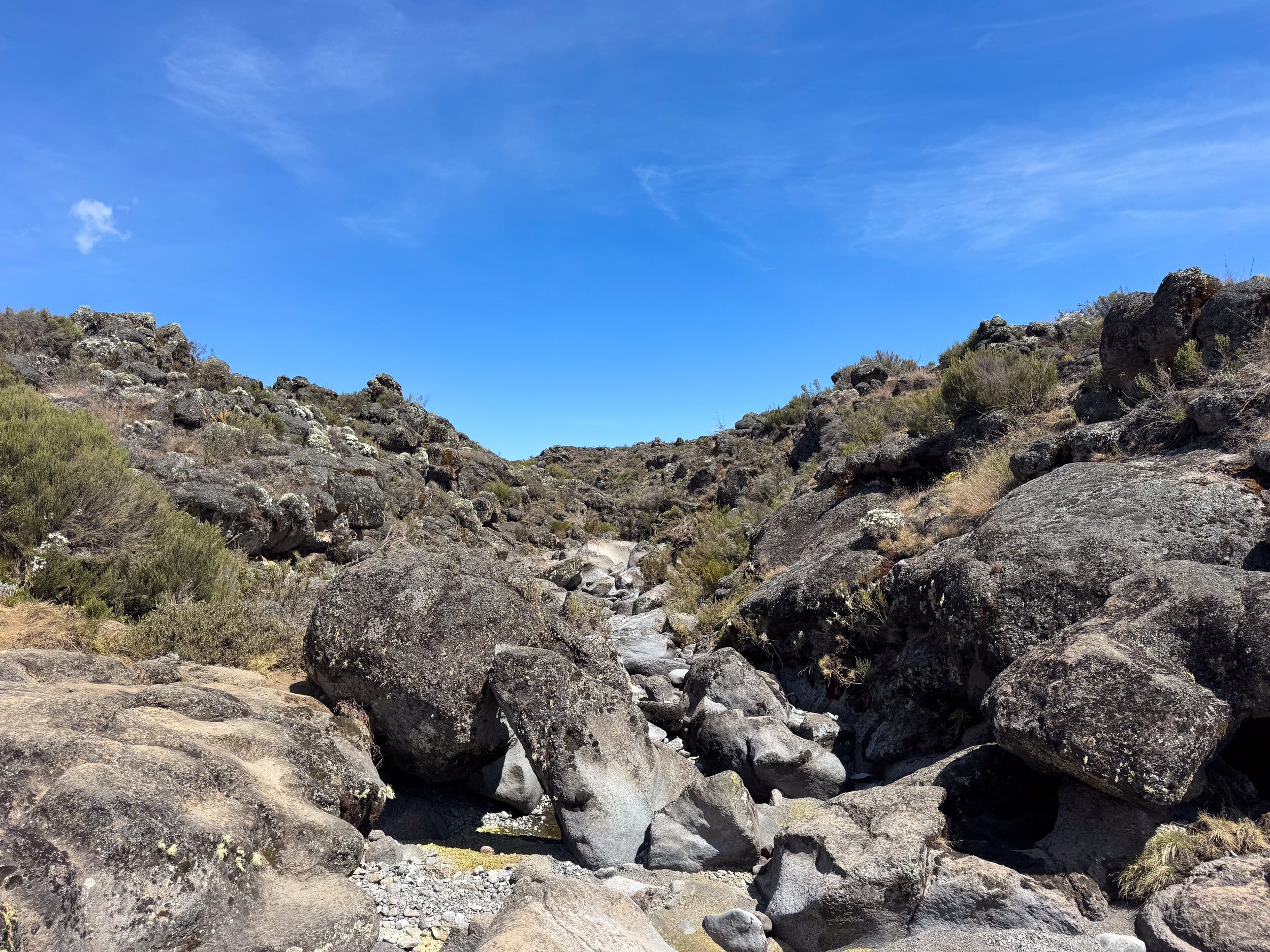
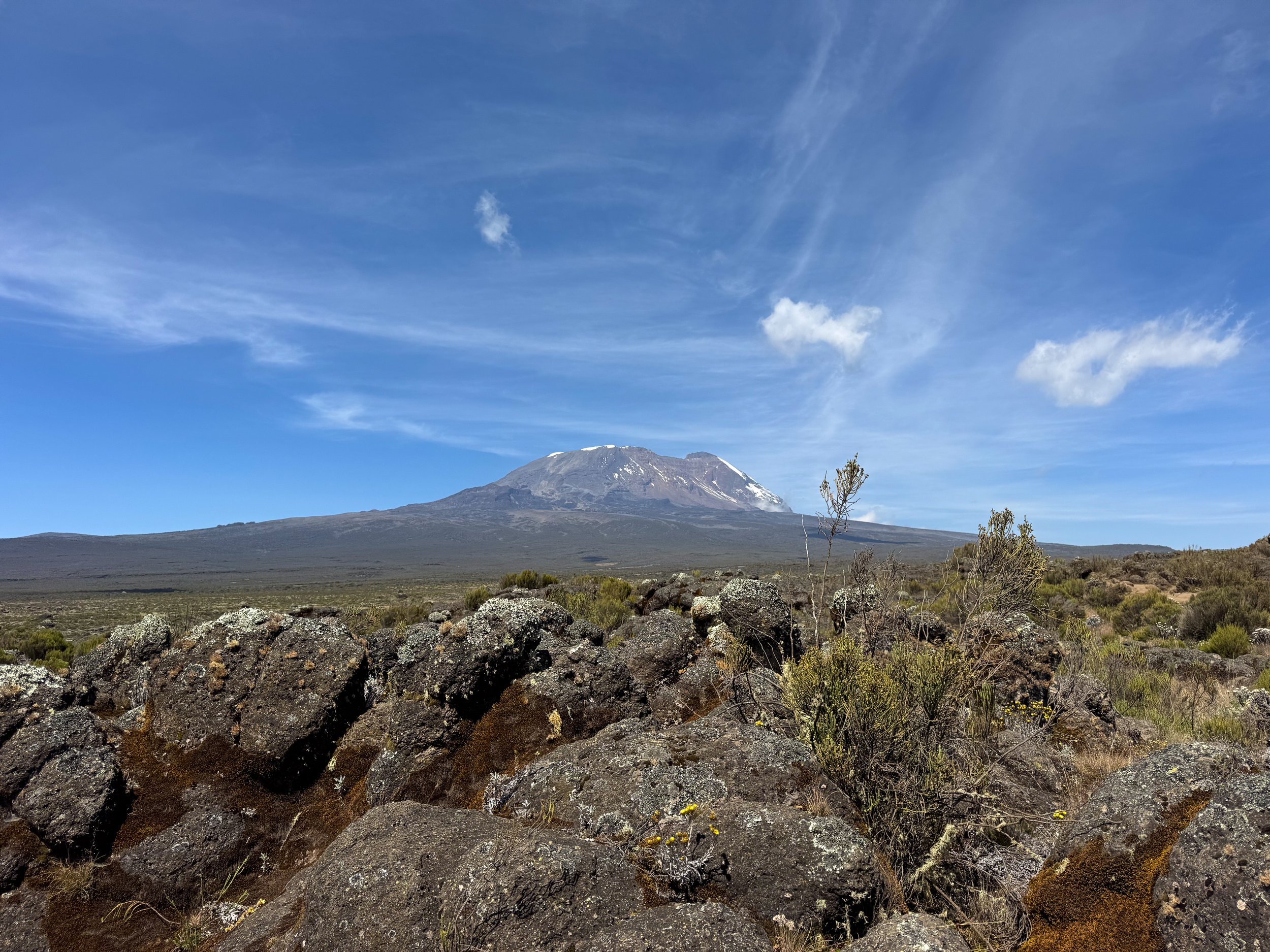
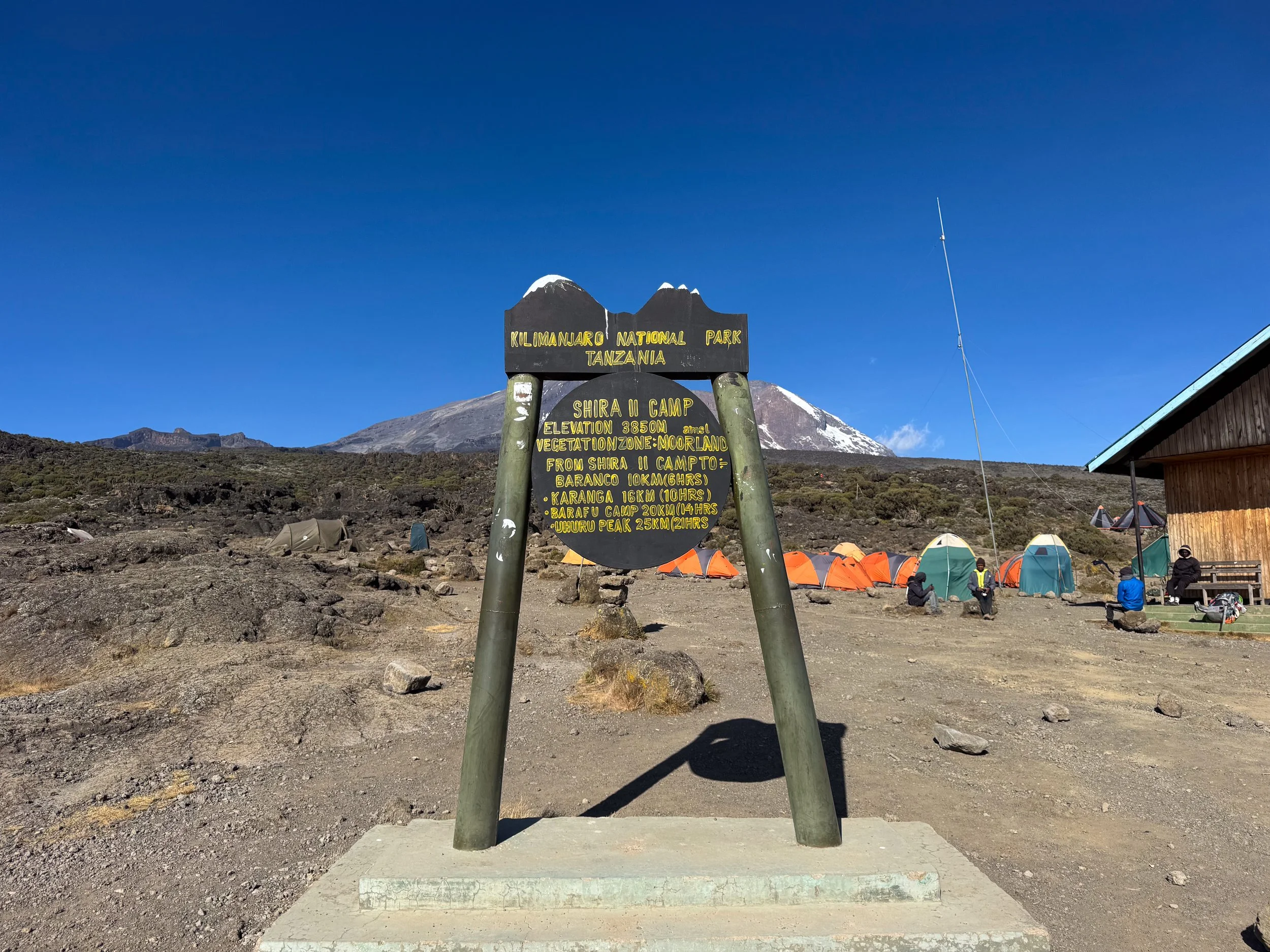
Back On the Trail. With plenty of energy and daylight left, we continued hiking across The Moorland Zone. The dusty trail led us 10km further across the Shira Plateau to the Shira 2 Camp. We arrived a day ahead of schedule, having trekked 17km over the course of the day. Mount Kilimanjaro’s icy peak grew noticeably closer.
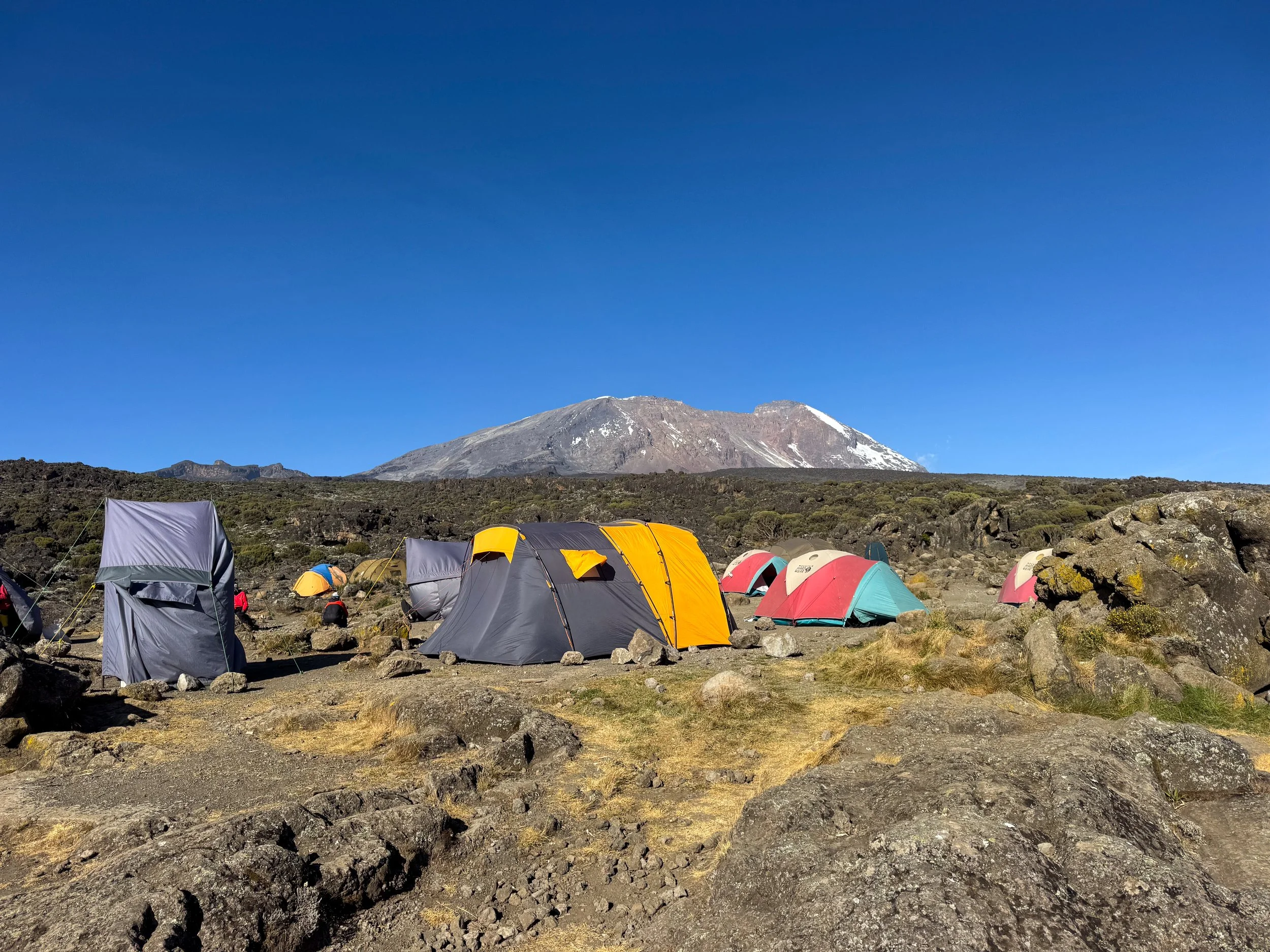
Shira 2 Camp. A camp at the opposite end of the Shira Plateau at an elevation of 3,850 meters (12,631 feet). Colorful tents stood between boulders and bushes, rattled by strong winds of the open terrain. The sunset cast an amber glow across the landscape as the cold of night set in. We hunkered down inside of our tent, resting and waiting for dinner. The cook served us leek soup, coconut milk stewed beans and rice. We celebrated the success of the day with a packet of m&ms.
Medical Evaluations. With the increased elevation, our guides began performing nightly medical evaluations. They checked our heart rate, blood oxygen levels and general wellbeing.
Day Three
A Rough Night. No one slept well during the previous night. The cold and wind kept us and our crew awake more than half of the evening. The warmth of the sunrise spread across the Shira Plateau, melting the frost as we began day three.
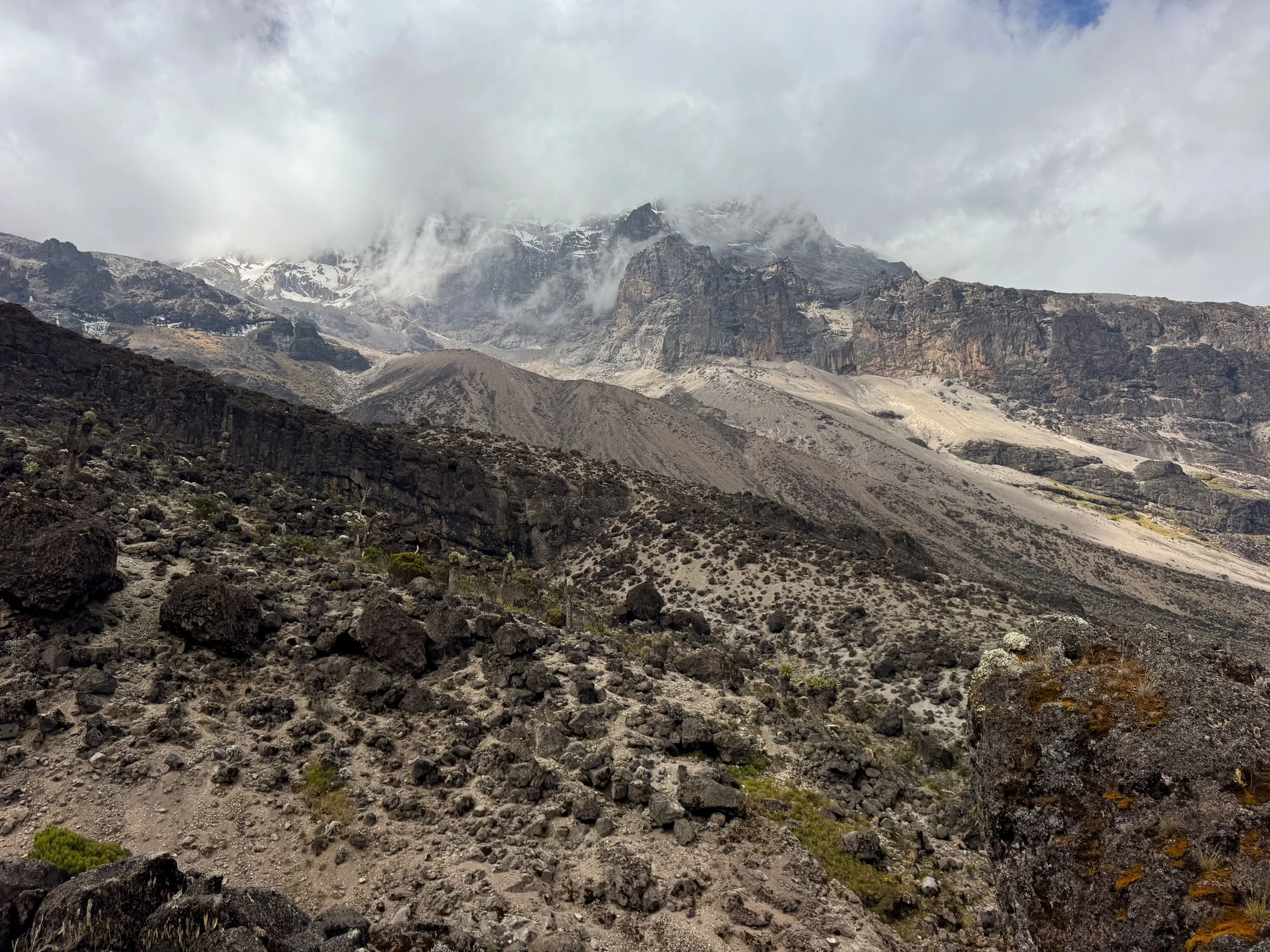
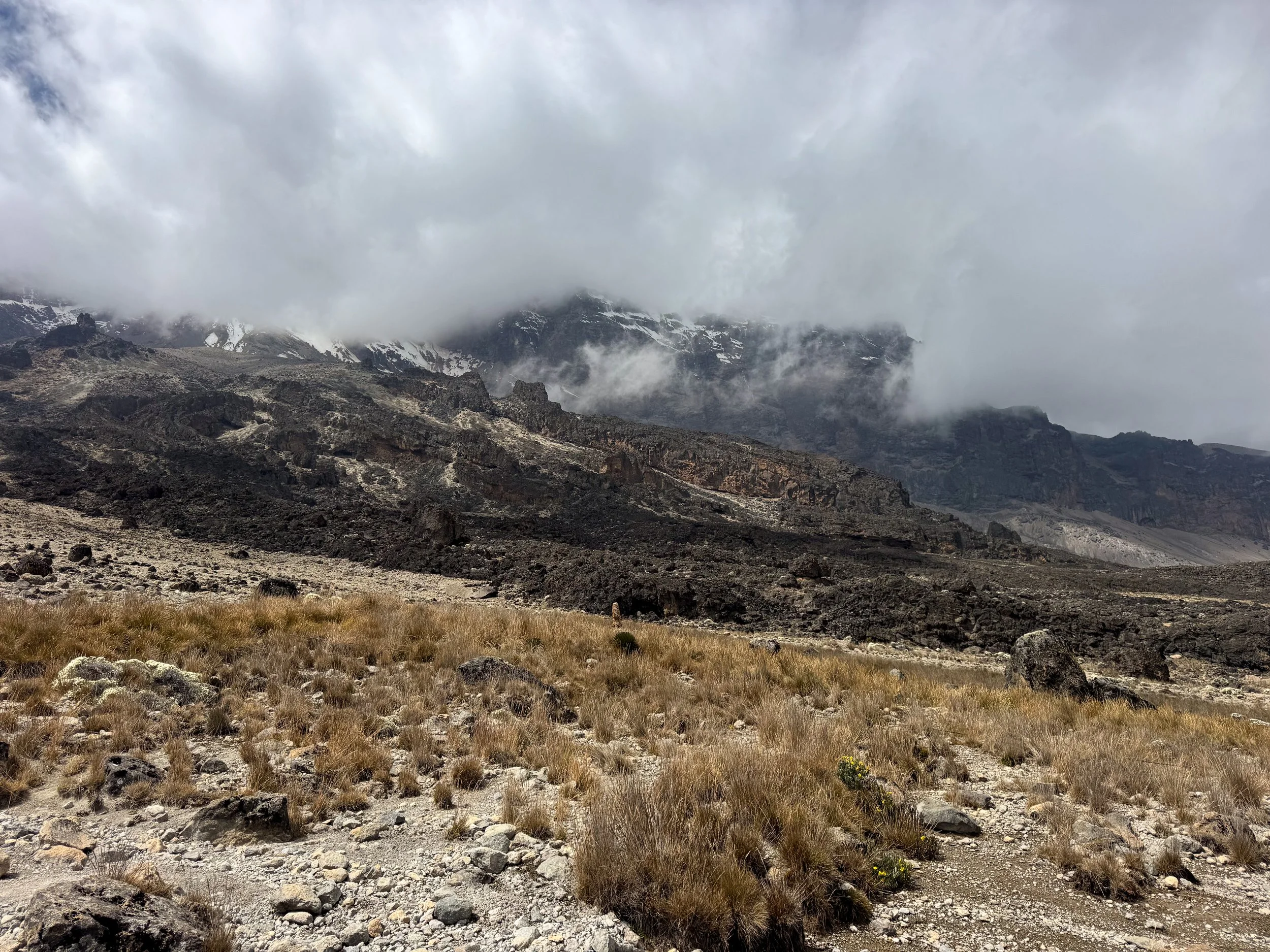
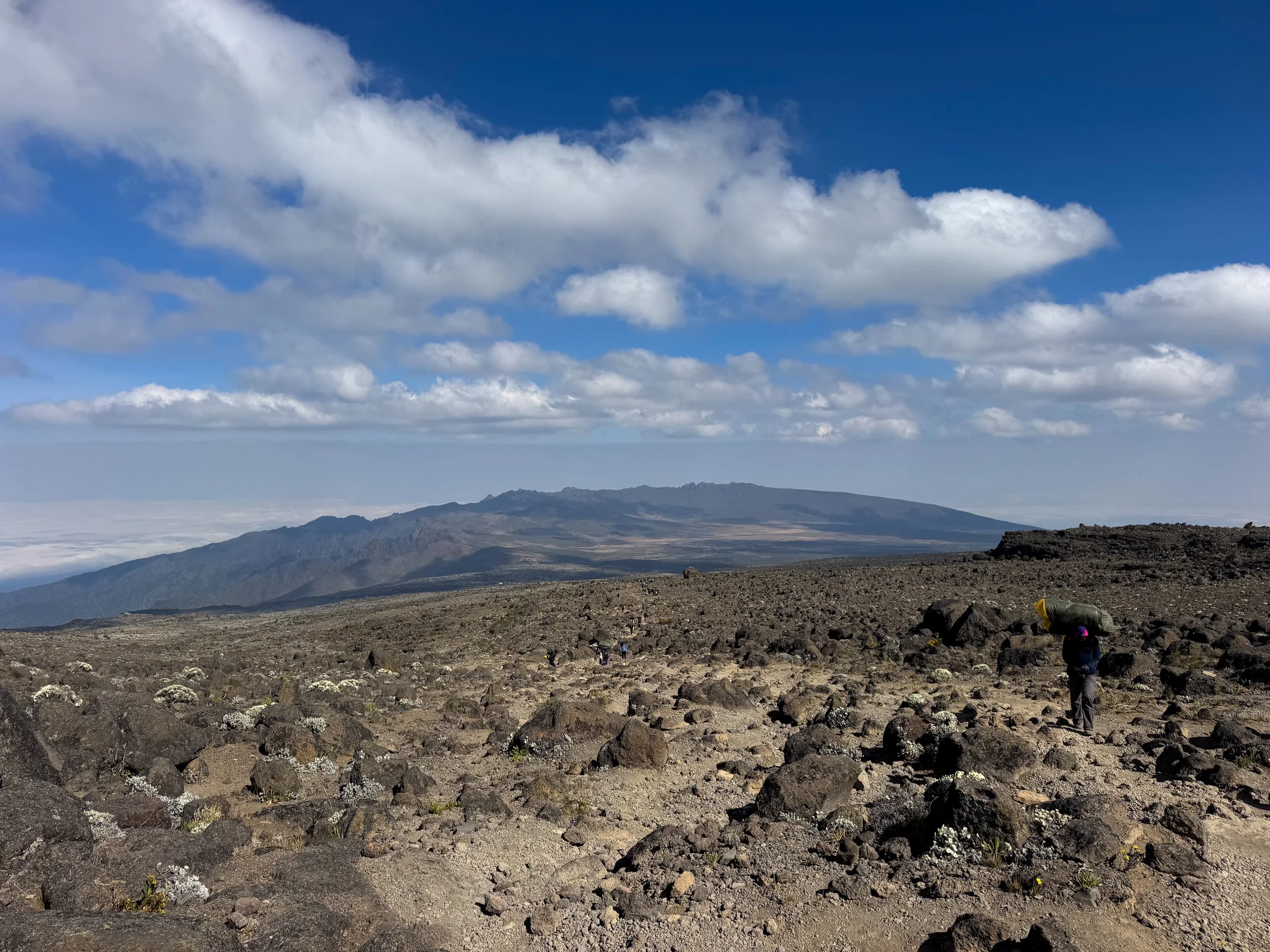
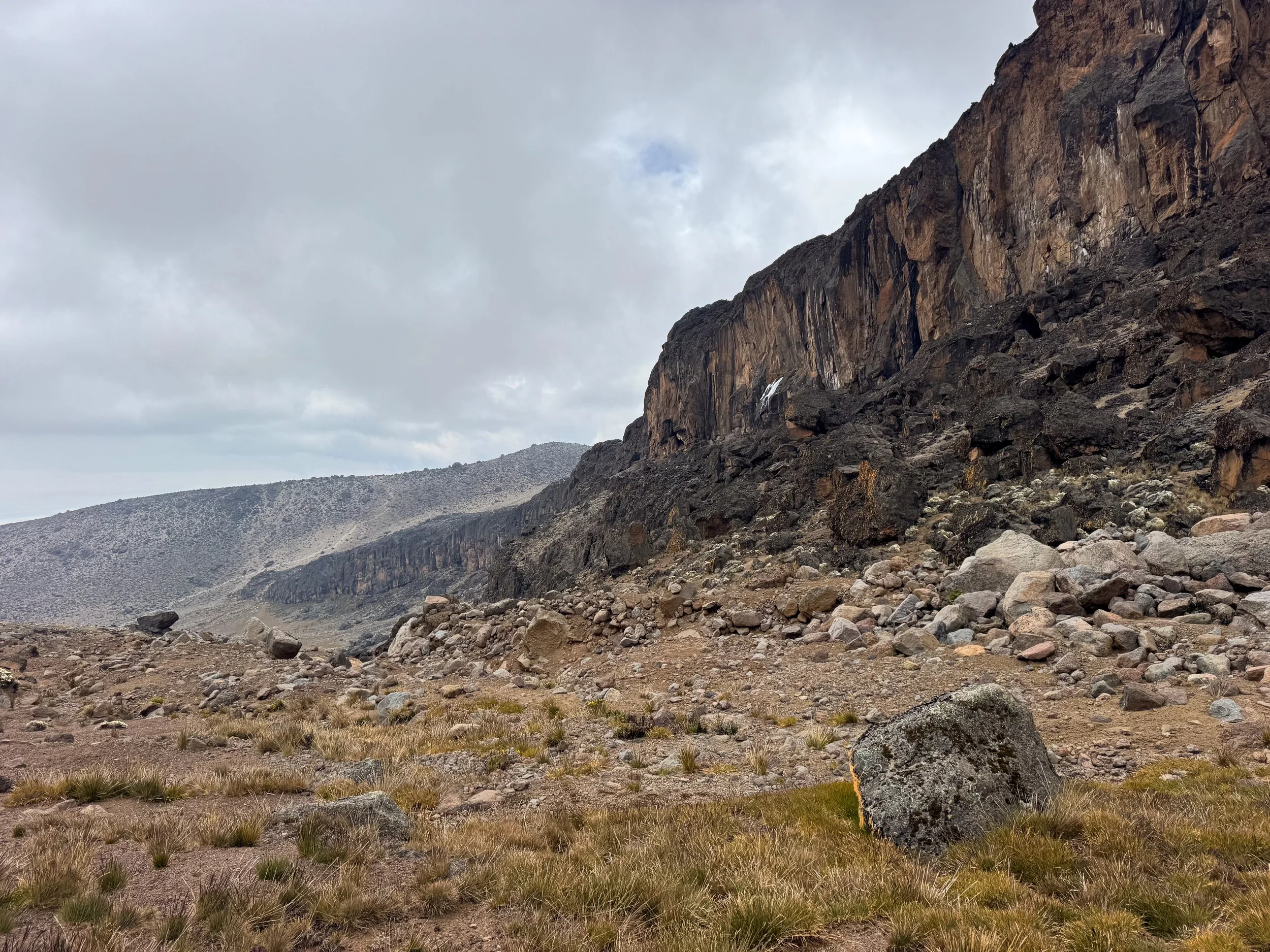
The Alpine Desert Zone. The trail led higher in elevation to The Alpine Desert Zone, the fourth of five climate zones on the mountain. The terrain was dry, rocky and barren with little to no vegetation. We spotted a tiny Four Striped Grass Mouse scurrying between the rocks. The temperature became colder and the air noticeably thinner. The trail led steeply uphill to The Lava Tower.
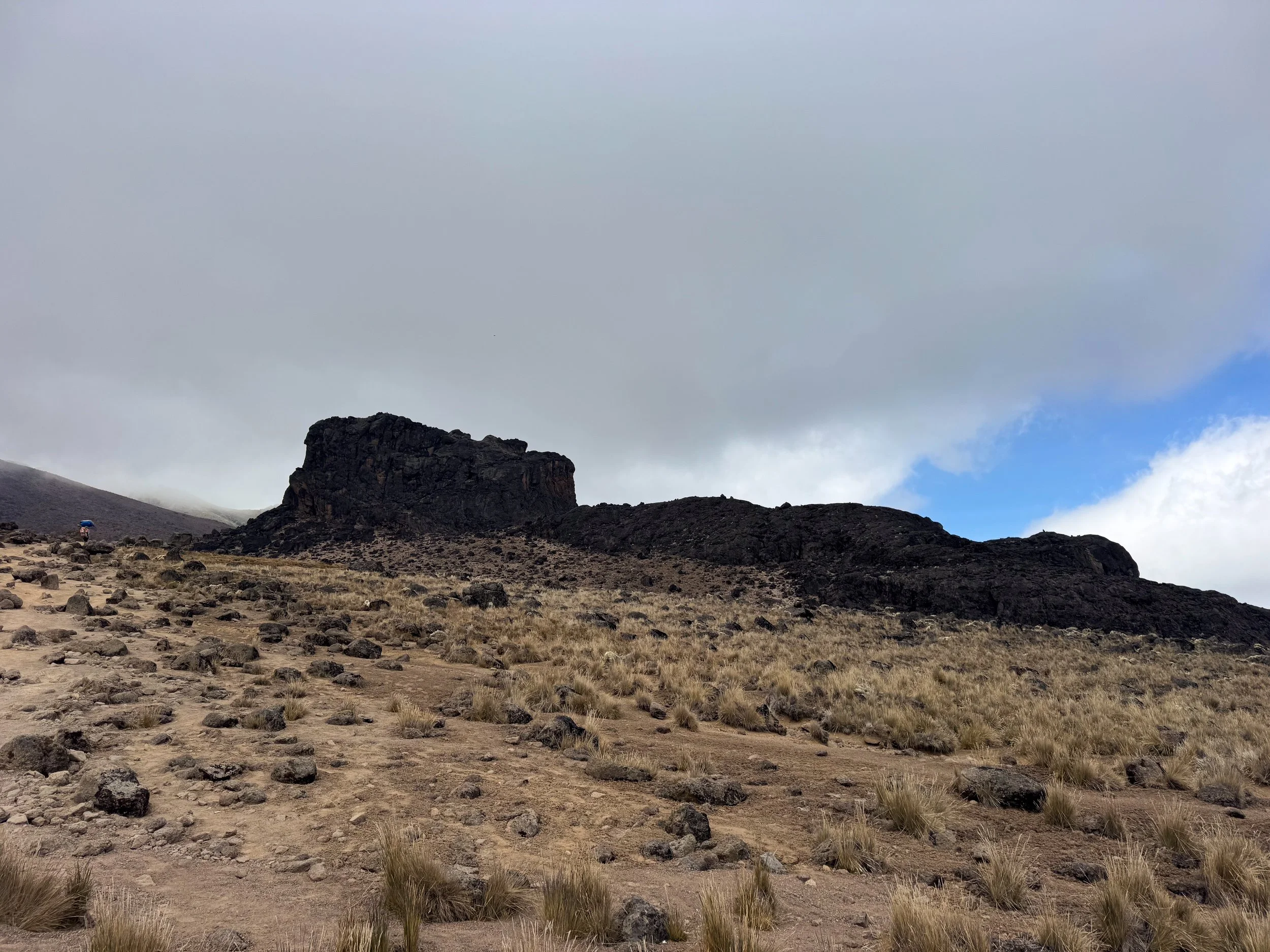
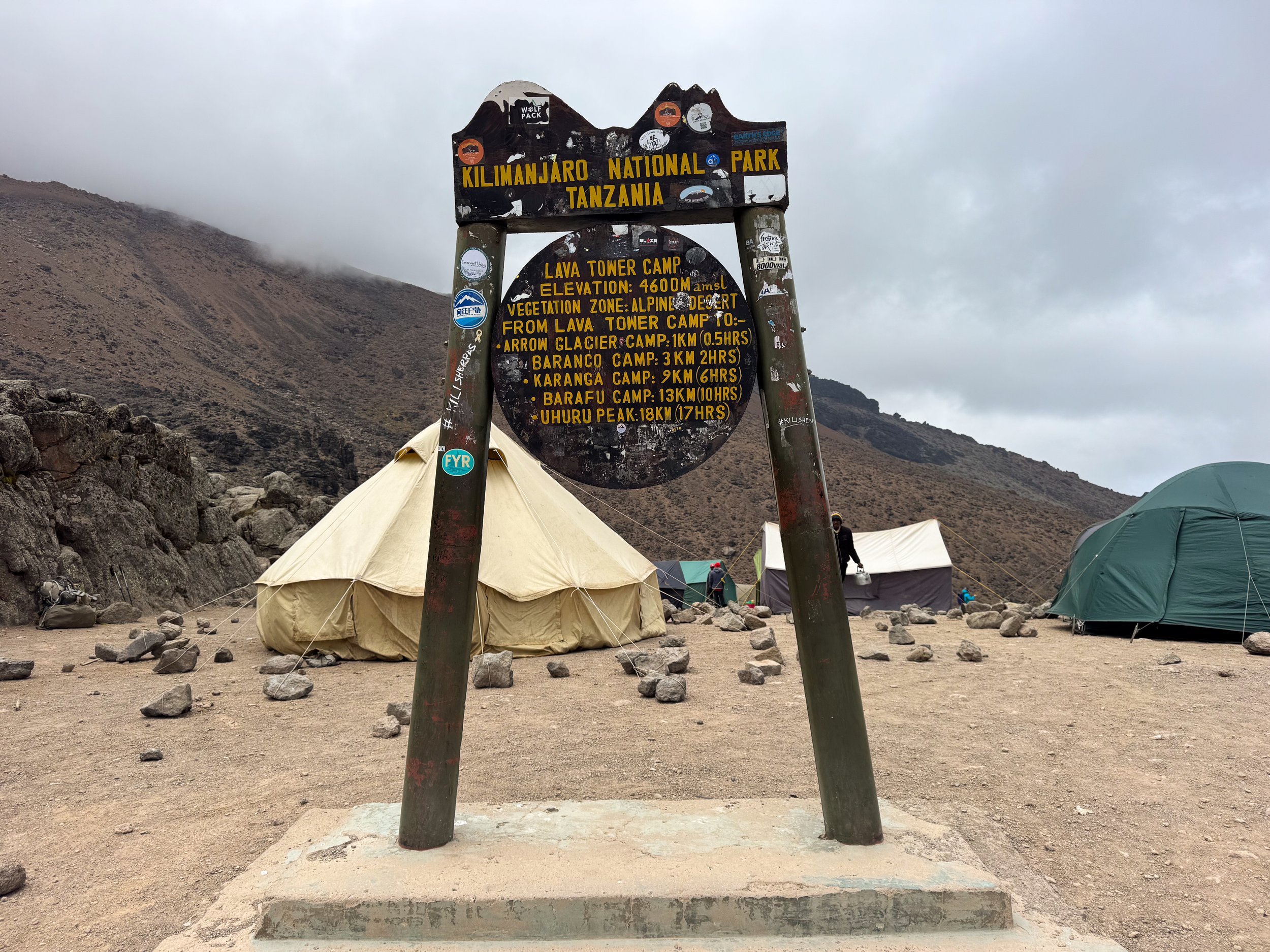
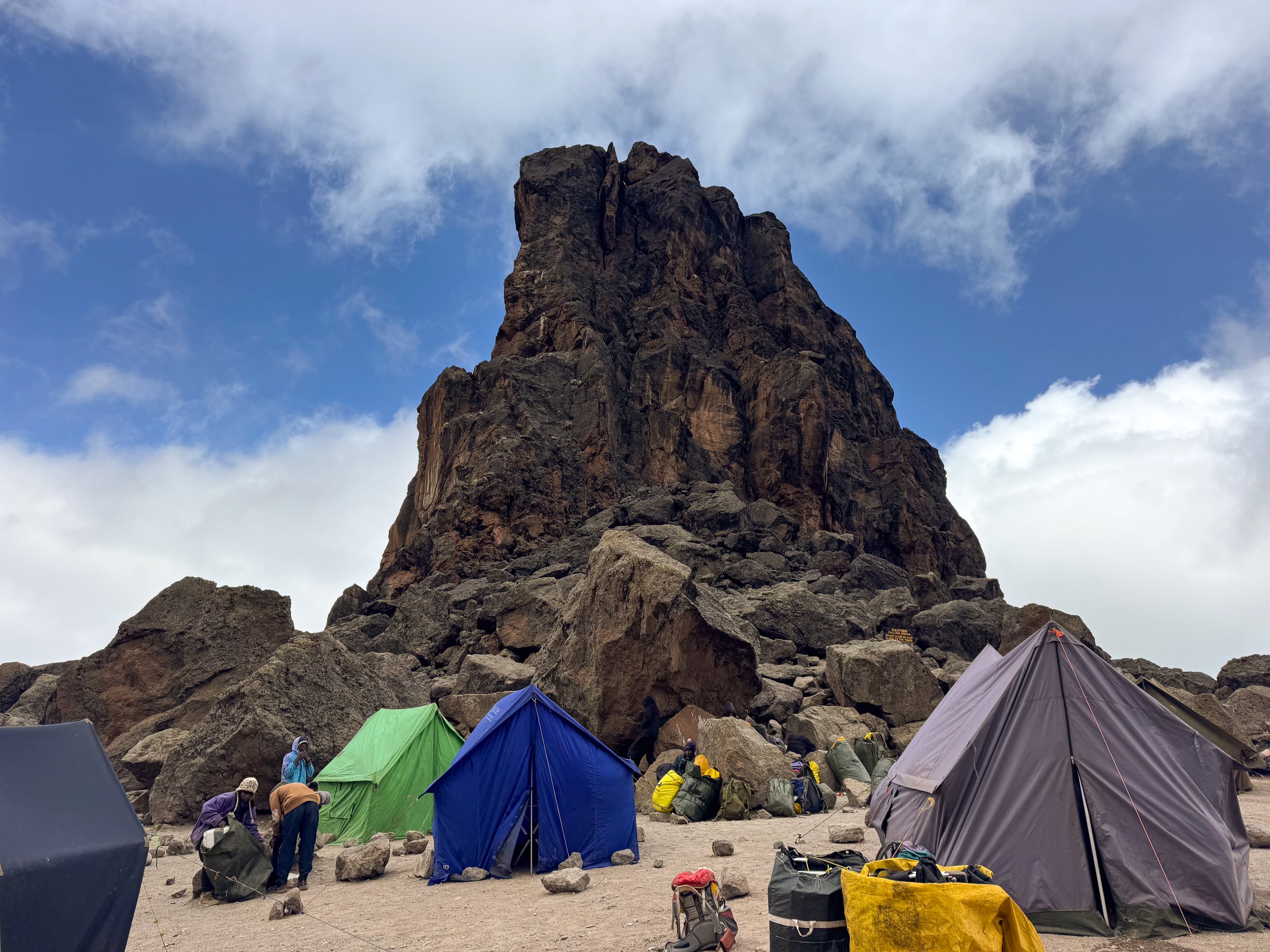
The Lava Tower. A jagged geological formation created by hardened lava that cooled inside a now eroded volcanic vent. At 4,600 meters (15,092 feet), it’s a key feature along the Lemosho Route and a high altitude campsite. Getting here was difficult due to the increased elevation, though necessary for acclimating.
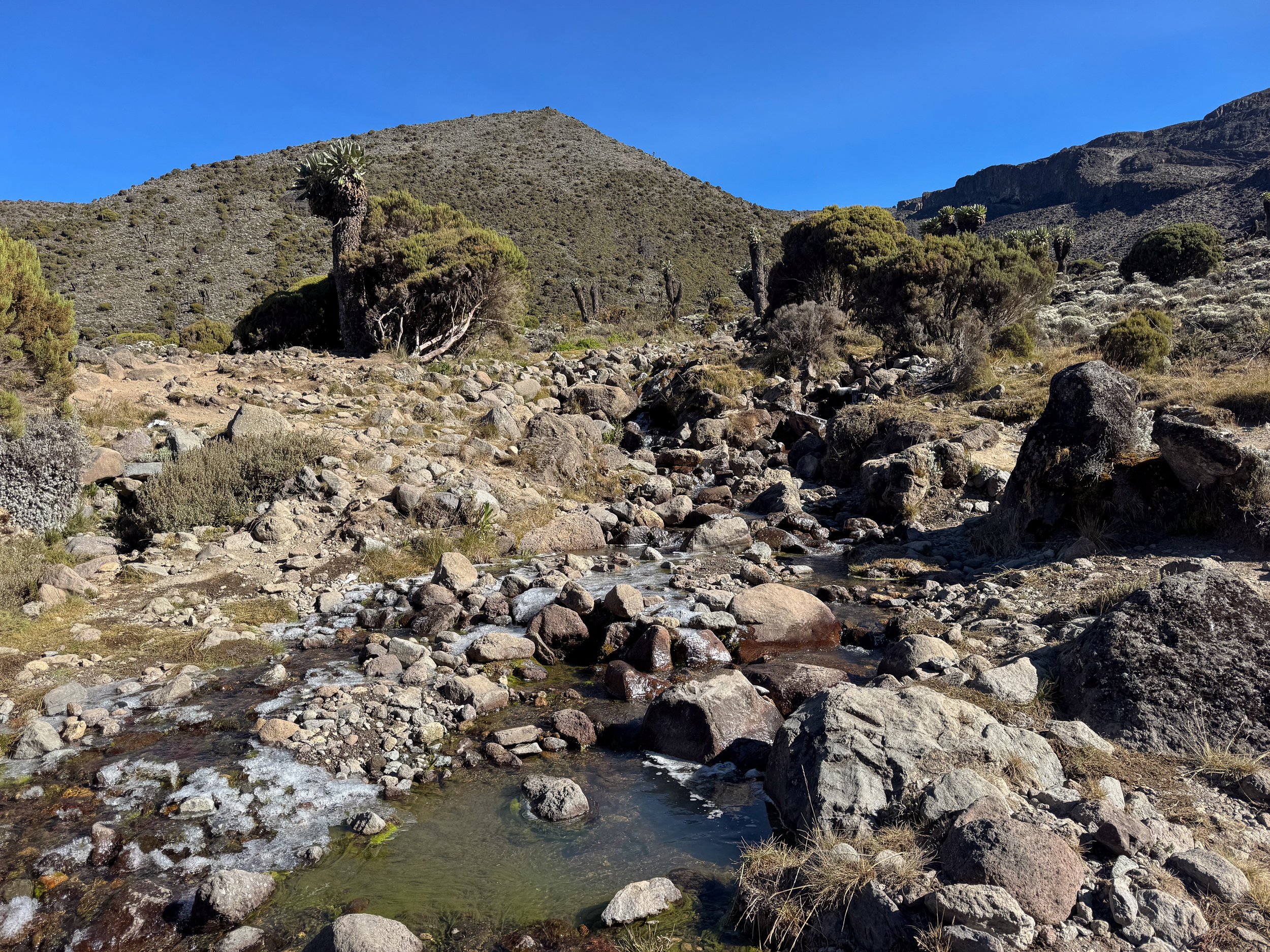
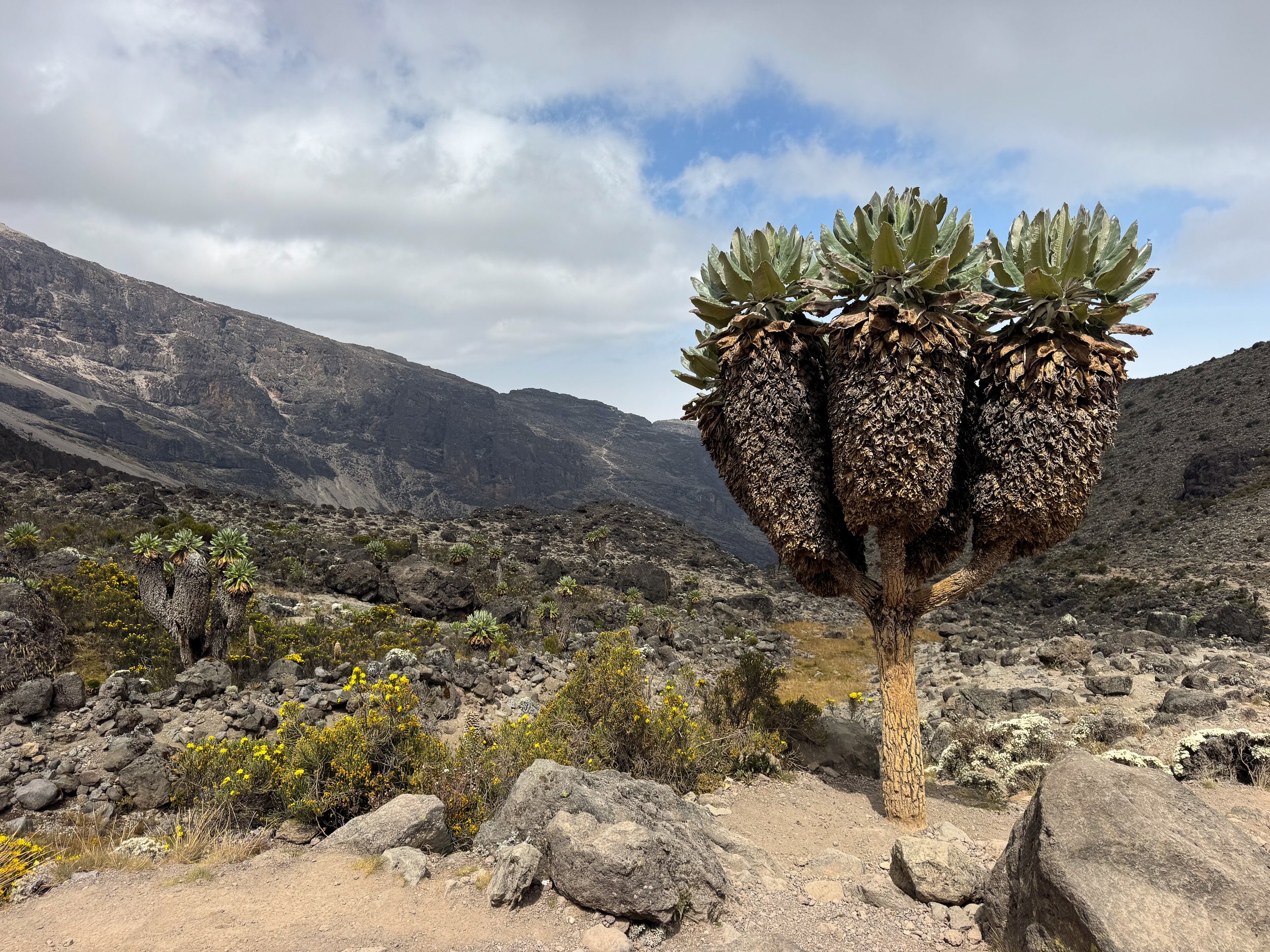
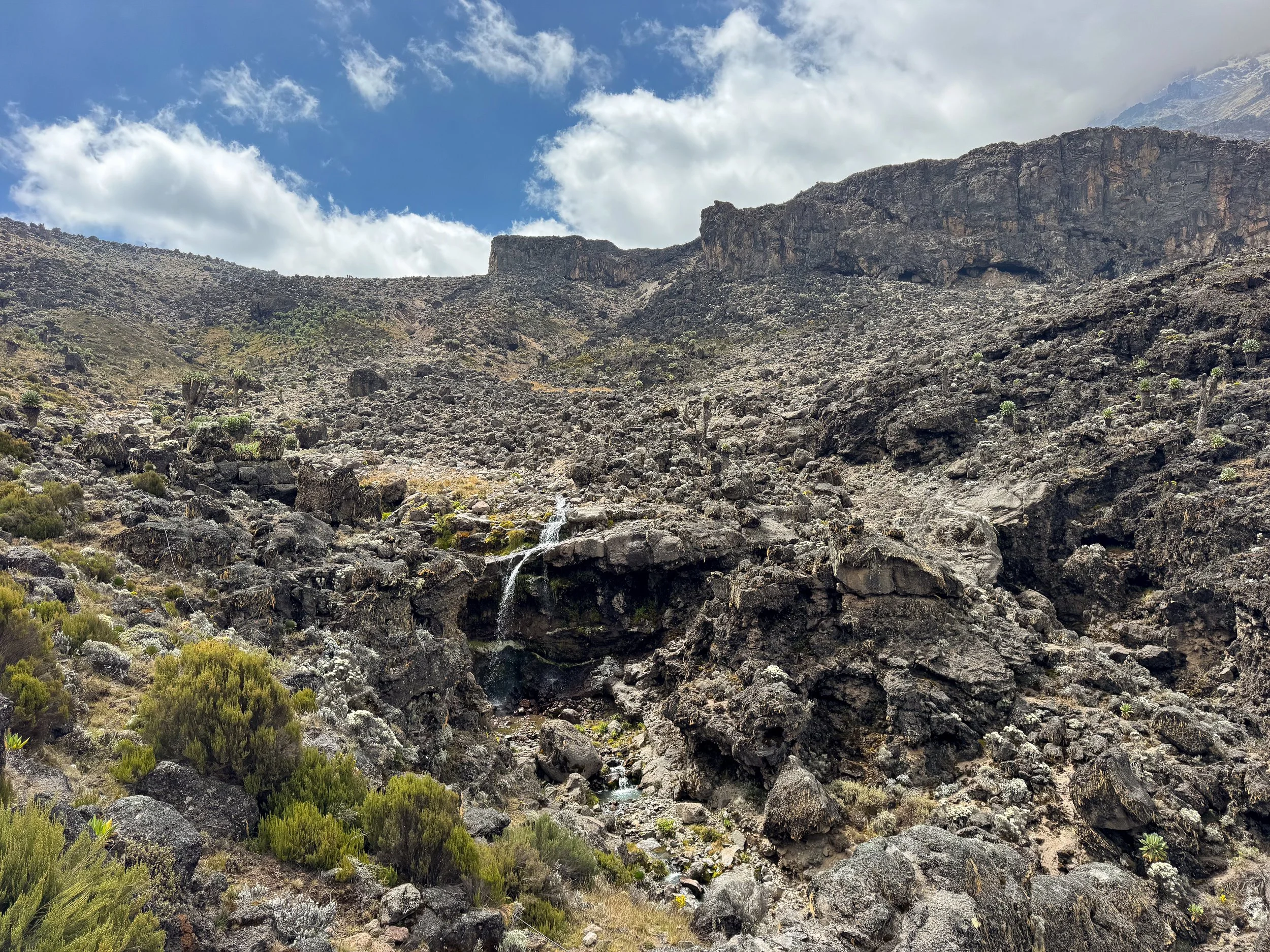
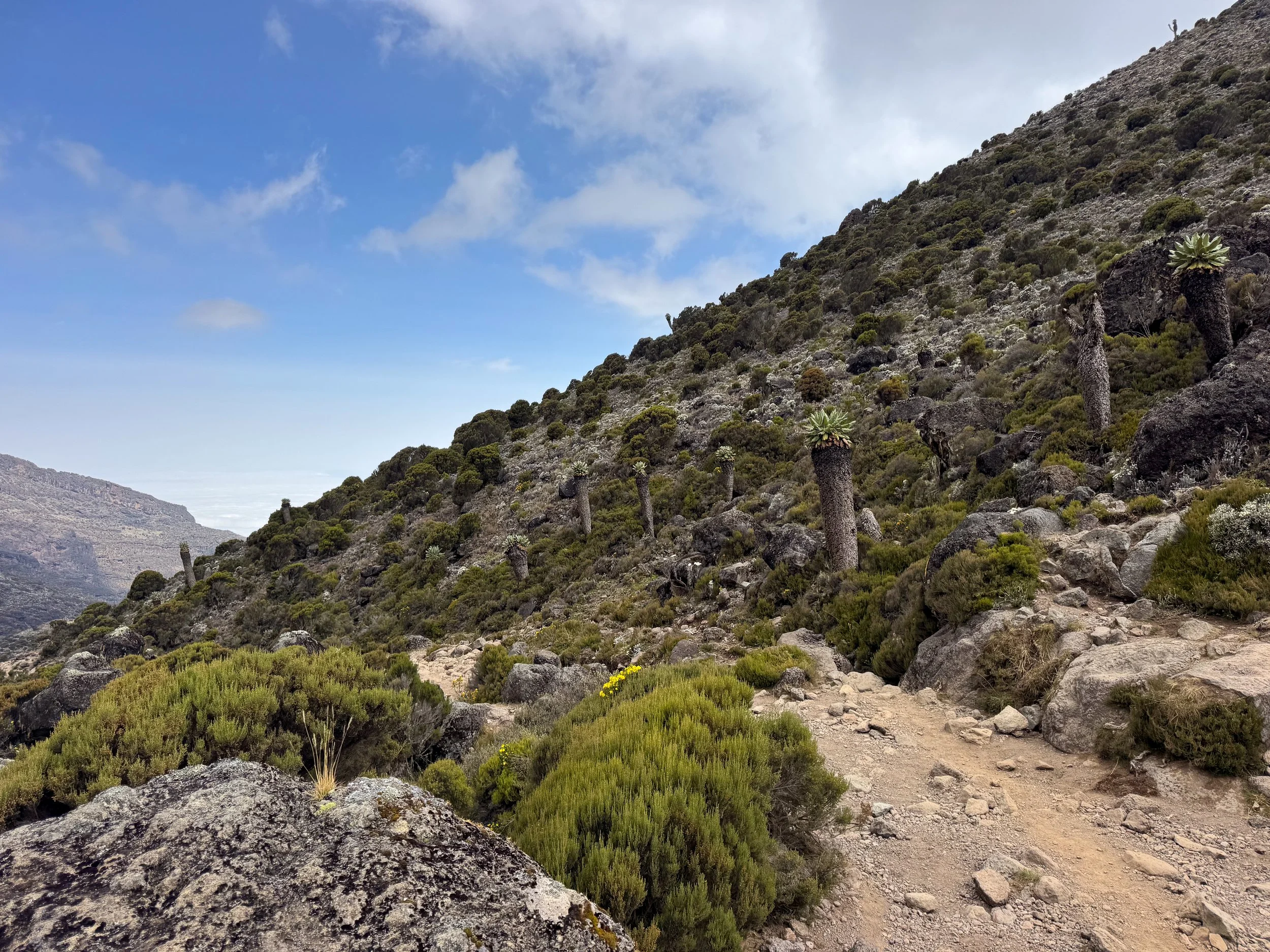
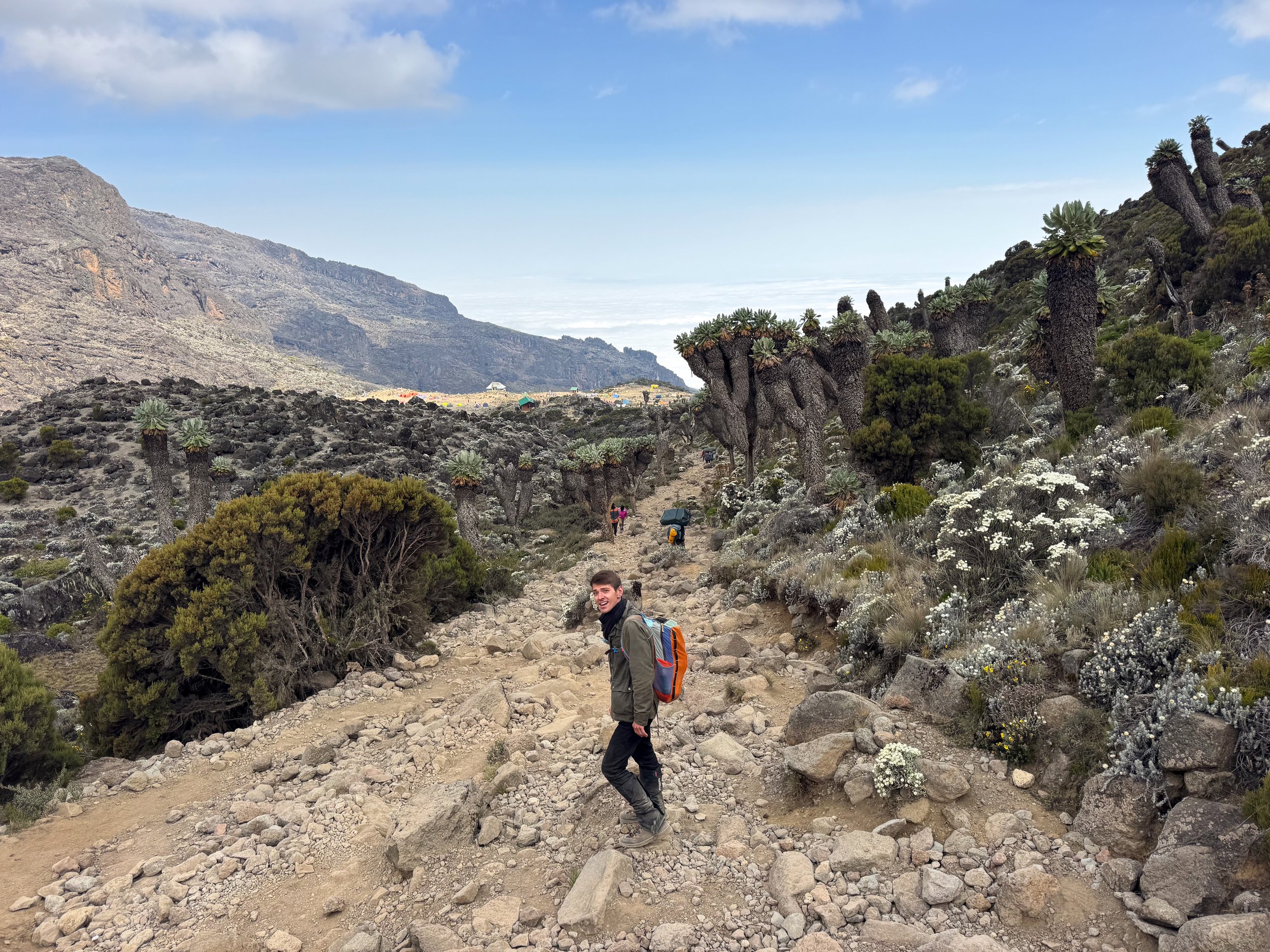
A Temporary Descent. The trail led us on a temporary descent from The Lava Tower, through The Alpine Desert and back into The Moorland. The path followed a partially frozen stream, past small waterfalls and into progressively lusher terrain. Colorful lichens covered boulders, green bushes sprouted from the hillside and flowers added color to the landscape. A grove of Giant Groundsels grew from the riverside. They’re alien-like trees with a central trunk and bushy arms topped with tufts of green leaves.
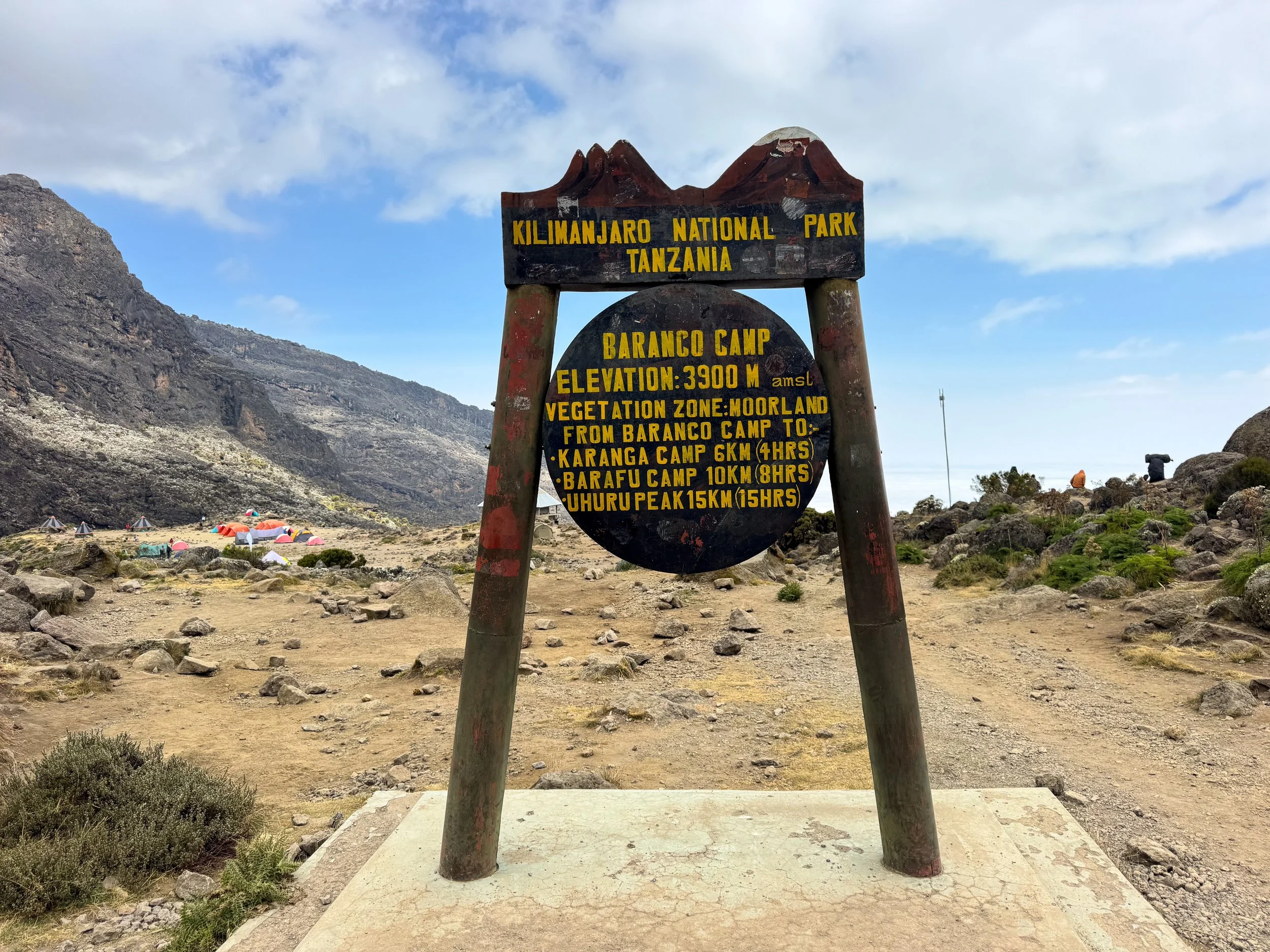
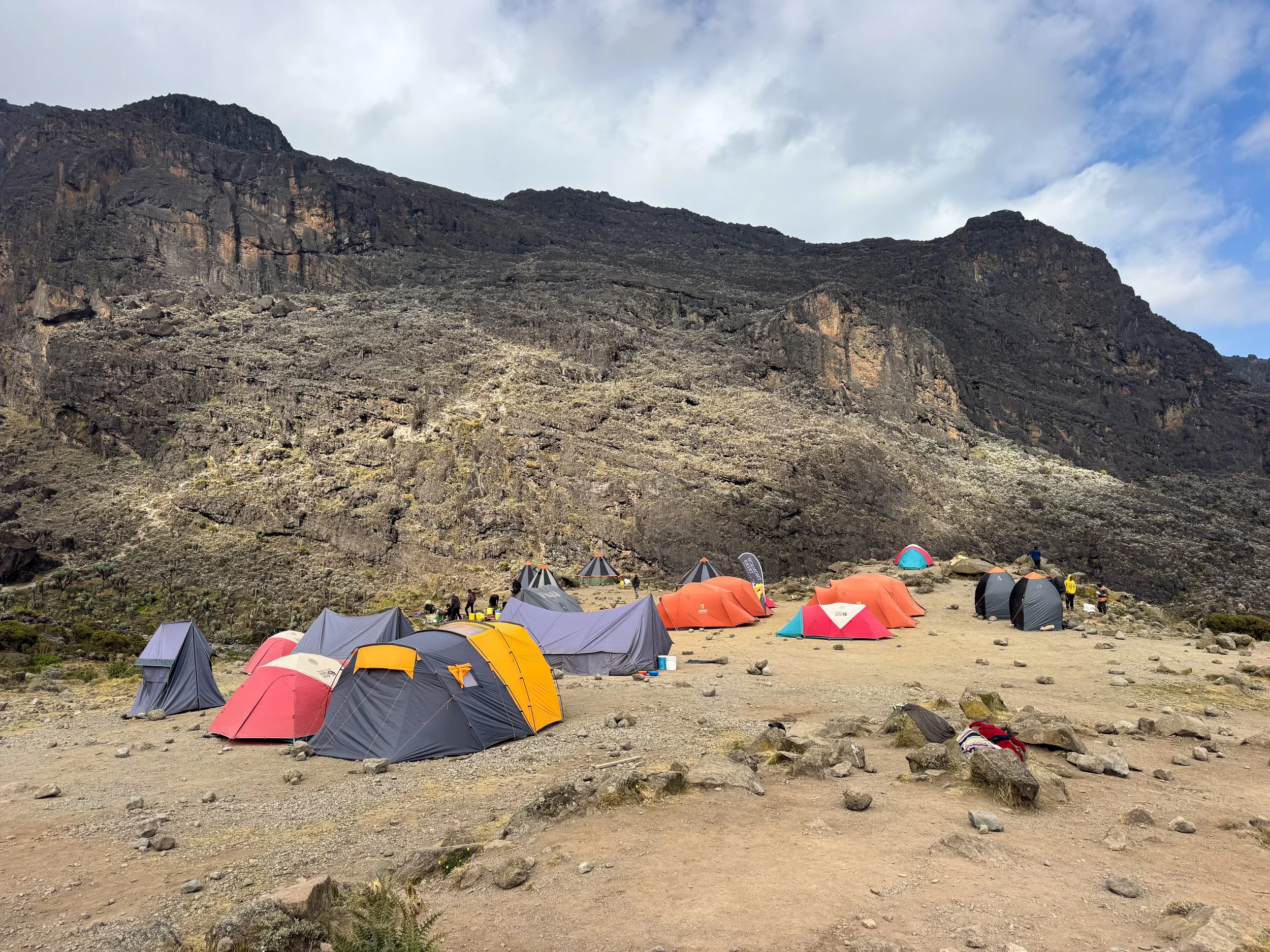
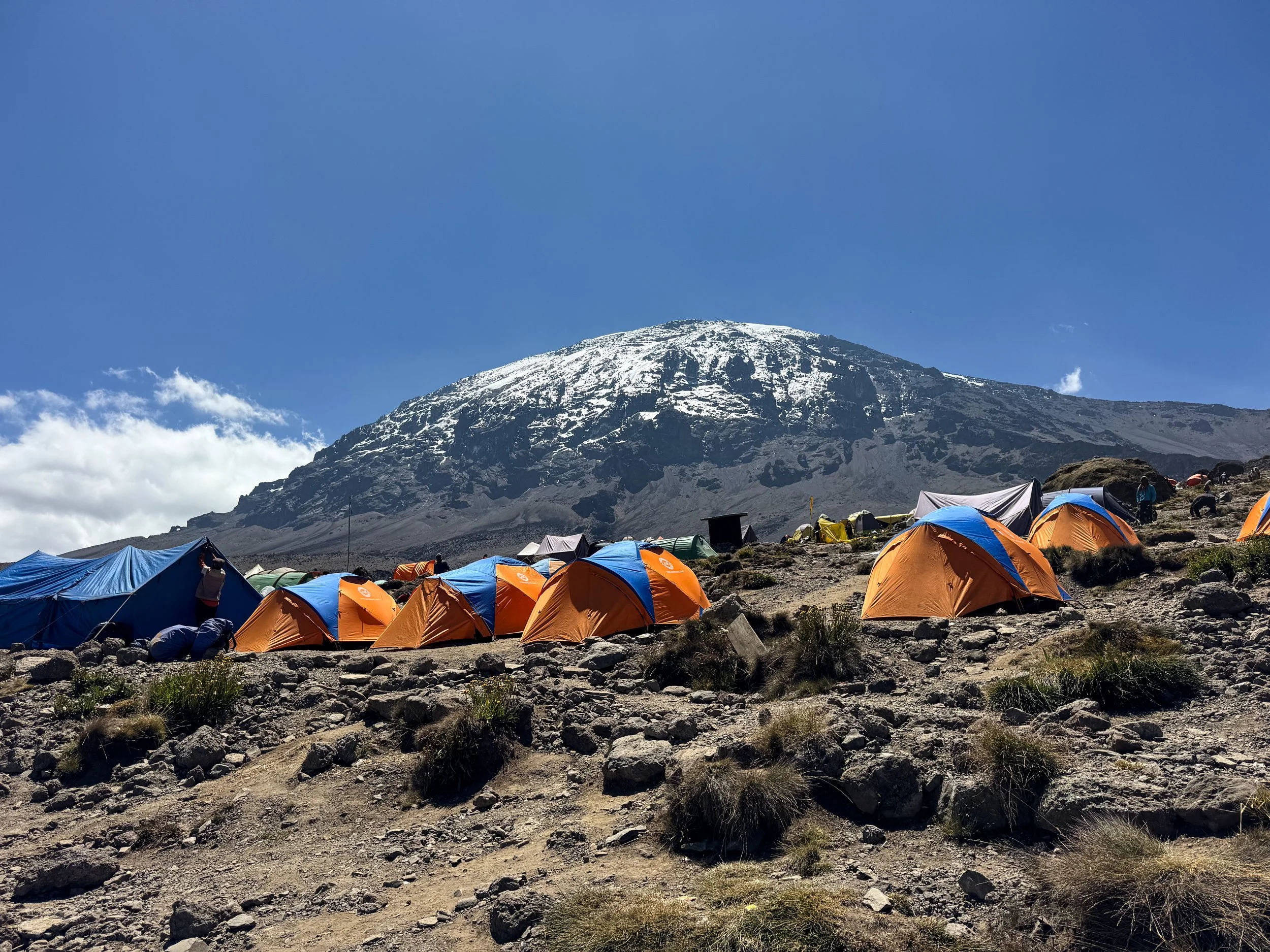
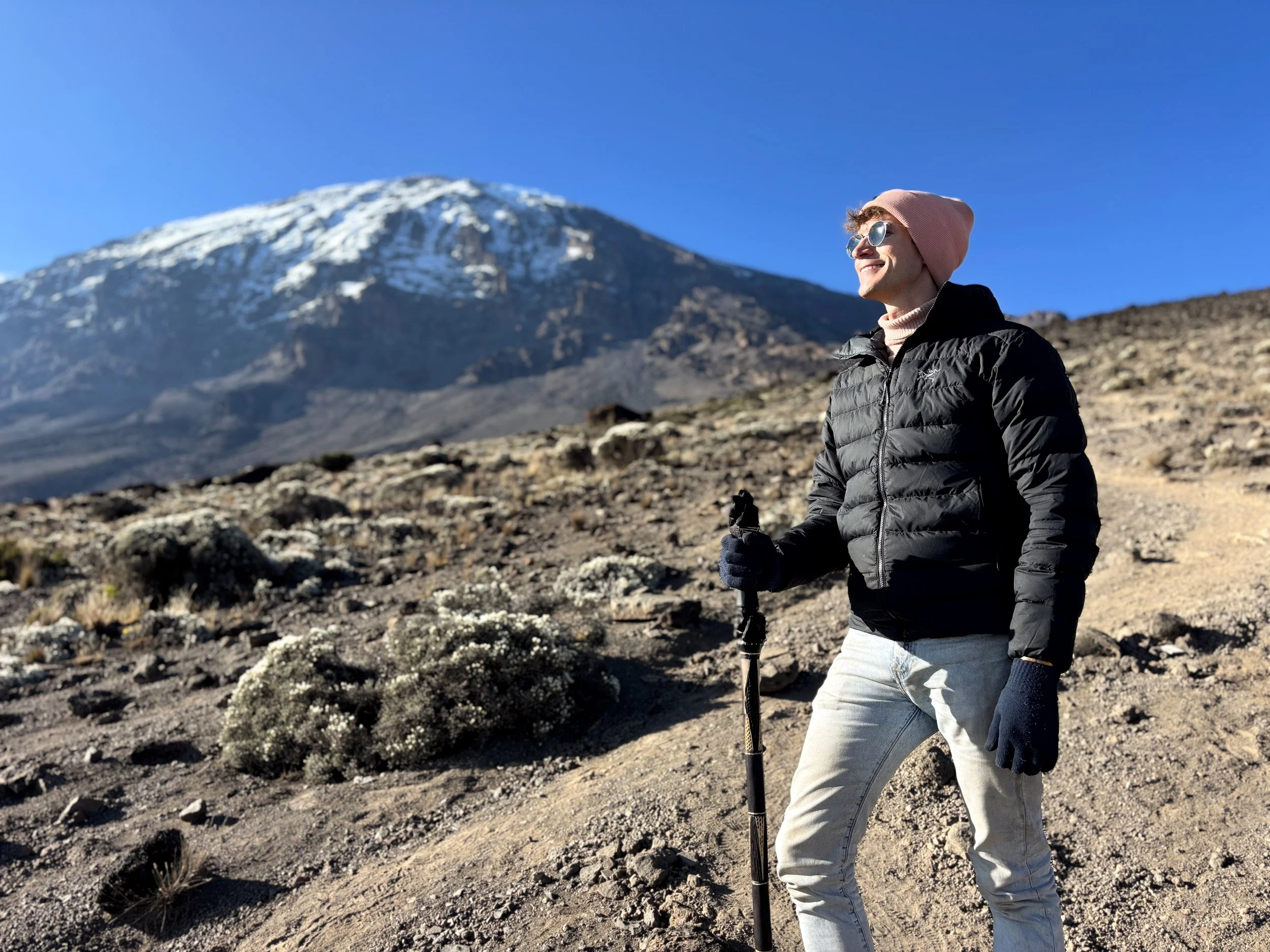
Baranco Camp. The trail led to the Baranco Camp, situated at an elevation of 3,900 meters (12,795 feet). It’s one of the largest camps on the mountain and a meeting point for multiple routes. A nomadic village of colorful tents, enthusiastic crews and optimistic hikers sprawl across the landscape. A sea of clouds parted to reveal the town of Moshi, 3,200 meters (10,500 feet) below. We rested during the afternoon before dinner. The cook prepared Ndzi, a Tanzanian vegetable stew with plantains, sweet potato, green beans and onions served alongside Chapatti, an East African flatbread.
Day Four
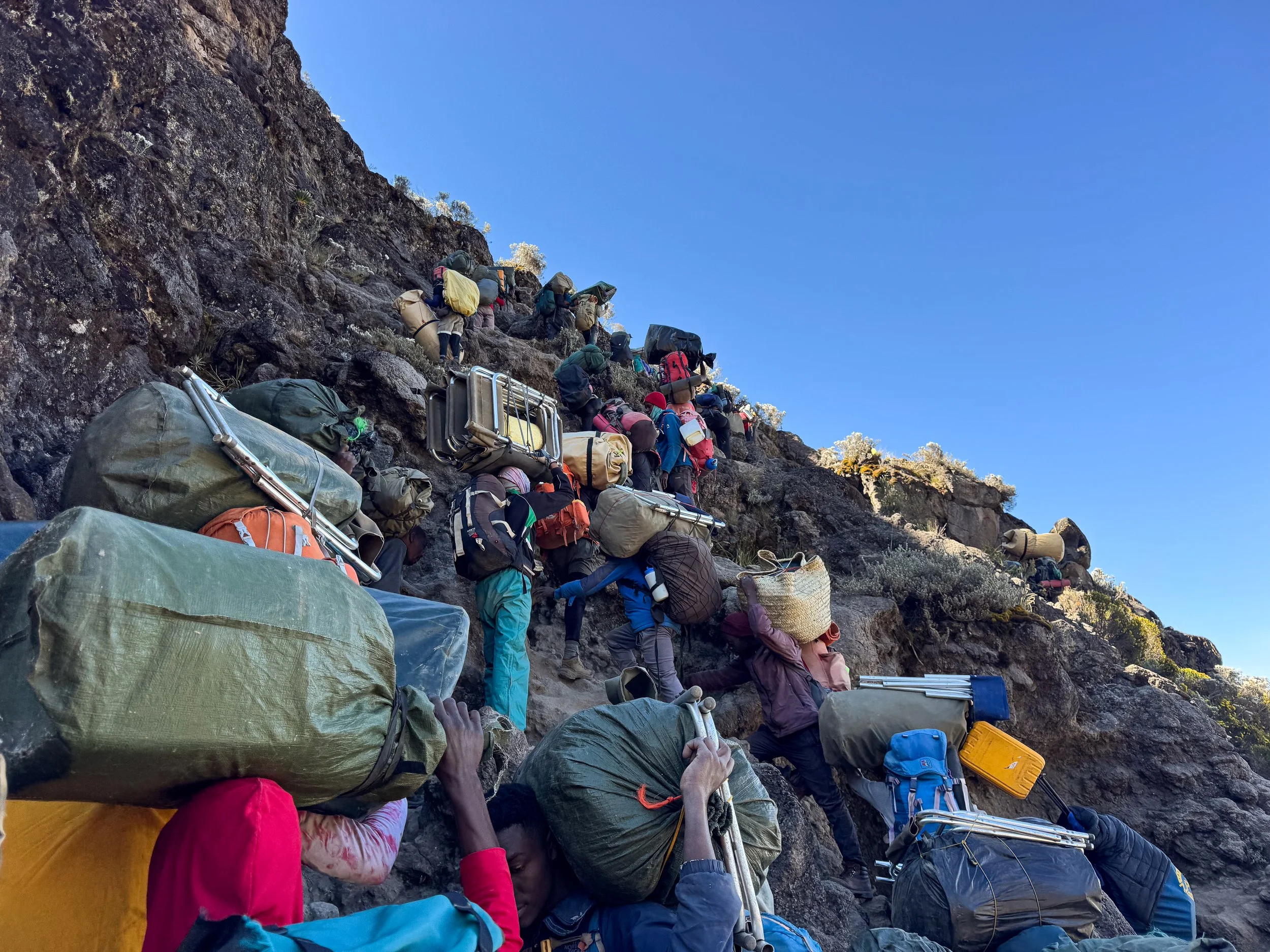
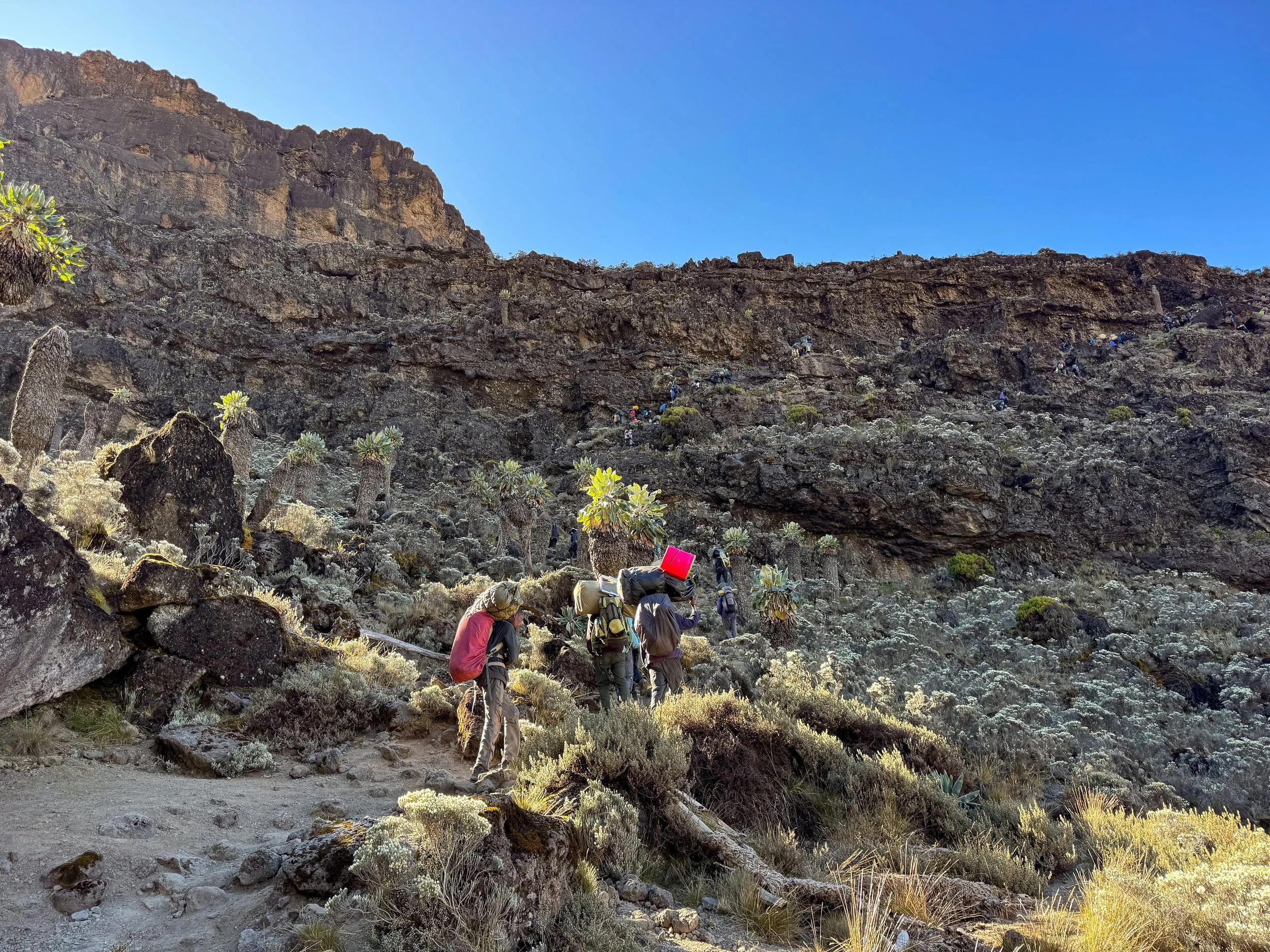
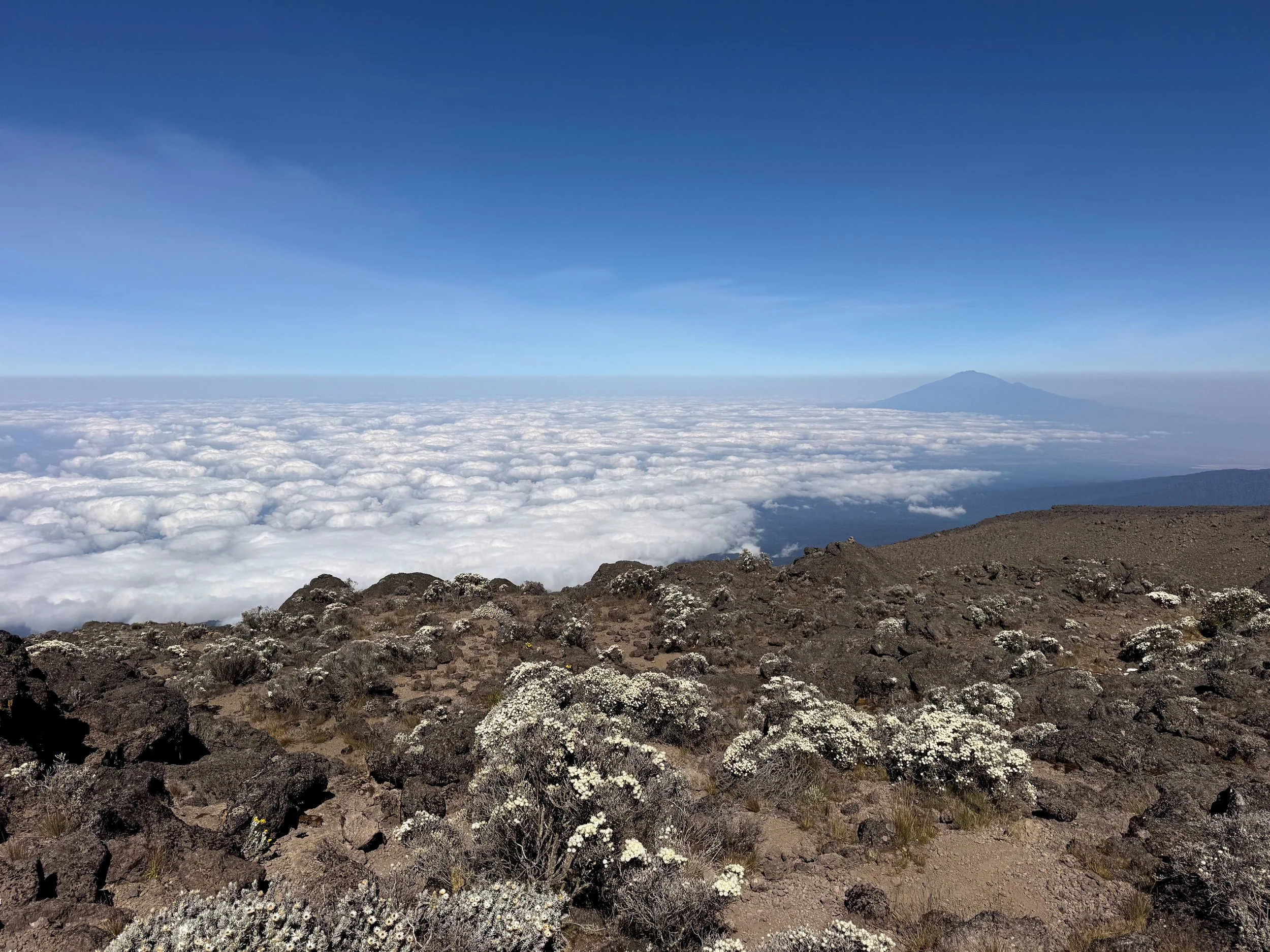
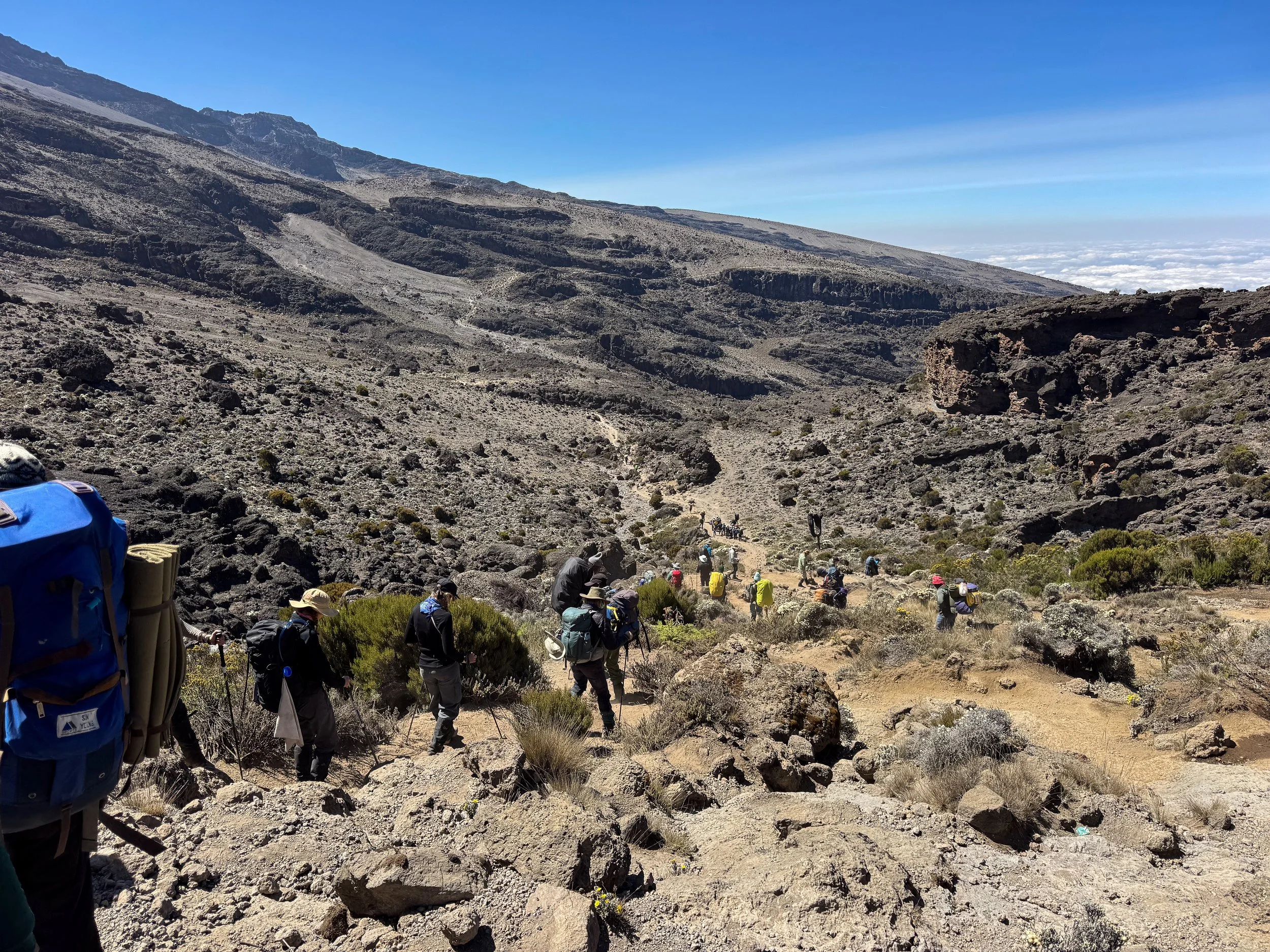
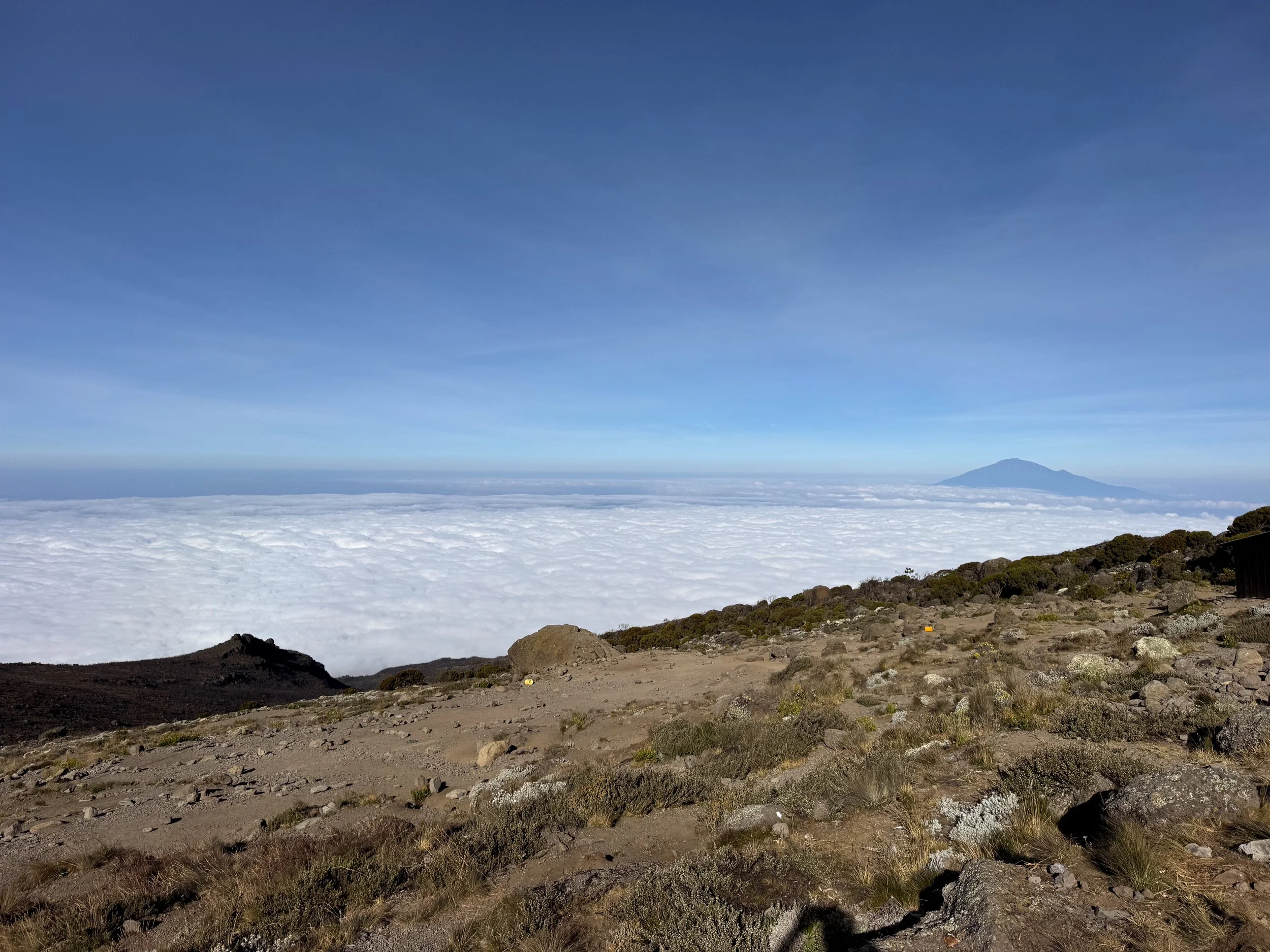
The Baranco Wall. The trail begins with a hike up the Baranco Wall, a steep rocky ridge just beyond the Baranco Camp. Hikers and their crews scale its 257 meter (843 feet) tall face. While steep, it doesn’t require any specialty equipment, only care and patience. The top of the wall has panoramic views of Mount Kilimanjaro’s ice capped summit, the cloud covered lowlands and distant silhouette of the Meru Volcano. The trail continues 6km further through a series of scenic valleys to The Karanga Camp.
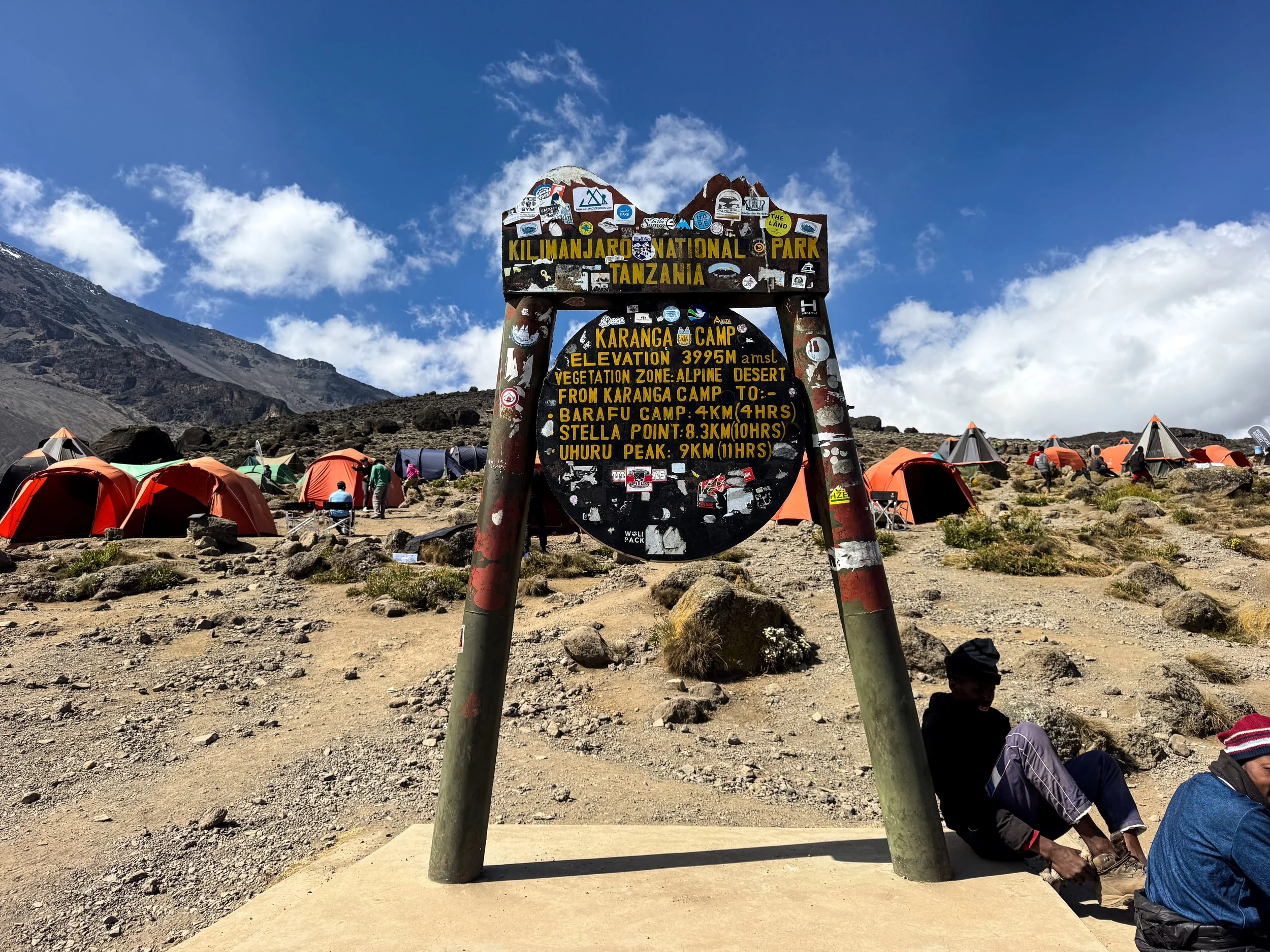
The Karanga Camp. The final camp before Mount Kilimanjaro’s Base Camp. It resides at 3,995 meters (13,107 feet), similar in elevation to the past two camps. Us and our crew reached the camp by the early afternoon. We walked up the camp’s ridge to help further with the acclimatization. The exposed location down slope from the glacial summit makes the camp cold, especially at nighttime.
Pro Tip. Stuff tomorrow’s clothes inside your sleeping bag at night to warm up before changing in the morning. Thanks mom!
Day Five
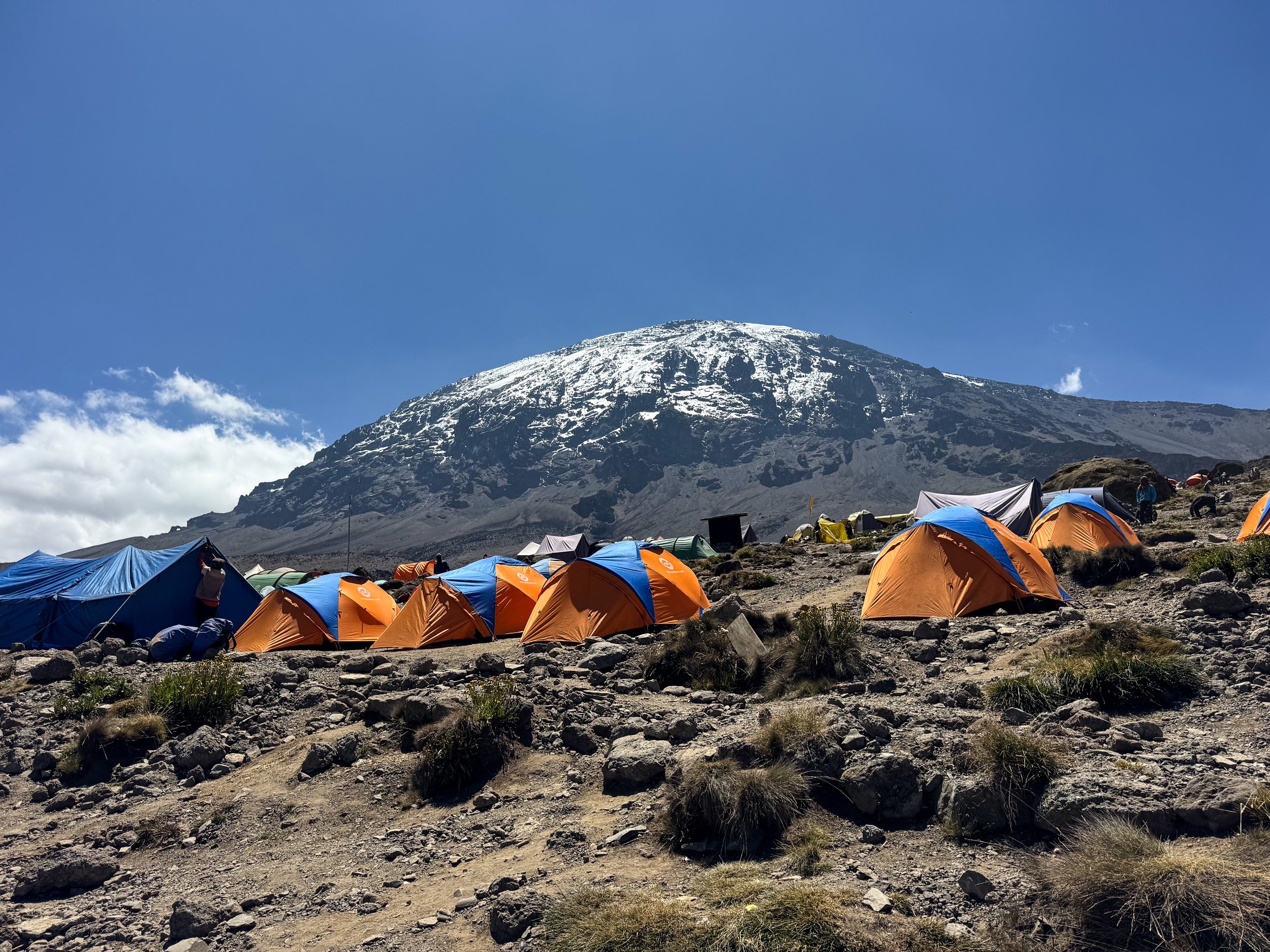
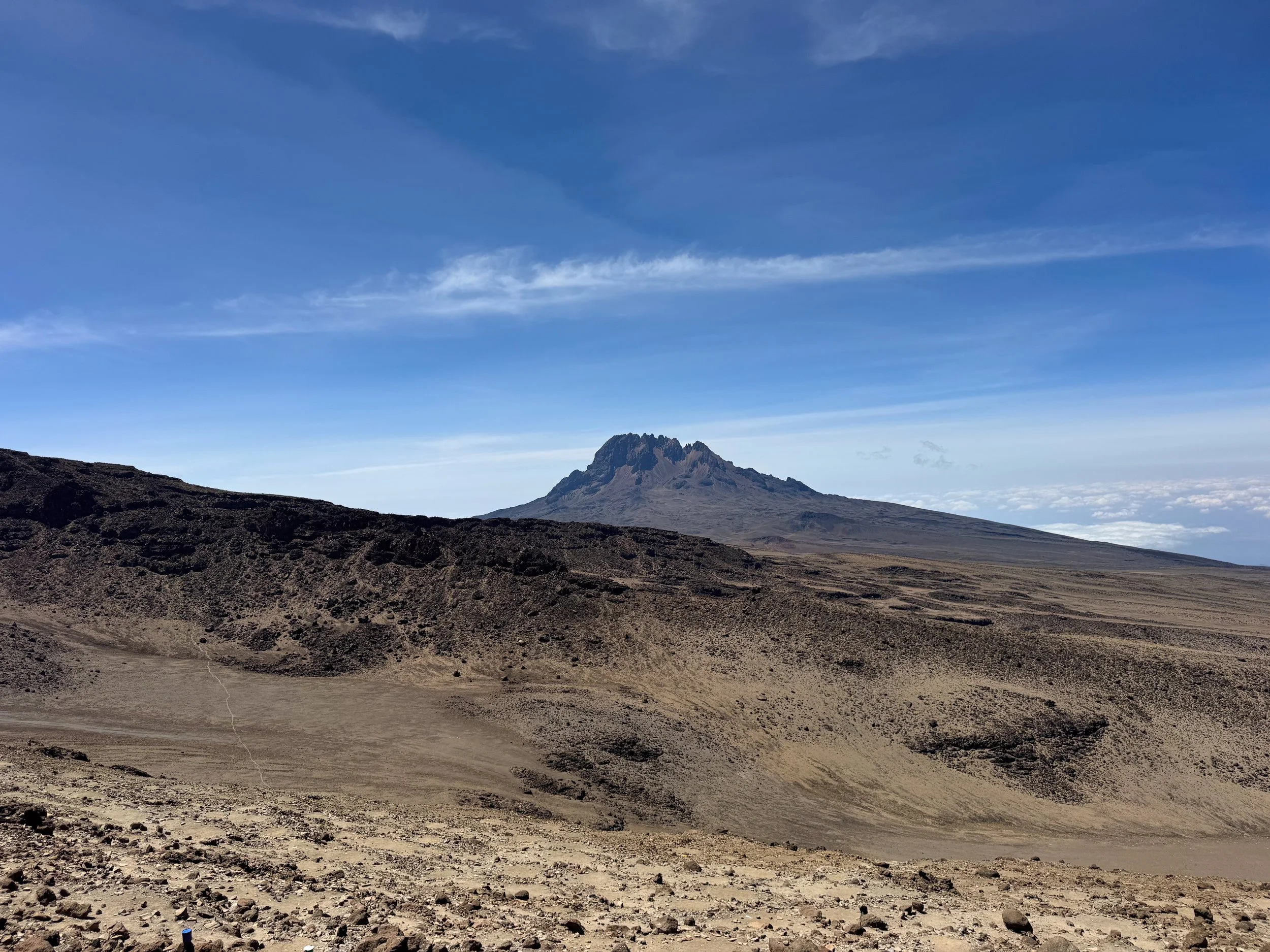
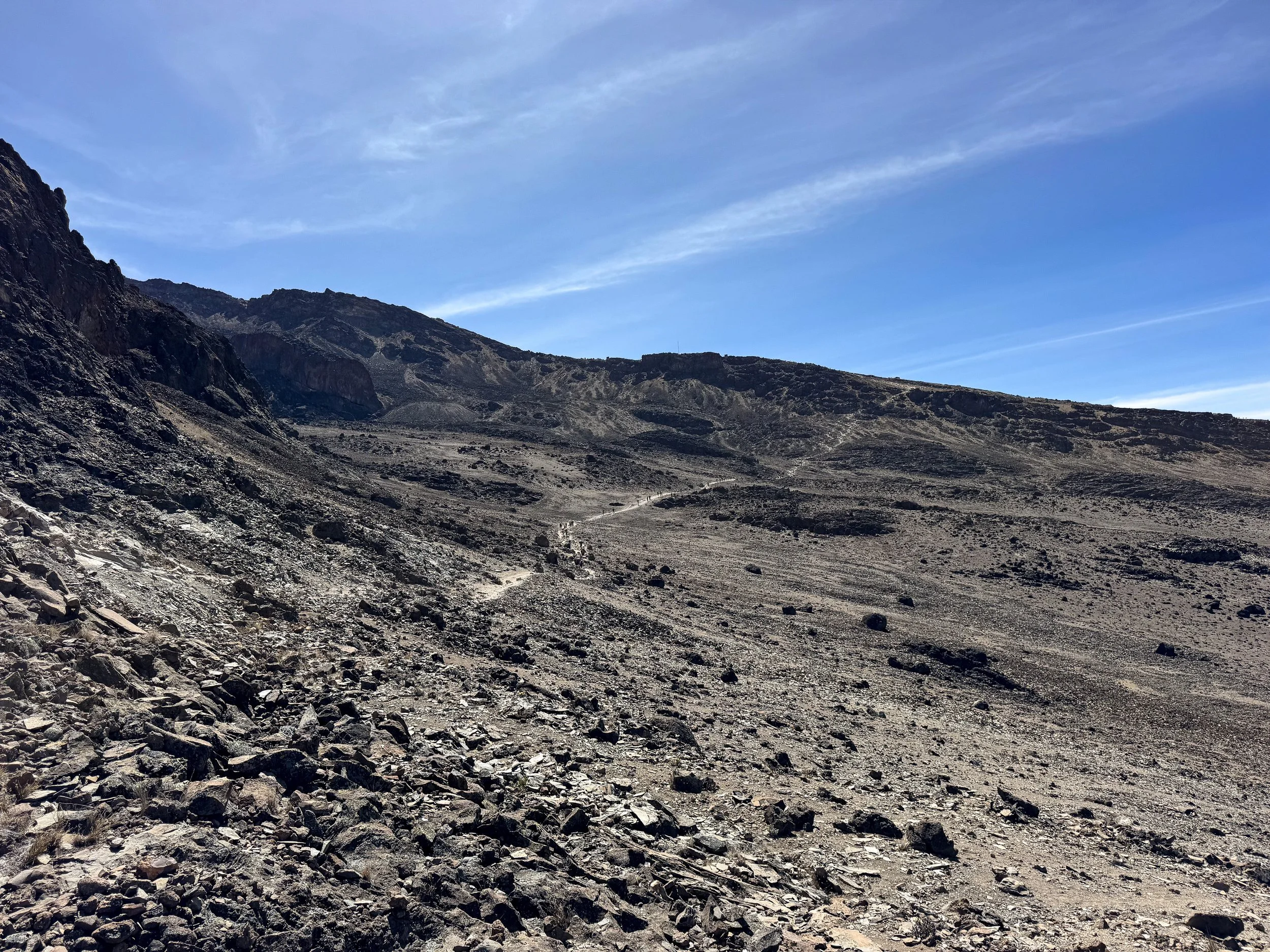
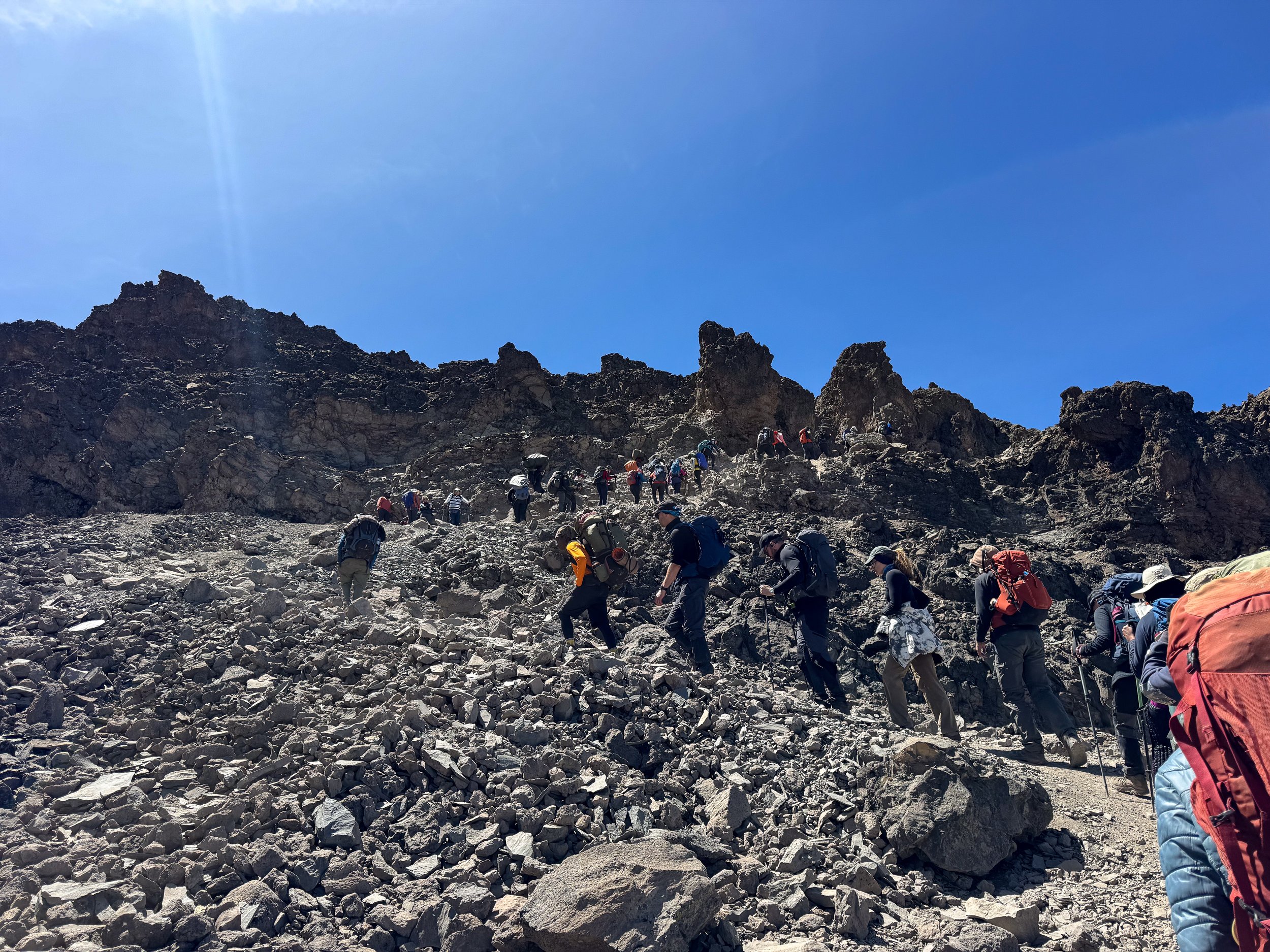
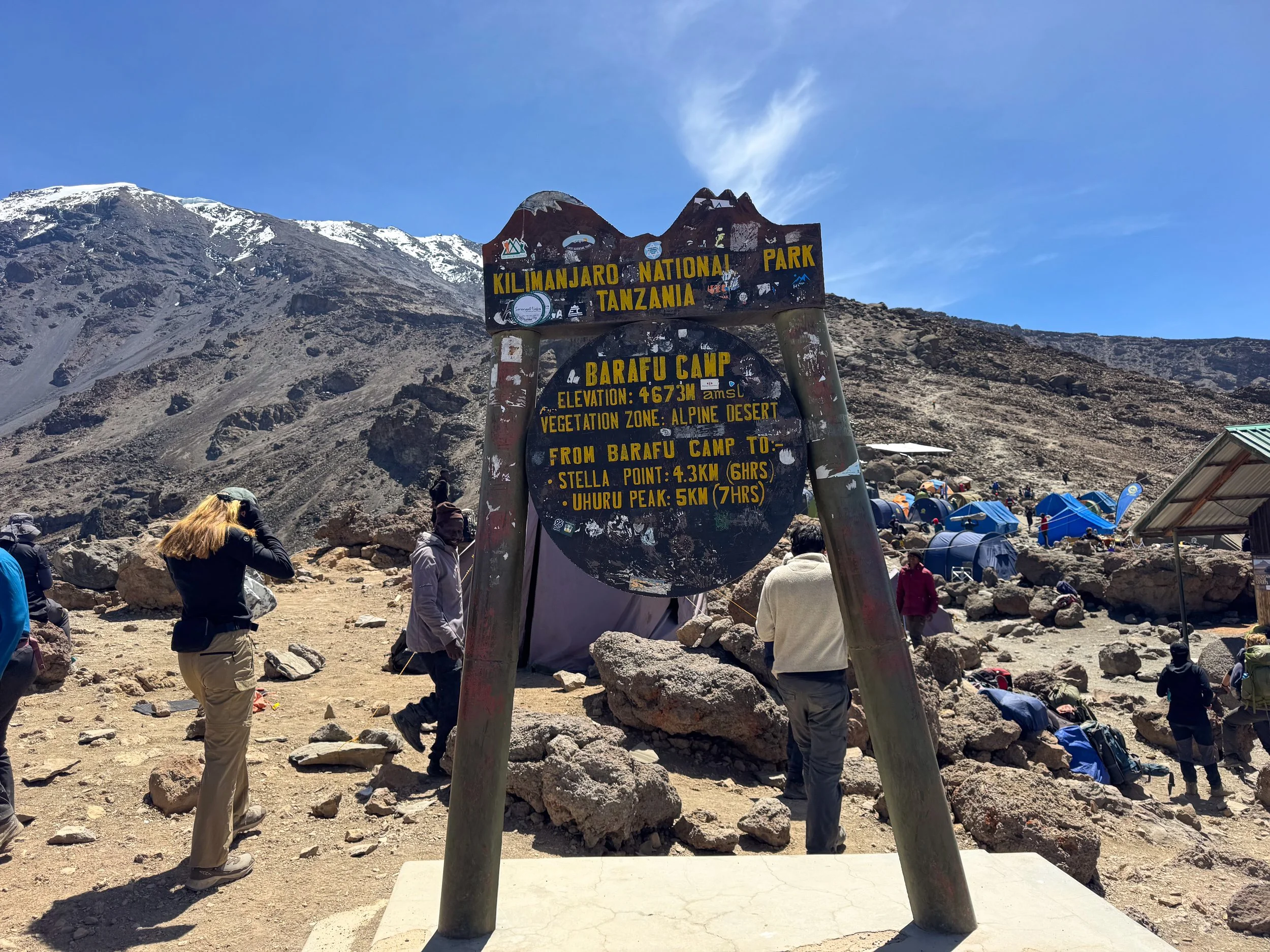
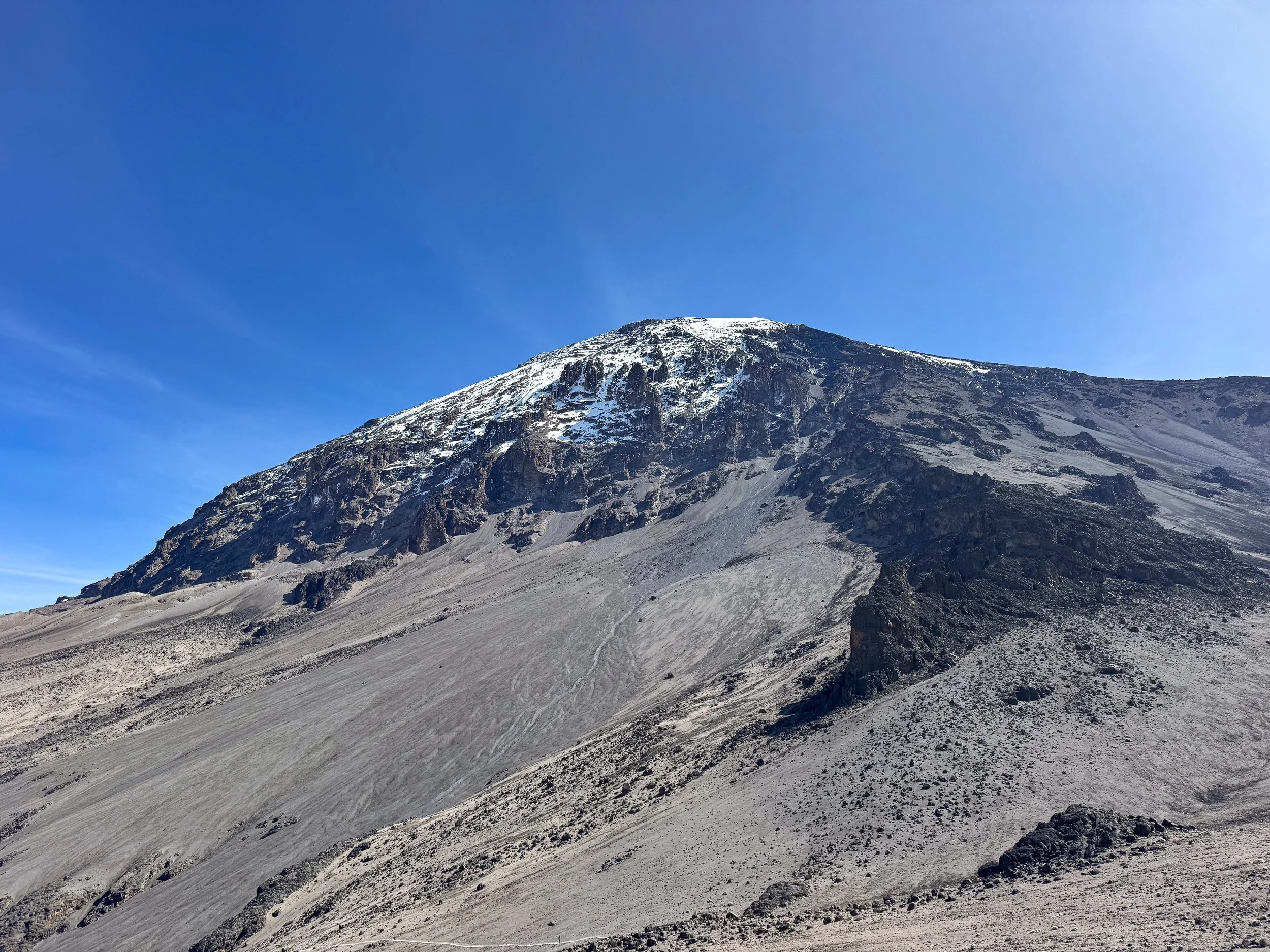
The Hike to Base Camp. Day 5 began with our ascent to The Barafu Camp, Mount Kilimanjaro’s Base Camp. We hiked 4km across the dry and arid terrain of The Alpine Desert. Slate rocks creaked like broken pottery beneath our feet. The snow covered peak of Mount Kilimanjaro towered ahead. We reached the camp four hours later.
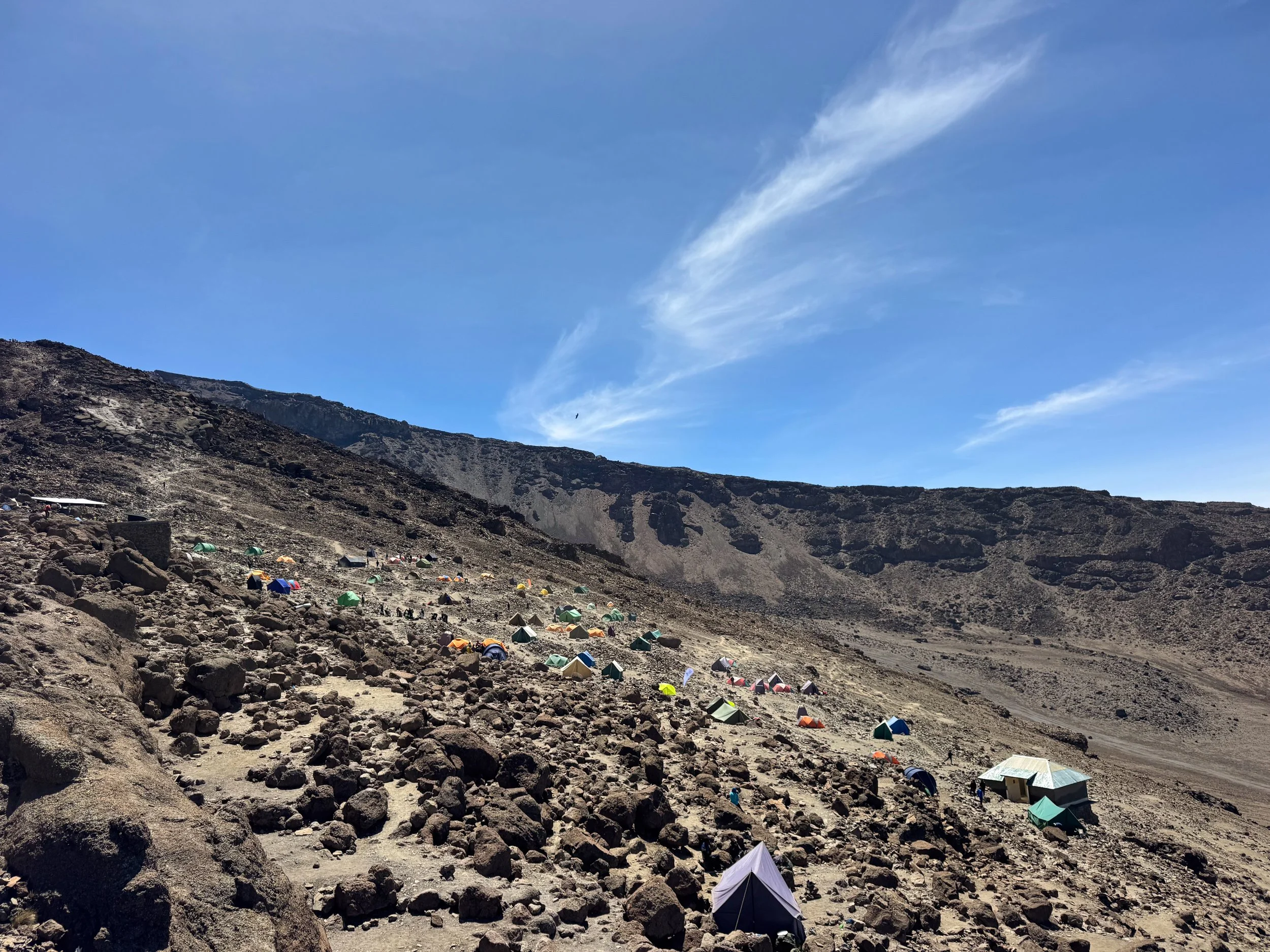
Barafu Camp. Barafu translates to “Ice” in Swahili. It’s a cold place, located at an elevation of 4,673 meters (15,331 feet). Tents covered the rugged mountainside. We sat outside of ours, peering across the mountain’s saddle towards the jagged Mawenzi Peak, the third highest in Africa. The cook prepared vegetable soup, fried fish and savory potato pastries stuffed with veggies for lunch. We spent the remainder of the afternoon and evening relaxing and acclimating.
Day Six
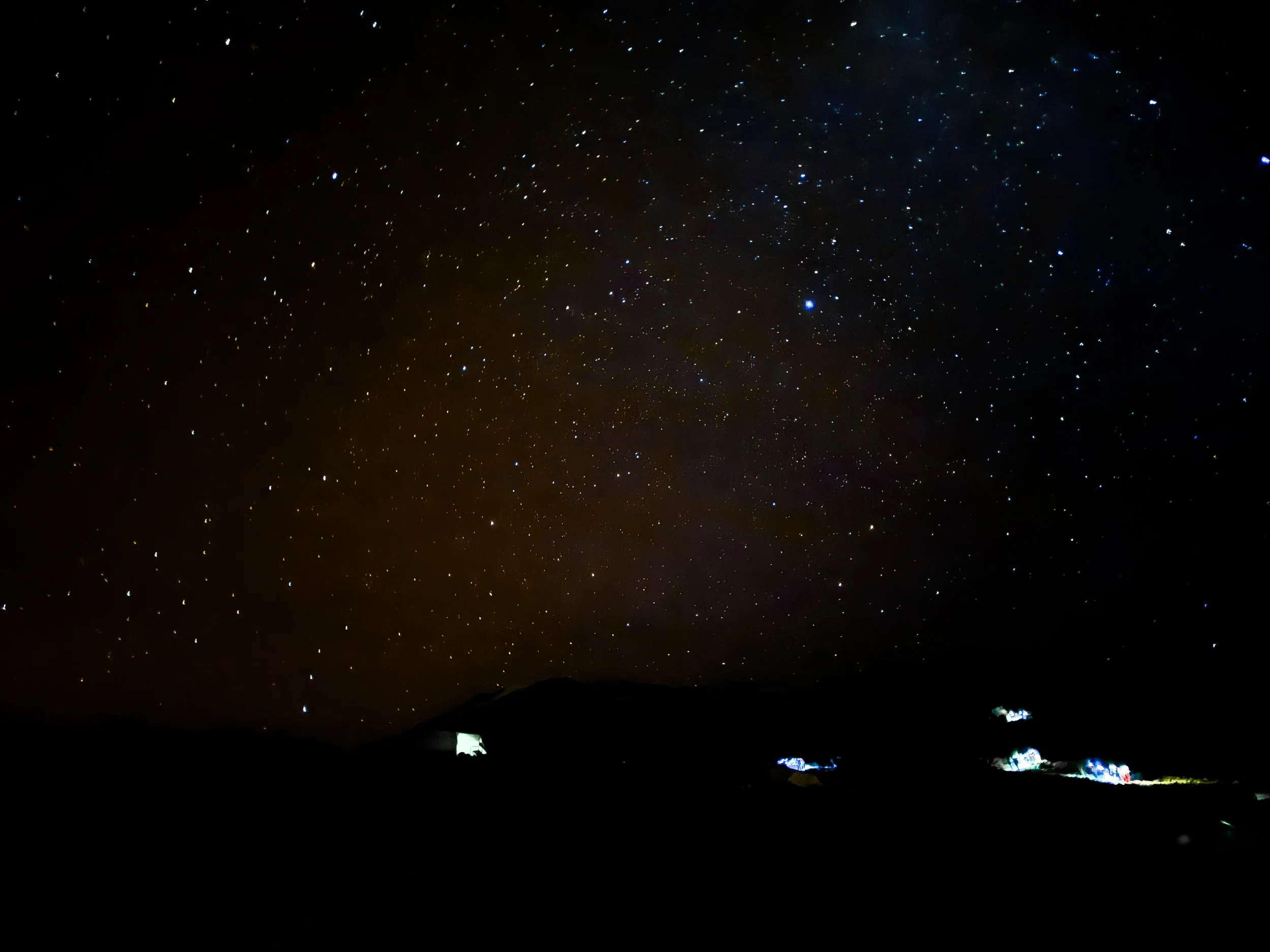
Midnight Hike to The Summit. The hike to the summit began at midnight. Our guides led us uphill along steep winding trails through the dark of night. Rocks, dust and fine gravel crunched beneath our feet. The stars spanned the night sky, twinkling brightly overhead. Ice and snow banks appeared the further we hiked. Guides erupted into spontaneous songs offering encouragement to those along the trail.
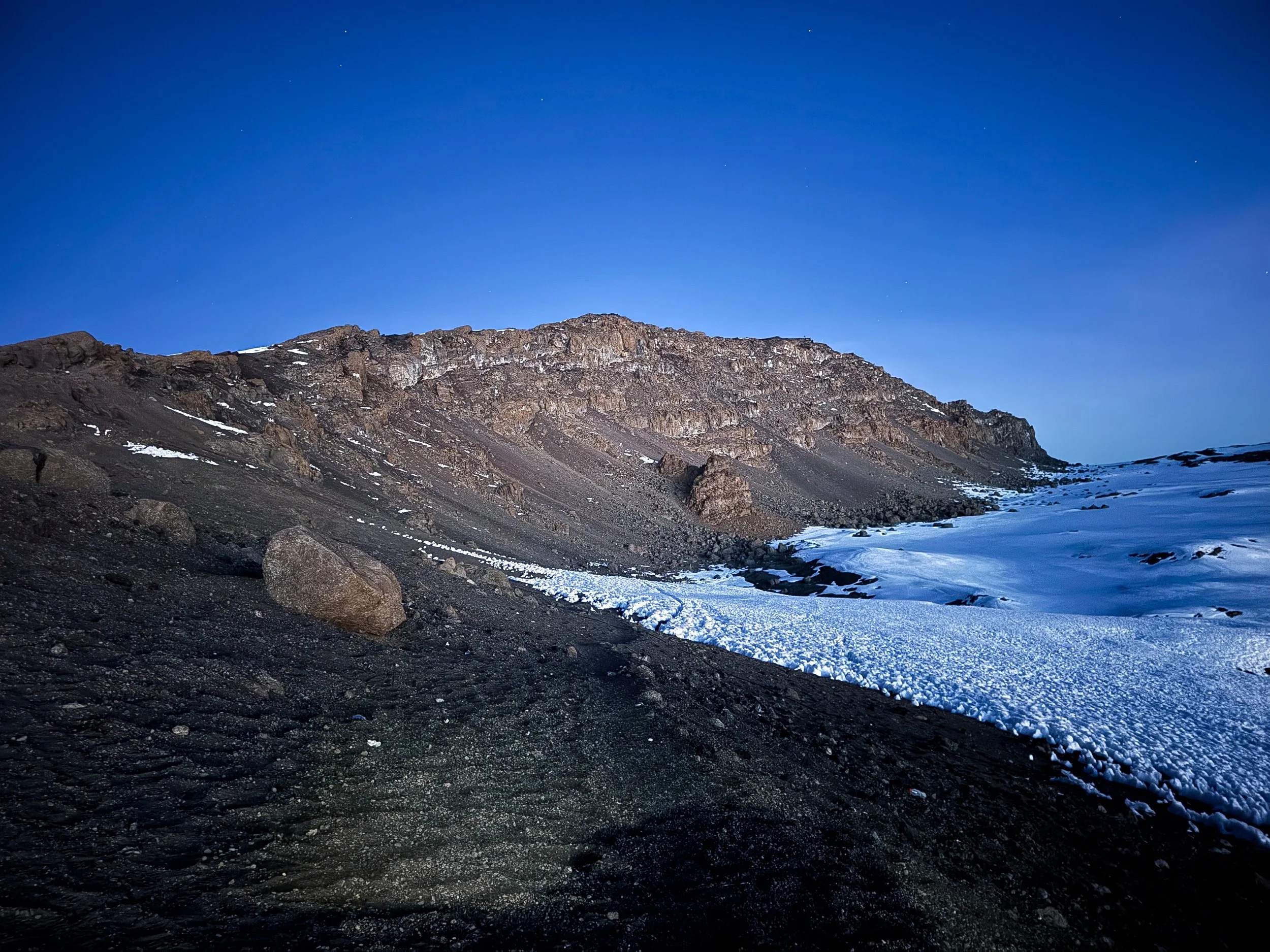
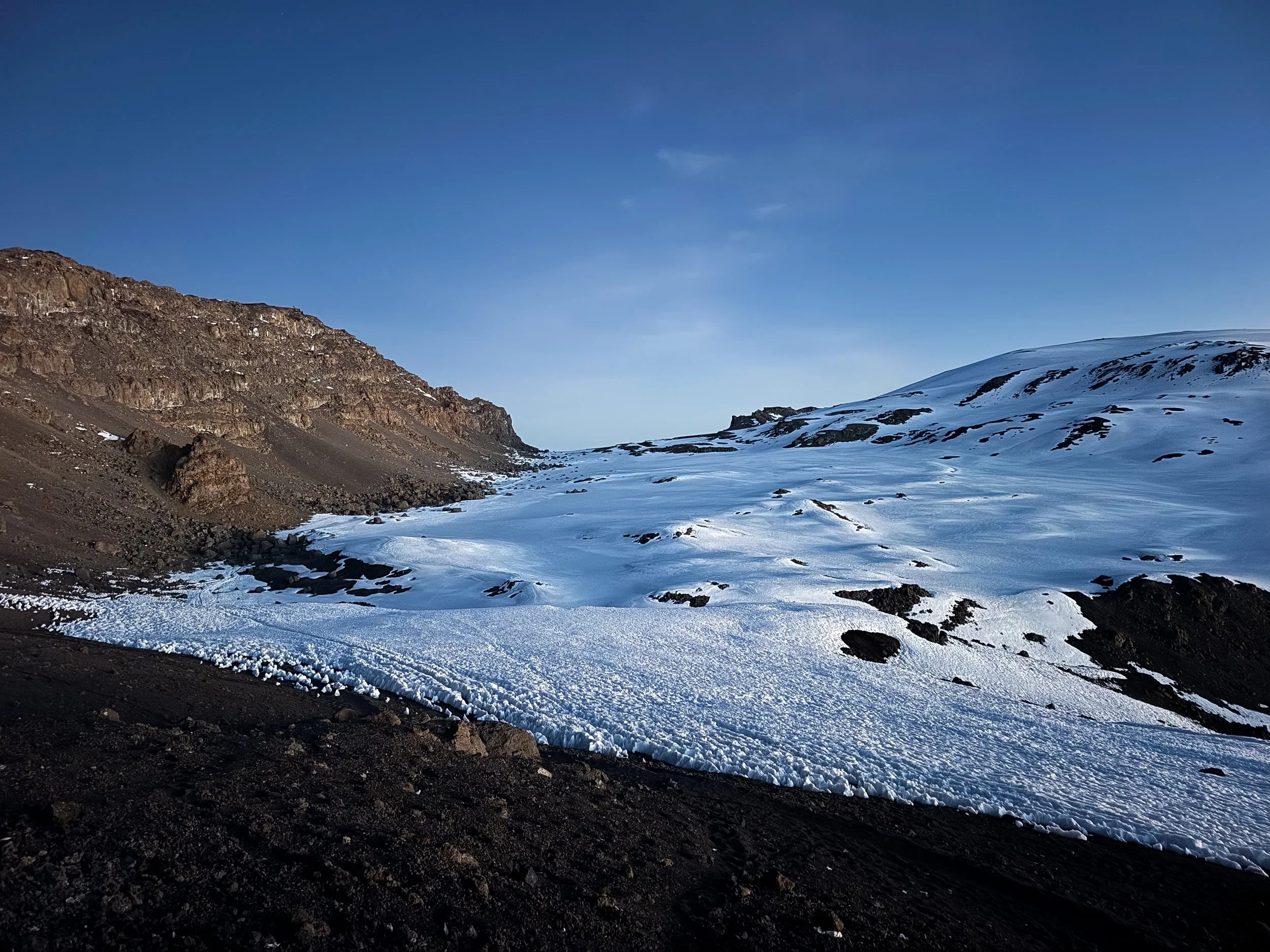
The Arctic Zone. The trek to the summit brought us into The Arctic Zone, the fifth of five climate zones on the mountain. It’s characterized by subzero temperatures, snow covered terrain and icy glaciers.
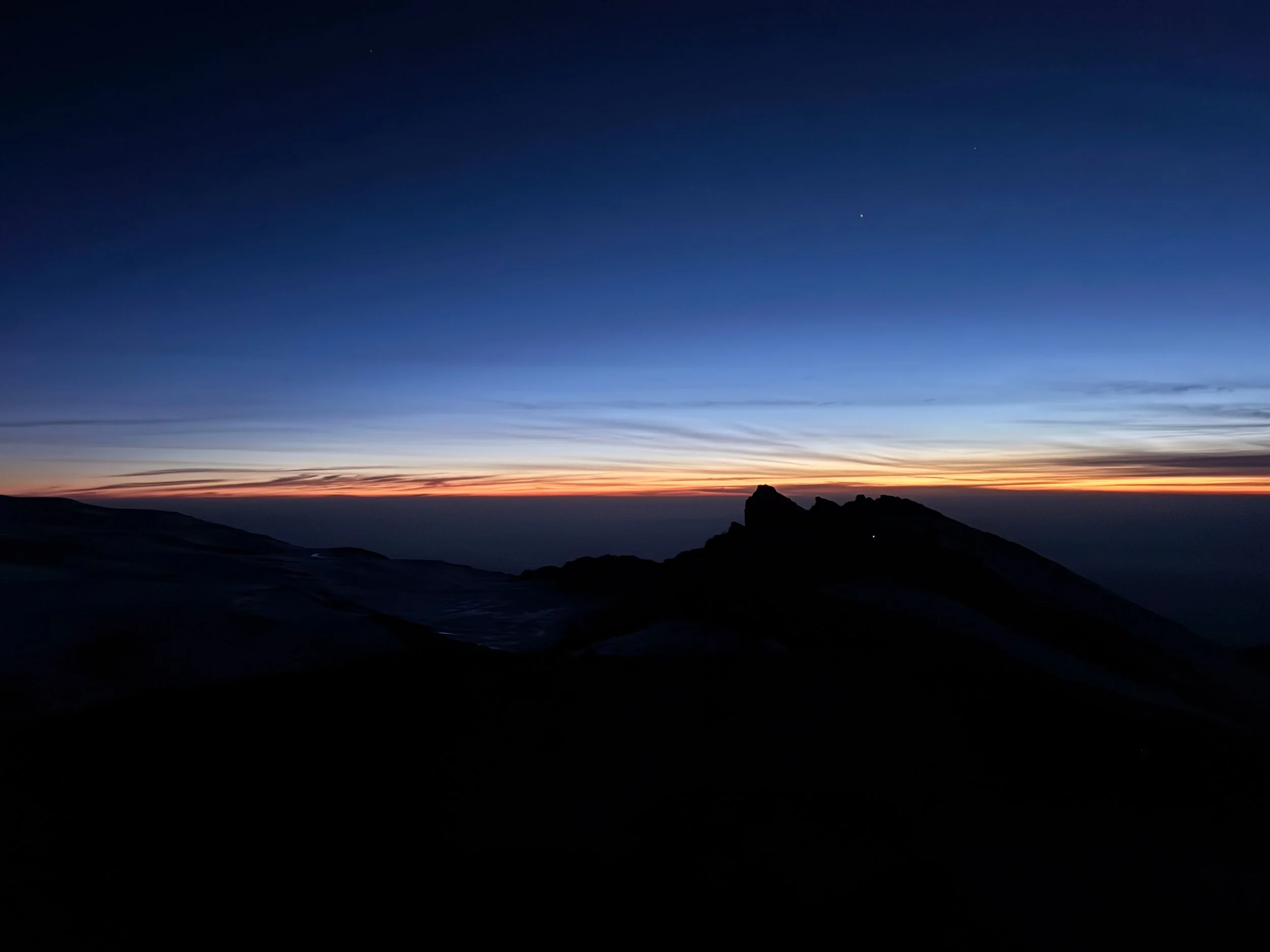
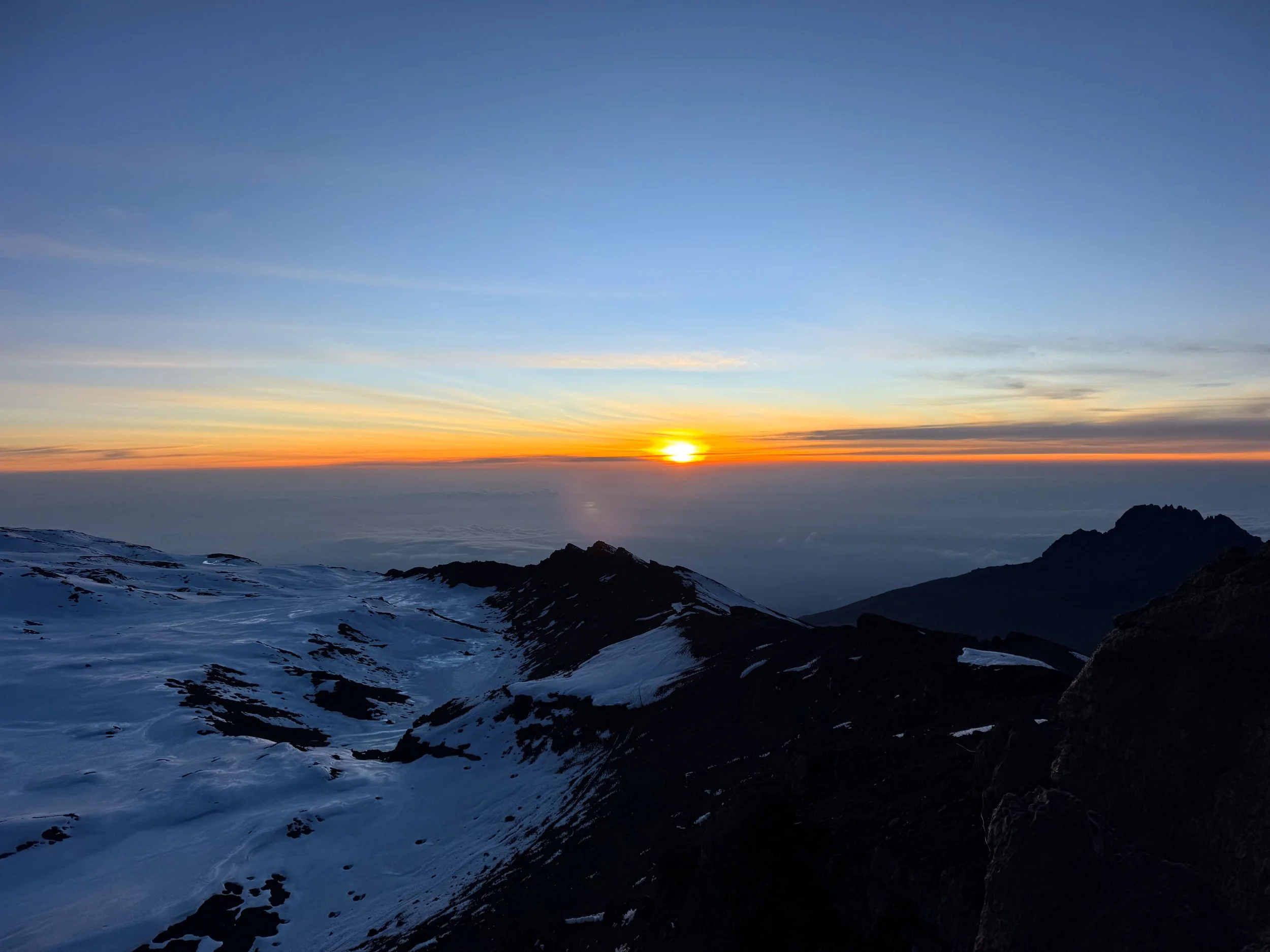
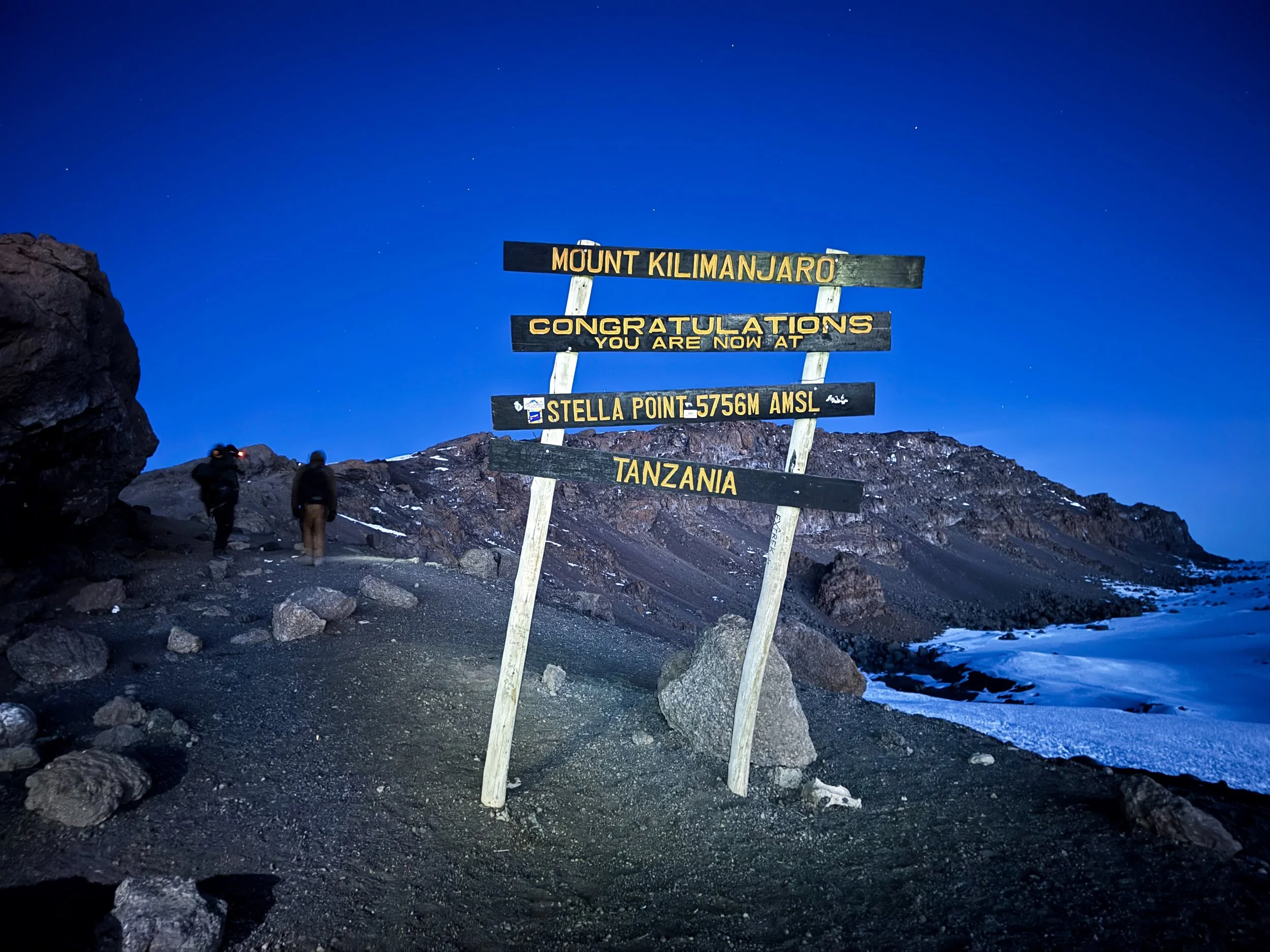
Stella Point. Daylight began to break 6 hours into our hike. The scarlet hued sunrise cast a warm glow over the cold and barren landscape. It was at the same time that we reached Stella Point, a lower peak below the main summit. It stands at 5,756 meters (18,885 feet).
The Trail to the Summit. The trail continued one hour past Stella Point. Though relatively flat, the distance in between was treacherous for many hikers suffering altitude sickness. Black lava rocks and glossy obsidian contrasted the white Arctic landscape. Icy pinnacles flanked the trail, glaciers hugged the slopes and snow blanketed the crater.
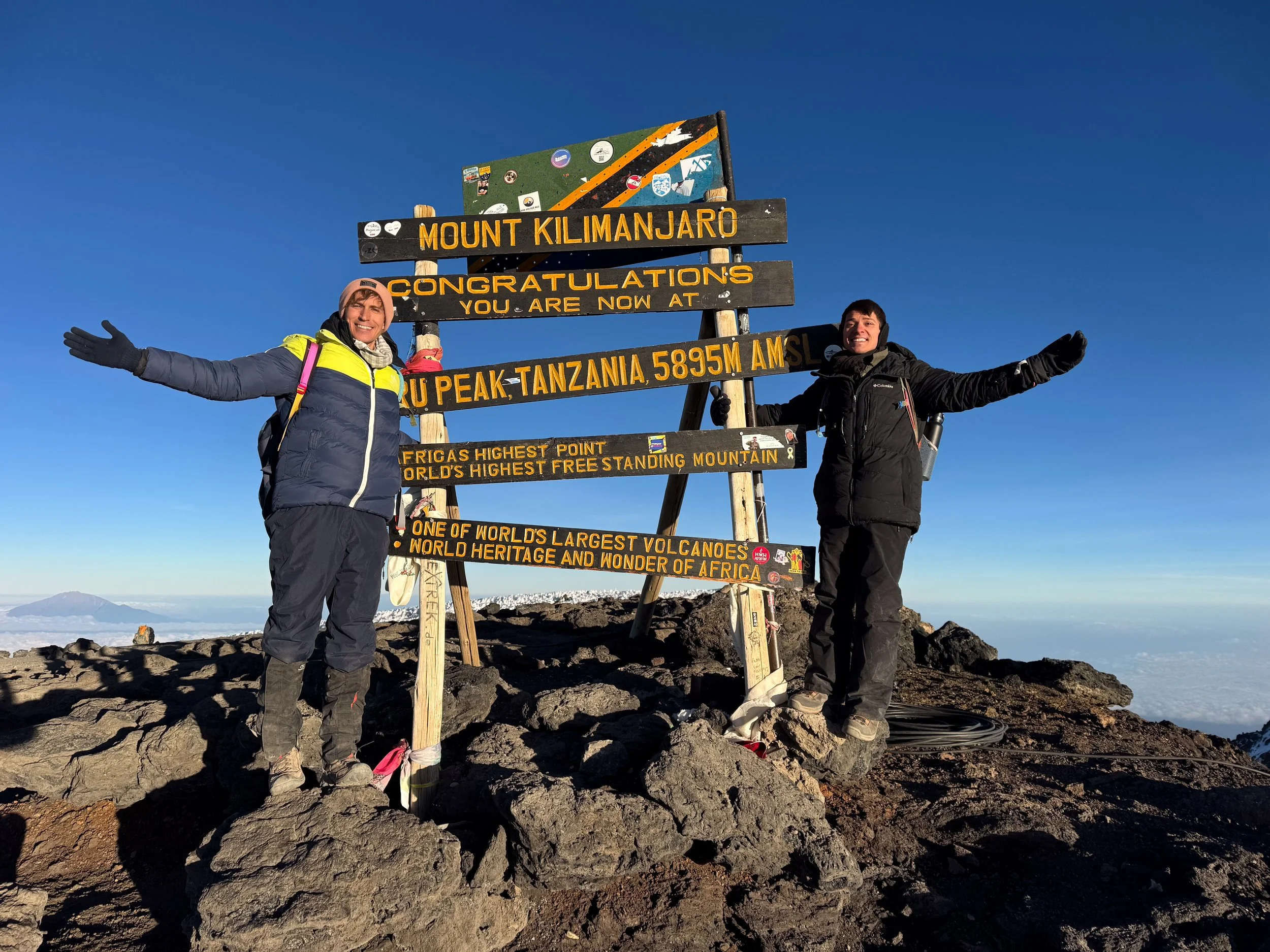
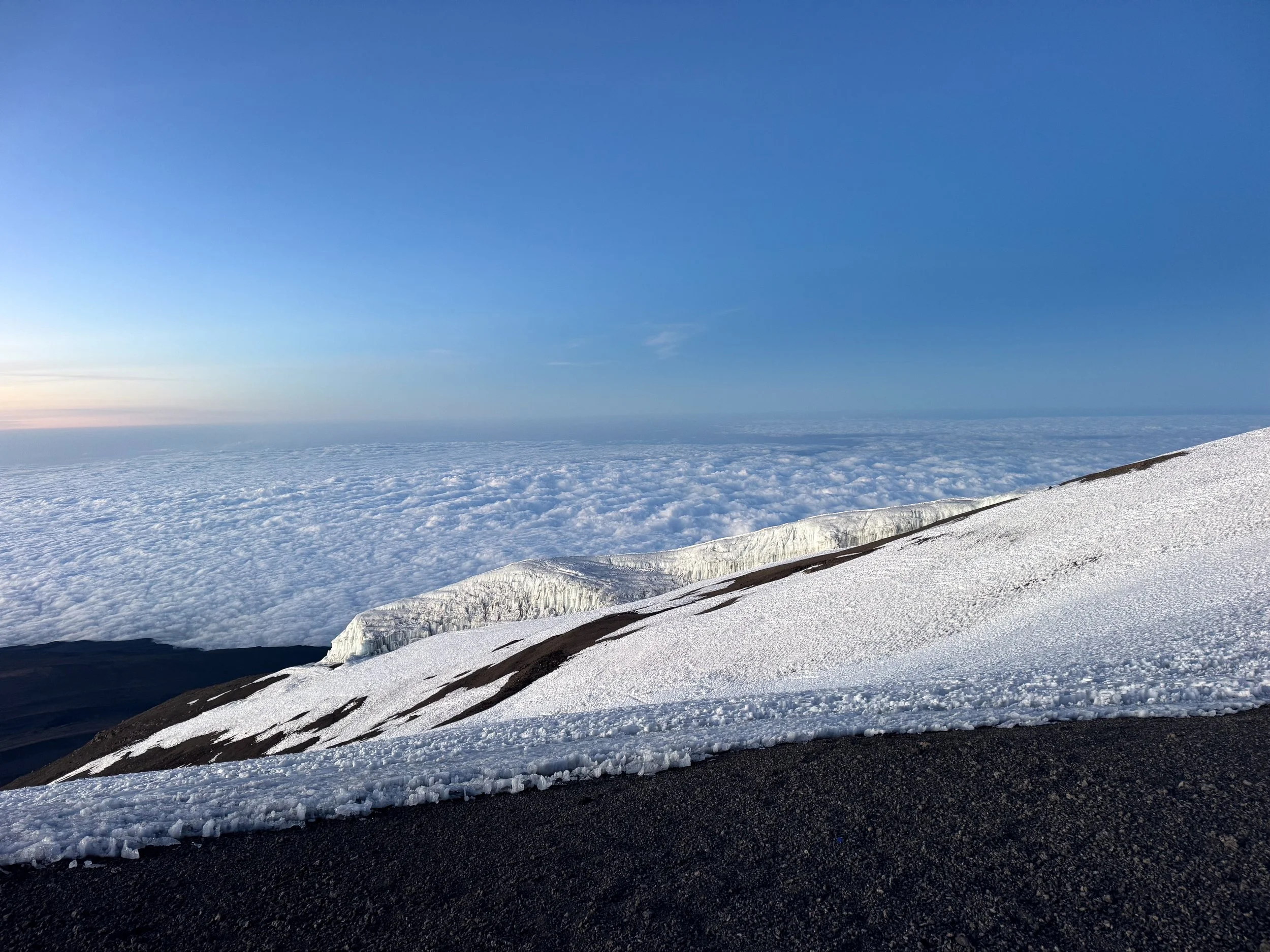
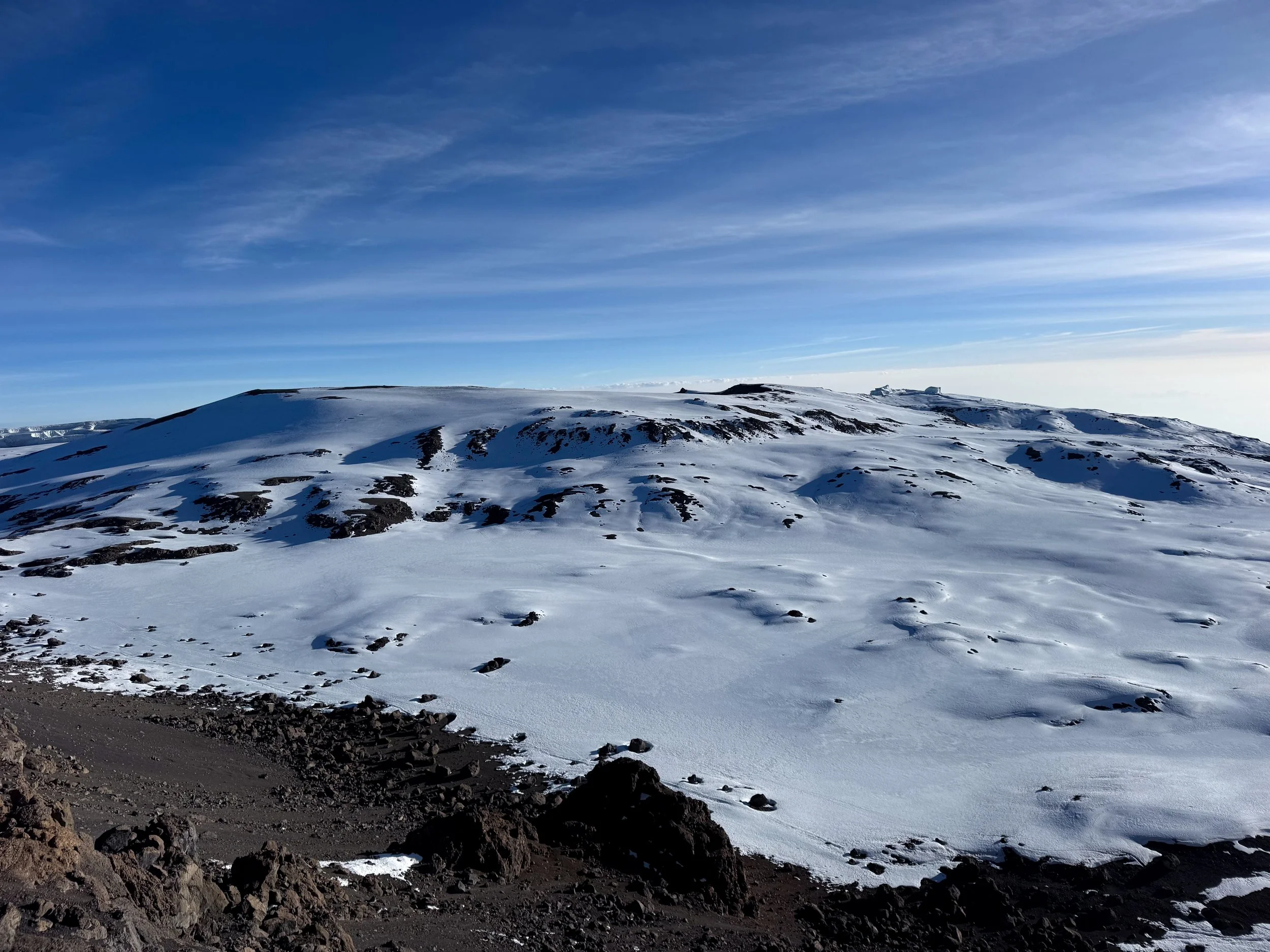
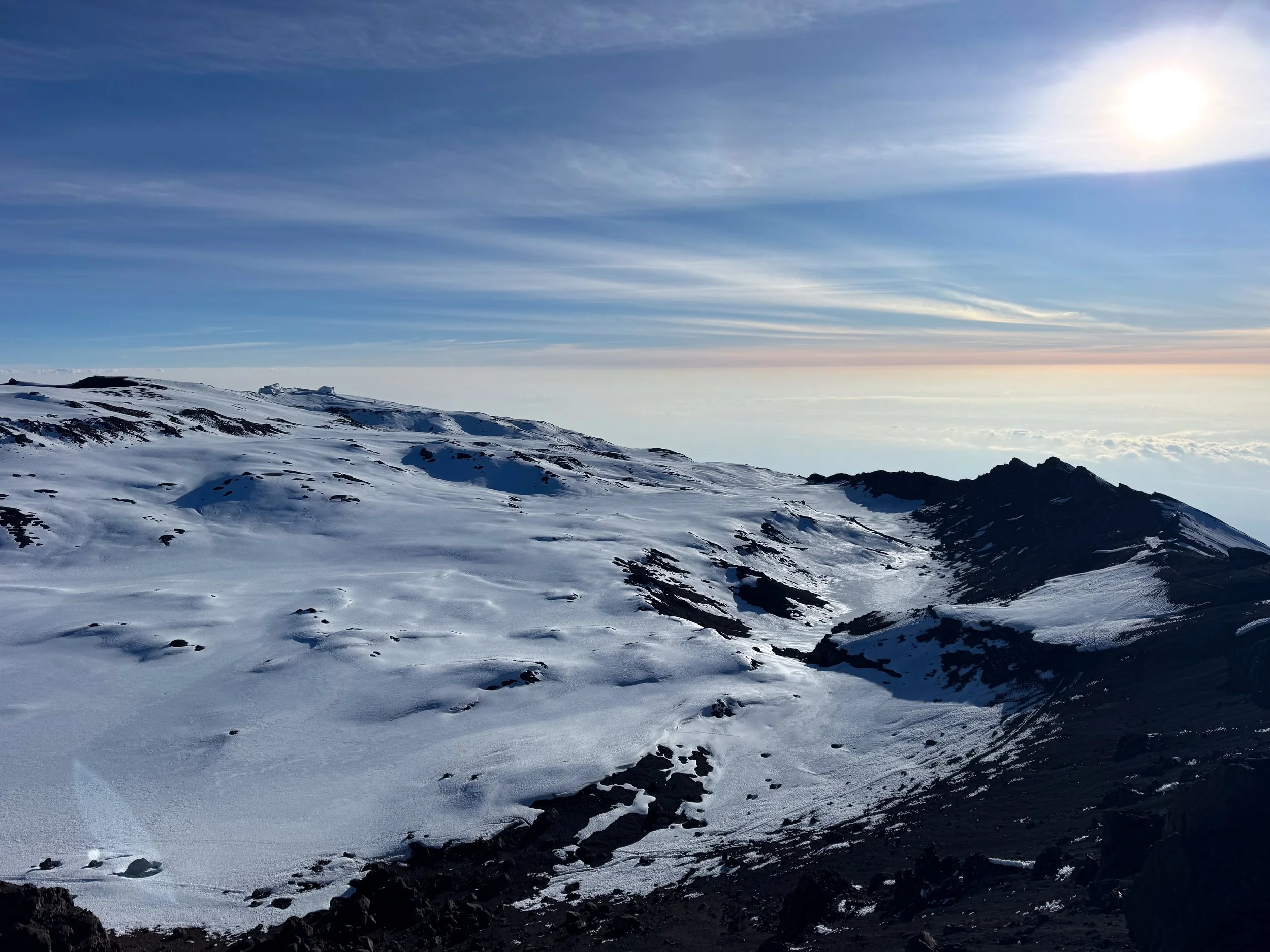
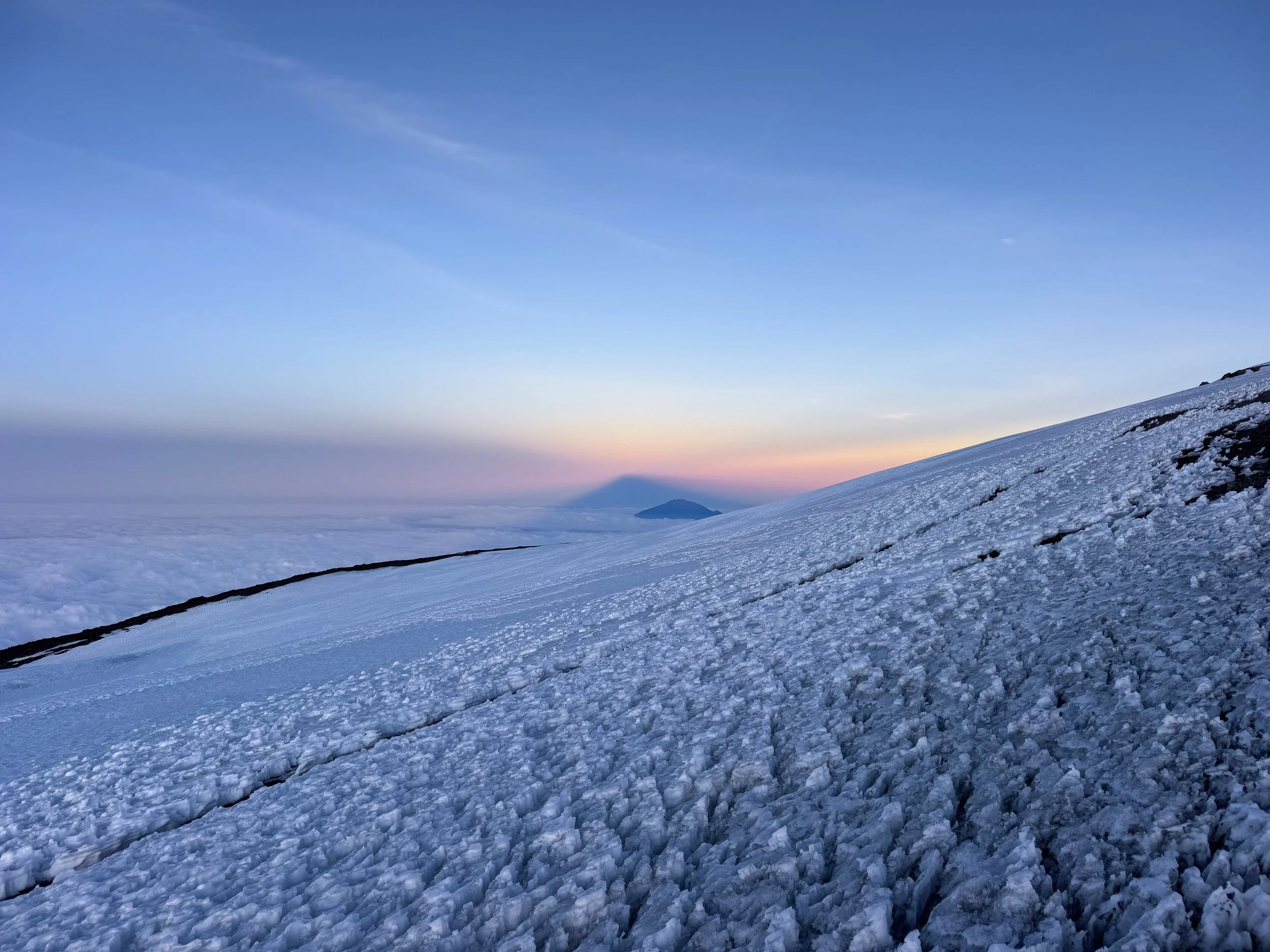
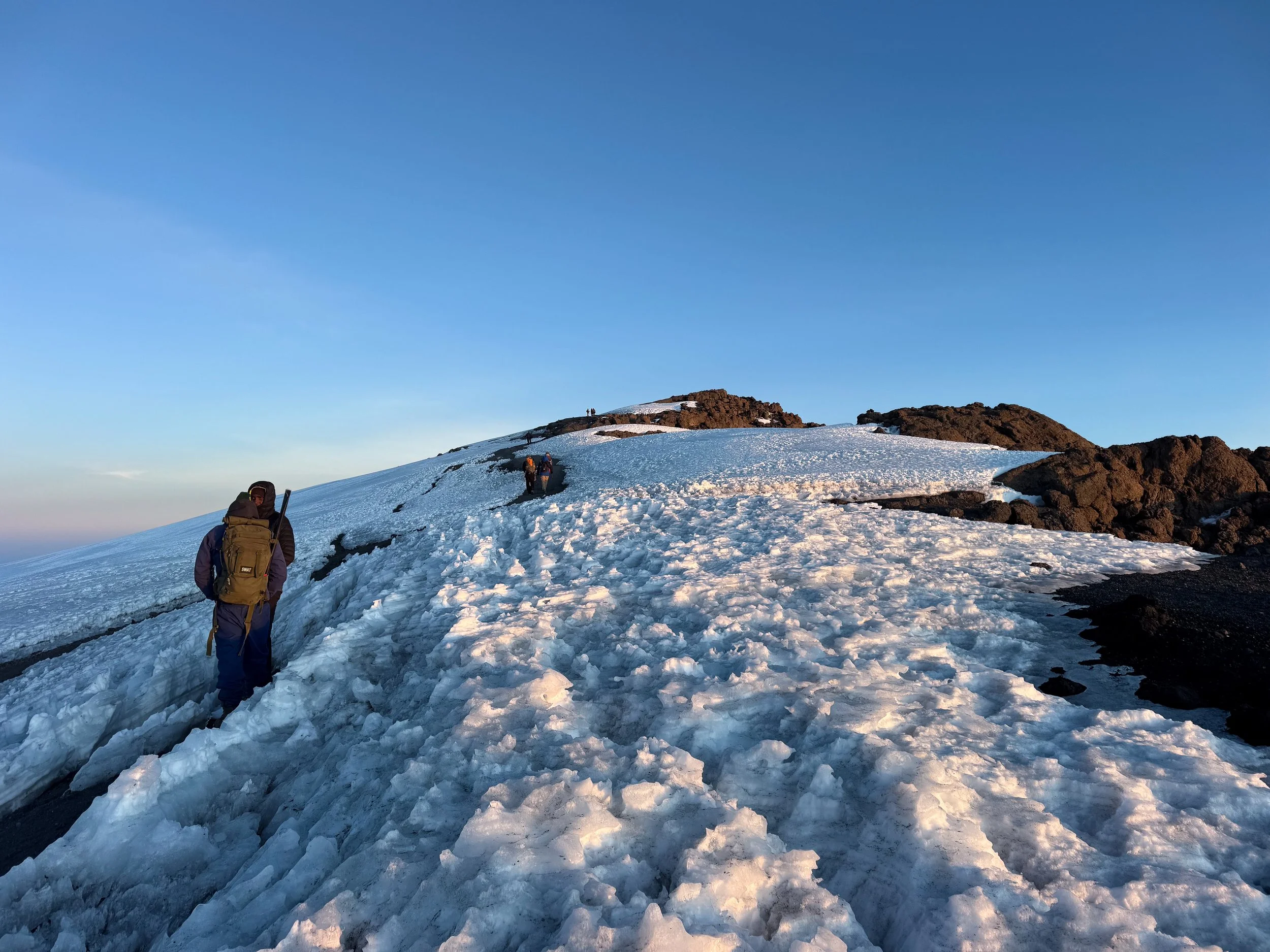
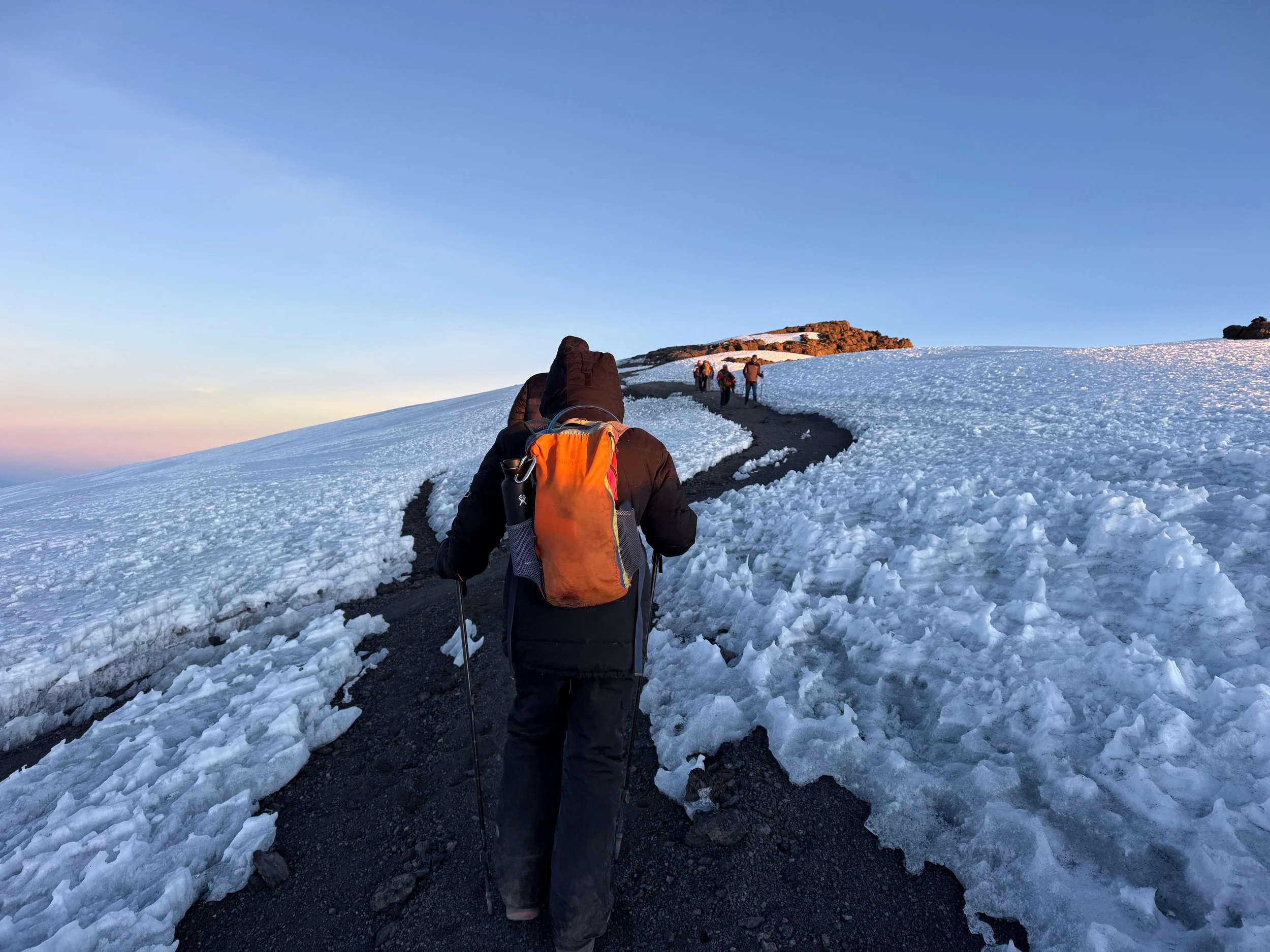
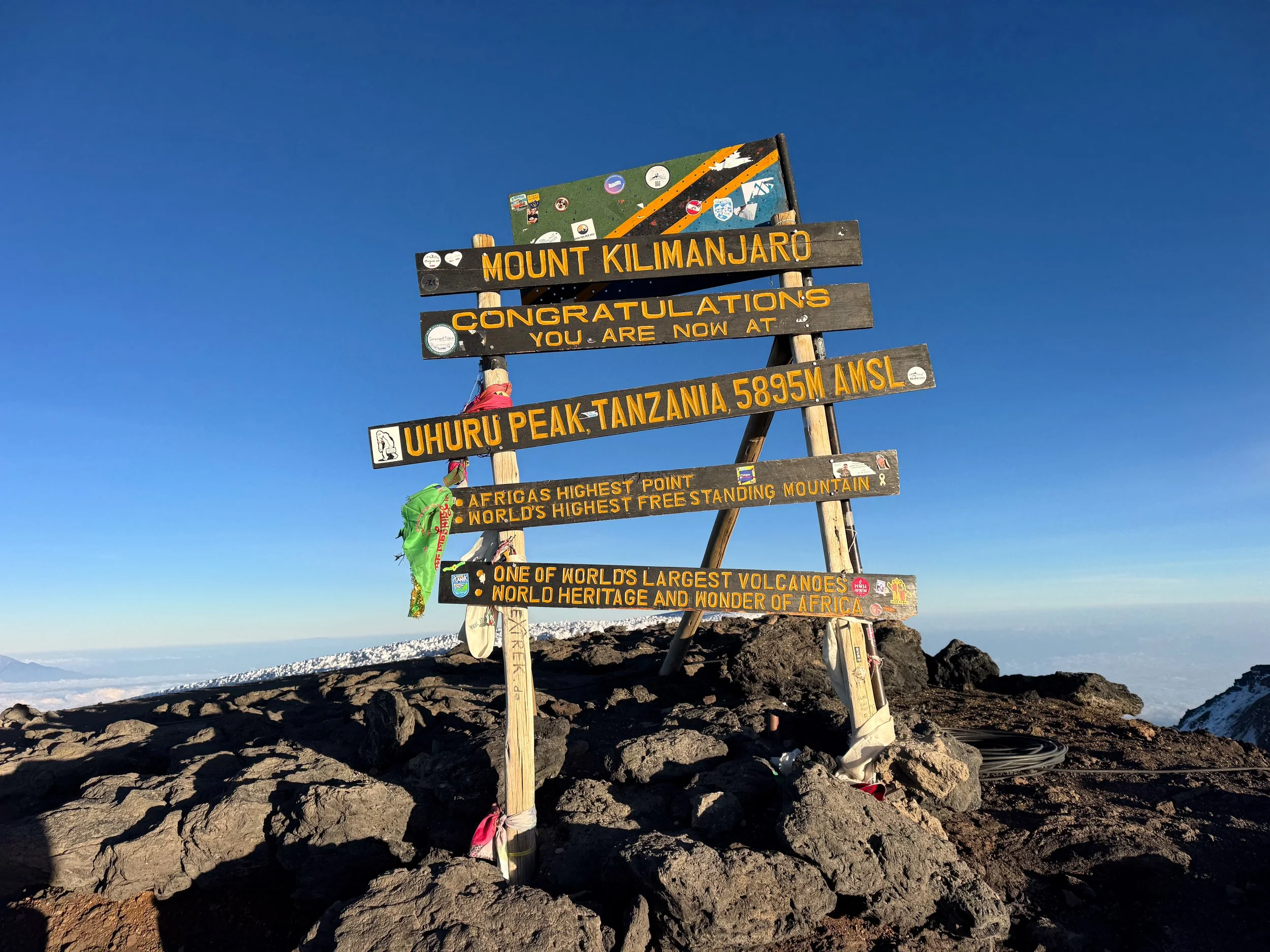
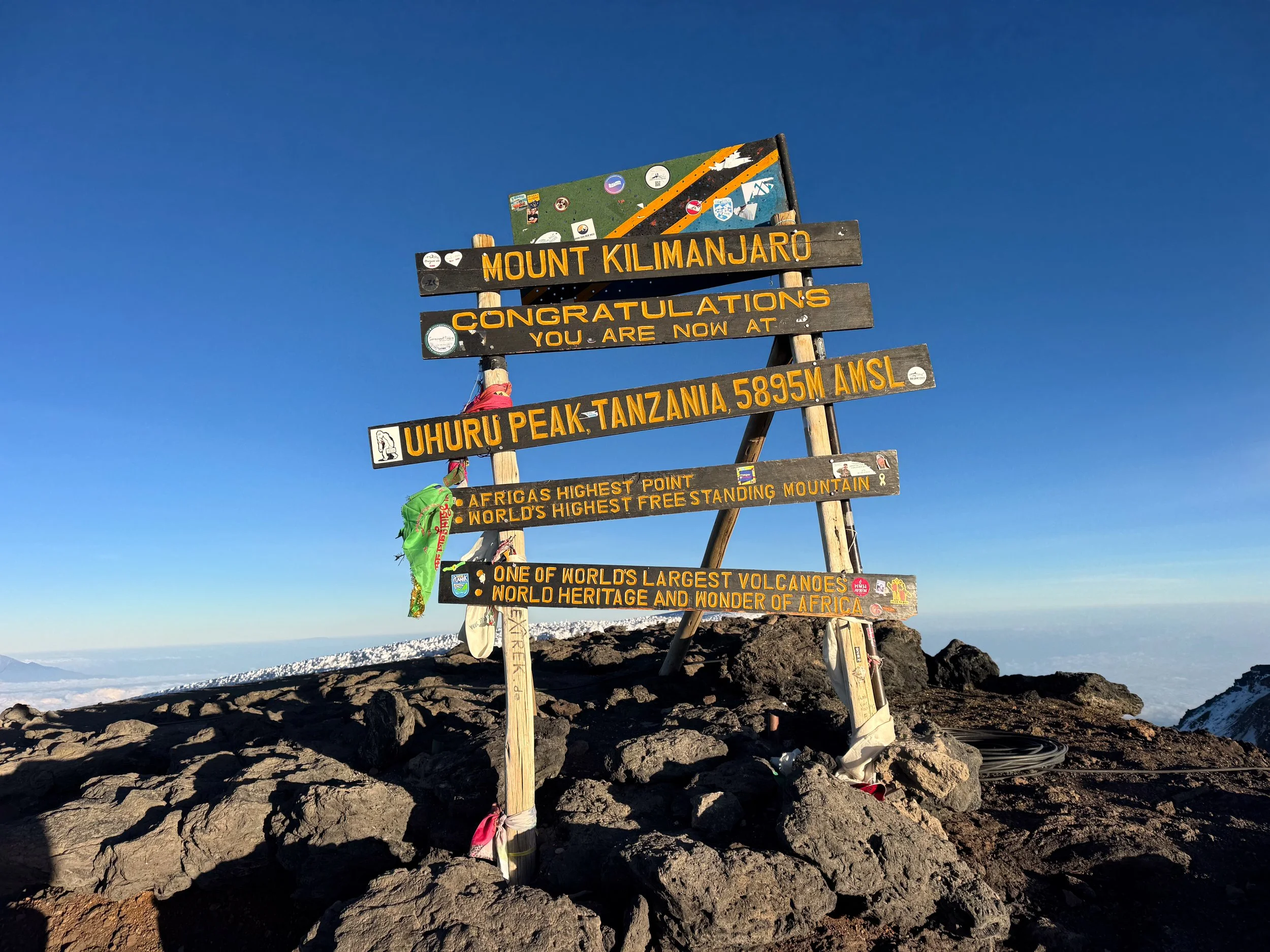
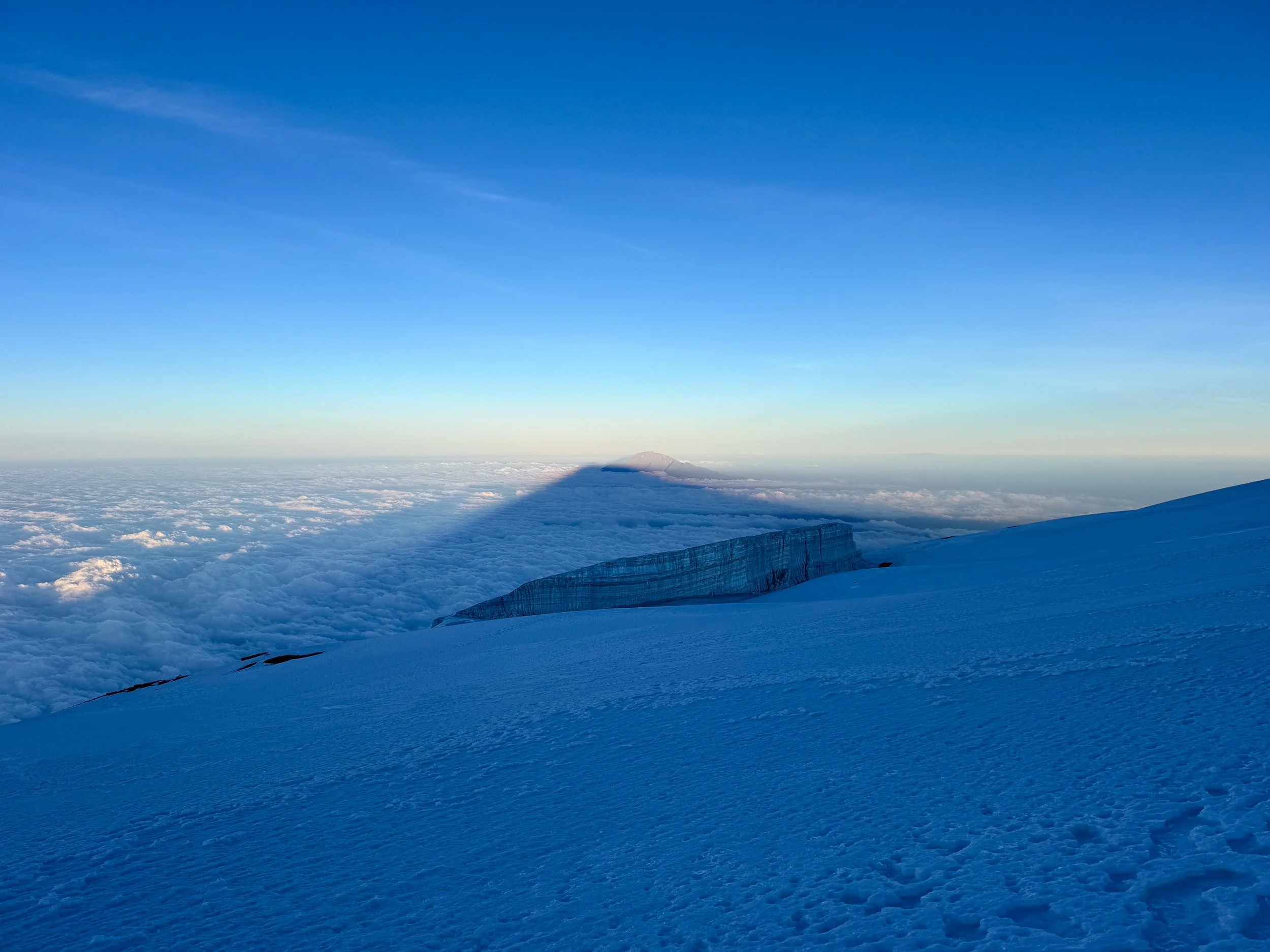
Uhuru Peak. Mount Kilimanjaro is Africa’s tallest mountain and one of the world's Seven Summits. The highest point tops out at 5,895 meters (19,341 feet) above sea level. After days of hiking, a congratulatory sign welcomed us to the summit! It was an overwhelming experience to reach. Tears were indeed shed. We celebrated with frozen candy bars and hot ginger tea. The mountain was surrounded by a sea of puffy white clouds. The shadow of Mount Kilimanjaro was cast across them.
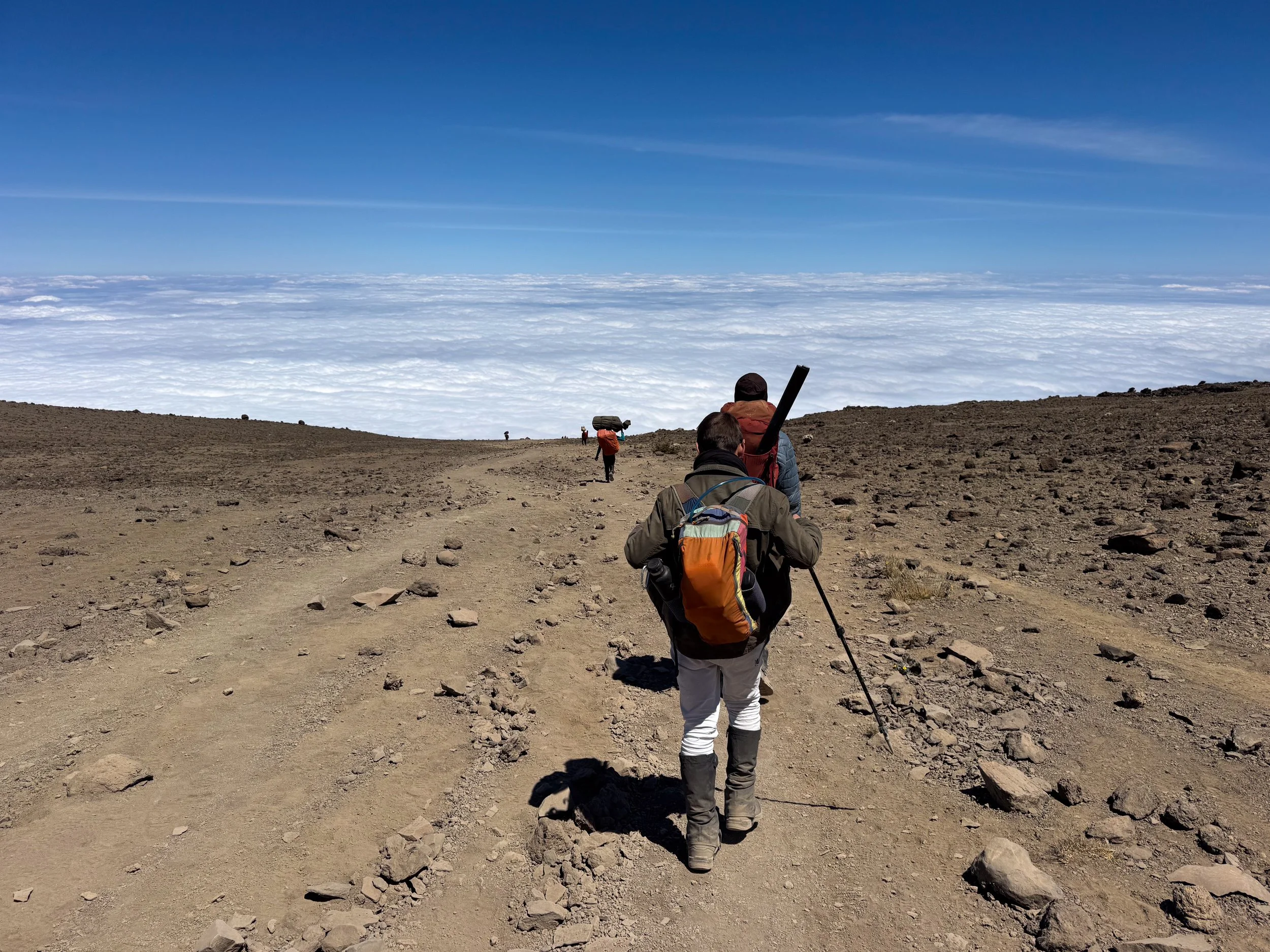
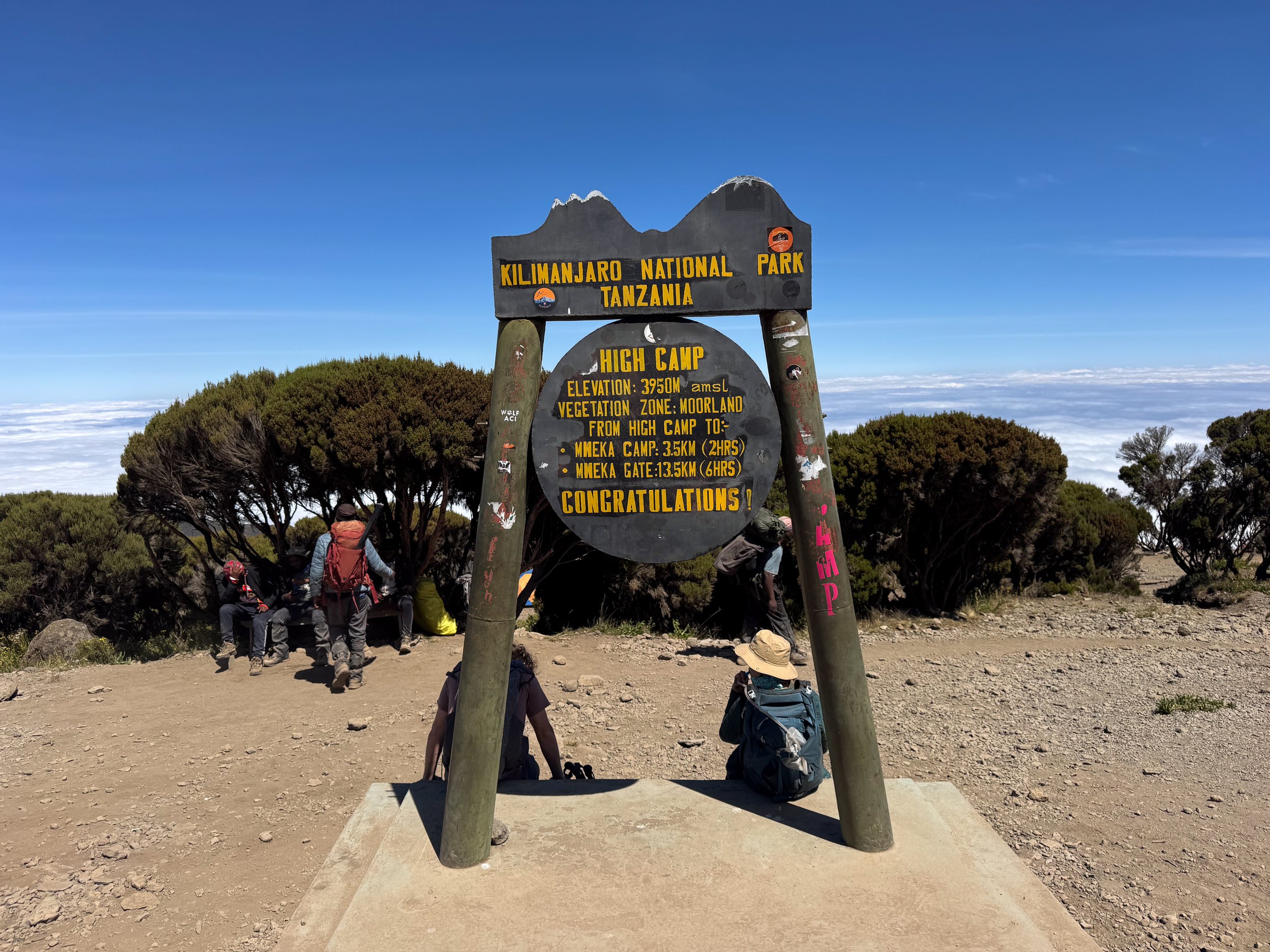
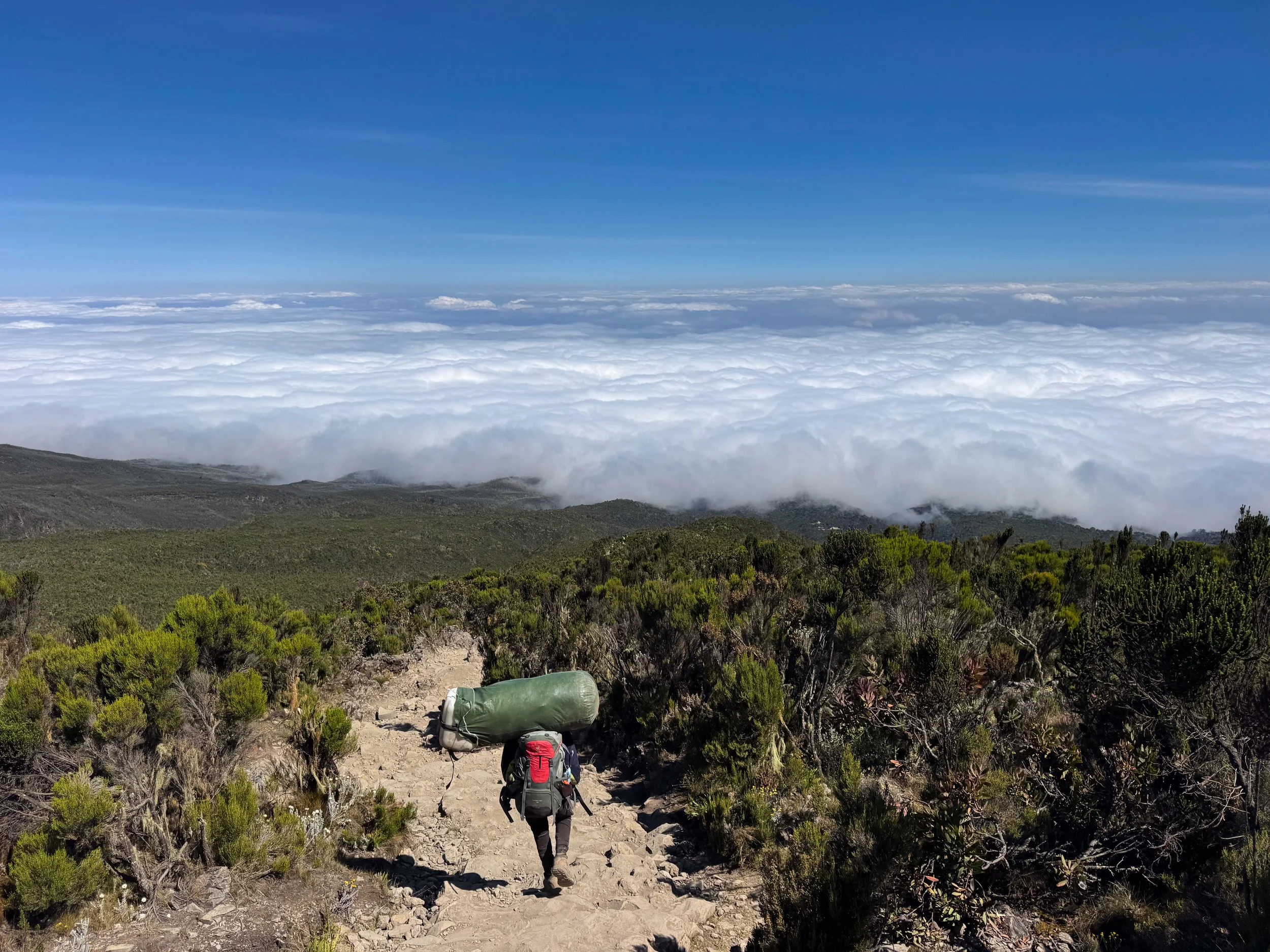
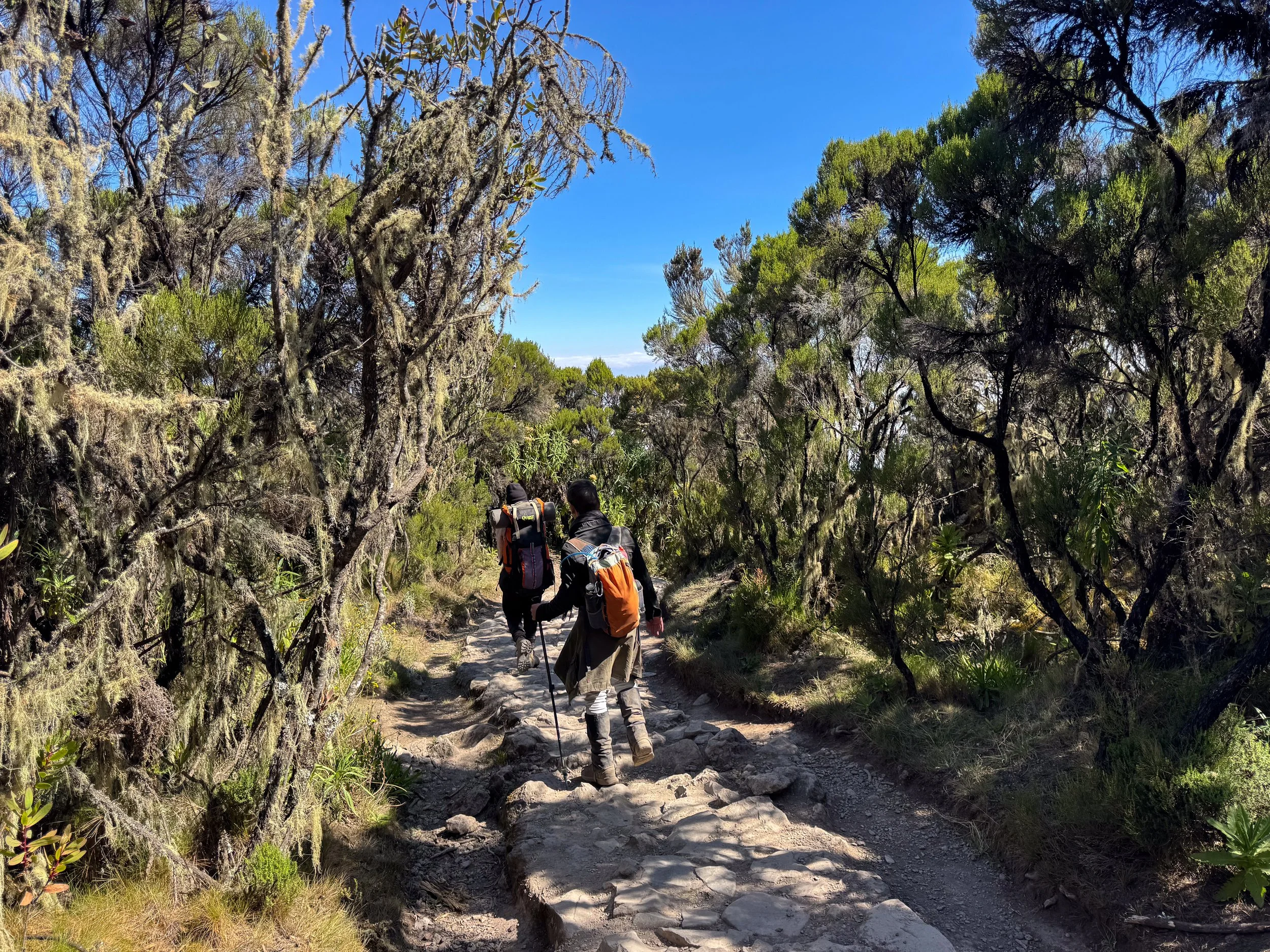
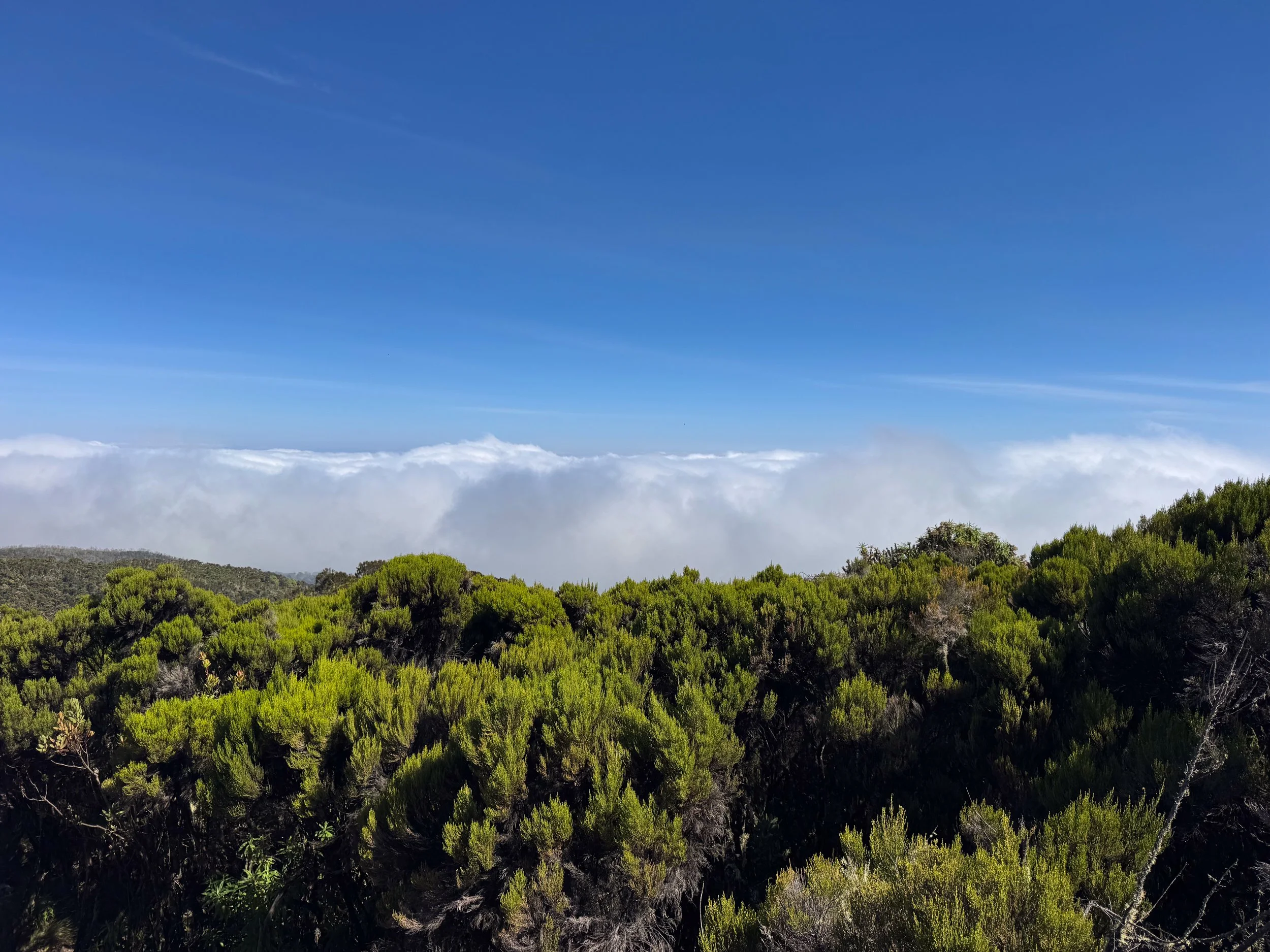
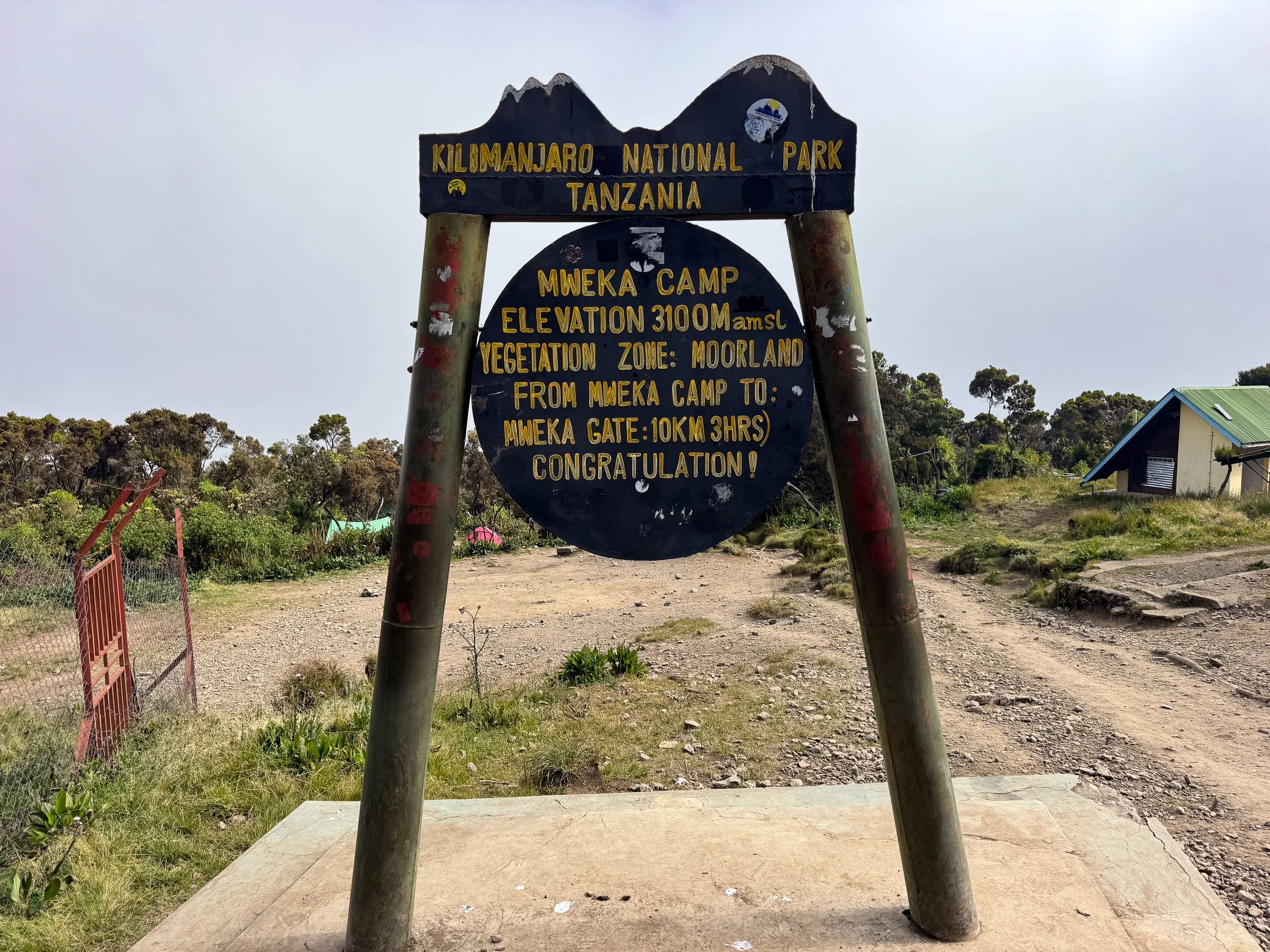
The Rapid Descent. The guides limited us to 15 minutes at the summit due to the harsh environmental conditions. The rapid descent to the base camp took 3 hours. We napped and ate lunch before descending further into the Moorland Zone. The trail led to the High Camp, located at 3,950 meters (12,960 feet), one hour and a half later. It was the perfect rest area but not our final camp. The descent continued into the Vegetation Zone. Porters passed us in both directions as we followed the rocky path to the Mweka Camp, located at an elevation of 3,100 meters (10,171 feet). We spent our last night camping on the mountain here.
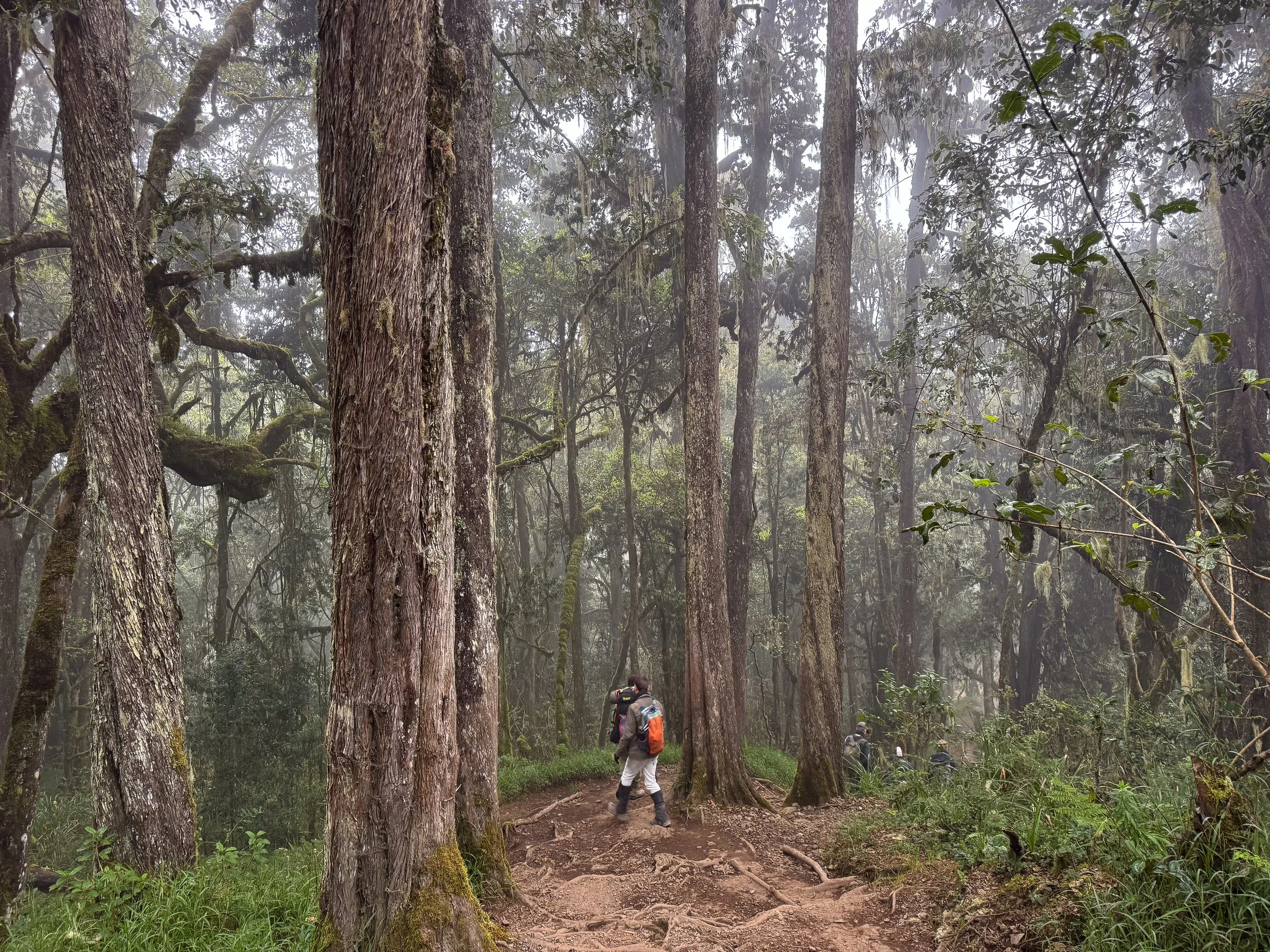
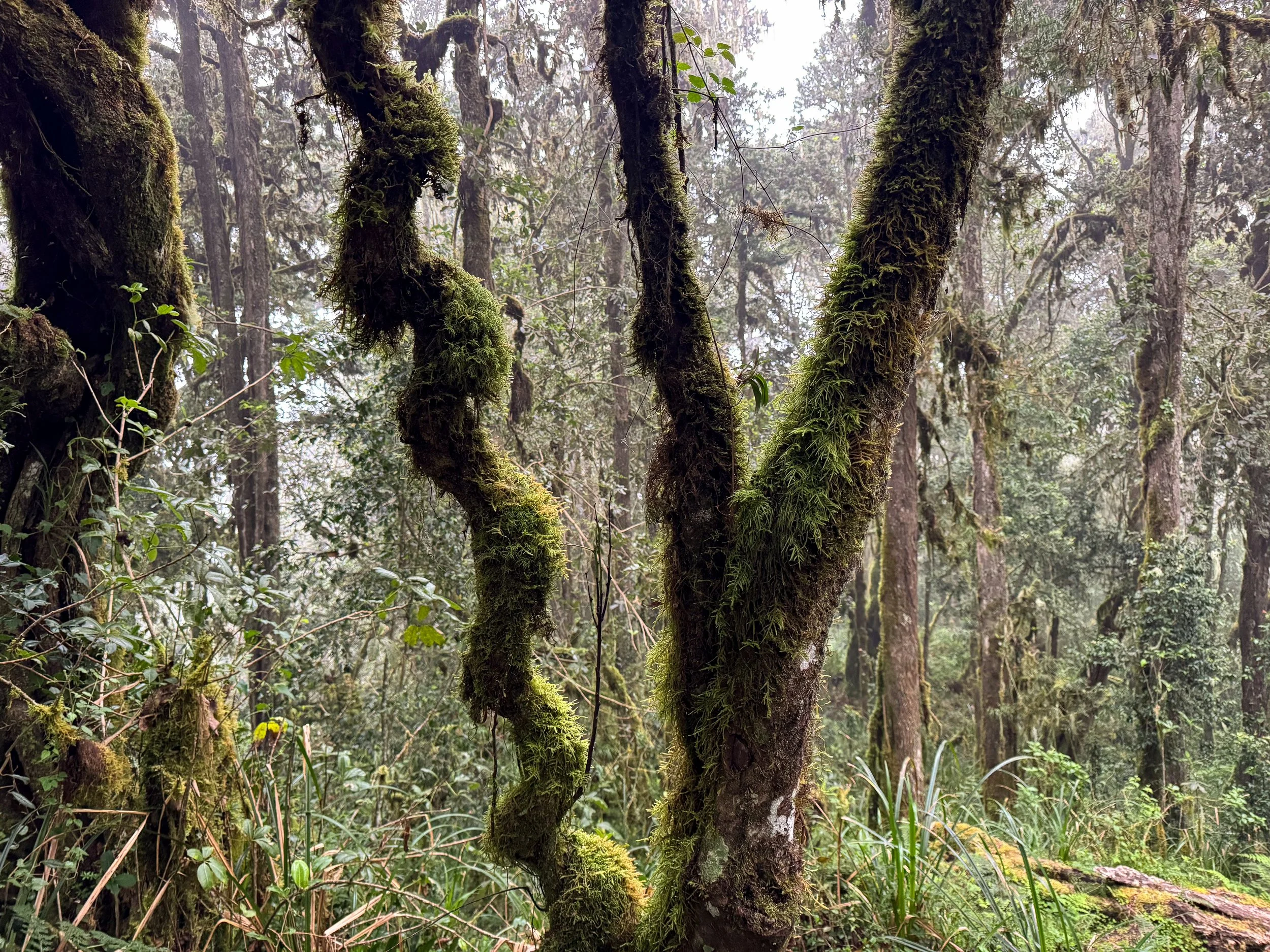
Day Seven
Crew Appreciation. The final day began with a goodbye to our mountain crew. We met them after breakfast to express our gratitude and to distribute tips.
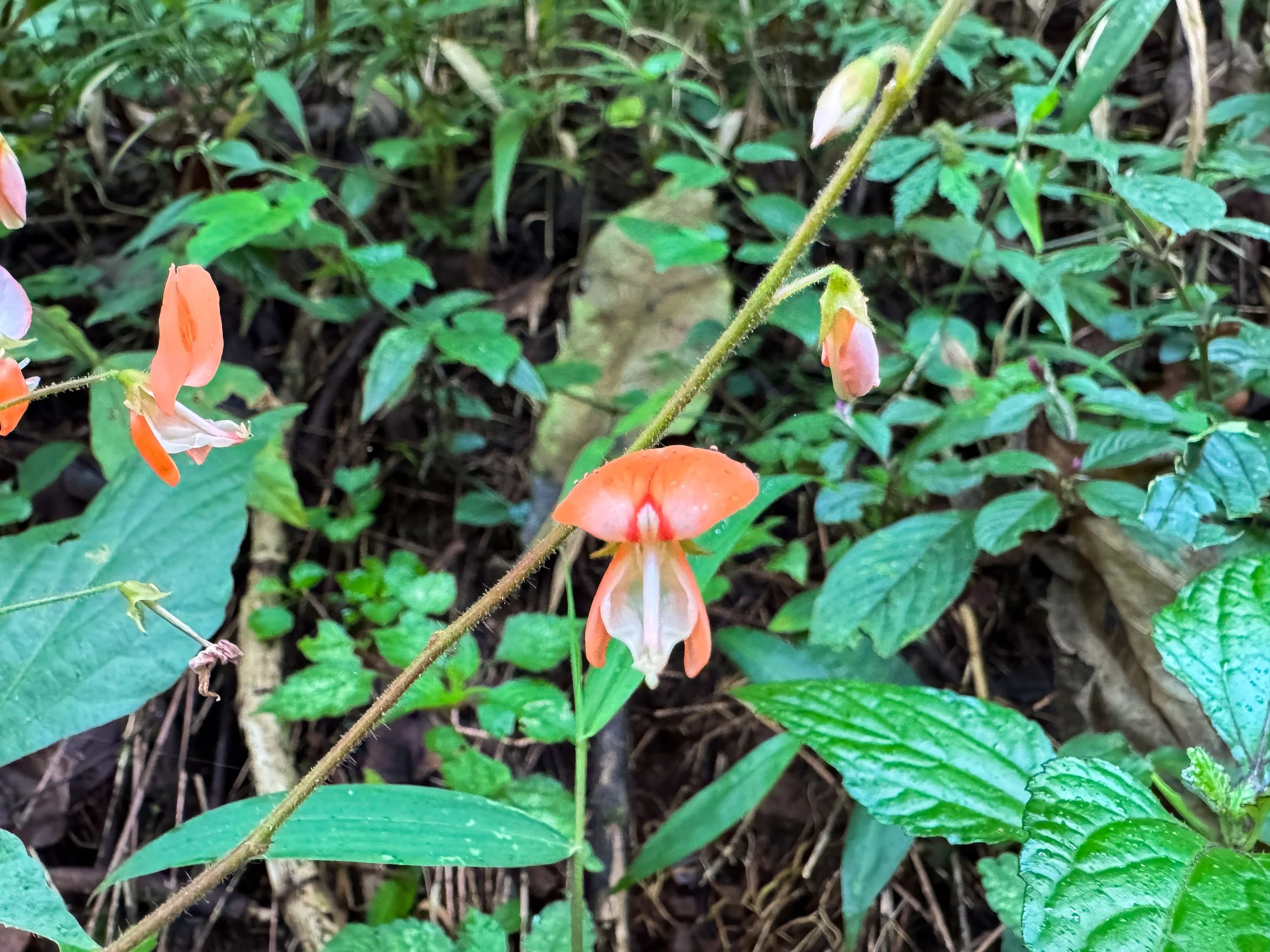
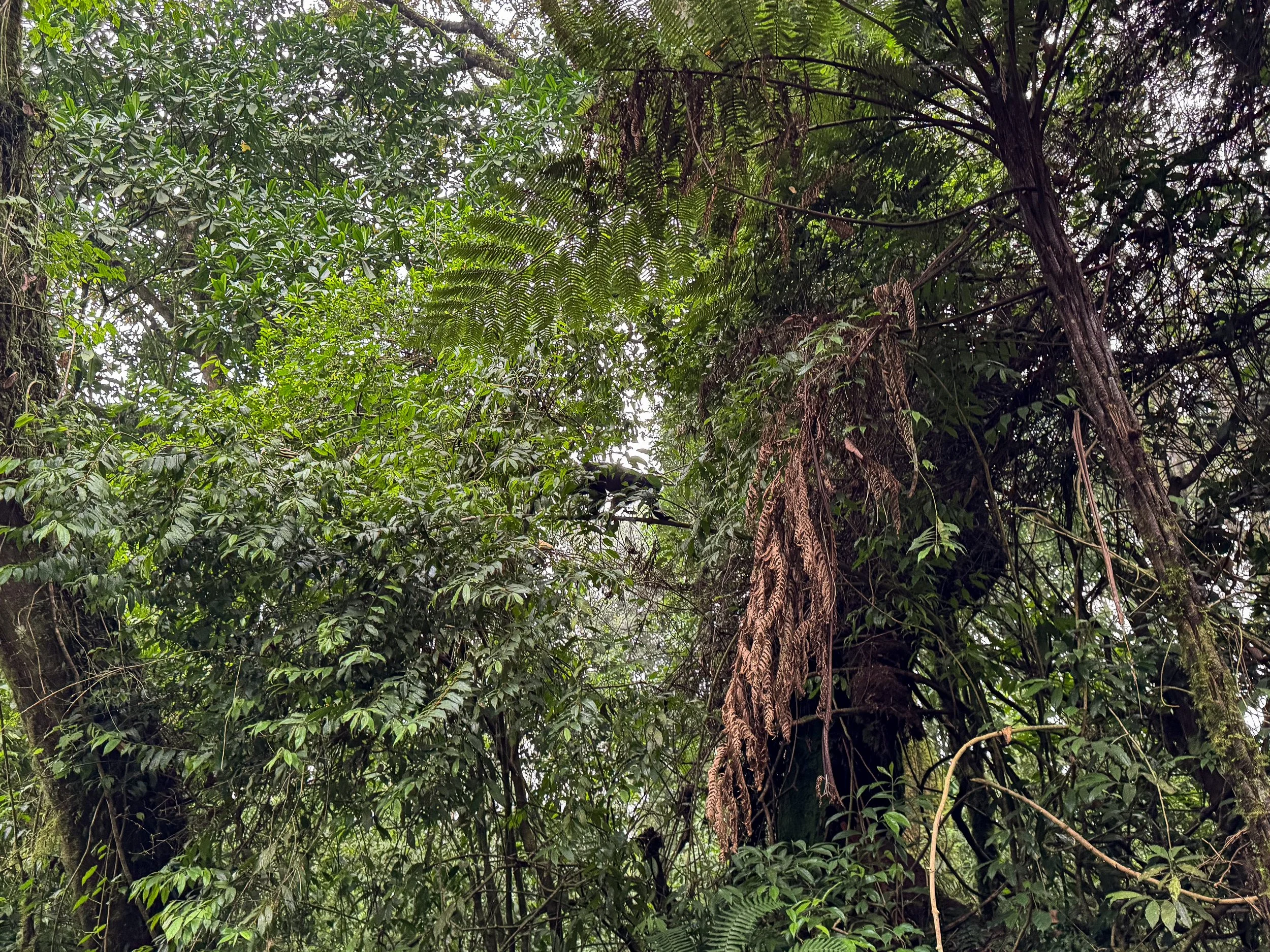
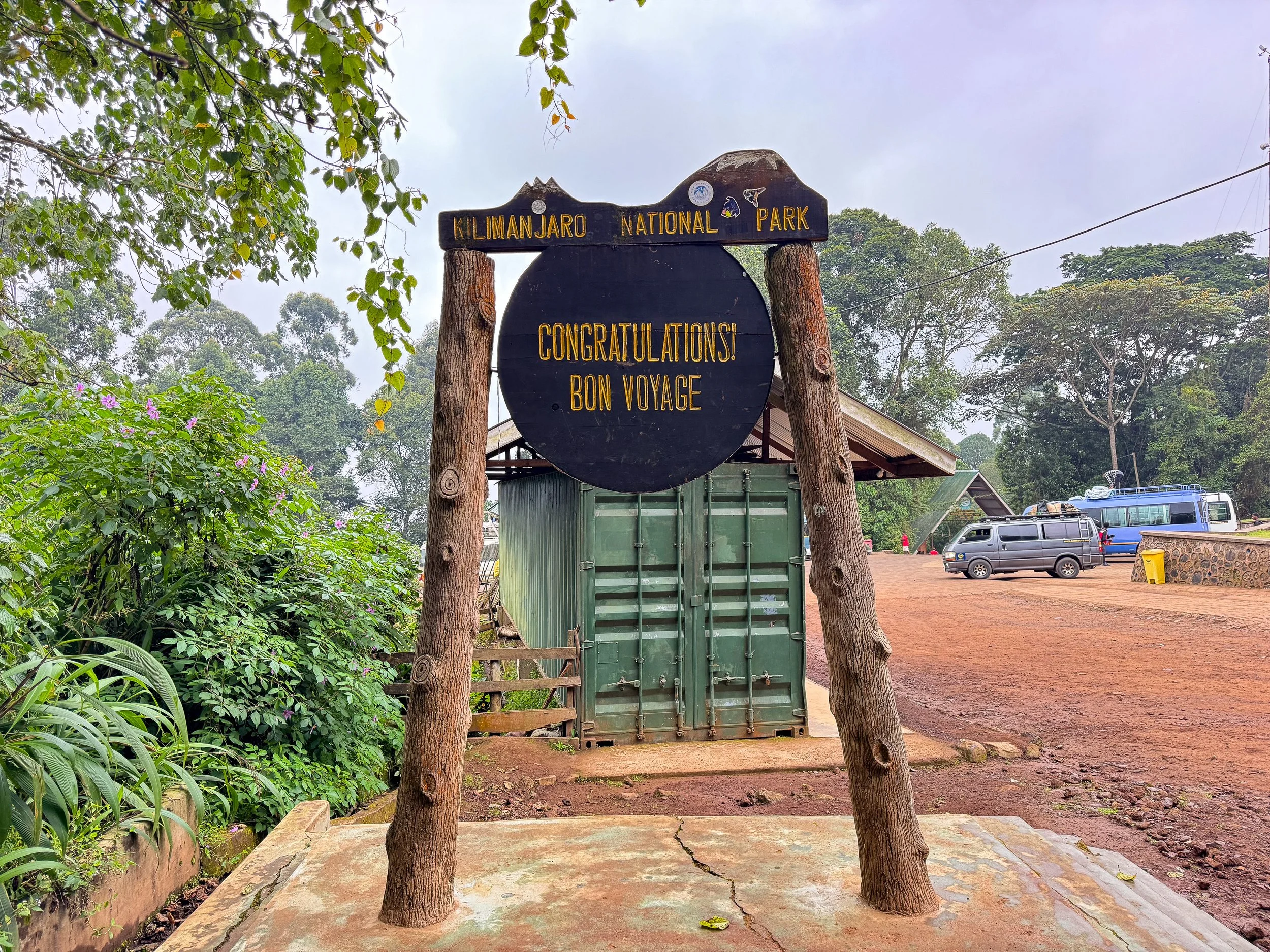
The Rainforest Hike. The last leg of our journey led us through the rainforest. Our guide led us along the muddy and slippery trail through the foggy forest. Moss covered trees, giant ferns and tiny orchids flanked the path. Monkeys hopped between tree branches as birds squawked in the canopy. It took 3 hours to reach the park gate.
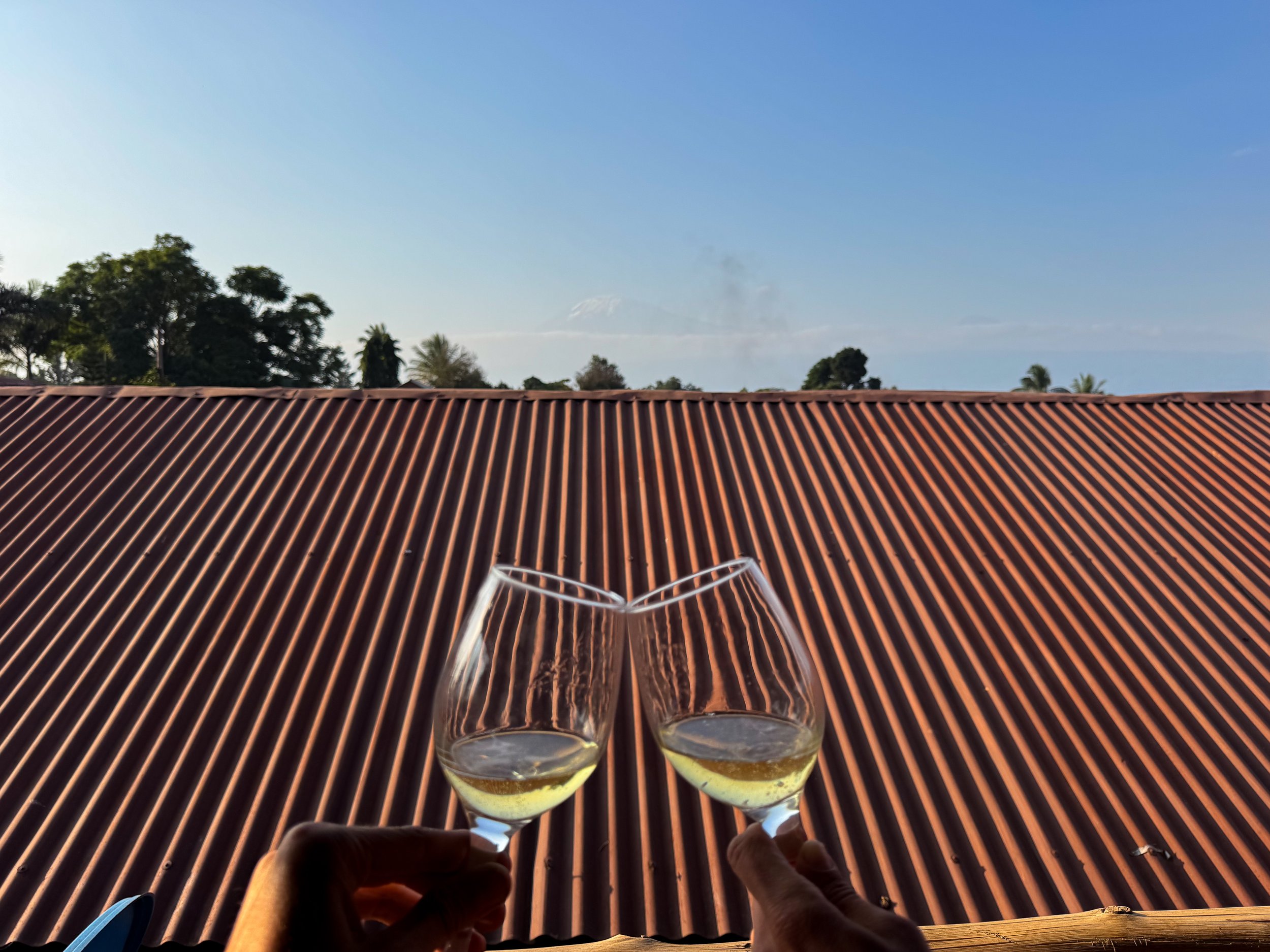
Certificates & Celebration. Park rangers verified our successful hike to the summit and awarded us certificates recognizing the achievement. Our crew brought us back to our hotel in Moshi and presented them to us while singing the Kilimanjaro song, Jambo Bwana. We spent the afternoon relaxing and celebrating with a bottle of South African bubbly while overlooking the summit of Mount Kilimanjaro.
Moshi, Tanzania
Moshi is a town at the base of Mount Kilimanjaro and starting point for many multi-day hikes up the mountain. The town is home to tour operators, gear outfitters, pharmacies, grocery stores and hotels making it an easy location for last minute gear and needs.
Rede Tours & Safaris. A well reviewed tour operator offering multi-day hiking trips to the summit of Mount Kilimanjaro. We booked the Unforgettable 8 Days Lemosho Route Trekking on Kilimanjaro with them prior to arriving in Moshi. They arranged every aspect of our hike including guides, porters, a cook and supplies.
Rafiki Supermarket. A chain grocery store with aisles of snacks and drinks. Come here to stock up on granola, dates, chocolates and chips prior to hiking.
RRM Outdoor Rental Equipment Store. An outdoor outfitter with all rental gear needed to hike Mount Kilimanjaro. We rented several items needed to complete the hike at the recommendation of our guide. Costs can quickly add up so be sure you actually need everything being recommended.
Mount Kibo Pharmacy. One of the largest pharmacies in Moshi. They sell Diamox, a medication used to cope with AMS (Acute Mountain Sickness) also known as altitude sickness. No prescription is needed and a weak supply costs less than $1.
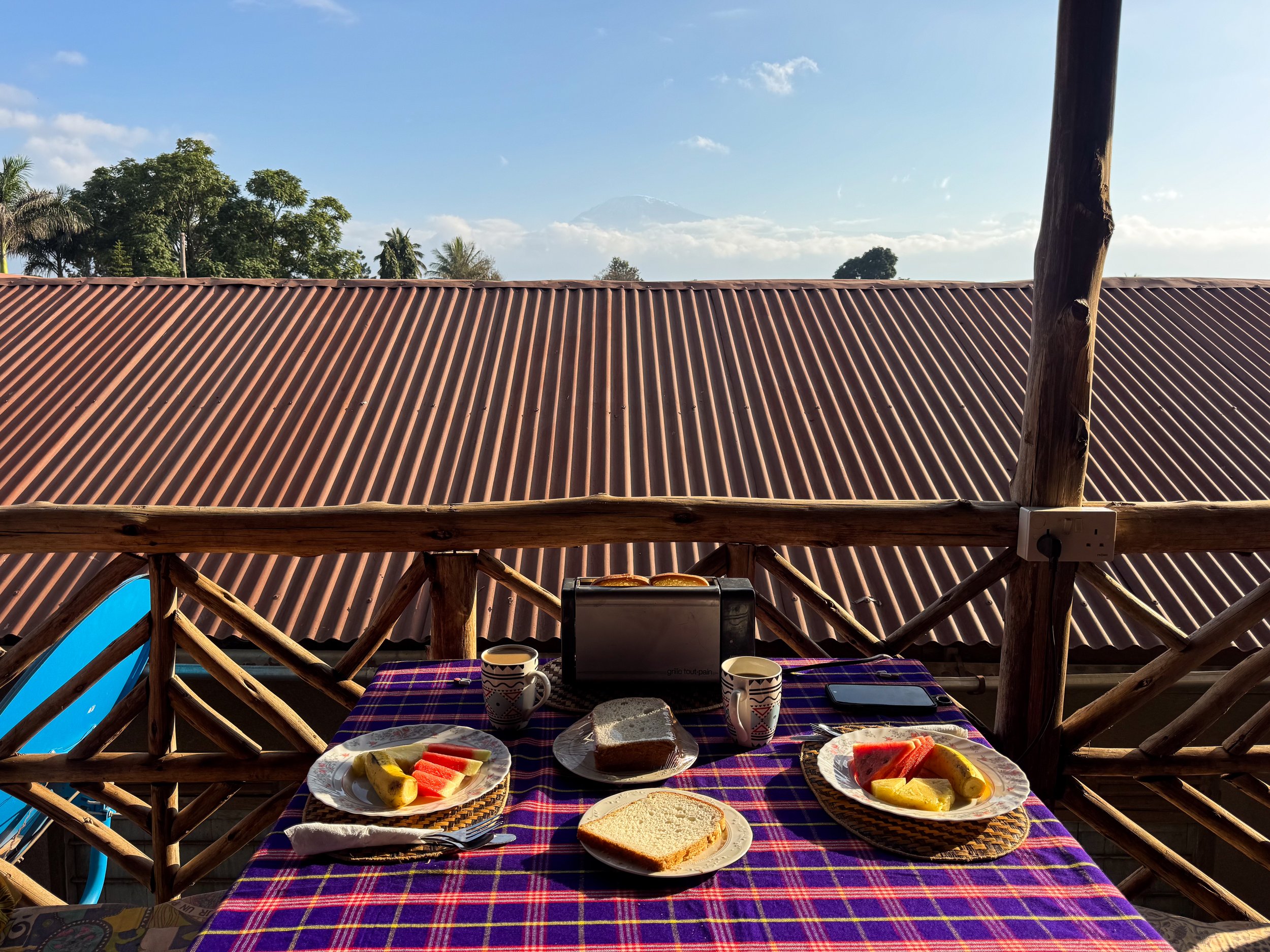
Where to Stay
The Belle View Inn Bed and Breakfast. A small hotel with comfortable rooms, daily breakfast, luggage storage and transportation to and from the airport. We stayed here before and after our hike to Mount Kilimanjaro. On a clear day, the peak of the mountain is visible from their second floor breakfast hut! Reserve on Booking.
Places to Eat & Drink
Having some time in Moshi before and after our hike to the summit of Mount Kilimanjaro, we dined out at a couple local restaurants and a coffee house.
Maembe Garden. An elevated restaurant with Swahili cuisine and well made cocktails. We came here to celebrate after summiting Mount Kilimanjaro. Try the veggie samosas and fish makange. To drink, order a Dawa, the local cocktail made with vodka, honey, lime and sugar.
Aikama Organic Restaurant. A restaurant in a commercial shopping center with Tanzanian and Swahili food. We each ordered the Fish Makange, a whole fried fish covered in a mixture of sautéed bell peppers and onions. It’s typically served with cardamom rice.
SSOH Coffee Factory. A café and roastery with house roasted Tanzanian coffee and artisanal madeleines.
Hiking Tips & Preparation
Hiking Mt. Kilimanjaro requires little preparation outside of practice hikes and acquiring the correct gear. We came up with several tips to follow while on the mountain.
Practice Hikes. Practice half to full day hikes on weekends with some steep inclines at least one month prior to condition yourself.
Support Network. Hike the mountain with a group or someone you know. Having a support network while hiking goes a long way. Guides are also great hype-men along the way!
Stay Positive. Believe in yourself and stay positive! Celebrate milestones with little rewards like eating a chocolate when you reach the next camp or rest area.
Stay Hydrated. Dehydration is the largest concern when hiking. Bring or rent a CamelBak with capacity for 3 liters of water per day. Have guides refill them before hiking for the day. Drink ginger tea to open the airways. Avoid drinking alcohol.
Pace Yourself. The altitude and exhaustion can quickly add up. Hike a longer route, like the Lemosho Route, to spend more time acclimating to the high altitude.
Dress Warm. Temperatures at night and especially at the summit are below freezing. Plan to add layers the further you ascend and strip them off as you descend.
Extreme UV. Prepare for extreme UV radiation at high elevations. Wear sunblock during the day, protective lip balm and UV reflective sunglasses.
Nighttime Noise. The noise of the wind is enough to keep you up at night. Bring ear plugs or noise canceling headphones to drown out sounds.
Best Time of Year. Hike during the dry season for the least chance of rain, snow and muddy trails. It’s colder during this time of year but is often the best time to hike Mt Kilimanjaro. The dry season lasts from July to October. We hiked in late July.
Hygiene. Basic squatting toilets are available at each campsite. Bring your own toilet paper and hand sanitizer. Guides often provide hot water and soap before meals. Some even offer scented hot towels.
Cell Service. There is minimal cell service or network on the mountain. Plan to disconnect or use limited service to keep family and friends updated.
Electricity. There is no electricity on the mountain. Bring a high capacity power bank to keep devices charged. Keep phones on airplane and low power mode to conserve battery. Store phones and power banks in a warm location.
Packing List
Clothing
Thermal leggings or underwear
Thermal long sleeve shirts
Waterproof rain jacket & rain pants
Insulated winter coat
Insulated snow pants
Winter hat, gloves & scarf
Wool sweaters
Thermal socks
Gear
Hiking boots
Pair of hiking poles
Gators (to cover ankles from dust)
Headlamp & extra batteries
High capacity power bank
Sunglasses
Sunblock
Lip balm with SPF
CamelBak for water
Thermal water bottle for hot drinks
Hand and toe warmers
Toilet paper
Hand sanitizer
Facial wipes
Diamox (altitude sickness medication)
Insulated sleeping bag
Backpack or Daypack
Pillow or neck cushion for sleeping
Hiking mattress (typically included)
Tent (typically included)
Snacks
Trail mix or granola
Chocolates (m&ms & candy bar)
Dried ginger candies
Peppermint hard candies
Ginger tea
Costs & Tipping
Hiking Mount Kilimanjaro is expensive! Costs are not always clear when booking tours. Make sure to understand all costs and fees ahead of time.
Costs & Fees. We booked a “budget” hike for $1,500 USD per person. This covered entry permits, food and some equipment. An additional $700 USD per person was paid in person to cover crew wages.
Tipping. Providing gratuities is a standard practice and expected after hiking Mount Kilimanjaro. Below is a breakdown of the expected amounts to pay per group. Individual tips will be less depending on group size, crew size and number of days hiking. Tips are given to the lead guide, announced and distributed on the last day of the hike.
Lead Guides: $20-$25 per day
Assistant Guides: $15-$20 per day
Cooks: $10-$20 per day
Porters: $8-$10 per day
Specialty Porters (Waiter, Summit Porter, Toilet Porter): $10-$12 per day
Swahili Words & Phrases
Swahili is the local language in Tanzania. We learned several basic words and phrases from our guides and porters while hiking Mount Kilimanjaro.
Pole Pole. Slowly slowly or take it easy. It’s the speed and theme on the mountain often repeated by guides, porters and trekkers.
Hakuna Matata. The phrase made world famous by the Lion King. It’s a real Swahili phrase meaning no worries or no problems. It’s often used to let guides know you’re doing okay.
Jambo. A formal greeting meaning hello.
Mambo. An informal greeting meaning hello or how are you?
Poa or Poa Poa. A common response to Mambo, meaning good or well.
Habari Asubuhi. Good morning.
Lala Salama. Good night or sleep well.
Kwa Heri. Goodbye.
Asante. Thank you.
Asante Sana. Thank you very much.
Karibu. Welcome or you’re welcome.
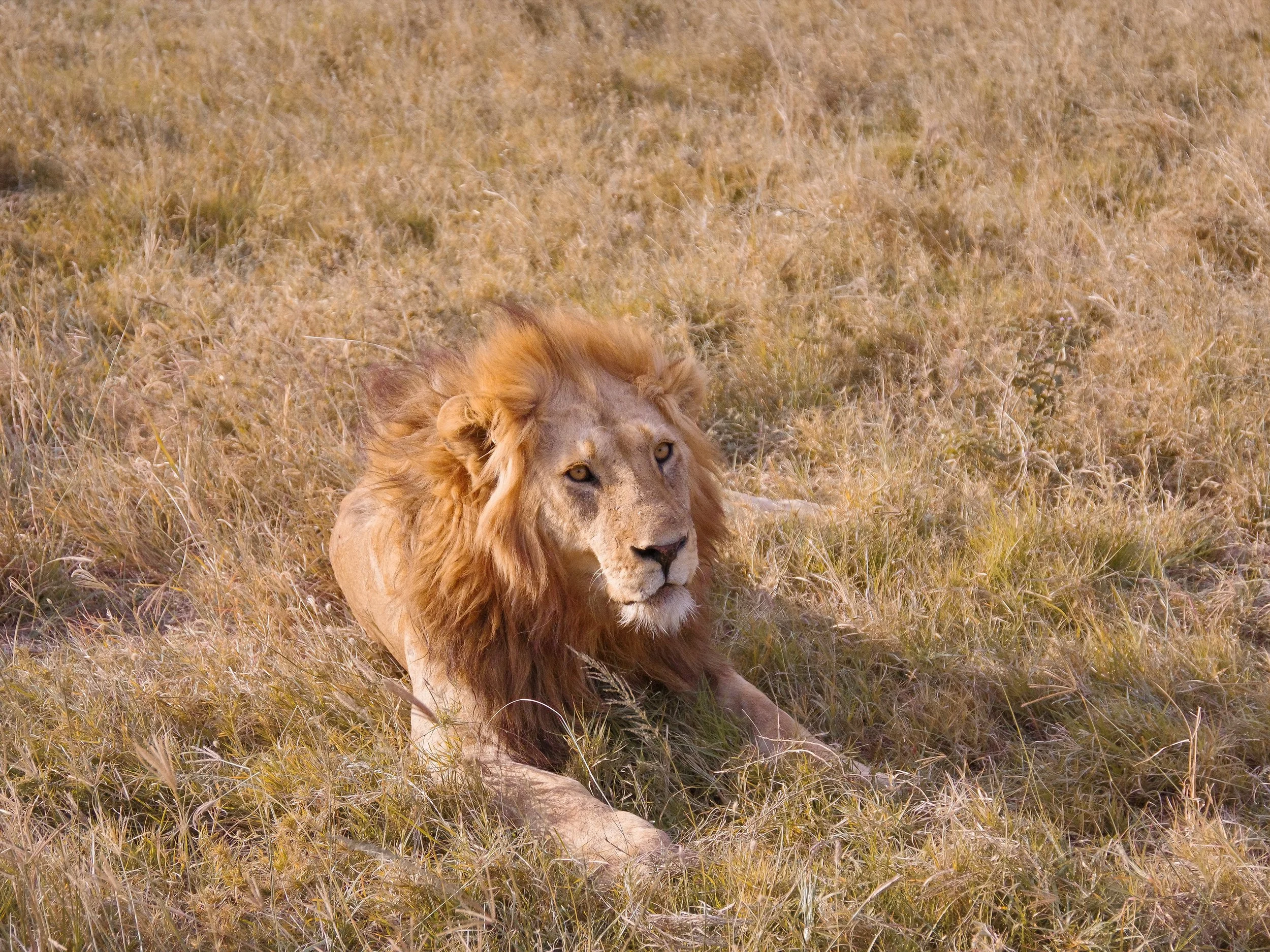
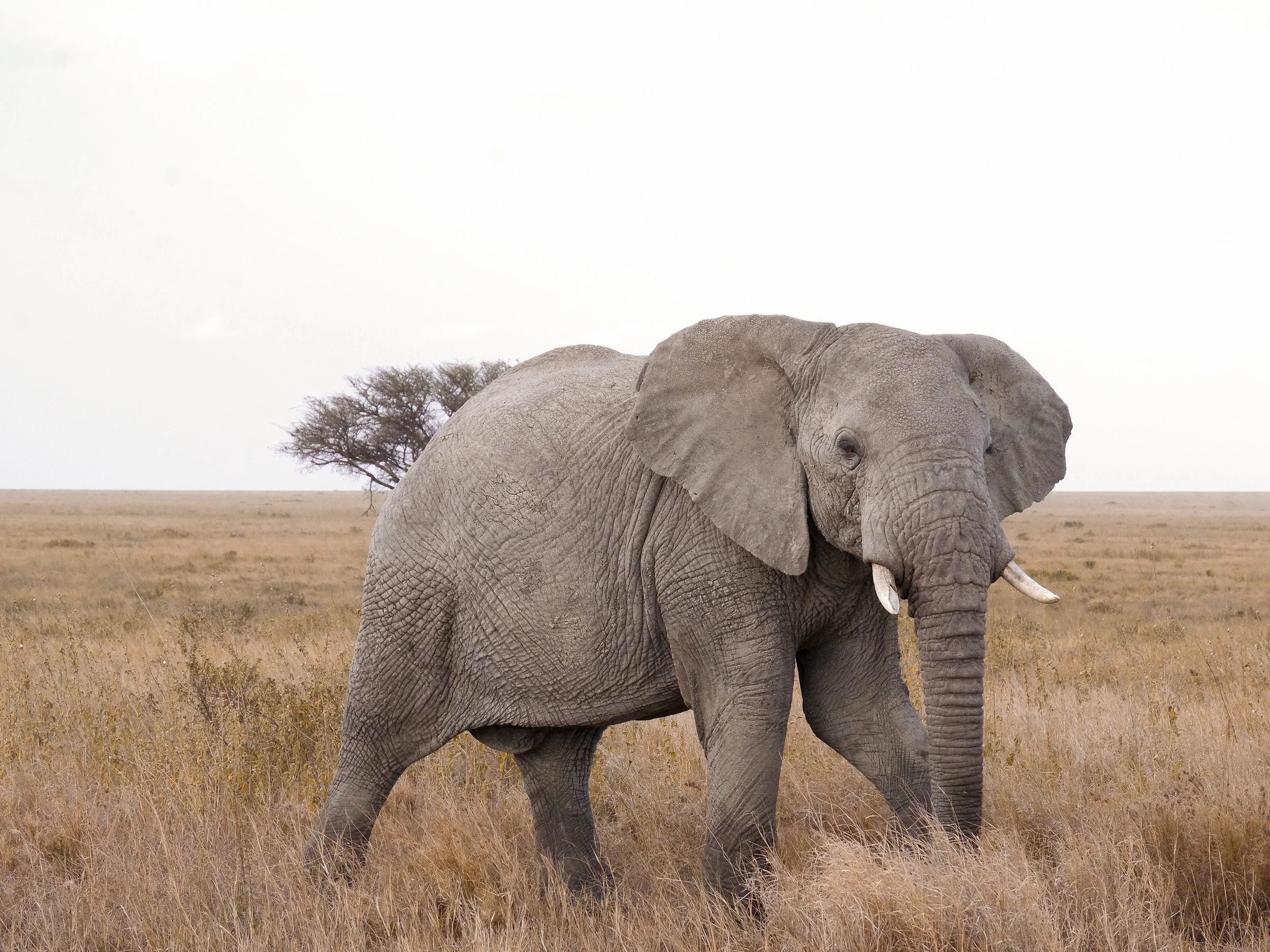
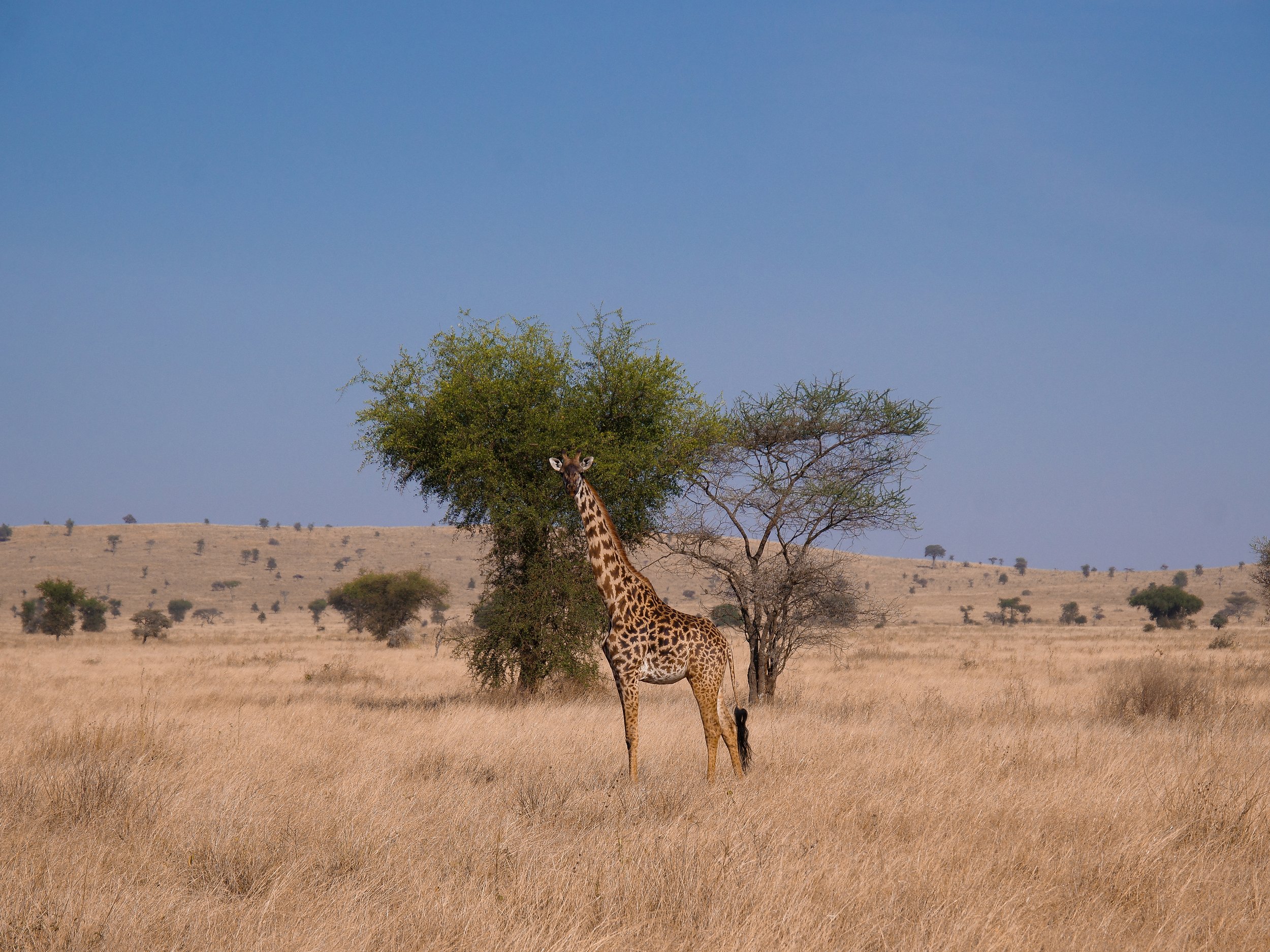
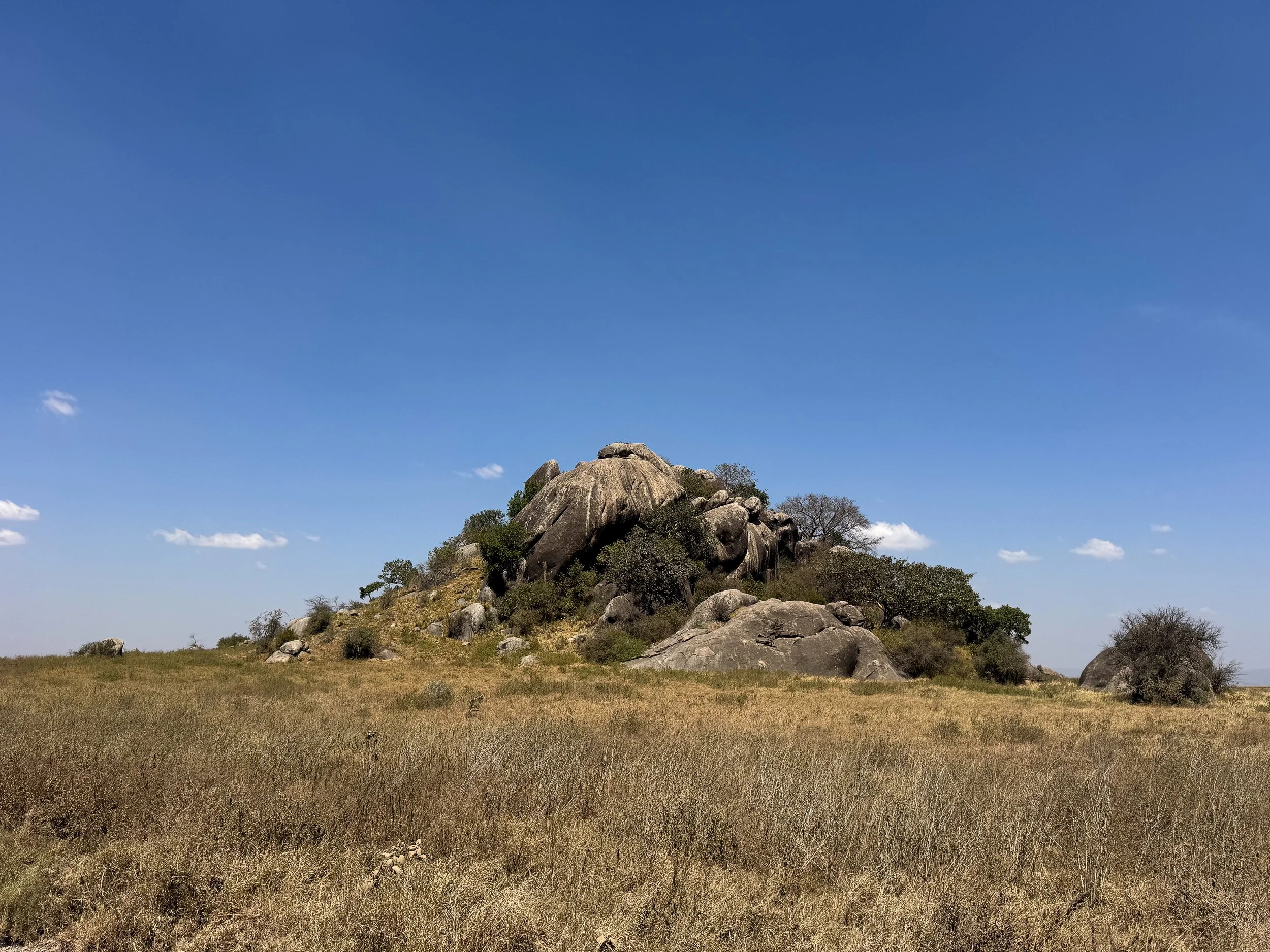
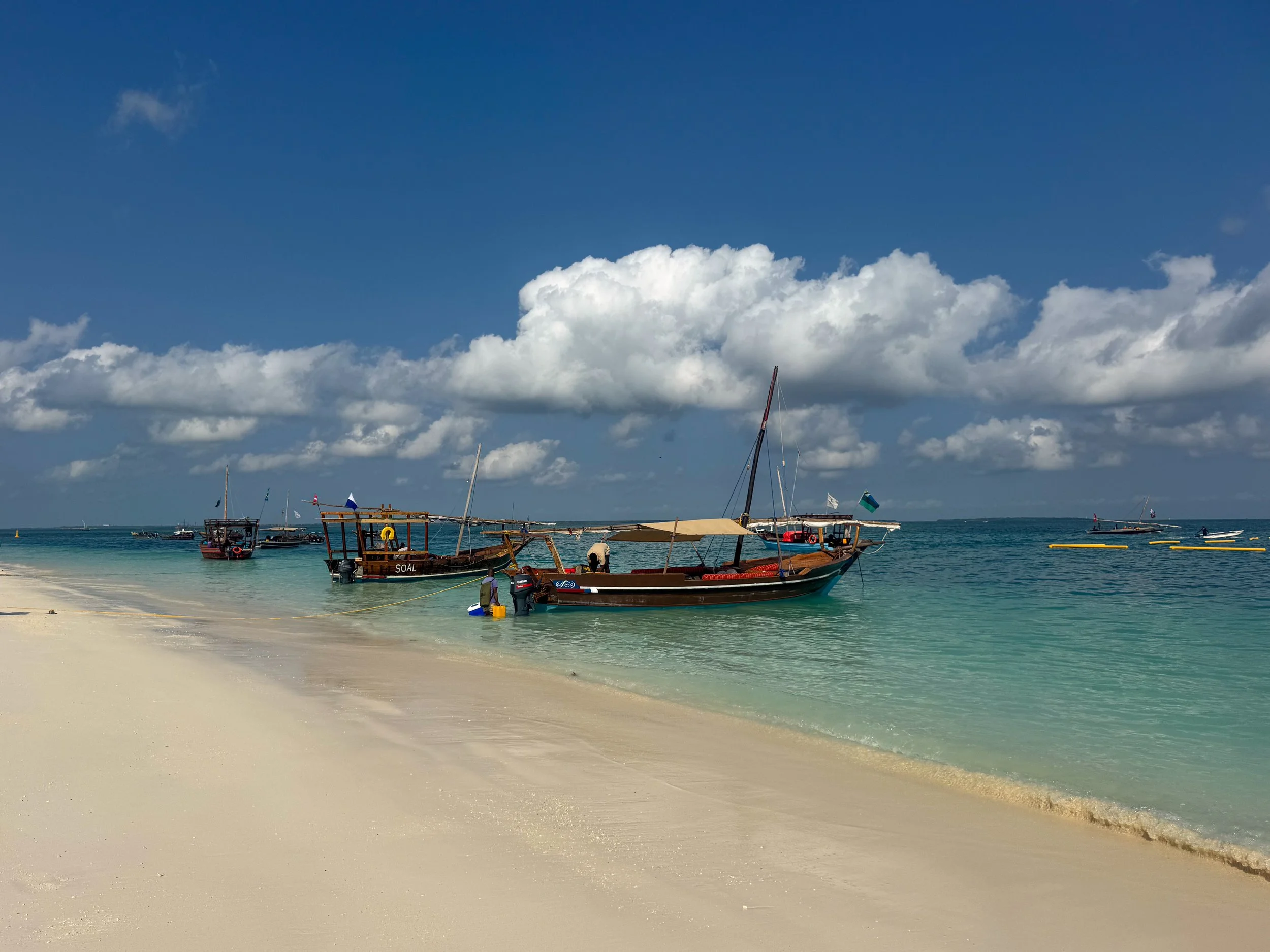
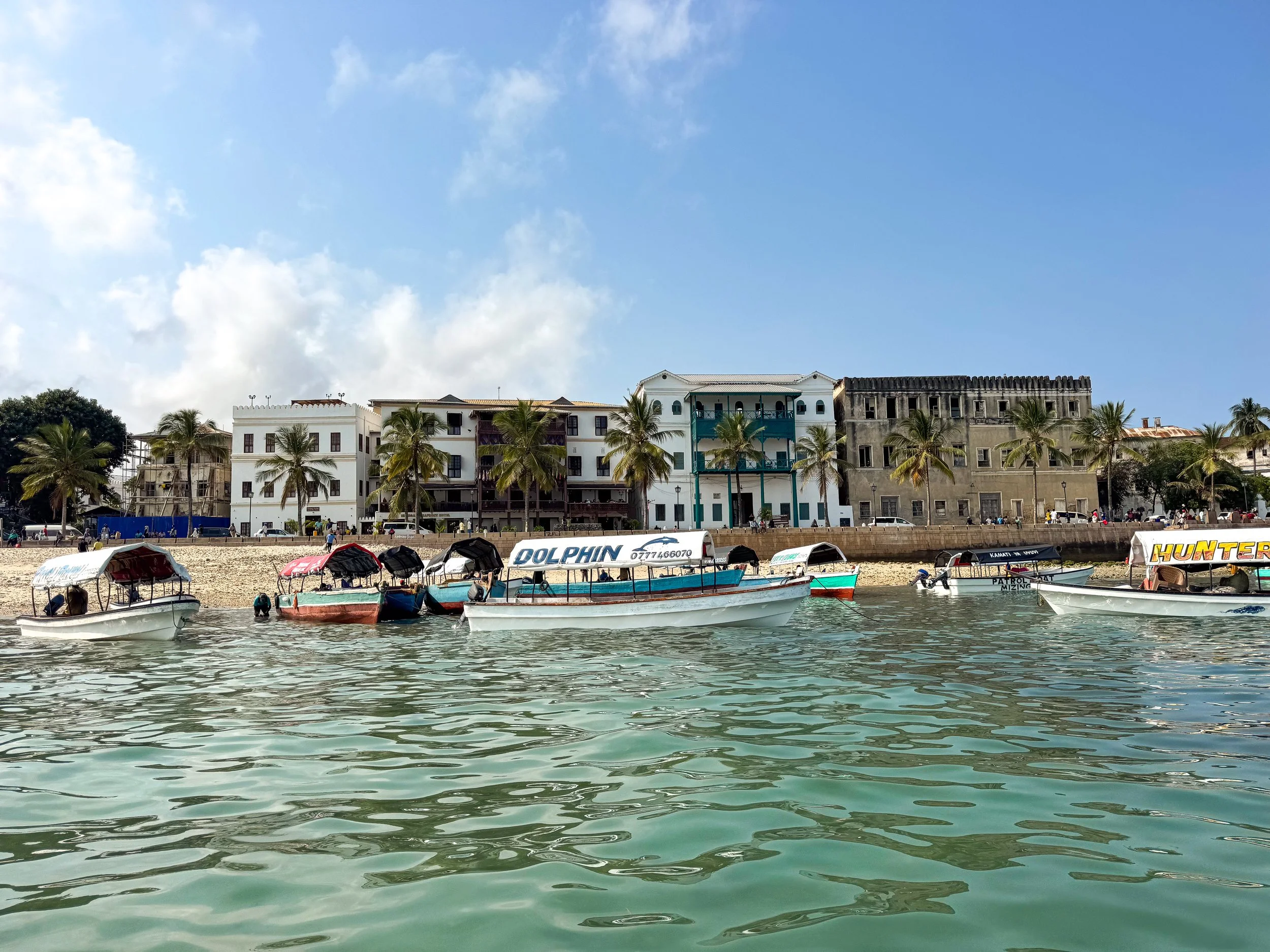
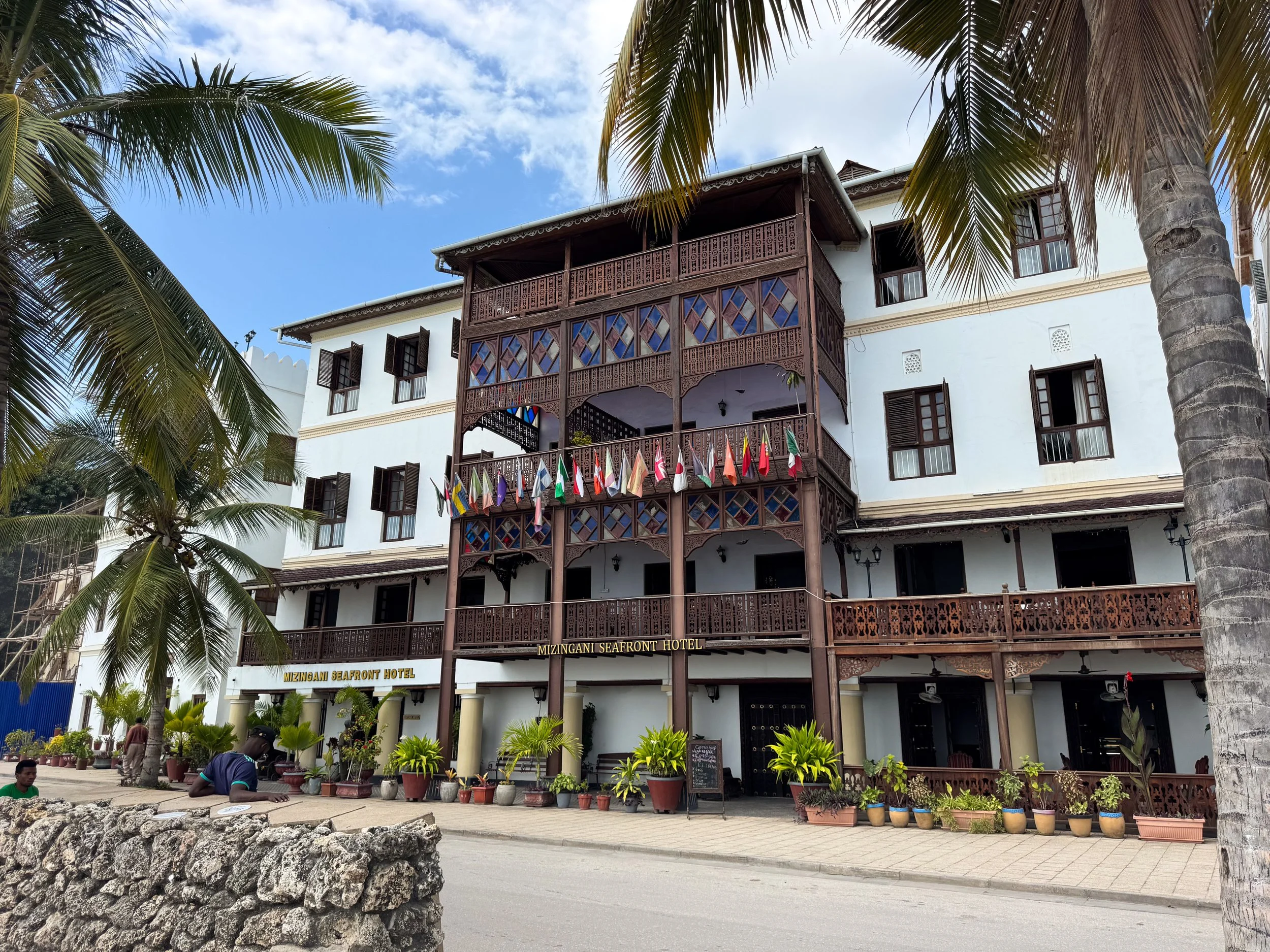
Elsewhere in Tanzania
From the slopes of Kilimanjaro to the wildlife of the Serengeti and the historic shores of Zanzibar, discover more of Tanzania's most iconic experiences through these travel guides:
Tanzania Safari Guide: Serengeti, Ngorongoro & Wilderness Camping. Journey through Tanzania's vast landscapes where wildlife and migrating herds roam across endless plains and ancient calderas alongside remote safari camps.
Zanzibar Travel Guide: Stone Town, Beaches & Swahili Culture. Escape to Zanzibar where historic Stone Town, fragrant spice gardens, white sand beaches and turquoise waters bring together centuries of history, culture and island life.
For Next Time…
Though we don’t expect to hike Mount Kilimanjaro again, we learned about Tanzania’s Mt. Meru, another hike-able volcano in the Arusha National Park. It’s the country’s second tallest mountain, after Mount Kilimanjaro. Its summit reaches heights of 4,566 meters (14,980 feet). It can be hiked in 3-4 days. The route combines elements of a safari with bush camping and mountain hiking.
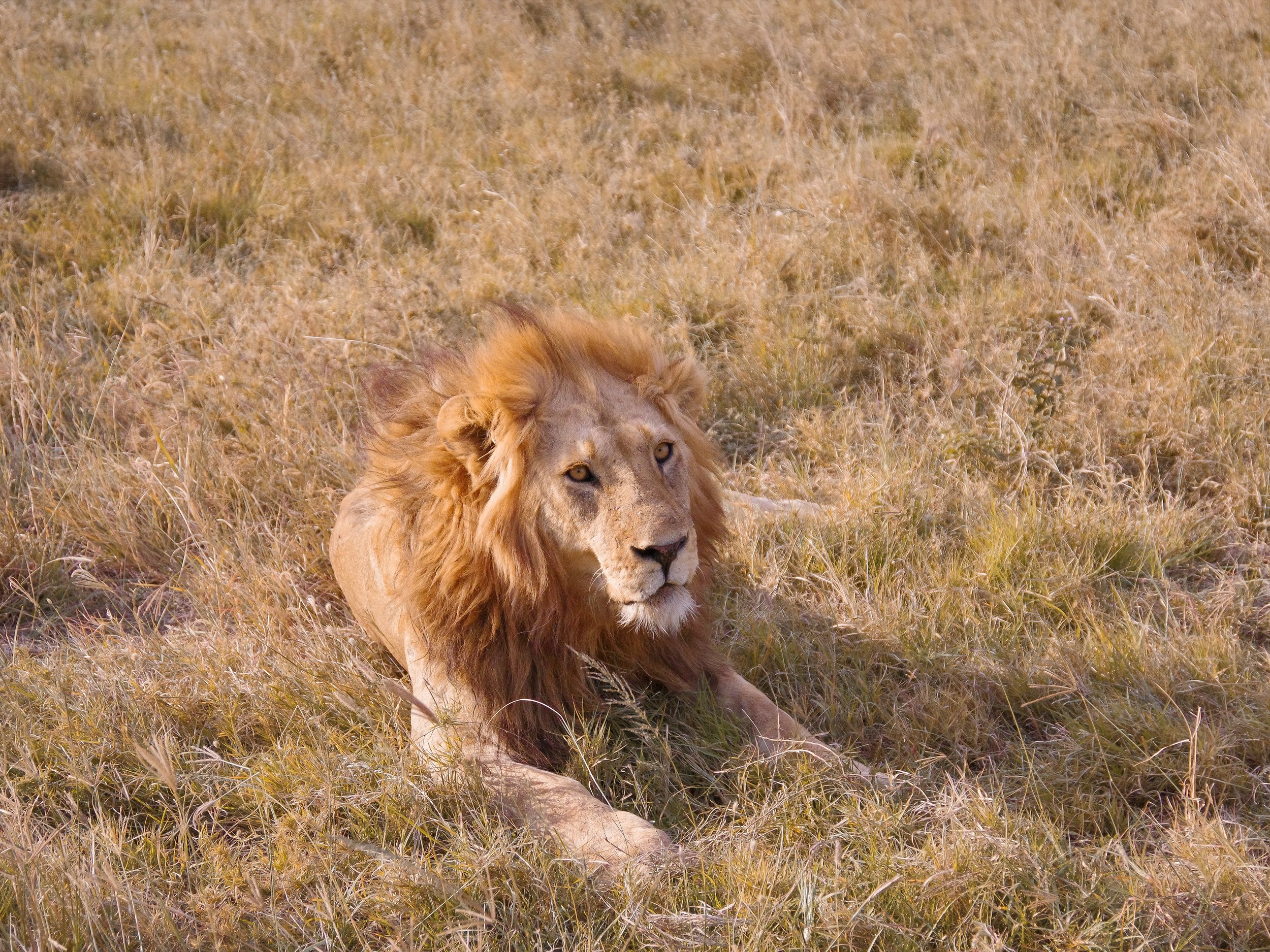
Tanzania Safari Guide: Serengeti, Ngorongoro & Wilderness Camping
Journey through Tanzania's vast landscapes where wildlife and migrating herds roam across endless plains and ancient calderas alongside remote safari camps.
Tanzanian Safari
Tanzania is the land of safaris and African adventures! Its vast nature reserves and national parks are home to scenic landscapes teeming with wildlife, herds of animals and endangered species. We spent four days roadtripping on a safari across the country visiting Tarangire National Park, The Serengeti and Ngorongoro Crater.
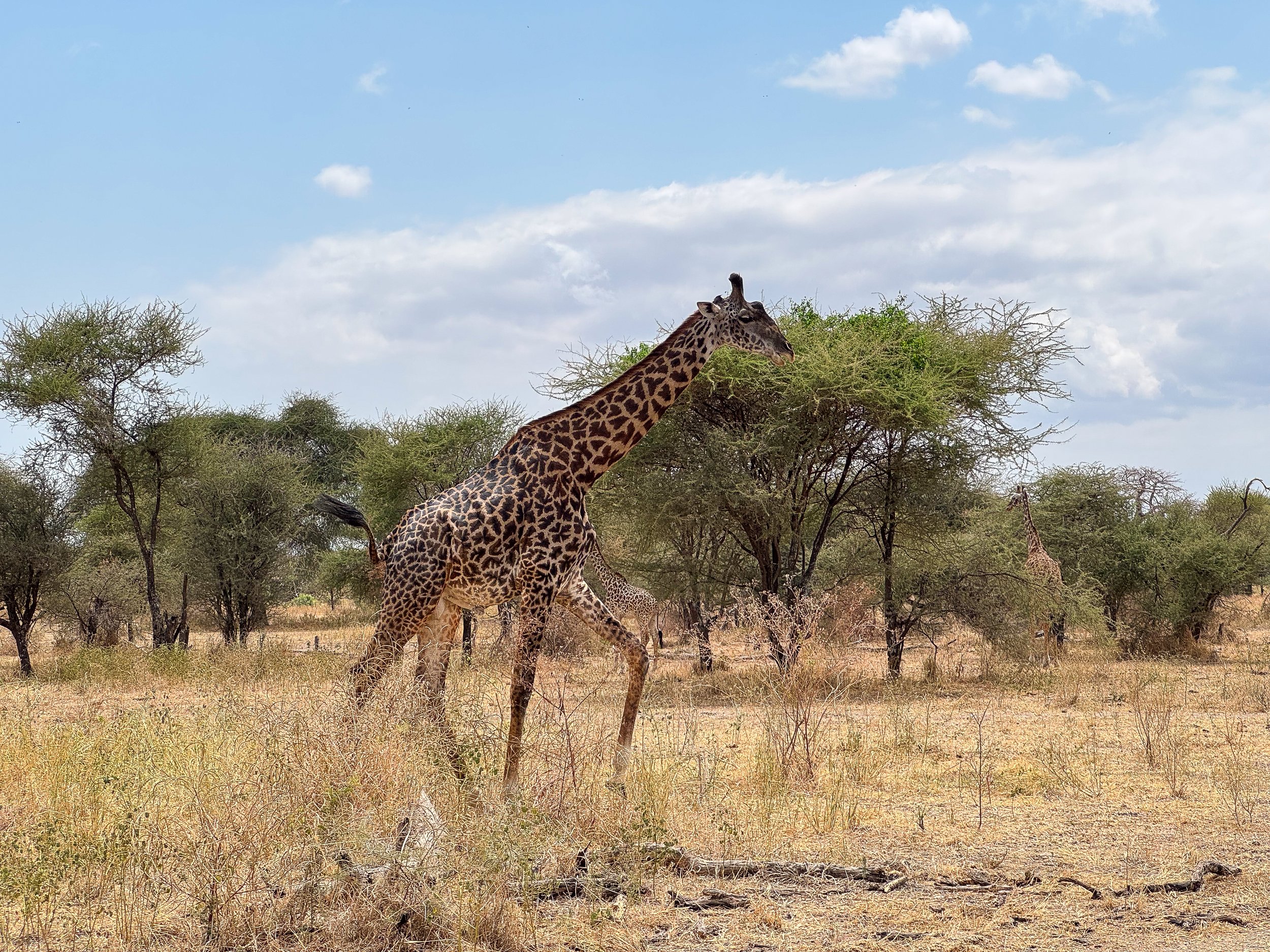
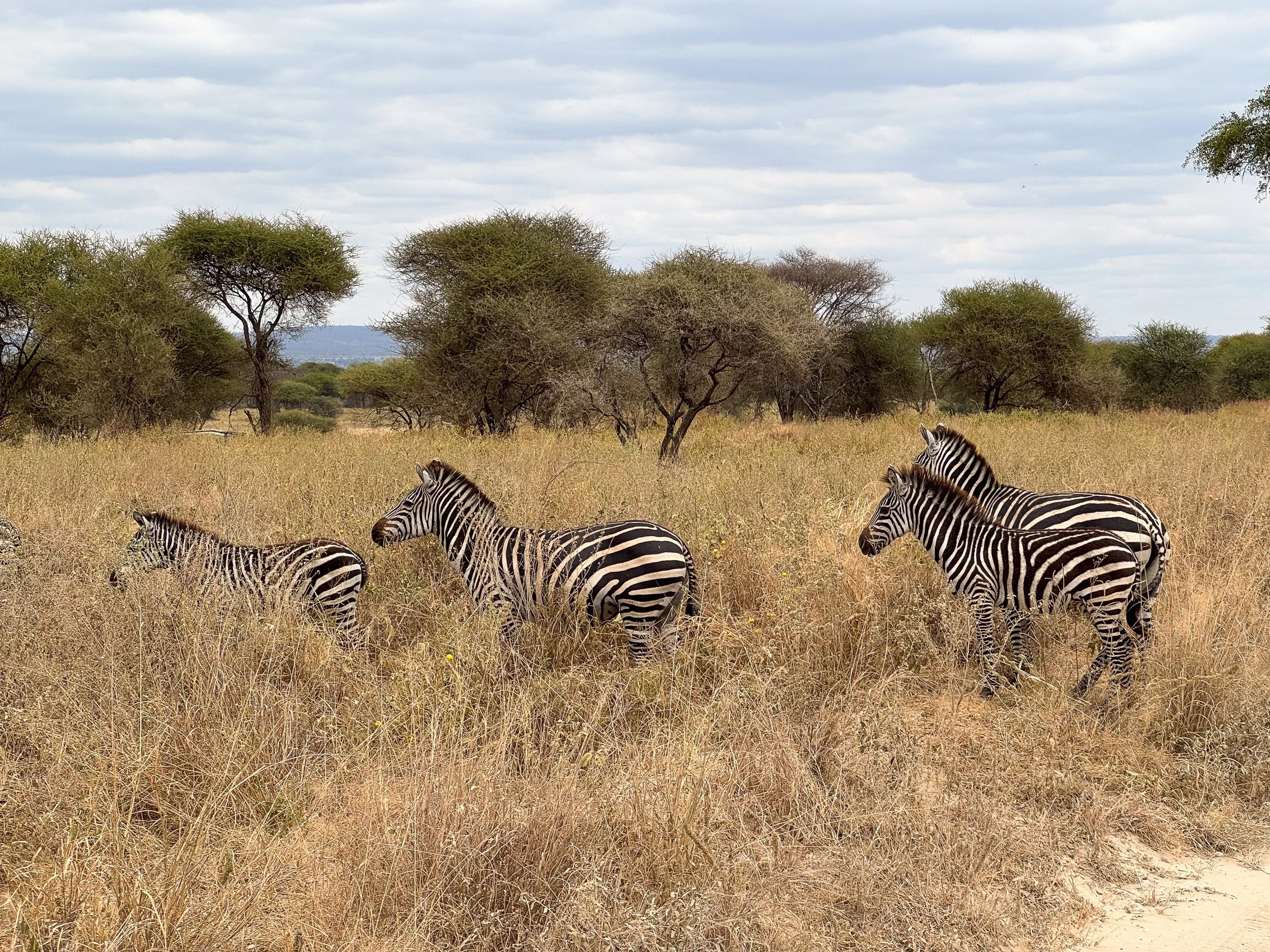
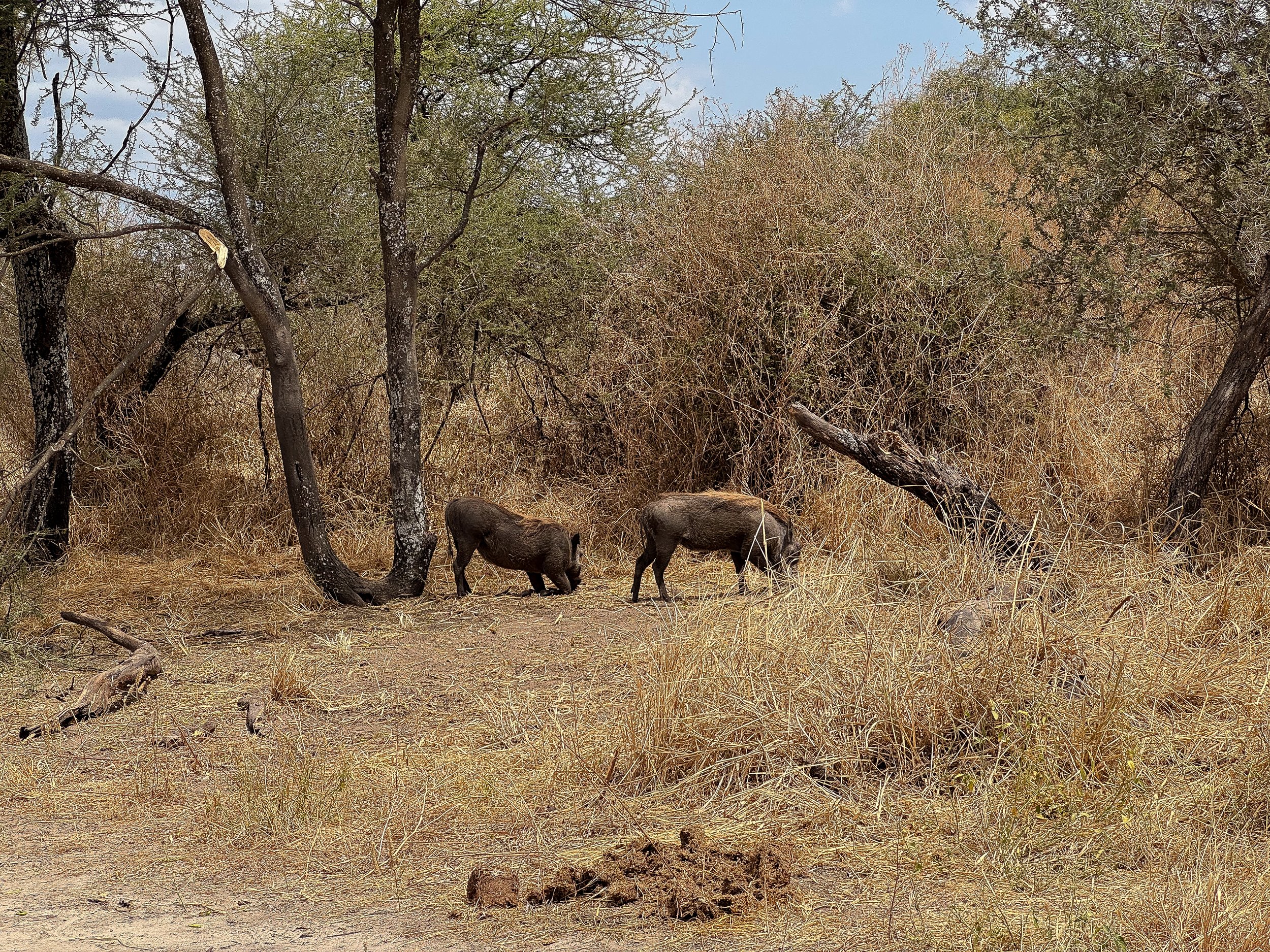
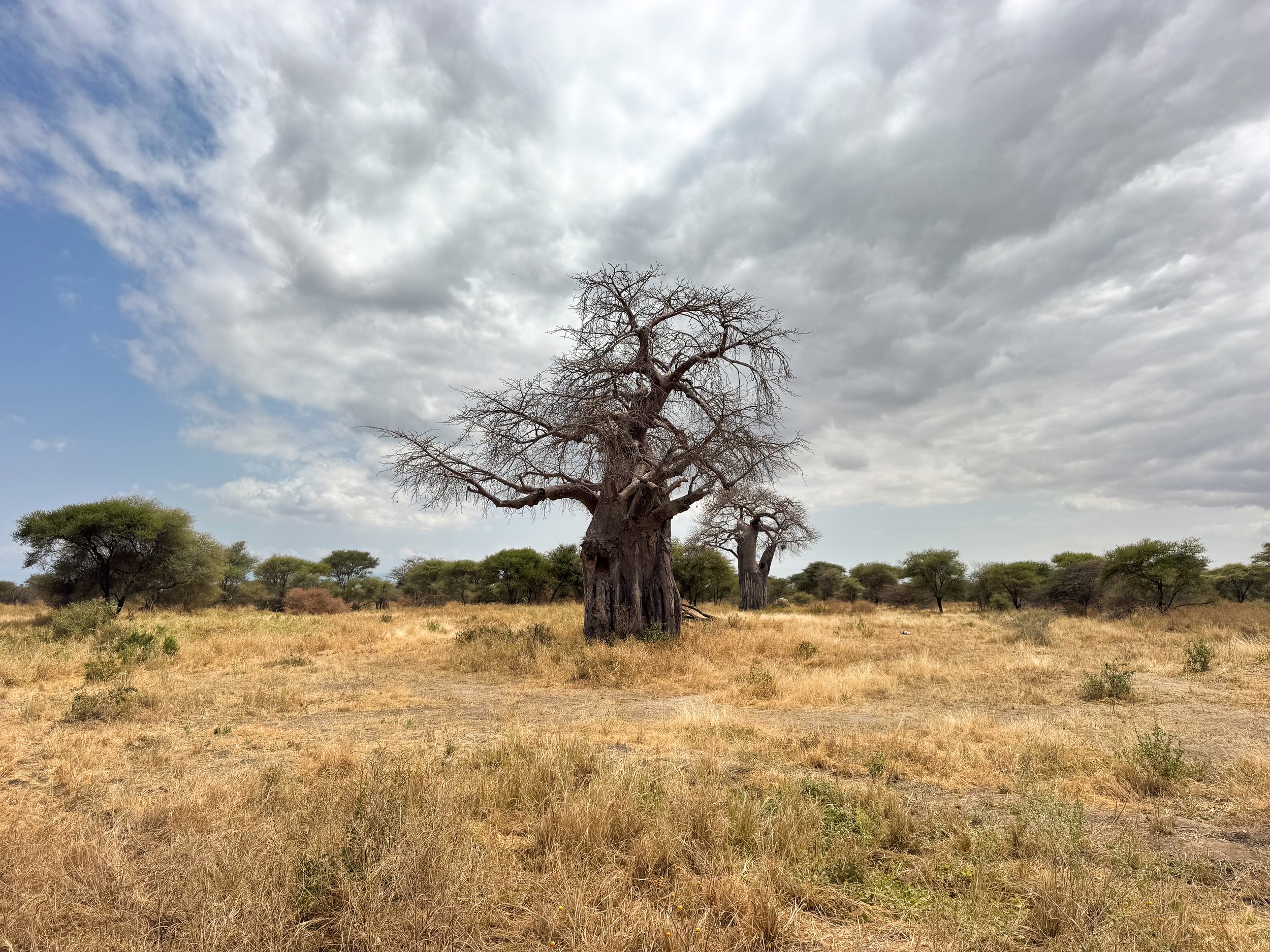
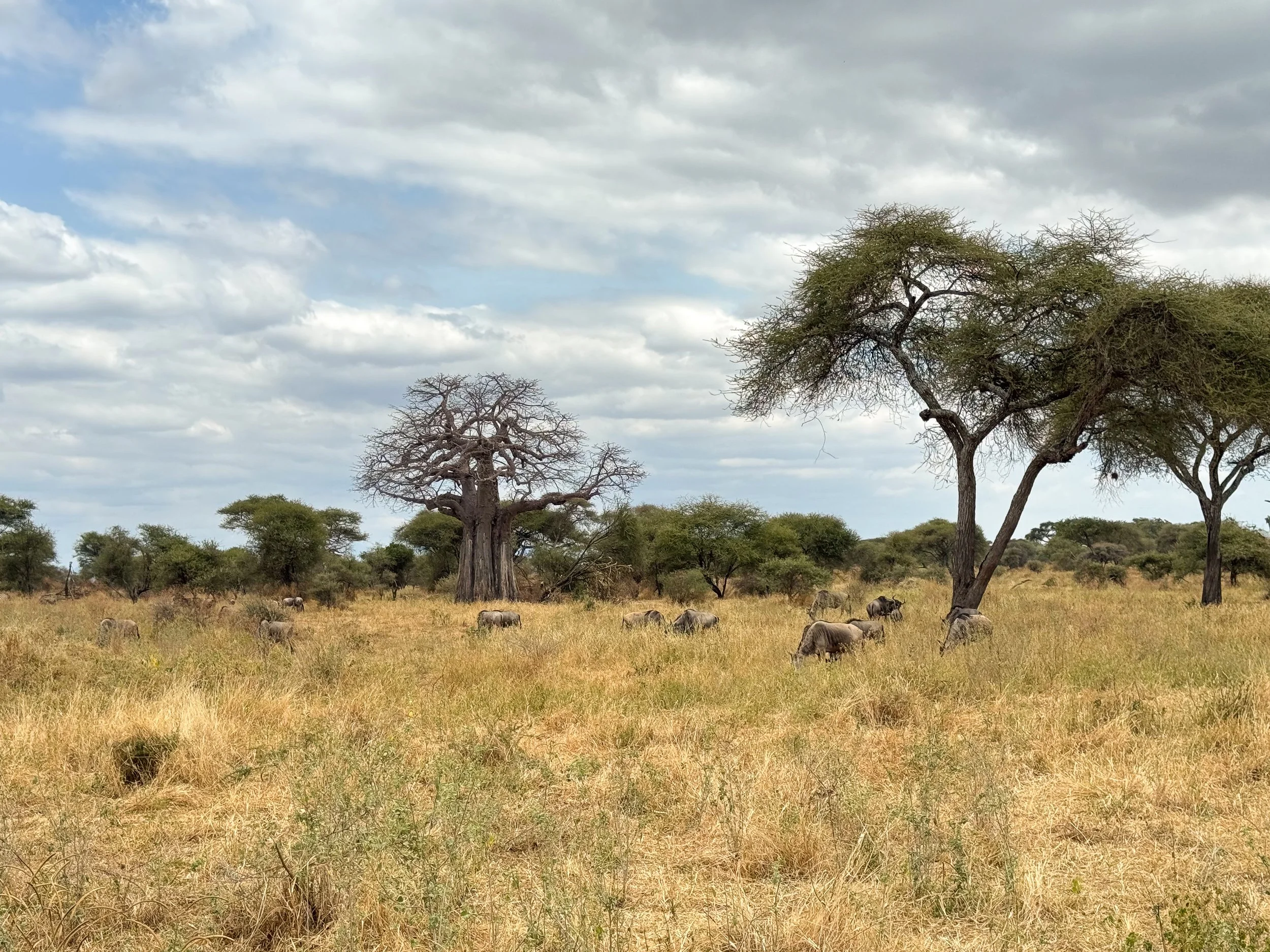
Tarangire National Park
Tarangire National Park is a popular safari park home to parades of African elephants and ancient baobab trees. We joined a half day game drive through the park on the first day of our safari.
Tarangire Landscapes. Dusty roads lead through the scenic landscapes of Tarangire National Park. The terrain is defined by massive baobab trees, umbrella shaped acacia trees, dry grasslands and towering termite mounds. The baobab trees are easily recognizable by their massive trunks and large branching limbs. Some live to be several hundred years old.
Wild Animals. The Tarangire is plentiful with African animals and wildlife. Small herds of wildebeests, zebra and giraffes gathered together to feed on trees and grasses. A pair of cape buffalo raised their heads from the bush, showing off their massive horns. Warthogs kneeled in the savanna, nibbling on dry grasses as they scurried around. Hornbill toucans and vibrant starlings hopped between tree branches and fluttered away. Waterbuck antelopes gazed back at us through our binoculars. Baboons and mischievous monkeys sat along roadsides and picnic areas waiting for opportunities to steal food.
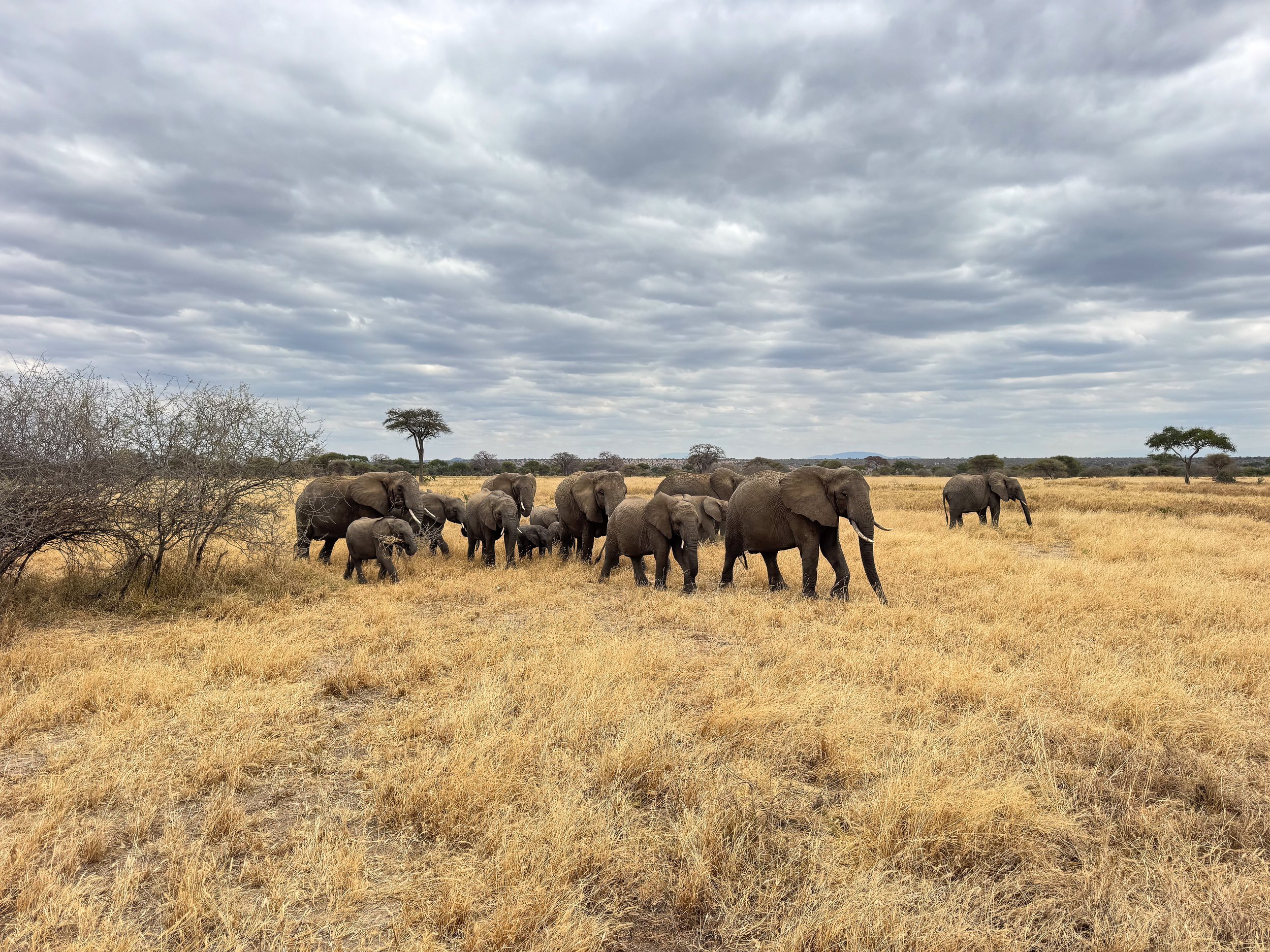
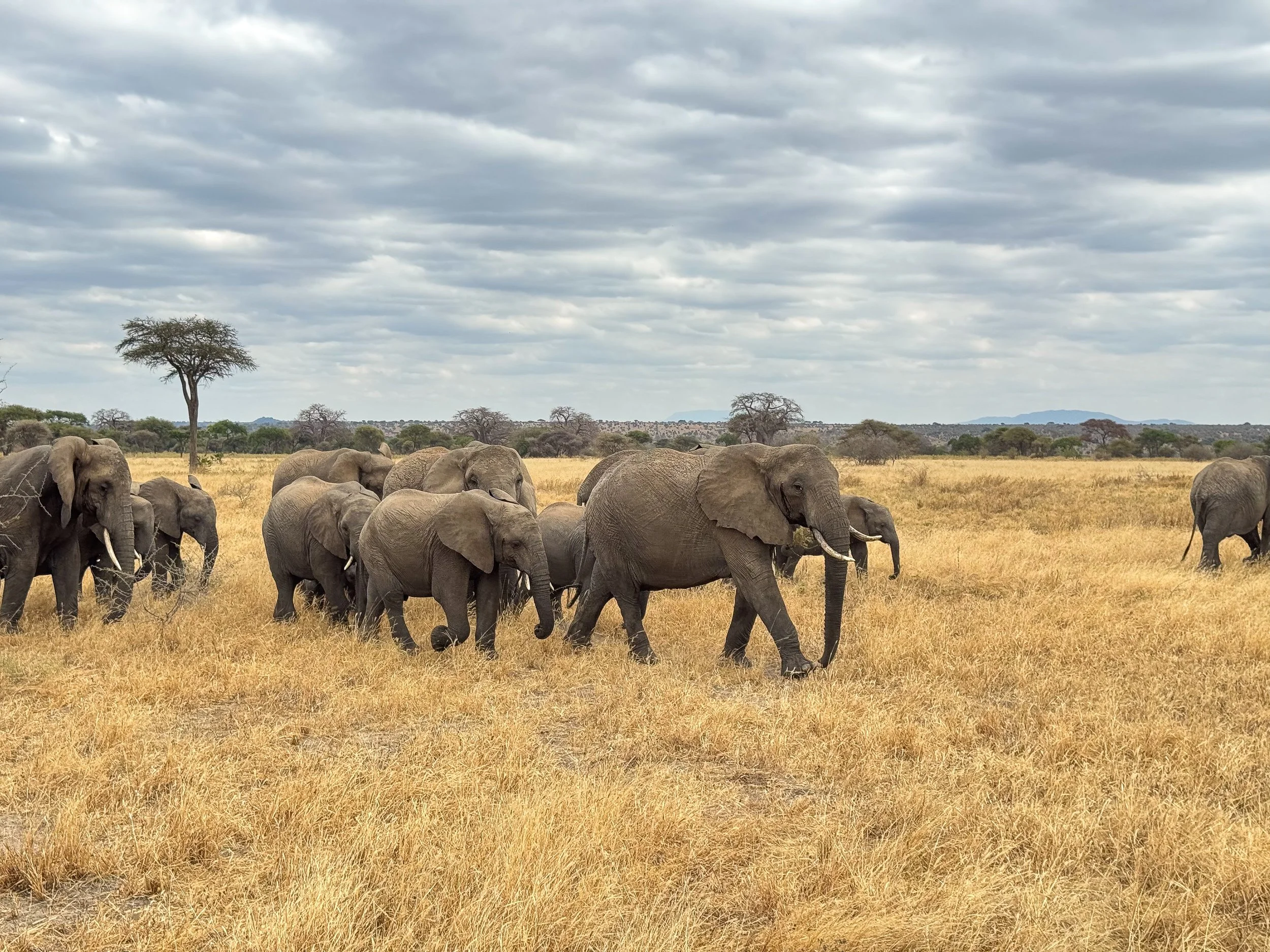
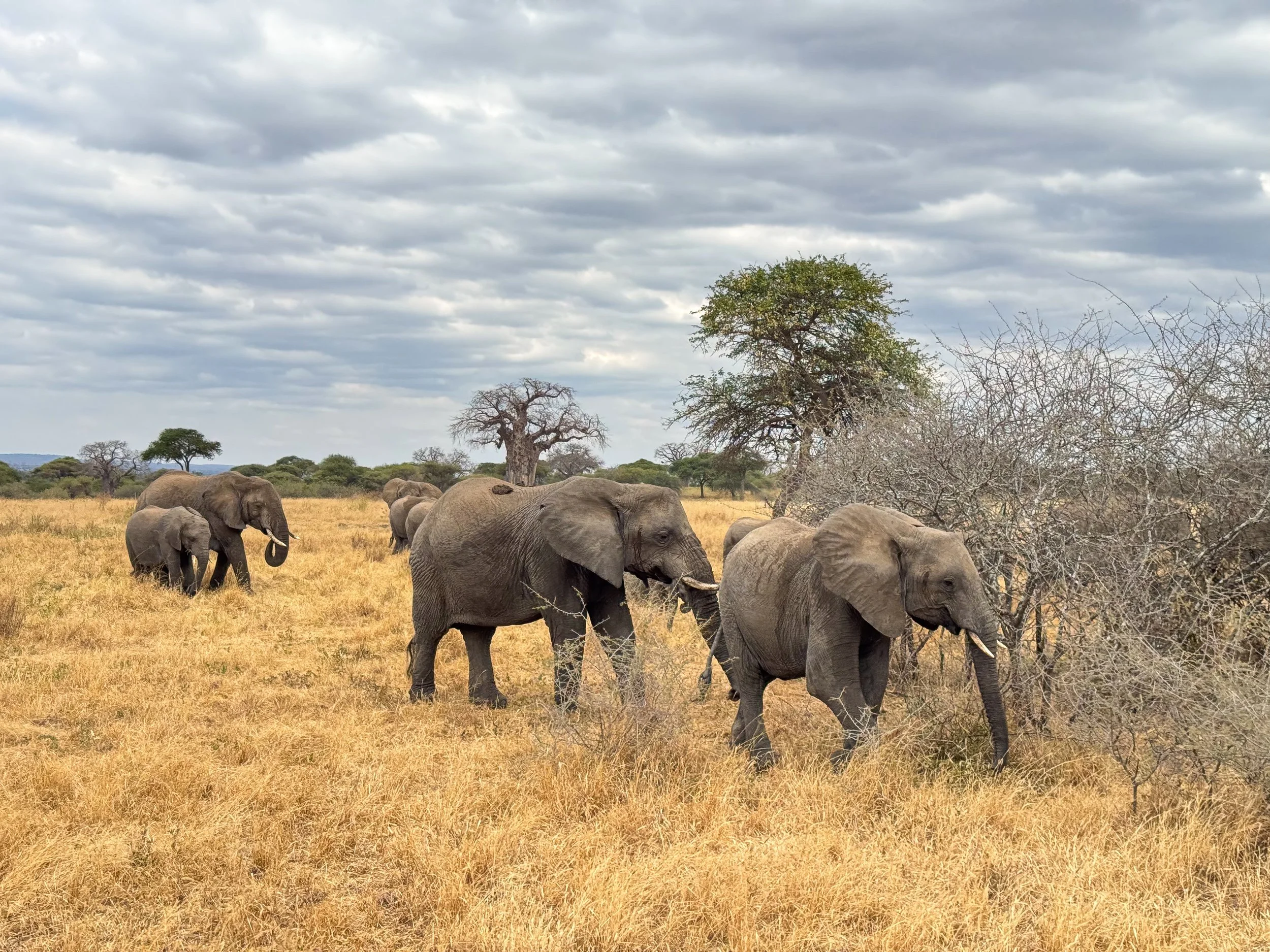
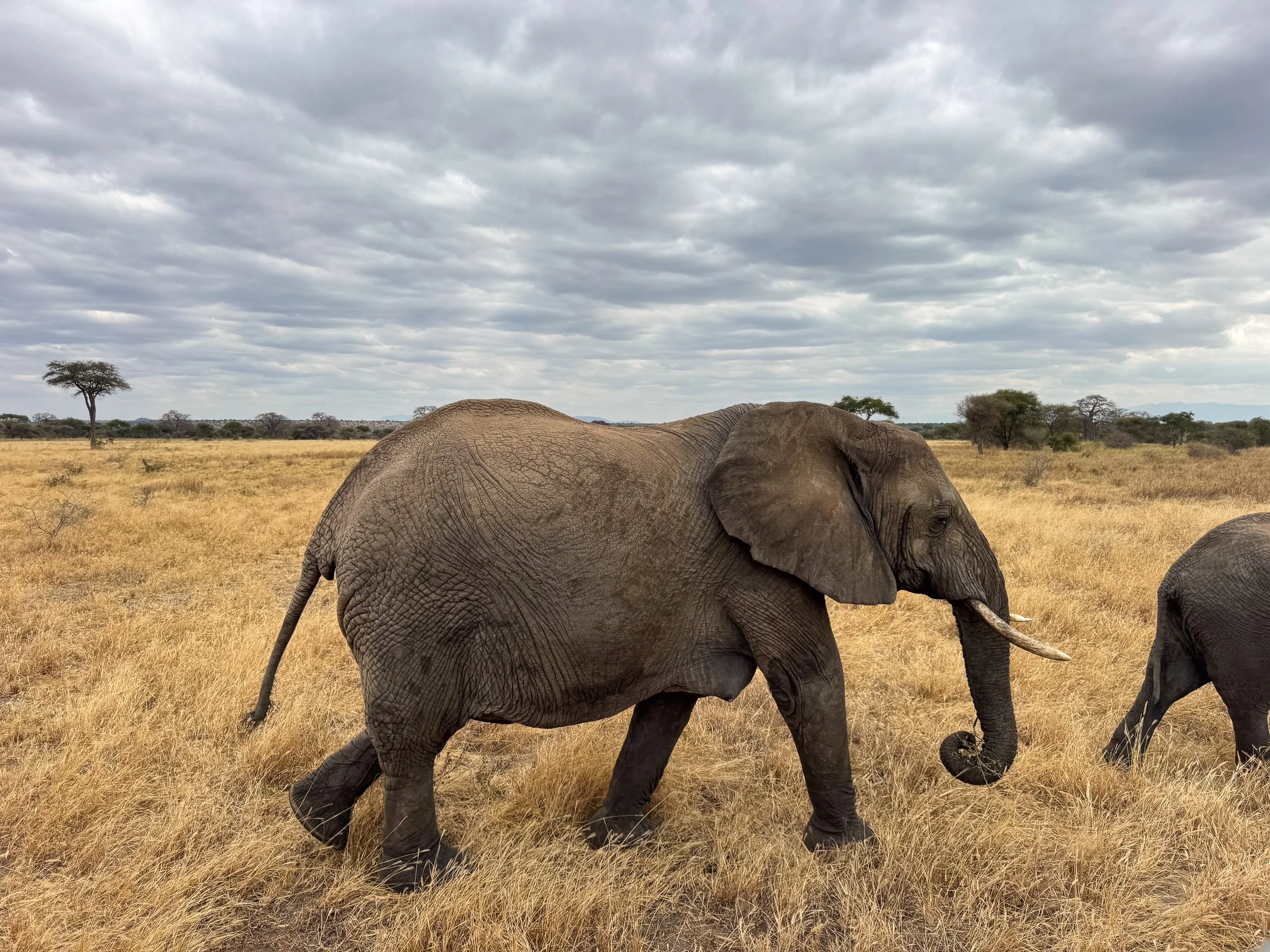
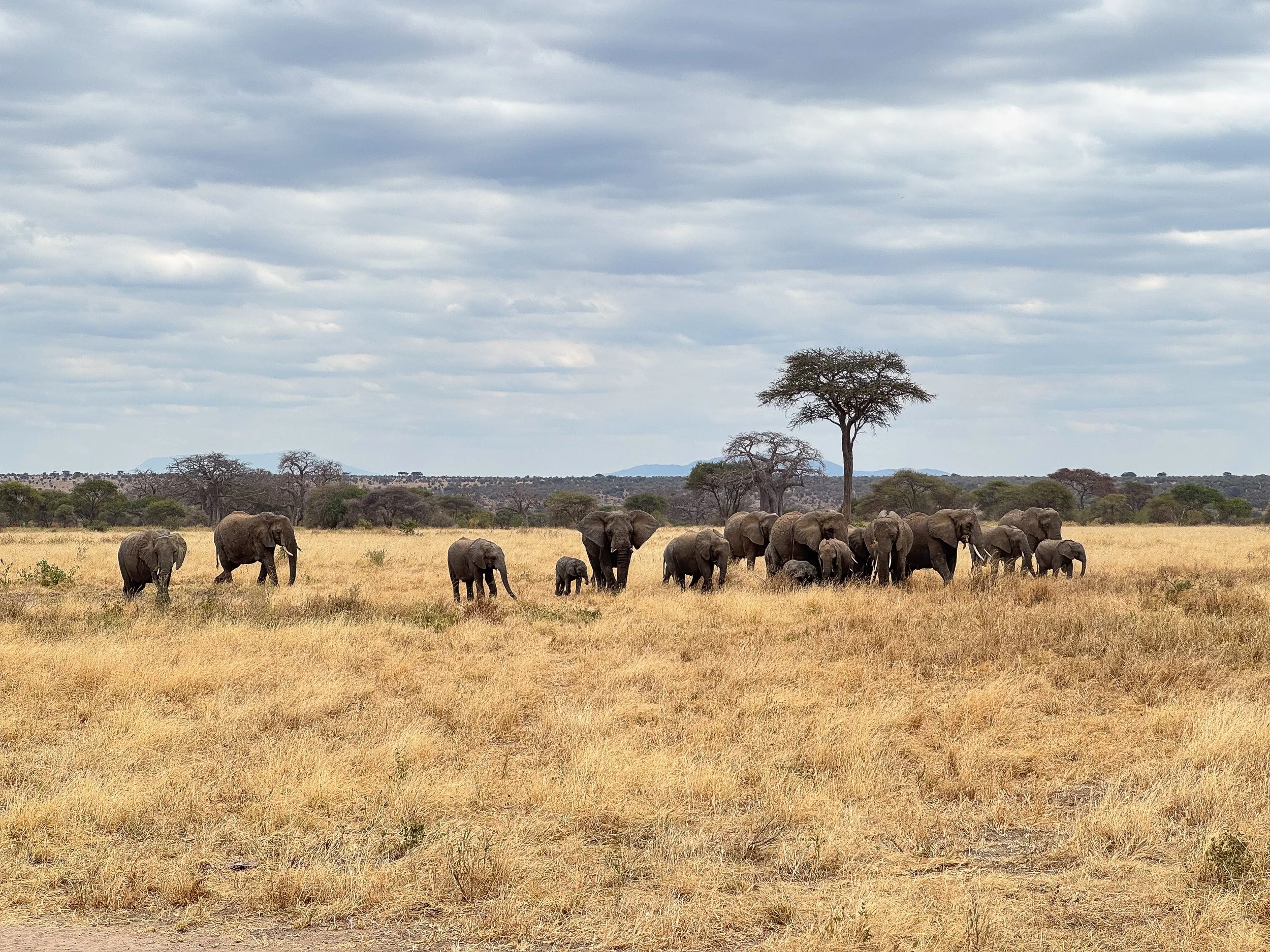
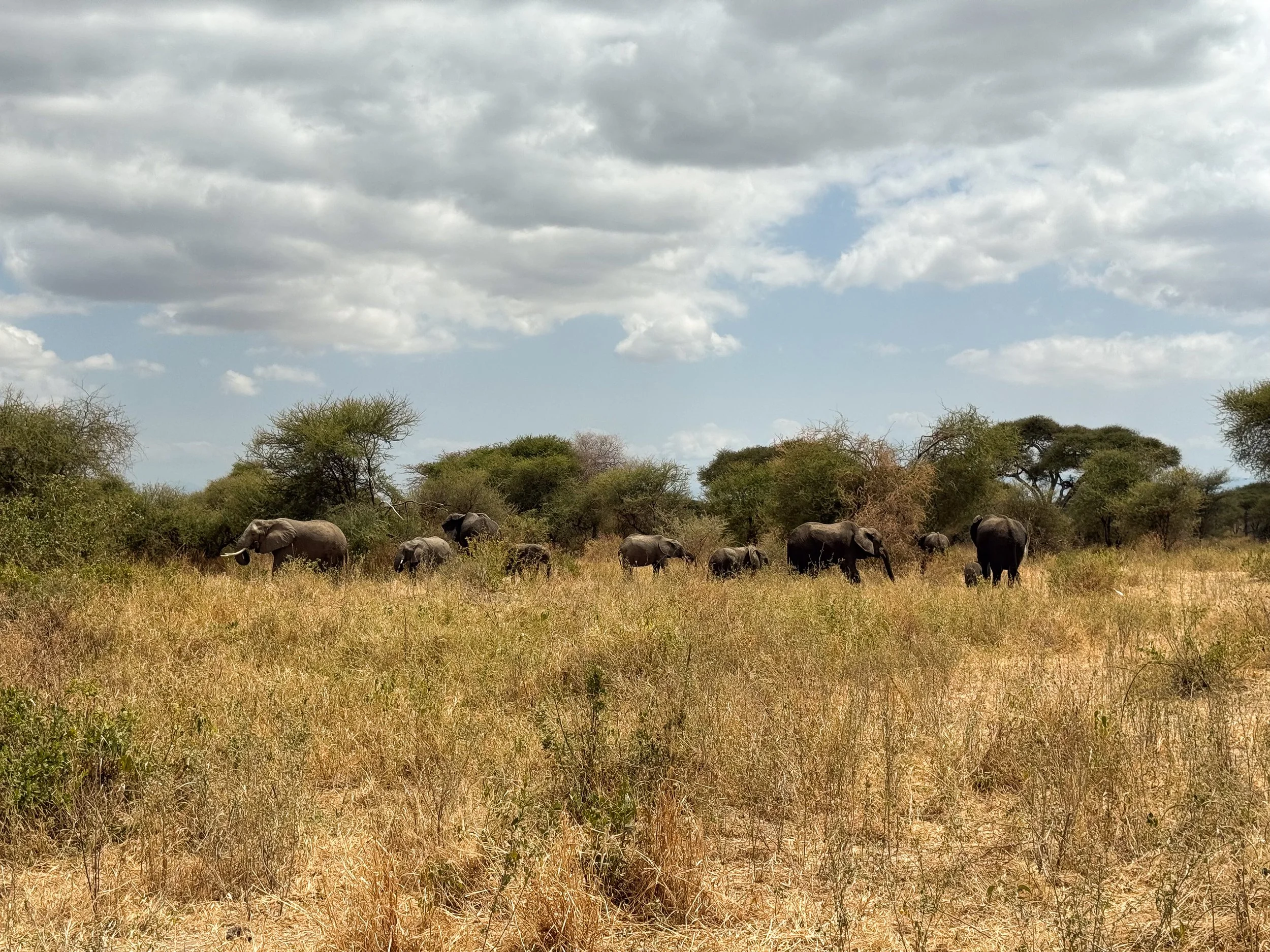
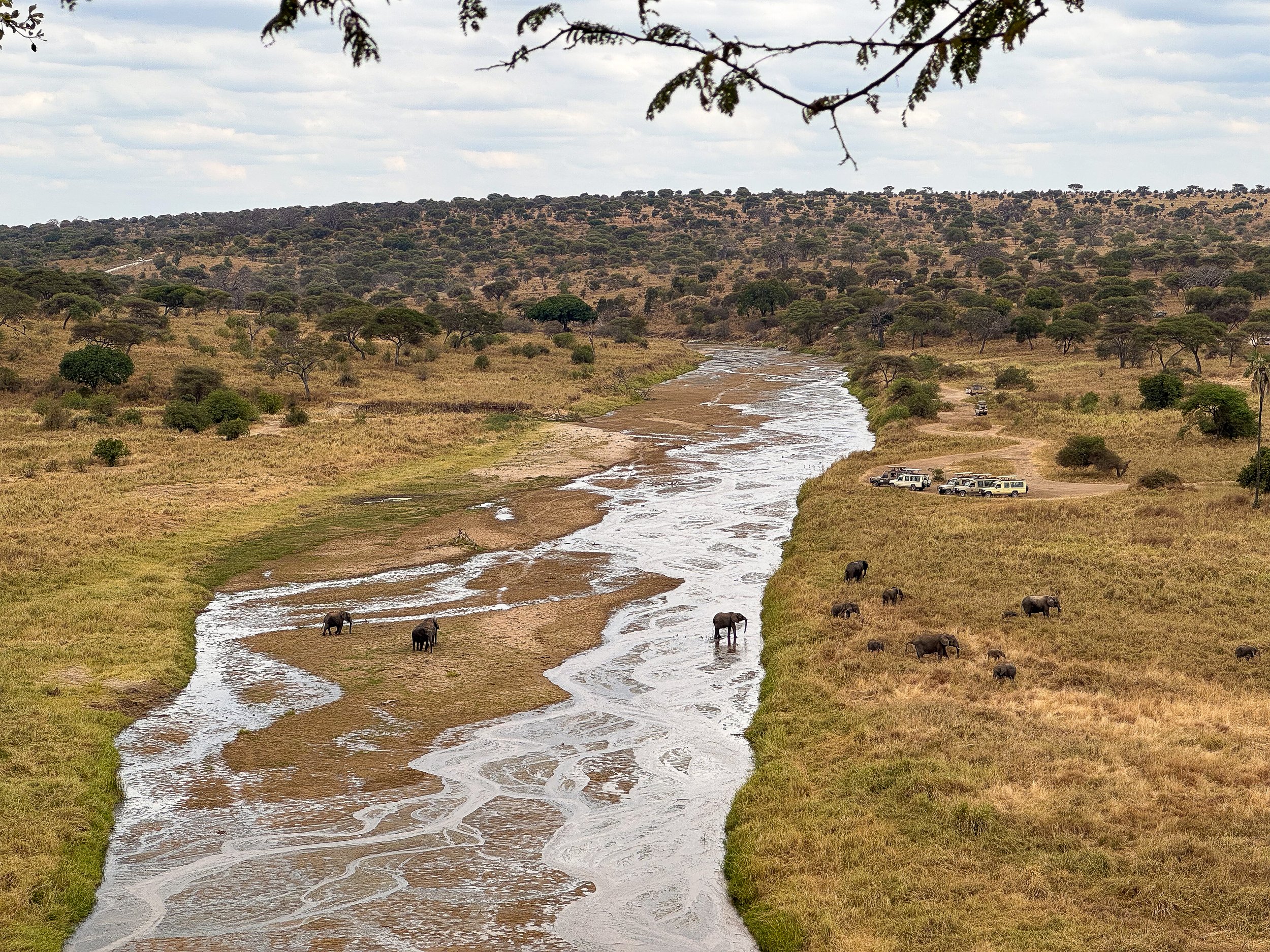
African Elephants. Large parades of African elephants roam freely around the Tarangire. Soon after entering the park, we spotted over 20 elephants pulling down branches from acacia trees and feeding on grasses. We spotted a second herd marching through a valley. Baby elephants walked closely alongside their parents. They later crossed a river as we watched from a picnic area at lunch. We parked along the dirt road as a third parade crossed in front of us. A dozen elephants trotted by like a slow moving stampede, raising their trunks and rocking their heads as they passed.
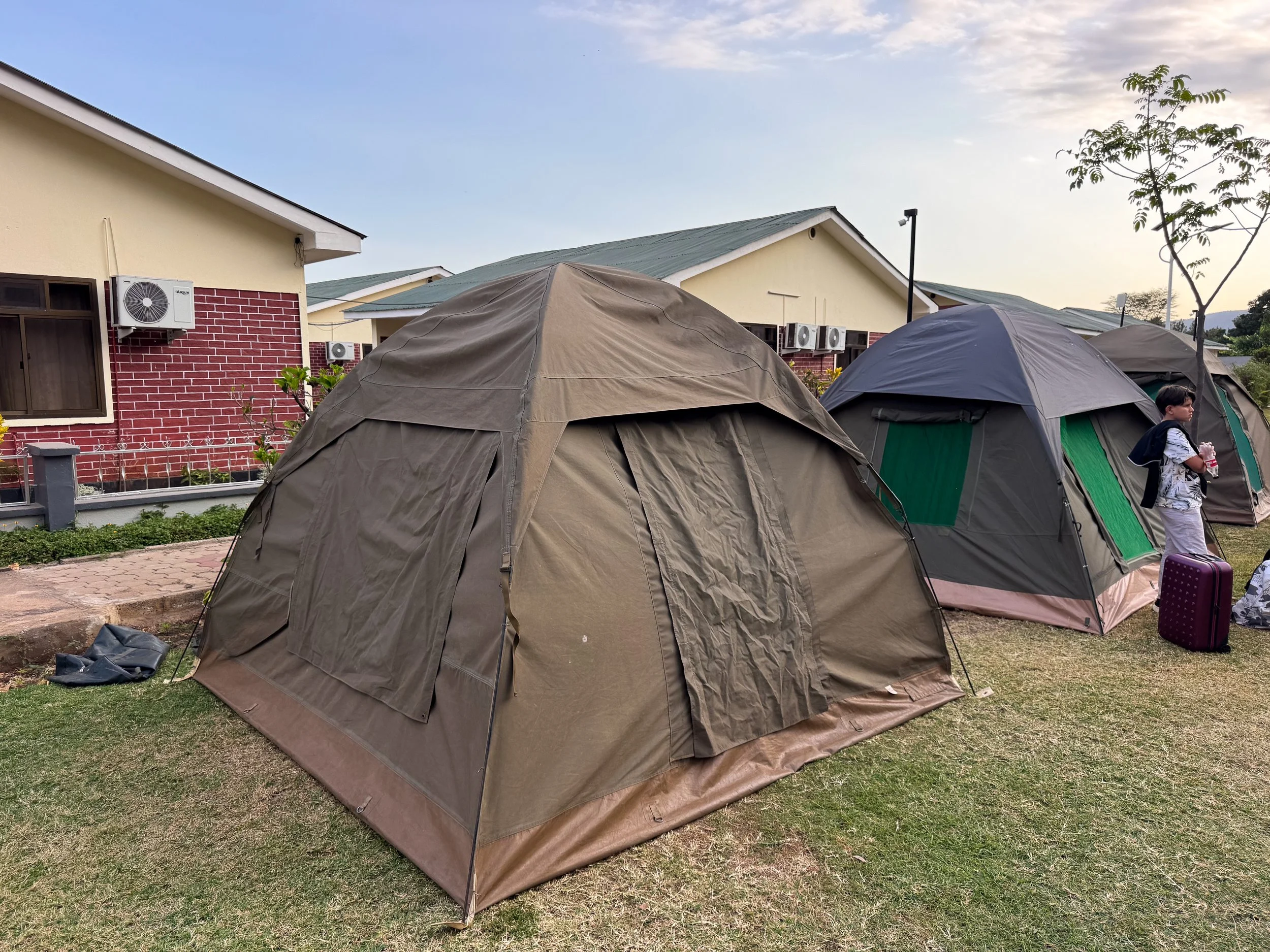
Twiga Campsite & Lodge. A budget hotel with a small campground, communal restrooms, buffet restaurant and outdoor pool. Three rows of safari style tents line the lawn in front of the hotel. Inside are Maasai woven bed cushions and standard sleeping bags. We camped here overnight after exploring Tarangire National Park.
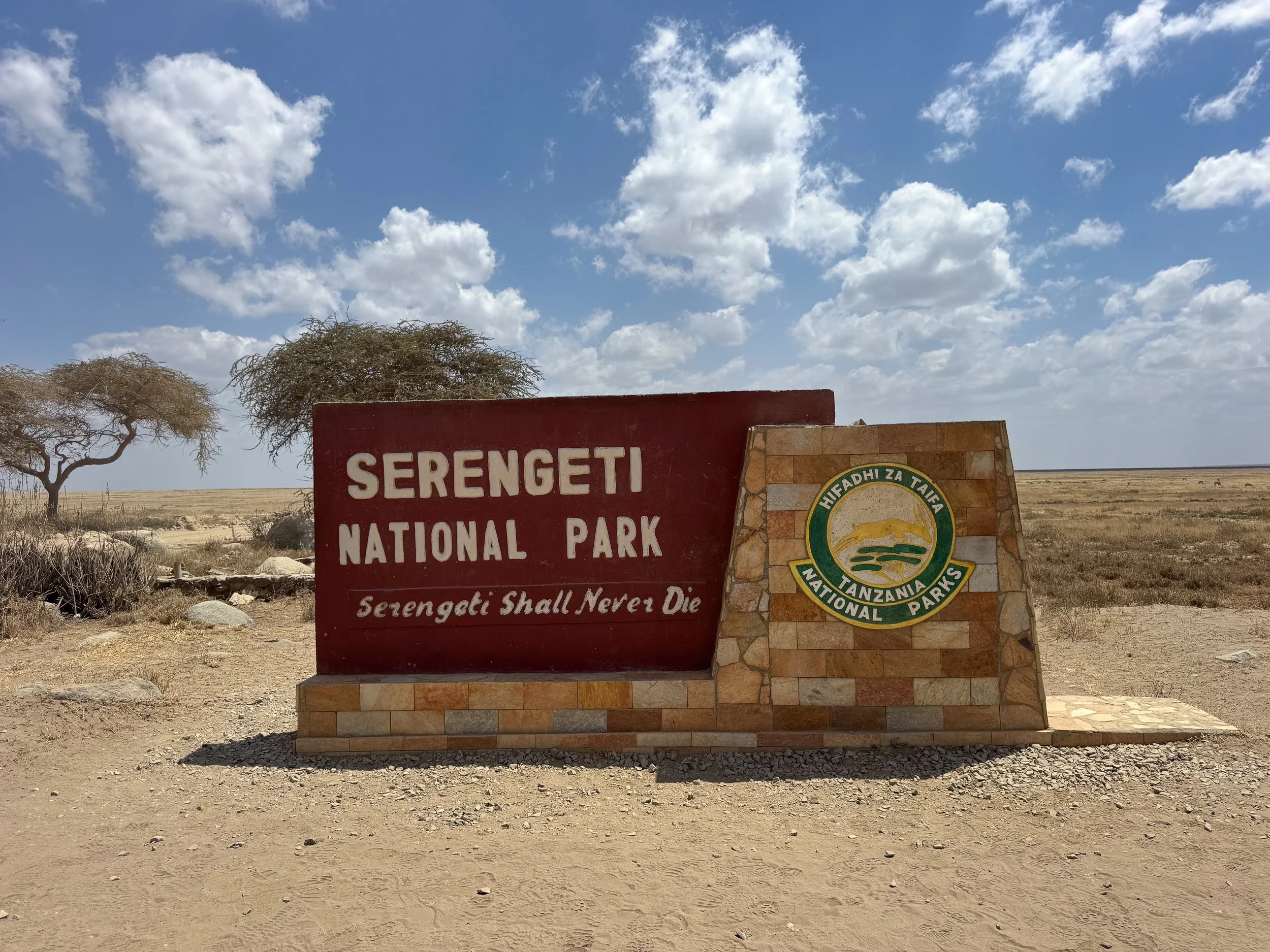
Serengeti National Park
The Serengeti is one of Africa’s most famed national parks and wildlife reserves. Its vast savannas are home to a large population of big cats, predators and African animals. We spent two days on safari in the park, camping overnight in the bush.
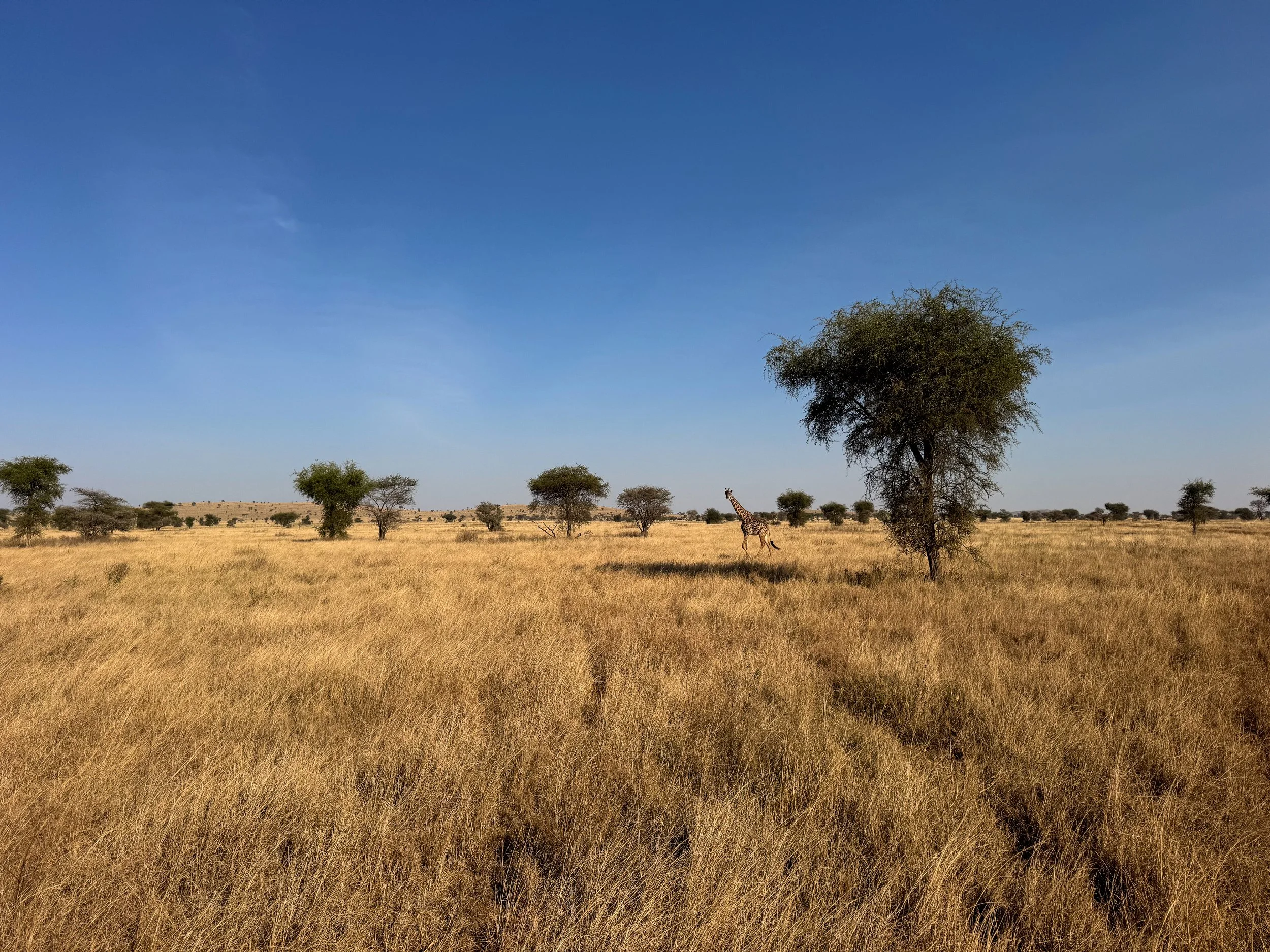
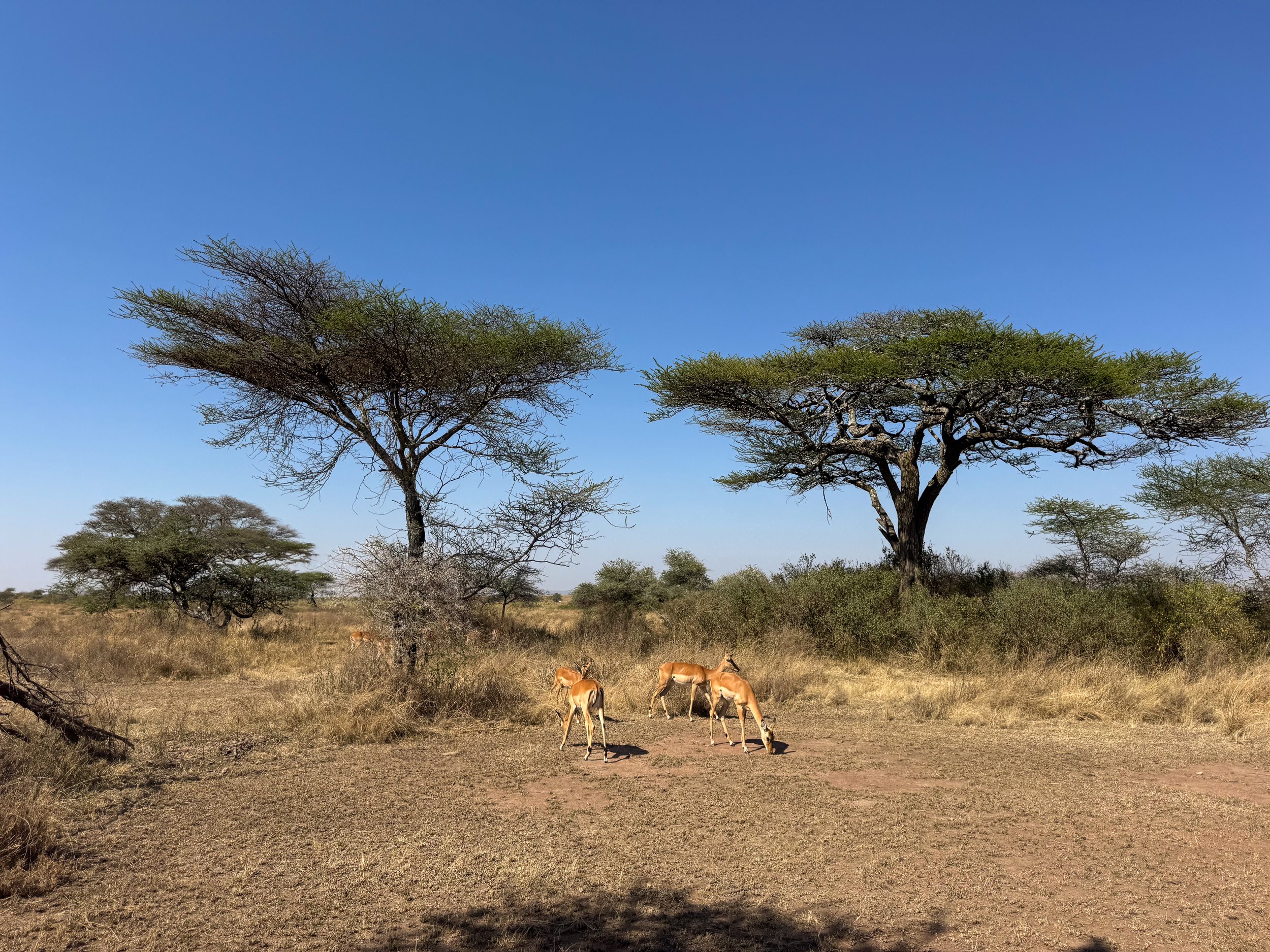
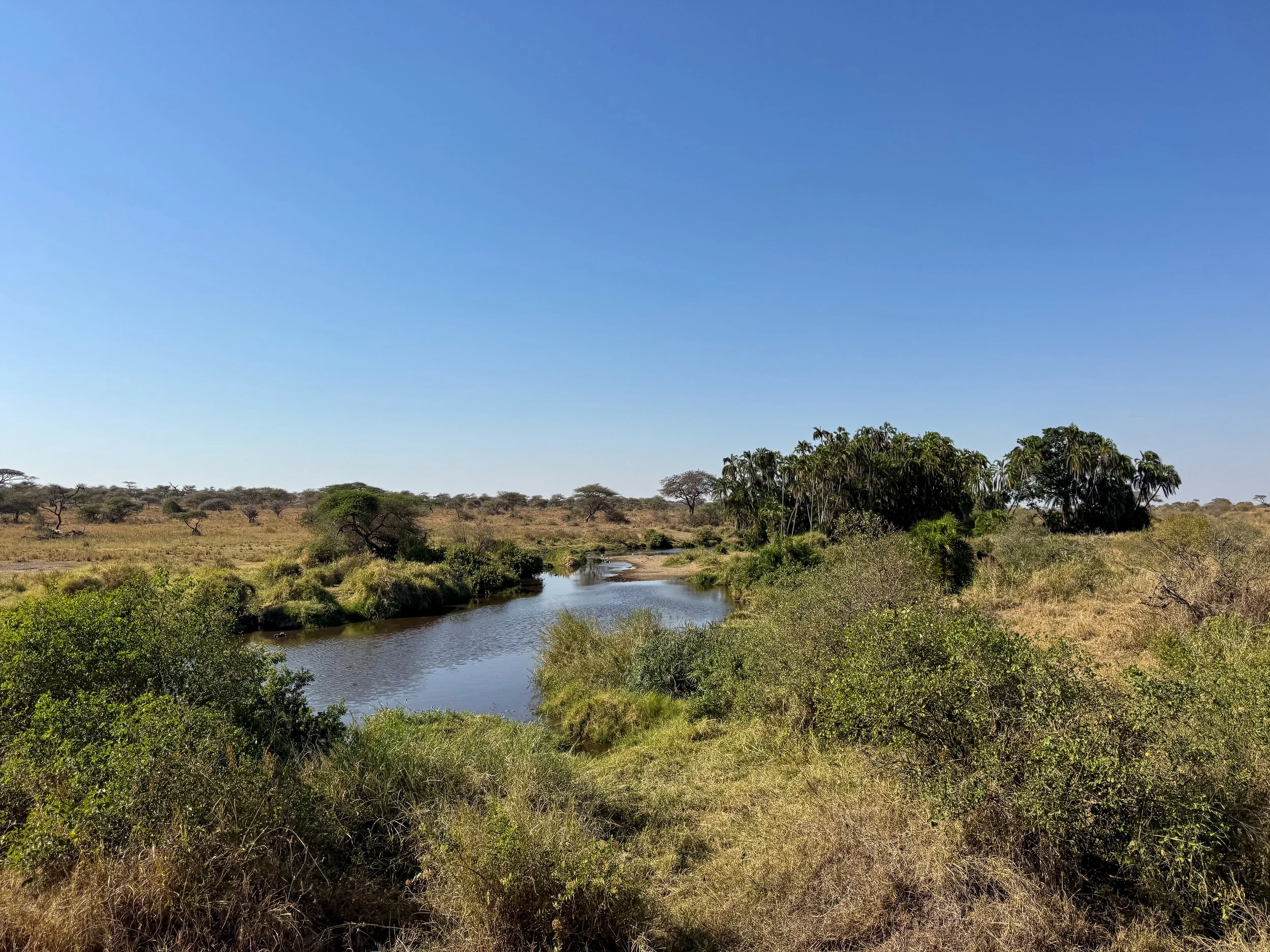
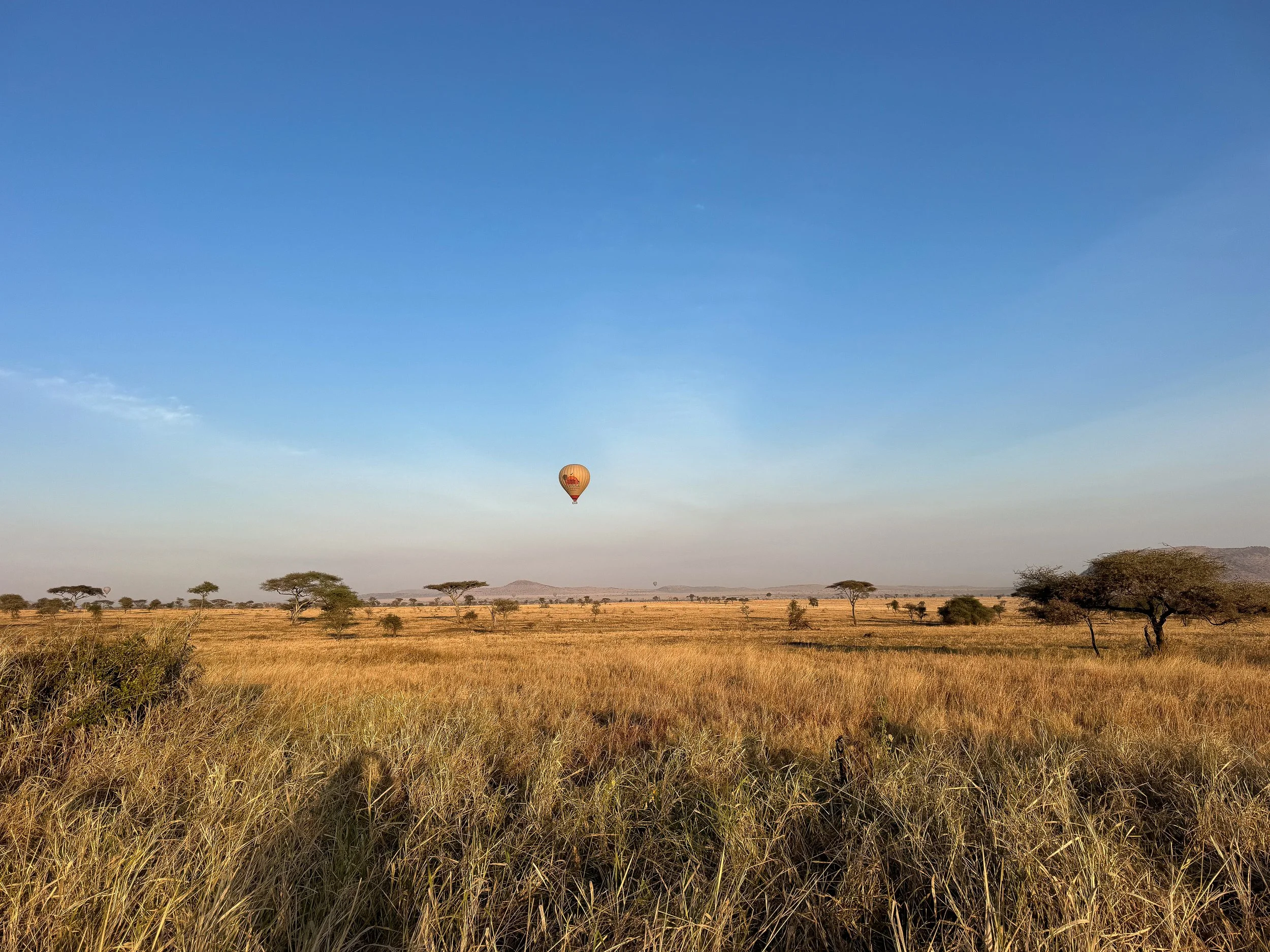
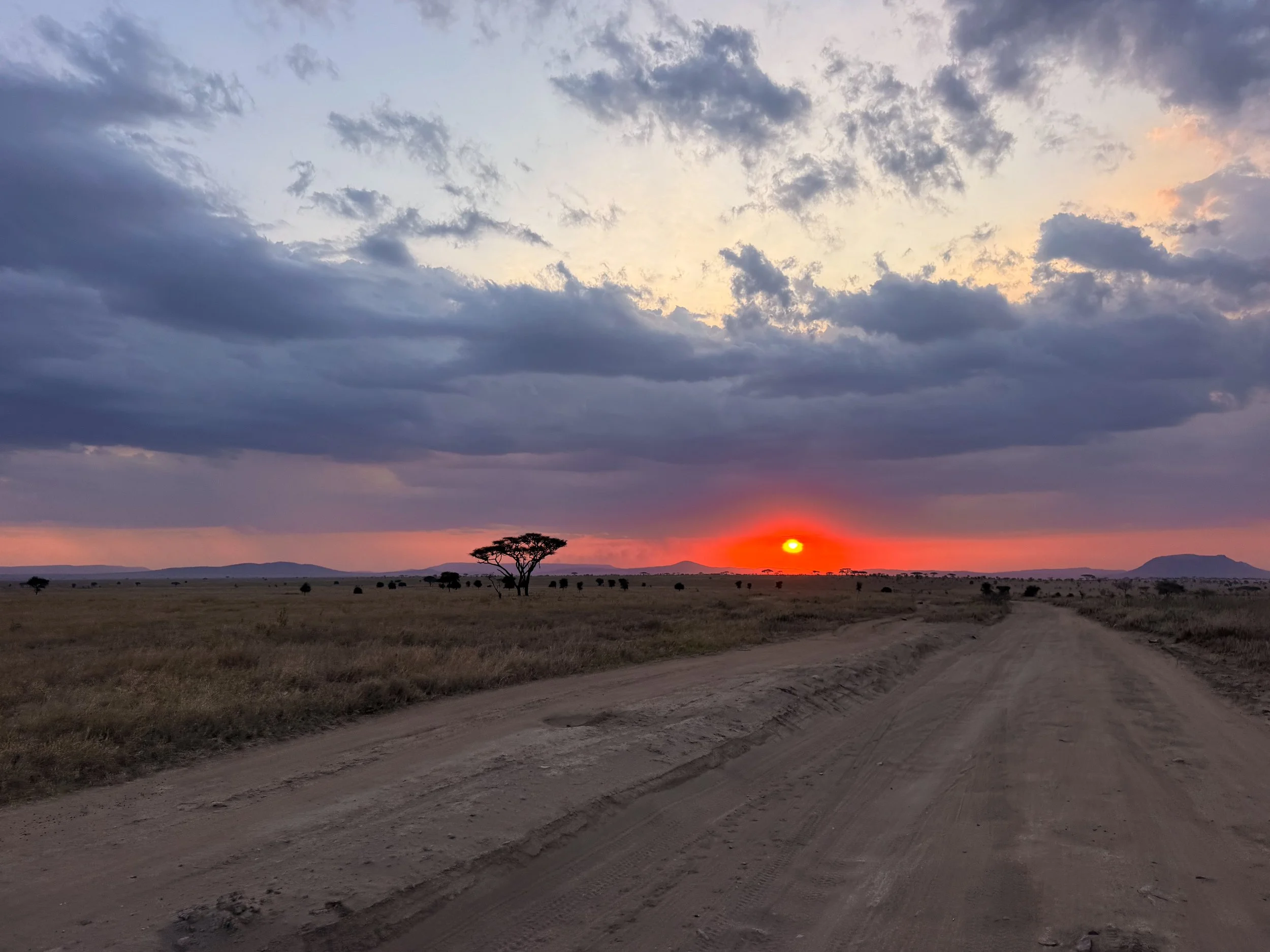
Serengeti Landscapes. Vast savannas and dry grasslands stretch across the horizon of the Serengeti, occasionally interrupted by the lone acacia tree, termite mound or kopje. Safari vehicles zoom down dirt roads, leaving clouds of dust in their wake. Fiery sunsets cast shades of magenta and orange across the sky as silhouettes of acacia trees contrast the horizon.
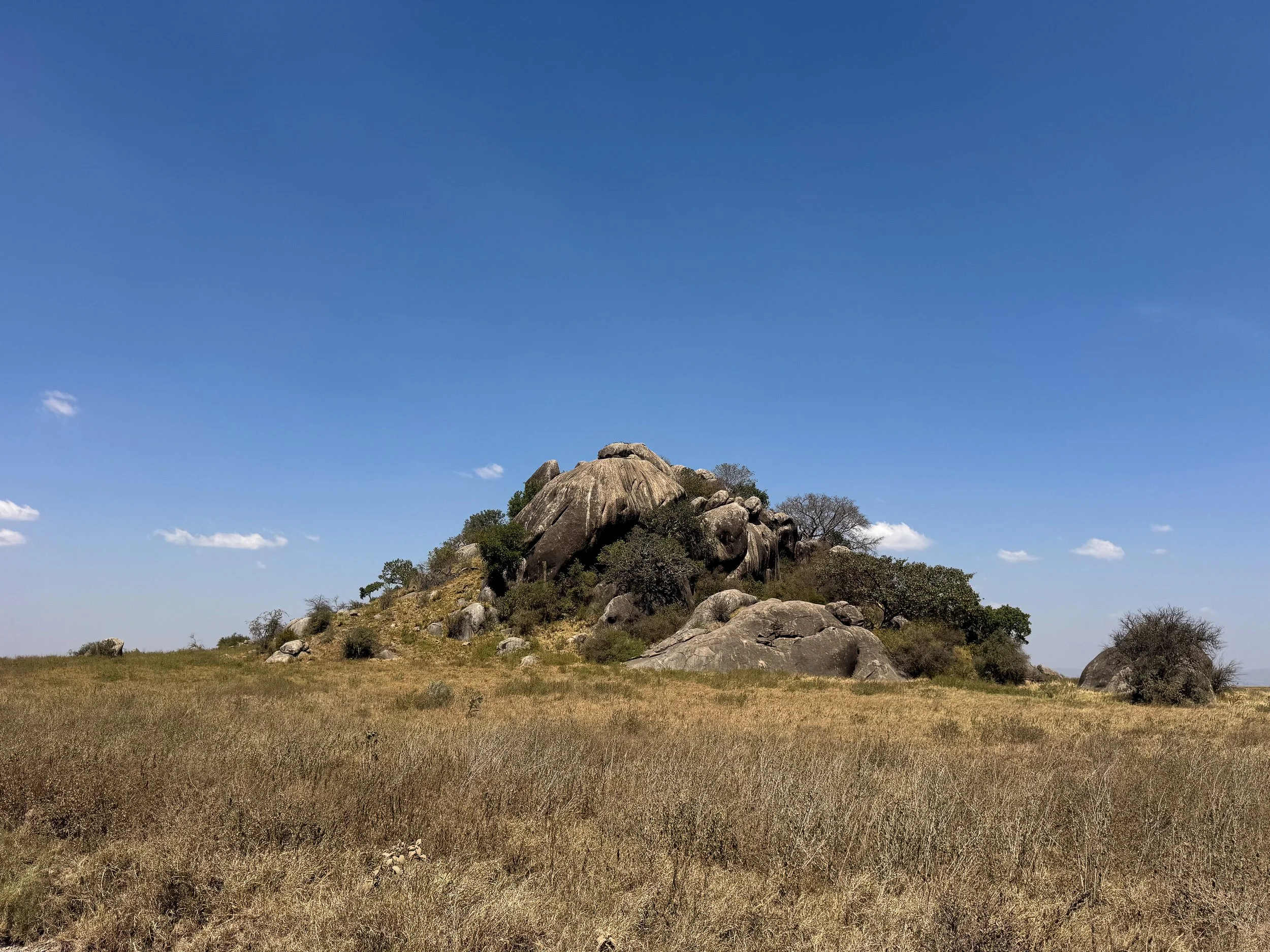
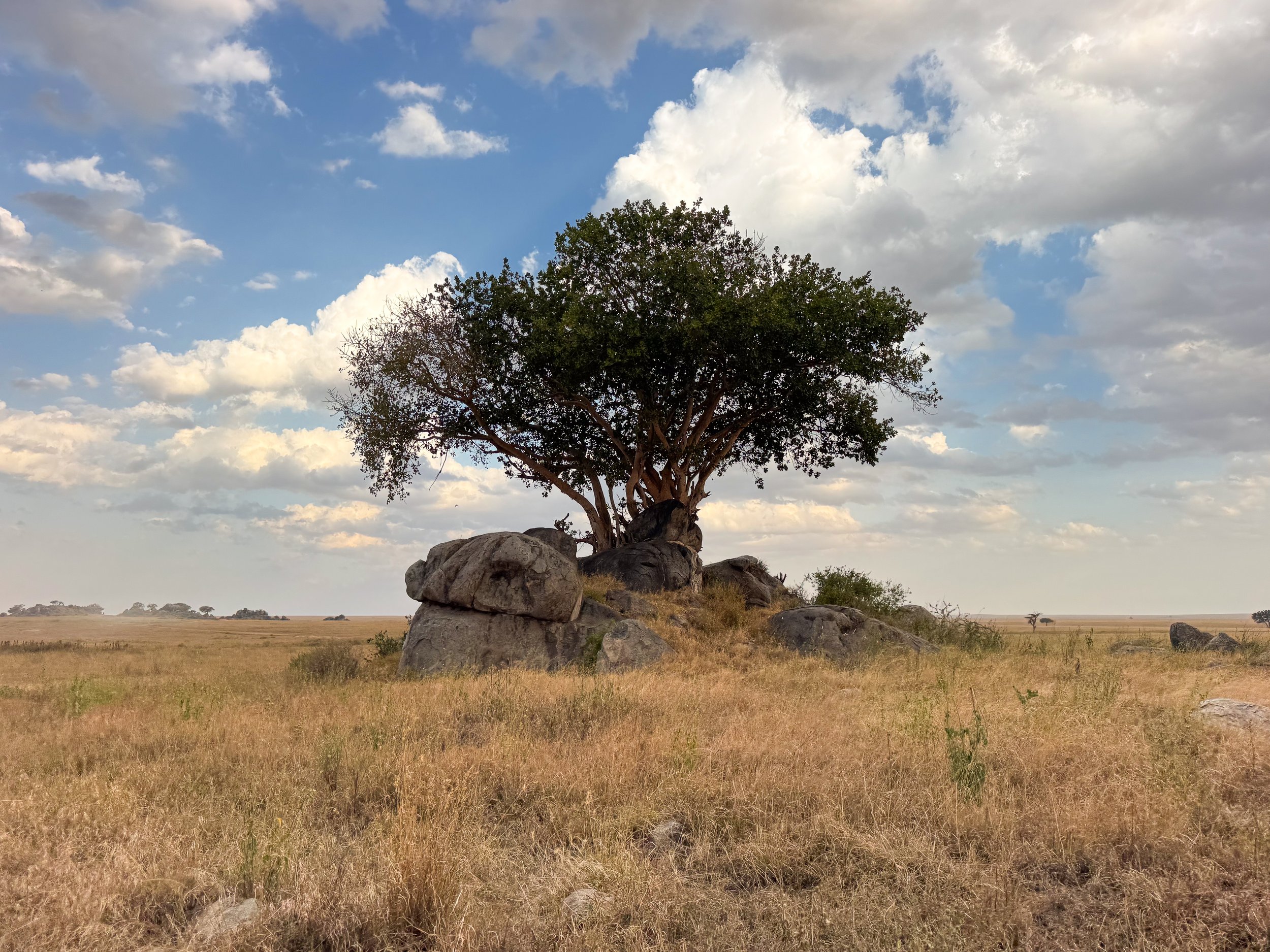
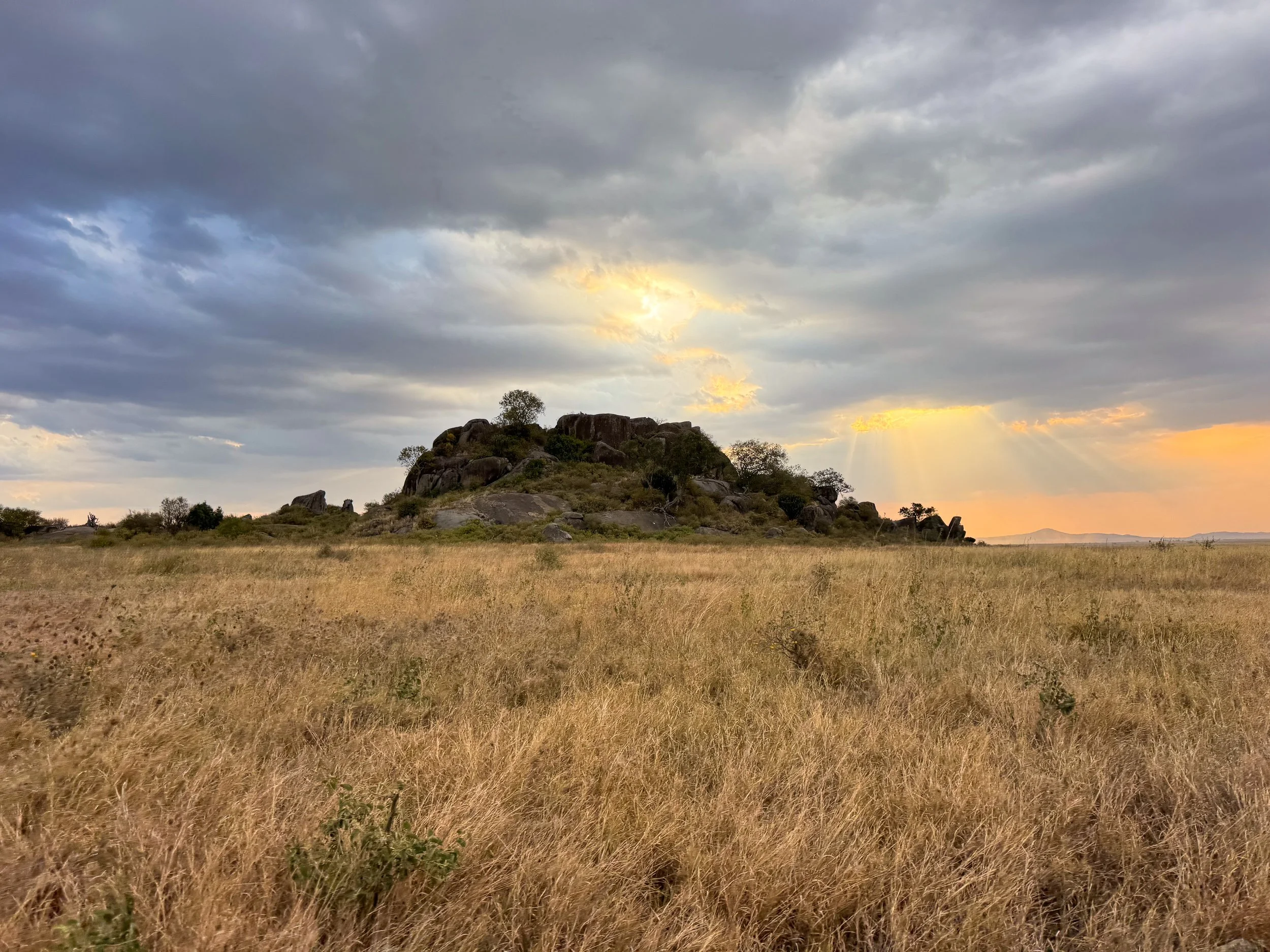
Kopjes. Dramatic granite outcrops that rise from the savanna like an island in a sea of grass. They’re also known as “pride rocks” and serve as important habitats for big cats like lions, cheetahs and leopards.
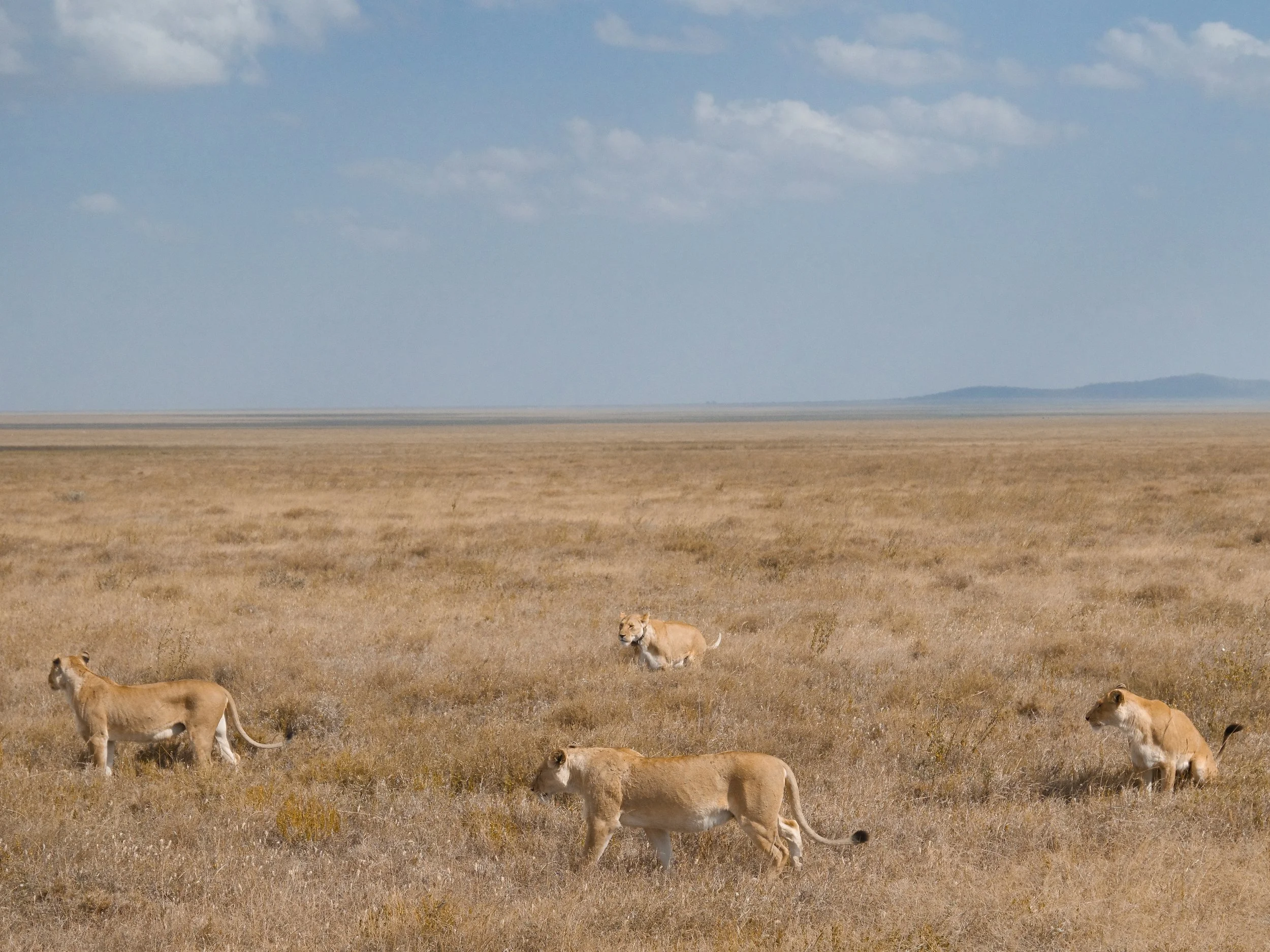
Lions. Lions reign in the Serengeti! Three greeted us just before entering the Nkuyu Gate. One patrolled the roadway, another shaded under a bridge and the third drank from a puddle beside our Land Cruiser, its orange fur and fluffy mane within reaching distance. Several lions napped under a lone acacia tree in the middle of the savanna. Four lionesses prowled through the golden grasses. A majestic lion posed for photos, its amber eyes stared back at us with a genuine fearsomeness.
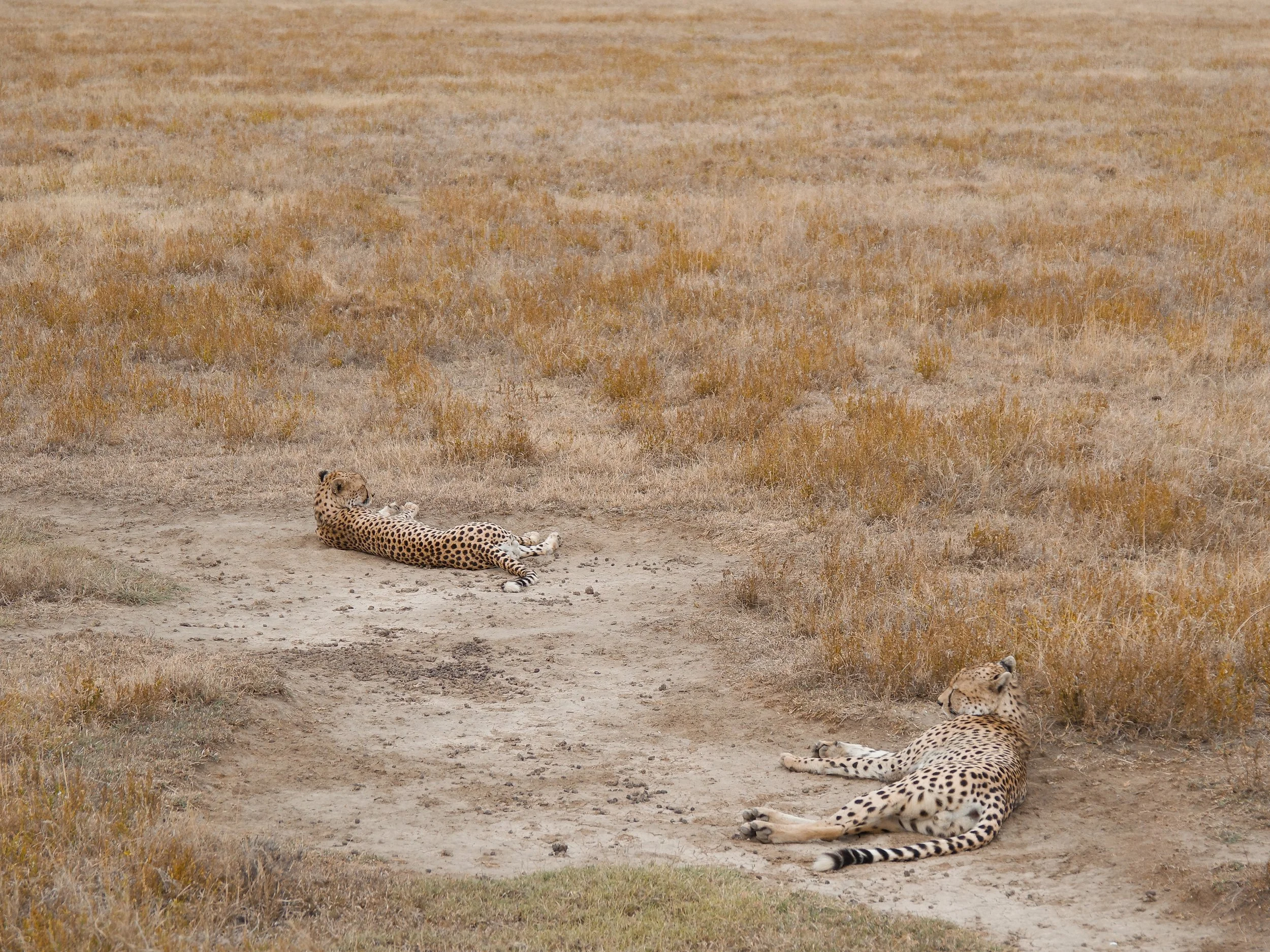
Cheetahs. Cheetahs are one of the most beautiful and powerful animals on the savanna. We encountered a trio napping and watching the horizon for approaching prey.
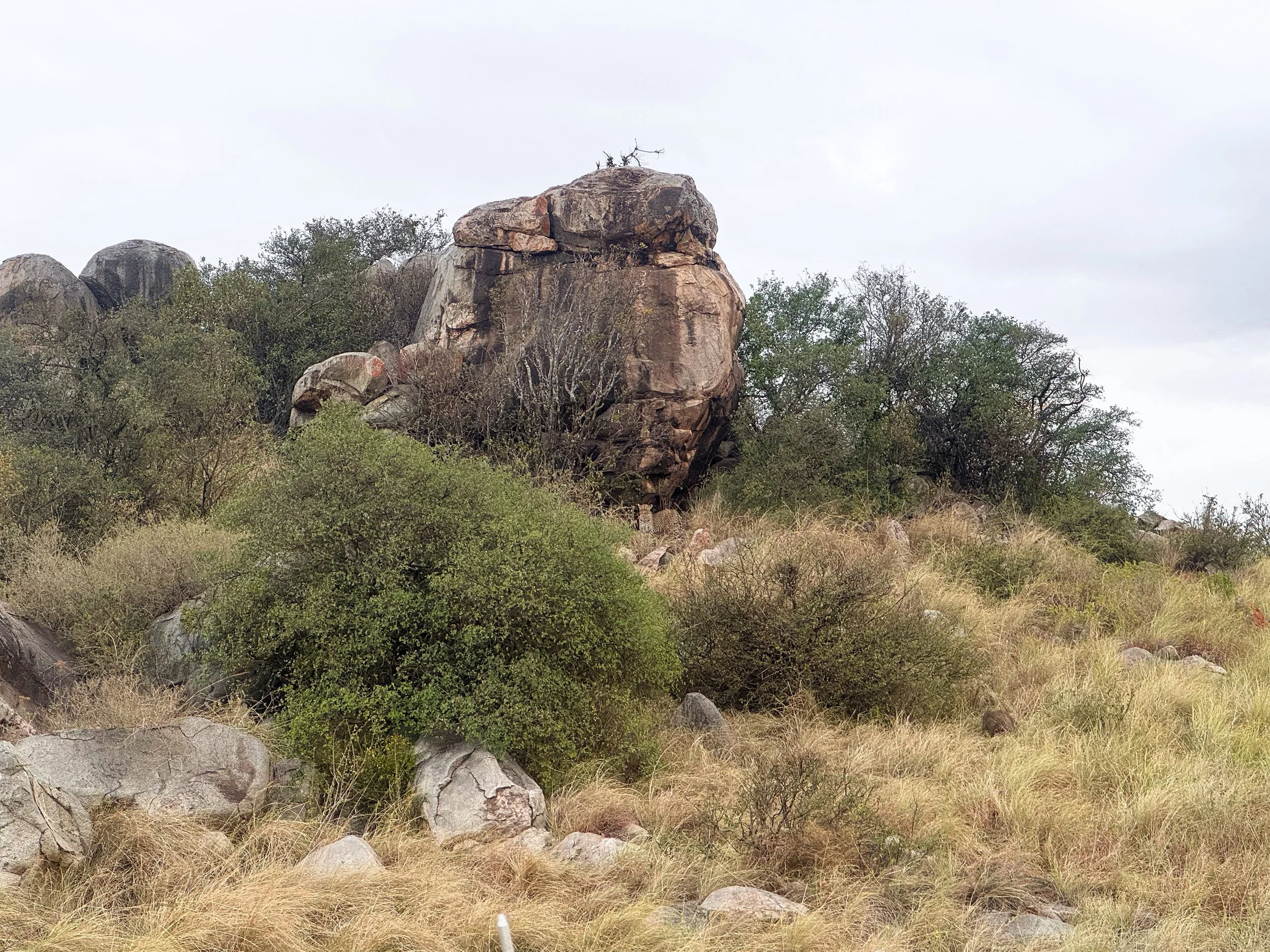
Leopards. Leopards are one of the most difficult animals to spot on the savanna. Our guide spotted one, very well camouflaged and perched on a kopje. To our surprise, two cute leopard cubs appeared and began licking the larger one before walking off together.
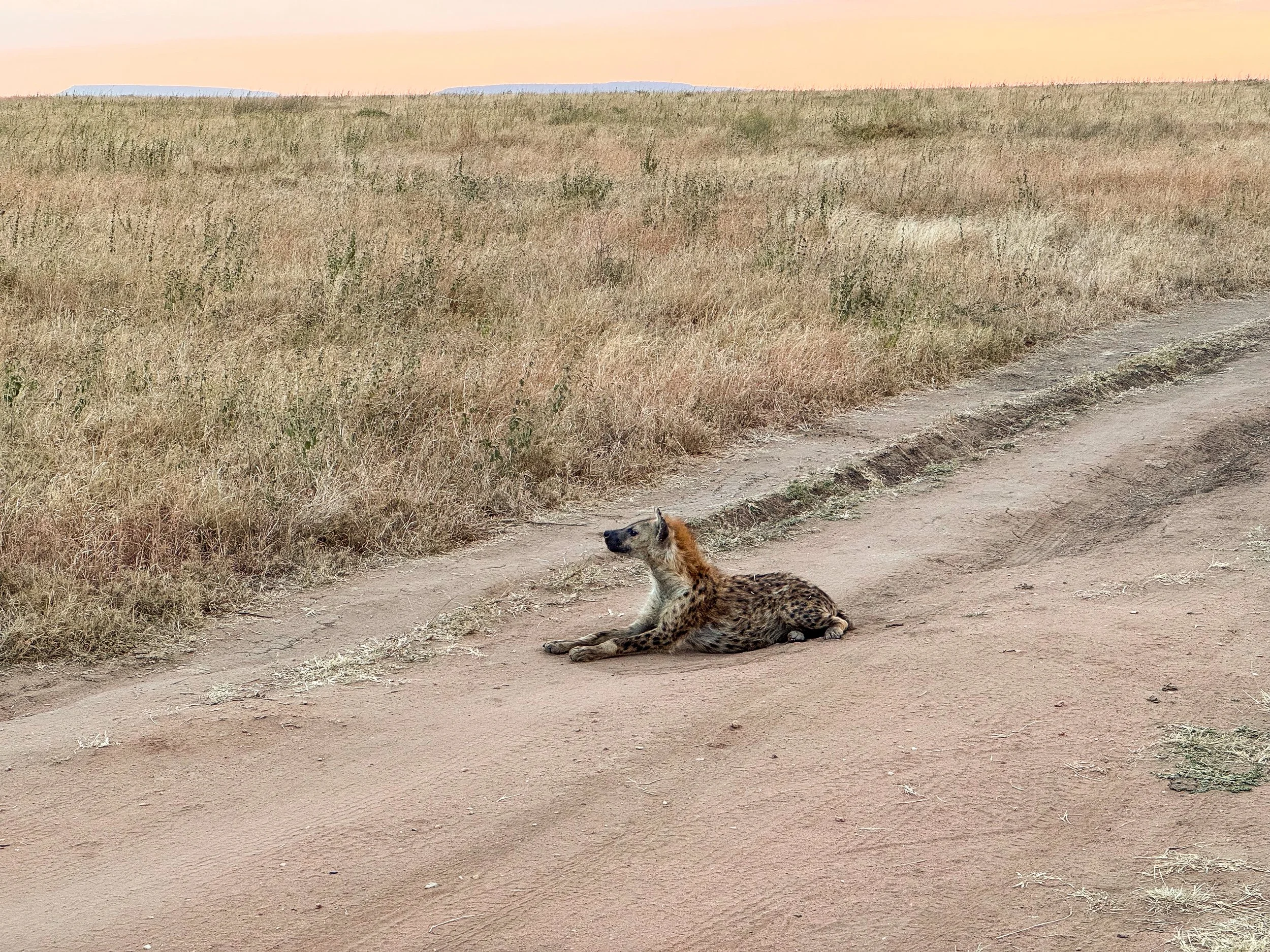
Hyena. A solo hyena blocked the road as night fell. It yawned, showing off its pointed teeth before stretching and walking off into the sunset.
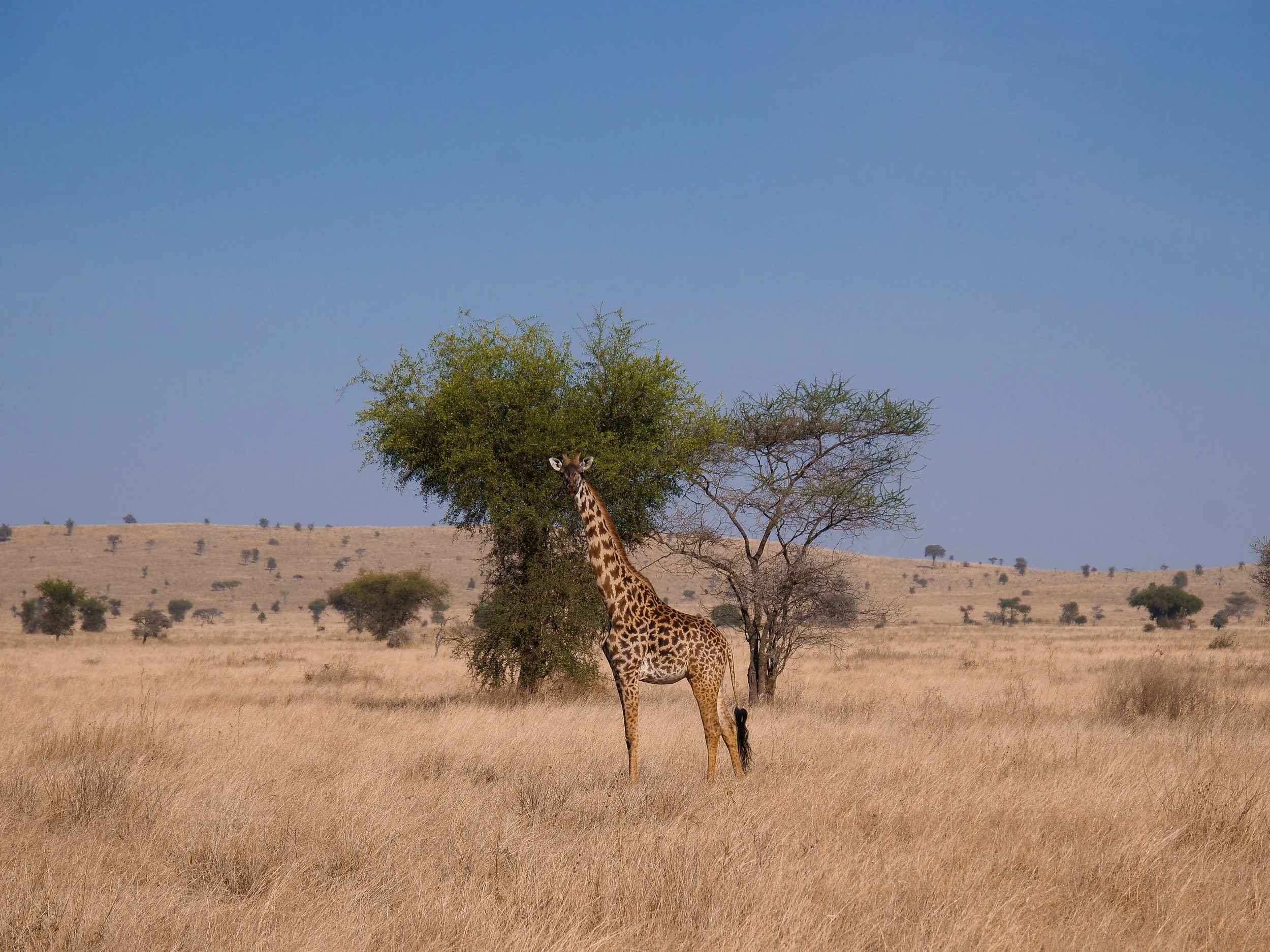
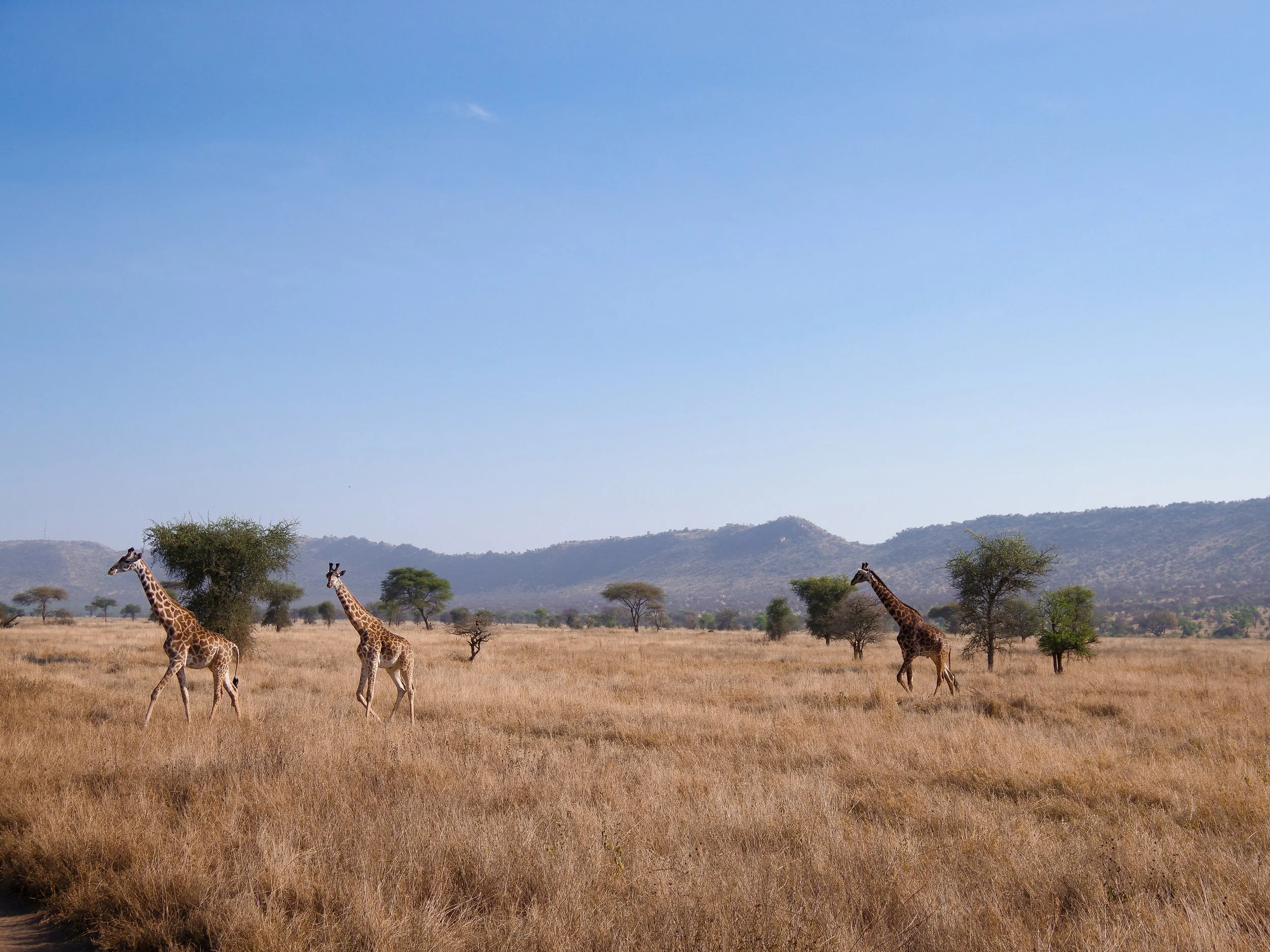
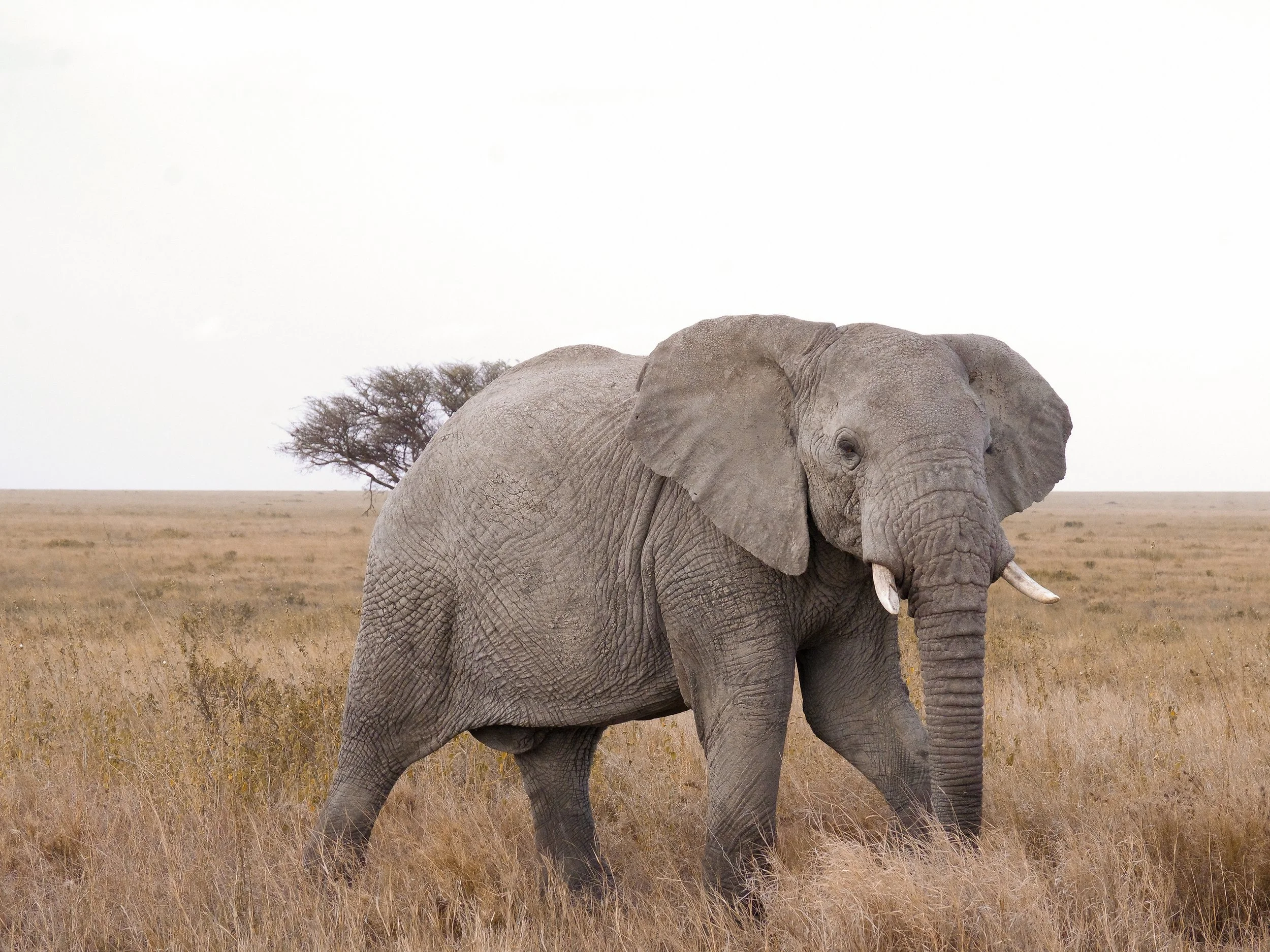
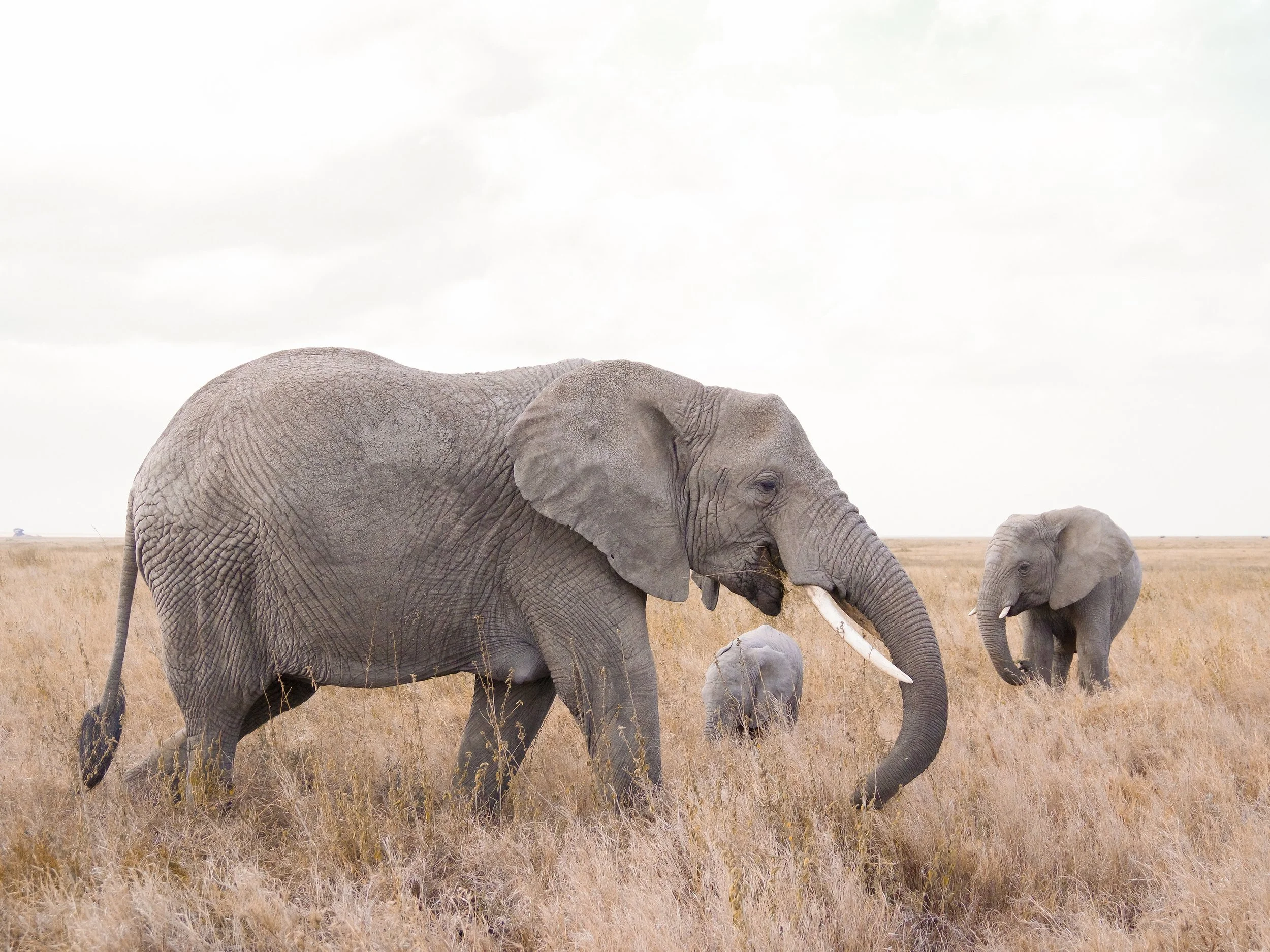
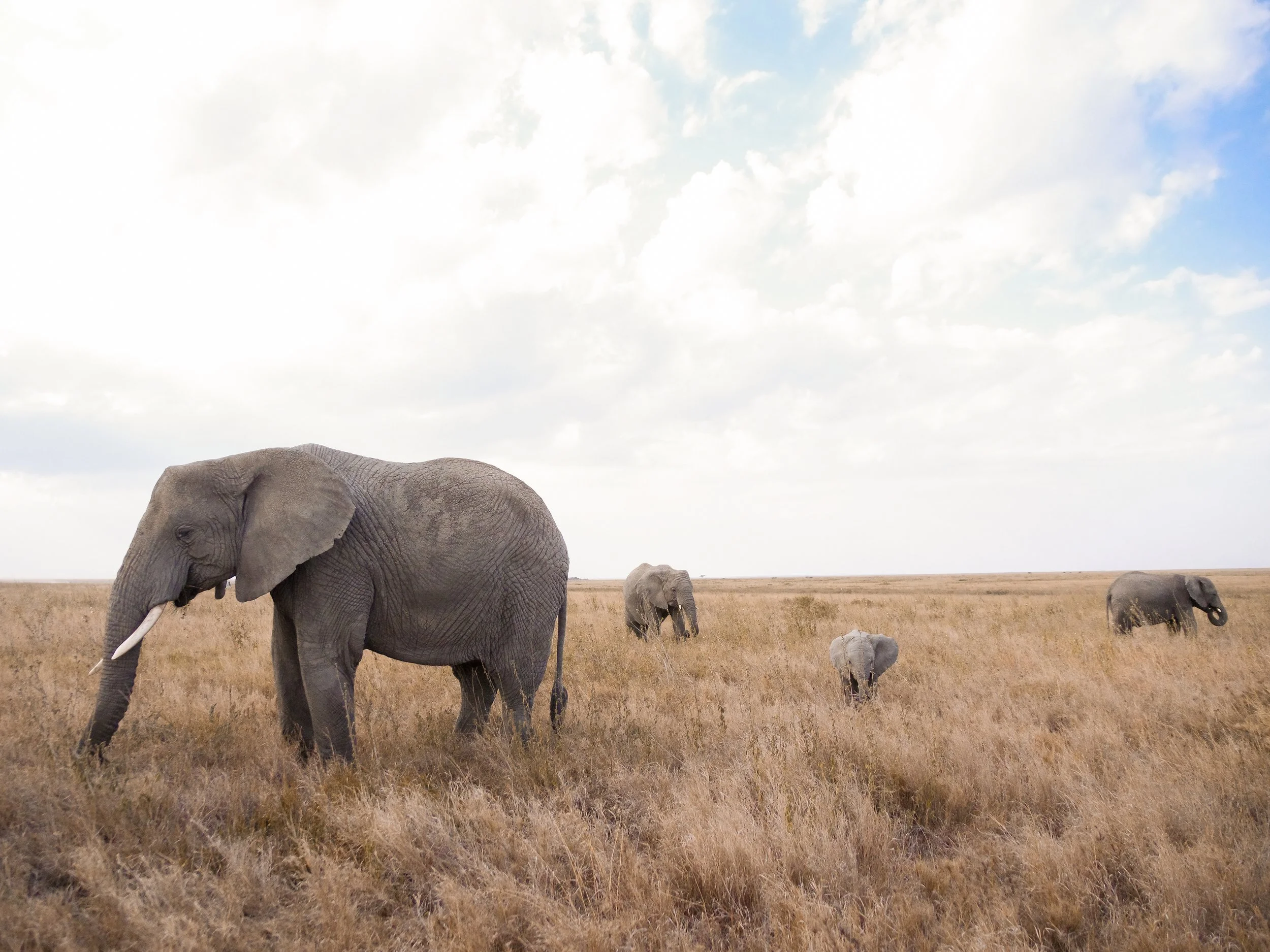
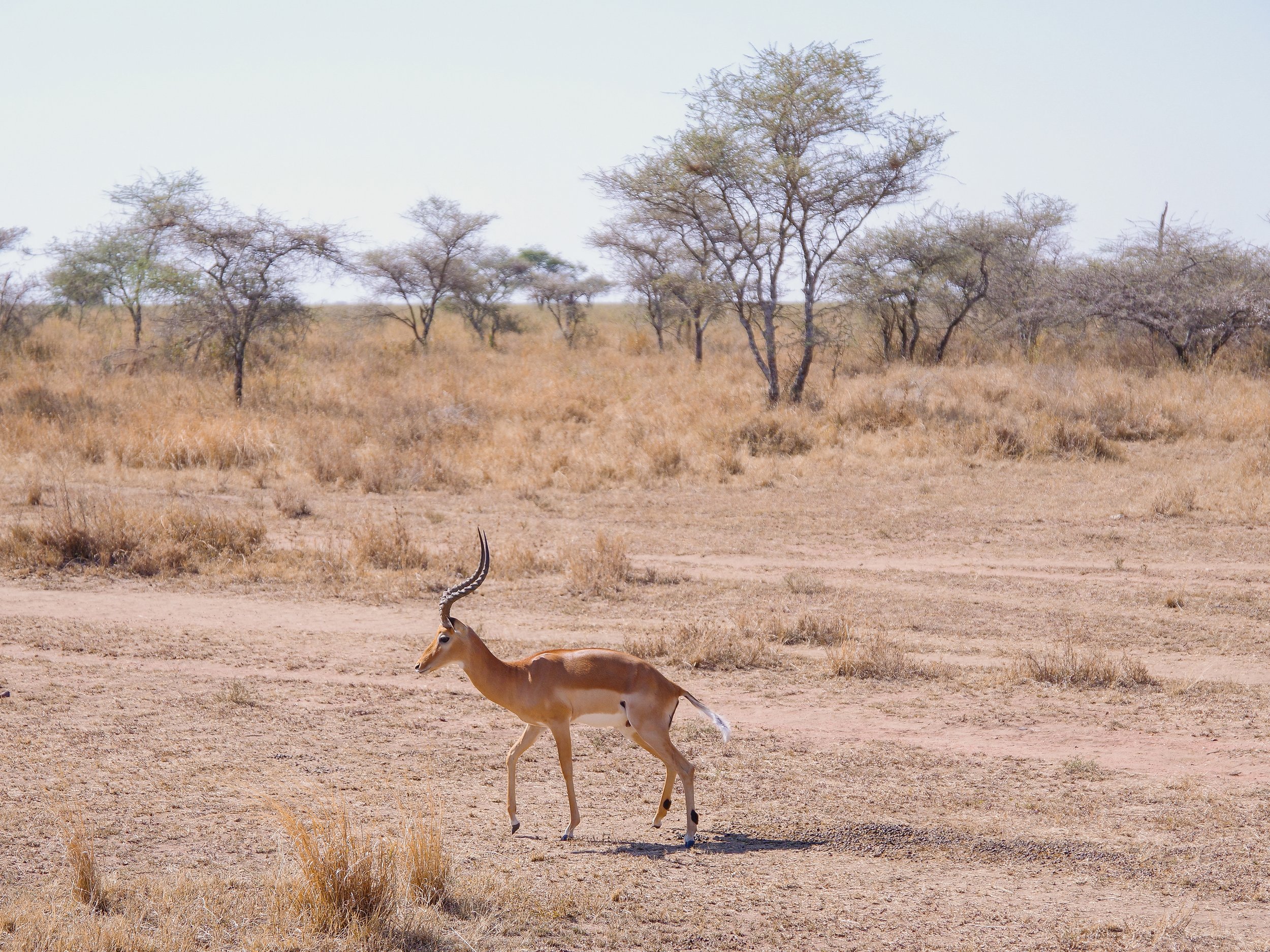
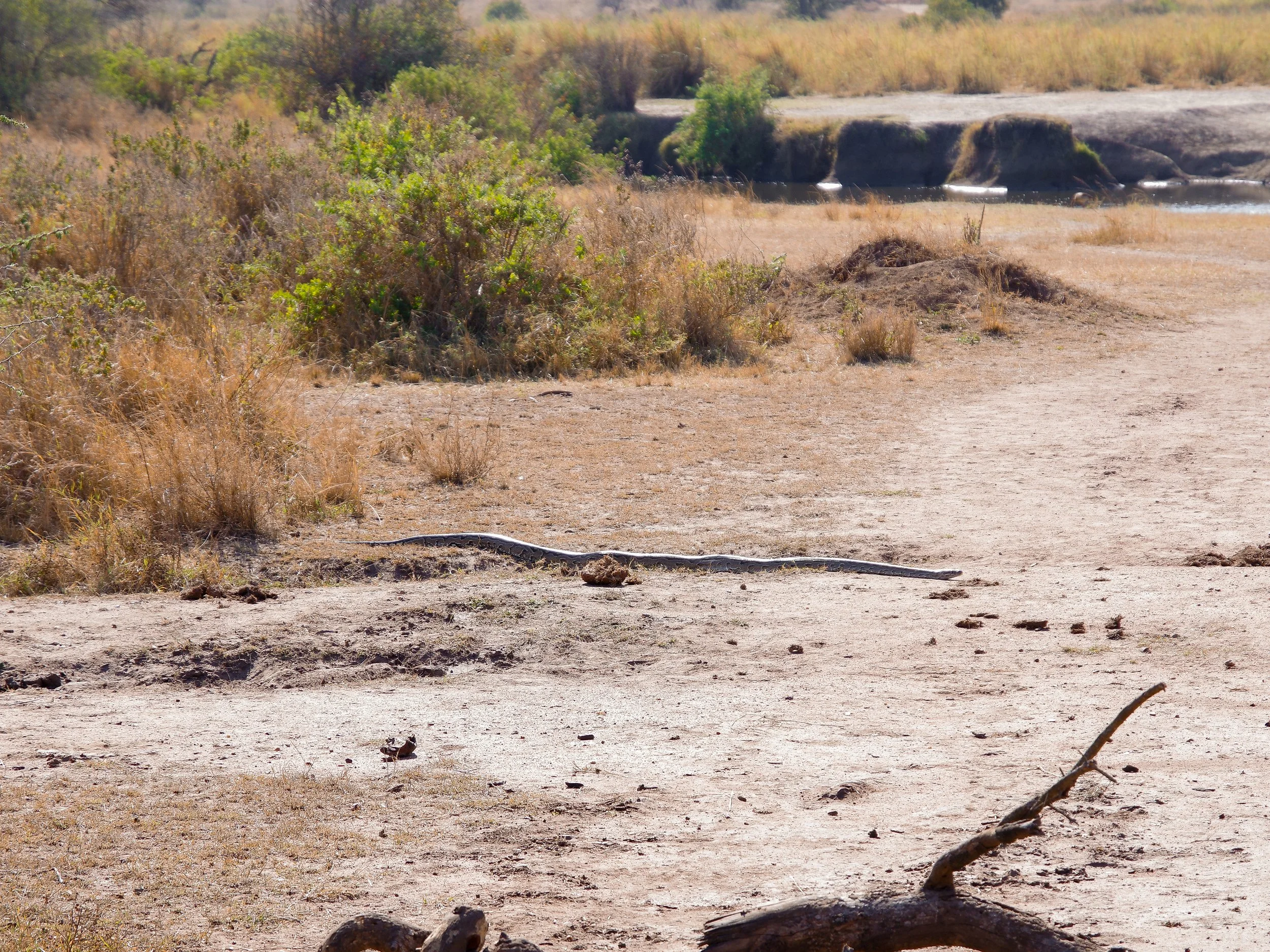
Herds & Wildlife. Herds of impala, gazelle and zebra roam freely across the dry plains of the Serengeti. Rarer sights were wildebeest and hartebeest, having migrated on their annual migration to the Maasai Mara in Kenya. Towers of giraffe and parades of elephants march across the savanna in search of food and water. Though more difficult to see, small game like warthogs, jackals and mongoose forage in the low grasses.
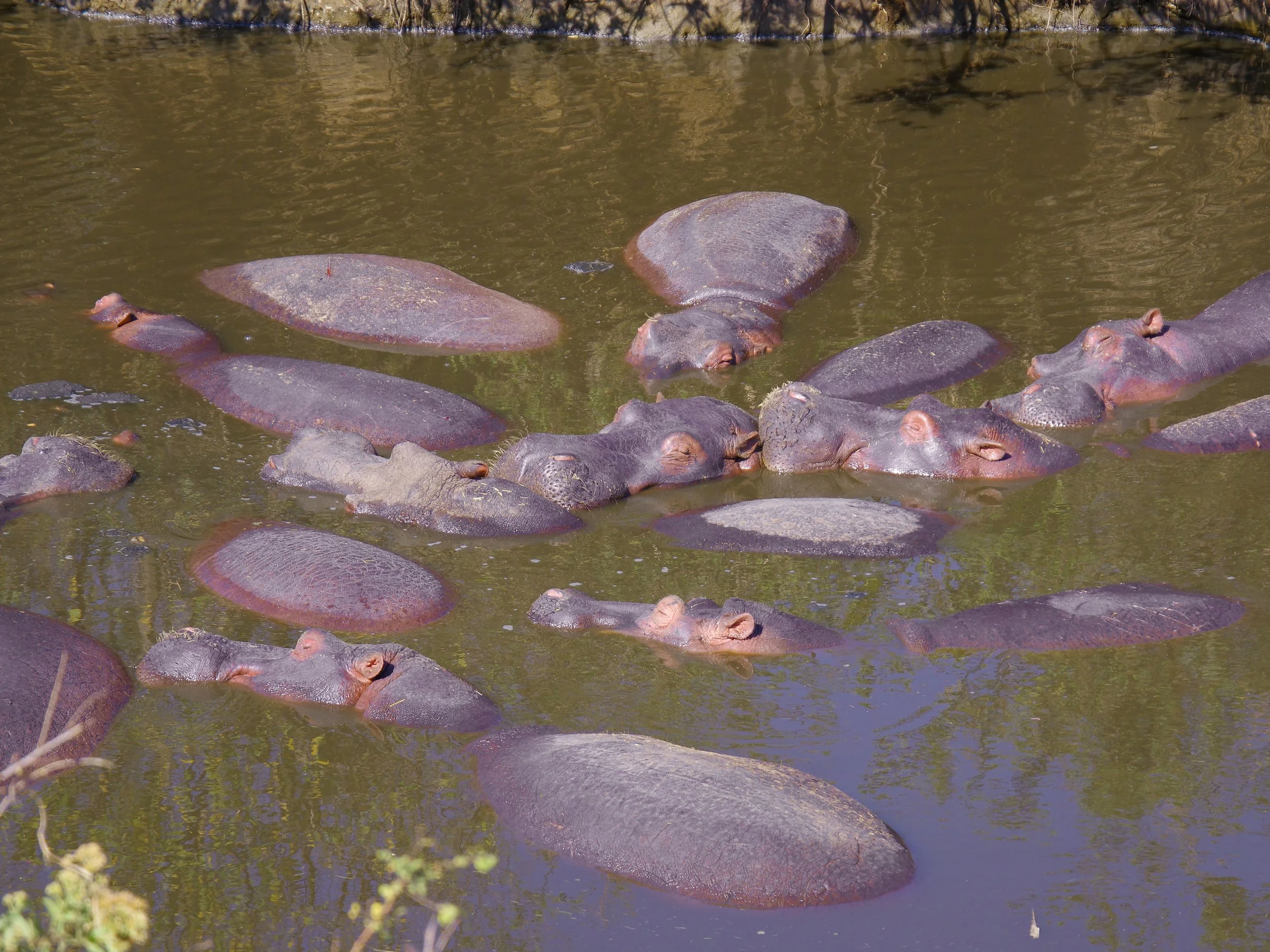
Seronera River. A narrow river flowing through the south eastern Serengeti. Its lush banks are an oasis for Nile crocodile and large families of bathing hippos. Hundreds of hippos soak with their heads and backs above the water, huffing, puffing and snorting after fully submerging. A rare sight was an 8 ft long python slowly slithering across the ground not far from a large crocodile.
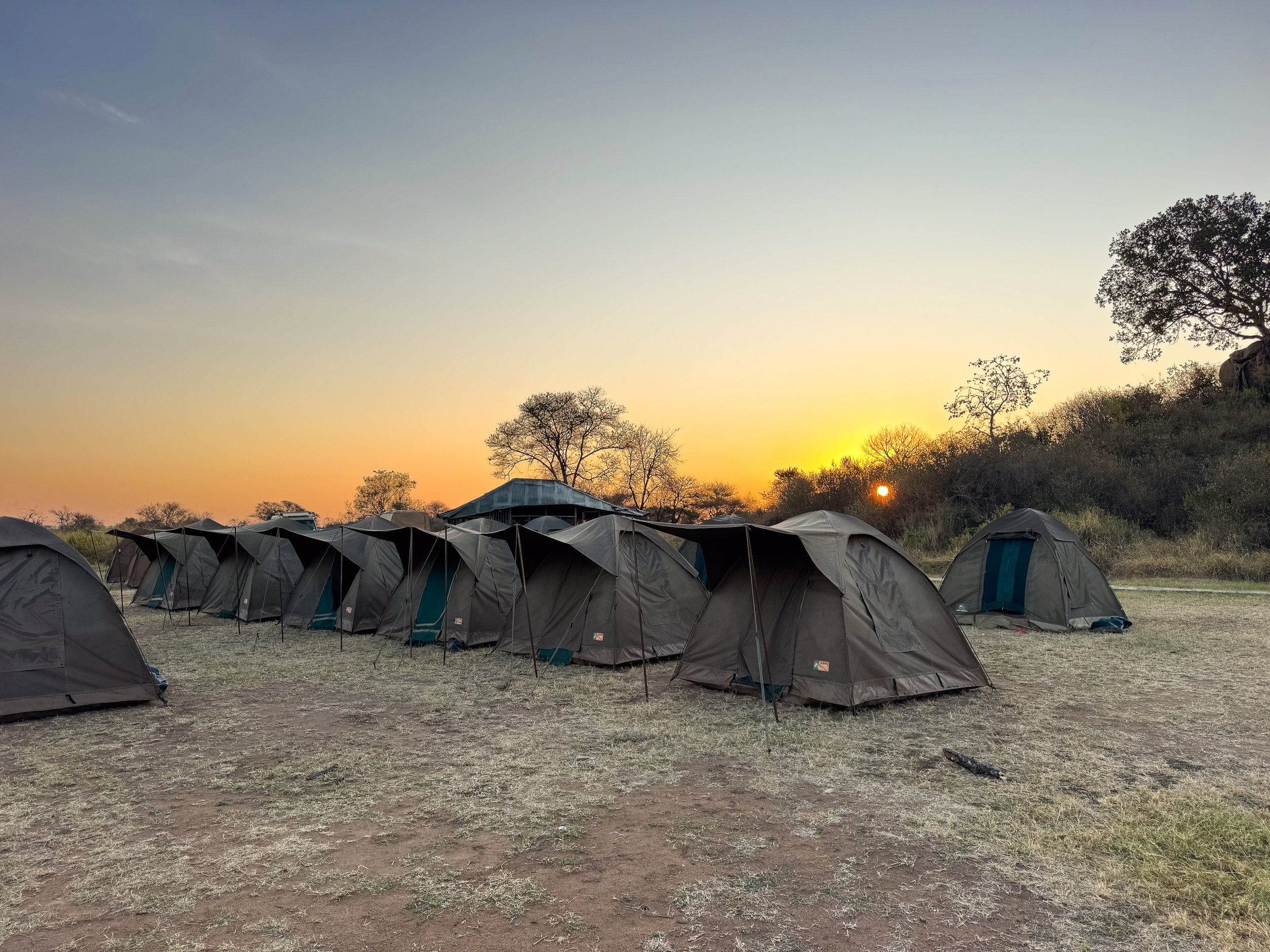
Pimbi Public Campsite. Camping in the Serengeti is one of the most exciting ways to experience the national park. The Pimbi Public Campsite is located in the middle of the Serengeti, completely exposed to the grassy plains and animals that roam them. We camped in tents for one night, arriving shortly after sunset. The cackle of hyenas could be heard somewhere in the distance. The roars of lions reverberated across the savanna at night. We woke up to two leopards returning from their hunt, climbing onto the rocks less than 300 meters from our camp.
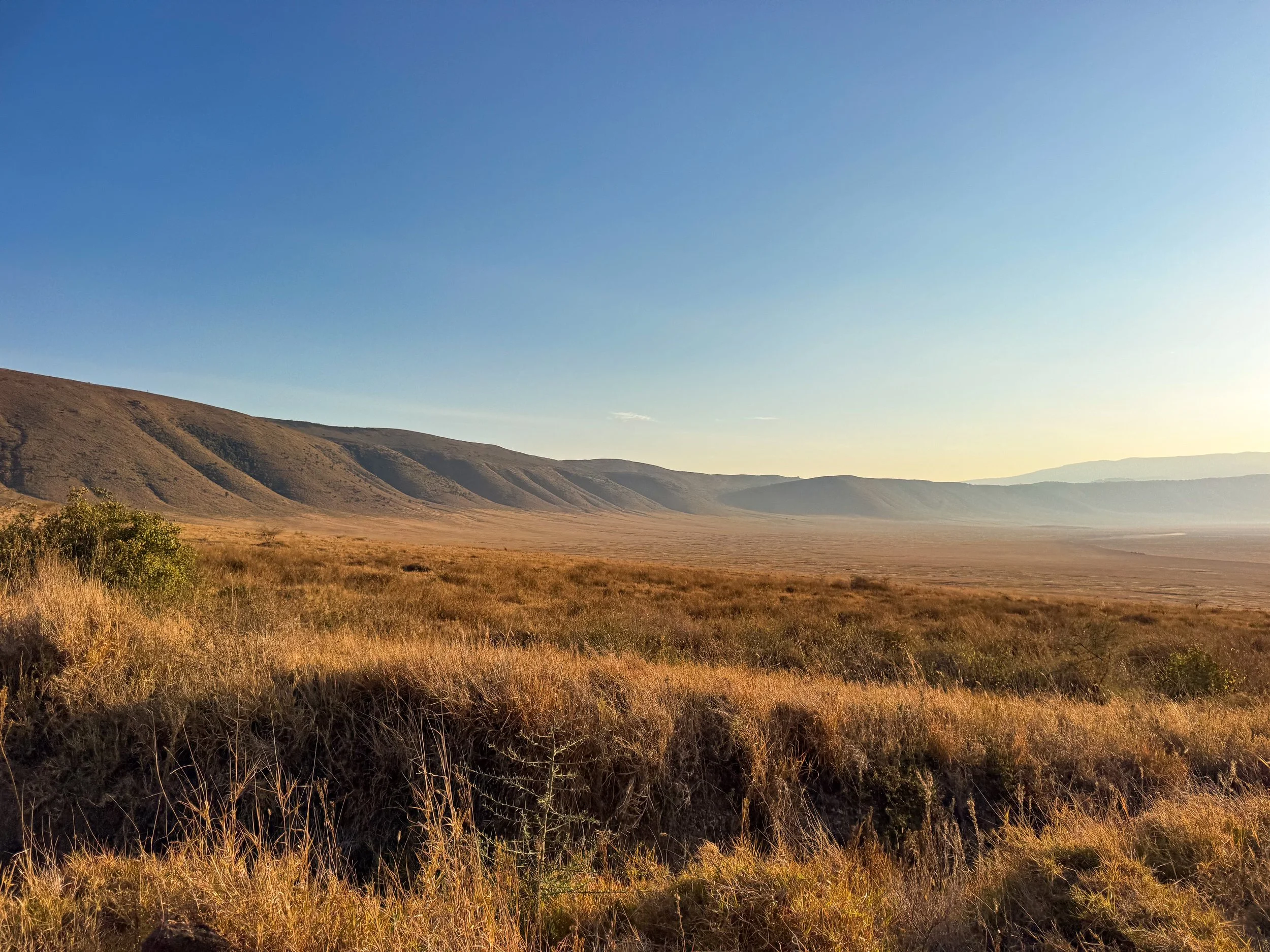
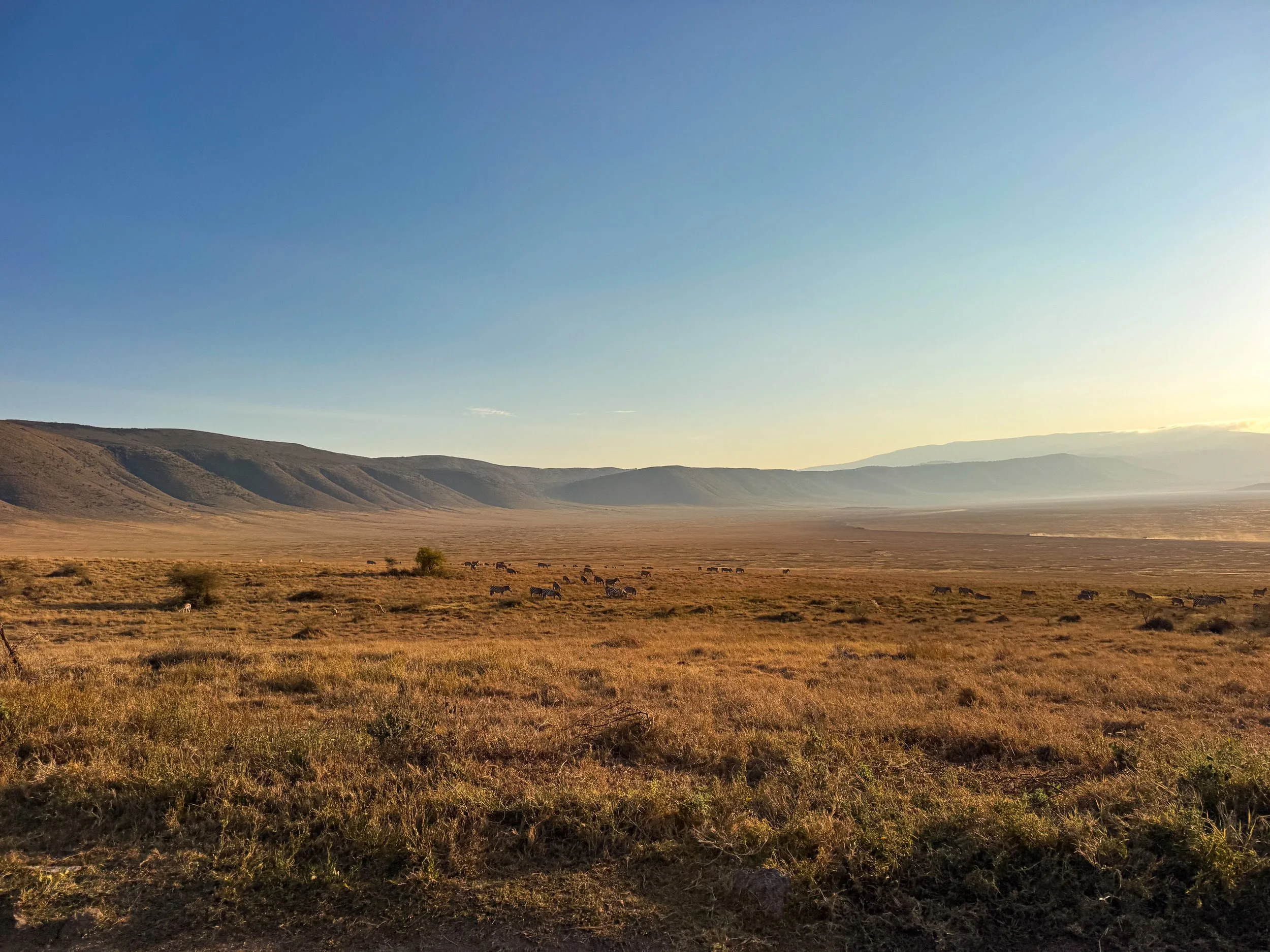
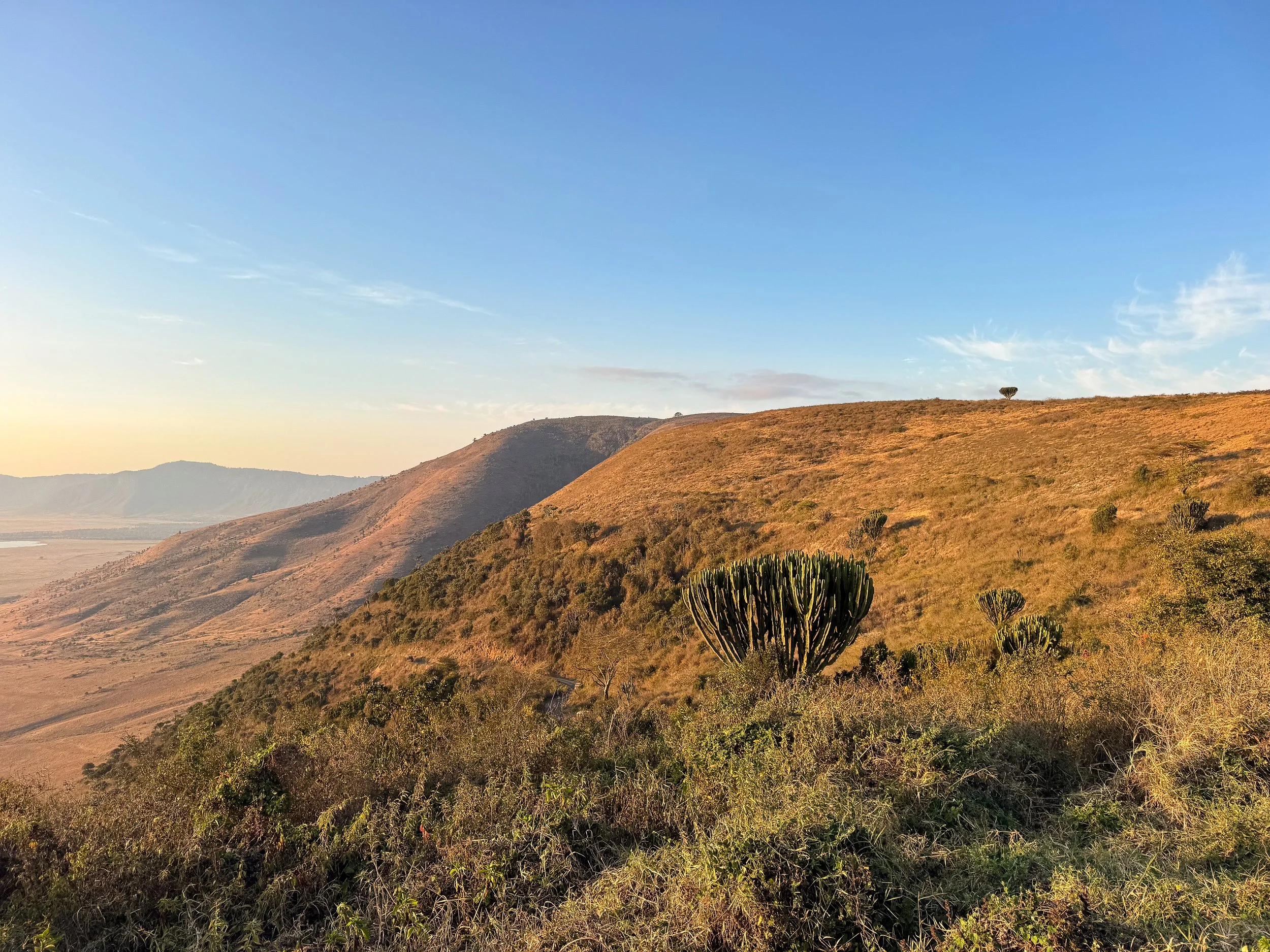
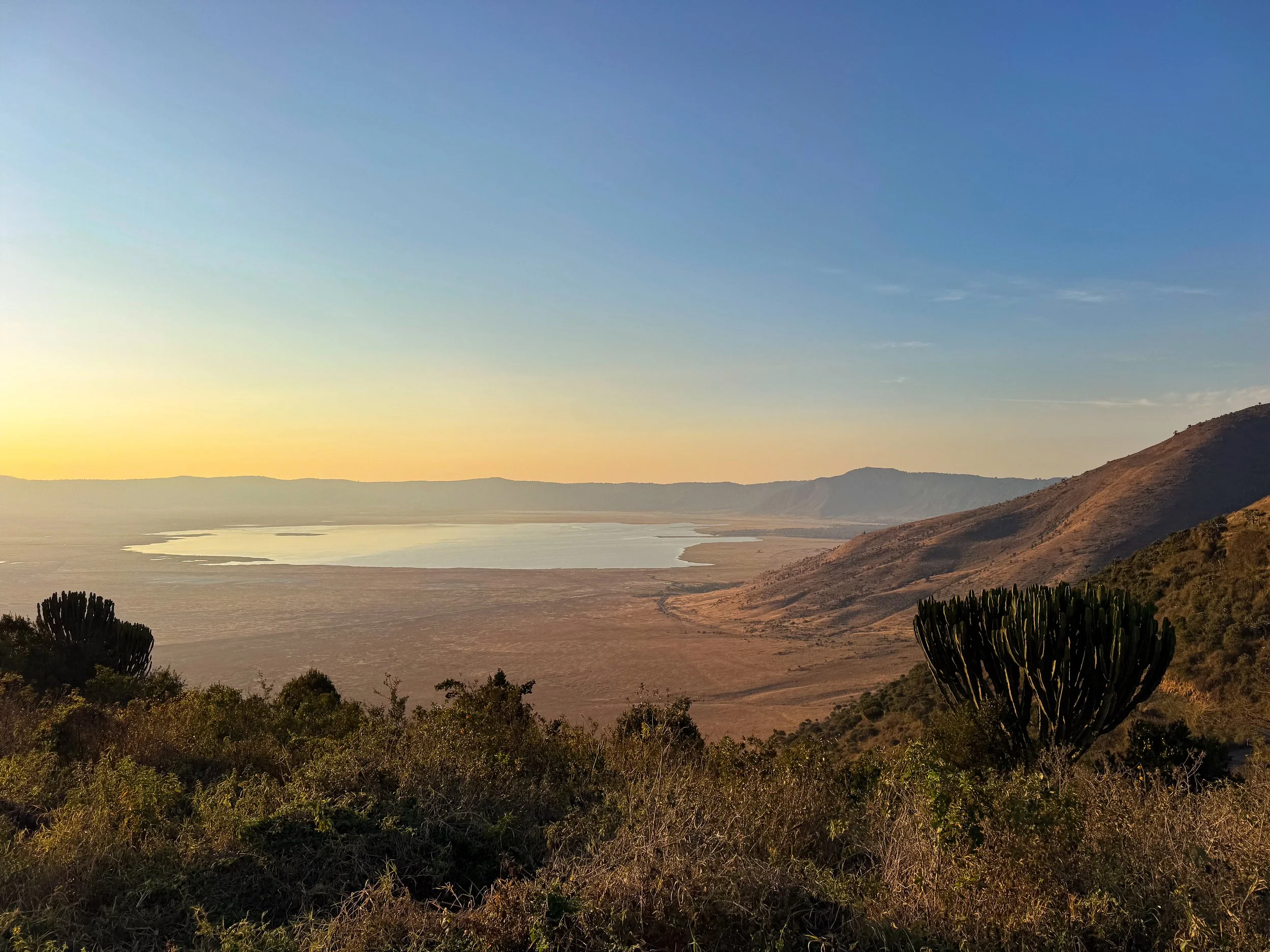
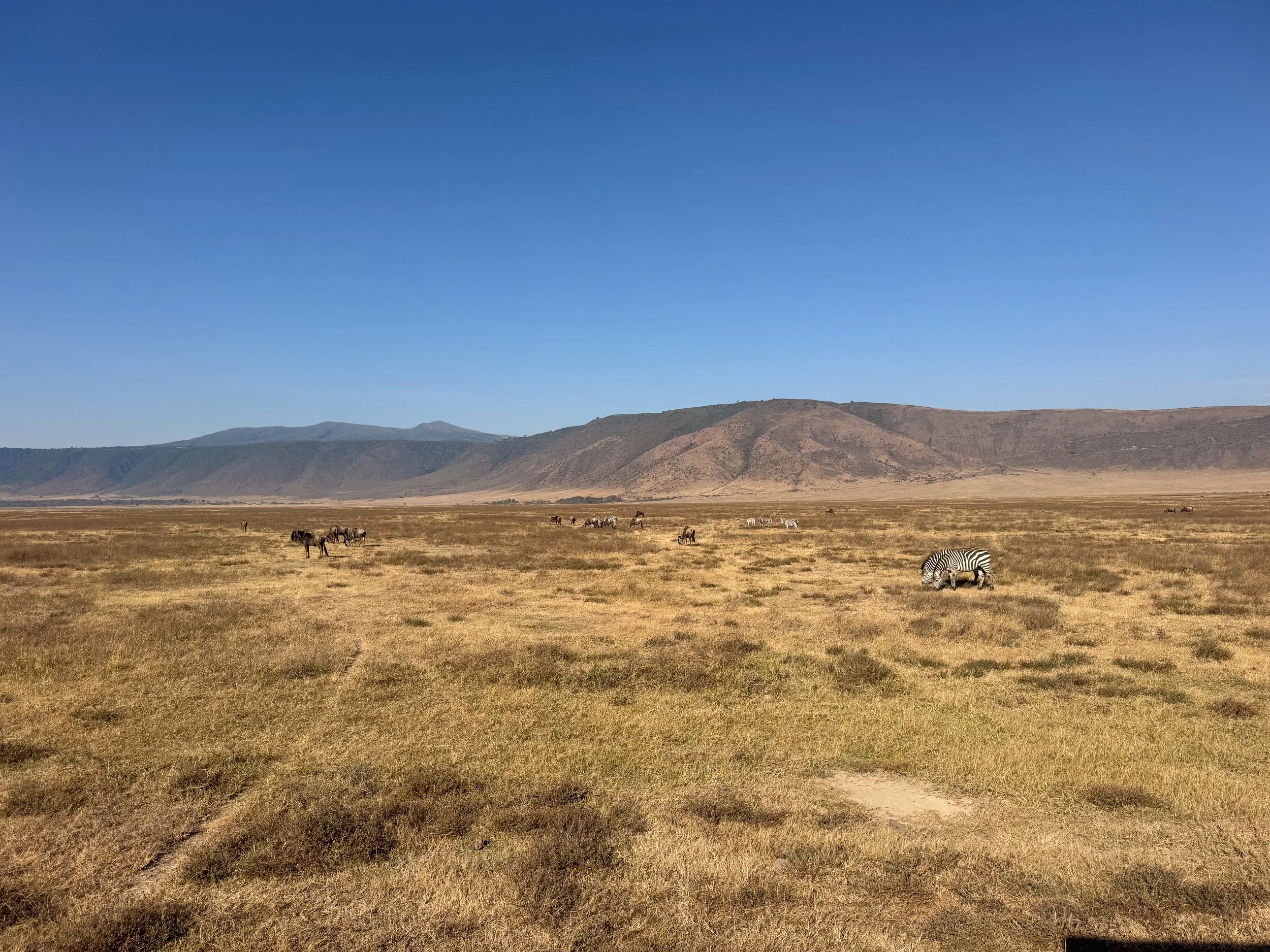
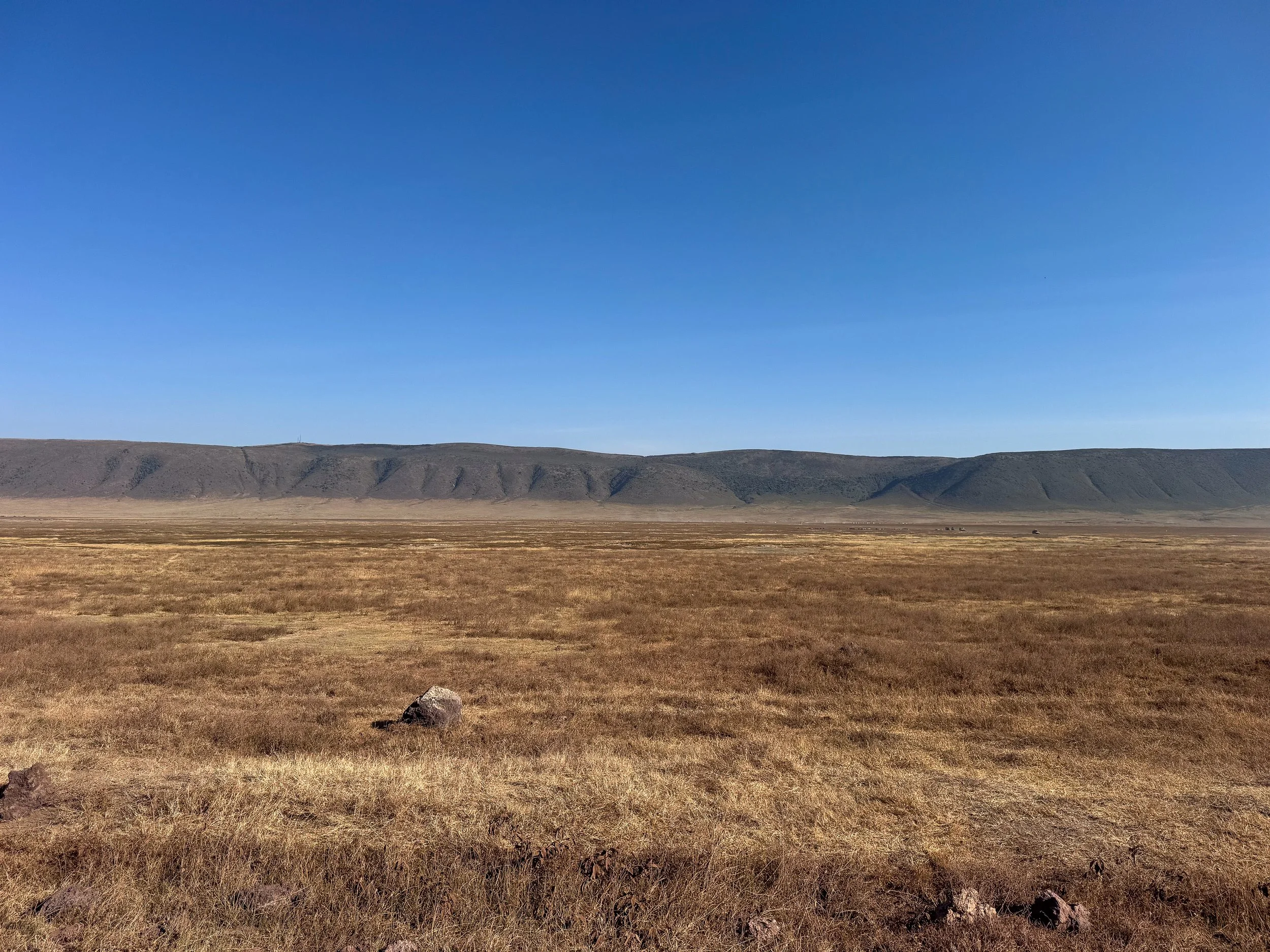
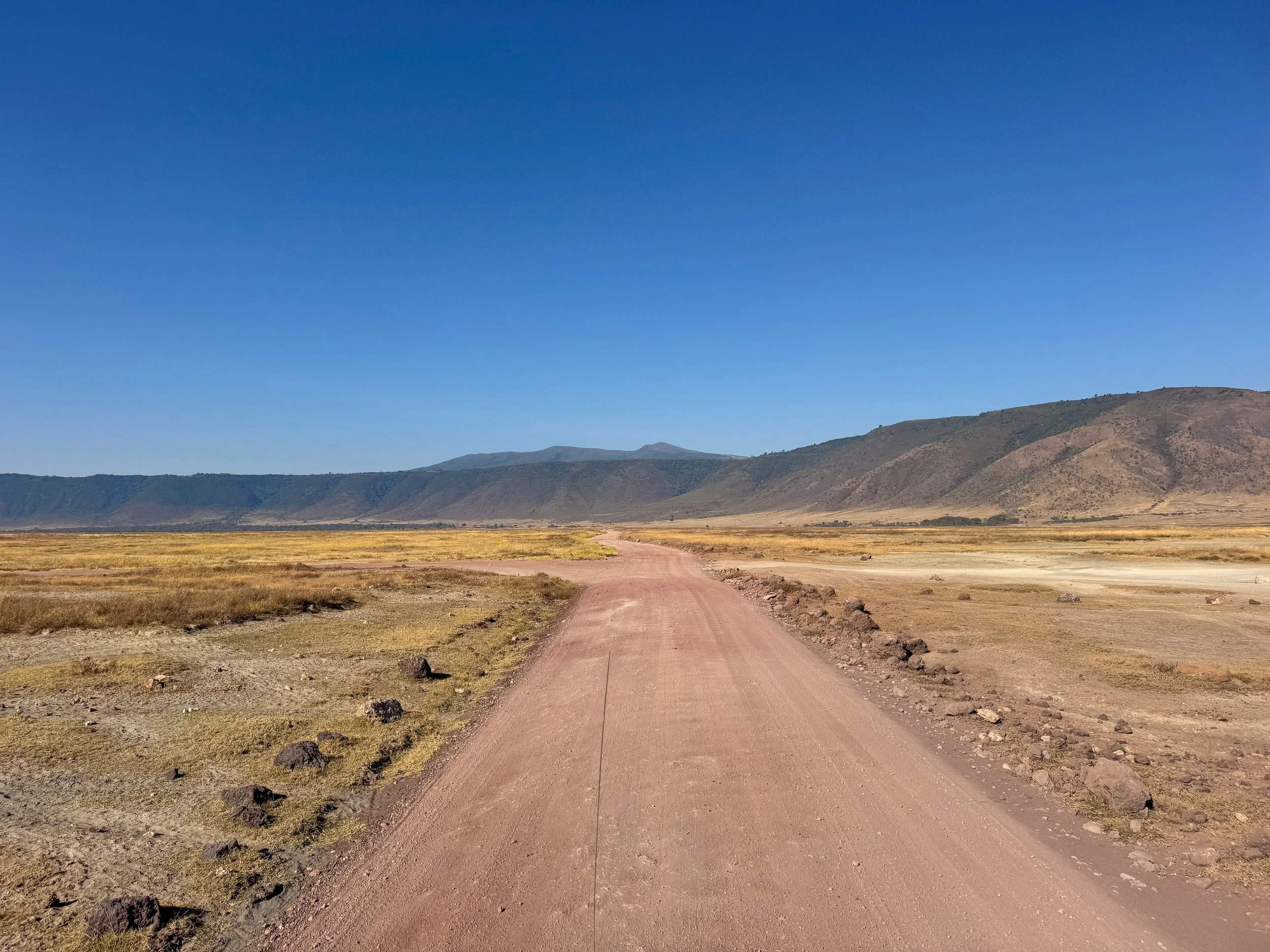
Ngorongoro Conservation Area
Ngorongoro is a lush conservation area famed for its volcanic caldera, large population of predators and variety of birdlife. We camped one night on the crater rim before descending into its expansive floor for a morning game drive.
The Ngorongoro Crater. The crater is Africa’s largest caldera and the heart of the Ngorongoro Reserve. Its forested walls, grassy floor and alkaline lake are a cradle for life and host to countless species. Formed by the collapse of a prehistoric volcano, its walls tower an average of 2,000 feet above the crater floor. An observation deck looks into its vast expanse from the rim.
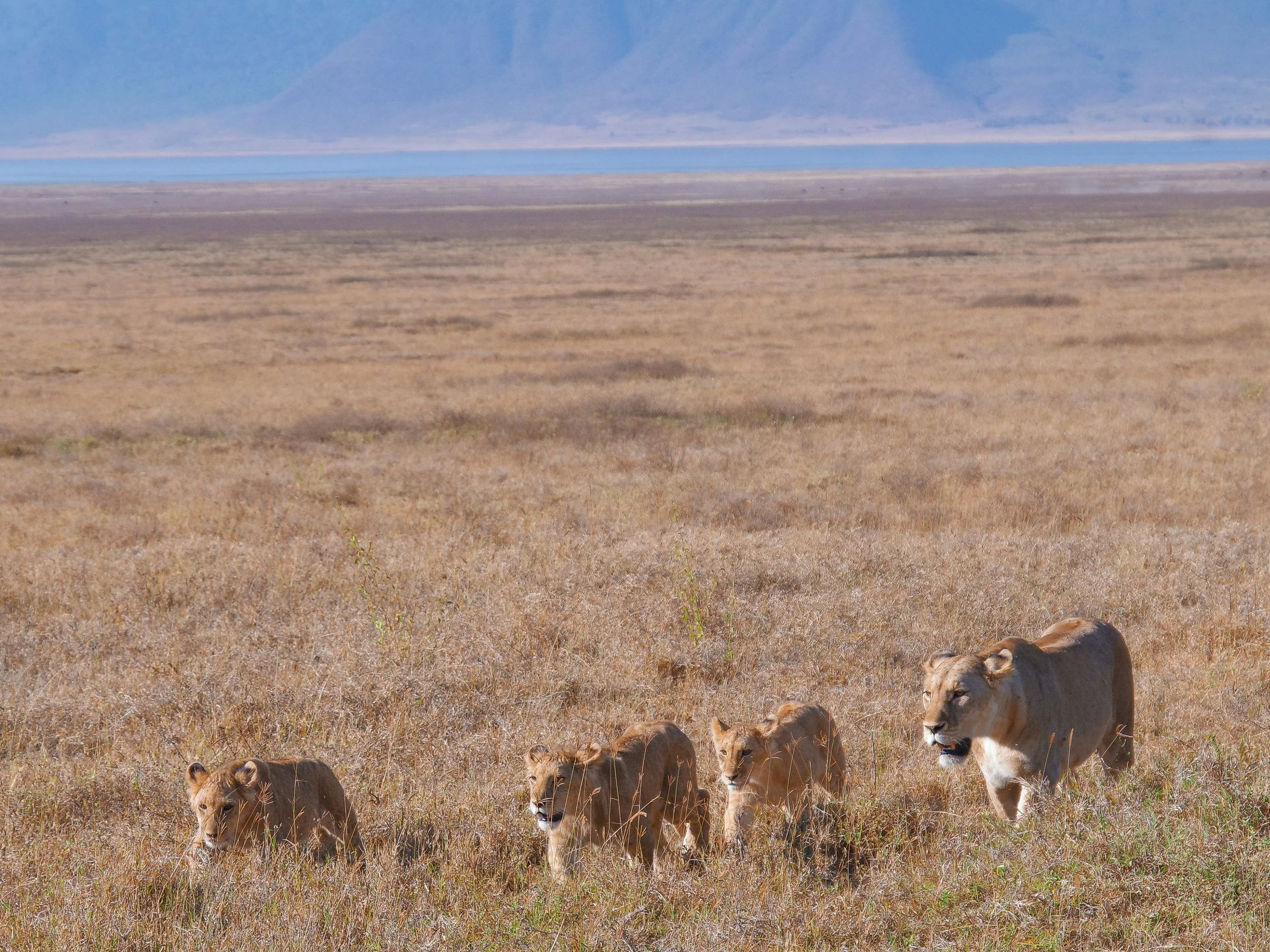
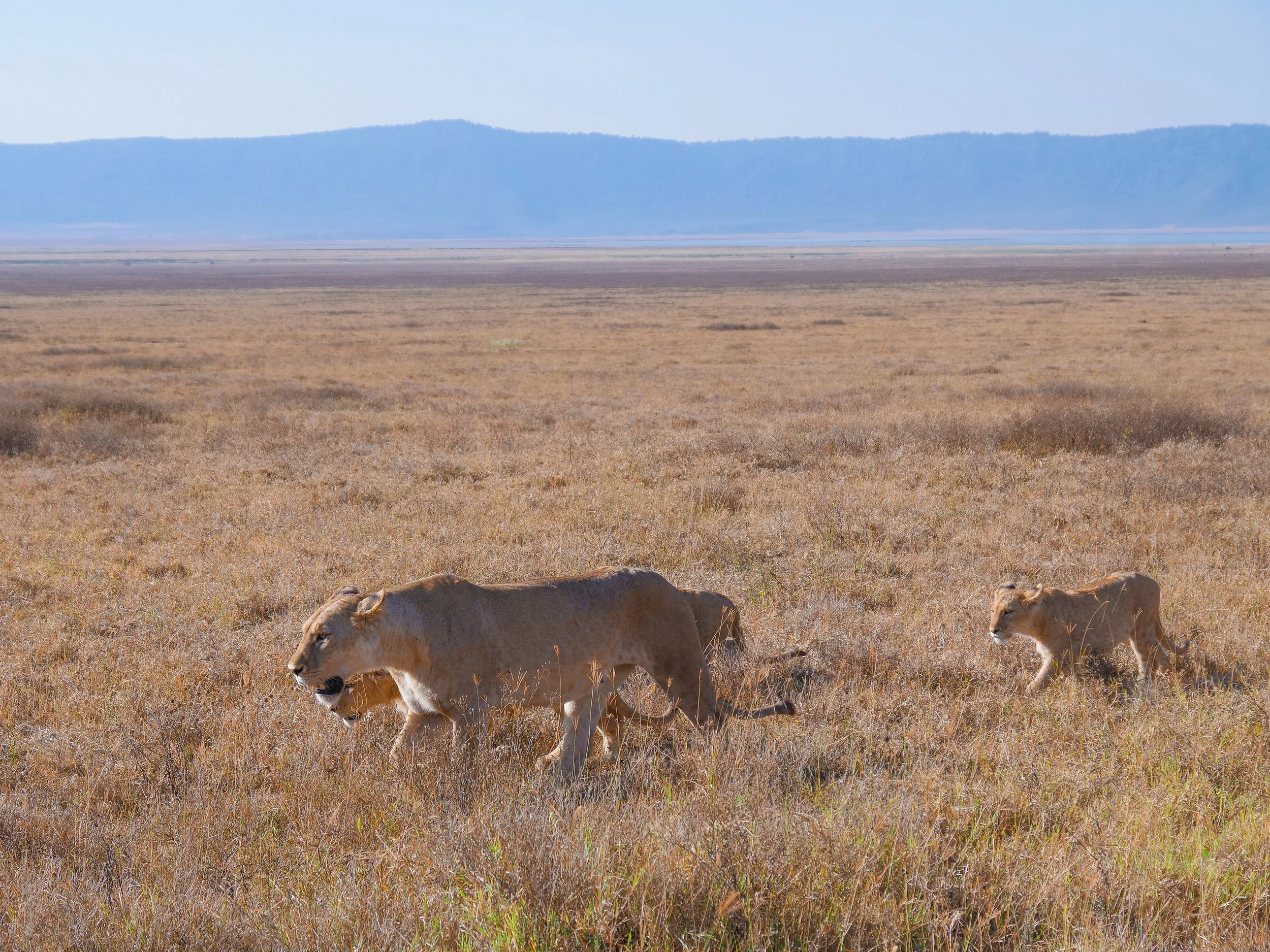
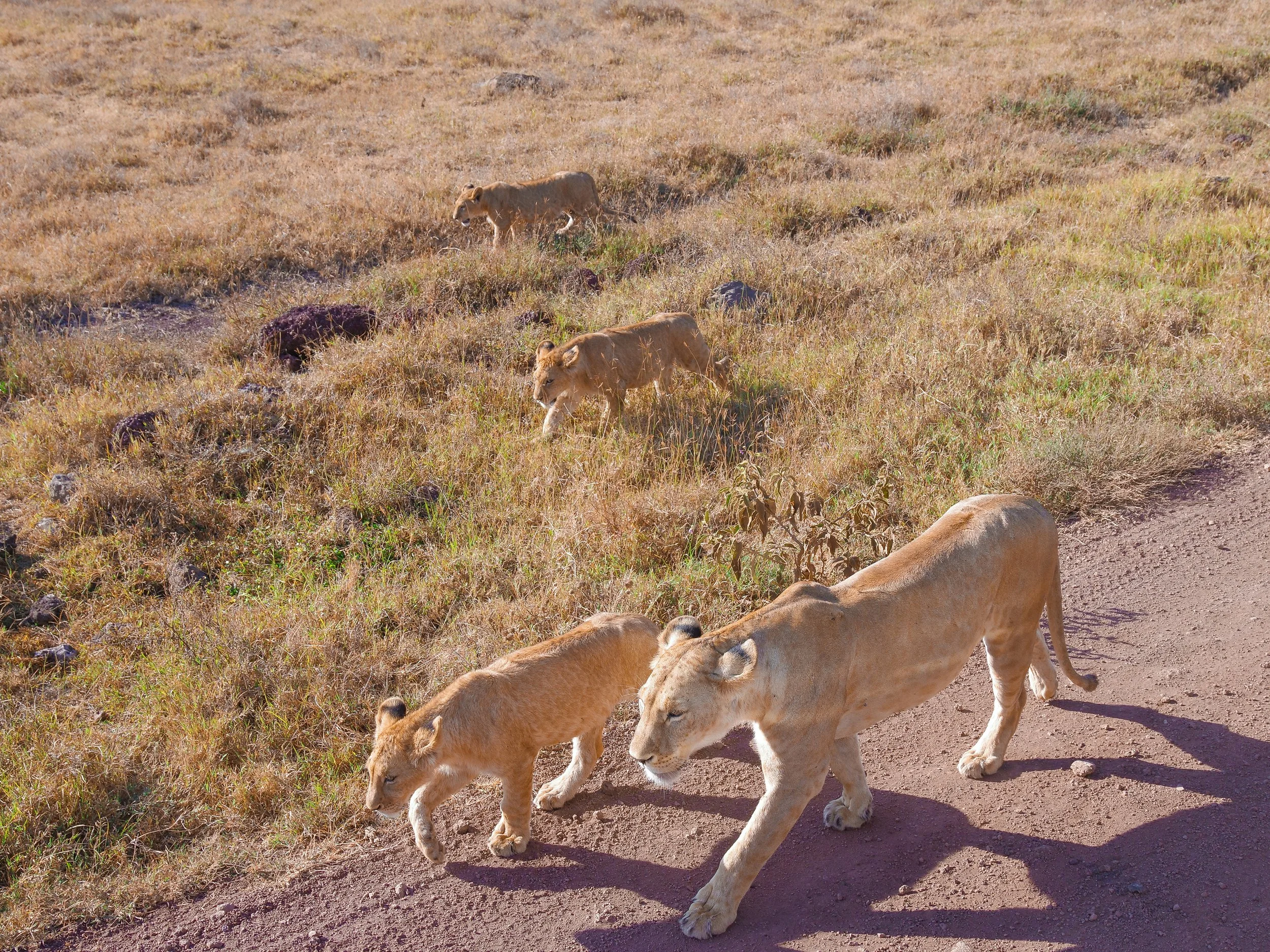
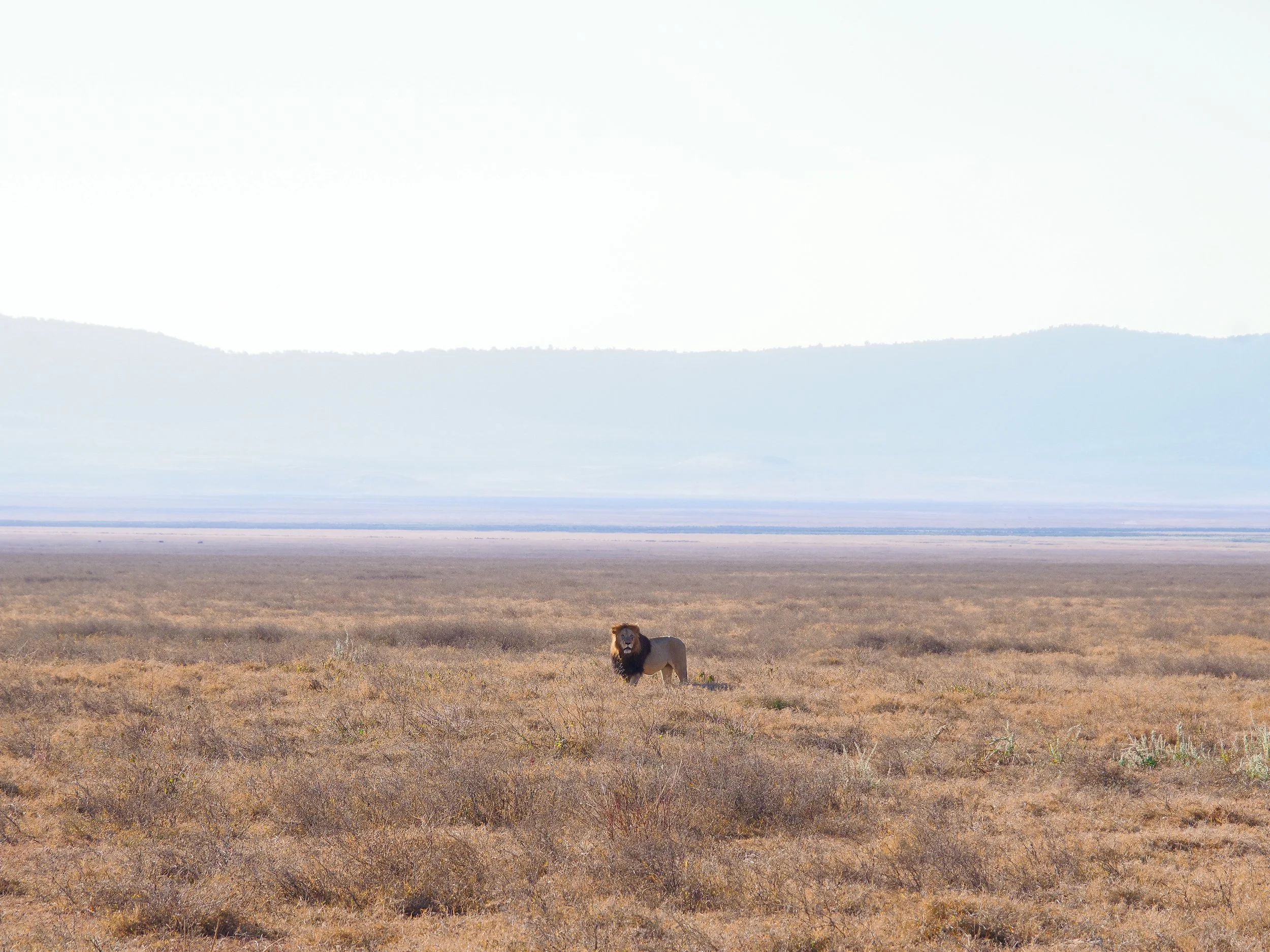
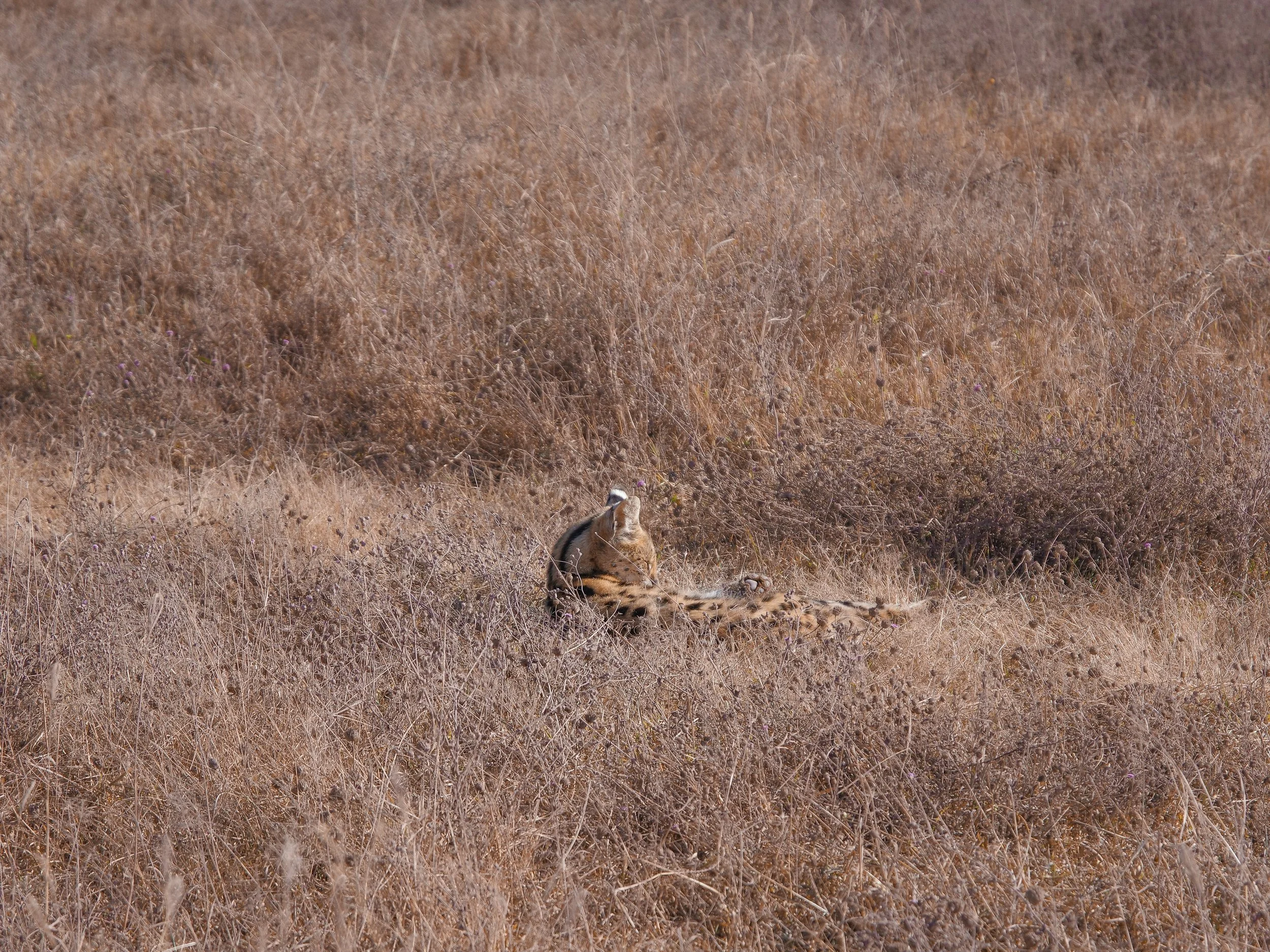
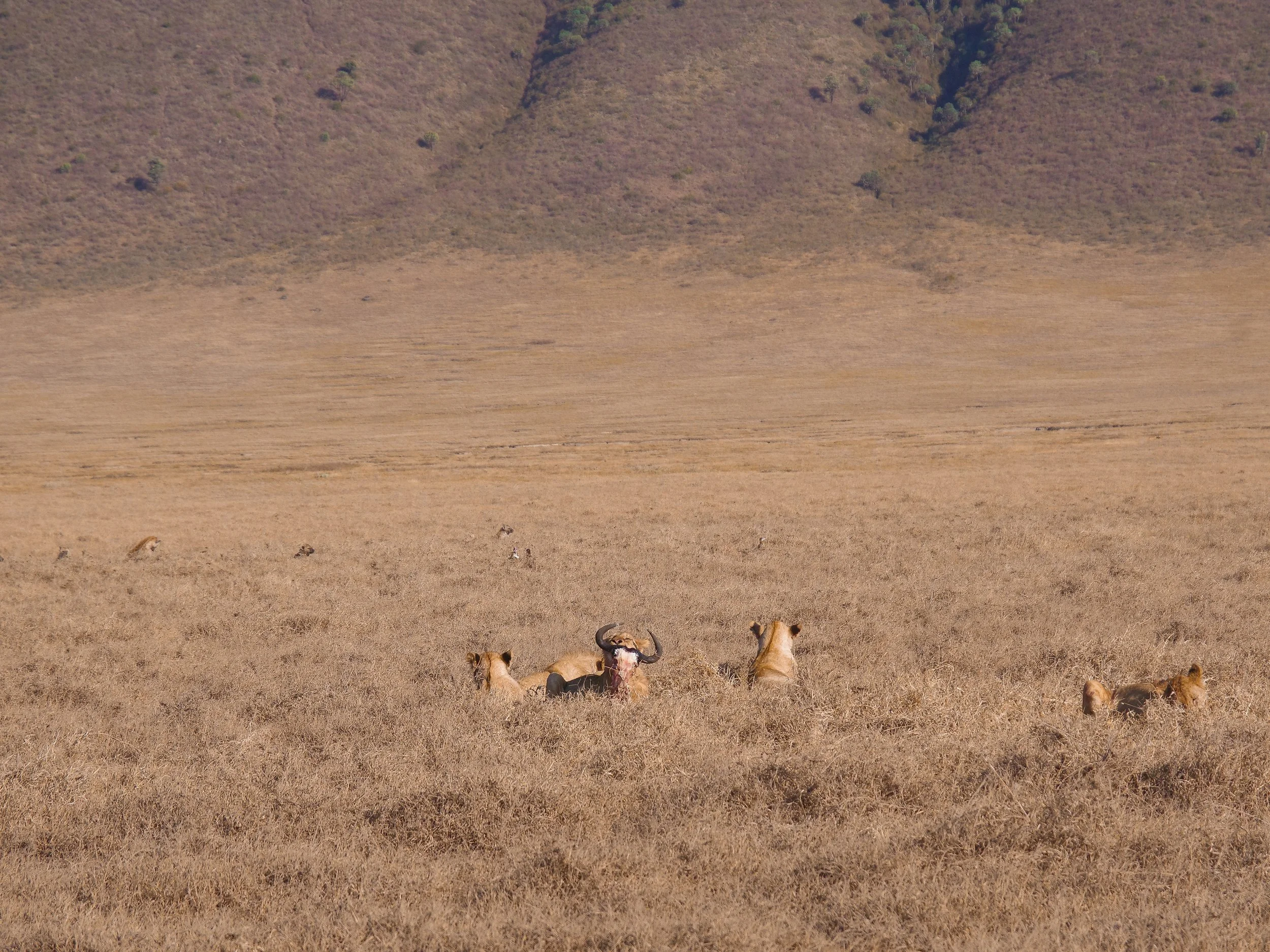
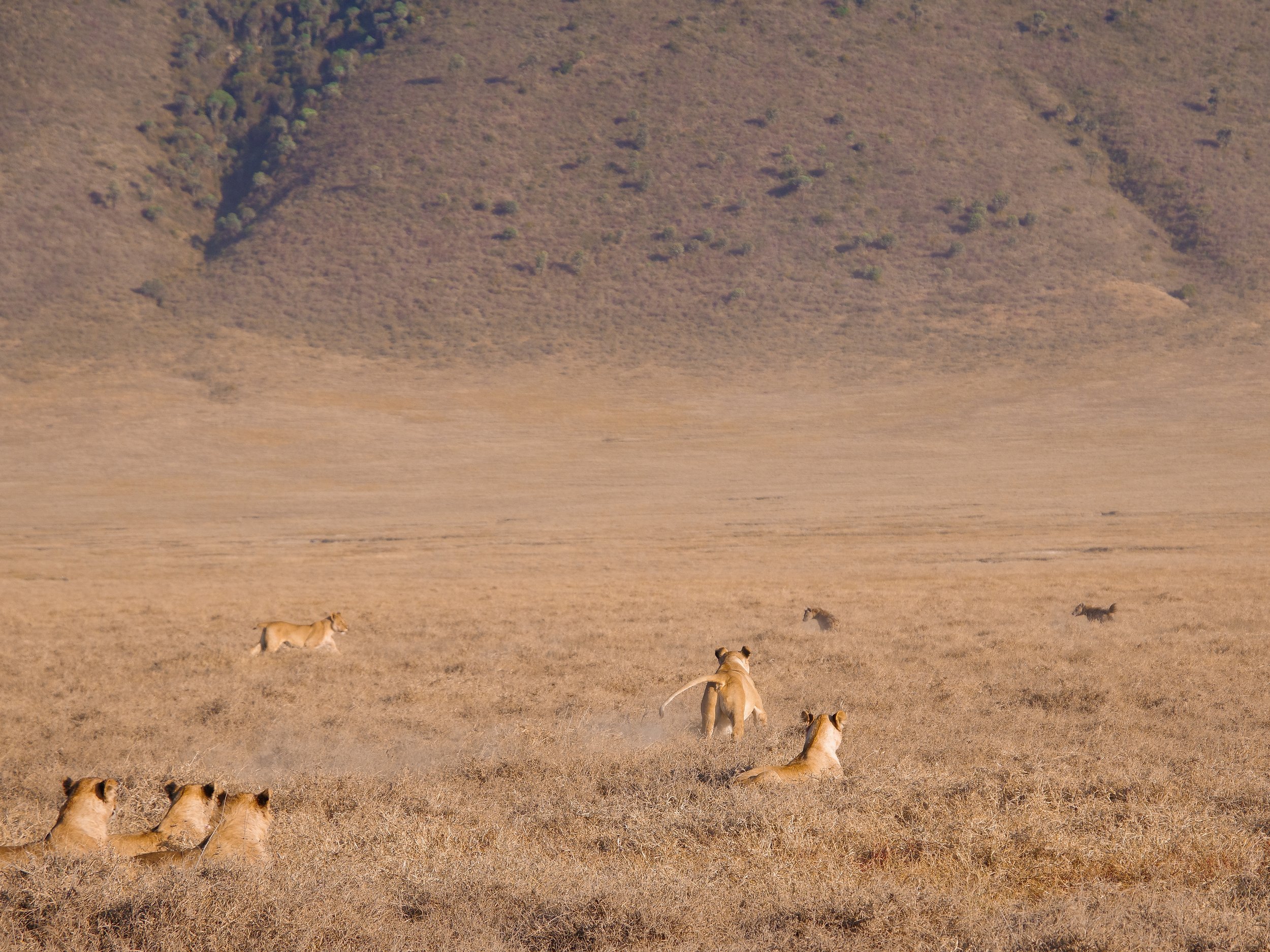
Lions & Cats. Lions are the primary predator in the Ngorongoro Crater. We spotted a lioness and her three cubs walking along the roadside. A very majestic male lion with a dark mane stood in the grasses, looking across the landscape. A little serval slept in the dry grasses and morning sunlight.
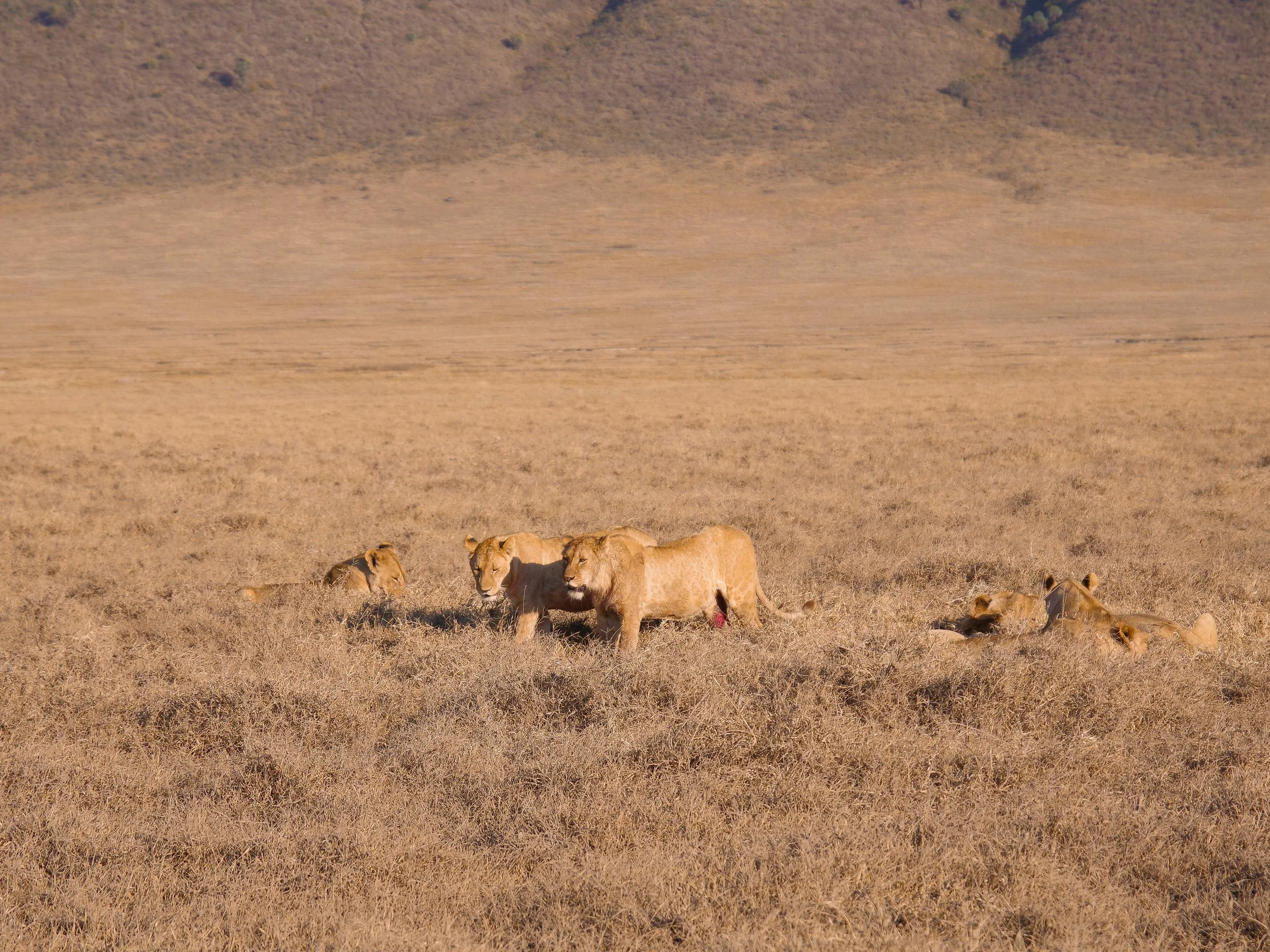
Predators & Scavengers. The Ngorongoro Crater is famed for its high concentration of predators and scavengers. A pride of several lions took down a juvenile wildebeest minutes before we reached the crater floor. The lions sat gnawing on its carcass, bones and skull. A pack of hyenas surrounded the lions, waiting in the grasses for a chance at stealing scraps. Two jackals stared on as a flock of vultures flew overhead waiting for leftovers. Further into the crater, a pack of hyenas feasted on a dead hippo, pulling intestines from the animal’s carcass.
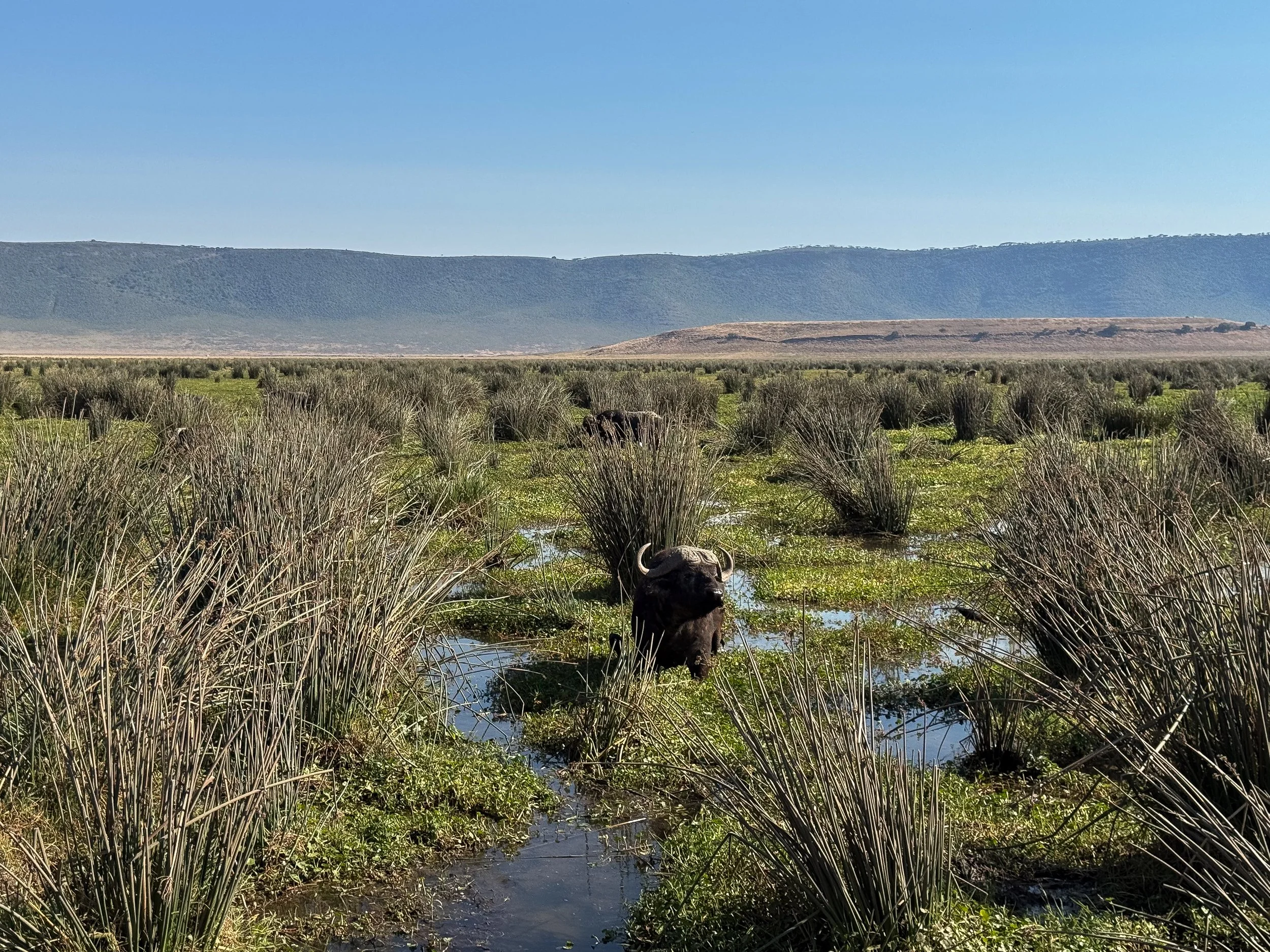
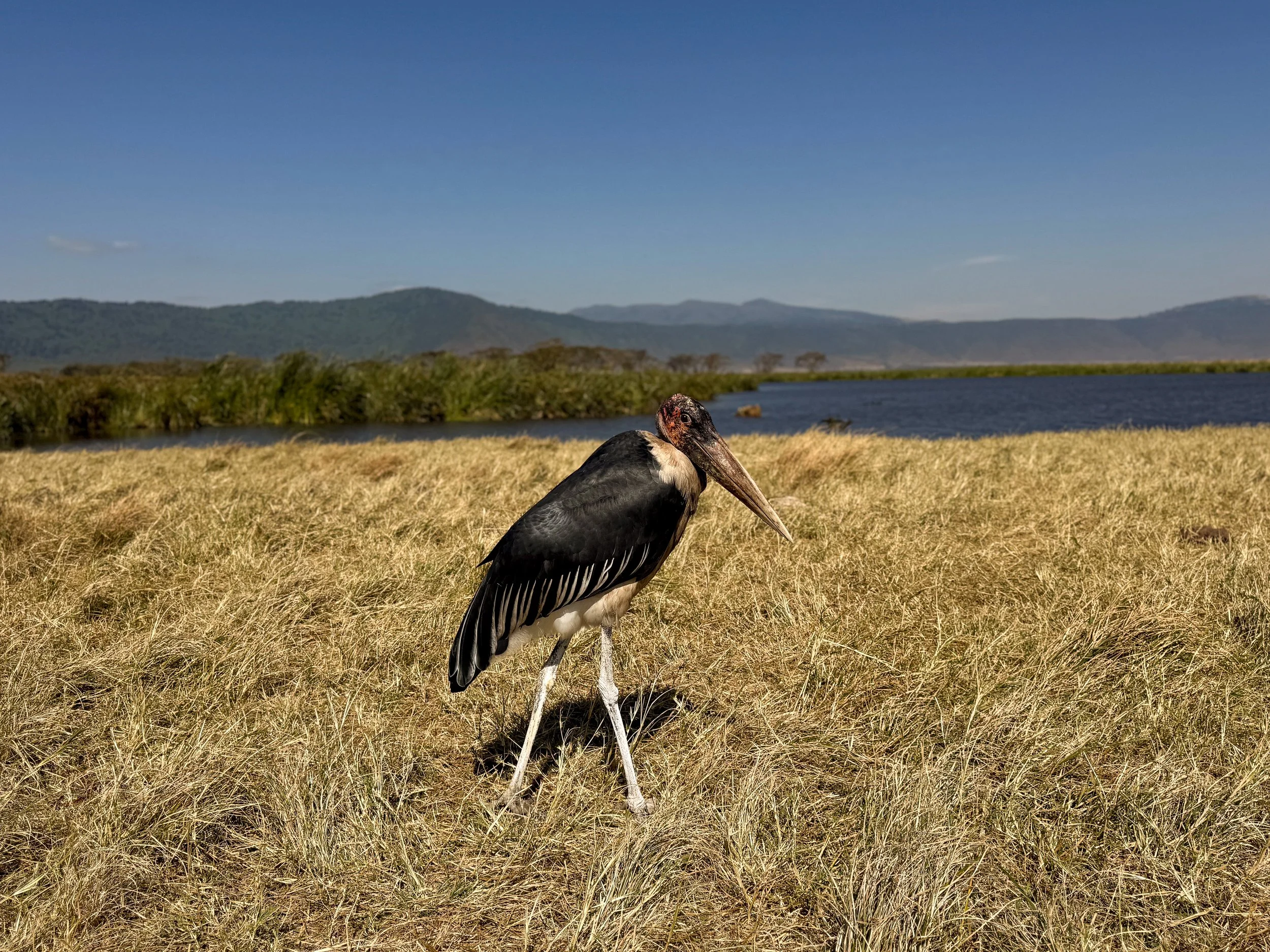
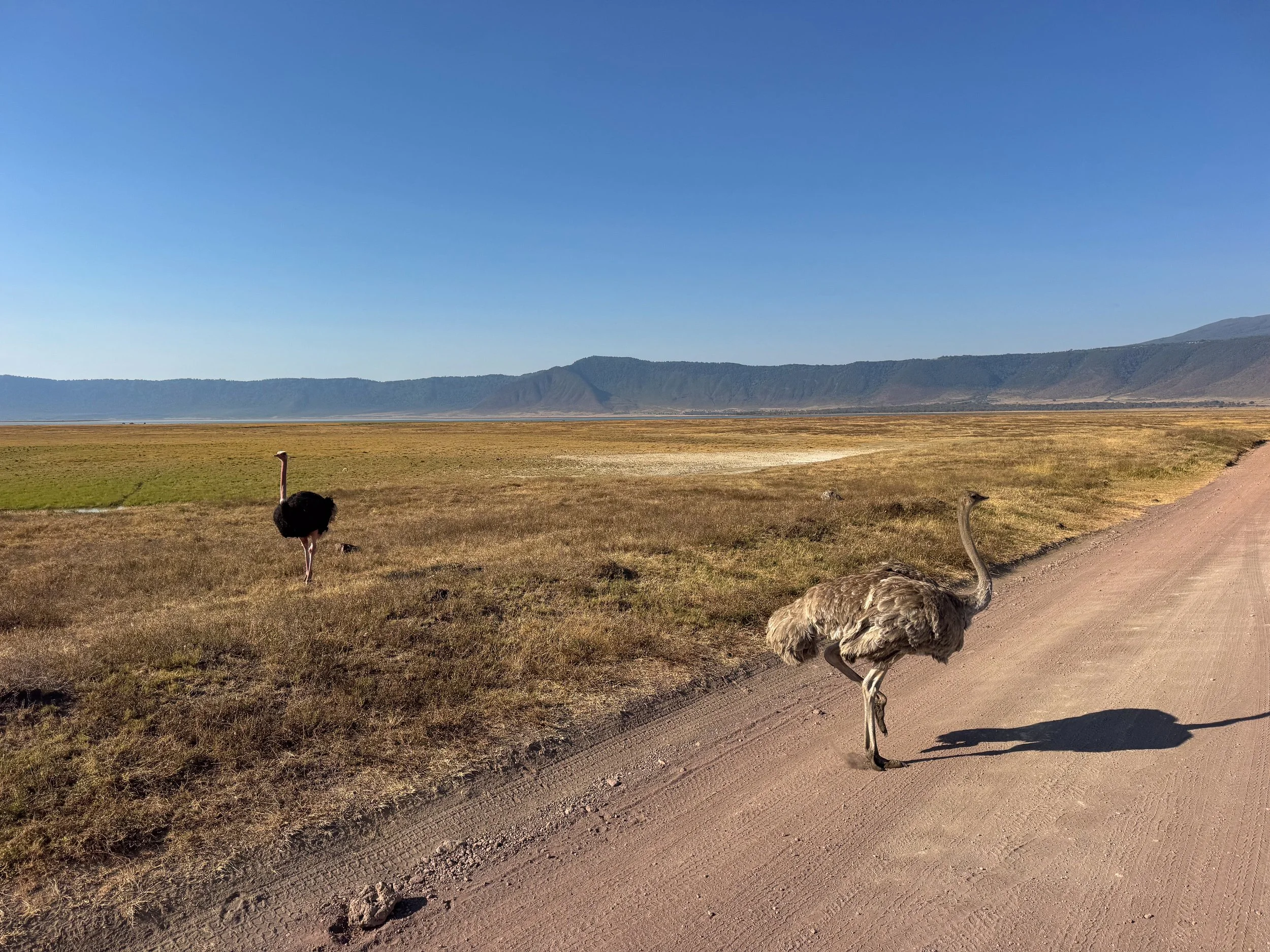
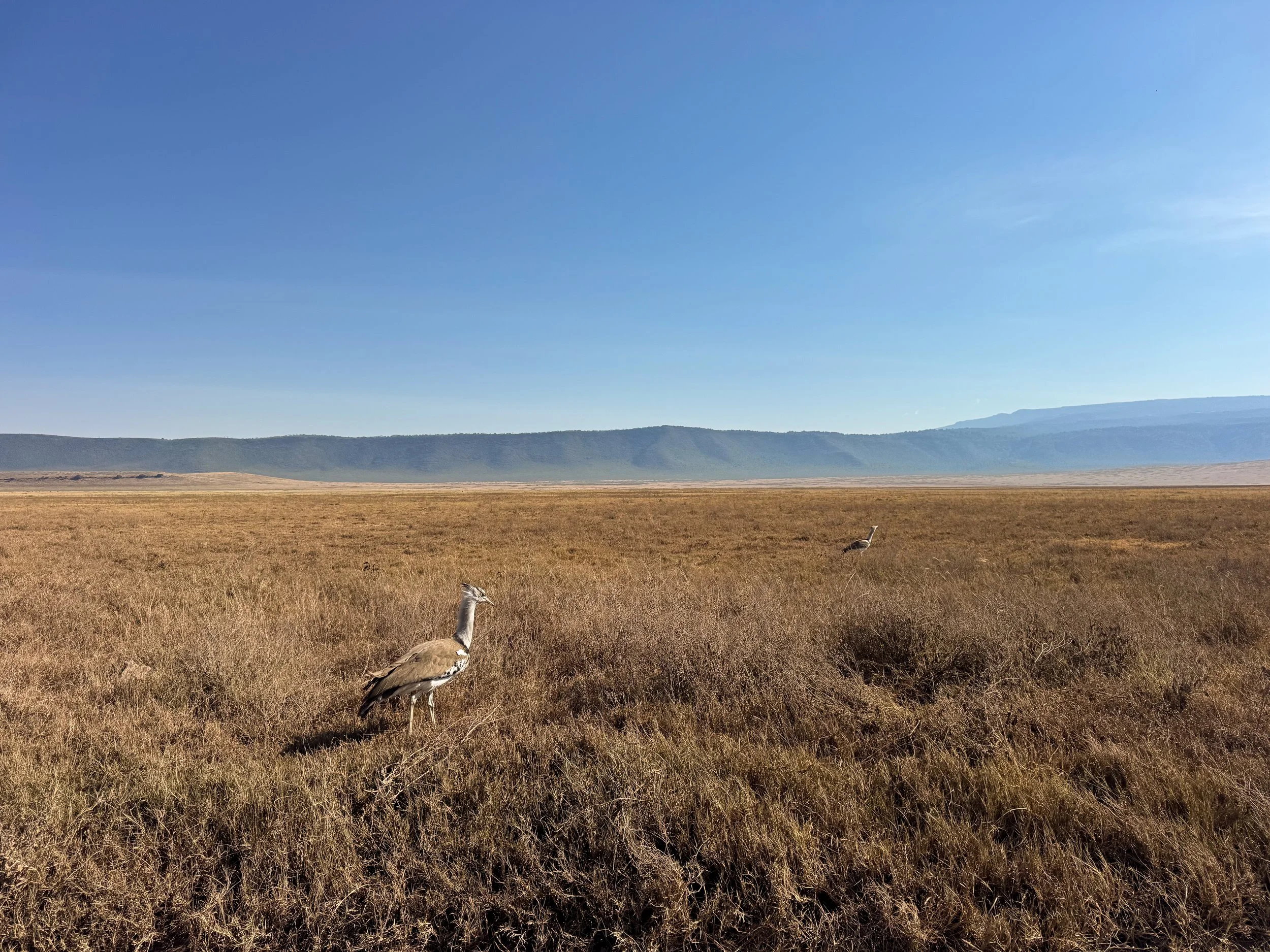
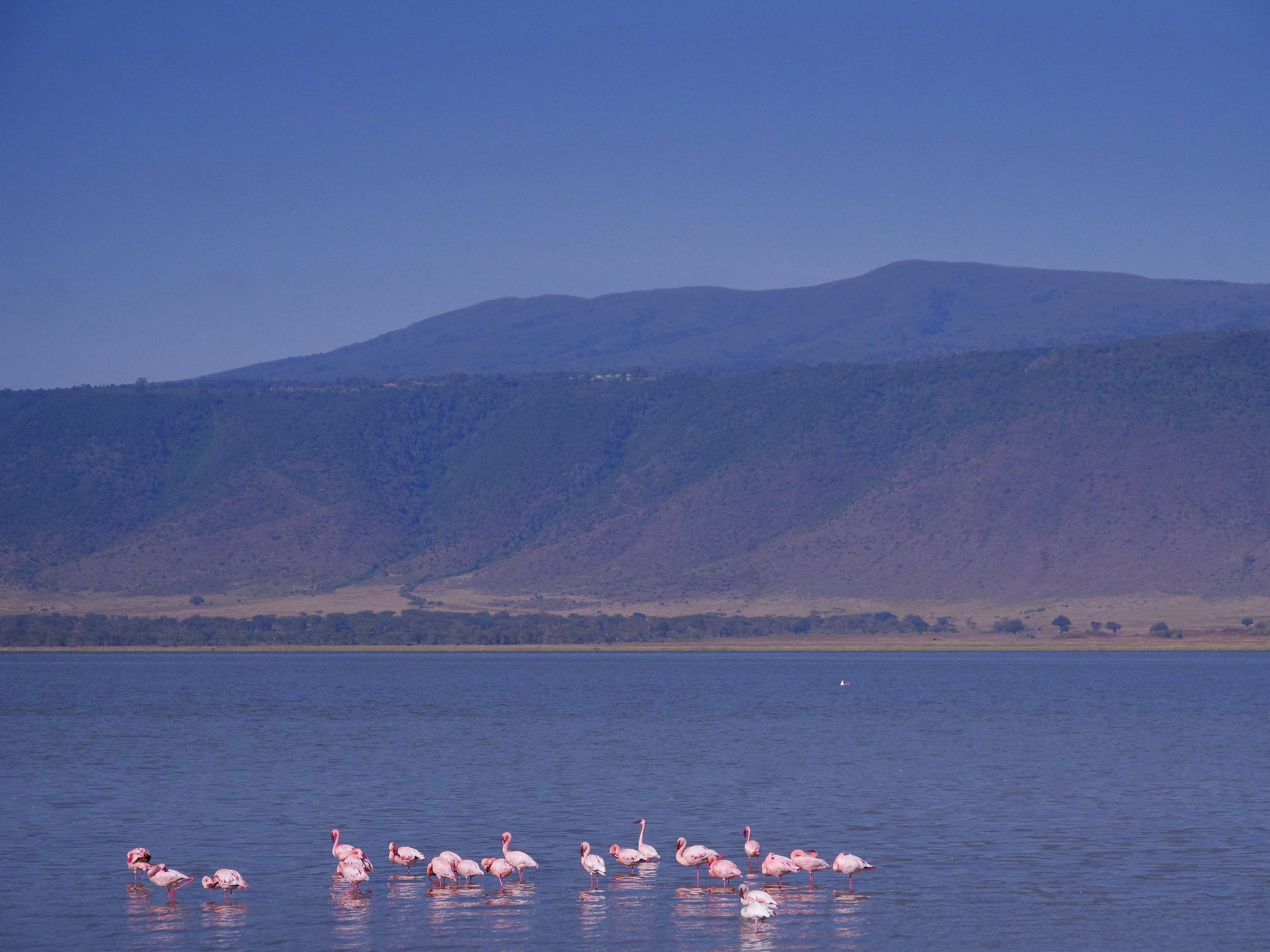
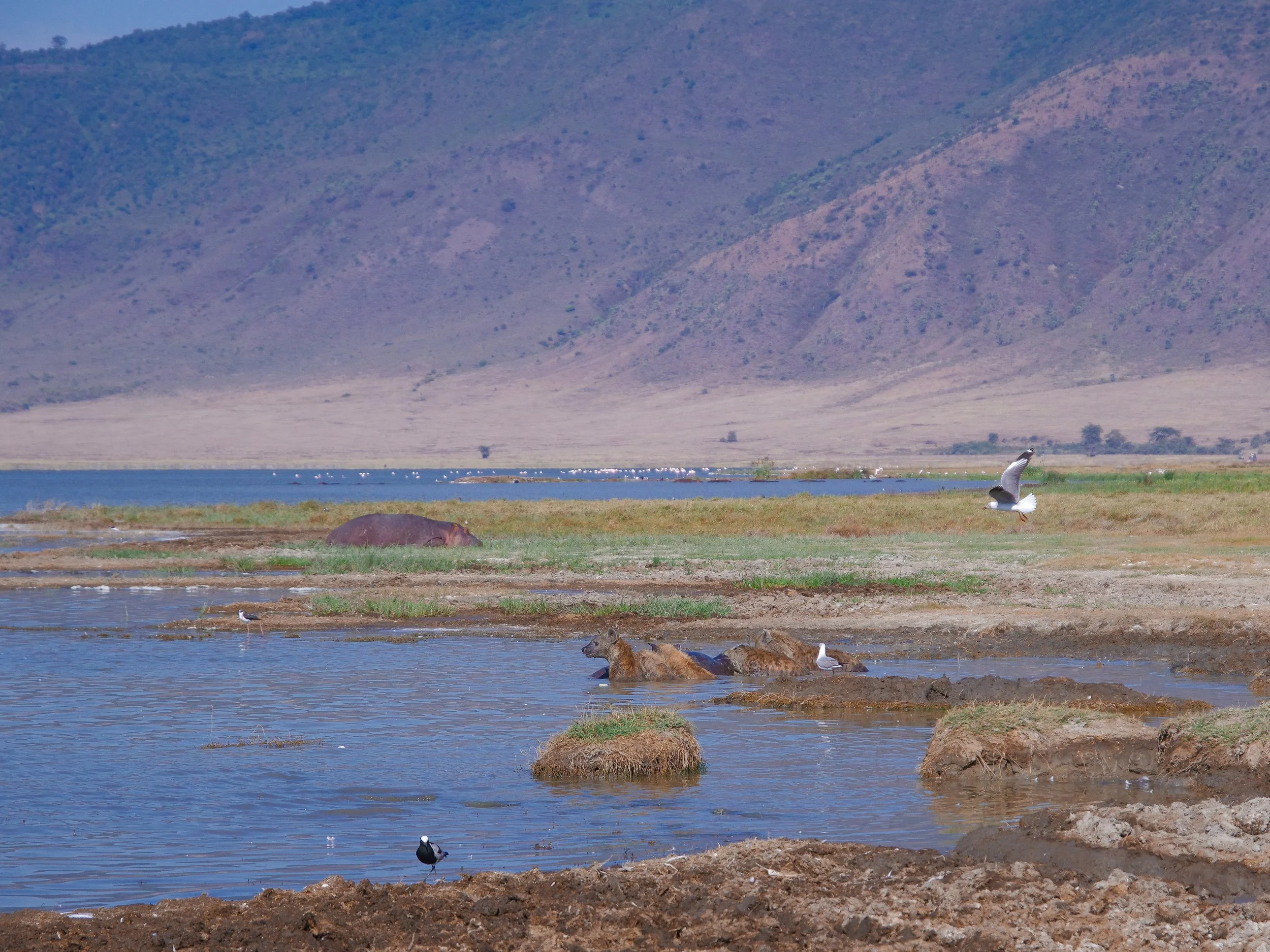
Lake Magadi. An alkaline lake in the Ngorongoro Crater, home to a variety of aquatic birds like pink flamingos, blue herons, yellow billed storks, cormorants, egrets and Egyptian Ibis. African crowned cranes, large ostrich, secretary birds and kori bustard forage in the surrounding grasses. Families of hippos lounge in the shallow waters while cape buffalo gather in the marshes.
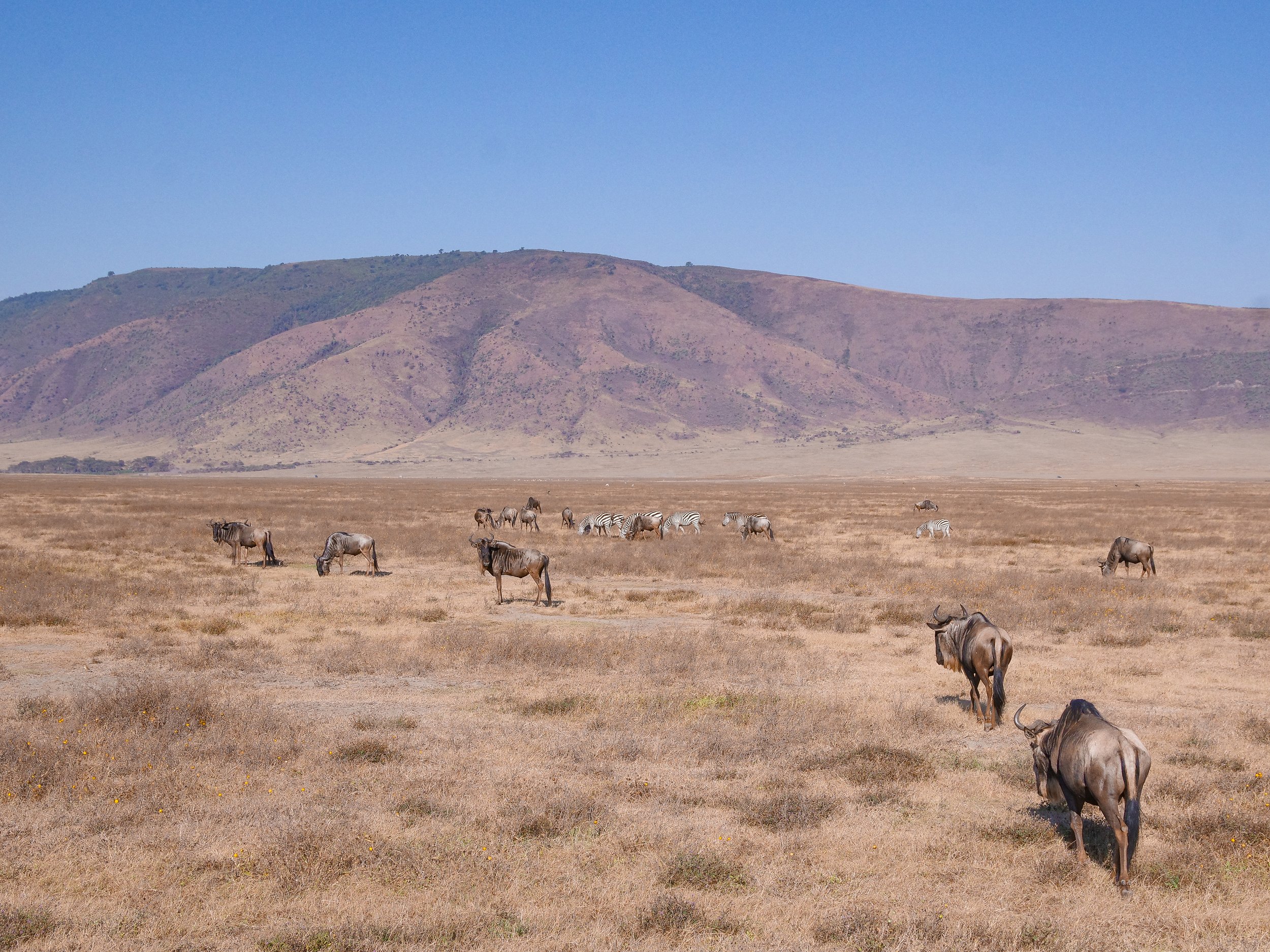
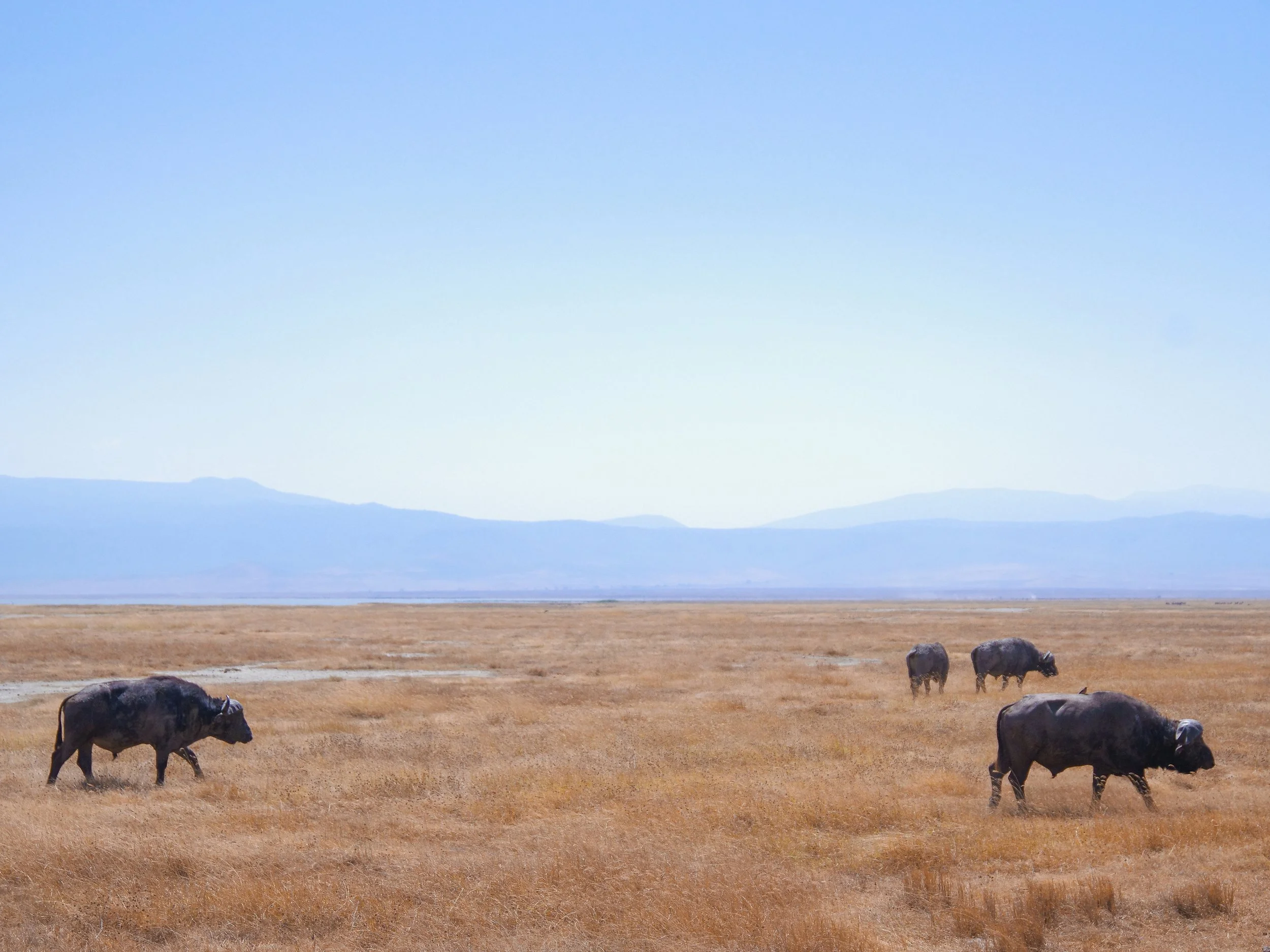
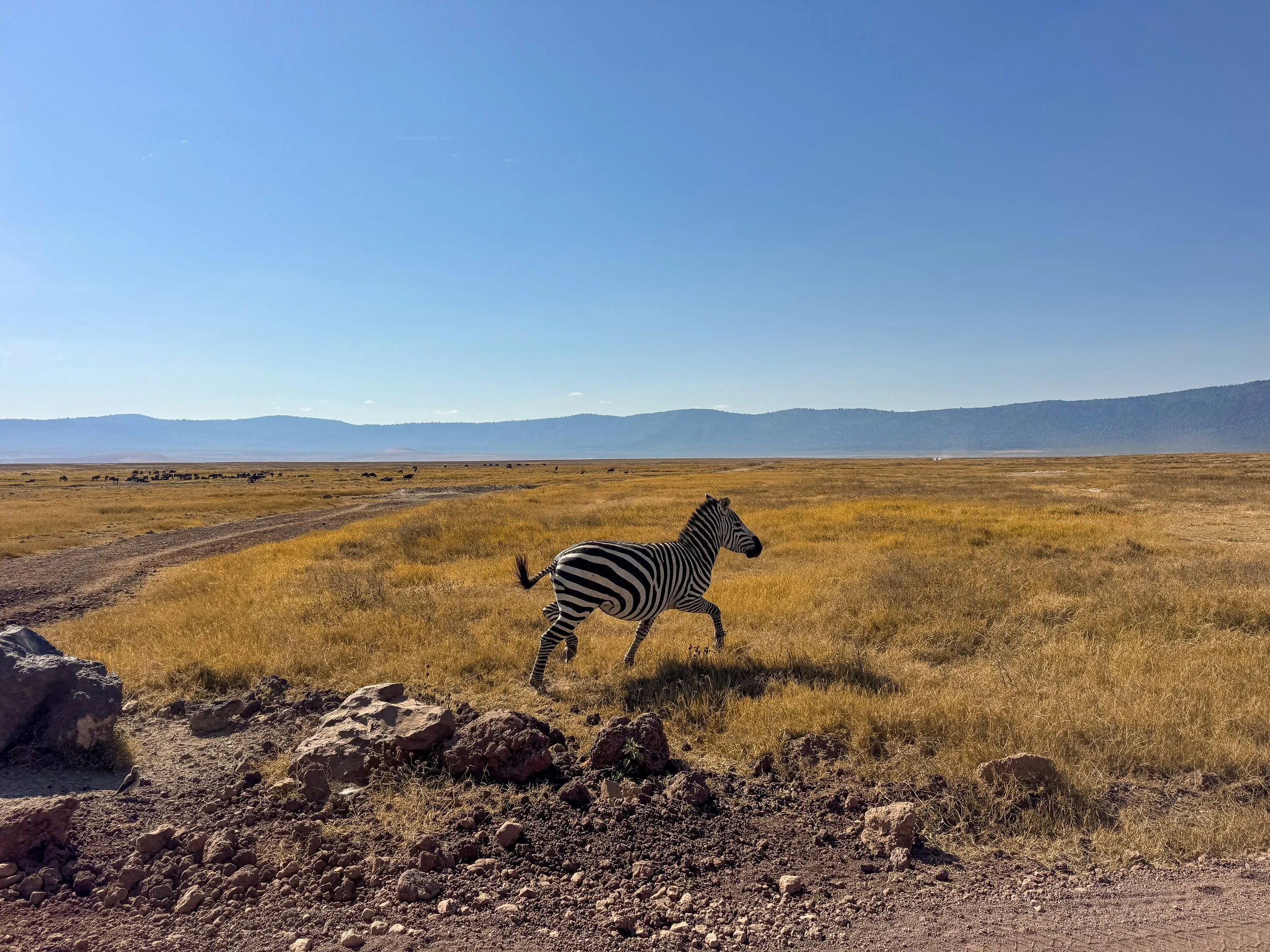
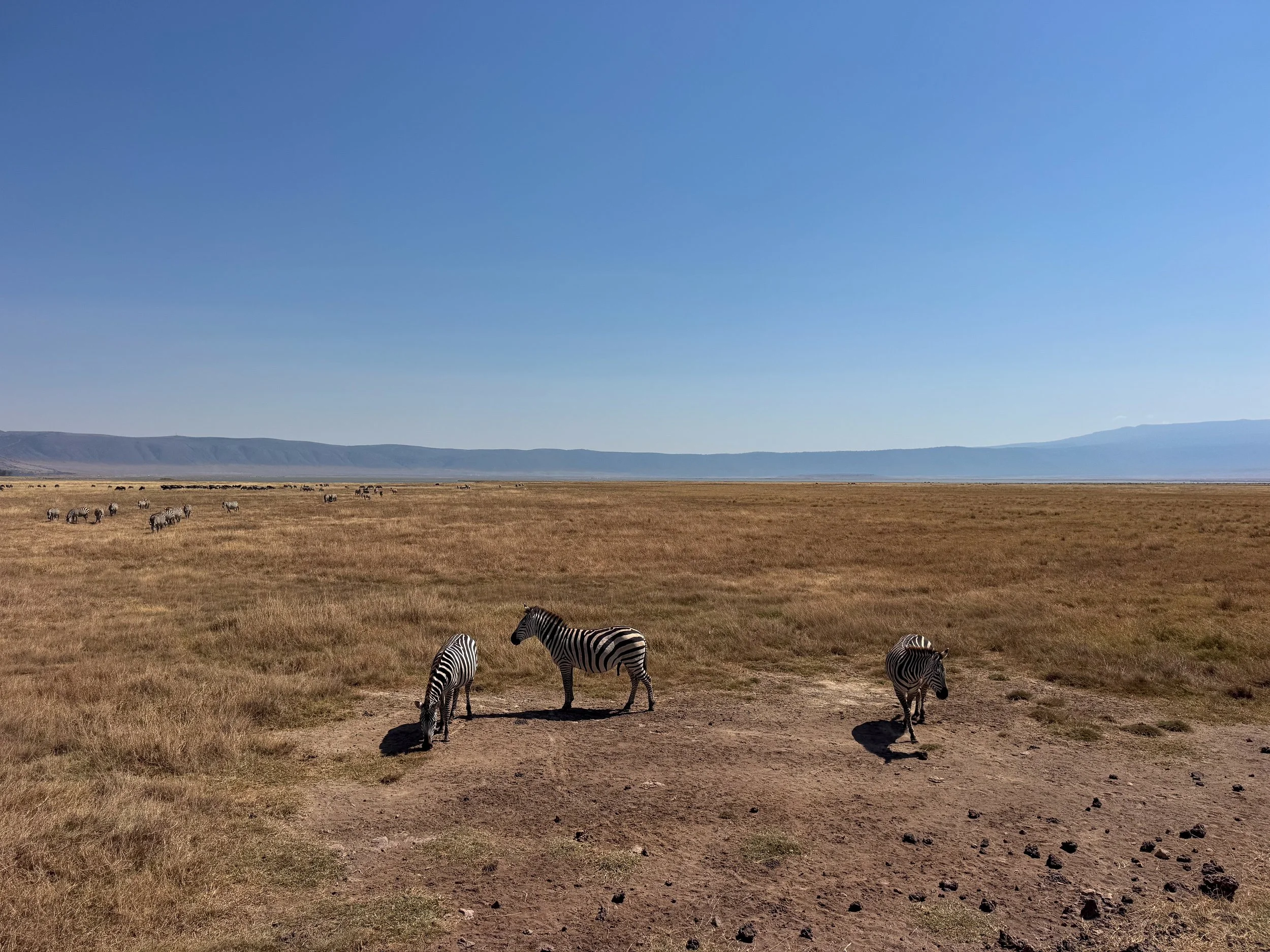
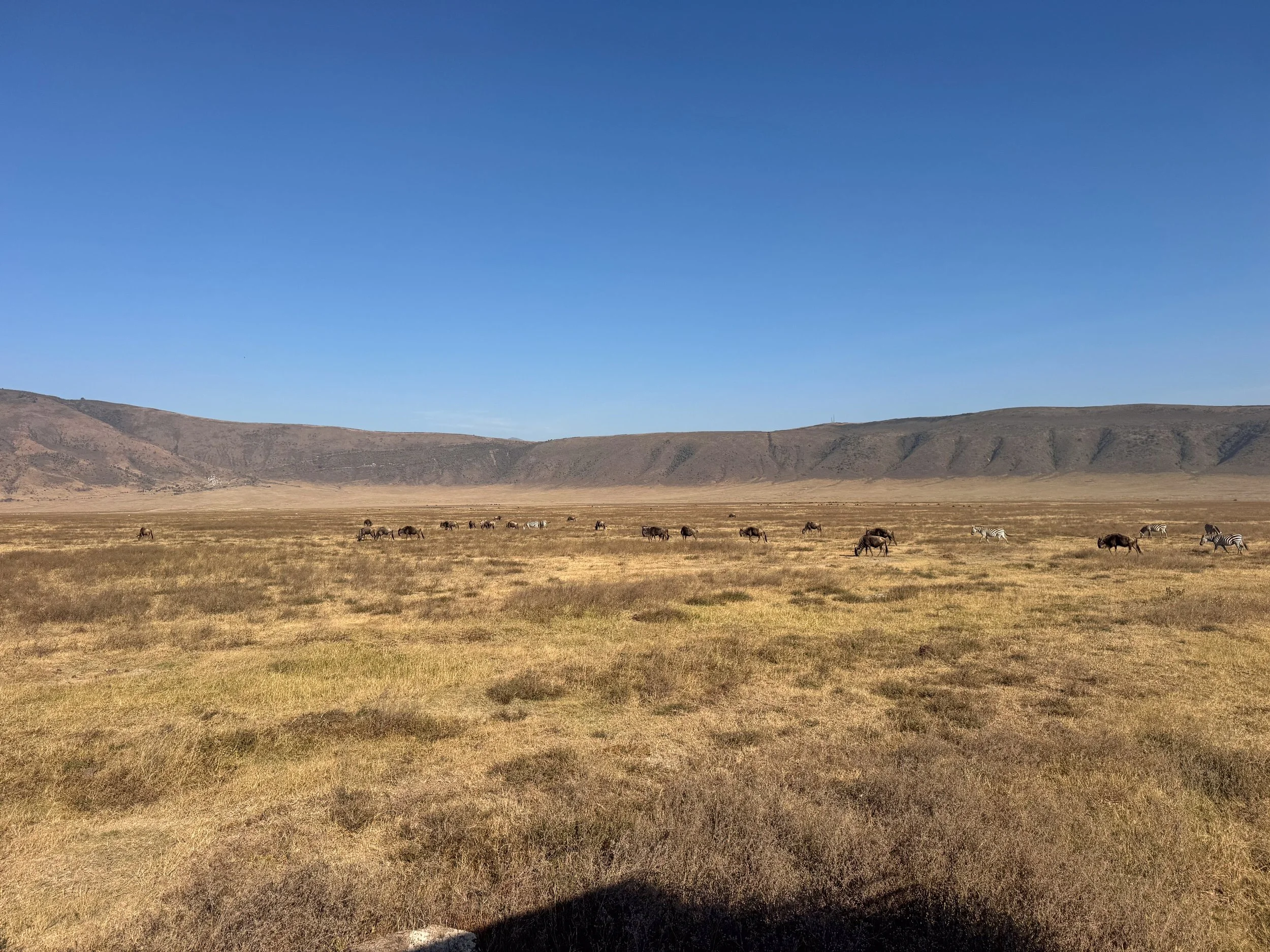
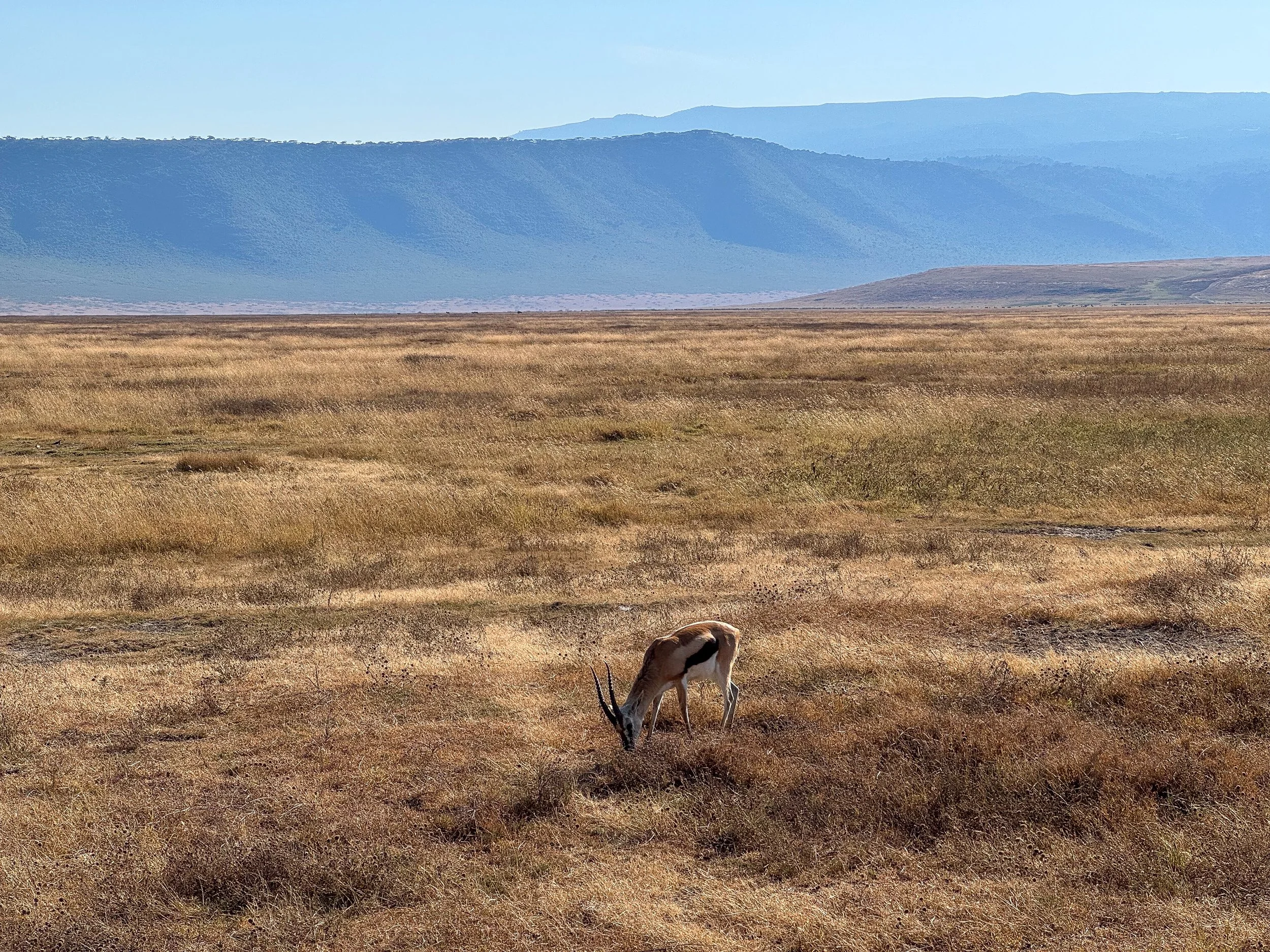
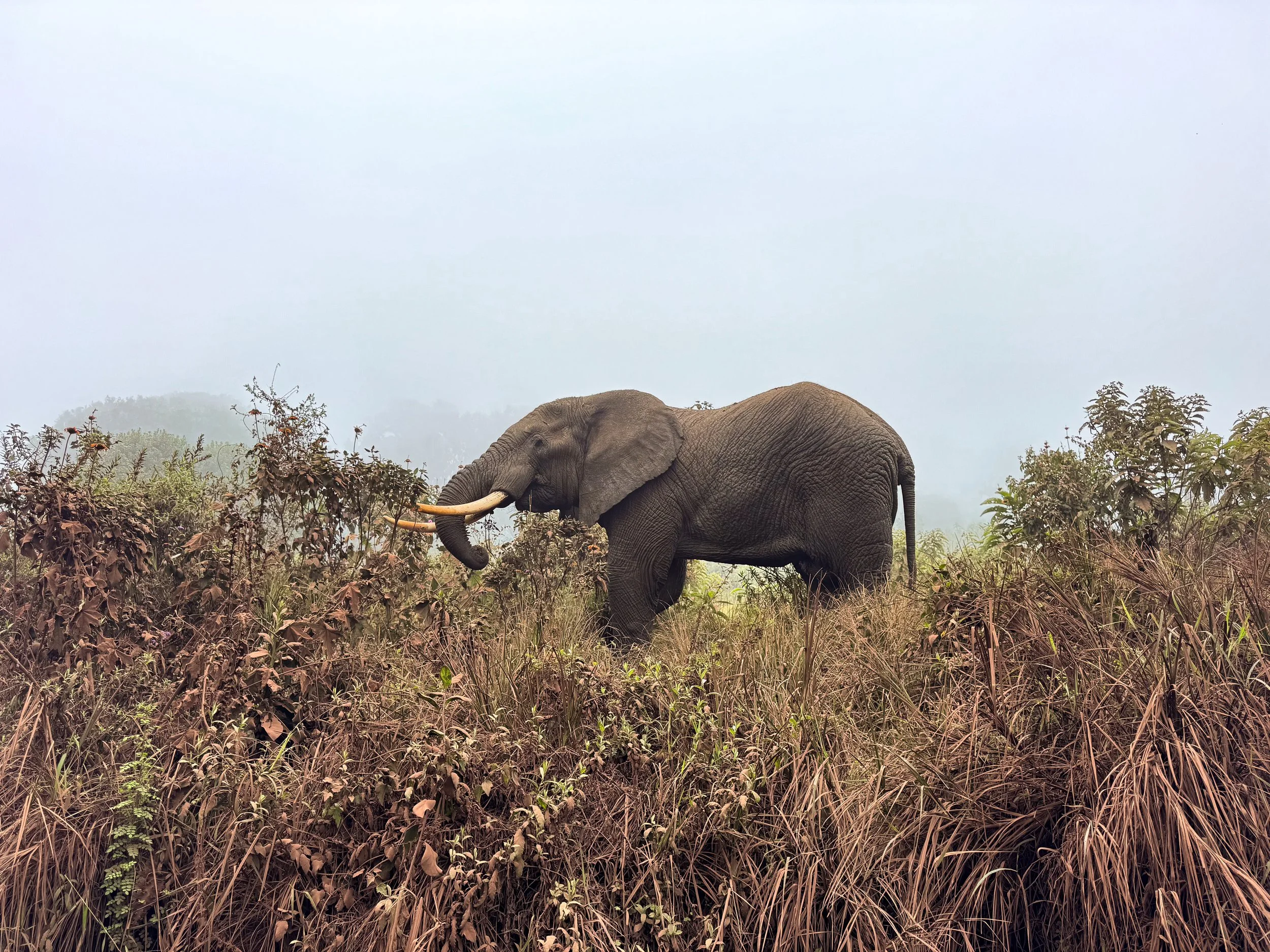
Herds of Animals. Herds are confined to the crater year round due to its vast scale and range of ecosystems. Wildebeest, zebra, gazelle, buffalo and warthogs roam freely in the grasslands. Elephants and giraffes wander the forested crater walls and rim.
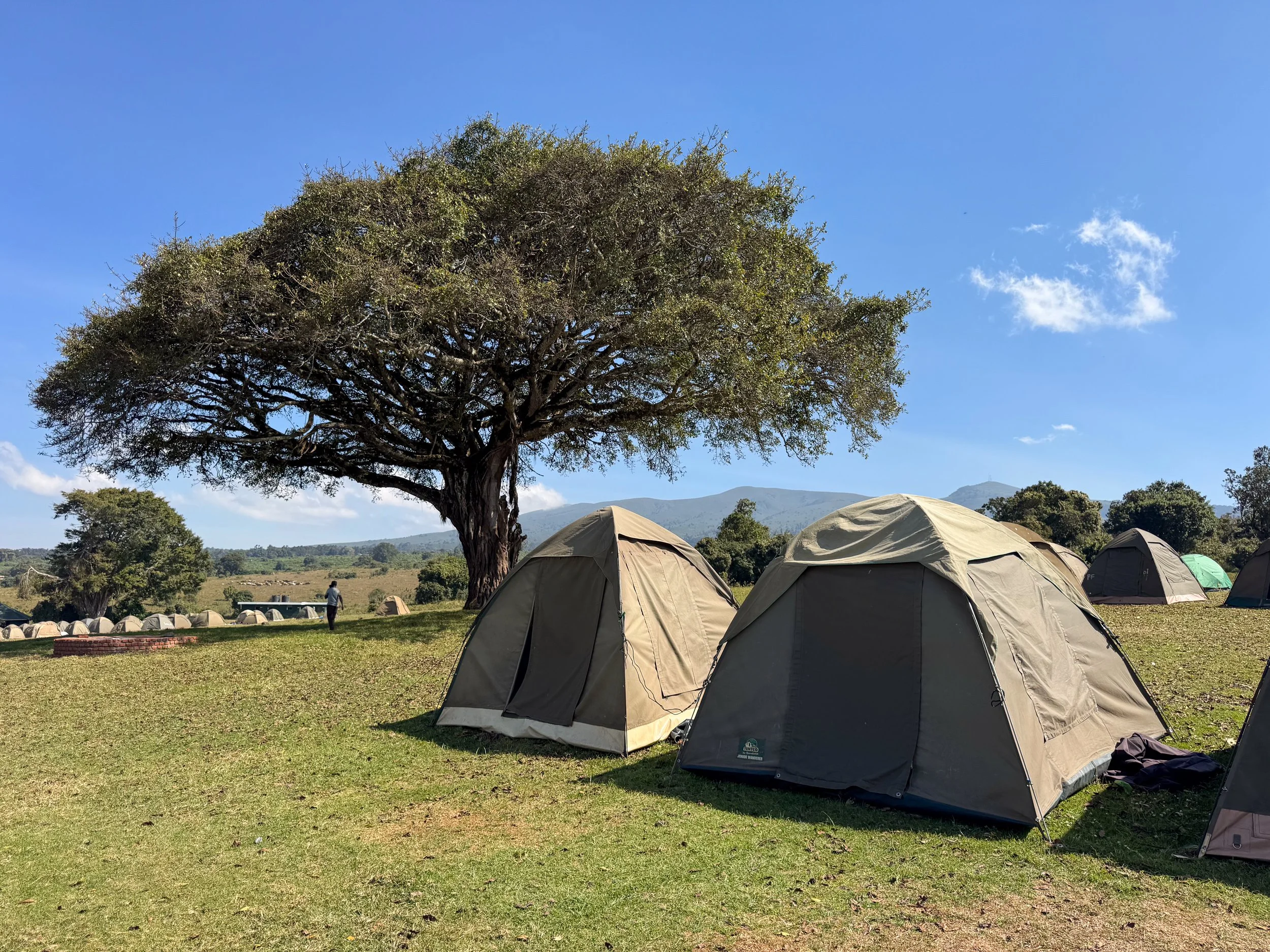
Simba Campsite A. A large campground on the Ngorongoro Crater Rim. It’s popular with both tenters and camper vans, offering amenities like shared kitchens, restrooms, hot showers, fire pits and a camp store. The campsite is surrounded by lush forest home to wild animals. An elephant walked along the camp’s perimeter, a herd of zebra grazed outside of our tents and a tower of giraffes sat across a distant hill.
Good to Know. The elevation of the crater rim sits at an average elevation of 7,500 feet above sea level. Its altitude results in cooler temperatures, especially at night.
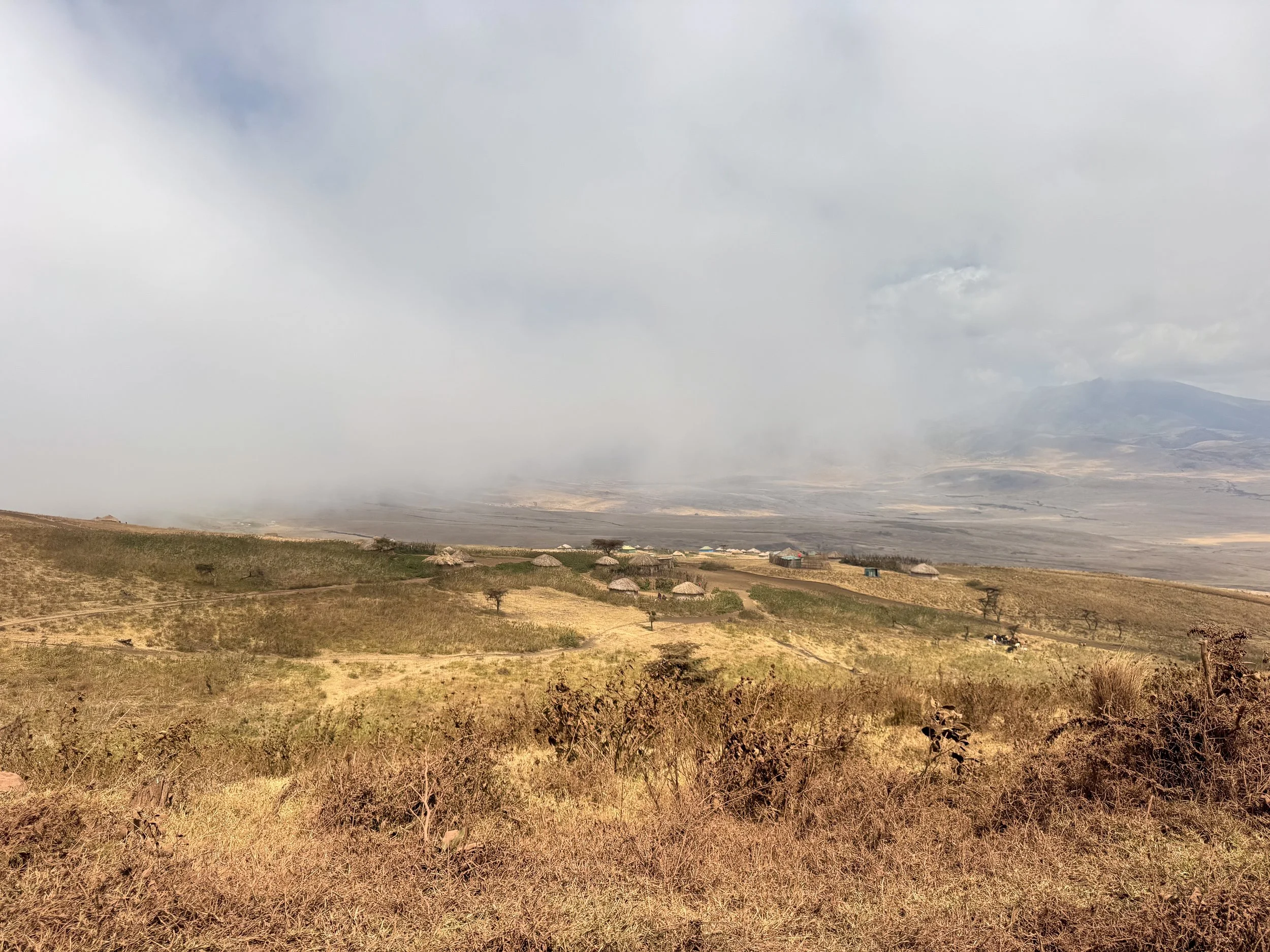
Maasai Village. Rural Tanzania is home to many African tribes, particularly the Maasai. They live in small communities comprised of cylindrical mud huts topped with conical thatched roofs. Many wear traditional robes, distinguished by their color and pattern. Maasai men shepherd cows, goats and sheep between fields. The women and children operate roadside stands selling woven baskets, bush honey and safari style paintings. There is a high concentration of Maasai villages on the route through Ngorongoro to the Serengeti.
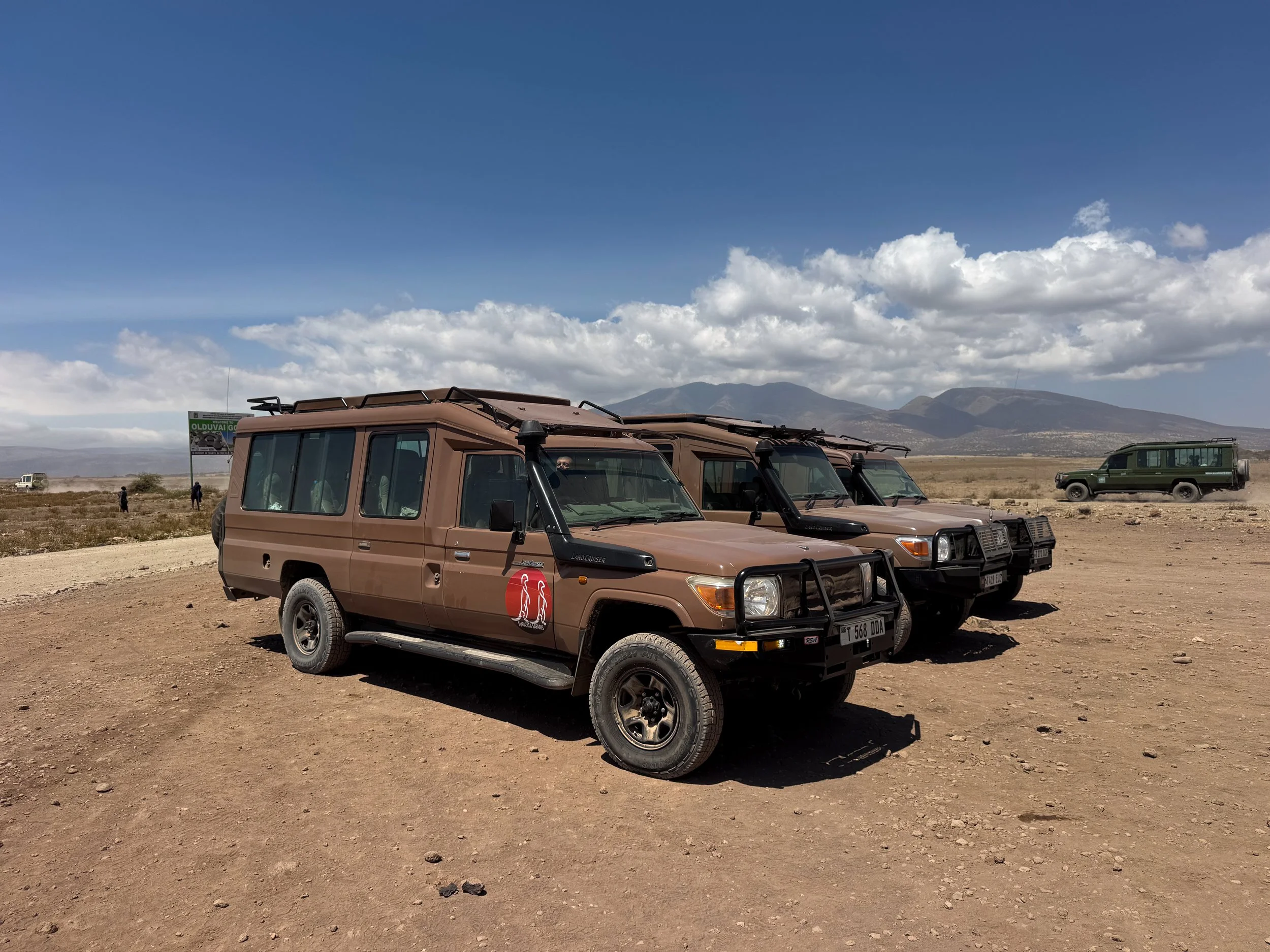
Suricata Safaris
We booked our 4 day, 3 night group camping safari in Tarangire National Park, The Serengeti and Ngorongoro Crater with Suricata Safaris on Viator. It included all park fees, camping equipment, meals, water and transportation in a 4x4 Safari Land Cruiser.
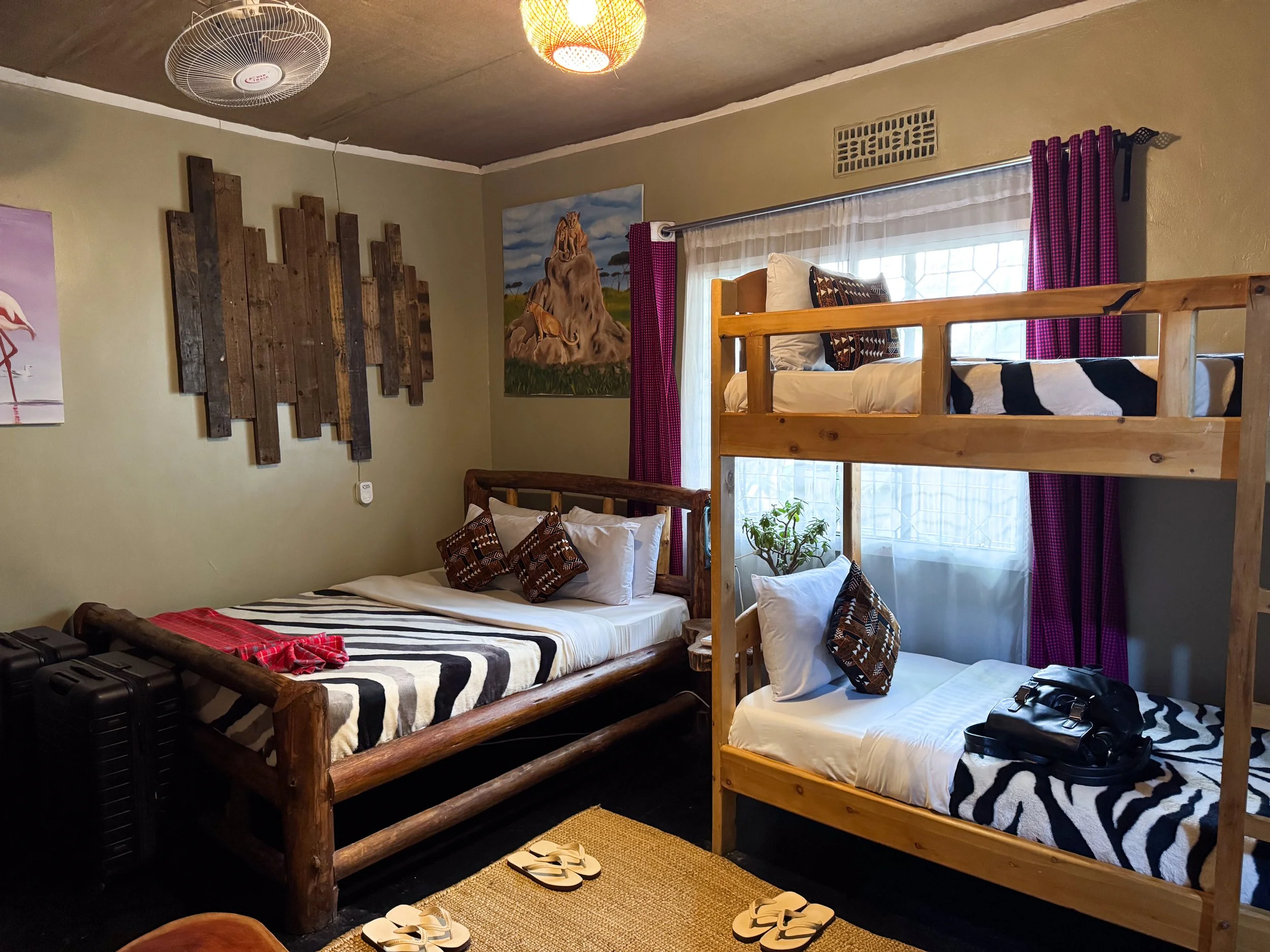
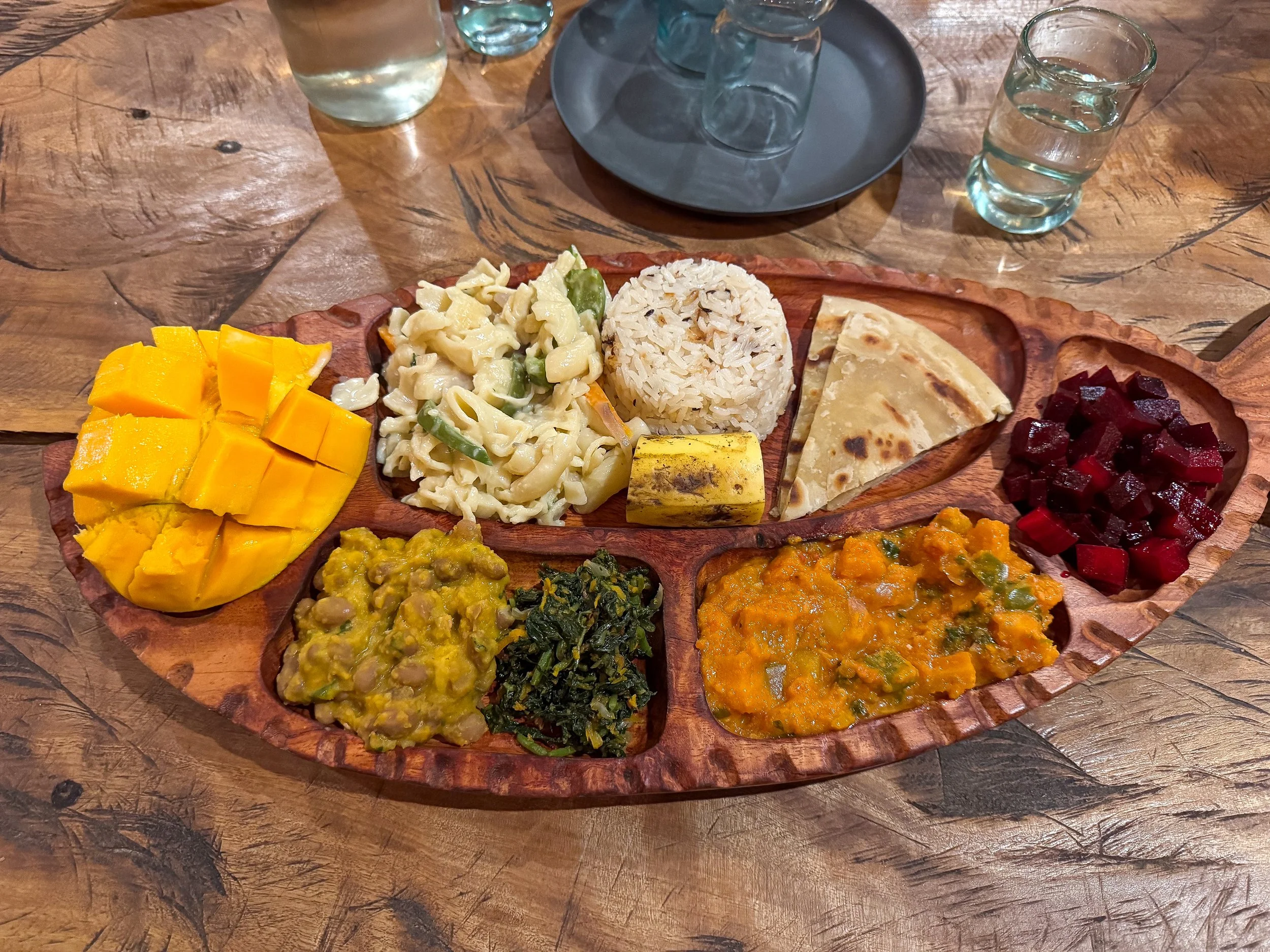
Where to Stay
The city of Arusha is a hub for Tanzanian safaris, located within a few hours of some of the country’s most famed reserves and national parks. It's common to stay here for at least a day before and after a safari.
Serengeti Villa. A boutique eco hotel in Arusha with tropical gardens, safari style rooms and tribal furniture. The villa serves delicious Swahili meals and local beers, hosts nightly bonfires and offers services like laundry and luggage storage. Our only regret was not staying longer. Reserve on Booking.
Location Specifics
When to Visit. The dry season, from July to October, is the best time of year to visit Tanzania for a safari.
Dust. The savanna can be extremely dusty during the dry season. Bring wipes to clean off with and wear clothes you don’t mind getting dirty.
Binoculars. Bring a pair of good binoculars to view distant animals and close up details of nearby game. We bought a pair of Nikon Monarch M5 with 10x42 magnification.
Camera. Phones can be great for social media photos, however a professional camera is much better for detailed and close up photos.
Tipping. Plan to tip safari guides between $10-$20 USD per day per person.
Swahili Words & Phrases
Swahili is the local language in Tanzania. We learned several basic words and phrases from our guides.
Jambo. A formal greeting meaning hello.
Mambo. An informal greeting meaning hello or how are you?
Poa or Poa Poa. A common response to Mambo, meaning good or well.
Habari Asubuhi. Good morning.
Lala Salama. Good night or sleep well.
Kwa Heri. Goodbye.
Asante. Thank you.
Asante Sana. Thank you very much.
Karibu. Welcome or you’re welcome.
Hakuna Matata. The phrase made world famous by the Lion King. It’s a real Swahili phrase meaning no worries or no problems.
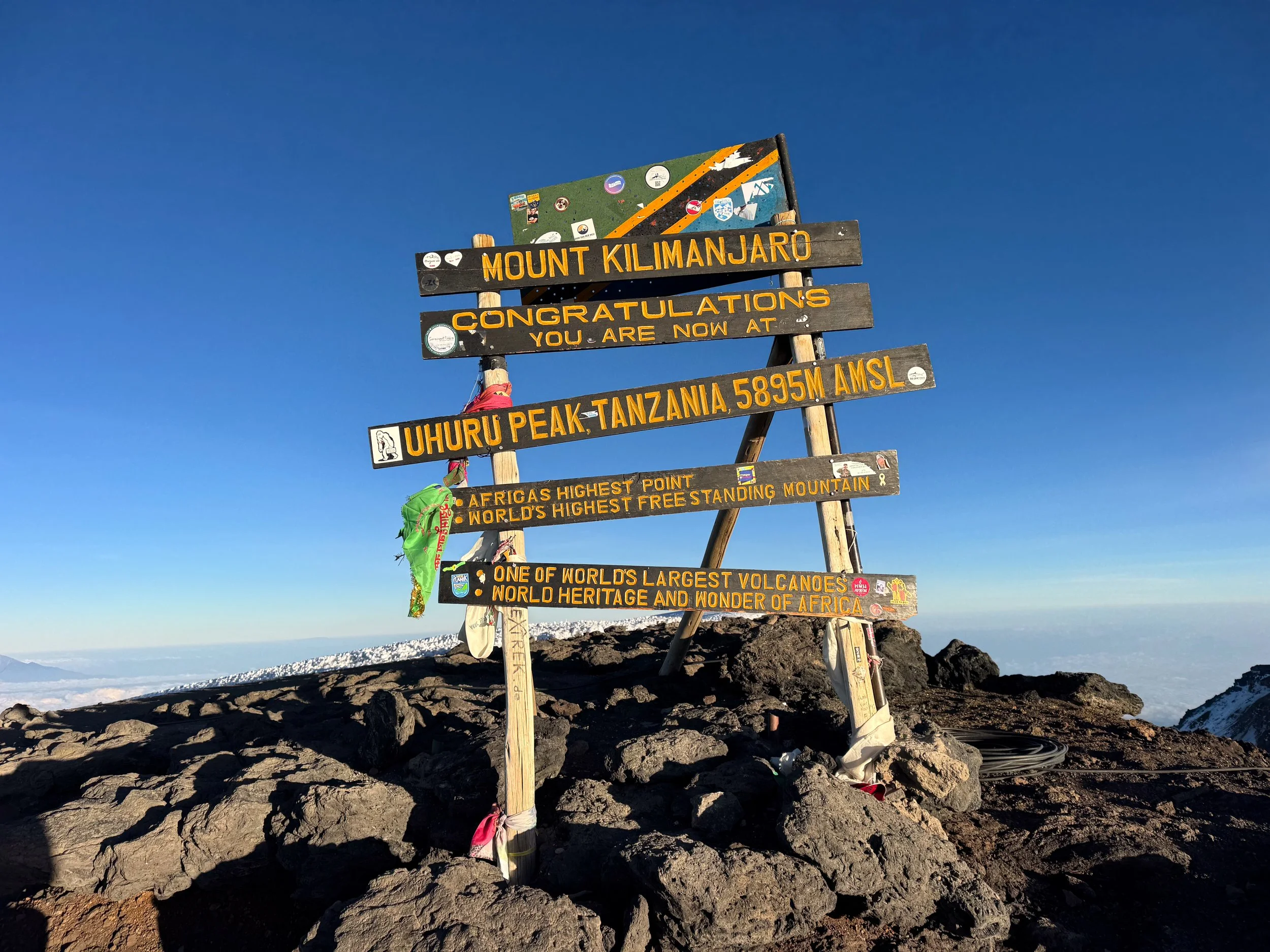
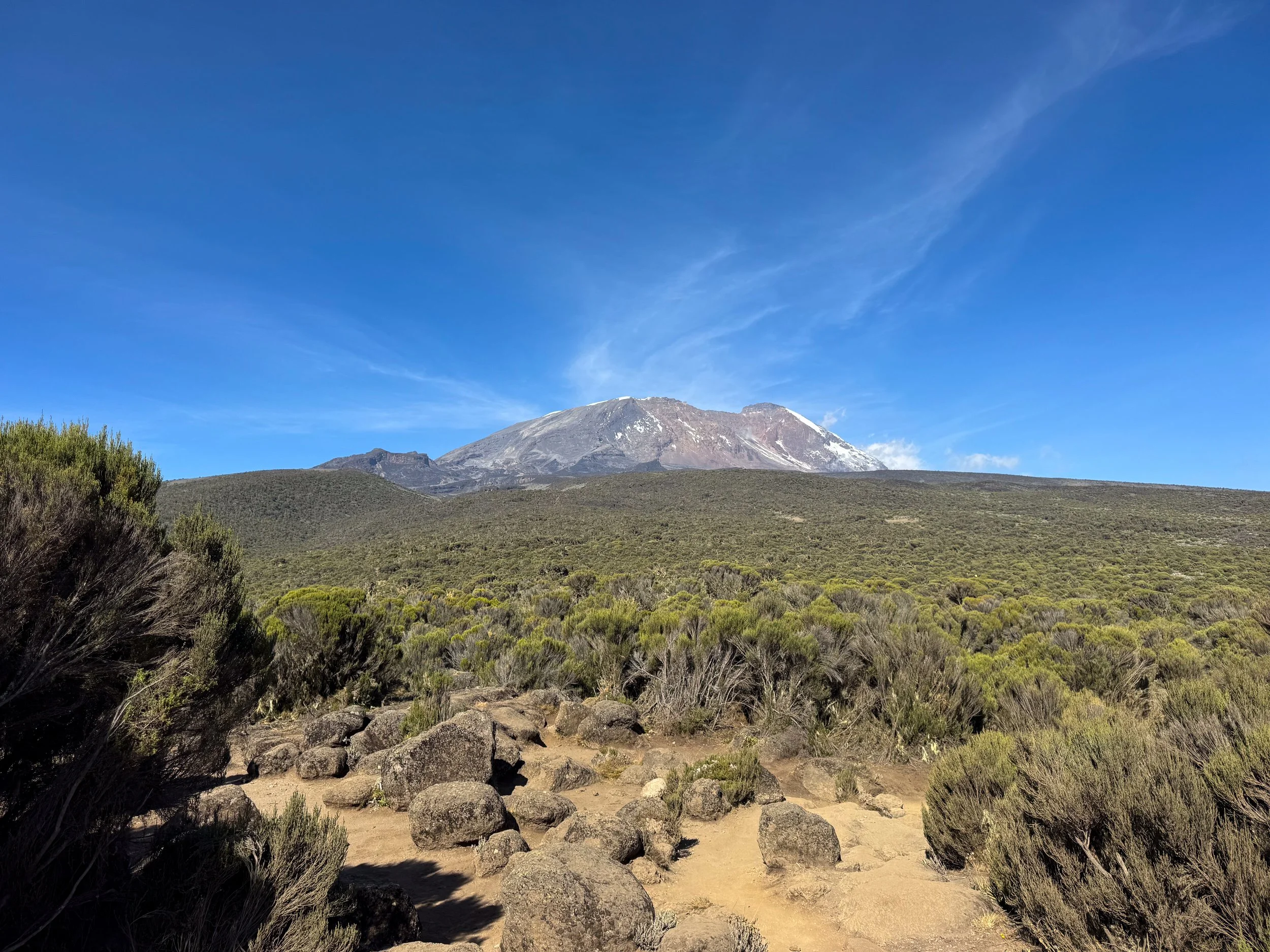
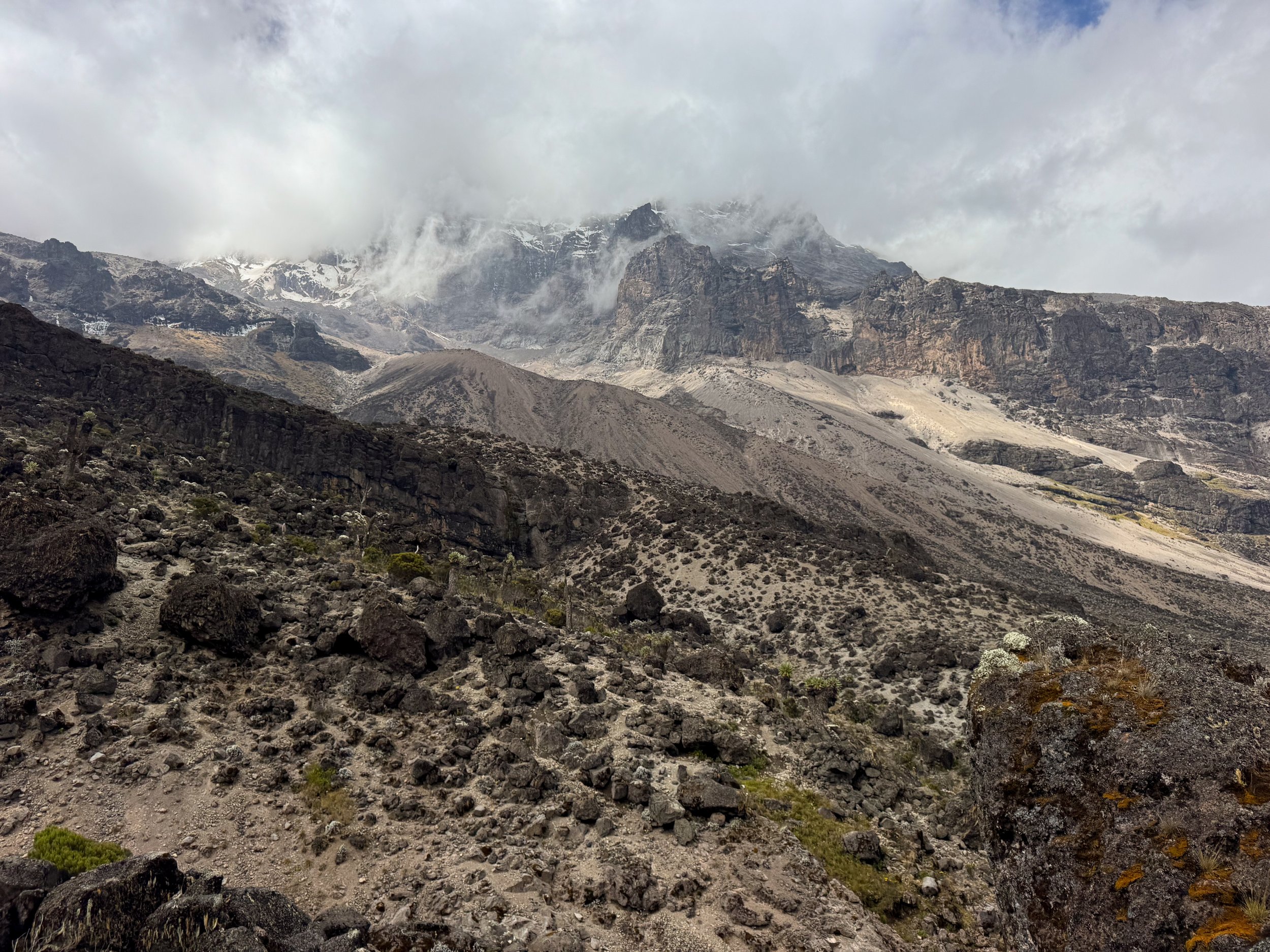
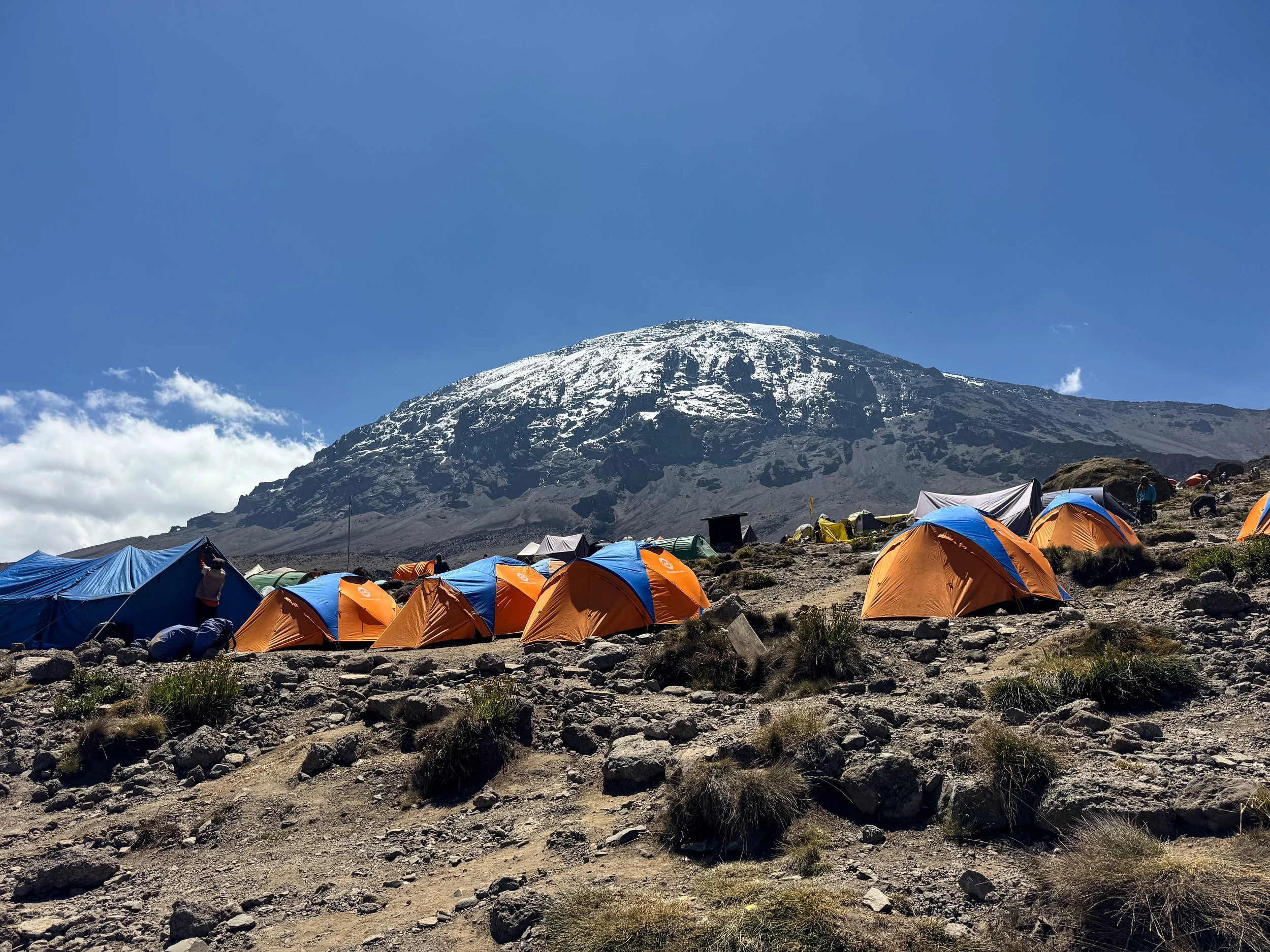
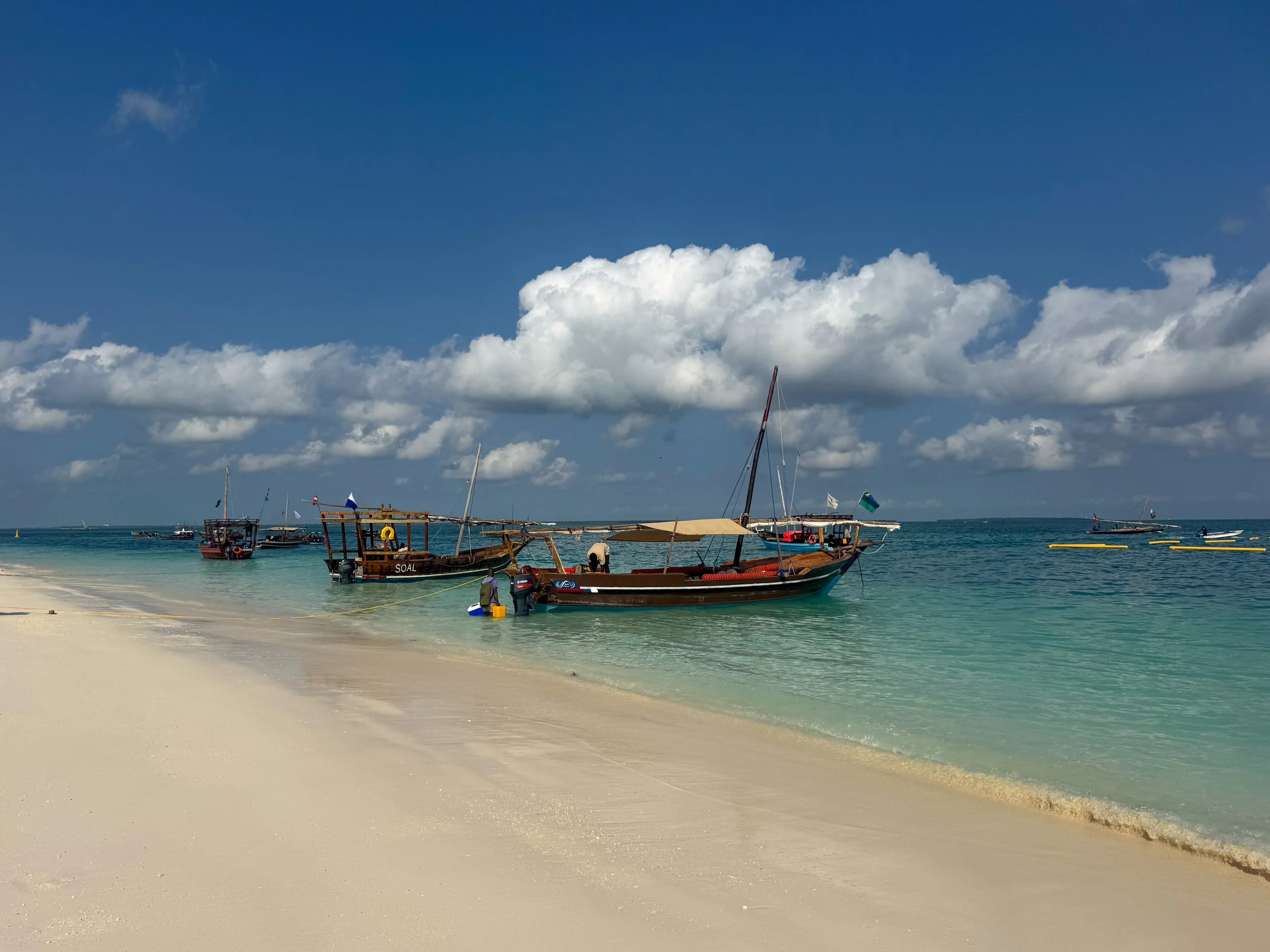
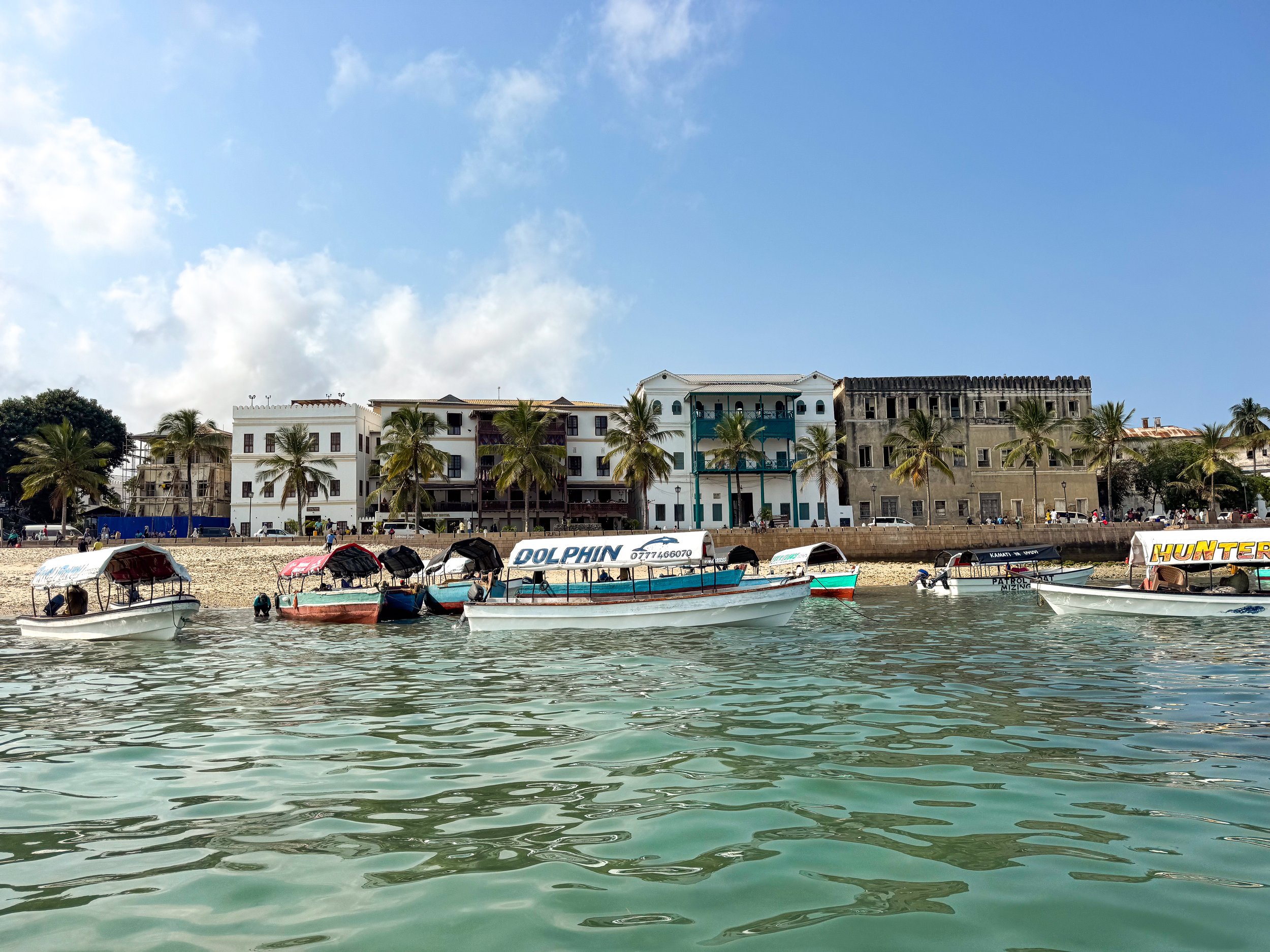
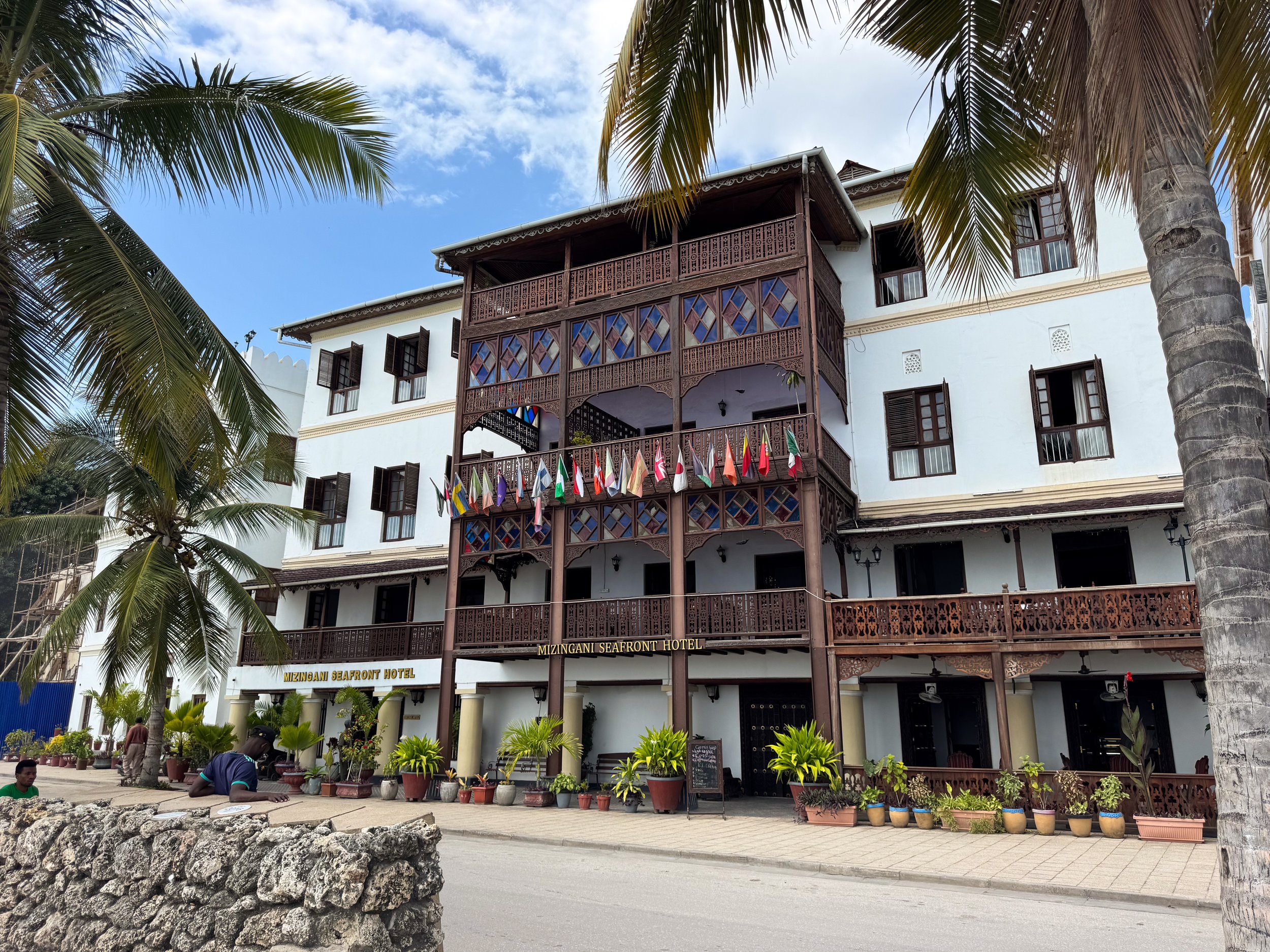
Elsewhere in Tanzania
From the wildlife spectacles of the Serengeti and Ngorongoro to the summit of Kilimanjaro and the beaches of Zanzibar, discover more of Tanzania beyond the safari circuit through these travel guides:
Zanzibar Travel Guide: Stone Town, Beaches & Swahili Culture. Escape to Zanzibar where historic Stone Town, fragrant spice gardens, white sand beaches and turquoise waters bring together centuries of history, culture and island life.
Mount Kilimanjaro Guide: Lemosho Route, Mountain Camping & Uhuru Peak. Trek through Mount Kilimanjaro's changing landscapes where alpine scenery, mountain camps and summit trails lead to Africa's highest point at Uhuru Peak.
For Next Time…
We spent four days in the back of a Toyota Land Cruiser exploring Tanzania’s savannas, craters and national parks. Next time we return, we plan to experience a safari on foot and by air.
Walking Safari. Guided safaris led on foot by rangers, lead visitors through the Arusha National Park to see wildlife up close and personal. Unlike multi day safaris, the park offers full and half day experiences.
Hot Air Balloon Safari. Hot air balloons float through the early morning skies of the Serengeti. Once in the park, tour operators offer aerial safaris of its vast grasslands and kopjes.
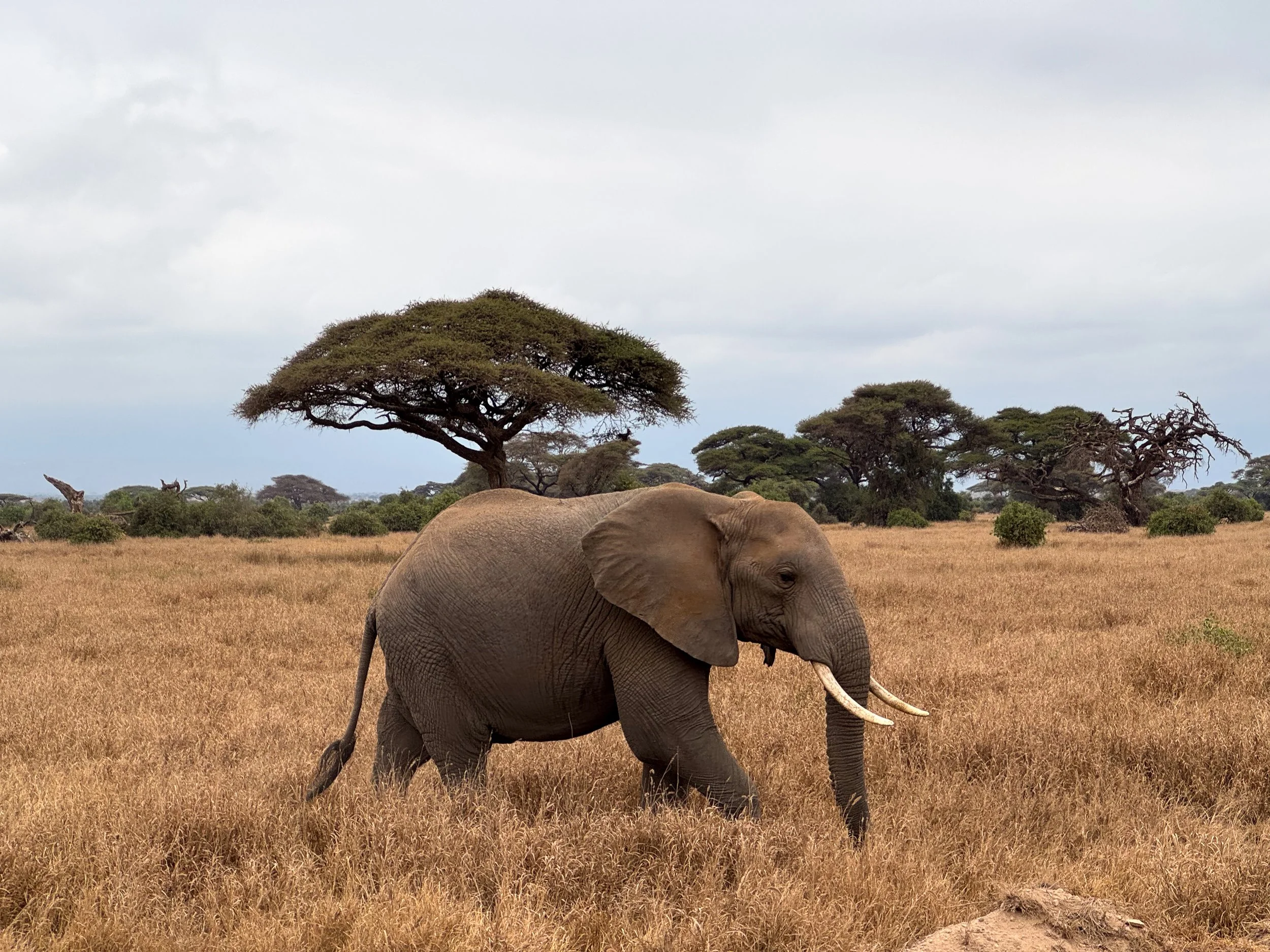
Kenya Safari Guide: The Great Migration, Big Five & Maasai Mara
Venture across Kenya's sweeping savannas and protected reserves where remarkable wildlife and migratory animals create unforgettable African safaris.
Kenyan Safari
Kenya’s protected reserves and sprawling savannas are home to African wildlife, migratory animals and endangered species, making the biodiverse country a classic destination to experience an unforgettable safari. Large herds move in unison as the fragrant scent of grasses wafts across the savanna. Majestic animals graze peacefully while predators stalk their prey and birds fly overhead.
We crossed the landscape on a six day safari, participating in multiple game drives and guided nature walks through the African bush with Explorers Wild Adventures. We spotted Africa’s “Big Five,” witnessed The Great Migration and visited a Maasai village to learn about indigenous culture and traditions. The safari included park fees, transportation, camp accommodations and all meals.
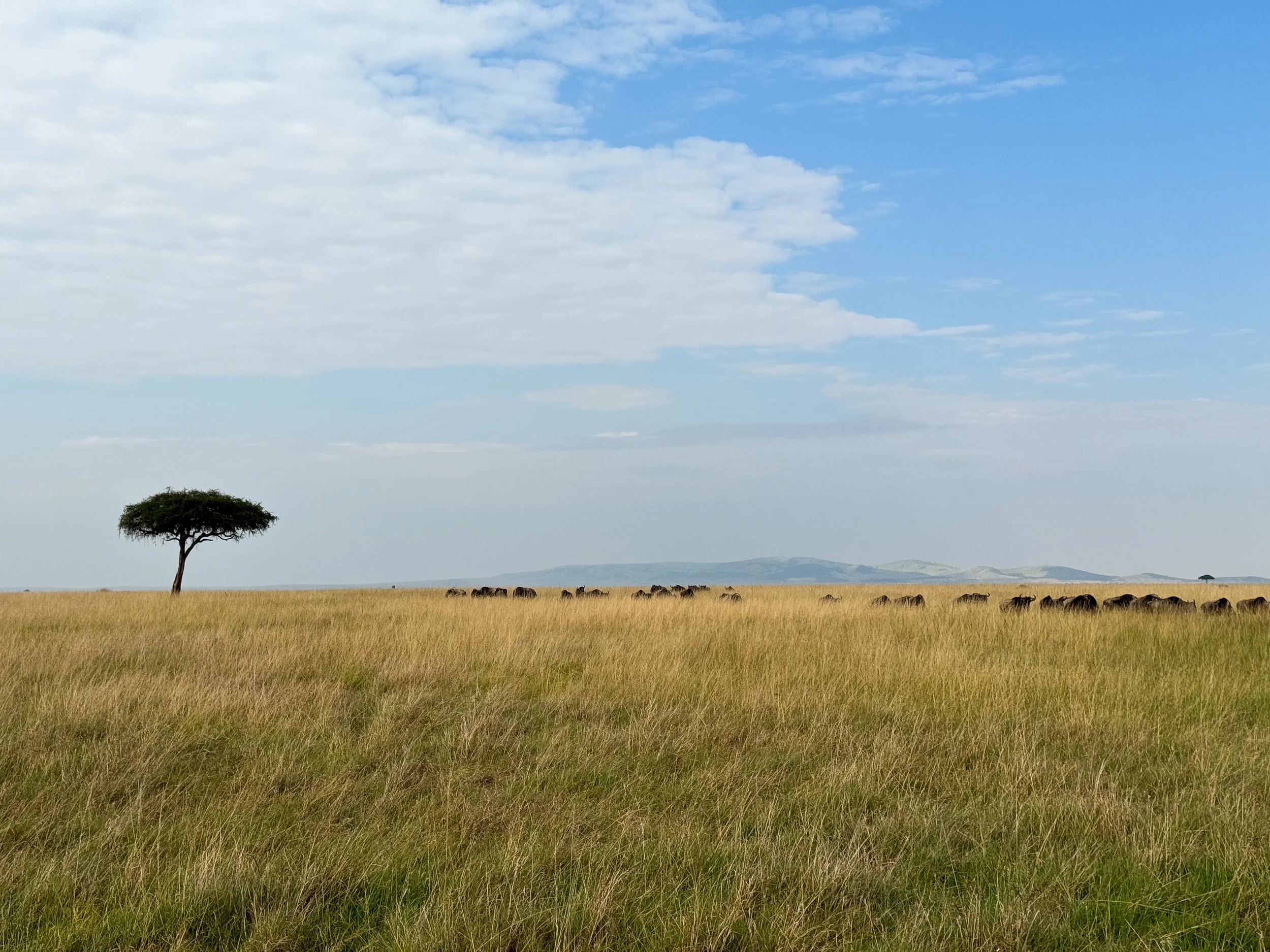
Maasai Mara National Park
The Maasai Mara is one of Africa’s largest wild game reserves, site of The Great Migration and home to endangered species, herds of animals, ferocious predators and seemingly endless savannas. We spent two days on safari in the park witnessing some of nature’s most impressive sights and wildlife.
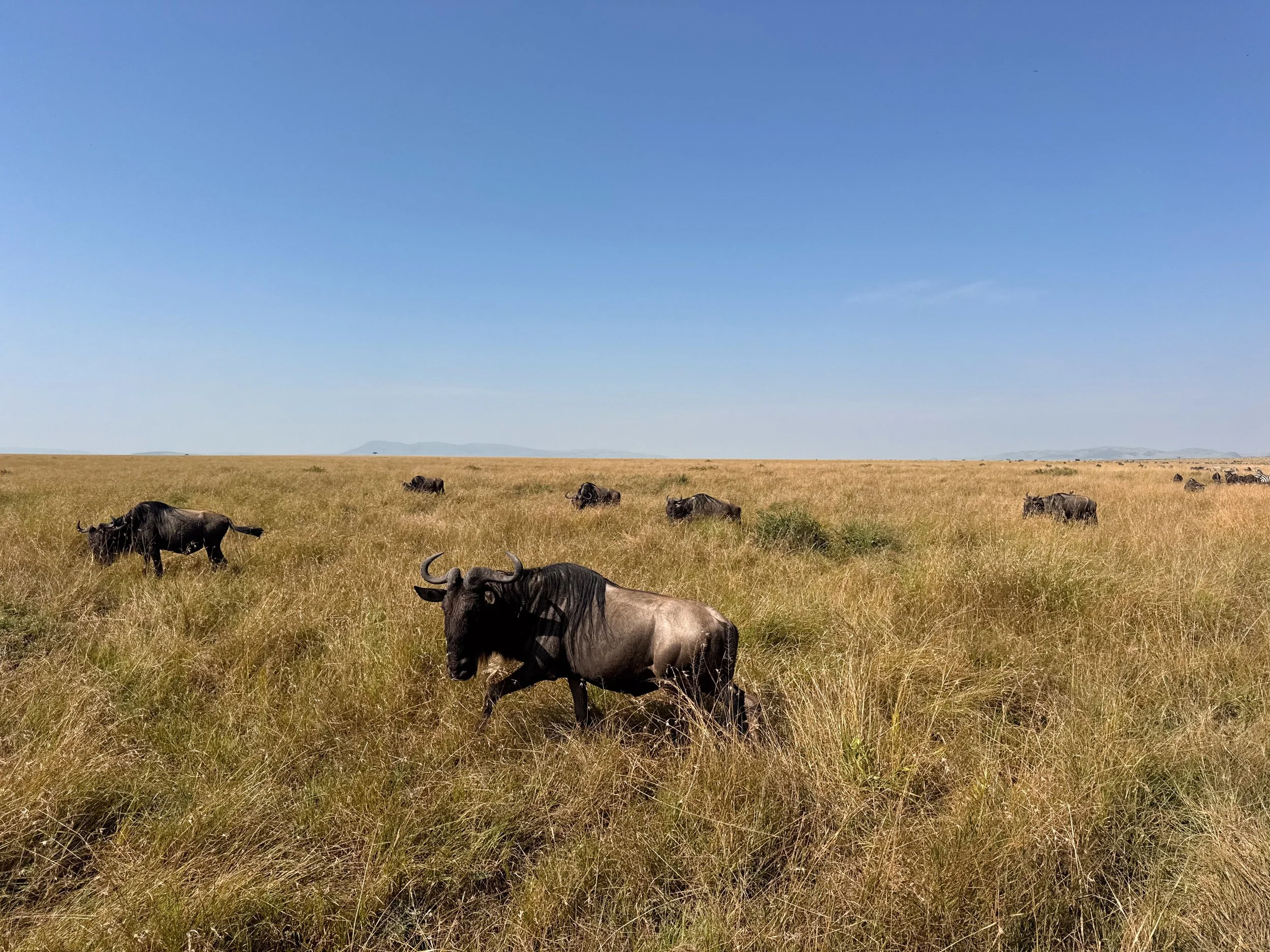
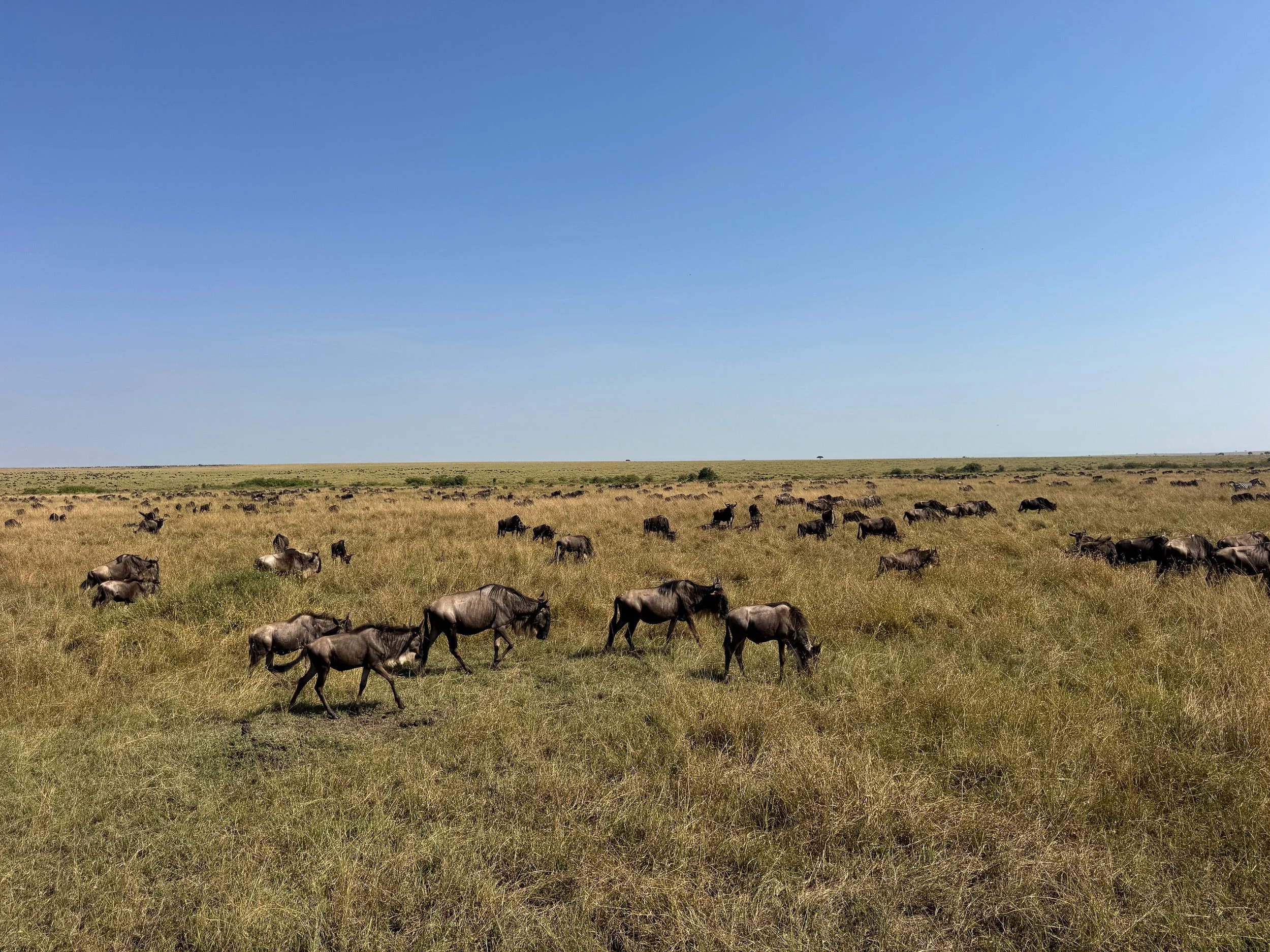
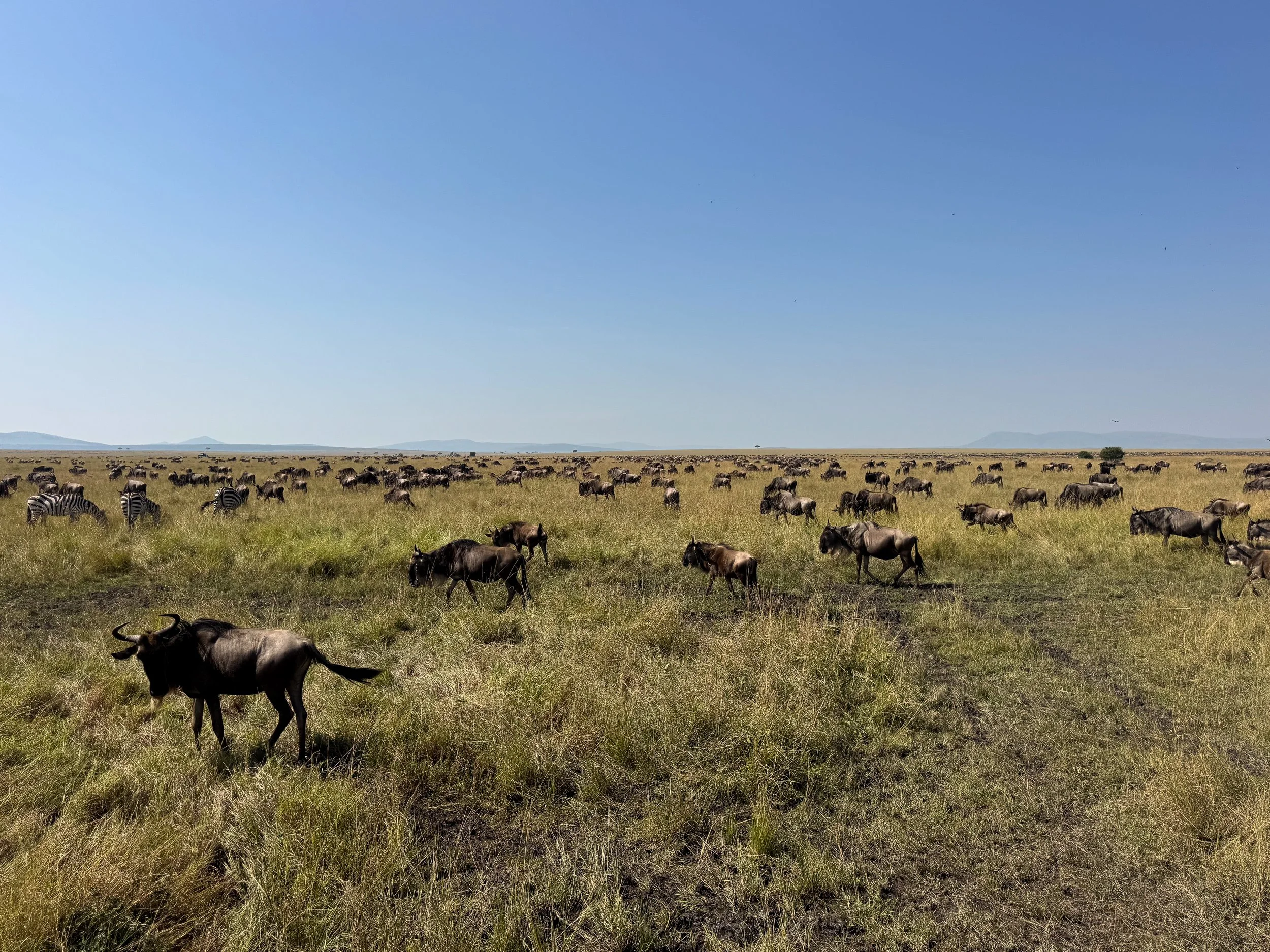
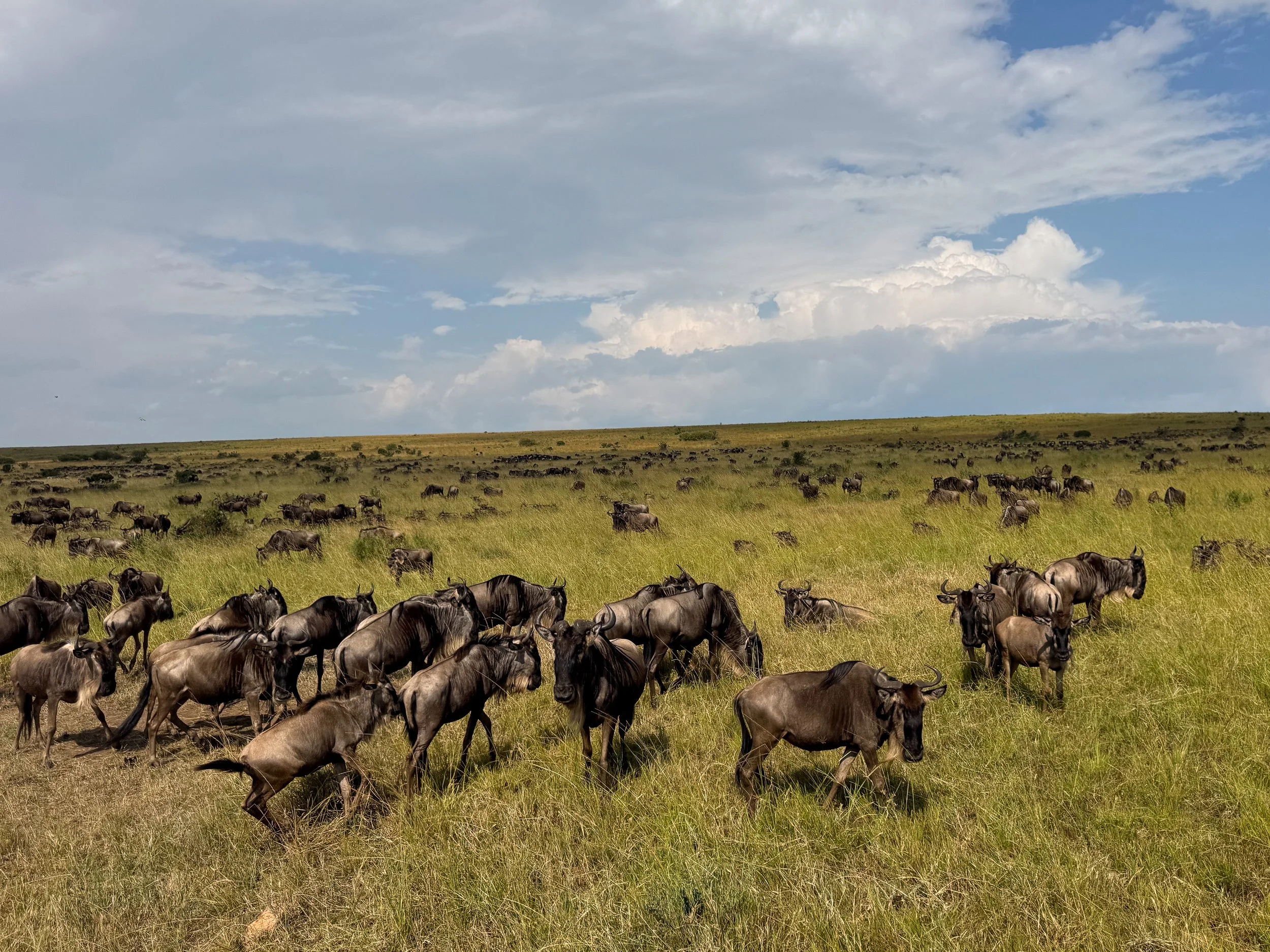
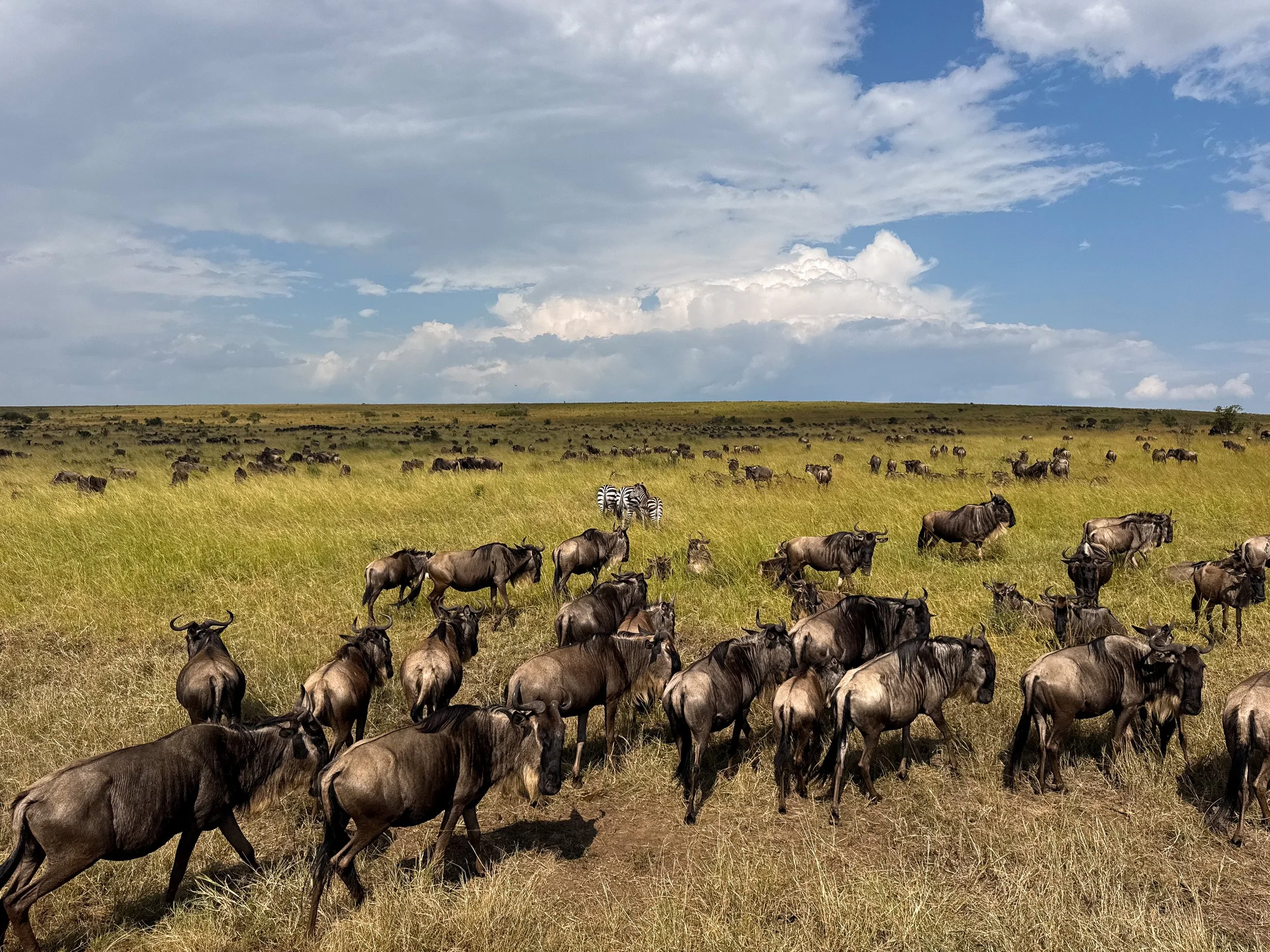
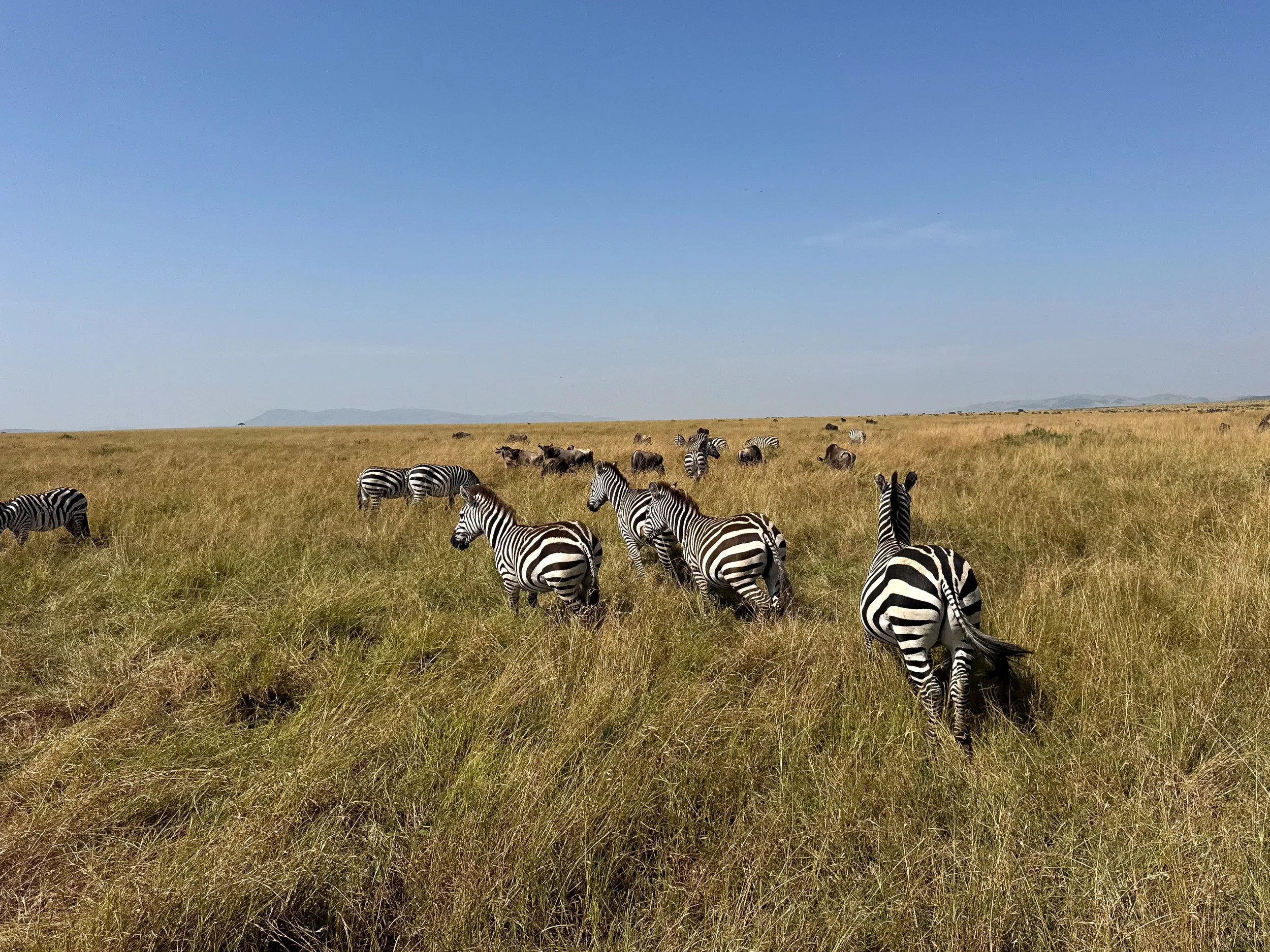
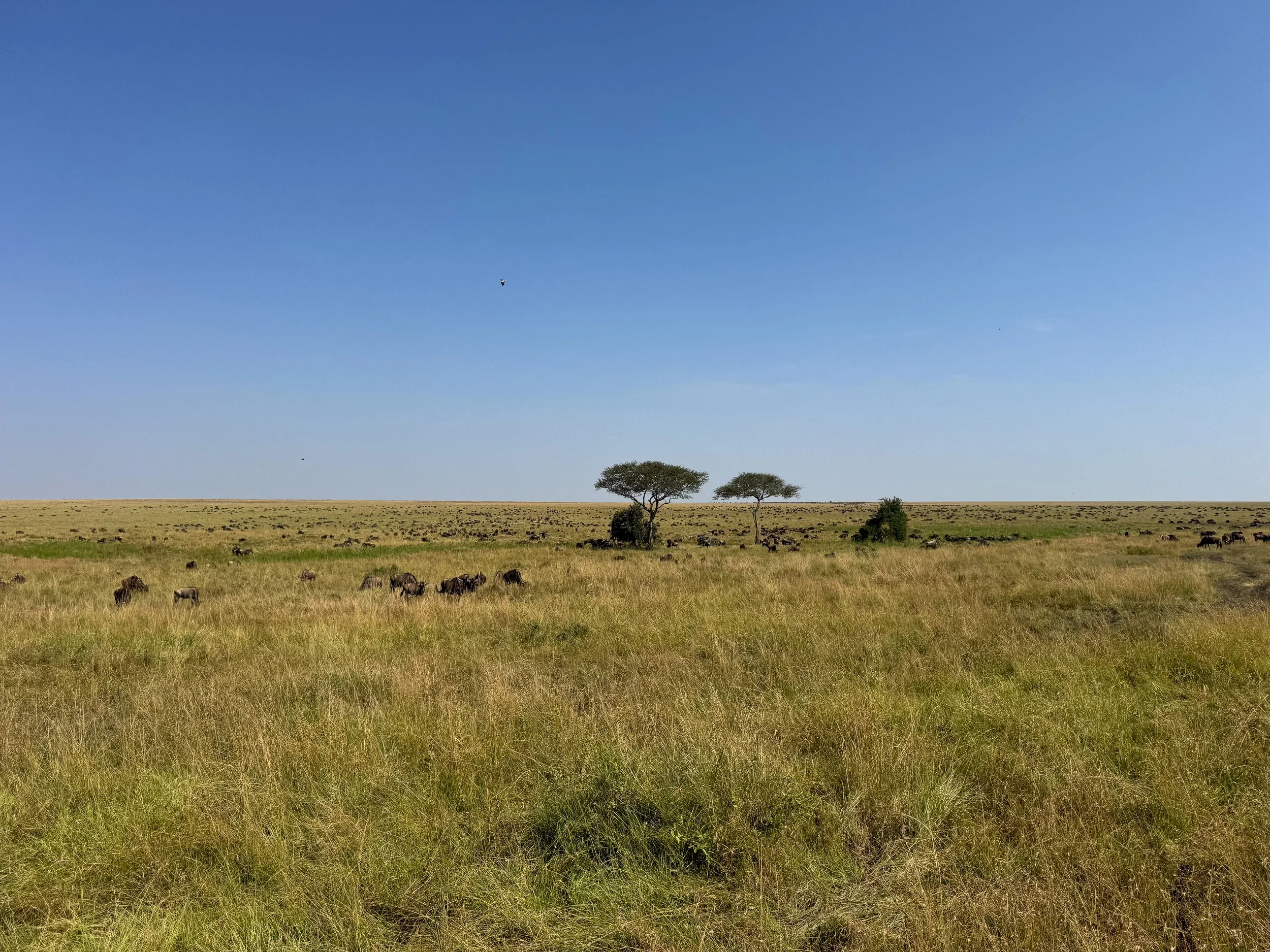
The Great Migration. The Great Migration is the largest migration event on the planet. Over a million wildebeests migrate alongside hundreds of thousands of zebras and antelopes from the Serengeti to the Maasai Mara in search of food and water. We witnessed the incredible event unfold across the vast landscape. Organized lines of wildebeests snaked across the savanna, trotting and honking as they migrated. A herd passed by a pride of male lions and later crossed the crocodile infested Mara River. Mass herds of wildebeests, zebras and antelopes gathered in the savanna grazing on grasses after migrating long distances.
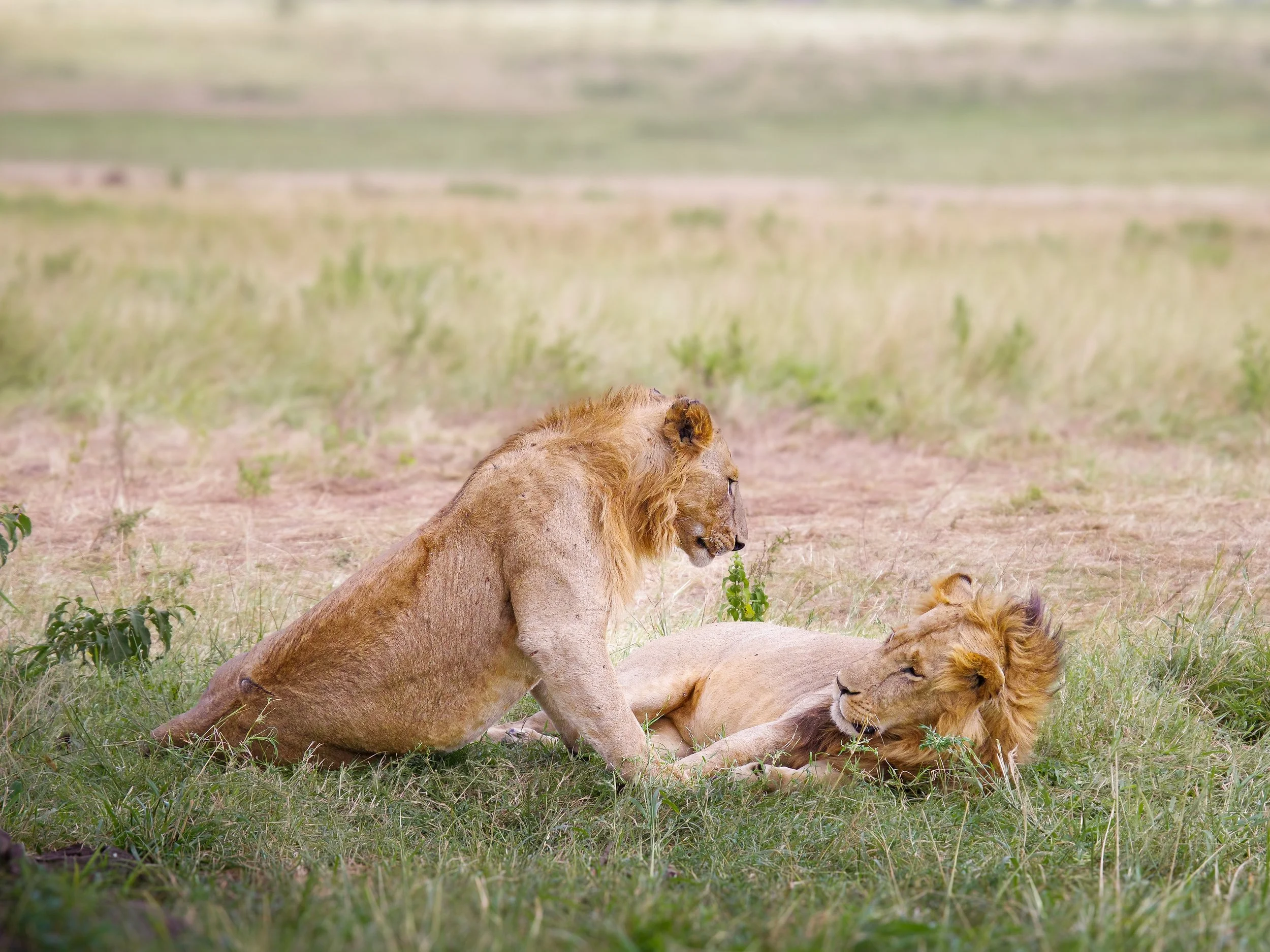
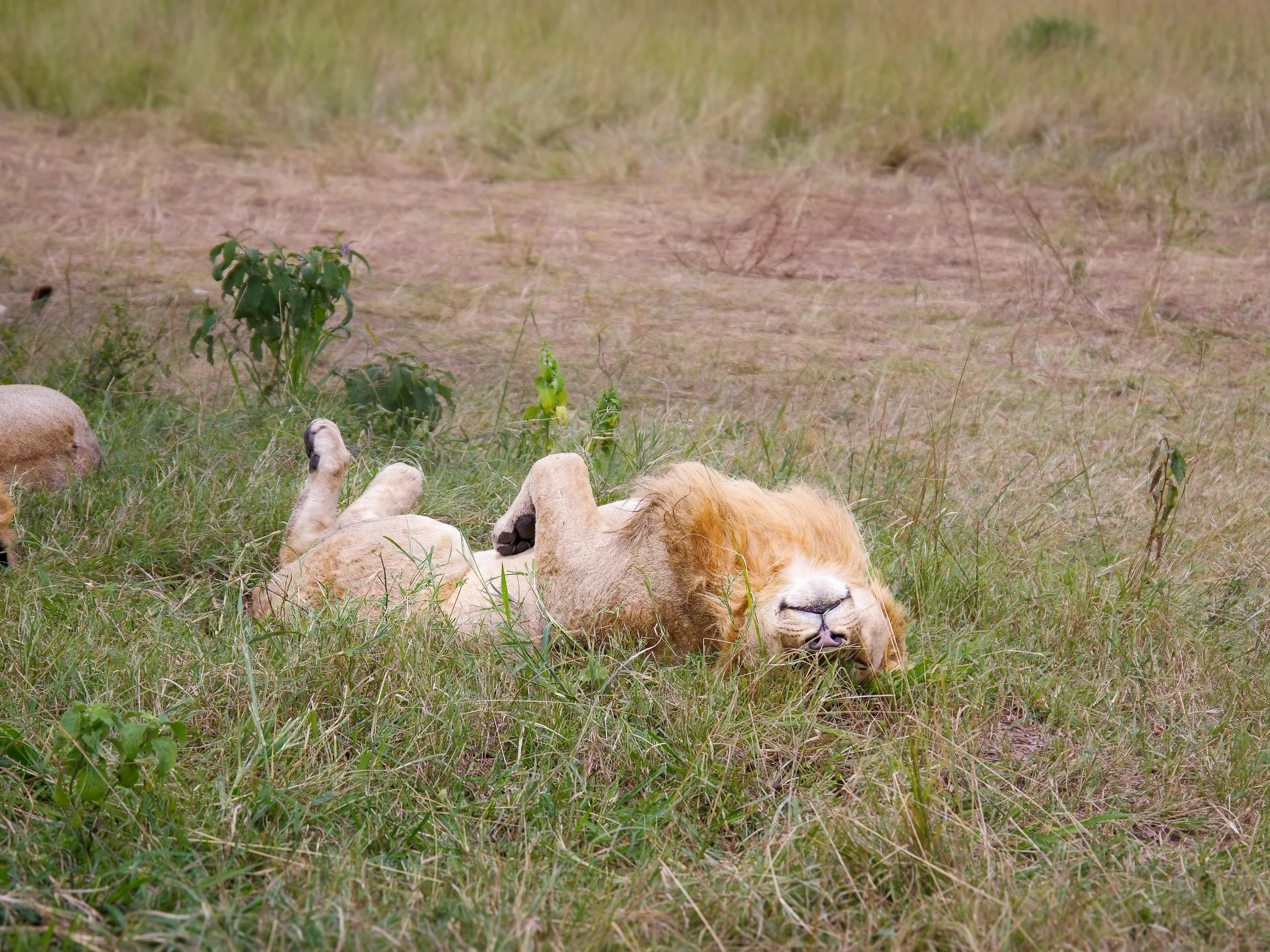
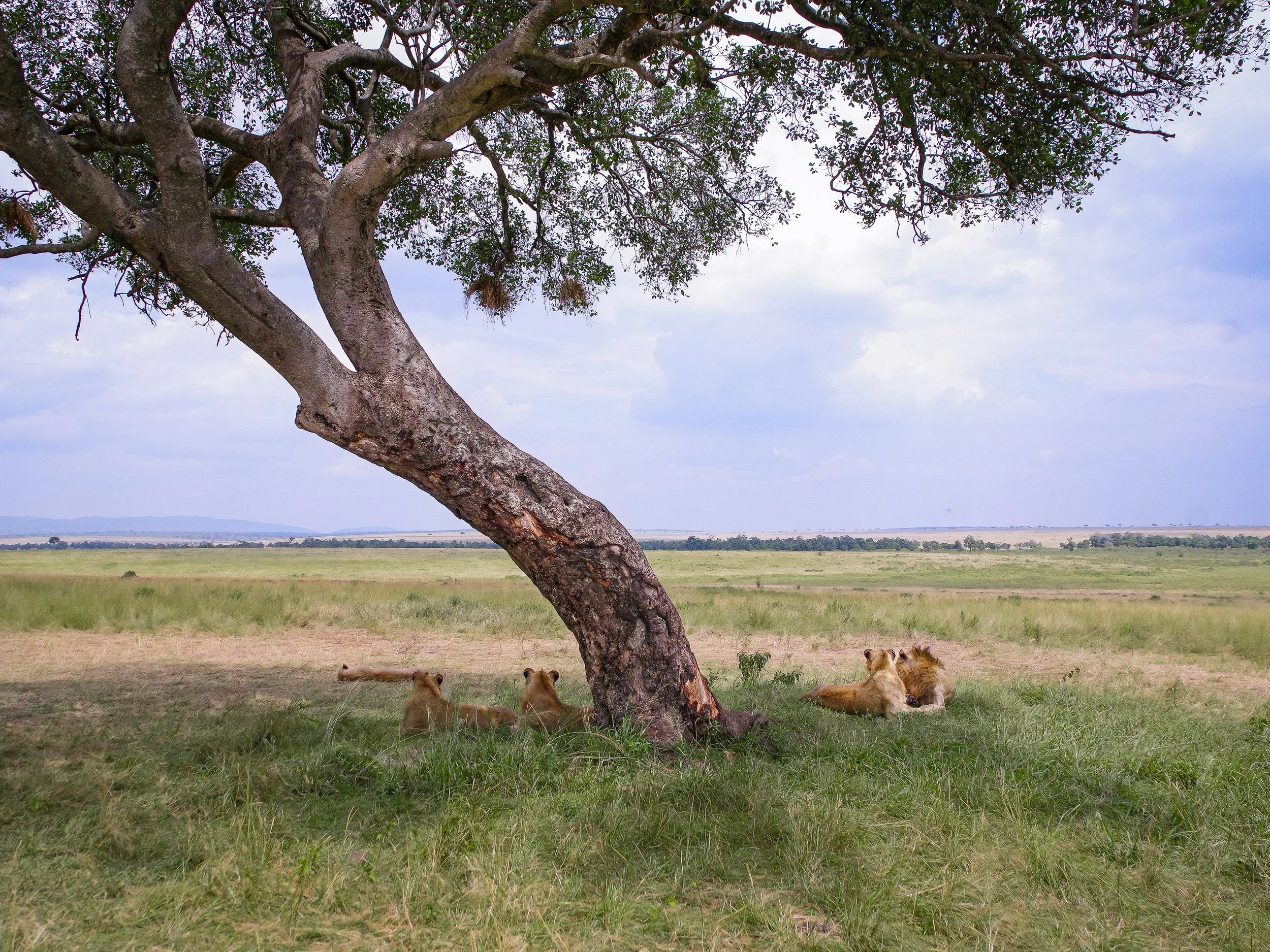
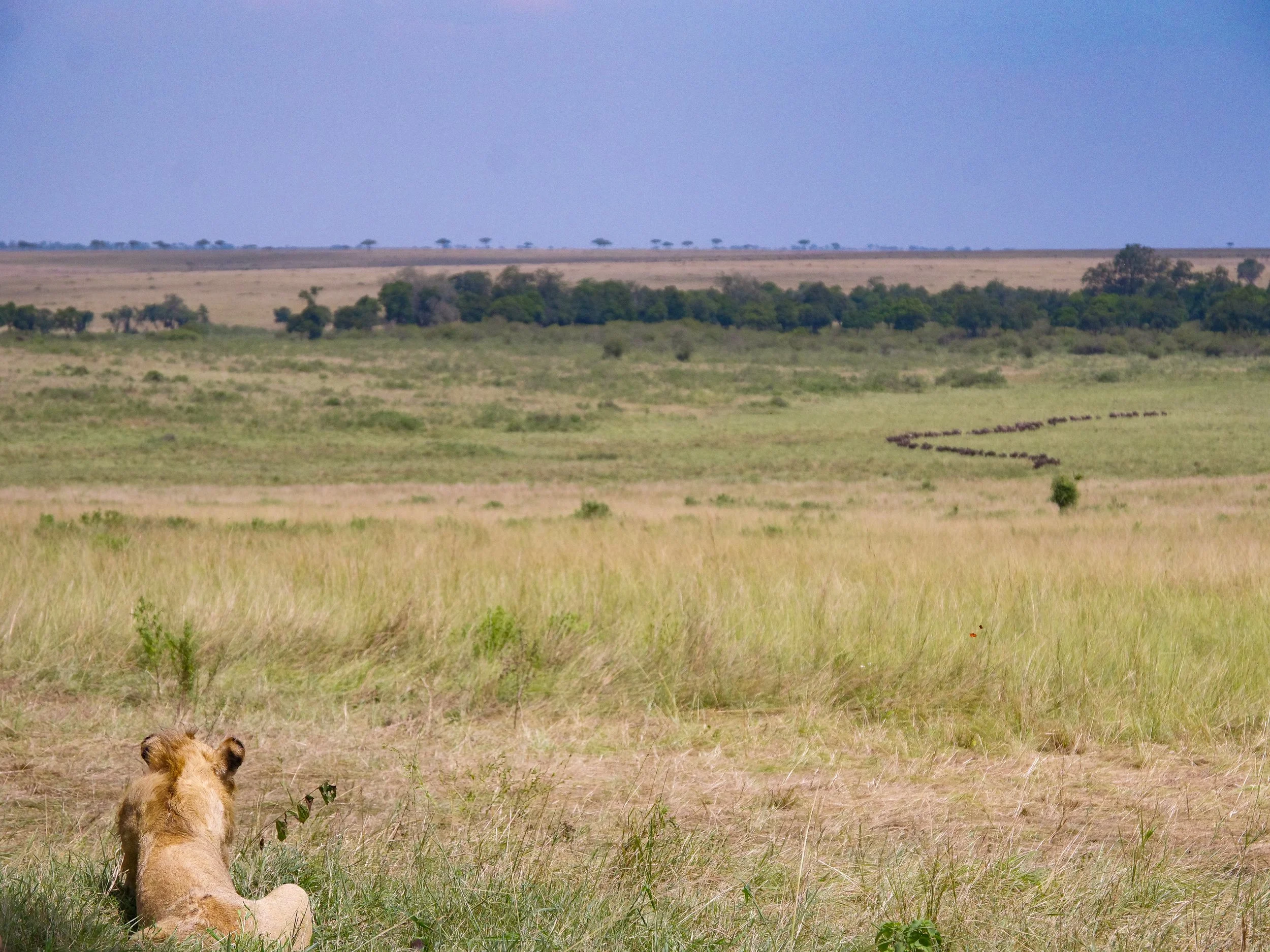
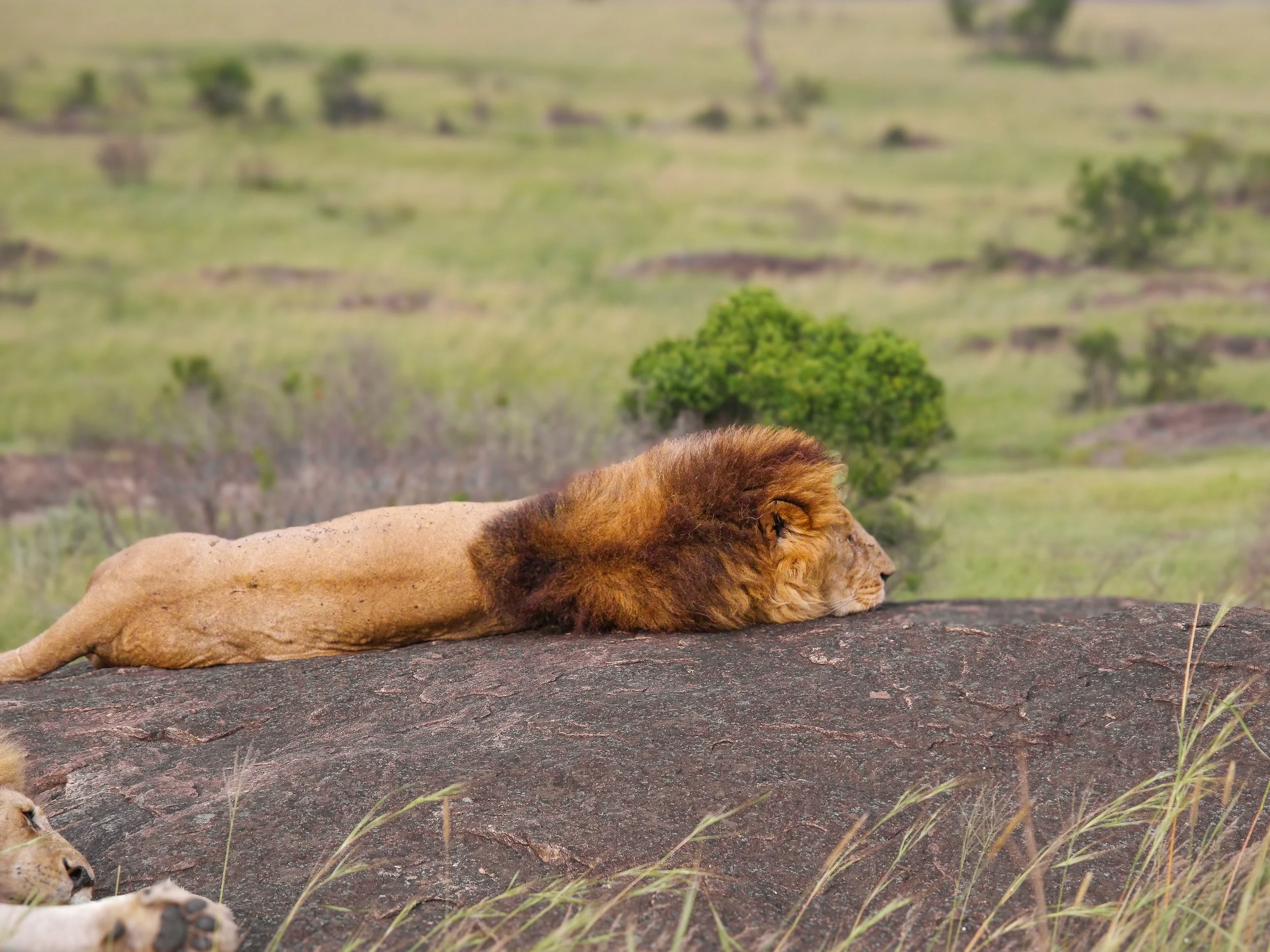
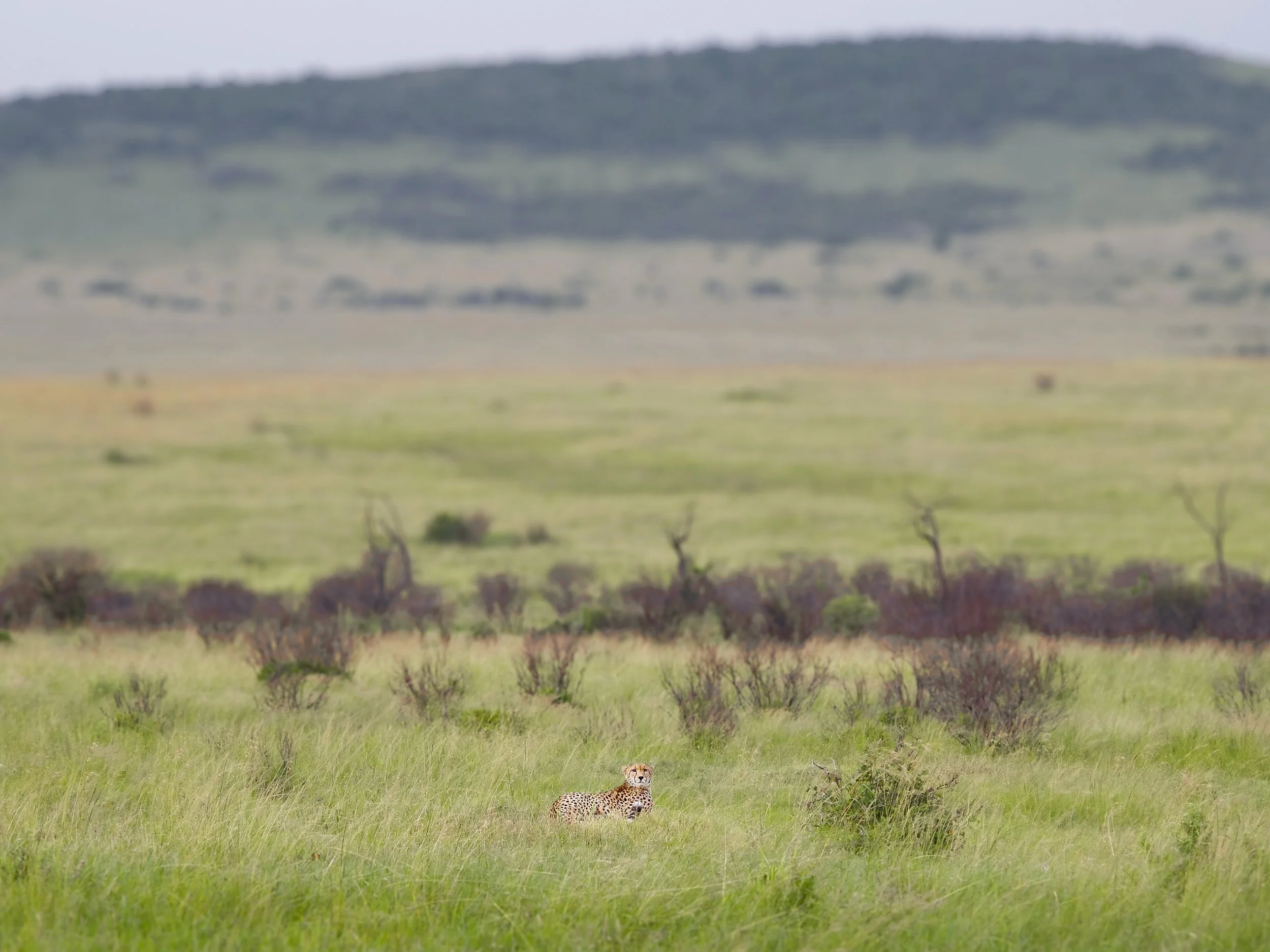
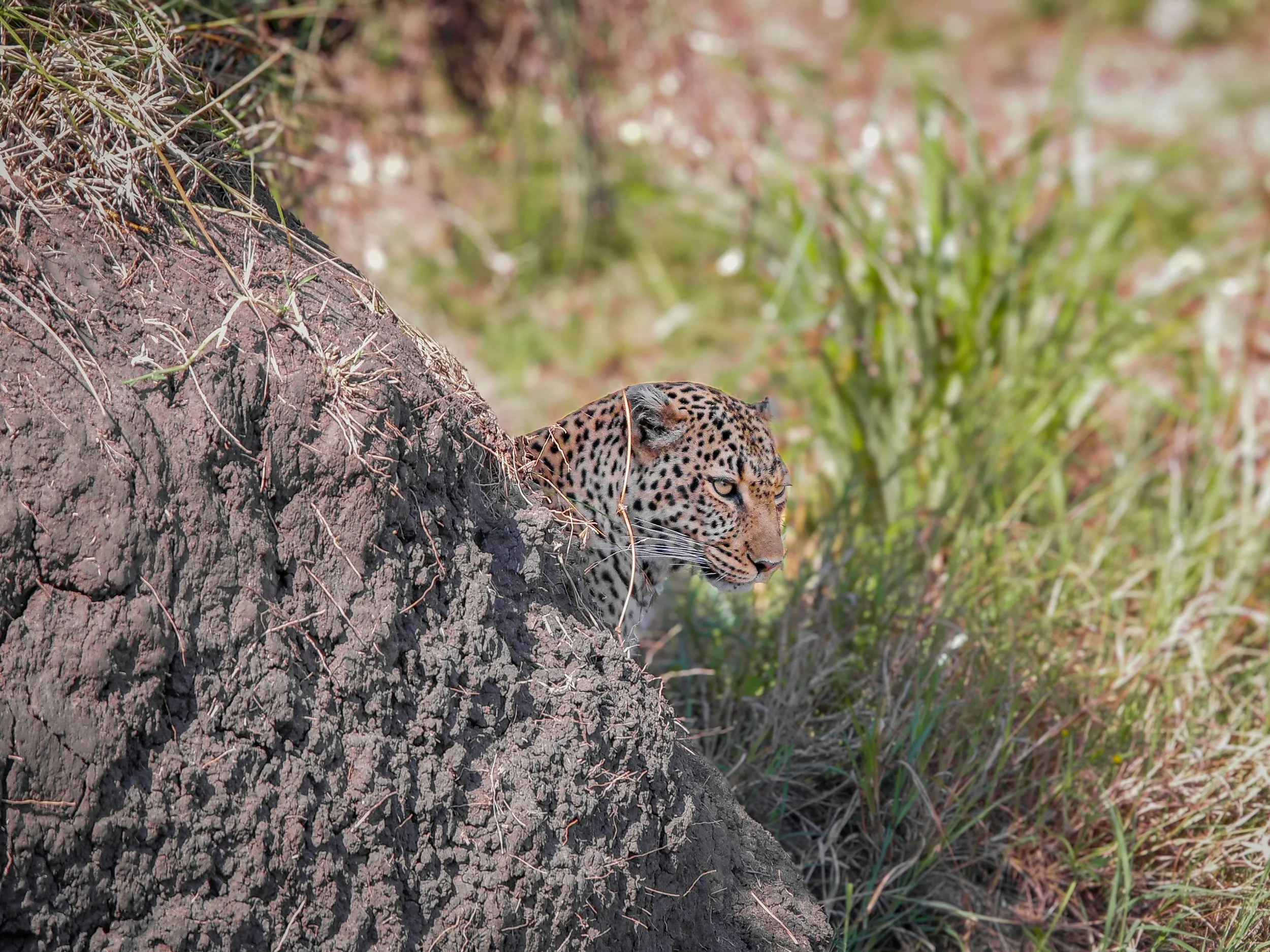
Predators & Big Cats. The Maasai Mara is known for its high concentration of predators and big cats, especially during the Great Migration. Lions were a common sight while cheetahs and leopards were more elusive.
Lions. These majestic animals are a familiar sight in the Maasai Mara. We spotted several pairs enjoying afternoon cat naps and watched as a pride rested under a tree as a herd of wildebeests migrated past. The devoured carcass of a buffalo alerted us to another pride. Through our binoculars, we spotted a male, a cub and several lionesses prowling on distant rocks.
Cheetahs & Leopards. A beautiful cheetah sat on a small hill overlooking the landscape. It groomed its orange black spotted fur while twirling its tail and looking around. Another quickly trotted across the savanna into the tree covered highlands. A well hidden leopard napped in the shade of a grassy riverbank, waking up briefly to change position.
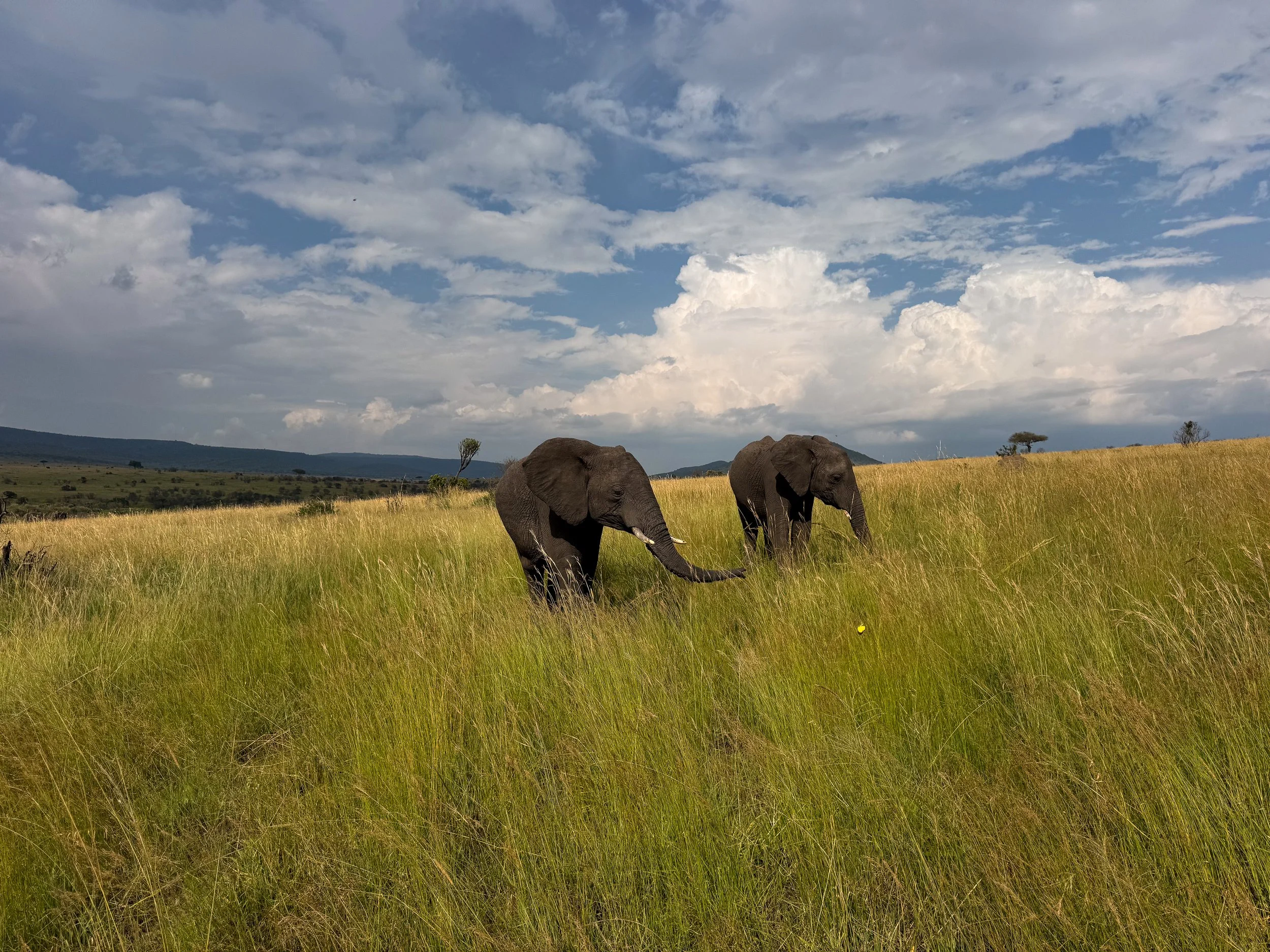
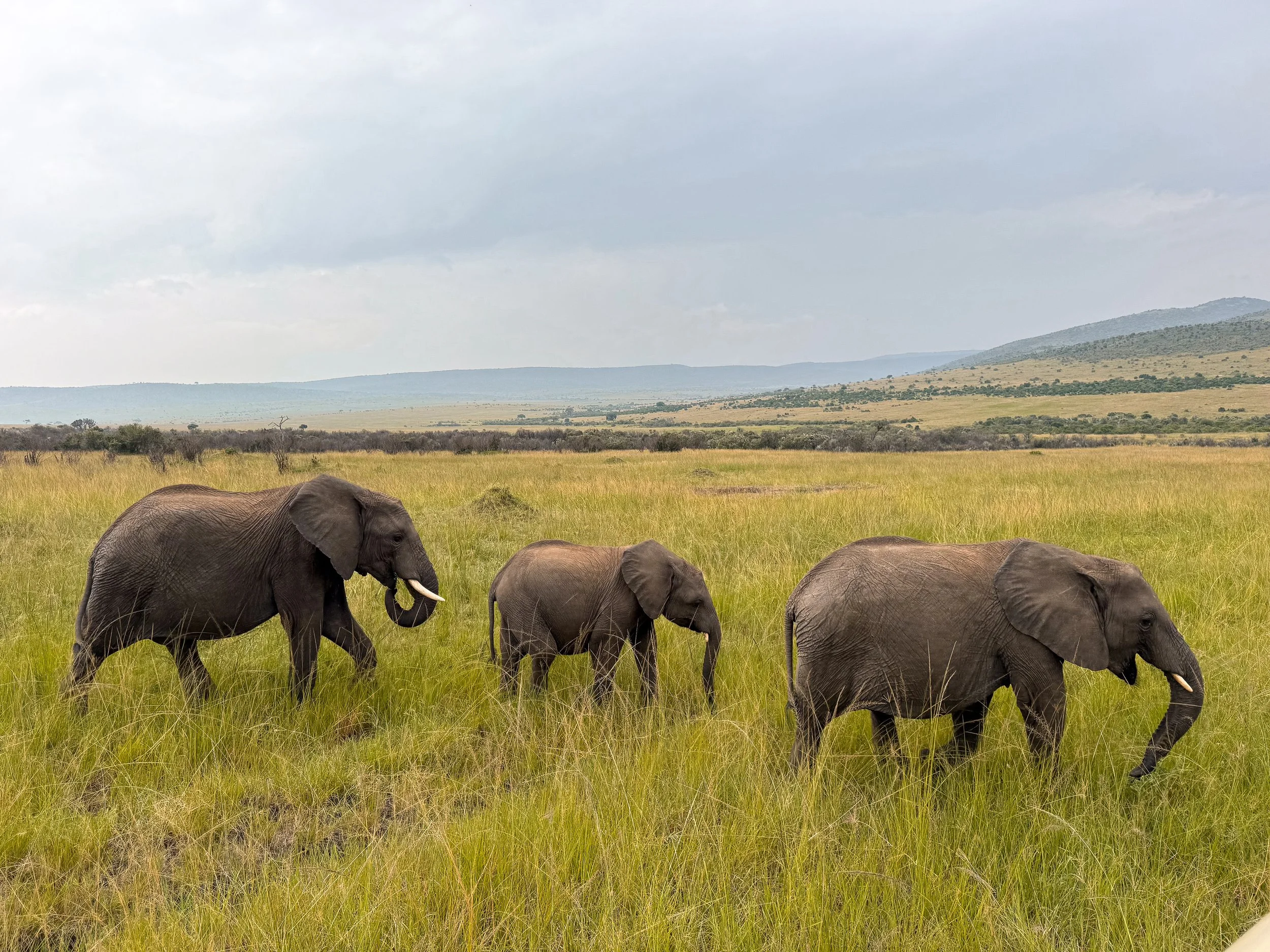
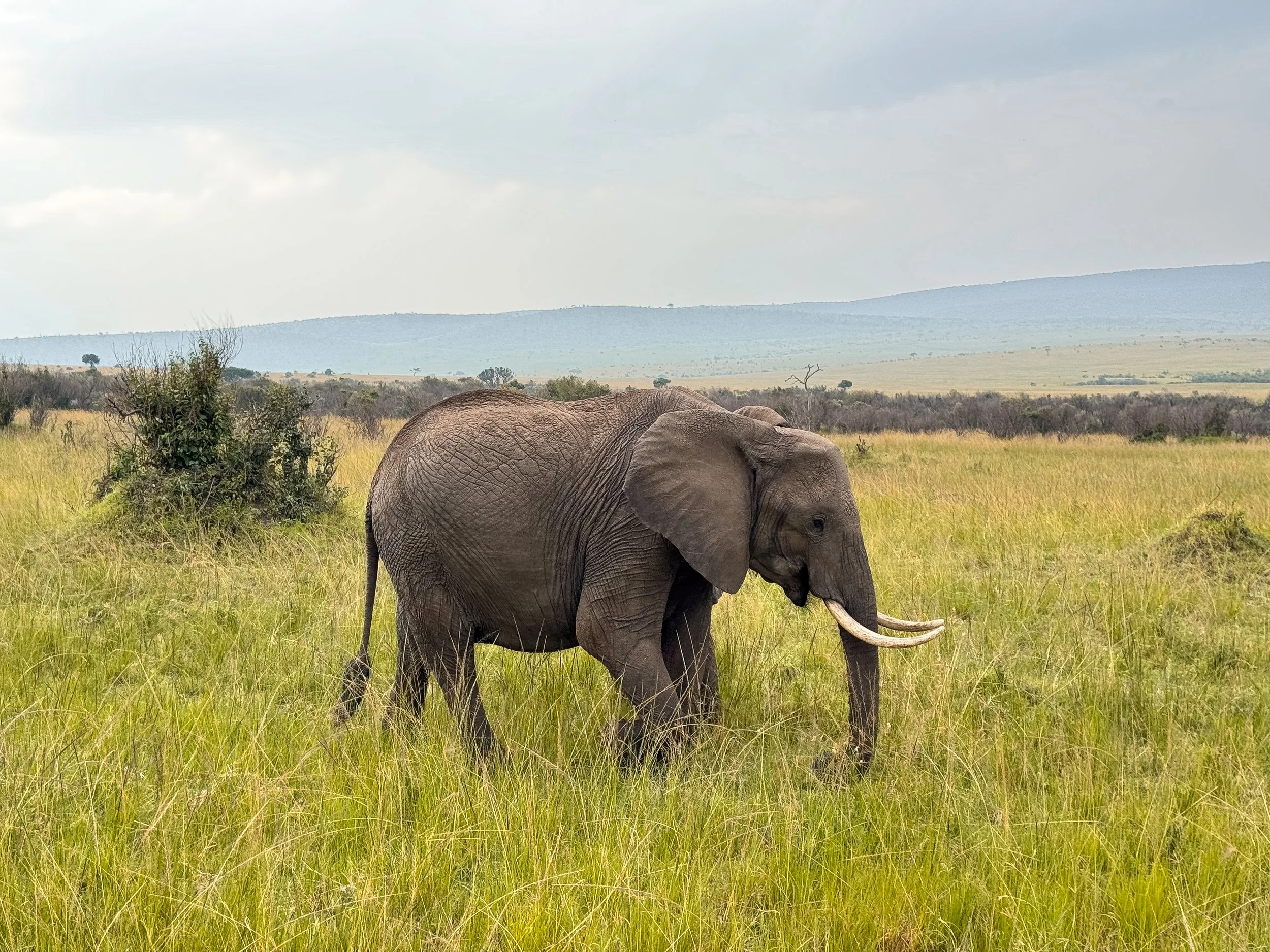
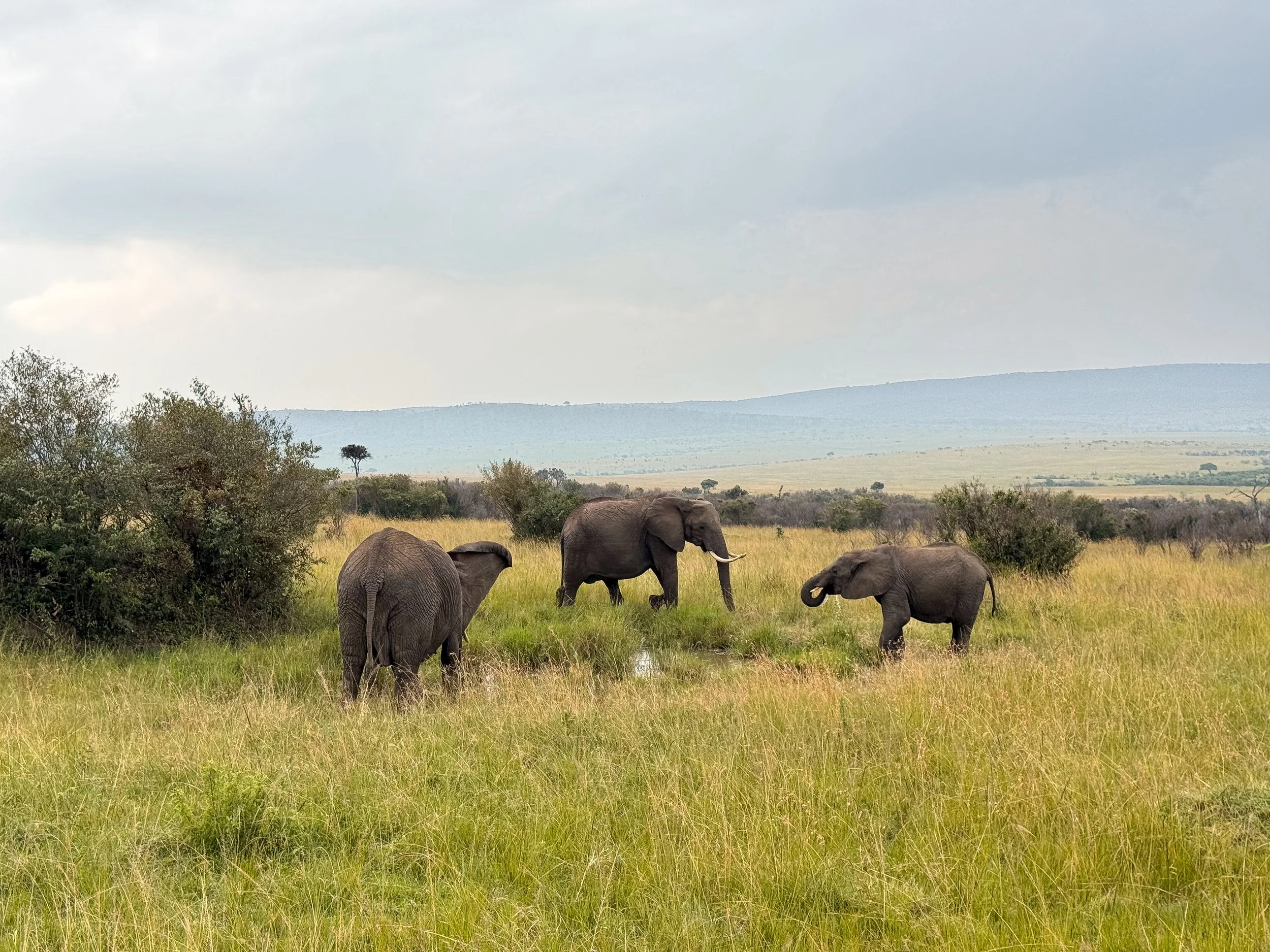
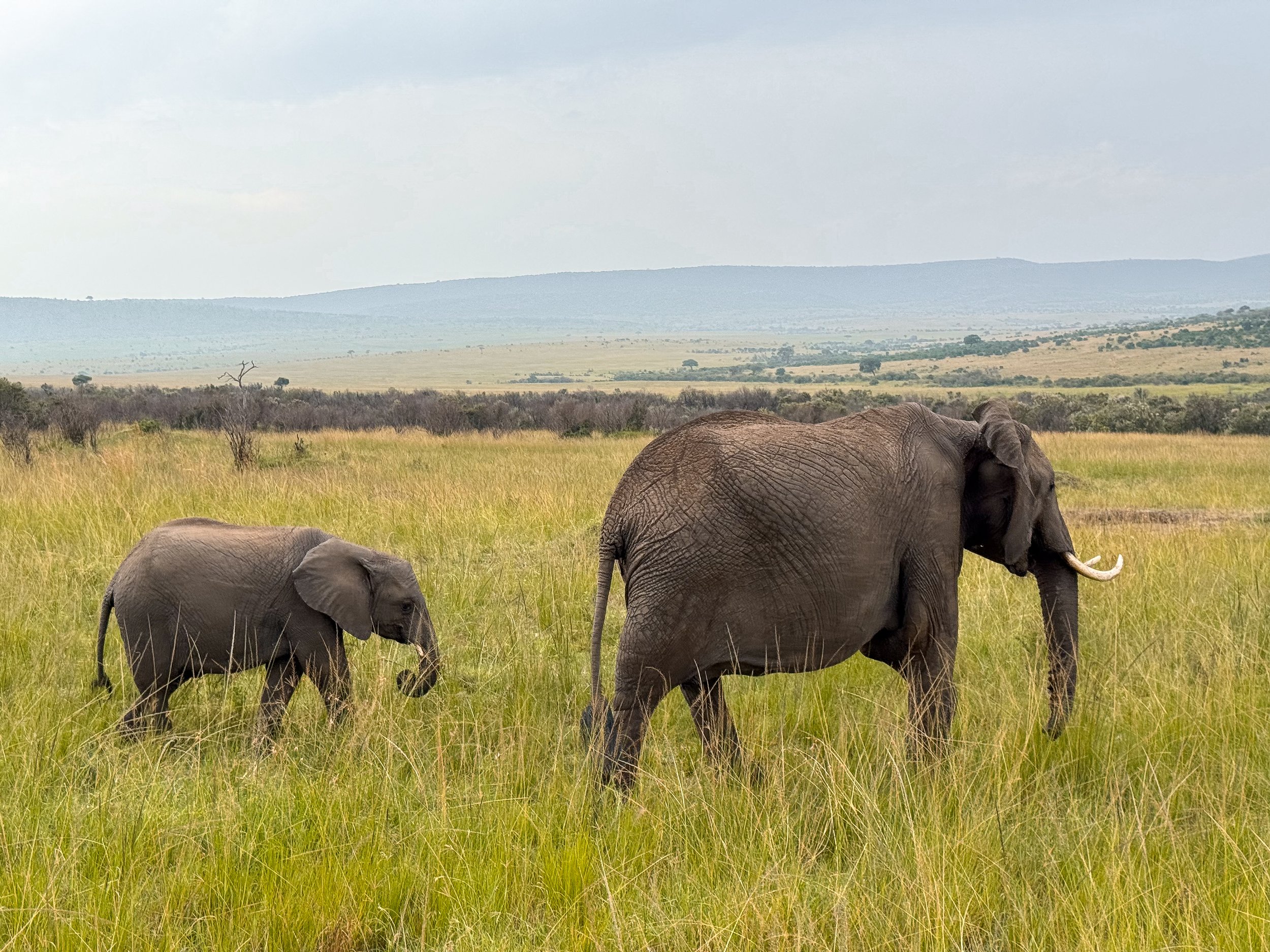
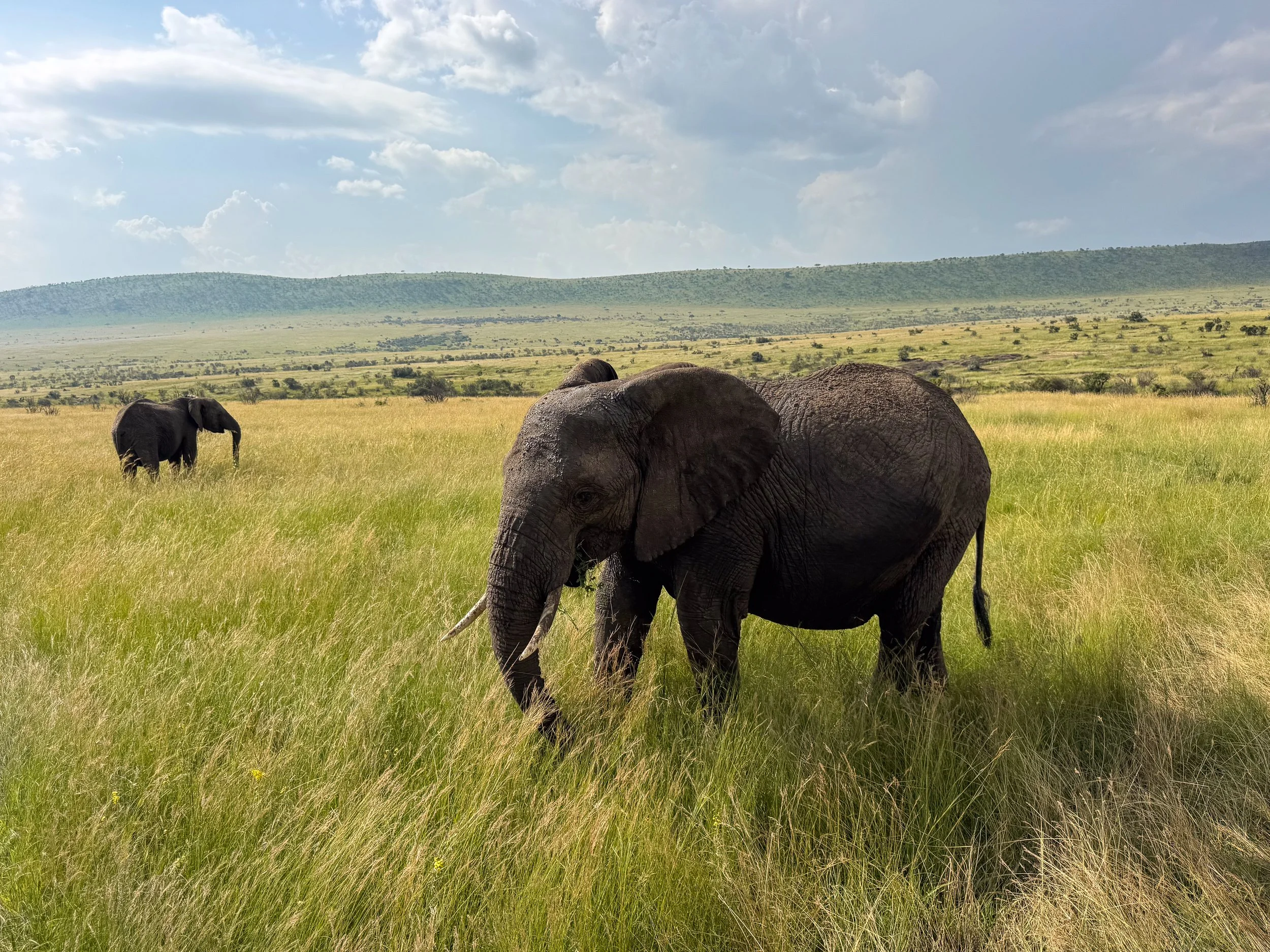
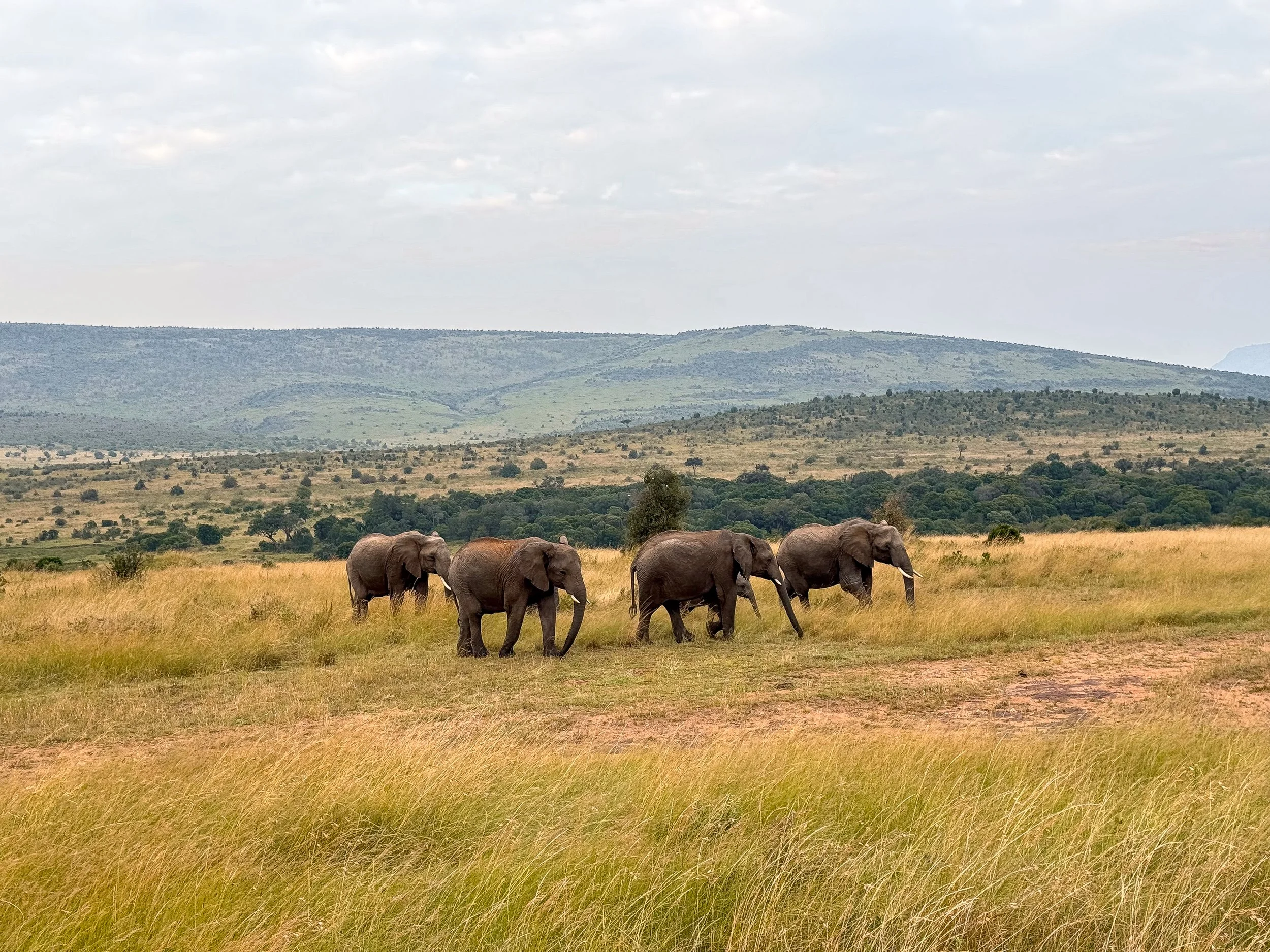
African Elephants. Parades of African Elephants grazed in the grasses, drank from watering holes and rolled in mud puddles of the Maasai Mara. Two parades marched by allowing for an up close encounter. One of the babies even wanted to play, running towards us and waving its trunk before trotting back to its mama. The remaining adults and calves joined a larger group gathering in the distant plains.
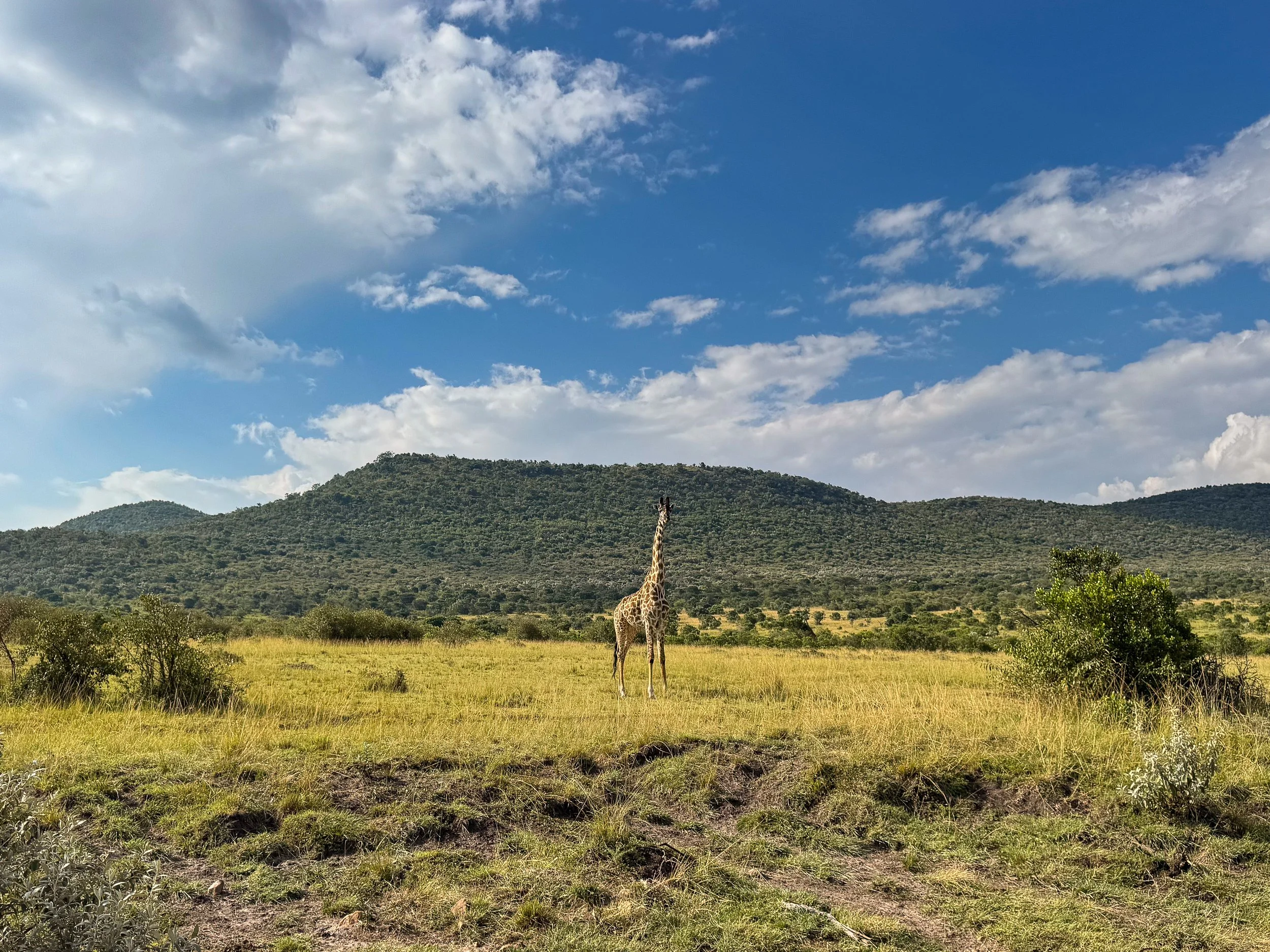
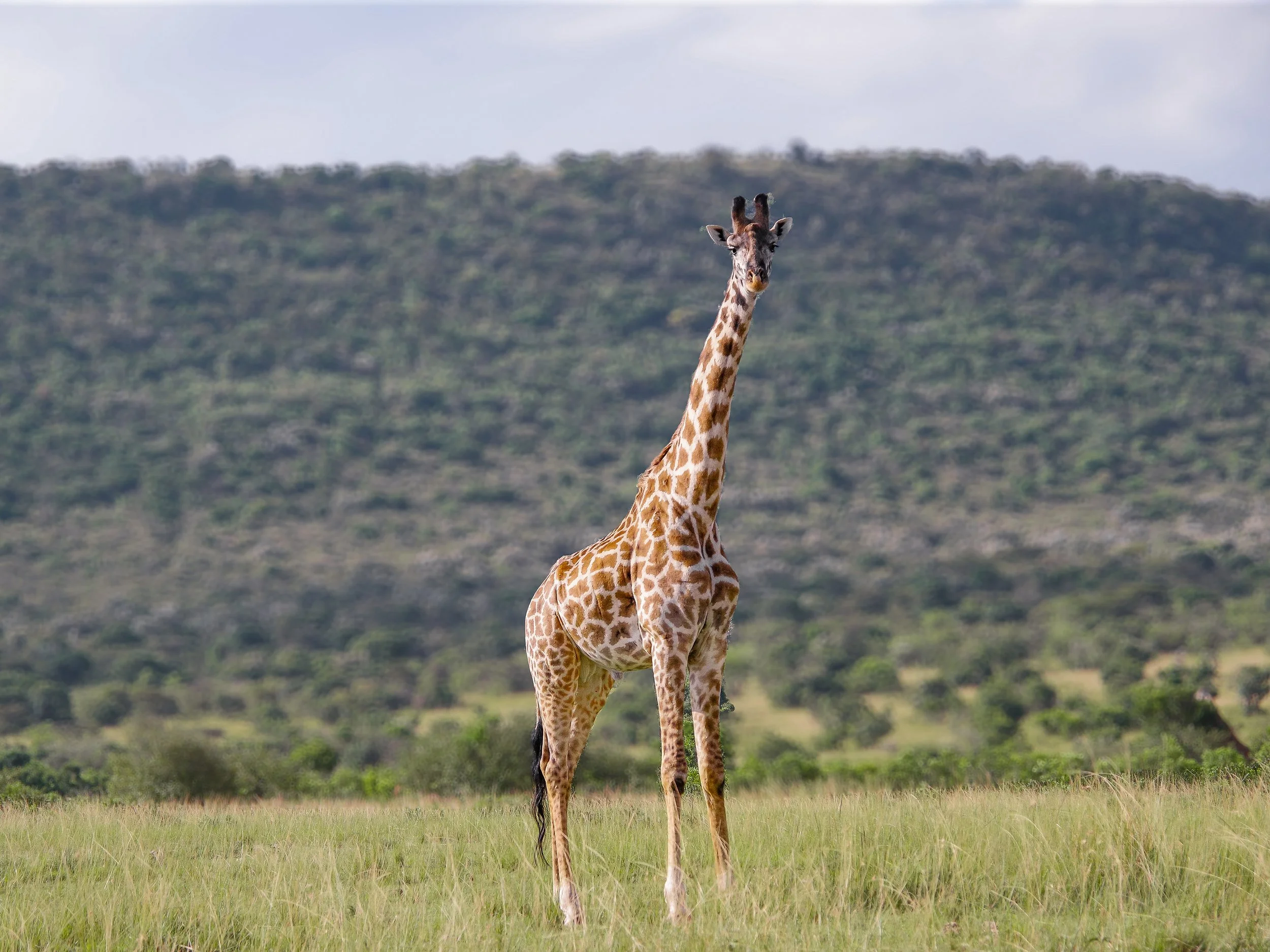
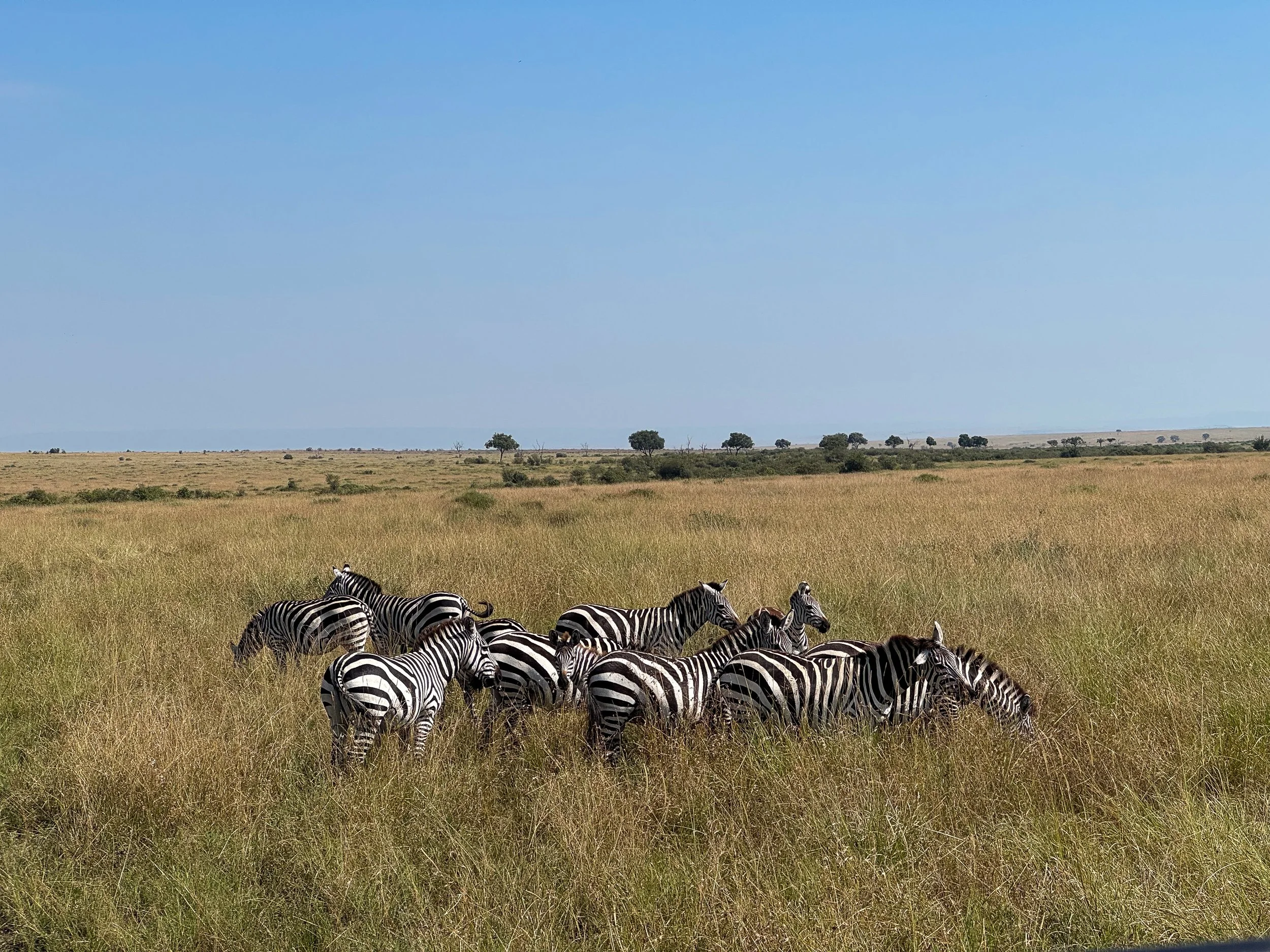
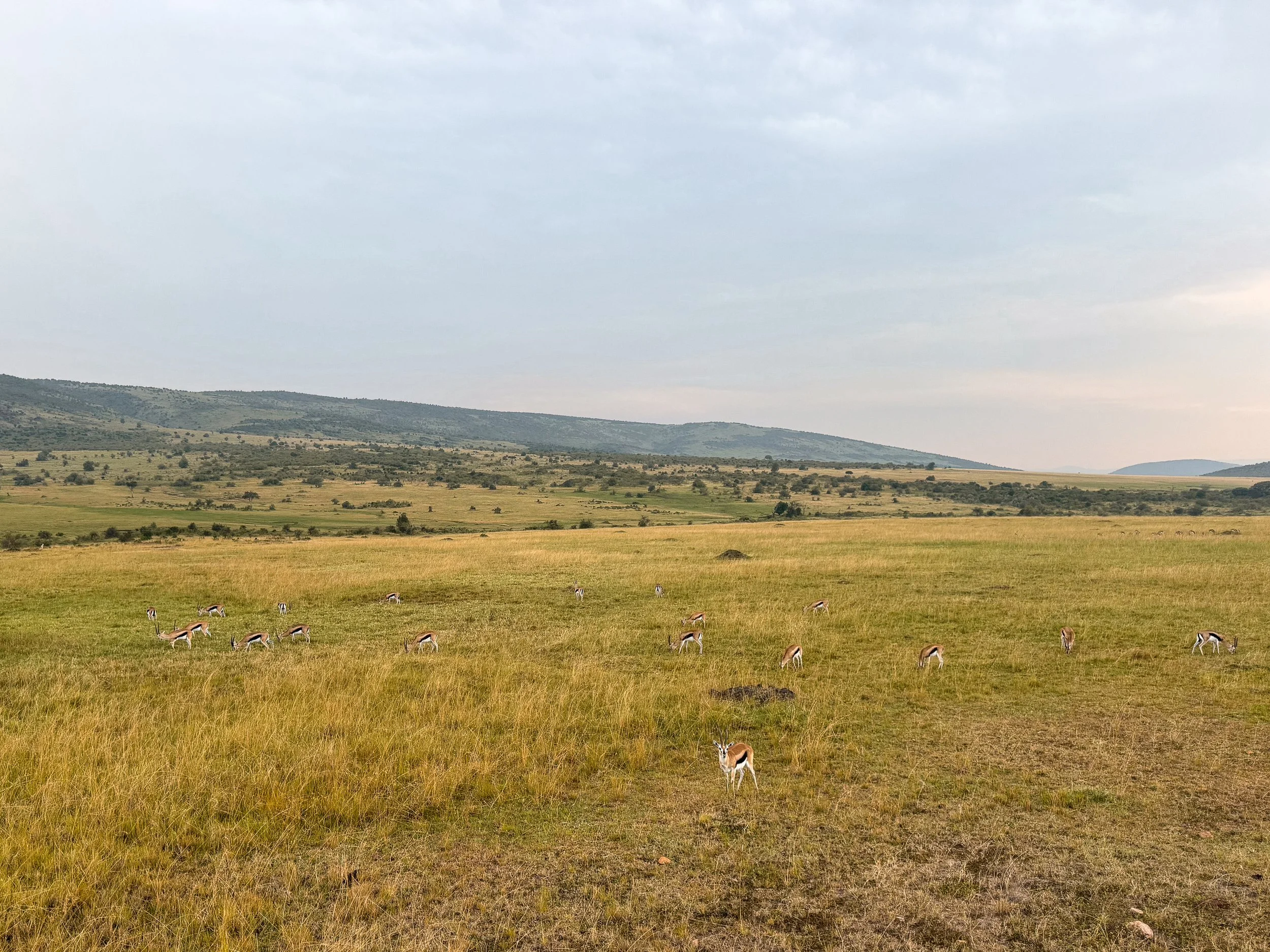
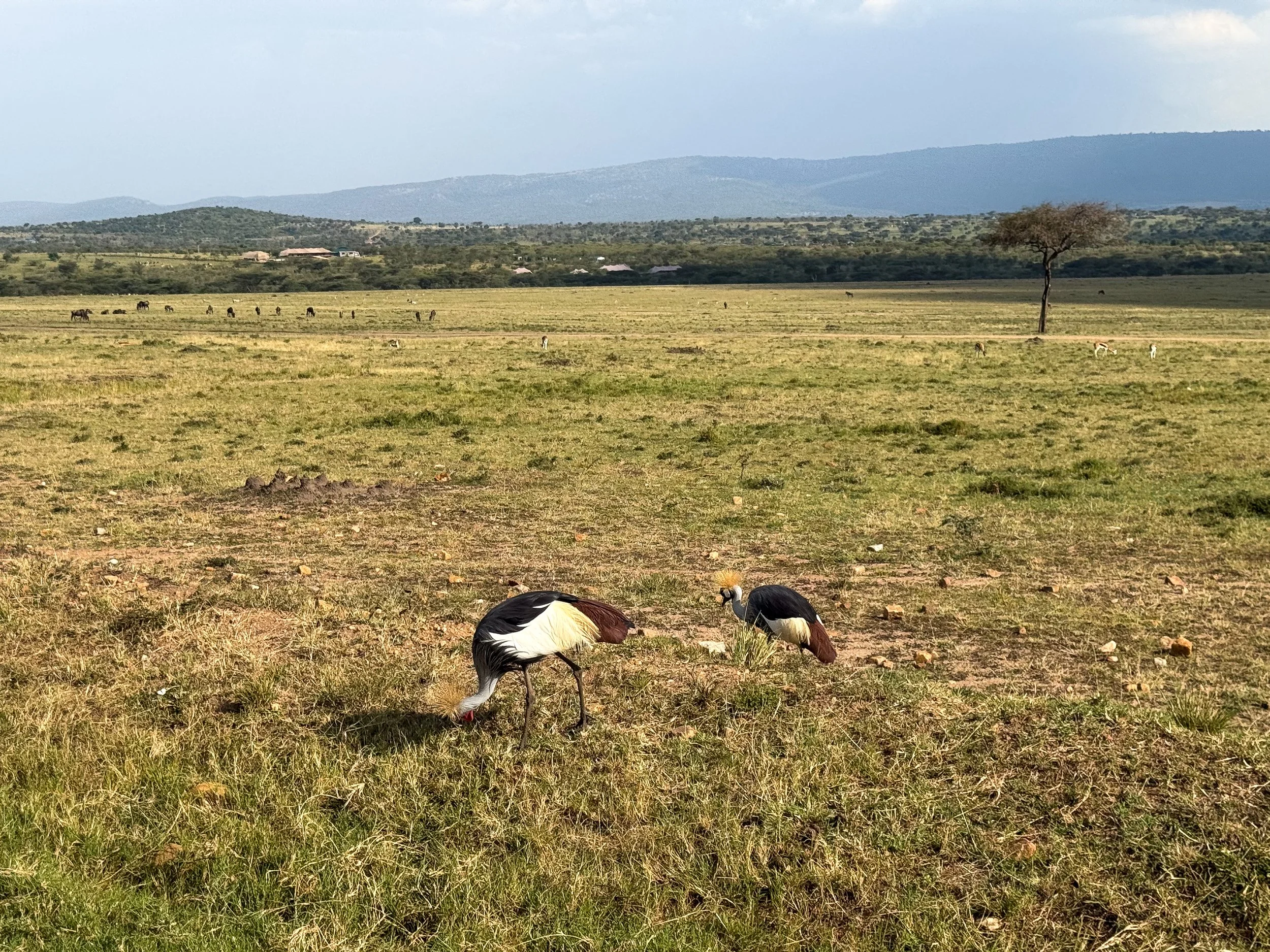
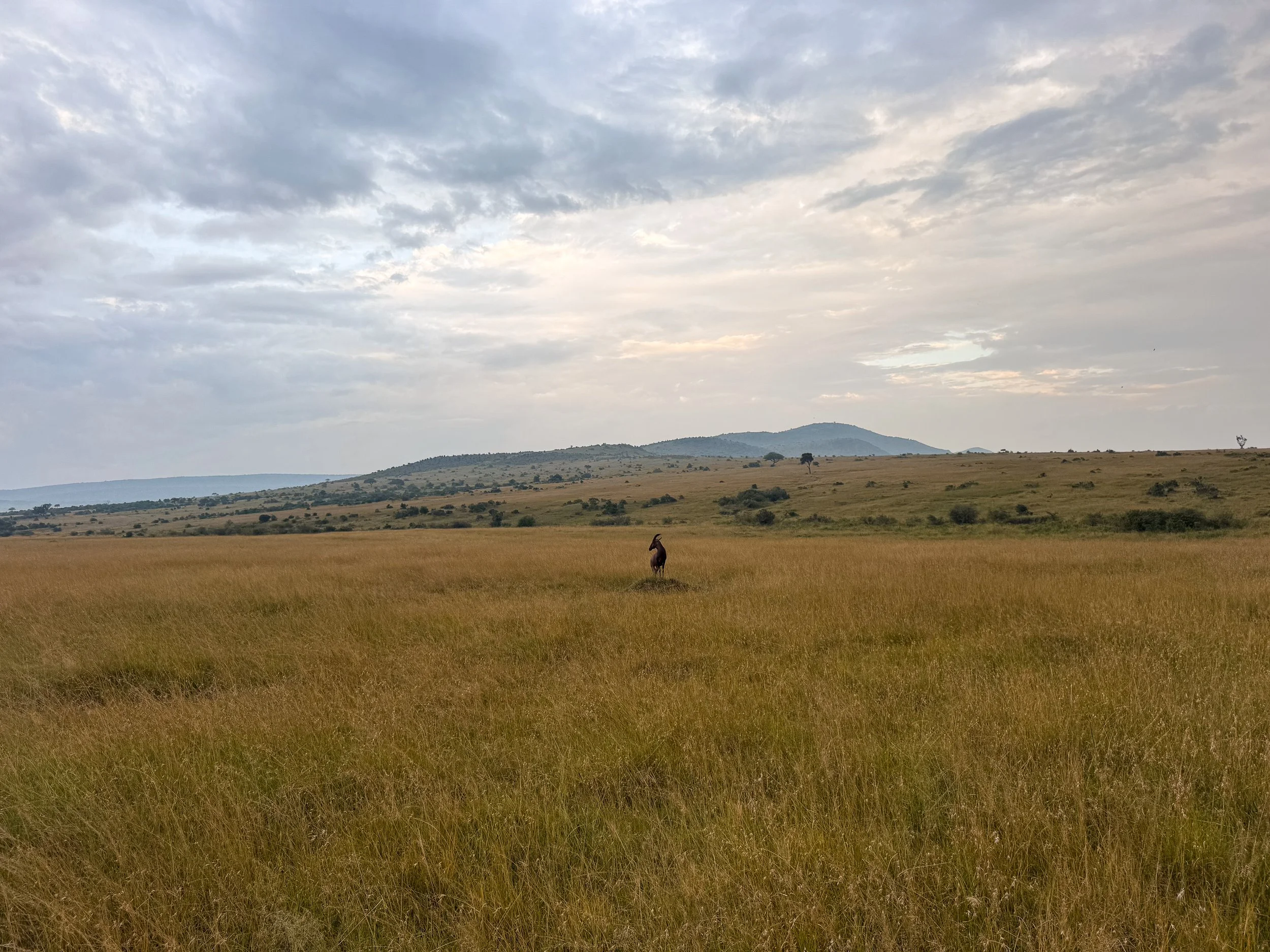
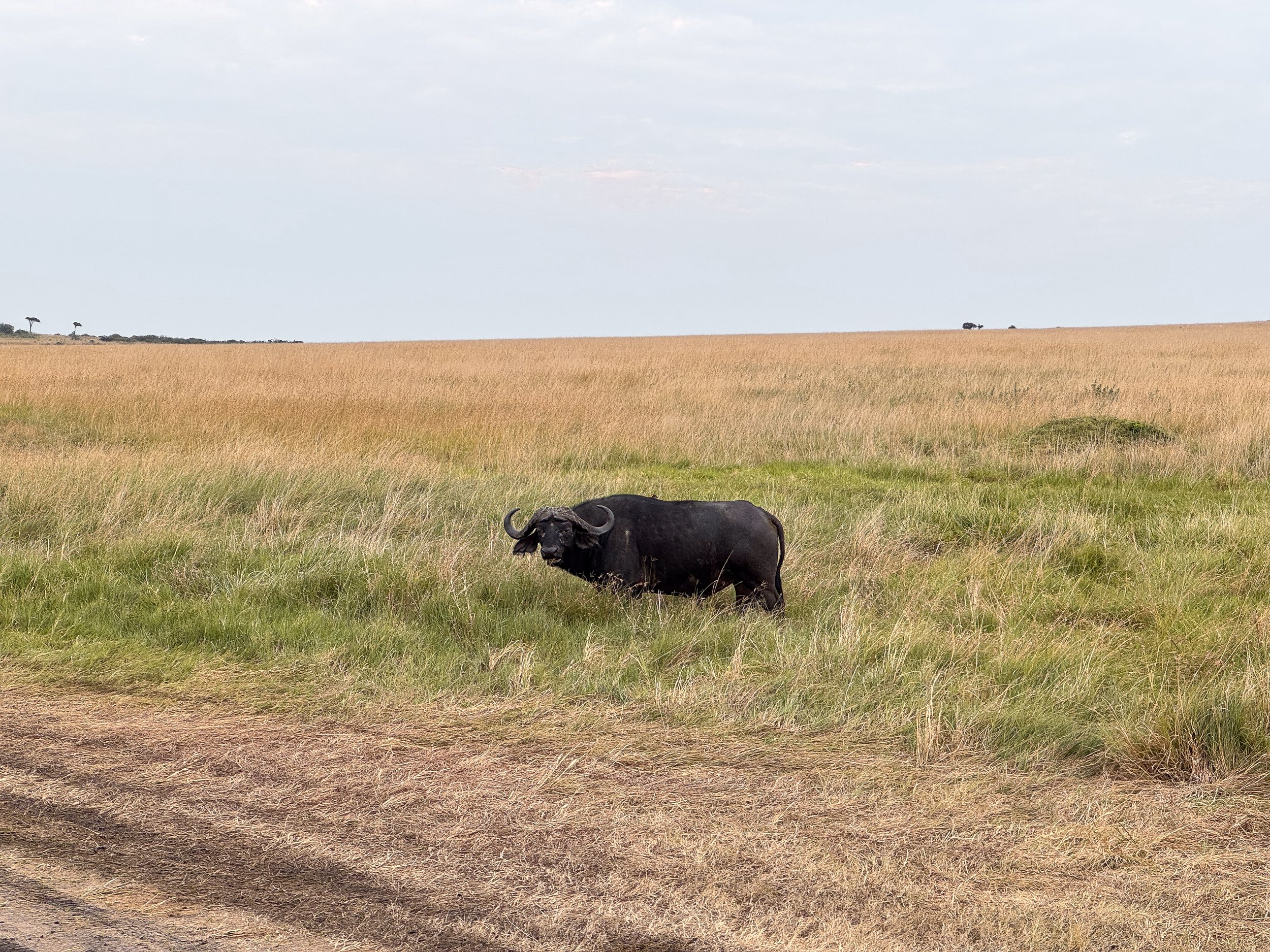
Big & Small Game. We drove deeper into the Maasai Mara with our windows ajar and roof hatch opened. We spotted lone animals and herds of impala, zebra, wildebeest, hartebeest, antelopes and buffalo grazing in the savannas. Giraffes stood majestically in the bush, ostriches ruffled their feathers, jackals scavenged for food, warthogs scurried through the grasses, baboons stared off mischievously and Ugandan Crowned Cranes strutted along the roadside.
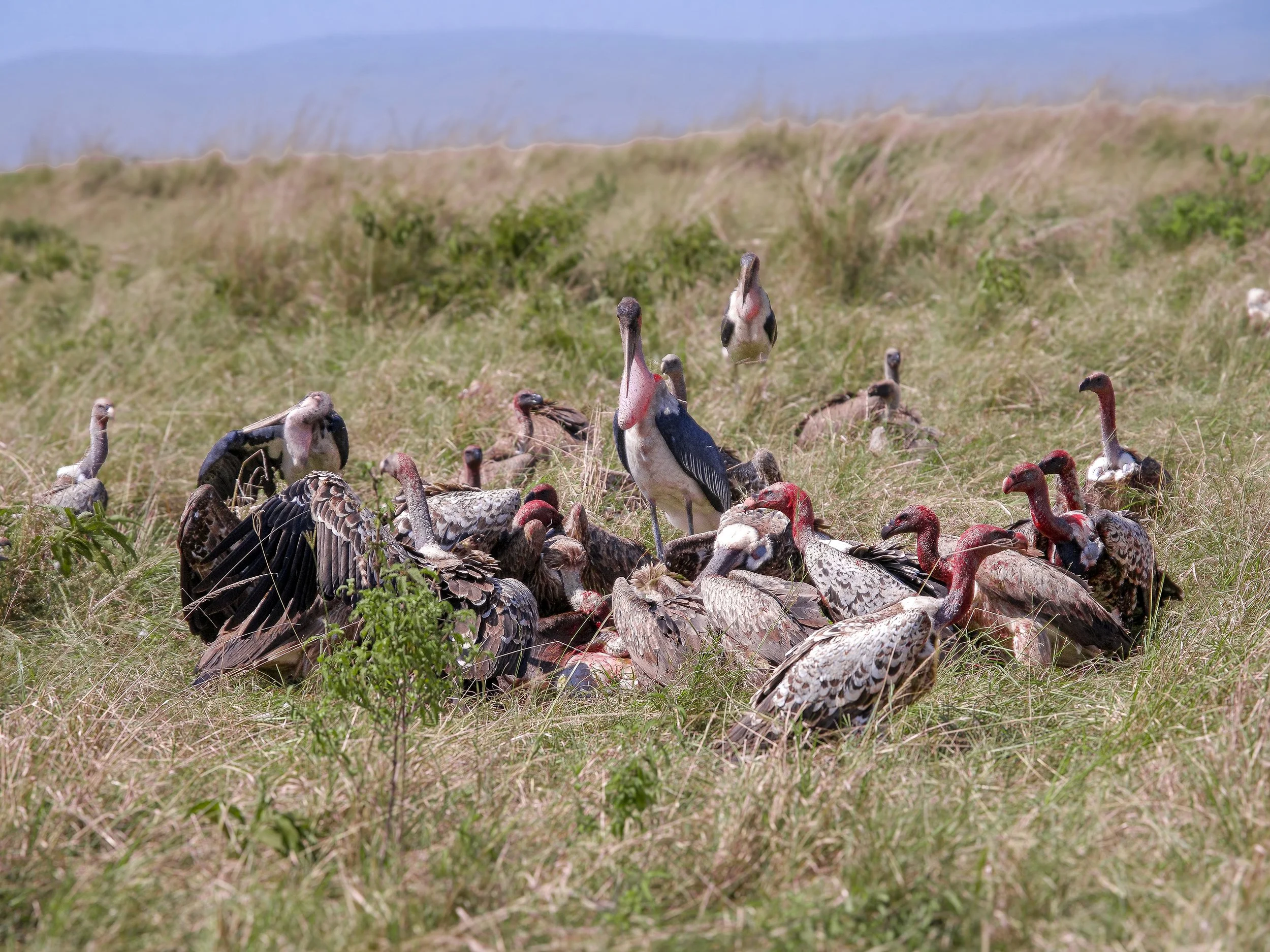
Birds of Prey. Vultures and storks circle in the sky and nest in trees waiting to scavenge on leftover remains. They descended on a freshly killed wildebeest as a pair of lions rested in the distance. The birds ferociously ripped apart the carcass, bloodying their faces in the carnage.
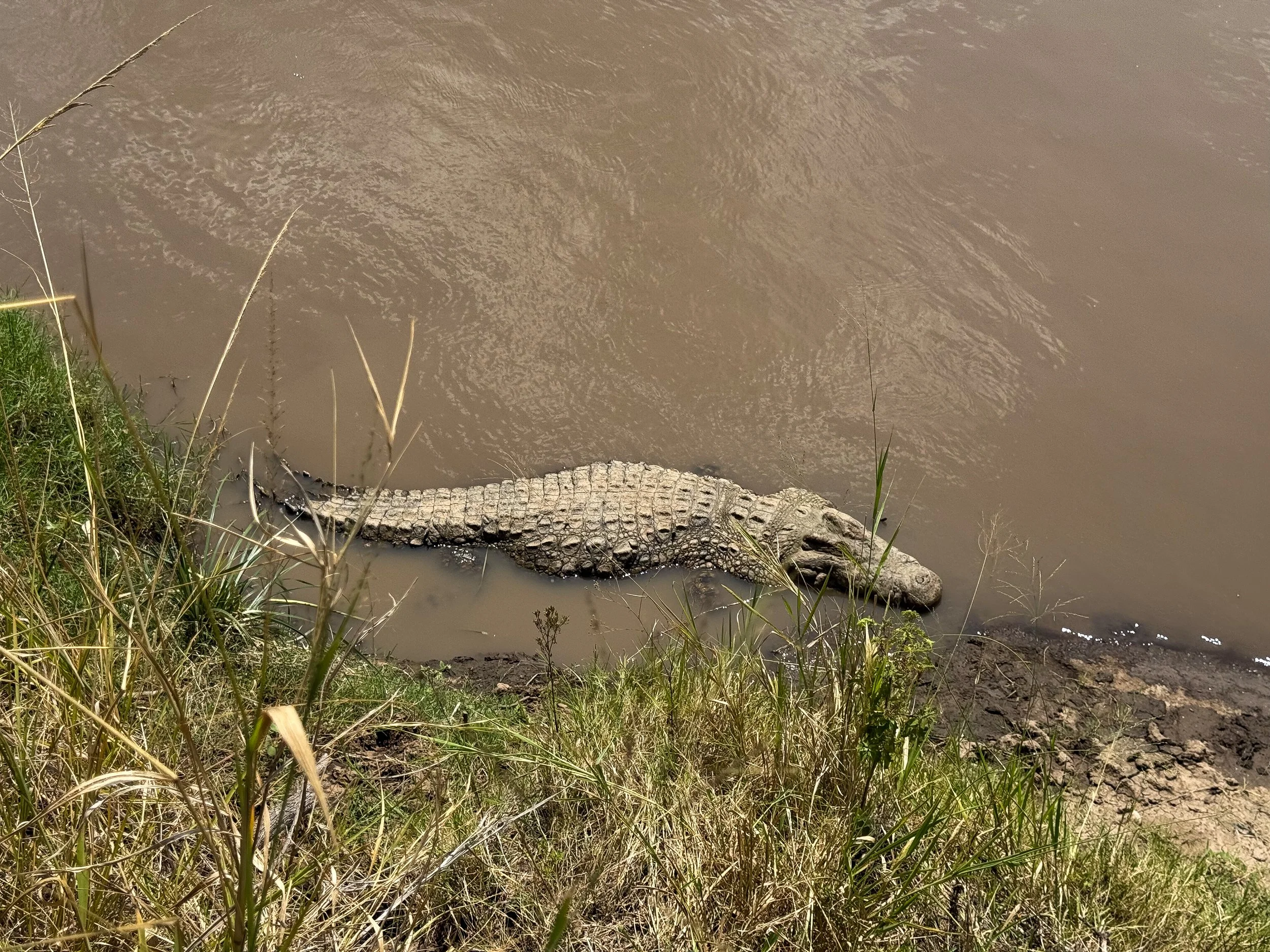
Mara River. The Mara River is one of the most dangerous parts of the Maasai Mara. A heavily armed ranger led us along its banks on a bush walk. Families of hippopotamuses bathed in the water, lifting their faces and backs above the surface, occasionally coming ashore. Nile crocodiles, both large and small, sunbathed along its banks while waiting for their next meal.
Guides. A guide is needed to visit the Maasai Mara. One was included with our multi day safari tour.
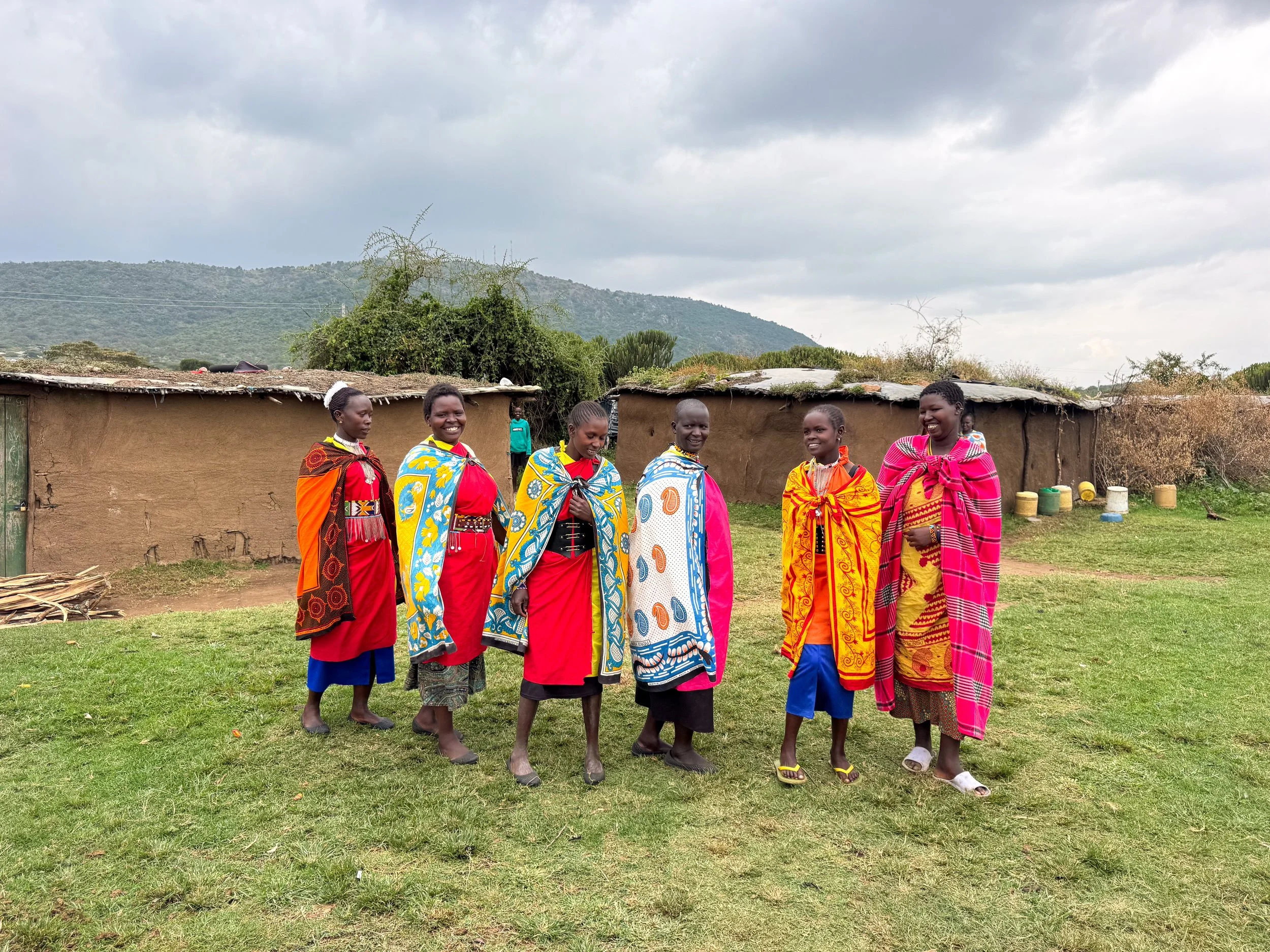
Maasai Village Walk
The Maasai are a tribal group native to southern Kenya. We walked through a small village with a chief’s son learning more about their culture, traditions, way of life and reliance on cattle. The tribe wears brightly patterned shawls and colorful beaded accessories to distinguish between families. Men and women each performed traditional dances, inviting us to participate. We toured a Maasai house, like all others in the village, it’s made from clay and cow dung supported by olive wood. The snug interior is compartmentalized into three small bedrooms and a kitchen. Once the village walk ended, women displayed handmade beaded jewelry and wooden animal carvings for sale.
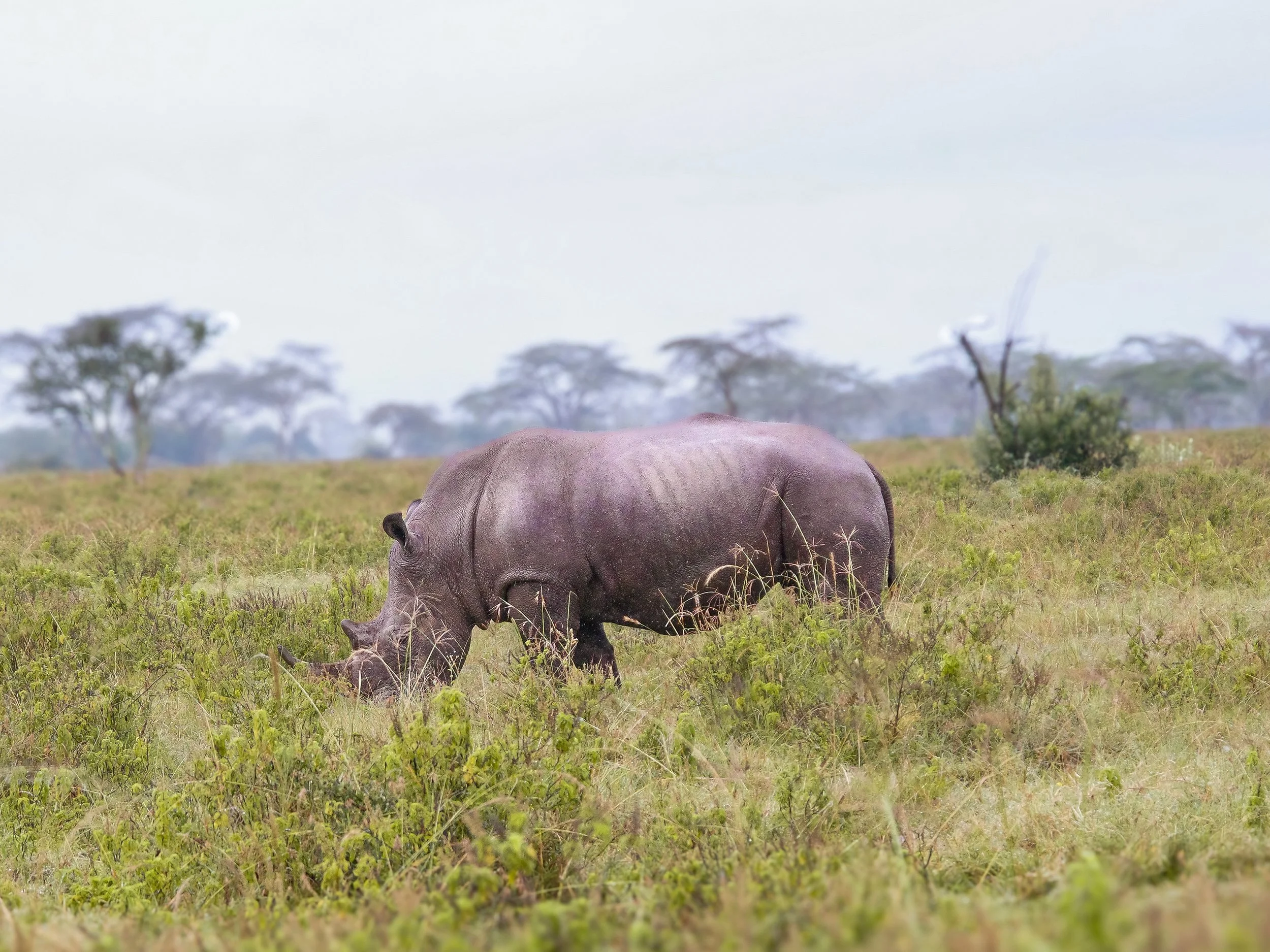
Lake Nakuru National Park
Lake Nakuru is a saltwater lake in the Kenyan highlands famed for its array of aquatic bird species, endangered rhino and giraffe populations.
Southern White Rhino. The reserve surrounding Lake Nakuru is home to a growing population of Southern White Rhinos. We spotted several on our safari around the lake. A mother and calf stood together in the bushes, a group of three grazed in a field and a full crush of six rested in the distant grasses.
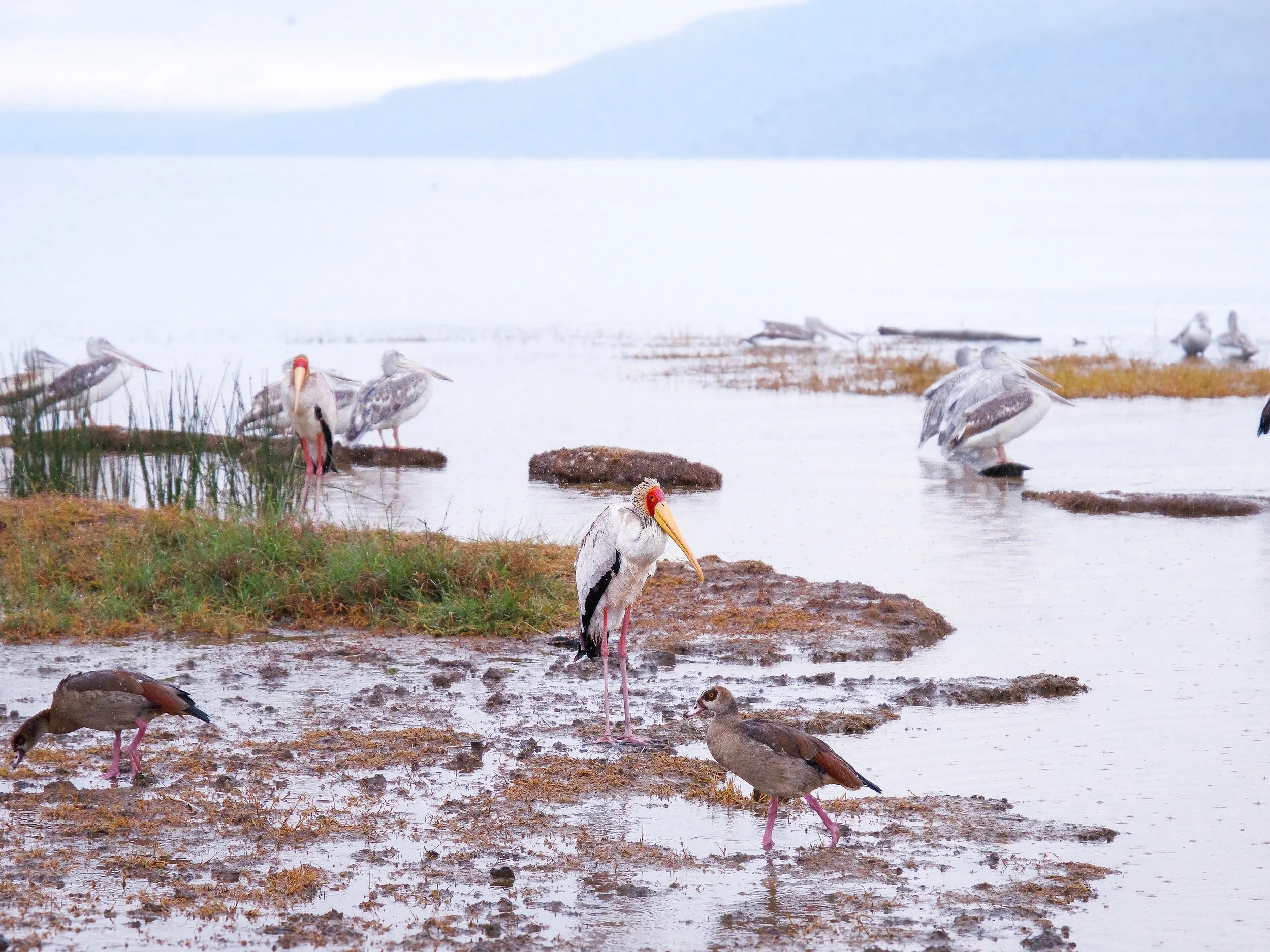
Birdwatching. Hundreds of migratory birds flock to Lake Nakuru. We spotted a flamboyant of lesser flamingos, giant white pelicans hunting, Egyptian geese, cormorants and various types of storks. Flocks of guinea fowl are commonly spotted scurrying in the park’s roadside bushes.
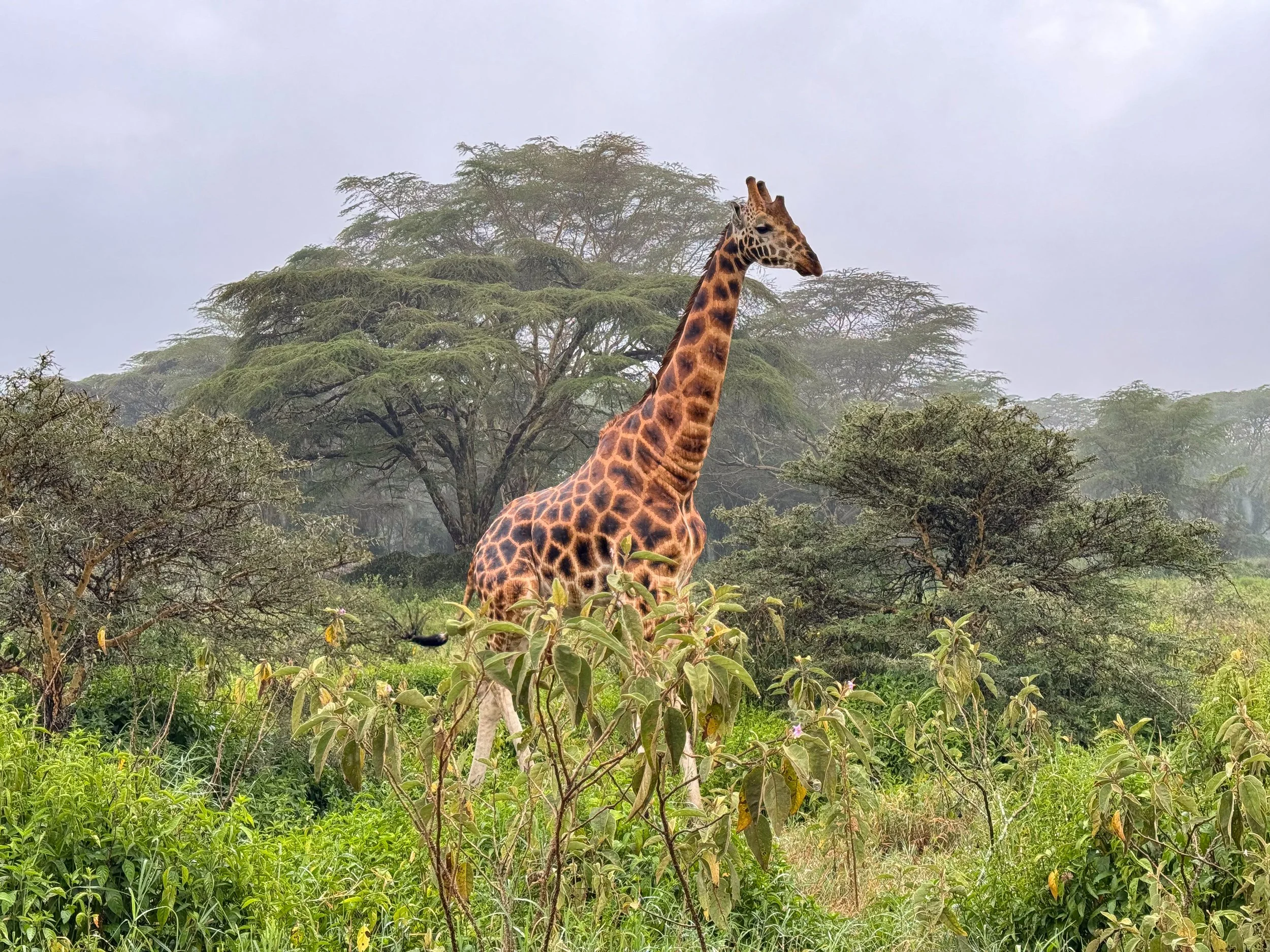
Nubian Giraffe. Lake Nakuru is home to about 65 Nubian Giraffes. There are less than 1,400 of the critically endangered species remaining in the wild. We observed at least half of the park’s population as they strutted through fields and grazed on tall trees.
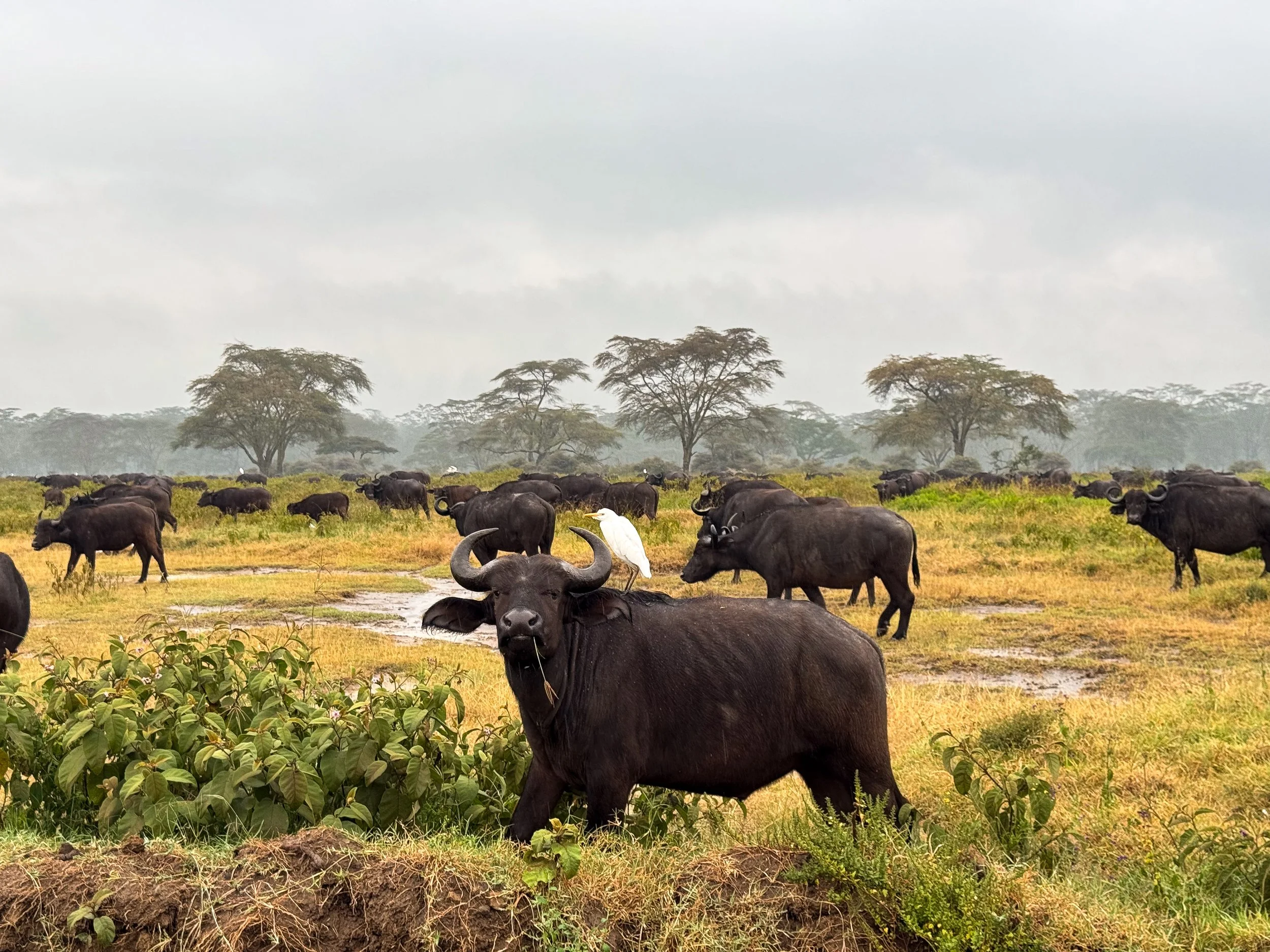
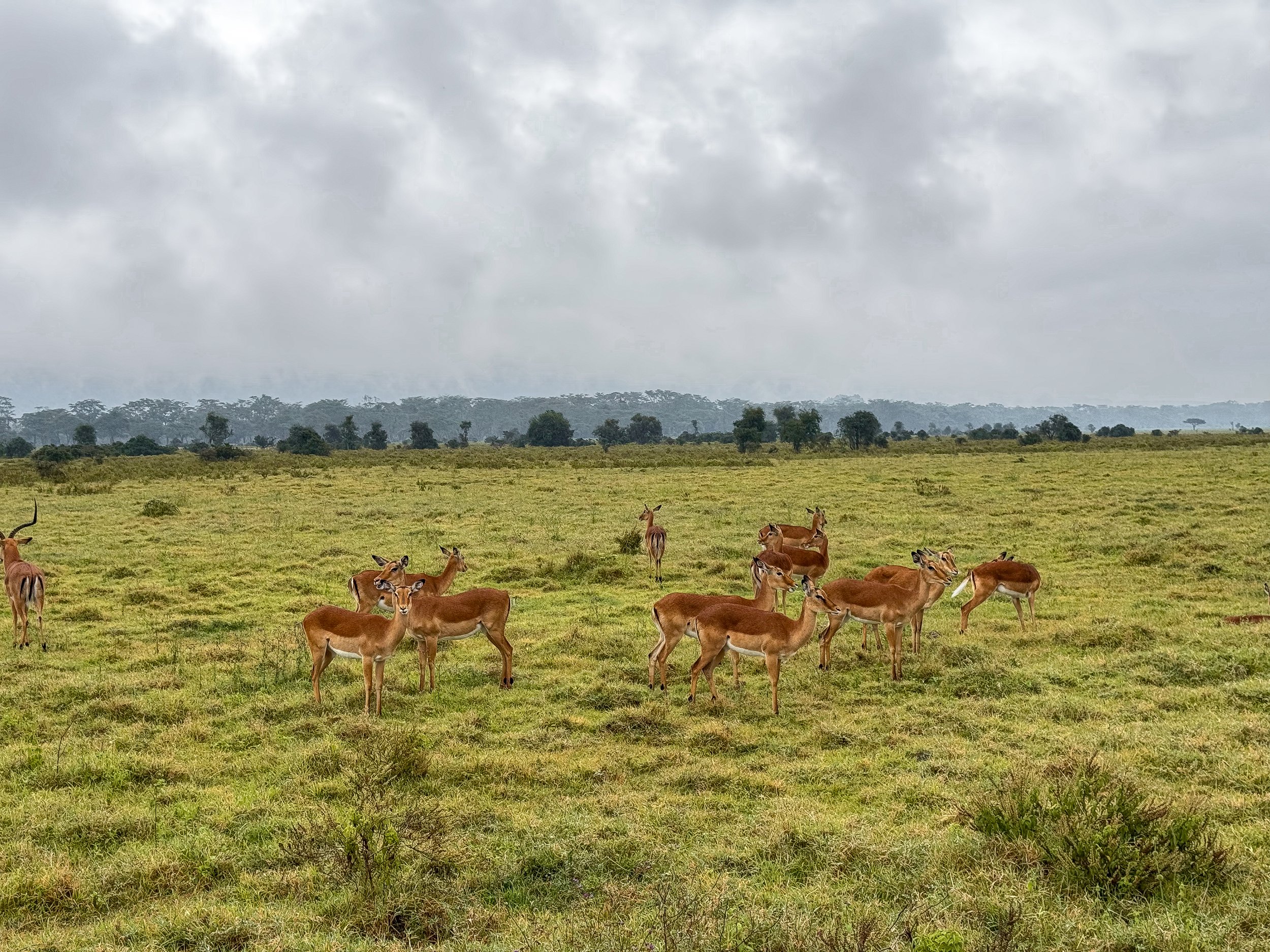
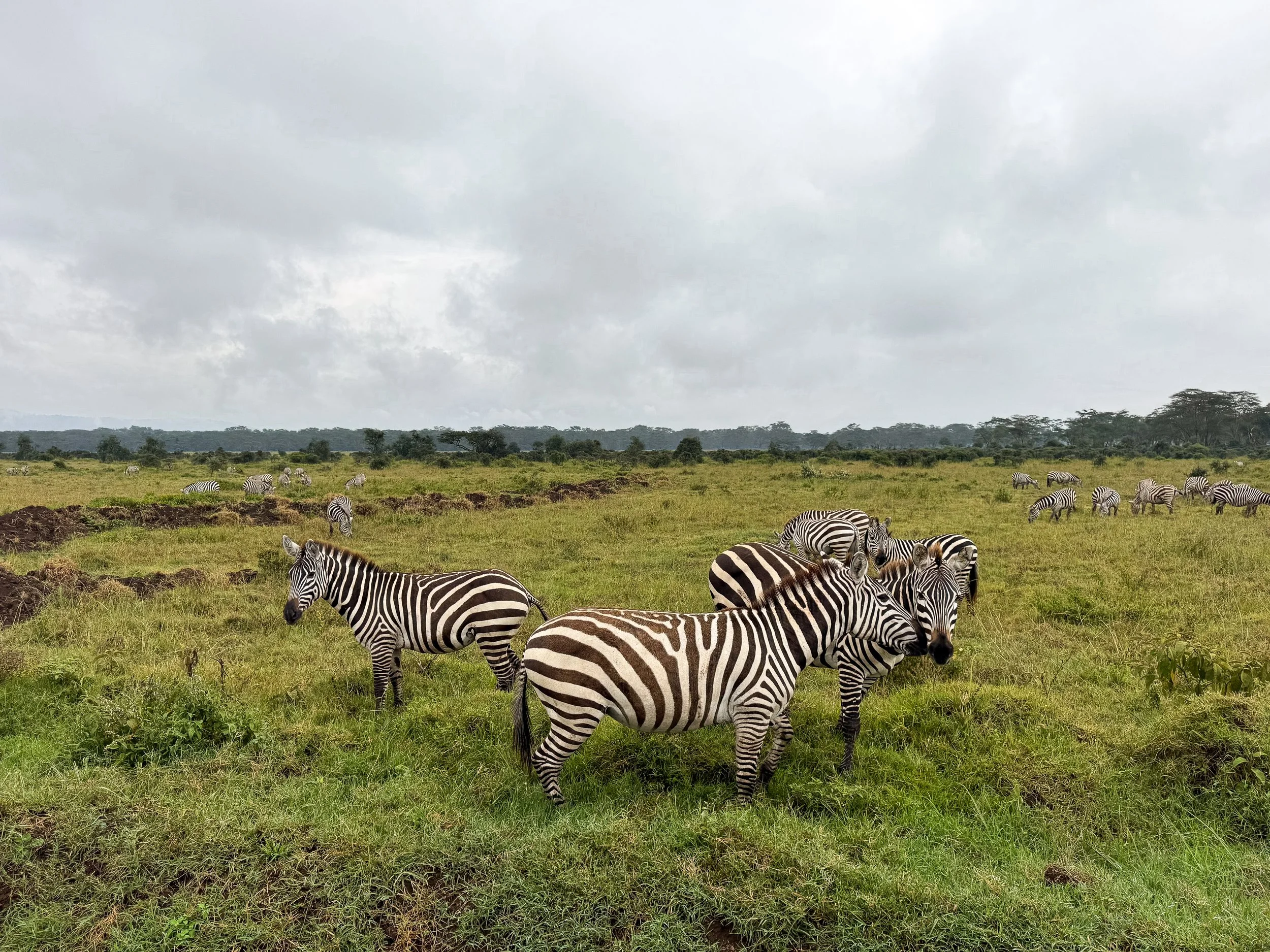
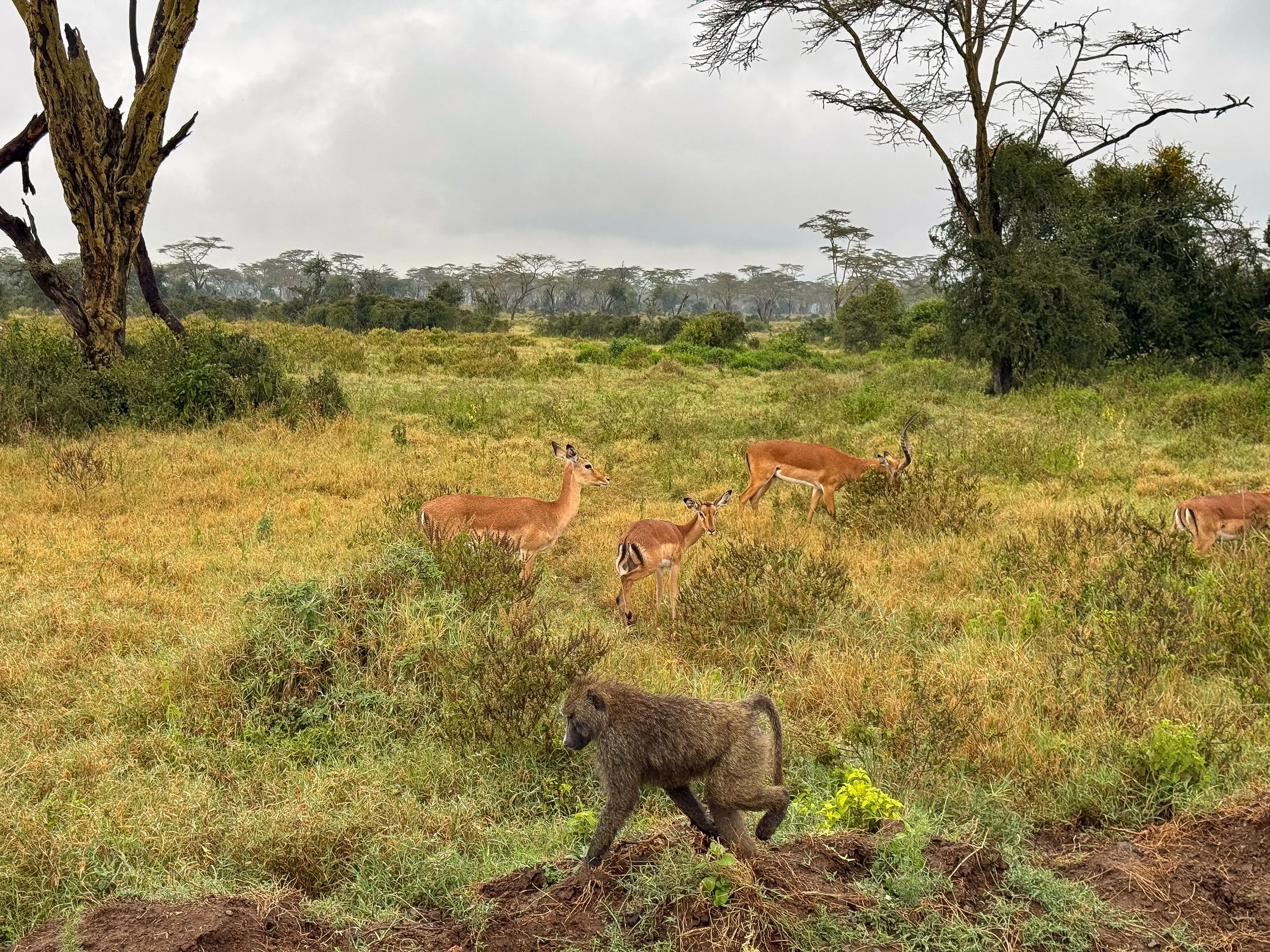
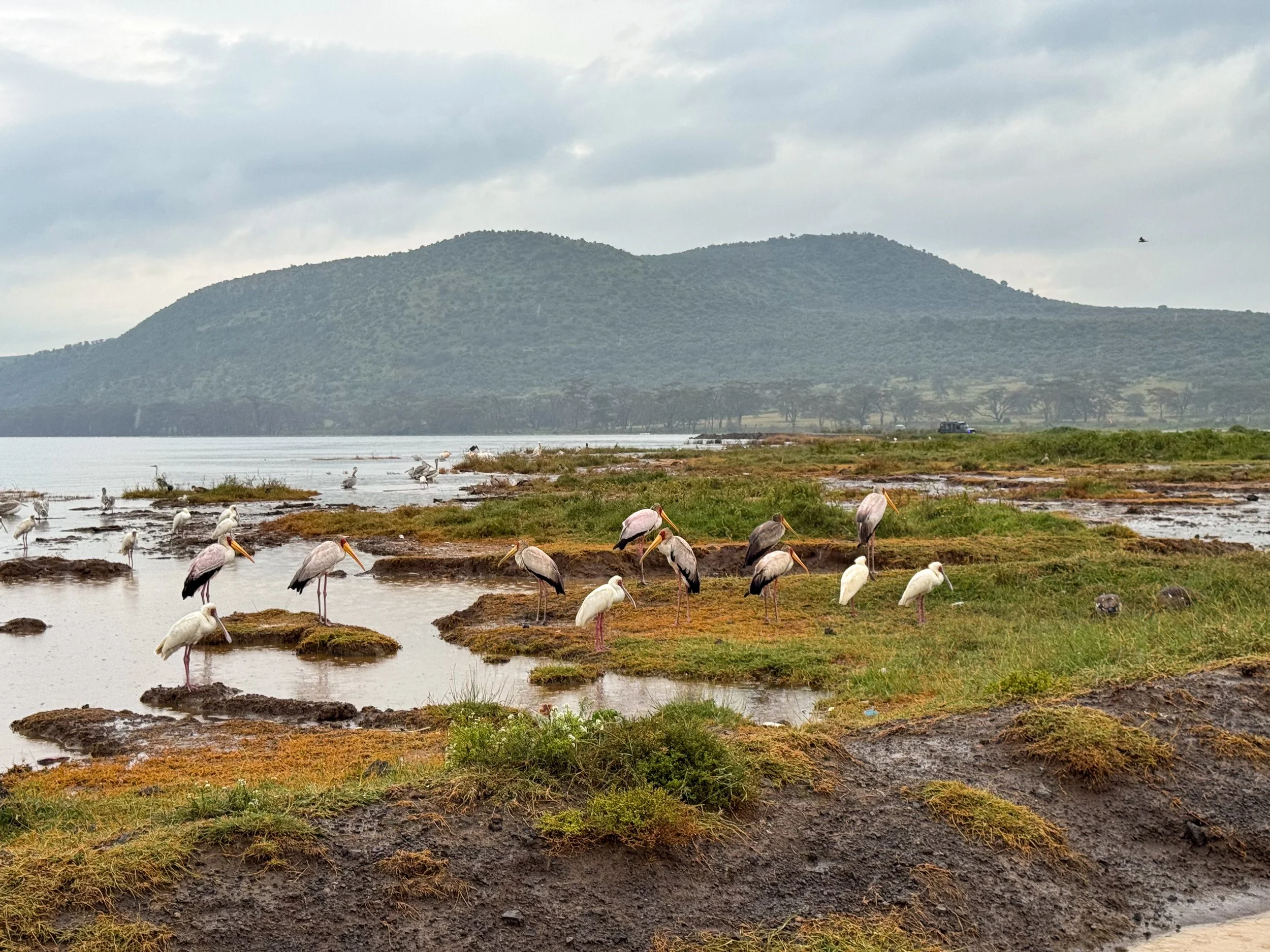
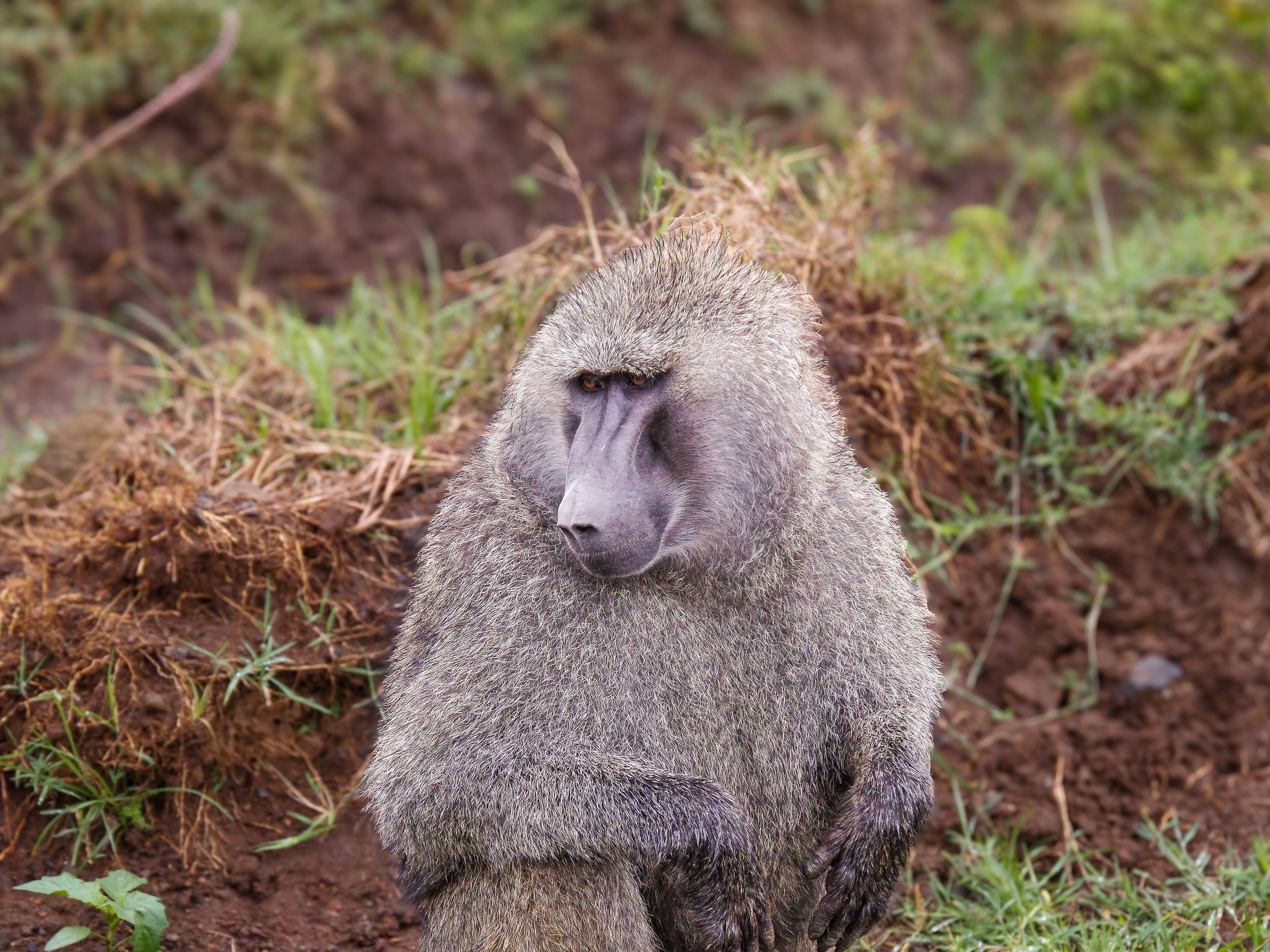
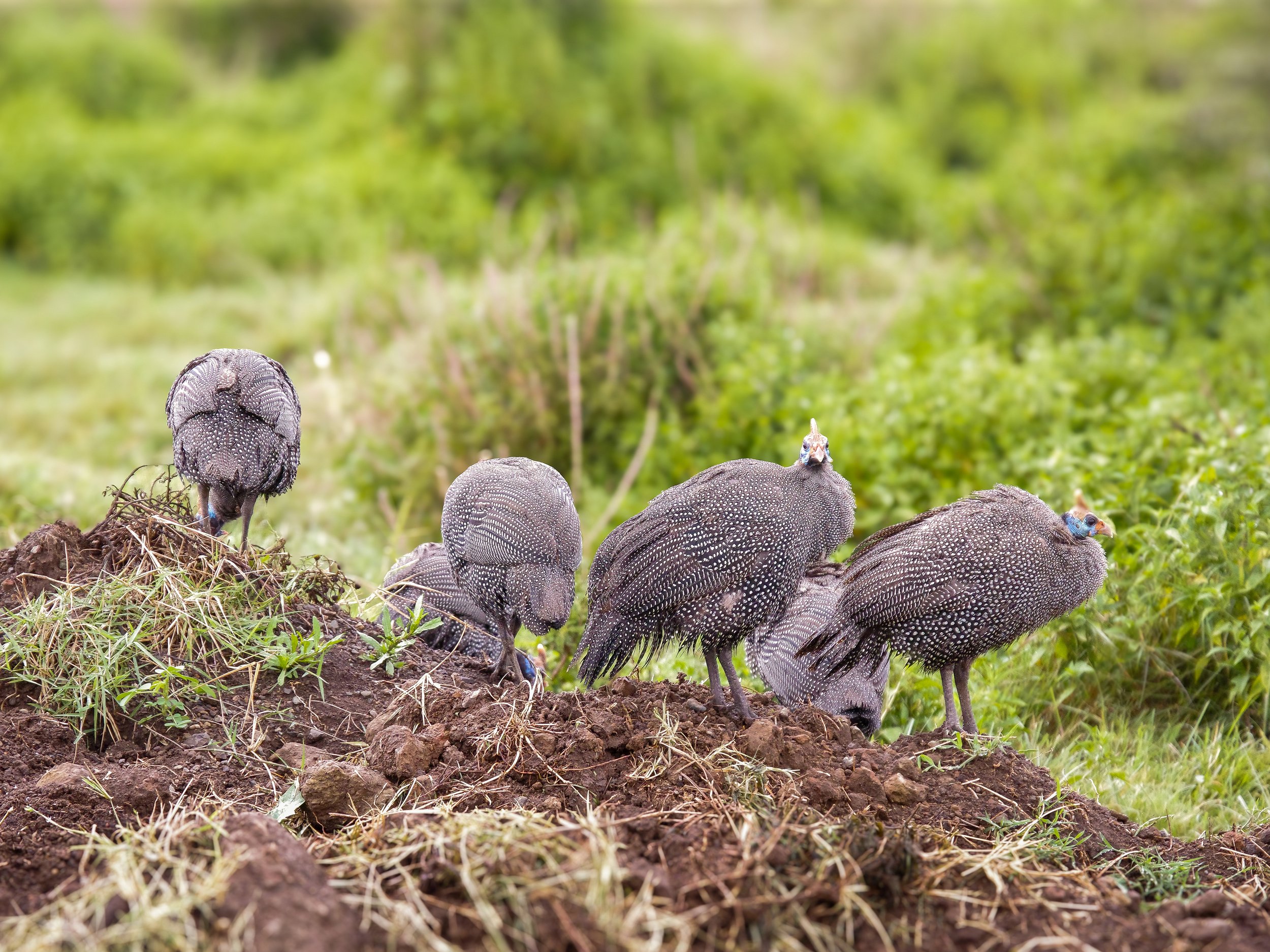
Wildlife Spotting. Lake Nakuru is home to a variety of wildlife. Large herds of water buffalo, impalas, gazelle and zebras are common sights. Groups of warthogs appeared from their dens, chasing each other around and grazing on grasses. Troops of baboons patrol the roadsides, often trotting after impalas encroaching on their territory. Hyenas lurk in the grasses while jackals slink between bushes.
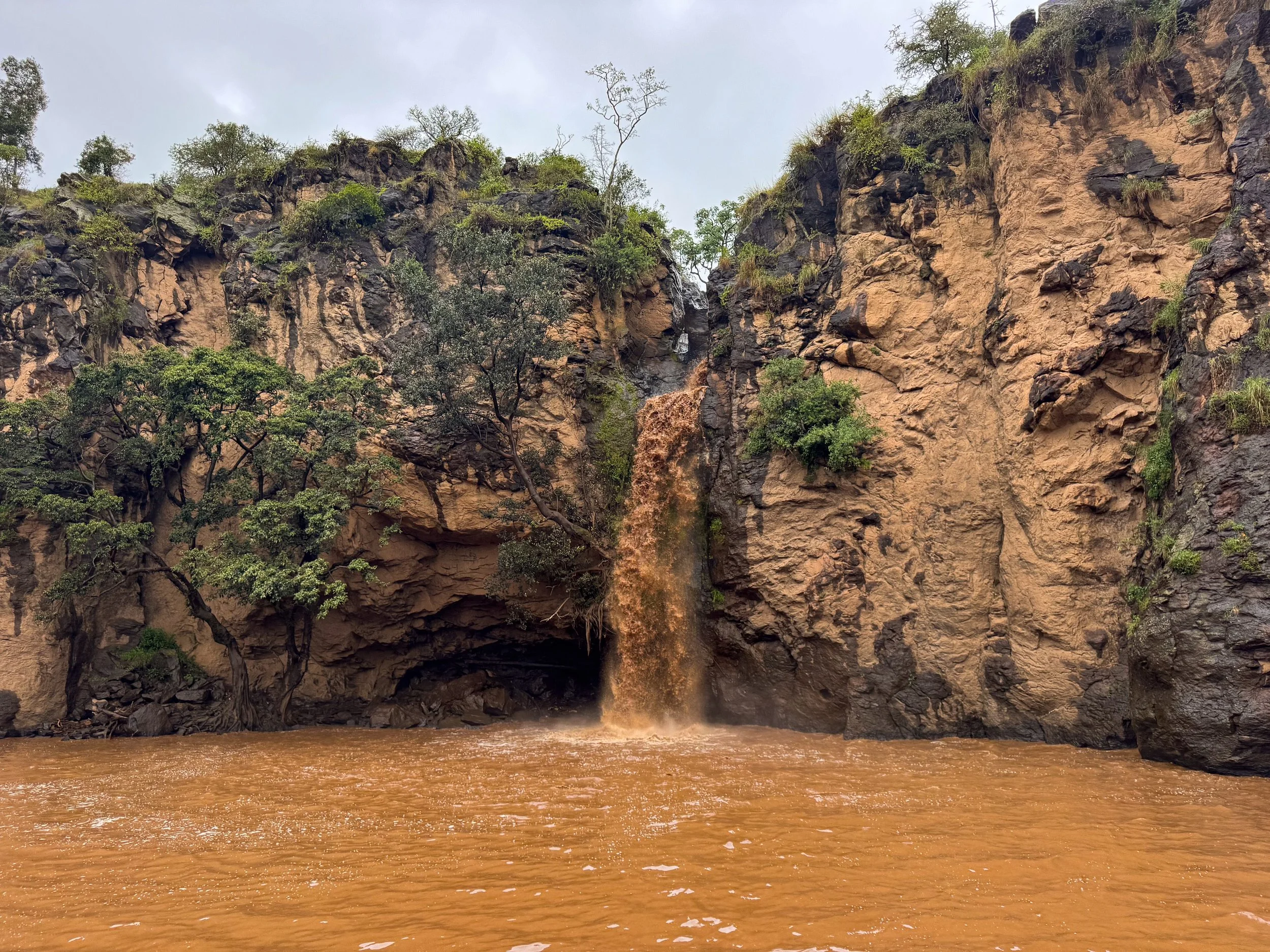
Makalia Falls. A 10 meter tall waterfall spilling over a rocky cliff into a river pool. The water was a rich chocolaty brown color due to recent strong rains.
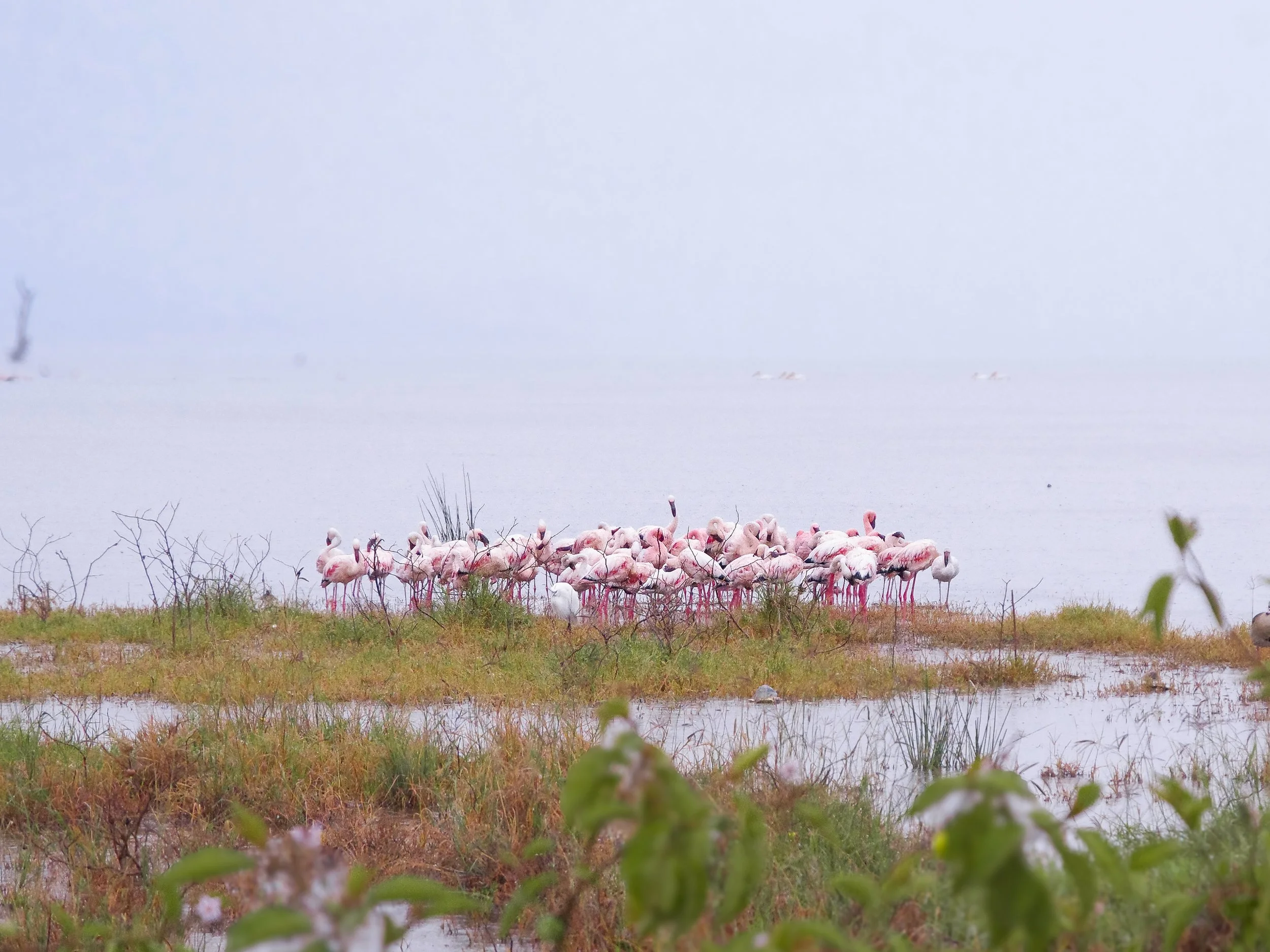
Climate Change. Lake Nakuru used to be known for its millions of pink flamingos, accounting for a third of the world’s population. In recent years, flooding has reduced the salinity of the lake and a majority of the flamingos have migrated elsewhere.
Guides. Lake Nakuru can be visited without a guide or 4x4 vehicle. We visited with a guide, included in our multi day safari.
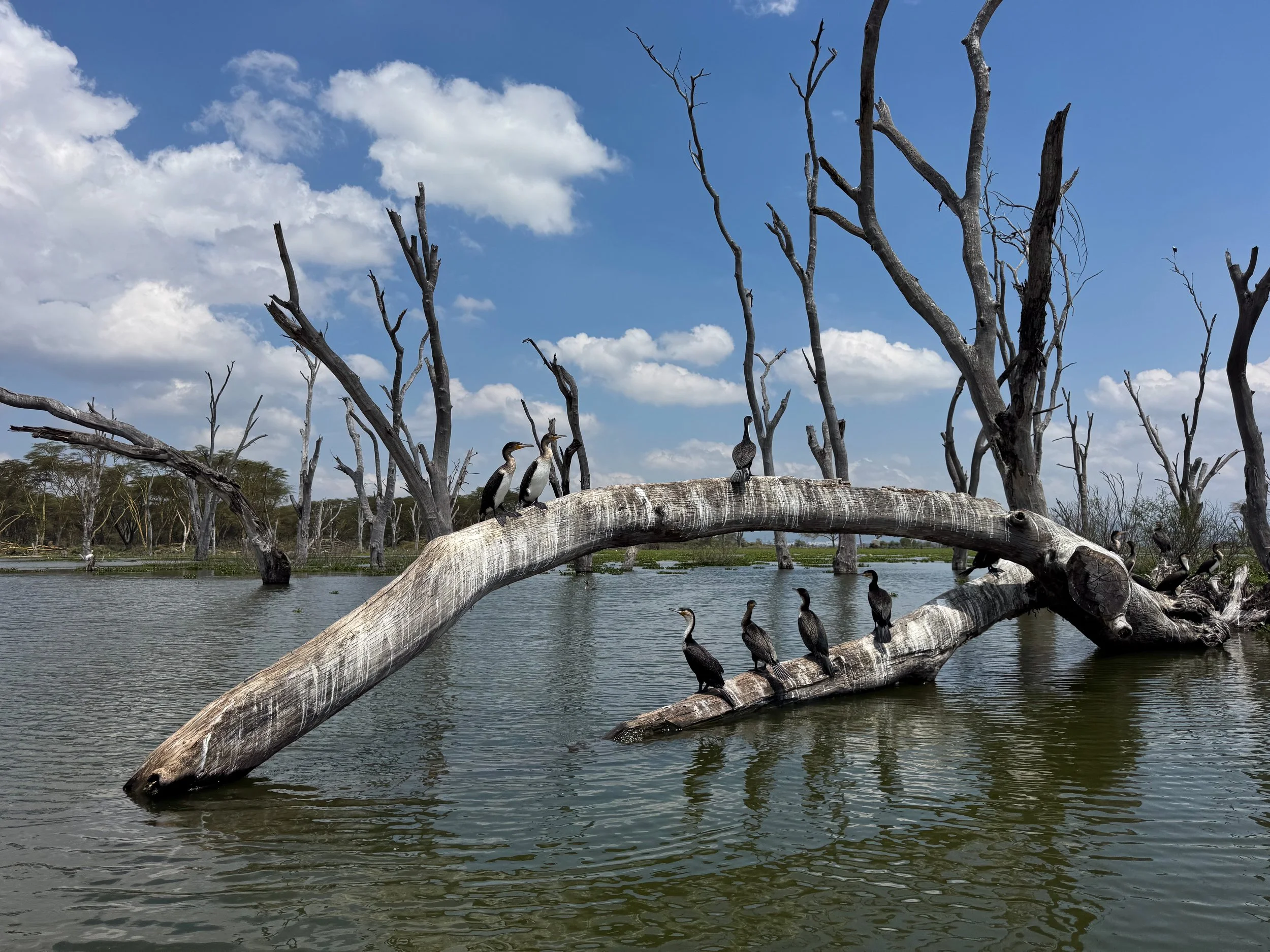
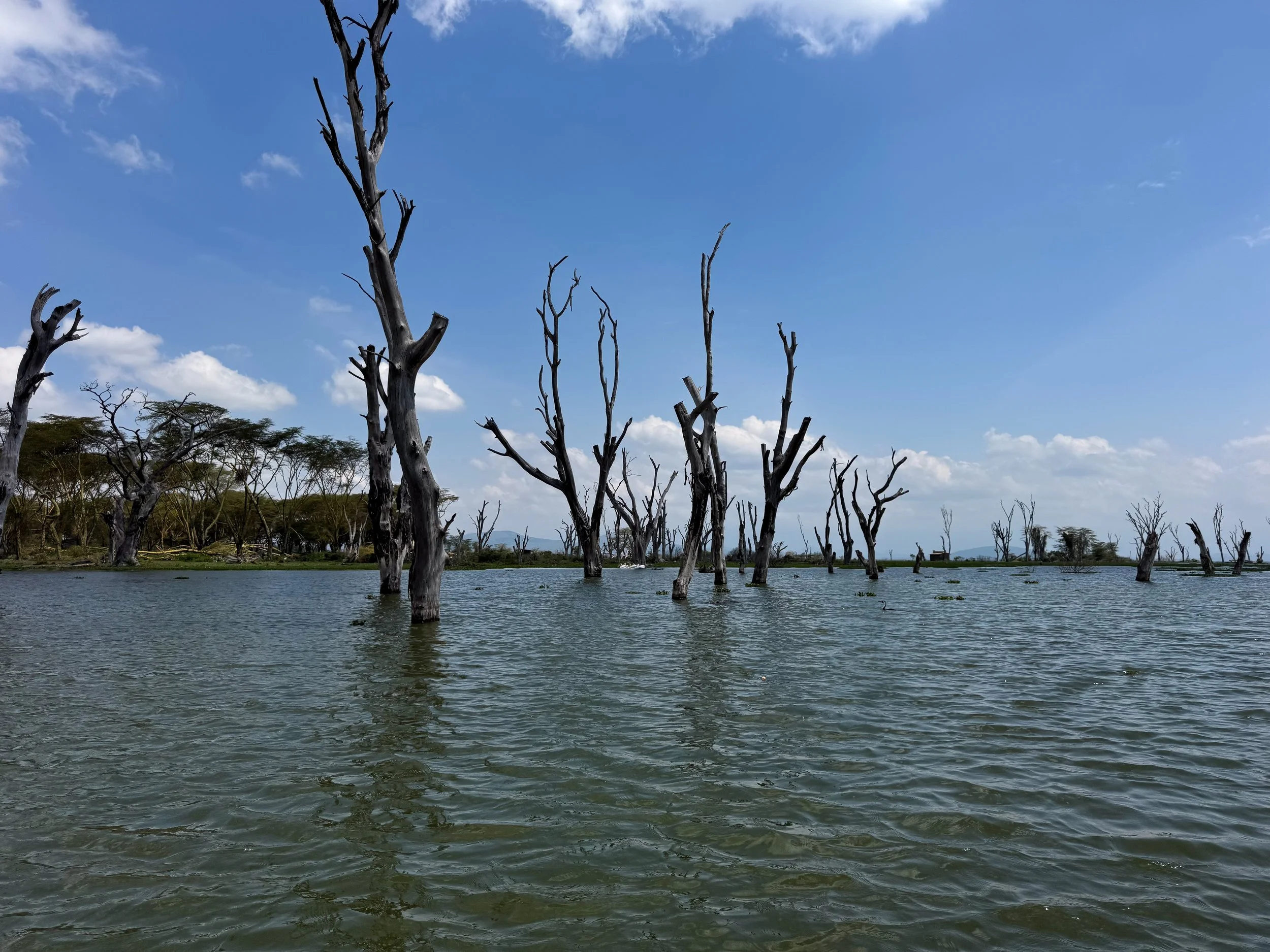
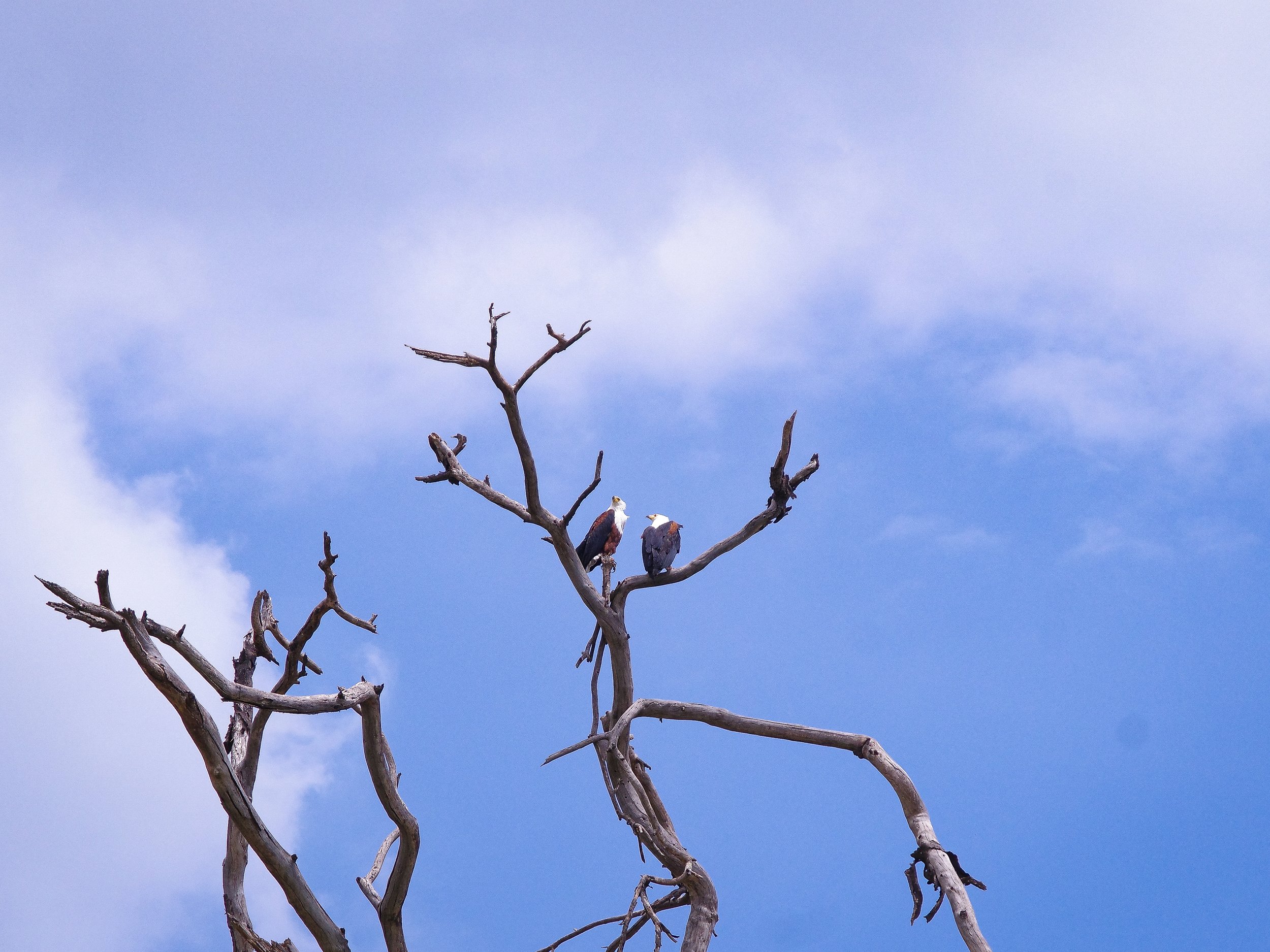
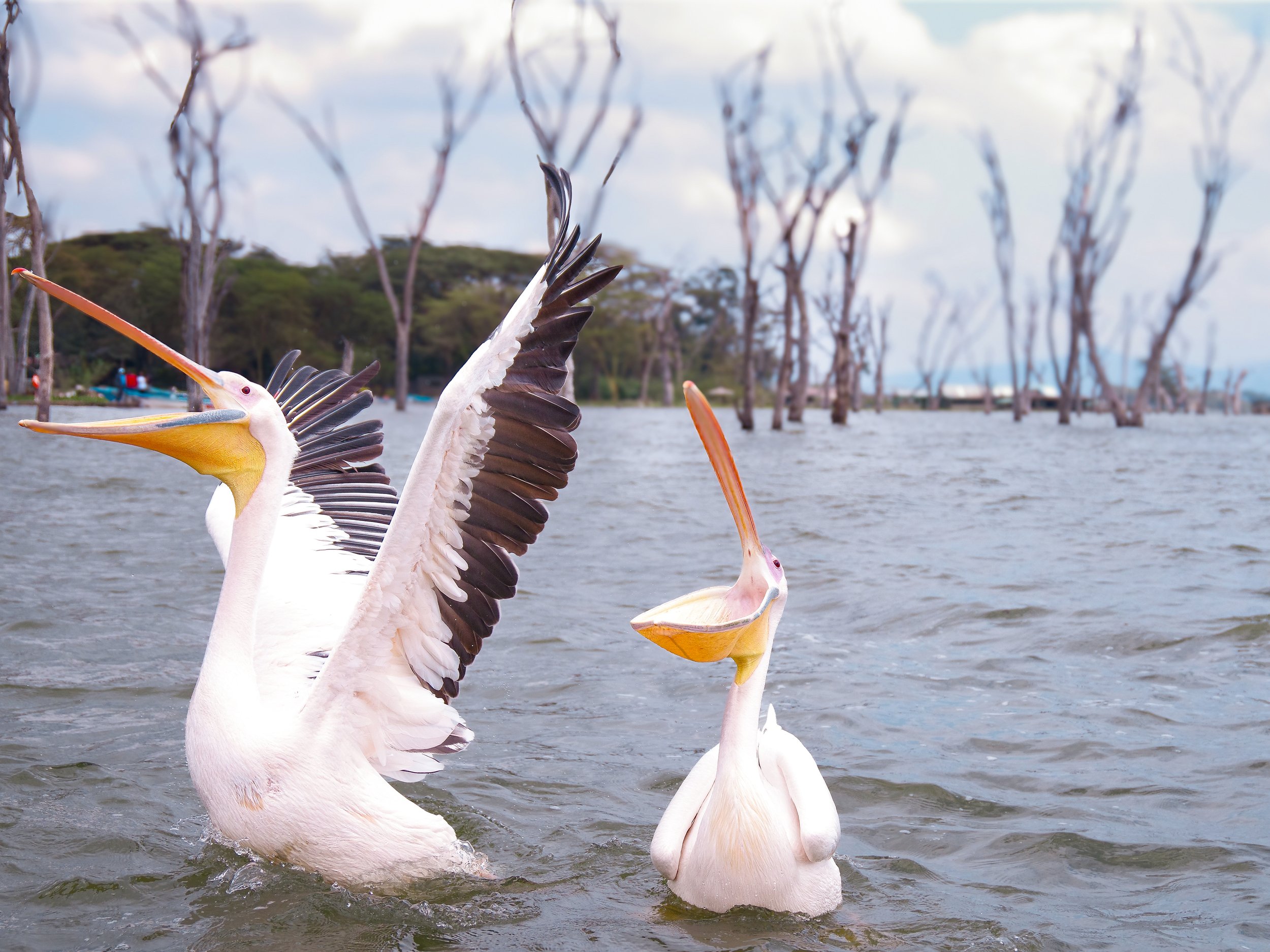
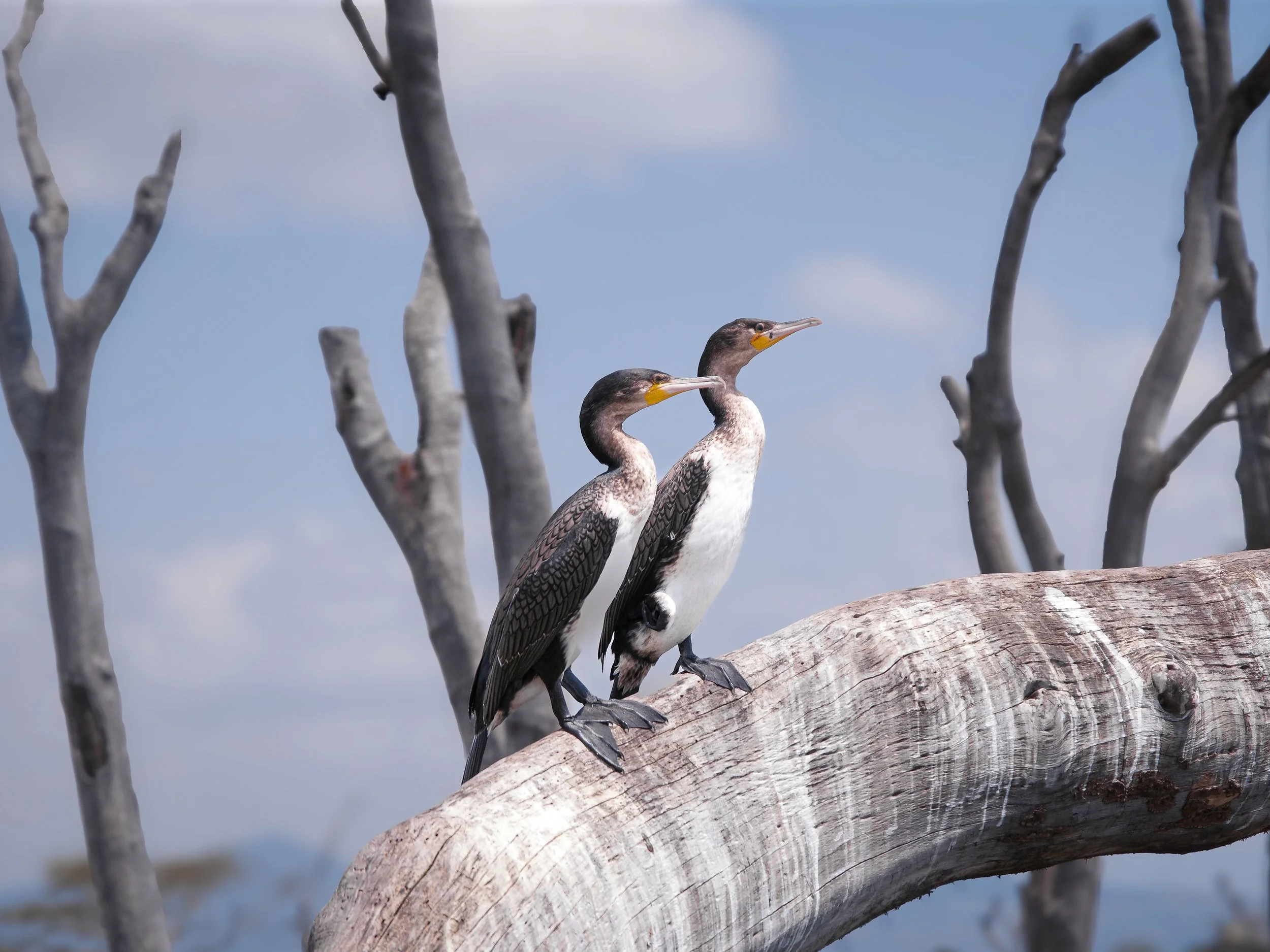
Lake Naivasha
Lake Naivasha is a high altitude freshwater lake home to native hippos, aquatic birds and wildlife relocated from the Maasai Mara. We took a boat safari on its waters and walking safari along its shores.
Lake Naivasha Boat Safari. A tranquil ride across Lake Naivasha allowed us to spot wild hippos and aquatic birds. The hippos lounged in the shallows near shore, lifting their head above the surface for air before fully submerging. For safety, we kept a distance of 50 to 100 feet. The lake is full of bird life like nesting cormorants, kingfishers, hamerkops, sacred ibises, vibrant starlings, great white pelicans and fish eagles. The lake is commercialized with eco-resorts, hotels, summer cottages and campgrounds tracing its shoreline. Locals wade in the shallows fishing for tilapia and other lake fish.
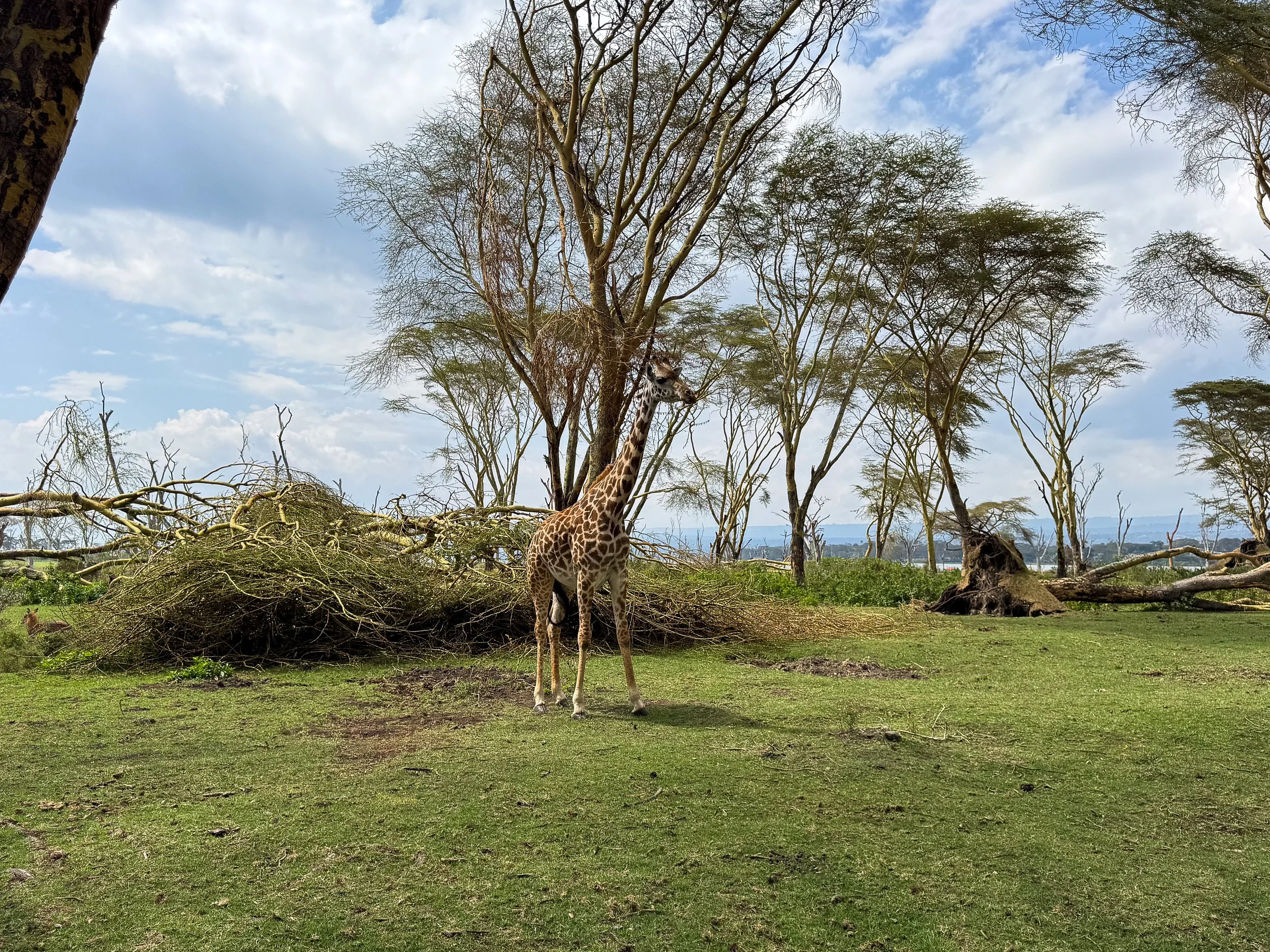
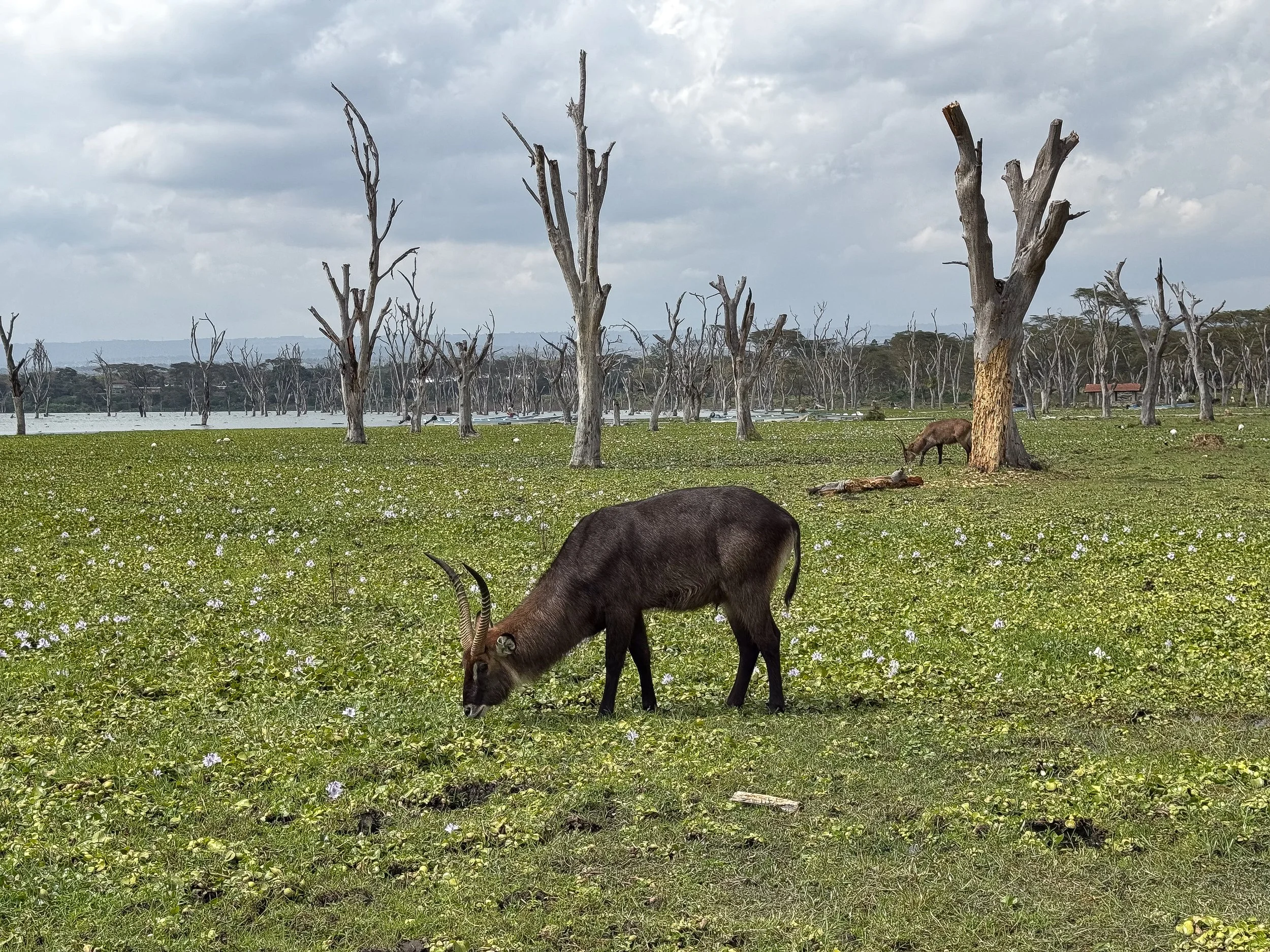
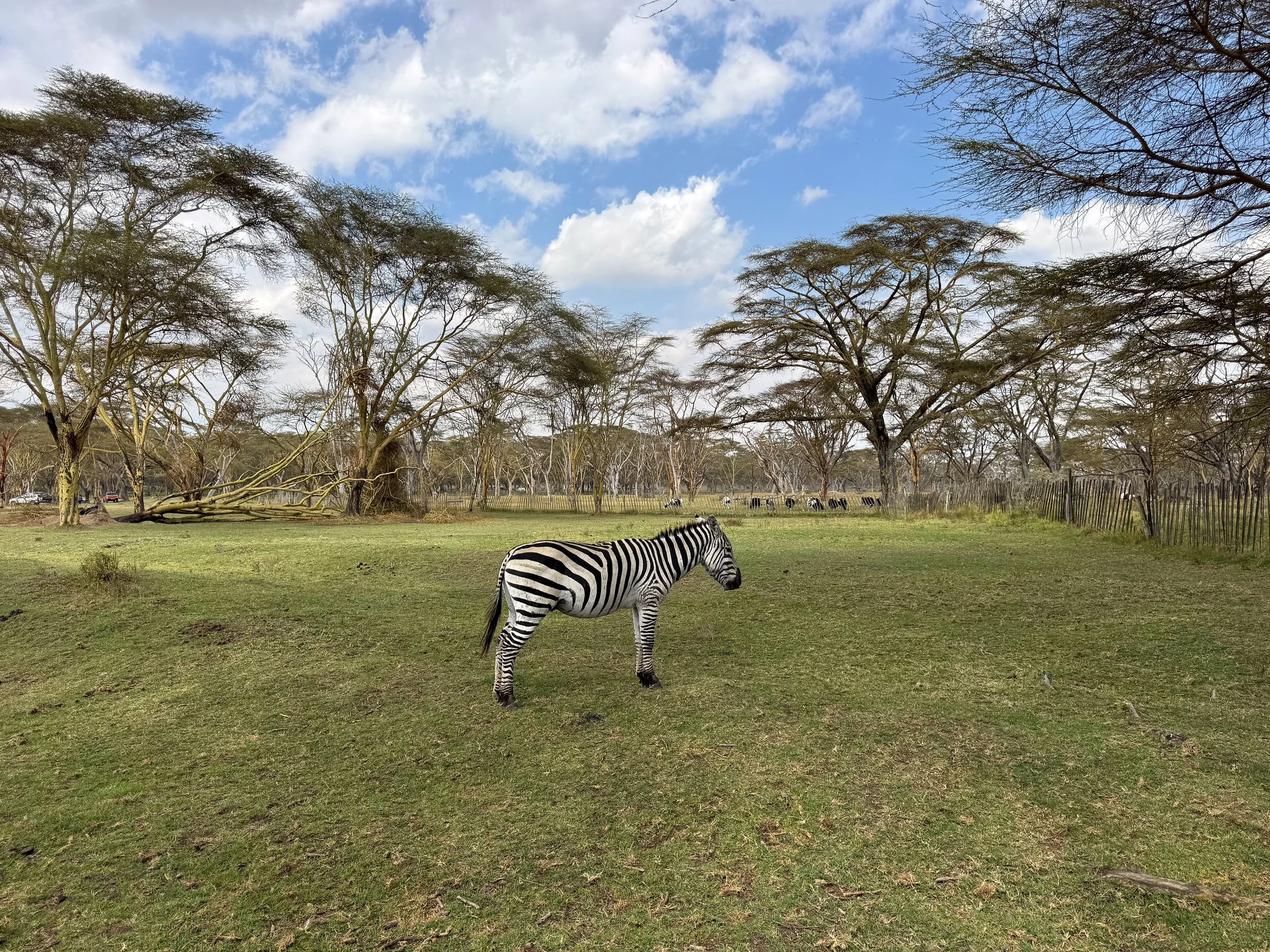
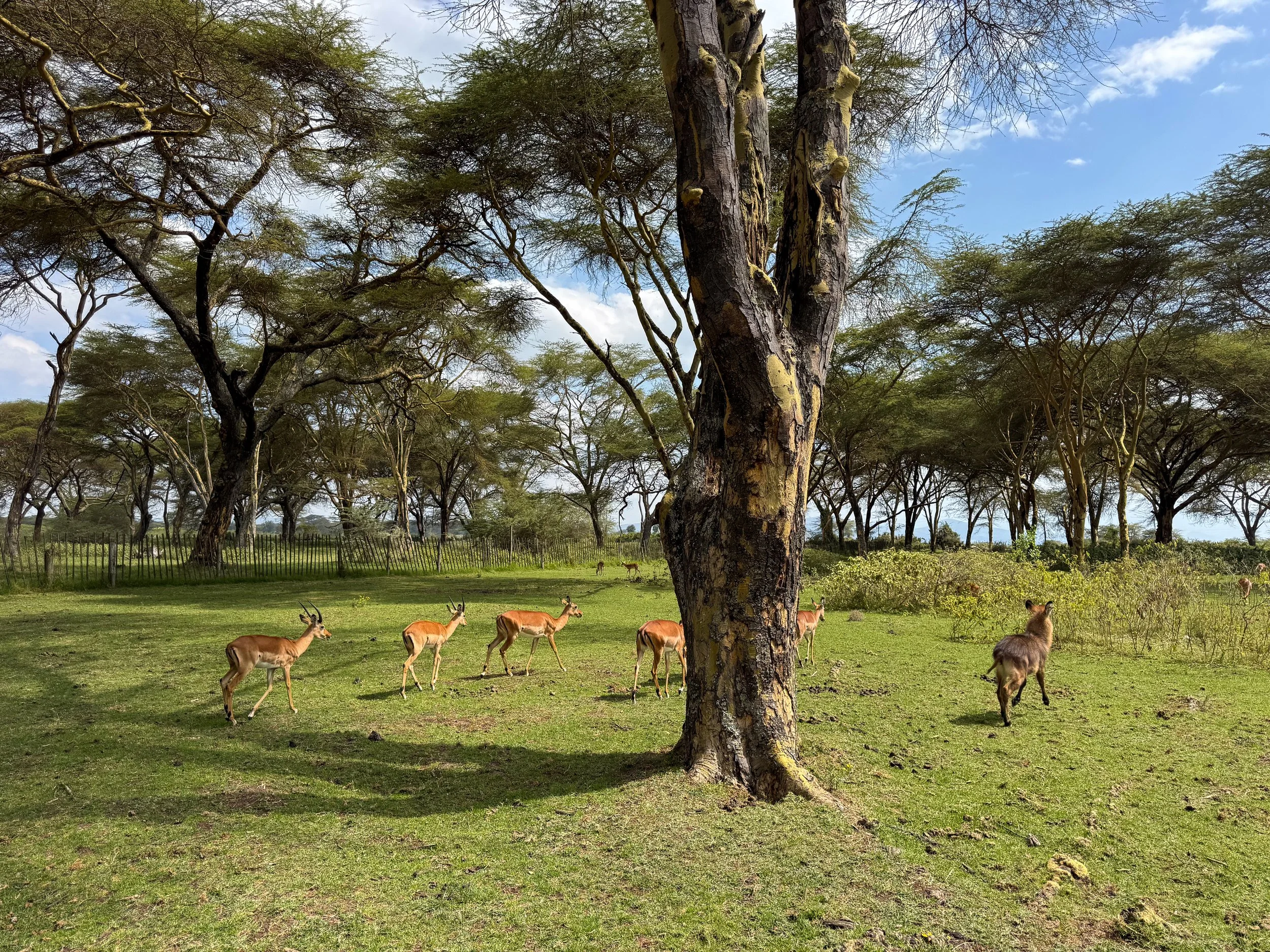
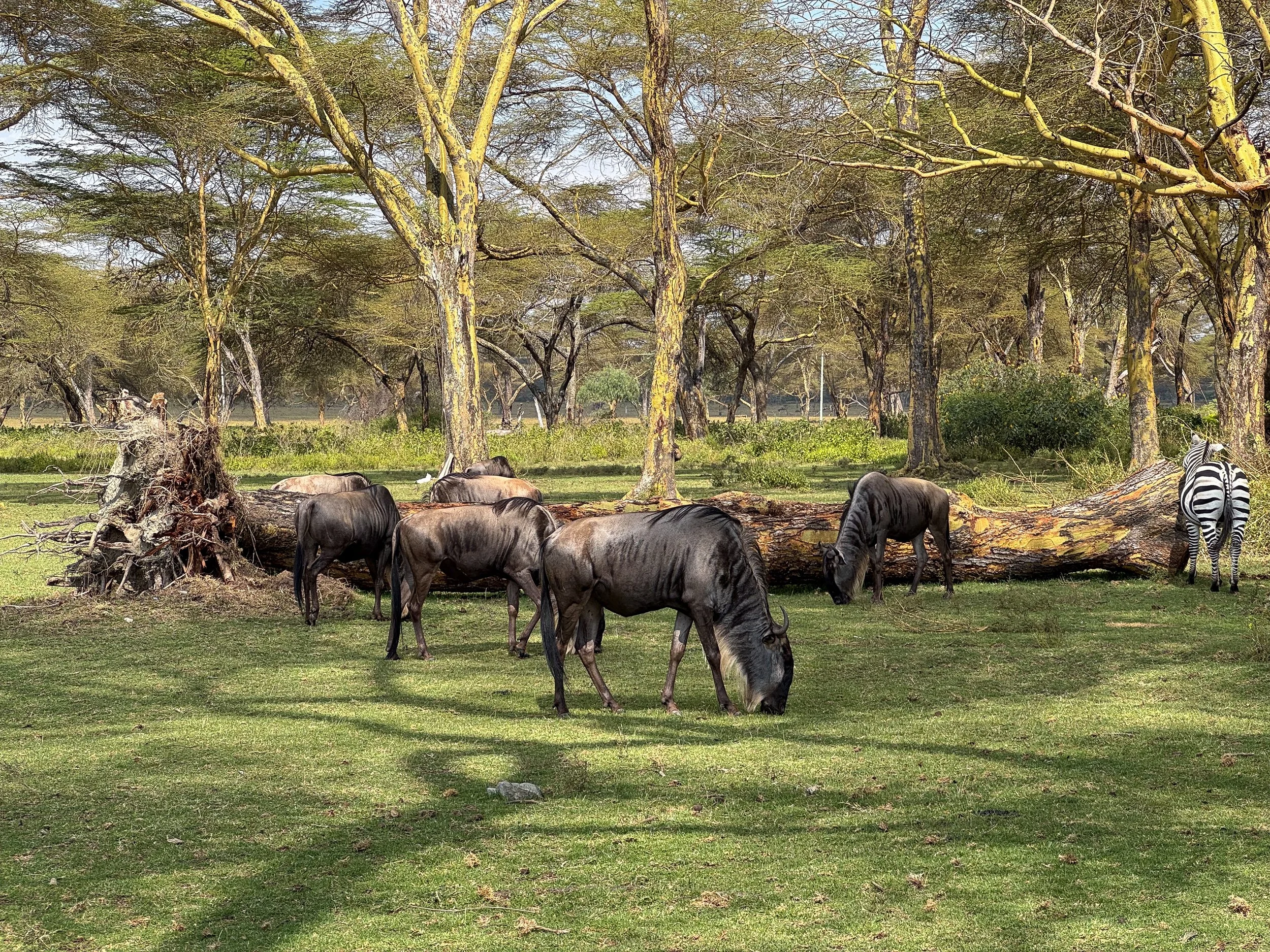
Lake Naivasha Walking Safari. A wildlife reserve encompasses the shores of Lake Naivasha. It’s home to animals found in the Maasai Mara like waterbuck antelope, impala, zebra, wildebeest and giraffe. A walking safari brought us up close to the animals as they grazed. We listened as the exotic sounds of birds sang out around us. The animals are not allowed to be touched or fed in order to keep them wild. Most are even skittish and stray away from humans despite their habitualization.
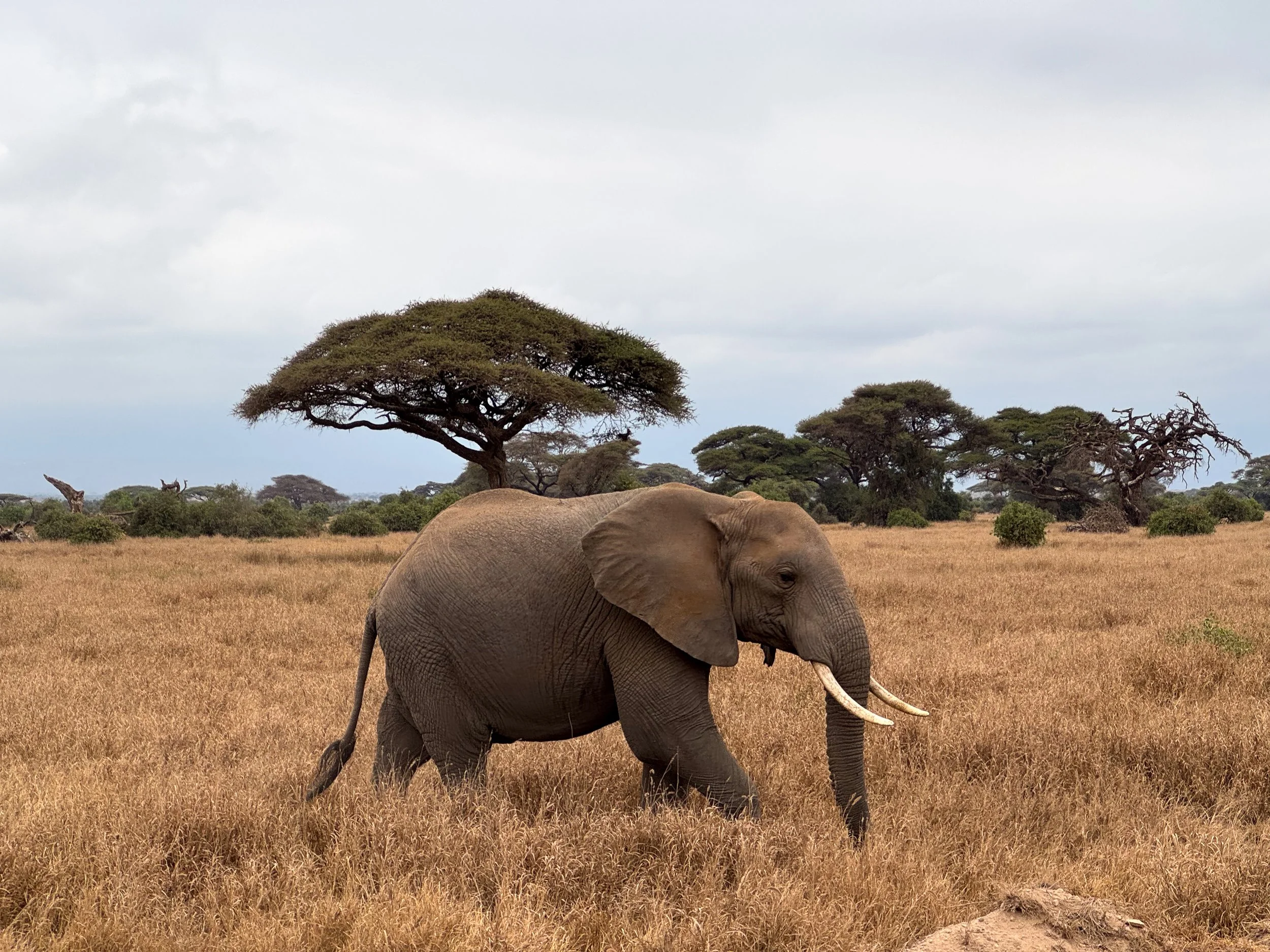
Amboseli National Park
Amboseli National Park is famed for its large population of African elephants, wild game and dramatic landscapes. Its wetlands create a lush oasis and shallow lake visited by elephants and migratory birds. Wild game graze in vast lowlands covered in bush and Acacia trees. Dust devils spiral into the sky across the dry savanna. Clouds completely obscured views of Mt Kilimanjaro.
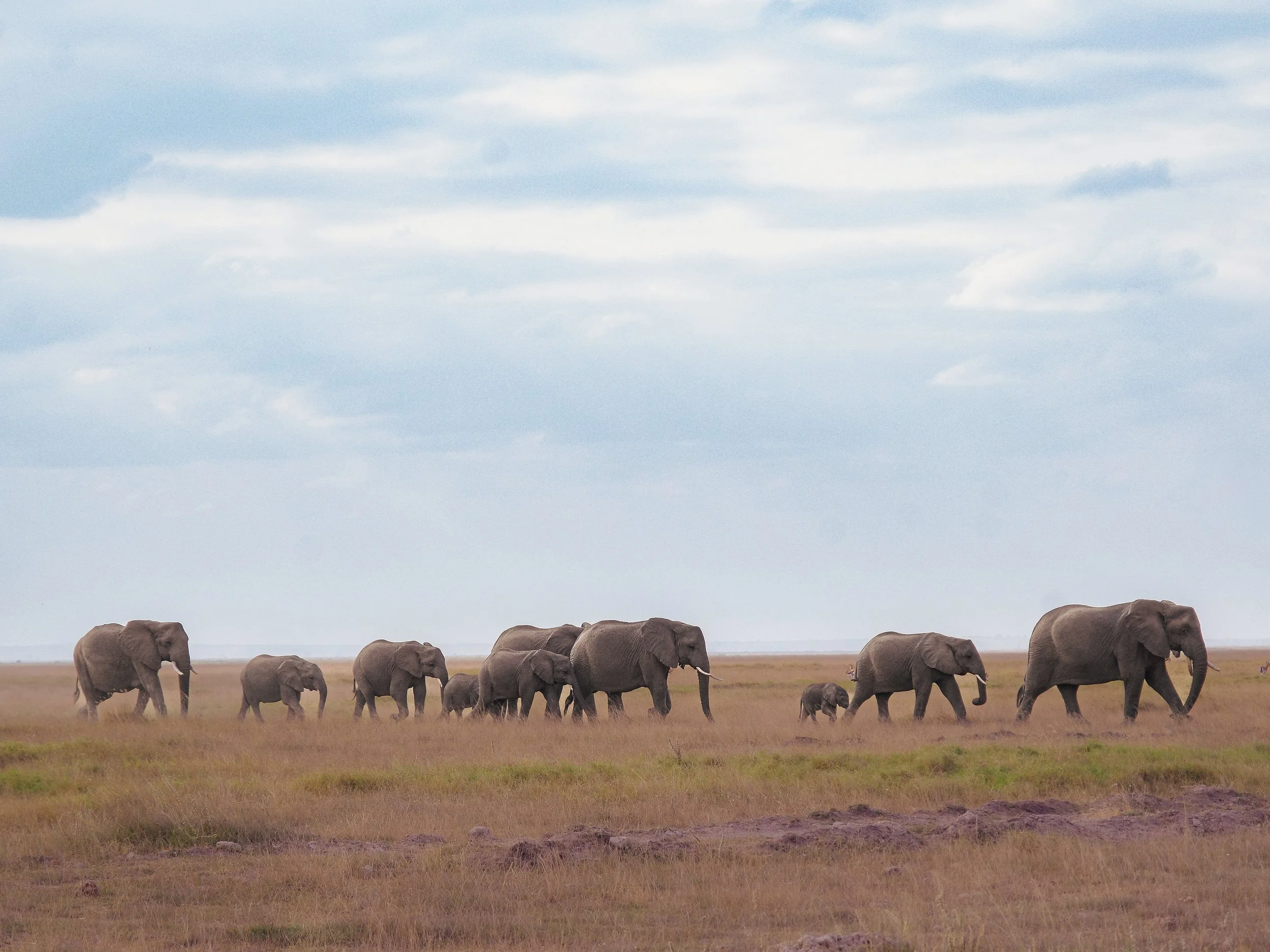
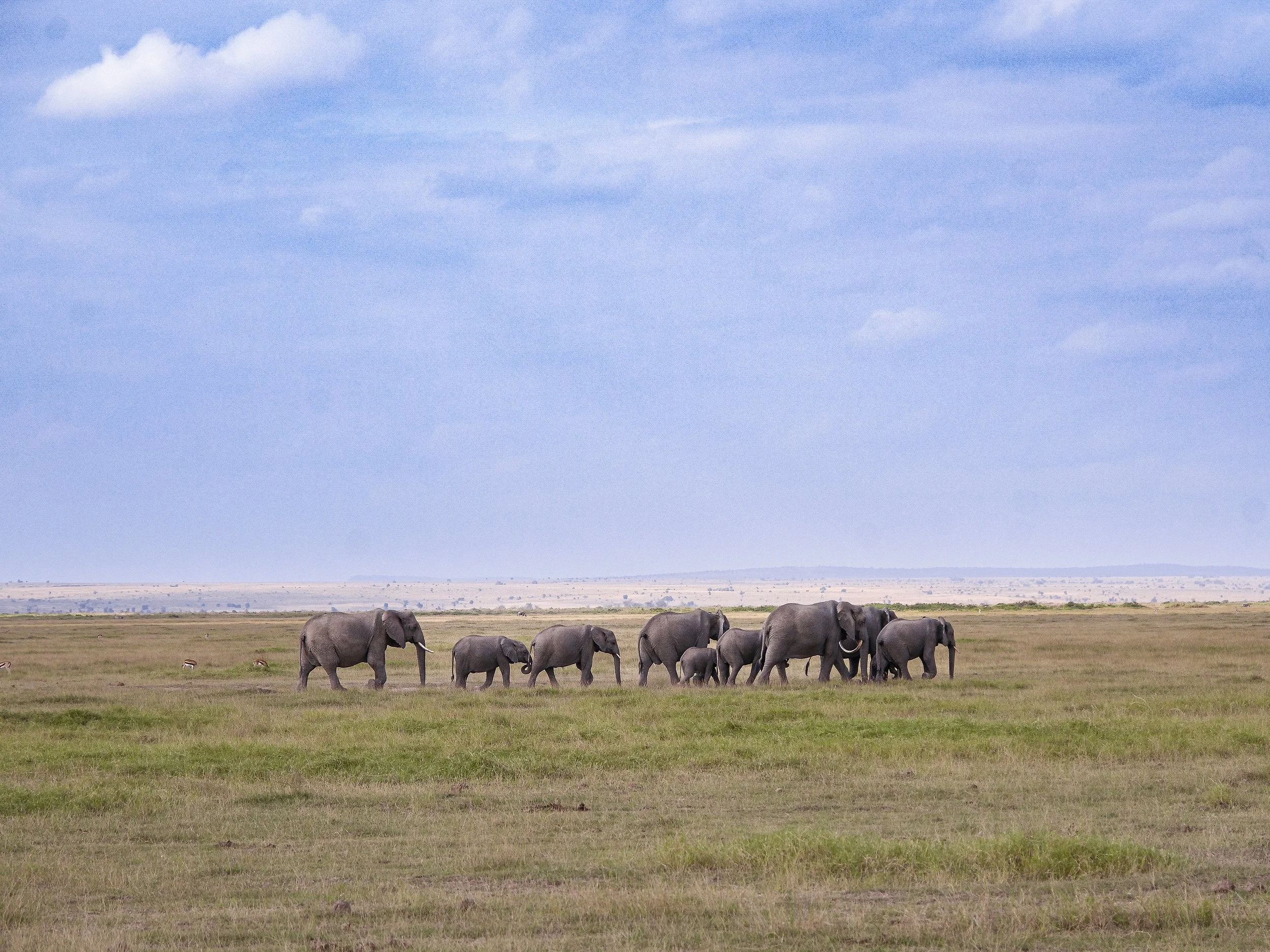
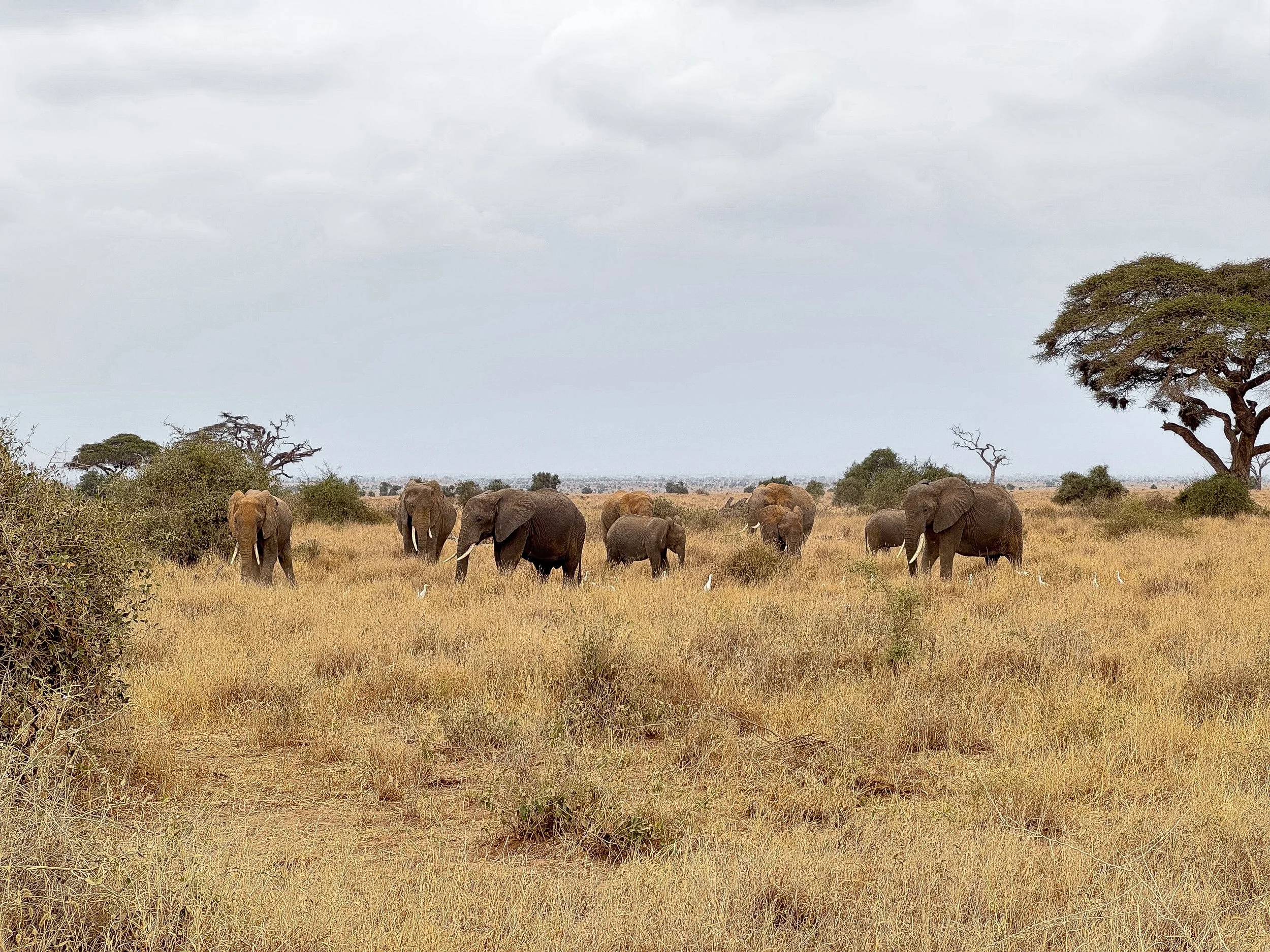
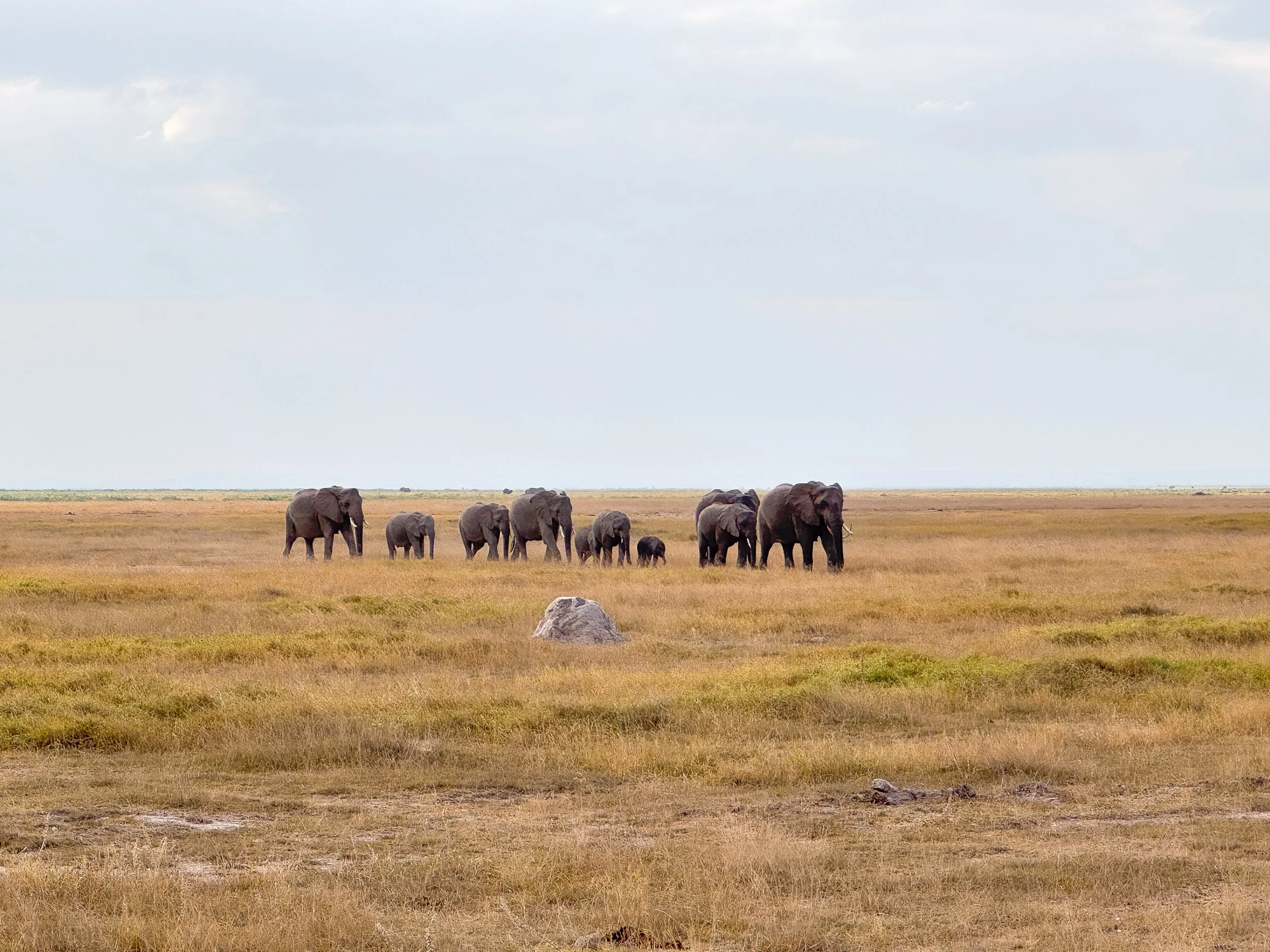
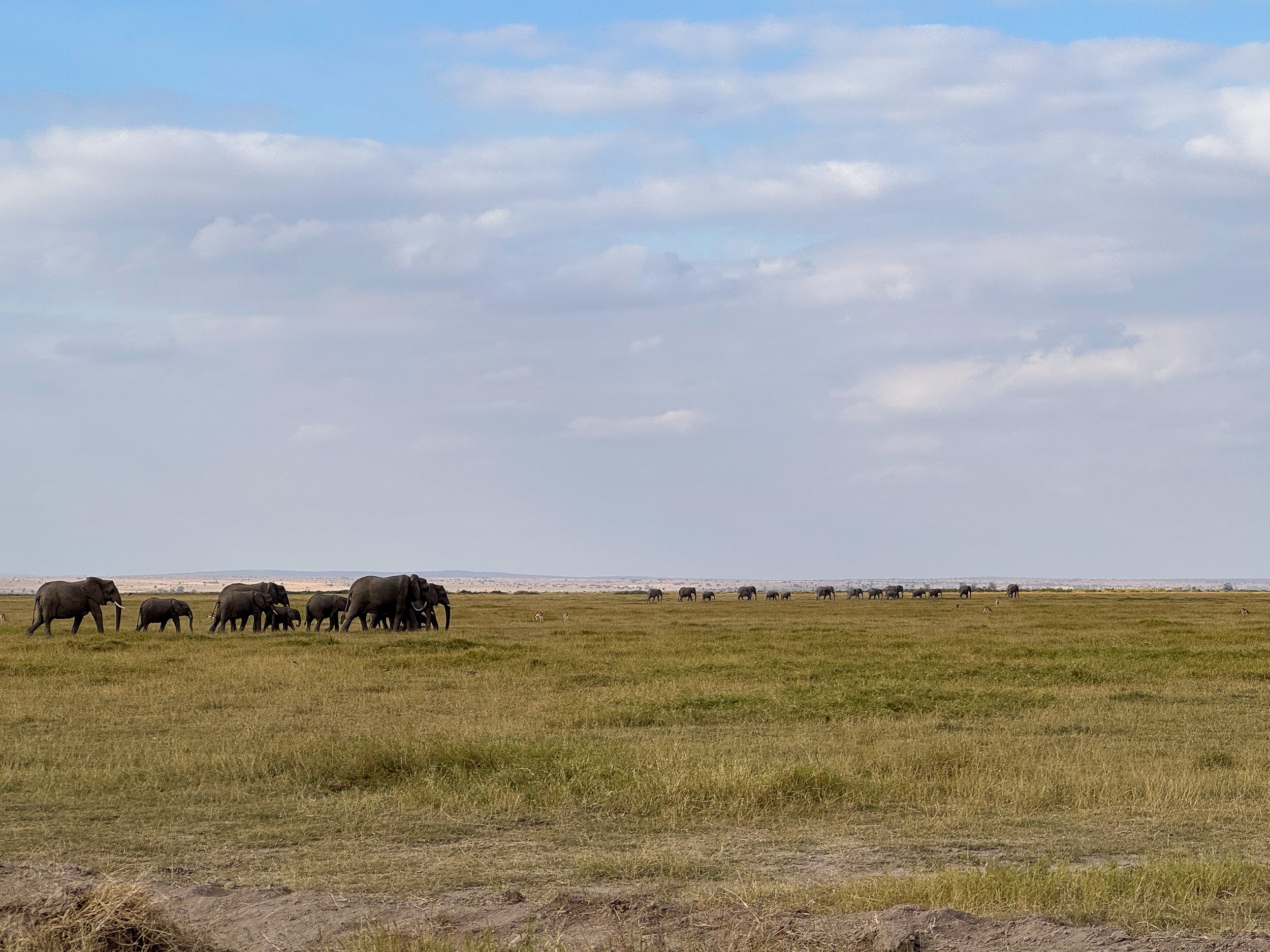
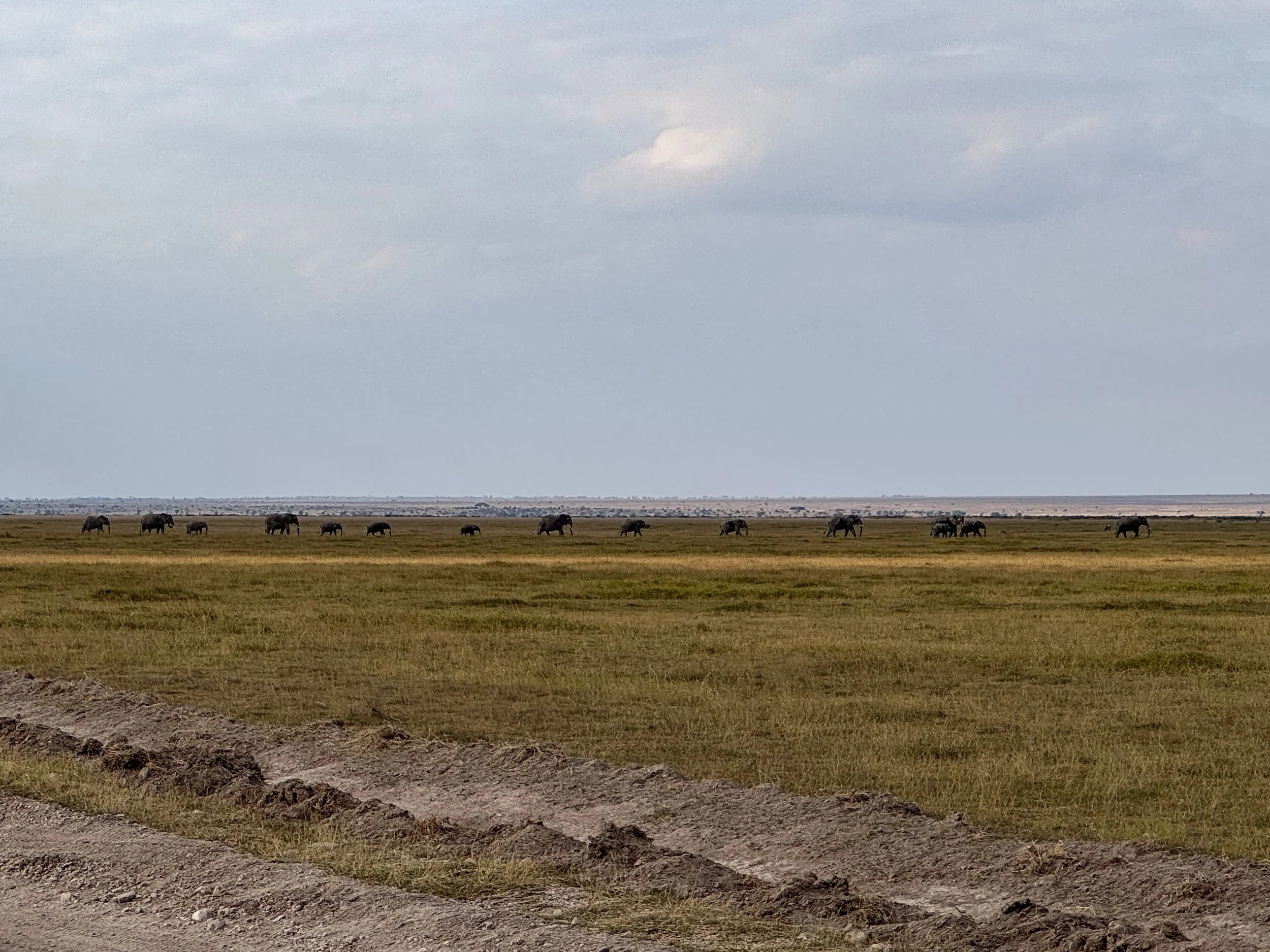
African Elephants. African elephants frequently travel in large groups across the Amboseli. Several parades comprised of the smallest of calves and the largest of matriarchs marched in lines across the savanna towards a lush oasis. By the mid afternoon, well over one hundred had met to graze, bathe and socialize. A parade of the gentle giants passed closely by us ripping up grass with their trunks, sporting pairs of large white tusks and flapping their giant ears. We even spotted one of the park’s famed “super tuskers,” recognizable by their massive tusks.
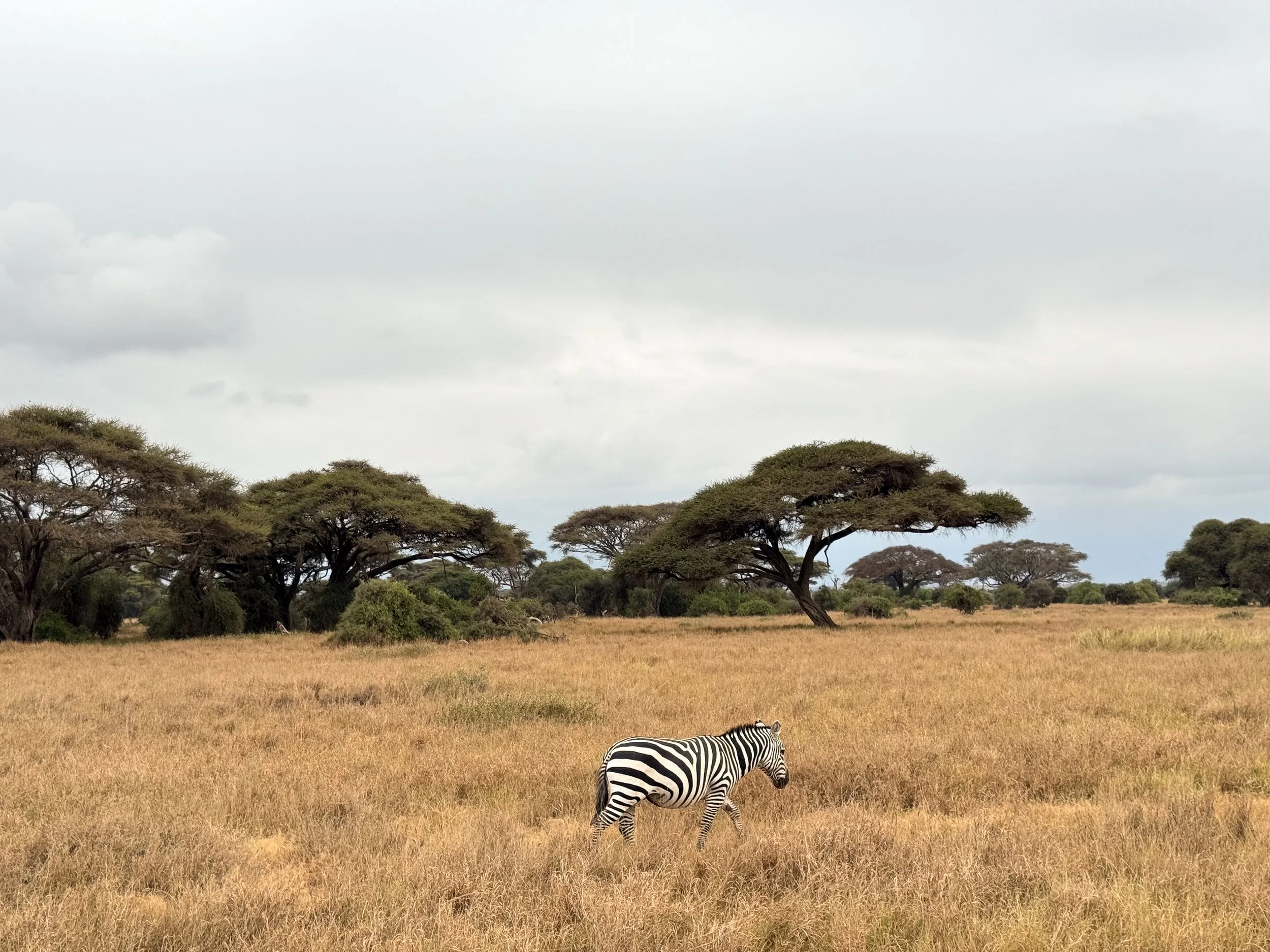
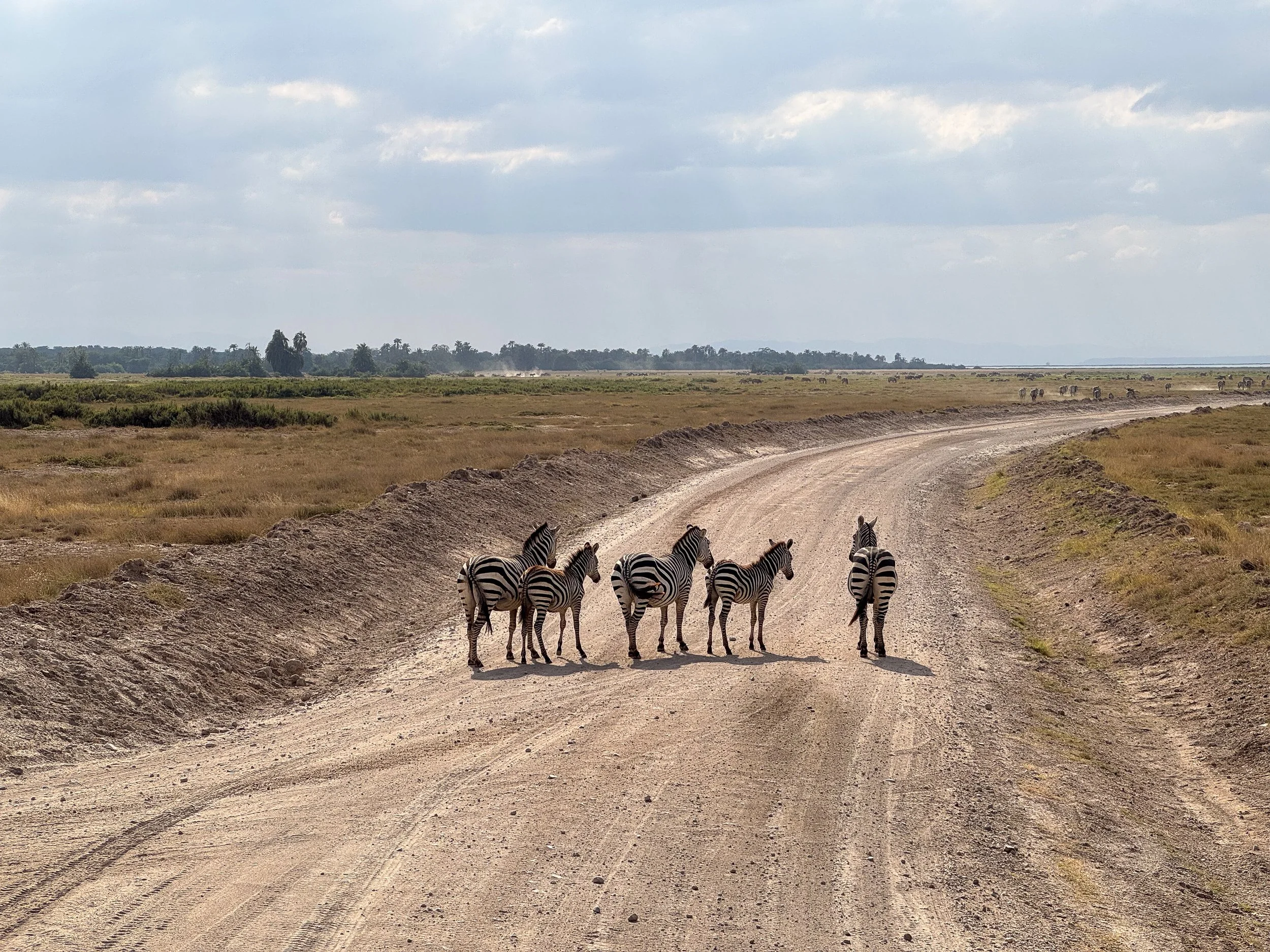
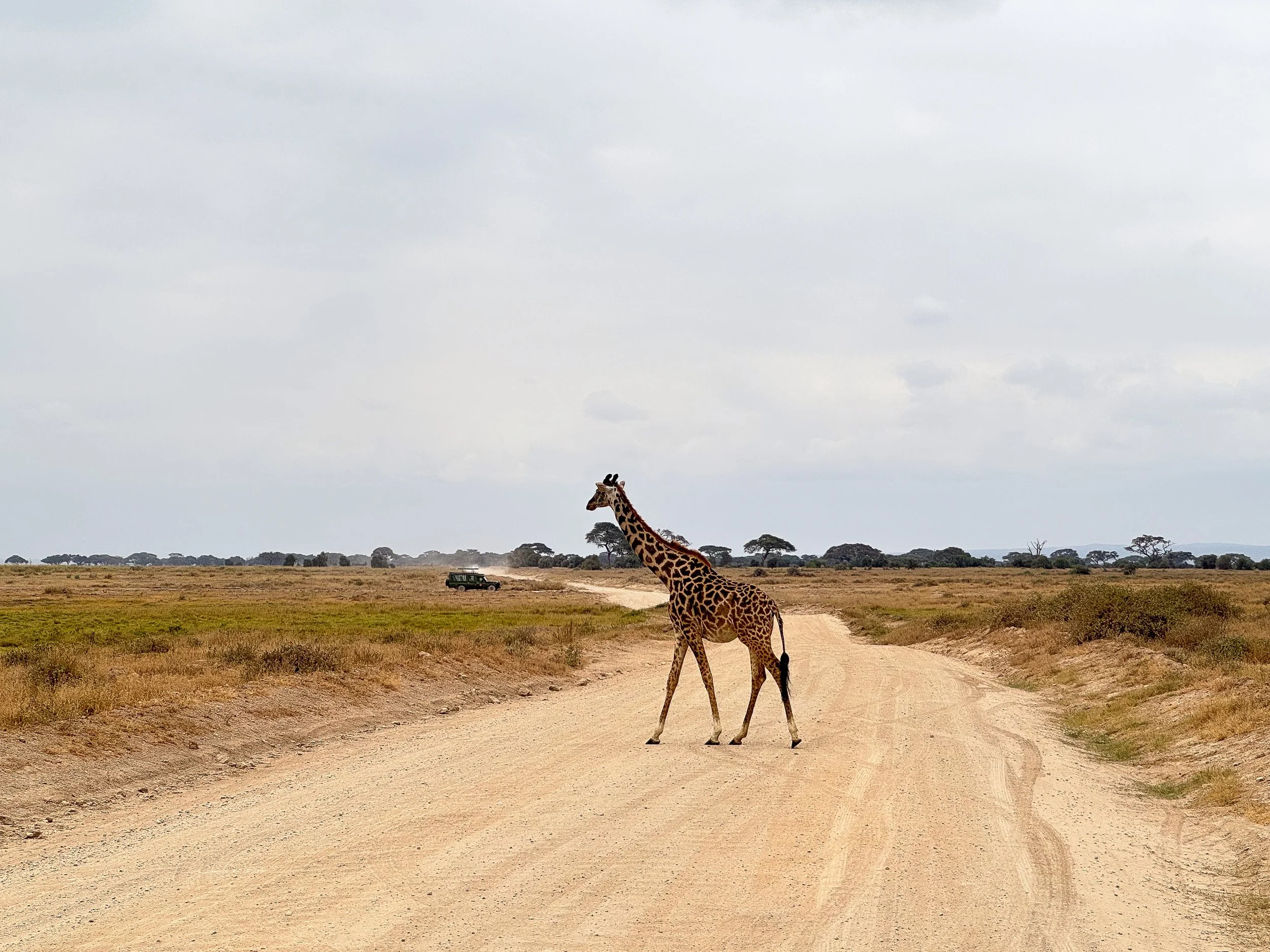
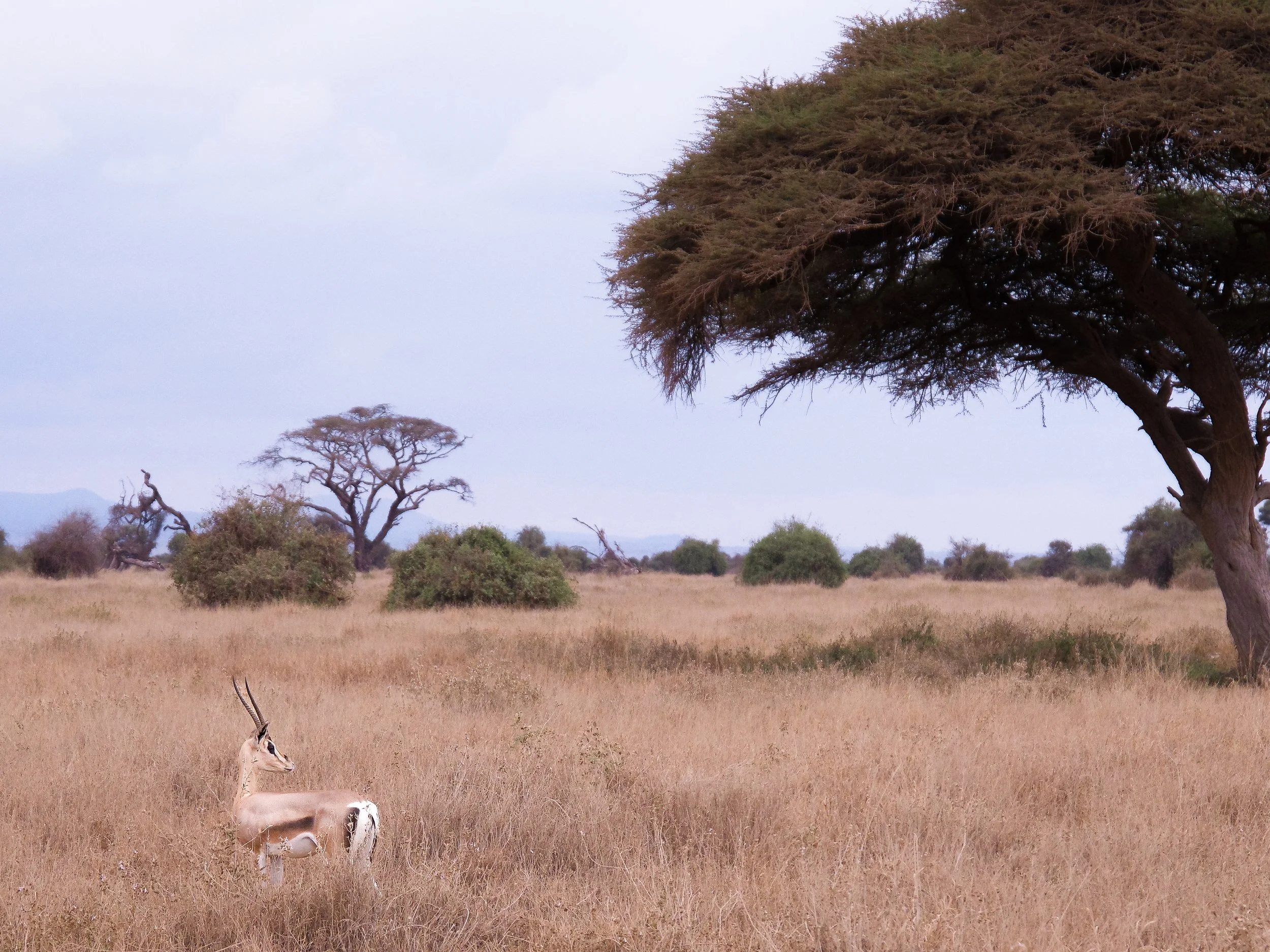
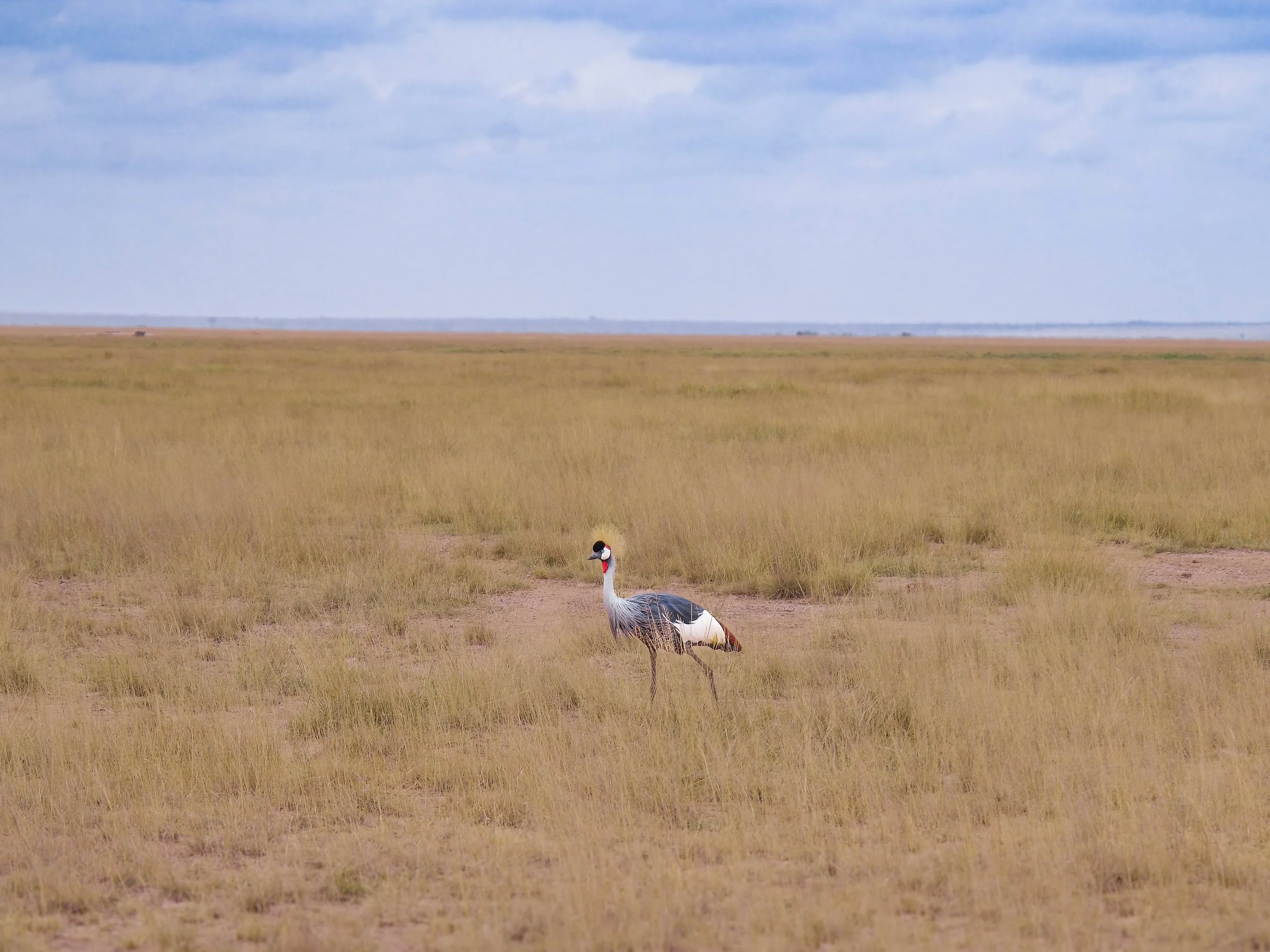
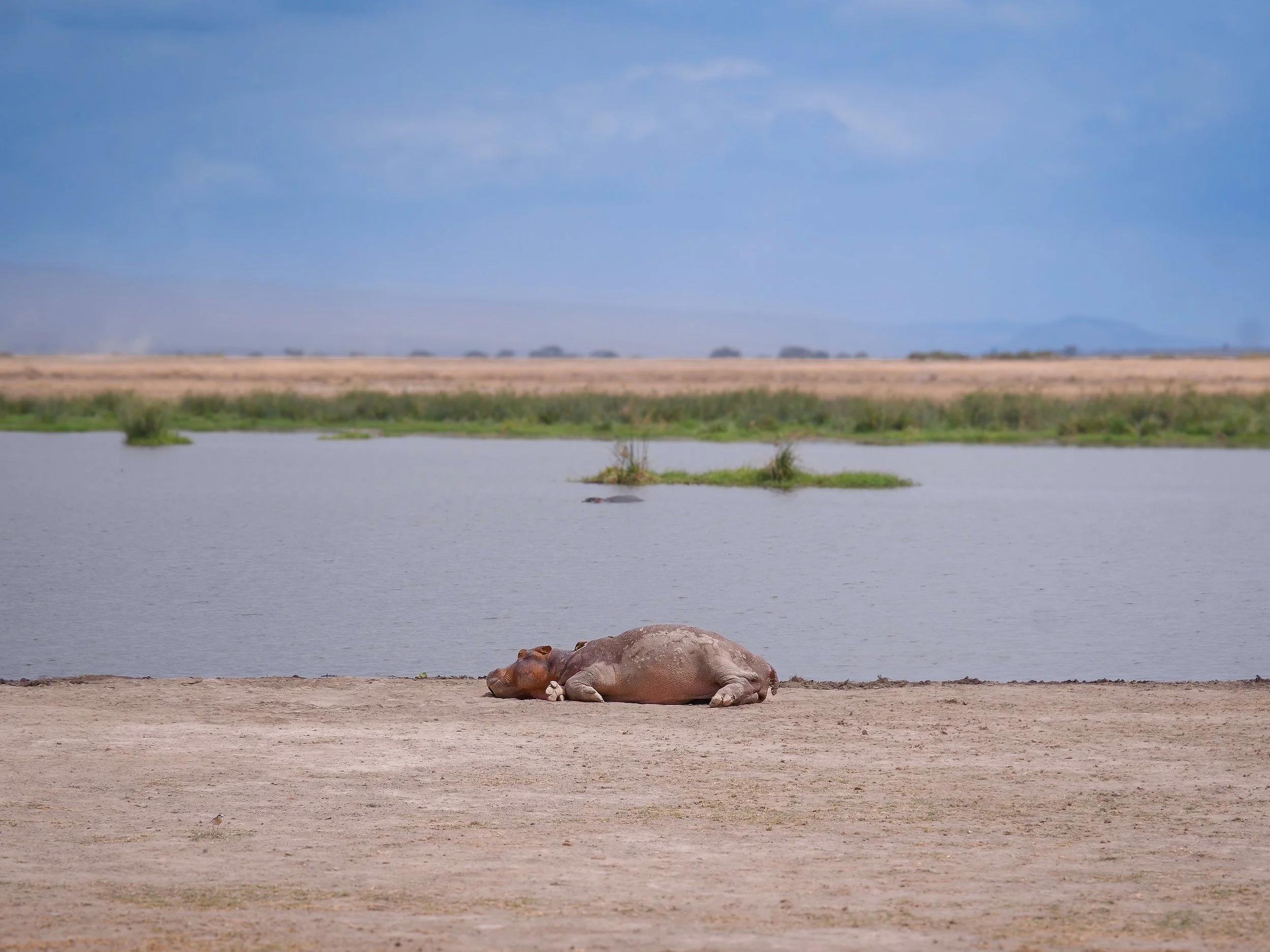
Game Spotting. The expanses of the Amboseli are thriving with all kinds of African animals. Towers of giraffes grazed on trees. Small herds of zebras, wildebeest and gazelle roamed freely. A trio of fearsome lionesses lay in the grasses as cautious zebras passed by. A pair of jackals chased away an impala. A serval sprinted quickly past. Ostriches strut across the savanna like giant feather dusters. Warthogs scurried together in the bush. Two sleepy hyenas woke from their den to look around.
Wetlands. The wetlands of the Amboseli are a gathering place and a habitat for birdlife. At their center is a mirror-like lake surrounded by lush grasses where flocks of pink and white flamingos gather. Storks, herons, cranes and hamerkops hunt for fish in narrow streams. Hippos bathe in watering holes and lounge along the muddy shores.
Noomotio Observation Point. A panoramic lookout on an extinct volcano with views of the wetland, savanna and on a clear day, Mt. Kilimanjaro. Wildebeest and zebra roam freely around the slopes while elephants march in the distance. A short trail leads to a picnic area at the top with beautiful starlings and canaries chirping in the bushes.
Guides. The Amboseli can be visited without a guide or 4x4 vehicle. We visited with a guide, included in our multi day safari.
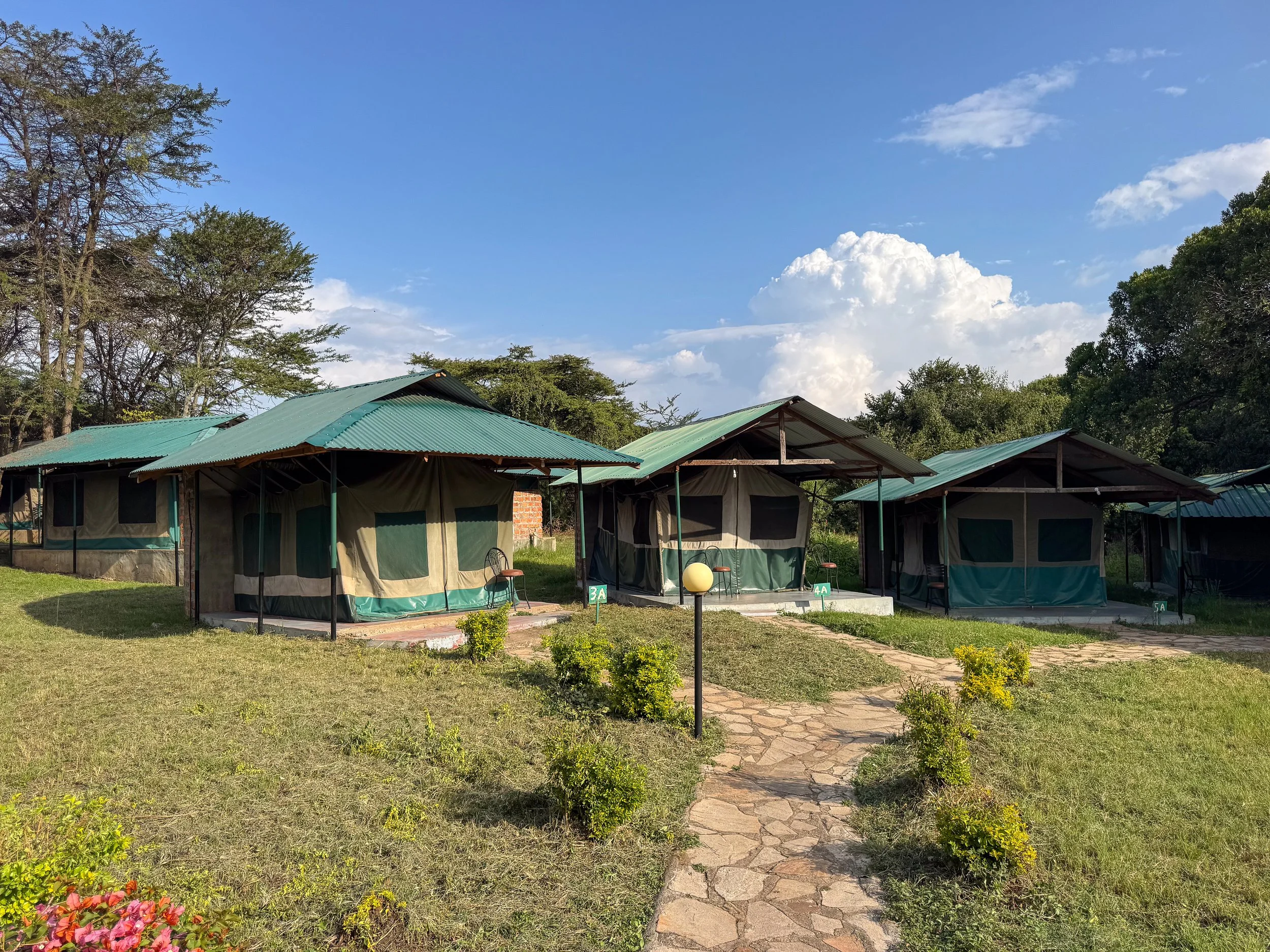
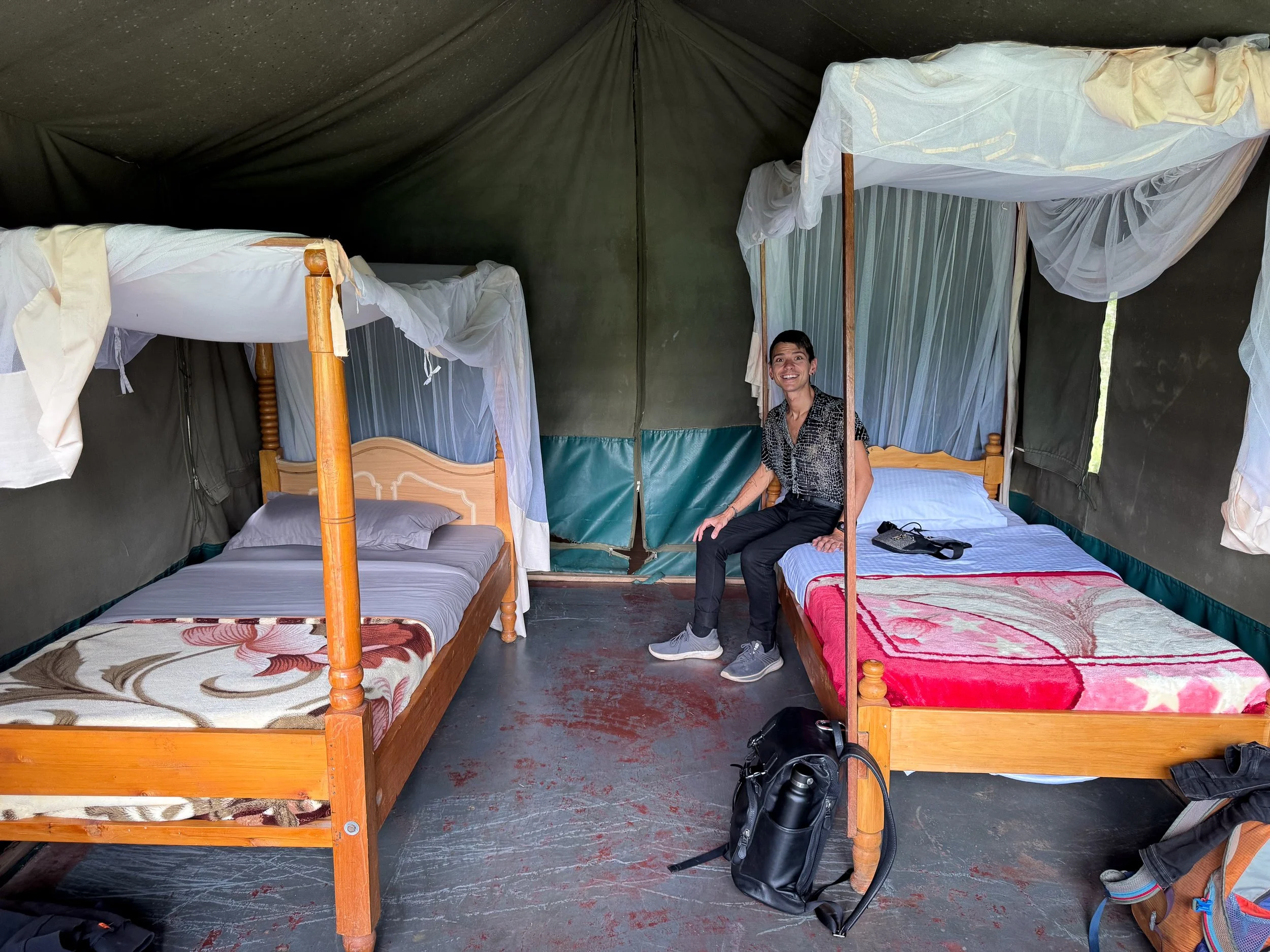
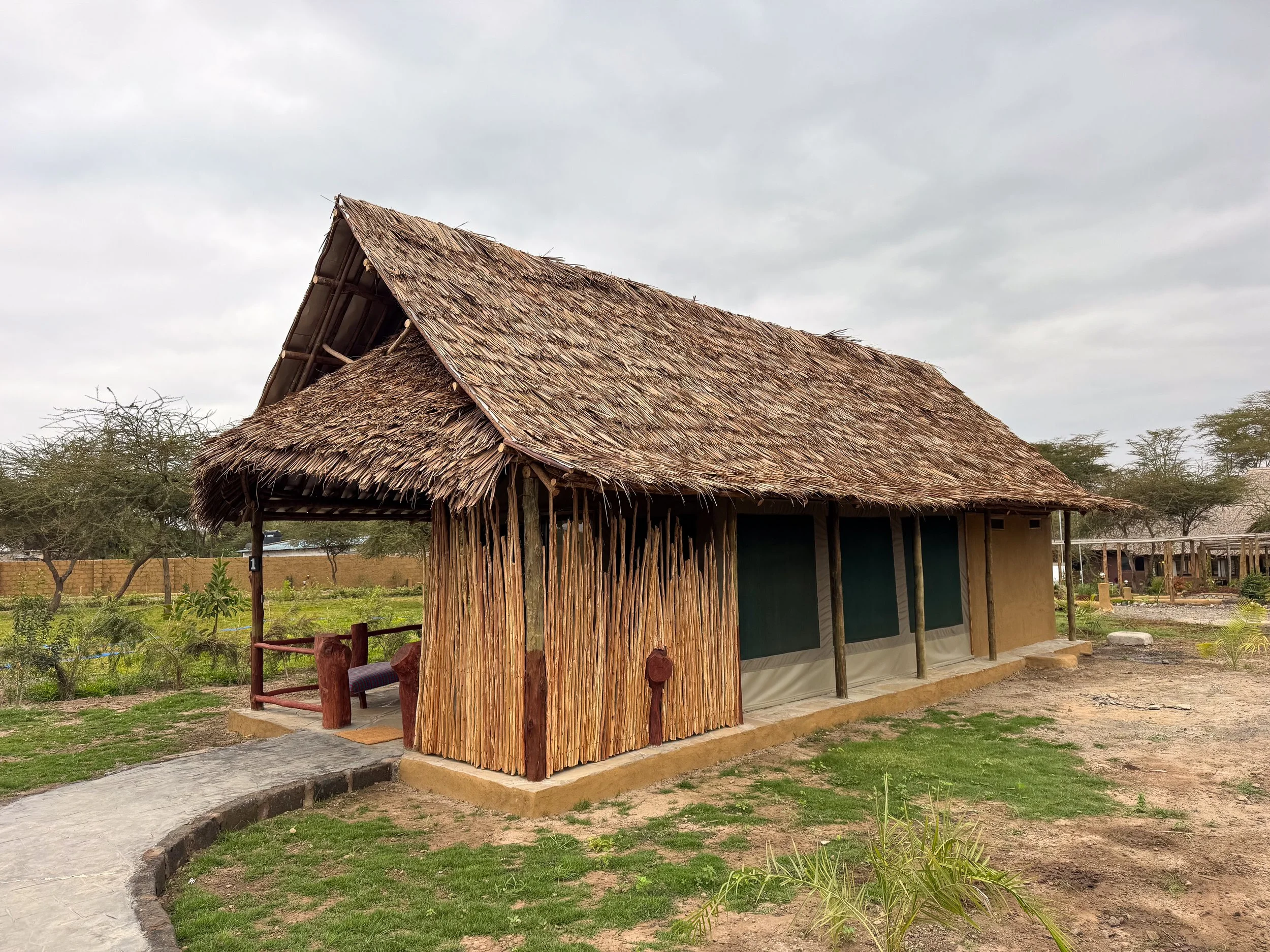
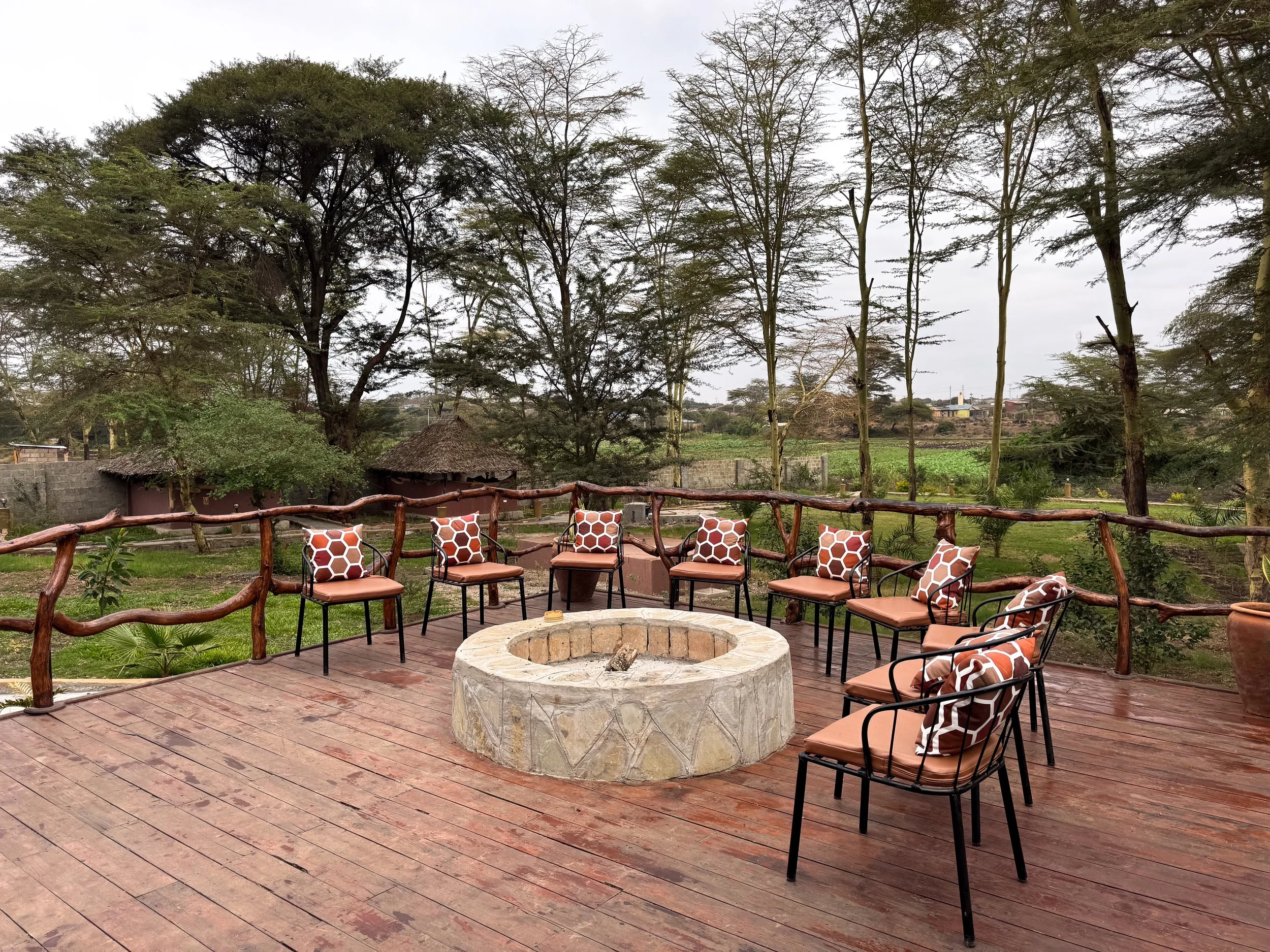
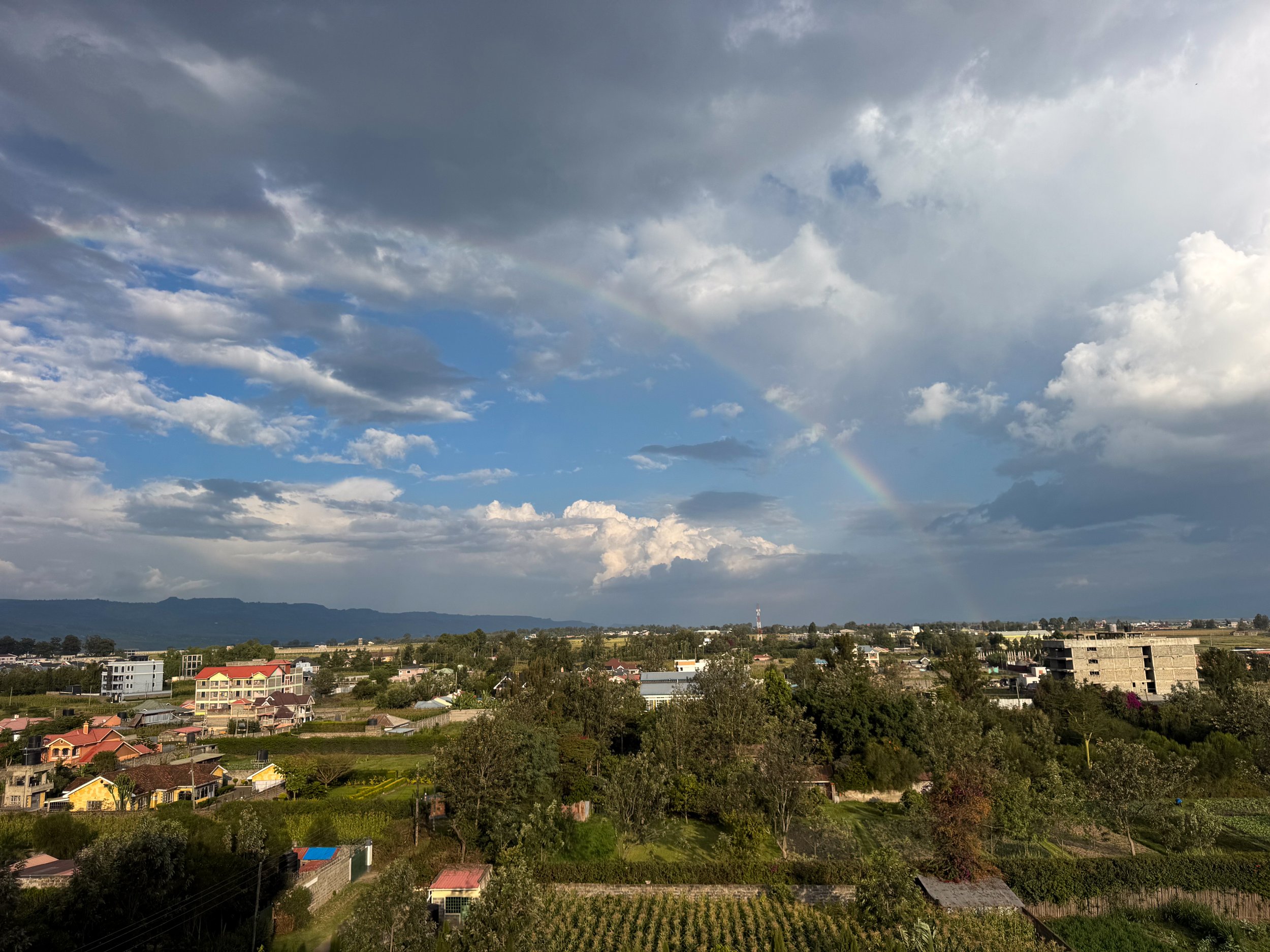
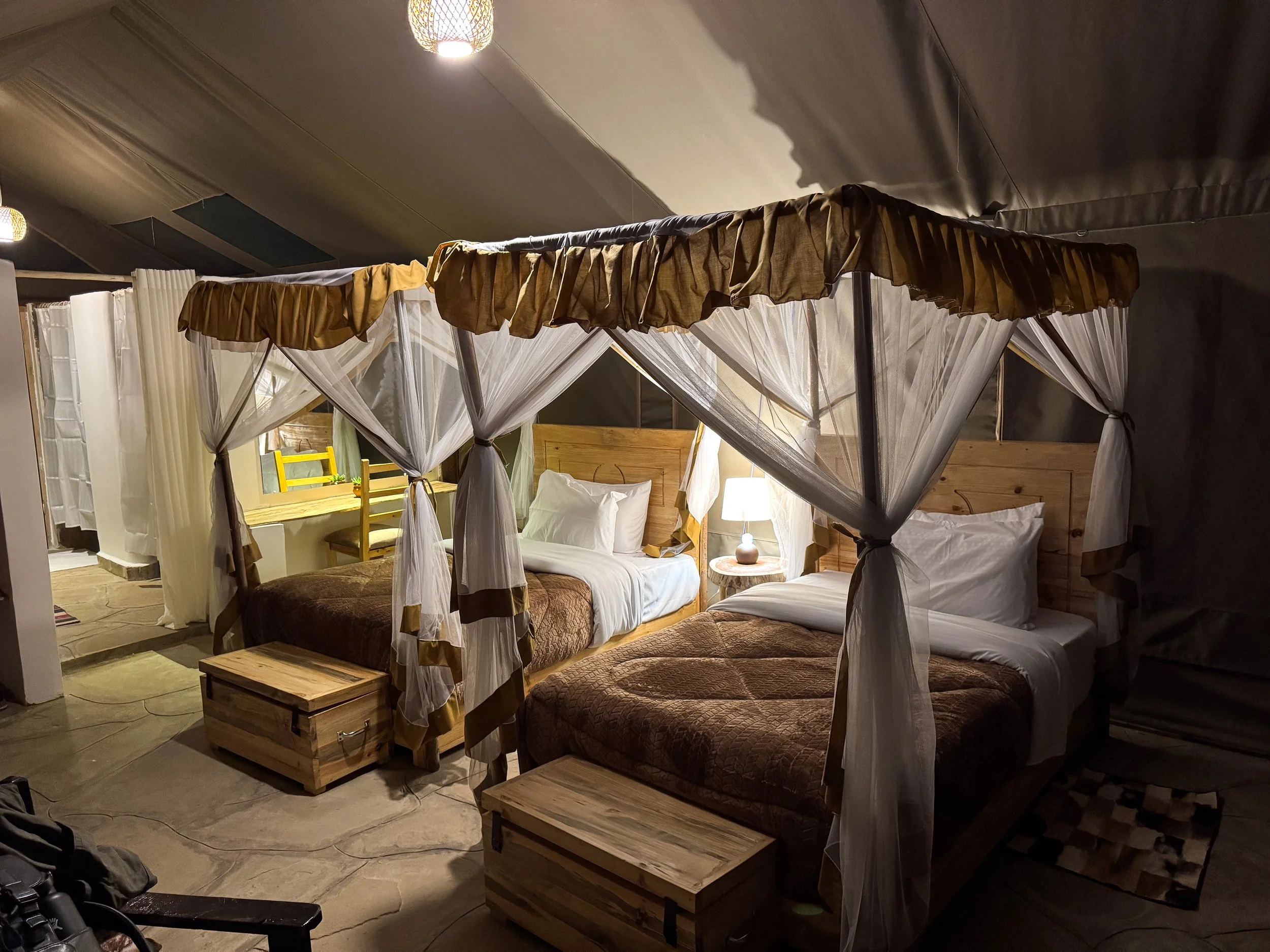
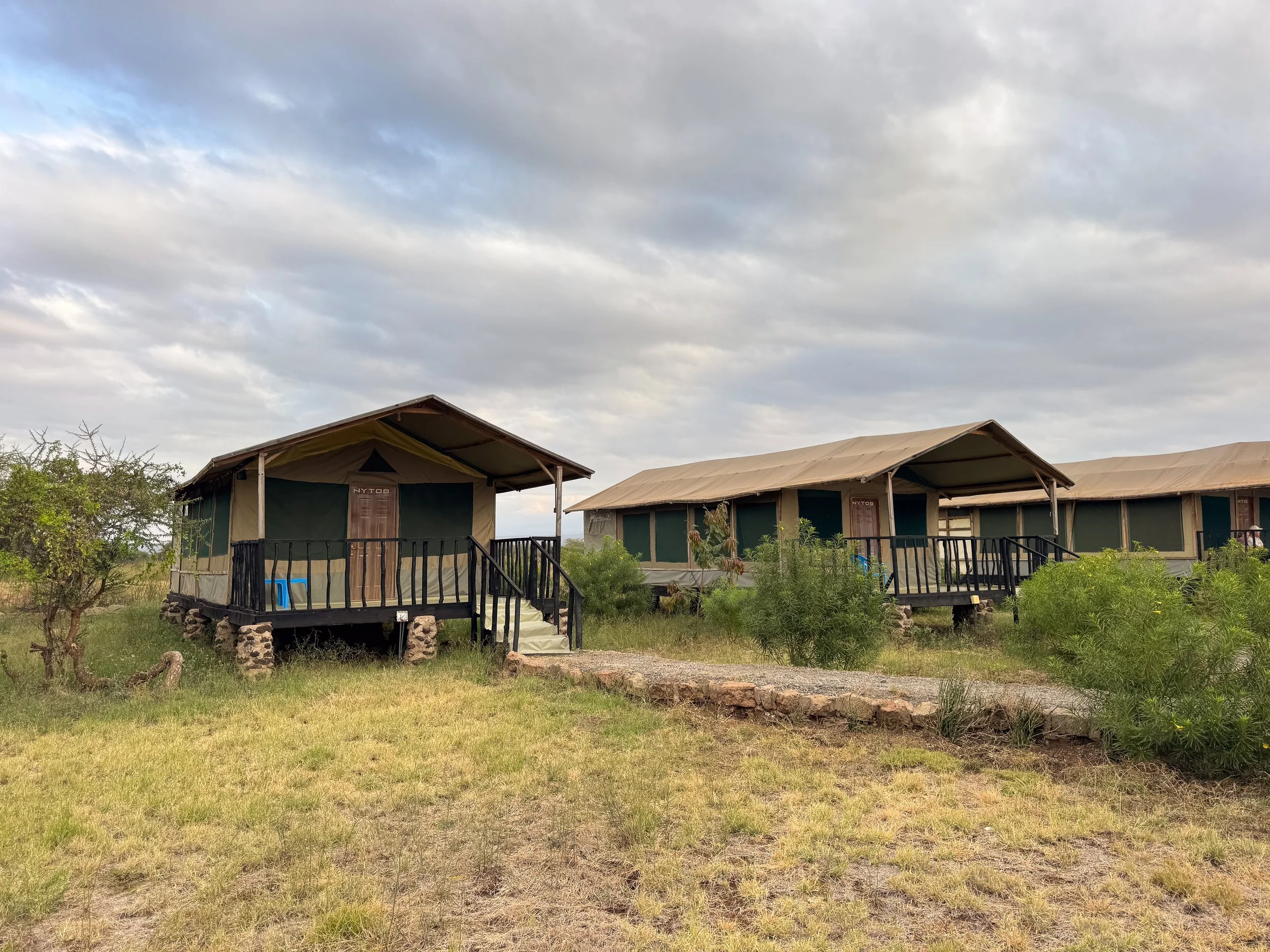
Safari Camps & Hotels
We spent the 6 days of our safari, migrating between campsites and hotels near the national parks and nature preserves.
Miti Mingi Eco Camp. A safari camp on the edge of the Maasai Mara National Park with a few dozen walk in style tents. Each tent is equipped with beds, mosquito nets, electricity, running water and restrooms. A dining hall offers buffet meals, local beers and Kenyan tea. We stayed here the first two nights of our safari.
Hunters Luxury Manor Amboseli. A luxurious safari camp with spacious canvas tents, an outdoor swimming pool, a communal dining area and bon fire pit. The tent’s interiors are furnished with wooden furniture, mosquito netted beds, cow hide rugs and a free standing soaking tub. Outside is a cozy patio and an outdoor shower. The manor offers full room and board.
Nyati Safari Camp. A budget safari camp near the entrance of Amboseli National Park. They offer a range of accommodations from motel style rooms to semi luxurious tents. Buffet breakfasts and dinners are provided along with packed lunches for full day game drives. There are evening bonfires and morning nature walks.
Buraha Zenoni Hotel & Resort. A hotel near Lake Nakuru with decent rooms, a roof top restaurant and bar, an outdoor pool and evening Maasai dance performances. Their buffet meals included a mix of Kenyan cuisine and western dishes. We stayed here for one night while exploring the lake.
Safari Tips
4x4 Vehicle. Only book a safari with a 4x4 Land Cruiser or Jeep and pop up roof. They’re the only vehicles that can handle the rugged terrain. Safari vans are slow and can’t access more treacherous parts of the parks.
Binoculars. Bring a pair of good binoculars to view distant animals and close up details of nearby game. We bought a pair of Nikon Monarch M5 with 10x42 magnification.
Camera. Phones can be great for social media photos, however a professional camera is much better for detailed and close up photos.
Wear Layers. It’s cool in the mornings and evenings but warm during the day. Plan to easily add or subtract layers.
Dust. The savanna can be extremely dusty during the dry season. Bring wipes to clean off with and wear clothes you don’t mind getting dirty.
Tipping. Plan to tip safari guides between $10-$20 USD per day per person.
When to Visit. One of the best times of year to visit the Maasai Mara is during the Great Migration between July and August. Millions of migrating animals cross the savanna in search of food and water while attracting predators. This coincides with Kenya’s winter. The temperatures are often cooler and days are cloudy.
Swahili Words & Phrases
English is commonly spoken across Kenya. Many people also speak Swahili, an East African language.
Jambo. A common greeting. When someone says Jambo, respond back with Jambo as a sign of mutual respect.
Mambo. A more informal version of Jambo. It’s often said amongst friends.
Karibu. A greeting meaning welcome or used as you’re welcome.
Asante. Thank you.
Asante Sana. Thank you very much.
Hakuna Matata. To quote the Lion King, it means “no worries” or no troubles. It is a genuine Swahili phrase though mostly said between locals and travelers.
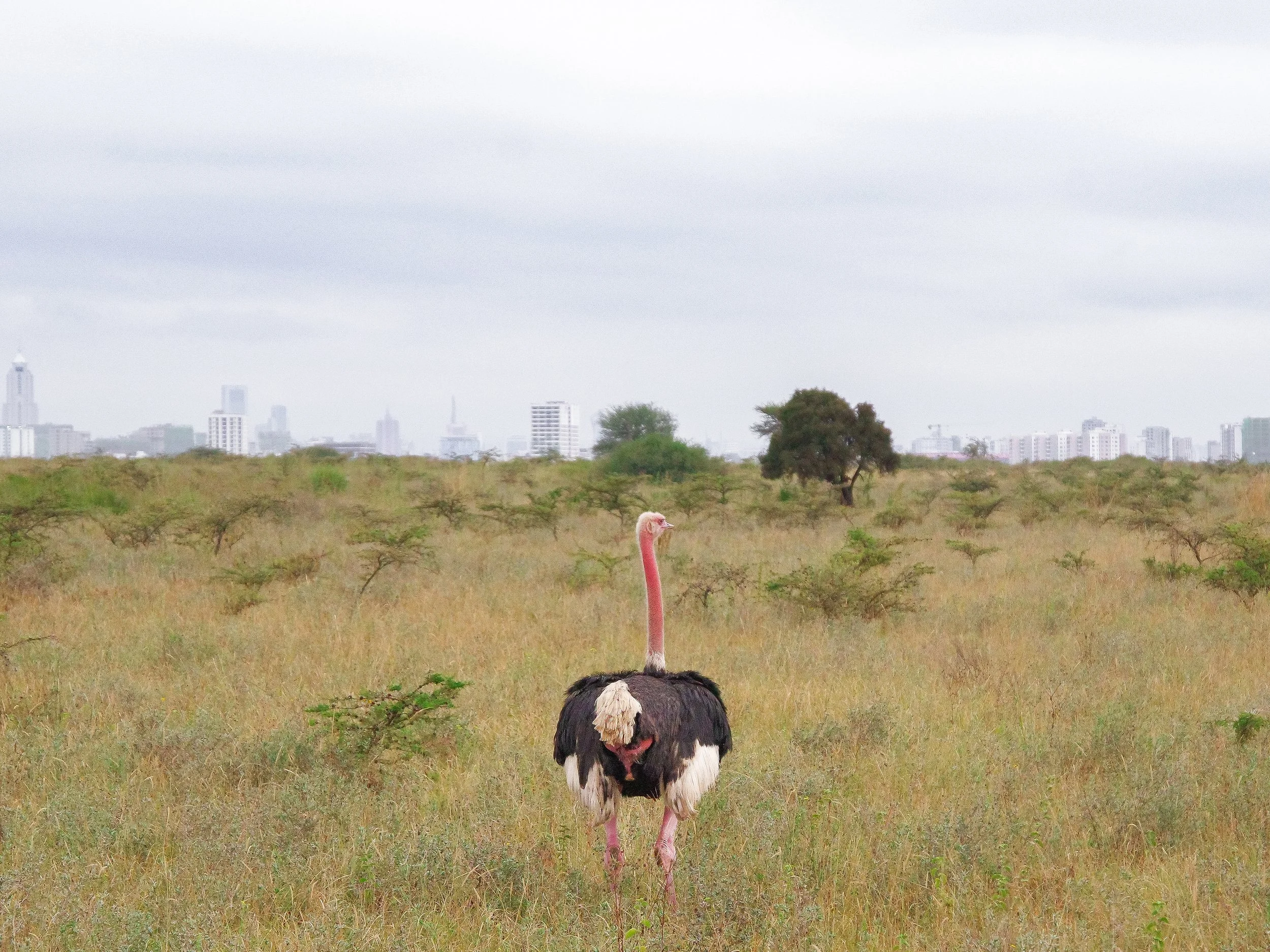
Elsewhere in Kenya
From the Great Migration and Big Five safaris of the Maasai Mara to Nairobi's markets, cuisine and cultural attractions, discover more of Kenya beyond the savanna.
Nairobi Travel Guide: Wildlife, Markets & Kenyan Cuisine. Explore Nairobi where urban life, wildlife encounters and vibrant markets bring together Maasai culture, Swahili cuisine and Kenya's safari adventures.
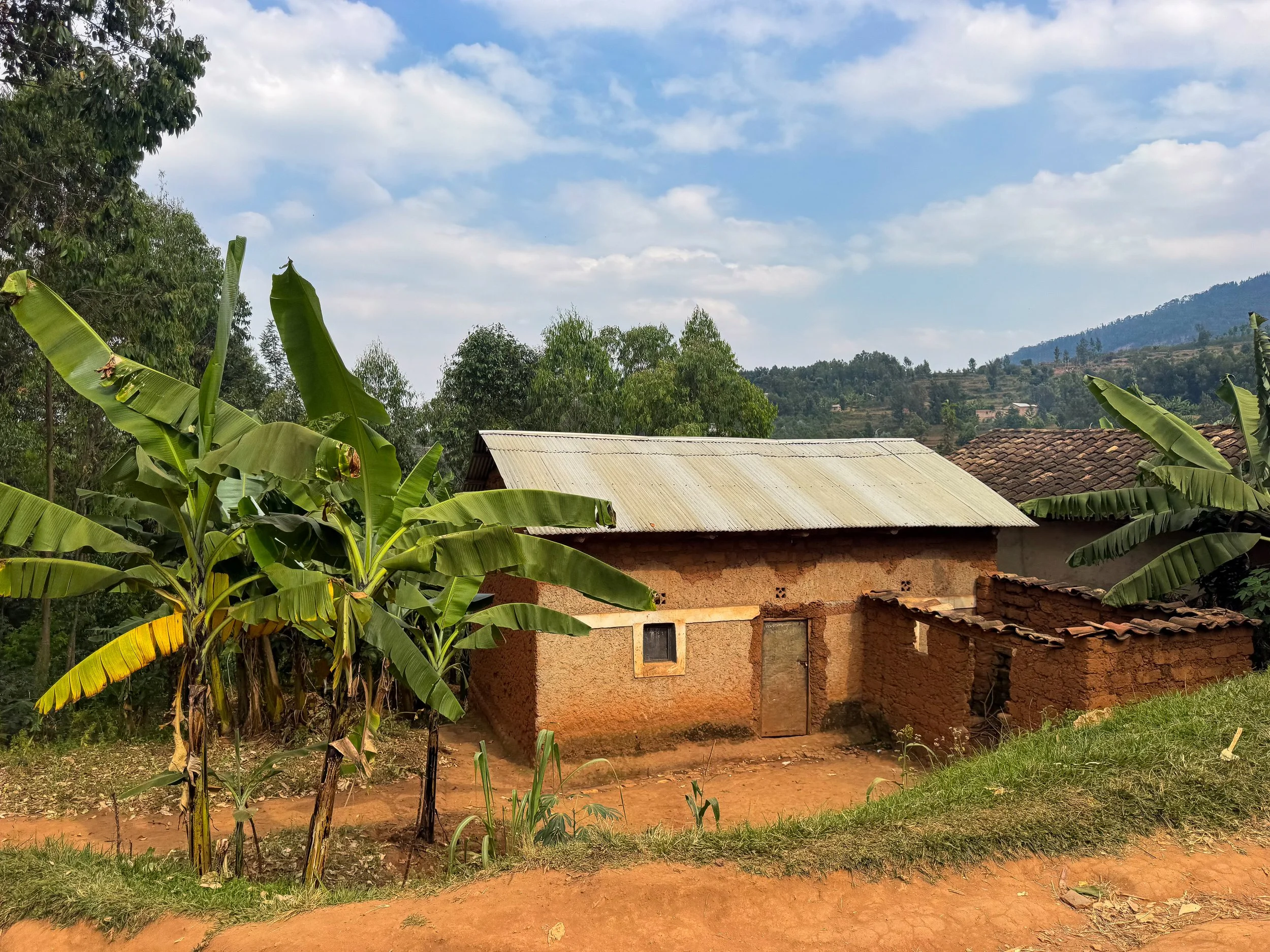
Rwanda Road Trip Guide: Kigali, Wildlife Trekking & Local Culture
Discover Kigali and road trip through Rwanda's rolling landscapes where local culture thrives and remote forest treks lead to wild chimpanzees and golden monkeys.
Rwandan Roadtrip
Rwanda is a small East African country known as the land of 1,000 hills. It’s home to lush farmland, mountainous rainforests, sprawling savannas, great lakes and volcanoes. Encounters with endangered primates like gorillas, chimpanzees and golden monkeys attract eco-tourists from across the world. The country’s cultural identity and history are on display at museums, galleries and memorials. We spent a week road-tripping across the country, experiencing its natural beauty, extraordinary animals and local culture.
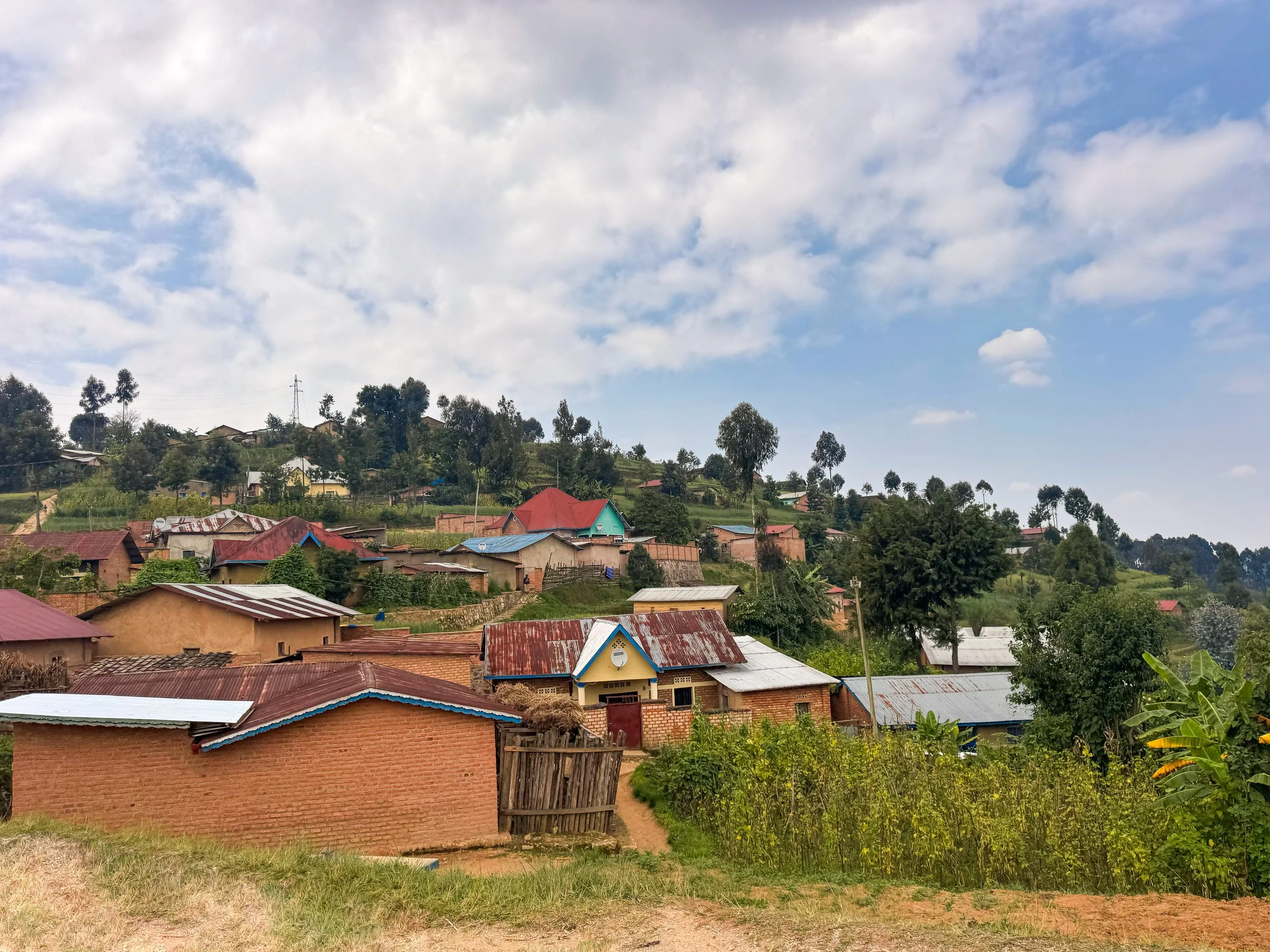
Observe the Local Culture
One of the most eye-opening parts about driving in Rwanda was observing the local culture. People work hard cultivating farmland and transporting goods to markets in rural villages. The roadsides are consistently buzzing with people. Women carry bunches of bananas, baskets of produce and sacks of goods on their heads. Men ride and push bicycles overloaded with bundles of sugarcane, silver canisters of milk and bags of goods. Children fill jerry cans with fresh water from wells and roll wheels with sticks for leisure.
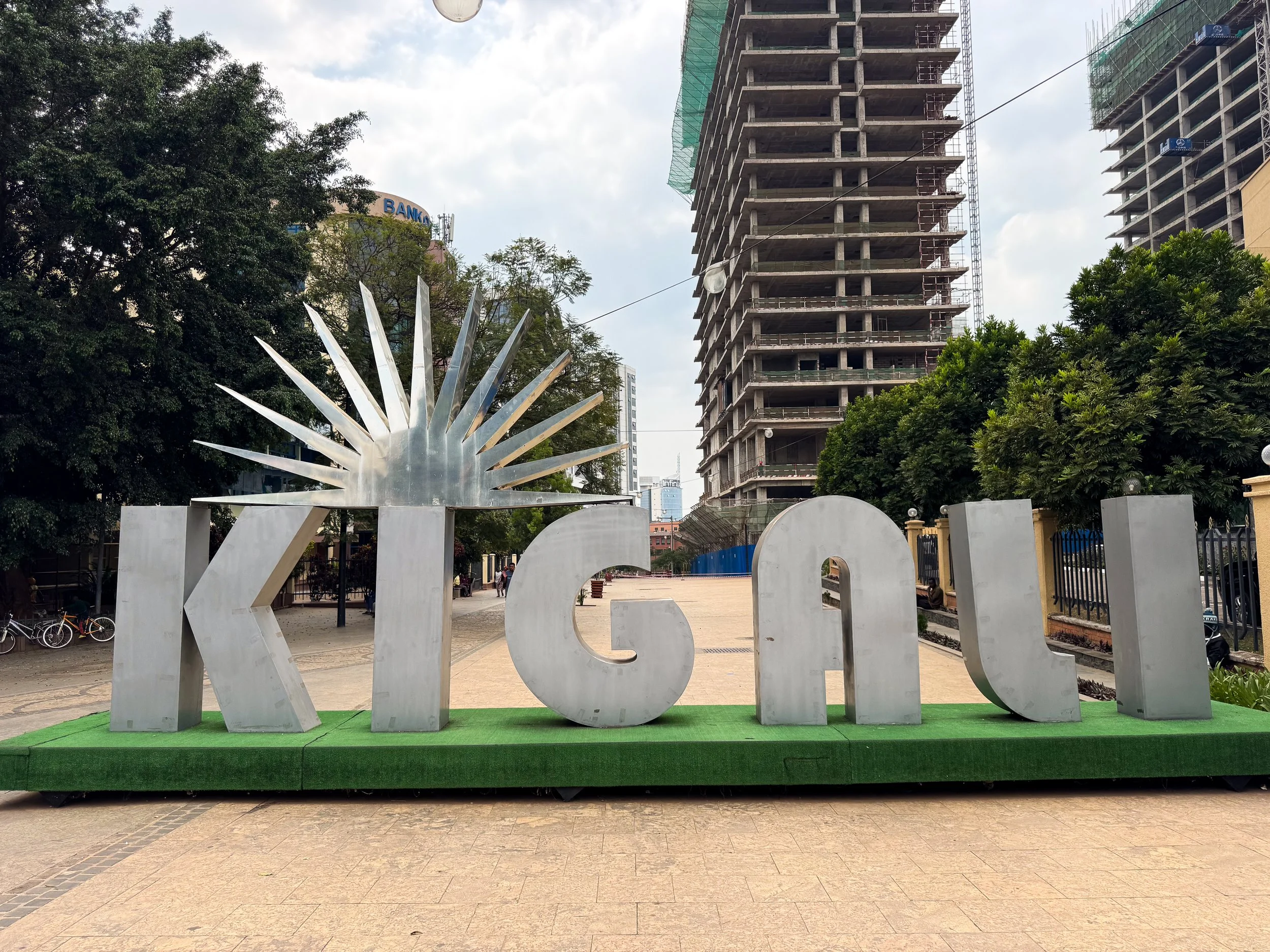
Kigali, Rwanda
Kigali is the vibrant capital city of Rwanda. Its modern neighborhoods and densely populated communities sprawl across the landscape’s rolling hills. Their warm tones glow by day and white lights twinkle by night. It’s a verdant place with palm lined boulevards, flowering trees and manicured bushes. The country’s culture is expressed through its people, goods, cuisine and history. Shops sell handmade crafts and African goods. Seasonally farmed produce is sold at local markets. Women dress in colorfully patterned clothes. Restaurants serve Rwandan cuisine while cafés brew Rwandan coffee. The people look towards the future while remembering the 1994 Genocide.
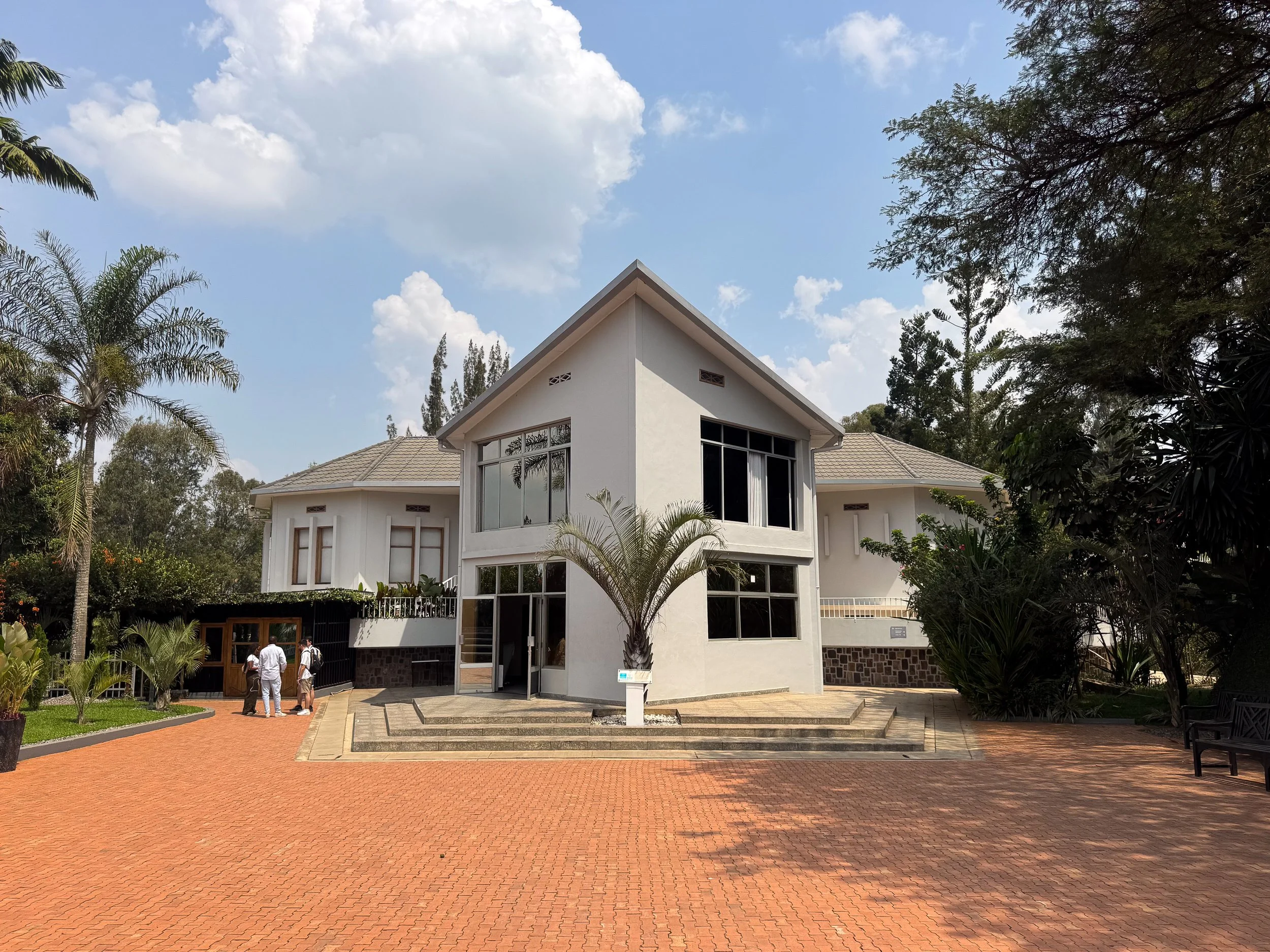
See the Sights
Kigali Genocide Memorial. A memorial and historical museum dedicated to the victims of the 1994 genocide. The museum is organized by section. It teaches about the root causes and colonial divisions that led to the genocide. It details the history and atrocities prior to and during. It honors the victims and those that stood up to terror as it ensued. It explains the steps post genocide to heal Rwanda and hold accountable those responsible. Lastly, it calls upon humanity to act to prevent future genocides. Mass graves containing the remains of a quarter million people murdered during the genocide are laid to rest here. They’re surrounded by symbolic gardens dedicated to the victims. More than 200 other memorial sites across the country serve as a stark reminder of the atrocities.
Pro Tip. Pay for an audio guide to learn more from the memorial and museum.
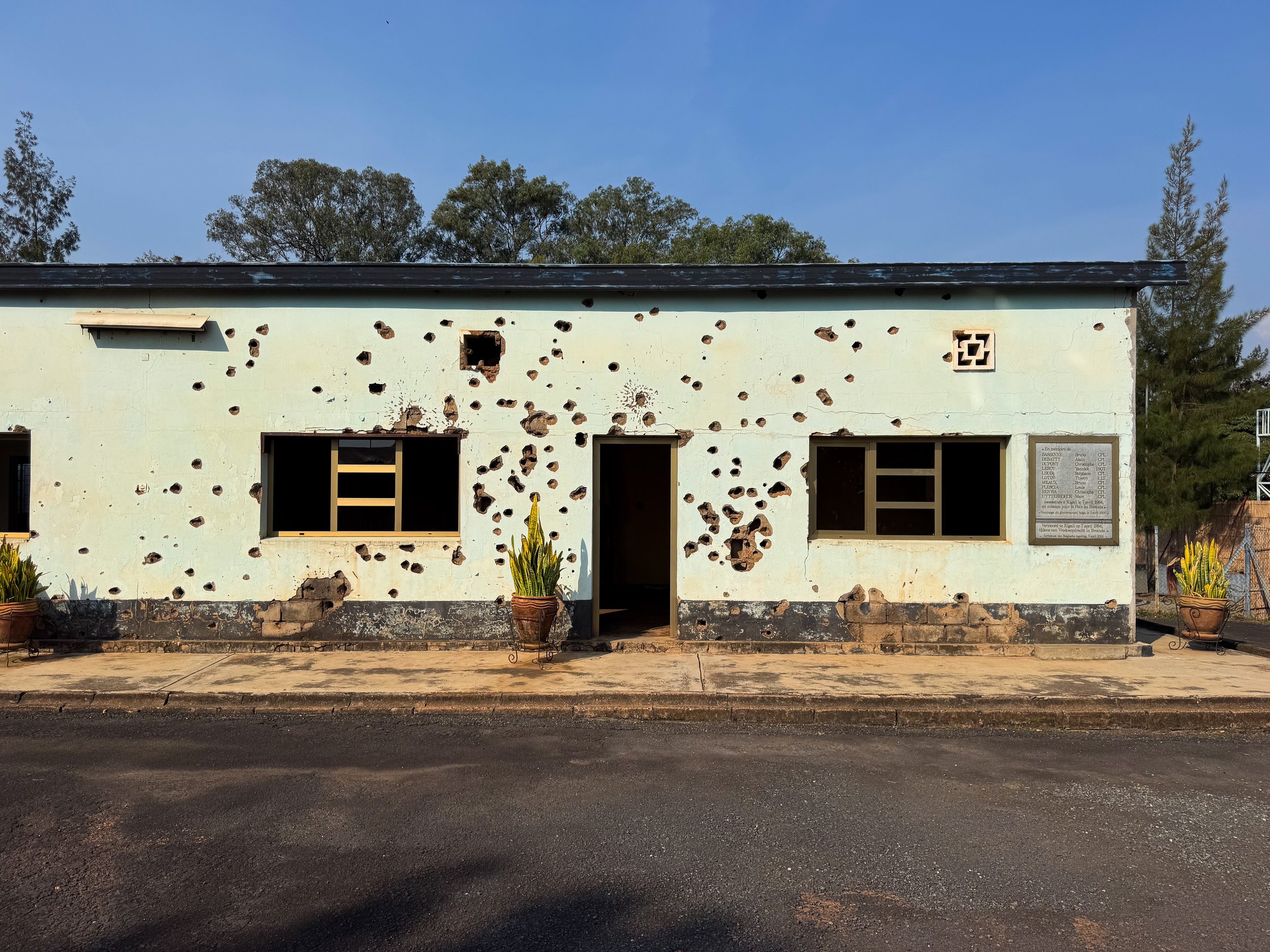
Belgian Peacekeepers Memorial. A memorial for 10 Belgian peacekeepers killed during the early hours of the 1994 Genocide. The bullet riddled building is the site of the massacre. It is preserved and partially converted into a museum recounting the timeline of the tragedy. A stone monument honors and remembers the peacekeepers lives. Entrance is by donation.
Inema Arts Gallery. A small arts center and gallery with pieces made by East African and Rwandan artists. Many of the works explore cultural identity, ancestry and heritage. Several pieces are made using Bark Cloth, the outer layer of the ficus tree. The gallery also features traditional wooden masks, furniture and sculptures.
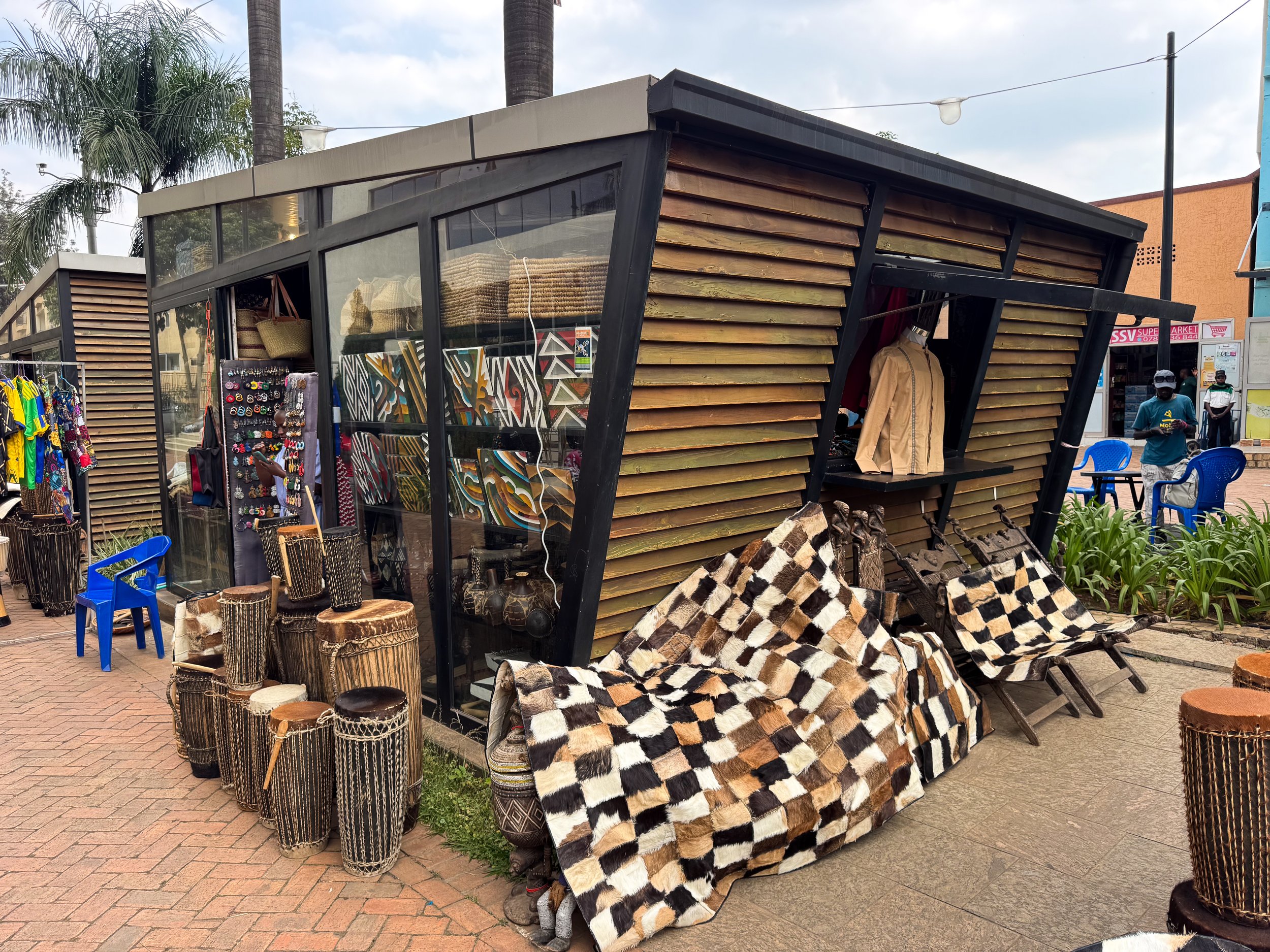
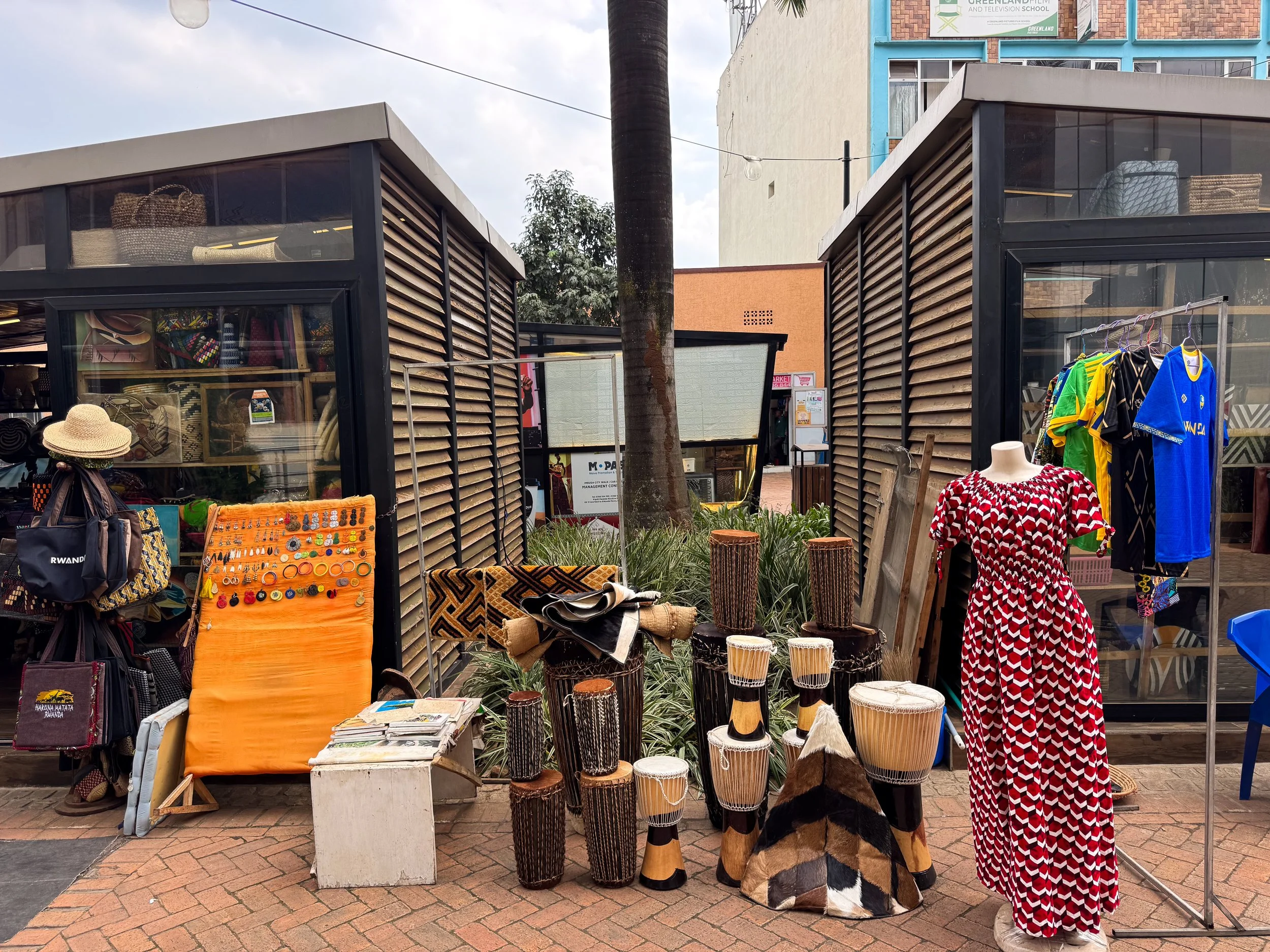
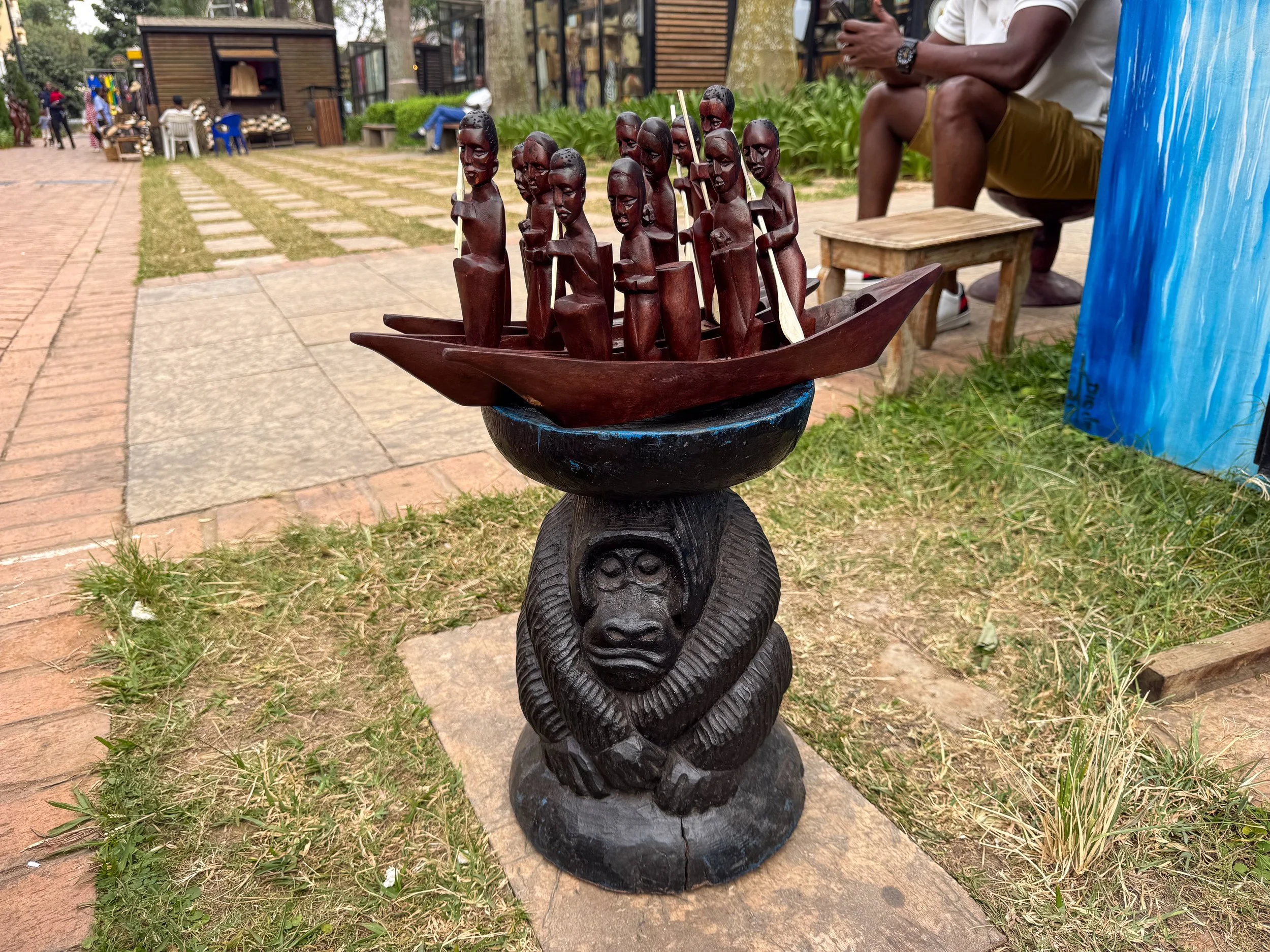
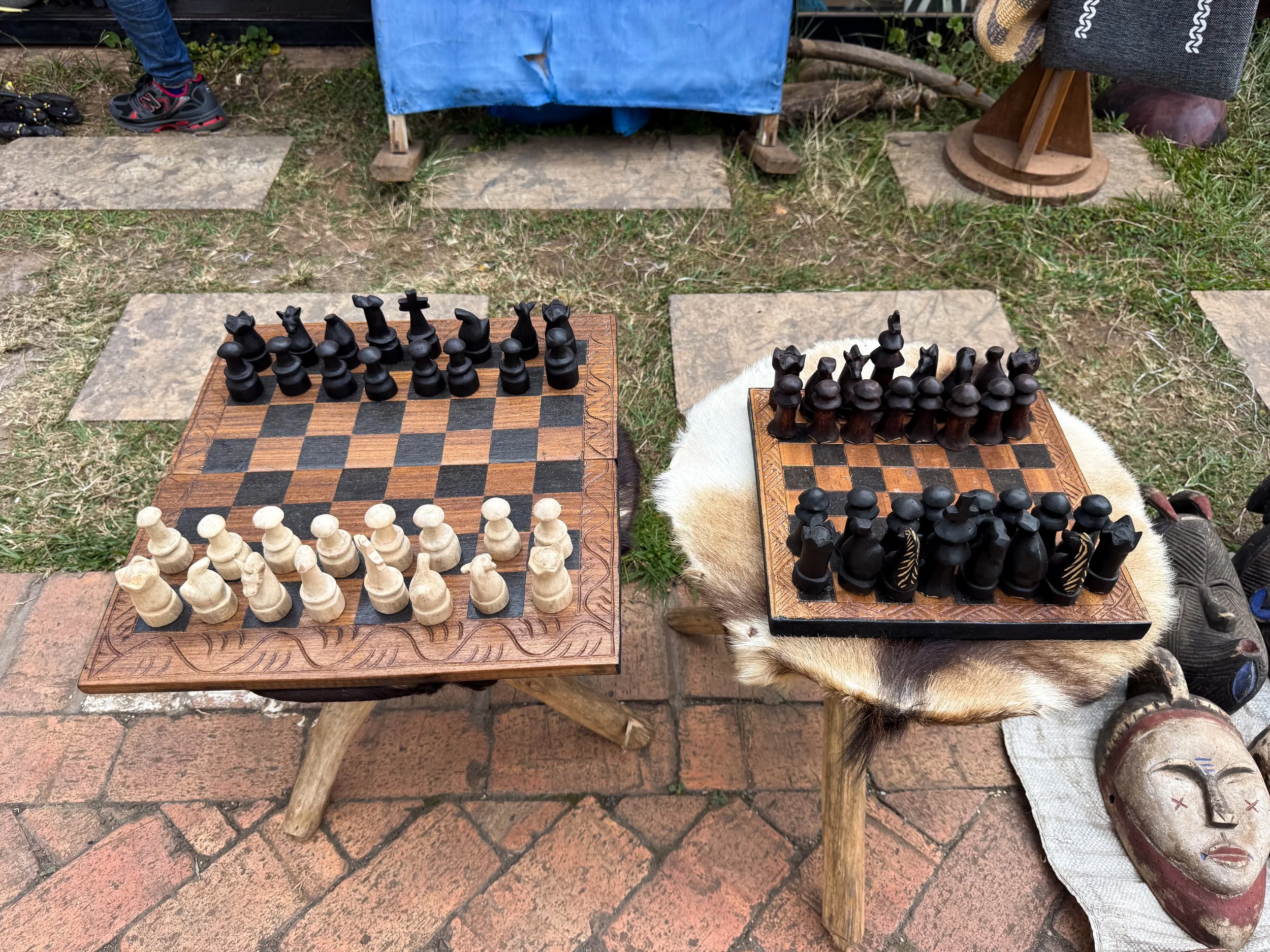
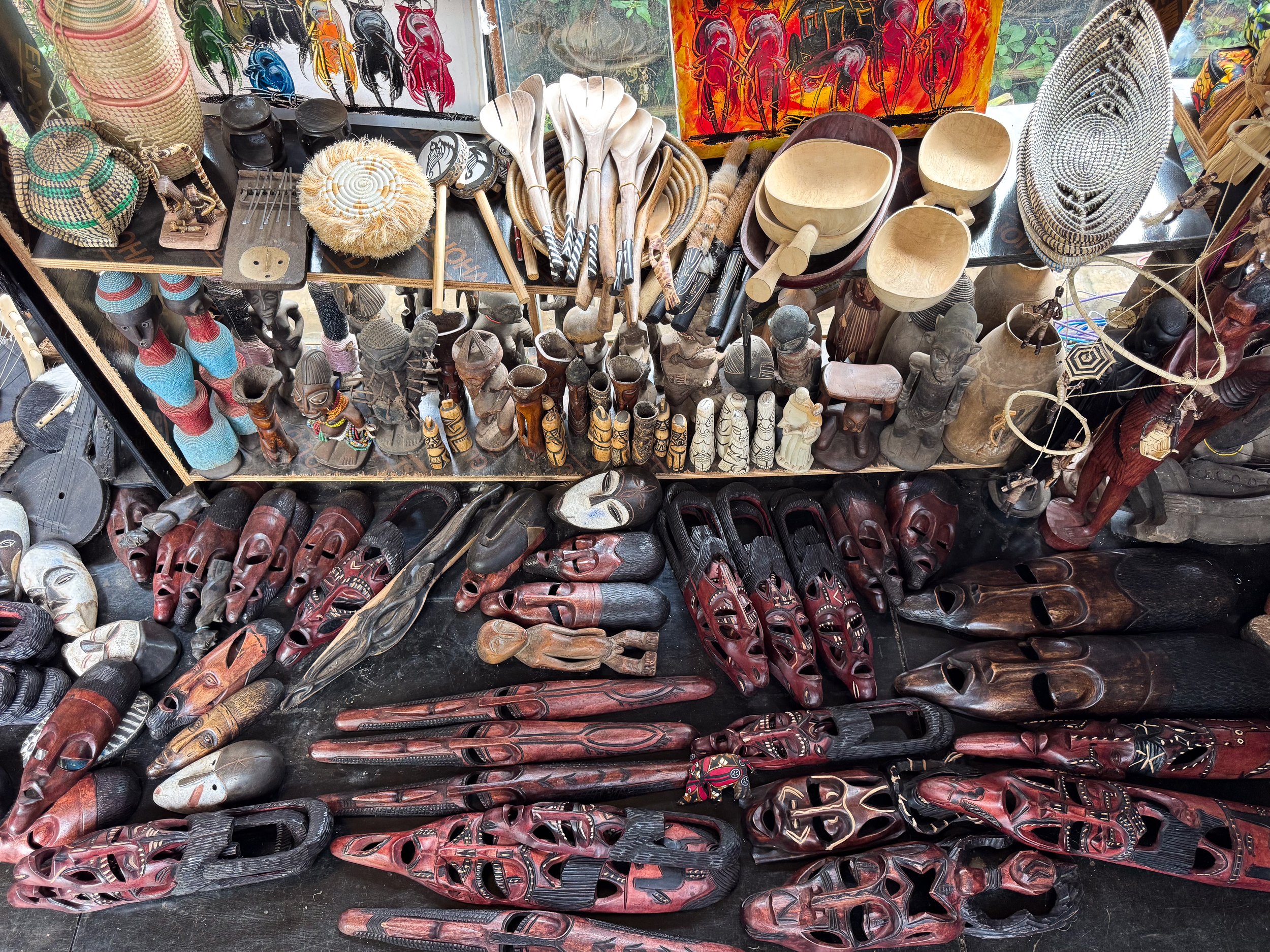
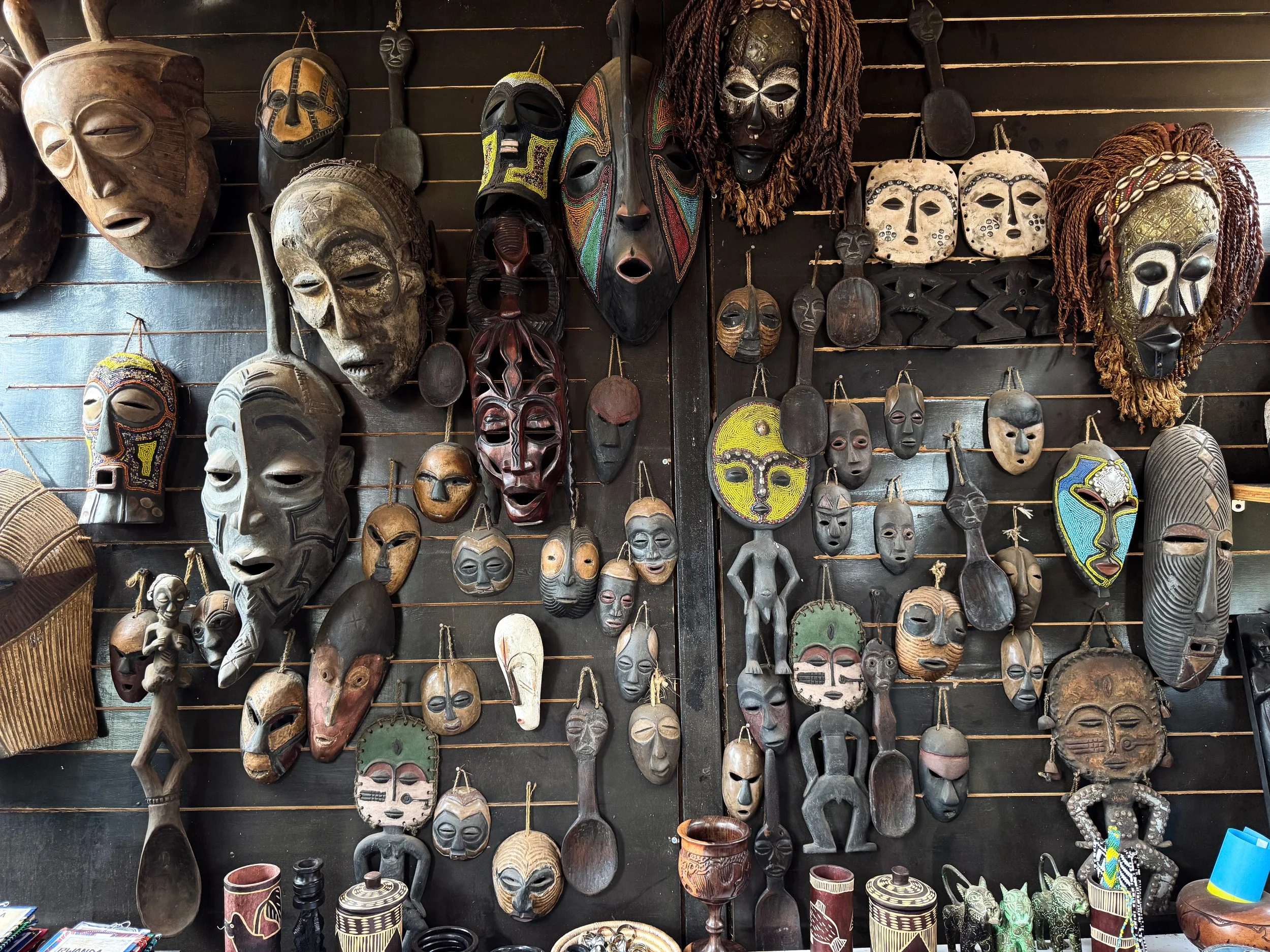
Kigali Car Free Zone. A walking street and plaza lined with kiosks and shops selling Rwandan handicrafts and Rwandan street food. There is no shortage of carved wooden gorillas and similar themed objects like chess sets, walking sticks and furniture. Merchants sell African masks, woven baskets, cow hide drums, colorful handmade jewelry, home decor, patterned clothing and culturally inspired paintings. Cafes serve cups of Rwandan coffee, croissants, chapati rolls and samosas.
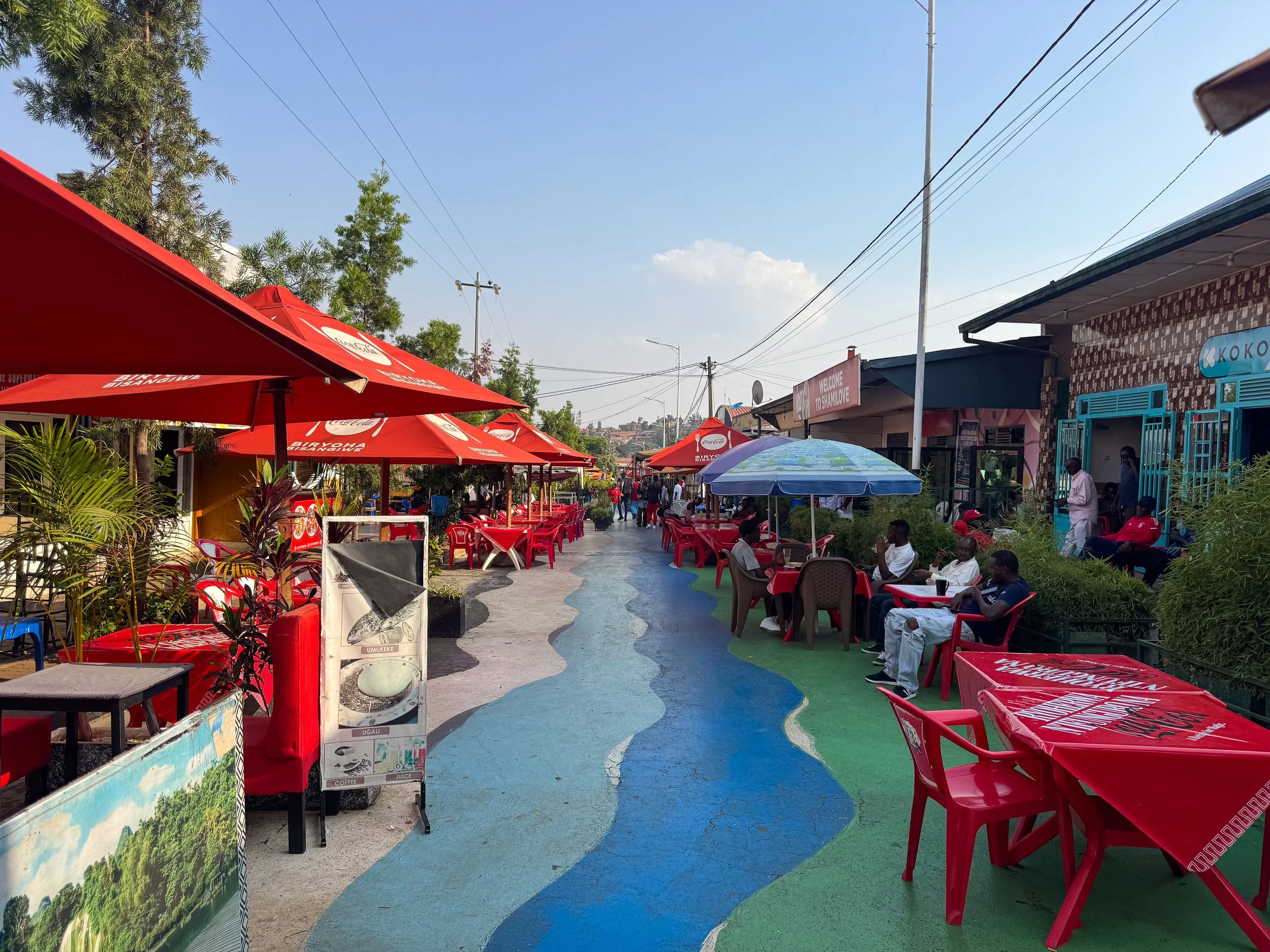
Biryogo Car Free Food Street. A painted walking street lined with dozens of Rwandan, Arabian and South Asian restaurants. Tables, chairs and umbrellas flood the street as hosts advertise and compete for business. It’s a hyper local spot to taste Rwandan cuisine and regional flavors. We ate at Visit Rwanda, a restaurant serving a range of local dishes and fresh fruit juices. We ordered the Nile perch fish brochettes, vegetarian imvange amashaza, spiced rice pilau, tree tomato and passion fruit juices. Visit on Saturday night for the liveliest experience.
Good to Know. Most restaurants are cash only. Vegetarian versions of local dishes are hard to come by. The street is in the Arab Quarter, resultantly, alcohol sales are forbidden.
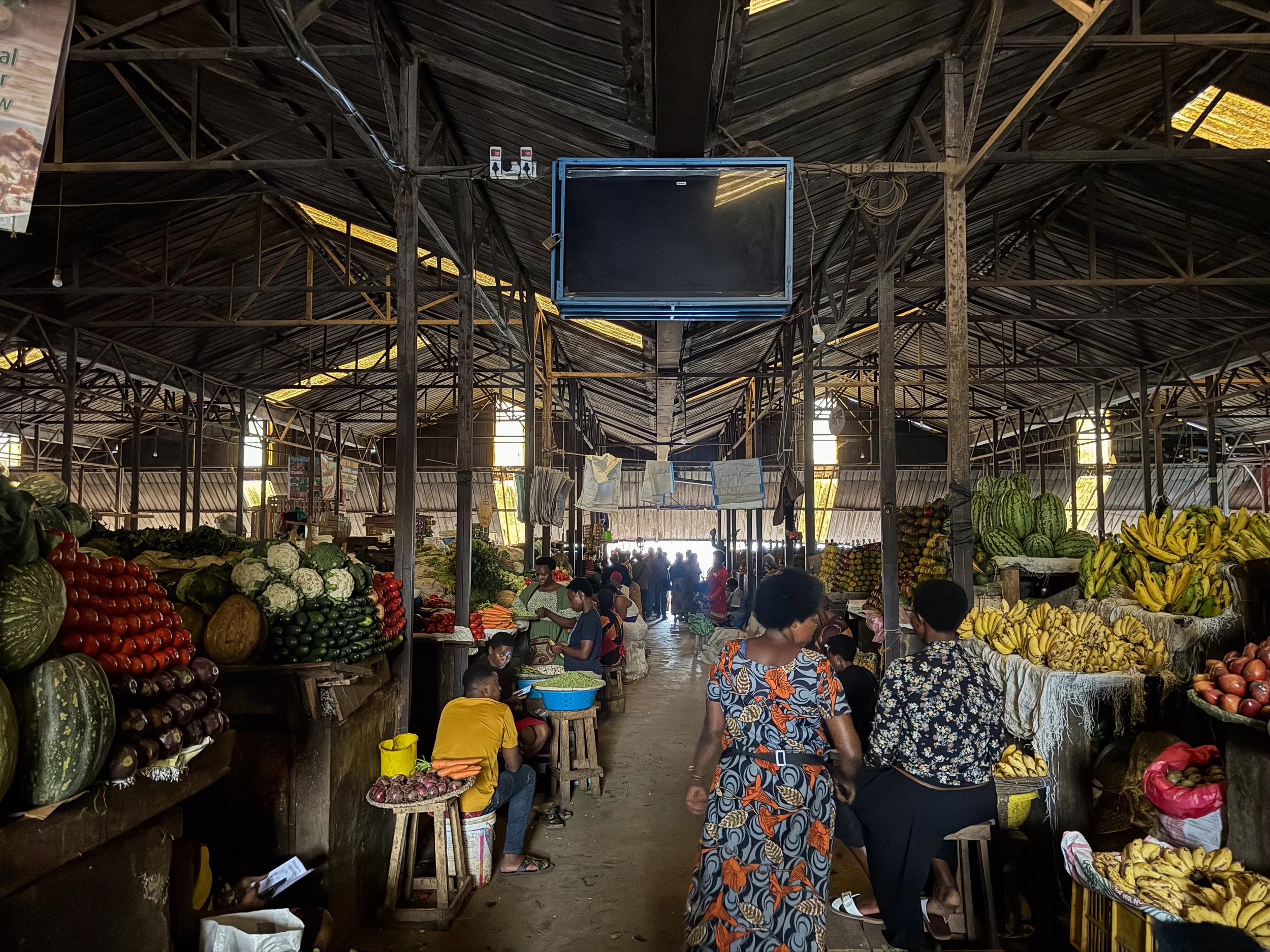
Kimironko Market. Kigali’s central marketplace is a hub for locals and affordable goods. Inside a dimly lit yellow shed is a bustling farmers market with towering piles of vegetables and produce. It took our eyes a few minutes to adjust before truly appreciating the vast selections. Barrels overflow with dried beans and grains. Tables are covered with heaps of carefully stacked fruits and vegetables. Leafy greens and herbs blur into a singular mass. Bunches of bananas and plantains rest at the end of aisles. The smell of dirt wafts from the potatoes and root vegetables. Friendly vendors greeted us with “hello customer, buy something?” The building is surrounded by red dirt roads and stands selling miscellaneous goods like clothes, shoes, furniture, hardware and fabrics.
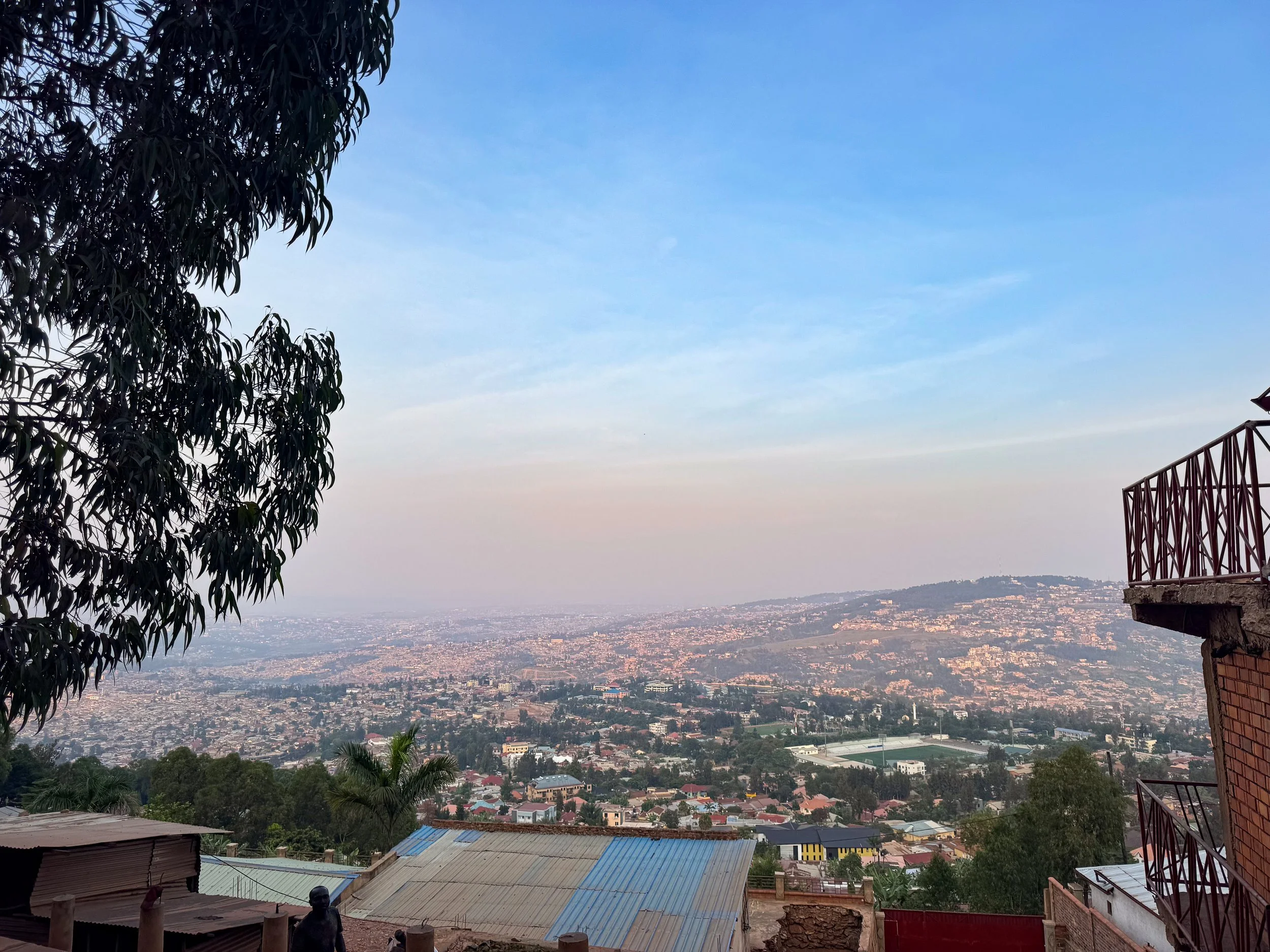
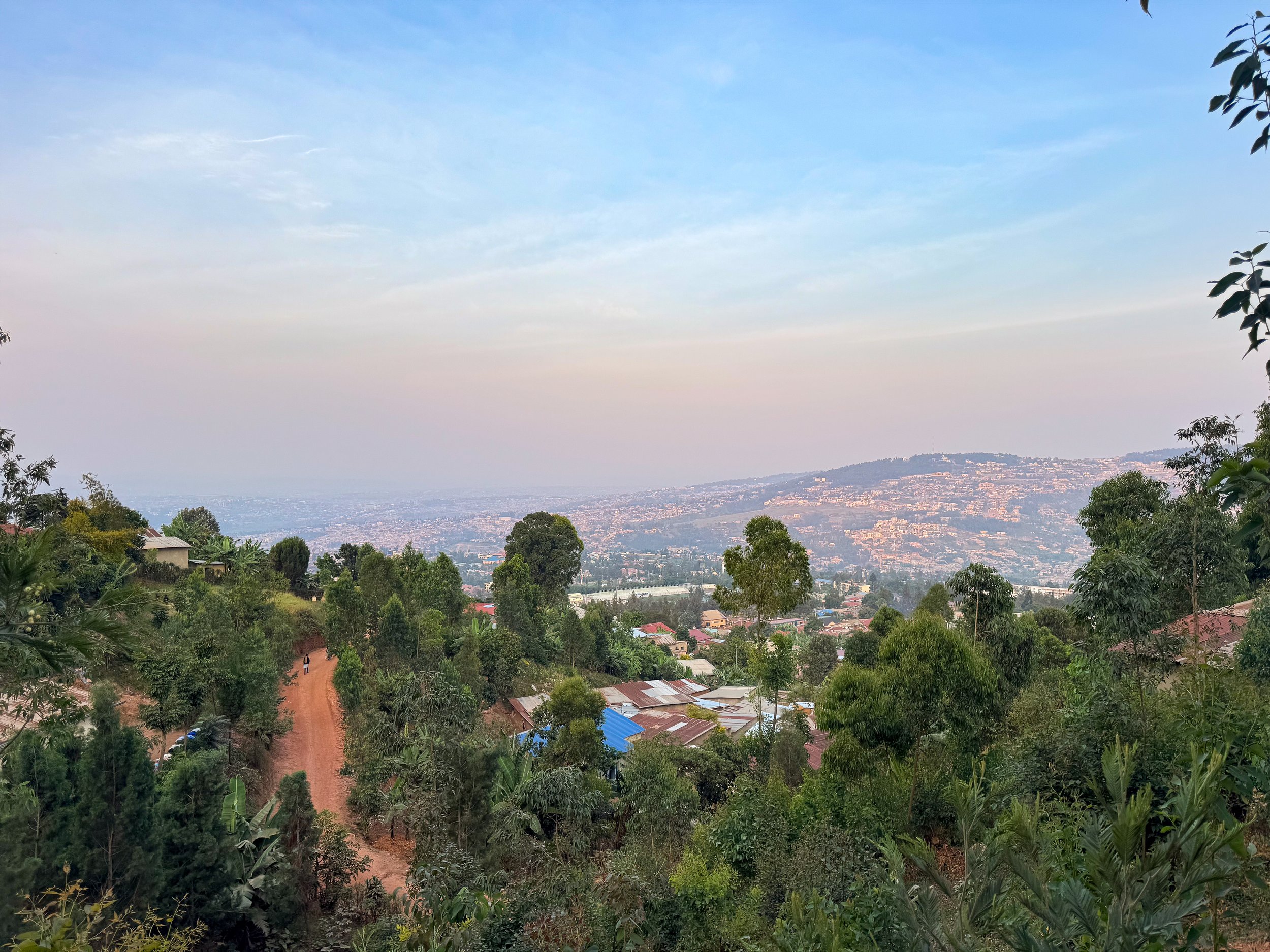
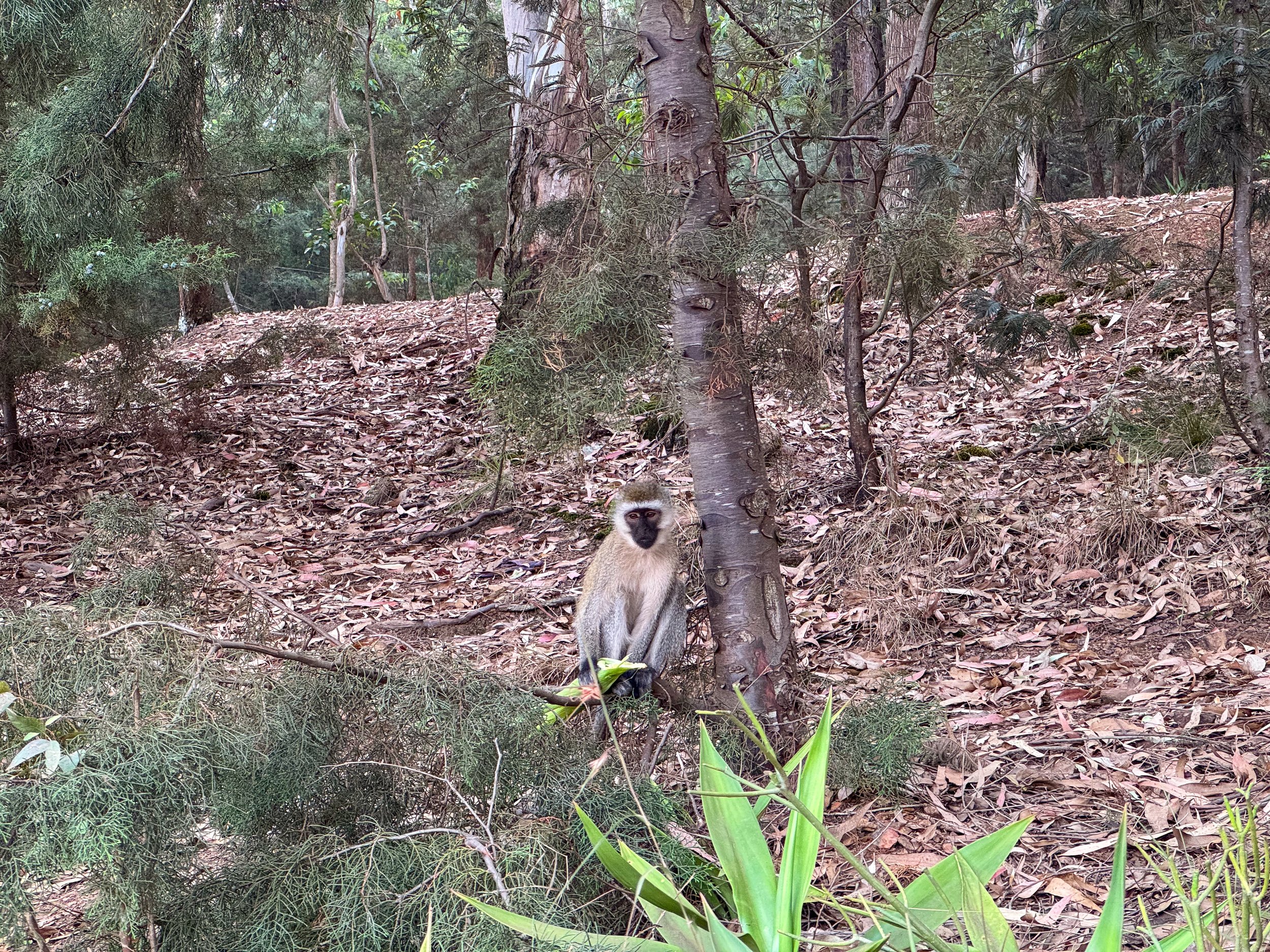
Mount Kigali Forest. A forested mountain in the center of Kigali with nature trails, wild velvet monkeys and partial city views. Dirt roads lead up its hillside through local communities to the entrance of the forest. Unmarked trails weave through the forest while city views are visible from the dirt road between it and the communities below.
Getting Here. Follow KN229 Street to reach the forest. The steep and rocky street is lined with vendors selling home grown produce and charcoal. People were curious about us and very friendly, often smiling in response to us saying Muraho, hello in Kinyarwanda.
Good to Know. The top of the mountain has a field with communications towers and a military base. We wandered here but were turned around by soldiers. It’s best to avoid.
Volcanoes National Park
Volcanoes National Park is the last remaining habitat for the endangered Silverback Gorillas and Golden Monkeys. The park is covered in a crest of tree covered volcanoes, straddling the borders of Rwanda, Uganda and the Democratic Republic of the Congo. Eco hotels are built between farmland just outside of the park. The Rwanda Development Board offers eco tours to see the primates in their natural habitat. They’re highly protected and require an advance permit to visit.
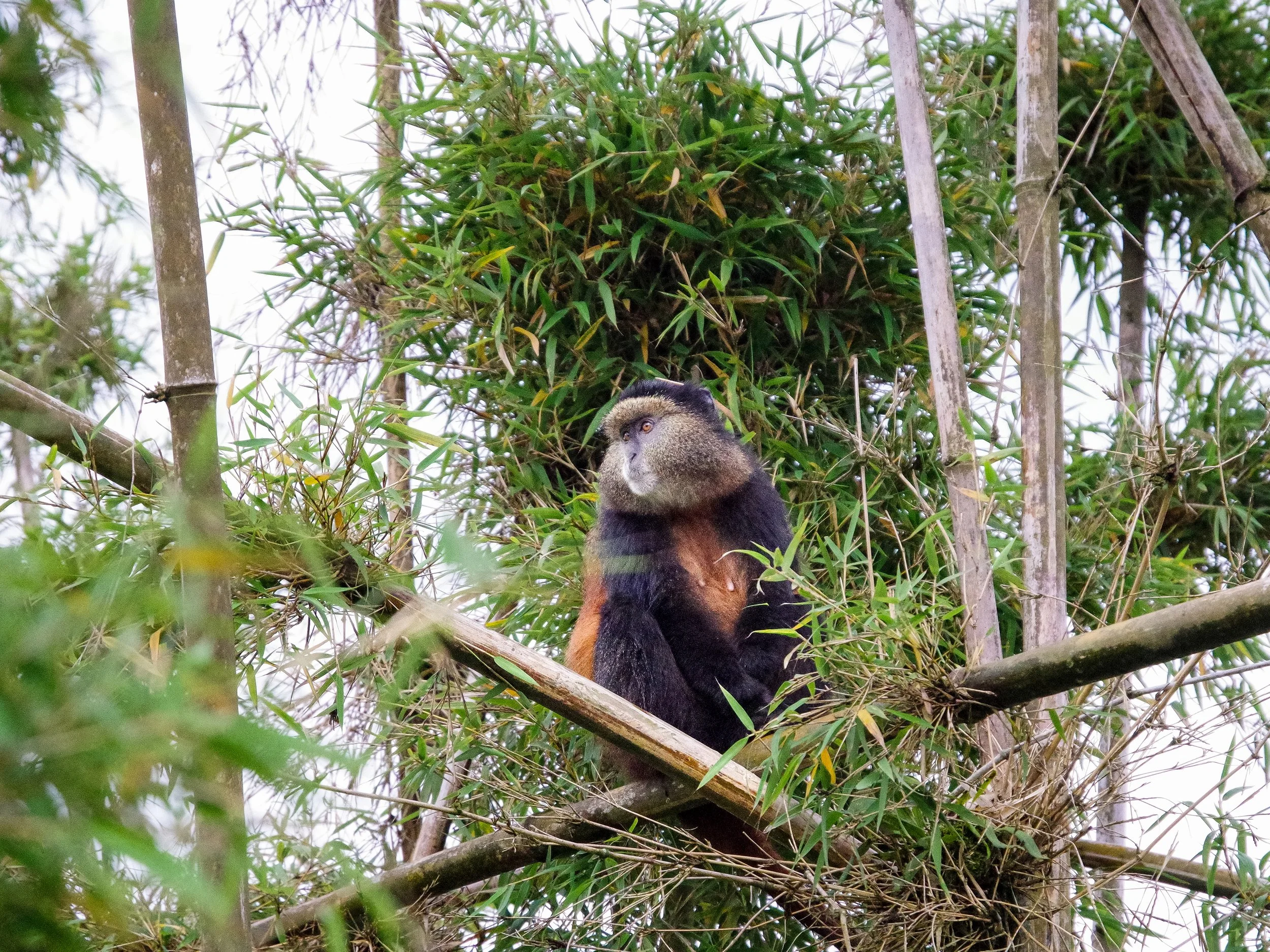
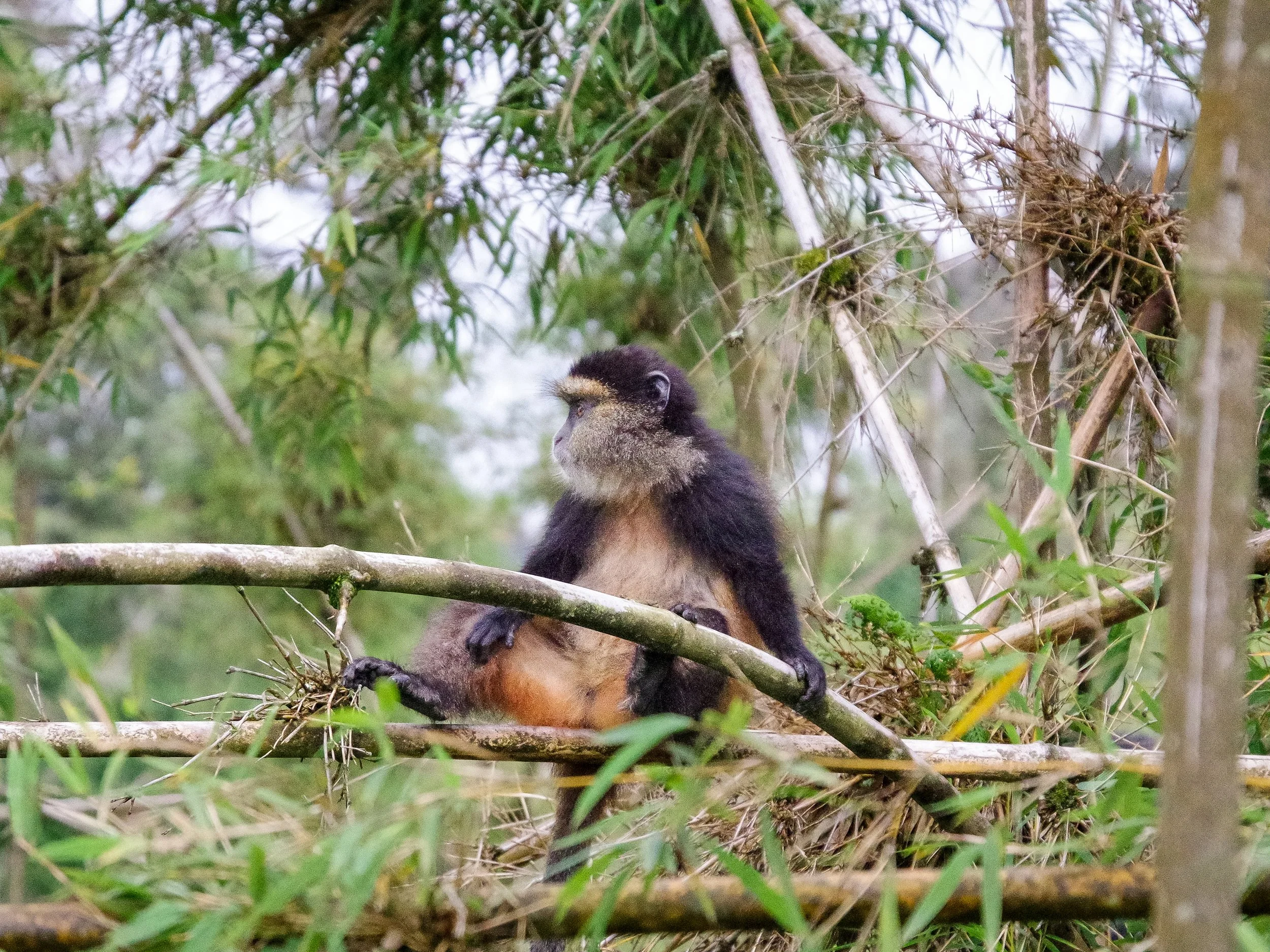
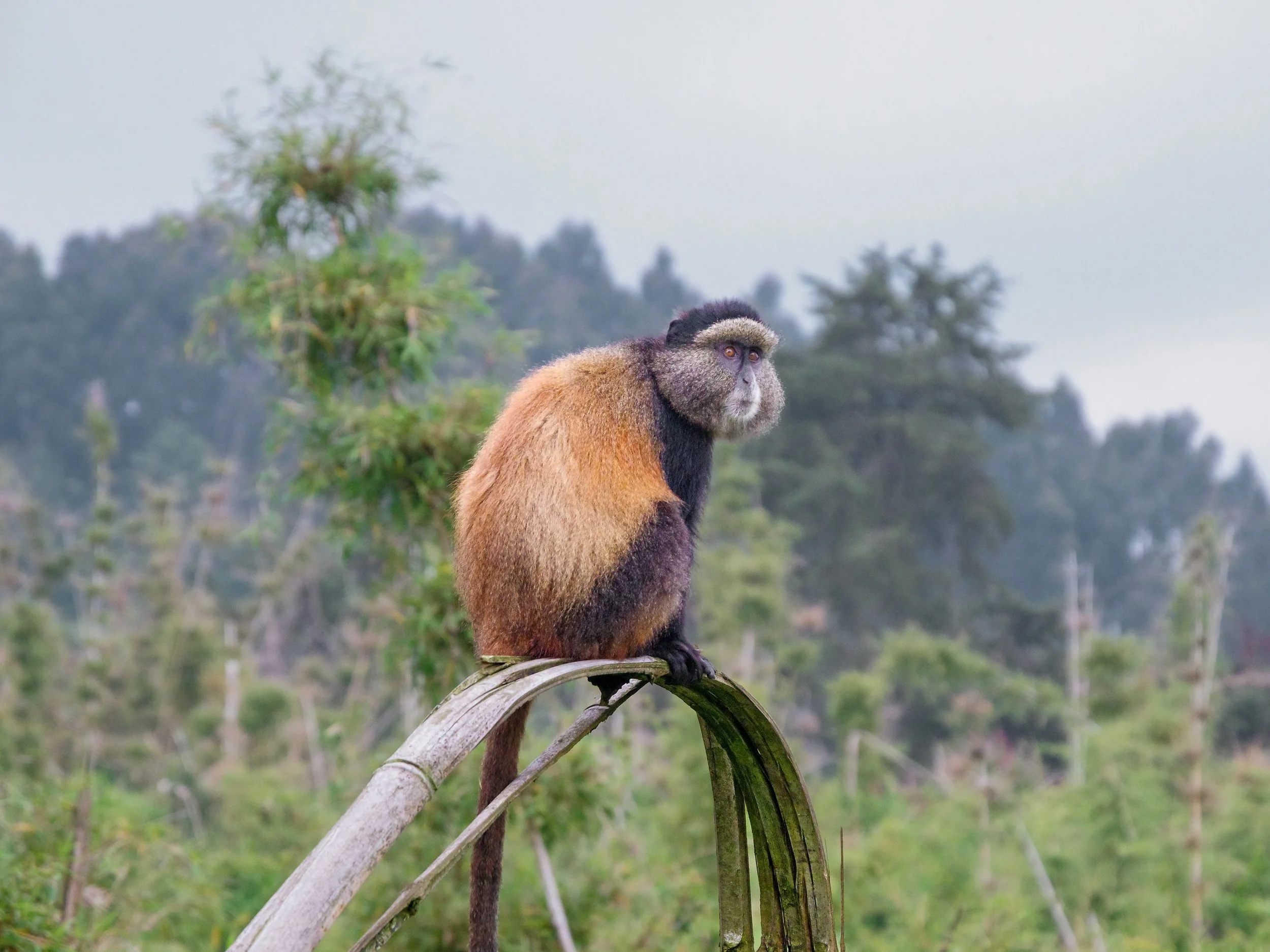
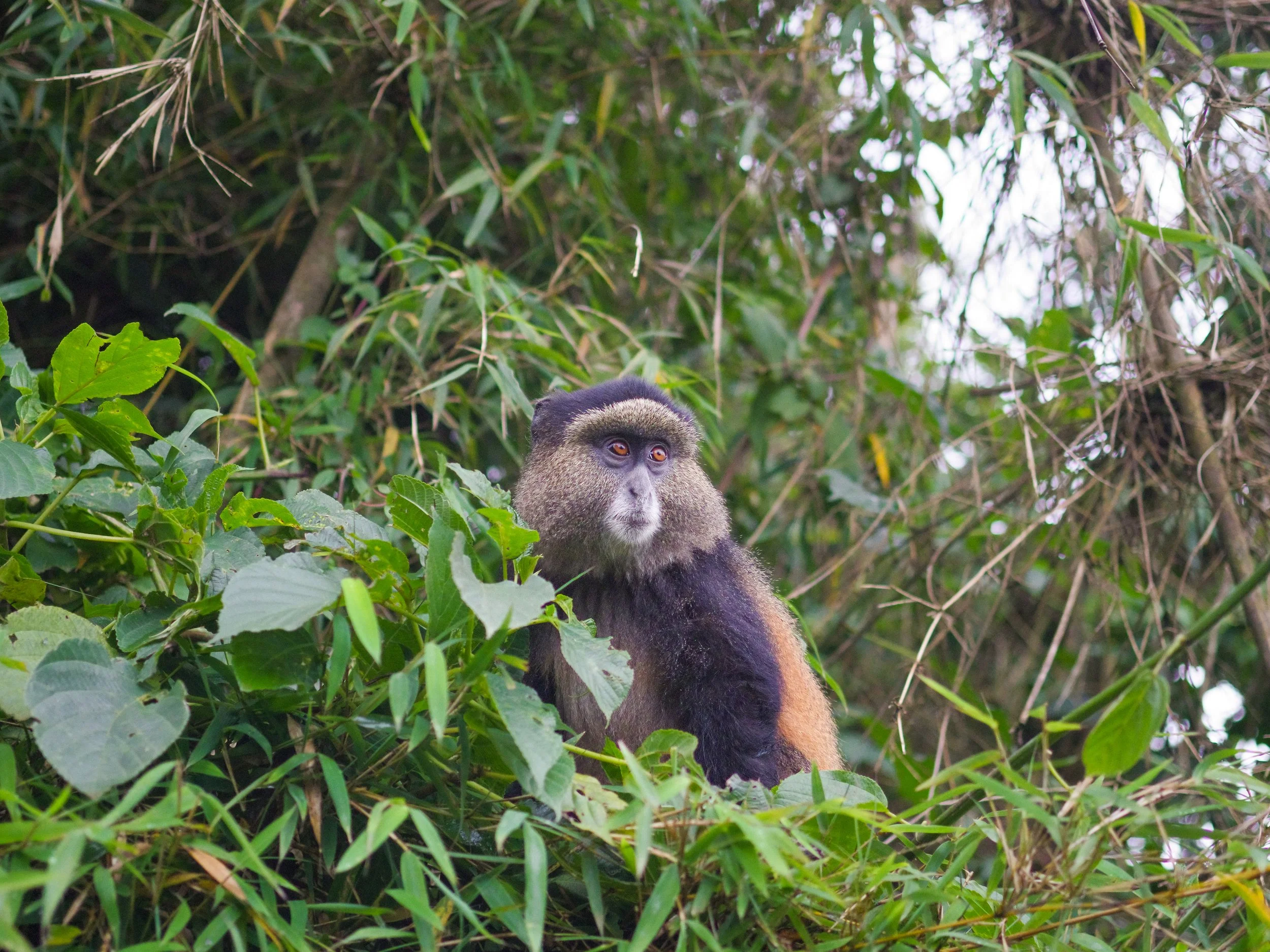
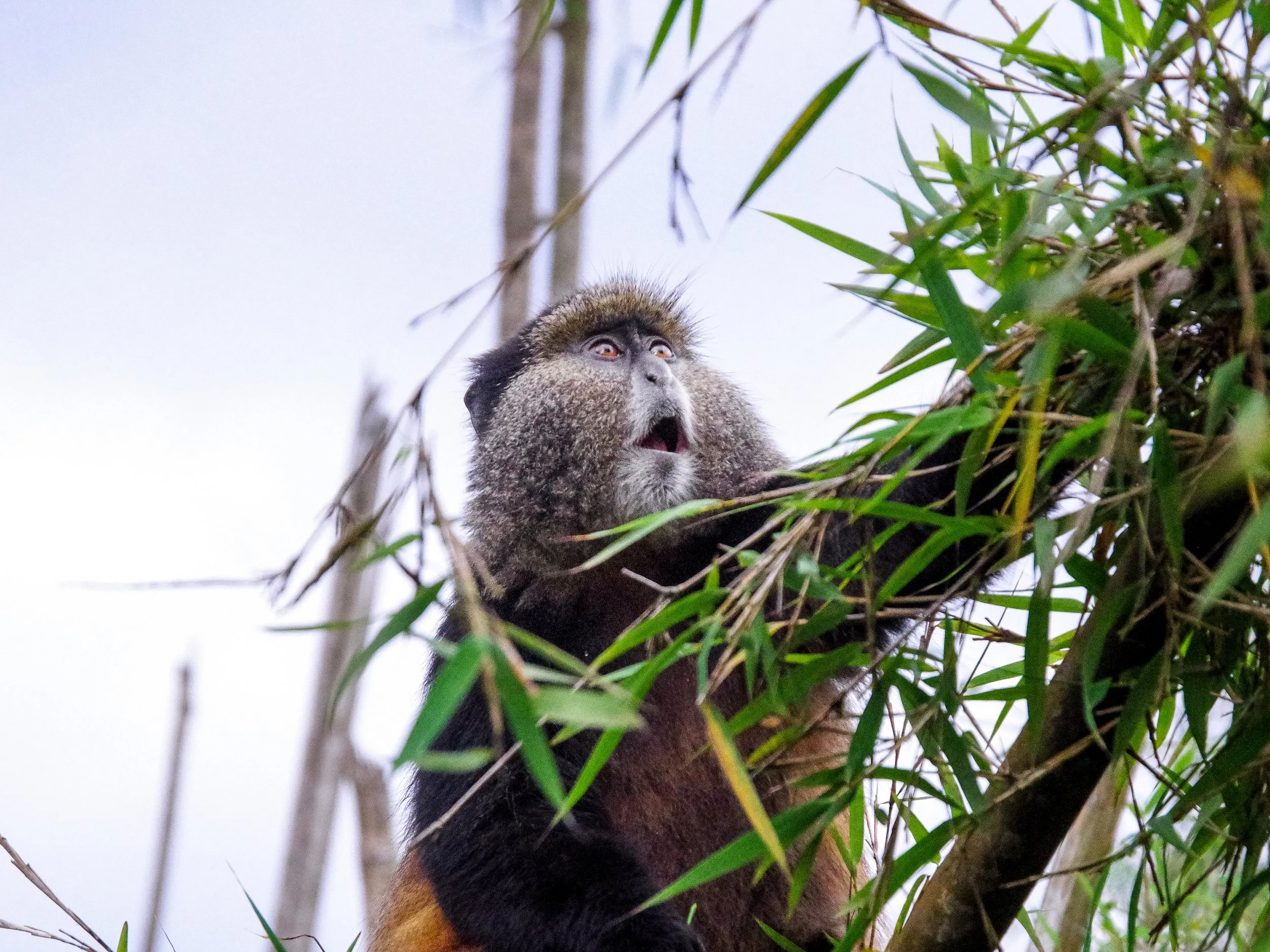
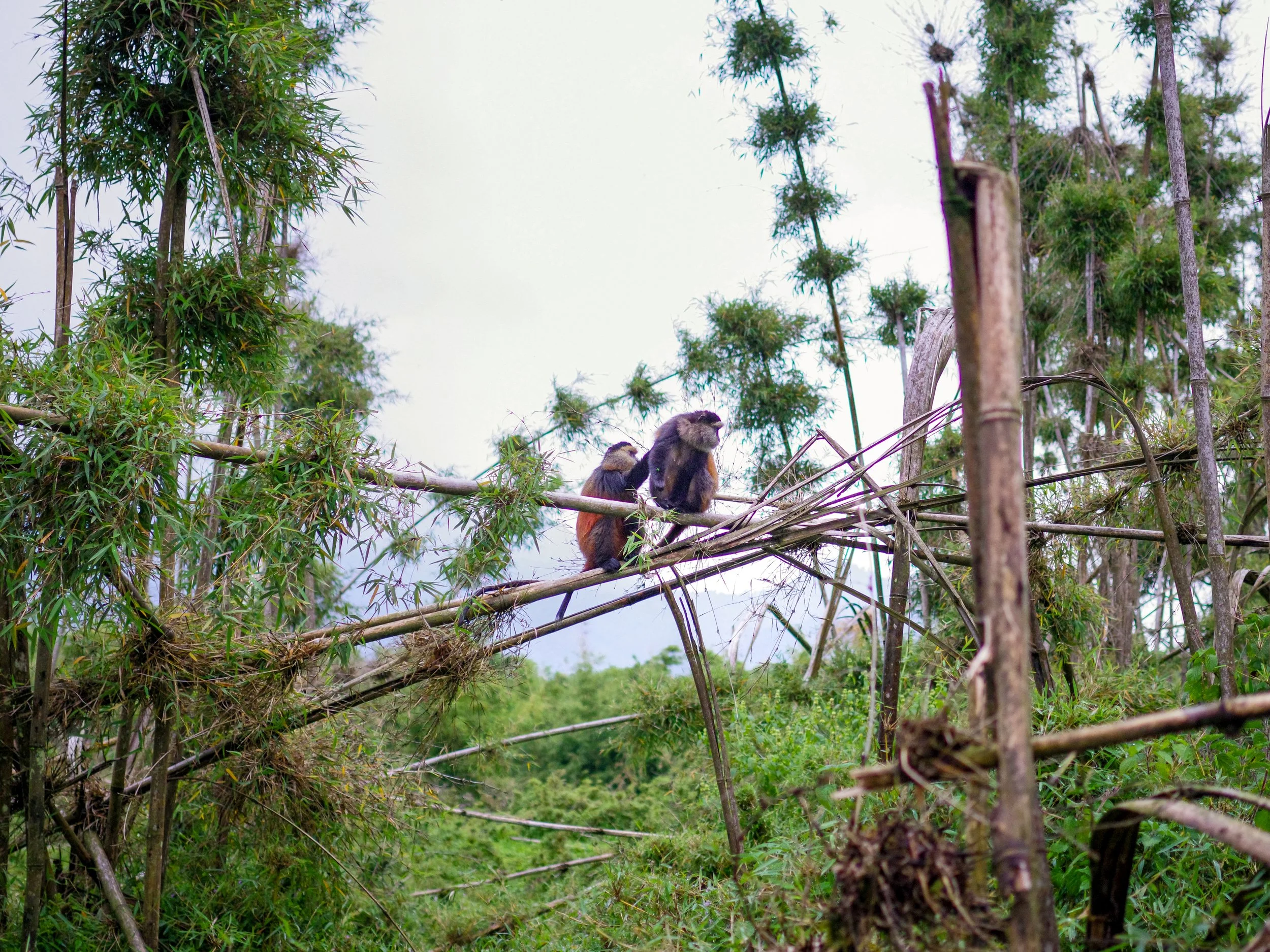
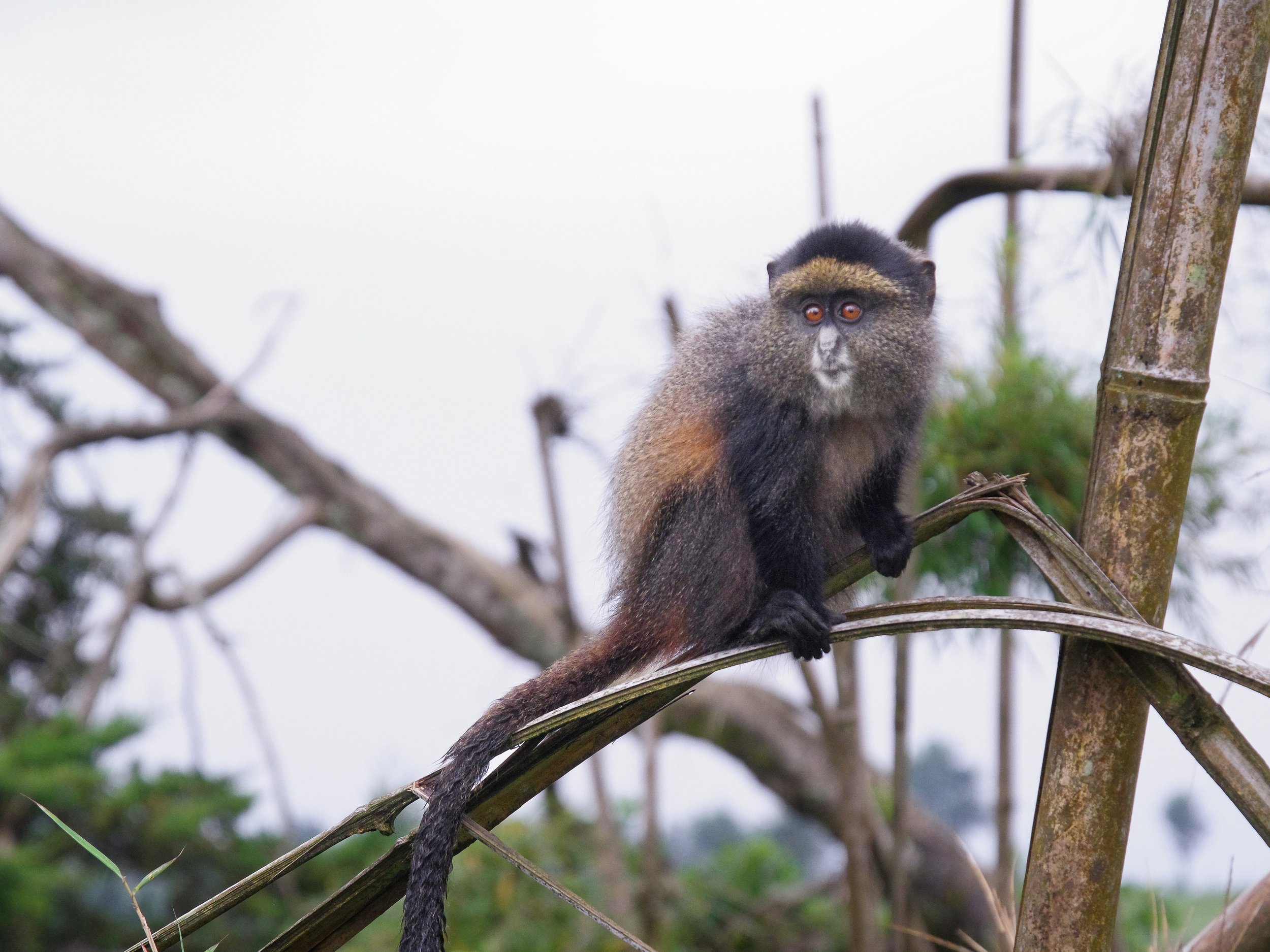
Golden Monkey Trekking. The Golden Monkeys are an endangered species native to the Volcanoes National Park. They live in the forested lowlands surrounding the volcanos and feed on endemic patches of bamboo. Just over 3,000 golden monkeys remain in the wild. Our guides tracked a troop of 70 to an area along the border of the park. We spent over an hour observing them in their natural habitat. Their cute and puffy faces glimpsed at us spying on them. They jumped between bamboo stalks and nibbled on leaves. They showed off their golden backs while grooming each other.
Good to Know. We were required to wear medical masks to prevent spread of disease. Given their border location, trackers and armed guards followed us for added security.
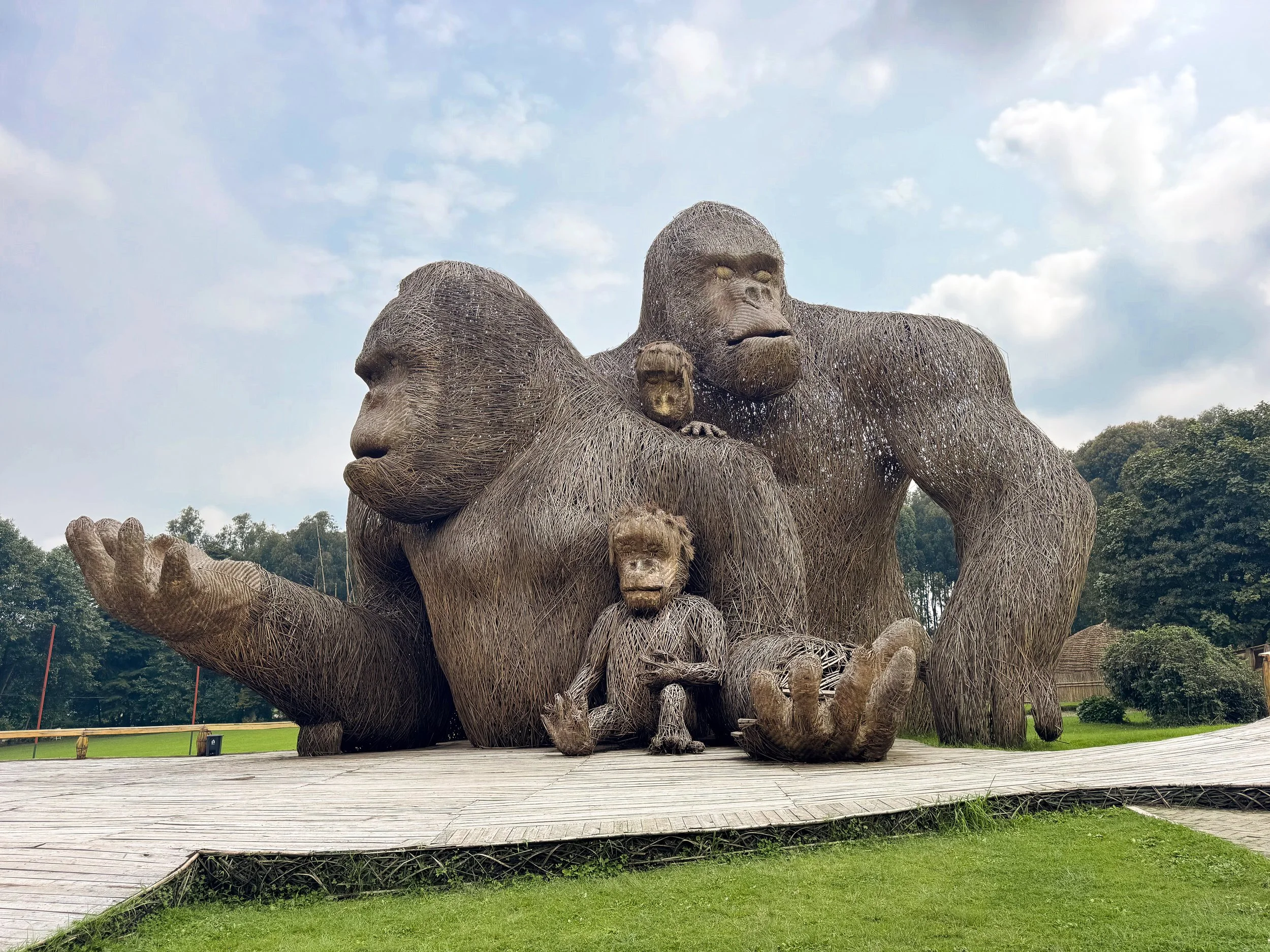
Gorilla Naming Place. A large thatched monument of a family of Gorillas. The largest gorilla’s hands are outstretched, creating a platform for photos. Behind is a replica village with three thatched huts.
Buhanga Eco Park. A historical site used to anoint the past kings of Rwanda. Inside the forested park are moss covered lava rock walkways and platforms. They lead to a small cave where the heir to the throne would descend for the anointment ritual. Servants would cleanse him with water and leaves from the forest. He would be declared king upon exiting the cave. The park is only accessible by permit and guide from the Rwanda Development Board.
Nyungwe Forest National Park
Nyungwe Forest National Park is a tropical rainforest in the high hills of Rwanda. Its lush canopy is home to 20 percent of Africa’s primates including endangered chimpanzees. We spent a couple days here exploring the park and watching for wildlife.
Kivu Belt Road. The single road through the forest and between its visitor centers. It’s a hub for roadside wildlife spotting. We saw chimpanzees, olive baboons, forest antelopes, L'Hoest's and blue monkeys. The road is heavily patrolled by the military in response to conflict with neighboring Burundi and Democratic Republic of the Congo.
Uwinka Visitor Center. A nature center in the middle of the forest with a canopy walk, zipline, coffee shop, eco hotel and hiking trails. It’s the main hub for many of the forest’s activities.
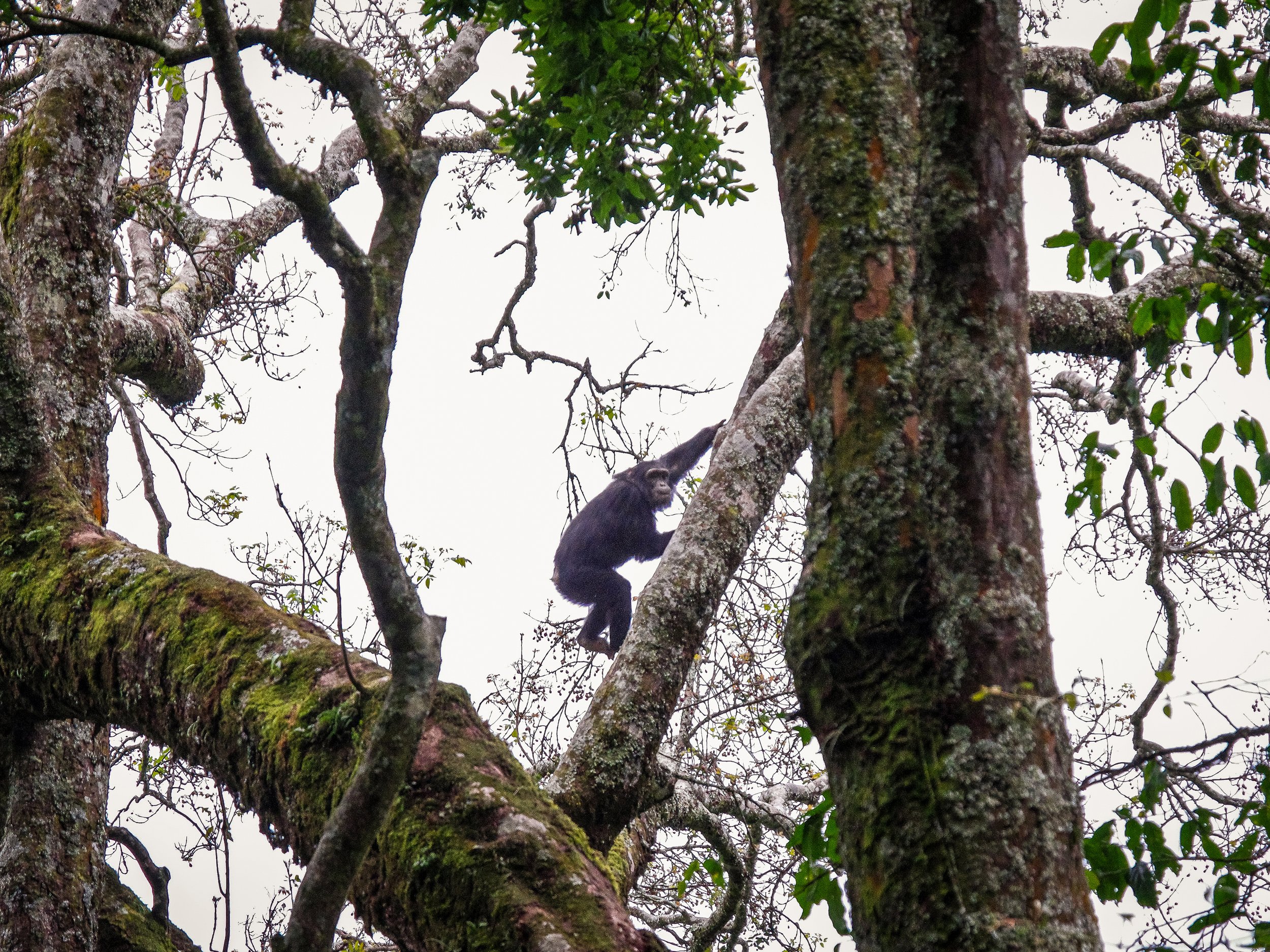
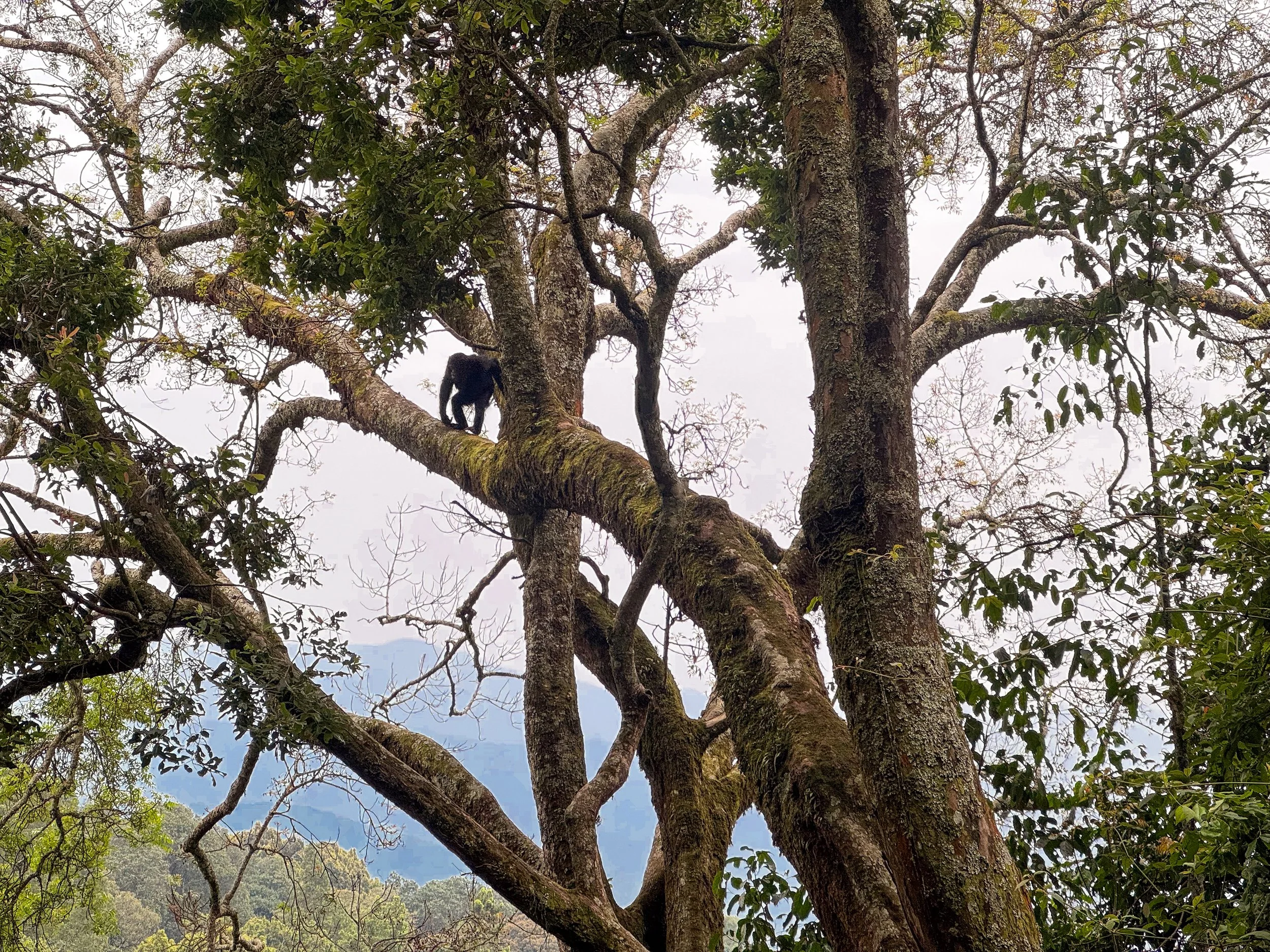
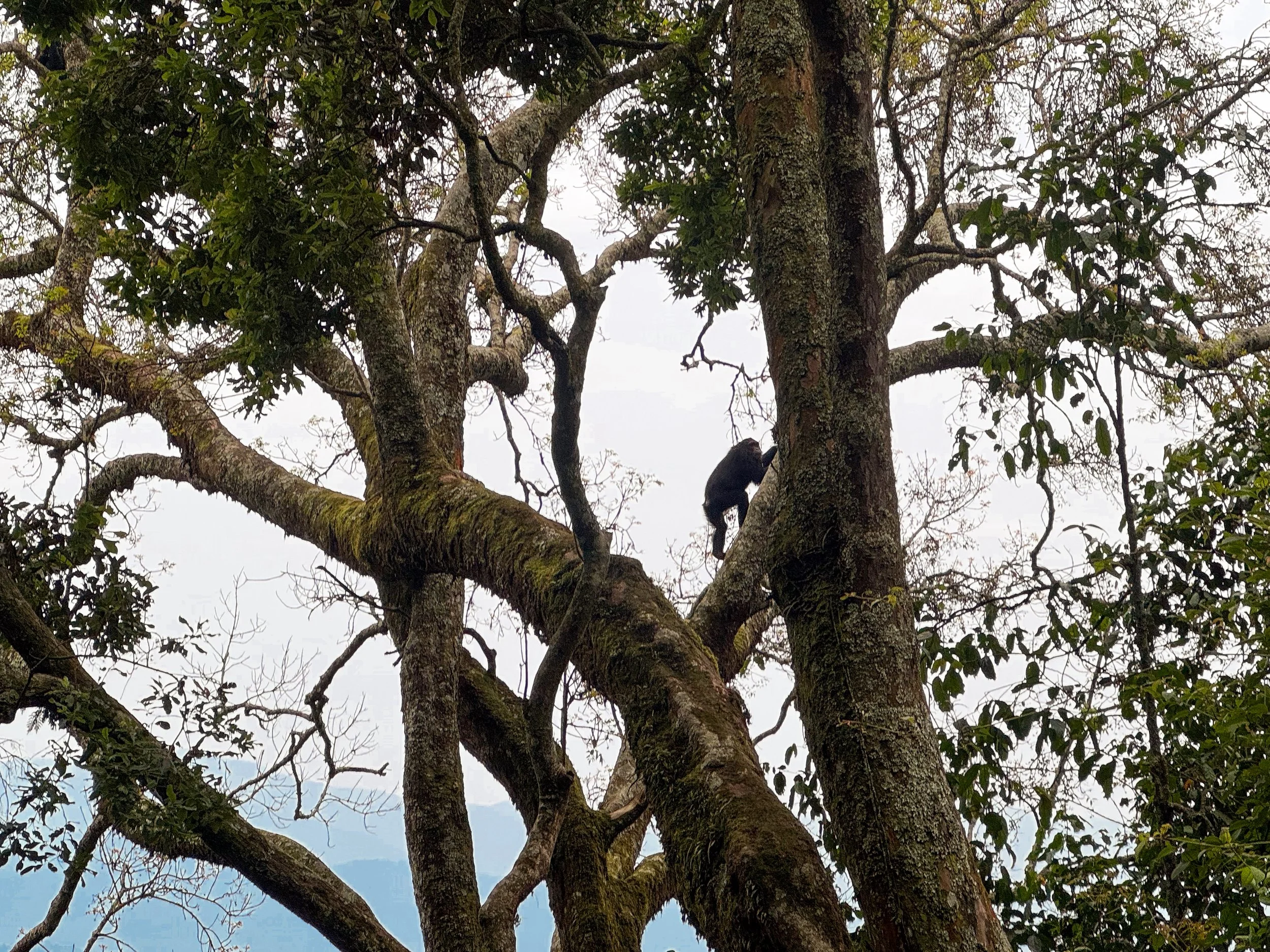
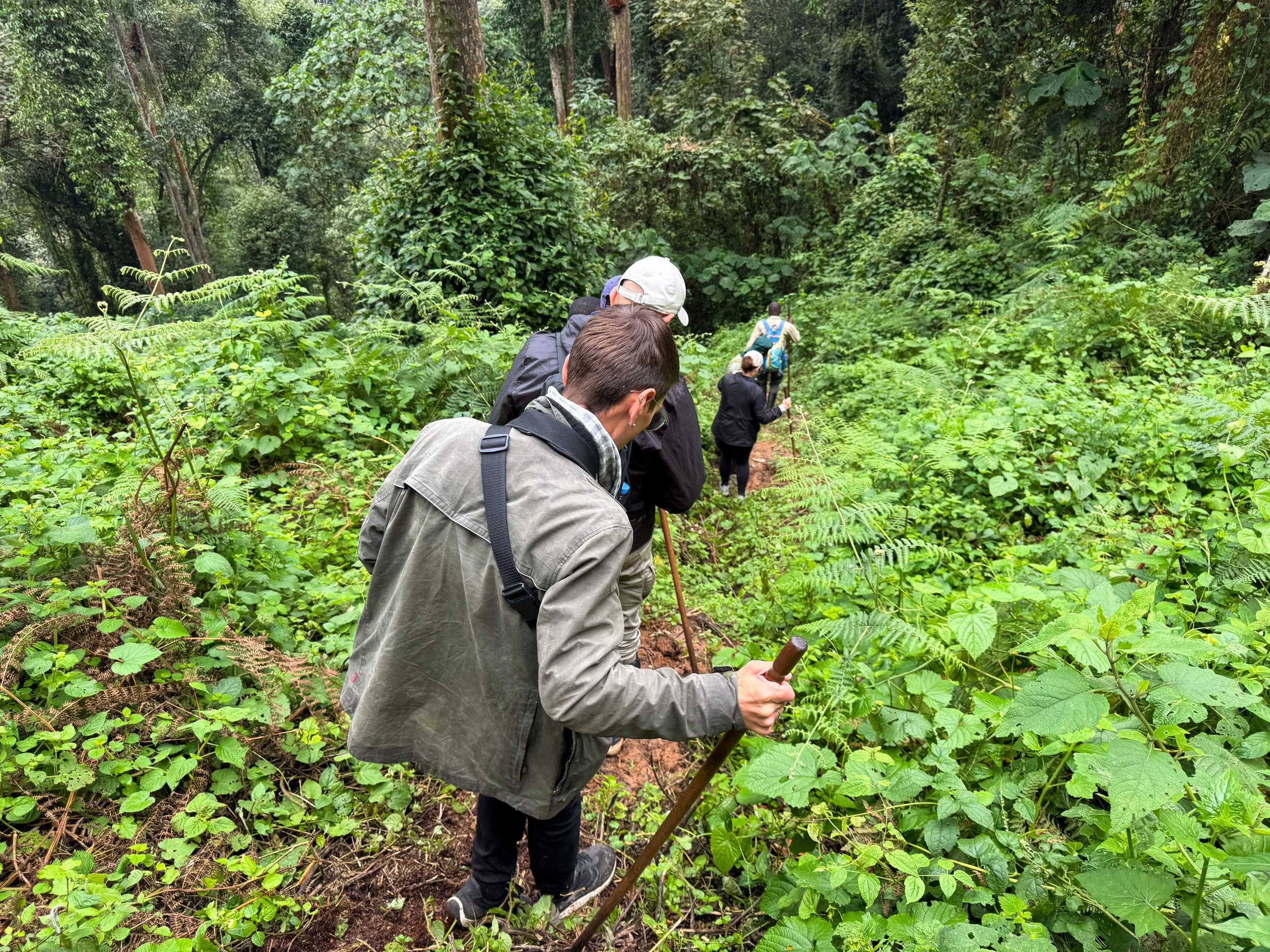
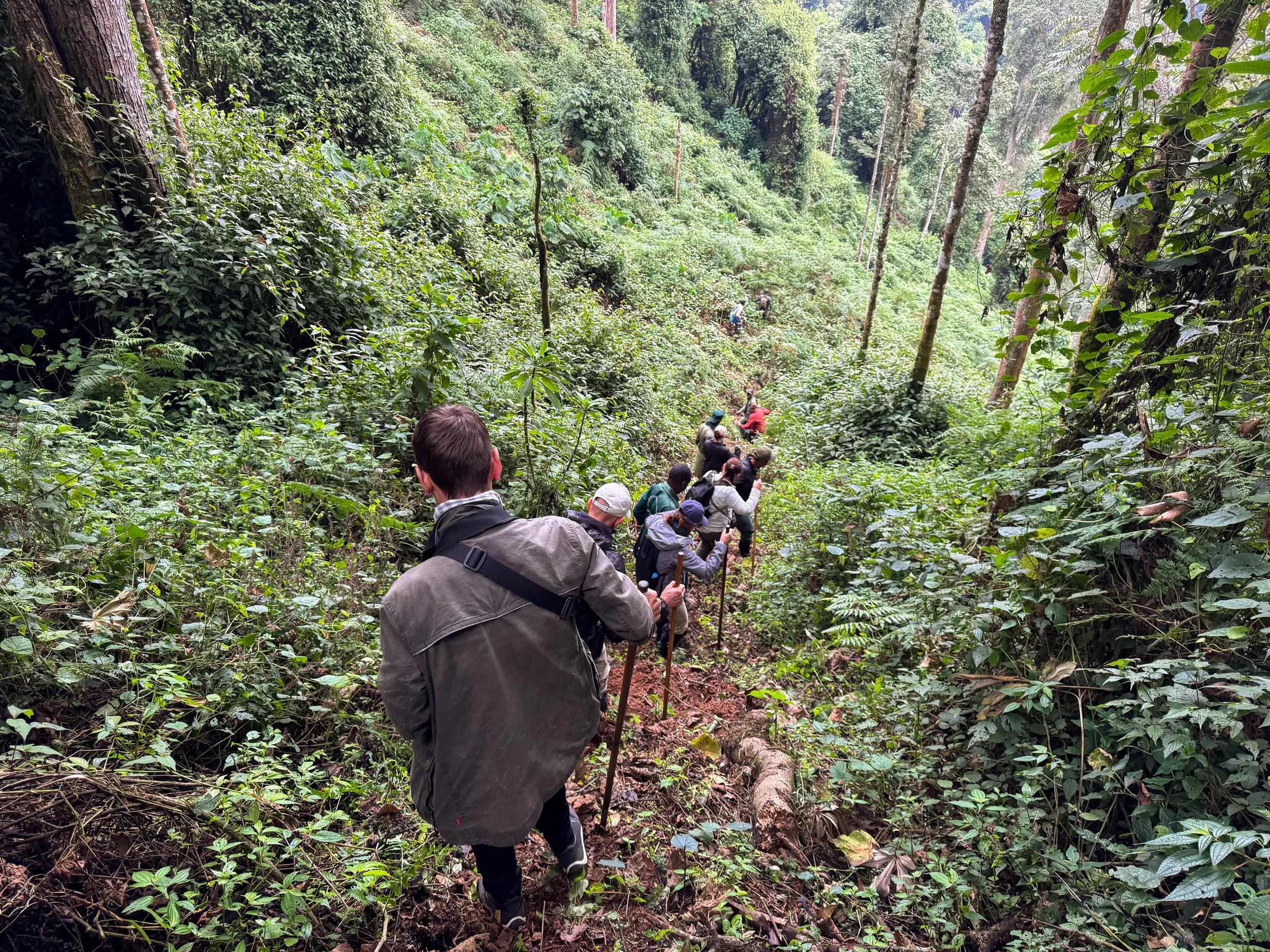
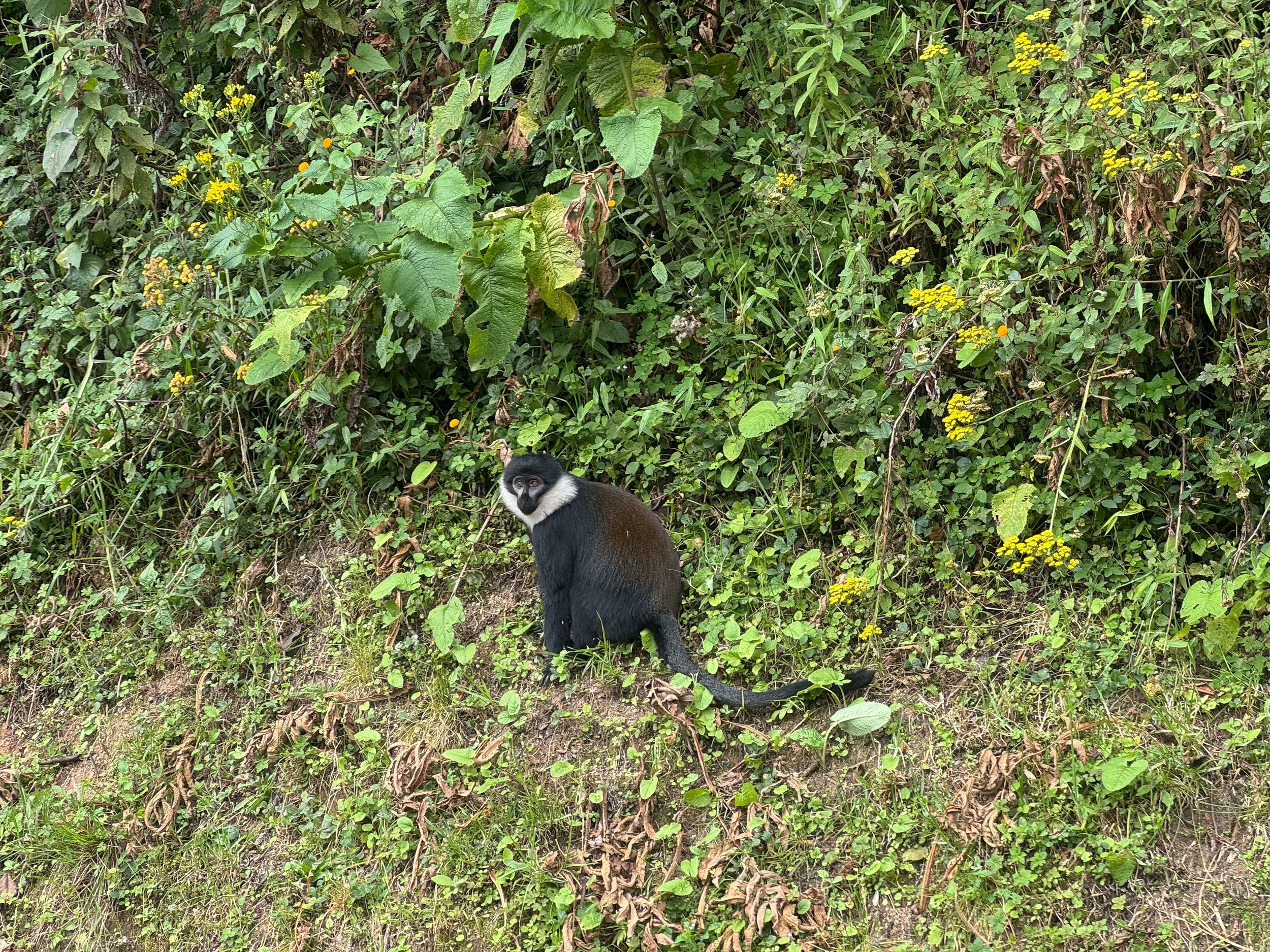
Chimpanzee Trekking. The Nyungwe Forest is home to a growing population of wild Chimpanzees. We trekked beneath its lush canopy to see them in their natural habitat. The sounds of birds singing and insects buzzing filled the morning air as daylight broke. Trackers led the way as we hiked trails, through the thick jungle and down steep slopes. After a couple kilometers, we spotted a family of four chimps in a towering tree. They climbed and swung between branches while feeding on berries. A baby chimp stuck close to its mother while learning to climb on its own. We continued further into the jungle, spotting a tree with several more chimps nomming on its leaves. Tropical birds like hornbill toucans, colorful turacos and vibrant sunbirds appeared around us while we quietly watched.
Pro Tip. Ants are everywhere when trekking through the jungle. Wear hiking gaiters or long socks over your pant legs to avoid painful bites.
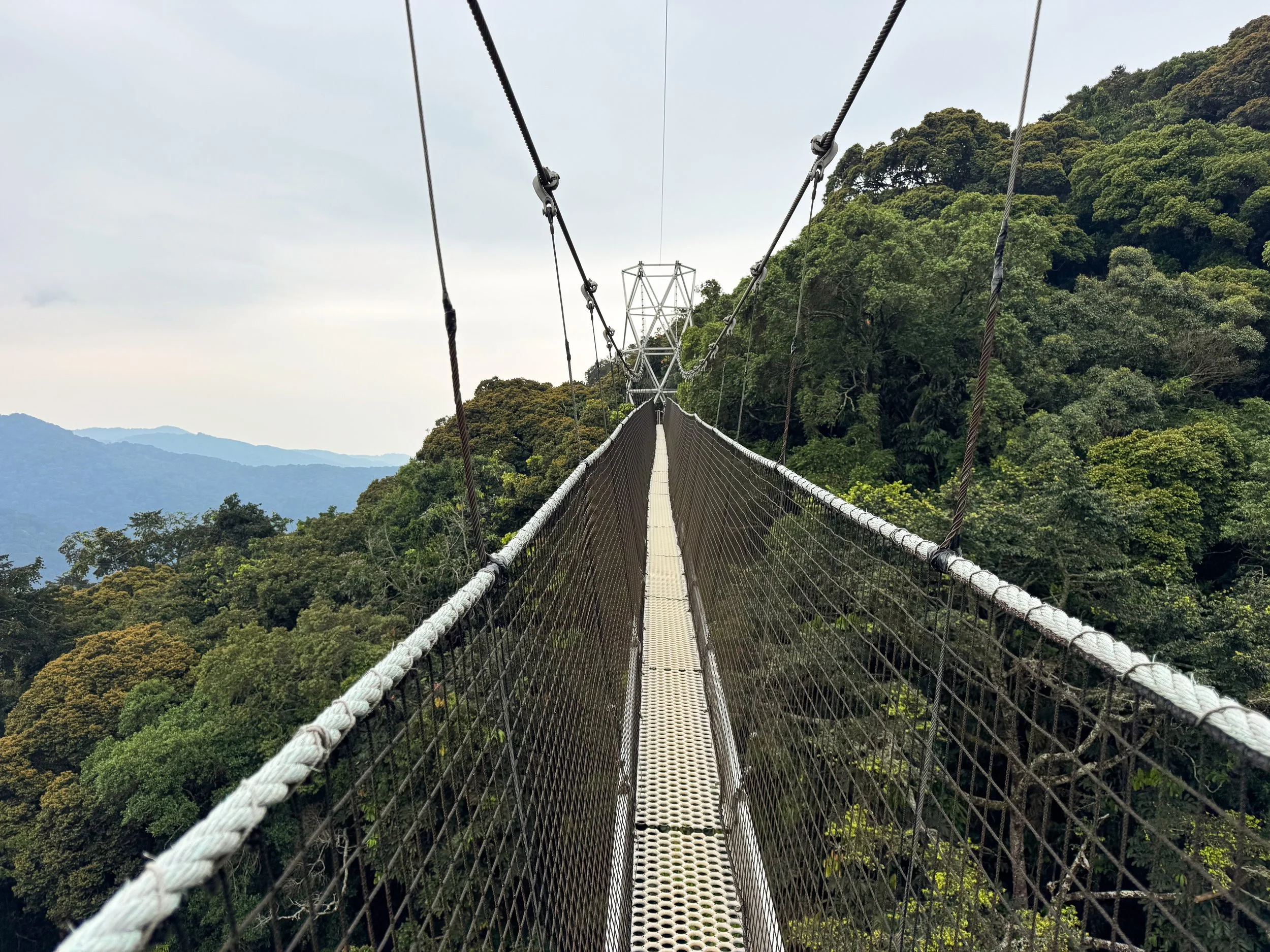
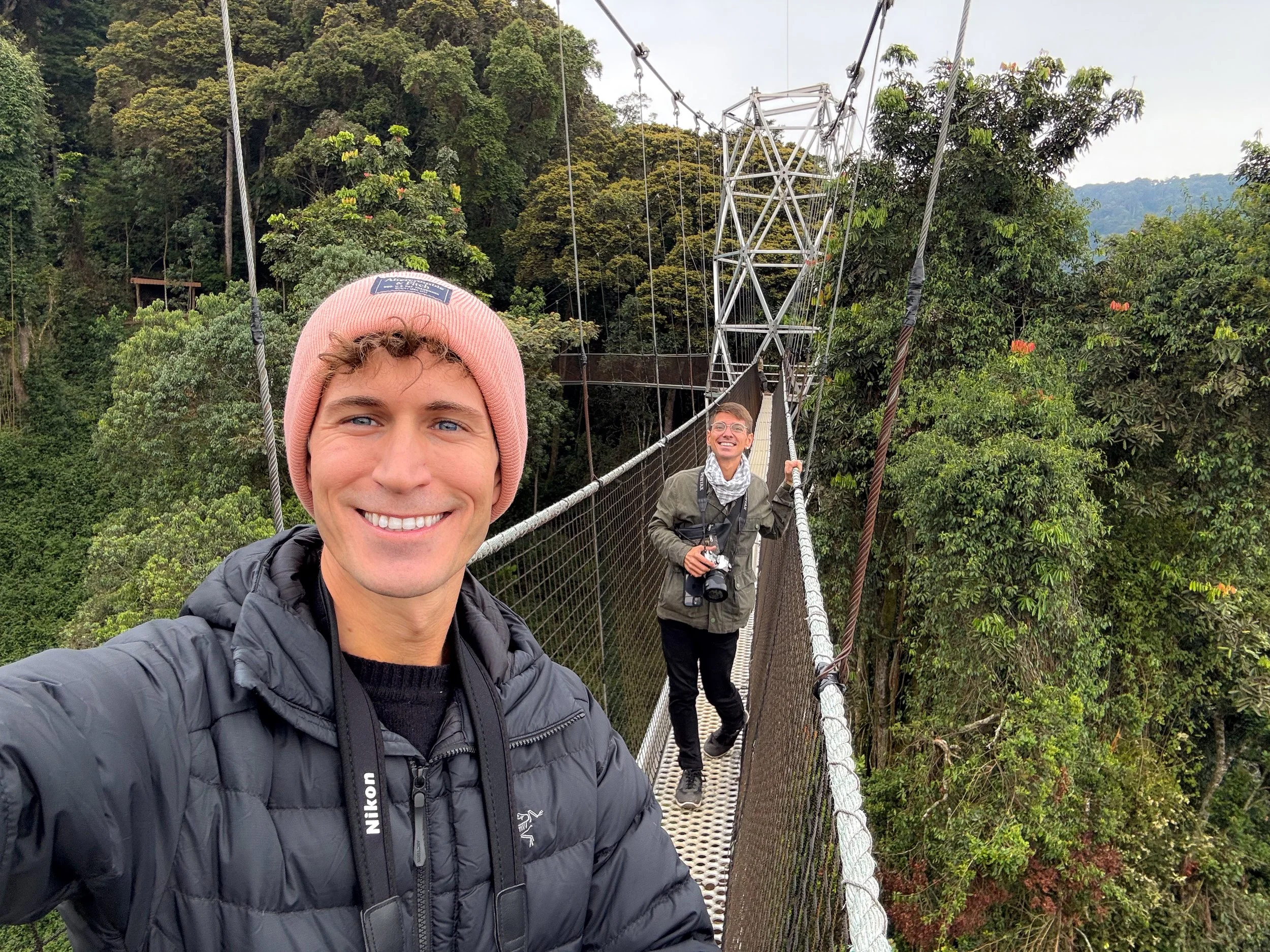
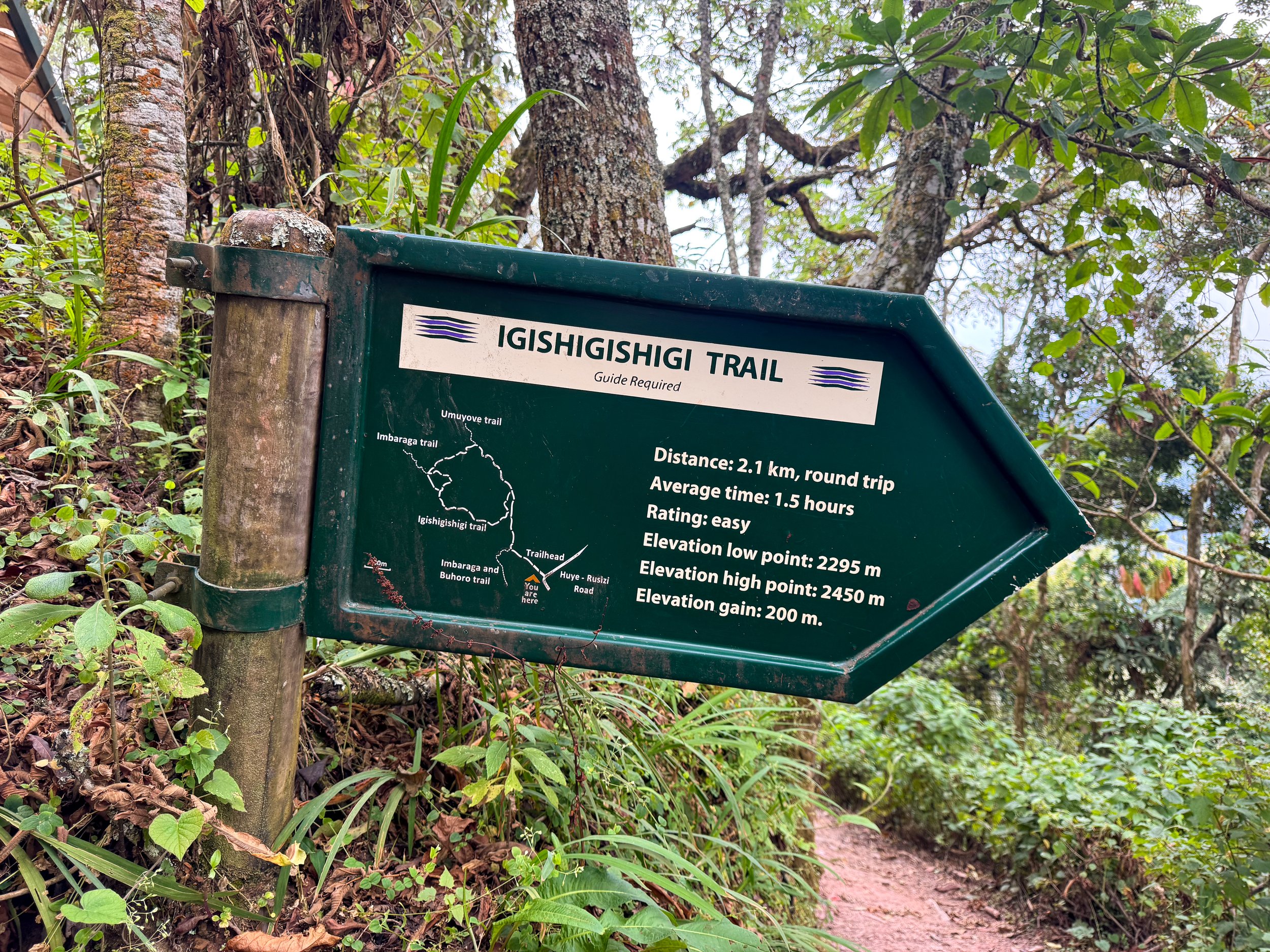
Nyungwe Canopy Walk. A series of three suspension bridges above the treetop canopy. The central bridge has panoramic views of the jungleous forest, parasol trees and layers of hilly ridges. It’s reachable from the Uwinka Visitor Center along the Igishigishigi Trail, a 2.1km loop through the forest.
Nyungwe Night Walk. A two hour nighttime walk through the forest to spot nocturnal animals. We trekked the Igishigishigi Trail with red lamps in hopes of seeing flying squirrels and bush babies. Unfortunately we didn’t have any luck spotting many animals outside of seeing a few bats.
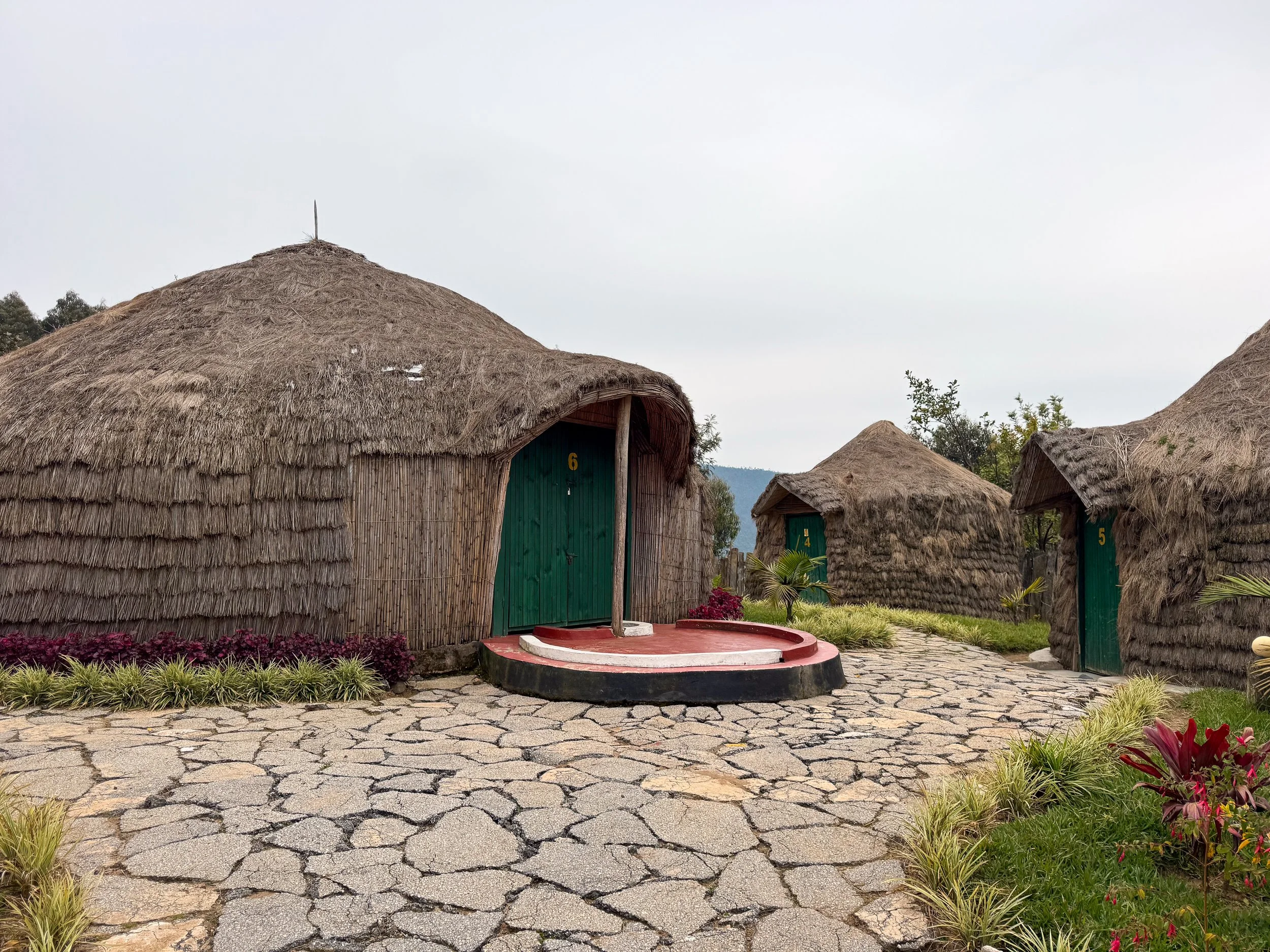
Kitabi Eco Center Hotel. An eco lodge on the edge of Nyungwe Forest with a half dozen thatched huts and a restaurant. The huts have an authentic feeling, designed in the traditional style of the Rwandan king’s palace. The hotel and restaurant overlook steep hills and valleys planted with rows of tea. Our stay included complimentary breakfast each morning: eggs, fruit and the local flat bread. We enjoyed dinner around a coal camp fire and watched European football with a group of locals. Reserve on Booking.
Good to Know. All trails and activities within the forest need to be accompanied by a guide. Park permits and activities can be booked and paid for in advance with Visit Nyungwe.
Pro Tip. Wear layers. It gets cold with temperatures ranging from high 40s F to low 60s F (5C - 15C).
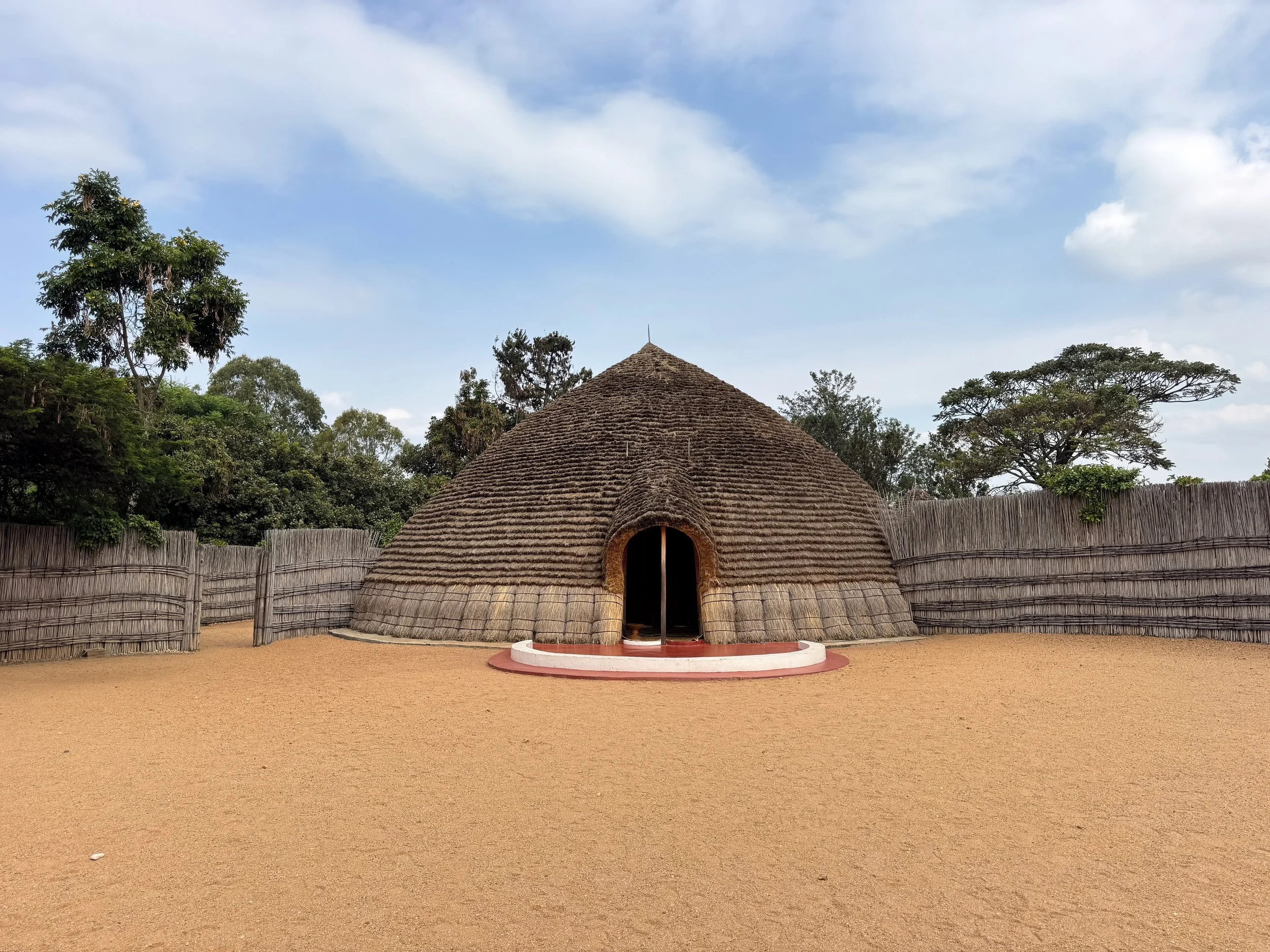
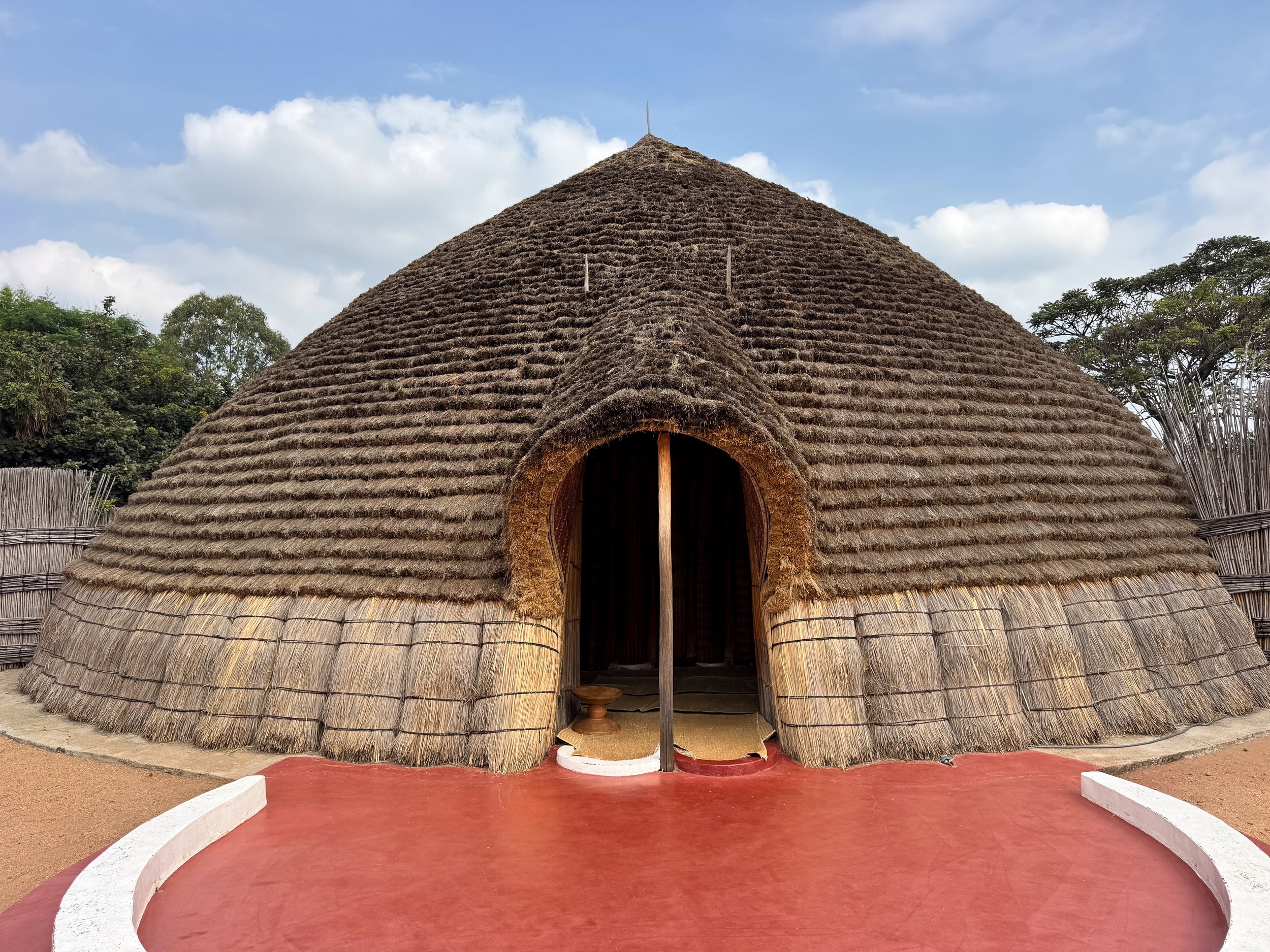
King’s Palace Museum
The King’s Palace Museum showcases the modern and traditional homes of Rwanda’s past kings, the country’s royal cows and cultural board games.
The Traditional Palace. A replica of the royal tribal village. At its center is a large thatched hut made from woven and braided grasses. Its domed interior feels like an upside down basket with rooms divided by wooden columns and woven panels. The floor is layered with dried grasses and thatched rugs. A ficus bark blanket covers an elevated bedroom platform. It’s circled by a reeded fence and multiple small huts. Each surrounding hut had its own purpose such as storing milk or beer.
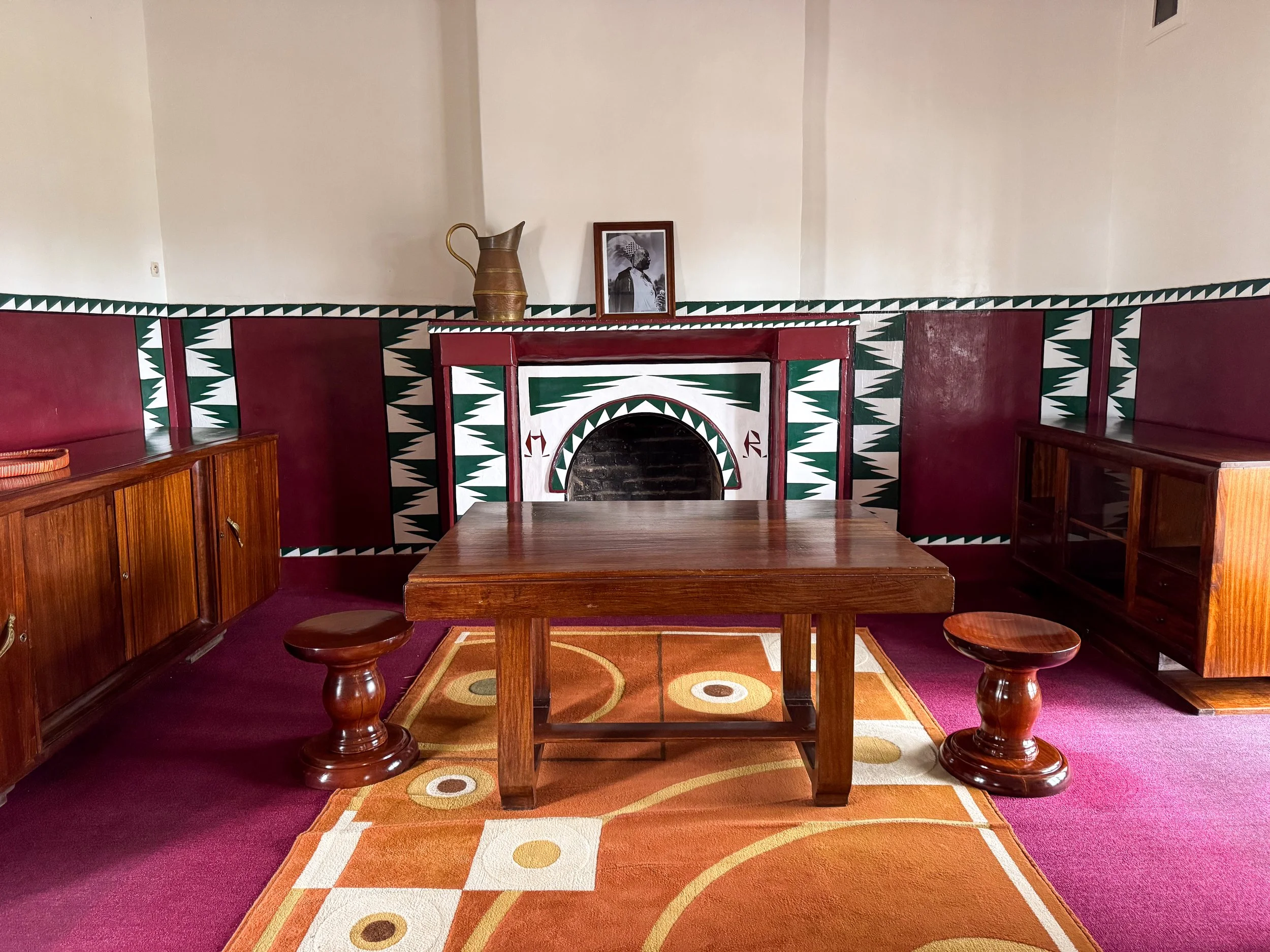
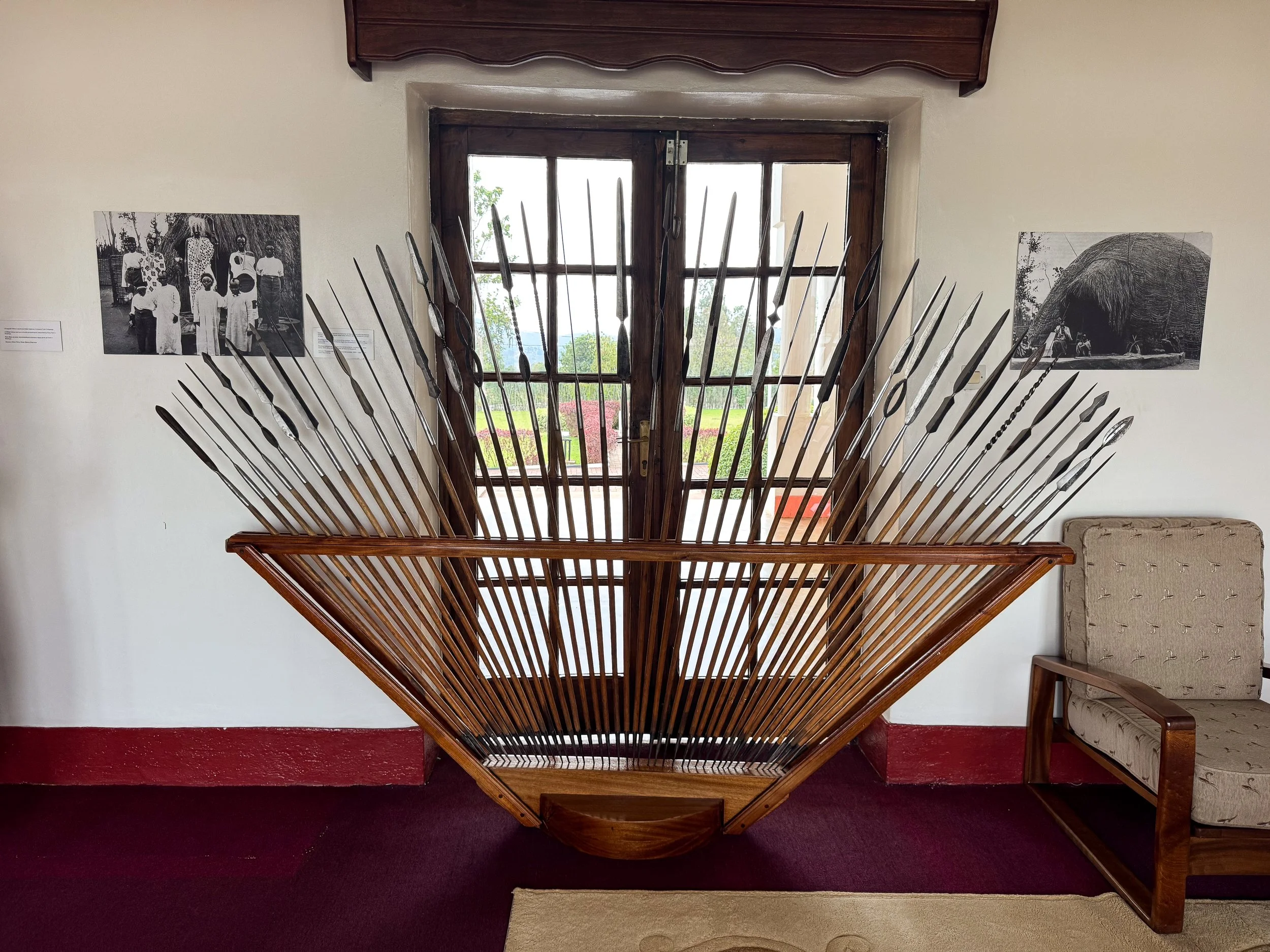
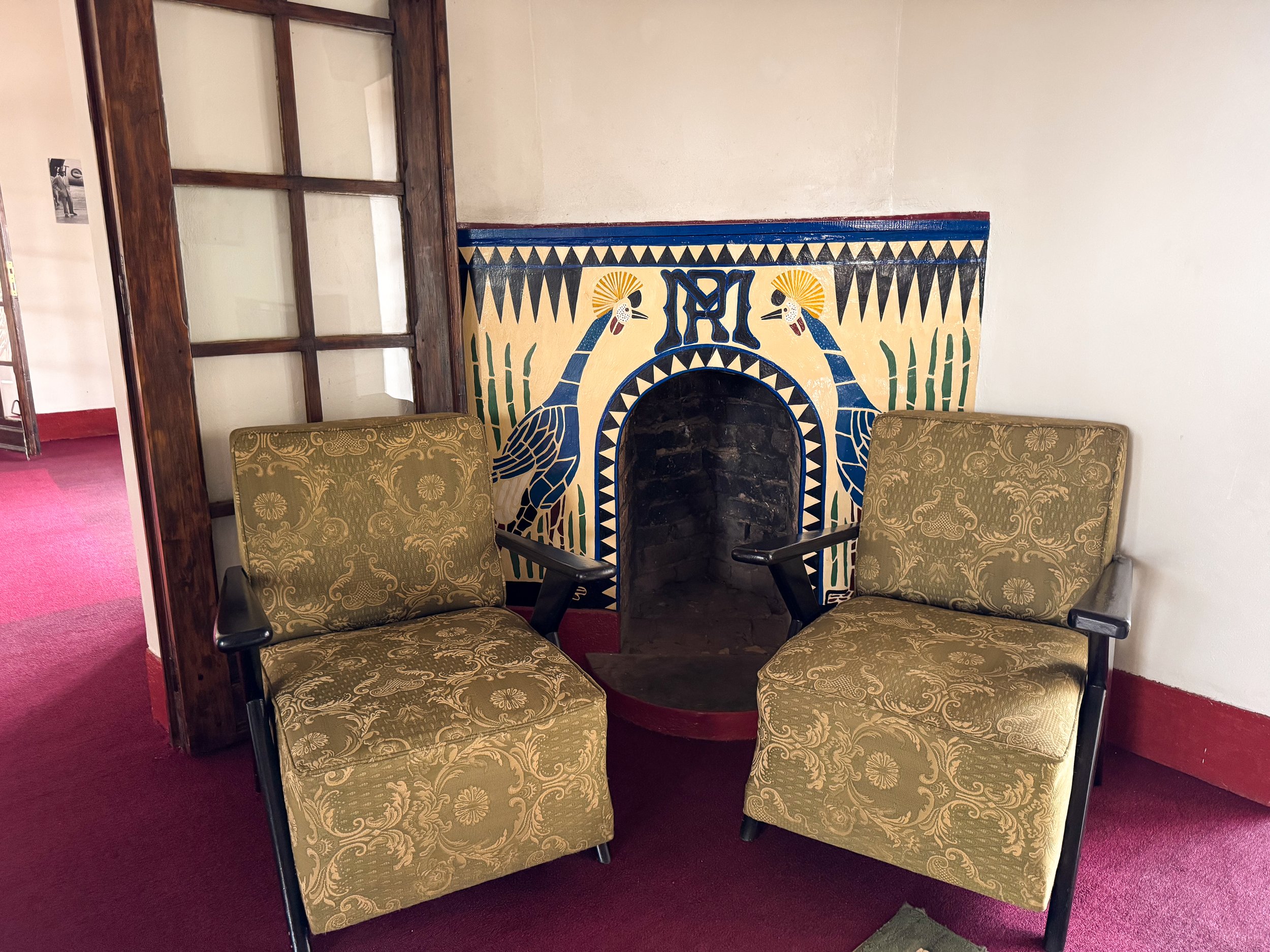
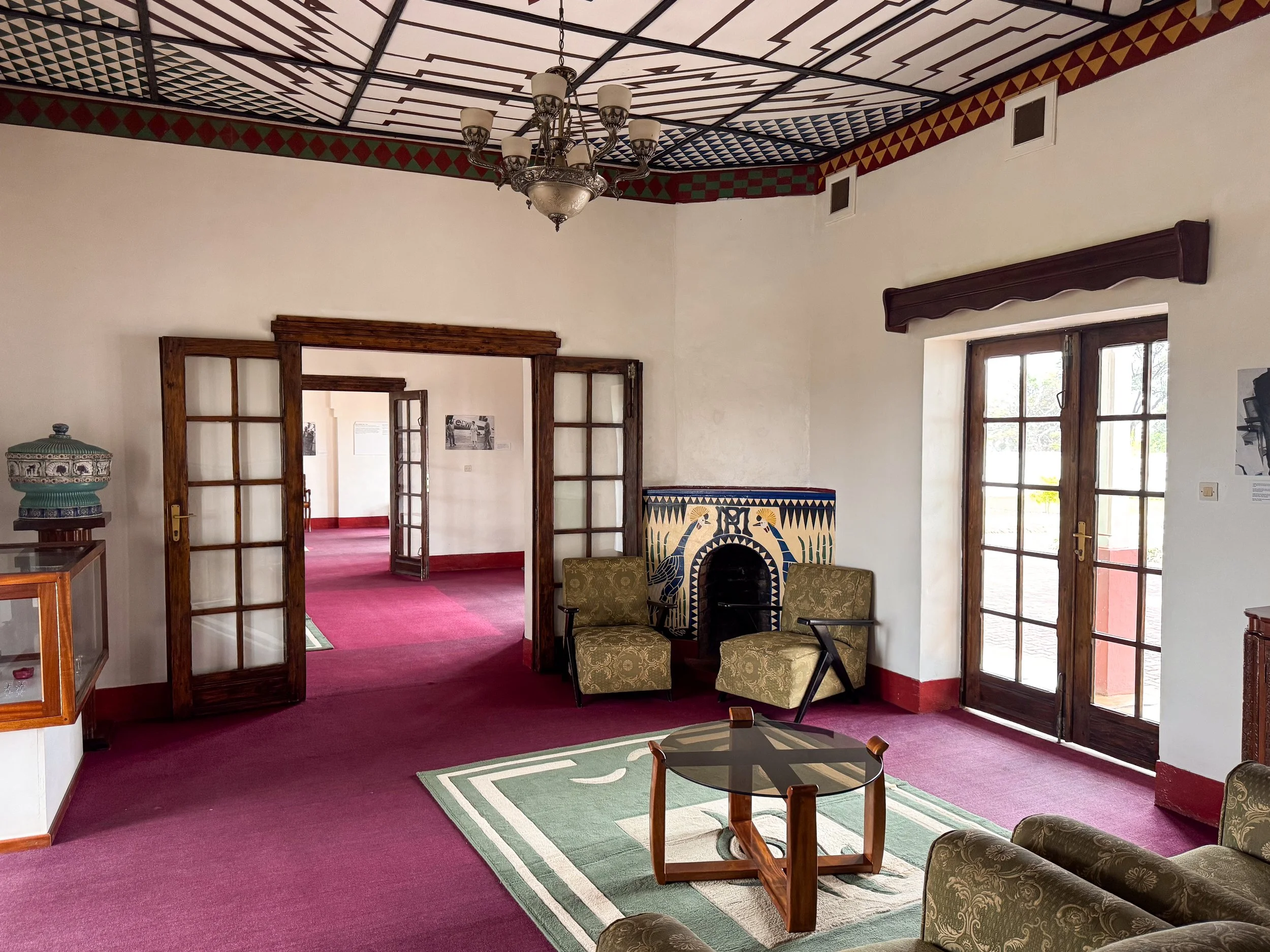
The Modern Palace. A residence built in the early 20th century for the Rwandan King. It featured living quarters and formal rooms decorated with painted fireplaces, tribal patterns, antique furniture, hunting spears and historic photographs.
The Royal Cows. An endangered species of cows recognizable by their disproportionately large horns. A handler sang and presented them to us like they would be traditionally done for kings. We pet fully grown and adults and several month old calves.
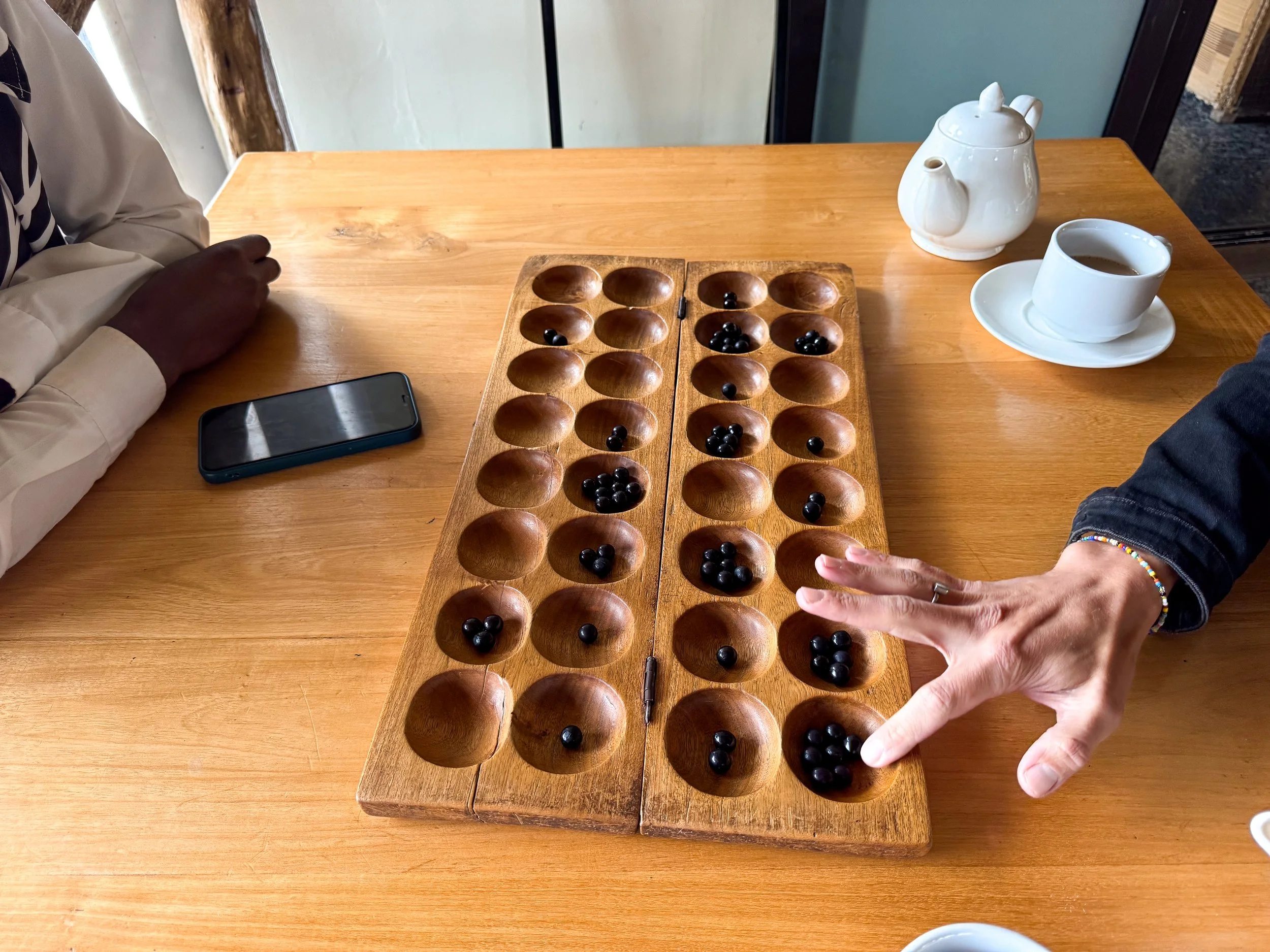
Play Igisoro. A traditional two player strategy game where opponents “eat” or compete for each other’s pieces along a pitted board. We learned to play while sipping on African Coffee.
Getting Here. The museum is located in Nyanza, halfway between Kigali and the Nyungwe Forest.
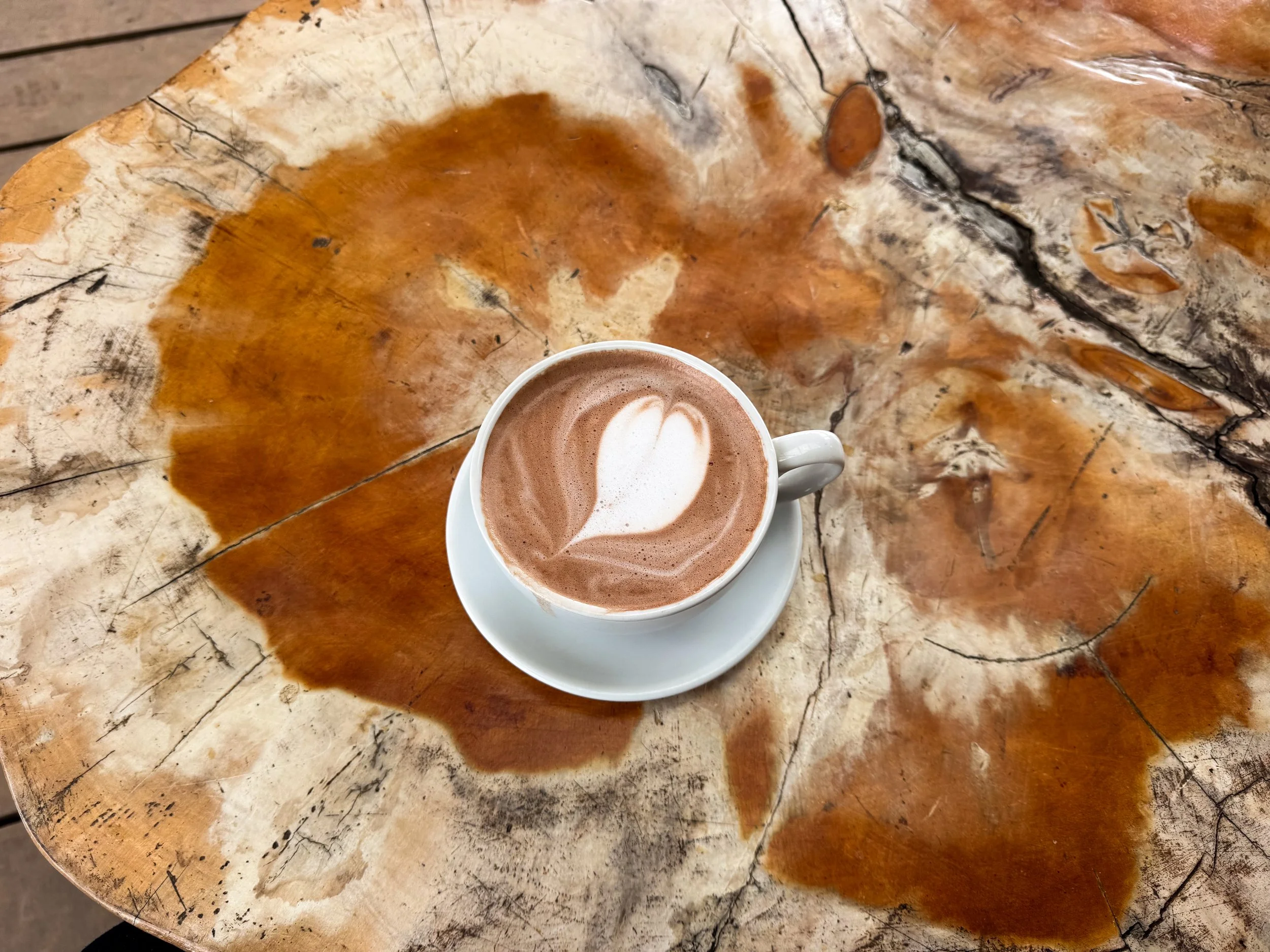
Coffee Culture
The coffee culture in Rwanda is growing, both figuratively and literally! We visited a coffee farm, roastery and multiple cafés during our time here.
African Coffee. A Rwandan style coffee made with espresso, ginger, steamed milk and occasionally chocolate.
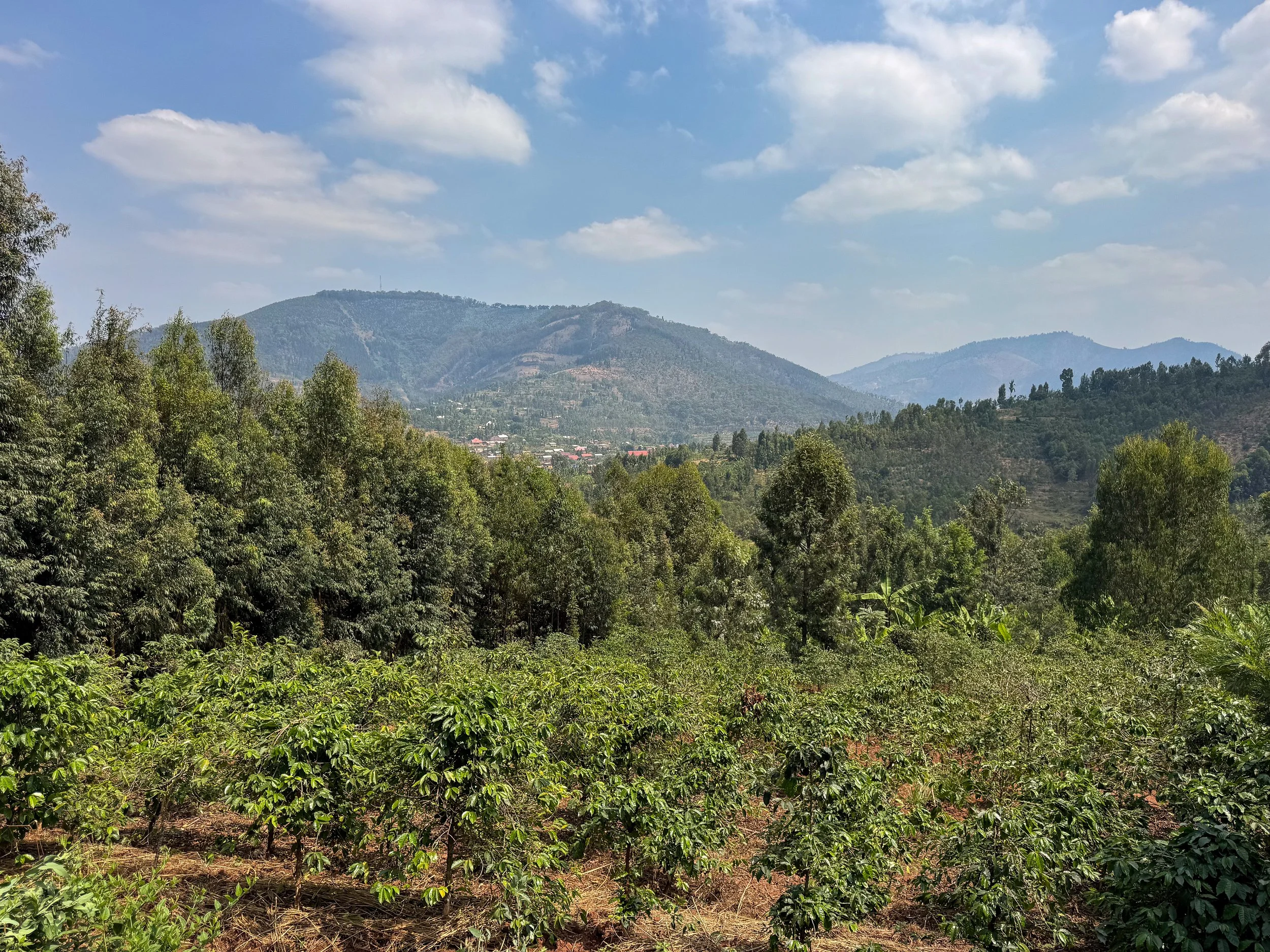
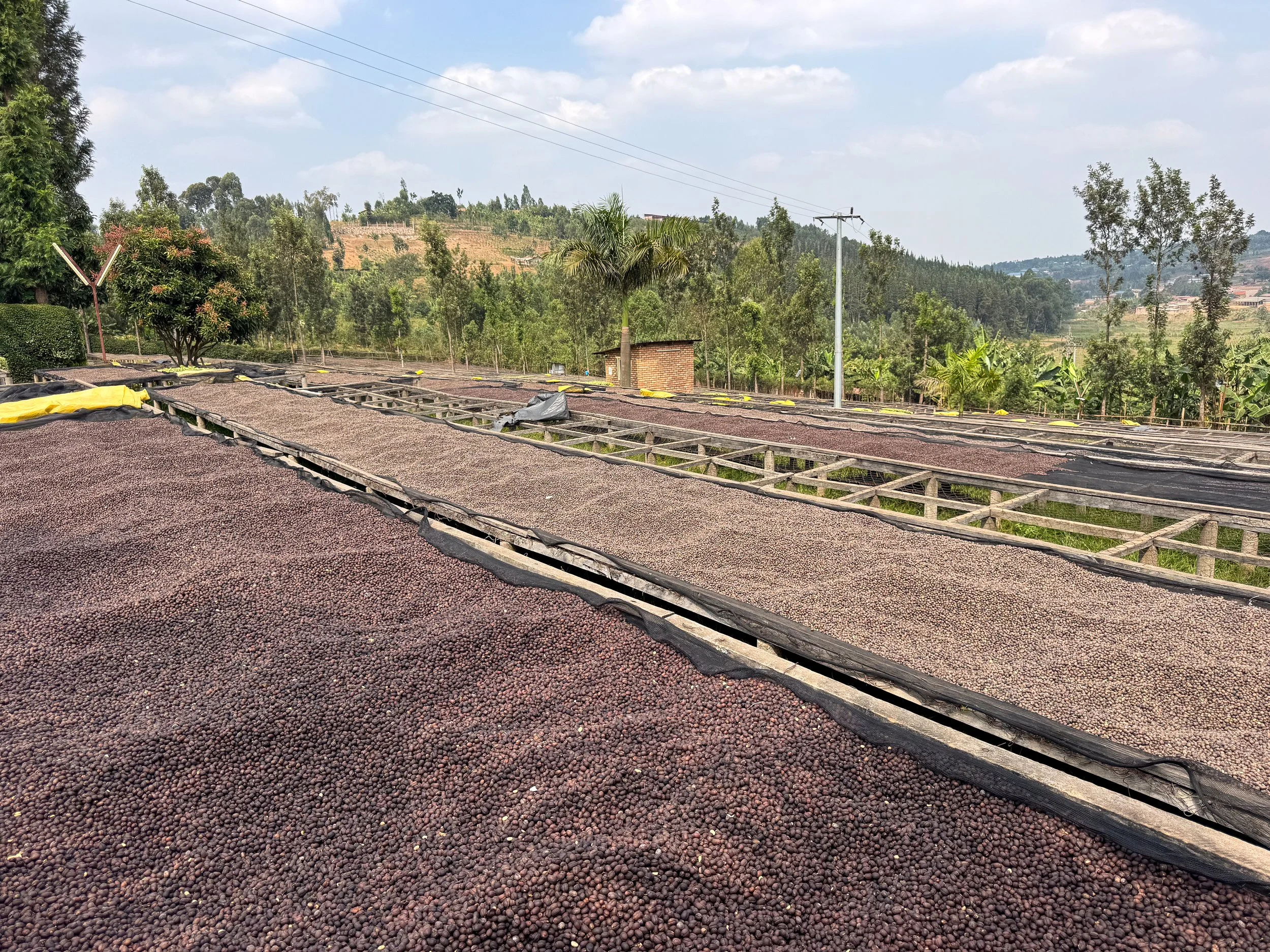
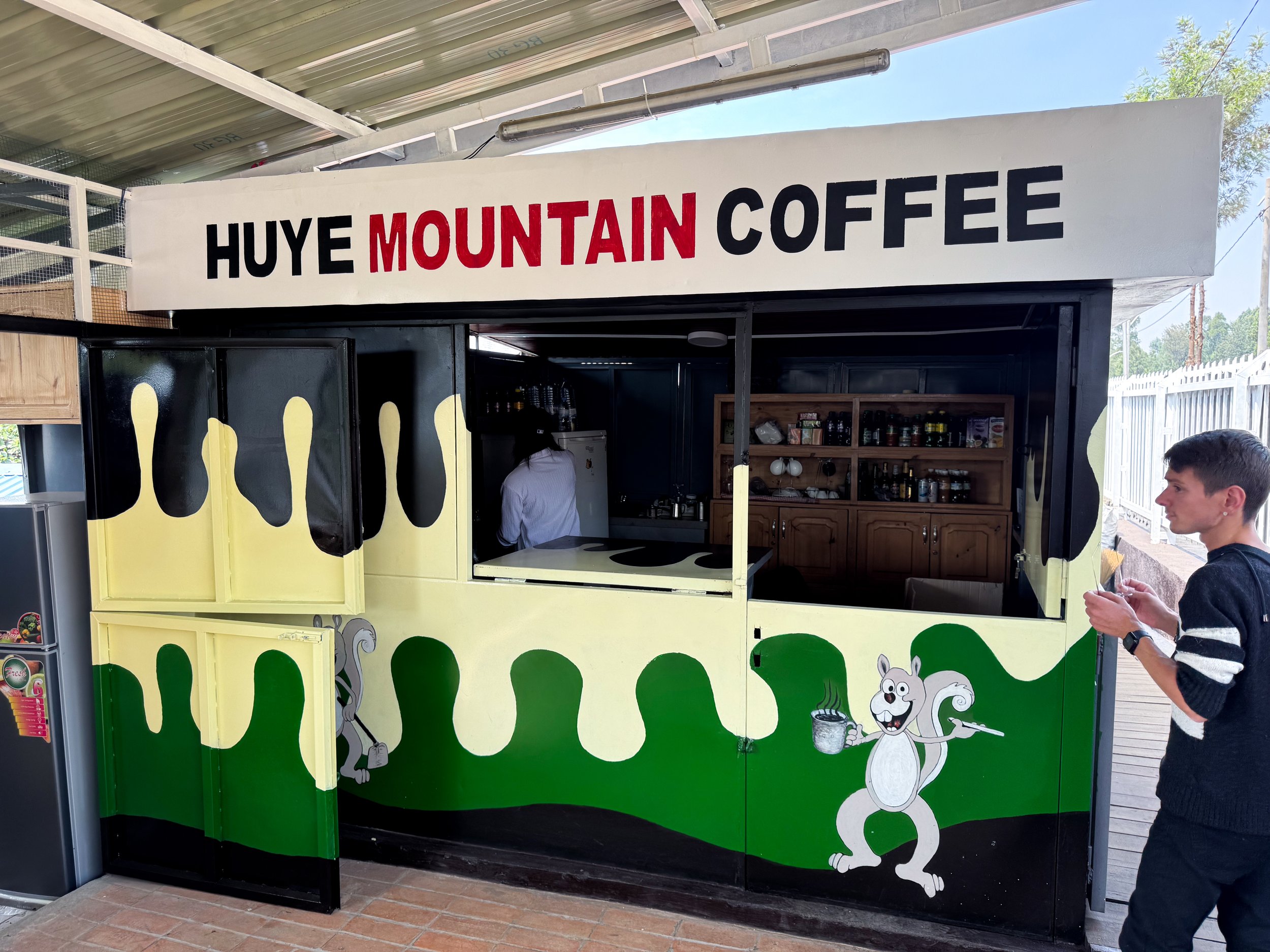
Huye Mountain Coffee. A coffee farm with over 7,000 trees, a processing factory, small roastery and roadside café. We toured the farm, learning more about the history of coffee, the farm’s organic growing methods and hand processing. Once grown and harvested, the fruits are skinned, fermented, dried and sorted into green coffee for export. The roasted coffee is only sold in Rwanda and at their café. We enjoyed a midafternoon caffeine fix before our drive back to Kigali.
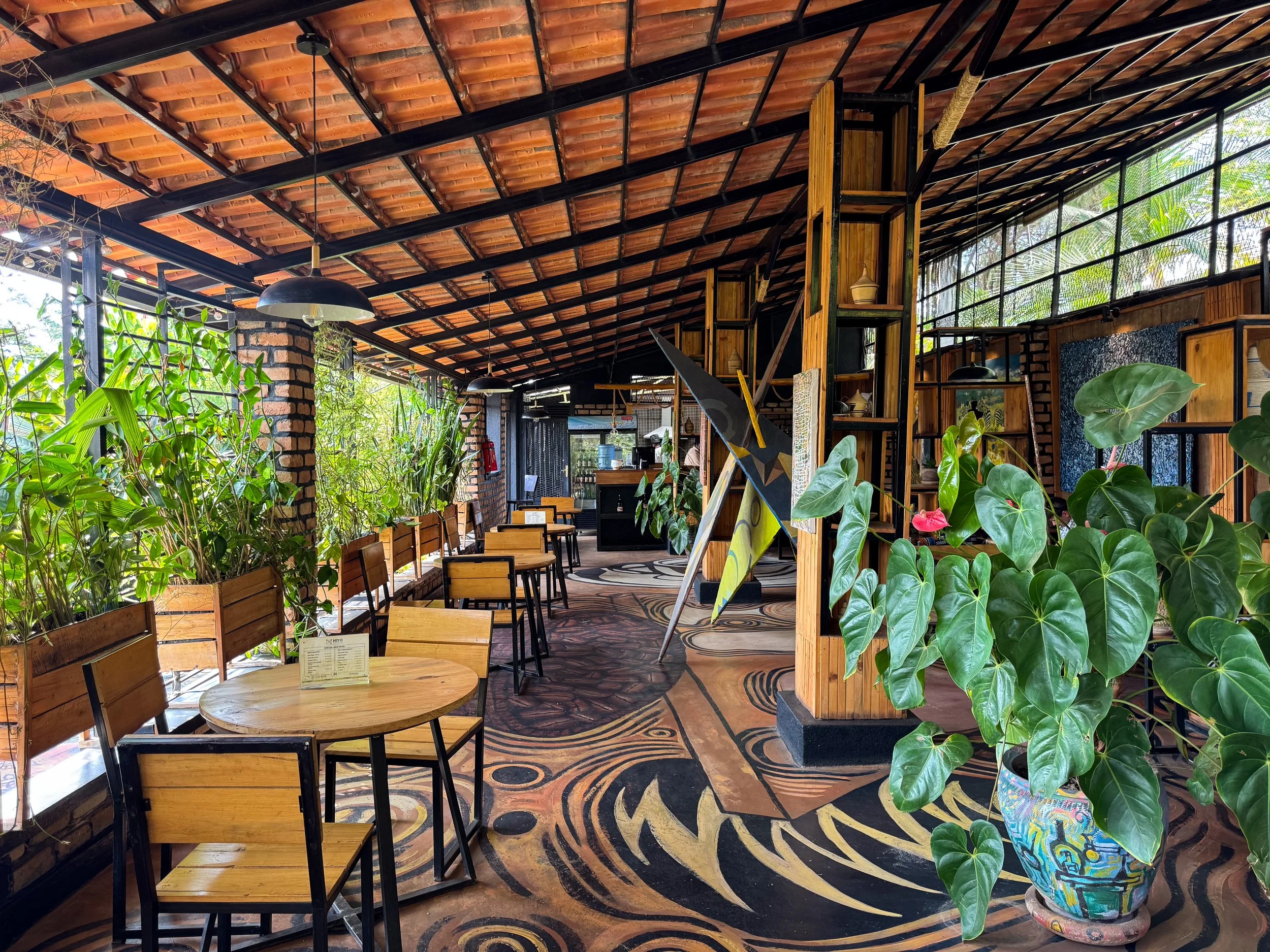
Places to Eat & Drink in Kigali
Niyo Art Café. An open air café with vibrant murals spanning the floor from the street to the interior. The dining area is decorated with patterned Rwandan textiles, sculptures, paintings and plants. Come here for coffee!
Restaurant l’Epicurien. A romantic restaurant serving traditional French dishes made using local Rwandan ingredients. The dining room is spread out amongst an atmospheric garden and indoor terrace. We enjoyed the Burgundy snails, a whole grilled tilapia and brochettes (skewers) of Nile Perch along with French wine.
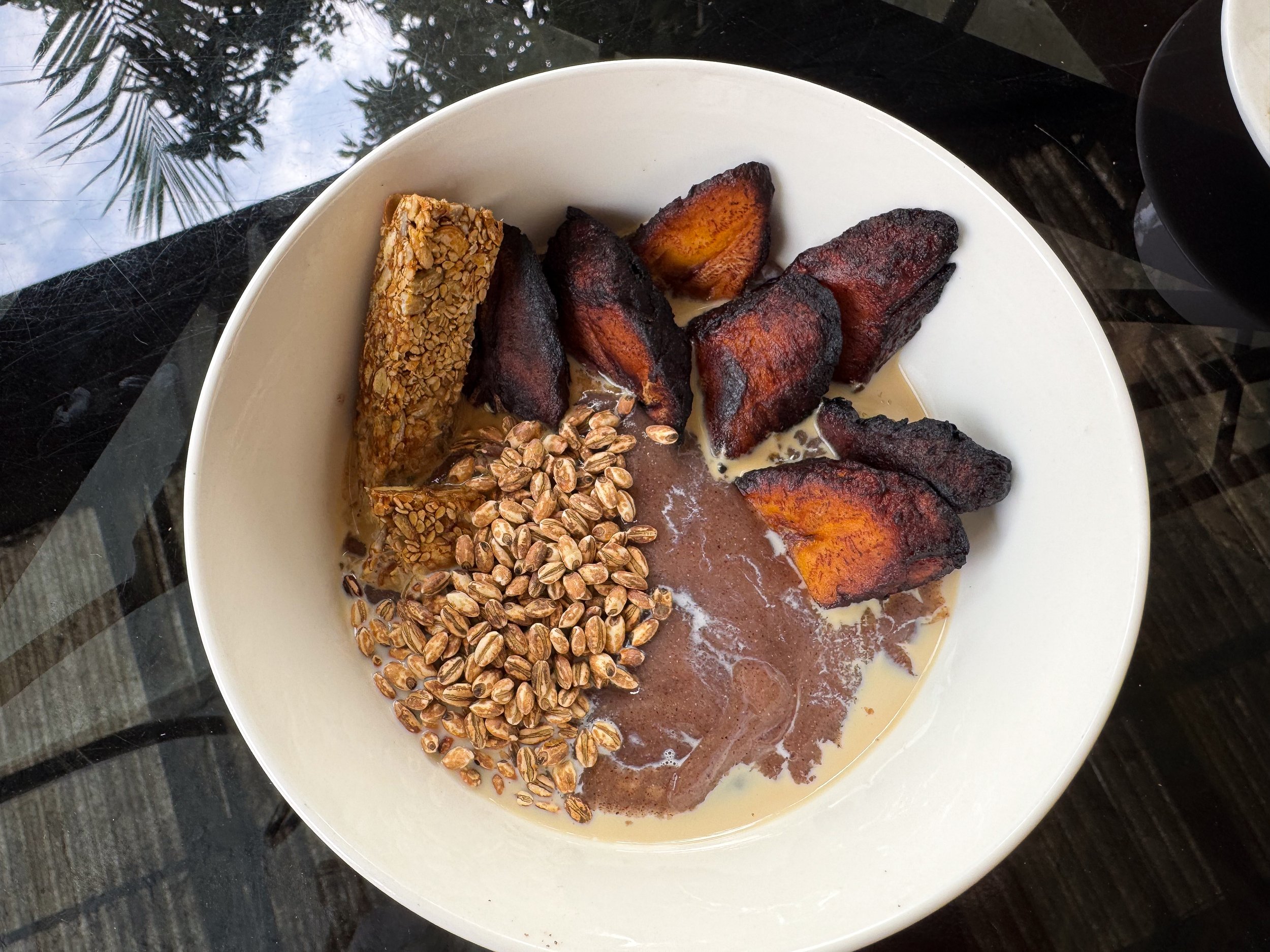
Rwandan Cuisine
Ibihaza. The national dish of Rwanda. It’s a hearty one pot stew made with pumpkin, beans, bell pepper, onions and garlic.
Agatogo. A savory one pot stew made with green bananas, collared greens, spinach, tomato, bell peppers, onions and spices. It’s garnished with avocado and peanut crumble.
Brochettes. Barbecued or fried skewers of meat like beef, goat, chicken or fish.
Imvange Amashaza. Stewed peas mixed with potatoes, carrots, onions and spices accompanied by fresh avocado. It’s typically vegetarian.
Pilau. An East African rice dish cooked with a range of warm spices like cardamom, cumin, turmeric, cinnamon and bay leaves. It’s served as a side or stand alone meal.
Tree Tomato. A deep red egg shaped fruit with a tart flavor similar to raspberry. It’s eaten fresh, blended into juices and baked with pastries.
Ugali. A commonly eaten white corn or cassava flour mash used to scoop stews by hand. Roll a small lump into a ball, press an indentation in the center and scoop using your right hand.
Chapati. A type of roti used to scoop stews and curries by hand. They’re also used to make wraps and samosas.
Chips (French Fries). A common side dish served with most meals made popular by the Belgian and French colonial influences.
Rwandan Beers
Rwanda has a growing beer culture with both traditional and modern brews. We sampled a few pints.
Banana Beer. A traditional Rwandan drink made from banana juice, water, sugar, sorghum flour and yeast. It’s home brewed across the country. It’s often sold at local markets in small villages.
Akarusho. A commercial brand of banana beer. It’s described as a “sweet banana based alcoholic beverage.” It has a malty and semi sweet flavor with a hint of banana.
Virunga. The most popular craft beer in Rwanda. It comes in at least three varieties: Silver, Gold and Mist.
Silver. A light and easy drinking lager.
Gold. A flavorful lager with a subtle sweetness.
Mist. A dark ale with a nutty and aromatic flavor.
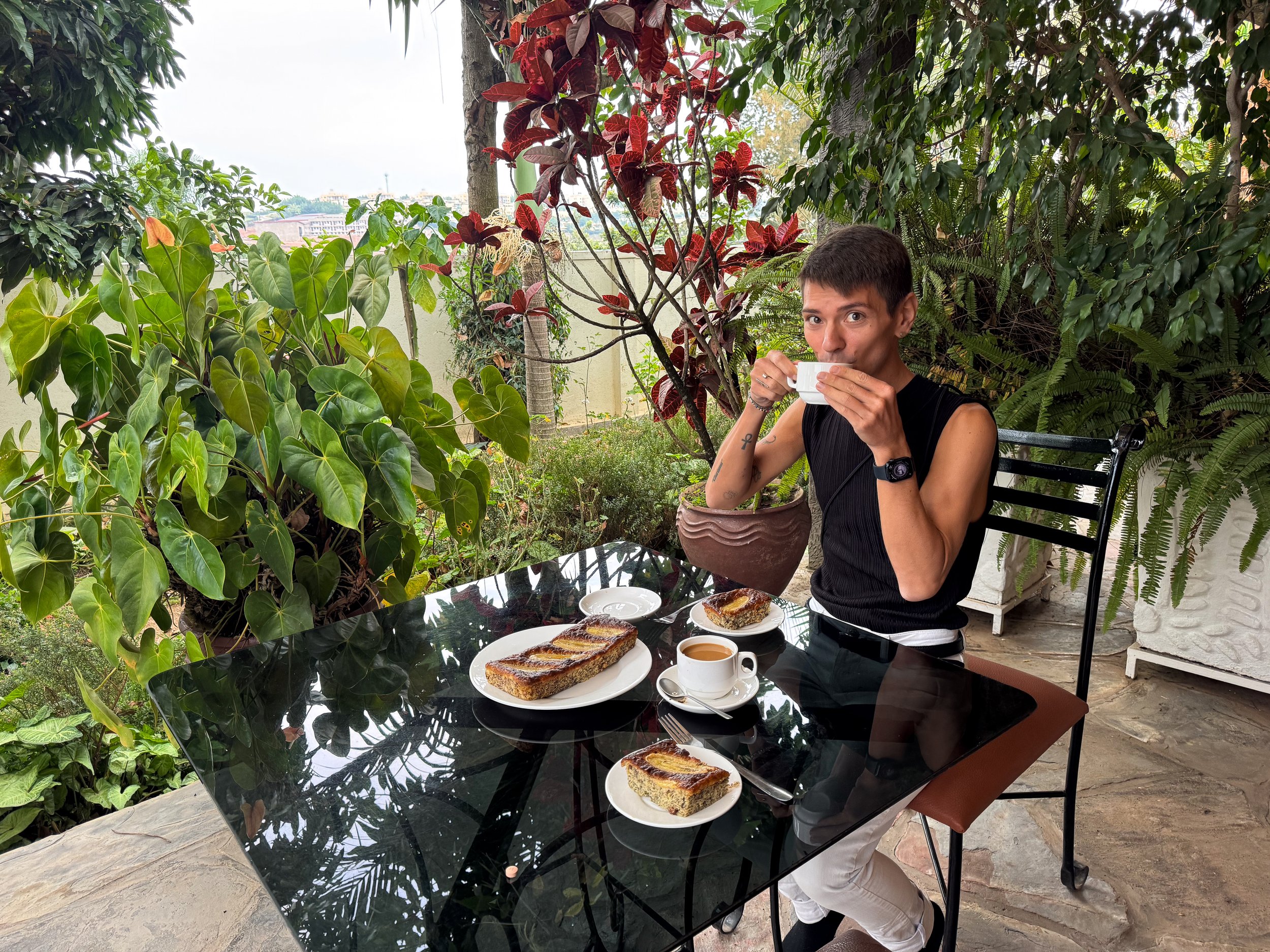
Where to Stay
Salama Village Kigali. A small homestay in a lush and quiet neighborhood of Kigali. Its rooms have shaded outdoor patios, access to a communal kitchen and a living room lounge. Reserve on Booking.
Driving in Rwanda
We loved driving in Rwanda due to freedom of exploration and getting to observe the local culture. It’s easy to get used to after the first day but like everywhere it has its pros and cons.
Pros: Most roads are double lane, smoothly paved, well maintained and illuminated at night. Cars are typically automatic. Locals drive on the right side of the road.
Cons: Roadsides become congested with people carrying goods, large trucks can cause delays, and motorbikes can be unpredictable.
Traffic Cameras. Speed limits are strictly enforced by traffic cameras across the country. Permanent cameras are located every few kilometers while hidden cameras are nestled in bushes daily by police.
Refueling. Gas station attendants refuel vehicles for you. Credit cards are typically accepted for payment.
Car Rental. We rented our car from Rent Car Rwanda. The car was dropped off and picked up from our accommodation in Kigali. The prices are very reasonable for a 4x4 SUV with insurance included. Reservations are made through WhatsApp and can be paid by card in person.
Getting Around Kigali
Move. A taxi hailing app similar to Uber or Grab. It’s specific to Rwanda and one of the best ways of getting around Kigali affordably. The app can be glitchy, with issues reaching drivers and processing payments.
Moto Taxi. Moto taxis are the local way of getting around. They’re readily available in groups along the roadsides.
Location Specifics
Language. Most people in Rwanda are trilingual. They speak their mother tongue Kinyarwanda as well as French and English. Some common words and phrases are:
Muraho (mo-rah-ho) = Hello / Bonjour
Murakoze (moo-rah-koh-zay) = Thank you / Merci
Urakoze (oo-rah-koh-zeh) = Thank you / Merci
Murabeho (moo-rah-bay-ho) = Good bye / Au revoir
Muryoherwe (moo-yo-heh-weh) = Enjoy your meal / Bon appetit
Cash vs. Card. Cash is preferred by most businesses. They accept Rwandan Franc and the US Dollar. Most places will accept credits card, but with a transaction fee.
General Safety. Kigali is one of the safest cities in Africa. People are kind, honest and respectful. We had no issues walking around by day or night.
LGBTQ+ Safety. Rwanda is one of the few African countries where homosexuality is not illegal. There are no laws against discrimination and public opinion is generally unfavorable toward same sex relationships. Read more on our article about LGBTQ+ Travel Safety.
Plastic Bags. Rwanda is serious about conservation. Plastic bags are banned across the country with strict enforcement to prevent littering. Hardly a single piece of trash litters the streets or roadsides.
The 1994 Genocide. The genocide is a horrific and recent part of the country’s past. Treat the topic with the utmost care and respect. Avoid conversations regarding people’s ethnic groups.
Pre-Airport Security Check. Before entering the airport, there is a roadside security check. Passengers have to pass through metal detectors while their bags are scanned or sniffed by dogs. It’s common practice in East Africa.
For Next Time…
Gorilla Trekking in Volcanoes National Park. Traveling on a budget, we prioritized seeing Rwanda’s other primates. When we return, visiting the gorillas will be top of mind.
Volcano Hiking. We plan to hike at least one of the volcanoes in the Volcanoes National Park bordering Rwanda, Uganda and the Democratic Republic of the Congo like Mount Bisoke and its crater lake as well as Mount Sabyinyo and the tri-border point.
Lake Kivu. Rwanda may be land locked but it’s flanked by one of Africa’s Great Lakes, Lake Kivu. Its shores are ideal for hiking, bird watching and water sports.
Safari in Akagera National Park. Having gone on safari in Kenya and Tanzania on our trip through East Africa, we opted out of going on safari in Rwanda. Next time we return, we plan to visit Akagera National Park to see its landscapes and wild game.
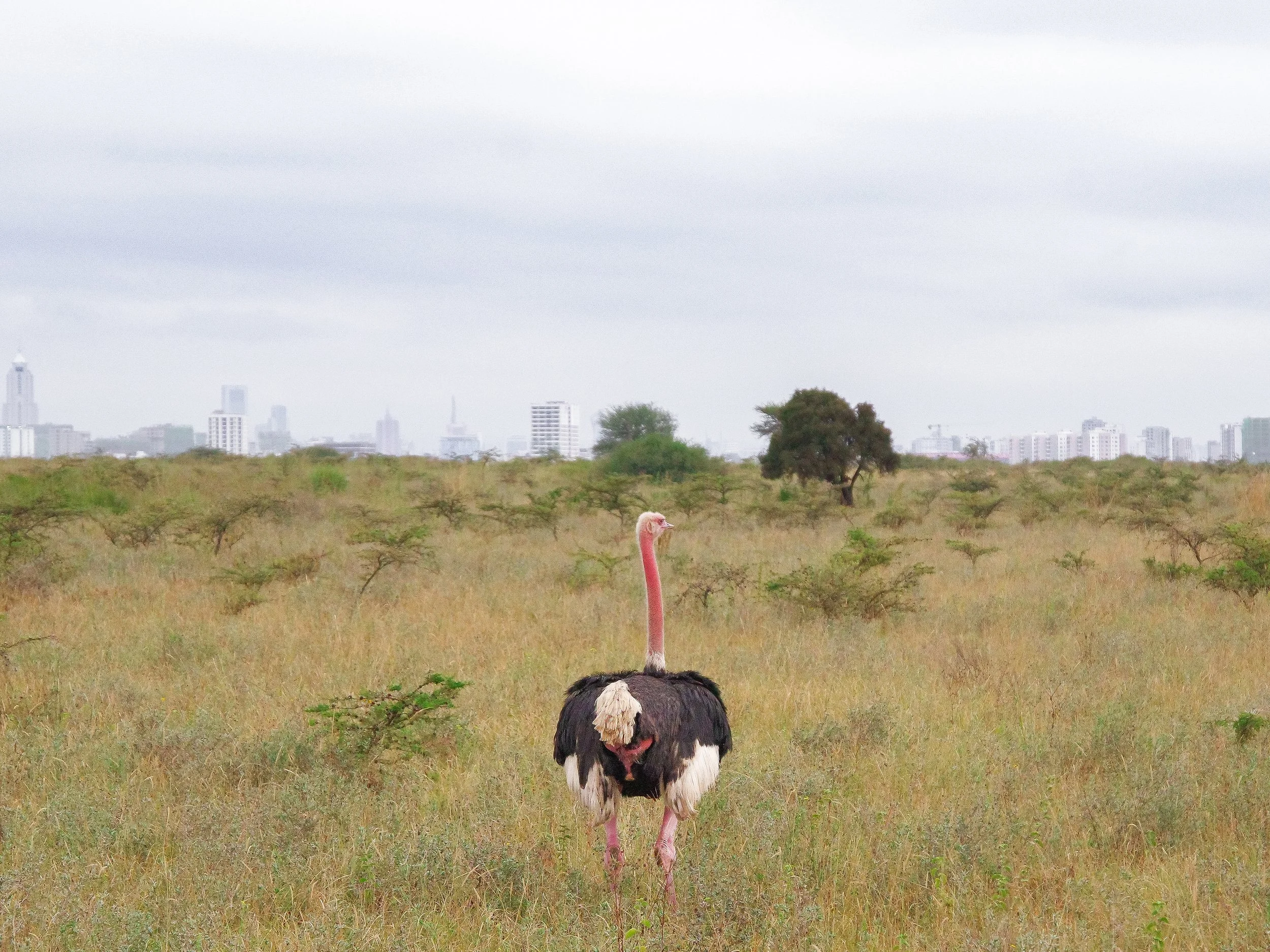
Nairobi Travel Guide: Wildlife, Markets & Kenyan Cuisine
Explore Nairobi where urban life, wildlife encounters and vibrant markets bring together Maasai culture, Swahili cuisine and Kenya's safari adventures.
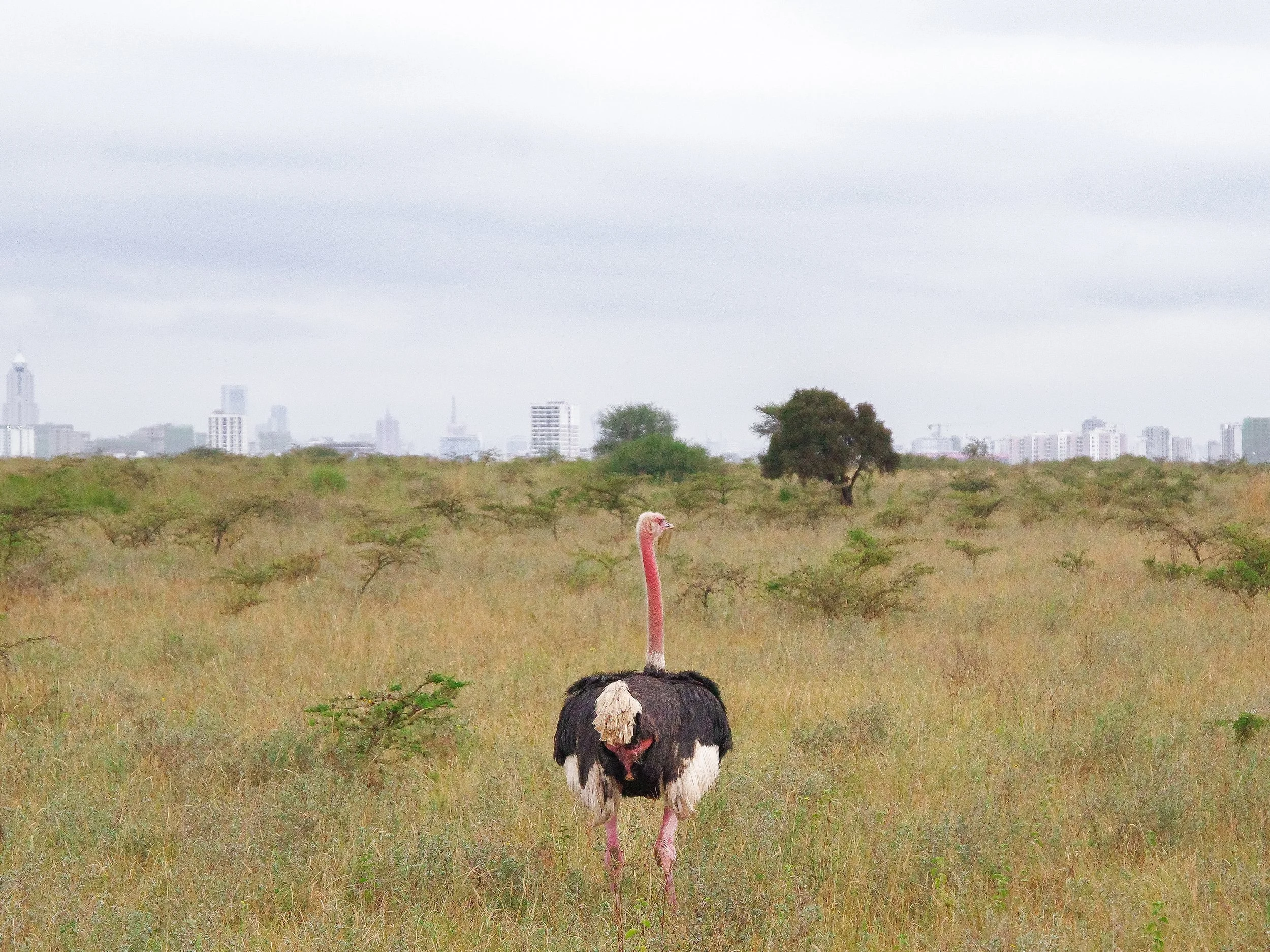
Nairobi, Kenya
Nairobi is a place where urban life and the African wild meet. Kenya’s capital city is a hub for big game safaris with access to national parks and reserves. City museums feature exhibits on Maasai culture, restaurants serve local cuisine, cafes brew Kenyan coffee and markets sell East African artistry. We explored the city and ventured across the country’s rich landscapes on an unforgettable safari!
Central Business District. The historic heart of the city with bustling streets, roadside vendors, artisan markets, landmark buildings and modern skyscrapers. Stay alert here as it can often be the site of large protests and demonstrations.
Ngara. A central neighborhood that offers a glimpse into local life. The streets are bustling with people on foot, commuting in graffitied buses and shopping at roadside tents displaying produce, fruits, clothes and shoes.
Westlands. A polished neighborhood with modern high rises, higher end restaurants, office buildings and luxurious hotels. It’s one of the safest areas of the city.
Gigiri. A tree covered neighborhood surrounded by city parks and home to a large number of embassies, foreign expats and restaurants.
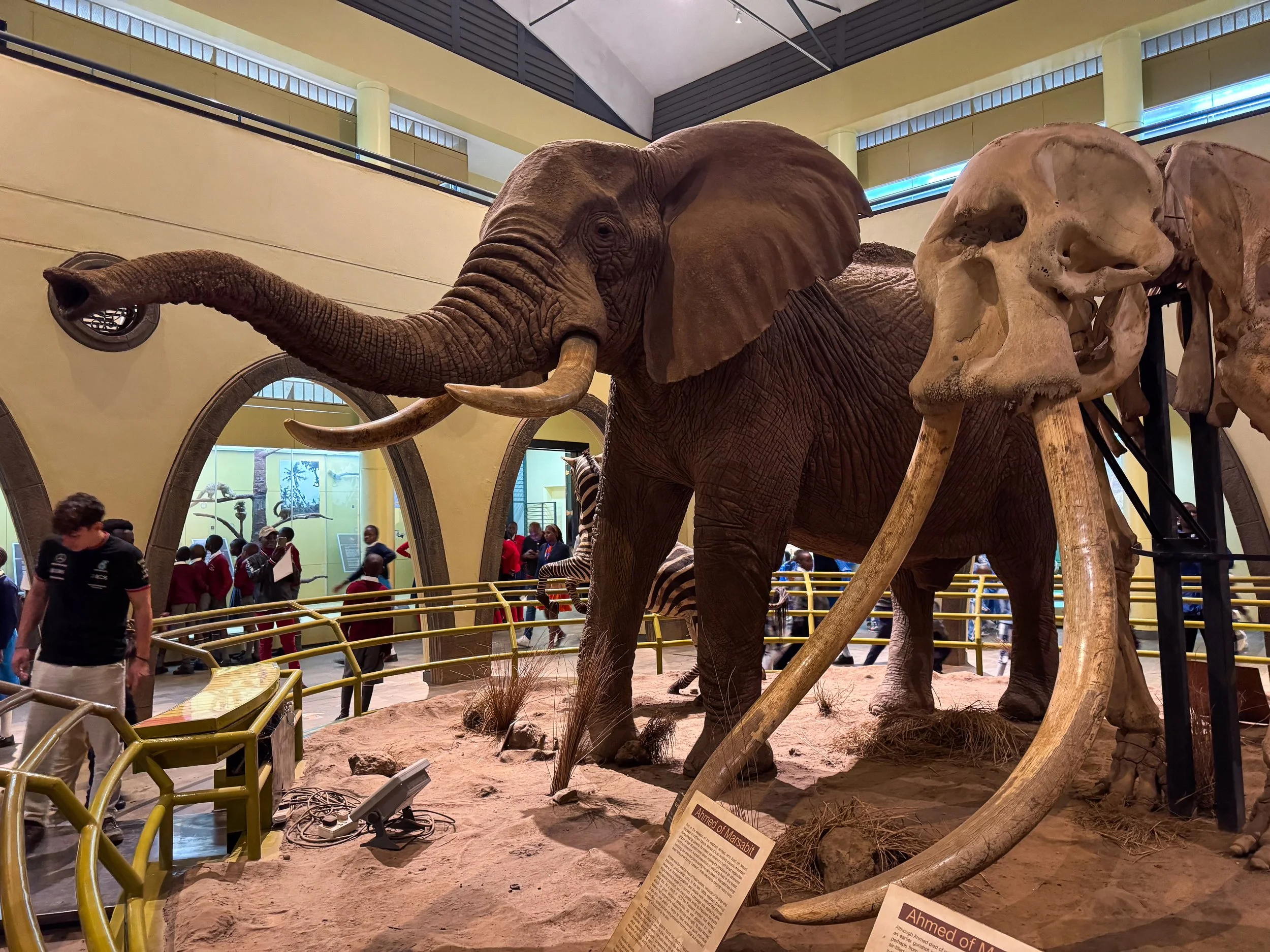
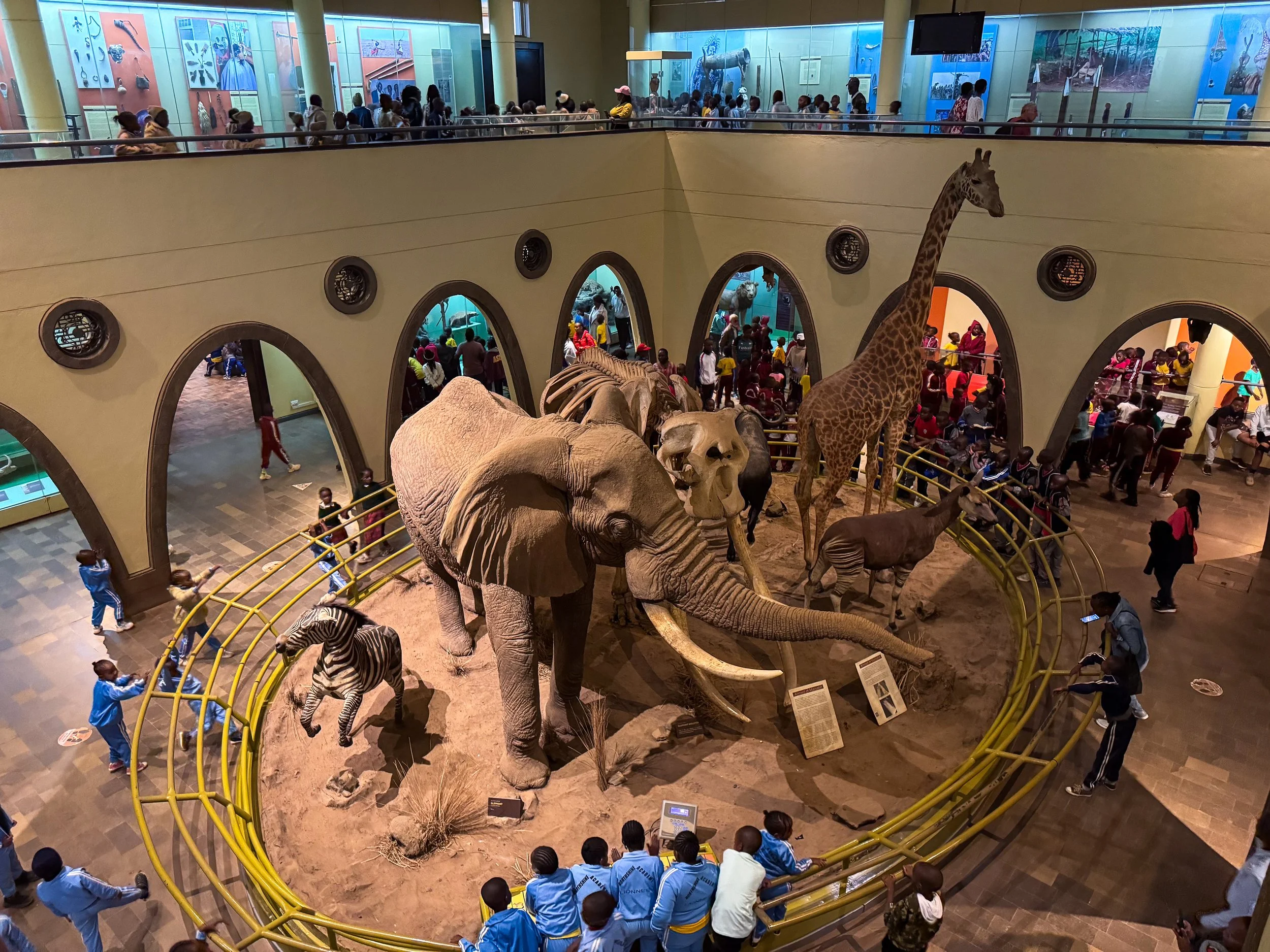
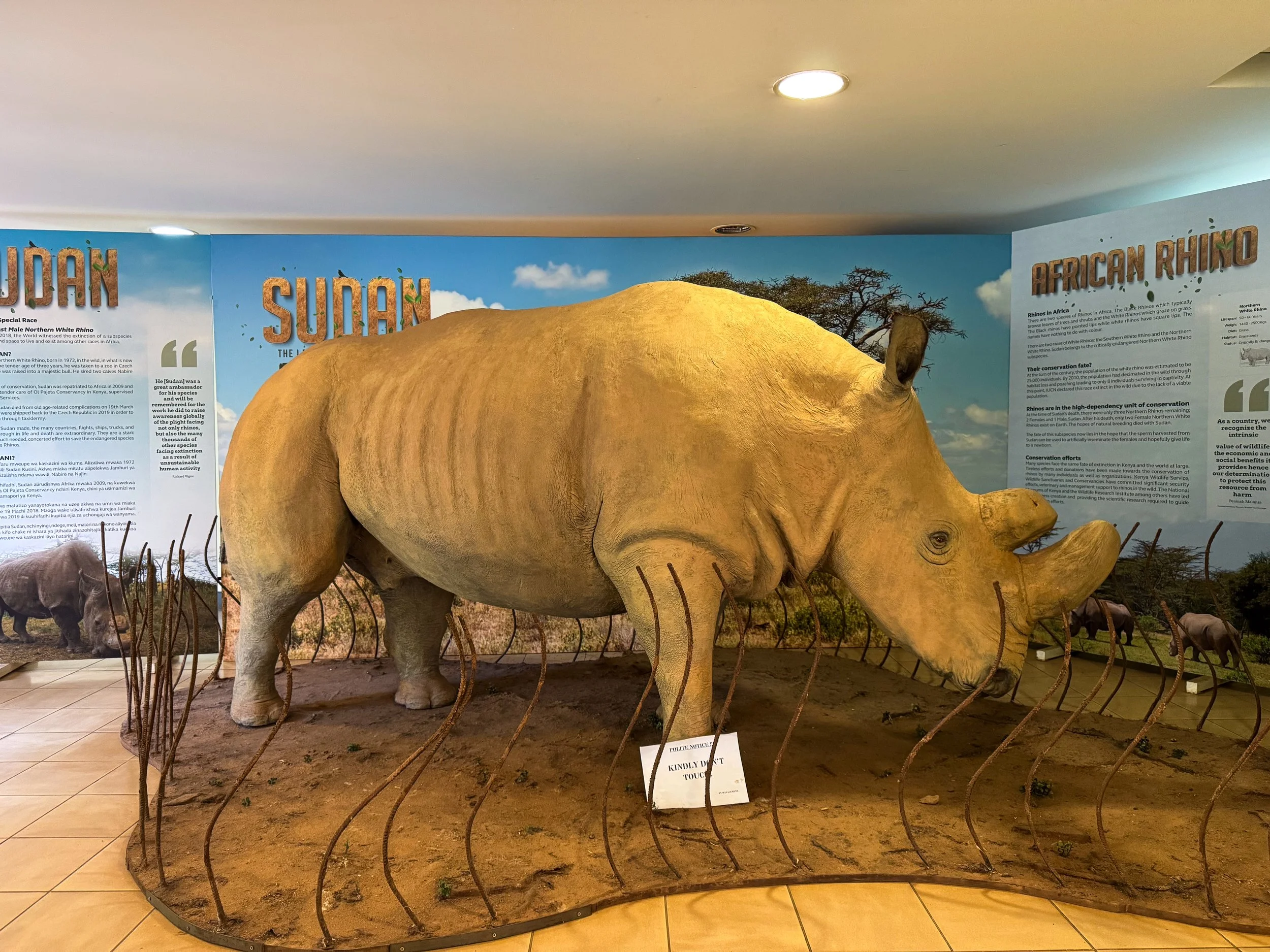
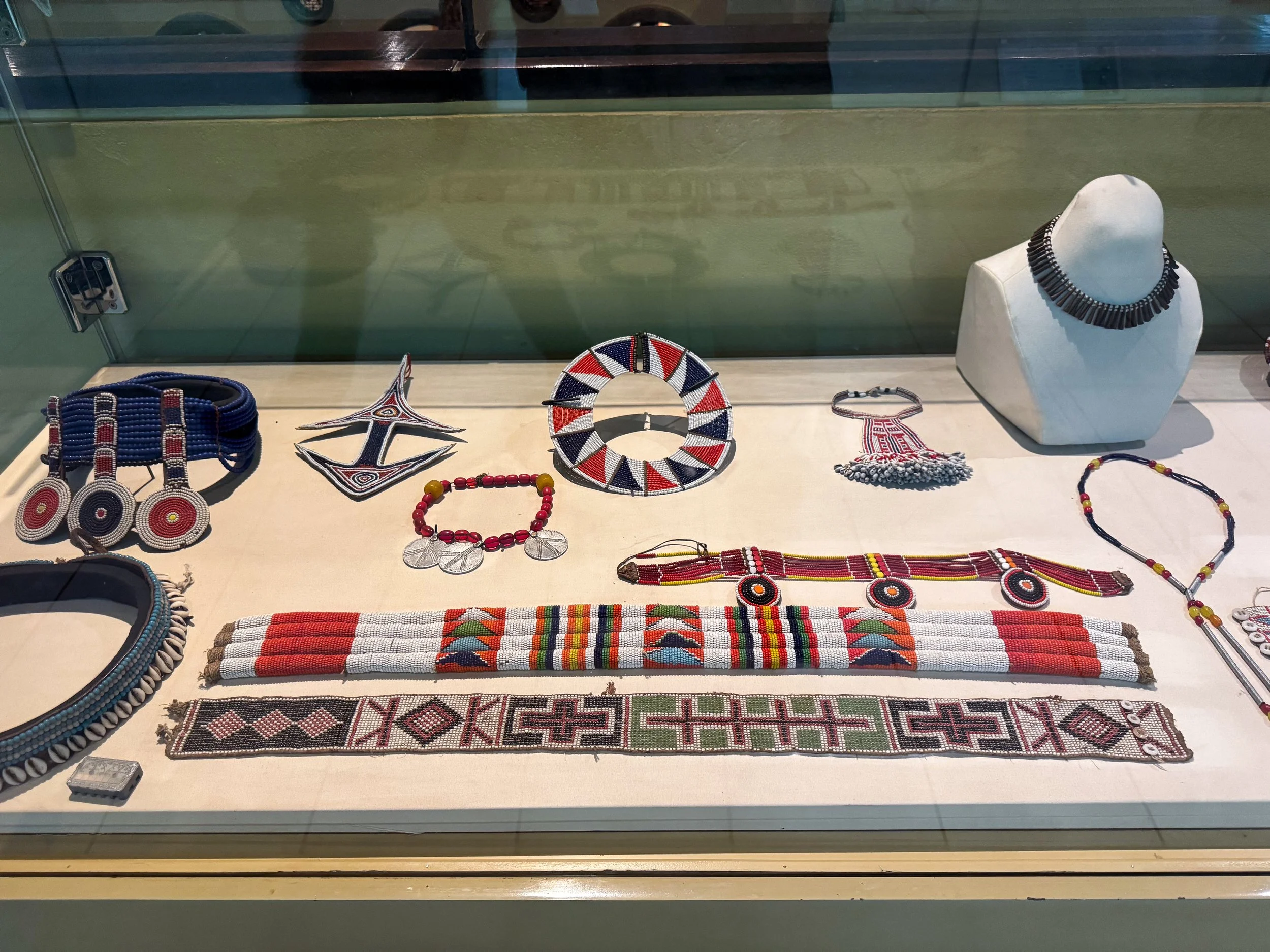
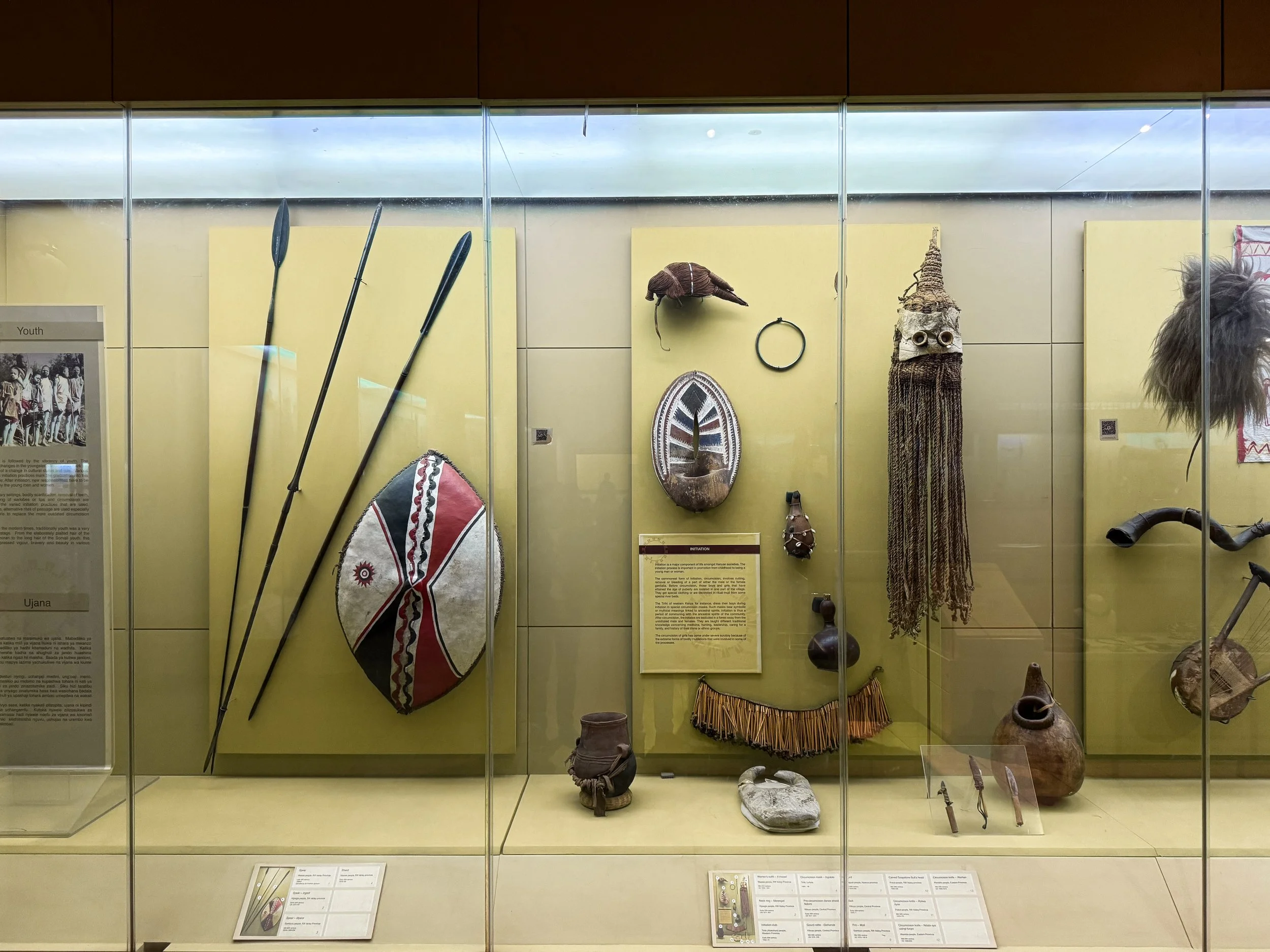
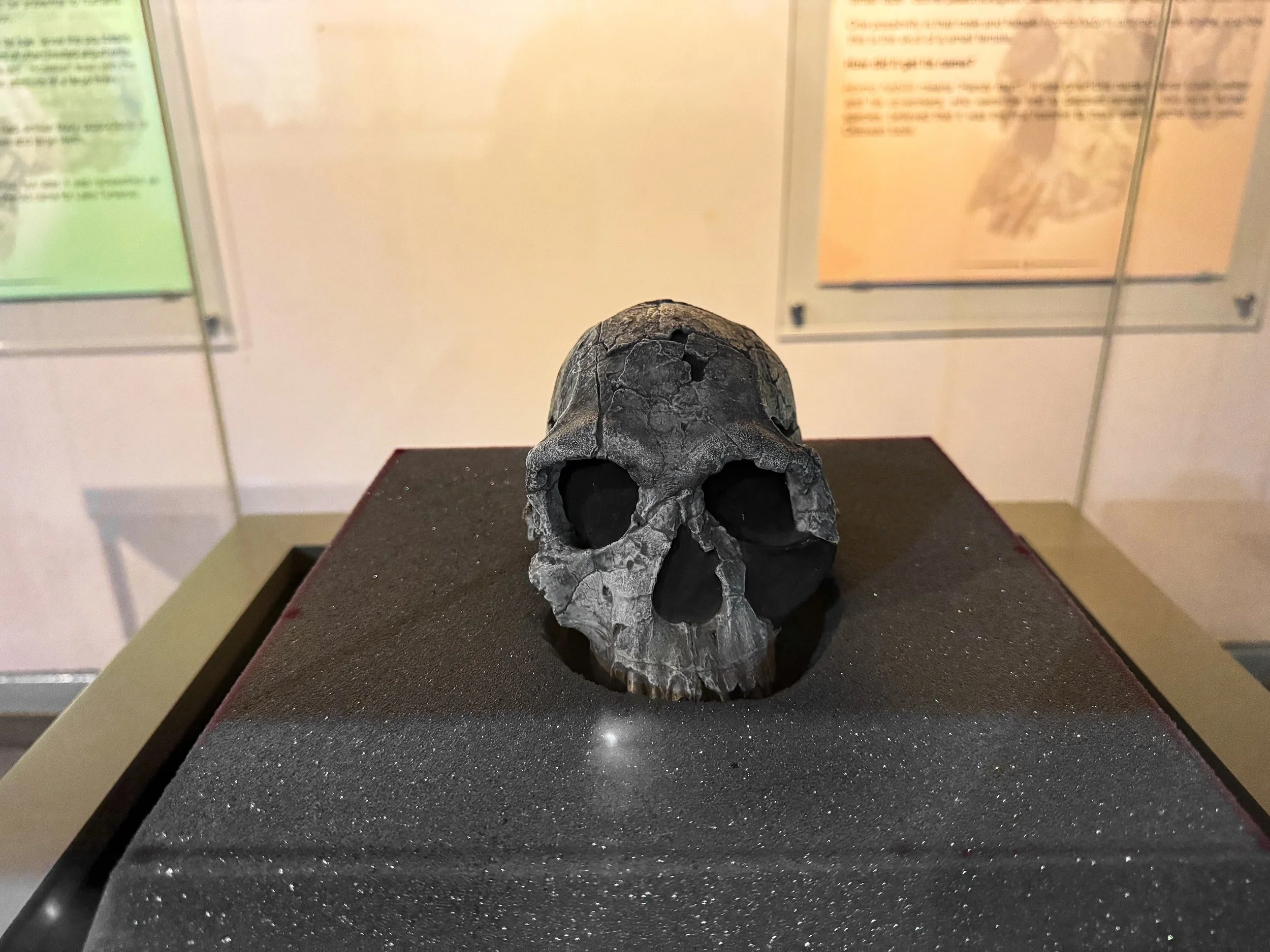
See the Sights
Nairobi National Museum. A museum dedicated to the societal, natural and human histories of Kenya. Societal exhibits recount the pre-colonial, colonial and independent histories of Kenya, including that of the country’s many tribes, regions, traditions and folklore. A natural history exhibit displays mounted animals categorizing some of Kenya’s many native species. A particular, though tragic, highlight is Sudan, the last male Northern White Rhino. Kenya is known as the Cradle of Humanity for its fossil records of the earliest humanoids. Exhibits feature skeletons and skulls representing human evolution, the most significant being the Turkana Boy, a complete skeleton of a 1.6 million year old Homo Erectus.
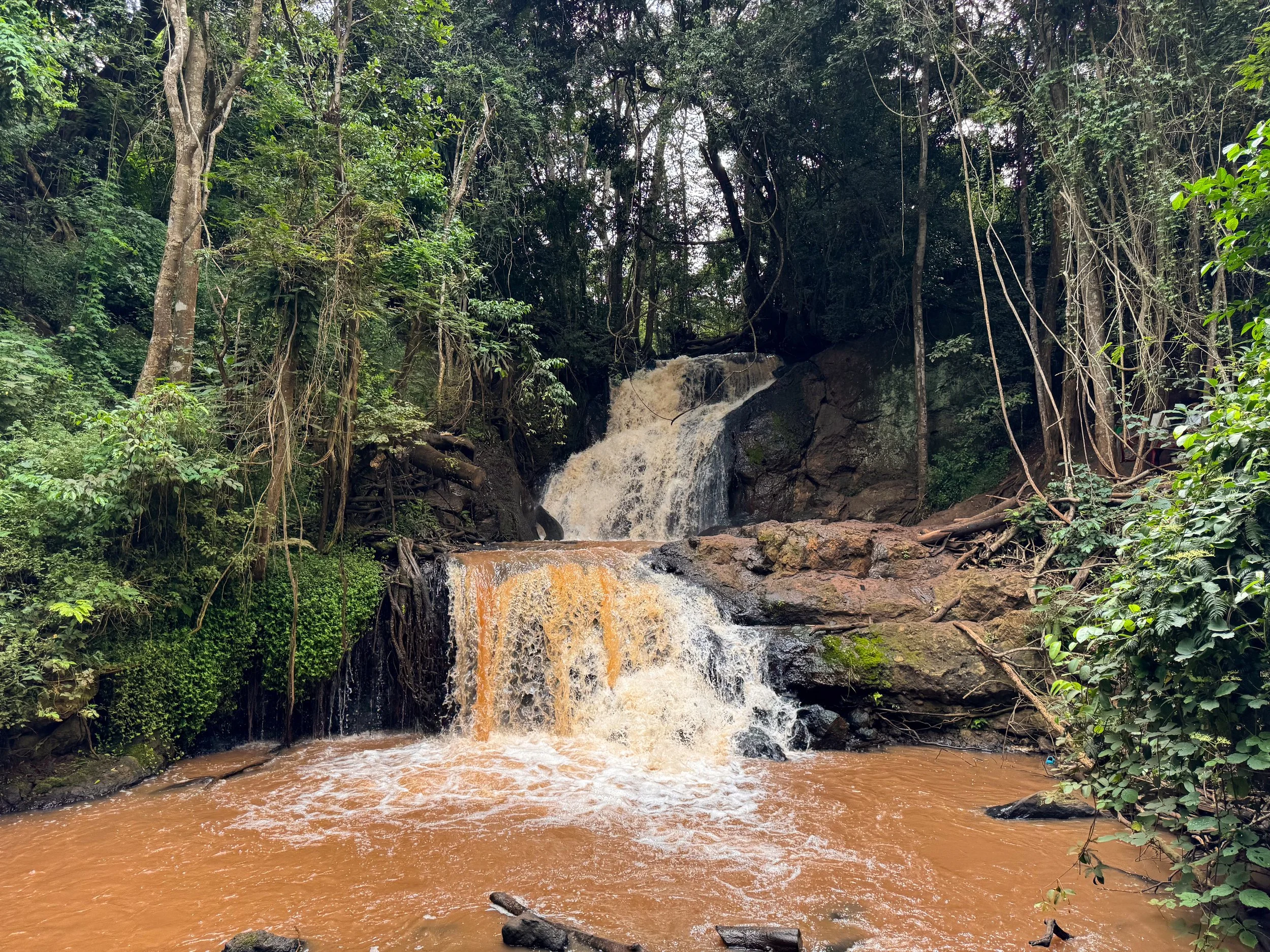
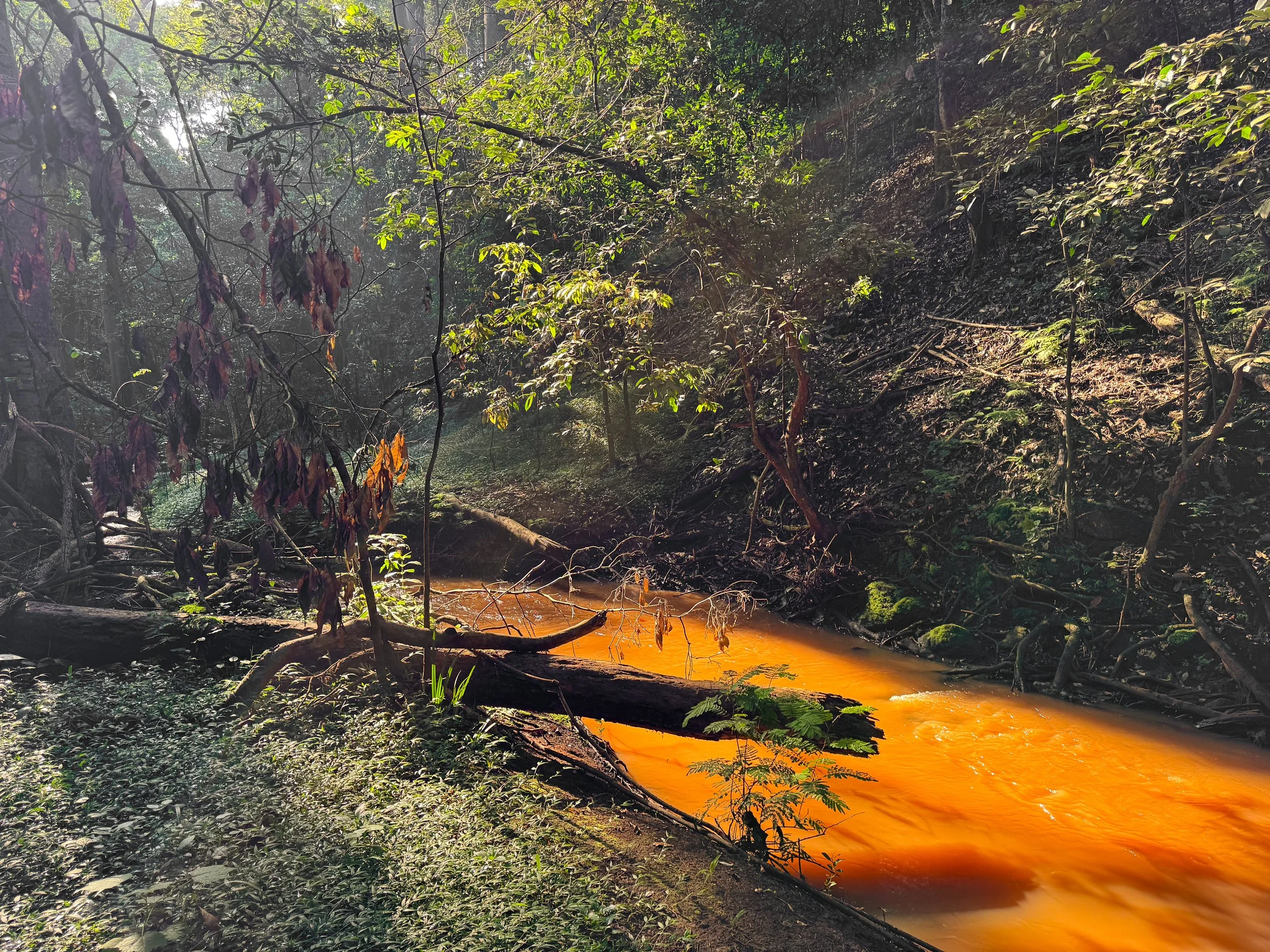
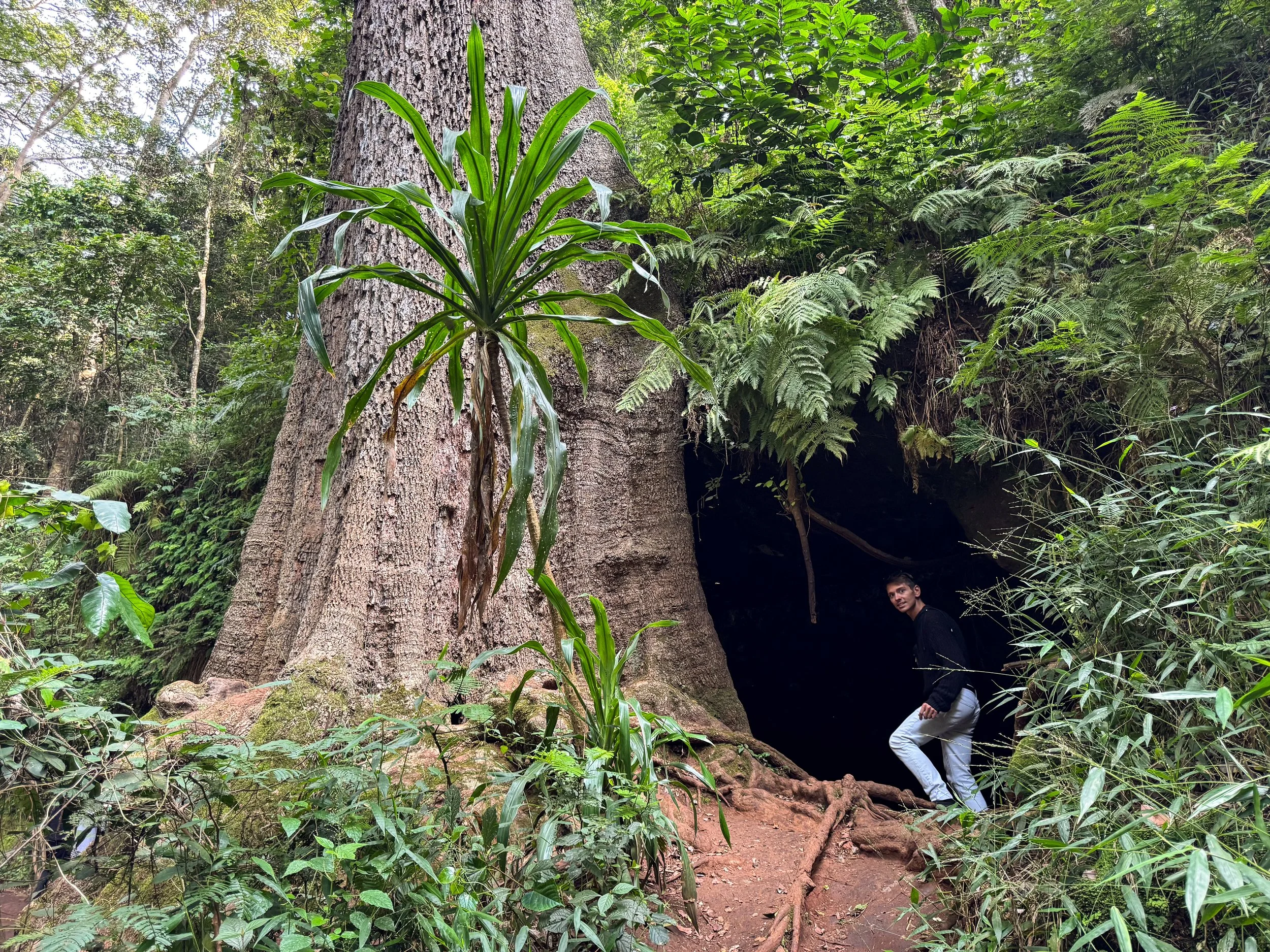
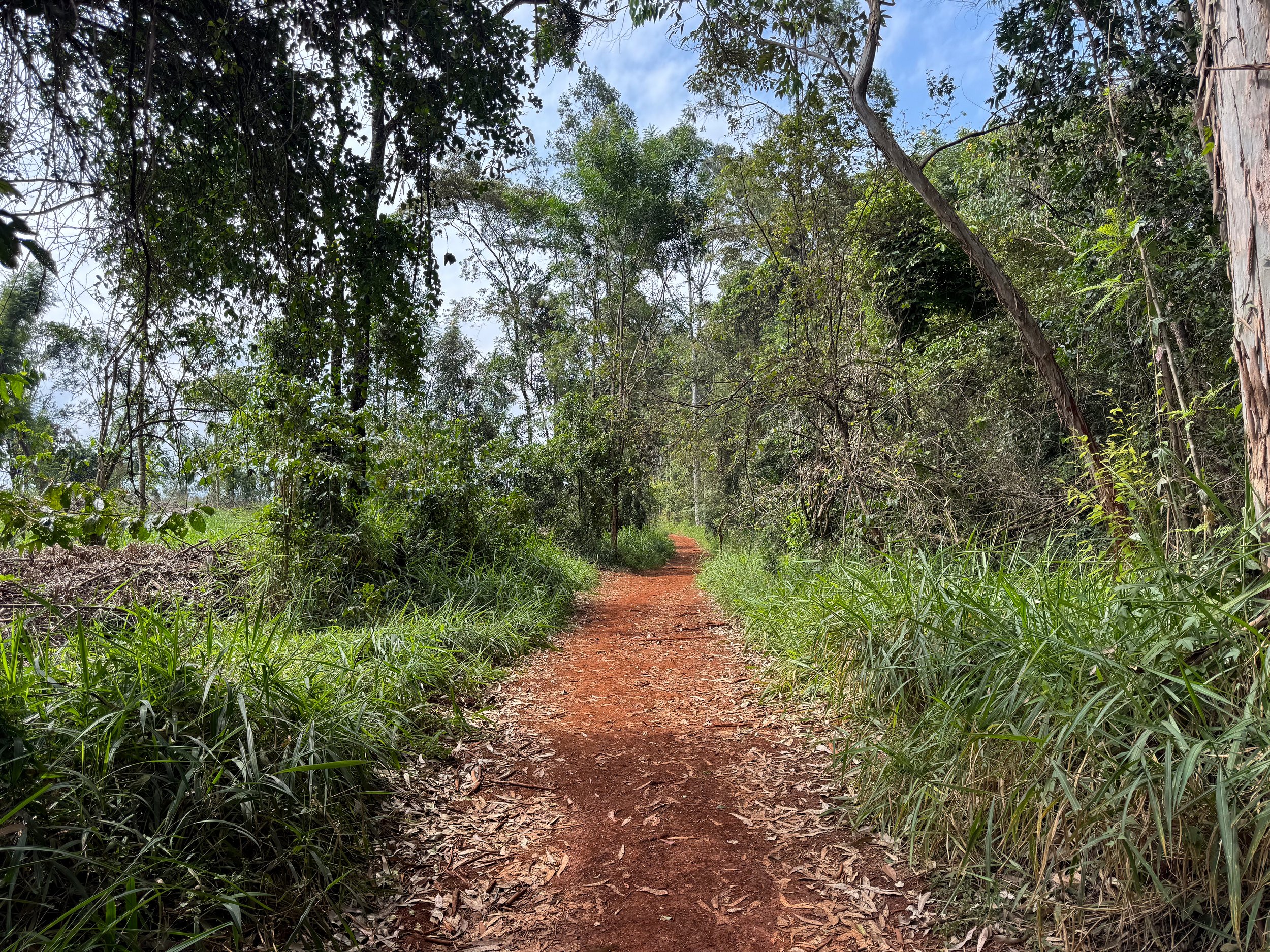
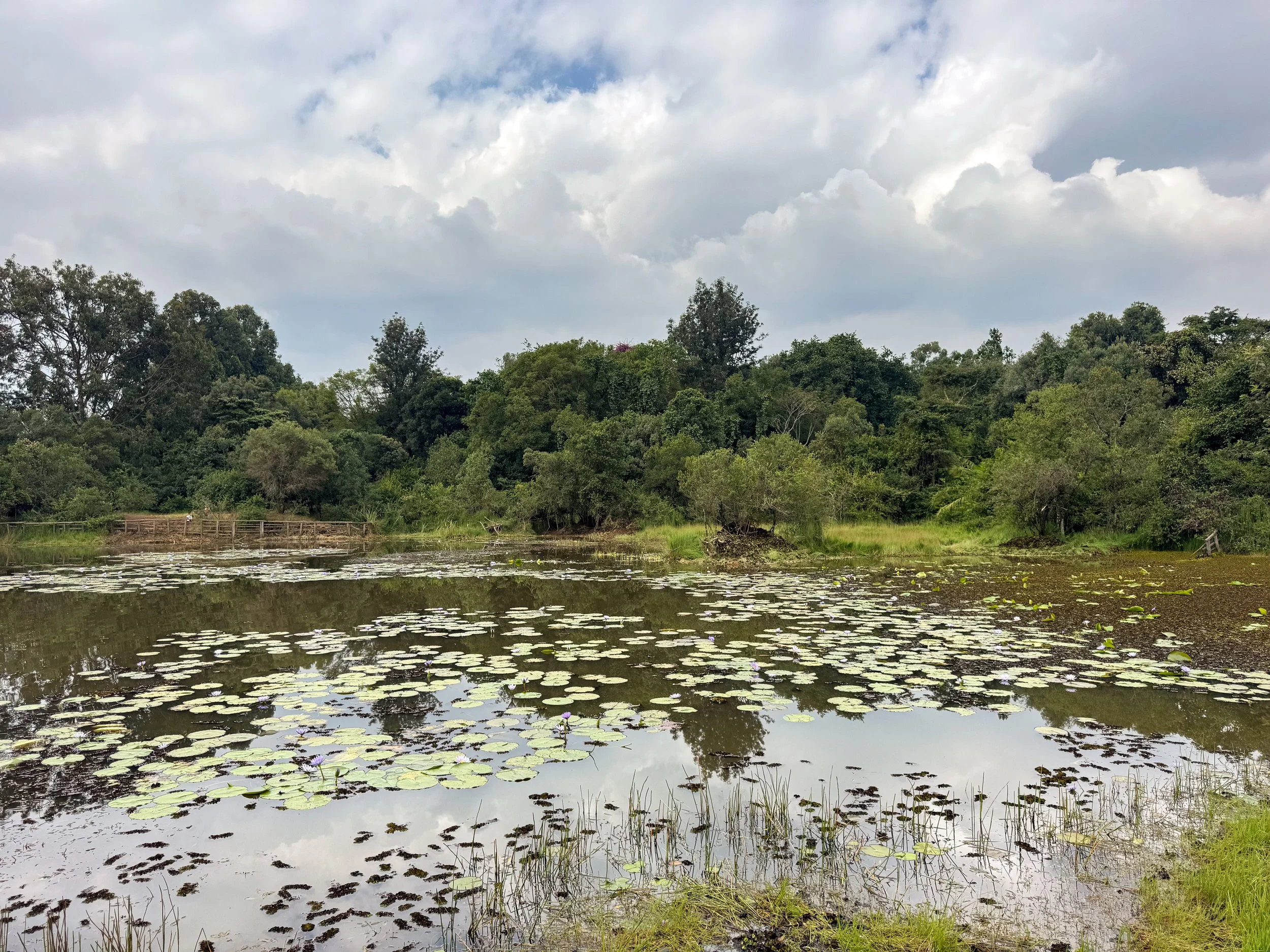
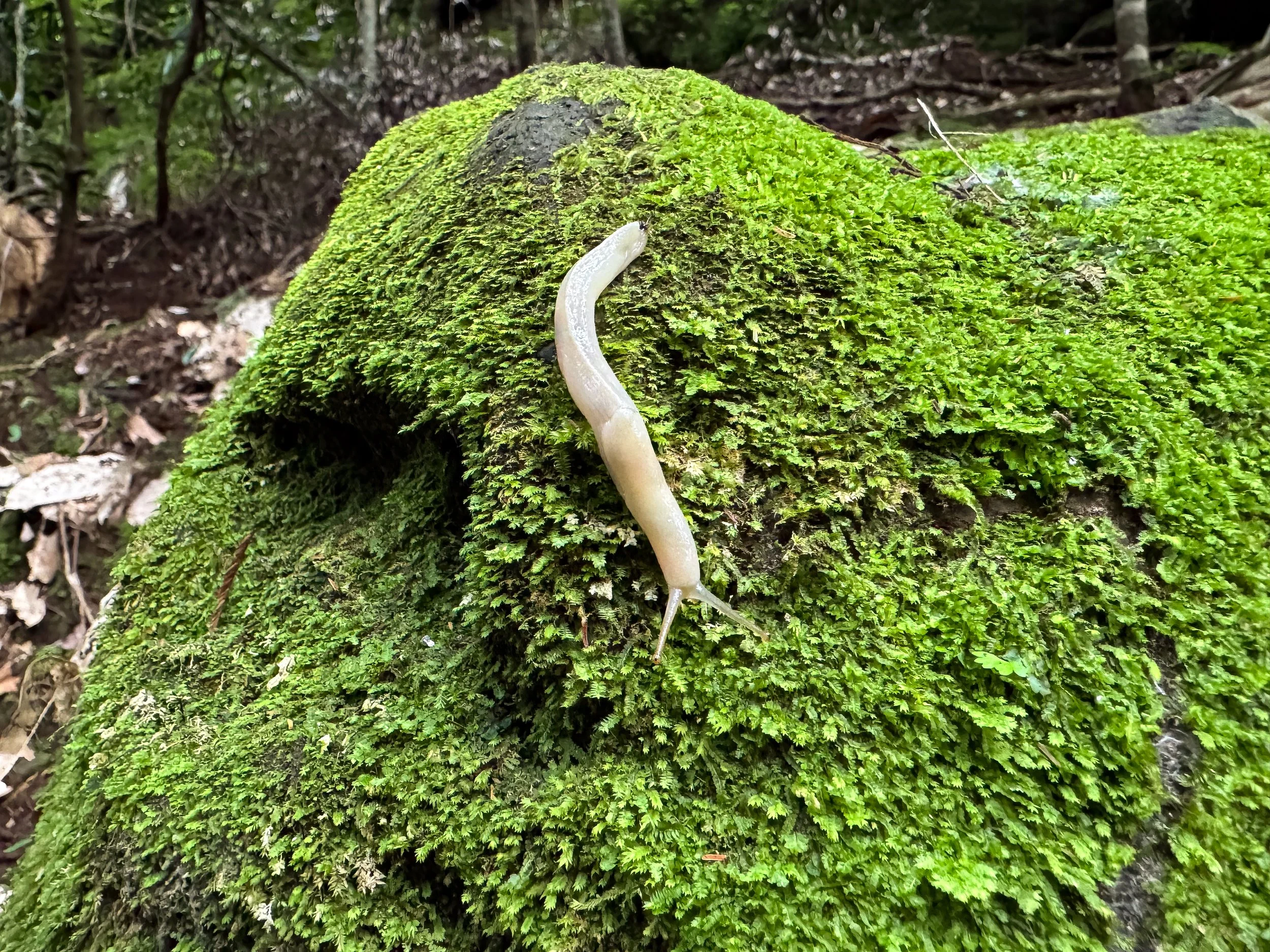
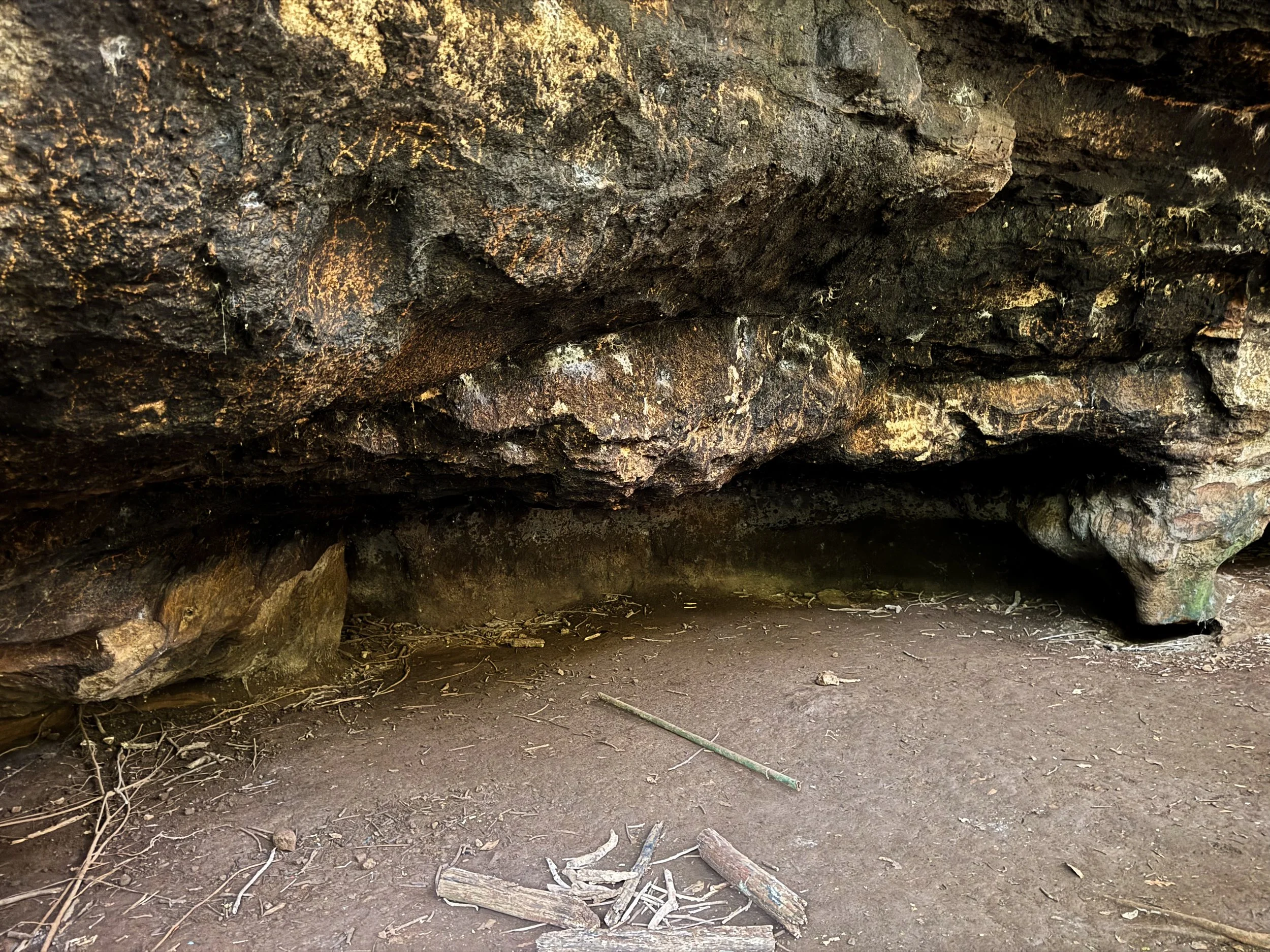
Kaura Forest. A large city park and protected forest with nature trails, wildlife, waterfalls and caves. We spent an afternoon meandering through the forest trails brimming with blue, yellow, emerald and orange butterflies. A troop of Mantled Guereza, a black monkey identifiable by their bushy white tails and long fringe like hairs, jumped between treetops. Pairs of Suni, a small type of antelope foraged on the forest floor.
Karura Waterfalls. A three tiered waterfall flowing from a chocolate colored river in the middle of the forest.
Mau Mau Caves. A series of riverside caves downstream from the waterfall. They have been used by indigenous peoples dating back hundreds of years.
Good to Know. Admission costs a small fee from any of the park entrances.
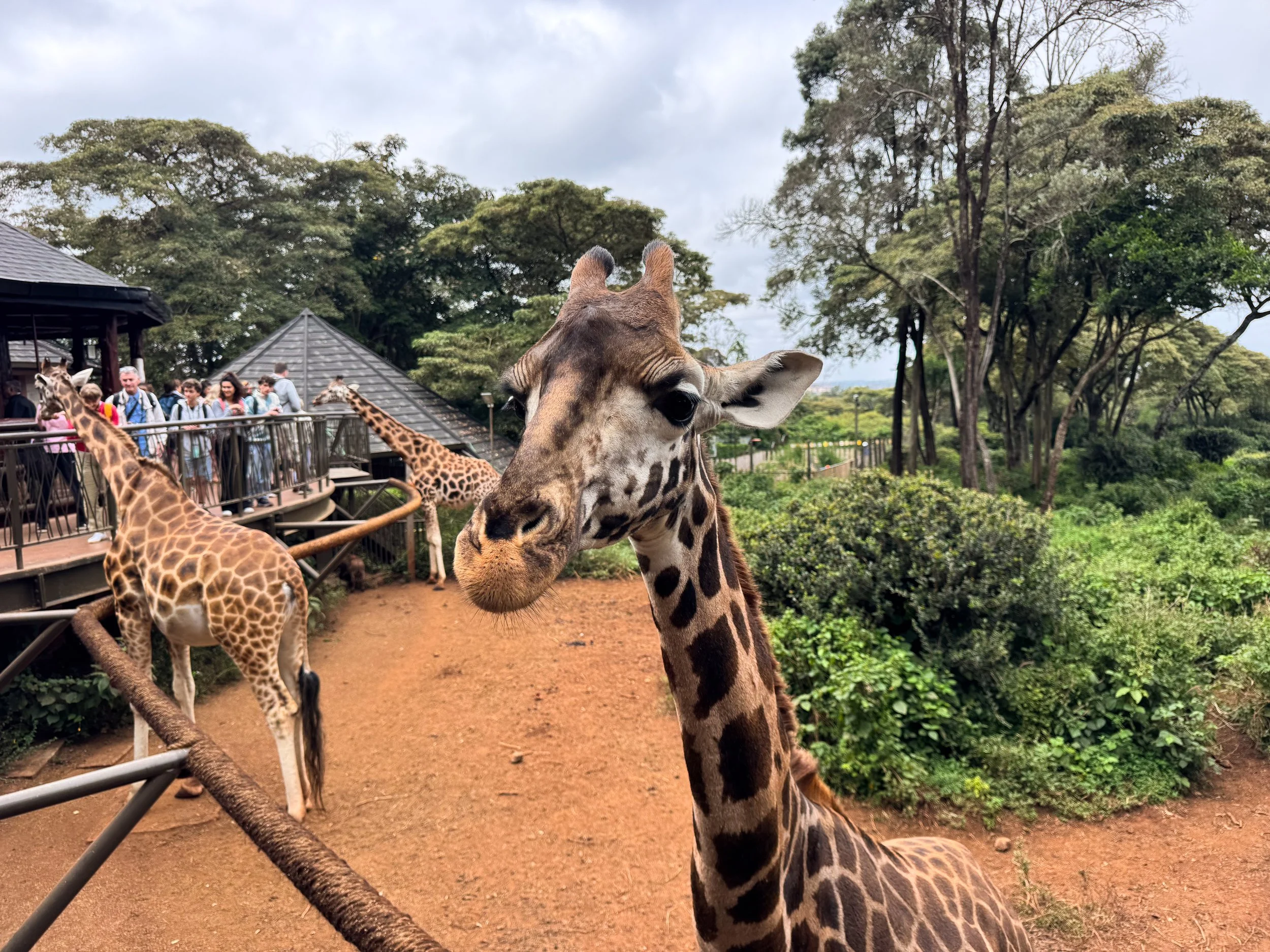
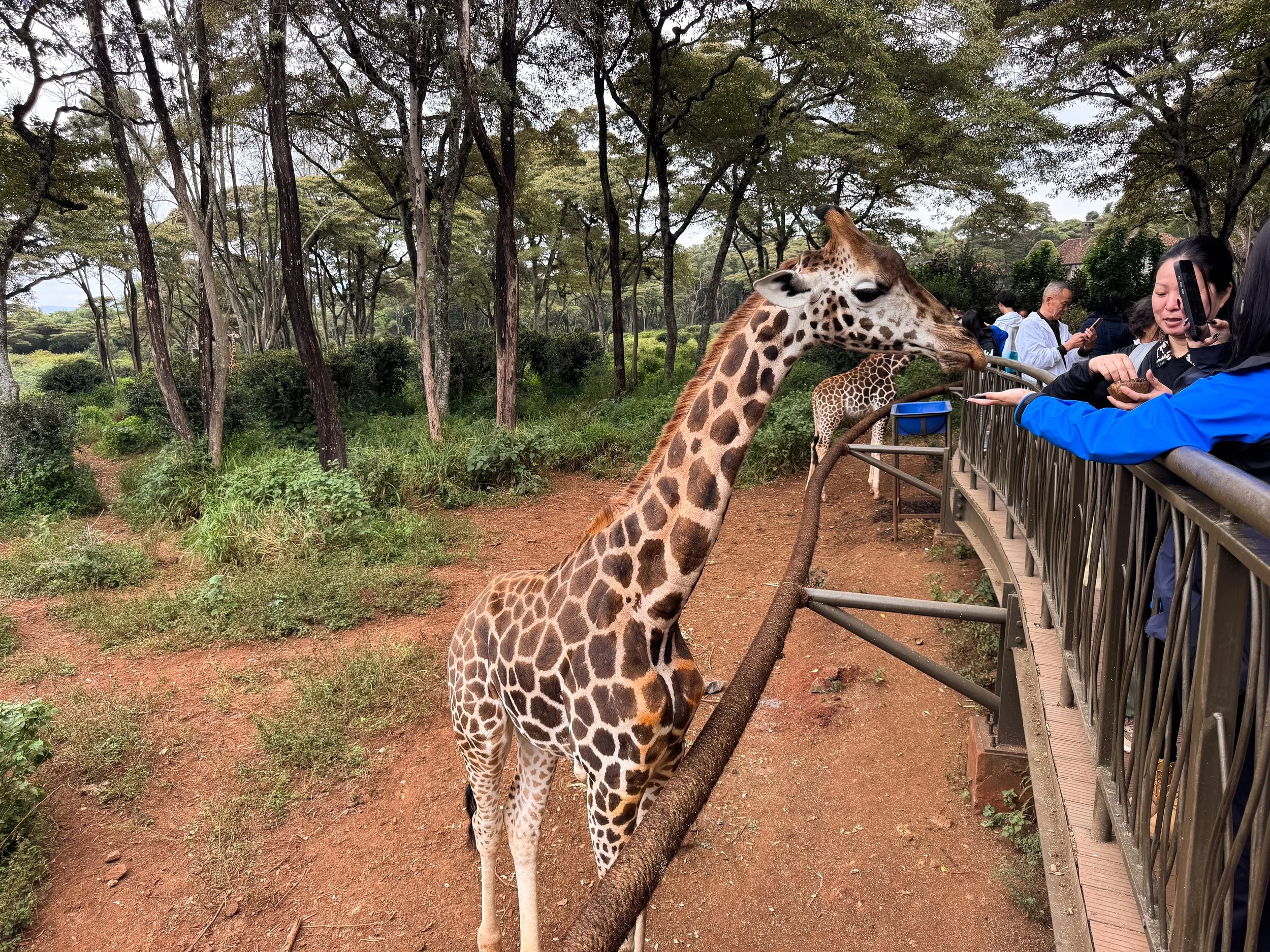
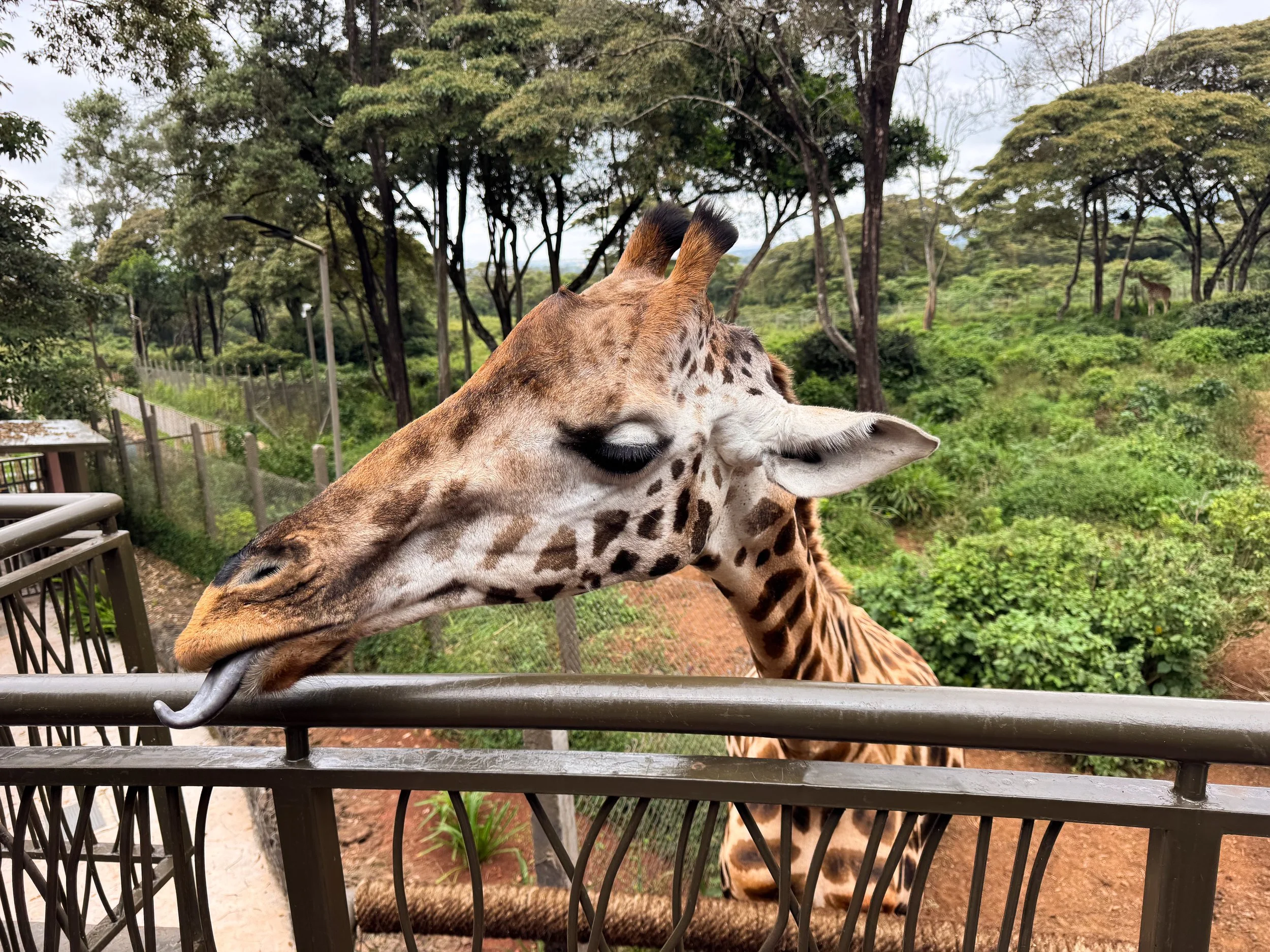
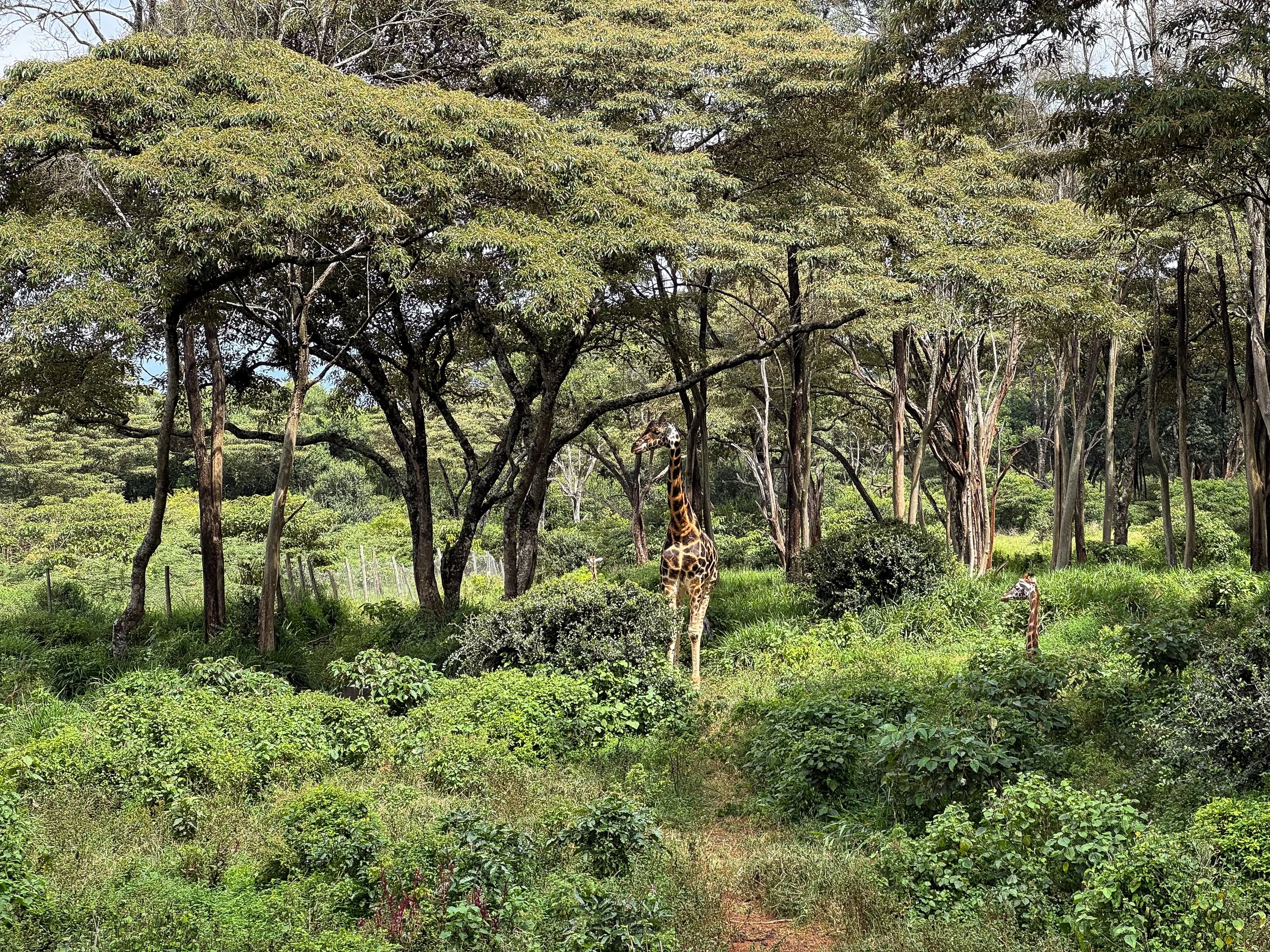
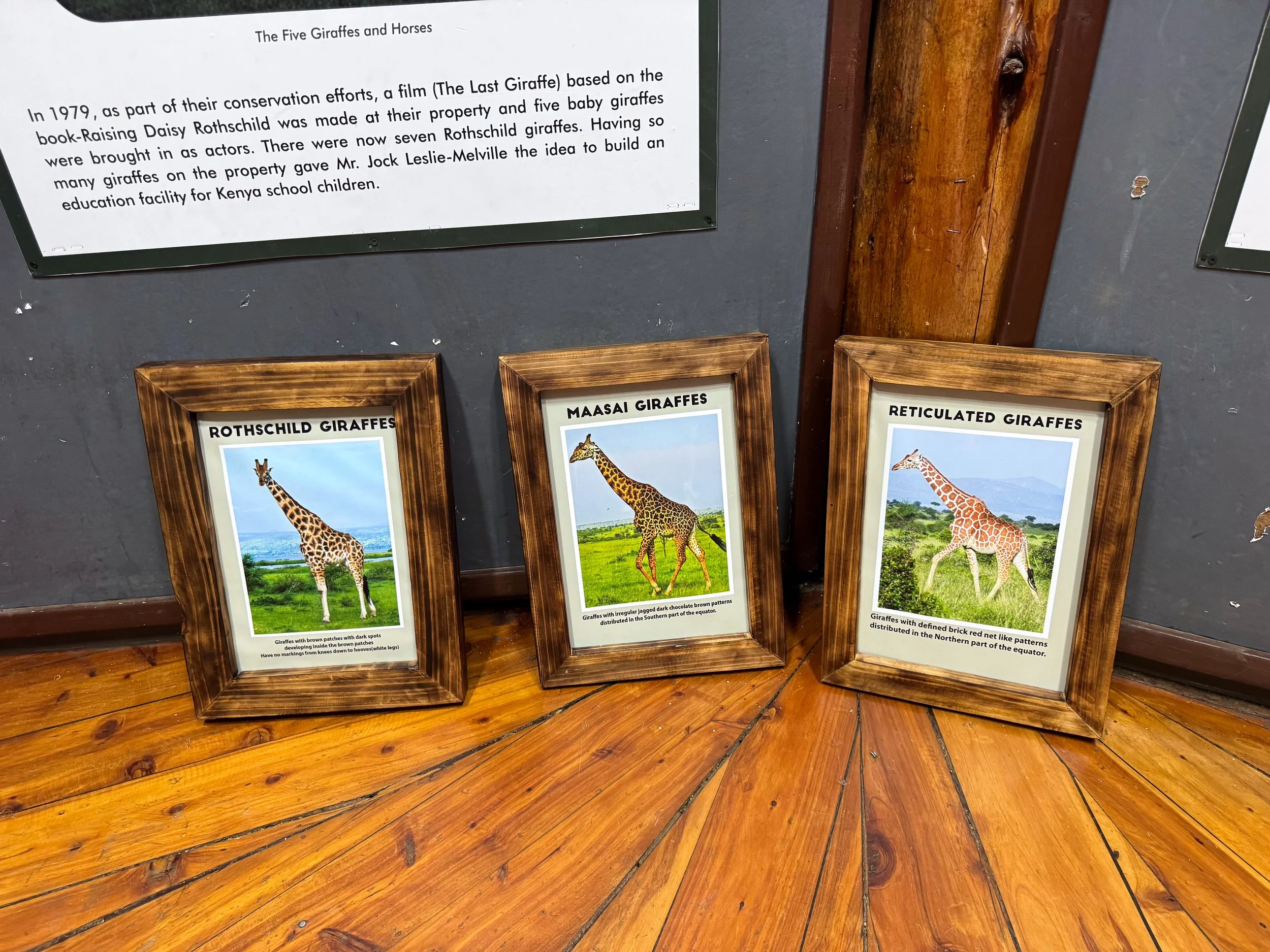
Giraffe Centre. A conservation center for Rothschild Giraffes with a viewing platform and feeding station. We stood face to face with the giraffes, admiring their towering bodies, exotic patterns and cute expressions up close. Their warm grey tongues licked fibrous pellets from our hands. Warthogs ran around their long legs feeding on fallen scraps. Adult giraffes and calves walked around the tree covered meadow and nature trails beyond. The center is famed for the Giraffe Manor, an ivy covered stone estate converted into a bed and breakfast for high paying guests to visit with giraffes.
Shop the Markets
Nairobi City Market. An eclectic market in the Central Business District with shops selling African goods, fresh flowers and meats. Friendly vendors invite you to take a look at their African handicrafts like wooden animal statues, beaded masks, leather sandals, landscape paintings, colorful woven textiles, baskets and bags. Between the souvenir shops are a couple small produce stands. The exterior of the building is painted with murals and patterns representing the country. Fragrant flower stands line the sidewalks surrounding the building. A meat market with butchers, fishmongers and strong smells occupies the side of it.
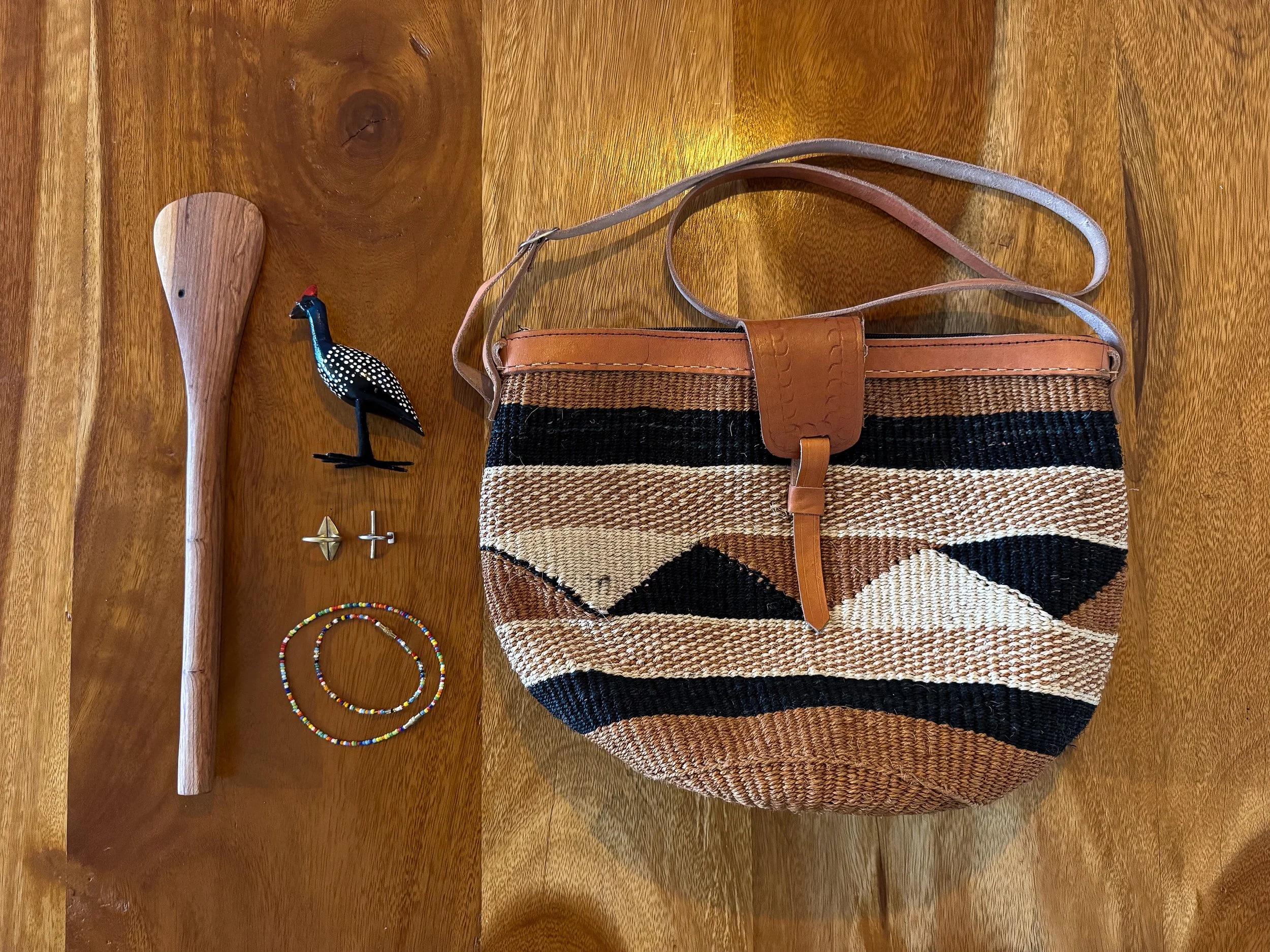
Maasai Market. A traditional handicrafts market consisting of local vendors selling handmade Kenyan and Maasai goods. Aisles of tents line a parking lot, each merchandised with a variety of items. We saw stone and wooden statuettes of animals, Maasai beaded jewelry and masks, wooden kitchenware and serveware, colorful and patterned textiles, natural woven bags and baskets, African spears and shields, brass metalwork and canvas paintings. We left purchasing a shoulder bag, two rings, beaded jewelry, a cooking paddle and a bird statuette.
How it Works. The market is intimidating at first. Before reaching it, several men surrounded and followed us inside. They do not leave you alone, tell you any prices or let you purchase directly from vendors. Instead, they act as “chaperones,” collecting items from vendors that you select. After walking you through the market, they display all of the goods you selected and make an outrageous offer.
Haggle. Now the haggling begins! Counter with an offer between 10-20% of their asking price. Let them make you a “special price” but hold firm on your offer. The price will continue to drop, especially as you walk away. They want to make a sale after chaperoning you through the market. Let them win a little and go up 10% from your first offer. They’ll grudgingly agree, smile and offer a handshake. Do not pay more than 20-25% of their initial asking price. They’ll accept cash or credit card.
Pro Tip. You can see and purchase many of the same goods at roadside shops across the country. If going on a safari, you will inevitably find yourself in one during rest stops. Save yourself some hassle and purchase goods from here.
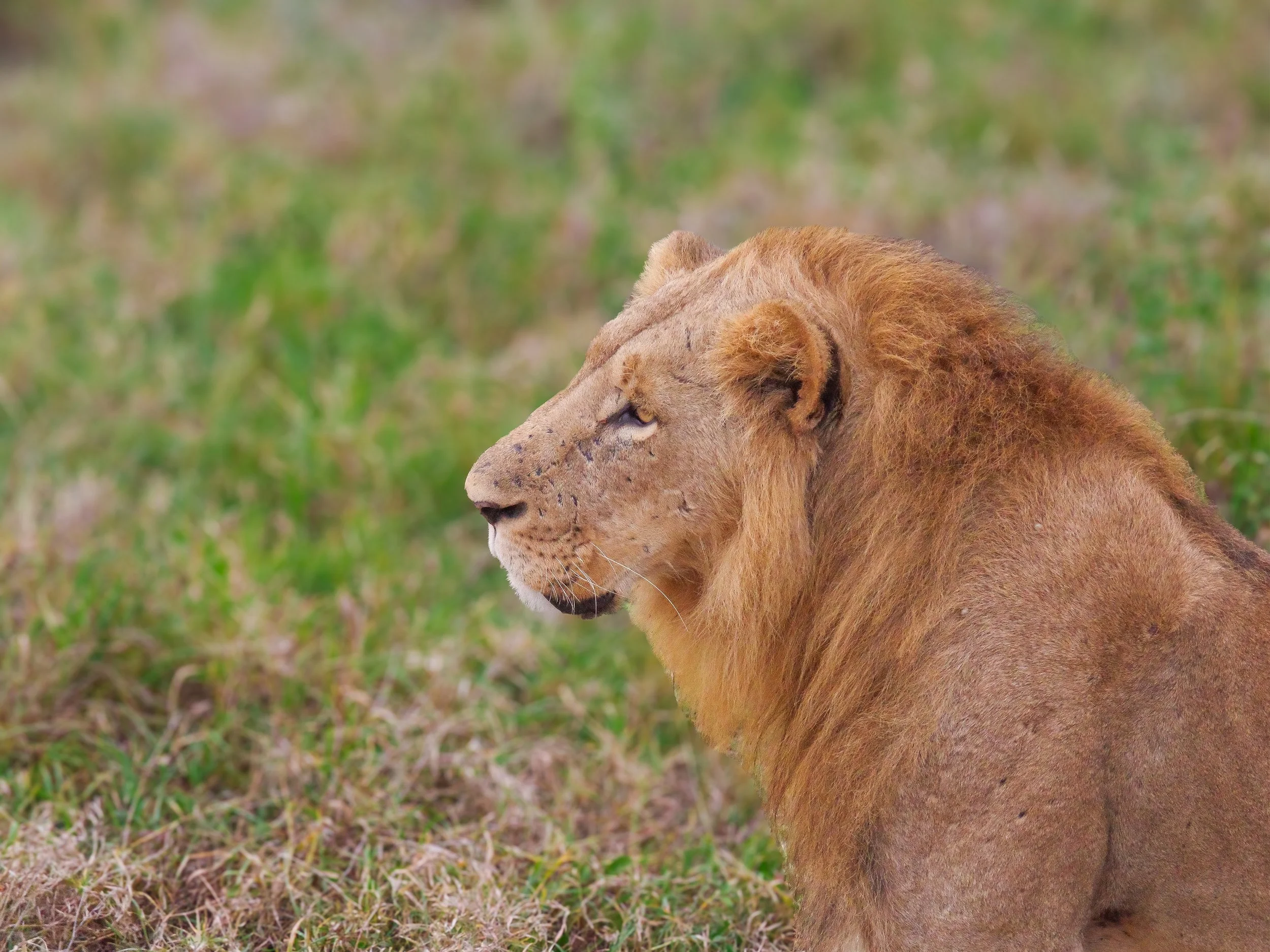
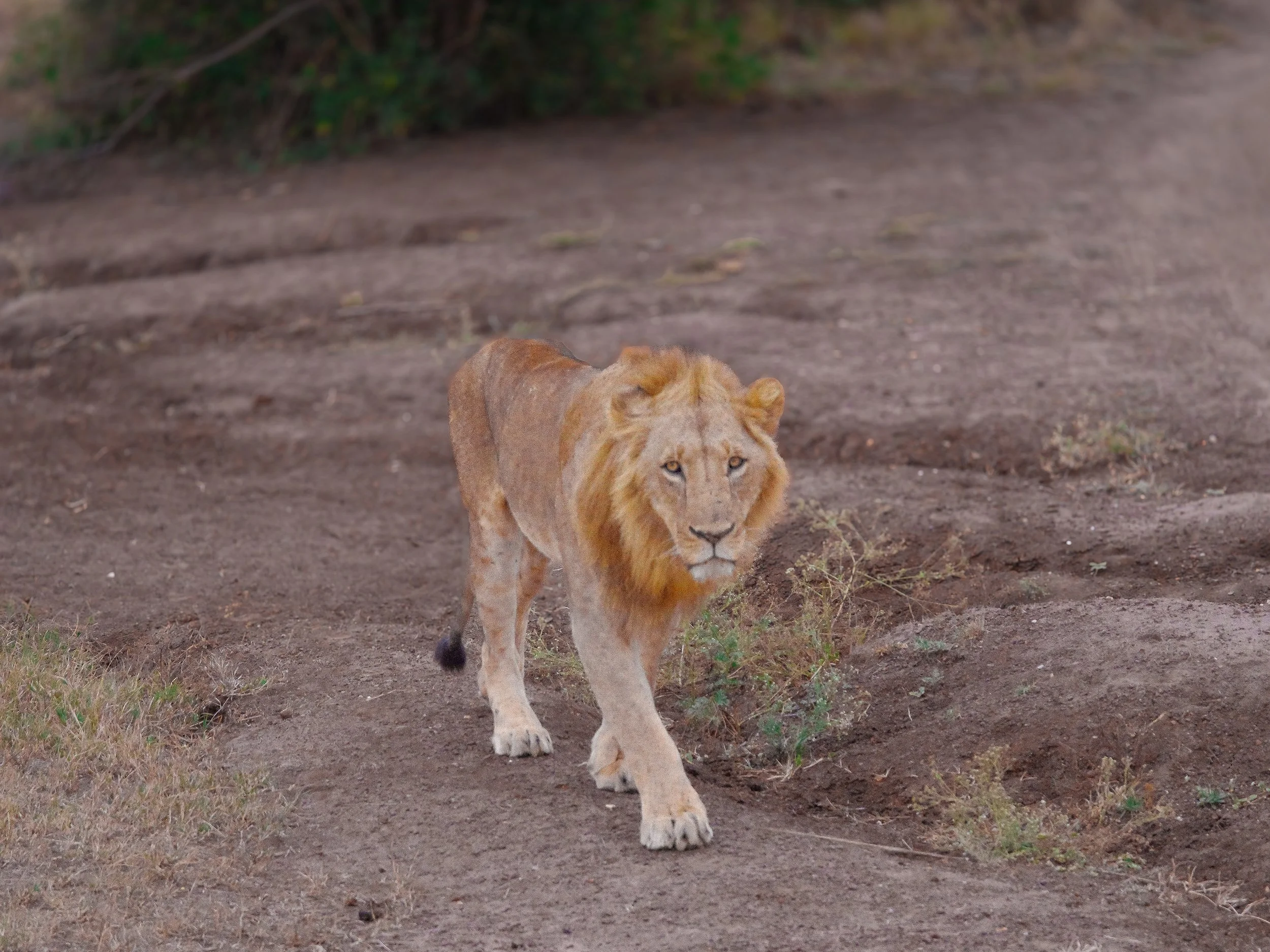
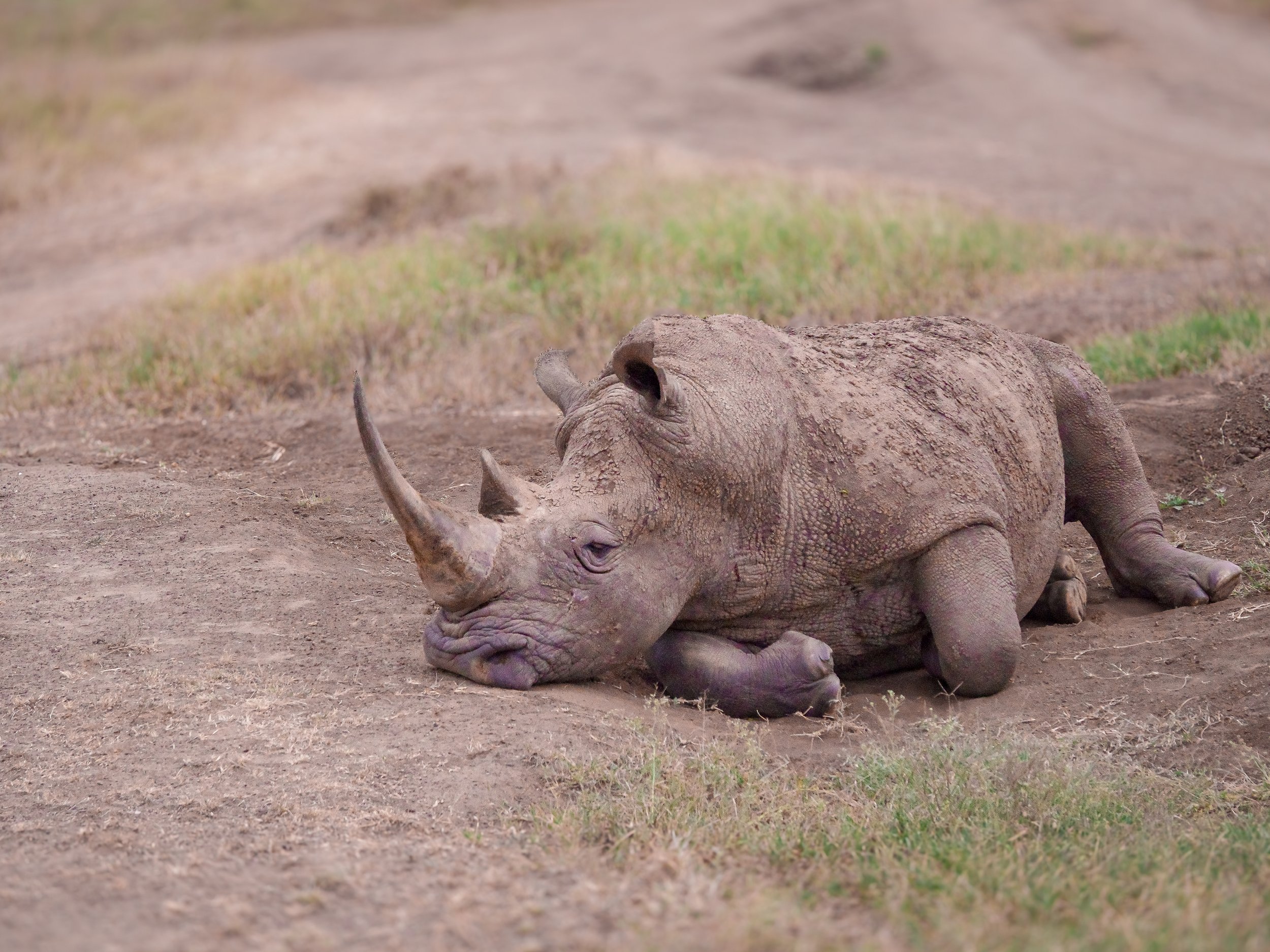
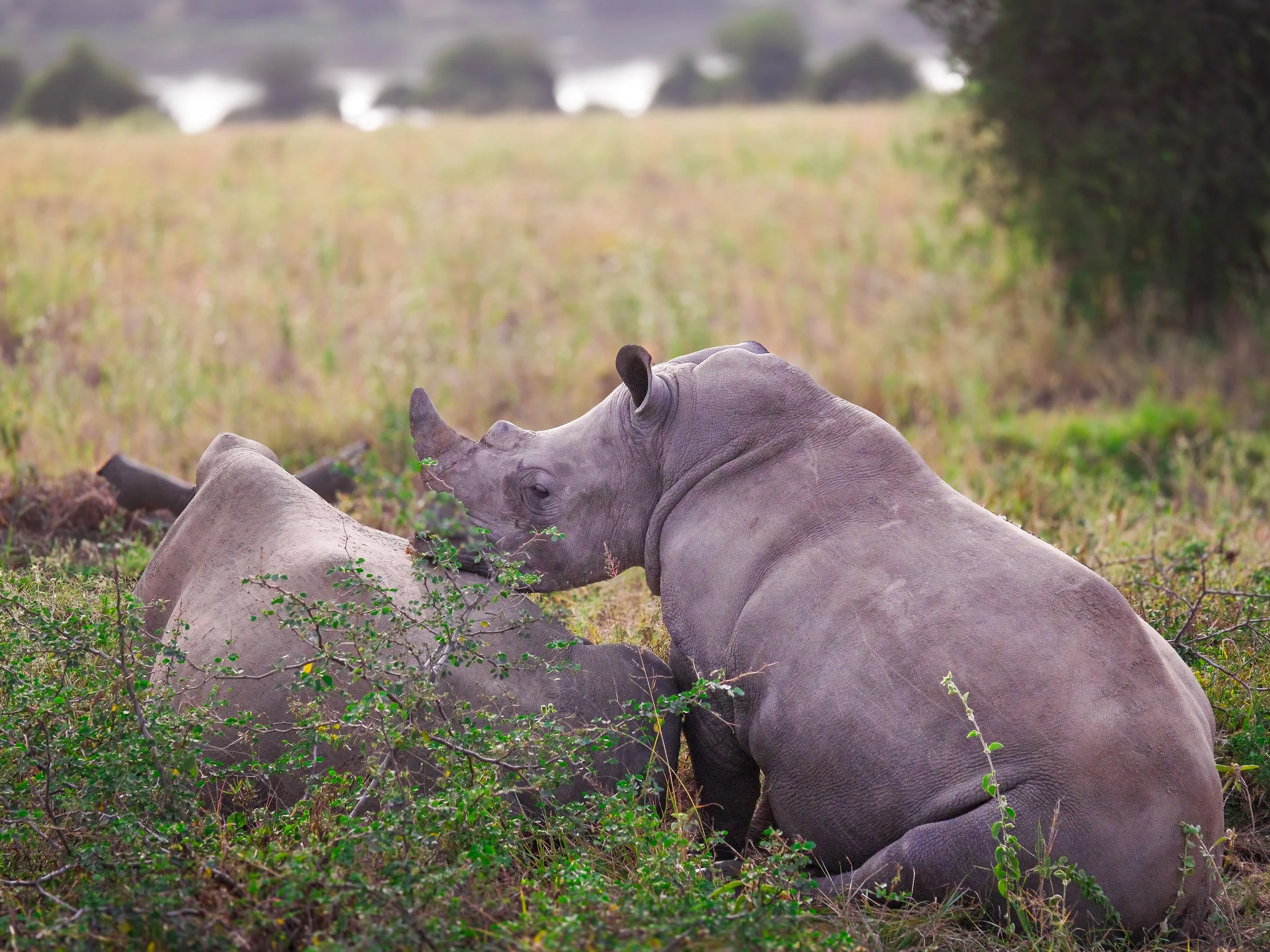
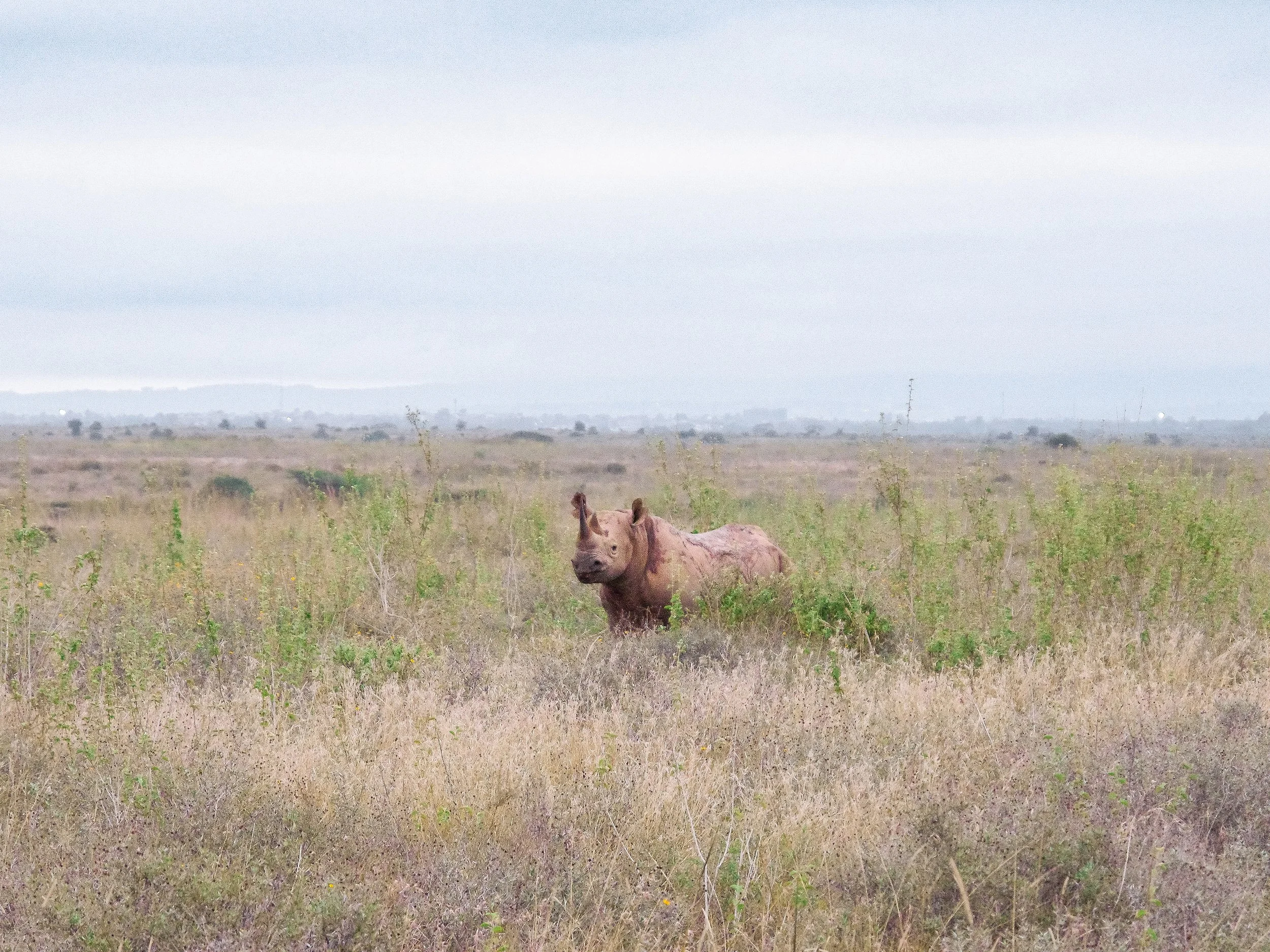
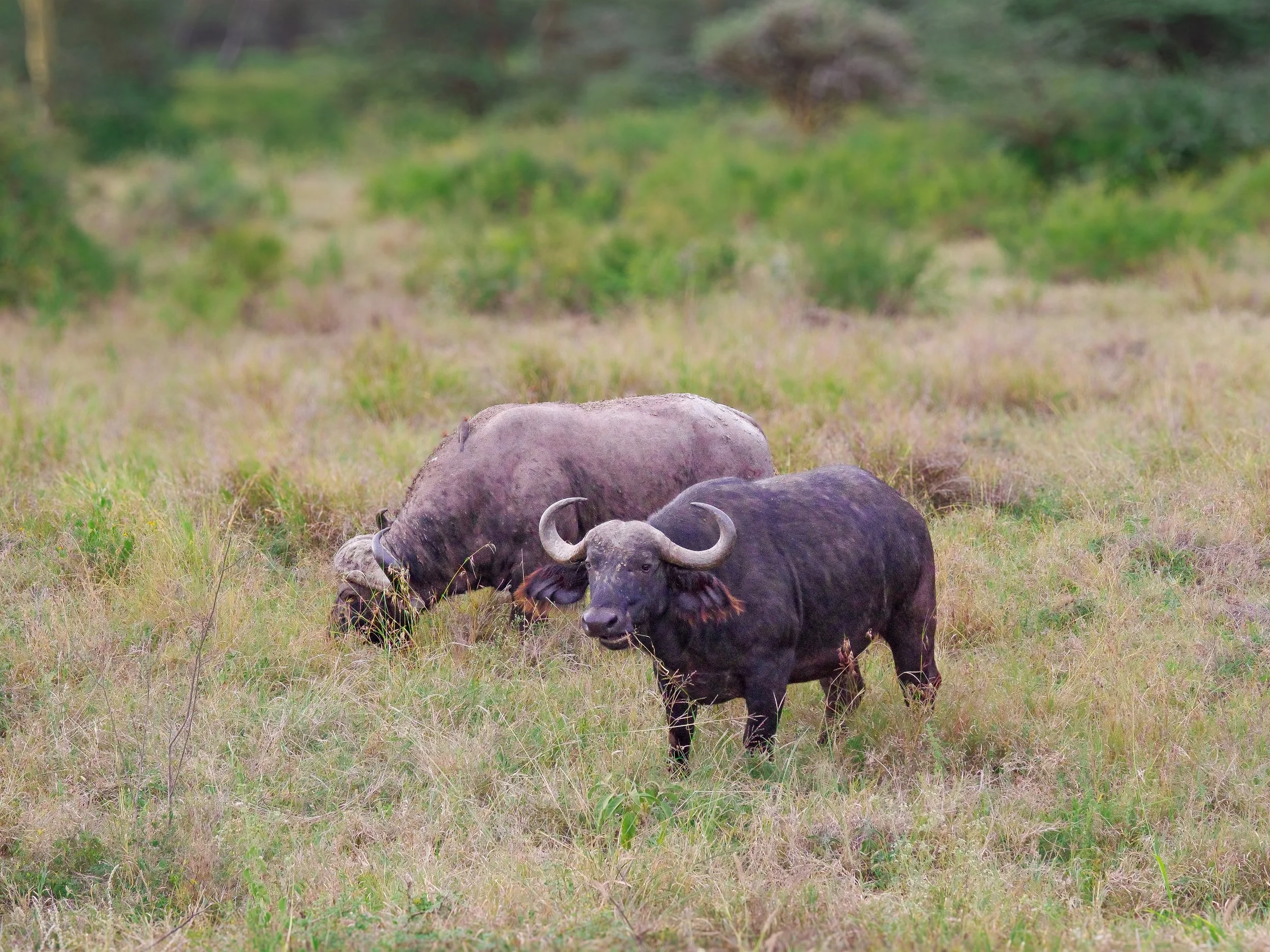
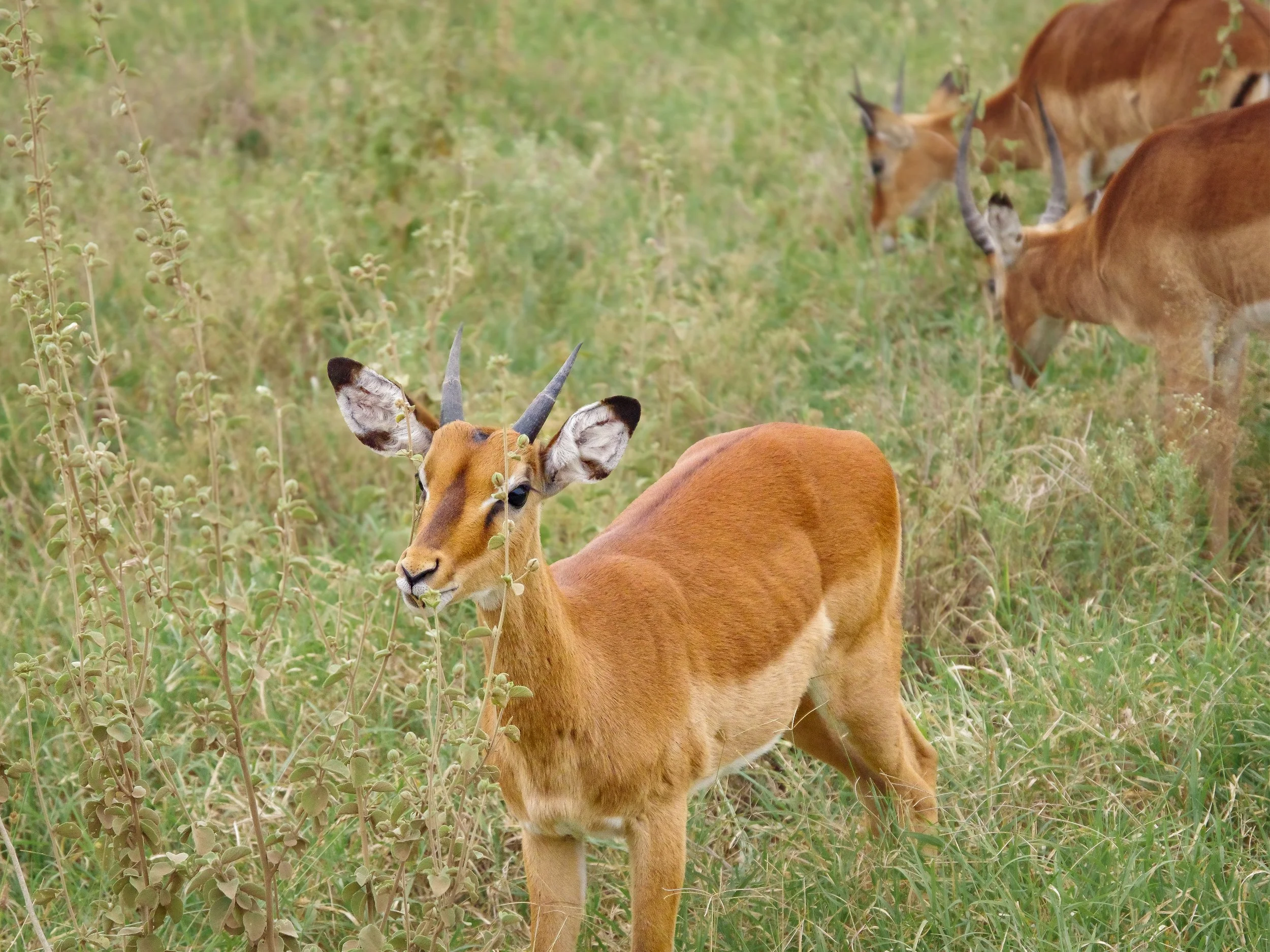
Nairobi National Park
A national park and protected wildlife reserve on the edge of Nairobi. It’s home to a wide range of African animals while still in view of the city’s skyline. We went on a half day safari through the park, its vast savanna and grasslands.
The Big Five. The “Big Five” in Africa refers to the most difficult big game animals to spot on foot. We spotted three of the five during our safari, including rhinos, buffalo and a lion! A solo Lion walked slowly along the park’s dirt road as we observed from our safari truck. A pair of Cape Buffalo, recognizable by their dramatic horns grazed in the grass. A critically endangered Black Rhino lurked in the bush. It offered us a fierce yet cute stare with its pointed horn and wiggling ears. A crash of threatened Southern White Rhinos stood in the savanna and several more slept near the road. We passed up close enough to hear them breathing.
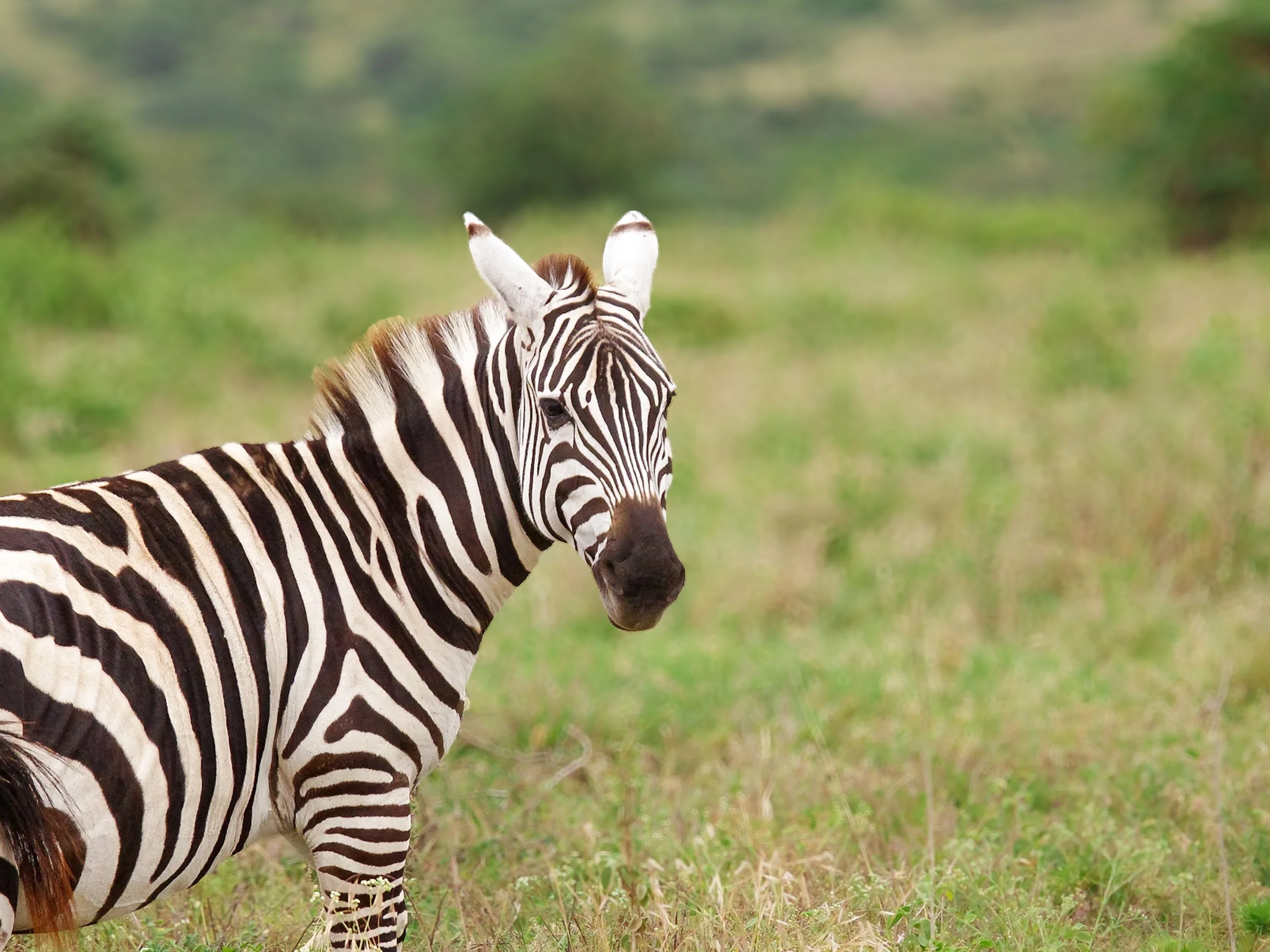
Herds of Animals. The constant herds of animals were an unbelievable sight! Black and white striped zebras, patterned giraffes, horned impalas, antelopes and hartebeests gathered throughout the reserve. A white rhino even surprised us as it walked from beyond a bush as we watched a tower of giraffes graze.
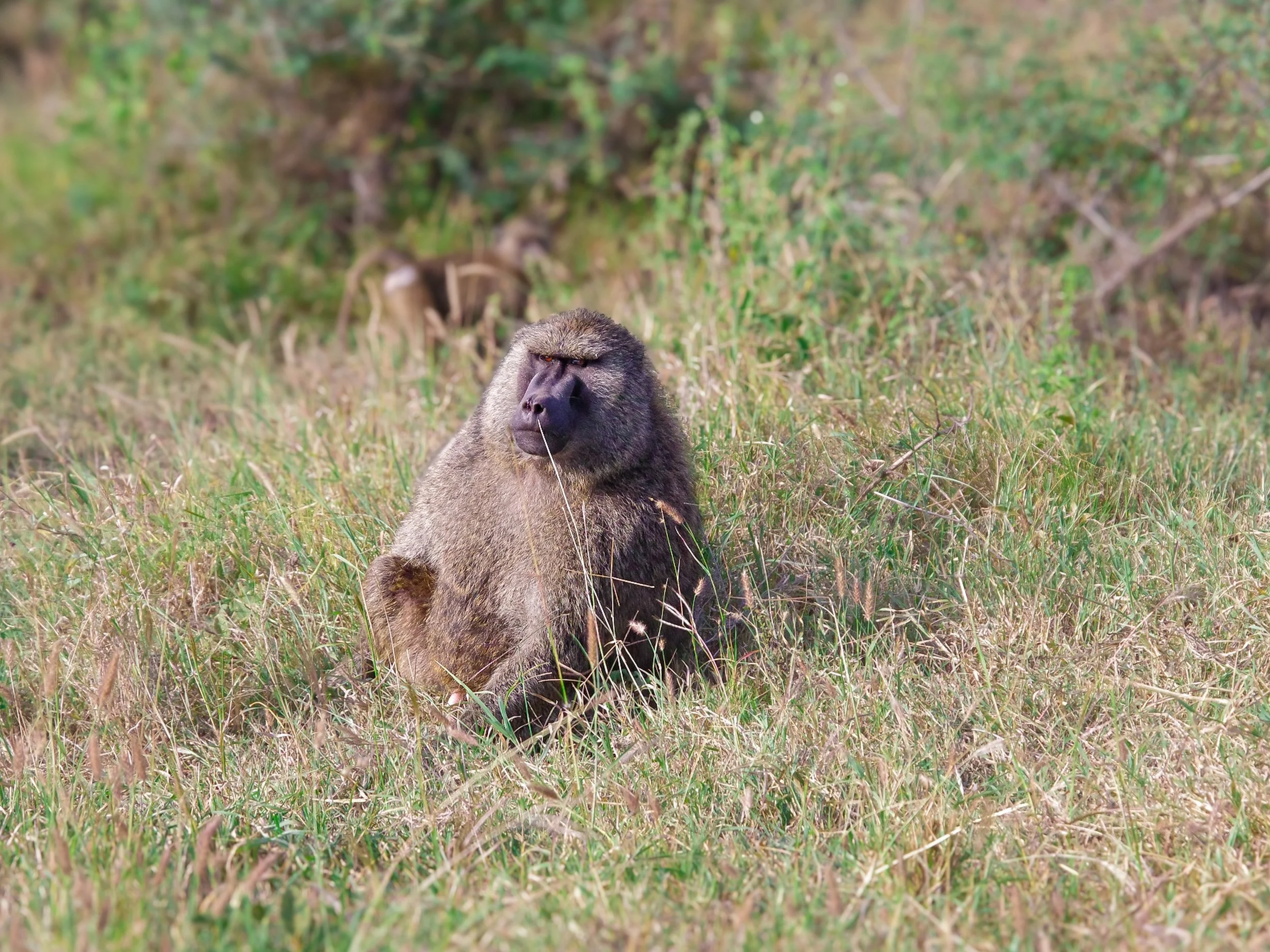
Wild Game. We spotted several other wild game on our safari. A lone hyena and curious jackals ran through the bush. A solo wildebeest tried to blend within a large dazzle of zebras. A warthog nestled in the grass. A troop of baboons sat grooming each other. A family of Rock Hyrax, a tailless rodent, crawled over rocks.
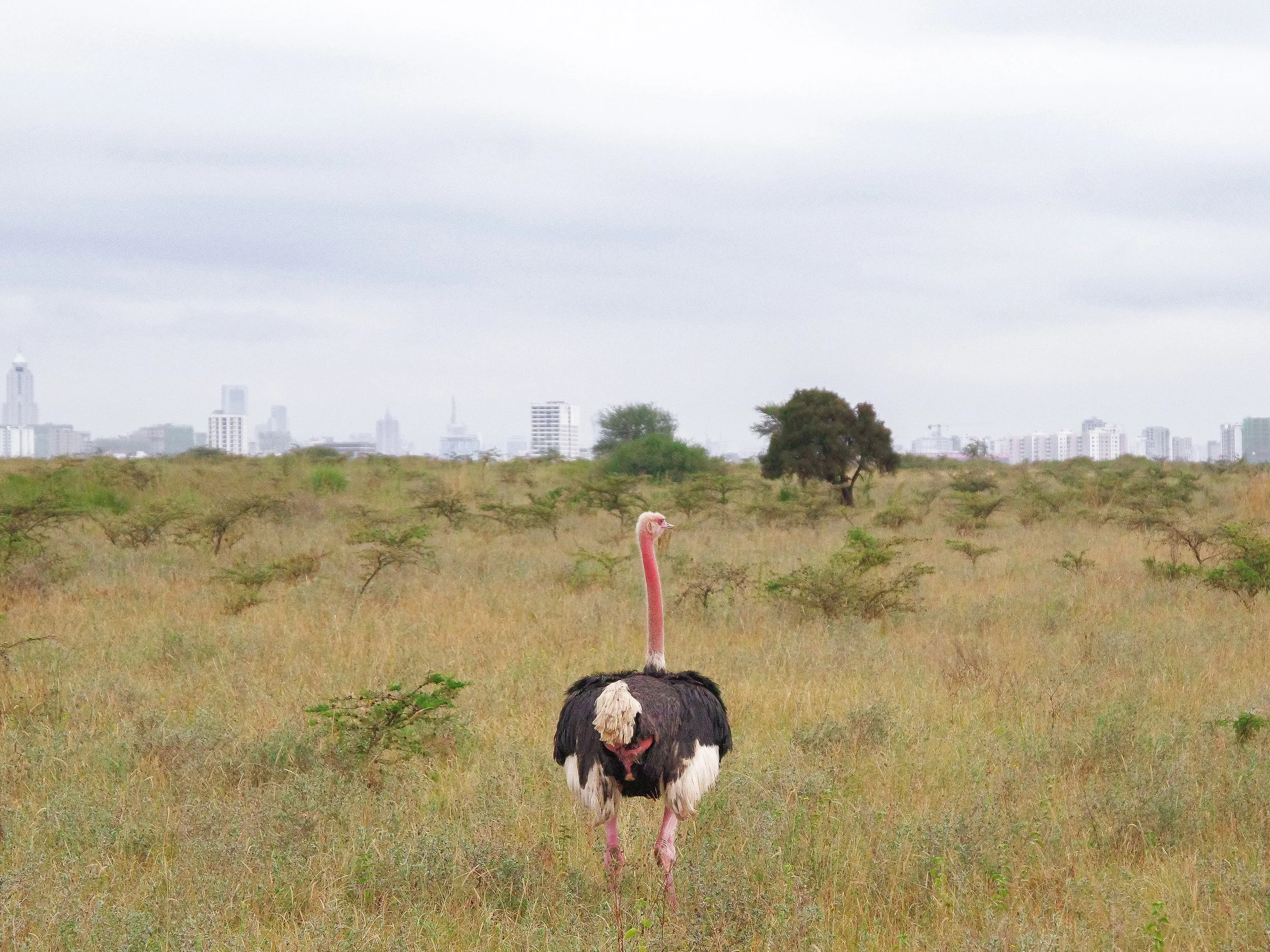
African Birds. The park is home to native Kenyan and East African birds. We spotted varying species from the world’s largest to small and colorful birds. Ugandan Cranes with crowned heads stood near watering holes. Dozens of Guinea Fowl, a wild chicken, ran along the roadside. Vibrant blue and orange kingfishers rested on shrubs. Vultures watched from treetops. Towering ostriches strutted across the savanna.
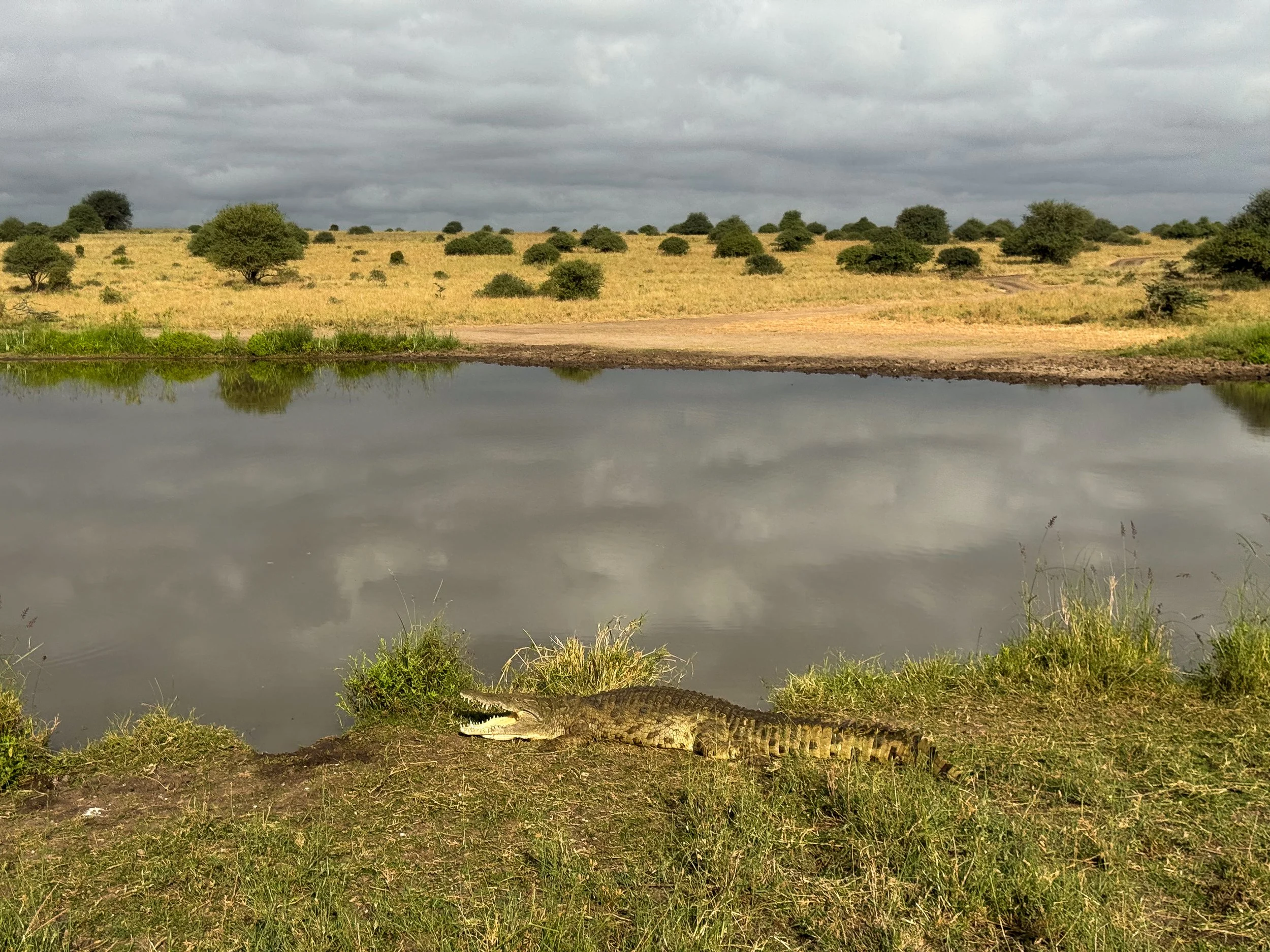
Watering Holes. Watering holes are great gathering spots to observe wild game. Crocodiles lurked at the water’s edge as zebras drank and a flock of African Ibis landed nearby. Adult and baby hippos lounged in water, poking their large heads and backs above the surface.
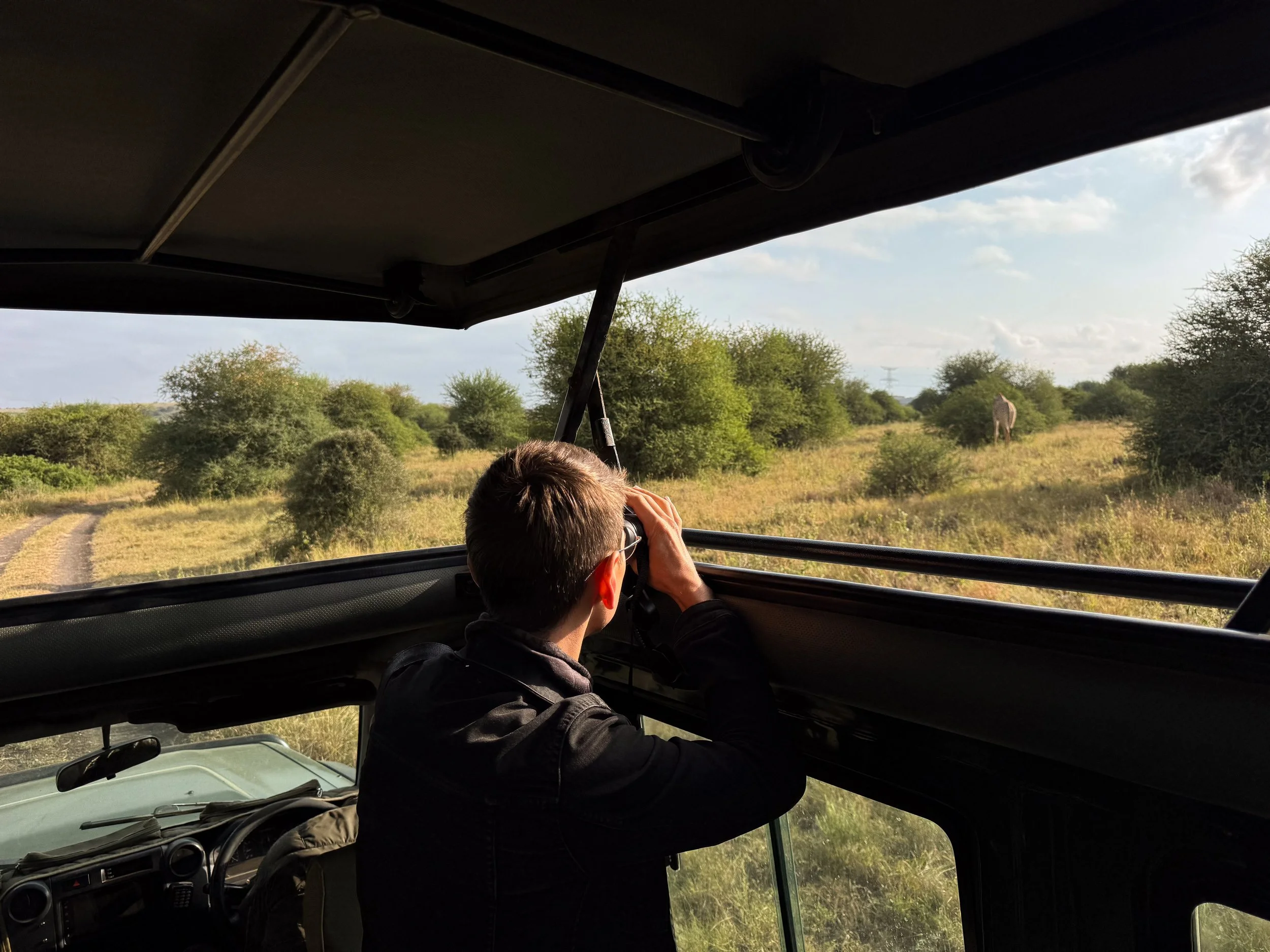
Book a Safari. A guided safari is the best way to visit the Nairobi National Park. We booked our safari with Live in Love Kenya Tours and Travel. It included a guide and transportation in a 4x4 Safari Land Cruiser with a pop up roof.
Good to Know. Park entrance fees are not typically included in safaris and need to be paid separately. The animals and game are purely wild and can only be viewed from safari vehicles. They’re not lured or baited. It’s forbidden to get out of safari vehicles due to safety.
Places to Eat & Drink
Nana Swahili Restaurant. A Kenyan restaurant with a range of East African dishes. We dined here our first night in Nairobi, ordering two stews eaten by hand with Ugali and Chapatis. Try the red snapper cooked in coconut curry and maharagwe ya nazi, kidney beans cooked in a coconut béchamel.
Connect Coffee. A coffee shop and roastery with house roasted Kenyan coffee and fresh baked pastries. Try their hand brewed coffees or their specialty, Mt. Kilimanjaro, a layered coffee made with espresso, cream and chocolate.
Hero Restaurant & Bar. A super hero themed bar on a roof top overlooking the Gigiri neighborhood and Nairobi skyline. The interior is painted in murals of superheroes and chairs are embellished with their logos. Order cocktails from their superhero and sidekick inspired menu printed on a comic book. It’s been rated as one of the Top 50 Bars in the world. Try the Captain’s Tea, Highly Sassy, Kijabe Kayama or Plantain Old Fashioned.
Rosina’s. A Swahili and Indian fusion restaurant. We ordered a curried and spiced seafood platter to share with lobster, calamari, crab, oysters, shrimp and fish. It came with Kenyan chipati and a spread of sauces. For dessert, a saffron ice cream with peanuts, chia, jellies and noodles.
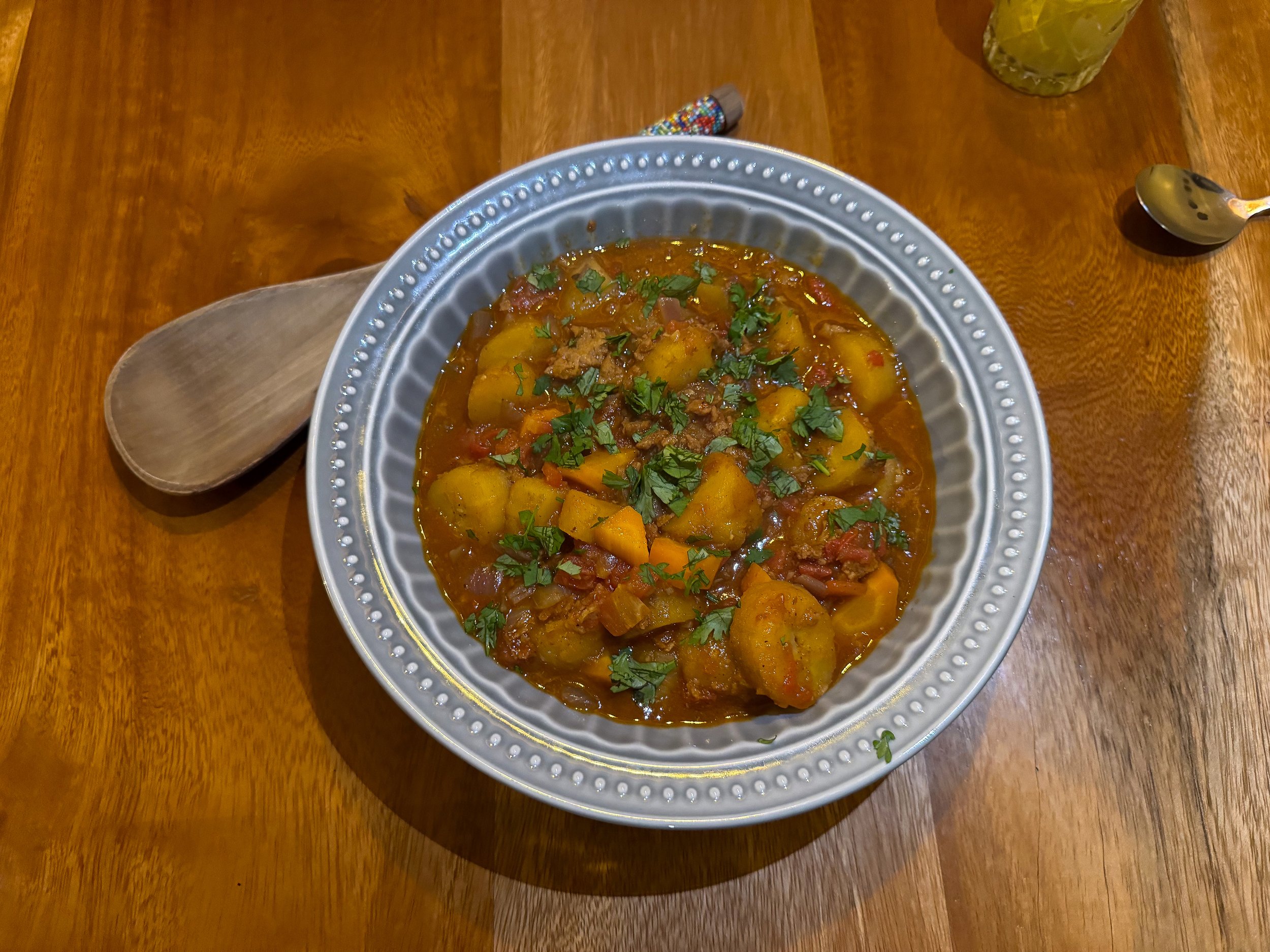
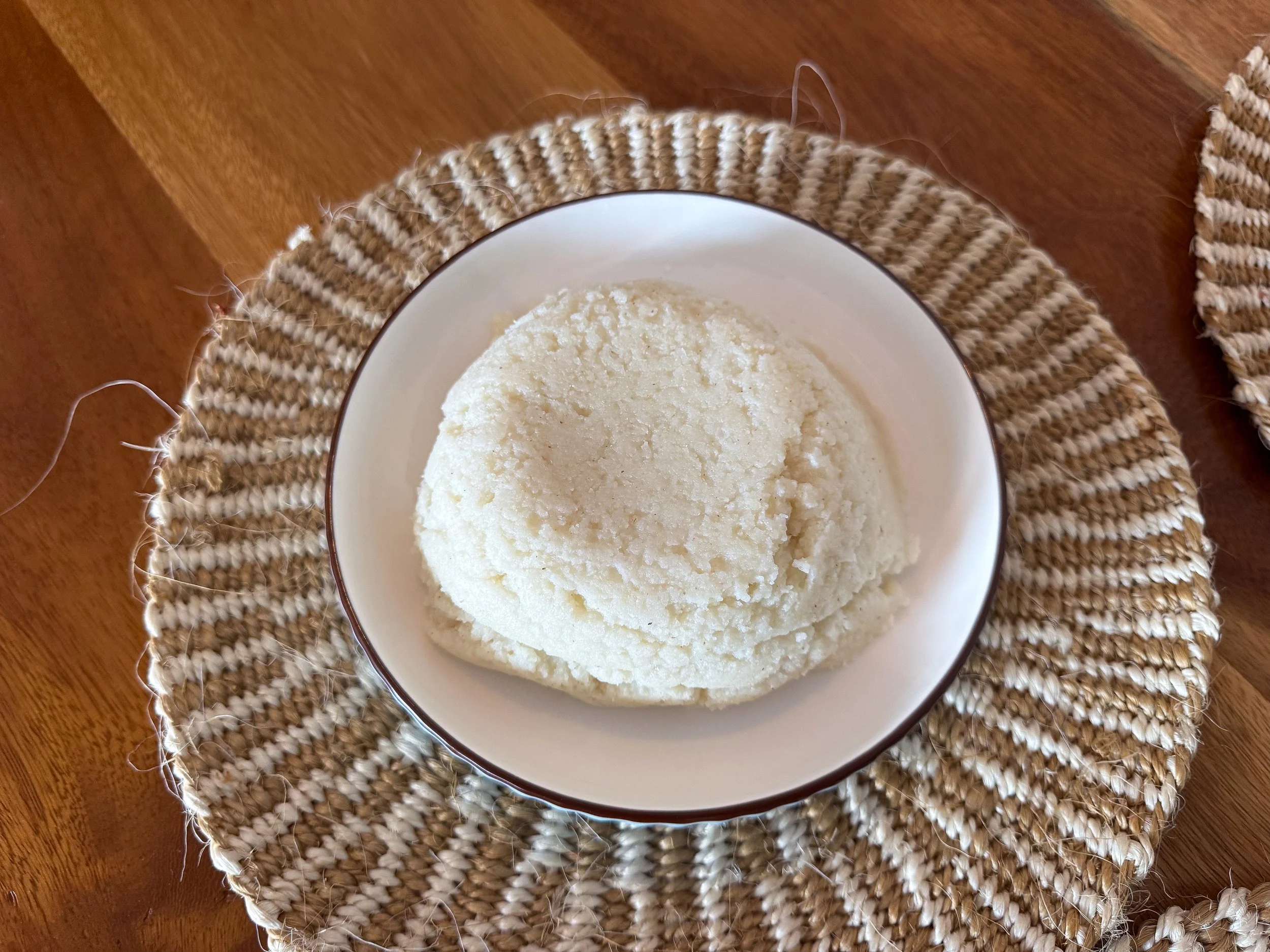
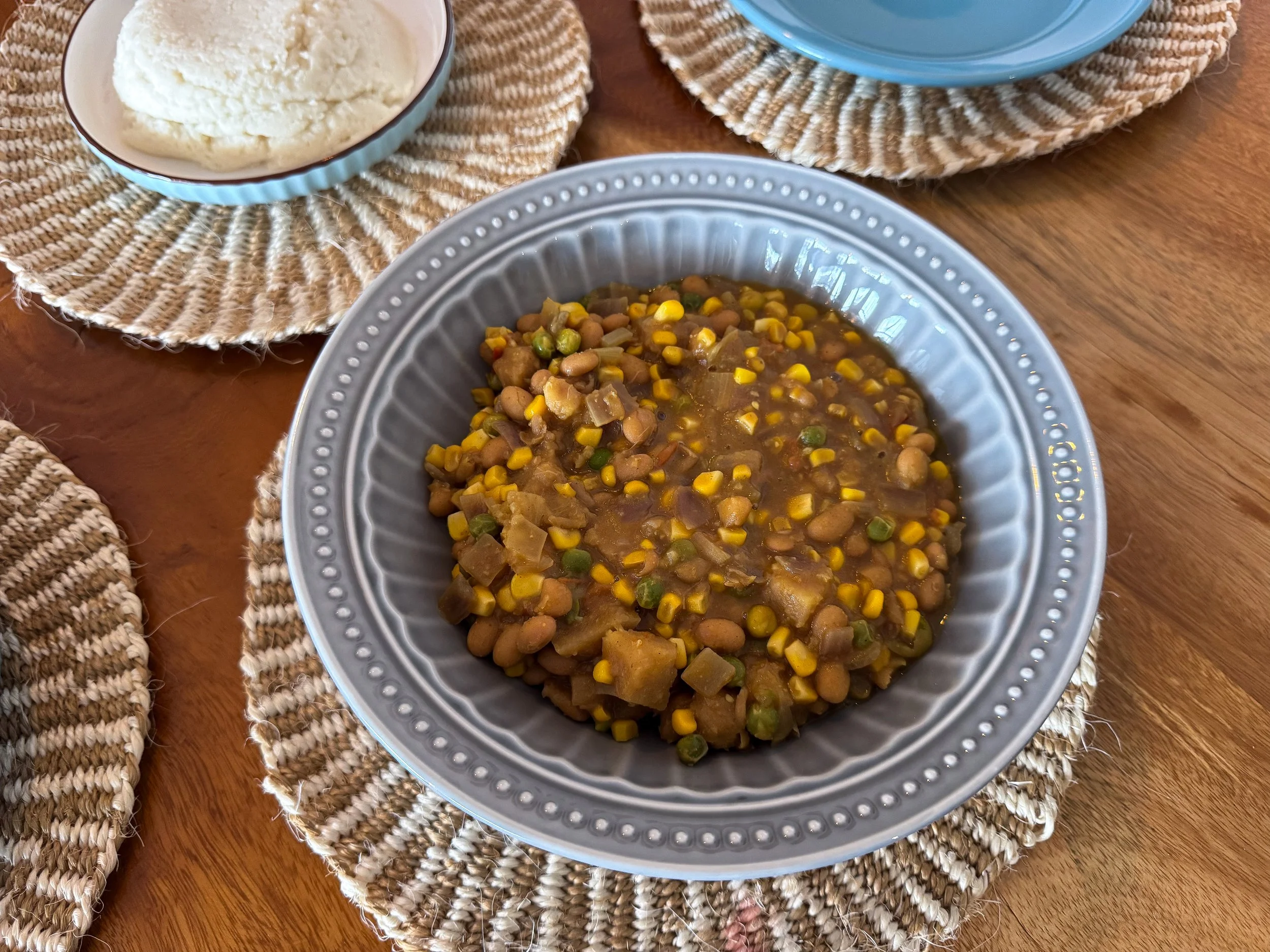
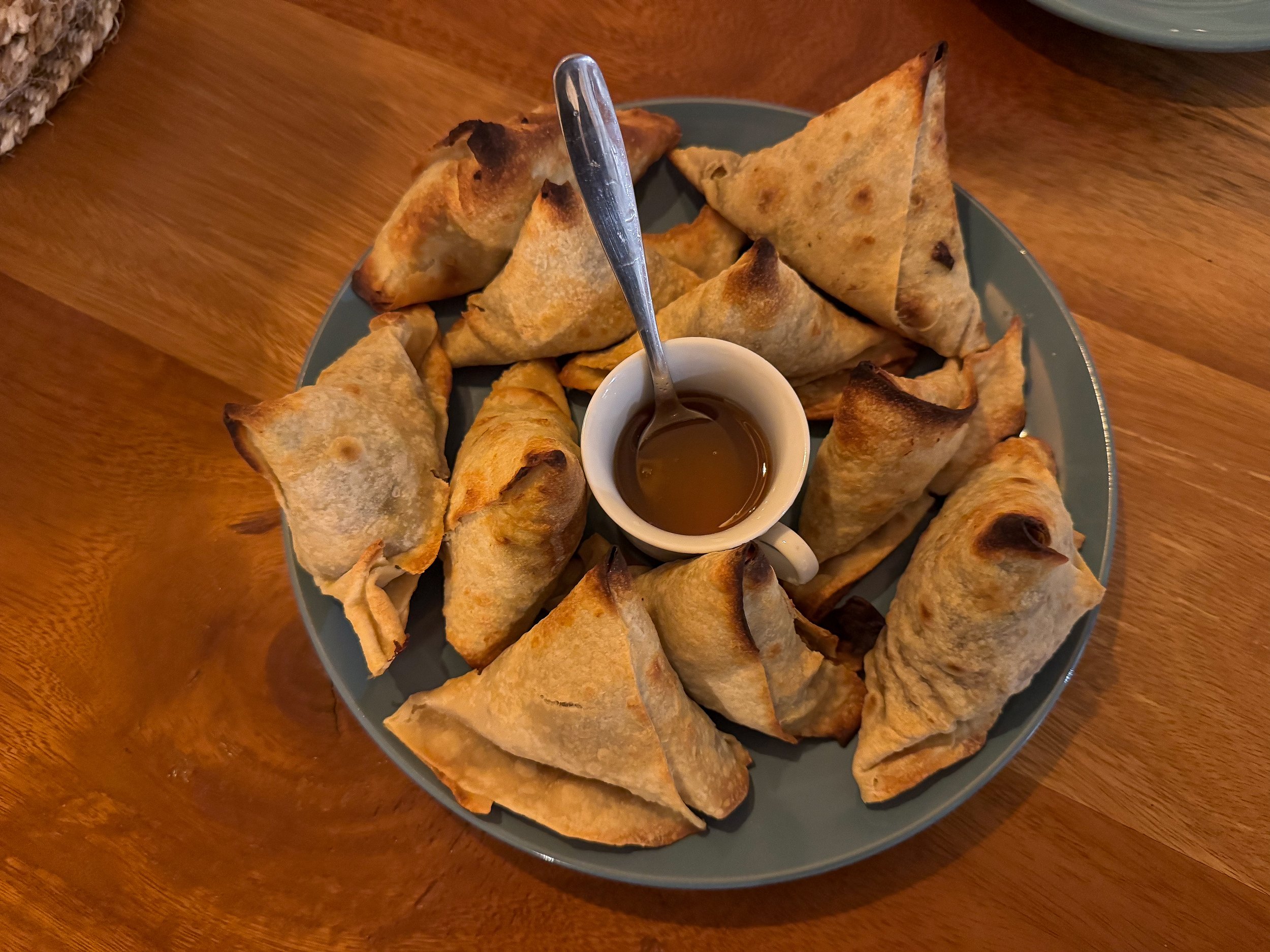
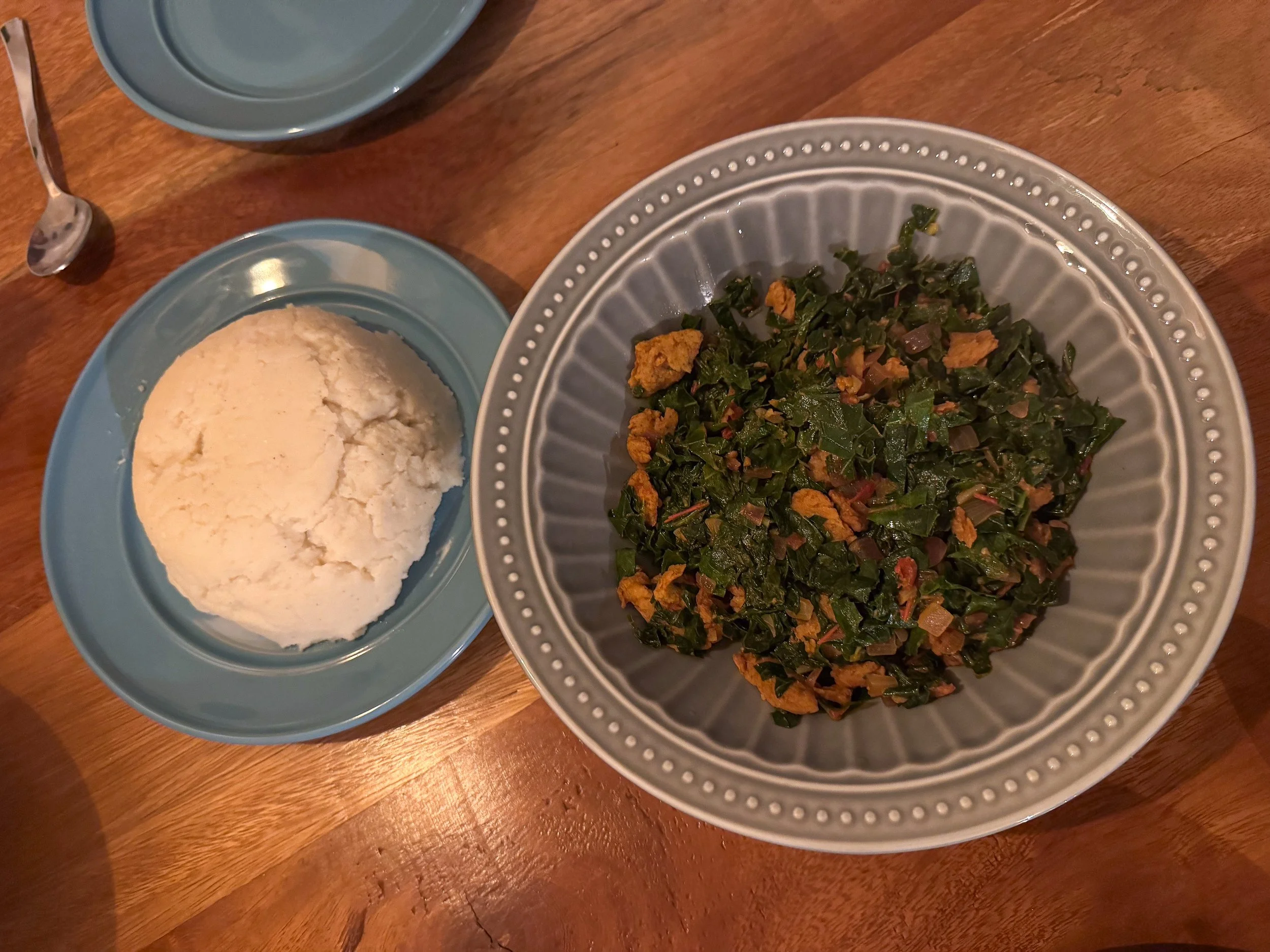
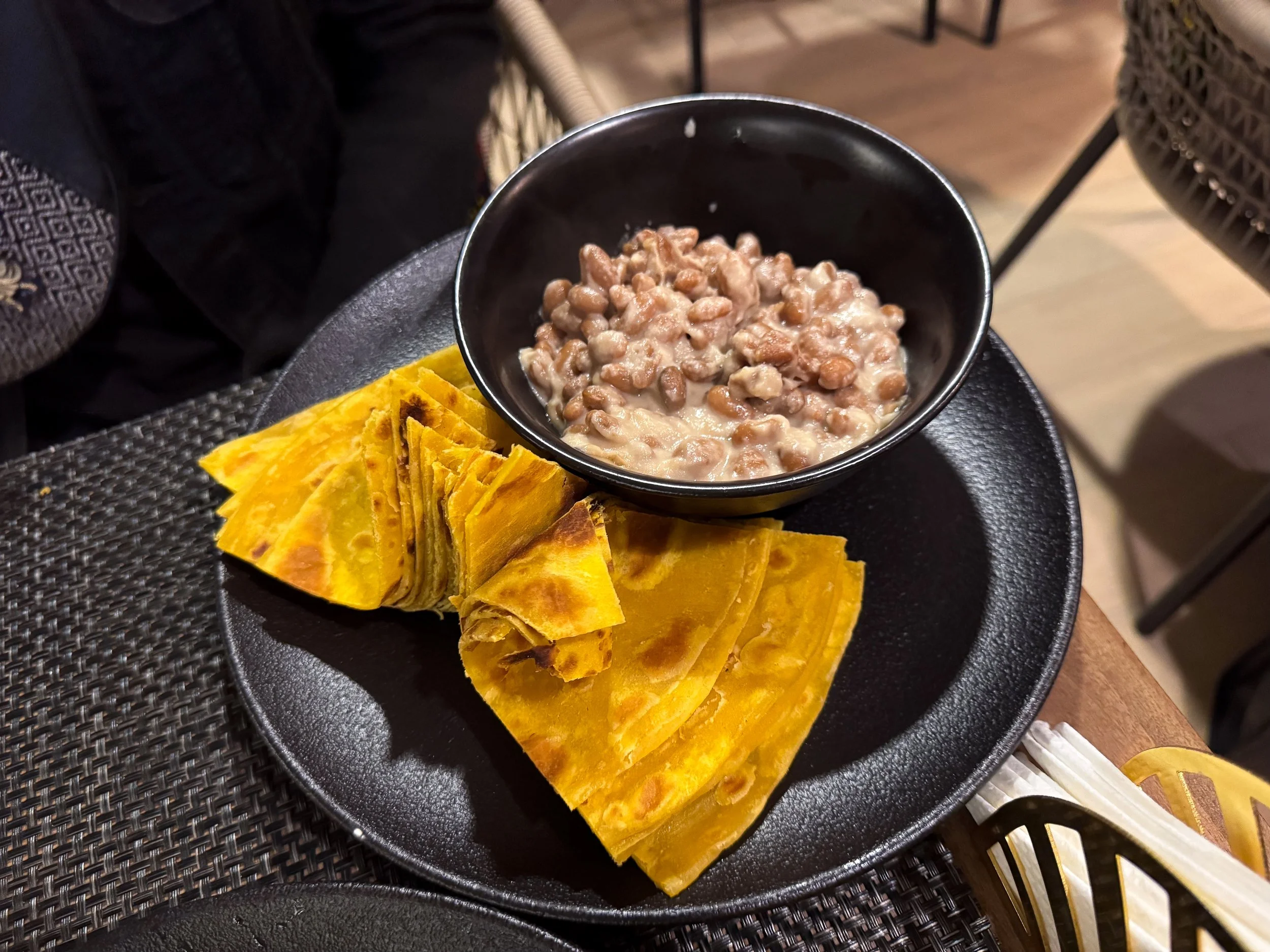
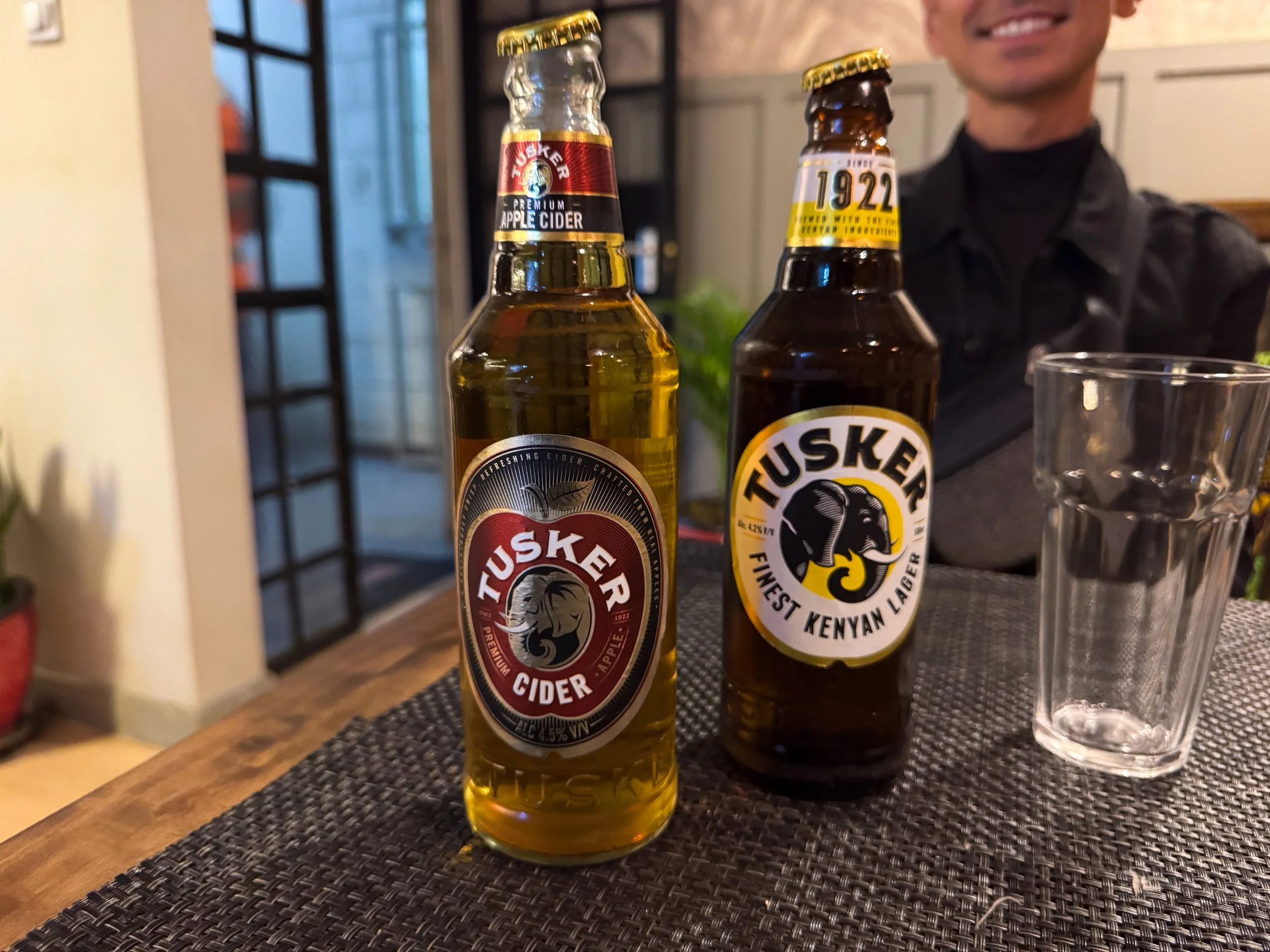
Kenyan Cuisine
Kenyan cuisine is flavorful, fresh and aromatic. A staple of the cuisine are various forms of one pot dishes. We tasted and cooked several local meals consisting of hearty grains, warm spices and a range of vegetables.
Ugali. A commonly eaten white corn flour mash used to scoop stews and curries by hand. Roll a small lump into a ball, press an indentation in the center and scoop using your right hand.
Chapati. A type of roti used to scoop stews and curries by hand.
Sukuma Wiki. A dish made from sautéed collared greens or spinach, onions, tomatoes and spices. It’s eaten by hand with Ugali.
Kachumbari. A salad made with chopped tomatoes, red onions and chili peppers.
Pilau. A hearty and flavorful “one pot” rice dish made with aromatic spices, onions, tomatoes, potatoes and a protein like beef, chicken or soy.
Matoke. A one pot dish made with stewed green bananas, vegetables and a range of savory spices.
Githeri. A stew made from corn, beans, arrowroot and a mix of aromatic spices. It’s eaten with Ugali.
Rolex. A chipati with an omelette rolled up inside. It gets its name from the phrase, “rolled eggs.”
Samosas. A common snack across Kenya brought over by Indian influences. The dough packets are stuffed with spices, potatoes and peas.
Ugi. A hearty porridge made from finger millet grains and warm spices. It’s a common breakfast dish across East Africa.
Mandazi. Fried donuts made from puff pastry and a hint of cardamom. They’re eaten with coffee or tea.
Bush Honey. Wild flower honey produced by bush bees. It has a dark color and very floral flavor.
Chai. A black milk tea brewed with warm spices like pepper, cardamom, cinnamon, ginger and coriander.
Tusker Beer. One of Kenya’s national beers. Its logo is of a tusker African elephant. Try the lager and cider.
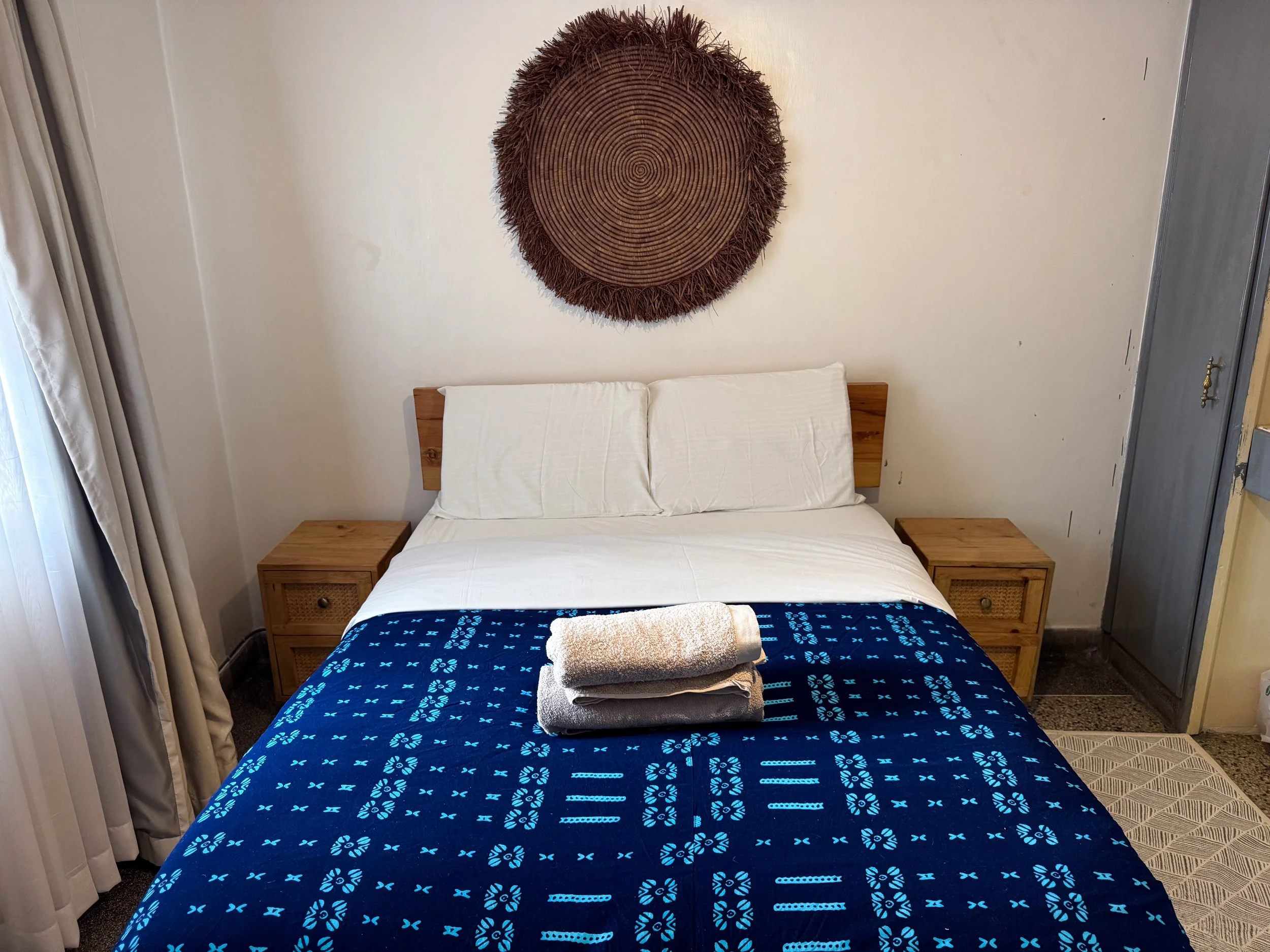
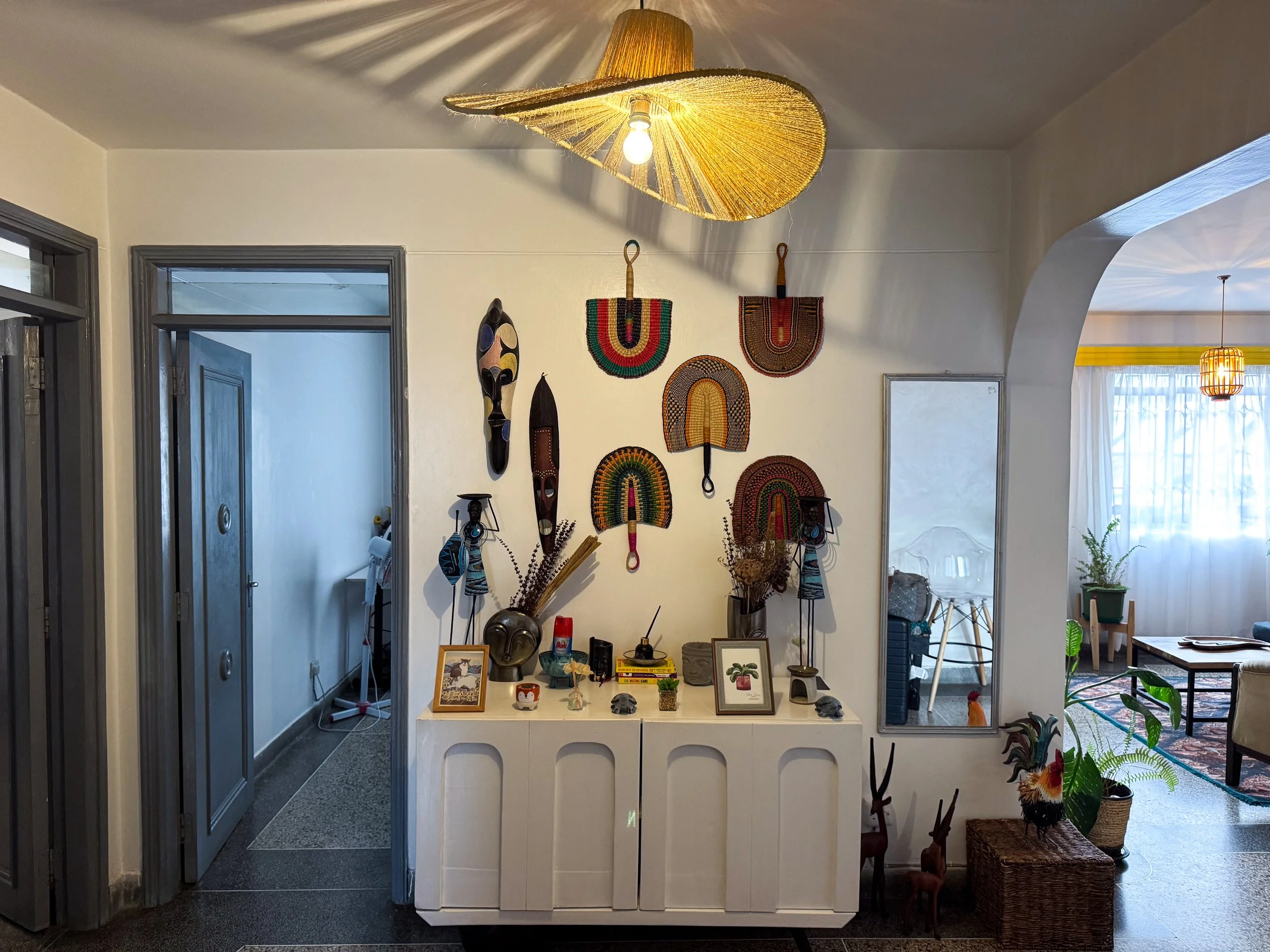
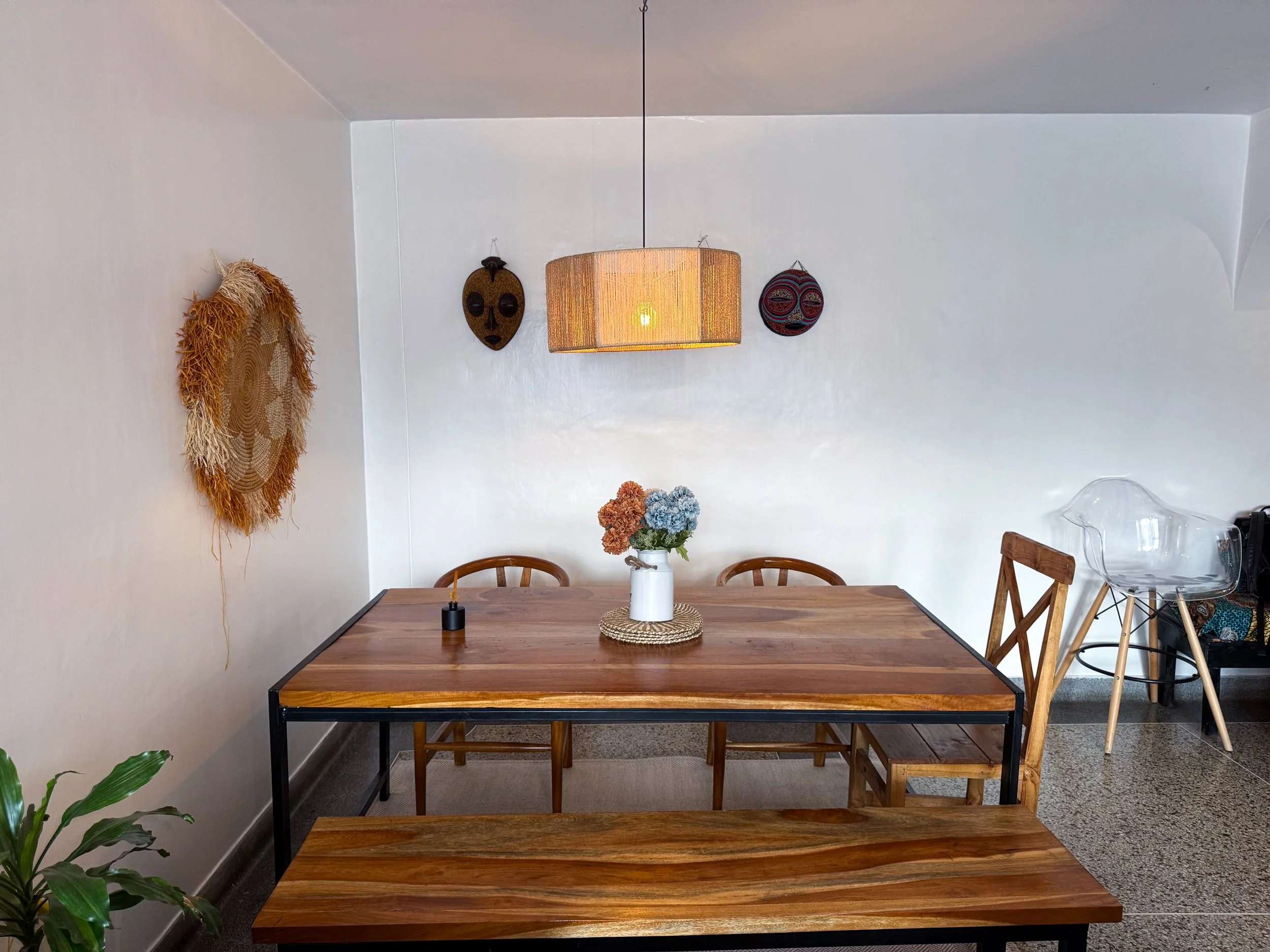
Where to Stay
Mushembi Airbnb. We stayed in a two bedroom apartment in Ngara with a kitchen and in unit laundry. It was a comfortable and spacious place with Kenyan decor including beaded masks, woven baskets, colorful textiles and wooden animal sculptures.
Khweza Bed and Breakfast. A centrally located and affordable hotel with comfortable rooms, included breakfast, laundry service and a rooftop restaurant serving traditional Kenyan cuisine. We ordered the coconut fish, ugali with sukuma, a rolex and masala fires. Reserve on Booking.
Location Specifics
The Dry Season. The best time to visit Kenya is from June to August during the dry season. It makes for the best time to spot wild game in the parks and reserves. The “Big Five,” Lions, Cheetahs, Elephants, Rhinos and Buffalos are most active during the cooler months while in search of water. This time of year also coincides with winter. Temperatures around Nairobi are chilly, ranging between lows of 50F to highs of 70F.
Right vs Left Hand. The right hand is used for everything from eating, receiving or giving and greeting people. The left hand is considered dirty and used for personal hygiene. Avoid using it when interacting with others or eating.
Drinking Water. Tap water in Nairobi is not safe to drink unless boiled or treated. Generally stick to filtered or bottled water for drinking, brushing teeth and cooking with.
Tipping. Tipping when dining out is not expected however leaving 10% is greatly appreciated for good service. Tipping tour guides, drivers, cooks and porters while on safari is expected. In general, plan to tip the equivalent of $10 USD per day per guide and $5 USD per day per cook, porter and driver.
Cash vs Card. Businesses in Nairobi are mostly cash free, accepting credit card payments. Still, it's valuable to carry Kenyan Shillings in case card is not accepted.
General Safety. Nairobi is rough around the edges. Be aware of your surroundings and maintain a low profile. Don’t walk around alone or in unfamiliar areas at night. Don’t wear jewelry or name brands. Don’t openly carry valuables like phones or cash. Avoid taking photos on the streets or of people. Dismiss people that approach you on the street. Avoid protests, police and any situation that could lead to confrontation.
LGBTQ+ Safety. Kenyan laws and customs are not very accepting of LGBTQ+ individuals. Stay up to date with the latest laws and suggestions while traveling. Refer to our guide on LGBTQ+ Travel Safety for more advice.
Pre-Airport Security Check. Before entering the airport, there is a roadside security check. Passengers have to pass through metal detectors while their bags are scanned or sniffed by dogs. It’s common practice in East Africa.
Language. English is commonly spoken across Kenya. Many people also speak Swahili, an East African language.
Swahili Phrases
Jambo. A common greeting. When someone says Jambo, respond back with Jambo as a sign of mutual respect.
Mambo. A more informal version of Jambo. It’s often said amongst friends.
Karibu. A greeting meaning welcome or used as you’re welcome.
Asante. Thank you.
Asante Sana. Thank you very much.
Hakuna Matata. To quote the Lion King, it means “no worries” or no troubles. It is a genuine Swahili phrase though mostly said between locals and travelers.
Getting Around
Bolt or Uber. Both ride hailing apps are popular and readily available across Nairobi. Bolt is generally cheaper. Uber specifically has an affordable ride option called Chap Chaps for short distances within the city. We used them to get around everywhere we needed to go.
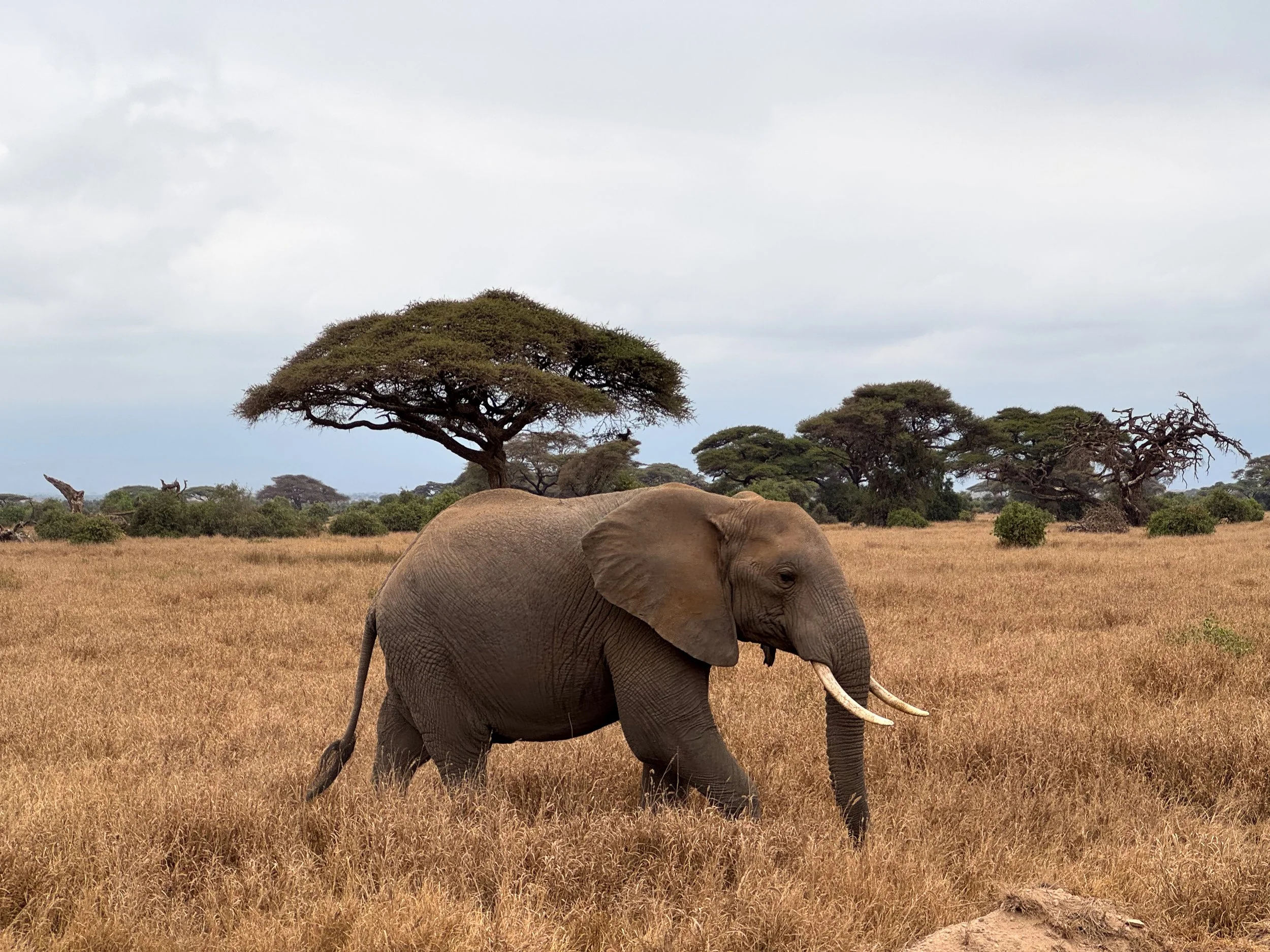
Elsewhere in Kenya
From Nairobi's vibrant neighborhoods and food scene to the wildlife rich plains of the Maasai Mara, continue exploring Kenya's diverse experiences.
Kenya Safari Guide: The Great Migration, Big Five & Maasai Mara. Venture across Kenya's sweeping savannas and protected reserves where remarkable wildlife and migratory animals create unforgettable African safaris.
For Next Time…
Next time we visit Kenya, we plan to explore the country’s coastal towns, its highest mountain and largest lake.
Mt. Kenya. The second highest mountain peak in Africa and tallest in Kenya. It’s surrounded by hiking trails, campgrounds and forest reserves. We plan to return and camp overnight along the extinct volcano’s trails.
Lake Victoria. A vast freshwater lake bordering Kenya, Rwanda, Uganda and Tanzania.
Mombasa Old Town. An old town in the port city of Mombasa. Its history and streets have been shaped by a range of colonial powers and influences including the British, Portuguese, Persian, Arab and Indian.
Lamu Old Town. A historic coastal city and one of the oldest Swahili settlements in East Africa.